Official Paper

WBCS(Executive) Prelims Official Paper (2022) (Previous Year Paper)

200 questions · 150 minutes · with answers · free

Full Test (200 questions)

1

"I have done my duty." ______ Which tense is this?

  1. ((a))

    Present Indefinite

  2. ((b))

    Present Perfect

  3. ((c))

    Past Perfect

  4. ((d))

    Past Indefinite

Show Answer
Answer: ((b))

Present Perfect

The correct answer is Present Perfect.

Key Points

  • The present perfect tense is an English verb tense used for past actions that are related to or continue into the present.
  • The grammatical combination of the present tense and perfect aspect is used to express a past event with present consequences.
  • The auxiliary verbs easily recognize it (or helper verbs) have and has, as in, “I have gone fishing since I was a child.”
  • The main verb is invariable in the past participle form.
2

Find the synonym of 'Covert'.

  1. ((a))

    Revert

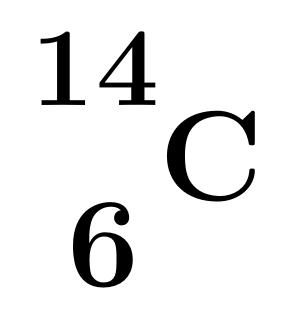
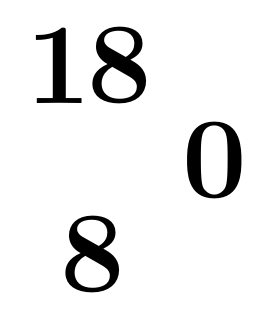
  2. ((b))

    Secret

  3. ((c))

    Desert

  4. ((d))

    Honest

Show Answer
Answer: ((b))

Secret

The correct answer is Secret.

Key Points

  • Covert means -  not openly acknowledged or displayed.
  • Synonyms - 
  • secret
  • furtive
  • clandestine
  • surreptitious
  • stealthy
  • cloak-and-dagger
  • hole-and-corner
  • Covert is the opposite of overt, which means obvious, or in full view.
3

What is the most appropriate passive form of "Who has done the work?"?

  1. ((a))

    Who has been done the work?

  2. ((b))

    By whom has been done the work?

  3. ((c))

    Whom has done the work by?

  4. ((d))

    By whom has the work been done?

Show Answer
Answer: ((d))

By whom has the work been done?

The correct answer is By whom has the work been done?

Key Points

  • Active Voice: A given verb is in active voice if the object of the sentence is acted on by the subject.
  • Example: The farmer has ploughed the field.
  • Passive Voice: A verb is in the passive voice when the subject of the sentence is acted on by the verb.
  • Example: The field has been ploughed by the farmer.
  • In the question, we are given the sentence that - "Who has done this work" - this sentence is in active voice and if we want to change this sentence into passive voice we have to change the subject into an object.
  • Passive voice: "By whom has the work been done?"
4

What parts of speech is the word 'Adjective'?

  1. ((a))

    Pronoun

  2. ((b))

    Noun

  3. ((c))

    Adjective

  4. ((d))

    Adverb

Show Answer
Answer: ((b))

Noun

The correct answer is: Noun.

Key Points

  • The word "Adjective" is a noun.
  • In grammar, an adjective is a word that modifies or describes a noun or pronoun, such as "small", "red", or "quickly".
  • However, when we are referring to the word "adjective" itself, we are talking about the category or type of word, making "adjective" a noun.
  • For example: "An adjective modifies a noun." In this sentence, "adjective" is the subject of the sentence and refers to a category of words, fulfilling the role of a noun.
  • To summarize, we use the noun "adjective" to name a particular part of speech, much like we use "noun", "verb", and "adverb" to name other parts of speech.

Therefore, the correct answer is: Noun.

5

Find the correctly spelt word.

  1. ((a))

    Reharsal

  2. ((b))

    Rehersal

  3. ((c))

    Rehearsal

  4. ((d))

    Rehearsel

Show Answer
Answer: ((c))

Rehearsal

The correct answer is Rehearsal.

Key Points

  • Rehearsal means - a practice or trial performance of a play or other work for later public performance.
  • For example,
  • She was 15 minutes late for rehearsal.
  • There are only three more rehearsals before the concert.
6

'Philanthropist' means

  1. ((a))

    Humanitarian

  2. ((b))

    Hater of man

  3. ((c))

    Lover of animals

  4. ((d))

    Lover of books

Show Answer
Answer: ((a))

Humanitarian

The correct answer is Humanitarian.

Key Points

  • A philanthropist means - a person who seeks to promote the welfare of others, especially by the generous donation of money to good causes.
  • A Humanitarian is a person devoted to or working for the health and happiness of other people.

Additional Information

  • A misanthrope or misanthropist is a person who has a general hatred, dislike, distrust, or contempt of the human species, human behavior, or human nature.
  • A lover of animals is called Philozoic or zoophile.
  • A bibliophile or bookworm is an individual who loves and frequently reads and/or collects books.
7

Give the one word substitution of:

One who talks continuously

  1. ((a))

    Voracious

  2. ((b))

    Impecunious

  3. ((c))

    Loquacious

  4. ((d))

    Avaricious

Show Answer
Answer: ((c))

Loquacious

The correct answer is Loquacious.

Key Points

  • A loquacious person is one tending to talk a great deal or continuously.
  • Impecunious means having very little or no money usually habitually.
  • Voracious, gluttonous, ravenous, and rapacious mean excessively greedy
  • Voracious applies especially to habitual gorging with food or drink.
  • covetous, greedy, acquisitive, grasping, and Avaricious mean having or showing a strong desire for especially material possessions.
8

Instead of 'tolerance' we can say

  1. ((a))

    bear on

  2. ((b))

    bear in

  3. ((c))

    bear with

  4. ((d))

    bear at

Show Answer
Answer: ((c))

bear with

The correct answer is bear with.

Key Points

  • Some common synonyms of tolerate being abide, bear, endure, stand, and suffer.
  • While all these words mean "to put up with something trying or painful," tolerate suggests overcoming or successfully controlling an impulse to resist, avoid, or resent something injurious or distasteful.
  • The verb bear means to tolerate or to endure something.
  • 'Bear with me' is an expression that means to be patient or to hear someone out.
9

What type of sentence is 'Do or Die'?

  1. ((a))

    Simple

  2. ((b))

    Complex

  3. ((c))

    Exclamatory

  4. ((d))

    Compound

Show Answer
Answer: ((d))

Compound

The correct answer is Compound.

Key Points

  • The actual meaning of 'Do or Die' refers to a situation in which you must take a big risk in order to avoid failure.
  • Do or Die is a compound sentence. It means that either you do or you die
  • In the sentence, there are two clauses and one conjunction.
  • One main clause is Do and the other is Die and or is the conjunction.
  • As a complex sentence, you can write it as If you don't do you will die probably.
  • To change a compound sentence to a simple sentence, often the phrase is added - In the event of not doing, you will die.
10

What is the synonym of 'Atrocity'?

  1. ((a))

    Solidarity

  2. ((b))

    Pity

  3. ((c))

    Cruelty

  4. ((d))

    Punctuality

Show Answer
Answer: ((c))

Cruelty

The correct answer is Cruelty.

Key Points

  • Atrocity means - an act of atrocious cruelty.
  • Synonyms:
  • inhumanity.
  • barbarism,
  • barbarity,
  • brutality,
  • savagery.
  • cruelty
  • Antonyms:
  • good behavior.
  • kindness.
  • pleasantness.
  • pleasantry.
11

The antonym of 'Forgo' is

  1. ((a))

    Claim

  2. ((b))

    Despise

  3. ((c))

    Undergo

  4. ((d))

    Remember

Show Answer
Answer: ((a))

Claim

The correct answer is Claim.

Key Points

  • To forgo something means to do without it, or to choose to skip it.
  • Synonyms:
  • forfeit,
  • forgo,
  • give up,
  • throw overboard,
  • waive.
  • Antonyms:
  • arrogate,
  • claim,
  • lay claim.
  • demand as being one's due or property;
  • assert one's right or title to.
  • take.
12

The idiomatic expression 'A slap on the wrist' means

  1. ((a))

    Short on time

  2. ((b))

    A very mild punishment

  3. ((c))

    To have a dispute

  4. ((d))

    To force an issue

Show Answer
Answer: ((b))

A very mild punishment

The correct answer is A very mild punishment.

Key Points

  • 'A slap on the wrist' means - a small punishment when a more severe punishment is deserved.
  • Example - They rob someone on the street and they get a slap on the wrist – thirty days in jail.
  • When you do something wrong, you "get a slap on the wrist".
  • It means that the punishment that you were given was rather "mild or light.
13

Replace the underlined portion with an idiom from the list below:

They finally agreed on the business deal.

  1. ((a))

    let the cat out of the bag

  2. ((b))

    see eye to eye

  3. ((c))

    to feel under the weather

  4. ((d))

    to cut a corner

Show Answer
Answer: ((b))

see eye to eye

The correct answer is see eye to eye.

Key Points

  • ‘See eye to eye’ – this means agreeing with someone.
  • Example - “They finally saw eye to eye on the business deal.”

Additional Information

  • ‘Let the cat out of the bag’ – to accidentally reveal a secret.

“I let the cat out of the bag about their wedding plans.”

  • ‘To feel under the weather’ – to not feel well.

“I’m really feeling under the weather today; I have a terrible cold.”

  • ‘To cut corners’ – to do something badly or cheaply.

“They really cut corners when they built this bathroom; the shower is leaking.”

14

It has been established that

(P) Einstein was

(Q) although a great scientist

(R) weak in arithmetic

(S) right from his school days

To form a correct and meaningful sentence, the proper sequence should be:

  1. ((a))

    (Q) (P) (R) (S)

  2. ((b))

    (P) (R) (S) (Q)

  3. ((c))

    (P) (S) (Q) (R)

  4. ((d))

    (Q) (P) (S) (R)

Show Answer
Answer: ((a))

(Q) (P) (R) (S)

The correct answer is (Q) (P) (R) (S)

Key Points

  • It has been established that → although a great scientist, → Einstein was → weak in arithmetic → right from his school days.
  • So order QPRS is correct.
  • When we start a sentence with although, we use a comma after the full clause that it contains.
  • We use although to introduce a subordinate clause that contains a statement that contrasts with the statement in the main clause.
  • Example: Although he is known to only a few, his reputation among them is very great.
15

Give the one word substitution of:

Creature having both male and female organs

  1. ((a))

    Sodomite

  2. ((b))

    Homosexual

  3. ((c))

    Masochist

  4. ((d))

    Hermaphrodite

Show Answer
Answer: ((d))

Hermaphrodite

The correct answer is Hermaphrodite.

Key Points

  • A Hermaphrodite is an organism that has both kinds of reproductive organs and can produce both gametes associated with the male and female sexes.
  • Sodomite is someone who practices sodomy —used as a term of abuse and disparagement for a gay person.
  • Homosexuality is romantic attraction, sexual attraction, or sexual behavior between members of the same sex or gender.
  • Masochist- a person who derives sexual gratification from being subjected to physical pain or humiliation
16

Fill in the blank with the correct word.

Ram and his brothers were four in ________.

  1. ((a))

    quantity

  2. ((b))

    number

  3. ((c))

    numbers

  4. ((d))

    totality

Show Answer
Answer: ((b))

number

The correct answer is "number".

Key Points

  • Number provides the correct grammatical usage.
  • When we say "four in number", it means there are four individuals we are referring to.
  • In this case, it's Ram and his three brothers, making four.
  • Although 'numbers' seems possibly correct, it is traditionally used to refer to numerical statistics or data, not to count individuals.
  • The sentence would read: "Ram and his brothers were four in number."

Therefore, the correct answer is "Option 2".

Additional Information

  • Quantity: In the context of the sentence, "quantity" doesn't work well.
  • Quantity is usually used for an amount or the property of something that can exist as a multitude or multitude of items.
  • It's often used with uncountable nouns such as 'water', 'rice', 'money', etc.
  • Totality: This option isn't grammatically correct in this context.
  • "Totality" generally refers to the whole or the entirety of something, but it is not used to specify the count or number of people.
17

Choose the appropriate antonym of 'Adore'.

  1. ((a))

    Love

  2. ((b))

    Like

  3. ((c))

    Hate

  4. ((d))

    Ignore

Show Answer
Answer: ((c))

Hate

The correct answer is Hate.

Key Points

  • Adore means - love and respect (someone) deeply.
  • Love is a strong feeling of affection or liking.
  • Antonyms of Adore: 
  • hate
  • loathe
  • detest
18

Fill in the blank with the appropriate option:

She has no control ________ her temper.

  1. ((a))

    on

  2. ((b))

    with

  3. ((c))

    over

  4. ((d))

    after

Show Answer
Answer: ((c))

over

The correct answer is "over".

Key Points

  • "Control over" is a commonly used phrase and it indicates the ability to direct or influence something.
  • So, saying "She has no control over her temper" means she cannot influence or direct her temper, implying that she gets angry easily.
  • So, considering the appropriate usage, the sentence should be "She has no control over her temper."

Therefore, the correct answer is "Option 3".

Additional Information

  • On: Generally, "on" is not used in this context in English.
  • We commonly say "control over" something, not "control on."
  • With: We generally don't use "control with" in this context.
  • The phrase "with control" is used when we want to say that someone is doing something carefully, showing restraint, etc., but it does not suit our sentence here.
  • After: "Control after" is not a commonly used phrase and does not suit the context of the sentence.
19

Fill in the blank with the appropriate option:

What are you worrying ________?

  1. ((a))

    to

  2. ((b))

    with

  3. ((c))

    for

  4. ((d))

    about

Show Answer
Answer: ((d))

about

The correct answer is about.

Key Points

  • A preposition is a word that comes before a noun or a pronoun and establishes a relationship between the elements of a clause or words.
  • The correct answer is about as it indicates a concern.
  • 'To', 'for', and 'with' cannot be used here as they indicate a direction, belongingness, and a relation respectively.
  • Example: Worrying about your health can make you ill.
20

An Obstetrician deals with

  1. ((a))

    Child disease

  2. ((b))

    Liver disease

  3. ((c))

    Pregnancy & child birth

  4. ((d))

    Nerve disease

Show Answer
Answer: ((c))

Pregnancy & child birth

The correct answer is Pregnancy & childbirth

Key Points

  • An obstetrician is a doctor who specializes in care during pregnancy, labour, and after birth.
  • A hepatologist treats disorders of the liver and its associated organs, while a gastroenterologist treats disorders of the entire digestive system, which includes the liver.
  • A neurologist is an expert in the diagnosis and treatment of diseases of the brain and nervous system.
  • A pediatrician is a child's physician who provides not only medical care for children who are acutely or chronically ill but also preventive health services for healthy children.
21

Use a correct gerund in the blank space:

I like ________ pictures.

  1. ((a))

    painting

  2. ((b))

    painted

  3. ((c))

    to paint

  4. ((d))

    paint

Show Answer
Answer: ((a))

painting

The correct answer is painting.

Key Points

  • A gerund is a verb that’s acting as a noun.
  • By that, we mean that the verb—the word that describes the action that’s happening, like “biking,” “thinking,” “running,” or “speaking”—becomes a thing, a concept that can now be the sentence’s subject, direct object, indirect object, or the object of a preposition.
  • It doesn’t stop being a verb, but the role it plays in a sentence shifts from describing the action to being a focal point.
  • Here, the complete sentence is: I like painting pictures.
22

Fill in the blank with the appropriate option:

He spends hours ________ the phone everyday.

  1. ((a))

    at

  2. ((b))

    on

  3. ((c))

    with

  4. ((d))

    in

Show Answer
Answer: ((b))

on

The correct answer is on.

Key Points

  • She spends hours on the phone every day.
  • 'On' is used for both large and tiny flat surfaces.
  • Planets are used with "on."
  • The most common usage is "on earth," although "on" can also refer to other planets.
  • Something is already in the position when the preposition "on" is used.
  • When spend time or spend money is followed by a noun, use the preposition on, not “for” or “in”
23

Fill in the blank with the appropriate option:

He works ________ an insurance company.

  1. ((a))

    for

  2. ((b))

    at

  3. ((c))

    in

  4. ((d))

    with

Show Answer
Answer: ((a))

for

The correct answer is for.

Key Points

  • "I'm working at XYZ company" means that you are the owner of the XYZ company.
  • But if you write "I'm working for XYZ company", It means you are an employee who works for XYZ company.
  • Here, the correct sentence is: He works for an insurance company.
24

Which one is the plural number?

  1. ((a))

    Index

  2. ((b))

    Alumni

  3. ((c))

    Hypothesis

  4. ((d))

    Analysis

Show Answer
Answer: ((b))

Alumni

The correct answer is Alumni.

Key Points

  • Traditionally, "alumnus" refers specifically to a singular male graduate
  • "alumni" is the plural form for a group of male graduates and for a group of male and female graduates.
  • Meanwhile, the term for singular female graduates is the lesser spotted "alumna", and "alumnae" refers to a group of female-only graduates.
  • Some examples of Irregular plurals (ending with 'i')-
  • focus - foci (also focuses)
  • radius - radii (also radiuses)
  • fungus - fungi
  • nucleus - nuclei
  • cactus - cacti
25

Insert the right preposition in the blank space:

He died ________ dengue.

  1. ((a))

    with

  2. ((b))

    from

  3. ((c))

    of

  4. ((d))

    by

Show Answer
Answer: ((c))

of

The correct answer is of.

Key Points

  • Prepositions with die
  • Someone dies of or from a disease or injury:
  • He died of a heart attack.
  • He died from a heart attack.
  • 'Died of' is more common than 'died from'.
  • Incorrect: He died because of a heart attack.
  • Someone dies in an accident:
  • He died in a car crash.
  • Incorrect: He died by a car crash.
  • Someone dies for a person, place, or idea that they want to protect:
  • These men died for our freedom.
26

The radioactive element used in heart pacemakers is

  1. ((a))

    Uranium

  2. ((b))

    Deuterium

  3. ((c))

    Plutonium

  4. ((d))

    Radium

Show Answer
Answer: ((c))

Plutonium

The correct answer is Plutonium.

Key Points

  • Plutonium 238 devices are used as heat sources in cardiac pacemakers and satellites, as well as in many other applications.
  • A pacemaker is composed of three parts:
  • a pulse generator,
  • one or more leads, and
  • an electrode on each lead.
  • A pacemaker signals the heart to beat when the heartbeat is too slow or irregular.
27

Which of the following isotopes is used in dating archaeological findings?

  1. ((a))

  2. ((b))

  3. ((c))

  4. ((d))

Show Answer
Answer: ((b))

The correct answer is 

Key Points

  • Radiocarbon dating (also referred to as carbon dating or carbon-14 dating) is a method used for dating archaeological findings.
  • It is done by using the properties of radiocarbon C-14, a radioactive isotope of carbon.
  • The isotope also is used as a tracer in following the course of particular carbon atoms through chemical or biological transformations.
  • In carbon-14 dating, measurements of the amount of carbon-14 present in an archaeological specimen, such as a tree, are used to estimate the specimen's age.
28

West Bengal Industrial Development Corporation Ltd. (WBIDC) was established in

  1. ((a))

    1967

  2. ((b))

    1981

  3. ((c))

    1977

  4. ((d))

    1983

Show Answer
Answer: ((a))

1967

The correct answer is 1967.

Key Points

  • West Bengal Industrial Development Corporation Ltd. (WBIDC) formed in 1967 under the Companies Act, is the premier nodal agency of West Bengal's Industry, Commerce, and Enterprises Department.
  • This was established basically to help bring about greater development of the industrial sector.
  • It finances medium and large-scale industries, develops infrastructure, and promotes joint sector investment and participation of foreign and private companies.
29

Phytopthora palmivora is a

  1. ((a))

    bio-pesticide

  2. ((b))

    bio-insecticide

  3. ((c))

    mycoherbicide

  4. ((d))

    first bio-herbicide

Show Answer
Answer: ((c))

mycoherbicide

The correct answer is mycoherbicide.

Key Points

  • Phytophthora palmivora is an oomycete that causes bud-rot of palms, fruit-rot, or kole-roga of coconut and areca nut.
  • These are among the most serious diseases caused by fungi and molds in South India.
  • It occurs almost every year in Malnad, Mysore, North & South Kanara, Malabar, and other areas.
  • Phytophthora palmivora Butler strain MVW was first registered as DeVine in 1981 by Abbott Laboratories, IL as a bioherbicide to be applied to citrus crops to control strangler vine.
30

acme : mace :: alga : ?

  1. ((a))

    glaa

  2. ((b))

    gaal

  3. ((c))

    laga

  4. ((d))

    gala

Show Answer
Answer: ((d))

gala

The correct answer is gala.

Key Points

  • Given - 'acme' : 'mace'.
  • The 3rd letter is shifted to the 1st position,
  • the 1st letter is shifted to 2nd position,
  • 2nd letter is shifted to the 3rd position
  • the 4th letter is kept unchanged at the 4th position.
  • Thus, 'alga' can be repositioned as 'gala'.
31

Which of the following pair do not match?

  1. ((a))

    Jaunpur - Atala Masjid

  2. ((b))

    Malwa - Jahaz Mahal

  3. ((c))

    Ajmer - Kubbatul Islam

  4. ((d))

    Gaur - Bara Sona Masjid

Show Answer
Answer: ((c))

Ajmer - Kubbatul Islam

The correct answer is Ajmer - Kubbatul Islam.

Key Points

  • Atala Masjid or Atala Mosque is a -14th-century mosque in Jaunpur, Uttar Pradesh, India.
  • Jahaz Mahal is situated between two artificial lakes in the Malwa region of MP. It was built by Sultan Ghiyas-ud-din-Khalji. It served as a harem for the sultan.
  • Baro Shona Masjid also known as Baroduari Masjid, is located in Gour, West Bengal, India.
  • Qutub-ud-din Aibak was the first ruler of the Delhi Sultanate. He started with the construction of Qutub Minar. He built mosques like Quwwat-ul-Islam, which are found within the Qutub Minar complex in Delhi.
  • He also built the Adhai-Din-Ka Jhopara in Ajmer.
32

Who is the present Chairman of UPSC?

  1. ((a))

    Manoj Soni

  2. ((b))

    Arvind Saxena

  3. ((c))

    Vinay Mittal

  4. ((d))

    P. K. Joshi

Show Answer
Answer: ((a))

Manoj Soni

The correct answer is Manoj Soni.

Key Points

  • Dr. Manoj Soni has been the Chairman of UPSC since 5 April 2022.

Additional Information

  • UPSC was established on 1 October 1926 as Public Service Commission
  • It was later reconstituted as Federal Public Service Commission by the Government of India Act 1935; only to be renamed as today's Union Public Service Commission after the independence.
33

The Self-respect Movement was founded by

  1. ((a))

    Ambedkar

  2. ((b))

    Periyar E. V. Ramasamy Naicker

  3. ((c))

    Dinkarrao Javalkar

  4. ((d))

    Keshavrao Jedhe

Show Answer
Answer: ((b))

Periyar E. V. Ramasamy Naicker

The correct answer is Periyar E. V. Ramasamy Naicker.

Key Points

  • The self-respect movement was founded by E.V. Ramaswamy Naicker
  • He is commonly known as Periyar.
  • It was a dynamic social movement aimed at destroying the contemporary Hindu social order in its totality and creating a new, rational society without caste, religion, and god.
  • The movement propagated ideologies for breaking Brahminical hegemony, equal rights for backward classes and women in society, and revitalization of Dravidian languages ​​such as Telugu, Tamil, Kannada, and Malayalam.
  • This movement played an important role in the improvement of the political, social, and religious life of the people of Madras.
  • It took the message of Tamil nationalism to the masses.
  • The power and influence of the Brahmins were reduced due to Periyar's propaganda against orthodoxy.
  • This movement instilled a sense of self-respect and confidence to fight against the social injustice done by the Brahmin ideology.
34

Chand Bibi ruled over which of the Deccan Sultanates?

  1. ((a))

    Bijapur

  2. ((b))

    Berar

  3. ((c))

    Ahmednagar

  4. ((d))

    Golkonda

Show Answer
Answer: ((c))

Ahmednagar

The correct answer is Ahmednagar.

Key Points

  • Chand Bibi is best known for defending Ahmednagar against the Mughal forces of Emperor Akbar in 1595.
  • She acted as the Regent of Bijapur Sultanate during the minority of Ibrahim Adil Shah II in 1580-1590, and regent of Ahmednagar Sultanate during the minority of her great nephew Bahadur Shah in 1595-1600.
  • Ahmednagar, is a city situated in the Ahmednagar district, Maharashtra, India, near Pune and Aurangabad.
  • Ahmednagar takes its name from Ahmad Nizam Shah I, who founded the town in 1494 on the site of a battlefield where he won a battle against superior Bahamani forces.
35

Pure water freezes at a temperature ______

  1. ((a))

    47 °F

  2. ((b))

    32 °F

  3. ((c))

    0 °F

  4. ((d))

    19 °F

Show Answer
Answer: ((b))

32 °F

The correct answer is 32 °F

Key Points

  • Pure water freezes at -
  • 32 degrees Fahrenheit,
  • 0 degrees Celsius,
  • 273.15 Kelvin.
  • Boiling point -
  • 99.98 °C
  • 211.96 °F
  • 373.13 K
  • Molar mass 18.01528(33) g/mol
  • Density - Liquid: 0.9998396 g/mL at 0 °C
  • Density - Solid: 0.9167 g/ml at 0 °C
  • Acidity (pKa) -13.995
36

As of 2022, which country is the biggest opium producer?

  1. ((a))

    China

  2. ((b))

    India

  3. ((c))

    Afghanistan

  4. ((d))

    Nepal

Show Answer
Answer: ((c))

Afghanistan

The correct answer is Afghanistan.

Key Points

  • Afghanistan is the world's biggest opium producer, at present.
  • Recently, the Taliban announced a ban on the cultivation of poppy in Afghanistan.
  • The production, use, or transportation of other narcotics was also banned.
  • As per the United Nations estimates, Afghanistan's opium production was worth USD 1.4 billion in 2017.
  • It has been continuously increasing in recent months.
37

Who painted the image of Bharat Mata?

  1. ((a))

    Rabindranath Tagore

  2. ((b))

    Abanindranath Tagore

  3. ((c))

    Bankim Chandra Chattopadhyay

  4. ((d))

    Mahatma Gandhi

Show Answer
Answer: ((b))

Abanindranath Tagore

The correct answer is Abanindranath Tagore.

Key Points

  • Bharat Mata is a work painted by the Indian painter Abanindranath Tagore in 1905.
  • The painting depicts the Indian tradition and Bharat Mata is portrayed as having four hands with many important elements in each hand.
  • Abanindranath Tagore was the creator of the ‘Indian Society of Oriental Art’ and is a renowned Indian artist.

38

Loktak lake is located in the state of

  1. ((a))

    Karnataka

  2. ((b))

    Arunachal Pradesh

  3. ((c))

    Manipur

  4. ((d))

    Bihar

Show Answer
Answer: ((c))

Manipur

The correct answer is Manipur.

Key Points

  • Loktak Lake is a freshwater lake in Northeast India.
  • It is the largest freshwater lake in South Asia along with Manchar Lake in Pakistan.
  • It is a pulsating lake, with a surface area varying from 250 sq km to 500 sq km during the rainy season with a typical area of 287 sq km.
  • The lake is located at Moirang in Manipur state, India.
  • It is located on this phumdi, Keibul Lamjao National Park is the only floating national park in the world.

![Solved] Which one of the following is a crater lake in India ?](https://storage.googleapis.com/tb-img/production/21/11/61973b1c302e4096067053d1_16377571586671.png)

39

Who among the following Viceroys repealed the Vernacular Press Act of 1878?

  1. ((a))

    Lord Lytton

  2. ((b))

    Lord Curzon

  3. ((c))

    Lord Dufferin

  4. ((d))

    Lord Ripon

Show Answer
Answer: ((d))

Lord Ripon

The correct answer is Lord Ripon

Key Points

  • Viceroy Lord Ripon repealed the Vernacular Press Act of 1878 passed by Lord Lytton by Act III of 1882.
  • Hence, newspapers published in vernacular languages were allowed equal freedom with the rest of the Indian Press.

Additional Information

  • Vernacular Press Act of 1878
  • The Vernacular Act of 1878 was proposed by Lord Lytton, then Viceroy of India, and was passed on 14 March 1878.
  • This act excluded English-language publications as it was meant to control the seditious writing of Indians which were against the British policies in India.
40

Who has been appointed as the CEO and MD of Air India?

  1. ((a))

    Campbell Wilson

  2. ((b))

    Ajay Singh

  3. ((c))

    Alan Joyce

  4. ((d))

    Maen Razougi

Show Answer
Answer: ((a))

Campbell Wilson

The correct answer is Campbell Wilson.

Key Points

  • Mr. Campbell Wilson was appointed as the Chief Executive Officer (CEO) & Managing Director (MD) of Air India.
  • Mr. Wilson, 50, has 26 years of aviation industry expertise across both full-service and low-cost airlines.
  • He is the CEO of Scoot, the wholly-owned low-cost subsidiary of Singapore Airlines (SIA).
  • Air India is the flag carrier airline of India, headquartered in New Delhi.
  • It is owned by Talace Private Limited, a fully owned subsidiary of Tata Sons, after Air India Limited's former owner, the Government of India completed the sale.
41

'ELISA' test is employed to diagnose

  1. ((a))

    Polio Virus

  2. ((b))

    AIDS antibodies

  3. ((c))

    Tuberculosis

  4. ((d))

    Cancer

Show Answer
Answer: ((b))

AIDS antibodies

The correct answer is AIDS antibodies.

Key Points

  • ELISA stands for enzyme-linked immunosorbent assay.
  • It is a commonly used laboratory test to detect AIDS antibodies in the blood.
  • An antibody is a protein produced by the body's immune system when it detects harmful substances, called antigens.
  • The principal of ELISA is similar to RadioImmunoAssay (RIA) but depends on an enzyme rather than a radioactive label.
  • ELISA is of four types:
  • Direct ELISA
  • Indirect ELISA
  • Sandwich ELISA
  • Competitive ELISA
  • ELISA test may be used to detect-
  • HIV which causes AIDS
  • zika virus
  • rota virus
  • lyme disease

Additional Information Polio virus

  • Polio, or poliomyelitis, is a disabling and life-threatening disease caused by the polio virus.
  • The virus spreads from person to person and can infect a person's spinal cord, causing paralysis.

Tuberculosis

  • Tuberculosis (TB) is a potentially serious infectious disease that mainly affects the lungs.
  • It is caused by a bacterium called Mycobacterium tuberculosis.
  • The bacteria usually attack the lungs, but TB bacteria can attack any part of the body such as the kidney, spine, and brain.
  • The bacteria spread from person to person through tiny droplets released into the air via coughs and sneezes.

Cancer

  • Cancer is a disease in which some of the body’s cells grow uncontrollably and spread to other parts of the body.
  • It can start from anywhere in the human body.
  • It is a genetic disease—that is, it is caused by changes to genes that control the way our cells function, especially how they grow and divide.
42

In a family there are six members A, B, C, D, E, F. A and B are married couple. D is only son of C. A is father of E, who is granddaughter of F, whose husband has died and C is brother of A. How many male members are in the family?

  1. ((a))

    3

  2. ((b))

    4

  3. ((c))

    5

  4. ((d))

    2

Show Answer
Answer: ((a))

3

The correct answer is 3.

Family tree

Hence, there are 3 males.

43

Which one of the following states, Dulhasti Hydroelectric power project is located?

  1. ((a))

    Uttarakhand

  2. ((b))

    Jammu & Kashmir

  3. ((c))

    Himachal Pradesh

  4. ((d))

    Sikkim

Show Answer
Answer: ((b))

Jammu & Kashmir

The correct answer is Jammu and Kashmir.

Key Points

  • DulHasti hydroelectric power plant is in Kishtwar district of Jammu and Kashmir.
  • The power plant is a run-of-the-river type on the Chenab River with installed capacity of 390 MW.
  • It consists of a 70 m (230 ft) tall gravity dam which diverts water through a 9.5 km (5.9 mi) long head-race tunnel to the power station which discharges back into the Chenab.
  • The construction started in 1985 and become operational on 7 April 2007.
44

P is wife of Q and mother of R. R is grand-daughter of W. S is grandmother of T and mother of Q. Which of the following is true?

  1. ((a))

    R is sister of T.

  2. ((b))

    R is brother of T.

  3. ((c))

    Q is daughter of S.

  4. ((d))

    None of the above

Show Answer
Answer: ((a))

R is sister of T.

The correct answer is R is sister of T.

Family tree

Hence, R is sister of T.

45

The Reserve Bank of India was established in the year

  1. ((a))

    1930

  2. ((b))

    1935

  3. ((c))

    1947

  4. ((d))

    1951

Show Answer
Answer: ((b))

1935

The correct answer is 1935.

Key Points

  • The Reserve Bank of India was established on April 1, 1935 in accordance with the provisions of the Reserve Bank of India Act, 1934.
  • The Central Office of the Reserve Bank was initially established in Kolkata but was permanently moved to Mumbai in 1937.
  • Since nationalisation in 1949, the Reserve Bank is fully owned by the Government of India.
  • It is India's central bank and regulatory body responsible for regulation of the Indian banking system.
  • It is under the ownership of Ministry of Finance, Government of India.
  • It is responsible for the control, issue and maintaining supply of the Indian rupee.
46

Match the following:

(a)Kot Diji1.Luigi Pio Tessitori
(b)Harappa2.F.A. Khan, G.S. Ghurye
(c)Kalibangan3.Daya Ram Sahani
(d)Mohenjodaro4.Rakhal Das Bandyopadhyay
  1. ((a))

    (a - 2), (b - 3), (c - 1), (d - 4)

  2. ((b))

    (a - 1), (b - 3), (c - 2), (d - 4)

  3. ((c))

    (a - 4), (b - 1), (c - 2), (d - 3)

  4. ((d))

    (a - 3), (b - 2), (c - 4), (d - 1)

Show Answer
Answer: ((a))

(a - 2), (b - 3), (c - 1), (d - 4)

The correct answer is (a - 2), (b - 3), (c - 1), (d - 4)

Key Points 

SiteExcavatorYearRiver BankPresent Location
Kot DijiF. A. Khan, G. S. Ghurye1953IndusSindh(Pakistan)
HarappaDaya Ram Sahani1921RaviSahiwal(Pakistan)
KalibanganLuigi Pio Tessitori-GhaggarHanumangarh(Rajasthan)
MohenjodaroRakhal Das Bandyopadhyay1922IndusSindh(Pakistan)
47

In a chess tournament each of six players will play every other player exactly once. How many matches will be played in the tournament?

  1. ((a))

    12

  2. ((b))

    15

  3. ((c))

    30

  4. ((d))

    72

Show Answer
Answer: ((b))

15

Given:

Number of players = 6

Formula used:

(^nC_r=\dfrac{n!}{(n-r)!× r!})

Calculation:

Since each player will play every other player once.

So, to play a game 2 players are to be chosen out of 6 players.

∴ n=6n=6n=6

and r=2r=2r=2

∴ 6C2=6!(6−2)!×2!6C2=6!(6−2)!×2!6C2=6!(6−2)!×2!

=6×5×4!4!×2!=6×5×4!4!×2!=6×5×4!4!×2!

=15=15=15

Hence, 15 is the correct answer.

48

If Water is called Black, Black is called Tree, Tree is called Blue, Blue is called Rain, Rain is called Pink and Pink is called Fish in a certain language, then what is the colour of sky?

  1. ((a))

    Blue

  2. ((b))

    Rain

  3. ((c))

    Fish

  4. ((d))

    Pink

Show Answer
Answer: ((b))

Rain

The correct answer is Rain.

We know that colour of sky is blue.

And in the given language Blue is called Rain.

Therefore colour of sky in that language is called Rain.

49

Who is the current Chief of the Army Staff of India?

  1. ((a))

    General Upendra Dwivedi

  2. ((b))

    General Manoj Pande

  3. ((c))

    General Rana Pratap Kalita

  4. ((d))

    General Surinder Singh Mahal

Show Answer
Answer: ((b))

General Manoj Pande

The correct answer is General Manoj Pande.

Key Points

  • General Manoj Pande is the current Chief of Army Staff.
  • He took over the office on April 30, 2022.
  • He succeded General Manoj Mukund Narvane.
  • The Chief of the Army Staff of India is the operational head and highest-ranking officer of the Indian Army.
  • The Chief of Army Staff is appointed for a tenure of three years or may retire at the age of 62 years, whichever is earlier.
50

'Peaty' soils of Kerala is known as

  1. ((a))

    Reh

  2. ((b))

    Kari

  3. ((c))

    Kallar

  4. ((d))

    Thur

Show Answer
Answer: ((b))

Kari

The correct answer is Kari.

Key Points

  • Peaty Soil is found in Kottayam and Alappuzha districts of Kerala where it is called kari.
  • It is also found in the coastal areas of Odisha and Tamil Nadu, Sunderbans of West Bengal, in Bihar and Almora district of Uttarakhand.
  • It is formed by the accumulation and decomposition of organic materials (derived from plant remains) under the waterlogged environment where there is lack of oxygen.

Additional Information

  • Reh, kallar, thur, etc are various local names of saline soil.
51

What is the percentage of a cloth that should be excluded from 40 metre cloth so that the remaining portion is 7 metre?

  1. ((a))

    17.5

  2. ((b))

    19

  3. ((c))

    82.5

  4. ((d))

    81

Show Answer
Answer: ((c))

82.5

Given:

Total Cloth = 40 m

Remaining Cloth = 7m

Calculation:

According to the question

Cloth to be excluded = 40 - 7 = 33 m

⇒ Percentage Cloth Excluded = (33/40) × 100

⇒ Percentage Cloth Excluded = 82.5%

∴ 82.5% percentage of cloth should be excluded from 40 metre cloth so that the remaining portion is 7 metre.

52

The Himalayas are formed of parallel fold ranges, of which the oldest range is

  1. ((a))

    the Siwalik Range

  2. ((b))

    the Lesser Himalayan Range

  3. ((c))

    the Great Himalayan Range

  4. ((d))

    the Dhaula Dhar Range

Show Answer
Answer: ((c))

the Great Himalayan Range

The correct answer is the Great Himalayan Range.

Key Points

  • The Himalayan range is made up of three parallel ranges - the Greater Himalayas, the Lesser Himalayas, and the Outer Himalayas, also called Siwalik Range.
  • The northernmost range is called the Great Himalayas and is also the oldest of all the ranges of Himalayas.
  • It is made up of erosion material from the rising Himalaya.


Additional InformationSiwalik Range

  • It rises from the plain of the Indus and Ganges and parallels the primary range of the Himalayas.
  • It is regarded as the foothills of the Himalayas.

Lesser Himalaya Range

  • The Lesser Himalayas run parallel to the Greater Himalayas and have an elevation between 2000 m to 5000 m.
  • Its areas comprise of Jammu and Kashmir, Himachal Pradesh and Uttarakhand, Nepal, Sikkim and Bhutan.

Dhaula Dhar Range

  • The Dhauladhar range is part of a lesser Himalayan line of mountains.
  • It rises from the Indian plains to the north of Kangra and Mandi.
53

Fill in the blank:

Satyajit Ray's ________ birth anniversary is being celebrated this year, 2022.

  1. ((a))

    100th

  2. ((b))

    102nd

  3. ((c))

    101st

  4. ((d))

    103rd

Show Answer
Answer: ((c))

101st

The correct answer is 101st.

Key Points

  • Satyajit Ray was born on May 2, 1921.
  • He was an Indian filmmaker, documentary filmmaker, screenwriter, author, lyricist, and essayist.
  • He is widely considered one of the greatest filmmakers of all time.
  • His much-celebrated works are- The Big City, The Apu Trilogy, The Music Room, and Charulata.
  • His 101 birth anniversary is being celebrated on May 2, 2022.
  • To pay tribute to him on his Birth Anniversary 2022, the Ministry of Information and Broadcasting has initiated different activities.
  • Also, the National Museum of Indian Cinema has organized a three-day film festival at various locations.
54

Who pioneered 'Rakhi Bandhan' festival during partition of Bengal?

  1. ((a))

    Chittaranjan Das

  2. ((b))

    Rabindranath Tagore

  3. ((c))

    Pramathanath Mitra

  4. ((d))

    Pulin Behari Das

Show Answer
Answer: ((b))

Rabindranath Tagore

The correct answer is Rabindranath Tagore.

Key Points

  • In the year 1905 the then Viceroy of India, Lord Curzon ordered the partition of Bengal, based on religious grounds.
  • The order of partition was passed on August 1905 and came into effect on October 16, 1905.
  • That year October 16 was the date that collided with Rakhi Purnima, the last day of Shravan month according to Hindu calendar.
  • Rabindranath Tagore led a protest against the decision of British viceroy Curzon.
  • He urged Hindus and Muslims to tie Rakhi (amulet) on each other’s wrist to express harmony and solidarity among each other.
  • Following the lead of Tagore hundreds of Hindus and Muslims in Kolkata, Dhaka and Sylhet came out to tie Rakhi threads as a sign of unity.
55

Who has been appointed as the new Chief Election Commissioner of India?

  1. ((a))

    Sanjiv Kumar

  2. ((b))

    Rajiv Kumar

  3. ((c))

    Rajiv Mehta

  4. ((d))

    Sushil Mehta

Show Answer
Answer: ((b))

Rajiv Kumar

The correct answer is Rajiv Kumar.

Key Points

  • Shri Rajiv Kumar assumed charge as the 25th Chief Election Commissioner of India.
  • He has been serving in ECI as Election Commissioner since September 1, 2020.

Additional Information

  • Article 324 deals with Election Commission of India.
  • Article 324 provides that the superintendence, direction and control of the preparation of the electoral rolls for, and the conduct of, all elections to Parliament and to the Legislature of every State and of elections to the offices of President and Vice President held under this Constitution shall be vested in a Commission.
56

Earliest evidence of settled agriculture in the subcontinent comes from

  1. ((a))

    Utnur

  2. ((b))

    Burzahom

  3. ((c))

    Mehrgarh

  4. ((d))

    Bagor

Show Answer
Answer: ((c))

Mehrgarh

The correct answer is Mehargarh.

Key Points

  • Mehrgarh is a Neolithic archaeological site (dated c. 7000 BCE – c. 2500/2000 BCE) located near the Bolan Pass on the Kacchi Plain of Balochistan in Pakistan.
  • It is situated to the west of the Indus River and between the modern-day Pakistani cities of Quetta, Kalat and Sibi.
  • The site was discovered in 1974 by an archaeological team led by the French archaeologists Jean-François Jarrige and his wife, Catherine Jarrige.
  • It provides the earliest evidence of settled agriculture in the subcontinent and probably south Asia.
  • The earliest evidence of farming on this site has been suggesting that a civilization existed in the site of Mehrgarh as early as 7000 BCE.
  • The earliest farming was developed by semi-nomadic people using plants such as wheat and barley and animals such as sheep, goats and cattle.
  • The settlement was established with unbaked mud-brick buildings and most of them had four internal subdivisions.
57

If CABLE is coded as XZYOV, then YZXP is code of

  1. ((a))

    BABY

  2. ((b))

    BACK

  3. ((c))

    CELL

  4. ((d))

    BELL

Show Answer
Answer: ((b))

BACK

The correct answer is BACK.

Logic followed:

Opposite Alphabets are used

Similarly,

Note: The original question in WBCS question paper was wrong. Therefore Testbook has slightly modified it.

58

Who has become the second Indian to score 10,000 runs in T-20 cricket?

  1. ((a))

    K L Rahul

  2. ((b))

    Shikhar Dhawan

  3. ((c))

    Rohit Sharma

  4. ((d))

    M S Dhoni

Show Answer
Answer: ((c))

Rohit Sharma

The correct answer is Rohit Sharma.

Key Points

  • Rohit Sharma has become the second Indian batter to complete 10,000 runs in T20 cricket for men.
  • He achieved this historic milestone during the match against Punjab Kings on 13 April, 2022.
  • He became the seventh batter overall to reach 10,000 runs in T20s.
  • Chris Gayle was the first batter to achieve this milestone.
  • Virat Kohli became the first Indian to score 10,000 runs in T20s.
59

There are 15 chairs in a row. Position of P is at the middle. Q is at 12th position counting from the right. How many chairs are in between P and Q?

  1. ((a))

    4

  2. ((b))

    5

  3. ((c))

    2

  4. ((d))

    3

Show Answer
Answer: ((d))

3

The correct answer is 3.

Total number of chairs = 15

Position of P is at the middle. Q is at 12th position counting from the right.

60

'The Constitution of India is neither purely federal nor purely unitary but is a combination of both'. - Who said so?

  1. ((a))

    Jawaharlal Nehru

  2. ((b))

    D.D. Basu

  3. ((c))

    Dr. Ambedkar

  4. ((d))

    Rajendra Prasad

Show Answer
Answer: ((b))

D.D. Basu

The correct answer is D.D. Basu.

Key Points

  • Durga Das Basu was an Indian jurist and lawyer.
  • D D Basu's Introduction to the Constitution of India is a pioneer work.
  • He wrote the Commentary on the Constitution of India and Casebook on the Indian Constitutional Law.
  • He was awarded the Padma Bhushan in 1985.

Additional Information

  • K. C. Wheare described the Indian Constitution as quasi-federal.
  • Jennings said India's Constitution is "far too large and far too rigid."
  • He also called the Constitution of India a “lawyer's paradise” because the legal language and phraseology adopted by the constitution-makers makes it a complex document.
61

Which would come in place of '?' in the given series?

ACE, FGH, ?, PON

  1. ((a))

    KKK

  2. ((b))

    JKI

  3. ((c))

    HJH

  4. ((d))

    IKL

Show Answer
Answer: ((a))

KKK

The correct answer is KKK.

Logic Followed:

62

Who was felicitated by Aurobindo Ghosh as 'the Prophet of Great Political Creed'?

  1. ((a))

    Brahmabandhab Upadhyay

  2. ((b))

    Ashwini Kumar Dutta

  3. ((c))

    Rashbehari Bose

  4. ((d))

    Bipin Chandra Pal

Show Answer
Answer: ((d))

Bipin Chandra Pal

The correct answer is Bipin Chandra Pal.

Key Points

  • Aurobindo Ghose felicitated Bipin Chandra Pal as 'the Prophet of Great Political Creed'.
  • He also referred to him as 'one of mightiest prophets of nationalism'.
  • Pal is known as the Father of Revolutionary Thoughts in India.
  • As a journalist, Pal worked for Bengal Public Opinion, The Tribune and New India.
63

Which of the following is an aquatic fern?

  1. ((a))

    Adiantum

  2. ((b))

    Dryopteris

  3. ((c))

    Salvinia

  4. ((d))

    Equisetum

Show Answer
Answer: ((c))

Salvinia

Key Points

  • Ferns refer to a group of vascular plants that reproduce by spores.
  • Salvinia is an aquatic fern that has a floating plant body.
  • It can easily colonize a water body and hence is considered as one of the top invasive aquatic species.
  • Some features:
  • It has horizontal rhizomes and bear hairy structures on the leaf surface.
  • Leaves are usually trimerous.
  • The stiff hairs on floating leaf surface prevent them from wetting.
  • The stem is sparsely branched with nodes and internodes.
  • The sporophytic body do not have any roots.
  • The submerged filiform leaves may help in absorption of nutrients.
  • It is a heterosporous fern that produces 2 types of spores - microspores and megaspores.

Additional Information

  • Adiantum - Also called maidenhair fern, it grows terrestrially in shady places.
  • Dryopteris - Commonly known as wood fern, it is terrestrial or epipetric (growing on rocks).
  • Equisetum - It is the genus of horsetails that prefer to grow along the banks of rivers or irrigation canals, but are terrestrial.
64

Which of the following taxes is within the Jurisdiction of the Central Government?

  1. ((a))

    Corporation Tax

  2. ((b))

    Professional Tax

  3. ((c))

    Land Revenue

  4. ((d))

    Excise on alcoholic liquors

Show Answer
Answer: ((a))

Corporation Tax

The correct answer is corporation tax.

Key Points

  • Income tax, wealth tax and corporation tax are all direct taxes and levied by the central government.
  • Sales tax, Excise duty, Land Revenue, Registration Fee, Excise on alcoholic liquors and custom duty are indirect taxes mostly in the hands of the state government.
  • Professional tax,  levied by the state government, is a direct tax that is deducted from your gross salary by your employer.
  • The Goods and Services Tax (GST) has replaced the Central and State indirect taxes such as VAT, excise duty and service tax.
  • It was implemented from 1st July 2017.
65

Members of the State Public Service Commission are appointed by

  1. ((a))

    the President of India

  2. ((b))

    the Prime Minister of India

  3. ((c))

    the Governor of the State

  4. ((d))

    None of them

Show Answer
Answer: ((c))

the Governor of the State

The correct answer is the Governor of the State.

Key Points

  • Parallel to the Union Public Service Commission in the center, the State Public Service Commission works at the state level.
  • Articles 315 to 323 in Part XIV of the Constitution deals with the composition, appointment, and removal of members, power and functions, and independence of a State Public Service Commission.
  • The Chairman and members of the State Public Service Commission are appointed by the Governor of the State.
  • The qualification of the chairman and other members is not specified in the constitution.
  • However, one-half of the members of the commission should be such persons who have held office for at least ten years either under the government of India or under the Government of a state.
66

Which state is known as the 'Molassis basin'?

  1. ((a))

    Bihar

  2. ((b))

    Rajasthan

  3. ((c))

    Mizoram

  4. ((d))

    Assam

Show Answer
Answer: ((c))

Mizoram

The correct answer is Mizoram.

Key Points

  • The Molasse basin or North Alpine foreland basin is a foreland basin north of the Alps.
  • It was formed during the Oligocene and Miocene epochs.
  • The basin formed as a result of the flexure of the European plate under the weight of the orogenic wedge of the Alps that was forming to the south.
  • In geology, the name "molasse basin" is sometimes also used in a general sense for a synorogenic (formed contemporaneously with the orogen) foreland basin of the type north of the Alps.
  • Mizoram is also known as the Molasses basin because it is made up of unconsolidated deposits.
  • With its mountainous geography, it contains many foreland basins which is a valley-type depressions running parallel to mountains.
67

For the purpose of legislation, education is enlisted in the

  1. ((a))

    Union List

  2. ((b))

    State List

  3. ((c))

    Concurrent List

  4. ((d))

    None of the above

Show Answer
Answer: ((c))

Concurrent List

The correct answer is concurrent list.

Key Points

  • The seventh schedule under Article 246 of the constitution deals with the division of powers between the union and the states.
  • It contains three lists- Union List, State List and Concurrent List.
  • Centre has exclusive powers to makes laws on the subjects mentioned under the Union List of Indian Constitution.
  • It has 100 subjects.
  • The laws can be made on the subjects enumerated under the State List of the Indian Constitution exclusively by the State legislatures.
  • It has 61 subjects.
  • 42nd amendment Act 1976 shifted below mentioned five subjects from State list to Concurrent List:
  • Education
  • Forests
  • Protection of wild animals and birds
  • Weights and measures and
  • Administration of justice, constitution and organisation of all courts except the Supreme Court and the High Courts
  • The concept of ‘Concurrent List’ in the Indian Constitution has been borrowed from the Constitution of Australia.
  • Central Government and State Government both can make laws on the subjects mentioned under the Concurrent List.
  • It has 52 subjects enumerated under it.
  • While both Central and State Government can legislate on subjects mentioned under Concurrent List, however, in case of any conflict, the law made by the Central Government prevails.
68

'Coringa' mangrove is located in

  1. ((a))

    Gujarat

  2. ((b))

    Kerala

  3. ((c))

    Odisha

  4. ((d))

    Andhra Pradesh

Show Answer
Answer: ((d))

Andhra Pradesh

The correct answer is Andhra Pradesh.

Key Points

  • It is at a distance of about 15 Km from Kakinada on Kakinada Yanam Road.
  • Coringa Sanctuary, named after a tiny village coringa in East Godavari District of Andhra Pradesh a part of Godavari Mangroves was declared as a wildlife sanctuary by Govt. of Andhra Pradesh
  • to conserve the mangrove vegetation of the estuary, extending in an area of about 235.Sq.Kms.
  • It is located between 16o-30′ to 17o-00′ N latitudes and 82o-14′ to 82o-23’E longitudes.
  • Mangroves are salt – tolerant forest ecosystems of tropical and sub – tropical intertidal regions of the world.
  • They normally occur between high waterlevel and near about mean sea level along the sheltered shores, estuaries, tidal creeks, back-waters, lagoons, marshes and mud-flats.
  • Mangroves are the plant communities occurring in inter-tidal zones along the coasts of tropical and subtropical countries.
  • They are halophytes and adapt life in harsh coastal conditions.
  • They contain a complex salt filtration system and complex root system to cope with salt water immersion and wave action.

69

Who wrote Humayunnamah?

  1. ((a))

    Gulbadan Begum

  2. ((b))

    Humayun

  3. ((c))

    Birbal

  4. ((d))

    Abul Fazl

Show Answer
Answer: ((a))

Gulbadan Begum

The correct answer is Gulbadan Begum.

Key Points

  • Gulbadan Begum was the sister of Humayun.
  • She wrote the "Humayun-nama".
  • It is the biography of Humayun who was the second Mughal Emperor.
  • It is written in Persian language.
70

Who among the following Indians won solitary gold medal at the Asian Wrestling Championships, 2022?

  1. ((a))

    Bajrang Punia

  2. ((b))

    Deepak Punia

  3. ((c))

    Ravi Kumar Dahiya

  4. ((d))

    Gourav Baliyan

Show Answer
Answer: ((c))

Ravi Kumar Dahiya

The correct answer is Ravi Kumar Dahiya.

Key Points

  • Indian wrestler Ravi Kumar Dahiya clinched the gold medal at the Asian Wrestling Championships 2022 in Ulaanbaatar on April 23, 2022.
  • This is Ravi Kumar Dahiya's third straight Asian Championships title.
  • He registered a comprehensive 12-2 win by technical superiority over Kazakhstan's Rakhat Kalzhan in the 57kg men's freestyle final.
71

The average of 6 consecutive odd numbers is 64. Greatest of them is

  1. ((a))

    67

  2. ((b))

    65

  3. ((c))

    71

  4. ((d))

    69

Show Answer
Answer: ((d))

69

Given:

The average of 6 consecutive odd numbers is 64.

Calculation:

Let the numbers be (a - 5), (a - 3), (a - 1), (a + 1), (a + 3), (a + 5).

According to question,

(a - 5) + (a - 3) + (a - 1) + (a + 1) + (a + 3) +  (a + 5) = 6 × 64

⇒  6a - 9 + 9 = 6 × 64

⇒  6a = 6 × 64

∴ a = 64

Greatest number = a + 5 = 64 + 5 = 69

Hence, 69 is the correct answer.

72

What is the minimum age required by a citizen to be qualified for being a member of the Lok Sabha?

  1. ((a))

    21

  2. ((b))

    25

  3. ((c))

    30

  4. ((d))

    35

Show Answer
Answer: ((b))

25

The correct answer is 25.

Key Points

  • A Member of Parliament in the Lok Sabha is the representative of a legislative constituency in the Lok Sabha.
  • Members of parliament of Lok Sabha are chosen by direct elections on the basis of adult suffrage.
  • A person must satisfy all following conditions to be qualified to become a member of parliament of the Lok Sabha;
  • Must be a citizen of India.
  • Must not be less than 25 years of age.
  • Must be a sound person
  • Must not be convicted by the court with imprisonment of two Or more years
  • Must be a voter for any parliamentary constituency in India.
73

'Curie' is unit of

  1. ((a))

    Radioactivity

  2. ((b))

    Temperature

  3. ((c))

    Heat

  4. ((d))

    Energy

Show Answer
Answer: ((a))

Radioactivity

The correct answer is radioactivity.

Key Points

  • The curie (symbol Ci) is a non-SI unit of radioactivity originally defined in 1910.
  • Named after Madam Curie and Pierre Curie.
  • It is defined as 1 Ci = 3.7×10¹⁰ decays per second.
74

Who was elected the President of India for the second time?

  1. ((a))

    Rajendra Prasad

  2. ((b))

    Sarvapalli Radhakrishnan

  3. ((c))

    V.V. Giri

  4. ((d))

    Sankar Dayal Sharma

Show Answer
Answer: ((a))

Rajendra Prasad

The correct answer is Rajendra Prasad.

Key Points

  • Dr Rajendra Prasad who was from Bihar was the first president of India.
  • He is the only president who was elected twice as a president.
  • He was in office from 26 January 1950 to 14 May 1962.
75

Kumari river is a tributary of

  1. ((a))

    Mahanadi

  2. ((b))

    Damodar

  3. ((c))

    Kansabati

  4. ((d))

    Ajoy

Show Answer
Answer: ((c))

Kansabati

The correct answer is Kansabati.

Key Points

  • The Kumari river issues from the eastern face of the Baghmundi uplands being covered by dense Sal forest (Mudali Reserve Forest).
  • Kumari River is the tributary of Kangsabati River.
  • The Kumari receives two tributaries: the east - flowing Kunwari Nala at an altitude of about 266 meters and the south- east flowing Hanumata Nala.

76

A number series is given with one wrong term. Identify the wrong term given:

53, 59, 63, 67, 71

  1. ((a))

    53

  2. ((b))

    63

  3. ((c))

    67

  4. ((d))

    71

Show Answer
Answer: ((b))

63

The correct answer is 63.

Logic

53, 59, 67 and 71 are prime numbers.

63 is a composite number.

Hence, 63 is odd one.

77

The Act that gave enormous powers to the British Government to repress political activities was

  1. ((a))

    Arms Act

  2. ((b))

    Vernacular Press Act

  3. ((c))

    Rowlatt Act

  4. ((d))

    Act III of 1882

Show Answer
Answer: ((c))

Rowlatt Act

The correct answer is Rowlatt Act.

Key Points

  • The Anarchical and Revolutionary Crimes Act of 1919, popularly known as the Rowlatt Act, was a law passed by British Government which gave powers to the police to arrest any person without any reason.
  • The purpose of the Act was to curb the growing nationalist upsurge in the country.
  • Mahatma Gandhi called upon the people to perform satyagraha against the act.
  • The unpopular legislation provided for stricter control of the press arrests without warrant, indefinite detention without trial, and juryless in camera trials for proscribed political acts.
  • The accused were denied the right to know the accusers and the evidence used in the trial.
78

Who has been appointed as the new Chief Minister of Tripura?

  1. ((a))

    Manik Saha

  2. ((b))

    Jishnu Dev

  3. ((c))

    Narendra Chandra Debbarma

  4. ((d))

    Ratan Lal Nath

Show Answer
Answer: ((a))

Manik Saha

The correct answer is Manik Saha.

  • Tripura Bharatiya Janata Party president Manik Saha has been appointed as the new chief minister of the state after Biplab Deb's resignation.

Key Points Tripura

  • Capital - Agartala
  • Governor -  Satyadeo Narain Arya
79

Who was the first Indian Governor General of free India?

  1. ((a))

    Rajendra Prasad

  2. ((b))

    Chakraborty Rajagopalachari

  3. ((c))

    Sarvapalli Radhakrishnan

  4. ((d))

    None of them

Show Answer
Answer: ((b))

Chakraborty Rajagopalachari

The correct answer is Chakraborty Rajagopalachari.

Key Points

  • Chakraborty Rajagopalachari was the first Indian Governor-General of independent India.
  • He was the last one as well.
  • He was popularly referred to as Rajaji.
  • He also became Gandhi's newspaper publisher, Young India.
  • He was an enthusiastic supporter of Gandhi.
  • He actively engaged in changing the education system and bringing about improvements in society.
80

Who was the founder of 'Anushilan samity'?

  1. ((a))

    Ashwini Kumar Dutta

  2. ((b))

    Bipin Chandra Pal

  3. ((c))

    Aurobindo Ghosh

  4. ((d))

    Pramathanath Mitra

Show Answer
Answer: ((d))

Pramathanath Mitra

The correct answer is Pramathanath Mitra.

Key Points

  • Anushilan Samiti was launched on 24 March 1902 by Barinder Kumar Ghosh, Jatindernath Banerji, and Pramathanath Mitra.
  • The history of the Anushilan Samiti stretches from its beginning early in the first decade of 1900 to 1930.
  • Its two arms were the Dhaka Anushilan Samiti centred in Dhaka, and the Jugantar Group centred at Calcutta.
  • The Samiti was inspired by the thoughts, speeches, and writings of Swami Vivekananda, and influenced by Bankim Chandra Chatterjee’s ‘Anandmath’.
  • A number of nationalists were associated with it - Aurobindo Ghosh, Bhupendra Natha Datta, Deshabandhu Chittaranjan Das, Surendranath Tagore, Pulin Bihari Das, Sarala Devi, Rash Behari Bose, Jatindranath Mukherjee (Bagha Jatin), Sachindranath Sanyal, Jatin Das, and Bipin Chandra Pal.
81

Which one of the following animals is known as a 'living fossil'?

  1. ((a))

    Peripatus

  2. ((b))

    Amoeba

  3. ((c))

    Prawn

  4. ((d))

    Apple snail

Show Answer
Answer: ((a))

Peripatus

The correct answer is Peripatus. 

Key Points

  • Peripatus is a living fossil because the living members appear similar to fossil species as much as 570 million years old.
  • Peripatus is a primitive arthropod. It also has jointed legs and appendages and has compound eyes present. It also has the presence of tracheas.
  • These traits show their link to the arthropods. The body is segmented with nephridia as an excretory organ.
  • The surrounding layer present on the outer side of an organism is non-chitinous in nature. All these traits show that the Peripatus is linked with the Annelida.

Living Fossil

  • The term "living fossil" is meant to describe an organism that has remained relatively unchanged over millions of years, or one that has no, or very few, close surviving relatives.
  • It was originally used by Charles Darwin to describe ancient species, like the ginkgo tree or horseshoe crab that appeared little changed over millions of years.
  • If a species does not constantly have to adapt to survive, it will have little need to change.
  • The coelacanth (a fish) is the most famous and widely recognized species of "living fossil".

Protection Status:

  • IUCN Status: Critically Endangered
  • Sulawesi Coelacanth is listed as ‘vulnerable’.
  • CITES Status: Appendix I
82

Choose the correct chronological order of the following dynasties of Delhi Sultanate:

  1. ((a))

    Lodi, Ilbari Turks, Tughluq, Khilji

  2. ((b))

    Ilbari Turks, Khilji, Tughluq, Lodi

  3. ((c))

    Tughluq, Khilji, Lodi, Ilbari Turks

  4. ((d))

    Khilji, Lodi, Tughluq, Ilbari Turks

Show Answer
Answer: ((b))

Ilbari Turks, Khilji, Tughluq, Lodi

The correct answer is Ilbari Turks, Khilji, Tughluq, Lodi.

Key Points

 Delhi Sultanate

  • The establishment of Delhi Sultanate began with the invasion of Muhammad Ghori.
  • He had brought a large number of slaves and appointment them as officers.
  • When he died in AD 1206 resulted in a scramble for supremacy among his three generals- Qutub-ud-din Aibak (Commander of his army), Tajuddin Yalduz (ruled Karman and Sankuran between Afghanistan and Sind) and Nasiruddin Qubacha (held).

Timeline of Delhi Sultanate

Ilbari Dynasty (AD 1206-1290)

  • The Ilbari Dynasty was founded by Qutub-ud-Din Aibak who slave of Muhammad Gori and commander of his army.
  • The assumption of sovereign powers by Qutub-ud-Din Aibak in 1206 is regarded as the foundation of the Sultanate of Delhi and the first dynasty of the Sultanate.

Khilji Dynasty (AD 1290-1320)

  • The Khiljis served under the Ilbari dynasty of Delhi. Malik Firuz was the founder of the Khilji Dynasty who was originally the Ariz-I-Mumalik appointed by Kaiqubad during the days of the decline of the Ilbari Dynasty.
  • He took advantage of the political vacuum that was created due to the incompetence of the successors of Balban.
  • On June 13, 1290, Malik Firuz ascended the throne of Delhi as Jalal-ud-din Firuz Khilji.

Tughlaq Dynasty (AD 1320-1412)

  • Tughlaq dynasty emerged during the period of medieval India and was of Turk-Indian Origin.
  • The dynasty majorly ruled over the Sultanate of Delhi.
  • The Tughlaq dynasty emerged in 1320 and ended in 1413 and was ruled by many rulers like Ghazi Malik, Muhammad-bin-Tughluq, etc.

Lodhi Dynasty (AD 1451- 1526)

  • The Lodhi Dynasty under the Delhi Sultanate was the first Afghan Pashtun Dynasty in India who ruled from AD 1451 to 1526.
  • This dynasty replaced the Sayyid Dynasty and it was a period of reforms in administration, strengthening the army, gearing up the machinery of land revenue administration, expansion and improvement of the cultivation and welfare of the people.

Additional Information Reasons for the Success of Sultans of Delhi Sultanate

  • Local kings lacked unity and organization; divided by rivalries’
  • There was no central government
  • Kingdoms were small and scattered
  • Turks were better organized and took advantage of the lack of mutual cooperation among the Rajputs.


Causes of Decline of Delhi Sultanate

  • The rulers of the Delhi Sultanate came into power with the help of a sword and army, so there was no definite law of succession.
  • There were many revolts during his reign; Bihar declared its independence under Dariya Khan Lohani.
  • His repressive policy towards the Lohani, Formuli and Lodhi tribes and his unsympathetic treatment of Dilawar Khan, the governor of Lahore, turned the nobles against him.
  • Daulat Khan Lodhi (father of Dilawar Khan) and Alam Khan invited Babu, the Timurid ruler of Kabul, to invade India.

In the first battle of Panipat (AD 1526), Babur defeated Ibrahim and killed him. He became the master of Delhi and Agra. This puts an end to the Sultanate and the rise of Mughal dynasty in India.

83

The Chairman of the Public Accounts Committee is

  1. ((a))

    a member of the Ruling Party

  2. ((b))

    a member of the Opposition Party

  3. ((c))

    Union Finance Minister

  4. ((d))

    Deputy Speaker of the Parliament

Show Answer
Answer: ((b))

a member of the Opposition Party

The correct answer is a member of the Opposition Party.

Key PointsPublic Accounts Committee

  • The PAC is the oldest parliamentary committee in Indian legislative affairs and has been crucial in upholding the principle of accountability as it exercises oversight of public expenditure.
  • First set up in 1921 in the wake of the Montague-Chelmsford Reforms.

Members: 

  • The Public Accounts Committee consists of 22 members elected according to the principle of proportional representation by means of single transferable vote: 
  • Fifteen members elected by Lok Sabha every year from amongst its members.
  • Seven members of Rajya Sabha elected by that House in like manner are associated with the Committee.

Appointment of Chairperson

  • The Chairperson of the Committee is appointed by the Speaker from amongst the members of Lok Sabha elected to the Committee.
  • As a convention, starting from the Public Accounts Committee of 1967-68, a member of the Committee belonging to the main opposition party/group in the House is appointed as the Chairperson of the Committee.
  • Present, Chairman of the Public Accounts Committee is Adhir Ranjan Chowdhury.

Role & Functions

  • Check on the government especially with respect to its expenditure bill.
  • Examines the audit report of C&AG after it is laid in the Parliament.
  • PAC promotes the basic principle that parliament embodies the will of the people by exercising check over the executive.
  • Keeps a check on the money spent on any service during a financial year.
  • It examines the accounts of State corporations, Trading concerns and Manufacturing projects.
84

The vitamin which helps in clotting of blood is

  1. ((a))

    A

  2. ((b))

    D

  3. ((c))

    B

  4. ((d))

    K

Show Answer
Answer: ((d))

K

The correct answer is K.

Key PointsVitamin K

  • Vitamin K is a fat-soluble vitamin that comes in two forms.
  • Vitamin K is a group of vitamins that the body needs for blood clotting, helping wounds to heal.

Good sources of vitamin K

Vitamin K is found in:

  • green leafy vegetables – such as broccoli and spinach
  • vegetable oils
  • cereal grains

Small amounts can also be found in meat and dairy foods.

How much vitamin K do I need

  • Adults need approximately 1 microgram a day of vitamin K for each kilogram of their body weight.
  • For example, someone who weighs 65kg would need 65 micrograms a day of vitamin K, while a person who weighs 75kg would need 75 micrograms a day.
  • A microgram is 1,000 times smaller than a milligram (mg). The word microgram is sometimes written with the Greek symbol μ followed by the letter g (μg).
  • You should be able to get all the vitamin K you need by eating a varied and balanced diet.
  • Any vitamin K your body does not need immediately is stored in the liver for future use, so you do not need it in your diet every day.
85

Koel is a tributary of

  1. ((a))

    Son

  2. ((b))

    Chambal

  3. ((c))

    Yamuna

  4. ((d))

    Ganga

Show Answer
Answer: ((a))

Son

The correct answer is Son. 

Key Points

  • The North Koel is a tributary of the Sone river, which feeds into the Ganga. It flows along the southern and then western boundary of the Palamu Tiger Reserve.

NORTH KOEL RESERVOIR PROJECT

  • The North Koel Reservoir is located in the Palamau and Garhwa districts of Jharkhand State. It is situated on the North Koel river which is a tributary of the Sone river finally joining the river Ganga.
  • The major components of the project are –
  • Mandal dam
  • Mohammadganj barrage (located 96 km downstream of the dam)
  • and two canals originating from Mohammadganj Barrage with a distributary system for irrigation.
  • The project aims to provide irrigation to drought-prone areas of Palamu & Garhwa districts in Jharkhand and Aurangabad & Gaya districts in Bihar.

South Koel River, a tributary of the Brahmani River.

86

What is the chromosome number in human ovum?

  1. ((a))

    36

  2. ((b))

    23

  3. ((c))

    48

  4. ((d))

    None of the above

Show Answer
Answer: ((b))

23

The correct answer is 23 .

Key Points

  • Egg and sperm cells have just 23 chromosomes each. That's half as many chromosomes as regular cells.
  • Through the process of fertilization, egg and sperm join to make a cell with 46 chromosomes (23 pairs), called a zygote.
  • For each chromosome pair, one homologous chromosome came from each parent.
  • They have the same genes arranged in the same order, but there are small variations in the DNA letters of those genes.

Fertilization

  • From here, the process begins again. Mitosis builds a person with an identical set of chromosomes in every cell.
  • And meiosis generates reproductive cells with new combinations of gene variations.
87

'Seahorse' is a

  1. ((a))

    Mammal

  2. ((b))

    Plant

  3. ((c))

    Fish

  4. ((d))

    None of the above

Show Answer
Answer: ((c))

Fish

The correct answer is Fish .

Key PointsSeahorse

  • A seahorse is a type of fish closely related to pipefishes and belonging to the scientific family Syngnathidae. Roughly 35 species of seahorse occur worldwide. 
  • The seahorse's scientific genus name, Hippocampus, is Greek for "bent horse."
  • The seahorse may appear as if it wears armor; its body is covered with bony rings and ridges.
  • Seahorses are well camouflaged among the relatively tall eelgrasses and seaweeds in which they make their homes. A seahorse often moors itself in the water by curling its prehensile tail around seagrass and coral branches.
  • The seahorse's small mouth, located at the end of its tube-like snout, sucks up tiny plankton and fish larvae.
88

Earliest fossil remains of archaic Homo sapiens has been found in

  1. ((a))

    Siwalik hills

  2. ((b))

    Narmada valley

  3. ((c))

    Nallamalai hills

  4. ((d))

    Chotanagpur Plateau

Show Answer
Answer: ((b))

Narmada valley

The correct answer is Narmada Valley.

Key Points

  • The earliest evidence of existence of human in India had been found the banks of the Narmada at Madhya Pradesh’s Hathnora village.
  •  It was discovered in 1982.
  • Narmada Human also known as Narmada Man belongs to the category of Homo erectus, preceding Homo sapiens, the modern human species.
  • Geologist Arun Sonakia was the main person involved in this most tantalising fossil discovery of a human ancestor.
89

Which country recently replaced Russia in the UN Human Rights Council?

  1. ((a))

    Poland

  2. ((b))

    Czech Republic

  3. ((c))

    Syria

  4. ((d))

    Chile

Show Answer
Answer: ((b))

Czech Republic

The correct answer is Czech Republic .

Key Points

  • The U.N. General Assembly voted for the Czech Republic to replace Russia in the UN Human Rights Council.
  • Russia was earlier suspended over allegations of human rights violations by Russian soldiers in Ukraine.
  • Seats on the council are divided among regional groups and a replacement for Russia had to come from an East European country.
  • The Czech Republic was the only candidate for the seat on the 47-member Human Rights Council.

UN Human Rights Council

About: 

  • It is an intergovernmental body within the United Nations system.

History:

  • The UNHRC replaced the former UN Commission on Human Rights.
  • It was created by the UNGA on March 15, 2006, and the body met in its first session in June, 2006.

Functions:

  • It is responsible for strengthening the promotion and protection of human rights around the world.
  • It also addresses and makes recommendations on situations of human rights violations.
  • It can discuss all thematic human rights issues and situations.
  • The Council also works with the UN Special Procedures established by the former Commission on Human Rights, consisting of special rapporteurs, special representatives, independent experts, and working groups. 
  • Their work is to monitor, examine, advise and report on thematic issues or human rights situations in specific countries.

The Council is made up of 47 UN Member States who are elected by majority vote through a direct and secret ballot at the UNGA.

90

Who is the director of the film 'The Kashmir Files'?

  1. ((a))

    Farhan Akhtar

  2. ((b))

    Karan Johar

  3. ((c))

    Vivek Agnihotri

  4. ((d))

    Anurag Kashyap

Show Answer
Answer: ((c))

Vivek Agnihotri

The correct answer is Vivek Agnihotri .

Key Points The Kashmir Files

The film 'The Kashmir Files' is based on the historical incident of the exodus of Kashmiri Pandits in the 1990s.

  • It is said that to remove the Pandits from Kashmir, they were massacred there. According to the Kashmiri Pandit Sangharsh Samiti, in the year 1990 there were 75,343 Kashmiri Pandit families within the valley. But between 1990 and 1992, more than 70,000 families left the valley due to fear of terrorists. Between 1990 and 2011, terrorists killed 399 Kashmiri Pandits. Barely 800 Hindu families in the valley during the last 30 years.

A special screening was held for Kashmiri Pandits in Jammu before the release of the film, starring actors like Anupam Kher and Mithun Chakraborty.

91

Who enunciated his famous formula that 'Swaraj' must be for the 'masses' and not for the 'classes' alone?

  1. ((a))

    Motilal Nehru

  2. ((b))

    Gandhiji

  3. ((c))

    Subhas Chandra Bose

  4. ((d))

    C. R. Das

Show Answer
Answer: ((d))

C. R. Das

The correct answer is C.R. Das.

Key Points

  • Chittranjan Das gave the famous statement "Swaraj for the masses, not for the classes''.

Chittranjan Das 

Chittranjan Das

  • He was actively involved in Raja Ram Mohan Roy’s Brahmo Samaj.
  • In 1890, Das completed his graduation from Calcutta’s Presidency College and then went to England to pursue higher studies and take the Indian Civil Services exam. He, however, did not clear the ICS.
  • He finished his law studies from England and returned to India in 1893 and practised law for many years at the Calcutta High Court.
  • In the 1908 Alipore Bomb Case, Das defended Aurobindo Ghosh and gained fame among Indians.
  • He also contributed to the English weekly ‘Bande Mataram’ along with Aurobindo and Bipin Chandra Pal (More on Pal at This Day in History dated November 7th).
  • He actively advocated the use of the Bengali language in university examinations.
  • He championed the cause of Khadi and cottage industries and gave up his own western clothes and luxurious lifestyle.
  • He became involved with the Non-Cooperation Movement led by Mahatma Gandhi.
  • He became an important member of the Indian National Congress and was known for his public speaking skills and insight.
  • In 1921, he was arrested along with his son and wife for taking part in the movement. He spent 6 months in prison.
  • When Gandhi withdrew the non-cooperation movement in 1922 owing to the incident at Chauri Chaura, Das and others objected since the movement was going on in full swing. He, along with Motilal Nehru, established the Swaraj Party in January 1923.
  • He was a prolific writer and poet. He published his collection of poems in two volumes titled ‘Malancha’ and ‘Mala’.
  • Das’s health started getting worse in 1925 and he went on to stay in Darjeeling to improve his health.
  • Gandhi was a great admirer of Das and called him a great soul. The people gave him the honorific title ‘Deshbandhu’. Subhas Chandra Bose also revered das.
  • Das died of a severe fever on 16 June 1925 in Darjeeling. His mortal remains were brought to Calcutta for the funeral. Hundreds of people turned up for his funeral. Gandhi led the funeral procession.
92

Any money bill can not be introduced in the Parliament without the consent of the

  1. ((a))

    Prime Minister of India

  2. ((b))

    Speaker of the Parliament

  3. ((c))

    President of India

  4. ((d))

    Union Finance Minister

Show Answer
Answer: ((c))

President of India

The correct answer is President of India. 

Key PointsMoney Bill 

  • A money bill is defined in Article 110 of the Constitution as "a proposed law containing primarily provisions dealing with all or any of the topics specified therein."
  • There are limited criteria for a bill to be classified as a money bill.
  • Example: Salary, Allowances and Pension of Members of Parliament (Amendment) Bill 2020, Appropriation Bill 2021, Aadhaar and other laws (Amendment) Bill, 2019, The High Court and the Supreme Court Judges (Salaries and Condition of service) Amendment Bill 2017.​

Stages Of Passage Of Money Bill

  • Unlike Ordinary Bills, Money Bills are introduced only in Lok Sabha on the President's recommendation, which is mandatory.
  • The bill, introduced in the Lok Sabha on the President's recommendation, is referred to as a government bill.
  • It should be noted that all government bills are introduced only by the Minister.
  • After the bill is passed by the Lok Sabha, it is sent to the Rajya Sabha, which has only limited authority. It has no authority to reject or amend the bill.
  • There is no possibility of disagreement, hence there is no provision for a joint sitting regarding money bills.
  • The Lok Sabha speaker certifies the bill as a money bill and his decision is final in this regard.
  • The President's consent is required when the bill has passed both houses. He can either give assent or withhold assent but cannot send a bill for reconsideration.
  • Following the President's approval, the bill becomes an act and is published in the Indian Statute Book.

Important Points

  • Rajya Sabha is required to return the bill within 14 days, with or without amendment recommendations.
  • If it does not return the bill within the specified time frame, it is presumed to have been passed.
  • The amendments may or may not be accepted by the Lok Sabha.

The concept of a money bill is taken from British parliamentary practice.

93

Xiomara Castro has become the first ever female President of which nation?

  1. ((a))

    Cuba

  2. ((b))

    Honduras

  3. ((c))

    Mexico

  4. ((d))

    Colombia

Show Answer
Answer: ((b))

Honduras

The correct answer is Honduras.

Key Points

  • In Honduras, the Freedom and Refoundation Party (Libre) member Xiomara Castro has been sworn in as the first female President of the country.
  • The 62-year-old Castro replaces President Juan Orlando Hernández, as 56th President of Honduras. Hernández has held the position for eight years from 27 January 2014 to 27 January 2022.
94

The earlier name of WTO was

  1. ((a))

    UNCTAD

  2. ((b))

    GATT

  3. ((c))

    UNIDO

  4. ((d))

    OECD

Show Answer
Answer: ((b))

GATT

The correct answer is GATT.

Key Points

  • The WTO began life on 1 January 1995, but its trading system is half a century older. Since 1948, the General Agreement on Tariffs and Trade (GATT) had provided the rules for the system. (The second WTO ministerial meeting, held in Geneva in May 1998, included a celebration of the 50th anniversary of the system.)
  • It did not take long for the General Agreement to give birth to an unofficial, de facto international organization, also known informally as GATT. Over the years GATT evolved through several rounds of negotiations.
  • The last and largest GATT round, was the Uruguay Round which lasted from 1986 to 1994 and led to the WTO’s creation. Whereas GATT had mainly dealt with trade in goods, the WTO and its agreements now cover trade in services, and in traded inventions, creations and designs (intellectual property).

WTO:- World trade Organization 

  • The World Trade Organisation (WTO) is the sole international organization that deals with international trade rules.
  • The WTO agreements, negotiated and signed by the majority of the world's trading nations and recognized by their parliaments, are at its heart.
  • The World Trade Organisation is headquartered in Geneva, Switzerland.
  • The Ministerial Conference, which is made up of all member states and meets twice a year, is the highest decision-making body of the organization.
  • The World Trade Organisation (WTO) has 164 countries (160 UN countries, EU, Hong Kong, Macau, and Taiwan).

Member Nations

The WTO has six main objectives:

  • to establish and enforce international trade rules,
  • to provide a forum for negotiating and monitoring further trade liberalization,
  • to resolve trade disputes,
  • to improve decision-making transparency,
  • to collaborate with other major international economic institutions involved in global economic management, and
  • to assist developing countries in fully benefiting from the global trading system.
95

In which of the following inscriptions we find earliest reference to 'Sati'?

  1. ((a))

    Asokan inscription of Girnar

  2. ((b))

    Aihole inscription

  3. ((c))

    Eran inscription

  4. ((d))

    Damodarpur inscription

Show Answer
Answer: ((c))

Eran inscription

The correct answer is Eran Inscription.

Key Points

  • The earliest historical evidence of the Sati system is an inscription engraved in AD. 510 (191 of the Gupta era) on a pillar found at Eran near Sagar in Madhya Pradesh, i.e., the Eran posthumous inscription of Goparaja.
  • Ascribed to Bhanugupta, the inscription mentions that his wife followed him on the pyre after his death in the battle against the Hunas.

Eran Inscription

  • Eran inscription is crucial in reconstructing the history of the Gupta Empire. The capital of Erakina (Airikina) Pradesha or Airkina Vishaya, a Gupta administrative division, was Eran or Erakina.
  • Eran is a historic town and archaeological site in Madhya Pradesh. As demonstrated by the various coins discovered here, it was one of the oldest mints for Indian empires.
  • The site contains temples and monuments from the Gupta dynasty, including a giant stone hog with sages and intellectuals depicted on the sculpture’s body.

Additional Information Asokan inscription of Girnar

  • It is in Gujarat, near Girnar Hill, near Junagadh.
  • The inscription is dated shortly after 150 CE.
  • Inscriptions of Ashoka (one of fourteen Major Rock Edicts of Ashoka), Rudradaman I and Skandagupta can be seen on the Junagadh rock.
  • It states that Pushyagupta, one of Chandragupta Maurya's governors, was in charge of constructing a dam on Sudarshana Lake near Girnar in Kathiawar.
  • It is learned from another Skandgupta inscription that this dam was restored during his reign, about 800 years after it was erected.
  • The Girnar inscriptions were discovered in 1822 by British military officer and scholar James Todd and were translated in 1837 by scholar and Orientalist James Princep.

Junagarh Rock Inscription

Aihole inscription

  • Aihole inscription is associated with the Chalukya dynasty.
  • It was written by Ravi Kirti, court poet of Chalukya King, Pulakeshin II who reigned from 610 to 642 A.D. Located at Meguti temple in Aihole, Karnataka, the inscription speaks about the defeat of Harshavardhana by Pulakeshin II.
  • It also mentions the victory of Chalukyas on Pallavas.

Aihole: About Chalukyan Architecture And Aihole Inscription - Tripoto

Damodarpur inscription

  • Damodarpur copper plate inscription of the Gupta period gives details regarding the sale of land.
  • Damodarpur (in Dinajpur District) Copper Plate No. 1 of Kumargupta I (443 - 444 AD) is probably the most important for a knowledge of local administrative pattern and is the most popular source for historians.
96

The radiation carrying maximum energy -

  1. ((a))

    UV rays

  2. ((b))

    Gamma rays

  3. ((c))

    X-rays

  4. ((d))

    IR rays

Show Answer
Answer: ((b))

Gamma rays

The correct answer is Gamma rays.

Key PointsGamma rays

  • Gamma rays have the smallest wavelengths and the most energy of any wave in the electromagnetic spectrum.
  • They are produced by the hottest and most energetic objects in the universe, such as neutron stars and pulsars, supernova explosions, and regions around black holes.
  • On Earth, gamma waves are generated by nuclear explosions, lightning, and the less dramatic activity of radioactive decay.

Uses 

  • Gamma rays are ionizing electromagnetic radiation, obtained by the decay of an atomic nucleus.
  • Gamma rays are more penetrating, in matter, and can damage living cells to a great extent.
  • Gamma rays are used in medicine (radiotherapy), industry (sterilization and disinfection) and the nuclear industry.

Gamma rays are the most harmful external hazard.

  • Beta particles can partially penetrate skin, causing “beta burns”.
  • Alpha particles cannot penetrate intact skin. Gamma and x-rays can pass through a person damaging cells in their path.
97

When was the 'Carlyle Circular' issued?

  1. ((a))

    1905

  2. ((b))

    1901

  3. ((c))

    1902

  4. ((d))

    1906

Show Answer
Answer: ((a))

1905

The correct answer is 1905.

Key Points'Carlyle Circular' 

The chief secretary of Bengal, Carlyle issued a declaration known as Carlyle circulation, on 22 October 1905.

  • When the Indian youth started opposing the western education against partition of Bengal, then the chief secretary of Bengal, Carlyle issued a declaration known as Carlyle circulation, on 22 october 1905.
  • According to the circular ‘If any college violates the government order and the student quits the educational institution then no assistance will be provided by the government to the institute’. It was termed the declaration of slavery.

Additional Information

  • The National College of Bengal was established on the lines of Tagore's Shantinekatan and its first principal was Aurobindo Ghosh. At this time Bengal Technical College was established and National Education Council was constituted on 15th August 1906.

Indian Society of Oriental Arts was founded in 1906.

98

Which one of the following is not correctly matched?

  1. ((a))

    NH-2 - Delhi-Kolkata

  2. ((b))

    NH-35 - Barasat-Bangoan

  3. ((c))

    NH-41 - Kolaghat-Haldia

  4. ((d))

    NH-34 - Sevak-Gangtok

Show Answer
Answer: ((d))

NH-34 - Sevak-Gangtok

The correct answer is NH-34 - Sevak-Gangtok.

Key PointsNational Highway Number: 34

  • National Highway Number 34 Route: Junction with National Highway No. 31 near Dalkola- Behrampore-Barasat-Calcutta
  • National Highway Number 34 State through which passing: West Bengal
  • National Highway Number 34 Starting From: Dalkola
  • National Highway Number 34 Ending at: Calcutta
  • Total Length of NH 34 (km): 443
  • National Highway Number 34 Length passing through State (km): West Bengal – 443
99

Who is the Guardian of the Public Purse in India?

  1. ((a))

    The President of India

  2. ((b))

    The Union Finance Minister

  3. ((c))

    The Comptroller & Auditor General of India

  4. ((d))

    The Public Accounts Committee

Show Answer
Answer: ((c))

The Comptroller & Auditor General of India

The correct answer is The Comptroller & Auditor General of India.

Key PointsThe comptroller and Auditor General of India is also known as the Guardian of Public Purse.

Comptroller and Auditor General of India

  • The Constitution of India (Article 148) provides for an independent office of the Comptroller and Auditor General of India (CAG).
  • He is the head of the Indian Audit and Accounts Department and is one of the bulwarks of the democratic system of government in India
  • He is the guardian of the public purse and controls the entire financial system of the country at both the levels–the Centre and the state.
  • His duty is to uphold the Constitution of India and laws of Parliament in the field of financial administration.

Appointment, Term & Removal

  • The CAG is appointed by the President of India by a warrant under his hand and seal.
  • The CAG holds office for a period of six years or up to the age of 65years, whichever is earlier.
  • He can resign any time from his office by addressing the resignation letter to the president.
  • He can also be removed by the president on same grounds and in the same manner as a judge of the Supreme Court.
  • In other words, he can be removed by the president on the basis of a resolution passed to that effect by both the Houses of Parliament with special majority, either on the ground of proved misbehaviour or incapacity.

Duties of CAG

  • CAG audits the accounts related to all expenditure from the Consolidated Fund of India, Consolidated Fund of each state and UT having a legislative assembly.
  • CAG audits all expenditure from the Contingency Fund of India and the Public Account of India as well as the Contingency Fund and Public Account of each state.
  • CAG audits all trading, manufacturing, profit and loss accounts, balance sheets and other subsidiary accounts kept by any department of the Central Government and the state governments.
  • CAG audits the receipts and expenditure of all bodies and authorities substantially financed from the Central or State revenues; government companies; other corporations and bodies, when so required by related laws.
  • He ascertains and certifies the net proceeds of any tax or duty and his certificate is final on the matter.
100

SEBI stands for the

  1. ((a))

    State Earnings Board of India

  2. ((b))

    Securities and Exchange Bank of India

  3. ((c))

    Securities and Exchange Board of India

  4. ((d))

    State Exchange Bank of India

Show Answer
Answer: ((c))

Securities and Exchange Board of India

The correct answer is Securities and Exchange Board of India.

Key PointsSEBI 

  • Securities and Exchange Board of India (SEBI) is a statutory organisation formed on April 12, 1992, in compliance with the requirements of the Securities and Exchange Board of India Act, 1992.
  • The Securities and Exchange Board of India's primary duties are to safeguard the interests of investors in securities and to promote and regulate the securities market.
  • It is headquartered in Mumbai, has four regional offices in Ahmedabad, Chennai, Delhi, and Kolkata.
  • Ms Madhabi Puri Buch is the current SEBI Chairman, having been selected to take up the chairmanship on March 2, 2022, succeeding outgoing chairman Ajay Tyagi.

 SEBI - Powers and Functions

  • SEBI is a quasi-legislative and quasi-judicial agency with the authority to write rules, conduct investigations, issue judgements, and apply fines.
  • It fulfils the standards of three categories -
  • Issuers - By creating a marketplace for issuers to boost their financing.
  • Investors - By assuring the security and availability of precise and accurate information.
  • Intermediaries - By creating a competitive professional intermediary market.
  • SEBI can now regulate any money pooling arrangement of Rs. 100 crore or more and seize assets in situations of noncompliance under the Securities Laws (Amendment) Act, 2014.
  • SEBI Chairman has the ability to authorise "search and seizure operations". The SEBI board may also request information, such as telephone call data records, from any person or entity in connection with any securities transaction under investigation.
  • SEBI is responsible for the registration and regulation of venture capital funds and collective investment plans, including mutual funds.
  • It also aims to promote and regulate self-regulatory bodies, as well as to ban fraudulent and unfair trading activities in the securities markets.

Recent Government Initiatives

  • The government has proposed a modification to the SEBI Act, which specifies that the SEBI will function as a reserve fund, with 25% of the general fund's annual surplus going into the reserve fund.
  • Further, the size of such reserve funds cannot exceed the total of annual expenditure of the preceding two financial years.
101

Who among the following was the contemporary ruler of Bengal during Chaitanyadeva's time?

  1. ((a))

    Nusrat Shah

  2. ((b))

    Fatheh Shah

  3. ((c))

    Husein Shah Sharqi

  4. ((d))

    Alauddin Hussein Shah

Show Answer
Answer: ((d))

Alauddin Hussein Shah

The correct answer is Alauddin Hussein Shah.

Key Points

  • Chaitanya Mahaprabhu was a contemporary of Alauddin Husain Shah, the founder of Husain Shahi Dynasty in Bengal.
  • The reign of Husain Shah is also known for religious tolerance towards his subjects.
  • Husain Shah offered all facilities to Sri Chaitanya in his religious propagation.

Chaitanya Mahaprabhu

  • Chaitanya Mahaprabhu**(1486 - 1534)** was a Vedic spiritual leader.
  • He founded Gaudiya Vaishnavism.
  • Chaitanya was the advocator for the Vaishnava school of Bhakti yoga.
  • He is revered as Krishna.
  • He popularized the chanting of the Hare Krishna mantra.
  • He composed the Siksastakam (eight devotional prayers) in Sanskrit.

Important Points Ala-ud-din Husain Shah

  • Ala-ud-din Husain Shah (1494–1519) founded the Hussain Shahi dynasty.
  • He was the son of Ashraf Husaini, a resident of Tirmiz in Turkistan.
  • After assassinating Shams-ud-Din Muzaffar Shah, the Abyssinian Sultan under whom he had served as wazir, he became the ruler of Bengal.
  • Husain Shah's and Nusrat Shah's reigns are widely considered the Bengal Sultanate's ‘golden age.’
  • Husain's reign came to an end in 1519.
102

Which country hosted the 5th BIMSTEC Summit in March, 2022?

  1. ((a))

    Sri Lanka

  2. ((b))

    Bangladesh

  3. ((c))

    Japan

  4. ((d))

    South Korea

Show Answer
Answer: ((a))

Sri Lanka

The correct answer is Sri Lanka .

Key Points

  • Sri Lanka is gearing up to host the Fifth Bay of Bengal Initiative for Multi-Sectoral Technical and Economic Cooperation (BIMSTEC) Summit.

BIMSTEC

  • BIMSTEC is a regional multilateral organization comprising 7 Member States lying in the littoral and adjacent areas of the Bay of Bengal.
  • This sub-regional organization came into being on 6 June 1997 through the Bangkok Declaration.
  • The seven Member States ae Bangladesh, Bhutan, India, Nepal, Sri Lanka, Myanmar and Thailand.
  • It has its secretariat at Dhaka, Bangladesh.
  • Initially, the economic bloc was formed with 4 Member States with the acronym ‘BIST-EC’ (Bangladesh, India, Sri Lanka and Thailand Economic Cooperation).
  • BIMSTEC Centres
  • BIMSTEC Energy Centre
  • BIMSTEC Centre on Weather and Climate

bimstec

significance of BIMSTEC

  • The BIMSTEC region is home to around 1.5 billion people which constitute around 22% of the global population with a combined GDP of 2.7 trillion economy.
  • In the last five years, BIMSTEC member states have been able to sustain an average 6.5% economic growth trajectory despite global financial meltdown.
  • BIMSTEC is a sector-driven cooperative organization focussing on agriculture, public health, poverty alleviation, counter-terrorism, environment, culture, climate change, etc.
103

Who wrote the book 'Hind Swaraj'?

  1. ((a))

    Jawaharlal Nehru

  2. ((b))

    Lal Bahadur Shastri

  3. ((c))

    Mahatma Gandhi

  4. ((d))

    Maulana Abul Kalam Azad

Show Answer
Answer: ((c))

Mahatma Gandhi

The correct answer is Mahatma Gandhi.

Key PointsHind Swaraj 

  • Gandhi wrote Hind Swaraj in 1908 during his return visit to South Africa from India via London by ship.
  • He completed writing in just ten days, and that too with left hand when the right hand started paining.
  • The book first appeared in installment in Indian Opinion, and then came in a book form (in Gujarati) in 1909.
  • It was proscribed at once by the Government of Bombay. Following the Upanishad tradition, he cast the book in the form of a dialogue between himself the ‘The Editor’, and an interlocutor ‘The Reader’
  • The book was banned in 1910 by the British government in India as a seditious text.
  • The goal of Swaraj had to be the welfare of the whole people to be attained through the principle of Swadeshi.
  • This signified that each person should serve his immediate neighbours rather than pretend to serve every individual in the universe. This was the only way to attain Home Rule.

Additional Information Mahatma Gandhi’s Important Books

Hind Swarajya (1909)Mangalaprabhata (1930)
Indian Home Rule (1910)India’s Case for Swaraj (1931)
Sermon on the Sea (1924 – the American edition of Hind Swaraj)Songs from Prison: Translations of Indian Lyrics Made in Jail (1934)
Dakshina Africana Satyagrahano Itihasa / Satyagraha in South Africa (1924-25)The Indian States’ Problem (1941)
Satyana Prayogo Athava Atmakatha / An Autobiography: The Story of My Experiments with Truth (1924-25)Self-restraint v. Self-Indulgence (1947)

Mahatma Gandhi Slogans

He gave various slogans during his freedom struggle such as

  • Do or Die
  • Nonviolence is a weapon of strong
  • Be the change that you want to see in the world
  • In a gentle way, you can shake the world
104

Who ridiculed Gandhi as 'seditious fakir'?

  1. ((a))

    Winston Churchill

  2. ((b))

    Ramsay MacDonald

  3. ((c))

    Lord Irwin

  4. ((d))

    Cripps

Show Answer
Answer: ((a))

Winston Churchill

The correct answer is Winston Churchill.

Key Points

  • Winston Churchill described Mahatma Gandhi as a 'Seditious Middle Temple Lawyer' now 'posing as a half-naked fakir', because of the latter’s decision to dress like a poor man to show his solidarity with the socially and economically deprived.
  • In 1931, at the Round Table Conference in England, Gandhi wore a short dhoti and chaddar, eliciting the aforementioned comment from Churchill.
  • The symbolic strength of Gandhi’s dress lay in its simplicity—he used it to show his support for the poor, to encourage the boycott of British goods, and to erase religious differences and class distinctions.
105

Which of the following is chiefly present in LPG?

  1. ((a))

    Methane

  2. ((b))

    Ethane

  3. ((c))

    Propane

  4. ((d))

    Butane

Show Answer
Answer: ((d))

Butane

The correct answer is Butane.

Key PointsLPG – Liquefied Petroleum Gas 

  • LPG is composed mainly of propane and butane, while natural gas is composed of the lighter methane and ethane.
  • The percentage of propane and butane in an LPG gas mixture ranges from 100% propane to 20% propane and 80% butane.
  • Liquefied petroleum gas is mainly used like fossil fuel. It is mainly a non renewable source of energy that is extracted from natural gas and crude oil.
  • Liquefied petroleum gas runs readily in the air.
  • Liquefied petroleum gas mainly is considered as the heavy absorbable components that are recovered from petroleum components are distilled and used for the removal of hydrogen sulfate, water, and carbon dioxide.
  • Liquefied consumption reaches domestic consumption and is delivered in the cylinder under relatively low pressure that is mainly to help to carry the gases from one place to another for domestic uses purposes but if it is not stored properly a fire explosion hazard can take place.
  • It is economically cheap as well as it has excellent capacity used in heating.
106

Which former Prime Minister was conferred with Netaji Award, 2022 by the Netaji Research Bureau?

  1. ((a))

    Barack Obama

  2. ((b))

    Shinjo Abe

  3. ((c))

    Theresa May

  4. ((d))

    Fumio Kishida

Show Answer
Answer: ((b))

Shinjo Abe

The correct answer is Shinjo Abe.

Key Points

  • Former Prime Minister of Japan Shinzo Abe was conferred with the Netaji Award 2022 by the Netaji Research Bureau on the 125th birth anniversary of the freedom fighter, Netaji Subash Chandra Bose.
  • Consul general of Japan in Kolkata, Nakamura Yutaka, received the honor on behalf of former PM Shinzo Abe.
  • Shinzo Abe was a Japanese politician who served as Prime Minister of Japan and President of the Liberal Democratic Party (LDP) from 2006 to 2007 and 2012 to 2020.
  • He was the longest-serving prime minister in Japanese history, for almost nine years.


Additional Information 

  • Abe was assassinated on 8 July 2022 while delivering a campaign speech in Nara two days before the 10 July upper house elections.
  • The suspect, who was immediately arrested by police, confessed to targeting the former prime minister because of Abe's ties with the Unification Church.
  • Abe's assassination was the first assassination of a former Japanese prime minister since 1936.
107

Jawahar Rozgar Yojana for rural employment was started in the year

  1. ((a))

    1959

  2. ((b))

    1979

  3. ((c))

    1969

  4. ((d))

    1989

Show Answer
Answer: ((d))

1989

The correct answer is 1989.

Key Points

  • Sampoorna Grameen Rozgar Yojana is a combination of the provisions under the Employment Assurance Scheme (EAS) and Jawahar Gram Samridhi Yojana (JGSY).
  • Jawahar Rozgar Yojana (JRY) was launched on April 1, 1989, by merging National Rural Employment Programme and Rural Landless Employment Guarantee Programme by Prime Minister Rajiv Gandhi.
  • The urban version of this program was Nehru Rozgar Yojana.
  • This was a consolidation of the previous employment programs and it was the largest National Employment Program of India at that time with a general objective of providing 90-100 Days of Employment per person particularly in backward districts.
  • People below Poverty Line were the main targets.
  • The Yojna was implemented on a rural scale.
  • Every village was to be covered through Panchayati Raj Institutions.
  • The village got aid and support from District Rural Development Authority.
  • Expenditures were born by central & state in 80:20 ratios.
108

The Montagu-Chelmsford Reforms were announced in the year

  1. ((a))

    1919

  2. ((b))

    1918

  3. ((c))

    1920

  4. ((d))

    1921

Show Answer
Answer: ((b))

1918

The correct answer is 1918.

Key Points

  • The Montague-Chelmsford reforms were announced in 1918.
  • They were also known as the Government of India Act 1919.
  • According to the act, there were two parts to the central legislature.
  • The subjects to be governed were divided into two parts, the reserved and the transferred.
  • The reforms take their name from Edwin Montagu, the Secretary of State for India from 1917 to 1922, and Lord Chelmsford, the Viceroy of India between 1916 and 1921.
  • The important features of this act were that:
    1. The Imperial Legislative Council was now to consist of two houses: the Central Legislative Assembly and the Council of State.
  1. The provinces were to follow the Dual Government System or dyarchy

.

Additional Information


  • The Montagu-Chelmsford report stated that there should be a review after 10 years. Sir John Simon headed the committee (Simon Commission) responsible for the review, which recommended further constitutional change.
  • Three round table conferences were held in London in 1930, 1931, and 1932 with the representation of the major interests.
  • Mahatma Gandhi attended the 1931 round table after negotiations with the British Government.
  • The major disagreement between the Indian National Congress and the British was separate electorates for each community which Congress opposed but which were retained in Ramsay MacDonald's Communal Award.
  • A new Government of India Act 1935 was passed continuing the move towards self-government first made in the Montagu-Chelmsford Report.
109

Which will come next to -

B2E, D5H, F12K, H27N, ?

  1. ((a))

    158Q

  2. ((b))

    157R

  3. ((c))

    J57Q

  4. ((d))

    J58Q

Show Answer
Answer: ((d))

J58Q

The correct answer is J58Q.

Logic followed:

110

Who was known as the 'Grand Old Man of India'?

  1. ((a))

    Badruddin Tyabji

  2. ((b))

    Surendranath Banerjea

  3. ((c))

    Gopal Krishna Gokhale

  4. ((d))

    Dadabhai Naoroji

Show Answer
Answer: ((d))

Dadabhai Naoroji

The correct answer is Dadabhai Naoroji.

Key Points

  • Dadabhai Naoroji affectionately known as "The Grand Old Man of India", was an ardent patriot, a great social and political reformer, and a prominent nationalist of progressive views.
  • He was the first Indian to be elected to the British Parliament, and the first Indian to sit on a Royal Commission (the Welby Commission).
  • He was also known as the "Unofficial Ambassador of India".
  • His book Poverty and Un-British Rule in India brought attention to his theory of the Indian "wealth drain" into Britain.
  • Naoroji's work focused on the drain of wealth from India to Britain during the period rule of British rule in India.
111

Who has been appointed as the new Prime Minister of Sri Lanka in May, 2022?

  1. ((a))

    Mahinda Rajapaksa

  2. ((b))

    D. M. Jayaratne

  3. ((c))

    Ranil Wickremesinghe

  4. ((d))

    Sirimaro Bandaranaike

Show Answer
Answer: ((c))

Ranil Wickremesinghe

The correct answer is Ranil Wickremesinghe

Key Points

  • The Prime Minister of the Democratic Socialist Republic of Sri Lanka is the head and most senior member of parliament in the cabinet of ministers.
  • It is the second-most powerful position in Sri Lanka's executive branch behind the president, who is the constitutional chief executive.
  • The Cabinet is collectively held accountable to parliament for its policies and actions.
  • On 12 May 2022, President Gotabaya Rajapaksa appointed veteran politician Ranil Wickremesinghe as Prime Minister of Sri Lanka.
  • On 9 July 2022, protestors stormed the Presidential secretariat, and Presidential house and set fire to Prime Minister Ranil Wickremesinghe's house.
  • This led President Gotabya Rajapaksa to resign and Prime minister Ranil Wickremesinghe was appointed acting president.
  • On 20 July, Ranil Wickremesinghe was appointed President of Sri Lanka by members of parliament.
  • On 22 July, Wickremesinghe appointed Dinesh Gunawardena as the Prime Minister of Sri Lanka.
112

Legendary musician Pandit Shiv Kumar Sharma, who passed away recently, is associated with which of the following instruments?

  1. ((a))

    Sitar

  2. ((b))

    Flute

  3. ((c))

    Sarod

  4. ((d))

    Santoor

Show Answer
Answer: ((d))

Santoor

The correct answer is Santoor.

Key Points

  • Pandit Shivkumar Sharma (13 January 1938 – 10 May 2022) was an Indian classical musician and santoor player who is credited with adapting the santoor for Indian classical music.
  • As a music composer, he collaborated with Indian flutist Hariprasad Chaurasia under the collaborative name Shiv–Hari and composed music for such hit Indian films as Faasle (1985), Chandni (1989), and Lamhe (1991).
  • Sharma was awarded the Sangeet Natak Akademi Award in 1986 and the Padma Shri and Padma Bhushan (India's fourth and third highest civilian awards) in 1991 and 2001.
113

The 'powerhouse' of cell is

  1. ((a))

    Nucleus

  2. ((b))

    Lysosome

  3. ((c))

    Mitochondria

  4. ((d))

    DNA

Show Answer
Answer: ((c))

Mitochondria

The correct answer is Mitochondria.

Key Points

  • Mitochondria are tiny organelles inside cells that are involved in releasing energy from food.
  • This process is known as cellular respiration.
  • It is for this reason that mitochondria are often referred to as the powerhouses of the cell.
  • Cells that need a lot of energy, like muscle cells, can contain thousands of mitochondria.
  • Structure of the cell-Cell Structure and Functions Class 8 NCERT Notes -  CBSE Class Notes Online - Classnotes123
  • The energy in the form of ATP (Adenosine triphosphate) is generated as a result of the oxidation of food constituents.
  • This energy is required for various chemical activities needed for life.

Additional Information 

  • A nucleus, as related to genomics, is the membrane-enclosed organelle within a cell that contains the chromosomes.
  • A lysosome is a membrane-bound cell organelle that contains digestive enzymes. Lysosomes are involved with various cell processes. They break down excess or worn-out cell parts. They may be used to destroy invading viruses and bacteria.
  • Most DNA is located in the cell nucleus (where it is called nuclear DNA), but a small amount of DNA can also be found in the mitochondria (where it is called mitochondrial DNA or mtDNA).
114

Who was recently appointed as the Ambassador of India in U.S.?

  1. ((a))

    Varsh Vardhan Singh

  2. ((b))

    Jai Shankar

  3. ((c))

    Taranjit Singh Sandhu

  4. ((d))

    Vijay Gokhale

Show Answer
Answer: ((c))

Taranjit Singh Sandhu

The correct answer is Taranjit Singh Sandhu.

Key Points

  • Ambassador Taranjit Singh Sandhu is one of the most experienced Indian diplomats on US affairs, having served in the Indian Mission in Washington DC twice earlier.
  • He was Deputy Chief of Mission at the Embassy of India in Washington DC from July 2013 to January 2017.
  • Prior to his current assignment in Washington DC, Ambassador Sandhu was the High Commissioner of India to Sri Lanka from January 2017 to January 2020.

Additional Information

  • Subrahmanyam Jaishankar is an Indian diplomat and politician serving as the Minister of External Affairs of the Government of India since 30 May 2019.
  • He is a member of the Bharatiya Janata Party and a Member of Parliament in the Rajya Sabha since 5 July 2019, representing Gujarat.
  • He previously served as the Foreign Secretary from January 2015 to January 2018.
  • Vijay Keshav Gokhale IFS, born 24 January 1959, is a retired Indian diplomat and the 32nd Foreign Secretary of India.
  • Gokhale previously served as the Ambassador of India to China.
115

Who built Buland Darwaza?

  1. ((a))

    Humayun

  2. ((b))

    Akbar

  3. ((c))

    Shah Jahan

  4. ((d))

    Aurangzib

Show Answer
Answer: ((b))

Akbar

The correct answer is Akbar.

Key Points

  • A part of the Agra district, Fatehpur Sikri was a once-blooming capital of the Mughal Emperor Akbar till 1585, when the city was abandoned due to the proximity of the area to the Rajputana neighborhood and scarcity of water.
  • The capital was moved back to Agra and the town remained a ghost town during most of the older times.
  • The name Fatehpur Sikri was formerly known as Fatehabad which is derived from the Persian word 'Fatah' meaning victory.
  • Buland Darwaza, or the "Door of Victory", was built in 1575 by Mughal emperor Akbar to commemorate his victory over Gujarat.
  • The purpose of building the city was Akbar’s intention to honor the Sufi saint Salim Chishti and the entire palace complex is built around the saint’s tomb.
  • Today the city stands as one of the most preserved specimens of Mughal Architecture in India.
116

Who used 'Tulghumah' as a military tactic for the first time in India?

  1. ((a))

    Alauddin Khilji

  2. ((b))

    Muhammad bin Tughluq

  3. ((c))

    Babur

  4. ((d))

    Akbar

Show Answer
Answer: ((c))

Babur

The correct answer is Babur.

Key Points

  • In the First Battle of Panipat, Babur used cannons in a strategy called the "Tulghuma strategy".
  • Babur surprised Ibrahim Lodi with a new weapon of war that the Lodis had not seen before.
  • This, along with a novel strategy of war called the Tulghuma strategy, enabled Babur to win the first Battle of Panipat.
  • The whole army was divided into left, right, and center flanks.
  • The center flanks had carts connected with ropes, facing the enemy.
  • Behind this arrangement, cannons were placed behind movable mantlets.

Additional Information

  • The First Battle of Panipat was fought between the invading forces of Babur and the Lodi Empire, which took place on 21 April 1526 in North India.
  • It marked the beginning of the Mughal Empire.
  • This was one of the earliest battles involving gunpowder firearms and field artillery.
117

Alakananda and Bhagirathi rivers make confluence at

  1. ((a))

    Dev Prayag

  2. ((b))

    Karna Prayag

  3. ((c))

    Rudra Prayag

  4. ((d))

    Vishnu Prayag

Show Answer
Answer: ((a))

Dev Prayag

The correct answer is Dev Prayag.

Key Points

  • ![Solved] Alaknanda and Bhagirathi meet at](https://cdn.testbook.com/images/production/quesImages/qImage640dd306ce1557f9c5929269.png)
  • Devprayag is a town and a nagar panchayat, near New Tehri city in Tehri Garhwal District in the state of Uttarakhand, India, and is the final one of the Panch Prayag (five confluences) of Alaknanda River.
  • Here, the Alaknanda meets the Bhagirathi river and both rivers thereafter flow on as the Ganges river or Ganga.

Additional Information

  • Karnaprayag is a town and a municipal board in the Chamoli District in the Indian state of Uttarakhand. Karnaprayag is one of the Panch Prayag of the Alaknanda River, situated at the confluence of the Alaknanda and Pindar Rivers.
  • Rudraprayag is a town and a municipality in the Rudraprayag district in the Indian state of Uttarakhand. Rudraprayag is one of the Panch Prayag of Alaknanda River, the point of confluence of rivers Alaknanda and Mandakini. Kedarnath, a Hindu holy town is located 86 km from Rudraprayag.
  • Vishnuprayag is one of the Panch Prayag of the Alaknanda River, and lies at the confluence of the Alaknanda River and Dhauliganga River, in Chamoli district in the Indian state of Uttarakhand.
118

'Pongol' is the main festival of

  1. ((a))

    Tamilnadu

  2. ((b))

    Karnataka

  3. ((c))

    Kerala

  4. ((d))

    Andhra Pradesh

Show Answer
Answer: ((a))

Tamilnadu

The correct answer is Tamil Nadu.

Key Points

  • Pongal is a four-day harvest festival held in the month of Thai (January-February), during which rice, sugarcane, turmeric, and other crops are harvested.
  • The word Pongal means "to boil," and this festival is held to express gratitude for the year's harvest.
  • Pongal (also known as Thai Pongal or Tai Pongal) is a multi-day Hindu harvest festival celebrated in South India, particularly in Tamil Nadu.
  • According to the Tamil solar calendar, it is observed at the beginning of the month Tai, which is usually around January 14.
  • It is dedicated to Surya, the Hindu sun god, and corresponds to Makar Sankranti, the harvest festival celebrated across India under a variety of regional names.
119

Bills other than money bills are introduced for being passed by the Parliament in

  1. ((a))

    Lok Sabha

  2. ((b))

    Rajya Sabha

  3. ((c))

    any House of the Parliament

  4. ((d))

    joint session of both the Houses of the Parliament

Show Answer
Answer: ((c))

any House of the Parliament

The correct answer is any House of the Parliament.

Key Points

  • An Ordinary Bill may be introduced in either House of Parliament. It must be passed by both Houses by a simple majority of all members present and voting.
  • Ordinary bill” is the draft that is presented either by the house of the parliament or is passed by both the parliament houses.
  • It is the type of proposal in a legislative manner that is used to introduce bills.
  • The legislative method for all types of Bills has a single specific characteristic that they consult actual power on the “lower house” while the “upper house’ has the capability to discourage uncertainty and has been inhibited by the approach for passing the “money bill” in the “parliament”.
120

If the sequence of alphabets is reversed, which of the following will be the 14th letter?

  1. ((a))

    N

  2. ((b))

    L

  3. ((c))

    O

  4. ((d))

    M

Show Answer
Answer: ((d))

M

The correct answer is M.

Key Points

  • First, write the alphabet in order.
  • Then give numbers from backward like Z - 1, Y - 2, and so on.
  • The letter M will get the number 14.

121

The ex-officio Chairman of the Rajya Sabha is

  1. ((a))

    the President

  2. ((b))

    the Vice-President

  3. ((c))

    the Prime Minister

  4. ((d))

    None of them

Show Answer
Answer: ((b))

the Vice-President

The correct answer is the Vice President.

Key Points

  • The Vice President of India is the ex-officio Chairman of the Rajya Sabha.
  • The House also elects a Deputy Chairman from among its members.
  • Article 63 of the Indian Constitution states that there shall be a Vice-President of India.
  • The Vice-President acts as President in the absence of the President due to death, resignation, impeachment, or other situations.
  • The Vice-President of India is also ex officio Chairperson of the Rajya Sabha.
122

In a group of cows and hens, the number of legs are 14 more than twice the number of heads. How many cows are there?

  1. ((a))

    7

  2. ((b))

    12

  3. ((c))

    5

  4. ((d))

    10

Show Answer
Answer: ((a))

7

The correct answer is 7.

Key Points

Given:

The number of legs is 14 more than twice the number of heads.

Calculation:

Let the number of cows be x and the number of hens be y.

So the total number of heads = x + y

According to question

(\Rightarrow4x+2y=2(x+y)+14\;\ \Rightarrow4x+2y=2x+2y+14\;\ \Rightarrow 2x=14\;\ \Rightarrow x=7)4x+2y=2(x+y)+14⇒4x+2y=2x+2y+14⇒2x=14⇒x=74�+2�=2(�+�)+14⇒4�+2�=2�+2�+14⇒2�=14⇒�=74�+2�=2(�+�)+14⇒4�+2�=2�+2�+14⇒2�=14⇒�=7

Hence, the number of cows is 7.

123

The age of father is twice that of elder son. Ten years hence, the age of the father will be three times that of the younger son. If the difference of ages of the two sons is 15 years, find the age of the father.

  1. ((a))

    50 years

  2. ((b))

    55 years

  3. ((c))

    60 years

  4. ((d))

    70 years

Show Answer
Answer: ((a))

50 years

Calculation:

Let the age of the father be x years and age of the elder son be y years.

Let the age of the younger son be z years.

From the first condition, we have

x=2y−−−(1)x=2y−−−(1)x=2y−−−(1)

From the second condition, we have

x+10=3(z+10)x+10=3(z+10)x+10=3(z+10)

⇒x=3z+20−−−(2)⇒x=3z+20−−−(2)⇒x=3z+20−−−(2)

From the third condition

y−z=15−−−(3)y−z=15−−−(3)y−z=15−−−(3)

From eq (2) and (3)

x=3y−25−−−(4)x=3y−25−−−(4)x=3y−25−−−(4)

From eq (1) and (4)

2y=3y−252y=3y−252y=3y−25

⇒y=25⇒y=25⇒y=25

∴ x=2y=2×25=50x=2y=2×25=50x=2y=2×25=50

Hence, father's age is 50 years.

124

The next term in the sequence 4, 10, 22, 46 is

  1. ((a))

    56

  2. ((b))

    66

  3. ((c))

    94

  4. ((d))

    92

Show Answer
Answer: ((c))

94

The correct answer is 94.

Given:

Series : 4, 10, 22, 46, ____

Logic followed:

(4× 2+2=10)

(10× 2+2=22)

(22× 2+2=46)

(46× 2+2=94)

Hence, 94 is the correct answer.

125

When Gandhi-Irwin Pact was signed?

  1. ((a))

    1931

  2. ((b))

    1930

  3. ((c))

    1932

  4. ((d))

    1929

Show Answer
Answer: ((a))

1931

The correct answer is 1931.

Key Points

  • Gandhi-Irwin Pact, the agreement was signed on March 5, 1931, between Mohandas K. Gandhi, leader of the Indian nationalist movement, and Lord Irwin, British viceroy (1926–31) of India.
  • It marked the end of a period of civil disobedience (satyagraha) in India against British rule that Gandhi and his followers had initiated with the Salt March (March–April 1930).
  • Gandhi’s arrest and imprisonment at the end of the march, for illegally making salt, sparked one of his more effective civil disobedience movements.
  • By the end of 1930, tens of thousands of Indians were in jail, the movement had generated worldwide publicity, and Irwin was looking for a way to end it.
  • Gandhi was released from custody in January 1931, and the two men began negotiating the terms of the pact.
  • In the end, Gandhi pledged to give up the satyagraha campaign, and Irwin agreed to release those who had been imprisoned during it and to allow Indians to make salt for domestic use.
  • Later that year Gandhi attended the second session (September–December) of the Round Table Conference in London.
126

Who was the first president of the All India Kisan Sabha?

  1. ((a))

    Swami Sahajanand Saraswati

  2. ((b))

    N. G. Ranga

  3. ((c))

    Jawaharlal Nehru

  4. ((d))

    Jaya Prakash Narayan

Show Answer
Answer: ((a))

Swami Sahajanand Saraswati

The correct answer is Swami Sahajanand Saraswati.

Key Points

  • The Kisan Sabha movement started in Bihar under the leadership of Sahajanand Saraswati who had formed 1929 the Bihar Provincial Kisan Sabha (BPKS).
  • The objective was to mobilize peasant grievances against the zamindari attacks on their occupancy rights and thus sparking the farmers' movements in India.
  • Gradually the peasant movement intensified and spread across the rest of India.
  • All these radical developments on the peasant front culminated in the formation of the All India Kisan Sabha at the Lucknow session of the Indian National Congress in April 1936, with Swami Sahajanand Saraswati elected as its first president.
  • The other prominent members of this Sabha were N.G. Ranga, Ram Manohar Lohia, Jayaprakash Narayan, Acharya Narendra Dev, and Bankim Mukerji.
127

The western part of Teesta river in West Bengal is called

  1. ((a))

    Terai

  2. ((b))

    Duars

  3. ((c))

    Bagar

  4. ((d))

    Bhabar

Show Answer
Answer: ((a))

Terai

The correct answer is Terai.

Key Points

  • The natural beauties of Tarai & Dooars are situated in the foothills of the Eastern Himalayas.
  • The biggest river of North Bengal is “TEESTA”.
  • Governance and Management of Teesta River Water Resources: A Geopolitical  Appraisal | SpringerLink
  • The foothills of the eastern Himalayas are divided into two parts by the river Teesta.
  • These two parts are known as Tarai & Dooars.
  • The western part of the river Teesta is called “TARAI”.
  • The eastern part is called “DOOARS”.
128

The Kasai and Keleghai rivers join to form

  1. ((a))

    the Rupnarayan river

  2. ((b))

    the Haldi river

  3. ((c))

    the Subarnarekha river

  4. ((d))

    the Damodar river

Show Answer
Answer: ((b))

the Haldi river

The correct answer is the Haldi river.

Key Points

  • Haldi river is formed due to the combining of two separate rivers- the Keleghai River and the Kasai (Kansabati) River.
  • Keleghai River - Wikipedia
  • The source of the Haldi river is the Kasai River.
  • The township of Haldia has grown on the borders of this river.
  • It is a tributary of River Hooghly (Ganges), and meets this great river at the industrial town of Haldia.
  • The river is 24 km long and is a favorite place for the people of Haldia and tourists to pass their time.
129

The Sariska Tiger Sanctuary is located at

  1. ((a))

    Bharatpur

  2. ((b))

    Alwar

  3. ((c))

    Darrah

  4. ((d))

    Puskar

Show Answer
Answer: ((b))

Alwar

The correct answer is Alwar.

Key Points

Sariska Tiger Reserve situated in the Alwar District of Rajasthan is 107 Km from Jaipur and only 200 km from Delhi.

Sariska Tiger Reserve

  • It stretches over an area of 881 km² comprising scrub-thorn arid forests, dry deciduous forests, grasslands, and rocky hills.
  • This area was a hunting preserve of the Alwar state and was declared a wildlife sanctuary in 1958.
  • It became a National Park in 1979.
  • The Sariska Tiger reserve holds a good diversity of wild animals besides Tiger being the principal predator.
130

Andaman & Nicobar islands are separate

  1. ((a))

    Nine degree Channel

  2. ((b))

    Ten degree Channel

  3. ((c))

    Eight degree Channel

  4. ((d))

    Seven degree Channel

Show Answer
Answer: ((b))

Ten degree Channel

the correct answer is Ten degree Channel.

Key Points

  • The Andaman and Nicobar Islands is a union territory of India consisting of 572 islands, of which 37 are inhabited, at the junction of the Bay of Bengal and the Andaman Sea.
  • The Ten Degree Channel is a channel that separates the Andaman Islands and Nicobar Islands from each other in the Bay of Bengal.
  • Which channel separates little Andaman from Car Nicobar? - Quora
  • The island chains are thought to be a submerged extension of the Arakan Mountains.
  • The territory's capital is the city of Port Blair.
  • The territory is divided into three districts: the Nicobar District with Car Nicobar as its capital, the South Andaman district with Port Blair as its capital, and the North and Middle Andaman district with Mayabunder as its capital.
  • The Andaman Islands are also home to the Sentinelese people, an uncontacted tribe.
131

Fill in the gap:

3, 8, 6, 14, ________, 20

  1. ((a))

    11

  2. ((b))

    10

  3. ((c))

    8

  4. ((d))

    9

Show Answer
Answer: ((d))

9

Logic followed:

3 × 2+2=8

6× 2+2=14

Similarly,

a× 2+2=20

⇒ 2a=18

⇒ a = 9

Hence, 9 is the correct answer.

132

Who is the protector of the Fundamental Rights of a citizen?

  1. ((a))

    Legislature

  2. ((b))

    Judiciary

  3. ((c))

    Executive

  4. ((d))

    None of the above

Show Answer
Answer: ((b))

Judiciary

The correct answer is Judiciary.

Key PointsThe body which acts as the protector of Fundamental Rights is the Judiciary. The Judiciary protects the Fundamental Rights of the citizens from being exploited.

Under the Indian Constitution, the judiciary is considered as the guardian of fundamental rights.

  • Article 32 takes care of Remedies for enforcement of fundamental rights conferred on a citizen of India by the supreme court.
  • Article 226- States about the Power of the high court to issue certain writs.

Additional Information The six Fundamental Rights given in the Constitution of India are:

  • Right to Equality
  • Right to Freedom
  • Right against Exploitation
  • Right to Freedom of Religion
  • Right to Constitutional Remedies
  • Cultural and Educational Rights
133

Which of the following are the right bank tributaries to Ganga?

  1. ((a))

    Yamuna, Chambal and Son

  2. ((b))

    Yamuna, Son and Damodar

  3. ((c))

    Yamuna, Gandak and Son

  4. ((d))

    Yamuna, Chambal and Damodar

Show Answer
Answer: ((b))

Yamuna, Son and Damodar

The correct answer is Yamuna, Son and Damodar

Key Points Ganga has tributaries on both banks. It is the largest river system in India.

  • Major left-bank tributaries of River Ganga: Ramganga,Gomti , Ghaghara , Gandak and Kosi.
  • Major right–bank tributaries of River Ganga: the Yamuna, Son, Punpun, and Damodar.

Additional Information Ganga River

  • River Ganga is the longest river in India and flows for around 1,569 miles (2,525 km) from the Himalayan Mountains to the Bay of Bengal.
  • The river has the second greatest water discharge in the world, and its basin is the most heavily populated in the world with over 400 million people living in the basin.
  • The Ganga originates as Bhagirathi from the Gangotri glacier in Uttar Kashi District of Uttarakhand at an elevation of 7,010 m.
  • Alaknanda River joins Bhagirathi at Devaprayag.
  • From Devapryag the river is called as Ganga.
134

The name of Prasanta Chandra Mahalanobis is associated with

  1. ((a))

    First Five-Year Plan

  2. ((b))

    Second Five-Year Plan

  3. ((c))

    Third Five-Year Plan

  4. ((d))

    Fourth Five-Year Plan

Show Answer
Answer: ((b))

Second Five-Year Plan

The correct answer is Second Five-Year Plan

Key Points

  • Prasanta Chandra Mahalanobis Calcutta was an Indian statistician was instrumental in formulating India's strategy for industrialization in the Second Five-Year Plan (1956–61).
  • Mahalanobis Plan was India’s second five-year plan (1956-61) proposed by Professor Prasanta Chandra Mahalanobis.
  • This plan gave priority to investment goods, as they were crucial for the further economic growth of India.
  • The plan explores the allocation of investment between the different sectors of the economy.

Additional Information Five Year Plan

  • Economic planning in India began after the country's independence in 1950 when it was thought important for the country's economic growth and development.
  • This was carried out through the Planning Commission (1951-2014) and the NITI Aayog's (2015-2017) Five-Year Plans, which were established, implemented, and monitored.
  • Under the socialist influence of first Prime Minister Pt. Jawahar Lal Nehru, the idea of five-year economic planning was borrowed from the Soviet Union.
135

Which of the following fractions is greater than (\frac{3}{4}) and less than (\frac{5}{6})?

  1. ((a))

    (\frac{2}{3})

  2. ((b))

    (\frac{1}{2})

  3. ((c))

    (\frac{4}{5})

  4. ((d))

    (\frac{9}{10})

Show Answer
Answer: ((c))

(\frac{4}{5})

Given fractions are

34=0.7534=0.75

56=0.83356=0.833

Now,

23=0.6723=0.67

12=0.512=0.5

45=0.845=0.8

910=0.9910=0.9

Since, 0.75 < 0.8 < 0.83.

Hence, 4545

is the correct answer.

136

Which among the following refers to 'unpaid labour'?

  1. ((a))

    Shulka

  2. ((b))

    Udranga

  3. ((c))

    Bali

  4. ((d))

    Bisthi

Show Answer
Answer: ((d))

Bisthi

The correct answer is Bisthi

Key Points

  • The villagers in the ancient period were subjected to forced labor called “vishti” for serving the royal army and officials.
  • In the Gupta period, Vishti or forced labor became a source of income for the state and was looked upon as a sort of taxation paid by the people.
  • Vishti was forced labour in lieu of tax and therefore not entitled to weekly wages.
  • Anyone can be sent as the forced labourer, not particularly from the eldest son of the labourer.
  • Most of the inscriptions refers to Vishti as more prevalent in the Madhya Pradesh and Kathiawar regions of the Gupta Empire.
137

Who was the author of 'The Philosophy of the Bomb'?

  1. ((a))

    Bhagwati Charan Vohra

  2. ((b))

    Bipin Chandra Pal

  3. ((c))

    Yashpal

  4. ((d))

    Aurobindo Ghosh

Show Answer
Answer: ((a))

Bhagwati Charan Vohra

The correct answer is Bhagwati Charan Vohra.

Key Points

  • Bhagwati Charan Vohra was the author of the famous article titled The Philosophy of Bomb.
  • Born on 4th July 1904 to Rai Bahadur Shiv Charan Vohra and his wife, Bhagwati Charan was a brilliant and articulate man whose contribution to the Indian freedom struggle is forgotten by most Indians.
  • In 1921, Vohra quit his college and joined the Satyagraha movement.
  • However, after the movement was called off, he resumed his studies at the National College, Lahore, and acquired a B.A. degree.
  • Revolutionary freedom fighter Bhagwati Charan Vohra died on May 28, 1930, as a result of an explosion while testing a bomb.


Additional Information

  • Vohra was a voracious reader and a great writer as well. He was appointed the Propaganda Secretary of the Naujawan Bharat Sabha. He, along with Bhagat Singh prepared the manifesto of that organization.
  • They were also part of the Hindustan Socialist Republic Association (HSRA). Vohra also authored the manifesto of the HSRA.
  • He was against caste-based divisions in society and worked for the poor as per his socialist beliefs. He also promoted Hindu-Muslim unity.
  • On 23rd December 1929, Vohra and his associates plotted and executed a plan to assassinate the Viceroy Lord Irwin by hurling a bomb at a train in which Lord Irwin was travelling. The Viceroy escaped unhurt.
  • In response to this, Vohra, along with Azad, authored an article ‘The philosophy of the bomb’ in which he explains the viewpoint of the radicals.
  • The last paragraph of the article said, “There is no crime that Britain has not committed in India."
138

Which metal is present in haemoglobin?

  1. ((a))

    Iron

  2. ((b))

    Zinc

  3. ((c))

    Magnesium

  4. ((d))

    Copper

Show Answer
Answer: ((a))

Iron

The correct answer is Iron

Key Points

  • Haemoglobin is a metal complex.
  • The heme group of haemoglobin contains iron as the central metal atom.
  • This heme group is responsible for the binding and release of the oxygen atoms.
  • Thus, the metal present in hemoglobin is iron(Fe).


Important Points

  • Haemoglobin (Hb) is a type of globular protein present in red blood cells (RBCs), which transports oxygen in our body through blood. It is a tetrameric protein and contains the heme prosthetic group attached to each subunit.
  • It is a respiratory pigment and helps in transporting oxygen as oxyhaemoglobin from the lungs to different parts of the body. Some amount of carbon dioxide is also transported back via haemoglobin as carbaminohaemoglobin.
  • The standard abbreviation for Haemoglobin is “Hb”.
139

Viktor Orban has registered a fourth consecutive win in which nation's General Election?

  1. ((a))

    Armenia

  2. ((b))

    Sweden

  3. ((c))

    Switzerland

  4. ((d))

    Hungary

Show Answer
Answer: ((d))

Hungary

The correct answer is Viktor Orban

Key Points

  • Viktor Orban was re-elected as the Prime Minister of Hungary for the fourth time.
  • He won the 4th term by a huge margin more than what was predicted in the pre-election polls.

Additional Information

Hungary

  • Hungary is located in Central Europe and is bordered by Slovakia, Ukraine, Romania, Serbia, Croatia, Slovenia, and Austria.
  • The capital of the country is Budapest and it is also the country’s largest city.
140

If CAT and BOAT are written as XZG and YLZG respectively in a code language, how is EGG to be written?

  1. ((a))

    VSS

  2. ((b))

    URR

  3. ((c))

    VTT

  4. ((d))

    UTT

Show Answer
Answer: ((c))

VTT

The correct answer is VTT.

Logic followed:

Opposite alphabets are used.

Similarly,

141

Which part of human eye has the maximum refractive index?

  1. ((a))

    Aqueous humour

  2. ((b))

    Vitreous humour

  3. ((c))

    Lens

  4. ((d))

    Cornea

Show Answer
Answer: ((d))

Cornea

The correct answer is Cornea

Key Points

  • The cornea is the part of the human eye where the maximum refraction takes place.
  • Refraction is the phenomenon which makes image formation possible by the eye as well as by cameras and other systems of lenses. Most of that refraction in the eye takes place at the first surface since the transition from the air into the cornea is the largest change in index of refraction which the light experiences.
  • About 80% of the refraction occurs in the cornea and about 20% in the inner crystalline lens.


Additional Information Cornea

  • The cornea is the transparent front part of the eye that covers the iris, pupil, and anterior chamber.
  • The cornea, with the anterior chamber and lens, refracts light, with the cornea accounting for approximately two-thirds of the eye's total optical power. In humans, the refractive power of the cornea is approximately 43 dioptres.
  • While the cornea contributes most of the eye's focusing power, its focus is fixed. The curvature of the lens, on the other hand, can be adjusted to "tune" the focus depending upon the object's distance.
142

Which among the following is present in refrigerator?

  1. ((a))

    Carbon dioxide

  2. ((b))

    Methane

  3. ((c))

    Helium

  4. ((d))

    Chlorofluorocarbon

Show Answer
Answer: ((d))

Chlorofluorocarbon

The correct answer is Chlorofluorocarbon

Key Points

  • Chlorofluorocarbons are the chemicals used as refrigerants, propellants and solid plastic foams.
  • Chlorofluorocarbons are nonreactive, non inflammable, nontoxic organic molecules. So they are widely used in refrigerators and air conditioners.

Additional Information

  • Chlorofluorocarbons or freons release active chloride, which directly reacts with ozone and breaks it into oxygen and more of chloride or hypochlorite ion.
  • Hole in the ozone shield over antarctic region has widened due to the use of these chemicals.
  • The depletion of ozone can increase the amount of ultraviolet radiations reaching the earth.
143

The 'Radcliffe Line' lies between

  1. ((a))

    India and China

  2. ((b))

    India and Bangladesh

  3. ((c))

    India and Bhutan

  4. ((d))

    India and Pakistan

Show Answer
Answer: ((d))

India and Pakistan

The correct answer is  India and Pakistan

Key Points

  • The Radcliffe Line demarcates the borders between India and Pakistan.
  • On 17 August 1947, the borderline that separated India from Pakistan, known as the Radcliffe Line was revealed.
  • The Radcliffe line is spread through the Rann of Kutch in Gujarat to the international border in Jammu in Jammu & Kashmir.
  • Dividing India and Pakistan into two different countries.
  • Radcliffe divided India into three halves:
  • West Pakistan.
  • East Pakistan.
  • India.
  • On this day, the line demarcating India from the newly formed Pakistan after partition was published.
  • It was named after the chairman of the Border Commission, Sir Cyril Radcliffe.
  • He was a lawyer from England who had no previous knowledge or experience with cartography.
  • This borderline is today the international boundary between India and Pakistan on the western side and between India and Bangladesh on the eastern side. Before independence, it was decided to partition India into India and Pakistan for the Hindu and Muslim communities respectively.


Additional Information

India shares land borders with seven countries including Bhutan, Bangladesh, China, Afghanistan, Myanmar, Nepal, and Pakistan and maritime borders with Sri Lanka, Maldives and Indonesia.

Confusion PointsAfter the partition of India in 1947, the Radcliffe line became the border between India and East Pakistan and following the liberation of Bangladesh in 1971, the same line became the border between India and Bangladesh. The Bangladesh–India border, known locally as the Radcliffe line (IB).

144

Which of the following dynasties was designated as 'Balhar' by the Arab travellers?

  1. ((a))

    Chalukya

  2. ((b))

    Chola

  3. ((c))

    Rashtrakuta

  4. ((d))

    Pandya

Show Answer
Answer: ((c))

Rashtrakuta

The correct answer is Rashtrakuta

Key Points

  • Sulaiman, an Arab traveller, visited Amoghavarsa's court in AD 851.
  • Sulaiman conferred the Rashtrakuta kingdom to be 'among the four great sovereigns (powers) of the world - equal to the Caliph of Baghdad and emperors of China and Turkey" and confired the status of 'Balhar'.
  • He wrote that the Rashtrakuta kingdom had reached its zenith under Amoghvarsa's rule.
145

Which one of the following is the highest peak of South Bengal?

  1. ((a))

    Sandakphu

  2. ((b))

    Gorgaburu

  3. ((c))

    Pareshnath

  4. ((d))

    Biharinath

Show Answer
Answer: ((b))

Gorgaburu

The correct answer is Gorgaburu 

Key Points

  • Gorgaburu is the second highest peak of Ajodhya Hills at an altitude of 677 meters.
  • The Chamtaburu  is highest peak of southern West Bengal altitude of 712  meters.
  • It is the highest point of the southern part of West Bengal and the second highest in the state.
  • It is located at Western plateau and highlands of Purulia district in West Bengal.

Additional Information

  • Ajodhya Hills, is a small plateau with hilly surroundings located in the Purulia district of the state West Bengal, India.
  • It is the easternmost part of the Chhotanagpur Plateau and extended part of Eastern Ghats range.
146

Bronze is an alloy of

  1. ((a))

    Copper and Zinc

  2. ((b))

    Tin and Zinc

  3. ((c))

    Copper and Tin

  4. ((d))

    Iron and Zinc

Show Answer
Answer: ((c))

Copper and Tin

The correct answer is Copper and Tin

Key Points

  • Bronze is an alloy of Tin and copper.
  • It is composed of approximately 88% copper and 12% tin.
  • This metal alloy has a reddish-brown colour with a melting point that ranges from 950°C – 1050°C.
  • The principal function of the tin is to strengthen the bronze to increase the load-holding capacity, resistance, and ability to withstand corrosion.
  • There are different kinds of bronze, including architectural bronze, commercial bronze, plastic bronze, silicon bronze, aluminum bronze, manganese bronze, etc.

Additional Information Properties

  • They are highly ductile and brittle in nature.
  • It has low friction against other metals.
  • Most of the alloys of the bronze expand when it solidifies.
  • Bronze is fusible and hence convenient for casting.

Uses

  • Bronze and its alloys are used for industrial applications.
  • They are used in the production of coins, jewellery, locks, hinges, automobile radiator, engineering materials, etc.
147

O2- is isoelectronic with

  1. ((a))

    F-

  2. ((b))

    CI-

  3. ((c))

    Li+

  4. ((d))

    K+

Show Answer
Answer: ((a))

F-

The correct answer is F-

Key Points

  • Isoelectronic means species with same number of electrons.
  • The ion of oxygen with -2 charge will be isoelectronic with F-.
  • This is so because the atomic number of fluorine is 9 and here its ion has -1 negative charge this means it has gained one electron. And we know that the atomic number is equal to the number of protons and number of protons is equal to the number of electrons. So now it has total 10 electrons.
  • The atomic number of oxygen is 8. So, similarly, it has total 10 electrons.
  • Since, the total number of electrons in F-and O2- is 10, therefore they are isoelectronic species.
148

Who founded Servants of India Society?

  1. ((a))

    Annie Besant

  2. ((b))

    Mahadev Govind Ranade

  3. ((c))

    Gokhale

  4. ((d))

    B. G. Tilak

Show Answer
Answer: ((c))

Gokhale

The correct answer is Gokhale


Key Points

  • The Servants of India Society was formed in Pune, Maharashtra, on June 12, 1905 by Gopal Krishna Gokhale, who left the Deccan Education Society to form this association.
  • The aim of ‘The Servants of Indian Society’ was to train national missionaries for service to India and promote the true interests of the Indian people by constitutional means alone.

Additional Information

 Servants of India Society

  • Servants of India Society was founded on 12 June, 1905 by Gopal Krishna Gokhale, with the support of dedicated individuals like Gopal Krishna Deodhar, Anant Patwardhan, Natesh Appaji Dravid and so on.
  • It was the country's first secular organization dedicated to the disadvantaged, rural and tribal peoples, emergency relief work, literacy, and other social issues.
  • Members go through a five-year training period and agree to serve on extremely modest salaries.
  • These workers must take a renunciation pledge, renounce any selfish needs, pride, or fame, and become one with their work and responsibilities.
  • The organization has its headquarters in Pune (Poona) and branches in Chennai (Madras), Mumbai (Bombay), Allahabad, Nagpur, and other locales.
  • Though its membership has diminished over time, the society has remained important in its demonstration of social service ideas.
149

'Ornithology' is the science of

  1. ((a))

    Bird

  2. ((b))

    Reptile

  3. ((c))

    Amphibia

  4. ((d))

    Mammal

Show Answer
Answer: ((a))

Bird

The correct answer is Bird.

Key Points

  • The scientific study of birds is called Ornithology.
  • Ornithology is a Latin term that translates to “bird science”.
  • The study also constitutes the natural history of birds and aims to study the ecology and biogeography of avifauna in forests.
  • The collection of bird skins and eggs, along with photography, contributes to the study of Ornithology.
  • Furthermore, there are a few special categories that make up the field of Ornithology.
  • These include anatomy, taxonomy and ecology lifestyle.
150

Among six persons A, B, C, D, E, F, there are 3 married couples of which A, C, E are husbands; B, C, D are cousins and B is not wife of A. Then husband of B is

  1. ((a))

    C

  2. ((b))

    E

  3. ((c))

    A

  4. ((d))

    F

Show Answer
Answer: ((b))

E

The correct answer is E.

Explanation:

There are 3 married couples.

A, C and E are husbands.

Since, B is not wife of A and B and C are cousins.

Then it is clear that B is wife of E.

Hence, E is the husband of B.

151

Who founded 'Gadar Party' (1913) and where?

  1. ((a))

    Bhagat Singh, Great Britain

  2. ((b))

    Lala Lajpat Rai, France

  3. ((c))

    Lala Hardayal, America

  4. ((d))

    Captain Mohan Singh, Germany

Show Answer
Answer: ((c))

Lala Hardayal, America

The correct answer is Lala Hardayal, America.

 Key Points

  • The Ghadar Party, originally known as the Pacific Coast Hindustan Association, was founded on July 15, 1913 in the United States by Lala Har Dayal, Sant Baba Wasakha Singh Dadehar, Baba Jawala Singh, Santokh Singh, and Sohan Singh Bhakna.
  • The Ghadar Party was an international political movement consisting of expatriate Indians to overthrow British rule in India.
  • The Ghadar party found a large support base among Indian expatriates living in the United States, Canada, East Africa and Asia.


Additional Information 

Ghadar Revolutionaries

  • The Ghadar Revolutionaries were mainly Punjabi immigrants settled in the West Coast of North America since 1904, particularly USA and Canada.
  • Many of them were landless, debt ridden peasants mainly from Jalandhar and Hoshiarpur.
  • Many of them were also ex-soldiers who had also served in the British Indian Army and had acquired the confidence for emigration.
  • As they were pushed out of their homeland by the economic crisis and lured by the promise of better life, they had set out to these foreign lands.
  • By 1908, effective restrictions on Indian immigration into Canada had been put in place. Another disabling legislation was the Alien Land Law which prohibited Indians from owning land in the US.
  • Such discriminatory policies of host countries moved the Indian emigrants into a flurry of political activity.
  • Hence, they decided to organize themselves with the aim of securing India’s freedom from British Rule.
152

Mettur dam is built on ________ river.

  1. ((a))

    Mahanadi

  2. ((b))

    Godavari

  3. ((c))

    Krishna

  4. ((d))

    Cauvery

Show Answer
Answer: ((d))

Cauvery

The correct answer is Cauvery

Key Points

  • Mettur Dam, which forms Stanley Reservoir, is constructed across the Kaveri River in Tamil Nadu.
  • It was constructed in 1934 and took 9 years to complete.
  • Maximum height and width of the Dam are 214 and 171 feet respectively. Maximum storage height is 120 feet.


Mettur Dispute

  • The Mettur Dam is frequently in news during the recent past because of the Cauvery water dispute between the States of Tamil Nadu and Karnataka.
  • Consequent to building dams, including the Kabini Dam, across the Kaveri River in Karnataka, the Mettur Dam does not receive adequate water during lean seasons.
  • Thus, the Dam nearly goes dry during certain parts of the year, when water is most needed by the farmers and general public of Karnataka and Tamil Nadu.
  • This has created serious dispute and tension between the neighbouring States of Tamil Nadu and Karnataka.
153

Which one of the following animals is not 'warm-blooded'?

  1. ((a))

    Hen

  2. ((b))

    Tiger

  3. ((c))

    Bat

  4. ((d))

    Toad

Show Answer
Answer: ((d))

Toad

The correct answer is Toad

Key Points

  • Like other amphibians, frogs and toads are cold-blooded.
  • This means their body temperatures change to match the temperatures of their environment.
  • When winter comes around, frogs and toads go into a state of hibernation.

Additional Information

  • Cold-blooded animals are ectothermic, a word that derives from the Greek words “ecto” meaning “outer” and “thermic” meaning “heat.”
  • Therefore, ectothermic or cold-blooded means that such animals rely on their environment to maintain their body temperature.
154

Ram Prasad Bismil's name is associated with

  1. ((a))

    Kakori Conspiracy Case

  2. ((b))

    Lahore Conspiracy Case

  3. ((c))

    Alipur Bomb Case

  4. ((d))

    Meerat Conspiracy Case

Show Answer
Answer: ((a))

Kakori Conspiracy Case

The correct answer is Kakori Conspiracy Case

Key Points

  • Ram Prasad Bismil was the famous freedom fighter who was involved in the historic Kakori train robbery.
  • It was political robbery and the incident took place at the small town Karori.
  • The incident of Kakori was conspired because they needed money for revolutionary act against British atrocities.

Additional Information

  • Kakori Conspiracy is also known as Kakori Kand, Kakori Conspiracy Case or The Kakori Train Robbery.
  • It was an armed robbery which took place on August 9, 1925, on a train in central Uttar Pradesh.
  • The robbery occurred at the town of Kakori, about 16 km from Lucknow which was where the train was headed.
155

Which of the following constitutional amendments gives a constitutional status to the Panchayati Raj institutions?

  1. ((a))

    72nd

  2. ((b))

    73rd

  3. ((c))

    74th

  4. ((d))

    75th

Show Answer
Answer: ((b))

73rd

The correct answer is 73rd.

Key Points

  • The Constitution (73rd Amendment) Act was passed in 1992 and it came into effect on 24 April 1993.
  • The 73rd Amendment 1992 added a new Part IX to the constitution titled “The Panchayats”.
  • It covers the provisions from Article 243 to 243(O).
  • It added a new Eleventh Schedule covering 29 subjects within the functions of the Panchayats.
  • This amendment implements the article 40 of the DPSP.
  • The 73rd Amendment Act’s primary goal was to democratically decentralise authority and resources from the centre to locally elected officials in order to increase citizen participation in governance.
  • A three-tier Panchayat Raj System Gram sabha at the village level, Panchayat samiti at block level, and zila parishad at district level is provided by the amendment.

Additional Information 72nd Constitutional Amendment

  • The 72nd Constitutional Amendment Act 1992, provides a temporary provision for determining the number of seats reserved for Scheduled Tribes in the Tripura State Assembly until the seats are re-adjusted based on the first census after the year 2000, as required by Article 170 of the Indian Constitution.

 74th Constitutional Amendment

  • The 74th Amendment Act of 1992 provides a basic framework of decentralisation of powers and authorities to the Municipal bodies at different levels.
  • The 74th Amendment Act has added a new Part IX-A to the Constitution of India.
  • This part is entitled as ‘The Municipalities’ and consists of provisions from Articles 243-P to 243-ZG.
  • The act also added a new Twelfth Schedule to the Constitution.
  • This schedule contains 18 functional items of municipalities.

 75th Constitutional Amendment

  • 75th Constitutional Amendment act (1994) provides for setting up of State-level Rent Tribunals to exclude the jurisdiction of all courts, except that of the Supreme Court, under Article 136 of the Constitution.
  • It amended article 323B of the Indian Constitution.
156

Under which article of the Constitution the President can take over the administration of a State in his own hand?

  1. ((a))

    Article 352

  2. ((b))

    Article 356

  3. ((c))

    Article 351

  4. ((d))

    Article 350

Show Answer
Answer: ((b))

Article 356

The correct answer is article 356.

Key Points

  • Article 356 of the Constitution of India is based on Section 93 of the Government of India Act, 1935.
  • It allows the president to assume any and all functions of the state.
  • It is commonly known as President’s Rule.
  • It is also called a ‘State Emergency’ or ‘Constitutional Emergency’.
  • Parliamentary approval is necessary for the imposition of the President’s Rule on any state.
  • The proclamation of President’s Rule should be approved in both Houses of Parliament within two months of its issue through a simple majority.
  • The President’s Rule is initially for a period of six months.
  • It can be extended for a period of three years with parliamentary approval, every six months.
157

The Gupta King who destroyed Sakas was

  1. ((a))

    Samudra Gupta

  2. ((b))

    Chandra Gupta-I

  3. ((c))

    Kumara Gupta

  4. ((d))

    Chandra Gupta-II

Show Answer
Answer: ((d))

Chandra Gupta-II

The correct answer is Chandra Gupta II.

Key Points

  • Sri Gupta founded the Gupta Empire c. 240-280 CE.
  • He was succeeded by his son, Ghatotkacha, c. 280-319 CE.
  • After the Mauryas, Guptas realized the political unification of North India and covered much of the Indian subcontinent.
  • This period is considered as the Golden Age of India by historians.
  • The most notable rulers of the dynasty were Chandragupta I, Samudragupta, Chandragupta II and Skandagupta.
  • The mighty Gupta empire declined and came to an end by the middle of the 6th century.

Chandra Gupta II

  • Chandragupta II, Vikramaditya (Victory of the Sun), ruled from 375 until 415.
  • The court of Chandragupta had the Navaratna (Nine Jewels), a group of nine who excelled in the literary arts.
  • Kalidas was among them.
  • Kalidasa credits Chandragupta Vikramaditya with conquering about twenty-one kingdoms, both in and outside India.
  • In one of his works Kalidasa also credits him with the removal of the Sakas from the country.
  • He destroyed the Saka chieftain Rudrasena III and annexed his kingdom.

158

In a certain code KOLKATA is coded as 11151211012001. How will BENGAL be coded?

  1. ((a))

    020514070112

  2. ((b))

    020514210111

  3. ((c))

    020521250110

  4. ((d))

    020514200112

Show Answer
Answer: ((a))

020514070112

The correct answer is 020514070112.

Logic Followed:

Numerical value of each alphabet is used.

Similarly

159

The first transgenic crop was

  1. ((a))

    Tobacco

  2. ((b))

    Cotton

  3. ((c))

    Pea

  4. ((d))

    Rice

Show Answer
Answer: ((a))

Tobacco

The correct answer is tobacco.

Key Points

  • In 1982, the first transgenic plants were produced in tobacco plants (Nicotiana tabacum) which was antibiotic resistance.
  • L-phosphinothricin, a gene resistant to PPT, Basta was isolated from Medicago sativa.
  • L-phosphinothricin was incorporated into tobacco, hence the production of transgenic tobacco (DPT resistant).

Transgenic crop:

  • A transgenic plant is a modified organism where genes are transferred from one organism to another through genetic engineering techniques.
  • These are pest-resistant crops.
  • Such crops increase the nutritional value of food.
160

Lata Mangeskar was awarded Bharat Ratna the year _______

  1. ((a))

    2000

  2. ((b))

    2003

  3. ((c))

    2001

  4. ((d))

    2005

Show Answer
Answer: ((c))

2001

The correct answer is 2001.

Key Points

  • Lata Mangeshkar was an Indian playback singer and occasional music composer.
  • She is widely considered to have been one of the greatest and most influential singers in India.
  • Her contribution to the Indian music industry gained her honorific titles such as the "Queen of Melody", "Nightingale of India", and "Voice of the Millennium".
  • Mangeshkar won several awards and honours, including the Bharat Ratna (2001), India's highest civilian award, Padma Bhushan (1969), Padma Vibhushan (1999), Zee Cine Award for Lifetime Achievements (1999), Dadasaheb Phalke Award (1989) etc.
161

'Navjivan' was edited by

  1. ((a))

    Rasbehari Basu

  2. ((b))

    Gandhiji

  3. ((c))

    Lala Hardayal

  4. ((d))

    Aurobindo Ghosh

Show Answer
Answer: ((b))

Gandhiji

The correct answer is Gandhiji.

Key Points

  • Mahatama Gandhi was the founder of Navjivan newspaper.
  • It was published by The Associated Journals Ltd which started publishing the Navjivan daily on 1 November 1947.
  • The newspaper's main goal was to accelerate the development of a democratic, liberal & modern India.
  • Mahatma Gandhi edited several newspapers including Harijan in Gujarati, in Hindi and in the English language, Indian Opinion and Young India, in English and Navajivan in Gujarati and Hindi.
162

The fourth term of the following alphabet series-

ZXYW, VTUS, RPQO, ________, JHIG

  1. ((a))

    LNKM

  2. ((b))

    NLKM

  3. ((c))

    NLMK

  4. ((d))

    LNMK

Show Answer
Answer: ((c))

NLMK

The correct answer is NLMK.

Logic Followed:

163

Notuburu iron ore mines are located in

  1. ((a))

    Singhbhum District

  2. ((b))

    Mayurbhanj District

  3. ((c))

    Baster District

  4. ((d))

    Durg District

Show Answer
Answer: ((a))

Singhbhum District

The correct answer is Singhbhum District.

Key Points

  • Notuburu is a town in West Singhbhum district in Jharkhand.
  • The place is rich in iron ore hematite.
  • The major produce of this mine is iron ore (including blue dust).
  • The mines are run by the Tata Steel and most of the residents of this town are employed by this company.
164

The Vice-President of India is

  1. ((a))

    directly elected by the people.

  2. ((b))

    nominated by the President.

  3. ((c))

    elected by the members of the state legislatures.

  4. ((d))

    elected by an electoral college constituted by members of the two Houses of the Parliament.

Show Answer
Answer: ((d))

elected by an electoral college constituted by members of the two Houses of the Parliament.

The correct answer is elected by an electoral college constituted by members of the two Houses of the Parliament.

Key Points

  • Article 63 states that there shall be a Vice-President of India.
  • The Vice-President shall be ex-officio Chairman of the Council of States.
  • Article 66 deals with the election of vice-president.
  • The Vice-President shall be elected by the members of an electoral college consisting of the members of both Houses of Parliament in accordance with the system of proportional representation by means of a single transferable vote and the voting at such election shall be by secret ballot.
  • The Vice-President shall not be a member of either House of Parliament or of a House of the Legislature of any State, and if a member of either House of Parliament or of a House of the Legislature of any State be elected Vice-President, he shall be deemed to have vacated his seat in that House on the date on which he enters upon his office as Vice-President.
  • No person shall be eligible for election as Vice-President unless he –
  • is a citizen on India;
  • has completed the age of thirty-five years; and
  • is qualified for election as a member of the Council of States.
165

Which quantity is increased in step-down transformer?

  1. ((a))

    Voltage

  2. ((b))

    Current

  3. ((c))

    Wattage

  4. ((d))

    Frequency

Show Answer
Answer: ((b))

Current

The correct answer is current.

Explanation

  • A transformer is a device that converts the alternating current voltage at its greater voltage input to the lower voltage at its outcome without affecting the frequency.

  • The step-down transformer transforms high voltage to low voltage, but the power provided remains constant.

  • Since, P=V×IP=V×I

    .

  • If V decreases, I increases.

166

Who won the best Director Award at Oscars, 2022?

  1. ((a))

    Patty Jenkins

  2. ((b))

    Ava Duvernay

  3. ((c))

    Sofia Coppola

  4. ((d))

    Jane Campion

Show Answer
Answer: ((d))

Jane Campion

The correct answer is Jane Campion.

Key Points

  • Jane Campion has won this year's best director Oscar for the Western drama The Power of the Dog.
  • She is now the third director who is a woman to win an Oscar.
  • The other two are Kathryn Bigelow (in 2010 for The Hurt Locker) and Chloé Zhao (in 2021 for Nomadland).
167

Who won the Sahitya Akademi Award, 2021 in the English language category?

  1. ((a))

    Namita Gokhale

  2. ((b))

    Khalid Hossain

  3. ((c))

    Arundhati Roy

  4. ((d))

    Kiran Gaurav

Show Answer
Answer: ((a))

Namita Gokhale

The correct answer is Namita Gokhale.

Key Points

  • Namita Gokhale won the Sahitya Akademi Award 2021 in English for her novel ‘Things to Leave Behind’.
  • Published in 2016, in 'Things To Leave Behind' Gokhale explores the themes of British colonialism, caste and creed.

Additional Information

  • The Sahitya Akademi Yuva Puraskar 2021 were awarded for 22 Indian languages.
  • Megha Majumdar won the Sahitya Akademi Yuva Puraskar 2021 for her debut book 'A Burning', published in 2020.
  • Anita Vachharajani won the Bal Sahitya Puraskar 2021 in the English language for her children's book 'Amrita Sher-gil: Rebel With A Paintbrush'.
168

In a camp there was food for 190 days of 4000 men. After 30 days 800 men left. Remaining men will spend the remaining food in how many days?

  1. ((a))

    250 days

  2. ((b))

    230 days

  3. ((c))

    200 days

  4. ((d))

    170 days

Show Answer
Answer: ((c))

200 days

The correct answer is 200 days.

Key Points

Given:

Number of men = 4000

Number of days = 190

Men left after 30 days = 800


Concept used:

M1×D1=M2×D2


Calculation:

<br>

Let  D2 be x days.

M1 = 4000

D1 = 190 − 30 = 160

M2 = 4000 − 800 = 3200

⇒4000 × 160 = 3200 × x

⇒x = 200days

169

The quorum requirements in the Rajya Sabha is

  1. ((a))

    25

  2. ((b))

    50

  3. ((c))

    100

  4. ((d))

    126

Show Answer
Answer: ((a))

25

The correct answer is 25.

Key Points

  • A quorum is the minimum number of members required to be present before a meeting is allowed to begin.
  • The quorum of the Lok Sabha and the Rajya Sabha is one-tenth of the total membership of each house.
  • The total membership of the Rajya Sabha is 245, therefore, the presence of 25 members is the quorum sufficient to constitute its meeting.
  • In case of Lok Sabha the presence of 50 members of Lok Sabha is required for quorum.
170

A fruit seller after purchasing a basket of mangoes saw that some fruits are rotten. He incurred a loss of 5% after selling the rest of the mangoes at ₹2,280. How much money did he spend in purchasing a basket of mangoes?

  1. ((a))

    ₹3,000

  2. ((b))

    ₹4,000

  3. ((c))

    ₹2,400

  4. ((d))

    ₹2,500

Show Answer
Answer: ((c))

₹2,400

The correct answer is ₹ 2,400.

Given:

Selling price = ₹ 2,280.

Loss = 5%

Formula used:

(CP = {100SP /(100 - loss)})

Calculation:

Let cost price be CP.

Therefore,

(CP = {100 * 2280/ (100 - 5)}) = 2400

Hence, cost price is Rs. 2400₹ 2400

171

Stammering is to Speech as Deafness is to

  1. ((a))

    Ear

  2. ((b))

    Hearing

  3. ((c))

    Nose

  4. ((d))

    Commotion

Show Answer
Answer: ((b))

Hearing

The correct answer is Hearing.

Logic:

 Stammering prevents delivering speech properly.

In a similar way deafness prevents proper hearing of sounds.

⇒ Ear is used to listen to sound.

⇒ Noise is used to take breathing.

⇒ Commotion means great noise or excitement.

Hence, Hearing is the correct match for deafness.

172

Which of the following districts of West Bengal has the highest child sex ratio in 2011?

  1. ((a))

    Darjeeling

  2. ((b))

    Howrah

  3. ((c))

    Kolkata

  4. ((d))

    Malda

Show Answer
Answer: ((a))

Darjeeling

The correct answer is Darjeeling

Solution:

  • The sex ratio is defined as the number of females per 1,000 male population.
  • According to the census 2011 West Bengal child sex ratio was 950.
  • While the child sex ratio of West Bengal declined from 960 in 2001 to 955 in 2011.
  • According to Census 2011, the sex ratio of West Bengal is 950, which is greater than the national average of 943. The district with highest sex ratio in the state is Darjeeling i.e. 970. The district of Kolkata has the lowest sex ratio of 908
  • In 2001 sex ratio in India was 933 which became 940 in 2011. On the other hand, the child sex ratio was 927 in 2001, declining to 919 in 2011.
  • The state of West Bengal has been selected as a study area which is located between 21°25' to 26°50' north latitudes and 86°30' to 89°58' east longitudes with three international boundaries i.e., Bangladesh, Nepal and Bhutan.
  • West Bengal occupies a geographical area of about 88,752 sq. km.
173

Who among the following Sultans organized Iqta, army, currency and other most important organs of Delhi Sultanate?

  1. ((a))

    Shamsuddin Iltutmish

  2. ((b))

    Giyasuddin Balban

  3. ((c))

    Muhammad bin Tughluq

  4. ((d))

    Alauddin Khilji

Show Answer
Answer: ((a))

Shamsuddin Iltutmish

The correct answer is Shamsuddin Iltutmish.

Key PointsShamsuddin Iltutmish​:-

  • Shamsuddin Iltutmish introduced the silver coin (tanka) and the copper coin (jital).
  • Shamsuddin Iltutmishorganized Iqta, army, currency and other most important organs of Delhi Sultanate.
  • Iltutmish was sold into slavery but married the daughter of his master, Quṭb al-Dīn Aibak, whom he succeeded in 1211.
  • He was the first Muslim sovereign to rule from Delhi and is thus considered the effective founder of the Delhi Sultanate.
  • He gave an excellent education to his daughter Raziyyah.
  • Razia Sultan was the first and last Muslim woman ruler of Medieval India.

Additional Information

  • Ghiyasud Din Balban was the regent of the last Shamsi sultan, Nasiruddin Mahmud. He got rid of his predecessor Imaduddin Raihan and also got rid of this rival in the court.
  • Muḥammad ibn Tughluq, (born c. 1290, Delhi, India—died March 20, 1351, Sonda, Sindh [now in Pakistan]), the second sultan of the Tughluq dynasty (reigned 1325–51), who briefly extended the rule of the Delhi sultanate of northern India over most of the subcontinent.
  • Alaud-Dīn Khaljī (r. 1296–1316), also called Alauddin Khilji, born Ali Gurshasp, was a ruler from the Khalji dynasty that ruled the Delhi Sultanate in the Indian subcontinent. Alauddin instituted a number of significant administrative changes, related to revenues, price controls, and society.
174

On which date the Indian Constitution was adopted by the Constituent Assembly?

  1. ((a))

    August 15, 1947

  2. ((b))

    November 26, 1949

  3. ((c))

    January 26, 1950

  4. ((d))

    August 15, 1950

Show Answer
Answer: ((b))

November 26, 1949

The correct answer is November 26, 1949.

Key Points

  • The Republic is governed in terms of the Constitution of India which was adopted by the Constituent Assembly on 26th November, 1949 and came into force on 26th January, 1950. Hence, option 2 is correct.
  • India, also known as Bharat, is a Union of States. It is a Sovereign Socialist Secular Democratic Republic with a parliamentary system of government.
  • The Constitution provides for a Parliamentary form of government which is federal in structure with certain unitary features. The constitutional head of the Executive of the Union is the President.
  • As per Article 79 of the Constitution of India, the council of the Parliament of the Union consists of the President and two Houses are known as the Council of States (Rajya Sabha) and the House of the People (Lok Sabha).
  • Article 74(1) of the Constitution provides that there shall be a Council of Ministers with the Prime Minister as its head to aid and advise the President, who shall exercise his/her functions in accordance to the advice.
  • The real executive power is thus vested in the Council of Ministers with the Prime Minister as its head.
175

Match List-I with List-II:

List-IList-II
(a)Moriyas1.Pippalivana
(b)Videhas2.Mithila
(c)Licchavis3.Vaishali
(d)Mallas4.Kapilavastu

Which of the above is/are properly matched?

  1. ((a))

    (a - 1), (b - 2), (c - 3)

  2. ((b))

    (d - 4)

  3. ((c))

    (c - 3), (d - 4)

  4. ((d))

    All of the above

Show Answer
Answer: ((a))

(a - 1), (b - 2), (c - 3)

The correct answer is option 1.

Key Points

  • This most ancient text describes the Moriyas as Kshatriyas, ruling over a small territory named Pippalivana, situated between Buddha's birth place and the place of his death, namely Kusinagara. Pair 1 is correct.
  • The name Mithila is commonly used to refer to the Videha Kingdom, as well as to the modern-day territories that fall within the ancient boundaries of Videha. Pair 2 is correct.
  • According to the Jataka stories, (Buddhist story books giving the account of different births of the Buddha), Vaishali was ruled by some 7707 kings of the Lichchavi clan. Pair 3 is correct.
  • Ajatshatru, the great Magadh King, annexed Vaishali in the fifth century BC and after that Vaishali gradually lost its glory and power.
  • Kapilavastu was an ancient city in the north of the Indian subcontinent which was the capital of the clan gaṇasaṅgha or "republic" of the Shakyas in the late Iron Age, around the 6th and 5th centuries BC. Pair 4 is not correct.

Hence, pairs 1, 2 and 3 are correctly matched. 

Additional Information

  • Malla Kingdom was situated in the Gangatic plain between the Kosala and Videha. The epic Mahabharata speaks about a Malla conquered by the Pandava Bhima during his military campaign through the eastern kingdoms to collect tribute for King Yudhishthira's Rajasuya sacrifice.
176

Who among the following was associated with the Bardoli Satyagraha (1928)?

  1. ((a))

    Rajendra Prasad

  2. ((b))

    Vallabhbhai Patel

  3. ((c))

    Motilal Nehru

  4. ((d))

    Jawaharlal Nehru

Show Answer
Answer: ((b))

Vallabhbhai Patel

The correct answer is Sardar Vallabhbhai Patel.

Key Points

  • The Bardoli Satyagraha, was a farmers' agitation and nationalist movement in India against the increased taxation of farmers by the colonial government.
  • It demanded a cancellation of the 22% tax hike being levied in Bombay Presidency.
  • The movement began on 12 June 1928. It was eventually led by Sardar Vallabhbhai Patel, and its success gave rise to Patel becoming one of the main leaders of the independence movement. Hence, option 2 is correct.
  • Patel first wrote to the Governor of Bombay, asking him to reduce the taxes for the year in phase of the calamities. But the Governor ignored the letter and reciprocated by announcing the date of collection.
  • The movement also paved the foundation for the Civil Disobedience Movement in 1930, emphasised by the revolutionary Dandi March two years later.
  • Initially, the 'Merta Bandhus '(Kalyan Ji and Kunwar Ji) and Dayal Ji of Bardoli Taluka started the movement in 1922 to support the cause of the farmers.
  • The local Congress party also published a report in 1927 to depict the economic distress of the farmers, but the Bombay Presidency Government didn't reconsider its decision.
  • Sardar Patel also informed the peasants about the possible repercussions of the Satyagraha, for example, the confiscation of land and property and imprisonment.
177

Where was Chauri Chaura?

  1. ((a))

    Patna

  2. ((b))

    Bhagalpur

  3. ((c))

    Gaya

  4. ((d))

    Gorakhpur

Show Answer
Answer: ((d))

Gorakhpur

The correct answer is Gorakhpur.

Key Points

  • The Chauri Chaura incident occurred at Chauri Chaura in the Gorakhpur district of the United Province, (modern Uttar Pradesh) in British India. Hence, option 4 is correct.
  • On 4 February 1922, when a large group of protesters, participating in the Non-cooperation movement, clashed with police, who opened fire.
  • In retaliation the demonstrators attacked and set fire to a police station, killing all of its occupants.
  • The incident led to the deaths of three civilians and 23 policemen.
  • Mahatma Gandhi, who was strictly against violence, halted the Non-cooperation Movement on the national level on 12 February 1922, as a direct result of this incident.
  • From 1920 onwards, Indians, led by Mahatma Gandhi, were engaged in a nationwide non-cooperation movement.
  • Using non-violent methods of civil disobedience known as Satyagraha, protests were organised by the Indian National Congress to challenge oppressive government regulatory measures such as the Rowlatt Act, with the ultimate goal of attaining Swaraj (home rule).
178

How many districts are there in West Bengal?

  1. ((a))

    20

  2. ((b))

    19

  3. ((c))

    23

  4. ((d))

    25

Show Answer
Answer: ((c))

23

The correct answer is 23.

Key Points

  • West Bengal is now divided into 23 districts which includes the newly formed Alipurduar district (formed on 25 June 2014), Kalimpong district (formed on 14 February 2017), Jhargram district (formed on 4 April 2017). Hence, option 3 is correct.
  • And the splitting of the former Bardhaman district into Purba Bardhaman district and Paschim Bardhaman.
  • The Himalayas lies in the north of West Bengal and the Bay of Bengal is in the south.
  • Between them, the river Ganga flows eastwards and its main distributary, the Hooghly River, flows south to reach the Bay of Bengal.
  • The Siliguri Corridor, which connects North-East India with rest of the India, lies in the North Bengal region of the state.
  • In 1947, when India gained independence, the state of West Bengal was formed, with 14 districts, as per the partition plan of the then Bengal province of British India.

The Name of the Districts are as follows:-

AlipurduarBankuraBirbhumCooch BeharDakshin Dinajpur
DarjeelingHooghlyHowrahJalpaiguriJhargram
KalimpongKolkataMaldaMurshidabadNadia
North 24 ParganasPaschim MedinipurPaschim BurdwanPurba MedinipurPurulia
South 24 PaganasUttar DinajpurBurdwan


Additional Information

  • The West Bengal cabinet has approved the creation of seven new districts in the state, Chief Minister Mamata Banerjee said on August 1, 2022. This will take the number of districts in West Bengal to 30 from the existing 23.
179

Which among the Mughal princes assassinated Abul Fazl?

  1. ((a))

    Khasru

  2. ((b))

    Salim

  3. ((c))

    Azimushhan

  4. ((d))

    Khurram

Show Answer
Answer: ((b))

Salim

The correct answer is Salim.

Key Points

  • Abul Fazl was murdered on the orders of Prince Salim in 1602 because Prince Salim considered him an obstruction in his path of becoming the emperor. Hence, option 2 is correct.
  • Vir Singh Bundela was hired by Prince Salim to accomplish this task. He later became the ruler of Orchha.

Abul Fazal

  • He was the younger brother of Faizi and one of the Navratnas in the court of Akbar.
  • He was the author of Akbarnama, in which he has given the history from Akbar's forefather Timur to Akbar's reign till 1602.

Additional Information 

Prince Salim

  • He was the eldest surviving son of the emperor Akbar and his imperial name was Jahangir.
  • He succeeded Akbar and was the fourth ruler of the Mughal Dynasty who ruled from 1605-1627.

Abdur Rahim Khan-i-Khanan

  • He was the son of Bairam Khan (Akbar's trusted mentor and guardian) and a poet during the rule of Emperor Akbar.
  • He was a Dewan in Akbar's court and also one of the Navratnas.
  • He was simply called Rahim and is known for his Hindi dohe.

 Prince Murad

  • He was the second surviving son of the emperor Akbar after Prince Salim.
  • He was the first Mughal to acquire education from western Jesuit priests after acquiring education from Abul Fazl.

Prince Daniyal

  • He was the third son of the emperor Akbar and brother of Prince Salim and Prince Murad.
  • He was given the charge of Deccan.
  • He was an accomplished poet and used to write in Hindi and Persian.
  • He died at the young age of 32 years due to problems relating to alcoholism.
180

The Poona Pact took place in the year

  1. ((a))

    1857

  2. ((b))

    1932

  3. ((c))

    1935

  4. ((d))

    1942

Show Answer
Answer: ((b))

1932

The correct answer is 1932.

Key Points

  • The Poona Pact was an agreement between Mahatma Gandhi and Dr B. R. Ambedkar on behalf of Dalits, depressed classes, and upper-caste Hindu leaders on the reservation of electoral seats for the depressed classes in the legislature of British India in 1932. Hence, option 2 is correct.
  • It was signed by Madan Mohan Malviya on the behalf of Mahatma Gandhi and B.R. Ambedkar at Yerwada Central Jail in Pune.
  • Poona Pact, (September 24, 1932), was an agreement between Hindu leaders in India granting new rights to Dalits (low-caste Hindu groups then often labelled “untouchables”).
  • This Pact ended the fast that Gandhi had undertaken in jail to protest against British Prime Minister Ramsay Macdonald’s award of a separate electorate to the Depressed Classes.
  • It was signed during the time of Lord Willington.
181

A particle is moving in a uniform circular motion with constant speed V along a circle of radius r. The acceleration of the particle is

  1. ((a))

    Zero

  2. ((b))

    (\frac{V}{r})

  3. ((c))

    (\frac{V}{{{r^2}}})

  4. ((d))

    (\frac{V^2}{{{r}}})

Show Answer
Answer: ((d))

(\frac{V^2}{{{r}}})

The correct answer is option 4.

Key Points Tangential acceleration:

  • In a circular motion, the component of the acceleration directed along the tangent of the circle is called tangential acceleration. Tangential acceleration is responsible for changing the speed of the particle.

Centripetal acceleration:

  • In a circular motion, the component of the acceleration directed along the radius of the circle is called centripetal acceleration. It is responsible for the change in direction of velocity. It is always variable because due to this acceleration, the direction of the particle changes continuously.

  • A particle moving in a circle of radius r with constant speed V undergoes a centripetal (or radial) acceleration because the direction of V changes in time.

  • The magnitude of the acceleration is given by a** = (\dfrac{V^2}{r})**

  • Unknown node type: spanUnknown node type: spanUnknown node type: spanUnknown node type: span

    Since the particle is moving at a constant speed, the tangential acceleration will be zero.

  • A particle is moving along a circular path, so there will be centripetal acceleration and the centripetal acceleration always acts along the radius.

​Unknown node type: span​Unknown node type: span​Unknown node type: span​Unknown node type: span

182

Who was the founder of Tattwabodhini Sabha in Bengal?

  1. ((a))

    Dadoba Pandurang

  2. ((b))

    Debendranath Tagore

  3. ((c))

    Radha Kanta Deb

  4. ((d))

    Keshab Chandra Sen

Show Answer
Answer: ((b))

Debendranath Tagore

The correct answer is Debendranath Tagore.

Key PointsTattwabodhini Sabha-:

  • On 6 October 1839, Debendranath Tagore established Tattvaranjini Sabha which was shortly thereafter renamed the Tattwabodhini ('Truth-seekers') Sabha. Hence, option 2 is correct.
  • Initially confined to immediate members of the Tagore family, in 2 years it mustered over 500 members.
  • In 1840, Debendranath published a Bangla translation of the Katha Upanishad. A modern researcher describes Sabha's philosophy as modern middle-class (bourgeois) Vedanta.
  • Among its first members were the "two giants of Hindu reformation and Bengal Renaissance, Akshay Kumar Datta "who in 1839 emerged from the life of an anonymous squalor-beset individual" and Ishwar Chandra Vidyasagar the "indigenous modernizer".

Additional Information

  • The Brahmo Samaj was a monotheistic sect of Hinduism. The movement began through meetings of Bengalis in Calcutta in 1828. One of the leading figures was Raja Ram Mohan Roy.
  • This group was known as the Brahmo Sabha. In 1831, Roy visited England as a reforming ambassador and died there in 1833.
183

The Advocate General of a State is appointed by

  1. ((a))

    the Chief Minister.

  2. ((b))

    the State Legislature.

  3. ((c))

    the Governor.

  4. ((d))

    the State Law Minister.

Show Answer
Answer: ((c))

the Governor.

The correct answer is the Governor.

Key Points

  • The Governor of each State shall appoint a person who is qualified to be appointed a Judge of a High Court to be Advocate-General for the State. Hence, option 3 is correct.
  • It shall be the duty of the Advocate-General to give advice to the Government of the State upon such legal matters,
  • And to perform such other duties of a legal character, as may from time to time be referred or assigned to him by the Governor, and to discharge the functions conferred on him by or under this Constitution or any other law for the time being in force.
  • The Advocate-General shall hold office during the pleasure of the Governor, and shall receive such remuneration as the Governor may determine.
  • Article 165 of the constitution talks about the Advocate General of states.
  • He is the highest law officer in the state.

Additional Information 

Chief Minister of the state: 

  • Chief Minister of a state of India is the 'elected' head of the government and the executive authority lies with the Chief Minister.
  • He is appointed by the respective State Governor.

President of India: 

  • He is the supreme commander of the Indian armed forces.
  • The qualifications to become a president are: 
  • He should be a citizen of India,
  • He must have completed 35 years of age.
  • He must be qualified to become a member of Lok Sabha.
  • He should not hold any office of profit under the Union or state government.

Governor of the state: 

  • He is the constitutional head of the state.
  • He is appointed by the president.
  • He must have at least 35 years of age to become a governor.

Chief Justice of the high court:

  • He is appointed by the President in consultation with the Chief justice of India as well as the Governor of the state concerned.
184

Which one of the following dam is not meant for irrigation?

  1. ((a))

    Bhavani Sagar

  2. ((b))

    Sivasamudram

  3. ((c))

    Krishnaraja Sagar

  4. ((d))

    Bhakra Nangal

Show Answer
Answer: ((b))

Sivasamudram

The correct answer is Sivasamudram.

Key Points

Bhavani Sagar-:

  • Bhavanisagar Dam or Lower Bhavani Dam is located in Erode district, Tamil Nadu, India. The dam is constructed on the Bhavani river. It is one of the world's largest earthen dams.
  • The purpose: Irrigation and Power

Sivasamudram-:

  • Shivanasamudra Falls is a waterfall on the border of Malavalli taluk, Mandya district and Kollegala taluk, Chamarajanagara district of the state of Karnataka, India.
  • It is situated along the river Kaveri, which forms here the boundary to the Chamarajanagara district and Mandya district.

Krishnaraja Sagar-:

  • Krishna Raja Sagara, also popularly known as KRS, is a lake and the dam that creates it. They are close to the settlement of Krishna Raja Sagara in the Indian State of Karnataka.
  • The construction of the Krishna Raja Sagar Dam, would provide drinking water and be a source of irrigation.

Bhakra Nangal-:

  • Bhakra Nangal Dam is a concrete gravity dam on the Satluj River in Bhakra Village near Bilaspur in Bilaspur district, Himachal Pradesh in northern India.
  • The dam forms the Gobind Sagar reservoir.
  • The primary use of the Bhakra-Nangal dam is irrigation, and storing rainwater.
  • The dam provides irrigation water to Haryana, Rajasthan, Gujarat and Himachal Pradesh.

Hence, Sivasamudram is a waterfall and not for irrigation purposes.

185

Arrange the list of foreign travellers in chronological order:

(a) Xuanzang (Hieun Tsang)

(b) Itsing

(c) Fa Tsien

(d) Megasthenes

  1. ((a))

    (a), (b), (c), (d)

  2. ((b))

    (a), (d), (b), (c)

  3. ((c))

    (d), (c), (a), (b)

  4. ((d))

    (d), (c), (b), (a)

Show Answer
Answer: ((c))

(d), (c), (a), (b)

The correct answer is option 3.

Key Points(a)Hyun Tsang (629-645 AD)-

  • Hiuen Tsang was a famous Chinese Buddhist monk.
  • He came to India during the reign of Harshavardhana in the seventh century.
  • The Chinese traveller Hieun Tsang visited India with the aim of acquiring Buddhist scripts.
  • He lived in India for about fifteen years and recorded his experience in his book "Si-yu-ki".
  • This book throws light on religion, customs, traditions, etc.

(b)I-sing (635-713 AD) -

  • He was a Chinese traveller and Buddhist monk who came to India by sea via Sumatra in 675 AD.
  • He stayed at "Nalanda University" for 10 years.
  • He read the texts of Sanskrit and Buddhism from the famous Acharyas there.
  • He wrote his famous treatise, "Description of Buddhism prevalent in India and Malay Archipelago" In 691 AD.​

(c)Fahien (399 A.D.-412 A.D.) -

  • India had a period of "Chandragupta" of the Gupta Dynasty at the time of Fahyan's visit.
  • They reached India in 402 AD on foot via Central Asia, (Silk Route) Peshawar.
  • The purpose of Fahyan's visit to India was to find Buddhist manuscripts and Buddhist memories.
  • In 414 AD, he wrote the account of his journey under the name of the "Records of the Buddhist States", which are known today as "Fahyan's Tours".

(d)Megasthenes(350-290 BCE)-:

  • Megasthenes visited India sometime between circa 302 BCE and 298 BCE.
  • Megasthenes was an ancient Greek historian, diplomat, and Indian ethnographer.
  • He was an ambassador of Seleucus Nicator I, in the court of Chandragupta Maurya.
  • Megasthenes compiled information about India in the book Indika/Indica, which is now a lost work and only survives in quotes quoted by later writers in their books.

Hence, The correct order is (d), (c), (a), (b)

Additional InformationIbn Battuta-:

  • Ibn Battuta (l. 1304-1368/69) was a Moroccan explorer from Tangier whose expeditions took him further than any other traveller of his time and resulted in his famous work, The Rihla of Ibn Battuta.
  • Scholar Douglas Bullis notes that “Rihla” is not the book's title, but the genre, Rihla being Arabic for journey and a Rihla, travel literature.
186

Who among the following stated that there was no slavery in India?

  1. ((a))

    Strabo

  2. ((b))

    Ptolemy

  3. ((c))

    Megasthenes

  4. ((d))

    Xuanzang (Hieun Tsang)

Show Answer
Answer: ((c))

Megasthenes

The correct answer is Megasthenes.

Key Points

  • Megasthenes, a Greek ambassador to ancient India, wrote in his book "Indica" that there were no slaves in India during his time in the 4th century. Hence, option 3 is correct.
  • Megasthenes visited India sometime between circa 302 BCE and 298 BCE.
  • Megasthenes was an ancient Greek historian, diplomat, and Indian ethnographer.
  • He was an ambassador of Seleucus Nicator I, in the court of Chandragupta Maurya.


TravellerPeriodNationalityRulerswork
Deimachos320-273 BCGreekBindusara.
Megasthenes302-298 B.C.GreekChandragupta Maurya.Indica.
Ptolemy130 A.D.GreekGeography of India
Fa-Hien405-411 A.D.ChineseChandragupta II VikramadityaFo-Kyo-Ki
Hiuen-Tsang630-645 A.D.ChineseHarshavardhanaSi-Yu-Ki
Al- Beruni1024-1030 A.D.AfghanMahmud Ghazni, Chandela DynastyKitab-ul-Hind
Marco Polo1292-1294 ADVenetianPandya DynastyThe Book of Sir Marco Polo
Ibn Batuta1333-1347 A.D.MorroccoMuhammad-Bin-TughlaqRehla/Rihla
187

Which of the following countries won the Thomas Cup International Badminton Championship, 2022?

  1. ((a))

    Indonesia

  2. ((b))

    India

  3. ((c))

    Malaysia

  4. ((d))

    China

Show Answer
Answer: ((b))

India

The correct answer is India.

Key Points

  • India won its maiden Thomas Cup title on 15 May 2022, beating 14-time champion Indonesia 3-0 in the final in Bangkok. Hence, option 2 is correct.
  • World championships bronze medallist Lakshya Sen defeated Indonesia's Anthony Sinisuka Ginting 8-21, 21-17, 21-16 in the first men's singles to give India a 1-0 lead.
  • India had previously reached the semifinals of the Thomas Cup in 1952, 1955, and 1979.

​  

Additional Information

  • The Thomas Cup, sometimes called the World Men's Team Championships, is an international badminton competition among teams representing member nations of the Badminton World Federation (BWF).
  • The championships have been conducted every two years since 1982.
  • The Uber Cup (first held in 1956–1957) is the world women's team championship.
188

In which city, Australia will host the 2026 Commonwealth Games?

  1. ((a))

    Victoria

  2. ((b))

    Sydney

  3. ((c))

    Perth

  4. ((d))

    Brisbane

Show Answer
Answer: ((a))

Victoria

The correct answer is Victoria.

Key Points

  • The Australian state of Victoria will host the 2026 Commonwealth Games. Hence, option 1 is correct.
  • The 2026 Games will be held in four regional hubs in the towns of Geelong, Ballarat, Bendigo, and Gippsland.
  • The state has confirmed 16 sports for the Games so far, including aquatics, cycling, and Twenty20 cricket.
  • The 2022 Commonwealth Games are due to be held in Birmingham, England, from July 28 to August 8, 2022.

Additional Information

  • It will be the sixth time that Australia has staged the Commonwealth Games and the second time in Victoria after Melbourne hosted the 2006 event.
  • The opening ceremony will be held at Australia's largest sports stadium, the Melbourne Cricket Ground, which can hold more than 100,000 spectators.
  • The Games, held every four years, attract more than 4,000 athletes from the 54 nations of the Commonwealth, almost all of whom are former territories of the British Empire.
189

Who among the following was the Greek king of Syria mentioned in Asokan edict?

  1. ((a))

    Antiochus II Theos

  2. ((b))

    Ptolemy II

  3. ((c))

    Antigonus

  4. ((d))

    Alexander

Show Answer
Answer: ((a))

Antiochus II Theos

The correct answer is Antiochus II Theos.

Key Points

  • The Greek king Antiochus ("the Yona king named Antiyoga" in the text of the Edicts) is also named as a recipient of Ashoka's generosity, together with the other kings neighbouring him.
  • The Greek king of Syria mentioned in the Asokan edict was Antiochus II Theos. Hence, option 1 is correct.
  • Antiochus II Theos was the third ruler of the Seleucid Empire.
  • The seleucid empire was one of the Hellenistic kingdoms that emerged after the death of Alexander.
  • According to the edict, Antiochus II Theos sent an ambassador to Ashoka's court to establish friendly relations and exchange gifts.
  • Antiochus II Theos was a Greek king of the Hellenistic Seleucid Empire who reigned from 261 to 246 BC.
  • Antiochus II was a forceful personality who in his lifetime largely succeeded to hold the sprawling Seleucid realm intact.
190

Fermentation ability of Yeast is due to

  1. ((a))

    Amylase

  2. ((b))

    Zymase

  3. ((c))

    Invertase

  4. ((d))

    Galactase

Show Answer
Answer: ((b))

Zymase

The correct answer is Zymase.

Key Points

  • Zymase is an enzyme complex that catalyzes the fermentation of sugar into ethanol and carbon dioxide. It occurs naturally in yeasts. Hence, option 2 is correct.
  • Zymase activity varies among yeast strains
  • Zymase was first isolated from the yeast cell in 1897 by a German chemist named Eduard Buchner who fermented sugar in the laboratory without living cells, leading to the 1907 Nobel Prize in Chemistry.
  • Zymase is also the brand name of the generic enzyme mixture pancrelipase, a dietary supplement containing the enzymes amylase, peptidase, and lipase.
  • It is sold to help digestion in people who do not produce enough of their own digestive enzymes.

Additional Information

  • Amylase is an enzyme, or special protein, that helps you digest carbohydrates. Most of the amylase in your body is made by your pancreas and salivary glands. A small amount of amylase in your blood and urine is normal.
  • Invertase is an enzyme that is widely distributed among plants and microorganisms and that catalyzes the hydrolysis of the disaccharide sucrose into glucose and fructose.
  • Galactose sometimes abbreviated Gal is a monosaccharide sugar that is about as sweet as glucose and about 65% as sweet as sucrose. It is an aldohexose and a C-4 epimer of glucose.
191

The first sermon of Gautama Buddha is called

  1. ((a))

    Mahabhinishkraman

  2. ((b))

    Dharmachakra Pravartana

  3. ((c))

    Dhammaghos

  4. ((d))

    Mahaparinirvana

Show Answer
Answer: ((b))

Dharmachakra Pravartana

The correct answer is Dharmachakra Pravartana.

Key Points

  • After his enlightenment, the Buddha preached his First Sermon Dhammacakkappavattana Sutta or 'Turning the Wheel of Dhamma' to five ascetics, who had previously been his companions, in the deer park near Varanasi on the eve of Saturday, the full moon day of July. Hence, option 2 is correct.
  • Gautam Buddha, a Shakya prince, was born as Siddhartha in Lumbini, present-day Nepal.
  • Buddha attained his enlightenment at Bodh Gaya after 49 days of deep meditation since then he was called the Buddha or the Enlightened one.
  • He delivered his first sermon at Sarnat, near Varanasi, and attained Nirvana at Kushinagar.
  • Buddha taught Four Noble Truths:
  • The world is full of suffering.
  • The main cause of suffering is desire.
  • To overcome the suffering one must give up desire.
  • One will attain nirvana if desires are given up.
  • Buddha suggested the Eightfold Path that would help people to attain Nirvana. It comprises the right action, right determination, right exercise, right livelihood, right meditation, right memory, right observation, and right speech.
  • The followers of Buddha formed Sangha and spread his teachings. Ashoka spread the teachings of Buddha to Sri Lanka and South-East Asia.
  • The Buddhist literature includes Jataka Tales and Tripitaka that were written in Pali.
192

The Non-Cooperation programme was adopted in the

  1. ((a))

    Lahore session

  2. ((b))

    Congress session at Nagpur

  3. ((c))

    Gujarat Congress

  4. ((d))

    Second Round Table Conference

Show Answer
Answer: ((b))

Congress session at Nagpur

The correct answer is the Congress session at Nagpur.

Key Points

  • ​In December 1920 the Nagpur Session of the Indian National Congress was held and the president of this session was Lala Lajpat Rai.
  • The aim of the program was an endorsement of the Non-Cooperation Movement. Hence, option 2 is correct.
  • A Congress Working Committee(CWC) of 15 members was set up and Provincial Congres on a linguistic basis were organised for the attainment of Swaraj.
  • Gandhiji declared through Non-Corporation Movement, Swaraj could be attained.
  • Surendra Nath Banerjee founded Indian National Liberal Federation in 1919.

Additional Information

  • The Jallianwalla bagh incident is also known as the Massacre of Amritsar.
  • The incident took place on April 13, 1919, on Baisakhi day.
  • There was dissatisfaction against Rowalatt Act that led to mass agitation.
  • The government was determined to suppress the mass.
  • A large crowd was gathered in the Amristar on 13 April 1919 at Amristar in Jallianwalla Bagh, to protest against the arrest of their popular leaders Dr. Saif-ud-din Kichlu and Dr.Satyapal.
  • On the afternoon of April 13, a crowd of at least 10,000 men, women, and children gathered in the Jallianwala Bagh, which was nearly completely enclosed by walls and had only one exit.
  • Brig. Gen. Reginald Edward Harry Dyer the military command of Amritsar wants to terrorize the people of Amritsar into complete submission.
  • Dyer and his soldiers arrived and sealed off the exit. Without warning, the troops opened fire on the crowd, reportedly shooting hundreds of rounds until they ran out of ammunition.
  • According to one official report, an estimated 379 people were killed, and about 1,200 more were wounded.
  • The government of India ordered an investigation of the incident (the Hunter Commission), which in 1920 censured Dyer for his actions and ordered him to resign from the military.
193

Who among the Mughal Emperors/Courtiers made arrangement for translation of Upanisadas into Farsi?

  1. ((a))

    Babur

  2. ((b))

    Akbar

  3. ((c))

    Shah Jahan

  4. ((d))

    Dara Sukoh

Show Answer
Answer: ((d))

Dara Sukoh

The correct answer is Dara Sukoh.

Key Points

  • Dara Shikoh translated 50 Upanishads from Sanskrit to Persian so they could be read by Muslim scholars. Hence, option 4 is correct.
  • His translation is often called Sirr-i-Akbar.
  • Dara Shikoh was the eldest son and heir apparent of the Mughal Emperor Shah Jahan.
  • He devoted much effort towards finding a common mystical language between Islam and Hinduism.
  • His spiritual quest for monotheistic strands in Hindu philosophy was a continuous process.
  • This led him to study the Upanishads, with the help of some scholars of Benaras.
  • This book was the greatest mystery and was completed in 1657.

Additional Information

  • Ramayana and Singhasan Batisi were translated by Mulla Abdul Qadir Badayuni into Persian.
  • Panchatantra was translated into Persian by Faizi.
  • Rajataringini was translated by Maulana Shah Mohammad Shahabadi.
  • Abul Fazl wrote the Ain-i-Akbari and Akbar Nama.
194

Who won the Women's Badminton Singles title at Swiss Open, 2022?

  1. ((a))

    Saina Nehwal

  2. ((b))

    P.V. Sindhu

  3. ((c))

    Carolina Marin

  4. ((d))

    B. Ongbamrungphan

Show Answer
Answer: ((b))

P.V. Sindhu

The correct answer is P. V. Sindhu.

Key Points

  • Indian badminton star PV Sindhu won the Swiss Open 2022 women's singles title with a win over Thailand's Busanan Ongramrungphan at the St. Jakobshalle arena in Basel. Hence, option 2 is correct.
  • Double Olympic medallist PV Sindhu won the final match 21-16, 21-8 in 49 minutes to claim the Super 300 crown.
  • This was Sindhu’s second title of the year after winning the Syed Modi International in January. It was Sindhu's 16th win over Busanan in 17 meetings, having lost to the Thai only once -- at the 2019 Hong Kong Open.
  • After becoming the first Indian woman to win a silver medal at the Olympics and gold at the BWF World Championships, PV Sindhu added another piece of metal to her glittering cabinet by winning her second straight Olympic medal.
  • The 2023 Swiss Open will be the eighth tournament of the 2023 BWF World Tour and is part of the Swiss Open championships which have been held since 1955. It is organized by the Swiss Badminton with sanction from the Badminton World Federation.
195

The Eastern Ghats and the Western Ghats meet at

  1. ((a))

    Cardamom Hills

  2. ((b))

    Palani Hills

  3. ((c))

    Nilgiri Hills

  4. ((d))

    Annamalai Hills

Show Answer
Answer: ((c))

Nilgiri Hills

The correct answer is Nilgiri Hills.

Key Points

  • Nilgiri hills- The meeting point of the Eastern Ghats and the Western Ghats is the Nilgiri plateau. Hence, option 3 is correct.
  • Nilgiri hills are located in the southern part of India.
  • These ranges are part of the Western Ghats series.
  • Some parts of the Nilgiri mountain range lie in Tamil Nadu, Karnataka, and Kerala as well.
  • The highest peak is Doda Betta whose height is about 2637 meters.
  • Nilgiri is derived from the Tamil word in which Neelam means blue and Giri means mountain.

​ 

Additional Information

​​Cardamom hills-

  • Cardamom hills are in the state of Tamil Nadu.
  • The highest peak of the cardamom hills is Anai Mudi.
  • These hills are adjacent to Kanyakumari.
  • It is widespread in the states of Kerala and Tamil Nadu.
  • These hills are famous for the production of good tea and cardamom.

Palani hills-

  • Palani hills is a range of mountains that lie in the states of Kerala and Tamil Nadu.
  • The hill is an eastward extension of the Western Ghats, which aligns with the west coast of India.

Annamalai hills-

  • The highest hill is Annamalai, which has a height (2,695 meters).
  • These hills are the joint place of the Eastern and Western Ghats and are oriented towards the northwest and south-East.
  • It is also called Elephant Mountains.
196

Who is the first Law Officer of the Government of India?

  1. ((a))

    Chief Justice of India

  2. ((b))

    Union Law Minister

  3. ((c))

    Attorney General of India

  4. ((d))

    Law Secretary

Show Answer
Answer: ((c))

Attorney General of India

The correct answer is Attorney General of India.

Key Points

  • Attorney General is said to be the first law officer of the Government of India. Hence, option 3 is correct.
  • The Attorney General of India is appointed by the president and has a post parallel to any minister in Parliament and he can take part in proceedings of either House.
  • The Attorney General of India can be a member of any committee of parliament as the Attorney General is the highest legal officer of the union government and renders legal assistance to the government.
  • The Attorney General of India is entitled to the audience in all courts in the country as well as he also has the right to speak in the parliament.
  • The Attorney General of India has no right to vote in parliament.
  • Currently means the 16th Attorney General of India is advocate R Venkataramani.
  • Article 76 of the constitution mentions details about the Attorney General of India.
197

Which Chola king was known as Arumolivarman before his coronation?

  1. ((a))

    Vira Rajendra

  2. ((b))

    Rajaraja I

  3. ((c))

    Kulottunga I

  4. ((d))

    None of them

Show Answer
Answer: ((b))

Rajaraja I

The correct answer isRajaraja I.

Key Points

Rajaraja I-:

  • The original name, "Arumolivarman", who crowned himself as Rajaraja I in 985 AD the next thirty years of his rule formed the formative period of Chola imperialism. Hence, option 2 is correct.
  • He was the successor of Parantaka II,
  • The Chola kingdom grew under him into an extensive and well-knit empire, efficiently organized and administered and possessing a powerful standing army and navy.
  • Rajaraja began his conquests by attacking the confederation between the rulers of the Pandya and Kerala kingdoms and of Ceylon.
  • Polonnaruva became the capital of Chola province in North Ceylon after the defeat of Mahinda V, the Ceylonese king.
  • He also annexed the Maldives. Elsewhere, several parts of modern Mysore were conquered and annexed which intensified their rivalry with the Chalukyas.
  • Rajaraja built the magnificent Shiva temple of Brihadeshwara or Rajaraja temple at Thanjavur which was com­pleted in 1010.
  • It is considered a remarkable piece of architecture in the South Indian style.
  • Rajaraja I also encouraged Sri Mara Vijayottungavarman, the Sailendra ruler of Sri Vijaya to build a Buddhist Vihara at Negapatam.
  • This vihara was called ‘Chudamani Vihara’ after the father of Sri Mara.
198

Who among the following put forward the famous Drain Theory?

  1. ((a))

    Dadabhai Naoroji

  2. ((b))

    Surendranath Banerjea

  3. ((c))

    Gopal Krishna Gokhale

  4. ((d))

    Bal Gangadhar Tilak

Show Answer
Answer: ((a))

Dadabhai Naoroji

The correct answer is Dadabhai Naoroji.

Key Points

  • The wealth drain was the amount of India's wealth and economy that was not accessible to Indians.
  • Dadabhai Naoroji proposed the 'drain of wealth' hypothesis in 1867, claiming that Britain was draining India of all its wealth. Poverty and Un-British Rule in India, a book that he wrote, stated this theory. Hence, option 1 is correct.
  • The external drain was caused by six factors, according to Naoroji.
  • Firstly, India was ruled by a foreign power.
  • Second, India did not draw immigrants who would have brought labour and capital to help the country develop economically.
  • Third, India footed the bill for Britain's civil administration and army in India.
  • Fourth, India was responsible for the expansion of empires both within and outside of its borders.
  • Fifth, by allowing free trade, foreigners were able to take high-paying jobs away from Indians who were equally skilled.
  • Finally, since they were mainly foreign personnel, the main income earners would spend their money outside of India or leave with the money.

​ 

Additional Information

  • Dadabhai Naoroji, also known as the "Grand Old Man of India" and the "Unofficial Ambassador of India," was an Indian scholar, trader, and politician who served as a Liberal Party Member of Parliament (MP) in the United Kingdom House of Commons from 1892 to 1895.
199

Which Indian Architect has been conferred the prestigious Royal Gold Medal, 2022?

  1. ((a))

    Balkrishna Doshi

  2. ((b))

    Sheila Sri Prakash

  3. ((c))

    Brinda Samaya

  4. ((d))

    Hafeez Contractor

Show Answer
Answer: ((a))

Balkrishna Doshi

The correct answer is Balkrishna Doshi.

Key Points

  • Balkrishna Doshi has been formally presented, on June 15, with the 2022 Royal Gold Medal for Architecture by RIBA President, Simon Allford. Hence, option 1 is correct
  • Granted by the Royal Institute of British Architects, on behalf of Her Majesty the Queen, the annual award is “given to a person or group of people who have had a significant influence either directly or indirectly on the advancement of architecture”.
  • A principal figure in shaping the architecture of India and its adjacent regions, known especially for his visionary urban planning and social housing projects, Balkrishna Doshi has “combined pioneering modernism with the vernacular.

Additional Information

  • Balkrishna Vithaldas Doshi OAL (26 August 1927 – 24 January 2023) was an Indian architect.
  • He is an important figure in Indian architecture and is noted for his contributions to the evolution of architectural discourse in India.
  • Having worked under Le Corbusier and Louis Kahn, he was a pioneer of modernist and brutalist architecture in India.
200

Who is the composer of Allahabad Prasasti?

  1. ((a))

    Harishena

  2. ((b))

    Bishakhdutta

  3. ((c))

    Kalidasa

  4. ((d))

    Shudrak

Show Answer
Answer: ((a))

Harishena

The correct answer is Harishena.

Key Points

Allahabad Prashasti: 

  • It is also known as Prayag Prashasti.
  • It is a pillar inscription of Samudragupta found at Allahabad and written in Sanskrit.
  • It was composed by Harisena.
  • It is one of the important epigraphic sources to know about the political history of the Guptas.
  • There are thirty-three lines in total.
  • Line 22 of the inscription especially describes the conquests of Samudragupta over the frontier states.
  • Lines 13-15 of the inscription refer to the conquests of Samudragupta in his first Aryavarta war in which he defeated three important rulers namely, Achyuta, Nagasena, and Ganapatinaga of the Naga Dynasty.
  • Lines 19-20 described his South India Campaign.
  • Line 23 refers to Samudragupta violently exterminating a number of kings of Aryavarta.

Additional InformationSamudragupta (335-380 AD)

  • He was the son of Chandragupta-I.
  • Harishena was the court poet of Samudragupta.
  • Allahabad Pillar Inscription (Prayag Prasasti) was issued by Samudragupta and was composed by Harishena.
  • It was composed in Sanskrit.

Panini was a Sanskrit grammarian who gave a comprehensive and scientific theory of phonetics, phonology, and morphology.

Banabhatta was the court poet of  Harshvardhana and he composed the Harshacharita which gives an account of Harsha’s life and deeds.

Chanakya:  

  • Chandragupta Maurya became the king of Magadha with the help of Chanakya, also known as Vishnu Gupta.
  • The Arthashastra is an ancient Indian treatise on statecraft, economic policy, and military strategy, written in Sanskrit by Chanakya.

Attempt this paper under real exam conditions

Timed interface, section switching, instant scoring, and question-by-question analytics — free.

Start Timed Attempt