Official Paper

SSC Stenographer 2025 Official Paper (Held On: 08 Aug, 2025 Shift 3) (Previous Year Paper)

200 questions · 120 minutes · with answers · free

General Intelligence & Reasoning (50 questions)

1

Criteria to be selected as Senior Analyst - Risk and Compliance(as on 01-04-2024):

Must have a Postgraduate degree in Finance, Economics, or Risk Management with minimum 70% marks.

Should have work experience of 5-8 years, out of which minimum 3 years must be in risk/compliance domain.

Age must be between 30 and 40 years.

Must have cleared at least one international certification such as CFA, FRM, or CAMS.

Special Clause:

If the candidate has only 60-69% marks in PG, but holds 2 certifications (from CFA, FRM, CAMS), and more than 7 years of experience, refer to Director of Risk Oversight.

If the candidate is underage by less than 6 months, refer to CEO's desk.

Case:

Rajat holds a PG in Economics with 67%, has 7.5 years of experience (including 3.5 years in compliance), and holds CFA and FRM certifications. He is 29 years and 7 months old as of 01-04-2024.

Question: What should be done in Rajat's case?

  1. ((a))

    Refer to Director of Risk Oversight

  2. ((b))

    Refer to CEO's desk

  3. ((c))

    Reject the candidate

  4. ((d))

    Select the candidate

Show Answer
Answer: ((b))

Refer to CEO's desk

Criteria to be selected as Senior Analyst - Risk and Compliance(as on 01-04-2024) are as follows:

Eligibility criteriaFulfillment
Must have a Postgraduate degree in Finance, Economics, or Risk Management with minimum 70% marks.No, Rajat holds a PG in Economics with 67%
Should have work experience of 5-8 years, out of which minimum 3 years must be in risk/compliance domain.Yes, Rajat has 7.5 years of experience (including 3.5 years in compliance)
Age must be between 30 and 40 years.No, Rajat is 29 years and 7 months old as of 01-04-2024.
Must have cleared at least one international certification such as CFA, FRM, or CAMS.Yes, Rajat holds CFA and FRM certifications.
If the candidate has only 60-69% marks in PG, but holds 2 certifications (from CFA, FRM, CAMS), and more than 7 years of experience, refer to Director of Risk Oversight.Applicable
If the candidate is underage by less than 6 months, refer to CEO's desk.Applicable

Thus, Rajat is applicable for both the clauses, but the age is non-negotiable factor , therefore will be referred to the CEO's desk.

Hence, "Option 2" is the correct answer.

2

A bag has 4 fair coins (1 head 1 tail) and 4 double-headed coins. A coin is drawn and flipped 3 times all heads. Probability it's double-headed?

  1. ((a))

    45\frac{4}{5}

  2. ((b))

    89\frac{8}{9}

  3. ((c))

    23\frac{2}{3}

  4. ((d))

    34\frac{3}{4}

Show Answer
Answer: ((b))

89\frac{8}{9}

Given: A bag has 4 fair coins (1 head 1 tail) and 4 double-headed coins. A coin is drawn and flipped 3 times all heads. 

So, probability of choosing a fair coin → 48\frac{4}{8}12\frac{1}{2}

And, probability of choosing a double-headed coin → 48\frac{4}{8} = 12\frac{1}{2}

If the coin is fair, probability of 3 heads is → (12)3(\frac{1}{2})^3 = 18\frac{1}{8}

If the coin is double-headed, probability of 3 heads is → 1

So, probability of 3 heads will be P (3H) → (1 × 12\frac{1}{2}) + (18\frac{1}{8} × 12\frac{1}{2})

→ 12\frac{1}{2} + 116\frac{1}{16} = 916\frac{9}{16}

So, probability of double-headed will be → (1 × 12\frac{1}{2}) = 12\frac{1}{2}

Thus, the required probability will be → 12916\frac{1}{2} \over \frac{9}{16} = 89\frac{8}{9}

Hence, "Option 2" is the correct answer.

3

If 5a = 20 and 7a = 28 then 9a = ? 

  1. ((a))

    42

  2. ((b))

    38

  3. ((c))

    36

  4. ((d))

    40

Show Answer
Answer: ((c))

36

The logic followed here is:

Here, 'a' is '4'

5a = 20 → 5 × 4 = 20

And,

7a = 28 → 7 × 4 = 28

Similarly,

9a = ? → 9 × 4 = 36

Hence, "Option 3" is the correct answer.

4

Which two signs and two numbers should be interchanged in the equation given below to make the following equation correct?

10 + 4 - 5 × 2 = 19

  1. ((a))

    Signs × and-, Numbers 5 and 4

  2. ((b))

    Signs - and +, Numbers 10 and 5

  3. ((c))

    Signs × and +, Numbers 2 and 4

  4. ((d))

    Signs + and -, Numbers 10 and 2

Show Answer
Answer: ((c))

Signs × and +, Numbers 2 and 4

According to the question, after interchanging the given two signs and numbers respectively:

So, checking each option one by one:

Option 1) Signs × and-, Numbers 5 and 4

10 + 4 - 5 × 2 = 19 ⇒ 10 + 5 × 4 - 2 = 19

⇒ 10 + 5 × 4 - 2 = 19

⇒ 10 + 20 - 2 = 19

⇒ 30 - 2 = 19

⇒ 28 ≠ 19 (LHS ≠ RHS)

Option 2) Signs - and +, Numbers 10 and 5

10 + 4 - 5 × 2 = 19 ⇒ 5 - 4 + 10 × 2 = 19

⇒ 5 - 4 + 10 × 2 = 19

⇒ 5 + 20 - 4 = 19

25 - 4 = 19

⇒ 21 ≠ 19 (LHS ≠ RHS)

Option 3) Signs × and +, Numbers 2 and 4

10 + 4 - 5 × 2 = 19 ⇒ 10 × 2 - 5 + 4 = 19

⇒ 10 × 2 - 5 + 4 = 19

⇒ 20 + 4 - 5 = 19

⇒ 24 - 5 = 19

⇒ 19 = 19 (LHS = RHS)

Option 4) Signs + and -, Numbers 10 and 2

10 + 4 - 5 × 2 = 19 ⇒ 2 - 4 + 5 × 10 = 19

⇒ 2 - 4 + 5 × 10 = 19

⇒ 2 + 50 - 4 = 19

52 - 4 = 19

⇒ 48 ≠ 19 (LHS ≠ RHS)

Hence, "Option 3" is the correct answer.

5

Find the ODD one out.

Blue, Green, Red, Smooth

  1. ((a))

    Smooth

  2. ((b))

    Red

  3. ((c))

    Green

  4. ((d))

    Blue

Show Answer
Answer: ((a))

Smooth

The logic followed here is:

Blue, Green and Red are different types of colors but Smooth is an adjective describing a texture, not a color.

Hence, "Option 1" is the correct answer.

6

If + means ×, ÷ means -, - means ÷ then, and × means + then, what is 150 × 25 - 5 ÷ 10 + 2 = ?

  1. ((a))

    130

  2. ((b))

    125

  3. ((c))

    135

  4. ((d))

    140

Show Answer
Answer: ((c))

135

Decoding signs:

Sign+÷-×
Stands For×-÷+

Given: 150 × 25 - 5 ÷ 10 + 2 = ?

150 × 25 - 5 ÷ 10 + 2 = ? ⇒ 150 + 25 ÷ 5 - 10 × 2 = ?

⇒ 150 + 25 ÷ 5 - 10 × 2 = ?

⇒ 150 + 5 - 10 × 2 = ?

⇒ 150 + 5 - 20 = ?

⇒ 155 - 20 = ?

⇒ 135 = ?

Hence, "Option 3" is the correct answer.

7

In each of the following questions, two numbers are given which follow a certain logical or arithmetic relationship. Identify the same pattern and apply it to find the missing number in the second pair. Choose the correct option from the given alternatives.

21463: 43685 :: 38521:?

  1. ((a))

    50643

  2. ((b))

    67890

  3. ((c))

    60753

  4. ((d))

    60743

Show Answer
Answer: ((d))

60743

The logic followed here is:

21463: 43685 → 21463 + 22222 = 43685

Similarly,

38521:? → 38521 + 22222 = 60743

Hence, "Option 4" is the correct answer.

8

Select from the alternatives, the box that can be formed by folding the sheet as shown in figure.

  1. ((a))

  2. ((b))

  3. ((c))

  4. ((d))

Show Answer
Answer: ((c))

The folding the paper cutting along the lines to make a cubical box is shown below:

⇒ As the alternate positions become opposite to each other, the remaining two faces become opposite to each other.

So, opposite pairs are:

 →

 →

So, each checking option one by one:

Option 1)

⇒  Cannot be made because 

 is adjacent to 

.

Option 2) 

⇒ Cannot be made because 

 is adjacent to

.

Option 3) 

⇒ Can be made because all are the opposite sides..

Option 4) 

⇒ Cannot be made because 

 is adjacent to 

.

Hence, "Option 3" is the correct answer.

9

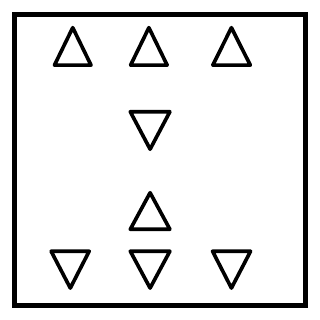
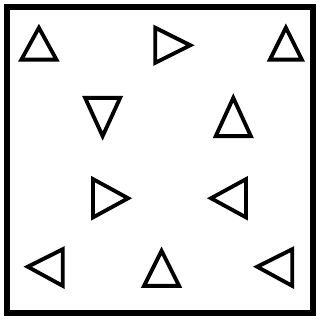
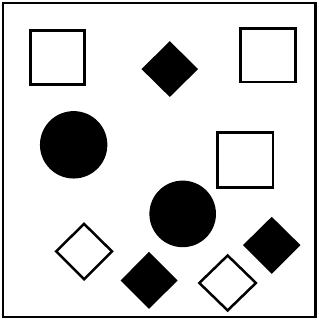
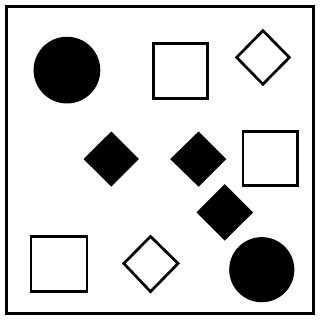
Choose the figure which is different from the rest?

  1. ((a))

  2. ((b))

  3. ((c))

  4. ((d))

Show Answer
Answer: ((d))

The logic followed here is: 

Option 1) 

→ The number of shaded elements are equal to number of non-shaded elements.

Option 2) 

→ The number of shaded elements are equal to number of non-shaded elements.

Option 3)

→ The number of shaded elements are equal to number of non-shaded elements.

Option 4) 

→ The number of shaded elements are more than number of non-shaded elements.

Hence, "Option 4" is the correct answer.

10

Figure A and B are related in a particular manner. Establish the same relationship between figures C and D by choosing the figure amongst these four options which would replace the question mark in figure D.

  1. ((a))

  2. ((b))

  3. ((c))

  4. ((d))

Show Answer
Answer: ((c))

The logic followed here is:

→ The whole element rotate 90º anticlockwise and the outside facing line at the vertex face the opposite direction.

Similarly,

→ The whole element rotate 90º anticlockwise and the outside facing line at the vertex face the opposite direction.

Hence, "Option 3" is the correct answer.

11

How many triangles are in the given figure?

  1. ((a))

    27

  2. ((b))

    20

  3. ((c))

    25

  4. ((d))

    24

Show Answer
Answer: ((a))

27

The number of triangles in the given figure is shown below:

Thus, there are a total of 27 triangles.

Hence, "Option 1" is the correct answer.

Alternate Method

1) Number of triangles = n(n+2)(2n+1)8{n(n + 2)(2n + 1)\over 8} , Where; n = 4 (number of triangles at the baseline)

4(4+2)(2×4+1)8{4(4 + 2)(2 \times 4 + 1)\over 8}

4(6)(8+1)8{4(6)(8 + 1)\over 8}

4×6×98{4 \times 6 \times 9\over 8}

= 27

12

In each of the following questions, two numbers are given which follow a certain logical or arithmetic relationship. Identify the same pattern and apply it to find the missing number in the second pair. Choose the correct option from the given alternatives.

14825: 36047 :: 27416:?

  1. ((a))

    49638

  2. ((b))

    39638

  3. ((c))

    48638

  4. ((d))

    38637

Show Answer
Answer: ((a))

49638

The logic followed here is digit-wise addition of +2 to each digit of the number:

14825 : 36047 

→ 1 + 2 = 3, 4 + 2 = 6, 8 + 2 = 10 (unit digit = 0), 2 + 2 = 4, 5 + 2 = 7

Similarly,

27416 : ?  

→ 2 + 2 = 4, 7 + 2 = 9, 4 + 2 = 6, 1 + 2 = 3, 6 + 2 = 8 

So, 27416 ⇒ 49638

Hence, "Option 1" is the correct answer.

13

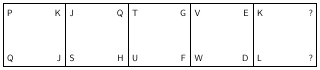
Identify the figure that best fits in place of the question mark.  

  1. ((a))

  2. ((b))

  3. ((c))

  4. ((d))

Show Answer
Answer: ((c))

The logic followed here is:

  1. The innermost element shift to the outermost element.

2) The outermost element shift to the innermost element.

  1. No change in the circle element.

Thus, the final series is:

Hence, "Option 3" is the correct answer.

14

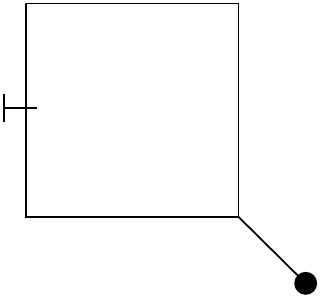
A man walks 12 km north, then turns right and walks 8 km, then again turns right and walks 12 km.

How far is he from the starting point?

  1. ((a))

    8 km

  2. ((b))

    12 km

  3. ((c))

    4 km

  4. ((d))

    6 km

Show Answer
Answer: ((a))

8 km

Given:

A man walks 12 km north, then turns right and walks 8 km, then again turns right and walks 12 km.

Thus, the man is 8 km far from the starting point.

Hence, "Option 1" is the correct answer.

15

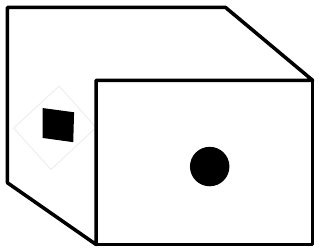
Which figure doesn't belong based on vertices? 

  1. ((a))

  2. ((b))

  3. ((c))

  4. ((d))

Show Answer
Answer: ((b))

The logic followed here is: 

Option 1) 

→ 5 Vertices = 5 Sides.

Option 2) 

→ 5 Vertices ≠ 10 Sides.

Option 3)

→ 6 Vertices = 6 Sides.

Option 4) 

→ 6 Vertices = 6 Sides.

Hence, "Option 2" is the correct answer.
16

Complete the series: 3, 6, 12, 24, ?, 96 

  1. ((a))

    48

  2. ((b))

    40

  3. ((c))

    45

  4. ((d))

    36

Show Answer
Answer: ((a))

48

The logic followed here is:

Hence, "Option 1" is the correct answer.

17

Find the next term in the given series. 5C, 6D, 10F, 19I, ? 

  1. ((a))

    30 J

  2. ((b))

    34J

  3. ((c))

    33L

  4. ((d))

    35M

Show Answer
Answer: ((d))

35M

The logic followed here is:

Hence, "Option 4" is the correct answer.

18

In each of the following questions, a specific pattern is followed for both the letters and the numbers. Identify the set of numbers that correctly fills the blanks in the given sequence. A, 0, D, 8, G, _ , J, 42, M, _ , P, 100, S, 138, V, 182 

  1. ((a))

    (15,55)

  2. ((b))

    (25, 73)

  3. ((c))

    (20,65)

  4. ((d))

    (22,68)

Show Answer
Answer: ((d))

(22,68)

The logic followed here is:

Hence, "Option 4" is the correct answer.

19

In each of the following questions, a specific relationship is given between two words. Identify the word that shares a similar semantic relationship with the given pair. Choose the most appropriate option from the four choices given below.

Seed: Sapling:: Fetus: ?

  1. ((a))

    Embryo

  2. ((b))

    Child

  3. ((c))

    Adult

  4. ((d))

    Infant

Show Answer
Answer: ((d))

Infant

The logic followed here is:

Seed: Sapling → A seed grows into a sapling (next stage of development). 

Similarly,

Fetus: ? → A fetus develops in an infant.

Hence, "Option 4" is the correct answer.

20

How many straight lines are there in the figure? (Don't consider the extra line if there is another line at 180 degrees) 

  1. ((a))

    5

  2. ((b))

    12

  3. ((c))

    10

  4. ((d))

    4

Show Answer
Answer: ((a))

5

The number of straight lines in the given figure is shown below:

Thus, as marked there are a total of 5 straight lines.

Hence, "Option 1" is the correct answer.

<br>

Mistake Points Straight Lines - A straight line is always a straight path between two points.

Simple Lines - It can be straight and also intersect themselves.

21

 If 'Alpha' means addition, 'Beta' means subtraction, 'Gamma' means multiplication, and 'Delta' means division, then what is the value of 100 Delta 5 Beta 10 Alpha 2 Gamma 3 = ? 

  1. ((a))

    36

  2. ((b))

    22

  3. ((c))

    26

  4. ((d))

    16

Show Answer
Answer: ((d))

16

Decoding signs:

SignAlphaBetaGammaDelta
Stands For+-×÷

Given: 100 Delta 5 Beta 10 Alpha 2 Gamma 3 = ?

100 Delta 5 Beta 10 Alpha 2 Gamma 3 = ? ⇒ 100 ÷ 5 - 10 + 2 × 3 = ?

⇒ 100 ÷ 5 - 10 + 2 × 3 = ?

⇒ 20 - 10 + 2 × 3 = ?

20 + 6 - 10 = ?

26 - 10 = ?

⇒ 16 = ?

Hence, "Option 4" is the correct answer.

22

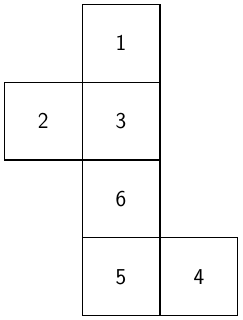
An unfolded box (cube or cuboid) appeared as shown in the figure, when sheet is folded to form a box. find the number on the face opposite to 6. 

  1. ((a))

    4

  2. ((b))

    2

  3. ((c))

    1

  4. ((d))

    3

Show Answer
Answer: ((a))

4

The faces opposite to each other are shown below:

⇒ As the alternate positions become opposite to each other, the remaining two faces become opposite to each other.

So, opposite pairs are:

1 → 3

4 → 6

2 → 5

Thus, '4' opposite to '6'.

Hence, "Option 1" is the correct answer.

23

A shopkeeper sells a pen for Rs. 45 after giving a discount of 10%. What is the marked price of the pen? 

  1. ((a))

    Rs. 60

  2. ((b))

    Rs. 55

  3. ((c))

    Rs. 65

  4. ((d))

    Rs. 50

Show Answer
Answer: ((d))

Rs. 50

Given:

Discount allowed = 10%

Final selling price of pen after discount = Rs. 45

Formula Used: Marked Price = Final Price / (1 - Discount Rate)

Let the marked price of the pen be → MM.

Discount rate = 10% = 0.1

Final Price = Marked Price × (1 - Discount Rate)

45 = M × (1 - 0.1)

45 = M × 0.9

M = 45 / 0.9

M = 50

The marked price of the pen is Rs. 50.

Hence, "Option 4" is the correct answer.

24

Complete the analogy: HJL: JLN :: QSU: ?

  1. ((a))

    STX

  2. ((b))

    SUV

  3. ((c))

    SUW

  4. ((d))

    RSW

Show Answer
Answer: ((c))

SUW

The logic followed here is:

​HJL: JLN

Similarly,

QSU: ?​

Hence, "Option 3" is the correct answer.

25

34, 68, 102, 136, 170, 185-which number doesn't follow the series rule? 

  1. ((a))

    170

  2. ((b))

    34

  3. ((c))

    136

  4. ((d))

    185

Show Answer
Answer: ((d))

185

The logic followed here is:

Thus, it should be 204 instead of 185.

Hence, "Option 4" is the correct answer.

26

Criteria to be selected as Field Officer (as on 01-01-2024):

Graduate in Agriculture or Environmental Science with at least 65% marks.

Age between 23 and 35 years.

Must have a valid driving license.

Should have field experience of at least 2 years.

Special Clause:

If candidate has no driving license but more than 4 years of field experience, refer to Regional Head.

Case:

Shalini is 29 years old, has 68% in Environmental Science, 5 years of field work, but does not hold a driving license.

Question:

What should be done in Shalini's case?

  1. ((a))

    Reject the candidate 

  2. ((b))

    Refer to Regional Head

  3. ((c))

    Call for interview

  4. ((d))

    Select the candidate

Show Answer
Answer: ((b))

Refer to Regional Head

Criteria to be selected as Field Officer (as on 01-01-2024) are as follows:

Eligibility criteriaFulfillment
Graduate in Agriculture or Environmental Science with at least 65% marks.Yes, Shalini has 68% in Environmental Science
Age between 23 and 35 years.Yes, Shalini is 29 years old
Must have a valid driving license.No, Shalini does not hold a driving license.
Should have field experience of at least 2 years.Yes, Shalini has 5 years of field work.
If candidate has no driving license but more than 4 years of field experience, refer to Regional Head.Applicable

Thus, Shalini will be referred to the Regional Head.

Hence, "Option 2" is the correct answer.

27

Identify the odd image out: 

  1. ((a))

  2. ((b))

  3. ((c))

  4. ((d))

Show Answer
Answer: ((a))

The logic followed here is: 

Option 1) 

→ Rhombus.

Option 2) 

→ Square.

Option 3)

 → Square.

Option 4) 

→ Square.

Hence, "Option 1" is the correct answer.

Alternate MethodOption 1) 

→ Square not aligned with axis or rotated 45º (Diamond shape).

Option 2) 

→ Square aligned with axis.

Option 3)

→ Square aligned with axis.

Option 4) 

→ Square aligned with axis.

28

Read the information carefully and identify the correct relationship between the persons mentioned in the question.

Ravi is the son of Pooja.

Pooja is the daughter-in-law of Shyam.

Shyam is the father of Karan.

Question: How is Karan related to Ravi?

  1. ((a))

    Brother

  2. ((b))

    Father 

  3. ((c))

    Uncle

  4. ((d))

    Grandfather

Show Answer
Answer: ((b))

Father 

Given: 

1) Ravi is the son of Pooja.

  1. Pooja is the daughter-in-law of Shyam.

3) Shyam is the father of Karan.

Thus, Karan is Ravi's father.

Hence, the correct answer is "Option 2".

29

Which of the following does NOT belong to the group? 

  1. ((a))

    Cotton

  2. ((b))

    Rose

  3. ((c))

    Jasmine

  4. ((d))

    Lotus

Show Answer
Answer: ((a))

Cotton

The logic followed here is:

Option 1) Cotton → Fiber/crop

Option 2) Rose → Type of flower

Option 3) Jasmine → Type of flower

Option 4) Lotus → Type of flower

Hence, "Option 1" is the correct answer.

30

Criteria to be selected as Lab Assistant (as on 01-03-2024):

Must have a Diploma in Lab Technology with at least 60% marks.

Age must be 21 to 28 years.

Should have minimum 1 year practical lab experience.

Must be willing to work in night shifts.

Special Clause:

If the candidate has 70% in Diploma but only 6 months of experience, refer to Chief Lab Supervisor.

Case:

Irfan is 22 years old, has 72% in Lab Diploma, 6 months of experience, and agrees to night shifts.

Question: What should be done in Irfan's case?

  1. ((a))

    Refer to Chief Lab Supervisor 

  2. ((b))

    Reject the candidate

  3. ((c))

    Information insufficient

  4. ((d))

    Select the candidate

Show Answer
Answer: ((a))

Refer to Chief Lab Supervisor 

Criteria to be selected as Field Officer (as on 01-01-2024) are as follows:

Eligibility criteriaFulfillment
Must have a Diploma in Lab Technology with at least 60% marks.Yes, Irfan has 72% in Lab Diploma
Age must be 21 to 28 years.Yes, Irfan is 22 years old
Should have minimum 1 year practical lab experience.No, Irfan has 6 months of experience.
Must be willing to work in night shifts.Yes, Irfan agrees to night shifts.
If the candidate has 70% in Diploma but only 6 months of experience, refer to Chief Lab Supervisor.Applicable

Thus, Irfan will be referred to the Chief Lab Supervisor.

Hence, "Option 2" is the correct answer.

31

In each of the following series, determine the pattern and find the missing number represented by (?). Choose the correct answer

from the given options. 120, 131, 115, 126, 110, (?)

  1. ((a))

    121

  2. ((b))

    116

  3. ((c))

    131

  4. ((d))

    105

Show Answer
Answer: ((a))

121

The logic followed here is:

Hence, "Option 1" is the correct answer.

32

Find the missing number in the series:2, 4, 8, 16, ?, 64 

  1. ((a))

    30

  2. ((b))

    24

  3. ((c))

    32

  4. ((d))

    36

Show Answer
Answer: ((c))

32

The logic followed here is:

Hence, "Option 3" is the correct answer.

33

If Figure A is rotated to figure B then figure C is rotated to? 

  1. ((a))

  2. ((b))

  3. ((c))

  4. ((d))

Show Answer
Answer: ((d))

The logic followed here is:

→ The whole element rotates 180º anticlockwise.

Similarly,

→ The whole element rotates 180º.

Hence, "Option 4" is the correct answer.

34

Post: Junior Librarian

Eligibility Criteria (as on 01-04-2025):

Must have a Bachelor's degree in Library Science (B.Lib.Sc.)

Age must be less than 32 years.

Must have minimum 1 year experience in any library.

Case:

Rina is 31, has B.Lib.Sc., and has 18 months experience in a college library. What should be done in Rina's case?

  1. ((a))

    Reject the candidate

  2. ((b))

    Information insufficient

  3. ((c))

    Refer to Senior Librarian

  4. ((d))

    Select the candidate

Show Answer
Answer: ((d))

Select the candidate

Criteria to be selected as post Junior Librarian (as on 01-01-2025) are as follows:

Eligibility criteriaFulfillment
Must have a Bachelor's degree in Library Science (B.Lib.Sc.)Yes, Rina has B.Lib.Sc
Age must be less than 32 years.Yes, Rina is 31 years old
Must have minimum 1 year experience in any library.Yes, has 18 months experience in a college library.

Thus, Rina should be selected.

Hence, "Option 4" is the correct answer.

35

Read scenario carefully, evaluate all options, identify the action that best navigates the various competing factors and values.

You are part of a volunteer committee overseeing a local community garden project that is struggling financially. A large, successful local business offers a substantial donation that would secure the garden's operations for the next year. However, their offer comes with the condition that they can paint their corporate logo, in bright, contrasting colors, prominently on the garden's main entrance arch, which clashes significantly with the garden's established natural and rustic aesthetic.

Question: Given this situation, which of the following is the most ethical and responsible action?

  1. ((a))

    Immediately accept the donation and the logo placement, prioritizing the garden's financial survival above all else. 

  2. ((b))

    Decline the donation entirely, citing the conflict with the garden's aesthetic and core values, even if it means potential closure.

  3. ((c))

    Express gratitude for the offer and attempt to negotiate alternative forms of recognition, such as a smaller, less prominent plaque, or a mention on the garden's website, explaining the importance of maintaining the garden's aesthetic integrity.

  4. ((d))

    Accept the donation and the logo placement, with the intention of secretly removing or altering the logo after a few months once the funds are secured. 

Show Answer
Answer: ((c))

Express gratitude for the offer and attempt to negotiate alternative forms of recognition, such as a smaller, less prominent plaque, or a mention on the garden's website, explaining the importance of maintaining the garden's aesthetic integrity.

According to the given situation:

OptionStatementCorrectnessReasoning
1Immediately accept the donation and the logo placement, prioritizing the garden's financial survival above all else.IncorrectEnsures financial stability, but compromises the garden's identity, aesthetics, and long term community trust. It places short term gain above core values.
2Decline the donation entirely, citing the conflict with the garden's aesthetic and core values, even if it means potential closure.IncorrectProtects the gardens vision, but fails to address the pressing financial needs.
3Express gratitude for the offer and attempt to negotiate alternative forms of recognition, such as a smaller, less prominent plaque, or a mention on the garden's website, explaining the importance of maintaining the garden's aesthetic integrity.CorrectBalances financial survival with integrity by showing gratitude, opening negotiations and protecting garden's aesthetics values. It is both ethical and responsible because it respects the donor while safeguarding the garden's mission.
4Accept the donation and the logo placement, with the intention of secretly removing or altering the logo after a few months once the funds are secured.IncorrectSuggests dishonesty which is unethical.

Qualities Projected in this situation: Ethical integrity, negotiation skills and responsibility.

Hence, "Option 3" is the correct answer.

Key Points Checklist for attempting SRT questions:

  1. Read the question and options carefully.

  2. Look for options that are realistic, optimistic, and reflect officer-like qualities.

  3. Do not skip any situation.

  4. Relegate the negative sentences and choose the most logical option among the remaining. As time is an important factor, hence your thinking ability should be swift.

  5. React quickly and be logical. 

Additional InformationOfficer qualities:


36

In each of the following questions, a specific relationship is given between two words. Identify the word that shares a similar semant

relationship with the given pair. Choose the most appropriate option from the four choices given below. Doctor : Diagnosis :: Judge: ?

  1. ((a))

    Court 

  2. ((b))

    Verdict

  3. ((c))

    Law

  4. ((d))

    Jury

Show Answer
Answer: ((b))

Verdict

The logic followed here is:

Doctor : Diagnosis → A diagnosis is the decision/conclusion given by a doctor. 

Similarly,

Judge: ? → A verdict is the decision/conclusion given by a judge. 

Hence, "Option 2" is the correct answer.
37

Choose the correct number to complete the analogy.

8:64::10:?

  1. ((a))

    80

  2. ((b))

    120

  3. ((c))

    100

  4. ((d))

    90

Show Answer
Answer: ((c))

100

The logic followed here is:

8:64 → 82 = 64

Similarly,

10:? → 102 = 100

Hence, "Option 3" is the correct answer.

38

What will come in place of the question mark (?) in the following equation?

72 ÷ 9 - 15 + 4 × 3 =?

  1. ((a))

    17

  2. ((b))

    -3

  3. ((c))

    5

  4. ((d))

    1

Show Answer
Answer: ((c))

5

Given: 72 ÷ 9 - 15 + 4 × 3 =?

72 ÷ 9 - 15 + 4 × 3 =?

⇒ 8 - 15 + 4 × 3 =?

⇒ 8 + 12 - 15 =?

⇒ 20 - 15 =?

⇒ 5 = ?

Hence, "Option 3" is the correct answer.

39

Read the situation and choose the best judgment:

While enjoying a walk in a local park, you find a wallet lying on a bench. Upon opening it, you see it contains a significant amount of cash, credit cards, and an ID card with the owner's name and address.

Question: Given this situation, which of the following is the most ethical and responsible action?

  1. ((a))

    Take the cash and leave the wallet with the ID and cards on the bench, hoping someone else finds it. 

  2. ((b))

    Try to find the owner yourself by going to the address on the ID, even if it's far away or seems inconvenient.

  3. ((c))

    Turn the entire wallet (cash, cards, ID) over to the nearest police station or park lost-and-found office.

  4. ((d))

    Use the contact information on the ID to call the owner directly and arrange a meeting to return it yourself.

Show Answer
Answer: ((c))

Turn the entire wallet (cash, cards, ID) over to the nearest police station or park lost-and-found office.

According to the given situation:

OptionStatementCorrectnessReasoning
1Take the cash and leave the wallet with the ID and cards on the bench, hoping someone else finds it.IncorrectUnethical, dishonest and irresponsible action.
2Try to find the owner yourself by going to the address on the ID, even if it's far away or seems inconvenient.IncorrectUnsafe and impractical
3Turn the entire wallet (cash, cards, ID) over to the nearest police station or park lost-and-found office.CorrectEthical, safe and responsible action.
4Use the contact information on the ID to call the owner directly and arrange a meeting to return it yourself.IncorrectPose safety risks and can be misused.

Qualities Projected in this situation: Responsibility.

Hence, "Option 3" is the correct answer.

Key Points   Checklist for attempting SRT questions:

  1. Read the question and options carefully.

  2. Look for options that are realistic, optimistic, and reflect officer-like qualities.

  3. Do not skip any situation.

  4. Relegate the negative sentences and choose the most logical option among the remaining. As time is an important factor, hence your thinking ability should be swift.

  5. React quickly and be logical. 

Additional Information

Officer qualities:


40

Address 1: Ms. Rina Dey, Flat No. 302, Block A, Sunrise Apartments, Mumbai- 400089

Address 2: Ms. Rina Dey, A-302, Sunrise Apt., Mumbai 400089

Which of the following is TRUE?

  1. ((a))

    The addresses refer to the same location 

  2. ((b))

    The city pin codes are different

  3. ((c))

    The apartment names differ

  4. ((d))

    The block and flat number do not match

Show Answer
Answer: ((a))

The addresses refer to the same location 

According to the question, the differences in the given address are as follows:

Address 1: Ms. Rina Dey, Flat No. 302, Block A, Sunrise Apartments, Mumbai**-400089**

Address 2: Ms. Rina Dey, A-302, Sunrise Apt., Mumbai 400089

Thus, The addresses refer to the same location.

Hence, "Option 1" is the correct answer.

41

PCI is to Digital Payment as UIDAI is to...?  

  1. ((a))

    Voter List

  2. ((b))

    Census

  3. ((c))

    Biometric Identity

  4. ((d))

    e-Commerce

Show Answer
Answer: ((c))

Biometric Identity

The logic followed here is:

PCI is to Digital Payment → PCI sets standards and infrastructure for the digital payment ecosystem.

Similarly,

UIDAI is to...? → UIDAI provides national digital identity infrastructure used for biometric identity verification and authentication. 

Hence, "Option 3" is the correct answer.

42

How many triangles are there in the given figure. 

  1. ((a))

    15

  2. ((b))

    14

  3. ((c))

    18

  4. ((d))

    16

Show Answer
Answer: ((d))

16

The number of triangles in the given figure is shown below:

Thus, as marked there are a total of 16 triangles.

Hence, "Option 4" is the correct answer.

43

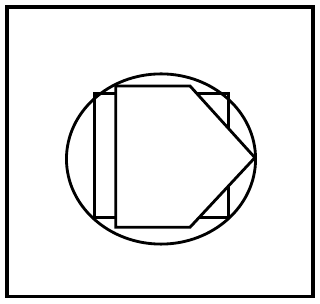
What will be the next figure? 

  1. ((a))

  2. ((b))

  3. ((c))

  4. ((d))

Show Answer
Answer: ((d))

The logic followed here is:

  1. In the left element the number of the sides is increasing subsequently.

  2. No change in the circle element.

Thus, the final series is:

Hence, "Option 4" is the correct answer.

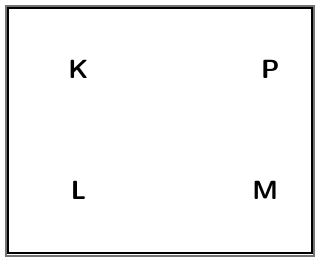
44

Which figure should replace the question mark? 

  1. ((a))

  2. ((b))

  3. ((c))

  4. ((d))

Show Answer
Answer: ((d))

The logic followed here is:

  1. The top elements are opposite pairs according to the English alphabetic series.

2) The bottom elements are opposite pairs according to the English alphabetic series.

Thus, the final series is:

Hence, "Option 4" is the correct answer.

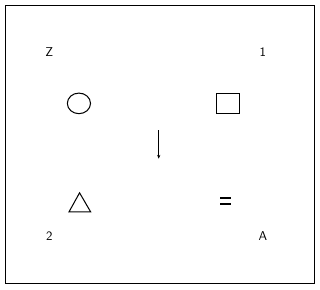
45

Which of the following figures will complete the figural series given below? 

  1. ((a))

  2. ((b))

  3. ((c))

  4. ((d))

Show Answer
Answer: ((b))

The logic followed here is:

  1. In each box two elements at the sides interchange positions. 

  2. The center arrow element rotates 90º clockwise subsequently.

  3. No change in the rest of the elements. 

Thus, the final series is:

Hence, "Option 2" is the correct answer.
46

Choose the figure that will be formed when the cube is unfolded. 

  1. ((a))

  2. ((b))

  3. ((c))

  4. ((d))

Show Answer
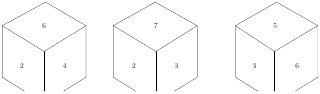
Answer: ((a))

The logic followed here is :-

From the given three different cubes the adjacent sides are as shown below :

As 2 is common on both the dice I and II, it is clear that 6, 4, 1, and 3 are adjacent to it, and the remaining i.e. 5 will be opposite to it.

Opposite pairs:

6 → 1

4 → 3

2 → 5

So, checking each option one by one:

Option 1) 

→ Can be the dice when opened, because all the sides are of adjacent sides.

Option 2) 

→ Cannot be the dice when opened, because the opposite pairs '3' and '4' cannot be at the adjacent sides.

Option 3) 

→ Cannot be the dice when opened, because the '3' and '5' are not the required opposite pairs.

Option 4) 

→ Cannot be the dice when opened, because the opposite pairs '6' and '1' cannot be at the adjacent sides.

Hence, "Option 1" is the correct answer.

47

Amazon, Nile, Ganga, Everest which is not like the others? 

  1. ((a))

    Nile 

  2. ((b))

    Everest

  3. ((c))

    Ganga

  4. ((d))

    Amazon

Show Answer
Answer: ((b))

Everest

The logic followed here is:

Option 1) Nile → River

Option 2) Everest → Mountain

Option 3) Ganga → River

Option 4) Amazon → River

Hence, "Option 2" is the correct answer.

48

Which figure comes next in the series? 

  1. ((a))

  2. ((b))

  3. ((c))

  4. ((d))

Show Answer
Answer: ((d))

The logic followed here is:

  1. The elements flipped vertically subsequently.

Thus, the final series is:

Hence, "Option 4" is the correct answer.

49

Select the odd figure from the given alternatives.

  1. ((a))

  2. ((b))

  3. ((c))

  4. ((d))

Show Answer
Answer: ((d))

In all the figures, except (4), the number of triangular boxes is 8, while in figure (4), number of triangular boxes are 10.

Hence, ‘option 4’ is the correct answer.
50

Which option figure will replace the question mark in the following series:

  1. ((a))

  2. ((b))

  3. ((c))

  4. ((d))

Show Answer
Answer: ((b))

  1. B and D are moved alternatively. B is rotated 90° anticlockwise and D is rotated 90°clockwise.

In next step B is rotated 90° clockwise and D is rotated 90°anticlockwise.


  1. F and Z are moved alternatively. Z is rotated 90° clockwise and F is rotated 90° clockwise.

In next step Z and F rotated anticlockwise.

  1. Middle figure is rotated 90° clockwise in each step.

So, next figure is;

Hence, option (2) is the correct answer.
General Awareness (50 questions)

51

Which of the following statements about the GO (G zero phase) phase of the cell cycle is most accurate?

  1. ((a))

    DNA synthesis occurs rapidly in cells present in the GO phase.

  2. ((b))

    It is the phase where cell division is initiated in cancerous cells.

  3. ((c))

    It is a temporary quiescent stage where cells exit the cell cycle.

  4. ((d))

    Cells in GO actively prepare for DNA replication.

Show Answer
Answer: ((c))

It is a temporary quiescent stage where cells exit the cell cycle.

The correct answer is It is a temporary quiescent stage where cells exit the cell cycle..

Key Points

  • The GO phase (G zero phase) represents a state of cell cycle arrest, where cells exit the active cycle and stop dividing.
  • Cells in the GO phase are in a non-proliferative or quiescent state, often performing specialized functions depending on the cell type.
  • This phase is temporary or permanent, depending on the cell type and environmental conditions.
  • Examples of cells in permanent GO phase include neurons and skeletal muscle cells, which do not divide after differentiation.
  • GO phase is crucial for maintaining cellular homeostasis and protecting against uncontrolled cell division.

Additional Information

  • Cell Cycle Phases:
  • The cell cycle consists of interphase (G1, S, G2 phases) and mitotic phase (M phase).
  • GO phase is not part of the active cycle and is considered a resting state.
  • Quiescence vs Senescence:
  • Quiescence refers to reversible cell cycle arrest (GO phase).
  • Senescence is an irreversible state of cell cycle arrest caused by damage or aging.
  • Role in Cancer:
  • Cancerous cells often evade GO phase, leading to uncontrolled division and tumor formation.
  • Targeting the mechanisms regulating GO phase is a focus in cancer therapy research.
  • Cell Types:
  • Stem cells can exit GO phase to re-enter the cycle and divide.
  • Terminally differentiated cells like neurons remain in GO phase permanently.
52

India's improvement in the Rule of Law Index is most critically challenged by which factor? 

  1. ((a))

    Slow judicial delivery

  2. ((b))

    Legislative overreach

  3. ((c))

    Executive dominance 

  4. ((d))

    Media bias

Show Answer
Answer: ((a))

Slow judicial delivery

The correct answer is Slow judicial delivery.

Key Points

  • Slow judicial delivery is one of the most critical issues affecting India's Rule of Law Index ranking.
  • India's judicial system is burdened with a massive backlog of cases—over 4.5 crore cases were pending in courts as of 2023, according to the National Judicial Data Grid.
  • The average time to resolve cases in lower courts is several years, while higher courts may take decades to deliver final judgments.
  • The delay leads to a lack of trust in the justice system, undermining the effectiveness of the Rule of Law in ensuring accountability and fairness.
  • Factors contributing to slow judicial delivery include insufficient judicial workforce, underfunded courts, procedural complexities, and lack of technological integration.

Additional Information

  • Rule of Law Index
  • The Rule of Law Index is published by the World Justice Project (WJP) and measures how the rule of law is experienced and perceived globally.
  • The index evaluates factors such as constraints on government powers, absence of corruption, open government, and access to justice.
  • India ranked 77th out of 140 countries in the 2022 Rule of Law Index.
  • Judicial Backlog in India
  • As of 2023, over 4.5 crore cases were pending, with nearly 90,000 cases in the Supreme Court alone.
  • The Law Commission of India has repeatedly recommended increasing the number of judges to address the backlog.
  • National Judicial Data Grid (NJDG)
  • An online platform that provides real-time data on pending and disposed cases in Indian courts.
  • It aims to promote transparency and enable better management of case workloads.
  • Judicial Reforms
  • Proposed reforms include hiring more judges, adopting Alternative Dispute Resolution (ADR) mechanisms, and leveraging technology for e-courts.
  • The E-Courts project is being implemented under the Digital India program to ensure faster and more transparent justice delivery.
53

Which instrument is commonly used in Carnatic classical music? 

  1. ((a))

    Dhol

  2. ((b))

    Mridangam

  3. ((c))

    Santoor

  4. ((d))

    Shehnai

Show Answer
Answer: ((b))

Mridangam

The correct answer is Mridangam.

Key Points

  • The Mridangam is a percussion instrument widely used in Carnatic classical music, which originated in South India.
  • It is a double-sided drum, where each side produces different tones, contributing to the rhythmic complexity of Carnatic music.
  • The Mridangam is often referred to as the "King of Percussion" in Carnatic music due to its prominence in rhythm accompaniment.
  • Traditionally, it is made from jackfruit wood, and its drumheads are constructed using layers of leather and black paste for tonal resonance.
  • It serves as the primary rhythm instrument in Carnatic music concerts, often accompanying vocalists and instrumentalists.

Additional Information

  • Carnatic Music:
  • Carnatic music is a system of classical music associated with South India, characterized by its intricate melodies and complex rhythmic patterns.
  • It is based on a system of ragas (melodic frameworks) and talas (rhythmic cycles).
  • The Mridangam is an essential instrument in Carnatic ensembles, along with the veena, violin, and ghatam.
  • Construction of Mridangam:
  • The cylindrical body is traditionally made from hollowed jackfruit wood.
  • The drumheads are crafted using multiple layers of leather, and the black paste (siyahi) in the center helps fine-tune the pitch.
  • Role in Performances:
  • The Mridangam player provides rhythmic accompaniment, enhancing the overall structure and dynamics of the performance.
  • It is also used in solo performances, where its intricate rhythmic variations are showcased.
  • Other Instruments in Carnatic Music:
  • Other commonly used instruments include the violin, veena, flute, and ghatam.
  • These instruments complement the Mridangam in creating a cohesive musical experience.
54

What trend is reflected by increasing share of urban people in non-manual tertiary occupations? 

  1. ((a))

    Spatial literacy inequality 

  2. ((b))

    Gendered education access

  3. ((c))

    Emerging service economy

  4. ((d))

    De-industrialization.

Show Answer
Answer: ((c))

Emerging service economy

The correct answer is Emerging service economy.

Key Points

  • The increasing share of urban people in non-manual tertiary occupations reflects the growth of the service economy, where industries like IT, finance, education, and healthcare dominate.
  • This trend is indicative of a shift from traditional agriculture and manufacturing to a more knowledge-based economy.
  • Urban centers act as hubs for economic opportunities, attracting talent for service-oriented roles that require specialized skills and education.
  • Such a shift has been observed in rapidly urbanizing nations, where the tertiary sector contributes significantly to GDP and employment.
  • The emerging service economy is characterized by increased demand for professional, managerial, and technical roles in cities, driven by globalization and advancements in technology.

Additional Information

  • Service Economy:
  • The service economy refers to an economic system where the majority of economic output and employment comes from the service sector, rather than agriculture or manufacturing.
  • Examples include industries like IT, education, healthcare, tourism, and financial services.
  • Urbanization and Economic Shift:
  • Urbanization leads to the concentration of infrastructure and human resources, fostering the growth of service-based industries.
  • It creates a demand for diverse services in urban centers, such as retail, transport, and education.
  • Role of Technology:
  • Technological advancements, such as automation and digitalization, have accelerated the transition to a service economy.
  • IT and telecommunication have enabled remote and global service delivery, expanding economic opportunities.
  • Globalization:
  • Globalization has connected markets worldwide, boosting the demand for services like IT, finance, and consultancy in urban centers.
  • It has also facilitated the outsourcing of service-based roles to developing nations.
55

Which region has become the new epicenter of global terrorism, according to the GTI (Global Terrorism Index) 2024? 

  1. ((a))

    Southeast Asia

  2. ((b))

    Central Sahel region of sub-Saharan Africa

  3. ((c))

    Central Asia

  4. ((d))

    Middle East and North Africa

Show Answer
Answer: ((b))

Central Sahel region of sub-Saharan Africa

The correct answer is Central Sahel region of sub-Saharan Africa.

Key Points

  • The Central Sahel region of sub-Saharan Africa has been identified as the new epicenter of global terrorism, according to the Global Terrorism Index (GTI) 2024.
  • This region includes countries such as Mali, Burkina Faso, and Niger, which are experiencing a significant rise in terrorist activity.
  • Jihadist groups such as Islamic State (IS) affiliates and al-Qaeda-linked groups are active in this area, causing instability and violence.
  • Factors contributing to terrorism in the Central Sahel include weak governance, poverty, ethnic tensions, and competition over natural resources.
  • The number of deaths caused by terrorism in this region has surpassed those in the Middle East and North Africa, highlighting its growing significance in global security dynamics.

Additional Information

  • Global Terrorism Index (GTI):
  • The GTI is an annual report published by the Institute for Economics and Peace (IEP) that measures the impact of terrorism worldwide.
  • It uses metrics such as the number of incidents, fatalities, injuries, and property damage to rank countries and regions.
  • Key Terrorist Groups in the Sahel:
  • Jama’at Nasr al-Islam wal Muslimin (JNIM): An al-Qaeda-affiliated group active in the Sahel.
  • Islamic State in the Greater Sahara (ISGS): An affiliate of ISIS causing significant instability in the region.
  • Drivers of Terrorism in the Sahel:
  • Political instability and lack of governance in countries like Mali and Burkina Faso.
  • Socioeconomic challenges such as poverty and unemployment.
  • Competition for scarce resources like water and arable land.
  • Regional and International Responses:
  • Efforts such as the G5 Sahel joint force, a regional security initiative, aim to combat terrorism.
  • International support from organizations like the United Nations and countries like France is critical for counter-terrorism operations.
56

Match the following Wildlife Sanctuaries (Column A) with their respective States (Column B). Choose the option correct option: 

Column A (Wildlife Sanctuary)Column B (State)
1. Gandhi Sagar WLSa. Assam
2. Sonai Rupai WLSb. Madhya Pradesh
3. Kaimur WLSc. Telangana
4. Eturnagaram WLSd. Bihar
  1. ((a))

    1 - b, 2 - a, 3 - d, 4 - c 

  2. ((b))

    1 - a, 2 - c, 3 - b, 4 - d

  3. ((c))

    1 - d, 2 - c, 3 - a, 4 - b

  4. ((d))

    1 - c, 2 - d, 3 - a, 4 - b

Show Answer
Answer: ((a))

1 - b, 2 - a, 3 - d, 4 - c 

The correct answer is Option 1.

Key Points

  • Gandhi Sagar Wildlife Sanctuary is located in Madhya Pradesh. It is situated near the Chambal River and is known for its rich biodiversity.
  • Sonai Rupai Wildlife Sanctuary is located in Assam. It lies in the foothills of the Himalayan ranges and is home to diverse flora and fauna, including elephants and tigers.
  • Kaimur Wildlife Sanctuary is located in Bihar. It is the largest sanctuary in the state and is known for its waterfalls, archaeological sites, and wildlife.
  • Eturnagaram Wildlife Sanctuary is located in Telangana. It is one of the oldest sanctuaries in the region and is noted for its teak forests and biodiversity.
  • The correct match is 1 - b, 2 - a, 3 - d, 4 - c, which corresponds to Option 1.

Additional Information

  • Wildlife Sanctuaries in India:
  • India has over 550 wildlife sanctuaries, which serve as protected areas for conserving biodiversity.
  • They are governed under the Wildlife Protection Act, 1972.
  • These sanctuaries contribute to ecological balance and are vital for preserving endangered species.
  • Biodiversity Hotspots in India:
  • India is home to four biodiversity hotspots: the Himalayas, the Western Ghats, the Indo-Burma region, and the Sundaland (Nicobar Islands).
  • These regions are critical for global biodiversity conservation due to their unique ecosystems and endemic species.
  • Importance of Wildlife Sanctuaries:
  • They provide safe habitats for wildlife, especially endangered and vulnerable species.
  • They help maintain ecological balance and protect ecosystems from degradation.
  • They promote eco-tourism, which can benefit local economies while fostering conservation awareness.
  • Wildlife Protection Act, 1972:
  • This act forms the basis for wildlife conservation in India.
  • It provides for the establishment of protected areas such as national parks, wildlife sanctuaries, and conservation reserves.
  • The act prohibits poaching, hunting, and illegal trade of wildlife.
57

Which high-altitude observatory in India is known for hosting an optical-infrared telescope used for space observation in Ladakh? 

  1. ((a))

    Udaipur Solar Observatory

  2. ((b))

    Hanle Indian Astronomical Observatory

  3. ((c))

    Nainital Aryabhatta Observatory

  4. ((d))

    Mount Abu Infrared Observatory

Show Answer
Answer: ((b))

Hanle Indian Astronomical Observatory

The correct answer is Hanle Indian Astronomical Observatory.

Key Points

  • The Hanle Indian Astronomical Observatory is situated at Hanle in the Union Territory of Ladakh, India.
  • It is managed by the Indian Institute of Astrophysics (IIA), Bengaluru.
  • The observatory hosts a 2.01-meter Himalayan Chandra Telescope (HCT), which is an advanced optical-infrared telescope.
  • Hanle is one of the highest observatories in the world, located at an altitude of approximately 4,500 meters (14,764 feet) above sea level.
  • The site is ideal for astronomical observations due to clear skies for most of the year and minimal light pollution.

Additional Information

  • Himalayan Chandra Telescope (HCT):
  • The HCT is a 2.01-meter telescope equipped with state-of-the-art instruments for optical and infrared astronomy.
  • It is used for studying stellar objects, galaxies, and other celestial phenomena.
  • The telescope is remotely operated from the IIA's CREST campus in Bengaluru.
  • High-Altitude Observatories:
  • Such observatories are situated at high altitudes to minimize atmospheric distortion caused by Earth's dense lower atmosphere.
  • Examples include the Mauna Kea Observatories in Hawaii and the Very Large Telescope (VLT) in Chile.
  • Indian Institute of Astrophysics (IIA):
  • The IIA is an autonomous research institute under the Department of Science and Technology, Government of India.
  • It plays a key role in India's astronomical research and development.
  • Dark Sky Reserves:
  • Hanle is being developed as a Dark Sky Reserve to promote scientific research and eco-tourism.
  • Dark Sky Reserves are areas with minimal light pollution, ideal for stargazing and astronomical studies.
58

Which type of galaxy has no regular shape and is rich in gas and dust? 

  1. ((a))

    Elliptical Galaxy

  2. ((b))

    Lenticular Galaxies

  3. ((c))

    Irregular Galaxy

  4. ((d))

    Spiral Galaxy

Show Answer
Answer: ((c))

Irregular Galaxy

The correct answer is Irregular Galaxy.

Key Points

  • An Irregular Galaxy is a type of galaxy that lacks a defined shape or structure and does not fall into the categories of elliptical, spiral, or lenticular galaxies.
  • These galaxies are rich in gas and dust, which makes them active regions for star formation.
  • Irregular galaxies are often influenced by gravitational interactions, such as collisions or close encounters with other galaxies, leading to their distorted appearance.
  • Examples of irregular galaxies include the Large Magellanic Cloud and Small Magellanic Cloud, which are satellite galaxies of the Milky Way.
  • They tend to be smaller than spiral and elliptical galaxies and can house young, hot stars due to ongoing star formation.

Additional Information

  • Galaxy Classification:
  • Galaxies are broadly classified into four types based on their shape: Spiral, Elliptical, Lenticular, and Irregular.
  • Spiral galaxies have a flat, rotating disk with arms, while elliptical galaxies are round or oval with little gas and dust.
  • Lenticular galaxies act as a transition between spiral and elliptical galaxies, featuring a disk but no spiral arms.
  • Star Formation in Irregular Galaxies:
  • The high concentration of gas and dust in irregular galaxies enables the formation of new stars.
  • These galaxies often host young and massive stars, which emit bright ultraviolet light.
  • Gravitational Interactions:
  • Irregular galaxies are frequently distorted due to gravitational forces from nearby galaxies.
  • Such interactions can trigger bursts of star formation and alter the galaxy's shape over time.
  • Large and Small Magellanic Clouds:
  • The Large and Small Magellanic Clouds are the most well-known examples of irregular galaxies.
  • They are visible from the Southern Hemisphere and are located relatively close to the Milky Way.
59

Consider the emphasis placed on the public sector in India's industrial development strategy between 1947 and 1990. What was a key rationale behind giving the public sector a dominant role during this period? 

  1. ((a))

    There was a lack of demand for industrial goods in the domestic market, necessitating government intervention.

  2. ((b))

    Public sector industries were inherently more efficient than private sector ones.

  3. ((c))

    The private sector had sufficient capital and technological expertise to drive industrialization in all key sectors. 

  4. ((d))

    The public sector was seen as a tool for achieving social goals, promoting balanced regional development, and controlling strategic industries.

Show Answer
Answer: ((d))

The public sector was seen as a tool for achieving social goals, promoting balanced regional development, and controlling strategic industries.

The correct answer is The public sector was seen as a tool for achieving social goals, promoting balanced regional development, and controlling strategic industries..

Key Points

  • Post-independence, India adopted a planned economic model that emphasized state control over key sectors to achieve equitable growth and reduce socio-economic disparities.
  • The public sector was assigned a dominant role to address strategic industries like defense, infrastructure, and energy, ensuring national security and self-reliance.
  • Balanced regional development was a priority; public sector enterprises were established in economically backward areas to create employment and uplift local economies.
  • The government aimed to use public sector industries to fulfill social welfare goals, such as reducing income inequality and providing essential goods and services at affordable prices.
  • The private sector was relatively weak in terms of capital, technology, and organizational capacity, necessitating a strong public sector presence during this period.

Additional Information

  • Industrial Policy Resolution of 1956:
  • The policy classified industries into three categories, with the first group reserved exclusively for the public sector.
  • It emphasized state ownership and control over industries of national importance, such as defense, railways, and atomic energy.
  • Five-Year Plans:
  • The first Five-Year Plan (1951-1956) focused on agricultural development, while subsequent plans prioritized industrialization with public sector investments.
  • The Second Five-Year Plan (1956-1961) was heavily influenced by the Mahalanobis model, which advocated for public sector-led growth in heavy industries.
  • Strategic Industries:
  • Strategic industries like steel, coal, and petroleum were nationalized to ensure stability, security, and self-reliance in critical sectors.
  • These industries were considered vital for national defense and economic sovereignty.
  • Public Sector Contribution:
  • By the 1980s, public sector enterprises accounted for a significant share of industrial output, employment, and exports.
  • They played a pivotal role in building infrastructure like roads, railways, and power generation facilities.
  • Challenges Faced:
  • Despite its contributions, the public sector faced issues like inefficiency, overstaffing, and lack of competitiveness, leading to economic reforms in 1991.
  • The reforms introduced privatization and liberalization to address these challenges and encourage private sector participation.
60

In what way did fiscal discipline reforms affect center-state financial relations post-1991? 

  1. ((a))

    Reduced tax sharing

  2. ((b))

    States had to adhere to fiscal targets

  3. ((c))

    Increased state autonomy in tax policy

  4. ((d))

    Centralized control over agriculture pricing

Show Answer
Answer: ((b))

States had to adhere to fiscal targets

The correct answer is States had to adhere to fiscal targets.

Key Points

  • Post-1991 fiscal reforms, states were mandated to adhere to fiscal deficit reduction targets to qualify for central funds and grants.
  • The introduction of the Fiscal Responsibility and Budget Management (FRBM) Act encouraged states to adopt disciplined fiscal practices.
  • States were required to implement measures such as limiting borrowings, improving tax collection efficiency, and reducing non-productive expenditures.
  • The central government provided incentives for states achieving fiscal targets, such as debt relief packages and additional financial assistance.
  • Such reforms aimed at strengthening macroeconomic stability and ensuring better utilization of resources at both the central and state levels.

Additional Information

  • Fiscal Responsibility and Budget Management (FRBM) Act
  • The FRBM Act was enacted in 2003 to ensure fiscal discipline and reduce fiscal deficits.
  • It set targets for reducing the fiscal deficit and revenue deficit as a percentage of GDP.
  • States were encouraged to adopt their own FRBM legislation in alignment with the central framework.
  • Debt Relief Measures for States
  • Post-reforms, states achieving fiscal targets were provided with debt restructuring and relief packages by the central government.
  • These measures helped in reducing the financial burden on states and incentivized fiscal discipline.
  • Macro-Fiscal Stability
  • Fiscal discipline reforms contributed to improving macroeconomic stability by reducing the fiscal deficit and ensuring sustainable growth.
  • Efficient allocation of resources between the center and states became a key priority.
  • Tax Sharing Post-Reforms
  • The 1991 reforms emphasized rationalizing tax structures to improve revenue collection.
  • While states retained autonomy in certain tax domains, the central government introduced mechanisms for equitable tax sharing.
61

Which of the following agro-climatic and soil conditions is most suitable for the cultivation of wheat? 

  1. ((a))

    Arid crop; temperature above 40°C; sandy loam soil

  2. ((b))

    ubtropical crop; high humidity; laterite soil

  3. ((c))

    Temperate crop; winter temp 10-15°C, summer 21-26°C; clay loam soil

  4. ((d))

    Tropical crop; 30-35°C temperature; sandy soil

Show Answer
Answer: ((c))

Temperate crop; winter temp 10-15°C, summer 21-26°C; clay loam soil

The correct answer is Temperate crop; winter temp 10-15ºC, summer 21-26ºC; clay loam soil.

Key Points

  • Wheat is a temperate crop that thrives in regions with moderate temperatures during its growing period.
  • Optimal temperature for wheat growth is 10-15ºC during winter (for germination and vegetative growth) and 21-26ºC during summer (during maturation).
  • Wheat requires clay loam soil with good water retention capacity and adequate drainage for proper root development.
  • Regions with low humidity and a well-distributed rainfall pattern are ideal for wheat cultivation.
  • India’s major wheat-growing regions include Punjab, Haryana, Uttar Pradesh, and Madhya Pradesh, which have suitable agro-climatic conditions.

Additional Information

  • Wheat Cultivation:
  • Wheat is a rabi crop (winter crop) sown in October-November and harvested in March-April.
  • It is the second most important cereal crop in India after rice.
  • Major wheat varieties grown in India include HD 2967, PBW 343, and WH 1105.
  • India is the second-largest producer of wheat in the world after China.
  • Soil Requirements:
  • Clay loam soil is preferred as it retains moisture and provides essential nutrients.
  • Soil pH for wheat cultivation should ideally be between 6.0 and 7.5.
  • Proper soil aeration and drainage prevent root diseases and ensure healthy crop growth.
  • Climatic Requirements:
  • Wheat is a temperate crop requiring a cool climate during germination and growth stages.
  • Excessive heat (>30ºC) or frost can significantly affect wheat yield.
  • Rainfall between 50-75 cm during the growing period is ideal.
  • Global Wheat Production:
  • Globally, wheat is cultivated in temperate regions like the USA, Canada, Russia, and Europe.
  • Countries with advanced irrigation systems and soil management practices yield higher wheat productivity.
62

According to Lenz's Law, what determines the direction of an induced current in a conductor? 

  1. ((a))

    It continuously reduces the applied magnetic flux,

  2. ((b))

    It always enhances the existing magnetic field.

  3. ((c))

    It flows to oppose the variation in magnetic flux causing it.

  4. ((d))

    It is proportional to the strength of the magnetic field.

Show Answer
Answer: ((c))

It flows to oppose the variation in magnetic flux causing it.

The correct answer is It flows to oppose the variation in magnetic flux causing it.

Key Points

  • Lenz's Law states that the direction of the induced current in a conductor is such that it opposes the change in magnetic flux that caused it.
  • The law is based on the principle of conservation of energy, ensuring that the induced current doesn't create energy out of nothing.
  • This opposition is achieved by the induced current generating a magnetic field that counters the change in the external magnetic flux.
  • Lenz's Law can be mathematically expressed as part of Faraday's Law: E = -dΦ/dt, where the negative sign indicates opposition to the change.
  • It plays a critical role in understanding electromagnetic induction and is widely applied in devices like electric generators, transformers, and inductors.

Additional Information

  • Faraday's Law of Electromagnetic Induction:
  • It states that a change in magnetic flux through a circuit induces an electromotive force (EMF) in the circuit.
  • The induced EMF is proportional to the rate of change of the magnetic flux.
  • Faraday's Law forms the foundation for Lenz's Law.
  • Conservation of Energy:
  • Lenz's Law ensures that the induced current's opposition prevents the creation of perpetual motion, adhering to energy conservation.
  • The opposing magnetic field consumes energy equivalent to the work done to change the magnetic flux.
  • Applications of Lenz's Law:
  • Lenz's Law is crucial in designing electric generators, where mechanical energy is converted into electrical energy.
  • It is also applied in transformers to regulate voltage levels and prevent energy losses.
  • Induction cooktops utilize Lenz's Law to generate heat efficiently.
  • Key Terminology:
  • Magnetic Flux (Φ): The measure of the total magnetic field passing through a surface.
  • Electromotive Force (EMF): The voltage generated by changing magnetic flux.
  • Induced Current: The current generated due to electromagnetic induction.
63

What led to the decline of Timurid power in the second half of the 15th century? 

  1. ((a))

    Economic decline due to maritime trade shifts

  2. ((b))

    Internal wars due to partitioning

  3. ((c))

    Rise of Uzbeks

  4. ((d))

    Ottoman invasions 

Show Answer
Answer: ((b))

Internal wars due to partitioning

The correct answer is Internal wars due to partitioning.

Key Points

  • The decline of Timurid power in the second half of the 15th century was significantly influenced by internal conflicts among the Timurid princes.
  • After the death of Timur (Tamerlane) in 1405, the empire was divided among his successors, leading to fragmented governance.
  • This partitioning resulted in widespread internal wars as various princes fought to expand their territories and consolidate power.
  • The weakening caused by these internal struggles allowed external forces, such as the Uzbeks, to exploit the situation and rise as a dominant power in Central Asia.
  • Timurid rulers also faced challenges in maintaining effective central authority due to their reliance on nomadic tribal alliances, which further destabilized the empire.

Additional Information

  • Timurid Empire:
  • Founded by Timur (Tamerlane) in the late 14th century, the Timurid Empire spanned parts of Central Asia, the Middle East, and South Asia.
  • Timur aimed to restore the Mongol Empire of Genghis Khan and ruled through a combination of military conquests and alliances.
  • Partitioning of the Empire:
  • Timur's empire was divided among his sons and grandsons, leading to decentralized rule and frequent conflicts.
  • Major centers of power included Samarkand, Herat, and Kabul, each under the control of a Timurid prince.
  • Role of the Uzbeks:
  • The Uzbeks, under the leadership of Muhammad Shaybani, emerged as a major force in Central Asia and conquered key Timurid territories.
  • The fall of Herat in 1507 marked the definitive end of Timurid dominance in the region.
  • Cultural Contributions:
  • Despite political decline, the Timurids made significant cultural contributions, particularly in art, architecture, and Persian literature.
  • Herat, under the patronage of rulers like Sultan Husayn Bayqara, became a renowned center of Timurid culture.
64

Which planet has the longest day in the solar system? 

  1. ((a))

    Venus

  2. ((b))

    Mars

  3. ((c))

    Jupiter

  4. ((d))

    Earth

Show Answer
Answer: ((a))

Venus

The correct answer is Venus.

Key Points

  • Venus has the longest day in the solar system, with one day on Venus lasting approximately 243 Earth days.
  • The rotation of Venus is retrograde, meaning it rotates in the opposite direction to most other planets, including Earth.
  • Its slow rotation is due to gravitational interactions and tidal forces between Venus and the Sun.
  • A day on Venus is longer than its year, which lasts about 225 Earth days.
  • Venus' dense atmosphere and slow rotation contribute to extreme surface temperatures and atmospheric conditions.

Additional Information

  • Retrograde Rotation:
  • Retrograde rotation occurs when a planet spins in the opposite direction to its orbital motion around the Sun.
  • Venus and Uranus are the only planets in the solar system with retrograde rotation.
  • Atmosphere of Venus:
  • Venus has a thick atmosphere composed mostly of carbon dioxide, with clouds of sulfuric acid.
  • The atmospheric pressure on Venus is about 92 times that of Earth, making it the most extreme among terrestrial planets.
  • Temperature on Venus:
  • The surface temperature of Venus can reach up to 465°C (869°F), hotter than Mercury, despite being farther from the Sun.
  • This is due to a runaway greenhouse effect caused by its dense atmosphere.
  • Orbital Characteristics:
  • Venus is the second planet from the Sun and is sometimes referred to as Earth's "sister planet" due to its similar size and composition.
  • Its orbit is nearly circular, with an eccentricity of less than 0.01.
65

Which of the following schemes provides annual income support to farmers directly into their bank accounts? 

  1. ((a))

    PM Fasal Bima Yojana

  2. ((b))

    PM-KISAN

  3. ((c))

    MGNREGA

  4. ((d))

    PM Jan Dhan Yojana 

Show Answer
Answer: ((b))

PM-KISAN

The correct answer is PM-KISAN.

Key Points

  • PM-KISAN stands for Pradhan Mantri Kisan Samman Nidhi, a flagship scheme of the Indian government.
  • Under this scheme, the government provides income support of Rs. 6,000 per year to all eligible small and marginal farmers.
  • The amount is directly transferred into the bank accounts of beneficiaries in three equal installments of Rs. 2,000 each.
  • It was launched on 24th February 2019 by PM Narendra Modi in Gorakhpur, Uttar Pradesh.
  • The scheme aims to ensure financial stability and reduce the economic distress faced by farmers, particularly those owning cultivable land.

Additional Information

  • Eligibility for PM-KISAN:
  • All landholding farmer families with cultivable landholding in their names are eligible.
  • However, institutional landholders, taxpayers, and professionals like doctors, engineers, and government employees are excluded.
  • Funding and Implementation:
  • The scheme is fully funded by the central government and is implemented across India, including Union Territories.
  • State governments are responsible for identifying and verifying beneficiaries.
  • Benefits:
  • Direct cash transfer to farmers helps in reducing dependency on informal credit and strengthens rural financial infrastructure.
  • The scheme supports improved agricultural productivity and income stability.
  • Technology Integration:
  • The scheme utilizes technology and the Aadhaar database for beneficiary identification and fund transfer.
  • This ensures transparency and minimizes duplication in disbursal.
66

What is one of the major future impacts of ISRO's Aditya-L1 mission that studies the Sun's chromosphere and corona? 

  1. ((a))

    Mapping of asteroids beyond Neptune

  2. ((b))

    Enhanced rainfall prediction in monsoon regions 

  3. ((c))

    Improved space weather forecasting to protect satellites and power systems

  4. ((d))

    Development of underwater navigation systems

Show Answer
Answer: ((c))

Improved space weather forecasting to protect satellites and power systems

The correct answer is Improved space weather forecasting to protect satellites and power systems.

Key Points

  • ISRO's Aditya-L1 mission focuses on studying the Sun's chromosphere, corona, and solar magnetic field, which are crucial for understanding space weather dynamics.
  • One of the mission's primary objectives is to enhance space weather forecasting capabilities, helping mitigate disruptions to satellites, communication systems, and power grids.
  • By monitoring solar activity, including coronal mass ejections and solar flares, Aditya-L1 will provide real-time data to predict geomagnetic storms.
  • Improved space weather forecasting is essential for ensuring the safety of astronauts, satellites, and infrastructure critical to modern life, such as GPS and power systems.
  • Aditya-L1's positioning at the Lagrange Point 1 (L1) provides a continuous view of the Sun, enabling uninterrupted observations.

Additional Information

  • Space Weather:
  • Space weather refers to conditions on the Sun and in the solar wind that can influence Earth's magnetosphere, ionosphere, and thermosphere.
  • Major components include solar flares, coronal mass ejections (CMEs), and high-speed solar wind streams.
  • Geomagnetic storms caused by space weather can affect satellite functionality, disrupt GPS signals, and cause power outages.
  • Lagrange Point 1 (L1):
  • L1 is a stable point located between the Earth and the Sun where gravitational forces balance out, allowing a spacecraft to stay fixed relative to both celestial bodies.
  • This position provides uninterrupted views of the Sun, making it ideal for solar observation missions like Aditya-L1.
  • Aditya-L1 Instruments:
  • The spacecraft is equipped with seven payloads, including the Visible Emission Line Coronagraph (VELC) and Solar Ultraviolet Imaging Telescope (SUIT).
  • These instruments are designed to study various aspects of the Sun, such as its magnetic field, solar winds, and energy transfer mechanisms.
  • Impact on Earth:
  • Improved understanding of solar activity can protect critical infrastructure like power grids, aviation routes, and communication networks.
  • Such insights can also aid in planning space missions and ensuring the safety of astronauts in space.
67

Identify the dance style recognized for its spiritual devotion and connection to the Vaishnavite movement. 

  1. ((a))

    Bharatnatyam

  2. ((b))

    Kathak

  3. ((c))

    Odissi

  4. ((d))

    Sattriya 

Show Answer
Answer: ((d))

Sattriya 

The correct answer is Sattriya.

Key Points

  • Sattriya is a classical dance form of India, originating from Assam and deeply rooted in the Vaishnavite movement.
  • This dance form was introduced in the 15th century by the saint-scholar Srimanta Sankardev, a key figure in the Vaishnavism revival in Assam.
  • Sattriya was traditionally performed in the monasteries (Satras) as a form of religious expression and devotion to Lord Krishna.
  • It incorporates themes from Bhagavat Purana and other ancient scriptures, emphasizing spirituality and divine love.
  • The dance style was officially recognized as a classical dance of India by the Sangeet Natak Akademi in 2000.

Additional Information

  • Vaishnavite Movement:
  • The Vaishnavite movement in Assam was led by Srimanta Sankardev, promoting devotion to Lord Vishnu or Krishna.
  • It emphasized Bhakti (devotion), egalitarianism, and the use of art forms like music, dance, and drama for spiritual expression.
  • Satras:
  • Satras are Vaishnavite monasteries established by Srimanta Sankardev and his disciples.
  • These monasteries serve as centers for spiritual and cultural learning, focusing on art, literature, and religious practices.
  • Sattriya Dance Features:
  • The dance style combines hand gestures (mudras), foot movements, expressions, and rhythmic patterns.
  • It includes solo, group, and dramatic performances, often with mythological narratives.
  • Recognition as Classical Dance:
  • Sattriya was recognized as a classical dance by the Sangeet Natak Akademi in 2000, highlighting its cultural and historical significance.
  • This recognition helped bring Sattriya from the monasteries to broader platforms, both nationally and internationally.
68

Read the following statements about Trade Policy Reform:

Statement I: Trade policy reform in India involved removing quantitative restrictions on imports and exports.

Statement II: Trade policy reform increased import licensing to support domestic manufacturers.

  1. ((a))

    Both statements I and II are correct 

  2. ((b))

    Both statements I and II are incorrect

  3. ((c))

    Only Statement II is correct

  4. ((d))

    Only Statement I is correct

Show Answer
Answer: ((d))

Only Statement I is correct

The correct answer is Option 4: Only Statement I is correct.

Key Points

  • Statement I: Trade policy reform in India involved removing quantitative restrictions on imports and exports. This was a key feature of the economic liberalization initiated in 1991.
  • Quantitative restrictions were removed to promote global trade integration and allow free-market principles to operate.
  • India reduced import tariffs, liberalized export policies, and removed licensing requirements for many goods and services during this reform phase.
  • Statement II: Incorrect—Import licensing was reduced, not increased, to foster competition and allow easier access to foreign goods.
  • The reforms aimed to make India a competitive player in the global market by reducing bureaucratic hurdles and encouraging foreign investments.

Additional Information

  • Economic Liberalization of 1991:
  • India faced a severe balance of payments crisis in the early 1990s, prompting the government to adopt economic liberalization measures.
  • The reforms were spearheaded by then Finance Minister Dr. Manmohan Singh under PM P.V. Narasimha Rao’s leadership.
  • Key elements included trade liberalization, industrial deregulation, fiscal consolidation, and financial sector reforms.
  • Quantitative Restrictions:
  • These are non-tariff barriers that limit the quantity of goods that can be imported or exported.
  • India’s removal of these restrictions was aligned with WTO guidelines to promote fair trade practices.
  • Import Licensing:
  • Before 1991, many imported goods required government licensing, which restricted access to foreign products.
  • The reforms reduced licensing requirements to encourage competition and provide consumers access to high-quality goods.
  • Impact of Trade Policy Reform:
  • India witnessed a sharp increase in foreign trade, with exports and imports growing significantly.
  • Foreign direct investment (FDI) inflows increased, boosting industrial and economic growth.
  • The reforms led to greater integration of the Indian economy with global markets.
69

Which type of vehicle is commonly used in zero-emission public transport systems? 

  1. ((a))

    Diesel buses

  2. ((b))

    Electric buses

  3. ((c))

    Petrol cars

  4. ((d))

    Hybrid vehicles 

Show Answer
Answer: ((b))

Electric buses

The correct answer is Electric buses.

Key Points

  • Electric buses are a crucial component of zero-emission public transport systems as they run on electricity rather than fossil fuels, reducing greenhouse gas emissions.
  • These buses typically use rechargeable batteries or are powered by electricity supplied through overhead lines, making them environmentally friendly.
  • Many cities globally have adopted electric buses to combat air pollution and to meet climate change mitigation targets.
  • Electric buses contribute to improved urban air quality by eliminating tailpipe emissions, including carbon dioxide (CO2), nitrogen oxides (NOx), and particulate matter.
  • Governments and transport authorities often incentivize the adoption of electric buses through subsidies, tax exemptions, and infrastructure development for charging stations.

Additional Information

  • Zero-emission vehicles (ZEVs):
  • These are vehicles that produce no tailpipe emissions, including electric vehicles (EVs) and hydrogen fuel cell vehicles.
  • They play a significant role in reducing air pollution and combating climate change.
  • Battery technology in electric buses:
  • Electric buses often use lithium-ion batteries due to their high energy density, long lifespan, and rapid charging capabilities.
  • Advances in battery technology have improved the range and efficiency of modern electric buses.
  • Economic benefits of electric buses:
  • Electric buses have lower operational and maintenance costs compared to diesel-powered buses.
  • They reduce dependence on imported fossil fuels, contributing to energy security.
  • Global adoption of electric buses:
  • Cities like Shenzhen (China) have fully transitioned to electric buses, showcasing their feasibility on a large scale.
  • India, under schemes such as FAME (Faster Adoption and Manufacturing of Hybrid and Electric Vehicles), is promoting electric buses in urban transport systems.
  • Challenges in electric bus implementation:
  • High upfront costs for purchasing electric buses and establishing charging infrastructure.
  • Limited range compared to traditional diesel buses, though ongoing technological advancements are addressing this issue.
70

 Where was the Khelo India Youth Games 2024 held? 

  1. ((a))

    Goa

  2. ((b))

    Tamil Nadu

  3. ((c))

    Odisha

  4. ((d))

    Maharashtra 

Show Answer
Answer: ((b))

Tamil Nadu

The correct answer is Tamil Nadu.

Key Points

  • The Khelo India Youth Games 2024 were hosted in Tamil Nadu, showcasing the state's commitment to promoting sports at the grassroots level.
  • This multi-disciplinary sporting event aims to identify and nurture young talent across India by providing a competitive platform.
  • Over 4,000 athletes from various states and union territories participated in the event, competing across multiple disciplines.
  • The initiative aligns with the central government’s broader vision under the Khelo India programme, which aims to revive the sports culture in India.
  • State-of-the-art infrastructure and logistics were arranged to ensure a world-class experience for participants and spectators alike.

Additional Information

  • Khelo India Programme
  • Launched by the Ministry of Youth Affairs and Sports in 2018, the programme aims to strengthen India’s sports ecosystem.
  • It focuses on talent identification, infrastructure development, and player support through scholarships and training.
  • The programme is designed to engage youth in sports to promote fitness and well-being while creating a pool of elite athletes for international events.
  • Importance of Youth Games
  • Youth Games act as a foundational platform for young athletes to showcase their talent and gain exposure.
  • These events help in the identification of future sports stars who could represent India in global competitions like the Olympics.
  • Past Host States
  • The inaugural Khelo India Youth Games (2018) were held in Delhi.
  • Subsequent editions were hosted by states like Maharashtra (2019), Assam (2020), and Madhya Pradesh (2023).
  • Role of Tamil Nadu in Sports
  • Tamil Nadu has a rich sports culture, with achievements in chess, squash, cricket, and athletics.
  • The state government has invested significantly in sports infrastructure and training facilities to nurture talent.
71

Which of the following reflects the 'what to produce' decision in economics?  

  1. ((a))

    Choosing between capital and consumer goods

  2. ((b))

    Increasing taxes to raise government revenue

  3. ((c))

    Deciding on distribution of output

  4. ((d))

    Choosing method of production

Show Answer
Answer: ((a))

Choosing between capital and consumer goods

The correct answer is Choosing between capital and consumer goods.

Key Points

  • The 'what to produce' decision in economics refers to the allocation of resources to produce goods and services that meet societal needs and preferences.
  • Choosing between capital goods (used for production) and consumer goods (used for direct consumption) reflects this decision, as it impacts economic growth and consumption patterns.
  • This decision is influenced by factors such as resource availability, market demand, and government policies.
  • Economists consider the opportunity cost of producing one type of good over another to optimize societal welfare.
  • In planned economies, the government plays a key role in determining 'what to produce,' while in market economies, this is largely determined by consumer demand and producer supply.

Additional Information

  • Capital Goods: These are goods used in the production of other goods, such as machinery, tools, and buildings. They contribute to long-term economic growth.
  • Consumer Goods: These are goods intended for immediate consumption by individuals, such as food, clothing, and electronics.
  • Opportunity Cost: The cost of foregone alternatives when choosing one option over another, critical in economic decision-making.
  • Planned Economy: An economic system where the government decides resource allocation, production, and distribution of goods and services.
  • Market Economy: An economic system where decisions regarding production and consumption are guided by market forces such as supply and demand.
72

Read the below statements and choose the correct option:

Statement 1: India's first initiative to track Fishing Cats through radio-collars has been introduced at Coringa Wildlife Sanctuary.

Statement 2: Fishing Cats are primarily found in coastal wetlands and mangrove ecosystems.

  1. ((a))

    Both Statements 1 and 2 are correct

  2. ((b))

    Neither Statement 1 nor 2 is correct

  3. ((c))

    Only Statement 1 is correct

  4. ((d))

    Only Statement 2 is correct

Show Answer
Answer: ((a))

Both Statements 1 and 2 are correct

The correct answer is Option 1.

Key Points

  • India's first initiative to track Fishing Cats through radio-collars has been introduced at Coringa Wildlife Sanctuary in Andhra Pradesh.
  • Fishing Cats are medium-sized wild cats primarily found in coastal wetlands, mangrove ecosystems, and riverine habitats.
  • Coringa Wildlife Sanctuary, located near Kakinada in Andhra Pradesh, is an important habitat for Fishing Cats and other wetland species.
  • This initiative is significant in conserving Fishing Cats, which are classified as "Vulnerable" under the IUCN Red List of Threatened Species.
  • Both statements in the question are correct as they highlight accurate information regarding Fishing Cats and their conservation efforts.

Additional Information

  • Fishing Cats:
  • Scientific Name: Prionailurus viverrinus.
  • They are nocturnal carnivores and excellent swimmers, primarily feeding on fish, small mammals, and amphibians.
  • They are found in South and Southeast Asia, including India, Sri Lanka, Bangladesh, and Thailand.
  • Coringa Wildlife Sanctuary:
  • Located in Andhra Pradesh, it is known for its mangrove forests and rich biodiversity.
  • The sanctuary is home to species like Fishing Cats, otters, and a variety of birds.
  • Radio-Collaring:
  • A conservation technique used to track animal movements and study their behavior.
  • Helps gather data on habitat usage, population dynamics, and threats to survival.
  • IUCN Red List:
  • The International Union for Conservation of Nature (IUCN) maintains a global list categorizing species based on their conservation status.
  • "Vulnerable" status indicates that a species faces a high risk of extinction in the wild.
73

Which economic consequence of migration is generally considered a challenge for the destination regions in India, particularly concerning unskilled rural migrants? 

  1. ((a))

    Increased per capita income due to the inflow of highly skilled labor

  2. ((b))

    Reduction in pressure on land resources and unemployment rates

  3. ((c))

    Exploitation of migrant labor and the growth of informal sector employment

  4. ((d))

    Balanced regional development across states

Show Answer
Answer: ((c))

Exploitation of migrant labor and the growth of informal sector employment

The correct answer is Exploitation of migrant labor and the growth of informal sector employment.

Key Points

  • Unskilled rural migrants in destination regions often face exploitation due to lack of labor rights awareness and limited access to legal protections.
  • The migration of unskilled workers contributes to the growth of the informal sector, which typically lacks job security, fair wages, and basic benefits.
  • Destination regions may experience overburdened urban infrastructure due to the influx of unskilled migrants, leading to challenges such as housing shortages and inadequate sanitation.
  • Employers in the informal sector often exploit migrant workers by offering low wages and poor working conditions.
  • Migrants are frequently employed in sectors such as construction, domestic work, and small-scale industries, where labor laws are weakly enforced.

Additional Information

  • Informal Sector in India
  • The informal sector accounts for more than 80% of the workforce in India.
  • Jobs in this sector are characterized by the absence of written contracts, job security, and social security benefits.
  • Migrants often lack access to formal financial services, making them vulnerable to exploitation by employers and intermediaries.
  • Key Issues Faced by Migrant Workers
  • Poor living conditions, lack of access to healthcare, and limited education opportunities for their families.
  • Social exclusion and discrimination in destination cities.
  • Absence of minimum wage enforcement and long working hours.
  • Government Initiatives for Migrant Workers
  • One Nation One Ration Card (ONORC): Ensures food security for migrant workers across states.
  • Inter-State Migrant Workmen Act: Provides rights and protections for inter-state migrant workers.
  • Social Security Code 2020: Extends social security benefits to informal and gig workers.
  • Urbanization and Migration
  • Rural-to-urban migration is a key driver of urbanization in India.
  • While it contributes to economic growth, it also puts pressure on urban infrastructure, leading to challenges in housing, transportation, and waste management.
74

Under Section 25(1) of the Bharatiya Nagarik Suraksha Sanhita, 2023, what may the Court do when a person is convicted in one trial for multiple offences?   

  1. ((a))

    Can impose only one punishment for all the offences, regardless of their nature

  2. ((b))

    Must give the harshest punishment only and remit other punishments altogether

  3. ((c))

    Shall suspend all sentences unless directed by a higher court in the same trial

  4. ((d))

    May impose punishments to run either concurrently or consecutively as appropriate 

Show Answer
Answer: ((d))

May impose punishments to run either concurrently or consecutively as appropriate 

The correct answer is May impose punishments to run either concurrently or consecutively as appropriate.

Key Points

  • Section 25(1) of the Bharatiya Nagarik Suraksha Sanhita, 2023 provides discretion to the Court when multiple offences are tried in a single trial.
  • The Court can decide whether the punishments for multiple offences should run concurrently (at the same time) or consecutively (one after another), based on the circumstances of the case.
  • This ensures that the sentencing is proportional and tailored to the nature and gravity of the offences committed.
  • The provision seeks to balance the principles of justice and deterrence while preventing excessive or overlapping punishments.
  • The discretion under this section aligns with practices in criminal jurisprudence to uphold fairness in sentencing.

Additional Information

  • Concurrent Sentences:
  • When sentences run concurrently, the convict serves time for multiple offences simultaneously.
  • This method is typically applied for related or less severe offences.
  • Consecutive Sentences:
  • When sentences run consecutively, the convict serves time for one offence after completing the sentence for another.
  • This method is usually applied for unrelated or more severe offences.
  • Principles of Sentencing:
  • Sentencing aims to achieve deterrence, retribution, rehabilitation, and societal protection.
  • The proportionality principle ensures that the punishment fits the gravity of the crime.
  • Judicial Discretion:
  • Judges have discretion under the law to interpret and apply sentencing provisions based on case facts.
  • Discretion is guided by precedents, legal principles, and legislative intent.
75

Which of the following is the central objective of Saksham Anganwadi and Poshan 2.0 scheme? 

  1. ((a))

    Strengthening early childhood care and nutrition delivery systems

  2. ((b))

    Food security through MSP

  3. ((c))

    Urban health surveillance

  4. ((d))

    Providing skill-based employment 

Show Answer
Answer: ((a))

Strengthening early childhood care and nutrition delivery systems

The correct answer is Strengthening early childhood care and nutrition delivery systems.

Key Points

  • Saksham Anganwadi and Poshan 2.0 scheme aims to strengthen early childhood care, nutrition delivery, and development.
  • It integrates the Integrated Child Development Services (ICDS), Poshan Abhiyaan, and Scheme for Adolescent Girls for a comprehensive approach to nutrition and care.
  • The scheme focuses on malnutrition eradication by providing supplementary nutrition to children (0-6 years), pregnant women, and lactating mothers.
  • Modernization of Anganwadi centers is a key component, ensuring better infrastructure and services for early childhood care.
  • The initiative emphasizes community participation and behavioral change to address nutrition challenges at the grassroots level.

Additional Information

  • Integrated Child Development Services (ICDS):
  • Launched in 1975, it is one of the world’s largest programs aimed at providing food, preschool education, and primary healthcare to children under 6 years and their mothers.
  • It includes immunization, health check-ups, and referral services.
  • Poshan Abhiyaan:
  • Also known as the National Nutrition Mission, it was launched in March 2018 to address malnutrition through a life-cycle approach.
  • It aims to reduce stunting, undernutrition, anemia, and low birth weight among children.
  • Anganwadi Centres:
  • These are village-level child care centers established under ICDS to deliver nutrition, education, and health services.
  • Modernization efforts under Saksham Anganwadi include smart learning modules, better sanitation, and hygienic food preparation.
  • Malnutrition in India:
  • According to the National Family Health Survey (NFHS-5), stunting affects 35.5% of children under 5 years in India.
  • The scheme aims to address root causes such as inadequate dietary intake and poor maternal nutrition.
76

Which of the following festivals is celebrated by the tribal communities of Nagaland and showcases traditional dance and music?

  1. ((a))

    Ugadi

  2. ((b))

    Hornbill Festival

  3. ((c))

    Teej

  4. ((d))

    Onam

Show Answer
Answer: ((b))

Hornbill Festival

The correct answer is Hornbill Festival.

Key Points

  • The Hornbill Festival is a major cultural festival celebrated annually in Nagaland, India, by the state’s tribal communities.
  • It is held from 1st to 10th December every year at Kisama Heritage Village, near Kohima, the capital of Nagaland.
  • The festival is organized by the Government of Nagaland to promote and preserve the rich heritage of the state’s 16 major tribes and numerous sub-tribes.
  • The event features traditional dance, music, art, handicrafts, and cuisine, showcasing the vibrant culture of Nagaland.
  • It is named after the Hornbill bird, a revered symbol in Naga folklore, representing courage and grandeur.

Additional Information

  • Tribes of Nagaland:
  • Nagaland is home to 16 major tribes, including the Ao, Angami, Sumi, Chakhesang, and Lotha tribes, each with distinct traditions, language, and attire.
  • The tribal communities celebrate many festivals throughout the year, often tied to agricultural cycles.
  • Significance of the Hornbill Festival:
  • It is often referred to as the "Festival of Festivals" and serves as a platform to unify the Naga tribes.
  • The event attracts both domestic and international tourists, boosting Nagaland’s cultural tourism.
  • Kisama Heritage Village:
  • Kisama is a cultural hub specifically developed to host the Hornbill Festival.
  • It represents a miniature version of Naga villages, showcasing their architecture and way of life.
  • Hornbill Bird:
  • The Great Indian Hornbill is a large bird found in the forests of India and Southeast Asia.
  • It is a recurring motif in Naga folklore and is deeply respected for its majestic appearance.
  • Government Initiatives:
  • The festival is an initiative of the Nagaland government to preserve and promote the state’s cultural heritage and to encourage tourism.
  • It also provides opportunities for artisans and performers to showcase their talent on a global stage.
77

The power to legislate on 'Residuary Subjects' (matters not enumerated in any of the three Lists) rests exclusively with: 

  1. ((a))

    The President of India

  2. ((b))

    Parliament

  3. ((c))

    The Supreme Court

  4. ((d))

    State Legislatures

Show Answer
Answer: ((b))

Parliament

The correct answer is Parliament.

Key Points

  • Residuary powers refer to the authority to legislate on matters not enumerated in the Union List, State List, or Concurrent List of the Indian Constitution.
  • Under Article 248 of the Indian Constitution, Parliament has exclusive power to legislate on residuary subjects.
  • This provision is supported by Entry 97 of the Union List in the Seventh Schedule of the Constitution.
  • Examples of residuary subjects include matters related to cyberspace, atomic energy, and other emerging technologies not envisioned at the time of drafting the Constitution.
  • Unlike in federal systems like the USA, where residuary powers are given to the states, in India, these powers are vested in the central authority to ensure a strong and unified center.

Additional Information

  • Seventh Schedule of the Indian Constitution:
  • It contains three lists: Union List, State List, and Concurrent List, which define the distribution of powers between the Centre and States.
  • Union List: Contains subjects of national importance (e.g., defense, foreign affairs).
  • State List: Contains subjects of local or state-level importance (e.g., police, public health).
  • Concurrent List: Contains subjects where both the Centre and States can legislate (e.g., education, marriage).
  • Article 248 of the Constitution:
  • It grants Parliament exclusive power to legislate on matters not enumerated in any of the three Lists.
  • This ensures that emerging or unforeseen areas of legislation are uniformly governed across the country.
  • Residuary Powers in Federal Systems:
  • In India, residuary powers are vested in the Centre, unlike the USA, where they are given to the states.
  • This reflects the quasi-federal nature of the Indian Constitution, prioritizing a strong central government.
  • Judicial Interpretation:
  • The Supreme Court of India has upheld the exclusive power of Parliament over residuary matters in several landmark cases.
  • It ensures that no legislative vacuum exists in matters that may arise due to technological or societal advancements.
78

Which of the following pairs of newly created States/Union Territories after the States Reorganisation Act, 1956 is correctly matched? 

  1. ((a))

    Jharkhand - 2001

  2. ((b))

    Uttarakhand-1998

  3. ((c))

    Chhattisgarh-2000

  4. ((d))

    Telangana - 2001

Show Answer
Answer: ((c))

Chhattisgarh-2000

The correct answer is Chhattisgarh-2000.

Key Points

  • The State of Chhattisgarh was officially formed on November 1, 2000, after being carved out of Madhya Pradesh.
  • Chhattisgarh was created to address the cultural and administrative needs of the tribal population and other communities in the region.
  • The creation of Chhattisgarh was part of a broader reorganization of states in India to ensure better governance and development.
  • It became the 26th state of India, with Raipur designated as its capital.
  • This reorganization followed the recommendations of the State Reorganization Commission and subsequent demands for separate statehood.

Additional Information

  • Jharkhand:
  • Jharkhand was carved out of Bihar on November 15, 2000.
  • It is known for its rich mineral resources and dense forest cover.
  • The capital city of Jharkhand is Ranchi.
  • Uttarakhand:
  • Uttarakhand, formerly known as Uttaranchal, was created on November 9, 2000.
  • It was carved out of Uttar Pradesh to address the cultural and administrative needs of the hilly regions.
  • The capital city is Dehradun.
  • Telangana:
  • Telangana was formed on June 2, 2014, as the 29th state of India.
  • It was carved out of Andhra Pradesh following long-standing demands for statehood.
  • The capital city of Telangana is Hyderabad.
  • State Reorganization Act, 1956:
  • This Act was a major reform in the political boundaries of India post-independence.
  • It reorganized states and union territories primarily on the basis of linguistic and cultural lines.
  • The Act led to the creation of several new states and redefined existing ones.
79

Arrange the following Fundamental Rights in the order of their appearance in the Constitution:

  1. Right to Freedom
  2. Right to Equality
  3. Right to Freedom of Religion
  4. Right against Exploitation
  1. ((a))

    1-2-3-4

  2. ((b))

    2-1-4-3

  3. ((c))

    2-4-1-3

  4. ((d))

    4-2-1-3

Show Answer
Answer: ((b))

2-1-4-3

The correct answer is 2) 2-1-4-3.

Key Points

  • Fundamental Rights are enshrined in Part III of the Indian Constitution, from Articles 12 to 35.
  • The sequence of Fundamental Rights is as follows:
  • Right to Equality (Articles 14-18)
  • Right to Freedom (Articles 19-22)
  • Right against Exploitation (Articles 23-24)
  • Right to Freedom of Religion (Articles 25-28)
  • Option 2 correctly arranges these rights in the order of their appearance in the Constitution: 2-1-4-3.
  • These rights collectively aim to protect individual liberties and uphold equality, non-discrimination, and freedom of conscience.
  • The Fundamental Rights are justiciable, meaning individuals can approach the judiciary if their rights are violated.

Additional Information

  • Right to Equality:
  • Prohibits discrimination on grounds of religion, race, caste, sex, or place of birth (Article 15).
  • Guarantees equality before the law and equal protection of the laws (Article 14).
  • Abolishes untouchability and titles except for military or academic distinctions (Articles 17-18).
  • Right to Freedom:
  • Includes freedom of speech and expression, assembly, association, movement, residence, and profession (Article 19).
  • Protects individuals from arbitrary detention (Articles 20-22).
  • Right against Exploitation:
  • Prohibits human trafficking, forced labor, and exploitation of children (Articles 23-24).
  • Right to Freedom of Religion:
  • Ensures freedom of conscience and free profession, practice, and propagation of religion (Article 25).
  • Prohibits the imposition of religious taxes and ensures the secular character of educational institutions (Articles 27-28).
80

Read the following and choose the correct option:

Assertion (A): Sound waves travel faster in steel than in air at the same temperature.

Reason (R): The particles in solids (like steel) are more closely packed and experience stronger intermolecular forces compared to particles in gases (like air), allowing vibrations to be transmitted more efficiently and rapidly.

  1. ((a))

    A is false but R is true..

  2. ((b))

    Both A and R are true and R is the correct explanation of A

  3. ((c))

    Both A and R are true but R is not the correct explanation of A.

  4. ((d))

    A is true but R is false.

Show Answer
Answer: ((b))

Both A and R are true and R is the correct explanation of A

The correct answer is Both A and R are true and R is the correct explanation of A.

Key Points

  • Sound waves travel faster in steel than in air because the density and elastic properties of steel allow efficient transmission of vibrations.
  • Steel, being a solid, has particles that are closely packed, enabling faster propagation of sound waves.
  • In contrast, air, being a gas, has particles that are far apart, leading to slower transmission of sound waves.
  • Intermolecular forces in solids like steel are stronger, which helps in quicker transfer of energy between particles.
  • The speed of sound in steel is approximately 5,960 m/s, while in air, it is around 343 m/s at room temperature.

Additional Information

  • Sound Wave Propagation:
  • Sound waves are mechanical waves that require a medium (solid, liquid, or gas) to travel.
  • The speed of sound depends on the medium's density and elasticity.
  • Elastic Modulus and Density:
  • The elastic modulus (stiffness of the material) is higher in steel, contributing to faster sound propagation.
  • Density affects sound speed inversely: lower density generally leads to slower sound speed in gases compared to solids.
  • Intermolecular Forces:
  • Stronger intermolecular forces in solids ensure quicker energy transfer between particles.
  • In gases, weaker forces and larger intermolecular distances result in slower sound transmission.
  • Speed of Sound in Different Media:
  • Steel: ~5,960 m/s
  • Water: ~1,480 m/s
  • Air: ~343 m/s
  • These values vary with temperature and material composition.
  • Temperature Effects:
  • In gases, the speed of sound increases with temperature due to increased kinetic energy of particles.
  • In solids and liquids, temperature changes have a lesser impact compared to gases.
81

Who set up a Dayanand Anglo Vedic school in Lahore? 

  1. ((a))

    Lala Lajpat Rai

  2. ((b))

    Bipin Chandrapal

  3. ((c))

    Dayanand Saraswati

  4. ((d))

    Balgangadhar Tilak

Show Answer
Answer: ((a))

Lala Lajpat Rai

The correct answer is Lala Lajpat Rai.

Key Points

  • Lala Lajpat Rai was one of the prominent leaders of the Indian independence movement, known as the "Punjab Kesari" or "Lion of Punjab."
  • He established the Dayanand Anglo Vedic (DAV) School in Lahore in 1886 as part of his efforts to promote education and social reform.
  • The DAV School was founded under the influence of the Arya Samaj movement, which sought to promote Vedic education and social upliftment.
  • The institution aimed to blend traditional Indian education based on Vedic principles with modern Western educational methods.
  • Lala Lajpat Rai emphasized education as a tool for empowerment and national awakening during the colonial period.

Additional Information

  • Arya Samaj:
  • A socio-religious reform movement founded by Swami Dayanand Saraswati in 1875.
  • Aimed to revive Vedic knowledge and culture while opposing social evils like caste discrimination and child marriage.
  • Promoted education, especially for women, and emphasized Sanskrit as a medium of learning.
  • Lala Lajpat Rai's Contributions:
  • Played a key role in the Swadeshi movement and was an advocate for boycotting British goods.
  • He was a member of the Indian National Congress and later became associated with the extremist faction.
  • Led protests against the Simon Commission in 1928, during which he sustained injuries that later led to his death.
  • Dayanand Anglo Vedic (DAV) Institutions:
  • The DAV movement expanded to establish schools and colleges across India, promoting education based on Arya Samaj principles.
  • Currently, DAV institutions are among the largest chains of private educational institutions in India.
  • Focuses on character building, spiritual growth, and academic excellence.
  • Education in Colonial India:
  • During British rule, education was largely limited to traditional systems and missionary schools.
  • Indian leaders like Lala Lajpat Rai sought to create institutions that incorporated Indian values and modern education.
  • Such initiatives contributed to the rise of nationalist consciousness among Indians.
82

Which of the following was a major criticism of the industrial policy followed in India during 1950-1990? 

  1. ((a))

    Too much emphasis on exports.

  2. ((b))

    Creation of a protected market leading to inefficiency and lack of innovation.

  3. ((c))

    Excessive competition among domestic industries. 

  4. ((d))

    Neglect of the public sector.

Show Answer
Answer: ((b))

Creation of a protected market leading to inefficiency and lack of innovation.

The correct answer is Creation of a protected market leading to inefficiency and lack of innovation.

Key Points

  • The industrial policy during 1950-1990 in India promoted a protectionist approach, heavily relying on import substitution and limited competition from foreign markets.
  • Excessive state control and regulation, often termed as the "License Raj," stifled private sector growth and innovation.
  • The policy fostered a protected market, allowing domestic industries to operate without competition, leading to inefficiency, poor-quality products, and lack of technological advancements.
  • The lack of exposure to international markets and competition hindered the development of globally competitive industries in India during this period.
  • The restrictive industrial policies resulted in a slow pace of economic growth and inadequate industrial diversification in the country.

Additional Information

  • License Raj
  • A system of elaborate licenses, permits, and regulations implemented in India between 1947 and 1990 to control industries.
  • It required businesses to obtain multiple licenses and clearances, which led to bureaucratic delays and corruption.
  • Import Substitution Industrialization (ISI)
  • An economic policy adopted by India to reduce foreign dependency by promoting domestic production of industrial goods.
  • While it aimed to build self-reliance, it resulted in inefficiencies due to lack of competition and innovation.
  • Industrial Policy Resolution, 1956
  • The policy classified industries into three categories: those exclusively owned by the state, those progressively state-controlled, and those open to private sector participation.
  • It emphasized the role of the public sector in achieving economic and social goals.
  • Liberalization in 1991
  • The economic reforms of 1991 marked the end of the License Raj and introduced measures to liberalize, privatize, and globalize the Indian economy.
  • This reform era dismantled trade barriers, reduced state control, and encouraged foreign investments, spurring industrial growth and innovation.
83

The Jog Falls in Karnataka is formed from which river? 

  1. ((a))

    Godavari

  2. ((b))

    Kaveri

  3. ((c))

    Sharavathi

  4. ((d))

    Krishna

Show Answer
Answer: ((c))

Sharavathi

The correct answer is Sharavathi River.

Key Points

  • Jog Falls is formed by the Sharavathi River, which flows through the state of Karnataka.
  • It is one of the highest plunge waterfalls in India, with a height of approximately 253 meters (830 feet).
  • Located in the Shimoga district of Karnataka, Jog Falls is a major tourist attraction and known for its breathtaking beauty.
  • The waterfall is divided into four distinct cascades: Raja, Rani, Roarer, and Rocket.
  • Jog Falls is primarily fed by the monsoon rains and the Sharavathi River, making it a seasonal waterfall with peak flow during the rainy season.

Additional Information

  • Sharavathi River:
  • Originates in the Western Ghats, near Ambuthirtha in Karnataka.
  • Flows westward and eventually drains into the Arabian Sea.
  • Sharavathi River is dammed at the Linganamakki Dam, which is a major source of hydroelectric power in Karnataka.
  • Jog Falls:
  • Unlike other waterfalls, Jog Falls is a plunge waterfall, meaning the water drops vertically without touching the rock face.
  • During peak monsoon, the falls are at their most majestic, attracting thousands of tourists.
  • Hydroelectric Power:
  • The Sharavathi River is a significant source of hydroelectric power generation in Karnataka.
  • The Linganamakki Dam has a capacity of generating approximately 1,035 MW of electricity.
  • Tourism in Karnataka:
  • Jog Falls is part of Karnataka's rich natural heritage and is one of the state's primary eco-tourism destinations.
  • Shimoga district, where Jog Falls is located, is also known for lush greenery and diverse flora and fauna.
84

What kind of approach does the Happiness Index encourage in governance? 

  1. ((a))

    Legalistic

  2. ((b))

    Citizen-centric

  3. ((c))

    Resource-based

  4. ((d))

    Militaristic

Show Answer
Answer: ((b))

Citizen-centric

The correct answer is Citizen-centric.

Key Points

  • The Happiness Index promotes governance that prioritizes the well-being, satisfaction, and happiness of citizens over purely economic or resource-driven goals.
  • This approach ensures that policies and initiatives are designed to address the physical, mental, and emotional needs of the population.
  • It emphasizes the importance of inclusive growth, social equity, and environmental sustainability in decision-making.
  • Governments adopting a citizen-centric approach focus on education, healthcare, income equality, and environmental quality as key determinants of happiness.
  • The Happiness Index is aligned with the idea that governance should aim to enhance the overall quality of life rather than prioritizing mere economic indicators like GDP.

Additional Information

  • Happiness Index
  • The Happiness Index, also known as the World Happiness Report, is an annual publication by the United Nations Sustainable Development Solutions Network.
  • It ranks countries based on factors like GDP per capita, social support, life expectancy, freedom, generosity, and corruption perception.
  • The report uses data from surveys conducted by organizations like Gallup and relies on the Cantril Ladder method to measure happiness.
  • Examples of Citizen-Centric Governance
  • Bhutan's Gross National Happiness (GNH) framework prioritizes cultural preservation, environmental conservation, and citizen well-being.
  • Scandinavian countries, such as Finland and Denmark, consistently rank high on the Happiness Index due to their focus on social welfare, healthcare, and education.
  • Legalistic vs. Citizen-Centric Approach
  • A legalistic approach emphasizes adherence to laws and regulations, often prioritizing institutional frameworks over individual needs.
  • A citizen-centric approach focuses on creating policies and systems that directly address the needs and aspirations of citizens.
  • Importance of Citizen-Centric Governance
  • Enhances trust between the government and its citizens.
  • Improves overall satisfaction and productivity within the population.
  • Encourages participatory governance and inclusive decision-making.
85

Who was the Home Minister in the first cabinet of free India? 

  1. ((a))

    Dr. Rajendra Prasad

  2. ((b))

    Rajagopalachari

  3. ((c))

    Maulana Abul Kalam Azad

  4. ((d))

    Sardar Vallabhbhai Patel

Show Answer
Answer: ((d))

Sardar Vallabhbhai Patel

The correct answer is Sardar Vallabhbhai Patel.

Key Points

  • Sardar Vallabhbhai Patel served as the first Home Minister of independent India from 15 August 1947 to 15 December 1950.
  • He was also the first Deputy Prime Minister of India under the leadership of Prime Minister Jawaharlal Nehru.
  • As Home Minister, Sardar Patel played a pivotal role in the integration of princely states into the Indian Union post-independence.
  • He is often referred to as the "Iron Man of India" for his strong leadership and efforts to unify the country.
  • Sardar Patel was instrumental in handling the internal security and administrative challenges of a newly independent India.

Additional Information

  • Role of the Home Minister:
  • The Home Minister is responsible for maintaining internal security, law and order, and the implementation of the Constitution within the country.
  • Other key responsibilities include overseeing the operations of central armed police forces, disaster management, and border management.
  • Integration of Princely States:
  • At the time of independence, India had over 560 princely states that had to choose between joining India, Pakistan, or remaining independent.
  • Sardar Patel, with the help of V.P. Menon, successfully integrated most princely states into the Indian Union through negotiation and diplomacy.
  • Notable examples include the integration of Hyderabad, Junagadh, and Kashmir.
  • Constitutional Role:
  • Sardar Patel was a key member of the Constituent Assembly and contributed to the drafting of India’s Constitution.
  • He emphasized the importance of a strong central government to maintain unity and stability in the country.
  • Legacy:
  • Sardar Patel's contributions to Indian unity are commemorated with the Statue of Unity, the world’s tallest statue, located in Gujarat.
  • His birthday, 31 October, is celebrated as Rashtriya Ekta Diwas (National Unity Day) in India.
86

Which Indian state does S. Jaishankar represent in the Rajya Sabha?  

  1. ((a))

    Maharashtra

  2. ((b))

    Gujarat

  3. ((c))

    Uttar Pradesh

  4. ((d))

    Tamil Nadu

Show Answer
Answer: ((b))

Gujarat

The correct answer is Gujarat.

Key Points

  • Dr. S. Jaishankar, India's Minister of External Affairs, represents the state of Gujarat in the Rajya Sabha.
  • He was elected to the Rajya Sabha from Gujarat in July 2019.
  • Dr. Jaishankar is a career diplomat and served as the Foreign Secretary of India before joining politics.
  • The Rajya Sabha is the upper house of India's Parliament, and its members are elected by the legislative assemblies of states and union territories.
  • Gujarat has been a prominent state in Indian politics, often represented by influential leaders in the Rajya Sabha.

Additional Information

  • Rajya Sabha
  • The Rajya Sabha is the upper house of the Parliament of India, also known as the "Council of States."
  • It consists of 245 members, of which 233 are elected by state legislatures and union territories, and 12 are nominated by the President of India.
  • Members serve staggered six-year terms, with one-third retiring every two years.
  • The Rajya Sabha plays a significant role in the legislative process, particularly in reviewing, amending, or approving bills proposed by the Lok Sabha.
  • Election Process for Rajya Sabha
  • Members are elected through single transferable votes by the elected members of state legislative assemblies.
  • The number of Rajya Sabha members a state can elect depends on its population.
  • The President of India nominates 12 members with expertise in fields like literature, science, art, and social service.
  • Role of Gujarat in Indian Politics
  • Gujarat is a politically significant state, often producing leaders who have played crucial roles in Indian politics.
  • Prominent leaders like Narendra Modi (Prime Minister of India) and Amit Shah (Home Minister of India) hail from Gujarat.
  • S. Jaishankar
  • Dr. Subrahmanyam Jaishankar is an Indian diplomat turned politician, currently serving as India's Minister of External Affairs.
  • He joined the Bharatiya Janata Party (BJP) and was elected to the Rajya Sabha in July 2019.
  • He is known for his expertise in foreign affairs and has represented India in numerous international forums.
87

Which act replaces the Code of Criminal Procedure, 1973? 

  1. ((a))

    Bharatiya Nagarik Suraksha Sanhita

  2. ((b))

    Bharatiya Nyaya Sanhita

  3. ((c))

    None of the above

  4. ((d))

    Bharatiya Sakshya Adhiniyam 

Show Answer
Answer: ((a))

Bharatiya Nagarik Suraksha Sanhita

The correct answer is Bharatiya Nagarik Suraksha Sanhita.

Key Points

  • The Bharatiya Nagarik Suraksha Sanhita (BNSS) is a proposed law aimed at replacing the Code of Criminal Procedure (CrPC), 1973, as part of the Indian government’s initiative to modernize criminal laws.
  • It was introduced in August 2023 in the Lok Sabha by the Union Home Minister, Amit Shah, along with two other bills for comprehensive legal reforms.
  • The BNSS is designed to ensure a more efficient, citizen-centric, and technology-driven criminal justice system in India.
  • The bill focuses on reducing delays in investigation and trial processes, enhancing transparency, and strengthening mechanisms for protecting citizens' rights.
  • Provisions in the BNSS include time-bound investigations, electronic submissions, and the use of modern technology to improve the overall efficacy of the criminal justice system.

Additional Information

  • Bharatiya Nyaya Sanhita (BNS):
  • Proposed to replace the Indian Penal Code (IPC), 1860.
  • Aims to modernize penal provisions and incorporate stricter laws for crimes such as mob lynching and sexual offenses.
  • Focuses on victim-centric justice and timely prosecution.
  • Bharatiya Sakshya Adhiniyam (BSA):
  • Proposed to replace the Indian Evidence Act, 1872.
  • Introduces new provisions for digital evidence and admissibility of electronic records.
  • Emphasizes simplifying evidence laws to make them more relevant to contemporary issues.
  • Key Objectives of Criminal Law Reforms:
  • The reforms aim to provide speedy justice and ensure that justice is accessible to every citizen.
  • They focus on enhancing the use of technology in investigations and trials.
  • Ensuring that laws are victim-centric, especially in cases involving women, children, and marginalized groups.
  • Historical Context:
  • The CrPC, IPC, and Indian Evidence Act were introduced during British rule and have undergone several amendments since independence.
  • The need for reforms has been discussed in various commissions, including the Malimath Committee Report of 2003.
88

Which of the following best describes the goal of stem cell therapy in modern medicine? 

  1. ((a))

    To provide genetic immunity against viruses

  2. ((b))

    To prevent blood clotting in arteries

  3. ((c))

    To replace or regenerate damaged tissues or organs 

  4. ((d))

    To stimulate hormonal glands

Show Answer
Answer: ((c))

To replace or regenerate damaged tissues or organs 

The correct answer is To replace or regenerate damaged tissues or organs.

Key Points

  • Stem cell therapy aims to replace or regenerate damaged tissues or organs, offering a potential cure for various debilitating diseases.
  • Stem cells are unique because they have the ability to differentiate into various specialized cell types, such as muscle, nerve, or blood cells.
  • This therapy is being extensively researched for conditions like spinal cord injuries, diabetes, Parkinson’s disease, and heart disease.
  • Stem cells can be derived from embryonic stem cells, adult stem cells, or induced pluripotent stem cells (iPSCs), providing multiple avenues for treatment.
  • The goal is not just repair but also to restore normal function to damaged tissues or organs, which traditional medicine often cannot achieve.

Additional Information

  • Stem Cells:
  • These are undifferentiated cells capable of dividing and renewing themselves over long periods.
  • They have the ability to differentiate into specialized cell types.
  • Two main types: embryonic stem cells (pluripotent) and adult stem cells (multipotent).
  • Induced Pluripotent Stem Cells (iPSCs):
  • iPSCs are adult cells reprogrammed to behave like embryonic stem cells.
  • They eliminate ethical concerns associated with using embryonic stem cells.
  • iPSCs are widely used in regenerative medicine and disease modeling.
  • Applications of Stem Cell Therapy:
  • Bone marrow transplants for blood disorders like leukemia.
  • Potential treatments for neurodegenerative diseases like Alzheimer’s and Parkinson’s.
  • Regeneration of damaged organs such as the heart, liver, or kidneys.
  • Challenges in Stem Cell Therapy:
  • Ethical concerns regarding embryonic stem cells.
  • High costs and complex procedures.
  • Risks such as immune rejection or tumor formation.
89

The first known rules of Kabaddi were framed in which Indian state? 

  1. ((a))

    Tamil Nadu

  2. ((b))

    Uttar Pradesh

  3. ((c))

    Punjab

  4. ((d))

    Maharashtra

Show Answer
Answer: ((d))

Maharashtra

The correct answer is Maharashtra.

Key Points

  • The first known rules of Kabaddi were framed in Maharashtra, India.
  • Kabaddi, as a sport, has deep roots in Indian culture and has been played informally across regions for centuries.
  • In 1921, a structured format and rules were introduced to Kabaddi during the All India Kabaddi Tournament in Maharashtra.
  • The state of Maharashtra played a pivotal role in popularizing Kabaddi and transforming it into a competitive sport.
  • The Amateur Kabaddi Federation of India (AKFI) was later formed in 1950 to further regulate and promote Kabaddi at the national level.

Additional Information

  • Origin of Kabaddi:
  • Kabaddi is believed to have originated in ancient India, with references in historical texts such as the Mahabharata.
  • It was traditionally played to develop physical strength and stamina, particularly in rural areas.
  • Types of Kabaddi:
  • There are different formats of Kabaddi, including Circle Style Kabaddi, Standard Style Kabaddi, and Beach Kabaddi.
  • Standard Style Kabaddi is the format played in international tournaments, including the Asian Games and Pro Kabaddi League.
  • Pro Kabaddi League (PKL):
  • The Pro Kabaddi League, launched in 2014, is a professional Kabaddi league in India that has significantly contributed to the sport’s popularity.
  • It follows the Standard Style Kabaddi format and features teams from various Indian cities.
  • Global Reach of Kabaddi:
  • Kabaddi is now played in over 30 countries worldwide, with nations like Iran, South Korea, and Pakistan being prominent competitors.
  • The International Kabaddi Federation (IKF) governs Kabaddi globally, organizing events like the Kabaddi World Cup.
90

Match the Mahajanapada with its capital:

Column A: MahajanapadaColumn B: Capital
1. Vatsaa. Kaushambi
2. Magadhab. Rajagriha
3. Kuruc. Ujjayini
4. Avantid. Indraprastha
  1. ((a))

    1-a, 2-b, 3-d, 4-c  

  2. ((b))

    1-b, 2-a, 3-c, 4-d

  3. ((c))

    1-c, 2-d, 3-a, 4-b

  4. ((d))

    1-d, 2-c, 3-b, 4-a

Show Answer
Answer: ((a))

1-a, 2-b, 3-d, 4-c  

The correct answer is 1) 1-a, 2-b, 3-d, 4-c.

Key Points

  • The Vatsa Mahajanapada had its capital at Kaushambi, which was an important trade and political center in ancient India.
  • Magadha’s capital was Rajagriha (modern-day Rajgir), which was a significant hub for political and religious activities during the Mahajanapada period.
  • The Kuru Mahajanapada had its capital at Indraprastha, which is associated with the modern-day Delhi region.
  • The capital of Avanti Mahajanapada was Ujjayini, known for its cultural and religious importance in ancient times.
  • These capitals were significant centers of administration, trade, and culture during the time of the Mahajanapadas.

Additional Information

  • Mahajanapadas:
  • The term "Mahajanapada" refers to the sixteen large states or kingdoms that existed in ancient India during the 6th century BCE.
  • These states were spread across the Indo-Gangetic plains and were the precursors to later empires such as the Maurya and Gupta dynasties.
  • The Mahajanapadas were classified into monarchies and republics, with governance structures varying between them.
  • Importance of Capitals:
  • Capitals like Rajagriha, Kaushambi, Ujjayini, and Indraprastha were strategic centers for trade, culture, and governance.
  • These cities were often fortified and served as seats of power for their respective rulers.
  • Capitals also played a key role in the spread of religion, especially Buddhism and Jainism during this period.
  • Geographical Spread:
  • The Mahajanapadas were located in modern-day regions of Uttar Pradesh, Bihar, Madhya Pradesh, Rajasthan, and parts of Pakistan.
  • This geographical distribution highlights the diversity and cultural richness of ancient India.
  • Religious and Cultural Significance:
  • Many of the Mahajanapadas, such as Magadha, played a vital role in the development and spread of Buddhism and Jainism.
  • These regions were home to several important religious councils and gatherings.
91

Which of the following correctly pairs the initiative with its primary objective from India's viewpoint? 

  1. ((a))

    Chabahar Port - Access Central Asia via Iran

  2. ((b))

    BIMSTEC - Land connectivity to Europe

  3. ((c))

    QUAD - Strengthening oil diplomacy in Gulf

  4. ((d))

    IMEC - Maritime security in South China Sea

Show Answer
Answer: ((a))

Chabahar Port - Access Central Asia via Iran

The correct answer is Chabahar Port - Access Central Asia via Iran.

Key Points

  • Chabahar Port is strategically located in southeastern Iran and acts as India's gateway to Central Asia and Afghanistan, bypassing Pakistan.
  • India has invested in the development of the Chabahar Port to enhance trade and economic connectivity in the region.
  • It serves as a critical element of India’s “Connect Central Asia Policy,” which aims to strengthen ties with Central Asian countries.
  • Chabahar Port facilitates the International North-South Transport Corridor (INSTC), enabling efficient and cost-effective trade routes between India, Iran, and Eurasia.
  • This port is crucial for India's energy diplomacy, as it provides access to resources from Central Asia and improves regional geopolitical influence.

Additional Information

  • International North-South Transport Corridor (INSTC)
  • A 7,200 km long multimodal transportation network connecting India, Iran, Russia, and Central Asia.
  • Aims to reduce transit costs and delivery time compared to conventional trade routes.
  • Key strategic initiative to boost India’s trade and connectivity within the Eurasian region.
  • Geopolitical Significance of Chabahar Port
  • Chabahar provides India a foothold in Iran, enhancing its strategic and economic presence in the region.
  • The port counters China’s Belt and Road Initiative by offering an alternative trade route.
  • It strengthens India-Afghanistan connectivity, especially for humanitarian aid and trade.
  • India’s Connect Central Asia Policy
  • Launched in 2012 to deepen engagement with Central Asian nations.
  • Focuses on energy security, trade, cultural ties, and regional connectivity.
  • Chabahar Port is a key infrastructure development under this policy.
  • India-Iran Relations in Context of Chabahar
  • India and Iran signed agreements for port development and strategic cooperation in 2016.
  • Iran’s Chabahar Port complements India’s foreign policy objectives for regional stability and connectivity.
  • Sanctions on Iran have posed challenges but efforts to mitigate them are ongoing.
92

Which feature is not commonly associated with French colonial architecture in India? 

  1. ((a))

    Wide verandas

  2. ((b))

    Tall doors and windows

  3. ((c))

    Sloped tiled roofs

  4. ((d))

    Ornate Mughal domes 

Show Answer
Answer: ((d))

Ornate Mughal domes 

The correct answer is Ornate Mughal domes.

Key Points

  • French colonial architecture in India is characterized by features such as wide verandas, tall doors and windows, and sloped tiled roofs.
  • The architecture incorporates European design principles, emphasizing symmetry, simplicity, and functionality.
  • Ornate Mughal domes are not part of French colonial architecture; these are typically associated with Mughal architecture, which has a distinct Indo-Islamic style.
  • French settlements like Pondicherry showcase colonial-style buildings painted in pastel hues, with arched doorways and minimal ornamentation.
  • French colonial architecture reflects a fusion of European and Tamil influences, but it distinctly avoids the intricate detailing characteristic of Mughal structures.

Additional Information

  • French Colonial Architecture:
  • Developed during the French colonial period, it is known for its neoclassical design elements and open layouts to suit tropical climates.
  • Key features include high ceilings, elevated plinths, and large courtyards to enhance airflow and cooling.
  • Structures often used lime plaster and brick masonry, with minimal decorative elements.
  • The colonial grid layout of towns like Pondicherry reflects a planned urban design approach.
  • Mughal Architecture:
  • Originating in the 16th century, Mughal architecture is known for its ornate domes, intricate carvings, and use of marble.
  • Key monuments include the Taj Mahal, Humayun’s Tomb, and Jama Masjid.
  • It blends Persian, Indian, and Islamic styles, emphasizing symmetry and elaborate ornamentation.
  • European Colonial Influence in India:
  • European colonial powers like the French, British, and Portuguese left distinct architectural legacies in India.
  • The British introduced Victorian Gothic and Indo-Saracenic styles, while the Portuguese favored baroque designs.
  • French colonial architecture is primarily seen in southern Indian settlements like Pondicherry and Karaikal.
  • Colonial Urban Planning:
  • French colonies were planned with grid layouts, emphasizing organization and efficiency.
  • Public spaces, churches, and administrative buildings were central to the design.
  • The legacy of colonial urban planning is still evident in cities like Pondicherry, which retain their heritage charm.
93

Intitally, when the 'Constitution of India' was adopted on 26th November 1949, how many Articles and Schedules did it originally contain? 

  1. ((a))

    284 Articles and 8 Schedules

  2. ((b))

    395 Articles and 12 Schedules

  3. ((c))

    395 Articles and 8 Schedules

  4. ((d))

    444 Articles and 12 Schedules

Show Answer
Answer: ((c))

395 Articles and 8 Schedules

The correct answer is 395 Articles and 8 Schedules.

Key Points

  • The Constitution of India was adopted on 26th November 1949 and came into effect on 26th January 1950.
  • Originally, the Constitution contained 395 Articles divided into 22 parts and 8 Schedules.
  • It is regarded as the longest written Constitution of any sovereign nation in the world.
  • The original Constitution was drafted by the Drafting Committee, headed by Dr. B.R. Ambedkar, the Chairman of the Committee.
  • Over time, the Constitution has undergone several amendments, increasing the number of Articles and Schedules.

Additional Information

  • Articles: The Constitution originally contained 395 Articles addressing different aspects such as Fundamental Rights, Directive Principles, Union and State relations, etc.
  • Schedules: The 8 Schedules at the time of adoption dealt with subjects like allocation of powers between Union and States, provisions related to Scheduled Tribes and Scheduled Castes, and administration of tribal areas.
  • Amendments: As of now, the Constitution has been amended multiple times, with changes such as the addition of new parts, Articles, and Schedules. Currently, there are 448 Articles and 12 Schedules.
  • Directive Principles: The Constitution incorporates Directive Principles of State Policy inspired by Ireland, aiming to establish a welfare state.
  • Constitutional Framework: It draws inspiration from various global sources including the British parliamentary system, American Bill of Rights, and Australian federal structure.
94

'The provision for 'Oath or Affirmation' by members of the legislature is mentioned in which Schedule of the Indian Constitution? 

  1. ((a))

    Second Schedule.

  2. ((b))

    Fourth Schedule

  3. ((c))

    Fifth Schedule

  4. ((d))

    Third Schedule

Show Answer
Answer: ((d))

Third Schedule

The correct answer is Third Schedule.

Key Points

  • The Third Schedule of the Indian Constitution contains provisions related to Oaths or Affirmations for various constitutional offices.
  • It specifies the text of oaths or affirmations to be taken by Members of Parliament (MPs), Members of State Legislatures (MLAs/MLCs), Ministers, Judges, and other dignitaries.
  • The objective of the oath is to ensure that the office bearers uphold the Constitution and perform their duties with integrity and loyalty.
  • The oath is administered by the President of India, Governor, or designated authority, depending on the office.
  • The Third Schedule demonstrates the significance of constitutional commitment for those holding public offices.

Additional Information

  • Oath or Affirmation:
  • An oath is a solemn promise, often invoking a divine witness, regarding one's future actions or behavior.
  • An affirmation is a solemn declaration allowed for individuals who do not wish to swear by a deity.
  • Both forms are recognized under the Indian Constitution and carry equal legal weight.
  • Schedules in the Indian Constitution:
  • The Indian Constitution originally had 8 Schedules; currently, it has 12.
  • Each Schedule contains specific provisions related to governance, administration, and federal structure.
  • Other Key Schedules:
  • Second Schedule: Provisions related to salaries, allowances, and privileges of constitutional office holders.
  • Fourth Schedule: Allocation of seats in the Rajya Sabha to states and union territories.
  • Fifth Schedule: Administration and control of Scheduled Areas and Scheduled Tribes.
  • Administration of Oath:
  • The President of India administers the oath to the Prime Minister, other Union Ministers, and Governors.
  • In states, the Governor administers the oath to Chief Ministers and other state ministers.
95

Match the columns: 

Column A (Cropping Season)Column B (Major Crops - Shuffled)
A. Kharif (June-September)1. Vegetables, Fruits, Fodder
B. Rabi (October-March)2. Rice, Cotton, Bajra, Maize, Jowar, Tur
C. Zaid (April-June)3. Wheat, Gram, Rapeseeds and Mustard, Barley
  1. ((a))

    A-3, B-2, C-1 

  2. ((b))

    A-2, B-1, C-3

  3. ((c))

    A-1, B-2, C-3

  4. ((d))

    A-2, B-3, C-1

Show Answer
Answer: ((d))

A-2, B-3, C-1

The correct answer is A-2, B-3, C-1.

Key Points

  • Kharif crops (A-2): These are sown in the rainy season (June-September). Examples include rice, cotton, bajra, maize, jowar, and tur.
  • Rabi crops (B-3): These are sown in the winter season (October-March). Examples include wheat, gram, rapeseeds, mustard, and barley.
  • Zaid crops (C-1): These are grown in the summer season (April-June). Examples include vegetables, fruits, and fodder.
  • The classification of crops based on the cropping season is essential for ensuring efficient agricultural production and resource management.

Additional Information

  • Crop Seasons in India
  • India follows three main cropping seasons: Kharif, Rabi, and Zaid.
  • Kharif crops are sown with the onset of monsoon and harvested before the winter season.
  • Rabi crops are sown after the monsoon and harvested in the spring.
  • Zaid crops are grown between the Kharif and Rabi seasons, typically requiring short durations.
  • Factors Affecting Crop Growth
  • Temperature, rainfall, and soil type play a crucial role in determining the cropping season.
  • Kharif crops require high temperatures and abundant rainfall.
  • Rabi crops grow better in cooler climates and require less water.
  • Examples of Crop Rotation
  • Crop rotation helps optimize soil nutrients and minimize pests and diseases.
  • Farmers often rotate Kharif crops like rice with Rabi crops like wheat or mustard.
  • Importance of Cropping Seasons
  • Understanding cropping seasons helps in planning irrigation and fertilizer usage.
  • It also aids in maximizing agricultural yield and maintaining food security.
96

With reference to the Indian Councils Act, 1892, consider the following statements and choose the correct option:

  1. It significantly increased the number of official members in the Central Legislative Council.
  2. It empowered the legislative councils to discuss the budget and address questions to the executive.
  3. It introduced the principle of direct election for non-official members of provincial legislative councils.
  1. ((a))

    1 only 

  2. ((b))

    2 only

  3. ((c))

    1 and 3 only

  4. ((d))

    2 and 3 only

Show Answer
Answer: ((b))

2 only

The correct answer is 2) 2 only.

Key Points

  • The Indian Councils Act, 1892, marked a modest but significant step in the evolution of legislative governance in India.
  • The Act empowered legislative councils to discuss the budget and pose questions to the executive, enhancing legislative oversight and accountability.
  • It did not introduce the principle of direct elections; instead, it allowed local bodies to recommend members, which were ultimately nominated by the government.
  • While there was an increase in the number of non-official members in the councils, the Act did not substantially increase the number of official members in the Central Legislative Council.
  • The Act was a precursor to further reforms, such as those introduced by the Indian Councils Act of 1909 (Morley-Minto Reforms).

Additional Information

  • Indian Councils Act, 1861: This Act introduced legislative councils in provinces such as Bengal, Bombay, and Madras, marking the beginning of legislative decentralization in India.
  • Indian Councils Act, 1909 (Morley-Minto Reforms): This Act introduced the principle of separate electorates for Muslims, a significant development in Indian politics.
  • Budget Discussions: Before the 1892 Act, there was no provision for discussing the budget in legislative councils. The Act allowed members to express their views on financial matters for the first time.
  • Unorganized Voting System: The Act permitted local bodies like municipalities and district boards to recommend members to the councils, but this was far from a direct election system.
  • Limitations of the Act: Despite its progressive features, the Act retained the dominant role of the British government in decision-making and limited the autonomy of Indian representatives.
97

What does 'repo rate' refer to in India's monetary policy? 

  1. ((a))

    Rate of foreign exchange transactions

  2. ((b))

    Rate at which the government borrows from banks

  3. ((c))

    Rate at which consumers take loans

  4. ((d))

    Rate at which commercial banks borrow from the RBI

Show Answer
Answer: ((d))

Rate at which commercial banks borrow from the RBI

The correct answer is Rate at which commercial banks borrow from the RBI.

Key Points

  • The repo rate is the interest rate at which the Reserve Bank of India (RBI) lends short-term funds to commercial banks in India.
  • It is a key monetary policy tool used by the RBI to regulate liquidity, control inflation, and stabilize the economy.
  • A higher repo rate makes borrowing costlier for banks, which in turn increases loan rates for consumers, thereby controlling inflation.
  • A reduction in the repo rate makes borrowing cheaper for banks, encouraging lending and investment, which boosts economic growth.
  • The repo rate is reviewed bi-monthly during the RBI's Monetary Policy Committee (MPC) meetings.

Additional Information

  • Reverse Repo Rate:
  • It is the rate at which the RBI borrows money from commercial banks.
  • A higher reverse repo rate encourages banks to park their funds with the RBI, reducing liquidity in the economy.
  • Cash Reserve Ratio (CRR):
  • The CRR is the percentage of a bank's total deposits that must be maintained as reserves with the RBI.
  • A higher CRR reduces liquidity, while a lower CRR increases funds available for lending.
  • Statutory Liquidity Ratio (SLR):
  • This is the percentage of net demand and time liabilities (NDTL) that banks must hold in the form of liquid assets like cash, gold, or government-approved securities.
  • SLR is used to regulate credit growth and maintain financial stability.
  • Monetary Policy Committee (MPC):
  • It is a six-member committee constituted by the RBI to set the repo rate and other monetary policy instruments.
  • The MPC aims to achieve inflation targeting while fostering growth in the economy.
  • Impact of Repo Rate Changes:
  • An increase in the repo rate leads to higher interest rates on loans and deposits, helping to control inflation.
  • A decrease in the repo rate encourages borrowing and investment, boosting economic activity.
98

What is a unique feature of the AstroSat mission operated by ISRO? 

  1. ((a))

    Simultaneous multi-wavelength observations

  2. ((b))

    Optical observations only

  3. ((c))

    X-ray observations only

  4. ((d))

    Single-wavelength observations

Show Answer
Answer: ((a))

Simultaneous multi-wavelength observations

The correct answer is Simultaneous multi-wavelength observations.

Key Points

  • AstroSat is India's first dedicated multi-wavelength space observatory, launched by the Indian Space Research Organisation (ISRO) on 28 September 2015.
  • A unique feature of AstroSat is its ability to perform simultaneous observations across multiple wavelengths, including visible light, ultraviolet, and X-rays.
  • It carries five scientific payloads that work together to provide data in different parts of the electromagnetic spectrum.
  • AstroSat's multi-wavelength capability allows it to study high-energy processes in the universe, such as neutron stars, black holes, and active galactic nuclei, with unprecedented detail.
  • It is comparable to some of the world's leading space observatories, like NASA's Hubble Space Telescope and Chandra X-ray Observatory, in its ability to study celestial objects comprehensively.

Additional Information

  • Multi-Wavelength Astronomy:
  • It involves observing celestial objects across different parts of the electromagnetic spectrum, such as visible, infrared, ultraviolet, X-rays, and gamma rays.
  • This technique helps uncover diverse physical processes occurring in astronomical phenomena that might not be visible in a single wavelength.
  • AstroSat's Payloads:
  • UVIT (Ultraviolet Imaging Telescope): Captures data in near-ultraviolet, far-ultraviolet, and visible light.
  • SXT (Soft X-ray Telescope): Observes soft X-rays to study high-energy sources.
  • LAXPC (Large Area X-ray Proportional Counter): Focuses on hard X-rays for studying compact objects like neutron stars and black holes.
  • CZTI (Cadmium Zinc Telluride Imager): Detects hard X-rays and studies gamma-ray bursts.
  • SSM (Scanning Sky Monitor): Monitors the sky for transient X-ray sources.
  • Scientific Contributions:
  • AstroSat has provided insights into star formation, galaxy evolution, and the behavior of cosmic phenomena like black holes and pulsars.
  • It has observed rare cosmic events such as tidal disruption events and gamma-ray bursts.
  • Global Collaboration:
  • AstroSat data is shared with the international scientific community, fostering collaboration and advancing global astrophysical research.
99

Consider the following two statements, labeled Assertion (A) and Reason (R). Evaluate them and choose the appropriate answer from the given options.

Assertion (A): The standard distance between the penalty spot and the goal line on a football field is 11 meters.

Reason (R): This distance allows the goalkeeper a fair reaction time while challenging the accuracy and confidence of the penalty taker.

  1. ((a))

    A is false, but R is true.

  2. ((b))

    A is true, but R is false.

  3. ((c))

    Both A and R are true, and R is the correct explanation of A.

  4. ((d))

    Both A and R are true, but R is not the correct explanation of A

Show Answer
Answer: ((c))

Both A and R are true, and R is the correct explanation of A.

The correct answer is Both A and R are true, and R is the correct explanation of A.

Key Points

  • The penalty spot in football is positioned 11 meters (12 yards) from the goal line as per the Laws of the Game set by FIFA.
  • This distance was formalized in 1891 when the penalty kick rule was introduced to ensure fairness and maintain a balance between the penalty taker and the goalkeeper.
  • The reasoning behind the distance is to provide the goalkeeper with a fair reaction time while simultaneously challenging the accuracy and confidence of the penalty taker.
  • The penalty kick is a direct free kick, and only the penalty taker and the goalkeeper are allowed to be in the penalty area during the kick.
  • The goalkeeper must remain on the goal line until the penalty is taken but may move laterally to prepare for the shot.

Additional Information

  • Penalty Kick Overview:
  • Introduced in 1891 as a measure to prevent intentional fouls near the goal.
  • A penalty kick is awarded when a player commits a direct free kick offense inside their own penalty area.
  • The penalty spot is a fixed point from which the penalty taker must shoot the ball.
  • FIFA Laws of the Game:
  • The Laws of the Game are maintained by the International Football Association Board (IFAB), with FIFA as a key member.
  • These laws dictate the dimensions and markings on the football field, including the penalty area and spot.
  • Goalkeeper Rules During a Penalty:
  • The goalkeeper must have at least part of one foot touching, or in line with, the goal line until the ball is kicked.
  • Moving forward off the goal line before the penalty is taken results in a retake if a goal is not scored.
  • Psychological Aspects of Penalty Kicks:
  • Penalty kicks test the mental focus and composure of both the penalty taker and the goalkeeper.
  • Studies show that penalty shootouts are often influenced by psychological pressure and confidence.
  • Historical Context:
  • The penalty kick was first used in a competitive match in 1891 during an Irish Cup semi-final.
  • It has since become a crucial part of football, used to resolve matches tied after extra time in knockout tournaments.
100

Which of the following accurately describes The Seven Moons of Maali Almeida, winner of the 2022 Booker Prize?

1.The novel is set during the civil war in Sri Lanka and explores the afterlife of a photojournalist.

2.It is a non-fictional account of archaeological excavations in the Gandhara region.

  1. The author, Shehan Karunatilaka, uses satire and ghosts to comment on violence, memory, and political trauma.
  1. ((a))

    2 and 3 only

  2. ((b))

    1 and 3 only 

  3. ((c))

    1 and 2 only

  4. ((d))

    1, 2 and 3 all are correct 

Show Answer
Answer: ((b))

1 and 3 only 

The correct answer is Option 2: 1 and 3 only.

Key Points

  • The Seven Moons of Maali Almeida is a novel by Sri Lankan author Shehan Karunatilaka, which won the 2022 Booker Prize.
  • The novel is set against the backdrop of the Sri Lankan Civil War and follows the story of a deceased photojournalist navigating the afterlife to uncover the truth behind his death.
  • Shehan Karunatilaka uses satire, humor, and supernatural elements, including ghosts, to explore themes such as violence, memory, and political trauma.
  • The narrative critiques the political and social turmoil in Sri Lanka, highlighting the struggles of individuals caught in the conflict.
  • Option 1 (civil war and afterlife) and Option 3 (satire and political commentary) are accurate descriptions of the book, while Option 2 (archaeological excavations) is unrelated.

Additional Information

  • The Booker Prize:
  • One of the most prestigious literary awards in the world, it recognizes the best novel written in English and published in the UK or Ireland.
  • Established in 1969, it celebrates outstanding literary works that contribute to global literature.
  • Sri Lankan Civil War:
  • A 26-year-long conflict (1983–2009) between the Sri Lankan government and the Liberation Tigers of Tamil Eelam (LTTE), seeking an independent Tamil state.
  • The war caused immense suffering, loss of life, and displacement, heavily influencing Sri Lankan art and literature.
  • Shehan Karunatilaka:
  • An acclaimed Sri Lankan author whose works often explore themes of history, politics, and identity.
  • His debut novel, "Chinaman: The Legend of Pradeep Mathew," won several awards, including the Commonwealth Book Prize.
  • Supernatural Elements in Literature:
  • Ghosts, spirits, and the afterlife are often used to address unresolved conflicts, memories, and traumas.
  • In "The Seven Moons of Maali Almeida," the supernatural serves as a narrative tool to explore both personal and societal issues.

English Language and Comprehension (100 questions)

101

In the following question, the first and the last parts of the sentence/passage are numbered 1 and 6. The rest of the sentence/passage is split into four parts P, Q, R, and S. These four parts are not given in their proper order. Read the sentence/passage and find the most logical order of the parts between 1 and 6.

An astronaut must train before going to space.

P. They use a simulator to practice.

Q. Their body must get used to zero gravity.

R. They learn emergency procedures.

S. They also learn how to wear the space suit.

All this helps them prepare well.

  1. ((a))

    RPSQ

  2. ((b))

    QSPR

  3. ((c))

    PRSQ

  4. ((d))

    SQRP

Show Answer
Answer: ((b))

QSPR

The correct answer is Option 2.


Key Points

  • The passage begins with the need for an astronaut to train before going to space.
  • Sentence Q comes first as it mentions the physical adaptation required for zero gravity:
  • "Their body must get used to zero gravity."
  • Sentence S follows as it introduces the training on wearing a space suit:
  • "They also learn how to wear the space suit."
  • Sentence P comes next as it describes the use of a simulator for practice:
  • "They use a simulator to practice."
  • Sentence R concludes as it mentions learning emergency procedures:
  • "They learn emergency procedures."
  • The correct sequence is QSPR.


Coherent paragraph after rearrangement:

"An astronaut must train before going to space. Their body must get used to zero gravity. They also learn how to wear the space suit. They use a simulator to practice. They learn emergency procedures. All this helps them prepare well."

102

Read the following passage carefully and answer the questions that follow by selecting the most appropriate option from the given alternatives.

In today's digital age, convenience often comes at the cost of privacy. Every time a user browses a website, clicks a link, or uses an app, their data is collected sometimes without their knowledge. Companies use this information to target ads, predict behavior, or even sell insights to third parties. While this can lead to better services, it also raises ethical concerns. Who controls this data? How is it stored, and can users truly opt out? Many people accept terms and conditions without reading them, unknowingly giving permission for data tracking. Some countries have passed laws to protect user data, but implementation remains weak. As surveillance tools grow smarter, the line between public and private becomes blurred. Individuals must now learn to balance the benefits of technology with the right to privacy-a task that requires awareness, regulation, and responsible digital behavior.

What is the main concern raised in the passage?

  1. ((a))

    Lack of internet speed 

  2. ((b))

    High cost of mobile data

  3. ((c))

    Threats to digital privacy

  4. ((d))

    Overuse of technology

Show Answer
Answer: ((c))

Threats to digital privacy

The correct answer is Option 3.


Key Points

  • The passage highlights how convenience in the digital age comes at the cost of privacy.
  • It explains that user data is collected, tracked, and often misused without users’ full awareness.
  • The ethical concern raised is about data control, storage, and surveillance, which directly threatens digital privacy.
  • Hence, the main concern is Threats to digital privacy.

Therefore, the correct answer is Option 3 – Threats to digital privacy.


Additional Information

  • Option 1: Lack of internet speed – Not mentioned in the passage.
  • Option 2: High cost of mobile data – Irrelevant to the discussion.
  • Option 4: Overuse of technology – The passage discusses data misuse, not just technology use.
103

Read the following passage carefully and answer the questions that follow by selecting the most appropriate option from the given alternatives.

In today's digital age, convenience often comes at the cost of privacy. Every time a user browses a website, clicks a link, or uses an app, their data is collected sometimes without their knowledge. Companies use this information to target ads, predict behavior, or even sell insights to third parties. While this can lead to better services, it also raises ethical concerns. Who controls this data? How is it stored, and can users truly opt out? Many people accept terms and conditions without reading them, unknowingly giving permission for data tracking. Some countries have passed laws to protect user data, but implementation remains weak. As surveillance tools grow smarter, the line between public and private becomes blurred. Individuals must now learn to balance the benefits of technology with the right to privacy-a task that requires awareness, regulation, and responsible digital behavior.

According to the passage, how is user data often collected?

  1. ((a))

    Only with government approval

  2. ((b))

    Through printed forms

  3. ((c))

    Without users being fully aware 

  4. ((d))

    After signing hardcopy documents

Show Answer
Answer: ((c))

Without users being fully aware 

The correct answer is Option 3.


Key Points

  • The passage highlights that user data is often collected when people browse websites, click links, or use apps.
  • This process frequently happens without users being fully aware, as they tend to accept terms and conditions without reading them.
  • The passage also mentions that such data is then used for targeted ads, predicting behavior, or selling insights to third parties.
  • Thus, the most appropriate option is Option 3: Without users being fully aware.

Therefore, the correct answer is Option 3.


Additional Information

  • Option 1: Only with government approval – Incorrect, as the passage does not mention this.
  • Option 2: Through printed forms – Incorrect, since the focus is on digital browsing and apps.
  • Option 4: After signing hardcopy documents – Incorrect, no mention of physical documents in the passage.
104

Read the following passage carefully and answer the questions that follow by selecting the most appropriate option from the given alternatives.

In today's digital age, convenience often comes at the cost of privacy. Every time a user browses a website, clicks a link, or uses an app, their data is collected-sometimes without their knowledge. Companies use this information to target ads, predict behavior, or even sell insights to third parties. While this can lead to better services, it also raises ethical concerns. Who controls this data? How is it stored, and can users truly opt out? Many people accept terms and conditions without reading them, unknowingly giving permission for data tracking. Some countries have passed laws to protect user data, but implementation remains weak. As surveillance tools grow smarter, the line between public and private becomes blurred. Individuals must now learn to balance the benefits of technology with the right to privacy-a task that requires awareness, regulation, and responsible digital behavior.

What does the passage say about laws protecting data?

  1. ((a))

    They are strong and global  

  2. ((b))

    They are strict in all countries

  3. ((c))

    They exist but are poorly enforced

  4. ((d))

    They are unnecessary

Show Answer
Answer: ((c))

They exist but are poorly enforced

The correct answer is Option 3.


Key Points

  • The passage states that some countries have introduced laws to protect user data.
  • However, it also clearly mentions that implementation remains weak, showing that these laws exist but are not strictly enforced.
  • Hence, the correct interpretation is that laws are present, but enforcement is poor.

Therefore, the correct answer is Option 3 – They exist but are poorly enforced.


Additional Information

  • Other options are incorrect:
  • Option 1 (strong and global) – Not mentioned in the passage.
  • Option 2 (strict in all countries) – Contradicts the passage.
  • Option 4 (unnecessary) – Passage never suggests this.
105

Read the following passage carefully and answer the questions that follow by selecting the most appropriate option from the given alternatives.

In today's digital age, convenience often comes at the cost of privacy. Every time a user browses a website, clicks a link, or uses an app, their data is collected sometimes without their knowledge. Companies use this information to target ads, predict behavior, or even sell insights to third parties. While this can lead to better services, it also raises ethical concerns. Who controls this data? How is it stored, and can users truly opt out? Many people accept terms and conditions without reading them, unknowingly giving permission for data tracking. Some countries have passed laws to protect user data, but implementation remains weak, As surveillance tools grow smarter, the line between public and private becomes blurred. Individuals must now learn to balance the benefits of technology with the right to privacy-a task that requires awareness, regulation, and responsible digital behavior.

What is one positive use of user data mentioned in the passage?

  1. ((a))

    Reducing screen time

  2. ((b))

    Improving service experiences 

  3. ((c))

    Blocking global access

  4. ((d))

    Avoiding social media

Show Answer
Answer: ((b))

Improving service experiences 

The correct answer is Option 2.


Key Points

  • The passage highlights both the risks and benefits of data collection in the digital age.
  • One positive use mentioned is that companies can utilize user data to provide better services.
  • This means data-driven personalization helps improve user experience and service quality.
  • Other options like reducing screen time, blocking global access, or avoiding social media are not stated in the passage.

Therefore, the correct answer is Option 2 – Improving service experiences.


Additional Information

  • Reducing screen time – not mentioned as a benefit of user data in the passage.
  • Blocking global access – irrelevant to the context of data collection.
  • Avoiding social media – also not stated in the passage as a benefit.
106

Read the following passage carefully and answer the questions that follow by selecting the most appropriate option from the given alternatives.

In today's digital age, convenience often comes at the cost of privacy. Every time a user browses a website, clicks a link, or uses an app, their data is collected sometimes without their knowledge. Companies use this information to target ads, predict behavior, or even sell insights to third parties. While this can lead to better services, it also raises ethical concerns. Who controls this data? How is it stored, and can users truly opt out? Many people accept terms and conditions without reading them, unknowingly giving permission for data tracking. Some countries have passed laws to protect user data, but implementation remains weak. As surveillance tools grow smarter, the line between public and private becomes blurred. Individuals must now learn to balance the benefits of technology with the right to privacy-a task that requires awareness, regulation, and responsible digital behavior.

What does the author suggest is needed to protect privacy?

  1. ((a))

    Avoiding all apps

  2. ((b))

    Stronger surveillance tools

  3. ((c))

    Awareness and responsible behavior

  4. ((d))

    Free mobile phones for all

Show Answer
Answer: ((c))

Awareness and responsible behavior

The correct answer is Option 3.


Key Points

  • The passage highlights that while technology brings convenience, it risks privacy due to unchecked data collection and weak implementation of laws.
  • The author emphasizes the need for individuals to balance benefits of technology with their right to privacy.
  • To achieve this, the passage stresses on awareness, regulation, and responsible digital behavior.
  • Thus, the most appropriate answer is Option 3: Awareness and responsible behavior.

Therefore, the correct answer is Option 3.


Additional Information

  • Option 1: Avoiding all apps – Unrealistic and not suggested by the author.
  • Option 2: Stronger surveillance tools – This would increase monitoring, not protect privacy.
  • Option 4: Free mobile phones for all – Irrelevant to the issue of privacy.

Read the following passage carefully and answer the questions that follow by selecting the most appropriate option from the given alternatives.

Artificial Intelligence (AI) is gradually transforming the way students learn. From virtual tutors to personalized learning paths, Al helps identify each learner's strengths and weaknesses. With the help of data, Al systems can suggest specific topics where students need improvement. Schools are also using Al chatbots to answer basic queries, reducing the pressure on teachers. However, experts warn that over-dependence on Al may limit critical thinking. If students rely too much on machines for answers, they may lose problem-solving skills. There are also concerns about data privacy, especially when student performance data is stored online. Despite these issues, many educators believe Al can be a useful tool when used wisely. Like any technology, the key lies in balancing human guidance with machine efficiency.

107

What does Al mainly help with in education?

  1. ((a))

    Giving marks

  2. ((b))

    Personalizing learning 

  3. ((c))

    Hiring teachers

  4. ((d))

    Fixing school buildings

Show Answer
Answer: ((b))

Personalizing learning 

The correct answer is Option 2.


Key Points

  • The passage highlights that AI helps in identifying each learner’s strengths and weaknesses.
  • It then uses this data to suggest specific topics for improvement.
  • This shows that AI’s main role is personalizing learning according to individual student needs.
  • Other options like giving marks, hiring teachers, or fixing school buildings are not mentioned in the passage as functions of AI.

Therefore, the correct answer is Option 2 – Personalizing learning.

108

What is a possible risk of overusing AI?

  1. ((a))

    Higher costs

  2. ((b))

    Fewer classrooms

  3. ((c))

    Poor thinking skills

  4. ((d))

    Better results

Show Answer
Answer: ((c))

Poor thinking skills

The correct answer is Option 3.


Key Points

  • The passage highlights that over-dependence on AI may limit students' ability to think critically.
  • If learners rely too much on machines for answers, they risk losing problem-solving skills.
  • Therefore, the possible risk of overusing AI is the development of poor thinking skills.

Therefore, the correct answer is Option 3 – Poor thinking skills.


Additional Information 

  • Other options do not match the context:
  • Higher costs – Not mentioned in the passage.
  • Fewer classrooms – Not relevant here.
  • Better results – Opposite to the risk being discussed.
109

Why are Al chatbots used in schools?

  1. ((a))

    To monitor cameras

  2. ((b))

    To take exams

  3. ((c))

    To answer student questions

  4. ((d))

    To conduct interviews

Show Answer
Answer: ((c))

To answer student questions

The correct answer is Option 3.


Key Points

  • The passage mentions that AI chatbots are being used in schools to answer basic student queries.
  • This helps reduce the pressure on teachers by handling simple, repetitive questions.
  • Other options like monitoring cameras, taking exams, or conducting interviews are not mentioned in the passage.
  • Thus, the most appropriate answer is “to answer student questions.”

Therefore, the correct answer is Option 3.

110

What is a concern related to student data?

  1. ((a))

    Attendance drops 

  2. ((b))

    Internet speed

  3. ((c))

    Data privacy

  4. ((d))

    Exam cheating

Show Answer
Answer: ((c))

Data privacy

The correct answer is Option 3.


Key Points

  • The passage highlights that while AI supports learning, it also raises concerns about data privacy.
  • Student performance data being stored online may lead to misuse, leakage, or unauthorized access.
  • This is an important issue because education-related personal information is sensitive and must be protected.
  • Other options like attendance drops, internet speed, and exam cheating are not discussed in the passage.

Therefore, the correct answer is Option 3 – Data Privacy.


Additional Information

  • Data Privacy: Refers to the protection of personal information from misuse or unauthorized access.
  • Example: If schools do not secure their AI systems, hackers could steal student grades, personal details, or exam data.
  • Thus, ensuring data security is essential when adopting AI in education.
111

What is the author's final advice?

  1. ((a))

    Replace teachers

  2. ((b))

    Use only AI

  3. ((c))

    Balance tech and human input 

  4. ((d))

    Avoid all Al

Show Answer
Answer: ((c))

Balance tech and human input 

The correct answer is Option 3.


Key Points

  • The passage highlights both the benefits (personalized learning, chatbots, efficiency) and the risks (loss of problem-solving skills, data privacy issues) of using AI in education.
  • The author clearly states that AI can be a useful tool when used wisely, emphasizing that neither complete dependence nor total avoidance is ideal.
  • Therefore, the author’s final advice is to balance human guidance with machine efficiency.
  • This matches with Option 3: Balance tech and human input.

Therefore, the correct answer is Option 3.


Additional Information

  • Option 1: Replace teachers – Incorrect, the author does not suggest eliminating teachers.
  • Option 2: Use only AI – Incorrect, over-dependence is warned against.
  • Option 4: Avoid all AI – Incorrect, the author acknowledges the usefulness of AI.
112

in the following passage, some words have been omitted. Read the passage carefully and choose the most appropriate option from the given alternatives to fill in each blank. Mark your answer for each question.

Social media has become an important part of modern life, especially among young people. It allows them to connect, share ideas, and express themselves freely. However, this freedom also brings challenges. Many teenagers feel pressure to look perfect or appear popular online. They often compare their lives to others, which can affect their self-confidence. Experts suggest that it's important to build a healthy (1)__________ toward social media. Instead of trying to copy others, young users should focus on their real-life goals and (2)__________ Setting screen-time limits and encouraging outdoor activities can help restore a sense of balance. In the end, technology should be a tool for growth, not Parents and schools also have a role to play by teaching students how to use digital tools (3)________ a source of (4)__________ By using social media wisely, young people can turn it into a space of learning, (5)___________ and real connection.

(1)

  1. ((a))

    attitude

  2. ((b))

    habit 

  3. ((c))

    relationship

  4. ((d))

    thought 

Show Answer
Answer: ((a))

attitude

The correct answer is 'attitude'.


Key Points

  • The passage emphasizes the need for young people to develop a healthy approach while using social media.
  • The most suitable noun in this context is 'attitude' because it refers to one’s mindset or way of thinking toward something.
  • Other options like 'habit', 'relationship', or 'thought' do not capture the intended meaning of building a balanced perspective.

Therefore, the correct answer is 'Option 1'.


Additional Information

  • Habit: refers to a regular practice or behavior, but here the passage highlights perspective, not action.
  • Relationship: refers to a connection between people/things, not the mental approach.
  • Thought: refers to an idea or consideration, but it does not reflect a sustained approach.
113

in the following passage, some words have been omitted. Read the passage carefully and choose the most appropriate option from the given alternatives to fill in each blank. Mark your answer for each question.

Social media has become an important part of modern life, especially among young people. It allows them to connect, share ideas, and express themselves freely. However, this freedom also brings challenges. Many teenagers feel pressure to look perfect or appear popular online. They often compare their lives to others, which can affect their self-confidence. Experts suggest that it's important to build a healthy (1)__________ toward social media. Instead of trying to copy others, young users should focus on their real-life goals and (2)__________ Setting screen-time limits and encouraging outdoor activities can help restore a sense of balance. In the end, technology should be a tool for growth, not Parents and schools also have a role to play by teaching students how to use digital tools (3)________ a source of (4)__________ By using social media wisely, young people can turn it into a space of learning, (5)___________ and real connection.

(2)

  1. ((a))

    wishes

  2. ((b))

    schedules

  3. ((c))

    priorities

  4. ((d))

    dreams

Show Answer
Answer: ((c))

priorities

The correct answer is 'priorities'.


Key Points

  • The passage talks about young people balancing their online presence with their real-life goals.
  • The correct noun should indicate the most important aspects of one’s real life that need attention.
  • "Priorities" fits best because it refers to focusing on what truly matters in real life instead of imitating others online.
  • Other options like "wishes", "schedules", and "dreams" do not logically align with the context of building balance and focus.

Therefore, the correct answer is 'Option 3'.


Additional Information

  • Wishes (इच्छाएँ): Indicates desires, which does not fit the idea of focusing on real-life responsibilities.
  • Schedules (समय सारणी): Refers to time planning, which is not the intended meaning in this context.
  • Dreams (सपने): Suggests aspirations, but the sentence stresses balance through immediate priorities, not long-term dreams.
114

in the following passage, some words have been omitted. Read the passage carefully and choose the most appropriate option from the given alternatives to fill in each blank. Mark your answer for each question.

Social media has become an important part of modern life, especially among young people. It allows them to connect, share ideas, and express themselves freely. However, this freedom also brings challenges. Many teenagers feel pressure to look perfect or appear popular online. They often compare their lives to others, which can affect their self-confidence. Experts suggest that it's important to build a healthy (1)__________ toward social media. Instead of trying to copy others, young users should focus on their real-life goals and (2)__________ Setting screen-time limits and encouraging outdoor activities can help restore a sense of balance. In the end, technology should be a tool for growth, not a source of distraction. Parents and schools also have a role to play by teaching students how to use digital tools (3), not as a source of (4)__________ By using social media wisely, young people can turn it into a space of learning, (5)___ and real connection.

(3)

  1. ((a))

    widely

  2. ((b))

    safely

  3. ((c))

    effectively

  4. ((d))

    blindly

Show Answer
Answer: ((c))

effectively

The correct answer is Option 3.


Key Points

  • The passage emphasizes that social media should be used as a positive tool for growth rather than blindly.
  • Blank (3) refers to how digital tools should be used by parents and schools to guide students.
  • "Effectively" is the most appropriate choice as it conveys using social media in a purposeful and productive manner.
  • Other options like "widely", "safely", or "blindly" do not fit the context as precisely as "effectively".

Therefore, the correct answer is Option 3.


Additional Information

  • Option 1: "widely" – Incorrect; it indicates scope, not manner.
  • Option 2: "safely" – Incorrect; it emphasizes security rather than purposeful usage.
  • Option 4: "blindly" – Incorrect; it conveys careless or unthinking use, opposite of the intended meaning.
115

In the following passage, some words have been omitted. Read the passage carefully and choose the most appropriate option from the given alternatives to fill in each blank. Mark your answer for each question.

Social media has become an important part of modern life, especially among young people. It allows them to connect, share ideas, and express themselves freely. However, this freedom also brings challenges. Many teenagers feel pressure to look perfect or appear popular online. They often compare their lives to others, which can affect their self-confidence. Experts suggest that it's important to build a healthy (1) __________ toward social media. Instead of trying to copy others, young users should focus on their real-life goals and (2)_________ Parents and schools also have a role to play by teaching students how to use digital tools (3)__________ Setting screen-time limits and encouraging outdoor activities can help restore a sense of balance. In the end, technology should be a tool for growth, not a source of (4)___________ By using social media wisely, young people can turn it into a space of learning, (5)_______ and real connection.

(4)

  1. ((a))

    fun

  2. ((b))

    distraction

  3. ((c))

    stress

  4. ((d))

    failure

Show Answer
Answer: ((c))

stress

The correct answer is Option 3.


Key Points

  • The passage discusses both the benefits and challenges of social media use among teenagers.
  • Blank (4) is referring to the negative impact or risk of social media if misused.
  • "Stress" fits well as it denotes mental or emotional strain, aligning with the context of social media causing pressure and anxiety.
  • Other options like "fun", "distraction", or "failure" do not accurately capture the harmful impact in this context.

Therefore, the correct answer is Option 3.


Additional Information 

  • Fun: positive enjoyment, does not fit negative impact context.
  • Distraction: partially relevant but less precise than “stress”.
  • Failure: indicates lack of success, not the emotional impact referred here.
116

In the following passage, some words have been omitted. Read the passage carefully and choose the most appropriate option from the given alternatives to fill in each blank. Mark your answer for each question.

Social media has become an important part of modern life, especially among young people. It allows them to connect, share ideas, and express themselves freely. However, this freedom also brings challenges. Many teenagers feel pressure to look perfect or appear popular online. They often compare their lives to others, which can affect their self-confidence. Experts suggest that it's important to build a healthy (1) __________ toward social media. Instead of trying to copy others, young users should focus on their real-life goals and (2)_________ Parents and schools also have a role to play by teaching students how to use digital tools (3)__________ Setting screen-time limits and encouraging outdoor activities can help restore a sense of balance. In the end, technology should be a tool for growth, not a source of (4)___________ By using social media wisely, young people can turn it into a space of learning, (5)_______ and real connection.

(5)

  1. ((a))

    fame 

  2. ((b))

    growth 

  3. ((c))

    fun

  4. ((d))

    creativity 

Show Answer
Answer: ((d))

creativity 

The correct answer is Option 4.


Key Points

  • The passage emphasizes using social media wisely as a tool for learning, self-expression, and meaningful engagement.
  • Blank (5) refers to the positive outcome or benefit that social media can bring when used responsibly.
  • Among the given options, ‘creativity’ best fits this context as it aligns with self-expression, learning, and real connection.
  • Other options like ‘fame’, ‘growth’, or ‘fun’ do not fully capture the intended meaning of constructive and meaningful engagement.

Therefore, the correct answer is Option 4.


Additional Information

  • Option 1: fame – Incorrect, social media fame is not the intended constructive outcome.
  • Option 2: growth – Partially correct, but it is too vague; the passage emphasizes expression and engagement.
  • Option 3: fun – Incorrect, the passage stresses meaningful use, not entertainment alone.
117

Find the misspelt word. 

  1. ((a))

    Ubiquitous

  2. ((b))

    interference

  3. ((c))

    interrupt

  4. ((d))

    Ubiquitus

Show Answer
Answer: ((d))

Ubiquitus

The correct answer is option 4.

Key Points

The misspelled word is 'Ubiquitus'.

  • The correct spelling would be 'Ubiquitous'.
  • The word 'Ubiquitous' is an adjective which means 'present, appearing, or found everywhere'. (सर्वव्यापी)
  • For Example -
  • The smartphone has become a ubiquitous device in modern society.

Therefore, the correct answer would be 'Ubiquitus'.

Additional Information

Let's understand the meanings of the other marked words - 

  • Interference - the action of interfering or the process of being interfered with (हस्तक्षेप)
  • Interrupt - stop the continuous progress of an activity or process (बाधा डालना)
118

Arrange the sentence parts:

(A) water the plants (B) every morning (C) before breakfast (D) we

  1. ((a))

    DCAB

  2. ((b))

    DACB 

  3. ((c))

    DBCA

  4. ((d))

    DABC

Show Answer
Answer: ((d))

DABC

The correct answer is Option 4 i.e. DABC.


Key Points

  • The sentence begins with the subject "we" (D), indicating who is performing the action.
  • Next, the verb phrase "water the plants" (A) follows the subject, describing the action.
  • The adverbial phrase "every morning" (B) specifies the frequency of the action and logically comes after the verb.
  • Finally, "before breakfast" (C) indicates the time, completing the sentence with a clear temporal context.

Therefore, the correct sequence of sentence parts is DABC.


Additional Information

  • Option 1 (DCAB): Incorrect, places the verb before the subject, which is grammatically wrong.
  • Option 2 (DACB): Incorrect, misplaces the temporal phrase "before breakfast."
  • Option 3 (DBCA): Incorrect, the verb placement after "every morning" is awkward and unnatural.
119

Select the most appropriate option to fill in the blank.

She hasn't called me_______ Monday.

  1. ((a))

    since

  2. ((b))

    for

  3. ((c))

    on

  4. ((d))

    at

Show Answer
Answer: ((a))

since

The correct answer is 'since'.


Key Points

  • The word "since" is used to indicate the starting point of an action or event that continues into the present.
  • In this sentence, "Monday" acts as the starting point of the action ("She hasn't called me").
  • Options 2, 3, and 4 are incorrect because they do not fit the context or grammar of the sentence.

Therefore, the correct answer is Option 1.


Complete Sentence: "She hasn't called me since Monday."


Additional Information

  • Option 2: "for" is incorrect because "for" is used to indicate a duration (e.g., "for two hours"), not a starting point.
  • Option 3: "on" is incorrect because "on" is used to refer to specific days or dates (e.g., "on Monday"), not in this context.
  • Option 4: "at" is incorrect because "at" is used to indicate a specific time or location (e.g., "at 5 PM" or "at the park").
120

Select the synonym of Ubiquitous. 

  1. ((a))

    Isolated

  2. ((b))

    Omnipresent

  3. ((c))

    Rare

  4. ((d))

    Occasional

Show Answer
Answer: ((b))

Omnipresent

The correct answer is: Omnipresent.

Key Points

  • The word "Ubiquitous" means something that is present, appearing, or found everywhere at the same time. (सर्वव्यापी)
  • Example: Smartphones have become so ubiquitous that it’s hard to find someone without one.
  • "Omnipresent" is a synonym for "Ubiquitous" and also means being present everywhere at the same time. (सर्वव्यापी)
  • Example: The concept of love is omnipresent in poetry and literature.
  • Hence, we can infer that the synonym of 'Ubiquitous' is 'Omnipresent'.

Therefore, the correct answer is: Omnipresent.

Additional Information

Here are the other options explained along with their Hindi meanings and example sentences:

  • Isolated (अलग-थलग): Separated from others or alone.
  • Example: The small village was isolated from the rest of the world due to the heavy snowfall.
  • Rare (दुर्लभ): Something uncommon, infrequent, or unusual.
  • Example: Finding a four-leaf clover is considered rare and lucky.
  • Occasional (कभी-��भी): Happening or done sometimes but not regularly.
  • Example: She enjoys an occasional cup of coffee in the evening.
121

What does the idiom 'Clutching at straws' mean?

  1. ((a))

    Hoping without reason 

  2. ((b))

    Laughing loudly

  3. ((c))

    Boasting unnecessarily

  4. ((d))

    Winning easily

Show Answer
Answer: ((a))

Hoping without reason 

The correct answer is: Option 1 i.e. Hoping without reason.

Key Points

  • The idiom "Clutching at straws" means making a desperate attempt to find some hope or solution, even when the chances are very slim. (बिना किसी तर्कसंगत कारण के आशा करना)
  • Example: Realizing that the situation was out of control, he started clutching at straws, hoping for a miracle.
  • "Hoping without reason" refers to having hope or belief in an outcome, even when there is no logical or practical basis for it. (बिना किसी ठोस कारण के उम्मीद करना)
  • Example: Despite the unfavorable odds, she kept hoping without reason that things would improve.
  • Hence, the idiom "Clutching at straws" directly aligns with the meaning of "Hoping without reason."

Therefore, the correct answer is: Option 1 i.e. Hoping without reason.

Additional Information

Here are the other options explained along with their Hindi meanings and example sentences:

  • Laughing loudly (जोर से हंसना): Refers to laughing in an uncontrollable or very loud manner.
  • Example: The audience was laughing loudly at the comedian’s jokes.
  • Boasting unnecessarily (अनावश्यक रूप से डींग मारना): Refers to talking with excessive pride about oneself or something, even when it is not required.
  • Example: He kept boasting unnecessarily about his achievements in front of everyone.
  • Winning easily (आसानी से जीतना): Refers to achieving victory with little or no effort.
  • Example: The team won the match easily due to their excellent strategy.
122

What does the idiom 'Sit on the fence' mean? 

  1. ((a))

    Take a risk

  2. ((b))

    Remain silent

  3. ((c))

    Stay neutral

  4. ((d))

    Join both sides

Show Answer
Answer: ((c))

Stay neutral

The correct answer is: Option 3 i.e. Stay neutral.

Key Points

  • The idiom "Sit on the fence" means to remain undecided or neutral about a particular issue or decision. (फैसला न लेना या तटस्थ रहना)
  • Example: The politician preferred to sit on the fence rather than take sides on the controversial issue.
  • When someone stays neutral, they avoid supporting or opposing either side in a dispute or argument. (तटस्थ रहना)
  • Example: In the family argument, she stayed neutral and didn't take anyone's side.

Therefore, the correct answer is: Option 3.

Additional Information

Here are the other options explained along with their Hindi meanings and example sentences:

  • Option 1: Take a risk (जोखिम उठाना): To undertake something that involves danger or uncertainty.
  • Example: He decided to take a risk and invest all his savings in the new business venture.
  • Option 2: Remain silent (चुप रहना): To not speak or express oneself.
  • Example: During the heated debate, she chose to remain silent and observe.
  • Option 4: Join both sides (दोनों पक्षों से जुड़ना): To support or be involved with both opposing groups or parties.
  • Example: It is difficult to join both sides when they are in direct conflict.
123

Find the incorrect part of the sentence: He as well as his brothers were present. 

  1. ((a))

    He as well as

  2. ((b))

    his brothers

  3. ((c))

    were present

  4. ((d))

    No error

Show Answer
Answer: ((c))

were present

The correct answer is Option 3.


Key Points

  • The subject of the sentence is "He as well as his brothers," which is singular because the phrase "as well as" does not make the subject plural.
  • The verb "were" is incorrect as it is plural. A singular verb like "was" should be used instead.
  • Thus, the error is located in part 3 of the sentence.

Therefore, the correct answer is Option 3.


Correct Sentence: "He as well as his brothers was present."

124

Pick the antonym of 'Yoke'. 

  1. ((a))

    Immoral

  2. ((b))

    Vicious

  3. ((c))

    Harness

  4. ((d))

    Liberate

Show Answer
Answer: ((d))

Liberate

The correct answer is: Liberate.

Key Points

  • The word "Yoke" refers to a wooden bar or frame used to join animals like oxen for pulling a plow or cart. It can also metaphorically represent control, oppression, or burden. (जुआ, नियंत्रण या बोझ)
  • Example: The farmer placed a yoke on the oxen to prepare them for plowing the fields.
  • "Liberate" means to free someone or something from oppression, control, or bondage. It is the antonym of "Yoke" as it signifies freedom from constraints. (मुक्त करना)
  • Example: The revolution aimed to liberate the people from oppressive regimes.
  • Hence, we can infer that the opposite of 'Yoke' is 'Liberate'.

Therefore, the correct answer is: Liberate.

Additional Information

Here are the other options explained along with their Hindi meanings and example sentences:

  • Immoral (अनैतिक): Not conforming to accepted moral standards; unethical behavior.
  • Example: Stealing is considered immoral in every society.
  • Vicious (दुष्ट): Deliberately cruel or violent; wicked.
  • Example: The villain's vicious plans caused havoc in the town.
  • Harness (जीन): A set of straps or fittings used to control animals or equipment; related to "Yoke" in terms of control.
  • Example: The horse's harness was adjusted before the carriage ride.
125

Select the most appropriate option to improve the bold part of the sentence. The fiction and non fictional book, that I borrowed, was interesting. 

  1. ((a))

    whom I borrowed

  2. ((b))

    what I borrowed 

  3. ((c))

    whose I borrowed

  4. ((d))

    which I borrowed

Show Answer
Answer: ((d))

which I borrowed

The correct answer is Option 4.


Key Points

  • The bold part of the sentence needs to be replaced to ensure grammatical correctness and clarity.
  • The clause "that I borrowed" refers to the books, and the correct relative pronoun for objects (books) is "which."
  • Other options ("whom," "what," and "whose") are not appropriate for the context, as they either refer to people or change the meaning.
  • Thus, the correct replacement is "which I borrowed."

Therefore, the correct answer is Option 4.


Correct Sentence: "The fiction and non-fictional book, which I borrowed, was interesting."


Additional Information

  • Option 1: "whom I borrowed" – The pronoun "whom" is used for people, not objects, so this option is incorrect.
  • Option 2: "what I borrowed" – This option introduces ambiguity and changes the meaning of the sentence.
  • Option 3: "whose I borrowed" – The word "whose" indicates possession and does not fit the context of the sentence.
126

Choose the correct meaning of idiom:

'All at sea'

  1. ((a))

    Far away

  2. ((b))

    Excited

  3. ((c))

    Confused

  4. ((d))

    Drowning

Show Answer
Answer: ((c))

Confused

The correct answer is: Confused.

Key Points

  • The idiom "All at sea" means to be in a state of confusion or uncertainty about what to do. (उलझन में)
  • Example: He felt all at sea when he started his new job because he didn’t know what was expected of him.
  • Confused refers to a mental state where a person struggles to understand or make sense of something. (उलझा हुआ)
  • Example: The instructions for the test were so vague that many students were confused about what they had to do.
  • Hence, the meaning of the idiom "All at sea" aligns with the word "Confused".

Therefore, the correct answer is: Confused.

Additional Information

Here are the other options explained along with their Hindi meanings and example sentences:

  • Far away (दूर): Refers to a physical or metaphorical distance from something.
  • Example: The island is far away from the mainland and takes hours to reach by boat.
  • Excited (उत्साहित): Feeling or showing happiness and enthusiasm.
  • Example: She was excited to receive her acceptance letter from the university.
  • Drowning (डूबना): The act of being submerged in water and unable to breathe.
  • Example: He saved a child who was drowning in the river.
127

In the following question, a sentence has been given in Indirect Speech. Choose the correct Direct Speech form.
The astronomer noted that Jupiter's rotation was the fastest among all planets in the solar system.

  1. ((a))

    The astronomer noted, "Jupiter's rotation has been the fastest among all planets in the solar system."

  2. ((b))

    The astronomer noted, "Jupiter's rotation had been the fastest among all planets in the solar system."

  3. ((c))

    The astronomer noted, "Jupiter's rotation was the fastest among all planets in the solar system.

  4. ((d))

    The astronomer noted, "Jupiter's rotation is the fastest among all planets in the solar system."

Show Answer
Answer: ((d))

The astronomer noted, "Jupiter's rotation is the fastest among all planets in the solar system."

The correct answer is Option 4.


Key Points

  • Indirect Speech: The astronomer noted that Jupiter's rotation was the fastest among all planets in the solar system.
  • Key Conversions:
  • "is the fastest"
  • The sentence describes a scientific fact. In English grammar, scientific facts and universal truths remain in the Simple Present tense in both Direct and Indirect speech.
  • Reporting verb:
  • Indirect: "noted that"
  • Converted to: "noted," followed directly by the quoted speech.
  • Punctuation and Format:
  • Direct speech is enclosed in quotation marks.
  • Starts with a capital letter "Jupiter" and ends with a period "."
  • Reporting clause follows the quoted speech, starting with a lowercase letter after the comma.

Therefore, the correct answer is Option 4.


Correct Sentence: "The astronomer noted, "Jupiter's rotation is the fastest among all planets in the solar system.""


Additional Information

  • Option 1: "The astronomer noted, "Jupiter's rotation has been the fastest...""
  • The tense "has been" is incorrect as it changes the context away from a universal truth.
  • Option 2: "The astronomer noted, "Jupiter's rotation had been the fastest...""
  • The tense "had been" incorrectly shifts the fact to the past perfect.
  • Option 3: "The astronomer noted, "Jupiter's rotation was the fastest among all planets in the solar system.
  • The tense "was" is incorrect because scientific facts are expressed in the Simple Present tense.
128

Select the option that expresses the given sentence in Direct to Indirect Speech. He said, "May God bless you." 

  1. ((a))

    He told that God should bless me. 

  2. ((b))

    He said that God may bless me.

  3. ((c))

    He wished God bless me.

  4. ((d))

    He prayed that God might bless me.

Show Answer
Answer: ((d))

He prayed that God might bless me.

The correct answer is Option 4.


Key Points

  • Indirect Speech: He prayed that God might bless me.
  • Key Conversions:
  • "May God bless you" becomes "that God might bless me"
  • The verb "may" is changed to "might" in indirect speech.
  • The personal pronoun "you" is changed to "me" according to the context.
  • Reporting Verb: "said" is changed to "prayed" to reflect the context of a blessing or wish.
  • Punctuation and Format:
  • Direct speech is converted into a subordinate clause using "that".
  • The verb tense is adjusted to match the rules of indirect speech.

Therefore, the correct answer is Option 4.


Correct Sentence: He prayed that God might bless me.


Additional Information

  • Option 1: "He told that God should bless me."
  • The reporting verb "told" is incorrect in this context as it does not convey a wish or prayer.
  • Option 2: "He said that God may bless me."
  • The modal verb "may" remains unchanged, which is incorrect in indirect speech.
  • Option 3: "He wished God bless me."
  • The sentence is grammatically incorrect as it omits the conjunction "that" and does not follow proper structure.
129

Choose the option that completes the sentence using the correct spelling.

It is my _________ that municipal employees handle their jobs with great professionalism.

  1. ((a))

    bilief

  2. ((b))

    beleif

  3. ((c))

    belief

  4. ((d))

    beleaf

Show Answer
Answer: ((c))

belief

The correct answer is option 3.

Key Points

The misspelled word is 'bilief', 'beleif', and 'beleaf'.

  • The correct spelling is 'belief'.
  • The word 'belief' is a noun that means 'an acceptance that something exists or is true, especially without proof'. (विश्वास)
  • For Example -
  • It is my belief that hard work leads to success.

Therefore, the correct answer is 'belief'.

130

Select the option that expresses the given sentence in Direct to Indirect Speech.

She said, "I was tired."

  1. ((a))

    She said that she will be tired.

  2. ((b))

    She said that she was tired. 

  3. ((c))

    She said that she is tired.

  4. ((d))

    She said that she had been tired

Show Answer
Answer: ((d))

She said that she had been tired

The correct answer is Option 4.


Key Points

  • The given sentence is in Direct Speech: She said, "I was tired."
  • When converting Direct Speech to Indirect Speech, the pronoun "I" changes to "she".
  • Since the reporting verb "said" is in the past tense, the verb in the reported clause undergoes backshifting.
  • The past tense "was" can shift to past perfect ("had been") to clearly indicate an action completed before the time of reporting.

Therefore, the correct answer is Option 4.


Correct Sentence: "She said that she had been tired."


Additional Information

  • Option 1: Incorrect — tense changes incorrectly to future.
  • Option 2: Grammatically acceptable but does not reflect tense backshifting beyond past.
  • Option 3: Incorrect — present tense is not used after a past reporting verb.
131

Which word is closest in meaning to 'Allay'? 

  1. ((a))

    Pacify

  2. ((b))

    Clash

  3. ((c))

    Noise

  4. ((d))

    Dispute

Show Answer
Answer: ((a))

Pacify

The correct answer is: Pacify.

Key Points

  • The word "Allay" means to diminish or put at rest (fear, suspicion, or worry). It also means to alleviate or reduce the intensity of something. (शांत करना, कम करना)
  • Example: The doctor tried to allay the patient's fear by explaining the procedure carefully.
  • "Pacify" means to calm down someone or something, especially by soothing or appeasing them. It is closely related in meaning to "Allay." (शांत करना, मनाना)
  • Example: The mother pacified her crying child by giving him a toy.
  • Hence, "Pacify" is the word closest in meaning to "Allay."

Therefore, the correct answer is: Pacify.

Additional Information

Here are the other options explained along with their Hindi meanings and example sentences:

  • Clash (संघर्ष): A violent confrontation or a disagreement.
  • Example: There was a clash of ideas during the meeting.
  • Noise (शोर): A sound, especially one that is loud or unpleasant.
  • Example: The noise from the construction site was unbearable.
  • Dispute (विवाद): A disagreement or argument.
  • Example: The two companies are involved in a legal dispute over patent rights.
132

Arrange the sentence parts:

(A) a scholarship (B) for higher studies (C) was awarded (D) the topper

  1. ((a))

    DCAB

  2. ((b))

    DABC

  3. ((c))

    DACB

  4. ((d))

    DBCA

Show Answer
Answer: ((a))

DCAB

The correct answer is Option (1) i.e. DCAB


Key Points

  • The sentence begins with the subject "The topper," which is correctly indicated by part (D).
  • Following the subject, "was awarded" (DC) continues the logical sequence, making it clear what happened to the topper.
  • The next part, "a scholarship," completes the idea of what was awarded, indicated by (A).
  • Ending with "for higher studies" (B) completes the sentence by providing the purpose of the scholarship.

Therefore, the correct answer is DABC.


Additional Information

  • Option 2 (DABC): This option starts with "the topper a scholarship for higher studies," which creates a grammatically incorrect sentence.
  • Option 3 (DACB): This option starts with "the topper was awarded a scholarship for higher studies," but places "a scholarship" before "for higher studies" in a way that doesn't follow the logical sequence.
  • Option 4 (DBCA): This option starts with "the topper a scholarship was awarded for higher studies," which creates a confusing structure.
133

Select the option that expresses the given sentence in Direct Speech.

I told him that I was busy.

  1. ((a))

    I told him, "You are busy."

  2. ((b))

    said, "I am busy."

  3. ((c))

    I told him, "I was busy."

  4. ((d))

    I told him, "I am busy."

Show Answer
Answer: ((d))

I told him, "I am busy."

The correct answer is Option 4.


Key Points

  • Indirect Speech: I told him that I was busy.
  • Key Conversions:
  • “I told him that I was busy” becomes “I told him, ‘I am busy.’”
  • Pronoun “I” remains unchanged as the speaker is referring to themselves.
  • Verb “was” is converted to “am” to reflect the present tense in direct speech.
  • Reporting verb:
  • Indirect: “I told him”
  • Converted to: “I told him,” maintaining the context of the conversation.
  • Punctuation and Format:
  • Direct speech is enclosed in quotation marks.
  • Starts with a capital letter “I” and ends with a period “.”
  • Reporting clause precedes the quoted speech, followed by a comma.

Therefore, the correct answer is Option 4.


Correct Sentence: “I told him, ‘I am busy.’”


Additional Information

  • Option 1: “I told him, ‘You are busy.’”
  • Changes the subject from “I” to “You,” altering the meaning of the sentence.
  • Option 2: “Said, ‘I am busy.’”
  • Incomplete reporting clause: missing the subject and context.
  • Option 3: “I told him, ‘I was busy.’”
  • Incorrect tense: “was” should be changed to “am” to reflect direct speech.
134

Select the most appropriate option to fill in the blank. The manager was dissatisfied ____ the poor attendance. 

  1. ((a))

    of

  2. ((b))

    With

  3. ((c))

    by

  4. ((d))

    to

Show Answer
Answer: ((b))

With

The correct answer is 'with'.


Key Points

  • The preposition with is used to express dissatisfaction regarding something or someone.
  • The sentence highlights the manager's dissatisfaction regarding the poor attendance, making with the most appropriate choice.
  • Options 1, 3, and 4 are incorrect in this context as they do not fit grammatically or semantically.

Therefore, the correct answer is Option 2.


Complete Sentence: "The manager was dissatisfied with the poor attendance."


Additional Information

  • Option 1: "of" is incorrect because "dissatisfied of" is not a valid collocation in English.
  • Option 3: "by" is incorrect; while "by" can indicate the cause of an action, it does not fit in the context of expressing dissatisfaction.
  • Option 4: "to" is incorrect because "dissatisfied to" is not grammatically correct.
135

Select the option that expresses the given sentence in Direct Speech.

She said that she liked chocolate.

  1. ((a))

    She said, "I liked chocolate."

  2. ((b))

    She said, "I had liked chocolate."

  3. ((c))

    She said, "I like chocolate."

  4. ((d))

    She said, "She likes chocolate."

Show Answer
Answer: ((c))

She said, "I like chocolate."

The correct answer is Option 3.


Key Points

  • Indirect Speech: She said that she liked chocolate.
  • Key Conversions:
  • "she liked" becomes "I like"
  • Pronoun "she" is changed to "I" to reflect the speaker's perspective in direct speech.
  • Verb "liked" is changed to "like" to represent the present tense in direct speech.
  • Reporting verb:
  • Indirect: "She said that"
  • Converted to: "She said," maintaining the reporting format.
  • Punctuation and Format:
  • Direct speech is enclosed in quotation marks.
  • Starts with a capital letter "I" and ends with a period ".".
  • Reporting clause follows the quoted speech, separated by a comma.

Therefore, the correct answer is Option 3.


Correct Sentence: "I like chocolate," she said.


Additional Information

  • Option 1: "I liked chocolate," she said.
  • Incorrect tense: "liked" indicates past tense, while the original sentence implies a general liking (present tense).
  • Option 2: "I had liked chocolate," she said.
  • Incorrect tense: "had liked" indicates past perfect, which does not match the original sentence.
  • Option 4: "She likes chocolate," she said.
  • Incorrect pronoun: "She" does not reflect the speaker's perspective in direct speech.
136

Select the option that expresses the given sentence in Direct to Indirect Speech. They said, "Our teacher will explain the topic tomorrow." 

  1. ((a))

    They said that their teacher would explain the topic the next day.

  2. ((b))

    They said that our teacher will explain the topic tomorrow.

  3. ((c))

    They said that the teacher should explain the topic tomorrow.

  4. ((d))

    They said that the teacher explained the topic the next day.

Show Answer
Answer: ((a))

They said that their teacher would explain the topic the next day.

The correct answer is Option 1.


Key Points

  • Indirect Speech: They said that their teacher would explain the topic the next day.
  • Key Conversions:
  • "Our teacher" becomes "their teacher"
  • Possessive pronoun "our" is changed to "their" in indirect speech.
  • "will explain" becomes "would explain"
  • Future tense "will" is changed to "would" in indirect speech.
  • "tomorrow" becomes "the next day"
  • Time expression "tomorrow" is changed to "the next day" in indirect speech.
  • Reporting verb:
  • Indirect: "They said"
  • Maintains the original reporting verb "said" for indirect speech.

Therefore, the correct answer is Option 1.


Correct Sentence: "They said that their teacher would explain the topic the next day."


Additional Information

  • Option 2: "They said that our teacher will explain the topic tomorrow."
  • Incorrect because "our" should change to "their" in indirect speech.
  • Also, "will" should change to "would" as the future tense is shifted.
  • Option 3: "They said that the teacher should explain the topic tomorrow."
  • Incorrect because "should" changes the meaning from a future action to a suggestion.
  • Option 4: "They said that the teacher explained the topic the next day."
  • Incorrect because "explained" changes the future action to a past action.
137

Rearrange the parts of this sentence:

(A) by adopting modern methods

(B) farmers can increase

(C) agricultural production

(D) effectively

  1. ((a))

    ABCD

  2. ((b))

    BCAD

  3. ((c))

    BADC

  4. ((d))

    BACD

Show Answer
Answer: ((b))

BCAD

The correct answer is Option (2) i.e. BCAD.


Key Points

  • The sentence starts with the subject, which is the action "farmers can increase," indicated by part (B).
  • Following this, "agricultural production" (C) logically completes what farmers can increase.
  • The next part, "by adopting modern methods" (A), explains how farmers can achieve this increase.
  • Finally, "effectively" (D) concludes the sentence, emphasizing the manner of achieving the increase.

Therefore, the correct sequence is ABCD.


Additional Information

  • Option 1 (ABCD): This sequence is incorrect as it disrupts the logical flow of the sentence.
  • Option 3 (BADC): This option places "effectively" prematurely, creating a grammatically incorrect sentence.
  • Option 4 (BACD): This option disrupts the logical order of "by adopting modern methods," placing it after "effectively."
138

Identify the part containing a grammatical or structural error: The number of applicants have increased this year.

  1. ((a))

    The number of applicants

  2. ((b))

    No error 

  3. ((c))

    this year

  4. ((d))

    have increased

Show Answer
Answer: ((d))

have increased

The correct answer is Option 4.


Key Points

  • The primary issue in the sentence lies in the verb agreement. The subject "The number of applicants" is singular, and therefore, the verb should be singular as well.
  • Instead of "have increased," the correct verb form is "has increased."
  • This ensures proper subject-verb agreement and grammatical correctness.
  • Thus, the error is located in Option 4 of the sentence.

Therefore, the correct answer is Option 4.


Correct Sentence: "The number of applicants has increased this year."

139

What does the idiom 'To go for a song' mean? 

  1. ((a))

    Be expensive

  2. ((b))

    Be unsold

  3. ((c))

    Be sold cheaply

  4. ((d))

    Be sung loudly

Show Answer
Answer: ((c))

Be sold cheaply

The correct answer is: Option 3 i.e. "Be sold cheaply".

Key Points

  • The idiom "To go for a song" means to be sold at a very low price or cheaply. (बहुत सस्ते में बिकना)
  • Example: The antique vase went for a song at the auction because no one knew its true value.
  • "Be sold cheaply" refers to something being sold at a price much lower than its actual worth. (सस्ते में बेचना)
  • Example: Due to the urgent need for cash, he sold his car cheaply.
  • Hence, the idiom "To go for a song" matches the meaning of "Be sold cheaply".

Therefore, the correct answer is: Option 3 i.e. "Be sold cheaply".

Additional Information

Here are the other options explained along with their Hindi meanings and example sentences:

  • Option 1: Be expensive (महंगा होना): Refers to something that costs a lot of money.
  • Example: The diamond necklace is very expensive and beyond my budget.
  • Option 2: Be unsold (बिके बिना रह जाना): Refers to something that has not been purchased or bought.
  • Example: Several products remained unsold at the end of the fair.
  • Option 4: Be sung loudly (जोर से गाना): Refers to singing in a loud voice.
  • Example: The choir sang the anthem loudly during the event.
140

What does the idiom 'To bell the cat' mean? 

  1. ((a))

    Take a risky initiative

  2. ((b))

    Feed a pet

  3. ((c))

    Escape a problem

  4. ((d))

    Make an easy move

Show Answer
Answer: ((a))

Take a risky initiative

The correct answer is: Option 1 i.e. Take a risky initiative.

Key Points

  • The idiom "To bell the cat" means to take a dangerous or risky initiative, especially one that is for the benefit of others. (जोखिम भरी पहल करना)
  • Example: Someone had to bell the cat and tell the manager that his plan was flawed.
  • "Take a risky initiative" refers to the act of performing a task or action that involves a significant amount of risk or danger. (जोखिम भरा कदम उठाना)
  • Example: The firefighter took a risky initiative to save the child trapped in the burning building.
  • Hence, the idiom "To bell the cat" aligns with the meaning of taking a risky initiative.

Therefore, the correct answer is: Option 1 i.e. Take a risky initiative.

Additional Information

Here are the other options explained along with their Hindi meanings and example sentences:

  • Feed a pet (पशु को खाना खिलाना): The act of giving food to a domesticated animal.
  • Example: She remembers to feed her pet dog every morning at 8 AM.
  • Escape a problem (समस्या से बच निकलना): The act of avoiding or running away from a difficult situation.
  • Example: He tried to escape a problem by blaming others for his mistakes.
  • Make an easy move (आसान कदम उठाना): To take an action that is simple or requires little effort.
  • Example: Completing the first level of the game was an easy move for her.
141

Select the most appropriate option to improve the bold part of the sentence.

None of the option seems appropriate.

  1. ((a))

    Any of the optionals

  2. ((b))

    No optionals

  3. ((c))

    No one of the

  4. ((d))

    None of the options

Show Answer
Answer: ((d))

None of the options

The correct answer is Option 4.


Key Points

  • The term "None of the option seems appropriate" in the sentence is incorrect and lacks grammatical agreement.
  • "None of the options" is the grammatically correct form because the word "options" is plural, and "None" aligns with plural nouns.
  • Thus, "Option 4" provides the correct replacement for the bold part of the sentence.
  • This correction ensures clarity and proper grammatical structure in the sentence.

Therefore, the correct answer is Option 4.


Correct Sentence: "None of the options seems appropriate."


Additional Information

  • Option 1: "Any of the optionals" – This option is incorrect because "optionals" is not a valid term in this context.
  • Option 2: "No optionals" – This option is incorrect because "optionals" is not grammatically appropriate.
  • Option 3: "No one of the" – This option is incorrect because it is an awkward and ungrammatical phrase.
142

Choose the one which can be substituted for the given sentence. One who abandons one's religious faith or principles 

  1. ((a))

    Apostate

  2. ((b))

    Heretic

  3. ((c))

    Infidel

  4. ((d))

    Pagan

Show Answer
Answer: ((a))

Apostate

The correct answer is: Apostate.

Key Points

  • The word "Apostate" refers to someone who renounces or abandons their religious faith, principles, or allegiance. (धर्मत्यागी)
  • Example: After years of devotion, he became an apostate and left his religious community.
  • "Heretic" is a person who holds beliefs that are at odds with the established doctrine of a religion, often leading to excommunication. (विधर्मी)
  • Example: During the medieval period, many people were labeled as heretics for challenging the Church's teachings.
  • While both terms deal with divergence from faith, an apostate outright abandons their faith, whereas a heretic may still identify with the faith but holds beliefs contrary to its doctrines.

Therefore, the correct answer is: Apostate.

Additional Information

Here are the other options explained along with their Hindi meanings and example sentences:

  • Heretic (विधर्मी): A person with beliefs contrary to the accepted religious doctrine.
  • Example: Galileo was considered a heretic for his scientific views during his time.
  • Infidel (नास्तिक): A person who does not believe in a specific religion or any religion at all.
  • Example: The medieval crusaders referred to those with different beliefs as infidels.
  • Pagan (मूर्तिपूजक): A follower of a polytheistic or nature-based religion, often outside the major world religions.
  • Example: Ancient Romans and Greeks were considered pagans by early Christians.
143

Which sentence contains a word that is spelled incorrectly? 

  1. ((a))

    The children were fasinated by the glowing fireflies in the dark.

  2. ((b))

    She was absolutely intrigued by the magician's clever tricks.

  3. ((c))

    The audience sat still, completely hypnotized by the performance.

  4. ((d))

    He explained the experiment in a way that was both clear and engaging.

Show Answer
Answer: ((a))

The children were fasinated by the glowing fireflies in the dark.

The correct answer is option 1.

Key Points

The misspelled word is 'fasinated'.

  • The correct spelling would be 'fascinated'.
  • The word 'fascinated' is a verb which means 'to attract and hold the attention of someone deeply'. (मोहित करना)
  • For Example -
  • The children were fascinated by the colorful butterfly in the garden.

Therefore, the correct answer would be 'fasinated'.

Additional Information

Let's understand the meanings of the other options for clarity - 

  • Intrigued - arouse the curiosity or interest of someone (जिज्ञासा उत्पन्न करना)
  • Hypnotized - to capture the whole attention of someone (मंत्रमुग्ध करना)
  • Engaging - charming and attractive (आकर्षक)
144

Select the correct active form of the given sentence:

"The preliminary results have been officially announced by the matriculation board."

  1. ((a))

    The matriculation board has officially announcing the preliminary results. 

  2. ((b))

    The matriculation board has officially announced the final results.

  3. ((c))

    The matriculation board will has officially announced the preliminary results.

  4. ((d))

    The matriculation board has officially announced the preliminary results.

Show Answer
Answer: ((d))

The matriculation board has officially announced the preliminary results.

The correct answer is Option 4.


Key Points

  • The given sentence is in the passive voice.
  • Passive voice structure: The subject of the passive voice sentence becomes the object of the active voice sentence.
  • In the passive voice, the sentence is: "The preliminary results have been officially announced by the matriculation board."
  • To convert to active voice: Place the original subject "the matriculation board" at the beginning.
  • Change the passive verb form "have been officially announced" to "has officially announced" (present perfect active).
  • Ensure the object "the preliminary results" follows the verb for clarity.

Therefore, the correct answer is Option 4.


Correct Sentence: "The matriculation board has officially announced the preliminary results."


Additional Information

  • Option 1: "The matriculation board has officially announcing the preliminary results." – Incorrect verb form (present participle instead of present perfect).
  • Option 2: "The matriculation board has officially announced the final results." – Incorrect object ("final results" instead of "preliminary results").
  • Option 3: "The matriculation board will has officially announced the preliminary results." – Incorrect verb structure ("will has" is grammatically incorrect).
145

Select the most appropriate homonym.

The police seized the counterfeit notes.

  1. ((a))

    Letters

  2. ((b))

    Music

  3. ((c))

    Currency

  4. ((d))

    Messages

Show Answer
Answer: ((c))

Currency

The correct answer is: Option 3.

Key Points

  • The word "notes" has multiple meanings in English, which makes it a homonym. In the context of the given sentence, it refers to "currency notes" or "money." (मुद्रा/नोट)
  • Example: The bank teller handed me a bundle of crisp notes.
  • "Currency" refers to the money that is in use in a particular country, especially in the form of paper notes or coins. (मुद्रा)
  • Example: The currency of India is the Indian Rupee.
  • The sentence mentions the police seizing "counterfeit notes," which are fake money, making "currency" the most appropriate homonym in this context.

Therefore, the correct answer is: Option 3.

Additional Information

Here are the other options explained along with their Hindi meanings and example sentences:

  • Letters (अक्षर/पत्र): Written characters or a message in written form.
  • Example: She wrote letters to her friends while traveling abroad.
  • Music (संगीत): The art of arranging sounds to produce a harmonious composition.
  • Example: Listening to classical music helps me relax.
  • Messages (संदेश): Information sent from one person to another, typically in written or verbal form.
  • Example: I received several messages from my manager regarding the project.
146

Select the most appropriate homonym.

She went to the court to file a case.

  1. ((a))

    Ground

  2. ((b))

    Law place

  3. ((c))

    Yard

  4. ((d))

    Field

Show Answer
Answer: ((b))

Law place

The correct answer is: Law place.

Key Points

  • The word "court" refers to a place where legal cases are heard and decided. (न्यायालय)
  • Example: She went to the court to testify as a witness in the case.
  • The correct homonym in this context is "Law place", which represents a location used for legal proceedings. (न्याय स्थान)
  • Example: The lawyer prepared her arguments to present them at the law place.
  • Hence, the word "court" in this sentence matches the meaning of "law place."

Therefore, the correct answer is: Law place.

Additional Information

Here are the other options explained along with their Hindi meanings and example sentences:

  • Ground (जमीन): A piece of land used for a specific purpose, like sports or construction.
  • Example: The children were playing on the school ground.
  • Yard (आंगन): An area of land adjoining a building, typically enclosed.
  • Example: They planted flowers in their backyard.
  • Field (मैदान): An open area of land used for farming or sports.
  • Example: The farmers were working in the field all day.
147

In the following question, the first and the last parts of the sentence/passage are numbered 1 and 6. The rest of the sentence/passage is split into four parts P, Q, R, and S. These four parts are not given in their proper order. Read the sentence/passage and find the most logical order of the parts between 1 and 6.

  1. stray dog entered the school gate.

P: The children ran away in fear.

Q: It started barking loudly.

R: A peon chased it away.

S: Some teachers came out of the staff room.

  1. Order was soon restored.
  1. ((a))

    PSRQ

  2. ((b))

    QPSR

  3. ((c))

    QSPR

  4. ((d))

    PQSR

Show Answer
Answer: ((b))

QPSR

The correct answer is Option 2.


Key Points

  • The passage describes an event involving a stray dog entering a school and the sequence of actions that follow.
  • Part Q is the first sentence as it describes the dog's initial action:
  • "It started barking loudly."
  • Part P follows as it describes the reaction of the children to the dog's barking:
  • "The children ran away in fear."
  • Part S comes next as it introduces the teachers' involvement:
  • "Some teachers came out of the staff room."
  • Part R concludes as it describes the resolution of the situation:
  • "A peon chased it away."
  • The correct sequence is QPSR.


Coherent paragraph after rearrangement:

"A stray dog entered the school gate. It started barking loudly. The children ran away in fear. Some teachers came out of the staff room. A peon chased it away. Order was soon restored."

148

Select the most appropriate option to improve the bold part of the sentence.

She gave me many informations.

  1. ((a))

    many pieces of information

  2. ((b))

    lots of knowledge

  3. ((c))

    several data

  4. ((d))

    much information

Show Answer
Answer: ((a))

many pieces of information

The correct answer is Option 1.


Key Points

  • The word "informations" is incorrect because the noun "information" is uncountable in English.
  • Uncountable nouns do not take a plural form and cannot be preceded by words like "many." Instead, we use "much" or a quantifier like "pieces of."
  • The correct phrase is "many pieces of information," which conveys the intended meaning in a grammatically accurate way.
  • The other options provided are either grammatically incorrect or do not fit the context of the sentence.

Therefore, the correct answer is Option 1.


Correct Sentence: "She gave me many pieces of information."


Additional Information

  • Option 2: "lots of knowledge" – This option is incorrect because "knowledge" is a different concept and does not fit the context of the sentence.
  • Option 3: "several data" – This option is incorrect because "data" is also uncountable, and the phrase "several data" is not idiomatic English.
  • Option 4: "much information" – While grammatically correct, it does not capture the plural sense implied by "many."
149

Transform the following sentence into active voice:

The glass was broken.

  1. ((a))

    No one broke the glass.

  2. ((b))

    Someone broke the glass.

  3. ((c))

    he broken the glass 

  4. ((d))

    he broke the glass 

Show Answer
Answer: ((b))

Someone broke the glass.

The correct answer is Option 2.


Key Points

  • Passive voice structure: The subject receives the action, and the doer of the action may or may not be mentioned.
  • In the given sentence, "The glass was broken" is in passive voice.
  • To convert to active voice: Identify the doer of the action and make it the subject.
  • The verb changes to match the subject in active voice form.
  • The active voice sentence becomes: "Someone broke the glass."

Therefore, the correct answer is Option 2.


Correct Sentence: "Someone broke the glass."


Additional Information

  • Option 1: "No one broke the glass." – This changes the meaning of the sentence.
  • Option 3: "He broken the glass." – Grammatically incorrect (improper verb tense).
  • Option 4: "He broke the glass." – Correct structure but does not match the given sentence's subject "The glass."
150

Select the most appropriate option to improve the bold part of the sentence.

He did not knew the answer.

  1. ((a))

    knows 

  2. ((b))

    know 

  3. ((c))

    knowing 

  4. ((d))

    knews

Show Answer
Answer: ((b))

know 

The correct answer is Option 2.


Key Points

  • The primary issue in the sentence is the incorrect form of the verb "knew."
  • The verb "knew" is in the past tense, but the auxiliary verb "did" is used in the sentence, which requires the base form of the verb.
  • The correct phrase should be "did not know."
  • Thus, the error lies in the bold part of the sentence.

Therefore, the correct answer is Option 2.


Correct Sentence: "He did not know the answer."


Additional Information

  • Did + base verb: Whenever "did" is used in a sentence, it is always followed by the base form of the verb (e.g., know, eat, go).
  • Common mistake: Confusion arises when learners mistakenly use the past tense after "did."
  • Example for clarity: "She did not dance" is correct, while "She did not danced" is incorrect.
151

Select the synonym of Feeble. 

  1. ((a))

    Robust

  2. ((b))

    Strong

  3. ((c))

    Sturdy

  4. ((d))

    Weak

Show Answer
Answer: ((d))

Weak

The correct answer is: Weak.

Key Points

  • The word "Feeble" means lacking physical strength, especially as a result of age or illness; it can also refer to something that is weak or ineffective. (कमजोर)
  • Example: The old man’s voice was feeble and barely audible.
  • "Weak" refers to something lacking strength or energy, similar to the meaning of "Feeble." (कमजोर)
  • Example: After the long hike, she felt weak and needed to rest.
  • Hence, we can conclude that the synonym of 'Feeble' is 'Weak'.

Therefore, the correct answer is: Weak.

Additional Information

Here are the other options explained along with their Hindi meanings and example sentences:

  • Robust (मजबूत): Strong and healthy; vigorous.
  • Example: She has a robust immune system that rarely gets sick.
  • Strong (ताकतवर): Having great physical power or strength.
  • Example: He was strong enough to lift the heavy box by himself.
  • Sturdy (मज़बूत): Firmly built or made; capable of withstanding pressure or weight.
  • Example: The sturdy table did not wobble even under heavy weight.
152

Rearrange the parts of this sentence:

(A) to improve road safety

(B) stricter traffic rules

(C) should be implemented

(D) immediately

  1. ((a))

    BCAD

  2. ((b))

    CBAD

  3. ((c))

    BACD

  4. ((d))

    ABCD

Show Answer
Answer: ((a))

BCAD

The correct answer is Option (1) i.e. BCAD.


Key Points

  • The sentence begins with the subject "Stricter traffic rules," which is correctly indicated by part (B).
  • Following the subject, "should be implemented" (BC) continues the logical sequence, stating what needs to be done.
  • The next part, "to improve road safety," adds the purpose of implementing stricter traffic rules, indicated by (A).
  • Ending with "immediately" (D) completes the sentence by emphasizing the urgency of the implementation.

Therefore, the correct answer is ABCD.


Additional Information

  • Option 2 (CBAD): This option starts with "should be implemented stricter traffic rules," which is grammatically incorrect and disrupts the logical flow.
  • Option 3 (BACD): This option starts with "Stricter traffic rules to improve road safety should be implemented," which misplaces the urgency emphasized by "immediately."
  • Option 4 (ABCD): This option starts with "to improve road safety" but ends with "immediately" in the wrong order.
153

Select the most appropriate option to improve the bold part of the sentence. According to the teacher, the Earth is flat.

  1. ((a))

    spoke that the Earth is round

  2. ((b))

    said that the Earth is round 

  3. ((c))

    the earth is round.

  4. ((d))

    told that Earth was round

Show Answer
Answer: ((c))

the earth is round.

The correct answer is Option 3.


Key Points

  • The bold part of the sentence, "the Earth is flat," is can be replaced with 'the earth is round.'
  • The teacher is explaining that the Earth is round, which requires the use of the appropriate verb "said."
  • Option 3, "the Earth is round," is grammatically correct and conveys the intended meaning clearly.
  • Other options either introduce grammatical errors or fail to accurately express the intended meaning.

Therefore, the correct answer is Option 3.


Correct Sentence: "According to the teacher, the Earth is round."


Additional Information

  • Option 1: "spoke that the Earth is round" is incorrect because "spoke" is not typically followed by "that."
  • Option 2: "said that the Earth is round" is grammatically correct but does not improve the sentence effectively.
  • Option 4: "told that Earth was round" is incorrect because "told" requires an indirect object (e.g., "told someone").
154

Arrange the sentence parts:

(A) I have never (B) seen such (C) a huge gathering (D) before today

  1. ((a))

    ACBD

  2. ((b))

    ABDC

  3. ((c))

    BACD

  4. ((d))

    ABCD

Show Answer
Answer: ((d))

ABCD

The correct answer is Option (4) i.e. ABCD


Key Points

  • The sentence follows a logical and grammatically correct sequence:
  • Part (A): "I have never" begins the sentence, introducing the subject.
  • Part (B): "seen such" connects smoothly, describing the action.
  • Part (C): "a huge gathering" adds detail about what was seen.
  • Part (D): "before today" concludes the sentence with a time reference.

Therefore, the correct arrangement is ABCD.


Additional Information

  • Option 1 (ACBD): This arrangement disrupts the flow by placing "a huge gathering" before "seen such," making the sentence awkward.
  • Option 2 (ABDC): This arrangement places "before today" prematurely, leading to a grammatically incorrect sentence.
  • Option 3 (BACD): Starting with "seen such" misses the introductory subject "I have never," breaking the logical sequence.
155

In the following question, a sentence has been given in Indirect Speech. Choose the correct Direct Speech form.

The explorer remarked that rarely had he seen such a breathtaking view in all his travels.

  1. ((a))

    The explorer remarked, "I had rarely seen such a breathtaking view in all my travels."

  2. ((b))

    The explorer remarked, "Rarely had I seen such a breathtaking view in all my travels." 

  3. ((c))

    The explorer remarked, "I rarely saw such a breathtaking view in all my travels."

  4. ((d))

    The explorer remarked, "Rarely I had seen such a breathtaking view in all my travels."

Show Answer
Answer: ((b))

The explorer remarked, "Rarely had I seen such a breathtaking view in all my travels." 

The correct answer is Option 2.


Key Points

  • Indirect Speech: The explorer remarked that rarely had he seen such a breathtaking view in all his travels.
  • Key Conversions:
  • "Rarely had he seen" becomes "Rarely had I seen"
  • The subject pronoun "he" is converted to "I" to match the direct speech.
  • The inversion "Rarely had" is retained as it is appropriate for this formal structure.
  • "such a breathtaking view in all his travels" remains the same:
  • Possessive pronoun "his" is converted to "my" to align with the first-person subject "I" in direct speech.
  • Reporting verb:
  • The verb "remarked" remains unchanged as it appropriately conveys the explorer’s statement.
  • Punctuation and Format:
  • Direct speech is enclosed in quotation marks.
  • Begins with a capital letter "Rarely" and ends with a period "." inside the quotation marks.

Therefore, the correct answer is Option 2.


Correct Sentence: "“Rarely had I seen such a breathtaking view in all my travels,” remarked the explorer."


Additional Information

  • Option 1: "I had rarely seen such a breathtaking view in all my travels," remarked the explorer.
  • The structure "I had rarely seen" implies a past perfect tense, which is less formal and does not match the original sentence’s tone and style.
  • Option 3: "I rarely saw such a breathtaking view in all my travels," remarked the explorer.
  • The simple past tense "I rarely saw" is incorrect as it doesn’t reflect the inversion and emphasis of "Rarely had I seen."
  • Option 4: "Rarely I had seen such a breathtaking view in all my travels," remarked the explorer.
  • Incorrect word order "Rarely I had seen" disrupts the sentence structure and formal tone.
156

in the following question, the first and the last parts of the sentence/passage are numbered 1 and 6. The rest of the sentence/passage is split into four parts - P, Q, R, and S. These four parts are not given in their proper order. Read the sentence/passage and find the most logical order of the parts between 1 and 6.

Books have always been a source of knowledge. P: They allow us to travel across time and space, Q: We learn about different cultures and civilizations. R: Stories in books fuel our imagination. S: From science to art, books cover every field. 6. Therefore, reading must be encouraged in youth.

  1. ((a))

    SOPR

  2. ((b))

    SRPQ

  3. ((c))

    PRQS

  4. ((d))

    PSQR

Show Answer
Answer: ((c))

PRQS

The correct answer is Option 3.


Key Points

  • The passage discusses the importance of books as a source of knowledge and imagination.
  • Sentence P comes first as it introduces the broad perspective on how books allow us to travel across time and space:
  • "They allow us to travel across time and space."
  • Sentence R follows as it elaborates on the imaginative aspect of stories in books:
  • "Stories in books fuel our imagination."
  • Sentence Q comes next as it connects the imaginative and cultural aspects of books:
  • "We learn about different cultures and civilizations."
  • Sentence S is the last as it broadens the discussion to the wide range of topics that books cover:
  • "From science to art, books cover every field."
  • The correct sequence is PRQS.


Coherent paragraph after rearrangement:

"Books have always been a source of knowledge. They allow us to travel across time and space. Stories in books fuel our imagination. We learn about different cultures and civilizations. From science to art, books cover every field. Therefore, reading must be encouraged in youth."

157

Select the most appropriate option to improve the bold part of the sentence.

He doesn't go to shopping as often as he used to.

  1. ((a))

    seldom goes at shop

  2. ((b))

    go shopping

  3. ((c))

    rarely goes to purchase

  4. ((d))

    is rarely going to shop

Show Answer
Answer: ((b))

go shopping

The correct answer is Option 2.


Key Points

  • The phrase "go to shopping" is incorrect because the verb "go" should be followed directly by the activity "shopping" without the preposition "to."
  • The correct expression is "go shopping," which is commonly used to indicate the activity of shopping.
  • Options like "seldom goes at shop," "rarely goes to purchase," and "is rarely going to shop" either add unnecessary words or are grammatically incorrect.
  • Option 2 "go shopping" is concise and grammatically correct, making it the most appropriate choice.

Therefore, the correct answer is Option 2.


Correct Sentence: "He doesn't go shopping as often as he used to."


Additional Information

  • Seldom goes at shop: Incorrect due to improper use of the preposition "at" and awkward phrasing.
  • Rarely goes to purchase: Incorrect because it unnecessarily changes the meaning and structure of the sentence.
  • Is rarely going to shop: Incorrect due to the use of the continuous tense, which doesn't fit the context of habitual action described in the sentence.
158

Choose the antonym of 'eloquent': 

  1. ((a))

    Inexpressive

  2. ((b))

    Articulate

  3. ((c))

    Fluent

  4. ((d))

    Persuasive

Show Answer
Answer: ((a))

Inexpressive

The correct answer is: Inexpressive.

Key Points

  • The word "eloquent" means fluent or persuasive in speaking or writing; having the ability to express oneself clearly and effectively. (प्रभावशाली और स्पष्ट भाषण करने वाला)
  • Example: The politician’s eloquent speech captivated the audience and inspired them to take action.
  • "Inexpressive" refers to someone or something that lacks the ability to clearly express thoughts, feelings, or emotions; devoid of expression. (अस्पष्ट या भावनाहीन)
  • Example: Despite the exciting news, his face remained inexpressive, showing no emotion.
  • Hence, we can infer that the opposite of 'eloquent' is 'inexpressive'.

Therefore, the correct answer is: Inexpressive.

Additional Information

Here are the other options explained along with their Hindi meanings and example sentences:

  • Articulate (स्पष्ट और प्रभावी रूप से बोलने वाला): Having the ability to express oneself fluently and coherently.
  • Example: She is an articulate speaker who conveys her ideas with clarity and precision.
  • Fluent (धाराप्रवाह): Able to speak or write smoothly and effortlessly.
  • Example: After years of practice, he became fluent in French.
  • Persuasive (प्रभावशाली): Able to convince others effectively through reasoning or argument.
  • Example: Her persuasive arguments convinced the jury to support her client’s case.
159

In the following question, the first and the last parts of the sentence/passage are numbered 1 and 6. The rest of the sentence/passage is split into four parts P, Q, R, and S. These four parts are not given in their proper order. Read the sentence/passage and find the most logical order of the parts between 1 and 6.

The classroom was silent. P: The teacher entered with a test sheet. Q: Everyone looked anxious. R: She distributed the papers. S: The exam was about to begin. 6. The students began writing.

  1. ((a))

    PQRS

  2. ((b))

    QSPR

  3. ((c))

    QPSR

  4. ((d))

    PSQR

Show Answer
Answer: ((d))

PSQR

The correct answer is Option 4.


Key Points

  • The paragraph begins by describing the silence of the classroom and the anticipation of the students.
  • Part P is the first sentence as it introduces the teacher entering with the test sheet:
  • "The teacher entered with a test sheet."
  • Part S follows as it sets the context for the beginning of the exam:
  • "The exam was about to begin."
  • Part Q is the third sentence because it reflects the students' emotions before the test:
  • "Everyone looked anxious."
  • Part R is the fourth as it describes the teacher distributing the papers:
  • "She distributed the papers."
  • The correct sequence is PSQR.


Coherent paragraph after rearrangement:

"The classroom was silent. The teacher entered with a test sheet. The exam was about to begin. Everyone looked anxious. She distributed the papers. The students began writing."

160

Select the most appropriate option to fill in the blank.

He presides ________ all important meetings.

  1. ((a))

    at 

  2. ((b))

    on 

  3. ((c))

    over

  4. ((d))

    with 

Show Answer
Answer: ((c))

over

The correct answer is 'over'.


Key Points

  • The word "over" is used to indicate authority or control in the context of presiding.
  • The verb "presides" generally collocates with the preposition "over" when referring to meetings or assemblies.
  • Options 1, 2, and 4 are grammatically incorrect or do not fit the sentence context.

Therefore, the correct answer is Option 3.


Complete Sentence: "He presides over all important meetings."


Additional Information

  • Option 1: "at" is incorrect because "presides" does not collocate with "at" in this context.
  • Option 2: "on" is incorrect because "on" does not convey the idea of authority or control.
  • Option 4: "with" is incorrect because "with" implies association rather than leadership or authority.
161

Select the most appropriate antonym. He was given a light punishment.

  1. ((a))

    Heavy

  2. ((b))

    Dark

  3. ((c))

    Serious

  4. ((d))

    Mild

Show Answer
Answer: ((a))

Heavy

The correct answer is: Option 1.

Key Points

  • The word "light" in this context means something that is not severe, harsh, or heavy in intensity. (हल्का)
  • Example: The judge gave him a light punishment for his first offense.
  • "Heavy" refers to something that is great in amount, degree, or intensity; in the context of punishment, it means severe or harsh. (भारी)
  • Example: The judge gave him a heavy punishment for the crime.
  • In this context, the word "light" refers to the degree of punishment, making "Heavy" the most appropriate antonym.

Therefore, the correct answer is: Option 1.

Additional Information

Here are the other options explained along with their Hindi meanings and example sentences:

  • Serious (गंभीर): Requiring deep thought, attention, or a grave attitude.
  • Example: The teacher gave the students a serious warning about their behavior in class.
  • Dark (अंधेरा): Having little or no light; not bright or clear.
  • Example: The room was dark, so she turned on the lamp.
  • Mild (हल्का): Not severe, serious, or harsh; often used as a synonym for 'light' in this context.
  • Example: He suffered a mild heart attack.
162

Rearrange the parts of this sentence:

(A) the country

(B) was devastated

(C) by a powerful cyclone

(D) last month

  1. ((a))

    ABCD

  2. ((b))

    BACD

  3. ((c))

    ABDC

  4. ((d))

    ACBD

Show Answer
Answer: ((a))

ABCD

The correct answer is Option 1) ABCD.

Key Points

  • The sentence should start with the subject, followed by the verb, the object, and the time expression.
  • "The country" (A) is the subject, followed by the verb "was devastated" (B).
  • "By a powerful cyclone" (C) is the prepositional phrase explaining what caused the devastation, and "last month" (D) is the time expression, which logically comes at the end.
  • The correct arrangement is "The country was devastated by a powerful cyclone last month."

Therefore, the correct answer is- ABCD.

Additional Information

Option 2) BACD starts with the verb, which would make the sentence less natural.

Option 3) ABDC disrupts the logical order of the sentence elements.

Option 4) ACBD places the time expression too early, confusing the structure.

163

Select the synonym of Chronic.

  1. ((a))

    Temporary

  2. ((b))

    Persistent

  3. ((c))

    Fresh

  4. ((d))

    Occasional 

Show Answer
Answer: ((b))

Persistent

The correct answer is: Persistent.

Key Points

  • The word "Chronic" means something that is long-lasting or persistent, especially in reference to diseases or problems that continue over a long period. (दीर्घकालिक)
  • Example: He suffers from chronic back pain that has lasted for years.
  • "Persistent" refers to something that continues to exist or occur over a prolonged period, often despite difficulties or interruptions. (लगातार)
  • Example: The child's persistent efforts to solve the puzzle eventually paid off.
  • Hence, "Persistent" is the synonym of "Chronic".

Therefore, the correct answer is: Persistent.

Additional Information

Here are the other options explained along with their Hindi meanings and example sentences:

  • Temporary (अस्थायी): Something that lasts for only a limited period and is not permanent.
  • Example: The temporary solution worked for now, but we will need a permanent fix.
  • Fresh (ताजा): Something that is new, recent, or not previously known.
  • Example: She brought fresh ideas to the team that sparked creativity.
  • Occasional (कभी-कभार): Happening or done infrequently or irregularly.
  • Example: He enjoys the occasional walk in the park on weekends.
164

Choose the antonym of 'prominent": 

  1. ((a))

    Obscure

  2. ((b))

    Renowned

  3. ((c))

    Eminent

  4. ((d))

    Conspicuous

Show Answer
Answer: ((a))

Obscure

The correct answer is: Obscure.

Key Points

  • The word "prominent" means something that is important, famous, or easily noticeable; it stands out distinctly. (प्रमुख, प्रसिद्ध)
  • Example: She is a prominent figure in the field of medicine due to her groundbreaking research.
  • "Obscure" refers to something that is not well-known, unclear, or hidden from view; it is the opposite of being prominent. (अस्पष्ट, अज्ञात)
  • Example: The old manuscript was written by an obscure writer, whose name is lost to history.
  • Hence, we can conclude that the antonym of 'prominent' is 'obscure'.

Therefore, the correct answer is: Obscure.

Additional Information

Here are the other options explained along with their Hindi meanings and example sentences:

  • Renowned (प्रसिद्ध): Known or talked about by many people; famous.
  • Example: He is a renowned scientist who has won several awards for his research.
  • Eminent (प्रख्यात): Famous and respected within a particular sphere or profession.
  • Example: The conference was attended by several eminent scholars from around the world.
  • Conspicuous (स्पष्ट): Standing out so as to be clearly visible or attracting attention.
  • Example: Her bright red coat made her conspicuous in the crowd.
165

In the following question, the first and the last parts of the sentence/passage are numbered 1 and 6. The rest of the sentence/passage is split into four parts P, Q, R, and S. These four parts are not given in their proper order. Read the sentence/passage and find the most logical order of the parts between 1 and 6.
The Earth is facing a serious environmental crisis. P: Forests are being cut down. Q: Oceans are filling with plastic. R: The air is becoming toxic. S: Climate change is accelerating. 6. We must act before it's too late.

  1. ((a))

    PQRS

  2. ((b))

    RQPS

  3. ((c))

    PRQS

  4. ((d))

    QPRS

Show Answer
Answer: ((a))

PQRS

The correct answer is Option 1.

Key Points

  • The Earth is facing a serious environmental crisis, and the given sentences describe various aspects of this crisis.
  • Sentence P comes first as it addresses the deforestation issue:
  • "Forests are being cut down."
  • Sentence Q follows as it introduces a related environmental problem:
  • "Oceans are filling with plastic."
  • Sentence R comes next as it discusses air pollution:
  • "The air is becoming toxic."
  • Sentence S is the last in the sequence before the concluding statement:
  • "Climate change is accelerating."
  • The correct sequence is PQRS.

Coherent paragraph after rearrangement:

"The Earth is facing a serious environmental crisis. Forests are being cut down. Oceans are filling with plastic. The air is becoming toxic. Climate change is accelerating. We must act before it's too late."

166

Select the correct passive form of the given sentence. "He had lost the keys before the meeting." 

  1. ((a))

    The keys had lost before the meeting.

  2. ((b))

    The keys has been lost.

  3. ((c))

    The keys had been lost by him before the meeting.

  4. ((d))

    The keys were lost by him.

Show Answer
Answer: ((c))

The keys had been lost by him before the meeting.

The correct answer is Option 3.


Key Points

  • Passive voice structure: The object of the active voice sentence becomes the subject of the passive voice sentence.
  • In the active voice, the sentence is: "He had lost the keys before the meeting."
  • To convert to passive voice: Place the object "the keys" at the beginning.
  • Change the active verb form "had lost" to "had been lost" (past perfect passive).
  • Add the preposition "by" followed by the original subject "him."
  • Ensure the time phrase "before the meeting" remains at the end of the sentence for clarity.

Therefore, the correct answer is Option 3.


Correct Sentence: "The keys had been lost by him before the meeting."


Additional Information

  • Option 1: "The keys had lost before the meeting." – Incorrect sentence structure; the verb is not in the passive form.
  • Option 2: "The keys has been lost." – Incorrect tense (present perfect instead of past perfect).
  • Option 4: "The keys were lost by him." – Incorrect tense (past simple instead of past perfect).
167

Select the correct passive form of the given sentence.

"He helps the poor."

  1. ((a))

    The poor are helped by him.

  2. ((b))

    The poor were helped by him.

  3. ((c))

    The poor had been helped. 

  4. ((d))

    The poor have helped.

Show Answer
Answer: ((a))

The poor are helped by him.

The correct answer is Option 1.


Key Points

  • Passive voice structure: The object of the active voice sentence becomes the subject of the passive voice sentence.
  • In the active voice, the sentence is: "He helps the poor."
  • To convert to passive voice: Place the object "the poor" at the beginning.
  • Change the active verb form "helps" to "are helped" (present simple passive).
  • Add the preposition "by" followed by the original subject "him."

Therefore, the correct answer is Option 1.


Correct Sentence: "The poor are helped by him."


Additional Information

  • Option 2: "The poor were helped by him." – Incorrect tense (past simple passive).
  • Option 3: "The poor had been helped." – Incomplete sentence, missing the doer of the action.
  • Option 4: "The poor have helped." – Incorrect structure, active voice sentence.
168

Select the option that expresses the given sentence in Direct Speech. They said that they were enjoying the trip. 

  1. ((a))

    They said, "We enjoy the trip."

  2. ((b))

    They said, "We were enjoying the trip."

  3. ((c))

    They said, "We have enjoyed the trip."

  4. ((d))

    They said, "We are enjoying the trip.

Show Answer
Answer: ((d))

They said, "We are enjoying the trip.

The correct answer is Option 4.


Key Points

  • Indirect Speech: They said that they were enjoying the trip.
  • Key Conversions:
  • "They said that they were enjoying" becomes "They said, 'We are enjoying'"
  • The reporting verb "said" is unchanged in the transformation to direct speech.
  • Pronoun "they" is changed to "we" to match direct speech.
  • Verb "were enjoying" is converted to "are enjoying" to reflect the present continuous tense in direct speech.
  • "the trip" remains "the trip"
  • The object of the sentence, "the trip," remains unchanged in both direct and indirect speech.
  • Punctuation and Format:
  • Direct speech is enclosed in quotation marks.
  • Starts with a capital letter "We" and ends with a period ".".
  • Reporting clause follows the quoted speech, separated by a comma and starting with lowercase "they said".

Therefore, the correct answer is Option 4.


Correct Sentence: "They said, 'We are enjoying the trip.'"


Additional Information

  • Option 1: "They said, 'We enjoy the trip.'"
  • Tense incorrect: "enjoy" indicates present simple, which doesn't align with the original sentence in the past continuous tense.
  • Option 2: "They said, 'We were enjoying the trip.'"
  • Tense does not align with the context of the trip being currently enjoyed in the original statement.
  • Option 3: "They said, 'We have enjoyed the trip.'"
  • Tense incorrect: "have enjoyed" indicates present perfect, which changes the meaning of the original sentence.
169

Select the most appropriate option to fill in the blank.

She ______ to the market every morning.

  1. ((a))

    go

  2. ((b))

    gone

  3. ((c))

    goes

  4. ((d))

    going

Show Answer
Answer: ((c))

goes

The correct answer is 'goes'.


Key Points

  • The verb "goes" is the simple present tense form of the verb "go" used for third-person singular subjects.
  • The sentence describes a habitual action ("every morning"), so the present tense "goes" is required.
  • Options 1, 2, and 4 are grammatically incorrect in this context.

Therefore, the correct answer is Option 3.


Complete Sentence: "She goes to the market every morning."


Additional Information

  • Option 1: "go" is incorrect because it is not conjugated for third-person singular subjects.
  • Option 2: "gone" is incorrect because it is the past participle form and does not fit here.
  • Option 4: "going" is incorrect because it is the present participle form and does not fit here.
170

Select the correct active form of the given sentence. "The damaged road will be repaired by the municipality." 

  1. ((a))

    The municipality will have begin repairing the damaged road.

  2. ((b))

    The municipality will begining repairing the damaged road.

  3. ((c))

    The municipality is begin repairing the damaged road.

  4. ((d))

    The municipality will begin repairing the damaged road.

Show Answer
Answer: ((d))

The municipality will begin repairing the damaged road.

The correct answer is Option 4.


Key Points

  • Active voice structure: The subject performs the action, and the object receives the action.
  • The passive voice sentence provided is: "The damaged road will be repaired by the municipality."
  • To convert to active voice: Place the subject "the municipality" at the beginning.
  • The verb structure changes from "will be repaired" (future simple passive) to "will begin repairing" (future simple active).
  • Ensure the object "the damaged road" remains in its place, receiving the action.

Therefore, the correct answer is Option 4.


Correct Sentence: "The municipality will begin repairing the damaged road."


Additional Information

  • Option 1: "The municipality will have begin repairing the damaged road." – Incorrect verb form ("will have begin" is grammatically incorrect).
  • Option 2: "The municipality will begining repairing the damaged road." – Incorrect spelling ("begining" instead of "begin").
  • Option 3: "The municipality is begin repairing the damaged road." – Incorrect tense ("is begin" is grammatically incorrect).

Note: This is a PYP question, and the official answer key has marked (correct option) as the correct answer, hence we cannot make any changes to it.

171

Arrange the sentence parts:
(A) She took care of (B) her younger brother (C) while their parents (D) were away

  1. ((a))

    ACBD

  2. ((b))

    BACD

  3. ((c))

    CBAD

  4. ((d))

    ABCD

Show Answer
Answer: ((d))

ABCD

The correct answer is Option (4) i.e. ABCD

Key Points

  • The sentence begins with the verb phrase "She took care of," which is correctly indicated by part (A).
  • Following the verb, the object of the action "her younger brother" is indicated by part (B).
  • The next part, "while their parents," adds the context for the action, which is indicated by part (C).
  • Finally, "were away" completes the sentence and provides the necessary conclusion, indicated by part (D).

Therefore, the correct sequence is ABCD.


Additional Information

  • Option 1 (ACBD): This option places "She took care of" before "while their parents" without first introducing the object "her younger brother," which disrupts the logical flow.
  • Option 2 (BACD): This option starts with "her younger brother" before introducing the action "She took care of," which creates an unnatural sentence structure.
  • Option 3 (CBAD): This option starts with "while their parents" before introducing the main subject "she," which is incorrect.

Note: This is a PYP question, and the official answer key has marked (correct option) as the correct answer, hence we cannot make any changes to it.

172

Choose the one which can be substituted for the given sentence. Killing of one's mother 

  1. ((a))

    Fratricide

  2. ((b))

    Patricide

  3. ((c))

    Matricide

  4. ((d))

    Homicide

Show Answer
Answer: ((c))

Matricide

The correct answer is: Matricide.

Key Points

  • The word "Killing of one's mother" refers to the act of murdering or causing the death of one's own mother. (अपनी माँ की हत्या)
  • Matricide is the specific term used to describe this act. (मातृहत्या)
  • Example: The infamous case of Orestes in Greek mythology involves matricide, as he killed his mother, Clytemnestra.

Therefore, the correct answer is: Matricide.

Additional Information

Here are the other options explained along with their Hindi meanings and example sentences:

  • Fratricide (भ्रातृहत्य): The act of killing one’s own brother.
  • Example: The story of Cain and Abel in the Bible is a classic example of fratricide.
  • Patricide (पितृहत्य): The act of killing one’s own father.
  • Example: The character of Hamlet in Shakespeare’s play contemplates patricide under certain circumstances.
  • Homicide (मनुष्यहत्या): The act of killing another human being, without specifying the relationship.
  • Example: The detective was investigating a case of homicide that occurred in the downtown area.
173

Select the most appropriate option to fill in the blank.

She writes essays_____ ,

  1. ((a))

    neat

  2. ((b))

    neatest

  3. ((c))

    neatly

  4. ((d))

    neater

Show Answer
Answer: ((c))

neatly

The correct answer is 'neatly'.


Key Points

  • The word "neatly" is an adverb that modifies the verb "writes."
  • Adverbs are used to describe how an action is performed, making "neatly" the most appropriate choice in this context.
  • Options 1, 2, and 4 are incorrect because they are either adjectives or comparative forms, which are not suitable in this sentence.

Therefore, the correct answer is Option 3.


Complete Sentence: "She writes essays neatly."


Additional Information

  • Option 1: "neat" is incorrect because it is an adjective, and adjectives cannot modify verbs.
  • Option 2: "neatest" is incorrect because it is a superlative adjective, which does not fit the context.
  • Option 4: "neater" is incorrect because it is a comparative adjective, which is not suitable here.
174

Select the most appropriate homonym.

The current situation is tense.

  1. ((a))

    Running

  2. ((b))

    Electric flow

  3. ((c))

    Present

  4. ((d))

    Modern

Show Answer
Answer: ((c))

Present

The correct answer is: Present.

Key Points

  • The word "current" has multiple meanings, making it a homonym. Here, it refers to "the present time or situation" (वर्तमान समय).
  • English Meaning: Belonging to the time now occurring.
  • Hindi Meaning: वर्तमान समय (vartamaan samay).
  • Example: The current state of affairs requires immediate attention.
  • The correct word in the given sentence is "Present", which also means "existing or happening now." (वर्तमान).
  • English Meaning: Existing or occurring now.
  • Hindi Meaning: वर्तमान (vartamaan).
  • Example: The present situation is tense due to ongoing debates.
  • Hence, we can infer that the most appropriate homonym for "current" in the given context is "Present."

Therefore, the correct answer is: Present.

Additional Information

Here are the other options explained along with their Hindi meanings and example sentences:

  • Running (चल रहा): In motion or operation.
  • Example: The machine is running smoothly without any issues.
  • Electric flow (विद्युत प्रवाह): Refers to the flow of electric current in a circuit.
  • Example: The electric flow in the wires powers the entire building.
  • Modern (आधुनिक): Relating to the present or recent times.
  • Example: Modern technology has transformed the way we live.
175

Select the correct passive form of the given sentence.

"Someone could have been using this password."

  1. ((a))

    This password could have been being used.

  2. ((b))

    This password could be used.

  3. ((c))

    This password could have been used

  4. ((d))

    This password can be being used.

Show Answer
Answer: ((a))

This password could have been being used.

The correct answer is Option 1.


Key Points

  • Passive voice structure: The object of the active voice sentence becomes the subject of the passive voice sentence.
  • In the active voice, the sentence is: "Someone could have been using this password."
  • To convert to passive voice: Place the object "this password" at the beginning.
  • Change the active verb form "could have been using" to "could have been being used" (past perfect continuous passive).
  • Ensure the sentence structure remains grammatically correct and logical.

Therefore, the correct answer is Option 1.


Correct Sentence: "This password could have been being used."


Additional Information

  • Option 2: "This password could be used." – Incorrect tense (simple present passive).
  • Option 3: "This password could have been used." – Missing continuous form (past perfect passive instead of past perfect continuous passive).
  • Option 4: "This password can be being used." – Incorrect use of modal verb "can" with continuous passive.
176

Choose the correct meaning of the idiom: "The gift of the gab"

  1. ((a))

    Habit of exaggerating stories

  2. ((b))

    Power to make quick decisions

  3. ((c))

    Ability to cook well

  4. ((d))

    Talent for speaking fluently and persuasively

Show Answer
Answer: ((d))

Talent for speaking fluently and persuasively

The correct answer is: Option 4 i.e. Talent for speaking fluently and persuasively.

Key Points

  • The idiom "The gift of the gab" refers to the ability to speak fluently, easily, and persuasively. (अच्छी और प्रभावशाली बोलने की क्षमता)
  • Example: She has the gift of the gab, which makes her an excellent salesperson.
  • Speaking fluently and persuasively means the talent to convince others through articulate and coherent speech. (प्रभावी रूप से बोलने की कला)
  • Example: A politician often needs the gift of the gab to win over the crowd.

Therefore, the correct answer is: Option 4.

Additional Information

Here are the other options explained along with their Hindi meanings and example sentences:

  • Habit of exaggerating stories (कहानियों को बढ़ा-चढ़ाकर पेश करने की आदत): Tendency to overstate or embellish events.
  • Example: His habit of exaggerating stories often makes it hard to believe him.
  • Power to make quick decisions (जल्दी निर्णय लेने की शक्ति): The ability to decide rapidly and effectively.
  • Example: A good leader needs the power to make quick decisions in critical situations.
  • Ability to cook well (अच्छा खाना पकाने की क्षमता): Skill in preparing delicious meals.
  • Example: Her ability to cook well has made her popular among her friends.
177

In the following question, the first and the last parts of the sentence/passage are numbered 1 and 6. The rest of the sentence/passage is split into four parts P, Q, R, and S. These four parts are not given in their proper order. Read the sentence/passage and find the most logical order of the parts between 1 and 6.

Oceans cover more than 70% of Earth's surface. P: Marine species are crucial for food chains. Q: But plastic waste threatens marine life. R: Oceans regulate global temperature and climate. S: They provide food and employment to millions. 6. Ocean conservation must be prioritized.

  1. ((a))

    RSPQ

  2. ((b))

    SRPQ

  3. ((c))

    SQPR

  4. ((d))

    PRSQ

Show Answer
Answer: ((a))

RSPQ

The correct answer is Option 1.


Key Points

  • The passage begins with an introduction to the significance of oceans, highlighting their vast coverage of Earth's surface and their importance in regulating temperature and climate.
  • Part R is the first sentence as it emphasizes the role of oceans in regulating global temperature and climate:
  • "Oceans regulate global temperature and climate."
  • Part S follows as it elaborates on how oceans support human life:
  • "They provide food and employment to millions."
  • Part P is next as it highlights the significance of marine species in food chains:
  • "Marine species are crucial for food chains."
  • Part Q is the last as it introduces the threat posed by plastic waste to marine life, creating a sense of urgency for conservation:
  • "But plastic waste threatens marine life."
  • The correct sequence is RSPQ.


Coherent paragraph after rearrangement:

"Oceans cover more than 70% of Earth's surface. Oceans regulate global temperature and climate. They provide food and employment to millions. Marine species are crucial for food chains. But plastic waste threatens marine life. Ocean conservation must be prioritized."

178

Select the most appropriate option to improve the bold part of the sentence.

He is enough rich to buy a car.

  1. ((a))

    rich too much

  2. ((b))

    sufficiently rich

  3. ((c))

    too rich

  4. ((d))

    rich enough

Show Answer
Answer: ((d))

rich enough

The correct answer is Option 4.


Key Points

  • The phrase "enough rich" is grammatically incorrect because the word "enough" should follow the adjective "rich."
  • In English, the correct structure is "adjective + enough" to indicate sufficiency.
  • Therefore, "rich enough" is the grammatically correct phrase.
  • Options like "rich too much" or "too rich" convey a different meaning and do not fit the intended context.

Therefore, the correct answer is Option 4.


Correct Sentence: "He is rich enough to buy a car."


Additional Information

  • Option 1: "rich too much" – This phrase is grammatically incorrect and does not convey the intended meaning.
  • Option 2: "sufficiently rich" – While this phrase is grammatically correct, it alters the intended tone of the sentence.
  • Option 3: "too rich" – This conveys excess rather than sufficiency, which does not fit the context.
179

Choose the correct sequence to form a meaningful sentence:

(A) the cat (B) sleeping (C) is (D) under the table

  1. ((a))

    ABDC

  2. ((b))

    ADBC

  3. ((c))

    ACBD

  4. ((d))

    ADCB

Show Answer
Answer: ((c))

ACBD

The correct answer is Option (3) i.e. ACBD


Key Points

  • The sentence begins with the subject "the cat," which is correctly indicated by part (A).
  • Following the subject, "is" (C) connects the subject with the action, making the sentence grammatically correct.
  • The next part "sleeping" (B) describes the action of the cat.
  • Ending with "under the table" (D) provides the location, completing the sentence meaningfully.

Therefore, the correct answer is ACBD.


Additional Information

  • Option 1 (ABDC): This option starts with "the cat sleeping under the table is," which disrupts the logical flow and creates a grammatically incorrect sentence.
  • Option 2 (ADBC): This option starts with "the cat under the table sleeping is," which creates a fragmented and confusing sentence structure.
  • Option 4 (ADCB): This option starts with "the cat under the table is sleeping," which incorrectly places the location before the verb.
180

Choose the one which can be substituted for the given sentence.

A place where dead bodies are kept temporarily

  1. ((a))

    Dispensary

  2. ((b))

    Crematorium

  3. ((c))

    Graveyard

  4. ((d))

    Morgue

Show Answer
Answer: ((d))

Morgue

The correct answer is: Morgue.

Key Points

  • The word "Morgue" refers to a place where dead bodies are kept temporarily, especially before identification or burial. (मुर्दाघर)
  • Example: The police transported the unidentified body to the morgue for further investigation.
  • "Dead bodies" are often stored in a morgue for medical examination or identification purposes. (मृत शरीर)
  • Example: After the accident, the victims' bodies were shifted to the morgue for autopsy.

Therefore, the correct answer is: Morgue.

Additional Information

Here are the other options explained along with their Hindi meanings and example sentences:

  • Dispensary (औषधालय): A place where medicines and medical treatment are provided.
  • Example: She went to the dispensary to get medicine for her cold.
  • Crematorium (श्मशान): A place where dead bodies are cremated.
  • Example: The family gathered at the crematorium for the final rites.
  • Graveyard (कब्रिस्तान): A burial ground where dead bodies are interred.
  • Example: The old graveyard is located at the edge of the village.
181

Select the most appropriate option to fill in the blank.

He is interested ________ learning foreign languages.

  1. ((a))

    for

  2. ((b))

    in

  3. ((c))

    at

  4. ((d))

    to

Show Answer
Answer: ((b))

in

The correct answer is 'in'.


Key Points

  • The word "in" is the correct preposition to use when expressing interest in a particular activity or subject.
  • The sentence indicates the person's interest in an activity ("learning foreign languages"), making "in" the appropriate choice.
  • Options 1, 3, 4, and 5 are grammatically incorrect in this context.

Therefore, the correct answer is Option 2.


Complete Sentence: "He is interested in learning foreign languages."


Additional Information

  • Option 1: "for" is incorrect because "for" does not correctly express interest in an activity.
  • Option 3: "at" is incorrect because "at" is not used to express interest.
  • Option 4: "to" is incorrect because "to" is not the correct preposition in this context.
182

Transform the following sentence into active voice:

How beautifully has the picture been drawn by the artist!

  1. ((a))

    How beautifully has the artist been drawn by the picture! 

  2. ((b))

    How beautifully has the artist been drew the picture!

  3. ((c))

    How beautifully has the artist drew the picture!

  4. ((d))

    How beautifully has the artist drawn the picture

Show Answer
Answer: ((d))

How beautifully has the artist drawn the picture

The correct answer is Option 4.


Key Points

  • Active voice structure: The subject of the passive voice sentence becomes the subject of the active voice sentence.
  • In the passive voice, the sentence is: "How beautifully has the picture been drawn by the artist!"
  • To convert to active voice: Place the subject "the artist" at the beginning.
  • Change the passive verb form "has been drawn" to "has drawn" (present perfect active).
  • Ensure the exclamation "How beautifully" remains at the beginning for clarity and emphasis.

Therefore, the correct answer is Option 4.


Correct Sentence: "How beautifully has the artist drawn the picture!"


Additional Information

  • Option 1: "How beautifully has the artist been drawn by the picture!" – Incorrect subject-object placement.
  • Option 2: "How beautifully has the artist been drew the picture!" – Incorrect verb form ("been drew" is grammatically incorrect).
  • Option 3: "How beautifully has the artist drew the picture!" – Incorrect verb form ("has drew" is grammatically incorrect).
183

Select the correct active form.

"Was the novel written by her?"

  1. ((a))

    Was she writing the novel?

  2. ((b))

    Is she writing the novel?

  3. ((c))

    Did she write the novel?

  4. ((d))

    Has she written the novel?

Show Answer
Answer: ((c))

Did she write the novel?

The correct answer is Option 3.


Key Points

  • Passive voice structure: The subject of the active voice sentence becomes the object of the passive voice sentence.
  • In the passive voice, the sentence is: "Was the novel written by her?"
  • To convert to active voice: Place the original subject "she" at the beginning.
  • Change the passive verb form "was written" to its active form "did write" (past simple active).
  • Ensure the object "the novel" follows the verb, maintaining proper sentence structure.

Therefore, the correct answer is Option 3.


Correct Sentence: "Did she write the novel?"


Additional Information

  • Option 1: "Was she writing the novel?" – Incorrect tense (past continuous active).
  • Option 2: "Is she writing the novel?" – Incorrect tense (present continuous active).
  • Option 4: "Has she written the novel?" – Incorrect tense (present perfect active).
184

Choose the antonym of 'deliberate': 

  1. ((a))

    Calculated

  2. ((b))

    Rash

  3. ((c))

    Intentional

  4. ((d))

    Cautious

Show Answer
Answer: ((b))

Rash

The correct answer is: Rash.

Key Points

  • The word "deliberate" means done consciously and intentionally; it involves careful consideration and planning. (सोचा-समझा)
  • Example: He took a deliberate decision to pursue higher education despite the challenges involved.
  • "Rash" refers to acting or done without careful consideration of the possible consequences; it is the opposite of deliberate. (अविवेकपूर्ण)
  • Example: It was a rash decision to invest all his savings in a risky business venture.
  • Hence, we can infer that the antonym of 'deliberate' is 'rash'.

Therefore, the correct answer is: Rash.

Additional Information

Here are the other options explained along with their Hindi meanings and example sentences:

  • Calculated (गणना किया हुआ): Carefully thought out or planned with a specific goal in mind.
  • Example: Her decision to decline the offer was a calculated move to negotiate a better deal.
  • Intentional (जानबूझकर): Done on purpose or deliberately.
  • Example: His actions were intentional, as he aimed to create a positive impact.
  • Cautious (सावधान): Careful to avoid potential problems or dangers.
  • Example: She was very cautious while crossing the busy road.
185

Select the most appropriate option to fill in the blank.

 She was intent _______ pursuing higher studies abroad.

  1. ((a))

    оп

  2. ((b))

    to

  3. ((c))

    for

  4. ((d))

    by

Show Answer
Answer: ((a))

оп

The correct answer is 'on'.


Key Points

  • The preposition "on" is used to indicate the focus or intent of an action, which is appropriate in this context.
  • The sentence implies that "she" is determined to pursue higher studies abroad, so "on" is the correct choice.
  • Options 2, 3, and 4 are grammatically incorrect in this context, as they do not convey the correct meaning.

Therefore, the correct answer is Option 1.


Complete Sentence: "She was intent on pursuing higher studies abroad."


Additional Information

  • Option 2: "to" is incorrect because "intent to" does not convey the correct grammatical structure.
  • Option 3: "for" is incorrect because "intent for" is not a proper collocation in English.
  • Option 4: "by" is incorrect because it does not fit the meaning of the sentence.
186

Select the option that expresses the given sentence in Direct to Indirect Speech.

She said, "I must go now."

  1. ((a))

    She said that she had to go then.

  2. ((b))

    She said that she was going then.

  3. ((c))

    She said that she must go now.

  4. ((d))

    She said that she will go now.

Show Answer
Answer: ((a))

She said that she had to go then.

The correct answer is Option 1.


Key Points

  • Indirect Speech: She said that she had to go then.
  • Key Conversions:
  • "I must go now" becomes "she had to go then"
  • The modal verb "must" is changed to "had to" to match indirect speech.
  • The adverb "now" is changed to "then" to reflect the time shift in indirect speech.
  • Punctuation and Format:
  • Direct speech is enclosed in quotation marks.
  • Indirect speech removes quotation marks and adjusts pronouns, verbs, and time expressions.

Therefore, the correct answer is Option 1.


Correct Sentence: "She said that she had to go then."


Additional Information

  • Option 2: "She said that she was going then."
  • The verb "was going" implies a continuous action, which is not the correct conversion for "must go."
  • Option 3: "She said that she must go now."
  • The modal verb "must" remains unchanged, which is incorrect in indirect speech.
  • Option 4: "She said that she will go now."
  • The modal verb "will" is incorrect as it changes the intended meaning of the original sentence.
187

Select the correct active form. "The temple has been visited by thousands of pilgrims." 

  1. ((a))

    Thousands of pilgrims were visiting the temple.

  2. ((b))

    Thousands of pilgrims have visited the temple.

  3. ((c))

    Thousands of pilgrims are visiting the temple.

  4. ((d))

    Thousands of pilgrims had visited the temple.

Show Answer
Answer: ((b))

Thousands of pilgrims have visited the temple.

The correct answer is Option 2.


Key Points

  • Passive voice structure: The object of the active voice sentence becomes the subject of the passive voice sentence.
  • In the passive voice, the sentence is: "The temple has been visited by thousands of pilgrims."
  • To convert to active voice: Place the original subject "thousands of pilgrims" at the beginning.
  • Change the passive verb form "has been visited" to "have visited" (present perfect active).
  • Ensure the object "the temple" remains in its original position for clarity.

Therefore, the correct answer is Option 2.


Correct Sentence: "Thousands of pilgrims have visited the temple."


Additional Information

  • Option 1: "Thousands of pilgrims were visiting the temple." – Incorrect tense (past continuous).
  • Option 3: "Thousands of pilgrims are visiting the temple." – Incorrect tense (present continuous).
  • Option 4: "Thousands of pilgrims had visited the temple." – Incorrect tense (past perfect).
188

In the following question, the first and the last parts of the sentence/passage are numbered 1 and 6. The rest of the sentence/passage is split into four parts P, Q, R, and S. These four parts are not given in their proper order. Read the sentence/passage and find the most logical order of the parts between 1 and 6.

Rainforests are essential for biodiversity. P: Trees store carbon and release oxygen. Q: They are home to countless species. R: Yet, deforestation threatens these ecosystems. S: Some plants even hold potential medical cures. 6. So, preserving rainforests is a global concern.

  1. ((a))

    QPSR

  2. ((b))

    QRSP

  3. ((c))

    SRPQ

  4. ((d))

    PQSR

Show Answer
Answer: ((b))

QRSP

The correct answer is Option 2.


Key Points

  • The given passage discusses the importance of rainforests and their role in biodiversity.
  • Sentence Q is the first, as it introduces the rainforests and their role in housing countless species:
  • "They are home to countless species."
  • Sentence R follows, as it highlights the threat to these ecosystems:
  • "Yet, deforestation threatens these ecosystems."
  • Sentence S comes next, as it elaborates on the significance of plants found in rainforests:
  • "Some plants even hold potential medical cures."
  • Sentence P concludes, as it provides the broader environmental benefit of trees:
  • "Trees store carbon and release oxygen."
  • The correct sequence is QRSP.


Coherent paragraph after rearrangement:

"Rainforests are essential for biodiversity. They are home to countless species. Yet, deforestation threatens these ecosystems. Some plants even hold potential medical cures. Trees store carbon and release oxygen. So, preserving rainforests is a global concern."

189

Select the correct passive form of the given sentence.

"She may have told them the truth."

  1. ((a))

    The truth may have told to them.

  2. ((b))

    The truth may have been told to them.

  3. ((c))

    The truth may told them.

  4. ((d))

    The truth has been told.

Show Answer
Answer: ((b))

The truth may have been told to them.

The correct answer is Option 2.


Key Points

  • Passive voice structure: The object of the active voice sentence becomes the subject of the passive voice sentence.
  • In the active voice, the sentence is: "She may have told them the truth."
  • To convert to passive voice: Place the object "the truth" at the beginning.
  • Change the active verb form "may have told" to "may have been told" (modal perfect passive).
  • Add the preposition "to" followed by the indirect object "them."

Therefore, the correct answer is Option 2.


Correct Sentence: "The truth may have been told to them."


Additional Information

  • Option 1: "The truth may have told to them." – Incorrect verb form (missing "been").
  • Option 3: "The truth may told them." – Incorrect verb form (missing "have been").
  • Option 4: "The truth has been told." – Incorrect tense (present perfect passive instead of modal perfect passive).
190

Select the option that expresses the given sentence in Direct to Indirect Speech. The teacher said, "Let him try on his own." 

  1. ((a))

    The teacher said that he should let him try on his own.

  2. ((b))

    The teacher ordered him to try on his own.

  3. ((c))

    The teacher suggested that he try on his own.

  4. ((d))

    The teacher said that let him try on his own.

Show Answer
Answer: ((c))

The teacher suggested that he try on his own.

The correct answer is Option 3.


Key Points

  • Indirect Speech: The teacher suggested that he try on his own.
  • Key Conversions:
  • Reporting verb:
  • The reporting verb "said" is converted to "suggested" to match the context of advice.
  • Verb:
  • The imperative sentence "Let him try on his own" is converted into "that he try on his own" in the subjunctive mood.
  • Pronouns:
  • "Him" remains "him" as it refers to the same person in both direct and indirect speech.
  • Punctuation and Format:
  • Direct speech is converted into a clause starting with "that."
  • The original quotation marks are removed in indirect speech.

Therefore, the correct answer is Option 3.


Correct Sentence: The teacher suggested that he try on his own.


Additional Information

  • Option 1: "The teacher said that he should let him try on his own."
  • Incorrect because it introduces "should," which changes the meaning of the sentence.
  • Option 2: "The teacher ordered him to try on his own."
  • Incorrect because "ordered" implies a command, not a suggestion.
  • Option 4: "The teacher said that let him try on his own."
  • Incorrect grammar; "let" cannot directly follow "said that."
191

Select the option that expresses the given sentence in Direct Speech,

She said that she was going to the market.

  1. ((a))

    She said, "I have gone to the market."

  2. ((b))

    She said, "I am going to the market.

  3. ((c))

    She said, "I will go to the market."

  4. ((d))

    She said, "I was going to the market."

Show Answer
Answer: ((b))

She said, "I am going to the market.

The correct answer is Option 2.


Key Points

  • Indirect Speech: She said that she was going to the market.
  • Key Conversions:
  • "She was going to the market" becomes "I am going to the market"
  • The third-person pronoun "she" is converted to the first-person pronoun "I" to match the speaker's point of view in direct speech.
  • The past continuous tense "was going" is converted to the present continuous tense "am going" to reflect the direct speech format.
  • Reporting verb:
  • Indirect: "She said that"
  • Converted to: "She said," to introduce the direct speech.
  • Punctuation and Format:
  • Direct speech is enclosed in double quotation marks.
  • The first word of the quoted speech starts with a capital letter.

Therefore, the correct answer is Option 2.


Correct Sentence: "She said, ‘I am going to the market.’"


Additional Information

  • Option 1: "She said, ‘I have gone to the market.’"
  • The verb tense "have gone" changes the meaning to the present perfect, which does not match the original sentence.
  • Option 3: "She said, ‘I will go to the market.’"
  • The future tense "will go" changes the timing implied in the original sentence.
  • Option 4: "She said, ‘I was going to the market.’"
  • While the tense matches, it does not align with the usual conversion of indirect to direct speech where the tense reflects the speaker's present perspective.
192

Find the incorrect part of the sentence: She prevented me to enter the hall. 

  1. ((a))

    me to enter

  2. ((b))

    the hall

  3. ((c))

    She prevented

  4. ((d))

    No error

Show Answer
Answer: ((a))

me to enter

The correct answer is Option 1.


Key Points

  • The error lies in the phrase "me to enter". The verb "prevent" is followed by "from" + "gerund" (verb+ing), not an infinitive (to + verb).
  • The correct construction should be "She prevented me from entering the hall."
  • This correction ensures grammatical correctness and maintains the intended meaning of the sentence.
  • Thus, the incorrect part of the sentence is Option 1.

Therefore, the correct answer is Option 1.


Correct Sentence: "She prevented me from entering the hall."

193

What is the one-word substitution for the misappropriation of money? 

  1. ((a))

    Fraud

  2. ((b))

    Emotion 

  3. ((c))

    Embezzlement

  4. ((d))

    Bribery

Show Answer
Answer: ((c))

Embezzlement

The correct answer is: Embezzlement.

Key Points

  • The word "Embezzlement" refers to the act of misappropriating or stealing money that has been entrusted to one's care, typically in a professional or organizational context. (धन का गबन)
  • Example: The accountant was arrested for embezzlement of company funds to pay off his personal debts.
  • "Misappropriation of money" means wrongful or illegal use of someone else’s money or assets for personal gain. (धन का दुरुपयोग)
  • Example: The employee was found guilty of misappropriation of money from the company accounts.
  • Hence, the correct one-word substitution for "misappropriation of money" is "Embezzlement."

Therefore, the correct answer is: Embezzlement.

Additional Information

Here are the other options explained along with their Hindi meanings and example sentences:

  • Fraud (धोखाधड़ी): The act of deceiving someone for personal or financial gain.
  • Example: The company filed a lawsuit against the contractor for fraud in the construction project.
  • Emotion (भावना): A strong feeling deriving from one's circumstances, mood, or relationships.
  • Example: She couldn't hide her emotion as she read the heartfelt letter.
  • Bribery (रिश्वतखोरी): The act of offering, giving, or receiving something of value as a means of influencing someone's actions.
  • Example: The politician was accused of bribery to secure votes in the election.
194

Which word is spelled wrongly? 

  1. ((a))

    Harass

  2. ((b))

    Government

  3. ((c))

    Calender

  4. ((d))

    Permanent

Show Answer
Answer: ((c))

Calender

The correct answer is option 3.

Key Points

The misspelled word is 'Calender'.

  • The correct spelling would be 'Calendar'.
  • The word 'Calendar' is a noun which refers to a system for organizing days, often by weeks and months. (कैलेंडर)
  • For Example -
  • I marked the important dates on my calendar.

Therefore, the correct answer would be 'Calender'.

Additional Information

Let’s understand the meanings of the other marked words -

  • Harass - to subject someone to aggressive pressure or intimidation (परेशान करना)
  • Government - the governing body of a nation, state, or community (सरकार)
  • Permanent - lasting or intended to last or remain unchanged indefinitely (स्थायी)
195

Choose the part of the sentence that contains an error:

The team were playing well.

  1. ((a))

    No error

  2. ((b))

    were playing

  3. ((c))

    The team

  4. ((d))

    well

Show Answer
Answer: ((b))

were playing

The correct answer is Option 2.


Key Points

  • The primary issue in the sentence lies in the subject-verb agreement between "The team" and "were playing."
  • The word "team" is a collective noun and is considered singular in standard English usage.
  • Therefore, the verb should be "was playing" instead of "were playing."
  • Thus, the error is located in part 2 of the sentence.

Therefore, the correct answer is Option 2.


Correct Sentence: "The team was playing well.

196

Find the incorrect part of the sentence:

The thief was hung for his crimes.

  1. ((a))

    hung

  2. ((b))

    No error

  3. ((c))

    The thief was

  4. ((d))

    for his crimes

Show Answer
Answer: ((a))

hung

The correct answer is Option 1.


Key Points

  • The word "hung" is incorrectly used in the sentence.
  • The correct term should be "hanged" when referring to execution by hanging.
  • The word "hung" is used in contexts where objects are suspended, not for the act of execution.
  • Thus, the error is located in Option 1.

Therefore, the correct answer is Option 1.


Correct Sentence: "The thief was hanged for his crimes."

197

Choose the correctly spelt word: 

  1. ((a))

    Embillish

  2. ((b))

    Imbellish

  3. ((c))

    Embellish

  4. ((d))

    Embelish

Show Answer
Answer: ((c))

Embellish

The correct answer is option 3.

Key Points

  • The correct spelling would be 'Embellish'.
  • The word 'Embellish' is a verb which means 'to make something more attractive by the addition of decorative details or features'. (सजाना)
  • For Example -
  • She embellished the story with colorful details.

Therefore, the correct answer would be 'Embellish'.

198

Which sentence contains a word that is spelled incorrectly? 

  1. ((a))

    His performance in the play was just mediocre.

  2. ((b))

    She paid the tuition fee before the semester began.

  3. ((c))

    They enjoyed a peaceful evening by the lake.

  4. ((d))

    The view from the mountaintop was tramendous.

Show Answer
Answer: ((d))

The view from the mountaintop was tramendous.

The correct answer is option 4.

Key Points

The misspelled word is 'tramendous'.

  • The correct spelling would be 'tremendous'.
  • The word 'tremendous' is an adjective which means 'very great in amount, scale, or intensity'. (अत्यधिक)
  • For Example -
  • The tremendous view from the top of the mountain took my breath away.

Therefore, the correct answer would be 'tramendous'.

Additional Information

Let's understand the meanings of the other marked words - 

  • Mediocre - of only average quality; not very good (सामान्य)
  • Tuition - a sum of money charged for teaching or instruction (शिक्षा शुल्क)
  • Peaceful - free from disturbance; tranquil (शांतिपूर्ण)
199

Select the most appropriate option to fill in the blank.

On that pleasant autumn day, I was accompanied ________ my daughter, Zenani.

  1. ((a))

    in

  2. ((b))

    by

  3. ((c))

    of

  4. ((d))

    for

Show Answer
Answer: ((b))

by

The correct answer is 'by'.


Key Points

  • The preposition "by" is used to indicate the agent or companion in an action, which fits this sentence.
  • The sentence describes that the speaker was accompanied by their daughter, making "by" the correct choice.
  • Options 1, 3, and 4 are grammatically incorrect in this context.

Therefore, the correct answer is Option 2.


Complete Sentence: "On that pleasant autumn day, I was accompanied by my daughter, Zenani."


Additional Information

  • Option 1: "in" is incorrect because it does not correctly convey the relationship of accompaniment in this context.
  • Option 3: "of" is incorrect because it does not fit the grammatical structure of the sentence.
  • Option 4: "for" is incorrect because it changes the meaning of the sentence entirely.
200

Choose the part of the sentence that contains an error:

The committee have given its decision.

  1. ((a))

    have given

  2. ((b))

    No error

  3. ((c))

    its decision

  4. ((d))

    The committee

Show Answer
Answer: ((a))

have given

The correct answer is Option 1.


Key Points

  • The subject of the sentence, "committee," is a collective noun and is treated as singular in standard English.
  • The verb "have" is plural and does not agree with the singular subject.
  • The correct verb should be "has" to maintain subject-verb agreement.
  • Thus, the error is in part 1 of the sentence.

Therefore, the correct answer is Option 1.


Correct Sentence: "The committee has given its decision."

Attempt this paper under real exam conditions

Timed interface, section switching, instant scoring, and question-by-question analytics — free.

Start Timed Attempt