Official Paper

SSC Stenographer 2025 Official Paper (Held On: 06 Aug, 2025 Shift 3) (Previous Year Paper)

200 questions · 120 minutes · with answers · free

General Intelligence & Reasoning (50 questions)

1

In each of the following questions, a pair of words (letter sequences) is given on the left-hand side of the double colon (::), which follows a certain alphabetical pattern. Identify the logic in the first pair and apply the same logic to the third word to find the correct corresponding word from the options.

BOX : ANW :: FIX : ?

  1. ((a))

    EHW

  2. ((b))

    GHX

  3. ((c))

    FGW

  4. ((d))

    HIM

Show Answer
Answer: ((a))

EHW

The logic followed here is:

BOX : ANW


FIX : ?


Thus, FIX : EHW.

Hence, the correct answer is "Option 1".

2

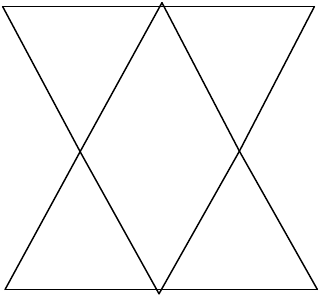
How many triangles are there in the given figure.

  1. ((a))

    10

  2. ((b))

    12

  3. ((c))

    13

  4. ((d))

    14

Show Answer
Answer: ((d))

14

The triangles in the figure is:

Thus, the total number of triangles is 14.

Hence, the correct answer is "Option 4".

3

If 

  1. ((a))

    7

  2. ((b))

    5

  3. ((c))

    4

  4. ((d))

    6

Show Answer
Answer: ((c))

4

The logic followed here is:

Logic: Number of sides in the figure = Number.

A triangle has 3 sides.

The 

Pentagon has 5 sides.

Similarly,

Square has 4 sides.

Hence, the correct answer is 'Option 3".

4

INR 15000 at 10% compound interest compounded quarterly for 2 years yields?

  1. ((a))

    INR 18432

  2. ((b))

    INR 18276

  3. ((c))

    INR 18654

  4. ((d))

    INR 18225

Show Answer
Answer: ((b))

INR 18276

Given:

Principal (P) = ₹15,000

Rate of Interest (R) = 10% per annum

Time (T) = 2 years

Compounded quarterly ⇒ n = 4

Formula used:

Compound Interest Amount = P (1 + R/(100n))nT

Calculation:

Quarterly rate = 10% / 4 = 2.5%

Number of quarters = 2 × 4 = 8

Amount = 15000 × (1 + 0.025)8

Amount ≈ 15000 × 1.2184 = 18,276

∴ The amount becomes INR 18276.

5

Guitar, Piano, Violin, Microphone - which is the odd one? 

  1. ((a))

    Microphone

  2. ((b))

    Violin

  3. ((c))

    Piano

  4. ((d))

    Guitar

Show Answer
Answer: ((a))

Microphone

The logic followed here is:

Logic: The instruments are musical instruments that produce sound, while the odd one is a device that converts sound into an electrical signal.

Guitar, Piano, and Violin are all musical instruments that produce sound.

Similarly,

Microphone is an electronic device that converts sound into an electrical signal.

Hence, the correct answer is "Option 1".

6

A figure consists of a square with 4 equal horizontal and 4 equal vertical lines dividing it into a 5x5 grid. How many squares can be counted in total?

  1. ((a))

    43

  2. ((b))

    55

  3. ((c))

    36

  4. ((d))

    18

Show Answer
Answer: ((b))

55

Given:

A figure consists of a square with 4 equal horizontal and 4 equal vertical lines dividing it into a 5x5 grid.

There are 5 rows and 5 columns in the above figure. So let n = 5.

Here, we using formulas for finding number of squares in an n × n grid as follows.

Formula :-

n2 + (n - 1)2 + (n - 2)2 + - - - - - - - - - - + (n - n)2

The number of squares in a 5 × 5 matrix is

= 5² + 4² + 3² + 2² + 1²

⇒ 25 + 16 + 9 + 4 + 1 = 55.

Hence, the correct answer is "Option 2".

7

Identify the water image of:  US91Q4M5W3

  1. ((a))

  2. ((b))

  3. ((c))

  4. ((d))

Show Answer
Answer: ((a))

The water image of given is:

Hence, the correct answer is "Option 1".

8

Which of the following is the correct sequence?

  1. ((a))

  2. ((b))

  3. ((c))

  4. ((d))

Show Answer
Answer: ((d))

The pattern followed here is:

Logic: Each figure moves 90° clockwise direction.

Hence, the correct answer is "Option 4".

9

Which one of the following figures breaks the pattern followed by the others?

  1. ((a))

    D

  2. ((b))

    A

  3. ((c))

    B

  4. ((d))

    C

Show Answer
Answer: ((d))

C

The logic followed here is:

Logic: Number of sides = Number of arrows.

Thus, Figure C does not follow the same logic.

Hence, the correct answer is "Option 4".

10

What will be the next number in the series: 8, 12, 24, 60, ?

  1. ((a))

    100

  2. ((b))

    180

  3. ((c))

    120

  4. ((d))

    150

Show Answer
Answer: ((b))

180

The logic followed here is:


Thus, the missing term in the series is 180.

Hence, the correct answer is "Option 2".

11

Find the next term in the given series. 2Z, 4X, 8U, 14Q, ?

  1. ((a))

    44 N

  2. ((b))

    33 K

  3. ((c))

    22 L

  4. ((d))

    11 M

Show Answer
Answer: ((c))

22 L

The pattern followed here is.

Thus, the missing term in the series is 22L.

Hence, the correct answer is Option 3.

12

Choose the missing shape in the analogy.

  1. ((a))

  2. ((b))

  3. ((c))

  4. ((d))

    None of the above

Show Answer
Answer: ((c))

The logic followed here is:

Logic: 2nd image is shaded part of 1st image.

Similarly,

Hence, the correct answer is 'Option 3".

13

In the following series, a specific pattern is followed for both the letters and the numbers. Identify the set of numbers that correctly fills the blanks in the given sequence.

Z, 51, x, 68, V. ____, T, 84, R, 83, P, _____, N, 63, L, 44

  1. ((a))

    (70, 65)

  2. ((b))

    (79, 76)

  3. ((c))

    (75, 70)

  4. ((d))

    (85, 106)

Show Answer
Answer: ((b))

(79, 76)

The pattern followed here is:

Thus, the missing terms in the series are 79 and 76.

Hence, the correct answer is Option 2.

14

Criteria to be selected as Junior Analyst

Eligibility Criteria (as on 15-07-2023):

Must have a B.Sc. in Statistics / Mathematics with minimum 65% marks.

Age between 23 and 30 years.

Must have completed a Data Analytics Certificate course.

Should have 2 years of analytical work experience.

Special Case:

If candidate has only 1 year experience, but has Master's degree in Data Science, refer to Project Manager.

Case:

Meera is 26 years old, B.Sc. in Statistics with 70% marks, has done a certificate course and holds a Master's in Data Science. She has only 1 year experience.

What should be done in Meera's case?

  1. ((a))

    Refer to Project Manager

  2. ((b))

    Select the candidate

  3. ((c))

    Refer to HR

  4. ((d))

    Reject the candidate

Show Answer
Answer: ((a))

Refer to Project Manager

All the conditions are as follows:

Condition NumberDetailFulfillment
(a)Must have a B.Sc. in Statistics / Mathematics with minimum 65% marks.Yes – Meera has B.Sc. in Statistics with 70% marks
(b)Age between 23 and 30 years.Yes – She is 26 years old
(c)Must have completed a Data Analytics Certificate course.Yes – She has completed the certificate course
(d)Should have 2 years of analytical work experience.No – She has only 1 year experience
Special CaseIf candidate has only 1 year experience, but has Master's degree in Data Science → refer to Project Manager.Applies – She has 1 year experience and a Master’s in Data Science


Here, Meera fulfills all criteria except the experience requirement. However, as per the special case, since she has only 1 year of experience but also holds a Master’s in Data Science, her case should be referred to the Project Manager.

Hence, the correct answer is "Option (1)".

15

Identify the figure that best fits in place of the question mark.

Question figure:

  1. ((a))

    A

  2. ((b))

    D

  3. ((c))

    C

  4. ((d))

    B

Show Answer
Answer: ((b))

D

The pattern followed here is:

Thus, figure D will complete the series.

Hence, the correct answer is "Option 2".

16

How many triangles are in the given figure?

  1. ((a))

    28

  2. ((b))

    18

  3. ((c))

    20

  4. ((d))

    26

Show Answer
Answer: ((a))

28

The number of triangles is:

Thus, the total number of triangles is 28.

Hence, the correct answer is "Option 1".

17

Read the situation and choose the best judgment:

You are shopping in a busy supermarket and notice a person quickly slipping a small, inexpensive item into their bag without scanning or paying for it. The store appears understaffed, and no security personnel are immediately visible.

Question: Given this situation, which of the following is the most ethical and responsible action?

  1. ((a))

    Directly confront the person and demand they pay for the item.

  2. ((b))

    Ignore the incident, as it is a small item and not your responsibility.

  3. ((c))

    Take a photo or video of the person as evidence, then post it on social media.

  4. ((d))

    Discreetly find a store employee or manager and quietly inform them of what you observed. 

Show Answer
Answer: ((d))

Discreetly find a store employee or manager and quietly inform them of what you observed. 

The most ethical and responsible action is:

Option 1 : Risky — it could escalate into conflict or even danger.

Option 2 : Easiest, but it allows theft to continue and harms the store and its staff.

Option 3 : Completely unethical — it violates privacy, could wrongly accuse someone, and spreads the issue publicly without resolution.

Option 4 (Inform store staff): Responsible — it lets the right people handle the situation discreetly, avoids escalation, and protects you and others.

Thus, 4) Discreetly find a store employee or manager and quietly inform them of what you observed is correct. 

Hence, the correct answer is "Option 4".

18

Which figure breaks the 2D classification rule ?

  1. ((a))

  2. ((b))

  3. ((c))

  4. ((d))

Show Answer
Answer: ((a))

The logic followed here is:

Figure breaks the 2D classification rule:

Option 1 is sphere shape which is a 3D figure.

And rest figures are Pentagon, Triangle, Square are 2D figures.

Hence, the correct answer is "Option 1".

19

Find the odd one out: 

  1. ((a))

    512

  2. ((b))

    343

  3. ((c))

    216

  4. ((d))

    289

Show Answer
Answer: ((d))

289

The logic followed here is:

Logic: All the numbers, except one, are perfect cubes.

Now,

  1. 512: 83 = 512. (Perfect Cube)

  2. 343: 73 = 343. (Perfect Cube)

  3. 216: 63 = 216. (Perfect Cube)

  4. 289: 172 = 289. (Perfect Square)

All numbers are perfect cubes except for 289, which is a perfect square.

Hence, the correct answer is "Option 4".

20

Post: Project Manager - Urban Infrastructure Eligibility Criteria (as on 01-01-2025):

B.E./B.Tech in Civil or urban Engineering with minimum 75% marks.

Must have completed MBA in Infrastructure / Project Management with 65% or above.

Total experience must be minimum 10 years, out of which at least 3 years as team lead.

Age limit: Maximum 42 years.

Candidate must have handled at least two full-cycle government projects.

Special Clause:

If no MBA, but 12+years of experience including at least 2 years abroad, and led 3+ projects refer to Advisory Board.

If project count is only one, but other conditions are fully met, refer to Infrastructure Commission.

Case:

Sneha has 78% in B.Tech Civil, no MBA, 13 years of experience including 3 years abroad, and has led 4 projects (all for state government).

Question: What should be done in Sneha's case?

  1. ((a))

    Refer to Infrastructure Commission

  2. ((b))

    Refer to Advisory Board

  3. ((c))

    Reject the candidate

  4. ((d))

    Select the candidate

Show Answer
Answer: ((b))

Refer to Advisory Board

All the conditions are as follows:

Condition NumberDetailFulfillment
(a)B.E./B.Tech in Civil or Urban Engineering with minimum 75% marks.Yes – Sneha has 78% in B.Tech Civil
(b)Must have completed MBA in Infrastructure / Project Management with 65% or above.No – She does not have an MBA
(c)Total experience must be minimum 10 years, out of which at least 3 years as team lead.Yes – She has 13 years' experience and has led 4 projects (lead experience implied ≥ 3 years)
(d)Age limit: Maximum 42 years.Not stated – No information given to disqualify; assume within limit
(e)Candidate must have handled at least two full-cycle government projects.Yes – She has led 4 projects, all for state government
Special Clause 1If no MBA, but 12+ years of experience including at least 2 years abroad, and led 3+ projects → refer to Advisory Board.Applies – She has no MBA, 13 years experience, 3 years abroad, and led 4 projects
Special Clause 2If project count is only one, but other conditions are fully met → refer to Infrastructure Commission.Not applicable – Project count is 4


Here, Sneha meets the main technical requirements (education, experience, government project handling) but does not have the MBA.

She satisfies the conditions of Special Clause 1 (no MBA, 12+ years' experience, 2+ years abroad, led 3+ projects). Therefore her case should be referred to the Advisory Board.

Hence, the correct answer is "Option (2)".

21

What should be at the place of question mark? 

  1. ((a))

    A

  2. ((b))

    D

  3. ((c))

    C

  4. ((d))

    B

Show Answer
Answer: ((a))

A

The pattern followed here is:

Hence, the correct answer is 'Option 1".

22

You are Browse online forums and accidentally stumble upon a link to a publicly accessible cloud storage folder. Upon clicking it, you realize it contains hundreds of documents that appear to be sensitive personal data (like scanned passports, utility bills, and tax documents) belonging to various individuals, indicating a major privacy oversight.

Given this situation, which of the following is the most ethical and responsible action?

  1. ((a))

    Immediately report the vulnerability to the platform's administrator or the relevant cybersecurity authority and avoid accessing the files further.

  2. ((b))

    ignore the folder completely, as it's not your data and you don't want to get involved.

  3. ((c))

    Download the files to save them, then try to contact a few of the individuals directly to warn them about their leaked data.

  4. ((d))

    Copy the link and share it on social media to alert the public and expose the vulnerability

Show Answer
Answer: ((a))

Immediately report the vulnerability to the platform's administrator or the relevant cybersecurity authority and avoid accessing the files further.

The most ethical and responsible action is:

Option 1 → Correct.

Reporting responsibly ensures the issue is fixed while minimizing harm. You should not access or share sensitive files any further.

Option 2 → Not ideal. Ignoring it leaves others at risk, and the data remains exposed.

Option 3 → Wrong and risky. Downloading or contacting individuals directly is mishandling personal data, and could make you liable under privacy laws.

Option 4 → Very harmful. Sharing the link spreads the data exposure, causing further damage.

Thus, 1) Immediately report the vulnerability to the platform's administrator or the relevant cybersecurity authority and avoid accessing the files further is correct.

Hence, the correct answer is "Option 1".

23

If 5 + 3 = 23, 6 + 4 = 34, then 7+ 5 = ?

  1. ((a))

    91

  2. ((b))

    51

  3. ((c))

    47

  4. ((d))

    89

Show Answer
Answer: ((c))

47

The logic followed in the given equations is:

Logic: The resultant number is the sum of the product and the sum of the two given numbers.

Now,

For, 5 + 3 = 23

⇒ (5 × 3) + (5 + 3)

= 15 + 8 = 23.

For, 6 + 4 = 34

⇒ (6 × 4) + (6 + 4)

= 24 + 10 = 34.

Applying the same logic for the third equation:

For, 7 + 5 = ?

⇒ (7 × 5) + (7 + 5)

= 35 + 12 = 47.

Thus, 7 + 5 = 47.

Hence, the correct answer is "Option 3".

24

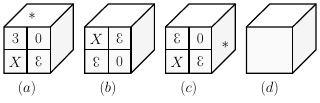
Choose the box that is similar to the box formed from the given sheet of paper (Y).

  1. ((a))

    a, b and c only

  2. ((b))

    b and c only

  3. ((c))

    a, c and d only

  4. ((d))

    b, c and d only

Show Answer
Answer: ((d))

b, c and d only

The fig. (Y) is similar to the Form VII. So, when a cube is formed by folding the sheet shown in fig. (Y), then 

 is one of the faces of the cube and this face lies opposite to a blank face. Also, a face bearing a square lies opposite to another blank face. The remaining two blank faces lie opposite to each other. Clearly, in the cube shown in figure (a), the face consisting of the four symbols is not the same as that formed (as shown above).

Hence, the cube in figure (a) cannot be formed.

25

In each of the following questions, a specific relationship is given between two words. Identify the word that shares a similar semantic relationship with the given pair. Choose the most appropriate option from the four choices given below.

Painter: Canvas :: Author : ?

  1. ((a))

    Pen

  2. ((b))

    Publisher

  3. ((c))

    Paper

  4. ((d))

    Plot

Show Answer
Answer: ((c))

Paper

The logic followed here is:

Logic: The first word is a person, and the second word is the medium on which they create their work.

Painter: Canvas → A Painter creates their work on a Canvas.

Similarly,

Author: Paper → An Author creates their work on Paper.

Hence, the correct answer is "Option 3".

26

You find a wallet in your school library. What is the most appropriate action?

  1. ((a))

    Keep it for yourself and wait for someone to claim

  2. ((b))

    Take the money and leave the wallet

  3. ((c))

    Hand it over to the librarian or authority

  4. ((d))

    Ignore it

Show Answer
Answer: ((c))

Hand it over to the librarian or authority

Given:

Statement - You find a wallet in your school library.

The most appropriate action when finding a lost wallet in a school library is to immediately hand it over to a librarian or school authority.

As it shows Honesty and responsibility, and school staff are equipped to verify ownership and return the wallet to its owner. 

Hence, the correct answer is "Option 3".

27

Choose the missing number in the following analogy.

4 : 16 :: 6 : ?

  1. ((a))

    30

  2. ((b))

    24

  3. ((c))

    18

  4. ((d))

    36

Show Answer
Answer: ((d))

36

The logic followed in the given number pairs is:

Logic: The second number is the square of the first number.

Now,

For, 4 : 16

⇒ 42 = 16.

Applying the same logic for the second pair:

For, 6 : ?

⇒ 62 = 36.

Thus, 6 : 36.

Hence, the correct answer is "Option 4".

28

In a badminton knockout tournament with 57 players, what is the minimum number of matches needed to determine the winner?

  1. ((a))

    58

  2. ((b))

    57

  3. ((c))

    56

  4. ((d))

    55

Show Answer
Answer: ((c))

56

Concept Used:

The Knockout Principle: In any single-elimination or knockout tournament, each match eliminates one player. To determine a single winner from a group of players, every player except for one (the eventual champion) must be eliminated.

Therefore, if there are N players, a total of N - 1 players must be eliminated. Since each match results in one elimination, the number of matches is always one less than the number of players.

Calculation:

Number of players (N) = 57

Number of matches = N - 1 = 57 - 1 = 56

The total number of losers must equal the number of matches played.

∴ The correct asnwer is option 3.

29

In each of the following questions, a specific relationship is given between two words. Identify the word that shares a similar semantic relationship with the given pair. Choose the most appropriate option from the four choices given below.

Fire : Heat :: Friction : ?

  1. ((a))

    Motion

  2. ((b))

    Force

  3. ((c))

    Burn

  4. ((d))

    Energy

Show Answer
Answer: ((d))

Energy

The logic followed here is:

Logic: The first word is the cause and the second word is the effect.

Here,

Fire : Heat → Fire causes the production of Heat.

Similarly,

Friction : EnergyFriction causes the production of Energy (often in the form of heat).

Hence, the correct answer is "Option 4".

30

If Δ means '+',

 means '-', ∇ means 'x', and o means "÷", what is the value of:'

12 Δ 8 ∇ 3 o 6 

 5 = ?

  1. ((a))

    21

  2. ((b))

    15

  3. ((c))

    17

  4. ((d))

    11

Show Answer
Answer: ((d))

11

BODMAS Rule:

According to the question, the symbols are interchanged as follows:

Original SymbolΔo
New Symbol+×÷

Now, given the equation: 12 Δ 8 ∇ 3 o 6 

5 = ?

After interchanging the specified symbols, the new equation is:

12 + 8 × 3 ÷ 6 − 5 = ?

Perform operations according to BODMAS:

⇒ 12 + 8 × 3 ÷ 6 − 5

12 + 4 − 5

16 − 5

⇒ 11

Hence, the correct answer is "Option 4".

31

What will come at the place of blank space? 

  1. ((a))

  2. ((b))

  3. ((c))

  4. ((d))

Show Answer
Answer: ((d))

The pattern followed here is:

Hence, the correct answer is "Option 4".

32

You have four puzzle books on your shelf, and you decide to arrange them in every possible order, moving one book every 30 seconds. How long will it take to arrange all the books?

  1. ((a))

    24 minutes

  2. ((b))

    12 minutes

  3. ((c))

    2 minutes

  4. ((d))

    4 minutes

Show Answer
Answer: ((b))

12 minutes

Given:

There are 4 puzzle books. You arrange them in every possible order (all permutations), and you move one book every 30 seconds.

Formula used:

Total time = (number of arrangements) × (time per arrangement).

Calculation:

Number of arrangements = 4! = 24

Total time = 24 × 30 seconds = 720 seconds

Convert to minutes: 720 seconds = 12 minutes

∴ The total time required is 12 minutes.

33

If we assign positions to letters A=1, B=2,..., Z=26, what is the index sum of the word CAT?

  1. ((a))

    27

  2. ((b))

    24

  3. ((c))

    41

  4. ((d))

    48

Show Answer
Answer: ((b))

24

The logic followed here is:

The sum of the word CAT is:

Hence, the correct answer is "Option 2".

34

Choose the box that is similar to the box formed from the given sheet of paper (x). 

  1. ((a))

    C and D only 

  2. ((b))

    A, B and C

  3. ((c))

    B, C and D

  4. ((d))

    A and B

Show Answer
Answer: ((d))

A and B

The given dice:

Opposite sides:

  ⇔ 

  ⇔  

 ⇔ 

Thus, similar to the box formed from the given A and B.

Hence, the correct answer is "Option 4".

35

Read the information carefully and identify the correct relationship between the persons mentioned in the question.

A is the brother of B.

C is the mother of A.

D is the daughter of C.

E is the father of D.

Question: How is B related to E?

  1. ((a))

    Son

  2. ((b))

    Wife

  3. ((c))

    ​Cannot be determined

  4. ((d))

    Daughter

Show Answer
Answer: ((c))

​Cannot be determined

Decoding symbols for Family Tree:

According to the given information Family Tree Representation:

A is the brother of B.

C is the mother of A.

D is the daughter of C. 

E is the father of D.

B is the child of E. The gender of B is not mentioned in the question.

Therefore, B could be either the son or the daughter of E.

Thus, the relationship cannot be determined with the information provided.

Hence, the correct answer is "Option 3"

36

which of the following 3D shapes can be formed by folding the given 2D net?

  1. ((a))

    Cube

  2. ((b))

    Cuboid

  3. ((c))

    Pyramid

  4. ((d))

    Tetrahedron

Show Answer
Answer: ((c))

Pyramid

Given:

3D shapes can be formed by folding it.

Thus, it will formed Pyramid.

Hence, the correct answer is "Option 3".

37

  1. ((a))

    4

  2. ((b))

    3

  3. ((c))

    5

  4. ((d))

    1

Show Answer
Answer: ((b))

3

The logic followed here is:

Heart (♥) has 2 lobes → 2.

Club (♣) has 3 leaf-like lobes → 3

Hence, the correct answer is "Option 2".

38

In each of the following questions, two numbers are given which follow a certain logical or arithmetic relationship. Identify the same pattern and apply it to find the missing number in the second pair. Choose the correct option from the given alternatives.

19384 : 31506 :: 28493 : ?

  1. ((a))

    40615

  2. ((b))

    41706

  3. ((c))

    40617

  4. ((d))

    39615

Show Answer
Answer: ((a))

40615

The logic followed here is:

Logic: 1st number  + 12122 = 2nd number.

19384 : 31506

19384 + 12122 = 31506 

Similarly,

28493 : ?

28493 + 12122 = 40615 

Hence, the correct answer is "Option 1".

39

What should come at the place of question mark? 

  1. ((a))

    C

  2. ((b))

    D

  3. ((c))

    A

  4. ((d))

    B

Show Answer
Answer: ((b))

D

The pattern followed here is:

Hence, the correct answer is "Option 2".

40

Criteria to be selected as Assistant Manager (as on 01-04-2023):

MBA degree with at least 65% marks.

Age between 26 to 32 years.

Must have minimum 2 years of management experience.

Must be fluent in English and Hindi.

Special Clause:

If candidate meets all but the language requirement, refer to Language Proficiency Panel.

Case:

Tarun is 30 years old has MBA with 70% marks, and 3 years experience. He is fluent in English but not confident in Hindi.

What should be done in Tarun's case?

  1. ((a))

    Select the candidate

  2. ((b))

    Reject the candidate

  3. ((c))

    Refer to Language Proficiency Pane

  4. ((d))

    Refer to Managing Director

Show Answer
Answer: ((c))

Refer to Language Proficiency Pane

All the conditions are as follows:

Condition NumberDetailFulfillment
(a)MBA degree with at least 65% marks.Yes – He has MBA with 70% marks
(b)Age between 26 to 32 years.Yes – He is 30 years old
(c)Must have minimum 2 years of management experience.Yes – He has 3 years experience
(d)Must be fluent in English and Hindi.No – He is fluent in English but not confident in Hindi
Special ClauseIf candidate meets all but the language requirement, refer to Language Proficiency Panel.Yes – He fulfills all except language requirement


Here, Tarun fulfills all the conditions except the language requirement. As per the special clause, his case should be referred to the Language Proficiency Panel.

Hence, the correct answer is "Option (3)".

41

What will be the alphabetical position index of the word DOG if all letters of the English alphabet are arranged in reverse order?

  1. ((a))

    23, 13, 21

  2. ((b))

    22, 12, 20

  3. ((c))

    22, 13, 21

  4. ((d))

    23, 12, 20

Show Answer
Answer: ((d))

23, 12, 20


The logic followed here is:

Thus, 23, 12, 20 is the correct option.

Hence, the correct answer is "Option 4".

42

In each of the following questions, a number series is given. In each series, only one number is incorrect. Identify the wrong number.

2, 4, 8, 16, 34, 64

  1. ((a))

    34

  2. ((b))

    64

  3. ((c))

    4

  4. ((d))

    8

Show Answer
Answer: ((a))

34

Given:

The logic followed here is:

2 × 2 = 4  

4 × 2 = 8 

8 × 2 = 16 

16 × 2 = 32  ← (given 34, is wrong here) 

32 × 2 = 64 

Thus, the 34 is the wrong number.

Hence, the correct answer is "Option 1".

43

Which of the following follows the correct pattern of the question figure?  

  1. ((a))

    3

  2. ((b))

    1

  3. ((c))

    2

  4. ((d))

    4

Show Answer
Answer: ((d))

4

The pattern followed here is:

Hence, the correct answer is "Option 4".

44

If 3 + 2 = 15, 4 + 3 = 28, what is 5 + 4?

  1. ((a))

    45

  2. ((b))

    36

  3. ((c))

    32

  4. ((d))

    40

Show Answer
Answer: ((a))

45

The logic followed in the given equations is:

Logic: The product of the sum of the two numbers and multiple by the first number.

Now,

For, 3 + 2 = 15

⇒ (3 + 2) × 3

= 5 × 3 = 15.

For, 4 + 3 = 28

⇒ (4 + 3) × 4

= 7 × 4 = 28.

Applying the same logic for the third equation:

For, 5 + 4 = ?

⇒ (5 + 4) × 5

= 9 × 5 = 45.

Hence, the correct answer is "Option 1".

45

Choose the missing figure in the complex pattern.

  1. ((a))

  2. ((b))

  3. ((c))

  4. ((d))

Show Answer
Answer: ((d))

The pattern followed here is:

Logic: Alternate figures are same.

Hence, the correct answer is "Option 4".

46

Ramesh is taller than Suresh but shorter than Naresh. Naresh is taller than Umesh. Who is tallest?

  1. ((a))

    Naresh

  2. ((b))

    Ramesh

  3. ((c))

    Suresh

  4. ((d))

    Umesh

Show Answer
Answer: ((a))

Naresh

Given the height relationships among the four friends:

"Ramesh is taller than Suresh": Ramesh > Suresh.

"but shorter than Naresh": Naresh > Ramesh.

"Naresh is taller than Umesh": Naresh > Umesh.

From the first two points,

Naresh > Ramesh > Suresh.

We also know that Naresh > Umesh

Therefore, Naresh is the tallest among all of them.

Hence, the correct answer is "Option 1".

47

In each of the following questions, a specific relationship is given between two words. Identify the word that shares a similar sem relationship with the given pair. Choose the most appropriate option from the four choices given below.

Metaphor : Language :: Algorithm : ?

  1. ((a))

    Instruction

  2. ((b))

    Process

  3. ((c))

    Mathematics

  4. ((d))

    Computer

Show Answer
Answer: ((d))

Computer

Logic Analysis:

The relationship is based on tools of a specific medium:

Metaphor is a structural device or tool used to convey meaning within Language.

Algorithm is a structured set of rules or a tool used to solve problems within a Computer (or computing systems).

Hence, the correct answer is option (4).

48

What will come at the place of question mark?

  1. ((a))

  2. ((b))

  3. ((c))

  4. ((d))

Show Answer
Answer: ((a))

The pattern followed here is:

Hence, the correct answer is "Option 1".
49

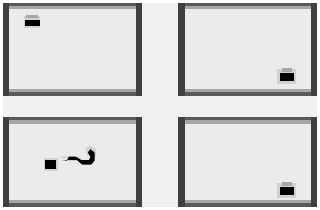
How many straight lines are there in the star figure? 

  1. ((a))

    20

  2. ((b))

    15

  3. ((c))

    5

  4. ((d))

    6

Show Answer
Answer: ((d))

6

Straight lines are there in the star figure:

Lines is AB, AE, EB, CD, CF, FD.

Thus, total straight lines are 6.

Hence, the correct answer is "Option 4".

50

Choose the figure that is different from the rest in terms of the observed sequence or rule. 

  1. ((a))

    B

  2. ((b))

    A

  3. ((c))

    C

  4. ((d))

    D

Show Answer
Answer: ((c))

C

The logic followed here is:

Logic: In all the figures, arrows emerge from the corners of the polygons, except in figure (c).

Thus, figure C is the odd one out.

Hence, the correct answer is "Option 3".

General Awareness (50 questions)

51

Which of the following statements best links a current conservation initiative for the Great Indian Bustard with its geographical location?

  1. ((a))

    National Avian Research Centre in Maharashtra conducted habitat simulation for GIB.

  2. ((b))

    Kalyan Sanctuary in Karnataka now houses the largest wild GIB population.

  3. ((c))

    India's first successful artificial insemination of GIB took place in the National Breeding Centre in Jaisalmer, Rajasthan.

  4. ((d))

     A GIB conservation breeding centre was set up in Kutch, Gujarat for desert climate adaptation. 

Show Answer
Answer: ((c))

India's first successful artificial insemination of GIB took place in the National Breeding Centre in Jaisalmer, Rajasthan.

The correct answer is India's first successful artificial insemination of GIB took place in the National Breeding Centre in Jaisalmer, Rajasthan..

Key Points

  • The Great Indian Bustard (GIB) is critically endangered and is primarily found in the Thar Desert region of Rajasthan.
  • The National Breeding Centre for GIB in Jaisalmer, Rajasthan, was established as part of a conservation program to prevent the species from extinction.
  • In 2020, India's first successful artificial insemination of a GIB was achieved at the breeding center, marking a significant milestone in the conservation of the species.
  • This initiative is part of a larger effort under the ‘Habitat Improvement and Conservation Breeding of Great Indian Bustard’ project funded by the Ministry of Environment, Forest and Climate Change (MoEFCC).
  • The breeding center aims to increase GIB population by ensuring successful reproduction under controlled conditions and eventual release into the wild.

Additional Information

  • Great Indian Bustard (GIB) Overview
  • The GIB is one of the heaviest flying birds in the world, listed as Critically Endangered by the IUCN Red List.
  • It is native to the Indian subcontinent, with its largest population in Rajasthan.
  • Key threats include habitat destruction, poaching, and collisions with power lines.
  • Conservation Breeding
  • Conservation breeding involves captive breeding of species to restore declining populations.
  • This approach is particularly useful for species like GIB that face high mortality in the wild.
  • Thar Desert Ecosystem
  • The Thar Desert, also known as the Great Indian Desert, is a key habitat for GIB.
  • It is characterized by arid conditions, sparse vegetation, and a unique ecosystem that supports several endemic species.
  • Government Initiatives for GIB Conservation
  • The National Wildlife Action Plan (2017-2031) includes specific actions for GIB conservation.
  • The ‘Project Great Indian Bustard’ was launched to mitigate threats like habitat loss and power line collisions.
52

Match the column:

column A (Conductor Type)Column B (Mobile Charge Carriers )
A.Metal1.Positive and negative ions
B.lonised gas2.Electrons and positively charged ions
C.Electrolyte3.Electrons
  1. ((a))

    A - 3, B - 2, C - 1

  2. ((b))

    A - 2, B - 3, C - 1

  3. ((c))

    A - 1, B - 2, C - 3

  4. ((d))

    A - 3, B - 1, C - 2

Show Answer
Answer: ((a))

A - 3, B - 2, C - 1

The correct answer is Option 1) A - 3, B - 2, C - 1.

Key Points

  • Metals conduct electricity through free electrons, which move under the influence of an electric field, making them good conductors.
  • An ionised gas (plasma) conducts via electrons and positively charged ions, as both species act as mobile charge carriers.
  • Electrolytes such as acids, bases, and salts conduct current by movement of positive (cations) and negative (anions) ions in solution.
  • This classification shows how different materials rely on different mobile charge carriers for conduction: electrons, ions, or both.
  • The correct mapping is: A–3 (Metal–Electrons), B–2 (Ionised gas–Electrons & Positive Ions), C–1 (Electrolyte–Positive & Negative Ions).

Additional Information

  • Conduction in Metals
  • Follows the electron sea model, where delocalised electrons move freely.
  • Examples: copper, silver, and aluminium—excellent conductors due to high electron density.
  • Conduction in Ionised Gas (Plasma)
  • Plasma is called the fourth state of matter.
  • Electricity conduction occurs due to free electrons and ions created by ionisation.
  • Examples: fluorescent lamps, auroras, lightning.
  • Conduction in Electrolytes
  • Electrolytes dissociate into ions in solution (e.g., NaCl → Na⁺ + Cl⁻).
  • Used in batteries, electrolysis, and biological systems.
  • Key Concept
  • The type of mobile charge carrier determines the mechanism of current flow.
  • Solids (metals) → electrons, Liquids (electrolytes) → ions, Gases (plasma) → ions + electrons.
53

Which of the following statements are correct? 

(1) Birth rate measures the number of children born per 1000 people annually.

(2) Pull factors include opportunities that attract people to new regions.

(3) Death rate is always higher than birth rate.

(4) Push factors can include civil unrest and lack of jobs.

  1. ((a))

    All of the above 

  2. ((b))

    2 and 3 only 

  3. ((c))

    1, 2, and 4 only

  4. ((d))

    1 and 3 only

Show Answer
Answer: ((c))

1, 2, and 4 only

The correct answer is 1, 2, and 4 only.

Key Points

  • Birth rate refers to the number of live births per 1,000 people in a population per year. This is a key demographic indicator.
  • Pull factors are conditions or opportunities (e.g., jobs, better living standards, education) that attract individuals to migrate to a particular area.
  • The statement “Death rate is always higher than birth rate” is incorrect. In many cases, especially in developing countries, the birth rate is higher than the death rate.
  • Push factors are adverse conditions such as civil unrest, unemployment, or environmental disasters that drive people to leave their homes.

Additional Information

  • Demographic Indicators:
  • Demographic indicators like birth rate, death rate, and migration rates are essential for understanding population trends.
  • These indicators influence government policies on healthcare, education, housing, and employment.
  • Migration Push and Pull Factors:
  • Push factors: Include poverty, political instability, natural disasters, and lack of opportunities.
  • Pull factors: Include better employment opportunities, healthcare, education, and higher quality of life.
  • Population Growth Dynamics:
  • Population growth depends on the difference between birth and death rates, along with migration.
  • In developing countries, high birth rates are often coupled with declining death rates due to improved healthcare.
  • Global Trends:
  • Developed nations typically have low birth and death rates, leading to stable or declining populations.
  • Developing nations often experience high birth rates and declining death rates, leading to rapid population growth.
54

What does the term ‘capital formation’ refer to in macroeconomics? 

  1. ((a))

    Growth in production capacity through investment

  2. ((b))

    Decrease in foreign direct investment 

  3. ((c))

    Expansion of consumer credit  

  4. ((d))

    Increase in financial savings  

Show Answer
Answer: ((a))

Growth in production capacity through investment

The correct answer is Growth in production capacity through investment.

Key Points

  • Capital formation in macroeconomics refers to the process of increasing the stock of physical and human capital in an economy through investment.
  • It involves the allocation of resources to create infrastructure, machinery, tools, and other assets that enhance production capacity.
  • Investment in capital formation is crucial for economic growth, as it raises productivity and facilitates the production of goods and services.
  • Capital formation can be categorized into physical capital (e.g., factories, equipment) and human capital (e.g., education, training).
  • This process is typically driven by savings, investments, and financial intermediation within the economy.

Additional Information

  • Physical Capital
  • Refers to tangible assets like machinery, buildings, and infrastructure that aid in production.
  • Physical capital is considered a key factor in increasing an economy's output and efficiency.
  • Human Capital
  • Refers to the skills, knowledge, and expertise of the workforce.
  • Investment in education and training improves human capital, leading to higher productivity.
  • Savings and Investment
  • Savings are essential for capital formation, as they provide the funds needed for investment.
  • Higher savings rates in an economy generally lead to increased levels of investment.
  • Role of Financial Institutions
  • Financial institutions like banks and capital markets play a critical role in channeling savings into investments.
  • They act as intermediaries, ensuring efficient allocation of funds for productive purposes.
  • Impact on Economic Growth
  • Capital formation boosts production and generates employment, leading to sustained economic growth.
  • It helps economies transition from lower-income to higher-income stages over time.
55

Which of the following North-Eastern states has areas governed under the Sixth Schedule? 

  1. ((a))

    ​Tripura

  2. ((b))

    Manipur

  3. ((c))

    Nagaland

  4. ((d))

    Arunachal Pradesh

Show Answer
Answer: ((a))

​Tripura

The correct answer is Tripura.

Key Points

  • The Sixth Schedule of the Indian Constitution deals with the administration of tribal areas in four North-Eastern states: Assam, Meghalaya, Tripura, and Mizoram.
  • Tripura has areas governed under the Sixth Schedule, specifically the Tripura Tribal Areas Autonomous District Council (TTAADC).
  • The Sixth Schedule provides for the creation of Autonomous District Councils (ADCs) to preserve the rights, customs, and identity of tribal communities.
  • The ADCs have legislative, judicial, and executive powers, including control over land, forests, and village administration in tribal areas.
  • Tripura's tribal areas constitute about 68% of the state's total geographical area, making the Sixth Schedule crucial for governance there.

Additional Information

  • Sixth Schedule:
  • Introduced to protect the cultural and economic interests of the tribal communities in select areas.
  • Applies to certain areas in Assam, Meghalaya, Tripura, and Mizoram.
  • Provides for decentralization through Autonomous District and Regional Councils.
  • Empowers these councils to make laws on land, forests, agriculture, customs, and other local matters.
  • Tripura Tribal Areas Autonomous District Council (TTAADC):
  • Established in 1985 under the Sixth Schedule.
  • Covers tribal-dominated areas of Tripura.
  • Ensures protection of tribal rights and self-governance.
  • Other North-Eastern States:
  • Manipur and Arunachal Pradesh are not governed under the Sixth Schedule.
  • Nagaland has special provisions under Article 371A, but not the Sixth Schedule.
  • Importance of Sixth Schedule:
  • Preserves tribal culture, traditions, and autonomy in governance.
  • Promotes development while ensuring tribal identity is not diluted.
56

What is the punishment for abetment of an offense under the POCSO Act?

  1. ((a))

    Same punishment as the offense

  2. ((b))

    Half the punishment prescribed for the offense

  3. ((c))

    No punishment

  4. ((d))

    Community service

Show Answer
Answer: ((a))

Same punishment as the offense

The correct answer is Same punishment as the offense.

Key Points

  • Under the Protection of Children from Sexual Offenses (POCSO) Act, abetment of an offense is treated with the same punishment as the offense itself.
  • The Act ensures stringent penalties for individuals who aid, encourage, or facilitate the commission of sexual offenses against children.
  • Abetment is broadly defined to include instigating, engaging in conspiracy, or intentionally aiding the offense, highlighting the comprehensive nature of the Act.
  • POCSO provides legal protection to children (individuals below 18 years of age) against a wide range of sexual offenses, including abetment.
  • These provisions aim to strengthen the deterrence against child abuse and ensure accountability for all parties involved.

Additional Information

  • POCSO Act Overview:
  • The POCSO Act was enacted in 2012 to address child sexual abuse comprehensively.
  • It defines offenses such as penetrative sexual assault, non-penetrative sexual assault, sexual harassment, and pornography involving children.
  • The Act makes it mandatory to report offenses and prescribes penalties for failure to do so.
  • Abetment Under Indian Penal Code (IPC):
  • In the IPC, abetment refers to instigating, conspiring, or aiding the commission of an offense.
  • The POCSO Act builds upon IPC provisions to ensure specific protections for children.
  • Child-Friendly Procedures:
  • The POCSO Act mandates child-friendly procedures during investigation and trial, such as avoiding direct confrontation with the accused.
  • It ensures the confidentiality of the victim and provides assistance through special educators or interpreters.
  • Judicial Interpretation:
  • Indian courts have consistently reinforced strict adherence to POCSO provisions, emphasizing punishment for abetment.
  • Judgments highlight the importance of protecting the vulnerable sections of society, especially children.
57

Which layer of the Earth's atmosphere is primarily responsible for absorbing ultraviolet radiation from the Sun? 

  1. ((a))

    Thermosphere

  2. ((b))

    Stratosphere

  3. ((c))

    Mesosphere

  4. ((d))

    Troposphere

Show Answer
Answer: ((b))

Stratosphere

The correct answer is Stratosphere.

Key Points

  • The Stratosphere is the second layer of Earth's atmosphere, located above the Troposphere and below the Mesosphere.
  • It contains the ozone layer, which plays a vital role in absorbing the majority of the Sun's harmful ultraviolet (UV) radiation.
  • The ozone layer is concentrated between 15 to 35 kilometers above Earth's surface within the Stratosphere.
  • Ultraviolet radiation absorption by ozone molecules prevents excessive UV exposure on Earth's surface, protecting living organisms from DNA damage.
  • Human activities, such as the release of chlorofluorocarbons (CFCs), have historically caused damage to the ozone layer, leading to international agreements like the Montreal Protocol to phase out ozone-depleting substances.

Additional Information

  • Ozone Layer:
  • Ozone is a molecule composed of three oxygen atoms (O3).
  • It is formed naturally through the interaction of ultraviolet light with oxygen molecules (O2) in the Stratosphere.
  • The ozone layer absorbs UV-B and UV-C radiation, while allowing UV-A radiation to pass through.
  • Atmospheric Layers:
  • The Earth's atmosphere is divided into five main layers: Troposphere, Stratosphere, Mesosphere, Thermosphere, and Exosphere.
  • The Troposphere is the lowest layer, where weather occurs, while the Stratosphere is above it and houses the ozone layer.
  • The Mesosphere is known for meteoroid burning, and the Thermosphere includes the ionosphere, crucial for radio communication.
  • Ultraviolet Radiation:
  • UV radiation is part of the electromagnetic spectrum emitted by the Sun.
  • It is classified into three types: UV-A, UV-B, and UV-C based on wavelength.
  • Excessive UV exposure can cause skin cancer, cataracts, and immune system suppression in humans.
  • Montreal Protocol:
  • Signed in 1987, this international treaty aims to phase out the production and consumption of ozone-depleting substances.
  • It has been highly successful in reducing chlorofluorocarbons (CFCs) and other harmful chemicals, aiding in ozone layer recovery.
  • The protocol is considered one of the most effective environmental treaties globally.
58

In the context of Mughal administration, who were referred to as Shaikhzadas or Hindustanis?

  1. ((a))

    Central Asian nobles of Turkic origin serving the Mughals

  2. ((b))

    Rajput converts elevated to noble ranks for loyalty

  3. ((c))

    Persian-trained officers recruited from Safavid Iran

  4. ((d))

    Indigenous Muslims who held administrative posts under Mughal rule

Show Answer
Answer: ((d))

Indigenous Muslims who held administrative posts under Mughal rule

The correct answer is Indigenous Muslims who held administrative posts under Mughal rule.

Key Points

  • Shaikhzadas or Hindustanis referred to indigenous Muslims, primarily those who were born in India and held administrative roles in the Mughal Empire.
  • They were distinct from the foreign-born nobles such as Persians, Afghans, or Central Asians who also served the Mughal court.
  • This group formed a significant part of the Mughal bureaucracy and contributed to the stability and governance of the empire.
  • The term "Hindustanis" emphasized their regional association with the Indian subcontinent, distinguishing them from immigrant elites.
  • Shaikhzadas often acted as a bridging community between the Mughal rulers and the local populace, facilitating smoother administration.

Additional Information

  • Nobility in Mughal Administration:
  • The Mughal nobility was a mix of ethnic groups, including Persians, Turks, Afghans, and Hindustanis.
  • They were ranked based on the mansabdari system, which determined their military and administrative responsibilities.
  • The mansabdars were categorized into zat (personal rank) and sawar (cavalry rank).
  • Central Asian Nobles:
  • These were elites of Turkic or Timurid origin who migrated from regions such as Uzbekistan and Turkmenistan.
  • They played a critical role in the early Mughal conquests and administration.
  • Persian Influence:
  • Persian culture and language heavily influenced the Mughal court.
  • Many Persian-trained officers were recruited due to their expertise in governance and military strategy.
  • Rajput and Hindu Nobles:
  • The Mughal emperors, especially Akbar, allied with Rajput rulers, integrating them into the Mughal nobility.
  • This policy helped in reducing resistance and strengthening the empire.
  • Role of Indigenous Muslims:
  • Indigenous Muslims or Shaikhzadas were crucial for local administration and revenue collection.
  • Their deep understanding of local conditions enhanced the efficiency of the Mughal governance system.
59

Which of the following bodies has the power to create new All-India Services common to both the Union and the States?

  1. ((a))

    The President of India by issuing an executive order.

  2. ((b))

    The Union Cabinet by a simple majority.

  3. ((c))

    The Prime Minister with the consent of all Chief Ministers.

  4. ((d))

    The Parliament, provided the Rajya Sabha passes a resolution by a special majority.

Show Answer
Answer: ((d))

The Parliament, provided the Rajya Sabha passes a resolution by a special majority.

The correct answer is The Parliament, provided the Rajya Sabha passes a resolution by a special majority.

Key Points

  • The creation of new All-India Services common to both the Union and the States requires a special resolution passed by the Rajya Sabha, as per Article 312 of the Indian Constitution.
  • Such a resolution must be supported by a two-thirds majority of members present and voting in the Rajya Sabha.
  • Once the resolution is passed, Parliament gains legislative authority to enact laws for the establishment of the new All-India Service.
  • All-India Services include existing services like the Indian Administrative Service (IAS), Indian Police Service (IPS), and the Indian Forest Service (IFS).
  • The Rajya Sabha's special role reflects the federal structure of India, ensuring that states have representation in decisions affecting shared administrative services.

Additional Information

  • Article 312 of the Indian Constitution:
  • This article empowers the Parliament to create new All-India Services if the Rajya Sabha passes a resolution to that effect.
  • It ensures coordination between the Union and the States in key administrative functions.
  • All-India Services:
  • The All-India Services are unique to India's federal structure, where officers serve both the Union and State governments.
  • These services ensure uniformity in administrative practices across the country.
  • Special Majority:
  • A special majority requires the support of at least two-thirds of the members present and voting.
  • This ensures that major decisions have widespread support in the legislative body.
  • Rajya Sabha's Role:
  • The Rajya Sabha (Council of States) represents the states in India's federal structure.
  • Its special role in creating All-India Services underscores the importance of states in the decision-making process.
60

Arrange the following RBI Governors in the correct chronological order of their tenure (from earliest to latest):

  1. Dr. Y. V. Reddy
  2. Dr. D. Subbarao
  3. Dr. Urjit R. Patel
  4. Shri Sanjay Malhotra
  1. ((a))

    1,3,2,4

  2. ((b))

    2, 3, 1, 4

  3. ((c))

    2,1,3,4

  4. ((d))

    1,2,3,4

Show Answer
Answer: ((d))

1,2,3,4

The correct answer is 1, 2, 3, 4.

Key Points

  • Dr. Y. V. Reddy served as the Governor of RBI from 6 September 2003 to 5 September 2008.
  • Dr. D. Subbarao succeeded Dr. Y. V. Reddy and held office from 5 September 2008 to 4 September 2013.
  • Dr. Urjit R. Patel served as the Governor of RBI from 4 September 2016 to 10 December 2018.
  • Shri Sanjay Malhotra is the Governor of the Reserve Bank of India (RBI).

Before becoming the Governor, he was a senior bureaucrat and served as the Secretary, Department of Financial Services (DFS) in the Government of India.

  • The chronological order of tenure based on the provided names is: 1 (Dr. Y. V. Reddy), 2 (Dr. D. Subbarao), 3 (Dr. Urjit R. Patel), 4 (Shri Sanjay Malhotra).

Additional Information

  • RBI Governors:
  • The Reserve Bank of India (RBI) has had several Governors since its establishment in 1935.
  • The Governor is responsible for overseeing monetary policy, managing inflation, and ensuring financial stability in India.
  • RBI Governors are appointed by the Government of India for a term of 3 years (renewable).
  • Dr. Urjit Patel:
  • He succeeded Dr. Raghuram Rajan as the Governor of RBI.
  • Dr. Patel is known for his work on inflation targeting and the implementation of the Monetary Policy Framework Agreement.
  • Dr. D. Subbarao:
  • Dr. Subbarao implemented several measures to counter the effects of the global financial crisis during his tenure.
  • He introduced steps to increase transparency in monetary policy decisions.
  • Important Role of RBI Governors:
  • The RBI Governor plays a critical role in influencing India's economic growth and stability.
  • Key responsibilities include managing the country's currency, foreign exchange reserves, and banking regulations.
61

Which is the largest island of India in terms of area? 

  1. ((a))

    ​Rameswaram

  2. ((b))

    Great Nicobar Island

  3. ((c))

    Sriharikota

  4. ((d))

    Majuli

Show Answer
Answer: ((b))

Great Nicobar Island

The correct answer is Great Nicobar Island.

Key Points

  • Great Nicobar Island is the largest island in India in terms of area, covering approximately 921 square kilometers.
  • It is part of the Nicobar Islands, which are located in the southeastern region of the Andaman and Nicobar Islands Union Territory.
  • The island is known for its diverse flora and fauna, including the famous Nicobar megapode, a rare bird species endemic to the region.
  • Great Nicobar Island is home to the Indira Point, the southernmost point of India.
  • The region is sparsely populated and primarily inhabited by the indigenous Shompen tribe and Nicobarese people.

Additional Information

  • Andaman and Nicobar Islands:
  • The Andaman and Nicobar Islands are a group of 572 islands located at the juncture of the Bay of Bengal and the Andaman Sea.
  • The islands are divided into two main groups: the Andaman Islands and the Nicobar Islands.
  • The archipelago is known for its pristine beaches, coral reefs, and tropical rainforests.
  • Indira Point:
  • Indira Point is the southernmost tip of India, located on Great Nicobar Island.
  • It was formerly known as Parsons Point and was renamed in honor of former Prime Minister Indira Gandhi.
  • Indira Point was submerged during the 2004 Indian Ocean tsunami, causing significant geographical changes in the area.
  • Shompen Tribe:
  • The Shompen are one of the oldest and most isolated tribes of the Nicobar Islands.
  • They practice a hunter-gatherer lifestyle and are considered a Particularly Vulnerable Tribal Group (PVTG).
  • Their population is concentrated in the interior regions of Great Nicobar Island.
  • Biodiversity in Great Nicobar:
  • Great Nicobar Island is part of the UNESCO World Network of Biosphere Reserves.
  • The island is home to unique species such as the Nicobar crab-eating macaque and saltwater crocodiles.
  • The Great Nicobar Biosphere Reserve ensures the protection of its rich ecosystem.
62

Where was the National shooting Championship 2024 held? 

  1. ((a))

    Bhubaneswar, Odisha

  2. ((b))

    Mumbai, Maharashtra

  3. ((c))

    Panaji, Go

  4. ((d))

    Bhopal, Madhya Pradesh

Show Answer
Answer: ((d))

Bhopal, Madhya Pradesh

The correct answer is Bhopal, Madhya Pradesh.

Key Points

  • The National Shooting Championship 2024 was held in Bhopal, Madhya Pradesh, a prominent location for hosting sports events in India.
  • This championship is one of the most prestigious events for Indian shooters and serves as a platform to identify and nurture talent for international competitions.
  • Bhopal has emerged as a significant center for national-level sports events, with its modern infrastructure and facilities.
  • The championship features various categories, including rifle, pistol, and shotgun events, catering to athletes from across the country.
  • The event is organized under the aegis of the National Rifle Association of India (NRAI), the governing body for shooting sports in India.

Additional Information

  • National Rifle Association of India (NRAI):
  • Established in 1951, NRAI is the governing body for shooting sports in India.
  • It is affiliated with the International Shooting Sport Federation (ISSF) and represents India in global shooting events.
  • NRAI works to promote the sport of shooting and support athletes with training and resources.
  • Shooting Sports in India:
  • Shooting is one of India's most successful sports in international competitions, including the Olympics, Commonwealth Games, and Asian Games.
  • Prominent Indian shooters include Abhinav Bindra, Gagan Narang, and Manu Bhaker, who have brought laurels to the country.
  • The sport is categorized into rifle, pistol, and shotgun events, with further subdivisions based on distance and targets.
  • Facilities in Bhopal:
  • The city is equipped with state-of-the-art sports facilities, including shooting ranges that meet international standards.
  • Bhopal's infrastructure supports large-scale events, making it a preferred choice for national sports championships.
  • Significance of National Shooting Championship:
  • It serves as a selection event for international competitions, including the Olympics and World Championships.
  • The championship fosters healthy competition among athletes and provides them with exposure to high-pressure situations.
  • It also encourages young talent to take up shooting as a professional sport.
63

Which of the following is correctly matched with their leadership role in the Constituent Assembly (During the making of the Indian constitution)?

  1. ((a))

    G.V. Mavalankar - Chairman of the Committee on the Functions of the Constituent Assembly

  2. ((b))

    Dr. B.R. Ambedkar - Head of the Committee on the Functions of the Assembly

  3. ((c))

    N. Gopalaswami Ayyangar - Chairman of the Order of Business Committee

  4. ((d))

    K.M. Munshi-Leader of the Committee on Fundamental Rights

Show Answer
Answer: ((a))

G.V. Mavalankar - Chairman of the Committee on the Functions of the Constituent Assembly

The correct answer is G.V. Mavalankar - Chairman of the Committee on the Functions of the Constituent Assembly.

Key Points

  • G.V. Mavalankar, a prominent figure in the Constituent Assembly, served as the Chairman of the Committee on the Functions of the Constituent Assembly.
  • The Committee was responsible for laying down the procedural framework for the Constituent Assembly.
  • Mavalankar also played a significant role as the first Speaker of the Lok Sabha post-independence, showcasing his leadership capabilities.
  • His contributions were instrumental in ensuring a smooth and structured functioning of the Assembly during the drafting of the Constitution of India.
  • The Committee on the Functions of the Constituent Assembly focused on defining the scope and operational procedures of the Assembly, ensuring clarity in its roles.

Additional Information

  • Dr. B.R. Ambedkar:
  • He was the Chairman of the Drafting Committee of the Constituent Assembly.
  • Ambedkar is widely regarded as the architect of the Indian Constitution due to his pivotal role in drafting it.
  • Constituent Assembly:
  • The Constituent Assembly was formed in 1946 to draft the Constitution of India.
  • It consisted of representatives from various regions and communities to ensure inclusivity.
  • The Assembly held extensive debates and discussions before finalizing the Constitution in November 1949.

**Important Points:**Important Committees of the Constituent Assembly and Their Chairmen:

Committee on the Rules of ProcedureRajendra Prasad
Steering CommitteeRajendra Prasad
Finance and Staff CommitteeRajendra Prasad
Credential CommitteeAlladi Krishnaswami Ayyar
House CommitteeB. Pattabhi Sitaramayya
Ad hoc Committee on the National FlagRajendra Prasad
Committee on the Functions of the Constituent AssemblyG.V. Mavalankar
Order of Business CommitteeK.M. Munsi
64

Which of the following correctly pairs a monument with its architectural style? 

  1. ((a))

    Khajuraho Temples - French 

  2. ((b))

    Qutub Minar - Indo-islamic

  3. ((c))

    India Gate - Rajput

  4. ((d))

     Lotus Temple - Mughal

Show Answer
Answer: ((b))

Qutub Minar - Indo-islamic

The correct answer is Qutub Minar - Indo-Islamic.

Key Points

  • Qutub Minar, located in Delhi, is a UNESCO World Heritage Site and one of the finest examples of Indo-Islamic architecture.
  • It was initiated by Qutb-ud-din Aibak in 1192 and completed by Iltutmish, reflecting the architectural blend of Islamic and Indian styles.
  • The tower is primarily constructed from red sandstone, with intricate carvings of Arabic inscriptions and geometric patterns, showcasing Islamic artistry.
  • Its tapering structure stands at a height of approximately 73 meters and consists of five distinct storeys.
  • The Qutub Minar is surrounded by other historically significant structures, such as the Quwwat-ul-Islam Mosque and the Iron Pillar, adding to its cultural importance.

Additional Information

  • Indo-Islamic Architecture:
  • A distinctive blend of Indian and Islamic architectural styles that emerged during the medieval period in India.
  • Features include domes, minarets, arches, intricate calligraphy, and geometric patterns, often combined with Indian motifs like lotus and floral designs.
  • Prominent examples include Qutub Minar, Taj Mahal, and Humayun's Tomb.
  • Qutb-ud-din Aibak:
  • Founder of the Delhi Sultanate and the first ruler of the Slave Dynasty.
  • Initiated the construction of Qutub Minar as a victory tower to commemorate his conquest of Delhi.
  • Iron Pillar at Qutub Complex:
  • Located near Qutub Minar, it is a 7-meter-high pillar made of wrought iron and dates back to the Gupta period.
  • Known for its rust-resistant composition, it is a marvel of ancient Indian metallurgy.
  • Quwwat-ul-Islam Mosque:
  • Situated within the Qutub Complex, it is one of the earliest mosques built in India.
  • Constructed using materials from 27 demolished Hindu and Jain temples, showcasing the amalgamation of cultural influences.
65

How did Second Generation Reforms impact foreign investment in India?

  1. ((a))

    It reduced foreign investment

  2. ((b))

    It had no impact on foreign investment

  3. ((c))

    It restricted foreign companies from entering India

  4. ((d))

    it increased foreign investment by improving the investment climate

Show Answer
Answer: ((d))

it increased foreign investment by improving the investment climate

The correct answer is it increased foreign investment by improving the investment climate.

Key Points

  • The Second Generation Reforms in India were introduced in the 1990s to further liberalize the economy after the initial wave of economic reforms in 1991.
  • These reforms focused on improving the investment climate, including deregulation of industries, reducing bureaucratic red tape, and enhancing ease of doing business.
  • Foreign Direct Investment (FDI) limits were increased in several key sectors, such as telecommunications, insurance, and banking, making India more attractive to global investors.
  • Policy measures like tax reforms, financial sector liberalization, and better infrastructure development were implemented to bolster investor confidence.
  • As a result, foreign investment in India increased significantly, contributing to higher GDP growth and employment generation.

Additional Information

  • Foreign Direct Investment (FDI):
  • FDI involves investment made by a foreign entity into the business or assets of another country.
  • It plays a critical role in boosting economic growth, generating employment, and improving technological capabilities.
  • Second Generation Reforms in India:
  • Introduced after the 1991 economic crisis, they aimed to deepen the economic liberalization process.
  • They emphasized privatization, trade liberalization, infrastructure development, and financial sector reforms.
  • Sectors Opened to FDI:
  • Key sectors like telecom, aviation, retail, and insurance witnessed an increase in FDI limits.
  • This encouraged multinational corporations to invest in India's growing market.
  • Impact of Reforms:
  • India's FDI inflows surged from 2.1billionin1991toover2.1 billion in 1991 to over 40 billion in recent years.
  • These reforms contributed to India becoming one of the fastest-growing major economies globally.
66

Match the Following 

Column A - Literary WorkColumn B - Type
A.Naukar Ki Kameez(i)Poetry collection
B.Lagbhag Jai Hind(ii)Novel
C.Peed Par Kamra(iii)Short story collection
D.Woh Aadmi Chala Gaya(iv)Poem
  1. ((a))

    A - iii, B - ii, C - i, D - iv

  2. ((b))

    A - ii, B - i, C - iii, D - iv

  3. ((c))

    A - i, B - ii, C - iv, D - iii

  4. ((d))

    A - ii, B - iii, C - i, D - iv

Show Answer
Answer: ((b))

A - ii, B - i, C - iii, D - iv

The correct answer is Option 2.

Key Points

  • A - Naukar Ki Kameez: This is categorized as a Novel (ii).
  • B - Lagbhag Jai Hind: This literary work falls under Poetry Collection (i).
  • C - Peed Par Kamra: Identified as a Short Story Collection (iii).
  • D - Woh Aadmi Chala Gaya: This is a Poem (iv).
  • Thus, the correct matching is: A - ii, B - i, C - iii, D - iv, corresponding to Option 2.

Additional Information

  • Naukar Ki Kameez: Authored by Vinod Kumar Shukla, this novel captures the struggles and aspirations of the common man in Indian society with subtle humor and deep insight.
  • Lagbhag Jai Hind: A poetry collection by noted Hindi poet Agyeya, reflecting themes of patriotism, individuality, and existentialism.
  • Peed Par Kamra: Penned by Vinod Kumar Shukla, this short story collection is known for its unique narrative style and depiction of ordinary lives in extraordinary ways.
  • Woh Aadmi Chala Gaya: A poignant poem by renowned Hindi poet Shamsher Bahadur Singh, exploring themes of loss, departure, and the transient nature of human existence.
  • Literary Genres: Novels, poetry collections, short stories, and poems are distinct literary forms, each offering unique ways of storytelling and expression.
67

What is the radius of the centre circle in a football field? 

  1. ((a))

    5.5 m

  2. ((b))

    10.5 m

  3. ((c))

    11 m

  4. ((d))

    9.15 m

Show Answer
Answer: ((d))

9.15 m

The correct answer is 9.15 m.

Key Points

  • The radius of the center circle in a standard football field is 9.15 meters, as per FIFA Laws of the Game.
  • The center circle is used during kick-off to ensure that the opposing team maintains a minimum distance of 9.15 meters from the ball.
  • The center circle is marked around the center spot, which is located at the midpoint of the halfway line of the field.
  • This measurement ensures uniformity across official football fields worldwide for fair gameplay.

Additional Information

  • FIFA Laws of the Game:
  • The Laws of the Game are the set of rules codified by FIFA, governing the play of football globally.
  • Law 1 outlines the dimensions and markings of the field, including the center circle.
  • Purpose of the Center Circle:
  • The center circle ensures players of the opposing team maintain a minimum distance from the ball during kick-off.
  • This rule promotes fair play and reduces interference during the game's start or after a goal.
  • Other Standard Dimensions:
  • The penalty area is 16.5 m from the goal line and extends 16.5 m on either side of the goal.
  • The goal area is 5.5 m from the goal line and 5.5 m from each goalpost.
  • Regulations for Markings:
  • The field must be rectangular, with touchlines longer than the goal lines.
  • All markings must be clear, typically in white, and follow the dimensions specified by FIFA.
68

According to the Constitution of India, what is the quorum required to constitute a meeting of either House of Parliament?

  1. ((a))

    One-third of the total number of members of the House.

  2. ((b))

    Fifty members in the Lok Sabha and twenty-five members in the Rajya Sabha.

  3. ((c))

    One-tenth of the total number of members of the House.

  4. ((d))

    One-fourth of the total number of members of the House.

Show Answer
Answer: ((c))

One-tenth of the total number of members of the House.

The correct answer is One-tenth of the total number of members of the House.

Key Points

  • As per Article 100(3) of the Constitution of India, the quorum required to conduct meetings of either House of Parliament is one-tenth of the total number of members of the House.
  • The term "quorum" refers to the minimum number of members that must be present for the proceedings of a legislative body to be valid.
  • If the quorum is not met, the meeting of the House cannot proceed, and it may be adjourned.
  • The quorum ensures effective participation and functioning of the legislative process, preventing decisions being made by an insufficient number of members.
  • This provision applies to both the Lok Sabha and Rajya Sabha, ensuring consistency in parliamentary practices.

Additional Information

  • Article 100 of the Indian Constitution:
  • It deals with voting in Houses, quorum, and the validity of proceedings.
  • Clause (3) specifically mentions the quorum requirement as one-tenth of the total members.
  • Lok Sabha:
  • The Lok Sabha is the lower house of India's Parliament and consists of 543 elected members.
  • For a quorum in Lok Sabha, at least 55 members must be present.
  • Rajya Sabha:
  • The Rajya Sabha is the upper house of India's Parliament and has a maximum strength of 250 members.
  • For a quorum in Rajya Sabha, at least 25 members must be present.
  • Importance of Quorum:
  • It prevents decision-making by an unrepresentative minority.
  • Ensures a fair and democratic legislative process.
  • Adjournment Due to Lack of Quorum:
  • If the quorum is not met, the Speaker or Chairman may adjourn the session until the required number of members are present.
69

Which Indian Union Territory has the most Scheduled Castes?

  1. ((a))

    Delhi

  2. ((b))

    Chandigarh

  3. ((c))

    Ladakh

  4. ((d))

    Lakshadweep

Show Answer
Answer: ((a))

Delhi

The correct answer is Delhi.

Key Points

  • Delhi has the highest population of Scheduled Castes among Union Territories in India, as per census data.
  • The Scheduled Castes population in Delhi is concentrated in areas like Najafgarh, Karol Bagh, and other regions with significant urban settlements.
  • Scheduled Castes in Delhi include various communities such as Chamars, Valmikis, and others identified under the SC category.
  • The urbanization of Delhi has led to higher employment opportunities for Scheduled Castes in sectors like construction, sanitation, and labor-intensive industries.
  • Government schemes like Scheduled Caste Sub-Plan (SCSP) are actively implemented in Delhi to uplift the socio-economic conditions of SC communities.

Additional Information

  • Scheduled Castes (SCs)
  • Scheduled Castes are officially designated groups of historically disadvantaged people recognized in the Constitution of India.
  • They are provided with reservations in education, employment, and political representation under Articles 341 and 342 of the Constitution.
  • Census Data
  • The Census of India collects detailed population data about Scheduled Castes and other communities.
  • It provides insights into demographic distribution, literacy rates, and socio-economic conditions.
  • Scheduled Caste Sub-Plan (SCSP)
  • SCSP is a targeted development program aimed at improving the socio-economic conditions of Scheduled Castes.
  • It ensures adequate budgetary allocations for SC-specific schemes across sectors.
  • Urbanization and SCs
  • Urbanization has led to increased participation of Scheduled Castes in non-agricultural sectors such as construction and services.
  • However, challenges like discrimination and social exclusion persist despite economic opportunities.
70

Which of the following best describes the main objective of the Indo-French Megha-Tropiques satellite mission? 

  1. ((a))

    Understanding convective systems and the water cycle in tropical regions

  2. ((b))

    Studying polar ice melt and its impact on global sea levels  

  3. ((c))

    Mapping mineral resources in the Himalayan region

  4. ((d))

    Monitoring ozone depletion over the equator

Show Answer
Answer: ((a))

Understanding convective systems and the water cycle in tropical regions

The correct answer is Understanding convective systems and the water cycle in tropical regions.

Key Points

  • The Indo-French Megha-Tropiques satellite mission aims to study convective systems, the water cycle, and energy exchanges in tropical regions.
  • It was launched on 12 October 2011 by the Indian Space Research Organisation (ISRO) in collaboration with the French space agency CNES.
  • The satellite carries four advanced instruments—SAPHIR, SCARAB, MADRAS, and ROSA—to monitor precipitation, atmospheric humidity, and radiation in tropical areas.
  • Megha-Tropiques is particularly designed to gather data for climate and weather predictions, focusing on tropical cyclones, monsoons, and extreme weather events.
  • The satellite contributes significantly to global climate studies by providing high-resolution and frequent observations of the tropics.

Additional Information

  • Convective Systems:
  • Convective systems are large-scale atmospheric phenomena that involve the vertical movement of air masses.
  • They play a crucial role in the formation of clouds, precipitation, and weather patterns.
  • Studying these systems aids in understanding monsoon dynamics and climate variability.
  • Tropical Water Cycle:
  • The tropical water cycle involves processes like evaporation, condensation, and precipitation, which are essential for sustaining ecosystems.
  • Data from Megha-Tropiques helps in analyzing how water vapor contributes to heat transfer and energy balance in the atmosphere.
  • Instruments on Megha-Tropiques:
  • SAPHIR: Measures humidity profiles in the atmosphere.
  • SCARAB: Monitors Earth's radiation budget.
  • MADRAS: Tracks rainfall and cloud properties.
  • ROSA: Observes GPS signals for atmospheric studies.
  • Significance for Global Climate Studies:
  • Megha-Tropiques contributes to global satellite-based climate monitoring efforts like GEWEX (Global Energy and Water Exchanges).
  • Its data is used by meteorological agencies worldwide to improve weather forecasting and climate modeling.
71

The "Golden Boot" is awarded in which sport ? 

  1. ((a))

    Criecket

  2. ((b))

    Baseball

  3. ((c))

    Hockey

  4. ((d))

    Football

Show Answer
Answer: ((d))

Football

The correct answer is Football.

Key Points

  • The "Golden Boot" is awarded to the top goal scorer in football tournaments, including major events like the FIFA World Cup and UEFA European Championship.
  • The award recognizes individual excellence in scoring goals and is a prestigious accolade in football.
  • The Golden Boot is determined based on the number of goals scored by a player during the competition. If tied, assists and minutes played may be considered.
  • Prominent footballers like Lionel Messi, Cristiano Ronaldo, and Harry Kane have earned the Golden Boot in various tournaments.
  • The award encourages players to perform exceptionally in front of the goal and contributes to the excitement of competitive football tournaments.

Additional Information

  • FIFA World Cup Golden Boot:
  • This award is given to the highest goal scorer in the FIFA World Cup tournament.
  • Past winners include Miroslav Klose (Germany), James Rodríguez (Colombia), and Harry Kane (England).
  • The award was first introduced in the 1982 FIFA World Cup as the "Golden Shoe," later renamed the "Golden Boot."
  • UEFA Champions League Top Scorer:
  • While not officially called the Golden Boot, UEFA recognizes the top scorer in its Champions League tournament annually.
  • Lionel Messi and Cristiano Ronaldo have dominated this category for years.
  • Golden Boot in Domestic Leagues:
  • Many domestic leagues, such as the English Premier League and La Liga, award a Golden Boot to their top scorer each season.
  • It symbolizes exceptional performance and goal-scoring prowess in league competitions.
  • Golden Boot Criteria:
  • If players are tied in goals scored, the number of assists and total minutes played are often used as tie-breakers.
  • This ensures fairness in determining the most impactful player.
72

The regulatory framework adopted by India between 1947 and 1990, often referred to as the "License Raj," aimed to direct economic activity. While it had certain intended benefits, what was a significant unintended negative consequence often associated with this system?

  1. ((a))

    The creation of barriers to entry for new businesses potentially stifling innovation and leading to inefficiencies.

  2. ((b))

    A significant reduction in corruption and bureaucratic delays in obtaining necessary approvals for economic activities.

  3. ((c))

    A rapid increase in the quality and global competitiveness of Indian-made goods due to stringent quality control measures.

  4. ((d))

    The fostering of a highly competitive market environment with numerous players in each industry.

Show Answer
Answer: ((a))

The creation of barriers to entry for new businesses potentially stifling innovation and leading to inefficiencies.

The correct answer is The creation of barriers to entry for new businesses potentially stifling innovation and leading to inefficiencies..

Key Points

  • The License Raj system mandated strict licensing and regulations for businesses, which often resulted in bureaucratic hurdles for entrepreneurs.
  • This framework created significant barriers to entry for new businesses, discouraging competition and innovation in the economy.
  • The over-reliance on government approvals led to inefficiencies, as companies had to navigate a complex web of red tape.
  • Monopolistic tendencies emerged as established players dominated industries, reducing the scope for new entrants and innovation.
  • The lack of a competitive environment resulted in low-quality goods and services, impacting India's global trade and industrial development during the period.

Additional Information

  • License Raj:
  • It refers to the system of elaborate licenses, regulations, and accompanying red tape required to set up and run businesses in India.
  • Introduced post-independence to promote self-reliance and prevent foreign domination of Indian industries.
  • While aiming to protect domestic industries, it inadvertently stifled growth and innovation.
  • Economic Consequences:
  • Resulted in significant delays for businesses due to the long bureaucratic approval process.
  • Limited foreign investment, further reducing access to advanced technologies and global practices.
  • Innovation Stagnation:
  • Entrepreneurs faced challenges entering the market, which slowed down industrial innovation.
  • Industries largely focused on meeting government quotas rather than improving quality or efficiency.
  • Post-1991 Reforms:
  • India's economic liberalization in 1991 marked a shift away from the License Raj.
  • Reforms included deregulation, reduction of trade barriers, and promotion of foreign investments to address inefficiencies.
73

Given below are the two columns. Column A consists of Events or terms and column 6 consist of correct descriptions. Match the column A with correct description in Column B 

Column AColumn B
A.Anglo-Russian rivalry1.Opened Sindh’s rivers and roads to British trade.
B.Subsidiary Treaty 18392.Forced on the Amirs of Sindh before annexation.
C.Sir Charles Napier3.Led military campaign to annex Sindh; called it a “rascality.”
D.River Sindh4.He led a military campaign to bring Sindh under his control; it was called an 'atrocity'.
E.Treaty of 18325.Led Britain to expand influence in Afghanistan and Persia
  1. ((a))

    A - 5, B - 2, C - 3, D - 1, E - 4

  2. ((b))

    A - 1, B - 5, C - 2, D - 4, E - 3

  3. ((c))

    A - 2, B - 4, C - 3, D - 1, E - 5

  4. ((d))

    A - 4, B - 1, C - 5, D - 2, E - 3

Show Answer
Answer: ((a))

A - 5, B - 2, C - 3, D - 1, E - 4

The correct answer is A - 5, B - 2, C - 3, D - 1, E - 4.

Key Points

  • Anglo-Russian rivalry (A - 5): Led Britain to expand influence in Afghanistan and Persia during the Great Game.
  • Subsidiary Treaty 1839 (B - 2): Forced upon the Amirs of Sindh as a precondition for eventual British annexation of Sindh.
  • Sir Charles Napier (C - 3): Led the military campaign to annex Sindh and referred to the act of annexation as a "rascality."
  • River Sindh (D - 1): Opened Sindh's rivers and roads to British trade, facilitating economic exploitation and strategic control.
  • Treaty of 1832 (E - 4): A significant agreement that marked British intervention and influence in Sindh's governance.

Additional Information

  • Anglo-Russian Rivalry:
  • Also known as "The Great Game," it was a political and strategic conflict between the British Empire and the Russian Empire.
  • The rivalry focused on gaining influence in Central Asia, particularly Afghanistan and Persia.
  • It significantly shaped British foreign policy in the region during the 19th century.
  • Subsidiary Treaties:
  • These were agreements imposed by the British on Indian princely states under the guise of "protection."
  • The treaties typically restricted the sovereignty of the states and allowed British control over military and foreign affairs.
  • Charles Napier's Campaign:
  • Napier was a British Army officer who led the conquest of Sindh in 1843.
  • His annexation of Sindh was controversial and heavily criticized even within Britain.
  • River Sindh and Trade:
  • The British exploited Sindh's strategic location and river systems for military and commercial purposes.
  • This enabled them to strengthen their economic foothold in the region.
74

Which classical dance form originated in Andhra Pradesh and incorporates both singing and dancing?

  1. ((a))

    Manipuri

  2. ((b))

    Kathakali

  3. ((c))

    Mohiniyattam

  4. ((d))

    Kuchipudi

Show Answer
Answer: ((d))

Kuchipudi

The correct answer is Kuchipudi.

Key Points

  • Kuchipudi is a classical dance form that originated in Andhra Pradesh, India.
  • It is distinctive as it combines singing and dancing, making it unique among Indian classical dance styles.
  • The dance form derives its name from Kuchipudi village in Krishna district, Andhra Pradesh.
  • Kuchipudi performances are often based on Hindu religious themes, particularly stories from epics like the Ramayana and Mahabharata.
  • It involves elaborate expressions (Abhinaya), intricate footwork, and rhythmic patterns, showcasing both grace and technical skill.

Additional Information

  • History of Kuchipudi:
  • Kuchipudi traces its origins to the Bhakti movement and was traditionally performed by male Brahmin performers called Bhagavatulu.
  • The dance form was formalized in the 17th century by Siddhendra Yogi, a renowned saint and scholar.
  • Initially, Kuchipudi was performed in temples as a way to narrate mythological stories and glorify deities.
  • Performance Style:
  • Kuchipudi integrates dialogues, music, and dance, often performed in groups or solo acts.
  • It employs intricate hand gestures (Mudras) and facial expressions to convey emotions and stories.
  • The dance has a unique feature called Tarangam, where the performer dances on a brass plate with precision and balance.
  • Music and Costumes:
  • The music for Kuchipudi is predominantly Carnatic, with lyrics in Telugu or Sanskrit.
  • The costumes are vibrant, featuring traditional silk attire with intricate embellishments, complemented by jewelry and makeup.
  • Global Recognition:
  • Kuchipudi has gained international acclaim and is performed worldwide by artists trained in this classical art form.
  • It is recognized as one of the eight major classical dance forms of India by the Sangeet Natak Akademi.
75

Ganesh Chaturthi, celebrated widely in Maharashtra, is associated with: 

  1. ((a))

    The descent of Ganga

  2. ((b))

    The marriage of Shiva and Parvati

  3. ((c))

    The birth of Lord Ganesha

  4. ((d))

    The return of Krishna to Mathura

Show Answer
Answer: ((c))

The birth of Lord Ganesha

The correct answer is The birth of Lord Ganesha.

Key Points

  • Ganesh Chaturthi is a Hindu festival celebrated to mark the birth of Lord Ganesha, the deity of wisdom, prosperity, and good fortune.
  • It is observed in the Bhadrapada month of the Hindu calendar, typically in August or September.
  • The festival lasts for 10 days, culminating in the immersion (visarjan) of Ganesha idols in water bodies.
  • Maharashtra is known for its grand and elaborate celebrations, with public installations of large Ganesha idols and cultural events.
  • The festival was popularized in the 19th century by freedom fighter Bal Gangadhar Tilak to unite people during the Indian independence movement.

Additional Information

  • Lord Ganesha:
  • Lord Ganesha is considered the remover of obstacles and is worshipped before undertaking any new venture.
  • He is the son of Lord Shiva and Goddess Parvati.
  • His iconic attributes include an elephant head, a trunk, and a pot-bellied body, symbolizing wisdom and prosperity.
  • Visarjan (Immersion):
  • The immersion of Ganesha idols signifies the cycle of creation and dissolution in nature.
  • Eco-friendly idols made of biodegradable materials are increasingly used to prevent water pollution.
  • Bal Gangadhar Tilak's Role:
  • Tilak transformed Ganesh Chaturthi into a community festival to foster unity and cultural pride during British colonial rule.
  • Public celebrations helped unite people across social and economic barriers.
  • Regional Significance:
  • While Maharashtra is famous for its Ganesh Chaturthi celebrations, states like Karnataka, Goa, and Andhra Pradesh also observe the festival with zeal.
  • Different regions have unique rituals and cultural performances associated with the festival.
76

The PM-MITRA scheme is focused on which of the following objectives?

  1. ((a))

    Expanding petroleum retail chains

  2. ((b))

    Enhancing textile exports and setting up large textile parks

  3. ((c))

    Creating rail-based infrastructure hubs

  4. ((d))

    Providing smart classrooms in rural schools

Show Answer
Answer: ((b))

Enhancing textile exports and setting up large textile parks

The correct answer is Enhancing textile exports and setting up large textile parks.

Key Points

  • PM-MITRA stands for Pradhan Mantri Mega Integrated Textile Region and Apparel scheme.
  • The scheme aims to boost India’s textile sector by establishing seven integrated textile parks across the country.
  • These parks will serve as hubs for textile manufacturing, export promotion, and job creation.
  • The scheme focuses on attracting domestic and foreign investments in the textile sector and enhancing global competitiveness.
  • It also emphasizes the creation of a world-class infrastructure ecosystem for the textile industry, integrating spinning, weaving, dyeing, and garmenting facilities.

Additional Information

  • Textile Sector in India:
  • India is the second-largest exporter of textiles and apparel globally.
  • The textile and apparel sector contributes approximately 2.3% to India’s GDP and 11% to total merchandise exports.
  • It provides employment to over 45 million people directly and 100 million indirectly.
  • Features of PM-MITRA Scheme:
  • The parks will be developed on the hub-and-spoke model, integrating textile value chains.
  • The scheme offers financial support of up to ₹500 crores per park from the central government.
  • It promotes sustainability by incorporating environmental and green manufacturing practices.
  • Global Competitiveness:
  • The scheme is aligned with the government’s goal to make India a global textile hub.
  • It supports the Make in India and Aatmanirbhar Bharat initiatives to boost domestic manufacturing and exports.
  • Other Government Initiatives:
  • Production Linked Incentive (PLI) Scheme for textiles to enhance investment and production.
  • Integrated Skill Development Scheme (ISDS) for training workers in the textile sector.
77

What is one of the major benefits of providing Geographical Indication (GI) tags to local products made by rural artisans?

  1. ((a))

    It increases dependency on imported goods

  2. ((b))

    It helps preserve traditional knowledge and boosts rural incomes

  3. ((c))

    It removes the need for skill development in rural areas

  4. ((d))

    It allows unrestricted copying of the product by other regions

Show Answer
Answer: ((b))

It helps preserve traditional knowledge and boosts rural incomes

The correct answer is It helps preserve traditional knowledge and boosts rural incomes.

Key Points

  • Geographical Indication (GI) tags protect the unique identity of products that are deeply rooted in specific regions, ensuring the preservation of traditional knowledge and skills.
  • GI tags contribute to increasing the economic value of artisanal products, which directly boosts rural incomes and promotes economic stability in rural areas.
  • They prevent unauthorized use of the registered product name, ensuring that only authorized producers from the designated region can market the product under the GI tag.
  • By granting legal protection to traditional products, GI tags promote sustainable development and preserve cultural heritage.
  • Examples of GI-tagged products in India include Darjeeling Tea, Channapatna Toys, Kanjeevaram Silk, and Madhubani Paintings, which are globally recognized for their uniqueness.

Additional Information

  • Geographical Indication (GI) Definition:
  • A GI is a sign used on products that have a specific geographical origin and possess qualities or a reputation due to that origin.
  • It is governed by the Geographical Indications of Goods (Registration and Protection) Act, 1999 in India.
  • Legal Protection:
  • GI registration provides legal protection to the product, preventing misuse by unauthorized producers.
  • It ensures global recognition of locally produced goods and facilitates access to international markets.
  • Economic Impact:
  • Products with GI tags often command a premium price, benefiting rural artisans and farmers economically.
  • They help in creating rural employment opportunities and ensuring fair trade practices.
  • Notable Examples of GI in India:
  • Handicrafts: Mysore Silk, Pashmina Shawls, Banarasi Sarees.
  • Agricultural Products: Alphonso Mango, Basmati Rice, Nagpur Orange.
  • Food Items: Tirupati Laddu, Hyderabadi Haleem.
  • International Recognition:
  • GI tags are recognized globally under the WTO's Agreement on Trade-Related Aspects of Intellectual Property Rights (TRIPS).
  • This ensures that products with GI tags are protected in member countries of the WTO.
78

which country withdrew from the NPT in 2003 and later developed nuclear weapons ? 

  1. ((a))

    Israel

  2. ((b))

    North Korea

  3. ((c))

    Syria

  4. ((d))

    Iran

Show Answer
Answer: ((b))

North Korea

The correct answer is North Korea.

Key Points

  • North Korea withdrew from the Nuclear Non-Proliferation Treaty (NPT) in 2003, marking a significant step toward its nuclear weapons development.
  • The decision to withdraw was in response to North Korea’s claims of U.S. aggression and alleged violations of agreements.
  • North Korea officially conducted its first nuclear weapons test in October 2006, confirming its status as a nuclear-armed nation.
  • It is one of the few countries in the world not bound by the NPT, which aims to prevent the spread of nuclear weapons.
  • North Korea's nuclear weapons program has resulted in international sanctions and widespread global condemnation.

Additional Information

  • Nuclear Non-Proliferation Treaty (NPT)
  • The NPT is an international treaty aimed at preventing the spread of nuclear weapons and promoting peaceful uses of nuclear energy.
  • It came into force in 1970 and currently has 191 member states.
  • Countries that possess nuclear weapons under the treaty include the U.S., Russia, China, France, and the U.K.
  • North Korea initially joined the NPT in 1985 but later withdrew in 2003.
  • North Korea's Nuclear Program
  • North Korea's nuclear ambitions date back to the 1960s, with assistance from Soviet-era technology.
  • The program intensified after the collapse of the Soviet Union and North Korea's withdrawal from the NPT.
  • North Korea has conducted multiple nuclear tests, with the most recent being in 2017.
  • Its nuclear arsenal is a key component of its strategy for national defense and political leverage.
  • Global Sanctions on North Korea
  • North Korea faces extensive international sanctions imposed by organizations such as the United Nations Security Council.
  • The sanctions target sectors like arms trade, fuel imports, and luxury goods to curb its nuclear program.
  • Despite sanctions, North Korea has continued its missile development and nuclear testing.
  • Impact of North Korea's Nuclear Program
  • North Korea's nuclear program has heightened tensions in East Asia, especially with South Korea, Japan, and the U.S.
  • It has prompted calls for diplomatic solutions, including denuclearization talks, though progress has been limited.
  • The program continues to be a major challenge for global nuclear non-proliferation efforts.
79

Name the organization that made the Golden Quadrilateral Project connecting major cities of India feasible?

  1. ((a))

    National Highways Authority of India (NHAI)

  2. ((b))

    Indian Railways

  3. ((c))

    Ministry of Urban Development

  4. ((d))

    Border Roads Organization ( BRO)

Show Answer
Answer: ((a))

National Highways Authority of India (NHAI)

The correct answer is National Highways Authority of India (NHAI).

Key Points

  • The Golden Quadrilateral project was spearheaded by the National Highways Authority of India (NHAI), an autonomous agency under the Ministry of Road Transport and Highways.
  • It is a highway network that connects four major metropolitan cities of India—Delhi, Mumbai, Chennai, and Kolkata.
  • This ambitious project was initiated under Prime Minister Atal Bihari Vajpayee's administration as part of the National Highways Development Project (NHDP).
  • The Golden Quadrilateral spans approximately 5,846 kilometers and is one of the largest highway projects in the world.
  • The NHAI was responsible for planning, construction, and maintenance of this network, ensuring improved connectivity and faster transportation across India.

Additional Information

  • National Highways Authority of India (NHAI)
  • Established in 1988 under the National Highways Authority of India Act, 1988.
  • It is responsible for the development, maintenance, and management of national highways in India.
  • NHAI operates under the Ministry of Road Transport and Highways.
  • The agency ensures seamless connectivity and oversees mega infrastructure projects like NHDP, Bharatmala Pariyojana, and other national highways.
  • Golden Quadrilateral Project
  • The project was implemented to enhance economic growth and reduce travel time between major cities.
  • It is part of the Phase I of the National Highways Development Project (NHDP).
  • The road network connects cities in a quadrilateral shape, ensuring efficient transportation and trade.
  • Key benefits include reduced fuel consumption, improved logistics, and enhanced industrial growth.
  • National Highways Development Project (NHDP)
  • Launched in 1998, it aimed at upgrading and expanding India's national highway network.
  • NHDP includes multiple phases such as the Golden Quadrilateral, North-South and East-West Corridors, and other projects.
  • It is managed by the NHAI and funded through government allocations, loans, and toll revenues.
  • The project has significantly improved India's transportation infrastructure and connectivity.
  • Bharatmala Pariyojana
  • A more recent initiative aimed at developing highways for seamless connectivity across India.
  • It focuses on corridor-based approaches, rural road connectivity, and border area infrastructure.
  • Managed by NHAI, Bharatmala Pariyojana is a step forward from NHDP to address emerging infrastructure needs.
  • The project envisions improving logistics efficiency and reducing transportation costs across the country.
80

In the following questions, a statement of Assertion (A) is followed by a statement of Reason (R). Select the correct option from the following:

Assertion (A): Rows of circular brick platforms at Harappa were used for religious ceremonies.

Reason (R): These platforms were found to contain wheat and barley grains.

  1. ((a))

    Both A and R are false

  2. ((b))

    Both A and R are true, and R explains A

  3. ((c))

    Both A and R are true, but R does not explain A

  4. ((d))

    A is false, but R is true

Show Answer
Answer: ((d))

A is false, but R is true

The correct answer is A is false, but R is true.

Key Points

  • Assertion (A) is incorrect as there is no evidence to suggest that rows of circular brick platforms at Harappa were used for religious ceremonies.
  • Reason (R) is true because these platforms were indeed found to contain traces of wheat and barley grains, indicating their association with storage or processing activities rather than religious purposes.
  • Harappan civilization was primarily urban, and its structures often had practical purposes such as granaries, workshops, or drainage systems rather than religious use.
  • The presence of grains like wheat and barley aligns with the agricultural economy of the Harappans, which was a key aspect of their livelihood.
  • Thus, the correct conclusion is that A is false, but R is true, as the Reason (R) does not support the Assertion (A).

Additional Information

  • Harappan Civilization:
  • It is also known as the Indus Valley Civilization, flourishing between 2500 BCE and 1900 BCE.
  • Prominent sites include Harappa, Mohenjo-daro, Dholavira, Kalibangan, and Lothal.
  • The civilization was known for advanced urban planning, drainage systems, and standardized weights and measures.
  • Granaries in Harappa:
  • Large granaries were discovered at Harappa and Mohenjo-daro, indicating surplus food production and storage.
  • These granaries were often located near river banks for easy transport of goods.
  • Agriculture in Harappan Society:
  • Major crops included wheat, barley, sesame, and peas.
  • Irrigation systems were used to support agriculture, although evidence of large-scale canals is limited.
  • Religious Practices:
  • No specific religious structures like temples have been identified in Harappan sites.
  • Seals and figurines suggest the worship of natural elements, animals, and fertility symbols.
81

The Alaknanda River originates from which of the following?

  1. ((a))

    Satopanth Glacier

  2. ((b))

    Zemu Glacier

  3. ((c))

    Milam Glacier

  4. ((d))

    Gangotri Glacier

Show Answer
Answer: ((a))

Satopanth Glacier

The correct answer is Satopanth Glacier.

Key Points

  • The Alaknanda River originates from the Satopanth Glacier, which is located near the base of the Chaukhamba peaks in the Uttarakhand region of India.
  • Satopanth Glacier is situated at an altitude of approximately 7,000 meters above sea level.
  • The glacier feeds the Alaknanda River, one of the two main tributaries that combine to form the Ganga River.
  • The Alaknanda River meets the Bhagirathi River at Devprayag, where it officially takes the name "Ganga."
  • Satopanth Glacier is a popular trekking destination and holds religious significance in Hindu mythology.

Additional Information

  • Satopanth Glacier
  • It is named after "Satopanth," a Sanskrit word meaning "True Path."
  • It lies in the Garhwal region of Uttarakhand, India, and is surrounded by peaks such as Chaukhamba, Neelkanth, and Balakun.
  • Satopanth Glacier is a vital source of freshwater and plays a crucial role in the hydrology of the Ganga Basin.
  • Alaknanda River
  • It is one of the major headstreams of the Ganga River and is approximately 190 km long.
  • It passes through various important confluences (prayags) such as Vishnuprayag, Nandaprayag, Karnaprayag, Rudraprayag, and Devprayag.
  • Ganga River
  • The Ganga is considered a holy river in India and holds immense cultural, spiritual, and ecological significance.
  • It is formed by the confluence of the Alaknanda and Bhagirathi rivers at Devprayag.
  • Chaukhamba Peaks
  • These peaks form the westernmost group of the Garhwal Himalayas and are part of the Gangotri Group.
  • They serve as a prominent landmark near the Satopanth Glacier.
82

Which pair is correctly matched with India's geopolitical interest? 

  1. ((a))

    Ashgabat Agreement - Partnership with BIMSTEC 

  2. ((b))

    Kaladan Project - Links to Iran

  3. ((c))

    Ladakh Corridor - Access to Africa

  4. ((d))

    SAGAR Policy - Maritime ties in the Indian Ocean

Show Answer
Answer: ((d))

SAGAR Policy - Maritime ties in the Indian Ocean

The correct answer is SAGAR Policy - Maritime ties in the Indian Ocean.

Key Points

  • The SAGAR Policy stands for Security and Growth for All in the Region, which emphasizes India's strategic vision for the Indian Ocean Region (IOR).
  • It was introduced in 2015 by Prime Minister Narendra Modi to enhance maritime cooperation and ensure security in the Indian Ocean.
  • The policy aims to safeguard India’s maritime interests, promote sustainable economic growth, and enhance connectivity in the Indian Ocean region.
  • It focuses on strengthening maritime ties with IOR littoral states, disaster risk management, and combating maritime threats like piracy and terrorism.
  • Key components include promoting blue economy initiatives, ensuring maritime safety, and fostering bilateral and multilateral partnerships in the region.

Additional Information

  • Indian Ocean Region (IOR):
  • The IOR is a strategically significant region connecting Asia, Africa, and Oceania.
  • It houses critical sea lanes that facilitate global trade, carrying nearly 80% of the world’s seaborne oil trade.
  • India’s geographical location places it at the center of the IOR, making maritime security vital for its interests.
  • Blue Economy:
  • The blue economy refers to the sustainable use of ocean resources for economic growth, improved livelihoods, and ocean ecosystem health.
  • It includes sectors like fisheries, renewable energy, maritime transport, and tourism.
  • India has been actively promoting blue economy initiatives under the SAGAR policy framework.
  • Maritime Security Threats:
  • Maritime threats in the IOR include piracy, illegal fishing, terrorism, and trafficking of arms, drugs, and humans.
  • India collaborates with regional partners to counter these threats and ensure secure sea lanes.
  • BIMSTEC vs SAGAR:
  • BIMSTEC (Bay of Bengal Initiative for Multi-Sectoral Technical and Economic Cooperation) focuses on regional cooperation among South and Southeast Asian countries.
  • In contrast, SAGAR is specifically centered on maritime ties and security in the Indian Ocean Region.
83

Which of the following is NOT a direct outcome of using the Happiness Index?

  1. ((a))

    Monitoring population growth

  2. ((b))

    Creating education policies

  3. ((c))

    Improving healthcare services

  4. ((d))

    Enhancing social services 

Show Answer
Answer: ((a))

Monitoring population growth

The correct answer is Monitoring population growth.

Key Points

  • The Happiness Index, also known as the World Happiness Report, is a global measure that assesses the happiness and well-being of countries.
  • It focuses on factors such as income, social support, life expectancy, freedom, generosity, and perceptions of corruption.
  • The Index is commonly used to influence policies related to healthcare, education, and social services to enhance citizens' quality of life.
  • Monitoring population growth is not a direct outcome of the Happiness Index as it does not measure or track demographic changes.
  • The Happiness Index aims to provide insights into societal well-being and government performance rather than demographic statistics.

Additional Information

  • Happiness Index:
  • Published annually by the United Nations Sustainable Development Solutions Network.
  • It ranks countries based on survey data and six key variables: GDP per capita, social support, healthy life expectancy, freedom to make life choices, generosity, and perception of corruption.
  • The 2023 report ranked Finland as the happiest country globally for the sixth consecutive year.
  • Population Growth Monitoring:
  • Population growth is typically analyzed using demographic tools like the Census, surveys, and population models.
  • It focuses on birth rates, death rates, immigration, and emigration trends.
  • Demographic data is used for long-term planning in infrastructure, resource allocation, and healthcare services.
  • Educational Policies:
  • Happiness Index data helps in formulating educational reforms that focus on student mental well-being and equal opportunities.
  • Countries like Finland use happiness-driven education systems to reduce stress and improve student satisfaction.
  • Healthcare Services:
  • Improving healthcare services is a major focus area influenced by the Happiness Index.
  • Countries with higher life expectancy and better access to healthcare typically score better on the Index.
84

What significant Institutional development emerged from banking reforms after 1991 to regulate financial stability?

  1. ((a))

    Board for Financial Supervision ( BFS)

  2. ((b))

    NABARD 

  3. ((c))

    Securities Appellate Tribunal (SAT)

  4. ((d))

    MSME Credit Bureau

Show Answer
Answer: ((a))

Board for Financial Supervision ( BFS)

The correct answer is Board for Financial Supervision (BFS).

Key Points

  • The Board for Financial Supervision (BFS) was established in 1994 as a committee of the Reserve Bank of India (RBI) to ensure the soundness of the financial system in India.
  • BFS functions under the RBI and is tasked with supervising commercial banks, financial institutions, and non-banking financial companies (NBFCs).
  • The BFS was created as part of the post-1991 banking reforms to strengthen financial stability and improve the efficiency of the supervisory framework.
  • It plays a crucial role in monitoring systemic risks and ensuring compliance with prudential regulations in the banking and financial sectors.
  • BFS has significantly contributed to fostering transparency, accountability, and resilience within India's financial system.

Additional Information

  • Banking Reforms of 1991:
  • The 1991 reforms were initiated as part of structural adjustments following the Balance of Payments (BoP) crisis in India.
  • Key measures included liberalization, privatization, and globalization to enhance efficiency and competitiveness in the banking sector.
  • The reforms aimed to reduce non-performing assets (NPAs), improve capital adequacy, and modernize the banking infrastructure.
  • Role of RBI in Financial Supervision:
  • As the central bank, the RBI is responsible for maintaining monetary stability and regulating banks and NBFCs.
  • The establishment of BFS strengthened the RBI's supervisory capacity by providing a focused oversight mechanism.
  • Non-Banking Financial Companies (NBFCs):
  • NBFCs are financial institutions that provide banking-like services but do not hold a banking license.
  • They are regulated by the RBI and play a vital role in supporting credit access in sectors underserved by traditional banks.
  • Systemic Risk Management:
  • Systemic risk refers to the risk of collapse of an entire financial system or market.
  • The BFS, through its supervisory framework, helps identify and mitigate such risks to ensure the stability of the financial ecosystem.
85

Match the following Indexes with their respective Publishing Organizations:

Column A - IndexColumn B-Publishing Organization
A.Global Innovation Index1.United Nations Development Programme (UNDP)
B.Global Hunger Index2.World intellectual Property Organization (WIPO)
C.Global Peace Index3.Concern Worldwide and Welthungerhilfe
D.Human Development Index (HDI)4.Institute for Economics and Peace (IEP)
  1. ((a))

    A - 3, B - 2, C - 1, D - 4

  2. ((b))

    A - 4, B - 2, C - 3, D - 1

  3. ((c))

    A - 2, B - 1, C - 3, D - 4

  4. ((d))

    A - 2, B - 3, C - 4, D - 1

Show Answer
Answer: ((d))

A - 2, B - 3, C - 4, D - 1

The correct answer is Option 4: A - 2, B - 3, C - 4, D - 1.

Key Points

  • Global Innovation Index is published by the World Intellectual Property Organization (WIPO), which measures innovation capabilities and performance across the globe.
  • Global Hunger Index is released jointly by Concern Worldwide and Welthungerhilfe, focusing on hunger and undernutrition globally.
  • Global Peace Index is published by the Institute for Economics and Peace (IEP), assessing peace levels in countries based on various indicators.
  • Human Development Index (HDI) is released by the United Nations Development Programme (UNDP), measuring human development through education, income, and life expectancy indicators.

Additional Information

  • Global Innovation Index (GII):
  • The GII ranks countries annually on innovation performance based on institutions, human capital, technology, and creative outputs.
  • It is a collaboration between WIPO, Cornell University, and INSEAD.
  • Global Hunger Index (GHI):
  • The GHI uses indicators such as undernourishment, child wasting, child stunting, and child mortality to rank countries.
  • Its goal is to track hunger reduction progress globally and highlight areas needing improvement.
  • Global Peace Index (GPI):
  • The GPI evaluates nations based on societal safety, levels of violence, and military expenditure.
  • It is widely regarded as a benchmark for assessing global peace trends.
  • Human Development Index (HDI):
  • The HDI measures long-term progress in three dimensions: a long and healthy life, access to knowledge, and a decent standard of living.
  • It categorizes countries into four tiers of human development: low, medium, high, and very high.
86

What is the role of National Parks under the Wildlife Protection Act, 1972?

  1. ((a))

    To promote tourism

  2. ((b))

    To protect wildlife and their habitats

  3. ((c))

    To regulate trade

  4. ((d))

    To oversee elections

Show Answer
Answer: ((b))

To protect wildlife and their habitats

The correct answer is To protect wildlife and their habitats.

Key Points

  • National Parks are designated areas under the Wildlife Protection Act, 1972, established to conserve and protect wildlife and their habitats from human interference.
  • These parks are strictly protected areas where activities like hunting, poaching, and grazing are prohibited.
  • National Parks aim to ensure the survival of endangered species and maintain ecological balance.
  • They serve as biodiversity hotspots, preserving a wide variety of flora and fauna unique to specific regions.
  • National Parks also play a critical role in environmental education and research, promoting sustainable practices for wildlife conservation.

Additional Information

  • Wildlife Protection Act, 1972:
  • It is the primary legislation enacted by the Indian government to protect wildlife, biodiversity, and natural habitats.
  • The Act provides for the creation of protected areas like National Parks, Wildlife Sanctuaries, and Conservation Reserves.
  • It prohibits activities such as hunting, poaching, and trade of wildlife species covered under its schedules.
  • Difference Between National Parks and Wildlife Sanctuaries:
  • National Parks have stricter regulations compared to Wildlife Sanctuaries.
  • Human activities like tourism and grazing are generally prohibited in National Parks but may be allowed in Wildlife Sanctuaries.
  • Both are established under the Wildlife Protection Act, 1972.
  • India's First National Park:
  • Jim Corbett National Park, established in 1936, is the first National Park in India.
  • It is located in Uttarakhand and is renowned for its tiger population under Project Tiger.
  • Project Tiger:
  • Launched in 1973 by the Government of India, it is a conservation program aimed at protecting tigers and their habitats.
  • Many National Parks in India, such as Ranthambore and Sundarbans, are part of this initiative.
87

Which of the following is a unique characteristic of sponges (Phylum Porifera)? 

  1. ((a))

    Water canal system and choanocytes

  2. ((b))

    Radial symmetry and presence of tentacles

  3. ((c))

    Jointed appendages and chitinous exoskeleton

  4. ((d))

    Presence of cnidoblasts for defense

Show Answer
Answer: ((a))

Water canal system and choanocytes

The correct answer is Water canal system and choanocytes.

Key Points

  • Sponges (Phylum Porifera) are characterized by the presence of a water canal system, which facilitates water circulation for feeding, respiration, and excretion.
  • Choanocytes, or collar cells, are specialized cells in sponges responsible for creating water currents and trapping food particles.
  • The water canal system includes structures such as ostia (pores), spongocoel (central cavity), and osculum (exit opening), ensuring efficient water flow.
  • Sponges lack tissues and organs but have a unique cellular organization that supports their filter-feeding mechanism.
  • They exhibit asymmetry or radial symmetry, making them distinct from other animal phyla.

Additional Information

  • Choanocytes:
  • These are flagellated cells with a collar-like structure that helps in trapping food particles.
  • Choanocytes are essential for the sponge's filter-feeding and water circulation.
  • Water Canal System:
  • It consists of pathways like ostia, spongocoel, and osculum through which water flows.
  • The system aids in nutrient absorption, gas exchange, and waste removal.
  • Skeleton of Sponges:
  • Sponges possess a skeleton made of spicules (calcium carbonate or silica) or spongin fibers.
  • These structures provide support and protection.
  • Reproduction in Sponges:
  • Sponges reproduce sexually via gametes and asexually via budding or gemmules.
  • They are mostly hermaphroditic, with both male and female reproductive cells present in the same organism.
  • Ecological Importance:
  • Sponges play a crucial role in marine ecosystems as filter feeders, cleaning water and recycling nutrients.
  • They also serve as habitats for various microorganisms and small marine organisms.
88

Who was invited as the chief guest for India's 76th Republic Day celebrations on January 26, 2025?

  1. ((a))

    Joko Widodo

  2. ((b))

    Ferdinand Marcos Jr.

  3. ((c))

    Anwar Ibrahim

  4. ((d))

    Prabowo Subianto

Show Answer
Answer: ((d))

Prabowo Subianto

The correct answer is Prabowo Subianto.

Key Points

  • Prabowo Subianto, Indonesia's Defence Minister, was invited as the chief guest for India's 76th Republic Day celebrations on January 26, 2025.
  • The invitation to Prabowo Subianto highlights India's strong diplomatic and strategic ties with Indonesia, a key partner in the Indo-Pacific region.
  • Indonesia is the largest archipelagic state and holds significant geopolitical importance in South-East Asia, making its Defence Minister's presence symbolically important.
  • India and Indonesia share maritime boundaries, and both countries actively cooperate in defense, trade, and cultural exchanges.
  • Prabowo Subianto's visit aligns with India's focus on strengthening regional partnerships and promoting shared values of democracy and development.

Additional Information

  • Republic Day Chief Guest Tradition:
  • India invites prominent global leaders as chief guests for Republic Day celebrations, showcasing its diplomatic priorities and strengthening bilateral ties.
  • The tradition started in 1950 when the President of Indonesia, Dr. Sukarno, was the first chief guest.
  • The selection of the chief guest reflects India's geopolitical strategy and cultural diplomacy.
  • India-Indonesia Relations:
  • India and Indonesia share strong historical ties, rooted in trade, culture, and shared colonial experiences.
  • Both nations are members of the G20 and partners in ASEAN-India dialogue and the Indo-Pacific cooperation framework.
  • Key areas of cooperation include defense, maritime security, counter-terrorism, and economic partnerships.
  • Indo-Pacific Strategy:
  • India's Indo-Pacific strategy focuses on maintaining a free, open, and inclusive region.
  • Indonesia, as a major maritime player, is a crucial partner in India's efforts to ensure regional stability and security.
  • Defense Collaboration:
  • India and Indonesia regularly conduct joint military exercises and naval patrols to strengthen defense ties.
  • Defense cooperation includes technology transfer, capacity building, and sharing of strategic intelligence.
89

The Industrial Policy Resolution of 1948 aimed at:

  1. ((a))

    Privatizing industries

  2. ((b))

    Developing rural areas

  3. ((c))

    Opening up foreign trade

  4. ((d))

    Promoting public sector

Show Answer
Answer: ((d))

Promoting public sector

The correct answer is Promoting public sector.

Key Points

  • The Industrial Policy Resolution of 1948 marked the beginning of economic planning in India, emphasizing the importance of public sector industries.
  • It aimed to establish a mixed economy, where both public and private sectors would play a role in industrial development.
  • The policy categorized industries into three groups: those exclusively managed by the state, those progressively managed by the state, and those left to private enterprises.
  • Public sector industries were prioritized to ensure equitable resource distribution, reduce regional imbalances, and promote economic self-reliance.
  • This resolution laid the foundation for India's industrialization and was a precursor to subsequent industrial policies.

Additional Information

  • Mixed Economy Concept: A mixed economy is an economic system combining private and public ownership of industries, aiming to balance efficiency and social welfare.
  • Public Sector Industries: These are industries owned and operated by the government, focusing on key sectors like defense, railways, and heavy engineering.
  • Private Sector Role: The private sector was encouraged to operate in areas where government intervention was not deemed necessary, fostering entrepreneurship.
  • Regional Imbalances: The policy sought to reduce disparities in industrial development across different regions of the country.
  • Industrialization Strategy: The resolution emphasized self-reliance and the development of heavy industries to accelerate economic growth and reduce dependency on foreign countries.
90

Two resistors named R1 and R2, are connected in parallel. If R1 < R2, what can be inferred about the current flowing through them, given the same potential difference across both?

  1. ((a))

    R1 is less than through R2.

  2. ((b))

    Current through R1 is equal to current through R2.

  3. ((c))

    Current through R1 is greater than through R2.

  4. ((d))

    The current ratio depends on the supply voltage.

Show Answer
Answer: ((c))

Current through R1 is greater than through R2.

The correct answer is Current through R1 is greater than through R2.

Key Points

  • When resistors are connected in parallel, the potential difference across each resistor is the same.
  • The current through a resistor in a parallel circuit is inversely proportional to its resistance, following Ohm's Law (I = V/R).
  • Since R1 < R2, the current through R1 (I1) will be greater than the current through R2 (I2).
  • This occurs because a smaller resistance allows more current to flow for the same voltage.
  • Hence, the current through R1 is greater than through R2, making Option 3 correct.

Additional Information

  • Ohm's Law:
  • Ohm's Law states that the current (I) through a conductor between two points is directly proportional to the voltage (V) across the two points and inversely proportional to the resistance (R).
  • Mathematically: I = V/R.
  • Parallel Circuit Characteristics:
  • In a parallel circuit, the voltage across each branch is the same.
  • The total current is the sum of the currents through all the parallel branches.
  • The effective resistance (Req) is always less than the smallest individual resistance: 1/Req = 1/R1 + 1/R2 + ...
  • Resistance and Current Relation:
  • Resistance opposes the flow of electric current; lower resistance allows higher current.
  • In parallel circuits, a branch with lower resistance carries more current.
  • Applications of Parallel Circuits:
  • Used in household wiring to ensure each appliance operates independently.
  • Common in electrical distribution systems to distribute power efficiently.
91

What was the objective of the Swachh Bharat Abhiyan?

  1. ((a))

    Achieving universal sanitation coverage

  2. ((b))

    Promoting digital payments

  3. ((c))

    Providing rural housing

  4. ((d))

    Creating jobs in the rural sector

Show Answer
Answer: ((a))

Achieving universal sanitation coverage

The correct answer is Achieving universal sanitation coverage.

Key Points

  • Swachh Bharat Abhiyan (Clean India Mission) was launched by PM Narendra Modi on 2nd October 2014, coinciding with Mahatma Gandhi's birth anniversary.
  • The primary objective of the mission was to achieve universal sanitation coverage and eliminate open defecation in India.
  • The campaign aimed to construct toilets in rural and urban areas to provide access to safe and hygienic sanitation facilities.
  • It encouraged behavioral changes among citizens to adopt proper sanitation practices and maintain cleanliness in their surroundings.
  • The Swachh Bharat Mission is divided into two sub-missions: Swachh Bharat Mission (Urban) and Swachh Bharat Mission (Gramin), targeting urban and rural areas respectively.

Additional Information

  • Open Defecation Free (ODF) Status:
  • Under the Swachh Bharat Mission, villages, towns, and cities were declared Open Defecation Free (ODF) upon achieving 100% toilet coverage.
  • ODF+ and ODF++ statuses were introduced to focus on sustained sanitation practices and cleanliness beyond toilet construction.
  • Behavioral Change Campaigns:
  • The mission emphasized mass awareness campaigns to promote hygiene and sanitation.
  • Programs like "Darwaza Band" and collaboration with celebrities were used to spread awareness regarding toilet usage.
  • Financial Support:
  • In rural areas, financial assistance was provided for the construction of individual household toilets under the Swachh Bharat Mission (Gramin).
  • Various state governments also supplemented central funds to ensure the success of the mission.
  • Impact:
  • According to government data, more than 10 crore toilets were constructed across India under the mission.
  • The initiative significantly contributed to reducing health issues caused by poor sanitation and unhygienic practices.
92

Who among the following is related to the Parakram Diwas?

  1. ((a))

    Subhash Bose

  2. ((b))

    Azad

  3. ((c))

    Mahatma Gandhi

  4. ((d))

    Bhagat Singh

Show Answer
Answer: ((a))

Subhash Bose

The correct answer is Subhash Bose.

Key Points

  • Parakram Diwas is celebrated annually on 23rd January to honor the birth anniversary of Netaji Subhash Chandra Bose.
  • Netaji Subhash Chandra Bose was one of the most prominent leaders in India’s struggle for independence and the founder of the Indian National Army (INA).
  • The Government of India declared 23rd January as Parakram Diwas in 2021 to inspire citizens with Netaji’s indomitable spirit and selfless service to the nation.
  • Subhash Chandra Bose is remembered for his famous slogan, "Give me blood, and I will give you freedom."
  • Various programs and events are organized across the country to celebrate Netaji’s contributions and legacy on Parakram Diwas.

Additional Information

  • Netaji Subhash Chandra Bose
  • Born on 23rd January 1897 in Cuttack, Odisha, Bose was a revolutionary freedom fighter who played a pivotal role in India’s independence movement.
  • He founded the Indian National Army (INA) in 1943 to fight against British rule in India.
  • Netaji’s leadership and vision were instrumental in galvanizing Indians to fight for their freedom.
  • He was associated with the Forward Bloc, a faction within the Indian National Congress that advocated for radical approaches to achieving independence.
  • Indian National Army (INA)
  • The INA was established with the help of Japan during World War II to fight against the British forces in India.
  • It was composed of Indian prisoners of war and expatriates who believed in Netaji’s vision for a free India.
  • The INA adopted the slogan “Chalo Dilli” (March to Delhi) as part of its campaign against British rule.
  • Legacy of Netaji
  • Netaji Subhash Chandra Bose is regarded as a symbol of courage, patriotism, and leadership in Indian history.
  • His contributions have left an indelible mark on India’s freedom struggle, and he continues to be celebrated as an icon of resistance against colonial rule.
  • Many institutions, roads, and programs are named after Netaji to honor his legacy.
93

If a soldier fires on a mob by the order of his superior officer, in conformity with the law". According to the Bharatiya Nyaya Sanhita, 2023, has he committed an offence?

  1. ((a))

    Yes, because he could have disobeyed

  2. ((b))

    Yes, because violence is punishable

  3. ((c))

    No, because he followed public orders

  4. ((d))

    No, because he believed in good faith that he was bound by law

Show Answer
Answer: ((d))

No, because he believed in good faith that he was bound by law

The correct answer is No, because he believed in good faith that he was bound by law.

Key Points

  • Under the Bharatiya Nyaya Sanhita, 2023, a person acting under the legal orders of a superior officer is generally exempted from criminal liability.
  • The soldier, in this case, acted in good faith under the belief that he was bound by law to follow the orders of his superior.
  • The principle of "good faith" protects individuals who reasonably believe that their actions are lawful when following superior orders.
  • The law emphasizes that such actions are not punishable if performed in compliance with legal orders and without personal malice.
  • This principle is rooted in the legal doctrine of immunity for acts committed under lawful authority, ensuring discipline in hierarchical systems such as the military.

Additional Information

  • Good Faith:
  • It refers to an honest intention to act without taking an unfair advantage over another party.
  • In legal contexts, actions taken in good faith are often exempt from liability if performed under lawful authority.
  • Superior Orders:
  • Also known as the "Nuremberg Defense," it is a legal doctrine where individuals claim they are not responsible for actions performed under orders from a superior.
  • Indian law accepts this defense only when the orders are lawful and the individual acts in good faith.
  • Bharatiya Nyaya Sanhita, 2023:
  • This is the proposed replacement for the Indian Penal Code (IPC), aiming to modernize criminal laws in India.
  • It emphasizes accountability, fairness, and adherence to the rule of law.
  • Military Discipline:
  • Discipline in the armed forces is maintained through strict adherence to lawful orders.
  • The exemption for acts performed in good faith under superior orders ensures operational efficiency without compromising legality.
94

High honey yield and gentle behaviour in bees for commercial beekeeping can be achieved through one of the following methods:

  1. ((a))

    Using wild bee species with aggressive defence traits

  2. ((b))

    Frequently relocating hives to prevent bees from settling

  3. ((c))

    Avoiding bee farms and relying solely on natural honey collection

  4. ((d))

    Introducing Italian bees that collect more honey and remain in hives longer

Show Answer
Answer: ((d))

Introducing Italian bees that collect more honey and remain in hives longer

The correct answer is Introducing Italian bees that collect more honey and remain in hives longer.

Key Points

  • Italian bees (Apis mellifera ligustica) are known for their high honey yield and gentle behavior, making them ideal for commercial beekeeping.
  • These bees have a longer foraging period and are less prone to abandoning their hives, ensuring consistent honey production.
  • Italian bees exhibit low aggression, making them easier to manage compared to wild or native bee species with aggressive defense mechanisms.
  • They are widely used in commercial beekeeping due to their efficient colony management and ability to adapt well to diverse environmental conditions.
  • The introduction of such bees enhances both honey production and overall profitability for beekeepers.

Additional Information

  • Apis mellifera ligustica (Italian bees):
  • Italian bees are a subspecies of the western honeybee (Apis mellifera) and are native to Italy.
  • They are characterized by their golden-yellow coloration and calm temperament.
  • They are preferred globally in apiculture due to their efficient honey production and resistance to certain diseases.
  • Importance of Bee Behavior in Beekeeping:
  • Gentle behavior in bees reduces the risk of stings, making hive management safer for beekeepers.
  • Non-aggressive species are easier to handle during hive inspections and honey extraction processes.
  • Commercial Beekeeping Practices:
  • Beekeepers often select bee species that exhibit traits such as high honey yield, disease resistance, and adaptability to local climates.
  • Proper hive management, pest control, and regular monitoring are essential for maintaining healthy bee colonies.
  • Economic Significance of Beekeeping:
  • Beekeeping contributes significantly to agriculture through pollination services, improving crop yields.
  • It provides a sustainable source of income for rural communities through the sale of honey, beeswax, and other by-products.
95

Who headed the Credentials Committee in the Constituent Assembly?

  1. ((a))

    Alladi Krishnaswamy Aiyar

  2. ((b))

    T.T. Krishnamachari 

  3. ((c))

    Jawaharlal Nehru

  4. ((d))

    K.M. Munshi

Show Answer
Answer: ((a))

Alladi Krishnaswamy Aiyar

The correct answer is Alladi Krishnaswamy Aiyar.

Key Points

  • Alladi Krishnaswamy Aiyar was an eminent lawyer and jurist who played a key role in the drafting of India's Constitution.
  • He headed the Credentials Committee in the Constituent Assembly, a critical committee tasked with verifying the credentials of members.
  • Aiyar was also a member of the Drafting Committee of the Indian Constitution, chaired by Dr. B.R. Ambedkar.
  • Known for his deep legal expertise, Aiyar contributed significantly to the formulation of constitutional provisions.
  • His contributions were instrumental in ensuring the smooth functioning of the Constituent Assembly during India's constitutional drafting process.

Additional Information

  • Constituent Assembly of India:
  • Formed in 1946, the Constituent Assembly was tasked with drafting the Constitution of India.
  • It comprised representatives from various provinces and princely states of India.
  • The Assembly had multiple committees, including the Drafting Committee, Union Powers Committee, and Credentials Committee.
  • Drafting Committee:
  • Chaired by Dr. B.R. Ambedkar, this committee was responsible for preparing the final draft of the Constitution.
  • It consisted of seven members, including Alladi Krishnaswamy Aiyar, K.M. Munshi, and N. Gopalaswami Ayyangar.
  • Alladi Krishnaswamy Aiyar:
  • Born in 1882, Aiyar was a distinguished lawyer and served as Advocate General of Madras.
  • He was known for his expertise in constitutional law and played a pivotal role in shaping India's legal framework.
  • Credentials Committee:
  • One of the smaller committees in the Constituent Assembly, it was responsible for verifying the legitimacy of Assembly members.
  • Its work ensured that all members were duly elected or nominated as per the rules governing the Assembly.
96

Which of the following is a prominent form of Hindustani classical vocal music? 

  1. ((a))

    ​Kathak

  2. ((b))

    Dhrupad

  3. ((c))

    Bharatnatyam

  4. ((d))

    Kuchipudi

Show Answer
Answer: ((b))

Dhrupad

The correct answer is Dhrupad.

Key Points

  • Dhrupad is one of the oldest and most prominent forms of Hindustani classical vocal music.
  • It traces its roots back to the Samaveda, one of the ancient Hindu scriptures, which contained melodic chants.
  • This vocal style is characterized by its emphasis on purity of notes and disciplined melodic progression.
  • Dhrupad is performed in two parts: Alap (a slow and elaborate introduction) and Bandish (the composition set to a rhythmic cycle).
  • Renowned Dhrupad vocalists include the Dagar family, who played a pivotal role in preserving and propagating this art form.

Additional Information

  • Hindustani Classical Music
  • It is one of the two main traditions of Indian classical music, alongside Carnatic music.
  • Hindustani music emphasizes improvisation and exploration of ragas (melodic frameworks).
  • It has evolved over centuries, incorporating influences from Persian and Mughal music traditions.
  • Samaveda
  • One of the four Vedas, Samaveda is dedicated to chants and melodies.
  • It is considered the foundational text for Indian musical traditions, including Dhrupad.
  • Ragas in Dhrupad
  • Dhrupad compositions are based on specific ragas, which define the melodic structure.
  • These ragas are performed in a meditative and disciplined manner.
  • Instruments Used
  • Dhrupad performances are often accompanied by the pakhawaj (a barrel-shaped drum) and the tanpura (a stringed instrument).
  • These instruments add rhythm and resonance to the vocal renditions.
97

Which of the following is NOT a primary factor affecting the variation of Insolation on Earth?

  1. ((a))

    Presence of water bodies in an area

  2. ((b))

    Rotation of the Earth on its axis

  3. ((c))

    Transparency of the atmosphere

  4. ((d))

    Angle of inclination of the Sun's rays

Show Answer
Answer: ((a))

Presence of water bodies in an area

The correct answer is Presence of water bodies in an area.

Key Points

  • Insolation refers to the amount of solar radiation received by the Earth's surface.
  • The variation in insolation is primarily determined by factors such as the angle of the Sun’s rays, Earth’s rotation, and atmospheric transparency.
  • The angle of inclination of the Sun’s rays impacts the intensity and distribution of solar energy, with higher angles resulting in more concentrated energy.
  • The rotation of the Earth causes daily variations in insolation, leading to the alternation of day and night.
  • Transparency of the atmosphere affects how much solar energy reaches the surface, as clouds, dust, and pollutants can block or scatter sunlight.

Additional Information

  • Primary Factors Affecting Insolation:
  • The Earth’s axial tilt (~23.5°) causes seasonal variations in insolation.
  • The Earth's shape, being an oblate spheroid, results in uneven solar energy distribution.
  • Latitude influences insolation, with regions near the equator receiving more consistent and intense solar energy.
  • Earth’s Atmosphere and Insolation:
  • The atmosphere filters solar radiation, absorbing harmful UV rays through the ozone layer.
  • Cloud cover and atmospheric conditions such as aerosols influence the amount of insolation reaching the Earth’s surface.
  • Solar Constant:
  • The solar constant is the average amount of solar energy received per unit area at the top of the Earth's atmosphere, approximately 1,366 watts per square meter.
  • It provides a reference for understanding energy input from the Sun.
  • Factors NOT Primarily Affecting Insolation:
  • The presence of water bodies affects local climate and heat retention but does not directly influence the variation of insolation.
  • Topography and vegetation also modify local heating but are secondary factors in insolation variation.
98

According to Keynesian theory, during recession, what should the government ideally do? 

  1. ((a))

    Increase interest rates

  2. ((b))

    Increasing spending and out taxes

  3. ((c))

    Promote Imports

  4. ((d))

    Reduce Spending

Show Answer
Answer: ((b))

Increasing spending and out taxes

The correct answer is Increasing spending and cutting taxes.

Key Points

  • Keynesian economics emphasizes the role of government intervention during economic downturns to stimulate demand and achieve full employment.
  • In a recession, the government should increase public spending on infrastructure, education, and other sectors to create jobs and boost economic activity.
  • Cutting taxes increases disposable income, encouraging consumers to spend more, which in turn drives demand.
  • By combining increased government spending and tax cuts, the Keynesian approach aims to close the output gap and restore economic stability.
  • This counter-cyclical fiscal policy helps to counteract the effects of reduced private sector spending during a recession.

Additional Information

  • Keynesian Economics:
  • Developed by John Maynard Keynes, it argues that aggregate demand is the primary driver of economic growth and employment.
  • Keynes advocated for active government intervention in the economy, particularly during periods of economic downturns.
  • It opposes the idea of self-regulating markets, emphasizing that markets may fail to recover quickly without external support.
  • Fiscal Policy:
  • Fiscal policy refers to government spending and taxation policies used to influence economic conditions.
  • Expansionary fiscal policy involves increased government spending and tax reductions, often employed during recessions.
  • Multiplier Effect:
  • In Keynesian theory, the multiplier effect highlights how an initial increase in spending leads to a greater overall increase in economic output.
  • For example, government spending on infrastructure creates jobs, which increases consumer spending, further stimulating demand.
  • Automatic Stabilizers:
  • These are economic policies and programs, such as unemployment benefits and progressive taxation, that automatically adjust to stabilize the economy during fluctuations.
  • They help reduce the severity of recessions without requiring direct government intervention.
  • Criticism of Keynesian Economics:
  • Critics argue that excessive government spending can lead to high public debt and inflation.
  • Others believe that reliance on fiscal policy may crowd out private sector investment.
99

SpaDex mission is related to _____

  1. ((a))

    Artificial intelligence

  2. ((b))

    Space docking

  3. ((c))

    Space farming

  4. ((d))

    Planetary geology 

Show Answer
Answer: ((b))

Space docking

The correct answer is Space Docking.

Key Points

  • SpaDex, short for Space Docking Experiment, is a mission focused on demonstrating technologies for autonomous space docking.
  • Space docking refers to the process of joining two spacecraft in orbit, which is crucial for missions like space station resupply or crewed exploration.
  • The SpaDex mission aims to test advanced guidance, navigation, and control systems necessary for precise docking maneuvers in space.
  • Successful space docking is critical for assembling large spacecraft, transferring cargo, and enabling long-duration missions in deep space.
  • SpaDex contributes to advancing space exploration capabilities, making future missions more efficient and reliable.

Additional Information

  • Space Docking:
  • Space docking is a critical operation where two spacecraft connect while in orbit, enabling crew transfers and resource sharing.
  • It has been used in missions involving the International Space Station (ISS), Apollo-Soyuz Test Project, and SpaceX Crew Dragon.
  • Docking requires precise alignment and synchronization of speed and trajectory between the docking spacecraft.
  • Autonomous Docking Systems:
  • Autonomous docking systems rely on advanced sensors, cameras, and algorithms for precise navigation and maneuvering.
  • These systems reduce human intervention, making docking safer and more efficient for future space missions.
  • Applications of Docking Technology:
  • Key applications include refueling satellites, assembling modular spacecraft, and enabling interplanetary missions.
  • Docking is essential for the logistics of space stations and the development of deep space exploration initiatives.
  • Notable Docking Missions:
  • Historical missions like Apollo-Soyuz (1975) marked the first international docking in space.
  • Modern examples include SpaceX's Crew Dragon successfully docking with the ISS.
100

which of the following systems can be affected by a solar storm?

  1. GPS signal accuracy
  2. Power transmission systems
  3. Submarine communication cables
  4. Pipeline infrastructure
  1. ((a))

    2 and 3 only

  2. ((b))

    1 and 2 only

  3. ((c))

    3 and 4 only

  4. ((d))

    1,2,3, and 4 all of these

Show Answer
Answer: ((d))

1,2,3, and 4 all of these

The correct answer is 1,2,3, and 4 all of these.

Key Points

  • GPS signal accuracy: Solar storms can disrupt satellite signals by affecting the ionosphere, leading to inaccuracies in GPS systems.
  • Power transmission systems: Geomagnetic storms induced by solar activity can cause fluctuations in Earth's magnetic field, affecting power grids and leading to outages.
  • Submarine communication cables: Solar storms can interfere with undersea communication systems by inducing geomagnetic currents, impacting data transmission.
  • Pipeline infrastructure: Variations in Earth's magnetic field caused by solar storms can induce currents in pipelines, leading to corrosion and operational challenges.

Additional Information

  • Solar storms: These are disturbances on the sun’s surface that release large amounts of charged particles, electromagnetic radiation, and magnetic fields into space.
  • Geomagnetic storms: When solar storms interact with Earth's magnetic field, they can lead to geomagnetic storms, impacting satellites, power grids, and communication systems.
  • Ionosphere effects: Solar activity alters the ionosphere, a layer of Earth's atmosphere that plays a key role in radio communication and GPS signal propagation.
  • Corrosion in pipelines: Geomagnetically induced currents during solar storms accelerate corrosion in pipelines, affecting their longevity and efficiency.
  • Space weather monitoring: Agencies like NASA and NOAA continuously monitor solar activity and issue alerts to mitigate risks associated with solar storms.

English Language and Comprehension (100 questions)

101

Find the antonym of ‘Impute’. 

  1. ((a))

    Support

  2. ((b))

    Energetic  

  3. ((c))

    Cheerful 

  4. ((d))

    Lively 

Show Answer
Answer: ((a))

Support

The correct answer is: Support.

Key Points

  • The word "Impute" means to attribute or assign something, especially a fault or wrongdoing, to someone or something. (आरोप लगाना)
  • Example: The manager imputed the delay to the workers' lack of efficiency.
  • "Support" refers to providing assistance, backing, or help to someone or something, which is the opposite of blaming or attributing faults. (समर्थन)
  • Example: She supported her friend during the difficult times, ensuring he never felt alone.
  • Hence, we can infer that the opposite of 'Impute' is 'Support'.

Therefore, the correct answer is: Support.

Additional Information

Here are the other options explained along with their Hindi meanings and example sentences:

  • Energetic (ऊर्जावान): Full of energy, enthusiasm, or vitality.
  • Example: The energetic child kept running around the playground for hours.
  • Cheerful (प्रसन्न): Noticeably happy and optimistic.
  • Example: Her cheerful attitude always brightens up the room.
  • Lively (जीवंत): Full of life and energy; active and outgoing.
  • Example: The lively music at the party kept everyone dancing all night.

Read the following passage and answer the questions based on the passage:

Universal immunization campaigns have eradicated or controlled fatal conditions such as smallpox and polio. Mass immunization relies on cold-chain availability: vaccines have to be stored at precise temperatures from manufacturing through inoculation. Solar-powered refrigerators and insulated containers are lifelines for remote locations. Door-to-door interactions by community health workers educate households regarding dosage routines and myths. Vaccine hesitancy fueled by misinformation is also a major obstacle to herd immunity. Campaigns of public education-capitalizing on radio, social media, and school initiatives-seek to revive public faith in science. Preserving accessibility and communication in an open nature is crucial in order to secure public health.

102

What does “cold-chain logistics" refer to in the passage? 

  1. ((a))

    Transporting vaccines under controlled temperatures

  2. ((b))

    Selling vaccines in cold climates 

  3. ((c))

    Developing new vaccine formulas  

  4. ((d))

    Distributing medicines door-to-door 

Show Answer
Answer: ((a))

Transporting vaccines under controlled temperatures

The correct answer is Option 1.


Key Points

  • The term "cold-chain logistics" refers to the system of storing and transporting vaccines at controlled temperatures to ensure their effectiveness. (नियंत्रित तापमान पर टीकों का परिवहन और भंडारण)
  • Vaccines must remain at precise temperatures from manufacturing to inoculation to prevent them from losing potency.
  • Cold-chain logistics typically involve refrigerators, insulated containers, and monitoring equipment.
  • Example: Solar-powered refrigerators are essential in remote areas to maintain the cold chain for vaccines.

Therefore, the correct answer is Option 1.


Additional Information

  • Option 2: Selling vaccines in cold climates (ठंडे मौसम में टीके बेचना) – Incorrect; cold-chain logistics refers to controlled temperature transport, not climate-specific selling.
  • Option 3: Developing new vaccine formulas (नई टीका फॉर्मूले विकसित करना) – Incorrect; this is about vaccine creation, not storage or transport.
  • Option 4: Distributing medicines door-to-door (दवाइयों का घर-घर वितरण) – Incorrect; cold-chain logistics specifically involves temperature-controlled transport, not general distribution.
103

According to the passage, which method helps maintain vaccine potency in remote areas? 

  1. ((a))

    Air-conditioned cars 

  2. ((b))

    Solar-powered refrigerator: 

  3. ((c))

    Vaccine-heated containers 

  4. ((d))

    Underground storage 

Show Answer
Answer: ((b))

Solar-powered refrigerator: 

The correct answer is Option 2.


Key Points

  • Vaccines require precise temperature control from manufacturing to inoculation to maintain potency. (टीका क्षमता)
  • Cold-chain management is crucial, especially in remote locations without regular electricity supply. (ठंडी श्रृंखला प्रबंधन)
  • Solar-powered refrigerators and insulated containers provide continuous cooling for vaccines in such areas. (सौर-शक्ति युक्त रेफ्रिजरेटर)
  • These tools help ensure that vaccines remain effective until administered. (टीकों की प्रभावशीलता बनाए रखना)

Therefore, the correct answer is Option 2.


Additional Information

  • Option 1: Air-conditioned cars (एयर-कंडीशन्ड कारें) – Not practical for remote areas and cannot provide continuous cooling.
  • Option 3: Vaccine-heated containers (टीका-तापित कंटेनर) – Heating vaccines destroys their potency, making this option incorrect.
  • Option 4: Underground storage (भूमिगत भंडारण) – May provide some insulation but does not guarantee precise temperature control required for vaccines.
104

Vaccine hesitancy is primarily caused by: 

  1. ((a))

    Lack of refrigerators 

  2. ((b))

    Misinformation

  3. ((c))

    Cold-chain failures

  4. ((d))

    Overproduction 

Show Answer
Answer: ((b))

Misinformation

The correct answer is Option 2.


Key Points

  • Vaccine hesitancy refers to the reluctance or refusal to vaccinate despite availability of vaccines. (टीका लेने में हिचकिचाहट)
  • According to the passage, a major reason for vaccine hesitancy is misinformation spread among the public. (जनता में फैली गलत जानकारी)
  • Cold-chain failures or lack of refrigerators affect vaccine storage but are not the primary reason for hesitancy. (ठंडे भंडारण की असफलताएँ)
  • Overproduction of vaccines does not influence people's willingness to vaccinate. (टीकों का अधिक उत्पादन)

Therefore, the correct answer is Option 2.


Additional Information

  • Option 1: Lack of refrigerators (रेफ्रिजरेटर की कमी) – Impacts vaccine storage in remote areas but does not directly cause hesitancy.
  • Option 3: Cold-chain failures (ठंडे भंडारण की असफलताएँ) – A logistical issue affecting vaccine efficacy, not public reluctance.
  • Option 4: Overproduction (अधिक उत्पादन) – Producing more vaccines than needed does not influence people's willingness to get vaccinated.
105

Which strategy is NOT mentioned as part of public-education initiatives? 

  1. ((a))

    Radio broadcasts  

  2. ((b))

    Social-media influencers 

  3. ((c))

    School programs 

  4. ((d))

    Financial Incentives

Show Answer
Answer: ((d))

Financial Incentives

The correct answer is Option 4.


Key Points

  • The passage discusses public-education initiatives aimed at addressing vaccine hesitancy and promoting herd immunity.
  • It mentions radio broadcasts, social media, and school programs as strategies used for public education.
  • There is no mention of providing financial incentives as part of these public-education initiatives.

Therefore, the correct answer is Option 4.


Additional Information

  • Option 1: Radio broadcasts – Mentioned as a medium to disseminate information about vaccination campaigns. (रेडियो प्रसारण)
  • Option 2: Social-media influencers – The passage refers broadly to social media platforms to spread awareness. (सोशल मीडिया)
  • Option 3: School programs – Educational initiatives through schools are cited as a way to reach children and families. (स्कूल कार्यक्रम)
106

The passage suggests that to protect public health, it is essential to: 

  1. ((a))

    Eliminate door-to-door visits  

  2. ((b))

    Halt solar-powered technology  

  3. ((c))

    Ensure equitable access and clear communication

  4. ((d))

    Focus solely on urban areas 

Show Answer
Answer: ((c))

Ensure equitable access and clear communication

The correct answer is Option 3.


Key Points

  • The passage emphasizes that universal immunization campaigns have been successful due to accessibility (cold-chain logistics, solar-powered refrigerators) and clear communication (door-to-door education, public awareness campaigns).
  • Herd immunity is hindered by vaccine hesitancy, which can be overcome by educating the public through media and community initiatives.
  • Hence, protecting public health requires equitable access to vaccines and transparent, open communication to maintain public trust in science.

Therefore, the correct answer is Option 3.


Additional Information

  • Option 1: Eliminate door-to-door visits – Incorrect; the passage highlights door-to-door interactions as crucial for educating households. (गलत)
  • Option 2: Halt solar-powered technology – Incorrect; solar-powered refrigerators are vital for vaccine storage in remote locations. (गलत)
  • Option 4: Focus solely on urban areas – Incorrect; the passage stresses the need for accessibility in remote locations as well, not just urban areas. (गलत)

Read the following passage and answer the questions based on the passage:

Microfinance institutions (MFIS) have become crucial agents for advancing financial inclusion in rural areas. Through extending small loans and savings accounts to people who don't have access to conventional banks, MFIs empower entrepreneurs-most often women-to initiate or scale up microenterprises. In most villages, these loans support poultry farming, handloom weaving, or tiny retailing outlets. MFIs go beyond credit by regularly offering financial education training, teaching borrowers to cope with cash flows and interest charges. Critics warn, however, that excessive interest rates and repayment pressure can result in over-indebtedness. To avoid such risks, some MFIs limit interest rates and spread repayment terms. Research indicates that when complemented by market linkages-such as guaranteed buyers for fruits and vegetables-microfinance can trigger sustainable economic growth and poverty reduction.

107

The primary function of microfinance institutions, according to the passage, is to:

  1. ((a))

    Charge high interest rates to rural borrowers  

  2. ((b))

    Provide large corporate loans 

  3. ((c))

    Offer financial services to those excluded from traditional banking system 

  4. ((d))

    Regulate national monetary policy 

Show Answer
Answer: ((c))

Offer financial services to those excluded from traditional banking system 

The correct answer is Option 3.


Key Points

  • Microfinance Institutions (MFIs) primarily provide financial services to individuals who are excluded from the traditional banking system, especially in rural areas. (परंपरागत बैंकिंग प्रणाली से बाहर रहने वाले व्यक्तियों को वित्तीय सेवाएँ प्रदान करना)
  • They extend small loans and savings accounts to empower entrepreneurs, often women, to start or expand microenterprises.
  • MFIs also offer financial education to help borrowers manage cash flows and interest charges, promoting financial literacy and inclusion.
  • Thus, the core function is not about charging high interest, providing large corporate loans, or regulating national monetary policy.

Therefore, the correct answer is Option 3.


Additional Information

  • Option 1: Charge high interest rates to rural borrowers (ग्रामीण उधारकर्ताओं से उच्च ब्याज दर वसूलना) – This is a criticism sometimes associated with MFIs, not their primary function.
  • Option 2: Provide large corporate loans (बड़ी कॉर्पोरेट ऋण प्रदान करना) – MFIs focus on microloans, not corporate financing.
  • Option 4: Regulate national monetary policy (राष्ट्रीय मौद्रिक नीति का नियमन करना) – This is the role of central banks, not MFIs.
108

In the context of the above passage, “microenterprises” most nearly means: 

  1. ((a))

    Multinational corporations

  2. ((b))

    Small-scale businesses

  3. ((c))

    Government agencies 

  4. ((d))

    Family-owned farms  

Show Answer
Answer: ((b))

Small-scale businesses

The correct answer is Option 2.


Key Points

  • The word "microenterprises" refers to very small-scale businesses or entrepreneurial ventures, often initiated with the help of microloans. (सूक्ष्म/लघु व्यवसाय)
  • Example: The microfinance loan helped her start a small tailoring microenterprise in her village.
  • In the passage, microenterprises are described as ventures like poultry farming, handloom weaving, or tiny retailing outlets that are often run by women in rural areas.
  • Hence, the word "microenterprises" most nearly means "Small-scale businesses".

Therefore, the correct answer is Option 2.


Additional Information

  • Option 1: Multinational corporations (बहुराष्ट्रीय निगम) – Large international companies; does not fit the context of small rural businesses.
  • Option 3: Government agencies (सरकारी एजेंसियां) – Organizations run by the government; unrelated to small entrepreneurial ventures.
  • Option 4: Family-owned farms (पारिवारिक कृषि फार्म) – Specific type of business; too narrow compared to the broader term “microenterprises”.
109

Which benefit of MFls is mentioned besides lending money? 

  1. ((a))

    Granting land titles 

  2. ((b))

    Financial literacy training 

  3. ((c))

    Tax exemptions  

  4. ((d))

    Import-export facilitation 

Show Answer
Answer: ((b))

Financial literacy training 

The correct answer is Option 2.


Key Points

  • Microfinance Institutions (MFIs) do more than just provide loans; they also empower borrowers by enhancing their financial knowledge. (वित्तीय साक्षरता प्रशिक्षण)
  • They regularly offer training to borrowers on managing cash flows, understanding interest charges, and handling repayment schedules effectively.
  • Such financial literacy ensures that borrowers make informed decisions and reduce the risk of over-indebtedness.

Therefore, the correct answer is Option 2.


Additional Information

  • Option 1: Granting land titles (भूमि शीर्षक प्रदान करना) – Not mentioned in the passage as a benefit of MFIs.
  • Option 3: Tax exemptions (कर में छूट) – Not discussed in the context of MFIs in the passage.
  • Option 4: Import-export facilitation (आयात-निर्यात सुविधा) – No reference made to MFIs providing this service.
110

What is a key criticism of microfinance highlighted in the passage?  

  1. ((a))

    It fails to reach women borrowers.  

  2. ((b))

    It offers only savings accounts.

  3. ((c))

    high interest and repayment pressure can cause debt.  

  4. ((d))

    It mandates market linkages. 

Show Answer
Answer: ((c))

high interest and repayment pressure can cause debt.  

The correct answer is Option 3.


Key Points

  • Microfinance institutions (MFIs) provide small loans and financial services to people without access to traditional banks.
  • MFIs empower borrowers, especially women, to start or expand microenterprises.
  • Critics highlight a key issue: high interest rates and repayment pressure can lead to over-indebtedness.
  • Some MFIs try to mitigate this by limiting interest rates and extending repayment terms.

Therefore, the correct answer is Option 3.


Additional Information

  • Option 1: "It fails to reach women borrowers" – Incorrect, passage mentions women are often the primary beneficiaries.
  • Option 2: "It offers only savings accounts" – Incorrect, passage states MFIs offer both loans and savings accounts.
  • Option 4: "It mandates market linkages" – Incorrect, market linkages are suggested as beneficial, not mandated.
111

According to the author, sustainable impact occurs when microfinance is combined with: 

  1. ((a))

    High interest rates 

  2. ((b))

    Market linkage 

  3. ((c))

    Shorter loan tenures 

  4. ((d))

    Government bailouts 

Show Answer
Answer: ((b))

Market linkage 

The correct answer is Option 2.


Key Points

  • Microfinance institutions (MFIs) provide small loans and financial education to underserved populations in rural areas.
  • MFIs empower entrepreneurs, often women, to start or grow microenterprises such as poultry farming, handloom weaving, and retail outlets.
  • Sustainable economic impact occurs when microfinance is combined with additional support mechanisms like market linkages, ensuring borrowers have guaranteed buyers for their products.
  • Excessive interest rates or short loan tenures alone do not guarantee sustainable growth and may lead to over-indebtedness.

Therefore, the correct answer is Option 2.


Additional Information

  • Option 1: High interest rates – (उच्च ब्याज दरें) Excessive rates can lead to over-indebtedness, not sustainable growth.
  • Option 3: Shorter loan tenures – (छोटे ऋण अवधि) May increase repayment pressure without supporting long-term economic stability.
  • Option 4: Government bailouts – (सरकारी सहायता) Not mentioned in the passage as a factor for sustainable microfinance impact.

In the following passage, some words have been omitted. Read the passage carefully and choose the most appropriate option from the given alternatives to fill in each blank. Mark your answer for each question.

For many young professionals, choosing a career is no longer just about earning a salary-it's about finding meaning in what they do. Some are drawn to high-paying jobs, while others feel more _______ (1) working in fields that align with their personal values. This growing divide between passion and paycheck has led to tough decisions for many. While financial stability is important, ignoring one's true interests can lead to long-term _______ (2) Experts suggest that a balanced approach is possible. One can pursue a stable job and still nurture their passions through part-time work, volunteering, or creative outlets. However, such a path requires careful _______ (3) Making impulsive career shifts without planning can lead to regret. It's important to evaluate not just income, but also growth, purpose, and job ______ (4) After all, the goal is not just to survive-but to build a life that is both secure and ________ (5)

112

What would come in (1)

  1. ((a))

    challenged  

  2. ((b))

    Comfortable

  3. ((c))

    Proud

  4. ((d))

    Fulfilled

Show Answer
Answer: ((d))

Fulfilled

The correct answer is Option 4.


Key Points

  • The word "fulfilled" means feeling satisfied and happy because you are achieving your potential or doing meaningful work. (संतुष्ट)
  • Example: She felt fulfilled after completing her community project that helped underprivileged children.
  • In the context of the passage, some young professionals are drawn to work that aligns with their personal values and gives them a sense of purpose and satisfaction.
  • Other options do not convey the intended sense of meaningful satisfaction: "challenged" refers to difficulty, "comfortable" refers to ease, and "proud" refers to feeling pride.

Therefore, the correct answer is Option 4.


Additional Information

  • Challenged (चुनौतीपूर्ण) – Refers to being tested or facing difficulties. Example: The new project challenged her skills, but it did not provide long-term satisfaction.
  • Comfortable (आरामदायक) – Refers to ease or lack of difficulty. Example: He chose a comfortable job with less stress, but it lacked purpose.
  • Proud (गर्वित) – Refers to a feeling of pride or accomplishment. Example: She was proud of her achievement, yet it did not make her feel truly fulfilled.
113

What would come in (2)

  1. ((a))

    Success

  2. ((b))

    Burnout

  3. ((c))

    freedom

  4. ((d))

    boredom

Show Answer
Answer: ((b))

Burnout

The correct answer is Option 2.


Key Points

  • The passage discusses the importance of aligning career choices with personal values and interests.
  • Ignoring one's true interests while pursuing financial stability can result in negative consequences over time.
  • The word burnout refers to a state of emotional, physical, and mental exhaustion caused by excessive and prolonged stress. (थकावट / मानसिक तनाव)
  • Example: Working long hours without rest can lead to burnout among employees.
  • Other options like success, freedom, or boredom do not appropriately capture the long-term negative effect mentioned in the passage.

Therefore, the correct answer is Option 2.


Additional Information

  • Option 1: Success (सफलता) – Positive outcome; opposite of the intended negative consequence.
  • Option 3: Freedom (स्वतंत्रता) – Not relevant in the context of long-term career dissatisfaction.
  • Option 4: Boredom (उदासी / बोरियत) – Mild dissatisfaction; does not capture the intensity of long-term stress or exhaustion implied in the passage.
114

What would come in (3)

  1. ((a))

    luck

  2. ((b))

    hesitation

  3. ((c))

    planning

  4. ((d))

    risk

Show Answer
Answer: ((c))

planning

The correct answer is Option 3.


Key Points

  • The blank (3) in the passage refers to the careful consideration needed before making career changes.
  • The sentence states: "However, such a path requires careful _______", implying a thoughtful, deliberate process.
  • Among the options, planning best fits the context, as impulsive shifts without planning can lead to regret.
  • Other options like luck, hesitation, or risk do not convey the necessary deliberate and strategic action implied by the passage.

Therefore, the correct answer is Option 3.


Additional Information

  • Option 1: luck – (भाग्य): Does not imply deliberate decision-making.
  • Option 2: hesitation – (हिचकिचाहट): Suggests indecision, not strategic action.
  • Option 4: risk – (जोखिम): Indicates potential danger but not the careful thought required.
115

What would come in (4)

  1. ((a))

    Comfort

  2. ((b))

    loyalty

  3. ((c))

    Stablity

  4. ((d))

    attitude

Show Answer
Answer: ((c))

Stablity

The correct answer is Option 3.


Key Points

  • The passage discusses how young professionals balance financial stability with personal interests.
  • The blank (4) refers to a factor to evaluate in a career beyond income, purpose, and growth.
  • The most appropriate word is stability as it fits with the context of long-term job security and career satisfaction.
  • Other options like comfort, loyalty, or attitude do not convey the intended meaning of sustained security in a job.

Therefore, the correct answer is Option 3.


Additional Information

  • Option 1: Comfort – (सुविधा) Refers to ease or relaxation; not directly related to evaluating a career.
  • Option 2: Loyalty – (निष्ठा) Refers to faithfulness, which is not the intended meaning in the context.
  • Option 4: Attitude – (रवैया) Refers to mindset or behavior; does not fit the context of job evaluation for security.
116

What would come in (5)

  1. ((a))

    wealthy 

  2. ((b))

    creative 

  3. ((c))

    rewarding

  4. ((d))

    routine 

Show Answer
Answer: ((c))

rewarding

The correct answer is Option 3.


Key Points

  • The passage emphasizes that modern professionals seek not only financial stability but also personal satisfaction in their careers.
  • The word in blank (5) should reflect a quality that makes life fulfilling and meaningful, complementing security and stability.
  • Option 3: rewarding (संतोषजनक) correctly conveys this idea, indicating that the life built is fulfilling and satisfying.
  • Other options like wealthy, creative, or routine either focus solely on financial gain, innovation, or monotony, which do not capture the sense of holistic fulfillment.

Therefore, the correct answer is Option 3.


Additional Information

  • Option 1: wealthy (धनवान) – Focuses only on financial status, not holistic fulfillment.
  • Option 2: creative (रचनात्मक) – While important, it does not capture overall life satisfaction.
  • Option 4: routine (नियमित/साधारण) – Suggests monotony, opposite of a fulfilling life.
117

In the following question, the first and the last parts of the sentence/passage are numbered 1 and 6. The rest of the sentence/passage is split into four parts — P, Q, R, and S. These four parts are not given in their proper order. Read the sentence/passage and find the most logical order of the parts between 1 and 6.

  1. The Earth's climate has changed over centuries.

P: But current warming is caused by human actions.

Q: Historically, it changed due to natural causes.

R: Burning fossil fuels increases greenhouse gases.

S: Deforestation worsens the problem.

  1. This calls for urgent action.
  1. ((a))

    QPRS

  2. ((b))

    QPSR

  3. ((c))

    SQRP

  4. ((d))

    PRSQ

Show Answer
Answer: ((a))

QPRS

The correct answer is '1' i.e. QPRS.

Key Points

  • The opening sentence states that the Earth's climate has changed over centuries.
  • Sentence Q logically follows because it explains the historical reason for climate change: natural causes.
  • Sentence P begins with "But", which creates a clear contrast between historical natural changes and the cause of current warming.
  • After introducing human actions in P, sentence R gives a specific example: burning fossil fuels increases greenhouse gases.
  • Sentence S then gives another human activity that worsens the problem: deforestation.
  • Finally, sentence 6, "This calls for urgent action," concludes the discussion by referring to the human-caused warming and its consequences.

Correct sequence: 1 → Q → P → R → S → 6

Correct sentence: The Earth's climate has changed over centuries. Historically, it changed due to natural causes. But current warming is caused by human actions. Burning fossil fuels increases greenhouse gases. Deforestation worsens the problem. This calls for urgent action.

Therefore, the correct answer is '1' i.e. QPRS.

Additional Information

  • Q → P: Q discusses natural causes of historical climate change, while P contrasts this with the human causes of current warming.
  • P → R: P introduces human actions, and R immediately provides burning fossil fuels as a specific example.
  • R → S: R identifies one human activity, and S adds another activity—deforestation—that worsens the problem.
  • S → 6: After presenting the major human causes, the concluding sentence appropriately states that urgent action is required.
118

Identify the part containing a grammatical or structural error:

Neither Ramesh nor his friends is willing to join.

  1. ((a))

    is willing to join

  2. ((b))

    No error 

  3. ((c))

    nor his friends 

  4. ((d))

    Neither Ramesh

Show Answer
Answer: ((a))

is willing to join

The correct answer is Option 1.


Key Points

  • The sentence uses the correlative conjunction "Neither...nor" to connect two subjects: "Ramesh" and "his friends."
  • When two subjects are joined by "Neither...nor," the verb agrees with the subject closer to it (in this case, "his friends").
  • Since "his friends" is plural, the verb should also be plural.
  • The incorrect phrase is "is willing to join"; it should be replaced with "are willing to join."

Therefore, the correct answer is Option 1.


Correct Sentence: "Neither Ramesh nor his friends are willing to join."

119

Select the correct passive form of the given sentence.

"They serve food to the guests."

  1. ((a))

    Food Is served to the guests by them 

  2. ((b))

    Food was served to the guests. 

  3. ((c))

    Food is being served by them. 

  4. ((d))

    Food has served by them.  

Show Answer
Answer: ((a))

Food Is served to the guests by them 

The correct answer is Option 1.


Key Points

  • Passive voice structure: The object of the active voice sentence becomes the subject of the passive voice sentence.
  • In the active voice, the sentence is: "They serve food to the guests."
  • To convert to passive voice: Place the object "food" at the beginning.
  • Change the active verb form "serve" to "is served" (present simple passive).
  • Add the preposition "by" followed by the original subject "them."
  • Ensure that the phrase "to the guests" remains in the sentence for clarity.

Therefore, the correct answer is Option 1.


Additional Information

  • Option 2: "Food was served to the guests." – Incorrect because the tense changes to past simple.
  • Option 3: "Food is being served by them." – Incorrect because the tense changes to present continuous.
  • Option 4: "Food has served by them." – Incorrect because of incorrect verb form.
120

Choose the antonym of ‘meticulous’: 

  1. ((a))

    Negligent

  2. ((b))

    Thorough

  3. ((c))

    Precise

  4. ((d))

    Careful

Show Answer
Answer: ((a))

Negligent

The correct answer is: Negligent.

Key Points

  • The word "meticulous" means showing great attention to detail; very careful and precise. (अत्यंत सावधानीपूर्वक)
  • Example: She is meticulous in her preparation for the exams, ensuring every detail is perfect.
  • "Negligent" refers to failing to take proper care in doing something; careless. (लापरवाह)
  • Example: The employee was negligent in completing his tasks, which caused delays in the project.
  • Hence, the opposite of 'meticulous' is 'negligent'.

Therefore, the correct answer is: Negligent.

Additional Information

Here are the other options explained along with their Hindi meanings and example sentences:

  • Thorough (संपूर्ण): Extremely attentive to accuracy and detail.
  • Example: She conducted a thorough investigation into the matter.
  • Precise (सटीक ): Marked by exactness and accuracy of expression or detail.
  • Example: The measurements provided were precise and accurate.
  • Careful (सावधान): Making sure to avoid potential danger, harm, or mistakes.
  • Example: Be careful while crossing the busy road.
121

Choose the correct direct speech form of the following sentence.

The interviewer asked me if I could drive a car.

  1. ((a))

    The interviewer said, "Will you drive a car?" 

  2. ((b))

    The interviewer said, "Can you drive a car? 

  3. ((c))

    The interviewer said, "You can drive a car." 

  4. ((d))

    The interviewer said, "Shall | drive a car?" 

Show Answer
Answer: ((b))

The interviewer said, "Can you drive a car? 

The correct answer is Option 2.


Key Points

  • Indirect Speech: The interviewer asked me if I could drive a car.
  • Key Conversions:
  • "if I could drive" becomes "Can you drive"
  • Indirect question "if I could" is converted to direct question "Can you."
  • Pronoun "I" is changed to "you" to match the direct speech format.
  • Verb "could" is converted to "can" to align with the present tense in direct speech.
  • Reporting verb:
  • Indirect: "asked"
  • Converted to: "said," as part of the direct speech format.
  • Punctuation and Format:
  • Direct speech is enclosed in quotation marks.
  • Starts with a capital letter "Can" and ends with a question mark "?".

Therefore, the correct answer is Option 2.


Correct Sentence: The interviewer said, "Can you drive a car? 


Additional Information

  • Option 1: "Will you drive a car?" said the interviewer.
  • Incorrect because "will" implies future intent, which changes the meaning of the original sentence.
  • Option 3: "You can drive a car," said the interviewer.
  • Incorrect because it is a statement, not a question, and alters the context.
  • Option 4: "Shall I drive a car?" said the interviewer.
  • Incorrect because "shall I" changes the subject and meaning of the question entirely.
122

In the following question, the first and the last parts of the sentence/passage are numbered 1 and 6. The rest of the sentence/passage is split into four parts — P, Q, R, and S. These four parts are not given in their proper order. Read the sentence/passage and find the most logical order of the parts between 1 and 6.

Exercise keeps the body fit and active.

P: It also boosts mental health.

Q: Regular workouts reduce stress levels.

R: Walking, cycling, and yoga are easy options.

S: Physical activity strengthens the heart and muscles.

  1. So, exercise should be part of our routine.
  1. ((a))

    SPRQ

  2. ((b))

    QRSP

  3. ((c))

    SQPR

  4. ((d))

    PRQS

Show Answer
Answer: ((a))

SPRQ

The correct answer is Option 1.


Key Points

  • The given passage discusses the importance of exercise and its benefits for physical and mental health.
  • Sentence S is the first sentence of the sequence as it introduces the benefit of physical activity, specifically strengthening the heart and muscles:
  • "Physical activity strengthens the heart and muscles."
  • Sentence P follows because it expands on the benefits of exercise by mentioning its impact on mental health:
  • "It also boosts mental health."
  • Sentence R comes next as it provides examples of easy exercise options:
  • "Walking, cycling, and yoga are easy options."
  • Sentence Q concludes the sequence as it highlights how regular workouts can reduce stress levels:
  • "Regular workouts reduce stress levels."
  • The correct sequence is SPRQ.


Coherent paragraph after rearrangement:

"Exercise keeps the body fit and active. Physical activity strengthens the heart and muscles. It also boosts mental health. Walking, cycling, and yoga are easy options. Regular workouts reduce stress levels. So, exercise should be part of our routine."

123

Choose the antonym of ‘imitate’: 

  1. ((a))

    Replicate 

  2. ((b))

    Copy 

  3. ((c))

    Innovate 

  4. ((d))

    Echo 

Show Answer
Answer: ((c))

Innovate 

The correct answer is: Innovate.

Key Points

  • The word "Imitate" means to copy or follow someone or something, especially by emulating their behavior, style, or actions. (नकल करना)
  • Example: He tried to imitate his favorite actor's mannerisms while acting in the school play.
  • "Innovate" refers to creating or introducing something new, especially by inventing original ideas or methods. It is the opposite of imitating as it involves creativity and originality. (नवाचार करना)
  • Example: The company aims to innovate by designing cutting-edge technology products.
  • Hence, we can infer that the antonym of 'imitate' is 'innovate'.

Therefore, the correct answer is: Innovate.

Additional Information

Here are the other options explained along with their Hindi meanings and example sentences:

  • Replicate (प्रतिलिपि बनाना): To make an exact copy of something.
  • Example: Scientists are working to replicate the results of the experiment in controlled conditions.
  • Copy (नकल करना): To reproduce or imitate something exactly.
  • Example: He copied the answers from his friend's notebook during the test.
  • Echo (गूंजना): To repeat or mimic a sound or statement.
  • Example: Her words seemed to echo in the empty hallway.
124

Select the synonym of Deteriorate. 

  1. ((a))

    Grow 

  2. ((b))

    Worsen

  3. ((c))

    Revive 

  4. ((d))

    Improve 

Show Answer
Answer: ((b))

Worsen

The correct answer is: Worsen.

Key Points

  • The word "Deteriorate" means to become progressively worse or decline in quality, condition, or value. (बिगड़ना)
  • Example: The condition of the old building began to deteriorate due to lack of maintenance.
  • "Worsen" refers to a state where something becomes worse or less satisfactory than before. (खराब होना)
  • Example: His health started to worsen after he ignored the doctor’s advice.
  • Hence, "Worsen" is the synonym of "Deteriorate".

Therefore, the correct answer is: Worsen.

Additional Information

Here are the other options explained along with their Hindi meanings and example sentences:

  • Grow (बढ़ना): To increase in size, amount, or intensity.
  • Example: The plants grow faster during the rainy season.
  • Revive (पुनर्जीवित करना): To restore to life or consciousness; to regain vitality.
  • Example: The new policies helped revive the struggling economy.
  • Improve (सुधारना): To make something better or enhance its quality.
  • Example: She worked hard to improve her grades in school.
125

Select the synonym of Abstruse. 

  1. ((a))

    Difficult

  2. ((b))

    Obvious 

  3. ((c))

    Simple 

  4. ((d))

    Clear 

Show Answer
Answer: ((a))

Difficult

The correct answer is: Difficult.

Key Points

  • The word "Abstruse" means something that is difficult to understand or obscure. (जटिल, कठिन)
  • Example: Quantum physics is an abstruse subject for most people.
  • "Difficult" refers to something that requires effort or skill to accomplish, understand, or deal with. (कठिन)
  • Example: The exam was so difficult that only a few students managed to pass.
  • Hence, we can conclude that the synonym of 'Abstruse' is 'Difficult'.

Therefore, the correct answer is: Difficult.

Additional Information

Here are the other options explained along with their Hindi meanings and example sentences:

  • Obvious (स्पष्ट): Easily seen, understood, or recognized.
  • Example: It was obvious that she was upset from her tone.
  • Simple (सरल): Easy to understand or do; not complicated.
  • Example: The instructions were simple and easy to follow.
  • Clear (स्पष्ट): Free from confusion or uncertainty; easy to perceive or understand.
  • Example: His explanation was clear and concise.
126

Find the misspelt word. 

  1. ((a))

    influential 

  2. ((b))

    Magnanimous 

  3. ((c))

    Magnanimos 

  4. ((d))

    intelligent 

Show Answer
Answer: ((c))

Magnanimos 

The correct answer is option 3.

Key Points

The misspelled word is 'Magnanimos'.

  • The correct spelling would be 'Magnanimous'.
  • The word 'Magnanimous' is an adjective which means 'generous or forgiving, especially towards a rival or less powerful person'. (उदारचित्त)
  • For Example -
  • She was magnanimous in victory, showing kindness to her competitors.

Therefore, the correct answer would be 'Magnanimos'.

Additional Information

Let's understand the meanings of the other marked words - 

  • Influential - having great influence on someone or something (प्रभावशाली)
  • Intelligent - having or showing a high level of intelligence (बुद्धिमान)
127

Find the incorrect part of the sentence:

He could not cope up with the pressure.

  1. ((a))

    Cope up with

  2. ((b))

    the pressure 

  3. ((c))

    No error 

  4. ((d))

    He could non

Show Answer
Answer: ((a))

Cope up with

The correct answer is Option 1.


Key Points

  • The phrase "cope up with" is incorrect in standard English usage.
  • The correct phrase is "cope with," which means to deal effectively with something difficult.
  • The word "up" is redundant and should be removed to make the sentence grammatically correct.

Therefore, the correct answer is Option 1.


Correct Sentence: "He could not cope with the pressure."

128

Choose the option that completes the sentence using the correct spelling.

After 35 years of service, Mr. Das finally retired and began receiving his _____ benefits every month.

  1. ((a))

    superanution 

  2. ((b))

    superanuation  

  3. ((c))

    Superannuation

  4. ((d))

    superanualtion 

Show Answer
Answer: ((c))

Superannuation

The correct answer is option 3.

Key Points

The correct spelling would be 'superannuation'.

  • The word 'superannuation' is a noun which refers to regular payments made to a retired employee, typically from a retirement fund or pension scheme. (पेंशन या सेवानिवृत्ति लाभ)
  • For Example -
  • After years of hard work, she now enjoys her superannuation benefits.

Therefore, the correct answer would be 'Superannuation'.

129

Select the correct synonym for ‘Abate’. 

  1. ((a))

    Moderate 

  2. ((b))

    Increase 

  3. ((c))

    Evil 

  4. ((d))

    Honest

Show Answer
Answer: ((a))

Moderate 

The correct answer is: Moderate.

Key Points

  • The word "Abate" means to lessen, reduce, or diminish in intensity or amount. (कम करना)
  • Example: The storm finally abated after several hours of heavy rain.
  • "Moderate" refers to making something less extreme or intense. It aligns closely with the meaning of "Abate." (मध्यम करना)
  • Example: She tried to moderate her anger before speaking to her friend.
  • Hence, we can infer that the synonym for 'Abate' is 'Moderate'.

Therefore, the correct answer is: Moderate.

Additional Information

Here are the other options explained along with their Hindi meanings and example sentences:

  • Increase (बढ़ाना): To make something larger in size, amount, or degree.
  • Example: The company plans to increase its workforce next year.
  • Evil (बुरा): Something morally wrong or harmful.
  • Example: The villain in the movie had an evil plan to take over the city.
  • Honest (ईमानदार): Being truthful and sincere in one's actions or words.
  • Example: An honest person always earns respect in society.
130

Select the option that expresses the given sentence in Direct Speech.

She said that she could have passed the exam.

  1. ((a))

    She said, "I would have passed the exam." 

  2. ((b))

    She said, "I could have passed the exam.  

  3. ((c))

    She said, "I might have passed the exam." 

  4. ((d))

    She said, "I should have passed the exam.” 

Show Answer
Answer: ((b))

She said, "I could have passed the exam.  

The correct answer is Option 2.


Key Points

  • Indirect Speech: She said that she could have passed the exam.
  • Key Conversions:
  • "She said that she could have passed" becomes "She said, 'I could have passed'"
  • The reporting verb "said" remains unchanged.
  • The pronoun "she" is converted to "I" to match the direct speech perspective.
  • The modal verb "could have passed" remains the same in direct speech.
  • Punctuation and Format:
  • Direct speech is enclosed in quotation marks.
  • The quoted speech starts with a capital letter and ends with a period.

Therefore, the correct answer is Option 2.


Correct Sentence: "She said, 'I could have passed the exam.'"


Additional Information

  • Option 1: "She said, 'I would have passed the exam.'"
  • The modal "would have passed" changes the meaning from possibility (could) to certainty under certain conditions, which is incorrect.
  • Option 3: "She said, 'I might have passed the exam.'"
  • The modal "might have passed" changes the meaning from ability (could) to uncertainty, which alters the original intent.
  • Option 4: "She said, 'I should have passed the exam.'"
  • The modal "should have passed" implies obligation or regret, which is different from the original meaning.
131

Select the most appropriate homonym.

He was charged with theft.

  1. ((a))

    Energized 

  2. ((b))

    Filled 

  3. ((c))

    Ordered 

  4. ((d))

    Accused

Show Answer
Answer: ((d))

Accused

The correct answer is: Option 4 i.e. Accused.

Key Points

  • The word "Charged" has multiple meanings depending on the context. In this sentence, it refers to being formally accused of a crime. (आरोपित)
  • Example: The man was charged with theft after being caught with stolen goods.
  • "Accused" means someone who is blamed or formally charged with a wrongdoing or a crime. (आरोपी)
  • Example: The accused was presented before the court for trial.
  • In the given sentence, "charged" aligns with "accused" since it refers to a formal allegation of theft. Hence, "Accused" is the most appropriate homonym.

Therefore, the correct answer is: Option 4 i.e. Accused.

Additional Information

Here are the other options explained along with their Hindi meanings and example sentences:

  • Energized (ऊर्जावान): To give energy or enthusiasm to something or someone.
  • Example: The motivational speech energized the entire team before the match.
  • Filled (भरा हुआ): To make or become full of something.
  • Example: Her eyes were filled with tears of joy after hearing the good news.
  • Ordered (आदेशित): To command or instruct someone to do something.
  • Example: The manager ordered the team to complete the project by the end of the week.

Note: This is a PYP Question.

132

Select the most appropriate option to fill in the blank.

She adhered strictly ____ the code of conduct.

  1. ((a))

    for

  2. ((b))

    by

  3. ((c))

    to

  4. ((d))

    at

Show Answer
Answer: ((c))

to

The correct answer is 'to'.


Key Points

  • The phrase "adhered strictly" requires the preposition "to" to indicate compliance with a specific set of rules or guidelines.
  • The prepositions "for," "by," and "at" do not fit the grammatical or contextual meaning in this sentence.
  • The correct expression is "adhered strictly to the code of conduct," which is a commonly accepted usage.

Therefore, the correct answer is Option 3.


Complete Sentence: "She adhered strictly to the code of conduct."


Additional Information

  • Option 1: "for" is incorrect because it indicates purpose or benefit, not adherence.
  • Option 2: "by" is incorrect because it suggests the means or agent, which does not fit here.
  • Option 4: "at" is incorrect as it refers to location or position.
133

Select the most appropriate option to improve the bold part of the sentence.

He is a honest man.

  1. ((a))

    the honest 

  2. ((b))

    an honest

  3. ((c))

    one honest

  4. ((d))

    honest

Show Answer
Answer: ((b))

an honest

The correct answer is Option 2.


Key Points

  • The sentence contains an incorrect usage of the article "a" before the word "honest."
  • The word "honest" begins with a vowel sound, so the correct article is "an."
  • Singular countable nouns typically require an article ("a" or "an"), and the choice of article depends on the sound that follows.
  • Thus, the correct phrase should be "an honest man," ensuring grammatical correctness and clarity.

Therefore, the correct answer is Option 2.


Correct Sentence: "He is an honest man."


Additional Information

  • Option 1: "the honest" – This option is incorrect because "the" is a definite article used to refer to specific nouns, and it does not fit the context here.
  • Option 3: "one honest" – This option is incorrect as "one" is used for emphasis or numerical reference and does not fit naturally in the sentence.
  • Option 4: "honest" – This option is incorrect as it omits the required article, making the sentence grammatically incomplete.
134

What is the one word for “A person who is talkative”? 

  1. ((a))

    Introvert 

  2. ((b))

    Garrulous

  3. ((c))

    Reticent

  4. ((d))

    Taciturn

Show Answer
Answer: ((b))

Garrulous

The correct answer is: Garrulous.

Key Points

  • The word "Garrulous" refers to someone who is excessively talkative, especially on trivial matters. (बातूनी)
  • Example: The garrulous old man spent hours telling stories about his childhood.
  • "Talkative" means someone who talks a lot or enjoys talking, often to the point of being verbose. (बातूनी)
  • Example: My neighbor is so talkative that our short conversations often stretch to an hour.
  • Hence, the word that best describes "a person who is talkative" is 'Garrulous'.

Therefore, the correct answer is: Garrulous.

Additional Information

Here are the other options explained along with their Hindi meanings and example sentences:

  • Introvert (अंतर्मुखी): A person who tends to be quiet, reserved, and introspective.
  • Example: As an introvert, she often prefers reading a book over attending social gatherings.
  • Reticent (मितभाषी ): Someone who is not inclined to share their thoughts or feelings readily.
  • Example: He was reticent about his plans for the future, keeping them to himself.
  • Taciturn (मौन, कम बोलने वाला): Someone who is naturally quiet and reserved, speaking very little.
  • Example: He was taciturn during the meeting, barely contributing to the discussion.
135

Select the correct passive form of the given sentence.

"They can be delivering the goods tomorrow."

  1. ((a))

    The goods can be being delivered tomorrow. 

  2. ((b))

    The goods shall be delivering tomorrow. 

  3. ((c))

    The goods can deliver tomorrow. 

  4. ((d))

    The goods can be delivered tomorrow.  

Show Answer
Answer: ((a))

The goods can be being delivered tomorrow. 

The correct answer is Option 1.


Key Points

  • Passive voice structure: The object of the active voice sentence becomes the subject of the passive voice sentence.
  • In the active voice, the sentence is: "They can be delivering the goods tomorrow."
  • To convert to passive voice: Place the object "the goods" at the beginning.
  • Change the active verb form "can be delivering" to "can be being delivered" (present possibility passive).
  • Ensure the time phrase "tomorrow" remains at the end of the sentence for clarity.

Therefore, the correct answer is Option 1.


Correct Sentence: "The goods can be being delivered tomorrow."


Additional Information

  • Option 2: "The goods shall be delivering tomorrow." – Incorrect tense and structure.
  • Option 3: "The goods can deliver tomorrow." – Incorrect voice (active instead of passive).
  • Option 4: "The goods can be delivered tomorrow." – Incorrect form; does not match the continuous aspect of the original sentence.
136

Select the correct active form.

"A decision will have been taken by the committee."

  1. ((a))

    The committee will take a decision. 

  2. ((b))

    The Committee will have taken a decision

  3. ((c))

    The committee took a decision. 

  4. ((d))

    The committee has taken a decision. 

Show Answer
Answer: ((b))

The Committee will have taken a decision

The correct answer is Option 2.


Key Points

  • Passive voice structure: The object of the active voice sentence becomes the subject of the passive voice sentence.
  • In the passive voice, the sentence is: "A decision will have been taken by the committee."
  • To convert to active voice: Place the subject "the committee" at the beginning.
  • Change the passive verb form "will have been taken" to "will have taken" (future perfect active).
  • Ensure the object "a decision" remains after the verb for clarity.

Therefore, the correct answer is Option 2.


Correct Sentence: "The committee will have taken a decision."


Additional Information

  • Option 1: "The committee will take a decision." – Incorrect tense (future simple active).
  • Option 3: "The committee took a decision." – Incorrect tense (past simple active).
  • Option 4: "The committee has taken a decision." – Incorrect tense (present perfect active).
137

Select the most appropriate option to improve the bold part of the sentence.

He came here with a view to meet his old friend.

  1. ((a))

    to meet with 

  2. ((b))

    for meeting 

  3. ((c))

    in view to meet

  4. ((d))

    with a view to meeting

Show Answer
Answer: ((d))

with a view to meeting

The correct answer is Option 4.


Key Points

  • The phrase "with a view to" is followed by a gerund (verb + -ing), not an infinitive.
  • In the sentence, "with a view to meet" is incorrect because "meet" is in its base form instead of the gerund form "meeting."
  • The correct phrase should be "with a view to meeting," which is grammatically appropriate.
  • Thus, the sentence requires modification to ensure correctness and clarity.

Therefore, the correct answer is Option 4.


Correct Sentence: "He came here with a view to meeting his old friend."


Additional Information

  • Option 1: "to meet with" – This phrase is not appropriate in this context as it alters the meaning of the sentence.
  • Option 2: "for meeting" – This phrase is grammatically incorrect and does not fit the intended meaning.
  • Option 3: "in view to meet" – This phrase is incorrect and ungrammatical.
138

Select the most appropriate option to improve the bold part of the sentence.

The manager discussed on the issue in detail.

  1. ((a))

    discussed the issue

  2. ((b))

    discussed about the issue

  3. ((c))

    explained the issue 

  4. ((d))

    talked over the issue 

Show Answer
Answer: ((a))

discussed the issue

The correct answer is Option 1.


Key Points

  • The phrase "discussed on the issue" is grammatically incorrect as the verb "discuss" does not require a preposition like "on."
  • The correct usage is "discussed the issue," which directly follows the verb with the object.

Therefore, the correct answer is Option 1.


Correct Sentence: "The manager discussed the issue in detail."


Additional Information

  • Option 2: "discussed about the issue" – Incorrect due to redundancy, as "discuss" does not require "about."
  • Option 3: "explained the issue" – Incorrect as it alters the intended meaning of the sentence.
  • Option 4: "talked over the issue" – Incorrect as it is less formal and changes the tone of the sentence.
139

Rearrange the parts of this sentence:

(A) their demands

(B) the workers

(C) went on strike

(D) after the management rejected

  1. ((a))

    DBAC

  2. ((b))

    DACB

  3. ((c))

    BCDA

  4. ((d))

    BACD

Show Answer
Answer: ((c))

BCDA

The correct answer is Option (3) i.e. BCDA

Key Points

  • The sentence begins with the subject "The workers," which is correctly indicated by part (B).
  • Following the subject, "went on strike" (BC) continues the logical sequence, making it clear what the workers did.
  • The next part, "after the management rejected" (BCD) explains the reason for the strike.
  • Ending with "their demands" (BCDA) completes the sentence by stating what was rejected by the management.

Therefore, the correct answer is BCDA.


Additional Information

  • Option 1 (DBAC): This option starts with "after the management rejected the workers went on strike," which makes the sentence grammatically incorrect.
  • Option 2 (DACB): This option starts with "after the management rejected their demands the workers," which disrupts the logical subject-verb-object flow.
  • Option 4 (BACD): This option starts with "the workers their demands went on strike after the management rejected," which is confusing and grammatically incorrect.
140

In the following question, the first and the last parts of the sentence/passage are numbered 1 and 6. The rest of the sentence/passage is split into four parts — P, Q, R, and S. These four parts are not given in their proper order. Read the sentence/passage and find the most logical order of the parts between 1 and 6.

Riya enjoys learning different languages.

P: She attends French classes.

Q: Her Spanish is improving.

R: She knows some German.

S: She uses an app to practice daily.

  1. She wants to be a polyglot.
  1. ((a))

    RQSP

  2. ((b))

    QRSP

  3. ((c))

    QPRS

  4. ((d))

    RPQS

Show Answer
Answer: ((a))

RQSP

The correct answer is Option 1.


Key Points

  • The paragraph begins by introducing Riya's interest in learning languages and sets the context of her ongoing efforts and aspirations.
  • Sentence R comes first as it provides background information about her current knowledge:
  • "She knows some German."
  • Sentence Q follows as it highlights her progress in another language:
  • "Her Spanish is improving."
  • Sentence S comes next as it explains her daily practice routine:
  • "She uses an app to practice daily."
  • Sentence P concludes the sequence by mentioning her attendance in French classes, showing her active efforts to learn:
  • "She attends French classes."
  • The correct sequence is RQSP.


Coherent paragraph after rearrangement:

"Riya enjoys learning different languages. She knows some German. Her Spanish is improving. She uses an app to practice daily. She attends French classes. She wants to be a polyglot."

141

Select the correct passive form of the given sentence.

"The doctor prescribed the medicine."

  1. ((a))

    The medicine is prescribed. 

  2. ((b))

    The medicine has been prescribed.  

  3. ((c))

    The medicine had been prescribing. 

  4. ((d))

    The medicine was prescribed by the doctor. 

Show Answer
Answer: ((d))

The medicine was prescribed by the doctor. 

The correct answer is Option 4.


Key Points

  • Passive voice structure: The object of the active voice sentence becomes the subject of the passive voice sentence.
  • In the active voice, the sentence is: "The doctor prescribed the medicine."
  • To convert to passive voice: Place the object "the medicine" at the beginning.
  • Change the active verb form "prescribed" to "was prescribed" (past simple passive).
  • Add the preposition "by" followed by the original subject "the doctor."

Therefore, the correct answer is Option 4.


Correct Sentence: "The medicine was prescribed by the doctor."


Additional Information

  • Option 1: "The medicine is prescribed." – Incorrect tense (present simple passive).
  • Option 2: "The medicine has been prescribed." – Incorrect tense (present perfect passive).
  • Option 3: "The medicine had been prescribing." – Incorrect form (past perfect continuous active).
142

Choose the correct option to complete the sentence.

The volunteers will _______ the neighbourhood to gather support for the new policy.

  1. ((a))

    canvas 

  2. ((b))

    canopies 

  3. ((c))

    canvass

  4. ((d))

    cannabis  

Show Answer
Answer: ((c))

canvass

The correct answer is 'canvass'.


Key Points

  • The word "canvass" means to solicit votes, opinions, or support. (मत या समर्थन मांगना)
  • In the given sentence, the volunteers are gathering support for a policy, so "canvass" is the appropriate word.
  • The other options: "canvas," "canopies," and "cannabis" do not fit the context.

​Therefore, the correct answer is 'Option 3'.

Complete Sentence: The volunteers will canvass the neighbourhood to gather support for the new policy.

Additional Information

  • Canvas (कैनवास): refers to a strong fabric used for painting or making sails.
  • Canopies (छतरी): refers to an overhead covering, such as a roof or tent.
  • Cannabis (भांग): refers to a plant used for medicinal or recreational purposes.
143

Select the most appropriate option to fill in the blank.

We prefer tea _____ coffee.

  1. ((a))

    to

  2. ((b))

    for

  3. ((c))

    on

  4. ((d))

    with

Show Answer
Answer: ((a))

to

The correct answer is 'to'.


Key Points

  • The correct preposition to use when expressing a preference is "to."
  • The sentence indicates a comparison between two items (tea and coffee), and the correct structure is "prefer X to Y."
  • Options 2, 3, and 4 are grammatically incorrect in this context.

Therefore, the correct answer is Option 1.


Complete Sentence: "We prefer tea to coffee."


Additional Information

  • Option 2: "for" is incorrect because "prefer X for Y" is not the correct grammatical structure.
  • Option 3: "on" is incorrect as it does not make sense in this context.
  • Option 4: "with" is incorrect because "prefer X with Y" is not used to express preference.
144

Select the most appropriate option to fill in the blank.

My house is ___ the bank and the post office.

  1. ((a))

    among

  2. ((b))

    across

  3. ((c))

    beside

  4. ((d))

    between

Show Answer
Answer: ((d))

between

The correct answer is 'between'.


Key Points

  • The preposition "between" is used when referring to two specific entities, here being "the bank" and "the post office."

Therefore, the correct answer is Option 4.


Complete Sentence: "My house is between the bank and the post office."


Additional Information

  • Option 1: "among" refers to being part of a group or surrounded by multiple entities, which doesn’t apply here.
  • Option 2: "across" indicates being on the other side, which is not the intended meaning.
  • Option 3: "beside" means being next to a single entity, not in between two.
145

Choose the word that is not spelled correctly. 

  1. ((a))

    Exagerate

  2. ((b))

    Leisure

  3. ((c))

    Colleague

  4. ((d))

    Maintenance

Show Answer
Answer: ((a))

Exagerate

The correct answer is option 1.

Key Points

The misspelled word is 'Exagerate'.

  • The correct spelling would be 'Exaggerate'.
  • The word 'Exaggerate' is a verb which means 'represent (something) as being larger, better, or worse than it really is'. (अतिशयोक्ति करना)
  • For Example -
  • He tends to exaggerate his achievements to impress others.

Therefore, the correct answer would be 'Exagerate'.

Additional Information

Let's understand the meanings of the other marked words - 

  • Leisure - free time when one is not working or occupied (अवकाश)
  • Colleague - a person with whom one works in a profession or business (सहकर्मी)
  • Maintenance - the process of preserving something or keeping it in good condition (रखरखाव)
146

Select the most appropriate option to improve the bold part of the sentence.

Each of the students have a book.

  1. ((a))

    has

  2. ((b))

    had

  3. ((c))

    gets

  4. ((d))

    is having

Show Answer
Answer: ((a))

has

The correct answer is Option 1.


Key Points

  • The sentence begins with "Each of the students," which is a singular subject.
  • The verb must agree with the singular subject, so the correct verb is "has" and not "have."
  • The original sentence incorrectly uses the plural verb "have," which does not match the singular subject "Each."
  • Thus, replacing "have" with "has" ensures subject-verb agreement.

Therefore, the correct answer is Option 1.


Correct Sentence: "Each of the students has a book."


Additional Information

  • Option 2: "had" would imply past tense, which is not suitable here as the sentence refers to the present.
  • Option 3: "gets" is incorrect because it does not fit the structure of the sentence.
  • Option 4: "is having" is incorrect as it suggests a continuous action, which does not align with the context.
147

Choose the correct direct speech form of the following sentence.

Robinson said that he would be planting trees along the bank of the river.

  1. ((a))

    Robinson said, "I am planting trees along the bank of the river." 

  2. ((b))

    Robinson said, "I shall plant trees along the bank of the river."  

  3. ((c))

    Robinson said, "I shall be planting trees along the bank of the river.  

  4. ((d))

    Robinson said, "I shall have to plant trees along the bank of the river."  

Show Answer
Answer: ((c))

Robinson said, "I shall be planting trees along the bank of the river.  

The correct answer is Option 3.


Key Points

  • Indirect Speech: Robinson said that he would be planting trees along the bank of the river.
  • Key Conversions:
  • "he would be planting" becomes "I shall be planting"
  • The pronoun "he" is changed to "I" to match the speaker (Robinson) in direct speech.
  • The verb "would be planting" (future in the past) is converted to "shall be planting" (future continuous) to represent the original statement in direct speech.
  • Reporting verb:
  • Indirect: "said that"
  • Converted to: "said," with the direct speech enclosed in quotation marks.
  • Punctuation and Format:
  • Direct speech is enclosed in quotation marks.
  • Starts with a capital letter "I" and ends with a period ".".
  • Reporting clause follows the quoted speech, separated by a comma.

Therefore, the correct answer is Option 3.


Correct Sentence: "I shall be planting trees along the bank of the river," said Robinson.


Additional Information

  • Option 1: "I am planting trees along the bank of the river," said Robinson.
  • Incorrect tense: "am planting" (present continuous) does not match the original future continuous meaning.
  • Option 2: "I shall plant trees along the bank of the river," said Robinson.
  • Incorrect form: "shall plant" (simple future) does not convey the continuous action implied in the original sentence.
  • Option 4: "I shall have to plant trees along the bank of the river," said Robinson.
  • Incorrect meaning: "shall have to plant" implies obligation, which is not conveyed in the original sentence.
148

Arrange the sentence parts:

(A) opened

(B) suddenly

(C) the door

(D) he

  1. ((a))

    DABC

  2. ((b))

    CBAD

  3. ((c))

    DCAB

  4. ((d))

    DACB

Show Answer
Answer: ((d))

DACB

The correct answer is Option (4) i.e. D-A-C-B


Key Points Icon

Key Points

  • The sentence begins with the subject "he," which is correctly indicated by part (D).
  • Following the subject, "opened" (DA) continues the logical sequence, making it clear what was involved.
  • The next part, "the door" comes after "the door," indicated by (DAC).
  • Ending with "suddenly" (DACB) completes the sentence with the manner in which the action occurred.

Therefore, the correct answer is DACB.


Additional Information Icon

Additional Information

  • Option 1 (DABC): This option starts with "he opened suddenly the door," which makes the sentence grammatically incorrect.
  • Option 2 (CBAD): This option starts with "the door suddenly opened he," which creates an illogical sentence structure.
  • Option 3 (DCAB): This option starts with "he the door opened suddenly," which is not a proper arrangement of the sentence.
149

Identify the error in the sentence.

This route is most safer than the highway.

  1. ((a))

    safer

  2. ((b))

    highway

  3. ((c))

    most

  4. ((d))

    route

Show Answer
Answer: ((c))

most

The correct answer is: Option 3.

Key Points

  • The word "most" is used to denote the highest degree of comparison among three or more items. It is commonly used with adjectives to form the superlative degree. (अधिकतम)
  • Example: She is the most talented student in her class.
  • However, in the given sentence, the word "safer" is already in the comparative form. Using "most" alongside "safer" creates a grammatical error because "safer" does not require a superlative marker. The correct form would simply be "safer." (सुरक्षित)
  • Example: This route is safer than the highway.
  • Hence, the word "most" is the incorrect usage in this sentence.

Therefore, the correct answer is: Option 3.

Additional Information

Here are the other options explained along with their Hindi meanings and example sentences:

  • Option 1 - Safer (सुरक्षित): A comparative form of the adjective "safe," used to compare two items in terms of their safety.
  • Example: Wearing a helmet is safer than riding without one.
  • Option 2 - Highway (राजमार्ग): A main road, especially one connecting major towns or cities.
  • Example: The highway was closed due to heavy snowfall.
  • Option 4 - Route (मार्ग): A way or course taken to get from one place to another.
  • Example: We took the scenic route to enjoy the beautiful views.
150

Find the incorrect part of the sentence:

The police has arrested the culprit.

  1. ((a))

    has arrested

  2. ((b))

    The police

  3. ((c))

    the culprit

  4. ((d))

    No error

Show Answer
Answer: ((a))

has arrested

The correct answer is Option 1.


Key Points

  • The subject of the sentence, "The police," is a collective noun and is always treated as plural in English grammar.
  • The verb "has arrested" is singular, which is incorrect when used with "The police."
  • The correct verb form should be "have arrested" to agree with the plural subject.
  • Thus, the error is located in Option 1 of the sentence.

Therefore, the correct answer is Option 1.


Correct Sentence: "The police have arrested the culprit."

151

Choose the one which can be substituted for the given sentence.

A medicine that induces sleep

  1. ((a))

    Sedative

  2. ((b))

    Narcotic

  3. ((c))

    Analgesic 

  4. ((d))

    Hypnotic  

Show Answer
Answer: ((d))

Hypnotic  

The correct answer is: Option 4) Hypnotic.

Key Points

  • The word “Hypnotic” refers to a medicine or drug that induces sleep. (नींद लाने वाली दवा)
  • Example: The doctor prescribed a mild hypnotic to help the patient sleep better at night.
  • Explanation: “Hypnotic” drugs are used to calm the nervous system and promote sleep. (नींद लाने के लिए प्रयुक्त दवा)
  • Example: After several sleepless nights, he was given a hypnotic tablet by his physician.
  • Therefore, the correct answer is: Hypnotic.

Additional Information

Here are the other options explained along with their Hindi meanings and example sentences:

  • Sedative (शांत करने वाली दवा): A medicine used to calm a person or make them sleepy but not necessarily induce deep sleep.
  • Example: The nurse gave the patient a sedative before the operation to help him relax.
  • Narcotic (नशीली दवा): A drug that dulls the senses, relieves pain, and can cause sleep; often addictive.
  • Example: Morphine is a narcotic used for severe pain relief.
  • Analgesic (पीड़ा नाशक दवा): A medicine used to relieve pain without causing loss of consciousness.
  • Example: Aspirin is a common analgesic used for headaches and body pain.
152

What does the idiom ‘In black and white’ mean?  

  1. ((a))

    Officially in writing

  2. ((b))

    In verbal form 

  3. ((c))

    In secret 

  4. ((d))

    Unclear terms

Show Answer
Answer: ((a))

Officially in writing

The correct answer is: Option 1, i.e., "Officially in writing".

Key Points

  • The idiom "In black and white" means something that is officially documented or written down. (लिखित रूप में)
  • Example: The terms of the agreement were clearly stated in black and white.
  • "Officially in writing" refers to any information, decision, or agreement that is formally documented. (औपचारिक रूप से लिखित)
  • Example: The company's policies are provided in black and white for all employees to follow.
  • Hence, the idiom "In black and white" aligns with the correct answer.

Therefore, the correct answer is: Option 1, i.e., "Officially in writing".

Additional Information

Here are the other options explained along with their Hindi meanings and example sentences:

  • Option 2: In verbal form (मौखिक रूप में): Refers to something that is communicated orally rather than in writing.
  • Example: The instructions were given in verbal form, so there was no written documentation.
  • Option 3: In secret (गुप्त रूप से): Refers to something done confidentially or privately.
  • Example: They held the meeting in secret to avoid public scrutiny.
  • Option 4: Unclear terms (अस्पष्ट शब्दों में): Refers to information presented in a vague or ambiguous manner.
  • Example: The contract was written in unclear terms, making it difficult to understand.
153

Change the voice of the following sentence.

It is going to be constructed by them within a few weeks.

  1. ((a))

    They are going to construct it with a few weeks.  

  2. ((b))

    They are going to construct it within a few weeks.

  3. ((c))

    ​They are going to construct something within a few weeks.

  4. ((d))

    They are going to constructed it within a few weeks.  

Show Answer
Answer: ((b))

They are going to construct it within a few weeks.

The correct answer is Option 2.


Key Points

  • Passive voice structure: The object of the active voice sentence becomes the subject of the passive voice sentence.
  • In the passive voice sentence, "It is going to be constructed by them within a few weeks."
  • To convert to active voice: Place the subject "they" at the beginning of the sentence.
  • Change the passive verb form "is going to be constructed" to "are going to construct" (future continuous active).
  • Ensure the object "it" remains at the end of the sentence, followed by the time phrase "within a few weeks."

Therefore, the correct answer is Option 2.


Correct Sentence: "They are going to construct it within a few weeks."


Additional Information

  • Option 1: "They are going to construct it with a few weeks." – Incorrect preposition ("with" instead of "within").
  • Option 3: "They are going to construct something within a few weeks." – Incorrect as it uses "something" instead of the specific object "it."
  • Option 4: "They are going to constructed it within a few weeks." – Incorrect tense ("constructed" instead of "construct").
154

Select the correct active form of the given sentence.

"The hungry dog was gently fed by the owner."

  1. ((a))

    The owner gently fed up the hungry dog. 

  2. ((b))

    The owner fed the hungry dog. 

  3. ((c))

    The owner gently fed the hungry dog.

  4. ((d))

    The owner gently feeding the hungry dog. 

Show Answer
Answer: ((c))

The owner gently fed the hungry dog.

The correct answer is Option 3.


Key Points

  • Passive voice structure: The object of the active voice sentence becomes the subject of the passive voice sentence.
  • In the passive voice, the sentence is: "The hungry dog was gently fed by the owner."
  • To convert to active voice: Place the original subject "the owner" at the beginning.
  • Use the correct active verb form "gently fed" to match the action in the passive sentence.
  • Ensure the object "the hungry dog" remains at the end of the sentence.

Therefore, the correct answer is Option 3.


Correct Sentence: "The owner gently fed the hungry dog."


Additional Information

  • Option 1: "The owner gently fed up the hungry dog." – Incorrect use of "fed up," which changes the meaning of the sentence.
  • Option 2: "The owner fed the hungry dog." – While grammatically correct, it misses the adverb "gently" from the original passive sentence.
  • Option 4: "The owner gently feeding the hungry dog." – Grammatically incorrect as it is a fragment and lacks proper tense.
155

Choose the correct active voice form of the sentence:

"The editorial is written by Mamatha."

  1. ((a))

    Mamatha has writing the editorial. 

  2. ((b))

    Mamatha writes the editorial

  3. ((c))

    Mamatha is writes the editorial.  

  4. ((d))

    Mamatha writing the editorial.  

Show Answer
Answer: ((b))

Mamatha writes the editorial

The correct answer is Option 2.


Key Points

  • Passive voice structure: The subject of the passive voice sentence becomes the object of the active voice sentence.
  • In the passive voice, the sentence is: "The editorial is written by Mamatha."
  • To convert to active voice: Place the subject "Mamatha" at the beginning.
  • Change the passive verb form "is written" to "writes" (present simple active).
  • Ensure the sentence structure is correct and conveys the same meaning as the original.

Therefore, the correct answer is Option 2.


Correct Sentence: "Mamatha writes the editorial."


Additional Information

  • Option 1: "Mamatha has writing the editorial." – Incorrect grammar (incorrect tense structure).
  • Option 3: "Mamatha is writes the editorial." – Incorrect grammar (redundant auxiliary verb).
  • Option 4: "Mamatha writing the editorial." – Incorrect grammar (missing auxiliary verb).
156

Select the correct active form.

"The truth must be told by you."

  1. ((a))

    You must have told the truth

  2. ((b))

    You ought to tell the truth. 

  3. ((c))

    You must be telling the truth. 

  4. ((d))

    You must tell the truth.

Show Answer
Answer: ((d))

You must tell the truth.

The correct answer is Option 4.


Key Points

  • Passive voice structure: The object of the active voice sentence becomes the subject of the passive voice sentence.
  • In the passive voice, the sentence is: "The truth must be told by you."
  • To convert to active voice: Place the original subject "you" at the beginning.
  • Change the passive verb form "must be told" to "must tell" (active modal verb structure).
  • Ensure the object "the truth" remains after the verb for proper sentence structure.

Therefore, the correct answer is Option 4.


Correct Sentence: "You must tell the truth."


Additional Information

  • Option 1: "You must have told the truth." – Incorrect tense (past modal).
  • Option 2: "You ought to tell the truth." – Incorrect modal verb usage ("ought to" instead of "must").
  • Option 3: "You must be telling the truth." – Incorrect aspect (present continuous).
157

Select the most appropriate synonym.

The company refused to back the project.

  1. ((a))

    Finish

  2. ((b))

    Support

  3. ((c))

    Leave

  4. ((d))

    Pack

Show Answer
Answer: ((b))

Support

The correct answer is: Option 2 (Support).

Key Points

  • The word "back" in this context means to give support or approval to something. (समर्थन करना)
  • Example: The investor decided to back the new startup despite the risks involved.
  • "Support" refers to providing assistance, encouragement, or approval to someone or something. (सहायता करना/समर्थन)
  • Example: Her family supported her decision to pursue her dreams abroad.
  • In the given statement, “The company refused to back the project,” the word “back” clearly means support as the company is declining to assist or approve the project.

Therefore, the correct answer is: Option 2 (Support).

Additional Information

Here are the other options explained along with their Hindi meanings and example sentences:

  • Finish (समाप्त करना): To complete something or bring it to an end.
  • Example: She managed to finish the book in just two days.
  • Leave (छोड़ना): To go away from a place or situation.
  • Example: He decided to leave the company after five years of service.
  • Pack (पैक करना): To put items into a container, especially for transport or storage.
  • Example: She started to pack her suitcase for the upcoming trip.
158

Select the most appropriate option to fill in the blank.

She is married _______ a businessman.

  1. ((a))

    at

  2. ((b))

    with

  3. ((c))

    for

  4. ((d))

    to

Show Answer
Answer: ((d))

to

The correct answer is 'to'.


Key Points

  • The preposition "to" is used to indicate a relationship or connection, such as in the context of marriage.
  • In this sentence, "She is married to a businessman" conveys the correct relationship between the subject and the businessman.
  • Options 1, 2, and 3 are incorrect because they do not fit the grammatical or contextual requirements of the sentence.

Therefore, the correct answer is Option 4.


Complete Sentence: "She is married to a businessman."


Additional Information

  • Option 1: "at" is incorrect as "at" does not convey a relational connection in this context.
  • Option 2: "with" is incorrect because "married with" is not a grammatically appropriate phrase in English.
  • Option 3: "for" is incorrect as it does not express the intended relationship.
159

Select the most appropriate option to fill in the blank.

I saw a man _______ was wearing a black coat.

  1. ((a))

    which

  2. ((b))

    whom

  3. ((c))

    who

  4. ((d))

    whose

Show Answer
Answer: ((c))

who

The correct answer is 'who'.


Key Points

  • The word "who" is a relative pronoun used to refer to a person or people.
  • In this sentence, we are referring to a man, and "who" is the appropriate relative pronoun to describe him.
  • Options 1, 2, and 4 are grammatically incorrect in the context.

Therefore, the correct answer is Option 3.


Complete Sentence: "I saw a man who was wearing a black coat."


Additional Information

  • Option 1: "which" is incorrect because it refers to objects, not people.
  • Option 2: "whom" is incorrect because it is used in the objective case, not the subject case.
  • Option 4: "whose" is incorrect because it indicates possession, which is irrelevant here.
160

Choose the part of the sentence that contains an error:

She gave me a good advice.

  1. ((a))

    good  

  2. ((b))

    She gave me 

  3. ((c))

    a good advice

  4. ((d))

    No error 

Show Answer
Answer: ((c))

a good advice

The correct answer is Option 3.


Key Points

  • The phrase "a good advice" is incorrect because the word "advice" is an uncountable noun and cannot be preceded by the article "a" or "an."
  • Uncountable nouns like "advice," "information," and "furniture" do not take an article like "a" or "an."
  • The correct usage would be "some good advice" or simply "good advice."
  • Thus, the error is located in Option 3, which contains the phrase "a good advice."

Therefore, the correct answer is Option 3.


Correct Sentence: "She gave me good advice."

161

In the following question, the first and the last parts of the sentence/passage are numbered 1 and 6. The rest of the sentence/passage is split into four parts — P, Q, R, and S. These four parts are not given in their proper order. Read the sentence/passage and find the most logical order of the parts between 1 and 6.

Artificial Intelligence is reshaping industries.

P: It also improves customer service through automation.

Q: In healthcare, it helps in quick diagnosis.

R: Al systems reduce human error in complex calculations.

S: From manufacturing to medicine, its impact is visible.

  1. Its future role will only expand.
  1. ((a))

    SQRP

  2. ((b))

    RSQP

  3. ((c))

    QPRS

  4. ((d))

    QRPS

Show Answer
Answer: ((a))

SQRP

The correct answer is Option 1.


Key Points

  • The paragraph begins by introducing the impact of Artificial Intelligence (AI) across industries, then dives into specific applications and benefits.
  • Sentence S is the first sentence as it sets the broader context of AI's impact across various fields:
  • "From manufacturing to medicine, its impact is visible."
  • Sentence Q follows as it highlights AI's significant contribution to healthcare:
  • "In healthcare, it helps in quick diagnosis."
  • Sentence R is the third sentence as it emphasizes AI's role in reducing human error:
  • "AI systems reduce human error in complex calculations."
  • Sentence P is the fourth as it discusses AI's contribution to customer service:
  • "It also improves customer service through automation."
  • The correct sequence is SQRP.


Coherent paragraph after rearrangement:

"Artificial Intelligence is reshaping industries. From manufacturing to medicine, its impact is visible. In healthcare, it helps in quick diagnosis. AI systems reduce human error in complex calculations. It also improves customer service through automation. Its future role will only expand."

162

Rearrange the parts of this sentence:

(A) despite poor rainfall

(B) the farmers

(C) managed to harvest

(D) a good crop

  1. ((a))

    BDAC 

  2. ((b))

    BADC 

  3. ((c))

    BACD

  4. ((d))

    CBAD 

Show Answer
Answer: ((c))

BACD

The correct answer is Option (3) i.e. BACD

Key Points

  • The sentence begins with the subject "the farmers," which is correctly indicated by part (B).
  • The next part "despite poor rainfall" (A) provides the context for the farmers' actions.
  • This is followed by "managed to harvest" (C), which describes what the farmers did.
  • The sentence ends with "a good crop" (D), completing the thought.

Therefore, the correct answer is BACD.


Additional Information

  • Option 1 (BDAC): This arrangement creates an incorrect sequence as "despite poor rainfall" (A) cannot follow "the farmers" (B) directly without context.
  • Option 2 (BADC): This option places "a good crop" (D) before "managed to harvest" (C), disrupting the logical flow of the sentence.
  • Option 4 (CBAD): This option starts with "managed to harvest" (C), which is incomplete without the preceding subject and context.
163

Select the option that expresses the given sentence in Direct to Indirect Speech.

He said, "Let me do it myself."

  1. ((a))

    He asked to do it himself. 

  2. ((b))

    He suggested doing it himself. 

  3. ((c))

    He requested that he do it himself.  

  4. ((d))

    He asked to be allowed to do it himself

Show Answer
Answer: ((d))

He asked to be allowed to do it himself

The correct answer is Option 4.


Key Points

  • Indirect Speech: He asked to be allowed to do it himself.
  • Key Conversions:
  • "Let me do it myself" becomes "to be allowed to do it himself"
  • The imperative "Let" is converted into a request "to be allowed."
  • Pronoun "me" is changed to "himself" to match the indirect speech perspective.
  • Reporting verb:
  • Indirect: "He asked"
  • Maintains the tone of a polite request.
  • Punctuation and Format:
  • Direct speech is transformed into a clear indirect speech sentence.
  • Quotation marks are removed, and the sentence is reconstructed in indirect speech style.

Therefore, the correct answer is Option 4.


Correct Sentence: He asked to be allowed to do it himself.


Additional Information

  • Option 1: "He asked to do it himself."
  • Missing the idea of being allowed, altering the meaning.
  • Option 2: "He suggested doing it himself."
  • Changes the tone from a request to a suggestion, altering the intent.
  • Option 3: "He requested that he do it himself."
  • Does not fully express the idea of asking permission.
164

Choose the correct sequence to form a meaningful sentence:

(A) the guests

(B) arrived

(C) at the party

(D) early

  1. ((a))

    BACD

  2. ((b))

    ABDC

  3. ((c))

    BADC

  4. ((d))

    CBAD

Show Answer
Answer: ((b))

ABDC

The correct answer is Option (2), i.e**. ABDC.**

Key Points

  • The sentence begins with the action "the guests" which is correctly indicated by part (A).
  • Following the action, "arrived," (B) continues the logical sequence, making it clear who arrived.
  • The next part, "early" adds information about when the guests arrived.(D).
  • Ending with "at the party," (C) completes the sentence by describing where the guests arrived.

Therefore, the correct answer is ABDC.


Additional Information

  • Option 1 (BACD): This option starts with "arrived the guests early at the party," which is grammatically awkward and disrupts the natural flow of the sentence.
  • Option 3 (BADC): This option starts with "arrived the guests early at the party," which is grammatically incorrect and does not make sense.
  • Option 4 (CBAD): This option starts with "at the party arrived the guests early," which creates a fragmented and confusing sentence structure.
165

Select the option that expresses the given sentence in Direct to Indirect Speech.

Rita said, "I am happy today."

  1. ((a))

    Rita said that she is happy today. 

  2. ((b))

    Rita said that she was happy that day

  3. ((c))

    Rita said that she had been happy that day. 

  4. ((d))

    Rita said that she was happy today.  

Show Answer
Answer: ((b))

Rita said that she was happy that day

The correct answer is Option 2.


Key Points

  • Indirect Speech: Rita said that she was happy that day.
  • Key Conversions:
  • Pronoun Change:
  • Pronoun "I" in direct speech is converted to "she" in indirect speech, matching the speaker.
  • Tense Change:
  • Present tense "am happy" is converted to past tense "was happy" in indirect speech.
  • Time Reference Change:
  • "Today" in direct speech is changed to "that day" in indirect speech.
  • Punctuation and Format:
  • Direct speech is enclosed in quotation marks.
  • Indirect speech uses "that" for reporting the statement.
  • The sentence structure is adjusted to match the indirect speech format.

Therefore, the correct answer is Option 2.


Correct Sentence: Rita said that she was happy that day.


Additional Information

  • Option 1: Rita said that she is happy today.
  • Incorrect tense: "is" should be changed to "was" when converting to indirect speech.
  • Option 3: Rita said that she had been happy that day.
  • Incorrect tense: "had been" implies a different context or earlier timeframe.
  • Option 4: Rita said that she was happy today.
  • Incorrect time reference: "today" should be changed to "that day" in indirect speech.
166

Select the option that expresses the given sentence in Direct to Indirect Speech.

He said, "I may go there.”

  1. ((a))

    He said that he would go there. 

  2. ((b))

    He said that he goes there.  

  3. ((c))

    He said that he might go there 

  4. ((d))

    He said that he may go there. 

Show Answer
Answer: ((c))

He said that he might go there 

The correct answer is Option 3.


Key Points

  • Indirect Speech: He said that he might go there.
  • Key Conversions:
  • "may" becomes "might" in indirect speech:
  • The modal verb "may" in direct speech changes to "might" when converting to indirect speech to reflect a change in tense.
  • Pronouns remain unchanged:
  • The subject pronoun "I" from direct speech is converted to "he" in indirect speech, matching the speaker.
  • Reporting verb:
  • "He said" is used as the reporting clause in both direct and indirect speech.
  • Punctuation and Format:
  • Direct speech is enclosed in quotation marks.
  • Indirect speech removes quotation marks and adjusts verb tense.

Therefore, the correct answer is Option 3.


Correct Sentence: "He said that he might go there."


Additional Information

  • Option 1: "He said that he would go there."
  • Incorrect modal verb conversion: "may" should change to "might," not "would."
  • Option 2: "He said that he goes there."
  • Incorrect tense: "may" indicates possibility, while "goes" indicates habitual action, altering the meaning.
  • Option 4: "He said that he may go there."
  • Incorrect tense: "may" should change to "might" in indirect speech.
167

Select the most appropriate homonym.

The diver reached the sea bed.

  1. ((a))

    Mattress  

  2. ((b))

    bottom

  3. ((c))

    Rest

  4. ((d))

    Chain

Show Answer
Answer: ((b))

bottom

The correct answer is: Option 2 (bottom).

Key Points

  • The word "bed" in this context refers to the bottom layer or surface of the sea, river, or any water body. (समुद्र/नदी का तल)
  • Example: The archaeologists discovered ancient artifacts on the river bed.
  • "bottom" is the correct synonym of "bed" in this context. It refers to the lowest part or surface of something, like the sea. (तल)
  • Example: The shipwreck was found at the bottom of the ocean.
  • Hence, the most appropriate homonym for "bed" in this sentence is 'bottom'.

Therefore, the correct answer is: Option 2 (bottom).

Additional Information

Here are the other options explained along with their Hindi meanings and example sentences:

  • Mattress (गद्दा): A large, thick pad used for sleeping on.
  • Example: She bought a new mattress for her bedroom.
  • Rest (आराम): To relax or refresh oneself after exertion.
  • Example: After a long day at work, I need some rest.
  • Chain (जंजीर): A series of linked metal rings or connected items.
  • Example: The chain on the bicycle broke while he was riding.
168

In the following question, the first and the last parts of the sentence/passage are numbered 1 and 6. The rest of the sentence/passage is split into four parts — P, Q, R, and S. These four parts are not given in their proper order. Read the sentence/passage and find the most logical order of the parts between 1 and 6.

The invention of the telescope changed astronomy.

P: Scientists could observe distant galaxies.

Q: They discovered stars not visible to the naked eye.

R: Earlier, knowledge was limited to nearby celestial bodies.

S: The new tool opened a whole new universe.

  1. Astronomy became a precise science.
  1. ((a))

    SRPQ

  2. ((b))

    PQRS

  3. ((c))

    RPSQ

  4. ((d))

    RSPQ

Show Answer
Answer: ((c))

RPSQ

The correct answer is Option 3.


Key Points

  • The paragraph begins with the invention of the telescope, which revolutionized astronomy.
  • Sentence R comes first as it highlights the earlier state of knowledge:
  • "Earlier, knowledge was limited to nearby celestial bodies."
  • Sentence P follows as it explains how the telescope allowed scientists to observe distant galaxies:
  • "Scientists could observe distant galaxies."
  • Sentence S comes next as it emphasizes the transformative impact of the new tool:
  • "The new tool opened a whole new universe."
  • Sentence Q concludes by mentioning the discovery of stars not visible to the naked eye:
  • "They discovered stars not visible to the naked eye."
  • The correct sequence is RPSQ.


Coherent paragraph after rearrangement:

"Earlier, knowledge was limited to nearby celestial bodies. Scientists could observe distant galaxies. The new tool opened a whole new universe. They discovered stars not visible to the naked eye."

169

Choose the one which can be substituted for the given sentence.

One who studies the evolution of mankind

  1. ((a))

    Archaeologist  

  2. ((b))

    Sociologist  

  3. ((c))

    Anthropologist

  4. ((d))

    Philologitst

Show Answer
Answer: ((c))

Anthropologist

The correct answer is: Option 3 i.e. Anthropologist.

Key Points

  • The word "Anthropologist" refers to a person who studies the origin, development, and evolution of mankind, including physical, social, and cultural aspects. (मानवशास्त्री)
  • Example: The anthropologist spent years studying the tribal culture of the Amazon rainforest.
  • Hence, the correct word for someone who studies the evolution of mankind is Anthropologist.

Therefore, the correct answer is: Option 3.

Additional Information

Here are the other options explained along with their Hindi meanings and example sentences:

  • Archaeologist (पुरातत्त्ववेत्ता): A person who studies human history and prehistory through the excavation of sites and analysis of physical remains.
  • Example: The archaeologist discovered a Roman coin at the excavation site.
  • Sociologist (समाजशास्त्री): A person who studies the development, structure, and functioning of human society.
  • Example: The sociologist conducted a survey to understand the behavior of urban communities.
  • Philologist (भाषाशास्त्री): A person who studies language in written historical sources; a linguist.
  • Example: The philologist analyzed ancient manuscripts to learn about extinct languages.
170

In the following question, the first and the last parts of the sentence/passage are numbered 1 and 6. The rest of the sentence/passage is split into four parts — P, Q, R, and S. These four parts are not given in their proper order. Read the sentence/passage and find the most logical order of the parts between 1 and 6.

The invention of the wheel changed the world.

P: Transport became easier.

Q: Machines could now be built.

R: Travel became faster.

S. Roads improved quickly.

  1. It was a great invention.
  1. ((a))

    PRQS

  2. ((b))

    PRSQ

  3. ((c))

    PQRS

  4. ((d))

    PSRQ

Show Answer
Answer: ((b))

PRSQ

The correct answer is Option 2.


Key Points

  • The paragraph starts with the invention of the wheel, which dramatically changed the world.
  • Sentence P comes first as it logically follows the invention of the wheel, stating how transport became easier:
  • "Transport became easier."
  • Sentence R follows as it elaborates on the impact of transport, mentioning faster travel:
  • "Travel became faster."
  • Sentence S comes next as it discusses the improvement of roads, which is a logical consequence of enhanced transport and travel:
  • "Roads improved quickly."
  • Sentence Q concludes as it introduces the broader technological impact, mentioning the construction of machines:
  • "Machines could now be built."
  • The correct sequence is PRSQ.


Coherent paragraph after rearrangement:

"The invention of the wheel changed the world. Transport became easier. Travel became faster. Roads improved quickly. Machines could now be built. It was a great invention."

171

Select the most appropriate option to fill in the blank.

Please switch ___ the lights.

  1. ((a))

    down 

  2. ((b))

    up

  3. ((c))

    over

  4. ((d))

    off

Show Answer
Answer: ((d))

off

The correct answer is 'off'.


Key Points

  • The verb "switch off" is commonly used to indicate turning off an electrical device, such as lights.
  • The other options do not fit the context of the sentence.

Therefore, the correct answer is Option 4.


Complete Sentence: "Please switch off the lights."


Additional Information

  • Option 1: "down" is incorrect because it does not indicate the action of turning off lights.
  • Option 2: "up" is incorrect because it typically refers to turning something on or increasing brightness, not turning off.
  • Option 3: "over" is incorrect because it does not fit the context of switching off lights.
172

Choose the one which can be substituted for the given sentence.

A place where wild animals are kept

  1. ((a))

    Abattoir

  2. ((b))

    Aquarium

  3. ((c))

    zoo

  4. ((d))

    Aviary

Show Answer
Answer: ((c))

zoo

The correct answer is: Zoo.

Key Points

  • "Zoo" refers to a place where wild animals are kept for public display, education, and conservation purposes. (चिड़ियाघर)
    • Example: The children were excited to see lions and elephants at the zoo.

Therefore, the correct answer is: Zoo.

Additional Information

Here are the other options explained along with their Hindi meanings and example sentences:

  • Abattoir (कसाईखाना): A place where animals are slaughtered for food.
  • Example: The abattoir was inspected by health officials to ensure compliance with regulations.
  • Aquarium (जलजीवालय): A tank or building where aquatic animals and plants are kept for display.
  • Example: The aquarium features colorful fish, turtles, and coral reefs.
  • Aviary (पक्षीशाला): A large enclosure for housing birds.
  • Example: The aviary in the garden has parrots, peacocks, and sparrows.
173

Select the most appropriate option to fill in the blank.

The witness was reluctant to part ____ vital information.

  1. ((a))

    by

  2. ((b))

    of

  3. ((c))

    with

  4. ((d))

    from

Show Answer
Answer: ((c))

with

The correct answer is 'with'.


Key Points

  • The preposition "with" is used when referring to the act of parting or separating from something.
  • In the context of the sentence, the witness was hesitant to part with vital information, indicating reluctance in sharing or giving up something.
  • Options 1, 2, and 4 are grammatically incorrect and do not fit the context.

Therefore, the correct answer is Option 3.


Complete Sentence: "The witness was reluctant to part with vital information."


Additional Information

  • Option 1: "by" is incorrect because "part by" does not convey the intended meaning in this context.
  • Option 2: "of" is incorrect because "part of" implies belonging to something, which does not fit the sentence.
  • Option 4: "from" is incorrect because "part from" is not appropriate when referring to reluctance in sharing information.
174

Transform the following sentence into active voice.

The tree was felled by the farmer.

  1. ((a))

    The farmer has felled the tree. 

  2. ((b))

    The farmer fell from the tree.  

  3. ((c))

    The farmer fell the tree. 

  4. ((d))

    The farmer felled the tree

Show Answer
Answer: ((d))

The farmer felled the tree

The correct answer is Option 4.


Key Points

  • Active voice structure: The subject performs the action, and the object receives the action.
  • In the passive voice, the sentence is: "The tree was felled by the farmer."
  • To convert to active voice: Place the original subject "the farmer" at the beginning.
  • Change the passive verb form "was felled" to "felled" (simple past active).
  • Ensure the object "the tree" follows the verb to complete the sentence.

Therefore, the correct answer is Option 4.


Correct Sentence: "The farmer felled the tree."


Additional Information

  • Option 1: "The farmer has felled the tree." – Incorrect tense (present perfect).
  • Option 2: "The farmer fell from the tree." – Incorrect meaning (refers to the farmer falling).
  • Option 3: "The farmer fell the tree." – Incorrect verb form.
175

What does the idiom ‘To have the last laugh’ mean? 

  1. ((a))

    Succeed eventually 

  2. ((b))

    Fail hopelessly 

  3. ((c))

    Be mocked  

  4. ((d))

    Stay indifferent 

Show Answer
Answer: ((a))

Succeed eventually 

The correct answer is: Option 1 i.e. Succeed eventually.

Key Points

  • The idiom "To have the last laugh" means to ultimately be successful or win in a situation, especially after others doubted or mocked you. (आखिर में जीतना)
  • Example: Everyone thought she wouldn’t succeed, but she had the last laugh when her business became a huge success.
  • Succeed means to achieve what you set out to do or accomplish a goal. (सफल होना)
  • Example: After years of hard work, he finally succeeded in getting his dream job.

Therefore, the correct answer is: Succeed eventually.

Additional Information

Here are the other options explained along with their Hindi meanings and example sentences:

  • Fail hopelessly (बुरी तरह असफल होना): To completely and utterly fail at something.
  • Example: Despite his best efforts, he failed hopelessly at convincing the board to approve his proposal.
  • Be mocked (मजाक उड़ाया जाना): To be ridiculed or laughed at by others.
  • Example: He was mocked by his classmates for his unusual ideas.
  • Stay indifferent (उदासीन रहना): To remain neutral or unaffected by something.
  • Example: She stayed indifferent to the criticism and continued with her work.
176

Arrange the sentence parts:

(A) invited

(B) to the event

(C) many guests

(D) were

  1. ((a))

    DABC

  2. ((b))

    DCAB

  3. ((c))

    CDAB

  4. ((d))

    DACB

Show Answer
Answer: ((c))

CDAB

The correct answer is Option 3 i.e. CDAB

Key Points

  • The sentence begins with the subject "many guests", correctly indicated by part (C).
  • The verb "were" (part D) follows the subject to form the basic structure of the sentence.
  • "invited" (part A) completes the predicate, indicating the action done to the subject.
  • The prepositional phrase "to the event" (part B) provides additional information about the action.

Therefore, the correct answer is CDAB.


Additional Information

  • Option 1 (DABC): Incorrect because placing "invited" before "many guests" disrupts the subject-verb order.
  • Option 2 (DCAB): Incorrect because "to the event" appears too early, making the sentence grammatically awkward.
  • Option 4 (DACB): Incorrect because the verb "were" comes after "many guests". It can't start with 'were' hence it disturbs the sentence flow.
177

In the following question, the first and the last parts of the sentence/passage are numbered 1 and 6. The rest of the sentence/passage is split into four parts — P, Q, R, and S. These four parts are not given in their proper order. Read the sentence/passage and find the most logical order of the parts between 1 and 6.

Recycling helps in environmental protection.

P: It reduces the amount of waste in landfills.

Q: Recycling paper saves trees and water.

R: It also cuts down pollution caused by burning waste.

S: But awareness among people is still low.

  1. Public campaigns can improve participation.
  1. ((a))

    QPRS

  2. ((b))

    PQRS

  3. ((c))

    QRSP

  4. ((d))

    PRSQ

Show Answer
Answer: ((d))

PRSQ

The correct answer is Option 4.


Key Points

  • Recycling helps in environmental protection by addressing waste management and reducing pollution.
  • Sentence P is the first sentence as it highlights the primary benefit of recycling:
  • "It reduces the amount of waste in landfills."
  • Sentence R follows as it expands on the environmental benefits:
  • "It also cuts down pollution caused by burning waste."
  • Sentence S is the third sentence because it addresses the challenge of awareness:
  • "But awareness among people is still low."
  • Sentence Q is the fourth as it provides specific examples of recycling benefits:
  • "Recycling paper saves trees and water."
  • The correct sequence is PRSQ.


Coherent paragraph after rearrangement:

"Recycling helps in environmental protection. It reduces the amount of waste in landfills. It also cuts down pollution caused by burning waste. But awareness among people is still low. Recycling paper saves trees and water. Public campaigns can improve participation."

178

Arrange the sentence parts:

(A) after the meeting

(B) the team members

(C) went

(D) to a restaurant

  1. ((a))

    CBDA

  2. ((b))

    BADC

  3. ((c))

    BCAD

  4. ((d))

    BACD

Show Answer
Answer: ((d))

BACD

The correct answer is Option 4 i.e. BACD


Key Points

  • The sentence begins with the subject "the team members", correctly indicated by part (B).
  • The time phrase "after the meeting" (part A) is placed immediately after the subject to indicate when the action occurred.
  • The verb "went" (part C) follows the subject and time phrase to show the action.
  • The prepositional phrase "to a restaurant" (part D) indicates the destination, completing the sentence.

Therefore, the correct answer is BACD.


Additional Information

  • Option 1 (CBDA): Incorrect because the sentence cannot start with the verb "went" in this context.
  • Option 2 (BADC): Incorrect because placing the destination "to a restaurant" before the verb "went" disrupts natural sentence flow.
  • Option 3 (BCAD): Incorrect because putting "after the meeting" after the verb "went" changes the standard placement of time phrases in English sentences.
179

Select the correct passive form of the given sentence.

"We may have misunderstood the instructions."

  1. ((a))

    The instructions may be misunderstood. 

  2. ((b))

    The instructions are being misunderstood. 

  3. ((c))

    The instructions may have misunderstood. 

  4. ((d))

    The instructions may have been misunderstood.

Show Answer
Answer: ((d))

The instructions may have been misunderstood.

The correct answer is Option 4.


Key Points

  • Passive voice structure: The object of the active voice sentence becomes the subject of the passive voice sentence.
  • In the active voice, the sentence is: "We may have misunderstood the instructions."
  • To convert to passive voice: Place the object "the instructions" at the beginning.
  • Change the active verb form "may have misunderstood" to "may have been misunderstood" (present perfect passive form).
  • Ensure the modal verb "may" remains unchanged in the passive voice sentence.

Therefore, the correct answer is Option 4.


Correct Sentence: "The instructions may have been misunderstood."


Additional Information

  • Option 1: "The instructions may be misunderstood." – Incorrect tense (present modal passive).
  • Option 2: "The instructions are being misunderstood." – Incorrect aspect (present continuous passive).
  • Option 3: "The instructions may have misunderstood." – Grammatically incorrect (missing passive construction).
180

Select the synonym of Loathe.

  1. ((a))

    Accept

  2. ((b))

    Like

  3. ((c))

    Hate

  4. ((d))

    Love

Show Answer
Answer: ((c))

Hate

The correct answer is: Hate.

Key Points

  • The word "Loathe" means to feel intense dislike or disgust for something or someone. (घृणा करना)
  • Example: She loathes waking up early on weekends.
  • "Hate" refers to a strong feeling of dislike or aversion toward someone or something. It is a synonym of "loathe." (नफरत करना)
  • Example: He hates being stuck in traffic for hours.
  • Hence, the word "Hate" is the correct synonym for "Loathe."

Therefore, the correct answer is: Hate.

Additional Information

Here are the other options explained along with their Hindi meanings and example sentences:

  • Accept (स्वीकार करना): To agree to take or receive something willingly.
  • Example: She accepted the job offer with enthusiasm.
  • Like (पसंद करना): To find something agreeable or enjoyable.
  • Example: I like listening to music in my free time.
  • Love (प्यार करना): A deep affection or strong liking for someone or something.
  • Example: They love spending time together as a family.
181

Select the misspelt word from the list. 

  1. ((a))

    Liason

  2. ((b))

    Manoeuvre  

  3. ((c))

    Reservoir  

  4. ((d))

    Camouflage 

Show Answer
Answer: ((a))

Liason

The correct answer is option 1.

Key Points

The misspelled word is 'Liason'.

  • The correct spelling would be 'Liaison'.
  • The word 'Liaison' is a noun which means 'communication or cooperation that facilitates a close working relationship between people or organizations'. (संपर्क)
  • For Example -
  • The teacher acted as a liaison between the school and the parents.

Therefore, the correct answer would be 'Liason'.

Additional Information

Let’s understand the meanings of the other marked words -

  • Manoeuvre - a movement or series of moves requiring skill and care (चालाकी से किया गया कार्य)
  • Reservoir - a large natural or artificial lake used as a source of water supply (जलाशय)
  • Camouflage - the disguising of military personnel, equipment, and installations by painting or covering them to make them blend in with their surroundings (छलावरण)
182

What does the idiom ‘Give someone a cold shoulder’ mean? 

  1. ((a))

    Treat warmly 

  2. ((b))

    Praise someone 

  3. ((c))

    Ignore someone

  4. ((d))

    Invite for dinner 

Show Answer
Answer: ((c))

Ignore someone

The correct answer is: Option 3 i.e. Ignore someone.

Key Points

  • The idiom "Give someone a cold shoulder" means to deliberately ignore someone or treat them in an unfriendly manner. (किसी को अनदेखा करना)
  • Example: After their argument, she decided to give him the cold shoulder at the party.
  • Ignore someone refers to intentionally disregarding someone or not paying attention to them. (किसी को नज़रअंदाज़ करना)
  • Example: He felt hurt when his friends ignored him during lunch.
  • Hence, the idiom 'Give someone a cold shoulder' aligns perfectly with 'Ignore someone'.

Therefore, the correct answer is: Option 3.

Additional Information

Here are the other options explained along with their Hindi meanings and example sentences:

  • Option 1: Treat warmly (सद्भावपूर्वक व्यवहार करना): To behave in a kind and friendly manner towards someone.
  • Example: She always treats her guests warmly, offering them food and drinks as soon as they arrive.
  • Option 2: Praise someone (किसी की प्रशंसा करना): To express admiration or approval for someone's actions or qualities.
  • Example: The teacher praised the student for her excellent performance in the exam.
  • Option 4: Invite for dinner (डिनर के लिए आमंत्रित करना): To ask someone to join you for a meal in the evening.
  • Example: They invited their neighbors for dinner to celebrate the festival together.
183

Arrange the sentence parts:

(A) were injured

(B) many passengers

(C) in the accident

(D) yesterday

  1. ((a))

    BCAD 

  2. ((b))

    BCDA

  3. ((c))

    BACD

  4. ((d))

    BADC

Show Answer
Answer: ((c))

BACD

The correct answer is Option (3) i.e. BACD


Key Points

  • The sentence begins with the subject "many passengers," which is correctly indicated by part (B).
  • Following the subject, "were injured" (BA) continues the logical sequence, making it clear what happened to the passengers.
  • The next part, "in the accident," indicated by (C), provides the context of the injury.
  • Ending with "yesterday" (D) completes the sentence by specifying the time.

Therefore, the correct answer is BACD.


Additional Information

  • Option 1 (BCAD): This option starts with "many passengers in the accident were injured yesterday," which breaks the logical flow and incorrectly structures the sentence.
  • Option 2 (BCDA): This option starts with "many passengers in the accident yesterday were injured," which places the time context too early in the sentence, disrupting coherence.
  • Option 4 (BADC): This option starts with "many passengers yesterday were injured in the accident," which misplaces the time element, creating an awkward sentence structure.
184

Select the option that expresses the given sentence in Direct to Indirect Speech.

She said, “How wonderful the view is!”

  1. ((a))

    She said how wonderful the view is.  

  2. ((b))

    She exclaimed that the view was very wonderful.  

  3. ((c))

    She said that the view is wonderful. 

  4. ((d))

    She exclaimed that the view was wonderful.

Show Answer
Answer: ((d))

She exclaimed that the view was wonderful.

The correct answer is Option 4.


Key Points

  • Indirect Speech: She exclaimed that the view was wonderful.
  • Key Conversions:
  • Exclamation "How wonderful the view is!" becomes "She exclaimed that the view was wonderful."
  • The exclamatory sentence is converted into a statement using the word "exclaimed."
  • The present tense "is" changes to past tense "was" in indirect speech.
  • The word "how" is omitted, as it is not needed in indirect speech.
  • Reporting Verb:
  • The verb "said" is replaced with "exclaimed" to indicate the tone of the original statement.
  • Punctuation and Format:
  • The exclamation mark is removed in indirect speech.
  • The sentence is restructured to convey the meaning in a declarative form.

Therefore, the correct answer is Option 4.


Correct Sentence: She exclaimed that the view was wonderful.


Additional Information

  • Option 1: "She said how wonderful the view is."
  • Fails to indicate the exclamatory tone of the original sentence.
  • Does not change the tense as required in indirect speech.
  • Option 2: "She exclaimed that the view was very wonderful."
  • The addition of "very" alters the meaning of the original sentence.
  • Option 3: "She said that the view is wonderful."
  • Does not capture the exclamatory tone and fails to change the tense to past.
185

Choose the antonym of ‘enhance’:  

  1. ((a))

    Increase 

  2. ((b))

    Enlarge 

  3. ((c))

    Diminish

  4. ((d))

    Augment 

Show Answer
Answer: ((c))

Diminish

The correct answer is: Option 3 (Diminish).

Key Points

  • The word "enhance" means to increase or improve the quality, value, or extent of something. (बढ़ाना)
  • Example: The company implemented new strategies to enhance employee productivity.
  • "Diminish" is the opposite of enhance and means to reduce, decrease, or make something seem less important. (घटाना)
  • Example: The impact of the changes diminished over time as people adjusted to them.
  • Hence, we can infer that the antonym of 'enhance' is 'diminish'.

Therefore, the correct answer is: Option 3 (Diminish).

Additional Information

Here are the other options explained along with their Hindi meanings and example sentences:

  • Increase (बढ़ाना): To become or make something greater in size, amount, or number.
  • Example: The population of the city has significantly increased over the past decade.
  • Enlarge (विस्तार करना): To make something bigger in size or scale.
  • Example: The artist decided to enlarge the painting to showcase more details.
  • Augment (वृद्धि करना): To make something greater by adding to it; to increase.
  • Example: She augmented her income by taking on freelance projects.
186

Select the most appropriate option to improve the bold part of the sentence.

The higher you go, the cooler it get.

  1. ((a))

    Cooler it gets 

  2. ((b))

    cooler it getting 

  3. ((c))

    more cooler it gets 

  4. ((d))

    coolest it becomes 

Show Answer
Answer: ((a))

Cooler it gets 

The correct answer is Option 1.


Key Points

  • The sentence has a subject-verb agreement issue. The subject "it" is singular, so the verb must also agree with it in singular form.
  • The phrase "the cooler it get" is incorrect because "get" does not agree with the singular subject.
  • The correct verb form should be "gets" to maintain subject-verb agreement.
  • Thus, the correct phrase is "the cooler it gets."

Therefore, the correct answer is Option 1.


Correct Sentence: "The higher you go, the cooler it gets."


Additional Information

  • Option 2: "cooler it getting" – This is grammatically incorrect as "getting" cannot replace "gets" in this context.
  • Option 3: "more cooler it gets" – This is incorrect because "cooler" is already a comparative adjective, and adding "more" creates redundancy.
  • Option 4: "coolest it becomes" – This is incorrect because "coolest" is a superlative adjective and is not appropriate in this comparative context.
187

Choose the correct meaning of idiom:

"show a clean pair of heels’

  1. ((a))

    Run away 

  2. ((b))

    Imitate one 

  3. ((c))

    Be precise and careful

  4. ((d))

    Spread quickly  

Show Answer
Answer: ((a))

Run away 

The correct answer is: Option 1 (Run away).

Key Points

  • The idiom "show a clean pair of heels" means to run away quickly, especially to escape a difficult situation or danger. (तेज़ी से भाग जाना)
  • Example: The thief showed a clean pair of heels when he heard the police siren approaching.
  • Correct meaning: "Run away." (भाग जाना)
  • Example: When the dog started barking loudly, the stranger showed a clean pair of heels.

Therefore, the correct answer is: Option 1 (Run away).

Additional Information

Here are the other options explained along with their Hindi meanings and example sentences:

  • Option 2: Imitate one (नकल करना): To copy or mimic someone’s behavior or actions.
  • Example: Children often imitate their parents’ behavior, both good and bad.
  • Option 3: Be precise and careful (सटीक और सावधान रहना): To act with precision and caution.
  • Example: When assembling a delicate machine, it is important to be precise and careful.
  • Option 4: Spread quickly (तेज़ी से फैलना): To move or expand rapidly, often referring to news, rumors, or fire.
  • Example: The news of the celebrity’s arrival spread quickly through the crowd.
188

What does the idiom ‘To turn over a new leaf’ mean? 

  1. ((a))

    Start afresh

  2. ((b))

    Repeat mistakes 

  3. ((c))

    Turn pages 

  4. ((d))

    Stay unchanged 

Show Answer
Answer: ((a))

Start afresh

The correct answer is: Option 1 i.e. Start afresh.

Key Points

  • The idiom "To turn over a new leaf" means to start afresh or make a fresh start by changing one's behavior or attitude for the better. (नए सिरे से शुरुआत करना)
  • Example: After realizing his mistakes, John decided to turn over a new leaf and began working harder to improve his grades.
  • "Start afresh" refers to beginning again with a clean slate or making positive changes to one's life. (नए सिरे से शुरुआत करना)
  • Example: She moved to a new city to start afresh after a difficult breakup.
  • Hence, the idiom "To turn over a new leaf" aligns perfectly with the meaning of "Start afresh."

Therefore, the correct answer is: Option 1.

Additional Information

Here are the other options explained along with their Hindi meanings and example sentences:

  • Option 2: Repeat mistakes (गलतियों को दोहराना): This refers to continuing to make the same errors or poor decisions as before.
  • Example: If you don't learn from your past, you will keep repeating mistakes.
  • Option 3: Turn pages (पृष्ठ पलटना): This literally means flipping the pages of a book or document, unrelated to the idiom's meaning.
  • Example: She turned the pages of her notebook to find her notes.
  • Option 4: Stay unchanged (अपरिवर्तित रहना): This refers to remaining the same without making any changes.
  • Example: Despite the advice, he chose to stay unchanged and continue his old habits.
189

Select the option that expresses the given sentence in Direct Speech,

She told me that | should have been more careful.

  1. ((a))

    She said, “You should have been more careful.  

  2. ((b))

    She said, “You should be more careful. 

  3. ((c))

    She said, "You would have been more careful." 

  4. ((d))

    She said, "You must have been more careful." 

Show Answer
Answer: ((a))

She said, “You should have been more careful.  

The correct answer is Option 1.


Key Points

  • Indirect Speech: She told me that I should have been more careful.
  • Key Conversions:
  • "She told me that I should have been" becomes "She said, ‘You should have been’"
  • Reporting verb "told" is changed to "said" to match direct speech format.
  • Pronoun "I" is changed to "you" to reflect the listener in direct speech.
  • The phrase "should have been" remains unchanged as it reflects the same meaning in both indirect and direct speech.
  • Punctuation and Format:
  • Direct speech is enclosed in quotation marks.
  • The sentence starts with a capital letter "You" and ends with a period "." inside the quotation marks.

Therefore, the correct answer is Option 1.


Correct Sentence: "She said, ‘You should have been more careful.’"


Additional Information

  • Option 2: "She said, ‘You should be more careful.’"
  • This changes the meaning by using the present tense "should be" instead of the past conditional "should have been."
  • Option 3: "She said, ‘You would have been more careful.’"
  • The use of "would have been" alters the intent and meaning of the original sentence.
  • Option 4: "She said, ‘You must have been more careful.’"
  • The use of "must have been" changes the meaning to a certainty, which is incorrect based on the original sentence.
190

Select the option that expresses the given sentence in Direct to Indirect Speech.

She said, "My parents are visiting next week."

  1. ((a))

    She said that her parents are visiting next week. 

  2. ((b))

    She said that her parents will visit next week. 

  3. ((c))

    She said that my parents were visiting the next week. 

  4. ((d))

    She said that her parents were visiting the following week. 

Show Answer
Answer: ((d))

She said that her parents were visiting the following week. 

The correct answer is Option 4.


Key Points

  • Indirect Speech: She said that her parents were visiting the following week.
  • Key Conversions:
  • "My parents are visiting next week" becomes "her parents were visiting the following week."
  • Pronoun "my" is changed to "her" to match indirect speech.
  • Verb "are visiting" is changed to "were visiting" to reflect the past tense in indirect speech.
  • "Next week" is replaced with "the following week" for proper indirect speech formatting.
  • Punctuation and Format:
  • Direct speech is converted into a statement without quotation marks.
  • Reported clause retains original meaning but adjusts for tense and pronoun changes.

Therefore, the correct answer is Option 4.


Correct Sentence: She said that her parents were visiting the following week.


Additional Information

  • Option 1: "She said that her parents are visiting next week."
  • Fails to change the tense appropriately for indirect speech.
  • Option 2: "She said that her parents will visit next week."
  • Changes "are visiting" to "will visit," altering the original sentence's meaning.
  • Option 3: "She said that my parents were visiting the next week."
  • Incorrect pronoun "my" instead of "her."
191

Choose the correct meaning of the idiom:

‘Tooth and nail’

  1. ((a))

    Secretly and silently 

  2. ((b))

    Without any tools 

  3. ((c))

    In a confused state 

  4. ((d))

    With full strength and determination

Show Answer
Answer: ((d))

With full strength and determination

The correct answer is: Option 4, i.e., "With full strength and determination".

Key Points

  • The idiom "Tooth and nail" means to fight or struggle with full strength and determination, leaving no effort spared. (पूरी ताकत और दृढ़ता से लड़ना)
  • Example: She fought tooth and nail to defend her rights in the courtroom.
  • This idiom emphasizes a vigorous and determined effort to achieve or resist something.

Therefore, the correct answer is: Option 4.

Additional Information

Here are the other options explained along with their Hindi meanings and example sentences:

  • Option 1: Secretly and silently (चुपचाप और गुप्त रूप से)
  • Example: The spy carried out the mission secretly and silently without anyone noticing.
  • Option 2: Without any tools (बिना किसी उपकरण के)
  • Example: He tried to fix the broken pipe without any tools, but it was a difficult task.
  • Option 3: In a confused state (भ्रमित अवस्था में)
  • Example: After the sudden announcement, everyone was in a confused state and didn't know what to do.
192

Identify the misspelt word: 

  1. ((a))

    Acknowledge 

  2. ((b))

    Connoissuen

  3. ((c))

    Acquire 

  4. ((d))

    Absence 

Show Answer
Answer: ((b))

Connoissuen

The correct answer is option 2.

Key Points

The misspelled word is 'Connoissuen'.

  • The correct spelling would be 'Connoisseur'.
  • The word 'Connoisseur' is a noun which means 'an expert judge in matters of taste'. (पारखी)
  • For Example -
  • He is a connoisseur of fine wines.

Therefore, the correct answer is 'Connoissuen'.

Additional Information

Let’s understand the meanings of the other marked words -

  • Acknowledge - accept or admit the existence or truth of something (स्वीकार करना)
  • Acquire - buy or obtain something for oneself (अर्जित करना)
  • Absence - the state of being away or not present (अनुपस्थिति)
193

Choose the part of the sentence that contains an error:

Neither the teacher nor the students was present.

  1. ((a))

    No error 

  2. ((b))

    was present

  3. ((c))

    Neither the teacher 

  4. ((d))

    nor the students 

Show Answer
Answer: ((b))

was present

The correct answer is Option 2.


Key Points

  • The subject of the sentence consists of two elements joined by "neither...nor."
  • When subjects are connected by "neither...nor," the verb agrees with the subject closer to it.
  • In this case, the subject closer to the verb is "the students," which is plural.
  • The verb "was" is singular and should instead be "were" to match the plural subject.

Therefore, the correct answer is Option 2.


Correct Sentence: "Neither the teacher nor the students were present."

194

Choose the correct direct speech form of the following sentence.

The reporter reported that five people had been drowned in a boat accident.

  1. ((a))

    The reporter said, "Five people were drowned in a boat accident."

  2. ((b))

    The reporter said, "Five people are drowned in a boat accident. 

  3. ((c))

    The reporter said, "Five people were drowning in a boat accident." 

  4. ((d))

    The reporter said, "Five people drowned in a road accident." 

Show Answer
Answer: ((a))

The reporter said, "Five people were drowned in a boat accident."

The correct answer is Option 1.


Key Points

  • Indirect Speech: The reporter reported that five people had been drowned in a boat accident.
  • Key Conversions:
  • "had been drowned" becomes "were drowned"
  • The past perfect tense ("had been drowned") is converted to the simple past tense ("were drowned") in direct speech.
  • Reporting verb:
  • Indirect: "reported"
  • Converted to: "said," as it matches the context of direct speech.
  • Punctuation and Format:
  • Direct speech is enclosed in quotation marks.
  • Starts with a capital letter "Five" and ends with a period ".".
  • Reporting clause follows the quoted speech, starting with a lowercase letter after the comma.

Therefore, the correct answer is Option 1.


Correct Sentence: "The reporter said, 'Five people were drowned in a boat accident.'"


Additional Information

  • Option 2: "The reporter said, 'Five people are drowned in a boat accident.'"
  • Incorrect tense ("are drowned") suggests present tense, which does not match the context of the reported past event.
  • Option 3: "The reporter said, 'Five people were drowning in a boat accident.'"
  • Incorrect verb form ("were drowning") changes the meaning to an ongoing action, which is inconsistent with the reported event.
  • Option 4: "The reporter said, 'Five people drowned in a road accident.'"
  • Incorrect context: changes "boat accident" to "road accident," which alters the original meaning.
195

Rearrange the parts of this sentence:

(A) to protect endangered species

(B) wildlife sanctuaries

(C) have been established

(D) across the country

  1. ((a))

    BADC

  2. ((b))

    BACD

  3. ((c))

    BCAD

  4. ((d))

    CBAD

Show Answer
Answer: ((c))

BCAD

The correct answer is Option (3) i.e. BCAD


Key Points

  • The sentence begins with the subject "Wildlife sanctuaries," which is correctly indicated by part (B).
  • Following the subject, "have been established" (BC) continues the logical sequence, explaining the action related to wildlife sanctuaries.
  • The next part, "to protect endangered species" (A), explains the purpose of establishing the sanctuaries.
  • Ending with "across the country" (D) completes the sentence by specifying the scope of the action.

Therefore, the correct answer is BCAD.


Additional Information

  • Option 1 (BADC): This option starts with "Wildlife sanctuaries to protect endangered species have been established across the country," which creates a grammatically incorrect and illogical sentence structure.
  • Option 2 (BACD): This option starts with "Wildlife sanctuaries to protect endangered species have been established across the country," but the parts are not in the most logical order.
  • Option 4 (CBAD): This option begins with "have been established wildlife sanctuaries across the country to protect endangered species," which does not provide a coherent sentence.
196

Choose the correctly spelt word: 

  1. ((a))

    Occasional

  2. ((b))

    Occational

  3. ((c))

    Occassional

  4. ((d))

    Occasionale  

Show Answer
Answer: ((a))

Occasional

The correct answer is Option 1.

Key Points

  • The word "Occasional" is correctly spelled. It means occurring from time to time; not regular. (कभी-कभी)
  • Example: She makes occasional visits to her hometown.
  • The other options are misspelled versions of the word:

Therefore, the correct answer is Option 1.

197

Select the most appropriate option to improve the bold part of the sentence.

She prevented me to go there.

  1. ((a))

    for going 

  2. ((b))

    against going  

  3. ((c))

    going to 

  4. ((d))

    from going

Show Answer
Answer: ((d))

from going

The correct answer is Option 4.


Key Points

  • The verb "prevent" is typically followed by "from" + a gerund (verb + "ing").
  • The structure "prevent someone from doing something" is grammatically correct.
  • In this case, "She prevented me from going there" should be used to ensure proper grammar.

Therefore, the correct answer is Option 4.


Correct Sentence: "She prevented me from going there."


Additional Information

  • Option 1: "for going" – This is incorrect as "prevent" is not followed by "for."
  • Option 2: "against going" – This is incorrect as "against" does not fit the grammatical construction required after "prevent."
  • Option 3: "going to" – This is incorrect as it does not fit the intended meaning of preventing someone from an action.
198

Select the most appropriate option to fill in the blank.

The officials connived ____ the illegal activities.

  1. ((a))

    with

  2. ((b))

    for

  3. ((c))

    on

  4. ((d))

    at

Show Answer
Answer: ((d))

at

The correct answer is 'at'.


Key Points

  • The preposition "at" is commonly used with the verb "connived" to indicate secret or unethical cooperation.
  • The sentence implies that the officials secretly cooperated with or turned a blind eye to the illegal activities.
  • Options 1, 2, and 3 do not fit the context and are grammatically incorrect.

Therefore, the correct answer is Option 4.


Complete Sentence: "The officials connived at the illegal activities."


Additional Information

  • Option 1: "with" is incorrect as "connive with" implies collaboration, but it does not align with the intended meaning of secret cooperation.
  • Option 2: "for" is incorrect because it does not convey the idea of secret plotting or turning a blind eye.
  • Option 3: "on" is incorrect as it does not fit the verb "connived" in this context.
199

Choose the correct direct speech form of the following sentence.

They requested to close the door if he was feeling cold.

  1. ((a))

    He said, "Please closed the door if you are feeling cold." 

  2. ((b))

    He said, "Please close the door if you are feeling cold.  

  3. ((c))

    He said, "Please close the door if you is feeling cold." 

  4. ((d))

    He said, "Please close the door if feel cold." 

Show Answer
Answer: ((b))

He said, "Please close the door if you are feeling cold.  

The correct answer is Option 2.


Key Points

  • Indirect Speech: They requested to close the door if he was feeling cold.
  • Key Conversions:
  • "requested to close the door" becomes "Please close the door"
  • The word "requested" is converted into the polite expression "Please" to match the direct speech format.
  • The verb "close" is retained in its base form.
  • "if he was feeling cold" becomes "if you are feeling cold"
  • Pronoun "he" is changed to "you" to match the direct speech pronoun change.
  • Verb "was" is changed to "are" to match the present tense in direct speech.
  • Punctuation and Format:
  • Direct speech is enclosed in quotation marks.
  • Starts with a capital letter "Please" and ends with a period ".".
  • Reporting clause precedes the quoted speech and is followed by a comma.

Therefore, the correct answer is Option 2.


Correct Sentence: "He said, "Please close the door if you are feeling cold.""


Additional Information

  • Option 1: "He said, "Please closed the door if you are feeling cold.""
  • The word "closed" is grammatically incorrect as it must be in the base form "close" in direct speech.
  • Option 3: "He said, "Please close the door if you is feeling cold.""
  • The verb "is" is incorrect as it must be "are" to match the subject "you" in direct speech.
  • Option 4: "He said, "Please close the door if feel cold.""
  • The clause is incomplete as it omits the subject "you" before "feel cold."
200

Select the most appropriate option to improve the bold part of the sentence.

Scarcely had I left when it was starting to rain.

  1. ((a))

    had started 

  2. ((b))

    was begun 

  3. ((c))

    did start 

  4. ((d))

    started

Show Answer
Answer: ((d))

started

The correct answer is Option 4.


Key Points

  • The sentence uses the conjunction "Scarcely," which is typically followed by an auxiliary verb, such as "had," in the past perfect tense.
  • The structure of the sentence requires parallel construction, and the correct verb form after "had" is the past participle "started."
  • The phrase "was starting to rain" is incorrect because it does not align with the past perfect tense required in the sentence.
  • Therefore, the correct phrase is "had started to rain."

Therefore, the correct answer is Option 4.


Correct Sentence: "Scarcely had I left when it started to rain."


Additional Information

  • Option 1: "had started" – While this option uses the past perfect tense, it disrupts the logical sequence of events in the sentence.
  • Option 2: "was begun" – This option is grammatically incorrect because "was begun" is passive and inappropriate here.
  • Option 3: "did start" – This option is incorrect as it introduces unnecessary emphasis and does not fit the structure of the sentence.

Attempt this paper under real exam conditions

Timed interface, section switching, instant scoring, and question-by-question analytics — free.

Start Timed Attempt