Previous Year Paper

SSC Stenographer 2024 Official Paper (Held On: 11 Dec, 2024 Shift 3) (Previous Year Paper)

Held in 2024

200 questions120 minutes
With answers
Free

Paper last updated:

Practise under exam conditions

Take this paper as a timed mock test. Review your answers after you submit.

Attempt timed test

Questions & answers

Read the paper at your pace. Open an explanation when you need it.

General Intelligence & Reasoning (50 questions)

Question 1

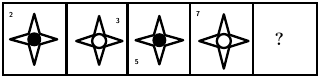
Select the figure from among the given options that can replace the question mark (?) in the following series.

  1. AOption (a)

  2. BOption (b)

  3. COption (c)

  4. DOption (d)

View answer & explanation

Correct answer

Answer: (c)C.

Why this answer is correct

The logic followed here is:

  1. Alternately the circle element is shaded.

  2. The numerical element shifts in a triangular clockwise direction following the prime number series subsequently.

Thus, the final series is:

Hence, "Option 3 is the correct answer.

Question 2

Given below is a statement Followed by two conclusions I and II. Study the statement carefully and decide which Conclusion/s is/are definitely true.

Statement: M ≥ N > O ≥ P = W; X ≥ O > Y

Conclusion I: M > X

Conclusion II: W < Y

  1. AOption (a)

    Only Conclusion I is true.

  2. BOption (b)

    Only Conclusion II is true.

  3. COption (c)

    Neither Conclusion I nor II is true.

  4. DOption (d)

    Both Conclusions I and II are true. 

View answer & explanation

Correct answer

Answer: (c)C.

Neither Conclusion I nor II is true.

Why this answer is correct

Given statement: M ≥ N > O ≥ P = W; X ≥ O > Y

Conclusions:

Conclusion I : M > X → False (As M ≥ N > O ≤ X. So, no relation between M and X can be determined therefore it is definitely false.)

Conclusion II : W < Y → False (As W = N ≤ O > Y. So, no relation between W and Y can be determined therefore it is definitely false.)

Thus, Neither Conclusion I nor II is true.

Hence, the correct answer is "Option 3".

Question 3

Town T is to the south of town U. Town V is to the east of town T. Town X is to the north of town V. Town Y is to the north of town X. Town Z is to the west of town Y. What can be the position of town Z with respect to town T?

  1. AOption (a)

    South

  2. BOption (b)

    North

  3. COption (c)

    West

  4. DOption (d)

    East

View answer & explanation

Correct answer

Answer: (b)B.

North

Why this answer is correct

Given: 

Town T is to the south of town U.

Town V is to the east of town T.

Town X is to the north of town V.

Town Y is to the north of town X.

Town Z is to the west of town Y.

Thus, town Z is to the north of town T.

Hence, "Option 2" is the correct answer.

Question 4

Select the correct combination of mathematical signs to sequentially replace the * signs and to balance the given equation.  (87 * 63) * 6 *1 * 5

  1. AOption (a)

     + ÷ × =

  2. BOption (b)

    - ÷ + =

  3. COption (c)

    ÷ + × =

  4. DOption (d)

    × + ÷ =

View answer & explanation

Correct answer

Answer: (b)B.

- ÷ + =

Why this answer is correct

Given: (87 * 63) * 6 *1 * 5

According to the question, after replace the * signs:

Option 1) + ÷ × =

(87 * 63) * 6 *1 * 5 ⇒ (87 + 63) ÷ 6 × 1 = 5

⇒ (87 + 63) ÷ 6 × 1 = 5

⇒ 150 ÷ 6 × 1 = 5

⇒ 25 × 1 = 5

⇒ 25 ≠ 5 (LHS ≠ RHS)

Option  2) - ÷ + =

(87 * 63) * 6 *1 * 5 ⇒ (87 - 63) ÷ 6 +1 = 5

⇒ (87 - 63) ÷ 6 +1 = 5

⇒ 24 ÷ 6 +1 = 5

⇒ 4 +1 = 5

⇒ 5 = 5 (LHS = RHS)

Option  3) ÷ + × =

(87 * 63) * 6 *1 * 5 ⇒ (87 ÷ 63) + 6 × 1 = 5

⇒ (87 ÷ 63) + 6 × 1 = 5

⇒ 1.38 + 6 × 1 = 5

⇒ 1.38 + 6 = 5

⇒ 7.38 ≠ 5 (LHS ≠ RHS)

Option  4) × + ÷ =

(87 * 63) * 6 *1 * 5 ⇒ (87 × 63) + 6 ÷ 1 = 5

⇒ (87 × 63) + 6 ÷ 1 = 5

⇒ 5481 + 6 ÷ 1 = 5

⇒ 5481 + 6 = 5

⇒ 5487 ≠ 5 (LHS ≠ RHS)

Hence, "Option 2" is the correct answer.

Question 5

Identify the figure that closely resembles the missing part of the given figure pattern.

  1. AOption (a)

  2. BOption (b)

  3. COption (c)

  4. DOption (d)

View answer & explanation

Correct answer

Answer: (b)B.

Why this answer is correct

The figure which when put in place of '?' will logically complete the pattern is shown below:

Thus, option Figure 2 will logically complete the pattern given.

Hence, "Option 2" is the correct answer.

Question 6

Four words are EQUATION, MATHS, WINTER and RAIN. When counted from the left, if every fourth letter in each of the above words is changed to the previous letter in the English alphabetical order, how many words thus formed will have no letter appearing more than once?

  1. AOption (a)

    One

  2. BOption (b)

    Two

  3. COption (c)

    Three

  4. DOption (d)

    Four

View answer & explanation

Correct answer

Answer: (d)D.

Four

Why this answer is correct

Given words: EQUATION, MATHS, WINTER and RAIN

According to the question:

Given wordsEQUATIONMATHSWINTERRAIN
Fourth letter from left → (-1)
Resultant wordsEQUZTIONMATGSWINSERRAIM
Required answerNo letter is appeared more than onceNo letter is appeared more than onceNo letter is appeared more than onceNo letter is appeared more than once

Thus, according to the final arrangement, in all the four words thus formed will have no letter appeared more than once.

Hence, "Option 4" is the correct answer.

Question 7

Select the pair from among the given options that is analogous to the given pair.

18 : 325

12 : 145

(NOTE: Operations should be performed on the whole numbers, without breaking down the numbers into its constituent digits. E.g. 13 - Operations on 13 such as adding/subtracting/multiplying etc. to 13 can be performed. Breaking down 13 into 1 and 3 and then performing mathematical operations on 1 and 3 is not allowed.)

  1. AOption (a)

    8 : 63

  2. BOption (b)

    16 : 257

  3. COption (c)

    15 : 225 

  4. DOption (d)

    9 : 81

View answer & explanation

Correct answer

Answer: (b)B.

16 : 257

Why this answer is correct

The logic followed here is:

18 : 325

182 + 1 = 325

324 + 1 = 325

325 = 325 (LHS = RHS)

And,

12 : 145

122 + 1 = 145

144 + 1 = 145

145 = 145 (LHS = RHS)

So, checking each option one by one:

Option 1) 8 : 63

82 + 1 = 63

64 + 1 = 63

65 ≠ 63 (LHS ≠ RHS)

Option 2) 16 : 257

162 + 1 = 257

256 + 1 = 257

257 = 257 (LHS = RHS)

Option 3) 15 : 225 

152 + 1 = 225

225 + 1 = 225

226 ≠ 225 (LHS ≠ RHS)

Option 4) 9 : 81

92 + 1 = 81

81 + 1 = 81

82 ≠ 81 (LHS ≠ RHS)

Thus, out of all the options, '16 : 257' follows the same logic as given.

Hence, "Option 2" is the correct answer.

Question 8

Four number-sets have been given, out of which three are alike in some manner and one is different. Select the number-set that is different. (NOTE: Operations should be performed on the whole numbers, without breaking down the numbers into its constituent digits. E.g. 13 - Operations on 13 such as adding/subtracting/multiplying etc. to 13 can be performed. Breaking down 13 into 1 and 3 and then performing mathematical operations on 1 and 3 is not allowed.)

  1. AOption (a)

    (12:46)

  2. BOption (b)

    (9:33)

  3. COption (c)

    (10:37)

  4. DOption (d)

    (11:41)

View answer & explanation

Correct answer

Answer: (a)A.

(12:46)

Why this answer is correct

The logic followed here is:

Option 1) (12:46)

12 × 4 - 3 = 46

48 - 3 = 46

45 ≠ 46 (LHS ≠ RHS)

Option 2) (9:33)

9 × 4 - 3 = 33

36 - 3 = 33

33 = 33 (LHS = RHS)

Option 3) (10:37)

10 × 4 - 3 = 37

40 - 3 = 37

33 = 33 (LHS = RHS)

Option 4) (11:41)

11 × 4 - 3 = 41

44 - 3 = 41

41 = 41 (LHS = RHS)

Thus, out of all the options, '(12:46)' is the odd one out.

Hence, "Option 1" is the correct answer.

Question 9

Which figure should replace the question mark (?) if the following series were to be continued?

  1. AOption (a)

  2. BOption (b)

  3. COption (c)

  4. DOption (d)

View answer & explanation

Correct answer

Answer: (c)C.

Why this answer is correct

The logic followed here is:

  1. First box series →

1st row element and 3rd column element interchange positions.

The rest of the elements shift clockwise. 

2) Second box series → 

1st column element and 3rd row element interchange positions.

The rest of the elements shift clockwise. 

Thus, the final series is:

Hence, "Option 3" is the correct answer.

Question 10

Select the option in which the numbers share the same relationship as that shared by the given pairs of numbers.

2513 - 20

4213 - 18

  1. AOption (a)

    1462 - 26

  2. BOption (b)

    3122 - 14

  3. COption (c)

    2521 - 10

  4. DOption (d)

    5131 - 22

View answer & explanation

Correct answer

Answer: (b)B.

3122 - 14

Why this answer is correct

The logic followed here is:

2513 - 20

[(2 + 5 + 1 + 3) - 1] × 2 = 20

(11 - 1) × 2 = 20

10 × 2 = 20

20 = 20 (LHS = RHS)

And,

4213 - 18

[(4 + 2 + 1 + 3) - 1] × 2 = 18

(10 - 1) × 2 = 18

9 × 2 = 18

18 = 18 (LHS = RHS)

So, checking each option one by one:

Option 1) 1462 - 26

[(1 + 4 + 6 + 2) - 1] × 2 = 26

(13 - 1) × 2 = 26

12 × 2 = 26

24 ≠ 26 (LHS ≠ RHS)

Option 2) 3122 - 14

[(3 + 1 + 2 + 2) - 1] × 2 = 14

(8 - 1) × 2 = 14

7 × 2 = 14

14 = 14 (LHS = RHS)

Option 3) 2521 - 10 

[(2 + 5 + 2 + 1) - 1] × 2 = 10

(10 - 1) × 2 = 10

9 × 2 = 10

18 ≠ 10 (LHS ≠ RHS)

Option 4) 5131 - 22

[(5 + 1 + 3 + 1) - 1] × 2 = 22

(10 - 1) × 2 = 22

9 × 2 = 22

18 ≠ 22 (LHS ≠ RHS)

Thus, out of all the options, '3122 - 14' follows the same logic as given.

Hence, "Option 2" is the correct answer.

Question 11

In a certain code language, 'ROAD' is coded as TRCG and 'STOP' is coded as UWQS. How will 'BOOK' be coded in the same language?

  1. AOption (a)

    DRQN

  2. BOption (b)

    DQQN

  3. COption (c)

    DRRN

  4. DOption (d)

    DRPN

View answer & explanation

Correct answer

Answer: (a)A.

DRQN

Why this answer is correct

The logic followed here is:

'ROAD' is coded as TRCG

And,

'STOP' is coded as UWQS

Similarly,

'BOOK' is coded as

Hence, "Option 1" is the correct answer.

Question 12

Which of the following numbers will replace the question mark (?) in the given series?

29, 174, 179, ?, 719, 1438

  1. AOption (a)

    698

  2. BOption (b)

    716

  3. COption (c)

    700

  4. DOption (d)

    718

View answer & explanation

Correct answer

Answer: (b)B.

716

Why this answer is correct

The logic followed here is:

Hence, "Option 2" is the correct answer.

Question 13

Three of the following four are alike in a certain way and thus form a group. Which is the one that does NOT belong to that group? 

  1. AOption (a)

    JNL

  2. BOption (b)

    PUR

  3. COption (c)

    BFD

  4. DOption (d)

    VZX

View answer & explanation

Correct answer

Answer: (b)B.

PUR

Why this answer is correct

The logic followed here is:

Option 1) JNL

Option 2) PUR

Option 3) BFD

Option 4) VZX 

Thus, out of all the options 'PUR' is the odd one out.

Hence, "Option 2" is the correct answer.

Question 14

Which two numbers (not digits) and which two signs should be interchanged to make the following equation correct?

24 ÷ 3 × 2 + 8 - 18 = 21

  1. AOption (a)

    3, 18 and +, ×

  2. BOption (b)

    8, 24 and +, ÷

  3. COption (c)

    3, 2 and -, ×

  4. DOption (d)

    3, 8 and -, +

View answer & explanation

Correct answer

Answer: (d)D.

3, 8 and -, +

Why this answer is correct

Given: 24 ÷ 3 × 2 + 8 - 18 = 21

According to the question, after replacing the two numbers (not digits) and two signs :

Option 1) 3, 18 and +, ×

24 ÷ 3 × 2 + 8 - 18 = 21 ⇒ 24 ÷ 18 + 2 × 8 - 3 = 21

⇒ 24 ÷ 18 + 2 × 8 - 3 = 21

⇒ 1.33 + 2 × 8 - 3 = 21

⇒ 1.33 + 16 - 3 = 21

⇒ 17.33 - 3 = 21

14.33 ≠ 21 (LHS ≠ RHS)

Option  2) 8, 24 and +, ÷

24 ÷ 3 × 2 + 8 - 18 = 21 ⇒ 8 + 3 × 2 ÷ 24 - 18 = 21

 ⇒ 8 + 3 × 2 ÷ 24 - 18 = 21

 ⇒ 8 + 3 × 0.08 - 18 = 21

 ⇒ 8 + 0.24 - 18 = 21

 ⇒ 8.24 - 18 = 21

-9.76 ≠ 21 (LHS ≠ RHS)

Option  3) 3, 2 and -, ×

24 ÷ 3 × 2 + 8 - 18 = 21 ⇒ 24 ÷ 2 - 3 + 8 × 18 = 21

⇒ 24 ÷ 2 - 3 + 8 × 18 = 21

⇒ 12 - 3 + 8 × 18 = 21

⇒ 12 + 144 - 3 = 21

⇒ 156 - 3 = 21

153 ≠ 21 (LHS ≠ RHS)

Option  4) 3, 8 and -, +

24 ÷ 3 × 2 + 8 - 18 = 21 ⇒ 24 ÷ 8 × 2 - 3 + 18 = 21

⇒ 24 ÷ 8 × 2 - 3 + 18 = 21

⇒ 3 × 2 - 3 + 18 = 21

⇒ 6 + 18 - 3 = 21

⇒ 24 - 3 = 21

21 = 21 (LHS = RHS)

Hence, "Option 4" is the correct answer.

Question 15

Select the option that will replace the question mark (?) in the given figure to complete the pattern.

  1. AOption (a)

  2. BOption (b)

  3. COption (c)

  4. DOption (d)

View answer & explanation

Correct answer

Answer: (a)A.

Why this answer is correct

The figure which when put in place of '?' will logically complete the pattern is shown below:

Thus, option Figure 1 will logically complete the pattern given.

Hence, "Option 1" is the correct answer.

Question 16

How many triangles are there in the given figure?

  1. AOption (a)

    10

  2. BOption (b)

    12

  3. COption (c)

    13

  4. DOption (d)

    11

View answer & explanation

Correct answer

Answer: (d)D.

11

Why this answer is correct

The number of triangles in the given figure is shown below :

Here, as marked there are a total of 11 triangles.

Hence, "4" is the correct answer.

Question 17

Two statements are given followed by two conclusions numbered I and II. Assuming the statements to be true, even if they seem to be at variance with commonly known facts, decide which of the conclusions logically follow(s) from the statements. 

Statements:

No letter is an alphabet

All alphabets are words.

Conclusions:

I. All words can never be letters.

II. All letters being words is a possibility.

  1. AOption (a)

    Only conclusion I follows

  2. BOption (b)

    Both conclusions I and II follow

  3. COption (c)

    Neither conclusion I nor II follows

  4. DOption (d)

    Only conclusion II follows

View answer & explanation

Correct answer

Answer: (b)B.

Both conclusions I and II follow

Why this answer is correct

The least possible Venn diagram for the given statements is as shown below :

Conclusions:

I. All words can never be letters → Follow (As no letter is an alphabet and all alphabets are words. As all letters cannot be alphabets which whole comes in words, therefore it is true)

II. All letters being words is a possibility → Follow (As no letter is an alphabet and all alphabets are words. As no statement restricts whole letters from being words, therefore it is possible)

∴ Here, Both conclusions I and II follow.​

Hence, the correct answer is "Option 2"

Question 18

E is the mother of L. G is the father of H. L is the sister of D. H is the sister of E. D is the son of A. How is H related to A?

  1. AOption (a)

    Wife's brother

  2. BOption (b)

    Sister's husband

  3. COption (c)

    Wife's sister

  4. DOption (d)

    Brother's wife

View answer & explanation

Correct answer

Answer: (c)C.

Wife's sister

Why this answer is correct

Given: 

1) E is the mother of L. 

2) H is the sister of E. 

3) G is the father of H.

4) L is the sister of D. 

5) D is the son of A. 

Here, H is A's sister-in-law or wife's sister.

Hence, the correct answer is "Option 3".

Question 19

Which of the following numbers will replace the question mark (?) in the given series?

4, 8, 9, 27, 16, ?

  1. AOption (a)

    63

  2. BOption (b)

    61

  3. COption (c)

    62

  4. DOption (d)

    64

View answer & explanation

Correct answer

Answer: (d)D.

64

Why this answer is correct

The logic followed here is:

Hence, "Option 4" is the correct answer.

Question 20

Six students are sitting around a circular table facing the centre. Diya is sitting second to the left of Arjun. Pawan is sitting second to the right of Bhim. Kapil is sitting second to the left of Diya. Diya is an immediate neighbour of both Pawan and Ram. Who is the immediate neighbour of both Pawan and Bhim?

  1. AOption (a)

    Kapil

  2. BOption (b)

    Arjun

  3. COption (c)

    Pawan

  4. DOption (d)

    Ram

View answer & explanation

Correct answer

Answer: (a)A.

Kapil

Why this answer is correct

Given: Six students are sitting around a circular table facing the centre. 

1) Diya is sitting second to the left of Arjun. 

2) Kapil is sitting second to the left of Diya.

3) Pawan is sitting second to the right of Bhim.

4) Diya is an immediate neighbour of both Pawan and Ram.

Thus, Kapil is the immediate neighbour of both Pawan and Bhim.

Hence, "Option 1" is the correct answer.

Question 21

The sequence of folding a piece of paper and the manner in which the folded paper has been cut is shown below. Select a figure from among the given options, which would most closely resemble the unfolded form of the paper.

  1. AOption (a)

  2. BOption (b)

  3. COption (c)

  4. DOption (d)

View answer & explanation

Correct answer

Answer: (c)C.

Why this answer is correct

The figure which will look like the paper when unfolded is shown below:

Thus, option Figure 3 will look like the paper when unfolded.

Hence, "Option 3" is the correct answer.

Question 22

Two different positions of the same die are shown below. What is the number on the face opposite to the face having 1?

  1. AOption (a)

    2

  2. BOption (b)

    3

  3. COption (c)

    6

  4. DOption (d)

    5

View answer & explanation

Correct answer

Answer: (b)B.

3

Why this answer is correct

The logic followed here is :-

From the given two different dices the adjacent sides are as shown below :

As 3 is common on both the dice, it is clear that 2, 5, 6, and 4 are adjacent to it, and the remaining i.e. 1 will be opposite to it.

Opposite pairs:

2 → 4

5 → 6

3 → 1

So, the opposite side of "1" will be side "3".

Hence, the correct answer is "Option 2".

Question 23

Select the number from among the given options that can replace the question mark (?) in the following series.

31, 16, 17, ?, 56, 142.5

  1. AOption (a)

    49

  2. BOption (b)

    27

  3. COption (c)

    25

  4. DOption (d)

    36

View answer & explanation

Correct answer

Answer: (b)B.

27

Why this answer is correct

The logic followed here is:

Hence, "Option 2" is the correct answer.

Question 24

Select the pair which is related to each other in the same way as the following-

13:676

6:144

(NOTE: Operations should be performed on the whole numbers, without breaking down the numbers into its constituent digits. E.g. 13-Operations on 13 such as adding/subtracting/multiplying etc. to 13 can be performed. Breaking down 13 into 1 and 3 and then performing mathematical operations on 1 and 3 is not allowed.)

  1. AOption (a)

    6:288

  2. BOption (b)

    4:192

  3. COption (c)

    8:256

  4. DOption (d)

    15:225

View answer & explanation

Correct answer

Answer: (c)C.

8:256

Why this answer is correct

The logic followed here is:

13:676

(13 × 2)2 = 676

(26)2 = 676

676 = 676 (LHS = RHS)

And,

6:144

(6 × 2)2 = 144

(12)2 = 144

144 = 144 (LHS = RHS)

So, checking each option one by one:

Option 1) 6:288

(6 × 2)2 = 288

(12)2 = 288

144 ≠ 288 (LHS ≠ RHS)

Option 2) 4:192

(4 × 2)2 = 192

(8)2 = 192

64 ≠ 192 (LHS ≠ RHS)

Option 3) 8:256

(8 × 2)2 = 256

(16)2 = 256

256 = 256 (LHS = RHS)

Option 4) 15:225

(15 × 2)2  = 225

(30)2 = 225

900 ≠ 225 (LHS ≠ RHS)

Thus, out of all the options, '8:256' follows the same logic as given.

Hence, "Option 3" is the correct answer.

Question 25

Which of the following terms will replace the question mark (?) in the given series?

SBRJ, UEVO, WHZT, ?, ANHD

  1. AOption (a)

    ZKEY

  2. BOption (b)

    YKDY

  3. COption (c)

    XJDZ

  4. DOption (d)

    ZJEX

View answer & explanation

Correct answer

Answer: (b)B.

YKDY

Why this answer is correct

The logic followed here is:

​

Hence, "Option 2" is the correct answer.

Question 26

Suresh is now 19 years old and in college. Since he was a 5-year-old, he stayed in a hostel and is now coming back home after 14 long years. His parents have texted him the direction from the railway station to his house. See the below text message sent to Suresh by his parents and answer the following question accordingly. "When you step out of the railway station, you are facing north. Take a right and drive 4 km, you will see a T-point/junction. Take a right and drive 2 km. There will be a roundabout with four roads. Take the second left from the round-about and drive 1 km. Take a right and drive 3 km. Take a left and drive 2 km. You will find our house at the front. Come home fast.". How many kilometres did Suresh drive to reach his home from the railway station?

  1. AOption (a)

    13

  2. BOption (b)

    11

  3. COption (c)

    10

  4. DOption (d)

    12

View answer & explanation

Correct answer

Answer: (d)D.

12

Why this answer is correct

Given:

When you step out of the railway station, you are facing north.

Take a right and drive 4 km, you will see a T-point/junction.

Take a right and drive 2 km.

There will be a roundabout with four roads.

Take the second left from the round-about and drive 1 km.

Take a right and drive 3 km. Take a left and drive 2 km. You will find our house at the front.

Thus, Suresh drove (4 km + 2 km + 1 km + 3 km + 2 km) 12 km to reach his home from the railway station.

Hence, "Option 4" is the correct answer.

Question 27

A, B, C, D, E and F are sitting around a circular table facing the centre (but not necessarily in the same order). F is sitting second to the left of A. E is an immediate neighbour of F. C sits second to the right of D. B sits to the immediate left of E. Who is sitting second to the left of B?

  1. AOption (a)

    C

  2. BOption (b)

    F

  3. COption (c)

    D

  4. DOption (d)

    A

View answer & explanation

Correct answer

Answer: (d)D.

A

Why this answer is correct

Given: A, B, C, D, E and F are sitting around a circular table facing the centre. 

1) F is sitting second to the left of A.

2) E is an immediate neighbour of F. 

3) B sits to the immediate left of E.

4) C sits second to the right of D.

Thus, according to the final arrangement A is sitting second to the left of B.

Hence, "Option 4" is the correct answer.

Question 28

Select the option that is related to the third number in the same way as the second number is related to the first number and the sixth number is related to the fifth number.

125: 625 :: 343 : ? :: 221: 721

(NOTE: Operations should be performed on the whole numbers, without breaking down the numbers into its constituent digits. E.g. 13 – Operations on 13 such as adding/subtracting/multiplying etc. to 13 can be performed. Breaking down 13 into 1 and 3 and then performing mathematical operations on 1 and 3 is not allowed.)

  1. AOption (a)

    1126 

  2. BOption (b)

    843

  3. COption (c)

    1296

  4. DOption (d)

    512

View answer & explanation

Correct answer

Answer: (b)B.

843

Why this answer is correct

The logic followed here is:

Second number = First number + 500

125: 625

⇒ 125 + 500 =625

221 : 721

⇒ 221 + 500 = 721

343 : ?

⇒ 343 + 500 = 843

Hence, "Option 2" is the correct answer.

Question 29

Three statements are given, followed by three conclusions numbered I, II and III. Assuming the statements to be true, even if they seem to be at variance with commonly known facts, decide which of the conclusions logically follow(s) from the statements. 

Statements:

All dahlias are lilies.

All sunflowers are lilies.

Some dahlias are hibiscus.

Conclusions:

I. Some sunflowers are not dahlias.

II. Some hibiscuses are not lilies.

III. Some lilies are hibiscus.

  1. AOption (a)

    Only conclusion III follows.

  2. BOption (b)

    Both conclusion II and III follow.

  3. COption (c)

    Both conclusion I and III follow.

  4. DOption (d)

    All conclusions follow

View answer & explanation

Correct answer

Answer: (a)A.

Only conclusion III follows.

Why this answer is correct

The least possible Venn diagram for the given statements is as shown below :

Conclusions:

I. Some sunflowers are not dahlias → Does not follow (As all dahlias are lilies and all sunflowers are lilies. As no direct relation is given dahlias and sunflowers, therefore it is false)

II. Some hibiscuses are not lilies → Does not follow (As all dahlias are lilies and some dahlias are hibiscus. As no direct relation is given hibiscus and lilies, therefore it is false)

III. Some lilies are hibiscus → Follow (As all dahlias are lilies and some dahlias are hibiscus. As some part of hibiscus is common with dahlias which whole comes in lilies, therefore it is true.)

∴ Here, Only conclusion III follows.​

Hence, the correct answer is "Option 1"

Question 30

Select the option that is related to the third word in the same way as the second word is related to the first word. (The words must be considered as meaningful English words and must NOT be related to each other based on the number of letters/number of consonants/vowels in the word) 1 Bigotry: Hatred :: Fanaticism: ?

  1. AOption (a)

    Elite

  2. BOption (b)

    Intolerance

  3. COption (c)

    Poor

  4. DOption (d)

    Rich

View answer & explanation

Correct answer

Answer: (b)B.

Intolerance

Why this answer is correct

The logic followed here is:

Bigotry: Hatred → Bigotry involves intolerance which often leads to hatred.

Similarly,

Fanaticism: ? → Fanaticism is an extreme obsessive belief which often leads to intolerance.

Hence, "Option 2" is the correct answer.

Question 31

Three of the following four letter-clusters are alike in a certain way and one is different. Pick the odd one out.

(NOTE: The odd one out is not based on the number of vowels or consonants in the word)

  1. AOption (a)

    HEIS

  2. BOption (b)

    WAED

  3. COption (c)

    UCGF

  4. DOption (d)

    IOSR

View answer & explanation

Correct answer

Answer: (a)A.

HEIS

Why this answer is correct

The logic followed here is:

Option 1) HEIS

Option 2) WAED

Option 3) UCGF

Option 4) IOSR 

Thus, out of all the options 'HEIS' is the odd one out.

Hence, "Option 1" is the correct answer.

Question 32

Which letter cluster will replace the question mark (?) to complete the given series?

YTUQ, XVRU, ?, VZLC, UBIG

  1. AOption (a)

    WYOX

  2. BOption (b)

    WYOY

  3. COption (c)

    WXOY

  4. DOption (d)

    WXPY

View answer & explanation

Correct answer

Answer: (c)C.

WXOY

Why this answer is correct

The logic followed here is:

​

Hence, "Option 3" is the correct answer.

Question 33

Select the number that will come in the place of the question mark(?), if '+' and '-' are interchanged and '×' and '÷' are interchanged?

13 ÷ 145 × 29 - 69 + 13 = ?

  1. AOption (a)

    116

  2. BOption (b)

    129

  3. COption (c)

    113

  4. DOption (d)

    121

View answer & explanation

Correct answer

Answer: (d)D.

121

Why this answer is correct

Given : 13 ÷ 145 × 29 - 69 + 13 = ?

According to the question, after  '+' and '-' are interchanged and '×' and '÷' are interchanged:

13 ÷ 145 × 29 - 69 + 13 = ? ⇒ 13 × 145 ÷ 29 + 69 - 13 = ?

⇒ 13 × 145 ÷ 29 + 69 - 13 = ?

⇒ 13 × 5 + 69 - 13 = ?

⇒ 65 + 69 - 13 = ?

⇒ 134 - 13 = ?

⇒ 121 = ?

Hence, "Option 4" is the correct answer.

Question 34

Select the option that is related to the third number in the same way as the second number is related to the first number. 0.19 : 0.0019 :: 2.02 : ?

(NOTE: Operations should be performed on the whole numbers, without breaking down the numbers into its constituent digits. E.g. 13 – Operations on 13 such as adding/subtracting/multiplying etc. to 13 can be performed. Breaking down 13 into 1 and 3 and then performing mathematical operations on 1 and 3 is not allowed.)

  1. AOption (a)

    0.0202

  2. BOption (b)

    0.00202

  3. COption (c)

    0.202

  4. DOption (d)

    2.0002

View answer & explanation

Correct answer

Answer: (a)A.

0.0202

Why this answer is correct

The logic followed here is:

0.19 : 0.0019

0.19 ÷ 100 = 0.0019

0.0019 = 0.0019 (LHS = RHS)

Similarly,

2.02 : ?

2.02 ÷ 100 = ?

0.0202 = ?

Hence, "Option 1" is the correct answer.

Question 35

What will be the day of the week on 13th January 2076?

  1. AOption (a)

    Wednesday

  2. BOption (b)

    Sunday

  3. COption (c)

    Tuesday

  4. DOption (d)

    Monday

View answer & explanation

Correct answer

Answer: (d)D.

Monday

Why this answer is correct

Given date: 13th January 2076

So, calculating total number of odd days:

Total odd days till 13th January 2076 = 0 + 36 + 57 + 6 ⇒ 99 ÷ 7 = 1

Thus, "1" is the code for 'Monday'.

Hence, "Option 4" is the correct answer.

Additional Information 

No. of odd daysOrdinary yearLeap year
365 ÷ 7 = 52 weeks + 1 odd day366 ÷ 7 = 52 weeks + 2 odd day

And,

YearsNo. of odd days
1005
2003
3001
4000

Note : Multiple of 400 years i.e 800, 1200, 1600, 2000 will also have 0 odds days.

DaysNo. of odd days
Sunday0
Monday1
Tuesday2
Wednesday3
Thursday4
Friday5
Saturday6

Question 36

If + means ×, × means -, - means ÷, and ÷ means +, what will be the value of the given e×pression?

36 + 10 - 2 × 18 ÷ 8

  1. AOption (a)

     150

  2. BOption (b)

     170

  3. COption (c)

    165

  4. DOption (d)

    198

View answer & explanation

Correct answer

Answer: (b)B.

 170

Why this answer is correct

Decoding signs:

Signs+×-÷
Stands For×-÷+

Given: 36 + 10 - 2 × 18 ÷ 8

36 + 10 - 2 × 18 ÷ 8 ⇒ 36 × 10 ÷ 2 - 18 + 8

⇒ 36 × 10 ÷ 2 - 18 + 8

⇒ 36 × 5 - 18 + 8

⇒ 180 + 8 - 18

⇒ 188 - 18

⇒ 170 = ?

Hence, "Option 2" is the correct answer.

Question 37

The sequence of folding a piece of paper and the manner in which the folded paper has been cut is shown below. Select a figure from among the given options, which would most closely resemble the unfolded form of the paper.

  1. AOption (a)

  2. BOption (b)

  3. COption (c)

  4. DOption (d)

View answer & explanation

Correct answer

Answer: (d)D.

Why this answer is correct

The figure which will look like the paper when unfolded is shown below:

Thus, option Figure 4 will look like the paper when unfolded.

Hence, "Option 4" is the correct answer.

Question 38

In a certain code language, 'FIRE" is coded as 38 and "WATER' is coded as 67. How will 'FOREST' be coded in the same language?

  1. AOption (a)

    83

  2. BOption (b)

    79

  3. COption (c)

    80

  4. DOption (d)

    76

View answer & explanation

Correct answer

Answer: (a)A.

83

Why this answer is correct

The logic followed here is:

'FIRE" is coded as 38

And,

"WATER' is coded as 67

Similarly,

'FOREST' is coded as

Hence, "Option 1" is the correct answer.

Question 39

What was the day of the week on 22 October 1979?

  1. AOption (a)

    Sunday

  2. BOption (b)

    Tuesday

  3. COption (c)

    Monday

  4. DOption (d)

    Wednesday

View answer & explanation

Correct answer

Answer: (c)C.

Monday

Why this answer is correct

Given date: 22 October 1979

So, calculating total number of odd days:

Total odd days till 22 October 1979 = 0 + 1 + 38 + 59 + 1 ⇒ 99 ÷ 7 = 1

Thus, "1" is the code for 'Monday'.

Hence, "Option 3" is the correct answer.

Additional Information

No. of odd daysOrdinary yearLeap year
365 ÷ 7 = 52 weeks + 1 odd day366 ÷ 7 = 52 weeks + 2 odd day

And,

YearsNo. of odd days
1005
2003
3001
4000

Note : Multiple of 400 years i.e 800, 1200, 1600, 2000 will also have 0 odds days.

DaysNo. of odd days
Sunday0
Monday1
Tuesday2
Wednesday3
Thursday4
Friday5
Saturday6

Question 40

Select the option that is related to the third term in the same way as the second term is related to the first term. 

The words must be considered as meaningful English words and must not be related to each other based on the number of letters/number of consonants/vowels in the word

HORSE : GNQRD :: ANIMAL : ?

  1. AOption (a)

    ZMHLZK

  2. BOption (b)

    BOJNBM

  3. COption (c)

    BMJLBK

  4. DOption (d)

    ZOHNZM

View answer & explanation

Correct answer

Answer: (a)A.

ZMHLZK

Why this answer is correct

The logic followed here is:

HORSE : GNQRD

Similarly,

ANIMAL : ?

Hence, "Option 1" is the correct answer.

Question 41

Select the triad from among the given options that is analogous to the given triad.

198-297-594

  1. AOption (a)

    442-513-711

  2. BOption (b)

    488-364-299

  3. COption (c)

    125-223-342

  4. DOption (d)

    369-576-747

View answer & explanation

Correct answer

Answer: (d)D.

369-576-747

Why this answer is correct

The logic followed here is:

198-297-594

1 + 9 + 8 = 18

2 + 9 + 7 = 18

5 + 9 + 4 = 18

So, checking each option one by one:

Option 1) 442-513-711

4 + 4 + 2 = 10 ≠ 18

5 + 1 + 3 = 9 ≠ 18

7 + 1 + 1 = 9 ≠ 18

Option 2) 488-364-299

4 + 8 + 8 = 20 ≠ 18

3 + 6 + 4 = 13 ≠ 18

2 + 9 + 9 = 20 ≠ 18

Option 3) 125-223-342

1 + 2 + 5 = 8 ≠ 18

2 + 2 + 3 = 7 ≠ 18

3 + 4 + 2 = 9 ≠ 18

Option 4) 369-576-747

3 + 6 + 9 = 18

5 + 7 + 6 = 18

7 + 4 + 7 = 18

Thus, out of all the options, '369-576-747' follows the same logic as given.

Hence, "Option 4" is the correct answer.

Question 42

Ravi and Raghu are brothers. Raju is the father of Raghu. Shyam is the brother of Tushar. Shyam is also the mother's brother of Ravi. How is Shyam related to Raju?

  1. AOption (a)

    Father

  2. BOption (b)

    Wife's brother

  3. COption (c)

    Brother

  4. DOption (d)

    Husband

View answer & explanation

Correct answer

Answer: (b)B.

Wife's brother

Why this answer is correct

Given: 

1) Ravi and Raghu are brothers.

2) Raju is the father of Raghu.

3) Shyam is also the mother's brother of Ravi.

4) Shyam is the brother of Tushar. 

Here, Shyam's is Raju's brother-in-law or wife's brother.

Hence, the correct answer is "Option 2".

Question 43

Which of the following letter-clusters will replace the question mark (?) in the given series to make it logically complete? 

QRT, SVR, UZP, WDN, ?

  1. AOption (a)

    YHL

  2. BOption (b)

    ZFL

  3. COption (c)

    WAY

  4. DOption (d)

    YHP

View answer & explanation

Correct answer

Answer: (a)A.

YHL

Why this answer is correct

The logic followed here is:

Hence, "Option 1" is the correct answer.

Question 44

Two statements are given followed by conclusions. Assuming the statements to be true ,even if they seem to be at variance with commonly known facts, decide which of the conclusions logically follow ( s ) from the statements. 

Statements:

All stones are chairs.

Some chairs are dogs.

Conclusions:

  1. All dogs are stones.

  2. At least some dogs are chairs.

  1. AOption (a)

    Only conclusion 1 follow

  2. BOption (b)

    Only conclusion 2 follow

  3. COption (c)

    Both conclusions 1 and 2 follow

  4. DOption (d)

    Neither conclusion 1 nor 2 follow

View answer & explanation

Correct answer

Answer: (b)B.

Only conclusion 2 follow

Why this answer is correct

The least possible Venn diagram for the given statements is as shown below :

Conclusions:

  1. All dogs are stones → Does not follow (As all stones are chairs and some chairs are dogs. So it is possible but not definite)
  2. At least some dogs are chairs → Follow (As some chairs are dogs. As some part of chairs is common with dogs, therefore it is true.)

∴ Here, Only conclusion 2 follows.​

Hence, the correct answer is "Option 2"

Question 45

K, L, M, W, X, Y and Z scored different marks in an exam. K scored more than both L and W but less than Y. X scored less than only Y. Neither L nor M scored the lowest marks. Z scored more than L, but less than M. K scored more than M. Who scored the third-lowest marks?

  1. AOption (a)

    Z

  2. BOption (b)

    L

  3. COption (c)

    W

  4. DOption (d)

    K

View answer & explanation

Correct answer

Answer: (a)A.

Z

Why this answer is correct

Given: K, L, M, W, X, Y and Z scored different marks in an exam.

1) X scored less than only Y.

Y > X > _ > _ > _ > _ > _

  1. K scored more than both L and W but less than Y.

3) K scored more than M.

4) Neither L nor M scored the lowest marks.

Case 1) Y > X > K > L/W/M > L/W/M > L/W/M > _

Case 2) Y > X > K > _ > L/M > L/M > W

Case 3) Y > X > K > L/M > _ > L/M > W

Case 4) Y > X > _ > K > L/M > L/M > W

5) Z scored more than L, but less than M.

As, there is no possible position for Z in case 1, 2 and 4, therefore are eliminated.

Case 3) Y > X > K > M > Z > L > W

Thus, according to the final arrangement Z scored the third-lowest marks.

Hence, "Option 1" is the correct answer.

Question 46

Which of the following numbers will replace the question mark (?) in the given series?

287, 276, 265, 254, 243, ?

  1. AOption (a)

    233

  2. BOption (b)

    230

  3. COption (c)

    232

  4. DOption (d)

    231

View answer & explanation

Correct answer

Answer: (c)C.

232

Why this answer is correct

The logic followed here is:

Hence, "Option 3" is the correct answer.

Question 47

What will come in place of the question mark (?) in the following equation if '-' means '×', '×' means '+' and '+' means '-'?

9 × 4 + 5 - 2 = ?

  1. AOption (a)

    7

  2. BOption (b)

    3

  3. COption (c)

    6

  4. DOption (d)

    5

View answer & explanation

Correct answer

Answer: (b)B.

3

Why this answer is correct

Decoding signs:

Signs-×+
Stands For×+-

Given: 9 × 4 + 5 - 2 = ?

9 × 4 + 5 - 2 = ? ⇒ 9 + 4 - 5 × 2 = ?

⇒ 9 + 4 - 5 × 2 = ?

⇒ 9 + 4 - 10 = ?

⇒ 13 - 10 = ?

⇒ 3 = ?

Hence, "Option 2" is the correct answer.

Question 48

Select the numbers from among the given options that can replace the question marks (?) in the same sequence and make the series logically complete.

24, 31, 22, 33, ?, 35, ?, 37

  1. AOption (a)

     22, 16

  2. BOption (b)

    22, 18

  3. COption (c)

     20, 18

  4. DOption (d)

    18, 20

View answer & explanation

Correct answer

Answer: (c)C.

 20, 18

Why this answer is correct

The logic followed here is:

Hence, "Option 3" is the correct answer.

Question 49

The two e×pressions on either side of the equal sign will have the same value if two numbers on the left-hand side are interchanged and two signs on the right-hand side are interchanged.

What are those two numbers (not digits) and the two signs? 4 × 3 ÷ 6 + 2 – 8 = 10 + 2 × 3 ÷ 5 – 18

  1. AOption (a)

     4 and 6; ÷ and ×

  2. BOption (b)

    2 and 4; + and ×

  3. COption (c)

    6 and 8; + and -

  4. DOption (d)

    4 and 8; + and ÷

View answer & explanation

Correct answer

Answer: (d)D.

4 and 8; + and ÷

Why this answer is correct

Given: 4 × 3 ÷ 6 + 2 – 8 = 10 + 2 × 3 ÷ 5 – 18

According to the question, if two numbers on the left-hand side are interchanged and two signs on the right-hand side are interchanged:

Option 1) 4 and 6; ÷ and ×

4 × 3 ÷ 6 + 2 – 8 = 10 + 2 × 3 ÷ 5 – 18 ⇒ 6 × 3 ÷ 4 + 2 – 8 = 10 + 2 ÷ 3 × 5 – 18

⇒ 6 × 3 ÷ 4 + 2 – 8 = 10 + 2 ÷ 3 × 5 – 18

⇒ 6 × 0.75 + 2 – 8 = 10 + 0.67 × 5 – 18

⇒ 4.5 + 2 – 8 = 10 + 3.35 – 18

⇒ 6.5 - 8 = 13.35 - 18

⇒ -1.5 ≠ -4.65 (LHS ≠ RHS)

Option  2) 2 and 4; + and ×

4 × 3 ÷ 6 + 2 – 8 = 10 + 2 × 3 ÷ 5 – 18 ⇒ 2 × 3 ÷ 6 + 4 – 8 = 10 × 2 + 3 ÷ 5 – 18

⇒ 2 × 3 ÷ 6 + 4 – 8 = 10 × 2 + 3 ÷ 5 – 18

⇒ 2 × 2 + 4 – 8 = 10 × 2 + 0.6 – 18

⇒ 4 + 4 – 8 = 20 + 0.6 – 18

⇒ 8 – 8 = 20.06 – 18

⇒ 0 ≠ 2.06 (LHS ≠ RHS)

Option  3) 6 and 8; + and -

4 × 3 ÷ 6 + 2 – 8 = 10 + 2 × 3 ÷ 5 – 18 ⇒ 4 × 3 ÷ 8 + 2 – 6 = 10 - 2 × 3 ÷ 5 + 18

⇒ 4 × 3 ÷ 8 + 2 – 6 = 10 - 2 × 3 ÷ 5 + 18

⇒ 4 × 0.375 + 2 – 6 = 10 - 2 × 0.6 + 18

⇒ 1.5 + 2 – 6 = 10 + 18 - 1.2

⇒ 3.5 – 6 = 28 - 1.2

⇒ -2.5 ≠ 26.8 (LHS ≠ RHS)

Option  4) 4 and 8; + and ÷

4 × 3 ÷ 6 + 2 – 8 = 10 + 2 × 3 ÷ 5 – 18 ⇒ 8 × 3 ÷ 6 + 2 – 4 = 10 ÷ 2 × 3 + 5 – 18

⇒ 8 × 3 ÷ 6 + 2 – 4 = 10 ÷ 2 × 3 + 5 – 18

⇒ 8 × 0.5 + 2 – 4 = 5 × 3 + 5 – 18

⇒ 4 + 2 – 4 = 15 + 5 – 18

⇒ 6 – 4 = 20 – 18

⇒ 2 = 2 (LHS = RHS)

Hence, "Option 4" is the correct answer.
Question 50

In this question, two statements are given, followed by two conclusions numbered I and II. Assuming the statements to be true, even if they seem to be at variance with commonly known facts, decide which of the conclusion(s) logically follows/follow from the statements.   

Statements:   

All stones are pebbles.

Some stones are gems.

Conclusions:

I. All gems are pebbles.

II. Some pebbles are stones.

  1. AOption (a)

     Both conclusions I and II follow.

  2. BOption (b)

     Only conclusion I follows.

  3. COption (c)

     Neither conclusions I nor II follows.

  4. DOption (d)

     Only conclusion II follows.

View answer & explanation

Correct answer

Answer: (d)D.

 Only conclusion II follows.

Why this answer is correct

The least possible Venn diagram for the given statements is as shown below :

Conclusions:

I. All gems are pebbles → Does not follow (As all stones are pebbles and some stones are gems. So it is possible but not definite)

II. Some pebbles are stones → Follow (As all stones are pebbles. As whole stones comes in pebbles, therefore it is true)

∴ Here, Only conclusion II follows.​

Hence, the correct answer is "Option 4"

General Awareness (50 questions)

Question 51

‘Kabuli Bagh Mosque’ of Panipat was constructed by which Mughal ruler?

  1. AOption (a)

    Babur

  2. BOption (b)

    Jahangir

  3. COption (c)

    Humayun

  4. DOption (d)

    Akbar

View answer & explanation

Correct answer

Answer: (a)A.

Babur

Why this answer is correct

The correct answer is Babur.

Key Points

  • The Kabuli Bagh Mosque was constructed by Babur, the founder of the Mughal Empire in India.
  • It was built in 1527 AD after Babur's victory over Ibrahim Lodhi at the First Battle of Panipat.
  • The mosque is located in Panipat, Haryana, and serves as a significant historical and architectural landmark.
  • It is named 'Kabuli Bagh' after Babur's wife Kabuli Begum, commemorating his victory.
  • The mosque represents the early Mughal architecture style, combining Persian and Indian elements.

Additional Information

  • First Battle of Panipat:
  • Fought on April 21, 1526, between the forces of Babur and Ibrahim Lodhi.
  • Marked the beginning of the Mughal Empire in India.
  • Babur's use of field artillery was a decisive factor in his victory.
  • Mughal Architecture:
  • Known for its large-scale use of marble, intricate carvings, and garden layouts.
  • Famous structures include the Taj Mahal, Red Fort, and Humayun's Tomb.
  • Babur:
  • Full name: Zahir-ud-din Muhammad Babur.
  • Descendant of Timur on his father's side and Genghis Khan on his mother's side.
  • Authored his autobiography, Baburnama, which provides a detailed account of his life.
  • Panipat:
  • A historical city in Haryana, known for three pivotal battles that shaped Indian history.
  • Besides the First Battle, the Second Battle (1556) and the Third Battle (1761) were also fought here.

Question 52

Right to Education has been given in which of the following Articles of the Indian Constitution?

  1. AOption (a)

    Article 21

  2. BOption (b)

    Article 21A

  3. COption (c)

    Article 20

  4. DOption (d)

    Article 25A

View answer & explanation

Correct answer

Answer: (b)B.

Article 21A

Why this answer is correct

The correct answer is Article 21A.

Key Points

  • Article 21A of the Indian Constitution mandates the provision of free and compulsory education to all children aged 6 to 14 years.
  • This Article was inserted by the 86th Constitutional Amendment Act, 2002.
  • The Right to Education (RTE) Act, 2009 operationalizes the provisions of Article 21A.
  • The RTE Act came into effect on April 1, 2010.

Additional Information

  • 86th Constitutional Amendment Act, 2002
  • This amendment also added Article 45 and Article 51A(k) to the Indian Constitution.
  • Article 45 directs the state to provide early childhood care and education to children below the age of six years.
  • Article 51A(k) mandates parents or guardians to provide opportunities for education to their child or ward between the ages of six and fourteen years.
  • Right to Education (RTE) Act, 2009
  • The RTE Act aims at providing primary education to all children in the age group of 6-14 years.
  • It mandates 25% reservation for disadvantaged sections of the society where disadvantaged groups include SCs, STs, socially and educationally backward classes and differently-abled children.
  • The Act requires all private schools to reserve 25% of their seats for children from these disadvantaged groups.
  • Fundamental Rights
  • These are a set of rights that are recognized by the Supreme Court as requiring a high degree of protection from government encroachment.
  • They are enshrined in Part III of the Indian Constitution.
  • Fundamental Rights are considered essential for the overall development of individuals and the nation.

Question 53

Which of the following regarding the trophic levels is INCORRECT?

  1. AOption (a)

    Decomposers-Bacteria

  2. BOption (b)

    Omnivores-Fungus

  3. COption (c)

    Herbivores-Primary consumers

  4. DOption (d)

    Carnivores-Secondary or tertiary consumers

View answer & explanation

Correct answer

Answer: (b)B.

Omnivores-Fungus

Why this answer is correct

The correct answer is Omnivores-Fungus.

Key Points

  • Omnivores are organisms that consume both plants and animals as their primary food sources.
  • Fungi are not classified as omnivores; they are primarily decomposers that break down organic matter.
  • Decomposers, such as fungi and bacteria, play a crucial role in nutrient cycling by breaking down dead organisms.
  • Herbivores, also known as primary consumers, feed exclusively on plant material.
  • Carnivores, which can be secondary or tertiary consumers, feed on other animals.

Additional Information

  • Trophic Levels:
  • The position an organism occupies in a food chain, which includes primary producers, primary consumers, secondary consumers, and decomposers.
  • Primary producers, like plants, convert solar energy into chemical energy through photosynthesis.
  • Food Chain:
  • A linear sequence of organisms where each is fed upon by the next member in the chain.
  • Food Web:
  • A complex network of interconnected food chains in an ecosystem, demonstrating how different organisms are interdependent.
  • Decomposers:
  • Organisms like bacteria and fungi that break down dead matter, returning essential nutrients to the ecosystem.
  • Energy Transfer:
  • In ecosystems, energy flows from primary producers through various consumer levels, with significant energy loss at each trophic level due to metabolic processes.

Question 54

Who among the following is the author of the book 'Not Only The Things That Have Happened'?

  1. AOption (a)

    Arshia Sattar

  2. BOption (b)

    Sushmita Banerjee

  3. COption (c)

    Mridula Koshy

  4. DOption (d)

    Rashmi Bansal

View answer & explanation

Correct answer

Answer: (c)C.

Mridula Koshy

Why this answer is correct

The correct answer is Mridula Koshy.

Key Points

  • Mridula Koshy is the author of the book 'Not Only The Things That Have Happened'.
  • The book was published in 2012.
  • Mridula Koshy is an Indian writer and library activist based in New Delhi.
  • She has also authored other works such as 'If It Is Sweet', a collection of short stories.

Additional Information

  • Mridula Koshy
  • Mridula Koshy was born in 1968 and spent her early years in India before moving to the United States.
  • She returned to India in 2005 and has been actively involved in promoting library access through her community library project.
  • Her literary work often explores themes of displacement, identity, and the struggles of marginalized communities.
  • 'Not Only The Things That Have Happened'
  • The novel spans multiple generations and explores the complexities of human relationships and memory.
  • It is written in a non-linear narrative style, reflecting the fragmented nature of memory.
  • The story revolves around the search for a lost child and the impact of this loss on different characters over time.
  • Indian Literature
  • Indian literature has a rich history that dates back thousands of years, encompassing diverse languages and traditions.
  • Contemporary Indian writers often address social issues, including gender, caste, and economic disparities.
  • Indian authors have gained international recognition, with works being translated into numerous languages worldwide.

Question 55

Which of the following has the highest density?

  1. AOption (a)

    Solid

  2. BOption (b)

    Liquid

  3. COption (c)

    Gas

  4. DOption (d)

    Plasma

View answer & explanation

Correct answer

Answer: (a)A.

Solid

Why this answer is correct

The correct answer is Solid.

Key Points

  • Solids have the highest density compared to liquids, gases, and plasma because their particles are packed closely together in a fixed structure.
  • The density of a material is defined as its mass per unit volume. Solids generally exhibit the highest mass per unit volume among the states of matter.
  • Examples of high-density solids include metals such as iron, gold, and lead, which have densities significantly higher than liquids and gases.
  • Solids retain a fixed shape and volume, contributing to their higher density, whereas liquids and gases conform to the shape of their containers and have lower densities.

Additional Information

  • Density
  • Density is a measure of how much mass is contained in a given unit volume of a substance.
  • The formula for density is: Density = Mass / Volume.
  • States of Matter
  • There are four fundamental states of matter: solid, liquid, gas, and plasma.
  • Each state has distinct physical properties, such as shape, volume, and particle arrangement.
  • Comparison of Densities
  • Solids typically have the highest densities, followed by liquids, gases, and then plasma.
  • Water has a density of approximately 1 g/cm3 at standard temperature and pressure, while air has a density of about 0.0012 g/cm3.
  • Plasma
  • Plasma is a high-energy state of matter where electrons are stripped from atoms, creating a mixture of positively charged ions and free electrons.
  • Plasma densities are typically lower than those of solids, liquids, and gases under terrestrial conditions.

Question 56

Which of the below mentioned elements occurs when the government's revenue expenditure is more than its revenue receipts?

  1. AOption (a)

    Capital Deficit

  2. BOption (b)

    Budgetary Deficit

  3. COption (c)

    Fiscal Deficit

  4. DOption (d)

    Revenue Deficit

View answer & explanation

Correct answer

Answer: (d)D.

Revenue Deficit

Why this answer is correct

The correct answer is Revenue Deficit.

Key Points

  • Revenue Deficit occurs when the government's revenue expenditure exceeds its revenue receipts.
  • It indicates the government is not earning sufficient revenue to cover its routine expenses.
  • Revenue Deficit needs to be managed to avoid excessive borrowing for recurring expenditures.
  • It is a critical indicator of the financial health of the government and reflects the sustainability of its fiscal policy.
  • High revenue deficits over time can lead to higher debt levels and interest payments, affecting the overall economy.

Additional Information

  • Fiscal Deficit:
  • It measures the total borrowing requirements of the government.
  • Fiscal Deficit is the difference between total expenditure and total revenue (excluding borrowings).
  • A high fiscal deficit can lead to inflation and higher interest rates in the economy.
  • Budgetary Deficit:
  • It is a broad term that encompasses both revenue deficit and fiscal deficit.
  • Budgetary Deficit indicates the overall shortfall in the government's budget.
  • Capital Deficit:
  • It refers to the shortfall in the capital receipts compared to the capital expenditures.
  • Capital Deficit typically deals with long-term investments and infrastructure spending.
  • Revenue Receipts:
  • These are the funds received by the government from various sources like taxes, duties, and fees.
  • Revenue Receipts do not create any liabilities or reduce any assets of the government.
  • Revenue Expenditure:
  • It includes all expenses incurred for the normal functioning of government departments and various services.
  • Revenue Expenditure does not result in the creation of assets or reduction of liabilities.

Question 57

Senani', 'Kulapa' and 'Gramani' are some of the functionaries mentioned primarily in which Veda?

  1. AOption (a)

    Rigveda

  2. BOption (b)

    Samaveda

  3. COption (c)

    Yajurveda

  4. DOption (d)

    Atharvaveda

View answer & explanation

Correct answer

Answer: (a)A.

Rigveda

Why this answer is correct

The correct answer is Rigveda.

Key Points

  • The Rigveda is one of the oldest and most important texts in the Vedic literature.
  • It is primarily a collection of hymns dedicated to various deities.
  • The Rigveda mentions various functionaries such as 'Senani' (military commander), 'Kulapa' (head of a family or clan), and 'Gramani' (village headman).
  • These roles were crucial in the social and administrative organization during the Vedic period.
  • The Rigveda is written in early Vedic Sanskrit and consists of 1,028 hymns in 10 books (Mandalas).

Additional Information

  • Senani: The term 'Senani' refers to a military commander responsible for leading and organizing troops during warfare in the Vedic period.
  • Kulapa: 'Kulapa' denotes the head of a family or a clan, playing a significant role in maintaining family or clan order and traditions.
  • Gramani: 'Gramani' was the term used for a village headman, overseeing village administration and local governance.
  • Vedic Literature: The Vedic texts are divided into four main categories: Rigveda, Samaveda, Yajurveda, and Atharvaveda, each serving different purposes in the Vedic rituals and knowledge system.
  • Vedic Society: The society during the Vedic period was organized into various roles and responsibilities, with a clear hierarchy and division of labor, which is reflected in the functionaries mentioned in the texts.

Question 58

Trishulganga is a stream of the river:

  1. AOption (a)

    Beas

  2. BOption (b)

    Gandak

  3. COption (c)

    Ghaghara

  4. DOption (d)

    Godavari

View answer & explanation

Correct answer

Answer: (b)B.

Gandak

Why this answer is correct

The correct answer is Gandak.

Key Points

  • Trishulganga is a stream of the river Gandak, which is also known as the Narayani in Nepal.
  • The Gandak River is a significant river in Nepal and India, originating from the Himalayas in Nepal.
  • The river flows through the Indian states of Bihar and Uttar Pradesh before merging with the Ganges River.
  • The Gandak River is known for its extensive river system and is a vital source of irrigation and water supply in the regions it traverses.
  • Trishulganga is one of the many tributaries that contribute to the Gandak River's flow and volume.

Additional Information

  • Gandak River System
  • The Gandak River has two main tributaries: the Kali Gandaki and Trishuli rivers, which originate in the high Himalayas.
  • The Kali Gandaki is one of the major rivers in Nepal, known for its deep gorges and rich biodiversity.
  • The Trishuli River is a famous river in Nepal, popular for rafting and other adventure sports.
  • The combined flow of these tributaries forms the Gandak River, which plays a crucial role in the ecology and economy of the regions it flows through.
  • Irrigation and Agriculture
  • The Gandak River basin is one of the most fertile regions in the Indian subcontinent, supporting extensive agricultural activities.
  • The river provides irrigation to millions of hectares of farmland in both Nepal and India.
  • Crops like rice, wheat, sugarcane, and pulses are majorly cultivated in the Gandak basin.
  • The Gandak Canal system is one of the oldest and largest irrigation systems in India, benefiting farmers in Bihar and Uttar Pradesh.
  • Environmental and Ecological Importance
  • The Gandak River supports a diverse range of flora and fauna, including several endangered species.
  • The river's ecosystem provides habitat to aquatic species like the Gangetic dolphin and various species of fish.
  • The riverbanks and floodplains are home to numerous bird species, making it an important area for bird conservation.
  • Efforts are being made to conserve the ecological balance of the river through various environmental initiatives.

Question 59

The first National Games, on the line of Olympics, were held in _____

  1. AOption (a)

    Madras

  2. BOption (b)

    Hyderabad

  3. COption (c)

    Lucknow

  4. DOption (d)

    New Delhi

View answer & explanation

Correct answer

Answer: (d)D.

New Delhi

Why this answer is correct

The correct answer is New Delhi.

Key Points

  • The first National Games of India, modeled on the Olympics, were held in 1924 in New Delhi.
  • The event was originally known as the Indian Olympic Games.
  • The Indian Olympic Association (IOA) was responsible for organizing these games.
  • New Delhi was chosen as the venue due to its infrastructure and capacity to host large-scale events.
  • The National Games have since evolved and are held regularly across various states in India.

Additional Information

  • Indian Olympic Association (IOA)
  • Founded in 1927, the IOA is the governing body for the Olympic movement and Commonwealth Games in India.
  • It is responsible for selecting athletes to represent India at the Olympic Games, Asian Games, and other international athletic meets.
  • The IOA also promotes and develops sports in India through national federations.
  • Evolution of the National Games
  • The National Games are held every two years, rotating among different states.
  • They aim to identify sporting talent and provide a platform for athletes to compete at a national level.
  • Modern editions of the National Games include a wide range of sports, reflecting the diversity of Indian sports.
  • Significance of the National Games
  • The games play a crucial role in promoting sports culture and encouraging youth participation in sports.
  • They help in the development of sports infrastructure in various states.
  • The National Games serve as a preparatory ground for athletes aspiring to compete at international levels.

Question 60

RK Narayan is the author of which pair of novels from the given alternatives?

  1. AOption (a)

    'The Cat and Shakespeare' and 'On the Ganga Ghat'

  2. BOption (b)

    'In Custody' and 'Fire on the Mountain'

  3. COption (c)

    'The English Teacher' and 'Walking with the Mahatma'

  4. DOption (d)

    'The Poison Tree' and 'Ananda Math'

View answer & explanation

Correct answer

Answer: (c)C.

'The English Teacher' and 'Walking with the Mahatma'

Why this answer is correct

The correct answer is 'The English Teacher' and 'Walking with the Mahatma'.

Key Points

  • R.K. Narayan is one of the most celebrated Indian authors writing in English, known for his work set in the fictional South Indian town of Malgudi.
  • 'The English Teacher' is part of the informal trilogy along with 'Swami and Friends' and 'The Bachelor of Arts,' focusing on the life of the protagonist Krishna.
  • 'Walking with the Mahatma' is another notable novel by Narayan, exploring themes of spirituality and the influence of Mahatma Gandhi.
  • Both novels reflect Narayan's keen observation of Indian society and his ability to weave intricate tales with simplicity and humor.

Additional Information

  • R.K. Narayan's Writing Style
  • Known for his simple and straightforward writing, Narayan's style is marked by a blend of humor, irony, and deep humanism.
  • He draws heavily from Indian mythology and culture, making his work resonate deeply with Indian readers and those interested in Indian heritage.
  • Narayan's works often depict the lives of ordinary people, highlighting their struggles and triumphs in a rapidly changing society.
  • Malgudi
  • Malgudi is a fictional town created by Narayan, serving as the setting for many of his novels and short stories.
  • The town and its inhabitants are vividly described, making Malgudi almost a character in its own right within Narayan's works.
  • Malgudi is symbolic of small-town India and provides a microcosm of Indian life.
  • Influence of Mahatma Gandhi
  • Narayan was influenced by the ideas and philosophy of Mahatma Gandhi, which is reflected in his characters and themes.
  • 'Walking with the Mahatma' delves into the impact of Gandhi's teachings on the protagonist's life and the broader Indian society.
  • Literary Contributions
  • R.K. Narayan's contributions to Indian English literature have been immense, earning him several prestigious awards including the Padma Bhushan and the Sahitya Akademi Award.
  • His works have been translated into multiple languages, allowing a wider audience to appreciate his storytelling.

Question 61

Which of the following is the novel written by Hansda Sowvendra Shekhar?

  1. AOption (a)

    Blood and Laughter

  2. BOption (b)

    My Father's Garden

  3. COption (c)

    All The Lives We Never Lived

  4. DOption (d)

    The God of Small Things

View answer & explanation

Correct answer

Answer: (b)B.

My Father's Garden

Why this answer is correct

The correct answer is My Father's Garden.

Key Points

  • My Father's Garden is a novel by Indian author Hansda Sowvendra Shekhar.
  • The book was published in 2018 by Speaking Tiger Books.
  • The novel is divided into three parts: Life, Love, and Loss, exploring the themes of identity, love, and societal issues.
  • Hansda Sowvendra Shekhar is known for his works that provide a deep insight into the lives and struggles of the Santhal community in India.

Additional Information

  • Hansda Sowvendra Shekhar
  • He is a prolific writer and a member of the Santhal tribe, one of the largest indigenous communities in India.
  • His debut novel, The Mysterious Ailment of Rupi Baskey, won the Sahitya Akademi Yuva Puraskar in 2015.
  • He is also a medical doctor by profession, serving as a civil servant in Jharkhand, India.
  • Santhal Community
  • The Santhal tribe is predominantly found in the Indian states of Jharkhand, West Bengal, Odisha, Bihar, and Assam.
  • They have a rich cultural heritage with unique festivals, music, and dance forms.
  • Their primary occupations include agriculture, hunting, and craftsmanship.
  • Speaking Tiger Books
  • It is an independent publishing company based in New Delhi, India.
  • They publish a wide range of genres including fiction, non-fiction, memoirs, and children's literature.
  • Speaking Tiger has a reputation for publishing works by prominent and emerging writers from India and around the world.
  • Literary Themes in Indian Fiction
  • Common themes include colonial history, post-colonial identity, social justice, and the exploration of rural and urban life.
  • Indian fiction often portrays the complexities of caste, class, and gender.
  • There is a growing body of work focusing on marginalized communities and indigenous cultures.

Question 62

Who built the Jaisalmer fort in 1156 AD?

  1. AOption (a)

    Rawal Jaisal

  2. BOption (b)

    Rao Maldeo Rathore

  3. COption (c)

    Jai Singh Prabhakar Bahadur

  4. DOption (d)

    Prithviraj Chauhan

View answer & explanation

Correct answer

Answer: (a)A.

Rawal Jaisal

Why this answer is correct

The correct answer is Rawal Jaisal.

Key Points

  • Jaisalmer Fort, also known as Sonar Quila or the Golden Fort, was built by Rawal Jaisal in 1156 AD.
  • The fort is situated on Meru Hill in the Thar Desert of Rajasthan, India.
  • It is one of the largest fully preserved fortified cities in the world and a UNESCO World Heritage Site under the group "Hill Forts of Rajasthan".
  • The fort is renowned for its massive yellow sandstone walls, which appear to change color with the setting sun.
  • Rawal Jaisal was the founder of the city of Jaisalmer, and he established the fort as a strategic center for trade and defense.

Additional Information

  • Architecture:
  • The fort's architecture includes intricate carvings, latticework, and jharokhas (overhanging enclosed balconies).
  • It has three layers of walls: the outer layer (solid stone blocks), the middle layer (a mix of soft and hard stones), and the innermost layer (the main fort complex).
  • Historical Significance:
  • The fort has witnessed several battles and has been an important trade route between India and Central Asia.
  • It served as a strategic location for Rajput kings to defend against invasions.
  • Tourism:
  • Jaisalmer Fort is a major tourist attraction and houses several havelis (mansions), temples, and the Raj Mahal (Royal Palace).
  • The fort's annual Desert Festival attracts numerous visitors, showcasing Rajasthani culture, music, and dance.
  • Current Status:
  • Despite its age, Jaisalmer Fort remains a functioning fort with a significant portion of the population still residing within its walls.
  • Efforts are ongoing to preserve and maintain the fort due to its historical and architectural significance.

Question 63

According to the Census of India 2011, which state has the largest number of Muslim population?

  1. AOption (a)

    Rajasthan

  2. BOption (b)

    Manipur

  3. COption (c)

    Uttar Pradesh

  4. DOption (d)

    Maharashtra

View answer & explanation

Correct answer

Answer: (c)C.

Uttar Pradesh

Why this answer is correct

The correct answer is Uttar Pradesh.

Key Points

  • Uttar Pradesh has the largest Muslim population in India according to the Census of India 2011.
  • The state has approximately 38.4 million Muslims, making up about 19.3% of the total population of Uttar Pradesh.
  • Muslims in Uttar Pradesh are the largest minority community in the state.
  • The districts with significant Muslim populations include Moradabad, Rampur, and Saharanpur.

Additional Information

  • Demographics of Uttar Pradesh
  • Uttar Pradesh is the most populous state in India.
  • It is home to over 200 million people as of the 2011 census.
  • The state has a diverse population with various religious and ethnic communities.
  • Muslim Population in India
  • Muslims are the largest minority community in India, constituting about 14.2% of the total population.
  • Other states with significant Muslim populations include West Bengal, Bihar, and Maharashtra.
  • Religious Diversity in India
  • India is known for its religious diversity, with Hinduism, Islam, Christianity, Sikhism, Buddhism, and Jainism being the major religions.
  • Religious tolerance and coexistence are significant aspects of Indian society.
  • Census Data Collection
  • The Census of India is conducted every ten years by the Office of the Registrar General and Census Commissioner, India.
  • The census provides comprehensive demographic data that is essential for policy-making and planning.

Question 64

Which of the following states have witnessed effective implementation of land reform measures?

  1. AOption (a)

    Tamil Nadu and Gujarat

  2. BOption (b)

    Uttar Pradesh and Kerala

  3. COption (c)

    Andhra Pradesh and West Bengal

  4. DOption (d)

    Kerala and West Bengal

View answer & explanation

Correct answer

Answer: (d)D.

Kerala and West Bengal

Why this answer is correct

The correct answer is Kerala and West Bengal.

Key Points

  • Kerala implemented comprehensive land reforms in the 1960s and 1970s, focusing on the redistribution of land to the landless and ensuring security of tenure to tenants.
  • West Bengal saw significant land reforms under the Left Front government in the late 1970s and 1980s, particularly through the Operation Barga initiative which recorded sharecroppers and gave them greater security of tenure.
  • These reforms in Kerala and West Bengal led to an increase in agricultural productivity and a more equitable distribution of land.
  • Both states have been recognized for reducing rural poverty and improving the socio-economic conditions of farmers through effective land reform measures.
  • The success of land reforms in these states can be attributed to strong political will, effective implementation, and active participation of local communities.

Additional Information

  • Land Reforms
  • Land reforms involve the changing of laws, regulations, or customs regarding land ownership.
  • They aim to redistribute land to benefit the landless, ensure fair distribution, and promote agricultural productivity and socio-economic development.
  • Key components include land redistribution, tenancy reforms, and land consolidation.
  • Operation Barga
  • Launched in 1978 in West Bengal, Operation Barga aimed to record the names of sharecroppers (bargadars) to provide them with legal recognition and security of tenure.
  • This initiative reduced the exploitation of sharecroppers by landlords and boosted agricultural productivity.
  • Tenancy Reforms
  • These reforms aim to regulate the relationship between landlords and tenants, ensuring fair rents and security of tenure.
  • They often involve the recording of tenants' rights and protection from eviction.
  • Economic Impact
  • Effective land reforms can lead to improved agricultural productivity and rural development.
  • They can reduce rural poverty and income inequality, contributing to overall socio-economic progress.

Question 65

Choose the INCORRECT statement about lichens.

  1. AOption (a)

    Lichens are seen slow-growing large coloured patches on the bark of trees.

  2. BOption (b)

    Fungi are found in lichen living a symbiotic life.

  3. COption (c)

    Fungi and cyanobacteria both lives in lichens independently.

  4. DOption (d)

    Lichens contains cyanobacteria

View answer & explanation

Correct answer

Answer: (c)C.

Fungi and cyanobacteria both lives in lichens independently.

Why this answer is correct

The correct answer is Option 3.

Key Points

  • Lichens are a symbiotic association between fungi and a photosynthetic partner, typically algae or cyanobacteria.
  • The fungal component, known as the mycobiont, provides structure and protection while the photosynthetic partner, known as the photobiont, produces food through photosynthesis.
  • Fungi and cyanobacteria do not live independently within lichens; they form a mutualistic relationship where both partners benefit.
  • Lichens grow slowly and can form large, colored patches on surfaces like tree bark, rocks, and soil.

Additional Information

  • Symbiosis
  • Symbiosis is an interaction between two different organisms living in close physical association, typically to the advantage of both.
  • In lichens, the symbiotic relationship is between a fungus and an alga or cyanobacterium.
  • Types of Lichens
  • Crustose: Crust-like lichens that adhere tightly to the substrate.
  • Foliose: Leafy lichens that have a flat, leaf-like structure.
  • Fruticose: Shrubby or hair-like lichens with a complex, branching structure.
  • Ecological Importance
  • Lichens play a vital role in soil formation by breaking down rocks into soil particles.
  • They are bioindicators of air quality, as they are sensitive to air pollution and environmental changes.
  • Lichen Reproduction
  • Lichens can reproduce asexually through fragmentation, where pieces of the lichen break off and grow into new individuals.
  • They can also reproduce sexually via fungal spores, which must encounter a compatible photosynthetic partner to form a new lichen.

Question 66

Pankaj Advani won his 25th World Title in October 2022 at

  1. AOption (a)

    Canberra

  2. BOption (b)

    Kuala Lumpur

  3. COption (c)

    London

  4. DOption (d)

    Paris

View answer & explanation

Correct answer

Answer: (b)B.

Kuala Lumpur

Why this answer is correct

The correct answer is Kuala Lumpur.

Key Points

  • Pankaj Advani won his 25th World Title in October 2022 at the World Billiards Championship held in Kuala Lumpur.
  • He is one of the most celebrated cueists in the world, holding multiple world titles in both snooker and billiards.
  • In this championship, Advani secured the title by defeating his competitor with exceptional skill and strategic play.
  • This victory further cemented his status as a dominant figure in the world of cue sports.

Additional Information

  • Billiards and Snooker:
  • Billiards and snooker are cue sports played on a rectangular table covered with a cloth, with pockets at each of the four corners and in the middle of each of the long side cushions.
  • Both games require players to strike a white cue ball to pot other balls in a specific sequence.
  • Pankaj Advani's Achievements:
  • Pankaj Advani has won numerous world titles in both billiards and snooker, making him one of the most successful cueists in history.
  • He has been awarded the Padma Bhushan, India's third-highest civilian award, for his contributions to sports.
  • World Billiards Championship:
  • The World Billiards Championship is an annual event where the best billiards players from around the world compete for the title.
  • It is governed by the World Professional Billiards and Snooker Association (WPBSA).
  • Cue Sports Popularity in India:
  • Cue sports have gained considerable popularity in India, with many young players taking up the sport.
  • India has produced several world-class players, with Pankaj Advani being the most prominent.

Question 67

The 36th National Games were inaugurated in__________

  1. AOption (a)

    Ahmedabad

  2. BOption (b)

    Bhuj

  3. COption (c)

    Gandhinagar

  4. DOption (d)

    Surat

View answer & explanation

Correct answer

Answer: (a)A.

Ahmedabad

Why this answer is correct

The correct answer is Ahmedabad.

Key Points

  • The 36th National Games were inaugurated by Prime Minister Narendra Modi in Ahmedabad, Gujarat.
  • The inauguration ceremony took place on 29th September 2022.
  • The event was held at the Narendra Modi Stadium, which is known to be the world's largest cricket stadium.
  • This edition of the National Games was significant as it was being held after a gap of seven years.
  • Gujarat hosted the National Games for the first time in history.

Additional Information

  • National Games of India
  • The National Games of India are a multi-sport event held in various states of India.
  • The first edition was held in 1924 in Lahore, which is now in Pakistan.
  • These games are organized by the Indian Olympic Association.
  • The aim is to promote a sports culture in the country and provide a platform for athletes to showcase their talents.
  • Narendra Modi Stadium
  • Located in Ahmedabad, Gujarat, the Narendra Modi Stadium is the largest cricket stadium in the world.
  • It has a seating capacity of 132,000 spectators.
  • The stadium was renovated and renamed in 2021, previously known as Sardar Patel Stadium.
  • Prime Minister Narendra Modi
  • Narendra Modi has been serving as the Prime Minister of India since May 2014.
  • He was the Chief Minister of Gujarat from 2001 to 2014.
  • Under his leadership, various national and international events have been successfully organized in India.
  • Gujarat
  • Gujarat is a state on the western coast of India with a coastline of 1,600 km (990 mi).
  • It is known for its significant contributions to India's economic growth and development.
  • The state has a rich cultural heritage and is famous for its traditional dance forms like Garba and Dandiya.

Question 68

Which of the following Acts had provided the establishment of the Federal Court in British India?

  1. AOption (a)

    The Indian Councils Act, 1892

  2. BOption (b)

    The Indian Councils Act, 1909

  3. COption (c)

    The Government of India Act, 1858

  4. DOption (d)

    The Government of India Act, 1935

View answer & explanation

Correct answer

Answer: (d)D.

The Government of India Act, 1935

Why this answer is correct

The correct answer is The Government of India Act, 1935.

Key Points

  • The Government of India Act, 1935, led to the establishment of a Federal Court in British India.
  • The Federal Court was inaugurated on 1 October 1937 and was located in Delhi.
  • The court had original, appellate, and advisory jurisdiction to resolve disputes between the provinces and the central government.
  • Sir Maurice Gwyer served as the first Chief Justice of the Federal Court.

Additional Information

  • Government of India Act, 1935
  • The Act was the longest act passed by the British Parliament at the time.
  • It provided for the establishment of an All-India Federation and provincial autonomy.
  • It was divided into 14 parts and had 321 sections and 10 schedules.
  • It laid down the foundation for a federal structure in India, which was later adopted in the Constitution of India.
  • Federal Court of India
  • The Federal Court acted as the precursor to the Supreme Court of India, which was established on 28 January 1950.
  • Its decisions could be appealed to the Judicial Committee of the Privy Council in London.
  • The court's jurisdiction covered civil, criminal, and constitutional matters.
  • It was an important institution for the judicial administration in pre-independence India.
  • Sir Maurice Gwyer
  • He served as the Chief Justice of the Federal Court from 1937 to 1943.
  • He played a significant role in laying down the judicial principles that were later followed by the Supreme Court of India.
  • His judgments were instrumental in interpreting the provisions of the Government of India Act, 1935.

Question 69

Saga Dawa celebrated by Buddhist communities falls between which two months?

  1. AOption (a)

    January and February

  2. BOption (b)

    August and September

  3. COption (c)

    October and November

  4. DOption (d)

    May and June

View answer & explanation

Correct answer

Answer: (d)D.

May and June

Why this answer is correct

The correct answer is May and June.

Key Points

  • Saga Dawa is a significant festival celebrated by Buddhist communities, particularly in Tibet, Bhutan, and Nepal.
  • The festival commemorates the birth, enlightenment, and death (parinirvana) of Gautama Buddha.
  • Saga Dawa falls in the fourth month of the Tibetan lunar calendar, typically between May and June in the Gregorian calendar.
  • It is considered one of the most sacred months in the Buddhist calendar, with many devotees engaging in acts of kindness, pilgrimages, and prayers.

Additional Information

  • Vesak (Buddha Purnima)
  • Vesak, also known as Buddha Purnima, is another major Buddhist festival that marks the birth, enlightenment, and death of Buddha.
  • It is celebrated on the full moon day in the month of Vaishakha (April/May).
  • Significance of Saga Dawa
  • Saga Dawa is believed to multiply the merits of good deeds performed during this month many times over.
  • Devotees often engage in activities such as almsgiving, freeing animals, and reciting prayers.
  • Traditional Practices
  • Many Buddhists go on pilgrimages to sacred sites, such as Mount Kailash, during Saga Dawa.
  • Lhasa, the capital of Tibet, sees a significant increase in religious activities, with devotees circumambulating the Potala Palace and other holy sites.
  • Saga Dawa Duchen
  • The full moon day of Saga Dawa is known as Saga Dawa Duchen, one of the most important days of the festival.
  • It is believed that the Buddha's birth, enlightenment, and death all occurred on this auspicious day.

Question 70

What did the rulers of Vijayanagara call themselves?

  1. AOption (a)

    Nayak

  2. BOption (b)

    Chakravarthi

  3. COption (c)

    Raya

  4. DOption (d)

    Maharaja

View answer & explanation

Correct answer

Answer: (c)C.

Raya

Why this answer is correct

The correct answer is Raya.

Key Points

  • The rulers of the Vijayanagara Empire often used the title Raya to denote their sovereignty and authority.
  • The term "Raya" signifies a king or monarch and was used as a suffix to the names of the emperors.
  • Famous rulers like Krishnadevaraya and Devaraya I and II are well-known examples of Vijayanagara kings using this title.
  • The title "Raya" emphasized the imperial power and the grandeur of the Vijayanagara rulers during their reign from the 14th to the 17th centuries.

Additional Information

  • Vijayanagara Empire:
  • The Vijayanagara Empire was established in 1336 by Harihara I and Bukka Raya I of the Sangama dynasty.
  • It is renowned for its contributions to art, architecture, and the promotion of Hindu culture.
  • Hampi, the capital city, is a UNESCO World Heritage Site, known for its rich architectural heritage.
  • Krishnadevaraya:
  • Krishnadevaraya (1509-1529) was one of the most illustrious rulers of the Vijayanagara Empire.
  • He expanded the empire to its greatest extent and is known for his patronage of art and literature.
  • His reign is often considered a golden age of Telugu and Kannada literature.
  • Devaraya I and II:
  • Devaraya I (1406-1422) and Devaraya II (1422-1446) were significant rulers known for their military and administrative prowess.
  • They undertook extensive irrigation projects to boost agriculture and enhance the empire's economy.
  • Devaraya II is also known for his contributions to temple architecture and the promotion of the arts.
  • Hampi:
  • Hampi was the capital city of the Vijayanagara Empire and is now a UNESCO World Heritage Site.
  • The city is famous for its ruins, which include temples, palaces, and market streets, showcasing the empire's architectural brilliance.
  • Prominent structures include the Virupaksha Temple and the Vittala Temple, known for their intricate carvings and grandeur.

Question 71

Kamala Lakshmi Narayanan is recognised all over the world as the foremost proponent of____ a southern Indian classical dance form that combines artistic expression with rhythmic footwork.

  1. AOption (a)

    Kuchipudi

  2. BOption (b)

    Mohiniyattam

  3. COption (c)

    Kathak

  4. DOption (d)

    Bharatanatyam

View answer & explanation

Correct answer

Answer: (d)D.

Bharatanatyam

Why this answer is correct

The correct answer is Bharatanatyam.

Key Points

  • Bharatanatyam is a major form of Indian classical dance that originated in Tamil Nadu.
  • It is known for its fixed upper torso, bent legs, and intricate footwork combined with expressive hand gestures and facial expressions.
  • The dance form is traditionally performed by women and has its roots in the temples of Tamil Nadu.
  • Bharatanatyam is renowned for its grace, purity, tenderness, and sculpturesque poses.
  • It is one of the oldest classical dance traditions in India, documented as far back as 2,000 years ago.

Additional Information

  • History and Origin
  • Bharatanatyam is believed to have been inspired by the sculptures of the ancient temple of Chidambaram.
  • The dance form was revived in the 20th century by prominent artists such as Rukmini Devi Arundale.
  • Training and Performance
  • Training in Bharatanatyam involves rigorous practice and learning of complex rhythms and expressions.
  • Performers wear traditional costumes, usually a sari, and adorn themselves with jewelry and makeup.
  • Musical Accompaniment
  • The dance is typically accompanied by Carnatic music, and a live orchestra including instruments like the mridangam, violin, and veena.
  • Vocal support is also an essential part of Bharatanatyam performances.
  • Major Exponents
  • Some of the notable exponents of Bharatanatyam include Rukmini Devi Arundale, Padma Subrahmanyam, and Yamini Krishnamurthy.
  • These artists have significantly contributed to the global recognition and preservation of this classical dance form.

Question 72

Who among the following was the first to describe the nucleus as a cell organelle?

  1. AOption (a)

    Robert Koch

  2. BOption (b)

    Lucio Fontana

  3. COption (c)

    Robert Brown

  4. DOption (d)

    Eduard Strasburger

View answer & explanation

Correct answer

Answer: (c)C.

Robert Brown

Why this answer is correct

The correct answer is Robert Brown.

Key Points

  • Robert Brown was a Scottish botanist who made significant contributions to botany and plant morphology.
  • He is credited with the discovery of the cell nucleus in 1831.
  • Brown's observations were made while studying the cells of orchid plants.
  • His work laid the foundation for the cell theory, which is fundamental to modern biology.

Additional Information

  • Cell Theory
  • Proposed by Matthias Schleiden and Theodor Schwann in 1839.
  • States that all living organisms are composed of cells and that the cell is the basic unit of life.
  • Later expanded by Rudolf Virchow who stated that all cells arise from pre-existing cells.
  • Robert Brown's Other Contributions
  • Described the phenomenon known as Brownian motion, the random movement of particles suspended in a fluid.
  • Published significant works on plant pollination mechanisms and plant taxonomy.
  • Nucleus Function
  • The nucleus is the control center of the cell, housing the cell's genetic material (DNA).
  • Responsible for regulating gene expression and mediating the replication of DNA during the cell cycle.
  • Historical Context
  • Brown's discovery came during a period of rapid advances in microscopy and cell biology.
  • The 19th century saw many foundational discoveries in biology that paved the way for modern science.

Question 73

The Aryans are considered to represent a linguistic group speaking which of the following groups of languages?

  1. AOption (a)

    Austronesian

  2. BOption (b)

    Afro-Asiatic

  3. COption (c)

    Indo-European

  4. DOption (d)

    Niger-Congo

View answer & explanation

Correct answer

Answer: (c)C.

Indo-European

Why this answer is correct

The correct answer is Indo-European.

Key Points

  • The Aryans are traditionally associated with the Indo-European group of languages.
  • This linguistic group includes languages such as Sanskrit, Greek, Latin, and their modern descendants.
  • The Indo-European languages are one of the most widely spoken language families in the world.
  • Historically, the migration and spread of Aryans contributed to the dissemination of these languages across Europe and South Asia.
  • The earliest known speakers of Indo-European languages are believed to have lived in the steppes of Central Asia.

Additional Information

  • Indo-European Language Family:
  • It is divided into several branches, including Germanic, Romance, Slavic, and Indo-Iranian.
  • Languages like English, Spanish, Russian, Hindi, and Bengali are part of this family.
  • The Proto-Indo-European language is the hypothetical common ancestor of all Indo-European languages.
  • Scholars use linguistic reconstruction techniques to study and understand Proto-Indo-European.
  • Sanskrit:
  • An ancient language of India, which has a significant role in Hindu scripture and classical Indian literature.
  • It is one of the earliest attested Indo-European languages.
  • Sanskrit has influenced many modern South Asian languages.
  • Historical Spread:
  • The Indo-European languages spread through migrations and conquests.
  • The Aryans are believed to have entered the Indian subcontinent around 1500 BCE.
  • They brought with them their language and cultural practices, which significantly influenced the region.
  • Modern Relevance:
  • Indo-European languages are spoken by nearly half of the world's population.
  • They play a crucial role in global communication, trade, and diplomacy.
  • Understanding the roots of these languages helps in studying historical human migration patterns.

Question 74

Warm days and cold nights is characteristic of which season in Northern India?

  1. AOption (a)

    Spring season

  2. BOption (b)

    Rainy season

  3. COption (c)

    Summer season

  4. DOption (d)

    Winter season

View answer & explanation

Correct answer

Answer: (c)C.

Summer season

Why this answer is correct

The correct answer is Summer season.

Key Points

  • Northern India experiences warm days and cold nights during the summer season due to the region's geographical and climatic conditions.
  • The temperature difference between day and night is significant in summer due to clear skies and dry air.
  • In summer, the sun's intensity leads to high daytime temperatures, but the heat dissipates quickly at night.
  • The phenomenon is particularly noticeable in desert regions like Rajasthan, where the diurnal temperature variation is extreme.
  • This pattern is a result of the continental climate experienced in Northern India, which lacks the moderating influence of large water bodies.

Additional Information

  • Diurnal Temperature Variation
  • It refers to the difference in temperature between the highest temperature during the day and the lowest temperature at night.
  • This variation is more pronounced in arid and semi-arid regions.
  • Continental Climate
  • Characterized by significant seasonal temperature differences, with hot summers and cold winters.
  • Influenced by the lack of nearby large water bodies which would otherwise moderate the temperatures.
  • Geographical Influence
  • Northern India’s topography, including the presence of the Thar Desert, contributes to the extreme temperature variations.
  • The Himalayas also play a role in shaping the climate by blocking cold winds from Central Asia.
  • Summer Season in India
  • Typically lasts from March to June, with peak temperatures in May and June.
  • Characterized by high temperatures during the day, often exceeding 40°C (104°F) in many areas.

Question 75

The Golden Quadrilateral is a project of Government of India which is related to______

  1. AOption (a)

    Highways

  2. BOption (b)

    Railways

  3. COption (c)

    Ports

  4. DOption (d)

    Airports

View answer & explanation

Correct answer

Answer: (a)A.

Highways

Why this answer is correct

The correct answer is Highways.

Key Points

  • The Golden Quadrilateral project is one of the largest highway projects in India and was initiated by the Government of India.
  • It connects four major metropolitan cities: Delhi, Mumbai, Chennai, and Kolkata, forming a quadrilateral.
  • The project was launched in 2001 by then Prime Minister Atal Bihari Vajpayee under the National Highways Development Project (NHDP).
  • The total length of the Golden Quadrilateral is approximately 5,846 kilometers.
  • The primary aim of this project is to improve road connectivity and boost economic development by facilitating the faster movement of goods and passengers.

Additional Information

  • National Highways Development Project (NHDP)
  • The NHDP is a project to upgrade, rehabilitate, and widen major highways in India to international standards.
  • It was implemented by the National Highways Authority of India (NHAI).
  • The NHDP is divided into several phases, with the Golden Quadrilateral being part of Phase I.
  • Bharatmala Pariyojana
  • Bharatmala Pariyojana is an umbrella program for the highways sector that focuses on optimizing the efficiency of freight and passenger movement across the country.
  • It aims to develop 65,000 km of national and economic corridors, border and international connectivity roads, coastal and port connectivity roads, and greenfield expressways.
  • Expressways in India
  • Expressways are high-speed roads with controlled access and are designed to handle high volumes of traffic.
  • The Delhi-Mumbai Expressway is one of the largest ongoing expressway projects in India.
  • Impact on Economy
  • Improved road infrastructure reduces transportation costs and travel time, thereby enhancing trade and commerce.
  • Better connectivity promotes regional development and attracts investments in various sectors.

Question 76

Who introduced the term 'triads' in the classification of elements?

  1. AOption (a)

    Dmitri Mendeleev

  2. BOption (b)

    Johann Dobereiner

  3. COption (c)

    AEB de Chancourtois

  4. DOption (d)

    John Newlands

View answer & explanation

Correct answer

Answer: (b)B.

Johann Dobereiner

Why this answer is correct

The correct answer is Johann Dobereiner.

Key Points

  • Johann Dobereiner, a German chemist, introduced the concept of 'triads' in 1817.
  • He observed that certain groups of three elements (triads) had similar chemical properties and that the atomic weight of the middle element was approximately the average of the other two.
  • Dobereiner's Triads were an early attempt to classify elements based on their properties and paved the way for the development of the periodic table.
  • Examples of Dobereiner's Triads include lithium, sodium, and potassium, as well as calcium, strontium, and barium.

Additional Information

  • Periodic Table Development:
  • The periodic table as we know it today was developed by Dmitri Mendeleev in 1869.
  • Mendeleev arranged elements in order of increasing atomic weight and left gaps for elements that were yet to be discovered.
  • Law of Triads:
  • The Law of Triads states that the arithmetic mean of the atomic weights of the first and third elements in a triad is approximately equal to the atomic weight of the second element.
  • Other Early Classifications:
  • John Newlands proposed the Law of Octaves, which stated that every eighth element had similar properties.
  • A.E.B. de Chancourtois introduced the telluric helix, a three-dimensional arrangement of the elements.
  • Modern Periodic Law:
  • The modern periodic law states that the properties of elements are a periodic function of their atomic numbers, not atomic weights.
  • This law was proposed by Henry Moseley in 1913 after he discovered the concept of atomic number.

Question 77

Who among the following is the author of the book 'Nectar in a Sieve'?

  1. AOption (a)

    Sarojini Naidu

  2. BOption (b)

    Kamala Markandaya

  3. COption (c)

    Rajkumari Kaur

  4. DOption (d)

    Aruna Asaf Ali

View answer & explanation

Correct answer

Answer: (b)B.

Kamala Markandaya

Why this answer is correct

The correct answer is Kamala Markandaya.

Key Points

  • Kamala Markandaya is the author of the book 'Nectar in a Sieve'.
  • 'Nectar in a Sieve' was her first published novel, released in 1954.
  • The novel is set in India and deals with the hardships faced by a rural family.
  • It was critically acclaimed and became a bestseller, highlighting Kamala Markandaya's literary prowess.

Additional Information

  • Kamala Markandaya
  • Born in 1924 in Mysore, India, Kamala Markandaya was an eminent Indian novelist and journalist.
  • Her real name was Kamala Purnaiya Taylor, and she was one of the first Indian women to gain international recognition for her literary works.
  • She moved to Britain in 1948 and spent much of her adult life there, though her novels often focused on Indian themes and settings.
  • Themes in 'Nectar in a Sieve'
  • The novel addresses themes such as poverty, resilience, and the impact of industrialization on rural India.
  • It also explores the struggles and perseverance of its protagonist, Rukmani, and her family.
  • Literary Style
  • Kamala Markandaya is known for her evocative and lyrical prose, which vividly portrays the socio-economic conditions of her characters.
  • Her narrative style often includes a blend of traditional Indian storytelling and modern literary techniques.
  • Other Works by Kamala Markandaya
  • Some of her other notable works include 'Some Inner Fury' (1955), 'A Silence of Desire' (1960), and 'Possession' (1963).
  • Her novels frequently dealt with the clash between tradition and modernity in Indian society.

Question 78

Who among the following was NOT one of the founders of the Ahrar Movement in British India?

  1. AOption (a)

    Maulana Muhammad Ali

  2. BOption (b)

    Hasan Imam

  3. COption (c)

    Hakim Ajmal Khan

  4. DOption (d)

    Maulana Abul Kalam Azad

View answer & explanation

Correct answer

Answer: (d)D.

Maulana Abul Kalam Azad

Why this answer is correct

The correct answer is Maulana Abul Kalam Azad.

Key Points

  • Maulana Abul Kalam Azad was a prominent Indian freedom fighter and senior leader of the Indian National Congress.
  • He did not participate in the founding of the Ahrar Movement but was involved in various other independence activities.
  • The Ahrar Movement was founded by Maulana Muhammad Ali, Hasan Imam, and Hakim Ajmal Khan in response to British colonial rule.
  • Azad played a key role in the Khilafat Movement and later became the first Minister of Education in independent India.

Additional Information

  • Ahrar Movement
  • The Ahrar Movement was a political movement in British India that aimed to promote independence and Muslim unity.
  • It was founded in 1910 by leaders including Maulana Muhammad Ali, Hasan Imam, and Hakim Ajmal Khan.
  • The movement opposed both British colonial rule and the influence of the All India Muslim League, advocating for a united India.
  • Ahrar leaders were known for their strong stance against British policies and their active participation in the freedom struggle.
  • Maulana Abul Kalam Azad
  • Maulana Abul Kalam Azad was born on 11 November 1888 and was a key figure in the Indian independence movement.
  • He was a senior leader of the Indian National Congress and a staunch advocate for Hindu-Muslim unity.
  • Azad was instrumental in the Khilafat Movement, which aimed to protect the Ottoman Caliphate and unite Indian Muslims.
  • He served as the first Minister of Education in independent India and was a proponent of modern education and scientific research.
  • Khilafat Movement
  • The Khilafat Movement (1919-1924) was a pan-Islamist political campaign launched by Indian Muslims to influence the British government and protect the Ottoman Caliphate.
  • It was led by prominent leaders including Maulana Muhammad Ali, Maulana Shaukat Ali, and Maulana Abul Kalam Azad.
  • The movement sought to maintain the Caliph's authority and was a significant part of the larger Indian independence movement.
  • Despite its initial success, the movement eventually declined after the abolition of the Caliphate by Mustafa Kemal Atatürk in 1924.
  • Indian National Congress
  • The Indian National Congress (INC) is a major political party in India founded in 1885.
  • The INC played a critical role in the Indian independence movement, leading various protests and campaigns against British rule.
  • Key leaders of the INC included Mahatma Gandhi, Jawaharlal Nehru, Sardar Patel, and Maulana Abul Kalam Azad.
  • Post-independence, the INC has been one of the dominant political parties in India, shaping the country's political landscape.

Question 79

Identify a structure found in the form of vesicles, tubules and lamellae.

  1. AOption (a)

    Plastids

  2. BOption (b)

    Cytoplasm

  3. COption (c)

    Lysosomes

  4. DOption (d)

    Mesosomes

View answer & explanation

Correct answer

Answer: (d)D.

Mesosomes

Why this answer is correct

The correct answer is Mesosomes.

Key Points

  • Mesosomes are invaginated structures found in prokaryotic cells, particularly in bacteria.
  • They appear in the form of vesicles, tubules, and lamellae within the bacterial cell.
  • Mesosomes are involved in various cellular processes such as cell wall formation during cell division, DNA replication, and distribution to daughter cells.
  • These structures are also associated with increasing the surface area of the plasma membrane for enzymatic activities.

Additional Information

  • Plastids
  • Plastids are double-membrane organelles found in the cells of plants and algae.
  • They are involved in the synthesis and storage of food, most notably photosynthesis in chloroplasts.
  • Cytoplasm
  • The cytoplasm is the jelly-like substance within the cell membrane, excluding the nucleus.
  • It houses various organelles and is the site for most cellular processes.
  • Lysosomes
  • Lysosomes are membrane-bound organelles containing digestive enzymes.
  • They break down waste materials and cellular debris.
  • Mesosomes in Detail
  • Mesosomes were once thought to be artifacts of cell preparation but are now considered functional structures.
  • They play a role in the respiratory processes of the cell by hosting enzymes involved in cellular respiration.

Question 80

The Asian Football Cup is held once in ___

  1. AOption (a)

    4 years

  2. BOption (b)

    1 year

  3. COption (c)

    3 years

  4. DOption (d)

    2 years

View answer & explanation

Correct answer

Answer: (a)A.

4 years

Why this answer is correct

The correct answer is 4 years.

Key Points

  • The Asian Football Cup, also known as the AFC Asian Cup, is the primary football competition in Asia for national teams.
  • It is organized by the Asian Football Confederation (AFC) and is one of the most prestigious tournaments in the region.
  • The tournament is held every 4 years, similar to the UEFA European Championship and the Copa América.
  • The first AFC Asian Cup was held in 1956, and since then, it has grown significantly in popularity and scale.
  • The most recent edition of the tournament was held in 2019 in the United Arab Emirates, with Qatar emerging as the champions.

Additional Information

  • AFC (Asian Football Confederation)
  • The AFC is the governing body of football in Asia and Australia and is one of the six continental confederations of FIFA.
  • It is responsible for organizing major Asian tournaments including the AFC Asian Cup, AFC Champions League, and AFC Cup.
  • The AFC was founded on 8 May 1954 in Manila, Philippines.
  • The headquarters of the AFC is located in Kuala Lumpur, Malaysia.
  • Qatar's Victory in 2019
  • Qatar won their first AFC Asian Cup in 2019, defeating Japan 3-1 in the final.
  • This victory was seen as a significant achievement for Qatar, especially as it prepares to host the FIFA World Cup in 2022.
  • Upcoming Tournaments
  • The next AFC Asian Cup will be held in 2023, with China being the host nation.
  • Preparations and qualifications for the tournament are already underway, with teams vying for a spot in the prestigious competition.
  • Format of the Tournament
  • The tournament typically features 24 national teams, which are divided into groups for the group stage.
  • The top teams from each group progress to the knockout stages, culminating in the final to determine the champion.
  • The competition format ensures a high level of excitement and competition among the participating teams.

Question 81

Which of the following is an impact of globalisation on India's trade?

  1. AOption (a)

    It has increased the self-reliance and autonomy of trade

  2. BOption (b)

    It has reduced the dependency on foreign markets

  3. COption (c)

    It has reduced the competition and challenges of trade

  4. DOption (d)

    It has increased the volume and diversity of trade

View answer & explanation

Correct answer

Answer: (d)D.

It has increased the volume and diversity of trade

Why this answer is correct

The correct answer is It has increased the volume and diversity of trade.

Key Points

  • Globalization has significantly increased the volume of India's trade, with both exports and imports seeing substantial growth.
  • It has diversified the range of products that India trades, including technology, pharmaceuticals, textiles, and services.
  • India's trade partners have expanded globally, including countries from Asia, Europe, and the Americas, enhancing market access.
  • The integration into the global economy has led to more competitive pricing and improved quality of products.
  • India has become an important player in global value chains, contributing to various stages of production and distribution.

Additional Information

  • Globalization:
  • It refers to the process by which businesses or other organizations develop international influence or start operating on an international scale.
  • Globalization is driven by international trade, investment, and information technology.
  • Trade Liberalization:
  • The removal or reduction of restrictions or barriers on the free exchange of goods between nations.
  • It includes lowering tariffs, removing quotas, and reducing government regulations.
  • Foreign Direct Investment (FDI):
  • An investment made by a firm or individual in one country into business interests located in another country.
  • FDI plays a crucial role in the globalization of production and trade.
  • Export-Import Policy of India:
  • It governs the export and import of goods and services.
  • Aims to enhance the exports to enable the country to achieve a favorable balance of trade.
  • World Trade Organization (WTO):
  • An intergovernmental organization that regulates international trade.
  • India is a member of the WTO, which helps in negotiating trade agreements and resolving trade disputes.

Question 82

Who among the following is known for playing the Mridangam?

  1. AOption (a)

    Ram Narayan

  2. BOption (b)

    Asad Ali Khan

  3. COption (c)

    T H Vinayakram

  4. DOption (d)

    RV Raghavan

View answer & explanation

Correct answer

Answer: (d)D.

RV Raghavan

Why this answer is correct

The correct answer is RV Raghavan

Key Points

  • RV Raghavan is a renowned Indian percussionist known for playing the Mridangam, a traditional South Indian drum.
  • He is recognized for his contributions to Carnatic music and has performed globally, bringing the Mridangam to international audiences.
  • Vinayakram has collaborated with various musicians across genres, highlighting his versatility and skill on the Mridangam.
  • He has been awarded prestigious honors such as the Padma Bhushan and the Sangeet Natak Akademi Award for his contributions to Indian classical music.
  • He is also a key member of the world-famous ensemble Shakti, which fuses Indian classical music with jazz.

Additional Information

  • Mridangam
  • The Mridangam is a double-headed drum, traditionally made from jackfruit wood and leather, used in South Indian classical music.
  • It plays a crucial role in Carnatic music, providing rhythmic support and structure to compositions.
  • The drum is played using fingers and palms, producing a variety of sounds and intricate rhythms.
  • Mridangam players often undergo rigorous training and practice to master the complex techniques and rhythms.
  • Carnatic Music
  • Carnatic music is a system of music commonly associated with the southern part of India.
  • It is one of the two main subgenres of Indian classical music that evolved from ancient Hindu traditions, the other being Hindustani music.
  • Carnatic music emphasizes vocal performance, even in instrumental music, and is known for its intricate rhythms and improvisations.
  • Padma Bhushan
  • The Padma Bhushan is the third-highest civilian award in India, given for distinguished service of a high order in any field.
  • It is awarded by the Government of India and recognizes exceptional talent and accomplishments.
  • Sangeet Natak Akademi Award
  • This award is the highest Indian recognition given to practicing artists for their outstanding contribution to the performing arts.
  • It is awarded by the Sangeet Natak Akademi, India's national academy for music, dance, and drama.

Question 83

Under Pradhan Mantri Fasal Bima Yojana, the maximum premium payable by the farmers will be ___ for annual commercial crops.

  1. AOption (a)

    8%

  2. BOption (b)

    5%

  3. COption (c)

    7%

  4. DOption (d)

    6%

View answer & explanation

Correct answer

Answer: (b)B.

5%

Why this answer is correct

The correct answer is Option 2 (0.05).

Key Points

  • Under the Pradhan Mantri Fasal Bima Yojana (PMFBY), farmers are required to pay a uniform premium of only 2% for Kharif crops and 1.5% for Rabi crops.
  • The maximum premium payable by farmers for annual commercial and horticultural crops is 5%.
  • The balance premium is equally shared by the Central and State Governments to ensure full insurance protection for farmers.
  • PMFBY aims to provide comprehensive insurance coverage against crop failure, thus stabilizing farmers' income and encouraging them to adopt innovative practices.
  • Launched in 2016, PMFBY is one of the largest crop insurance schemes globally in terms of farmer participation and the number of crops insured.

Additional Information

  • Pradhan Mantri Fasal Bima Yojana (PMFBY)
  • The scheme was launched by Prime Minister Narendra Modi on 13 January 2016.
  • It is implemented by the Ministry of Agriculture and Farmers Welfare.
  • The main objective is to support sustainable production in agriculture by providing financial support to farmers suffering crop loss/damage due to unforeseen events.
  • PMFBY uses technology such as remote sensing, smartphones, and drones for quick estimation of crop losses to ensure early settlement of claims.
  • The scheme covers food crops (cereals, millets, and pulses), oilseeds, and annual commercial/horticultural crops.
  • National Agriculture Market (eNAM)
  • eNAM is an online trading platform for agricultural commodities in India launched in April 2016.
  • It aims to facilitate farmers, traders, and buyers with online trading and better price discovery.
  • eNAM integrates existing agricultural mandis to create a unified national market for agricultural commodities.
  • The platform also provides various services like grading, sorting, packaging, and payment to farmers for their produce.
  • eNAM is instrumental in providing transparency in transactions and reducing the exploitation of farmers by middlemen.
  • Pradhan Mantri Krishi Sinchayee Yojana (PMKSY)
  • PMKSY was launched on 1 July 2015 with the vision to extend the coverage of irrigation and improve water use efficiency.
  • The scheme is implemented by the Ministry of Jal Shakti.
  • It aims to achieve convergence of investments in irrigation at the field level.
  • PMKSY promotes the adoption of precision-irrigation techniques such as drip and sprinkler irrigation.
  • The scheme is intended to ensure 'Har Khet Ko Pani' (water for every field) and improve the overall agricultural productivity.
  • Soil Health Card Scheme
  • The Soil Health Card Scheme was launched by the Government of India in February 2015.
  • The scheme aims to provide each farmer with a soil health card, which will carry crop-wise recommendations of nutrients and fertilizers required for the individual farms.
  • It helps farmers to improve productivity through judicious use of inputs.
  • The scheme covers all farmers across the country and involves the testing of soil samples to ensure proper soil health management.
  • Soil Health Cards are issued once every two years to all farmers, thus ensuring the health of the soil is regularly monitored.

Question 84

What was the contribution of the agriculture sector to the GDP in 1950?

  1. AOption (a)

    48.6%

  2. BOption (b)

    56.6%

  3. COption (c)

    72.3%

  4. DOption (d)

    67.5%

View answer & explanation

Correct answer

Answer: (d)D.

67.5%

Why this answer is correct

The correct answer is 0.675.

Key Points

  • In 1950, the agriculture sector was the dominant sector in India's economy, contributing significantly to the GDP.
  • The agriculture sector's contribution to GDP in 1950 was approximately 67.5%.
  • This high percentage indicates the agrarian nature of the Indian economy during the early years of independence.
  • Agriculture provided employment to a large portion of the population and was a primary source of livelihood.

Additional Information

  • Green Revolution:
  • Started in the 1960s to increase agricultural production through high-yielding varieties, better irrigation, and modern techniques.
  • It significantly boosted the production of staples such as wheat and rice.
  • Agricultural Policies:
  • Post-independence, the Indian government focused on land reforms and improved agricultural practices.
  • Policies aimed to increase productivity and self-sufficiency in food grains.
  • Economic Transition:
  • Over the decades, the contribution of agriculture to GDP has decreased as India transitioned to a more industrial and service-oriented economy.
  • Despite this, agriculture remains a critical sector for employment and rural livelihoods.
  • Modern Agricultural Challenges:
  • Issues such as climate change, water scarcity, and land degradation are modern challenges faced by the agriculture sector.
  • There is a growing emphasis on sustainable and climate-resilient agricultural practices.

Question 85

According to the Census of India 2011, among the seven sister states, which state has the highest literacy rate?

  1. AOption (a)

    Nagaland

  2. BOption (b)

    Manipur

  3. COption (c)

    Tripura

  4. DOption (d)

    Mizoram

View answer & explanation

Correct answer

Answer: (d)D.

Mizoram

Why this answer is correct

The correct answer is Mizoram.

Key Points

  • Mizoram has the highest literacy rate among the seven sister states according to the Census of India 2011.
  • The literacy rate of Mizoram is 91.58% as per the 2011 census data.
  • This high literacy rate is attributed to the effective educational policies and programs implemented by the state government.
  • Mizoram's literacy rate is higher than the national average literacy rate of 74.04%.

Additional Information

  • Seven Sister States
  • The Seven Sister States of India comprise Arunachal Pradesh, Assam, Manipur, Meghalaya, Mizoram, Nagaland, and Tripura.
  • These states are located in the northeastern region of India and are known for their unique cultures and diverse languages.
  • They are connected to the rest of India by a narrow corridor called the Siliguri Corridor or Chicken's Neck.
  • Literacy Rate
  • Literacy rate is the percentage of people who are able to read and write with understanding at a specified age.
  • It is a crucial indicator of the educational level of a population.
  • Higher literacy rates are associated with better economic development and improved quality of life.
  • Census of India 2011
  • The Census of India 2011 is the 15th National Census since 1872.
  • It provides comprehensive data on the demographics, social, and economic aspects of the Indian population.
  • Conducted by the Office of the Registrar General and Census Commissioner, India, under the Ministry of Home Affairs.

Question 86

__________are circular and biconcave for easy passage through blood capillaries and to transport oxygen.

  1. AOption (a)

    White blood cells

  2. BOption (b)

    Nerve cells

  3. COption (c)

    Red blood cells

  4. DOption (d)

    Guard cells

View answer & explanation

Correct answer

Answer: (c)C.

Red blood cells

Why this answer is correct

The correct answer is Red blood cells.

Key Points

  • Red blood cells (RBCs) are also known as erythrocytes.
  • They are circular and biconcave in shape, which increases their surface area for gas exchange.
  • The primary function of RBCs is to transport oxygen from the lungs to the body's tissues and return carbon dioxide from the tissues to the lungs.
  • RBCs contain hemoglobin, a protein that binds oxygen and gives blood its red color.
  • They are produced in the bone marrow and have an average lifespan of about 120 days in the human body.

Additional Information

  • Hemoglobin:
  • A protein in red blood cells that carries oxygen.
  • Each hemoglobin molecule can bind up to four oxygen molecules.
  • Hemoglobin also helps in transporting carbon dioxide back to the lungs for exhalation.
  • Erythropoiesis:
  • The process of red blood cell production.
  • Occurs in the bone marrow.
  • Stimulated by the hormone erythropoietin, which is produced by the kidneys in response to low oxygen levels.
  • Anemia:
  • A condition in which there is a deficiency of red blood cells or hemoglobin in the blood.
  • Leads to symptoms like fatigue, weakness, and shortness of breath.
  • Common causes include iron deficiency, chronic diseases, and genetic conditions.
  • Blood Groups:
  • Red blood cells have surface antigens that determine blood group (e.g., A, B, AB, O).
  • Blood groups are important for blood transfusions to prevent immune reactions.
  • The Rh factor, another antigen, classifies blood as positive or negative.

Question 87

Identify an element that does NOT belong to period 4.

  1. AOption (a)

    Calcium

  2. BOption (b)

    Zinc

  3. COption (c)

    Lithium

  4. DOption (d)

    Potassium

View answer & explanation

Correct answer

Answer: (c)C.

Lithium

Why this answer is correct

The correct answer is Lithium.

Key Points

  • Lithium is an element that does not belong to period 4 of the periodic table.
  • Lithium is placed in period 2 of the periodic table and is part of the alkali metals group.
  • Elements like Calcium, Zinc, and Potassium are all found in period 4 of the periodic table.
  • Period 4 of the periodic table contains elements with atomic numbers from 19 to 36.

Additional Information

  • Periodic Table
  • The periodic table is a tabular arrangement of chemical elements, organized by their atomic number, electron configuration, and recurring chemical properties.
  • Elements are presented in order of increasing atomic number in rows called periods and columns called groups.
  • The table provides a framework for analyzing chemical behavior and is widely used in chemistry and other sciences.
  • Period 4 Elements
  • Period 4 elements include Potassium (K), Calcium (Ca), Scandium (Sc), Titanium (Ti), Vanadium (V), Chromium (Cr), Manganese (Mn), Iron (Fe), Cobalt (Co), Nickel (Ni), Copper (Cu), Zinc (Zn), Gallium (Ga), Germanium (Ge), Arsenic (As), Selenium (Se), Bromine (Br), and Krypton (Kr).
  • These elements have their outermost electrons in the fourth shell.
  • Alkali Metals
  • Alkali metals are found in group 1 of the periodic table and include Lithium (Li), Sodium (Na), Potassium (K), Rubidium (Rb), Cesium (Cs), and Francium (Fr).
  • They are highly reactive, especially with water, and are characterized by having one electron in their outermost shell.
  • Electronic Configuration
  • The electronic configuration of an element describes the distribution of electrons in its atomic orbitals.
  • The configuration follows the Aufbau principle, Hund's rule, and the Pauli exclusion principle.
  • For example, the electronic configuration of Lithium is 1s² 2s¹.

Question 88

Which of the following is a popular Thanksgiving festival of Meghalaya?

  1. AOption (a)

    Nazul

  2. BOption (b)

    Sarhul

  3. COption (c)

    Dussehra

  4. DOption (d)

    Chad Laho

View answer & explanation

Correct answer

Answer: (d)D.

Chad Laho

Why this answer is correct

The correct answer is Chad Laho.

Key Points

  • Chad Laho is a traditional festival celebrated by the Jaintia tribes of Meghalaya.
  • It is a vibrant and colorful festival marking the end of the harvest season.
  • The festival is characterized by dance, music, and community feasts, showcasing the rich cultural heritage of the Jaintia tribe.
  • During Chad Laho, people don traditional attire and perform the famous 'Pynter' dance.
  • The festival fosters community bonding and reinforces tribal traditions and values.

Additional Information

  • Niamtre Religion
  • Niamtre is the indigenous religion followed by the Jaintia people.
  • It involves the worship of natural elements like rivers, hills, and the sun.
  • The religious practices include rituals, sacrifices, and festivals like Chad Laho.
  • Jaintia Hills
  • The Jaintia Hills are a part of the state of Meghalaya, known for their scenic beauty and rich cultural heritage.
  • The region is inhabited by the Jaintia tribe, who have a distinct cultural and linguistic identity.
  • Apart from Chad Laho, the region celebrates other festivals like Behdeinkhlam and Laho Dance Festival.
  • Meghalaya Harvest Festivals
  • Harvest festivals are significant in Meghalaya, celebrated by various tribes to mark the end of the agricultural season.
  • Other notable harvest festivals include Wangala of the Garo tribe and Shad Suk Mynsiem of the Khasi tribe.
  • These festivals involve traditional music, dance, and rituals, reflecting the agrarian lifestyle of the tribal communities.

Question 89

Chitti Babu is a well-known__________

  1. AOption (a)

    Sarod player

  2. BOption (b)

    Tabla player

  3. COption (c)

    Veena player

  4. DOption (d)

    Sitar player

View answer & explanation

Correct answer

Answer: (c)C.

Veena player

Why this answer is correct

The correct answer is Veena player.

Key Points

  • Chitti Babu was a renowned veena player from India known for his exceptional skills and contributions to Carnatic music.
  • He was born in 1927 and began his musical journey at a very young age.
  • Chitti Babu was known for his innovative techniques and unique style, which brought a modern touch to traditional veena playing.
  • He performed extensively in India and abroad, earning numerous accolades and awards for his musical prowess.
  • Chitti Babu's contributions to music have left an indelible mark on the world of Carnatic music and the veena.

Additional Information

  • Veena:
  • The veena is a traditional Indian string instrument used primarily in Carnatic and Hindustani classical music.
  • It has a large resonating body and a long neck, typically made from jackwood.
  • The veena is played by plucking the strings with a plectrum (called a mizrab) and pressing the strings on the frets to produce different notes.
  • There are several types of veenas, including the Saraswati veena, Rudra veena, and Vichitra veena, each with its unique structure and sound.
  • Carnatic Music:
  • Carnatic music is a system of music commonly associated with the southern part of India.
  • It is one of the two main sub-genres of Indian classical music, the other being Hindustani music.
  • Carnatic music is known for its complex rhythm patterns (tala) and intricate melodic structures (raga).
  • It places a strong emphasis on vocal performance, although instrumental performances are also highly regarded.
  • Famous Veena Players:
  • Besides Chitti Babu, other renowned veena players include E. Gayathri, Dr. S. Balachander, and Veena Jayanthi Kumaresh.
  • These musicians have contributed significantly to the popularity and evolution of veena music in India and globally.
  • Recognition:
  • Chitti Babu received several prestigious awards, such as the Sangeet Natak Akademi Award and the Padma Shri, for his contributions to Indian classical music.
  • His legacy continues to inspire new generations of musicians and veena enthusiasts.

Question 90

Which of the following is the best indicator of the borrowings of the Government?

  1. AOption (a)

    Fiscal deficit

  2. BOption (b)

    Primary deficit

  3. COption (c)

    Balance of payments deficit

  4. DOption (d)

    Revenue deficit

View answer & explanation

Correct answer

Answer: (a)A.

Fiscal deficit

Why this answer is correct

The correct answer is Fiscal Deficit.

Key Points

  • Fiscal deficit is the difference between the government's total expenditure and its total revenue excluding borrowings.
  • This deficit indicates the total amount of borrowing required by the government to meet its expenditure.
  • It is a crucial indicator of a government's financial health and its reliance on borrowing to fund its activities.
  • Fiscal deficit is usually expressed as a percentage of a country's Gross Domestic Product (GDP).
  • Monitoring the fiscal deficit helps in understanding the sustainability of a government's policies and its financial discipline.

Additional Information

  • Primary Deficit
  • Primary deficit is the fiscal deficit of a government excluding interest payments on past borrowings.
  • It indicates the current fiscal condition and the borrowing needed to meet current expenses.
  • Primary deficit = Fiscal Deficit - Interest Payments.
  • Balance of Payments (BoP) Deficit
  • BoP deficit occurs when a country's total imports of goods, services, and transfers exceed its total exports.
  • It reflects the economic transactions between residents of a country and the rest of the world.
  • Revenue Deficit
  • Revenue deficit is the excess of the government's revenue expenditure over revenue receipts.
  • It indicates that the government is not able to meet its current operational expenses from its revenue earnings.
  • Implications of High Fiscal Deficit
  • A high fiscal deficit may lead to higher borrowing costs and increased public debt.
  • It can also result in inflationary pressures if financed by printing more money.

Question 91

In March 2023, who took charge as the 28th Controller General of Accounts (CGA) of Ministry of Finance of the Government of India?

  1. AOption (a)

    S.S Dubey

  2. BOption (b)

    Soma Roy Burman

  3. COption (c)

    Deepak Das

  4. DOption (d)

    Girraj Prasad Gupta

View answer & explanation

Correct answer

Answer: (a)A.

S.S Dubey

Why this answer is correct

The correct answer is S.S Dubey.

Key Points

  • S.S Dubey took charge as the 28th Controller General of Accounts (CGA) of the Ministry of Finance, Government of India in March 2023.
  • The CGA is the principal advisor to the Government of India on accounting matters and responsible for establishing and maintaining a technically sound management accounting system.
  • The CGA's office was set up in 1976 under the Department of Expenditure, Ministry of Finance.
  • The CGA oversees the payment and accounting system for the Government of India and prepares the annual accounts of the central government.

Additional Information

  • Controller General of Accounts (CGA)
  • The CGA is a part of the Indian Civil Accounts Service (ICAS).
  • The CGA is responsible for the compilation and consolidation of the government accounts and is responsible for the preparation of a critical report named the 'Union Government Finance Accounts'.
  • The CGA is the head of the Indian Civil Accounts Organisation, which functions through the Principal Accounts Office of various ministries and departments.
  • Ministry of Finance
  • The Ministry of Finance is a critical ministry within the Government of India, responsible for managing the economy, financial resources, and revenue collection.
  • It oversees the financial institutions and markets, including the Reserve Bank of India (RBI).
  • The ministry is divided into five departments: Economic Affairs, Expenditure, Revenue, Financial Services, and Investment and Public Asset Management.
  • Indian Civil Accounts Service (ICAS)
  • ICAS is a central civil service under the Department of Expenditure in the Ministry of Finance.
  • The service was constituted in 1976 following the separation of accounts from audit.
  • The primary responsibility of ICAS officers is to maintain the accounting and financial management system for the Government of India.

Question 92

Choose the INCORRECT statement.

  1. AOption (a)

    Birds have four-chambered heart.

  2. BOption (b)

    Crocodiles have four-chambered heart.

  3. COption (c)

    Fishes have two-chambered heart.

  4. DOption (d)

    Frogs have four-chambered heart.

View answer & explanation

Correct answer

Answer: (d)D.

Frogs have four-chambered heart.

Why this answer is correct

The correct answer is Frogs have four-chambered heart.

Key Points

  • Frogs have a three-chambered heart, consisting of two atria and one ventricle.
  • The three-chambered heart in amphibians like frogs allows for partial mixing of oxygenated and deoxygenated blood.
  • This structure is efficient for their dual life in water and on land, where they can absorb oxygen through their skin.
  • Unlike frogs, birds and mammals possess a more complex four-chambered heart, which completely separates oxygenated and deoxygenated blood.

Additional Information

  • Heart Chambers in Vertebrates
  • Fish: Two-chambered heart (one atrium and one ventricle)
  • Amphibians: Three-chambered heart (two atria and one ventricle)
  • Reptiles: Typically three-chambered heart, except for crocodiles which have four chambers
  • Birds and Mammals: Four-chambered heart (two atria and two ventricles)
  • Functions of Heart Chambers
  • Atria receive blood from the body and lungs.
  • Ventricles pump blood out to the body and lungs.
  • A four-chambered heart allows for complete separation of oxygenated and deoxygenated blood, which is more efficient for high-energy demands.
  • Circulatory Systems
  • Single Circulatory System: Found in fish, blood passes through the heart once during each complete circuit.
  • Double Circulatory System: Found in amphibians, reptiles, birds, and mammals, blood passes through the heart twice, providing more efficient oxygenation.
  • Adaptive Significance
  • A four-chambered heart supports endothermy (warm-bloodedness) in birds and mammals.
  • Efficient circulation is crucial for sustaining high metabolic rates and activity levels.

Question 93

Section 56 (2) (vii b) in the Income Tax Act is referred to as:

  1. AOption (a)

    Normal Taxing

  2. BOption (b)

    Normal Investments

  3. COption (c)

    Angel Fund

  4. DOption (d)

    Angel Tax

View answer & explanation

Correct answer

Answer: (d)D.

Angel Tax

Why this answer is correct

The correct answer is Angel Tax.

Key Points

  • Section 56(2)(viib) of the Income Tax Act, 1961, deals with the taxation of income received under the head "Income from other sources," specifically targeting investments in closely-held companies.
  • It is commonly known as "Angel Tax" because it impacts the investments made by angel investors in startups.
  • Under this provision, if a startup raises funds at a valuation higher than its fair market value, the excess amount is treated as income and taxed accordingly.
  • The tax is levied on the amount that exceeds the fair market value, which is considered as income from other sources for the recipient company.
  • The aim is to curb money laundering through the overvaluation of shares, but it has faced criticism for impacting genuine investments in startups.

Additional Information

  • Fair Market Value (FMV)
  • It is the estimated price at which an asset would trade in a competitive auction setting.
  • For taxation purposes, FMV is used to determine the value of the shares issued by the company.
  • Startup India Initiative
  • Launched by the Government of India in January 2016, the initiative aims to build a strong ecosystem for nurturing innovation and startups in the country.
  • It offers various benefits, including tax exemptions, to promote the growth of startups.
  • Income Tax Act, 1961
  • It is the statute under which taxes are collected by the Government of India.
  • Section 56(2)(viib) was introduced as an anti-abuse measure to prevent the laundering of funds through inflated valuations.
  • Angel Investors
  • They are affluent individuals who provide capital for startups, usually in exchange for convertible debt or ownership equity.
  • Angel investors are crucial for the early-stage funding of startups.

Question 94

In which year was the Netaji Subhas National Institute of Sports Patiala established?

  1. AOption (a)

    1961

  2. BOption (b)

    1957

  3. COption (c)

    1971

  4. DOption (d)

    1982

View answer & explanation

Correct answer

Answer: (a)A.

1961

Why this answer is correct

The correct answer is 1961.

Key Points

  • The Netaji Subhas National Institute of Sports (NSNIS) was established in 1961.
  • It is located in the city of Patiala, Punjab, India.
  • The institute was named after the Indian freedom fighter Netaji Subhas Chandra Bose.
  • It is often referred to as the "Mecca" of Indian sports due to its importance in the development of sports in India.
  • NSNIS Patiala is known for providing advanced training and facilities for various sports disciplines and has produced numerous prominent athletes.

Additional Information

  • Facilities and Training
  • NSNIS offers state-of-the-art facilities for training in various sports such as athletics, boxing, hockey, and wrestling.
  • The institute also provides specialized coaching courses and certifications.
  • Role in Indian Sports
  • NSNIS has played a crucial role in the development of sports in India, contributing to the training of many top athletes and coaches.
  • It has been instrumental in enhancing the performance standards of Indian athletes in national and international competitions.
  • Collaborations and Partnerships
  • The institute collaborates with various national and international sports organizations to improve training methodologies and facilities.
  • It also engages in research activities to advance sports science and sports medicine.
  • Notable Alumni
  • Many eminent sports personalities have trained at NSNIS, including athletes who have represented India at the Olympics and other international events.
  • Prominent alumni include Milkha Singh, PT Usha, and many others.

Question 95

Which of the following is NOT included in the State Executive?

  1. AOption (a)

    Attorney General of India

  2. BOption (b)

    Governor

  3. COption (c)

    Council of Ministers

  4. DOption (d)

    Advocate General of the State

View answer & explanation

Correct answer

Answer: (a)A.

Attorney General of India

Why this answer is correct

The correct answer is Attorney General of India.

Key Points

  • The State Executive comprises the Governor, the Council of Ministers, and the Advocate General of the State.
  • The Governor is the head of the state and is appointed by the President of India.
  • The Council of Ministers, headed by the Chief Minister, aids and advises the Governor in the exercise of his functions.
  • The Advocate General of the State is the highest law officer in the state and is appointed by the Governor.
  • The Attorney General of India is a central government position and is not part of the State Executive.

Additional Information

  • Governor
  • The Governor is the constitutional head of the state and acts on the advice of the Council of Ministers.
  • The Governor has the power to grant pardons, reprieves, and respites or remissions of punishment.
  • Chief Minister and Council of Ministers
  • The Chief Minister is the head of the government in the state.
  • The Council of Ministers is collectively responsible to the State Legislative Assembly.
  • Advocate General of the State
  • The Advocate General is appointed by the Governor and must be qualified to be appointed as a judge of a High Court.
  • The Advocate General's duty is to advise the state government on legal matters.
  • Attorney General of India
  • The Attorney General is the chief legal advisor to the Government of India and is appointed by the President of India.
  • The Attorney General is not part of the State Executive and primarily deals with legal matters at the national level.

Question 96

The Arya Samaj was founded by Dayanand Saraswati in which of the following years?

  1. AOption (a)

    1872

  2. BOption (b)

    1857

  3. COption (c)

    1829

  4. DOption (d)

    1875

View answer & explanation

Correct answer

Answer: (d)D.

1875

Why this answer is correct

The correct answer is 1875.

Key Points

  • Arya Samaj was founded by Swami Dayanand Saraswati.
  • The Arya Samaj was established on 10 April 1875.
  • Swami Dayanand Saraswati was a prominent Hindu religious leader and reformer.
  • The primary aim of Arya Samaj was to promote values and practices based on the infallibility of the Vedas.
  • Arya Samaj played a crucial role in the social and religious reform movements in India.

Additional Information

  • Swami Dayanand Saraswati
  • Born as Mool Shankar Tiwari on 12 February 1824, he was a Hindu religious scholar and the founder of Arya Samaj.
  • He emphasized the Vedic ideal of Brahmacharya and opposed idol worship.
  • His teachings inspired several future leaders and reformers, including Mahatma Gandhi.
  • Principles of Arya Samaj
  • The organization promotes the idea of monotheism and rejects idol worship.
  • It advocates for the equal status of all individuals irrespective of caste, creed, or gender.
  • Emphasis on education, especially for women and the underprivileged, is a cornerstone of Arya Samaj.
  • Impact on Indian Society
  • Arya Samaj was instrumental in promoting the cause of social reforms such as the abolition of child marriage and the upliftment of the downtrodden.
  • The movement played a significant role in the independence movement by fostering a sense of national pride and unity.
  • Educational Initiatives
  • Arya Samaj established several schools and colleges, including DAV (Dayanand Anglo-Vedic) schools and colleges, which continue to operate today.
  • These institutions focus on imparting value-based education and promoting Vedic culture and knowledge.

Question 97

Who gave the expanding universe hypothesis?

  1. AOption (a)

    Edwin Hubble

  2. BOption (b)

    Galileo Galilei

  3. COption (c)

    C.V Raman

  4. DOption (d)

    James Clerk Maxwell

View answer & explanation

Correct answer

Answer: (a)A.

Edwin Hubble

Why this answer is correct

The correct answer is Edwin Hubble.

Key Points

  • Edwin Hubble was an American astronomer who played a crucial role in establishing the field of extragalactic astronomy.
  • In 1929, Hubble discovered that galaxies are moving away from each other, indicating that the universe is expanding.
  • His observations led to the formulation of Hubble's Law, which quantifies the relationship between a galaxy's distance and its recessional velocity.
  • Hubble's work provided the first observational evidence supporting the Big Bang theory of the origin of the universe.

Additional Information

  • Hubble's Law
  • Hubble's Law states that the recessional velocity of a galaxy is directly proportional to its distance from us.
  • The law is often expressed as v = H₀d, where v is the galaxy's recessional velocity, H₀ is the Hubble constant, and d is the distance to the galaxy.
  • Redshift
  • Redshift refers to the phenomenon where the light from an object is shifted to longer wavelengths as it moves away from the observer.
  • Hubble used redshift measurements to determine the velocities of galaxies.
  • Big Bang Theory
  • The Big Bang Theory is the leading explanation for the origin of the universe, suggesting that it began as a singularity approximately 13.8 billion years ago.
  • Hubble's discovery of the expanding universe provided significant support for this theory.
  • Cosmology
  • Cosmology is the scientific study of the large-scale properties and evolution of the universe.
  • Hubble's work laid the foundation for modern cosmology, influencing subsequent research and theories.

Question 98

Who among the following is the Padma Shri 2022 awardee Kuchipudi dancer credited with reviving the Kakatiyam dance form?

  1. AOption (a)

    Nalini Asthana

  2. BOption (b)

    Shovana Narayan

  3. COption (c)

    Padma Subrahmanyam

  4. DOption (d)

    Padmaja Reddy

View answer & explanation

Correct answer

Answer: (d)D.

Padmaja Reddy

Why this answer is correct

The correct answer is Padmaja Reddy.

Key Points

  • Padmaja Reddy is a renowned Kuchipudi dancer who was awarded the Padma Shri in 2022 for her contributions to Indian classical dance.
  • She is credited with reviving the ancient Kakatiyam dance form, bringing it back into the cultural mainstream.
  • Her efforts have been instrumental in preserving and promoting this traditional dance form, which was almost forgotten.
  • Padmaja Reddy has performed extensively both in India and abroad, showcasing the rich heritage of Kuchipudi and Kakatiyam dance.
  • Her dedication to dance and her innovative choreography have earned her numerous accolades and recognition in the field of performing arts.

Additional Information

  • Kuchipudi
  • Kuchipudi is one of the eight major Indian classical dance forms originating from Andhra Pradesh.
  • It is known for its fast rhythms, fluid movements, and vibrant expressions.
  • The dance form integrates elements of dance, music, and acting, often telling stories from Indian epics and mythology.
  • Kuchipudi performances typically include a combination of pure dance (nritta), expressive dance (nritya), and dramatic storytelling (natya).
  • Kakatiyam Dance Form
  • The Kakatiyam dance form has its roots in the Kakatiya dynasty, which ruled parts of South India in the 12th and 13th centuries.
  • It is characterized by its unique movements and postures, which are different from mainstream classical dance forms.
  • The dance form was largely forgotten over the centuries and has been revived thanks to the efforts of dedicated dancers like Padmaja Reddy.
  • Padma Shri Award
  • Padma Shri is the fourth highest civilian award in the Republic of India.
  • It is awarded to individuals for their distinguished contributions in various fields such as arts, education, industry, literature, science, sports, medicine, social service, and public affairs.
  • Instituted in 1954, the award recognizes exceptional and distinguished service in any field.
  • Recipients of the Padma Shri are announced annually on Republic Day.

Question 99

Which of the following sites would be suitable for observing the architecture of the Harappan civilisation?

  1. AOption (a)

    Banawali

  2. BOption (b)

    Sanchi

  3. COption (c)

    Sunabeda

  4. DOption (d)

    Valparai

View answer & explanation

Correct answer

Answer: (a)A.

Banawali

Why this answer is correct

The correct answer is Banawali.

Key Points

  • Banawali is an archaeological site located in the Fatehabad district of Haryana, India.
  • It is one of the significant sites of the Harappan civilisation, often associated with the mature phase of the Indus Valley Civilization.
  • The site exhibits the typical features of Harappan urban planning, including well-planned streets, drainage systems, and fortified structures.
  • Artifacts such as pottery, seals, and tools found at Banawali provide insight into the daily life and trade practices of the Harappan people.

Additional Information

  • Indus Valley Civilization:
  • Also known as Harappan Civilization, it flourished around 2500-1900 BCE in the northwestern regions of South Asia.
  • Major sites include Harappa, Mohenjo-Daro, Dholavira, Lothal, and Rakhigarhi.
  • It is known for its advanced urban infrastructure, including grid-planned cities, sophisticated drainage systems, and large non-residential buildings.
  • Artifacts:
  • Artifacts such as terracotta figurines, pottery, tools, and seals have been crucial in understanding the Harappan way of life.
  • Seals often depicted animals and script, suggesting a form of communication and administrative control.
  • Urban Planning:
  • Harappan cities were known for their advanced urban planning, with streets laid out in a grid pattern and sophisticated drainage systems.
  • Public buildings, granaries, and baths indicate a high level of social organization.
  • Trade:
  • The Harappans engaged in extensive trade, both within the civilization and with neighboring regions such as Mesopotamia.
  • Evidence of trade includes the discovery of Harappan seals and goods in distant lands.

Question 100

Kanchenjunga' and 'K2' are names of__________

  1. AOption (a)

    plateaus

  2. BOption (b)

    mountain peaks

  3. COption (c)

    lakes

  4. DOption (d)

    glaciers

View answer & explanation

Correct answer

Answer: (b)B.

mountain peaks

Why this answer is correct

The correct answer is mountain peaks.

Key Points

  • Kanchenjunga is the third highest mountain peak in the world, with an elevation of 8,586 meters (28,169 feet).
  • K2, also known as Mount Godwin-Austen, is the second highest mountain peak in the world, standing at 8,611 meters (28,251 feet).
  • Both peaks are part of the Himalayan and Karakoram ranges respectively, which are renowned for their high-altitude mountains.
  • Kanchenjunga is located on the border between Nepal and the Indian state of Sikkim, while K2 is located on the border between Pakistan and China.
  • These peaks are popular destinations for mountaineers and adventurers from around the world.

Additional Information

  • Himalayan Range:
  • The Himalayas are a mountain range in Asia, separating the plains of the Indian subcontinent from the Tibetan Plateau.
  • The range has some of the planet's highest peaks, including Mount Everest and Kanchenjunga.
  • The Himalayas span five countries: Bhutan, India, Nepal, China, and Pakistan.
  • Karakoram Range:
  • The Karakoram is a large mountain range spanning the borders between Pakistan, India, and China, with the northwest extremity of the range extending to Afghanistan and Tajikistan.
  • K2 is the highest point in the Karakoram range.
  • The Karakoram is home to some of the world's largest glaciers, such as the Siachen Glacier.
  • Mountaineering:
  • Mountaineering is the sport of climbing mountains, which involves skills such as rock climbing, ice climbing, and navigating through various terrains.
  • The activity is often pursued for recreation, adventure, and achieving personal goals.
  • Mountaineering requires proper equipment, training, and acclimatization to high altitudes to ensure safety.

English Language and Comprehension (100 questions)

Question 101

Select the most appropriate option to fill in the blank.

Spending quality time with friends and family is also __________ to have a healthy daily routine. These happy moments release happy hormones in the body.

  1. AOption (a)

    unseasonable

  2. BOption (b)

    derogatory

  3. COption (c)

    obligatory

  4. DOption (d)

    sceptical

View answer & explanation

Correct answer

Answer: (c)C.

obligatory

Why this answer is correct


The correct answer is '**obligatory**'.


**Key Points**

- The word "**obligatory**" means required by a legal, moral, or other rule; compulsory.
- Spending quality time with friends and family is an essential part of a healthy daily routine, making it an obligatory activity.
- The other options: "**unseasonable**," "**derogatory**," and "**sceptical**" do not fit the context as appropriately.

​Therefore, the correct answer is '**Option 3**'.

**Complete Sentence:** *Spending quality time with friends and family is also obligatory to have a healthy daily routine. These happy moments release happy hormones in the body.*

**Additional Information**

- **Unseasonable (असमय)**: means not in the proper season.
- **Derogatory (अपमानजनक)**: means showing a critical or disrespectful attitude.
- **Sceptical (संदेहपूर्ण)**: means not easily convinced; having doubts or reservations.

Question 102

Select the option that expresses the given sentence in indirect speech.

Ram said, "I watched football."

  1. AOption (a)

    Ram said that he watches football.

  2. BOption (b)

    Ram said that he had watched football

  3. COption (c)

    Ram said that they watched football.

  4. DOption (d)

    Ram said that I shall watch football.

View answer & explanation

Correct answer

Answer: (b)B.

Ram said that he had watched football

Why this answer is correct

Here is the solution in the requested HTML format:


The correct answer is **Option 2**.


**Key Points**

- **Indirect Speech:** Ram said that he had watched football.
- **Key Conversions:**
- **"I watched football" becomes "he had watched football"**
- Pronoun "I" is changed to "he" to match the subject in indirect speech.
- Verb "watched" is changed to "had watched" to reflect past perfect tense.
- **Reporting verb:**
- Remains as "said".

Therefore, the correct answer is **Option 2**.


**Correct Sentence:** *Ram said that he had watched football.*


**Additional Information**

- **Option 1:** Ram said that he watches football.
- Tense is incorrect; it changes the past action to a present habitual action.
- **Option 3:** Ram said that they watched football.
- Pronoun is incorrect; "they" does not match the subject "I" in the original statement.
- **Option 4:** Ram said that I shall watch football.
- Tense and pronoun are incorrect; it changes the subject and tense of the original statement.

This HTML format includes all the necessary sections like Key Points, Correct Sentence, and Additional Information, as requested.

Question 103

Select the option that expresses the given sentence in reported speech.

Mohan said, "I shall go as soon as it is possible."

  1. AOption (a)

    Mohan said that he will go as soon as it is possible.

  2. BOption (b)

    Mohan said that he will go as soon as it was possible.

  3. COption (c)

    Mohan said that he would go as soon as it was possible.

  4. DOption (d)

    Mohan said that he would go as soon as it is possible.

View answer & explanation

Correct answer

Answer: (c)C.

Mohan said that he would go as soon as it was possible.

Why this answer is correct


The correct answer is **Option 3**.


**Key Points**

- **Indirect Speech:** Mohan said that he would go as soon as it was possible.
- **Key Conversions:**
- **"I shall go" becomes "he would go"**
- Future tense "shall" is converted to "would" in reported speech.
- Pronoun "I" is changed to "he" to match the subject.
- **"as soon as it is possible" becomes "as soon as it was possible"**
- Present tense "is" is converted to past tense "was".
- **Punctuation and Format:**
- Direct speech is converted to indirect speech without quotation marks.
- Reporting clause follows the reported speech, starting with a conjunction "that".

Therefore, the correct answer is **Option 3**.


**Correct Sentence:** *Mohan said that he would go as soon as it was possible.*


**Additional Information**

- **Option 1:** "Mohan said that he will go as soon as it is possible."
- Incorrect as future tense "will" should be "would" in reported speech.
- **Option 2:** "Mohan said that he will go as soon as it was possible."
- Incorrect as future tense "will" should be "would" in reported speech.
- **Option 4:** "Mohan said that he would go as soon as it is possible."
- Incorrect as present tense "is" should be "was" in reported speech.

Question 104

Select the most appropriate option to fill in the blank.

A city on a hill  ______  be hidden.

  1. AOption (a)

    cannot

  2. BOption (b)

    yet

  3. COption (c)

    need

  4. DOption (d)

    ought

View answer & explanation

Correct answer

Answer: (a)A.

cannot

Why this answer is correct


The correct answer is '**cannot**'.


**Key Points**

- The verb "**cannot**" is used to denote that something is not possible.
- In the context of the sentence, "**A city on a hill cannot be hidden**" suggests that a city situated on a hill is visible and cannot be concealed.
- **Options 2, 3**, and 4 are grammatically incorrect in this context.

Therefore, the correct answer is **Option 1**.


**Complete Sentence:** *"A city on a hill **cannot** be hidden."*


**Additional Information**

- **Option 2: "yet"** is incorrect because it does not fit the context of the sentence.
- **Option 3: "need"** is incorrect; the correct form would be "needs" but it still does not fit the context.
- **Option 4: "ought"** is incorrect because "ought" is usually followed by "to" and does not fit the context.

Question 105

The following sentence has been divided into five segments. The first segment has no error. Select the option that has the segment with the grammatical error. It began / to rain / as soon as / she steps out of / the movie theatre.

  1. AOption (a)

    as soon as

  2. BOption (b)

    she steps out of

  3. COption (c)

    to rain

  4. DOption (d)

    the movie theatre.

View answer & explanation

Correct answer

Answer: (b)B.

she steps out of

Why this answer is correct

The correct answer is Option 2.


Key Points

  • The sentence has an error in tense consistency. The past tense "began" should be followed by "stepped" instead of "steps".
  • Using "steps" (present tense) after "began" (past tense) creates a grammatical inconsistency.
  • The correct phrase should be "she stepped out of," ensuring both verbs are in the past tense.
  • Thus, the error is located in Option 2 of the sentence.

Therefore, the correct answer is Option 2.


Correct Sentence: "It began to rain as soon as she stepped out of the movie theatre."


Additional Information

  • It began – This part of the sentence is grammatically correct and does not require any changes.
  • to rain – This part of the sentence is grammatically correct and does not require any changes.
  • as soon as – This part of the sentence is grammatically correct and does not require any changes.
  • the movie theatre – This part of the sentence is grammatically correct and does not require any changes.
  • No error – This would be the correct option if there were no mistakes in the sentence, but there is an error in part 2.

Question 106

Select the option that expresses the given sentence in active voice.

"Srikar had been promised good support by Mahitha"

  1. AOption (a)

    Mahitha will have promised Srikar good support.

  2. BOption (b)

    Mahitha promises good support to Srikar.

  3. COption (c)

    Mahitha had promised good support to Srikar.

  4. DOption (d)

    Mahitha has promised Srikar good support.

View answer & explanation

Correct answer

Answer: (c)C.

Mahitha had promised good support to Srikar.

Why this answer is correct


The correct answer is **Option 3**.


**Key Points**

- Passive voice structure: The object of the active voice sentence becomes the subject of the passive voice sentence.
- In the passive voice, the sentence is: "Srikar had been promised good support by Mahitha."
- To convert to active voice: Place the subject "Mahitha" at the beginning.
- Change the passive verb form "had been promised" to "had promised" (past perfect active).
- Ensure the object "good support" and the indirect object "Srikar" follow the verb correctly.

Therefore, the correct answer is **Option 3**.


**Correct Sentence:** *"Mahitha had promised good support to Srikar."*


**Additional Information**

- **Option 1:** "Mahitha will have promised Srikar good support." – Incorrect tense (future perfect).
- **Option 2:** "Mahitha promises good support to Srikar." – Incorrect tense (simple present).
- **Option 4:** "Mahitha has promised Srikar good support." – Incorrect tense (present perfect).

Question 107

Select the option that expresses the given sentence in passive voice.

The interviewers were asking difficult questions.

  1. AOption (a)

    Difficult questions were being asked by the interviewers.

  2. BOption (b)

    Difficult questions were asked by the interviewers.

  3. COption (c)

    Difficult questions are asked by the interviewers.

  4. DOption (d)

    Difficult questions are being asked by the interviewers.

View answer & explanation

Correct answer

Answer: (a)A.

Difficult questions were being asked by the interviewers.

Why this answer is correct


The correct answer is **Option 1**.


**Key Points**

- Passive voice structure: The object of the active voice sentence becomes the subject of the passive voice sentence.
- In the active voice, the sentence is: "The interviewers were asking difficult questions."
- To convert to passive voice: Place the object "difficult questions" at the beginning.
- Change the active verb form "were asking" to "were being asked" (past continuous passive).
- Add the preposition "by" followed by the original subject "the interviewers."
- Ensure the sentence maintains its original meaning and time reference.

Therefore, the correct answer is **Option 1**.


**Correct Sentence:** *"Difficult questions were being asked by the interviewers."*


**Additional Information**

- **Option 2:** "Difficult questions were asked by the interviewers." – Incorrect tense (past simple passive).
- **Option 3:** "Difficult questions are asked by the interviewers." – Incorrect tense (present simple passive).
- **Option 4:** "Difficult questions are being asked by the interviewers." – Incorrect tense (present continuous passive).

Question 108

Substitute the underlined word-segment with the most appropriate idiom.

Lack of funds is the main obstacle for the company's growth.

  1. AOption (a)

    stumbling block

  2. BOption (b)

    storm in the teacup

  3. COption (c)

    odds and ends

  4. DOption (d)

    uphill battle

View answer & explanation

Correct answer

Answer: (a)A.

stumbling block

Why this answer is correct

The correct answer is: Option 1 i.e. stumbling block.

Key Points

  • The word "obstacle" means something that blocks one's way or prevents or hinders progress. (बाधा)
  • Example: The lack of resources was a significant obstacle to completing the project on time.
  • "Stumbling block" refers to a circumstance that causes difficulty or hesitation. (बाधा)
  • Example: For many students, the complex equations in the math exam proved to be a stumbling block.
  • Hence, "stumbling block" is a suitable idiomatic substitute for "obstacle".

Therefore, the correct answer is: Option 1 i.e. stumbling block.

Additional Information

Here are the other options explained along with their Hindi meanings and example sentences:

  • Storm in a teacup (तूफ़ान में चाय की प्याली): A lot of unnecessary anger and worry about a matter that is not important.
  • Example: The argument they had was just a storm in a teacup, nothing serious.
  • Odds and ends (छोटी-मोटी चीज़ें): Various things of different types, usually small and unimportant.
  • Example: We packed all the odds and ends into the last box.
  • Uphill battle (कठिन संघर्ष): A difficult struggle that is hard to win.
  • Example: Convincing the board to accept the new policy will be an uphill battle.

Question: Lack of funds is the main obstacle for the company's growth. (Question Number: 1)

The correct answer is: Option 1 i.e. stumbling block.

Question 109

Select the most appropriate meaning of the underlined idiom.

Meera wanted to prove to those around her that she was not a fair-weather friend.

  1. AOption (a)

    Friend for all situations

  2. BOption (b)

    Helping and caring companion

  3. COption (c)

    Reliable friend in tough times

  4. DOption (d)

    Unreliable friend in difficult times

View answer & explanation

Correct answer

Answer: (d)D.

Unreliable friend in difficult times

Why this answer is correct


The correct answer is: **Option 4** i.e. Unreliable friend in difficult times.

**Key Points**

- The idiom **"fair-weather friend"** refers to someone who is only a friend when circumstances are pleasant and will not support you in times of trouble. (मौसमी दोस्त)
- **Example:** When he lost his job, he realized that most of his so-called friends were just fair-weather friends.
- **"Reliable friend in tough times"** refers to someone who remains supportive and loyal even in difficult situations. (कठिन समय में विश्वसनीय मित्र)
- **Example:** She was a reliable friend in tough times, always there to offer support and help when needed.

Therefore, the correct answer is: **Option 4** i.e. Unreliable friend in difficult times.

**Additional Information**

Here are the other options explained along with their Hindi meanings and example sentences:

- **Friend for all situations** (सभी परिस्थितियों के लिए मित्र): Someone who is supportive and present in every situation.
- **Example:** A true friend for all situations will stand by you no matter what life throws at you.
- **Helping and caring companion** (मददगार और देखभाल करने वाला साथी ): Someone who is always ready to help and care for you.
- **Example:** She was known as a helping and caring companion, always putting others' needs before her own.
- **Reliable friend in tough times** (कठिन समय में विश्वसनीय मित्र): Someone who remains supportive and loyal even in difficult situations.
- **Example:** He proved to be a reliable friend in tough times when he helped me through my illness.

Question: Meera wanted to prove to those around her that she was not a fair-weather friend.

The correct answer is: **Option 4** i.e. Unreliable friend in difficult times.

Question 110

Select the option that expresses the given sentence in passive voice.

Mrs. Sandhaya teaches us English.

  1. AOption (a)

    English was being taught to us by Mrs. Sandhaya.

  2. BOption (b)

    English has been taught to us by Mrs. Sandhaya.

  3. COption (c)

    English is taught to us by Mrs. Sandhaya.

  4. DOption (d)

    English is being taught to us by Mrs. Sandhaya.

View answer & explanation

Correct answer

Answer: (c)C.

English is taught to us by Mrs. Sandhaya.

Why this answer is correct


The correct answer is **Option 3**.


**Key Points**

- Passive voice structure: The object of the active voice sentence becomes the subject of the passive voice sentence.
- In the active voice, the sentence is: "Mrs. Sandhaya teaches us English."
- To convert to passive voice: Place the object "English" at the beginning.
- Change the active verb form "teaches" to "is taught" (present simple passive).
- Add the preposition "by" followed by the original subject "Mrs. Sandhaya."
- Ensure the object "us" is included appropriately for clarity.

Therefore, the correct answer is **Option 3**.


**Correct Sentence:** *"English is taught to us by Mrs. Sandhaya."*


**Additional Information**

- **Option 1:** "English was being taught to us by Mrs. Sandhaya." – Incorrect tense (past continuous passive).
- **Option 2:** "English has been taught to us by Mrs. Sandhaya." – Incorrect tense (present perfect passive).
- **Option 4:** "English is being taught to us by Mrs. Sandhaya." – Incorrect tense (present continuous passive).

Question 111

Select the most appropriate synonym of the given word.

Banish

  1. AOption (a)

    Recall

  2. BOption (b)

    Belligerent

  3. COption (c)

    Deport

  4. DOption (d)

    Savage

View answer & explanation

Correct answer

Answer: (c)C.

Deport

Why this answer is correct

The correct answer is: Option 3.

Key Points

  • The word "banish" means to send someone away from a country or place as an official punishment; to expel. (देश से निकाल देना)
  • Example: The king decided to banish the traitor from the kingdom.
  • "Deport" refers to the act of expelling a foreigner from a country, typically for having committed an illegal act or for being in the country illegally. (निर्वासित करना)
  • Example: The government decided to deport the illegal immigrants found during the raid.

Therefore, the correct answer is: Option 3.

Additional Information

Here are the other options explained along with their Hindi meanings and example sentences:

  • Recall (याद करना): To bring back into one's mind, to remember.
  • Example: I can easily recall the days of my childhood.
  • Belligerent (युद्धरत): Hostile and aggressive.
  • Example: His belligerent attitude often gets him into trouble.
  • Savage (जंगली): Fierce, violent, and uncontrolled.
  • Example: The savage attack left the entire community in shock.

Question 112

Select the option that expresses the given sentence in active voice.

The couple was trolled by everyone.

  1. AOption (a)

    Everyone trolled the couple

  2. BOption (b)

    The social media trolled the couple.

  3. COption (c)

    Everyone had trolled the couple.

  4. DOption (d)

    Everyone trolls the couple.

View answer & explanation

Correct answer

Answer: (a)A.

Everyone trolled the couple

Why this answer is correct


The correct answer is **Option 1**.


**Key Points**

- Passive voice structure: The object of the active voice sentence becomes the subject of the passive voice sentence.
- In the active voice, the sentence is: "Everyone trolled the couple."
- To convert to passive voice: Place the object "the couple" at the beginning.
- Change the active verb form "trolled" to "was trolled" (past simple passive).
- Add the preposition "by" followed by the original subject "everyone."

Therefore, the correct answer is **Option 1**.


**Correct Sentence:** *"Everyone trolled the couple."*


**Additional Information**

- **Option 2:** "The social media trolled the couple." – This changes the subject to "social media" which is not accurate.
- **Option 3:** "Everyone had trolled the couple." – Incorrect tense (past perfect).
- **Option 4:** "Everyone trolls the couple." – Incorrect tense (present simple).

Question 113

Select the most appropriate option that expresses the given sentence in passive voice.

The helper threw the trash in the dustbin.

  1. AOption (a)

    The trash was thrown in the dustbin by the helper.

  2. BOption (b)

    The trash has been thrown in the dustbin by the helper.

  3. COption (c)

    The trash is thrown in the dustbin by the helper.

  4. DOption (d)

    The trash had been thrown in the dustbin by the helper.

View answer & explanation

Correct answer

Answer: (a)A.

The trash was thrown in the dustbin by the helper.

Why this answer is correct

The correct answer is Option 1.


Key Points

  • Passive voice structure: The object of the active voice sentence becomes the subject of the passive voice sentence.
  • In the active voice, the sentence is: "The helper threw the trash in the dustbin."
  • To convert to passive voice: Place the object "the trash" at the beginning.
  • Change the active verb form "threw" to "was thrown" (past simple passive).
  • Add the preposition "by" followed by the original subject "the helper."

Therefore, the correct answer is Option 1.


Correct Sentence: "The trash was thrown in the dustbin by the helper."


Additional Information

  • Option 2: "The trash has been thrown in the dustbin by the helper." – This is present perfect passive, which is not appropriate for the given sentence.
  • Option 3: "The trash is thrown in the dustbin by the helper." – This is present simple passive, which is not appropriate for the given sentence.
  • Option 4: "The trash had been thrown in the dustbin by the helper." – This is past perfect passive, which is not appropriate for the given sentence.

Question 114

Select the alternative from the given options that best expresses the same sentence in

active/passive voice.

How did you pay the bill?

  1. AOption (a)

    How is the bill paid by you?

  2. BOption (b)

    How the bill is to be paid by you?

  3. COption (c)

    How was the bill paid by you?

  4. DOption (d)

    How the bill has been paid by you?

View answer & explanation

Correct answer

Answer: (c)C.

How was the bill paid by you?

Why this answer is correct


The correct answer is **Option 3**.


**Key Points**

- Passive voice structure: The object of the active voice sentence becomes the subject of the passive voice sentence.
- In the active voice, the sentence is: "How did you pay the bill?"
- To convert to passive voice: Place the object "the bill" at the beginning.
- Change the active verb form "did pay" to "was paid" (past simple passive).
- Add the preposition "by" followed by the original subject "you."

Therefore, the correct answer is **Option 3**.


**Correct Sentence:** *"How was the bill paid by you?"*


**Additional Information**

- **Option 1:** "How is the bill paid by you?" – Incorrect tense (present simple passive).
- **Option 2:** "How the bill is to be paid by you?" – Incorrect structure (future passive).
- **Option 4:** "How the bill has been paid by you?" – Incorrect tense (present perfect passive).

Question 115

The following sentence has been divided into parts. One of them may contain an error.

Select the part that contains the error from the given options. If you don't find any error, mark 'No error' as your answer.

Mr. Arun had / written the letter / before the manager arrived.

  1. AOption (a)

    written the letter

  2. BOption (b)

    before the manager arrived

  3. COption (c)

    No error

  4. DOption (d)

    Mr. Arun had

View answer & explanation

Correct answer

Answer: (c)C.

No error

Why this answer is correct

The correct answer is Option 3


The sentence "Mr. Arun had written the letter before the manager arrived." is grammatically correct.

So the correct answer should be 3) No error.

Question 116

Select the option that expresses the given sentence in direct speech.

The traveller asked the owner if he could stay in that tavern. The peasant replied that he could.

  1. AOption (a)

    The traveller said, "Can I stay in this tavern?" The peasant replied, "She could."

  2. BOption (b)

    The traveller said, "May I stay in this tavern?" The peasant replies, "You can."

  3. COption (c)

    The traveller said, "Can I stay in this tavern?" The peasant replied, "You can."

  4. DOption (d)

    The traveller said, "Could I stay in this tavern?" The peasant replied, "He should."

View answer & explanation

Correct answer

Answer: (c)C.

The traveller said, "Can I stay in this tavern?" The peasant replied, "You can."

Why this answer is correct

The correct answer is Option 3.


Key Points

  • Indirect Speech: The traveller asked the owner if he could stay in that tavern. The peasant replied that he could.
  • Key Conversions:
  • "if he could stay" becomes "Can I stay"
  • Indirect question "if he could" is converted to direct question "Can I."
  • Pronoun "he" is changed to "I" to match direct speech.
  • Verb "could" is changed to "can" to match the present tense in direct questions.
  • "in that tavern" becomes "in this tavern"
  • Demonstrative pronoun "that" is converted to "this" to match the direct speech.
  • Reporting verb:
  • Indirect: "asked"
  • Converted to: "said," maintaining the questioning tone.
  • Punctuation and Format:
  • Direct speech is enclosed in quotation marks.
  • Starts with a capital letter "Can" and ends with a question mark "?".
  • Reporting clause follows the quoted speech, starting with a lowercase letter after the comma.

Therefore, the correct answer is Option 3.


Correct Sentence: "Can I stay in this tavern?" The peasant replied, "You can."


Additional Information

  • Option 1: "Can I stay in this tavern?" The peasant replied, "She could."
  • Pronoun "she" is incorrect as it should be "you" to match the context.
  • Verb "could" should be "can" to maintain the present tense.
  • Option 2: "May I stay in this tavern?" The peasant replies, "You can."
  • Modal verb "may" is less likely than "can" in this context.
  • Verb tense "replies" should be "replied" to maintain past tense.
  • Option 4: "Could I stay in this tavern?" The peasant replied, "He should."
  • Modal verb "could" should be "can" to match the question format.
  • Pronoun "he" should be "you" to match the direct speech pronoun change.
  • Verb "should" is incorrect, it should be "can" to match the context.

Question 117

Select the most appropriate option that can substitute the underlined segment without changing its meaning in the given sentence.

He gave his heart and soul to make the entire show a success.

  1. AOption (a)

    offer of peace and harmony

  2. BOption (b)

    practical experience

  3. COption (c)

    partially useful knowledge

  4. DOption (d)

    entire energy and effort

View answer & explanation

Correct answer

Answer: (d)D.

entire energy and effort

Why this answer is correct

The correct answer is: Option 4 i.e. 'entire energy and effort'.

Key Points

  • The word "offer of peace and harmony" means an attempt to establish peaceful and friendly relations. (शांति और सद्भाव की पेशकश)
  • Example: The treaty was an offer of peace and harmony between the two nations.
  • The word "practical experience" refers to knowledge or skill obtained by doing things rather than by studying or observing. (व्यावहारिक अनुभव)
  • Example: She has years of practical experience in the field of medicine.
  • The word "partially useful knowledge" means knowledge that is not completely useful or is only useful in certain situations. (आंशिक रूप से उपयोगी ज्ञान)
  • Example: The training provided partially useful knowledge that only helped in some aspects of the job.
  • The word "entire energy and effort" means putting all one's physical and mental strength into something. (पूरा ऊर्जा और प्रयास)
  • Example: He put his entire energy and effort into preparing for the marathon.

Therefore, the correct answer is: Option 4 i.e. 'entire energy and effort'.

Additional Information

Here are the other options explained along with their Hindi meanings and example sentences:

  • Offer of peace and harmony (शांति और सद्भाव की पेशकश): An attempt to create friendly and peaceful relations.
  • Example: The new government extended an offer of peace and harmony to the neighboring country.
  • Practical experience (व्यावहारिक अनुभव): Knowledge or skill gained through direct involvement in a task.
  • Example: Practical experience is often more valuable than theoretical knowledge.
  • Partially useful knowledge (आंशिक रूप से उपयोगी ज्ञान): Information that is only somewhat helpful or relevant.
  • Example: The course provided partially useful knowledge, covering only basic aspects of the subject.

Question 118

Select the most appropriate synonym of the given word.

Divine

  1. AOption (a)

    Modest

  2. BOption (b)

    Artful

  3. COption (c)

    Perpetual

  4. DOption (d)

    Celestial

View answer & explanation

Correct answer

Answer: (d)D.

Celestial

Why this answer is correct


The correct answer is: **Option 4** i.e. **Celestial**.

**Key Points**

- The word **"divine"** means something that is related to a god, or extremely good or beautiful. (दैवीय)
- **Example:** Her singing voice is truly divine, it touches everyone's heart.
- **"Celestial"** refers to something that is positioned in or relating to the sky, or outer space as observed in astronomy, or something supremely good. (आकाशीय)
- **Example:** The celestial beauty of the night sky is mesmerizing.

Therefore, the correct answer is: **Option 4** i.e. **Celestial**.

**Additional Information**

Here are the other options explained along with their Hindi meanings and example sentences:

- **Modest** (मितभाषी): Unassuming in the estimation of one's abilities or achievements.
- **Example:** Despite his success, he remained a modest man.
- **Artful** (कुशल): Clever or skillful, especially in a crafty or cunning way.
- **Example:** She was artful in her negotiations, always getting the best deal.
- **Perpetual** (निरंतर): Never ending or changing; occurring repeatedly.
- **Example:** He lived in perpetual fear of being discovered.

Question 119

Select the most appropriate ANTONYM of the word 'Virtue' from the given sentence. Every person's actions have an innate power that determines the appropriate reward or punishment in addition to a moral value that produces merit or demerit.

  1. AOption (a)

    appropriate

  2. BOption (b)

    merit

  3. COption (c)

    innate

  4. DOption (d)

    demerit

View answer & explanation

Correct answer

Answer: (d)D.

demerit

Why this answer is correct

The correct answer is: Option 4.

Key Points

  • The word "Virtue" means behavior showing high moral standards. (सद्गुण)
  • Example: Patience is a virtue that is often rewarded.
  • "Demerit" refers to a feature or fact deserving censure. (दोष)
  • Example: His demerits in the project were noted by the supervisor.
  • Hence, we can infer that the opposite of 'Virtue' is 'Demerit'.

Therefore, the correct answer is: Option 4.

Additional Information

Here are the other options explained along with their Hindi meanings and example sentences:

  • Appropriate (उचित): Suitable or proper in the circumstances.
  • Example: It is appropriate to wear formal attire to a job interview.
  • Merit (योग्यता ): The quality of being particularly good or worthy.
  • Example: Her performance had great merit, and she received high praise.
  • Innate (जन्मजात): Inborn; natural.
  • Example: He has an innate talent for music.

Question 120

Select the most appropriate synonym of the given word.

Enrage

  1. AOption (a)

    Expand

  2. BOption (b)

    Eradicate

  3. COption (c)

    Infuriate

  4. DOption (d)

    Stimulate

View answer & explanation

Correct answer

Answer: (c)C.

Infuriate

Why this answer is correct

The correct answer is: Option 3 i.e. Infuriate.

Key Points

  • The word "Enrage" means to make someone very angry. (क्रोधित करना)
  • Example: His rude comments were enough to enrage everyone in the room.
  • "Infuriate" means to make someone extremely angry. (क्रोध दिलाना)
  • Example: Her dismissive attitude infuriated her colleagues.

Therefore, the correct answer is: Infuriate.

Additional Information

Here are the other options explained along with their Hindi meanings and example sentences:

  • Expand (विस्तार करना): To increase in size, number, or importance.
  • Example: The company plans to expand its operations overseas.
  • Eradicate (समाप्त करना): To destroy or get rid of something completely.
  • Example: Efforts are being made to eradicate polio worldwide.
  • Stimulate (प्रेरित करना): To encourage or cause something to happen or develop.
  • Example: The government introduced measures to stimulate economic growth.

Question 121

Select the option that expresses the given sentence in direct speech.

My aunt said that they had shifted to a new house.

  1. AOption (a)

    "We have shifted to a new house," said my aunt.

  2. BOption (b)

    "We will be shifting to a new house," said my aunt.

  3. COption (c)

    "We are shifting to a new house," said my aunt.

  4. DOption (d)

    "I am shifting to a new house," said my aunt.

View answer & explanation

Correct answer

Answer: (a)A.

"We have shifted to a new house," said my aunt.

Why this answer is correct


The correct answer is **Option 1**.


**Key Points**

- **Indirect Speech:** His angry mother jeered and asked whether he supposed that he knew better than his own father.
- **Key Conversions:**
- **"whether he supposed that he knew" becomes "Do you suppose you know"**
- Indirect question "whether he supposed" is converted to direct question "Do you suppose."
- Pronoun "he" is changed to "you" to match direct speech.
- Verb "knew" is changed to "know" to match the present tense in direct questions.
- **"his own father" remains "your own father"**
- Possessive pronoun "his" is converted to "your" to match the direct speech pronoun change.
- **Reporting verb:**
- Indirect: "jeered and asked"
- Converted to: "jeered," maintaining the mocking tone.
- **Punctuation and Format:**
- Direct speech is enclosed in quotation marks.
- Starts with a capital letter "Do" and ends with a question mark "?".
- Reporting clause follows the quoted speech, starting with a lowercase letter after the comma.

Therefore, the correct answer is **Option 1**.


**Correct Sentence:** *"“Do you suppose you know better than your own father?” jeered his angry mother."*


**Additional Information**

- **Option 2:** "Her mother jeeringly expressed, 'He doesn’t know better than his own father.'"
- Original sentence changes from a question to a statement.
- Loses the mocking jeering context.
- **Option 3:** “Her mother supposed, 'He knew better than his own father.'"
- Tense and context incorrect: changes the meaning to a past affirmative thought instead of a present question.
- **Option 4:** "Do you know better than your father I suppose” jeered his angry mother.”
- Word order and punctuation incorrect, results in unclear and altered meaning.

Question 122

The following sentence has been split into four segments. Identify the segment that contains a grammatical error.

When a beggar appeared, / I offered him / an one rupee coin / but he did not take it.

  1. AOption (a)

    When a beggar appeared

  2. BOption (b)

    but he did not take it

  3. COption (c)

    an one rupee coin

  4. DOption (d)

    I offered him

View answer & explanation

Correct answer

Answer: (c)C.

an one rupee coin

Why this answer is correct


The correct answer is **Option 3**.


**Key Points**

- The primary issue in the sentence is the use of the article "**an**" before the term "**one rupee coin**."
- The article "an" is used before words that begin with a vowel sound. However, the word "one" begins with a consonant sound.
- The correct phrase should be "**a one rupee coin**," ensuring grammatical correctness and clarity.
- Thus, the error is located in **part 3** of the sentence.

Therefore, the correct answer is **3**.


**Correct Sentence:** *"When a beggar appeared, I offered him a one rupee coin, but he did not take it."*


**Additional Information**

- **1: "When a beggar appeared,"** – This part of the sentence is grammatically correct and does not require any changes.
- **2: "I offered him"** – This part of the sentence is grammatically correct and does not require any changes.
- **4: "but he did not take it."** – This part of the sentence is grammatically correct and does not require any changes.
- **No error** – This would be the correct option if there were no mistakes in the sentence, but there is an error in part 3.

Question 123

Select the option that expresses the given sentence in direct speech.

They said that they were practising for the next annual function.

  1. AOption (a)

    They said, "We are practising for the next annual function."

  2. BOption (b)

    They said, "We have been practising for the next annual function."

  3. COption (c)

    They said, "They were practising for the next annual function."

  4. DOption (d)

    They said, "We are practising for tomorrow's annual function."

View answer & explanation

Correct answer

Answer: (a)A.

They said, "We are practising for the next annual function."

Why this answer is correct

The correct answer is Option 1.


Key Points

  • Indirect Speech: They said that they were practising for the next annual function.
  • Key Conversions:
  • "they were practising" becomes "We are practising"
  • Pronoun "they" is changed to "we" to match direct speech.
  • Verb "were practising" is changed to "are practising" to match the present tense in direct speech.
  • Punctuation and Format:
  • Direct speech is enclosed in quotation marks.
  • Starts with a capital letter "We" and ends with a period ".".

Therefore, the correct answer is Option 1.


Correct Sentence: "We are practising for the next annual function."


Additional Information

  • Option 2: "We have been practising for the next annual function."
  • Tense change is incorrect, making it present perfect continuous instead of present continuous.
  • Option 3: "They were practising for the next annual function."
  • Does not convert pronouns appropriately, staying in third person instead of first person.
  • Option 4: "We are practising for tomorrow's annual function."
  • Changes the meaning and context by specifying "tomorrow" instead of "the next".

Question 124

Parts of sentences are given below in jumbled order. Arrange the parts in the correct order to form a meaningful paragraph. The first part 'R.' is fixed.

R. Mahatma Gandhi led a long struggle against untouchability

A. Dr B R Ambedkar, the father of the Indian Constitution, belonged to the lower

B. Such as entry into temples and public places

C. And worked for the welfare of the so called lower castes

D. Caste and made many efforts to secure basic rights for them

  1. AOption (a)

    BCAD

  2. BOption (b)

    CDBA

  3. COption (c)

    DBAC

  4. DOption (d)

    CADB

View answer & explanation

Correct answer

Answer: (d)D.

CADB

Why this answer is correct

Here is the solution for the given question in the specified HTML format:


The correct answer is **Option 4**.

**Key Points**

- The paragraph begins by introducing Mahatma Gandhi's struggle against untouchability and his work for the welfare of the lower castes.
- **Sentence C is the second sentence** as it continues the idea of Gandhi's efforts:
- "And worked for the welfare of the so-called lower castes"
- **Sentence A follows** as it introduces Dr. B R Ambedkar and his background:
- "Dr B R Ambedkar, the father of the Indian Constitution, belonged to the lower"
- **Sentence D is next** as it continues the information about Ambedkar's efforts:
- "Caste and made many efforts to secure basic rights for them"
- **Sentence B is the last** as it provides examples of the rights secured:
- "Such as entry into temples and public places"
- The correct sequence is **CADB**.

**Coherent paragraph after rearrangement**:

"Mahatma Gandhi led a long struggle against untouchability and worked for the welfare of the so-called lower castes. Dr B R Ambedkar, the father of the Indian Constitution, belonged to the lower caste and made many efforts to secure basic rights for them, such as entry into temples and public places."

This HTML structure provides the solution to the given question with the correct sequence and detailed explanation in the specified format.

Question 125

Select the most appropriate option to fill in the blank.

The Warrens are __________ their house by the end of this month.

  1. AOption (a)

    shifted

  2. BOption (b)

    been shifting

  3. COption (c)

    will shift

  4. DOption (d)

    going to shift

View answer & explanation

Correct answer

Answer: (d)D.

going to shift

Why this answer is correct


The correct answer is '**going to shift**'.


**Key Points**

- The phrase "**going to shift**" is used to indicate a planned future action.
- The sentence describes an action that will be completed by the end of this month, so the phrase "**going to shift**" is appropriate.
- **Options 1, 2**, and 3 are grammatically incorrect in this context.

Therefore, the correct answer is **Option 4**.


**Complete Sentence:** *"The Warrens are **going to shift** their house by the end of this month."*


**Additional Information**

- **Option 1: "shifted"** is incorrect because it is in the past tense.
- **Option 2: "been shifting"** is incorrect; it does not fit the context of the sentence.
- **Option 3: "will shift"** is incorrect; the context suggests a planned future action, making "going to shift" more appropriate.

Question 126

Select the most appropriate option that can substitute the underlined segment in the given sentence.

Radha and Sheela have been knowing each other since they were children.

  1. AOption (a)

    have known each other

  2. BOption (b)

    had knowing themselves

  3. COption (c)

    had been known themselves

  4. DOption (d)

    have been know each other

View answer & explanation

Correct answer

Answer: (a)A.

have known each other

Why this answer is correct


The correct answer is **Option 1**.


**Key Points**

- The primary issue in the sentence is the use of the incorrect verb form "**have been knowing**".
- The present perfect continuous tense is not typically used with stative verbs like "know".
- The correct phrase should be "**have known each other**," ensuring grammatical correctness and clarity.
- Thus, the correct answer is **Option 1**.

**Correct Sentence:** *"Radha and Sheela have known each other since they were children."*


**Additional Information**

- **Option 2: "had knowing themselves"** – This option is incorrect as it is grammatically incorrect and does not fit the context.
- **Option 3: "had been known themselves"** – This option is incorrect as it is grammatically incorrect and does not fit the context.
- **Option 4: "have been know each other"** – This option is incorrect as it is grammatically incorrect and does not fit the context.

Question 127

Select the most appropriate option that expresses the given sentence in Indirect speech.

She said, "I cannot call you at this time."

  1. AOption (a)

    She said that she would not call me at this time.

  2. BOption (b)

    She said that she could not call me this time.

  3. COption (c)

    She said that she cannot call me at that time.

  4. DOption (d)

    She said that she could not call me at that time.

View answer & explanation

Correct answer

Answer: (d)D.

She said that she could not call me at that time.

Why this answer is correct


The correct answer is **Option 4**.


**Key Points**

- **Indirect Speech:** She said that she could not call me at that time.
- **Key Conversions:**
- **"I cannot call you" becomes "she could not call me"**
- The first person pronoun "I" is changed to "she" to match the third person in indirect speech.
- The modal verb "cannot" is changed to "could not" to match the past tense in indirect speech.
- **"at this time" becomes "at that time"**
- The demonstrative "this" is changed to "that" to match the context of indirect speech.
- **Punctuation and Format:**
- Indirect speech does not require quotation marks.
- The reporting clause is followed by the reported clause without any additional punctuation.

Therefore, the correct answer is **Option 4**.


**Correct Sentence:** *She said that she could not call me at that time.*


**Additional Information**

- **Option 1:** "She said that she would not call me at this time."
- Incorrect conversion of the modal verb "cannot" to "would not" changes the meaning.
- **Option 2:** "She said that she could not call me this time."
- The demonstrative "this" should be changed to "that" in indirect speech to maintain the correct context.
- **Option 3:** "She said that she cannot call me at that time."
- The modal verb "cannot" should be changed to "could not" to match the past tense in indirect speech.

Question 128

Select the option that expresses the given sentence in passive voice.

Mr. Varun had answered all the questions.

  1. AOption (a)

    All the questions have been answered by Mr. Varun.

  2. BOption (b)

    All the questions had been answered by Mr. Varun.

  3. COption (c)

    All the questions were answered by Mr. Varun.

  4. DOption (d)

    All the questions are answered by Mr. Varun.

View answer & explanation

Correct answer

Answer: (b)B.

All the questions had been answered by Mr. Varun.

Why this answer is correct


The correct answer is **Option 2**.


**Key Points**

- Passive voice structure: The object of the active voice sentence becomes the subject of the passive voice sentence.
- In the active voice, the sentence is: "They will publish the research findings in a scientific journal next month."
- To convert to passive voice: Place the object "the research findings" at the beginning.
- Change the active verb form "will publish" to "will be published" (future simple passive).
- Add the preposition "by" followed by the original subject "them."
- Ensure the time phrase "next month" remains at the end of the sentence for clarity.

Therefore, the correct answer is **Option 2**.


**Correct Sentence:** *"The research findings will be published in a scientific journal by them next month."*


**Additional Information**

- **Option 1:** "They will publish the research findings in a scientific journal next month." – This is the active voice version of the sentence.
- **Option 3:** "The research findings will have been published by them in a scientific journal next month." – Incorrect tense (future perfect passive).
- **Option 4:** "The research findings will be being published in a scientific journal by them next month." – Incorrect use of future continuous passive.

Question 129

The following sentence has been split into four segments. Identify the segment that contains an error.

John is really / good in / playing / the piano.

  1. AOption (a)

    playing

  2. BOption (b)

    John is really

  3. COption (c)

    the piano

  4. DOption (d)

    good in

View answer & explanation

Correct answer

Answer: (d)D.

good in

Why this answer is correct


The correct answer is **Option 4**.


**Key Points**

- The primary issue in the sentence is the use of "**good in**" instead of "**good at**."
- The correct phrase should be "**good at** playing the piano," ensuring grammatical correctness and clarity.
- Thus, the error is located in **part 4** of the sentence.

Therefore, the correct answer is **Option 4**.


**Correct Sentence:** *"John is really good at playing the piano."*


**Additional Information**

- **1: "John is really"** – This part of the sentence is grammatically correct and does not require any changes.
- **2: "playing"** – This part of the sentence is grammatically correct and does not require any changes.
- **3: "the piano"** – This part of the sentence is grammatically correct and does not require any changes.
- **No error** – This would be the correct option if there were no mistakes in the sentence, but there is an error in part 4.

Question 130

Select the most appropriate meaning of the underlined idiom.

Ron always blows his own trumpet by mentioning his academic achievements.

  1. AOption (a)

    To blow air into an instrument

  2. BOption (b)

    To talk  proudly about one's success

  3. COption (c)

    To ignore someone in the presence of others

  4. DOption (d)

    To save one's money with great effort using different means

View answer & explanation

Correct answer

Answer: (b)B.

To talk  proudly about one's success

Why this answer is correct

The correct answer is: Option 2 i.e. To talk proudly about one's success.

Key Points

  • The idiom "blows his own trumpet" means to talk proudly about one's achievements or successes. (अपनी सफलता के बारे में गर्व से बात करना)
  • Example: He always blows his own trumpet about how he saved the company from bankruptcy.
  • "To talk proudly about one's success" refers to the act of boasting or bragging about one's accomplishments. (अपनी उपलब्धियों के बारे में डींग मारना)
  • Example: She never misses an opportunity to talk proudly about her success in the business world.

Therefore, the correct answer is: Option 2 i.e. To talk proudly about one's success.

Additional Information

Here are the other options explained along with their Hindi meanings and example sentences:

  • To blow air into an instrument (एक यंत्र में हवा फूंकना): Physically blowing air into a musical instrument to produce sound.
  • Example: The musician blew air into the trumpet to start the concert.
  • To ignore someone in the presence of others (दूसरों की मौजूदगी में किसी को नजरअंदाज करना): To deliberately not pay attention to someone when others are around.
  • Example: She felt hurt when her friends ignored her in the presence of others.
  • To save one's money with great effort using different means (विभिन्न तरीकों का उपयोग करके बड़ी मेहनत से पैसे बचाना): To save money diligently through various methods.
  • Example: He managed to save a significant amount of money with great effort using different means.

Question 131

If there is an error in the given sentence, choose the correct answer from the options without changing the tense. One of the four options has the same response as the original sentence, which can be chosen in case of agreement with the original sentence.

I will have been studying English for three years by the end of this course.

  1. AOption (a)

    I have been studying English for three years by the end of this course.

  2. BOption (b)

    I will have been studying English for three years by the end of this course.

  3. COption (c)

    I had been studying English for three years by the end of this course.

  4. DOption (d)

    I was studying English for three years by the end of this course.

View answer & explanation

Correct answer

Answer: (b)B.

I will have been studying English for three years by the end of this course.

Why this answer is correct


The correct answer is **Option 2**.


**Key Points**

- The sentence structure is correct and uses the future perfect continuous tense appropriately.
- The phrase "I will have been studying" indicates an ongoing action that will be completed by a specific future time.
- The duration of "three years" is accurately placed to show the length of time by the end of the course.
- There is no grammatical error in the original sentence.

Therefore, the correct answer is **Option 2**.


**Correct Sentence:** *"I will have been studying English for three years by the end of this course."*


**Additional Information**

- **Option 1: "I have been studying English for three years by the end of this course,"** – This option incorrectly uses the present perfect continuous tense instead of the future perfect continuous tense.
- **Option 3: "I had been studying English for three years by the end of this course,"** – This option incorrectly uses the past perfect continuous tense instead of the future perfect continuous tense.
- **Option 4: "I was studying English for three years by the end of this course,"** – This option incorrectly uses the past continuous tense instead of the future perfect continuous tense.
- **No error** – This would be the correct option if there were no mistakes in the sentence, which is true in this case.

Question 132

Select the option that expresses the given sentence in passive voice.

Are they watching the programmes?

  1. AOption (a)

    Have the programmes been watched by them?

  2. BOption (b)

    Had the programmes been watched by them?

  3. COption (c)

    Were the programmes being watched by them?

  4. DOption (d)

    Are the programmes being watched by them?

View answer & explanation

Correct answer

Answer: (d)D.

Are the programmes being watched by them?

Why this answer is correct


The correct answer is **Option 4**.


**Key Points**

- Passive voice structure: The object of the active voice sentence becomes the subject of the passive voice sentence.
- In the active voice, the sentence is: "Are they watching the programmes?"
- To convert to passive voice: Place the object "the programmes" at the beginning.
- Change the active verb form "are watching" to "are being watched" (present continuous passive).
- Add the preposition "by" followed by the original subject "them."

Therefore, the correct answer is **Option 4**.


**Correct Sentence:** *"Are the programmes being watched by them?"*


**Additional Information**

- **Option 1:** "Have the programmes been watched by them?" – Incorrect tense (present perfect passive).
- **Option 2:** "Had the programmes been watched by them?" – Incorrect tense (past perfect passive).
- **Option 3:** "Were the programmes being watched by them?" – Incorrect tense (past continuous passive).

Question 133

Select the most appropriate option that expresses the given sentence in passive voice.

Do not mind Hari's insulting words.

  1. AOption (a)

    Let not Hari's insulting words be minded.

  2. BOption (b)

    Let's don't mind Hari's insulting words.

  3. COption (c)

    Let Hari insulted words be minded.

  4. DOption (d)

    Let Hari not mind the insulting words.

View answer & explanation

Correct answer

Answer: (a)A.

Let not Hari's insulting words be minded.

Why this answer is correct


The correct answer is **Option 1**.


**Key Points**

- Passive voice structure: The object of the active voice sentence becomes the subject of the passive voice sentence.
- In the active voice, the sentence is: "Do not mind Hari&#39;s insulting words."
- To convert to passive voice: Place the object "Hari&#39;s insulting words" at the beginning.
- Change the active verb form "Do not mind" to "Let not be minded".
- Ensure the structure remains coherent and grammatically correct.

Therefore, the correct answer is **Option 1**.


**Correct Sentence:** *"Let not Hari&#39;s insulting words be minded."*


**Additional Information**

- **Option 2:** "Let&#39;s don&#39;t mind Hari&#39;s insulting words." – Incorrect structure.
- **Option 3:** "Let Hari insulted words be minded." – Grammatically incorrect.
- **Option 4:** "Let Hari not mind the insulting words." – Changes the meaning of the original sentence.

Question 134

The given sentence is divided into four segments. Select the segment with the grammatical error.

Radha climbed the / ladder cautious, / but she fell off / despite being careful.

  1. AOption (a)

    but she fell off

  2. BOption (b)

    Radha climbed the

  3. COption (c)

    despite being careful

  4. DOption (d)

    ladder cautious,

View answer & explanation

Correct answer

Answer: (d)D.

ladder cautious,

Why this answer is correct


The correct answer is **Option 4**.


**Key Points**

- The primary issue in the sentence is the use of the adjective "**cautious**" instead of the adverb "**cautiously**."
- Adjectives describe nouns, whereas adverbs describe verbs, adjectives, or other adverbs. In this context, "cautiously" is needed to describe how Radha climbed the ladder.
- The correct phrase should be "**ladder cautiously**," ensuring grammatical correctness and clarity.

Therefore, the correct answer is **Option 4**.


**Correct Sentence:** *"Radha climbed the ladder cautiously, but she fell off despite being careful."*


**Additional Information**

- **Radha climbed the** – This part of the sentence is grammatically correct and does not require any changes.
- **but she fell off** – This part of the sentence is grammatically correct and does not require any changes.
- **despite being careful** – This part of the sentence is grammatically correct and does not require any changes.
- **No error** – This would be the correct option if there were no mistakes in the sentence, but there is an error in part 4.

Question 135

Select the most appropriate option to fill in the blank.

Our crops depend on the rainy season. Before the monsoon begins, farmers in communities begin their work in the fields. They irrigate their grounds and grow a variety of crops __________ for this season using the natural water supply.

  1. AOption (a)

    inadequate

  2. BOption (b)

    incompatible

  3. COption (c)

    manipulating

  4. DOption (d)

    appropriate

View answer & explanation

Correct answer

Answer: (d)D.

appropriate

Why this answer is correct


The correct answer is '**appropriate**'.


**Key Points**

- The word "**appropriate**" means suitable or proper in the circumstances. (उचित)
- It fits well with the context of growing crops suitable for the rainy season using natural water supply.
- The other options: "**inadequate**," "**incompatible**," and "**manipulating**" do not fit the context as appropriately.

​Therefore, the correct answer is '**Option 4**'.

**Complete Sentence:** *Our crops depend on the rainy season. Before the monsoon begins, farmers in communities begin their work in the fields. They irrigate their grounds and grow a variety of crops appropriate for this season using the natural water supply.*

**Additional Information**

- **Inadequate (अपर्याप्त)**: means lacking the quality or quantity required; insufficient.
- **Incompatible (असंगत)**: means not able to exist or work together without conflict.
- **Manipulating (हेरफेर करना)**: means controlling or influencing cleverly or unscrupulously.

Question 136

Select the most appropriate idiomatic expression that can substitute the underlined segment in the given sentence.

Today's managers' meeting has given me a lot to think about as I decide whether or not to stay with this company.

  1. AOption (a)

    roll with the punches

  2. BOption (b)

    bird's eye view

  3. COption (c)

    belle of the ball

  4. DOption (d)

    food for thought

View answer & explanation

Correct answer

Answer: (d)D.

food for thought

Why this answer is correct

The correct answer is: Option 4 i.e. food for thought.

Key Points

  • The phrase "roll with the punches" means to adapt to difficult circumstances. (मुसीबतों का सामना करना)
  • Example: In business, you have to learn to roll with the punches and keep moving forward.
  • "bird's eye view" refers to a general view from above, or an overall perspective of something. (ऊपर से देखने पर पूरी तस्वीर)
  • Example: The strategic plan gave us a bird's eye view of the company's future direction.
  • "belle of the ball" refers to the most attractive woman at a gathering. (सभी का ध्यान आकर्षित करने वाली महिला)
  • Example: She was the belle of the ball at last night's gala event.
  • "food for thought" means something that warrants serious consideration. (गहन विचार के योग्य)
  • Example: The presentation provided a lot of food for thought regarding our marketing strategy.

Therefore, the correct answer is: food for thought.

Additional Information

Here are the other options explained along with their Hindi meanings and example sentences:

  • Roll with the punches (मुसीबतों का सामना करना): To adapt to difficult circumstances.
  • Example: In business, you have to learn to roll with the punches and keep moving forward.
  • Bird's eye view (ऊपर से देखने पर पूरी तस्वीर): A general view from above, or an overall perspective of something.
  • Example: The strategic plan gave us a bird's eye view of the company's future direction.
  • Belle of the ball (सभी का ध्यान आकर्षित करने वाली महिला): The most attractive woman at a gathering.
  • Example: She was the belle of the ball at last night's gala event.

Question 137

Select the option that expresses the given sentence in indirect speech.

He said, "I am going to the party tonight."

  1. AOption (a)

    He said that he was going to the party that night.

  2. BOption (b)

    He said that he was going to the party tonight.

  3. COption (c)

    He said that he is going to the party tonight.

  4. DOption (d)

    He said that he would go to the party that night.

View answer & explanation

Correct answer

Answer: (a)A.

He said that he was going to the party that night.

Why this answer is correct

The correct answer is Option 1.


Key Points

  • Indirect Speech: His angry mother jeered and asked whether he supposed that he knew better than his own father.
  • Key Conversions:
  • "whether he supposed that he knew" becomes "Do you suppose you know"
  • Indirect question "whether he supposed" is converted to direct question "Do you suppose."
  • Pronoun "he" is changed to "you" to match direct speech.
  • Verb "knew" is changed to "know" to match the present tense in direct questions.
  • "his own father" remains "your own father"
  • Possessive pronoun "his" is converted to "your" to match the direct speech pronoun change.
  • Reporting verb:
  • Indirect: "jeered and asked"
  • Converted to: "jeered," maintaining the mocking tone.
  • Punctuation and Format:
  • Direct speech is enclosed in quotation marks.
  • Starts with a capital letter "Do" and ends with a question mark "?".
  • Reporting clause follows the quoted speech, starting with a lowercase letter after the comma.

Therefore, the correct answer is Option 1.


Correct Sentence: "“Do you suppose you know better than your own father?” jeered his angry mother."


Additional Information

  • Option 2: "Her mother jeeringly expressed, 'He doesn’t know better than his own father.'"
  • Original sentence changes from a question to a statement.
  • Loses the mocking jeering context.
  • Option 3: “Her mother supposed, 'He knew better than his own father.'"
  • Tense and context incorrect: changes the meaning to a past affirmative thought instead of a present question.
  • Option 4: "Do you know better than your father I suppose” jeered his angry mother.”
  • Word order and punctuation incorrect, results in unclear and altered meaning.

Question 138

The following sentence has been split into four segments. Identify the segment that contains a grammatical error.

Sachin and Sehwag are / great batsmen / but the former is greater / than latter.

  1. AOption (a)

    than latter

  2. BOption (b)

    great batsmen

  3. COption (c)

    but the former is greater

  4. DOption (d)

    Sachin and Sehwag are

View answer & explanation

Correct answer

Answer: (a)A.

than latter

Why this answer is correct

The correct answer is Option 1.


Key Points

  • The primary issue in the sentence is the omission of the article "the" before "latter".
  • In comparisons, "the former" and "the latter" are typically used to refer to the first and second items mentioned, respectively.
  • The correct phrase should be "than the latter," ensuring grammatical correctness and clarity.
  • Thus, the error is located in part 1 of the sentence.

Therefore, the correct answer is Option 1.


Correct Sentence: "Sachin and Sehwag are great batsmen, but the former is greater than the latter."


Additional Information

  • Sachin and Sehwag are – This part of the sentence is grammatically correct and does not require any changes.
  • great batsmen – This part of the sentence is grammatically correct and does not require any changes.
  • but the former is greater – This part of the sentence is grammatically correct and does not require any changes.
  • No error – This would be the correct option if there were no mistakes in the sentence, but there is an error in part 1.

Question 139

Select the most appropriate form of the bracketed verb in the following sentence to fill in the blank. If only we_________ (has) started earlier, we would be there now.

  1. AOption (a)

    had

  2. BOption (b)

    Has been

  3. COption (c)

    have been

  4. DOption (d)

    have

View answer & explanation

Correct answer

Answer: (a)A.

had

Why this answer is correct


The correct answer is '**had**'.


**Key Points**

- The verb "**had**" is the past perfect tense form of the verb "**have**."
- The sentence describes a hypothetical situation in the past, so the past perfect tense "**had**" is required.
- **Options 2, 3**, and 4 are grammatically incorrect in this context.

Therefore, the correct answer is **Option 1**.


**Complete Sentence:** *"If only we **had** started earlier, we would be there now."*


**Additional Information**

- **Option 2: "has been"** is incorrect because it does not fit the hypothetical past situation.
- **Option 3: "have been"** is incorrect; the correct form would be "had been" for past perfect tense, but this does not fit the structure of the sentence.
- **Option 4: "have"** is incorrect because it does not fit the hypothetical past situation.

Question 140

Select the most appropriate option to fill in the blank.

Our environment is facing a severe crisis like never before. Any recklessness in this regard could prove __________ to life on Earth.

  1. AOption (a)

    bland

  2. BOption (b)

    fatal

  3. COption (c)

    harmless

  4. DOption (d)

    innocuous

View answer & explanation

Correct answer

Answer: (b)B.

fatal

Why this answer is correct

The correct answer is 'fatal'.


Key Points

  • The word "fatal" means causing death. (घातक)
  • In the context of environmental crisis, recklessness could lead to fatal consequences for life on Earth.
  • The other options: "bland," "harmless," and "innocuous" do not fit the context as appropriately.

​Therefore, the correct answer is 'Option 2'.

Complete Sentence: Our environment is facing a severe crisis like never before. Any recklessness in this regard could prove fatal to life on Earth.

Additional Information

  • Bland (निष्‍प्रभ): means lacking strong features or characteristics and therefore uninteresting.
  • Harmless (हानिरहित): means not able or likely to cause harm.
  • Innocuous (अहानिकर): means not harmful or offensive.

Question 141

Select the option that expresses the given sentence in direct speech.

He said that it would be fun if I could join.

  1. AOption (a)

    He said, "It will have been fun if I had joined."

  2. BOption (b)

    He said, "It will have been fun if I could have joined."

  3. COption (c)

    He said, "It will be fun if you can join."

  4. DOption (d)

    He said, "It will have been fun if you had joined."

View answer & explanation

Correct answer

Answer: (c)C.

He said, "It will be fun if you can join."

Why this answer is correct


The correct answer is **Option 3**.


**Key Points**

- **Indirect Speech:** He said that it would be fun if I could join.
- **Key Conversions:**
- **"it would be fun if I could" becomes "it will be fun if you can"**
- Future conditional "it would be" is converted to "it will be" to match direct speech.
- Pronoun "I" is changed to "you" to match direct speech.
- Modal verb "could" is changed to "can" to match the direct speech context.
- **Punctuation and Format:**
- Direct speech is enclosed in quotation marks.
- Starts with a capital letter "It" and ends with a period ".".
- Reporting clause follows the quoted speech, starting with a lowercase letter after the comma.

Therefore, the correct answer is **Option 3**.


**Correct Sentence:** *"He said, "It will be fun if you can join.""*


**Additional Information**

- **Option 1:** "It will have been fun if I had joined."
- Incorrect tense and context, creating an incorrect conditional past perfect scenario.
- **Option 2:** "It will have been fun if I could have joined."
- Incorrect tense and modal verbs, changing the meaning to an unreal past condition.
- **Option 4:** "It will have been fun if you had joined."
- Incorrect tense and context, creating an incorrect conditional past perfect scenario.

Question 142

The given sentence is divided into four segments. Select the option that has the segment with a grammatical error.

Shyamali is / very / careful for / her health.

  1. AOption (a)

    her health.

  2. BOption (b)

    Shyamali is

  3. COption (c)

    very

  4. DOption (d)

    careful for

View answer & explanation

Correct answer

Answer: (d)D.

careful for

Why this answer is correct

The correct answer is Option 4.


Key Points

  • The primary issue in the sentence is the improper use of the preposition "for" after "careful."
  • The correct preposition should be "about" or "with."
  • The correct phrase should be "careful about her health" or "careful with her health," ensuring grammatical correctness and clarity.
  • Thus, the error is located in part 4 of the sentence.

Therefore, the correct answer is 4.


Correct Sentence: "Shyamali is very careful about her health."


Additional Information

  • Shyamali is – This part of the sentence is grammatically correct and does not require any changes.
  • very – This part of the sentence is grammatically correct and does not require any changes.
  • her health. – This part of the sentence is grammatically correct and does not require any changes.

Question 143

Select the most appropriate option that can substitute the underlined segment in the given sentence. If there is no need to substitute it, select 'No substitution 

Whether she wishes to relocate to Mumbai or continues to live here are her personal decisions

  1. AOption (a)

    were her personal decisions

  2. BOption (b)

    No substitution required

  3. COption (c)

    Is her personal decision

  4. DOption (d)

    have her personal decision

View answer & explanation

Correct answer

Answer: (c)C.

Is her personal decision

Why this answer is correct

The correct answer is Option 3.


Key Points

  • The sentence is discussing two options regarding her decision.
  • The correct form should maintain subject-verb agreement.
  • The singular form "is her personal decision" correctly matches the subject and verb, ensuring the sentence is grammatically accurate.
  • Thus, the error is located in the original segment of the sentence.

Therefore, the correct answer is Option 3.


Correct Sentence: "Whether she wishes to relocate to Mumbai or continues to live here is her personal decision."


Additional Information

  • Option 1: "were her personal decisions," – Incorrect as it does not match the singular subject.
  • Option 2: "No substitution required," – Incorrect as the original segment has an error.
  • Option 4: "have her personal decision," – Incorrect as it does not maintain subject-verb agreement.

Question 144

Select the most appropriate option that can substitute the underlined segment in the given sentence.

Anya was a empath and had accurate intuitions regarding other people's feelings.

  1. AOption (a)

    being a empath

  2. BOption (b)

    is an empath

  3. COption (c)

    was an empath

  4. DOption (d)

    had an empath

View answer & explanation

Correct answer

Answer: (c)C.

was an empath

Why this answer is correct

The correct answer is Option 3.


Key Points

  • The original sentence incorrectly uses "a empath" which is grammatically incorrect.
  • The correct indefinite article before a word starting with a vowel sound like "empath" is "an".
  • The correct phrase should be "was an empath", ensuring grammatical correctness and clarity.

Therefore, the correct answer is Option 3.


Correct Sentence: "Anya was an empath and had accurate intuitions regarding other people's feelings."


Additional Information

  • Option 1: "being a empath" – This option is grammatically incorrect because "a" should be "an".
  • Option 2: "is an empath" – This option changes the tense and meaning of the sentence.
  • Option 4: "had an empath" – This option changes the meaning of the sentence.

Question 145

Select the most appropriate ANTONYM of the underlined word to fill in the blank.

We are blessed with a prudent house keeper, but cursed with an ____ house master.

  1. AOption (a)

    potential

  2. BOption (b)

    prominent

  3. COption (c)

    wise

  4. DOption (d)

    indiscreet

View answer & explanation

Correct answer

Answer: (d)D.

indiscreet

Why this answer is correct


The correct answer is: **Option 4** i.e. **indiscreet**.

**Key Points**

- The word **"prudent"** means acting with or showing care and thought for the future. (विवेकपूर्ण)
- **Example:** It is prudent to save a portion of your income for emergencies.
- **"Indiscreet"** refers to someone who is not careful in their actions or speech, often revealing things that should remain private or causing embarrassment. (अविवेकी)
- **Example:** His indiscreet comments during the meeting caused a lot of trouble.
- Hence, we can infer that the opposite of **'prudent'** is **'indiscreet'**.

Therefore, the correct answer is: **Option 4 i.e. indiscreet**.

**Additional Information**

Here are the other options explained along with their Hindi meanings and example sentences:

- **Potential** (संभावित): Having or showing the capacity to develop into something in the future.
- **Example:** She has the potential to become a great leader.
- **Prominent** (प्रमुख): Important; famous.
- **Example:** He is a prominent figure in the tech industry.
- **Wise** (बुद्धिमान): Having or showing experience, knowledge, and good judgment.
- **Example:** It was wise of you to invest in real estate.

Question: **We are blessed with a prudent house keeper, but cursed with an ____ house master.**

The correct answer is: **Option 4 i.e. indiscreet**.

Question 146

Select the option that expresses the given sentence in active voice.

The telephone was invented by Graham Bell in the second half of the 18th Century.

  1. AOption (a)

    Graham Bell will have invented the telephone in the second half of the 18th Century.

  2. BOption (b)

    Graham Bell has invented the telephone in the second half of the 18th Century.

  3. COption (c)

    Graham Bell invented the telephone in the second half of the 18th Century.

  4. DOption (d)

    Graham Bell invents the telephone in the second half of the 18th Century.

View answer & explanation

Correct answer

Answer: (c)C.

Graham Bell invented the telephone in the second half of the 18th Century.

Why this answer is correct


The correct answer is **Option 3**.


**Key Points**

- Passive voice structure: The object of the active voice sentence becomes the subject of the passive voice sentence.
- In the active voice, the sentence is: "Graham Bell invented the telephone in the second half of the 18th Century."
- To convert to active voice: Place the subject "Graham Bell" at the beginning.
- Change the passive verb form "was invented" to "invented" (simple past active).
- Ensure the object "the telephone" and the time phrase "in the second half of the 18th Century" remain in the sentence for clarity.

Therefore, the correct answer is **Option 3**.


**Correct Sentence:** *"Graham Bell invented the telephone in the second half of the 18th Century."*


**Additional Information**

- **Option 1:** "Graham Bell will have invented the telephone in the second half of the 18th Century." – Incorrect tense (future perfect).
- **Option 2:** "Graham Bell has invented the telephone in the second half of the 18th Century." – Incorrect tense (present perfect).
- **Option 4:** "Graham Bell invents the telephone in the second half of the 18th Century." – Incorrect tense (simple present).

Question 147

Select the most appropriate option to fill in the blank.

Siraj threw a stone to destroy the ____ built by the bird in a tree.

  1. AOption (a)

    nest

  2. BOption (b)

    house

  3. COption (c)

    roof

  4. DOption (d)

    home

View answer & explanation

Correct answer

Answer: (a)A.

nest

Why this answer is correct


The correct answer is '**nest**'.


**Key Points**

- A **nest** is a structure built by birds to lay their eggs and provide shelter for their young. (घोंसला)
- In the context of the sentence, the bird built a nest in a tree.
- The other options: "**house**," "**roof**," and "**home**" do not fit as precisely.

​Therefore, the correct answer is '**Option 1**'.

**Complete Sentence:** *Siraj threw a stone to destroy the nest built by the bird in a tree.*

**Additional Information**

- **House (घर)**: A building for human habitation.
- **Roof (छत)**: The structure forming the upper covering of a building or vehicle.
- **Home (घर)**: A place where one lives permanently.

Question 148

Select the most appropriate ANTONYM of the underlined word.

The detective's astute observations led to the discovery of crucial evidence, unlike his oblivious partner.

  1. AOption (a)

    attentive

  2. BOption (b)

    idiotic

  3. COption (c)

    keen

  4. DOption (d)

    sharp

View answer & explanation

Correct answer

Answer: (b)B.

idiotic

Why this answer is correct

The correct answer is: Option 2.

Key Points

  • The word "astute" means having or showing an ability to accurately assess situations or people and turn this to one's advantage. (चतुर)
  • Example: His astute analysis of the market trends helped the company make profitable investments.
  • "Idiotic" refers to something that is very foolish or stupid, showing a lack of good sense or judgment. (मूर्खतापूर्ण)
  • Example: It would be idiotic to ignore the safety warnings and proceed with the dangerous activity.
  • Hence, we can infer that the opposite of 'astute' is 'idiotic'.

Therefore, the correct answer is: Option 2.

Additional Information

Here are the other options explained along with their Hindi meanings and example sentences:

  • Attentive (सतर्क): Paying close attention to something.
  • Example: The attentive student quickly understood the complex concepts explained by the teacher.
  • Keen (उत्सुक): Having or showing eagerness or enthusiasm.
  • Example: She was keen to start her new job and make a positive impact.
  • Sharp (तीक्ष्ण): Having or showing a quick-witted intelligence.
  • Example: Her sharp mind allows her to solve problems that baffle others.

Question 149

The following sentence has been split into four segments. Identify the segment that contains an error. The committee's decision/have been/a topic / of controversy.

  1. AOption (a)

    have been

  2. BOption (b)

    a topic

  3. COption (c)

    of controversy.

  4. DOption (d)

    The committee's decision

View answer & explanation

Correct answer

Answer: (a)A.

have been

Why this answer is correct


The correct answer is **Option 1**.


**Key Points**

- The primary issue in the sentence is the subject-verb agreement.
- The subject "The committee's decision" is singular, so the verb should be "has been" instead of "have been".
- The correct phrase should be "has been," ensuring grammatical correctness.
- Thus, the error is located in **part 1** of the sentence.

Therefore, the correct answer is **1**.


**Correct Sentence:** *"The committee's decision has been a topic of controversy."*


**Additional Information**

- **The committee's decision** – This part of the sentence is grammatically correct and does not require any changes.
- **a topic** – This part of the sentence is grammatically correct and does not require any changes.
- **of controversy.** – This part of the sentence is grammatically correct and does not require any changes.
- **No error** – This would be the correct option if there were no mistakes in the sentence, but there is an error in part 1.

Question 150

Select the most appropriate option to fill in the blank. A dam is a barrier that stops the flow of water and results in the creation of a ____.

  1. AOption (a)

    reservoir

  2. BOption (b)

    blockade

  3. COption (c)

    tunnel

  4. DOption (d)

    barricade

View answer & explanation

Correct answer

Answer: (a)A.

reservoir

Why this answer is correct


The correct answer is '**reservoir**'.


**Key Points**

- A dam is a structure that blocks the flow of water in a river or stream.
- This blockage results in the formation of a water body called a reservoir, which is used for water supply, hydroelectric power generation, and irrigation.
- The other options: "**blockade**," "**tunnel**," and "**barricade**" do not fit the context as appropriately.

​Therefore, the correct answer is '**Option 1**'.

**Complete Sentence:** *A dam is a barrier that stops the flow of water and results in the creation of a reservoir.*

**Additional Information**

- **Blockade (नाकाबंदी)**: means an effort to prevent supplies or communication from reaching an area.
- **Tunnel (सुरंग)**: means an underground passage.
- **Barricade (बैरिकेड)**: means a temporary structure set up to block access.

Question 151

Select the most appropriate option that can substitute (replace) the bracketed segment in the following sentence. I look forward (see) you soon.

  1. AOption (a)

    to seeing

  2. BOption (b)

    to see

  3. COption (c)

    on seeing

  4. DOption (d)

    into see

View answer & explanation

Correct answer

Answer: (a)A.

to seeing

Why this answer is correct


The correct answer is '**to seeing**'.


**Key Points**

- The correct structure after "look forward" is "to seeing".
- The phrase "look forward to" is always followed by a gerund (verb + ing).
- **Options 2, 3**, and 4 are grammatically incorrect in this context.

Therefore, the correct answer is **Option 1**.


**Complete Sentence:** *"I look forward **to seeing** you soon."*


**Additional Information**

- **Option 2: "to see"** is incorrect because "look forward to" should be followed by a gerund.
- **Option 3: "on seeing"** is incorrect because it does not fit the phrase structure.
- **Option 4: "into see"** is incorrect because it is not a proper grammatical construction.

Question 152

Select the most appropriate ANTONYM of the given word. Accelerate

  1. AOption (a)

    Escalate

  2. BOption (b)

    Downsize

  3. COption (c)

    Heighten

  4. DOption (d)

    Augment

View answer & explanation

Correct answer

Answer: (b)B.

Downsize

Why this answer is correct

The correct answer is: Option 2 i.e. Downsize.

Key Points

  • The word "accelerate" means to increase in speed or go faster. (त्वरित करना)
  • Example: The car began to accelerate as it entered the highway.
  • "Downsize" refers to reducing in size, number, or extent. (कमी करना)
  • Example: The company had to downsize its workforce due to the economic downturn.
  • Hence, we can infer that the opposite of 'accelerate' is 'downsize'.

Therefore, the correct answer is: Option 2 i.e. Downsize.

Additional Information

Here are the other options explained along with their Hindi meanings and example sentences:

  • Escalate (बढ़ाना): To increase or intensify.
  • Example: The conflict escalated into a full-scale war.
  • Heighten (बढ़ाना): To increase or make something higher.
  • Example: The suspense in the movie heightened as the climax approached.
  • Augment (बढ़ाना): To make something greater by adding to it.
  • Example: They augmented their income by taking on extra work.

Question 153

Select the option that expresses the given sentence in reported speech.

Rathan said, "I have written a poem."

  1. AOption (a)

    Rathan said that he has written a poem.

  2. BOption (b)

    Rathan said that I had written a poem.

  3. COption (c)

    Rathan said that he wrote a poem.

  4. DOption (d)

    Rathan said that he had written a poem.

View answer & explanation

Correct answer

Answer: (d)D.

Rathan said that he had written a poem.

Why this answer is correct


The correct answer is **Option 4**.


**Key Points**

- **Indirect Speech:** Rathan said that he had written a poem.
- **Key Conversions:**
- **"I have written" becomes "he had written"**
- Pronoun "I" is changed to "he" to match the subject in reported speech.
- Present perfect tense "have written" is changed to past perfect "had written".
- **Punctuation and Format:**
- Reported speech does not require quotation marks.
- Sentence structure is adjusted to fit indirect speech.

Therefore, the correct answer is **Option 4**.


**Correct Sentence:** *Rathan said that he had written a poem.*


**Additional Information**

- **Option 1:** "Rathan said that he has written a poem."
- Incorrect tense conversion: "has written" should be "had written" in reported speech.
- **Option 2:** "Rathan said that I had written a poem."
- Incorrect pronoun: "I" should be changed to "he".
- **Option 3:** "Rathan said that he wrote a poem."
- Incorrect tense: "wrote" should be "had written".

Question 154

Sentences of a paragraph are given below in jumbled order. Arrange the sentences in the correct order to form a meaningful and coherent paragraph. 

a. Nowadays, society has become corrupted by cunning, manipulative and toxic people.

b. The responsibility should be taken by mentally strong people.

c. There lies a responsibility for others to make society a better place to live in.

d. Being robust, they can devote their time or resources to change noxious individuals.

  1. AOption (a)

    cbad

  2. BOption (b)

    acbd

  3. COption (c)

    dcba

  4. DOption (d)

    abcd

View answer & explanation

Correct answer

Answer: (b)B.

acbd

Why this answer is correct

The correct answer is Option 2.

Key Points

  • The paragraph begins by introducing the current societal issue with a general statement.
  • Sentence A is the first sentence as it sets the context about society being corrupted:
  • "Nowadays, society has become corrupted by cunning, manipulative and toxic people."
  • Sentence C follows as it introduces the responsibility that lies with others to improve society:
  • "There lies a responsibility for others to make society a better place to live in."
  • Sentence B is the third sentence because it specifies who should take up the responsibility:
  • "The responsibility should be taken by mentally strong people."
  • Sentence D is the fourth as it explains why mentally strong people are suitable for this responsibility:
  • "Being robust, they can devote their time or resources to change noxious individuals."
  • The correct sequence is ACBD.

Coherent paragraph after rearrangement:

"Nowadays, society has become corrupted by cunning, manipulative and toxic people. There lies a responsibility for others to make society a better place to live in. The responsibility should be taken by mentally strong people. Being robust, they can devote their time or resources to change noxious individuals."

Question 155

Identify the error in the following sentence.

The police are searching about the missing jewellery.

  1. AOption (a)

    about

  2. BOption (b)

    the

  3. COption (c)

    missing

  4. DOption (d)

    are

View answer & explanation

Correct answer

Answer: (a)A.

about

Why this answer is correct

The correct answer is Option 1.


Key Points

  • The primary issue in the sentence is the use of the preposition "about" instead of "for".
  • The verb "searching" is typically followed by the preposition "for" when indicating what is being searched.
  • The correct phrase should be "searching for the missing jewellery," ensuring grammatical correctness and clarity.
  • Thus, the error is located in part 1 of the sentence.

Therefore, the correct answer is 1.


Correct Sentence: "The police are searching for the missing jewellery."


Additional Information

  • the – This part of the sentence is grammatically correct and does not require any changes.
  • missing – This part of the sentence is grammatically correct and does not require any changes.
  • are – This part of the sentence is grammatically correct and does not require any changes.
  • No error – This would be the correct option if there were no mistakes in the sentence, but there is an error in part 1.

Question 156

Select the option that expresses the given sentence in passive voice.

These days most of the researchers conduct research with the help of internet.

  1. AOption (a)

    These days most of the research is being done with the help of internet.

  2. BOption (b)

    These days the research has been done with the help of internet by most of the researchers.

  3. COption (c)

    These days most of the researchers are conducting their research with the help of internet.

  4. DOption (d)

    These days the research is conducted with the help of internet by most of the researchers.

View answer & explanation

Correct answer

Answer: (d)D.

These days the research is conducted with the help of internet by most of the researchers.

Why this answer is correct


The correct answer is **Option 4**.


**Key Points**

- Passive voice structure: The object of the active voice sentence becomes the subject of the passive voice sentence.
- In the active voice, the sentence is: "These days most of the researchers conduct research with the help of internet."
- To convert to passive voice: Place the object "research" at the beginning.
- Change the active verb form "conduct" to "is conducted" (present simple passive).
- Add the preposition "by" followed by the original subject "most of the researchers."
- Ensure the phrase "these days" remains at the beginning of the sentence for clarity.

Therefore, the correct answer is **Option 4**.


**Correct Sentence:** *"These days the research is conducted with the help of internet by most of the researchers."*


**Additional Information**

- **Option 1:** "These days most of the research is being done with the help of internet." – Incorrect use of present continuous passive.
- **Option 2:** "These days the research has been done with the help of internet by most of the researchers." – Incorrect use of present perfect passive.
- **Option 3:** "These days most of the researchers are conducting their research with the help of internet." – This is still in active voice.

Question 157

Select the most appropriate meaning of the given idiom.

Get your act together

  1. AOption (a)

    Behave in a rude way

  2. BOption (b)

    Write a letter

  3. COption (c)

    Get organized and work efficiently

  4. DOption (d)

    Speak properly

View answer & explanation

Correct answer

Answer: (c)C.

Get organized and work efficiently

Why this answer is correct

The correct answer is: Option 3 i.e. Get organized and work efficiently.

Key Points

  • The idiom "Get your act together" means to get organized and work efficiently. (संगठित हो जाओ और कुशलतापूर्वक काम करो)
  • Example: You need to get your act together if you want to meet this deadline.
  • "Get organized and work efficiently" refers to the process of arranging tasks and resources in a systematic way to achieve maximum productivity. (संगठित हो जाओ और कुशलतापूर्वक काम करो)
  • Example: To succeed in this project, we need to get organized and work efficiently.

Therefore, the correct answer is: Option 3 i.e. Get organized and work efficiently.

Additional Information

Here are the other options explained along with their Hindi meanings and example sentences:

  • Behave in a rude way (असभ्य तरीके से व्यवहार करना):
  • Example: He was asked to leave the meeting because he was behaving in a rude way.
  • Write a letter (पत्र लिखना):
  • Example: She decided to write a letter to her old friend to reconnect.
  • Speak properly (सही तरीके से बोलना):
  • Example: The teacher instructed the students to speak properly during the presentation.

Question 158

Select the option that expresses the given sentence in direct speech.

The traffic police told me that I couldn't park my two-wheeler there.

  1. AOption (a)

    The traffic police told me, "I couldn't park my two-wheeler here."

  2. BOption (b)

    The traffic police said, "Do not park the two-wheeler here."

  3. COption (c)

    The traffic police said to me, "I can't park my two-wheeler there."

  4. DOption (d)

    The traffic police said to me, "You can't park your two-wheeler here."

View answer & explanation

Correct answer

Answer: (d)D.

The traffic police said to me, "You can't park your two-wheeler here."

Why this answer is correct


The correct answer is **Option 4**.


**Key Points**

- **Indirect Speech:** The traffic police told me that I couldn&#39;t park my two-wheeler there.
- **Key Conversions:**
- **"that I couldn&#39;t park" becomes "You can&#39;t park"**
- Indirect statement "that I couldn&#39;t park" is converted to direct statement "You can&#39;t park."
- Pronoun "I" is changed to "you" to match direct speech.
- Verb "couldn't" is changed to "can't" to match the present tense in direct speech.
- **"there" becomes "here"**
- The adverb "there" is converted to "here" to match the direct speech context.
- **Reporting verb:**
- Indirect: "told me"
- Converted to: "said to me" to match the direct speech format.
- **Punctuation and Format:**
- Direct speech is enclosed in quotation marks.
- Starts with a capital letter "You" and ends with a period ".".
- Reporting clause follows the quoted speech, starting with a lowercase letter after the comma.

Therefore, the correct answer is **Option 4**.


**Correct Sentence:** *"You can&#39;t park your two-wheeler here," said the traffic police to me.*


**Additional Information**

- **Option 1:** "I couldn&#39;t park my two-wheeler here," said the traffic police to me.
- Incorrect pronoun "I" instead of "You".
- **Option 2:** "Do not park the two-wheeler here," said the traffic police to me.
- Changes from a statement to a command.
- **Option 3:** "I can&#39;t park my two-wheeler there," said the traffic police to me.
- Incorrect pronoun "I" instead of "You" and "there" instead of "here".

Question 159

Select the option that expresses the given sentence in reported speech.

Ammu said, "How brilliant I am!"

  1. AOption (a)

    Ammu exclaimed that she has been brilliant.

  2. BOption (b)

    Ammu exclaimed that she is brilliant.

  3. COption (c)

    Ammu exclaimed that she was being brilliant.

  4. DOption (d)

    Ammu exclaimed that she was brilliant.

View answer & explanation

Correct answer

Answer: (d)D.

Ammu exclaimed that she was brilliant.

Why this answer is correct

The correct answer is Option 4.


Key Points

  • Indirect Speech: Ammu exclaimed that she was brilliant.
  • Key Conversions:
  • "How brilliant I am!" becomes "that she was brilliant"
  • Exclamatory sentence "How brilliant I am!" is converted to a statement "that she was brilliant."
  • Pronoun "I" is changed to "she" to match the reported speech.
  • Verb "am" is changed to "was" to match the past tense in reported speech.
  • Punctuation and Format:
  • Direct speech is enclosed in quotation marks.
  • Starts with an exclamatory phrase "How" and ends with an exclamation mark "!".
  • Reporting clause follows the quoted speech, starting with a lowercase letter after the comma.

Therefore, the correct answer is Option 4.


Correct Sentence: "Ammu exclaimed that she was brilliant."


Additional Information

  • Option 1: "Ammu exclaimed that she has been brilliant."
  • Tense is incorrect; it should be in the past tense "was" instead of "has been."
  • Option 2: "Ammu exclaimed that she is brilliant."
  • Tense is incorrect; it should be in the past tense "was" instead of "is."
  • Option 3: "Ammu exclaimed that she was being brilliant."
  • The verb form "was being" is awkward and incorrect in this context.

Question 160

Select the option that expresses the given sentence in passive voice.

Who is making such a loud noise?

  1. AOption (a)

    By whom is such loud noise made?

  2. BOption (b)

    By whom has such a loud noise been made?

  3. COption (c)

    By whom was such loud noise being made?

  4. DOption (d)

    By whom is such a loud noise being made?

View answer & explanation

Correct answer

Answer: (d)D.

By whom is such a loud noise being made?

Why this answer is correct


The correct answer is **Option 2**.


**Key Points**

- Passive voice structure: The object of the active voice sentence becomes the subject of the passive voice sentence.
- In the active voice, the sentence is: "They will publish the research findings in a scientific journal next month."
- To convert to passive voice: Place the object "the research findings" at the beginning.
- Change the active verb form "will publish" to "will be published" (future simple passive).
- Add the preposition "by" followed by the original subject "them."
- Ensure the time phrase "next month" remains at the end of the sentence for clarity.

Therefore, the correct answer is **Option 2**.


**Correct Sentence:** *"The research findings will be published in a scientific journal by them next month."*


**Additional Information**

- **Option 1:** "They will publish the research findings in a scientific journal next month." – This is the active voice version of the sentence.
- **Option 3:** "The research findings will have been published by them in a scientific journal next month." – Incorrect tense (future perfect passive).
- **Option 4:** "The research findings will be being published in a scientific journal by them next month." – Incorrect use of future continuous passive.

Question 161

Parts of a sentence are given below in jumbled order. Arrange the parts in the correct order to form a meaningful sentence. 

A: by the doctor to drink

B: the lady was compelled

C: such a vile medicine that

D: but killed by him

E: she was all

  1. AOption (a)

    CBDAE

  2. BOption (b)

    DACBE

  3. COption (c)

    ACDEB

  4. DOption (d)

    BACED

View answer & explanation

Correct answer

Answer: (d)D.

BACED

Why this answer is correct


The correct answer is **Option (4)** i.e. **BACED**

**Key Points**

- The sentence begins with the subject "The lady was compelled," which is correctly indicated by **part (B).**
- Following the subject, "by the doctor to drink" **(BA)** continues the logical sequence, making it clear what the lady was compelled to do.
- **The next part,** "such a vile medicine that," starts the explanation about the medicine, indicated by (C).
- **Ending with** "she was all, but killed by him" (ED) completes the sentence by stating the result of drinking the medicine.

Therefore, the correct answer is **BACED.**

**Additional Information**

- **Option 1 (CBDAE):** This option starts with "such a vile medicine that the lady was compelled," which disrupts the logical flow of the sentence.
- **Option 2 (DACBE):** This option starts with "but killed by him such a vile medicine that," which makes the sentence grammatically incorrect and confusing.
- **Option 3 (ACDEB):** This option starts with "by the doctor to drink such a vile medicine that," which does not introduce the subject properly.

Question 162

Select the most appropriate synonym of the underlined word.

Your silly tricks will not impress me.

  1. AOption (a)

    expunge

  2. BOption (b)

    bore

  3. COption (c)

    neglect

  4. DOption (d)

    impact

View answer & explanation

Correct answer

Answer: (d)D.

impact

Why this answer is correct

The correct answer is: Impact.

Key Points

  • The word "impress" means to make someone feel admiration and respect, or to influence a person's thoughts, feelings, or actions. (प्रभावित करना)
  • Example: He tried to impress his boss with his dedication and hard work.
  • "Impact" refers to having a strong effect or influence on someone or something. (प्रभाव)
  • Example: The new policy will have a significant impact on the company's revenue.

Therefore, the correct answer is: Impact.

Additional Information

Here are the other options explained along with their Hindi meanings and example sentences:

  • Expunge (हटाना): To remove or erase something completely.
  • Example: The criminal record was expunged after the evidence proved his innocence.
  • Bore (उबाना): To make someone feel uninterested or tired.
  • Example: His long speech started to bore the audience.
  • Neglect (उपेक्षा): To fail to care for or give attention to something or someone.
  • Example: The garden was neglected and overgrown with weeds.

Question: Your silly tricks will not impress me.

The correct answer is: Impact.

Question 163

Select the most appropriate ANTONYM of the given word.

Curiosity

  1. AOption (a)

    Indifference

  2. BOption (b)

    Inquisitiveness

  3. COption (c)

    Lament

  4. DOption (d)

    Restore

View answer & explanation

Correct answer

Answer: (a)A.

Indifference

Why this answer is correct

The correct answer is: Option 1 i.e. Indifference.

Key Points

  • The word "Curiosity" means a strong desire to know or learn something. (जिज्ञासा)
  • Example: Her curiosity led her to explore the mysteries of the ancient ruins.
  • "Indifference" refers to a lack of interest, concern, or sympathy towards something. (उदासीनता)
  • Example: His indifference to the plight of the homeless was quite evident.
  • Hence, we can infer that the opposite of 'Curiosity' is 'Indifference'.

Therefore, the correct answer is: Option 1 i.e. Indifference.

Additional Information

Here are the other options explained along with their Hindi meanings and example sentences:

  • Inquisitiveness (जिज्ञासा): The quality of being eager to know or learn something.
  • Example: The child's inquisitiveness was evident as he asked numerous questions.
  • Lament (विलाप ): To express sorrow, mourning, or regret.
  • Example: She lamented the loss of her childhood home.
  • Restore (बहाल करना): To bring back to a former condition, place, or position.
  • Example: The government aims to restore the historic buildings.

Question 164

Select the most appropriate ANTONYM of the given word.

Stretch

  1. AOption (a)

    Scope

  2. BOption (b)

    Scale

  3. COption (c)

    Range

  4. DOption (d)

    Lessen

View answer & explanation

Correct answer

Answer: (d)D.

Lessen

Why this answer is correct


The correct answer is: **Option 4** i.e. **Lessen**.

**Key Points**

- The word **"Stretch"** means to make something longer or wider by pulling it. (खींचना)
- **Example:** He tried to stretch the elastic band as far as it would go.
- **"Lessen"** refers to making something smaller in amount, degree, or importance. (कम करना)
- **Example:** The new measures are intended to lessen the impact of the economic crisis.
- Hence, we can infer that the opposite of **'Stretch'** is **'Lessen'**.

Therefore, the correct answer is: **Option 4** i.e. **Lessen**.

**Additional Information**

Here are the other options explained along with their Hindi meanings and example sentences:

- **Scope** (दायरा): The extent of the area or subject matter that something deals with or to which it is relevant.
- **Example:** The scope of the project was enormous, covering several key areas.
- **Scale** (पैमाना): The size or level of something, especially in comparison to something else.
- **Example:** The scale of the operation was much larger than initially planned.
- **Range** (सीमा): The area of variation between upper and lower limits on a particular scale.
- **Example:** The product offers a wide range of features to its users.

Question 165

The following sentence has been divided into parts. One of them may contain an error. Select the part that contains the error from the given options. If you don't find any error, mark 'No error' as your answer. 

A courage gives / enormous strength to people / to fight for what they want.

  1. AOption (a)

    enormous strength to people

  2. BOption (b)

    to fight for what they want

  3. COption (c)

    A courage gives

  4. DOption (d)

    No error

View answer & explanation

Correct answer

Answer: (c)C.

A courage gives

Why this answer is correct

The correct answer is Option 3.


Key Points

  • The primary issue in the sentence is the use of the article "A" before the term "courage".
  • The word "courage" is an uncountable noun and does not require an article.
  • The correct phrase should be "Courage gives", ensuring grammatical correctness and clarity.
  • Thus, the error is located in part 3 of the sentence.

Therefore, the correct answer is 3.


Correct Sentence: "Courage gives enormous strength to people to fight for what they want."


Additional Information

  • 1: "enormous strength to people," – This part of the sentence is grammatically correct and does not require any changes.
  • 2: "to fight for what they want," – This part of the sentence is grammatically correct and does not require any changes.
  • No error – This would be the correct option if there were no mistakes in the sentence, but there is an error in part 3.

Question 166

Select the option that expresses the given sentence in indirect speech.

The tourist said, "Wow! what a wonderful view."

  1. AOption (a)

    The tourist exclaimed with joy that it was a wonderful view.

  2. BOption (b)

    The tourist explained with joy that the view is wonderful.

  3. COption (c)

    The tourist said that the view is wonderful.

  4. DOption (d)

    The tourist told what a wonderful view it is.

View answer & explanation

Correct answer

Answer: (a)A.

The tourist exclaimed with joy that it was a wonderful view.

Why this answer is correct


The correct answer is **Option 1**.


**Key Points**

- **Indirect Speech:** His angry mother jeered and asked whether he supposed that he knew better than his own father.
- **Key Conversions:**
- **"whether he supposed that he knew" becomes "Do you suppose you know"**
- Indirect question "whether he supposed" is converted to direct question "Do you suppose."
- Pronoun "he" is changed to "you" to match direct speech.
- Verb "knew" is changed to "know" to match the present tense in direct questions.
- **"his own father" remains "your own father"**
- Possessive pronoun "his" is converted to "your" to match the direct speech pronoun change.
- **Reporting verb:**
- Indirect: "jeered and asked"
- Converted to: "jeered," maintaining the mocking tone.
- **Punctuation and Format:**
- Direct speech is enclosed in quotation marks.
- Starts with a capital letter "Do" and ends with a question mark "?".
- Reporting clause follows the quoted speech, starting with a lowercase letter after the comma.

Therefore, the correct answer is **Option 1**.


**Correct Sentence:** *"“Do you suppose you know better than your own father?” jeered his angry mother."*


**Additional Information**

- **Option 2:** "Her mother jeeringly expressed, 'He doesn’t know better than his own father.'"
- Original sentence changes from a question to a statement.
- Los inside mocking jeering context.
- **Option 3:** “Her mother supposed, 'He knew better than his own father.'"
- Tense and context incorrect: changes the meaning to a past affirmative thought instead of a present question.
- **Option 4:** "Do you know better than your father I suppose” jeered his angry mother.”
- Word order and punctuation incorrect, results in unclear and altered meaning.

Question 167

Select the most appropriate option to fill in the blank. The tree lost many ____ in the heavy rain and storm.

  1. AOption (a)

    root

  2. BOption (b)

    branches

  3. COption (c)

    bark

  4. DOption (d)

    creepers

View answer & explanation

Correct answer

Answer: (b)B.

branches

Why this answer is correct


The correct answer is '**branches**'.


**Key Points**

- The word "**branches**" refers to the limbs or offshoots growing from the trunk or main stem of a tree. (टहनियाँ)
- During a heavy rain and storm, it is common for trees to lose some of their branches due to the strong winds and force of the weather.
- The other options: "**root**," "**bark**," and "**creepers**" do not fit the context as appropriately.

​Therefore, the correct answer is '**Option 2**'.

**Complete Sentence:** *The tree lost many branches in the heavy rain and storm.*

**Additional Information**

- **Root (जड़)**: the part of the plant that typically lies below the surface of the soil.
- **Bark (छाल)**: the protective outer covering of the trunk, branches, and twigs of a tree.
- **Creepers (लताएँ)**: plants that grow along the ground or on other surfaces by sending out stems or tendrils.

Question 168

Select the most appropriate ANTONYM of the underlined word.

This book is written by a famous author named G.H. Sullivan.

  1. AOption (a)

    illiterate

  2. BOption (b)

    illegible

  3. COption (c)

    uniform

  4. DOption (d)

    unknown

View answer & explanation

Correct answer

Answer: (d)D.

unknown

Why this answer is correct

The correct answer is: Option 4.

Key Points

  • The word "famous" means known about by many people. (प्रसिद्ध)
  • Example: She is a famous singer known worldwide for her exceptional voice.
  • "Unknown" refers to something or someone that is not known or familiar. (अज्ञात)
  • Example: The author of this ancient manuscript remains unknown.
  • Hence, we can infer that the opposite of 'famous' is 'unknown'.

Therefore, the correct answer is: Option 4.

Additional Information

Here are the other options explained along with their Hindi meanings and example sentences:

  • Illiterate (निरक्षर): Unable to read or write.
  • Example: In the past, many people were illiterate due to lack of access to education.
  • Illegible (अस्पष्ट): Not clear enough to be read.
  • Example: The handwriting on the note was so illegible that I couldn't read it.
  • Uniform (एकरूप): Remaining the same in all cases and at all times.
  • Example: The students wore a uniform dress code to maintain equality.

Question 169

Identify the errors in the given sentence and choose the sentence that rectifies these errors. The boy you met on an train last night was quite impressed by you. He has expressed his wish to work under you.

  1. AOption (a)

    The boy you met on train last night was quite impressed by you. He has expressed his wish to work under you.

  2. BOption (b)

    Bay you met on the train last night was quite impressed by you. He has expressed his wish to work under you.

  3. COption (c)

    The boy you met on the train last night was quite impressed by you. He has expressed his wish to work under you.

  4. DOption (d)

    An boy you met on the train last night was quite impressed by you. He has expressed his wish to work under you.

View answer & explanation

Correct answer

Answer: (c)C.

The boy you met on the train last night was quite impressed by you. He has expressed his wish to work under you.

Why this answer is correct


The correct answer is **Option 1**.


**Key Points**

- The primary issue in the sentence is the incorrect article "**an**" before the term "**train**."
- The correct article to use is "**the**" to refer to a specific train mentioned.
- The phrase should be "**on the train**," ensuring grammatical correctness and clarity.

Therefore, the correct answer is **Option 1**.


**Correct Sentence:** *"The boy you met on the train last night was quite impressed by you. He has expressed his wish to work under you."*


**Additional Information**

- **Option 2: "Bay you met on the train last night"** – This part of the sentence is incorrect because "Bay" should be "boy".
- **Option 3: "The boy you met on the tram last night"** – This part of the sentence is incorrect because "tram" should be "train".
- **Option 4: "An boy you met on the train last night"** – This part of the sentence is incorrect because "An" should be "The".

Question 170

The following sentence has been divided into parts. One of them may contain an error. Select the part that contains the error from the given options. If you don't find any error,  select 'No error' as your answer.  (a) This is book/ (b) you are/ (c) searching for. (d) No error

  1. AOption (a)

    d

  2. BOption (b)

    c

  3. COption (c)

    a

  4. DOption (d)

    b

View answer & explanation

Correct answer

Answer: (c)C.

a

Why this answer is correct


The correct answer is **Option 3**.


**Key Points**

- The primary issue in the sentence is the omission of the article "the" before the term "book".
- Singular countable nouns typically require an article ("the" in this context).
- The correct phrase should be "This is the book", ensuring grammatical correctness and clarity.
- Thus, the error is located in **part A** of the sentence.

Therefore, the correct answer is **A**.


**Correct Sentence:** *"This is the book you are searching for."*


**Additional Information**

- **B: "you are"** – This part of the sentence is grammatically correct and does not require any changes.
- **C: "searching for."** – This part of the sentence is grammatically correct and does not require any changes.
- **No error** – This would be the correct option if there were no mistakes in the sentence, but there is an error in part A.

In the following passage, some words have been deleted. Read the passage carefully and select the most appropriate option to fill in each blank.   

​Presently, a soprano voice of richness and depth floated from the open windows of the parlour, resonating (1) ..... the darkening greenery. All at once it was as if the entire scene before them was (2) ..... by that voice, infused with unexpected life; the western sky, streaked with bands of pale gold and purple; the two houses, standing grey and disconsolate against that sky; the (3) ..... of trees casting deep black shadows here and there across the ground. The same voice that (4) ..... everything suddenly to life also drew them into another, much deeper world: a world that was normally hidden, a world that (5) ..... into eternity.

Question 171

Based on Passage: View directions & passage

Select the most appropriate option to fill in blank number 1.

  1. AOption (a)

    aside

  2. BOption (b)

    over

  3. COption (c)

    but

  4. DOption (d)

    besides

View answer & explanation

Correct answer

Answer: (b)B.

over

Why this answer is correct

The correct option is: over

Key Points

  • The context tells us that currently, a rich, deep soprano voice reverberated over the fading foliage as it drifted from the parlor's open windows.
  • The word "over" (ऊपर) fits the blank because it indicates that the soprano voice is resonating throughout or across the darkening greenery, implying that the sound is spreading across the area.
  • "Over" can suggest the voice moving through or enveloping the scene, which aligns with the imagery of the passage.

Hence, the correct answer is: over.

Additional Information

  • Aside (बाहर): This means to move something away from a particular place or position. In this context, it does not make sense because the voice is not moving aside from the greenery; it's resonating through it.
  • But (लेकिन): This is a conjunction used to contrast ideas or statements. It doesn't fit here because the sentence is describing how the voice resonates with the greenery, not contrasting the elements.
  • Besides (के अलावा): This is used to mean "in addition to" or "apart from." It doesn't fit in this context, as it would suggest something additional rather than the voice resonating through the scene.


The cloze test is given below:

Presently, a soprano voice of richness and depth floated from the open windows of the parlour, resonating over the darkening greenery. All at once it was as if the entire scene before them was (2) ..... by that voice, infused with unexpected life; the western sky, streaked with bands of pale gold and purple; the two houses, standing grey and disconsolate against that sky; the (3) ..... of trees casting deep black shadows here and there across the ground. The same voice that (4) ..... everything suddenly to life also drew them into another, much deeper world: a world that was normally hidden, a world that (5) ..... into eternity.

Question 172

Based on Passage: View directions & passage

Select the most appropriate option to fill in blank number 2.

  1. AOption (a)

    belated

  2. BOption (b)

    lapsed

  3. COption (c)

    awakened

  4. DOption (d)

    untried

View answer & explanation

Correct answer

Answer: (c)C.

awakened

Why this answer is correct

The correct option is: awakened

Key Points

  • The context tells us that it seemed as though that voice suddenly brought unexpected life to the whole scene in front of them
  • The word "awakened" (जागा) fits the blank because it conveys the idea of bringing the scene to life or reviving it.
  • The voice is described as infusing the scene with unexpected life, and "awakened" captures the sense of vitality being introduced into the surroundings.

Hence, the correct answer is: awakened.

Additional Information

  • Belated (देरी से आना): This means something that is delayed or happening later than expected. It does not fit the context, as it does not imply bringing the scene to life.
  • Lapsed (समाप्त होना): This means something that has fallen into disuse or has passed beyond its original point. It does not fit the context of bringing life to the scene.
  • Untried (अपरिक्षित): This means something that has not been tested or experimented with. It does not convey the sense of bringing life to the scene.


The cloze test is given below:

Presently, a soprano voice of richness and depth floated from the open windows of the parlour, resonating over the darkening greenery. All at once it was as if the entire scene before them was awakened by that voice, infused with unexpected life; the western sky, streaked with bands of pale gold and purple; the two houses, standing grey and disconsolate against that sky; the (3) ..... of trees casting deep black shadows here and there across the ground. The same voice that (4) ..... everything suddenly to life also drew them into another, much deeper world: a world that was normally hidden, a world that (5) ..... into eternity.

Question 173

Based on Passage: View directions & passage

Select the most appropriate option to fill in blank number 3.

  1. AOption (a)

    Pack

  2. BOption (b)

    Material

  3. COption (c)

    Branches

  4. DOption (d)

     Transition

View answer & explanation

Correct answer

Answer: (c)C.

Branches

Why this answer is correct

The correct option is: Branches

Key Points

  • The context tells us about the tree branches that occasionally cast deep black shadows on the ground.
  • The word "branches" fits the blank as it refers to the parts of the trees, specifically their limbs or extensions, which would cast shadows across the ground.
  • This choice aligns with the context of the passage, where the scene describes trees and shadows.

Hence, the correct answer is: Branches.

Additional Information

  • Pack (झुंड): This refers to a collection or group of things, often used for animals or objects. It does not fit here, as it does not relate to the image of trees casting shadows.
  • Material(सामग्री): This refers to the substance or components of something. It doesn't make sense in this context because it doesn't relate to trees or shadows.
  • Transition (परिवर्तन): This refers to a process of change or movement from one state to another. It doesn't fit in this context because the passage is describing trees and their physical attributes, not a shift in state.


The cloze test is given below:

Presently, a soprano voice of richness and depth floated from the open windows of the parlour, resonating over the darkening greenery. All at once it was as if the entire scene before them was awakened by that voice, infused with unexpected life; the western sky, streaked with bands of pale gold and purple; the two houses, standing grey and disconsolate against that sky; the branches of trees casting deep black shadows here and there across the ground. The same voice that (4) ..... everything suddenly to life also drew them into another, much deeper world: a world that was normally hidden, a world that (5) ..... into eternity.

Question 174

Based on Passage: View directions & passage

Select the most appropriate option to fill in blank number 4.

  1. AOption (a)

    transacted

  2. BOption (b)

    chiselled

  3. COption (c)

    lightened

  4. DOption (d)

    brought

View answer & explanation

Correct answer

Answer: (d)D.

brought

Why this answer is correct

The correct option is: brought.

Key Points

  • The context tells us that the same voice that made everything come to life at once also pulled them into a deeper, otherwise hidden world that seemed to go on forever.
  • The word "brought" fits the blank because it conveys the idea of causing something to come into a new state, aligning with the passage's description of the voice causing everything to come to life.
  • The voice is described as stirring and enlivening the scene, and "brought" appropriately indicates this effect.

Hence, the correct answer is: brought.

Additional Information

  • Transacted (व्यवाहारिक): This means to carry out or conduct a business deal or exchange. It doesn't fit here, as the context is not about business transactions but about the impact of the voice on the scene.
  • Chiselled (कुंदल): This means carved or shaped, often used for stone or wood. It doesn't fit the context of a voice impacting the scene, as it suggests physical alteration rather than emotional or atmospheric change.
  • Lightened (हल्का होना): This means to make something less dark or heavy. While it might fit in some contexts, it doesn't capture the full effect described in the passage, which is more about awakening or bringing to life the scene.


The cloze test is given below:

Presently, a soprano voice of richness and depth floated from the open windows of the parlour, resonating over the darkening greenery. All at once it was as if the entire scene before them was awakened by that voice, infused with unexpected life; the western sky, streaked with bands of pale gold and purple; the two houses, standing grey and disconsolate against that sky; the branches of trees casting deep black shadows here and there across the ground. The same voice that brought everything suddenly to life also drew them into another, much deeper world: a world that was normally hidden, a world that (5) ..... into eternity.

Question 175

Based on Passage: View directions & passage

Select the most appropriate option to fill in blank number 5.

  1. AOption (a)

    stretched out

  2. BOption (b)

    handed over

  3. COption (c)

    pleaded for

  4. DOption (d)

    asked for

View answer & explanation

Correct answer

Answer: (a)A.

stretched out

Why this answer is correct

The correct option is: stretched out.

Key Points

  • The context tells us that the same voice that made everything come to life at once also pulled them into a deeper, otherwise hidden world that seemed to go on forever.
  • The phrase "stretched out" (कार्यग्रस्त) fits the blank because it conveys the idea of extending into a vast or boundless space, which is appropriate for describing something "into eternity."
  • It suggests the infinite reach or the limitless nature of the world that the voice is unveiling.
  • "Stretched out" aligns with the context of something extending beyond the present moment, into eternity, as the passage describes the voice drawing the listeners into a deeper world.

Hence, the correct answer is: stretched out.

Additional Information

  • Handed over (सोपना देना): This means to give or transfer something to someone else. It doesn't fit here because it doesn't convey the idea of something extending or reaching into eternity.
  • Pleaded for (बिनती करना): This means to request or ask for something earnestly. It doesn't align with the concept of eternity or an infinite world.
  • Asked for (मांगना): This means to make a request or demand. It doesn't fit the context of extending into an infinite or boundless realm.


The cloze test is given below:

Presently, a soprano voice of richness and depth floated from the open windows of the parlour, resonating over the darkening greenery. All at once it was as if the entire scene before them was awakened by that voice, infused with unexpected life; the western sky, streaked with bands of pale gold and purple; the two houses, standing grey and disconsolate against that sky; the branches of trees casting deep black shadows here and there across the ground. The same voice that brought everything suddenly to life also drew them into another, much deeper world: a world that was normally hidden, a world that stretched out into eternity.

In the following passage, some words have been deleted. Read the passage carefully and select the most appropriate option to fill in each blank.

The education system is (1) ........ more and more frustrations among both students and teachers. And yet no one seems too clear about what can be done to make it more meaningful. (2) ........ reforms have been discussed at length but have come to nothing for one reason or another. The authorities are now peddling the idea of 2 (3) ........ colleges as a means of toning up teaching standards. They argue that by allowing certain colleges to introduce their (4) ........ courses, to hold seminars, and above all, to evolve their own method of assessing students, the students will get a far better deal. Indeed, they made out that such colleges will have a free (5) ........ in nearly everything except granting degrees.

Question 176

Based on Passage: View directions & passage

Select the most appropriate option to fill in blank number 1.

  1. AOption (a)

    breeding

  2. BOption (b)

    renovating

  3. COption (c)

    training

  4. DOption (d)

    gracing

View answer & explanation

Correct answer

Answer: (a)A.

breeding

Why this answer is correct

The correct answer is 'breeding'.


Key Points

  • The passage discusses the frustrations within the education system among students and teachers.
  • The appropriate verb should indicate the production or generation of frustrations.
  • "Breeding" fits well as it denotes the act of generating or producing, which aligns with the context of the passage.
  • Other options ("renovating", "training", "gracing") do not fit the context of describing the effect on the education system.

Therefore, the correct answer is 'Option 1'.


Complete Passage: The education system is breeding more and more frustrations among both students and teachers. And yet no one seems too clear about what can be done to make it more meaningful. (2) ........ reforms have been discussed at length but have come to nothing for one reason or another. The authorities are now peddling the idea of 2 (3) ........ colleges as a means of toning up teaching standards. They argue that by allowing certain colleges to introduce their (4) ........ courses, to hold seminars, and above all, to evolve their own method of assessing students, the students will get a far better deal. Indeed, they made out that such colleges will have a free (5) ........ in nearly everything except granting degrees.


Additional Information

  • Renovating (सुधारना): "Renovating" means restoring to a good state of repair, which does not fit the context of discussing frustrations.
  • Training (प्रशिक्षण): "Training" means the process of teaching or learning a skill, which does not reflect the idea of generating frustrations.
  • Gracing (सुशोभित करना): "Gracing" means making something more attractive, which does not align with describing the production of frustrations.

Question 177

Based on Passage: View directions & passage

Select the most appropriate option to fill in blank number 2.

  1. AOption (a)

    More

  2. BOption (b)

    Lot

  3. COption (c)

    Many

  4. DOption (d)

     Too

View answer & explanation

Correct answer

Answer: (c)C.

Many

Why this answer is correct

The correct answer is 'many'.


Key Points

  • The passage discusses the frustration within the education system and the attempts at reforming it.
  • The appropriate determiner should indicate the number of reforms that have been discussed.
  • "Many" fits well as it denotes a large number, which aligns with the context of numerous reforms being discussed.
  • Other options ("more", "lot", "too") do not fit the context of describing the quantity of reforms discussed.

Therefore, the correct answer is 'Option 3'.


Complete Passage: The education system is breeding more and more frustrations among both students and teachers. And yet no one seems too clear about what can be done to make it more meaningful. Many reforms have been discussed at length but have come to nothing for one reason or another. The authorities are now peddling the idea of 2 (3) ........ colleges as a means of toning up teaching standards. They argue that by allowing certain colleges to introduce their (4) ........ courses, to hold seminars, and above all, to evolve their own method of assessing students, the students will get a far better deal. Indeed, they made out that such colleges will have a free (5) ........ in nearly everything except granting degrees.


Additional Information

  • More (अधिक): "More" means a greater quantity, which does not fit the context of specifying the number of reforms discussed.
  • Lot (बहुत): "Lot" is an informal term and is not fitting in the structured context of the passage.
  • Too (बहुत अधिक): "Too" indicates excessiveness but does not appropriately convey the count of reforms discussed.

Question 178

Based on Passage: View directions & passage

Select the most appropriate option to fill in blank number 3.

  1. AOption (a)

    automatic

  2. BOption (b)

    autonomous

  3. COption (c)

    privately

  4. DOption (d)

    govern

View answer & explanation

Correct answer

Answer: (b)B.

autonomous

Why this answer is correct

The correct answer is 'autonomous'.


Key Points

  • The passage is discussing a proposal by authorities to improve teaching standards by giving certain colleges more freedom.
  • The appropriate term should describe colleges having the independent authority to make decisions.
  • "Autonomous" fits well as it denotes self-governance and the ability to operate independently, which aligns with the context of the passage.
  • Other options ("automatic", "privately", "govern") do not fit the context of describing colleges with independent decision-making power.

Therefore, the correct answer is 'Option 2'.


Complete Passage: The education system is breeding more and more frustrations among both students and teachers. And yet no one seems too clear about what can be done to make it more meaningful. Many reforms have been discussed at length but have come to nothing for one reason or another. The authorities are now peddling the idea of 2 autonomous colleges as a means of toning up teaching standards. They argue that by allowing certain colleges to introduce their (4) ........ courses, to hold seminars, and above all, to evolve their own method of assessing students, the students will get a far better deal. Indeed, they made out that such colleges will have a free (5) ........ in nearly everything except granting degrees.


Additional Information

  • Automatic (स्वचालित): "Automatic" means operating by itself, which does not fit the context of describing colleges with self-governance.
  • Privately (निजी रूप से): "Privately" means in a private manner, which does not align with the context of describing the autonomy of colleges.
  • Govern (शासन करना): "Govern" means to control or influence, which is an action verb and does not fit as an adjective describing the colleges.

Question 179

Based on Passage: View directions & passage

Select the most appropriate option to fill in blank number 4.

  1. AOption (a)

    much

  2. BOption (b)

    own

  3. COption (c)

    differently

  4. DOption (d)

    vary

View answer & explanation

Correct answer

Answer: (b)B.

own

Why this answer is correct

The correct answer is 'own'.


Key Points

  • The passage is discussing how certain colleges will have the freedom to introduce their specific courses.
  • The appropriate word should indicate the courses specific to these colleges.
  • "Own" fits well as it denotes something belonging to a particular group, which aligns with colleges introducing their specific courses.
  • Other options ("much", "differently", "vary") do not fit the context of describing the courses specifically belonging to certain colleges.

Therefore, the correct answer is 'Option 2'.


Complete Passage: The education system is breeding more and more frustrations among both students and teachers. And yet no one seems too clear about what can be done to make it more meaningful. Many reforms have been discussed at length but have come to nothing for one reason or another. The authorities are now peddling the idea of 2 autonomous colleges as a means of toning up teaching standards. They argue that by allowing certain colleges to introduce their own courses, to hold seminars, and above all, to evolve their own method of assessing students, the students will get a far better deal. Indeed, they made out that such colleges will have a free (5) ........ in nearly everything except granting degrees.


Additional Information

  • Much (बहुत): "Much" means a large amount, which does not fit the context of describing possession of courses by the colleges.
  • Differently (अलग तरह से): "Differently" is an adverb describing the manner of something, which does not fit the context of describing courses possessed by the colleges.
  • Vary (बदलना): "Vary" is a verb meaning to change or differ, which does not fit the context of describing the possession of courses by the colleges.

Question 180

Based on Passage: View directions & passage

Select the most appropriate option to fill in blank number 5.

  1. AOption (a)

    ear

  2. BOption (b)

    leg

  3. COption (c)

    hand

  4. DOption (d)

     eye

View answer & explanation

Correct answer

Answer: (c)C.

hand

Why this answer is correct

The correct answer is 'hand'.


Key Points

  • The context of the passage is about certain colleges having freedom in their operations.
  • The expression should indicate having freedom or flexibility to make decisions.
  • "Hand" fits well as it is commonly used in the expression "free hand," meaning the freedom to act at one's own discretion.
  • Other options ("ear", "leg", "eye") do not fit the context of describing freedom in decision-making.

Therefore, the correct answer is 'Option 3'.


Complete Passage: The education system is breeding more and more frustrations among both students and teachers. And yet no one seems too clear about what can be done to make it more meaningful. Many reforms have been discussed at length but have come to nothing for one reason or another. The authorities are now peddling the idea of 2 autonomous colleges as a means of toning up teaching standards. They argue that by allowing certain colleges to introduce their own courses, to hold seminars, and above all, to evolve their own method of assessing students, the students will get a far better deal. Indeed, they made out that such colleges will have a free hand in nearly everything except granting degrees.


Additional Information

  • Ear (कान): "Ear" is used for listening, which does not fit the context of describing freedom in decision-making.
  • Leg (पैर): "Leg" does not fit the context of describing freedom in decision-making.
  • Eye (आंख): "Eye" is used for seeing, which does not fit the context of describing freedom in decision-making.

In the following passage, some words have been deleted. Read the passage carefully and select the most appropriate option to fill in each blank.

Assam's Kaziranga National Park was (1) ........ by severe floods in 2016 that destroyed 80 per cent of the park's land and killed its wildlife. 

World Heritage-listed Kaziranga National Park is in India. It is a (2) ........ area with the highest tiger population in the world and is home to two-thirds of the world's great one-horned rhinoceroses. In addition, there are a lot of elephants, swamp deer, and wild water buffalo in this area.

Nearly 250 animals, including at least 20 one-horned rhinos, were killed in the devastating 2016 floods. Over 200 animals were saved by the foresters, including nine rhino calves. Sadly, we have very little control over the annual flood phenomenon. Due to significant climatic changes, the possibility that it will only get worse in the coming years is (3) ......... Additionally, the dangers posed by road and highway encroachment as well as the increasing number of human settlements surrounding the Park's core areas are a cause for concern.

In order to guarantee the complete safety of the wildlife and other inhabitants of the area, it is high time that we plan some risk reduction measures. Because they are familiar with the river, its course, and other relocation centres where wildlife can be sheltered, the local communities can support us. Additionally, we must ensure that no animals are chained up during the disaster. Their likelihood of surviving floods is increased by 50% as a result.

When combined with the (4) ........ provided by the public authority, conventional information by the local people can undoubtedly prevent animals from succumbing to these devastating events.

The life cycle is extremely delicate. While preventing flooding would be beneficial for the animals, we must also recognise that these water levels supply the soil with essential nutrients. This, in turn, aids in the development of grasses. The base of the food chain is then formed by this. Animals would begin to die from a lack of essential nutrients if the floods stopped. While it is our responsibility to (5) ........ wildlife, we must never negatively affect the life cycle.

Question 181

Based on Passage: View directions & passage

Select the most appropriate option to fill in blank number 1.

  1. AOption (a)

    sheltered

  2. BOption (b)

     shocked

  3. COption (c)

     traumatised

  4. DOption (d)

    devastated

View answer & explanation

Correct answer

Answer: (d)D.

devastated

Why this answer is correct

The correct answer is 'devastated'.


Key Points

  • The passage discusses the impact of severe floods on Kaziranga National Park.
  • The appropriate verb should indicate the extent of destruction caused by the floods.
  • "Devastated" fits well as it denotes extensive destruction, which aligns with the context of the floods destroying 80% of the park's land and killing wildlife.
  • Other options ("sheltered", "shocked", "traumatised") do not fit the context of describing the impact of the floods as effectively as "devastated."

Therefore, the correct answer is 'Option 4'.


Complete Passage: Assam's Kaziranga National Park was 1. devastated by severe floods in 2016 that destroyed 80 per cent of the park's land and killed its wildlife. World Heritage-listed Kaziranga National Park is in India. It is a 2. ______area with the highest tiger population in the world and is home to two-thirds of the world's great one-horned rhinoceroses. In addition, there are a lot of elephants, swamp deer, and wild water buffalo in this area. Nearly 250 animals, including at least 20 one-horned rhinos, were killed in the devastating 2016 floods. Over 200 animals were saved by the foresters, including nine rhino calves. Sadly, we have very little control over the annual flood phenomenon. Due to significant climatic changes, the possibility that it will only get worse in the coming years is 3. . Additionally, the dangers posed by road and highway encroachment as well as the increasing number of human settlements surrounding the Park's core areas are a cause for concern. In order to guarantee the complete safety of the wildlife and other inhabitants of the area, it is high time that we plan some risk reduction measures. Because they are familiar with the river, its course, and other relocation centres where wildlife can be sheltered, the local communities can support us. Additionally, we must ensure that no animals are chained up during the disaster. Their likelihood of surviving floods is increased by 50% as a result. When combined with the 4. ****provided by the public authority, conventional information by the local people can undoubtedly prevent animals from succumbing to these devastating events. The life cycle is extremely delicate. While preventing flooding would be beneficial for the animals, we must also recognise that these water levels supply the soil with essential nutrients. This, in turn, aids in the development of grasses. The base of the food chain is then formed by this. Animals would begin to die from a lack of essential nutrients if the floods stopped. While it is our responsibility to 5. ______wildlife, we must never negatively affect the life cycle.


Additional Information

  • Sheltered ( आश्रय): "Sheltered" means protected from danger, which does not fit the context of discussing the extensive destruction caused by the floods.
  • Shocked (आश्चर्यचकित): "Shocked" means surprised or disturbed, which does not effectively describe the severe impact of the floods.
  • Traumatised (आघात): "Traumatised" means affected by physical or emotional injury, which does not convey the extent of destruction as clearly as "devastated."

Question 182

Based on Passage: View directions & passage

Select the most appropriate option to fill in blank number 2.

  1. AOption (a)

    abided

  2. BOption (b)

    worried

  3. COption (c)

    protected

  4. DOption (d)

    abhorred

View answer & explanation

Correct answer

Answer: (c)C.

protected

Why this answer is correct

The correct answer is 'protected'.


Key Points

  • The passage discusses the dangers and consequences associated with forest fires.
  • The appropriate verb should indicate a state of being in relation to the forest and its ecosystem during summer.
  • "Protected" fits well as it denotes being safeguarded or shielded, which aligns with the context of forest fires posing risks and the need for protection.
  • Other options ("abided", "worried", "abhorred") do not fit the context of describing the state of the forest during summer.

Therefore, the correct answer is 'Option 3'.


Complete Passage: Assam's Kaziranga National Park was 1. devastated by severe floods in 2016 that destroyed 80 per cent of the park's land and killed its wildlife. World Heritage-listed Kaziranga National Park is in India. It is a 2. protected area with the highest tiger population in the world and is home to two-thirds of the world's great one-horned rhinoceroses. In addition, there are a lot of elephants, swamp deer, and wild water buffalo in this area. Nearly 250 animals, including at least 20 one-horned rhinos, were killed in the devastating 2016 floods. Over 200 animals were saved by the foresters, including nine rhino calves. Sadly, we have very little control over the annual flood phenomenon. Due to significant climatic changes, the possibility that it will only get worse in the coming years is 3. . Additionally, the dangers posed by road and highway encroachment as well as the increasing number of human settlements surrounding the Park's core areas are a cause for concern. In order to guarantee the complete safety of the wildlife and other inhabitants of the area, it is high time that we plan some risk reduction measures. Because they are familiar with the river, its course, and other relocation centres where wildlife can be sheltered, the local communities can support us. Additionally, we must ensure that no animals are chained up during the disaster. Their likelihood of surviving floods is increased by 50% as a result. When combined with the 4. ****provided by the public authority, conventional information by the local people can undoubtedly prevent animals from succumbing to these devastating events. The life cycle is extremely delicate. While preventing flooding would be beneficial for the animals, we must also recognise that these water levels supply the soil with essential nutrients. This, in turn, aids in the development of grasses. The base of the food chain is then formed by this. Animals would begin to die from a lack of essential nutrients if the floods stopped. While it is our responsibility to 5. **___**wildlife, we must never negatively affect the life cycle.


Additional Information

  • Abided (पालन करना): "Abided" means to accept or act in accordance with, which does not fit the context of discussing forest fire hazards.
  • Worried (चिंतित): "Worried" means anxious or troubled, which does not reflect the idea of a state of the forest during summer.
  • Abhorred (घृणा करना): "Abhorred" means to regard with disgust and hatred, which does not align with describing the state of the forest during summer.

Question 183

Based on Passage: View directions & passage

Select the most appropriate option to fill in blank number 3.

  1. AOption (a)

    appealing

  2. BOption (b)

    tempting

  3. COption (c)

    threatening

  4. DOption (d)

    wondering

View answer & explanation

Correct answer

Answer: (c)C.

threatening

Why this answer is correct

The correct answer is 'threatening'.


Key Points

  • The passage discusses the future risks and potential worsening of the flood situation due to climatic changes.
  • The appropriate adjective should indicate the increasing danger or risk posed by the floods.
  • "Threatening" fits well as it denotes the likely worsening of dangerous conditions, which aligns with the context of floods becoming more severe over the years.
  • Other options ("appealing", "tempting", "wondering") do not fit the context of describing the increasing risks or dangers associated with the floods.

Therefore, the correct answer is 'Option 3'.


Complete Passage: Assam's Kaziranga National Park was 1. devastated by severe floods in 2016 that destroyed 80 per cent of the park's land and killed its wildlife. World Heritage-listed Kaziranga National Park is in India. It is a 2. protected area with the highest tiger population in the world and is home to two-thirds of the world's great one-horned rhinoceroses. In addition, there are a lot of elephants, swamp deer, and wild water buffalo in this area. Nearly 250 animals, including at least 20 one-horned rhinos, were killed in the devastating 2016 floods. Over 200 animals were saved by the foresters, including nine rhino calves. Sadly, we have very little control over the annual flood phenomenon. Due to significant climatic changes, the possibility that it will only get worse in the coming years is 3. threatening. Additionally, the dangers posed by road and highway encroachment as well as the increasing number of human settlements surrounding the Park's core areas are a cause for concern. In order to guarantee the complete safety of the wildlife and other inhabitants of the area, it is high time that we plan some risk reduction measures. Because they are familiar with the river, its course, and other relocation centres where wildlife can be sheltered, the local communities can support us. Additionally, we must ensure that no animals are chained up during the disaster. Their likelihood of surviving floods is increased by 50% as a result. When combined with the 4. _______provided by the public authority, conventional information by the local people can undoubtedly prevent animals from succumbing to these devastating events. The life cycle is extremely delicate. While preventing flooding would be beneficial for the animals, we must also recognise that these water levels supply the soil with essential nutrients. This, in turn, aids in the development of grasses. The base of the food chain is then formed by this. Animals would begin to die from a lack of essential nutrients if the floods stopped. While it is our responsibility to 5. _______wildlife, we must never negatively affect the life cycle.


Additional Information

  • Appealing (आकर्षक): "Appealing" means attractive or interesting, which does not fit the context of discussing the danger of worsening floods.
  • Tempting (लुभावना): "Tempting" means attractive or enticing, which does not convey the idea of increasing risk or danger.
  • Wondering (आश्चर्यचकित): "Wondering" means showing curiosity or amazement, which does not align with describing the increasing threat posed by the floods.

Question 184

Based on Passage: View directions & passage

Select the most appropriate option to fill in blank number 4.

  1. AOption (a)

    undertaking

  2. BOption (b)

    venturing

  3. COption (c)

    trying

  4. DOption (d)

    striving

View answer & explanation

Correct answer

Answer: (d)D.

striving

Why this answer is correct

The correct answer is 'striving'.


Key Points

  • The passage discusses measures to ensure the safety of wildlife and mentions the role of public authority and local communities.
  • The appropriate noun should indicate the assistance or help provided by the public authority.
  • "Striving" fits well as it denotes making great efforts, which aligns with the context of preventing animals from succumbing to devastating events with the aid of public authority and local information.
  • Other options ("undertaking", "venturing", "trying") do not fit the context as effectively as "striving."

Therefore, the correct answer is 'Option 4'.


Complete Passage: Assam's Kaziranga National Park was 1. devastated by severe floods in 2016 that destroyed 80 per cent of the park's land and killed its wildlife. World Heritage-listed Kaziranga National Park is in India. It is a 2. protected area with the highest tiger population in the world and is home to two-thirds of the world's great one-horned rhinoceroses. In addition, there are a lot of elephants, swamp deer, and wild water buffalo in this area. Nearly 250 animals, including at least 20 one-horned rhinos, were killed in the devastating 2016 floods. Over 200 animals were saved by the foresters, including nine rhino calves. Sadly, we have very little control over the annual flood phenomenon. Due to significant climatic changes, the possibility that it will only get worse in the coming years is 3. threatening. Additionally, the dangers posed by road and highway encroachment as well as the increasing number of human settlements surrounding the Park's core areas are a cause for concern. In order to guarantee the complete safety of the wildlife and other inhabitants of the area, it is high time that we plan some risk reduction measures. Because they are familiar with the river, its course, and other relocation centres where wildlife can be sheltered, the local communities can support us. Additionally, we must ensure that no animals are chained up during the disaster. Their likelihood of surviving floods is increased by 50% as a result. When combined with the 4. striving provided by the public authority, conventional information by the local people can undoubtedly prevent animals from succumbing to these devastating events. The life cycle is extremely delicate. While preventing flooding would be beneficial for the animals, we must also recognise that these water levels supply the soil with essential nutrients. This, in turn, aids in the development of grasses. The base of the food chain is then formed by this. Animals would begin to die from a lack of essential nutrients if the floods stopped. While it is our responsibility to 5. ______wildlife, we must never negatively affect the life cycle.


Additional Information

  • Undertaking (उद्यम): "Undertaking" means a formal pledge or promise, which does not fit the context of discussing the help given by the public authority.
  • Venturing (साहसिक कार्य): "Venturing" means daring to do something risky, which does not align with the context of providing assistance.
  • Trying (प्रयास करना): "Trying" refers to making an effort, but it does not convey the same sense of assistance as "striving."
  • Striving (प्रयत्न करना): "Striving" means making great efforts, which fits well in the context of efforts made by the public authority and local people to prevent animals from succumbing to devastating events.

Question 185

Based on Passage: View directions & passage

Select the most appropriate option to fill in blank number 5.

  1. AOption (a)

    safeguards

  2. BOption (b)

    safeguard

  3. COption (c)

    safeguarded

  4. DOption (d)

    safeness

View answer & explanation

Correct answer

Answer: (b)B.

safeguard

Why this answer is correct

The correct answer is 'safeguard'.


Key Points

  • The passage discusses the importance of measures to protect against forest fires.
  • The appropriate word should indicate an action or measure that provides protection.
  • "Safeguard" fits well as it denotes a measure taken to protect against potential harm, which aligns with the context of forest fire prevention.
  • Other options ("safeguards", "safeguarded", "safeness") do not fit the context as precisely as "safeguard".

Therefore, the correct answer is 'Option 2'.


Complete Passage: Assam's Kaziranga National Park was 1. devastated by severe floods in 2016 that destroyed 80 per cent of the park's land and killed its wildlife. World Heritage-listed Kaziranga National Park is in India. It is a 2. protected area with the highest tiger population in the world and is home to two-thirds of the world's great one-horned rhinoceroses. In addition, there are a lot of elephants, swamp deer, and wild water buffalo in this area. Nearly 250 animals, including at least 20 one-horned rhinos, were killed in the devastating 2016 floods. Over 200 animals were saved by the foresters, including nine rhino calves. Sadly, we have very little control over the annual flood phenomenon. Due to significant climatic changes, the possibility that it will only get worse in the coming years is 3. threatening. Additionally, the dangers posed by road and highway encroachment as well as the increasing number of human settlements surrounding the Park's core areas are a cause for concern. In order to guarantee the complete safety of the wildlife and other inhabitants of the area, it is high time that we plan some risk reduction measures. Because they are familiar with the river, its course, and other relocation centres where wildlife can be sheltered, the local communities can support us. Additionally, we must ensure that no animals are chained up during the disaster. Their likelihood of surviving floods is increased by 50% as a result. When combined with the 4. striving provided by the public authority, conventional information by the local people can undoubtedly prevent animals from succumbing to these devastating events. The life cycle is extremely delicate. While preventing flooding would be beneficial for the animals, we must also recognise that these water levels supply the soil with essential nutrients. This, in turn, aids in the development of grasses. The base of the food chain is then formed by this. Animals would begin to die from a lack of essential nutrients if the floods stopped. While it is our responsibility to 5. _safeguard_____wildlife, we must never negatively affect the life cycle.


Additional Information

  • Safeguards (सुरक्षात्मक उपाय): "Safeguards" as a plural noun indicates multiple protective measures, which might not fit as well in the given blank.
  • Safeguarded (सुरक्षित): "Safeguarded" as a past tense verb indicates an action completed in the past, which does not fit the context as precisely.
  • Safeness (सुरक्षा): "Safeness" as a noun indicates the state of being safe, which does not fit the context of an action or measure.

In the following passage, some words have been deleted. Read the passage carefully and select the most appropriate option to fill in each blank.

One of the (1) ........ efficient systems of the human body is the circulatory system. It is considered to be made up of complex and delicate blood vessels which (2) ........ blood to and from the heart. This system comprises arteries, veins and capillaries. The blood is pushed out of the heart to arteries (3) ........ high pressure. (4) ........, the arteries have thick and muscular veins. Veins bring blood from all parts of the body and work as the purifying (5) ........ in the system. Capillaries transfer blood from arteries to veins.

Question 186

Based on Passage: View directions & passage

Select the most appropriate option to fill in blank number 1.

  1. AOption (a)

    most

  2. BOption (b)

    several

  3. COption (c)

    many

  4. DOption (d)

    more

View answer & explanation

Correct answer

Answer: (a)A.

most

Why this answer is correct

The correct answer is 'most'.


Key Points

  • The passage discusses the efficiency of the human circulatory system.
  • The appropriate adjective should indicate the high level of efficiency of the system being described.
  • "Most" fits well as it denotes a very high degree of efficiency, which aligns with the context of the passage.
  • Other options ("several", "many", "more") do not fit the context of describing the very high efficiency of the circulatory system.

Therefore, the correct answer is 'Option 1'.


Complete Passage: One of the most efficient systems of the human body is the circulatory system. It is considered to be made up of complex and delicate blood vessels which transport blood to and from the heart. This system comprises arteries, veins and capillaries. The blood is pushed out of the heart to arteries under high pressure. Consequently, the arteries have thick and muscular veins. Veins bring blood from all parts of the body and work as the purifying channels in the system. Capillaries transfer blood from arteries to veins.


Additional Information

  • Several (कई): "Several" means more than two but not many, which does not effectively describe the high efficiency of the system.
  • Many (कई): "Many" means a large number of, which is not suitable in this context to denote the highest degree of efficiency.
  • More (अधिक): "More" means a greater amount, which implies comparison rather than denoting highest efficiency.

Question 187

Based on Passage: View directions & passage

Select the most appropriate option to fill in blank number 2.

  1. AOption (a)

    give

  2. BOption (b)

    clean

  3. COption (c)

    carry

  4. DOption (d)

    catch

View answer & explanation

Correct answer

Answer: (c)C.

carry

Why this answer is correct

The correct answer is 'carry'.


Key Points

  • The passage describes the primary function of blood vessels within the circulatory system.
  • The appropriate verb should convey the movement of blood within the body.
  • "Carry" fits well as it describes the act of transporting blood within the circulatory system.
  • Other options ("give", "clean", "catch") do not fit the context of describing how blood is moved throughout the system.

Therefore, the correct answer is 'Option 3'.


Complete Passage: One of the most efficient systems of the human body is the circulatory system. It is considered to be made up of complex and delicate blood vessels which carry blood to and from the heart. This system comprises arteries, veins and capillaries. The blood is pushed out of the heart to arteries (3) ........ high pressure. (4) ........, the arteries have thick and muscular veins. Veins bring blood from all parts of the body and work as the purifying (5) ........ in the system. Capillaries transfer blood from arteries to veins.


Additional Information

  • Give (देना): "Give" means to hand over or provide, which does not fit the context of describing blood movement in the system.
  • Clean (साफ करना): "Clean" means to make something free of dirt or impurities, which does not align with the function of blood vessels.
  • Catch (पकड़ना): "Catch" means to capture or seize, which is not suitable for describing the movement of blood.

Question 188

Based on Passage: View directions & passage

Select the most appropriate option to fill in blank number 3.

  1. AOption (a)

    in

  2. BOption (b)

    under

  3. COption (c)

    from

  4. DOption (d)

     of

View answer & explanation

Correct answer

Answer: (b)B.

under

Why this answer is correct

The correct answer is 'under'.


Key Points

  • The passage discusses how blood is pushed out of the heart and into the arteries.
  • The appropriate preposition should describe the condition of the blood within the arteries.
  • "Under" fits well as it describes the state of the blood being pushed with high pressure.
  • Other options ("in", "from", "of") do not fit the context of describing the pressure condition.

Therefore, the correct answer is 'Option 2'.


Complete Passage: One of the most efficient systems of the human body is the circulatory system. It is considered to be made up of complex and delicate blood vessels which carry blood to and from the heart. This system comprises arteries, veins and capillaries. The blood is pushed out of the heart to arteries under high pressure. (4) ........, the arteries have thick and muscular veins. Veins bring blood from all parts of the body and work as the purifying (5) ........ in the system. Capillaries transfer blood from arteries to veins.


Additional Information

  • In : "In" is used to indicate location or position within specific limits, which does not fit the context of describing pressure.
  • From : "From" is used to indicate a starting point or origin, which is not suitable for describing pressure conditions.
  • Of : "Of" is used to indicate possession or association, which does not effectively describe the state of pressure.

Question 189

Based on Passage: View directions & passage

Select the most appropriate option to fill in blank number 4.

  1. AOption (a)

    Therefore

  2. BOption (b)

    but

  3. COption (c)

    because

  4. DOption (d)

     although

View answer & explanation

Correct answer

Answer: (a)A.

Therefore

Why this answer is correct

The correct answer is 'Therefore'.


Key Points

  • The passage explains the reason why arteries have thick and muscular walls.
  • The appropriate conjunction should convey the cause-and-effect relationship between the high pressure in arteries and their thick and muscular walls.
  • "Therefore" fits well as it indicates the consequence of the high pressure in the arteries.
  • Other options ("but", "because", "although") do not effectively convey this cause-and-effect relationship.

Therefore, the correct answer is 'Option 1'.


Complete Passage: One of the most efficient systems of the human body is the circulatory system. It is considered to be made up of complex and delicate blood vessels which carry blood to and from the heart. This system comprises arteries, veins and capillaries. The blood is pushed out of the heart to arteries under high pressure. Therefore, the arteries have thick and muscular veins. Veins bring blood from all parts of the body and work as the purifying (5) ........ in the system. Capillaries transfer blood from arteries to veins.


Additional Information

  • But (लेकिन): "But" is used to introduce a contrast or exception, which is not suitable for showing cause and effect here.
  • Because (क्योंकि): "Because" is used to introduce a reason, which does not fit the context of explaining the consequence.
  • Although (यद्यपि): "Although" is used to indicate a concession, introducing a contrasting idea, which does not work here.

Question 190

Based on Passage: View directions & passage

Select the most appropriate option to fill in blank number 5.

  1. AOption (a)

    station

  2. BOption (b)

    stage

  3. COption (c)

    stand

  4. DOption (d)

    camp

View answer & explanation

Correct answer

Answer: (a)A.

station

Why this answer is correct

The correct answer is 'station'.


Key Points

  • The passage describes the function of veins within the circulatory system as purifying channels.
  • The word needed should fit the context of a place or structure where purification happens.
  • "Station" fits well as it can denote a place where specific functions (like purification) are performed.
  • Other options ("stage", "stand", "camp") do not fit the context of a place associated with purification.

Therefore, the correct answer is 'Option 1'.


Complete Passage: One of the most efficient systems of the human body is the circulatory system. It is considered to be made up of complex and delicate blood vessels which carry blood to and from the heart. This system comprises arteries, veins and capillaries. The blood is pushed out of the heart to arteries under high pressure. Therefore, the arteries have thick and muscular veins. Veins bring blood from all parts of the body and work as the purifying stations in the system. Capillaries transfer blood from arteries to veins.


Additional Information

  • Stage (मंच): "Stage" refers to a point, step, or phase, which does not align with the concept of purification.
  • Stand (खड़ा करना): "Stand" indicates a place where someone waits or is stationed, but it doesn’t fit well as a purifying structure.
  • Camp (शिविर): "Camp" refers to a temporary place to stay, which does not match the context of purification channels.

Read the given passage carefully and answer the questions that follow

Once upon a time, in a land far, far away, there lived a group of mischievous monkeys. These monkeys were known throughout the land for their love of mischief and pranks. They were always up to something, and the other animals in the forest never knew what to expect from them.

One day, the monkeys decided to play a prank on the elephants. They climbed up to the top of a tall tree and began throwing ripe bananas at the unsuspecting elephants below. The elephants, not used to being pelted with fruit, were confused and startled. They trumpeted in alarm and ran around in circles, trying to figure out what was happening.

The monkeys, meanwhile, were having the time of their lives. They laughed and chattered as they threw more and more bananas at the elephants. The elephants, however, were not amused. They decided to teach the monkeys a lesson and began to shake the tree with all their might.

The monkeys, realizing they had gone too far, quickly climbed down from the tree and ran away as fast as they could. They knew they had made a big mistake and felt guilty for causing so much trouble.

From that day on, the monkeys decided to stick to less destructive pranks, like stealing the ranger's hat or putting honey in the bird feeder. They learned their lesson and lived happily ever after, never bothering the elephants again.

The moral of the story: monkeys will be monkeys, but sometimes even they need to learn when to stop monkey-ing around.

Question 191

Based on Passage: View directions & passage

What can be inferred about the monkeys' behaviour after the incident with the elephants?

  1. AOption (a)

    They stop playing pranks altogether.

  2. BOption (b)

    They only play pranks during certain times of the day.

  3. COption (c)

    They continue to play pranks on the elephants.

  4. DOption (d)

    They only play less harmful pranks.

View answer & explanation

Correct answer

Answer: (d)D.

They only play less harmful pranks.

Why this answer is correct

The correct answer is Option 4.


Key Points

  • After the incident with the elephants, the monkeys realized they had gone too far and felt guilty for causing trouble.
  • Instead of completely stopping their pranks, they decided to stick to less harmful mischief, such as stealing the ranger's hat or putting honey in the bird feeder.
  • This shows that while they still enjoyed playing pranks, they learned to be more considerate and avoided troubling the elephants again.

Therefore, the correct answer is Option 4: "They only play less harmful pranks."

Question 192

Based on Passage: View directions & passage

What did the elephants do to teach the monkeys a lesson?

  1. AOption (a)

    They threw bananas back at the monkeys.

  2. BOption (b)

    They started shaking the tree with all their might.

  3. COption (c)

    They called the ranger.

  4. DOption (d)

    They started chasing the monkeys.

View answer & explanation

Correct answer

Answer: (b)B.

They started shaking the tree with all their might.

Why this answer is correct

The correct answer is Option 2.


Key Points

  • The monkeys threw ripe bananas at the elephants as a prank.
  • The elephants were startled and confused by the unexpected attack.
  • To teach the monkeys a lesson, the elephants started shaking the tree with all their might.
  • This scared the monkeys, making them realize they had gone too far and causing them to flee.

Therefore, the correct answer is Option 2: They started shaking the tree with all their might.

Question 193

Based on Passage: View directions & passage

Identify the tone of the passage.

  1. AOption (a)

    Encouraging

  2. BOption (b)

    Assertive

  3. COption (c)

    Worried

  4. DOption (d)

     Humorous

View answer & explanation

Correct answer

Answer: (d)D.

 Humorous

Why this answer is correct

The correct answer is Option 4.


Key Points

  • The tone of the passage is lighthearted and amusing, making it humorous.
  • The playful nature of the monkeys’ pranks and their exaggerated reactions add a comedic effect.
  • Phrases like "having the time of their lives" and "monkeys will be monkeys" contribute to the humorous tone.
  • Although the elephants get annoyed, the story resolves in a fun and light way without serious consequences.

Therefore, the correct answer is Humorous (Option 4).


Correct Explanation: The story uses exaggerated, playful situations and amusing character reactions, making the tone humorous rather than serious or assertive.


Additional Information

  • Encouraging (Option 1): The story does not focus on motivating or inspiring the reader.
  • Assertive (Option 2): The passage does not have a strong, commanding tone.
  • Worried (Option 3): There is no concern or distress in the narration.

Question 194

Based on Passage: View directions & passage

Select the most appropriate ANTONYM of the given word. Unsuspecting

  1. AOption (a)

    Naive

  2. BOption (b)

    Trusting

  3. COption (c)

    Wary

  4. DOption (d)

    Unguarded

View answer & explanation

Correct answer

Answer: (c)C.

Wary

Why this answer is correct

The correct answer is: Wary.

Key Points

  • The word "unsuspecting" means not aware of the presence of danger; feeling no suspicion. (संदेह न करना)
  • Example: The unsuspecting tourists fell victim to the pickpocket.
  • "Wary" refers to being cautious and alert to possible dangers or problems. (सावधान)
  • Example: She was wary of strangers offering help in the deserted street.
  • Hence, we can infer that the opposite of 'unsuspecting' is 'wary'.

Therefore, the correct answer is: Wary.

Additional Information

Here are the other options explained along with their Hindi meanings and example sentences:

  • Naive (भोला): Showing a lack of experience, wisdom, or judgment.
  • Example: The naïve girl trusted everyone she met.
  • Trusting (भरोसा करने वाला): Having or showing a belief in someone’s honesty or sincerity.
  • Example: He was too trusting and often got deceived by others.
  • Unguarded (असुरक्षित): Not protected or watched.
  • Example: The unguarded gate allowed anyone to enter the premises.

Question 195

Based on Passage: View directions & passage

Select the most appropriate title for the passage.

  1. AOption (a)

    The Banana Bandit's Misadventure

  2. BOption (b)

    The Great Elephant Uprising: A Cautionary Tale

  3. COption (c)

    Monkeying Around: A Tale of Mischief and Pranks

  4. DOption (d)

     Trouble in the Trees: A Monkey's Mischief

View answer & explanation

Correct answer

Answer: (c)C.

Monkeying Around: A Tale of Mischief and Pranks

Why this answer is correct

The correct answer is Option 3.


Key Points

  • The passage revolves around a group of mischievous monkeys playing pranks, especially on the elephants.
  • The theme of the story is lighthearted mischief, making "Monkeying Around: A Tale of Mischief and Pranks" the most fitting title.
  • Option 1 and Option 4 also mention the monkeys' antics, but they don't fully capture the overall theme of fun and pranks.
  • Option 2 is misleading because the story does not focus on an "uprising" by the elephants but rather a playful lesson for the monkeys.

Therefore, the correct answer is Option 3.


Summary: Monkeys played a prank on the elephants, but when the elephants retaliated, the monkeys learned their lesson and decided to prank more harmlessly in the future.


Additional Information

  • Option 1: "The Banana Bandit's Misadventure" – While it suggests a prank, the monkeys were not bandits, making it slightly inaccurate.
  • Option 2: "The Great Elephant Uprising: A Cautionary Tale" – The elephants did not stage an uprising, so this title is misleading.
  • Option 4: "Trouble in the Trees: A Monkey's Mischief" – Though accurate, it does not emphasize the prank aspect as well as Option 3.

Read the given passage and answer the questions that follow.

The crystal clear, blue water and the magnificent sun make the Caribbean island of Saint Maarten a favourite vacation spot, one that is popular with North Americans during their winter holidays from December through March, as well as with South Americans and Europeans from April through August. The French and Dutch settled on the island in the 1600s, and to this day, the island is divided between the two of them. The French capital is Marigot; the Dutch capital is Philipsburg. Tourists soon discover that St. Maarten has an intriguing history. Ancient artifacts found on the island date back to the Stone Age, 6,000 years ago! Tourists also learn that 1,200 years ago the Arawak Indians inhabited all the islands of the West Indies and were a peaceful people living under the guidance of their chiefs. Three hundred years after the Arawaks first arrived on St. Maarten, in the 1300s, they were defeated and forced to abandon the island by a hostile tribe of Indians originating in South America. This new tribe was called the Carib. The Caribbean Sea was named after them. Unlike the Arawaks, they had no permanent chiefs or leaders, except in times of strife. And they were extremely warlike.

Question 196

Based on Passage: View directions & passage

Which of the following statements can be inferred from the passage?

  1. AOption (a)

    Both the Arawaks and Caribs had permanent chiefs.

  2. BOption (b)

    The Arawaks first arrived at Saint Maarten around 1300 AD.

  3. COption (c)

    The Arawaks first arrived at Saint Maarten around 1000 AD.

  4. DOption (d)

    The Carib tribe defeated the French in 1600 AD.

View answer & explanation

Correct answer

Answer: (c)C.

The Arawaks first arrived at Saint Maarten around 1000 AD.

Why this answer is correct

The correct answer is Option 3.


Key Points

  • The passage states that the Arawak Indians inhabited all the islands of the West Indies 1,200 years ago.
  • Since the current year is approximately 2025, we calculate 1,200 years ago as 2025 - 1200 = 825 AD.
  • However, the passage also mentions that the Carib tribe defeated the Arawaks 300 years after their arrival, which means the Arawaks arrived around 1000 AD.
  • Thus, the correct inference is that the Arawaks first arrived at Saint Maarten around 1000 AD.

Therefore, the correct answer is Option 3.


Additional Information

  • Option 1: The statement is incorrect because only the Arawaks had permanent chiefs, while the Caribs had no permanent leaders except in times of strife.
  • Option 2: The Arawaks did not arrive around 1300 AD; they were already settled by that time.
  • Option 4: The Carib tribe did not defeat the French in 1600 AD; the French and Dutch settled the island during that time.

Question 197

Based on Passage: View directions & passage

Select the most appropriate ANTONYM of the given word in the context of the passage.

Intriguing

  1. AOption (a)

     Stimulating

  2. BOption (b)

     Boring

  3. COption (c)

     Crunching

  4. DOption (d)

    Torrid

View answer & explanation

Correct answer

Answer: (b)B.

 Boring

Why this answer is correct


The correct answer is: **Option 2** i.e. Boring.

**Key Points**

- The word **"Intriguing"** means something that arouses curiosity or interest; fascinating. (रोचक)
- **Example:** The detective found the mysterious case very intriguing.
- **"Boring"** refers to something that is not interesting; tedious. (उबाऊ)
- **Example:** The lecture was so boring that several students fell asleep.
- Hence, we can infer that the opposite of **'Intriguing'** is **'Boring'**.

Therefore, the correct answer is: **Boring**.

**Additional Information**

Here are the other options explained along with their Hindi meanings and example sentences:

- **Stimulating** (उत्तेजक): Encouraging or arousing interest or enthusiasm.
- **Example:** The discussion was highly stimulating and generated a lot of ideas.
- **Crunching** (कुरकुराना): Making a crunching sound, typically when biting into something.
- **Example:** She enjoyed crunching on the fresh, crisp apples.
- **Torrid** (उष्ण): Very hot and dry.
- **Example:** They struggled to stay cool during the torrid summer days.

Question: Select the most appropriate ANTONYM of the given word in the context of the passage.

Intriguing

,1) Stimulating,2) Boring,3) Crunching,4)Torrid,,

The correct answer is: **Option 2** i.e. Boring.

Question 198

Based on Passage: View directions & passage

Which two groups of people settled in the island after 1600 AD?

  1. AOption (a)

    The French and the Caribs

  2. BOption (b)

    The Arawaks and the Caribs

  3. COption (c)

    The French and the Dutch

  4. DOption (d)

     The Dutch and the Arawaks

View answer & explanation

Correct answer

Answer: (c)C.

The French and the Dutch

Why this answer is correct

The correct answer is Option 3.


Key Points

  • The passage states that the French and Dutch settled on the island in the 1600s.
  • There is no mention of the Caribs or the Arawaks settling on the island after 1600 AD.
  • The French capital is Marigot and the Dutch capital is Philipsburg.

Therefore, the correct answer is Option 3.


Additional Information:

  • Option 1 is incorrect because the Caribs did not settle on the island after 1600 AD.
  • Option 2 is incorrect because both the Arawaks and the Caribs were on the island before 1600 AD.
  • Option 4 is incorrect because the Arawaks were on the island long before 1600 AD.

Question 199

Based on Passage: View directions & passage

The passage talks about two groups of people: one which was peaceful by nature and one which wasn't. List them in that order.

  1. AOption (a)

     Arawaks and Dutch

  2. BOption (b)

     French and Caribs

  3. COption (c)

    Arawaks and Caribs

  4. DOption (d)

     Dutch and French

View answer & explanation

Correct answer

Answer: (c)C.

Arawaks and Caribs

Why this answer is correct

The correct answer is Option 3.


Key Points

  • The passage specifically mentions two groups of people in terms of their peaceful and warlike nature.
  • The Arawaks were described as peaceful people who lived under the guidance of their chiefs.
  • The Caribs were mentioned as a hostile tribe that was extremely warlike and had no permanent chiefs or leaders except in times of strife.

Therefore, the correct answer is Option 3.


Additional Information:

  • Option 1 and Option 4 are incorrect because the Dutch and French were not described in terms of their peaceful or warlike nature in the passage.
  • Option 2 is incorrect because the French were not described as peaceful or warlike, and the Caribs were not peaceful.

Question 200

Based on Passage: View directions & passage

Select the most appropriate synonym of the given word from the passage.

Hostile

  1. AOption (a)

    Ancient

  2. BOption (b)

    Magnificent

  3. COption (c)

    Warlike

  4. DOption (d)

    Permanent

View answer & explanation

Correct answer

Answer: (c)C.

Warlike

Why this answer is correct

The correct answer is: Warlike.

Key Points

  • The word "hostile" means unfriendly; antagonistic. It can describe a person or a situation that is opposed to or against someone or something. (शत्रुतापूर्ण)
  • Example: The negotiations between the two companies became hostile when neither side would compromise.
  • "Warlike" refers to being eager for or inclined towards conflict or war; aggressive. (युद्धप्रिय)
  • Example: The warlike stance of the country led to increased tensions in the region.
  • Hence, we can infer that a synonym of 'hostile' is 'warlike'.

Therefore, the correct answer is: Warlike.

Additional Information

Here are the other options explained along with their Hindi meanings and example sentences:

  • Ancient (प्राचीन): Belonging to the very distant past and no longer in existence.
  • Example: The ancient ruins of the city attract many tourists.
  • Magnificent (शानदार): Extremely beautiful, elaborate, or impressive.
  • Example: The palace was magnificent with its grand architecture and stunning gardens.
  • Permanent (स्थायी): Lasting or intended to last or remain unchanged indefinitely.
  • Example: They are looking for a permanent solution to the problem.

200 questions in the full paper