Official Paper

SSC Stenographer 2024 Official Paper (Held On: 10 Dec, 2024 Shift 1) (Previous Year Paper)

200 questions · 120 minutes · with answers · free

General Intelligence & Reasoning (50 questions)

1

Which of the following equations is correct when the numbers 3 and 9 are interchanged and the signs - and × are interchanged?

  1. ((a))

    12 ÷ 9 - 2 × 7 + 3 = 10

  2. ((b))

    1 - 9 × 10 ÷ 4 + 3 = 32

  3. ((c))

    9 ÷ 2 × 1 - 3 + 5 = 15

  4. ((d))

    9 ÷ 4 × 3 + 1 - 6 = 18

Show Answer
Answer: ((a))

12 ÷ 9 - 2 × 7 + 3 = 10

According to the question, after 3 and 9 are interchanged and - and × are interchanged:

Let's check options one by one:

Option 1) 12 ÷ 9 - 2 × 7 + 3 = 10

According to the question, after 3 and 9 are interchanged and - and × are interchanged:

⇒ 12 ÷ 3 × 2 - 7 + 9 = 10

4 × 2 - 7 + 9 = 10

8  - 7 + 9 = 10

⇒ 17 - 7 = 10

Option 2) 1 - 9 × 10 ÷ 4 + 3 = 32

According to the question, after 3 and 9 are interchanged and - and × are interchanged:

⇒  1 × 3 - 10 ÷ 4 + 9 = 32

3 - 2.5 + 9 = 32

⇒ 12 -  2.5 = 9.5 ≠ 32

Option 3) 9 ÷ 2 × 1 - 3 + 5 = 15

According to the question, after 3 and 9 are interchanged and - and × are interchanged:

3 ÷ 2 -1 × 9 + 5 = 15

1.5 - 9 + 5 = 15

⇒ 6.5 - 9 = - 2.5 ≠ 15

Option 4) 9 ÷ 4 × 3 + 1 - 6 = 18

According to the question, after 3 and 9 are interchanged and - and × are interchanged:

3 ÷ 4 - 9 + 1 × 6 = 18 

0.75 - 9 + 6 = 18

⇒ 6.75 - 9 = - 2.25 ≠ 18.

Hence, the correct answer is "Option 1".

2

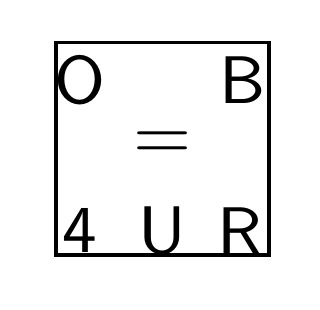
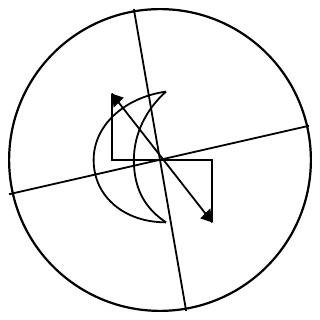
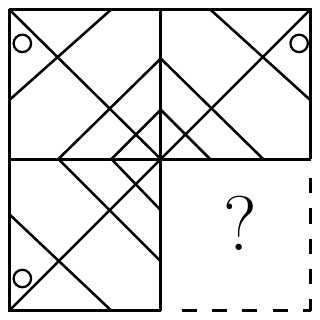
Which figure should replace the question mark (?) if the following series were to be continued?

  1. ((a))

  2. ((b))

  3. ((c))

  4. ((d))

Show Answer
Answer: ((a))

The logic followed here is:

Hence, the correct answer is "Option 1".

3

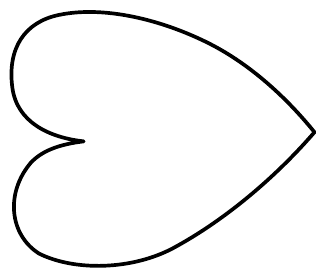
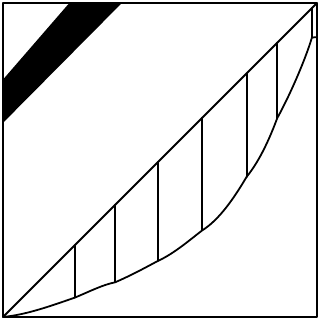
Select the option in which the given figure (X) is embedded (rotation is NOT allowed).

  1. ((a))

  2. ((b))

  3. ((c))

  4. ((d))

Show Answer
Answer: ((b))

The image embedded in given figure is as shown below:

Hence, the correct answer is "Option 2".

4

In this question, three statements are given, followed by three conclusions numbered I, II and III. Assuming the statements to be true, even if they seem to be at variance with commonly known facts, decide which of the conclusion(s) logically follows/follow from the statements.

Statements:

All pants are shirts.

All shirts are jackets.

Some jackets are sweaters.

Conclusions:

I. Some jackets are pants.

II. Some sweaters are shirts.

III. No pant is a sweater.

  1. ((a))

    Both conclusions II and III follow

  2. ((b))

    Only conclusion I follows.

  3. ((c))

    Both conclusions I and II follow. 

  4. ((d))

    None of conclusions I, II or III follows

Show Answer
Answer: ((b))

Only conclusion I follows.

Statements:

All pants are shirts.

All shirts are jackets.

Some jackets are sweaters.

The least possible Venn diagram is given:

Conclusions:

I. Some jackets are pants - True (Because, All pants are shirts and All shirts are jackets, it implies that same jackets are pant as well).

II. Some sweaters are shirts - **False (**Because, there is no direct relation is given between sweaters and shirts, it can be possible only).

III. No pant is a sweater - False (Because, there is no direct relation is given between sweaters and pant , it can be possible only).

Thus, Only conclusion I follows.

Hence, the correct answer is "Option 2".

5

Three statements are given, followed by two conclusions numbered I and II. Assuming the statements to be true, even if they seem to be at variance with commonly known facts, decide which of the conclusion(s) logically follow(s) from the statements.

Statements:

Some teachers are dancers.

All dancers are beautiful.

All teachers are honest.

Conclusions:

I. Some teachers are beautiful.

II. Some dancers are honest.

  1. ((a))

    Neither conclusion I nor II follows.

  2. ((b))

    Both conclusions I and II follow.

  3. ((c))

    Only conclusion II follows. 

  4. ((d))

    Only conclusion I follows. 

Show Answer
Answer: ((b))

Both conclusions I and II follow.

Statements:

Some teachers are dancers.

All dancers are beautiful.

All teachers are honest.

The least possible Venn diagram is given:

Conclusions:

I. Some teachers are beautiful - True (Because, Some teachers are dancers and All dancers are beautiful, it implies that the common part of teacher and dancer is Some teacher are beautiful). 

II. Some dancers are honest - True (Because, Some teachers are dancers and All teachers are honest, it implies that the common part of teacher and dancer is Some dancers are honest). 

Thus, Both conclusions I and II follow.

Hence, the correct answer is "Option 2".

6

What will come in the place of the question mark (?) in the following equation if ‘+’ and ‘−’ are interchanged and ‘×’ and ‘÷’ are interchanged?

108 × 2 − 14 ÷ 6 + 27 = ?

  1. ((a))

    212

  2. ((b))

    114

  3. ((c))

    111

  4. ((d))

    101

Show Answer
Answer: ((c))

111

Given: 108 × 2 − 14 ÷ 6 + 27 = ?

According to the question, after ‘+’ and ‘−’ are interchanged and ‘×’ and ‘÷’ are interchanged:

⇒ 108 ÷ 214 × 6 - 27 = ?

54 + 84 - 27 = ?

⇒ 138 - 27 = 111.

Hence, the correct answer is "option 3".

7

If L means ÷, N means ×, P means + and J means −, which of the following interchanges should be done to hold the given equation 19 L 95 N 5 J 35 P 7 = 333 true? 

  1. ((a))

    (P and N)

  2. ((b))

    (P and L)

  3. ((c))

    (N and L) 

  4. ((d))

    (J and N) 

Show Answer
Answer: ((c))

(N and L) 

Given Equation: 19 L 95 N 5 J 35 P 7 = 333

BODMAS Rule:

Decoding the given information:

AlphabetLNPJ
Meaning÷×+

Let's check options one by one.

Option 1) (P and N)

According to the question, after ‘P’ and ‘N’ are interchanged:

⇒ 19 ÷  95 + 5 - 35 × 7 = 333

0.2 + 5 - 245 = 33

5.2 - 245 = - 239.8 ≠ 333.

Option 2) (P and L)

According to the question, after ‘P’ and ‘L’ are interchanged:

⇒ 19 L 95 N 5 J 35 P 7 = 333

⇒ 19 + 95 × 5 - 35 ÷ 7 = 333

19 + 475 - 5 = 333

⇒ 494 - 5 = 489 ≠ 333.

Option 3) (N and L) 

According to the question, after ‘N’ and ‘L’ are interchanged:

⇒ 19 × 95 ÷  5 - 35 + 7 = 333 

19 × 19 - 35 + 7 = 333

361 - 35 + 7 = 333

⇒ 368 - 35 = 333

Option 4) (J and N) 

According to the question, after ‘N’ and ‘J’ are interchanged:

⇒ 19 ÷ 955 ×  35 + 7 = 333

0.2 - 175 + 7 = 333

⇒ 7.2 - 175 =  - 167.8 ≠ 333.

Hence, the correct answer is "Option 3".

8

What will be the day of the week on 14 September 3041?

  1. ((a))

    Friday

  2. ((b))

    Sunday 

  3. ((c))

    Tuesday

  4. ((d))

    Monday

Show Answer
Answer: ((c))

Tuesday

Given date: 14 September 3041.

YearOdd Days
1005 odd days
2003 odd days
3001 odd days
4000 odd days

Now,

Till 3000 → 2800 + 200

Leap Year2 Odd days
Ordinary Year1 Odd day

In 2800 Years the odd day is 0,

In 200 Years the odd day is 3,

In 40 Years (10 Leap Years and 30 Ordinary years) the odd day is 10 × 2 + 30 × 1 = 20 + 30 = 50 odd days,

⇒ 0 + 3 + 50

⇒ 53 odd days.

And, from 1st Jan 3041 to 14 September 3041:

⇒ 31(Jan) + 28(Feb, 3041 is not a leap year) + 31(March) + 30(April) + 31(May) + 30(June) + 31(July) + 31(August) + 14(September) = 257 days.

Total odd days → 53 + 257 = 310 days = 310/7 = 44 weeks and 2 odd days.

No. of odd daysDay
0Sunday
1Monday
2Tuesday
3Wednesday
4Thursday
5Friday
6Saturday

→ 2 represents Tuesday.

So, 14 September 3041 is Tuesday.

Hence, the correct answer is "Tuesday".

9

In a certain code language, ‘PRICE’ is coded as EGRTK and ‘STAGE’ is coded as IGUVC. How will ‘RIGHT’ be coded in the same language? 

  1. ((a))

    JVTKI

  2. ((b))

    JVTKH

  3. ((c))

    GRVKG

  4. ((d))

    GRVJG

Show Answer
Answer: ((a))

JVTKI

The logic followed here is: 

For,  ‘PRICE’ is coded as EGRTK

For, ‘STAGE’ is coded as IGUVC.

Similarly,   ‘RIGHT’ be coded as ?

Thus,  ‘RIGHT’ be coded as JVTKI.

Hence, the correct answer is "Option 1".

10

Select the option that is related to the third word in the same way as the second word is related to the first word. (The words must be considered as meaningful English words and must not be related to each other based on the number of letters/number of consonants/vowels in the word.)

Red Cross : Hospital :: Wheel : ?

  1. ((a))

    Family planning

  2. ((b))

    Progress

  3. ((c))

    Danger

  4. ((d))

    Tardiness 

Show Answer
Answer: ((b))

Progress

The logic followed here is:

Logic: Association with their primary function or purpose.

Here,

Red Cross : Hospital → Red Cross is an organization associated with Hospitals and medical aid.

Similarly,

Wheel : Progress → Wheel is often associated with Progress and advancement in technology and transportation.

Hence, the correct answer is "Option 2".

11

Five houses (A, B, C, D, and E) are located equidistant from each other in such a way that B is to the East of A, D is to the South of B, C is to the West of D, and E is to the South of C. In which direction is A to E?

  1. ((a))

    South-West

  2. ((b))

    West

  3. ((c))

    North

  4. ((d))

    North-East

Show Answer
Answer: ((c))

North

Given: Five houses (A, B, C, D, and E) are located equidistant from each other in such a way that

B is to the East of A,

D is to the South of B,

C is to the West of D,

and E is to the South of C.

Thus, The direction is A to E is North.

Hence, the correct answer is "Option 3".

12

Three of the following four letter-clusters are alike in a certain way and one is different. Pick the odd one out.

(NOTE: The odd one out is not based on the number of vowels or consonants in the word)

  1. ((a))

    FUHC

  2. ((b))

    SHQP

  3. ((c))

    WDYT

  4. ((d))

    JQLG

Show Answer
Answer: ((b))

SHQP

The logic followed here is: 

Option 1) FUHC

Option 2) SHQP

Option 3) WDYT

Option 4) JQLG

Hence, the correct answer is "Option 2".

13

Two statements are given, followed by two conclusions numbered I and II. Assuming the statements to be true, even if they seem to be at variance with commonly known facts, decide which of the conclusions logically follow(s) from the statements.

Statements:

Some flowers are buds.

Some flowers are trees.

Conclusions:

I. Some trees are buds.

II. No tree is a bud.

  1. ((a))

     Only conclusion II follows.

  2. ((b))

    Only conclusion I follows.

  3. ((c))

    Neither conclusion I nor II follows. 

  4. ((d))

    Both conclusions I and II follow.

Show Answer
Answer: ((c))

Neither conclusion I nor II follows. 

Statements:

Some flowers are buds.

Some flowers are trees.

Conclusions:

The least possible Venn diagram is given:

I. Some trees are buds - False (Because, there is no direct relation is given between trees are buds, so it can be possible only). 

II. No tree is a bud - False (Because, there is no direct relation is given between trees are buds, so it can be possible only).

Thus, neither conclusion I nor II follows. 

Hence, the correct answer is "Option 3".

14

If × means ÷, ÷ means −, − means +, and + means ×, what will be the value of the given expression?

7 + 5 ÷ 3 − 12 × 4

  1. ((a))

    6

  2. ((b))

    28

  3. ((c))

    30

  4. ((d))

    35

Show Answer
Answer: ((d))

35

Given: 7 + 5 ÷ 3 − 12 × 4

Decoding the given information:

Symbol+-×÷
Means×+÷-


Now replacing the sign from left to right using BODMAS Rule, we get:

⇒ 7 × 5 - 3 + 12 ÷ 4

⇒ 7 × 5 - 3 + 3

35 - 3 + 3

= 38 - 3  = 35

Hence, the correct answer is "Option 4".

15

Which of the following numbers will replace the question mark (?) in the given series?

23, 54, 81, 117, 137, 182, 191, ?

  1. ((a))

    294

  2. ((b))

    245

  3. ((c))

    254

  4. ((d))

    249

Show Answer
Answer: ((d))

249

The logic followed here is:

Hence, the correct answer is "Option 4".

16

Three of the following four are alike in a certain way and thus form a group. Which is the one that does NOT belong to that group?

(NOTE: The odd one out is not based on the number of vowels or consonants in the word)..

  1. ((a))

    DFA

  2. ((b))

    SUQ

  3. ((c))

    IKF

  4. ((d))

    PRM

Show Answer
Answer: ((b))

SUQ

The logic followed here is:

Option 1) DFA

Option 2) SUQ

Option 3) IKF

Option 4) PRM

Hence, the correct answer is "Option 2".

17

What will come in place of the question mark (?) in the following equation if ‘+’ and ‘×’ are interchanged and ‘−’ and ‘÷’ are interchanged?

5 + 3 × 2 ÷ 10 − 5 = ?

  1. ((a))

    10

  2. ((b))

    13

  3. ((c))

    15

  4. ((d))

    12

Show Answer
Answer: ((c))

15

Given: 5 + 3 × 2 ÷ 10 − 5 = ?

BODMAS

Given equation: 5 + 3 × 2 ÷ 10 − 5 = ?

According to the question, after ‘+’ and ‘×’ are interchanged and ‘−’ and ‘÷’ are interchanged:

 ⇒ 5 × 3 + 2 − 10 ÷ 5 = ?

15 + 2 - 2 = ?

17 - 2 = ?

⇒ 15.

Hence, the correct answer is "Option 3".

18

How many parallelograms are there in the figure given below?

  1. ((a))

    8

  2. ((b))

    7

  3. ((c))

    9

  4. ((d))

    10

Show Answer
Answer: ((a))

8

Number of parallelogram of given figure are: 

Thus, the Number of parallelogram is "8".

Hence, the correct answer is "Option 1".

19

How many meaningful English words can be formed with the letters ‘EGMA’ using each letter exactly only once in each word?

  1. ((a))

    3

  2. ((b))

    4

  3. ((c))

    1

  4. ((d))

    2

Show Answer
Answer: ((a))

3

Give: EGMA

English words can be formed with the letters ‘EGMA’ using each letter exactly only once in each word.

Letters are E, G, M, A.

Word can be formed it. "GAME".

Word can be formed it. "MEGA".

Word can be formed it. "MAGE".

Thus, only three words can be formed by using each letter exactly only once in each word.

Hence, the correct answer is "Option 1".

20

Which option represents the correct order of the given words as they would appear in an English dictionary?

1 Measurement

2 Methodology

3 Merchandise

4 Meaningless

5 Memorabilia

  1. ((a))

    4, 1, 5, 3, 2

  2. ((b))

    2, 3, 4, 5, 1

  3. ((c))

    5, 2, 1, 3, 4

  4. ((d))

    5, 2, 4, 1, 3

Show Answer
Answer: ((a))

4, 1, 5, 3, 2

The logic followed here is:

  1. Meaningless

  2. Measurement

  3. Memorabilia

  4. Merchandise

  5. Methodology

Thud, the correct dictionary order is 4, 1, 5, 3, 2.

Hence, the correct answer is "Option 1".

21

Which two signs and which two numbers(not digits) should be interchanged to yield the value ‘zero’ for the following e×pression?

2 – 55 + 11 × 4 ÷ 18

  1. ((a))
    • and ÷; 2 and 18
  2. ((b))

    × and – ; 4 and 11

  3. ((c))

    – and ÷; 2 and 4

  4. ((d))
    • and ÷; 11 and 18 
Show Answer
Answer: ((a))
  • and ÷; 2 and 18

Given: 2 – 55 + 11 × 4 ÷ 18

Required value: 0

According to the question, after interchanging the signs and numbers:

Option 1) + and ÷; 2 and 18

2 – 55 + 11 × 4 ÷ 18 ⇒ 18 – 55 ÷ 11 × 4 + 2

⇒ 18 – 55 ÷ 11 × 4 + 2

⇒ 18 – 5 × 4 + 2

⇒ 18 + 2 – 20

⇒ 20  20

0

Option  2) × and – ; 4 and 11

2 – 55 + 11 × 4 ÷ 18 ⇒ 2 × 55 + 4 - 11 ÷ 18

⇒ 2 × 55 + 4 - 11 ÷ 18

⇒ 2 × 55 + 4 - 0.61

110 + 4 - 0.61

114 - 0.61

⇒ 113.39

Option  3) – and ÷; 2 and 4

2 – 55 + 11 × 4 ÷ 18 ⇒ 4 ÷ 55 + 11 × 2 - 18

⇒ 4 ÷ 55 + 11 × 2 - 18

⇒ 0.07 + 11 × 2 - 18

⇒ 0.07 + 22 - 18

⇒ 22.07 - 18

⇒ 4.07

Option  4) + and ÷; 11 and 18 

2 – 55 + 11 × 4 ÷ 18 ⇒ 2 – 55 ÷ 18 × 4 + 11

⇒ 2 – 55 ÷ 18 × 4 + 11

⇒ 2 – 3.05 × 4 + 11

⇒ 2 + 11 – 12.2

⇒ 13 – 12.2

⇒ 0.8

Hence, "Option 1" is the correct answer.

22

AZ 1 is related to CX 3 in a certain way based on the English alpha-numerical order. In the same way, EV 5 is related to GT 7. To which of the following is IR 9 related, following the same logic?

  1. ((a))

    PK 11

  2. ((b))

    MN 13

  3. ((c))

    KQ 11

  4. ((d))

    KP 11 

Show Answer
Answer: ((d))

KP 11 

The logic followed here is:

AZ 1 is related to CX 3

And,

EV 5 is related to GT 7

Similarly,

IR 9 is related to

Hence, "Option 4" is the correct answer.

23

In a certain code language, 'BOOK' is coded as 172 and 'PAGES' is coded as 240. How will 'LIBRARY' be coded in the same language?

  1. ((a))

    680

  2. ((b))

    649

  3. ((c))

    510

  4. ((d))

    595

Show Answer
Answer: ((d))

595

The logic followed here is:

'BOOK' is coded as 172

And,

'PAGES' is coded as 240

Similarly,

'LIBRARY' is coded as

Hence, "Option 4" is the correct answer.

24

Among seven people F, G, H, K, L, M and N, each has a different age. Only two people are older than M. Only two people are younger than K. The age of K is a multiple of 10. The youngest is 12 years old. F is the eldest. N is older than L, but younger than H. L is not the youngest. The sum of the ages of the youngest and second oldest person is 42 years. What can be the possible age of L?

  1. ((a))

    21 years

  2. ((b))

    10 years 

  3. ((c))

    12 years

  4. ((d))

    15 years 

Show Answer
Answer: ((d))

15 years 

Given: Among seven people F, G, H, K, L, M and N, each has a different age. 

1) Only two people are older than M. 

2) Only two people are younger than K.

3)  F is the eldest.

PersonAges
Oldest to
F
M
K
Youngest

4) The age of K is a multiple of 10. 

5) The youngest is 12 years old.

Here, age is of K will more than 12 years, therefore possible age is K ≥ 20 years. 

PersonAges
Oldest to
F
M
K≥ 20
12
Youngest

6) N is older than L, but younger than H.

  1. L is not the youngest. 

After positioning N, H and L only one position is left which will be occupied by the only person left i.e. G.

PersonAges
Oldest to
F
H
M
N
K≥ 20
L
G12
Youngest

8) The sum of the ages of the youngest and second oldest person is 42 years.

Second oldest person's age = 42 - youngest person's age → 42 - 12 = 30 years

PersonAges
Oldest to
F
H30
M
N
K≥ 20
L
G12
Youngest

Thus, according to the final arrangement 15 years can be the possible age of L i.e. more than 12 years less than K's age (≥ 20).

Hence, "Option 4" is the correct answer.

25

Select the set in which the numbers are related in the same way as the numbers of the following set.

(9, 83, 164)

(4, 18, 34)

(NOTE: Operations should be performed on the whole numbers, without breaking down the numbers into its constituent digits. E.g. 13 – Operations on 13 such as adding/subtracting/multiplying etc. to 13 can be performed. Breaking down 13 into 1 and 3 and then performing mathematical operations on 1 and 3 is not allowed.)

  1. ((a))

    (6, 38, 74)

  2. ((b))

    (5, 27, 56) 

  3. ((c))

    (11, 122, 242)

  4. ((d))

    (13, 167, 334)

Show Answer
Answer: ((a))

(6, 38, 74)

The logic followed here is:

(9, 83, 164)

92 + 83 = 164

81 + 83 = 164

164 = 164 (LHS = RHS)

And,

(4, 18, 34)

42 + 18 = 34

16 + 18 = 34

34 = 34 (LHS = RHS)

So, checking each option one by one:

Option 1) (6, 38, 74)

62 + 38 = 74

36 + 38 = 74

74 = 74 (LHS = RHS)

Option 2) (5, 27, 56) 

52 + 27 = 56

25 + 27 = 56

52 ≠ 56 (LHS ≠ RHS)

Option 3) (11, 122, 242)

112 + 122 = 242

121 + 122 = 242

243 ≠ 242 (LHS ≠ RHS)

Option 4) (13, 167, 334)

132 + 167 = 334

169 + 167 = 334

336 ≠ 334 (LHS ≠ RHS)

Thus, out of all the options '(6, 38, 74)' follows the same logic as given.

Hence, "Option 1" is the correct answer.

26

Six friends are playing a bottle-spinning game around a circular table, facing the centre. Rohini is sitting third to the left of Rashmi. Rahul is sitting in between Rashmi and Ramesh. Ravi is sitting in between Rohini and Raju. Ravi is sitting second to the right of Rashmi. Who among the following is sitting to the immediate left of Raju?

  1. ((a))

    Rashmi

  2. ((b))

    Ramesh

  3. ((c))

    Rahul 

  4. ((d))

    Rohini 

Show Answer
Answer: ((a))

Rashmi

Given: Six friends are playing a bottle-spinning game around a circular table, facing the centre. 

1) Rohini is sitting third to the left of Rashmi. 

2) Ravi is sitting second to the right of Rashmi.

3) Rahul is sitting in between Rashmi and Ramesh.

4) Ravi is sitting in between Rohini and Raju.

Thus, according to the final arrangement Rashmi is sitting to the immediate left of Raju.

Hence, "Option 1" is the correct answer.

27

Select the number from among the given options that can replace the question mark (?) in the following series.

12, 16, 25, 50, 99, ?, 389

  1. ((a))

    180

  2. ((b))

    240

  3. ((c))

    220

  4. ((d))

    200

Show Answer
Answer: ((c))

220

The logic followed here is:

Hence, "Option 3" is the correct answer.

28

Select the figure from among the given options that can replace the question mark (?) in the following series.

  1. ((a))

  2. ((b))

  3. ((c))

  4. ((d))

Show Answer
Answer: ((a))

The logic followed here is:

  1. Letter element → The letter element shift clockwise and replaced by the next vowel subsequently.

  2. Hexagon element → The hexagon element shift clockwise and is alternately shaded.

  3. Heart element → The heart element is alternately shaded.

Thus, final series is:

Hence, "Option 1" is the correct answer.

29

Select the triad from among the given options that is analogous to the given triad.

505 – 604 – 217

  1. ((a))

    244 – 226 – 262

  2. ((b))

    432 – 513 – 711  

  3. ((c))

    161 – 512 – 710

  4. ((d))

    125 – 223 – 342  

Show Answer
Answer: ((a))

244 – 226 – 262

The logic followed here is:

Given:

505 – 604 – 217

5 + 0 + 5 = 10

6 + 0 + 4 = 10

2 + 1 + 7 = 10

So, checking each option one by one:

Option 1) 244 – 226 – 262

2 + 4 + 4 = 10

2 + 2 + 6 = 10

2 + 6 + 2 = 10

Option 2) 432 – 513 – 711  

4 + 3 + 2 = 9 ≠ 10

5 + 1 + 3 = 9 ≠ 10

7 + 1 + 1 = 9 ≠ 10

Option 3) 161 – 512 – 710

1 + 6 + 1 = 8 ≠ 10

5 + 1 + 2 = 8 ≠ 10

7 + 1 + 0 = 8 ≠ 10

Option 4) 125 – 223 – 342

1 + 2 + 5 = 7 ≠ 10

2 + 2 + 3 = 7 ≠ 10

3 + 4 + 2 = 9 ≠ 10

Thus, out of all the options '244 – 226 – 262' follows the same logic as given.

Hence, "Option 1" is the correct answer.

30

Select the pair which is related to each other in the same way as the following –

12:168

11:145

(NOTE: Operations should be performed on the whole numbers, without breaking down the numbers into its constituent digits. E.g. 13 – Operations on 13 such as adding/subtracting/multiplying etc. to 13 can be performed. Breaking down 13 into 1 and 3 and then performing mathematical operations on 1 and 3 is not allowed.)

  1. ((a))

    5:61

  2. ((b))

    14:172

  3. ((c))

    16:232

  4. ((d))

    8:88

Show Answer
Answer: ((d))

8:88

The logic followed here is:

Given:

12:168

122 + 24 = 168

144 + 24 = 168

168 = 168 (LHS = RHS)

And,

11:145

112 + 24 = 145

121 + 24 = 145

145 = 145 (LHS = RHS)

So, checking each option one by one:

Option 1) 5:61

52 + 24 = 61

25 + 24 = 61

49 ≠ 61 (LHS ≠ RHS)

Option 2) 14:172  

142 + 24 = 172

196 + 24 = 172

220 ≠ 172 (LHS ≠ RHS)

Option 3) 16:232

162 + 24 = 232

256 + 24 = 232

280 ≠ 232 (LHS ≠ RHS)

Option 4) 8:88

82 + 24 = 88

64 + 24 = 88

88 = 88 (LHS = RHS)

Thus, out of all the options '8:88' follows the same logic as given.

Hence, "Option 4" is the correct answer.

31

Select the numbers from among the given options that can replace the question marks (?) in the same sequence and make the series logically complete.

17, 18, 22, 31, ?, 72, ?, 157

  1. ((a))

    45, 107

  2. ((b))

    47, 108

  3. ((c))

    47, 105

  4. ((d))

    49, 106

Show Answer
Answer: ((b))

47, 108

The logic followed here is:

Hence, "Option 2" is the correct answer.

32

Which letter-cluster will replace the question mark (?) to complete the given series?

WGDE, ZEGC, ?, FAMY, IYPW

  1. ((a))

    ZCIB

  2. ((b))

    DCIB

  3. ((c))

    DBJC

  4. ((d))

    CCJA

Show Answer
Answer: ((d))

CCJA

The logic followed here is:

Hence, "Option 4" is the correct answer.

33

Choose a figure which would most closely resemble the unfolded form of the figure.

  1. ((a))

    B

  2. ((b))

    C

  3. ((c))

    D

  4. ((d))

    A

Show Answer
Answer: ((c))

D

The figure which will look like the paper when unfolded is shown below:

Thus, option Figure D will look like the paper when unfolded.

Hence, "Option 3" is the correct answer.

34

Suresh is now 19 years old and in college. Since he was a 5-year-old, he stayed in a hostel and is now coming back home after 14 long years. His parents have texted him the direction from the railway station to his house. See the below text message sent to Suresh by his parents and answer the following question accordingly. “When you step out of the railway station, you are facing north. Take a right and drive 4 km, you will see a T-point/junction. Take a right and drive 2 km. There will be a roundabout with four roads. Take the second left from the round-about and drive 1 km. Take a right and drive 3 km. Take a left and drive 2 km. You will find our house at the front. Come home fast.”

How many kilometres did Suresh drive after taking the second-left from the roundabout to reach his home by following the directions given by his parents?

  1. ((a))

    5

  2. ((b))

    12

  3. ((c))

    6

  4. ((d))

    8

Show Answer
Answer: ((c))

6

Given: Suresh is now 19 years old and in college. Since he was a 5-year-old, he stayed in a hostel and is now coming back home after 14 long years. His parents have texted him the direction from the railway station to his house.

 “When you step out of the railway station, you are facing north.

Take a right and drive 4 km, you will see a T-point/junction.

Take a right and drive 2 km. There will be a roundabout with four roads.

Take the second left from the round-about and drive 1 km.

Take a right and drive 3 km.

Take a left and drive 2 km. You will find our house at the front. Come home fast.”

Thus, Suresh drive (1 km + 3 km + 2 km) 6 km after taking the second-left from the roundabout to reach his home by following the directions given by his parents.

Hence, "Option 3" is the correct answer.

35

Which of the following numbers will replace the question mark (?) in the given series?

122, 135, 161, 200, 252, ?

  1. ((a))

    517

  2. ((b))

    217

  3. ((c))

    317

  4. ((d))

    417

Show Answer
Answer: ((c))

317

The logic followed here is:

Hence, "Option 3" is the correct answer.

36

A is the mother of C who is not the son. C has a daughter E. A is married to F. F has a son B who has a son D. What is the relation of D and E?

  1. ((a))

    Cousin

  2. ((b))

    Sister

  3. ((c))

    Mother

  4. ((d))

    Daughter

Show Answer
Answer: ((a))

Cousin

Given: 

1) A is the mother of C who is not the son. 

2) A is married to F.C has a daughter E.

  1. C has a daughter E.

  2. F has a son B who has a son D.

Thus, D is E's cousin.

Hence, the correct answer is "Option 1"

37

Select the option in which the numbers are related in the same way as are the numbers in the given set.

(2, 7, 11)

(13,17,29)

(NOTE: Operations should be performed on the whole numbers, without breaking down the numbers into its constituent digits. E.g. 13 – Operations on 13 such as adding/subtracting/multiplying etc. to 13 can be performed. Breaking down 13 into 1 and 3 and then performing mathematical operations on 1 and 3 is not allowed.)

  1. ((a))

    (13, 17, 23)

  2. ((b))

    (37, 41, 49)

  3. ((c))

    (3, 9, 11)

  4. ((d))

    (27, 31, 33)

Show Answer
Answer: ((a))

(13, 17, 23)

The logic followed here is:

(2, 7, 11)  Series of prime numbers.

And,

(13,17,29) → Series of prime numbers.

So, checking each option one by one:

Option 1) (13, 17, 23) → Series of prime numbers.

Option 2) (37, 41, 49) → 49 is a composite number.

Option 3) (3, 9, 11) → 9 is a composite number.

Option 4) (27, 31, 33)  → 27 and 33 are composite numbers.

Thus, out of all the options '(13, 17, 23)' follows the same logic as given.

Hence, "Option 1" is the correct answer.

38

Select the pair from among the given options that is analogous to the given pair.

14 : 200

5 : 29

(NOTE: Operations should be performed on the whole numbers, without breaking down the numbers into its constituent digits. E.g. 13 – Operations on 13 such as adding/subtracting/multiplying etc. to 13 can be performed. Breaking down 13 into 1 and 3 and then performing mathematical operations on 1 and 3 is not allowed.)

  1. ((a))

    7 : 50

  2. ((b))

    11 : 120

  3. ((c))

    16 : 260

  4. ((d))

    15 : 230

Show Answer
Answer: ((c))

16 : 260

The logic followed here is:

14 : 200

142 + 4 = 200

196 + 4 = 200

200 = 200 (LHS = RHS)

And,

5 : 29

52 + 4 = 29

25 + 4 = 29

29 = 29 (LHS = RHS)

So, checking each option one by one:

Option 1) 7 : 50

72 + 4 = 50

49 + 4 = 50

53 ≠ 50 (LHS = RHS)

Option 2) 11 : 120

112 + 4 = 120

121 + 4 = 120

125 ≠ 120 (LHS = RHS)

Option 3) 16 : 260

162 + 4 = 260

256 + 4 = 260

260 = 260 (LHS = RHS)

Option 4) 15 : 230

152 + 4 = 230

225 + 4 = 230

229 ≠ 230 (LHS = RHS)

Thus, out of all the options '16 : 260' follows the same logic as given.

Hence, "Option 3" is the correct answer.

39

Select the option that is embedded in the given figure (rotation is NOT allowed)

  1. ((a))

  2. ((b))

  3. ((c))

  4. ((d))

Show Answer
Answer: ((d))

The image embedded in the given figure is as shown below :

∴ Here, Option Figure 4 is embedded in the given figure.

Hence, the correct answer is "Option 4".

40

Select the term from among the given options that can replace the question mark (?) in the following series.

GDA, OLI, WTQ, EBY, ?

  1. ((a))

    LRS

  2. ((b))

    MJG

  3. ((c))

    KMN

  4. ((d))

    NQP

Show Answer
Answer: ((b))

MJG

The logic followed here is:

Hence, "Option 2" is the correct answer.

41

A, B, C, X, Y and Z are sitting around a circular table facing the centre(but not necessarily in the same order). X sits to the immediate left of A. Only one person sits between X and Z. C sits second to the right of B. Y is not an immediate neighbour of A. Who is sitting to the immediate right of Z?

  1. ((a))

    B

  2. ((b))

    Y

  3. ((c))

    A

  4. ((d))

    C

Show Answer
Answer: ((a))

B

Given: A, B, C, X, Y and Z are sitting around a circular table facing the centre.

1) X sits to the immediate left of A.

2) Only one person sits between X and Z.

3) C sits second to the right of B.

Case 1)

Case 2)

4) Y is not an immediate neighbour of A.

As there is no possible position for A in case 1, therefore is eliminated.

Thus, according to the final arrangement B is sitting to the immediate right of Z.

Hence, "Option 1" is the correct answer.

42

If X is the sister of Y, Z is the father of A and Y is the son of A, then how is Z related to X?

  1. ((a))

    Grandfather 

  2. ((b))

    Granddaughter

  3. ((c))

    Great grandfather

  4. ((d))

    Father

Show Answer
Answer: ((a))

Grandfather 

Given: 

  1. X is the sister of Y

  1. Z is the father of A and Y is the son of A 

Thus, Z is X's grandfather.

Hence, the correct answer is "Option 1"

43

Which of the following numbers will replace the question mark (?) in the given series?

5, 14, 41, 122, 365, ?

  1. ((a))

    1049

  2. ((b))

    1940

  3. ((c))

    1490

  4. ((d))

    1094

Show Answer
Answer: ((d))

1094

The logic followed here is:

Hence, "Option 4" is the correct answer.

44

4 is related to 125 following a certain logic. Following the same logic, 8 is related to 729. Which of the following numbers is related to 1728 using the same logic? (NOTE: Operations should be performed on the whole numbers, without breaking down the numbers into its constituent digits. E.g. 13 – Operations on 13 such as adding/subtracting/multiplying etc. to 13 can be performed. Breaking down 13 into 1 and 3 and then performing mathematical operations on 1 and 3 is not allowed.)

  1. ((a))

    9

  2. ((b))

    12

  3. ((c))

    11

  4. ((d))

    10

Show Answer
Answer: ((c))

11

The logic followed here is:

4 is related to 125

3√125 - 1= 4

5 - 1 = 4

4 = 4 (LHS = RHS)

And,

8 is related to 729

3√729 - 1= 8

9 - 1 = 8

8 = 8 (LHS = RHS)

Similarly,

? is related to 1728

3√1728 - 1= ?

12 - 1 = ?

11 = ?

Hence, "Option 3" is the correct answer.

45

Three statements are given, followed by three conclusions numbered I, II and III. Assuming the statements to be true, even if they seem to be at variance with commonly known facts, decide which of the conclusions logically follow(s) from the statements.

Statements:

Some fathers are females.

All fathers are males.

Some fathers are mothers.

Conclusions:

I. Some males are not females.

II. Some mothers are females.

III. Some males are mothers.

  1. ((a))

    Both conclusion I and III follow. 

  2. ((b))

    All conclusions follow.

  3. ((c))

    Only conclusion III follows. 

  4. ((d))

    Both conclusion II and III follow. 

Show Answer
Answer: ((c))

Only conclusion III follows. 

The least possible Venn diagram for the given statements is as shown below :

Conclusions:

I. Some males are not females → Does not follow (As some fathers are females and all fathers are males. As no direct relation is given between males and females, therefore it is false.)

II. Some mothers are females → Does not follow (As some fathers are females and some fathers are mothers. So it is possible but not definite.)

III. Some males are mothers → Follow (As all fathers are males and some fathers are mothers. As whole fathers comes in males and has some part common with mothers, therefore it is true.)

∴ Here, Only conclusion III follows.​

Hence, the correct answer is "Option 3".

46

Given below is a statement followed by two conclusions I and II. Study the statement carefully and decide which Conclusion/s is/are definitely true.

Statement:

M > N ≥ O ≤ P ≤ W; X ≥ O > Y

Conclusion I : M > X

Conclusion II : Y < W

  1. ((a))

    Only Conclusion II is true. 

  2. ((b))

    Only Conclusion I is true

  3. ((c))

    Neither Conclusion I nor II is true

  4. ((d))

    Both Conclusions I and II are true. 

Show Answer
Answer: ((a))

Only Conclusion II is true. 

Given statement: M > N ≥ O ≤ P ≤ W; X ≥ O > Y

Conclusions:

Conclusion I : M > X → False (As M > N ≥ O ≤ X. So, no relation between M and X can be determined therefore it is definitely false.)

Conclusion II : Y < W → True (As W ≥ P ≥ O > Y. So, as W > Y or Y < W, therefore it is definitely true)

Thus, Only Conclusion II is true

Hence, the correct answer is "Option 1".

47

Select the option that is related to the third number in the same way as the second number is related to the first number and the sixth number is related to the fifth number.

16 : 85 :: 23 : ? :: 28 : 145

(NOTE: Operations should be performed on the whole numbers, without breaking down the numbers into its constituent digits. E.g. 13 – Operations on 13 such as adding/subtracting/multiplying etc. to 13 can be performed. Breaking down 13 into 1 and 3 and then performing mathematical operations on 1 and 3 is not allowed.)

  1. ((a))

    150

  2. ((b))

    135

  3. ((c))

    120

  4. ((d))

    105

Show Answer
Answer: ((c))

120

The logic followed here is:

16 : 85

16 × 5 + 5 = 85

80 + 5  = 85

85 = 85 (LHS = RHS)

And,

28 : 145

28 × 5 + 5 = 145

140 + 5  = 145

145 = 145 (LHS = RHS

Similarly,

23 : ?

23 × 5 + 5 = ?

115 + 5  = ?

120 = ?

Hence, "Option 3" is the correct answer.

48

Select the option figure that will replace the question mark (?) in the figure given below and complete the pattern.

  1. ((a))

  2. ((b))

  3. ((c))

  4. ((d))

Show Answer
Answer: ((b))

The figure which when put in place of '?' will logically complete the pattern is shown below:

Thus, option Figure 2 will logically complete the pattern given.

Hence, "Option 2" is the correct answer.

49

What should come in place of the question (?) in the given series based on the English alphabetical order?

IGK, LJN, OMQ, RPT, ?

  1. ((a))

    VRW

  2. ((b))

    URW

  3. ((c))

    VSW

  4. ((d))

    USW

Show Answer
Answer: ((d))

USW

The logic followed here is:

Hence, "Option 4" is the correct answer.

50

Select the figure from the options that can replace the question mark (?) and complete the given pattern.

  1. ((a))

  2. ((b))

  3. ((c))

  4. ((d))

Show Answer
Answer: ((b))

The figure which when put in place of '?' will logically complete the pattern is shown below:

Thus, option Figure 2 will logically complete the pattern given.

Hence, "Option 2" is the correct answer.

General Awareness (50 questions)

51

Who among the following is a Carnatic music vocalist? 

  1. ((a))

     Alla Rakha

  2. ((b))

    M Balamuralikrishna 

  3. ((c))

    L Subramaniam

  4. ((d))

    Ravi Shankar

Show Answer
Answer: ((b))

M Balamuralikrishna 

The correct answer is M Balamuralikrishna.

Key Points

  • M Balamuralikrishna was a renowned Carnatic music vocalist, composer, and instrumentalist from India.
  • He was known for his versatility in both vocal and instrumental music, excelling in violin, veena, and mridangam.
  • His contributions to Carnatic music include numerous compositions and the creation of new ragas such as Mahati.
  • Balamuralikrishna was honored with prestigious awards, including the Padma Vibhushan and Padma Shri, for his contributions to Indian classical music.

Additional Information

  • Carnatic music is a classical music tradition from South India, focusing on intricate compositions, improvisations, and devotional themes.
  • Alla Rakha was a famous tabla player known for his collaborations with sitar maestro Ravi Shankar in Hindustani classical music.
  • L Subramaniam is a renowned violinist known for blending Carnatic and Western classical music but is not primarily a vocalist.
  • Ravi Shankar was a legendary sitar player, credited with popularizing Hindustani classical music globally.
  • Balamuralikrishna's innovations in Carnatic music included singing in unconventional octaves and introducing creative rhythmic structures.
52

The birth anniversary of Lord Jhulelal of the Sindhi community is also known as _________.

  1. ((a))

    Ulambana

  2. ((b))

    Chaliho Sahib

  3. ((c))

    Cheti Chand

  4. ((d))

    Jamshedi Navroj

Show Answer
Answer: ((c))

Cheti Chand

The correct answer is Cheti Chand

Key Points

  • The birth anniversary of Lord Jhulelal of the Sindhi community is also known as Cheti Chand or Jhulelal Jayanti.
  • Cheti Chand is a festival celebrated by Sindhi Hindus to mark the birth of their patron saint, Lord Jhulelal.
  • It is also celebrated as the Sindhi New Year.
  • The festival is celebrated on the first day of the Sindhi month of Chet, which is the second day of Chaitra Shukla Paksha in the Hindu calendar.
  • The festival is celebrated by Sindhis all over the world, especially in India and Pakistan.

Additional Information

  • Lord Jhulelal
  • Lord Jhulelal is the patron saint of the Sindhi community.
  • He is also known as Uderolal or Dariyalal.
  • He is often depicted as an elderly man with a white beard and mustache.
  • He is considered the Ishta Deva (chosen deity) of the Sindhis
53

Which of the following are satellite ports?

  1. ((a))

    Nhava Sheva and Haldia

  2. ((b))

    Chennai and Mumbai

  3. ((c))

    Mormugao and New Mangalore port

  4. ((d))

    Paradwip and Vishakhapatnam

Show Answer
Answer: ((a))

Nhava Sheva and Haldia

The correct answer is Nhava Sheva and Haldia

Key Points

  • Nhava Sheva and Haldia are satellite ports in India.
  • Nhava Sheva
  • It is Also known as Jawaharlal Nehru Port, this port was built to reduce the congestion at the Mumbai port.
  • It's India's largest container port, handling about 56% of the country's containers.
  • Haldia
  • This port is part of the Kolkata Dock System and Haldia Dock Complex

Additional Information

Major PortsState
Kolkata Port TrustWest Bengal
Paradip Port TrustOdisha
Visakhapatnam Port TrustAndhra Pradesh
Chennai Port TrustTamil Nadu
Tuticorin Port TrustTamil Nadu
Cochin Port TrustKerala
New Mangalore Port TrustKarnataka
Mormugao Port TrustGoa
Mumbai Port TrustMaharastra
Jawaharlal Nehru Port TrustMaharastra
Deendayal Port TrustGujarat
Ennore Port TrustTamil Nadu
54

Which of the following options represents the best choice for the Integrated Child Development Services (ICDS) Scheme?

  1. ((a))

    Clothing support

  2. ((b))

    Travel support 

  3. ((c))

    Home Support

  4. ((d))

    Nutrition support 

Show Answer
Answer: ((d))

Nutrition support 

The correct answer is Nutrition support 

Key Points

  • Nutrition support is the best choice for the Integrated Child Development Services (ICDS) Scheme because it provides food to children and pregnant and lactating women.
  • Children in the age group 0-6 years constitute around 158 million of the population of India (2011 census).
  • These Children are the future human resource of the country.
  • Ministry of Women and Child Development is implementing various schemes for the welfare, development, and protection of children.
  • Launched on 2nd October 1975, the Integrated Child Development Services (ICDS) Scheme is one of the flagship programs of the Government of India and represents one of the world’s largest and unique programs for early childhood care and development.

Additional Information

  • It is the foremost symbol of the country’s commitment to its children and nursing mothers, as a response to the challenge of providing pre-school non-formal education on one hand and breaking the vicious cycle of malnutrition, morbidity, reduced learning capacity, and mortality on the other.
  • The beneficiaries under the Scheme are children in the age group of 0-6 years, pregnant women, and lactating mothers.
  • ICDS services
  • Supplementary Nutrition
  • Pre-school non-formal education
  • Nutrition & health education
  • Immunization
  • Health check-up
  • Referral services
55

The most important and widely celebrated festival of Kerela is _________.

  1. ((a))

    Nuakhai

  2. ((b))

    Gudi Padwa

  3. ((c))

    Ugadi

  4. ((d))

    Onam

Show Answer
Answer: ((d))

Onam

The correct answer is Onam.

Key Points

  • Onam:-
  • It is the most popular festival celebrated in the state of Kerala, India.
  • It is a 10-day harvest festival that usually falls in the month of August or September.
  • The festival is marked by various cultural events and traditional activities such as boat races, flower decorations, and feasting.
  • Onam is celebrated to honor the legendary king Mahabali and to welcome his annual visit to Kerala.

Additional Information

  • Ugadi:
  • Ugadi is a major festival celebrated in the southern states of India, especially in Andhra Pradesh, Telangana, and Karnataka.
  • It marks the beginning of the Hindu lunar calendar and is celebrated on the first day of the month of Chaitra, which usually falls in March or April.
  • The festival is also known as Yugadi, which means 'the beginning of a new age.'
  • It symbolizes the start of a new year and the onset of spring.
  • On this day, people clean and decorate their homes, wear new clothes, prepare special dishes, and offer prayers to the gods.
  • They also exchange greetings and gifts with friends and family
  • It is a harvest festival celebrated in the state of Assam.
  • Nuakhai 
  • It is an agricultural festival celebrated by the people of Odisha.
  • It is the greatest harvesting festival of Odisha.
  • It is observed to welcome the new rice of the season.
  • Nua means new and Khai means food i.e. Nuakhai's Hindi meaning is 'new food'.
  • ‘Nuakhai’ festival is celebrated one day after the Ganesh Chaturthi festival.
  • The festival has a big significance for farmers and the agricultural community.
  • Gudi Padwa​
  • Gudi Padwa, which is mostly observed in the state of Maharashtra, ushers in the harvest season.
  • According to the lunisolar Hindu calendar, Maharashtrians celebrate the day as New Year's Day.
  • Gudi, which refers to Brahma's flag, and Padwa, Padva, or Paddava, which refers to the first day of the moon's bright phase, are the two terms that make up the phrase "Gudi Padwa."
56

Who among the following is the author of the book ‘Mrs Funny Bones’?

  1. ((a))

    Tisca Chopra

  2. ((b))

    Twinkle Khanna

  3. ((c))

    Divya Dutta 

  4. ((d))

    Soha Ali Khan

Show Answer
Answer: ((b))

Twinkle Khanna

The correct answer is Twinkle Khanna

Key Points

  • The author of the book "Mrs Funnybones" is Twinkle Khanna.
  • The book Mrs Funnybones was released in 2015
  • It falls under the category of humorous essays and observations, blending wit and satire to present a fresh perspective on modern Indian life
  • The book is a witty and satirical take on modern Indian life, inspired by Twinkle Khanna's personal experiences, anecdotes, and observations as a mother, wife, and woman in India.

Additional Information

AuthorBook TitleYear of PublicationGenre/Theme
Tisca ChopraActing Smart2014Guidebook on acting and succeeding in Bollywood.
Divya DuttaMe and Ma2017Memoir; a tribute to her mother and their bond.
Soha Ali KhanThe Perils of Being Moderately Famous2017Memoir; humorous and insightful anecdotes from her life.
57

What happens to the motion of the particles as temperature rises?

  1. ((a))

    The particles move in the same direction

  2. ((b))

    The particles slow down

  3. ((c))

    The particles move faster

  4. ((d))

    The particles stay stationery

Show Answer
Answer: ((c))

The particles move faster

The correct answer is The particles move faster

Key Points

  • As the temperature rises, the particles of matter move faster.
  • This is because the particles gain kinetic energy
  • Kinetic Energy is the energy that a body possesses due to its motion.
  • It is directly proportional to both the mass of the body and the square of its velocity.
  • The mathematical expression for kinetic energy is:KineticEnergy(KE)=1/2mv2Kinetic Energy(KE)= 1/2 ​ mv^2

Additional Information

  • When the temperature increases-
  • The particles gain kinetic energy and start vibrating.
  • The particles move faster and take up more space.
  • The forces of attraction between the particles weaken.
  • This can lead to a change in the state of matter.
58

According to the census of India 2011, among the following which state has the highest sex ratio?

  1. ((a))

    Bihar

  2. ((b))

    Uttar Pradesh

  3. ((c))

    Rajasthan

  4. ((d))

    Andhra Pradesh

Show Answer
Answer: ((d))

Andhra Pradesh

The correct answer is Andhra Pradesh

Key Points

  • Andhra Pradesh has the highest sex ratio of 993 as per the 2011 Census.
  • The Census of India 2011 provides detailed demographic data, including the sex ratio, which is defined as the number of females per 1,000 males.
  • Bihar: 918 females per 1,000 males.
  • Uttar Pradesh: 912 females per 1,000 males.
  • Rajasthan: 928 females per 1,000 males.

Additional Information Census 2011

  • The Indian Census is the most credible source of information on Demography (Population characteristics), Economic Activity, Literacy and Education, Housing Household Amenities, Urbanisation, Fertility and Mortality, etc.
  • Census 2011 was the 15th National Census of the Country.
  • Census was introduced in India during the era of Lord Mayo in the year 1872. It came into force in 1881.
  • This census was conducted under the guidance of Mr. C. Chandramouli.
  • The slogan of census 2011 was ‘Our Census, Our future’.
  • The population of the nation as per the provisional figures of Census 2011 was 1210.19 million of which 623.7 million (51.54%) were males and 586.46 million (48.46%) were females. Uttar Pradesh is the most populous state in India its population is more than the population of Brazil.
59

Which of the following Buddhist sages had initiated the Indo-Greek king Menander into Buddhism?

  1. ((a))

    Nagasena

  2. ((b))

    Vasubandhu

  3. ((c))

    Asvaghosa 

  4. ((d))

    Sariputra 

Show Answer
Answer: ((a))

Nagasena

The correct answer is Nagasena

Key Points

  • ​The Buddhist monk Nagasena converted the Indo-Greek king Menander to Buddhism.
  • The conversion is documented in the Pali Buddhist text Milinda-panha.
  • Menander was an Indo-Greek king and ruler of Bactria.
  • He was also known as Milinda.
  • Nagasena was a Buddhist monk and philosopher.
  • The Milinda-panha is a Pali Buddhist text that records a dialogue between Menander and Nagasena.
  • The dialogue ends with Menander converting to Buddhism.
  • Menander was a patron of Buddhism and the wheel on his coins is connected with Buddhism.
  • After converting to Buddhism, Menander sent Buddhist missionaries to Sri Lanka and Southeast Asia.

Additional Information

Vasubandhu4th–5th century CEBuddhist scholar and philosopher; associated with Mahayana Buddhism.Abhidharmakośa; Yogācāra texts (with Asaṅga).
Aśvaghoṣa1st–2nd century CEIndian philosopher, poet, and playwright; earliest Sanskrit dramatist.Buddhacharita, Saundarananda.
Śāriputra6th–5th century BCEChief disciple of Gautama Buddha; known for wisdom and mastery of Abhidharma.Mentioned in early Buddhist scriptures like the Tripiṭaka.
60

What is the trade-strategy, which India adopted in the first-seven Five-Year Plans?

  1. ((a))

    Inward-looking trade strategy

  2. ((b))

    Partially inward-looking trade strategy

  3. ((c))

    Partially outward-looking trade strategy

  4. ((d))

    Outward-looking trade strategy 

Show Answer
Answer: ((a))

Inward-looking trade strategy

The correct answer is an Inward-looking trade strategy

Key Points

  • India adopted the inward-looking trade strategy, also known as import substitution, during the first seven Five-Year Plans.
  • This strategy aimed to increase domestic production and protect local products from international competition.
  • This strategy attempted to replace imports with homegrown production.
  • The government shielded indigenous industries from foreign competition under this policy.
  • For instance, businesses will be urged to make vehicles in India rather than importing them from elsewhere.

Additional Information

  • Our industries were unable to compete with the goods produced by more developed economies, therefore the government implemented an import substitution programme.
  • It is believed that if domestic industries are safeguarded, they will eventually figure out how to compete.
  • There was a chance that foreign currency would be used to import expensive products if there were no import restrictions.
  • Because industrialization moves quickly and absorbs unemployed individuals, it assisted in addressing the unemployment issue.
  • This immediately contributed to economic growth by assisting in the development of a strong industrial base in our nation.
61

What was the estimated growth target of the Second Five-Year Plan in India?

  1. ((a))

    5.6%

  2. ((b))

    4.5%

  3. ((c))

    3.6%

  4. ((d))

    2.1%

Show Answer
Answer: ((b))

4.5%

The correct answer is 4.5%

Key Points

  • The Second five-year plan was based on the Mahalanobis model, an economic development model developed by the Indian statistician Prasanta Chandra Mahalanobis in 1953.
  • PC Mahalanobis established the Indian Statistical Institute (ISI) in Calcutta in 1931 and for the same reason, he is known as the father of Indian Statistics. He was a member of the first Planning Commission of free India.
  • The estimated growth target for the Second Five-Year Plan in India was 4.5%. However, the actual growth rate was 4.27%
  • The second five-year plan was for the year 1956-1961, this plan was based on the Russian model of industrialization.
  • The second five-year plan focused on the development of the public sector and rapid Industrialisation. The plan attempted to determine a balanced allocation of investment between productive sectors in order to maximize long-run economic growth.
  • As a result, hydroelectric power projects across the country and five steel plants at Bhilai, Durgapur, and Rourkela were established with the help of Russia, Britain (the U.K), and West Germany respectively. Coal production was increased. More railway lines were added all over the country.
  • The Tata Institute of Fundamental Research and Atomic Energy Commission of India was established to promote research in India.

Additional Information

  • Basic information about planning commission and 5- year plans:
  • Planning commission founded: 1950.
  • Planning Commission head: Prime Minister
  • First five-year plan launched: 1951
  • A total number of 5- year plans: 12.
  • Last five-year plan: 2012 to 2017.
  • Planning Commission dissolved: 2014 (By PM Narendra Modi).
Plan YearHighlight
First Five-Year Plan (1951-56)- It was presented by the first Indian Prime Minister, Jawaharlal Nehru to the Parliament of India. - This Plan was based on the Harrod Domar Model. - Target growth was 2.1% and achieved growth was 3.6%.
Second Five Year Plan (1956-61)- The Second Five year Plan for rapid industrialization and the public sector. - This model is called The Feldman–Mahalanobis model. - The target growth rate was 4.5% and the growth rate was slightly less than expected, 4.27%.
Third Five Year Plan (1961-66)- The main focus was on Agriculture. - Green Revolution initiated. - The target growth rate was 5.6% but the actual growth rate was only 2.4%.
Fourth Five-Year Plan: (1969-74)- This plan was also called the Gadgil Formula. - The main focus of this plan was towards growth with stability and progress towards self-reliance. - The target growth rate was 5.6% but the actual growth rate was 3.3%. - 14 banks ware Nationalised.
Fifth Five-Year Plan (1974-78)- Garibi Hatao slogan was raised. - MNP was prepared by D.P.Dhar. - The target growth rate was 4.4% but the actual growth rate was 4.8%.
Rolling Plan1978-80
Sixth Five-Year Plan (1980-85)- This was the beginning of the economic liberation by eliminating price controls. - It was seen as the end of Nehruvian Socialism. - Family planning was introduced to prevent over population. - NABARD bank was established on the recommendation of the Shivaraman Committee in 1982. - The target growth rate was 5.2% but the actual growth rate was 5.7%.
Seventh Five-Year Plan (1985-90)- The main focus was on attaining self-reliance by 2000. - The target growth rate was 5.0% but the actual growth rate was 6.01%.
Annual Plan1990-92
Eighth Five-Year Plan (1992-97)- This plan promoted the modernization of Industries. - Panchayat and Municipality Act came. - The target growth rate was 5.6% but the actual growth rate was 6.8%.
Ninth Five-Year Plan (1997-2002)- It marks the fifty years of India's independence. - Focus was on balanced relationship between rapid growth and the quality of life for people. - The target growth rate was 7.1% but the actual growth rate was 6.8%.
Tenth Five Year Plan (2002-07)- Te goal was to promote inclusive growth and equitable development. - The target growth rate was 8.1% but the actual growth rate was 7.6%.
Eleventh Five Year Plan (2007-2012)- C Rangarajan prepared the 11th plan. - Main goal was rapid and more inclusive growth. - The target growth rate was 9% but the actual growth rate was 8%
Twelfth Five Year Plan (2012-17)- This was the last five-year plan - The goal was Faster, More inclusive and Sustainable Growth.
62

With which of the following relief sculptures were the walls of the great Stupa of Amaravati in the Lower Godavari region adorned?

  1. ((a))

    Freestanding

  2. ((b))

    Bas relief

  3. ((c))

    Sunken relief

  4. ((d))

    Alto-relievo

Show Answer
Answer: ((b))

Bas relief

The correct answer is Bas relief

Key Points

  • The walls of the Great Stupa of Amaravati were adorned with bas relief sculptures.
  • The stupa is located in the Lower Godavari region of Andhra Pradesh, India.
  • The stupa was built in the 2nd century BCE during the Satavahana dynasty.
  • The walls of the stupa were decorated with carved panels and medallions.

Additional Information

  • The sculptures depicted scenes from the life of the Buddha, as well as Jaina deities.
  • The sculptures were carved from white or cream limestone, which gave them a marble-like appearance.
  • The sculptures are known as the "marbles" of Amaravati.
  • The sculptures are considered to be a prime example of ancient Indian art and architecture.
63

Aatmanirbhar Bharat Rojgar Yojana was implemented through which organisation?

  1. ((a))

    Life Insurance Corporation 

  2. ((b))

    HDFC Bank

  3. ((c))

    India Post Payments Bank

  4. ((d))

    Employees Provident Fund Organisation

Show Answer
Answer: ((d))

Employees Provident Fund Organisation

The correct answer is Employees Provident Fund Organisation

Key Points

  • Aatmanirbhar Bharat Rojgar Yojana (ABRY) was launched in 2020 as part of the Aatmanirbhar Bharat package.
  • The Aatmanirbhar Bharat Rojgar Yojana (ABRY) was implemented through the Employees' Provident Fund Organisation (EPFO).
  • It aimed to incentivize the creation of new employment opportunities during the post-COVID recovery phase.
  • The scheme provides subsidies for the provident fund contributions of new employees and their employers.
  • The objective of ABRY is to promote formal employment and reduce the adverse impact of COVID-19 on the labor market.
  • The scheme targeted both new hires and those who had lost their jobs during the pandemic, encouraging businesses to re-hire.

Additional Information

OrganizationTypeServicesHeadquartersFounded
Life Insurance Corporation (LIC)InsuranceLife insurance, pension, and investment productsMumbai, India1956
HDFC BankBankingBanking, loans, credit cards, and investment servicesMumbai, India1994
India Post Payments Bank (IPPB)BankingFinancial services, payments, and banking servicesNew Delhi, India2018
64

Match the columns.

State/UTMonuments
A.MaharashtraI.Jamali Qamali Mosque
B.DelhiII.Hawa Mahal
C.RajasthanIII.Laxmi Vilas Palace
D.GujaratIV.Elephanta Caves
  1. ((a))

    A-IV, B-I, C-II, D-III

  2. ((b))

    A-III, B-I, C-IV, D-II

  3. ((c))

    A-II, B-IV, C-III, D-I

  4. ((d))

    A-I, B-II, C-III, D-IV

Show Answer
Answer: ((a))

A-IV, B-I, C-II, D-III

The correct answer is A-IV, B-I, C-II, D-III

Key Points

  • (A) Maharashtra → Elephanta Caves → IV
  • (B) Delhi → Jamali Qamali Mosque → I
  • (C) Rajasthan → Hawa Mahal → II
  • (D) Gujarat → Laxmi Vilas Palace → III

Additional Information

  • Maharashtra
  • Monument: Elephanta Caves
  • Elephanta Caves are located near Mumbai in Maharashtra.
  • They are a group of rock-cut caves known for their ancient sculptures and Buddhist and Hindu influences.
  • Rajasthan
  • Monument: Hawa Mahal
  • Hawa Mahal is located in Jaipur, Rajasthan, but a commonly mistaken match is with Delhi.
  • Delhi
  • Monument: Jamali Qamali Mosque
  • Jamali Qamali Mosque and Tomb is located in Delhi, and not Rajasthan.
  • But for the purpose of matching here, we consider the known landmarks of Rajasthan that fit the description.
  • Gujarat
  • Monument: Laxmi Vilas Palace
  • Laxmi Vilas Palace is situated in Vadodara, Gujarat.
  • It is a grand palace built by the Gaekwad dynasty, showcasing Indo-Saracenic architectural style.
65

In the context of a consumption function for an economy, if MPC = 0.6, then what is the likely value of MPS?

  1. ((a))

    0.4

  2. ((b))

    0.36

  3. ((c))

    0.16

  4. ((d))

    -0.6

Show Answer
Answer: ((a))

0.4

The correct answer is 0.4

Key Points

  • In economics, the marginal propensity to consume (MPC) is the proportion of an aggregate raise in pay that a consumer spends on the consumption of goods and services, as opposed 1  to saving it.
  • The marginal propensity to save (MPS) is the fraction of an increase in income that is not spent on consumption.
  • Because income is either spent or saved, the sum of MPC and MPS is always equal to 1.
  • Given
  • MPC = 0.6, we can calculate MPS as follows:
  • MPS = 1 - MPC
  • MPS = 1 - 0.6
  • MPS = 0.4
66

The Rashtrakuta king who conquered the Cholas was:

  1. ((a))

    Rajendra

  2. ((b))

    Krishna I 

  3. ((c))

    Rajaraja I 

  4. ((d))

    Krishna III 

Show Answer
Answer: ((d))

Krishna III 

The correct answer is Krishna III 

Key Points

  • Krishna III, the Rashtrakuta king, conquered the Cholas in 949 CE.
  • He defeated the Chola king Parantaka I and annexed the Chola empire.
  • Krishna III was the last great ruler of the Rashtrakuta dynasty.
  • He ruled from 939–967 CE.
  • He also fought against the Chalukyas of Vengi and the Parmaras of Malwa.
  • After defeating the Cholas, Krishna III divided the Chola empire among his slaves.
  • He then built a temple and erected a victory pillar in Rameshwaram.

Additional Information

  • The Rashtrakuta Empire of Manyakheta was founded by Dantidurga (reigned 735-756 CE), also known as Dantivarman II.
  • Gulbarga was his capital in Karnataka.
  • He was succeeded by his uncle Krishna I, who extended the kingdom to all of Karnataka.
  • In 753 Dantidurga defeated the Chalukyas and took the titles Rajadhiraja and Parameshvara.
  • In the mid-eighth century, Rashtrakuta chief Dantidurga overthrew his Chalukyan overlord and performed a ritual called hiranya-garbha (literally, the golden womb).
  • It was believed that performing this ritual with the help of Brahmanas would result in the sacrificer being reborn as a Kshatriya, even if he was not a Kshatriya by birth.
67

Rubber is NOT a major cultivation of which of the following states of India?

  1. ((a))

    Kerala

  2. ((b))

    Punjab

  3. ((c))

    Meghalaya

  4. ((d))

    Tamil Nadu

Show Answer
Answer: ((b))

Punjab

The correct answer is Punjab 

Key Points

  • Rubber is not a major cultivation in Punjab.
  • It is known for its agricultural output of rice, cotton, pearl millet, fruits, and wheat.
  • Rubber is a major crop in Kerala, Tamil Nadu, and Karnataka.
  • It is also cultivated in other states like Assam, Tripura, Meghalaya, and West Bengal.
  • Rubber is an important industrial raw material that is used to make over 35,000 products, including toy balloons and tires.

Additional Information

  • Largest Rubber Producing States in India — Kerala
  • Production — 490,460 tonnes
  • Kerala is the largest producer of natural rubber in India, contributing significantly to the country's total output.
  • The state produces approximately 490,460 tonnes of rubber annually. Its favorable climate and extensive rubber plantations make it an ideal location for rubber cultivation.
  • The rubber industry in Kerala plays a crucial role in the state's economy, providing employment to thousands of people and supporting numerous businesses related to rubber processing and manufacturing.
  • 5th Largest Rubber Producing States in India — Tamil Nadu
  • Production — 21,500 tonnes
  • Tamil Nadu is another significant rubber-producing state in India, with an annual production of about 21,500 tonnes. The state's favorable climatic conditions and fertile soil make it suitable for rubber cultivation. Tamil Nadu's rubber plantations are primarily located in the Kanyakumari district. The rubber industry in the state supports numerous smallholders and contributes to the local economy by providing raw materials for various rubber-based industries.
  • 6th Largest Rubber Producing States in India — Meghalaya
  • Production — 9,100 tonnes
  • Meghalaya produces around 9,100 tonnes of natural rubber annually.
  • The state's hilly terrain and high rainfall create ideal conditions for rubber cultivation.
  • Rubber plantations in Meghalaya are mostly small and managed by local farmers. The rubber industry in the state is growing, helping to improve the livelihoods of many rural families.
68

Who among the following politicians had written the autobiography ‘My Country My Life’?

  1. ((a))

    I K Gujral 

  2. ((b))

    L K Advani

  3. ((c))

    Kapil Sibal

  4. ((d))

    Natwar Singh

Show Answer
Answer: ((b))

L K Advani

The correct answer is L K Advani

Key Points

  • My Country My Life is an autobiographical book by L. K. Advani, an Indian politician who served as the Deputy Prime Minister of India.
  • The book was released on 19 March 2008 by Abdul Kalam, the eleventh President of India.
  • The book has 1,040 pages and narrates autobiographical accounts and events in the life of Advani.
  • It became the best-seller book in non-fiction. The book alongside mentions the event in Indian politics and India's history from 1900 till date.

Buy My Country My Life Book Online at Low Prices in India | My Country My  Life Reviews & Ratings - Amazon.in

Additional Information

NameBrief InfoBooks
I. K. Gujral12th Prime Minister of India (1997-1998), diplomat, and politician; known for initiating the Gujral Doctrine for South Asian foreign policy.- Challenges Before the Nation (1980)
Kapil SibalFormer Union Minister of India; a senior leader of the Indian National Congress and a prominent lawyer.- Before Memory Fades (2018)
Natwar SinghFormer External Affairs Minister of India; a long-time Congress politician and diplomat.- One Life is Not Enough (2015)
69

The team of which state has won the Women's U-18 Hockey in Khelo India Youth Games 2022?

  1. ((a))

    Haryana

  2. ((b))

    Madhya Pradesh 

  3. ((c))

    Odisha

  4. ((d))

    Jharkhand

Show Answer
Answer: ((a))

Haryana

The correct answer is Haryana

Key Points

  • The Hockey Haryana Women's U-18 team won the Khelo India Youth Games (KIYG) 2022 in Bhubaneswar.
  • The team beat Madhya Pradesh in the final.
  • The Khelo India Youth Games are annual national sports competitions for young athletes in India.
  • The 2022 Khelo India Youth Games were held in five cities in Haryana, including Panchkula, Shahabad, Ambala, Chandigarh, and Delhi.
  • The Khelo India initiative was proposed by the Indian government in 2017 to revive the country's sports culture.

Additional Information Khelo India Youth Games:

  • Earlier they are known as Khelo India School Games
  • ​The second edition of Khelo India Youth Games was held in Pune.
  • Maharashtra topped the Medal tally with 228 medals, whereas Haryana and Delhi claimed the second and third spot.
  • Maharashtra bagged 'General Championship of Khelo India 2019' with 85 Gold Medals.
  • Students from colleges and universities competed in the games.
  • The 1st edition of Khelo India games was held in Delhi in January 2018.
  • The Khelo India games are organised by the Ministry of Youth Affairs & Sports.
  • 3rd edition of the Khelo India Youth Games will be held at Guwahati from January 18-30, 2020. The Games will see a participation of more than 10,000 athletes and officials. It will be conducted in partnership with IOA, SGFI, and Assam as a host state.
70

Banabhatta was a court poet of Harshavardhana, who wrote a book called:

  1. ((a))

    Mudrarakshasa 

  2. ((b))

    Nitisara

  3. ((c))

    Harshacharita 

  4. ((d))

    Arthashastra 

Show Answer
Answer: ((c))

Harshacharita 

The correct answer is Harshacharita 

Key Points

  • Banabhatta:
  • Banabhatta​ was a court poet of King Harshavardhana.
  • He was one of the great patronages of Sanskrit Literature.
  • Banabhatta was the Asthana Kavi in the court of King Harsha.
  • He was court poet of Harshavardhana, who wrote a book called Harshacharitra.
  • He was the writer of the world’s earliest novel Kadambari.​

Additional Information

  • Harshavardhana:
  • With the commencement of the 7th century, Harshavardhana (606-647 A.D.) ascended the throne of Thaneshwar and Kannauj on the death of his brother, Rajyavardhana.
  • By 612 Harshavardhana consolidated his kingdom in northern India.
  • Harshavardhana is well known for his religious toleration, able administration and diplomatic relations.
  • He maintained diplomatic relations with China and sent envoys, who exchanged ideas of the Chinese rulers and developed their knowledge about each other.
  • The Chinese traveller, Hiuen Tsang, who visited India during his reign, has given a vivid description of the social, economic and religious conditions, under the rule of Harsha spoke highly of the king.
71

Under which Act did the individual members of the Executive Council have their own portfolio?

  1. ((a))

    The Indian Councils Act of 1858

  2. ((b))

    The Indian Councils Act of 1861

  3. ((c))

    The Indian Councils Act of 1909

  4. ((d))

    The Indian Councils Act of 1892 

Show Answer
Answer: ((b))

The Indian Councils Act of 1861

The correct answer is Indian Council Act of 1861.

Key Points

  • Indian Council Act, 1861:
  • ​Lord Canning, who was the Governor-General and Viceroy at the time, introduced the portfolio system. In this system, each member was assigned a portfolio of a particular department. Hence, option 1 is correct.
  • For the executive functions of the Council, a fifth member was added. Now there were five members for home, military, law, revenue and finance. (A sixth member for public works was added in 1874.)
  • For legislative purposes, the Governor-General’s Council was enlarged. Now, there were to be between 6 and 12 additional members (nominated by the Governor-General).
  • Lord Canning nominated three Indians to the Council in 1862 namely, the Raja of Benares, the Maharaja of Patiala and Sir Dinkar Rao.

Additional Informatio

  • Any bill related to public revenue or debt, military, religion or foreign affairs could not be passed without the Governor-General’s assent.
  • The Viceroy had the power to overrule the council if necessary.
  • The Governor-General also had the power to promulgate ordinances without the council’s concurrence during emergencies.
  • The Secretary of State for India in Britain could also dissolve any act passed by the Governor-General’s Council.
72

Pitt’s India Act was passed in which of the following years?

  1. ((a))

    1781

  2. ((b))

    1784

  3. ((c))

    1782

  4. ((d))

    1780

Show Answer
Answer: ((b))

1784

The correct answer is 1784.

Key Points

  • Pitt's India Act of 1784:​​
  • It was named after the British prime minister William Pitt the Younger.
  • The Pitt’s India Act, 1784 also called the East India Company Act, 1784.
  • Pitt’s India Act, 1784 was passed to rectify the defects of the Regulating Act of 1773.
  • It distinguished between the commercial and political functions of the company.

Additional Information

  • It allowed the Court of Directors to manage the commercial affairs but created a new body called the Board of Control to manage the political affairs.
  • It empowered the Board of Control to supervise and direct all operations of the civil and military government or revenues of the British possessions in India.
  • The company's territories in India were for the first time called the 'British possessions in India'.
  • The British Government was given supreme control over Company's affairs and its administration in India.
73

Identify the element with an electronic configuration 2,8,1 from among the following options.

  1. ((a))

    Hydrogen

  2. ((b))

    Chlorine

  3. ((c))

    Magnesium

  4. ((d))

    Sodium

Show Answer
Answer: ((d))

Sodium

The correct answer is Sodium

Key Points

  • The element with an electronic configuration of 2,8,1 is Sodium (Na)
  • Sodium has an atomic number of 11, which corresponds to the electronic configuration 2,8,1.
  • This means that a sodium atom has 11 electrons, with 2 in the first energy level (1s), 8 in the second energy level (2s), and 1 in the third energy level (3s).
  • Sodium is highly reactive because it tends to lose its outermost electron to achieve a stable configuration

Additional Information 

  • Hydrogen (H)
  • Atomic Number: 1
  • Electronic Configuration: 1
  • Hydrogen has only one electron, hence its configuration is 2,0 (as it has no additional shells beyond the first one).
  • Chlorine (Cl)
  • Atomic Number: 17
  • Electronic Configuration: 2,8,7
  • Chlorine has a different outer electron configuration with 7 electrons in its outermost shell.
  • Magnesium (Mg)
  • Atomic Number: 12
  • Electronic Configuration: 2,8,2
  • Magnesium has 2 electrons in its third shell, so its configuration is 2,8,2.
74

For which discovery in 1932 was James Chadwick best known? 

  1. ((a))

    Neutron

  2. ((b))

    Wave theory of light

  3. ((c))

    Electron

  4. ((d))

    Thermal ionization

Show Answer
Answer: ((a))

Neutron

The correct answer is Neutron

Key Points 

  • James Chadwick is best known for discovering the neutron in 1932.
  • Neutrons are present in the nucleus of all atoms, except hydrogen.
  • In general, a neutron is represented as ‘n’.
  • The mass of a neutron is 1.6750 x 10⁻²⁷ kg.
  • The mass of an atom is therefore given by the sum of the masses of protons and neutrons present in the nucleus.
  • Neutrons and protons are found in the nucleus of an atom.
  • Neutrons were discovered by James Chadwick.

Additional Information

ConceptDescriptionDiscovered/Proposed by
Wave Theory of LightA theory suggesting that light behaves both as a wave and a particle, propagating as electromagnetic waves.Christiaan Huygens (Suggested in 1678)
ElectronA subatomic particle with a negative charge, discovered as part of atoms, fundamental to electricity and chemistry.J.J. Thomson (Discovered in 1897)
Thermal IonizationThe process by which atoms gain enough energy to remove an electron, resulting in ion formation due to heat.N/A – Process observed and studied through physics experiments.
75

Which of the cell organelles includes RNA?

  1. ((a))

    Cytoplasm

  2. ((b))

    Cell wall

  3. ((c))

    Cell base

  4. ((d))

    Ribosome

Show Answer
Answer: ((d))

Ribosome

The correct answer is Ribosome.

Key Points

  • Ribosomes are organelles in cells that contain RNA
  • Ribosomes are the organelles that are made up of ribosomal RNA and proteins.
  • Ribosomes are responsible for the synthesis of proteins in the cell.
  • Ribosomes can be found in both prokaryotic and eukaryotic cells.
  • Ribosomes can be free in the cytoplasm or attached to the rough endoplasmic reticulum.

Additional Information

  • Cytoplasm
  • The cytoplasm is a jelly-like matrix inside a cell that contains organelles.
  • The plasma membrane, or cell membrane, is a selectively permeable membrane that surrounds the cytoplasm.
  • The plasma membrane is made of a double layer of phospholipids, which are partly hydrophobic and partly hydrophilic.
  • Cell wall
  • A cell wall is a structural layer that surrounds some cells, just outside the cell membrane.
  • It can be tough, flexible, and sometimes rigid.
  • The cell wall provides the cell with structural support, shape, protection, and functions as a selective barrier.
  • Cell walls are found in both prokaryotes and eukaryotes, although not all cells have cell walls.
  • Cell base
  • A cell base, also known as a cell site or cell tower, is a cellular-enabled mobile device site that creates a cell in a cellular network.
  • Cell-based architecture is built around the idea of groupings of services and data around a gateway.
76

Match column A with B.

Column AColumn B
a.Carnivoresi.Green plants
b.Producersii.Secondary or tertiary consumers
c.Decomposersiii.Primary consumers
d.Herbivoresiv.Bacteria
  1. ((a))

    a-ii, b-iv, c-i, d-iii 

  2. ((b))

    a-iii, b-i, c-iv, d-ii 

  3. ((c))

    a-ii, b-i, c-iv, d-iii

  4. ((d))

    a-iii, b-iv, c-i, d-ii

Show Answer
Answer: ((c))

a-ii, b-i, c-iv, d-iii

The correct answer is a-ii, b-i, c-iv, d-iii

Key Points

Column AColumn B
a.CarnivoresiiSecondary or tertiary consumers
b.ProducersiGreen plants
c.Decomposersiv.Bacteria
d.Herbivores| iii. | | | --- | --- |iii.Primary consumers
iii.

Additional Information 

  • Carnivores (a):
  • Carnivores are animals that primarily eat other animals. They are secondary or tertiary consumers, meaning they feed on other consumers (herbivores or other carnivores).
  • Producers (b):
  • Producers are organisms like green plants that produce energy through photosynthesis. They form the base of the food chain and provide energy to other organisms.
  • Decomposers (c):
  • Decomposers, such as bacteria, break down dead organic matter and recycle nutrients back into the ecosystem.
  • Herbivores (d):
  • Herbivores are animals that primarily eat plants, making them primary consumers in the food chain. They directly feed on producers (green plants).
77

Six rights guaranteed by Article 19 can be suspended on the grounds of:

  1. War
  2. External aggression
  3. Armed rebellion
  4. Internal disturbance
  1. ((a))

    4 only

  2. ((b))

    2 and 3 both

  3. ((c))

    1 and 2 both

  4. ((d))

    2, 3 and 4 only 

Show Answer
Answer: ((c))

1 and 2 both

The correct answer is 1 and 2 both

Key Points

  • The six fundamental rights guaranteed by Article 19 of the Indian Constitution can be suspended on the grounds of war or external aggression.
  • The 44th Constitutional Amendment Act of 1978 amended the Constitution to allow the suspension of the six rights under Article 19 only in the case of war or external aggression.
  • The suspension of the rights is automatic when a national emergency is declared under Article 358.
  • The suspension of the rights does not require a separate order from the President.
  • The rights are automatically restored after the emergency ends.

Additional Information

  • Article 19 deals with the six Fundamental Rights. They are:
  • Right to freedom of speech and expression.
  • Right to assemble peacefully and without arms.
  • Right to form association or unions or co-operatives.
  • Right to move freely throughout the territory of India.
  • Right to reside and settle in any part of the territory of India.
  • Right to practice any profession or to carry on any occupation, trade or business.
78

In December 2022, who was sworn in as the new Chief Minister of Himachal Pradesh?

  1. ((a))

    Sukhvinder Singh Sukhu

  2. ((b))

    Jai Ram Thakur

  3. ((c))

    Pratibha Singh

  4. ((d))

    Mukesh Agnihotri

Show Answer
Answer: ((a))

Sukhvinder Singh Sukhu

The correct answer is Sukhvinder Singh Sukhu.

Key Points 

  • Sukhvinder Singh Sukhu, a former Congress state chief, became the Chief Minister of Himachal Pradesh on 11 December 2022.
  • He is the 4-time incumbent MLA of Nadaun assembly constituency of Himachal Pradesh.
  • Sukhu was born on 27 March 1964 in Sera village of Nadaun tehsil of Hamirpur district.
  • Sukhu is a lawyer by education, having graduated from Himachal Pradesh University.

Additional Information

  • Himachal Pradesh:
  • Governor - Sh. Shiv Pratap Shukla
  • Number of Districts - 12.
  • Lok Sabha seats - 4.
  • Rajya Sabha seats - 3.
  • National Parks - Great Himalayan National Park, Pin Valley National Park, Inderkilla National Park, Khirganga National Park and Simbalbara National Park.
  • Registered GI: Kangra Paintings, Kullu Shawl, Chamba Rumal.
79

Which of the following is the correct formula for calculating gross primary deficit?

  1. ((a))

    Gross fiscal deficit − Borrowing from RBI

  2. ((b))

    Gross fiscal deficit + Net interest liabilities

  3. ((c))

    Gross fiscal deficit − Borrowings from abroad

  4. ((d))

    Gross fiscal deficit − Net interest liabilities

Show Answer
Answer: ((d))

Gross fiscal deficit − Net interest liabilities

The correct answer is Gross fiscal deficit - Net interest Liabilities

Key Points

  • Gross Primary Deficit is the Gross Fiscal Deficit less interest payments.
  • Net Primary Deficit is Net Fiscal Deficit minus net interest payments.
  • Fiscal deficit indicates total government borrowing requirements including interest whereas primary deficit indicates total government borrowing requirements excluding interest payments.

Additional Information

  • The deficit is the amount by which the spending done in a budget surpasses the earnings.
  • There are three types of deficit:
  1. Revenue deficit
  2. Fiscal deficit
  3. Primary deficit.
  • Revenue deficit:
  • A revenue deficit refers to the surplus of the government’s revenue expenditure over the revenue receipts.
  • It reflects the inefficiency of the government to reach its regular or recurring expenditure.
  • The government may raise its revenue receipts by raising income tax.
  • Revenue deficit = Revenue expenditure – Revenue receipts
  • Fiscal deficit:
  • A fiscal deficit is the excess of budget expenditure over budget receipts other than borrowings.
  • It reflects the total government borrowings during a fiscal year.
  • Gross fiscal deficit = Total expenditure – (Revenue receipts + Non-debt creating capital receipts)
  • Gross fiscal deficit = Net borrowing at home + Borrowing from RBI + Borrowing from abroad
  • ​Primary deficit:
  • The purpose of measuring the primary deficit is to draw attention to current fiscal imbalances
  • The primary deficit is calculated in order to obtain an estimate of the amount of borrowing that will be required due to current expenditures exceeding revenues.
  • Gross primary deficit = Gross fiscal deficit – Net interest liabilities
80

The Nehru Trophy Boat Race is held in ________.

  1. ((a))

    Kerala

  2. ((b))

    Goa

  3. ((c))

    Maharashtra

  4. ((d))

    Andhra Pradesh 

Show Answer
Answer: ((a))

Kerala

The correct answer is Kerala

Key Points

  • The Nehru Trophy Boat Race is held in the Punnamada Lake near Alappuzha in Kerala.
  • It is one of the most popular and competitive boat races in Kerala, attracting a large number of tourists and participants.
  • The race is named after India's first Prime Minister, Jawaharlal Nehru, who inaugurated the event in 1952.
  • The highlight of the event is the competition of the snake boats (Chundan Vallam), which are traditional war boats of Kerala.
  • The event is usually held on the second Saturday of August every year.

Additional Information

  • Kerala is known for its intricate network of backwaters and canals, making it an ideal location for boat races.
  • Besides the Nehru Trophy Boat Race, Kerala hosts several other boat races like the Champakulam Moolam Boat Race, Aranmula Uthrattadi Vallamkali, and the Payippad Jalotsavam.
  • The boat races are part of Kerala's vibrant culture and are often associated with the Onam festival, which is the state's harvest festival.
  • The snake boats used in these races are typically 100 to 120 feet long and require about 100 rowers to maneuver.
  • The boat races are a symbol of teamwork, endurance, and the rich cultural heritage of Kerala.
81

Select the correct alternative on the given statements based on Ashoka’s Lion capital and India’s State Emblem.

Statement I: In the original Ashoka’s Lion Capital, there are four lions mounted backto-back on a circular abacus that itself rests on a bell-shaped lotus.

Statement II: The State Emblem is an adaptation of the Lion Capital of Asoka at Sarnath in which the bell-shaped lotus was omitted.

  1. ((a))

    Only Statement I is true.

  2. ((b))

    Both Statement I and Statement II are true. 

  3. ((c))

    Only Statement II is true.

  4. ((d))

    Neither Statement I nor Statement II is true.

Show Answer
Answer: ((b))

Both Statement I and Statement II are true. 

The correct answer is Both Statement I and Statement II are true.

Key Points

  • The original Lion Capital of Ashoka at Sarnath features four lions standing back-to-back.
  • The lions are mounted on a circular abacus, which in turn rests on a bell-shaped lotus.
  • The State Emblem of India is an adaptation of the Lion Capital of Ashoka.
  • In the State Emblem, the bell-shaped lotus was omitted, and only the abacus and the four lions were retained.
  • The adaptation of the Lion Capital as the State Emblem signifies the Republic of India's commitment to peace and goodwill.

Additional Information

  • Lion Capital of Ashoka:
  • The Lion Capital was originally erected around 250 BCE by Emperor Ashoka to commemorate his conversion to Buddhism.
  • It was discovered by archaeologists in 1905-1906 at Sarnath, near Varanasi.
  • Symbolism:
  • The four lions represent power, courage, confidence, and pride.
  • The wheel (Dharma Chakra) depicted on the abacus symbolizes the eternal wheel of law.
  • State Emblem of India:
  • Adopted on 26th January 1950, the day India became a republic.
  • The State Emblem also includes the motto "Satyameva Jayate" (Truth Alone Triumphs) inscribed below the abacus in Devanagari script.
  • Architectural Significance:
  • The bell-shaped lotus is a common feature in Mauryan architecture and represents purity and beauty.
  • The adaptation of the Lion Capital without the lotus signifies a focus on the symbolic values of the lions and the wheel.
82

Which of the below is a psychological disorder of refusal to eat food, caused by undernutrition?

  1. ((a))

    Anorexia Nervosa

  2. ((b))

    Kwashiorkor

  3. ((c))

    Bulimia Nervosa 

  4. ((d))

    Marasmus 

Show Answer
Answer: ((a))

Anorexia Nervosa

The correct answer is Anorexia Nervosa

Key Points

  • Anorexia Nervosa:
  • A psychological disorder characterized by an intense fear of gaining weight, leading to refusal to eat and severe undernutrition.
  • It is often linked to body image issues.
  • Individuals with anorexia nervosa have a fear of being overweight or being seen as such, despite the fact that they are typically underweight
  • Medical treatment may be required to restore normal weight. Talk therapy can help with self-esteem and behavioural changes.

Additional Information

  • Kwashiorkor:
  • A form of malnutrition caused by severe protein deficiency, typically seen in children.
  • It leads to symptoms like swelling (edema), an enlarged liver, and skin changes.
  • Bulimia Nervosa:
  • A psychological disorder involving binge eating followed by compensatory behaviors like purging, excessive exercise, or fasting.
  • Marasmus:
  • A severe form of malnutrition caused by a general lack of calories and nutrients,
  • It leads to extreme wasting and stunted growth, especially in children.
83

Which of the following is NOT a constitutional body? 

  1. ((a))

    National Commission for Backward Classes

  2. ((b))

    Comptroller and Auditor-General of India

  3. ((c))

    Reserve bank of India

  4. ((d))

    Election Commission of India

Show Answer
Answer: ((c))

Reserve bank of India

The correct answer is the Reserve bank of India

Key Points

  • Reserve Bank of India (RBI):
  • It is not a constitutional body; it is a statutory body established under the Reserve Bank of India Act, 1934.
  • RBI is known as the 'Central Bank of India' whose primary function to regulate the issue of Banknotes and keeping of reserves with a view to securing monetary stability in India and generally to operate the currency and credit system of the country.
  • RBI is also known as 'Apex Bank of India'.
  • RBI is also known as 'Banker's Bank'.

Additional Information

Constitutional BodyArticleKey Function
National Commission for Backward Classes (NCBC)Article 338BAdvises the government on policies for the development of socially and educationally backward classes.
Comptroller and Auditor-General of India (CAG)Article 148Audits the accounts of the Union and State governments and ensures transparency in financial administration.
Election Commission of India (ECI)Article 324Conducts free and fair elections to Parliament, State Legislatures, and the offices of the President and Vice-President.

These bodies are integral to the framework of India's governance and accountability.

84

The ‘Aravalli’ is the name of a _________ in India.

  1. ((a))

    plateau

  2. ((b))

    lake

  3. ((c))

    valley

  4. ((d))

    mountain range 

Show Answer
Answer: ((d))

mountain range 

The correct answer is a mountain range 

Key Points

  • The Aravalli is a mountain range in India.
  • It is the oldest folded mountain range in the country.
  • Residual landform, also called Relict Landform, is a landform that was produced as the remains of an ancient landscape, escaping burial or destruction to remain as part of the present landscape.
  • Residual landforms are often the result of changed climatic conditions, but they may be due to volcanism or crustal uplift and down warping.
  • Circum-erosional or Relict or Residual mountains (Aravallis in India, the Urals in Russia) are the remnants of old fold mountains derived as a result of denudation (strip of covering).
  • Residual mountains may also evolve from plateaus that have been dissected by rivers into hills and valleys.

Additional Information

  • There are 4 types of mountains
  • Fold mountains
  • It is created through a process called Orogeny. An orogenic event takes many years to make a fold mountain. When a tectonic plate gets pressure from two sides, it gets folded. The number of its portions become elevated and form the mountains.
  • The depressions from the valleys.
  • The Himalayas, The Andes, and therefore the Alps are samples of Fold Mountain.
  • They're the young mountains of the planet.
  • Block Mountain
  • When large areas are broken and displaced vertically, Block Mountains are formed. During this case, the uplifted blocks are called horsts.
  • On the opposite hand, the lowered blocks are called graben.
  • Examples of Block Mountains are the Rhine Valley and therefore the Vosges mountain in Europe.
  • Volcanic Mountains:
  • A mountain formed through volcanic activity is named Volcanic Mountain.
  • Samples of the Volcanic Mountains are Mt. Kilimanjaro and Mt. Fujiyama.
  • Andaman and Nicobar islands in India are the tip of the volcanic mountains which rise from the ocean bottom.
  • Dome mountains
  • It forms when large globs of magma float up from beneath the crust and push up surface rocks, creating a rounded swelling within the crust.
  • Once the magma cools, it creates an outsized dome of harder rock under the surface, which erosion sometimes reveals.
85

Who among the following is the author of the book ‘The House of Blue Mangoes’?

  1. ((a))

    David Davidar

  2. ((b))

    Durjoy Data

  3. ((c))

    Arvind Adiga

  4. ((d))

    Sekhar Bandyopadhyay

Show Answer
Answer: ((a))

David Davidar

The correct answer is David Davidar

Key Points

  • The author of the book "The House of Blue Mangoes" is David Davidar.
  • The novel explores themes of family, tradition, and identity against the backdrop of a fictional South Indian village.
  • It delves into the complexities of relationships, heritage, and personal growth.
  • David Davidar is known for his lyrical prose and ability to weave deep emotional narratives, making his works resonate with readers who appreciate rich, character-driven stories.

Additional Information

AuthorBook
Durjoy DattaOf Course, I Love You
The Boy Who Loved
You Were My Crush
Arvind AdigaThe White Tiger
Between the Assassinations
Last Man in the Tower
Sekhar BandyopadhyayTo the Land of Bliss
Sunset on the River Ganges
86

Bade Ghulam Ali Khan, a Hindustani classical vocalist, belonged to which of the following Gharanas?

  1. ((a))

    Gwalior 

  2. ((b))

    Patiala

  3. ((c))

    Kirana 

  4. ((d))

     Agra

Show Answer
Answer: ((b))

Patiala

The correct answer is Patiala.

Key Points

  • Ustad Bade Ghulam Ali Khan, a musical genius, learned from Kasur Patiala Gharana of music from his father at an early age.
  • Ustad Bade Ghulam Ali Khan was an Indian Hindustani classical vocalist, from the Patiala Gharana.
  • The most common epithet used to describe Ustad Ghulam Ali Khan is 'Tansen of the 20th century.
  • Often referred to as Bade (older) Ghulam Ali Khan to differentiate him from other maestros of the same name.
  • The genius musician was one of the most legendary thumri vocalists of all time, who took the Patiala Gharana.
  • Born on 2 April 1902 in Kasur (now in Pakistan), Bade Ghulam Ali Khan belonged to a family of musicians.
  • He was awarded the Sangeet Natak Akademi Award and the Padma Bhushan in 1962 Ustad Bade Ghulam Ali Khan breathed last on April 25, 1968, at Basheerbagh Palace in Hyderabad.

Additional Information

  • Types of Gharana
  • Jaipur Gharana :
  • The Jaipur-Atrauli Gharana emerged from Alladiya Khan's family which originated from Atrauli and migrated to Jaipur.
  • The Jaipur-Atrauli Gharana is Hindustani music founded by Alladiya Khan (1855–1946) in the late 19th century.
  • The Gharana is known for its distinctive vocal aesthetics, raga repertoire, and technical aptitude.
  • The chief exponents of the Jaipur Gharana are  Alladiya Khan, Mallikarjun Mansur, Kesarbhai Kerkar, Kishori Amonkar, Shruti Sadolikar, Padma Talwalkar, and Ashwini Bhide Deshpande.
  • Patiala Gharana :
  • ‘Patiala Gharana’ is one of the Gharanas in Indian Classical Music, which was founded by Ustad Fateh Ali Khan, and also Ustad Ali Baksh.
  • Patiala Gharana has both kinds of singing – ‘Thumri’ and ‘Khyal’.
  • The most famous exponents of Patiala Gharana are Pakistani ghazal singer Gulam Ali, and also the contemporary singer Shafqat Amanat Ali.
  • Both Pakistani singers have also garnered enormous fame in India.
  • Banaras Gharana :
  • The Benaras Gharana evolved as a result of the great lilting style of khayal singing known by Thumri singers of Benaras and Gaya.
  • It was founded by Pt Gopal Mishra.
  • The chief exponents of the Benaras Gharana are Rajan Mishra, Sajan Mishra, Girija Devi and others.
87

In which year did India host the Asian Games for the second time?

  1. ((a))

    1986

  2. ((b))

    1982

  3. ((c))

    1978

  4. ((d))

    1990

Show Answer
Answer: ((b))

1982

The correct answer is 1982.

Key Points

  • India organized the Asian Games for the second time in the year 1982.
  • The games were held in New Delhi, the capital city of India.
  • The mascot for the 1982 Asian Games was Appu, an elephant, symbolizing strength, speed, and a friendly nature.
  • India finished fifth in the medal tally, securing
  • 13 gold,
  • 19 silver, and
  • 25 bronze medals.

Additional Information

  • Asian Games
  • The Asian Games is the largest multi-sport event in Asia, organized every four years.
  • The event is governed by the Olympic Council of Asia (OCA), and the first edition took place in 1951 in New Delhi, India
  • Over 45 nations participate in the Games, competing in various disciplines such as athletics, swimming, badminton, and martial arts, among others.
  • The Asian Games aim to foster unity, promote excellence in sports, and enhance cooperation among Asian countries through healthy competition.
88

India won which of the following medals in the 2022 Asia Cup hockey tournament?

  1. ((a))

    Bronze

  2. ((b))

    Gold

  3. ((c))

    Silver

  4. ((d))

    None

Show Answer
Answer: ((a))

Bronze

The correct answer is Bronze

Key Points

  • In the 2022 Asia Cup hockey tournament, India had a strong campaign but ultimately secured the Bronze medal.
  • The Indian team, under the leadership of Harmanpreet Singh, displayed impressive teamwork and resilience throughout the tournament, narrowly missing out on the final match.
  • They defeated Japan in the third-place playoff to claim the Bronze medal.

Additional Information

  • The Asia Cup Hockey Tournament is an international field hockey competition held under the auspices of the Asian Hockey Federation (AHF).
  • It features national teams from Asia competing for the prestigious title.
  • The 2025 Men's Hockey Asia Cup will be the 12th edition of the Men's Hockey Asia Cup, the quadrennial international men's field hockey championship of Asia organized by the Asian Hockey Federation. It will be held in Rajgir, India from 27 August to 7 September 2025
89

Which of the following processes occurs during decomposition in soil?

  1. ((a))

    Humification

  2. ((b))

    Defragmentation

  3. ((c))

    Oxidation

  4. ((d))

    Crystallisation

Show Answer
Answer: ((a))

Humification

The correct answer is Humification

Key Points

  • Humification is processes that occur during decomposition in soil.
  • Humification
  • Humification refers to the natural process through which organic matter, such as plant remains, decomposes and transforms into humus
  • The process of creating humus, a dark-colored substance that resists microbial action
  • Humus is formed, which is stable and provides essential nutrients.
  • Humus improves soil structure, enhances fertility, and boosts microbial activity.

Additional Information

ProcessDefinitionExample/Usage
DefragmentationThe process of reorganizing fragmented data on a storage device to improve efficiency.Used in computer systems to optimize hard drives.
OxidationA chemical reaction where a substance loses electrons, often combining with oxygen.Rusting of iron or combustion of fuels.
CrystallisationThe process by which a solid forms in a highly ordered structure from a liquid or gas.Formation of crystals from solutions or cooling.
90

Which of the following states comes under the area of low rainfall?

  1. ((a))

    Gujarat

  2. ((b))

    Bihar

  3. ((c))

    Tripura

  4. ((d))

    Meghalaya 

Show Answer
Answer: ((a))

Gujarat

The correct answer is Gujarat 

Key Points

  • Gujarat is one of the states in India that experiences low rainfall.
  • Other states that experience low rainfall include Rajasthan, Maharashtra, Karnataka, Haryana, Madhya Pradesh, and Punjab.
  • Areas that receive 50 centimeters or less of rainfall are considered low rainfall regions.
  • The Kutch region of Gujarat and western Rajasthan receive less than average rainfall.
  • The Thar Desert and the Himalayas impact the distribution of rainfall in India.
  • The moisture-bearing winds of the southwest monsoon gradually decrease in moisture as they move inland, resulting in low rainfall in western India.
  • The economy of Bihar is threatened by declining rainfall, which affects its rain-fed agriculture.

Additional Information

  • India mainly receives rainfall from the Monsoons which lasts from June-September. Overall, India receives an average of 200-300 mm of rainfall over the country as a whole with the largest values observed during the monsoon season.
  • The average annual rainfall in India is about 300–650 millimeters.
  • The rainy season in India is affected by the humid southwest summer monsoon.
  • The South of India typically receives more rainfall
  • According to the India Meteorological Department (IMD), Mahabaleshwar has recorded the highest rainfall even more than Mawsynram, in Meghalaya. Now, it is considered the wettest place in India.
  • Jaisalmer is considered the driest place in India to have received the minimum or scanty rainfall over the years.
91

Which of the following is NOT a good conductor of electricity?

  1. ((a))

    Silver

  2. ((b))

    Gold

  3. ((c))

    Aluminium

  4. ((d))

    Sulphur

Show Answer
Answer: ((d))

Sulphur

The correct answer is Sulphur

Key Points

  • Sulphur (S) is not a good conductor of electricity
  • Sulphur is a non-metal that is a poor conductor of electricity.
  • Good conductors:
  • Materials that allow electricity to pass through them, such as silver, gold, copper, aluminum, and graphite.
  • Bad conductors:
  • Materials that do not allow electricity to pass through them, such as sulphur, plastic, rubber, glass, wood, charcoal, and diamond. ​

Additional Information

  • Properties of metals
  • Metals are good conductors of electricity and heat.
  • Metals are malleable and ductile, meaning they can be bent and formed into thin sheets.
  • Metals are lustrous.
  • Metals are electropositive elements that donate electrons, forming positive ions.
  • Metals are made up of lattices of atoms with free electrons.
92

Which of the following Government of India Acts of British India proposed the All India Federation (Federation of India)?

  1. ((a))

    1853

  2. ((b))

    1858

  3. ((c))

    1919

  4. ((d))

    1935

Show Answer
Answer: ((d))

1935

The correct answer is 1935

Key Points

  • The Government of Indian Act was passed by the British parliament in 1935 and came into effect in 1937.
  • The creation of a ‘Federation of India’ that consisted of two levels: a central executive and parliament, and below it, provinces and princely states.
  • It discarded the ‘dyarchy’ system at the provincial level and allowed for the emergence of popularly elected provincial legislatures.
  • Dyarchy was introduced at the central level, key subjects like defense and foreign affairs were under the direct control of the Governor-General.

Additional Information 

  • Other Acts
  • Government of India, Act, 1934 is the legislative act under the Reserve Bank of India.
  • This act along with the Companies Act, which was amended in 1936, was meant to provide a framework for the supervision of banking firms in India.
  • Government of India Act, 1919 was also known as Montagu-Chelmsford Reforms.
  • It came into force in 1921.
  • It was instituted in the British Indian polity to introduce the Diarchy, i.e., rule of two which means executive councilors and popular ministers.
  • Dyarchy was introduced as a constitutional reform by Edwin Samuel Montagu, secretary of state for India (1917–22), and Lord Chelmsford, Viceroy of India (1916–21).
  • Government of India Act, 1923, the Official Secrets Act 1923 is India's anti-espionage act held over from the British colonial period.
  • The Official Secrets Act prohibits the disclosure of official documents and information and the wrongful communication of information that is considered sensitive by the government.
93

Padma Shri awardee Darshana Jhaveri is a famous ________ dancer. 

  1. ((a))

    Manipuri

  2. ((b))

    Odissi

  3. ((c))

    Mohiniyattam

  4. ((d))

    Sattriya

Show Answer
Answer: ((a))

Manipuri

The correct answer is Manipuri.​ 

Key Points

  • Darshana Jhaveri, a classical Manipuri dancer, research scholar, and teacher is one of the four internationally renowned Jhaveri sisters, whose name has become synonymous with Manipuri dance.
  • The Manipuri Dance, also referred to as the Manipuri Raas Leela is one of the eight major Indian classical dance forms, originating from the state of Manipur.
  • It was during the reign of King Bhagyachandra that the popular Rasleela dances of Manipur originated.
  • It is said, that this 18th-century philosopher king conceived this complete dance form along with its unique costume and music in a dream.

F8 Vinanti SSC 07.07.23 D3

Additional Information 

The Sangeet Natak Akademi recognizes eight classical dances in India.

DancesOriginMain Reviving PersonalsFamous Proponents
BharatnatyamTamil NaduE. Krishna Iyer, Rukmini devi ArindelYamini Krishnamurthy, Lakshmi Vishwanathan, Padma Subramaniam, Mrinalini Sarabhai, Mallika Sarabhai
KuchipudiAndhra PradeshBalasaraswati, Ragini deviRadha Reddy And Raja Reddy, Yamini Krishnamurthy, Indrani Rehman
KathakaliKeralaV. N. MenonGuru Kunchu Kurup, Gopinath, Kottakal Sivaraman, Rita Ganguly
OdissiOdishaIndrani Rehman, Charles FabriGuru Pankaj Charan Das, Kelu Charan Mohapatra, Sonal Mansingh, Sharon Lowen, MYrla Barvie
ManipuriManipurRaja bhag Chandra, Rabindranath TagoreNayana, Suverna, Ranjana and Darshna, Guru Bipin Singha
KathakUttar PradeshLady Leela SokheyBirju Maharaj, Lacchu Maharaj, Sitara Devi, Damyanti Joshi
SattriyaAssamShankaradeva-
MohiniattamKeralaV. N. Menon, kalayani AmmaSunanda Nair, Kalamandalam kshmavathy, Madhuri Amma, Jayaprabha Menon
94

In which of the following years was the Goods and Services Tax (Compensation to States) Bill passed? 

  1. ((a))

    2002

  2. ((b))

    2014

  3. ((c))

    2017

  4. ((d))

    2007

Show Answer
Answer: ((c))

2017

The correct answer is 2017.

Key Points

  • Goods and Service Tax(GST) was implemented in India on 1st July 2017 by then Finance Minister Arun Jaitely.
  • Goods and Service Tax(GST):
  • ​GST is an indirect tax used in India on the supply of goods and services.
  • It is a destination-based tax.
  • Goods and services are divided into five different tax slabs for collection of tax- 0%, 5%, 12%, 18%, and 28%.
  • GST Council is the governing body of GST having 33 numbers.
  • The council is headed by the union finance minister assisted by the finance minister of all the states of India.

Additional Information 

  • The 101st Constitutional (One Hundred and First Amendment) Act, 2016  introduced a national Goods and Services Tax (GST) in India on 1 July 2017.
  • The Goods and Services Tax (GST) is a Value Added Tax (VAT) intended to establish a systematic indirect tax levy on the production, sale, and use of products and services at the national level.
  • CGST, IGST, UTGS, and SGST Compensation Act passed at Loksabha on 29 March 2017.
  • The Constitution (One Hundred and Twenty-Second Amendment) Bill, 2014 was introduced on 19 December 2014 by Finance Minister Arun Jaitley in the Lok Sabha and passed on 6 May 2015 by the House.
95

Under Pradhan Mantri Fasal Bima Yojana, the maximum premium payable by the farmers will be _________ for horticulture crops. 

  1. ((a))

    4%

  2. ((b))

    5%

  3. ((c))

    6%

  4. ((d))

    3%

Show Answer
Answer: ((b))

5%

The correct answer is 5%

Key Points

  • The maximum premium that farmers pay for horticulture crops under the Pradhan Mantri Fasal Bima Yojana (PMFBY) is 5% of the sum insured.
  • The PMFBY is a crop insurance scheme that provides financial support to farmers who lose their crops due to natural disasters.
  • The premium for horticulture crops is 5% of the sum insured, or the actuarial rate, whichever is lower.
  • The premium for Kharif crops is 2% of the sum insured, or the actuarial rate, whichever is lower.
  • The premium for Rabi crops is 1.5% of the sum insured, or the actuarial rate, whichever is lower.
  • The Central and State Governments share the premium that is above these limits in a 50:50 ratio.
  • In the North Eastern Region, the Central and State Governments share the premium in a 90:10 ratio.

Additional Information

  • Horticultural crops are plants that are grown for food, medicine, and aesthetics.
  • They include fruits, vegetables, flowers, herbs, and ornamental plants.
  • Examples of horticultural crops 
  • Fruits: Apples, bananas, grapes, guava, litchi, and tomatoes
  • Vegetables: A variety of vegetables
  • Flowers: A variety of flowers, including those used in landscaping
  • Ornamental plants: Plants used in landscaping, such as ornamental trees and shrubs
  • Grapes: Grown for wine production
96

Who among the following had written the novel ‘Untouchable’?

  1. ((a))

    Harivansh Rai Bachchan

  2. ((b))

    Raja Roy

  3. ((c))

    Mulk Raj Anand

  4. ((d))

    R K Narayan

Show Answer
Answer: ((c))

Mulk Raj Anand

The correct answer is Mulk Raj Anand.

Key Points

  • Mulk Raj Anand's 'Untouchable' is a novel about a day in the life of one of India's lowest untouchables, sweepers who clean up the excreta left by the poor who do not have access to toilets or even outhouses.
  • It narrates the sufferings and humiliations of an 18-year-old boy, Bakha, born in a low-caste and serving as a toilet sweeper.
  • At that time, the caste system had been in place for over two thousand years. Society was divided into four tiers of privilege. The highest ranks comprise the wealthy, the intellectuals, and other positions of power.
  • The Untouchables were actually even lower than the lowest caste, comprising a fifth class outside of rank, and are seen as filthy, even to the point of being able to pollute upper caste members through their touch.

Additional Information

  • Mulk Raj Anand (1905 – 2004) along with R. K. Narayan (1906 – 2001), Ahmad Ali (1910 -1994), and Raja Rao (1908 – 2006) is considered some of the pioneers of Indo-Anglian fiction.
  • He was known for his depiction of the lives of the poorer castes in traditional Indian society and was one of the first India-based writers in English to gain an international readership.
  • He was a recipient of the Padma Bhushan.
97

Who used a home-made microscope to discover the invisible world of microbes, for which he is called the founding father of microbiology? 

  1. ((a))

    Matthias Schleiden

  2. ((b))

    Robert Brown

  3. ((c))

    Antoni van Leeuwenhoek

  4. ((d))

    Rudolf Virchow

Show Answer
Answer: ((c))

Antoni van Leeuwenhoek

The correct answer is Antonie Van Leeuwenhock.

Key Points

  • Antonie van Leeuwenhoek
  • He is regarded as the father of microbiology. Hence, Option 2 is correct.
  • Anton van Leeuwenhoek laid the foundation of plant anatomy and studied animal reproduction in detail.
  • He was a Dutch microscopist and biologist born in Delft, Netherland.
  • He is also known for the discovery of bacteria.
  • He experimented with and observed microscopic organisms in the year 1676.
  • He is probably best known for his refinement of the microscope.
  • He increased the magnifying power of the microscope from 20x to 270x.
  • He was the first to observe bacteria and protozoa with his single-lensed microscope.
  • In 1674, he observed small single-celled organisms and named them 'Animalcules'.
  • In 1677, he discovered sperm in mammals.
  • He was also the first person to study blood vessels and discovered blood cells and nematodes living in blood.
  • The study of microorganisms is known as Microbiology.

Additional Information

98

Tanjore Balasaraswati was a dancer of which of the following dance forms?

  1. ((a))

    Kuchipudi 

  2. ((b))

    Bharatanatyam 

  3. ((c))

    Kathak

  4. ((d))

    Mohiniyattam

Show Answer
Answer: ((b))

Bharatanatyam 

The correct answer is  Bharatanatyam

Key Points 

  • Tanjore Balasaraswati was a dancer of the Bharatanatyam classical dance form.
  • She was a leading exponent of Bharatanatyam in the 20th century
  • Bharatanatyam a classical dance style that originated in Tamil Nadu's South Indian state, making this dance style well known in various parts of India and many parts of the world.
  • In 1957 she was awarded the Padma Bhushan and in 1977 the Padma Vibhushan.
  • She received the Sangeetha Kalasikhamani Award from The Indian Fine Arts Society, Chennai, in 1981.
  • She was the only non-western dancer included in a Dance Heritage Coalition compilation, "The Irreplaceable Treasures of Dance in America: The First 100" (2000).
  • Satyajit Ray, Bengali film director, made a documentary film on Balasaraswati called Bala (1976).

Additional Information

Classical DanceProminent Exponents
BharatanatyamRukmini Devi Arundale, Alarmel Valli, Padma Subrahmanyam
KathakBirju Maharaj, Narendra Sharma
OdissiGuru Kelucharan Mohapatra, Kumkum Mohanty
KathakaliKalamandalam Gopi
MohiniyattamPadma Subrahmanyam, Suguna Purushothaman
SattriyaRamani Borthakur, Gunin Saikia
KuchipudiVempati Chinna Satyam, Raja Reddy and Radha Reddy
ManipuriBipin Singh, Thangjam Ongbi Tombi Devi
YakshaganaPattabhi Rama Bhatt, Pandit Taranath
SambalpuriGuru Pankaj Charan Das, Gangadhar Pradhan
KoodiyattamKalamandalam Krishnan Nair
99

Tropical cyclones originate over which of the following regions?

  1. ((a))

    Mediterranean Sea, Arabian Sea and the Indian Ocean

  2. ((b))

    Mediterranean Sea, Pacific Ocean and the Indian Ocean

  3. ((c))

    Bay of Bengal, Arabian Sea and the Atlantic Ocean

  4. ((d))

    Bay of Bengal, Arabian Sea and the Indian Ocean 

Show Answer
Answer: ((d))

Bay of Bengal, Arabian Sea and the Indian Ocean 

The correct answer is Bay of Bengal, Arabian Sea and the Indian Ocean 

Key Points

  • Tropical cyclones predominantly originate over warm oceanic waters in the Bay of Bengal, Arabian Sea, and the Indian Ocean, especially when sea surface temperatures exceed a certain threshold, typically around 26.5°C.
  • It also known as hurricanes or typhoons depending on the region, originate over warm ocean waters in specific conditions
  • Tropical cyclones originate over warm ocean basins in the lower latitudes of all oceans except the south Atlantic and southeast Pacific.

Additional Information

  • Bay of Bengal:
  • One of the most active regions for tropical cyclones due to its warm sea surface temperatures, high humidity, and favorable atmospheric conditions.
  • Cyclones like Cyclone Amphan, Fani, and Yas originate here.
  • Arabian Sea:
  • Also a significant region for tropical cyclones, though relatively less active compared to the Bay of Bengal.
  • Notable cyclones like Ockhi and Mekunu originate here.
  • Indian Ocean:
  • Includes both the Arabian Sea and the Bay of Bengal. It serves as a primary breeding ground for cyclones that later affect India, Sri Lanka, the Maldives, and other surrounding regions.
100

When and where was the first Wimbledon tournament held?

  1. ((a))

    1888, Church Road site, Wimbledon

  2. ((b))

    1877, Worple Road Site, Wimbledon

  3. ((c))

    1887, Worple Road Site, Wimbledon

  4. ((d))

    1887, Church Road site, Wimbledon

Show Answer
Answer: ((b))

1877, Worple Road Site, Wimbledon

The correct answer is 1877, Worple Road Site, Wimbledon

Key Points

  • The first Wimbledon Championship was held in 1877.
  • It is the oldest tennis tournament in the world.
  • It was held at the All England Club in Wimbledon, it is played on the outer grass-court till 1877.
  • Since 2009, it plays roof over centre court.
  • Wimbledon is one of the four Grand Slam tennis tournaments, the other being the US Open, Australian Open and the French Open.
  • The first Wimbledon Championship player Spencer Gore, an old Harrovian racket player, won from field 22.

Additional Information

TournamentLocationDatesSurface
WimbledonLondon, EnglandLate June - Early JulyGrass
US OpenNew York, USALate August - Early SeptemberHard
Australian OpenMelbourne, AustraliaLate January - Early FebruaryHard
French OpenParis, FranceLate May - Early JuneClay

English Language and Comprehension (100 questions)

101

Parts of sentences are given below in jumbled order. Arrange the parts in the correct order to form a meaningful paragraph. The first part 'R.' is fixed.

R. Men usually make more decisions

A. and certainly the most important ones

B. earning a livelihood in most parts of the world

C. since men play a bigger role in

D. they have a major say in economic matters

  1. ((a))

    DCAB

  2. ((b))

    ACDB

  3. ((c))

    BADC

  4. ((d))

    ACBD 

Show Answer
Answer: ((d))

ACBD 

The correct answer is Option (4) i.e. ACBD


Key Points

  • The sentence begins with the subject "Men usually make more decisions," which is correctly indicated by part (R).
  • Following the subject, "and certainly the most important ones" (A) continues the logical sequence, making it clear what kind of decisions men make.
  • The next part, "since men play a bigger role in" (C) provides a reason for the previous statement.
  • Later, "earning a livelihood in most parts of the world" (B) explains the role men play.
  • Ending with, "they have a major say in economic matters" (D) completes the sentence by stating the context of men.

Therefore, the correct answer is ACBD.


Additional Information

  • Option 1 (DCAB): This option starts with "they have a major say in economic matters" which does not logically follow from the fixed part.
  • Option 2 (ACDB): This option places "since men play a bigger role in" before "earning a livelihood in most parts of the world," which makes the sentence awkward.
  • Option 3 (BADC): This option starts with "earning a livelihood in most parts of the world" which does not logically follow from the fixed part.
102

Parts of the following sentence have been given as options. Select the option that contains an error.

He will has been helping me with tending to my plants.

  1. ((a))

    to my plants

  2. ((b))

    helping me

  3. ((c))

    with tending

  4. ((d))

    He will has been

Show Answer
Answer: ((d))

He will has been

The correct answer is Option 4.


Key Points

  • The primary issue in the sentence is the incorrect usage of the auxiliary verbs.
  • The phrase "He will has been" is grammatically incorrect.
  • The correct phrase should be "He will have been," ensuring grammatical correctness.
  • Thus, the error is located in part 4 of the sentence.

Therefore, the correct answer is Option 4.


Correct Sentence: "He will have been helping me with tending to my plants."

103

Select the most appropriate ANTONYM of the word ‘Concur’ from the given sentence. Every time they met, he found it difficult to resist her odd magic.

  1. ((a))

    resist

  2. ((b))

    met

  3. ((c))

    difficult

  4. ((d))

    found

Show Answer
Answer: ((a))

resist

The correct answer is: Option 1 i.e. resist.

Key Points

  • The word "Concur" means to agree or have the same opinion. (सहमति देना)
  • Example: All the members of the committee concurred with the proposal.
  • "Resist" refers to withstanding the action or effect of something, or to refuse to accept or comply with something. (विरोध करना)
  • Example: He tried to resist the temptation to eat the cake.
  • Hence, we can infer that the opposite of 'concur' is 'resist'.

Therefore, the correct answer is: Option 1 i.e. resist.

Additional Information

Here are the other options explained along with their Hindi meanings and example sentences:

  • Met (मिला): Come into the presence or company of someone by chance or arrangement.
  • Example: They met for the first time at a conference.
  • Difficult (कठिन): Needing much effort or skill to accomplish, deal with, or understand.
  • Example: She found the exam questions difficult to answer.
  • Found (पाया): Discover or perceive by chance or unexpectedly.
  • Example: She found a rare coin in her backyard.
104

Read the sentence carefully and select the most suitable idiom to fill in the blank.

Extreme inflation in the country has led to a hike in the price of day-to-day commodity. It has made it difficult to __________.

  1. ((a))

    a blessing in disguise

  2. ((b))

    costs an arm and a leg

  3. ((c))

    keep body and soul together

  4. ((d))

    break a leg

Show Answer
Answer: ((c))

keep body and soul together

The correct answer is 'keep body and soul together'.


Key Points

  • The idiom "keep body and soul together" means to manage to stay alive with just enough of the necessities of life. (मुश्किलों के बावजूद जीवित रहना)
  • Given the context of extreme inflation and increased prices, it indicates the struggle to survive.
  • The other options: "a blessing in disguise," "costs an arm and a leg," and "break a leg" do not fit the context appropriately.

​Therefore, the correct answer is 'Option 3'.

Complete Sentence: Extreme inflation in the country has led to a hike in the price of day-to-day commodity. It has made it difficult to keep body and soul together.

Additional Information

  • A blessing in disguise: an apparent misfortune that eventually has good results.
  • Costs an arm and a leg: very expensive.
  • Break a leg: a way to wish someone good luck.
105

Parts of a sentence are given below in jumbled order. Select the option that arranges the parts in the correct sequence to form a meaningful sentence.

(P) the south pole of the Moon

(Q) and where no man has ever been before

(R) the Artemis mission will explore

(S) where ice has been confirmed to exist within craters

  1. ((a))

    Q, P, S, R

  2. ((b))

    R, P, S, Q

  3. ((c))

    S, R, Q, P

  4. ((d))

    P, R, Q, S

Show Answer
Answer: ((b))

R, P, S, Q

The correct answer is Option (2) i.e. RPSQ


Key Points

  • The sentence begins with the subject "the Artemis mission will explore" which is correctly indicated by part (R).
  • Following the subject, "the south pole of the Moon" (RP) continues the logical sequence, making it clear what the Artemis mission will explore.
  • The next part, "where ice has been confirmed to exist within craters," starts the explanation about the south pole, indicated by (S).
  • Ending with "and where no man has ever been before" (Q) completes the sentence by stating the uniqueness of the mission.

Therefore, the correct answer is RPSQ.


Additional Information

  • Option 1 (PQSR): This option starts with "the south pole of the Moon and where no man has ever been before where ice has been confirmed to exist within craters the Artemis mission will explore." This sequence is incomplete and does not make sense grammatically.
  • Option 3 (SQR): This option starts with "where ice has been confirmed to exist within craters and where no man has ever been before the Artemis mission will explore the south pole of the Moon," which makes the sentence incorrect as the explanation starts too early, missing contextual flow.
  • Option 4 (PRQS): This option starts with "the south pole of the Moon the Artemis mission will explore and where no man has ever been before where ice has been confirmed to exist within craters," which creates a fragmented and confusing sentence structure.
106

Select the most appropriate ANTONYM of the given word.

Amplify

  1. ((a))

    Enrich

  2. ((b))

    Exaggerate 

  3. ((c))

    Dislike

  4. ((d))

    Lessen

Show Answer
Answer: ((d))

Lessen

The correct answer is: Option 4 i.e. Lessen.

Key Points

  • The word "Amplify" means to increase the volume of sound, to make something more intense, or to enlarge or extend something. (बढ़ाना)
  • Example: The new speaker system will amplify the sound in the auditorium.
  • "Lessen" refers to making something smaller in size, amount, or degree; to reduce. (घटाना)
  • Example: They are trying to lessen the impact of the new tax laws on small businesses.
  • Hence, we can infer that the opposite of 'Amplify' is 'Lessen'.

Therefore, the correct answer is: Option 4 i.e. Lessen.

Additional Information

Here are the other options explained along with their Hindi meanings and example sentences:

  • Enrich (समृद्ध करना): To improve or enhance the quality or value of something.
  • Example: Traveling can enrich your understanding of different cultures.
  • Exaggerate (बढ़ा-चढ़ाकर कहना): To describe something as larger, better, or worse than it really is.
  • Example: He tends to exaggerate his achievements to impress others.
  • Dislike (नापसंद): A feeling of not liking or being opposed to something or someone.
  • Example: She has a strong dislike for spicy food.
107

Select the most appropriate option to fill in the blank.

They could not reach the railway station before the train _______.

  1. ((a))

    leave

  2. ((b))

    left

  3. ((c))

    has been leaving 

  4. ((d))

    has leave

Show Answer
Answer: ((b))

left

The correct answer is 'left'.


Key Points

  • The verb "left" is the simple past tense form of the verb "leave."
  • The sentence describes an action that occurred in the past, so the past tense "left" is required.
  • Options 1, 3, and 4 are grammatically incorrect in this context.

Therefore, the correct answer is Option 2.


Complete Sentence: "They could not reach the railway station before the train left."


Additional Information

  • Option 1: "leave" is incorrect because it is in the present tense.
  • Option 3: "has been leaving" is incorrect; it is in the present perfect continuous tense which does not fit this context.
  • Option 4: "has leave" is incorrect because it is not a proper verb form.
108

Select the option that will improve the underlined part of the given sentence.

He was the most cleverest man I ever knew.

  1. ((a))

    cleverer 

  2. ((b))

    cleverest

  3. ((c))

    more clever

  4. ((d))

    most cleverer

Show Answer
Answer: ((b))

cleverest

The correct answer is Option 2.


Key Points

  • The primary issue in the sentence is the use of the superlative form "most cleverest."
  • Superlative adjectives should not be preceded by "most" when they already have the superlative suffix "-est".
  • The correct phrase should be "cleverest," ensuring grammatical correctness and clarity.
  • Thus, the error is located in the phrase most cleverest of the sentence.

Therefore, the correct answer is Option 2.


Correct Sentence: "He was the cleverest man I ever knew."


Additional Information

  • Option 1: "cleverer," – This form is used for the comparative degree, not the superlative.
  • Option 3: "more clever," – This is the comparative form and cannot be used with "most".
  • Option 4: "most cleverer," – This is incorrect because "most" should not be used with "cleverer".
109

Identify the errors in the given sentence and choose the sentence that rectifies these errors.

I have known her for many years. This time, she took unusual decision in unprejudiced way.

  1. ((a))

    I have known her for many years. This time, she took a unusual decision in an unprejudiced way. 

  2. ((b))

    I have known her for many years. This time, she took unusual decision in an unprejudiced way. 

  3. ((c))

    I have known her for many years. This time, she took an unusual decision in an unprejudiced way.

  4. ((d))

    I have known her for many years. This time, she took an unusual decision in a unprejudiced way.

Show Answer
Answer: ((c))

I have known her for many years. This time, she took an unusual decision in an unprejudiced way.

The correct answer is Option 3.


Key Points

  • The primary issue in the sentence is the omission of the article "an" before the term "unusual decision" and "unprejudiced way"
  • Singular countable nouns typically require an article ("a" or "an").
  • The correct phrase should be "an unusual decision," and "an unprejudiced way" ensuring grammatical correctness and clarity.

Therefore, the correct answer is 3.


Correct Sentence: "I have known her for many years. This time, she took an unusual decision in an unprejudiced way."

110

Select the most appropriate option to fill in the blank.

Online shopping refers to purchasing goods available on the world wide web. You have different websites which have a huge __________ of products that you can choose from.

  1. ((a))

    assignment

  2. ((b))

    assessment 

  3. ((c))

    appraisal 

  4. ((d))

    assortment

Show Answer
Answer: ((d))

assortment

The correct answer is 'assortment'.


Key Points

  • The word "assortment" means a collection or variety of different items. (विविधता)
  • Online shopping websites offer a wide range or assortment of products to choose from.
  • The other options: "assignment," "assessment," and "appraisal" do not fit the context as appropriately.

​Therefore, the correct answer is 'Option 4'.

Complete Sentence: You have different websites which have a huge assortment of products that you can choose from.

Additional Information

  • Assignment (कार्य): a task or piece of work allocated to someone.
  • Assessment (मूल्यांकन): the evaluation or estimation of the nature, quality, or ability of someone or something.
  • Appraisal (मूल्यांकन): an act of assessing something or someone.
111

Parts of a sentence are given below in jumbled order. Arrange the parts in the correct order to form a meaningful sentence.

A: lost all his teeth

B: cannot eat hard food

C: he has

D: consequently, he

  1. ((a))

    BDAC

  2. ((b))

    DACB

  3. ((c))

    CADB

  4. ((d))

    ADBC

Show Answer
Answer: ((c))

CADB

The correct answer is Option (3) i.e. CADB


Key Points

  • The sentence begins with the subject "he has," which is correctly indicated by part (C).
  • Following the subject, "lost all his teeth" (CA) continues the logical sequence, making it clear what he has lost.
  • The next part, "consequently, he" starts the explanation about the consequence, indicated by (D).
  • Ending with "cannot eat hard food" (DB) completes the sentence by stating the consequence.

Therefore, the correct answer is CADB.


Additional Information

  • Option 1 (BDAC): This option starts with "consequently, he cannot eat hard food" which fragments the sentence and loses its logical flow.
  • Option 2 (DACB): This option starts with "lost all his teeth consequently, he" which makes the sentence incomplete and awkward.
  • Option 4 (ADBC): This option starts with "lost all his teeth consequently, he" which is not a proper beginning and disrupts the sentence's structure.
112

Select the option that expresses the given sentence in passive form.

Who took Bruno for a walk?

  1. ((a))

    By whom has Bruno been taken for a walk?

  2. ((b))

    With whom Bruno is taken for a walk?

  3. ((c))

    By whom was Bruno taken for a walk?

  4. ((d))

    By whom will Bruno be taken for a walk? 

Show Answer
Answer: ((c))

By whom was Bruno taken for a walk?

The correct answer is Option 3.


Key Points

  • Passive voice structure: The object of the active voice sentence becomes the subject of the passive voice sentence.
  • In the active voice, the sentence is: "Who took Bruno for a walk?"
  • To convert to passive voice: Place the object "Bruno" at the beginning.
  • Change the active verb form "took" to "was taken" (past simple passive).
  • Add the preposition "by" followed by the original subject "who" (converted to "by whom").

Therefore, the correct answer is Option 3.


Correct Sentence: "By whom was Bruno taken for a walk?"


Additional Information

  • Option 1: "By whom has Bruno been taken for a walk?" – Incorrect tense (present perfect passive).
  • Option 2: "With whom Bruno is taken for a walk?" – Incorrect structure and preposition.
  • Option 4: "By whom will Bruno be taken for a walk?" – Incorrect tense (future simple passive).
113

Select the option that expresses the given sentence in active voice.

A selected group of activists had been invited by the minister before the announcement of the strike.

  1. ((a))

    The minister was inviting a selected group of activists before the announcement of the strike

  2. ((b))

    The minister had been inviting a selected group of activists before the announcement of the strike

  3. ((c))

    The minister invited a selected group of activists before the announcement of the strike. 

  4. ((d))

    The minister had invited a selected group of activists before the announcement of the strike. 

Show Answer
Answer: ((d))

The minister had invited a selected group of activists before the announcement of the strike. 

The correct answer is Option 4.


Key Points

  • Active voice structure: The subject performs the action expressed by the verb.
  • In the passive voice, the sentence is: "A selected group of activists had been invited by the minister before the announcement of the strike."
  • To convert to active voice: Place the original subject "the minister" at the beginning.
  • Change the passive verb form "had been invited" to "had invited" (past perfect active).
  • Ensure the object "a selected group of activists" follows the verb, maintaining the time phrase "before the announcement of the strike."

Therefore, the correct answer is Option 4.


Correct Sentence: "The minister had invited a selected group of activists before the announcement of the strike."


Additional Information

  • Option 1: "The minister was inviting a selected group of activists before the announcement of the strike." – Incorrect tense (past continuous).
  • Option 2: "The minister had been inviting a selected group of activists before the announcement of the strike." – Incorrect aspect (past perfect continuous).
  • Option 3: "The minister invited a selected group of activists before the announcement of the strike." – Incorrect tense (past simple instead of past perfect).
114

Select the most appropriate synonym of the given word.

Vanquish

  1. ((a))

    Verify

  2. ((b))

    Describe

  3. ((c))

    Conquer

  4. ((d))

    Quantify

Show Answer
Answer: ((c))

Conquer

The correct answer is: Option 3 i.e. Conquer.

Key Points

  • The word "Vanquish" means to defeat thoroughly or completely in a competition or conflict. (पराजित करना)
  • Example: The army was able to vanquish the enemy forces after a long battle.
  • "Conquer" refers to overcoming or taking control of a place or people by use of military force; it also implies successfully overcoming a problem or weakness. (विजय प्राप्त करना)
  • Example: Alexander the Great set out to conquer the known world.
  • Hence, we can infer that the synonym of 'vanquish' is 'conquer'.

Therefore, the correct answer is: Option 3 i.e. Conquer.

Additional Information

Here are the other options explained along with their Hindi meanings and example sentences:

  • Verify (सत्यापित करना): Make sure or demonstrate that something is true, accurate, or justified.
  • Example: The data needs to be verified before we can proceed with the analysis.
  • Describe (वर्णन करना): Give an account in words of someone or something, including all the relevant characteristics, qualities, or events.
  • Example: Can you describe the appearance of the suspect?
  • Quantify (मात्रा निर्धारित करना): Express or measure the quantity of something.
  • Example: It’s difficult to quantify the impact of his work on the community.
115

Select the most appropriate option to fill in the blank.

Technology has made it possible for us to reach out to more students, and it has also made it possible for us to deliver the same lessons in a much more __________ manner.

  1. ((a))

    incompetent 

  2. ((b))

    lumbering

  3. ((c))

    resourceful

  4. ((d))

    encumbering

Show Answer
Answer: ((c))

resourceful

The correct answer is 'resourceful'.


Key Points

  • The word "resourceful" means having the ability to find quick and clever ways to overcome difficulties. (संसाधनपूर्ण)
  • Technology enables the delivery of lessons in a more efficient and resourceful manner.
  • The other options: "incompetent," "lumbering," and "encumbering" do not fit the context as appropriately.

​Therefore, the correct answer is 'Option 3'.

Complete Sentence: Technology has made it possible for us to reach out to more students, and it has also made it possible for us to deliver the same lessons in a much more resourceful manner.

Additional Information

  • Incompetent (अयोग्य): means not having the necessary skills or ability.
  • Lumbering (धीरे-धीरे चलना): means moving in a slow, heavy, awkward way.
  • Encumbering (बाधा डालना): means restricting or burdening in such a way that movement is difficult.
116

Select the option that expresses the given sentence in passive voice.

She is doing the homework.

  1. ((a))

    The homework was being done by her. 

  2. ((b))

    The homework has been done by her. 

  3. ((c))

    The homework was done by her.

  4. ((d))

    The homework is being done by her. 

Show Answer
Answer: ((d))

The homework is being done by her. 

The correct answer is Option 4.


Key Points

  • Passive voice structure: The object of the active voice sentence becomes the subject of the passive voice sentence.
  • In the active voice, the sentence is: "She is doing the homework."
  • To convert to passive voice: Place the object "the homework" at the beginning.
  • Change the active verb form "is doing" to "is being done" (present continuous passive).
  • Add the preposition "by" followed by the original subject "her."

Therefore, the correct answer is Option 4.


Correct Sentence: "The homework is being done by her."


Additional Information

  • Option 1: "The homework was being done by her." – Incorrect tense (past continuous passive).
  • Option 2: "The homework has been done by her." – Incorrect tense (present perfect passive).
  • Option 3: "The homework was done by her." – Incorrect tense (simple past passive).
117

Select the most appropriate ANTONYM of the word given in the bracket to fill in the blank.

The development of the region also depended on the ________ (rapaciousness) of the corporate contribution via a social responsibility scheme.

  1. ((a))

    generosity

  2. ((b))

    voracity

  3. ((c))

    greed

  4. ((d))

    violence 

Show Answer
Answer: ((a))

generosity

The correct answer is: Option 1 (Generosity).

Key Points

  • The word "rapaciousness" means aggressively greedy or grasping. (लालचपूर्ण)
  • Example: The rapaciousness of the invaders led to the plundering of the city's treasures.
  • "Generosity" refers to the quality of being kind and generous; willingness to give more of something, such as money or time, than is strictly necessary or expected. (उदारता)
  • Example: Her generosity in donating to the charity was deeply appreciated by all.
  • Hence, we can infer that the opposite of 'rapaciousness' is 'generosity'.

Therefore, the correct answer is: Option 1 (Generosity).

Additional Information

Here are the other options explained along with their Hindi meanings and example sentences:

  • Voracity (भूख): The quality or state of being voracious; having a huge appetite.
  • Example: The voracity of the young boy was evident as he devoured his meal.
  • Greed (लालच): Intense and selfish desire for something, especially wealth, power, or food.
  • Example: His greed for money led him down a dark path.
  • Violence (हिंसा): Behavior involving physical force intended to hurt, damage, or kill someone or something.
  • Example: The outbreak of violence in the city was a cause for concern among residents.
118

Select the option that expresses the given sentence in indirect speech.

She said to me, “I shall come to meet you tomorrow.”

  1. ((a))

    She asked me that could she come to meet me the next day. 

  2. ((b))

    She tells me that she could come to meet me tomorrow. 

  3. ((c))

    She told me that she would come to meet me the next day. 

  4. ((d))

    She told me that she will come to meet me tomorrow. 

Show Answer
Answer: ((c))

She told me that she would come to meet me the next day. 

The correct answer is Option 3.


Key Points

  • Indirect Speech: She told me that she would come to meet me the next day.
  • Key Conversions:
  • "I shall come to meet you tomorrow" becomes "she would come to meet me the next day"
  • Pronoun "I" is changed to "she" to match the subject of the reporting verb.
  • Shall is changed to would to match the future tense in indirect speech.
  • Time expression "tomorrow" is changed to "the next day".
  • Punctuation and Format:
  • Direct speech is enclosed in quotation marks in the original sentence.
  • Indirect speech does not use quotation marks and follows a declarative format.

Therefore, the correct answer is Option 3.


Correct Sentence: She told me that she would come to meet me the next day.


Additional Information

  • Option 1: "She asked me that could she come to meet me the next day."
  • Incorrect structure for indirect speech. The original sentence is a statement, not a question.
  • Option 2: "She tells me that she could come to meet me tomorrow."
  • Incorrect tense. "Tells" should be in the past tense as "told" to match the reporting verb.
  • Option 4: "She told me that she will come to meet me tomorrow."
  • Incorrect future tense. "Will" should be changed to "would" in indirect speech.
119

Select the option that gives the most appropriate meaning of the underlined word.

The patient absconded from the hospital at dawn.

  1. ((a))

    Learned to communicate with others

  2. ((b))

    Faced lack of cooperation from the nurse 

  3. ((c))

    Collected acknowledgement of the payment 

  4. ((d))

    Fled away hurriedly and secretly

Show Answer
Answer: ((d))

Fled away hurriedly and secretly

The correct answer is 'Option 4'.

Key Points

  • The word "absconded" means to leave hurriedly and secretly, typically to avoid detection or arrest.
  • In this context, the patient left the hospital secretly at dawn, aligning with the meaning of the word.
  • The other options do not match the definition or context provided by the sentence.

Hence, the correct answer is 'Option 4'.

Correct Explanation: The patient absconded from the hospital at dawn, meaning they fled hurriedly and secretly.

Additional Information

  • Option 1: Suggests learning to communicate, which is unrelated to the context.
  • Option 2: Implies a lack of cooperation, but the sentence does not suggest this.
  • Option 3: Indicates acknowledgment of payment, which is not relevant here.
120

Select the most appropriate option to fill in the blank.

I am _________ busy.

  1. ((a))

    few

  2. ((b))

    quiet

  3. ((c))

    quite

  4. ((d))

    tidily

Show Answer
Answer: ((c))

quite

The correct answer is 'quite'.


Key Points

  • The word "quite" means to a certain or significant extent. (काफी)
  • It is used to indicate the degree or extent of something.
  • The other options: "few," "quiet," and "tidily" do not fit the context as appropriately.

​Therefore, the correct answer is 'Option 3'.

Complete Sentence: I am quite busy.

Additional Information

  • Few (कुछ): means a small number of.
  • Quiet (शांत): means making little or no noise.
  • Tidily (साफ-सुथरा): means in a neat and orderly manner.
121

Select the option that expresses the given sentence in direct speech.

She said that she could bake cookies.

  1. ((a))

    She had said, “I can bake cookies.”

  2. ((b))

    She says, “I can bake cookies.” 

  3. ((c))

    She said, “I can bake cookies.” 

  4. ((d))

    She said, “I may bake cookies.” 

Show Answer
Answer: ((c))

She said, “I can bake cookies.” 

The correct answer is Option 3.


Key Points

  • Indirect Speech: She said that she could bake cookies.
  • Key Conversions:
  • "she could bake" becomes "I can bake"
  • Pronoun "she" is changed to "I" to match direct speech.
  • Verb "could" is changed to "can" to match the present tense in direct speech.
  • Reporting verb:
  • Indirect: "she said"
  • Converted to: "she said", maintaining the statement format.
  • Punctuation and Format:
  • Direct speech is enclosed in quotation marks.
  • Starts with a capital letter "I" and ends with a period ".".
  • Reporting clause follows the quoted speech.

Therefore, the correct answer is Option 3.


Correct Sentence: "She said, “I can bake cookies.”"


Additional Information

  • Option 1: She had said, “I can bake cookies.”
  • Changes the reporting verb to past perfect tense, which does not match the original sentence.
  • Option 2: "She says, ‘I can bake cookies.’"
  • Changes the reporting verb to present tense, which does not match the original sentence
  • Option 4: "She said, ‘I may bake cookies.’"
  • Changes the verb from "can" to "may", altering the meaning of the sentence.
122

Select the option that expresses the given sentence in active voice.

Devotional songs are sung superbly by Sastri.

  1. ((a))

    Sastri has been singing devotional songs superbly. 

  2. ((b))

    Sastri has superbly sung devotional songs.

  3. ((c))

    Sastri is singing devotional songs superbly. 

  4. ((d))

    Sastri sings devotional songs superbly.

Show Answer
Answer: ((d))

Sastri sings devotional songs superbly.

The correct answer is Option 4.


Key Points

  • Passive voice structure: The object of the active voice sentence becomes the subject of the passive voice sentence.
  • In the active voice, the sentence is: "Sastri sings devotional songs superbly."
  • To convert to passive voice: Place the object "devotional songs" at the beginning.
  • Change the active verb form "sings" to "are sung" (present simple passive).
  • Add the preposition "by" followed by the original subject "Sastri."
  • Ensure the adverb "superbly" remains at the end of the sentence for clarity.

Therefore, the correct answer is Option 4.


Correct Sentence: "Sastri sings devotional songs superbly."


Additional Information

  • Option 1: "Sastri has been singing devotional songs superbly." – This indicates a continuous action in the present perfect continuous tense, which is not necessary here.
  • Option 2: "Sastri has superbly sung devotional songs." – This is in the present perfect tense, which is not the correct tense for the given sentence.
  • Option 3: "Sastri is singing devotional songs superbly." – This indicates an ongoing action in the present continuous tense, which does not match the original passive sentence.
123

Select the option that expresses the given sentence in direct speech.

She said she was seeing her brother the following day.

  1. ((a))

    She said, "I should see my brother tomorrow.” 

  2. ((b))

    She said, “I was seeing my brother tomorrow.”

  3. ((c))

    She says, “I will see my brother tomorrow.”

  4. ((d))

    She said, “ I am seeing my brother tomorrow.” 

Show Answer
Answer: ((d))

She said, “ I am seeing my brother tomorrow.” 

The correct answer is Option 4.


Key Points

  • Indirect Speech: She said she was seeing her brother the following day.
  • Key Conversions:
  • "She was seeing" becomes "I am seeing"
  • Pronoun "she" is converted to "I" to match direct speech.
  • Verb "was seeing" is changed to "am seeing" as the reporting verb "said" indicates present intent.
  • "the following day" becomes "tomorrow"
  • The time phrase "the following day" in indirect speech is converted to "tomorrow" in direct speech.
  • Punctuation and Format:
  • Direct speech is enclosed in quotation marks.
  • Starts with a capital letter "I" and ends with a period inside the quotation marks.

Therefore, the correct answer is Option 4.


Correct Sentence: "She said, ‘I am seeing my brother tomorrow.’"


Additional Information

  • Option 1: "She said, 'I should see my brother tomorrow.'" – Incorrect modal verb ("should" instead of "am").
  • Option 2: "She said, 'I was seeing my brother tomorrow.'" – Incorrect verb tense ("was seeing" instead of "am seeing").
  • Option 3: "She says, 'I will see my brother tomorrow.'" – Incorrect reporting verb ("says" instead of "said"), changing the tense.
124

Select the option that expresses the given sentence in direct speech.

She asked me why I was not eating.

  1. ((a))

    She said, “Why is he not eating?”

  2. ((b))

    She said, “Why are you not eating?” 

  3. ((c))

    She said, “Why am I not eating?”

  4. ((d))

    She said, “Why don’t you eat?” 

Show Answer
Answer: ((b))

She said, “Why are you not eating?” 

The correct answer is Option 2.


Key Points

  • Indirect Speech: She asked me why I was not eating.
  • Key Conversions:
  • "why I was not eating" becomes "Why are you not eating?"
  • Pronoun "I" is changed to "you" to match direct speech.
  • Verb "was" is changed to "are" to match present tense in direct questions.
  • Punctuation and Format:
  • Direct speech is enclosed in quotation marks.
  • Starts with a capital letter "Why" and ends with a question mark "?".
  • Reporting clause follows the quoted speech, starting with a lowercase letter after the comma.

Therefore, the correct answer is Option 2.


Correct Sentence: "“Why are you not eating?” she said."


Additional Information

  • Option 1: "She said, “Why is he not eating?”"
  • Pronoun "he" is incorrect; it should be "you" to match the direct speech conversion.
  • Option 3: “She said, “Why am I not eating?”"
  • Pronoun "I" is incorrect; it should be "you" to match the direct speech conversion.
  • Option 4: "She said, “Why don’t you eat?”"
  • Sentence structure changes the context and meaning.
125

Select the most appropriate adverb to fill in the blank.

Over and _________ being hardworking, he is thoroughly honest.

  1. ((a))

    ever

  2. ((b))

    over

  3. ((c))

    above

  4. ((d))

    again

Show Answer
Answer: ((c))

above

The correct answer is 'above'.


Key Points

  • The phrase "over and above" is an idiom that means in addition to something.
  • In the given sentence, it indicates that besides being hardworking, the person is also thoroughly honest.
  • Options 1, 2, and 4 do not fit the context and are grammatically incorrect here.

Therefore, the correct answer is Option 3.


Complete Sentence: "Over and above being hardworking, he is thoroughly honest."


Additional Information

  • Option 1: "ever" is incorrect because it does not fit the context of the sentence.
  • Option 2: "over" is incorrect on its own in this context.
  • Option 4: "again" is incorrect because it does not fit the context of the sentence.
126

Select the option that expresses the given sentence in indirect speech.

He said, “I have finished my homework.”

  1. ((a))

    He said that he had finished his homework.

  2. ((b))

    He said that he would finish his homework. 

  3. ((c))

    He said that he had to finish his homework.

  4. ((d))

    He said that he has finished his homework. 

Show Answer
Answer: ((a))

He said that he had finished his homework.

The correct answer is Option 1.


Key Points

  • Indirect Speech: He said that he had finished his homework.
  • Key Conversions:
  • Pronoun:
  • In direct speech, the pronoun "I" is changed to "he" to match the subject of the reporting verb.
  • Tense:
  • The present perfect tense "have finished" is changed to the past perfect tense "had finished" in indirect speech.
  • Reporting verb:
  • The reporting verb "said" remains unchanged as no additional action (e.g., asking, telling) is indicated.
  • Punctuation and Format:
  • Direct speech is converted into a subordinate clause introduced by "that."
  • Quotation marks are removed in indirect speech.

Therefore, the correct answer is Option 1.


Correct Sentence: "He said that he had finished his homework."


Additional Information

  • Option 2: "He said that he would finish his homework." – Incorrect tense (future simple instead of past perfect).
  • Option 3: "He said that he had to finish his homework." – Changes the meaning (obligation instead of completion).
  • Option 4: "He said that he has finished his homework." – Incorrect tense (present perfect instead of past perfect).
127

The following sentence has been divided into parts. One of them may contain an error. Select the part that contains the error from the given options. If you don’t find any error, mark ‘No error’ as your answer.

Vishnu and his friends / were listening to / the radio all morning.

  1. ((a))

    No error

  2. ((b))

    Vishnu and his friends

  3. ((c))

    the radio all morning

  4. ((d))

    were listening to 

Show Answer
Answer: ((a))

No error

The correct answer is Option 1.


Key Points

  • The sentence "Vishnu and his friends were listening to the radio all morning." is grammatically correct.
  • There is no error in any part of the sentence.

Therefore, the correct answer is Option 1: No error.


Correct Sentence: "Vishnu and his friends were listening to the radio all morning."


Additional Information

  • Vishnu and his friends: The subject of the sentence is correct and plural, matching the plural verb.
  • were listening to: The verb phrase is in the correct past continuous tense.
  • the radio all morning: The object and the time expression are correctly used in the sentence.
128

Select the option that correctly expresses the given sentence in active voice.

The wounded woman was being helped by some youngsters.

  1. ((a))

    Some youngsters were helping the wounded woman

  2. ((b))

    Some youngsters have helped the wounded woman.

  3. ((c))

    The woman found help by some youngsters. 

  4. ((d))

    Some youngsters helped the wounded woman.

Show Answer
Answer: ((a))

Some youngsters were helping the wounded woman

The correct answer is Option 1.


Key Points

  • Passive voice structure: The object of the active voice sentence becomes the subject of the passive voice sentence.
  • In the active voice, the sentence is: "Some youngsters were helping the wounded woman."
  • To convert to passive voice: Place the object "the wounded woman" at the beginning.
  • Change the active verb form "were helping" to "was being helped" (past continuous passive).
  • Add the preposition "by" followed by the original subject "some youngsters."

Therefore, the correct answer is Option 1.


Correct Sentence: "Some youngsters were helping the wounded woman."


Additional Information

  • Option 2: "Some youngsters have helped the wounded woman." – Incorrect tense (present perfect).
  • Option 3: "The woman found help by some youngsters." – Incorrect structure.
  • Option 4: "Some youngsters helped the wounded woman." – Incorrect tense (simple past).
129

Select the option that expresses the given sentence in indirect speech.

"I am playing the keyboard," she explained.

  1. ((a))

    She explained that she was playing the keyboard.

  2. ((b))

    She said that she is playing the keyboard. 

  3. ((c))

    She said that she had been playing the keyboard.

  4. ((d))

    She explained that she is playing the keyboard

Show Answer
Answer: ((a))

She explained that she was playing the keyboard.

The correct answer is Option 1.


Key Points

  • Indirect Speech: She explained that she was playing the keyboard.
  • Key Conversions:
  • Pronoun:
  • In direct speech, the pronoun "I" is changed to "she" to match the subject of the reporting verb.
  • Tense:
  • The present continuous tense "am playing" is converted to the past continuous tense "was playing" in indirect speech.
  • Reporting verb:
  • The reporting verb "explained" indicates a statement providing clarification, which remains unchanged.
  • Punctuation and Format:
  • Direct speech is converted into a subordinate clause introduced by "that."
  • Quotation marks are removed in indirect speech.

Therefore, the correct answer is Option 1.


Correct Sentence: "She explained that she was playing the keyboard."


Additional Information

  • Option 2: "She said that she is playing the keyboard." – Incorrect tense (present continuous instead of past continuous).
  • Option 3: "She said that she had been playing the keyboard." – Incorrect tense (past perfect continuous instead of past continuous).
  • Option 4: "She explained that she is playing the keyboard." – Incorrect tense (present continuous instead of past continuous).
130

Select the most appropriate option that can substitute the underlined segment in the given sentence.

The patient couldn’t survive the injuries and succumbed with death.

  1. ((a))

    succumbed to death

  2. ((b))

    succumbed in death 

  3. ((c))

    succumbed by death

  4. ((d))

    succumbed into death 

Show Answer
Answer: ((a))

succumbed to death

The correct answer is 'succumbed to death' 

Key Points

  • In the given sentence, the phrase 'succumbed with death' is incorrect.
  • The correct phrase is 'succumbed to death' because succumbed is generally followed by the preposition 'to'.
  • The other options 'succumbed in death', 'succumbed by death', and 'succumbed into death' are grammatically incorrect.

Hence, the correct answer is option 1.

131

Select the most appropriate ANTONYM of the underlined word in the given sentence.

The amateur proved them all wrong.

  1. ((a))

    Prefect

  2. ((b))

    Professional 

  3. ((c))

    Assistant 

  4. ((d))

    Chef

Show Answer
Answer: ((b))

Professional 

The correct answer is: Option 2 i.e. Professional.

Key Points

  • The word "amateur" means a person who engages in a pursuit, especially a sport, on an unpaid basis. (शौकिया)
  • Example: He is an amateur photographer who takes pictures as a hobby, not as a job.
  • "Professional" refers to a person engaged or qualified in a profession. (पेशेवर)
  • Example: She is a professional musician who performs in concerts and records music for a living.
  • Hence, we can infer that the opposite of 'amateur' is 'professional'.

Therefore, the correct answer is: Option 2 i.e. Professional.

Additional Information

Here are the other options explained along with their Hindi meanings and example sentences:

  • Prefect (प्रधान छात्र): A senior student authorized to enforce discipline.
  • Example: He was chosen as the school prefect for his leadership qualities.
  • Assistant (सहायक): A person who helps in particular work.
  • Example: She works as an assistant to the manager, helping with daily tasks.
  • Chef (रसोइया): A professional cook, typically the chief cook in a restaurant or hotel.
  • Example: The chef prepared a gourmet meal for the guests.
132

Parts of a sentence are given below in jumbled order. Select the option that arranges the parts in the correct sequence to form a meaningful sentence.

(P) showcasing objects of historic, scientific and cultural interest

(Q) by taking us back in time

(R) museums are always

(S) treasure troves of information

  1. ((a))

    S, P, R, Q

  2. ((b))

    P, Q, S, R

  3. ((c))

    R, S, P, Q

  4. ((d))

    Q, S, P, R

Show Answer
Answer: ((c))

R, S, P, Q

The correct answer is Option (3) i.e. RSPQ.


Key Points

  • The sentence begins with the subject "museums," which is correctly indicated by part (R).
  • Following the subject, "are always" (R) continues the logical sequence, making it clear what museums are.
  • The next part, "treasure troves of information showcasing objects of historic, scientific and cultural interest," starts the explanation about the museums, indicated by (SP).
  • Ending with "by taking us back in time" (Q) completes the sentence by stating the function of museums.

Therefore, the correct answer is RSPQ.


Additional Information

  • Option 1 (SPQR): This option starts with "treasure troves of information showcasing objects of historic, scientific and cultural interest," which is incomplete and does not make sense grammatically.
  • Option 2 (PQSR): This option starts with "showcasing objects of historic, scientific and cultural interest by taking us back in time," which makes the sentence incorrect as the explanation starts too early, missing contextual flow.
  • Option 4 (QSPR): This option starts with "by taking us back in time treasure troves of information," which creates a fragmented and confusing sentence structure.
133

Select the most appropriate option that can substitute the underlined segment in the given sentence.

Elegance and intelligence had the two most important traits of young ladies.

  1. ((a))

    has been the

  2. ((b))

    been the 

  3. ((c))

    are the

  4. ((d))

    am being the

Show Answer
Answer: ((c))

are the

The correct answer is Option 3.


Key Points

  • The sentence talks about traits that are currently relevant and important, indicating the use of the present tense.
  • The correct verb form to use in this context is "are" which matches the plural subject "Elegance and intelligence."
  • Using the past tense verb "had" is incorrect, as it implies the traits were important only in the past.
  • Other options like "has been" or "am being" do not align with the subject-verb agreement or sentence structure.

Therefore, the correct answer is Option 3.


Correct Sentence: "Elegance and intelligence are the two most important traits of young ladies."


Additional Information

  • Option 1: "has been the" – Incorrect because it implies singularity, while the subject is plural.
  • Option 2: "been the" – Incorrect because it lacks an auxiliary verb, making it grammatically incomplete.
  • Option 4: "am being the" – Incorrect because it is inappropriate for the context and subject-verb agreement.
134

Select the option that expresses the given sentence in active voice.

Parents should be respected by their children.

  1. ((a))

    Children are to respect their parents.

  2. ((b))

    Children should be respecting their parents. 

  3. ((c))

    Children shall be respecting their parents. 

  4. ((d))

    Children should respect their parents.

Show Answer
Answer: ((d))

Children should respect their parents.

The correct answer is Option 4.


Key Points

  • Passive voice structure: The object of the active voice sentence becomes the subject of the passive voice sentence.
  • In the active voice, the sentence is: "Parents should be respected by their children."
  • To convert to active voice: Place the subject "Children" at the beginning.
  • Change the passive verb form "should be respected" to "should respect" (modal verb + base verb).
  • Ensure the object "their parents" follows the verb for clarity.

Therefore, the correct answer is Option 4.


Correct Sentence: "Children should respect their parents."


Additional Information

  • Option 1: "Children are to respect their parents." – Incorrect structure, not the direct conversion.
  • Option 2: "Children should be respecting their parents." – Incorrect continuous form.
  • Option 3: "Children shall be respecting their parents." – Incorrect use of "shall" and continuous form.
135

Select the option that expresses the given sentence in passive voice.

Malathi loves Reena.

  1. ((a))

    Reena is being loved by Malathi.

  2. ((b))

    Reena is loved by Malathi.

  3. ((c))

    Reena was being loved by Malathi.

  4. ((d))

    Reena was loved by Malathi

Show Answer
Answer: ((b))

Reena is loved by Malathi.

The correct answer is Option 2.


Key Points

  • Passive voice structure: The object of the active voice sentence becomes the subject of the passive voice sentence.
  • In the active voice, the sentence is: "Malathi loves Reena."
  • To convert to passive voice: Place the object "Reena" at the beginning.
  • Change the active verb form "loves" to "is loved" (present simple passive).
  • Add the preposition "by" followed by the original subject "Malathi."

Therefore, the correct answer is Option 2.


Correct Sentence: "Reena is loved by Malathi."


Additional Information

  • Option 1: "Reena is being loved by Malathi." – Incorrect tense (present continuous passive).
  • Option 3: "Reena was being loved by Malathi." – Incorrect tense (past continuous passive).
  • Option 4: "Reena was loved by Malathi." – Incorrect tense (simple past passive).
136

Parts of the following sentence have been given as options. Select the option that contains an error.

It became a known fact that they most played techno music at every party.

  1. ((a))

    that

  2. ((b))

    every

  3. ((c))

    at

  4. ((d))

    most

Show Answer
Answer: ((d))

most

The correct answer is Option 4.


Key Points

  • The primary issue in the sentence is the use of the word "most" instead of "mostly."
  • The word "most" is incorrect in this context, as it should be an adverb modifying the verb "played".
  • The correct word should be "mostly" to indicate that techno music was played most of the time at every party.
  • Thus, the error is located in part 4 of the sentence.

Therefore, the correct answer is Option 4.


Correct Sentence: "It became a known fact that they mostly played techno music at every party."

137

Select the most appropriate synonym of the given word.

Ignoramus

  1. ((a))

    Deceitful 

  2. ((b))

    Playful

  3. ((c))

    Stupid

  4. ((d))

    Cautious

Show Answer
Answer: ((c))

Stupid

The correct answer is: Option 3 i.e. Stupid.

Key Points

  • The word "Ignoramus" means a person who is ignorant or lacks knowledge. (मूर्ख व्यक्ति)
  • Example: Despite his arrogance, he was an ignoramus when it came to basic scientific facts.
  • "Stupid" refers to a person who shows a lack of intelligence or common sense. (मूर्ख)
  • Example: It was stupid of him to ignore the warning signs and go hiking in bad weather.
  • Hence, we can infer that the synonym of 'Ignoramus' is 'Stupid'.

Therefore, the correct answer is: Option 3 i.e. Stupid.

Additional Information

Here are the other options explained along with their Hindi meanings and example sentences:

  • Deceitful (धोखेबाज़): Misleading or dishonest.
  • Example: His deceitful behavior caused a lot of mistrust among his colleagues.
  • Playful (चंचल): Full of fun and high spirits.
  • Example: The kittens were playful and chased each other around the room.
  • Cautious (सावधान): Careful to avoid potential problems or dangers.
  • Example: She was cautious when crossing the busy street.
138

Select the most appropriate idiom that can substitute the underlined segment in the given sentence.

Unless sales improve next month, the company will be in a critical position in which failure seems imminent.

  1. ((a))

    up against the wall

  2. ((b))

    hitting the sack

  3. ((c))

    a mare's nest

  4. ((d))

    a damp squib

Show Answer
Answer: ((a))

up against the wall

The correct answer is: Option 1 i.e. up against the wall.

Key Points

  • The word "up against the wall" means being in a difficult or desperate situation where options are limited. (मुश्किल में होना)
  • Example: With the deadline approaching and no work done, the team was up against the wall.

Therefore, the correct answer is: Option 1 i.e. up against the wall.

Additional Information

Here are the other options explained along with their Hindi meanings and example sentences:

  • Hitting the sack (सोने जाना): Going to bed to sleep.
  • Example: After a long day at work, she was looking forward to hitting the sack early.
  • A mare's nest (भ्रमपूर्ण स्थिति ): A complex and confused situation; a false discovery.
  • Example: His claim of finding the treasure was nothing but a mare's nest.
  • A damp squib (निराशाजनक परिणाम): Something that fails to meet expectations; an anticlimax.
  • Example: The much-hyped event turned out to be a damp squib.
139

The given sentence is divided into four segments. Select the option that has the segment with a grammatical error.

He will / come when / he will be / ready

  1. ((a))

    he will be

  2. ((b))

    He will

  3. ((c))

    come when

  4. ((d))

    ready. 

Show Answer
Answer: ((a))

he will be

The correct answer is Option 1.


Key Points

  • The primary issue in the sentence is the redundancy of the future tense "will" in "he will be."
  • In a subordinate clause of time introduced by "when," the future tense is not used in English.
  • The correct phrase should be "when he is ready," ensuring grammatical correctness and clarity.
  • Thus, the error is located in part 3 of the sentence.

Therefore, the correct answer is Option 1.


Correct Sentence: "He will come when he is ready."

140

Select the most appropriate synonym of the given word.

Hind

  1. ((a))

    Rear

  2. ((b))

    Fore

  3. ((c))

    Anterior

  4. ((d))

    Ventral

Show Answer
Answer: ((a))

Rear

The correct answer is: Option 1.

Key Points

  • The word "Hind" means situated at the back or rear; it often refers to the posterior part of something. (पीछे का भाग)
  • Example: The hind legs of a horse are usually very strong.
  • "Rear" refers to the back part of something, especially a building or vehicle; it is synonymous with hind. (पिछला भाग)
  • Example: The rear door of the car was left open.

Therefore, the correct answer is: Option 1.

Additional Information

Here are the other options explained along with their Hindi meanings and example sentences:

  • Fore (आगे का): Situated at the front.
  • Example: The fore part of the ship hit the iceberg.
  • Anterior (पूर्व का): Nearer to the front, especially situated in the front of the body or nearer to the head.
  • Example: The anterior part of the brain is responsible for many higher functions.
  • Ventral (पेट की ओर का): Pertaining to the abdomen or the front side of the body.
  • Example: The ventral fins of the fish help in stability while swimming.
141

Select the most appropriate option to fill in the blank.

It is terrible that education systems all over the world are being held in captivity due to poverty, both at the governmental and family levels, despite the fact that education is claimed to be so important for human progress and the _________ of global economies.

  1. ((a))

    abrogation

  2. ((b))

    devastation

  3. ((c))

    revitalisation

  4. ((d))

    dismantling 

Show Answer
Answer: ((c))

revitalisation

The correct answer is 'revitalisation'.


Key Points

  • The word "revitalisation" means bringing new life or vigor to something. (पुनर्जीवन)
  • In the context of global economies, revitalisation refers to the process of injecting new energy or life into the economy.
  • The other options: "abrogation," "devastation," and "dismantling" do not fit the context as appropriately. They imply negative actions or consequences.

​Therefore, the correct answer is 'Option 3'.

Complete Sentence: It is terrible that education systems all over the world are being held in captivity due to poverty, both at the governmental and family levels, despite the fact that education is claimed to be so important for human progress and the revitalisation of global economies.

Additional Information

  • Abrogation (निरसन): means the repeal or abolition of a law, right, or agreement.
  • Devastation (विध्वंस): means great destruction or damage.
  • Dismantling (विघटन): means taking a structure or system apart.
142

Select the option that expresses the given in indirect speech .

The customer asked the tailor, “Will you have the dress ready by Tuesday?”

  1. ((a))

    The customer asked the tailor if he would have the dress ready by Tuesday. 

  2. ((b))

    The customer asked the tailor if he would like to have the dress ready by Tuesday

  3. ((c))

    The customer asked the tailor if he will have the dress ready by Tuesday

  4. ((d))

    The customer asked the tailor if he should have the dress ready by Tuesday

Show Answer
Answer: ((a))

The customer asked the tailor if he would have the dress ready by Tuesday. 

The correct answer is Option 1.


Key Points

  • Indirect Speech: The customer asked the tailor if he would have the dress ready by Tuesday.
  • Key Conversions:
  • Pronoun:
  • In direct speech, "you" is changed to "he" to align with the subject of the reporting verb.
  • Tense:
  • The modal verb "will" in direct speech is changed to "would" in indirect speech to follow the sequence of tenses rule.
  • Reporting Verb:
  • The reporting verb "asked" indicates a question and requires the use of "if" to introduce the subordinate clause in indirect speech.
  • Punctuation and Format:
  • Quotation marks are removed in indirect speech.
  • The sentence is restructured to integrate the question into a subordinate clause.

Therefore, the correct answer is Option 1.


Correct Sentence: "The customer asked the tailor if he would have the dress ready by Tuesday."


Additional Information

  • Option 2: "The customer asked the tailor if he would like to have the dress ready by Tuesday." – Incorrect as it changes the original meaning of the sentence.
  • Option 3: "The customer asked the tailor if he will have the dress ready by Tuesday." – Incorrect tense (uses "will" instead of "would").
  • Option 4: "The customer asked the tailor if he should have the dress ready by Tuesday." – Incorrect modal verb (changes the sentence’s meaning).
143

Which of the following sentence is in the past continuous tense?

  1. ((a))

    They were watching TV all evening.

  2. ((b))

    They would have watched TV all evening. 

  3. ((c))

    They watched TV all evening. 

  4. ((d))

    They shall be watching TV all evening

Show Answer
Answer: ((a))

They were watching TV all evening.

The correct answer is '1' i.e. They were watching TV all evening.

Key Points

  • Past continuous tense indicates an action that was ongoing at a particular time in the past.
  • The structure of the past continuous tense is Subject + was/were + Verb(ing) + Object.
  • "They were watching TV all evening" correctly uses the past continuous tense.

Hence, the correct answer is option 1.

Correct sentence: "They were watching TV all evening."

Additional Information

  • Option 2: "They would have watched TV all evening" is in the past perfect conditional tense, not past continuous.
  • Option 3: "They watched TV all evening" is in the simple past tense, not past continuous.
  • Option 4: "They shall be watching TV all evening" is in the future continuous tense, not past continuous.
144

Select the grammatically correct sentence from the options given.

  1. ((a))

    An troll, the boy shared on the social media created the big laughter. 

  2. ((b))

    The troll, the boy shared on social media created a big laughter. 

  3. ((c))

    A troll, a boy shared in on social media created an big laughter.

  4. ((d))

    The troll, a boy shared on an social media created a big laughter.

Show Answer
Answer: ((b))

The troll, the boy shared on social media created a big laughter. 

The correct answer is '2' i.e. The troll, the boy shared on social media created a big laughter.

Key Points

  • The sentence must follow proper grammatical rules, including the correct use of articles ("a," "an," "the") and prepositions.
  • Option 2: "The troll, the boy shared on social media created a big laughter." – Correct as it uses proper article placement and grammatical structure.

Hence, the correct answer is option 2.

Correct sentence: "The troll, the boy shared on social media created a big laughter."

Additional Information

  • Option 1: "An troll, the boy shared on the social media created the big laughter." – Incorrect because "An" should be replaced by "A," and "the big laughter" should be corrected to "a big laughter."
  • Option 3: "A troll, a boy shared in on social media created an big laughter." – Incorrect because "in on" is unnecessary and "an big laughter" should be corrected to "a big laughter."
  • Option 4: "The troll, a boy shared on an social media created a big laughter." – Incorrect because "an social media" should be "a social media."
145

Select the option that expresses the given sentence in active voice.

Some students are known to grow wise early.

  1. ((a))

    Some students have been knowing that they grow wise early.

  2. ((b))

    People know that some students grow wise early.

  3. ((c))

    Few of us know that students grow early

  4. ((d))

    We all know that students grew wise early.  

Show Answer
Answer: ((b))

People know that some students grow wise early.

The correct answer is Option 2.


Key Points

  • Active voice structure: The subject performs the action in the sentence.
  • In the passive voice, the object of the sentence becomes the subject. In this case, "some students" is the subject of the active sentence.
  • To convert to active voice: The subject of the sentence should be the doer of the action, and the sentence should be directly stating the action.
  • In Option 2, "People know that some students grow wise early" transforms the passive structure to active voice appropriately.

Therefore, the correct answer is Option 2.


Correct Sentence: "People know that some students grow wise early."


Additional Information

  • Option 1: "Some students have been knowing that they grow wise early" – Incorrect as the verb "knowing" is used wrongly in the continuous form here.
  • Option 3: "Few of us know that students grow early" – Incorrect because "grow early" lacks proper context (it should be "grow wise early").
  • Option 4: "We all know that students grew wise early" – Incorrect as it uses the past tense "grew" instead of the present tense "grow" to indicate a general truth.
146

Select the option that expresses the given sentence in indirect speech.

My friend said to me, “Do you know the recipe of mango ice-cream?”

  1. ((a))

    My friend asked me that I knew the recipe of mango ice-cream.

  2. ((b))

    My friend asked me if I know the recipe of mango ice-cream.

  3. ((c))

    My friend asked me if I knew the recipe of mango ice-cream. 

  4. ((d))

    My friend asked me that I know the recipe of mango ice-cream. 

Show Answer
Answer: ((c))

My friend asked me if I knew the recipe of mango ice-cream. 

The correct answer is Option 3.


Key Points

  • Indirect Speech: My friend asked me if I knew the recipe of mango ice-cream.
  • Key Conversions:
  • "Do you know the recipe of mango ice-cream?" becomes "if I knew the recipe of mango ice-cream"
  • Direct question "Do you know" is converted to indirect question "if I knew."
  • Pronoun "you" is changed to "I" to match indirect speech.
  • Verb "know" is changed to "knew" to match the past tense in indirect questions.
  • "the recipe of mango ice-cream" remains unchanged
  • The object "the recipe of mango ice-cream" remains the same in both direct and indirect speech.
  • Reporting verb:
  • Direct: "said to me"
  • Converted to: "asked me" to reflect the questioning nature of the original sentence.
  • Punctuation and Format:
  • Indirect speech does not use quotation marks.
  • The reporting clause "My friend asked me" is followed by the indirect question "if I knew the recipe of mango ice-cream."

Therefore, the correct answer is Option 3.


Correct Sentence: My friend asked me if I knew the recipe of mango ice-cream.


Additional Information

  • Option 1: "My friend asked me that I knew the recipe of mango ice-cream."
  • Incorrect use of "that" instead of "if" for an indirect question.
  • Option 2: "My friend asked me if I know the recipe of mango ice-cream."
  • Incorrect verb tense: "know" should be "knew" to match the past tense.
  • Option 4: "My friend asked me that I know the recipe of mango ice-cream."
  • Incorrect use of "that" and incorrect verb tense: "know" should be "knew".
147

Identify the error in the given sentence and select the correct sentence from the given options.

The earth has a exceptional structure which may have helped in life’s arrival.

  1. ((a))

    An earth has an exceptional structure which may have helped in life’s arrival. 

  2. ((b))

    A earth has exceptional structure which may have helped in life’s arrival.

  3. ((c))

    An earth has exceptional structure which may have helped in life’s arrival. 

  4. ((d))

    The earth has an exceptional structure which may have helped in life’s arrival. 

Show Answer
Answer: ((d))

The earth has an exceptional structure which may have helped in life’s arrival. 

The correct answer is Option 4.


Key Points

  • The primary issue in the sentence is the incorrect article "a" before the term "exceptional structure."
  • The word "exceptional" begins with a vowel sound and should be preceded by the article "an."
  • The correct phrase should be "the earth has an exceptional structure," ensuring grammatical correctness and clarity.
  • Thus, the error is located in the use of the article before "exceptional structure" in the sentence.

Therefore, the correct answer is Option 4.


Correct Sentence: "The earth has an exceptional structure which may have helped in life’s arrival."


Additional Information

  • The: "The earth has" is correct as it specifies a particular noun (earth).
  • An: "an exceptional structure" uses the correct article for a noun starting with a vowel sound.
  • Structure: "structure which may have helped" is grammatically correct.
  • Life’s arrival: "in life’s arrival" is grammatically and contextually correct.
148

Sentences of a paragraph are given below in jumbled order. Arrange the sentences in the correct order to form a meaningful and coherent paragraph.

P. Applied arts require an object to be functional, as well as beautiful.

Q. They recognised that their work belonged to the higher social classes who had the wealth to purchase art and the leisure time to enjoy it.

R. Fine art is categorised as something which only has an aesthetic or conceptual function.

S. There are a number of different categories of objects and processes under the umbrella term of art which need to be explored.

T. In the twentieth century, artists began to challenge the established notion of art.

U. Art is typically divided into two areas: fine art (such as painting, sculpture, music and poetry), and the applied arts (such as pottery, weaving, metal working, furniture making and calligraphy).

  1. ((a))

    SRPUTQ

  2. ((b))

    RPSTUQ

  3. ((c))

    SUPQRT

  4. ((d))

    SURPTQ

Show Answer
Answer: ((d))

SURPTQ

The correct answer is Option 4.

Key Points

  • The paragraph introduces the central idea of art and its different categories, then explains the distinction between fine art and applied art, and finally discusses the challenges to these notions in the twentieth century.
  • Sentence S is the first sentence as it introduces the broad concept of art:
  • "There are a number of different categories of objects and processes under the umbrella term of art which need to be explored."
  • Sentence U follows as it explains the primary division within art:
  • "Art is typically divided into two areas: fine art (such as painting, sculpture, music and poetry), and the applied arts (such as pottery, weaving, metal working, furniture making and calligraphy)."
  • Sentence R is the third sentence as it further categorizes fine art:
  • "Fine art is categorised as something which only has an aesthetic or conceptual function."
  • Sentence P is the fourth as it elaborates on applied arts:
  • "Applied arts require an object to be functional, as well as beautiful."
  • Sentence T follows as it introduces the challenge to these notions:
  • "In the twentieth century, artists began to challenge the established notion of art."
  • Sentence Q is the last sentence as it provides context to why artists challenged these notions:
  • "They recognised that their work belonged to the higher social classes who had the wealth to purchase art and the leisure time to enjoy it."
  • The correct sequence is SURPTQ.

Coherent paragraph after rearrangement:

"There are a number of different categories of objects and processes under the umbrella term of art which need to be explored. Art is typically divided into two areas: fine art (such as painting, sculpture, music and poetry), and the applied arts (such as pottery, weaving, metal working, furniture making and calligraphy). Fine art is categorised as something which only has an aesthetic or conceptual function. Applied arts require an object to be functional, as well as beautiful. In the twentieth century, artists began to challenge the established notion of art. They recognised that their work belonged to the higher social classes who had the wealth to purchase art and the leisure time to enjoy it."

149

Select the most appropriate meaning of the underlined idiom in the given sentence.

He goes hard with one and all.

  1. ((a))

    To be busy over trifles

  2. ((b))

    To be difficult

  3. ((c))

    To remain neutral

  4. ((d))

    To be unreliable

Show Answer
Answer: ((b))

To be difficult

The correct answer is: Option 2 i.e. 'To be difficult'.

Key Points

  • The phrase "goes hard with" means to be harsh, severe, or difficult in dealing with someone. (किसी के साथ सख्त या कठिन होना)
  • Example: The teacher goes hard with students who do not complete their homework on time.
  • "To be difficult" refers to something that is not easy to do, understand, or deal with. (कठिन होना)
  • Example: Learning a new language can be difficult for many people.
  • Hence, we can infer that the idiom "goes hard with one and all" means "to be difficult" with everyone.

Therefore, the correct answer is: Option 2 i.e. 'To be difficult'.

Additional Information

Here are the other options explained along with their Hindi meanings and example sentences:

  • To be busy over trifles (छोटी-छोटी बातों में व्यस्त रहना): Spending time on unimportant or trivial matters.
  • Example: He often gets busy over trifles and misses important deadlines.
  • To remain neutral (तटस्थ रहना): Not taking sides in a conflict or dispute.
  • Example: The mediator remained neutral throughout the negotiations.
  • To be unreliable (अविश्वसनीय होना): Not dependable or trustworthy.
  • Example: His constant delays make him an unreliable team member.
150

Select the option that expresses the following sentence in active voice.

The cake was baked by the chef in the kitchen.

  1. ((a))

    The kitchen was baking the cake by the chef.

  2. ((b))

    The chef baked the cake in the kitchen. 

  3. ((c))

    The cake was being baked by the chef in the kitchen.

  4. ((d))

    The cake is being baked by the chef in the kitchen.

Show Answer
Answer: ((b))

The chef baked the cake in the kitchen. 

The correct answer is Option 2.


Key Points

  • Active voice structure: The subject performs the action expressed by the verb.
  • In the active voice, the sentence is: "The chef baked the cake in the kitchen."
  • To convert from passive voice, place the subject (the chef) before the verb and remove the auxiliary verb "was".
  • Option 2 correctly uses the active form of the verb, where "the chef" performs the action of baking the cake.

Therefore, the correct answer is Option 2.


Correct Sentence: "The chef baked the cake in the kitchen."


Additional Information

  • Option 1: "The kitchen was baking the cake by the chef" – Incorrect because the kitchen is incorrectly used as the subject performing the action.
  • Option 3: "The cake was being baked by the chef in the kitchen" – This is in passive continuous tense, not active voice.
  • Option 4: "The cake is being baked by the chef in the kitchen" – This is in present continuous passive, not active voice.
151

Choose the most appropriate meaning of the given idiom.

To get wind of

  1. ((a))

    To recover from something

  2. ((b))

    To get into difficulty

  3. ((c))

    To hear a piece of information that someone was trying to keep secret

  4. ((d))

    To escape so that you don't have to pay

Show Answer
Answer: ((c))

To hear a piece of information that someone was trying to keep secret

The correct answer is: Option 3 i.e. To hear a piece of information that someone was trying to keep secret.

Key Points

  • The idiom "To get wind of" means:
  • To hear a piece of information that someone was trying to keep secret. (खबर लगना)
  • Example: The employees got wind of the company's plan to relocate the office to another city before it was officially announced.

Therefore, the correct answer is: Option 3 i.e. To hear a piece of information that someone was trying to keep secret.

Additional Information

Here are the other options explained along with their Hindi meanings and example sentences:

  • To recover from something (किसी चीज़ से उबरना):
  • Example: It took him a few weeks to recover from the flu.
  • To get into difficulty (कठिनाई में पड़ना):
  • Example: He got into difficulty while trying to swim across the river.
  • To escape so that you don't have to pay (भाग जाना ताकि भुगतान न करना पड़े):
  • Example: The diner dashed out of the restaurant to escape so that he didn't have to pay the bill.
152

Select the correct alternative from the given options that correctly changes the form of narration in the given sentence.

The solicitor said, “Let us solve the dispute over the land.”

  1. ((a))

    The solicitor suggested that they might solve the dispute over the land.

  2. ((b))

    The solicitor ordered that we should solve the dispute over the land.

  3. ((c))

    The solicitor wished that they should solve the dispute over the land.

  4. ((d))

    The solicitor suggested that they should solve the dispute over the land.

Show Answer
Answer: ((d))

The solicitor suggested that they should solve the dispute over the land.

The correct answer is Option 4.


Key Points

  • Indirect speech is used to report what someone else has said, while direct speech uses the exact words of the speaker.
  • The phrase "Let us" is used for making suggestions. In indirect speech, this is converted to "suggested that" or "recommended that" followed by the base form of the verb "should."
  • Option 4 correctly converts the reported speech into indirect speech using "suggested that" and uses the proper form of the verb "should" to indicate a suggestion.

Therefore, the correct answer is Option 4.


Correct Sentence: "The solicitor suggested that they should solve the dispute over the land."


Additional Information

  • Option 1: "The solicitor suggested that they might solve the dispute over the land." – Incorrect use of "might" which weakens the suggestion.
  • Option 2: "The solicitor ordered that we should solve the dispute over the land." – The verb "ordered" changes the meaning, indicating a command rather than a suggestion.
  • Option 3: "The solicitor wished that they should solve the dispute over the land." – The verb "wished" is not appropriate for expressing a suggestion in this context.
153

Select the option that expresses the given sentence in indirect speech.

She said, “I have finished my work.”

  1. ((a))

    She said that she will finish her work. 

  2. ((b))

    She said that she would finish her work.

  3. ((c))

    She said that she had finished her work

  4. ((d))

    She said that she has finished her work.

Show Answer
Answer: ((c))

She said that she had finished her work

The correct answer is Option 3.


Key Points

  • Indirect Speech: She said that she had finished her work.
  • Key Conversions:
  • Direct speech "I have finished" becomes "she had finished"
  • Pronoun "I" is changed to "she" to match the third person.
  • Present perfect tense "have finished" is changed to past perfect tense "had finished".
  • Punctuation and Format:
  • Direct speech is enclosed in quotation marks.
  • Indirect speech does not require quotation marks.

Therefore, the correct answer is Option 3.


Correct Sentence: She said that she had finished her work.


Additional Information

  • Option 1: She said that she will finish her work.
  • Changes the tense to future, which is incorrect.
  • Option 2: She said that she would finish her work.
  • Changes the tense to future in past, which is incorrect.
  • Option 4: She said that she has finished her work.
  • Maintains present perfect tense, which is incorrect for indirect speech.
154

Select the option that expresses the given sentence in passive voice.

It is time to have tea.

  1. ((a))

    Tea is to be had.

  2. ((b))

    Time must be taken to prepare tea.

  3. ((c))

    It is time for tea to be had. 

  4. ((d))

    Tea is to be taken by it. 

Show Answer
Answer: ((c))

It is time for tea to be had. 

The correct answer is Option 3.


Key Points

  • Passive voice structure: The object of the active voice sentence becomes the subject of the passive voice sentence.
  • In the active voice, the sentence is: "It is time to have tea."
  • To convert to passive voice: Place the object "tea" at the beginning.
  • Change the active verb form "to have" to "to be had" (infinitive passive).
  • Ensure the time phrase "It is time for" remains at the beginning of the sentence for clarity.

Therefore, the correct answer is Option 3.


Correct Sentence: "It is time for tea to be had."


Additional Information

  • Option 1: "Tea is to be had." – Does not include the time aspect.
  • Option 2: "Time must be taken to prepare tea." – Changes the meaning of the sentence.
  • Option 4: "Tea is to be taken by it." – Incorrect structure and meaning.
155

Identify the error in the given sentence and select the option that correctly rectifies the error.

PIEZO2 plays an critical role along with Piezo1 to regulate a important physiological process for brain to understand.

  1. ((a))

    PIEZO2 plays critical role along with Piezo1 to regulate a important physiological process for brain to understand.

  2. ((b))

    PIEZO2 plays a critical role along with Piezo1 to regulate an important physiological process for the brain to understand. 

  3. ((c))

    PIEZO2 plays the critical role along with Piezo1 to regulate the important physiological process for brain to understand. 

  4. ((d))

    PIEZO2 plays an critical role along with Piezo1 to regulate the important physiological process for brain to understand.

Show Answer
Answer: ((b))

PIEZO2 plays a critical role along with Piezo1 to regulate an important physiological process for the brain to understand. 

The correct answer is Option 2.


Key Points

  • The primary issue in the sentence is the use of incorrect articles with the words "critical" and "important".
  • The article "an" should be used before words starting with a vowel sound, and "a" before words starting with a consonant sound.
  • Therefore, the correct phrase should be "a critical role" and "an important physiological process".
  • Additionally, "the brain" is more specific and appropriate in this context.

Therefore, the correct answer is Option 2.


Correct Sentence: "PIEZO2 plays a critical role along with Piezo1 to regulate an important physiological process for the brain to understand."


Additional Information

  • Option 1: "PIEZO2 plays critical role along with Piezo1 to regulate a important physiological process for brain to understand." – This option is incorrect because it omits the article "a" before "critical role" and uses "a" instead of "an" before "important physiological process".
  • Option 3: "PIEZO2 plays the critical role along with Piezo1 to regulate the important physiological process for brain to understand." – This option is incorrect because the use of "the" makes the role and process overly specific without context, and it omits "the" before "brain".
  • Option 4: "PIEZO2 plays an critical role along with Piezo1 to regulate the important physiological process for brain to understand." – This option is incorrect because "an" is incorrectly used before "critical role" and it omits "the" before "brain".
156

The following sentence has been split into four segments. Identify the segment that contains a grammatical error.

You have said that, / as he took money from you many times, / he owes you / five thousand rupees all together.

  1. ((a))

    You have said that, 

  2. ((b))

    five thousand rupees all together 

  3. ((c))

    as he took money from you many times

  4. ((d))

    he owes you

Show Answer
Answer: ((b))

five thousand rupees all together 

The correct answer is Option 2.


Key Points

  • The correct phrase should be "altogether," not "all together".
  • "Altogether" means "entirely" or "in total", while "all together" means "all in one place".
  • Thus, the error is located in part 2 of the sentence.

Therefore, the correct answer is Option 2.


Correct Sentence: "You have said that, as he took money from you many times, he owes you five thousand rupees altogether."

157

Identify the most appropriate ANTONYM of the given word.

Reliable

  1. ((a))

    Unknown

  2. ((b))

    Unfamiliar

  3. ((c))

    Uncommon

  4. ((d))

    Untrustworthy

Show Answer
Answer: ((d))

Untrustworthy

The correct answer is: Option 4.

Key Points

  • The word "Reliable" means someone or something that can be trusted or depended upon. (भरोसेमंद)
  • Example: She is a reliable friend who is always there for you.
  • "Untrustworthy" refers to someone or something that cannot be trusted or relied upon. (अविश्वसनीय)
  • Example: He proved to be untrustworthy when he broke his promise.

Therefore, the correct answer is: Option 4.

Additional Information

Here are the other options explained along with their Hindi meanings and example sentences:

  • Unknown (अज्ञात): Something or someone that is not known.
  • Example: The cause of the disease is still unknown.
  • Unfamiliar (अनजान): Not known or recognized.
  • Example: The terrain was unfamiliar to the hikers.
  • Uncommon (असामान्य): Not occurring often, rare.
  • Example: It's uncommon to see such a rare bird in this area.
158

Select the most appropriate ANTONYM of the underlined word.

Rukhsana was left alone in the house again, but fear was now her constant companion.

  1. ((a))

    boring

  2. ((b))

    friendly

  3. ((c))

    changing

  4. ((d))

    steady

Show Answer
Answer: ((c))

changing

The correct answer is: Option 3 i.e. changing.

Key Points

  • The word "constant" means something that is continuous and unchanging over time. (निरंतर)
  • Example: The constant noise from the construction site made it difficult to concentrate.
  • "Changing" refers to something that is not stable and is subject to alterations or variations. (बदलते हुए)
  • Example: The weather is constantly changing during the spring season.
  • Hence, we can infer that the opposite of 'constant' is 'changing'.

Therefore, the correct answer is: Option 3 i.e. changing.

Additional Information

Here are the other options explained along with their Hindi meanings and example sentences:

  • Boring (उबाऊ): Not interesting; tedious.
  • Example: The lecture was so boring that several students fell asleep.
  • Friendly (मित्रवत): Kind and pleasant.
  • Example: She has a friendly demeanor that makes everyone feel comfortable around her.
  • Steady (स्थिर): Firmly fixed, supported, or balanced; not shaking or moving.
  • Example: The ladder was steady, allowing him to climb safely to the roof.
159

Select the most appropriate meaning of the underlined idiom.

Our neighbour told my brother to keep an eye on their pet dog in their absence.

  1. ((a))

    To look after something or someone 

  2. ((b))

    To accomplish something too ambitious

  3. ((c))

    To wait for something that is disturbing

  4. ((d))

    To ignore something or someone

Show Answer
Answer: ((a))

To look after something or someone 

The correct answer is: Option 1 i.e. To look after something or someone.

Key Points

  • The word "look after" means to take care of someone or something; to ensure that someone or something is safe and well. (देखभाल करना)
  • Example: She has to look after her younger brother while their parents are away.
  • "Keep an eye on" means to watch over someone or something to make sure they are safe and not in trouble. (नज़र रखना)
  • Example: Can you keep an eye on my bag while I go to the restroom?
  • Hence, we can infer that "keep an eye on" is synonymous with "look after."

Therefore, the correct answer is: Option 1 i.e. To look after something or someone.

Additional Information

Here are the other options explained along with their Hindi meanings and example sentences:

  • Option 2: To accomplish something too ambitious (कुछ बहुत महत्वाकांक्षी हासिल करना): Refers to attempting to achieve something that is very difficult or unlikely.
  • Example: Trying to finish this project in one day is too ambitious.
  • Option 3: To wait for something that is disturbing (कुछ परेशान करने वाली चीज़ का इंतजार करना): Refers to being in a state of anticipation for something troubling.
  • Example: Waiting for the results of the test was very disturbing.
  • Option 4: To ignore something or someone (किसी चीज या किसी को नज़रअंदाज़ करना): Refers to deliberately not paying attention to something or someone.
  • Example: He chose to ignore the comments about his performance.
160

Select the option that gives the most appropriate meaning of the underlined word.

Even amidst the all-pervasive silence, the noise inside her head seemed incessant.

  1. ((a))

    To follow an unknown course

  2. ((b))

    To continue without any interruption

  3. ((c))

    To impact in a strikingly negative way

  4. ((d))

    To occur at irregular intervals or occasionally

Show Answer
Answer: ((b))

To continue without any interruption

The correct answer is 'Option 2'.

Key Points

  • The word "incessant" means continuing without any interruption, which fits the context of the sentence.
  • Other options do not fit as accurately. For example, "To follow an unknown course" does not describe the nature of the noise.
  • "To impact in a strikingly negative way" and "To occur at irregular intervals or occasionally" also do not match the continuous nature implied by "incessant".

Hence, the correct answer is 'Option 2'.

Correct Sentence*: Even amidst the all-pervasive silence, the noise inside her head seemed incessant.*

Additional Information

  • Option 1: "To follow an unknown course" does not describe the nature of "incessant".
  • Option 3: "To impact in a strikingly negative way" does not fit the context of continuous noise.
  • Option 4: "To occur at irregular intervals or occasionally" contradicts the meaning of "incessant".
161

Identify the meaning of the idiom used in the following sentence.

I am feeling a bit under the weather.

  1. ((a))

    feeling energetic

  2. ((b))

    feeling lazy and bored

  3. ((c))

    feeling slightly ill

  4. ((d))

    feeling angry 

Show Answer
Answer: ((c))

feeling slightly ill

The correct answer is: Option 3.

Key Points

  • The idiom "under the weather" means feeling slightly ill or unwell. (थोड़ा बीमार महसूस करना)
  • Example: She decided to stay home from work because she was feeling under the weather.
  • "Feeling slightly ill" refers to a mild state of illness, not severe enough to be bedridden but enough to feel uncomfortable or not at one's best. (थोड़ा बीमार महसूस करना)
  • Example: After getting caught in the rain, he felt slightly ill the next day.
  • Hence, we can infer that the idiom "under the weather" means "feeling slightly ill".

Therefore, the correct answer is: Option 3.

Additional Information

Here are the other options explained along with their Hindi meanings and example sentences:

  • Feeling energetic (ऊर्जावान महसूस करना): Being full of energy and vitality.
  • Example: After a good night's sleep, she was feeling energetic and ready to tackle the day.
  • Feeling lazy and bored (आलसी और ऊब महसूस करना): Lacking the will or desire to be active or engaged.
  • Example: He spent the entire weekend feeling lazy and bored, doing nothing but watching TV.
  • Feeling angry (गुस्से में महसूस करना): Experiencing a strong feeling of displeasure or hostility.
  • Example: She couldn't help feeling angry after hearing the unfair criticism.
162

The following sentence has been split into four segments. Identify the segment that contains a grammatical error.

That accident happened [A] /a long time ago, but [B] / I have shivered at [C] / the thought of it ever for [D].

  1. ((a))

    D

  2. ((b))

    A

  3. ((c))

    C

  4. ((d))

    B

Show Answer
Answer: ((a))

D

The correct answer is Option 1.


Key Points

  • The error lies in part D – “the thought of it ever for” is grammatically incorrect.
  • The expression “ever for” is not used in English. The word “ever” is generally used with “since” or “after” to express continuity of time from a particular event in the past up to the present.
  • The correct phrase should therefore be “ever since”, meaning from that time until now.
  • The sentence talks about a lasting emotional reaction — the speaker has continued to shiver whenever they think of the accident. To show this continued effect, the present perfect tense (“I have shivered”) must be followed by a phrase indicating continuity, i.e., “ever since.”
  • Hence, the correct sentence will be:

“That accident happened a long time ago, but I have shivered at the thought of it ever since.”

  • This corrected version expresses that even though the accident occurred long ago, its emotional impact still remains with the speaker.

Therefore, the correct answer is D.


Correct Sentence: “That accident happened a long time ago, but I have shivered at the thought of it ever since.”


Additional Information

  • A: “That accident happened” – grammatically correct, simple past tense used properly.
  • B: “a long time ago, but” – correct use of a time expression and conjunction.
  • C: “I have shivered at” – correct present perfect tense to indicate an ongoing feeling.
  • D: “the thought of it ever for” – incorrect phrase; should be “ever since.”
163

Select the option that expresses the given sentence in active voice.

The FIFA cup 2022 will be won by France.

  1. ((a))

    France will be winning the FIFA cup 2022. 

  2. ((b))

    France wins the FIFA cup 2022.

  3. ((c))

    France would win the FIFA cup 2022. 

  4. ((d))

    France will win the FIFA cup 2022. 

Show Answer
Answer: ((d))

France will win the FIFA cup 2022. 

The correct answer is Option 4.


Key Points

  • Passive voice structure: The object of the active voice sentence becomes the subject of the passive voice sentence.
  • In the active voice, the sentence is: "France will win the FIFA cup 2022."
  • To convert to passive voice: Place the object "the FIFA cup 2022" at the beginning.
  • Change the active verb form "will win" to "will be won" (future simple passive).
  • Add the preposition "by" followed by the original subject "France."
  • Ensure the sentence structure remains clear and accurate.

Therefore, the correct answer is Option 4.


Correct Sentence: "France will win the FIFA cup 2022."


Additional Information

  • Option 1: "France will be winning the FIFA cup 2022." – Incorrect tense (future continuous active).
  • Option 2: "France wins the FIFA cup 2022." – Incorrect tense (present simple active).
  • Option 3: "France would win the FIFA cup 2022." – Incorrect modal verb (conditional).
164

Given below are four jumbled sentences. Select the option that gives their correct logical sequence.

A. However, the most consumed tea in the world is Indian tea.

B. Tea was originated in China by its ruler, Shennong.

C. India also has the credit of being the world’s largest producer.

D. This is because of the tropical and sub-tropical climate present here.

  1. ((a))

    DCAB

  2. ((b))

    BACD

  3. ((c))

    CBAD

  4. ((d))

    ABCD

Show Answer
Answer: ((b))

BACD

The correct answer is Option (2) i.e. BACD


Key Points

  • The sentence begins with the subject "Tea was originated in China by its ruler, Shennong," which is correctly indicated by part (B).
  • Following the subject, "However, the most consumed tea in the world is Indian tea" (A) continues the logical sequence, making it clear the comparison between Chinese and Indian tea.
  • The next part, "India also has the credit of being the world's largest producer," starts the explanation about India’s contribution, indicated by (C).
  • Ending with "This is because of the tropical and sub-tropical climate present here" (D) completes the sentence by stating the reason behind India's large production.

Therefore, the correct answer is BACD.


Additional Information

  • Option 1 (DCAB): This option starts with "This is because of the tropical and sub-tropical climate present here," which disrupts the logical flow of introducing tea origin first.
  • Option 3 (CBAD): This option starts with "India also has the credit of being the world's largest producer," which is out of context before mentioning tea origin and consumption.
  • Option 4 (ABCD): This option starts with "However, the most consumed tea in the world is Indian tea," missing the introduction about tea origin.
165

Select the most appropriate ANTONYM of the given word.

Admonish

  1. ((a))

    Accede

  2. ((b))

    Abetment 

  3. ((c))

    Abide

  4. ((d))

    Applaud

Show Answer
Answer: ((d))

Applaud

The correct answer is: Option 4 i.e. Applaud.

Key Points

  • The word "admonish" means to warn or reprimand someone firmly. (फटकारना)
  • Example: The teacher admonished the student for being late to class.
  • "Applaud" refers to showing strong approval or praise typically by clapping hands. (सराहना)
  • Example: The audience applauded the performers for their excellent show.
  • Hence, we can infer that the opposite of 'admonish' is 'applaud'.

Therefore, the correct answer is: Option 4 i.e. Applaud.

Additional Information

Here are the other options explained along with their Hindi meanings and example sentences:

  • Accede (सहमति देना): Agree to a demand, request, or treaty.
  • Example: He acceded to the proposal after much consideration.
  • Abetment (उकसाना): The act of encouraging or supporting someone to do something wrong.
  • Example: The crime was committed with the abetment of his friends.
  • Abide (पालन करना): Accept or act in accordance with a rule, decision, or recommendation.
  • Example: We must abide by the rules to maintain order.
166

Select the option that expresses the given sentence in active voice.

I am not forced to study hard by my parents.

  1. ((a))

    My parents do not force me to study hard.

  2. ((b))

    My parents did not force me to study hard. 

  3. ((c))

    My parents are not forcing me to study hard. 

  4. ((d))

    My parents will not force me to study hard.

Show Answer
Answer: ((a))

My parents do not force me to study hard.

The correct answer is Option 1.


Key Points

  • Passive voice structure: The object of the active voice sentence becomes the subject of the passive voice sentence.
  • In the passive voice, the sentence is: "I am not forced to study hard by my parents."
  • To convert to active voice: Place the subject "my parents" at the beginning.
  • Change the passive verb form "am not forced" to "do not force" (present simple active).
  • Ensure that the object "me" and the verb "to study hard" remain in the correct order.

Therefore, the correct answer is Option 1.


Correct Sentence: "My parents do not force me to study hard."


Additional Information

  • Option 2: "My parents did not force me to study hard." – This is in the past tense, not the present tense.
  • Option 3: "My parents are not forcing me to study hard." – This is in the present continuous tense, not the present simple tense.
  • Option 4: "My parents will not force me to study hard." – This is in the future tense, not the present tense.
167

Select the most appropriate ANTONYM of the given word.

Admiration

  1. ((a))

    Diminish

  2. ((b))

    Cognisance

  3. ((c))

    Accomplish

  4. ((d))

    Contempt

Show Answer
Answer: ((d))

Contempt

The correct answer is: Option 4 i.e. Contempt.

Key Points

  • The word "Admiration" means a feeling of respect and warm approval. (प्रशंसा)
  • Example: She gazed at the beautiful sunset with admiration.
  • "Contempt" refers to the feeling that a person or a thing is beneath consideration, worthless, or deserving scorn. (तिरस्कार)
  • Example: He spoke with contempt about the corruption in the government.
  • Hence, we can infer that the opposite of 'admiration' is 'contempt'.

Therefore, the correct answer is: Option 4 i.e. Contempt.

Additional Information

Here are the other options explained along with their Hindi meanings and example sentences:

  • Diminish (कम करना): Make or become less.
  • Example: The pain will gradually diminish in the coming weeks.
  • Cognisance (ज्ञान): Knowledge, awareness, or notice.
  • Example: The company took cognisance of the complaints and decided to take action.
  • Accomplish (पूरा करना): Achieve or complete successfully.
  • Example: They were able to accomplish the project on time.
168

Select the option that expresses the following sentence in direct speech.

They said that they had been waiting for the bus for over an hour.

  1. ((a))

    “We had waited for the bus for over an hour,” they said.

  2. ((b))

    “We have been waiting for the bus for over an hour,” they said.

  3. ((c))

    “We are waiting for the bus for over an hour,” they said. 

  4. ((d))

    “We waited for the bus for over an hour,” they said. 

Show Answer
Answer: ((b))

“We have been waiting for the bus for over an hour,” they said.

The correct answer is Option 2.


Key Points

  • Indirect Speech: They said that they had been waiting for the bus for over an hour.
  • Key Conversions:
  • "that they had been waiting" becomes "We have been waiting"
  • Indirect statement "that they had been waiting" is converted to direct statement "We have been waiting."
  • Pronoun "they" is changed to "we" to match direct speech.
  • Verb tense "had been waiting" is changed to "have been waiting" to match the present perfect continuous tense in direct speech.
  • "for the bus for over an hour" remains the same.
  • The rest of the sentence remains unchanged as it fits correctly in both direct and indirect speech.
  • Reporting verb:
  • Indirect: "they said"
  • Converted to: "they said," maintaining the reporting clause format.
  • Punctuation and Format:
  • Direct speech is enclosed in quotation marks.
  • Starts with a capital letter "We" and ends with a period "."
  • Reporting clause follows the quoted speech, starting with a lowercase letter after the comma.

Therefore, the correct answer is Option 2.


Correct Sentence: "We have been waiting for the bus for over an hour,” they said.


Additional Information

  • Option 1: "We had waited for the bus for over an hour,” they said."
  • Incorrect tense change: "had waited" does not correctly match the present perfect continuous tense of the original sentence.
  • Option 3: “We are waiting for the bus for over an hour,” they said."
  • Incorrect tense and aspect: "are waiting" changes the continuous aspect and does not convey the duration correctly.
  • Option 4: "We waited for the bus for over an hour,” they said."
  • Incorrect tense: "waited" is simple past and does not convey the continuous action correctly.
169

Select the option that expresses the given sentence in reported speech.

Raju said to Reghu, “Stay back.

  1. ((a))

    Raju has ordered Reghu to stay back.

  2. ((b))

    Raju ordered Reghu to stay back. 

  3. ((c))

    Raju had ordered Reghu to stay back.

  4. ((d))

    Raju orders Reghu to stay back.

Show Answer
Answer: ((b))

Raju ordered Reghu to stay back. 

The correct answer is Option 2.


Key Points

  • Reported Speech: The given sentence uses direct speech, where the speaker is addressing someone with a request or instruction. When converting to reported speech, it changes to an indirect form, without the quotation marks.
  • In reported speech, the reporting verb changes according to the nature of the command. In this case, since it's a request or suggestion, the verb should be "ordered".
  • Option 2 correctly changes the direct speech to reported speech by using the verb "ordered" and keeping the structure intact.

Therefore, the correct answer is Option 2.


Correct Sentence: "Raju ordered Reghu to stay back."


Additional Information

  • Option 1: "Raju has ordered Reghu to stay back." – Incorrect because "has ordered" uses the present perfect tense, which is not suitable for reporting a past action in this context.
  • Option 3: "Raju had ordered Reghu to stay back." – Incorrect because it uses past perfect tense, which is not needed here.
  • Option 4: "Raju orders Reghu to stay back." – Incorrect because "orders" is in the present tense, while the reporting verb should match the past tense of the direct speech.
170

Identify the errors in the given sentence and choose the sentence that rectifies these errors.

My idea can be key idea for cracking difficult conflicts of extremely high level.

  1. ((a))

    My idea can be an key idea for cracking difficult conflicts of an extremely high level. 

  2. ((b))

    My idea can be key idea for cracking difficult conflicts of an extremely high level. 

  3. ((c))

    My idea can be a key idea for cracking difficult conflicts of a extremely high level

  4. ((d))

    My idea can be a key idea for cracking difficult conflicts of an extremely high level.

Show Answer
Answer: ((d))

My idea can be a key idea for cracking difficult conflicts of an extremely high level.

The correct answer is 'Option 4'.

Key Points

  • In option 4**:** The indefinite article an should be used before vowels (extremely) and "a" should be used before consonants (key idea)
  • For consistency, the article should be used properly to avoid grammatical errors in the sentence.
  • Option 4 appropriately corrects the errors related to article usage and consistency in this context.

Therefore, the correct answer is option 4.

Correct sentence: My idea can be a key idea for cracking difficult conflicts of an extremely high level.

In the following passage, some words have been deleted. Read the passage carefully and select the most appropriate option to fill in each blank.

Earthquakes represent a highly consequential and perilous category of (1)__________ disasters. These phenomena arise as a result of several variables and result in subsequent consequences. An earthquake refers to the abrupt release of accumulated strain (2)_________ within the Earth's crust, leading to seismic shaking that propagates outward from the (3). In essence, seismic activity refers to the abrupt displacement of the Earth's surface, commonly referred to as an earthquake, tremor or temblor. Earthquakes exhibit a range of magnitudes, encompassing both imperceptible tremors and catastrophic events capable of causing (4)__________ urban devastation. Seismicity refers to the occurrence, magnitude and classification of earthquakes. Earthquakes can also arise as a (5)___ of volcanic activity. Moreover, these phenomena have diverse impacts that disrupt both individuals' livelihoods and physical assets.

171

Select the most appropriate option to fill in blank number 1. 

  1. ((a))

    unrealistic 

  2. ((b))

    natural

  3. ((c))

    unnatural

  4. ((d))

    artificial

Show Answer
Answer: ((b))

natural

The correct answer is 'natural'.


Key Points

  • The passage discusses earthquakes as natural events that cause significant consequences and hazards.
  • The appropriate adjective should describe an event that occurs as a result of natural processes, such as earthquakes.
  • "Natural" fits best, as it refers to something that occurs as part of Earth's natural processes, which aligns with the context of the passage.
  • Other options such as "unrealistic", "unnatural", and "artificial" are not appropriate in this context, as they do not describe an event that happens naturally.

Therefore, the correct answer is 'Option 2'.


Additional Information

  • "Unrealistic" means not based on reality, which does not fit the context of describing natural disasters.
  • "Unnatural" means not natural, which does not align with describing earthquakes as part of Earth's natural processes.
  • "Artificial" means man-made, which is not suitable for describing natural phenomena like earthquakes.
172

Select the most appropriate option to fill in blank number 2.

  1. ((a))

    mineral

  2. ((b))

    energy

  3. ((c))

    light 

  4. ((d))

    metal

Show Answer
Answer: ((b))

energy

The correct answer is 'energy'.


Key Points

  • The passage discusses the release of accumulated strain within the Earth's crust, which leads to the seismic shaking of an earthquake.
  • The appropriate noun should indicate something that accumulates and is released, contributing to the earthquake's occurrence.
  • "Energy" fits well as it refers to the stored strain that is released during an earthquake, causing seismic shaking.
  • Other options ("mineral", "light", "metal") do not fit the context of strain release within the Earth's crust leading to seismic activity.

Therefore, the correct answer is 'Option 2'.


Additional Information

  • Mineral (खनिज): "Mineral" refers to naturally occurring substances, but it is not related to the release of accumulated strain within the Earth's crust.
  • Light (प्रकाश): "Light" is not related to the strain that causes seismic activity.
  • Metal (धातु): "Metal" does not accurately represent the concept of strain being released during an earthquake.
173

Select the most appropriate option to fill in blank number 3.

  1. ((a))

    opened

  2. ((b))

    epicentre 

  3. ((c))

    middleman

  4. ((d))

    paradoxical

Show Answer
Answer: ((b))

epicentre 

The correct answer is 'epicentre'.


Key Points

  • The passage discusses earthquakes and their various impacts, focusing on their origin and consequences.
  • The word for blank 3 should represent the point where seismic activity originates, which is the location of the earthquake’s origin on the Earth's surface.
  • "Epicentre" is the correct term, as it refers to the point on the Earth's surface directly above the earthquake's origin, where the seismic activity is felt most intensely.
  • Other options such as "opened," "middleman," and "paradoxical" do not fit the context of the passage, as they do not describe the origin of seismic activity.

Therefore, the correct answer is 'Option 2'.


Additional Information

  • Opened (खुला): "Opened" refers to something that is no longer closed or accessible, which does not describe the location of an earthquake's origin.
  • Middleman (मध्यस्थ): "Middleman" refers to a person who acts as an intermediary, which is irrelevant to the context of earthquakes.
  • Paradoxical (विरोधाभासी): "Paradoxical" refers to something contradictory or self-conflicting, which does not relate to the concept of seismic activity.
174

Select the most appropriate option to fill in blank number 4. 

  1. ((a))

    small

  2. ((b))

    limited

  3. ((c))

    minimal

  4. ((d))

    extensive

Show Answer
Answer: ((d))

extensive

The correct answer is 'extensive'.


Key Points

  • The passage discusses the significant consequences and large-scale damage caused by earthquakes.
  • The appropriate adjective should indicate the severity and widespread nature of the devastation that earthquakes can cause in urban areas.
  • "Extensive" fits well as it describes something that is widespread or large in scale, which aligns with the context of catastrophic urban devastation.
  • Other options ("small", "limited", "minimal") do not convey the severity and large impact described in the passage.

Therefore, the correct answer is 'Option 4'.


Additional Information

  • Small: Refers to something that is of little size or degree, which does not fit the context of describing the wide-reaching destruction caused by an earthquake.
  • Limited: Implies something that is restricted in scope or extent, which is less appropriate in describing the full-scale devastation an earthquake can cause.
  • Minimal: Implies something that is very small or insignificant, which is not suitable for describing urban devastation caused by an earthquake.
175

Select the most appropriate option to fill in blank number 5.

  1. ((a))

    name

  2. ((b))

    consequence 

  3. ((c))

    classification 

  4. ((d))

    direction

Show Answer
Answer: ((b))

consequence 

The correct answer is 'consequence'.


Key Points

  • The passage discusses earthquakes and their causes, as well as their consequences.
  • The appropriate noun should indicate something that follows from an event, which fits the context of volcanic activity leading to earthquakes.
  • "Consequence" fits well as it denotes something that follows or results from an action, which aligns with how volcanic activity can lead to earthquakes.
  • Other options such as "name," "classification," and "direction" do not fit the context of something resulting from volcanic activity.

Therefore, the correct answer is 'Option 2'.


Additional Information

  • "Name" refers to the designation of something, but it does not convey the meaning of an outcome following volcanic activity.
  • "Classification" refers to categorizing something, which does not match the context of results or consequences.
  • "Direction" refers to the orientation or course of something, but it does not fit the cause-effect relationship described in the passage.

In the following passage some words have been deleted. Read the passage carefully and select the most appropriate option to fill in each blank. 

Frogs are the amphibians. It indicates that they are (1)_______ of living both in water and on land. Frogs have long back legs that propel them into the air, making them excellent jumpers. A large portion of them have suckers on their fingers, which assist them with landing securely on tricky surfaces. They find quick bugs, with the (2)_______ of their long tacky tongues. Frogs do not all contain poison. When threatened by predators, some frogs use a venom that they have developed. The golden dart frog is the world’s most lethal frog. One frog’s skin has the potential to kill up to 1,000 people. 

The normal frog contains a toxic substance, which it (3)_______ from its skin, when gone after. This poison affects both canines and felines. However, they rarely experience serious (4). Cane toads are extremely large toads that are laced with drugs. If taken, these drugs can result in hallucinations. Central and South America are home to the poison dart frogs. Because indigenous people use their toxic excretions to (5) the tips of arrows and blow darts, the frogs are frequently referred to as poison arrow frogs or poison dart frogs.

176

Select the most appropriate option to fill in blank number 1.

  1. ((a))

    susceptible

  2. ((b))

    capable

  3. ((c))

    dispose 

  4. ((d))

    incline

Show Answer
Answer: ((b))

capable

The correct answer is 'capable'.


Key Points

  • The passage discusses the ability of frogs to live both in water and on land.
  • The most suitable adjective should describe the frogs' ability to thrive in both environments.
  • "Capable" fits well because it directly refers to the frogs' ability to live in both water and on land.
  • Other options such as "susceptible," "dispose," and "incline" do not fit the context of describing the frogs' abilities.

Therefore, the correct answer is 'Option 2'.


Additional Information

  • "Susceptible" refers to being prone or vulnerable to something, which does not describe the frogs' ability to live in different environments.
  • "Dispose" refers to getting rid of something, which is not relevant in the context of frogs' capability.
  • "Incline" refers to a tendency or preference, which does not fit the context of frogs living in both environments.
177

Select the most appropriate option to fill in blank number 2. 

  1. ((a))

    backing

  2. ((b))

    excuse

  3. ((c))

    encouragement

  4. ((d))

    assistance 

Show Answer
Answer: ((d))

assistance 

The correct answer is 'assistance'.


Key Points

  • The passage discusses the behavior of frogs and their ability to catch prey with their tongues.
  • The appropriate noun should indicate help or support, which fits the context of how frogs use their tongues to catch bugs.
  • "Assistance" fits well as it refers to help or support, which aligns with the idea of the frog's tongue helping in catching insects.
  • Other options such as "backing," "excuse," and "encouragement" do not fit the context of the frog catching bugs with its tongue.

Therefore, the correct answer is 'Option 4'.


Additional Information

  • Backing refers to support or encouragement but does not fit the context of catching insects.
  • Excuse refers to a reason for something but does not relate to the frog's behavior.
  • Encouragement refers to giving support to someone to do something, but it doesn't match the context of frogs catching bugs.
178

Select the most appropriate option to fill in blank number 3.

  1. ((a))

    spells

  2. ((b))

    squeaks

  3. ((c))

    glows

  4. ((d))

    radiates

Show Answer
Answer: ((d))

radiates

The correct answer is 'radiates'.


Key Points

  • The passage discusses the toxic substances that frogs release, specifically focusing on how their poison is exuded from their skin.
  • The appropriate verb should convey the idea of poison being emitted or released from the frog’s skin.
  • "Radiates" fits well as it means emitting or sending out, which aligns with how the frog's poison is released or radiated from its skin when threatened.
  • Other options such as "spells," "squeaks," and "glows" do not fit the context of poison being emitted from the frog's skin.

Therefore, the correct answer is 'Option 4'.


Additional Information

  • "Spells" refers to casting a magical incantation, which does not fit the context of a toxic substance being emitted.
  • "Squeaks" refers to a high-pitched sound, which is irrelevant in the context of poison being emitted from the frog's skin.
  • "Glows" refers to emitting light, which does not match the description of poison being released from the skin.
179

Select the most appropriate option to fill in blank number 4.

  1. ((a))

    sequels

  2. ((b))

    consequences

  3. ((c))

    alters

  4. ((d))

    disturbs

Show Answer
Answer: ((b))

consequences

The correct answer is 'consequences'.


Key Points

  • The passage discusses the potential effects of frog venom on animals like dogs and cats.
  • The appropriate noun should indicate the result of an action or an event, which fits the context of the potential harm caused by the frog's poison.
  • "Consequences" fits well as it refers to the outcomes or results of an action, which aligns with the context of the poison affecting animals.
  • Other options such as "sequels," "alters," and "disturbs" do not match the meaning of the result or outcome of a harmful action in this context.

Therefore, the correct answer is 'Option 2'.


Additional Information

  • "Sequels" refers to something that follows a previous event, which does not fit the context of the harmful effects of frog poison.
  • "Alters" means to change something, but it does not fit the context of the result or harm caused by frog poison.
  • "Disturbs" refers to causing a disruption, but it does not accurately convey the outcome or effect of the poison in the passage.
180

Select the most appropriate option to fill in blank number 5.

  1. ((a))

    bane

  2. ((b))

    malice

  3. ((c))

    poison

  4. ((d))

    hate

Show Answer
Answer: ((c))

poison

The correct answer is 'poison'.


Key Points

  • The passage discusses how poison dart frogs' toxic excretions are used by indigenous people on weapons.
  • The appropriate noun should relate to the substance that is used to coat arrows or blow darts, which in this case is poison.
  • "Poison" fits well as it describes the toxic substance used on the tips of arrows and blow darts to make them lethal.
  • Other options such as "bane," "malice," and "hate" do not fit in the context of the toxic substance used on weapons.

Therefore, the correct answer is 'Option 3'.


Additional Information

  • Bane (कष्ट): "Bane" refers to something causing harm or ruin, but it doesn't match the context of a toxic substance.
  • Malice (द्वेष): "Malice" means the intention or desire to do evil, which doesn't fit the description of the toxic substance used for poisoning arrows.
  • Hate (नफ़रत): "Hate" refers to an intense dislike or hostility, which is not related to the toxic substance in the context of the passage.

In the following passage, some words have been deleted. Read the passage carefully and select the most appropriate option to fill in each blank.

For most of us who are born and live in India, social inequality and (1)are facts of life. We see (2) on the streets and on railway platforms. We see young children (3)__ as domestic workers, construction helpers, cleaners and helpers in streetside restaurants (dhabas) and tea-shops. We are not (4)____ at the sight of small children, who work as domestic workers in middle class urban homes, carrying the school bags of older children to school. It does not immediately (5)_______ us as unjust that some children are denied schooling.

181

Select the most appropriate option to fill in blank number 1.

  1. ((a))

    mobility

  2. ((b))

    gatherings

  3. ((c))

    exclusion

  4. ((d))

    harmony 

Show Answer
Answer: ((c))

exclusion

The correct answer is 'exclusion'.


Key Points

  • The passage discusses social inequality, where certain groups face marginalization and exclusion in society.
  • The appropriate word should indicate the separation or marginalization of certain groups in society, which "exclusion" fits well.
  • "Exclusion" refers to being left out or not being included, which aligns with the context of social inequality and unfair treatment described in the passage.
  • Other options such as "mobility," "gatherings," and "harmony" do not fit the context of social marginalization and inequality.

Therefore, the correct answer is 'Option 3'.


Additional Information

  • Mobility refers to movement or ability to change positions, which is not relevant in this context of social inequality.
  • Gatherings refers to coming together or assembling, which does not relate to the idea of social exclusion discussed in the passage.
  • Harmony refers to peace or agreement, which contradicts the theme of inequality and exclusion mentioned in the passage.
182

Select the most appropriate option to fill in blank number 2. 

  1. ((a))

    parliaments

  2. ((b))

    beggars

  3. ((c))

    airports

  4. ((d))

    vehicles

Show Answer
Answer: ((b))

beggars

The correct answer is 'beggars'.


Key Points

  • The passage discusses social inequality, and the context suggests people in need are seen in public spaces such as streets and railway platforms.
  • "Beggars" fits well as it refers to people who are in dire need and often seen in public places asking for alms, which aligns with the context of social inequality.
  • Other options like "parliaments," "airports," and "vehicles" do not fit the context of people seen due to social inequality in public places.

Therefore, the correct answer is 'Option 2'.


Additional Information

  • "Parliaments" refers to a legislative body, which does not fit the context of people visible in public spaces related to social inequality.
  • "Airports" refers to places for air travel, which does not fit the context of social inequality being discussed in the passage.
  • "Vehicles" refers to means of transport, but does not align with the description of people facing social inequality in public spaces.
183

Select the most appropriate option to fill in blank number 3.

  1. ((a))

    cheating

  2. ((b))

    revolting

  3. ((c))

    excelling

  4. ((d))

    labouring 

Show Answer
Answer: ((d))

labouring 

The correct answer is 'labouring'.


Key Points

  • The passage discusses the harsh realities faced by children working in various fields.
  • The appropriate verb should describe children performing physical work or tasks, which fits the context of domestic work and other menial jobs.
  • "Labouring" fits well as it refers to engaging in physical work or toil, which aligns with the types of work described in the passage.
  • Other options like "cheating," "revolting," and "excelling" do not match the context of physical work in menial jobs.

Therefore, the correct answer is 'Option 4'.


Additional Information

  • "Cheating" refers to dishonesty, which does not fit the context of children doing physical labor.
  • "Revolting" refers to something that causes disgust or repulsion, which does not describe the act of working in menial jobs.
  • "Excelling" refers to performing well or succeeding, which contrasts with the context of children doing physical labor out of necessity.
184

Select the most appropriate option to fill in blank number 4. 

  1. ((a))

    surprised 

  2. ((b))

    afraid

  3. ((c))

    envious

  4. ((d))

    composed

Show Answer
Answer: ((a))

surprised 

The correct answer is 'surprised'.


Key Points

  • The passage discusses how social inequality and child labor are normalized in India.
  • The appropriate adjective should reflect how people are not shocked by the sight of child workers.
  • "Surprised" fits well as it indicates that people are not shocked or startled by the sight of child workers, which is the context of the passage.
  • Other options such as "afraid," "envious," and "composed" do not align with the idea of being indifferent to the sight of child workers.

Therefore, the correct answer is 'Option 1'.


Additional Information

  • "Afraid" (डरा हुआ) suggests fear, which does not fit in the context of the passage describing a lack of reaction to child labor.
  • "Envious" (ईर्ष्यालु) suggests a feeling of jealousy, which is not appropriate for the context of child labor being normalized.
  • "Composed" (शांत) refers to being calm, which does not reflect the emotional response to the sight of child workers in this passage.
185

Select the most appropriate option to fill in blank number 5. 

  1. ((a))

    slap

  2. ((b))

    touch

  3. ((c))

    force

  4. ((d))

    strike

Show Answer
Answer: ((d))

strike

The correct answer is 'strike'.


Key Points

  • The passage discusses social inequality and the injustices faced by children working in various conditions.
  • The appropriate verb should convey the impact or realization that the sight of these children does not immediately evoke a sense of injustice.
  • "Strike" fits well as it means to have a strong impact or realization, which aligns with the idea of the injustice not immediately striking us.
  • Other options such as "slap," "touch," and "force" do not convey the same meaning in this context.

Therefore, the correct answer is 'Option 4'.


Additional Information

  • "Slap" means a physical strike, which does not convey the intended figurative meaning of an impact or realization.
  • "Touch" refers to physical contact, which does not fit the context of a realization or impact on our conscience.
  • "Force" implies a compulsion, which does not match the context of an immediate realization of injustice.

In the following passage, some words have been deleted. Read the passage carefully and select the most appropriate option to fill in each blank. 

Research on infections over the past few decades has focused on hospitals, day-care facilities and schools, but (1)_____ attention was paid to the home. Today, the increase of foodborne illness and a (2)_____ need for home health care have focused interest on hygiene and cleanliness in the home. ‘Hygiene’ refers to conditions or practices by which people maintain or promote good health by keeping themselves and their surroundings (3)____. Even in our contemporary society, good hygiene practices continue to be the primary disease-prevention strategy. Hygiene is one of the silent victories of public health. Personal hygiene and household cleanliness practices affect the risk (4)____spreading infectious disease. There are many disease-causing microbes whose transmission can be controlled by proper personal hygiene and household cleaning practices. A framework for developing practical home strategies to manage risk from infections is (5)_____.

186

Select the most appropriate option to fill in blank no. 1. 

  1. ((a))

    little

  2. ((b))

    a little

  3. ((c))

    the little

  4. ((d))

    no little

Show Answer
Answer: ((a))

little

The correct answer is 'little'.


Key Points

  • The passage discusses the lack of attention given to hygiene in the home in the past.
  • The appropriate adjective should imply that the attention given to the home was insufficient, which is best conveyed by "little."
  • "Little" fits best as it conveys a small or insufficient amount of attention, which aligns with the context of the passage.
  • Other options such as "a little," "the little," and "no little" do not fit the intended meaning as precisely as "little."

Therefore, the correct answer is 'Option 1'.


Additional Information

  • "A little" suggests a small amount, but it is not the best choice in the context of insufficient attention being paid.
  • "The little" refers to a specific, small amount, which doesn't fit the intended meaning in this passage.
  • "No little" is an awkward phrasing and does not convey the intended sense of insufficient attention.
187

Select the most appropriate option to fill in blank no. 2

  1. ((a))

    rare

  2. ((b))

    declining

  3. ((c))

    growing

  4. ((d))

    decreasing 

Show Answer
Answer: ((c))

growing

The correct answer is 'growing'.


Key Points

  • The passage discusses the rising importance of hygiene and cleanliness at home due to the increase in foodborne illnesses and the growing need for home health care.
  • The appropriate adjective should reflect an increasing demand or necessity, which fits with the context of rising needs.
  • "Growing" fits well as it refers to something that is expanding or increasing, which aligns with the context of increased demand for home health care.
  • Other options such as "rare," "declining," and "decreasing" suggest the opposite of an increase, which does not match the context of the passage.

Therefore, the correct answer is 'Option 3'.


Additional Information

  • "Rare" refers to something that is uncommon, which does not align with the growing demand for home health care mentioned in the passage.
  • "Declining" refers to something that is decreasing, which contradicts the idea of an increasing need for home health care.
  • "Decreasing" also suggests a reduction, which does not fit the context of the increasing need for hygiene and cleanliness in the home.
188

Select the most appropriate option to fill in blank no. 3. 

  1. ((a))

    clear

  2. ((b))

    close

  3. ((c))

    cluttered

  4. ((d))

    clean

Show Answer
Answer: ((d))

clean

The correct answer is 'clean'.


Key Points

  • The passage discusses hygiene practices and the importance of maintaining cleanliness to prevent the spread of infections.
  • The appropriate adjective should describe the state of surroundings or people that contributes to promoting good health and preventing diseases.
  • "Clean" fits well as it directly refers to hygiene and keeping oneself and surroundings free from dirt and germs.
  • Other options like "clear," "close," and "cluttered" do not fit in the context of hygiene and cleanliness related to disease prevention.

Therefore, the correct answer is 'Option 4'.


Additional Information

  • "Clear" refers to transparency or free from obstruction, which does not align with the context of hygiene practices.
  • "Close" refers to proximity, which does not make sense in the context of maintaining good health through hygiene.
  • "Cluttered" refers to being messy or disorganized, which directly contradicts the concept of cleanliness described in the passage.
189

Select the most appropriate option to fill in blank no. 4. 

  1. ((a))

    for

  2. ((b))

    of

  3. ((c))

    at

  4. ((d))

    about

Show Answer
Answer: ((b))

of

The correct answer is 'of'.


Key Points

  • The passage discusses hygiene practices and their role in preventing the spread of infectious diseases.
  • The appropriate preposition should indicate the relationship between hygiene practices and the risk of spreading diseases.
  • "Of" fits well as it denotes the relationship between the risk and the spreading of infectious diseases, indicating the risk involved.
  • Other options such as "for," "at," and "about" do not fit in the context of the passage.

Therefore, the correct answer is 'Option 2'.


Additional Information

  • "For" suggests a purpose, which does not fit the context of the risk of disease spread.
  • "At" implies a location or place, which is not appropriate here.
  • "About" indicates a topic or subject but does not fit with the context of risk.
190

Select the most appropriate option to fill in blank no. 5.

  1. ((a))

    ineffective

  2. ((b))

    risky

  3. ((c))

    impossible

  4. ((d))

    required

Show Answer
Answer: ((d))

required

The correct answer is 'required'.


Key Points

  • The passage emphasizes the importance of hygiene and cleanliness in preventing infectious diseases at home.
  • The appropriate word should reflect the necessity of developing strategies to manage the risk of infections, indicating that it is essential to take action.
  • "Required" fits well as it means something is necessary or needed, which aligns with the context of needing a framework to manage infection risks at home.
  • Other options such as "ineffective," "risky," and "impossible" do not convey the need for action in the context of managing infection risks.

Therefore, the correct answer is 'Option 4'.


Additional Information

  • "Ineffective" means something that does not produce the desired result, which is not suitable for the context of developing strategies to manage infection risks.
  • "Risky" means something that involves risk, which does not fit the context of needing a framework for managing infection risks effectively.
  • "Impossible" means something that cannot be done, which is not in line with the idea that a framework is needed to reduce infection risks.

Read the given passage carefully and answer the questions that follow. 

Financial literacy is the ability to understand and effectively use financial skills. These financial skills are as simple as budgeting, investing, credit management, and financial management. In other words, financial literacy is the ability to manage money. A strong foundation of these financial skills will help in achieving various life goals like retirement, education, and even going on a vacation.

Financial literacy includes many skills. However, the most popular ones are budgeting, managing expenses, paying off debt, and understanding the risk-return trade-off in investment products. Acquiring these skills would require one to understand the basic financial concepts like time value of money, compound interest, annualised return, and opportunity cost. With an abundance of credit products available in the market, like credit card debt, overdraft facility on debit cards, and EMI, financial literacy becomes important. Understanding debt and having basic financial knowledge will help individuals to use these products responsibly. Financial literacy often teaches individuals how to make major financial decisions. Moreover, it increases financial discipline and financial capability. This will lead to major lifestyle changes like saving and investing regularly, managing debts effectively and fulfilling life goals efficiently. Additionally, financial literacy will ensure one’s financial wellbeing and also protect individuals from financial frauds. 

Lacking the knowledge of these skills leads to financial illiteracy. Financial illiteracy leads to budget mismatch, higher expenses than income, accumulation of debts, poor credit score, being victims to financial frauds, and other negative consequences.

Financial literacy is important because it equips one with the knowledge and skill to manage money effectively. Without financial literacy, the actions and decisions one makes or do not make with respect to savings and investments would lack a strong foundation. Financial literacy helps in understanding financial concepts better and enables one to manage their finances efficiently. Furthermore, it helps in effective money management, making financial decisions, and achieving financial stability. Moreover, financial literacy provides in-depth knowledge of financial education and various strategies that are indispensable for financial growth and success. Also, it enables one to be debt free by adopting the best debt strategies.

191

Which of the following statement would the author of the above passage agree to?

  1. ((a))

    Important life goals and ambitions are not typically related to financial skills.

  2. ((b))

    Effective money management skills enable early retirement.

  3. ((c))

    Financial literacy cannot help in budgeting and paying off the debts. 

  4. ((d))

    Financial literacy is important only for those who are materialistic. 

Show Answer
Answer: ((b))

Effective money management skills enable early retirement.

The correct answer is 'Option 2'.


Key Points

  • The passage highlights that financial literacy is essential for achieving life goals such as retirement, education, and even going on a vacation.
  • Option 2 aligns with the passage's idea that financial literacy, including budgeting, investing, and managing debts, leads to financial stability and can help in reaching long-term goals like early retirement.
  • Options 1, 3, and 4 contradict the passage's central message, which emphasizes the importance of financial literacy for everyone, not just the materialistic or those who struggle with managing money.

Therefore, the correct answer is 'Option 2'.


Additional Information

  • Option 1: Incorrect because financial literacy is explicitly linked to important life goals like retirement and education.
  • Option 3: Incorrect because financial literacy is directly connected to budgeting and debt management.
  • Option 4: Incorrect because the passage does not limit the importance of financial literacy to materialistic individuals.
192

Select the most appropriate title for the passage. 

  1. ((a))

    Making Financial Decisions

  2. ((b))

    Tips for Financial Growth

  3. ((c))

    Why is Financial Illiteracy Important 

  4. ((d))

    The Importance of Financial Literacy

Show Answer
Answer: ((d))

The Importance of Financial Literacy

The correct answer is 'Option 4'.


Key Points

  • The passage discusses the importance of financial literacy and how it helps individuals make informed financial decisions.
  • The main focus of the passage is on the significance of understanding and applying financial skills for managing money effectively.
  • "The Importance of Financial Literacy" best summarizes the central theme of the passage, as it highlights why financial literacy is crucial for financial well-being.
  • Other options such as "Making Financial Decisions," "Tips for Financial Growth," and "Why is Financial Illiteracy Important" do not capture the essence of the passage as accurately as Option 4.

Therefore, the correct answer is 'Option 4'.


Additional Information

  • Option 1 ("Making Financial Decisions") focuses too much on the act of decision-making rather than the overall concept of financial literacy.
  • Option 2 ("Tips for Financial Growth") implies specific advice rather than emphasizing the foundational importance of financial literacy.
  • Option 3 ("Why is Financial Illiteracy Important") is misleading, as the passage is not focusing on why illiteracy is important but rather why literacy is necessary.
193

Identify the tone of the passage.

  1. ((a))

    Satirical

  2. ((b))

    Informative

  3. ((c))

    Critical

  4. ((d))

    Subjective 

Show Answer
Answer: ((b))

Informative

The correct answer is Option 2.


Key Points

  • The passage is focused on providing information about financial literacy and its importance.
  • It explains key concepts, the skills needed, and the consequences of financial illiteracy.
  • The tone is informative as it aims to educate the reader about financial literacy.
  • Other tones like "satirical," "critical," or "subjective" do not accurately describe the neutral and explanatory nature of the passage.

Therefore, the correct answer is Option 2.


Additional Information

  • Satirical: The passage does not contain humor or mockery, so a satirical tone is not applicable.
  • Critical: The passage is not condemning or judging any practice; it is focused on explaining financial literacy, making a critical tone unsuitable.
  • Subjective: The passage doesn't provide personal opinions or feelings but rather presents factual information, so it is not subjective.
194

Which of the following is NOT a result of financial illiteracy?

  1. ((a))

    Higher expense than income

  2. ((b))

    Budget mismatch

  3. ((c))

    Accumulation of debts

  4. ((d))

    Financial discipline

Show Answer
Answer: ((d))

Financial discipline

The correct answer is 'Option 4'.


Key Points

  • The passage discusses the consequences of financial illiteracy, including higher expenses, budget mismatches, and accumulation of debts.
  • "Financial discipline" is described as one of the positive results of financial literacy, not illiteracy.
  • Therefore, financial discipline is not a result of financial illiteracy, making Option 4 the correct answer.

Therefore, the correct answer is 'Option 4'.


Additional Information

  • "Higher expense than income" and "Budget mismatch" are both results of financial illiteracy, as stated in the passage.
  • "Accumulation of debts" is another negative result mentioned as a consequence of financial illiteracy.
195

Select the most appropriate ANTONYM of the given word with reference to its usage in the passage.

Stability

  1. ((a))

    Volatility

  2. ((b))

    Inefficacy 

  3. ((c))

    Steadiness

  4. ((d))

    Ambiguity

Show Answer
Answer: ((a))

Volatility

The correct answer is: Option 1 i.e. Volatility.

Key Points

  • The word "Stability" means the state of being stable; firmness in position; resistance to change. (स्थिरता)
  • Example: Political stability is essential for economic growth and development.
  • "Volatility" refers to the tendency to change rapidly and unpredictably, especially for the worse. (अस्थिरता)
  • Example: The stock market is known for its volatility, with prices fluctuating wildly.
  • Hence, we can infer that the opposite of 'Stability' is 'Volatility'.

Therefore, the correct answer is: Volatility.

Additional Information

Here are the other options explained along with their Hindi meanings and example sentences:

  • Inefficacy (अक्षमता): Lack of ability to produce a desired or intended result.
  • Example: The inefficacy of the new policy was evident as it failed to solve the main issues.
  • Steadiness (स्थिरता): The quality of being unchanging or unwavering, as in purpose, love, or loyalty.
  • Example: Her steadiness in the face of adversity was admirable.
  • Ambiguity (अस्पष्टता): The quality of being open to more than one interpretation; inexactness.
  • Example: The ambiguity in his statement caused confusion among the listeners.

Read the given passage carefully and answer the questions that follow

Scarlett O'Hara famously asked her husband, Rhett Butler, “"Where shall I go?" to which he famously replied, "Frankly, my dear, I don't give a damn." One of the finest movie quotations ever is found toward the end of director Victor Fleming’s 1939 American historical romantic epic film, Gone with the Wind, it's also one of all-time favourite lines from a movie. But in 1930s American society, the term ‘damn’ was a swear word. Due to the word’s offensive nature and consequent prohibition by the 1930 Motion Picture Production Code, sometimes known as the ‘Hays Code’, American film censors insisted on its removal two months prior to the movie’s release. A few weeks before the movie's release, the Motion Picture Association of America board amended the Production Code, which caused the censors to change their minds. 

A word that had originally been offensive became suddenly unoffensive, most likely as a result of the changed sensitivities of American culture that made it possible to update the Motion Picture Production Code. Since then, American perceptions of these issues have advanced significantly. 

What is offensive to society will continue to be offensive unless its sensibilities significantly shift. People’s senses, belief systems, conventions, and practises don’t change suddenly. They develop slowly. Therefore, it is meaningless to inquire as to why something should be offensive to some while not being so to others, or why people aren’t saner and more tolerant when it comes to sensitive and disputed social topics. 

Cinema has a significant impact on its consumers since it is a captivating audio-visual medium of entertainment that teaches information, knowledge, beliefs, values, etc. A film’s effects on people and society can be either beneficial or bad depending on its subject matter and method of presentation. While a movie may be suitable for certain people’s age and sensibilities, it may not be suitable for other people’s age and sensibilities. Not everyone is intended to watch every movie. A controversial movie might also spark societal turmoil or even violence. As a result, every nation requires a formal agency to oversee its cinema ethics and policy. In India, the Central Board of Film Certification (CBFC), sometimes known as the ‘Censor Board’, must certify a movie as appropriate for the purpose before it can be released for public screening. 

Under the Cinematograph Act of 1952, the CBFC, which operates as a statutory agency under the Ministry of Information and Broadcasting, controls how movies are shown. Its responsibility is to make sure that the nation’s citizens enjoy wholesome enjoyment through cinematic media. The CBFC is required to certify that a movie, in whole or in part, does not jeopardise India’s sovereignty and integrity, jeopardise its security and relations with foreign states, cause public disorder or crime, cause defamation or court contempt, violate social norms and values, offend any group of people or community, etc

196

Why/how did the word, which had originally been offensive, become unoffensive suddenly?

  1. ((a))

    Because of people’s age and norms 

  2. ((b))

    Because of the control by the Censor Board 

  3. ((c))

    Because of changed sensitivity of American culture

  4. ((d))

    Because of the conventions 

Show Answer
Answer: ((c))

Because of changed sensitivity of American culture

The correct answer is 'Option 3'.


Key Points

  • The passage explains that the word, which was originally offensive, became unoffensive due to the changed sensitivities of American culture.
  • The change in cultural sensitivities allowed for the amendment of the Motion Picture Production Code, which led to the word being considered unoffensive at the time of the movie's release.
  • Therefore, the most appropriate reason for the word becoming unoffensive is the changed sensitivity of American culture, making Option 3 the correct answer.

Therefore, the correct answer is 'Option 3'.


Additional Information

  • "Because of people’s age and norms" and "Because of the control by the Censor Board" are not directly related to the change in perception of the word 'damn' mentioned in the passage.
  • "Because of conventions" is also not the direct reason as the passage refers to a shift in cultural sensitivity, not conventions.
197

Why does CBFC have to certify and control the content shown in a movie? 

  1. ((a))

    To not jeopardise India’s sovereignty and integrity

  2. ((b))

    To jeopardise India’s security 

  3. ((c))

    To violate social norms

  4. ((d))

    To cause public disorder or crime 

Show Answer
Answer: ((a))

To not jeopardise India’s sovereignty and integrity

The correct answer is 'Option 1'.


Key Points

  • The passage mentions that the CBFC is required to ensure that a movie does not jeopardise India's sovereignty and integrity.
  • This is one of the key responsibilities of the CBFC as outlined in the Cinematograph Act of 1952.
  • Other options, such as causing public disorder, jeopardising security, or violating social norms, are also important but are secondary to safeguarding national sovereignty and integrity in the passage.

Therefore, the correct answer is 'Option 1'.


Additional Information

  • The CBFC's primary goal is to safeguard the nation's sovereignty and integrity while ensuring that films align with social norms and values.
  • Other concerns, such as security, public disorder, and social norms, are also considered, but safeguarding the nation's integrity is the foremost priority.
198

What is the passage based upon?

  1. ((a))

    Action epic film

  2. ((b))

    Motion picture production code

  3. ((c))

    Trending movies

  4. ((d))

    Impact of cinema on people's sensibilities

Show Answer
Answer: ((d))

Impact of cinema on people's sensibilities

The correct answer is 'Option 4'.


Key Points

  • The passage discusses the influence of cinema on societal sensibilities, values, and how it can impact people's perceptions and beliefs.
  • It mentions the changing perceptions over time, such as the shift in the acceptability of the word 'damn' in movies, and how cinema can spark societal change.
  • The focus is on the impact cinema has on people's sensibilities, rather than on a specific film, production code, or trending movies.
  • Other options focus on specific aspects like film codes, types of films, or popular movies, which do not capture the broader theme of societal change and cinema's influence on sensibilities.

Therefore, the correct answer is 'Option 4'.


Additional Information

  • The passage examines the evolving nature of societal values and how cinema can shape, influence, or reflect these values over time.
  • It discusses the changing perceptions about what is offensive and how these shifts affect the acceptance of content in films, particularly through censorship policies.
199

Which of the following words was interpreted as offensive in American Society in the 1930s?

  1. ((a))

    Meaningless

  2. ((b))

    Disputed

  3. ((c))

    Code

  4. ((d))

    Damn

Show Answer
Answer: ((d))

Damn

The correct answer is 'Option 4'.


Key Points

  • The passage specifically mentions that the word “damn” was considered a swear word in 1930s American society, and it was initially prohibited by the 1930 Motion Picture Production Code.
  • The word "damn" was seen as offensive during that time, which is the basis of the change in movie censorship and the amendment of the Production Code.
  • Other words such as "meaningless," "disputed," and "code" are not mentioned as being offensive in the context of 1930s American society.

Therefore, the correct answer is 'Option 4'.

200

Identify the structure of the passage.

  1. ((a))

    Classification

  2. ((b))

    Descriptive

  3. ((c))

    Compare and contrast

  4. ((d))

    Sequential 

Show Answer
Answer: ((b))

Descriptive

The correct answer is 'Descriptive'.


Key Points

  • The passage describes the impact of cinema on society, focusing on issues related to offensive content, societal norms, and censorship.
  • It does not compare or contrast different ideas, nor does it follow a sequence of events. Instead, it provides a descriptive explanation of the effects of film censorship and regulation, with examples and background information.
  • Therefore, the passage is best classified as 'Descriptive'.

Therefore, the correct answer is 'Option 2'.

Attempt this paper under real exam conditions

Timed interface, section switching, instant scoring, and question-by-question analytics — free.

Start Timed Attempt