Previous Year Paper

SSC GD Constable 2026 Official Paper (Held On 29 May, 2026 Shift 2) (Previous Year Paper)

Held in 2026

100 questions60 minutes
With answers
Free

Paper last updated:

Practise under exam conditions

Take this paper as a timed mock test. Review your answers after you submit.

Attempt timed test

Questions & answers

Read the paper at your pace. Open an explanation when you need it.

General Intelligence and Reasoning (20 questions)

Question 1

A series is given with one term missing. Select the correct alternative from the given ones that will complete the series.

655, 663, 671, 679, 687, 695, 703, ?

  1. AOption (a)

    714

  2. BOption (b)

    712

  3. COption (c)

    715

  4. DOption (d)

    711

View answer & explanation

Correct answer

Answer: (d)D.

711

Why this answer is correct

The logic followed here is,

655 + 8 = 663

663 + 8 = 671

671 + 8 = 679

679 + 8 = 687

687 + 8 = 695

695 + 8 = 703

703 + 8 = 711

Thus, the missing term in the series is 711.

Hence, the correct answer is 'Option 4';

Question 2

A series is given with one term missing. Select the correct alternative from the given ones that will complete the series.

-23, -47, -96, -193, ?, -777, -1556, -3113

  1. AOption (a)

    -386

  2. BOption (b)

    -388

  3. COption (c)

    -385

  4. DOption (d)

    -387

View answer & explanation

Correct answer

Answer: (b)B.

-388

Why this answer is correct

Logic followed here is,

(−23 × 2) − 1 = −46 − 1 = −47

(−47 × 2) − 2 = −94 − 2 = −96

(−96 × 2) − 1 = −192 − 1 = −193

(−193 × 2) − 2 = −386 − 2 = −388

(−388 × 2) − 1 = −776 − 1 = −777

(−777 × 2) − 2 = −1554 − 2 = −1556

(−1556 × 2) − 1 = −3112 − 1 = −3113

Hence, the correct answer is “Option 2”.

Question 3

A series is given with one term missing. Select the correct alternative from the given ones that will complete the series.

F, D, ?, W, R, L, E, W

  1. AOption (a)

    C

  2. BOption (b)

    A

  3. COption (c)

    Y

  4. DOption (d)

    D

View answer & explanation

Correct answer

Answer: (b)B.

A

Why this answer is correct

<br> <br>

Pattern followed here is,

Hence, the correct answer is “Option 2”.

Question 4

A series is given with one term missing. Select the correct alternative from the given ones that will complete the series.

NS, SY, ?, CK, HQ, MW, RC, WI

  1. AOption (a)

    XE

  2. BOption (b)

    XD

  3. COption (c)

    AE

  4. DOption (d)

    VG

View answer & explanation

Correct answer

Answer: (a)A.

XE

Why this answer is correct

<br> <br>

Pattern followed here is,

Hence, the correct answer is “Option 1”.

Question 5

Speed of 5 cars J, K, L, M and N is compared. Speed of no two cars is same. Speed of J is more than K. Speed of K is second lowest. Speed of L is less than N but more than M. Speed of J is less than only one car. Speed of how many cars is less than M?

  1. AOption (a)

    1

  2. BOption (b)

    0

  3. COption (c)

    2

  4. DOption (d)

    3

View answer & explanation

Correct answer

Answer: (b)B.

0

Why this answer is correct

Given that there are 5 cars with different speeds: J, K, L, M, and N.

From the clues, we can deduce the following relationships:

  1. Speed of J is more than K, and K has the second lowest speed.

→ _ > _ > J > K > _

  1. Speed of L is less than N but more than M.

→ N > L > M

  1. Speed of J is less than only one car.

→ J is the second fastest car.

  1. Since K is second slowest and J is second fastest, the remaining arrangement satisfying N > L > M is:

→ N > J > L > K > M

Thus, M is the slowest car, so no car has speed less than M.

Hence, the correct answer is "Option 2".

Question 6

Price of 6 pens A, B, C, D, E and F is compared. Price of no two pens is same. Price of no pen is less than F. Price of B is more than E but less than A. Price of C is more than D. Price of D is more than A. Price of how many pens is less than C?

  1. AOption (a)

    4

  2. BOption (b)

    3

  3. COption (c)

    1

  4. DOption (d)

    5

View answer & explanation

Correct answer

Answer: (d)D.

5

Why this answer is correct

Given that the prices of 6 pens A, B, C, D, E and F are all different.

From the clues, we can deduce the following relationships:

  1. Price of no pen is less than F.

→ F is the cheapest pen.

  1. Price of B is more than E but less than A.

→ A > B > E

  1. Price of C is more than D.

→ C > D

  1. Price of D is more than A.

→ C > D > A > B > E

Since F is the cheapest pen, placing it at the end gives the final order from highest price to lowest price:

→ C > D > A > B > E > F

The pens whose prices are less than C are:

→ D, A, B, E, F = 5 pens.

Hence, the correct answer is "Option 4".

Question 7

In the following given words, which one cannot be formed using the letters of the word VULNERABLE.

  1. AOption (a)

    UNABLE

  2. BOption (b)

    LEANER

  3. COption (c)

    REVEAL

  4. DOption (d)

    VERBALS

View answer & explanation

Correct answer

Answer: (d)D.

VERBALS

Why this answer is correct

Given word: VULNERABLE

(1) UNABLE → Can be formed as all the letters are present in the given word.

(2) LEANER → Can be formed as all the letters are present in the given word.

(3) REVEAL → Can be formed as all the letters are present in the given word.

(4) VERBALS → Cannot be formed as the letter "S" is not present in the given word.

Hence, the correct answer is Option 4.

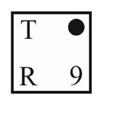
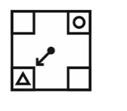
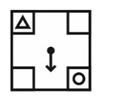
Question 8

Two figures given on the left side of (::) are related with some logic/rule/relation. Select the missing figure on the right side of (::) from the given alternatives based on the same logic/rule/relation.

  1. AOption (a)

  2. BOption (b)

  3. COption (c)

  4. DOption (d)

View answer & explanation

Correct answer

Answer: (b)B.

Why this answer is correct

Pattern followed here is,

Similarly,

Hence, the correct answer is “Option 2”.

Question 9

Select the option that is related to the third letter-number cluster in the same way as the second letter-number cluster is related to the first letter-number cluster and sixth letter-number cluster is related to fifth letter-number cluster. (NOTE: Operations should be performed on the whole numbers, without breaking down the numbers into its constituent digits. E.g.13 - Operations on 13 such as adding /subtracting /multiplying etc. to 13 can be performed. Breaking down 13 into 1 and 3 and then performing mathematical operations on 1 and 3 is not allowed)

XZ480 : TV240 :: KE300 : ? :: TO280 : PK40

  1. AOption (a)

    GA60

  2. BOption (b)

    GB80

  3. COption (c)

    HA60

  4. DOption (d)

    HA80

View answer & explanation

Correct answer

Answer: (a)A.

GA60

Why this answer is correct

<br> <br>

XZ480 : TV240 →

TO280 : PK40 →

Similarly,

For KE300 : ? →

Hence, the correct answer is 'Option 1'.

Question 10

Select the option that is related to the third letter-number cluster in the same way as the second letter-number cluster is related to the first letter-number cluster and sixth letter-number cluster is related to fifth letter-number cluster. (NOTE: Operations should be performed on the whole numbers, without breaking down the numbers into its constituent digits. E.g.13 – Operations on 13 such as adding /subtracting /multiplying etc. to 13 can be performed. Breaking down 13 into 1 and 3 and then performing mathematical operations on 1 and 3 is not allowed)

KPT82 : GLO164 :: LMJ64 : ? :: HKI92 : DGD184

  1. AOption (a)

    EIH168

  2. BOption (b)

    DEH118

  3. COption (c)

    HID118

  4. DOption (d)

    HIE128

View answer & explanation

Correct answer

Answer: (d)D.

HIE128

Why this answer is correct

<br> <br>

KPT82 : GLO164 →

HKI92 : DGD184 →

Similarly,

For,  LMJ64:? →

Thus, the cluster LMJ64 is related to HIE128.

Hence, the correct answer is 'Option 4'.

Question 11

Arrange the given words in the sequence in which they occur in the dictionary.

  1. Procrastinate 2. Procreate 3. Proclaim 4. Procedure 5. Procession
  1. AOption (a)

    45321

  2. BOption (b)

    54312

  3. COption (c)

    45312

  4. DOption (d)

    54321

View answer & explanation

Correct answer

Answer: (c)C.

45312

Why this answer is correct

Dictionary order of given words:

  1. Procedure
  2. Procession
  3. Proclaim 
  4. Procrastinate
  5. Procreate

Correct order is : 45312

Hence, the correct answer is “Option 3”.

Question 12

Select the option that is related to the sixth number in the same way as the first number is related to the second number and third number is related to fourth number. (NOTE: Operations should be performed on the whole numbers, without breaking down the numbers into its constituent digits. E.g.13 - Operations on 13 such as adding /subtracting /multiplying etc. to 13 can be performed. Breaking down 13 into 1 and 3 and then performing mathematical operations on 1 and 3 is not allowed)
485 : 1450 :: 487 : 1456 :: ? : 1228

  1. AOption (a)

    412

  2. BOption (b)

    411

  3. COption (c)

    410

  4. DOption (d)

    418

View answer & explanation

Correct answer

Answer: (b)B.

411

Why this answer is correct

The logic followed here is:

Logic: Second Number = (First Number × 3) − 5

For the first pair 485 : 1450

⇒ (485 × 3) − 5

⇒ 1455 − 5 = 1450.

For the second pair 487 : 1456

⇒ (487 × 3) − 5

⇒ 1461 − 5 = 1456.

Applying the same logic to the third pair

? : 1228

⇒ (First Number × 3) − 5 = 1228

⇒ First Number × 3 = 1228 + 5

⇒ First Number × 3 = 1233

⇒ First Number = 1233 ÷ 3 = 411.

Hence, the correct answer is 'Option 2'.

Question 13

In a certain coded language 'COIFS' is coded as 'FTFBN' and 'FLUTE' is coded as 'IQRPZ'. How will 'RINSE' be coded in the same code language?

  1. AOption (a)

    UNKOZ

  2. BOption (b)

    SPMPZ

  3. COption (c)

    VOLNB

  4. DOption (d)

    VLLPX

View answer & explanation

Correct answer

Answer: (a)A.

UNKOZ

Why this answer is correct

<br> <br>

'COIFS' is coded as 'FTFBN' 

'FLUTE' is coded as 'IQRST'.

Similarly,

'RINSE' be coded in the same code language as,

Hence, the correct answer is “Option 1”.

Question 14

A series is given with one term missing. Select the correct alternative from the given ones that will complete the series.

MZ200, KX172, ?, GT116, ER88

  1. AOption (a)

    KS143

  2. BOption (b)

    IV144

  3. COption (c)

    JT143

  4. DOption (d)

    JS144

View answer & explanation

Correct answer

Answer: (b)B.

IV144

Why this answer is correct

<br> <br>

Pattern followed here is,

Hence, the correct answer is “Option 2”.

Question 15

A series is given with one term wrong. Select that wrong term from the given alternatives.

DOG16, HRE25, LUC36, PXA49, TAY64, YDV80

  1. AOption (a)

    HRE25

  2. BOption (b)

    YDV80

  3. COption (c)

    LUC36

  4. DOption (d)

    DOG16

View answer & explanation

Correct answer

Answer: (b)B.

YDV80

Why this answer is correct

<br> <br>

Pattern followed here is,

Hence, the correct answer is “Option 2”.

Question 16

A clock was set right at 6 AM on 1 January 2015. It loses 10 seconds every hour. What time (in AM) will the clock show on 2nd January 2015 at 6 AM?

  1. AOption (a)

    5:56

  2. BOption (b)

    5:56:40

  3. COption (c)

    5:57:20

  4. DOption (d)

    5:58

View answer & explanation

Correct answer

Answer: (a)A.

5:56

Why this answer is correct

The clock was set correctly at 6 AM on 1 January 2015.

We need to find the time shown at 6 AM on 2 January 2015.

Total time duration elapsed = 24 hours

Given that the clock loses 10 seconds every hour:

Total loss in 24 hours = 24 × 10 = 240 seconds

Convert the total loss into minutes:

60 seconds = 1 minute

240 seconds = 240 ÷ 60 = 4 minutes

The clock time is calculated by subtracting the loss from the actual time:

Time shown = 6:00 AM − 4 minutes

Time shown = 5:56 AM

Hence, the clock will show 5:56 AM on 2nd January 2015.

Hence, the correct answer is “Option 1”.

Question 17

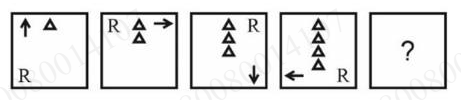
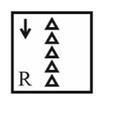
In the following figure series, select the figure which can be placed at the sign of question mark (?) from the given alternatives.

  1. AOption (a)

  2. BOption (b)

  3. COption (c)

  4. DOption (d)

View answer & explanation

Correct answer

Answer: (d)D.

Why this answer is correct

Pattern followed here is,

Hence, the correct answer is “Option 4”.

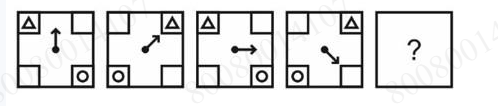
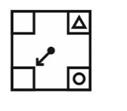
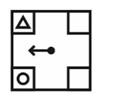
Question 18

In the following figure series, select the figure which can be placed at the sign of question mark (?) from the given alternatives.

  1. AOption (a)

  2. BOption (b)

  3. COption (c)

  4. DOption (d)

View answer & explanation

Correct answer

Answer: (b)B.

Why this answer is correct

Pattern followed here is,

Hence, the correct answer is “Option 2”.

Question 19

The present ages of A, B and C are 32 years, 35 years and 40 years respectively. What was the ratio of ages of A, B and C, 5 years ago from present?

  1. AOption (a)

    27 : 30 : 35

  2. BOption (b)

    30 : 27 : 35

  3. COption (c)

    27 : 35 : 30

  4. DOption (d)

    31 : 30 : 25

View answer & explanation

Correct answer

Answer: (a)A.

27 : 30 : 35

Why this answer is correct

Present Ages:

A = 32 years

B = 35 years

C = 40 years

Calculating ages 5 years ago:

Age of A, 5 years ago = 32 − 5 = 27

Age of B, 5 years ago = 35 − 5 = 30

Age of C, 5 years ago = 40 − 5 = 35

The ratio of their ages 5 years ago:

A : B : C = 27 : 30 : 35


Hence, the correct answer is “Option 1”.

Question 20

The sum of the present ages of a father and his son is 84 years. 4 years ago their respective ages were in the ratio of 3 : 1. After 2 years from present what will be the ratio of ages of father and son?

  1. AOption (a)

    92 : 51

  2. BOption (b)

    52 : 23

  3. COption (c)

    63 : 25

  4. DOption (d)

    72 : 53

View answer & explanation

Correct answer

Answer: (c)C.

63 : 25

Why this answer is correct

Let the ages of the father and son 4 years ago be 3x and x respectively, based on the given ratio 3 : 1.

To find the present ages, we add 4 years to their ages from 4 years ago:

Father's present age=3x + 4
Son's present age=x + 4


According to the problem, the sum of their present ages is 84 years.

(3x + 4) + (x + 4) = 84

4x + 8 = 84

4x = 84 − 8

4x = 76

x = 76 ÷ 4

x = 19

First, let's find the present ages:

Father's present age = 3 × 19 + 4 = 57 + 4 = 61 years

Son's present age = 19 + 4 = 23 years

Now, let's find their ages 2 years from the present:

Father's age after 2 years = 61 + 2 = 63 years

Son's age after 2 years = 23 + 2 = 25 years

Ratio of father's age to son's age after 2 years = 63 : 25

<br>

Hence, the correct answer is “Option 3”.

General Knowledge and General Awareness (20 questions)

Question 21

Which children's novel by Anita Desai received the Guardian Children's Fiction Prize?

  1. AOption (a)

    The Village by the Sea

  2. BOption (b)

    Games at Twilight

  3. COption (c)

    Diamond Dust and Other Stories

  4. DOption (d)

    Where Shall We Go This Summer?

View answer & explanation

Correct answer

Answer: (a)A.

The Village by the Sea

Why this answer is correct

The correct answer is The Village by the Sea.

Key Points

  • The Village by the Sea is an acclaimed children's novel written by the distinguished Indian author Anita Desai and was first published in 1982.
  • The story is set in the small, traditional fishing village of Thul, located on the Konkan coast of Maharashtra, India.
  • The plot centers on the struggles of two siblings, Lila and Hari, as they navigate the difficulties of poverty, their mother's illness, and their father's alcoholism in a rapidly industrializing society.
  • The novel explores the tension between rural traditions and urbanization, specifically through Hari’s journey to Bombay (now Mumbai) to find work and save his family.
  • Due to its profound emotional depth and realistic portrayal of Indian life, the book was awarded the Guardian Children's Fiction Prize in 1983.

 Additional Information

  • Games at Twilight (1978):
  • This is a collection of short stories that focuses on the psychological nuances of childhood and the subtle complexities of family dynamics in post-independence India.
  • Diamond Dust and Other Stories (2000):
  • A later collection of fiction that examines themes of isolation, cultural displacement, and the mundane tragedies of everyday life across different continents.
  • Where Shall We Go This Summer? (1975):
  • A novel that tracks the internal crisis of Sita, a woman who seeks a spiritual or emotional retreat on an island to escape the stifling environment of her urban existence.
  • Anita Desai is a multiple-time nominee for the Booker Prize, with her works Clear Light of Day, In Custody, and Fasting, Feasting reaching the shortlist.

Question 22

Which of the following is an autobiographical poem by William Wordsworth?

  1. AOption (a)

    The Excursion

  2. BOption (b)

    The Recluse

  3. COption (c)

    The Prelude

  4. DOption (d)

    Michael

View answer & explanation

Correct answer

Answer: (c)C.

The Prelude

Why this answer is correct

The correct answer is The Prelude.

Key Points

  • The Prelude is widely recognized as the definitive autobiographical poem written by William Wordsworth, serving as an exploration of the growth of a poet's mind.
  • The poem is written in blank verse and details Wordsworth's spiritual and intellectual development from his childhood and Cambridge years to his experiences during the French Revolution.
  • Wordsworth began composing the work in 1798 and continued to revise it throughout his life, reflecting his evolving philosophy on nature and the human imagination.
  • The poem was originally intended to be the introductory section of a larger, unfinished philosophical work entitled The Recluse.
  • It was published posthumously in 1850, and its title was suggested by the poet's widow, Mary Wordsworth, as the poet himself often referred to it as the 'poem to Coleridge'.

 Additional Information

  • The Excursion:
  • Published in 1814, this is a long philosophical poem in nine books intended to be the second part of The Recluse project.
  • The Recluse:
  • This was the planned tripartite philosophical masterpiece that Wordsworth never fully completed; it was meant to contain both The Prelude and The Excursion.
  • Michael:
  • A famous pastoral narrative poem published in the 1800 edition of Lyrical Ballads, which tells the story of an aging shepherd and his son Luke, set in the Lake District.

Question 23

Which of the following soils is rich in iron but poor in nitrogen?

  1. AOption (a)

    Alluvial soil

  2. BOption (b)

    Laterite soil

  3. COption (c)

    Desert soil

  4. DOption (d)

    Black soil

View answer & explanation

Correct answer

Answer: (b)B.

Laterite soil

Why this answer is correct

The correct answer is Laterite soil.

Key Points

  • Laterite soil is formed in areas characterized by high temperatures and heavy seasonal rainfall, conditions that promote intense leaching of the soil.
  • The process of leaching washes away silica and lime, leaving behind a residue that is highly concentrated in iron oxides and aluminum compounds.
  • The presence of iron oxides, specifically hematite and limonite, gives the soil its characteristic rusty red color.
  • Due to the high ambient temperatures, organic matter and humus are rapidly decomposed by bacteria, making the soil naturally deficient in nitrogen, phosphorous, potash, magnesium, and calcium.
  • This soil is typically acidic in nature and is widely used for the production of crops like cashew nuts, tea, coffee, and rubber when treated with appropriate fertilizers.

 Additional Information

  • Alluvial Soil
  • Covers approximately 40 percent of India's total land area and is deposited by major river systems like the Indus, Ganga, and Brahmaputra.
  • It is rich in potash but generally poor in phosphorous and nitrogen.
  • Black Soil
  • Also known as Regur soil or Black Cotton Soil, it is derived from the weathering of basaltic lava rocks.
  • It has high water-retaining capacity and is rich in calcium carbonate, magnesium, and potash, but lacks nitrogen and phosphorous.
  • Desert Soil
  • Found in arid and semi-arid regions such as Western Rajasthan, characterized by high salt content.
  • It is poor in nitrogen and organic matter, though phosphate content is often normal.
  • Geographical Distribution
  • In India, Laterite soil is primarily found in the summits of the Western Ghats, Eastern Ghats, the Rajmahal Hills, and parts of Odisha, Chhattisgarh, and Assam.

Question 24

In recent reports, which region usually scores the highest on the Happiness Index?

  1. AOption (a)

    Sub-Saharan Africa

  2. BOption (b)

    Middle East

  3. COption (c)

    Nordic countries (Northern Europe)

  4. DOption (d)

    South Asia

View answer & explanation

Correct answer

Answer: (c)C.

Nordic countries (Northern Europe)

Why this answer is correct

The correct answer is Nordic countries (Northern Europe).

Key Points

  • The World Happiness Report, an annual publication by the United Nations Sustainable Development Solutions Network, consistently identifies Northern Europe as the happiest region globally.
  • Nations such as Finland, Denmark, Iceland, Norway, and Sweden frequently occupy the top ten positions, with Finland often securing the first rank for multiple consecutive years.
  • The high scores are attributed to six key variables: GDP per capita, social support, healthy life expectancy, freedom to make life choices, generosity, and freedom from corruption.
  • These countries are characterized by high levels of institutional trust and social cohesion, where citizens feel a strong sense of security and communal belonging.

 Additional Information

  • The Nordic Model of governance plays a pivotal role in these rankings:
  • Universal Welfare: High-quality, state-funded healthcare and education reduce individual financial stress and promote equity.
  • Work-Life Balance: Strong labor protections and generous parental leave policies contribute to higher life satisfaction.
  • Political Stability: Stable democratic institutions and low levels of political violence ensure a predictable and safe environment for citizens.
  • Environmental Quality: A strong emphasis on sustainability and access to nature is positively correlated with mental well-being in this region.
  • Measurement Methodology:
  • The index primarily uses the Cantril Ladder, where individuals rate their current life on a scale from 0 to 10.
  • While economic wealth (GDP) is a factor, the report emphasizes that social capital and personal autonomy are often more significant drivers of happiness in advanced economies.

Question 25

In which year did the IAAF change its name to World Athletics?

  1. AOption (a)

    2008

  2. BOption (b)

    2012

  3. COption (c)

    2015

  4. DOption (d)

    2019

View answer & explanation

Correct answer

Answer: (d)D.

2019

Why this answer is correct

The correct answer is 2019.

Key Points

  • The International Association of Athletics Federations (IAAF) officially rebranded itself as World Athletics in 2019.
  • The decision to change the name was approved during the 52nd IAAF Congress held in Doha, Qatar, in June 2019.
  • This rebranding initiative was led by the organization’s President, Sebastian Coe, as part of a broader strategy to make the sport more modern, accessible, and marketable to a global audience.
  • The new brand identity, including a revamped logo, was fully implemented following the conclusion of the World Athletics Championships in Doha in October 2019.
  • The name change also aimed to provide a clearer and more direct description of the organization’s role as the global governing body for the sport of athletics.

 Additional Information

  • World Athletics
  • Founding: The organization was established on July 17, 1912, in Stockholm, Sweden, initially named the International Amateur Athletic Federation.
  • Evolution of Name: In 2001, the word 'Amateur' was replaced with 'Association' to reflect the professionalization of the sport, becoming the International Association of Athletics Federations.
  • Headquarters: The central offices of the body have been located in Monaco since 1993, after moving from London.
  • Core Functions: It oversees the rules of the sport, manages the World Athletics Series of events, and maintains world records for track and field, road running, and race walking.
  • Leadership: Sebastian Coe, a two-time Olympic champion, was elected as the President in 2015 and has focused on restoring the integrity of the sport through various governance reforms.

Question 26

Through which declaration was the subregional grouping that later evolved into BIMSTEC first established in 1997?

  1. AOption (a)

    Kathmandu Declaration

  2. BOption (b)

    Colombo Declaration

  3. COption (c)

    Bangkok Declaration

  4. DOption (d)

    Dhaka Declaration

View answer & explanation

Correct answer

Answer: (c)C.

Bangkok Declaration

Why this answer is correct

The correct answer is Bangkok Declaration.

Key Points

  • The subregional grouping that later evolved into BIMSTEC was established on June 6, 1997, through the signing of the Bangkok Declaration in Thailand.
  • The organization was initially named BIST-EC, an acronym for the founding member states: Bangladesh, India, Sri Lanka, and Thailand Economic Cooperation.
  • The Bangkok Declaration defined the group as a bridge between South Asia and Southeast Asia, emphasizing technical and economic cooperation among nations bordering the Bay of Bengal.
  • The primary objective was to create an enabling environment for rapid economic development and social progress through joint endeavors in sectors like trade, investment, and technology.
  • The grouping expanded on December 22, 1997, when Myanmar became a full member, leading to the name change to BIMST-EC.
  • With the admission of Nepal and Bhutan in February 2004, the organization was finally renamed the Bay of Bengal Initiative for Multi-Sectoral Technical and Economic Cooperation (BIMSTEC).

 Additional Information

  • Institutional Structure
  • The BIMSTEC Secretariat was established in Dhaka, Bangladesh, and was officially inaugurated in 2014.
  • The Chairmanship of BIMSTEC rotates among member states in alphabetical order of their names.
  • Member States and Geographical Scope
  • Currently, there are seven member states: five from South Asia (Bangladesh, Bhutan, India, Nepal, Sri Lanka) and two from Southeast Asia (Myanmar, Thailand).
  • This cooperation covers a diverse population of approximately 1.5 billion people and a combined GDP of over 2.7 trillion USD.
  • Context of Other Declarations
  • Dhaka Declaration: Primarily refers to the founding document of the South Asian Association for Regional Cooperation (SAARC) signed in 1985.
  • Kathmandu Declaration: Associated with the 18th SAARC Summit in 2014, focusing on Regional Integration for Peace and Prosperity.
  • Colombo Declaration: Relates to various international agreements, most notably the 2019 declaration for sustainable Nitrogen management.

Question 27

The hormones like adrenaline belong to which system in the body?

  1. AOption (a)

    Nervous system

  2. BOption (b)

    Endocrine system

  3. COption (c)

    Digestive system

  4. DOption (d)

    Circulatory system

View answer & explanation

Correct answer

Answer: (b)B.

Endocrine system

Why this answer is correct

The correct answer is Endocrine system.

Key Points

  • The endocrine system is a complex network of ductless glands that synthesize and secrete chemical messengers called hormones directly into the bloodstream to regulate the activity of distant target organs.
  • Adrenaline, also widely known as epinephrine, is a vital hormone and neurotransmitter belonging to the catecholamine family, derived from the amino acids phenylalanine and tyrosine.
  • It is primarily produced and released by the adrenal medulla, the inner portion of the adrenal glands situated atop the kidneys, in response to physical or mental stress.
  • The secretion of adrenaline is a core component of the sympathomedullary (SAM) pathway, which initiates the fight-or-flight response, characterized by an increased heart rate, elevated blood pressure, and rapid energy metabolism.
  • By binding to adrenergic receptors (alpha and beta) throughout the body, adrenaline ensures that glucose is readily available to the muscles and brain during emergency situations.

 Additional Information

  • Nervous System:
  • Comprises the Central Nervous System (CNS) and Peripheral Nervous System (PNS).
  • Utilizes electrical impulses and neurotransmitters for high-speed communication between cells, whereas the endocrine system provides slower, longer-lasting chemical regulation.
  • Digestive System:
  • Involves the gastrointestinal tract and accessory organs like the pancreas and liver.
  • Primarily functions in mechanical and chemical digestion of food, nutrient absorption, and waste elimination.
  • Circulatory System:
  • Consists of the heart, blood, and an extensive network of blood vessels (arteries, veins, and capillaries).
  • Functions as the primary conduit for transporting hormones like adrenaline, oxygen, and nutrients to tissues, but it does not produce hormones itself.

Question 28

Ashoka's dhamma primarily aimed at:

  1. AOption (a)

    Expanding Buddhism as the state religion

  2. BOption (b)

    Promoting administrative centralization

  3. COption (c)

    Encouraging ethical living and social harmony

  4. DOption (d)

    Establishing alliances with foreign rulers

View answer & explanation

Correct answer

Answer: (c)C.

Encouraging ethical living and social harmony

Why this answer is correct

The correct answer is Encouraging ethical living and social harmony.

Key Points

  • Ashoka's Dhamma (the Prakrit form of the Sanskrit Dharma) was a comprehensive code of conduct and a set of ethical principles designed to maintain social order and peace in a diverse empire.
  • Rather than being a new religion, it focused on universal moral values such as non-violence (Ahimsa), truthfulness, and mutual respect among different social and religious groups.
  • The policy aimed to mitigate the social tensions arising from the coexistence of various sects like the Brahmanas, Ajivikas, and Buddhists by promoting religious tolerance.
  • Through Rock Edicts and Pillar Edicts, Ashoka advocated for social responsibility, emphasizing kindness towards slaves, obedience to parents, and generosity toward all living beings.
  • The initiative served as a tool for cultural integration, using moral persuasion to hold the vast Mauryan Empire together following the destructive Kalinga War in 261 BCE.

 Additional Information

  • Buddhism as a State Religion:
  • While Ashoka personally converted to Buddhism and sent missions to Sri Lanka and South East Asia, he never imposed it as the mandatory state religion.
  • His Dhamma remained secular and inclusive to ensure it was acceptable to all subjects, regardless of their sectarian affiliations.
  • Administrative Centralization:
  • The Mauryan administration was already highly centralized under Chandragupta Maurya and Bindusara.
  • Dhamma was a socio-cultural policy rather than a structural administrative reform, though it used officials like Dhamma Mahamattas to monitor public welfare.
  • Foreign Policy and Alliances:
  • Ashoka replaced Bherighosha (conquest by war) with Dhammaghosha (conquest by piety).
  • He established diplomatic relations with Hellenistic rulers such as Antiochus II of Syria and Ptolemy II of Egypt, but these were based on humanitarian aid and ethical exchange rather than traditional military alliances.

Question 29

The famous “Hindu rate of growth” phrase was coined by:

  1. AOption (a)

    Montek Singh Ahluwalia

  2. BOption (b)

    Raj Krishna

  3. COption (c)

    Jagdish Bhagwati

  4. DOption (d)

    Amartya Sen

View answer & explanation

Correct answer

Answer: (b)B.

Raj Krishna

Why this answer is correct

The correct answer is Raj Krishna.

Key Points

  • Professor Raj Krishna, a prominent Indian economist and former member of the Planning Commission, coined the term 'Hindu rate of growth' in 1978 at a seminar of the Federation of Indian Chambers of Commerce and Industry (FICCI).
  • The phrase was used to describe the stagnant annual growth rate of the Indian economy, which averaged around 3.5% for several decades between the 1950s and the 1980s.
  • During this period, despite various Five-Year Plans, the per capita income growth remained very low, averaging only about 1.3% per annum due to high population growth.
  • The term metaphorically suggested that the slow pace of development was a result of a fatalistic or contented cultural outlook, though it was actually a critique of the restrictive economic policies and the License Raj.

 Additional Information

  • Montek Singh Ahluwalia:
  • A key architect of the 1991 Economic Reforms in India.
  • He served as the Deputy Chairman of the Planning Commission and was the first Director of the Independent Evaluation Office at the International Monetary Fund (IMF).
  • Jagdish Bhagwati:
  • An eminent Professor of Economics at Columbia University known for his advocacy of free trade.
  • His work heavily influenced the transition of the Indian economy from protectionism to globalization.
  • Amartya Sen:
  • An Indian economist and philosopher who was awarded the Nobel Prize in Economic Sciences in 1998.
  • He is celebrated for his contributions to welfare economics, social choice theory, and his work on the causes of famine and human development.
  • License Raj:
  • Refers to the system of elaborate licenses, regulations, and red tape required to set up and run businesses in India between 1947 and 1990.
  • This system is widely cited as the primary reason for the economic stagnation associated with the Hindu rate of growth.

Question 30

Which index is used to measure headline inflation in India?

  1. AOption (a)

    Consumer Price Index Combined

  2. BOption (b)

    Gross Domestic Product Deflator

  3. COption (c)

    Index of Industrial Production

  4. DOption (d)

    Wholesale Price Index

View answer & explanation

Correct answer

Answer: (a)A.

Consumer Price Index Combined

Why this answer is correct

The correct answer is Consumer Price Index Combined.

Key Points

  • Headline inflation represents the total inflation in an economy, encompassing a wide basket of goods and services including volatile components like food and fuel prices.
  • In India, the Consumer Price Index (CPI) Combined is currently utilized as the definitive measure for headline inflation. This shift was officially adopted by the Reserve Bank of India (RBI) in April 2014.
  • The adoption of CPI Combined (which includes both rural and urban data) followed the recommendations of the Urjit Patel Committee, which suggested moving away from the Wholesale Price Index (WPI) to better reflect the cost of living for citizens.
  • The data for CPI Combined is released monthly by the National Statistical Office (NSO), which operates under the Ministry of Statistics and Programme Implementation (MoSPI).
  • The index uses a base year of 2012 and is the primary anchor for the Monetary Policy Committee (MPC) to maintain price stability with a target inflation rate of 4% and a tolerance band of plus/minus 2%.

 Additional Information

  • Wholesale Price Index (WPI):
  • It tracks the changes in the price of goods sold and traded in bulk by wholesale businesses.
  • The index is published by the Office of Economic Adviser, Ministry of Commerce and Industry.
  • Unlike CPI, it does not account for the prices of services, focusing solely on physical commodities.
  • Gross Domestic Product (GDP) Deflator:
  • This is a comprehensive measure of inflation calculated as the ratio of Nominal GDP to Real GDP multiplied by 100.
  • It covers all goods and services produced within the domestic economy, but it is typically available only on a quarterly or annual basis, unlike the monthly CPI.
  • Index of Industrial Production (IIP):
  • It measures the growth in the volume of industrial production across sectors such as Mining, Manufacturing, and Electricity.
  • It is an indicator of industrial activity and economic health rather than a direct measure of price inflation.

Question 31

Which traveller's account provides vivid descriptions of Muhammad bin Tughlaq and his reign?

  1. AOption (a)

    Ibn Battuta

  2. BOption (b)

    Marco Polo

  3. COption (c)

    Al-Biruni

  4. DOption (d)

    Domingo Paes

View answer & explanation

Correct answer

Answer: (a)A.

Ibn Battuta

Why this answer is correct

The correct answer is Ibn Battuta.

Key Points

  • Ibn Battuta was a renowned Moroccan explorer and scholar who traveled to India during the 14th century.
  • He arrived at the court of Sultan Muhammad bin Tughlaq in 1333 AD after crossing the Hindu Kush mountains and reaching the Indus River.
  • The Sultan, impressed by his expertise in Islamic Law, appointed him as the Qazi (Judge) of Delhi, a post he held for approximately eight years.
  • His famous travelogue, written in Arabic and titled Rihla (The Journey), provides a comprehensive and vivid account of the Tughlaq dynasty, administrative practices, and the Sultan's complex personality.
  • The Rihla documents significant historical events, including the transfer of the capital from Delhi to Daulatabad and the introduction of token currency using copper coins.
  • His writings also offer deep insights into the postal system (Uluq and Dawa), the caste system, and the socio-economic conditions of Medieval India.

 Additional Information

  • Al-Biruni:
  • An Uzbek polymath who accompanied Mahmud of Ghazni to the Indian subcontinent in the 11th century.
  • He authored the monumental work Kitab-ul-Hind, which serves as an encyclopedic source on Indian astronomy, philosophy, and customs.
  • Marco Polo:
  • A Venetian merchant and explorer who visited South India (the Pandyan Kingdom) around 1292 AD.
  • His accounts focus on the maritime trade, pearl fisheries, and the wealth of the Coromandel Coast.
  • Domingo Paes:
  • A Portuguese traveler who visited the Vijayanagara Empire around 1520 AD.
  • He provided detailed descriptions of the military strength and urban layout of Hampi during the reign of Krishnadevaraya.

Question 32

Which of the following statement is correct regarding the directive principal of state policy of the Indian constitution?

I. Article 47 is related with Separation of judiciary from executive.

II. Article 50 is related with Promotion of international peace and security.

  1. AOption (a)

    Only I

  2. BOption (b)

    Only II

  3. COption (c)

    Both I and II

  4. DOption (d)

    Neither I Nor II

View answer & explanation

Correct answer

Answer: (d)D.

Neither I Nor II

Why this answer is correct

The correct answer is Neither I Nor II.

Key Points

  • Statement I refers to Article 47, which actually mandates the State to regard the raising of the level of nutrition and the standard of living of its people and the improvement of public health as among its primary duties. It also directs the State to endeavor to bring about prohibition of the consumption of intoxicating drinks and drugs. Hence, statement I is incorrect.
  • Statement II refers to Article 50, which provides for the separation of the judiciary from the executive in the public services of the State. This separation is fundamental to ensuring the independence of the judiciary from political interference. Hence, statement II is incorrect.

 Additional Information

  • Directive Principles of State Policy (DPSP):
  • Contained in Part IV of the Indian Constitution, covering Articles 36 to 51.
  • Inspired by the Irish Constitution and serve as guiding principles for the Union and State governments in law-making.
  • Unlike Fundamental Rights, these are non-justiciable, meaning they cannot be enforced by a court of law.
  • Article 51:
  • This specific article promotes international peace and security, fosters respect for international law, and encourages the settlement of disputes by arbitration.
  • Classification:
  • Socialistic Principles: Aim for social and economic justice (e.g., Article 38, Article 39).
  • Gandhian Principles: Based on the ideology of Mahatma Gandhi (e.g., Article 40 for Village Panchayats, Article 47).
  • Liberal-Intellectual Principles: Aim for a modern and progressive state (e.g., Article 44 for Uniform Civil Code, Article 50, and Article 51).

Question 33

Since the Jal Jeevan Mission launch in 2019, more than _______ crore rural households have been provided tap water connection till July 2024.

  1. AOption (a)

    15

  2. BOption (b)

    21

  3. COption (c)

    25

  4. DOption (d)

    35

View answer & explanation

Correct answer

Answer: (a)A.

15

Why this answer is correct

The correct answer is 15.

Key Points

  • The Jal Jeevan Mission (JJM) was launched by the Government of India on August 15, 2019, with the primary objective of providing safe and adequate drinking water through Functional Household Tap Connections (FHTC) to every rural household by 2024.
  • At the time of the mission's announcement, only about 3.23 crore (roughly 16.7 percent) of the total 19.27 crore rural households in the country had access to tap water connections.
  • By July 2024, the mission crossed a major landmark by ensuring that more than 15 crore rural households have access to clean tap water, representing a coverage of over 77 percent of the rural population.
  • The mission is designed as a decentralized, demand-driven, and community-managed program, emphasizing the bottom-up approach where the Gram Panchayat plays a pivotal role in planning and implementation.

 Additional Information

  • Operational Framework:
  • The mission is implemented by the Department of Drinking Water and Sanitation under the Ministry of Jal Shakti.
  • It aims to provide 55 liters of water per capita per day (lpcd) of prescribed quality (BIS:10500 standards) on a long-term basis.
  • The project includes source sustainability measures such as recharge and reuse through greywater management, water conservation, and rainwater harvesting.
  • Har Ghar Jal States:
  • Several states and Union Territories, including Goa, Gujarat, Haryana, Punjab, Telangana, Dadra and Nagar Haveli and Daman and Diu, and Puducherry, have achieved 100 percent coverage.
  • A village is officially declared Har Ghar Jal Certified once every household, school, and Anganwadi center is confirmed to have a functional tap connection by the Gram Sabha.

Question 34

Which of the following is a component of DAJGUA Abhiyan?

I. Healthcare

II. Education

  1. AOption (a)

    Only I

  2. BOption (b)

    Only II

  3. COption (c)

    Both I and II

  4. DOption (d)

    Neither I nor II

View answer & explanation

Correct answer

Answer: (c)C.

Both I and II

Why this answer is correct

The correct answer is Both I and II.

Key Points

  • The DAJGUA Abhiyan is a targeted developmental initiative designed to uplift marginalized sections and enhance the quality of life in rural and tribal regions. Under its Healthcare component, the program aims to provide access to essential medical services, conduct immunisation campaigns, reduce infant and maternal mortality, and raise awareness about nutrition, personal hygiene, and clean drinking water. Hence, statement I is correct.
  • Under the Education component, the campaign focuses on improving literacy levels, facilitating the enrolment of children in schools, reducing school dropout rates especially among girls, and strengthening local educational infrastructure in far-flung areas. Hence, statement II is correct.

 Additional Information

  • The DAJGUA Abhiyan employs a holistic, community-driven approach to guarantee the long-term sustainability of its developmental outcomes.
  • Socio-Economic Empowerment: The campaign works to link rural households with various social welfare schemes, self-help groups (SHGs), and livelihood programmes.
  • Grassroots Governance: It encourages local community participation and capacity building, training local youth and women to spearhead healthcare and education projects at the village level.

Question 35

An election to fill a vacancy in the office of President of India occurring by reason of his death, resignation or removal, or otherwise shall be held as soon as possible after, and in no case later than _____ months from, the date of occurrence of the vacancy.

  1. AOption (a)

    2

  2. BOption (b)

    6

  3. COption (c)

    4

  4. DOption (d)

    8

View answer & explanation

Correct answer

Answer: (b)B.

6

Why this answer is correct

The correct answer is 6.

Key Points

  • Under Article 62(2) of the Constitution of India, any vacancy caused by the death, resignation, or removal of the President must be filled through an election conducted as soon as possible.
  • The Constitution mandates a definitive upper limit, stating that such an election must take place no later than six months from the date the vacancy occurs.
  • This provision ensures that the post of the Head of State, which is the highest constitutional office in the country, does not remain vacant or be filled by an acting official for an extended duration.
  • The newly elected President does not merely serve the remainder of the predecessor's term but is entitled to hold office for a full term of five years as per Article 56.

 Additional Information

  • Constitutional Framework for Vacancies:
  • Article 65: Specifies that the Vice-President shall act as President until a new President is elected and enters upon their office.
  • Discharge of Functions: If the Vice-President's office is also vacant, the Chief Justice of India (or the senior-most judge of the Supreme Court) performs these duties under the President (Discharge of Functions) Act, 1969.
  • Article 62(1): Clarifies that an election to fill a vacancy caused by the normal expiration of the term must be completed before the term expires.
  • Election Administration:
  • The Election Commission of India (ECI) is the authority responsible for conducting the Presidential Election.
  • The election is held in accordance with the Presidential and Vice-Presidential Elections Act, 1952 and the Rules of 1974.
  • The process involves an Electoral College consisting of elected members of both Houses of Parliament and the Legislative Assemblies of the States.

Question 36

The 'Gangaur' festival of Rajasthan is celebrated in honour of which goddess?

  1. AOption (a)

    Goddess Lakshmi

  2. BOption (b)

    Goddess Kali

  3. COption (c)

    Goddess Parvati

  4. DOption (d)

    Goddess Saraswati

View answer & explanation

Correct answer

Answer: (c)C.

Goddess Parvati

Why this answer is correct

The correct answer is Goddess Parvati.

Key Points

  • The Gangaur festival is one of the most culturally significant and widely celebrated festivals in the state of Rajasthan, dedicated to the worship of Goddess Gauri, who is an avatar of Goddess Parvati.
  • The name Gangaur is a composite of two words: Gan, which represents Lord Shiva, and Gaur, which refers to Gauri or Parvati, symbolizing the divine bond of marriage and companionship.
  • The festival begins on the first day of the month of Chaitra (the day following Holi) and continues for 18 days, concluding on the Tritiya of the Shukla Paksha.
  • The primary objective of the festival is for women to seek the blessings of the goddess; married women pray for the longevity and health of their husbands, while unmarried women pray to find a suitable spouse like Lord Shiva.
  • The rituals involve the creation of clay idols of Isar (Shiva) and Gangaur (Parvati), which are beautifully decorated and worshipped with offerings of Durva (grass), flowers, and sweets like Ghewar.

 Additional Information

  • The festival is marked by grand processions in major cities of Rajasthan:
  • In Jaipur, a massive royal procession of the Gangaur idol passes through the Tripolia Gate and the old city, attracting thousands of tourists.
  • In Udaipur, the festival coincides with the Mewar Festival, where a dedicated boat procession takes place on the scenic Lake Pichola.
  • Other deities mentioned in the options represent different aspects of the Hindu pantheon:
  • Goddess Lakshmi: The deity of wealth, fortune, and prosperity, primarily worshipped during the festival of Diwali.
  • Goddess Kali: A fierce manifestation of the Shakti, symbolizing the destruction of evil and time, with major celebrations in West Bengal.
  • Goddess Saraswati: The patron goddess of knowledge, music, and arts, specifically honored during Vasant Panchami.
  • The Gangaur festival serves as a platform for Rajasthani folk culture, featuring traditional Ghoomar dances and folk songs that narrate the stories of Shiva and Parvati.

Question 37

The first successful Indian Polar Satellite Launch Vehicle was _____ .

  1. AOption (a)

    PSLV-D2

  2. BOption (b)

    PSLV- C5

  3. COption (c)

    PSLV-C7

  4. DOption (d)

    PSLV-C15

View answer & explanation

Correct answer

Answer: (a)A.

PSLV-D2

Why this answer is correct

The correct answer is PSLV-D2.

Key Points

  • The Polar Satellite Launch Vehicle (PSLV) is a third-generation launch vehicle designed by the Indian Space Research Organisation (ISRO) to carry Indian Remote Sensing (IRS) satellites into Sun-synchronous orbits.
  • The first developmental flight, PSLV-D1, was launched on September 20, 1993, from Sriharikota; however, the mission failed to place the IRS-1E satellite in orbit due to a guidance control error.
  • The mission PSLV-D2, conducted on October 15, 1994, became the first successful mission in the PSLV series by successfully injecting the IRS-P2 satellite into the desired polar orbit.
  • The IRS-P2 satellite weighed approximately 804 kg and was placed into an orbit at an altitude of 817 km, proving India's indigenous capability for complex space launches.
  • This success marked India's transition into the elite group of nations capable of launching satellites into Polar Sun-Synchronous Orbits, which are critical for earth observation and resource mapping.

 Additional Information

  • Technical Specifications of PSLV:
  • It is a four-stage vehicle that uses a combination of solid and liquid propellants. The first and third stages are solid, while the second and fourth stages are liquid.
  • The second stage utilizes the famous Vikas engine, a high-thrust engine developed by Liquid Propulsion Systems Centre (LPSC).
  • The vehicle has three main variants: PSLV-G (Generic), PSLV-CA (Core Alone), and PSLV-XL.
  • Other PSLV Missions:
  • PSLV-C5: Launched in October 2003, this operational flight successfully placed IRS-P6 (Resourcesat-1) into orbit, which was then the most advanced remote sensing satellite.
  • PSLV-C7: Launched in January 2007, it was a landmark mission that carried Cartosat-2 and the Space Capsule Recovery Experiment (SRE-1), demonstrating India's re-entry technology.
  • PSLV-C15: Launched in July 2010, it carried Cartosat-2B along with several international nano-satellites, showcasing the vehicle's versatility in carrying multiple payloads.
  • Historical Significance:
  • Known as the 'Workhorse of ISRO', the PSLV has launched iconic missions like Chandrayaan-1 (2008) and the Mars Orbiter Mission (2013).
  • It holds a world record for launching 104 satellites in a single mission (PSLV-C37) in 2017.

Question 38

Which of the following statement is NOT correct?

  1. AOption (a)

    Evaporation causes heating.

  2. BOption (b)

    The states of matter are inter-convertible.

  3. COption (c)

    Boiling is a bulk phenomenon.

  4. DOption (d)

    Evaporation is a surface phenomenon.

View answer & explanation

Correct answer

Answer: (a)A.

Evaporation causes heating.

Why this answer is correct

The correct answer is Evaporation causes heating.

Key Points

  • Statement 1 suggests that evaporation results in an increase in temperature; however, in thermodynamics, evaporation is essentially a cooling process. During this phase change, liquid molecules absorb energy, known as the latent heat of vaporization, from their surroundings or the surface they contact, leading to a temperature reduction in that area. Hence, statement 1 is incorrect.
  • Statement 2 describes the inter-convertibility of matter. Substances can transition between solid, liquid, and gas states through variations in temperature and pressure, facilitating processes such as melting, freezing, and sublimation. Hence, statement 2 is correct.
  • Statement 3 classifies boiling as a bulk phenomenon. When a liquid reaches its boiling point, the energy is distributed throughout the entire volume, allowing molecules within the interior to form vapor bubbles and escape. Hence, statement 3 is correct.
  • Statement 4 identifies evaporation as a surface phenomenon. Unlike boiling, this process occurs only at the interface between the liquid and the air, where molecules with higher kinetic energy overcome intermolecular forces to escape into the atmosphere. Hence, statement 4 is correct.

 Additional Information

  • Factors Affecting Evaporation:
  • Surface Area: The rate increases with a larger area as more molecules are exposed to the surface.
  • Humidity: A decrease in humidity in the surrounding air increases the rate of evaporation.
  • Wind Speed: Higher wind speeds move vapor particles away quickly, preventing saturation at the surface.
  • Phase Transitions:
  • Sublimation: The direct transition from solid to gas, bypassing the liquid state (e.g., Camphor or Dry Ice).
  • Latent Heat: The hidden energy required to change the state of a substance without changing its temperature.
  • Vapor Pressure: The pressure exerted by vapor when it is in equilibrium with its liquid phase at a specific temperature.

Question 39

Mediterranean agriculture is highly specialised ____ agriculture.

  1. AOption (a)

    commercial

  2. BOption (b)

    subsistence

  3. COption (c)

    shifting

  4. DOption (d)

    pastoral

View answer & explanation

Correct answer

Answer: (a)A.

commercial

Why this answer is correct

The correct answer is commercial.

Key Points

  • Mediterranean agriculture is a highly specialized and capital-intensive form of commercial agriculture practiced in regions surrounding the Mediterranean Sea, California, central Chile, the southwestern part of South Africa, and southwestern Australia.
  • The system is uniquely designed to produce high-value crops for the international market, making it one of the most profit-oriented agricultural practices globally.
  • Viticulture, or the cultivation of grapes, is the most distinctive specialty of this region; high-quality grapes are used for wine production, while others are dried into raisins and currants.
  • The region serves as the orchard of the world, focusing on the large-scale production of citrus fruits (like oranges and lemons), olives, and figs, which are exported to colder northern climates.
  • Geographical advantages such as mild, wet winters and hot, dry summers allow these regions to supply fresh fruits and vegetables to European and North American markets during the winter season when local production in those areas is impossible.

 Additional Information

  • Subsistence Agriculture:
  • Primary objective is meeting the consumption needs of the farmer and their family.
  • Typically involves low levels of technology and minimal surplus for trade or market exchange.
  • Shifting Cultivation:
  • A primitive practice where land is cleared by slashing and burning vegetation.
  • Farming continues until soil fertility declines, after which the farmer moves to a new plot, known as Jhumming in North-East India.
  • Pastoral Farming:
  • Focuses on the rearing of livestock (sheep, goats, cattle) rather than crop production.
  • Often involves transhumance, where herders move animals between seasonal pastures.
  • Mediterranean Climate:
  • Known for the Cs climate type in the Koeppen classification, featuring winter precipitation and xerophytic vegetation like the cork oak.

Question 40

It was presumed that in the year _____, the game of basketball in India was started at the YMCA Calcutta.

  1. AOption (a)

    1905

  2. BOption (b)

    1915

  3. COption (c)

    1925

  4. DOption (d)

    1935

View answer & explanation

Correct answer

Answer: (a)A.

1905

Why this answer is correct

The correct answer is 1905.

Key Points

  • The introduction of basketball to India is historically traced back to the early 20th century, closely following the sport's global expansion led by the Young Men's Christian Association (YMCA).
  • In 1905, the game was officially presumed to have started at the YMCA Calcutta (now Kolkata), which served as a major center for the promotion of modern physical education in the country.
  • The sport reached Indian shores through physical directors trained at the Springfield College in the United States, who were dispatched to various YMCA branches across the British Raj.
  • Calcutta, being the capital of British India until 1911, was the primary gateway for many Western sports, including football and basketball, allowing them to gain early popularity among students and military personnel.

 Additional Information

  • Invention and Global Context:
  • Dr. James Naismith invented basketball in December 1891 at the International YMCA Training School in Springfield, Massachusetts.
  • The game was initially played with peach baskets and a soccer ball, eventually evolving into the modern sport known today.
  • Evolution of Basketball in India:
  • The Basketball Federation of India (BFI), the governing body for the sport in the nation, was formally established in 1950.
  • The first National Basketball Championship was conducted in 1934 in New Delhi, organized under the aegis of the Indian Olympic Association (IOA).
  • The Indian National Basketball Team achieved its most significant historical milestone by qualifying for and participating in the 1980 Moscow Olympics.
  • India is a founding member of FIBA Asia, which was established in 1958 to manage basketball operations across the continent.

Elementary Mathematics (20 questions)

Question 41

87 - 43 + 68 - (29 + 21) + 36 × 2 = ?

  1. AOption (a)

    133

  2. BOption (b)

    135

  3. COption (c)

    137

  4. DOption (d)

    134

View answer & explanation

Correct answer

Answer: (d)D.

134

Why this answer is correct

Shortcut Trick

Solve using the BODMAS rule by handling the Bracket and Multiplication first.

Bracket: (29 + 21) = 50

Multiplication: 36 × 2 = 72

Expression becomes: 87 − 43 + 68 − 50 + 72

Group positive and negative terms: (87 + 68 + 72) − (43 + 50) = 227 − 93 = 134

∴ The correct answer is 134.

Alternate Method

Given Expression: 87 − 43 + 68 − (29 + 21) + 36 × 2

Formula Used: BODMAS (Bracket, Of, Division, Multiplication, Addition, Subtraction)

⇒ 87 − 43 + 68 − 50 + 36 × 2 (Solving Bracket)

⇒ 87 − 43 + 68 − 50 + 72 (Solving Multiplication)

⇒ 155 − 43 − 50 + 72 (Left to right Addition/Subtraction)

⇒ 112 − 50 + 72

⇒ 62 + 72

⇒ 134

∴ The correct answer is 134.

Additional Information

BODMAS Rule

It defines the order of operations to solve mathematical expressions: Brackets (), Of, Division (÷), Multiplication (×), Addition (+), and Subtraction (−).

Priority levels

Division and Multiplication share the same priority level and are solved from left to right. Addition and Subtraction also share the same priority and are solved similarly.

Bracket sequence

Solve nested brackets in the order: Circular Brackets (), then Curly Brackets {}, and finally Square Brackets [].

Question 42

Evaluate: {{[(6 + 2) × (5 − 3)] + [(12 ÷ 4) × (7 − 2)]} ÷ [(9 − 3) × (2 + 1)]}

  1. AOption (a)

    31/18

  2. BOption (b)

    18/31

  3. COption (c)

    13/81

  4. DOption (d)

    81/13

View answer & explanation

Correct answer

Answer: (a)A.

31/18

Why this answer is correct

Shortcut Trick

Solve the inner parentheses: (8 × 2) and (3 × 5) and (6 × 3).

Numerator value = 16 + 15 = 31.

Denominator value = 6 × 3 = 18.

Final expression = 31 ÷ 18 = 31/18.

∴ The correct answer is 31/18.

Alternate Method

Given: {{[(6 + 2) × (5 − 3)] + [(12 ÷ 4) × (7 − 2)]} ÷ [(9 − 3) × (2 + 1)]}

Following the BODMAS rule (Brackets, Of, Division, Multiplication, Addition, Subtraction):

⇒ {{[8 × 2] + [3 × 5]} ÷ [6 × 3]}

⇒ {16 + 15} ÷ 18

⇒ 31 ÷ 18

⇒ 31/18

∴ The correct answer is 31/18.

Additional Information

BODMAS Rule

This rule dictates the order of operations to ensure correct results: Brackets first, followed by Orders (exponents/roots), then Division and Multiplication, and finally Addition and Subtraction.

Types of Brackets

When multiple brackets are present, the sequence of solving is: 1) Parentheses (), 2) Curly braces {}, and 3) Square brackets [].

Fraction Representation

A division like a ÷ b is often represented as a numerator (a) over a denominator (b), resulting in the fraction a/b.

Question 43

Which of the following is greater than (9/16)?

  1. AOption (a)

    11/20

  2. BOption (b)

    5/8

  3. COption (c)

    27/50

  4. DOption (d)

    13/32

View answer & explanation

Correct answer

Answer: (b)B.

5/8

Why this answer is correct

Shortcut Trick

To find the greater fraction, convert the given values into decimals.

Target value: 9 ÷ 16 = 0.5625

Comparing Option 2: 5 ÷ 8 = 0.625

Since 0.625 > 0.5625, the fraction 5/8 is greater than 9/16.

∴ The correct answer is 5/8.

Alternate Method

Given: Main fraction = 9/16

Method: Decimal Comparison or Cross-Multiplication.

Convert all options to decimal equivalents for comparison:

⇒ Target: 9 ÷ 16 = 0.5625

⇒ Option (1): 11 ÷ 20 = 0.5500

⇒ Option (2): 5 ÷ 8 = 0.6250

⇒ Option (3): 27 ÷ 50 = 0.5400

⇒ Option (4): 13 ÷ 32 = 0.40625

⇒ Comparing the results: 0.6250 > 0.5625

⇒ 5/8 > 9/16

∴ The correct answer is 5/8.

Additional Information

Cross-Multiplication Method

To compare two fractions a/b and c/d, check (a × d) and (b × c). If (a × d) > (b × c), then a c/d.

Common Denominator Method

Convert all fractions to have the same LCM as the denominator. The fraction with the largest numerator is the largest fraction.

Decimal Conversion

Divide the numerator by the denominator to get the decimal value, which is the easiest way to compare multiple values quickly.

Question 44

Which of the following is the smallest?

  1. AOption (a)

    115\frac{11}{5}

  2. BOption (b)

    214 2\frac{1}{4}

  3. COption (c)

    136\frac{13}{6}

  4. DOption (d)

    2110\frac{21}{10}

View answer & explanation

Correct answer

Answer: (d)D.

2110\frac{21}{10}

Why this answer is correct

Shortcut Trick

Convert all fractions to decimals for the fastest comparison:

11/5 = 2.20

2 1/4 = 9/4 = 2.25

13/6 = 2.166...

21/10 = 2.10

Comparing the values: 2.10 < 2.166 < 2.20 < 2.25.

∴ The correct answer is 21/10.

Alternate Method

Given: Fractions are 11/5, 2 1/4, 13/6, and 21/10.

Step-by-step Calculation:

⇒ First term = 11/5 = 2.2

⇒ Second term = 2 1/4 = 9/4 = 2.25

⇒ Third term = 13/6 = 2.166...

⇒ Fourth term = 21/10 = 2.1

⇒ Arranging in ascending order: 2.1 < 2.166... < 2.2 < 2.25

⇒ 21/10 < 13/6 < 11/5 < 9/4

∴ The correct answer is 21/10.

Additional Information

Comparison by LCM

To compare fractions, find the LCM of all denominators and convert them into like fractions. The fraction with the smallest numerator is the smallest.

Cross-Multiplication Method

To compare a/b and c/d, check the products (a × d) and (b × c). If (a × d) < (b × c), then a/b < c/d.

Proper vs Improper Fractions

A proper fraction (numerator < denominator) is always smaller than an improper fraction (numerator ≥ denominator).

Question 45

A square park has sides of length 9 cm. A, 0.5 cm wide path is inside it. What is the area (in square cm) of the path?

  1. AOption (a)

    17

  2. BOption (b)

    14

  3. COption (c)

    24

  4. DOption (d)

    19

View answer & explanation

Correct answer

Answer: (a)A.

17

Why this answer is correct

Shortcut Trick

For a square park of side a with an inner path of width w:

Area of path = 4w(a − w)

Given: side (a) = 9 cm, width (w) = 0.5 cm

Area = 4 × 0.5 × (9 − 0.5) = 2 × 8.5 = 17 cm2

∴ The correct answer is 17 cm2.

Alternate Method

Given:

Side of the square park (Outer) = 9 cm

Width of the path = 0.5 cm

Formula Used:

Area of square = (side)2

Area of path = Area of outer square − Area of inner square

Calculations:

⇒ Area of outer square = 9 × 9 = 81 cm2

⇒ Side of the inner square = Outer side − (2 × width)

⇒ Inner side = 9 − (2 × 0.5) = 9 − 1 = 8 cm

⇒ Area of inner square = 8 × 8 = 64 cm2

⇒ Area of the path = 81 − 64 = 17 cm2

∴ The correct answer is 17 cm2.

Additional Information

Outer Path Area

When the path is built outside the square park, the area is given by 4w(a + w), where 'a' is the side and 'w' is the width.

Cross Path Area

For paths crossing at the center of a rectangle, the area is w(L + B − w), where L is length, B is breadth, and w is path width.

Rectangular Path (Inner)

Area of an inner path in a rectangle = 2w(L + B − 2w).

Question 46

The area of a rectangle is 54 square cm. The length of the rectangle is 9 cm. What is the sum (in cm) of length and breadth of the rectangle?

  1. AOption (a)

    15

  2. BOption (b)

    18

  3. COption (c)

    20

  4. DOption (d)

    24

View answer & explanation

Correct answer

Answer: (a)A.

15

Why this answer is correct

Shortcut Trick

Breadth = Area ÷ Length = 54 ÷ 9 = 6 cm.

Sum of Length and Breadth = 9 + 6 = 15 cm.

∴ The correct answer is 15 cm.

Alternate Method

Given: Area = 54 cm2 and Length = 9 cm.

Formula Used: Area of Rectangle = Length × Breadth

⇒ Area = Length × Breadth

⇒ 54 = 9 × Breadth

⇒ Breadth = 54 ÷ 9

⇒ Breadth = 6 cm

⇒ Sum = Length + Breadth

⇒ Sum = 9 + 6 = 15 cm

∴ The correct answer is 15 cm.

Additional Information

Perimeter of a Rectangle

The total distance around the boundary of a rectangle is calculated as 2 × (Length + Breadth).

Diagonal of a Rectangle

The length of the diagonal connecting opposite vertices is given by the formula √(Length2 + Breadth2).

Properties of a Rectangle

A rectangle is a parallelogram where all interior angles are 90° and the diagonals bisect each other and are equal in length.

Question 47

(82.5)2−(69.5)226=? \frac{(82.5)^2 - (69.5)^2}{26} = ?

  1. AOption (a)

    76

  2. BOption (b)

    82

  3. COption (c)

    78

  4. DOption (d)

    84

View answer & explanation

Correct answer

Answer: (a)A.

76

Why this answer is correct

Shortcut Trick

Use the Algebraic Identity: a2 − b2 = (a + b)(a − b).

Here, a = 82.5 and b = 69.5.

Sum = 82.5 + 69.5 = 152.

Difference = 82.5 − 69.5 = 13.

Expression becomes: (152 × 13) ÷ 26 = 152 ÷ 2 = 76.

∴ The correct answer is 76.

Alternate Method

Given: ((82.5)2 − (69.5)2) ÷ 26

Formula Used: a2 − b2 = (a + b)(a − b)

⇒ ((82.5 + 69.5) × (82.5 − 69.5)) ÷ 26

⇒ (152 × 13) ÷ 26

⇒ 152 × (13 ÷ 26)

⇒ 152 × (1/2)

⇒ 76

∴ The correct answer is 76.

Additional Information

Difference of Two Squares

The identity a2 − b2 = (a + b)(a − b) is essential for simplifying expressions involving the subtraction of two squared terms without calculating the actual squares.

BODMAS Rule

Always solve operations in the order: Brackets, Orders (powers), Division/Multiplication, and Addition/Subtraction to ensure mathematical accuracy.

Simplification Shortcut

When dividing a product (X × Y) ÷ Z, check if Y is a divisor of Z (or vice versa) to reduce the calculation steps early.

Question 48

The average of 8 numbers is 30. Each number is multiplied by C. New average of these 8 numbers is 120. What is the value of C?

  1. AOption (a)

    3

  2. BOption (b)

    5

  3. COption (c)

    4

  4. DOption (d)

    6

View answer & explanation

Correct answer

Answer: (c)C.

4

Why this answer is correct

Shortcut Trick

If each number in a dataset is multiplied by a constant C, the Average of the dataset is also multiplied by the same constant C.

New Average = Old Average × C

120 = 30 × C

C = 120 ÷ 30 = 4

∴ The correct answer is 4.

Alternate Method

Given:

Total numbers (n) = 8

Initial Average = 30

New Average = 120

Calculations:

⇒ Original Sum of 8 numbers = Average × Count

⇒ Original Sum = 30 × 8 = 240

⇒ When each number is multiplied by C, the new sum becomes C times the old sum.

⇒ New Sum = 120 × 8 = 960

⇒ New Sum = Original Sum × C

⇒ 960 = 240 × C

⇒ C = 960 ÷ 240

⇒ C = 4

∴ The correct answer is 4.

Additional Information

Effect of Addition/Subtraction on Average

If a constant k is added to or subtracted from every term in a set, the new average will be Old Average ± k.

Effect of Division on Average

If every number in a set is divided by a non-zero constant k, the new average becomes Old Average ÷ k.

Average Property of Linearity

The Mean is a linear operator. For any transformation y = ax + b, the New Mean = a × (Old Mean) + b.

Question 49

Average of 35 observations is 52. Average of first 14 observations is 54. Average of last 22 observations is 54. What is the value of 14th observation?

  1. AOption (a)

    124

  2. BOption (b)

    136

  3. COption (c)

    118

  4. DOption (d)

    126

View answer & explanation

Correct answer

Answer: (a)A.

124

Why this answer is correct

Shortcut Trick

Overall Average of 35 observations = 52

Total deviation of first 14 (Avg 54) = 14 × (54 − 52) = +28

Total deviation of last 22 (Avg 54) = 22 × (54 − 52) = +44

Since the 14th observation is repeated, its value = Average + Total Deviation = 52 + 28 + 44 = 124

∴ The correct answer is 124.

Alternate Method

Given:

Total observations = 35 | Average = 52

First 14 observations average = 54

Last 22 observations average = 54

Formula Used:

Sum of observations = Average × Number of observations

Value of overlapping observation = (Sum of Part 1 + Sum of Part 2) − Total Sum

Calculations:

⇒ Total Sum of 35 observations = 35 × 52 = 1820

⇒ Sum of first 14 observations = 14 × 54 = 756

⇒ Sum of last 22 observations = 22 × 54 = 1188

⇒ Total sum of subsets (including 14th twice) = 756 + 1188 = 1944

⇒ Value of 14th observation = 1944 − 1820 = 124

∴ The correct answer is 124.

Additional Information

Net Deviation Method

In cases of overlap, the value of the repeated item is the sum of the base average and the net deviation of all subsets from that average.

Weighted Average

The combined average of two groups is given by (n1x1 + n2x2) ÷ (n1 + n2), where n is the count and x is the individual average.

Exclusion Case

If a number is excluded, the value of the excluded observation = (Old Total Sum) − (New Total Sum).

Question 50

The ratio of two numbers is 7 : 9 and their Highest Common Factor is 7. What is the sum of the two numbers?

  1. AOption (a)

    128

  2. BOption (b)

    122

  3. COption (c)

    135

  4. DOption (d)

    112

View answer & explanation

Correct answer

Answer: (d)D.

112

Why this answer is correct

Shortcut Trick

The sum of two numbers is equal to the (sum of ratio parts) × HCF.

Given ratio = 7 : 9 and HCF = 7.

Sum = (7 + 9) × 7

Sum = 16 × 7 = 112

∴ The correct answer is 112.

Alternate Method

Given:

Ratio of two numbers = 7 : 9

Highest Common Factor (HCF) = 7

Calculation:

⇒ Let the two numbers be 7x and 9x.

⇒ Since 7 and 9 are co-prime numbers, their HCF is x.

⇒ x = 7 (Given)

⇒ The numbers are (7 × 7) and (9 × 7), which are 49 and 63.

⇒ Sum = 49 + 63

⇒ Sum = 112

∴ The correct answer is 112.

Additional Information

HCF and LCM Relation

For any two numbers A and B, Product of A × B = HCF(A, B) × LCM(A, B).

LCM in terms of HCF

If two numbers are in ratio a : b and their HCF is x, then their LCM = a × b × x.

Difference of Numbers

The difference of two numbers in ratio a : b (where a > b) is given by (a − b) × HCF.

Question 51

5 kg of water is mixed in 20 kg of milk. What is the percentage of water in the mixture?

  1. AOption (a)

    25 percent

  2. BOption (b)

    20 percent

  3. COption (c)

    18 percent

  4. DOption (d)

    10 percent

View answer & explanation

Correct answer

Answer: (b)B.

20 percent

Why this answer is correct

Shortcut Trick

Ratio of Water : Milk = 5 : 20 = 1 : 4.

Total parts in mixture = 1 + 4 = 5 units.

Water percentage = (Water part ÷ Total parts) × 100 = (1 ÷ 5) × 100 = 20%.

∴ The correct answer is 20%.

Alternate Method

Given:

Weight of water = 5 kg

Weight of milk = 20 kg

Formula Used:

Percentage of component = (Quantity of component ÷ Total quantity) × 100

Calculations:

⇒ Total weight of mixture = Weight of milk + Weight of water

⇒ Total weight = 20 kg + 5 kg = 25 kg

⇒ Percentage of water = (5 ÷ 25) × 100

⇒ Water % = (1 ÷ 5) × 100

⇒ Water % = 20%

∴ The correct answer is 20%.

Additional Information

Percentage Composition

It represents the relative amount of each component in a mixture or compound. Sum of percentages of all components always equals 100%.

Mixture Ratios

If component A and B are mixed in ratio x : y, the percentage of A is [x ÷ (x + y)] × 100.

Concentration

In solutions, concentration is often measured as mass-by-mass percentage: (Mass of solute ÷ Mass of solution) × 100.

Question 52

Selling price and cost price of an article is Rs. 3000 and Rs. 4500 respectively. What is the loss percentage?

  1. AOption (a)

    33.33 percent

  2. BOption (b)

    40 percent

  3. COption (c)

    25 percent

  4. DOption (d)

    30 percent

View answer & explanation

Correct answer

Answer: (a)A.

33.33 percent

Why this answer is correct

Shortcut Trick

Ratio of Cost Price (CP) to Selling Price (SP) = 4500 : 3000 = 3 : 2.

Loss in units = 3 − 2 = 1 unit.

Loss Percentage = (Loss units ÷ CP units) × 100 = (1 ÷ 3) × 100 = 33.33%.

∴ The correct answer is 33.33%.

Alternate Method

Given:

Cost Price (CP) = ₹4500

Selling Price (SP) = ₹3000

Formula Used:

Loss = Cost Price − Selling Price

Loss Percentage = (Loss ÷ Cost Price) × 100

Calculations:

⇒ Loss = ₹4500 − ₹3000

⇒ Loss = ₹1500

⇒ Loss Percentage = (1500 ÷ 4500) × 100

⇒ Loss Percentage = (1 ÷ 3) × 100

⇒ Loss Percentage = 33.333...

∴ The correct answer is 33.33%.

Additional Information

Profit Percentage

When SP > CP, Profit % = [(SP − CP) ÷ CP] × 100.

Relation between SP and CP

SP = CP × (100 − Loss%) ÷ 100 OR SP = CP × (100 + Profit%) ÷ 100.

Cost Price Base Rule

Unless specified otherwise, Profit and Loss percentage are always calculated on the Cost Price (CP).

Question 53

If 30 percent of 1000 is 20 percent more than A, then what is the value of A?

  1. AOption (a)

    180

  2. BOption (b)

    200

  3. COption (c)

    150

  4. DOption (d)

    250

View answer & explanation

Correct answer

Answer: (d)D.

250

Why this answer is correct

Shortcut Trick

Calculate 30% of 1000 = 300.

Since 300 is 20% more than A, it represents 120% of A.

A = (300 ÷ 120) × 100 = 250.

∴ The correct answer is 250.

Alternate Method

Given: 30% of 1000 is 20% more than A.

Formula: Final Value = Base Value × (1 + Increase%)

⇒ 30% of 1000 = (30 ÷ 100) × 1000 = 300 ⇒ Let the value of A be the base. ⇒ According to the condition: 300 = A + 20% of A ⇒ 300 = A + 0.20A ⇒ 300 = 1.20A ⇒ A = 300 ÷ 1.20 ⇒ A = 250

∴ The correct answer is 250.

Additional Information

Percentage Increase Formula

To increase a number A by x%, the new value is calculated as A × (1 + x ÷ 100).

Finding the Original Value

If a result R is x% more than A, then the original value A = R ÷ (1 + x ÷ 100).

Fraction to Percentage Conversion

A 20% increase is equivalent to multiplying the base by the fraction 6/5 or the decimal 1.2.

Question 54

The profit earned on selling an article for Rs. 1200 is 29 times of the loss incurred on selling the same article for Rs. 600. What is the profit percentage on this article at the selling price of Rs. 1200?

  1. AOption (a)

    90.57 percent

  2. BOption (b)

    93.55 percent

  3. COption (c)

    84.26 percent

  4. DOption (d)

    80 percent

View answer & explanation

Correct answer

Answer: (b)B.

93.55 percent

Why this answer is correct

Shortcut Trick

Ratio of Profit : Loss = 29 : 1.

Total ratio parts = 29 + 1 = 30 units.

Difference between Selling Prices = 1200 − 600 = ₹600.

30 units = 600 ⇒ 1 unit (Loss) = ₹20.

Cost Price (CP) = 600 + 20 = ₹620.

Profit % = (Profit ÷ CP) × 100 = (580 ÷ 620) × 100 = 93.55%.

∴ The correct answer is 93.55 percent.

Alternate Method

Given:

Selling Price 1 (SP1) = ₹1200 (at Profit)

Selling Price 2 (SP2) = ₹600 (at Loss)

Profit = 29 × Loss

Formula Used:

Profit = Selling Price (SP) − Cost Price (CP)

Loss = Cost Price (CP) − Selling Price (SP)

Profit % = (Profit ÷ Cost Price) × 100

Calculations:

⇒ Let the Cost Price of the article be CP.

⇒ According to the question, Profit = 29 × Loss

⇒ (1200 − CP) = 29 × (CP − 600)

⇒ 1200 − CP = 29CP − 17400

⇒ 29CP + CP = 1200 + 17400

⇒ 30CP = 18600

⇒ CP = 18600 ÷ 30 = ₹620

⇒ Profit at SP ₹1200 = 1200 − 620 = ₹580

⇒ Profit % = (580 ÷ 620) × 100

⇒ Profit % = (29 ÷ 31) × 100 = 93.548...

⇒ Profit % ≈ 93.55%

∴ The correct answer is 93.55 percent.

Additional Information

Profit and Loss Percentage

Profit % = (Profit ÷ CP) × 100 and Loss % = (Loss ÷ CP) × 100. Both are always calculated on the Cost Price (CP) unless stated otherwise.

Selling Price Formula

When profit % is given: SP = CP × (100 + P%) ÷ 100. When loss % is given: SP = CP × (100 − L%) ÷ 100.

Successive Percentage Change

If there are two successive changes of a% and b%, the effective change is (a + b + ab/100)%.

∴ The correct answer is 93.55 percent.

Question 55

A alone can complete 40 percent part of a work in 24 days. A alone will complete 75 percent part of the same work in how many days?

  1. AOption (a)

    42

  2. BOption (b)

    44

  3. COption (c)

    45

  4. DOption (d)

    46

View answer & explanation

Correct answer

Answer: (c)C.

45

Why this answer is correct

Shortcut Trick

Since the person A is the same, Time taken is directly proportional to the Work done.

40% of work → 24 days

1% of work → 24 ÷ 40 days

75% of work → (24 ÷ 40) × 75 → 0.6 × 75 = 45 days

∴ The correct answer is 45 days.

Alternate Method

Given:

Work completed initially (W1) = 40%

Time taken (T1) = 24 days

Work to be completed (W2) = 75%

Formula Used:

For constant efficiency: T1 ÷ W1 = T2 ÷ W2

Calculations:

⇒ 24 ÷ 40 = T2 ÷ 75

⇒ T2 = (24 × 75) ÷ 40

⇒ T2 = (3 × 75) ÷ 5

⇒ T2 = 3 × 15

⇒ T2 = 45 days

∴ The correct answer is 45 days.

Additional Information

Direct Proportionality in Work

When efficiency and manpower are constant, the amount of Work done is directly proportional to the Time taken (W ∝ T).

Work Rate Formula

Total Work = Efficiency × Time. To find Efficiency, divide the total work by the number of days taken to complete it.

Unitary Method

In Unitary Method, we first find the value of one unit (1% work in this case) and then multiply it by the required number of units (75%).

Question 56

A is two times efficient as B. A and B together started a work. A left the work after 3 days from starting. B left the work after 6 days from starting. What is the ratio of total work done by A to the total work done by B?

  1. AOption (a)

    1:1

  2. BOption (b)

    1 : 2

  3. COption (c)

    2:1

  4. DOption (d)

    3:2

View answer & explanation

Correct answer

Answer: (a)A.

1:1

Why this answer is correct

Shortcut Trick

Ratio of Efficiency (A : B) = 2 : 1

Ratio of Time (A : B) = 3 : 6 = 1 : 2

Ratio of Work Done = (Efficiency Ratio) × (Time Ratio)

Work Ratio = (2 × 1) : (1 × 2) = 2 : 2 = 1 : 1

∴ The correct answer is 1:1.

Alternate Method

Given:

Efficiency of A = 2 × Efficiency of B

Time worked by A = 3 days

Time worked by B = 6 days

Formula Used:

Total Work Done = Efficiency × Time

Calculations:

⇒ Let efficiency of B = 1 unit/day

⇒ Efficiency of A = 2 × 1 = 2 units/day

⇒ Work done by A = Efficiency × Time = 2 × 3 = 6 units

⇒ Work done by B = Efficiency × Time = 1 × 6 = 6 units

⇒ Ratio of work done by A to B = 6 : 6

⇒ Simplified Ratio = 1 : 1

∴ The correct answer is 1:1.

Additional Information

Fundamental Work Equation

Work is always the product of the rate of working (Efficiency) and the duration of work (Time). W = E × T.

Efficiency vs Time

For a constant amount of work, efficiency and time are inversely proportional. E1/E2 = T2/T1.

Work done by multiple individuals

If two people work for different times, the ratio of their work is (E1 × T1) : (E2 × T2).

Question 57

Total length of train A and train B is 700 metres. These trains are running in opposite direction. Total speed of train A and train B is 70 m/s. In how much time (in seconds) these trains will cross each other?

  1. AOption (a)

    12

  2. BOption (b)

    15

  3. COption (c)

    10

  4. DOption (d)

    18

View answer & explanation

Correct answer

Answer: (c)C.

10

Why this answer is correct

Shortcut Trick

When two trains cross each other in the opposite direction, the relative speed is the sum of their individual speeds.

Relative Speed = 70 m/s (Given as the total speed).

Total Distance = Sum of lengths of Train A and Train B = 700 m.

Time taken = Total Distance ÷ Relative Speed = 700 ÷ 70 = 10 sec.

∴ The correct answer is 10 sec.

Alternate Method

Given:

Sum of lengths of Train A and Train B (LA + LB) = 700 m

Sum of speeds (VA + VB) = 70 m/s

Direction = Opposite

Formula Used:

Time taken to cross each other = (Total Distance) ÷ (Relative Speed)

In opposite direction, Relative Speed = VA + VB

Calculations:

⇒ Relative Speed = VA + VB = 70 m/s

⇒ Total Distance = LA + LB = 700 m

⇒ Time = 700 ÷ 70

⇒ Time = 10 sec

∴ The correct answer is 10 sec.

Additional Information

Relative Speed Rules

When two objects move in the same direction, relative speed = |V1 − V2|. In opposite directions, relative speed = V1 + V2.

Crossing Different Objects

To cross a pole or man, a train covers distance equal to its own length. To cross a platform or bridge, it covers (Length of train + Length of platform).

Unit Conversion

To convert speed from km/h to m/s, multiply by 5/18. To convert m/s to km/h, multiply by 18/5.

Question 58

The speed of stream is 4 km/hr. A boat goes 80 km upstream and comes back to the starting point in 15 hours. What is the speed (in km/hr) of the boat in still water?

  1. AOption (a)

    14

  2. BOption (b)

    12

  3. COption (c)

    15

  4. DOption (d)

    18

View answer & explanation

Correct answer

Answer: (b)B.

12

Why this answer is correct

Shortcut Trick

Use Option Substitution in the total time equation: Total Time = D / (u − v) + D / (u + v).

Substitute v = 4, D = 80, and Total Time = 15.

Test u = 12: 80 / (12 − 4) + 80 / (12 + 4) = 80 / 8 + 80 / 16 = 10 + 5 = 15 hours.

Since the sum matches the given 15 hours, 12 is the correct value.

∴ The correct answer is 12 km/hr.

Alternate Method

Given:

Speed of stream (v) = 4 km/hr

Total distance (one way) = 80 km

Total time taken = 15 hr

Formula Used:

Time = Distance ÷ Speed

Upstream Speed = u − v | Downstream Speed = u + v (where u is boat speed in still water)

Calculations:

⇒ 80 / (u − 4) + 80 / (u + 4) = 15

⇒ 80 × [(u + 4 + u − 4) / (u2 − 16)] = 15

⇒ 80 × [2u / (u2 − 16)] = 15

⇒ 160u = 15(u2 − 16)

⇒ 32u = 3(u2 − 16)

⇒ 3u2 − 32u − 48 = 0

⇒ 3u2 − 36u + 4u − 48 = 0

⇒ 3u(u − 12) + 4(u − 12) = 0

⇒ (3u + 4)(u − 12) = 0

⇒ u = 12 (as speed cannot be negative)

∴ The correct answer is 12 km/hr.

Additional Information

Downstream and Upstream Speed

Downstream speed (D) = u + v and Upstream speed (U) = u − v. Consequently, boat speed u = (D + U) / 2 and stream speed v = (D − U) / 2.

Average Speed of Boat

For a round trip between two points, the average speed of the boat is given by (u2 − v2) / u.

Ratio of Speeds

If the time taken to go downstream and upstream is t1 and t2 respectively, then u / v = (t2 + t1) / (t2 − t1).

Question 59

The cost price of an article is Rs. 15000. It is sold at a profit of 20 percent. A discount of 25 percent was given. What is the marked price of the article?

  1. AOption (a)

    Rs. 22000

  2. BOption (b)

    Rs. 24000

  3. COption (c)

    Rs. 20000

  4. DOption (d)

    Rs. 18000

View answer & explanation

Correct answer

Answer: (b)B.

Rs. 24000

Why this answer is correct

Shortcut Trick

Direct ratio between Cost Price (CP) and Marked Price (MP): CP/MP = (100 − Discount%)/(100 + Profit%)

CP : MP = (100 − 25) : (100 + 20) = 75 : 120

Simplifying the ratio: 75 : 120 → 5 : 8

Given 5 units = ₹15000 ⇒ 1 unit = ₹3000

8 units = 8 × 3000 = ₹24000

∴ The correct answer is ₹24000.

Alternate Method

Given:

Cost Price (CP) = ₹15000

Profit Percentage = 20%

Discount Percentage = 25%

Formula Used:

  1. Selling Price (SP) = CP × (100 + Profit%)/100
  2. Marked Price (MP) = SP × 100 / (100 − Discount%)

Calculations:

⇒ Selling Price (SP) = 15000 × (100 + 20)/100

⇒ SP = 15000 × 120/100 = 150 × 120 = ₹18000

⇒ Let Marked Price be MP.

⇒ SP = MP × (100 − Discount%)/100

⇒ 18000 = MP × (100 − 25)/100

⇒ 18000 = MP × 75/100

⇒ 18000 = MP × 3/4

⇒ MP = (18000 × 4) / 3

⇒ MP = 6000 × 4 = ₹24000

∴ The correct answer is ₹24000.

Additional Information

Markup Percentage

It is the percentage by which the Marked Price is higher than the Cost Price. Markup % = [(MP − CP) / CP] × 100.

Relationship between CP, MP, Profit, and Discount

The formula CP × (100 + P%) = MP × (100 − D%) is a powerful tool to solve questions where Selling Price is the common link.

Successive Discounts

If two successive discounts of d1% and d2% are given, the single equivalent discount is [d1 + d2 − (d1 × d2 / 100)]%.

Question 60

Total marked price of 20 articles is Rs. 300. 40 percent discount is given. How many articles can be purchased for Rs. 45? (marked price of each article is same)

  1. AOption (a)

    8

  2. BOption (b)

    5

  3. COption (c)

    7

  4. DOption (d)

    9

View answer & explanation

Correct answer

Answer: (b)B.

5

Why this answer is correct

Shortcut Trick

Marked Price (MP) of 1 article = 300 ÷ 20 = ₹15.

Selling Price (SP) after 40% discount = 60% of 15 = ₹9.

Number of articles for ₹45 = 45 ÷ 9 = 5.

∴ The correct answer is 5 articles.

Alternate Method

Given: Total marked price of 20 articles = ₹300, Discount = 40%, Total amount = ₹45.

Formula Used: Selling Price (SP) = Marked Price (MP) × (100 − Discount%)/100.

⇒ Marked price of each article = 300 ÷ 20 = ₹15

⇒ Selling price (SP) of 1 article = 15 × (100 − 40)/100

⇒ SP = 15 × 60/100 = 15 × 0.6 = ₹9

⇒ Number of articles = Total Amount ÷ Selling price of 1 article

⇒ Number of articles = 45 ÷ 9 = 5

∴ The correct answer is 5 articles.

Additional Information

Relationship between MP, SP and Discount

The Selling Price is derived by subtracting the Discount from the Marked Price. SP = MP − Discount.

Effective Discount

When multiple discounts are given, the successive discount formula is used: Net Discount = [a + b − (a × b)/100]%.

Mark-up Percentage

It is the percentage by which the Marked Price is higher than the Cost Price. Mark-up% = [(MP − CP) ÷ CP] × 100.

English (20 questions)

Read the passage below and choose the correct word for each blank.

In any workplace, the ability to work well in a team is considered a valuable (1). Effective teamwork allows members to (2) ideas, complete tasks efficiently, and support each other. Good communication and respect are essential to build (3)____ among team members. Leaders should encourage cooperation and ensure that everyone feels (4). When team members trust and listen to each other, productivity and job satisfaction usually (5).

Question 61

(1)

  1. AOption (a)

    strength

  2. BOption (b)

    tool

  3. COption (c)

    ski|

  4. DOption (d)

    habit

View answer & explanation

Correct answer

Answer: (d)D.

habit

Why this answer is correct

The correct answer is 'habit'.

Key Points

  • The passage discusses the importance of teamwork and positive interactions within a workplace environment.
  • The sentence refers to the ability to work well in a team as a 'valuable' attribute.
  • 'Habit' refers to a settled or regular tendency or practice. In a professional context, being a team player is often seen as a consistent behavioral habit that contributes to a healthy and productive atmosphere.
  • While other terms like 'skill' (misspelled as 'ski|') or 'strength' are often used, 'habit' emphasizes the repetitive and consistent nature of cooperative behavior in the workplace.

Therefore, the correct answer is 'Option 4'.

Complete Passage: In any workplace, the ability to work well in a team is considered a valuable 1. habit. Effective teamwork allows members to 2. share ideas, complete tasks efficiently, and support each other. Good communication and respect are essential to build 3. trust among team members. Leaders should encourage cooperation and ensure that everyone feels 4. involved. When team members trust and listen to each other, productivity and job satisfaction usually 5. improve.

Additional Information

  • 'Strength' refers to a particular quality or feature that gives someone an advantage.
  • 'Tool' usually refers to a physical object or a specific method/software used to perform a task.
  • 'Skill' (ski|) refers to the expertise or ability to do something well, typically acquired through training.

Question 62

(2)

  1. AOption (a)

    share

  2. BOption (b)

    protect

  3. COption (c)

    change

  4. DOption (d)

    develop

View answer & explanation

Correct answer

Answer: (a)A.

share

Why this answer is correct

The correct answer is 'share'.

Key Points

  • The sentence describes the functions and benefits of effective teamwork in a professional setting.
  • The blank requires a verb that describes what team members do with ideas to work efficiently and support one another.
  • 'Share' means to tell someone about something or to allow others to use or have part of something. In a team, sharing ideas is a fundamental part of collaboration.
  • Other options like 'protect' (to keep safe), 'change' (to make different), and 'develop' (to grow) do not fit as naturally as 'share' in the context of collaborative communication within a team.

Therefore, the correct answer is 'Option 1'.

Complete Passage: In any workplace, the ability to work well in a team is considered a valuable 1. habit. Effective teamwork allows members to 2. share ideas, complete tasks efficiently, and support each other. Good communication and respect are essential to build 3. trust among team members. Leaders should encourage cooperation and ensure that everyone feels 4. involved. When team members trust and listen to each other, productivity and job satisfaction usually 5. improve.

Additional Information

  • Protect: To keep someone or something safe from injury, damage, or loss. In teamwork, ideas are usually opened up rather than protected.
  • Change: To make or become different. While ideas can be changed, the initial step in teamwork is the exchange (sharing) of those ideas.
  • Develop: To cause to grow or become more mature. Teams do develop ideas, but the phrase 'share ideas' is the standard idiomatic expression for collaborative exchange in this context.

Question 63

Read the passage below and choose the correct word for each blank.

(3)

  1. AOption (a)

    distance

  2. BOption (b)

    trust

  3. COption (c)

    silence

  4. DOption (d)

    control

View answer & explanation

Correct answer

Answer: (b)B.

trust

Why this answer is correct

The correct answer is 'trust'.

Key Points

  • The passage emphasizes the foundational elements required for effective teamwork in a professional environment.
  • The sentence indicates that positive actions like good communication and respect are necessary to establish a specific quality among team members.
  • 'Trust' is the most appropriate noun here, as it represents the mutual confidence and reliability that are built when members respect and talk to each other.
  • Building trust is a standard goal of team-building efforts to ensure smooth collaboration.

Therefore, the correct answer is 'Option 2'.

Complete Passage: In any workplace, the ability to work well in a team is considered a valuable (1) habit. Effective teamwork allows members to (2) share ideas, complete tasks efficiently, and support each other. Good communication and respect are essential to build (3) trust among team members. Leaders should encourage cooperation and ensure that everyone feels (4) involved. When team members trust and listen to each other, productivity and job satisfaction usually (5) improve.

Additional Information

  • Distance (दूरी): Refers to a lack of connection or emotional/physical space, which is detrimental to teamwork rather than something built through respect.
  • Silence (मौन): Refers to the absence of sound or communication; building silence would mean a lack of interaction, which contradicts the need for communication.
  • Control (नियंत्रण): Refers to power or command over others; a healthy team relies on cooperation rather than one member building control over others.

Question 64

(4)

  1. AOption (a)

    lonely

  2. BOption (b)

    tired

  3. COption (c)

    involved

  4. DOption (d)

    clever

View answer & explanation

Correct answer

Answer: (c)C.

involved

Why this answer is correct

The correct answer is 'involved'.

Key Points

  • The sentence discusses the role of leaders in fostering cooperation and teamwork.
  • For a team to be effective, every member should feel like they are an active part of the group's activities and decision-making processes.
  • 'Involved' is the most appropriate word as it means to be included or to take part in an activity, which fits the context of cooperation.
  • Other options like 'lonely', 'tired', and 'clever' do not logically describe the positive state of inclusion that a leader aims to achieve in a team.

Therefore, the correct answer is 'Option 3'.

Complete Passage: In any workplace, the ability to work well in a team is considered a valuable 1. habit. Effective teamwork allows members to 2. share ideas, complete tasks efficiently, and support each other. Good communication and respect are essential to build 3. trust among team members. Leaders should encourage cooperation and ensure that everyone feels 4. involved. When team members trust and listen to each other, productivity and job satisfaction usually 5. improve.

Additional Information

  • Lonely: Feeling sad because one has no friends or company, which is the opposite of the intended team environment.
  • Tired: Feeling a need for rest or sleep, which is irrelevant to the context of professional team dynamics.
  • Clever: Quick to understand, learn, and devise ideas; while a positive trait, it is not something a leader ensures everyone 'feels' to promote team cooperation.

Question 65

(5)

  1. AOption (a)

    drop

  2. BOption (b)

    improve

  3. COption (c)

    suffer

  4. DOption (d)

    delay

View answer & explanation

Correct answer

Answer: (b)B.

improve

Why this answer is correct

The correct answer is 'improve'.

Key Points

  • The sentence discusses the positive outcomes of effective teamwork, specifically when members trust and listen to one another.
  • The word required should be a verb that describes a positive development in productivity and job satisfaction.
  • 'Improve' means to become better or to make something better, which perfectly fits the context of increasing workplace efficiency and morale.
  • Other options like 'drop', 'suffer', and 'delay' indicate negative consequences, which contradict the premise of team members working well together.

Therefore, the correct answer is 'Option 2'.

Complete Passage: In any workplace, the ability to work well in a team is considered a valuable 1. habit. Effective teamwork allows members to 2. share ideas, complete tasks efficiently, and support each other. Good communication and respect are essential to build 3. trust among team members. Leaders should encourage cooperation and ensure that everyone feels 4. involved. When team members trust and listen to each other, productivity and job satisfaction usually 5. improve.

Additional Information

  • Drop: To move to a lower level or amount; to decrease.
  • Suffer: To experience something bad or unpleasant.
  • Delay: To make something happen at a later time than originally planned or expected.

Question 66

Fill in the blank in the following sentence with the correct idiom selecting from the given alternatives.
The girl is asking five Rolls-Royce cars on her birthday. In fact, she is ______.

  1. AOption (a)

    asking for the sky

  2. BOption (b)

    asking for the earth

  3. COption (c)

    asking for the moon

  4. DOption (d)

    asking for the mountain

View answer & explanation

Correct answer

Answer: (c)C.

asking for the moon

Why this answer is correct

The correct answer is 'asking for the moon'.


Key Points

  • The idiom 'asking for the moon' (or 'cry for the moon') means to desire or demand something that is impossible to have or achieve.
  • In the given context, wanting five Rolls-Royce cars for a birthday is portrayed as an unreasonable, extravagant, and unattainable request.
  • This idiom perfectly describes a situation where someone is making an unrealistic demand.

Therefore, the correct answer is 'Option 3'.

Complete Sentence: The girl is asking five Rolls-Royce cars on her birthday. In fact, she is asking for the moon.

Additional Information

  • 'Ask for the earth' is a similar idiom used to describe asking for a huge or unreasonable amount of something (often money), but 'asking for the moon' is the most common expression for demanding the impossible.
  • 'Asking for the mountain' and 'asking for the sky' are not standard idiomatic expressions in this specific context in English.
  • The origin of the phrase 'asking for the moon' dates back to the idea of a child literally crying to have the moon as a toy, representing a futile and impossible wish.

Question 67

Choose the word that is the most appropriate synonym of the word "clever".

  1. AOption (a)

    Foolish

  2. BOption (b)

    Intelligent

  3. COption (c)

    Naive

  4. DOption (d)

    clumsy

View answer & explanation

Correct answer

Answer: (b)B.

Intelligent

Why this answer is correct

The correct answer is Option (2) i.e. Intelligent.

Key Points

  • The word 'clever' means quick to understand, learn, and devise or apply ideas; it refers to having mental sharpness. (चतुर)
  • Example: The clever strategist developed a plan that ensured victory for the team.
  • 'Intelligent' refers to having or showing high mental capacity or the ability to easily learn, understand, and apply knowledge. (बुद्धिमान)
  • Example: She is an intelligent researcher who has published many ground-breaking studies.
  • Hence, we can infer that the most appropriate synonym of 'clever' is 'intelligent'.

Therefore, the correct answer is- Intelligent.

Additional Information

Here are the other options explained along with their Hindi meanings and example sentences:

  • Foolish (मूर्ख): Lacking good sense or judgment; unwise.
  • Example: It would be foolish to go hiking without a map and plenty of water.
  • Naive (अनुभवहीन): Showing a lack of experience, wisdom, or judgment; being overly trusting.
  • Example: He was naive enough to believe that he had won a lottery he never entered.
  • Clumsy (अनाड़ी): Awkward in movement or in handling things; lacking grace.
  • Example: I felt very clumsy as I struggled to put on my skis for the first time.

Question 68

Choose the word that is the most appropriate antonym of the word 'expand' .

  1. AOption (a)

    increase

  2. BOption (b)

    Enlarge

  3. COption (c)

    Reduce

  4. DOption (d)

    stretch

View answer & explanation

Correct answer

Answer: (c)C.

Reduce

Why this answer is correct

The correct answer is '3' i.e. 'Reduce'.

Key Points

  • The word 'expand' means to increase in size, number, volume, or importance. (विस्तार करना / फैलना)
  • Example: Metals tend to expand when they are heated to high temperatures.
  • 'Reduce' refers to the act of making something smaller or less in amount, degree, or size, which is the direct opposite of expanding. (कम करना / घटाना)
  • Example: The factory managed to reduce its carbon emissions by installing new filters.
  • Hence, we can infer that the most appropriate antonym of 'expand' is 'reduce'.

Therefore, the correct answer is- Reduce.

Additional Information

Here are the other options explained along with their Hindi meanings and example sentences:

  • Increase (बढ़ना): To become or make greater in size, amount, or degree.
  • Example: The price of petrol is expected to increase starting next month.
  • Enlarge (बड़ा करना): To make something larger or more extensive.
  • Example: They decided to enlarge the kitchen to create more space for dining.
  • Stretch (खींचना): To cause something to become longer or wider by pulling it.
  • Example: You should always stretch your muscles before starting a heavy workout.

Question 69

Choose the word that is the antonym of Sorting.

  1. AOption (a)

    Arranging

  2. BOption (b)

    Organizing

  3. COption (c)

    Mixing

  4. DOption (d)

    Classifying

View answer & explanation

Correct answer

Answer: (c)C.

Mixing

Why this answer is correct

The correct answer is: Mixing.

Key Points

  • The word 'sorting' means the process of arranging items systematically or organizing them into different groups based on shared characteristics or a specific order. (छांटना)
  • Example: She spent the morning sorting the library books by genre and author.
  • 'Mixing' refers to the act of combining or blending different substances, items, or elements together so that they are no longer distinct, separate, or in a specific order. (मिलाना)
  • Example: Mixing the different colored candies in one bowl made it difficult for the children to pick out their favorites.
  • Hence, we can infer that the opposite of 'sorting' is 'mixing'.

Therefore, the correct answer is: Mixing.

Additional Information

Here are the other options explained along with their Hindi meanings and example sentences:

  • Arranging (व्यवस्थित करना): To put things in a particular order or position.
  • Example: He is carefully arranging the chairs for the upcoming meeting.
  • Organizing (संगठित करना): To arrange into a structured whole; to order.
  • Example: The committee is organizing a charity event to raise funds for the local school.
  • Classifying (वर्गीकृत करना): To assign things or people to a particular class or category.
  • Example: The librarian is classifying the new arrivals based on the Dewey Decimal System.

Question 70

Which of the following options is the most suitable conversion of the following sentence into Passive Voice?
Will you have finished her portrait before she leaves?

  1. AOption (a)

    Has her portrait been finished by you before she left?

  2. BOption (b)

    Will her portrait have been finished by you before she leaves?

  3. COption (c)

    Is the portrait to be finished by you before she leaves?

  4. DOption (d)

    Will the portrait have finished by you before she left?

View answer & explanation

Correct answer

Answer: (b)B.

Will her portrait have been finished by you before she leaves?

Why this answer is correct

The correct answer is Will her portrait have been finished by you before she leaves?.

Key Points

  • The original sentence is an Interrogative Sentence in the Future Perfect Tense.
  • The structure for the Active Voice in this tense is: Will/Shall + Subject + have + Past Participle (V3) + Object + extension?
  • To convert it into Passive Voice, the structure changes to: Will/Shall + New Subject (Original Object) + have been + Past Participle (V3) + by + New Object (Original Subject) + extension?
  • In this specific case, the original subject is you, the verb is finished, and the object is her portrait.
  • During transformation, her portrait moves to the subject position, and the agent you is placed after the preposition by.
  • The auxiliary will have is transformed into will have been to reflect the passive state of a completed future action.
  • The time clause before she leaves uses the Simple Present Tense to refer to a future event; this is a standard grammatical rule and remains unchanged during the voice conversion to preserve the original timeline.

 Additional Information

  • Passive Voice:
  • It is used when the focus is primarily on the recipient of the action or the action itself, rather than the person performing it.
  • The Past Participle form of the main verb is always utilized in passive constructions across all tenses.
  • Future Perfect Tense Specifics:
  • This tense indicates an action that is expected to be concluded at a certain point in the future.
  • In Interrogative forms, the sentence must start with the auxiliary verb (Will/Shall) to maintain the questioning tone.
  • The inclusion of been is mandatory in the passive voice to distinguish it from the active future perfect.

Question 71

Which of the following options is the most suitable conversion of the following sentence into active voice?
Was the emergency meeting called by the chairman after the incident?

  1. AOption (a)

    Did the chairman call the emergency meeting after the incident?

  2. BOption (b)

    Has the chairman called the emergency meeting after the incident?

  3. COption (c)

    Does the chairman call the emergency meeting after the incident?

  4. DOption (d)

    Was the chairman calling the emergency meeting after the incident?

View answer & explanation

Correct answer

Answer: (a)A.

Did the chairman call the emergency meeting after the incident?

Why this answer is correct

The correct answer is Did the chairman call the emergency meeting after the incident?.

Key Points

  • The provided sentence is an interrogative sentence structured in the Passive Voice using the Simple Past Tense.
  • The structure for a passive question in the simple past tense is: Was/Were + Object + Past Participle (V3) + by + Subject?
  • In this sentence, the emergency meeting is the object receiving the action, and the chairman is the subject performing the action.
  • To convert an interrogative sentence from passive to Active Voice in the simple past, the auxiliary verb Was is replaced by Did at the beginning of the sentence.
  • The Active Voice structure for this tense is: Did + Subject + Base Form of Verb (V1) + Object?
  • Following this rule, the past participle called (V3) reverts to its base form call (V1), and the positions of the subject and object are swapped.
  • Therefore, the sentence correctly transforms into: Did the chairman call the emergency meeting after the incident?

 Additional Information

  • Comparison of Active and Passive Voice across different tenses:
  • Simple Present Tense:
  • Active: Does/Do + Subject + V1 + Object?
  • Passive: Is/Am/Are + Object + V3 + by + Subject?
  • Present Perfect Tense:
  • Active: Has/Have + Subject + V3 + Object?
  • Passive: Has/Have + Object + been + V3 + by + Subject?
  • Past Continuous Tense:
  • Active: Was/Were + Subject + V-ing + Object?
  • Passive: Was/Were + Object + being + V3 + by + Subject?
  • Simple Past Tense:
  • Active: Did + Subject + V1 + Object?
  • Passive: Was/Were + Object + V3 + by + Subject?

Question 72

Select the correct alternative to fill in the blank with the correct preposition in the following sentence.

This village reminds me ______ my childhood.

  1. AOption (a)

    about

  2. BOption (b)

    with

  3. COption (c)

    of

  4. DOption (d)

    for

View answer & explanation

Correct answer

Answer: (c)C.

of

Why this answer is correct

The correct answer is 'of'.


Key Points

  • The verb 'remind' is typically followed by the preposition 'of' when we want to say that something causes us to remember someone or something else.
  • The standard collocation is 'remind someone of something'. This is used when there is a similarity or a strong connection between the trigger and the memory.
  • In the given sentence, the village is the trigger that brings back thoughts or memories of childhood.
  • Therefore, the preposition 'of' is the most appropriate choice here.

Therefore, the correct answer is Option 3.


Complete Sentence: 'This village reminds me of my childhood.'


Additional Information

  • Option 1: 'about' is used with remind when telling someone to remember a responsibility or a specific fact (e.g., 'Please remind me about the appointment'). It is not used for nostalgic associations.
  • Option 2: 'with' is not used after the verb remind in this context.
  • Option 4: 'for' is grammatically incorrect when used to link remind with the object of memory.

Question 73

A part of the following sentence is underlined. Choose the option that can replace the underlined part to improve the sentence. In case Options A, B and C are not found suitable, choose Option D: "No Improvement Required."
The chairman asserted that the policy must be implemented in letter and in spirit.

  1. AOption (a)

    in letter as well as spirit

  2. BOption (b)

    in letter and spirit

  3. COption (c)

    in letters and in spirits

  4. DOption (d)

    No improvement required

View answer & explanation

Correct answer

Answer: (b)B.

in letter and spirit

Why this answer is correct

The correct answer is in letter and spirit.

Key Points

  • The expression in letter and spirit is a widely recognized idiomatic phrase in English, primarily used to describe the complete adherence to a rule or agreement.
  • In this context, the letter refers to the literal wording or the exact text of a policy, while the spirit refers to the true intent or the underlying purpose of that policy.
  • While the original phrase 'in letter and in spirit' is grammatically understandable, it is considered wordy; standard English conventions prefer the omission of the redundant preposition 'in' before the second noun.
  • The phrase functions as a compound object of the preposition, and idiomatic efficiency dictates that in letter and spirit is the most concise and stylistically correct form.
  • The use of the singular forms of 'letter' and 'spirit' is mandatory within this fixed expression to maintain its idiomatic integrity.

 Additional Information

  • Understanding Idiomatic Precision:
  • Fixed Phrases: English contains many paired idioms where prepositions are not repeated, such as by leaps and bounds or part and parcel. Altering these established structures usually results in non-standard English.
  • Redundancy: In formal writing, brevity is prioritized. Repeating 'in' does not add new meaning and is therefore removed to achieve a sharper sentence structure.
  • Analysis of Incorrect Forms:
  • Pluralization: Changing the nouns to letters or spirits alters the conceptual meaning; 'letters' might imply literal characters of the alphabet, and 'spirits' could imply ghosts or alcoholic beverages, losing the legalistic essence of the idiom.
  • Conjunction Choice: Using as well as is a multi-word conjunction that adds unnecessary weight to the sentence compared to the simple, effective coordinating conjunction 'and'.

Question 74

Select the correct alternative to fill in the blank with the correct preposition in the following sentence.

The college was inundated thousands of singers.

  1. AOption (a)

    with

  2. BOption (b)

    of

  3. COption (c)

    about

  4. DOption (d)

    ower

View answer & explanation

Correct answer

Answer: (a)A.

with

Why this answer is correct

The correct answer is 'with'.


Key Points

  • The word inundated is a verb that means to be overwhelmed, swamped, or flooded by a large volume of something.
  • In standard English grammar, the verb inundated is followed by the fixed preposition with to indicate the source or substance that is overwhelming the subject.
  • In this context, the college is being overwhelmed by thousands of singers, making with the grammatically correct preposition.
  • Options 2, 3, and 4 are incorrect because of, about, and ower (which is not a standard preposition) do not idiomatically pair with inundated.

Therefore, the correct answer is Option 1.


Complete Sentence: 'The college was inundated with thousands of singers.'


Additional Information

  • The word inundate can be used literally (e.g., The fields were inundated with floodwaters) or figuratively (e.g., The actor was inundated with fan mail).
  • Synonyms for inundated with include besieged by, overrun with, and saturated with.

Question 75

A part of the following sentence is underlined. Choose the option that can replace the underlined part to improve the sentence. If you feel Options A, B, or C do not improve the sentence, then choose Option D: "No improvement required."
They decided to discard their original plans, which was formed without taking its potential long-term consequences into account.

  1. AOption (a)

    which was formed without taking their potential

  2. BOption (b)

    which were formed without taking their potential

  3. COption (c)

    which were formed without taking its potential

  4. DOption (d)

    No improvement required

View answer & explanation

Correct answer

Answer: (b)B.

which were formed without taking their potential

Why this answer is correct

The correct answer is which were formed without taking their potential.

Key Points

  • The relative pronoun 'which' refers directly to the antecedent plans. In English syntax, the verb following a relative pronoun must agree in number with its antecedent. Because plans is a plural noun, the singular auxiliary verb was is grammatically incorrect and must be replaced by the plural form were.
  • The possessive pronoun within the clause also refers back to the plural noun plans. The singular possessive pronoun its is only used for singular non-human entities. To maintain pronoun-antecedent agreement, the plural possessive their must be used to correctly attribute the long-term consequences to the multiple plans.
  • The original sentence contains a number disagreement error where a plural subject is paired with a singular verb and a singular pronoun. The improved phrase which were formed without taking their potential rectifies both grammatical inconsistencies.
  • By using the plural forms, the sentence logically conveys that each of the original plans had potential consequences that were initially overlooked.

 Additional Information

  • Subject-Verb Agreement:
  • This rule dictates that the verb must match the subject in person and number. For plural nouns like plans, strategies, or ideas, plural verbs such as were, are, or have are required.
  • Pronoun-Antecedent Agreement:
  • An antecedent is the noun or pronoun to which a subsequent pronoun refers.
  • Its: Used for a singular neuter antecedent (e.g., the company, the car).
  • Their: Used for any plural antecedent (e.g., the companies, the cars, the plans).
  • Relative Clauses:
  • A defining or non-defining relative clause (starting with 'which' or 'that') functions as an adjective. The grammatical integrity of the sentence depends on the clause mirroring the properties of the noun it modifies.

Question 76

Identify the one-word substitute.
A person who is unable to hear anything due to a hearing impairment is called a:

  1. AOption (a)

    Blind

  2. BOption (b)

    Deaf

  3. COption (c)

    Dumb

  4. DOption (d)

    Mute

View answer & explanation

Correct answer

Answer: (b)B.

Deaf

Why this answer is correct

The correct answer is: Deaf.

Key Points

  • The phrase 'unable to hear anything' describes a condition where an individual has lost the physical sense of hearing, either from birth or due to an external factor. (सुनने में अक्षम)
  • Example: Being unable to hear anything since childhood, he relied on visual cues to understand his surroundings.
  • 'Deaf' refers to a person who has a profound hearing impairment and cannot perceive sound through their ears. (बहरा)
  • Example: The deaf community often uses sign language as their primary means of communication.
  • Hence, we can infer that the correct one-word substitute is 'deaf'.

Therefore, the correct answer is: Deaf.

Additional Information

Here are the other options explained along with their Hindi meanings and example sentences:

  • Blind (अंधा): A person who is unable to see because of injury, disease, or a condition present at birth.
  • Example: The blind musician had a heightened sense of hearing and touch.
  • Dumb (गूँगा): A term traditionally used to describe a person who is unable to speak.
  • Example: The story tells of a dumb character who expresses his feelings through art.
  • Mute (मूक): Refers to an individual who does not speak, whether due to a physical inability or a speech impairment.
  • Example: He remained mute during the interview, refusing to answer the difficult questions.

Question 77

Choose the correct one-word substitute.
A person who repairs taps, water pipes, and other bathroom fittings is called a:

  1. AOption (a)

    Electrician

  2. BOption (b)

    Plumber

  3. COption (c)

    Mason

  4. DOption (d)

    Carpenter

View answer & explanation

Correct answer

Answer: (b)B.

Plumber

Why this answer is correct

The correct answer is: Plumber.

Key Points

  • The phrase 'a person who repairs taps, water pipes, and other bathroom fittings' describes a professional who specializes in installing and maintaining systems used for water supply and drainage. (नल, पानी के पाइप और बाथरूम की फिटिंग की मरम्मत करने वाला व्यक्ति)
  • Example: We had to find someone expert in fixing taps and bathroom fittings for our new apartment.
  • A 'Plumber' is a person whose job is to fit and repair things such as water pipes, toilets, and baths. (नलसाज)
  • Example: The plumber came to fix the leaking water pipe in the kitchen.
  • Hence, we can infer that the correct one-word substitute for the given description is 'plumber'.

Therefore, the correct answer is: Plumber.

Additional Information

Here are the other options explained along with their Hindi meanings and example sentences:

  • Electrician (बिजली मिस्त्री): A person who installs and repairs electrical equipment and wiring.
  • Example: The electrician fixed the short circuit in the main power board.
  • Mason (राजमिस्त्री): A person skilled in cutting, dressing, and laying stone or bricks in buildings.
  • Example: The mason is building a high brick wall around the garden.
  • Carpenter (बढ़ई): A person who makes and repairs wooden objects and structures.
  • Example: We hired a carpenter to build a wooden bookshelf for the library.

Question 78

Choose the correct meaning of the idiom "Sit tight".

  1. AOption (a)

    To ignore someone

  2. BOption (b)

    To forgive someone

  3. COption (c)

    To waste time

  4. DOption (d)

    Wait patiently

View answer & explanation

Correct answer

Answer: (d)D.

Wait patiently

Why this answer is correct

The correct answer is: Wait patiently.

Key Points

  • The idiom 'sit tight' means to wait patiently and not take any immediate action or change one's position until the situation improves or further information is received. (धैर्यपूर्वक प्रतीक्षा करना)
  • Example: The investors were advised to sit tight and see how the market responded before making any further moves.
  • 'Wait patiently' refers to the act of staying calm and remaining in a state of expectation for something or someone without becoming annoyed or restless. (धैर्यपूर्वक प्रतीक्षा करना)
  • Example: We were told to wait patiently in the queue until our tokens were called.
  • Hence, we can infer that the meaning of the idiom 'sit tight' is to 'wait patiently'.

Therefore, the correct answer is: Wait patiently.

Additional Information

Here are the other options explained along with their Hindi meanings and example sentences:

  • To ignore someone (किसी की उपेक्षा करना): To intentionally fail to notice or pay attention to someone.
  • Example: It is rude to ignore someone when they are trying to have a conversation with you.
  • To forgive someone (किसी को क्षमा करना): To stop feeling angry or resentful toward someone for an offense or mistake.
  • Example: She eventually found it in her heart to forgive someone who had treated her unfairly.
  • To waste time (समय बर्बाद करना): To use time in a way that is not useful or productive.
  • Example: Instead of wasting time on social media, you should focus on finishing your assignment.

Question 79

In the following question, the first and the last parts of the sentence/passage are numbered 1 and 6. The rest of the sentence/passage is split into four parts - P, Q, R, and S. These four parts are not given in their proper order. Read the sentence/passage and find the most logical order of the parts between 1 and 6.

  1. First, choose fresh and colorful flowers like roses, lilies, or daisies.

P. Remove extra leaves and cut the stems to the same length.

Q. Tie the stems tightly with a ribbon or thread.

R. Add green leaves or paper around the bouquet for decoration.

S. Arrange the flowers neatly in your hand, mixing colors nicely.

  1. Finally, sprinkle a little water to keep the flowers fresh and bright.
  1. AOption (a)

    PSQR

  2. BOption (b)

    PRQS

  3. COption (c)

    PSRQ

  4. DOption (d)

    QPSR

View answer & explanation

Correct answer

Answer: (a)A.

PSQR

Why this answer is correct

The correct answer is Option 1.

Key Points

  • The passage describes a logical, step-by-step process for creating a flower bouquet, moving from selection to final care.
  • Sentence 1 is the starting point as it introduces the first step: choosing fresh flowers like roses, lilies, or daisies.
  • Part P follows next as it deals with the preparation of the raw materials:
  • 'Remove extra leaves and cut the stems to the same length.' This is necessary before the flowers can be bunched together.
  • Part S is the third step, focusing on the aesthetic arrangement:
  • 'Arrange the flowers neatly in your hand, mixing colors nicely.' Once prepared, the flowers are composed into a design.
  • Part Q is the fourth step, which involves securing the composition:
  • 'Tie the stems tightly with a ribbon or thread.' This step fastens the arrangement so it holds its shape.
  • Part R is the fifth step, adding the finishing decorative touches:
  • 'Add green leaves or paper around the bouquet for decoration.' This completes the visual presentation.
  • Sentence 6 is the logical conclusion, providing a final instruction to sprinkle water to maintain the bouquet's freshness.
  • The correct sequence is PSQR.

Coherent paragraph after rearrangement:

'First, choose fresh and colorful flowers like roses, lilies, or daisies. Remove extra leaves and cut the stems to the same length. Arrange the flowers neatly in your hand, mixing colors nicely. Tie the stems tightly with a ribbon or thread. Add green leaves or paper around the bouquet for decoration. Finally, sprinkle a little water to keep the flowers fresh and bright.'

Question 80

In the following question, the first and the last parts of the sentence/passage are numbered 1 and 6. The rest of the sentence/passage is split into four parts - P, Q, R, and S. These four parts are not given in their proper order. Read the sentence/passage and find the most logical order of the parts between 1 and 6.

  1. Biodiversity means the variety of life on Earth.

P. It includes plants, animals, and microorganisms.

Q. Forests have rich biodiversity.

R. Each species plays an important role in nature.

S. Human activities are reducing biodiversity.

  1. Protecting nature helps save biodiversity.
  1. AOption (a)

    PQRS

  2. BOption (b)

    RSPQ

  3. COption (c)

    PQSR

  4. DOption (d)

    QPSR

View answer & explanation

Correct answer

Answer: (a)A.

PQRS

Why this answer is correct

The correct answer is Option 1.

Key Points

  • The passage establishes the definition of Biodiversity and follows a logical progression from its biological components to its ecological importance and current threats.
  • Sentence P follows sentence 1 as it provides the specific components of the 'variety of life' mentioned in the opening definition:
  • 'It includes plants, animals, and microorganisms.'
  • Sentence Q is the second part of the sequence, offering Forests as a concrete example of an ecosystem where this variety is particularly abundant:
  • 'Forests have rich biodiversity.'
  • Sentence R is the third part, shifting from a specific ecosystem to a general principle about the functional importance of all living things in nature:
  • 'Each species plays an important role in nature.'
  • Sentence S is the fourth part because it introduces the conflict or problem, stating that Human activities are currently threatening this balance:
  • 'Human activities are reducing biodiversity.'
  • The sequence concludes with sentence 6, which offers a resolution by suggesting that Protecting nature is essential for conservation.
  • The correct sequence is PQRS.

Coherent paragraph after rearrangement:

'Biodiversity means the variety of life on Earth. It includes plants, animals, and microorganisms. Forests have rich biodiversity. Each species plays an important role in nature. Human activities are reducing biodiversity. Protecting nature helps save biodiversity.'

हिंदी (20 questions)

Question 81

निम्न में से कौन-सा एक शब्द शुद्ध है?

  1. AOption (a)

    निर्दय

  2. BOption (b)

    निर्दयी

  3. COption (c)

    नीर्दय

  4. DOption (d)

    नीर्दयी

View answer & explanation

Correct answer

Answer: (a)A.

निर्दय

Why this answer is correct

शुद्ध शब्द है - निर्दय

Key Points

  • विकल्पों में 'निर्दय' शब्द की वर्तनी व्याकरणिक रूप से शुद्ध है।
  • निर्दय का अर्थ होता है - जिसके हृदय में दया न हो अथवा दयारहित।
  • हिंदी व्याकरण में 'निर्दय' स्वयं एक विशेषण शब्द है। बोलचाल में लोग 'निर्दयी' शब्द का प्रयोग करते हैं, किंतु मानक वर्तनी के अनुसार विशेषण के रूप में 'निर्दय' ही शुद्ध माना जाता है।
  • वर्तनी का अर्थ है शब्दों को लिखने हेतु वर्णों का निश्चित क्रम और मात्राओं का सही संयोजन।

Additional Information

कुछ अशुद्ध शब्द और शुद्ध शब्द -

अशुद्धशुद्ध
अनाधिकारअनधिकार
अतिश्योक्तिअतिशयोक्ति
कुमुदनीकुमुदिनी
हिरण्यकश्यपुहिरण्यकशिपु
जगन्नाथजगन्नाथ
चिन्हचिह्न
मिष्ठानमिष्टान्न
द्वारिकाद्वारका
श्रीमतिश्रीमती
अहिल्याअहल्या

Question 82

निम्न में से कौन-सा एक शब्द शुद्ध है?

  1. AOption (a)

    निरालम्ब

  2. BOption (b)

    निर्लम्ब

  3. COption (c)

    निरलाम्ब

  4. DOption (d)

    निर्लंभ

View answer & explanation

Correct answer

Answer: (a)A.

निरालम्ब

Why this answer is correct

शुद्ध शब्द है - निरालम्ब

Key Points

  • दिए गए विकल्पों में से 'निरालम्ब' की वर्तनी शुद्ध है।
  • निरालम्ब का अर्थ है - जिसका कोई सहारा न हो, आश्रयहीन या जो बिना किसी आधार के हो।
  • वर्तनी की परिभाषा: किसी शब्द को लिखने में प्रयुक्त वर्णों के क्रम को वर्तनी या अक्षरी कहते हैं।
  • यह शब्द विसर्ग संधि के नियम से बना है: निः + आलम्ब = निरालम्ब। यहाँ विसर्ग (ः) का परिवर्तन 'र' में हो गया है।

Additional Information

कुछ अशुद्ध शब्द और शुद्ध शब्द -

अशुद्धशुद्ध
आशिर्वादआशीर्वाद
कालीदासकालिदास
ज्योत्सनाज्योत्स्ना
पूज्यनीयपूजनीय
तदोपरान्ततदुपरान्त
सन्यासीसंन्यासी
शृंगारशृंगार
उज्जवलउज्ज्वल
कवियत्रीकवयित्री
वाल्मिकीवाल्मीकि

Question 83

निम्न में से किसी एक शुद्ध शब्द का चयन करें।

  1. AOption (a)

    यथेष्ट

  2. BOption (b)

    यथेष्ठ

  3. COption (c)

    याथेष्ठ

  4. DOption (d)

    याथेस्ट

View answer & explanation

Correct answer

Answer: (a)A.

यथेष्ट

Why this answer is correct

शुद्ध शब्द है - यथेष्ट

Key Points

  • दिए गए विकल्पों में यथेष्ट शब्द की वर्तनी व्याकरणिक रूप से शुद्ध है।
  • यथेष्ट शब्द का अर्थ 'पर्याप्त', 'जितना चाहिए' या 'इच्छा के अनुसार' होता है।
  • यह शब्द यथा + इष्ट के मेल से बना है, जिसमें गुण स्वर संधि (आ + इ = ए) का नियम लागू होता है।
  • लिखने की रीति को वर्तनी या अक्षरी कहते हैं। यदि उच्चारण अशुद्ध होता है, तो वर्तनी भी अशुद्ध हो जाती है।

Additional Information

कुछ अशुद्ध शब्द और शुद्ध शब्द -

अशुद्धशुद्ध
अन्तर्ध्यानअन्तर्धान
द्वारिकाद्वारका
अहिल्याअहल्या
प्रदर्शिनीप्रदर्शनी
पूज्यनीयपूजनीय
कवियत्रीकवयित्री
सन्यासीसंन्यासी
उपरोक्तउपर्युक्त
मिष्ठानमिष्टान्न

Question 84

निम्न में से कौन-सी एक वर्तनी शुद्ध है?

  1. AOption (a)

    व्रक्त

  2. BOption (b)

    वक़्त

  3. COption (c)

    वक्त

  4. DOption (d)

    वक़्त

View answer & explanation

Correct answer

Answer: (d)D.

वक़्त

Why this answer is correct

शुद्ध वर्तनी वाला शब्द है - वक़्त

Key Points

  • दिए गए विकल्पों में वक़्त शब्द की वर्तनी शुद्ध है।
  • वक़्त एक अरबी मूल का शब्द है, जिसका अर्थ समय, काल या अवधि होता है।
  • हिंदी में अरबी-फारसी से आए शब्दों में 'क़' (नुक़्ता युक्त) का प्रयोग मानक माना जाता है, जो मूल भाषा के उच्चारण को स्पष्ट करता है।
  • वर्तनी का अर्थ है किसी शब्द में वर्णों का सही क्रम में लिखा जाना। भाषा के लिखित रूप में अशुद्धियों से अर्थ का अनर्थ हो सकता है।

Additional Information

कुछ अशुद्ध शब्द और शुद्ध शब्द -

अशुद्धशुद्ध
अत्याधिकअत्यधिक
अहिल्याअहल्या
द्वारिकाद्वारका
आर्शीवादआशीर्वाद
उज्वलउज्ज्वल
कवियित्रीकवयित्री
पुरूस्कारपुरस्कार
वाल्मिकीवाल्मीकि
ज्योत्सनाज्योत्स्ना
प्रदर्शनीप्रदर्शनी

Question 85

निम्नलिखित में से कौन-सा एक उपयुक्त हिंदी पारिभाषिक शब्द 'Material witness' के लिए होगा?

  1. AOption (a)

    आवश्यक व्यक्ति

  2. BOption (b)

    मुख्य साक्षी

  3. COption (c)

    महत्वपूर्ण गवाह

  4. DOption (d)

    प्रमुख सूचक

View answer & explanation

Correct answer

Answer: (c)C.

महत्वपूर्ण गवाह

Why this answer is correct

सही उत्तर है- महत्वपूर्ण गवाह

Key Points

  • अंग्रेजी विधिक शब्दावली 'Material witness' का सबसे उपयुक्त हिंदी अनुवाद 'महत्वपूर्ण गवाह' या 'सारभूत साक्षी' होता है।
  • कानून की भाषा में, एक महत्वपूर्ण गवाह वह व्यक्ति होता है जिसके पास किसी मामले की जांच या मुकदमे के लिए अत्यंत आवश्यक और प्रासंगिक जानकारी होती है।
  • ऐसे गवाह की उपस्थिति और उसकी गवाही किसी भी न्यायिक निर्णय को निर्णायक रूप से प्रभावित कर सकती है।
  • उदाहरण के तौर पर: 'The court issued a warrant for the material witness.' (अदालत ने महत्वपूर्ण गवाह के लिए वारंट जारी किया।)

अन्य विकल्प -

शब्द/विकल्पविवरण/अर्थअंग्रेजी शब्दावली
आवश्यक व्यक्तिवह जिसकी जरूरत होEssential person
मुख्य साक्षीसबसे प्रमुख गवाहStar witness/Main witness
प्रमुख सूचकमुख्य रूप से सूचना देने वालाKey informant

Important Points 

 पारिभाषिक शब्दावली की विशेषताएं-

  1. विशिष्टता: पारिभाषिक शब्द किसी विशेष ज्ञान क्षेत्र (जैसे विधि या विज्ञान) में एक निश्चित अर्थ व्यक्त करते हैं।
  2. तार्किकता: इनका प्रयोग करते समय सामान्य अर्थ के बजाय प्रशासनिक या तकनीकी अर्थ को प्राथमिकता दी जाती है।
  3. Material का अर्थ: सामान्यतः 'Material' का अर्थ 'सामग्री' होता है, किंतु विधिक संदर्भ में इसका अर्थ 'महत्वपूर्ण' या 'तथ्यात्मक रूप से प्रासंगिक' होता है।

Additional Information

English Legal Termहिन्दी अनुवाद
Affidavitशपथ-पत्र
Evidenceसाक्ष्य
Litigationमुकदमेबाजी
Plaintiffवादी
Appellantअपीलार्थी
Cognizable offenceसंज्ञेय अपराध
Jurisdictionक्षेत्राधिकार
Bailableजमानती

Question 86

निम्नलिखित में से कौन-सा एक उपयुक्त हिंदी पारिभाषिक शब्द 'Burden of proof' के लिए होगा?

  1. AOption (a)

    ,प्रमाण की सीमा

  2. BOption (b)

    न्यायिक दायित्व

  3. COption (c)

    अभियोजन उत्तरदायित्व

  4. DOption (d)

    साक्ष्य का भार

View answer & explanation

Correct answer

Answer: (d)D.

साक्ष्य का भार

Why this answer is correct

सही उत्तर है- साक्ष्य का भार

Key Points

  • अंग्रेजी शब्द 'Burden of proof' का सही हिंदी पारिभाषिक अर्थ 'साक्ष्य का भार' या 'प्रमाण का भार' होता है।
  • विधि (Law) के क्षेत्र में, यह एक कानूनी सिद्धांत है जो यह निर्धारित करता है कि किसी विवादित तथ्य को सिद्ध करने की जिम्मेदारी किस पक्ष की है।
  • भारतीय साक्ष्य अधिनियम (Indian Evidence Act), 1872 की धारा 101 के अनुसार, जो व्यक्ति न्यायालय से यह चाहता है कि वह किसी कानूनी अधिकार या दायित्व के बारे में निर्णय दे, उसे उन तथ्यों को सिद्ध करना होगा जिन्हें वह मानता है।
  • उदाहरण के लिए: 'The burden of proof lies on the prosecution.' (साक्ष्य का भार अभियोजन पक्ष पर होता है।)

अन्य विकल्प -

शब्द/विकल्पअर्थ/व्याख्याअंग्रेजी शब्दावली
न्यायिक दायित्वन्याय से संबंधित उत्तरदायित्वJudicial Liability
अभियोजन उत्तरदायित्वमुकदमा चलाने वाले पक्ष की जिम्मेदारीProsecution Responsibility
प्रमाण की सीमासबूत की मर्यादा या परिधिLimit of Proof

Important Points 

 पारिभाषिक शब्दावली का महत्व-

  1. विधिक शब्दावली: ये शब्द विशेष रूप से कानून, न्यायलयीन प्रक्रिया और अधिनियमों में निश्चित अर्थ के लिए प्रयुक्त होते हैं।
  2. सटीकता: पारिभाषिक शब्दों का प्रयोग भाषा में स्पष्टता और सटीकता लाता है, जिससे अर्थ का अनर्थ नहीं होता।
  3. प्रशासनिक उपयोग: सरकारी और अर्ध-सरकारी कामकाज में अंग्रेजी शब्दों के निर्धारित हिंदी अनुवाद का ही प्रयोग किया जाता है।

Additional Information

English Termहिन्दी शब्द
Evidenceसाक्ष्य/सबूत
Affidavitशपथ-पत्र
Appellantअपीलार्थी
Cognizableसंज्ञेय
Litigationमुकदमेबाजी
Verdictनिर्णय
Defendantप्रतिवादी
Plaintiffवादी

Question 87

निम्नलिखित में से कौन-सा एक उपयुक्त हिंदी पारिभाषिक शब्द 'Standard of proof' के लिए होगा?

  1. AOption (a)

    प्रमाण विधि

  2. BOption (b)

    न्यायिक कसौटी

  3. COption (c)

    साक्ष्य का मानक

  4. DOption (d)

    कानूनी स्तर

View answer & explanation

Correct answer

Answer: (c)C.

साक्ष्य का मानक

Why this answer is correct

सही उत्तर है- साक्ष्य का मानक

Key Points

  • अंग्रेजी शब्दावली 'Standard of proof' का सही हिंदी पारिभाषिक अर्थ 'साक्ष्य का मानक' होता है।
  • विधि (Law) के क्षेत्र में, साक्ष्य का मानक उस स्तर या मात्रा को दर्शाता है जो किसी तथ्य को सिद्ध करने के लिए आवश्यक होता है।
  • इसका उपयोग न्यायालयों में यह निर्धारित करने के लिए किया जाता है कि क्या किसी पक्ष ने अपने दावों को प्रमाणित करने के लिए पर्याप्त सबूत प्रस्तुत किए हैं।
  • उदाहरण के तौर पर: आपराधिक मामलों में साक्ष्य का मानक 'संदेह से परे' (Beyond reasonable doubt) होना चाहिए।

अन्य विकल्प -

विकल्पअर्थअंग्रेजी शब्दावली
प्रमाण विधिसाक्ष्य से संबंधित कानूनLaw of Evidence
न्यायिक कसौटीन्याय करने का पैमानाJudicial Criterion
कानूनी स्तरविधि के अनुसार दर्जाLegal Level/Status

Important Points 

 पारिभाषिक शब्दावली के मुख्य क्षेत्र-

  1. विधिक शब्दावली: जो शब्द न्यायालयों, कानूनों और विधिक दस्तावेजों में प्र���ुक्त होते हैं।
  2. प्रशासनिक शब्दावली: जो शब्द सरकारी कार्यालयों और शासन व्यवस्था में प्रयुक्त होते हैं।
  3. वाणिज्यिक शब्दावली: जो शब्द व्यापार, बैंक और अर्थशास्त्र से संबंधित होते हैं।

Additional Information

English Termहिन्दी शब्द
Evidenceसाक्ष्य / प्रमाण
Witnessगवाह / साक्षी
Judgmentनिर्णय
Affidavitशपथ-पत्र
Summonबुलावा / समन
Plaintiffवादी
Defendantप्रतिवादी
Legislationविधान

Question 88

निम्न में से कौन-सा एक 'असभ्य ' का पर्यायवाची शब्द है?

  1. AOption (a)

    अशिष्ट

  2. BOption (b)

    सज्जन

  3. COption (c)

    शिक्षित

  4. DOption (d)

    सुंदर

View answer & explanation

Correct answer

Answer: (a)A.

अशिष्ट

Why this answer is correct

'असभ्य' का सही पर्यायवाची शब्द अशिष्ट है।

Key Points

  • 'असभ्य' शब्द का सही पर्यायवाची शब्द 'अशिष्ट' है।
  • 'असभ्य' के अन्य पर्यायवाची शब्द: गँवार, उजड्ड, अकुलीन, असभ्य, अभद्र, बर्बर आदि।
  • 'असभ्य' शब्द का अर्थ — जिसमें सभ्यता न हो या जो शिष्टाचार न जानता हो।
  • 'अशिष्ट' शब्द का अर्थ — जो शिष्ट न हो या जिसका व्यवहार बुरा हो।
  • पर्यायवाची शब्द - जो शब्द समान अर्थ के कारण दूसरे शब्दों का स्थान ग्रहण कर लेते हैं, वे पर्यायवाची या समानार्थी शब्द कहलाते हैं।

अन्य विकल्प-

शब्दपर्यायवाची
सज्जनभद्र, भला, साधु, शिष्ट
शिक्षितपढ़ा-लिखा, विद्वान, तालीमी
सुंदरमनोहर, चारु, ललित, रम्य

Additional Information

कुछ अन्य महत्वपूर्ण पर्यायवाची शब्द -

शब्दपर्यायवाची
अग्निअनल, पावक, दहन
आकाशगगन, नभ, व्योम
इच्छाअभिलाषा, चाह, कामना
कमलजलज, पंकज, सरोज
गंगाभागीरथी, सुरसरि, मंदाकिनी
चंद्रमाशशि, मयंक, इंदु
जलपानी, नीर, वारि
नदीसरिता, तटिनी, तरंगिणी
पृथ्वीभूमि, अचला, वसुंधरा
सूर्यरवि, दिनकर, भास्कर

Question 89

'उपाय ' का पर्यायवाची शब्द क्या होगा?

  1. AOption (a)

    निरुपाय

  2. BOption (b)

    यत्न

  3. COption (c)

    हार

  4. DOption (d)

    उन्नत

View answer & explanation

Correct answer

Answer: (b)B.

यत्न

Why this answer is correct

उपाय का सही उत्तर है: यत्न

Key Points

  • 'उपाय' शब्द का पर्यायवाची शब्द 'यत्न' है।
  • 'उपाय' के अन्य पर्यायवाची शब्द: युक्ति, साधन, तरकीब, तदबीर, चेष्टा, प्रयत्न आदि।
  • 'उपाय' शब्द का अर्थ है — किसी कार्य को सिद्ध करने का ढंग या साधन।
  • 'यत्न' शब्द का अर्थ — किसी कार्य को करने के लिए किया गया प्रयास या कोशिश।
  • पर्यायवाची शब्द - जो शब्द समान अर्थ के कारण एक-दूसरे के स्थान पर प्रयुक्त किए जाते हैं, वे पर्यायवाची या समानार्थी शब्द कहलाते हैं।

अन्य विकल्प-

शब्दपर्यायवाची
निरुपायउपायहीन, लाचार
हारपराजय, शिकस्त
उन्नतविकसित, प्रगत

Additional Information

कुछ अन्य महत्वपूर्ण पर्यायवाची शब्द -

शब्दपर्यायवाची
अमृतसुधा, पीयूष
आकाशगगन, नभ
इच्छाअभिलाषा, चाह
कमलपंकज, जलज
घरगृह, निकेतन
जलपानी, नीर
नदीसरिता, तटिनी
पृथ्वीधरा, भूमि
बादलमेघ, जलद
सूर्यरवि, दिनकर

Question 90

ड्यूटी रिपोर्ट किसके सामने प्रस्तुत की जाती है?

  1. AOption (a)

    जनता

  2. BOption (b)

    वरिष्ठ अधिकारी

  3. COption (c)

    क्लर्क

  4. DOption (d)

    आगंतुक

View answer & explanation

Correct answer

Answer: (b)B.

वरिष्ठ अधिकारी

Why this answer is correct

सही उत्तर है- वरिष्ठ अधिकारी

Key Points

  • एक ड्यूटी रिपोर्ट एक औपचारिक दस्तावेज होता है जो किसी कर्मचारी द्वारा की गई गतिविधियों, कार्यों की प्रगति और विशिष्ट समय अवधि के दौरान हुई घटनाओं का विवरण देता है।
  • किसी भी प्रशासनिक या संगठनात्मक ढांचे में, ड्यूटी रिपोर्ट हमेशा अपने से उच्च पद पर आसीन वरिष्ठ अधिकारी (Senior Officer) के समक्ष प्रस्तुत की जाती है।
  • इसका मुख्य उद्देश्य कार्य की समीक्षा, पर्यवेक्षण और जवाबदेही सुनिश्चित करना होता है।
  • वरिष्ठ अधिकारी इस रिपोर्ट के आधार पर ही भविष्य की योजनाओं और कार्यकुशलता का मूल्यांकन करते हैं।

अन्य विकल्पों का विश्लेषण -

विकल्पविवरण
जनताजनता को सार्वजनिक सूचनाएं दी जाती हैं, व्यक्तिगत ड्यूटी रिपोर्ट नहीं।
क्लर्कक्लर्क रिपोर्ट को फाइल या दर्ज कर सकता है, लेकिन रिपोर्ट उसके 'सामने' प्रस्तुत नहीं होती।
आगंतुकआगंतुक बाहरी व्यक्ति होते हैं जिनका आंतरिक प्रशासनिक रिपोर्टिंग से संबंध नहीं होता।

Important Points 

 रिपोर्टिंग संरचना के महत्वपूर्ण पहलू:

  1. पदानुक्रम (Hierarchy): सूचना का प्रवाह हमेशा अधीनस्थ से वरिष्ठ की ओर होता है।
  2. पारदर्शिता: रिपोर्ट प्रस्तुत करने से संस्थान में कार्यों की पारदर्शिता बनी रहती है।
  3. अभिलेख (Record): ड्यूटी रिपोर्ट भविष्य के संदर्भ के लिए एक महत्वपूर्ण दस्तावेज के रूप में कार्य करती है।

Additional Information

English Termहिन्दी अर्थ
Senior Officerवरिष्ठ अधिकारी
Subordinateअधीनस्थ
Accountabilityजवाबदेही
Evaluationमूल्यांकन
Protocolनयाचार / कार्यविधि

Question 91

जब किसी आरोपी को अदालत से अस्थायी रूप से रिहा किया जाता है, तो वह क्या होता है?

  1. AOption (a)

    रिहाई

  2. BOption (b)

    पैरोल

  3. COption (c)

    जमानत

  4. DOption (d)

    माफी

View answer & explanation

Correct answer

Answer: (c)C.

जमानत

Why this answer is correct

‘जब किसी आरोपी को अदालत से अस्थायी रूप से रिहा किया जाता है’ वाक्यांश के लिए उपयुक्त शब्द है - जमानत।

Key Points

  • ‘जब किसी आरोपी को अदालत से अस्थायी रूप से रिहा किया जाता है’ वाक्यांश के लिए सार्थक शब्द ‘जमानत’ है।
  • ‘जमानत’ वह कानूनी प्रक्रिया है जिसमें किसी आरोपी व्यक्ति को इस शर्त पर कारागार से मुक्त किया जाता है कि वह न्यायालय की सुनवाई के दौरान निर्धारित तिथि पर उपस्थित रहेगा।
  • जब किसी विस्तृत कथन या वाक्यांश को संक्षिप्त करके एक प्रभावशाली शब्द में व्यक्त किया जाता है, तो उसे ‘वाक्यांश के लिए एक शब्द’ कहते हैं।
  • यह शब्द कानून और न्याय व्यवस्था में आरोपी के अधिकारों और न्यायिक प्रक्रिया के संतुलन को दर्शाता है।

अन्य विकल्प-

वाक्यांशशब्द
कारावास या किसी भी प्रकार के बंधन से मुक्त होनारिहाई
सजा काट रहे कैदी को विशेष शर्तों पर अस्थायी मुक्ति देनापैरोल
किए गए अपराध के दंड से मुक्त कर देनामाफी

Additional Information

कुछ महत्वपूर्ण वाक्यांश के लिए एक शब्द -

वाक्यांशएक शब्द
जो कानून के विरुद्ध होअवैध
जिस पर मुकदमा चल रहा होअभियुक्त
किए हुए पाप का दंड स्वरूप कार्यप्रायश्चित
जो मुकदमा दायर करता हैवादी
जिसे दंड पाने का डर न होउद्दंड
जो प्रमाण से सिद्ध हो सकेप्रमेय
जो संविधान के नियमों के अनुकूल होसंवैधानिक
जिसके पास कुछ भी न होअकिंचन
सच्चा प्रमाण या गवाहसाक्ष्य

Question 92

अपराध स्थल पर मिली वस्तुओं को संग्रहित करने की जिम्मेदारी किसकी होती है?

  1. AOption (a)

    गवाह की

  2. BOption (b)

    घटनास्थल अधिकारी की

  3. COption (c)

    थानाध्यक्ष की

  4. DOption (d)

    गुप्तचर की

View answer & explanation

Correct answer

Answer: (b)B.

घटनास्थल अधिकारी की

Why this answer is correct

सही उत्तर है- घटनास्थल अधिकारी की

Key Points

  • अपराध स्थल पर मौजूद भौतिक साक्ष्यों को सुरक्षित रूप से संग्रहित करने की प्राथमिक जिम्मेदारी घटनास्थल अधिकारी (Scene of Crime Officer) या जांच अधिकारी की होती है।
  • साक्ष्यों के संग्रह का मुख्य उद्देश्य यह सुनिश्चित करना है कि न्यायालय में पेश किए जाने तक साक्ष्य अपनी मूल अवस्था में रहें और उनके साथ कोई छेड़छाड़ न हो।
  • घटनास्थल अधिकारी यह सुनिश्चित करता है कि साक्ष्यों को पैक और सील करते समय दूषण (Contamination) से बचा जाए।
  • साक्ष्यों को एकत्रित करने के बाद एक जब्ती सूची (Seizure Memo) तैयार की जाती है, जिस पर अधिकारी और गवाहों के हस्ताक्षर होते हैं।

अन्य विकल्प -

विकल्पभूमिका/अर्थअंग्रेजी शब्दावली
गवाहघटना को देखने वाला साक्षीWitness
थानाध्यक्षपुलिस स्टेशन का प्रभारीSHO
गुप्तचरगोपनीय सूचना एकत्रित करने वालाDetective/Spy

Important Points 

 साक्ष्य संग्रहण की प्रक्रिया-

  1. घेराबंदी: सबसे पहले अपराध स्थल को सुरक्षित करने के लिए उसकी घेराबंदी की जाती है ताकि कोई बाहरी व्यक्ति साक्ष्यों को नष्ट न कर सके।
  2. दस्तावेजीकरण: साक्ष्य उठाने से पहले उनकी फोटोग्राफी और वीडियोग्राफी की जाती है।
  3. पैकेजिंग: जैविक साक्ष्यों (जैसे रक्त) और भौतिक साक्ष्यों (जैसे हथियार) को अलग-अलग वैज्ञानिक विधियों से पैकेज किया जाता है।
  4. चेन ऑफ कस्टडी: साक्ष्य संग्रहण से लेकर लैब तक पहुँचने तक की लिखित रिकॉर्ड रखा जाता है।

Additional Information

Forensic Termहिन्दी शब्द
Physical Evidenceभौतिक साक्ष्य
Fingerprintअंगुलि चिह्न
Forensic Labविधि विज्ञान प्रयोगशाला
Investigationअन्वेषण/जाँच
Contaminationदूषण

Question 93

स्व + छंद = स्वच्छन्द किस संधि का उदाहरण है?

  1. AOption (a)

    दीर्घ

  2. BOption (b)

    गुण

  3. COption (c)

    वृद्धि

  4. DOption (d)

    व्यंजन

View answer & explanation

Correct answer

Answer: (d)D.

व्यंजन

Why this answer is correct

सही उत्तर है- व्यंजन

Key Points

  • स्व + छंद = स्वच्छन्द, यह व्यंजन संधि का उदाहरण है।
  • व्यंजन संधि के नियमानुसार, यदि किसी ह्रस्व स्वर या 'आ' का मेल 'छ' वर्ण से होता है, तो 'छ' से पहले 'च्' वर्ण जोड़ दिया जाता है।
  • यहाँ 'स्व' का अंतिम स्वर 'अ' है और उसका मेल 'छ' से हो रहा है, जिससे 'च्छ' बना है।
  • उदाहरण:
  • परि + छेद = परिच्छेद
  • अनु + छेद = अनुच्छेद
  • वि + छेद = विच्छेद

अन्य विकल्प -

विकल्पनियम/अर्थउदाहरण
दीर्घ संधिसमान स्वर मिलकर दीर्घ हो जाते हैं।हिम + आलय = हिमालय
गुण संधिअ/आ + इ/ई मिलने पर ए हो जाता है।नर + इंद्र = नरेंद्र
वृद्धि संधिअ/आ + ए/ऐ मिलने पर ऐ हो जाता है।एक + एक = एकैक

Important Points 
 संधि के मुख्य भेद-

  1. स्वर संधि: दो स्वरों के मेल से होने वाला विकार।
  2. व्यंजन संधि: व्यंजन का व्यंजन या स्वर से मेल होने पर परिवर्तन।
  3. विसर्ग संधि: विसर्ग के साथ स्वर या व्यंजन के मेल से होने वाला परिवर्तन।

Additional Information

प्रकारपरिभाषाउदाहरण
व्यंजन संधिजब व्यंजन का मेल किसी स्वर या दूसरे व्यंजन से होता है, तो उससे होने वाले परिवर्तन को व्यंजन संधि कहते हैं।वाक् + ईश = वागीश उत् + लास = उल्लास

Question 94

"कुशल रेडियो संचार" क्यों महत्वपूर्ण है?

  1. AOption (a)

    तत्काल संदेश भेजने और प्राप्त करने के लिए

  2. BOption (b)

    टीवी चलाने के लिए

  3. COption (c)

    गाना रिकॉर्ड करने के लिए

  4. DOption (d)

    मोबाइल चार्ज करने के लिए

View answer & explanation

Correct answer

Answer: (a)A.

तत्काल संदेश भेजने और प्राप्त करने के लिए

Why this answer is correct

सही उत्तर है- तत्काल संदेश भेजने और प्राप्त करने के लिए

Key Points

  • रेडियो संचार एक ऐसी तकनीक है जो विद्युत चुंबकीय तरंगों का उपयोग करके सूचनाओं को एक स्थान से दूसरे स्थान तक बिना किसी भौतिक तार के पहुंचाती है।
  • कुशल रेडियो संचार का सबसे बड़ा महत्व यह है कि यह संदेशों को प्रकाश की गति से भेजने और प्राप्त करने में सक्षम बनाता है, जो आपातकालीन स्थितियों में निर्णय लेने के लिए अत्यंत आवश्यक है।
  • यह प्रणाली प्रेषक (Transmitter) और प्राप्तकर्ता (Receiver) के बीच एक त्वरित कड़ी के रूप में कार्य करती है, जिससे समय की भारी बचत होती है।
  • उदाहरण के लिए, आपदा प्रबंधन और सेना के अभियानों में संदेशों का तत्काल पहुँचना ही सफलता का आधार होता है।

अन्य विकल्प -

विकल्पअर्थ/प्रासंगिकताश्रेणी
टीवी चलानायह प्रसारण (Broadcasting) का एक रूप है, लेकिन संचार का मुख्य उद्देश्य केवल टीवी चलाना नहीं है।मनोरंजन
गाना रिकॉर्ड करनायह ऑडियो रिकॉर्डिंग तकनीक है, जो सूचनाओं के संचरण से संबंधित नहीं है।ध्वनि भंडारण
मोबाइल चार्ज करनायह ऊर्जा या विद्युत शक्ति की आपूर्ति से संबंधित प्रक्रिया है।ऊर्जा स्थानांतरण

Important Points 
 रेडियो संचार प्रणाली के मुख्य अंग-

  1. ट्रांसमीटर (Transmitter): जो सूचना को रेडियो तरंगों में बदलता है।
  2. एंटीना (Antenna): जो तरंगों को प्रसारित या ग्रहण करता है।
  3. रिसीवर (Receiver): जो तरंगों को पुनः मूल संदेश में परिवर्तित करता है।

Additional Information

प्रकार/उपयोगपरिभाषाउदाहरण
टू-वे रेडियोऐसी प्रणाली जहाँ दोनों पक्ष बातचीत कर सकते हैं।पुलिस वॉकी-टॉकी विमानन संचार

Question 95

नीचे दिए गए शब्द की सही पारिभाषिक शब्दावली क्या होगी:
medical benefit

  1. AOption (a)

    चिकित्सा हितलाभ

  2. BOption (b)

    चिकित्सा जाँच

  3. COption (c)

    चिकित्सा बिल

  4. DOption (d)

    चिकित्सा व्यय

View answer & explanation

Correct answer

Answer: (a)A.

चिकित्सा हितलाभ

Why this answer is correct

सही उत्तर है- चिकित्सा हितलाभ

Key Points

  • अंग्रेजी शब्द 'medical benefit' का सही हिंदी पारिभाषिक अर्थ 'चिकित्सा हितलाभ' होता है।
  • यह शब्द विशेष रूप से प्रशासनिक, बीमा (Insurance) और सामाजिक सुरक्षा के क्षेत्र में उपयोग किया जाता है।
  • जब किसी ���र्मचारी या व्यक्ति को स्वास्थ्य संबंधी सुविधाओं या इलाज के बदले मिलने वाली सहायता दी जाती है, तो उसे चिकित्सा हितलाभ कहा जाता है।
  • उदाहरण के तौर पर: ESI योजना के तहत श्रमिकों को medical benefit (चिकित्सा हितलाभ) प्रदान किया जाता है।

अन्य विकल्प -

शब्द/विकल्पअर्थअंग्रेजी शब्दावली
चिकित्सा जाँचबीमारी का पता लगाने हेतु किया गया परीक्षणMedical examination
चिकित्सा बिलउपचार पर किए गए खर्च का विवरणMedical bill
चिकित्सा व्ययउपचार के दौरान होने वाला कुल खर्चMedical expenditure/expense

Important Points 

 पारिभाषिक शब्दावली का महत्व-

  1. एकरूपता: सरकारी कामकाज और कार्यालयों में शब्दों का प्रयोग एक ही निश्चित अर्थ में किया जाता है।
  2. स्पष्टता: इससे प्रशासनिक कार्यों में भ्रम की स्थिति उत्पन्न नहीं होती।
  3. तकनीकी शुद्धता: विशिष्ट क्षेत्रों (जैसे- विधि, चिकित्सा, विज्ञान) में शब्दों का सटीक अनुवाद आवश्यक होता है।

Additional Information

English Termहिन्दी शब्द
Medical leaveचिकित्सा अवकाश
Medical certificateचिकित्सा प्रमाण-पत्र
Medical allowanceचिकित्सा भत्ता
Medical officerचिकित्सा अधिकारी
Health insuranceस्वास्थ्य बीमा
Clinicalनैदानिक
Patientरोगी/मरीज
Treatmentउपचार

कारागार व्यवस्था का उद्देश्य केवल दंड देना नहीं, बल्कि सुधार भी है। जब अपराधियों को सही दिशा दी जाती है, तो वे समाज के उपयोगी नागरिक बन सकते हैं।
इससे समाज में शांति बनी रहती है।

Question 96

कारागार व्यवस्था का उद्देश्य क्या है?

  1. AOption (a)

    केवल दंड देना

  2. BOption (b)

    केवल डराना

  3. COption (c)

    दंड और सुधार दोनों

  4. DOption (d)

    केवल अलग करना

View answer & explanation

Correct answer

Answer: (c)C.

दंड और सुधार दोनों

Why this answer is correct

इसका सही उत्तर 'दंड और सुधार दोनों' है।

Key Points

गद्यांश के अनुसार,

  • कारागार व्यवस्था का मुख्य लक्ष्य अपराधियों को समाज से केवल निष्कासित करना या उन्हें कष्ट देना नहीं है।
  • गद्यांश में स्पष्ट उल्लेख है कि 'कारागार व्यवस्था का उद्देश्य केवल दंड देना नहीं, बल्कि सुधार भी है।'
  • इसका अर्थ है कि न्याय प्रणाली अपराधियों को सजा (दंड) देने के साथ-साथ उनके व्यवहार और सोच में सकारात्मक परिवर्तन (सुधार) लाने पर भी केंद्रित है।
  • इसलिए, सही उत्तर दंड और सुधार दोनों है।

Additional Information विकल्पों का विश्लेषण:

केवल दंड देना -

  • यह एक संकुचित दृष्टिकोण है। यद्यपि दंड आवश्यक है, लेकिन बिना सुधार के यह भविष्य में अपराध रोकने में प्रभावी नहीं होता।

केवल डराना -

  • डराना (Deterrence) दंड व्यवस्था का एक हिस्सा हो सकता है, परंतु आधुनिक कारागार व्यवस्था मानवीय मूल्यों और परिवर्तन पर आधारित है।

केवल अलग करना -

  • अपराधियों को समाज से अलग (Incapacitation) करना सुरक्षा की दृष्टि से होता है, लेकिन इसका अंतिम उद्देश्य उन्हें उपयोगी नागरिक बनाकर वापस समाज में भेजना है।

Question 97

सही दिशा मिलने से अपराधी क्या बन सकते हैं?

  1. AOption (a)

    समस्या

  2. BOption (b)

    बोझ

  3. COption (c)

    उपयोगी नागरिक

  4. DOption (d)

    खतरा

View answer & explanation

Correct answer

Answer: (c)C.

उपयोगी नागरिक

Why this answer is correct

इसका सही उत्तर 'उपयोगी नागरिक' है।

Key Points

गद्यांश के अनुसार,

  • प्रस्तुत गद्यांश में स्पष्ट किया गया है कि कारागार व्यवस्था का मुख्य लक्ष्य केवल अपराधियों को दंडित करना नहीं है, बल्कि उनमें सुधार लाना भी है।
  • जब अपराधियों को सही दिशा, उचित शिक्षा और सकारात्मक मार्गदर्शन मिलता है, तो वे अपने अतीत की गलतियों को पीछे छोड़ देते हैं।
  • इस सुधार प्रक्रिया के माध्यम से, वे समाज के लिए हानिकारक होने के बजाय उपयोगी नागरिक के रूप में विकसित होते हैं।
  • इसलिए, सही उत्तर उपयोगी नागरिक है।

Additional Information अन्य विकल्प:

समस्या -

  • अपराधियों को सुधारने का उद्देश्य समाज में व्याप्त अपराध की समस्याओं को कम करना है, उन्हें बढ़ाना नहीं।

बोझ -

  • सुधार और कौशल विकास अपराधियों को आत्मनिर्भर बनाते हैं ताकि वे समाज की प्रगति में योगदान दे सकें और किसी पर बोझ न बनें।

खतरा -

  • सही मार्गदर्शन और नैतिक शिक्षा व्यक्ति के भीतर के नकारात्मक भावों को समाप्त कर देती है, जिससे वह समाज के लिए खतरा नहीं रहता।

Question 98

इससे समाज में क्या बना रहता है?

  1. AOption (a)

    डर

  2. BOption (b)

    अव्यवस्था

  3. COption (c)

    भ्रम

  4. DOption (d)

    शांति

View answer & explanation

Correct answer

Answer: (d)D.

शांति

Why this answer is correct

इसका सही उत्तर 'शांति' है।

Key Points

गद्यांश के अनुसार,

  • कारागार व्यवस्था का मुख्य लक्ष्य अपराधियों में सुधार लाना है ताकि वे समाज की मुख्यधारा में लौट सकें।
  • जब अपराधियों को सही मार्गदर्शन और सुधार के अवसर मिलते हैं, तो वे समाज के लिए उपयोगी नागरिक के रूप में विकसित होते हैं।
  • जब अपराधी अपराध का मार्ग त्याग कर सकारात्मक योगदान देते हैं, तो समाज में अपराध कम होते हैं, जिससे शांति का वातावरण बना रहता है।
  • इसलिए, सही उत्तर शांति है।

Additional Information अन्य विकल्पों का विश्लेषण:

डर -

  • केवल दंडात्मक व्यवस्था से समाज में डर पैदा हो सकता है, लेकिन यह शांति का स्थायी समाधान नहीं है।

अव्यवस्था -

  • यदि कारागार व्यवस्था अपराधियों को सुधारने में विफल रहती है, तो समाज में अव्यवस्था और असुरक्षा बढ़ती है।

भ्रम -

  • प्रस्तुत संदर्भ में भ्रम का कोई तार्किक संबंध नहीं है, क्योंकि यहाँ सुधार के ठोस परिणामों की बात की गई है।

Question 99

प्रस्तुत गद्यांश से कौन-सा भाव प्रकट होता है?

  1. AOption (a)

    प्रतिशोध

  2. BOption (b)

    सुधार

  3. COption (c)

    लापरवाही

  4. DOption (d)

    उपेक्षा

View answer & explanation

Correct answer

Answer: (b)B.

सुधार

Why this answer is correct

इसका सही उत्तर 'सुधार' है।

Key Points

गद्यांश के अनुसार:

  • प्रस्तुत गद्यांश में कारागार व्यवस्था के वास्तविक उद्देश्य को रेखांकित किया गया है।
  • लेखक का तर्क है कि अपराधियों को केवल सजा देना ही पर्याप्त नहीं है, बल्कि उन्हें सही दिशा देकर उनमें सकारात्मक परिवर्तन लाना अनिवार्य है।
  • गद्यांश का मुख्य स्वर अपराधियों को उपयोगी नागरिक बनाने और उनके पुनर्वास पर केंद्रित है, जो स्पष्ट रूप से सुधारवादी दृष्टिकोण को दर्शाता है।
  • अतः, इस गद्यांश से सुधार का भाव प्रमुखता से प्रकट होता है।

Additional Information अन्य विकल्पों का विश्लेषण:

प्रतिशोध:

  • इसका अर्थ बदला लेना होता है। गद्यांश दंड से अधिक सुधार पर बल देता है, इसलिए यह विकल्प गलत है।

लापरवाही:

  • गद्यांश समाज में शांति बनाए रखने और व्यवस्था को बेहतर बनाने की बात करता है, न कि किसी प्रकार की लापरवाही या शिथिलता की।

उपेक्षा:

  • उपेक्षा का अर्थ किसी को अनदेखा करना है। गद्यांश अपराधियों को समाज का उपयोगी हिस्सा बनाने का प्रयास करने की बात करता है, जो उपेक्षा के विपरीत है।

Question 100

यह विषय किस क्षेत्र से संबंधित है?

  1. AOption (a)

    खेल

  2. BOption (b)

    पर्यटन

  3. COption (c)

    आंतरिक सुरक्षा

  4. DOption (d)

    कृषि

View answer & explanation

Correct answer

Answer: (c)C.

आंतरिक सुरक्षा

Why this answer is correct

इसका सही उत्तर 'आंतरिक सुरक्षा' है।

Key Points

गद्यांश के अनुसार:

  • दिए गए गद्यांश में कारागार व्यवस्था, अपराधियों के सुधार और समाज में शांति बनाए रखने की बात की गई है।
  • कारागार (जेल) प्रशासन और कानून-व्यवस्थ�� बनाए रखना किसी भी देश की आंतरिक सुरक्षा (Internal Security) का एक महत्वपूर्ण हिस्सा होता है।
  • अपराधियों का प्रबंधन और उनका समाजीकरण सुरक्षा तंत्र की प्रभावशीलता को दर्शाता है, जिससे समाज में अराजकता न फैले।
  • इसलिए, यह विषय स्पष्ट रूप से आंतरिक सुरक्षा के क्षेत्र से संबंधित है।

Additional Information अन्य विकल्पों का विश्लेषण:

खेल -

  • यह शारीरिक गतिविधियों, प्रतियोगिताओं और मनोरंजन से संबंधित क्षेत्र है, जिसका कारागार व्यवस्था से सीधा संबंध नहीं है।

पर्यटन -

  • यह यात्रा, दर्शनीय स्थलों और भ्रमण से संबंधित उद्योग है, जो गद्यांश के विषय से भिन्न है।

कृषि -

  • यह खेती-बारी, फसलों के उत्पादन और ग्रामीण अर्थव्यवस्था से जुड़ा विषय है, जिसका शांति और कारागार सुधार से कोई प्रत्यक्ष संबंध यहाँ नहीं दर्शाया गया है।

100 questions in the full paper