Previous Year Paper

SSC GD Constable 2026 Official Paper (Held On 26 May, 2026 Shift 2) (Previous Year Paper)

Held in 2026

100 questions60 minutes
With answers
Free

Paper last updated:

Practise under exam conditions

Take this paper as a timed mock test. Review your answers after you submit.

Attempt timed test

Questions & answers

Read the paper at your pace. Open an explanation when you need it.

General Intelligence and Reasoning (20 questions)

Question 1

A series is given with one term missing. Select the correct alternative from the given ones that will complete the series.

347, ?, 353, 356, 359, 362, 365, 368

  1. AOption (a)

    350

  2. BOption (b)

    352

  3. COption (c)

    353

  4. DOption (d)

    347

View answer & explanation

Correct answer

Answer: (a)A.

350

Why this answer is correct

Logic followed here is.

Logic: The series follows an addition pattern where each consecutive term is obtained by adding a constant value to the previous term.

Hence, the correct answer is "Option 1".

Question 2

A series is given with one term missing. Select the correct alternative from the given ones that will complete the series.

-54, -164, -494, -1484, -4454, -13364, ?

  1. AOption (a)

    -43392

  2. BOption (b)

    -40094

  3. COption (c)

    -42836

  4. DOption (d)

    -44832

View answer & explanation

Correct answer

Answer: (b)B.

-40094

Why this answer is correct

The logic followed here is that each subsequent term is obtained by multiplying the previous term by 3 and then subtracting 2.

Logic: (Previous Term × 3) − 2 = Next Term

<br>


The term completing the series= −40094

Hence, the correct answer is "Option 2".

Question 3

A series is given with one term missing. Select the correct alternative from the given ones that will complete the series.

D, H, M, Q, V, ?, E, I

  1. AOption (a)

    W

  2. BOption (b)

    C

  3. COption (c)

    Y

  4. DOption (d)

View answer & explanation

Correct answer

Answer: (d)D.

Why this answer is correct

Logic followed here is.

Logic: The letters in the series follow a pattern where their positional values increase alternately by 4 and 5.

The missing term is 'Z'.

Hence, the correct answer is "Option 4".

Question 4

A series is given with one term missing. Select the correct alternative from the given ones that will complete the series.

SX, VB, YF, BJ, EN, HR, KV, ?

  1. AOption (a)

    NA

  2. BOption (b)

    KZ

  3. COption (c)

    NZ

  4. DOption (d)

    QX

View answer & explanation

Correct answer

Answer: (c)C.

NZ

Why this answer is correct

The logic followed in this series involves an incremental pattern for both the first and second letters of each term.

The next term in the series is NZ.

Hence, the correct answer is "Option 3".

Question 5

Select the option that is related to the second letter cluster in the same way as the third letter cluster is related to the fourth letter cluster and fifth letter cluster is related to sixth letter cluster.

? : WS :: XY : DB :: UE : AV

  1. AOption (a)

    PH

  2. BOption (b)

    QH

  3. COption (c)

    QI

  4. DOption (d)

    SK

View answer & explanation

Correct answer

Answer: (b)B.

QH

Why this answer is correct

The logic followed in this pattern is a combination of alphabetical shifts and opposite letter pairs.

For 'XY' related to 'DB':

X(24)Y(25)
+6 ↓Opposite ↓
D(4)B(2)

For 'UE' related to 'AV':

U(21)E(5)
+6 ↓Opposite ↓
A(1)V(22)

Applying the same logic to find the cluster related to 'WS':

Q(17)H(8)
+6 ↓Opposite ↓
W(23)S(19)

Thus, QH is related to WS.

Hence, the correct answer is 'Option 2'.

Question 6

In the following question, set of letter clusters are given. The letter clusters of each set are related to the letter clusters of the same set by some Logic/Rule/Relation. From the given alternatives, select a group of letter clusters which follows the same Logic/Rule/Relation.

(RQ, NK, JE)

(QX, MR, IL)

  1. AOption (a)

    (NZ, IV, DP)

  2. BOption (b)

    (MV, JR, CL)

  3. COption (c)

    (TX, MT, JN)

  4. DOption (d)

    (PJ, LD, HX)

View answer & explanation

Correct answer

Answer: (d)D.

(PJ, LD, HX)

Why this answer is correct

Logic followed here is.

Logic: In each set, the first letters of the clusters follow a −4 pattern, and the second letters follow a −6 pattern.

For the set (RQ, NK, JE)

For the set (QX, MR, IL)


Similarly, for the group (PJ, LD, HX) in option 4:

Hence, the correct answer is "Option 4".

Question 7

February 1 of a leap year is Sunday. How many total Fridays and Saturdays are there in March of that year?

  1. AOption (a)

    7

  2. BOption (b)

    8

  3. COption (c)

    9

  4. DOption (d)

    10

View answer & explanation

Correct answer

Answer: (b)B.

8

Why this answer is correct

Given:

  • February 1 of a leap year is Sunday.
  • February has 29 days.
  • March has 31 days.
<br>

Calculation:

Since February has 29 days,

29 = 28 + 1

So, the day on March 1 will be Monday.

Now arrange the days of March (31 days):

DayOccurrences
Monday5
Tuesday5
Wednesday5
Thursday4
Friday4
Saturday4
Sunday4
<br>

Total Fridays and Saturdays = 4 + 4 = 8.

Hence, the correct answer is "Option 2".

Question 8

5 boys A, B, C, D and E are sitting in a row facing north (not necessarily in the same order).

D is to the immediate left of C. A is third to the left of B. B is the immediate neighbour of E and C. Who are sitting at the ends of the row?

  1. AOption (a)

    A and C

  2. BOption (b)

    A and E

  3. COption (c)

    D and E

  4. DOption (d)

    C and E

View answer & explanation

Correct answer

Answer: (b)B.

A and E

Why this answer is correct

Based on the information provided, 5 boys (A, B, C, D, and E) are sitting in a row facing North. Let us determine their positions step-by-step:

1. A is third to the left of B

2. B is the immediate neighbour of E and C

3. D is to the immediate left of C

The final sitting arrangement is:

According to the arrangement, the boys sitting at the ends of the row are A (left end) and E (right end).

Hence, the correct answer is "Option 2".

Question 9

Height of 6 persons J, K, L, M, N and O is compared. Height of K is more than only 3 persons. Height of no two persons is same. Height of J is more than M, N and O. Height of J is not maximum. Height of which person is maximum?

  1. AOption (a)

    K

  2. BOption (b)

    L

  3. COption (c)

    M

  4. DOption (d)

    N

View answer & explanation

Correct answer

Answer: (b)B.

L

Why this answer is correct

Given that there are 6 persons: J, K, L, M, N, and O.

According to the information provided:

1. Height of K is more than only 3 persons:

This means K is taller than exactly 3 people. In a ranking from 1 (tallest) to 6 (shortest), K must be in the 3rd position.

Order: _ > _ > K > _ > _ > _

2. Height of J is more than M, N, and O:

This implies J is taller than at least 3 individuals (M, N, and O).

3. Height of J is not maximum:

Since J is taller than at least 3 people but is not the tallest, J must occupy the 2nd position in the ranking (because the 3rd position is already occupied by K).

4. Determining the Maximum Height:

From the above points, we can determine the top of the order:

Position 1: L (The only remaining person)

Position 2: J

Position 3: K

Positions 4, 5, and 6: M, N, and O (in some order)

The final descending order of height is: L > J > K > (M/N/O).

Therefore, L is the person with the maximum height.

Hence, the correct answer is "Option 2".

Question 10

Two figures given on the left side of (::) are related with some logic/rule/relation. Select the missing figure on the right side of (::) from the given alternatives based on the same logic/rule/relation.

  1. AOption (a)

  2. BOption (b)

  3. COption (c)

  4. DOption (d)

View answer & explanation

Correct answer

Answer: (a)A.

Why this answer is correct

Logic followed here is.

Logic: The number of elements in the left side box is equal to total line of shape.

Hence, the correct answer is "Option 1".

Question 11

In the following figure series, select the figure which can be placed at the sign of question mark (?) from the given alternatives.

  1. AOption (a)

  2. BOption (b)

  3. COption (c)

  4. DOption (d)

View answer & explanation

Correct answer

Answer: (c)C.

Why this answer is correct

The logic followed here is: The right side figure lines are 2 more than the left side figure. 

Hence, the correct answer is "Option 3".

Question 12

Select the option that is related to the fourth letter-number cluster in the same way as the first letter-number cluster is related to the second letter-number cluster and fifth letter-number cluster is related to sixth letter-number cluster. (NOTE: Operations should be performed on the whole numbers, without breaking down the numbers into its constituent digits. E.g.13 - Operations on 13 such as adding /subtracting /multiplying etc. to 13 can be performed. Breaking down 13 into 1 and 3 and then performing mathematical operations on 1 and 3 is not allowed)

ART14 : EVX196 :: ? : RUX400 :: LPT17 : PTX289

  1. AOption (a)

    MQT18

  2. BOption (b)

    NQT20

  3. COption (c)

    QTM22

  4. DOption (d)

    NQU20

View answer & explanation

Correct answer

Answer: (b)B.

NQT20

Why this answer is correct

Given:

ART14 : EVX196 →

LPT17 : PTX289 →

Similarly,

NQT20 : RUX400 →

Hence, the correct answer is 'Option 2'.

Question 13

Arrange the given words in the sequence in which they occur in the dictionary.

  1. Incorrect
  2. Incorporate
  3. Incoordination
  4. Incorrupt
  5. Incorruption
  1. AOption (a)

    32415

  2. BOption (b)

    23145

  3. COption (c)

    32145

  4. DOption (d)

    21345

View answer & explanation

Correct answer

Answer: (c)C.

32145

Why this answer is correct

Given Words:

  1. Incorrect
  2. Incorporate
  3. Incoordination
  4. Incorrupt
  5. Incorruption
<br>

Dictionary Arrangement:

WordComparison
IncoordinationIncoo... comes before Incor....
IncorporateAmong Incor..., p comes before r.
IncorrectAmong Incorr..., e comes before u.
IncorruptComes before Incorruption because it is the shorter word.
IncorruptionComes after Incorrupt.
<br>

Correct dictionary order:

Incoordination → Incorporate → Incorrect → Incorrupt → Incorruption

Sequence: 3, 2, 1, 4, 5

Hence, the correct answer is "Option 3 ".

Question 14

Select the option that is related to the fifth number in the same way as the second number is related to the first number and fourth number is related to third number. (NOTE: Operations should be performed on the whole numbers, without breaking down the numbers into its constituent digits. E.g.13 – Operations on 13 such as adding /subtracting /multiplying etc. to 13 can be performed. Breaking down 13 into 1 and 3 and then performing mathematical operations on 1 and 3 is not allowed)

5497 : 5544 :: 6934 : 6981 :: 6377 : ?

  1. AOption (a)

    6426

  2. BOption (b)

    6427

  3. COption (c)

    6428

  4. DOption (d)

    6424

View answer & explanation

Correct answer

Answer: (d)D.

6424

Why this answer is correct

The logic followed here is:

Logic: Second Number = First Number + 47

For the first pair 5497 : 5544

⇒ 5497 + 47 = 5544

For the second pair 6934 : 6981

⇒ 6934 + 47 = 6981

Applying the same logic to the third pair

6377 : ?

⇒ 6377 + 47 = 6424

Hence, the correct answer is 'Option 4'.

Question 15

Select the option that is related to the fifth number in the same way as the second number is related to the first number and fourth number is related to third number. (NOTE: Operations should be performed on the whole numbers, without breaking down the numbers into its constituent digits. E.g.13 - Operations on 13 such as adding /subtracting /multiplying etc. to 13 can be performed. Breaking down 13 into 1 and 3 and then performing mathematical operations on 1 and 3 is not allowed)

614 : 310 :: 308 : 157 :: 890 : ?

  1. AOption (a)

    453

  2. BOption (b)

    448

  3. COption (c)

    455

  4. DOption (d)

    441

View answer & explanation

Correct answer

Answer: (b)B.

448

Why this answer is correct

The logic followed here is:

Logic: Second Number = (First Number ÷ 2) + 3

For the first pair 614 : 310

⇒ (614 ÷ 2) + 3

⇒ 307 + 3 = 310.

Applying the same logic to the second pair 308 : 157

⇒ (308 ÷ 2) + 3

⇒ 154 + 3 = 157.

Applying the same logic to the third pair 890 : ?

⇒ (890 ÷ 2) + 3

⇒ 445 + 3 = 448.

Hence, the correct answer is 'Option 2'.

Question 16

In a certain code language, 'LINE' is coded as '160', 'BOOK' is coded as '172'. How will 'CORE' be coded in that code language?

  1. AOption (a)

    162

  2. BOption (b)

    164

  3. COption (c)

    154

  4. DOption (d)

    156

View answer & explanation

Correct answer

Answer: (b)B.

164

Why this answer is correct

Logic followed here is.

Logic: (Sum of positional values of letters) × 4.

For

LINE is coded as 160 →

LINE
129145

Sum of positional values = 12 + 9 + 14 + 5 = 40

Code = 40 × 4 = 160


BOOK is coded as 172 →

BOOK
2151511

Sum of positional values = 2 + 15 + 15 + 11 = 43

Code = 43 × 4 = 172


Similarly, let us find the code for CORE:

CORE
315185

Sum of positional values = 3 + 15 + 18 + 5 = 41

Code = 41 × 4 = 164

Hence, the correct answer is "Option 2".

Question 17

A series is given with one term missing. Select the correct alternative from the given ones that will complete the series.

MOU75, ?, GIO168.75, DFL253.125, ACI379.6875

  1. AOption (a)

    JRL111.5

  2. BOption (b)

    LRJ111.05

  3. COption (c)

    JLR112.5

  4. DOption (d)

    RJL112.05

View answer & explanation

Correct answer

Answer: (c)C.

JLR112.5

Why this answer is correct

Logic followed here is.

Logic: The alphabetical part of the series follows a pattern of subtracting 3 from the positional values of the previous term's letters, while the numerical part follows a pattern of multiplying the previous term's number by 1.5.

The missing term is 'JLR112.5'.

Hence, the correct answer is "Option 3".

Question 18

A series is given with one term missing. Select the correct alternative from the given ones that will complete the series.

FLC103, ?, HJE519, IIF727, JHG935

  1. AOption (a)

    DJK312

  2. BOption (b)

    DGK309

  3. COption (c)

    KJD310

  4. DOption (d)

    GKD311

View answer & explanation

Correct answer

Answer: (d)D.

GKD311

Why this answer is correct

The logic followed here is to determine each component (letters and numbers) of the series based on a specific positional pattern.


The missing term is GKD311.

Hence, the correct answer is "Option 4".

Question 19

In the following figure series, select the figure which can be placed at the sign of question mark (?) from the given alternatives.

  1. AOption (a)

  2. BOption (b)

  3. COption (c)

  4. DOption (d)

View answer & explanation

Correct answer

Answer: (b)B.

Why this answer is correct

The logic followed in the image is: 

Hence, the correct answer is "Option 2".

Question 20

In the following figure series, select the figure which can be placed at the sign of question mark (?) from the given alternatives.

  1. AOption (a)

  2. BOption (b)

  3. COption (c)

  4. DOption (d)

View answer & explanation

Correct answer

Answer: (b)B.

Why this answer is correct

The logic followed here is:

Hence, the correct image is "Option 2".

General Knowledge and General Awareness (20 questions)

Question 21

Which Schedule of the Constitution contains the names of States and Union Territories?

  1. AOption (a)

    First

  2. BOption (b)

    Second

  3. COption (c)

    Third

  4. DOption (d)

    Fourth

View answer & explanation

Correct answer

Answer: (a)A.

First

Why this answer is correct

The correct answer is First.

Key Points

  • The First Schedule of the Constitution of India contains the list of all States and Union Territories that comprise the Indian Union.
  • It specifies the territorial jurisdiction of each state and the extent of each union territory, providing the legal foundation for India's federal structure.
  • This schedule is directly linked to Article 1, which declares that India shall be a Union of States, and Article 4, which allows for changes in the schedule following the creation or alteration of states.
  • Currently, this schedule accounts for 28 States and 8 Union Territories, reflecting historical reorganizations such as the States Reorganisation Act of 1956 and recent changes like the Jammu and Kashmir Reorganisation Act, 2019.
  • Whenever a state is bifurcated, merged, or its name is changed, the First Schedule must be formally amended to reflect the new political map of the country.

 Additional Information

  • Second Schedule:
  • Contains provisions relating to the emoluments, allowances, and privileges of high-ranking constitutional authorities.
  • This includes the President of India, Governors, Speaker and Deputy Speaker of the Lok Sabha, and Judges of the Supreme Court and High Courts.
  • Third Schedule:
  • Enshrines the various forms of Oaths or Affirmations for candidates, ministers, and judicial officers.
  • It ensures that Members of Parliament and the Comptroller and Auditor General of India (CAG) swear to uphold the sovereignty and integrity of the nation.
  • Fourth Schedule:
  • Deals with the allocation of seats in the Rajya Sabha (Council of States) to the states and union territories.
  • The allocation is primarily based on the population of each state to ensure proportional representation in the Upper House.

Question 22

Which part of the Constitution deals with the official language?

  1. AOption (a)

    Part XV

  2. BOption (b)

    Part XVI

  3. COption (c)

    Part XVII

  4. DOption (d)

    Part XVIII

View answer & explanation

Correct answer

Answer: (c)C.

Part XVII

Why this answer is correct

The correct answer is Part XVII.

Key Points

  • Part XVII of the Constitution of India deals with the Official Language of the country, encompassing Articles 343 to 351.
  • According to Article 343, the official language of the Union is Hindi written in the Devanagari script, although the use of English was permitted for official purposes for an initial period of 15 years from the commencement of the Constitution.
  • The provisions are categorized into four distinct chapters: Language of the Union (Articles 343-344), Regional Languages (Articles 345-347), Language of the Supreme Court and High Courts (Articles 348-349), and Special Directives (Articles 350-351).
  • Article 351 specifically directs the Union to promote the spread of the Hindi language and to develop it so that it may serve as a medium of expression for all the elements of the composite culture of India.
  • The Official Languages Act of 1963 was subsequently enacted to provide for the continued use of English for official purposes of the Union and for use in Parliament even after the 15-year period.

 Additional Information

  • Part XV:
  • This part pertains to Elections and includes Articles 324 to 329.
  • It establishes the Election Commission of India, which is responsible for the direction and control of Parliamentary and State Legislative elections.
  • Part XVI:
  • It contains Special Provisions relating to certain classes, covering Articles 330 to 342.
  • These provisions ensure the representation and protection of interests for Scheduled Castes, Scheduled Tribes, and other backward classes.
  • Part XVIII:
  • This section covers Emergency Provisions under Articles 352 to 360.
  • It empowers the President of India to declare a National Emergency, State Emergency (President’s Rule), or Financial Emergency.

Question 23

Nati dance is a traditional folk dance of which Indian state?

  1. AOption (a)

    Maharashtra

  2. BOption (b)

    Himachal Pradesh

  3. COption (c)

    West Bengal

  4. DOption (d)

    Rajasthan

View answer & explanation

Correct answer

Answer: (b)B.

Himachal Pradesh

Why this answer is correct

The correct answer is Himachal Pradesh.

Key Points

  • Nati is the most celebrated traditional folk dance of Himachal Pradesh, predominantly performed in the Kullu, Shimla, Sirmaur, Chamba, and Kinnaur districts.
  • The dance is characterized by its slow, rhythmic, and graceful movements, where performers typically form a circular chain or a semi-circle by holding each other's hands or waists.
  • It is performed during significant cultural events such as the Kullu Dussehra, local fairs (Melas), and wedding ceremonies, symbolizing community harmony and celebration.
  • In January 2016, the Kullu Nati entered the Guinness World Records as the largest folk dance in the world, with a participation of 9,892 women performing simultaneously.
  • The dance is accompanied by traditional Pahari musical instruments, including the Dhol, Nagara, Shehnai, Karnal, and Ranasingha.
  • The performers wear traditional Himachali attire, such as the Himachali Topi (cap), Chola, and Ghagra, reflecting the ethnic identity of the Himalayan region.
  • Therefore, Himachal Pradesh is the correct state associated with the Nati folk dance.

 Additional Information

  • Maharashtra:
  • Known for Lavani, a traditional song and dance performed to the powerful beats of the Dholki.
  • Other notable folk dances include Lezim, Dhangari Gaja, and the Koli dance associated with the fishing community.
  • West Bengal:
  • Famous for Chhau dance, a masked martial folk tradition that is recognized as a UNESCO Intangible Cultural Heritage.
  • Other prominent forms include Gambhira, Brita, and Tusu dance.
  • Rajasthan:
  • Renowned for Ghoomar, where women in colorful ghagras perform graceful pirouettes.
  • The Kalbelia dance, associated with the snake-charmer tribe, is also a UNESCO-recognized heritage art form from this state.

Question 24

Which physical property remains the same on both Earth and the Moon?

  1. AOption (a)

    Weight

  2. BOption (b)

    Mass

  3. COption (c)

    Gravitational acceleration

  4. DOption (d)

    Pressure

View answer & explanation

Correct answer

Answer: (b)B.

Mass

Why this answer is correct

The correct answer is Mass.

Key Points

  • Mass is defined as the fundamental measure of the total amount of matter contained within a physical body or object.
  • It is an intrinsic property of an object, which means it remains constant regardless of the object's location in the universe, whether it is on Earth, the Moon, or in a state of weightlessness in outer space.
  • The SI unit of mass is the kilogram (kg), and it is measured using a beam balance, which compares an unknown mass with a known standard mass.
  • According to Newton's laws of motion, mass is a quantitative measure of inertia, representing the resistance offered by an object to any change in its state of rest or uniform motion.
  • Since the quantity of atoms and molecules within a solid body does not change when moved from one gravitational field to another, the mass remains identical on both the Earth and the Moon.

 Additional Information

  • Weight:
  • Unlike mass, weight is a vector quantity representing the gravitational force acting on an object.
  • It is calculated by the formula W = m × g, where 'm' is mass and 'g' is the acceleration due to gravity.
  • Because the Moon's gravity is roughly 1/6th (approximately 16.6%) of Earth's gravity, an object will weigh much less on the Moon than on Earth.
  • Gravitational Acceleration:
  • This refers to the acceleration of an object caused by the force of gravitation.
  • On Earth, the standard value of 'g' is approximately 9.8 m/s2, while on the Moon, it is only 1.62 m/s2 due to the Moon having a smaller mass and radius.
  • Pressure:
  • Pressure is defined as the force exerted per unit area (P = F/A).
  • Since the weight (force) of an object changes depending on the local gravity, the pressure it exerts on a surface will also differ between the Earth and the Moon.

Question 25

Who was William Wordsworth's collaborator in the publication of "Lyrical Ballads"?

  1. AOption (a)

    Percy Bysshe Shelley

  2. BOption (b)

    Samuel Taylor Coleridge

  3. COption (c)

    Lord Byron

  4. DOption (d)

    Robert Southey

View answer & explanation

Correct answer

Answer: (b)B.

Samuel Taylor Coleridge

Why this answer is correct

The correct answer is Samuel Taylor Coleridge.

Key Points

  • Lyrical Ballads, with a Few Other Poems, is a seminal collection first published in 1798, marking the official beginning of the Romantic Movement in English Literature.
  • The work was a landmark collaboration between William Wordsworth and Samuel Taylor Coleridge, who sought to break away from the rigid, formal structures of 18th-century Neoclassical poetry.
  • The poets established a unique division of labor: Wordsworth aimed to provide a fresh perspective on ordinary life and common incidents, while Coleridge focused on supernatural elements and making them appear psychologically credible.
  • Coleridge's primary contribution to the 1798 edition was the lengthy and iconic poem The Rime of the Ancient Mariner, which stands as a masterpiece of imagination and symbolism.
  • In the second edition published in 1800, Wordsworth added a famous Preface that outlined their poetic manifesto, advocating for the use of the language of men rather than elevated poetic diction.
  • The collection also featured Wordsworth's Lines Composed a Few Miles above Tintern Abbey, which serves as a foundational text for Pantheism and nature-oriented philosophy.

 Additional Information

  • Samuel Taylor Coleridge:
  • A founder of the Romantic Movement and a member of the Lake Poets, he is well known for his prose work Biographia Literaria.
  • His unfinished poems Kubla Khan and Christabel are celebrated for their Gothic atmosphere and exploration of the subconscious.
  • Robert Southey:
  • The third major member of the Lake Poets along with Wordsworth and Coleridge, he served as the Poet Laureate from 1813 to 1843.
  • Percy Bysshe Shelley:
  • A Second-Generation Romantic poet, he was known for his radical politics and lyrical masterpieces like Prometheus Unbound and Ode to the West Wind.
  • Lord Byron:
  • Another Second-Generation Romantic, famous for creating the Byronic Hero and writing the epic satire Don Juan.

Question 26

A lunar eclipse occurs when Earth blocks sunlight from reaching the Moon.

If Earth were twice its current size, how would lunar eclipses change?

  1. AOption (a)

    Eclipses would last longer

  2. BOption (b)

    Eclipses would become shorter

  3. COption (c)

    No change in eclipse duration

  4. DOption (d)

    Frequency of eclipses would decrease

View answer & explanation

Correct answer

Answer: (a)A.

Eclipses would last longer

Why this answer is correct

The correct answer is Eclipses would last longer.

Key Points

  • A lunar eclipse occurs when the Earth moves between the Sun and the Moon, obstructing the sunlight that usually reflects off the lunar surface. This event can only take place during a Full Moon phase when the three celestial bodies are in a near-perfect alignment.
  • The shadow projected by the Earth into space consists of two distinct parts: the Umbra (the innermost and darkest part) and the Penumbra (the outer, lighter region). Hence, the physical dimensions of these shadow regions are directly proportional to the Earth's radius.
  • If the Earth were twice its current size, the diameter of the Umbral shadow at the distance of the Moon's orbit would increase significantly. A larger terrestrial diameter creates a much wider geometric cone of darkness.
  • The duration of a lunar eclipse is determined by the time it takes for the Moon to traverse the width of the Earth's shadow. With a larger shadow, the Moon would have to travel a longer arc length through the darkness while maintaining its orbital velocity.
  • Consequently, the totality phase and the partial phases of the eclipse would be extended because the Moon remains obscured for a longer period due to the increased cross-sectional area of the shadow. Hence, statement 1 is correct.

 Additional Information

  • Shadow Types and Visual Effects:
  • Total Lunar Eclipse: This occurs when the entire Moon enters the Earth's Umbra, often appearing reddish due to Rayleigh scattering in Earth's atmosphere.
  • Partial Lunar Eclipse: Only a portion of the Moon enters the Umbra, while the rest remains in the Penumbra.
  • Penumbral Eclipse: The Moon passes only through the Penumbra, causing a subtle dimming that is often difficult to observe with the naked eye.
  • Celestial Mechanics:
  • Syzygy: The technical term for the linear configuration of the Sun, Earth, and Moon during an eclipse.
  • Orbital Nodes: Eclipses do not occur every month because the Moon's orbit is tilted at about 5 degrees relative to the Ecliptic plane; they only happen when the Moon crosses the orbital nodes.
  • Atmospheric Refraction: Even during a total eclipse, the Moon is not completely black because Earth's atmosphere refracts sunlight around the edges of the planet toward the Moon.

Question 27

In which Olympic Games was the present Olympic flag first hoisted?

  1. AOption (a)

    1920 Summer Olympics

  2. BOption (b)

    1924 Summer Olympics

  3. COption (c)

    1920 Winter Olympics

  4. DOption (d)

    1924 Winter Olympics

View answer & explanation

Correct answer

Answer: (a)A.

1920 Summer Olympics

Why this answer is correct

The correct answer is 1920 Summer Olympics.

Key Points

  • The Olympic flag was designed and created by Baron Pierre de Coubertin, the founder of the International Olympic Committee (IOC), in 1913.
  • The flag made its official debut and was first hoisted during the 1920 Summer Olympics, also known as the Games of the VII Olympiad, held in Antwerp, Belgium.
  • Although the flag was presented at the Olympic Congress in Paris in 1914 to mark the 20th anniversary of the Olympic Movement, the outbreak of World War I prevented its use in the cancelled 1916 Games.
  • The Antwerp Games represented a symbolic moment of global peace and unity following the devastation of the Great War, making the introduction of the flag highly significant.
  • The original flag hoisted in Antwerp remained the official flag for the Summer Games for 68 years until it was replaced by a new flag at the 1988 Seoul Olympics.

 Additional Information

  • Symbolism of the Olympic Flag:
  • It features five interlaced rings of blue, yellow, black, green, and red on a white background, representing the five inhabited continents: Africa, the Americas, Asia, Europe, and Oceania.
  • Pierre de Coubertin chose these colors because every national flag in the world at that time contained at least one of these six colors (including the white base).
  • 1924 Summer Olympics (Paris):
  • These Games were notable for introducing the Olympic motto: Citius, Altius, Fortius (Faster, Higher, Stronger).
  • They also established the tradition of raising three flags at the closing ceremony: the IOC flag, the host country flag, and the next host country flag.
  • 1924 Winter Olympics (Chamonix):
  • This was the inaugural Winter Olympic Games, originally called International Winter Sports Week.
  • Prior to 1924, winter sports like Figure Skating and Ice Hockey were occasionally included in the Summer Olympics schedule.
  • Other Antwerp Firsts:
  • The Olympic Oath was first taken by athletes in 1920, and the release of doves as a symbol of peace was also introduced during the opening ceremony.

Question 28

Which trend shows that the 1991 reforms improved India's external sector stability?

  1. AOption (a)

    Continuous fall in foreign exchange reserves after 1991

  2. BOption (b)

    External debt doubled in the 1990s

  3. COption (c)

    Strong rise in foreign exchange reserves over time

  4. DOption (d)

    Decline in foreign investment inflows

View answer & explanation

Correct answer

Answer: (c)C.

Strong rise in foreign exchange reserves over time

Why this answer is correct

The correct answer is Strong rise in foreign exchange reserves over time.

Key Points

  • Prior to the 1991 Economic Reforms, India faced a critical Balance of Payments (BoP) crisis, where foreign exchange reserves had depleted to a level sufficient to cover only about two weeks of essential imports.
  • The New Economic Policy (NEP) launched in July 1991 introduced Liberalization, Privatization, and Globalization (LPG), which fundamentally shifted the external sector strategy toward openness and market-driven growth.
  • A primary indicator of the success of these reforms was the Strong rise in foreign exchange reserves over time, which grew from nearly 1.2 billion USD in 1991 to hundreds of billions in the subsequent decades.
  • The reforms included the Devaluation of the Rupee and the transition to a Market-determined Exchange Rate system, which made Indian exports more competitive and attracted significant capital inflows.
  • The stability provided by these reserves allowed India to manage external shocks, such as the 1997 Asian Financial Crisis and the 2008 Global Financial Crisis, without facing a liquidity crunch.

 Additional Information

  • Foreign Exchange Reserves Components:
  • These reserves are managed by the Reserve Bank of India (RBI) and include Foreign Currency Assets (FCA), Gold, Special Drawing Rights (SDR), and the Reserve Tranche Position in the IMF.
  • Foreign Investment Inflows:
  • Foreign Direct Investment (FDI): The reforms opened various sectors to automatic routes for investment, leading to long-term capital growth and technology transfer.
  • Foreign Portfolio Investment (FPI): The opening of the Indian Stock Market to Foreign Institutional Investors increased liquidity and global integration.
  • External Debt Management:
  • Post-1991, India focused on reducing short-term debt and improving the Debt Service Ratio, ensuring that external debt remained at sustainable levels relative to GDP.

Question 29

Which hormone inhibits plant growth and can cause wilting of leaves?

  1. AOption (a)

    Cytokinin

  2. BOption (b)

    Gibberellin

  3. COption (c)

    Abscisic acid

  4. DOption (d)

    Auxin

View answer & explanation

Correct answer

Answer: (c)C.

Abscisic acid

Why this answer is correct

The correct answer is Abscisic acid.

Key Points

  • Abscisic acid (ABA) is a specialized plant growth inhibitor that regulates various physiological processes, primarily acting as a stress hormone.
  • It inhibits plant growth and metabolism, serving as an antagonist to growth-promoting hormones like Auxins and Gibberellins.
  • One of its most significant effects is inducing the closure of stomata in the leaf epidermis during water stress; this reduces transpiration but also results in the wilting of leaves.
  • ABA is responsible for the abscission of leaves, fruits, and flowers by promoting the development of the abscission layer at the base of the plant organs.
  • It plays a vital role in seed development and maturation by inducing seed dormancy, ensuring that seeds do not germinate until environmental conditions are favorable.

 Additional Information

  • Auxin:
  • Primarily synthesized at the shoot and root tips, it promotes cell elongation and apical dominance.
  • It is involved in phototropism, causing the plant to grow toward light sources.
  • Gibberellins:
  • These hormones promote stem elongation, bolting (sudden stalk growth), and the breaking of seed dormancy.
  • They are widely used in agriculture to increase the size of fruits like grapes and to speed up the malting process in the brewing industry.
  • Cytokinin:
  • Essential for cell division (cytokinesis), these hormones are found in high concentrations in regions of rapid growth such as root apices and developing shoots.
  • They help delay leaf senescence and promote the formation of chloroplasts.

Question 30

When was the "four-quarter" format introduced in international hockey?

  1. AOption (a)

    2012

  2. BOption (b)

    2013

  3. COption (c)

    2014

  4. DOption (d)

    2015

View answer & explanation

Correct answer

Answer: (c)C.

2014

Why this answer is correct

The correct answer is 2014.

Key Points

  • The International Hockey Federation (FIH) officially transitioned international hockey matches from two halves of 35 minutes each to a four-quarter format on September 1, 2014.
  • Under this regulation, a standard match duration was reduced from 70 minutes to 60 minutes, comprising four periods of 15 minutes each.
  • The implementation of this format was designed to improve the flow and intensity of the game while providing more opportunities for analysis and commercial breaks.
  • A significant feature introduced alongside this format was the mandatory 40-second time-out following the award of a penalty corner and the scoring of a goal, ensuring the clock is stopped during these set-piece situations.

 Additional Information

  • Structure of Intervals:
  • A two-minute break is provided between the first and second quarters, as well as between the third and fourth quarters.
  • The halftime interval between the second and third quarters is maintained at ten minutes.
  • Purpose and Impact:
  • The FIH aimed to make the sport more television-friendly and appealing to global audiences by aligning it with the formats of other high-paced professional sports.
  • The format allows teams to maintain higher physical intensity throughout the match due to the frequent short breaks, which facilitates better player recovery and strategic rotations.
  • Major tournaments like the Champions Trophy held in late 2014 were among the first elite competitions to showcase this updated timing structure.

Question 31

Which sequence correctly reflects triathlon events?

  1. AOption (a)

    Swim, Cycle, Run

  2. BOption (b)

    Run, Swim, Cycle

  3. COption (c)

    Cycle, Swim, Run

  4. DOption (d)

    Swim, Run, Cycle

View answer & explanation

Correct answer

Answer: (a)A.

Swim, Cycle, Run

Why this answer is correct

The correct answer is Swim, Cycle, Run.

Key Points

  • A Triathlon is an endurance multisport race consisting of three distinct disciplines performed sequentially without a significant break between them.
  • The standard and internationally recognized sequence for a triathlon is Swimming, followed by Cycling, and concluding with Running. This order is strictly maintained by governing bodies like World Triathlon.
  • The Swim leg is placed first primarily for safety reasons; athletes are at their freshest at the start, reducing the risk of exhaustion-related accidents or drowning in open water.
  • The Cycling leg follows the swim, allowing athletes to utilize a different set of muscle groups while the heart rate settles into a steady rhythm after the horizontal position of swimming.
  • The Run leg serves as the final segment because it is the most physically taxing on the joints due to high-impact movements, and finishing with a run ensures that athletes can safely cross the finish line even if they are heavily fatigued.
  • Efficiency in these events is often determined by Transitions, which are the timed intervals spent changing gear between the sports.

 Additional Information

  • Transition Phases:
  • T1 (Transition 1): Occurs between the Swim and the Cycle, where athletes remove wetsuits and put on helmets and cycling shoes.
  • T2 (Transition 2): Occurs between the Cycle and the Run, where athletes switch from cycling shoes to running shoes.
  • Standard Race Distances:
  • Olympic/Standard Distance: Comprises a 1.5 km swim, a 40 km bike ride, and a 10 km run.
  • Sprint Distance: Usually half the Olympic distance, involving a 750 m swim, 20 km bike, and 5 km run.
  • Ironman Triathlon: One of the most difficult one-day sporting events, consisting of a 3.8 km swim, a 180 km bike, and a full marathon of 42.2 km.
  • Historical Context: The modern version of the sport is widely attributed to the San Diego Track Club, which held the first official triathlon in 1974 at Mission Bay, California.

Question 32

When was NABARD (National Bank for Agriculture and Rural Development) established?

  1. AOption (a)

    1969

  2. BOption (b)

    1972

  3. COption (c)

    1982

  4. DOption (d)

    1990

View answer & explanation

Correct answer

Answer: (c)C.

1982

Why this answer is correct

The correct answer is 1982.

Key Points

  • The National Bank for Agriculture and Rural Development (NABARD) was established on July 12, 1982, to promote sustainable and equitable agriculture and rural development.
  • It was created through the National Bank for Agriculture and Rural Development Act 1981, following the specific recommendations of the B. Sivaraman Committee, also known as the CRAFICARD (Committee to Review Arrangements For Institutional Credit for Agriculture and Rural Development).
  • NABARD replaced three major entities: the Agricultural Credit Department (ACD), the Rural Planning and Credit Cell (RPCC) of the Reserve Bank of India (RBI), and the Agricultural Refinance and Development Corporation (ARDC).
  • The institution was formally dedicated to the nation by the then Prime Minister Indira Gandhi on November 5, 1982, with an initial paid-up capital of 100 crore.
  • It acts as the apex regulatory body for the overall regulation and licensing of Regional Rural Banks (RRBs) and apex cooperative banks in India.

 Additional Information

  • Organizational Structure and Governance:
  • Headquarters: The bank is headquartered in Mumbai, Maharashtra, and operates through several regional offices across the country.
  • Ownership: While it was initially a joint venture between the RBI and the Government of India, the government now holds 100 percent equity in the bank.
  • Primary Functions and Initiatives:
  • Refinance: Provides long-term and short-term refinance to various financial institutions to promote investment in rural areas.
  • Financial Inclusion: Instrumental in the development of the Self-Help Group (SHG) Bank Linkage Project and the design of the Kisan Credit Card (KCC) scheme in 1998.
  • Funds: Manages the Rural Infrastructure Development Fund (RIDF), which assists state governments in completing ongoing rural infrastructure projects.

Question 33

The 'Jeevan Pramaan' initiative is associated with:

  1. AOption (a)

    Expanding rural electrification

  2. BOption (b)

    Offering skill development training for youth

  3. COption (c)

    Providing insurance to farmers

  4. DOption (d)

    Issuing digital life certificates for pensioners

View answer & explanation

Correct answer

Answer: (d)D.

Issuing digital life certificates for pensioners

Why this answer is correct

The correct answer is Issuing digital life certificates for pensioners.

Key Points

  • Jeevan Pramaan is a biometric-enabled Digital Life Certificate (DLC) for pensioners, designed to streamline the process of proving one is alive to continue receiving pension benefits.
  • The initiative addresses the requirement for pensioners to submit a Life Certificate (Pramaan Patra) every year in November to their Pension Disbursing Agency.
  • It utilizes Aadhaar-based biometric authentication, allowing pensioners to verify their identity through fingerprints or iris recognition without physical visits to banks or post offices.
  • The digital certificate is stored in a centralized Life Certificate Repository, making it instantly accessible to Pension Disbursing Agencies (PDAs) like Banks and Treasuries.
  • This system promotes Ease of Living for senior citizens, especially those who are physically infirm or reside far from their disbursing branches.

 Additional Information

  • Launch and Administration:
  • Launched by Prime Minister Narendra Modi on November 10, 2014, as part of the Digital India vision.
  • The scheme is implemented by the Ministry of Electronics and Information Technology (MeitY).
  • Eligibility and Usage:
  • Applicable to retired employees of the Central Government, State Governments, Railway, Defense, and other government bodies.
  • Pensioners can generate the certificate using the Jeevan Pramaan mobile app, Common Service Centres (CSCs), or specialized biometric devices at home.
  • Technological Impact:
  • As of recent data, over 1 crore digital life certificates have been successfully processed, significantly reducing identity fraud and administrative delays.
  • A unique Jeevan Pramaan ID is generated for each transaction, serving as a permanent reference for the pensioner.

Question 34

Which country has been India's largest trading partner most recently?

  1. AOption (a)

    United States of America

  2. BOption (b)

    People's Republic of China

  3. COption (c)

    United Arab Emirates

  4. DOption (d)

    Japan

View answer & explanation

Correct answer

Answer: (b)B.

People's Republic of China

Why this answer is correct

The correct answer is People's Republic of China.

Key Points

  • According to the data from the Global Trade Research Initiative (GTRI) and the Ministry of Commerce, the People's Republic of China emerged as India's largest trading partner in the fiscal year 2023-24.
  • The total bilateral trade between India and China reached $118.4 billion, marginally exceeding the trade volume with the United States.
  • India's exports to China saw a growth of 8.7%, amounting to $16.67 billion, driven by sectors like iron ore, cotton yarn, and handloom products.
  • India's imports from China increased by 3.24% to reach $101.7 billion, resulting in a trade deficit of $85 billion.
  • Major items imported from China include telecom instruments, computer hardware, electronic components, and pharmaceutical intermediates.

 Additional Information

  • United States of America:
  • The USA was India's top trading partner in 2021-22 and 2022-23.
  • In 2023-24, bilateral trade with the USA stood at $118.3 billion, dropping from $128.55 billion in the previous fiscal year.
  • United Arab Emirates (UAE):
  • The UAE remains India's third-largest trading partner with a trade volume of $83.6 billion in 2023-24.
  • Trade is supported by the Comprehensive Economic Partnership Agreement (CEPA) signed in 2022.
  • Japan:
  • Japan is a crucial strategic and economic partner, though its total trade volume ranks lower than China, the USA, and the UAE.
  • Economic ties are governed by the India-Japan Comprehensive Economic Partnership Agreement (IJCEPA).

Question 35

DAJGUA Abhiyan which was seen in news in July 2025 is related to which of the following?

  1. AOption (a)

    Tribal welfare

  2. BOption (b)

    Swachh Bharat

  3. COption (c)

    OBC scholarship

  4. DOption (d)

    Food Fortification

View answer & explanation

Correct answer

Answer: (a)A.

Tribal welfare

Why this answer is correct

The correct answer is Tribal welfare.

Key Points

  • DAJGUA stands for Dharti Aaba Janjatiya Gram Utkarsh Abhiyan, a massive mission launched by the Government of India to achieve the saturation of critical services in tribal-majority villages.
  • The scheme was formally announced in the Union Budget 2024-25 and saw significant implementation activity in July 2025 to improve the socio-economic conditions of tribal communities.
  • The mission aims to cover around 63,000 villages across 549 districts and 30 States/UTs, directly benefiting approximately 5 crore tribal people.
  • It adopts a whole-of-government approach involving 17 Ministries to implement 25 interventions focused on infrastructure, education, healthcare, and sustainable livelihood.
  • The Abhiyan is named after Birsa Munda, the legendary tribal freedom fighter known as Dharti Aaba (Father of the Earth), to honor his legacy of tribal empowerment.

 Additional Information

  • Ministry of Tribal Affairs:
  • Acts as the nodal ministry for the coordination and monitoring of the DAJGUA mission.
  • Manages other critical initiatives like the Eklavya Model Residential Schools (EMRS) to provide quality middle and high-level education to ST students.
  • PM-JANMAN:
  • Short for Pradhan Mantri Janjati Adivasi Nyaya Maha Abhiyan, it specifically focuses on Particularly Vulnerable Tribal Groups (PVTGs).
  • It addresses 11 critical interventions including safe housing, clean drinking water, and road connectivity in remote tribal settlements.
  • Food Fortification:
  • Refers to the process of adding micronutrients like Iron, Folic Acid, and Vitamin B12 to rice distributed through the Public Distribution System (PDS).
  • It is a strategic tool to combat anemia and malnutrition, which are prevalent in tribal and rural belts.
  • Swachh Bharat Mission:
  • A nationwide campaign aimed at eliminating open defecation and improving solid waste management.
  • It is categorized into Gramin (Rural) and Urban components, managed by the Ministry of Jal Shakti and Ministry of Housing and Urban Affairs respectively.

Question 36

What was the name of the Lichchhavi princess married to Chandragupta I?

  1. AOption (a)

    Kadambadevi

  2. BOption (b)

    Nayanika

  3. COption (c)

    Kumaradevi

  4. DOption (d)

    Prabhavati

View answer & explanation

Correct answer

Answer: (c)C.

Kumaradevi

Why this answer is correct

The correct answer is Kumaradevi.

Key Points

  • Chandragupta I, who ruled from approximately 319 to 335 CE, was the first powerful sovereign of the Gupta Dynasty and adopted the title of Maharajadhiraja.
  • He strengthened his political position and expanded his kingdom's prestige by marrying Kumaradevi, a princess belonging to the ancient and influential Lichchhavi clan of Vaishali.
  • This matrimonial alliance was so significant that it provided the Guptas with the necessary political legitimacy and territorial advantage in the Magadha region.
  • To commemorate this union, Chandragupta I issued a unique series of gold coins, commonly referred to as the King-and-Queen type or Chandragupta-Kumaradevi coins.
  • These coins depict the figures of both the King and the Queen on the obverse, with the name of the Lichchhavis (Lichchhavayah) inscribed on the reverse, acknowledging their contribution to the rise of the empire.

 Additional Information

  • Samudragupta:
  • He was the son of Chandragupta I and Kumaradevi.
  • In the Prayag Prashasti (Allahabad Pillar Inscription), he is famously described as Lichchhavi-dauhitra, meaning the grandson of the Lichchhavis.
  • Prabhavati:
  • Prabhavati Gupta was the daughter of Chandragupta II and Kuberanaga.
  • She was married into the Vakataka Dynasty to King Rudrasena II and served as a powerful regent.
  • Nayanika:
  • Also known as Naganika, she was a prominent queen of the Satavahana Dynasty.
  • She was the wife of Satakarni I and is noted for the Naneghat Inscription.
  • Gupta Era:
  • The accession of Chandragupta I in 319-320 CE is generally considered the beginning of the Gupta Era.

Question 37

In which section of Bharatiya Nagarik Suraksha Sanhita, 2023 (BNSS), plea bargaining has been made time bound?

  1. AOption (a)

    290

  2. BOption (b)

    558

  3. COption (c)

    258

  4. DOption (d)

    330

View answer & explanation

Correct answer

Answer: (a)A.

290

Why this answer is correct

The correct answer is 290.

Key Points

  • The Bharatiya Nagarik Suraksha Sanhita, 2023 (BNSS), which replaces the Code of Criminal Procedure (CrPC), has introduced a specific time limit for filing plea bargaining applications to ensure efficiency in the judicial process.
  • Under Section 290(1) of the BNSS, an accused person is permitted to file an application for plea bargaining only within a period of thirty days from the date of framing of charges by the court.
  • The application must be filed in the court where the offence is pending trial and must include a description of the case and an affidavit affirming that the accused has voluntarily opted for this process without any coercion.
  • This time-bound provision is a significant departure from the previous CrPC framework, where no such specific restrictive deadline was explicitly mentioned for the submission of the application after charges were framed.
  • By imposing a 30-day limit, the legislature aims to prevent the use of plea bargaining as a delaying tactic during the later stages of a criminal trial, thereby upholding the principle of speedy justice.

 Additional Information

  • Plea Bargaining (Chapter XXII)
  • Applicability: It applies to offences that do not carry a punishment of death, imprisonment for life, or imprisonment exceeding seven years.
  • Specific Exclusions: Plea bargaining is strictly prohibited for offences that affect the socio-economic conditions of the country or offences committed against a woman or a child below fourteen years of age.
  • Mutually Satisfactory Disposition: Under Section 291, the court provides time for the prosecution, the victim, and the accused to work out a satisfactory disposition of the case, which may include compensation to the victim.
  • Finality of Judgment: The judgment delivered by the court under this chapter is final and no appeal lies in any court except via a Special Leave Petition under Article 136 or a Writ Petition under Articles 226 and 227 of the Constitution of India.

Question 38

Who founded the Self-Respect movement?

  1. AOption (a)

    E.V. Ramaswamy Naicker

  2. BOption (b)

    Ghasidas

  3. COption (c)

    Shri Narayana Guru

  4. DOption (d)

    Jyotirao Phule

View answer & explanation

Correct answer

Answer: (a)A.

E.V. Ramaswamy Naicker

Why this answer is correct

The correct answer is E.V. Ramaswamy Naicker.

Key Points

  • The Self-Respect Movement was a significant socio-political movement launched in 1925 by E.V. Ramaswamy Naicker, who is popularly and respectfully referred to as Periyar.
  • It originated in the state of Tamil Nadu with the primary goal of achieving a society where backward castes enjoyed equal human rights and self-respect.
  • Periyar initiated this movement after resigning from the Indian National Congress, as he believed the party was dominated by Brahminical interests and did not sufficiently address caste-based discrimination.
  • The movement strongly advocated for the abolition of untouchability, the empowerment of women, and the rejection of the caste hierarchy and religious superstitions.
  • A hallmark of the movement was the Self-Respect Marriage (Swayam Mariyathai Kalyanam), which encouraged unions without Brahmin priests or religious rituals to simplify social customs and promote equality.
  • The ideology of the movement later formed the foundational basis for the Dravidar Kazhagam and subsequently influenced the Dravidian politics that shaped Tamil Nadu.

 Additional Information

  • Jyotirao Phule:
  • A 19th-century social reformer from Maharashtra who founded the Satyashodhak Samaj in 1873.
  • He worked extensively for the education of women and the upliftment of the oppressed classes, authored Gulamgiri, and challenged Brahminical supremacy.
  • Shri Narayana Guru:
  • A spiritual leader and social reformer from Kerala who led a reform movement against casteism.
  • He established the Sree Narayana Dharma Paripalana (SNDP) Yogam and gave the famous universal message: One Caste, One Religion, One God for Mankind.
  • Ghasidas:
  • Guru Ghasidas was the founder of the Satnami community in Chhattisgarh during the 18th and 19th centuries.
  • He preached the philosophy of social equality and monotheism, focusing on the worship of Satnam (The True Name) to unite marginalized sections.

Question 39

According to the report "Women in Agribusiness Opportunities and Challenges", what percentage of India's agricultural workforce is constituted by women in 2025?

  1. AOption (a)

    64.4%

  2. BOption (b)

    51.4%

  3. COption (c)

    45.4%

  4. DOption (d)

    54.4%

View answer & explanation

Correct answer

Answer: (a)A.

64.4%

Why this answer is correct

The correct answer is 64.4%.

Key Points

  • The report titled Women in Agribusiness: Opportunities and Challenges, jointly prepared by FICCI and PwC India, highlights the critical demographic shift in the Indian primary sector.
  • According to the findings, women are projected to constitute 64.4% of the total agricultural workforce in India by the year 2025.
  • This significant figure is a result of the feminization of agriculture, a process where female members of the household take over farming responsibilities as men migrate to urban areas for non-farm employment.
  • The report emphasizes that women are the backbone of the rural economy, contributing heavily to labor-intensive activities such as sowing, weeding, transplanting, and livestock management.
  • Despite their dominance in numbers, the report identifies that women often lack legal recognition as farmers, which hinders their access to government subsidies and support schemes.

 Additional Information

  • Agribusiness Landscape:
  • The report notes that while women participation is high in production, it remains significantly lower in value-added segments like processing, logistics, and agri-tech leadership.
  • Closing the gender gap in agriculture could potentially increase farm yields by 20% to 30%, fostering greater food security.
  • Socio-Economic Barriers:
  • Key challenges cited include a lack of land titles, limited access to institutional credit, and the digital divide in rural connectivity.
  • Societal norms frequently restrict women from participating in agricultural markets (Mandis), limiting their income potential.
  • Policy Focus:
  • To empower women farmers, the report suggests strengthening Women Farmer Producer Organizations (FPOs) and providing gender-friendly machinery to reduce physical drudgery.
  • Encouraging financial literacy and entrepreneurial training is essential for transitioning women from laborers to agri-entrepreneurs.

Question 40

What is the rank of Anna University in the Times Higher Education (THE) Asia Rankings 2025?

  1. AOption (a)

    111

  2. BOption (b)

    91

  3. COption (c)

    77

  4. DOption (d)

    124

View answer & explanation

Correct answer

Answer: (a)A.

111

Why this answer is correct

The correct answer is 111.

Key Points

  • Anna University, a premier technical institution located in Chennai, Tamil Nadu, has achieved a significant milestone by securing the 111th position in the Times Higher Education (THE) Asia University Rankings.
  • This ranking represents a major leap for the university, which was previously positioned in the 201–250 band in the preceding evaluation cycle, reflecting rapid improvements in its academic and research output.
  • The THE Asia University Rankings utilize 18 rigorous performance indicators to assess institutions across five main pillars: Teaching, Research Environment, Research Quality, International Outlook, and Industry connections.
  • The university's elevation to rank 111 is largely attributed to its high scores in Research Quality, which measures citation impact and research excellence, as well as its strong Industry Income, indicating successful knowledge transfer.

 Additional Information

  • Times Higher Education (THE) Rankings
  • The THE Asia University Rankings focus specifically on the performance of universities across the Asian continent, providing a benchmark for educational excellence in the region.
  • The 2024-2025 ranking cycle saw India emerge as the second-most represented nation with over 90 institutions making the list, trailing only China.
  • Leading Indian Institutions
  • The Indian Institute of Science (IISc) Bangalore continues to lead the Indian contingent, maintaining its status in the top tier of Asian universities.
  • Other notable performers alongside Anna University include various Indian Institutes of Technology (IITs) and private research universities, showcasing a diversified growth in the Indian Higher Education sector.
  • Methodology and Impact
  • The Research Quality pillar, accounting for 30% of the total weightage, is a critical factor where Indian technical universities like Anna University have shown substantial growth.
  • Global rankings like these influence International Student recruitment, Faculty Collaboration, and government funding under schemes like the Institution of Eminence (IoE).

Elementary Mathematics (20 questions)

Question 41

78 × 2 - 59 + 64 - (36 + 12) = ?

  1. AOption (a)

    113

  2. BOption (b)

    115

  3. COption (c)

    117

  4. DOption (d)

    119

View answer & explanation

Correct answer

Answer: (a)A.

113

Why this answer is correct

Shortcut Trick

Solve using the BODMAS rule by handling the bracket first: (36 + 12) = 48.

Multiply 78 by 2 to get 156.

Group the positive and negative terms: (156 + 64) − (59 + 48).

Calculate the final difference: 220 − 107 = 113.

∴ The correct answer is 113.

Alternate Method

Given: 78 × 2 − 59 + 64 − (36 + 12)

Formula Used: BODMAS (Bracket, Order, Division, Multiplication, Addition, Subtraction)

⇒ 78 × 2 − 59 + 64 − 48

⇒ 156 − 59 + 64 − 48

⇒ (156 + 64) − (59 + 48)

⇒ 220 − 107

⇒ 113

∴ The correct answer is 113.

Additional Information

BODMAS Rule

Standard order of operations where Brackets (B) are solved first, followed by Orders/Exponents (O), Division (D), Multiplication (M), Addition (A), and Subtraction (S).

Arithmetic Priority

Operations like multiplication and division have higher precedence than addition and subtraction, which are solved from left to right after higher-level operations.

Grouping Terms

To simplify large expressions, group all positive integers together and all negative integers together before performing the final subtraction.

Question 42

74 + 88 - (39 + 27) + 45 × 2 - 91 = ?

  1. AOption (a)

    96

  2. BOption (b)

    94

  3. COption (c)

    95

  4. DOption (d)

    92

View answer & explanation

Correct answer

Answer: (c)C.

95

Why this answer is correct

Shortcut Trick

Apply BODMAS: Solve Bracket → Multiplication → Addition/Subtraction.

Value = 74 + 88 − 66 + 90 − 91

Value = (74 + 88 + 90) − (66 + 91) = 252 − 157

Value = 95

∴ The correct answer is 95.

Alternate Method

Given:

74 + 88 − (39 + 27) + 45 × 2 − 91

Formula Used:

Use BODMAS rule: Brackets, Orders, Division, Multiplication, Addition, Subtraction.

⇒ 74 + 88 − 66 + 45 × 2 − 91 (Solving Brackets: 39 + 27 = 66)

⇒ 74 + 88 − 66 + 90 − 91 (Solving Multiplication: 45 × 2 = 90)

⇒ 162 − 66 + 90 − 91 (Solving Addition from left: 74 + 88 = 162)

⇒ 96 + 90 − 91

⇒ 186 − 91 = 95 (Solving Subtraction: 186 − 91 = 95)

∴ The correct answer is 95.

Additional Information

BODMAS Rule Order

The rule defines the order as Brackets (), Of/Orders (xn, √), Division (÷), Multiplication (×), Addition (+), and Subtraction (−).

Priority of Multi-level Brackets

When multiple types of brackets are present, solve in the sequence: Parentheses (), then Braces {}, and finally Square Brackets [].

Left-to-Right Rule

For operations with the same priority (like Addition and Subtraction), always calculate from left to right to avoid errors.

Question 43

30.25+0.3025+0.003025+0.00003025=? \sqrt{30.25}+\sqrt{0.3025}+\sqrt{0.003025}+\sqrt{0.00003025}=?

  1. AOption (a)

    6.1105

  2. BOption (b)

    6.1015

  3. COption (c)

    6.1106

  4. DOption (d)

    6.1115

View answer & explanation

Correct answer

Answer: (a)A.

6.1105

Why this answer is correct

Shortcut Trick

First, find the square root of the base number: √3025 = 55.

For every two decimal places in the number, there is one decimal place in the square root.

Rewrite the terms: 5.5 + 0.55 + 0.055 + 0.0055.

Summing the values: 5.5 + 0.55 + 0.055 + 0.0055 = 6.1105.

∴ The correct answer is 6.1105.

Alternate Method

Given: √30.25 + √0.3025 + √0.003025 + √0.00003025

Formula Used: √(x/102n) = (√x) / 10n

⇒ √30.25 = √(3025/100) = 55/10 = 5.5

⇒ √0.3025 = √(3025/10000) = 55/100 = 0.55

⇒ √0.003025 = √(3025/1000000) = 55/1000 = 0.055

⇒ √0.00003025 = √(3025/100000000) = 55/10000 = 0.0055

⇒ Total Sum = 5.5 + 0.55 + 0.055 + 0.0055

⇒ Total Sum = 6.1105

∴ The correct answer is 6.1105.

Additional Information

Square Root of Decimals

When calculating the square root of a decimal, the resulting value contains half the number of decimal places as the original. For example, √0.0001 (4 places) = 0.01 (2 places).

Squaring Numbers ending in 5

To square a number ending in 5 (n5), multiply n × (n + 1) and append 25. Thus, 552 = (5×6) followed by 25 = 3025.

Decimal Addition

When adding decimals, align the decimal points vertically and fill in trailing zeros to ensure all numbers have the same number of decimal places before summing.

Question 44

The sum of a number and its positive square root is 30. What is the value of the number?

  1. AOption (a)

    25

  2. BOption (b)

    16

  3. COption (c)

    20

  4. DOption (d)

    22

View answer & explanation

Correct answer

Answer: (a)A.

25

Why this answer is correct

Shortcut Trick

Since the sum is an integer (30), the number must be a perfect square.

Check Option (1): If the number is 25, its positive square root is √25 = 5.

The sum = 25 + 5 = 30, which matches the given condition.

∴ The correct answer is 25.

Alternate Method

Given: Number + √(Number) = 30

Let the required number be x.

According to the problem: x + √x = 30

Let √x = y, then x = y2.

⇒ y2 + y = 30

⇒ y2 + y − 30 = 0

Applying middle-term splitting:

⇒ y2 + 6y − 5y − 30 = 0

⇒ y(y + 6) − 5(y + 6) = 0

⇒ (y − 5)(y + 6) = 0

⇒ y = 5 or y = −6

Since √x represents a positive square root, we take y = 5.

⇒ x = y2 = 52 = 25

∴ The correct answer is 25.

Additional Information

Quadratic Formula

For any quadratic equation ax2 + bx + c = 0, the roots are calculated as x = [−b ± √(b2 − 4ac)] ÷ 2a.

Nature of Roots

The discriminant (D = b2 − 4ac) determines the nature of the roots. If D > 0, the roots are real and distinct.

Perfect Square Identification

A perfect square is an integer that is the square of another integer. Common examples include 1, 4, 9, 16, 25, 36, etc.

Question 45

If √(18.49) + √(29 + x2) = 19.3, then what is the value of x?

  1. AOption (a)

    14

  2. BOption (b)

    12

  3. COption (c)

    15

  4. DOption (d)

    11

View answer & explanation

Correct answer

Answer: (a)A.

14

Why this answer is correct

Shortcut Trick

Determine √18.49: Since 42 = 16 and 4.32 = 18.49, the value is 4.3.

Isolate the radical: √(29 + x2) = 19.3 − 4.3 = 15.

Square both sides: 29 + x2 = 152 ⇒ 29 + x2 = 225.

Solve for x2: x2 = 225 − 29 = 196.

Find x: x = √196 = 14.

∴ The correct answer is 14.

Alternate Method

Given:

√18.49 + √(29 + x2) = 19.3

Calculation:

⇒ First, simplify the decimal square root: √18.49 = √(1849/100) = 43/10 = 4.3

⇒ Substitute the value back into the equation: 4.3 + √(29 + x2) = 19.3

⇒ Subtract 4.3 from both sides: √(29 + x2) = 19.3 − 4.3

⇒ √(29 + x2) = 15.0

⇒ Squaring both sides to eliminate the radical:

⇒ (√(29 + x2))2 = 152

⇒ 29 + x2 = 225

⇒ x2 = 225 − 29

⇒ x2 = 196

⇒ x = √196

⇒ x = 14

∴ The correct answer is 14.

Additional Information

Square Root of Decimals

To find √x where x is a decimal, convert it to a fraction (e.g., √0.25 = √(25/100) = 5/10 = 0.5) to simplify the calculation.

Perfect Squares and Estimation

Memorizing perfect squares up to 30 helps in identifying roots quickly. For example, knowing 142 = 196 and 152 = 225 allows for rapid solving of algebraic equations.

Isolating Radicals

When an equation contains a square root, always isolate the radical on one side before squaring to avoid creating complex middle terms (2ab).

Question 46

113 + 123 + 133 + ...... + 403 = ?

  1. AOption (a)

    669375

  2. BOption (b)

    669370

  3. COption (c)

    679375

  4. DOption (d)

    668375

View answer & explanation

Correct answer

Answer: (a)A.

669375

Why this answer is correct

Shortcut Trick

Required Sum = [Sum of 13 to 403] − [Sum of 13 to 103]

Using the property ∑n3 = [n(n+1)/2]2

Sum = [40 × 41 / 2]2 − [10 × 11 / 2]2

Sum = 8202 − 552 = 672400 − 3025 = 669375

∴ The correct answer is 669375.

Alternate Method

Given: The series is 113 + 123 + 133 + ...... + 403.

Formula Used: Sum of the cubes of first n natural numbers is given by Sn = [n(n + 1) / 2]2.

⇒ Total Sum = (13 + 23 + ... + 403) − (13 + 23 + ... + 103)

⇒ For the first part, n = 40:

⇒ S40 = [40 × (40 + 1) / 2]2

⇒ S40 = [20 × 41]2 = 8202 = 672400

⇒ For the second part, n = 10:

⇒ S10 = [10 × (10 + 1) / 2]2

⇒ S10 = [5 × 11]2 = 552 = 3025

⇒ Required Value = S40 − S10

⇒ Required Value = 672400 − 3025 = 669375

∴ The correct answer is 669375.

Additional Information

Sum of first n natural numbers

The sum of the first n natural numbers is calculated as S = n(n + 1) / 2.

Sum of squares of first n natural numbers

The sum of the squares of the first n natural numbers is S = n(n + 1)(2n + 1) / 6.

Sum of first n even numbers

The sum of the first n even numbers is given by the formula S = n(n + 1).

Sum of first n odd numbers

The sum of the first n odd natural numbers is S = n2.

Question 47

4 + 8 + 12 + 16 + 20 + ...... + 328 = ?

  1. AOption (a)

    13612

  2. BOption (b)

    13512

  3. COption (c)

    13712

  4. DOption (d)

    13562

View answer & explanation

Correct answer

Answer: (a)A.

13612

Why this answer is correct

Shortcut Trick

Factor out the common multiple 4: 4 × (1 + 2 + 3 + ... + 82).

The number of terms n = 328 ÷ 4 = 82.

Apply the sum of first n natural numbers formula: 4 × [n(n + 1) ÷ 2].

Sum = 2 × 82 × 83 = 164 × 83 = 13612.

∴ The correct answer is 13612.

Alternate Method

Given:

The given series is an Arithmetic Progression (AP): 4, 8, 12, 16, ..., 328.

First term (a) = 4

Common difference (d) = 8 − 4 = 4

Last term (l) = 328

Formula Used:

n = [(l − a) ÷ d] + 1

Sum (Sn) = (n ÷ 2) × (a + l)

Calculations:

⇒ n = [(328 − 4) ÷ 4] + 1

⇒ n = [324 ÷ 4] + 1

⇒ n = 81 + 1 = 82

⇒ S82 = (82 ÷ 2) × (4 + 328)

⇒ S82 = 41 × 332

⇒ S82 = 13612

∴ The correct answer is 13612.

Additional Information

Arithmetic Progression (AP)

A sequence where each term is obtained by adding a constant common difference (d) to the previous term. The n-th term is an = a + (n − 1)d.

Sum of n terms

The sum can be calculated using Sn = (n ÷ 2)[2a + (n − 1)d] or when the last term is known, Sn = (n ÷ 2)(a + l).

Sum of first n natural numbers

The sum of numbers 1 + 2 + 3 + ... + n is given by the formula: Σn = n(n + 1) ÷ 2.

Question 48

Average of 11 numbers is 12. Each number becomes 5 times of itself. What will be the new average of the numbers?

  1. AOption (a)

    52

  2. BOption (b)

    65

  3. COption (c)

    57

  4. DOption (d)

    60

View answer & explanation

Correct answer

Answer: (d)D.

60

Why this answer is correct

Shortcut Trick

If each number in a given set is multiplied by a constant value k, the average of that set is also multiplied by k.

Given Original Average = 12 and Multiplier = 5.

⇒ New Average = 12 × 5 = 60.

∴ The correct answer is 60.

Alternate Method

Given:

Total numbers (n) = 11

Original Average = 12

Formula Used:

Average = Sum of observations ÷ Total number of observations

Calculations:

⇒ Sum of 11 numbers = 12 × 11 = 132

⇒ Since each number is multiplied by 5, the new sum also becomes 5 times the old sum.

⇒ New Sum = 132 × 5 = 660

⇒ New Average = 660 ÷ 11

⇒ New Average = 60

∴ The correct answer is 60.

Additional Information

Addition/Subtraction Rule

If a constant x is added to or subtracted from every number in a set, the new average will be (Old Average + x) or (Old Average − x).

Division Rule

If every number in a set is divided by a non-zero constant k, the new average will be (Old Average ÷ k).

Weighted Average

When combining two groups with averages A1 and A2 and sizes n1 and n2, the Combined Average = (n1A1 + n2A2) ÷ (n1 + n2).

Question 49

One angle of a parallelogram is 95 degrees. What is the value (in degrees) of its adjacent angle?

  1. AOption (a)

    105

  2. BOption (b)

    90

  3. COption (c)

    85

  4. DOption (d)

    75

View answer & explanation

Correct answer

Answer: (c)C.

85

Why this answer is correct

Shortcut Trick

In a parallelogram, any two adjacent angles are supplementary, meaning their sum is always 180°.

Adjacent angle = 180° − 95° = 85°

∴ The correct answer is 85°.

Alternate Method

Given: One angle of the parallelogram = 95°

Formula Used: Sum of adjacent angles of a parallelogram = 180°

⇒ Let the given angle be ∠A = 95°.

⇒ Let the adjacent angle be ∠B.

⇒ ∠A + ∠B = 180°

⇒ 95° + ∠B = 180°

⇒ ∠B = 180° − 95°

⇒ ∠B = 85°

∴ The correct answer is 85°.

Additional Information

Opposite Angles

In a parallelogram, the opposite angles are always equal in measure (∠A = ∠C and ∠B = ∠D).

Interior Angle Sum

The sum of all four interior angles of any quadrilateral, including a parallelogram, is exactly 360°.

Diagonals Property

The diagonals of a parallelogram bisect each other, although they are not necessarily equal in length unless the figure is a rectangle.

Question 50

What will be the average of all the odd natural numbers between 4 and 24?

  1. AOption (a)

    25

  2. BOption (b)

    14

  3. COption (c)

    9

  4. DOption (d)

    19

View answer & explanation

Correct answer

Answer: (b)B.

14

Why this answer is correct

Shortcut Trick

The odd natural numbers between 4 and 24 are 5, 7, 9, 11, 13, 15, 17, 19, 21, and 23.

This sequence forms an Arithmetic Progression (AP) where the common difference is 2.

For any AP, the Average is calculated as: (First Term + Last Term) ÷ 2.

Average = (5 + 23) ÷ 2 = 28 ÷ 2 = 14.

∴ The correct answer is 14.

Alternate Method

Given: Odd natural numbers in the range (4, 24).

Formula: Average = Sum of all observations ÷ Total number of observations

⇒ Sum of odd numbers = 5 + 7 + 9 + 11 + 13 + 15 + 17 + 19 + 21 + 23 = 140

⇒ Total count of numbers (n) = 10

⇒ Average = 140 ÷ 10 = 14

∴ The correct answer is 14.

Additional Information

Arithmetic Progression (AP) Properties

In an AP with first term a and last term l, the average is always (a + l) ÷ 2. This applies to any set of consecutive even or odd numbers.

Sum of First n Odd Numbers

The sum of the first n odd natural numbers is given by the formula n2, and their average is simply n.

Number of Terms Formula

The number of terms in an AP can be found using: n = [(Last Term − First Term) ÷ Common Difference] + 1.

Question 51

What is the Highest Common Factor of 8/9, 16/27 and 24/81?

  1. AOption (a)

    8/81

  2. BOption (b)

    8/27

  3. COption (c)

    24/27

  4. DOption (d)

    16/81

View answer & explanation

Correct answer

Answer: (b)B.

8/27

Why this answer is correct

Shortcut Trick

Simplify all fractions first: 24/81 = 8/27.

Given set: 8/9, 16/27, and 8/27.

Rule: HCF of fractions = HCF(Numerators) ÷ LCM(Denominators).

Calculation: HCF(8, 16, 8) ÷ LCM(9, 27, 27) = 8 / 27.

∴ The correct answer is 8/27.

Alternate Method

Given: Fractions are 8/9, 16/27, and 24/81.

Formula Used:

HCF of Fractions = [HCF of Numerators] / [LCM of Denominators]

⇒ Step 1: Reduce 24/81 to its simplest form.

⇒ 24/81 = (24 ÷ 3) / (81 ÷ 3) = 8/27.

⇒ Step 2: Identify the set of numerators and denominators from the simplified fractions: (8/9, 16/27, 8/27).

⇒ Numerators = 8, 16, 8 | Denominators = 9, 27, 27.

⇒ Step 3: Find HCF of Numerators (8, 16, 8).

⇒ 8 = 23; 16 = 24; 8 = 23. ∴ HCF = 23 = 8.

⇒ Step 4: Find LCM of Denominators (9, 27, 27).

⇒ 9 = 32; 27 = 33. ∴ LCM = 33 = 27.

⇒ Step 5: Apply formula → HCF = 8 / 27.

∴ The correct answer is 8/27.

Additional Information

LCM of Fractions

To find the Least Common Multiple of fractions, use the formula: LCM = [LCM of Numerators] ÷ [HCF of Denominators].

Simplest Form Rule

Always convert fractions to their lowest terms (simplest form) before calculating HCF or LCM to ensure the result is mathematically accurate.

HCF and LCM Relationship

For any two numbers x and y, the product of the numbers is equal to the product of their HCF and LCM (x × y = HCF × LCM).

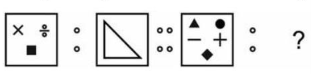
Question 52

The ratio of two numbers is 5 : 6 and their Highest Common Factor is 4. What is the sum of the two numbers?

  1. AOption (a)

    40

  2. BOption (b)

    50

  3. COption (c)

    44

  4. DOption (d)

    56

View answer & explanation

Correct answer

Answer: (c)C.

44

Why this answer is correct

Shortcut Trick

The Sum of the numbers is calculated as: (Sum of Ratio Parts) × HCF.

Given Ratio = 5 : 6 and HCF = 4.

Sum of ratio parts = 5 + 6 = 11.

Total Sum = 11 × 4 = 44.

∴ The correct answer is 44.

Alternate Method

Given:

Ratio of two numbers = 5 : 6

Highest Common Factor (HCF) = 4

Calculations:

⇒ Let the two numbers be 5x and 6x, where x is the HCF.

⇒ Since the HCF is given as 4, ∴ x = 4.

⇒ First Number = 5 × 4 = 20.

⇒ Second Number = 6 × 4 = 24.

⇒ Sum of the numbers = 20 + 24 = 44.

∴ The correct answer is 44.

Additional Information

Definition of HCF

The Highest Common Factor (HCF) is the largest number that divides two or more numbers without leaving a remainder.

LCM and HCF Relationship

For any two numbers, Product of Numbers = LCM × HCF.

Ratio Multiplier Property

If the ratio of two numbers is a : b and their HCF is x, then the numbers are ax and bx, and their LCM is abx.

Question 53

Selling price of an article is Rs. 336. Loss percentage is 30 percent. What is the cost price of the article?

  1. AOption (a)

    Rs. 450

  2. BOption (b)

    Rs. 480

  3. COption (c)

    Rs. 460

  4. DOption (d)

    Rs. 520

View answer & explanation

Correct answer

Answer: (b)B.

Rs. 480

Why this answer is correct

Shortcut Trick

Loss = 30% = 3/10 (where 10 is CP and 3 is Loss)

SP = CP − Loss = 10 − 3 = 7 units

7 units = Rs. 336

1 unit = 336 ÷ 7 = 48

CP = 10 units = 48 × 10 = Rs. 480

∴ The correct answer is Rs. 480.

Alternate Method

Given:

Selling Price (SP) = Rs. 336

Loss percentage = 30%

Formula Used:

Cost Price (CP) = (SP × 100) ÷ (100 − Loss%)

Calculations:

⇒ CP = (336 × 100) ÷ (100 − 30)

⇒ CP = (336 × 100) ÷ 70

⇒ CP = 33600 ÷ 70

⇒ CP = 3360 ÷ 7

⇒ CP = Rs. 480

∴ The correct answer is Rs. 480.

Additional Information

Profit Percentage Formula

Profit % = (Profit ÷ CP) × 100, where Profit = SP − CP.

SP when Profit% is given

SP = CP × (100 + Profit%) ÷ 100.

Marked Price and Discount

SP = Marked Price − Discount. Discount % is always calculated on the Marked Price (MP).

Question 54

In an exam, out of total number of appeared students, 60 percent students passed and 30000 students failed. What is the number of students who passed the exam?

  1. AOption (a)

    45000

  2. BOption (b)

    48000

  3. COption (c)

    52000

  4. DOption (d)

    50000

View answer & explanation

Correct answer

Answer: (a)A.

45000

Why this answer is correct

Shortcut Trick

Failed students % = 100% − 60% = 40%

Ratio of Passed : Failed = 60 : 40 = 3 : 2

Given 2 units = 30000 ⇒ 1 unit = 15000

Passed students (3 units) = 3 × 15000 = 45000

∴ The correct answer is 45000 students.

Alternate Method

Given:

Percentage of passed students = 60%

Number of failed students = 30000

⇒ Let the total number of appeared students be x.

⇒ Percentage of failed students = 100% − 60% = 40%

⇒ 40% of x = 30000

⇒ (40/100) × x = 30000

⇒ x = (30000 × 100) ÷ 40

⇒ x = 75000

⇒ Number of passed students = 60% of total students

⇒ Number of passed students = (60/100) × 75000

⇒ Number of passed students = 60 × 750 = 45000

∴ The correct answer is 45000 students.

Additional Information

Basic Percentage Formula

The value of a percentage is calculated as: Value = (Percentage ÷ 100) × Total Base.

Complementary Percentages

In a system with only two outcomes (like Pass/Fail), the sum of their percentages always equals 100%.

Unitary Method

If p% represents a value V, then 1% represents V/p. Any other percentage q% can be found by multiplying (V/p) × q.

Question 55

R did 5/8 part of a work on first day. He did 1/3 part of the remaining work on second day. Now the remaining work is 10 units. What is the total work (in units)?

  1. AOption (a)

    35

  2. BOption (b)

    38

  3. COption (c)

    40

  4. DOption (d)

    45

View answer & explanation

Correct answer

Answer: (c)C.

40

Why this answer is correct

Shortcut Trick

Let the Total Work be 24 units (LCM of 8 and 3).

First Day work = 5/8 × 24 = 15 units; Remaining = 24 − 15 = 9 units.

Second Day work = 1/3 × 9 = 3 units.

Final Remaining = 9 − 3 = 6 units.

Ratio 6 units = 10 actual units ⇒ 1 unit = 10/6.

Total Work = 24 × (10 ÷ 6) = 40 units.

∴ The correct answer is 40 units.

Alternate Method

Given:

Work done on First Day = 5/8 of total.

Work done on Second Day = 1/3 of the remaining work.

Final Remaining Work = 10 units.

Formula Used:

Remaining Work = Total Work − Total Work Done

⇒ Let the Total Work be W.

⇒ Work done on Day 1 = 5/8 × W.

⇒ Remaining work after Day 1 = W − (5/8)W = 3/8 × W.

⇒ Work done on Day 2 = 1/3 × (3/8 × W) = 1/8 × W.

⇒ Total work done in two days = 5/8 × W + 1/8 × W = 6/8 × W = 3/4 × W.

⇒ Final Remaining work = W − 3/4 × W = 1/4 × W.

⇒ 1/4 × W = 10 units.

⇒ W = 10 × 4 = 40 units.

∴ The correct answer is 40 units.

Additional Information

LCM Method for Fractions

To simplify fraction-based work problems, assume the total work is the Least Common Multiple (LCM) of the denominators involved (e.g., 8 and 3 in this case).

Successive Remainder Concept

If a person does 1/x of the remaining work, the new remaining portion is (1 − 1/x) of the previous remainder. The final remainder fraction is (1 − f1) × (1 − f2) × ... × Total.

Unitary Method

Once the fraction of the remaining work is equated to the given value (1/4 = 10), the total value (1 unit or 100%) is found by multiplying the value by the reciprocal of the fraction.

Question 56

A and B are employed in a work. A worked for 4 days and B worked for 6 days. Per day work of A and B is 3 units and 2 units respectively. A and B received total wages of Rs. 5400. What are the shares (in Rs.) of A and B respectively?

  1. AOption (a)

    2700, 2700

  2. BOption (b)

    2800, 2600

  3. COption (c)

    2600, 2800

  4. DOption (d)

    2500, 2900

View answer & explanation

Correct answer

Answer: (a)A.

2700, 2700

Why this answer is correct

Shortcut Trick

Ratio of work done by A and B = (Efficiency × Time)A : (Efficiency × Time)B

Work ratio = (3 × 4) : (2 × 6) = 12 : 12 = 1 : 1

Since the work ratio is 1 : 1, the total wages are divided equally.

Share of each = 5400 ÷ 2 = ₹2700

∴ The correct answer is ₹2700, ₹2700.

Alternate Method

Given:

Time worked by A = 4 days | Efficiency of A = 3 units/day

Time worked by B = 6 days | Efficiency of B = 2 units/day

Total wages received = ₹5400

Formula Used:

Total Work Done = Efficiency × Time

Wage of a person = (Work done by the person ÷ Total work) × Total wages

PersonDaysTotal WorkEfficiency
A424 units3
B62

Calculations:

⇒ Work done by A = 4 days × 3 units/day = 12 units

⇒ Work done by B = 6 days × 2 units/day = 12 units

⇒ Total work done = 12 + 12 = 24 units

⇒ Share of A = (12 ÷ 24) × 5400 = 1/2 × 5400 = ₹2700

⇒ Share of B = (12 ÷ 24) × 5400 = 1/2 × 5400 = ₹2700

∴ The correct answer is ₹2700, ₹2700.

Additional Information

Work and Wages Relationship

Wages are always distributed in the ratio of the actual work done by the individuals, not necessarily their efficiencies alone.

Constant Time Case

If all persons work for the same number of days, the wages are divided strictly in the ratio of their per-day efficiencies.

Constant Efficiency Case

If all workers have the same efficiency, the wages are divided in the ratio of the number of days they worked.

Total Work Calculation

Total work can be calculated as the LCM of individual days when only the time to complete the full task is given.

Question 57

The speed of A and B is 40 km/hr and 18 m/s respectively. What is the respective ratio of the distance covered by them in one hour?

  1. AOption (a)

    48 : 83

  2. BOption (b)

    50 : 81

  3. COption (c)

    61 : 92

  4. DOption (d)

    54 : 83

View answer & explanation

Correct answer

Answer: (b)B.

50 : 81

Why this answer is correct

Shortcut Trick

When time is constant (1 hour for both), the ratio of distance covered is equal to the ratio of their speeds.

Speed of A = 40 km/hr

Speed of B = 18 × (18/5) = 64.8 km/hr

Distance Ratio = Speed Ratio = 40 : 64.8 = 400 : 648 = 50 : 81

∴ The correct answer is 50 : 81.

Alternate Method

Given:

Speed of A = 40 km/hr

Speed of B = 18 m/s

Time = 1 hour

Conversion of Speed B into km/hr:

⇒ Speed of B = 18 × (18 / 5) km/hr

⇒ Speed of B = 324 / 5 = 64.8 km/hr

Calculation of Distance:

⇒ Distance = Speed × Time

⇒ Distance covered by A = 40 × 1 = 40 km

⇒ Distance covered by B = 64.8 × 1 = 64.8 km

Respective Ratio:

⇒ Ratio = Distance of A : Distance of B

⇒ Ratio = 40 : 64.8

⇒ Ratio = 400 : 648

⇒ Dividing both by 8: 50 : 81

∴ The correct answer is 50 : 81.

Additional Information

Unit Conversion Factor

To convert speed from m/s to km/hr, multiply by 18/5. To convert from km/hr to m/s, multiply by 5/18.

Direct Proportionality

If time (t) is constant, distance (D) is directly proportional to speed (s) (D ∝ s). If distance (D) is constant, speed is inversely proportional to time (s ∝ 1/t).

Average Speed Formula

Average Speed = Total Distance covered ÷ Total Time taken.

Question 58

A train crosses a standing pole in 8 seconds and a 490 metre long platform in 15 seconds. What is the length (in metres) and speed (in m/s) of the train?

  1. AOption (a)

    560, 70

  2. BOption (b)

    550, 70

  3. COption (c)

    520, 60

  4. DOption (d)

    540, 80

View answer & explanation

Correct answer

Answer: (a)A.

560, 70

Why this answer is correct

Shortcut Trick

Extra time taken to cross the platform = 15 − 8 = 7 seconds.

This time is spent covering the platform length of 490 m.

Speed = Distance ÷ Time = 490 ÷ 7 = 70 m/s.

Length of train = Speed × Time taken to cross the pole = 70 × 8 = 560 m.

∴ The correct answer is 560 m, 70 m/s.

Alternate Method

Given:

Time to cross pole (T1) = 8 sec

Length of platform (P) = 490 m

Time to cross platform (T2) = 15 sec

Formula Used:

Speed = Total Distance ÷ Total Time

Calculations:

⇒ Let the length of the train be L and its speed be S.

⇒ Case 1 (Pole): S = L ÷ 8

⇒ Case 2 (Platform): S = (L + 490) ÷ 15

⇒ Equating the speeds: L ÷ 8 = (L + 490) ÷ 15

⇒ 15 × L = 8 × (L + 490)

⇒ 15L = 8L + 3920

⇒ 15L − 8L = 3920

⇒ 7L = 3920

⇒ L = 560 m

⇒ S = 560 ÷ 8 = 70 m/s

∴ The correct answer is 560 m, 70 m/s.

Additional Information

Unit Conversion

To convert speed from km/h to m/s, multiply by 5/18. To convert from m/s to km/h, multiply by 18/5.

Relative Speed

When two objects move in the same direction, Relative Speed = S1 − S2. When they move in opposite directions, Relative Speed = S1 + S2.

Crossing Objects

When a train crosses a stationary object of negligible length (pole, man), distance = Length of Train. When it crosses an object of certain length (platform, bridge, tunnel), distance = Length of Train + Length of Object.

Question 59

An article is sold for 25 percent loss. The value of discount given is equal to the (5/11) of the selling price. What is the ratio of the marked price of the article to its cost price?

  1. AOption (a)

    11 : 12

  2. BOption (b)

    5 : 7

  3. COption (c)

    12 : 11

  4. DOption (d)

    9 : 15

View answer & explanation

Correct answer

Answer: (c)C.

12 : 11

Why this answer is correct

Shortcut Trick

Loss = 25% = 1/4 ⇒ CP : SP = 4 : 3

Discount = 5/11 of SP ⇒ Discount : SP = 5 : 11

To equate SP, multiply (4 : 3) by 11 and (5 : 11) by 3.

CP = 44, SP = 33, Discount = 15

MP = SP + Discount = 33 + 15 = 48

MP : CP = 48 : 44 = 12 : 11

∴ The correct answer is 12 : 11.

Alternate Method

Given:

Loss percentage = 25%

Discount = (5/11) × Selling Price (SP)

Calculations:

Let the Cost Price (CP) = 100

⇒ Selling Price (SP) = 100 − (25% of 100) = 75

⇒ Discount = (5/11) × 75 = 375/11

⇒ Marked Price (MP) = SP + Discount

⇒ MP = 75 + 375/11

⇒ MP = (75 × 11 + 375) / 11

⇒ MP = (825 + 375) / 11 = 1200/11

⇒ Ratio MP : CP = (1200/11) : 100

⇒ Ratio MP : CP = 1200 : (100 × 11)

⇒ Ratio MP : CP = 1200 : 1100 = 12 : 11

∴ The correct answer is 12 : 11.

Additional Information

Basic Profit and Loss Relations

Selling Price (SP) = CP × (100 − Loss%)/100 and Marked Price (MP) = SP + Discount.

Discount Percentage

Discount% = (Discount / Marked Price) × 100. It is always calculated on the MP.

MP and CP Relation

The general relation is MP/CP = (100 + Profit%) / (100 − Discount%) or (100 − Loss%) / (100 − Discount%).

Question 60

A person sells 20 articles at Rs. 50 per article after giving 30 percent discount. He earns a profit of 25 percent. If no discount is given, then what will be the profit percentage?

  1. AOption (a)

    78.57 percent

  2. BOption (b)

    78.46 percent

  3. COption (c)

    70 percent

  4. DOption (d)

    72 percent

View answer & explanation

Correct answer

Answer: (a)A.

78.57 percent

Why this answer is correct

Shortcut Trick

Use the direct ratio formula: Cost Price (CP) : Marked Price (MP) = (100 − Discount%) : (100 + Profit%).

Ratio CP : MP = (100 − 30) : (100 + 25) = 70 : 125.

If no discount is given, the new Selling Price (SP) = Marked Price (MP) = 125 units.

New Profit Percentage = ((125 − 70) ÷ 70) × 100 = (55 ÷ 70) × 100.

New Profit % = 550 ÷ 7 = 78.57%.

∴ The correct answer is 78.57 percent.

Alternate Method

Given: Selling Price (SP) of one article = ₹50, Discount = 30%, Profit = 25%.

Formula Used: Marked Price (MP) = SP ÷ (1 − Discount%); Cost Price (CP) = SP ÷ (1 + Profit%).

⇒ Selling Price (SP) = ₹50

⇒ Cost Price (CP) = 50 ÷ (1 + 0.25) = 50 ÷ 1.25 = ₹40

⇒ Marked Price (MP) = 50 ÷ (1 − 0.30) = 50 ÷ 0.70 = ₹500/7 ≈ ₹71.43

⇒ If no discount is given, New SP = MP = ₹500/7

⇒ New Profit = (500/7) − 40 = (500 − 280) ÷ 7 = ₹220/7

⇒ New Profit Percentage = [(220/7) ÷ 40] × 100

⇒ New Profit % = [220 ÷ (7 × 40)] × 100 = (220 ÷ 280) × 100 = (11 ÷ 14) × 100 = 78.57%

∴ The correct answer is 78.57 percent.

Additional Information

CP and MP Relationship

The ratio of Cost Price to Marked Price is given by CP/MP = (100 − D%) ÷ (100 + P%), where D is discount and P is profit.

Successive Discounts

If two successive discounts x% and y% are given, the single equivalent discount is (x + y − (xy ÷ 100))%.

Markup Percentage

Markup% = [(MP − CP) ÷ CP] × 100. This is the profit percentage when no discount is offered on the Marked Price.

English (20 questions)

Read the passage below and choose the correct word for each blank.

Time management is a skill that helps people become more efficient and (1). When people plan their tasks and set goals, they are more likely to use their time (2). One useful technique is to create a daily (3)_______ of tasks and stick to it. This helps in reducing stress and (4)_______ deadlines. People who manage their time well often find that they have more time for leisure and (5)_______ activities.

Question 61

Read the passage below and choose the correct word for blank (1).

  1. AOption (a)

    patient

  2. BOption (b)

    lazy

  3. COption (c)

    successful

  4. DOption (d)

    worried

View answer & explanation

Correct answer

Answer: (c)C.

successful

Why this answer is correct

The correct answer is 'successful'.

Key Points

  • The passage discusses the importance and benefits of time management in daily life.
  • The sentence indicates that time management is a skill that improves two key aspects: efficiency and an overall positive outcome for the person.
  • The word 'successful' is the most appropriate adjective here because being efficient (doing things well) naturally leads to being successful (achieving desired goals or results).
  • Other options like 'lazy' or 'worried' are negative traits that contradict the benefits of time management, while 'patient' does not directly correlate with the concept of efficiency in this context.

Therefore, the correct answer is 'Option 3'.

Complete Passage: Time management is a skill that helps people become more efficient and 1. successful. When people plan their tasks and set goals, they are more likely to use their time 2. wisely. One useful technique is to create a daily 3. ist of tasks and stick to it. This helps in reducing stress and 4. meeting deadlines. People who manage their time well often find that they have more time for leisure and 5. fun activities.

Additional Information

  • 'Patient' means the ability to wait or endure something without complaining or getting annoyed.
  • 'Lazy' refers to being unwilling to work or exert effort.
  • 'Worried' means feeling anxious or concerned about a problem or situation.

Question 62

Read the passage below and choose the correct word for blank (2).

  1. AOption (a)

    wisely

  2. BOption (b)

    sadly

  3. COption (c)

    slowly

  4. DOption (d)

    randomly

View answer & explanation

Correct answer

Answer: (a)A.

wisely

Why this answer is correct

The correct answer is 'wisely'.

Key Points

  • The passage emphasizes the benefits of time management and how it leads to efficiency.
  • The sentence describes the outcome of planning tasks and setting goals.
  • 'Wisely' is an adverb that means in a sensible or smart way. It perfectly describes how time is used when one follows a structured plan.
  • The other options do not align with the positive and productive context of the sentence.

Therefore, the correct answer is 'Option 1'.

Complete Passage: Time management is a skill that helps people become more efficient and 1. successful. When people plan their tasks and set goals, they are more likely to use their time 2. wisely. One useful technique is to create a daily 3. ist of tasks and stick to it. This helps in reducing stress and 4. meeting deadlines. People who manage their time well often find that they have more time for leisure and 5. fun activities.

Additional Information

  • Sadly: In a way that shows or causes sorrow; it has no logical connection to planning tasks.
  • Slowly: At a low speed; while one can work slowly, the context of efficiency usually implies optimal speed, not just being slow.
  • Randomly: Without a definite aim, purpose, or method; this is the opposite of planning and goal-setting.

Question 63

Read the passage below and choose the correct word for blank (3).

  1. AOption (a)

    ist

  2. BOption (b)

    game

  3. COption (c)

    hour

  4. DOption (d)

    friend

View answer & explanation

Correct answer

Answer: (a)A.

ist

Why this answer is correct

The correct answer is 'ist'.

Key Points

  • The passage emphasizes techniques for effective time management and personal productivity.
  • The context describes a specific technique: creating a record or catalog of daily duties to improve organization.
  • In this context, the word 'list' (represented here as 'ist') is the most appropriate noun to describe a collection of tasks that one intends to complete.
  • Creating a daily list is a fundamental strategy for reducing stress and ensuring that deadlines are met.

Therefore, the correct answer is 'Option 1'.

Complete Passage: Time management is a skill that helps people become more efficient and 1. successful. When people plan their tasks and set goals, they are more likely to use their time 2. wisely. One useful technique is to create a daily 3. ist of tasks and stick to it. This helps in reducing stress and 4. meeting deadlines. People who manage their time well often find that they have more time for leisure and 5. fun activities.

Additional Information

  • Game: Refers to an activity for amusement or competition, which does not fit the context of a task-tracking tool.
  • Hr: An abbreviation for 'hour'; while relevant to time, one does not create a 'daily hour of tasks' in this grammatical structure.
  • Friend: Refers to a person with whom one has a bond of mutual affection, which is irrelevant to a list of tasks.

Question 64

Read the passage below and choose the correct word for blank (4).

  1. AOption (a)

    meeting

  2. BOption (b)

    missing

  3. COption (c)

    making

  4. DOption (d)

    drawing

View answer & explanation

Correct answer

Answer: (a)A.

meeting

Why this answer is correct

The correct answer is 'meeting'.

Key Points

  • The passage focuses on the benefits and techniques of effective Time management.
  • The blank (4) requires a verb that describes a positive action taken regarding deadlines as a result of planning.
  • In English, the standard phrase for completing a task on or before its due date is 'meeting a deadline'.
  • Using a daily task list helps reduce stress because it ensures that the individual is meeting their obligations on time.

Therefore, the correct answer is 'Option 1'.

Complete Passage: Time management is a skill that helps people become more efficient and 1. successful. When people plan their tasks and set goals, they are more likely to use their time 2. wisely. One useful technique is to create a daily 3. ist of tasks and stick to it. This helps in reducing stress and 4. meeting deadlines. People who manage their time well often find that they have more time for leisure and 5. fun activities.

Additional Information

  • Missing: This means failing to do something or not being present; effective time management helps avoid missing deadlines, but the structure here implies the positive act of achieving them.
  • Making: While one can 'make' a schedule, the specific colocation for deadlines in the sense of fulfillment is 'meeting'.
  • Drawing: This typically refers to producing a picture or pulling something, which is irrelevant to the context of time management and deadlines.

Question 65

Read the passage below and choose the correct word for each blank.

(5)

  1. AOption (a)

    fun

  2. BOption (b)

    stressfu

  3. COption (c)

    risky

  4. DOption (d)

    expensive

View answer & explanation

Correct answer

Answer: (a)A.

fun

Why this answer is correct

The correct answer is 'fun'.

Key Points

  • The passage discusses the benefits of time management and how it leads to more efficient work and increased leisure time.
  • The sentence indicates that having better control over one's schedule allows for more time to engage in enjoyable activities.
  • 'Fun' is the most suitable adjective here because it describes activities that provide amusement or enjoyment, which directly complements the concept of leisure.
  • Other options like 'stressful' (listed as 'stressfu'), 'risky', or 'expensive' do not align with the positive outcomes of effective time management mentioned in the text.

Therefore, the correct answer is 'Option 1'.

Complete Passage: Time management is a skill that helps people become more efficient and (1) ___. When people plan their tasks and set goals, they are more likely to use their time (2) ___. One useful technique is to create a daily (3) ___ of tasks and stick to it. This helps in reducing stress and (4) ___ deadlines. People who manage their time well often find that they have more time for leisure and 5. fun activities.

Additional Information

  • Stressful (stressfu): Refers to something that causes mental or emotional tension or anxiety.
  • Risky: Refers to an activity that involves a possibility of danger or a negative outcome.
  • Expensive: Refers to something that costs a large amount of money.

Question 66

Which of the following words is correctly spelt?

  1. AOption (a)

    Taciturn

  2. BOption (b)

    Trencate

  3. COption (c)

    Temirity

  4. DOption (d)

    Tireade

View answer & explanation

Correct answer

Answer: (a)A.

Taciturn

Why this answer is correct

The correct answer is 'Option (1)' i.e. 'Taciturn'.

Key Points

  • The word 'Taciturn' is an adjective used to describe a person who is naturally reserved or uncommunicative in speech, often saying very little. (अल्पभाषी)
  • Example: Although his brother is very talkative, John is quite taciturn and prefers to observe rather than speak.
  • Among the provided options, 'Taciturn' is the only word that is correctly spelt and adheres to standard English vocabulary. (सही वर्तनी)
  • Example: The taciturn nature of the witness made it difficult for the lawyer to extract much information.
  • Hence, we can conclude that the spelling in Option (1) is accurate.

Therefore, the correct answer is- Taciturn.

Additional Information

Here are the correct spellings and meanings for the other misspelled options:

  • Truncate (काट-छाँट करना): The word 'Trencate' is incorrect; the right spelling is 'Truncate'. it means to shorten something by cutting off the top or the end.
  • Example: Because the event was running late, the speaker had to truncate his presentation.
  • Temerity (धृष्टता): The word 'Temirity' is incorrect; the right spelling is 'Temerity'. it refers to excessive confidence or boldness; audacity.
  • Example: He had the temerity to argue with the judge during the hearing.
  • Tirade (कड़ी निंदा): The word 'Tireade' is incorrect; the right spelling is 'Tirade'. it is a long, angry speech of criticism or accusation.
  • Example: The manager launched into a tirade against the staff for their poor performance.

Question 67

There are four underlined words in the sentence given below. One of them is misspelt. Choose the option with the misspelt word.

The minister assured that the infrastructure projects would be completed within the stipulated time frame despite the opposition raising concerns about cost overuns.

  1. AOption (a)

    infrastructure

  2. BOption (b)

    stipulated

  3. COption (c)

    opposition

  4. DOption (d)

    overuns

View answer & explanation

Correct answer

Answer: (d)D.

overuns

Why this answer is correct

The correct answer is: overruns.

Key Points

  • The word 'overuns' is misspelt in the sentence. It is used to refer to exceeding a budget or time limit. (सीमा से अधिक होना)
  • Example: The development project was halted due to unexpected budget overuns.
  • 'Overruns' is the correct spelling, which refers to an instance of something exceeding an expected or allowed cost or time limit. (लागत या समय सीमा से अधिक होना)
  • Example: The construction of the highway was delayed by severe cost overruns.
  • Hence, we can infer that the correct word is 'overruns'.

Therefore, the correct answer is: overruns.

Additional Information

Here are the other options explained along with their Hindi meanings and example sentences:

  • Infrastructure (बुनियादी ढांचा): The basic physical and organizational structures and facilities needed for the operation of a society or enterprise.
  • Example: The local government plans to invest in upgrading the public transport infrastructure.
  • Stipulated (निर्धारित): Demanded or specified as a requirement, typically as part of an agreement.
  • Example: The agreement stipulated that the renovation must be completed within six months.
  • Opposition (विरोध): Resistance or dissent, expressed in action or argument.
  • Example: The proposed tax reform met with fierce opposition from the public.

Question 68

Choose the word that is the most appropriate antonym of the word "accept".

  1. AOption (a)

    Agree

  2. BOption (b)

    Approve

  3. COption (c)

    Refuse

  4. DOption (d)

    Welcome

View answer & explanation

Correct answer

Answer: (c)C.

Refuse

Why this answer is correct

The correct answer is Option (3) i.e. Refuse.

Key Points

  • The word 'accept' means to consent to receive something that is offered or to agree to a proposal or request. (स्वीकार करना)
  • Example: She was very happy to accept the invitation to the wedding.
  • 'Refuse' refers to the act of indicating or showing that one is not willing to do something, or not willing to accept something that is offered. (अस्वीकार करना)
  • Example: He had to refuse the job offer because he decided to stay in his current city.
  • Hence, we can infer that the opposite or antonym of 'accept' is 'refuse'.

Therefore, the correct answer is- Refuse.

Additional Information

Here are the other options explained along with their Hindi meanings and example sentences:

  • Agree (सहमत होना): To have the same opinion as someone else or to say that you will do something that someone has suggested.
  • Example: I totally agree with your decision to start a new business.
  • Approve (मंजूरी देना): To officially agree to or accept something as being satisfactory or correct.
  • Example: The committee will likely approve the new budget by the end of the week.
  • Welcome (स्वागत करना): To greet someone in a polite or friendly way when they arrive at a place.
  • Example: The staff at the resort will welcome you with a traditional drink.

Question 69

Choose the word that is the antonym of Stylish.

  1. AOption (a)

    Elegant

  2. BOption (b)

    Fashionable

  3. COption (c)

    Trendy

  4. DOption (d)

    Unattractive

View answer & explanation

Correct answer

Answer: (d)D.

Unattractive

Why this answer is correct

The correct answer is: Unattractive.

Key Points

  • The word 'Stylish' means someone or something that is fashionable, elegant, and follows a sophisticated trend or aesthetic. (शानदार)
  • Example: She always wears stylish clothes that reflect the latest fashion trends.
  • 'Unattractive' refers to something that is not pleasing or appealing to look at; it lacks beauty, grace, or style. (भद्दा/आकर्षक न होना)
  • Example: The old, rusted fence looked unattractive against the backdrop of the beautiful garden.
  • Hence, we can infer that the opposite of 'stylish' is 'unattractive'.

Therefore, the correct answer is: Unattractive.

Additional Information

Here are the other options explained along with their Hindi meanings and example sentences:

  • Elegant (सुंदर/शिष्ट): This refers to being graceful and stylish in appearance or manner.
  • Example: The ballroom was filled with people in elegant evening wear.
  • Fashionable (प्रचलित/फैशनेबल): Something that represents a popular style or is currently in vogue.
  • Example: It is very fashionable to use eco-friendly products these days.
  • Trendy (आधुनिक): Very fashionable or up-to-date with the current styles.
  • Example: That new restaurant is a trendy spot for young professionals.

Question 70

Which of the following options is the most suitable conversion of the following sentence into Passive Voice?
The team has developed a cutting-edge software for data analysis.

  1. AOption (a)

    A cutting-edge software for data analysis is developed by the team.

  2. BOption (b)

    A cutting-edge software for data analysis was developed by the team.

  3. COption (c)

    A cutting-edge software for data analysis has been developed by the team.

  4. DOption (d)

    A cutting-edge software for data analysis had been developed by the team.

View answer & explanation

Correct answer

Answer: (c)C.

A cutting-edge software for data analysis has been developed by the team.

Why this answer is correct

The correct answer is A cutting-edge software for data analysis has been developed by the team..

Key Points

  • The active voice sentence follows the structure of the Present Perfect Tense: Subject + has/have + V3 (Past Participle) + Object. Here, The team is the subject, has developed is the verb, and a cutting-edge software for data analysis is the object.
  • To transform a Present Perfect sentence into Passive Voice, the standard grammatical formula is: New Subject (Object) + has/have + been + V3 + by + New Object (Subject).
  • In the passive construction, the object a cutting-edge software for data analysis becomes the new subject. Since this subject is singular, it is paired with the auxiliary verb has.
  • The word been is mandatory in perfect tense passive conversions to indicate the completed state of the action relative to the subject.
  • The original subject The team is shifted to the end of the sentence as the agent, preceded by the preposition by.
  • Combining these elements results in: A cutting-edge software for data analysis has been developed by the team.

 Additional Information

  • Voice Conversion Rules based on Tense:
  • Simple Present: The passive form uses is/am/are + V3. (e.g., is developed). This is used for habitual actions or general truths.
  • Simple Past: The passive form uses was/were + V3. (e.g., was developed). This indicates an action completed at a specific time in the past.
  • Past Perfect: The passive form uses had + been + V3. (e.g., had been developed). This is used for an action completed before another point in the past.
  • Future Perfect: The passive form uses will have + been + V3. This indicates an action that will be completed by a certain future time.
  • Conceptual Importance:
  • Active Voice: Used when the doer (The team) is the primary focus of the sentence.
  • Passive Voice: Used when the action or the result (The software) is more significant than who performed it, or when the performer is unknown.

Question 71

Which of the following options is the most suitable conversion of the following sentence into Passive Voice?
By next month, the farmers will have harvested the crops.

  1. AOption (a)

    The crops will have been harvested by the farmers by next month.

  2. BOption (b)

    The crops are been harvested by the farmers by next month.

  3. COption (c)

    The crops will be harvested by the farmers next month.

  4. DOption (d)

    The crops will being harvested by the farmers by next month.

View answer & explanation

Correct answer

Answer: (a)A.

The crops will have been harvested by the farmers by next month.

Why this answer is correct

The correct answer is The crops will have been harvested by the farmers by next month..

Key Points

  • The original sentence 'By next month, the farmers will have harvested the crops' is in the Active Voice and follows the Future Perfect Tense structure (Subject + will have + V3 + Object).
  • When converting to Passive Voice, the object of the active sentence, 'the crops', becomes the new subject of the passive sentence.
  • The Future Perfect verb form 'will have harvested' must be changed to its passive equivalent, which is 'will have been harvested' (will have + been + V3).
  • The original subject, 'the farmers', is introduced as the agent using the preposition 'by', resulting in 'by the farmers'.
  • The time indicator 'By next month' remains consistent in the sentence to denote that the action will be completed by a specific future point.
  • Therefore, the resulting sentence maintains the exact meaning and tense of the original while shifting focus to the entity being acted upon (the crops).

 Additional Information

  • Future Perfect Passive Construction:
  • The general formula for Future Perfect Passive is: Subject (Receiver) + will + have + been + Past Participle (V3) + by + Agent (Doer).
  • It is used specifically for actions that will have been completed before another point in the future.
  • The addition of 'been' is the critical identifier for the passive transformation in perfect tenses.
  • Comparison with other Tense Forms:
  • Future Simple Passive: Uses 'will be + V3' (e.g., 'The crops will be harvested'). This indicates a general future action rather than a completed one.
  • Present Perfect Passive: Uses 'has/have been + V3' (e.g., 'The crops have been harvested'), which refers to a completed action in the past with current relevance.
  • Future Continuous: Generally does not have a commonly used passive form in standard English (avoiding 'will be being').

Question 72

Select the correct alternative to fill in the blank with the correct preposition in the following sentence.

The Prime Minister of Malaysia is appearing _______ television today at 8:30 p.m.

  1. AOption (a)

    on

  2. BOption (b)

    in

  3. COption (c)

    to

  4. DOption (d)

    with

View answer & explanation

Correct answer

Answer: (a)A.

on

Why this answer is correct

The correct answer is 'on'.


Key Points

  • The preposition 'on' is used when referring to electronic media and broadcasting platforms such as television, radio, or the internet.
  • The phrase 'appearing on television' is a standard expression used to describe someone being shown during a broadcast.
  • The sentence indicates a scheduled broadcast featuring the Prime Minister at 8:30 p.m., making 'on' the grammatically correct choice.

Therefore, the correct answer is Option 1.


Complete Sentence: 'The Prime Minister of Malaysia is appearing on television today at 8:30 p.m.'


Additional Information

  • Option 2: 'in' is generally used for print media such as newspapers, magazines, or books (e.g., 'in the newspaper').
  • Option 3: 'to' is used to indicate direction, motion, or the recipient of an action.
  • Option 4: 'with' is used to indicate accompaniment or the instrument used to perform an action.

Question 73

A part of the following sentence is underlined. Choose the option that can replace the underlined part to improve the sentence. In case Options A, B and C are not found suitable, choose Option D: "No Improvement Required."
Many small investors got burns on their fingers in the stock market crash of 2008.

  1. AOption (a)

    got their fingers burnt

  2. BOption (b)

    got burning fingers

  3. COption (c)

    get their fingers burnt

  4. DOption (d)

    No improvement required

View answer & explanation

Correct answer

Answer: (a)A.

got their fingers burnt

Why this answer is correct

The correct answer is got their fingers burnt.

Key Points

  • The sentence requires the correct usage of the English idiom 'to burn one's fingers' or 'to get one's fingers burnt'. This expression means to suffer financial loss or unpleasant consequences as a result of meddling in something or taking a risk.
  • The context of the sentence is the stock market crash of 2008, which is a specific historical event in the past. Therefore, the verb must be in the simple past tense (got).
  • The grammatical structure for this causative expression is subject + got + object (their fingers) + past participle (burnt). The original phrase 'got burns on their fingers' is a literal and incorrect phrasing of the intended figurative meaning.
  • In this context, burnt acts as the past participle modifying the state of the object (fingers) after the action of the market crash.

 Additional Information

  • Grammatical Analysis of Incorrect Options:
  • Verb Tense: The option get their fingers burnt is grammatically correct in structure but uses the present tense. This is incompatible with the year 2008, which necessitates a past tense marker.
  • Idiomatic Precision: The phrase got burning fingers is not a recognized idiom and implies a physical sensation rather than the metaphorical economic loss associated with the crash.
  • Contextual Background:
  • The 2008 Financial Crisis was characterized by a massive devaluation of securities and equities, causing widespread losses for retail investors (small investors).
  • The idiom get one's fingers burnt is standard in financial journalism to describe the risks of speculative trading or market volatility.

Question 74

Select the correct alternative to fill in the blank with the correct preposition in the following sentence.

The child is bent buying the toy helicopter.

  1. AOption (a)

    in

  2. BOption (b)

    for

  3. COption (c)

    on

  4. DOption (d)

    about

View answer & explanation

Correct answer

Answer: (c)C.

on

Why this answer is correct

The correct answer is 'on'.


Key Points

  • The adjective 'bent' when followed by the preposition 'on' forms an idiomatic expression 'bent on'.
  • 'Bent on' means to be determined, resolved, or insistently focused on doing something.
  • This idiom is typically followed by a gerund (a verb ending in -ing) or a noun phrase. In this sentence, it is followed by the gerund 'buying'.
  • The sentence indicates that the child is very determined to get the toy helicopter.

Therefore, the correct answer is Option 3.


Complete Sentence: 'The child is bent on buying the toy helicopter.'


Additional Information

  • Option 1: 'in' is incorrect because 'bent in' usually refers to a physical shape or position (e.g., bent in half).
  • Option 2: 'for' is not the standard idiomatic preposition used with 'bent' to express determination.
  • Option 4: 'about' is grammatically incorrect in this specific context of intent or resolution.

Question 75

A part of the following sentence is underlined. Choose the option that can replace the underlined part to improve the sentence. If you feel Options A, B, or C do not improve the sentence, then choose Option D: "No improvement required."
"Yes my dear your sister's latest novel set in Venice has received rave reviews," said her mother.

  1. AOption (a)

    Yes, my dear your sisters' late novel

  2. BOption (b)

    Yes my dear, your sister's last novel

  3. COption (c)

    Yes, my dear, your sister's latest novel

  4. DOption (d)

    No improvement required

View answer & explanation

Correct answer

Answer: (c)C.

Yes, my dear, your sister's latest novel

Why this answer is correct

The correct answer is Yes, my dear, your sister's latest novel.

Key Points

  • The sentence requires proper punctuation for an interjection and a vocative expression. The word Yes is an introductory interjection and must be followed by a comma to separate it from the main clause. Hence, statement 3 is correct.
  • The phrase my dear is a term of direct address (vocative case). According to standard English grammar rules, a person or group being addressed directly must be set off from the rest of the sentence using commas. Since it follows an interjection, it needs a comma both before and after it. Hence, statement 3 is correct.
  • The use of sister's is the correct singular possessive form, indicating that the novel belongs to one sister. The apostrophe is placed before the 's' to show ownership by a single entity. Hence, statement 3 is correct.
  • The term latest is the superlative adjective used to denote the most recent occurrence in a series. In the context of a novel, it implies the most recently published work, which fits the intended meaning of the sentence. Hence, statement 3 is correct.

 Additional Information

  • Word Usage and Nuance:
  • Latest vs. Last: While last can mean the most recent, it often implies the final item in a sequence where no more will follow. Latest specifically highlights the most current work in an ongoing career.
  • Late: Using late would imply the sister is deceased or that the novel was overdue, which changes the semantic meaning of the original sentence.
  • Sisters': This is the plural possessive form. It would only be used if the novel was co-written by multiple sisters, which is not suggested by the singular context of the sentence.
  • Punctuation Importance:
  • Omitting the comma after Yes or around the vocative phrase my dear leads to a run-on effect that obscures the structure of direct speech in narrative writing.

Question 76

Identify the error.
"She insisted me to participate in the competition."

  1. AOption (a)

    insisted

  2. BOption (b)

    me to participate

  3. COption (c)

    in the

  4. DOption (d)

    competition

View answer & explanation

Correct answer

Answer: (b)B.

me to participate

Why this answer is correct

The correct answer is Option 2.


Key Points

  • The error lies in the segment me to participate.
  • The verb insist cannot be followed by an object + to-infinitive structure (e.g., insist someone to do something).
  • Instead, insist typically takes the preposition on followed by a gerund (verb + ing) or a that-clause.
  • The sentence should be corrected to: 'She insisted on my participating in the competition' or 'She insisted that I participate in the competition.'
  • Therefore, the grammatical error is located in part 2.

Therefore, the correct answer is me to participate.


Correct Sentence: 'She insisted on my participating in the competition.'


Additional Information

  • Insist on: When we use insist with a noun or a gerund, we must use the preposition on. Example: 'He insisted on a receipt.'
  • Insist that: When using a clause, that is used. Example: 'He insisted that he was innocent.'
  • In the competition: This part is grammatically correct as it correctly identifies the event she is referring to.

Question 77

Identify the error:
"Neither of the solutions are correct."

  1. AOption (a)

    Neither

  2. BOption (b)

    of the solutions

  3. COption (c)

    äre

  4. DOption (d)

    correct

View answer & explanation

Correct answer

Answer: (c)C.

äre

Why this answer is correct

The correct answer is Option 3.


Key Points

  • The error in the sentence lies in the use of the plural verb are (written as äre in the options) after the pronoun Neither.
  • The word Neither is a distributive pronoun which is used to refer to 'not one and not the other' of two things or people.
  • Grammatically, distributive pronouns like Each, Either, and Neither are always treated as singular subjects.
  • According to the rules of Subject-Verb Agreement, a singular subject must be accompanied by a singular verb.
  • Therefore, the plural verb are must be replaced with the singular verb is to make the sentence grammatically correct.

Therefore, the correct answer is äre.


Correct Sentence: 'Neither of the solutions is correct.'


Additional Information

  • Neither of: This phrase is followed by a plural noun or plural pronoun (solutions), but the verb remains singular because the focus is on each individual item not being correct.
  • Neither...nor: In a correlative conjunction structure, if two subjects are joined by nor, the verb agrees with the subject closest to it. However, when neither is used alone as the subject, it is strictly singular.
  • Other examples: 'Neither of the candidates has arrived yet' (Not 'have').

Question 78

Identify the correct one-word substitute.
A person who does not eat meat or fish is called a:

  1. AOption (a)

    Non Vegetarian

  2. BOption (b)

    Vegetarian

  3. COption (c)

    Carnivore

  4. DOption (d)

    Omnivore

View answer & explanation

Correct answer

Answer: (b)B.

Vegetarian

Why this answer is correct

The correct answer is Option (2) i.e. Vegetarian.

Key Points

  • The term 'Vegetarian' refers to a person who does not eat meat or fish, often for moral, religious, or health reasons. (शाकाहारी)
  • Example: Being a vegetarian, he always checks the ingredients of the food he orders at restaurants.
  • 'Vegetarian' is the specific one-word substitute for someone who abstains from consuming animal flesh. (शाकाहारी)
  • Example: My sister is a vegetarian, so we prepared a special meat-free meal for her birthday.
  • Hence, we can infer that the correct one-word substitute for the given description is 'vegetarian'.

Therefore, the correct answer is- Vegetarian.

Additional Information

Here are the other options explained along with their Hindi meanings and example sentences:

  • Non Vegetarian (मांसाहारी): A person who eats meat and fish as part of their regular diet.
  • Example: The non-vegetarian section of the menu features several grilled chicken and fish dishes.
  • Carnivore (माँसभक्षी): An animal or organism that feeds primarily on the flesh of other animals.
  • Example: The lion is a well-known carnivore that hunts for its food in the wild.
  • Omnivore (सर्वाहारी): An animal or person that eats food of both plant and animal origin.
  • Example: Since humans eat both vegetables and meat, they are biologically classified as omnivores.

Question 79

In the following question, the first and the last parts of the sentence/passage are numbered 1 and 6. The rest of the sentence/passage is split into four parts - P, Q, R, and S. These four parts are not given in their proper order. Read the sentence/passage and find the most logical order of the parts between 1 and 6.

  1. Mr. Rao woke up early every day to prepare his lessons. 

P. He taught his students with patience and kindness. 

Q. He spent extra time helping students after school. 

R. He encouraged slow learners and motivated them to improve. 

S. His students respected him because he cared for them. 

  1. Mr. Rao felt happy seeing his students succeed in life.
  1. AOption (a)

    PRQS

  2. BOption (b)

    RPSQ

  3. COption (c)

    PQRS

  4. DOption (d)

    RQSP

View answer & explanation

Correct answer

Answer: (a)A.

PRQS

Why this answer is correct

The correct answer is Option 1.

Key Points

  • The paragraph describes the daily routine and professional dedication of a teacher named Mr. Rao and the resulting impact on his students.
  • Sentence 1 introduces the subject and his preparation: 'Mr. Rao woke up early every day to prepare his lessons.'
  • Sentence P logically follows by describing what he does with those prepared lessons: 'He taught his students with patience and kindness.'
  • Sentence R provides a specific detail about his teaching methodology: 'He encouraged slow learners and motivated them to improve.'
  • Sentence Q adds another dimension to his hard work, mentioning what he did after classes: 'He spent extra time helping students after school.'
  • Sentence S presents the outcome of his dedication: 'His students respected him because he cared for them.'
  • Sentence 6 concludes the sequence with the final result of his efforts: 'Mr. Rao felt happy seeing his students succeed in life.'
  • The correct sequence is PRQS.

Coherent paragraph after rearrangement:

'Mr. Rao woke up early every day to prepare his lessons. He taught his students with patience and kindness. He encouraged slow learners and motivated them to improve. He spent extra time helping students after school. His students respected him because he cared for them. Mr. Rao felt happy seeing his students succeed in life.'

Question 80

In the following question, the first and the last parts of the sentence/passage are numbered 1 and 6. The rest of the sentence/passage is split into four parts - P, Q, R, and S. These four parts are not given in their proper order. Read the sentence/passage and find the most logical order of the parts between 1 and 6.

  1. Mother's Day is a special day to honor and thank all mothers. 

P. It is celebrated every year to show love and appreciation. 

Q. Children give cards, flowers, and gifts to their mothers. 

R. Families spend time together and make mothers feel happy. 

S. Schools and communities conduct small programs to celebrate mothers. 

  1. Mother's Day reminds us to respect and care for our mothers every day.
  1. AOption (a)

    PQRS

  2. BOption (b)

    PSQR

  3. COption (c)

    QRSP

  4. DOption (d)

    QPRS

View answer & explanation

Correct answer

Answer: (a)A.

PQRS

Why this answer is correct

The correct answer is Option 1.

Key Points

  • The paragraph begins with Sentence 1, which introduces Mother's Day and its primary purpose: to honor and thank all mothers.
  • Sentence P is the second sentence as it explains the frequency and the broader intent behind the day:
  • 'It is celebrated every year to show love and appreciation.'
  • Sentence Q follows by providing specific examples of how individuals (children) express their love:
  • 'Children give cards, flowers, and gifts to their mothers.'
  • Sentence R is the fourth sentence as it transitions from physical gifts to the social and emotional aspect of family bonding:
  • 'Families spend time together and make mothers feel happy.'
  • Sentence S is the fifth sentence because it expands the scope of the celebration to institutional and community settings:
  • 'Schools and communities conduct small programs to celebrate mothers.'
  • The paragraph concludes with Sentence 6, which provides a lasting takeaway about the ongoing responsibility to care for mothers.
  • The correct sequence is PQRS.

Coherent paragraph after rearrangement:

'Mother's Day is a special day to honor and thank all mothers. It is celebrated every year to show love and appreciation. Children give cards, flowers, and gifts to their mothers. Families spend time together and make mothers feel happy. Schools and communities conduct small programs to celebrate mothers. Mother's Day reminds us to respect and care for our mothers every day.'

हिंदी (20 questions)

Question 81

निम्न में से कौन-सा एक शब्द शुद्ध है?

  1. AOption (a)

    संहार

  2. BOption (b)

    संहर

  3. COption (c)

    सम्हार

  4. DOption (d)

    श्म्हार

View answer & explanation

Correct answer

Answer: (a)A.

संहार

Why this answer is correct

शुद्ध वर्तनी वाला शब्द है - संहार

Key Points

  • दिए गए विकल्पों में 'संहार' शब्द की वर्तनी व्याकरणिक रूप से पूर्णतः शुद्ध है।
  • 'संहार' शब्द का अर्थ विनाश, सर्वनाश, वध या किसी वस्तु के अस्तित्व को पूरी तरह समाप्त करना होता है।
  • व्यंजन संधि के नियमानुसार, यह शब्द 'सम् + हार' के मेल से बना है, जहाँ 'म्' का परिवर्तन अनुस्वार में हो जाता है।
  • वर्तनी का अर्थ वर्णों को लिखने की प्रणाली से है। शब्दों के शुद्ध उच्चारण पर ही उनकी शुद्ध वर्तनी निर्भर करती है।

Additional Information

कुछ अशुद्ध शब्द और शुद्ध शब्द -

अशुद्धशुद्ध
अहिल्याअहल्या
द्वारिकाद्वारका
पूज्यनीयपूजनीय
कवियत्रीकवयित्री
उज्वलउज्ज्वल
आर्शीवादआशीर्वाद
ज्योत्सनाज्योत्स्ना
तदोपरांततदुपरांत
श्रीमतीश्रीमती
अतिश्योक्तिअतिशयोक्ति

Question 82

निम्न में से कौन-सा एक शब्द शुद्ध है?

  1. AOption (a)

    वाष्प

  2. BOption (b)

    वाशप

  3. COption (c)

    वास्प

  4. DOption (d)

    वासप

View answer & explanation

Correct answer

Answer: (a)A.

वाष्प

Why this answer is correct

शुद्ध शब्द है - वाष्प

Key Points

  • दिए गए विकल्पों में 'वाष्प' शब्द की वर्तनी पूर्णतः शुद्ध है।
  • वाष्प का अर्थ होता है - भाप या वह गैसीय अवस्था जिसमें कोई द्रव ऊष्मा पाकर बदल जाता है।
  • यह एक तत्सम शब्द है, जिसमें 'ष्' (मूर्धन्य ष) का प्रयोग आधा (स्वर रहित) किया जाता है।
  • वर्तनी: लिखने की रीति को वर्तनी या अक्षरी कहते हैं। किसी भी शब्द को जितने वर्णों या अक्षरों से मिलकर बनाया जाता है, उसे उस शब्द की वर्तनी कहा जाता है।

Additional Information

कुछ अशुद्ध शब्द और शुद्ध शब्द -

अशुद्धशुद्ध
श्रृंगारशृंगार
उज्जवलउज्ज्वल
कवियत्रीकवयित्री
ज्योत्सनाज्योत्स्ना
अशिर्वादआशीर्वाद
तदोपरांततदुपरांत
अन्ताक्षरीअन्त्याक्षरी
कालीदासकालिदास
द्वारिकाद्वारका
अहिल्याअहल्या

Question 83

निम्न में से कौन-सा एक शब्द शुद्ध है?

  1. AOption (a)

    सद्गुण

  2. BOption (b)

    सतगुन

  3. COption (c)

    सदगुण

  4. DOption (d)

    सत्गुन

View answer & explanation

Correct answer

Answer: (a)A.

सद्गुण

Why this answer is correct

शुद्ध शब्द है - सद्गुण

Key Points

  • दिए गए विकल्पों में सद्गुण की वर्तनी शुद्ध है।
  • यह शब्द व्यंजन संधि के नियम (सत् + गुण) से बना है। नियम के अनुसार, यदि किसी वर्ग के प्रथम वर्ण (क्, च्, ट्, त्, प्) के बाद कोई स्वर, किसी वर्ग का तीसरा/चौथा वर्ण या अंतःस्थ व्यंजन आए, तो प्रथम वर्ण अपने ही वर्ग के तीसरे वर्ण (जैसे त् का द्) में बदल जाता है।
  • सद्गुण का अर्थ होता है - श्रेष्ठ गुण, अच्छा आचरण या सदाचार।
  • वर्तनी: किसी शब्द में आए हुए अक्षरों को उसी क्रम में लिखने की रीति को वर्तनी कहते हैं।

Additional Information

कुछ अशुद्ध शब्द और शुद्ध शब्द -

अशुद्धशुद्ध
उज्जवलउज्ज्वल
कवियत्रीकवयित्री
श्रृंगारशृंगार
पुज्यनीयपूजनीय
आशीवादआशीर्वाद
अहिल्याअहल्या
ज्योत्सनाज्योत्स्ना
सन्याससंन्यास
अध्यात्मिकआध्यात्मिक
द्वारिकाद्वारका

Question 84

निम्न में से किसी एक शुद्ध शब्द का चयन करें।

  1. AOption (a)

    कुष्ठ

  2. BOption (b)

    कुष्ट

  3. COption (c)

    कूष्ठ

  4. DOption (d)

    कुशठ

View answer & explanation

Correct answer

Answer: (a)A.

कुष्ठ

Why this answer is correct

शुद्ध शब्द है - कुष्ठ

Key Points

  • विकल्पों में से 'कुष्ठ' शब्द की वर्तनी व्याकरण की दृष्टि से पूर्णतः शुद्ध है।
  • 'कुष्ठ' शब्द का अर्थ कोढ़ अथवा त्वचा से संबंधित एक विशेष प्रकार का संक्रामक रोग होता है।
  • वर्तनी का अर्थ किसी शब्द को लिखने में प्रयुक्त होने वाले वर्णों के क्रम से है। इसे हिंदी में 'अक्षरी' भी कहा जाता है।

Additional Information

कुछ अशुद्ध शब्द और शुद्ध शब्द -

अशुद्धशुद्ध
कालीदासकालिदास
अतिथीअतिथि
उज्वलउज्ज्वल
आशिर्वादआशीर्वाद
प्रज्ज्वलितप्रज्वलित
वाल्मिकीवाल्मीकि
हिरण्यकश्यपहिरण्यकशिपु
संसारिकसांसारिक
श्रीमतिश्रीमती
तदोपरांततदुपरांत

Question 85

निम्न में से कौन-सा एक युग्म सही वर्तनी का है?

  1. AOption (a)

    उत्कर्ष-भ्रष्ट

  2. BOption (b)

    पीरा-भेर

  3. COption (c)

    छुहारा-टोकरी

  4. DOption (d)

    आसा-समसान

View answer & explanation

Correct answer

Answer: (a)A.

उत्कर्ष-भ्रष्ट

Why this answer is correct

सही वर्तनी वाला युग्म है - उत्कर्ष-भ्रष्ट

Key Points

  • विकल्प 1 में दिए गए दोनों शब्द 'उत्कर्ष' और 'भ्रष्ट' व्याकरणिक और वर्तनी की दृष्टि से पूर्णतः शुद्ध हैं।
  • 'उत्कर्ष' का अर्थ उन्नति, श्रेष्ठता या उभार होता है।
  • 'भ्रष्ट' का अर्थ पथ से भटका हुआ, गिरा हुआ या दूषित होता है।
  • लिखने की रीति को वर्तनी या अक्षरी कहते हैं। यदि उच्चारण अशुद्ध होता है तो वर्तनी भी अशुद्ध हो जाती है।

अन्य विकल्प-

अशुद्धशुद्ध
पीरा-भेरपीड़ा-भेड़
छुहारा-टोकरीछुआरा-टोकरी
आसा-समसानआशा-श्मशान

Additional Information

कुछ अशुद्ध शब्द और शुद्ध शब्द -

अशुद्धशुद्ध
अगामीआगामी
अत्याधिकअत्यधिक
अहिल्याअहल्या
उज्जवलउज्ज्वल
कवियत्रीकवयित्री
ज्योत्सनाज्योत्स्ना
तदोपरान्ततदुपरान्त
निरोगनीरोग
श्रृंगारशृंगार
सन्यासीसंन्यासी

Question 86

निम्न में से कौन-सा एक 'अश्व' का पर्यायवाची शब्द है?

  1. AOption (a)

    घोड़ा

  2. BOption (b)

    सेना

  3. COption (c)

    दानव

  4. DOption (d)

    नेत्र

View answer & explanation

Correct answer

Answer: (a)A.

घोड़ा

Why this answer is correct

'अश्व' का सही उत्तर है: घोड़ा

Key Points

  • 'अश्व' शब्द का पर्यायवाची शब्द 'घोड़ा' है।
  • 'अश्व' के अन्य महत्वपूर्ण पर्यायवाची शब्द: हय, बाजि, तुरंग, घोटक, सैंधव, दधिका, सरता आदि।
  • 'अश्व' शब्द का अर्थ — एक सुप्रसिद्ध चौपाया पालतू पशु जो सवारी और बोझ ढोने के काम आता है।
  • पर्यायवाची शब्द - जो शब्द समान अर्थ के बोध कराते हैं, उन्हें पर्यायवाची या समानार्थी शब्द कहते हैं।

अन्य विकल्प-

शब्दपर्यायवाची
सेनाफौज, दल, वाहिनी, लश्कर
दानवराक्षस, दैत्य, असुर, निशाचर
नेत्रआँख, नयन, चक्षु, लोचन

Additional Information

कुछ अन्य महत्वपूर्ण पर्यायवाची शब्द -

शब्दपर्यायवाची
आगअग्नि, अनल, पावक
अमृतसुधा, सोम, पीयूष
आकाशनभ, गगन, व्योम
कमलजलज, पंकज, सरोज
गंगाभागीरथी, सुरसरि, मंदाकिनी
चंद्रमाचाँद, हिमांशु, सुधांशु
जलपानी, नीर, वारि
तालाबसरोवर, तड़ाग, जलाशय
पृथ्वीभूमि, धरा, वसुंधरा
सूर्यरवि, दिनकर, भानु

Question 87

निम्न में से कौन-सा एक 'आश्रम' का पर्यायवाची शब्द है?

  1. AOption (a)

    तुरंग

  2. BOption (b)

    मठ

  3. COption (c)

    अँगना

  4. DOption (d)

    अश्व

View answer & explanation

Correct answer

Answer: (b)B.

मठ

Why this answer is correct

आश्रम का सही उत्तर है: मठ

Key Points

  • 'आश्रम' शब्द का पर्यायवाची शब्द 'मठ' है।
  • 'आश्रम' शब्द के अन्य प्रमुख पर्यायवाची शब्द: विहार, कुटी, स्तर, अखाड़ा, संघ आदि।
  • 'आश्रम' शब्द का अर्थ — वह स्थान जहाँ ऋषि-मुनि या तपस्वी निवास करते हैं।
  • पर्यायवाची शब्द - जो शब्द एक-दूसरे के समान अर्थ को व्यक्त करते हैं, उन्हें पर्यायवाची या समानार्थी शब्द कहा जाता है।

अन्य विकल्प-

शब्दपर्यायवाची
तुरंगघोड़ा, हय, बाजि
अँगनास्त्री, सुंदरी, नारी
अश्वघोटक, सैंधव, रविपुत्र

Additional Information

कुछ अन्य महत्वपूर्ण पर्यायवाची शब्द -

शब्दपर्यायवाची
अमृतसुधा, पीयूष, सोम
आकाशगगन, नभ, अंबर
कमलजलज, पंकज, सरोज
गंगाभगीरथी, सुरसरि, मंदाकिनी
चंद्रमाशशि, मयंक, राकेश
जलपानी, नीर, वारि
तालाबसरोवर, जलाशय, ताल
दिनदिवस, वार, वासर
पृथ्वीभूमि, धरती, वसुंधरा
सूर्यरवि, दिनकर, भानु

Question 88

सुरक्षा कर्मी की नियमित कार्य समीक्षा को क्या कहते हैं?

  1. AOption (a)

    दैनिक उपस्थिति

  2. BOption (b)

    सेवा मूल्यांकन

  3. COption (c)

    आदेश समीक्षा

  4. DOption (d)

    निर्देश पत्र

View answer & explanation

Correct answer

Answer: (b)B.

सेवा मूल्यांकन

Why this answer is correct

सही उत्तर है- सेवा मूल्यांकन

Key Points

  • सुरक्षा कर्मी के कार्यों, कार्यक्षमता और व्यवहार की नियमित जांच और विश्लेषण को सेवा मूल्यांकन (Service Evaluation) या प्रदर्शन मूल्यांकन (Performance Appraisal) कहा जाता है।
  • इसका मुख्य उद्देश्य यह सुनिश्चित करना है कि कर्मचारी अपनी जिम्मेदारियों और कर्तव्यों का पालन निर्धारित मानकों के अनुसार कर रहा है या नहीं।
  • सेवा मूल्यांकन के माध्यम से कर्मचारी की खूबियों और कमियों की पहचान की जाती है, जिससे भविष्य में उसे आवश्यक प्रशिक्षण दिया जा सके।
  • यह प्रक्रिया सुरक्षा कर्मी की पदोन्नति (Promotion) और वेतन वृद्धि के निर्णय लेने में भी सहायक होती है।

अन्य विकल्प -

विकल्पअर्थ/परिभाषाअंग्रेजी शब्द
दैनिक उपस्थितिप्रतिदिन कार्य पर आने का रिकॉर्डDaily Attendance
आदेश समीक्षादिए गए निर्देशों की जांचOrder Review
निर्देश पत्रकार्य के लिए जारी लिखित आदेशInstruction Letter

Important Points 

 सुरक्षा मूल्यांकन के मुख्य मानक-

  1. समयबद्धता: सुरक्षा कर्मी द्वारा ड्यूटी पर समय पर रिपोर्ट करना और अपनी शिफ्ट के दौरान सतर्क रहना।
  2. अनुशासन और टर्नआउट: वर्दी की स्वच्छता और पेशेवर व्यवहार बनाए रखना।
  3. आपातकालीन प्रतिक्रिया: किसी भी संकट या आपात स्थिति में त्वरित और प्रभावी ढंग से कार्य करने की क्षमता।
  4. रिपोर्टिंग कौशल: दैनिक घटनाओं की सटीक और स्पष्ट लिखित रिपोर्ट तैयार करना।

Additional Information

English Termहिन्दी शब्द
Vigilanceसतर्कता
Accountabilityजवाबदेही
Professionalismव्यावसायिकता
Efficiencyदक्षता
Promotionपदोन्नति
Feedbackप्रतिक्रिया

Question 89

सुरक्षा से जुड़े निर्णय किस स्तर के अधिकारी द्वारा लिए जाते हैं?

  1. AOption (a)

    अनुचर

  2. BOption (b)

    कनिष्ठ कर्मचारी

  3. COption (c)

    वरिष्ठ अधिकारी

  4. DOption (d)

    दर्शक

View answer & explanation

Correct answer

Answer: (c)C.

वरिष्ठ अधिकारी

Why this answer is correct

सही उत्तर है- वरिष्ठ अधिकारी

Key Points

  • किसी भी प्रशासनिक या संगठनात्मक ढांचे में, सुरक्षा से संबंधित महत्वपूर्ण और संवेदनशील निर्णय वरिष्ठ अधिकारी (Senior Officer) द्वारा ही लिए जाते हैं।
  • वरिष्ठ अधिकारियों के पास निर्णय लेने के लिए आवश्यक अधिकार (Authority), अनुभव और उत्तरदायित्व होता है। सुरक्षा जैसे मामले नीतिग�� निर्णय की श्रेणी में आते हैं, जो संस्थान की सुरक्षा और अखंडता को प्रभावित करते हैं।
  • उदाहरण 1: सेना में युद्ध की रणनीति से जुड़े निर्णय वरिष्ठ जनरल द्वारा लिए जाते हैं।
  • उदाहरण 2: किसी कंपनी में डेटा सुरक्षा की नीति मुख्य सुरक्षा अधिकारी (CSO) द्वारा निर्धारित की जाती है।

अन्य विकल्प -

शब्द/विकल्पअर्थ/भूमिकाश्रेणी
अनुचरपीछे चलने वाला या सेवक जो केवल आदेशों का पालन करता है।सहायक स्तर
कनिष्ठ कर्मचारीप्रारंभिक स्तर पर कार्य करने वाले कर्मचारी जो दैनिक कार्यों को संभालते हैं।प्रचालन स्तर
दर्शककिसी घटना को केवल देखने वाला व्यक्ति जिसका निर्णय से कोई संबंध नहीं होता।बाहरी व्यक्ति

Important Points 
 प्रबंधन और निर्णय लेने के स्तर-

  1. उच्च स्तर (Top Level): इसमें वरिष्ठ अधिकारी आते हैं जो सुरक्षा और नीतियां बनाते हैं।
  2. मध्य स्तर (Middle Level): ये विभाग प्रमुख होते हैं जो नीतियों को लागू करवाते हैं।
  3. निम्न स्तर (Lower Level): ये पर्यवेक्षक होते हैं जो कार्य का निष्पादन देखते हैं।

Additional Information

प्रकार/भेदपरिभाषाउदाहरण
रणनीतिक निर्णययह निर्णय उच्च प्रबंधन द्वारा लंबे समय के लक्ष्यों और जोखिम प्रबंधन के लिए लिए जाते हैं।राष्ट्रीय सुरक्षा = मंत्रिमंडल/वरिष्ठ अधिकारी कंपनी सुरक्षा = प्रबंध निदेशक

Question 90

जो कर्मचारी नियमों के अनुसार कार्य करता है, वह क्या कहलाता है?

  1. AOption (a)

    अनुशासित

  2. BOption (b)

    आलसी

  3. COption (c)

    अनुपस्थित

  4. DOption (d)

    अनियमित

View answer & explanation

Correct answer

Answer: (a)A.

अनुशासित

Why this answer is correct

‘जो कर्मचारी नियमों के अनुसार कार्य करता है’ वाक्यांश के लिए सार्थक शब्द है - अनुशासित।

Key Points

  • दिए गए वाक्यांश ‘जो कर्मचारी नियमों के अनुसार कार्य करता है’ के लिए सबसे उपयुक्त शब्द ‘अनुशासित’ है।
  • ‘अनुशासित’ शब्द का आशय उस व्यक्ति से है जो मर्यादा, व्यवस्था और अनुशासन के पालन के साथ अपना कार्य पूर्ण करता है।
  • जब किसी बड़े विचार या वाक्यांश को केवल एक शब्द में समेट दिया जाता है, तो उसे ‘वाक्यांश के लिए एक शब्द’ या ‘अनेक शब्दों के लिए एक शब्द’ कहा जाता है।
  • इससे भाषा में स्पष्टता और गंभीरता आती है।

अन्य विकल्प-

वाक्यांशशब्द
जो काम करने में सुस्ती या आलस्य दिखाएआलसी
जो कहीं पर उपस्थित न होअनुपस्थित
जो नियम के अनुसार न होअनियमित

Additional Information

कुछ महत्वपूर्ण वाक्यांश के लिए एक शब्द -

वाक्यांशएक शब्द
जो उपकार को मानता होकृतज्ञ
जो उपकार को न मानता होकृतघ्न
जो सब कुछ जानता होसर्वज्ञ
रास्ता दिखाने वालामार्गदर्शक
जिसे जीता न जा सकेअजेय
जिसका कोई अंत न होअनंत
जो आँखों के सामने होप्रत्यक्ष
जो कम बोलता होमितभाषी
प्रतिदिन होने वालादैनिक

Question 91

पुलिस स्टेशन में दर्ज सभी घटनाओं का क्रमवार रिकॉर्ड किसमें होता है?

  1. AOption (a)

    प्राथमिकी पुस्तिका

  2. BOption (b)

    घटना रजिस्टर

  3. COption (c)

    निर्देश पुस्तिका

  4. DOption (d)

    निरीक्षण पत्रिका

View answer & explanation

Correct answer

Answer: (b)B.

घटना रजिस्टर

Why this answer is correct

सही उत्तर है- घटना रजिस्टर

Key Points

  • पुलिस स्टेशन में होने वाली सभी गतिविधियों और घटनाओं का क्रमवार रिकॉर्ड रखने के लिए घटना रजिस्टर (जिसे प्राय: रोजनामचा या General Diary कहा जाता है) का उपयोग किया जाता है।
  • इसमें थाने के अंतर्गत आने वाली प्रत्येक महत्वपूर्ण सूचना, पुलिस कर्मियों के आगमन-प्रस्थान, और ड्यूटी विवरण को समयबद्ध तरीके से दर्ज किया जाता है।
  • यह रजिस्टर किसी भी कानूनी जांच में एक अत्यंत महत्वपूर्ण साक्ष्य के रूप में कार्य करता है क्योंकि इसमें घटनाओं का वास्तविक समय पर विवरण होता है।
  • पुलिस स्टेशन के दैनिक कार्यों का पूरा लेखा-जोखा इसी रजिस्टर में संकलित किया जाता है।

अन्य विकल्प -

विकल्पविवरण/उपयोग
प्राथमिकी पुस्तिकाइसमें केवल संज्ञेय अपराधों की प्रथम सूचना रिपोर्ट (FIR) दर्ज की जाती है।
निर्देश पुस्तिकाइसमें पुलिस विभाग द्वारा जारी किए गए नियमों, प्रोटोकॉल और प्रशासनिक निर्देशों का संग्रह होता है।
निरीक्षण पत्रिकाइसका उपयोग वरिष्ठ अधिकारियों द्वारा पुलिस स्टेशन के निरीक्षण के दौरान अपनी टिप्पणियां लिखने के लिए किया जाता है।

Important Points 

 पुलिस रिकॉर्ड के संबंध में महत्वपूर्ण जानकारी-

  1. पुलिस अधिनियम, 1861 की धारा 44: यह धारा प्रत्येक पुलिस स्टेशन के प्रभारी अधिकारी को एक सामान्य डायरी (General Diary) बनाए रखने के लिए बाध्य करती है।
  2. कानूनी साक्ष्य: घटना रजिस्टर में की गई प्रविष्टियां न्यायालय में साक्ष्य के रूप में प्रस्तुत की जा सकती हैं।
  3. निरंतरता: यह रजिस्टर 24 घंटे क्रियाशील रहता है और प्रत्येक नए दिन की प्रविष्टि एक निश्चित समय पर शुरू होती है।

Additional Information

शब्दावलीअर्थ/कार्य
Case Diaryकिसी विशिष्ट मामले की जांच का विवरण (धारा 172 CRPC)।
Beat Bookकिसी विशेष बीट (क्षेत्र) की सूचनाएं।
Final Reportजांच पूरी होने पर अदालत में पेश की जाने वाली रिपोर्ट।
Charge Sheetअभियुक्त के विरुद्ध न्यायालय में प्रस्तुत आरोप पत्र।

Question 92

निम्न में से कौन-सा एक उदाहरण विसर्ग संधि का है?

  1. AOption (a)

    निराहार

  2. BOption (b)

    परिणाम

  3. COption (c)

    भूषण

  4. DOption (d)

    प्रमाण

View answer & explanation

Correct answer

Answer: (a)A.

निराहार

Why this answer is correct

सही उत्तर है- निराहार

Key Points

  • 'निराहार' शब्द का संधि विच्छेद 'निः + आहार' होता है।
  • यहाँ विसर्ग (ः) का मेल स्वर (आ) से हो रहा है, जिसके कारण विसर्ग 'र' में परिवर्तित हो गया है। इसे विसर्ग संधि कहते हैं।
  • नियम: यदि विसर्ग से पहले 'अ' या 'आ' को छोड़कर कोई अन्य स्वर हो और बाद में कोई स्वर, किसी वर्ग का तीसरा, चौथा, पाँचवाँ वर्ण या य, र, ल, व, ह हो, तो विसर्ग 'र' में बदल जाता है।
  • उदाहरण:
  • निः + आशा = निराशा
  • निः + धन = निर्धन

अन्य विकल्प -

शब्द/विकल्पविग्रह/अर्थभेद/प्रकार
परिणामपरि + नामव्यंजन संधि
भूषणभूष् + अनव्यंजन संधि
प्रमाणप्र + मानव्यंजन संधि

Important Points 
 संधि के मुख्य भेद-

  1. स्वर संधि: दो स्वरों के मेल से होने वाला परिवर्तन।
  2. व्यंजन संधि: व्यंजन का व्यंजन या स्वर से मेल होने पर होने वाला परिवर्तन।
  3. विसर्ग संधि: विसर्ग के साथ स्वर या व्यंजन के मेल से होने वाला परिवर्तन।

Additional Information

प्रकार/भेदपरिभाषाउदाहरण
व्यंजन संधि (न-ण नियम)यदि ऋ, र, ष के बाद 'न' व्यंजन आता है, तो वह 'ण' में बदल जाता है, भले ही बीच में कोई स्वर या अन्य वर्ण आए।भर + न = भरण राम + अयन = रामायण

Question 93

"संवेदनशील फीडबैक" किससे संबंधित होता है?

  1. AOption (a)

    संगीत से

  2. BOption (b)

    उपहार से

  3. COption (c)

    गोपनीय सूचना या रिपोर्ट से

  4. DOption (d)

    परीक्षा परिणाम से

View answer & explanation

Correct answer

Answer: (c)C.

गोपनीय सूचना या रिपोर्ट से

Why this answer is correct

सही उत्तर है- गोपनीय सूचना या रिपोर्ट से

Key Points

  • संवेदनशील फीडबैक (Sensitive Feedback) का सीधा संबंध ऐसी सूचनाओं से होता है जिनकी प्रकृति निजी, सुरक्षित और गोपनीय होती है।
  • प्रशासनिक और व्यावसायिक संदर्भों में, जब फीडबैक में किसी व्यक्ति की कमियों, गोपनीय प्रदर्शन विवरणों या रणनीतिक सूचनाओं का उल्लेख होता है, तो उसे संवेदनशील माना जाता है।
  • इस प्रकार के फीडबैक को साझा करते समय गोपनीयता (Confidentiality) बनाए रखना अनिवार्य होता है ताकि संबंधित पक्ष के हितों को नुकसान न पहुँचे।
  • उदाहरण के लिए: किसी कर्मचारी की वार्षिक कार्य-निष्पादन रिपोर्ट (Annual Performance Report) या किसी संस्था की सुरक्षा ऑडिट रिपोर्ट संवेदनशील फीडबैक के अंतर्गत आती हैं।

अन्य विकल्प -

विकल्पविवरण/अर्थ
संगीतयह कलात्मक अभिव्यक्ति है, जिसका फीडबैक आमतौर पर सार्वजनिक या प्रशंसात्मक होता है।
उपहारयह एक सामाजिक शिष्टाचार है, जिसका संबंध फीडबैक से नहीं बल्कि भावनाओं से होता है।
परीक्षा परिणामयह शैक्षिक मूल्यांकन है। हालांकि यह व्यक्तिगत हो सकता है, लेकिन 'संवेदनशील' शब्द का तकनीकी प्रयोग गोपनीय रिपोर्ट हेतु अधिक सटीक है।

Important Points 

 संवेदनशील सूचनाओं के प्रबंधन हेतु आवश्यक शर्तें-

  1. सूचना का अधिकार: केवल अधिकृत व्यक्तियों को ही ऐसी संवेदनशील रिपोर्ट या फीडबैक तक पहुँच होनी चाहिए।
  2. डाटा सुरक्षा: संवेदनशील फीडबैक को डिजिटल या भौतिक रूप से सुरक्षित एन्क्रिप्शन या लॉक के अंतर्गत रखा जाना चाहिए।
  3. नैतिक संचार: फीडबैक प्रदान करते समय सभ्य भाषा और सहानुभूति का प्रयोग करना चाहिए ताकि नकारात्मक प्रभाव न पड़े।

Additional Information

शब्दावलीअर्थ
Confidentialगोपनीय
Performance Reviewकार्य-निष्पादन समीक्षा
Data Privacyडेटा गोपनीयता
Critical Feedbackमहत्वपूर्ण/आलोचनात्मक फीडबैक
Anonymityअनामिकता

Question 94

पुलिस द्वारा किसी क्षेत्र की सुरक्षा जाँच क्या कहलाती है?

  1. AOption (a)

    निरीक्षण

  2. BOption (b)

    सुरक्षा जांच

  3. COption (c)

    निगरानी

  4. DOption (d)

    परीक्षण

View answer & explanation

Correct answer

Answer: (b)B.

सुरक्षा जांच

Why this answer is correct

‘पुलिस द्वारा किसी क्षेत्र की सुरक्षा जाँच’ वाक्यांश के लिए सार्थक शब्द है - निगरानी।

Key Points

  • ‘पुलिस द्वारा किसी क्षेत्र की सुरक्षा जाँच’ वाक्यांश के लिए सबसे उपयुक्त एक शब्द ‘निगरानी’ है।
  • ‘निगरानी’ का अर्थ है — किसी व्यक्ति, स्थान या स्थिति पर सुरक्षा, नियंत्रण या देख-रेख के उद्देश्य से रखी जाने वाली सतर्क दृष्टि।
  • जब किसी विस्तृत कथन या वाक्यांश के स्थान पर एक सटीक और प्रभावशाली शब्द का प्रयोग किया जाता है, तो उसे ‘वाक्यांश के लिए एक शब्द’ कहा जाता है।
  • क्षेत्र की सुरक्षा के संदर्भ में पुलिस द्वारा की जाने वाली सतर्कता और देख-रेख को ही ‘निगरानी’ या ‘चौकसी’ कहा जाता है।

अन्य विकल्प-

वाक्यांशशब्द
किसी वस्तु या कार्य की बारीकी से की जाने वाली जाँचनिरीक्षण
सुरक्षा के उद्देश्य से की जाने वाली सामान्य प्रक्रियासुरक्षा जांच
किसी की योग्यता, गुण या क्षमता को परखने की क्रियापरीक्षण

Additional Information

कुछ महत्वपूर्ण वाक्यांश के लिए एक शब्द -

वाक्यांशएक शब्द
जो सब कुछ जानता होसर्वज्ञ
जो बहुत कम बोलता होमितभाषी
जिसके आने की तिथि न होअतिथि
जो कभी न मरेअमर
जिसे जीता न जा सकेअजेय
जो मांस नहीं खाता होनिरामिष
रास्ता दिखाने वाला व्यक्तिमार्गदर्शक
उपकार को न मानने वालाकृतघ्न
जो व्याकरण अच्छी तरह जानता होवैयाकरण
हाथ से लिखा हुआहस्तलिखित

Question 95

पुलिस द्वारा किसी क्षेत्र में लगाए गए संकेतक क्या कहलाते हैं?

  1. AOption (a)

    सूचना चिन्ह

  2. BOption (b)

    चेतावनी संकेत

  3. COption (c)

    मार्ग संकेत

  4. DOption (d)

    सुरक्षा संकेत

View answer & explanation

Correct answer

Answer: (b)B.

चेतावनी संकेत

Why this answer is correct

सही उत्तर है- चेतावनी संकेत

Key Points

  • चेतावनी संकेत (Warning/Cautionary Signs) वे संकेत होते हैं जो सड़क उपयोगकर्ताओं या नागरिकों को आगे आने वाली संभावित खतरनाक स्थितियों या विशिष्ट क्षेत्रों के बारे में सचेत करते हैं।
  • पुलिस द्वारा किसी विशेष क्षेत्र में (जैसे बैरिकेडिंग, दुर्घटना संभावित क्षेत्र, या विशेष चेकिंग अभियान) लगाए गए संकेतक इसी श्रेणी में आते हैं।
  • इन संकेतों का मुख्य उद्देश्य जनता को सावधान करना होता है ताकि वे अपनी गति को नियंत्रित कर सकें और सुरक्षा नियमों का पालन कर सकें।
  • भारत में यातायात नियमों के अनुसार, अधिकांश चेतावनी संकेत त्रिकोणीय (Triangular) आकार के होते हैं और इनके किनारे लाल रंग के होते हैं।

अन्य विकल्प -

संकेत के प्रकारविवरण/अर्थमुख्य उद्देश्य
सूचना चिन्हदिशा, गंतव्य या सुविधाओं की जानकारी।मार्गदर्शन करना
मार्ग स���केतरास्तों और मोड़ों का विवरण देना।नेविगेशन में सहायता
सुरक्षा संकेतऔद्योगिक या सार्वजनिक सुरक्षा हेतु निर्देश।जोखिम कम करना

Important Points 

 यातायात और पुलिस संकेतों का वर्गीकरण-

  1. अनिवार्य संकेत (Mandatory Signs): ये आदेशात्मक होते हैं और इनका उल्लंघन कानूनी अपराध माना जाता है, जैसे - 'रुकिए' (Stop) या 'नो एंट्री'।
  2. सावधानी संकेत (Cautionary Signs): ये सड़क पर मौजूद खतरों जैसे संकरा पुल, स्कूल, या पुलिस अवरोध के बारे में बताते हैं।
  3. सूचनात्मक संकेत (Informatory Signs): ये पेट्रोल पंप, अस्पताल, या सार्वजनिक शौचालय जैसी सुविधाओं की जानकारी देते हैं।

Additional Information

संकेत का आकारसंकेत का प्रकार
गोलाकार (Circular)अनिवार्य/आदेशात्मक
त्रिकोणीय (Triangular)चेतावनी/सावधानी
आयताकार (Rectangular)सूचनात्मक
अष्टकोणीय (Octagonal)रुकिए (Stop)

आंतरिक सुरक्षा और कानून-व्यवस्था का आधार स्थानीय पुलिस बल होता है। हालांकि, भारतीय पुलिस व्यवस्था अभी भी काफी हद तक औपनिवेशिक काल के 1861 के पुलिस अधिनियम पर आधारित है। विशेषज्ञों का मानना है कि पुलिस में सुधार की तत्काल आवश्यकता है ताकि वह अधिक नागरिक-केंद्रित बन सके। 'सामुदायिक पुलिसिंग' एक ऐसा विचार है जिसमें पुलिस और जनता मिलकर अपराधों को रोकने के लिए काम करते हैं। जब नागरिकों का पुलिस पर भरोसा बढ़ता है, तो वे अपराधियों के बारे में सूचनाएं देने में नहीं हिचकिचाते। आधुनिक पुलिसिंग में केवल लाठी का उपयोग नहीं, बल्कि मनोवैज्ञानिक समझ और तकनीकी कौशल की भी आवश्यकता होती है। पुलिस के आधुनिकीकरण में नई गाड़ियां, आधुनिक हथियार और बेहतर संचार प्रणालियां शामिल हैं।

उपरोक्त गद्यांश के आधार पर प्रश्न का उत्तर दें:

Question 96

वर्तमान भारतीय पुलिस व्यवस्था किस पुराने कानून पर आधारित है?

  1. AOption (a)

    1947 का अधिनियम

  2. BOption (b)

    1861 का पुलिस अधिनियम

  3. COption (c)

    1990 का कानून

  4. DOption (d)

    1857 का घोषणापत्र

View answer & explanation

Correct answer

Answer: (b)B.

1861 का पुलिस अधिनियम

Why this answer is correct

इसका सही उत्तर '1861 का पुलिस अधिनियम' है।

Key Points

गद्यांश के अनुसार:

  • दिए गए गद्यांश में स्पष्ट रूप से उल्लेख किया गया है कि भारतीय पुलिस व्यवस्था अभी भी काफी हद तक औपनिवेशिक काल के 1861 के पुलिस अधिनियम पर आधारित है।
  • यह कानून ब्रिटिश शासन के दौरान बनाया गया था, जिसका उद्देश्य उस समय की व्यवस्था को नियंत्रित करना था।
  • गद्यांश यह भी बताता है कि वर्तमान समय में इस पुराने कानून में सुधार की तत्काल आवश्यकता है ताकि पुलिस व्यवस्था अधिक नागरिक-केंद्रित बन सके।

Additional Information अन्य विकल्पों का विश्लेषण:

1947 का अधिनियम -

  • यह भारत की स्वतंत्रता का वर्ष है, लेकिन वर्तमान पुलिस संरचना का मूल आधार 1861 का ही अधिनियम बना हुआ है।

1990 का कानून -

  • पुलिस सुधारों के लिए समय-समय पर विभिन्न समितियों (जैसे धर्मवीरा आयोग) ने सुझाव दिए हैं, लेकिन मूल ढांचा अभी भी पुराना ही है।

1857 का घोषणापत्र -

  • 1857 का विद्रोह वह घटना थी जिसने अंग्रेजों को अपनी शासन व्यवस्था बदलने पर मजबूर किया, जिसके परिणामस्वरूप बाद में 1861 का पुलिस अधिनियम लाया गया था।

निष्कर्ष: गद्यांश के आधार पर, भारतीय पुलिस का वर्तमान वैधानिक आधार 1861 का पुलिस अधिनियम ही है।

Question 97

'सामुदायिक पुलिसिंग' का मूल उद्देश्य क्या है?

  1. AOption (a)

    पुलिस को डर पैदा करना चाहिए

  2. BOption (b)

    जनता को जेल भेजना

  3. COption (c)

    पुलिस को राजनीति में शामिल करना

  4. DOption (d)

    पुलिस और जनता का मिलकर अपराध रोकना

View answer & explanation

Correct answer

Answer: (d)D.

पुलिस और जनता का मिलकर अपराध रोकना

Why this answer is correct

इसका सही उत्तर 'पुलिस और जनता का मिलकर अपराध रोकना' है।

Key Points

गद्यांश के अनुसार:

  • 'सामुदायिक पुलिसिंग' (Community Policing) का मुख्य विचार यह है कि पुलिस और आम जनता को एक-दूसरे का सहयोगी बनकर अपराधों की रोकथाम के लिए कार्य करना चाहिए।
  • जब पुलिस और नागरिकों के बीच सहयोग और विश्वास बढ़ता है, तो जनता अपराधियों के बारे में सूचनाएं साझा करने में संकोच नहीं करती, जिससे कानून-व्यवस्था बेहतर होती है।
  • यह अवधारणा पुलिस बल को अधिक नागरिक-केंद्रित और समाज के प्रति उत्तरदायी बनाने पर जोर देती है।

Additional Information अन्य विकल्पों का विश्लेषण:

पुलिस को डर पैदा करना चाहिए:

  • यह एक दमनकारी पद्धति है जो औपनिवेशिक मानसिकता को दर्शाती है, जबकि सामुदायिक पुलिसिंग भरोसे पर आधारित है।

जनता को जेल भेजना:

  • जेल भेजना कानून की एक प्रक्रिया है, लेकिन पुलिस का प्राथमिक उद्देश्य अपराध का निवारण और नागरिक सुरक्षा होना चाहिए।

पुलिस को राजनीति में शामिल करना:

  • पुलिस सुधारों का मुख्य लक्ष्य पुलिस को राजनीतिक हस्तक्षेप से मुक्त करना है ताकि वे निष्पक्ष रूप से कार्य कर सकें।

Question 98

पुलिस सुधारों की आवश्यकता क्यों है?

  1. AOption (a)

    पुलिस को अधिक नागरिक केंद्रित बनाने के लिए

  2. BOption (b)

    वर्दी का रंग बदलने के लिए

  3. COption (c)

    वेतन कम करने के लिए

  4. DOption (d)

    छुट्टियों को कम करने के लिए

View answer & explanation

Correct answer

Answer: (a)A.

पुलिस को अधिक नागरिक केंद्रित बनाने के लिए

Why this answer is correct

इसका सही उत्तर 'पुलिस को अधिक नागरिक केंद्रित बनाने के लिए' है।

Key Points

दिए गए गद्यांश के अनुसार:

  • विशेषज्ञों का मानना है कि भारतीय पुलिस व्यवस्था में सुधार की तत्काल आवश्यकता है ताकि वह अधिक नागरिक-केंद्रित (Citizen-centric) बन सके।
  • वर्तमान पुलिस व्यवस्था अभी भी काफी हद तक औपनिवेशिक काल के 1861 के पुलिस अधिनियम पर आधारित है, जिसे आधुनिक समाज की जरूरतों के अनुसार बदलने की जरूरत है।
  • पुलिस सुधारों का मुख्य लक्ष्य पुलिस को जनता के प्रति उत्तरदायी और मित्रवत बनाना है ताकि अपराध नियंत्रण में नागरिक सहयोग बढ़े।

Additional Information अन्य विकल्पों का विश्लेषण:

वर्दी का रंग बदलना:

  • वर्दी का रंग बदलना एक प्रतीकात्मक बदलाव हो सकता है, लेकिन यह पुलिस की कार्यप्रणाली या बुनियादी सुधारों का मुख्य उद्देश्य नहीं है।

वेतन और छुट्टियों को कम करना:

  • गद्यांश में कहीं भी वेतन या छुट्टियों को कम करने की बात नहीं की गई है। वास्तव में, पुलिस कल्याण (Police Welfare) के तहत बेहतर वेतन और कार्य-जीवन संतुलन को सुधारों का हिस्सा माना जाता है, न कि उन्हें कम करना।

सामुदायिक पुलिसिंग और आधुनिकता:

  • गद्यांश यह भी बताता है कि सुधारों में 'सामुदायिक पुलिसिंग' और आधुनिक हथियारों व संचार प्रणालियों का उपयोग शामिल है, जिससे पुलिस और जनता के बीच विश्वास बढ़ता है।

Question 99

नागरिकों का पुलिस पर भरोसा बढ़ने का क्या लाभ है?

  1. AOption (a)

    नागरिक खुद पुलिस बन जाएंगे

  2. BOption (b)

    वे अपराध और अपराधियों की सूचनाएं साझा करेंगे

  3. COption (c)

    वे कर नहीं देंगे

  4. DOption (d)

    पुलिस को काम नहीं करना पड़ेगा

View answer & explanation

Correct answer

Answer: (b)B.

वे अपराध और अपराधियों की सूचनाएं साझा करेंगे

Why this answer is correct

इसका सही उत्तर 'वे अपराध और अपराधियों की सूचनाएं साझा करेंगे' है।

Key Points

गद्यांश के अनुसार:

  • गद्यांश में स्पष्ट रूप से उल्लेख किया गया है कि, 'जब नागरिकों का पुलिस पर भरोसा बढ़ता है, तो वे अपराधियों के बारे में सूचनाएं देने में नहीं हिचकिचाते।'
  • पुलिस और जनता के बीच विश्वास और सहयोग सामुदायिक पुलिसिंग का एक अनिवार्य हिस्सा है।
  • सूचनाओं को साझा करने से पुलिस को अपराध रोकने और अपराधियों को पकड़ने में बड़ी मदद मिलती है, जिससे समाज अधिक सुरक्षित होता है।
  • इसलिए, सही उत्तर 'वे अपराध और अपराधियों की सूचनाएं साझा करेंगे' है।

Additional Information अन्य विकल्पों का विश्लेषण:

नागरिक खुद पुलिस बन जाएंगे -

  • नागरिक पुलिस की सहायता करते हैं और सहयोग करते हैं, लेकिन वे स्वयं पुलिस बल की भूमिका नहीं निभाते।

वे कर नहीं देंगे -

  • कर (Taxes) का भुगतान एक अलग प्रशासनिक प्रक्रिया है, जिसका पुलिस के प्रति भरोसे के इस संदर्भ में कोई संबंध नहीं है।

पुलिस को काम नहीं करना पड़ेगा -

  • इसके विपरीत, नागरिकों से मिलने वाली सूचनाओं के कारण पुलिस का कार्य अधिक सटीक, त्वरित और प्रभावी हो जाता है।

Question 100

पुलिस आधुनिकीकरण में क्या शामिल है?

  1. AOption (a)

    केवल पुरानी गाड़ियां

  2. BOption (b)

    आधुनिक हथियार, तकनीक और संचार प्रणालियां

  3. COption (c)

    केवल नया कार्यालय

  4. DOption (d)

    इनमें से कोई नहीं

View answer & explanation

Correct answer

Answer: (b)B.

आधुनिक हथियार, तकनीक और संचार प्रणालियां

Why this answer is correct

इसका सही उत्तर 'आधुनिक हथियार, तकनीक और संचार प्रणालियां' है।

Key Points

गद्यांश के अनुसार:

  • पुलिस आधुनिकीकरण का उद्देश्य पुलिस बल को वर्तमान समय की चुनौतियों से निपटने के लिए सुसज्जित करना है।
  • गद्यांश में स्पष्ट किया गया है कि आधुनिकीकरण के अंतर्गत नई गाड़ियां, आधुनिक हथियार और बेहतर संचार प्रणालियां आती हैं।
  • आधुनिक पुलिसिंग में केवल शारीरिक बल (लाठी) का प्रयोग पर्याप्त नहीं है, बल्कि इसके लिए तकनीकी कौशल और मनोवैज्ञानिक समझ की भी आवश्यकता होती है।
  • इसलिए, सही विकल्प 2 है।

Additional Information

  • 1861 का पुलिस अधिनियम: यह एक औपनिवेशिक कालीन कानून है जिस पर आज भी भारतीय पुलिस व्यवस्था टिकी हुई है, जिसमें सुधार की मांग की जा रही है।
  • सामुदायिक पुलिसिंग: यह एक ऐसी अवधारणा है जहां पुलिस और जनता मिलकर अपराधों को रोकने के लिए सहयोग करते हैं।
  • नागरिक-केंद्रित सुधार: पुलिस व्यवस्था को जनता के प्रति अधिक जवाबदेह और मित्रवत बनाने की प्रक्रिया को नागरिक-केंद्रित सुधार कहा जाता है।
  • तकनीकी कौशल: साइबर अपराधों और आधुनिक खतरों से निपटने के लिए पुलिस का तकनीकी रूप से सक्षम होना अनिवार्य है।

100 questions in the full paper