Previous Year Paper

SSC GD Constable 2026 Official Paper (Held On 25 May, 2026 Shift 3) (Previous Year Paper)

Held in 2026

100 questions60 minutes
With answers
Free

Paper last updated:

Practise under exam conditions

Take this paper as a timed mock test. Review your answers after you submit.

Attempt timed test

Questions & answers

Read the paper at your pace. Open an explanation when you need it.

General Intelligence and Reasoning (20 questions)

Question 1

A series is given with one term missing. Select the correct alternative from the given ones that will complete the series.

29, 58, 116, 232, ?, 928, 1856, 3712

  1. AOption (a)

    392

  2. BOption (b)

    544

  3. COption (c)

    710

  4. DOption (d)

    464

View answer & explanation

Correct answer

Answer: (d)D.

464

Why this answer is correct

Logic followed here is:

Logic: Every number in the series is obtained by multiplying the previous number by 2.

Hence, the correct answer is "Option 4".

Question 2

A series is given with one term missing. Select the correct alternative from the given ones that will complete the series.

AO, DS, GW, ?, ME, PI, SM, VQ

  1. AOption (a)

    JB

  2. BOption (b)

    JA

  3. COption (c)

    LA

  4. DOption (d)

    ID

View answer & explanation

Correct answer

Answer: (b)B.

JA

Why this answer is correct

The logic followed here is:

The letters in each term follow a specific positional value pattern. Each term is divided into its first letter and second letter.

The missing term is JA.

Hence, the correct answer is "Option 2".

Question 3

A series is given with one term missing. Select the correct alternative from the given ones that will complete the series.

FF, HI, ?, LO, NR, PU, RX, TA

  1. AOption (a)

  2. BOption (b)

    JL

  3. COption (c)

    KO

  4. DOption (d)

View answer & explanation

Correct answer

Answer: (b)B.

JL

Why this answer is correct

Logic followed here is.

Logic: The series follows a pattern where the positional values of the first and second letters in each term increment by constant values to form the next term.

The observed pattern correctly identifies the next term in the series as JL.

Hence, the correct answer is "Option 2".

Question 4

A series is given with one term missing. Select the correct alternative from the given ones that will complete the series.

848, ?, 842, 836, 828, 818, 806, 792

  1. AOption (a)

    847

  2. BOption (b)

    844

  3. COption (c)

    846

  4. DOption (d)

    845

View answer & explanation

Correct answer

Answer: (c)C.

846

Why this answer is correct

Logic followed here is:

The series follows a pattern of successive subtraction of even numbers starting from 2.

The missing term is 846.

Hence, the correct answer is "Option 2".

Question 5

A series is given with one term wrong. Select the wrong term from the given alternatives.

-61, -69, -79, -91, -105, -120, -139, -159

  1. AOption (a)

    -120

  2. BOption (b)

    -105

  3. COption (c)

    -159

  4. DOption (d)

    -139

View answer & explanation

Correct answer

Answer: (a)A.

-120

Why this answer is correct

Logic followed here is.

Logic: The difference between consecutive terms follows a pattern of subtracting successive even numbers (8, 10, 12, 14, 16, 18, 20) from the previous term.


As observed, the pattern of differences should be −8, −10, −12, −14, −16, −18, −20. The term −120 breaks this pattern as the difference between −105 and −120 is −15, and the difference between −120 and −139 is −19.

Therefore, the wrong term in the series is −120.

Hence, the correct answer is "Option 1".

Question 6

5 boys L, M, N, P and A are sitting in a row facing north (not necessarily in the same order). N is second to the right of L. A is fourth to the right of L. P is not the immediate neighbour of L.

How many boys are sitting to the right of M?

  1. AOption (a)

    2

  2. BOption (b)

    3

  3. COption (c)

    4

  4. DOption (d)

    1

View answer & explanation

Correct answer

Answer: (b)B.

3

Why this answer is correct

According to the given information, five boys L, M, N, P, and A are sitting in a row facing north.

Step 1: A is fourth to the right of L.

Since there are only 5 seats in the row, L must be sitting at the extreme left end (Position 1) and A must be sitting at the extreme right end (Position 5).

Step 2: N is second to the right of L.

Counting two places from L towards the right, N is placed at Position 3.

Step 3: P is not the immediate neighbour of L.

The empty positions left are Position 2 and Position 4. The immediate neighbour of L is at Position 2. Since P cannot sit at Position 2, P must be placed at Position 4.

Step 4: Place the remaining person M in the only vacant spot, which is Position 2.

Final Sitting Arrangement:

<br>


Now, we need to find how many boys are sitting to the right of M.

From the arrangement, the boys to the right of M (Position 2) are N (Position 3), P (Position 4), and A (Position 5).

Number of boys to the right of M = 3.

Hence, the correct answer is "Option 2".

Question 7

7 people G, H, I, J, K, L and M are sitting around a circular table facing towards the centre (not necessarily in the same order). M sits third to the right of L. G sits second to the right of K and second to the left of J. I is not the immediate neighbour of J. M is not the immediate neighbour of H. Who are the immediate neighbours of M?

  1. AOption (a)

    H and G

  2. BOption (b)

    K and I

  3. COption (c)

    H and I

  4. DOption (d)

    G and K

View answer & explanation

Correct answer

Answer: (d)D.

G and K

Why this answer is correct

  1. Since all persons face the centre: right = counterclockwise, left = clockwise. Fix L at pos(1). M sits third to the right of L (counterclockwise): L(1) → pos(7) → pos(6) → M(5).

  2. G sits second to the right of K (counterclockwise) and second to the left of J (clockwise). This implies the counterclockwise sequence K - x - G - y - J. We place K(6), G(4), and J(2) as they fit the remaining positions relative to M(5).

  3. I is not the immediate neighbour of J(2). Since the neighbours of pos(2) are pos(1) and pos(3), I cannot sit at pos(3). Thus, I must sit at pos(7).

  4. M is not the immediate neighbour of H. The remaining person H is placed at pos(3). The neighbours of M(5) are pos(4) and pos(6), which are G and K. This satisfies all conditions.

<br>

The immediate neighbours of M (pos 5) are the persons sitting at pos(4) and pos(6), who are G and K.

<br>

Hence, the correct answer is 'Option 4'.

Question 8

7 persons A, B, C, D, E, F and G are sitting in a row facing north (not necessarily in the same order). F is third to the left of A. G is third to the left of F. C is second to the right of F. E is to the immediate left of D. Which of the following persons are immediate neighbour of each other?

  1. AOption (a)

    D and F

  2. BOption (b)

    F and G

  3. COption (c)

    A and B

  4. DOption (d)

    B and G

View answer & explanation

Correct answer

Answer: (a)A.

D and F

Why this answer is correct

Logic followed here is based on the linear arrangement of 7 persons (A, B, C, D, E, F, and G) facing North.

Step 1: F is third to the left of A.

If we place A at a position, F will be three places to its left.

F _ _ A

Step 2: G is third to the left of F.

G _ _ F _ _ A

This occupies all 7 positions in the row.

Step 3: C is second to the right of F.

Counting from F towards the right, C will be at the 6th position from the left.

G _ _ F _ C A

Step 4: E is to the immediate left of D.

This requires two adjacent empty spots. The only such spots are the 2nd and 3rd positions.

Therefore, E is at position 2 and D is at position 3.

G E D F _ C A

Step 5: Place the remaining person.

The only person left is B, who will occupy the 5th position.

Final Arrangement:

Pos 1Pos 2Pos 3Pos 4Pos 5Pos 6Pos 7
GEDFBCA


From the table, the immediate neighbours are:

  • G and E
  • E and D
  • D and F
  • F and B
  • B and C
  • C and A

Comparing these pairs with the given options, D and F are immediate neighbours.

The correct answer is option 1

Question 9

Ravi spends 1/3 of his salary on rent and 1/4 on groceries. If his salary is ₹24,000, how much is left?

  1. AOption (a)

    ₹12,000

  2. BOption (b)

    ₹10,000

  3. COption (c)

    ₹14,000

  4. DOption (d)

    ₹16,000

View answer & explanation

Correct answer

Answer: (b)B.

₹10,000

Why this answer is correct

Given:

Ravi's salary = ₹24,000

He spends:

  • 1/3 of his salary on rent.
  • 1/4 of his salary on groceries.
<br>

Calculation:

Amount spent on rent = (1/3) × 24,000 = ₹8,000

Amount spent on groceries = (1/4) × 24,000 = ₹6,000

Total amount spent = 8,000 + 6,000 = ₹14,000

Amount left = 24,000 − 14,000 = ₹10,000

Hence, the correct answer is "Option 2".

Question 10

Select the option that is related to the third number in the same way as the second number is related to the first number and sixth number is related to fifth number. (NOTE: Operations should be performed on the whole numbers, without breaking down the numbers into its constituent digits. E.g.13 – Operations on 13 such as adding /subtracting /multiplying etc. to 13 can be performed. Breaking down 13 into 1 and 3 and then performing mathematical operations on 1 and 3 is not allowed)

7109 : 7164 :: 6293 : ? :: 2735 : 2790

  1. AOption (a)

    6348

  2. BOption (b)

    6353

  3. COption (c)

    6352

  4. DOption (d)

    6347

View answer & explanation

Correct answer

Answer: (a)A.

6348

Why this answer is correct

The logic followed here is:

Logic: Second Number = First Number + 55

For the first pair 7109 : 7164

⇒ 7109 + 55 = 7164.

Similarly, for the third pair 2735 : 2790

⇒ 2735 + 55 = 2790.

Applying the same logic to the second pair

6293 : ?

⇒ 6293 + 55 = 6348.

Hence, the correct answer is 'Option 1'.

Question 11

Select the option that is related to the first number in the same way as the fourth number is related to the third number and sixth number is related to fifth number. (NOTE: Operations should be performed on the whole numbers, without breaking down the numbers into its constituent digits. E.g.13 – Operations on 13 such as adding /subtracting /multiplying etc. to 13 can be performed. Breaking down 13 into 1 and 3 and then performing mathematical operations on 1 and 3 is not allowed)

1244 : ? :: 3388 : 3345 :: 724 : 681

  1. AOption (a)

    1204

  2. BOption (b)

    1207

  3. COption (c)

    1198

  4. DOption (d)

    1201

View answer & explanation

Correct answer

Answer: (d)D.

1201

Why this answer is correct

The logic followed here is:

Logic: Second Number = First Number − 43

For the pair 3388 : 3345

⇒ 3388 − 43 = 3345.

For the pair 724 : 681

⇒ 724 − 43 = 681.

Applying the same logic to the pair

1244 : ?

⇒ 1244 − 43 = 1201.

Hence, the correct answer is 'Option 4'.

Question 12

In a certain coded language 'LUSH' is coded as 'OXVK' and 'FERN' is coded as 'IHUQ'.

How will 'SLUM' be coded in the same code language?

  1. AOption (a)

    WQYP

  2. BOption (b)

    VOXP

  3. COption (c)

    TOZO

  4. DOption (d)

    WPYR

View answer & explanation

Correct answer

Answer: (b)B.

VOXP

Why this answer is correct

Logic followed here is.

Logic: Each letter of the word is shifted forward by 3 positions in the English alphabetical series to obtain its code.

LUSH is coded as OXVK →

<br>


FERN is coded as IHUQ →


Similarly, let us find the code for SLUM:

Therefore, SLUM is coded as VOXP.

Hence, the correct answer is "Option 2".

Question 13

A series is given with one term missing. Select the correct alternative from the given ones that will complete the series.

KQ121, ?, QY81, TC64, WG49

  1. AOption (a)

    MU100

  2. BOption (b)

    MV100

  3. COption (c)

    NU100

  4. DOption (d)

    NV100

View answer & explanation

Correct answer

Answer: (c)C.

NU100

Why this answer is correct

The logic followed here is that each term in the series consists of two letters followed by a number, and each element follows a specific pattern.

The missing term is NU100.

Hence, the correct answer is "Option 3".

Question 14

A series is given with one term wrong. Select that wrong term from the given alternatives.

AZA100, DWD234, HUG369, JQI502, MNM636, PKP770

  1. AOption (a)

    PKP770

  2. BOption (b)

    DWD234

  3. COption (c)

    HUG369

  4. DOption (d)

    MNM636

View answer & explanation

Correct answer

Answer: (c)C.

HUG369

Why this answer is correct

Logic followed here is:

Logic: Each term in the series follows a specific pattern of addition or subtraction for the letters and a constant addition for the numbers.

<br>

The term JQI502 follows the first two letters and the number pattern but deviates in the third letter. However, HUG369 is significantly wrong as its first letter, second letter, and number all fail to follow the +3, −3, and +134 pattern.

Hence, the correct answer is "Option 3".

Question 15

A series is given with one term wrong. Select that wrong term from the given alternatives.

PCS760, SZV894, VWY1028, YTB1162, BQE1296, ENI1400

  1. AOption (a)

    ENI1400

  2. BOption (b)

    PCS760

  3. COption (c)

    VWY1028

  4. DOption (d)

    BQE1296

View answer & explanation

Correct answer

Answer: (a)A.

ENI1400

Why this answer is correct

The logic followed for the given series is based on the positional values of the letters and a constant addition for the numbers.

Logic: Each term in the series is derived by applying a specific mathematical operation to the previous term.

<br>

As per the pattern +3 for the third letter, the last term should have H (8) and the number should be 1430.

Therefore, ENI1400 is the wrong term in the series.

Hence, the correct answer is "Option 1".

Question 16

What is the angle (in degrees) between the hour and minute hands of a clock at 6:30 PM?

  1. AOption (a)

    10

  2. BOption (b)

    15

  3. COption (c)

    20

  4. DOption (d)

    30

View answer & explanation

Correct answer

Answer: (b)B.

15

Why this answer is correct

Concept:

Hour hand covers 360° in 12 hours

Angular distance covered in 1 hour = 360⁄12 = 30°

Angular distance covered in 60 minutes = 30°

Angular distance covered in 1 minute = 1⁄2°

Calculation:

Minute hand covers 360° in 60 minutes

60 minutes = 360°

1 minute = 360⁄60 ⇒ 1 minute = 6°

Here Given Time is 6:30 PM

Minute = 30

Angle covered by minute hand = 30 × 6 = 180°

Angle covered by hour hand = 6 × 30 + 30 × ½ = 180 + 15 = 195°

Angle between hour and minute hands = 195 − 180 = 15°

Hence, the angle between hour and minute hands is 15°

Alternate Method

The angle between the hour hand and minute hand = ∣60H−11M∣2|60H - 11M|\over2

Here, H = hours and M = minutes.

Given H = 6 and M = 30.

So, Angle = (60×6−11×30)2(60 \times 6 - 11 \times 30)\over2

Angle = (360−330)2(360 - 330)\over2

Angle = 30⁄2 = 15°

Hence, the correct answer is 15°

Question 17

A clock shows the correct time at 3 AM. The clock gains 1 second every 2 minutes. What time (in PM) will it show at 3 PM the same day?

  1. AOption (a)

    3:06:00

  2. BOption (b)

    3:05:00

  3. COption (c)

    3:07:00

  4. DOption (d)

    3:08:00

View answer & explanation

Correct answer

Answer: (a)A.

3:06:00

Why this answer is correct

Concept:

To find the time shown by a clock that gains or loses time, first determine the total duration elapsed from the starting point to the final point, and then calculate the total gain or loss based on the given rate during that interval.

Calculation:

The time interval from 3 AM to 3 PM on the same day is exactly 12 hours.

First, convert the total hours into minutes:

1 hour = 60 minutes

12 hours = 12 × 60 = 720 minutes

The clock gains 1 second every 2 minutes.

Total gain in 720 minutes = 720 ÷ 2 = 360 seconds

Now, convert the total gain from seconds into minutes:

60 seconds = 1 minute

360 seconds = 360 ÷ 60 = 6 minutes

The actual time is 3:00 PM. Since the clock has gained 6 minutes, it will show a time that is 6 minutes ahead of the actual time:

Clock Time = 3:00 PM + 6 minutes = 3:06:00 PM

Hence, the correct answer is 3:06:00.

Question 18

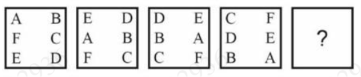
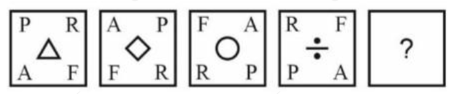
In the following figure series, select the figure which can be placed at the sign of question mark (?) from the given alternatives.

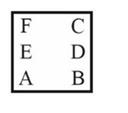
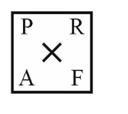
  1. AOption (a)

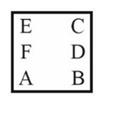
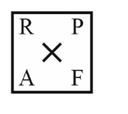
  2. BOption (b)

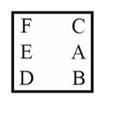
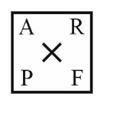
  3. COption (c)

  4. DOption (d)

View answer & explanation

Correct answer

Answer: (a)A.

Why this answer is correct

The logic followed in this series is:


Hence, the correct image is "Option 1".

Question 19

In the following figure series, select the figure which can be placed at the sign of question mark (?) from the given alternatives.

  1. AOption (a)

  2. BOption (b)

  3. COption (c)

  4. DOption (d)

View answer & explanation

Correct answer

Answer: (a)A.

Why this answer is correct

The logic followed in this series is:

Hence, the correct image is "Option 1".

Question 20

In the following figure series, select the figure which can be placed at the sign of question mark (?) from the given alternatives.

  1. AOption (a)

  2. BOption (b)

  3. COption (c)

  4. DOption (d)

View answer & explanation

Correct answer

Answer: (a)A.

Why this answer is correct

The logic followed here is:

Hence, the correct image is "Option 1".

General Knowledge and General Awareness (20 questions)

Question 21

Which tribal nationalist from Jharkhand, known for fighting British exploitation and referred to as "Dharati Baba," led the Munda rebellion and is now commemorated in the Indian Parliament Museum?

  1. AOption (a)

    Birsa Munda

  2. BOption (b)

    Alluri Sitarama Raju

  3. COption (c)

    Komaram Bheem

  4. DOption (d)

    Peer Ali Khan

View answer & explanation

Correct answer

Answer: (a)A.

Birsa Munda

Why this answer is correct

The correct answer is Birsa Munda.

Key Points

  • Birsa Munda was a charismatic tribal leader and folk hero from the Munda tribe who spearheaded a 19th-century religious and political movement in the Chotanagpur Plateau region (modern-day Jharkhand).
  • He is revered by the tribal community as Dharti Aba or Dharati Baba, which translates to Father of the Earth, due to his struggle for tribal land rights and cultural identity.
  • He led the Munda Rebellion, also known as Ulgulan (The Great Tumult), between 1899 and 1900 against the British Raj and the Dikus (outsiders/landlords) who exploited the tribal population.
  • The movement specifically targeted the destruction of the traditional Khuntkatti land system by Thikadars and Zamindars, seeking to establish a Munda Raj.
  • In recognition of his contribution to the Indian independence movement, his portrait was unveiled in the Central Hall of the Indian Parliament in 1989, making him the only tribal leader to receive such an honor.
  • The Government of India celebrates his birth anniversary, November 15, as Janjatiya Gaurav Divas.

 Additional Information

  • Alluri Sitarama Raju:
  • A revolutionary from Andhra Pradesh who led the Rampa Rebellion (1922−24).
  • He fought against the 1882 Madras Forest Act and is famously called Manyam Veerudu (Hero of the Jungle).
  • Komaram Bheem:
  • A Gond tribal leader from Telangana who fought against the Asaf Jahi dynasty and the British.
  • He is credited with the powerful slogan Jal, Jangal, Jameen (Water, Forest, Land).
  • Peer Ali Khan:
  • An Indian revolutionary and rebel who participated in the Revolt of 1857 in Patna, Bihar.
  • A bookbinder by profession, he was executed by the British for his role in the uprising.

Question 22

In September 2024, who has been appointed as Chief of the National Crime Records Bureau?

  1. AOption (a)

    Rajneet Kohli

  2. BOption (b)

    Alok Ranjan

  3. COption (c)

    Ambuj Chandna

  4. DOption (d)

    Gyanesh Kumar

View answer & explanation

Correct answer

Answer: (b)B.

Alok Ranjan

Why this answer is correct

The correct answer is Alok Ranjan.

Key Points

  • The Appointments Committee of the Cabinet (ACC), headed by the Prime Minister, officially approved the appointment of Alok Ranjan as the Director of the National Crime Records Bureau (NCRB) in September 2024. Hence, the statement is correct.
  • Alok Ranjan is a distinguished officer of the 1991 batch of the Indian Police Service (IPS) from the Madhya Pradesh cadre. Hence, the statement is correct.
  • Prior to this prestigious appointment, he served as the Additional Director General (ADG) in the Central Reserve Police Force (CRPF), demonstrating extensive experience in internal security and law enforcement. Hence, the statement is correct.
  • His tenure as the Chief of NCRB is set to continue until his superannuation on June 30, 2026, or until further orders from the government. Hence, the statement is correct.
  • As the head of the NCRB, he is responsible for overseeing the collection, analysis, and dissemination of crime statistics across India and managing critical IT-enabled policing systems. Hence, the statement is correct.

 Additional Information

  • National Crime Records Bureau (NCRB):
  • Established in 1986, it functions as a specialized wing under the Ministry of Home Affairs (MHA), headquartered in New Delhi.
  • The bureau was formed based on the recommendations of the Tandon Committee and the National Police Commission (1977-1981) to empower Indian Police with Information Technology.
  • It publishes the highly influential annual report titled Crime in India, which serves as a primary statistical tool for policy-makers and law enforcement agencies.
  • It is the nodal agency for implementing the Crime and Criminal Tracking Network & Systems (CCTNS) and maintaining the National Fingerprint Bureau.
  • Gyanesh Kumar:
  • He is a retired IAS officer who was appointed as an Election Commissioner of India in March 2024.

Question 23

In May 2025, which renowned nuclear scientist of India passed away?

  1. AOption (a)

    Dr. Homi Bhabha

  2. BOption (b)

    Dr. A.P.J. Abdul Kalam

  3. COption (c)

    Dr. M.R. Srinivasan

  4. DOption (d)

    Dr. Raja Ramanna

View answer & explanation

Correct answer

Answer: (c)C.

Dr. M.R. Srinivasan

Why this answer is correct

The correct answer is Dr. M.R. Srinivasan.

Key Points

  • Dr. Muthanna Ramaswamy Srinivasan (born 1930) was a legendary Indian nuclear scientist who served as the Chairman of the Atomic Energy Commission (AEC) and Secretary of the Department of Atomic Energy (DAE).
  • He is celebrated as the architect of India's nuclear power program, specifically for his pioneering work on the Pressurized Heavy Water Reactor (PHWR) technology, which utilized indigenous natural uranium and heavy water.
  • He was the founding Chairman and Managing Director of the Nuclear Power Corporation of India Limited (NPCIL), an organization he helped establish in 1987 to streamline the commercial operation of nuclear power plants.
  • Under his technical leadership, India successfully commissioned major nuclear projects including the Madras Atomic Power Station (MAPS) at Kalpakkam and the Narora Atomic Power Station (NAPS) in Uttar Pradesh.
  • His strategic vision helped India achieve self-reliance in the nuclear fuel cycle, including heavy water production and reactor design, during periods of severe international technology denial.
  • He was a member of the National Security Advisory Board and played a vital role in representing India at the International Atomic Energy Agency (IAEA) in Vienna.

 Additional Information

  • Honors and Awards:
  • Padma Vibhushan: Conferred in 2015 for his exceptional contribution to science and engineering.
  • Padma Bhushan (1990) and Padma Shri (1984): Awarded for his administrative and scientific excellence in nuclear development.
  • Notable Nuclear Figures:
  • Dr. Homi Bhabha: Known as the Father of the Indian Nuclear Program, he established the Tata Institute of Fundamental Research (TIFR) and passed away in 1966.
  • Dr. A.P.J. Abdul Kalam: Known as the Missile Man of India, he was a key figure in the Pokhran-II tests and served as the 11th President of India; he passed away in 2015.
  • Dr. Raja Ramanna: A renowned physicist who directed the Smiling Buddha (Pokhran-I) test in 1974 and served as the Director of BARC; he passed away in 2004.

Question 24

Which of the following is not a part of endocrine system of the human beings?

  1. AOption (a)

    Kidney

  2. BOption (b)

    Hypothalamus

  3. COption (c)

    Pancreas

  4. DOption (d)

    Ovaries

View answer & explanation

Correct answer

Answer: (a)A.

Kidney

Why this answer is correct

The correct answer is Kidney.

Key Points

  • The Kidney is the primary organ of the urinary system, responsible for osmoregulation, blood pressure regulation, and the excretion of nitrogenous wastes like urea. While it possesses secondary endocrine functions, it is not classified as a primary part of the endocrine system. Hence, statement 1 is correct.
  • The Hypothalamus is a critical part of the endocrine system located in the forebrain. It produces releasing and inhibiting hormones that control the pituitary gland, acting as the master regulator of the entire system. Hence, statement 2 is incorrect.
  • The Pancreas is a heterocrine gland, meaning it has both exocrine and endocrine functions. Its endocrine part, the Islets of Langerhans, secretes vital hormones such as insulin and glucagon directly into the blood to manage glucose levels. Hence, statement 3 is incorrect.
  • The Ovaries are the female gonads and are fundamental endocrine organs that secrete steroid hormones, specifically estrogen and progesterone, which regulate the reproductive cycle and secondary sexual characteristics. Hence, statement 4 is incorrect.

 Additional Information

  • Endocrine System Characteristics:
  • It consists of ductless glands that secrete chemical messengers called hormones directly into the circulatory system.
  • Major primary glands include the Pituitary, Thyroid, Parathyroid, Adrenal, and Pineal glands.
  • The system helps maintain homeostasis and coordinates long-term processes like growth, metabolism, and reproduction.
  • Hormonal role of Kidneys:
  • Despite being an excretory organ, the kidney secretes Erythropoietin (EPO), which stimulates red blood cell production in the bone marrow.
  • It also produces Renin, an enzyme that initiates the RAAS pathway to regulate blood pressure and fluid volume.

Question 25

Which of the following is an example of involuntary action of humans?

  1. AOption (a)

    Writing

  2. BOption (b)

    Moving a chair

  3. COption (c)

    Talking

  4. DOption (d)

    Vomiting

View answer & explanation

Correct answer

Answer: (d)D.

Vomiting

Why this answer is correct

The correct answer is Vomiting.

Key Points

  • Involuntary actions are physiological activities that occur automatically without any conscious thought or the will of the individual. These actions are primarily controlled by the autonomous nervous system and the hindbrain.
  • Vomiting is a complex reflex action that involves the forceful expulsion of stomach contents through the mouth. This action is coordinated by the vomiting center located in the medulla oblongata of the brain.
  • The process of vomiting involves the simultaneous contraction of the diaphragm and abdominal muscles, coupled with the relaxation of the cardiac sphincter. Since these muscle movements are triggered by the brain without conscious intent, vomiting is an involuntary action.
  • In contrast, activities such as Writing, Talking, and Moving a chair are categorized as voluntary actions. These are initiated by the cerebrum in the forebrain and require deliberate effort, decision-making, and conscious motor control.

 Additional Information

  • Medulla Oblongata:
  • It is a vital part of the hindbrain that regulates several autonomic functions essential for survival.
  • Besides vomiting, it controls blood pressure, heartbeat, respiration, and reflexes like sneezing, swallowing, and coughing.
  • Voluntary Nervous System:
  • Also known as the Somatic Nervous System, it handles the movements of skeletal muscles.
  • The Cerebral Cortex is responsible for processing the information required to perform complex tasks like speech and fine motor skills like writing.
  • Reflex Arc:
  • While vomiting is a reflex, some other involuntary responses occur via the spinal cord to allow for extremely rapid reactions to external stimuli, such as pulling a hand away from a hot object.

Question 26

What is TrailGuard AI installed at Similipal Tiger Reserve in February 2025?

  1. AOption (a)

    A system with AI-enabled cameras.

  2. BOption (b)

    An early warning system for flood like situation.

  3. COption (c)

    A UPI enabled payment application.

  4. DOption (d)

    an AI enabled application for environmental approval for mega infrastructural projects.

View answer & explanation

Correct answer

Answer: (a)A.

A system with AI-enabled cameras.

Why this answer is correct

The correct answer is A system with AI-enabled cameras.

Key Points

  • TrailGuard AI is a sophisticated AI-powered surveillance system designed specifically to enhance wildlife security and combat illegal poaching in protected areas.
  • The technology was deployed in the Similipal Tiger Reserve (STR) in Odisha during February 2025 to create a digital perimeter around the core tiger habitat.
  • The system consists of AI-enabled cameras that utilize edge computing to process images instantly on the device rather than sending all raw footage to a central server.
  • The primary function of these cameras is to detect human intruders, poachers, or unauthorized vehicles in real-time, filtering out images of wind-blown vegetation or non-target animals.
  • Once a threat is identified, the system transmits real-time alerts and photographic evidence to forest rangers and quick response teams via satellite or cellular networks.

 Additional Information

  • Similipal Tiger Reserve:
  • Located in the Mayurbhanj district of Odisha, it is famous for being the only natural habitat in the world for melanistic tigers (black tigers).
  • It was declared a Tiger Reserve in 1973 and became part of the UNESCO World Network of Biosphere Reserves in 2009.
  • The reserve is home to a rich variety of flora and fauna, including the Asian Elephant and the Chousingha.
  • Technological Features:
  • The TrailGuard AI technology was developed by the conservation organization Resolve in partnership with Intel and Hugging Face.
  • It employs the Intel Movidius Vision Processing Unit (VPU), which allows the camera to operate for years on a small battery by using very low power.
  • The device is compact and easily camouflaged, making it nearly invisible to intruders attempting to bypass traditional security measures.

Question 27

Which of the following planet is NOT made up of gases and liquids?

  1. AOption (a)

    Saturn

  2. BOption (b)

    Uranus

  3. COption (c)

    Jupiter

  4. DOption (d)

    Venus

View answer & explanation

Correct answer

Answer: (d)D.

Venus

Why this answer is correct

The correct answer is Venus.

Key Points

  • Venus is categorized as a Terrestrial Planet, which means it possesses a solid, rocky surface unlike the massive planets composed mainly of fluids and gases.
  • The internal structure of Venus consists of a metallic iron core, a rocky silicate mantle, and a solid crust, similar to the geological composition of Earth.
  • In contrast, Jupiter and Saturn are known as Gas Giants, composed almost entirely of hydrogen and helium with no well-defined solid surface to land on.
  • Uranus (along with Neptune) is classified as an Ice Giant, made up of a hot, dense fluid of icy materials such as water, methane, and ammonia surrounding a small rocky core.
  • While Venus has an extremely thick atmosphere, the planet itself is a rocky body, making it the only option among the four that is not primarily made of gases and liquids.

 Additional Information

  • Classification of Planets:
  • Inner Planets (Terrestrial):
  • Includes Mercury, Venus, Earth, and Mars.
  • These planets have high densities, are composed of heavy metals and rocks, and have few or no moons.
  • They are located inside the Asteroid Belt.
  • Outer Planets (Jovian):
  • Includes Jupiter, Saturn, Uranus, and Neptune.
  • They are characterized by large radii, low densities, and complex ring systems.
  • Their atmospheres are incredibly deep, transitioning into liquid layers under extreme pressure and temperature.
  • Specifics of Venus:
  • Venus is the hottest planet in the Solar System due to a runaway greenhouse effect caused by an atmosphere that is 96% carbon dioxide.
  • Its surface pressure is roughly 92 times that of Earth, equivalent to being 1 kilometer underwater.
  • It rotates in a retrograde direction (clockwise), meaning the Sun rises in the west and sets in the east.

Question 28

'Khuded' folk songs are traditionally associated with which Indian state?

  1. AOption (a)

    Rajasthan

  2. BOption (b)

    Assam

  3. COption (c)

    Karnataka

  4. DOption (d)

    Uttarakhand

View answer & explanation

Correct answer

Answer: (d)D.

Uttarakhand

Why this answer is correct

The correct answer is Uttarakhand.

Key Points

  • Khuded folk songs are deeply rooted in the cultural fabric of the Garhwal region of Uttarakhand.
  • These songs primarily depict the melancholy and suffering of a married woman who is longing for her maternal home (referred to locally as Maait).
  • The word Khuded originates from the local dialect word Khuda, which translates to the feeling of homesickness or the pain of separation from loved ones.
  • Traditionally, these songs are performed by women while they are engaged in daily chores such as gathering fodder in the forests or working in the agricultural fields of the Himalayan slopes.
  • The lyrics often describe the geographical barriers, such as high mountains and dense forests, that intensify the sense of isolation felt by the woman in her husband’s village.
  • Khuded songs serve as a powerful medium for emotional release, reflecting the socio-cultural reality of historical Garhwali society where women were often married into distant villages.

 Additional Information

  • Other Folk Traditions of Uttarakhand:
  • Chhopati: These are popular love songs from the Tehri Garhwal district, typically sung in a dialogue format between men and women during cultural gatherings.
  • Bajuband: A traditional folk song of the shepherd community in the Garhwal hills, often themed around themes of love and sacrifice.
  • Basanti: These songs are composed to celebrate the arrival of the spring season and are usually sung individually or in groups during Basant Panchami.
  • Jhumelo: A rhythmic dance-song performed during festivals, which highlights the natural beauty of the Himalayas and community bonding.
  • Jagars: A unique form of ritualistic vocal music used to invoke local deities and spirits, common in both Kumaon and Garhwal regions.
  • Folk Music of Other States:
  • Rajasthan: Characterized by diverse styles like Maand, Manganiyar, and Langa traditions.
  • Assam: Famous for Bihu Geets and the devotional Borgeet composed by Srimanta Sankardev.
  • Karnataka: Known for Bhavageete (expressionist poetry) and the rhythmic Dollu Kunitha.

Question 29

'Lemlawi', an instrument belonging to the Jew's harp family, is a traditional instrument of which state?

  1. AOption (a)

    Telangana

  2. BOption (b)

    Mizoram

  3. COption (c)

    Gujarat

  4. DOption (d)

    Karnataka

View answer & explanation

Correct answer

Answer: (b)B.

Mizoram

Why this answer is correct

The correct answer is Mizoram.

Key Points

  • Lemlawi is a traditional Jew’s harp (or mouth harp) that is deeply rooted in the cultural heritage of the Mizo people in Mizoram.
  • It is categorized as a lamellophone, consisting of a flexible bamboo or metal tongue attached to a frame. The traditional version is usually carved from a single piece of Sairil bamboo.
  • The instrument is played by placing it between the teeth or lips; the musician plucks the projecting tongue of the instrument with their finger while using their mouth cavity as a natural resonator to amplify the sound.
  • Players can manipulate the timbre and pitch of the Lemlawi by changing the shape of their mouth and controlling their breath, creating a distinctive rhythmic and droning melody.
  • Historically, the Lemlawi was used for personal relaxation and was a popular instrument for young men and women during courtship to communicate subtle feelings.

 Additional Information

  • Mizoram:
  • Khuang: The most significant Mizo musical instrument, a drum made of hollowed wood and wrapped with animal skin, essential for all traditional dances.
  • Tuium: A percussion instrument made of a bamboo tube with strings pulled out from the bamboo outer skin itself.
  • Seki: A rhythmic instrument made from the horns of a Mithun (a local bovine), played by striking two horns together.
  • Telangana:
  • Features the Oggu Dolu, a hand-held drum used in Oggu Katha storytelling, and the Kommulu, a brass wind instrument.
  • Gujarat:
  • Home to the Jodia Pava (double flute) and the Ravanahatha, an ancient bowed string instrument often used by folk musicians.
  • Karnataka:
  • Known for the Saraswati Veena in classical music and folk instruments like the Dollu and Tamate.

Question 30

What does the evidence from the Indus Valley Civilization suggest about its people?

  1. AOption (a)

    They were largely nomadic

  2. BOption (b)

    They were excellent engineers

  3. COption (c)

    They lacked urban planning skills

  4. DOption (d)

    They depended only on rainwater

View answer & explanation

Correct answer

Answer: (b)B.

They were excellent engineers

Why this answer is correct

The correct answer is They were excellent engineers.

Key Points

  • The Indus Valley Civilization (also known as the Harappan Civilization), existing roughly between 2500 BCE and 1700 BCE, provides extensive archaeological evidence of highly advanced urban planning and architectural mastery.
  • Their cities, such as Harappa and Mohenjo-daro, were laid out on a meticulous grid system (gridiron pattern) where streets intersected at right angles, a feat that required sophisticated mathematical and surveying skills.
  • The people developed a complex drainage system that was unparalleled in the ancient world; every house was connected to street drains made of mortared brick and covered with stone slabs or terracotta lids for easy maintenance.
  • Structures like the Great Bath at Mohenjo-daro demonstrate their expertise in civil engineering through the use of bitumen (natural tar) for waterproofing, ensuring the massive tank remained leak-proof for centuries.
  • The discovery of the dockyard at Lothal highlights their understanding of hydrography and maritime engineering, as it featured a lock system to regulate water flow during high and low tides.

 Additional Information

  • Standardization and Materials:
  • Harappans used standardized burnt bricks with a consistent ratio of 1:2:4 (thickness to width to length), which is a hallmark of an organized industrial society.
  • In Dholavira, archaeologists found a sophisticated water management system consisting of giant stone-cut reservoirs and channels to harvest every drop of water in an arid environment.
  • The Citadel or upper town was often built on raised platforms of mud-bricks to protect administrative buildings from frequent flooding of the Indus River and its tributaries.

Question 31

Which of the following statement is correct regarding the effect of deforestation on soil?

I. Physical properties of the soil get affected by plantation and vegetation.

II. Removal of the top layer of the soil exposes the lower, hard and rocky layers.

  1. AOption (a)

    Only I

  2. BOption (b)

    Only II

  3. COption (c)

    Both I and II

  4. DOption (d)

    Neither I nor II

View answer & explanation

Correct answer

Answer: (c)C.

Both I and II

Why this answer is correct

The correct answer is Both I and II.

Key Points

  • Plantation and vegetation cover play a crucial role in maintaining the physical properties of the soil, such as its texture, structure, and water-holding capacity. Roots of trees and plants bind the soil particles together, preventing soil erosion and maintaining nutrient levels like nitrogen and phosphorus. Hence, statement I is correct.
  • Deforestation leads to the exposure of the soil surface to agents of erosion like wind and water. When the fertile topsoil layer, which is rich in humus, is washed away, the lower, hard and rocky layers are revealed. These layers possess significantly less organic matter and are far less fertile than the surface soil. Hence, statement II is correct.

 Additional Information

  • Deforestation:
  • It refers to the large-scale clearing of forests for agriculture, urbanization, or industrial purposes.
  • It significantly disrupts the water cycle and increases carbon dioxide (CO2) levels in the atmosphere, contributing to global warming.
  • Desertification:
  • The continuous removal of the topsoil layer through erosion gradually converts fertile land into deserts.
  • This process reduces the infiltration rate of water into the ground, often leading to floods in nearby areas during heavy rainfall.
  • Soil Fertility:
  • The loss of vegetative cover prevents the replenishment of nutrients through the decomposition of leaves and organic matter, rendering the land unsuitable for cultivation.

Question 32

In the medals tally of the Commonwealth Games 2022, which of the following countries ranked below India?

  1. AOption (a)

    Canada

  2. BOption (b)

    England

  3. COption (c)

    Australia

  4. DOption (d)

    South Africa

View answer & explanation

Correct answer

Answer: (d)D.

South Africa

Why this answer is correct

The correct answer is South Africa.

Key Points

  • The 2022 Commonwealth Games, officially known as the XXII Commonwealth Games and commonly known as Birmingham 2022, was an international multi-sport event for members of the Commonwealth.
  • India delivered a strong performance, finishing in the 4th position in the final medals tally with a total of 61 medals, comprising 22 Gold, 16 Silver, and 23 Bronze.
  • Australia secured the 1st rank by winning a total of 178 medals (67 Gold, 57 Silver, 54 Bronze). Hence, statement 3 is incorrect.
  • England finished in the 2nd rank with a total of 176 medals (57 Gold, 66 Silver, 53 Bronze). Hence, statement 2 is incorrect.
  • Canada occupied the 3rd rank, finishing just above India with 92 medals (26 Gold, 32 Silver, 34 Bronze). Hence, statement 1 is incorrect.
  • South Africa finished in the 9th rank in the overall medals tally, securing only 27 medals (7 Gold, 9 Silver, 11 Bronze). Since the 9th rank is numerically lower than India's 4th rank, it ranked below India. Hence, statement 4 is correct.

 Additional Information

  • Indian Performance Overview:
  • Wrestling was India's most successful sport, contributing 12 medals, including 6 Gold.
  • Sharath Kamal (Table Tennis) was the most successful Indian athlete at the event, winning 4 medals.
  • India won its first-ever medal in Lawn Bowls, with the women's fours team clinching the Gold.
  • Event Details:
  • Motto: 'Sport is just the beginning'.
  • Mascot: Perry the Bull.
  • The games featured 72 Commonwealth nations and territories.

Question 33

Out of the following, who won the maximum number of medals in National games 2025?

  1. AOption (a)

    Jammu and Kashmir

  2. BOption (b)

    Andaman and Nicobar Islands

  3. COption (c)

    Chandigarh

  4. DOption (d)

    Puducherry

View answer & explanation

Correct answer

Answer: (a)A.

Jammu and Kashmir

Why this answer is correct

The correct answer is Jammu and Kashmir.

Key Points

  • The 38th National Games of India, hosted by Uttarakhand in early 2025, featured intense competition among various states and Union Territories.
  • Among the Union Territories specified in the options, Jammu and Kashmir emerged at the top by securing the maximum number of medals.
  • Athletes from Jammu and Kashmir showcased exceptional talent and dominated in specialized disciplines, particularly in wushu, pencak silat, fencing, gymnastics, and kayaking.
  • The sustained focus on sports infrastructure development under the Prime Minister's Development Package (PMDP) has significantly enhanced the competitive standards of athletes from the region.

 Additional Information

  • Other Union Territories' Performance:
  • Chandigarh: Despite having a robust sports framework, Chandigarh's medal contribution was concentrated in specific events like athletics, resulting in a lower overall count than Jammu and Kashmir.
  • Andaman and Nicobar Islands: Participated with a smaller contingent, winning limited medals primarily in water-based adventure sports such as canoeing and rowing.
  • Puducherry: Registered minimal medal representation, trailing behind the other competing Union Territories.
  • About the National Games:
  • The National Games are organized under the aegis of the Indian Olympic Association (IOA) to identify grassroots athletic talent capable of representing India in global forums.

Question 34

Poultry fowl suffer from several diseases caused by which of the following?

I. Virus

II. Bacteria

  1. AOption (a)

    Only I

  2. BOption (b)

    Only II

  3. COption (c)

    Both I and II

  4. DOption (d)

    Neither I nor II

View answer & explanation

Correct answer

Answer: (c)C.

Both I and II

Why this answer is correct

The correct answer is Both I and II.

Key Points

  • Poultry fowl are highly susceptible to a variety of viral infections that can cause mass mortality and significant economic losses in the farming industry. Major viral diseases include Ranikhet disease (Newcastle Disease), Fowl Pox, and Infectious Bursal Disease (Gumboro). These viruses often target the respiratory, nervous, or immune systems of the birds. Hence, statement I is correct.
  • Bacterial pathogens are equally responsible for numerous poultry ailments that affect growth and egg-laying capacity. Common examples include Fowl Cholera (caused by Pasteurella multocida), Salmonellosis, and Chronic Respiratory Disease (caused by Mycoplasma). These infections typically spread through contaminated feed, water, or poor sanitation practices. Hence, statement II is correct.

 Additional Information

  • Viral Disease Characteristics:
  • Ranikhet Disease is one of the most lethal viral diseases in India, characterized by gasping, nasal discharge, and neurological symptoms like paralysis.
  • Avian Influenza (Bird Flu) is a highly contagious viral infection that can occasionally cross the species barrier to infect humans.
  • Bacterial Disease Characteristics:
  • Fowl Cholera usually presents as an acute septicaemia with high morbidity and sudden death in the flock.
  • Pullorum Disease, caused by Salmonella pullorum, primarily affects young chicks and is transmitted through the egg from the mother bird.
  • Other Pathogens:
  • In addition to viruses and bacteria, poultry suffer from fungal infections like Aspergillosis (Brooder Pneumonia) and parasitic diseases such as Coccidiosis caused by protozoa.
  • Prevention strategies involve regular vaccination, administration of antibiotics for bacterial issues, and maintaining strict biosecurity and hygiene in poultry sheds.

Question 35

The name of animal species _____ means "man of the forest" in the Malay language.

  1. AOption (a)

    Orangutan

  2. BOption (b)

    Sumatran tiger

  3. COption (c)

    Komodo dragon

  4. DOption (d)

    Irrawaddy dolphins

View answer & explanation

Correct answer

Answer: (a)A.

Orangutan

Why this answer is correct

The correct answer is Orangutan.

Key Points

  • The term Orangutan is derived from the Malay and Indonesian words orang, which means person or man, and hutan, which means forest.
  • When combined, the name literally translates to man of the forest, a reference to their high intelligence and predominantly arboreal lifestyle in dense tropical jungles.
  • These great apes are geographically restricted to the rainforests of Southeast Asia, specifically inhabiting the islands of Borneo and Sumatra.
  • They are recognized for their distinctive reddish-brown hair and extreme manual dexterity, sharing approximately 97 percent of their DNA with humans.

 Additional Information

  • Orangutans (Genus Pongo):
  • There are three distinct species: the Bornean (Pongo pygmaeus), the Sumatran (Pongo abelii), and the recently identified Tapanuli orangutan (Pongo tapanuliensis).
  • They are the largest tree-dwelling mammals and are known for their unique method of movement called brachiation.
  • Sumatran Tiger:
  • Scientifically known as Panthera tigris sumatrae, it is a critically endangered subspecies found only on the Indonesian island of Sumatra.
  • Komodo Dragon:
  • Recognized as Varanus komodoensis, it is the heaviest and largest lizard species on Earth, endemic to the Lesser Sunda Islands of Indonesia.
  • Irrawaddy Dolphins:
  • Known as Orcaella brevirostris, these are euryhaline dolphins found in coastal areas, estuaries, and rivers like the Mekong and the Irrawaddy in South and Southeast Asia.

Question 36

Which of the following bee is known as little bee?

  1. AOption (a)

    Apis cerana indica

  2. BOption (b)

    Apis dorsata

  3. COption (c)

    Apis florae

  4. DOption (d)

    Apis mellifera

View answer & explanation

Correct answer

Answer: (c)C.

Apis florae

Why this answer is correct

The correct answer is Apis florae.

Key Points

  • Apis florae, commonly referred to as the Little Bee or Dwarf Honey Bee, is the smallest species among the genus Apis in terms of body size.
  • These bees are native to South and Southeast Asia, including countries like India, and are typically found in tropical and subtropical regions.
  • They build a single vertical comb that is usually no larger than the size of a human palm, often suspended from twigs, bushes, or shrubbery in open-air environments.
  • Due to their small size and specific nesting habits, they produce a relatively small amount of honey, generally ranging from 200 to 900 grams per colony annually.
  • The Apis florae is known for being docile and less aggressive compared to larger species, although they exhibit a high tendency for absconding (leaving the nest) if disturbed.

 Additional Information

  • Apis dorsata:
  • Commonly known as the Rock Bee or Giant Honey Bee.
  • It is the largest honeybee species and is highly aggressive, making it difficult to domesticate.
  • A single colony can yield 35 to 40 kg of honey.
  • Apis cerana indica:
  • Popularly known as the Indian Honey Bee or Eastern Honey Bee.
  • It is a medium-sized bee that is widely used for apiculture in India because it is relatively easy to domesticate in moveable frames.
  • The average honey yield is approximately 2 to 5 kg per colony.
  • Apis mellifera:
  • Known as the European Honey Bee or Western Honey Bee.
  • It was introduced to India for commercial beekeeping due to its high honey production capacity and low swarming tendency.
  • It can yield between 25 to 40 kg of honey per colony.

Question 37

In living organisms, nitrogen is a component of which of the following?

I. Proteins II. Chlorophyll

  1. AOption (a)

    Only I

  2. BOption (b)

    Only II

  3. COption (c)

    Both I and II

  4. DOption (d)

    Neither I nor II

View answer & explanation

Correct answer

Answer: (c)C.

Both I and II

Why this answer is correct

The correct answer is Both I and II.

Key Points

  • Nitrogen is an indispensable constituent of proteins, which are complex macromolecules formed by long chains of amino acids. Every amino acid contains a central carbon atom bonded to an amino group (-NH2), a carboxyl group, and a side chain; the presence of nitrogen in the amino group makes it a fundamental building block for all cellular structures, enzymes, and hormones. Hence, statement I is correct.
  • Chlorophyll, the green pigment located in the chloroplasts of plants, algae, and cyanobacteria, is essential for photosynthesis. The molecular structure of chlorophyll (such as Chlorophyll a, C55H72O5N4Mg) contains a porphyrin ring composed of four pyrrole rings, each of which contains a nitrogen atom coordinated to a central magnesium atom. Hence, statement II is correct.

 Additional Information

  • Nitrogen is a major macronutrient required by plants in the greatest amount, typically absorbed from the soil as nitrate (NO3−) or ammonium (NH4+).
  • Nucleic Acids: Nitrogen is a key component of DNA and RNA, forming the nitrogenous bases (Adenine, Guanine, Cytosine, Thymine, and Uracil) that carry genetic information.
  • ATP (Adenosine Triphosphate): This primary energy-transfer molecule in cells contains nitrogen within its adenine moiety.
  • Vitamins and Alkaloids: Many metabolic regulators and secondary metabolites also incorporate nitrogen into their chemical frameworks.
  • Nitrogen Cycle: Since atmospheric nitrogen (N2) cannot be used directly by most organisms, it must be converted into organic forms through nitrogen fixation by bacteria like Rhizobium.

Question 38

India Discrimination Report was published by which of the following?

  1. AOption (a)

    Oxfam India

  2. BOption (b)

    Centre for Equity Studies

  3. COption (c)

    Tata Trusts

  4. DOption (d)

    Praja Foundation

View answer & explanation

Correct answer

Answer: (a)A.

Oxfam India

Why this answer is correct

The correct answer is Oxfam India.

Key Points

  • The India Discrimination Report is a flagship publication by Oxfam India that highlights the extent of inequality and prejudice in the Indian labor market.
  • The report utilizes unit-level data from the Periodic Labour Force Survey (PLFS) and the National Sample Survey (NSS) to analyze how identity-based factors affect employment and earnings.
  • One of the primary findings is that gender discrimination is a structural issue, where a massive portion of the wage gap between men and women is attributed to discrimination rather than differences in education or work experience.
  • The study quantifies discrimination against Scheduled Castes (SC), Scheduled Tribes (ST), and Muslims, noting that these groups face significant hurdles in accessing regular salaried jobs compared to the general category.
  • It points out that social identity often outweighs human capital (skills and qualifications) in determining economic outcomes in both urban and rural India.

 Additional Information

  • Oxfam India:
  • It is a non-profit organization and a member of the global Oxfam confederation, working towards eliminating poverty and social injustice.
  • Apart from discrimination, it frequently publishes the Survival of the Richest report and other studies on wealth inequality.
  • Centre for Equity Studies (CES):
  • This autonomous research institution is known for publishing the India Exclusion Report, which tracks the exclusion of marginalized groups from public goods and services.
  • Tata Trusts:
  • A philanthropic giant in India that supports the India Justice Report, which assesses the capacity of various states to deliver justice through the police, judiciary, and prisons.
  • Praja Foundation:
  • This organization focuses on accountability in urban governance and publishes reports concerning the performance of elected representatives and the state of civic amenities in cities like Mumbai and Delhi.

Question 39

Which 19th-century philosopher and reformer founded the 'Arya Samaj', a socio-cultural organization?

  1. AOption (a)

    Swami Vivekananda

  2. BOption (b)

    Dayanand Saraswati

  3. COption (c)

    Raja Ram Mohan Roy

  4. DOption (d)

    Ishwar Chandra Vidyasagar

View answer & explanation

Correct answer

Answer: (b)B.

Dayanand Saraswati

Why this answer is correct

The correct answer is Dayanand Saraswati.

Key Points

  • Dayanand Saraswati was a profound scholar and social reformer who founded the Arya Samaj on April 7, 1875, in Bombay (now Mumbai).
  • Born in 1824 as Mool Shankar in Gujarat, he emphasized the supreme authority of the Vedas, which he considered the infallible source of all knowledge and truth.
  • He gave the famous call 'Back to the Vedas' to advocate for a return to the purity of ancient Vedic traditions and to discard later distortions in Hinduism.
  • His seminal work, Satyarth Prakash (The Light of Truth), published in 1875, outlined his philosophy of monotheism and his opposition to idol worship, polytheism, and caste discrimination.
  • The Arya Samaj played a critical role in promoting women's education, widow remarriage, and social equality through a network of Gurukuls and Dayanand Anglo-Vedic (DAV) institutions.
  • He also initiated the Shuddhi movement, which aimed at reconverting individuals who had previously converted to other religions back into the Hindu fold.

 Additional Information

  • Swami Vivekananda:
  • He was the primary disciple of Ramakrishna Paramahansa and established the Ramakrishna Mission in 1897.
  • He is internationally recognized for his powerful speech at the Parliament of the World's Religions in Chicago in 1893, where he introduced Vedanta and Yoga to the Western world.
  • Raja Ram Mohan Roy:
  • Known as the 'Father of Modern India', he founded the Brahmo Samaj in 1828 to promote monotheism and human dignity.
  • His persistent efforts were instrumental in the legal abolition of Sati in 1829 under Lord William Bentinck.
  • Ishwar Chandra Vidyasagar:
  • A key figure of the Bengal Renaissance, he was a scholar and educator who fought tirelessly for women's rights.
  • His advocacy was central to the enactment of the Hindu Widows' Remarriage Act, 1856, and he revolutionized Bengali typography.

Question 40

Global Trade Outlook and Statistics 2025 was published by which of the following?

  1. AOption (a)

    UNESCO

  2. BOption (b)

    International Monetary Funds

  3. COption (c)

    World Trade Organization

  4. DOption (d)

    World Bank

View answer & explanation

Correct answer

Answer: (c)C.

World Trade Organization

Why this answer is correct

The correct answer is World Trade Organization.

Key Points

  • The Global Trade Outlook and Statistics is a flagship annual report published by the World Trade Organization (WTO) that provides a comprehensive analysis of the latest developments in world trade.
  • The 2025 edition of the report offers detailed projections for global merchandise trade growth, analyzing how factors like geopolitical tensions, inflation, and monetary policies influence trade volumes across different regions.
  • It serves as a critical analytical tool for evaluating trade-to-GDP ratios and understanding the shifts in commercial services, including digitally delivered services which have seen significant growth in recent years.
  • The report highlights the resilience of supply chains and the impact of regional trade agreements on the overall stability of the multilateral trading system.
  • By utilizing historical data and econometric modeling, the WTO provides policymakers with insights into trade costs, commodity prices, and the potential risks facing the global economy in the short to medium term.

 Additional Information

  • World Trade Organization (WTO):
  • Established: 1 January 1995, following the Marrakesh Agreement.
  • Headquarters: Geneva, Switzerland.
  • Role: It is the only international organization dealing with the global rules of trade between nations, aiming to ensure that trade flows as smoothly and freely as possible.
  • International Monetary Fund (IMF):
  • Primary Publication: Known for the World Economic Outlook (WEO) and the Global Financial Stability Report.
  • Focus: Monitors the international monetary system and provides loans to member countries facing balance of payments problems.
  • World Bank:
  • Primary Publication: Publishes the World Development Report and Global Economic Prospects.
  • Focus: Provides financial and technical assistance to developing countries for development projects to reduce poverty.
  • UNESCO:
  • Focus: Specializes in education, science, and culture; it publishes the Global Education Monitoring Report.

Elementary Mathematics (20 questions)

Question 41

86 + 57 - (34 + 21) × 2 + 63 - 19 = ?

  1. AOption (a)

    97

  2. BOption (b)

    99

  3. COption (c)

    78

  4. DOption (d)

    77

View answer & explanation

Correct answer

Answer: (d)D.

77

Why this answer is correct

Shortcut Trick

Apply BODMAS: Solve Bracket (34 + 21) = 55.

Perform Multiplication: 55 × 2 = 110.

Expression becomes: 86 + 57 − 110 + 63 − 19.

Combine positive terms: 86 + 57 + 63 = 206.

Final calculation: 206 − 110 − 19 = 77.

∴ The correct answer is 77.

Alternate Method

Given: 86 + 57 − (34 + 21) × 2 + 63 − 19

Method: Apply the BODMAS rule (Brackets, Orders, Division, Multiplication, Addition, Subtraction).

⇒ 86 + 57 − (55) × 2 + 63 − 19

⇒ 86 + 57 − 110 + 63 − 19

⇒ (86 + 57 + 63) − (110 + 19)

⇒ 206 − 129

⇒ 77

∴ The correct answer is 77.

Additional Information

BODMAS Rule

It defines the order of operations: Brackets (), Of (powers/roots), Division (÷), Multiplication (×), Addition (+), and Subtraction (−).

Types of Brackets

Brackets are solved in the order: Round brackets ( ), then Curly brackets { }, and finally Square brackets [ ].

Addition and Subtraction

While addition and subtraction have the same priority, it is usually safer to group all positive numbers and negative numbers separately before subtracting.

Question 42

89 - 47 + 22 × 2 + 33 ÷ 3 + (28) - 14 = ?

  1. AOption (a)

    130

  2. BOption (b)

    132

  3. COption (c)

    111

  4. DOption (d)

    136

View answer & explanation

Correct answer

Answer: (c)C.

111

Why this answer is correct

Shortcut Trick

Solve using BODMAS: First divide 33 ÷ 3 = 11 and multiply 22 × 2 = 44.

The expression becomes: 89 − 47 + 44 + 11 + 28 − 14.

Sum of positive terms: 89 + 44 + 11 + 28 = 172.

Sum of negative terms: 47 + 14 = 61.

Final result: 172 − 61 = 111.

∴ The correct answer is 111.

Alternate Method

Given Expression: 89 − 47 + 22 × 2 + 33 ÷ 3 + 28 − 14

The BODMAS rule defines the order of operations: Brackets, Orders, Division, Multiplication, Addition, and Subtraction.

⇒ 89 − 47 + 22 × 2 + 11 + 28 − 14 (Performing Division: 33 ÷ 3 = 11)

⇒ 89 − 47 + 44 + 11 + 28 − 14 (Performing Multiplication: 22 × 2 = 44)

⇒ 42 + 44 + 11 + 28 − 14 (Performing Subtraction: 89 − 47 = 42)

⇒ 86 + 11 + 28 − 14 (Performing Addition: 42 + 44 = 86)

⇒ 97 + 28 − 14 (Performing Addition: 86 + 11 = 97)

⇒ 125 − 14 (Performing Addition: 97 + 28 = 125)

⇒ 111 (Performing Subtraction)

∴ The correct answer is 111.

Additional Information

VBODMAS Rule

V stands for Vinculum (bar bracket), which is solved first. The remaining sequence follows B (Brackets), O (Of/Orders), D (Division), M (Multiplication), A (Addition), and S (Subtraction).

Arithmetic Priority

Division and Multiplication have higher priority than Addition and Subtraction. If multiple operations of the same priority exist, solve from left to right.

Grouping Method

To simplify large expressions, group all positive numbers and negative numbers separately before the final subtraction to minimize calculation errors.

Question 43

The time taken to paint a wall is directly proportional to its area. If it takes 6 hours to paint a wall of size 20 m x 15 m, how much time will be required to paint another wall of size 30 m x 20 m?

  1. AOption (a)

    9 hours

  2. BOption (b)

    10 hours

  3. COption (c)

    11 hours

  4. DOption (d)

    12 hours

View answer & explanation

Correct answer

Answer: (d)D.

12 hours

Why this answer is correct

Shortcut Trick

Area of Wall 1 = 20 × 15 = 300 m2

Area of Wall 2 = 30 × 20 = 600 m2

Since Time ∝ Area, the area doubles (300 to 600), so time also doubles.

Required Time = 6 × 2 = 12 hr.

∴ The correct answer is 12 hr.

Alternate Method

Given:

Dimensions of Wall 1 = 20 m × 15 m, Time1 = 6 hr

Dimensions of Wall 2 = 30 m × 20 m

Formula Used:

Area = Length × Breadth

Direct Proportion: Time1 / Area1 = Time2 / Area2

Calculations:

⇒ Area of Wall 1 (A1) = 20 × 15 = 300 m2

⇒ Area of Wall 2 (A2) = 30 × 20 = 600 m2

⇒ According to Direct Proportion:

⇒ 6 / 300 = Time2 / 600

⇒ Time2 = (6 × 600) / 300

⇒ Time2 = 6 × 2

⇒ Time2 = 12 hr

∴ The correct answer is 12 hr.

Additional Information

Direct Variation

When two quantities are related such that an increase in one results in a proportional increase in the other, it is direct variation (y = kx).

Work-Time Relation

For constant efficiency, work done is directly proportional to time. Formula: W1/T1 = W2/T2.

Chain Rule

General formula for work: (M1 × D1 × H1) / W1 = (M2 × D2 × H2) / W2, where W represents the amount of work (area here).

Question 44

A bus covers a certain distance at a uniform speed. If the speed had been 10 km/h more, it would have taken 1 hour less to cover the same distance. If the original speed was 40 km/h, find the distance covered.

  1. AOption (a)

    120 km

  2. BOption (b)

    270 km

  3. COption (c)

    160 km

  4. DOption (d)

    200 km

View answer & explanation

Correct answer

Answer: (d)D.

200 km

Why this answer is correct

Shortcut Trick

Ratio of Speed = 40 : (40 + 10) = 40 : 50 = 4 : 5.

Since distance is constant, the ratio of Time = 5 : 4.

Difference in time units = 5 − 4 = 1 unit.

Given that 1 unit = 1 hour, so original time = 5 units = 5 hours.

Total distance = Original Speed × Original Time = 40 × 5 = 200 km.

∴ The correct answer is 200 km.

Alternate Method

Given:

Original speed (s1) = 40 km/h

Increased speed (s2) = 40 + 10 = 50 km/h

Time difference (Δt) = 1 hour

Formula Used:

Distance = [ (s1 × s2) / (s2 − s1) ] × Δt

Calculations:

⇒ Distance = [ (40 × 50) / (50 − 40) ] × 1

⇒ Distance = [ 2000 / 10 ] × 1

⇒ Distance = 200 × 1

⇒ Distance = 200 km

∴ The correct answer is 200 km.

Additional Information

Speed-Distance Relationship

Speed is inversely proportional to time when distance is constant (S ∝ 1/T). If speed increases, time decreases by the same factor.

Unit Conversion

To convert km/h to m/s, multiply by 5/18. To convert m/s to km/h, multiply by 18/5.

Average Speed

Average Speed = Total Distance / Total Time. For two equal distances covered at speeds x and y, Average Speed = 2xy / (x + y).

Question 45

A laboratory bottle contains 60 ml of a 70% concentration saline solution. 12 ml of the solution is withdrawn and replaced with 12 ml of pure water. Then, 15 ml of the resulting solution is withdrawn and replaced with 15 ml of pure water. What is the final concentration of saline (in percentage) remaining in the bottle?

  1. AOption (a)

    42%

  2. BOption (b)

    52%

  3. COption (c)

    62%

  4. DOption (d)

    72%

View answer & explanation

Correct answer

Answer: (a)A.

42%

Why this answer is correct

Shortcut Trick

Remaining fraction of saline = (1 − 12/60) × (1 − 15/60)

Remaining fraction = (4/5) × (3/4) = 3/5

Final concentration = Initial concentration × Remaining fraction

Final concentration = 70% × 3/5 = 14% × 3 = 42%

∴ The correct answer is 42%.

Alternate Method

Given:

Initial volume (V) = 60 ml

Initial concentration = 70%

First replacement volume (x1) = 12 ml

Second replacement volume (x2) = 15 ml

Formula:

Final Concentration = Initial Concentration × (1 − x1/V) × (1 − x2/V)

Calculations:

⇒ Final Saline % = 70 × (1 − 12/60) × (1 − 15/60)

⇒ Final Saline % = 70 × (1 − 1/5) × (1 − 1/4)

⇒ Final Saline % = 70 × (4/5) × (3/4)

⇒ Final Saline % = 70 × (3/5)

⇒ Final Saline % = 14 × 3 = 42

∴ The correct answer is 42%.

Additional Information

Removal and Replacement Formula

If a container contains V units of liquid from which x units are taken out and replaced by water, after n operations, the quantity of pure liquid = V × (1 − x/V)n.

Concentration Ratio

Concentration of a solution is the ratio of solute to the total volume of the solution, often expressed as (Solute Volume ÷ Total Volume) × 100.

Successive Changes

When different volumes are withdrawn, the net reduction factor is the product of individual remaining fractions: (1 − x1/V) × (1 − x2/V) × ... × (1 − xn/V).

Question 46

Which of the following is smaller than (7/12)?

  1. AOption (a)

    2/3

  2. BOption (b)

    5/8

  3. COption (c)

    11/8

  4. DOption (d)

    13/24

View answer & explanation

Correct answer

Answer: (d)D.

13/24

Why this answer is correct

Shortcut Trick

Convert the target fraction 7/12 to have the common denominator of 24 (the largest denominator in the options).

7/12 = (7 × 2) / (12 × 2) = 14/24.

Now, compare the numerators: 13/24 has a smaller numerator (13) than 14/24 (14).

All other options (2/3 = 16/24, 5/8 = 15/24, 11/8 > 1) are greater than 14/24.

∴ The correct answer is 13/24.

Alternate Method

Given: Target fraction = 7/12.

Formula Used: To compare fractions, convert them to decimals or a common denominator.

Step 1: Convert the target fraction to a decimal.

⇒ 7/12 = 7 ÷ 12 ≈ 0.5833

Step 2: Convert the options to decimals for comparison.

⇒ Option 1: 2/3 = 0.6666 (Larger than 0.5833)

⇒ Option 2: 5/8 = 0.625 (Larger than 0.5833)

⇒ Option 3: 11/8 = 1.375 (Much larger than 1)

⇒ Option 4: 13/24 = 13 ÷ 24 ≈ 0.5416 (Smaller than 0.5833)

⇒ Comparing 0.5416 and 0.5833, we find 0.5416 < 0.5833.

∴ The correct answer is 13/24.

Additional Information

Cross-Multiplication Method

To compare two fractions a/b and c/d, check the product ad and bc. If ad < bc, then a/b < c/d.

Common Denominator Rule

When denominators are equal, the fraction with the smaller numerator is the smaller fraction.

Proper vs. Improper Fractions

A proper fraction (numerator < denominator) is always smaller than an improper fraction (numerator ≥ denominator).

Question 47

The product of the three consecutive odd numbers is 4845. Which is the smallest of the three numbers?

  1. AOption (a)

    17

  2. BOption (b)

    21

  3. COption (c)

    23

  4. DOption (d)

    15

View answer & explanation

Correct answer

Answer: (d)D.

15

Why this answer is correct

Shortcut Trick

Estimate the middle term by finding the cube root of the product: √34845.

Since 163 = 4096 and 173 = 4913, the middle odd number must be 17.

The three consecutive odd numbers are (17 − 2), 17, and (17 + 2), which are 15, 17, and 19.

Verify the product: 15 × 17 × 19 = 255 × 19 = 4845.

The smallest number among them is 15.

∴ The correct answer is 15.

Alternate Method

Given: Product of three consecutive odd numbers = 4845.

Perform prime factorization of 4845 to identify the odd factors:

⇒ 4845 ÷ 5 = 969

⇒ 969 ÷ 3 = 323

⇒ 323 is not divisible by 3, 5, 7, 11, or 13. Testing 17:

⇒ 323 ÷ 17 = 19

⇒ Prime factors are 5, 3, 17, and 19.

⇒ Grouping them into three consecutive numbers: (5 × 3), 17, 19

⇒ Numbers = 15, 17, 19

⇒ Smallest number = 15

∴ The correct answer is 15.

Additional Information

Consecutive Odd Numbers

Consecutive odd numbers always have a common difference of 2 and can be represented as n, n+2, n+4...

Factorization Rule

When the product of consecutive integers is given, the middle term is always close to the nth root of the product.

Sum of Consecutive Odd Numbers

The sum of n consecutive odd numbers starting from 1 is always a perfect square, given by n2.

Question 48

The sum of a positive number and its cube is 350. What is the value of the number?

  1. AOption (a)

    7

  2. BOption (b)

    8

  3. COption (c)

    9

  4. DOption (d)

    12

View answer & explanation

Correct answer

Answer: (a)A.

7

Why this answer is correct

Shortcut Trick

Identify the nearest perfect cube to 350.

We know that 73 = 343 and 83 = 512.

Testing x = 7: Sum = 73 + 7 = 343 + 7 = 350.

Since the sum matches 350, the required number is 7.

∴ The correct answer is 7.

Alternate Method

Given: The sum of a positive number and its cube is 350.

Let the number be x.

Formula Used: x3 + x = 350

⇒ x3 + x − 350 = 0

⇒ By Trial and Error method, we test the value x = 7.

⇒ 73 + 7 = 343 + 7

⇒ 350 = 350

⇒ The Left Hand Side (LHS) equals the Right Hand Side (RHS).

∴ The correct answer is 7.

Additional Information

Cubic Equation Properties

A cubic equation x3 + ax + b = 0 has at least one real root. For positive x, the function f(x) = x3 + x is strictly increasing, meaning it has only one positive solution.

Perfect Cubes

Memorizing cubes up to 10 is essential: 53 = 125, 63 = 216, 73 = 343, 83 = 512, 93 = 729.

Rational Root Theorem

Potential integer roots of a polynomial are always factors of the constant term (in this case, factors of 350 like 1, 2, 5, 7, 10, etc.).

Question 49

382 + 412 - 292 - 362 = ?

  1. AOption (a)

    904

  2. BOption (b)

    972

  3. COption (c)

    988

  4. DOption (d)

    1024

View answer & explanation

Correct answer

Answer: (c)C.

988

Why this answer is correct

Shortcut Trick

Use the Difference of Squares identity a2 − b2 = (a − b)(a + b) by pairing terms: (382 − 362) + (412 − 292).

(38 − 36)(38 + 36) + (41 − 29)(41 + 29)

⇒ 2 × 74 + 12 × 70

⇒ 148 + 840 = 988

∴ The correct answer is 988.

Alternate Method

Given Expression: 382 + 412 − 292 − 362

Calculate the Squares of the numbers individually:

⇒ 382 = 1444

⇒ 412 = 1681

⇒ 292 = 841

⇒ 362 = 1296

Substitute the squared values back into the expression:

⇒ 1444 + 1681 − 841 − 1296

Group the Addition and Subtraction terms:

⇒ (1444 + 1681) − (841 + 1296)

⇒ 3125 − 2137

⇒ 988

∴ The correct answer is 988.

Additional Information

Algebraic Identities for Squares

Standard identities like (a + b)2 = a2 + 2ab + b2 and a2 − b2 = (a − b)(a + b) are essential for solving complex arithmetic quickly.

BODMAS Rule

Always solve expressions in the order of Brackets, Orders (Powers/Roots), Division, Multiplication, Addition, and Subtraction.

Fast Calculation Tips

Memorizing Squares up to 50 and Cubes up to 20 helps in reducing the time spent on basic calculations during competitive exams.

Question 50

The area of a square is 36 square cm. What is the perimeter (in cm) of the square?

  1. AOption (a)

    20

  2. BOption (b)

    24

  3. COption (c)

    34

  4. DOption (d)

    30

View answer & explanation

Correct answer

Answer: (b)B.

24

Why this answer is correct

Shortcut Trick

Side of the square = √Area = √36 = 6 cm.

Perimeter of the square = 4 × Side = 4 × 6 = 24 cm.

∴ The correct answer is 24 cm.

Alternate Method

Given:

Area of the square = 36 cm2

Formula Used:

Area of a square = (Side)2

Perimeter of a square = 4 × Side

Calculations:

⇒ Area = Side2

⇒ 36 = Side2

⇒ Side = √36

⇒ Side = 6 cm

⇒ Perimeter = 4 × Side

⇒ Perimeter = 4 × 6

⇒ Perimeter = 24 cm

∴ The correct answer is 24 cm.

Additional Information

Diagonal of a Square

The diagonal (d) of a square with side (s) is given by d = s√2.

Area using Diagonal

The area of a square can also be calculated using its diagonal as Area = d2 ÷ 2.

Properties of a Square

All sides are equal, all interior angles are 90°, and diagonals bisect each other at 90°.

Question 51

The area of a square is 144 square cm. What is the diagonal (in cm) of the square?

  1. AOption (a)

    13√2

  2. BOption (b)

    12√2

  3. COption (c)

    12√3

  4. DOption (d)

    11√3

View answer & explanation

Correct answer

Answer: (b)B.

12√2

Why this answer is correct

Shortcut Trick

The relationship between the Area and the Diagonal (d) of a square is: Area = d2 ÷ 2.

⇒ 144 = d2 ÷ 2

⇒ d2 = 144 × 2 = 288

⇒ d = √288 = 12√2 cm.

∴ The correct answer is 12√2 cm.

Alternate Method

Given: Area of the square = 144 cm2

Formula used: Area = (side)2 and Diagonal = side × √2

⇒ Side2 = 144

⇒ Side = √144

⇒ Side = 12 cm

⇒ Diagonal of a square = side × √2

⇒ Diagonal = 12 × √2 = 12√2 cm

∴ The correct answer is 12√2 cm.

Additional Information

Perimeter of a Square

The total boundary length of a square is calculated as 4 × side.

Area in terms of Diagonal

The Area of a square can be expressed as 1/2 × (Diagonal)2.

Properties of Diagonals

In a square, both diagonals are equal in length and bisect each other at right angles (90°).

Question 52

The perimeter of a rectangle is 40 cm. The length of the rectangle is 12 cm. What is the breadth (in cm) of the rectangle?

  1. AOption (a)

    7

  2. BOption (b)

    6

  3. COption (c)

    8

  4. DOption (d)

    10

View answer & explanation

Correct answer

Answer: (c)C.

8

Why this answer is correct

Shortcut Trick

In a Rectangle, the sum of Length and Breadth is always half of the Perimeter.

L + B = Perimeter ÷ 2

12 + B = 40 ÷ 2 = 20

B = 20 − 12 = 8 cm

∴ The correct answer is 8 cm.

Alternate Method

Given:

Perimeter of the rectangle = 40 cm

Length (L) of the rectangle = 12 cm

Formula Used:

Perimeter (P) = 2 × (Length + Breadth)

Calculations:

⇒ 40 = 2 × (12 + B)

⇒ 40 ÷ 2 = 12 + B

⇒ 20 = 12 + B

⇒ B = 20 − 12

⇒ B = 8 cm

∴ The correct answer is 8 cm.

Additional Information

Area of a Rectangle

The total space occupied by the rectangle is calculated as Area = Length × Breadth.

Diagonal of a Rectangle

The distance between opposite corners is found using Pythagoras theorem: d = √(L2 + B2).

Perimeter of a Square

For a Square, all sides (a) are equal, so the Perimeter = 4 × a.

Question 53

112 + 122 + 132 + ...... + 252 = ?

  1. AOption (a)

    5140

  2. BOption (b)

    5240

  3. COption (c)

    5040

  4. DOption (d)

    5200

View answer & explanation

Correct answer

Answer: (a)A.

5140

Why this answer is correct

Shortcut Trick

Required sum = (Sum of squares of first 25 natural numbers) − (Sum of squares of first 10).

Using formula Σn2 = [n(n + 1)(2n + 1)] ÷ 6.

Sum(1 to 25) = [25 × 26 × 51] ÷ 6 = 5525.

Sum(1 to 10) = [10 × 11 × 21] ÷ 6 = 385.

Result = 5525 − 385 = 5140.

∴ The correct answer is 5140.

Alternate Method

Given: 112 + 122 + 132 + ... + 252

Formula Used: The sum of squares of first n natural numbers is Sn = [n(n + 1)(2n + 1)] ÷ 6.

⇒ Required value = (12 + 22 + ... + 252) − (12 + 22 + ... + 102)

⇒ S25 = [25 × (25 + 1) × (2 × 25 + 1)] ÷ 6

⇒ S25 = (25 × 26 × 51) ÷ 6 = 5525

⇒ S10 = [10 × (10 + 1) × (2 × 10 + 1)] ÷ 6

⇒ S10 = (10 × 11 × 21) ÷ 6 = 385

⇒ Final Sum = 5525 − 385 = 5140

∴ The correct answer is 5140.

Additional Information

Sum of first n natural numbers

The sum of first n natural numbers is given by the formula Σn = [n(n + 1)] ÷ 2.

Sum of cubes of first n natural numbers

The sum of cubes Σn3 is equal to the square of the sum of the first n numbers: [[n(n + 1)] ÷ 2]2.

Sum of first n odd numbers

The sum of the first n odd natural numbers (1 + 3 + 5 + ... up to n terms) is simply n2.

Sum of squares of first n even numbers

The sum of squares of the first n even numbers (22 + 42 + ... + (2n)2) is [2n(n + 1)(2n + 1)] ÷ 3.

Question 54

The average expenditure of R for 5 days is Rs. 220. His expenditure for the first 4 days is Rs. 220, Rs. 175, Rs. 185 and Rs. 190 respectively. What is his expenditure (in Rs.) on the 5th day?

  1. AOption (a)

    300

  2. BOption (b)

    330

  3. COption (c)

    340

  4. DOption (d)

    320

View answer & explanation

Correct answer

Answer: (b)B.

330

Why this answer is correct

Shortcut Trick

Assume the average expenditure of 220 as the base value.

Calculate net deviation for the first 4 days: (220−220) + (175−220) + (185−220) + (190−220) = 0 − 45 − 35 − 30 = −110.

To keep the average constant at 220, the 5th day must compensate for this negative deviation.

Expenditure on 5th day = 220 + 110 = 330.

∴ The correct answer is ₹330.

Alternate Method

Given:

Average expenditure for 5 days = ₹220

Expenditures for first 4 days = ₹220, ₹175, ₹185, and ₹190

Formula Used:

Total Sum = Average × Number of observations

Value of nth item = Total Sum − Sum of (n−1) items

Calculations:

⇒ Total expenditure for 5 days = 220 × 5 = ₹1100

⇒ Sum of expenditure for first 4 days = 220 + 175 + 185 + 190

⇒ Sum of 4 days = ₹770

⇒ Expenditure on the 5th day = Total expenditure − Sum of 4 days

⇒ 5th day = 1100 − 770

⇒ 5th day = ₹330

∴ The correct answer is ₹330.

Additional Information

Concept of Average

The average (Arithmetic Mean) is the sum of all observations divided by the total number of observations. Formula: Average = Σx ÷ n.

Net Deviation Method

In any set of numbers, the algebraic sum of deviations from the mean is always zero. This property is used to find a missing value quickly without calculating the total sum.

Change in Average

If a new observation is added, New Sum = (Old Average × Old n) + New Observation. The new average then becomes (New Sum) ÷ (n + 1).

Question 55

Average of 13 consecutive natural numbers starting with 'a' is x. What will be the average of 13 consecutive natural numbers starting with 'a + 7'?

  1. AOption (a)

    x+7

  2. BOption (b)

    x+3

  3. COption (c)

    X + 8

  4. DOption (d)

    x + 10

View answer & explanation

Correct answer

Answer: (a)A.

x+7

Why this answer is correct

Shortcut Trick

For any set of numbers, if every number in the set is increased by a constant k, the new average will also increase by k.

The first sequence starts at a and the second sequence starts at a + 7, meaning each of the 13 consecutive numbers has increased by exactly 7.

Since the initial average is x and the increase per term is 7, the new average is x + 7.

∴ The correct answer is x + 7.

Alternate Method

Given:

Number of terms (n) = 13

First sequence starts with a. Average = x

Second sequence starts with a + 7.

Formula Used:

Average of consecutive numbers = (First term + Last term) ÷ 2

Calculations:

⇒ For the first sequence: a, a+1, a+2, ..., a+12

⇒ Average x = (a + a + 12) ÷ 2

⇒ x = (2a + 12) ÷ 2 = a + 6

⇒ For the second sequence: (a + 7), (a + 8), ..., (a + 7 + 12)

⇒ Last term of second sequence = a + 19

⇒ New Average = ((a + 7) + (a + 19)) ÷ 2

⇒ New Average = (2a + 26) ÷ 2 = a + 13

⇒ Comparing with x: New Average = (a + 6) + 7 = x + 7

∴ The correct answer is x + 7.

Additional Information

Average of Arithmetic Progression

For any sequence in AP, the average is exactly the middle term if the number of terms is odd, or the mean of the two middle terms if even.

Linear Property of Mean

If every observation in a data set is multiplied by k and then increased by c, the new mean becomes (Original Mean × k) + c.

Sum of Natural Numbers

The sum of first n consecutive natural numbers is given by the formula: [n(n + 1)] ÷ 2.

Question 56

If A percent of A is 729, then what is the value of A2?

  1. AOption (a)

    71400

  2. BOption (b)

    72900

  3. COption (c)

    76400

  4. DOption (d)

    73200

View answer & explanation

Correct answer

Answer: (b)B.

72900

Why this answer is correct

Shortcut Trick

If A percent of A is given as a value K, then the relationship is A2 / 100 = K.

Here, K = 729.

⇒ A2 = 729 × 100 = 72900.

∴ The correct answer is 72900.

Alternate Method

Given:

The percentage of a number itself is given: A% of A = 729.

Formula Used:

x% of y = (x ÷ 100) × y

Calculations:

⇒ (A / 100) × A = 729

⇒ A2 / 100 = 729

⇒ A2 = 729 × 100

⇒ A2 = 72900

∴ The correct answer is 72900.

Additional Information

Percentage Concept

The term percent means per hundred. Any value x% is equivalent to the fraction x/100.

Squares of Numbers

The square of a number is the result of multiplying the number by itself. For example, if A = 270, then A2 = 72900.

Direct Proportion in Percentages

When the base and the percentage rate are the same (A% of A), the result is always proportional to the square of that base divided by 100.

Question 57

The ratio of selling price of an article to the cost price of the article is 13 : 10. What is the profit percentage?

  1. AOption (a)

    30 percent

  2. BOption (b)

    35 percent

  3. COption (c)

    20 percent

  4. DOption (d)

    25 percent

View answer & explanation

Correct answer

Answer: (a)A.

30 percent

Why this answer is correct

Shortcut Trick

Ratio of Selling Price (SP) to Cost Price (CP) = 13 : 10

Let CP = 10 units and SP = 13 units.

Profit = SP − CP = 13 − 10 = 3 units.

Profit percentage = (Profit / CP) × 100 = (3 / 10) × 100 = 30%.

∴ The correct answer is 30%.

Alternate Method

Given:

The ratio of Selling Price (SP) to Cost Price (CP) = 13 : 10

Formula Used:

Profit % = [(SP − CP) / CP] × 100

Calculations:

⇒ Let CP = 10k and SP = 13k (where k is a constant)

⇒ Profit = 13k − 10k = 3k

⇒ Profit % = (3k / 10k) × 100

⇒ Profit % = 0.3 × 100

⇒ Profit % = 30%

∴ The correct answer is 30%.

Additional Information

Loss Percentage

If the Cost Price is greater than the Selling Price, it is a loss. Loss % = [(CP − SP) / CP] × 100.

Relationship with Marked Price

Profit % can also be related to Mark-up % and Discount % using the formula: (100 + Profit %) / (100 − Discount %) = MP / CP.

Fractional Conversions

A profit of 30% implies the multiplier for CP to reach SP is 1.3 (or 13/10).

Question 58

12 men can complete (1/2) part of a work in 10 days. How many men can complete 1/3 part of the same work in 20 days?

  1. AOption (a)

    4

  2. BOption (b)

    6

  3. COption (c)

    8

  4. DOption (d)

    10

View answer & explanation

Correct answer

Answer: (a)A.

4

Why this answer is correct

Shortcut Trick

Apply the MDH Formula: (M1 × D1) / W1 = (M2 × D2) / W2

(12 × 10) / (1/2) = (M2 × 20) / (1/3)

120 × 2 = M2 × 60

240 = 60 × M2 ⇒ M2 = 4 men

∴ The correct answer is 4 men.

Alternate Method

Given:

Initial men (M1) = 12 men, Days (D1) = 10 days, Work (W1) = 1/2 part

Final men (M2) = ?, Days (D2) = 20 days, Work (W2) = 1/3 part

Formula Used:

(M1 × D1 × E1) / W1 = (M2 × D2 × E2) / W2

Calculations:

⇒ (12 × 10) / (1/2) = (M2 × 20) / (1/3)

⇒ 120 × 2 = M2 × 20 × 3

⇒ 240 = M2 × 60

⇒ M2 = 240 ÷ 60

⇒ M2 = 4 men

∴ The correct answer is 4 men.

Additional Information

Chain Rule Formula

The general relationship is M1D1H1/W1 = M2D2H2/W2, where M is men, D is days, H is hours, and W is work.

Direct and Inverse Proportionality

Number of men is directly proportional to work (W ∝ M) and inversely proportional to time (M ∝ 1/D).

Work-Rate Logic

Total man-days required for 1 unit of work = (M × D) ÷ Part of work. Here, (12 × 10) ÷ (1/2) = 240 man-days.

Question 59

A takes 5 times as long as B to complete a work. C takes same time as A and B together take to complete a work. A alone can complete a work in 100 days. A, B and C together can complete the same work in how many days?

  1. AOption (a)

    37/5

  2. BOption (b)

    133/20

  3. COption (c)

    25/3

  4. DOption (d)

    46/5

View answer & explanation

Correct answer

Answer: (c)C.

25/3

Why this answer is correct

Shortcut Trick

Efficiency ratio A : B = 1 : 5 (since time ratio is 5 : 1).

Let efficiency of A = 1, then efficiency of B = 5 and Total Work = 100 units.

Efficiency of C = Efficiency (A + B) = 1 + 5 = 6.

Total efficiency (A + B + C) = 1 + 5 + 6 = 12 units/day.

Time taken = Total Work ÷ Total Efficiency = 100 ÷ 12 = 25/3 days.

∴ The correct answer is 25/3 days.

Alternate Method

Given:

Time taken by A = 100 days.

Time taken by A = 5 × Time taken by B.

Time taken by C = Time taken by (A + B) together.

Calculations:

⇒ Time taken by B = 100 ÷ 5 = 20 days.

⇒ Let Total Work = LCM(100, 20) = 100 units.

PersonDaysTotal WorkEfficiency
A100100100 ÷ 100 = 1
B20100 ÷ 20 = 5

⇒ Efficiency of A = 1 unit/day.

⇒ Efficiency of B = 5 units/day.

⇒ Combined efficiency of A + B = 1 + 5 = 6 units/day.

⇒ Since C takes the same time as A + B, Efficiency of C = Efficiency of (A + B) = 6 units/day.

⇒ Total efficiency of A + B + C = 1 + 5 + 6 = 12 units/day.

⇒ Time taken by A, B and C together = Total Work ÷ Total Efficiency

⇒ Time = 100 ÷ 12 = 25/3 days.

∴ The correct answer is 25/3 days.

Additional Information

Efficiency and Time Relationship

Efficiency is inversely proportional to the time taken to complete the work. Efficiency = Work ÷ Time.

Combined Efficiency Rule

When multiple people work together, their individual efficiencies are added to find the total rate of work.

Work and Wages

Wages are generally distributed in the ratio of work done or the ratio of efficiencies if they work for the same duration.

Question 60

In a school there are total 300 students. The respective ratio of boys and girls is 3 : 2. 30 more boys gets admitted into the school. What is the total number of boys now in the school?

  1. AOption (a)

    210

  2. BOption (b)

    200

  3. COption (c)

    170

  4. DOption (d)

    150

View answer & explanation

Correct answer

Answer: (a)A.

210

Why this answer is correct

Shortcut Trick

Total units = 3 + 2 = 5 units

5 units = 300 students ⇒ 1 unit = 60 students

Initial Boys = 3 × 60 = 180

Total Boys now = 180 + 30 = 210

∴ The correct answer is 210 boys.

Alternate Method

Given:

Total number of students = 300

Ratio of boys to girls = 3 : 2

Additional boys admitted = 30

⇒ Sum of ratio parts = 3 + 2 = 5

⇒ Number of boys = (3 ÷ 5) × 300

⇒ Number of boys = 3 × 60 = 180

⇒ Number of girls = (2 ÷ 5) × 300 = 120

⇒ After admitting 30 more boys, new count = 180 + 30

⇒ Total boys now = 210

∴ The correct answer is 210 boys.

Additional Information

Ratio and Proportion

A ratio compares two quantities by division. If a total S is divided in the ratio a:b, the parts are a × S / (a+b) and b × S / (a+b).

New Ratio Calculation

To find the new ratio after an addition, add the extra amount to the specific part. Here, new ratio of Boys:Girls = 210:120 = 7:4.

Percentage of Boys

Initial % of boys = (3/5) × 100 = 60%. After addition, total students = 330, % of boys ≈ 63.63%.

English (20 questions)

Question 61

From the alternatives given below, choose the correct meaning of the idiom
'eat an elephant one bite at a time'.

  1. AOption (a)

    To have seen or experienced as much as one can endure

  2. BOption (b)

    To accomplish a large goal by doing smaller, cumulative tasks

  3. COption (c)

    An extremely obvious circumstance that can hardly be overlooked

  4. DOption (d)

    To recover from a drinking bout

View answer & explanation

Correct answer

Answer: (b)B.

To accomplish a large goal by doing smaller, cumulative tasks

Why this answer is correct

The correct answer is: To accomplish a large goal by doing smaller, cumulative tasks.

Key Points

  • The idiom 'eat an elephant one bite at a time' refers to the practice of tackling a daunting or enormous task by breaking it down into smaller, manageable parts. (किसी बड़े काम को छोटे-छोटे टुकड़ों में बांटकर पूरा करना)
  • Example: Don't be overwhelmed by the entire syllabus; just eat an elephant one bite at a time and study one chapter each day.
  • 'To accomplish a large goal by doing smaller, cumulative tasks' means to reach a significant objective through a series of minor, sequential steps that add up over time. (छोटे, संचयी कार्यों को करके एक बड़े लक्ष्य को प्राप्त करना)
  • Example: The developer completed the complex software project by eating an elephant one bite at a time, focusing on individual modules.
  • Hence, we can infer that the meaning of the idiom is to handle a large responsibility through incremental progress.

Therefore, the correct answer is: To accomplish a large goal by doing smaller, cumulative tasks.

Additional Information

Here are the other options explained along with their Hindi meanings and example sentences:

  • To have seen or experienced as much as one can endure (जितना सहन किया जा सके उतना देख लिया या अनुभव कर लिया होना): This describes a person who has reached the limit of their patience or endurance.
  • Example: After weeks of heavy rain and flooding, the residents had seen as much as they could endure.
  • An extremely obvious circumstance that can hardly be overlooked (एक अत्यंत स्पष्ट परिस्थिति जिसे शायद ही अनदेखा किया जा सके): This refers to a conspicuous problem or fact that everyone is aware of but may be ignoring.
  • Example: The decline in quality was an obvious circumstance that the management failed to address.
  • To recover from a drinking bout (शराब के नशे से उबरना): This refers to the recovery process following a period of excessive alcohol consumption.
  • Example: He spent the entire morning trying to recover from a drinking bout at the wedding reception.

Question 62

Which of the following words is the closest synonym of the word "diversity"?

  1. AOption (a)

    Sameness

  2. BOption (b)

    Uniformity

  3. COption (c)

    Variety

  4. DOption (d)

    simplicity

View answer & explanation

Correct answer

Answer: (c)C.

Variety

Why this answer is correct

The correct answer is: Variety.

Key Points

  • The word 'diversity' refers to the state of being diverse; it indicates a range of different things or the inclusion of many different elements. (विविधता)
  • Example: The biological diversity of the rainforest is truly breathtaking.
  • 'Variety' refers to the quality or state of being different or diverse, and it is used to describe a collection of different things of the same general type. It is the closest synonym to diversity. (विभिन्नता)
  • Example: The menu offers a wide variety of seafood dishes.
  • Hence, we can infer that the closest synonym of 'diversity' is 'variety'.

Therefore, the correct answer is- Variety.

Additional Information

Here are the other options explained along with their Hindi meanings and example sentences:

  • Sameness (समानता): The quality of being the same; a lack of variety or change.
  • Example: The sameness of the daily routine started to become tiring.
  • Uniformity (एकरूपता): The quality or state of being uniform; consistency or staying the same in all cases and at all times.
  • Example: The factory maintains a high level of uniformity in its production process.
  • Simplicity (सादगी): The quality or condition of being easy to understand or do; the state of being plain or uncomplicated.
  • Example: I admire the simplicity and elegance of her writing style.

Question 63

There are four underlined words in the sentence given below. One of them is misspelt. Choose the option with the misspelt word.

International agencies warned that unchecked deforrestation in the Amazon could accelerate climate, biodiversity, and ecosystem degradation.

  1. AOption (a)

    deforrestation

  2. BOption (b)

    accelerate

  3. COption (c)

    biodiversity

  4. DOption (d)

    degradation

View answer & explanation

Correct answer

Answer: (a)A.

deforrestation

Why this answer is correct

The correct answer is: deforestation.

Key Points

  • The word 'deforestration' is a common misspelling of the term used for cutting down trees on a large scale. (वनों की कटाई)
  • Example: The effects of deforestration can be devastating for the global climate.
  • 'deforestation' is the correct spelling, which means the clearing or thinning of forests by humans. (वनों की कटाई)
  • Example: Global efforts are being made to reduce deforestation and protect natural habitats.
  • Hence, we can infer that the misspelt word is 'deforestation'.

Therefore, the correct answer is: deforestation.

Additional Information

Here are the other options explained along with their Hindi meanings and example sentences:

  • accelerate (तेजी लाना): To cause to happen sooner or more quickly.
  • Example: The new technology will help to accelerate the production process.
  • biodiversity (जैव विविधता): The variety of plant and animal life in a particular habitat.
  • Example: Preserving biodiversity is crucial for the health of our ecosystem.
  • degradation (ह्रास): The process of something becoming worse or being destroyed.
  • Example: Environmental degradation poses a threat to many species.

Question 64

Choose the misspelt word from the given options.

  1. AOption (a)

    Quantitative

  2. BOption (b)

    Quarantine

  3. COption (c)

    Questionable

  4. DOption (d)

    Quicksilver

View answer & explanation

Correct answer

Answer: (d)D.

Quicksilver

Why this answer is correct

The correct answer is: Quicksilver.

Key Points

  • The term 'misspelt word' refers to a word that has been spelled incorrectly according to standard English spelling rules. (अशुद्ध वर्तनी वाला शब्द)
  • Example: Finding the misspelt word in a text is a common exercise to improve vocabulary and spelling skills.
  • 'Quicksilver' refers to the liquid metal mercury, or a highly changeable and unpredictable temperament. It is sometimes misspelt as 'Quicksilvar' or 'Quicksiler' in tests. (पारा / अत्यंत चंचल)
  • Example: The temperature was so high that the quicksilver in the thermometer rose rapidly.
  • Hence, we can infer that the misspelt word is 'Quicksilver'.

Therefore, the correct answer is: Quicksilver.

Additional Information

Here are the other options explained along with their Hindi meanings and example sentences:

  • Quantitative (मात्रात्मक): Relating to, measuring, or measured by the quantity of something rather than its quality.
  • Example: The researchers conducted a quantitative analysis of the data to find the exact percentages.
  • Quarantine (संगरोध): A state, period, or place of isolation in which people or animals that have arrived from elsewhere or been exposed to infectious or contagious disease are placed.
  • Example: The passengers were kept in quarantine for fourteen days to prevent the spread of the virus.
  • Questionable (संदेहास्पद): Doubtful as regards truth, quality, or honesty; open to question.
  • Example: The authenticity of the painting is highly questionable.

Question 65

Choose the word that is the antonym of Sensible.

  1. AOption (a)

    Rationa

  2. BOption (b)

    Wise

  3. COption (c)

    Judicious

  4. DOption (d)

    Foolish

View answer & explanation

Correct answer

Answer: (d)D.

Foolish

Why this answer is correct

The correct answer is: Foolish.

Key Points

  • The word 'Sensible' means having, using, or showing good sense or sound judgment; it describes someone who is practical and reasonable. (समझदार)
  • Example: It was sensible of her to check the weather forecast before planning the outdoor picnic.
  • 'Foolish' refers to someone or something that lacks good sense or judgment; it describes actions that are unwise or senseless. (मूर्खतापूर्ण)
  • Example: It would be foolish to ignore the warning signs posted near the cliff edge.
  • Hence, we can infer that the antonym or opposite of 'Sensible' is 'Foolish'.

Therefore, the correct answer is- Foolish.

Additional Information

Here are the other options explained along with their Hindi meanings and example sentences:

  • Rational (तर्कसंगत): Based on or in accordance with reason or logic.
  • Example: During a crisis, it is important to remain rational and not let emotions take over.
  • Wise (बुद्धिमान): Having or showing experience, knowledge, and good judgment.
  • Example: The king was known for being a wise ruler who cared for his people.
  • Judicious (विवेकपूर्ण): Having, showing, or done with good judgment or sense; being careful in making decisions.
  • Example: The judicious use of electricity can help significantly reduce your monthly bills.

Question 66

Choose the correct word to complete the sentence.
The old painting was nearly destroyed by fire, but luckily it was not ____.

  1. AOption (a)

    reined

  2. BOption (b)

    ruined

  3. COption (c)

    reined in

  4. DOption (d)

    rained

View answer & explanation

Correct answer

Answer: (b)B.

ruined

Why this answer is correct

The correct answer is 'ruined'.


Key Points

  • The word 'ruined' means reduced to a state of decay, collapse, or disintegration; it describes something that has been damaged so badly that it is no longer useful or beautiful. (नष्ट या बर्बाद)
  • The sentence states the painting was 'nearly destroyed', which implies that while it was close to being lost, it was fortunately not completely 'ruined'.
  • The word 'luckily' acts as a transition to show that despite the fire, the final outcome was not as bad as it could have been.

Therefore, the correct answer is 'Option 2'.

Complete Sentence: The old painting was nearly destroyed by fire, but luckily it was not ruined.

Additional Information

  • Reined (past tense of rein): To check or guide a horse by pulling on its reins. (लगाम लगाना)
  • Reined in: A phrasal verb meaning to limit or control something or someone. (नियंत्रित करना)
  • Rained (past tense of rain): Water falling from the sky in drops. (बारिश होना)

Question 67

Choose the most suitable one-word substitution for the following.
A freestanding roofed structure usually open on the sides.

  1. AOption (a)

    Gizmo

  2. BOption (b)

    Glabella

  3. COption (c)

    Gossamer

  4. DOption (d)

    Gazebo

View answer & explanation

Correct answer

Answer: (d)D.

Gazebo

Why this answer is correct

The correct answer is: Gazebo.

Key Points

  • The phrase 'a freestanding roofed structure usually open on the sides' refers to a small building, often found in gardens or parks, designed to provide shade and a place to rest while enjoying the surroundings. (एक स्वतंत्र छत वाली संरचना जो आमतौर पर किनारों से खुली होती है)
  • Example: We sat in the gazebo to protect ourselves from the afternoon sun while watching the children play.
  • 'Gazebo' is a pavilion-like structure, sometimes octagonal or turret-shaped, built as a summerhouse or a decorative feature in a landscape. (बारहदरी / छतरीनुमा मंडप)
  • Example: The local park has a beautiful white gazebo where the band plays music on Sunday evenings.
  • Hence, we can conclude that the one-word substitute for the given phrase is 'Gazebo'.

Therefore, the correct answer is: Gazebo.

Additional Information

Here are the other options explained along with their Hindi meanings and example sentences:

  • Gizmo (कल-पुर्जा / यंत्र): A small mechanical or electronic device or gadget, especially one whose name is not known.
  • Example: He showed me a clever little gizmo for opening stubborn jar lids.
  • Glabella (भौंहों के बीच का भाग): The smooth part of the forehead located between the eyebrows and above the nose.
  • Example: The doctor noticed a slight swelling on the patient's glabella during the examination.
  • Gossamer (महीन जाल / बहुत पतला): A very light, thin, and delicate substance, often referring to cobwebs or fine fabric.
  • Example: The morning grass was covered in gossamer webs that sparkled with dew.

Question 68

Which of the following options is the most suitable conversion of the following sentence into Passive Voice?
Some people still think that the Earth is flat!

  1. AOption (a)

    The Earth is still thought to be flat by some people!

  2. BOption (b)

    It was thought by some people still that the Earth is flat.

  3. COption (c)

    Earth is thought flat by some people still!

  4. DOption (d)

    The Earth is thought of as being flat by some people.

View answer & explanation

Correct answer

Answer: (a)A.

The Earth is still thought to be flat by some people!

Why this answer is correct

The correct answer is The Earth is still thought to be flat by some people!.

Key Points

  • The original sentence is in the Active Voice following the structure: Subject (Some people) + Verb (think) + Noun Clause (that the Earth is flat).
  • When converting sentences with Reporting Verbs (like think, believe, say, or claim) into the Passive Voice, two structures are commonly used: the Impersonal Passive (starting with 'It is...') or the Personal Passive (starting with the subject of the clause).
  • In the Personal Passive construction, the subject of the subordinate clause (The Earth) becomes the subject of the passive sentence. The main verb (think), which is in the Present Indefinite Tense, is changed to is thought. Hence, the structure becomes Subject + is/am/are + Past Participle + to-infinitive.
  • The verb in the subordinate clause (is) is replaced by its Infinitive form (to be) to maintain grammatical continuity. The adverb still is placed before the past participle to retain the original meaning and emphasis.
  • Finally, the original subject (Some people) is introduced using the preposition by. Therefore, the transformation yields: The Earth is still thought to be flat by some people!

 Additional Information

  • The Impersonal Passive version of this sentence would be: It is still thought by some people that the Earth is flat! However, this was not provided among the correct options.
  • Verbs of Perception and Cognition:
  • Verbs like consider, know, report, and understand follow this same rule of Passive Transformation.
  • If the action in the subordinate clause happened before the thinking, a Perfect Infinitive (to have been) would be used instead of a Simple Infinitive (to be).
  • Tense Consistency: In option 2, the use of was thought is incorrect because the original sentence is in the Present Tense. Passive voice must always preserve the Tense of the active verb.

Question 69

Which of the following options is the most suitable conversion of the following sentence into Passive Voice?
They allege that the man is a cheat.

  1. AOption (a)

    The man was alleged to be a cheat.

  2. BOption (b)

    The man was a cheat they alleged.

  3. COption (c)

    It is alleged that the man is a cheat.

  4. DOption (d)

    The man is alleged to have cheated.

View answer & explanation

Correct answer

Answer: (c)C.

It is alleged that the man is a cheat.

Why this answer is correct

The correct answer is It is alleged that the man is a cheat..

Key Points

  • The given sentence They allege that the man is a cheat follows a structure where the subject is the indefinite pronoun They, followed by a reporting verb (allege), and a noun clause (that the man is a cheat) acting as the direct object.
  • To convert sentences with a that-clause into the passive voice, the impersonal passive construction is commonly used, which begins with the formal introductory subject It.
  • The reporting verb in the active sentence, allege, is in the Simple Present Tense. In the passive voice, this tense is formed using is/am/are + past participle (V3). Since It is a third-person singular subject, the auxiliary verb is is used followed by alleged.
  • The subordinate noun clause (that the man is a cheat) remains in its original form and is placed after the passive reporting verb.
  • This transformation shifts the emphasis from the anonymous subject (They) to the statement of allegation itself, making the tone more formal and objective.

 Additional Information

  • Reporting Verbs and Passive Structures:
  • Verbs such as say, believe, think, claim, and report follow this same pattern when the active subject is general or unknown.
  • Tense Mismatch: The options The man was alleged to be a cheat and The man was a cheat they alleged are incorrect because they use the Past Tense (was), whereas the original sentence is in the Present Tense.
  • Infinitive Conversion: While a personal passive like The man is alleged to be a cheat is a valid alternative, the impersonal passive starting with It is the most direct conversion for the provided options.
  • Meaning Shift: The option The man is alleged to have cheated uses a perfect infinitive, which suggests a completed past action rather than the current stative identity of being a cheat mentioned in the original text.

Question 70

Select the correct alternative to fill in the blank with the correct preposition in the following sentence.

There had been a large number of oranges the tree last year.

  1. AOption (a)

    at

  2. BOption (b)

    on

  3. COption (c)

    in

  4. DOption (d)

    with

View answer & explanation

Correct answer

Answer: (b)B.

on

Why this answer is correct

The correct answer is 'in'.


Key Points

  • The preposition 'in' is used to describe something located within the area or volume of a three-dimensional space, such as the canopy, branches, and leaves of a tree.
  • Since fruits like oranges grow and hang nestled inside the branches and foliage of a tree, the phrase 'in the tree' is grammatically correct and suitable in this context.

Therefore, the correct answer is Option 3.


Complete Sentence: 'There had been a large number of oranges in the tree last year.'


Additional Information

  • Option 1: 'at' is incorrect because it is used to indicate a specific point or location, not containment.
  • Option 2: 'on' usually refers to being on the surface of something, but 'in the tree' is the correct choice here to refer to the oranges within the tree's branches.
  • Option 4: 'with' is incorrect as it indicates accompaniment or using an instrument.

Question 71

A part of the following sentence is underlined. Choose the option which can replace the underlined part to improve the sentence. In case Options A, B and C are not found suitable, choose Option D: "No Improvement Required."

The police has arrested the thief along with his accomplices yesterday.

  1. AOption (a)

    have arrested the thief along with

  2. BOption (b)

    had arrested the thief along with

  3. COption (c)

    arrested the thief along with

  4. DOption (d)

    No improvement required

View answer & explanation

Correct answer

Answer: (c)C.

arrested the thief along with

Why this answer is correct

The correct answer is Option 3.


Key Points

  • The sentence includes the specific time marker yesterday, which indicates a completed action in the past.
  • When a sentence contains a definite point of time in the past (such as yesterday, last night, or two days ago), the Simple Past Tense must be used instead of the Present Perfect Tense.
  • The phrase has arrested is in the Present Perfect Tense, which is grammatically incorrect when paired with a specific past time reference.
  • The correct verb form to replace it is arrested, which is the Simple Past form.

Therefore, the correct answer is arrested the thief along with.


Correct Sentence: 'The police arrested the thief along with his accomplices yesterday.'


Additional Information

  • Option 1 ('have arrested the thief along with'): This uses the Present Perfect Tense (plural), which is still incorrect because of the specific time reference yesterday.
  • Option 2 ('had arrested the thief along with'): This uses the Past Perfect Tense. The Past Perfect is generally used to describe an action that happened before another action in the past, rather than a single event with a specific time stamp like yesterday.
  • Option 4 ('No improvement required'): This is incorrect because the original sentence uses the Present Perfect Tense with a past time marker, violating standard grammar rules.
  • Note: While 'police' is a collective noun usually treated as plural (taking 'have' or 'are'), the primary grammatical error here is the tense mismatch with the word yesterday.

Question 72

Given below are six sentences taken from a paragraph. The first and the last sentences are numbered S1 and S2 and are placed in the first and last positions respectively and are fixed in their positions. The other four sentences between the first and last sentences are jumbled up and are numbered A, B, C, and D. Rearrange the jumbled sentences in a logical sequence keeping the unity and coherence of the paragraph intact. Choose the correct alternative that best describes the sequence.

S1. While he still gazed upward into the deep arch of the firmament and had lifted his hands to pray, a cloud, though no wind was stirring, hurried across the zenith and hid the brightening stars.

A. The blue sky was still visible, except directly overhead, where this black mass of cloud was sweeping swiftly northward.

B. The next moment, so indistinct were the sounds, he doubted whether he had heard aught but the murmur of the old forest, whispering without a wind.

C. Once the listener fancied that he could distinguish the accents of townspeople of his own, men and women, both pious and ungodly, many of whom he had met at the communion table and had seen others rioting at the tavern.

D. Aloft in the air, as if from the depths of the cloud, came a confused and doubtful sound of voices.

S2. Then came a stronger swell of those familiar tones, heard daily in the sunshine at Salem village, but never until now from a cloud of night.

  1. AOption (a)

    BDCA

  2. BOption (b)

    BCDA

  3. COption (c)

    ADCB

  4. DOption (d)

    ACDB

View answer & explanation

Correct answer

Answer: (c)C.

ADCB

Why this answer is correct

The correct answer is Option 3.

Key Points

  • The paragraph describes a supernatural or eerie experience involving a cloud and mysterious voices heard at night.
  • Sentence A follows S1: S1 introduces a cloud hurrying across the zenith. Sentence A continues this visual description by identifying the cloud as a black mass sweeping northward while noting that the rest of the blue sky was still visible.
  • Sentence D follows A: After establishing the cloud's position directly overhead, Sentence D introduces a new sensory element—a confused and doubtful sound of voices coming from the depths of that very cloud.
  • Sentence C follows D: This sentence provides more detail about the voices mentioned in D. The listener begins to recognize the accents of townspeople, including both pious individuals and those seen at the tavern.
  • Sentence B follows C: After the specific identification in C, the listener experiences a moment of doubt. Sentence B explains that the sounds became so indistinct that he wondered if it was just the murmur of the old forest.
  • S2 completes the sequence: The doubt in B is resolved in S2, where a stronger swell of those familiar tones from Salem village is heard, confirming that the voices were real.
  • The correct logical sequence is ADCB.

Coherent paragraph after rearrangement:

'While he still gazed upward into the deep arch of the firmament and had lifted his hands to pray, a cloud, though no wind was stirring, hurried across the zenith and hid the brightening stars. The blue sky was still visible, except directly overhead, where this black mass of cloud was sweeping swiftly northward. Aloft in the air, as if from the depths of the cloud, came a confused and doubtful sound of voices. Once the listener fancied that he could distinguish the accents of townspeople of his own, men and women, both pious and ungodly, many of whom he had met at the communion table and had seen others rioting at the tavern. The next moment, so indistinct were the sounds, he doubted whether he had heard aught but the murmur of the old forest, whispering without a wind. Then came a stronger swell of those familiar tones, heard daily in the sunshine at Salem village, but never until now from a cloud of night.'

Therefore, the correct sequence is ADCB.

Question 73

Given below are six sentences taken from a paragraph. The first and the last sentences are numbered S1 and S2 and are placed in the first and last positions respectively and are fixed in their positions. The other four sentences between the first and last sentences are jumbled up and are numbered A, B, C, and D. Rearrange the jumbled sentences in a logical sequence keeping the unity and coherence of the paragraph intact. Choose the correct alternative that best describes the sequence.

S1. The bell sounded, and the waiting room became a scene of confusion.

 A. There was bustle and noise everywhere. 

B. His friend had put him into it, settling him in the corner seat beside the window, as if he were an invalid, and urging him to take comfort. 

C. People seized their luggage and trampled on each other's toes; the porter who stood at the entrance door was stormed with questions. 

D. I entered the third-class carriage in which the fair-haired student was sitting. 

S2. It did not come easy to him; the words seemed to stick in his throat.

  1. AOption (a)

    ADBC

  2. BOption (b)

    CADB

  3. COption (c)

    CBAD

  4. DOption (d)

    DCBA

View answer & explanation

Correct answer

Answer: (b)B.

CADB

Why this answer is correct

The correct answer is Option 2.

Key Points

  • The paragraph begins with S1, which sets the scene of confusion in a waiting room after a bell sounds.
  • Sentence C follows as it provides specific details of the confusion mentioned in S1:
  • 'People seized their luggage and trampled on each other's toes; the porter who stood at the entrance door was stormed with questions.'
  • Sentence A follows as it summarizes the atmosphere created by the actions in Sentence C:
  • 'There was bustle and noise everywhere.'
  • Sentence D is the third sentence as it shifts the focus from the general station noise to the narrator's specific action of boarding:
  • 'I entered the third-class carriage in which the fair-haired student was sitting.'
  • Sentence B follows because the pronoun 'it' refers back to the 'third-class carriage' mentioned in Sentence D, and it describes the student's situation:
  • 'His friend had put him into it, settling him in the corner seat beside the window, as if he were an invalid, and urging him to take comfort.'
  • The sequence concludes with S2, which describes the student's difficulty in responding or speaking.
  • The correct sequence is CADB.

Coherent paragraph after rearrangement:

The bell sounded, and the waiting room became a scene of confusion. People seized their luggage and trampled on each other's toes; the porter who stood at the entrance door was stormed with questions. There was bustle and noise everywhere. I entered the third-class carriage in which the fair-haired student was sitting. His friend had put him into it, settling him in the corner seat beside the window, as if he were an invalid, and urging him to take comfort. It did not come easy to him; the words seemed to stick in his throat.

Question 74

A part of the following sentence is underlined. Choose the option that can replace the underlined part to improve the sentence. If you feel Options A, B, or C do not improve the sentence, then choose Option D: "No improvement required."

The government needs to address environmental concerns, provide financial support to affected communities, and increase awareness among the general public.

  1. AOption (a)

    address environmental concerns, providing financial support, and increase awareness

  2. BOption (b)

    addressing environmental concerns, provide financial support, and increase awareness

  3. COption (c)

    address environmental concerns, provide financial support, and increasing awareness

  4. DOption (d)

    No improvement required

View answer & explanation

Correct answer

Answer: (d)D.

No improvement required

Why this answer is correct

The correct answer is No improvement required.

Key Points

  • The original sentence follows the grammatical rule of Parallelism, which dictates that items in a series or list must share the same grammatical structure to ensure clarity and balance.
  • In this sentence, the phrase needs to functions as the lead-in to a series of three infinitive actions. The to-infinitive marker (to) applies to all subsequent verbs in the list: address, provide, and increase.
  • The first verb, address, is in its base form. To maintain consistency, every subsequent verb in the list must also remain in the base form.
  • The second verb, provide, correctly maintains this base form, ensuring it is parallel with 'address'.
  • The third verb, increase, similarly follows the base form structure, effectively completing the parallel sequence connected by the coordinating conjunction and.
  • Since all three components—address, provide, and increase—are in the same grammatical form, the sentence is technically and stylistically correct as written.

 Additional Information

  • Parallel Structure:
  • This concept is essential in formal writing and competitive exams to avoid faulty parallelism, which occurs when items in a series have different grammatical forms.
  • When using the infinitive ('to' + verb) in a list, you can either repeat the 'to' before every verb (e.g., to address, to provide, and to increase) or use it only once before the first verb, provided all subsequent verbs are in the base form.
  • Incorrect Option Analysis:
  • Option 1: Uses the present participle (providing), which breaks the flow established by the base verbs 'address' and 'increase'.
  • Option 2: Starts with the gerund/participle (addressing), which does not logically follow the infinitive marker 'to' in this context.
  • Option 3: Concludes with increasing, creating an asymmetrical list because the first two verbs are in the base form while the third is not.

Question 75

A part of the following sentence is underlined. Choose the option that can replace the underlined part to improve the sentence. If you feel Options A, B, or C do not improve the sentence, then choose Option D: "No improvement required."

Climbing Mount Everest is not small feat; it requires months of preparation, physical endurance, and mental strength.

  1. AOption (a)

    is not small feet

  2. BOption (b)

    is not a small feet

  3. COption (c)

    is no small feat

  4. DOption (d)

    No improvement required

View answer & explanation

Correct answer

Answer: (c)C.

is no small feat

Why this answer is correct

The correct answer is is no small feat.

Key Points

  • The expression no small feat is a widely used idiomatic phrase in the English language which signifies that an achievement is significant, difficult, or requires extraordinary effort.
  • In the given sentence, the original phrase is not small feat is grammatically incorrect because the singular countable noun feat requires an article (like a) or a determiner (like no) to function correctly within the predicate.
  • The word no acts as a determiner that modifies the noun phrase small feat, providing a more emphatic tone than simply saying not a small feat.
  • Contextually, climbing Mount Everest is a monumental task, and the idiom no small feat perfectly captures the gravity and magnitude of such an accomplishment.
  • Therefore, replacing the underlined part with is no small feat ensures both grammatical precision and idiomatic naturalness.

 Additional Information

  • Feat vs. Feet:
  • Feat: This noun refers to a noteworthy act, achievement, or exploit that demonstrates bravery, skill, or strength. It is derived from the Old French word fait, meaning an action or deed.
  • Feet: This is the plural form of foot, referring to the anatomical part of the body or a unit of linear measure equal to 12 inches. Options containing feet are homophonic errors and are contextually irrelevant to the sentence.
  • Idiom Structure:
  • The construction no small + [noun] is a common rhetorical device used to indicate that something is important or substantial.
  • Other similar expressions include no small task, no small wonder, or no small measure, all of which use no to emphasize the size or intensity of the subject.

Curriculum is usually a prescribed course of study that schools are expected to follow. It covers the content that is to be covered in the course of study. A curriculum also recommends teaching methods that help to achieve the set objectives. Thus, you can say that curricula, to some extent, define and direct what should be taught in schools, how it should be taught, and what learners should expect. On the other hand, you would agree that even though curriculum makers may set their objectives through curricular documents, it is the school that is the actual site of any curriculum implementation and engagement. Curriculum engagement is a dynamic interaction in which students actively seek to understand, question, and apply their learning. Engaged students show interest, connect concepts, and find practical uses for their knowledge. This deep engagement builds critical thinking, creativity, and lasting understanding. Students who are deeply engaged in the curriculum often take ownership of their learning. They become co-creators of knowledge, exploring topics beyond class and seeking resources to deepen their understanding.

Question 76

Read the following passage carefully and answer the questions based on the passage:

What does a curriculum primarily prescribe?

  1. AOption (a)

    Student assessment methods

  2. BOption (b)

    A course of study

  3. COption (c)

    Teacher recruitment policies

  4. DOption (d)

    Classroom seating arrangements

View answer & explanation

Correct answer

Answer: (b)B.

A course of study

Why this answer is correct

The correct answer is Option 2.


Key Points

  • The passage explicitly states in the first sentence that a curriculum is usually a prescribed course of study that schools are expected to follow.
  • It serves as a framework that covers the content to be taught and recommends teaching methods to achieve specific educational objectives.
  • The curriculum directs what should be taught, how it should be taught, and what the learners should expect from their education.
  • While the curriculum provides the blueprint, the school serves as the actual site for its implementation and student engagement.

Therefore, the correct answer is A course of study.


Summary: "A curriculum primarily prescribes a course of study, encompassing the content and methodologies required for academic instruction in schools."


Additional Information

  • Student assessment methods: Although curricula may include guidelines for assessment, the passage focuses on the course of study as the primary prescribed element.
  • Teacher recruitment policies: These are administrative or managerial functions of an educational institution and are not part of the academic curriculum.
  • Classroom seating arrangements: This refers to classroom management and physical environment, which is separate from the prescribed academic course of study.

Question 77

Read the following passage carefully and answer the questions based on the passage:

How does the passage describe curriculum engagement?

  1. AOption (a)

    Curriculum engagement is depicted as involving passive listening and rote memorization of predetermined content, without the inclusion of critical thinking.

  2. BOption (b)

    Curriculum engagement is characterized as relying primarily on teacher-led instruction, with limited opportunities for student participation or creativity.

  3. COption (c)

    Curriculum engagement is described as reducing students to a textbook-oriented approach, rather than encouraging exploration of practical fields of application.

  4. DOption (d)

    Curriculum engagement is described as an active process in which students understand, question, and apply their learning.

View answer & explanation

Correct answer

Answer: (d)D.

Curriculum engagement is described as an active process in which students understand, question, and apply their learning.

Why this answer is correct

The correct answer is Option 4.


Key Points

  • According to the passage, curriculum engagement is defined as a dynamic interaction rather than a passive reception of information.
  • The text explicitly states that it is an active process where students seek to understand, question, and apply their learning to real-world contexts.
  • Deep engagement is linked to the development of critical thinking, creativity, and a lasting understanding of the curriculum.
  • Therefore, the description provided in Option 4 directly aligns with the details mentioned in the passage.

Therefore, the correct answer is Curriculum engagement is described as an active process in which students understand, question, and apply their learning.


Additional Information

  • Option 1 is incorrect because the passage emphasizes active seeking and questioning, which is the opposite of passive listening and rote memorization.
  • Option 2 is incorrect because the passage highlights that students become co-creators of knowledge and take ownership, rather than relying solely on teacher-led instruction.
  • Option 3 is incorrect as the passage mentions that engaged students find practical uses for their knowledge and explore topics beyond the class, contradicting a textbook-oriented approach.

Question 78

Read the following passage carefully and answer the questions based on the passage:

Which Attributes are Commonly Developed by Students Who Have a High Level of Involvement with the Educational Process?

  1. AOption (a)

    Emphasises memorising information only for exam purposes.

  2. BOption (b)

    Encourages dependence on only the teacher for knowledge acquisition.

  3. COption (c)

    Fosters a high level of independent critical thinking, creativity, and understanding.

  4. DOption (d)

    Limits opportunities for self-discovery and exploration outside of the classroom environment.

View answer & explanation

Correct answer

Answer: (c)C.

Fosters a high level of independent critical thinking, creativity, and understanding.

Why this answer is correct

The correct answer is Option 3.


Key Points

  • The passage defines curriculum engagement as a dynamic interaction where students actively seek to understand, question, and apply their learning.
  • It explicitly states that this deep level of engagement builds critical thinking, creativity, and lasting understanding.
  • Highly involved students take ownership of their educational process and become co-creators of knowledge, rather than passive recipients.
  • Thus, the attributes commonly developed include independent critical thinking and creativity, as mentioned in Option 3.

Therefore, the correct answer is Fosters a high level of independent critical thinking, creativity, and understanding.


Additional Information

  • Option 1: This refers to rote memorization, which is the opposite of the active engagement and practical application described in the text.
  • Option 2: Engaged students are described as independent and exploratory, seeking resources beyond the teacher to deepen their knowledge.
  • Option 4: The passage notes that engaged students explore topics beyond the class, meaning they actively seek self-discovery rather than having it limited.

Question 79

Read the following passage carefully and answer the questions based on the passage:

How do deeply engaged students approach their learning?

  1. AOption (a)

    Rely only on teacher guidance

  2. BOption (b)

    Take ownership and co-create knowledge

  3. COption (c)

    Avoid topics beyond textbooks

  4. DOption (d)

    Complete work without a deeper understanding

View answer & explanation

Correct answer

Answer: (b)B.

Take ownership and co-create knowledge

Why this answer is correct

The correct answer is Option 2.


Key Points

  • According to the passage, students who exhibit deep engagement do not just follow instructions; they take ownership of their learning journey.
  • The text explicitly mentions that these students become co-creators of knowledge, indicating an active role in the educational process rather than being passive listeners.
  • Deeply engaged learners are characterized by their willingness to explore topics beyond the classroom and seek out additional resources to enhance their grasp of the subject.
  • This proactive approach is what leads to the development of critical thinking, creativity, and lasting understanding.

Therefore, the correct answer is Take ownership and co-create knowledge.


Additional Information

  • Rely only on teacher guidance – This is incorrect as the passage highlights that engaged students seek resources independently and take ownership.
  • Avoid topics beyond textbooks – This contradicts the passage, which states that engaged students explore topics beyond class.
  • Complete work without a deeper understanding – This is incorrect because the primary goal of curriculum engagement, as per the text, is to achieve deep and lasting understanding.

Question 80

Read the following passage carefully and answer the questions based on the passage:

Which of the following best reflects the passage's implication regarding the role of schools in the implementation of curriculum?

  1. AOption (a)

    A school is the primary setting where the objectives of a school's curriculum become actual learning experiences

  2. BOption (b)

    Mechanical implementation of curriculum directives exists in schools, with no alteration based on student engagement or needs.

  3. COption (c)

    A school has no impact on how students are taught or experience a curriculum.

  4. DOption (d)

    Schools are secondary to curriculum developers in educational outcomes and in determining how to teach.

View answer & explanation

Correct answer

Answer: (a)A.

A school is the primary setting where the objectives of a school's curriculum become actual learning experiences

Why this answer is correct

The correct answer is Option 1.


Key Points

  • The passage explicitly states that while curriculum makers set objectives through documents, the school is the actual site of any curriculum implementation and engagement.
  • This implies that the theoretical framework provided by the curriculum only becomes a real learning experience when it is enacted within the school environment.
  • The school is where the dynamic interaction happens, allowing students to understand, question, and apply their learning.
  • Thus, the school is the primary setting where the prescribed course of study is translated into actual learning.

Therefore, the correct answer is A school is the primary setting where the objectives of a school's curriculum become actual learning experiences.


Additional Information

  • Option 2 is incorrect because the passage describes curriculum engagement as a dynamic interaction and an active process, which contradicts the idea of mechanical implementation without alteration.
  • Option 3 is incorrect because the text identifies the school as the actual site of implementation, meaning it has a direct and significant impact on the educational experience.
  • Option 4 is incorrect because the passage emphasizes that regardless of the curriculum makers, the school remains the primary site where learning outcomes are achieved through student ownership and engagement.

हिंदी (20 questions)

Question 81

निम्न में से कौन-सा एक शब्द मानक रूप से शुद्ध है?

  1. AOption (a)

    तात्कालिक

  2. BOption (b)

    तत्कालिक

  3. COption (c)

    तात्कालीक

  4. DOption (d)

    तात्कलीक

View answer & explanation

Correct answer

Answer: (a)A.

तात्कालिक

Why this answer is correct

शुद्ध वर्तनी वाला शब्द है - तात्कालिक

Key Points

  • दिए गए विकल्पों में 'तात्कालिक' शब्द की वर्तनी शुद्ध है।
  • यह शब्द 'तत्काल' (मूल शब्द) में 'इक्' (प्रत्यय) के संयोग से बना है।
  • हिंदी व्याकरण के नियम के अनुसार, जब किसी शब्द में 'इक्' प्रत्यय जुड़ता है, तो शब्द के प्रथम स्वर में वृद्धि हो जाती है (जैसे 'अ' का 'आ' हो जाना)।
  • 'तात्कालिक' का अर्थ होता है - उसी समय का या तुरंत होने वाला।

Additional Information

कुछ अशुद्ध शब्द और शुद्ध शब्द -

अशुद्धशुद्ध
अध्यात्मिकआध्यात्मिक
संसारिकसांसारिक
व्यवहारिकव्यावहारिक
सप्ताहिकसाप्ताहिक
प्रमाणिकप्रामाणिक
परलोकिकपारलौकिक
एतिहासिकऐतिहासिक
समाजकसामाजिक
अभिषेकअभिषेक

Question 82

निम्न में से एक शुद्ध शब्द का चयन कीजिए।

  1. AOption (a)

    राज्यसूय

  2. BOption (b)

    राज्यसूय

  3. COption (c)

    राजसूय

  4. DOption (d)

    राज्यशूय

View answer & explanation

Correct answer

Answer: (c)C.

राजसूय

Why this answer is correct

शुद्ध शब्द है - राजसूय

Key Points

  • दिए गए विकल्पों में राजसूय शब्द की वर्तनी व्याकरणिक रूप से पूर्णतः शुद्ध है।
  • राजसूय यज्ञ प्राचीन काल का एक ऐसा वैदिक अनुष्ठान था, जिसे कोई राजा चक्रवर्ती सम्राट की उपाधि प्राप्त करने के लिए संपन्न करता था।
  • उच्चारण के दोष या क्षेत्रीय प्रभाव के कारण अक्सर 'राजसूय' को 'राज्यसूय' लिख दिया जाता है, जो कि अशुद्ध है।
  • लिखने की रीति को वर्तनी या अक्षरी कहते हैं। यदि उच्चारण अशुद्ध होता है, तो वर्तनी भी अशुद्ध हो जाती है।

Additional Information

कुछ अशुद्ध शब्द और शुद्ध शब्द -

अशुद्धशुद्ध
पूज्यनीयपूजनीय
आर्शीवादआशीर्वाद
कवियत्रीकवयित्री
उज्जवलउज्ज्वल
अहिल्याअहल्या
अंतर्ध्यानअंतर्धान
ज्योत्सनाज्योत्स्ना
द्वारिकाद्वारका
प्रदर्शिनीप्रदर्शनी
सन्यासीसंन्यासी

Question 83

निम्न में से किसी एक शुद्ध शब्द का चयन कीजिए।

  1. AOption (a)

    प्रमुख

  2. BOption (b)

    प्रमुख्य

  3. COption (c)

    पर्मुख

  4. DOption (d)

    प्रमूख

View answer & explanation

Correct answer

Answer: (a)A.

प्रमुख

Why this answer is correct

शुद्ध शब्द है - प्रमुख

Key Points

  • दिए गए विकल्पों में 'प्रमुख' की वर्तनी पूर्णतः शुद्ध है।
  • 'प्रमुख' शब्द का अर्थ 'मुख्य', 'प्रधान' या 'विशिष्ट' होता है।
  • लिखने की रीति को वर्तनी या अक्षरी कहते हैं। यदि उच्चारण अशुद्ध हो, तो वर्तनी भी अशुद्ध होने की संभावना बनी रहती है।
  • यहाँ 'प' में 'र' पदेन रूप में प्रयुक्त हुआ है और 'म' में ह्रस्व उ की मात्रा का प्रयोग सही है।

Additional Information

कुछ अशुद्ध शब्द और शुद्ध शब्द -

अशुद्धशुद्ध
अगामीआगामी
अहारआहार
आर्शीवादआशीर्वाद
उज्वलउज्ज्वल
कवियत्रीकवयित्री
तदोपरांततदुपरांत
निरोगनीरोग
परिक्षापरीक्षा
पूज्यनीयपूजनीय
शृंगारशृंगार

Question 84

निम्न में से कौन-सी एक वर्तनी शुद्ध है?

  1. AOption (a)

    प्रसंशा

  2. BOption (b)

    प्रशंसा

  3. COption (c)

    प्रसंसा

  4. DOption (d)

    प्रशन्सा

View answer & explanation

Correct answer

Answer: (b)B.

प्रशंसा

Why this answer is correct

शुद्ध वर्तनी वाला शब्द है - प्रशंसा

Key Points

  • दिए गए विकल्पों में 'प्रशंसा' शब्द की वर्तनी शुद्ध है।
  • 'प्रशंसा' शब्द का अर्थ किसी की सराहना, स्तुति या बड़ाई करना होता है।
  • वर्तनी: किसी शब्द को लिखने के लिए प्रयुक्त वर्णों के व्यवस्थित क्रम को वर्तनी कहते हैं। इसे 'अक्षरी' भी कहा जाता है।
  • हिंदी में अक्सर 'श' और 'स' के प्रयोग में त्रुटि होती है, जिससे वर्तनी अशुद्ध हो जाती है।

Additional Information

कुछ अशुद्ध शब्द और शुद्ध शब्द -

अशुद्धशुद्ध
आशिर्वादआशीर्वाद
कवियित्रीकवयित्री
उज्वलउज्ज्वल
श्रृंगारशृंगार
ज्योत्सनाज्योत्स्ना
हिरण्यकश्यपुहिरण्यकशिपु
अन्त्याक्षरीअंत्याक्षरी
तदोपरांततदुपरान्त
द्वारिकाद्वारका
पूज्यनीयपूजनीय

Question 85

'सदाचार ' का विपरीतार्थक शब्द क्या होगा?

  1. AOption (a)

    कदाचार

  2. BOption (b)

    आचार

  3. COption (c)

    कृपा

  4. DOption (d)

    वाचाल

View answer & explanation

Correct answer

Answer: (a)A.

कदाचार

Why this answer is correct

'सदाचार' का सही उत्तर है: कदाचार

Key Points

  • 'सदाचार' शब्द का सही विलोम शब्द 'कदाचार' है।
  • 'सदाचार' शब्द का अर्थ है — अच्छा आचरण या नैतिक व्यवहार।
  • 'कदाचार' शब्द का अर्थ है — बुरा आचरण या अनैतिक व्यवहार।
  • विलोम शब्द - जो शब्द किसी शब्द का विपरीत या उल्टा अर्थ प्रकट करते हैं, उन्हें विलोम या विपरीतार्थक शब्द कहते हैं।

अन्य विकल्प-

शब्दविलोम
आचारअनाचार
कृपाकोप / अकृपा
वाचालमूक

Additional Information

कुछ अन्य महत्वपूर्ण विलोम शब्द -

शब्दविलोम
अमृतविष
अंधकारप्रकाश
अल्पायुदीर्घायु
अनुरागविराग
आदिअंत
उत्थानपतन
ऊँचनीच
कठोरकोमल
जड़चेतन
हर्षशोक

Question 86

किस प्रक्रिया में कर्मी को आगे काम करने के लिए योग्य ठहराया जाता है?

  1. AOption (a)

    निलंबन

  2. BOption (b)

    प्रमाणीकरण

  3. COption (c)

    निष्कासन

  4. DOption (d)

    नियुक्ति

View answer & explanation

Correct answer

Answer: (b)B.

प्रमाणीकरण

Why this answer is correct

सही उत्तर है- प्रमाणीकरण

Key Points

  • प्रमाणीकरण (Certification) वह प्रक्रिया है जिसके माध्यम से किसी कर्मी की कार्यक्षमता, योग्यता और शारीरिक उपयुक्तता की जांच की जाती है।
  • जब किसी कर्मचारी को किसी विशिष्ट कार्य के लिए प्रमाणित कर दिया जाता है, तो उसे कानूनी और व्यावसायिक रूप से उस कार्य को आगे जारी रखने के लिए योग्य माना जाता है।
  • विशेष रूप से औद्योगिक स्वास्थ्य और सुरक्षा के क्षेत्र में, खतरनाक मशीनों या वातावरण में काम करने के लिए फिटनेस प्रमाणपत्र प्राप्त करना अनिवार्य होता है।
  • यह प्रक्रिया सुनिश्चित करती है कि कर्मी उस कार्य के लिए आवश्यक तकनीकी कौशल और मानकों को पूरा करता है।

अन्य विकल्प -

विकल्पअर्थ/विवरण
निलंबन (Suspension)अनुशासनात्मक कार्रवाई के रूप में कार्य से अस्थायी रूप से रोकना।
निष्कासन (Expulsion)नियमों के उल्लंघन या सेवा समाप्ति के कारण पद से स्थायी रूप से हटाना।
नियुक्ति (Appointment)किसी व्यक्ति को पहली बार किसी विशेष पद या कार्य पर रखना।

Important Points 

 प्रमाणीकरण के महत्वपूर्ण पहलू-

  1. कानूनी अनुपालन: कई उद्योगों में श्रमिक कानून के तहत योग्य कर्मियों का प्रमाणीकरण अनिवार्य है।
  2. जोखिम प्रबंधन: प्रमाणित कर्मी कार्यस्थल पर दुर्घटनाओं की संभावना को कम करते हैं।
  3. गुणवत्ता नियंत्रण: यह प्रक्रिया कार्य के आउटपुट की गुणवत्ता को बनाए रखने में मदद करती है।

Additional Information

English Termहिन्दी शब्द
Competenceक्षमता/सक्षमता
Verificationसत्यापन
Validationवैधीकरण
Evaluationमूल्यांकन
Recruitmentभर्ती

Question 87

कर्मियों के लिए बनाए गए लिखित नियमों का संग्रह क्या होता है?

  1. AOption (a)

    निर्देश सूची

  2. BOption (b)

    सेवा शपथ

  3. COption (c)

    प्रशासनिक मैन्युअल

  4. DOption (d)

    आगंतुक पंजी

View answer & explanation

Correct answer

Answer: (c)C.

प्रशासनिक मैन्युअल

Why this answer is correct

‘कर्मियों के लिए बनाए गए लिखित नियमों का संग्रह’ वाक्यांश के लिए सार्थक शब्द है - प्रशासनिक मैन्युअल।

Key Points

  • ‘कर्मियों के लिए बनाए गए लिखित नियमों का संग्रह’ वाक्यांश के लिए सार्थक शब्द ‘प्रशासनिक मैन्युअल’ है।
  • ‘प्रशासनिक मैन्युअल’ एक ऐसा औपचारिक दस्तावेज होता है जिसमें किसी संस्था या विभाग के संचालन, कर्मचारियों की आचार संहिता और कार्यप्रणाली से संबंधित नियमों का संकलन किया जाता है।
  • जब किसी बड़े वाक्यांश, कथन या भाव को एक संक्षिप्त और प्रभावशाली शब्द में व्यक्त किया जाता है, तो उसे ‘वाक्यांश के लिए एक शब्द’ या ‘अनेक शब्दों के लिए एक शब्द’ कहते हैं।
  • इसका प्रयोग भाषा को अधिक सरल, संक्षिप्त और प्रभावशाली बनाने के लिए किया जाता है।

अन्य विकल्प-

वाक्यांशशब्द
कार्यों को करने हेतु दी गई हिदायतों की सूचीनिर्देश सूची
सेवा के प्रारंभ में ली जाने वाली आधिकारिक प्रतिज्ञासेवा शपथ
बाहर से आने वाले व्यक्तियों का विवरण दर्ज करने वाली पुस्तिकाआगंतुक पंजी

Additional Information

कुछ महत्वपूर्ण वाक्यांश के लिए एक शब्द -

वाक्यांशएक शब्द
जो विधि या कानून के अनुकूल होवैध
शासन द्वारा जारी की गई आधिकारिक सूचनाअधिसूचना
अपने अधिकार या पद का गलत उपयोग करनाकदाचार
जिसे उसके पद से हटा दिया गया होपदच्युत
जो अपने काम से जी चुराता होकामचोर
जिसकी नियुक्ति अभी-अभी हुई होनवनियुक्त
जो सेवा से मुक्त कर दिया गया होसेवामुक्त
किसी कार्य को नए ढंग से करने की पद्धतिनवीनीकरण
आवेदन करने वाला व्यक्तिआवेदक

Question 88

अपराध से संबंधित वस्तु को जब्त करने की प्रक्रिया क्या कहलाती है?

  1. AOption (a)

    कब्जा

  2. BOption (b)

    छानबीन

  3. COption (c)

    जप्ती

  4. DOption (d)

    बंदी

View answer & explanation

Correct answer

Answer: (c)C.

जप्ती

Why this answer is correct

‘अपराध से संबंधित वस्तु को जब्त करने की प्रक्रिया’ वाक्यांश के लिए सार्थक शब्द है - जप्ती।

Key Points

  • ‘अपराध से संबंधित वस्तु को जब्त करने की प्रक्रिया’ वाक्यांश के लिए सबसे सटीक और सार्थक शब्द ‘जप्ती’ है।
  • ‘जप्ती’ का अर्थ है — किसी अवैध कार्य, कर की चोरी या अपराध से जुड़ी सामग्री को सरकारी या कानूनी तौर पर अपने अधिकार में ले लेना।
  • जब किसी विस्तृत वाक्यांश, विचार या कथन को एक सुसंगत शब्द में व्यक्त किया जाता है, तो उसे ‘वाक्यांश के लिए एक शब्द’ या ‘अनेक शब्दों के लिए एक शब्द’ कहा जाता है।
  • इसका प्रयोग भाषा को संक्षिप्त, प्रभावशाली और सारगर्भित बनाने के लिए किया जाता है।

अन्य विकल्प-

वाक्यांशशब्द
किसी वस्तु या भूमि पर अधिकार जमानाकब्जा
किसी अपराध या घटना की सूक्ष्म जाँचछानबीन
जिसे कैद या कारागार में रखा गया होबंदी

Additional Information

कुछ महत्वपूर्ण वाक्यांश के लिए एक शब्द -

वाक्यांशएक शब्द
जो कानून के विरुद्ध होअवैध
जिसकी गहराई का पता न लग सकेअथाह
जिसका कोई शत्रु न जन्मा होअजातशत्रु
जो पहले कभी न हुआ होअभूतपूर्व
आकाश को चूमने वालागगनचुंबी
जो आँखों के सामने न होपरोक्ष
जिसकी उपमा न दी जा सकेअनुपम
दोपहर के बाद का समयअपराह्न
जो उपकार को नहीं मानताकृतघ्न

Question 89

जब कोई अपराधी अपराध स्थल से भाग जाए, तो उसे क्या कहते हैं?

  1. AOption (a)

    साक्षी

  2. BOption (b)

    भगोड़ा

  3. COption (c)

    आरोपी

  4. DOption (d)

    गवाह

View answer & explanation

Correct answer

Answer: (d)D.

गवाह

Why this answer is correct

‘जब कोई अपराधी अपराध स्थल से भाग जाए’ वाक्यांश के लिए उपयुक्त शब्द है - भगोड़ा।

Key Points

  • ‘जब कोई अपराधी अपराध स्थल से भाग जाए’ वाक्यांश के लिए सही शब्द ‘भगोड़ा’ है।
  • ‘भगोड़ा’ शब्द का प्रयोग उन व्यक्तियों के लिए किया जाता है जो किसी अपराध को अंजाम देने के बाद कानून की गिरफ्त से बचने के लिए फरार हो जाते हैं।
  • जब किसी बड़े वाक्यांश / कथन / भाव को एक ही सार्थक शब्द में व्यक्त किया जाता है, तो उसे ‘वाक्यांश के लिए एक शब्द’ कहते हैं। इससे भाषा संक्षिप्त, सुंदर और प्रभावी बनती है।
  • अतः, सही उत्तर विकल्प 2 है।

अन्य विकल्प-

वाक्यांशशब्द
वह व्यक्ति जो किसी घटना को प्रत्यक्ष देखेसाक्षी
जिस पर किसी अपराध का आरोप लगाया गया होआरोपी
वह व्यक्ति जो किसी तथ्य की पुष्टि के लिए प्रमाण देगवाह

Additional Informationकुछ महत्वपूर्ण वाक्यांश के लिए एक शब्द -

वाक्यांशएक शब्द
जिस पर मुकदमा चल रहा होअभियुक्त
जो भूमि उपजाऊ न होऊसर
जिसे जीता न जा सकेअजेय
जो बिना वेतन के काम करेअवैतनिक
जानने की इच्छा रखने वालाजिज्ञासु
दोपहर के बाद का समयअपराह्न
जिसकी कोई उपमा न होअनुपम
जो पहले कभी न हुआ होअभूतपूर्व

Question 90

"मुख्य द्वार" से क्या तात्पर्य है?

  1. AOption (a)

    पिछला रास्ता

  2. BOption (b)

    प्रवेश का मुख्य स्थान

  3. COption (c)

    खिड़की

  4. DOption (d)

    आपात निकास

View answer & explanation

Correct answer

Answer: (b)B.

प्रवेश का मुख्य स्थान

Why this answer is correct

सही उत्तर है- प्रवेश का मुख्य स्थान

Key Points

  • मुख्य द्वार का अर्थ है वह द्वार जो किसी भवन, घर या संस्थान में प्रवेश के लिए प्रधान या सबसे महत्वपूर्ण होता है।
  • व्याकरण की दृष्टि से 'मुख्य' एक विशेषण है जो 'द्वार' (संज्ञा) की विशेषता प्रकट कर रहा है। अर्थ की प्रधानता के कारण इसे प्रवेश का मुख्य स्थान माना जाता है।
  • उदाहरण 1: किला का मुख्य द्वार बहुत ही विशाल और मजबूत बना हुआ था।
  • उदाहरण 2: उत्सव के दौरान विद्यालय के मुख्य द्वार को फूलों से सजाया गया था।

अन्य विकल्प -

शब्द/विकल्पविग्रह/अर्थविवरण
पिछला रास्ताभवन के पीछे की ओर स्थित मार्गगौण मार्ग
खिड़कीहवा और प्रकाश के लिए दीवार में बना झरोखावातायन
आपात निकासआपातकालीन स्थितियों में बाहर निकलने का द्वारसुरक्षा द्वार

Important Points 
 द्वारों के विभिन्न प्रकार-

  1. सिंहद्वार: किसी राजमहल या किले का सबसे बड़ा और सजावटी मुख्य द्वार।
  2. तोरण द्वार: मांगलिक कार्यों के लिए बनाया गया सजावटी प्रवेश मार्ग।
  3. निकास द्वार: किसी स्थान से बाहर जाने के लिए निर्धारित मार्ग।

Additional Information

शब्द प्रकारपरिभाषाउदाहरण
यौगिक शब्ददो सार्थक शब्दों के मेल से बने शब्द। जैसे मुख्य और द्वार।राजमहल = राजा का महल पाठशाला = पाठ के लिए शाला

Question 91

"गुप्तचर तंत्र" का कार्य क्या है?

  1. AOption (a)

    आवश्यक खुफिया जानकारी जुटाना

  2. BOption (b)

    समाचार सुनाना

  3. COption (c)

    गीत गाना

  4. DOption (d)

    आयोजन करना

View answer & explanation

Correct answer

Answer: (a)A.

आवश्यक खुफिया जानकारी जुटाना

Why this answer is correct

सही उत्तर है- आवश्यक खुफिया जानकारी जुटाना

Key Points

  • गुप्तचर तंत्र का मुख्य कार्य देश या संगठन की सुरक्षा के लिए गोपनीय सूचनाएं या खुफिया जानकारी एकत्रित करना होता है।
  • यह तंत्र सरकार या सेना को शत्रु की गतिविधियों, आंतरिक साजिशों और बाहरी खतरों के बारे में पहले से सूचित करता है।
  • प्राचीन काल से ही राज्यों के अस्तित्व के लिए एक सुदृढ़ गुप्तचर विभाग का होना अनिवार्य माना गया है, जिसे राज्य की आंखें कहा जाता है।

अन्य विकल्प -

शब्द/विकल्पविग्रह/अर्थभेद/प्रकार
समाचार सुनानासार्वजनिक सूचनाओं को प्रसारित करना।पत्रकारिता
गीत गानासंगीत और स्वर द्वारा मनोरंजन करना।ललित कला
आयोजन करनाकिसी कार्यक्रम की योजना बनाना।प्रबंधन

Important Points 
 गुप्तचर व्यवस्था के मुख्य अंग-

  1. संग्रहण: जानकारी इकट्ठा करना।
  2. विश्लेषण: प्राप्त सूचनाओं की सत्यता की जांच करना।
  3. प्रसार: संबंधित अधिकारियों तक सूचना पहुंचाना।

Additional Information

प्रकार/भेदपरिभाषाउदाहरण
गूढ़पुरुषकौटिल्य के अर्थशास्त्र के अनुसार, वे व्यक्ति जो छद्म वेश में गुप्त सूचना लाते हैं।सत्री = विद्यार्थी वेशी तीक्ष्ण = साहसी गुप्तचर

Question 92

"क्लोज सर्किट कम्युनिकेशन" का लाभ क्या है?

  1. AOption (a)

    संगीत बजाने में

  2. BOption (b)

    आंतरिक संवाद सुरक्षित रूप से करना

  3. COption (c)

    खाना बाँटने में

  4. DOption (d)

    फोटोकॉपी करने में

View answer & explanation

Correct answer

Answer: (b)B.

आंतरिक संवाद सुरक्षित रूप से करना

Why this answer is correct

सही उत्तर है- आंतरिक संवाद सुरक्षित रूप से करना

Key Points

  • क्लोज सर्किट कम्युनिकेशन (CCC) एक विशेष प्रकार का संचार तंत्र है जो बाहरी दुनिया के लिए खुला नहीं होता है।
  • इसका मुख्य लाभ आंतरिक संवाद को अत्यधिक सुरक्षित और निजी बनाना है।
  • इसमें सूचना केवल एक विशिष्ट समूह या नेटवर्क के भीतर ही साझा की जाती है, जिससे बाहरी हस्तक्षेप का खतरा कम हो जाता है।
  • उदाहरण के तौर पर: बैंकों, कॉरपोरेट कार्यालयों, और सैन्य प्रतिष्ठानों में गोपनीय सूचनाओं के आदान-प्रदान के लिए इस तकनीक का प्रयोग किया जाता है।

अन्य विकल्प -

विकल्पविशेषता
संगीत बजाने मेंइसके लिए ऑडियो सिस्टम या म्यूजिक प्लेयर का उपयोग होता है।
खाना बाँटने मेंयह एक भौतिक सेवा (Physical Service) है, संचार तकनीक नहीं।
फोटोकॉपी करने मेंयह दस्तावेज़ों की प्रतिलिपि बनाने की प्रक्रिया है।

Important Points 

 क्लोज सर्किट सिस्टम के मुख्य घटक-

  1. गोपनीयता: केवल अधिकृत व्यक्ति ही सूचना तक पहुँच सकते हैं।
  2. स्थानीय नेटवर्क: यह इंटरनेट जैसे सार्वजनिक नेटवर्क के बजाय प्राइवेट नेटवर्क पर कार्य करता है।
  3. नियंत्रण: सिस्टम का प्रशासन पूरी तरह से संगठन के पास होता है।

Additional Information

English Termहिन्दी अर्थ
CCTVक्लोज्ड सर्किट टेलीविज़न
Intercomइंटरकॉम (आंतरिक संचार)
Encryptedकूटबद्ध (सुरक्षित)
Privacyगोपनीयता

आंतरिक सुरक्षा में नेतृत्व की भूमिका केवल आदेश देने तक सीमित नहीं होती। प्रभावी नेतृत्व मार्गदर्शन, प्रेरणा और जिम्मेदारी का संतुलन स्थापित करता है। इससे संगठनात्मक अनुशासन भी मजबूत होता है और कार्यक्षमता भी बढ़ती है।

Question 93

नेतृत्व की भूमिका को कैसे परिभाषित किया गया है?

  1. AOption (a)

    केवल आदेश देना

  2. BOption (b)

    केवल नियंत्रण करना

  3. COption (c)

    केवल निर्देशन करना

  4. DOption (d)

    मार्गदर्शन, प्रेरणा और जिम्मेदारी का संतुलन

View answer & explanation

Correct answer

Answer: (d)D.

मार्गदर्शन, प्रेरणा और जिम्मेदारी का संतुलन

Why this answer is correct

इसका सही उत्तर 'मार्गदर्शन, प्रेरणा और जिम्मेदारी का संतुलन' है।

Key Points

गद्यांश के अनुसार:

  • आंतरिक सुरक्षा के संदर्भ में, नेतृत्व की भूमिका को केवल एकतरफा आदेश देने तक सीमित नहीं माना गया है।
  • प्रभावी नेतृत्व वह है जो मार्गदर्शन (सही दिशा दिखाना), प्रेरणा (उत्साहवर्धन) और जिम्मेदारी (जवाबदेही) के बीच एक सटीक संतुलन स्थापित करता है।
  • यही संतुलन संगठन के भीतर अनुशासन बनाए रखने और लक्ष्यों को प्राप्त करने का आधार बनता है।
  • इसलिए, नेतृत्व की सही परिभाषा मार्गदर्शन, प्रेरणा और जिम्मेदारी का संतुलन है।

Additional Information अन्य विकल्पों का विश्लेषण:

केवल आदेश देना:

  • गद्यांश स्पष्ट रूप से उल्लेख करता है कि नेतृत्व की भूमिका केवल आदेश देने तक सीमित नहीं होती है।

केवल नियंत्रण और निर्देशन:

  • ये नेतृत्व के पारंपरिक और संकुचित स्वरूप हैं। गद्यांश एक अधिक व्यापक और सकारात्मक मॉडल (संतुलन आधारित) पर जोर देता है जो संगठन की कार्यक्षमता बढ़ाता है।

Question 94

प्रभावी नेतृत्व से क्या मजबूत होता है?

  1. AOption (a)

    केवल शक्ति

  2. BOption (b)

    केवल नियंत्रण

  3. COption (c)

    संगठनात्मक अनुशासन

  4. DOption (d)

    तकनीकी व्यवस्था

View answer & explanation

Correct answer

Answer: (c)C.

संगठनात्मक अनुशासन

Why this answer is correct

इसका सही उत्तर 'संगठनात्मक अनुशासन' है।

Key Points

दिए गए गद्यांश के अनुसार:

  • आंतरिक सुरक्षा के संदर्भ में नेतृत्व केवल आदेश देने तक सीमित नहीं है, बल्कि यह मार्गदर्शन, प्रेरणा और जिम्मेदारी का एक समन्वय है।
  • गद्यांश में स्पष्ट रूप से कहा गया है कि जब नेतृत्व प्रभावी होता है, तो वह संगठनात्मक अनुशासन को सुदृढ़ या मजबूत बनाता है।
  • अनुशासन की यह मजबूती अंततः संगठन की समग्र कार्यक्षमता में सुधार लाती है।
  • इसलिए, सही उत्तर संगठनात्मक अनुशासन है।

Additional Information अन्य विकल्पों का विश्लेषण:

केवल शक्ति और केवल नियंत्रण:

  • नेतृत्व में शक्ति और नियंत्रण शामिल हो सकते हैं, लेकिन गद्यांश इन्हें सीमित भूमिका मानता है। 'केवल' शब्द इन्हें अपूर्ण बनाता है क्योंकि नेतृत्व प्रेरणा और मार्गदर्शन पर आधारित है।

तकनीकी व्यवस्था:

  • गद्यांश व्यवहारात्मक और संगठनात्मक पहलुओं पर केंद्रित है, न कि भौतिक या तकनीकी संरचनाओं पर।

Question 95

इससे क्या बढ़ता है?

  1. AOption (a)

    कार्यक्षमता

  2. BOption (b)

    प्रतिस्पर्धा

  3. COption (c)

    गोपनीयता

  4. DOption (d)

    दबाव

View answer & explanation

Correct answer

Answer: (d)D.

दबाव

Why this answer is correct

इसका सही उत्तर 'कार्यक्षमता' है।

Key Points

गद्यांश के अनुसार:

  • गद्यांश में स्पष्ट रूप से उल्लेख किया गया है कि प्रभावी नेतृत्व मार्गदर्शन, प्रेरणा और जिम्मेदारी का संतुलन स्थापित करता है।
  • इससे न केवल संगठनात्मक अनुशासन मजबूत होता है, बल्कि कार्यक्षमता (Efficiency) में भी वृद्धि होती है।
  • अतः, दिए गए विकल्पों में से कार्यक्षमता ही सही उत्तर है।

Additional Informationअन्य विकल्पों का विश्लेषण:

प्रतिस्पर्धा (Competition):

  • गद्यांश आंतरिक समन्वय और सुधार पर केंद्रित है, न कि बाहरी या आंतरिक प्रतिस्पर्धा पर।

गोपनीयता (Confidentiality):

  • यद्यपि सुरक्षा कार्यों में गोपनीयता महत्वपूर्ण है, लेकिन प्रस्तुत गद्यांश नेतृत्व के प्रभाव के रूप में इसका वर्णन नहीं करता है।

दबाव (Pressure):

  • प्रभावी नेतृत्व का उद्देश्य दबाव को प्रबंधित करना और कम करना होता है, ताकि कार्य सुचारू रूप से चल सके, न कि उसे बढ़ाना।

Question 96

गद्यांश में नेतृत्व को किस रूप में देखा गया है?

  1. AOption (a)

    दंडात्मक शक्ति

  2. BOption (b)

    प्रशासनिक बाध्यता

  3. COption (c)

    प्रेरक शक्ति

  4. DOption (d)

    तकनीकी नियंत्रण

View answer & explanation

Correct answer

Answer: (c)C.

प्रेरक शक्ति

Why this answer is correct

इसका सही उत्तर 'प्रेरक शक्ति' है।

Key Points

गद्यांश के अनुसार:

  • नेतृत्व की भूमिका केवल आदेश देने या नियंत्रण करने तक सीमित नहीं है, बल्कि यह एक व्यापक प्रक्रिया है।
  • गद्यांश स्पष्ट करता है कि प्रभावी नेतृत्व मार्गदर्शन, प्रेरणा और जिम्मेदारी का एक संतुलित मेल है।
  • यहाँ 'प्रेरणा' शब्द यह संकेत देता है कि नेतृत्व को एक प्रेरक शक्ति के रूप में देखा गया है, जो संगठन के सदस्यों को स्वेच्छा से अनुशासन और कार्यक्षमता बढ़ाने के लिए प्रोत्साहित करती है।
  • इसलिए, सही उत्तर प्रेरक शक्ति है।

Additional Information अन्य विकल्पों का विश्लेषण:

दंडात्मक शक्ति:

  • यह शक्ति डर और सजा पर आधारित होती है, जबकि गद्यांश सकारात्मक प्रेरणा और मार्गदर्शन की बात करता है।

प्रशासनिक बाध्यता:

  • यह केवल नियमों और औपचारिक कर्तव्यों के पालन को दर्शाती है, जबकि नेतृत्व इन औपचारिक सीमाओं से ऊपर उठकर प्रेरित करने वाली क्षमता है।

तकनीकी नियंत्रण:

  • यह प्रणालियों और मशीनी प्रक्रियाओं के प्रबंधन से संबंधित है, जबकि नेतृत्व मानवीय व्यवहार और संगठनात्मक मूल्यों को दिशा देने से संबंधित है।

Question 97

यह गद्यांश किस मॉडल को दर्शाता है?

  1. AOption (a)

    मूल्य-आधारित नेतृत्व मॉडल

  2. BOption (b)

    सैन्य नेतृत्व मॉडल

  3. COption (c)

    केंद्रीकृत नेतृत्व मॉडल

  4. DOption (d)

    तकनीकी नेतृत्व मॉडल

View answer & explanation

Correct answer

Answer: (a)A.

मूल्य-आधारित नेतृत्व मॉडल

Why this answer is correct

इसका सही उत्तर 'मूल्य-आधारित नेतृत्व मॉडल' है।

Key Points

गद्यांश के अनुसार,

  • नेतृत्व की भूमिका को केवल आदेश देने तक सीमित नहीं माना गया है, बल्कि इसे मार्गदर्शन, प्रेरणा और जिम्मेदारी के संतुलन के रूप में परिभाषित किया गया है।
  • यह विशेषता मूल्य-आधारित नेतृत्व मॉडल का आधार है, जो संगठन में नैतिकता और प्रेरणा के माध्यम से सकारात्मक परिणाम प्राप्त करने पर बल देता है।
  • यह मॉडल संगठनात्मक अनुशासन और कार्यक्षमता में वृद्धि सुनिश्चित करता है।

Additional Information अन्य विकल्प:

सैन्य नेतृत्व मॉडल -

  • यह प्रायः पदानुक्रमित संरचना और 'कमांड-एंड-कंट्रोल' की पद्धति पर आधारित होता है, जहाँ आदेशों का पालन सर्वोपरि है।

केंद्रीकृत नेतृत्व मॉडल -

  • इसमें शक्ति और निर्णय लेने की प्रक्रिया केवल एक केंद्रीय बिंदु या शीर्ष अधिकारी तक सीमित रहती है।

तकनीकी नेतृत्व मॉडल -

  • यह मुख्य रूप से किसी कार्य के तकनीकी पहलुओं, विशेषज्ञता और प्रणालियों के प्रबंधन पर केंद्रित होता है।

Question 98

पुलिस द्वारा नागरिकों की मदद के लिए बनाई गई व्यवस्था क्या कहलाती है?

  1. AOption (a)

    सहायता सेवा

  2. BOption (b)

    जन सेवा

  3. COption (c)

    सहायता तंत्र

  4. DOption (d)

    नागरिक सेवा

View answer & explanation

Correct answer

Answer: (c)C.

सहायता तंत्र

Why this answer is correct

‘पुलिस द्वारा नागरिकों की मदद के लिए बनाई गई व्यवस्था’ वाक्यांश के लिए सार्थक शब्द है - सहायता तंत्र।

Key Points

  • ‘पुलिस द्वारा नागरिकों की मदद के लिए बनाई गई व्यवस्था’ वाक्यांश के लिए सही एक शब्द ‘सहायता तंत्र’ है।
  • ‘सहायता तंत्र’ का अर्थ है—एक ऐसी सुव्यवस्थित प्रणाली या ढांचा जो नागरिकों को सुरक्षा और सहायता प्रदान करने के उद्देश्य से क्रियान्वित किया जाता है।
  • हिंदी व्याकरण में जब किसी विस्तृत विचार, स्थिति या व्यवस्था को एक संक्षिप्त और प्रभावशाली शब्द में व्यक्त किया जाता है, तो उसे ‘वाक्यांश के लिए एक शब्द’ कहते हैं।
  • यह शब्द पुलिस विभाग की कार्यप्रणाली और नागरिकों के बीच के संपर्क सूत्र को दर्शाता है।

अन्य विकल्प-

वाक्यांशशब्द
किसी को दी जाने वाली मदद का कार्यसहायता सेवा
आम जनता की भलाई के लिए किया गया कार्यजन सेवा
नागरिकों के अधिकारों और कल्याण से संबंधित सेवानागरिक सेवा

Additional Information

���ुछ महत्वपूर्ण वाक्यांश के लिए एक शब्द -

वाक्यांशएक शब्द
जो कानून के अनुकूल होवैध
शासन करने की प्रणालीशासनतंत्र
जनता द्वारा चुनी गई सरकारलोकतंत्र
जहाँ सेना निवास करती होछावनी
पुलिस की वह चौकी जहाँ रिपोर्ट लिखाई जाती हैथाना
जिसे टाला न जा सकेअनिवार्य
जो पहले कभी न हुआ होअभूतपूर्व
जो जनहित के लिए सक्रिय होलोकसेवी

Question 99

पुलिस द्वारा जारी पहचान चिह्न को क्या कहा जाता है?

  1. AOption (a)

    प्रतीक चिन्ह

  2. BOption (b)

    सेवा चिन्ह

  3. COption (c)

    पहचान चिह्न

  4. DOption (d)

    अधिकारी चिन्ह

View answer & explanation

Correct answer

Answer: (c)C.

पहचान चिह्न

Why this answer is correct

सही उत्तर है- पहचान चिह्न

Key Points

  • पुलिस विभाग द्वारा किसी व्यक्ति या अधिकारी की आधिकारिक पहचान और प्राधिकार को स्पष्ट करने के लिए जारी किया गया प्रतीक पहचान चिह्न कहलाता है।
  • यह चिह्न पुलिस कर्मियों के लिए अनिवार्य होता है ताकि जनता और प्रशासन उनके पद और कर्तव्य को पहचान सकें।
  • उदाहरण के तौर पर: पुलिस परिचय पत्र (Identity Card), वर्दी पर लगी नाम की पट्टिका और विशिष्ट बैज (Badge) पहचान चिह्न की श्रेणी में आते हैं।
  • इसका मुख्य उद्देश्य सुरक्षा व्यवस्था में पारदर्शिता लाना और अनाधिकृत व्यक्तियों को पुलिस के रूप में कार्य करने से रोकना है।

अन्य विकल्प -

शब्द/विकल्पविग्रह/अर्थअंग्रेजी शब्दावली
प्रतीक चिन्हकिसी संस्था का प्रतिनिधित्व करने वाला चिह्नEmblem / Symbol
सेवा चिन्हविशिष्ट सेवा काल या उपलब्धि के लिए दिया गया चिह्नService Mark
अधिकारी चिन्हकिसी विशेष रैंक या पद को दर्शाने वाला चिह्नRank Insignia

Important Points 

 पुलिस विभाग में पहचान के प्रमुख साधन-

  1. वर्दी (Uniform): यह पुलिस बल की सबसे बड़ी दृश्य पहचान है जो अनुशासन का प्रतीक है।
  2. कंधे के बैज (Shoulder Badges): जो अधिकारी के पदक्रम (Hierarchy) को सूचित करते हैं।
  3. आधिकारिक मुहर (Official Seal): पुलिस दस्तावेजों के सत्यापन के लिए उपयोग की जाने वाली मुहर।

Additional Information

English Termहिन्दी शब्द
Identity Cardपहचान पत्र
Verificationसत्यापन
Authenticityप्रमाणिकता
Designationपदनाम
Credentialसाख / प्रत्यय-पत्र
Enforcementप्रवर्तन

Question 100

पुलिस द्वारा किए गए कार्य का दैनिक विवरण क्या कहलाता है?

  1. AOption (a)

    दैनिक लेखा

  2. BOption (b)

    कार्य विवरण

  3. COption (c)

    सेवा विवरण

  4. DOption (d)

    ड्यूटी विवरण

View answer & explanation

Correct answer

Answer: (a)A.

दैनिक लेखा

Why this answer is correct

‘पुलिस द्वारा किए गए कार्य का दैनिक विवरण’ वाक्यांश ���े लिए सार्थक शब्द है - दैनिक लेखा।

Key Points

  • ‘पुलिस द्वारा किए गए कार्य का दैनिक विवरण’ वाक्यांश के लिए सबसे सटीक शब्द ‘दैनिक लेखा’ है।
  • ‘दैनिक लेखा’ (जिसे प्रशासनिक शब्दावली में प्रायः रोज़नामचा भी कहा जाता है) वह पंजिका या रिकॉर्ड है जिसमें पुलिस थाने या चौकी में होने वाली प्रतिदिन की गतिविधियों और कार्यों का विधिवत विवरण दर्ज किया जाता है।
  • जब किसी विस्तृत कथन, भाव या समूह के लिए एक प्रभावशाली शब्द का प्रयोग किया जाता है, तो उसे ‘वाक्यांश के लिए एक शब्द’ कहते हैं।
  • यह शब्द चयन भाषा को अधिक संक्षिप्त, सुगठित और प्रभावशाली बनाने में सहायक होता है।

अन्य विकल्प-

वाक्यांशशब्द
किसी कार्य का विस्तृत विवरणकार्य विवरण
सेवा काल के दौरान किए गए कार्यों का ब्यौरासेवा विवरण
निर्धारित कर्तव्यों या कार्यभार का विवरणड्यूटी विवरण

Additional Information

कुछ महत्वपूर्ण वाक्यांश के लिए एक शब्द -

वाक्यांशएक शब्द
जो सब कुछ जानता होसर्वज्ञ
जानने की इच्छा रखने वालाजिज्ञासु
जिसे टाला न जा सकेअनिवार्य
दोपहर के बाद का समयअपराह्न
जो उपकार को न मानता होकृतघ्न
पैर से लेकर सिर तकआपादमस्तक
जिसका कोई अंत न होअनंत
जो आँखों के सामने होप्रत्यक्ष

100 questions in the full paper