Previous Year Paper

SSC GD Constable 2026 Official Paper (Held On 22 May, 2026 Shift 3) (Previous Year Paper)

Held in 2026

100 questions60 minutes
With answers
Free

Paper last updated:

Practise under exam conditions

Take this paper as a timed mock test. Review your answers after you submit.

Attempt timed test

Questions & answers

Read the paper at your pace. Open an explanation when you need it.

General Intelligence and Reasoning (20 questions)

Question 1

A series is given with one term missing. Select the correct alternative from the given ones that will complete the series.

MQ, NK, PE, SY, WS, BM, HG, ?

  1. AOption (a)

    OZ

  2. BOption (b)

    LD

  3. COption (c)

    PA

  4. DOption (d)

    OA

View answer & explanation

Correct answer

Answer: (d)D.

OA

Why this answer is correct

Logic followed here is based on the positional values of the letters in the English alphabet.


The next term in the series is OA.

Hence, the correct answer is "Option 4".

Question 2

A series is given with one term missing. Select the correct alternative from the given ones that will complete the series.

WO, YM, ?, DF, GA, IU, LN, NF

  1. AOption (a)

    YJ

  2. BOption (b)

    AK

  3. COption (c)

    BJ

  4. DOption (d)

    BH

View answer & explanation

Correct answer

Answer: (c)C.

BJ

Why this answer is correct

Logic followed here is:

The series follows two different patterns for the first letter and the second letter of each term.

The correct answer is BJ.

Hence, the correct answer is "Option 3".

Question 3

A series is given with one term missing. Select the correct alternative from the given ones that will complete the series.

ER, ?, LK, OF, SZ, VS, ZK, CB

  1. AOption (a)

    HO

  2. BOption (b)

    GM

  3. COption (c)

    HL

  4. DOption (d)

    IO

View answer & explanation

Correct answer

Answer: (a)A.

HO

Why this answer is correct

Logic followed here is:

Logic: The series is formed by two independent patterns for the first letter and the second letter of each pair.

Missing term = HO

Hence, the correct answer is "option 1".

Question 4

In the following question, set of letter clusters are given. The letter clusters of each set are related to the letter clusters of the same set by some Logic/Rule/Relation. From the given alternatives, select a group of letter clusters which follows the same Logic/Rule/Relation.

(LX, OC, RH) (FB, IG, LL)

  1. AOption (a)

    (FX, LA, MF)

  2. BOption (b)

    (TP, ZS, AX)

  3. COption (c)

    (OI, RN, US)

  4. DOption (d)

    (BD, BG, IL)

View answer & explanation

Correct answer

Answer: (c)C.

(OI, RN, US)

Why this answer is correct

The logic followed in this pattern is a series of constant alphabetical shifts for the first and second letters of each cluster within the set.

For the set '(LX, OC, RH)':

L(12)X(24)
+3 ↓+5 ↓
O(15)C(3)
+3 ↓+5 ↓
R(18)H(8)

For the set '(FB, IG, LL)':

F(6)B(2)
+3 ↓+5 ↓
I(9)G(7)
+3 ↓+5 ↓
L(12)L(12)

Applying the same logic to '(OI, RN, US)':

O(15)I(9)
+3 ↓+5 ↓
R(18)N(14)
+3 ↓+5 ↓
U(21)S(19)

Thus, (OI, RN, US) follows the same pattern as the given sets.

Hence, the correct answer is 'Option 3'.

Question 5

If 7 May 2008 was Wednesday, then what day was it on 7 October 2008?

  1. AOption (a)

    Monday

  2. BOption (b)

    Tuesday

  3. COption (c)

    Saturday

  4. DOption (d)

    Sunday

View answer & explanation

Correct answer

Answer: (b)B.

Tuesday

Why this answer is correct

Concept:

To find the day of the week on a specific date when a reference day is given, we calculate the total number of odd days between the given date and the target date. Odd days are the remainder days left after dividing the total number of days by 7.

Calculation:

The given date is 7 May 2008, which was a Wednesday. We need to find the day on 7 October 2008.

Number of days from 7 May to 7 October in the year 2008:

  • May: 31 − 7 = 24 days
  • June: 30 days
  • July: 31 days
  • August: 31 days
  • September: 30 days
  • October: 7 days (up to the target date)

Total days = 24 + 30 + 31 + 31 + 30 + 7 = 153 days

Now, we find the number of odd days by dividing the total days by 7:

153 ÷ 7 = 21 weeks and 6 odd days (since 153 = 21 × 7 + 6)

The day on 7 October 2008 will be 6 days after Wednesday:

Wednesday + 1 = Thursday

Wednesday + 2 = Friday

Wednesday + 3 = Saturday

Wednesday + 4 = Sunday

Wednesday + 5 = Monday

Wednesday + 6 = Tuesday

Hence, the correct answer is Tuesday.

Question 6

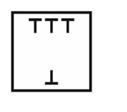
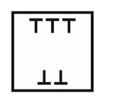
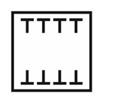
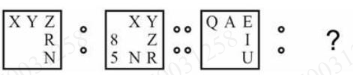
Two figures given on the left side of (::) are related with some logic/rule/relation. Select the missing figure on the right side of (::) from the given alternatives based on the same logic/rule/relation.

  1. AOption (a)

  2. BOption (b)

  3. COption (c)

  4. DOption (d)

View answer & explanation

Correct answer

Answer: (b)B.

Why this answer is correct

Logic followed here is: One element is removed from both the sides in the figure.

Hence, the correct answer is "option 2".

Question 7

Two figures given on the left side of (::) are related with some logic/rule/relation. Select the missing figure on the right side of (::) from the given alternatives based on the same logic/rule/relation.

<br>

  1. AOption (a)

  2. BOption (b)

  3. COption (c)

  4. DOption (d)

View answer & explanation

Correct answer

Answer: (b)B.

Why this answer is correct

Logic followed here is: All the elements are shifted to one place in clockwise direction with the some new elements added.

<br> <br>

Hence, the correct answer is "Option 2".

Question 8

Select the option that is related to the first letter-number cluster in the same way as the fourth letter-number cluster is related to the third letter-number cluster and sixth letter-number cluster is related to fifth letter-number cluster. (NOTE: Operations should be performed on the whole numbers, without breaking down the numbers into its constituent digits. E.g.13 – Operations on 13 such as adding /subtracting /multiplying etc. to 13 can be performed. Breaking down 13 into 1 and 3 and then performing mathematical operations on 1 and 3 is not allowed)

LG500 : ? :: TK400 : NW308 :: VL700 : OY608

  1. AOption (a)

    OK408

  2. BOption (b)

    JP410

  3. COption (c)

    OJ418

  4. DOption (d)

    JO408

View answer & explanation

Correct answer

Answer: (d)D.

JO408

Why this answer is correct

Given:

TK400 : NW308 →

VL700 : OY608 →

LG500 : ? →

Hence, the related letter-number cluster is JO408.

Hence, the correct answer is 'Option 4'.

Question 9

Select the option that is related to the third letter-number cluster in the same way as the second letter-number cluster is related to the first letter-number cluster and sixth letter-number cluster is related to fifth letter-number cluster. (NOTE: Operations should be performed on the whole numbers, without breaking down the numbers into its constituent digits. E.g.13 - Operations on 13 such as adding /subtracting /multiplying etc. to 13 can be performed. Breaking down 13 into 1 and 3 and then performing mathematical operations on 1 and 3 is not allowed)

WDK120 : UBI360 :: RFK180 : ? :: ZXR500 : XVP740

  1. AOption (a)

    DIP420

  2. BOption (b)

    PDI420

  3. COption (c)

    IDP400

  4. DOption (d)

    PID380

View answer & explanation

Correct answer

Answer: (b)B.

PDI420

Why this answer is correct

Given:

WDK120 : UBI360 :: RFK180 : ? :: ZXR500 : XVP740

The logic followed here is:

1. WDK120 : UBI360:

2. ZXR500 : XVP740:

3. RFK180 : ? (Missing term):

Hence, the correct answer is 'Option 2'.

Question 10

Select the option that is related to the sixth number in the same way as the first number is related to the second number and third number is related to fourth number. (NOTE: Operations should be performed on the whole numbers, without breaking down the numbers into its constituent digits. E.g.13 - Operations on 13 such as adding /subtracting /multiplying etc. to 13 can be performed. Breaking down 13 into 1 and 3 and then performing mathematical operations on 1 and 3 is not allowed)

9285 : 9332 :: 8622 : 8669 :: ? : 9333

  1. AOption (a)

    9286

  2. BOption (b)

    9291

  3. COption (c)

    9287

  4. DOption (d)

    9283

View answer & explanation

Correct answer

Answer: (a)A.

9286

Why this answer is correct

The logic followed here is:

Logic: Second Number = First Number + 47

For the first pair 9285 : 9332

⇒ 9285 + 47 = 9332

For the second pair 8622 : 8669

⇒ 8622 + 47 = 8669

Applying the same logic to the third pair

? : 9333

⇒ 9333 − 47 = 9286

Hence, the correct answer is 'Option 1'.

Question 11

Select the option that is related to the third number in the same way as the second number is related to the first number and sixth number is related to fifth number. (NOTE: Operations should be performed on the whole numbers, without breaking down the numbers into its constituent digits. E.g.13 - Operations on 13 such as adding /subtracting /multiplying etc. to 13 can be performed. Breaking down 13 into 1 and 3 and then performing mathematical operations on 1 and 3 is not allowed)

131 : -190 :: 353 : ? :: 208 : -113

  1. AOption (a)

    14

  2. BOption (b)

    18

  3. COption (c)

    32

  4. DOption (d)

    29

View answer & explanation

Correct answer

Answer: (c)C.

32

Why this answer is correct

The logic followed here is:

Logic: Second Number = First Number − 321

For the first pair 131 : −190

⇒ 131 − 321 = −190.

For the third pair 208 : −113

⇒ 208 − 321 = −113.

Applying the same logic to the second pair

353 : ?

⇒ 353 − 321 = 32.

Hence, the correct answer is 'Option 3'.

Question 12

In a certain coded language 'UPPER' is coded as 'XUMAM' and 'XENIA' is coded as 'AJKEV'. How will 'SCARF' be coded in the same code language?

  1. AOption (a)

    UFYNZ

  2. BOption (b)

    UIVPA

  3. COption (c)

    XHWNA

  4. DOption (d)

    VHXNA

View answer & explanation

Correct answer

Answer: (d)D.

VHXNA

Why this answer is correct

The logic followed here is:

Logic: Each letter of the word is shifted by a specific sequence of integers: +3, +5, −3, −4, and −5.

For

UPPER is coded as XUMAM →

<br>


XENIA is coded as AJKEV →


Similarly, let us find the code for SCARF:

Hence, the correct answer is "Option 4".

Question 13

A series is given with one term missing. Select the correct alternative from the given ones that will complete the series.

RB30, OY190, LV350, IS510, ?

  1. AOption (a)

    FP670

  2. BOption (b)

    EO671

  3. COption (c)

    GP669

  4. DOption (d)

    FQ670

View answer & explanation

Correct answer

Answer: (a)A.

FP670

Why this answer is correct

Logic followed here is.

Logic: Each component of the series (the first letter, the second letter, and the number) follows a consistent pattern of addition or subtraction.

Therefore, FP670 will complete the series.

Hence, the correct answer is "Option 1".

Question 14

A series is given with one term wrong. Select that wrong term from the given alternatives.

RXL20, SWM30, TVN45, UUO67.5, VTP110.25

  1. AOption (a)

    VTP110.25

  2. BOption (b)

    SWM30

  3. COption (c)

    TVN45

  4. DOption (d)

    RXL20

View answer & explanation

Correct answer

Answer: (a)A.

VTP110.25

Why this answer is correct

The logic followed for the given series is based on individual letter patterns and a multiplication factor for the numerical values.


The term VTP110.25 is wrong in the series as the numerical value should be 101.25.

Hence, the correct answer is "Option 1".

Question 15

What is the angle (in degrees) between the hour and minute hands of a clock at 1:50 PM?

  1. AOption (a)

    105

  2. BOption (b)

    155

  3. COption (c)

    160

  4. DOption (d)

    245

View answer & explanation

Correct answer

Answer: (d)D.

245

Why this answer is correct

Concept:

Hour hand covers 3600 in 12 hours

Angular distance covered in 1 hour = 360/12 = 300

Angular distance covered in 60 minutes = 300

Angular distance covered in 1 minute = 30/60 = 1/2°

Calculation:

Minute hand covers 360 in 60 minutes

60 minutes = 3600

1 minute = 360/60 ⇒ 1 minute = 60

Here, the given time is 1:50 PM

Minutes = 50

Angle covered by the minute hand = 50 × 6 = 3000

Angle covered by the hour hand = 1 × 30 + 50 × ½ = 30 + 25 = 55°

Angle between the hour and minute hands = 300 − 55 = 2450

Hence, the angle between the hour and minute hands is 245°

Alternate Method

The angle between the hour hand and minute hand = ∣60H−11M∣2|60H - 11M|\over2

Here, H = 1 and M = 50.

So, Angle = ∣60×1−11×50∣2|60 \times 1 - 11 \times 50|\over2

Angle = ∣60−550∣2|60 - 550|\over2 = 490/2 = 245°

Hence, the correct answer is 245°.

Question 16

At what time (approximately) (in AM) between 1 AM and 2 AM will the hour and minute hands of the clock be opposite to each other?

  1. AOption (a)

    1:36

  2. BOption (b)

    1:34

  3. COption (c)

    1:38

  4. DOption (d)

    1:40

View answer & explanation

Correct answer

Answer: (c)C.

1:38

Why this answer is correct

Concept:

The hands of a clock are opposite to each other when the angle between them is 1800

Hour hand covers 3600 in 12 hours.

Angular distance covered by the hour hand in 1 minute = 0.50

Minute hand covers 3600 in 60 minutes.

Angular distance covered by the minute hand in 1 minute = 360/60 = 60

Calculation:

At 1 AM, the position of the hands are:

Hour hand is at 1, which corresponds to 1 × 300 = 300 (from the 12 mark).

Minute hand is at 12, which corresponds to 00.

Let the hands be opposite after m minutes past 1 AM.

Position of hour hand = 30 + 0.5m

Position of minute hand = 6m

For the hands to be opposite, the difference between their angular positions must be 1800:

6m − (30 + 0.5m) = 180

5.5m − 30 = 180

5.5m = 210

m = 210 / 5.5 = 420 / 11

m = 38.1818... minutes

Therefore, the time is approximately 1:38 AM.

Alternate Method

The angle θ between the hour hand and minute hand is given by:

θ = |30H − (11/2)M|

Here, H = 1 (since the time is between 1 and 2 AM) and θ = 1800 (opposite).

180 = |30(1) − (11/2)M|

Since the minute hand must cross the hour hand to be opposite, we take the positive result for (11/2)M − 30:

180 = (11/2)M − 30

210 = (11/2)M

M = 420 / 11

M ≈ 38.18

The approximate time is 1:38 AM.

Hence, the correct answer is 1:38.

Question 17

In the following figure series, select the figure which can be placed at the sign of question mark (?) from the given alternatives.

  1. AOption (a)

  2. BOption (b)

  3. COption (c)

  4. DOption (d)

View answer & explanation

Correct answer

Answer: (d)D.

Why this answer is correct

The logic followed for this series is: The figure inside the box is rotating in clockwise direction in each step.

<br>

.

Hence, the correct image is "Option 4".

Question 18

In the following figure series, select the figure which can be placed at the sign of question mark (?) from the given alternatives.

  1. AOption (a)

  2. BOption (b)

  3. COption (c)

  4. DOption (d)

View answer & explanation

Correct answer

Answer: (b)B.

Why this answer is correct

The logic followed here is: The figures inside the box is rotating in anti-clockwise direction and adding a new zigzag line in each step.

Hence, the correct image is "Option 2".

Question 19

In the following figure series, select the figure which can be placed at the sign of question mark (?) from the given alternatives.

  1. AOption (a)

  2. BOption (b)

  3. COption (c)

  4. DOption (d)

View answer & explanation

Correct answer

Answer: (a)A.

Why this answer is correct

The logic followed in this series is: Shifting the elements downwards and changing of position from left - right in each step.

Hence, the correct image is 'Option 1'.

Question 20

The ratio of present ages of two persons is 7: 8. The sum of their ages is 75. 10 years ago from now, what was the ratio of the ages of the two persons?

  1. AOption (a)

    5 : 6

  2. BOption (b)

    9 : 10

  3. COption (c)

    5 : 7

  4. DOption (d)

    7 : 9

View answer & explanation

Correct answer

Answer: (a)A.

5 : 6

Why this answer is correct

Given:

Present age ratio = 7 : 8

Sum of present ages = 75 years

Calculation:

Let the present ages be 7x and 8x.

7x + 8x = 75

15x = 75

x = 5

Present ages:

  • First person = 7 × 5 = 35 years
  • Second person = 8 × 5 = 40 years
<br>

10 years ago:

First person's age = 35 − 10 = 25 years

Second person's age = 40 − 10 = 30 years

Required ratio:

25 : 30 = 5 : 6

Hence, the correct answer is "Option 1".

General Knowledge and General Awareness (20 questions)

Question 21

The emergence of Buddhism and Jainism in the 6th century BCE can be linked to:

  1. AOption (a)

    Rise of monarchies

  2. BOption (b)

    Criticism of Vedic rituals

  3. COption (c)

    Decline of agriculture

  4. DOption (d)

    Persian influence

View answer & explanation

Correct answer

Answer: (b)B.

Criticism of Vedic rituals

Why this answer is correct

The correct answer is Criticism of Vedic rituals.

Key Points

  • The 6th century BCE in ancient India, often called the era of Second Urbanization, witnessed a significant socio-religious revolution known as the Sramana movement.
  • The primary cause for the rise of Buddhism and Jainism was the deep-seated resentment against the Brahmanical orthodoxy and the increasingly complex Vedic rituals.
  • The Later Vedic period saw the introduction of elaborate sacrifices (Yajnas) and animal slaughter, which were not only expensive for the common man but also hampered the burgeoning agrarian economy that required cattle for plowing.
  • The Varna system had become rigid and hereditary, creating a social hierarchy that granted Brahmins supreme status, which was challenged by the Kshatriyas and the rising Vaishya (merchant) class.
  • Gautama Buddha and Lord Mahavira rejected the infallibility of the Vedas and the necessity of priestly intervention, advocating for ethical conduct, meditation, and the principle of Ahimsa (non-violence).

 Additional Information

  • Economic Transformation:
  • Contrary to the decline of agriculture, this period actually saw a massive expansion in farming due to the widespread use of iron tools and plowshares in the fertile Middle Gangetic Valley.
  • The Vaishyas, who accumulated wealth through trade and commerce, supported Buddhism and Jainism because these religions provided them a higher social status compared to the Vedic fold.
  • Political and Cultural Factors:
  • The rise of monarchies and Mahajanapadas like Magadha provided the political stability necessary for these new ideologies to spread, as many rulers sought to curb the influence of the priestly class.
  • The Persian influence, primarily through the Achaemenid Empire, was largely restricted to the North-Western frontiers and did not trigger the religious reformation occurring in the heartland of India.
  • Both Buddhism and Jainism adopted local dialects like Pali and Prakrit, making their teachings accessible to the masses, unlike Sanskrit which was the exclusive domain of the elite.

Question 22

Which factor best explains the low sex ratio observed in northwestern India?

  1. AOption (a)

    Male-dominated migration

  2. BOption (b)

    Female infanticide and socio-cultural bias

  3. COption (c)

    Religious diversity

  4. DOption (d)

    Low fertility rates

View answer & explanation

Correct answer

Answer: (b)B.

Female infanticide and socio-cultural bias

Why this answer is correct

The correct answer is Female infanticide and socio-cultural bias.

Key Points

  • The sex ratio in northwestern India, comprising states like Haryana, Punjab, and Rajasthan, has historically remained lower than the national average due to deep-seated patriarchal norms and a strong son preference.
  • Socio-cultural bias stems from the perception of sons as economic assets and lineage carriers, while daughters are often viewed as economic liabilities, largely due to the prevalence of the dowry system and traditional inheritance customs.
  • Female infanticide, the intentional killing of female infants, and female foeticide, the practice of sex-selective abortion, are the primary drivers behind the skewed child sex ratio in these regions.
  • The misuse of medical technologies, such as ultrasound and amniocentesis, during the late 20th century allowed for widespread illegal sex determination, leading to a sharp decline in female births.
  • According to the 2011 Census, the child sex ratio (0−6 years) in Haryana was recorded at a low of 834, and Punjab at 846, significantly below the national average of 919.

 Additional Information

  • Male-dominated migration:
  • While migration to urban industrial hubs like Ludhiana or Gurugram can affect the adult sex ratio in specific pockets, it does not account for the biological deficit of females at birth seen across the northwestern belt.
  • Pre-Conception and Pre-Natal Diagnostic Techniques (PCPNDT) Act:
  • Enacted in 1994, this federal law was designed to prevent female foeticide by banning the use of technology for sex selection and regulating prenatal diagnostic centers.
  • Beti Bachao Beti Padhao (BBBP):
  • Launched in January 2015, this flagship government scheme specifically targets districts with a low child sex ratio to eliminate gender-biased sex selection and ensure the survival and protection of the girl child.
  • Low fertility rates:
  • Fertility transition often correlates with higher sex-ratio imbalances in societies with strong son preference, as families use sex-selection to ensure at least one male child within a smaller family size.

Question 23

Which act first allowed budget discussions in the Indian legislature?

  1. AOption (a)

    Indian Councils Act, 1892

  2. BOption (b)

    Indian Councils Act, 1861

  3. COption (c)

    Morley-Minto Reforms, 1909

  4. DOption (d)

    Government of India Act, 1919

View answer & explanation

Correct answer

Answer: (a)A.

Indian Councils Act, 1892

Why this answer is correct

The correct answer is Indian Councils Act, 1892.

Key Points

  • The Indian Councils Act, 1892 was an act of the British Parliament that increased the number of additional members in the Central and Provincial legislative councils.
  • For the first time in British India, the act empowered the legislative councils to discuss the Annual Financial Statement, commonly referred to as the Budget.
  • Prior to this enactment, the legislative members had no legal right to participate in financial discussions or scrutinize the administrative expenditures of the British Government.
  • It also introduced the provision for members to address questions to the Executive on matters of public interest, provided a mandatory six-day notice was given to the government.
  • Despite these reforms, the act maintained significant limitations; members were strictly prohibited from asking Supplementary Questions or Voting on the budget.

 Additional Information

  • Indian Councils Act, 1861:
  • It initiated the process of Decentralization by restoring legislative powers to the Bombay and Madras Presidencies.
  • It introduced the Portfolio System, which gave legal recognition to the system introduced by Lord Canning in 1859.
  • The Viceroy was empowered to issue Ordinances with a life span of six months during emergencies.
  • Indian Councils Act, 1909 (Morley-Minto Reforms):
  • This act further expanded legislative functions, finally allowing members to ask Supplementary Questions and move resolutions on the Budget.
  • It introduced Communal Representation for Muslims by accepting the concept of a Separate Electorate.
  • Government of India Act, 1919 (Montagu-Chelmsford Reforms):
  • It introduced Dyarchy in the provinces, dividing subjects into Reserved and Transferred lists.
  • It established a Bicameral legislature at the center consisting of an Upper House (Council of State) and a Lower House (Legislative Assembly).

Question 24

What is the one-time fee required to avail the FASTag Annual Pass seen in news in August 2025?

  1. AOption (a)

    Rs. 1000

  2. BOption (b)

    Rs. 1500

  3. COption (c)

    Rs. 2500

  4. DOption (d)

    Rs. 3000

View answer & explanation

Correct answer

Answer: (d)D.

Rs. 3000

Why this answer is correct

The correct answer is Rs. 3000.

Key Points

  • The Ministry of Road Transport and Highways (MoRTH), in collaboration with the National Highways Authority of India (NHAI), introduced the FASTag Annual Pass in August 2025 to provide a cost-effective solution for frequent highway commuters.
  • The one-time subscription fee for this pass is set at Rs. 3000, which allows private vehicle owners to enjoy unlimited or subsidized travel across a specified network of National Highways for a period of 365 days.
  • The primary objective of the Rs. 3000 pass is to reduce the processing time at Toll Plazas and eliminate the need for frequent balance top-ups for daily travelers.
  • This initiative leverages Radio Frequency Identification (RFID) technology, ensuring that the toll amount is validated through the centralized National Electronic Toll Collection (NETC) system without requiring the vehicle to stop.
  • The fee structure was finalized after considering the average toll expenditure of a frequent traveler, aiming to promote a digital and cashless economy while optimizing traffic flow on major expressways.

 Additional Information

  • Evolution of FASTag:
  • The FASTag system was initially launched as a pilot project in 2014 on the Golden Quadrilateral.
  • It was made mandatory for all M and N category vehicles from February 15, 2021, to ensure 100 percent electronic tolling.
  • The National Payments Corporation of India (NPCI) acts as the central clearing house for all transactions.
  • Technological and Environmental Impact:
  • The system uses RFID tags fixed on the vehicle’s windshield, which are scanned by sensors at toll booths.
  • The implementation has led to a significant reduction in Fuel Consumption and CO2 emissions by decreasing the idling time of vehicles at toll gates.
  • Users receive real-time notifications via SMS and can manage their accounts through the My FASTag App.

Question 25

Which of the following was the target of Tenth five year plan of India? I. Improvement in Literacy. II. Reduction in infant and maternal mortality rates.

  1. AOption (a)

    Only I

  2. BOption (b)

    Only II

  3. COption (c)

    Both I and II

  4. DOption (d)

    Neither I nor II

View answer & explanation

Correct answer

Answer: (c)C.

Both I and II

Why this answer is correct

The correct answer is Both I and II.

Key Points

  • The Tenth Five-Year Plan (2002–2007) was unique as it moved beyond purely economic targets to include specific monitorable targets for social and developmental indicators. One of the primary social targets was the improvement in literacy, specifically aiming to increase the literacy rate to 75 percent by the end of the plan period in 2007 and reducing the gender gap in literacy by 50 percent. Hence, statement I is correct.
  • Health and population control were major pillars of the plan. It set ambitious goals for the reduction in infant and maternal mortality rates, specifically targeting a reduction in the Infant Mortality Rate (IMR) to 45 per 1000 live births and the Maternal Mortality Ratio (MMR) to 2 per 1000 live births by 2007. Hence, statement II is correct.

 Additional Information

  • The Tenth Five-Year Plan was launched under the chairmanship of Atal Bihari Vajpayee and focused on achieving a high GDP growth rate of 8.0 percent per annum.
  • Poverty Reduction: The plan aimed to reduce the poverty ratio by 5 percentage points by 2007 and by 15 percentage points by 2012.
  • Employment: It sought to provide gainful and high-quality employment to the addition to the labor force during the plan period.
  • Environmental Goals: A target was set to increase forest and tree cover to 25 percent by 2007 and 33 percent by 2012.
  • Basic Amenities: The plan emphasized providing potable drinking water to all villages and cleaning major polluted rivers.

Question 26

Tropic of cancer passes through which of the following neighbouring country of India?

  1. AOption (a)

    Bangladesh

  2. BOption (b)

    Pakistan

  3. COption (c)

    Bhutan

  4. DOption (d)

    Nepal

View answer & explanation

Correct answer

Answer: (a)A.

Bangladesh

Why this answer is correct

The correct answer is Bangladesh.

Key Points

  • The Tropic of Cancer is an imaginary line of latitude located at approximately 23.5° North of the Equator, marking the northernmost point where the Sun can appear directly overhead at noon.
  • Among the neighboring countries of India, the Tropic of Cancer passes through Bangladesh and Myanmar. It enters Bangladesh from the Indian state of West Bengal and exits toward the northeastern states of India.
  • In Bangladesh, the line passes through several major divisions, including Khulna, Dhaka, and Chittagong, effectively bisecting the country.
  • In the Indian context, this line passes through eight states: Gujarat, Rajasthan, Madhya Pradesh, Chhattisgarh, Jharkhand, West Bengal, Tripura, and Mizoram.
  • Globally, the Tropic of Cancer traverses 16 countries across three continents, including Mexico, Egypt, Saudi Arabia, United Arab Emirates, Oman, China, and Taiwan.

 Additional Information

  • Pakistan:
  • Located to the west of India, Pakistan lies entirely to the north of the Tropic of Cancer. Its geographic coordinates range approximately between 24° N and 37° N, meaning the line does not touch its territory.
  • Nepal:
  • Nepal is a landlocked country situated in the Himalayas, between latitudes 26° N and 30° N. Consequently, it is located significantly north of the Tropic of Cancer.
  • Bhutan:
  • Positioned between 26.7° N and 28.3° N latitude, Bhutan is another neighbor that remains north of the Tropic of Cancer.
  • Mahi River:
  • The Mahi River is the only river in India that cuts the Tropic of Cancer twice, first in Madhya Pradesh (flowing north) and then in Gujarat (flowing south).

Question 27

In Feb 2025, ____ has announced to launch India's first Centre for Advanced Research on Addictive Behaviours (CAR-AB) to tackle rising internet and technology addiction among children and youth.

  1. AOption (a)

    AIIMS, Guwahati

  2. BOption (b)

    AIIMS, Rajkot

  3. COption (c)

    AIIMS, Delhi

  4. DOption (d)

    AIIMS, Patna

View answer & explanation

Correct answer

Answer: (c)C.

AIIMS, Delhi

Why this answer is correct

The correct answer is AIIMS, Delhi.

Key Points

  • In February 2025, the All India Institute of Medical Sciences (AIIMS), Delhi, officially announced the establishment of the Centre for Advanced Research on Addictive Behaviours (CAR-AB), marking a significant milestone in Indian psychiatry.
  • The CAR-AB is India's first dedicated facility aimed at addressing the psychological and physiological impacts of internet and technology addiction, which have seen a sharp rise following the global digital shift.
  • The center focuses specifically on the children and youth demographic, who are increasingly vulnerable to gaming disorders, social media addiction, and cyber-compulsive behaviors.
  • It operates through a multidisciplinary approach, integrating advanced neuroimaging, behavioral therapy, and clinical research to develop specialized treatment protocols for digital-age addictions.
  • The initiative is led by the National Drug Dependence Treatment Centre (NDDTC) at AIIMS Delhi, leveraging their expertise in substance abuse to tackle these emerging behavioral addictions.
  • The center will also serve as a national repository for data on tech addiction, helping to inform future public health policies and school-based intervention programs across India.

 Additional Information

  • AIIMS, Delhi:
  • Founded in 1956, it is an Institution of National Importance and remains the highest-ranked medical institution in India according to the NIRF rankings.
  • The institute's Department of Psychiatry and NDDTC are primary collaborators with the World Health Organization (WHO) for mental health and substance abuse research.
  • Technological Addictive Behaviours:
  • The WHO officially classified Gaming Disorder as a mental health condition in the ICD-11, highlighting the global urgency for specialized centers like CAR-AB.
  • Addictive behaviors in the digital realm involve the dopaminergic pathways of the brain, similar to chemical dependencies like alcohol or nicotine.
  • Common symptoms include preoccupation, withdrawal symptoms when not online, and functional impairment in academic or social life.

Question 28

Which dance form originates from the Union Territory of Ladakh?

  1. AOption (a)

    Jabro

  2. BOption (b)

    Kathi

  3. COption (c)

    Sattriya

  4. DOption (d)

    Kacchi Ghodi

View answer & explanation

Correct answer

Answer: (a)A.

Jabro

Why this answer is correct

The correct answer is Jabro.

Key Points

  • Jabro is a popular and energetic folk dance originating from the Union Territory of Ladakh, primarily performed by the Changpa nomadic community of the Changthang high-altitude plateaus.
  • The dance is a vital cultural element of the Losar festival, which celebrates the Tibetan New Year, although it is also performed during various social gatherings and marriage ceremonies.
  • It is characterized by rhythmic foot-stamping and melodious Jabro songs, where male and female performers link hands to form a circle or a long chain.
  • The musical accompaniment typically features traditional instruments like the Damman (kettle drums) and Surna (oboe-like instrument), reflecting the unique Indo-Tibetan cultural fusion of the Himalayan region.

 Additional Information

  • Sattriya:
  • This is one of the eight Classical Dances of India, originating from Assam.
  • It was introduced in the 15th century by the great Vaishnava saint and reformer Mahapurush Srimanta Sankardev as a medium for Bhakti (devotion) in the Sattras (monasteries).
  • Kacchi Ghodi:
  • A vibrant folk dance from the Shekhawati region of Rajasthan, typically performed during weddings and social celebrations.
  • Dancers wear dummy horse costumes around their waists and perform intricate footwork and mock fights, often accompanied by the Bankia (brass instrument) and Dhol.
  • Kathi:
  • A traditional stick dance from West Bengal, specifically associated with the Gambhira folk tradition in the Malda district.
  • The dance is deeply rooted in Shaivite rituals and agrarian festivities, involving rhythmic striking of sticks to produce a unique percussive sound.

Question 29

India's first animal stem cell biobank was inaugurated at ____.

  1. AOption (a)

    National Institute of Animal Biotechnology

  2. BOption (b)

    IIT Madras

  3. COption (c)

    Indian Institute of Toxicology Research

  4. DOption (d)

    Indian Institute of Science

View answer & explanation

Correct answer

Answer: (a)A.

National Institute of Animal Biotechnology

Why this answer is correct

The correct answer is National Institute of Animal Biotechnology.

Key Points

  • The National Institute of Animal Biotechnology (NIAB), an autonomous institute under the Department of Biotechnology (DBT), Ministry of Science and Technology, inaugurated India’s first animal stem cell biobank in Hyderabad.
  • This facility is dedicated to the isolation, characterization, and cryopreservation of mesenchymal stem cells (MSCs) derived from various animal tissues, particularly from livestock like cattle, buffalo, and goats.
  • The biobank serves as a critical repository for research in regenerative medicine, providing a foundation for developing therapies to treat injuries and chronic diseases in animals that do not respond well to conventional medicine.
  • One of the primary objectives is the conservation of genetic resources from indigenous breeds, which are vital for maintaining biodiversity and ensuring the long-term sustainability of the Indian livestock sector.
  • By advancing stem cell research, the institute aims to enhance animal health and productivity, which directly impacts the agrarian economy and farmers' livelihoods across India.

 Additional Information

  • National Institute of Animal Biotechnology (NIAB):
  • Established in 2010 in Hyderabad, it focuses on using advanced biotechnological tools like genomics, proteomics, and bioinformatics to improve animal health.
  • The institute plays a major role in developing molecular diagnostics and recombinant vaccines for major livestock diseases.
  • Indian Institute of Science (IISc):
  • Located in Bengaluru, it is a premier public research university established in 1909 with the support of Jamsetji Tata.
  • It is globally recognized for high-impact research in biological sciences, physics, and engineering.
  • Indian Institute of Toxicology Research (IITR):
  • A constituent laboratory of the Council of Scientific and Industrial Research (CSIR), established in 1965 and located in Lucknow.
  • It specializes in identifying the toxicological effects of chemicals, pollutants, and food additives on human and environmental health.
  • IIT Madras:
  • Located in Chennai, it was founded in 1959 and is consistently ranked as the top engineering institute in India under the NIRF.
  • It hosts a major Research Park that facilitates innovation in nanotechnology, robotics, and biotechnology.

Question 30

Which traditional sport of Tamil Nadu involves taming a bull as part of the Pongal celebrations?

  1. AOption (a)

    Thang-ta

  2. BOption (b)

    Vallam Kali

  3. COption (c)

    Jallikattu

  4. DOption (d)

    Bihu Naas

View answer & explanation

Correct answer

Answer: (c)C.

Jallikattu

Why this answer is correct

The correct answer is Jallikattu.

Key Points

  • Jallikattu is an ancient and traditional bull-taming sport primarily celebrated in the Indian state of Tamil Nadu.
  • The event is a significant highlight of the Pongal harvest festival, specifically occurring on Mattu Pongal, which is the third day of the four-day festival dedicated to cattle.
  • The term is derived from the Tamil words Salli (coins) and Kattu (package), referring to the historical practice of tying a bundle of coins to the horns of the bull for the tamer to retrieve.
  • Historical evidence of the sport dates back to the Sangam period (c. 400 BCE − 600 CE), with mentions in ancient literature like Kalithogai and Malaipadukadam under the name Eru thazhuvuthal.
  • Participants aim to grab the large hump of the bull and hang on to it for a predetermined distance or duration to be declared the winner.
  • Specific native breeds like the Pulikulam and Kangayam bulls are specially reared for this event, which is most prominent in districts such as Madurai, Theni, and Tiruchirappalli.

 Additional Information

  • Thang-ta:
  • Origin: This is an indigenous martial art from Manipur.
  • Description: It involves the use of weapons such as the Thang (sword) and Ta (spear) and is also known as Huyen Lallong.
  • Vallam Kali:
  • Origin: A traditional event held in the state of Kerala.
  • Description: Known as the Snake Boat Race, it is a major event during the harvest festival of Onam, with the Nehru Trophy Boat Race being the most famous competition.
  • Bihu Naas:
  • Origin: This is a traditional folk dance from the state of Assam.
  • Description: Performed during the Bihu festival, it reflects the agrarian culture and joy of the harvest season through rhythmic steps and traditional music.

Question 31

What is the audible range of sound for human beings?

  1. AOption (a)

    2 Hz to 2000 kHz

  2. BOption (b)

    20 Hz to 200 kHz

  3. COption (c)

    20 Hz to 20000 Hz

  4. DOption (d)

    20 Hz to 2000 Hz

View answer & explanation

Correct answer

Answer: (c)C.

20 Hz to 20000 Hz

Why this answer is correct

The correct answer is 20 Hz to 20000 Hz.

Key Points

  • The audible range for human beings is defined as the frequency interval of sound waves that can be detected by the healthy human ear, typically spanning from 20 Hz to 20,000 Hz.
  • Frequency is the number of sound wave cycles per second, measured in Hertz (Hz); sounds within the human audible range stimulate the auditory nerve in the inner ear.
  • The upper limit of human hearing, 20,000 Hz (or 20 kHz), is often the first frequency range to be affected by age or exposure to loud noises.
  • Sound travels through air as a longitudinal wave, consisting of compressions and rarefactions, and its pitch is directly related to its frequency within this audible spectrum.

 Additional Information

  • Infrasonic Sound:
  • These are sound waves with frequencies lower than 20 Hz, which are below the threshold of human hearing.
  • Large animals such as elephants and whales communicate over long distances using these low-frequency waves.
  • Geological events like earthquakes and volcanic eruptions also generate infrasound.
  • Ultrasonic Sound:
  • Frequencies exceeding 20,000 Hz are classified as ultrasonic or ultrasound.
  • Animals such as bats and dolphins use ultrasound for echolocation to navigate and hunt prey in darkness or water.
  • In technology, ultrasound is utilized in SONAR (Sound Navigation and Ranging) for measuring ocean depth and in medical ultrasonography for internal imaging.
  • Human Ear Sensitivity:
  • The human ear is most sensitive to frequencies between 2,000 Hz and 5,000 Hz, which is the range where most human speech resides.

Question 32

In the context of Budget, which of the following includes assets and liabilities of the government?

  1. AOption (a)

    Revenue account

  2. BOption (b)

    Capital account

  3. COption (c)

    Escrow account

  4. DOption (d)

    Forex account

View answer & explanation

Correct answer

Answer: (b)B.

Capital account

Why this answer is correct

The correct answer is Capital account.

Key Points

  • The Capital account is a major component of the Union Budget of India, which records all transactions of the government that either create liabilities or lead to a reduction in assets.
  • It consists of Capital Receipts and Capital Expenditure, providing a clear picture of the government’s long-term financial health and its capital formation activities.
  • Capital Receipts include funds raised through market borrowings, loans from the Reserve Bank of India (RBI), and external assistance from foreign governments or international bodies. It also encompasses non-debt receipts like the recovery of loans and disinvestment proceeds from Public Sector Undertakings (PSUs).
  • Capital Expenditure refers to the money spent by the government on the creation of physical assets like infrastructure (roads, bridges, hospitals) and machinery, or on the acquisition of financial assets such as shares. It also includes repayment of debt and loans and advances granted to State and Union Territory governments.
  • Under Article 112 of the Constitution of India, the government is mandated to distinguish between revenue and capital components of the budget to ensure fiscal transparency.

 Additional Information

  • Revenue account:
  • This account deals with recurring income and expenses that do not result in the creation of assets or the reduction of liabilities.
  • It includes tax revenue (Income tax, GST), non-tax revenue (interest, dividends), and revenue expenditure (subsidies, salaries, and interest payments).
  • Escrow account:
  • A financial arrangement where a third party holds and regulates payment of funds required for two parties involved in a specific transaction.
  • It is commonly used in business deals and infrastructure projects to ensure that obligations are met before funds are released.
  • Forex account:
  • Relates to Foreign Exchange Reserves held by the Central Bank (RBI).
  • These reserves are used to support the national currency, manage balance of payments, and facilitate international trade.

Question 33

KABIL is presently exploring opportunities for acquisition of overseas critical minerals assets like Lithium (Li) and Cobalt (Co) in few countries. Which of the following is NOT one of them?

  1. AOption (a)

    Australia

  2. BOption (b)

    Argentina

  3. COption (c)

    Chile

  4. DOption (d)

    Canada

View answer & explanation

Correct answer

Answer: (d)D.

Canada

Why this answer is correct

The correct answer is Canada.

Key Points

  • Khanij Bidesh India Limited (KABIL) was established to ensure the mineral security of India by identifying, acquiring, and developing strategic minerals like Lithium (Li) and Cobalt (Co) overseas.
  • Australia: India has signed a Critical Minerals Investment Partnership with the Australian government. KABIL is actively performing due diligence for lithium and cobalt projects in Western Australia to secure long-term supply chains. Hence, statement 1 is correct.
  • Argentina: In early 2024, KABIL signed a milestone agreement with CAMYEN, a state-owned enterprise of the Catamarca province, for the exploration and development of five lithium brine blocks, marking India's first-ever lithium exploration project in South America. Hence, statement 2 is correct.
  • Chile: As a member of the Lithium Triangle, Chile is a top priority for KABIL. The organization has been in advanced discussions and seeking Memoranda of Understanding (MoU) for lithium exploration and brine processing within the country. Hence, statement 3 is correct.
  • Canada: Although Canada is a mineral-rich nation and a member of the Minerals Security Partnership (MSP) alongside India, it is not currently one of the primary countries where KABIL is finalizing or actively exploring the acquisition of lithium and cobalt assets. Hence, statement 4 is incorrect.

 Additional Information

  • Understanding KABIL:
  • It is a Joint Venture company formed in 2019 under the aegis of the Ministry of Mines.
  • The venture involves three Central Public Sector Enterprises: National Aluminium Company Ltd (NALCO), Hindustan Copper Ltd (HCL), and Mineral Exploration and Consultancy Ltd (MECL).
  • The primary mandate is to achieve Atmanirbhar Bharat in the sector of critical minerals required for high-tech and green energy applications.
  • Strategic Importance of Critical Minerals:
  • Lithium is the foundational element for Lithium-ion batteries, which power Electric Vehicles (EVs) and large-scale energy storage systems.
  • Cobalt provides thermal stability and high energy density to batteries, making it indispensable for transitioning to a low-carbon economy.
  • Securing these assets helps India reduce its heavy reliance on imports from China, which currently dominates the global processing and supply chain of these minerals.

Question 34

Where did Usain Bolt set his 100m world record in 2009?

  1. AOption (a)

    Berlin

  2. BOption (b)

    New York city

  3. COption (c)

    Beijing

  4. DOption (d)

    Seoul

View answer & explanation

Correct answer

Answer: (a)A.

Berlin

Why this answer is correct

The correct answer is Berlin.

Key Points

  • The legendary Jamaican sprinter Usain Bolt established the standing 100m world record during the 12th IAAF World Championships in Athletics hosted in Berlin, Germany.
  • On August 16, 2009, Bolt completed the sprint in a phenomenal time of 9.58 seconds, shattering his own previous record of 9.69 seconds.
  • The historic event took place at the Olympiastadion, where Bolt achieved a top speed of 44.72 km/h between the 60-meter and 80-meter marks of the race.
  • This performance remains the largest margin of improvement in the 100m world record since the beginning of electronic timing in 1968.

 Additional Information

  • New York City:
  • Bolt set his first 100m world record here on May 31, 2008, at the Icahn Stadium during the Reebok Grand Prix, clocking 9.72 seconds.
  • Beijing:
  • At the 2008 Beijing Olympics, Bolt claimed the gold medal and set a world record of 9.69 seconds, a feat that brought him global recognition as the world's fastest man.
  • Other Records in Berlin:
  • During the same 2009 World Championships, Bolt also set the current 200m world record with a time of 19.19 seconds.
  • Usain Bolt's Legacy:
  • Known as the Lightning Bolt, he is an eight-time Olympic gold medalist and remains the only athlete to win the 100m and 200m titles at three consecutive Olympic Games (2008, 2012, and 2016).

Question 35

At which event did Animesh Kujur break the men's 200 metres national record in 2025?

  1. AOption (a)

    Asian Athletics Championships

  2. BOption (b)

    Diamond League

  3. COption (c)

    Asian Games

  4. DOption (d)

    Commonwealth Games

View answer & explanation

Correct answer

Answer: (a)A.

Asian Athletics Championships

Why this answer is correct

The correct answer is Asian Athletics Championships.

Key Points

  • Animesh Kujur, a prominent Indian sprinter, achieved a historic milestone by breaking the Men's 200 metres National Record at the Asian Athletics Championships held in 2025.
  • The 26th edition of the championships took place in Gumi, South Korea, where Kujur delivered an exceptional performance to secure the Gold Medal for India.
  • Kujur clocked a record-breaking time of 20.48 seconds, effectively surpassing the previous national mark of 20.52 seconds which was held by Amlan Borgohain since 2022.
  • Hailing from Odisha, Kujur has been a consistent performer in the domestic circuit, and this international record further solidifies his position as one of Asia's fastest sprinters.
  • The achievement is significant as it meets the high-performance standards required for world-class athletics, marking a new era for Indian track and field in short-distance sprinting.

 Additional Information

  • Asian Athletics Championships:
  • Organized by the Asian Athletics Association (AAA), it is the premier biennial track and field competition for athletes from Asian nations.
  • The event serves as a critical platform for athletes to qualify for the World Athletics Championships and the Olympic Games.
  • Diamond League:
  • An elite, annual series of track and field competitions involving the top-ranked athletes in the world, governed by World Athletics.
  • It consists of 15 meetings across various global cities, culminating in a high-stakes final.
  • Asian Games:
  • A continental multi-sport event held every four years, governed by the Olympic Council of Asia (OCA) and recognized by the IOC.
  • Athletics is one of the most prestigious disciplines at the games, featuring intense competition from powerhouses like China and Japan.
  • Commonwealth Games:
  • A quadrennial multi-sport event for members of the Commonwealth of Nations, emphasizing the historical ties between 56 member states.
  • Indian sprinters like Milkha Singh and Hima Das have historically utilized this platform to showcase Indian athletic prowess on a global stage.

Question 36

In the context of Mega consolidation in public sector banks, the Andhra Bank was amalgamated into ____.

  1. AOption (a)

    Union Bank of India

  2. BOption (b)

    Indian Bank

  3. COption (c)

    Punjab National Bank

  4. DOption (d)

    Canara Bank

View answer & explanation

Correct answer

Answer: (a)A.

Union Bank of India

Why this answer is correct

The correct answer is Union Bank of India.

Key Points

  • The Mega Consolidation of Public Sector Banks (PSBs) was a major structural reform announced by the Government of India in August 2019 to create fewer but globally competitive banks.
  • This consolidation process officially came into effect on April 1, 2020, reducing the number of PSBs from 18 to 12.
  • As part of this exercise, Andhra Bank and Corporation Bank were amalgamated into the Union Bank of India.
  • The merger aimed to enhance the capital base, improve operational efficiency, and increase the lending capacity of the merged entity to support large-scale infrastructure projects.
  • Post-merger, Union Bank of India became the fifth-largest public sector bank in the country, benefiting from the strong regional presence of Andhra Bank in the southern states.

 Additional Information

  • The other major mergers that occurred during the same Mega Consolidation exercise include:
  • Punjab National Bank: It served as the anchor bank for the merger of Oriental Bank of Commerce (OBC) and United Bank of India, becoming the second-largest PSB.
  • Canara Bank: This bank absorbed Syndicate Bank, resulting in the creation of the fourth-largest public sector bank in India.
  • Indian Bank: It was merged with Allahabad Bank, significantly expanding its reach in the northern and eastern parts of the country.
  • Bank of Baroda: In a separate merger prior to the mega consolidation, Vijaya Bank and Dena Bank were merged into Bank of Baroda effective from April 1, 2019.

Question 37

In Football, there are ____ types of free kicks awarded, depending on the nature of the offence.

  1. AOption (a)

    2

  2. BOption (b)

    3

  3. COption (c)

    4

  4. DOption (d)

    5

View answer & explanation

Correct answer

Answer: (a)A.

2

Why this answer is correct

The correct answer is 2.

Key Points

  • According to Law 13 of the IFAB (International Football Association Board) Laws of the Game, there are specifically two categories of free kicks awarded for fouls and misconduct: the Direct Free Kick and the Indirect Free Kick.
  • A Direct Free Kick is awarded when a player commits a physical offence against an opponent in a manner considered by the referee to be careless, reckless, or using excessive force. Examples include kicking, tripping, jumping at, striking, or pushing. It is also awarded for handball offences (excluding the goalkeeper inside their own penalty area).
  • A Goal can be scored directly from a Direct Free Kick against the opposing team without the ball touching any other player. If the kick is taken directly into the team’s own goal, a Corner Kick is awarded to the opposing team.
  • An Indirect Free Kick is awarded for technical infractions or non-contact offences. Common reasons include dangerous play, impeding the progress of an opponent without contact, using offensive language, or specific goalkeeper violations like holding the ball for more than six seconds or handling a deliberate back-pass from a teammate.
  • A Goal can only be scored from an Indirect Free Kick if the ball touches another player (from either team) before entering the net. If it goes into the goal without a second touch, a Goal Kick is awarded.

 Additional Information

  • Referee Signals:
  • For an Indirect Free Kick, the Referee signals by raising their arm vertically above the head. This signal is maintained until the kick has been taken and the ball touches another player or goes out of play.
  • For a Direct Free Kick, the referee points their arm in the direction of the attacking side to indicate the kick.
  • Required Distance:
  • In both types of free kicks, all opponents must be at least 9.15 meters (or 10 yards) away from the ball until it is in play, unless they are on their own goal line between the goalposts.
  • Relationship with Penalty Kicks:
  • If a player commits an offence that would normally result in a Direct Free Kick while inside their own Penalty Area, the referee awards a Penalty Kick instead of a free kick.

Question 38

Which of the following statement is correct regarding G20?

I. Its summit held annually.

II. India did not host any summit after its inception.

  1. AOption (a)

    Only I

  2. BOption (b)

    Only II

  3. COption (c)

    Both I and II

  4. DOption (d)

    Neither I nor II

View answer & explanation

Correct answer

Answer: (a)A.

Only I

Why this answer is correct

The correct answer is Only I.

Key Points

  • The G20 or Group of Twenty is a premier intergovernmental forum for international economic cooperation. Since 2011, the G20 Leaders Summit has been held annually under a rotating presidency to address global financial stability and climate change mitigation. Hence, statement I is correct.
  • India held the G20 Presidency from December 1, 2022, to November 30, 2023. India hosted the 18th G20 Summit in New Delhi at the Bharat Mandapam Convention Centre on September 9−10, 2023. Hence, statement II is incorrect.

 Additional Information

  • G20 Origins and Evolution:
  • The forum was established in 1999 following the Asian financial crisis to bring together Finance Ministers and Central Bank Governors.
  • It was elevated to the level of Heads of State/Government in 2008 to address the Global Financial Crisis.
  • Structure and Membership:
  • The G20 consists of 19 countries, the European Union, and the African Union (admitted in 2023).
  • The group operates without a permanent secretariat; instead, it is supported by the Troika, representing the previous, current, and upcoming presidencies (e.g., Indonesia, India, and Brazil in 2023).
  • New Delhi Summit 2023:
  • The theme was Vasudhaiva Kutumbakam, which translates to One Earth, One Family, One Future, derived from the Maha Upanishad.
  • Significant outcomes included the Global Biofuels Alliance and the India-Middle East-Europe Economic Corridor (IMEC).

Question 39

What is the rank of China in Energy Transition Index 2025?

  1. AOption (a)

    12

  2. BOption (b)

    22

  3. COption (c)

    33

  4. DOption (d)

    41

View answer & explanation

Correct answer

Answer: (a)A.

12

Why this answer is correct

The correct answer is 12.

Key Points

  • The Energy Transition Index (ETI) is a comprehensive annual report published by the World Economic Forum (WEF) in collaboration with Accenture.
  • In the Energy Transition Index 2025, China achieved the 12th rank, showcasing its rapid progress in integrating sustainable energy solutions into its national grid.
  • The ETI benchmarks 120 countries based on their current energy system performance and their transition readiness to adopt cleaner energy sources.
  • China's jump in rankings is attributed to its massive investments in renewable energy, specifically leading the world in solar photovoltaic (PV) and onshore wind capacity.
  • The report highlights China's success in balancing energy security with environmental sustainability, despite being one of the world's largest energy consumers.
  • The country has also made significant strides in the electric vehicle (EV) ecosystem, accounting for a dominant share of global EV battery production and infrastructure development.

 Additional Information

  • The Energy Transition Index is calculated based on two main dimensions:
  • System Performance: Evaluates countries on Energy Equity (access and affordability), Energy Security (reliability of supply), and Environmental Sustainability (decarbonization).
  • Transition Readiness: Measures the enabling environment, including policy stability, capital and investment, infrastructure, and innovation.
  • Top Performing Countries:
  • Sweden, Denmark, and Finland consistently lead the index due to their long-standing commitment to carbon neutrality and advanced energy efficiency policies.
  • Sweden has frequently occupied the 1st position, supported by its high share of hydropower and biofuels.
  • Developing nations like China and Brazil are increasingly narrowing the gap with advanced economies by accelerating the phase-out of fossil fuels in favor of green hydrogen and decentralized energy systems.

Question 40

The National Multidimensional Poverty Index (MPI) in India, released by which of the following?

  1. AOption (a)

    NITI Aayog

  2. BOption (b)

    IDSA

  3. COption (c)

    NHRC

  4. DOption (d)

    IIB

View answer & explanation

Correct answer

Answer: (a)A.

NITI Aayog

Why this answer is correct

The correct answer is NITI Aayog.

Key Points

  • The National Multidimensional Poverty Index (MPI) is a baseline report developed and released by NITI Aayog (National Institution for Transforming India). It serves as a rigorous tool to measure and monitor poverty across multiple dimensions simultaneously.
  • The index is calculated using the globally accepted methodology developed by the Oxford Poverty and Human Development Initiative (OPHI) and the United Nations Development Programme (UNDP), adapted to the Indian context.
  • The primary data source for the National MPI is the National Family Health Survey (NFHS). The first edition of the index was based on NFHS-4 (2015-16), while subsequent updates utilize NFHS-5 (2019-21) to capture changes in poverty levels.
  • Unlike traditional poverty lines based solely on income or consumption expenditure, the MPI identifies deprivations across three equally weighted dimensions: Health, Education, and Standard of Living.
  • These three dimensions are represented by 12 indicators, including nutrition, child and adolescent mortality, maternal health, years of schooling, school attendance, cooking fuel, sanitation, drinking water, electricity, housing, assets, and bank accounts.
  • The index contributes to tracking India's progress toward Sustainable Development Goal (SDG) Target 1.2, which aims to reduce at least by half the proportion of men, women, and children living in poverty in all its dimensions by 2030.

 Additional Information

  • NITI Aayog:
  • Established on January 1, 2015, it replaced the Planning Commission to serve as a policy think tank that fosters Cooperative Federalism.
  • The Prime Minister of India serves as the Ex-officio Chairperson.
  • NHRC (National Human Rights Commission):
  • A statutory body established on October 12, 1993, under the Protection of Human Rights Act.
  • Its primary mandate is to protect and promote human rights relating to life, liberty, equality, and dignity.
  • IDSA (Manohar Parrikar Institute for Defence Studies and Analyses):
  • An autonomous research institute under the Ministry of Defence, focusing on national security, military affairs, and international relations.

Elementary Mathematics (20 questions)

Question 41

88 + 42 - (34 + 26) + 71 - 59 + 37 = ?

  1. AOption (a)

    119

  2. BOption (b)

    121

  3. COption (c)

    123

  4. DOption (d)

    125

View answer & explanation

Correct answer

Answer: (a)A.

119

Why this answer is correct

Shortcut Trick

Solve the bracket first: (34 + 26) = 60.

Combine positive terms: 88 + 42 + 71 + 37 = 238.

Combine negative terms: 60 + 59 = 119.

Subtract the totals: 238 − 119 = 119.

∴ The correct answer is 119.

Alternate Method

Given: 88 + 42 − (34 + 26) + 71 − 59 + 37

Method: Follow the BODMAS rule to solve the expression step-by-step.

⇒ 88 + 42 − 60 + 71 − 59 + 37

⇒ 130 − 60 + 71 − 59 + 37

⇒ 70 + 71 − 59 + 37

⇒ 141 − 59 + 37

⇒ 82 + 37

⇒ 119

∴ The correct answer is 119.

Additional Information

VBODMAS Rule

The priority of operations is Vinculum, Bracket, Of, Division, Multiplication, Addition, and Subtraction.

Sign Rules

When a minus sign is outside a bracket, the signs of all terms inside the bracket change upon opening; however, in this case, the sum is performed inside the bracket first.

Calculation Tip

To avoid errors in long chains, always sum positive and negative values separately before the final subtraction.

Question 42

64 + 29 of 2 - 19 + (42 ÷ 6) + 35 - 18 = ?

  1. AOption (a)

    121

  2. BOption (b)

    123

  3. COption (c)

    125

  4. DOption (d)

    127

View answer & explanation

Correct answer

Answer: (d)D.

127

Why this answer is correct

Shortcut Trick

Solve using the VBODMAS rule priorities: First Bracket (42 ÷ 6) = 7, then Of (29 × 2) = 58.

The expression becomes: 64 + 58 − 19 + 7 + 35 − 18.

Group positive terms: 64 + 58 + 7 + 35 = 164.

Group negative terms: 19 + 18 = 37.

Calculate the difference: 164 − 37 = 127.

∴ The correct answer is 127.

Alternate Method

Given:

Expression: 64 + 29 of 2 − 19 + (42 ÷ 6) + 35 − 18

Formula Used:

The BODMAS rule defines the order of operations: Brackets, Of, Division, Multiplication, Addition, and Subtraction.

Calculations:

⇒ 64 + 29 of 2 − 19 + 7 + 35 − 18 (Solving Bracket: 42 ÷ 6) ⇒ 64 + 58 − 19 + 7 + 35 − 18 (Solving Of: 29 × 2) ⇒ 122 − 19 + 7 + 35 − 18 ⇒ 103 + 7 + 35 − 18 ⇒ 110 + 35 − 18 ⇒ 145 − 18 ⇒ 127

∴ The correct answer is 127.

Additional Information

BODMAS Order

Always follow the strict hierarchy: Brackets → Of → Division → Multiplication → Addition → Subtraction.

The 'Of' Operator

The term 'of' acts as a multiplication but must be evaluated before any division or standard multiplication in the expression.

Addition and Subtraction Priority

Addition and subtraction have the same level of precedence and are generally solved from left to right, or by grouping all positive and negative terms separately.

Question 43

8(2.5)3−1(6)2−5=? \frac{8(2.5)^3-1}{(6)^2-5}=?

  1. AOption (a)

    3

  2. BOption (b)

    4

  3. COption (c)

    5

  4. DOption (d)

    6

View answer & explanation

Correct answer

Answer: (b)B.

4

Why this answer is correct

Shortcut Trick

Combine 8 and (2.5)3 as (2 × 2.5)3 = 53 = 125.

Numerator = 125 − 1 = 124.

Denominator = 36 − 5 = 31.

Division: 124 ÷ 31 = 4.

∴ The correct answer is 4.

Alternate Method

Given: The expression (8(2.5)3 − 1) ÷ (62 − 5)

Applying the BODMAS rule for simplification:

⇒ First, calculate the Cube: (2.5)3 = 2.5 × 2.5 × 2.5 = 15.625

⇒ Numerator calculation: (8 × 15.625) − 1 = 125 − 1 = 124

⇒ Denominator calculation: (62) − 5 = 36 − 5 = 31

⇒ Final division: 124 ÷ 31 = 4

∴ The correct answer is 4.

Additional Information

BODMAS Rule

It defines the order of operations: Brackets, Orders (Powers/Roots), Division, Multiplication, Addition, and Subtraction.

Laws of Exponents

The rule an × bn = (a × b)n is useful for simplifying expressions like 23 × (2.5)3 = (2 × 2.5)3.

Important Cubes

Memorizing cubes like 13=1, 23=8, 33=27, 43=64, and 53=125 helps in fast calculation.

Question 44

If X=289×225×144\rm X=\sqrt{289}\times \sqrt{225}\times \sqrt{144}, then what is the value of x?

  1. AOption (a)

    3060

  2. BOption (b)

    3260

  3. COption (c)

    3160

  4. DOption (d)

    2960

View answer & explanation

Correct answer

Answer: (a)A.

3060

Why this answer is correct

Shortcut Trick

Directly calculate the square roots of the known perfect squares: √289 = 17, √225 = 15, and √144 = 12.

Multiply the simplified values: X = 17 × 15 × 12.

Rearrange for easier calculation: X = 17 × (15 × 12) = 17 × 180 = 3060.

∴ The correct answer is 3060.

Alternate Method

Given:

The equation is X = √289 × √225 × √144.

Formula Used:

The value of a square root √n is the number which, when multiplied by itself, equals n.

Calculations:

⇒ X = √(172) × √(152) × √(122)

⇒ X = 17 × 15 × 12

⇒ X = 255 × 12

⇒ X = 3060

∴ The correct answer is 3060.

Additional Information

Perfect Squares Table

Memorizing perfect squares from 1 to 25 (e.g., 112=121, 122=144, 152=225, 172=289) helps solve simplification questions rapidly.

Product Property of Square Roots

The property √a × √b = √(a × b) can also be used to simplify products under a single radical sign if needed.

BODMAS Rule

In mathematical expressions, always calculate Orders (roots and powers) before performing multiplication or addition.

Question 45

(8+2)2+(8−2)21210=? \frac{(\sqrt{8}+\sqrt{2})^2+(\sqrt{8}-\sqrt{2})^2}{12\sqrt{10}}=?

  1. AOption (a)

    103 \frac{\sqrt{10}}{3}

  2. BOption (b)

    106 \frac{\sqrt{10}}{6}

  3. COption (c)

    102 \frac{\sqrt{10}}{2}

  4. DOption (d)

    104 \frac{\sqrt{10}}{4}

View answer & explanation

Correct answer

Answer: (b)B.

106 \frac{\sqrt{10}}{6}

Why this answer is correct

Shortcut Trick

Apply the algebraic identity: (a + b)2 + (a − b)2 = 2(a2 + b2)

Here, a = √8 and b = √2

⇒ Numerator = 2(√82 + √22) = 2(8 + 2) = 20

⇒ Value = 20 ÷ 12√10 = 5 ÷ 3√10

⇒ Result = (5 × √10) ÷ (3 × 10) = √10/6

∴ The correct answer is √10/6.

Alternate Method

Given: Expression = [(√8 + √2)2 + (√8 − √2)2] ÷ 12√10

Method Used: Standard simplification of surds and rationalization.

⇒ √8 can be written as √(4 × 2) = 2√2

⇒ First term: (√8 + √2)2 = (2√2 + √2)2 = (3√2)2 = 18

⇒ Second term: (√8 − √2)2 = (2√2 − √2)2 = (√2)2 = 2

⇒ Numerator = 18 + 2 = 20

⇒ Expression = 20 ÷ 12√10 = 5 ÷ 3√10

⇒ To rationalize, multiply the numerator and denominator by √10:

⇒ (5 × √10) ÷ (3 × √10 × √10) = 5√10 ÷ 30 = √10/6

∴ The correct answer is √10/6.

Additional Information

Algebraic Identities for Squares

(a + b)2 + (a − b)2 = 2(a2 + b2) and (a + b)2 − (a − b)2 = 4ab.

Rationalizing the Denominator

To remove a radical from the denominator of a fraction like x/√y, multiply both the numerator and denominator by √y.

Simplifying Radicals

A radical expression is in simplest form when the radicand has no perfect square factors other than 1, such as √8 = 2√2.

Question 46

The side of a square is 40 cm. What is the diagonal (in cm) of the square?

  1. AOption (a)

    40√2

  2. BOption (b)

    40√3

  3. COption (c)

    40√6

  4. DOption (d)

    40√5

View answer & explanation

Correct answer

Answer: (a)A.

40√2

Why this answer is correct

Shortcut Trick

Side of the square (a) = 40 cm.

Diagonal of a square = a√2.

Diagonal = 40 × √2 = 40√2 cm.

∴ The correct answer is 40√2 cm.

Alternate Method

Given:

Side of the square = 40 cm.

Formula Used:

In a square, the diagonal forms a right-angled triangle with two adjacent sides. By Pythagoras Theorem:

Diagonal2 = Side2 + Side2

Calculations:

⇒ Diagonal2 = 402 + 402

⇒ Diagonal2 = 1600 + 1600

⇒ Diagonal2 = 3200

⇒ Diagonal = √3200

⇒ Diagonal = √(1600 × 2)

⇒ Diagonal = 40√2 cm.

∴ The correct answer is 40√2 cm.

Additional Information

Area of a Square

Area can be calculated as Side2 or (Diagonal2 ÷ 2).

Perimeter of a Square

The total boundary length is given by 4 × Side.

Inradius and Circumradius

Inradius (r) = Side ÷ 2 and Circumradius (R) = Diagonal ÷ 2.

Question 47

The perimeter of a square is 28 cm. What is the area (in square cm) of the square?

  1. AOption (a)

    64

  2. BOption (b)

    49

  3. COption (c)

    8

  4. DOption (d)

    36

View answer & explanation

Correct answer

Answer: (b)B.

49

Why this answer is correct

Shortcut Trick

Area of a square in terms of Perimeter is given by: Area = (Perimeter ÷ 4)2

⇒ Area = (28 ÷ 4)2

⇒ Area = 72 = 49 cm2

∴ The correct answer is 49 cm2.

Alternate Method

Given:

Perimeter of the Square = 28 cm

Formula used:

Perimeter = 4 × side (a)

Area = side2 (a2)

Calculations:

⇒ 4 × a = 28

⇒ a = 28 ÷ 4

⇒ a = 7 cm

⇒ Area = 7 × 7

⇒ Area = 49 cm2

∴ The correct answer is 49 cm2.

Additional Information

Diagonal of a Square

The length of the diagonal of a square with side 'a' is calculated as a√2.

Area in terms of Diagonal

If the diagonal 'd' is known, the area can be calculated directly using the formula Area = d2 ÷ 2.

Inradius and Circumradius

For a square of side 'a', the Inradius (r) = a ÷ 2 and the Circumradius (R) = a ÷ √2.

Question 48

Which of the following number is divisible by both 3 and 4?

  1. AOption (a)

    8376

  2. BOption (b)

    8123

  3. COption (c)

    8495

  4. DOption (d)

    9342

View answer & explanation

Correct answer

Answer: (a)A.

8376

Why this answer is correct

Shortcut Trick

Check divisibility by 4 first: The last two digits must be divisible by 4.

Options 8123 and 8495 are odd, so they are not divisible by 4.

Option 9342: 42 is not divisible by 4. Option 8376: 76 ÷ 4 = 19 (Yes).

Check divisibility by 3 for 8376: Sum of digits = 8 + 3 + 7 + 6 = 24. Since 24 is divisible by 3, 8376 is the answer.

∴ The correct answer is 8376.

Alternate Method

Given: Numbers 8376, 8123, 8495, 9342.

Formula Used:

  1. Divisibility by 4: Last two digits of the number must be divisible by 4.
  2. Divisibility by 3: Sum of the digits of the number must be divisible by 3.

Calculations:

⇒ For 8376: Last two digits = 76.

⇒ 76 ÷ 4 = 19 (Divisible by 4).

⇒ Sum of digits = 8 + 3 + 7 + 6 = 24.

⇒ 24 ÷ 3 = 8 (Divisible by 3).

⇒ For 9342: Last two digits = 42. 42 ÷ 4 = 10.5 (Not divisible by 4).

⇒ For 8123 and 8495: Both are odd numbers, so they cannot be divisible by 4.

∴ The correct answer is 8376.

Additional Information

Divisibility by 12

A number is divisible by 12 if and only if it is divisible by both 3 and 4 simultaneously.

Divisibility by 6

A number is divisible by 6 if it is an even number and the sum of its digits is divisible by 3 (divisible by both 2 and 3).

Divisibility by 8

A number is divisible by 8 if the last three digits of the number are divisible by 8.

Question 49

Which of the following number is divisible by both 3 and 11?

  1. AOption (a)

    3312

  2. BOption (b)

    3268

  3. COption (c)

    3432

  4. DOption (d)

    3520

View answer & explanation

Correct answer

Answer: (c)C.

3432

Why this answer is correct

Shortcut Trick

A number divisible by both 3 and 11 must be divisible by 33.

Check 3432: Sum of digits = 3+4+3+2 = 12 (divisible by 3).

Difference of alternate digits: (3+3) − (4+2) = 0 (divisible by 11).

Checking other options shows none satisfy both criteria simultaneously.

∴ The correct answer is 3432.

Alternate Method

Given: The numbers are 3312, 3268, 3432, and 3520.

Divisibility Rule of 3: The sum of all digits of the number must be divisible by 3.

Divisibility Rule of 11: The difference between the sum of digits at odd positions and the sum of digits at even positions must be 0 or a multiple of 11.

⇒ 3312: Sum = 3+3+1+2 = 9 (Divisible by 3). Difference = (3+1) − (3+2) = 4 − 5 = −1 (Not divisible by 11).

⇒ 3268: Sum = 3+2+6+8 = 19 (Not divisible by 3).

⇒ 3432: Sum = 3+4+3+2 = 12 (Divisible by 3). Difference = (3+3) − (4+2) = 6 − 6 = 0 (Divisible by 11).

⇒ 3520: Sum = 3+5+2+0 = 10 (Not divisible by 3).

Since 3432 is the only number that satisfies both conditions, it is divisible by both 3 and 11.

∴ The correct answer is 3432.

Additional Information

Divisibility by 9

A number is divisible by 9 if the sum of its digits is a multiple of 9.

Divisibility by 4

A number is divisible by 4 if its last two digits are divisible by 4 or are both zero.

Divisibility by 12

A number is divisible by 12 if it is divisible by both its co-prime factors 3 and 4.

Question 50

Average of 6 consecutive odd natural numbers is 40. The just previous and the just next odd natural number to these 6 odd natural numbers are also included. What will be the new average?

  1. AOption (a)

    40

  2. BOption (b)

    43

  3. COption (c)

    38

  4. DOption (d)

    41

View answer & explanation

Correct answer

Answer: (a)A.

40

Why this answer is correct

Shortcut Trick

For any set of consecutive numbers in an Arithmetic Progression (AP), the average is the middle point of the sequence.

The original average of 6 numbers is 40.

When 1 number is added just before and 1 number just after the set, the symmetry of the sequence around the center remains unchanged.

Because the addition is balanced on both ends, the mean does not shift.

∴ The correct answer is 40.

Alternate Method

Given: Average of 6 consecutive odd natural numbers = 40.

Formula: Average of an AP = (First term + Last term) ÷ 2

⇒ Let the 6 numbers be n1, n2, n3, n4, n5, n6.

⇒ Total Sum = Average × Count = 40 × 6 = 240.

⇒ The 6 consecutive odd numbers centered at 40 are: 35, 37, 39, 41, 43, 45.

⇒ Just previous odd number = 35 − 2 = 33.

⇒ Just next odd number = 45 + 2 = 47.

⇒ New total count = 8 numbers.

⇒ New Sum = 240 + 33 + 47 = 320.

⇒ New Average = 320 ÷ 8 = 40.

∴ The correct answer is 40.

Additional Information

Average of Arithmetic Progression (AP)

The average of any sequence in AP is always exactly the middle term (if n is odd) or the mean of the two middle terms (if n is even).

Symmetry in Averages

Adding or removing terms symmetrically from both ends of an AP sequence never changes the average value.

Consecutive Odd/Even Numbers

The common difference (d) between any two consecutive odd or consecutive even numbers is always 2.

Question 51

How many numbers are there from 1 to 102 which are multiples of 5?

  1. AOption (a)

    18

  2. BOption (b)

    19

  3. COption (c)

    20

  4. DOption (d)

    21

View answer & explanation

Correct answer

Answer: (c)C.

20

Why this answer is correct

Shortcut Trick

To find the number of multiples of a number x in the range 1 to n, simply divide n by x and consider only the integer quotient.

Number of multiples = ⌊ 102 ÷ 5 ⌋

102 ÷ 5 = 20.4

The integer quotient is 20.

∴ The correct answer is 20.

Alternate Method

Given: Numbers range from 1 to 102, Multiples of 5.

Formula Used: n = [(l − a) ÷ d] + 1, where l is the last term, a is the first term, and d is the common difference.

⇒ Multiples of 5 in the range are: 5, 10, 15, ..., 100.

⇒ This forms an Arithmetic Progression (AP).

⇒ First term (a) = 5

⇒ Last term (l) = 100

⇒ Common difference (d) = 5

⇒ n = [(100 − 5) ÷ 5] + 1

⇒ n = [95 ÷ 5] + 1

⇒ n = 19 + 1

⇒ n = 20

∴ The correct answer is 20.

Additional Information

Number of Multiples in a Custom Range

To find multiples of k between A and B, the formula is ⌊ B ÷ k ⌋ − ⌊ (A − 1) ÷ k ⌋.

Divisibility Property

Every nth number in a sequence of integers is a multiple of n.

Sum of n Multiples

The sum of the first n multiples of x is given by the AP sum formula: Sn = (n ÷ 2) × [First multiple + Last multiple].

Question 52

Six bells commence ringing together and ring at intervals of 4, 8, 12, 16, 20 and 24 seconds respectively. In 18 minutes, how many times do they ring together? (including the first ringing together at commencement)

  1. AOption (a)

    4

  2. BOption (b)

    5

  3. COption (c)

    6

  4. DOption (d)

    7

View answer & explanation

Correct answer

Answer: (b)B.

5

Why this answer is correct

Shortcut Trick

Find the LCM of ringing intervals: LCM(4, 8, 12, 16, 20, 24) = 240 seconds.

Convert interval to minutes: 240 seconds ÷ 60 = 4 minutes.

Number of rings = (Total Time ÷ LCM interval) + 1 (Commencement ring).

Number of rings = (18 ÷ 4) + 1 = 4.5 + 1 → 4 + 1 = 5 times.

∴ The correct answer is 5.

Alternate Method

Given:

Intervals = 4, 8, 12, 16, 20, 24 seconds

Total time = 18 minutes

Formula Used:

Simultaneous ringing interval = LCM of individual intervals.

Total occurrences = [Total Time ÷ LCM] + 1

Calculations:

⇒ LCM of 4, 8, 12, 16, 20, 24:

⇒ 4 = 22

⇒ 8 = 23

⇒ 12 = 22 × 3

⇒ 16 = 24

⇒ 20 = 22 × 5

⇒ 24 = 23 × 3

⇒ LCM = 24 × 3 × 5 = 16 × 15 = 240 seconds

⇒ LCM in minutes = 240 ÷ 60 = 4 minutes

⇒ Number of times in 18 minutes = (18 ÷ 4) + 1

⇒ Number of times = 4.5 + 1 ≈ 4 + 1 = 5

∴ The correct answer is 5.

Additional Information

LCM for Simultaneous Events

When multiple events occur at different fixed intervals, they will happen together at time intervals equal to the Least Common Multiple (LCM) of their individual periods.

Including the Commencement Ring

In problems stating they ring together at the start, always add 1 to the quotient of (Total Time ÷ LCM Interval) to account for the t = 0 occurrence.

Integer Division Rule

If the total time is not perfectly divisible by the LCM, we only consider the integer quotient, as the next simultaneous ring would occur after the given time limit.

Question 53

Cost price of an article is Rs. 650. The loss percentage is 10 percent. What is the value of loss?

  1. AOption (a)

    Rs. 80

  2. BOption (b)

    Rs. 75

  3. COption (c)

    Rs. 65

  4. DOption (d)

    Rs. 90

View answer & explanation

Correct answer

Answer: (c)C.

Rs. 65

Why this answer is correct

Shortcut Trick

Loss is calculated as 10% of the Cost Price.

10% of ₹650 = 650 ÷ 10 = ₹65.

∴ The correct answer is ₹65.

Alternate Method

Given:

Cost Price (CP) of the article = ₹650

Loss percentage = 10%

Formula Used:

Loss = (Loss% × Cost Price) ÷ 100

Calculations:

⇒ Loss = (10 × 650) ÷ 100

⇒ Loss = 6500 ÷ 100

⇒ Loss = ₹65

∴ The correct answer is ₹65.

Additional Information

Selling Price (SP) Calculation

In case of a loss, the Selling Price is always less than the Cost Price. SP = CP − Loss. Here, SP = 650 − 65 = ₹585.

Profit and Loss Base

Both Profit Percentage and Loss Percentage are calculated on the Cost Price (CP) by default. Loss % = (Loss ÷ CP) × 100.

Fractional Method

A 10% loss can be represented as 1/10. If CP is 10 units, Loss is 1 unit. 10 units = ₹650 → 1 unit = ₹65.

Question 54

A is (1/10) of B. A is how much percent less than B?

  1. AOption (a)

    80 percent

  2. BOption (b)

    85 percent

  3. COption (c)

    70 percent

  4. DOption (d)

    90 percent

View answer & explanation

Correct answer

Answer: (d)D.

90 percent

Why this answer is correct

Shortcut Trick

Ratio of A to B is A:B = 1:10.

The difference in parts is 10 − 1 = 9 units.

Percentage less = (Difference / Base) × 100 = (9 / 10) × 100.

Percentage less = 90%.

∴ The correct answer is 90 percent.

Alternate Method

Given: A is (1/10) of B.

Formula Used: Percentage Less = [(Value 1 − Value 2) / Value 1] × 100

⇒ Let the value of B be 100.

⇒ A = (1/10) × 100 = 10.

⇒ Difference between B and A = 100 − 10 = 90.

⇒ Percentage Less = (Difference / B) × 100.

⇒ Percentage Less = (90 / 100) × 100 = 90%.

∴ The correct answer is 90 percent.

Additional Information

Percentage Difference Formula

When comparing how much less X is than Y, the formula is: [(Y − X) / Y] × 100.

Fraction to Percentage Conversion

Common fractions used in exams: 1/10 = 10%, 1/5 = 20%, 1/4 = 25%, 1/2 = 50%, and 9/10 = 90%.

Base of Comparison

In "A is how much percent less than B", the value following 'than' (which is B) is always the denominator.

Question 55

A person spends 20 percent of his money. He deposits 70 percent of the remaining money in the bank. If Rs. 1680 are remaining with him now, then how much money he had initially?

  1. AOption (a)

    Rs. 7000

  2. BOption (b)

    Rs. 8400

  3. COption (c)

    Rs. 12400

  4. DOption (d)

    Rs. 10200

View answer & explanation

Correct answer

Answer: (a)A.

Rs. 7000

Why this answer is correct

Shortcut Trick

Remaining percentage of money = (100 − 20)% × (100 − 70)%

⇒ 80% × 30% = 24%

Given, 24% of initial money = Rs. 1680

⇒ 100% = (1680 ÷ 24) × 100 = 7000

∴ The correct answer is Rs. 7000.

Alternate Method

Given:

Money spent = 20%

Deposit in bank = 70% of the remaining money

Final remaining amount = Rs. 1680

Formula Used:

Final Amount = Initial Amount × (1 − r1/100) × (1 − r2/100)

Let the initial amount be x.

⇒ Money left after 20% spending = x × (1 − 20/100) = 0.80x

⇒ Money left after 70% bank deposit = 0.80x × (1 − 70/100)

⇒ Final remaining = 0.80x × 0.30 = 0.24x

⇒ 0.24x = 1680

⇒ x = 1680 ÷ 0.24

⇒ x = 168000 ÷ 24

⇒ x = 7000

∴ The correct answer is Rs. 7000.

Additional Information

Successive Percentage Change

When values are changed sequentially, the final value is Initial × (1 ± r1/100) × (1 ± r2/100). For spending/depositing, use the minus sign.

Effective Percentage Method

The overall remaining percentage after successive reductions of a% and b% is (100 − a) × (100 − b) / 100 percent of the original value.

Fractional Conversion

Converting percentages to fractions (e.g., 20% = 1/5, 70% = 7/10) can often simplify complex multiplication in ratio-based problems.

Question 56

The difference between cost price and selling price of an article is Rs. 570. Loss percentage is 25 percent. What is the cost price of the article?

  1. AOption (a)

    Rs. 2540

  2. BOption (b)

    Rs. 2760

  3. COption (c)

    Rs. 2280

  4. DOption (d)

    Rs. 2360

View answer & explanation

Correct answer

Answer: (c)C.

Rs. 2280

Why this answer is correct

Shortcut Trick

In profit and loss, the difference between Cost Price (CP) and Selling Price (SP) represents the total Loss.

Loss Percentage = 25% = 1/4 (where 1 unit is Loss and 4 units is CP).

Given: 1 unit (Loss) = ₹570.

Therefore, 4 units (CP) = 4 × 570 = ₹2280.

∴ The correct answer is ₹2280.

Alternate Method

Given:

Difference between CP and SP (Loss) = ₹570

Loss percentage = 25%

Formula Used:

Loss Percentage = (Loss ÷ Cost Price) × 100

Calculations:

⇒ 25 = (570 ÷ CP) × 100

⇒ CP = (570 × 100) ÷ 25

⇒ CP = 570 × 4

⇒ CP = ₹2280

∴ The correct answer is ₹2280.

Additional Information

Profit Percentage

Profit occurs when Selling Price is greater than Cost Price. Profit% = ((SP − CP) ÷ CP) × 100.

Relationship between CP and SP in Loss

When there is a Loss, the Selling Price is calculated as: SP = CP × (100 − Loss%) ÷ 100.

Marked Price and Discount

Discount is always calculated on the Marked Price (MP). SP = MP − Discount.

Question 57

A alone can complete 60 percent part of a work in 18 days. A alone will complete 90 percent part of the same work in how many days?

  1. AOption (a)

    26

  2. BOption (b)

    29

  3. COption (c)

    27

  4. DOption (d)

    28

View answer & explanation

Correct answer

Answer: (c)C.

27

Why this answer is correct

Shortcut Trick

Since the rate of work is constant, Time is directly proportional to the Work Percentage.

Ratio of work: 60% : 90% = 2 : 3

Therefore, the time ratio is also 2 : 3.

Given 2 units = 18 days, then 1 unit = 9 days.

For 90% work (3 units) = 3 × 9 = 27 days.

∴ The correct answer is 27 days.

Alternate Method

Given:

Time taken by A alone for 60% work = 18 days.

Formula Used:

Unitary Method: Time for Required Work = (Given Time ÷ Given Work) × Required Work.

Calculations:

⇒ Time taken to complete 60% work = 18 days

⇒ Time taken to complete 1% work = 18 ÷ 60 days

⇒ Time taken to complete 90% work = (18 ÷ 60) × 90 days

⇒ Time taken = (3 ÷ 10) × 90 = 3 × 9

⇒ Time taken = 27 days

∴ The correct answer is 27 days.

Additional Information

Direct Proportionality in Work

When efficiency is constant, the time taken is directly proportional to the amount of work: T1 ÷ W1 = T2 ÷ W2.

Calculating 100% Work Duration

To find the time for full work, divide the given days by the fraction of work completed: Total Days = Given Days ÷ (Work Percentage ÷ 100).

Rate of Work

The rate at which A works in this problem is 100% ÷ 30 days = 3.33% work per day or 1/30 of the total work per day.

Question 58

3 men and 9 women together can complete a work in 18 days. A woman is twice as efficient as a man. How many men can complete this work in 14 days?

  1. AOption (a)

    25

  2. BOption (b)

    27

  3. COption (c)

    23

  4. DOption (d)

    21

View answer & explanation

Correct answer

Answer: (b)B.

27

Why this answer is correct

Shortcut Trick

Efficiency ratio of 1 Woman (W) to 1 Man (M) is 2 : 1.

Total Men equivalent = 3M + 9W = 3 + (9 × 2) = 21 Men.

Using M1D1 = M2D2:

21 × 18 = x × 14

x = (21 × 18) ÷ 14 = 3 × 9 = 27 men.

∴ The correct answer is 27 men.

Alternate Method

Given: 3 men and 9 women complete work in 18 days. Efficiency of 1 woman = 2 × Efficiency of 1 man.

Formula Used: Total Work = Efficiency × Time

PersonDaysTotal WorkEfficiency
Group (3M + 9W)18378 units21 units/day
Required Men (x)1427 units/day

⇒ Let efficiency of 1 man = 1 unit/day.

⇒ Efficiency of 1 woman = 2 units/day.

⇒ Total efficiency of group = (3 × 1) + (9 × 2) = 3 + 18 = 21 units/day.

⇒ Total work = 21 × 18 = 378 units.

⇒ Required daily efficiency to finish in 14 days = 378 ÷ 14 = 27 units/day.

⇒ Since each man contributes 1 unit/day, number of men needed = 27 ÷ 1 = 27.

∴ The correct answer is 27 men.

Additional Information

Chain Rule Formula

For different groups working on the same task: M1D1H1/W1 = M2D2H2/W2, where M is persons, D is days, H is hours, and W is work.

Efficiency and Time Relationship

Efficiency is inversely proportional to the time taken. If the efficiency ratio is a : b, then the time ratio taken to complete the same work is b : a.

Man-Days Concept

The total work can be expressed in man-days (number of men × number of days). It remains constant for a specific piece of work regardless of how many people are assigned.

Question 59

Speed of A and B is 12 km/hr and 30 km/hr respectively. What will be the ratio of time taken by them to complete the same distance?

  1. AOption (a)

    5 : 3

  2. BOption (b)

    9 : 2

  3. COption (c)

    5 : 2

  4. DOption (d)

    7 : 2

View answer & explanation

Correct answer

Answer: (c)C.

5 : 2

Why this answer is correct

Shortcut Trick

When the Distance is constant, the Ratio of Time taken is the inverse of the Ratio of Speed.

Speed Ratio (A : B) = 12 : 30 = 2 : 5

Time Ratio (A : B) = Inverse of Speed Ratio = 5 : 2

∴ The correct answer is 5 : 2.

Alternate Method

Given:

Speed of A (SA) = 12 km/hr

Speed of B (SB) = 30 km/hr

Formula Used:

Distance (D) = Speed × Time

Time (T) = Distance ÷ Speed

Calculations:

⇒ Let the constant distance be D km.

⇒ Time taken by A (TA) = D ÷ 12

⇒ Time taken by B (TB) = D ÷ 30

⇒ Ratio of time taken (TA : TB) = (D/12) : (D/30)

⇒ TA : TB = 30 : 12

⇒ Dividing both sides by 6, we get 5 : 2.

∴ The correct answer is 5 : 2.

Additional Information

Relationship between Speed and Time

For a constant distance, speed is inversely proportional to time. S1 × T1 = S2 × T2.

Average Speed

When two equal distances are covered at speeds x and y, the average speed is (2 × x × y) ÷ (x + y).

Relative Speed

If two objects move in the opposite direction, relative speed = S1 + S2. In the same direction, relative speed = S1 − S2.

Unit Conversion

To convert speed from km/hr to m/s, multiply by 5/18. To convert from m/s to km/hr, multiply by 18/5.

Question 60

A man travelled for first 8 hours at the speed of 15 km/hr. He travelled for next 5 hours at the speed of 20 km/hr. What is his average speed (in km/hr) for the whole journey?

  1. AOption (a)

    210/13

  2. BOption (b)

    220/13

  3. COption (c)

    205/13

  4. DOption (d)

    230/13

View answer & explanation

Correct answer

Answer: (b)B.

220/13

Why this answer is correct

Shortcut Trick

Apply the Weighted Average formula for speed: Average Speed = (s1t1 + s2t2) ÷ (t1 + t2).

Average Speed = (15 × 8 + 20 × 5) ÷ (8 + 5)

Average Speed = (120 + 100) ÷ 13 = 220/13 km/hr.

∴ The correct answer is 220/13 km/hr.

Alternate Method

Given:

First part Time (t1) = 8 hr, Speed (s1) = 15 km/hr

Second part Time (t2) = 5 hr, Speed (s2) = 20 km/hr

Formula Used:

Average Speed = Total Distance ÷ Total Time

Calculations:

⇒ Distance1 = Speed1 × Time1 = 15 × 8 = 120 km

⇒ Distance2 = Speed2 × Time2 = 20 × 5 = 100 km

⇒ Total Distance = 120 + 100 = 220 km

⇒ Total Time = 8 + 5 = 13 hr

⇒ Average Speed = 220/13 km/hr

∴ The correct answer is 220/13 km/hr.

Additional Information

Average Speed for Same Distance

If a person travels equal distances at speeds x and y, then Average Speed = 2xy ÷ (x + y).

Average Speed for Same Time

If a person travels for equal time intervals at speeds x and y, then Average Speed = (x + y) ÷ 2.

Relative Speed

For two bodies moving in the opposite direction, relative speed = s1 + s2. In the same direction, relative speed = |s1 − s2|.

English (20 questions)

Question 61

From the alternatives given below, choose the correct meaning of the idiom 'cast pearls before swine'.

  1. AOption (a)

    To reveal information or details about something; to clarify or help people understand something

  2. BOption (b)

    To shock, surprise, astonish, or bewilder one, especially in a distressing or upsetting manner

  3. COption (c)

    To present something valuable to one who does not recognize its worth

  4. DOption (d)

    To observe a period of inactivity or tranquility before something chaotic begins

View answer & explanation

Correct answer

Answer: (c)C.

To present something valuable to one who does not recognize its worth

Why this answer is correct

The correct answer is: To present something valuable to one who does not recognize its worth.

Key Points

  • The idiom 'cast pearls before swine' refers to the act of offering something precious or valuable to someone who is unable to appreciate its quality or worth. (कुपात्र को मूल्यवान वस्तु देना / भैंस के आगे बीन बजाना)
  • Example: Explaining the nuances of classical music to him was like casting pearls before swine, as he only listens to heavy metal.
  • 'To present something valuable to one who does not recognize its worth' is the literal meaning of this idiom, implying that the recipient lacks the discernment or wisdom to value what is being given. (किसी को मूल्यवान वस्तु प्रदान करना जो उसका महत्व न समझता हो)
  • Example: Giving a diamond necklace to a toddler is like casting pearls before swine; they would rather play with the box.
  • Hence, we can infer that the correct meaning of the idiom 'cast pearls before swine' is 'to present something valuable to one who does not recognize its worth'.

Therefore, the correct answer is: To present something valuable to one who does not recognize its worth.

Additional Information

Here are the other options explained along with their Hindi meanings and example sentences:

  • To reveal information or details about something (जानकारी प्रकट करना या स्पष्ट करना): This refers to clarifying a situation or providing insight into a matter.
  • Example: The witness's testimony helped to shed light on the events of that night.
  • To shock, surprise, astonish, or bewilder one (स्तब्ध या चकित कर देना): This describes an action that leaves someone in a state of distress or disbelief.
  • Example: The news of the company's sudden closure shocked all the employees.
  • To observe a period of inactivity or tranquility before something chaotic begins (किसी उथल-पुथल से पहले शांति की अवधि का अनुभव करना): This is often referred to as the 'calm before the storm'.
  • Example: The quiet atmosphere in the courtroom was merely the calm before the storm of the final verdict.

Question 62

From the alternatives given below, choose the correct meaning of the idiom 'top-drawer'.

  1. AOption (a)

    A young woman's collection of household items to use in her home after marriage

  2. BOption (b)

    Of or having the highest quality, skill, value, importance, or rank

  3. COption (c)

    Pants worn much above the waistline

  4. DOption (d)

    Dim-witted or prone to stupidity

View answer & explanation

Correct answer

Answer: (b)B.

Of or having the highest quality, skill, value, importance, or rank

Why this answer is correct

The correct answer is: Of or having the highest quality, skill, value, importance, or rank.

Key Points

  • The idiom 'top-drawer' is used to describe people or things that are of the highest quality, excellence, or superior social standing. (उच्चतम श्रेणी या उच्च स्तर का)
  • Example: Her performance in the play was top-drawer, earning her a standing ovation from the audience.
  • 'Of or having the highest quality, skill, value, importance, or rank' refers to an item or individual that is considered the best in its category or holds a prestigious position. (उच्चतम गुणवत्ता, कौशल, मूल्य, महत्व या पद का होना)
  • Example: The firm is known for hiring only top-drawer graduates from the country's leading universities.
  • Hence, we can infer that the correct meaning of the idiom 'top-drawer' is 'of or having the highest quality, skill, value, importance, or rank'.

Therefore, the correct answer is: Of or having the highest quality, skill, value, importance, or rank.

Additional Information

Here are the other options explained along with their Hindi meanings and example sentences:

  • A young woman's collection of household items (विवाह के बाद उपयोग के लिए संचित घरेलू वस्तुएं): This is traditionally referred to as a 'bottom drawer' or a 'hope chest'.
  • Example: Since her teenage years, she had been adding fine linens and cutlery to her bottom drawer.
  • Pants worn much above the waistline (ऊंची कमर वाली पैंट): These are commonly known as high-waisted or high-rise trousers.
  • Example: High-waisted jeans were a staple of fashion in the 1980s and have recently become popular again.
  • Dim-witted or prone to stupidity (मंदबुद्धि या मूर्ख): This describes a person who lacks intelligence, wit, or good judgment.
  • Example: He made a dim-witted remark that offended several people at the meeting.

Question 63

Which of the following words is correctly spelt?

  1. AOption (a)

    oblieque

  2. BOption (b)

    obduriate

  3. COption (c)

    obsolete

  4. DOption (d)

    obstrusive

View answer & explanation

Correct answer

Answer: (c)C.

obsolete

Why this answer is correct

The correct answer is: obsolete.

Key Points

  • The word 'obsolete' refers to something that is no longer produced or used, often because it has been replaced by something newer and more efficient. (अप्रचलित)
  • Example: The expansion of digital streaming services has rendered physical DVD rentals almost obsolete.
  • 'Obsolete' is the correctly spelled word among the options, meaning no longer in use or out of date. (अप्रचलित)
  • Example: Many factories are struggling to update their obsolete equipment to meet modern safety standards.
  • Hence, we can infer that the word 'obsolete' is correctly spelt.

Therefore, the correct answer is: obsolete.

Additional Information

Here are the other options explained along with their Hindi meanings and example sentences:

  • Oblique (तिरछा): Not expressed or done in a direct way; slanting or sloping.
  • Example: The manager made several oblique comments about the team's performance without naming anyone specific.
  • Obdurate (ज़िद्दी): Stubbornly refusing to change one's opinion or course of action.
  • Example: Despite the overwhelming evidence, the suspect remained obdurate and refused to confess to the crime.
  • Obtrusive (अवांछित): Noticeable or prominent in an unwelcome or intrusive way.
  • Example: The new security cameras are large and obtrusive, making the residents feel uncomfortable in their own building.

Question 64

Which of the following words is the closest synonym of the word "immense"?

  1. AOption (a)

    Tiny

  2. BOption (b)

    Moderate

  3. COption (c)

    short

  4. DOption (d)

    Huge

View answer & explanation

Correct answer

Answer: (d)D.

Huge

Why this answer is correct

The correct answer is: Huge.

Key Points

  • The word 'immense' refers to something that is extremely large or great, especially in scale or degree. (विशाल)
  • Example: The Atlantic Ocean is an immense body of water that separates continents.
  • 'Huge' is the closest synonym as it also means extremely large, enormous, or massive in size or amount. (बहुत बड़ा)
  • Example: A huge crowd gathered in the stadium to watch the final match.
  • Hence, we can infer that the word most similar in meaning to 'immense' is 'huge'.

Therefore, the correct answer is: Huge.

Additional Information

Here are the other options explained along with their Hindi meanings and example sentences:

  • Tiny (बहुत छोटा): Something that is very small or minute in size.
  • Example: The microscope allows us to see tiny organisms that are invisible to the naked eye.
  • Moderate (मध्यम): Something that is average in amount, intensity, or quality; not extreme.
  • Example: The doctor advised him to perform moderate exercise every morning.
  • Short (छोटा): Measuring a small distance from end to end or having little height.
  • Example: It was a short walk from the station to the library.

Question 65

Choose the misspelt word from the given options.

  1. AOption (a)

    Yield

  2. BOption (b)

    Youghurt

  3. COption (c)

    Yawn

  4. DOption (d)

    Youth

View answer & explanation

Correct answer

Answer: (b)B.

Youghurt

Why this answer is correct

The correct answer is: Youghurt.

Key Points

  • The word 'Youghurt' is an incorrectly spelled term in the English language. (अशुद्ध वर्तनी)
  • Example: The label on the jar had a typo, spelling the product as 'youghurt'.
  • 'Yoghurt' (or 'Yogurt') is the correct spelling for a semi-solid food made from milk fermented by bacteria. (दही)
  • Example: It is healthy to include a serving of fresh yoghurt in your daily diet.
  • Hence, we can identify that 'Youghurt' is the misspelt word among the given options.

Therefore, the correct answer is: Youghurt.

Additional Information

Here are the other options explained along with their Hindi meanings and example sentences:

  • Yield (पैदावार / मान लेना): To produce or provide a result or crop, or to give way to someone or something.
  • Example: The farmer expects the land to yield a bumper crop this season.
  • Yawn (जंभाई): To involuntarily open the mouth wide and take a deep breath, usually due to fatigue or boredom.
  • Example: She tried to suppress a yawn during the long and tedious meeting.
  • Youth (युवा / जवानी): The period of life between childhood and adulthood.
  • Example: The youth of the nation are the leaders of tomorrow.

Question 66

Choose the word that is the antonym of Experience.

  1. AOption (a)

    Practice

  2. BOption (b)

    Exposure

  3. COption (c)

    Inexperience

  4. DOption (d)

    knowledge

View answer & explanation

Correct answer

Answer: (c)C.

Inexperience

Why this answer is correct

The correct answer is Option (3) i.e. Inexperience.

Key Points

  • The word 'Experience' refers to the knowledge or skill in a particular job or activity which you have gained because you have done that job or activity for a long time. (अनुभव)
  • Example: She has several years of experience in teaching mathematics to high school students.
  • 'Inexperience' refers to the lack of knowledge or skill in a particular job or activity, usually because you have not done it before. (अननुभव)
  • Example: The young pilot made a small error due to his inexperience in stormy weather.
  • Hence, we can infer that the antonym of 'experience' is 'inexperience'.

Therefore, the correct answer is- Inexperience.

Additional Information

Here are the other options explained along with their Hindi meanings and example sentences:

  • Practice (अभ्यास): The actual application or use of an idea, belief, or method, as opposed to theories relating to it.
  • Example: To become a master at playing the piano, daily practice is necessary.
  • Exposure (संपर्क): The fact of experiencing something or being affected by it because you are in a particular situation.
  • Example: Early exposure to different languages can help children learn them more easily.
  • Knowledge (ज्ञान): Facts, information, and skills acquired through experience or education.
  • Example: He has a vast knowledge of world geography.

Question 67

Select the correct alternative to fill in the blank with the correct preposition in the following sentence.

An employee should be faithful _____ his duty.

  1. AOption (a)

    on

  2. BOption (b)

    by

  3. COption (c)

    over

  4. DOption (d)

    to

View answer & explanation

Correct answer

Answer: (d)D.

to

Why this answer is correct

The correct answer is 'to'.


Key Points

  • The adjective 'faithful' means remaining loyal and steadfast.
  • In English grammar, certain adjectives are followed by specific prepositions. This is known as a prepositional colocation.
  • The word 'faithful' is always followed by the preposition 'to' when referring to a person, a cause, or a responsibility.
  • The other options 'on', 'by', and 'over' do not grammatically pair with 'faithful' in this context.

Therefore, the correct answer is Option 4.


Complete Sentence: 'An employee should be faithful to his duty.'


Additional Information

  • Prepositional Phrases: Other adjectives that commonly use 'to' include 'loyal to', 'dedicated to', and 'committed to'.
  • Example: He has always been faithful to his principles throughout his career.

Question 68

Choose the most suitable one-word substitution for the following.

Represent something as less important.

  1. AOption (a)

    Highlight

  2. BOption (b)

    Trivialise

  3. COption (c)

    Emulate

  4. DOption (d)

    Manifest

View answer & explanation

Correct answer

Answer: (b)B.

Trivialise

Why this answer is correct

The correct answer is Option (2) i.e. Trivialise.

Key Points

  • The phrase 'Represent something as less important' refers to the act of treating or speaking of a matter as if it were of little significance or value, often to downplay its impact. (किसी चीज़ को कम महत्वपूर्ण बताना)
  • Example: We should not trivialise the hard work and dedication required to master a new language.
  • 'Trivialise' means to make something seem unimportant or insignificant, often by treating it in a dismissive or lighthearted way. (तुच्छ बनाना/महत्व कम करना)
  • Example: The critic’s review tended to trivialise the deep emotional themes of the movie.
  • Hence, the most suitable one-word substitution for the given phrase is 'Trivialise'.

Therefore, the correct answer is- Trivialise.

Additional Information

Here are the other options explained along with their Hindi meanings and example sentences:

  • Highlight (प्रमुखता देना): To pick out and emphasize something so that it receives special attention.
  • Example: The presentation was designed to highlight the major achievements of the past year.
  • Emulate (अनुकरण करना): To match or surpass a person or achievement, typically by imitation or following their example.
  • Example: Many young musicians strive to emulate the style of classical masters.
  • Manifest (प्रकट करना): To display or show a quality or feeling by one's acts or appearance; to make something clear and obvious.
  • Example: His anxiety began to manifest as a restless pacing around the room.

Question 69

Choose the most suitable one-word substitution for the following.

A person who has a sophisticated charm.

  1. AOption (a)

    Debonair

  2. BOption (b)

    Demagogue

  3. COption (c)

    Dilettante

  4. DOption (d)

    Diligent

View answer & explanation

Correct answer

Answer: (a)A.

Debonair

Why this answer is correct

The correct answer is: Debonair.

Key Points

  • The expression 'a person who has a sophisticated charm' refers to an individual who is suave, confident, and elegant in manner.
  • 'Debonair' means (of a man) confident, stylish, and charming. (खुशमिजाज/सजीला)
  • Example: He looked incredibly debonair in his tailor-made tuxedo at the gala.
  • Hence, we can infer that the most suitable one-word substitution for the given phrase is 'Debonair'.

Therefore, the correct answer is- Debonair.

Additional Information

Here are the other options explained along with their Hindi meanings and example sentences:

  • Demagogue (जनोत्तेजक/दुर्जन-नेता): A political leader who seeks support by appealing to the desires and prejudices of ordinary people rather than by using rational argument.
  • Example: The orator was labeled a demagogue for his ability to incite the crowd with emotional rhetoric.
  • Dilettante (शौकिया/अनुरागी): A person who cultivates an area of interest, such as the arts, without real commitment or deep knowledge.
  • Example: She is a dilettante who spends her weekends painting but has no intention of becoming a professional artist.
  • Diligent (परिश्रमी/मेहनती): Having or showing care and conscientiousness in one's work or duties.
  • Example: The diligent researcher spent years gathering data for his scientific publication.

Question 70

Which of the following options is the most suitable conversion of the following sentence into Passive Voice?

Do the astronomers study the stars through powerful telescopes?

  1. AOption (a)

    Are the stars being studied by the astronomers through powerful telescopes?

  2. BOption (b)

    Is the star studied by the astronomers through powerful telescopes?

  3. COption (c)

    Have the stars been studied by the astronomers through powerful telescopes?

  4. DOption (d)

    Are the stars studied by the astronomers through powerful telescopes?

View answer & explanation

Correct answer

Answer: (d)D.

Are the stars studied by the astronomers through powerful telescopes?

Why this answer is correct

The correct answer is Are the stars studied by the astronomers through powerful telescopes?.

Key Points

  • The original sentence 'Do the astronomers study the stars through powerful telescopes?' is an Interrogative Sentence written in the Simple Present Tense.
  • To convert an interrogative sentence in the Simple Present from Active Voice to Passive Voice, the auxiliary verbs 'Do/Does' are replaced by 'Is/Am/Are' depending on the number and person of the new subject.
  • In this sentence, the Active Subject is 'the astronomers' and the Active Object is 'the stars'. In the passive form, 'the stars' becomes the Passive Subject.
  • Since 'the stars' is a plural noun, the sentence must begin with the plural auxiliary verb 'Are' to maintain Subject-Verb Agreement.
  • The main verb 'study' must be transformed into its Past Participle form (V3), which is 'studied'.
  • The phrase 'by the astronomers' is added to indicate the agent performing the action, followed by the remaining prepositional phrase 'through powerful telescopes' which acts as an adjunct.
  • The basic structure followed is: Are + Passive Subject (the stars) + Past Participle (studied) + by + Agent (the astronomers) + ...?

 Additional Information

  • Understanding why other variations are grammatically incorrect for this specific conversion:
  • Present Continuous Passive: Sentences including 'being studied' belong to the Present Continuous Tense. This structure is used for actions currently in progress, which does not match the Simple Present nature of the original query.
  • Present Perfect Passive: The use of 'Have... been studied' shifts the tense to the Present Perfect. This tense describes actions completed at an unspecified time before now, changing the original meaning of a general or habitual inquiry.
  • Singular vs. Plural Agreement: Using the auxiliary verb 'Is' with the singular noun 'star' is a grammatical mismatch when the original sentence explicitly refers to plural 'stars'.
  • Voice Transformation Rule: The primary objective in Voice conversion is to ensure the Tense remains constant while the focus shifts from the doer to the receiver of the action.

Question 71

Which of the following options is the most suitable conversion of the following sentence into active voice?

A detailed explanation had been provided by the teacher before the students attempted the experiment.

  1. AOption (a)

    The teacher provided a detailed explanation before the students attempted the experiment.

  2. BOption (b)

    The teacher provides a detailed explanation before the students attempted the experiment.

  3. COption (c)

    The teacher had provided a detailed explanation before the students attempted the experiment.

  4. DOption (d)

    The teacher was providing a detailed explanation before the students attempted the experiment.

View answer & explanation

Correct answer

Answer: (c)C.

The teacher had provided a detailed explanation before the students attempted the experiment.

Why this answer is correct

The correct answer is The teacher had provided a detailed explanation before the students attempted the experiment..

Key Points

  • The original sentence is in the Passive Voice and utilizes the Past Perfect Tense, as evidenced by the construction had been + past participle (provided).
  • When converting from Passive to Active Voice in the Past Perfect Tense, the structural formula follows: Subject + had + V3 (Past Participle) + Object.
  • In this transformation, the agent of the action in the passive sentence, the teacher, transitions to the subject position to perform the action directly.
  • The grammatical object of the passive sentence, a detailed explanation, becomes the direct object in the active sentence, receiving the action of the verb.
  • The auxiliary verb been is strictly removed during the conversion to Active Voice, while the primary auxiliary had is retained to maintain the Past Perfect aspect.
  • The subordinate clause before the students attempted the experiment serves as a temporal marker and remains unchanged, as it is already in the Active Voice and describes a subsequent past action.
  • Linguistic rules for Past Perfect require the first completed action in a sequence of two past events to be expressed using the had + V3 format.

 Additional Information

  • Understanding Tense Consistency in Voice Change:
  • Simple Past Tense: Converting to The teacher provided would represent a Simple Past construction (Subject + V2). This is incorrect as it fails to preserve the Perfect aspect of the original sentence.
  • Simple Present Tense: The use of provides indicates a habitual or current action. This is logically and grammatically inconsistent with the past-tense context established by attempted.
  • Past Continuous Tense: The phrase was providing suggests an ongoing action (Subject + was/were + V-ing). The original passive sentence implies a completed action (had been provided), making the continuous form an inaccurate conversion.
  • Past Perfect Significance: This tense is vital in English Grammar for establishing the Past-in-the-Past, ensuring the sequence of events is clear to the reader.

Question 72

Which of the following options is the most suitable conversion of the following sentence into active voice?

Let the books be arranged neatly on the shelf.

  1. AOption (a)

    You let arrange the books neatly on the shelf.

  2. BOption (b)

    The books be let to arrange neatly on the shelf.

  3. COption (c)

    You must let the books arrange neatly on the shelf.

  4. DOption (d)

    Arrange the books neatly on the shelf.

View answer & explanation

Correct answer

Answer: (d)D.

Arrange the books neatly on the shelf.

Why this answer is correct

The correct answer is Arrange the books neatly on the shelf..

Key Points

  • The provided sentence 'Let the books be arranged neatly on the shelf' is in the passive voice, which follows the specific imperative mood structure used for commands, requests, or suggestions.
  • In English grammar, a passive imperative sentence often utilizes the formula: Let + Object + be + Past Participle (V3). In this instance, 'the books' serves as the object and 'arranged' is the V3 form of the verb.
  • To transform this into the active voice, the sentence must be converted into a direct imperative sentence, which begins with the base form of the verb (V1).
  • The structural pattern for an active imperative sentence is Verb (Base Form) + Object + Adverbial/Complement. Consequently, the verb 'arrange' is placed at the start, followed by the object 'the books'.
  • In such active constructions, the second-person pronoun 'You' is the implied subject, although it is traditionally omitted for brevity and directness.

 Additional Information

  • Voice Transformation Rules:
  • When shifting from passive to active voice in imperative sentences, the introductory word 'Let' and the auxiliary verb 'be' are discarded.
  • The past participle (arranged) must revert to its present tense base form (arrange) to initiate the command.
  • The phrase 'neatly on the shelf' remains unchanged as it functions as an adverbial of manner and place, providing necessary context to the action.
  • Conceptual Clarity on Options:
  • Options involving 'You let arrange' or 'You must let' change the original intent of the sentence from a simple command to a permission or a high-modality obligation, which does not accurately reflect a standard voice conversion.
  • Active voice is preferred in instructional writing and manuals for its clarity and economical use of words.

Question 73

In the given question, a sentence is divided into four parts and given in the alternatives (A), (B), (C), and (D). There is an error in one part. Choose the alternative containing that part of the sentence that has the error. Choosing the alternative with the error will be the answer.

Rosemerry did not see the beautiful roses in the garden and came in the room crying and complained that the roses had lost their fragrance.

  1. AOption (a)

    Rosemerry did not see the beautiful

  2. BOption (b)

    roses in the garden and

  3. COption (c)

    came in the room crying and complained

  4. DOption (d)

    that the roses had lost their fragrance.

View answer & explanation

Correct answer

Answer: (c)C.

came in the room crying and complained

Why this answer is correct

The correct answer is Option 3.


Key Points

  • The error is in the third part of the sentence: 'came in the room crying and complained.'
  • The primary grammatical mistake is the use of the preposition 'in' instead of 'into.'
  • The preposition 'in' usually denotes a state of being inside or a position within a space. In contrast, 'into' is used to indicate movement, motion, or entry toward the inside of a place.
  • Since Rosemerry is moving from the garden to the inside of the room, the phrase should correctly be 'came into the room.'
  • Thus, Option 3 contains the error.

Therefore, the correct answer is came in the room crying and complained.


Correct Sentence: 'Rosemerry did not see the beautiful roses in the garden and came into the room crying and complained that the roses had lost their fragrance.'


Additional Information

  • 'Rosemerry did not see the beautiful' – This part uses the correct simple past negative structure (did + not + base verb).
  • 'roses in the garden and' – This part is grammatically sound, using 'in' correctly to show the location of the roses.
  • 'that the roses had lost their fragrance.' – This part correctly uses the past perfect tense ('had lost') to indicate an action that happened before she complained.
  • Parallelism: The verbs 'came' and 'complained' are both in the simple past tense, maintaining consistency in the sentence structure.

Question 74

Select the correct alternative to fill in the blank with the correct preposition in the following sentence.

The club members decided to call ____ the MLA.

  1. AOption (a)

    with

  2. BOption (b)

    for

  3. COption (c)

    at

  4. DOption (d)

    on

View answer & explanation

Correct answer

Answer: (d)D.

on

Why this answer is correct

The correct answer is 'on'.


Key Points

  • The phrasal verb 'call on' means to pay a visit to someone or to formally ask someone to do something or to speak.
  • In the given sentence, the members are deciding to visit the MLA (Member of Legislative Assembly), making 'on' the grammatically appropriate preposition to form the correct phrasal verb.
  • Options 1, 2, and 3 do not convey the intended meaning of visiting a person in this context.

Therefore, the correct answer is Option 4.


Complete Sentence: 'The club members decided to call on the MLA.'


Additional Information

  • Option 1: 'with' is not part of a standard phrasal verb with 'call' that implies visiting or demanding.
  • Option 2: 'call for' means to demand or require something (e.g., 'The situation calls for immediate action').
  • Option 3: 'call at' means to briefly stop at a place, usually said of a train, ship, or person visiting a house (e.g., 'The train calls at every station').

Question 75

A part of the following sentence is underlined. Choose the option that can replace the underlined part to improve the sentence. If you feel Options A, B, or C do not improve the sentence, then choose Option D: "No improvement required."

If you asked for directions at the petrol pump, you would be lost now.

  1. AOption (a)

    If you had asked for directions

  2. BOption (b)

    If you would have asked for directions

  3. COption (c)

    If you ask for directions

  4. DOption (d)

    No improvement required

View answer & explanation

Correct answer

Answer: (a)A.

If you had asked for directions

Why this answer is correct

The correct answer is Option 1.


Key Points

  • The sentence requires a mixed conditional structure. This specific type of mixed conditional is used to describe a past condition that has a present result.
  • The formula for this mixed conditional is: If + Past Perfect (subject + had + past participle), would + base verb (present result).
  • The use of the word 'now' in the second part of the sentence ('you would be lost now') signifies that the result is in the present. Therefore, the condition that led to this state must be in the past.
  • The original phrase 'If you asked' uses the Past Simple, which is typically for hypothetical present/future situations (Second Conditional). To reflect a past action, it must be changed to 'If you had asked'.

Therefore, the correct answer is Option 1.


Correct Sentence: 'If you had asked for directions at the petrol pump, you would be lost now.'


Additional Information

  • Option 2: If you would have asked for directions – This is grammatically incorrect. In conditional sentences, 'would' or 'would have' should never be used in the 'if' clause.
  • Option 3: If you ask for directions – This uses the Present Simple tense, which is used in first conditionals for real possibilities. It does not match the hypothetical result 'would be'.
  • Option 4: No improvement required – This is incorrect because the original sentence uses the Second Conditional (Past Simple in the if-clause), which generally refers to a hypothetical present. The context here strongly suggests a past-to-present relationship, making the Mixed Conditional more appropriate.

Read the following passage carefully and answer the questions based on the passage:

Nuclear activities generate around 200,000 m3 of radioactive waste every year. Of this, about 10,000 m3, which contains most of the radioactivity, requires deep, long-term geological storage. This is in the form of Geological Disposal Facilities (GDFs): caverns purpose-built hundreds of meters underground and packed with waste containers, cement backfill, and a suitable host rock such as clay.

In these facilities, cement holds waste in place, supports tunnels, and helps slow the movement of radioactive material if groundwater gets in. One cement formulation, CEBAMA, with favorable structural performance and chemical compatibility, has emerged as a candidate for Europe's plans for GDFs. It also has a lower pH, which is desirable because alkaline water can corrode steel. However, there are important questions about how CEBAMA will evolve over the centuries.

Question 76

How much radioactive waste do nuclear activities generate annually?

  1. AOption (a)

    Around 20,000 m3

  2. BOption (b)

    Around 200,000 m3

  3. COption (c)

    Around 10,000 m3

  4. DOption (d)

    Around 500,000 m3

View answer & explanation

Correct answer

Answer: (b)B.

Around 200,000 m3

Why this answer is correct

The correct answer is Option 2.


Key Points

  • According to the first sentence of the passage, nuclear activities generate approximately 200,000 m3 of radioactive waste every year.
  • The text distinguishes between the total amount of waste produced (200,000 m3) and the portion that contains most of the radioactivity (10,000 m3).
  • The question specifically asks for the amount generated annually (every year), which corresponds directly to the figure 200,000 m3.
  • Therefore, the correct figure for annual generation is Option 2.

Therefore, the correct answer is Around 200,000 m3.


Correct Sentence: "Nuclear activities generate around 200,000 m3 of radioactive waste every year."


Additional Information

  • Around 10,000 m3: This refers to the specific volume of waste that contains the highest radioactivity and requires storage in Geological Disposal Facilities (GDFs).
  • Geological Disposal Facilities (GDFs): These are purpose-built caverns located hundreds of meters underground to safely store hazardous waste.
  • Waste Management: The passage highlights that while a large volume is produced, only a fraction requires deep, long-term geological storage.

Question 77

Why is a lower pH in cement desirable for GDFs?

  1. AOption (a)

    It reduces corrosion of steel waste containers

  2. BOption (b)

    It prevents cement from hardening too quickly

  3. COption (c)

    It increases the strength of cement over time

  4. DOption (d)

    It neutralizes radioactive particles in the waste

View answer & explanation

Correct answer

Answer: (a)A.

It reduces corrosion of steel waste containers

Why this answer is correct

The correct answer is Option 1.


Key Points

  • The passage states that a specific cement formulation called CEBAMA is being considered for Geological Disposal Facilities (GDFs) in Europe.
  • One of the primary advantages of CEBAMA is its lower pH level compared to standard cement.
  • According to the text, a lower pH is highly desirable because alkaline water (which has a high pH) has the potential to corrode steel.
  • Since the radioactive waste is packed into steel containers, preventing or reducing corrosion is essential for the long-term safety and stability of the storage facility.

Therefore, the correct answer is 1.


Additional Information

  • Geological Disposal Facilities (GDFs) are engineered tunnels and caverns built hundreds of meters underground to isolate highly radioactive waste from the environment.
  • Cement serves multiple roles in a GDF, including supporting tunnels, holding waste in place, and acting as a barrier to slow the movement of radioactive materials.
  • While CEBAMA shows promise due to its chemical compatibility, researchers are still investigating how its chemical and structural properties will evolve over the many centuries required for storage.

Question 78

What is the purpose of cement in Geological Disposal Facilities?

  1. AOption (a)

    To produce heat and reduce radiation inside the tunnels

  2. BOption (b)

    To hold waste in place and slow the movement of radioactive material

  3. COption (c)

    To take the place of steel containers and stop corrosion entirely

  4. DOption (d)

    To soak up all groundwater and stop leaks for good

View answer & explanation

Correct answer

Answer: (b)B.

To hold waste in place and slow the movement of radioactive material

Why this answer is correct

The correct answer is Option 2.


Key Points

  • According to the passage, cement plays a crucial structural and protective role in Geological Disposal Facilities (GDFs).
  • The text explicitly states that in these facilities, cement is used to hold waste in place and support tunnels.
  • Furthermore, it serves as a barrier that helps slow the movement of radioactive material in the event that groundwater enters the facility.
  • Therefore, the primary purpose of the cement backfill is to ensure the stability of the waste and mitigate the risk of environmental contamination.

Therefore, the correct answer is To hold waste in place and slow the movement of radioactive material.


Additional Information

  • Geological Disposal Facilities (GDFs) are specialized caverns built hundreds of meters underground to store highly radioactive waste for the long term.
  • Modern formulations like CEBAMA are being developed with a lower pH to prevent the corrosion of steel waste containers, which can occur in highly alkaline environments.
  • The facility design typically involves a combination of waste containers, cement backfill, and natural barriers like clay host rock to ensure safety over thousands of years.

Question 79

What concerns remain about CEBAMA cement in GDFs?

  1. AOption (a)

    Whether it can block radiation for millennia

  2. BOption (b)

    Its potential to fully replace steel containers

  3. COption (c)

    Its evolution chemically and structurally

  4. DOption (d)

    Its cost relative to the current cement option

View answer & explanation

Correct answer

Answer: (c)C.

Its evolution chemically and structurally

Why this answer is correct

The correct answer is Option 3.


Key Points

  • According to the passage, CEBAMA is a candidate for Europe's Geological Disposal Facilities (GDFs) due to its lower pH and favorable structural performance.
  • However, the final sentence of the passage highlights a significant uncertainty: 'there are important questions about how CEBAMA will evolve over the centuries.'
  • This evolution specifically refers to the potential chemical and structural changes the cement might undergo over long periods under high pressure and geological conditions.
  • Therefore, the remaining concern identified is its evolution chemically and structurally.

Therefore, the correct answer is Option 3.


Correct Sentence: "The remaining concern about CEBAMA cement in GDFs is its evolution chemically and structurally over the centuries."


Additional Information

  • Whether it can block radiation for millennia: While radiation shielding is a general goal of GDFs, the passage specifically points to the evolutionary stability of the cement as the primary remaining question.
  • Its potential to fully replace steel containers: The text mentions that cement holds waste in place and reduces corrosion of steel containers, but it does not suggest that cement is intended to replace them.
  • Its cost relative to the current cement option: The passage focuses on technical, chemical, and structural aspects; cost or economic feasibility is not mentioned as a concern.

Question 80

What is the main purpose of Geological Disposal Facilities (GDFs)?

  1. AOption (a)

    To recycle nuclear waste for energy production

  2. BOption (b)

    To neutralize radiation using chemical treatments

  3. COption (c)

    To transport waste safely across international borders

  4. DOption (d)

    To store highly radioactive waste deep underground

View answer & explanation

Correct answer

Answer: (d)D.

To store highly radioactive waste deep underground

Why this answer is correct

The correct answer is Option 4.


Key Points

  • According to the passage, nuclear activities generate a significant amount of waste, but the most hazardous portion (about 10,000 m3) requires deep, long-term geological storage.
  • Geological Disposal Facilities (GDFs) are specifically designed as caverns built hundreds of meters underground to house this radioactive waste.
  • The primary function of a GDF is to provide a secure environment where waste containers and cement backfill work together with host rock to isolate hazardous materials from the biosphere.
  • The text explicitly links the need for long-term storage of high-activity waste directly to the purpose of these underground facilities.

Therefore, the correct answer is To store highly radioactive waste deep underground.


Additional Information

  • Recycling nuclear waste: While some nuclear technologies allow for recycling, the passage focuses exclusively on the disposal and storage aspects of waste management.
  • Neutralizing radiation: The purpose of GDFs is containment and slowing the movement of radioactive material, not neutralizing the radioactivity through chemical treatments.
  • International transport: The passage describes the structural components and geological requirements of the facilities rather than the transportation protocols across borders.

हिंदी (20 questions)

Question 81

निम्न में से किसी एक अशुद्ध वर्तनी का चयन करें।

  1. AOption (a)

    अन्त्याक्षरी

  2. BOption (b)

    नाराज़

  3. COption (c)

    पिताम्बर

  4. DOption (d)

    आजकल

View answer & explanation

Correct answer

Answer: (c)C.

पिताम्बर

Why this answer is correct

अशुद्ध शब्द है - पिताम्बर

Key Points

  • दिए गए विकल्पों में 'पिताम्बर' की वर्तनी अशुद्ध है।
  • इसका शुद्ध रूप 'पीताम्बर' होता है।
  • 'पीताम्बर' शब्द 'पीत' (पीला) और 'अम्बर' (वस्त्र) के मेल से बना है, जिसमें दीर्घ संधि के नियम से 'त' का 'अ' और 'अम्बर' का 'अ' मिलकर 'आ' हो जाते हैं और 'प' पर ई (दीर्घ) की मात्रा आती है।
  • इसका अर्थ होता है - पीला वस्त्र या वह जिसने पीला वस्त्र धारण किया हो (श्री कृष्ण/विष्णु)।

अन्य विकल्प-

शब्दअर्थ
अन्त्याक्षरीअंतिम अक्षर से शुरू होने वाला खेल
नाराज़रुष्ट या अप्रसन्न
आजकलवर्तमान समय में

Additional Information

कुछ अशुद्ध शब्द और शुद्ध शब्द -

अशुद्धशुद्ध
उज्जवलउज्ज्वल
कवियत्रीकवयित्री
आशिर्वादआशीर्वाद
संन्यासीसंन्यासी
अहिल्याअहल्या
द्वारिकाद्वारका
युधिष्ठरयुधिष्ठिर
वाल्मिकीवाल्मीकि
तदोपरांततदुपरांत
ज्योत्सनाज्योत्स्ना

Question 82

निम्न में से किसी एक अशुद्ध वर्तनी का चयन करें।

  1. AOption (a)

    ढकना

  2. BOption (b)

    अधीन

  3. COption (c)

    बरात

  4. DOption (d)

    पुत्रि

View answer & explanation

Correct answer

Answer: (d)D.

पुत्रि

Why this answer is correct

अशुद्ध शब्द है - पुत्रि

Key Points

  • दिए गए विकल्पों में पुत्रि की वर्तनी अशुद्ध है। इसका शुद्ध रूप पुत्री होता है।
  • पुत्री शब्द का अर्थ होता है - आत्मजा, तनुजा, सुता या बेटी।
  • वर्तनी का अर्थ शब्दों में प्रयुक्त वर्णों की सही स्थिति और मात्राओं का उचित संयोजन है।
  • हिंदी व्याकरण में दीर्घ 'ई' के स्थान पर ह्रस्व 'इ' का प्रयोग वर्तनी संबंधी अशुद्धि का एक मुख्य कारण है।

अन्य विकल्प-

शब्दअर्थ
ढकनाकिसी वस्तु को आच्छादित करना
अधीनकिसी के नियंत्रण में होना
बरातविवाह हेतु जाने वाली टोली

Additional Information

कुछ अशुद्ध शब्द और शुद्ध शब्द -

अशुद्धशुद्ध
अहिल्याअहल्या
द्वारिकाद्वारका
अगामीआगामी
मिष्ठान्नमिष्टान्न
आर्शीवादआशीर्वाद
त्यौहारत्योहार
उज्जवलउज्ज्वल
निरोगनीरोग
कवियित्रीकवयित्री
तदोपरांततदुपरांत

Question 83

निम्न में से किसी एक अशुद्ध वर्तनी का चयन करें।

  1. AOption (a)

    आकाश

  2. BOption (b)

    आज़माइश

  3. COption (c)

    पुत्री

  4. DOption (d)

    प्रतिक

View answer & explanation

Correct answer

Answer: (d)D.

प्रतिक

Why this answer is correct

अशुद्ध शब्द है - प्रतिक

Key Points

  • दिए गए विकल्पों में प्रतिक की वर्तनी अशुद्ध है।
  • इसका शुद्ध रूप प्रतीक होता है, जिसमें ‘त’ वर्ण पर दीर्घ ‘ई’ की मात्रा का प्रयोग किया जाता है।
  • प्रतीक शब्द का अर्थ चिह्न, संकेत, लक्षण या निशान होता है।
  • वर्तनी: किसी शब्द को लिखने में प्रयुक्त वर्णों के क्रम को वर्तनी कहते हैं। उच्चारण दोष या व्याकरणिक ज्ञान की कमी के कारण अक्सर वर्तनी संबंधी अशुद्धियाँ होती हैं।

अन्य विकल्प-

शब्दअर्थ
आकाशगगन, नभ या अम्बर
आज़माइशपरीक्षा, जाँच या परख
पुत्रीबेटी, कन्या या सुता

Additional Information

कुछ अशुद्ध शब्द और शुद्ध शब्द -

अशुद्धशुद्ध
अतिथीअतिथि
आर्शीवादआशीर्वाद
सप्ताहिकसाप्ताहिक
श्रीमतिश्रीमती
बिमारीबीमारी
परिक्षापरीक्षा
निरोगनीरोग
ईकाईइकाई
अगामीआगामी
उज्वलउज्ज्वल

Question 84

'विराम' का अर्थ क्या है?

  1. AOption (a)

    विश्राम

  2. BOption (b)

    गति

  3. COption (c)

    भावना

  4. DOption (d)

    महत्त्व

View answer & explanation

Correct answer

Answer: (a)A.

विश्राम

Why this answer is correct

सही उत्तर है- विश्राम

Key Points

  • 'विराम' शब्द का शाब्दिक अर्थ ठहराव, रुकना या विश्राम होता है।
  • व्याकरण ��े अनुसार, लिखते समय भावों के अनुसार रुकने के लिए जो संकेत चिह्न प्रयोग किए जाते हैं, उन्हें विराम चिह्न कहते हैं।
  • उदाहरण: 'मोहन पढ़ रहा है।' इस वाक्य में अंत में प्रयोग किया गया संकेत पूर्ण विराम है, जो वाक्य की समाप्ति और विश्राम को दर्शाता है।

अन्य विकल्प -

शब्दअर्थप्रकार
गतिचाल या वेगसंज्ञा
भावनामन का भाव या विचारसंज्ञा
महत्त्वउपयोगिता या बड़प्पनसंज्ञा

Important Points 
 विराम चिह्न के मुख्य भेद-

  1. पूर्ण विराम (।) - वाक्य के अंत में।
  2. अल्प विराम (,) - जहाँ थोड़ी देर रुकना हो।
  3. अर्ध विराम (;) - अल्प विराम से अधिक रुकने के लिए।
  4. प्रश्नवाचक चिह्न (?) - प्रश्न पूछने के लिए।

Additional Information

चिह्नपरिभाषाउदाहरण
विस्मयादिबोधक चिह्नहर्ष, शोक, आश्चर्य आदि भावों को प्रकट करने के लिए।वाह! = कितना सुंदर है। अरे! = तुम कब आए?

Question 85

निम्नलिखित में से कौन-सा एक उपयुक्त हिंदी पारिभाषिक शब्द 'Arrest' के लिए होगा?

  1. AOption (a)

    गिरफ्तारी

  2. BOption (b)

    निरोध

  3. COption (c)

    नज़रबंदी

  4. DOption (d)

    हिरासत

View answer & explanation

Correct answer

Answer: (a)A.

गिरफ्तारी

Why this answer is correct

सही उत्तर है- गिरफ्तारी

Key Points

  • अंग्रेजी शब्द 'Arrest' का उपयुक्त हिंदी पारिभाषिक अर्थ 'गिरफ्तारी' होता है।
  • जब किसी व्यक्ति को कानूनी प्राधिकार के तहत उसकी स्वतंत्रता से वंचित किया जाता है, तो उसे गिरफ्तारी कहा जाता है।
  • यह शब्द मुख्य रूप से पुलिस और न्यायिक प्रक्रियाओं में प्रयुक्त होता है।
  • उदाहरण के तौर पर: 'The police have a warrant for his arrest.' (पुलिस के पास उसकी गिरफ्तारी के लिए वारंट है।)

अन्य विकल्प -

विकल्पहिंदी अर्थअंग्रेजी पारिभाषिक शब्द
निरोधकिसी को रोक कर रखनाDetention
नज़रबंदीघर या स्थान पर कैद करनाHouse arrest/Detention
हिरासतकानूनी देखरेख या संरक्षणCustody

Important Points 

 पारिभाषिक शब्दावली के प्रयोग क्षेत्र-

  1. विधिक शब्दावली: कानून और न्यायालयों में प्रयोग होने वाले शब्द जैसे गिरफ्तारी, ज़मानत आदि।
  2. प्रशासनिक शब्दावली: सरकारी कार्यालयों और कामकाज में उपयोग होने वाले मानक शब्द।
  3. संवैधानिक शब्दावली: संविधान की धाराओं और प्रावधानों में प्रयुक्त होने वाले शब्द।

Additional Information

English Termहिन्दी शब्द
Bailज़मानत
Warrantअधिपत्र
Accusedअभियुक्त
Convictसिद्धदोष
Evidenceसाक्ष्य
Summonsसमन/बुलावा
Investigationअन्वेषण/जांच
Punishmentदण्ड

Question 86

सुरक्षा कर्मी यदि समय से कार्यालय पहुँचे, तो यह क्या कहलाता है?

  1. AOption (a)

    अवज्ञा

  2. BOption (b)

    देरी

  3. COption (c)

    समयपालन

  4. DOption (d)

    अवकाश

View answer & explanation

Correct answer

Answer: (c)C.

समयपालन

Why this answer is correct

‘सुरक्षा कर्मी यदि समय से कार्यालय पहुँचे’ वाक्यांश के लिए सार्थक शब्द है - समयपालन।

Key Points

  • ‘सुरक्षा कर्मी यदि समय से कार्यालय पहुँचे’ वाक्यांश के लिए सबसे उपयुक्त शब्द ‘समयपालन’ है।
  • ‘समयपालन’ का अर्थ होता है — किसी भी कार्य को निर्धारित या निश्चित समय पर संपन्न करना अथवा समय की पाबंदी रखना।
  • हिंदी व्याकरण में जब किसी विस्तृत भाव, विचार या वाक्यांश को संक्षेप में एक सार्थक शब्द द्वारा व्यक्त किया जाता है, तो उसे ‘वाक्यांश के लिए एक शब्द’ कहा जाता है।
  • अनुशासन और व्यावसायिक नैतिकता में समय की पाबंदी को एक अनिवार्य गुण माना जाता है।

अन्य विकल्प-

वाक्यांशशब्द
आज्ञा न मानना या तिरस्कार करनाअवज्ञा
कार्य करने में होने वाला विलंबदेरी
कार्य से मिलने वाली छुट्टी या विश्रामअवकाश

Additional Information

कुछ महत्वपूर्ण वाक्यांश के लिए एक शब्द -

वाक्यांशएक शब्द
जो पहले कभी न हुआ होअभूतपूर्व
जिसकी कोई उपमा न होअनुपम
जो आँखों के सामने होप्रत्यक्ष
जो कम बोलता होमितभाषी
जो उपकार को मानता होकृतज्ञ
जो सब कुछ जानता होसर्वज्ञ
दोपहर के बाद का समयअपराह्न
जिसके आने की तिथि न होअतिथि
सप्ताह में एक बार होने वालासाप्ताहिक

Question 87

सुरक्षा कर्मी को सूचना देने वाला पत्र क्या कहलाता है?

  1. AOption (a)

    नोटिस

  2. BOption (b)

    अवकाश

  3. COption (c)

    हलफ़नामा

  4. DOption (d)

    सूची

View answer & explanation

Correct answer

Answer: (a)A.

नोटिस

Why this answer is correct

सही उत्तर है- नोटिस

Key Points

  • किसी संस्था या कार्यालय में किसी विशेष जानकारी, निर्देश या चेतावनी को लिखित रूप में प्रसारित करने के लिए नोटिस (सूचना) का उपयोग किया जाता है।
  • जब किसी सुरक्षा कर्मी को किसी विशिष्ट कार्य, आगंतुक या घटना के बारे में पहले से सूचित करना हो, तो उसे औपचारिक रूप से नोटिस के माध्यम से सूचित किया जाता है।
  • नोटिस का मुख्य उद्देश्य कम समय में अधिक लोगों तक या संबंधित व्यक्ति तक आवश्यक जानकारी पहुँचाना होता है।
  • उदाहरण के तौर पर: 'A notice was issued to the security guard regarding the new entry rules.' (प्रवेश के नए नियमों के बारे में सुरक्षा कर्मी को एक नोटिस जारी किया गया था।)

अन्य विकल्प -

शब्द/विकल्पविग्रह/अर्थअंग्रेजी शब्दावली
अवकाशकार्य से ली जाने वाली छुट्टीLeave
हलफ़नामाकानूनी तौर पर शपथ-पत्रAffidavit
सूचीवस्तुओं या नामों का विवरणList

Important Points 

 नोटिस (सूचना) लेखन की मुख्य विशेषताएं-

  1. स्पष्टता: सूचना का उद्देश्य और संदेश बिल्कुल स्पष्ट होना चाहिए।
  2. संक्षिप्तता: नोटिस हमेशा कम शब्दों में और सारगर्भित होना चाहिए।
  3. औपचारिकता: इसमें औपचारिक भाषा का प्रयोग किया जाता है और जारी करने वाले अधिकारी के हस्ताक्षर होते हैं।

Additional Information

English Termहिन्दी शब्द
Circularपरिपत्र
Memorandumज्ञापन
Notificationअधिसूचना
Applicationआवेदन
Orderआदेश
Reportप्रतिवेदन
Securityसुरक्षा
Personnelकर्मी/कार्मिक

Question 88

सुरक्षा कर्मी अपनी उपस्थिति किसे दिखाकर दर्ज करता है?

  1. AOption (a)

    टोकन

  2. BOption (b)

    घड़ी

  3. COption (c)

    पहचान पत्र

  4. DOption (d)

    हाज़िरी रजिस्टर

View answer & explanation

Correct answer

Answer: (d)D.

हाज़िरी रजिस्टर

Why this answer is correct

सही उत्तर है- पहचान पत्र

Key Points

  • सुरक्षा कर्मी (Security Guard) को ड्यूटी पर अपनी उपस्थिति दर्ज कराने के लिए सबसे पहले संबंधित अधिकारी या मुख्य द्वार पर अपना पहचान पत्र (Identity Card) दिखाना होता है।
  • सुरक्षा नियमों के अनुसार, ड्यूटी पर तैनात होने से पहले प्रामाणिकता सुनिश्चित करने के लिए पहचान पत्र का सत्यापन अनिवार्य प्रक्रिया है।
  • पहचान पत्र सुरक्षा कर्मी के अधिकृत होने का एकमात्र प्रत्यक्ष प्रमाण होता है, जिसे दिखाकर ही वह परिसर में प्रवेश और अपनी उपस्थिति की शुरुआत करता है।

अन्य विकल्प -

विकल्पविवरण/अर्थभूमिका
हाज़िरी रजिस्टरयह वह पुस्तक है जिसमें उपस्थिति को हस्ताक्षर या लिखित रूप में दर्ज किया जाता है, न कि इसे दिखाकर।उपस्थिति का रिकॉर्ड
टोकनयह किसी विशिष्ट कार्य, गश्त या अधिकार हस्तांतरण को प्रमाणित करने वाली वस्तु है।अस्थायी पास/बारी संकेत
घड़ीयह गश्त के दौरान समय का निर्धारण करने तथा रिकॉर्ड रखने के लिए उपयोगी यंत्र है।समय प्रबंधन

Important Points 
 सुरक्षा कर्मी के प्रमुख कर्तव्य:

  1. पहुंच नियंत्रण (Access Control): परिसर में आने वाले प्रत्येक व्यक्ति और वाहन की पहचान सुनिश्चित करना।
  2. अनुशासन और टर्नआउट: ड्यूटी के दौरान उचित वर्दी धारण करना और पहचान पत्र प्रदर्शित करना।
  3. दस्तावेजीकरण (Documentation): हाज़िरी रजिस्टर, आगंतुक (Visitor) रजिस्टर और सामग्री (Material) रजिस्टर का उचित रखरखाव करना।

Additional Information

दस्तावेजपरिभाषाउदाहरण
पहचान पत्रयह किसी संगठन द्वारा अपने कर्मचारियों को जारी किया गया आधिकारिक पहचान दस्तावेज है।कर्मचारी कार्ड = फोटोयुक्त आईडी गार्ड लाइसेंस = आधिकारिक पास

Question 89

अदालत में उपयोग के लिए पुलिस द्वारा बनाए गए तथ्यों के दस्तावेज क्या कहलाते हैं?

  1. AOption (a)

    प्रशिक्षण फाइल

  2. BOption (b)

    कानूनी दस्तावेज

  3. COption (c)

    चार्जशीट

  4. DOption (d)

    निर्देश पुस्तिका

View answer & explanation

Correct answer

Answer: (c)C.

चार्जशीट

Why this answer is correct

सही उत्तर है- चार्जशीट

Key Points

  • चार्जशीट (जिसे हिंदी में आरोप पत्र कहा जाता है) एक औपचारिक कानूनी दस्तावेज है जिसे पुलिस या किसी अन्य जाँच एजेंसी द्वारा किसी अपराध की जाँच पूरी करने के बाद तैयार किया जाता है।
  • जब जाँच अधिकारी को यह विश्वास हो जाता है कि आरोपी के विरुद्ध न्यायालय में मुकदमा चलाने के लिए पर्याप्त साक्ष्य उपलब्ध हैं, तब वह इसे सक्षम न्यायालय में प्रस्तुत करता है।
  • यह दंड प्रक्रिया संहिता (CrPC) की धारा 173 के तहत तैयार और दाखिल किया जाता है।
  • इसमें अभियुक्त का नाम, अपराध की प्रकृति, गवाहों के बयान और एकत्रित किए गए दस्तावेजी सबूतों का पूरा विवरण होता है।

अन्य विकल्प -

शब्द/विकल्पअर्थअंग्रेजी शब्दावली
प्रशिक्षण फाइलप्रशिक्षण हेतु प्रयुक्त होने वाली फाइलTraining File
कानूनी दस्तावेजकिसी भी प्रकार का वैध प्रलेखLegal Document
निर्देश पुस्तिकानियमों या निर्देशों का संग्रहInstruction Manual

Important Points 

 कानूनी प्रक्रिया के महत्वपूर्ण चरण-

  1. FIR (प्रथम सूचना रिपोर्ट): किसी संज्ञेय अपराध के संबंध में पुलिस को दी गई पहली सूचना।
  2. अन्वेषण (Investigation): पुलिस द्वारा साक्ष्य एकत्रित करने की प्रक्रिया।
  3. अंतिम रिपोर्ट (Final Report): जाँच के अंत में दी जाने वाली रिपोर्ट, जो या तो चार्जशीट होती है या क्लोजर रिपोर्ट।
  4. संज्ञान (Cognizance): जब न्यायालय पुलिस रिपोर्ट के आधार पर मामले की सुनवाई शुरू करता है।

Additional Information

English Termहिन्दी शब्द
Evidenceसाक्ष्य
Accusedअभियुक्त
Warrantवारंट
Summonsसमन
Witnessगवाह/साक्षी
Custodyहिरासत
Bailजमानत
Verdictनिर्णय

Question 90

"साक्ष्य" का क्या अर्थ है?

  1. AOption (a)

    राय

  2. BOption (b)

    प्रमाण

  3. COption (c)

    विचार

  4. DOption (d)

    व्यवहार

View answer & explanation

Correct answer

Answer: (b)B.

प्रमाण

Why this answer is correct

सही उत्तर है- प्रमाण

Key Points

  • साक्ष्य का अर्थ होता है किसी बात को सिद्ध करने वाला प्रमाण, सबूत या गवाही।
  • भाषा विज्ञान की दृष्टि से साक्ष्य एक संज्ञा शब्द है, जिसका प्रयोग किसी तथ्य की सत्यता को दर्शाने के लिए किया जाता है। मुख्य रूप से न्याय और तर्कशास्त्र में प्रमाण के रूप में इसका उपयोग होता है।
  • उदाहरण 1: पुलिस ने अपराध स्थल से महत्वपूर्ण साक्ष्य (सबूत) एकत्र किए।
  • उदाहरण 2: ऐतिहासिक तथ्यों की पुष्टि के लिए पुरातात्विक साक्ष्य आवश्यक हैं।

अन्य विकल्प -

शब्द/विकल्पविग्रह/अर्थभेद/प्रकार
रायकिसी विषय पर दिया गया व्यक्तिगत मत या सलाहसंज्ञा
विचारमन में आने वाली सोच या धारणासंज्ञा
व्यवहारव्यक्ति का आचरण या बर्तावसंज्ञा

Important Points 
 साक्ष्य (प्रमाण) के पर्यायवाची शब्द-

  1. सबूत
  2. गवाही
  3. पुष्टि

Additional Information

प्रकार/भेदपरिभाषाउदाहरण
पर्यायवाची शब्दसमान अर्थ प्रकट करने वाले शब्दों को पर्यायवाची या समानार्थी कहते हैं।सूर्य = भानु, रवि आकाश = नभ, गगन

Question 91

"ड्यूटी चार्ट" क्या दर्शाता है?

  1. AOption (a)

    सैलरी

  2. BOption (b)

    कर्मचारियों की ड्यूटी का समय

  3. COption (c)

    छुट्टी का विवरण

  4. DOption (d)

    मनोरंजन का कार्यक्रम

View answer & explanation

Correct answer

Answer: (b)B.

कर्मचारियों की ड्यूटी का समय

Why this answer is correct

सही उत्तर है- कर्मचारियों की ड्यूटी का समय

Key Points

  • ड्यूटी चार्ट एक महत्वपूर्ण प्रशासनिक दस्तावेज है जो किसी संगठन या संस्थान में कार्य आवंटन को स्पष्ट करता है।
  • इसका मुख्य उद्देश्य कर्मचारियों के कार्य के घंटों, उनकी शिफ्ट (पालियों) और उनके कार्य स्थल की जानकारी प्रदान करना है।
  • यह सुनिश्चित करता है कि कार्य का संपादन सुचारू रूप से हो और प्रत्येक कर्मचारी को अपनी जिम्मेदारियों और समय का ज्ञान हो।
  • उदाहरण के तौर पर: अस्पतालों में नर्सों और डॉक्टरों के लिए साप्ताहिक ड्यूटी चार्ट बनाया जाता है ताकि स्वास्थ्य सेवाएं 24 घंटे उपलब्ध रह सकें।

अन्य विकल्प -

विकल्पअर्थ/विवरणसंबंधित शब्दावली
सैलरीकर्मचारी को मिलने वाला मासिक पारिश्रमिकSalary/Pay Slip
छुट्टी का विवरणकर्मचारियों द्वारा लिए गए अवकाश का लेखा-जोखाLeave Record
मनोरंजन का कार्यक्रमसांस्कृतिक या मनोरंजक गतिविधियों की सूचीEntertainment Schedule

Important Points 

 ड्यूटी चार्ट के लाभ-

  1. समय प्रबंधन: यह कर्मचारियों और प्रबंधकों को समय के सदुपयोग में मदद करता है।
  2. पारदर्शिता: कार्य वितरण में पक्षपात की संभावना कम होती है और पारदर्शिता बनी रहती है।
  3. अनुशासन: कार्यस्थल पर नियमबद्धता और अनुशासन बनाए रखने में सहायक है।
  4. जवाबदेही: किसी विशेष समय पर किसी कार्य के लिए कर्मचारी की जवाबदेही तय की जा सकती है।

Additional Information

English Termहिन्दी अर्थ
Shiftपारी
Rosterनामावली/रोस्टर
Attendanceउपस्थिति
Overtimeसमयोपरि
Workloadकार्यभार
Designationपदनाम

Question 92

"मास्टर की" का उपयोग किसके लिए होता है?

  1. AOption (a)

    खाना बनाने के लिए

  2. BOption (b)

    कंप्यूटर चलाने के लिए

  3. COption (c)

    सभी ताले खोलने के लिए

  4. DOption (d)

    मोबाइल लॉक करने के लिए

View answer & explanation

Correct answer

Answer: (c)C.

सभी ताले खोलने के लिए

Why this answer is correct

सही उत्तर है- सभी ताले खोलने के लिए

Key Points

  • मास्टर की (Master Key) एक ऐसी विशेष चाबी होती है जिसे इस प्रकार बनाया जाता है कि वह एक विशिष्ट समूह के विभिन्न तालों को खोल सके।
  • इसका उपयोग आमतौर पर उन स्थानों पर किया जाता है जहाँ सुरक्षा और सुविधा के लिए एक ही चाबी से कई दरवाजों या तालों तक पहुँच की आवश्यकता होती है।
  • उदाहरण के लिए, होटल के कर्मचारी या भवन प्रबंधक के पास एक मास्टर की होती है जिससे वे इमारत के सभी कमरों के ताले खोल सकते हैं।

अन्य विकल्प -

विकल्पविवरण/उपयोगश्रेणी
खाना बनाने के लिएइसके लिए गैस, चूल्हे और बर्तनों का उपयोग किया जाता है।दैनिक कार्य
कंप्यूटर चलाने के लिएइसके लिए कीबोर्ड, माउस और सॉफ्टवेयर का उपयोग होता है।तकनीकी
मोबाइल लॉक करने के लिएइसके लिए पासवर्ड, पिन या बायोमेट्रिक्स का उपयोग होता है।डिजिटल सुरक्षा

Important Points 
 सुरक्षा और तालों के प्रकार-

  1. मैकेनिकल लॉक: पारंपरिक ताले जो भौतिक चाबियों से खुलते हैं।
  2. इलेक्ट्रॉनिक लॉक: जो कार्ड या कोड के माध्यम से संचालित होते हैं।
  3. स्मार्ट लॉक: जिन्हें मोबाइल ऐप या रिमोट कंट्रोल से नियंत्रित किया जाता है।

Additional Information

प्रकारपरिभाषाउदाहरण
कंकाल चाबी (Skeleton Key)एक ऐसी चाबी जिसके दांते इस तरह कम कर दिए जाते हैं कि वह कई सरल तालों को खोल सके।वॉर्डेड लॉक = कंकाल चाबी सामान्य उपयोग = पुरानी तिजोरियाँ

Question 93

निम्न में से कौन-सा वाक्य सुरक्षा कार्य में प्रयुक्त हिंदी की दृष्टि से सबसे अधिक तकनीकी एवं औपचारिक रूप से सही है?

  1. AOption (a)

    मशीन को हाथ मत लगाना

  2. BOption (b)

    मशीन को हाथ मत लगाना

  3. COption (c)

    संचालन के दौरान मशीन से सुरक्षित दूरी बनाए रखें

  4. DOption (d)

    मशीन चल रही है, पास मत आना

View answer & explanation

Correct answer

Answer: (c)C.

संचालन के दौरान मशीन से सुरक्षित दूरी बनाए रखें

Why this answer is correct

सही उत्तर है- संचालन के दौरान मशीन से सुरक्षित दूरी बनाए रखें

Key Points

  • सुरक्षा कार्य और तकनीकी क्षेत्रों में पारिभाषिक शब्दावली और औपचारिक भाषा का प्रयोग अनिवार्य होता है।
  • विकल्प 3 में संचालन (Operation) और सुरक्षित दूरी (Safe distance) जैसे तकनीकी शब्दों का प्रयोग किया गया है, जो सुरक्षा मानकों के अनुकूल हैं।
  • यह वाक्य न केवल स्पष्ट निर्देश देता है, बल्कि शिष्टता और गंभीरता को भी दर्शाता है, जो औद्योगिक सुरक्षा के लिए आवश्यक है।
  • अन्य उदाहरण: 'धूम्रपान निषेध है' (औपचारिक) बनाम 'यहाँ बीड़ी-सिगरेट मत पियो' (अनौपचारिक)।

अन्य विकल्प -

शब्द/विकल्पविग्रह/अर्थभेद/प्रकार
मशीन को हाथ मत लगानायह एक सामान्य निषेधात्मक निर्देश है।अनौपचारिक
मशीन चल रही है, पास मत आनायह विवरणात्मक शैली में दी गई चेतावनी है।अर्ध-औपचारिक

Important Points 
 प्रयोजनमूलक हिंदी के मुख्य रूप-

  1. प्रशासनिक हिंदी: सरकारी कामकाज में प्रयुक्त।
  2. तकनीकी हिंदी: विज्ञान, तकनीक और सुरक्षा कार्यों में प्रयुक्त।
  3. व्यावसायिक हिंदी: व्यापार और वाणिज्य में प्रयुक्त।

Additional Information

प्रकार/भेदपरिभाषाउदाहरण
तकनीकी शब्दावलीवह शब्दावली जिसका अर्थ निश्चित होता है और जो विशेष कार्य क्षेत्रों में प्रयुक्त होती है।अधिग्रहण = Acquisition परिचालन = Operation

आंतरिक सुरक्षा में मनोवैज्ञानिक विश्लेषण की भूमिका भी बढ़ती जा रही है। अपराधियों के व्यवहार पैटर्न को समझकर संभावित खतरों का पूर्वानुमान लगाया जा सकता है। इससे सुरक्षा रणनीति अधिक प्रभावी बनती है।

Question 94

गद्यांश में किस भूमिका के बढ़ने की बात की गई है?

  1. AOption (a)

    प्रशासनिक

  2. BOption (b)

    मनोवैज्ञानिक

  3. COption (c)

    तकनीकी

  4. DOption (d)

    न्यायिक

View answer & explanation

Correct answer

Answer: (b)B.

मनोवैज्ञानिक

Why this answer is correct

इसका सही उत्तर 'मनोवैज्ञानिक' है।

Key Points

गद्यांश के अनुसार:

  • गद्यांश की पहली पंक्ति स्पष्ट रूप से बताती है कि आंतरिक सुरक्षा में मनोवैज्ञानिक विश्लेषण की भूमिका लगातार बढ़ती जा रही है।
  • यह विश्लेषण अपराधियों के व्यवहार पैटर्न को समझने पर केंद्रित है, जिससे सुरक्षा प्रणालियों को मजबूती मिलती है।
  • इस मनोवैज्ञानिक समझ के माध्यम से सुरक्षा एजेंसियां संभावित खतरों का पूर्वानुमान लगा सकती हैं, जिससे सुरक्षा रणनीति अधिक प्रभावी बन जाती है।
  • अतः, गद्यांश में मनोवैज्ञानिक भूमिका के बढ़ने की बात कही गई है।

Additional Information अन्य विकल्पों का विश्लेषण:

प्रशासनिक -

  • यह शासन और प्रबंधन से संबंधित कार्यों को दर्शाता है, जिसका उल्लेख गद्यांश में इस संदर्भ में नहीं किया गया है।

तकनीकी -

  • यद्यपि सुरक्षा में आधुनिक तकनीक का उपयोग होता है, लेकिन प्रस्तुत गद्यांश विशेष रूप से मानवीय व्यवहार और मनोविज्ञान पर केंद्रित है।

न्यायिक -

  • यह कानून, अदालतों और न्याय वितरण प्रणाली से संबंधित है, जबकि गद्यांश का विषय अपराध रोकथाम और रणनीतिक सुरक्षा है।

Question 95

अपराधियों के किस पहलू का अध्ययन किया जाता है?

  1. AOption (a)

    आर्थिक स्थिति

  2. BOption (b)

    सामाजिक स्थिति

  3. COption (c)

    व्यवहार पैटर्न

  4. DOption (d)

    शैक्षिक पृष्ठभूमि

View answer & explanation

Correct answer

Answer: (c)C.

व्यवहार पैटर्न

Why this answer is correct

इसका सही उत्तर 'व्यवहार पैटर्न' है।

Key Points

गद्यांश के अनुसार:

  • गद्यांश में उल्लेख है कि आंतरिक सुरक्षा को सुदृढ़ करने के लिए अब मनोवैज्ञानिक विश्लेषण का सहारा लिया जा रहा है।
  • सुरक्षा एजेंसियाँ विशेष रूप से अपराधियों के व्यवहार पैटर्न (Behavioral Patterns) का गहन अध्ययन करती हैं।
  • इस अध्ययन का मुख्य उद्देश्य अपराधियों की सोच और कार्यप्रणाली को समझकर संभावित खतरों का पूर्वानुमान लगाना है।
  • व्यवहार का यह विश्लेषण सुरक्षा रणनीति को अधिक सटीक और प्रभावी बनाने में मदद करता है।

Additional Information अन्य विकल्पों का विश्लेषण:

आर्थिक स्थिति -

  • गद्यांश में अपराधियों की वित्तीय स्थिति या आय के स्रोतों के अध्ययन का कोई जिक्र नहीं किया गया है।

सामाजिक स्थिति -

  • यद्यपि सामाजिक परिवेश अपराध को प्रभावित कर सकता है, लेकिन गद्यांश का केंद्र बिंदु मनोवैज्ञानिक व्यवहार का विश्लेषण है, न कि सामाजिक स्तर।

शैक्षिक पृष्ठभूमि -

  • अपराधियों की शिक्षा या डिग्री का विवरण सुरक्षा रणनीति के इस विशिष्ट मनोवैज्ञानिक ढांचे का हिस्सा नहीं बताया गया है।

Question 96

इस अध्ययन से क्या किया जा सकता है?

  1. AOption (a)

    दंड निर्धारण

  2. BOption (b)

    प्रचार

  3. COption (c)

    प्रशिक्षण

  4. DOption (d)

    खतरे का पूर्वानुमान

View answer & explanation

Correct answer

Answer: (d)D.

खतरे का पूर्वानुमान

Why this answer is correct

इसका सही उत्तर 'खतरे का पूर्वानुमान' है।

Key Points

गद्यांश के अनुसार,

  • आंतरिक सुरक्षा के क्षेत्र में मनोवैज्ञानिक विश्लेषण की भूमिका अत्यंत महत्वपूर्ण होती जा रही है।
  • गद्यांश में स्पष्ट उल्लेख है कि अपराधियों के व्यवहार पैटर्न (behavior patterns) का बारीकी से अध्ययन करने पर संभावित खतरों का पूर्वानुमान लगाया जा सकता है।
  • यह पूर्वानुमान सुरक्षा बलों को पहले से ही सतर्क रहने और संभावित हमलों या अपराधों को रोकने के लिए रणनीति तैयार करने में सक्षम बनाता है।
  • इसलिए, सही विकल्प 'खतरे का पूर्वानुमान' है।

Additional Information अन्य विकल्पों का विश्लेषण:

दंड निर्धारण -

  • यह एक न्यायिक प्रक्रिया है जो अपराध सिद्ध होने के बाद न्यायालय द्वारा की जाती है, न कि मनोवैज्ञानिक विश्लेषण का प्रत्यक्ष परिणाम।

प्रचार -

  • यह सूचनाओं के प्रसार से संबंधित है और इसका आंतरिक सुरक्षा के व्यवहारिक विश्लेषण से कोई सीधा संबंध नहीं है।

प्रशिक्षण -

  • प्रशिक्षण एक निरंतर प्रक्रिया है, लेकिन गद्यांश के संदर्भ में विश्लेषण का प्राथमिक उद्देश्य भविष्य की सुरक्षा चुनौतियों को समझना और उनका पूर्वानुमान लगाना है।

Question 97

इससे सुरक्षा रणनीति कैसी बनती है?

  1. AOption (a)

    कमजोर

  2. BOption (b)

    भ्रमित

  3. COption (c)

    प्रभावी

  4. DOption (d)

    अस्थिर

View answer & explanation

Correct answer

Answer: (c)C.

प्रभावी

Why this answer is correct

इसका सही उत्तर 'प्रभावी' है।

Key Points

गद्यांश के अनुसार:

  • आंतरिक सुरक्षा में मनोवैज्ञानिक विश्लेषण के माध्यम से अपराधियों के व्यवहार पैटर्न को समझा जाता है।
  • जब संभावित खतरों का पूर्वानुमान सटीक रूप से लगाया जाता है, तो उससे बनाई गई सुरक्षा योजना अधिक सशक्त और व्यावहारिक होती है।
  • इसलिए, मनोवैज्ञानिक विश्लेषण और पूर्वानुमान से सुरक्षा रणनीति अधिक 'प्रभावी' बनती है।

Additional Information

अन्य विकल्पों का विश्लेषण:

  • कमजोर: विश्लेषण और डेटा के आधार पर बनी रणनीति कभी कमजोर नहीं होती, बल्कि वह चुनौतियों का सामना करने में अधिक सक्षम होती है।
  • भ्रमित: मनोवैज्ञानिक अध्ययन और व्यवहार पैटर्न की जानकारी भ्रम को दूर कर स्पष्टता लाती है।
  • अस्थिर: जब रणनीति वैज्ञानिक तथ्यों और विश्लेषण पर आधारित होती है, तो वह अधिक स्थिर और ठोस परिणाम देने वाली होती है।

Question 98

यह गद्यांश किस दृष्टिकोण को दर्शाता है?

  1. AOption (a)

    दंडात्मक दृष्टिकोण

  2. BOption (b)

    व्यवहारात्मक-विश्लेषणात्मक दृष्टिकोण

  3. COption (c)

    सैन्य दृष्टिकोण

  4. DOption (d)

    कानूनी दृष्टिकोण

View answer & explanation

Correct answer

Answer: (b)B.

व्यवहारात्मक-विश्लेषणात्मक दृष्टिकोण

Why this answer is correct

इसका सही उत्तर 'व्यवहारात्मक-विश्लेषणात्मक दृष्टिकोण' है।

Key Points

गद्यांश के अनुसार:

  • प्रस्तुत गद्यांश आंतरिक सुरक्षा में मनोवैज्ञानिक विश्लेषण और अपराधियों के व्यवहार पैटर्न के अध्ययन पर बल देता है।
  • यह दृष्टिकोण अपराधियों के मानसिक और व्यवहार संबंधी पहलुओं का विश्लेषण करके संभावित खतरों का पूर्वानुमान लगाने का कार्य करता है।
  • चूँकि यह पूरी प्रक्रिया व्यवहार के विश्लेषण और वैज्ञानिक समझ पर आधारित है, इसलिए इसे व्यवहारात्मक-विश्लेषणात्मक दृष्टिकोण माना जाता है।

Additional Informationअन्य विकल्पों का विश्लेषण:

  • दंडात्मक दृष्टिकोण: यह मुख्य रूप से अपराध के बाद दी जाने वाली सजा और कठोर दंड पर केंद्रित होता है, जबकि गद्यांश पूर्व-विश्लेषण की बात करता है।
  • सैन्य दृष्टिकोण: यह सुरक्षा के लिए सशस्त्र बलों, हथियारों और प्रत्यक्ष युद्ध कौशल के उपयोग से संबंधित है।
  • कानूनी दृष्टिकोण: यह दृष्टिकोण पूर्णतः न्यायिक धाराओं, संविधान और कानूनी नियमों की व्याख्या तक सीमित रहता है।

Question 99

समाज में कानून व्यवस्था बनाए रखने की प्रक्रिया क्या कहलाती है?

  1. AOption (a)

    अनुशासन

  2. BOption (b)

    नियंत्रण

  3. COption (c)

    प्रशासन

  4. DOption (d)

    शांति व्यवस्था

View answer & explanation

Correct answer

Answer: (d)D.

शांति व्यवस्था

Why this answer is correct

‘समाज में कानून व्यवस्था बनाए रखने की प्रक्रिया’ वाक्यांश के लिए सार्थक शब्द है - शांति व्यवस्था।

Key Points

  • ‘समाज में कानून व्यवस्था बनाए रखने की प्रक्रिया’ वाक्यांश के लिए सार्थक शब्द ‘शांति व्यवस्था’ है।
  • ‘शांति व्यवस्था’ का तात्पर्य उस स्थिति से है जहाँ समाज में अपराधों पर अंकुश हो और नागरिक सुरक्षित महसूस करें।
  • जब किसी विस्तृत भाव या विचार को एक शब्द में समेटा जाता है, तो उसे ‘वाक्यांश के लिए एक शब्द’ कहा जाता है।
  • यह प्रक्रिया किसी भी सभ्य समाज के सुचारु संचालन के लिए अनिवार्य मानी जाती है।

अन्य विकल्प-

वाक्यांशशब्द
नियमों का निष्ठापूर्वक पालन करनाअनुशासन
किसी को अपने अधिकार या वश में रखनानियंत्रण
राज्य या संस्था के कार्यों का प्रबंधनप्रशासन

Additional Information

कुछ महत्वपूर्ण वाक्यांश के लिए एक शब्द -

वाक्यांशएक शब्द
जो विधि या कानून के अनुकूल होवैध
जनता के द्वारा संचालित शासनलोकतंत्र
जिसका कोई शत्रु न जनमा होअजातशत्रु
नीति का ज्ञान रखने वालानीतिज्ञ
जो आँखों के सामने होप्रत्यक्ष
जिसकी तुलना न की जा सकेअतुलनीय
जो सदा सत्य बोलता होसत्यवादी
उपकार को न मानने वालाकृतघ्न

Question 100

पुलिस द्वारा अपराध से जुड़ी जानकारी को एकत्र करना क्या कहलाता है?

  1. AOption (a)

    संकलन

  2. BOption (b)

    अभिलेखन

  3. COption (c)

    संग्रहण

  4. DOption (d)

    सूचना संग्रह

View answer & explanation

Correct answer

Answer: (d)D.

सूचना संग्रह

Why this answer is correct

‘पुलिस द्वारा अपराध से जुड़ी जानकारी को एकत्र करना’ वाक्यांश के लिए सार्थक शब्द है - सूचना संग्रह।

Key Points

  • ‘पुलिस द्वारा अपराध से जुड़ी जानकारी को एकत्र करना’ वाक्यांश के लिए सबसे सटीक शब्द ‘सूचना संग्रह’ माना जाता है।
  • ‘सूचना संग्रह’ का अर्थ है — किसी विशेष लक्ष्य या जाँच की प्रक्रिया में आवश्यक तथ्यों, आँकड़ों और जानकारियों को व्यवस्थित रूप से जुटाना।
  • जब किसी विस्तृत विचार, स्थिति या क्रिया को अभिव्यक्त करने के लिए एक प्रभावशाली शब्द का प्रयोग किया जाता है, तो उसे ‘वाक्यांश के लिए एक शब्द’ कहते हैं।
  • पुलिसिया और विधिक शब्दावली में अपराध से जुड़े साक्ष्यों और सूचनाओं को इकट्ठा करना जाँच प्रक्रिया का प्राथमिक हिस्सा होता है।

अन्य विकल्प-

वाक्यांशशब्द
विभिन्न स्रोतों से प्राप्त अंशों को एक साथ जोड़नासंकलन
किसी तथ्य या विवरण को लिखित रूप में सुरक्षित करनाअभिलेखन
वस्तुओं या सामग्री को इकट्ठा करके रखने की क्रियासंग्रहण

Additional Information

कुछ महत्वपूर्ण वाक्यांश के लिए एक शब्द -

वाक्यांशएक शब्द
किसी बात की गहराई से जाँच करने वालाअन्वेषक
पुलिस थाने में की गई पहली शिकायतप्राथमिकी
जिस पर अभियोग (कानूनी आरोप) लगाया गया होअभियुक्त
घटना को अपनी आँखों से देखने वाला व्यक्तिचश्मदीद
जो कानून के अनुसार मान्य होवैध
जिसकी जाँच अभी चल रही होजाँच्याधीन
सरकारी पक्ष की ओर से गवाही देने वालाराजसाक्षी
जो दण्ड पाने के योग्य होदण्डनीय

100 questions in the full paper