Previous Year Paper

SSC GD Constable 2026 Official Paper (Held On 22 May, 2026 Shift 1) (Previous Year Paper)

Held in 2026

100 questions60 minutes
With answers
Free

Paper last updated:

Practise under exam conditions

Take this paper as a timed mock test. Review your answers after you submit.

Attempt timed test

Questions & answers

Read the paper at your pace. Open an explanation when you need it.

General Intelligence and Reasoning (20 questions)

Question 1

A series is given with one term missing. Select the correct alternative from the given ones that will complete the series.

KZ, PU, UP, ZK, EF, ?, OV, TQ

  1. AOption (a)

    MA

  2. BOption (b)

    JA

  3. COption (c)

    JZ

  4. DOption (d)

    HB

View answer & explanation

Correct answer

Answer: (b)B.

JA

Why this answer is correct

Logic followed here is:

Logic: The first letter of each term increases by a constant value, while the second letter decreases by a constant value in each successive term of the series.


The missing term in the series is JA.

Hence, the correct answer is "Option 2".

Question 2

A series is given with one term missing. Select the correct alternative from the given ones that will complete the series.

?, ZM, FJ, JF, PA, TU, ZN, DF

  1. AOption (a)

    UP

  2. BOption (b)

    SO

  3. COption (c)

    VO

  4. DOption (d)

    VM

View answer & explanation

Correct answer

Answer: (c)C.

VO

Why this answer is correct

Logic followed here is.

Logic: The series consists of two patterns applied to the positional values of the first and second letters of each term in the English alphabetical series.

Therefore, the missing term is 'VO'.


Hence, the correct answer is "Option 3".

Question 3

A series is given with one term missing. Select the correct alternative from the given ones that will complete the series.

TU, VT, ?, CO, HK, NF, UZ, CS

  1. AOption (a)

    ZU

  2. BOption (b)

    XR

  3. COption (c)

    YR

  4. DOption (d)

    YP

View answer & explanation

Correct answer

Answer: (c)C.

YR

Why this answer is correct

Logic followed here is that each term in the series follows a specific pattern for its first letter and second letter based on their positional values in the English alphabet.


Therefore, the missing term is 'YR'.

Hence, the correct answer is "Option 3".

Question 4

In the following question, set of letter clusters are given. The letter clusters of each set are related to the letter clusters of the same set by some Logic/Rule/Relation. From the given alternatives, select a group of letter clusters which follows the same Logic/Rule/Relation.

(WA, AF, EK) (DS, HX, LC)

  1. AOption (a)

    (CP, IT, LY)

  2. BOption (b)

    (MH, PL, VQ)

  3. COption (c)

    (VQ, AU, EZ)

  4. DOption (d)

    (BD, FI, JN)

View answer & explanation

Correct answer

Answer: (d)D.

(BD, FI, JN)

Why this answer is correct

The logic followed in these sets is based on constant alphabetical shifts for both the first and second letters of each cluster within the set.

For the set '(WA, AF, EK)':

W(23)A(1)
+4 ↓+5 ↓
A(1)F(6)
+4 ↓+5 ↓
E(5)K(11)

For the set '(DS, HX, LC)':

D(4)S(19)
+4 ↓+5 ↓
H(8)X(24)
+4 ↓+5 ↓
L(12)C(3)

Applying the same logic to the options:

In Option 4, the set '(BD, FI, JN)' follows the same pattern:

B(2)D(4)
+4 ↓+5 ↓
F(6)I(9)
+4 ↓+5 ↓
J(10)N(14)

Thus, the set (BD, FI, JN) follows the identified logic of +4 for the first letter and +5 for the second letter.

Hence, the correct answer is 'Option 4'.

Question 5

In the year 1916, which of the following month had 5 Wednesdays?

I. June II. December

  1. AOption (a)

    Only I

  2. BOption (b)

    Only II

  3. COption (c)

    Both I and II

  4. DOption (d)

    Neither I nor II

View answer & explanation

Correct answer

Answer: (d)D.

Neither I nor II

Why this answer is correct

Concept:

The number of times a particular day occurs in a month depends on the total number of days in that month and the day of the week it starts on:

  • A month with 30 days will have 5 of a specific day if the month starts on that day or the day before it (i.e., the day must fall on the 1st or 2nd of the month).
  • A month with 31 days will have 5 of a specific day if the month starts on that day or up to two days before it (i.e., the day must fall on the 1st, 2nd, or 3rd of the month).

Calculation:

The year 1916 is divisible by 4, making it a leap year. Therefore, February has 29 days.

First, we determine the day of the week for January 1, 1916. Using the calendar calculation, January 1, 1916, was a Saturday.

I. June 1916

June always has 30 days.

Total days from January 1 to June 1 = 31 (Jan) + 29 (Feb) + 31 (Mar) + 30 (Apr) + 31 (May) = 152 days.

Odd days = 152 ÷ 7 = 21 weeks and 5 odd days.

Day on June 1 = Saturday + 5 days = Thursday.

Since June starts on a Thursday, the Wednesdays fall on the 7th, 14th, 21st, and 28th. There are only 4 Wednesdays in June 1916.

II. December 1916

December always has 31 days.

Total days from June 1 to December 1 = 30 (Jun) + 31 (Jul) + 31 (Aug) + 30 (Sep) + 31 (Oct) + 30 (Nov) = 183 days.

Odd days = 183 ÷ 7 = 26 weeks and 1 odd day.

Day on December 1 = Thursday + 1 day = Friday.

Since December starts on a Friday, the Wednesdays fall on the 6th, 13th, 20th, and 27th. There are only 4 Wednesdays in December 1916.

Therefore, neither June nor December had 5 Wednesdays in the year 1916.

Therefore, the correct option is 4.

Alternate Method

We can use the day of the week formula: Day = (Date + Month Code + Year Code + Century Code + Leap Year Adjustment) mod 7.

For the year 1916: Year = 16, Leap Year count = 16 ÷ 4 = 4. Century Code (1900s) = 0.

For June 1 (Month Code = 4): (1 + 4 + 16 + 4 + 0) mod 7 = 25 mod 7 = 4 (Thursday).

For December 1 (Month Code = 5): (1 + 5 + 16 + 4 + 0) mod 7 = 26 mod 7 = 5 (Friday).

A 30-day month (June) needs to start on Tuesday or Wednesday to have 5 Wednesdays. A 31-day month (December) needs to start on Monday, Tuesday, or Wednesday to have 5 Wednesdays.

Since June started on Thursday and December started on Friday, neither month had 5 Wednesdays.

Hence, the correct answer is Neither I nor II.

Question 6

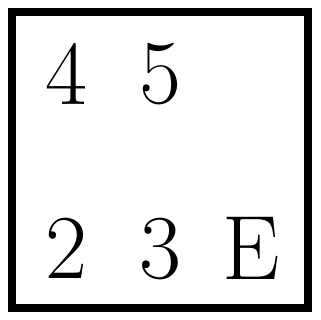
Two figures given on the left side of (::) are related with some logic/rule/relation. Select the missing figure on the right side of (::) from the given alternatives based on the same logic/rule/relation.

  1. AOption (a)

  2. BOption (b)

  3. COption (c)

  4. DOption (d)

View answer & explanation

Correct answer

Answer: (a)A.

Why this answer is correct

Logic followed here is.

Logic: The numer of lines present on the left side combines to make a shape on the right side.


Hence, the correct answer is "Option 1".

Question 7

Two figures given on the left side of (::) are related with some logic/rule/relation. Select the missing figure on the right side of (::) from the given alternatives based on the same logic/rule/relation.

  1. AOption (a)

  2. BOption (b)

  3. COption (c)

  4. DOption (d)

View answer & explanation

Correct answer

Answer: (a)A.

Why this answer is correct

Logic followed here is.

Logic: All the elements present are shifted 2 places in the clockwise direction.

Hence, the correct answer is "Option 1".

Question 8

Select the option that is related to the third letter-number cluster in the same way as the second letter-number cluster is related to the first letter-number cluster and sixth letter-number cluster is related to fifth letter-number cluster. (NOTE: Operations should be performed on the whole numbers, without breaking down the numbers into its constituent digits. E.g.13 - Operations on 13 such as adding /subtracting /multiplying etc. to 13 can be performed. Breaking down 13 into 1 and 3 and then performing mathematical operations on 1 and 3 is not allowed)

ZX212 : UW326 :: VT312 : ? :: LK420 : HI534

  1. AOption (a)

    SR416

  2. BOption (b)

    QS426

  3. COption (c)

    QT406

  4. DOption (d)

    SQ426

View answer & explanation

Correct answer

Answer: (b)B.

QS426

Why this answer is correct

Given:

ZX212 : UW326 :: VT312 : ? :: LK420 : HI534

The relationship between the letter-number clusters is determined by shifting the letters and adding a constant to the whole number:

ZX212 : UW326 →

LK420 : HI534 →

VT312 : ? →

The resulting cluster is QS426.

Hence, the correct answer is 'Option 2'.

Question 9

Select the option that is related to the third letter-number cluster in the same way as the second letter-number cluster is related to the first letter-number cluster and sixth letter-number cluster is related to fifth letter-number cluster. (NOTE: Operations should be performed on the whole numbers, without breaking down the numbers into its constituent digits. E.g.13 - Operations on 13 such as adding /subtracting /multiplying etc. to 13 can be performed. Breaking down 13 into 1 and 3 and then performing mathematical operations on 1 and 3 is not allowed)

ZKP500 : WHM260 :: YXU600 : ? :: LTJ700 : IQG460

  1. AOption (a)

    UUR260

  2. BOption (b)

    VUR360

  3. COption (c)

    VVR260

  4. DOption (d)

    VUS360

View answer & explanation

Correct answer

Answer: (b)B.

VUR360

Why this answer is correct

Given:

The relationship follows a specific pattern in each cluster:

First Letter-Number Cluster Relation (ZKP500 : WHM260):

Third Letter-Number Cluster Relation (LTJ700 : IQG460):

Applying the same logic to YXU600:

Thus, the missing cluster is VUR360.

Hence, the correct answer is 'Option 2'.

Question 10

Select the option that is related to the fifth number in the same way as the second number is related to the first number and fourth number is related to third number. (NOTE: Operations should be performed on the whole numbers, without breaking down the numbers into its constituent digits. E.g.13 – Operations on 13 such as adding /subtracting /multiplying etc. to 13 can be performed. Breaking down 13 into 1 and 3 and then performing mathematical operations on 1 and 3 is not allowed)

1747 : 1693 :: 2564 : 2510 :: 4929 : ?

  1. AOption (a)

    4881

  2. BOption (b)

    4875

  3. COption (c)

    4874

  4. DOption (d)

    4872

View answer & explanation

Correct answer

Answer: (b)B.

4875

Why this answer is correct

The logic followed here is:

Logic: Second Number = First Number − 54

For the first pair 1747 : 1693

⇒ 1747 − 54 = 1693

For the second pair 2564 : 2510

⇒ 2564 − 54 = 2510

Applying the same logic to the third pair

4929 : ?

⇒ 4929 − 54 = 4875

Hence, the correct answer is 'Option 2'.

Question 11

Select the option that is related to the third number in the same way as the second number is related to the first number and sixth number is related to fifth number. (NOTE: Operations should be performed on the whole numbers, without breaking down the numbers into its constituent digits. E.g.13 - Operations on 13 such as adding /subtracting /multiplying etc. to 13 can be performed. Breaking down 13 into 1 and 3 and then performing mathematical operations on 1 and 3 is not allowed)

765 : 994 :: 942 : ? :: 691 : 920

  1. AOption (a)

    1165

  2. BOption (b)

    1185

  3. COption (c)

    1171

  4. DOption (d)

    1183

View answer & explanation

Correct answer

Answer: (c)C.

1171

Why this answer is correct

The logic followed here is:

Logic: Second Number = First Number + 229

For the first pair 765 : 994

⇒ 765 + 229 = 994

Applying the same logic to the third pair

691 : 920

⇒ 691 + 229 = 920

Similarly, applying the logic to the second pair

942 : ?

⇒ 942 + 229 = 1171

Hence, the correct answer is 'Option 3'.

Question 12

In a certain coded language 'AEGIS' is coded as 'CJFEN' and 'DELLS' is coded as 'FJKHN'. How will 'BEAKS' be coded in the same code language?

  1. AOption (a)

    EJXFP

  2. BOption (b)

    DJZGN

  3. COption (c)

    FKYFL

  4. DOption (d)

    CLZGM

View answer & explanation

Correct answer

Answer: (b)B.

DJZGN

Why this answer is correct

Logic followed here is:

Logic: The code for the word is obtained by adding or subtracting specific values from the positional values of the letters in a fixed sequence: +2, +5, −1, −4, and −5.

For AEGIS is coded as CJFEN:

For DELLS is coded as FJKHN:

Similarly, for the word BEAKS:


Therefore, BEAKS is coded as DJZGN.

Hence, the correct answer is "Option 2".

Question 13

A series is given with one term missing. Select the correct alternative from the given ones that will complete the series.

KP94, HT200, EX306, BB412, ?

  1. AOption (a)

    YF518

  2. BOption (b)

    ZG518

  3. COption (c)

    XF518

  4. DOption (d)

    YE518

View answer & explanation

Correct answer

Answer: (a)A.

YF518

Why this answer is correct

The logic followed here is that each term in the series (KP94, HT200, EX306, BB412, ?) is divided into three components: the first letter, the second letter, and the numerical part. Each component follows its own pattern.

Hence, the correct answer is "Option 1".

Question 14

A series is given with one term missing. Select the correct alternative from the given ones that will complete the series.

KPT225, ?, OTP433, QVN537, SXL641

  1. AOption (a)

    MQR328

  2. BOption (b)

    NSR330

  3. COption (c)

    MRR329

  4. DOption (d)

    LQR332

View answer & explanation

Correct answer

Answer: (c)C.

MRR329

Why this answer is correct

Logic followed here is.

Logic: Each term in the series consists of three letters and a number. The pattern for each component is determined by a constant increment or decrement from one term to the next.

Hence, the correct answer is "Option 3".

Question 15

At what time (approximately) (in AM) between 10 AM and 11 AM will the angle between the hour and the minute hand of a clock be 15 degrees?

  1. AOption (a)

    10:52

  2. BOption (b)

    10:50

  3. COption (c)

    10:48

  4. DOption (d)

    10:46

View answer & explanation

Correct answer

Answer: (a)A.

10:52

Why this answer is correct

Concept:

Hour hand covers 3600 in 12 hours.

Angular distance covered in 1 hour = 360/12 = 300

Angular distance covered by the hour hand in 1 minute = 30/60 = 0.50

Minute hand covers 3600 in 60 minutes.

Angular distance covered in 1 minute = 360/60 = 60

Calculation:

The given time is between 10 AM and 11 AM. Let the time be 10:M.

At 10:00 AM, the hour hand is at 10 × 300 = 3000 and the minute hand is at 00.

In M minutes:

Position of the hour hand = 3000 + 0.5 × M

Position of the minute hand = 6 × M

Angle between hands = |(300 + 0.5M) − 6M| = |300 − 5.5M|

Given the angle is 15 degrees:

Case 1:

300 − 5.5M = 15 ⇒ 5.5M = 285

M = 285 / 5.5 ≈ 51.81 minutes

Case 2:

300 − 5.5M = −15 ⇒ 5.5M = 315

M = 315 / 5.5 ≈ 57.27 minutes

The approximate time from Case 1 is 10:52 AM (since 51.81 ≈ 52).

Alternate Method

The angle between the hour hand and minute hand = ∣60H−11M∣2|60H - 11M| \over 2

Here, H = 10 and Angle = 15.

15 = ∣60×10−11×M∣2|60 \times 10 - 11 \times M| \over 2

30 = |600 − 11M|

600 − 11M = 30 ⇒ 11M = 570 ⇒ M = 51.818...

600 − 11M = −30 ⇒ 11M = 630 ⇒ M = 57.272...

The closest value to the options is 51.82, which is approximately 52 minutes.

Hence, the correct answer is 10:52

Question 16

At what time (approximately) (in PM) between 3 PM and 4 PM will the angle between the hour and the minute hand of a clock be 110 degrees?

  1. AOption (a)

    3:36

  2. BOption (b)

    3:40

  3. COption (c)

    3:32

  4. DOption (d)

    3:34

View answer & explanation

Correct answer

Answer: (a)A.

3:36

Why this answer is correct

Concept:

The angle between the hour hand and the minute hand of a clock can be calculated using the following relationship:

Angle (θ) = |30H − 5.5M|

Where:

  • H is the hour (in this case, 3).
  • M is the minutes past the hour.

Alternatively, we can look at the relative speeds:

Speed of the minute hand = 6° per minute

Speed of the hour hand = 0.5° per minute

The relative speed between the two hands is 5.5° per minute.

Calculation:

We are looking for the time between 3 PM and 4 PM when the angle is 110 degrees.

Given H = 3 and θ = 110°.

Case 1: The minute hand is behind the hour hand (not possible for 110° starting from 3 PM, as 3:00 is only 90°).

Case 2: The minute hand is ahead of the hour hand.

110 = 5.5M − 30(3)

110 = 5.5M − 90

110 + 90 = 5.5M

200 = 5.5M

M = 200 ÷ 5.5

M = 400 ÷ 11

M = 36.3636...

Rounding to the nearest minute, we get M ≈ 36.

Therefore, the time is approximately 3:36 PM.

Alternate Method

At 3:00 PM, the angle between the hands is 90°.

To reach an angle of 110°, the minute hand must first cover the 90° to overlap the hour hand and then move 110° ahead of it.

Total relative distance to be covered = 90° + 110° = 200°

Time = Distance ÷ Relative Speed

Time = 200 ÷ 5.5

Time = 36.36 minutes

The approximate time is 3:36 PM.

Hence, the correct answer is 3:36.

Question 17

In the following figure series, select the figure which can be placed at the sign of question mark (?) from the given alternatives.

  1. AOption (a)

  2. BOption (b)

  3. COption (c)

  4. DOption (d)

View answer & explanation

Correct answer

Answer: (d)D.

Why this answer is correct

The logic followed here is: In each step, the number of squares are increasing and number of circles are decreasing with the triangle flipping upside down in each step.

Hence, Option 4 is the correct answer.

Question 18

In the following figure series, select the figure which can be placed at the sign of question mark (?) from the given alternatives.

  1. AOption (a)

  2. BOption (b)

  3. COption (c)

  4. DOption (d)

View answer & explanation

Correct answer

Answer: (d)D.

Why this answer is correct

The logic followed here is: The arrow inside the box rotates 45° clockwise at each step, while the entire box with the circle flips to the left.

Hence, Option 4 is the correct answer.

Question 19

In the following figure series, select the figure which can be placed at the sign of question mark (?) from the given alternatives.

  1. AOption (a)

  2. BOption (b)

  3. COption (c)

  4. DOption (d)

View answer & explanation

Correct answer

Answer: (d)D.

Why this answer is correct

The logic followed in this series is: Moving of the entire object 45° in clockwise direction.

Hence, "Option 4" is the correct answer.

Question 20

The ratio of present ages of M and S is 2 : 5. M is 9 years younger than S. What will be the ratio of M's age to S's age after 12 years?

  1. AOption (a)

    2 : 3

  2. BOption (b)

    5 : 3

  3. COption (c)

    1 : 3

  4. DOption (d)

    7:9

View answer & explanation

Correct answer

Answer: (a)A.

2 : 3

Why this answer is correct

Given:

Present age ratio of M and S = 2 : 5

M is 9 years younger than S.

Calculation:

Let the present ages of M and S be 2x and 5x.

Difference = 5x − 2x = 9

3x = 9

x = 3

Present ages:

  • M = 2 × 3 = 6 years
  • S = 5 × 3 = 15 years

After 12 years:

M = 6 + 12 = 18 years

S = 15 + 12 = 27 years

Required ratio:

18 : 27 = 2 : 3

Hence, the correct answer is "Option 1".

General Knowledge and General Awareness (20 questions)

Question 21

In whose court is the celebrated Sanskrit poet Kalidasa believed to have flourished?

  1. AOption (a)

    Skandagupta

  2. BOption (b)

    Samudragupta

  3. COption (c)

    Chandragupta II

  4. DOption (d)

    Kumaragupta

View answer & explanation

Correct answer

Answer: (c)C.

Chandragupta II

Why this answer is correct

The correct answer is Chandragupta II.

Key Points

  • Kalidasa, widely regarded as the greatest poet and dramatist in the Sanskrit language, is historically associated with the court of Chandragupta II.
  • He was celebrated as one of the Navaratnas (Nine Gems), a group of nine distinguished scholars and artists who graced the royal court of the Gupta Empire.
  • Chandragupta II, who assumed the prestigious title of Vikramaditya, ruled from approximately 380 CE to 415 CE, marking the peak of the Gupta Golden Age.
  • The poet's works, including the world-renowned drama Abhijnanashakuntalam and epic poems like Meghaduta and Kumarasambhava, reflect the cultural sophistication and religious harmony of the Gupta era.
  • While the primary capital was Pataliputra, Chandragupta II maintained a secondary capital at Ujjain, which became a significant center for literary and scientific advancements where Kalidasa flourished.

 Additional Information

  • Samudragupta:
  • Often referred to as the Napoleon of India by historian V.A. Smith due to his extensive military conquests.
  • He was a versatile genius and a poet himself, earning the title Kaviraja (King of Poets).
  • Kumaragupta:
  • The son and successor of Chandragupta II, his reign saw the establishment of the famous Nalanda University.
  • He was a worshiper of Lord Kartikeya and performed the Ashvamedha sacrifice to assert his imperial authority.
  • Skandagupta:
  • Recognized as the last great Gupta Emperor, he is famous for successfully defending the empire against the Hunas (Huns).
  • His achievements are inscribed on the Bhitari Pillar and the Junagarh Rock.

Question 22

Which is the largest metropolitan city by population as per Census 2011?

  1. AOption (a)

    Kolkata

  2. BOption (b)

    Delhi

  3. COption (c)

    Mumbai

  4. DOption (d)

    Chennai

View answer & explanation

Correct answer

Answer: (c)C.

Mumbai

Why this answer is correct

The correct answer is Mumbai.

Key Points

  • According to the Census 2011 data, Mumbai (as an Urban Agglomeration) was the most populous metropolitan city in India, with a total population of approximately 18,414,288.
  • The Mumbai Metropolitan Region (MMR) encompasses the Municipal Corporation of Greater Mumbai (MCGM) and several surrounding satellite towns like Thane, Navi Mumbai, and Kalyan-Dombivli.
  • The city has a massive population density, often exceeding 20,000 persons per square kilometer in its core urban districts, making it one of the most densely populated regions globally.
  • The demographic growth in Mumbai is largely driven by its status as the Economic Capital of India, housing the headquarters of major financial institutions like the Reserve Bank of India (RBI), BSE, and NSE.
  • In the hierarchy of Indian cities during the 2011 Census, Mumbai held the top rank, followed by the National Capital Territory of Delhi and the city of Kolkata.

 Additional Information

  • Delhi:
  • As per the 2011 Census, it was the second largest metropolitan city with a population of about 16,314,838.
  • It serves as the National Capital Territory (NCT) and is a major hub for administrative, political, and commercial activities in North India.
  • Kolkata:
  • It ranked third among metropolitan cities with a population of approximately 14,112,536.
  • It was the former capital of the British Raj and remains the primary economic and cultural center of East India.
  • Chennai:
  • The city recorded a population of about 8,696,010 in its metropolitan area, placing it fourth among the major metros.
  • Often referred to as the Detroit of Asia, it is a critical center for the automobile industry and health services.
  • Census 2011 Overview:
  • This was the 15th National Census of India and the 7th after independence.
  • The Census defined a Metropolitan City or Mega City as one having a population of 4 million or more, while a Million-Plus City is one with at least 1 million residents.
  • The census was conducted under the leadership of C. Chandramouli, the Registrar General and Census Commissioner of India.

Question 23

Which act marked the official end of the East India Company's rule in India?

  1. AOption (a)

    Regulating Act, 1773

  2. BOption (b)

    Government of India Act, 1858

  3. COption (c)

    Indian Councils Act, 1861

  4. DOption (d)

    Charter Act, 1833

View answer & explanation

Correct answer

Answer: (b)B.

Government of India Act, 1858

Why this answer is correct

The correct answer is Government of India Act, 1858.

Key Points

  • The Government of India Act, 1858, also known as the Act for the Good Government of India, was enacted by the British Parliament on August 2, 1858, following the Revolt of 1857.
  • This act formally terminated the rule of the East India Company and transferred the governance of India directly to the British Crown, marking the beginning of the British Raj.
  • It abolished the system of Double Government by dissolving the Board of Control and the Court of Directors, centralizing authority under the British cabinet.
  • A new political office, the Secretary of State for India, was created. This official was a member of the British Cabinet and was assisted by a 15-member body known as the Council of India.
  • The title of the Governor-General of India was changed to the Viceroy of India. The Viceroy acted as the direct representative of the British Monarch in India; Lord Canning became the first Viceroy under this act.
  • The act ensured that the Secretary of State had the power to send secret despatches to India without consulting the Council, effectively making the British Parliament the ultimate authority over Indian affairs.

 Additional Information

  • Regulating Act, 1773:
  • It was the first step taken by the British Government to control and regulate the affairs of the East India Company in India.
  • It designated the Governor of Bengal as the Governor-General of Bengal and established a Supreme Court at Fort William, Calcutta.
  • Charter Act, 1833:
  • This act was the final step towards centralization in British India, making the Governor-General of Bengal the Governor-General of India.
  • It ended the commercial activities of the East India Company, transforming it into a purely administrative body.
  • Indian Councils Act, 1861:
  • This act introduced the Portfolio System, where each member of the Viceroy's Council was put in charge of specific departments.
  • It initiated the process of decentralization by restoring the legislative powers to the Bombay and Madras Presidencies.

Question 24

What is the annual allocation under PM Dhan-Dhaanya Krishi Yojana which was approved in July 2025?

  1. AOption (a)

    Rs. 20000 crores

  2. BOption (b)

    Rs. 22000 crores

  3. COption (c)

    Rs. 24000 crores

  4. DOption (d)

    Rs. 30000 crores

View answer & explanation

Correct answer

Answer: (d)D.

Rs. 30000 crores

Why this answer is correct

The correct answer is Rs. 30000 crores.

Key Points

  • The PM Dhan-Dhaanya Krishi Yojana (PM-DDKY) is a major agricultural reform initiative officially approved by the Union Cabinet in July 2025 to bolster the rural economy and ensure long-term food security.
  • The scheme has been granted a substantial annual allocation of Rs. 30,000 crores, aimed at providing a comprehensive safety net and growth framework for the farming community across India.
  • This budgetary provision is specifically designed to facilitate technological upgrades in farming, such as the adoption of precision agriculture, AI-driven crop monitoring, and the deployment of agricultural drones.
  • The primary focus of the Rs. 30,000 crores fund is to support small and marginal farmers who constitute the majority of the Indian agricultural workforce, helping them transition toward high-value crops and sustainable farming practices.
  • The scheme integrates various sub-components including soil health management, subsidized quality seeds, and direct benefit transfers (DBT) for essential farm inputs.

 Additional Information

  • Strategic Objectives of PM-DDKY:
  • Crop Diversification: Encouraging farmers to shift from water-intensive monocultures to nutri-cereals, pulses, and oilseeds to improve ecological balance.
  • Post-Harvest Infrastructure: A portion of the Rs. 30,000 crores is earmarked for building cold storage facilities and warehouse hubs at the village level to reduce wastage.
  • Irrigation Efficiency: Strengthening the Per Drop More Crop mission by providing incentives for drip and sprinkler irrigation systems.
  • Implementation and Monitoring:
  • The Ministry of Agriculture and Farmers Welfare serves as the lead agency for the execution of this scheme, utilizing the Digital General Platform for real-time tracking of fund utilization.
  • The allocation is part of a broader vision of Viksit Bharat 2047, aiming to double the share of agriculture in the Gross Value Added (GVA) through systematic financial injections and policy reforms.
  • Special emphasis is placed on Aspirational Districts and the North-Eastern Region to bridge the infrastructure gap in the primary sector.

Question 25

In which year was the Mazagon Dock taken over by the government of India?

  1. AOption (a)

    1972

  2. BOption (b)

    1968

  3. COption (c)

    1960

  4. DOption (d)

    1964

View answer & explanation

Correct answer

Answer: (c)C.

1960

Why this answer is correct

The correct answer is 1960.

Key Points

  • Mazagon Dock Shipbuilders Limited (MDL), situated in Mumbai, was originally incorporated as a public limited company in 1934.
  • The Government of India took over the management of the dockyard in April 1960 to enhance the nation’s self-reliance in defense production.
  • Following the nationalization, the shipyard was placed under the administrative control of the Ministry of Defence, specifically the Department of Defence Production.
  • The primary objective of the takeover was to transform the facility into a premier warship building yard capable of meeting the strategic requirements of the Indian Navy.
  • Since 1960, MDL has transitioned from a small ship repair yard into a sophisticated Defence Public Sector Undertaking (DPSU) that constructs destroyers, frigates, and submarines.

 Additional Information

  • Historical Significance and Growth:
  • Before the 1960 acquisition, the yard was owned by the British India Steam Navigation Company and the Peninsular and Oriental Steam Navigation Company.
  • In 1968, the yard launched INS Nilgiri, the first Leander-class frigate built indigenously in India, which was commissioned in 1972.
  • MDL is currently involved in high-profile projects such as Project 15B (Visakhapatnam-class destroyers) and Project 17A (Nilgiri-class stealth frigates).
  • It is also the site for Project 75, responsible for the construction of Scorpene-class (Kalvari-class) submarines through a technology transfer agreement with Naval Group, France.
  • The facility remains one of the few shipyards in the world capable of building both conventional submarines and heavy surface combatants.

Question 26

Which pressure belt is being talked about in the information given below?

"This pressure belt is found between 30°N to 35°N latitude and this is also known as horse latitude."

  1. AOption (a)

    Equatorial low pressure belt

  2. BOption (b)

    Sub-tropical high pressure belt

  3. COption (c)

    Sub-polar low pressure belt

  4. DOption (d)

    Polar high pressure belt

View answer & explanation

Correct answer

Answer: (b)B.

Sub-tropical high pressure belt

Why this answer is correct

The correct answer is Sub-tropical high pressure belt.

Key Points

  • The Sub-tropical high pressure belt is located in both hemispheres between approximately 30°N to 35°N and 30°S to 35°S latitudes.
  • This belt is also famously known as the Horse Latitudes due to the calm winds and high pressure that historically stalled sailing ships.
  • The formation of this belt is primarily due to the subsidence of air; air that rises at the Equator (Hadley Cell) cools as it moves poleward and descends at these latitudes, creating high-pressure conditions at the surface.
  • Characterized by anticyclonic conditions, this region experiences light winds, clear skies, and low humidity, which is why most of the world's hot deserts (like the Sahara and Arabian deserts) are located along these latitudes.
  • The term Horse Latitudes originated because sailors, when becalmed for long periods, had to throw horses overboard to conserve drinking water for the crew.

 Additional Information

  • Equatorial Low Pressure Belt:
  • Located between 5°N and 5°S latitudes.
  • Known as the Doldrums, it is a zone of convergence for trade winds and intense solar heating.
  • Sub-polar Low Pressure Belt:
  • Situated between 60° and 65° latitudes in both hemispheres.
  • Formed by the convergence of warm Westerlies and cold Polar Easterlies, leading to the development of temperate cyclones.
  • Polar High Pressure Belt:
  • Located around the North and South Poles (80°−90°).
  • Caused by extremely low temperatures which make the air dense, leading to constant high pressure and cold, dry conditions.

Question 27

Under the PM-Daksh scheme, any Other Backward Caste's (OBCs) and Economically Weaker Section (EWS) candidates whose annual family income is less than Rs. _______ lakh is eligible to get training.

  1. AOption (a)

    3

  2. BOption (b)

    5

  3. COption (c)

    8

  4. DOption (d)

    10

View answer & explanation

Correct answer

Answer: (a)A.

3

Why this answer is correct

The correct answer is 3.

Key Points

  • The Pradhan Mantri Dakshata Aur Kushalata Sampanna Hitgrahi (PM-DAKSH) Yojana is a Central Sector Scheme launched by the Ministry of Social Justice and Empowerment in 2020-21.
  • The primary objective of this scheme is to increase the skill levels of the target youth by providing them short-term and long-term training, making them employable for both self-employment and wage-employment.
  • The scheme specifically targets Scheduled Castes (SCs), Other Backward Classes (OBCs), Economically Backward Classes (EBCs), De-notified Tribes (DNTs), and Safai Karamcharis.
  • According to the eligibility criteria, candidates belonging to the Other Backward Classes (OBC) category must have a total annual family income of less than Rs. 3 lakh to avail of the training benefits.
  • For candidates under the Economically Backward Classes (EBC) category, the annual family income limit is even lower, stipulated at less than Rs. 1 lakh per annum.
  • There is no income limit for candidates belonging to the Scheduled Castes (SC), De-notified, Nomadic and Semi-Nomadic Tribes (DNT), and Safai Karamcharis including waste pickers.

 Additional Information

  • The scheme is implemented through three apex corporations under the Ministry:
  • NSFDC: National Scheduled Castes Finance and Development Corporation.
  • NBCFDC: National Backward Classes Finance and Development Corporation.
  • NSKFDC: National Safai Karamcharis Finance and Development Corporation.
  • Types of Training Programs:
  • Up-skilling/Recognition of Prior Learning (RPL): Training duration ranges from 32 to 80 hours for artisans and sanitation workers.
  • Short Term Training: Focuses on NSQF compliant job roles with a duration of 200 to 600 hours.
  • Long Term Training: Covers courses for 6 months to 1 year in high-demand sectors.
  • Entrepreneurship Development Program (EDP): Aimed at youth wanting to start their own micro-enterprises, usually lasting 80 to 90 hours.
  • Benefits to Trainees:
  • Training is provided free of cost to all eligible candidates.
  • A stipend is provided to trainees with at least 80 percent attendance (e.g., Rs. 1,000 to Rs. 1,500 per month depending on the category and course).

Question 28

The traditional dance style 'Gaudiya Nritya' is practiced in which of the following Indian states/ Union Territory?

  1. AOption (a)

    Haryana

  2. BOption (b)

    Jammu and Kashmir

  3. COption (c)

    West Bengal

  4. DOption (d)

    Andhra Pradesh

View answer & explanation

Correct answer

Answer: (c)C.

West Bengal

Why this answer is correct

The correct answer is West Bengal.

Key Points

  • Gaudiya Nritya is a classical dance form that originated in the ancient region of Gaur (or Gauda), which served as the capital of Bengal during various historical periods.
  • This dance form is deeply intertwined with the Gaudiya Vaishnavism tradition, which saw a major resurgence in the 16th century under the spiritual leadership of Sri Chaitanya Mahaprabhu.
  • The reconstruction and revival of Gaudiya Nritya as a classical discipline were spearheaded by Dr. Mahua Mukherjee through extensive research into the Natya Shastra, medieval literature, and Pala-Sena era temple sculptures.
  • It is a composite art form that integrates elements of temple dancing, rhythmic Kirtan music, and folk traditions like Chhau and Nachni.
  • The performance typically features themes from the Radha-Krishna lore and uses traditional instruments such as the Khol and Kartal.

 Additional Information

  • Haryana:
  • Common folk dances include Ghoomar, Phag, and Dhamal, primarily performed during agricultural festivals like Baisakhi.
  • Jammu and Kashmir:
  • Home to the Rouf dance, performed by women during Ramzan, and Bhand Pather, a traditional satirical folk theatre.
  • Andhra Pradesh:
  • Best known for Kuchipudi, a major Indian classical dance recognized for its blend of Nritta (pure dance) and Abhinaya (expression).

Question 29

The "Panna Diamond Mine" is in which of the following state?

  1. AOption (a)

    Madhya Pradesh

  2. BOption (b)

    Jharkhand

  3. COption (c)

    Karnataka

  4. DOption (d)

    Gujarat

View answer & explanation

Correct answer

Answer: (a)A.

Madhya Pradesh

Why this answer is correct

The correct answer is Madhya Pradesh.

Key Points

  • The Panna Diamond Mine is located in the Panna district of Madhya Pradesh and is part of the larger Vindhyan Range geological formation.
  • It is the only active, industrial-scale diamond mine in India, making Madhya Pradesh the leading producer of diamonds in the country.
  • The National Mineral Development Corporation (NMDC) is the primary public sector enterprise responsible for the mechanized mining operations at the Majhgawan site in Panna.
  • The diamonds in this region are found in Kimberlite pipes and conglomerate beds, which were formed millions of years ago through volcanic and sedimentary processes.
  • The Panna belt extends approximately 240 kilometers and produces various categories of diamonds, including gem-quality, off-color, and industrial-grade stones.

 Additional Information

  • Jharkhand:
  • This state is the primary hub for Coal production in India, featuring the famous Jharia and Bokaro coalfields.
  • It is also rich in Iron Ore (Singhbhum) and Copper (Ghatshila).
  • Karnataka:
  • Historically famous for Gold mining, particularly the Kolar Gold Fields (KGF) and the currently operational Hutti Gold Mines.
  • It is also a major producer of Magnetite Iron Ore and Manganese.
  • Gujarat:
  • Renowned for its Petroleum and Natural Gas reserves located in the Ankleshwar and Cambay basins.
  • It is the largest producer of Salt in India and holds significant deposits of Lignite and Fluorite.

Question 30

By which other name is the festival of Holi known in West Bengal?

  1. AOption (a)

    Dol Purnima

  2. BOption (b)

    Bhai Phonta

  3. COption (c)

    Jagaddhatri Puja

  4. DOption (d)

    Kalpataru Utsav

View answer & explanation

Correct answer

Answer: (a)A.

Dol Purnima

Why this answer is correct

The correct answer is Dol Purnima.

Key Points

  • In West Bengal, the festival of Holi is celebrated with great fervor as Dol Purnima or Dol Jatra, marking the final full moon day of the Hindu lunar month of Phalguna.
  • The festival is primarily dedicated to Lord Krishna and Radha. The deities are placed in a palanquin (the Dol) and carried in a procession around streets while devotees sing devotional songs and hymns.
  • A cultural highlight of this festival is the Basanta Utsav (Spring Festival) held at Shantiniketan, a tradition established by the Nobel laureate Rabindranath Tagore to welcome spring through poetry, dance, and music.
  • Participants primarily use dry colored powders known as Abir or Gulal rather than liquid colors, signifying the colors of the blossoming Spring (Basanta) season.
  • This day is also of immense spiritual significance for the Gaudiya Vaishnava community as it marks the birth anniversary of Chaitanya Mahaprabhu, the 15th-century saint who revitalized the Bhakti movement.

 Additional Information

  • Bhai Phonta:
  • Celebrated on the second day after Kali Puja (Diwali) in West Bengal, it is the regional equivalent of Bhai Dooj.
  • Sisters perform a ritual where they apply a sandalwood paste mark on their brothers' foreheads to pray for their protection and longevity.
  • Jagaddhatri Puja:
  • Dedicated to Goddess Jagaddhatri (the Holder of the World), this festival occurs in the month of Kartik, typically four days after Durga Puja.
  • It is celebrated with massive community pandals, particularly in Chandannagar and Krishnanagar, featuring colossal clay idols.
  • Kalpataru Utsav:
  • Observed every year on January 1st, this festival commemorates the transformation of Sri Ramakrishna Paramahansa into a Kalpataru (wish-fulfilling tree) in 1886.
  • The main celebrations take place at the Cossipore Garden House and Dakshineswar Kali Temple in Kolkata.

Question 31

What is the change of state from liquid to gas at atmospheric pressure known as?

  1. AOption (a)

    Solidification

  2. BOption (b)

    Deposition

  3. COption (c)

    Freezing

  4. DOption (d)

    Vaporisation

View answer & explanation

Correct answer

Answer: (d)D.

Vaporisation

Why this answer is correct

The correct answer is Vaporisation.

Key Points

  • Vaporisation refers to the physical transition of a substance from the liquid phase to the gaseous phase.
  • At atmospheric pressure, this change occurs when molecules in the liquid gain sufficient thermal energy to overcome the intermolecular attractive forces (such as hydrogen bonding or Van der Waals forces) that hold them in a condensed state.
  • This process encompasses two distinct phenomena: evaporation, which is a surface-level transition occurring at any temperature, and boiling, which occurs throughout the bulk of the liquid at a specific boiling point.
  • When a liquid reaches its boiling point at 1 atmospheric pressure (101.325 kPa), the vapour pressure of the liquid becomes equal to the external atmospheric pressure.
  • The transition requires an input of energy known as the Latent Heat of Vaporisation, which increases the potential energy of the particles without raising the temperature during the phase change.

 Additional Information

  • Solidification and Freezing:
  • Solidification (often called freezing) is the phase change from liquid to solid.
  • This process occurs when kinetic energy is removed, allowing particles to settle into a fixed, ordered crystalline lattice or an amorphous structure.
  • Deposition:
  • Deposition is a thermodynamic process where a substance transforms directly from a gas to a solid, bypassing the liquid state entirely.
  • A common natural example is the formation of sub-freezing hoar frost on ground surfaces or the transformation of water vapour into snow in clouds.

Question 32

When was the gender budgeting introduced in India?

  1. AOption (a)

    1991-1992

  2. BOption (b)

    1997-1998

  3. COption (c)

    2005-2006

  4. DOption (d)

    2020-2021

View answer & explanation

Correct answer

Answer: (c)C.

2005-2006

Why this answer is correct

The correct answer is 2005-2006.

Key Points

  • Gender Budgeting was formally introduced in India during the Union Budget 2005-2006 under the leadership of the then Finance Minister P. Chidambaram.
  • It is not a separate budget for women but a fiscal strategy and analytical tool used to examine the government budget through a gender lens to ensure equitable distribution of resources.
  • The introduction featured the first Gender Budget Statement, originally known as Statement 20 (now Statement 13), which disclosed the allocations specifically targeting women.
  • The process categorizes schemes into two parts: Part A, which includes schemes with 100% allocation for women, and Part B, which includes schemes where at least 30% of the allocation is earmarked for women.
  • India became one of the pioneering developing nations to institutionalize Gender Responsive Budgeting (GRB) to address gender gaps in education, health, and economic opportunities.

 Additional Information

  • Institutional Mechanisms:
  • The Ministry of Women and Child Development (MWCD) is the nodal agency for the implementation and monitoring of gender budgeting across various sectors.
  • Following the 2005-2006 mandate, Gender Budget Cells (GBCs) were established within various central ministries and departments to facilitate gender-sensitive planning and evaluation.
  • The National Institute of Public Finance and Policy (NIPFP) provided the initial analytical framework that helped the government transition from a general budget to a gender-sensitive one.
  • Evolution and Background:
  • The groundwork was laid during the Ninth Five-Year Plan (1997-2002), which introduced the Women's Component Plan (WCP) to ensure that 30% of funds from all ministries were directed toward women.
  • In 2004, an Expert Group was constituted to recommend a classification system for government expenditure to track pro-women allocations effectively.
  • While it started with only 10 ministries in its inaugural year, the scope of the Gender Budget Statement has expanded significantly, now covering over 30 ministries and departments.

Therefore, the correct answer is 2005-2006.

Question 33

In which year did India win its first men's Cricket World Cup?

  1. AOption (a)

    1983

  2. BOption (b)

    1975

  3. COption (c)

    1999

  4. DOption (d)

    1996

View answer & explanation

Correct answer

Answer: (a)A.

1983

Why this answer is correct

The correct answer is 1983.

Key Points

  • India secured its maiden ICC Men's Cricket World Cup title in 1983 by defeating the formidable West Indies, who were the two-time defending champions.
  • The final match was contested at the iconic Lord's Cricket Ground in London on 25th June 1983.
  • Under the inspirational leadership of captain Kapil Dev, India defended a modest total of 183 runs, successfully bowling out the West Indies for 140 runs.
  • Mohinder Amarnath was adjudged the Man of the Match for his critical all-round performance, contributing 26 runs and taking 3 wickets for 12 runs.
  • This historic victory is widely regarded as the defining moment that transformed cricket into a mass obsession in India and shifted the game's financial center to South Asia.

 Additional Information

  • 1975 World Cup:
  • This was the inaugural edition of the tournament, officially known as the Prudential Cup, held in England.
  • The West Indies won the title by defeating Australia in the final.
  • 1996 World Cup:
  • Officially called the Wills World Cup, it was co-hosted by India, Pakistan, and Sri Lanka.
  • Sri Lanka claimed their first championship by defeating Australia in the final at Gaddafi Stadium, Lahore.
  • 1999 World Cup:
  • The event was primarily hosted by England, with secondary venues in Scotland, Ireland, Wales, and the Netherlands.
  • Australia emerged victorious after defeating Pakistan in a one-sided final.

Question 34

Which of the following statement is correct regarding Critical minerals?

I. Critical minerals are the building blocks of a modern economy.

II. Critical minerals are fast becoming the oil of the 21st century.

  1. AOption (a)

    Only I

  2. BOption (b)

    Only II

  3. COption (c)

    Both I and II

  4. DOption (d)

    Neither I nor II

View answer & explanation

Correct answer

Answer: (c)C.

Both I and II

Why this answer is correct

The correct answer is Both I and II.

Key Points

  • Critical minerals such as Lithium, Cobalt, Nickel, and Graphite are considered the foundational components of a modern economy because they are essential for the production of advanced technologies, including semiconductors, telecommunications equipment, and defense systems. Hence, statement I is correct.
  • As the world undergoes a massive shift from hydrocarbons to green energy, these minerals are increasingly described as the 'oil of the 21st century' because they serve as the primary fuel for the energy transition, powering Electric Vehicles (EVs) and renewable energy storage systems. Hence, statement II is correct.

 Additional Information

  • Characteristics and Global Significance:
  • Definition: A mineral is classified as 'critical' when it is essential for economic growth and national security, while its supply chain is prone to disruption due to geological scarcity or geopolitical factors.
  • Rare Earth Elements (REEs): A group of 17 minerals used in permanent magnets for wind turbines and EV motors, currently dominated by China in terms of mining and processing.
  • Indian Context: The Ministry of Mines released a list of 30 critical minerals in 2023, including Beryllium, Germanium, and Titanium, to bolster the Atmanirbhar Bharat initiative and secure domestic manufacturing.
  • International Alliances: India has joined the Mineral Security Partnership (MSP), a US-led initiative aimed at accelerating the development of diverse and sustainable critical energy minerals supply chains globally.
  • Supply Chain Vulnerability: Unlike oil, which is traded on a liquid global market, critical minerals often have highly concentrated production sites, leading to strategic dependencies and the need for bilateral trade agreements.

Question 35

The ___ th Asian Games scheduled for Aichi-Nagoya in 2026.

  1. AOption (a)

    20

  2. BOption (b)

    19

  3. COption (c)

    18

  4. DOption (d)

    17

View answer & explanation

Correct answer

Answer: (a)A.

20

Why this answer is correct

The correct answer is 20.

Key Points

  • The 20th Asian Games, officially known as the XX Asiad, is a major multi-sport event scheduled to be held in Japan from September 19 to October 4, 2026.
  • The games will be co-hosted by the Aichi Prefecture and its capital city, Nagoya, marking the third time Japan has hosted this prestigious continental competition.
  • Previous Japanese host cities include Tokyo in 1958 and Hiroshima in 1994, highlighting the country's long-standing tradition of organizing large-scale sporting events.
  • The hosting rights were officially awarded by the Olympic Council of Asia (OCA) during their 35th General Assembly held in Danang, Vietnam, in September 2016.
  • The Aichi-Nagoya 2026 edition aims to be cost-effective and sustainable by utilizing existing sports infrastructure and venues across the prefecture.
  • The event is expected to feature over 40 sports, including traditional Olympic disciplines and sports popular across the Asian continent.

 Additional Information

  • 19th Asian Games:
  • This edition was held in Hangzhou, China. Initially scheduled for 2022, it was postponed to September–October 2023 due to the global COVID-19 pandemic.
  • 18th Asian Games:
  • Held in 2018, this was the first time the games were co-hosted by two cities, Jakarta and Palembang, in Indonesia.
  • 17th Asian Games:
  • This event took place in Incheon, South Korea, in 2014, featuring approximately 439 events in 36 sports.
  • Future Hosting Roadmap:
  • Following Aichi-Nagoya 2026, the 21st Asian Games are scheduled for Doha, Qatar, in 2030, and the 22nd Asian Games will be hosted in Riyadh, Saudi Arabia, in 2034.

Question 36

The Secretary general of the Shanghai Cooperation Organisation is appointed for how many years?

  1. AOption (a)

    2

  2. BOption (b)

    3

  3. COption (c)

    5

  4. DOption (d)

    6

View answer & explanation

Correct answer

Answer: (b)B.

3

Why this answer is correct

The correct answer is 3.

Key Points

  • The Secretary-General of the Shanghai Cooperation Organisation (SCO) is the highest administrative official of the organization, responsible for directing the Secretariat and representing the SCO in international forums.
  • According to the SCO Charter (specifically Article 19), the Secretary-General is appointed for a fixed tenure of 3 years.
  • The appointment is made by the Council of Heads of State (CHS), which is the supreme decision-making body of the organization, based on the recommendation of the Council of Foreign Ministers.
  • The position of Secretary-General rotates among the member states in the Russian alphabetical order of the names of the member states.
  • The term of the Secretary-General is non-renewable, ensuring that different member states have the opportunity to lead the administrative wing of the organization periodically.
  • The Secretary-General is tasked with implementing the decisions of the Council of Heads of State and the Council of Heads of Government, as well as managing the organization’s budget and reports.

 Additional Information

  • Shanghai Cooperation Organisation (SCO) Overview:
  • Founded on June 15, 2001, in Shanghai, China, the organization was established by the leaders of China, Russia, Kazakhstan, Kyrgyzstan, Tajikistan, and Uzbekistan.
  • The SCO Secretariat is the permanent executive body and is headquartered in Beijing, China.
  • The Regional Anti-Terrorist Structure (RATS), another permanent organ of the SCO, is headquartered in Tashkent, Uzbekistan, and its Director also serves a 3-year term.
  • The organization expanded in 2017 to include India and Pakistan as full members during the Astana Summit.
  • The official working languages of the organization are Russian and Chinese, reflecting the linguistic heritage of its primary founding members.
  • As of recent developments, Iran became a full member in 2023, and Belarus joined as the tenth full member in July 2024.

Question 37

Which of the following is the driving engine of the PM Gati Shakti initiative?

I. Mass Transport II. Logistics Infrastructure

  1. AOption (a)

    Only I

  2. BOption (b)

    Only II

  3. COption (c)

    Both I and II

  4. DOption (d)

    Neither I nor II

View answer & explanation

Correct answer

Answer: (c)C.

Both I and II

Why this answer is correct

The correct answer is Both I and II.

Key Points

  • Mass Transport is one of the seven engines identified under the PM Gati Shakti initiative, focusing on enhancing urban connectivity through projects like Metro Rail, Regional Rapid Transit Systems (RRTS), and integrated bus services to reduce congestion. Hence, statement I is correct.
  • Logistics Infrastructure is a fundamental engine designed to integrate supply chains, develop Multi-Modal Logistics Parks (MMLPs), and create a seamless network for the movement of goods and services across the country. Hence, statement II is correct.
  • The PM Gati Shakti National Master Plan is powered by a total of seven engines, which include Roads, Railways, Airports, Ports, Mass Transport, Waterways, and Logistics Infrastructure.
  • The primary objective of these engines is to facilitate multi-modal connectivity, ensuring that different modes of transport are integrated to provide last-mile connectivity for people and goods.

 Additional Information

  • PM Gati Shakti Master Plan:
  • Launched in October 2021, it is a Rs 100 lakh crore project aimed at holistic infrastructure development.
  • It incorporates 16 Ministries onto a single digital platform to ensure synchronized planning and avoid departmental silos.
  • The platform was developed by BISAG-N (Bhaskaracharya National Institute for Space Applications and Geo-informatics) using GIS-based spatial planning tools.
  • The initiative seeks to reduce India’s logistics costs from the current 13-14 percent of GDP to approximately 8 percent, aligning with global standards.
  • It identifies six pillars: Comprehensiveness, Prioritization, Optimization, Synchronization, Analytical, and Dynamic.
  • Key targets include increasing the National Highway network to 2 lakh kilometers and creating 400 new-generation Vande Bharat trains by 2024-25.

Question 38

Which of the following is a stroke used in swimming?

I. Breast stroke II. Back stroke

  1. AOption (a)

    Only I

  2. BOption (b)

    Only II

  3. COption (c)

    Both I and II

  4. DOption (d)

    Neither I nor II

View answer & explanation

Correct answer

Answer: (c)C.

Both I and II

Why this answer is correct

The correct answer is Both I and II.

Key Points

  • The Breaststroke is a swimming style in which the swimmer is on their chest and the torso does not rotate. It is characterized by simultaneous arm movements on a horizontal plane and a frog-like kick (whip kick). It is widely regarded as the oldest and slowest of the four competitive strokes. Hence, statement I is correct.
  • The Backstroke (or back crawl) is unique because it is the only competitive stroke performed with the swimmer lying on their back. It involves alternating arm movements and a flutter kick. A key advantage of this stroke is that it allows for easy breathing, though swimmers cannot see where they are going. Hence, statement II is correct.
  • Both Breaststroke and Backstroke are officially recognized by World Aquatics (formerly FINA) as standard competitive disciplines in international events like the Olympic Games and World Championships.

 Additional Information

  • Apart from the strokes mentioned above, there are two other primary competitive swimming strokes:
  • Freestyle (Front Crawl):
  • It is the fastest and most efficient swimming stroke.
  • Characterized by an alternating overhand arm motion and a continuous flutter kick.
  • Swimmers breathe by rotating their heads to the side.
  • Butterfly Stroke:
  • Regarded as the most physically demanding and technically difficult stroke.
  • Features a simultaneous overhead arm recovery and a dolphin kick where the legs move together.
  • It was developed as a variation of the breaststroke before becoming its own category in 1952.
  • Individual Medley (IM):
  • A single swimmer performs all four strokes in a specific order: Butterfly, Backstroke, Breaststroke, and Freestyle.

Question 39

Environmental Performance Index 2024 used how many performance indicators?

  1. AOption (a)

    11

  2. BOption (b)

    58

  3. COption (c)

    15

  4. DOption (d)

    77

View answer & explanation

Correct answer

Answer: (b)B.

58

Why this answer is correct

The correct answer is 58.

Key Points

  • The Environmental Performance Index (EPI) 2024 provides a data-driven summary of the state of sustainability worldwide, ranking 180 countries on their environmental efforts.
  • In the 2024 framework, the index utilized a total of 58 performance indicators to provide a granular and comprehensive assessment of national environmental performance.
  • These 58 indicators are systematically organized into 11 issue categories, which address specific environmental challenges such as Air Quality, Biodiversity, and Waste Management.
  • The indicators are further grouped into three overarching policy objectives: Climate Change, Environmental Health, and Ecosystem Vitality.
  • The EPI is a biennial report published by the Yale Center for Environmental Law & Policy and the Center for International Earth Science Information Network at Columbia University.

 Additional Information

  • Core Policy Objectives:
  • Climate Change: Focuses on progress toward net-zero emissions by 2050, tracking greenhouse gas emission growth rates and projected targets.
  • Environmental Health: Evaluates factors directly impacting human well-being, including Sanitation & Drinking Water, Air Quality, and exposure to Heavy Metals like Lead.
  • Ecosystem Vitality: Measures the health of natural systems, covering Forestry, Fisheries, Agriculture, and Biodiversity & Habitat protection.
  • Significance of Indicators:
  • The 58 indicators allow for a sophisticated analysis of how close countries are to established environmental policy targets.
  • By using standardized data, the EPI helps identify leaders and laggards in environmental sustainability, facilitating the sharing of best practices among nations.

Question 40

Comprehensive Environment Pollution Index in India was published by which of the following?

  1. AOption (a)

    CPCB

  2. BOption (b)

    NGT

  3. COption (c)

    CGWB

  4. DOption (d)

    NITI Aayog

View answer & explanation

Correct answer

Answer: (a)A.

CPCB

Why this answer is correct

The correct answer is CPCB.

Key Points

  • The Comprehensive Environmental Pollution Index (CEPI) is a framework developed to evaluate the environmental quality of industrial clusters and to identify areas that require immediate attention.
  • It was designed and published by the Central Pollution Control Board (CPCB) in collaboration with the Indian Institute of Technology (IIT), Delhi in 2009.
  • The primary purpose of CEPI is to categorize industrial clusters into Critically Polluted Areas (CPA), Severely Polluted Areas (SPA), and Other Polluted Areas (OPA) based on a scoring system.
  • A CEPI score above 70 denotes a Critically Polluted Area, which often leads to a moratorium on new industrial activities in that region, while a score between 60 and 70 identifies a Severely Polluted Area.
  • The assessment methodology considers the scale of industrial activity, the nature of pollutants (relative toxicity), the scale of exceedance of environmental standards, and the impact on human health.
  • The index evaluates three environmental components: Air, Water, and Land, integrating them into a single score that reflects the overall environmental stress in a geographical area.

 Additional Information

  • Central Pollution Control Board (CPCB):
  • A statutory organization established in 1974 under the Water (Prevention and Control of Pollution) Act to provide technical support to the Ministry of Environment, Forest and Climate Change.
  • National Green Tribunal (NGT):
  • Established on October 18, 2010, under the NGT Act for the effective and expeditious disposal of cases relating to environmental protection and conservation of forests.
  • Central Ground Water Board (CGWB):
  • Operating under the Ministry of Jal Shakti, it is the national apex body responsible for managing, monitoring, and researching groundwater resources across India.
  • NITI Aayog:
  • The National Institution for Transforming India, created in January 2015 as a successor to the Planning Commission, serves as the premier policy think tank of the Indian government.

Elementary Mathematics (20 questions)

Question 41

67 + 89 - 53 + (38 + 21) × 2 - 96 = ?

  1. AOption (a)

    125

  2. BOption (b)

    127

  3. COption (c)

    129

  4. DOption (d)

    131

View answer & explanation

Correct answer

Answer: (a)A.

125

Why this answer is correct

Shortcut Trick

Solve the bracket and multiplication first: (38 + 21) × 2 = 59 × 2 = 118.

Rewrite the expression: 67 + 89 − 53 + 118 − 96.

Group the terms: (67 + 89 + 118) − (53 + 96) = 274 − 149 = 125.

∴ The correct answer is 125.

Alternate Method

Given:

67 + 89 − 53 + (38 + 21) × 2 − 96

Applying the BODMAS rule (Brackets, Orders, Division, Multiplication, Addition, Subtraction):

Step 1: Solve the bracket (B).

⇒ 67 + 89 − 53 + 59 × 2 − 96

Step 2: Perform multiplication (M).

⇒ 67 + 89 − 53 + 118 − 96

Step 3: Perform addition and subtraction (A and S) from left to right.

⇒ 156 − 53 + 118 − 96

⇒ 103 + 118 − 96

⇒ 221 − 96

⇒ 125

∴ The correct answer is 125.

Additional Information

BODMAS Rule

It is the standard order of operations used to solve mathematical expressions: Brackets first, then Orders (exponents/roots), followed by Division and Multiplication (from left to right), and finally Addition and Subtraction (from left to right).

Associative Property

While solving only addition and subtraction, the terms can be grouped together (e.g., all positives together and all negatives together) to simplify the calculation process.

Question 42

96 + (19 of 2) - 38 + 42 ÷ 6 + 28 - 16 = ?

  1. AOption (a)

    121

  2. BOption (b)

    123

  3. COption (c)

    115

  4. DOption (d)

    114

View answer & explanation

Correct answer

Answer: (c)C.

115

Why this answer is correct

Shortcut Trick

Solve (19 of 2) = 38 and 42 ÷ 6 = 7.

The expression becomes: 96 + 38 − 38 + 7 + 28 − 16.

Notice that +38 and −38 cancel each other out directly.

Remaining: 96 + 7 + 28 − 16 = 115.

∴ The correct answer is 115.

Alternate Method

Given: 96 + (19 of 2) − 38 + 42 ÷ 6 + 28 − 16

Follow VBODMAS rule: Vinculum, Bracket, Of, Division, Multiplication, Addition, Subtraction.

⇒ 96 + (19 × 2) − 38 + 42 ÷ 6 + 28 − 16

⇒ 96 + 38 − 38 + (42 ÷ 6) + 28 − 16

⇒ 96 + 38 − 38 + 7 + 28 − 16

⇒ (96 + 38 + 7 + 28) − (38 + 16)

⇒ 169 − 54

⇒ 115

∴ The correct answer is 115.

Additional Information

VBODMAS Rule

This acronym helps remember the order of operations: Vinculum (Bar), Brackets ((), {}, []), Of, Division (÷), Multiplication (×), Addition (+), and Subtraction (−).

Precedence of 'Of'

In mathematical expressions, the 'Of' operator is equivalent to multiplication but must be performed before division and general multiplication.

Question 43

Which of the following lies between 2142\frac{1}{4} & 2342\frac{3}{4}?

  1. AOption (a)

    29102\frac{9}{10}

  2. BOption (b)

    258 2\frac{5}{8}

  3. COption (c)

    279 2\frac{7}{9}

  4. DOption (d)

    256 2\frac{5}{6}

View answer & explanation

Correct answer

Answer: (b)B.

258 2\frac{5}{8}

Why this answer is correct

Shortcut Trick

Convert the range and options into decimals for quick comparison.

Range: 2 1/4 = 2.25 and 2 3/4 = 2.75.

Option (1) 2.9 | Option (2) 2.625 | Option (3) 2.77 | Option (4) 2.83.

Only 2.625 lies between 2.25 and 2.75.

∴ The correct answer is 2 5/8.

Alternate Method

Given:

Lower Limit = 2 1/4

Upper Limit = 2 3/4

Calculations:

⇒ Lower Limit = 2 + 1/4 = 2 + 0.25 = 2.25

⇒ Upper Limit = 2 + 3/4 = 2 + 0.75 = 2.75

⇒ Option (1): 2 9/10 = 2 + 0.9 = 2.9 (Outside range)

⇒ Option (2): 2 5/8 = 2 + 0.625 = 2.625 (Inside range)

⇒ Option (3): 2 7/9 = 2 + 0.777... ≈ 2.78 (Outside range)

⇒ Option (4): 2 5/6 = 2 + 0.833... ≈ 2.83 (Outside range)

⇒ Comparing 2.25 < 2.625 < 2.75.

∴ The correct answer is 2 5/8.

Additional Information

Comparing Rational Numbers

To compare fractions, either convert them to decimals or bring them to a common denominator by finding the LCM of denominators.

Mixed Fraction Conversion

A mixed fraction A b/c is converted to an improper fraction using the formula (A × c + b) / c.

Density Property

Between any two rational numbers, there are infinitely many rational numbers that can be found by taking their average or interpolating between them.

Question 44

If X=169×121+64\rm X=\sqrt{169}\times \sqrt{121}+\sqrt{64}, then what is the value of 2x?

  1. AOption (a)

    352

  2. BOption (b)

    310

  3. COption (c)

    302

  4. DOption (d)

    298

View answer & explanation

Correct answer

Answer: (c)C.

302

Why this answer is correct

Shortcut Trick

Directly calculate the square roots: √169 = 13, √121 = 11, and √64 = 8.

Apply the calculation: X = (13 × 11) + 8 = 143 + 8 = 151.

Find the required value: 2X = 2 × 151 = 302.

∴ The correct answer is 302.

Alternate Method

Given:

X = √169 × √121 + √64

Method Used:

Apply the BODMAS rule and Square Root simplification.

Calculations:

⇒ X = 13 × 11 + 8

⇒ X = 143 + 8

⇒ X = 151

⇒ 2X = 2 × 151

⇒ 2X = 302

∴ The correct answer is 302.

Additional Information

BODMAS Rule

It stands for Brackets, Orders (powers/roots), Division, Multiplication, Addition, and Subtraction. Operations must be performed in this specific sequence.

Perfect Squares

Squares of numbers from 11 to 15: 112 = 121, 122 = 144, 132 = 169, 142 = 196, 152 = 225.

Multiplication Trick

To multiply any two-digit number by 11, add the two digits and place the sum in between them (e.g., 13 × 11 → 1, (1+3), 3 → 143).

Question 45

The perimeter of a square is 40 cm. What is the side (in cm) of the square?

  1. AOption (a)

    14

  2. BOption (b)

    8

  3. COption (c)

    12

  4. DOption (d)

    10

View answer & explanation

Correct answer

Answer: (d)D.

10

Why this answer is correct

Shortcut Trick

For a square, the Perimeter is four times its Side.

Side = Perimeter ÷ 4

Side = 40 ÷ 4 = 10 cm

∴ The correct answer is 10 cm.

Alternate Method

Given:

Perimeter of the square = 40 cm

Formula Used:

Perimeter of a square = 4 × Side (a)

Calculations:

⇒ Let the side of the square be a cm.

⇒ 4 × a = 40

⇒ a = 40 ÷ 4

⇒ a = 10 cm

∴ The correct answer is 10 cm.

Additional Information

Area of Square

The total surface area covered by the square is Area = Side × Side = a2.

Diagonal of Square

The length of the diagonal connecting two opposite vertices is Diagonal = a√2.

Properties of Square

In a square, all four sides are equal, and each interior angle is exactly 90°.

Question 46

The length and breadth of a rectangle is 9 cm and 4 cm respectively. What is the area (in square cm) of the rectangle?

  1. AOption (a)

    28

  2. BOption (b)

    36

  3. COption (c)

    38

  4. DOption (d)

    44

View answer & explanation

Correct answer

Answer: (b)B.

36

Why this answer is correct

Shortcut Trick

Area of a rectangle = Length × Breadth

⇒ Area = 9 × 4 = 36 cm2

∴ The correct answer is 36 cm2.

Alternate Method

Given:

Length of the rectangle = 9 cm

Breadth of the rectangle = 4 cm

Formula Used:

Area = Length × Breadth

Calculations:

⇒ Area = 9 cm × 4 cm

⇒ Area = 36 cm2

∴ The correct answer is 36 cm2.

Additional Information

Perimeter of a Rectangle

The total boundary length is given by Perimeter = 2 × (length + breadth).

Diagonal of a Rectangle

The distance between opposite vertices is Diagonal = √(length2 + breadth2).

Properties of a Rectangle

All interior angles are 90°, opposite sides are equal and parallel, and diagonals bisect each other.

Question 47

Which of the following number is divisible by both 4 and 9?

  1. AOption (a)

    4170

  2. BOption (b)

    4128

  3. COption (c)

    4092

  4. DOption (d)

    4032

View answer & explanation

Correct answer

Answer: (d)D.

4032

Why this answer is correct

Shortcut Trick

Check divisibility of 4: Last two digits must be divisible by 4.

Check divisibility of 9: Sum of all digits must be divisible by 9.

Option 1: 4170 → 70 is not divisible by 4.

Option 2: 4128 → Sum of digits (4+1+2+8 = 15) is not divisible by 9.

Option 3: 4092 → Sum of digits (4+0+9+2 = 15) is not divisible by 9.

Option 4: 4032 → 32 ÷ 4 = 8 and Sum (4+0+3+2 = 9) is divisible by 9.

∴ The correct answer is 4032.

Alternate Method

Given: Numbers 4170, 4128, 4092, 4032.

Rules Applied: Divisibility rule of 4 (last two digits) and Divisibility rule of 9 (sum of digits).

⇒ Check 4170: Last two digits 70 ÷ 4 = 17.5 (Not divisible). Sum = 4+1+7+0 = 12 (Not divisible by 9).

⇒ Check 4128: Last two digits 28 ÷ 4 = 7 (Divisible). Sum = 4+1+2+8 = 15 (Not divisible by 9).

⇒ Check 4092: Last two digits 92 ÷ 4 = 23 (Divisible). Sum = 4+0+9+2 = 15 (Not divisible by 9).

⇒ Check 4032: Last two digits 32 ÷ 4 = 8 (Divisible). Sum = 4+0+3+2 = 9 (Divisible by 9).

∴ The correct answer is 4032.

Additional Information

Divisibility Rule of 3

A number is divisible by 3 if the sum of its digits is a multiple of 3.

Divisibility Rule of 8

A number is divisible by 8 if the last three digits of the number are divisible by 8.

Divisibility Rule of 6

A number is divisible by 6 if it is divisible by both 2 and 3 (i.e., it is an even number and its digit sum is divisible by 3).

Divisibility Rule of 11

The difference between the sum of digits at odd places and the sum of digits at even places must be 0 or a multiple of 11.

Question 48

1156+0.36+0.0025=? \sqrt{1156} + \sqrt{0.36} + \sqrt{0.0025} = ?

  1. AOption (a)

    34.15

  2. BOption (b)

    34.65

  3. COption (c)

    34.25

  4. DOption (d)

    34.85

View answer & explanation

Correct answer

Answer: (b)B.

34.65

Why this answer is correct

Shortcut Trick

√1156 = 34 (since 302 = 900 and 402 = 1600)

√0.36 = 0.6 (62 = 36, half the decimal places)

√0.0025 = 0.05 (52 = 25, half the decimal places)

Total Sum = 34 + 0.6 + 0.05 = 34.65

∴ The correct answer is 34.65.

Alternate Method

Given Expression: √1156 + √0.36 + √0.0025

Using Fractional Conversion for decimal terms:

⇒ √1156 = 34

⇒ √0.36 = √(36 ÷ 100) = 6 ÷ 10 = 0.6

⇒ √0.0025 = √(25 ÷ 10000) = 5 ÷ 100 = 0.05

⇒ Required Value = 34 + 0.6 + 0.05

⇒ Sum = 34.65

∴ The correct answer is 34.65.

Additional Information

Square Root of Decimals

When calculating the square root of a decimal, if the number has 2n decimal places, the result will have n decimal places.

Perfect Square Identification

A perfect square cannot end with the digits 2, 3, 7, or 8. Numbers ending in 6 will have square roots ending in either 4 or 6.

Squares Ending in 5

For any number (n5)2, the result is always [n × (n+1)] followed by 25. Example: 352 = (3 × 4)25 = 1225.

Question 49

What is the smallest 4-digit number that is divisible by 36?

  1. AOption (a)

    1036

  2. BOption (b)

    1008

  3. COption (c)

    1016

  4. DOption (d)

    1028

View answer & explanation

Correct answer

Answer: (b)B.

1008

Why this answer is correct

Shortcut Trick

A number divisible by 36 must be divisible by both 4 and 9 (36 = 4 × 9).

Check the divisibility rule of 9 (sum of digits) for the options:

(1) 1036: 1+0+3+6 = 10 | (2) 1008: 1+0+0+8 = 9 | (3) 1016: 1+0+1+6 = 8 | (4) 1028: 1+0+2+8 = 11.

Only 1008 is divisible by 9 and its last two digits (08) are divisible by 4.

∴ The correct answer is 1008.

Alternate Method

Given:

Smallest 4-digit number = 1000

Divisor = 36

Method:

Divide the smallest 4-digit number by 36 to find the remainder, then adjust to find the next multiple.

Calculations:

⇒ 1000 ÷ 36

⇒ 36 × 27 = 972

⇒ Remainder = 1000 − 972 = 28

⇒ To find the next multiple, add (Divisor − Remainder) to the number.

⇒ Adjustment = 36 − 28 = 8

⇒ Smallest 4-digit multiple = 1000 + 8 = 1008

∴ The correct answer is 1008.

Additional Information

Divisibility Rule of 9

A number is divisible by 9 if the sum of its digits is a multiple of 9.

Divisibility Rule of 4

A number is divisible by 4 if its last two digits are divisible by 4 or are both zero.

Smallest n-digit Multiple

Smallest multiple = Smallest n-digit number + (Divisor − Remainder), where the remainder comes from dividing the smallest n-digit number by the divisor.

Question 50

Average of some numbers is 'p'. 25 is the smallest number among these numbers. Which of the following statement will be always correct?

I. p = 27. II. 35 will be the largest number among these numbers.

  1. AOption (a)

    Only I

  2. BOption (b)

    Only II

  3. COption (c)

    Both I and II

  4. DOption (d)

    Neither I nor II

View answer & explanation

Correct answer

Answer: (d)D.

Neither I nor II

Why this answer is correct

Shortcut Trick

The average (p) of any data set must be greater than or equal to the smallest number and less than or equal to the largest number.

Given the smallest number is 25, the average p ≥ 25 and the largest number ≥ 25.

Since the total number of elements and their specific values are unknown, p and the largest number can vary infinitely.

Fixed values like p = 27 or Largest = 35 are only specific possibilities, not universal truths.

∴ The correct answer is Neither I nor II.

Alternate Method

Given: Smallest value in the set = 25. Average of the set = p.

Formula Used: Average (p) = (Sum of all numbers) ÷ (Total count of numbers)

⇒ Let the set of numbers be {x1, x2, x3, ..., xn} where x1 = 25.

⇒ If the set is {25, 25}, then Average p = 25. This contradicts Statement I (p = 27).

⇒ If the set is {25, 100}, then the largest number is 100. This contradicts Statement II (Largest = 35).

⇒ Since we can choose different sets that satisfy the condition (Smallest = 25), the average and largest values are not fixed.

⇒ Therefore, neither Statement I nor Statement II is always correct.

∴ The correct answer is Neither I nor II.

Additional Information

Properties of Arithmetic Mean

The average of a set of numbers always lies between the minimum and maximum values of the data set: Min ≤ Average ≤ Max.

Sum of Observations

The total sum of a data set can be calculated as Sum = Average × Number of observations.

Range of Data

The Range is the difference between the largest and the smallest value: Range = Max − Min.

Question 51

What is the smallest number which when increased by 17 is exactly divisible by 5, 6 and 8?

  1. AOption (a)

    23

  2. BOption (b)

    43

  3. COption (c)

    73

  4. DOption (d)

    103

View answer & explanation

Correct answer

Answer: (d)D.

103

Why this answer is correct

Shortcut Trick

The smallest number is obtained by subtracting the increment from the LCM of the given divisors.

LCM of 5, 6, and 8 ⇒ 120.

Required number = LCM − 17.

Number = 120 − 17 = 103.

∴ The correct answer is 103.

Alternate Method

Given: Divisors are 5, 6, and 8. The number is increased by 17 to become divisible.

Formula Used: Required Number = [LCM(a, b, c)] − k (where k is the increment).

⇒ Prime factorization of divisors:

⇒ 5 = 51

⇒ 6 = 2 × 3

⇒ 8 = 23

⇒ LCM(5, 6, 8) = 23 × 3 × 5 = 8 × 3 × 5 = 120.

⇒ According to the problem: Number + 17 = 120

⇒ Number = 120 − 17

⇒ Number = 103.

∴ The correct answer is 103.

Additional Information

LCM (Least Common Multiple)

The smallest positive integer that is divisible by each of the given numbers. It is used to find a common scale for different periodic events.

General Remainder Rule

If the number leaves a remainder 'r' when divided by a, b, and c, the smallest such number is LCM(a, b, c) + r.

Common Difference Rule

If the number leaves remainders r1, r2, r3 such that (a−r1) = (b−r2) = (c−r3) = k, then the number is LCM(a, b, c) − k.

HCF vs LCM Relation

For two numbers A and B: HCF(A, B) × LCM(A, B) = A × B.

Question 52

What is the largest 2 digit number which is exactly divisible by both 8 and 7?

  1. AOption (a)

    56

  2. BOption (b)

    84

  3. COption (c)

    88

  4. DOption (d)

    98

View answer & explanation

Correct answer

Answer: (a)A.

56

Why this answer is correct

Shortcut Trick

Find the LCM of 8 and 7 to get the smallest number divisible by both.

LCM(8, 7) = 8 × 7 = 56 (since they are co-prime).

The next multiple is 56 × 2 = 112, which is a 3-digit number.

Thus, the largest 2-digit number divisible by both is 56.

∴ The correct answer is 56.

Alternate Method

Given:

Divisors = 8 and 7

Target = Largest 2-digit number exactly divisible by both.

Formula Used:

A number divisible by multiple numbers is also divisible by their Least Common Multiple (LCM).

Calculations:

⇒ Step 1: Calculate the LCM of 8 and 7.

⇒ Prime factorization of 8 = 2 × 2 × 2

⇒ Prime factorization of 7 = 7

⇒ LCM(8, 7) = 23 × 7 = 56

⇒ Step 2: List the multiples of 56 to find the largest 2-digit one.

⇒ 56 × 1 = 56

⇒ 56 × 2 = 112

⇒ Since 112 is a 3-digit number and the maximum 2-digit number is 99, 112 is excluded.

⇒ The largest 2-digit multiple is therefore 56.

∴ The correct answer is 56.

Additional Information

Least Common Multiple (LCM)

The smallest positive integer that is a multiple of two or more numbers. For co-prime numbers (numbers with HCF = 1), the LCM is always the product of the numbers.

Co-prime Numbers Property

If a and b are co-prime, then any number divisible by both a and b must also be divisible by their product (a × b).

Divisibility Rule of 8 and 7

A number is divisible by 8 if its last three digits are divisible by 8. For 7, subtract twice the last digit from the remaining number; if the result is divisible by 7, the original number is too.

Question 53

A is (1/5) of B. A is how much percent less than B?

  1. AOption (a)

    80 percent

  2. BOption (b)

    70 percent

  3. COption (c)

    60 percent

  4. DOption (d)

    40 percent

View answer & explanation

Correct answer

Answer: (a)A.

80 percent

Why this answer is correct

Shortcut Trick

Ratio of A : B = 1 : 5

Value of B is 5 units and A is 1 unit.

Difference = 5 − 1 = 4 units.

Percentage less = (Difference ÷ Value of B) × 100 = (4 ÷ 5) × 100 = 80%.

∴ The correct answer is 80 percent.

Alternate Method

Given:

A = (1/5) × B

Calculation:

⇒ A / B = 1 / 5

⇒ Let B = 5x and A = 1x

⇒ Difference = B − A = 5x − 1x = 4x

⇒ Percentage less = (Difference ÷ B) × 100

⇒ Percentage less = (4x ÷ 5x) × 100

⇒ Percentage less = (4 ÷ 5) × 100 = 80%

∴ The correct answer is 80 percent.

Additional Information

Percentage Decrease Formula

Percentage Less = [(Reference Value − Target Value) ÷ Reference Value] × 100.

Fraction to Percentage Conversion

To convert any fraction x/y into percentage, multiply the fraction by 100 (e.g., 1/5 × 100 = 20%).

Complementary Percentages

If A is 20% of B, then A is (100% − 20%) = 80% less than B.

Question 54

Selling price and cost price of an article is Rs. 920 and Rs. 800 respectively. What is the profit percentage?

  1. AOption (a)

    10 percent

  2. BOption (b)

    15 percent

  3. COption (c)

    18 percent

  4. DOption (d)

    20 percent

View answer & explanation

Correct answer

Answer: (b)B.

15 percent

Why this answer is correct

Shortcut Trick

Profit = 920 − 800 = ₹120

Profit % = (Profit ÷ CP) × 100

Profit % = (120 ÷ 800) × 100 = 15%

∴ The correct answer is 15%.

Alternate Method

Given:

Cost Price (CP) of the article = ₹800

Selling Price (SP) of the article = ₹920

Formula Used:

Profit = Selling Price (SP) − Cost Price (CP)

Profit Percentage = (Profit ÷ Cost Price (CP)) × 100

Calculations:

⇒ Profit = 920 − 800

⇒ Profit = ₹120

⇒ Profit Percentage = (120 ÷ 800) × 100

⇒ Profit Percentage = (12 ÷ 80) × 100

⇒ Profit Percentage = (3 ÷ 20) × 100

⇒ Profit Percentage = 3 × 5 = 15%

∴ The correct answer is 15%.

Additional Information

Loss Percentage

When the Cost Price (CP) is greater than the Selling Price (SP), a loss occurs. Loss% = [(CP − SP) ÷ CP] × 100.

Marked Price and Discount

Marked Price (MP) is the price printed on an item. Discount is always calculated on the MP. SP = MP − Discount.

Relation between CP and SP

SP = CP × [(100 + Profit%) ÷ 100] for profit cases, and SP = CP × [(100 − Loss%) ÷ 100] for loss cases.

Question 55

A person sells an article at the loss of 40 percent. Cost price and selling price both are decreased by 50 percent. What will be the new loss percentage?

  1. AOption (a)

    25 percent

  2. BOption (b)

    10 percent

  3. COption (c)

    30 percent

  4. DOption (d)

    40 percent

View answer & explanation

Correct answer

Answer: (d)D.

40 percent

Why this answer is correct

Shortcut Trick

If both the Cost Price (CP) and Selling Price (SP) are multiplied or divided by the same factor (or decreased/increased by the same percentage), the ratio between them remains unchanged.

Since both CP and SP are decreased by 50%, they are both halved, keeping the ratio CP : SP constant.

Original ratio ⇒ CP : SP = 100 : 60 (for a 40% loss).

New ratio ⇒ 50 : 30 = 100 : 60.

Because the ratio is unchanged, the loss percentage remains 40%.

∴ The correct answer is 40 percent.

Alternate Method

Given: Initial Loss % = 40%, Reduction in CP and SP = 50%.

Formula Used: Loss % = [(CP − SP) ÷ CP] × 100

⇒ Let the initial Cost Price (CP1) = 100.

⇒ Initial Selling Price (SP1) = CP1 − 40% of CP1 = 100 − 40 = 60.

⇒ New Cost Price (CP2) = 100 − 50% of 100 = 50.

⇒ New Selling Price (SP2) = 60 − 50% of 60 = 30.

⇒ New Loss Amount = CP2 − SP2 = 50 − 30 = 20.

⇒ New Loss Percentage = (New Loss ÷ CP2) × 100

⇒ New Loss Percentage = (20 ÷ 50) × 100 = 40%.

∴ The correct answer is 40 percent.

Additional Information

Profit and Loss % Invariance

The profit or loss percentage remains unchanged if both the Cost Price and Selling Price are multiplied or divided by the same non-zero constant (constant ratio).

Loss Percentage Formula

Loss % is calculated as (Loss ÷ CP) × 100. It measures the loss relative to the initial investment (CP).

Successive Changes in CP and SP

If CP changes by x% and SP changes by y%, the new profit/loss % must be calculated using the new values: New % = [(SP × (1+y/100) − CP × (1+x/100)) ÷ (CP × (1+x/100))] × 100.

Question 56

P got 20 percent less marks than Q. R got 50 percent less marks than Q. If sum of P, R and Q marks is 2300, then what is the difference between the marks of Q and R?

  1. AOption (a)

    500

  2. BOption (b)

    400

  3. COption (c)

    550

  4. DOption (d)

    450

View answer & explanation

Correct answer

Answer: (a)A.

500

Why this answer is correct

Shortcut Trick

Ratio of marks P : Q : R = 80 : 100 : 50 = 8 : 10 : 5

Total sum of ratio units = 8 + 10 + 5 = 23 units

Given 23 units = 2300 → 1 unit = 100

Difference between Q and R = 10 − 5 = 5 units

Required difference = 5 × 100 = 500

∴ The correct answer is 500.

Alternate Method

Given:

Marks of P = Q − 20% of Q = 0.8Q

Marks of R = Q − 50% of Q = 0.5Q

Sum of marks (P + Q + R) = 2300

Calculations:

⇒ 0.8Q + 1.0Q + 0.5Q = 2300

⇒ 2.3Q = 2300

⇒ Q = 2300 ÷ 2.3 = 1000

⇒ R = 0.5 × 1000 = 500

⇒ Difference = Q − R = 1000 − 500 = 500

∴ The correct answer is 500.

Additional Information

Percentage to Ratio Conversion

Comparing values by converting percentages to units simplifies calculations significantly in competitive exams.

Percentage Change Formula

Final Value = Initial Value × (100 ± x)/100, where x is the percentage increase or decrease.

Difference between Values

The difference between two quantities can be found directly from their ratio parts without calculating individual values first: Difference = (Diff in parts ÷ Sum of parts) × Total Sum.

Question 57

25 men can complete a work in 60 days. 15 men will complete 50 percent of the same work in how many days?

  1. AOption (a)

    45

  2. BOption (b)

    48

  3. COption (c)

    50

  4. DOption (d)

    52

View answer & explanation

Correct answer

Answer: (c)C.

50

Why this answer is correct

Shortcut Trick

Total work capacity = 25 men × 60 days = 1500 units.

Target work (50% work) = 1500 ÷ 2 = 750 units.

Days required for 15 men = 750 ÷ 15 = 50 days.

∴ The correct answer is 50 days.

Alternate Method

Given:

Initial men (M1) = 25 men

Initial days (D1) = 60 days

Target men (M2) = 15 men

Work ratio = W1 is 1, W2 is 0.5 (50 percent)

Formula Used:

(M1 × D1) ÷ W1 = (M2 × D2) ÷ W2

PersonDaysTotal WorkEfficiency
25 Men60150025
15 MenD215

Calculations:

⇒ (25 × 60) ÷ 1 = (15 × D2) ÷ 0.5

⇒ 1500 = 30 × D2

⇒ D2 = 1500 ÷ 30

⇒ D2 = 50 days

∴ The correct answer is 50 days.

Additional Information

Chain Rule Formula

Used to solve problems with multiple variables: (M1×D1×H1)/W1 = (M2×D2×H2)/W2, where M is men, D is days, H is hours, and W is work.

Work and Efficiency

Efficiency is inversely proportional to the time taken to complete the work (Efficiency ∝ 1/Time).

Man-Days Concept

Total work is the product of the number of workers and the time they work (Work = Men × Days).

Question 58

R, M and T work for 4 days, 6 days and 8 days respectively. They get a total amount of Rs. 540 for their work. Ratio of one day work of R, M and T is 1 : 2 : 3 respectively. How much money (in Rs.) does M get?

  1. AOption (a)

    160

  2. BOption (b)

    162

  3. COption (c)

    165

  4. DOption (d)

    170

View answer & explanation

Correct answer

Answer: (b)B.

162

Why this answer is correct

Shortcut Trick

Ratio of total work done (and thus wages) is Efficiency × Days.

Ratio of shares (R : M : T) = (1 × 4) : (2 × 6) : (3 × 8) = 4 : 12 : 24 = 1 : 3 : 6.

Total units = 1 + 3 + 6 = 10 units → ₹540.

1 unit = ₹54 ∴ M's share = 3 units = 3 × ₹54 = ₹162.

∴ The correct answer is ₹162.

Alternate Method

Given:

Time worked by R = 4 days, M = 6 days, T = 8 days.

One day work (Efficiency) ratio R : M : T = 1 : 2 : 3.

Total amount distributed = ₹540.

Formula Used:

Individual Wage = (Efficiency × Number of Days worked)

Calculations:

⇒ Total work done by R = 1 × 4 = 4 units

⇒ Total work done by M = 2 × 6 = 12 units

⇒ Total work done by T = 3 × 8 = 24 units

⇒ Ratio of shares = 4 : 12 : 24

⇒ Simplify ratio by dividing by 4: 1 : 3 : 6

⇒ Let shares be x, 3x, and 6x

⇒ x + 3x + 6x = 540

⇒ 10x = 540

⇒ x = 54

⇒ Share of M = 3x = 3 × 54 = 162

∴ The correct answer is ₹162.

Additional Information

Work and Wages Concept

Wages are distributed in the ratio of the total work done by each person. Work Done = Efficiency × Time.

Efficiency and Time Relationship

If work is constant, Efficiency is inversely proportional to Time (E ∝ 1/T). However, for wages, we always use the actual units of work completed.

Ratio Distribution

To find a specific share from a total: Share = (Individual Ratio Part ÷ Sum of Ratio Parts) × Total Amount.

Question 59

The speed of a train is 72 km/hr. Length of the train is 180 metres. In how much time (in seconds) it will cross a platform of length 120 metres?

  1. AOption (a)

    20

  2. BOption (b)

    15

  3. COption (c)

    18

  4. DOption (d)

    22

View answer & explanation

Correct answer

Answer: (b)B.

15

Why this answer is correct

Shortcut Trick

Convert speed from km/hr to m/s: 72 × (5/18) = 20 m/s.

Total Distance = Train length + Platform length = 180 + 120 = 300 m.

Time taken = Total Distance ÷ Speed = 300 ÷ 20 = 15 sec.

∴ The correct answer is 15 sec.

Alternate Method

Given:

Speed of the train = 72 km/hr

Length of the train = 180 m

Length of the platform = 120 m

Formula Used:

Speed = Distance ÷ Time

To convert km/hr to m/s, multiply by 5/18.

Calculations:

⇒ Speed in m/s = 72 × (5/18)

⇒ Speed = 4 × 5 = 20 m/s

⇒ Total Distance to be covered = Length of train + Length of platform

⇒ Total Distance = 180 + 120 = 300 m

⇒ Time = Distance ÷ Speed

⇒ Time = 300 ÷ 20

⇒ Time = 15 sec

∴ The correct answer is 15 sec.

Additional Information

Unit Conversion

To convert Speed from km/hr to m/s, multiply by 5/18. To convert from m/s to km/hr, multiply by 18/5.

Crossing Stationary Objects

When a train crosses a stationary object with length (like a bridge or platform), the total distance is (Length of train + Length of object). For a point object (like a pole), distance equals the length of the train.

Relative Speed

When two objects move in the same direction, relative speed is (S1 − S2). In opposite directions, it is (S1 + S2).

Question 60

A train moving with the speed of 60 km/hr crosses a platform in 10 minutes. Length of the train and the platform is same. What is the length (in metres) of the platform?

  1. AOption (a)

    4250

  2. BOption (b)

    4750

  3. COption (c)

    5000

  4. DOption (d)

    5150

View answer & explanation

Correct answer

Answer: (c)C.

5000

Why this answer is correct

Shortcut Trick

Total distance covered in 10 minutes at 60 km/hr = 60 × (10/60) = 10 km.

Total distance = 10,000 m.

Since the Length of the Train and the Platform are equal:

2 × Platform Length = 10,000 m.

Platform Length = 10,000 ÷ 2 = 5,000 m.

∴ The correct answer is 5000 m.

Alternate Method

Given:

Speed of Train = 60 km/hr

Time taken to cross = 10 minutes

Length of Train (Lt) = Length of Platform (Lp)

Formula Used:

Distance = Speed × Time

Total Distance = Lt + Lp

Calculations:

⇒ Let Lt = Lp = L

⇒ Total Distance = L + L = 2L

⇒ Speed in m/s = 60 × (5/18) = 50/3 m/s

⇒ Time in seconds = 10 × 60 = 600 s

⇒ Distance = (50/3) × 600

⇒ 2L = 50 × 200

⇒ 2L = 10,000

⇒ L = 5,000 m

∴ The correct answer is 5000 m.

Additional Information

Unit Conversion

To convert speed from km/hr to m/s, multiply by 5/18. To convert from m/s to km/hr, multiply by 18/5.

Relative Distance

When a train crosses a stationary object of length 'P', the total distance covered is (Length of train + P). If it crosses a point object (pole/man), the distance is just the Length of the train.

Time, Speed, and Distance

The fundamental relation is Distance = Speed × Time. Ensure all variables are in consistent units (e.g., metres and seconds, or km and hours) before calculating.

English (20 questions)

Question 61

From the alternatives given below, choose the correct meaning of the idiom 'under the thumb of someone'.

  1. AOption (a)

    under another's authoritarian control; continually forced to submit to another's will

  2. BOption (b)

    To be viewed with suspicion, distrust, or disapproval

  3. COption (c)

    To come under the protection, tutelage, nurture, or care of someone

  4. DOption (d)

    To be controlled or afflicted by a magical enchantment

View answer & explanation

Correct answer

Answer: (a)A.

under another's authoritarian control; continually forced to submit to another's will

Why this answer is correct

The correct answer is: under another's authoritarian control; continually forced to submit to another's will.

Key Points

  • The idiom 'under the thumb of someone' refers to a person who is completely controlled or dominated by someone else, often in a way that limits their freedom. (किसी के पूर्ण नियंत्रण में होना)
  • Example: Even after moving out, he remained under the thumb of his overbearing parents.
  • The phrase 'under another's authoritarian control; continually forced to submit to another's will' accurately describes the state of being dominated or dictated to by another person or entity. (किसी दूसरे के सत्तावादी नियंत्रण में होना; किसी दूसरे की इच्छा के आगे झुकने के लिए निरंतर मजबूर होना)
  • Example: The workers felt they were under another's authoritarian control, having no say in the new company policies.
  • Hence, we can infer that the meaning of the idiom 'under the thumb of someone' is being under someone's authoritarian control.

Therefore, the correct answer is- under another's authoritarian control; continually forced to submit to another's will.

Additional Information

Here are the other options explained along with their Hindi meanings and example sentences:

  • To be viewed with suspicion, distrust, or disapproval (संदेह, अविश्वास या नामंजूरी की दृष्टि से देखा जाना): This is often described by the idiom 'under a cloud'.
  • Example: Since the accounting error was discovered, the manager has been under a cloud of suspicion.
  • To come under the protection, tutelage, nurture, or care of someone (किसी के संरक्षण, शिक्षा या देखभाल के अंतर्गत आना): This is often described by the idiom 'under someone's wing'.
  • Example: The experienced professor took the young researcher under her wing to help him publish his first paper.
  • To be controlled or afflicted by a magical enchantment (जादुई मंत्र या प्रभाव के वश में होना): This is often described by the phrase 'under a spell'.
  • Example: In the legend, the knight was under a spell that made him sleep for a hundred years.

Question 62

From the alternatives given below, choose the correct meaning of the idiom 'treat like dirt'.

  1. AOption (a)

    To discuss very private, personal matters, especially that which may be embarrassing, in public or with other people

  2. BOption (b)

    To find negative information that has been concealed

  3. COption (c)

    Behave badly or show contempt toward

  4. DOption (d)

    To discover or come upon something very, particularly, or abundantly valuable or useful, especially after a long or arduous search

View answer & explanation

Correct answer

Answer: (c)C.

Behave badly or show contempt toward

Why this answer is correct

The correct answer is: Behave badly or show contempt toward.

Key Points

  • The idiom 'treat like dirt' means to behave towards someone in a very mean, disrespectful, or insulting way, often as if they are worthless. (बहुत बुरा व्यवहार करना या तिरस्कार करना)
  • Example: Despite her years of loyal service to the company, her manager continued to treat her like dirt in front of her colleagues.
  • 'Behave badly or show contempt toward' refers to acting in an improper, offensive, or disrespectful manner towards another person, showing that you consider them beneath consideration or deserving of scorn. (बुरा व्यवहार करना या अवमानना दिखाना)
  • Example: It is never acceptable to behave badly or show contempt toward people just because they have a different opinion.
  • Hence, we can infer that the meaning of the idiom 'treat like dirt' is to 'behave badly or show contempt toward'.

Therefore, the correct answer is- Behave badly or show contempt toward.

Additional Information

Here are the other options explained along with their Hindi meanings and example sentences:

  • To discuss very private, personal matters, especially that which may be embarrassing, in public or with other people (सार्वजनिक रूप से निजी या शर्मनाक मामलों पर चर्चा करना): This describes the idiom 'wash one's dirty linen in public'.
  • Example: The couple's argument escalated until they were washing all their dirty linen in public, much to the discomfort of their neighbors.
  • To find negative information that has been concealed (छिपी हुई नकारात्मक जानकारी का पता लगाना): This describes the idiom 'dig up dirt'.
  • Example: During the election, both parties hired private investigators to dig up dirt on their opponents' pasts.
  • To discover or come upon something very, particularly, or abundantly valuable or useful, especially after a long or arduous search (कुछ बहुत मूल्यवान या उपयोगी खोजना): This is often associated with the phrase 'strike gold' or 'strike it rich'.
  • Example: After years of unsuccessful attempts, the archaeologists finally struck gold when they found the hidden tomb.

Question 63

Which of the following words is correctly spelt?

  1. AOption (a)

    Nasient

  2. BOption (b)

    Nieche

  3. COption (c)

    Nuence

  4. DOption (d)

    Nemesis

View answer & explanation

Correct answer

Answer: (d)D.

Nemesis

Why this answer is correct

The correct answer is: Nemesis.

Key Points

  • The word 'Nemesis' refers to an inescapable agent of someone's or something's downfall, or a long-standing rival or arch-enemy. (अपरिहार्य दंड)
  • Example: In the final chapter of the novel, the protagonist finally confronts his nemesis.
  • 'Nemesis' is correctly spelled in this context and represents the standard English orthography for the noun meaning a persistent source of harm or failure. (सही वर्तनी)
  • Example: The high-speed corners of the track proved to be the racing driver's nemesis.
  • Hence, we can infer that among the given options, the word 'Nemesis' is correctly spelled.

Therefore, the correct answer is: Nemesis.

Additional Information

Here are the other options explained along with their meanings and correct spellings:

  • Nascent (incorrectly spelled as Nasient) (विकासोन्मुख): Something that is just coming into existence and beginning to display signs of future potential.
  • Example: The nascent space tourism industry is attracting a lot of global interest.
  • Niche (उपयुक्त स्थान): A specialized segment of the market for a particular kind of product or service, or a comfortable position in life.
  • Example: After years of searching, she finally found her niche in environmental law.
  • Nuance (incorrectly spelled as Nuence) (सूक्ष्म अंतर): A subtle difference in or shade of meaning, expression, or sound.
  • Example: He was able to capture every nuance of the character's complex emotions in his performance.

Question 64

Which of the following words is the closest synonym of the word "find"?

  1. AOption (a)

    lose

  2. BOption (b)

    Discover

  3. COption (c)

    Hide

  4. DOption (d)

    Forget

View answer & explanation

Correct answer

Answer: (b)B.

Discover

Why this answer is correct

The correct answer is: Discover.

Key Points

  • The word 'find' means to locate or encounter something or someone by chance or through a deliberate search. (खोजना/पाना)
  • Example: It took me several hours to find the specific reference in the library.
  • 'Discover' means to find something unexpectedly or to be the first to learn about its existence, which makes it the closest synonym to 'find'. (पता लगाना/खोजना)
  • Example: The researchers were excited to discover a new species of flora in the rainforest.
  • Hence, we can conclude that the word closest in meaning to 'find' is 'Discover'.

Therefore, the correct answer is- Discover.

Additional Information

Here are the other options explained along with their Hindi meanings and example sentences:

  • lose (खोना): To be deprived of or to be unable to find something you once had.
  • Example: Please be careful not to lose your passport while traveling abroad.
  • Hide (छिपाना): To put or keep something out of sight to prevent it from being found.
  • Example: The child tried to hide the broken toy behind the sofa.
  • Forget (भूलना): To fail to remember or recall something.
  • Example: I often forget where I parked my car in large shopping malls.

Question 65

Choose the misspelt word from the given options.

  1. AOption (a)

    Zeastful

  2. BOption (b)

    Zealously

  3. COption (c)

    Zoologist

  4. DOption (d)

    zodiac

View answer & explanation

Correct answer

Answer: (a)A.

Zeastful

Why this answer is correct

The correct answer is Option (1) i.e. Zeastfu.

Key Points

  • The word 'Zeastfu' is the misspelt word among the given options. There is no such word in the English language. (गलत वर्तनी)
  • Example: The student realized that 'Zeastfu' was a typo and not a valid English word.
  • 'Zestful' is the correct spelling of the intended word, which means to be full of energy, enthusiasm, or excitement. (उत्साहपूर्ण)
  • Example: The children were zestful and eager to start their summer vacation.
  • Hence, we can identify that 'Zeastfu' is incorrectly spelled.

Therefore, the correct answer is: Zeastfu.

Additional Information

Here are the other options explained along with their Hindi meanings and example sentences:

  • Zealously (उत्साहपूर्वक): Doing something with great energy or enthusiasm in pursuit of a cause or objective.
  • Example: The activist zealously campaigned for better healthcare facilities in rural areas.
  • Zoologist (प्राणीविज्ञानी): An expert who studies the behavior, physiology, and classification of animals.
  • Example: As a zoologist, she spent years researching the social structures of African elephants.
  • Zodiac (राशि-चक्र): A belt of the heavens within which the sun, moon, and planets move, divided into twelve signs.
  • Example: Many people believe that their zodiac sign can influence their personality traits.

Question 66

Choose the word that is the antonym of Exhausted.

  1. AOption (a)

    Tired

  2. BOption (b)

    Fatigued

  3. COption (c)

    Weary

  4. DOption (d)

    Energetic

View answer & explanation

Correct answer

Answer: (d)D.

Energetic

Why this answer is correct

The correct answer is: Energetic.

Key Points

  • The word 'Exhausted' refers to a state of being completely drained of physical or mental resources; feeling extremely tired or spent. (थका हुआ)
  • Example: After the marathon, the runners were completely exhausted and needed immediate rest.
  • 'Energetic' describes someone or something that has or shows great vitality, enthusiasm, or physical power; it is the opposite of being tired or drained. (ऊर्जावान)
  • Example: She felt energetic and ready to tackle her new project after a refreshing vacation.
  • Hence, we can infer that the opposite of 'Exhausted' is 'Energetic'.

Therefore, the correct answer is: Energetic.

Additional Information

Here are the other options explained along with their Hindi meanings and example sentences:

  • Tired (थका हुआ): In need of sleep or rest; weary.
  • Example: He was too tired to continue reading his book.
  • Fatigued (थका हुआ / क्लांत): Feeling overtired, with low energy and a strong desire to sleep.
  • Example: The long journey across the desert left the travelers deeply fatigued.
  • Weary (थका हुआ): Feeling or showing extreme tiredness, especially as a result of excessive exertion.
  • Example: The weary soldiers finally returned home after months of service.

Question 67

Choose the most suitable one-word substitution for the following.

One who regards the entire world as their country.

  1. AOption (a)

    Convalescent

  2. BOption (b)

    Cosmopolitan

  3. COption (c)

    Cynosure

  4. DOption (d)

    Contemporary

View answer & explanation

Correct answer

Answer: (b)B.

Cosmopolitan

Why this answer is correct

The correct answer is: Cosmopolitan.

Key Points

  • The phrase 'One who regards the entire world as their country' refers to an individual who has a global outlook and does not limit their sense of belonging to a single nation or region. (वह व्यक्ति जो पूरी दुनिया को अपना देश मानता है)
  • Example: With his deep understanding of various cultures, he lives his life as someone who considers the entire world his home.
  • 'Cosmopolitan' describes a person who is familiar with and at ease in many different countries and cultures, reflecting a universal rather than a local perspective. (सर्वदेशीय)
  • Example: A cosmopolitan traveler feels equally comfortable in the bustling streets of Tokyo as they do in the cafes of Paris.
  • Hence, we can infer that the one-word substitution for the given phrase is 'cosmopolitan'.

Therefore, the correct answer is: Cosmopolitan.

Additional Information

Here are the other options explained along with their Hindi meanings and example sentences:

  • Convalescent (स्वास्थ्य-लाभ करनेवाला): A person who is recovering from an illness or medical operation.
  • Example: The convalescent patient was moved to a quiet room to ensure a speedy recovery.
  • Cynosure (आकर्षण का बिंदु): A person or thing that is the center of attention or admiration.
  • Example: The magnificent diamond was the cynosure of the entire jewelry exhibition.
  • Contemporary (समकालीन): A person or thing living or occurring at the same time as another.
  • Example: Although they worked in different countries, the two scientists were contemporaries in the field of physics.

Question 68

Choose the most suitable one-word substitution for the following.

One who does not care about the pains and pleasures of life.

  1. AOption (a)

    Epicure

  2. BOption (b)

    stoic

  3. COption (c)

    Fatalist

  4. DOption (d)

    Coquette

View answer & explanation

Correct answer

Answer: (b)B.

stoic

Why this answer is correct

The correct answer is: stoic.

Key Points

  • The phrase 'One who does not care about the pains and pleasures of life' refers to an individual who maintains a state of indifference or detachment towards emotional or physical distress as well as happiness. (दुख और सुख के प्रति उदासीन)
  • Example: Ancient philosophers often practiced mindfulness to become individuals who do not care about the pains and pleasures of life.
  • 'Stoic' describes a person who can endure pain or hardship without showing their feelings or complaining, remaining calm and indifferent to external circumstances. (वैरागी या सुख-दुख में समान रहने वाला)
  • Example: Even after losing his business, he remained stoic and started working on a new plan immediately.
  • Hence, we can infer that the one-word substitute for 'one who does not care about the pains and pleasures of life' is 'stoic'.

Therefore, the correct answer is: stoic.

Additional Information

Here are the other options explained along with their Hindi meanings and example sentences:

  • Epicure (चटोरा / स्वादलोलुप): A person who takes particular pleasure in fine food and drink.
  • Example: My brother is a true epicure; he can identify every spice used in a dish just by tasting it.
  • Fatalist (भाग्यवादी): A person who believes that all events are predetermined and therefore inevitable.
  • Example: Being a fatalist, he believed that his failure in the exam was destined to happen regardless of his preparation.
  • Coquette (नखरेबाज / मोहिनी): A woman who flirts with men to get their attention without having sincere feelings for them.
  • Example: She was known as a coquette in the social circles for her playful and flirtatious behavior.

Question 69

Select the correct alternative to fill in the blank with the correct preposition in the following sentence.

Citizens ought to comply ______ the law of the land; otherwise, they must get ready for the consequences.

  1. AOption (a)

    to

  2. BOption (b)

    with

  3. COption (c)

    by

  4. DOption (d)

    for

View answer & explanation

Correct answer

Answer: (b)B.

with

Why this answer is correct

The correct answer is 'with'.


Key Points

  • The verb comply means to act in accordance with a wish, command, rule, or law.
  • In English grammar, comply is a prepositional verb that is followed by the fixed preposition with.
  • The phrase comply with is used when referring to following the law, regulations, or orders.
  • In the given sentence, the requirement is to follow the law of the land, so with is the appropriate choice.

Therefore, the correct answer is Option 2.


Complete Sentence: "Citizens ought to comply with the law of the land; otherwise, they must get ready for the consequences."


Additional Information

  • Abide by: We use the preposition by with the verb abide to mean the same thing (e.g., abide by the law).
  • Adhere to: We use the preposition to with the verb adhere (e.g., adhere to the rules).
  • Options 1, 3, and 4 are incorrect because they do not form the standard idiomatic expression with the verb comply.

Question 70

Which of the following options is the most suitable conversion of the following sentence into Passive Voice?

The board has approved the new strategic plan for the company.

  1. AOption (a)

    The new strategic plan for the company had been approved by the board.

  2. BOption (b)

    The new strategic plan for the company was approved by the board.

  3. COption (c)

    The new strategic plan for the company has been approved by the board.

  4. DOption (d)

    The new strategic plan for the company is being approved by the board.

View answer & explanation

Correct answer

Answer: (c)C.

The new strategic plan for the company has been approved by the board.

Why this answer is correct

The correct answer is The new strategic plan for the company has been approved by the board..

Key Points

  • The original sentence 'The board has approved the new strategic plan for the company' is in the Active Voice and utilizes the Present Perfect Tense.
  • In an active sentence, the subject ('The board') performs the action, while in a passive sentence, the focus shifts to the Object ('The new strategic plan for the company') receiving the action.
  • The specific grammatical rule for converting Present Perfect Tense into Passive Voice is: Object + has/have + been + V3 (Past Participle) + by + Subject.
  • In this transformation, the singular object 'The new strategic plan' necessitates the use of the auxiliary verb 'has' followed by 'been' and the past participle 'approved'.
  • The preposition 'by' is introduced to connect the action back to the original agent, 'the board'.
  • By following these linguistic rules, the sentence maintains its original meaning and tense while correctly shifting the voice.

 Additional Information

  • Understanding Tense Mismatches in Passive Voice:
  • Past Perfect Passive: The phrase 'had been approved' is used only if the active sentence is in the Past Perfect Tense (Subject + had + V3).
  • Simple Past Passive: The phrase 'was approved' is appropriate only for Simple Past Tense active sentences (Subject + V2).
  • Present Continuous Passive: The construction 'is being approved' is reserved for the Present Continuous Tense (Subject + is/am/are + V1 + ing).
  • Subject-Verb Agreement: When converting to passive voice, the auxiliary verb (has/have) must always agree with the new subject (the former object).

Question 71

Which of the following options is the most suitable conversion of the following sentence into active voice?

The final rehearsal was being conducted by the director when the chief guest unexpectedly arrived.

  1. AOption (a)

    The director conducted the final rehearsal when the chief guest unexpectedly arrived.

  2. BOption (b)

    The director was conducting the final rehearsal when the chief guest unexpectedly arrived.

  3. COption (c)

    The director had conducted the final rehearsal when the chief guest unexpectedly arrived.

  4. DOption (d)

    The director will conduct the final rehearsal when the chief guest unexpectedly arrived.

View answer & explanation

Correct answer

Answer: (b)B.

The director was conducting the final rehearsal when the chief guest unexpectedly arrived.

Why this answer is correct

The correct answer is The director was conducting the final rehearsal when the chief guest unexpectedly arrived..

Key Points

  • The original sentence is written in the Passive Voice of the Past Continuous Tense, as indicated by the construction was being conducted.
  • In English grammar, the Passive Voice structure for the Past Continuous Tense is: Object + was/were + being + V3 (Past Participle) + by + Subject.
  • To convert this into the Active Voice, the agent of the action (the director) must become the grammatical subject of the sentence.
  • The Active Voice formula for the Past Continuous Tense is: Subject + was/were + V1 + ing (Present Participle) + Object.
  • Following this rule, the verb phrase was being conducted transforms into was conducting to maintain the progressive nature of the past action.
  • The original subject, the final rehearsal, moves to the object position in the active sentence, receiving the action of the verb.
  • The subordinate clause when the chief guest unexpectedly arrived is already in the active voice (Simple Past) and serves as a temporal marker; therefore, it remains unchanged during the transformation.

 Additional Information

  • Grammatical Tense Analysis:
  • Simple Past Tense: Option 1 uses conducted, which implies a completed fact rather than an ongoing action interrupted by the arrival of the guest.
  • Past Continuous Tense: This tense is specifically used to describe actions that were in progress at a certain point in the past, often interrupted by another event (indicated by the Simple Past in the when-clause).
  • Past Perfect Tense: Option 3 uses had conducted, suggesting that the rehearsal was entirely finished before the guest arrived, which changes the original meaning of the sentence.
  • Future Tense: Option 4 uses will conduct, which is logically and grammatically incompatible with the past tense clause arrived.
  • Subject-Verb Agreement: Since the director is a singular noun, the auxiliary verb was is correctly utilized instead of were.

Question 72

Which of the following options is the most suitable conversion of the following sentence into active voice?

It is being expected that the meeting will finish by 5 p.m.

  1. AOption (a)

    People are expecting that the meeting will finish by 5 p.m.

  2. BOption (b)

    People expected that the meeting will finish by 5 p.m.

  3. COption (c)

    People expects that the meeting will finish by 5 p.m.

  4. DOption (d)

    People will expect that the meeting finished by 5 p.m.

View answer & explanation

Correct answer

Answer: (a)A.

People are expecting that the meeting will finish by 5 p.m.

Why this answer is correct

The correct answer is People are expecting that the meeting will finish by 5 p.m..

Key Points

  • The given sentence is in the Passive Voice of the Present Continuous Tense, which is identified by the construction is being expected (is/am/are + being + V3).
  • In English grammar, when a sentence is converted from passive to Active Voice, the tense must remain consistent. Therefore, the active form must also be in the Present Continuous Tense (is/am/are + V-ing).
  • The original sentence uses a dummy subject It because the actual agent (the people doing the expecting) is not specified. When converting to active voice, we introduce a generic plural subject like People.
  • Since People is a plural noun, it requires the plural auxiliary verb are followed by the present participle form of the main verb, which is expecting.
  • The subordinate clause that the meeting will finish by 5 p.m. serves as the object of the verb and remains unchanged during the voice conversion process.

 Additional Information

  • Analysis of Incorrect Options:
  • Tense Mismatch: Option 2 uses the Simple Past Tense (expected), and Option 4 uses the Future Tense (will expect). Both options are incorrect because they change the original timeframe of the action.
  • Subject-Verb Agreement: Option 3 uses expects, which is a singular verb form. In standard English, the noun People is always treated as plural and must take the plural verb form (expect or are expecting).
  • Impersonal Passive Construction: The structure It is being + V3 + that... is an impersonal passive. It is commonly used for reporting opinions, beliefs, or rumors. The active counterpart generally begins with People/They + active reporting verb.
  • Active to Passive Rule: For continuous tenses, the word being is the essential indicator in the passive voice. Removing it and returning the verb to its -ing form is the standard procedure for restoring the active voice.

Question 73

In the given question, a sentence is divided into four parts and given in the alternatives (A), (B), (C), and (D). There is an error in one part. Choose the alternative containing that part of the sentence that has the error. Choosing the alternative with the error will be the answer.

It is 14:25 hours now and the arrival time of the train is 14:30 hours, so we have to wait for five more minutes, and the train is going to come to the station within five minutes.

  1. AOption (a)

    It is 14:25 hours now and the arrival

  2. BOption (b)

    time of the train is 14:30 hours, so we

  3. COption (c)

    have to wait for five more minutes, and

  4. DOption (d)

    the train is going to come to the station within five minutes.

View answer & explanation

Correct answer

Answer: (d)D.

the train is going to come to the station within five minutes.

Why this answer is correct

The correct answer is Option 4.


Key Points

  • The error lies in the fourth part of the sentence: 'the train is going to come to the station within five min.'
  • In the context of transportation and scheduled timings, the verb 'arrive' is much more appropriate and idiomatic than the verb 'come'.
  • Additionally, the verb 'arrive' is typically followed by the preposition 'at' when referring to a specific location like a station (e.g., 'arrive at the station').
  • Since the train schedule is a fixed future event, using the present simple or present continuous tense (e.g., 'is arriving' or 'arrives') is often preferred over 'is going to come'.
  • Therefore, the phrase should be corrected to 'the train is arriving at the station' or 'the train will arrive at the station'.

Therefore, the correct answer is 4.


Correct Sentence: 'It is 14:25 hr now and the arrival time of the train is 14:30 hr, so we have to wait for five more min, and the train is arriving at the station within five min.'


Additional Information

  • Option 1 is grammatically correct as it sets the current time.
  • Option 2 correctly defines the scheduled time and uses the conjunction 'so' to show result/consequence.
  • Option 3 correctly uses the phrasal structure 'wait for' and the duration 'five more min'.

Question 74

Select the correct alternative to fill in the blank with the correct preposition in the following sentence.

The millionaire was acquitted ___________ all charges against him.

  1. AOption (a)

    of

  2. BOption (b)

    from

  3. COption (c)

    away

  4. DOption (d)

    out

View answer & explanation

Correct answer

Answer: (a)A.

of

Why this answer is correct

The correct answer is 'of'.


Key Points

  • The verb acquitted is traditionally followed by the preposition of when referring to the specific charges or crimes someone was cleared from.
  • To acquit of means to state officially in a court of law that a person is not guilty of a particular crime.
  • In the given sentence, the millionaire was found not guilty of all charges, so the preposition of is the correct choice.

Therefore, the correct answer is Option 1.


Complete Sentence: "The millionaire was acquitted of all charges against him."


Additional Information

  • Option 2: from is sometimes mistakenly used, but of is the standard idiomatic preposition for legal acquittal. One might be released from prison, but acquitted of a crime.
  • Option 3: away and Option 4: out are grammatically incorrect in this context and do not form meaningful phrasal verbs with acquit.

Question 75

A part of the following sentence is underlined. Choose the option that can replace the underlined part to improve the sentence. If you feel Options A, B, or C do not improve the sentence, then choose Option D: "No improvement required."

If an organism consistently failed to synthesise adequate amino acids, its metabolism inevitably degrades.

  1. AOption (a)

    will consistently fail to synthesise

  2. BOption (b)

    consistently fails to synthesise

  3. COption (c)

    would consistently fail to synthesise

  4. DOption (d)

    No improvement required

View answer & explanation

Correct answer

Answer: (b)B.

consistently fails to synthesise

Why this answer is correct

The correct answer is Option 2.


Key Points

  • The sentence describes a general truth or a scientific fact, which is typically expressed using the Zero Conditional structure.
  • In a Zero Conditional sentence, both the 'if' clause and the main clause use the Present Simple tense.
  • The main clause in the sentence uses the verb degrades, which is in the Present Simple tense.
  • To maintain tense consistency, the 'if' clause must also be in the Present Simple tense. Therefore, consistently failed (Past Simple) must be replaced with consistently fails (Present Simple).
  • Thus, Option 2 is the grammatically correct choice to improve the sentence.

Therefore, the correct answer is consistently fails to synthesise.


Correct Sentence: 'If an organism consistently fails to synthesise adequate amino acids, its metabolism inevitably degrades.'


Additional Information

  • Option 1: 'will consistently fail to synthesise' – This would be part of a First Conditional structure, which is used for real possibilities. However, the main clause would then need to be 'will inevitably degrade'.
  • Option 3: 'would consistently fail to synthesise' – This would be part of a Second Conditional structure, used for hypothetical situations. The main clause would then need to be 'would inevitably degrade'.
  • Option 4: 'No improvement required' – This is incorrect because the original sentence uses failed (Past tense), which creates a tense mismatch with the present tense verb degrades.

Read the following passage carefully and answer the questions based on the passage:

Tribals may feel alienated if a specific model of development is imposed upon them without their consent. For centuries, tribals have had a natural coexistence with their natural habitat, i.e., forests. But modern legislation and governance in the last century considerably altered this age-old relationship. The Forest Act, 1927, and the Forest Conservation Act, 1980, along with stringent Supreme Court orders and developmental activities like mining, power projects, and industrialisation, have taken away sources of their basic livelihood. The most important being the Forest Conservation Act, 1980. As per the Act, their traditional rights have been curtailed, and they can no longer make a livelihood from their habitat (forests). They have access to neither the basic infrastructure (transport, communication, and electricity) nor the consequent economic development, which could provide them employment and rid them of poverty. This has resulted in a feeling of despair and deprivation among the tribals.

Question 76

Based on Passage: View directions & passage

Why might tribals feel alienated under certain development models?

  1. AOption (a)

    Because they are unwilling to adapt to modern technology

  2. BOption (b)

    Because they prefer living in urban areas

  3. COption (c)

    Because development is imposed without their consent

  4. DOption (d)

    Because they reject all forms of governance

View answer & explanation

Correct answer

Answer: (c)C.

Because development is imposed without their consent

Why this answer is correct

The correct answer is Option 3.


Key Points

  • The passage explicitly states that tribals may feel alienated if a specific model of development is imposed upon them without their consent.
  • For centuries, tribal communities have lived in a natural coexistence with their habitat, which is the forest.
  • When developmental activities such as mining, power projects, and industrialisation are introduced without involving them in the decision-making process, it disrupts their traditional way of life.
  • This top-down imposition leads to a sense of deprivation and despair because their fundamental rights and livelihoods are impacted without their approval.

Therefore, the correct answer is Option 3.


Additional Information

  • Option 1: The text does not suggest that tribals are unwilling to adapt to modern technology; rather, it highlights the lack of consent and infrastructure.
  • Option 2: The passage states that tribals have a natural coexistence with forests, contradicting the idea that they prefer urban areas.
  • Option 4: While the passage mentions that modern legislation (like the Forest Conservation Act, 1980) has curtailed their rights, it does not state that tribals reject all forms of governance.

Question 77

Based on Passage: View directions & passage

Which of the following best describes the traditional relationship between tribal communities and forests?

  1. AOption (a)

    Tribals have exploited forests for commercial purposes.

  2. BOption (b)

    The tribals have had a natural coexistence with forests.

  3. COption (c)

    Tribals avoided forests because there was a shortage of resources there.

  4. DOption (d)

    Tribals depended on urban markets rather than forests.

View answer & explanation

Correct answer

Answer: (b)B.

The tribals have had a natural coexistence with forests.

Why this answer is correct

The correct answer is Option 2.


Key Points

  • According to the passage, the relationship between tribal communities and forests is characterized by a natural coexistence that has lasted for centuries.
  • The forest is described as their natural habitat, indicating that their life and culture were intrinsically linked to the environment.
  • The text highlights that this age-old relationship remained consistent until modern legislation and governance began to alter it in the last century.
  • Therefore, Option 2 is the most accurate description of the traditional bond as per the text.

Therefore, the correct answer is The tribals have had a natural coexistence with forests.


Additional Information

  • Option 1: This is incorrect because the passage attributes large-scale exploitation and resource removal to developmental activities like mining and industrialisation, rather than the tribals themselves.
  • Option 3: This is incorrect as the passage identifies the forest as their source of livelihood, suggesting they were dependent on it rather than avoiding it.
  • Option 4: This is incorrect because the text mentions that tribals lack access to basic infrastructure and the economic development associated with urban/modern systems, resulting in a feeling of deprivation.

Question 78

Based on Passage: View directions & passage

Which legislation is considered most significant in curtailing tribal rights?

  1. AOption (a)

    The Forest Act, 1927

  2. BOption (b)

    The Wildlife Protection Act, 1972

  3. COption (c)

    The Forest Conservation Act, 1980

  4. DOption (d)

    The Environment Protection Act, 1986

View answer & explanation

Correct answer

Answer: (c)C.

The Forest Conservation Act, 1980

Why this answer is correct

The correct answer is Option 3.


Key Points

  • According to the passage, while several factors have affected tribal communities, the Forest Conservation Act, 1980 is explicitly identified as the most important legislation in this context.
  • The text states that modern legislation and governance have altered the age-old relationship and natural coexistence between tribals and their forest habitats.
  • The primary impact of the Forest Conservation Act, 1980 was the curtailment of traditional rights, which prevented tribal communities from deriving their basic livelihood from the forests.
  • This loss of access to resources, combined with a lack of infrastructure (like transport and electricity), has led to widespread despair and deprivation among these communities.

Therefore, the correct answer is The Forest Conservation Act, 1980.


Correct Statement: 'The most important being the Forest Conservation Act, 1980. As per the Act, their traditional rights have been curtailed, and they can no longer make a livelihood from their habitat.'


Additional Information

  • The Forest Act, 1927: This is mentioned in the passage as one of the laws that altered the relationship between tribals and forests, but it is not singled out as the most significant one.
  • The Wildlife Protection Act, 1972: This legislation is not mentioned in the provided text.
  • The Environment Protection Act, 1986: This legislation is not mentioned in the provided text.
  • Other developmental activities mentioned that impact tribal livelihoods include mining, power projects, and industrialisation.

Question 79

Based on Passage: View directions & passage

How have contemporary laws and governance influenced tribal livelihoods?

  1. AOption (a)

    They have restricted tribals' traditional access to forests.

  2. BOption (b)

    They have provided the tribals with superior forest resources.

  3. COption (c)

    They have strengthened tribal rights over forests.

  4. DOption (d)

    They have encouraged tribals to migrate abroad.

View answer & explanation

Correct answer

Answer: (a)A.

They have restricted tribals' traditional access to forests.

Why this answer is correct

The correct answer is Option 1.


Key Points

  • The passage states that modern legislation and governance in the last century have considerably altered the traditional relationship between tribals and forests.
  • Specific laws like the Forest Act, 1927, and the Forest Conservation Act, 1980, have significantly impacted their lives.
  • Under the Forest Conservation Act, 1980, the traditional rights of tribal communities have been curtailed.
  • This has led to a situation where they can no longer make a livelihood from their natural habitat, effectively restricting their access to forest resources.

Therefore, the correct answer is Option 1.


Additional Information

  • Option 2: This is incorrect because the passage mentions that sources of basic livelihood have been taken away, not that superior resources were provided.
  • Option 3: This is incorrect as the passage explicitly mentions that traditional rights have been curtailed (reduced or restricted) rather than strengthened.
  • Option 4: This is incorrect because the passage focuses on poverty, despair, and deprivation within their habitats, with no mention of encouragement to migrate abroad.
  • The text also notes that developmental activities like mining, power projects, and industrialisation, coupled with a lack of basic infrastructure (transport, communication, electricity), have further marginalized these communities.

Question 80

Based on Passage: View directions & passage

Which of the following is NOT mentioned as a developmental activity impacting tribals?

  1. AOption (a)

    Mining projects

  2. BOption (b)

    Power projects

  3. COption (c)

    Industrialisation

  4. DOption (d)

    Organic farming

View answer & explanation

Correct answer

Answer: (d)D.

Organic farming

Why this answer is correct

The correct answer is Option 4.


Key Points

  • The passage identifies specific developmental activities that have negatively impacted the livelihoods of tribal communities by displacing them or removing access to their natural habitat.
  • The text explicitly states that activities like mining, power projects, and industrialisation have taken away sources of their basic livelihood.
  • Among the given options, Organic farming is not mentioned anywhere in the passage as a developmental activity that affects the tribal population.
  • Therefore, Organic farming is the correct choice as the activity NOT mentioned in the text.

Therefore, the correct answer is Organic farming.


Additional Information

  • Mining projects: Explicitly listed in the passage as a developmental activity impacting tribal livelihoods.
  • Power projects: Mentioned as a factor that, along with legislation, has altered the traditional relationship between tribals and forests.
  • Industrialisation: Included in the text as one of the modern processes causing a feeling of despair and deprivation among tribals.
  • Legislation: The passage also highlights that the Forest Act, 1927, and the Forest Conservation Act, 1980, have played a major role in curtailing tribal rights.

हिंदी (20 questions)

Question 81

निम्न में से किसी एक अशुद्ध वर्तनी का चयन करें।

  1. AOption (a)

    हथिनी

  2. BOption (b)

    अधीन

  3. COption (c)

    अनधिकार

  4. DOption (d)

    प्राणि

View answer & explanation

Correct answer

Answer: (d)D.

प्राणि

Why this answer is correct

अशुद्ध शब्द है - प्राणि

Key Points

  • दिए गए विकल्पों में प्राणि की वर्तनी अशुद्ध है, इसका शुद्ध रूप प्राणी होता है।
  • प्राणी शब्द का अर्थ होता है- सजीव, चेतन या जिसमें प्राण हों।
  • लेखन की वह रीति जिसमें शब्दों के वर्णों का क्रमिक संयोजन किया जाता है, उसे वर्तनी या अक्षरी कहते हैं।
  • हिंदी में अक्सर इ/ई की मात्राओं के प्रयोग में त्रुटि होने के कारण वर्तनी संबंधी अशुद्धियाँ होती हैं।

अन्य विकल्प-

शब्दअर्थ
हथिनीमादा हाथी
अधीनकिसी के वश में या आश्रित
अनधिकारअधिकार का अभाव

Additional Information

कुछ अशुद्ध शब्द और शुद्ध शब्द -

अशुद्धशुद्ध
कालीदासकालिदास
द्वारिकाद्वारका
सप्ताहिकसाप्ताहिक
अहिल्याअहल्या
कवियत्रीकवयित्री
उज्जवलउज्ज्वल
आशिर्वादआशीर्वाद
सन्यासीसंन्यासी
ज्योत्सनाज्योत्स्ना
पूज्यनीयपूजनीय

Question 82

निम्न में से किसी एक अशुद्ध वर्तनी का चयन करें।

  1. AOption (a)

    प्रतीक

  2. BOption (b)

    पत्नी

  3. COption (c)

    नीरसता

  4. DOption (d)

    बिमारी

View answer & explanation

Correct answer

Answer: (d)D.

बिमारी

Why this answer is correct

अशुद्ध वर्तनी वाला शब्द है - बिमारी

Key Points

  • दिए गए विकल्पों में 'बिमारी' की वर्तनी अशुद्ध है। इसका शुद्ध रूप 'बीमारी' होता है।
  • यहाँ 'ब' वर्ण में 'इ' (ह्रस्व) की मात्रा के स्थान पर 'ई' (दीर्घ) की मात्रा का प्रयोग किया जाना चाहिए।
  • बीमारी का अर्थ रोग, व्याधि या अस्वस्थ होने की अवस्था होता है।
  • लिखने की रीति को वर्तनी या अक्षरी कहते हैं। यदि उच्चारण अशुद्ध होता है, तो वर्तनी भी अशुद्ध हो जाती है।

अन्य विकल्प-

शब्दअर्थ
प्रतीकचिह्न या संकेत
पत्नीजीवनसंगिनी या भार्या
नीरसताफीकापन या उबाऊपन

Additional Information

कुछ अशुद्ध शब्द और शुद्ध शब्द -

अशुद्धशुद्ध
अत्याधिकअत्यधिक
आर्शीवादआशीर्वाद
उज्वलउज्ज्वल
कवियत्रीकवयित्री
ज्योत्सनाज्योत्स्ना
द्वारिकाद्वारका
पूज्यनीयपूजनीय
श्रृंगारशृंगार
सन्यासीसंन्यासी
व्यवहारिकव्यावहारिक

Question 83

निम्न में से कौन-सा एक शब्द शुद्ध है?

  1. AOption (a)

    आखिर

  2. BOption (b)

    आखीर

  3. COption (c)

    अखीर

  4. DOption (d)

    आखेर

View answer & explanation

Correct answer

Answer: (a)A.

आखिर

Why this answer is correct

शुद्ध शब्द है - आखिर

Key Points

  • विकल्पों में दिया गया शब्द 'आखिर' वर्तनी की दृष्टि से पूर्णतः शुद्ध है।
  • 'आखिर' शब्द का अर्थ अंत, समाप्ति या अंततः होता है।
  • हिंदी व्याकरण में वर्तनी का अर्थ शब्दों को लिखने हेतु वर्णों के व्यवस्थित क्रम और मात्राओं के उचित प्रयोग से है।
  • लेखन में उच्चारण दोष या असावधानी के कारण अक्सर 'आखिर' को अखीर या आखेर लिख दिया जाता है, जो अशुद्ध है।

Additional Information

कुछ अशुद्ध शब्द और शुद्ध शब्द -

अशुद्धशुद्ध
अगामीआगामी
अहिल्याअहल्या
उज्जवलउज्ज्वल
कवियत्रीकवयित्री
प्रदर्शिनीप्रदर्शनी
पूज्यनीयपूजनीय
वाल्मीकीवाल्मीकि
आर्शीवादआशीर्वाद
द्वारिकाद्वारका
अत्याधिकअत्यधिक

Question 84

भावों और विचारों को स्पष्ट करने के लिए जिन चिन्हों का प्रयोग वाक्य के बीच या अंत में किया जाता है, उन्हें क्या कहा जाता है?

  1. AOption (a)

    विराम-चिन्ह

  2. BOption (b)

    विश्लेषण

  3. COption (c)

    पदबंध

  4. DOption (d)

    सर्वनाम

View answer & explanation

Correct answer

Answer: (a)A.

विराम-चिन्ह

Why this answer is correct

सही उत्तर है- विराम-चिन्ह

Key Points

  • भावों और विचारों को स्पष्ट करने के लिए वाक्य के बीच या अंत में जिन चिन्हों का प्रयोग किया जाता है, उन्हें विराम-चिन्ह कहा जाता है।
  • विराम का अर्थ है - रुकना या ठहरना। लिखते समय पाठक के भावबोध को सुगम बनाने के लिए विराम-चिन्हों का प्रयोग आवश्यक होता है।
  • जैसे: 'रोको मत, जाने दो' और 'रोको, मत जाने दो'। यहाँ अल्पविराम के स्थान परिवर्तन से वाक्य का अर्थ पूरी तरह बदल गया है।
  • कुछ प्रमुख विराम-चिन्ह: पूर्णविराम (।), अल्पविराम (,), प्रश्नवाचक चिन्ह (?) आदि।

Other Options -

शब्द/विकल्पविग्रह/अर्थभेद/प्रकार
विश्लेषणकिसी विषय या वस्तु के अंगों को अलग-अलग करके समझना।प्रक्रिया
पदबंधकई पदों के योग से बना वाक्यांश जो एक ही पद का काम करे।व्याकरणिक इकाई
सर्वनामसंज्ञा के स्थान पर प्रयुक्त होने वाले शब्द।शब्द भेद

Important Points 

 प्रमुख विराम-चिन्ह के भेद-

  1. पूर्णविराम (Full Stop) - ।
  2. अल्पविराम (Comma) - ,
  3. अर्धविराम (Semicolon) - ;
  4. प्रश्नवाचक चिन्ह (Question Mark) - ?
  5. विस्मयादिबोधक चिन्ह (Exclamation Mark) - !

Additional Information

प्रकार/भेदपरिभाषाउदाहरण
योजक चिन्हदो शब्दों में परस्पर संबंध स्पष्ट करने तथा उन्हें जोड़कर लिखने के लिए।सुख-दुख माता-पिता
उद्धरण चिन्हकिसी के कथन को ज्यों का त्यों उद्धृत करने के लिए।'स्वराज्य मेरा जन्मसिद्ध अधिकार है'

Question 85

निम्नलिखित में से कौन-सा एक उपयुक्त हिंदी पारिभाषिक शब्द 'Sanction' के लिए होगा?

  1. AOption (a)

    स्वीकृति

  2. BOption (b)

    अनुमति

  3. COption (c)

    आदेश

  4. DOption (d)

    निर्देश

View answer & explanation

Correct answer

Answer: (a)A.

स्वीकृति

Why this answer is correct

सही उत्तर है- स्वीकृति

Key Points

  • अंग्रेजी शब्द 'Sanction' का सटीक हिंदी पारिभाषिक अर्थ 'स्वीकृति' या 'मंजूरी' होता है।
  • प्रशासनिक और कानूनी संदर्भ में, जब किसी उच्च अधिकारी या निकाय द्वारा किसी प्रस्ताव या कार्य को आधिकारिक मान्यता दी जाती है, तो उसे Sanction कहा जाता है।
  • उदाहरण के तौर पर: 'The budget was sanctioned by the finance department.' (वित्त विभाग द्वारा बजट को स्वीकृति दे दी गई थी।)
  • Sanction शब्द का प्रयोग 'शास्ति' या 'दंड' (जैसे आर्थिक प्रतिबंध) के संदर्भ में भी किया जाता है, परंतु दिए गए विकल्पों में स्वीकृति सबसे उपयुक्त है।

अन्य विकल्प -

विकल्पअर्थअंग्रेजी शब्दावली
अनुमतिकिसी कार्य को करने की सहमति देनाPermission
आदेशअधिकारपूर्वक दी गई आज्ञाOrder
निर्देशकार्य करने हेतु दिया गया मार्गदर्शनInstruction/Direction

Important Points 

 प्रशासनिक शब्दावली की विशेषताएँ-

  1. निश्चितता: प्रशासनिक शब्दों का अर्थ निश्चित और स्पष्ट होता है ताकि सरकारी कामकाज में भ्रम न हो।
  2. पारिभाषिकता: ये शब्द सामान्य बोलचाल की भाषा से भिन्न, किसी विशेष संदर्भ में प्रयुक्त होते हैं।
  3. शुद्धता: अनुवाद करते समय मूल भाषा के शब्द के भाव और गरिमा का ध्यान रखा जाता है।

Additional Information

English Termहिन्दी शब्द
Approvalअनुमोदन
Consentसहमति
Grantअनुदान
Authorityप्राधिकरण / प्राधिकार
Resolutionसंकल्प / प्रस्ताव
Gazetteराजपत्र
Notificationअधिसूचना
Affidavitशपथ-पत्र

Question 86

कार्यालय में आगंतुकों के लिए बनाए गए नियम क्या कहलाते हैं?

  1. AOption (a)

    आगंतुक प्रक्रिया

  2. BOption (b)

    प्रवेश पत्र

  3. COption (c)

    प्रवेश नियम

  4. DOption (d)

    अनुमति

View answer & explanation

Correct answer

Answer: (c)C.

प्रवेश नियम

Why this answer is correct

सही उत्तर है- प्रवेश नियम

Key Points

  • कार्यालय या किसी विशिष्ट संस्थान में आगंतुकों (Visitors) के आगमन, व्यवहार और उनके अंदर जाने के लिए बनाए गए वैधानिक दिशा-निर्देशों को 'प्रवेश नियम' कहा जाता है।
  • ये नियम मुख्य रूप से कार्यालय की सुरक्षा, गोपनीयता और अनुशासन बनाए रखने के लिए लागू किए जाते हैं।
  • प्रवेश नियम के अंतर्गत आगंतुकों को अपनी पहचान सिद्ध करना, पंजिका (Register) में प्रविष्टि करना और अनुमति प्राप्त करना अनिवार्य होता है।
  • उदाहरण के तौर पर: 'कार्यालय परिसर में बिना पहचान पत्र के प्रवेश वर्जित है।' (यह एक प्रवेश नियम है।)

अन्य विकल्प -

शब्द/विकल्पविग्रह/अर्थअंग्रेजी शब्दावली
आगंतुक प्रक्रियाआगंतुकों के स्वागत और प्रबंधन की कार्यविधिVisitor Process
प्रवेश पत्रप्रवेश की अनुमति देने वाला दस्तावेज़Entry Pass/Admit Card
अनुमतिकिसी कार्य को करने की मिली स्वीकृतिPermission/Consent

Important Points 

 प्रवेश नियमों की आवश्यकता-

  1. सुरक्षा प्रबंधन: अनधिकृत व्यक्तियों को प्रतिबंधित करने और संस्थान की संपत्ति की रक्षा करने के लिए।
  2. कार्य सुगमता: आगंतुकों की व्यवस्थित आवाजाही सुनिश्चित करने के लिए ताकि कार्यालयी कार्यों में बाधा न आए।
  3. डेटा रिकॉर्ड: भविष्य के संदर्भ के लिए आने-जाने वाले व्यक्तियों का आधिकारिक रिकॉर्ड रखने के लिए।

Additional Information

English Termहिन्दी शब्द
Visitor Registerआगंतुक पंजिका
Identificationपहचान
Authorizedप्राधिकृत
Prohibitedनिषिद्ध/वर्जित
Receptionस्वागत कक्ष
Complianceअनुपालन

Question 87

कार्यालय में निर्देश और सूचनाएं आमतौर पर कहाँ लगाई जाती हैं?

  1. AOption (a)

    अलमारी में

  2. BOption (b)

    रजिस्टर में

  3. COption (c)

    सूचना पट पर

  4. DOption (d)

    बेंच पर

View answer & explanation

Correct answer

Answer: (c)C.

सूचना पट पर

Why this answer is correct

सही उत्तर है- सूचना पट पर

Key Points

  • किसी भी कार्यालय (Office) में महत्वपूर्ण निर्देशों और सूचनाओं को सार्वजनिक रूप से प्रदर्शित करने के लिए सूचना पट (Notice Board) का उपयोग किया जाता है।
  • सूचना पट एक ऐसा स्थान होता है जहाँ सूचनाएं इस प्रकार लगाई जाती हैं कि वे सभी कर्मचारियों और आगंतुकों को आसानी से दिखाई दे सकें।
  • कार्यालयी नियमों, अवकाश की घोषणा, या किसी विशेष बैठक की जानकारी प्रायः सूचना पट पर ही चस्पा की जाती है।
  • यह आंतरिक संचार (Internal Communication) का एक प्रभावी माध्यम है, जो लिखित रूप में सूचना की पुष्टि करता है।

अन्य विकल्प -

शब्द/विकल्पउपयोग/अर्थअंग्रेजी शब्दावली
अलमारीमहत्वपूर्ण फाइलों और दस्तावेजों के भंडारण हेतु।Almirah/Cupboard
रजिस्टरदैनिक उपस्थिति या लिखित रिकॉर्ड रखने हेतु।Register
बेंचकर्मचारियों या आगंतुकों के बैठने के लिए।Bench

Important Points 

 कार्यालयी सूचना के प्रमुख प्रकार-

  1. सूचना (Notice): किसी विशेष विषय पर संक्षिप्त जानकारी जो समूह को दी जाती है।
  2. परिपत्र (Circular): वह सूचना जो एक साथ कई कार्यालयों या विभागों को भेजी जाती है।
  3. कार्यालय आदेश (Office Order): कर्मचारियों के लिए जारी किए गए अनिवार्य निर्देश।
  4. अधिसूचना (Notification): सरकारी राजपत्र (Gazette) में प्रकाशित होने वाली सूचना।

Additional Information

English Termहिन्दी शब्द
Correspondenceपत्राचार
Memorandumज्ञापन
Minutesकार्यवृत्त
Documentationप्रलेखन
Employeeकर्मचारी
Resolutionसंकल्प/प्रस्ताव

Question 88

ड्यूटी के समय जो कर्मी स्थान पर नहीं मिले, उन्हें क्या कहा जाता है?

  1. AOption (a)

    समयपाल

  2. BOption (b)

    अनुपस्थित

  3. COption (c)

    गवाह

  4. DOption (d)

    निरीक्षक

View answer & explanation

Correct answer

Answer: (b)B.

अनुपस्थित

Why this answer is correct

‘ड्यूटी के समय जो कर्मी स्थान पर नहीं मिले’ वाक्यांश के लिए सार्थक शब्द है - अनुपस्थित।

Key Points

  • ‘ड्यूटी के समय जो कर्मी स्थान पर नहीं मिले’ वाक्यांश के लिए सही शब्द ‘अनुपस्थित’ है।
  • ‘अनुपस्थित’ का अर्थ होता है — जो वर्तमान या उपस्थित न हो, गैर-हाजिर। कार्यस्थल पर कर्मचारी की अनुपस्थिति उसके नियत स्थान पर न होने को दर्शाती है।
  • जब किसी विस्तृत कथन या अनेक शब्दों के समूह के स्थान पर एक सार्थक शब्द का प्रयोग किया जाता है, तो उसे ‘वाक्यांश के लिए एक शब्द’ या ‘अनेक शब्दों के लिए एक शब्द’ कहा जाता है।
  • यह भाषा को संक्षिप्त, सटीक और अधिक प्रभावशाली बनाने में सहायक होता है।

अन्य विकल्प-

वाक्यांशशब्द
समय का लेखा-जोखा रखने वाला व्यक्तिसमयपाल
वह व्यक्ति जिसने किसी घटना को अपनी आँखों से देखा होगवाह
जो किसी कार्य या व्यवस्था की देख-रेख और जाँच करता होनिरीक्षक

Additional Information

कुछ महत्वपूर्ण वाक्यांश के लिए एक शब्द -

वाक्यांशएक शब्द
जिसे जीता न जा सकेअजेय
जो दिखाई न देअदृश्य
जिसकी तुलना न की जा सकेअतुलनीय
जो पहले कभी न हुआ होअभूतपूर्व
उपकार को मानने वालाकृतज्ञ
जिसका कोई अंत न होअनंत
जो ईश्वर में विश्वास रखता होआस्तिक
जिसे टाला न जा सकेअनिवार्य
जिसका कोई शत्रु न होअजातशत्रु

Question 89

जब किसी अधिकारी को विशेष कार्य के लिए जिम्मेदार बनाया जाता है, तो वह क्या कहलाता है?

  1. AOption (a)

    नियुक्त

  2. BOption (b)

    अधिकारी-प्रभारी

  3. COption (c)

    उपनिरीक्षक

  4. DOption (d)

    विशेष गवाह

View answer & explanation

Correct answer

Answer: (b)B.

अधिकारी-प्रभारी

Why this answer is correct

‘जब किसी अधिकारी को विशेष कार्य के लिए जिम्मेदार बनाया जाता है’ वाक्यांश के लिए सार्थक शब्द है - अधिकारी-प्रभारी।

Key Points

  • दिए गए वाक्यांश ‘जब किसी अधिकारी को विशेष कार्य के लिए जिम्मेदार बनाया जाता है’ के लिए सबसे सटीक शब्द ‘अधिकारी-प्रभारी’ है।
  • ‘अधिकारी-प्रभारी’ (Officer-in-charge) वह व्यक्ति होता है जिसके पास किसी विशिष्ट विभाग, इकाई या कार्य के संचालन और उत्तरदायित्व का पूर्ण अधिकार होता है।
  • हिंदी व्याकरण में जब एक पूरे कथन या अनेक शब्दों के स्थान पर एक ही सार्थक शब्द का प्रयोग किया जाता है, तो उसे ‘वाक्यांश के लिए एक शब्द’ कहा जाता है।
  • प्रशासकीय कार्यों में उत्तरदायित्व सौंपने के लिए ‘प्रभार’ शब्द का प्रयोग किया जाता है, जिससे प्रभारी शब्द की उत्पत्ति हुई है।

अन्य विकल्प-

वाक्यांशशब्द
जिसे किसी पद या कार्य पर लगाया गया होनियुक्त
प्रशासनिक पद जो निरीक्षक के पद से नीचे होउपनिरीक्षक
किसी घटना विशेष का साक्ष्य प्रस्तुत करने वालाविशेष गवाह

Additional Information

कुछ महत्वपूर्ण वाक्यांश के लिए एक शब्द -

वाक्यांशएक शब्द
जिसे अधिकार दिया गया होअधिकृत
राजपत्र में प्रकाशित सूचनाअधिसूचना
किसी संस्था का प्रधानअध्यक्ष
जिसकी तुलना न की जा सकेअतुलनीय
जो नियम के विरुद्ध होअवैध
जिसे पद से हटा दिया गया होपदच्युत
किसी कार्य की देख-रेख करने वालानिरीक्षक
जो पहले कभी न हुआ होअभूतपूर्व

Question 90

"नियम लागू करें" का क्या तात्पर्य है?

  1. AOption (a)

    नियम तोड़ें

  2. BOption (b)

    नियम पढ़ें

  3. COption (c)

    नियमों का पालन करवाना

  4. DOption (d)

    नियम हटाएं

View answer & explanation

Correct answer

Answer: (c)C.

नियमों का पालन करवाना

Why this answer is correct

सही उत्तर है- नियमों का पालन करवाना

Key Points

  • 'नियम लागू करें' का अर्थ किसी निर्धारित व्यवस्था या कानून को व्यवहार में लाना अथवा उसे प्रभावी बनाना है।
  • जब प्रशासन या कोई संस्था किसी नियम को लागू करती है, तो उसका मुख्य उद्देश्य यह सुनिश्चित करना होता है कि उस नियम का अनुपालन या पालन सभी संबंधित व्यक्तियों द्वारा किया जाए।
  • प्रशासनिक और कानूनी संदर्भ में इसे 'Enforcement' या 'Implementation' कहा जाता है।
  • उदाहरण के तौर पर: 'सरकार ने नए यातायात नियम लागू किए हैं।' (इसका तात्पर्य है कि अब लोगों को उन नियमों का पालन करना अनिवार्य होगा।)

अन्य विकल्प -

विकल्पअर्थ/व्याख्याअंग्रेजी शब्दावली
नियम तोड़ेंनियमों का उल्लंघन करनाViolation of rules
नियम पढ़ेंनियमों का अध्ययन या पठन करनाRead rules
नियम हटाएंनियमों को निरस्त या समाप्त करनाRepeal/Remove rules

Important Points 

 प्रशासनिक प्रक्रिया के चरण:

  1. नियम बनाना (Policy Formulation): सबसे पहले उद्देश्यों के आधार पर नियम तैयार किए जाते हैं।
  2. अधिसूचना (Notification): नियमों की आधिकारिक सूचना जारी की जाती है।
  3. नियम लागू करना (Implementation/Enforcement): नियमों को धरातल पर उतारना और उनका पालन सुनिश्चित करना।
  4. निगरानी (Monitoring): यह देखना कि नियमों का पालन सही ढंग से हो रहा है या नहीं।

Additional Information

English Termहिन्दी शब्द
Complianceअनुपालन
Enforcementप्रवर्तन
Regulationविनियमन
Executionनिष्पादन
Protocolनयाचार/प्रोटोकॉल
Mandatoryअनिवार्य

Question 91

"सुरक्षात्मक रवैया" क्या दर्शाता है?

  1. AOption (a)

    उदासी

  2. BOption (b)

    सजग और सतर्क व्यवहार

  3. COption (c)

    आलस्य

  4. DOption (d)

    विरोध

View answer & explanation

Correct answer

Answer: (b)B.

सजग और सतर्क व्यवहार

Why this answer is correct

सही उत्तर है- सजग और सतर्क व्यवहार

Key Points

  • सुरक्षात्मक रवैया का अर्थ है किसी भी संभावित खतरे या नुकसान से बचने के लिए अपनाया गया सावधान दृष्टिकोण।
  • यह व्यवहार व्यक्ति की सजगता (Alertness) और सतर्कता (Vigilance) को प्रदर्शित करता है, जिससे वह भविष्य की चुनौतियों के लिए तैयार रहता है।
  • व्याकरणिक दृष्टि से, सुरक्षात्मक एक विशेषण है जो व्यक्ति के व्यवहार या तरीके (रवैया) की विशेषता बता रहा है।
  • उदाहरण: बैंक की सुरक्षात्मक व्यवस्था उसके कर्मचारियों की सतर्कता पर निर्भर करती है।

अन्य विकल्प -

शब्द/विकल्पविग्रह/अर्थभेद/प्रकार
उदासीमन का खिन्न या दुखी होने का भावभाववाचक संज्ञा
आलस्यकाम में सुस्ती या उत्साह की कमीमानवीय दोष
विरोधकिसी के प्रति प्रतिकूल होने का भावप्रतिक्रिया

Important Points 

 मानवीय व्यवहार के भेद-

  1. सकारात्मक व्यवहार: जैसे सजगता, सहयोग और प्रेम।
  2. नकारात्मक व्यवहार: जैसे आलस्य, ईर्ष्या और क्रोध।
  3. तटस्थ व्यवहार: जहाँ व्यक्ति न पक्ष में हो न विपक्ष में।

Additional Information

प्रकार/भेदपरिभाषाउदाहरण
सजगताअपने चारों ओर की घटनाओं के प्रति पूर्णतः सचेत रहने की अवस्था।सजग नागरिक = नियम पालन सतर्क दृष्टि = सुरक्षा

Question 92

"सुरक्षा प्रोटोकॉल" क्या दर्शाता है?

  1. AOption (a)

    भोजन योजना

  2. BOption (b)

    यात्रा कार्यक्रम

  3. COption (c)

    नियमों का समूह जो सुरक्षा सुनिश्चित

  4. DOption (d)

    तकनीकी सहायता

View answer & explanation

Correct answer

Answer: (c)C.

नियमों का समूह जो सुरक्षा सुनिश्चित

Why this answer is correct

सही उत्तर है- नियमों का समूह जो सुरक्षा सुनिश्चित

Key Points

  • सुरक्षा प्रोटोकॉल (Security Protocol) का अर्थ उन नियमों, प्रक्रियाओं और दिशा-निर्देशों के समूह से है जिन्हें किसी प्रणाली, संपत्ति या व्यक्ति की सुरक्षा बनाए रखने के लिए लागू किया जाता है।
  • यह सुनिश्चित करता है कि सभी गतिविधियाँ सुरक्षित वातावरण में संपन्न हों और किसी भी प्रकार के खतरे या जोखिम को कम किया जा सके।
  • डिजिटल संदर्भ में, सुरक्षा प्रोटोकॉल डेटा के गोपनीय संप्रेषण (Communication) के लिए उपयोग किए जाते हैं, जैसे HTTPS या SSL।
  • भौतिक संदर्भ में, इसका उपयोग हवाई अड्डों, सरकारी कार्यालयों और बैंकों में प्रवेश नियंत्रण के लिए किया जाता है।

अन्य विकल्प -

विकल्पविवरण/अर्थ
भोजन योजनाएक विशिष्ट अवधि के लिए आहार और पोषण की रूपरेखा।
यात्रा कार्यक्रमकिसी यात्रा के दौरान तय किए जाने वाले स्थानों और समय का विवरण (Itinerary)।
तकनीकी सहायताकिसी मशीन, सॉफ्टवेयर या डिवाइस के संचालन में दी जाने वाली मदद (Technical Support)।

Important Points 

 सुरक्षा प्रोटोकॉल के मुख्य उद्देश्य-

  1. अधिकारिता (Authorization): यह सुनिश्चित करना कि केवल अधिकृत व्यक्ति ही संसाधनों तक पहुँच सकें।
  2. अखंडता (Integrity): सूचना या संपत्ति को बिना अनुमति के बदलने से रोकना।
  3. उपलब्धता (Availability): जरूरत पड़ने पर सुरक्षा व्यवस्था का तैयार रहना।
  4. प्रमाणीकरण (Authentication): व्यक्ति या प्रणाली की पहचान की पुष्टि करना।

Additional Information

प्रशासनिक शब्दहिन्दी अर्थ
Guidelinesदिशा-निर्देश
Regulationविनियमन
Complianceअनुपालन
Standard Operating Procedureमानक संचालन प्रक्रिया (SOP)
Breachउल्लंघन/सेंध

Question 93

"सुरक्षा उल्लंघन" किसे कहते हैं?

  1. AOption (a)

    परीक्षा देना

  2. BOption (b)

    निर्धारित सुरक्षा मानकों का टूटना

  3. COption (c)

    भाषण देना

  4. DOption (d)

    परेड करना

View answer & explanation

Correct answer

Answer: (b)B.

निर्धारित सुरक्षा मानकों का टूटना

Why this answer is correct

सही उत्तर है- निर्धारित सुरक्षा मानकों का टूटना

Key Points

  • सुरक्षा उल्लंघन (Security Breach) का तात्पर्य उन नियमों, प्रोटोकॉल या मानकों की अवहेलना से है जो किसी व्यक्ति, स्थान या डेटा की सुरक्षा के लिए बनाए गए हैं।
  • जब कोई अनधिकृत व्यक्ति किसी सुरक्षित घेरे या गोपनीय जानकारी तक पहुँच प्राप्त कर लेता है, तो उसे सुरक्षा उल्लंघन माना जाता है।
  • यह भौतिक (Physical) जैसे किसी प्रतिबंधित क्षेत्र में प्रवेश, या डिजिटल (Digital) जैसे किसी कंप्यूटर नेटवर्क की हैकिंग के रूप में हो सकता है।
  • इसका मुख्य उद्देश्य संवेदनशील जानकारी की चोरी करना या किसी व्यवस्था को नुकसान पहुँचाना हो सकता है।

अन्य विकल्प -

विकल्पअर्थ/व्याख्यासंदर्भ
परीक्षा देनाज्ञान या योग्यता का मूल्यांकनशिक्षा
भाषण देनाअपने विचारों को मौखिक रूप से व्यक्त करनाअभिव्यक्ति
परेड करनाएक अनुशासित मार्च पास्ट या प्रदर्शनसैन्य/उत्सव

Important Points 

 सुरक्षा उल्लंघन के मुख्य प्रभाव-

  1. डेटा की चोरी: संवेदनशील व्यक्तिगत या सरकारी जानकारी का बाहर जाना।
  2. वित्तीय हानि: सुरक्षा टूटने के कारण होने वाला आर्थिक नुकसान।
  3. भरोसे की कमी: किसी संस्थान या प्रणाली की साख पर बुरा असर पड़ना।
  4. कानूनी कार्रवाई: मानकों का पालन न करने पर होने वाली विधिक कार्रवाई।

Additional Information

English Termहिन्दी शब्द
Standardमानक
Violationउल्लंघन
Authorizedप्राधिकृत
Confidentialगोपनीय
Integrityअखंडता
Surveillanceनिगरानी
Vulnerabilityसुभेद्यता

आंतरिक सुरक्षा प्रणाली में गोपनीयता और पारदर्शिता के बीच संतुलन बनाए रखना आवश्यक होता है। अत्यधिक गोपनीयता से अविश्वास उत्पन्न हो सकता है, जबकि अत्यधिक पारदर्शिता से संवेदनशील सूचनाएँ जोखिम में पड़ सकती हैं। संतुलित नीति ही प्रभावी सुरक्षा की आधारशिला बनती है।

Question 94

Based on Passage: View directions & passage

किन दो तत्वों के बीच संतुलन आवश्यक बताया गया है?

  1. AOption (a)

    शक्ति और नियंत्रण

  2. BOption (b)

    गोपनीयता और पारदर्शिता

  3. COption (c)

    तकनीक और मानव संसाधन

  4. DOption (d)

    प्रशासन और न्याय

View answer & explanation

Correct answer

Answer: (b)B.

गोपनीयता और पारदर्शिता

Why this answer is correct

इसका सही उत्तर 'गोपनीयता और पारदर्शिता' है।

Key Points

गद्यांश के अनुसार:

  • आंतरिक सुरक्षा प्रणाली के कुशल संचालन के लिए गोपनीयता (Secrecy) और पारदर्शिता (Transparency) के मध्य एक आदर्श सामंजस्य होना अनिवार्य है।
  • गद्यांश की प्रथम पंक्ति में स्पष्ट रूप से कहा गया है कि इन दोनों तत्वों के बीच संतुलन बनाए रखना आवश्यक है ताकि सुरक्षा और जवाबदेही दोनों सुनिश्चित हो सकें।
  • इन दोनों के बीच का असंतुलन या तो जनता में अविश्वास पैदा करता है या फिर संवेदनशील सूचनाओं को खतरे में डाल देता है।
  • अतः, गद्यांश के आधार पर सही उत्तर गोपनीयता और पारदर्शिता है।

Additional Information अन्य विकल्पों का विश्लेषण:

शक्ति और नियंत्रण:

  • ये प्रशासनिक पकड़ के पहलू हैं, किंतु गद्यांश में सुरक्षा प्रणाली के संदर्भ में इनके बीच संतुलन की बात नहीं कही गई है।

तकनीक और मानव संसाधन:

  • यद्यपि ये सुरक्षा व्यवस्था के महत्वपूर्ण अंग हैं, लेकिन गद्यांश का मुख्य केंद्र बिंदु सूचना के प्रवाह और उसकी सुरक्षा पर आधारित है।

प्रशासन और न्याय:

  • ये शासन प्रणाली के विभिन्न स्तंभ हैं, परंतु गद्यांश विशेष रूप से आंतरिक सुरक्षा नीति की जटिलताओं और उसमें गोपनीयता के महत्व पर केंद्रित है।

Question 95

Based on Passage: View directions & passage

अत्यधिक गोपनीयता से क्या उत्पन्न हो सकता है?

  1. AOption (a)

    विश्वास

  2. BOption (b)

    सहयोग

  3. COption (c)

    अविश्वास

  4. DOption (d)

    नियंत्रण

View answer & explanation

Correct answer

Answer: (c)C.

अविश्वास

Why this answer is correct

इसका सही उत्तर 'अविश्वास' है।

Key Points

गद्यांश के अनुसार:

  • गद्यांश के अनुसार, आंतरिक सुरक्षा प्रणाली के कुशल संचालन के लिए गोपनीयता और पारदर्शिता के बीच संतुलन अनिवार्य है।
  • गद्यांश स्पष्ट रूप से उल्लेख करता है कि यदि गोपनीयता की सीमा बहुत अधिक बढ़ा दी जाती है, तो इससे समाज या संबंधित पक्षों में अविश्वास की भावना उत्पन्न होती है।
  • अत्यधिक गोपनीयता व्यवस्था की विश्वसनीयता को कम करती है, जिससे लोग प्रणाली पर संदेह करने लगते हैं।
  • इसलिए, सही उत्तर अविश्वास है।

Additional Information अन्य विकल्पों का विश्लेषण:

विश्वास और सहयोग:

  • ये सकारात्मक परिणाम हैं जो सामान्यतः पारदर्शिता और संवाद से प्राप्त होते हैं, न कि अत्यधिक गोपनीयता से।

नियंत्रण:

  • यद्यपि गोपनीयता का उपयोग प्रशासनिक नियंत्रण के लिए किया जा सकता है, परंतु गद्यांश के विशिष्ट संदर्भ में इसका नकारात्मक परिणाम अविश्वास बताया गया है।

पारदर्शिता का जोखिम:

  • गद्यांश यह भी बताता है कि यदि गोपनीयता के बजाय अत्यधिक पारदर्शिता हो, तो इससे संवेदनशील सूचनाएँ जोखिम में पड़ सकती हैं।

Question 96

Based on Passage: View directions & passage

अत्यधिक पारदर्शिता से क्या जोखिम होता है?

  1. AOption (a)

    संसाधन हानि

  2. BOption (b)

    समय हानि

  3. COption (c)

    प्रशासनिक हानि

  4. DOption (d)

    संवेदनशील सूचना जोखिम

View answer & explanation

Correct answer

Answer: (d)D.

संवेदनशील सूचना जोखिम

Why this answer is correct

इसका सही उत्तर 'संवेदनशील सूचना जोखिम' है।

Key Points

गद्यांश के अनुसार:

  • आंतरिक सुरक्षा प्रणाली में गोपनीयता (Confidentiality) और पारदर्शिता (Transparency) के बीच एक सूक्ष्म संतुलन बनाए रखना अनिवार्य होता है।
  • गद्यांश स्पष्ट करता है कि जहाँ अत्यधिक गोपनीयता से जनता या प्रणाली के भीतर अविश्वास पनप सकता है, वहीं अत्यधिक पारदर्शिता के अपने खतरे हैं।
  • गद्यांश की दूसरी पंक्ति के अनुसार, अत्यधिक पारदर्शिता होने पर महत्वपूर्ण और संवेदनशील सूचनाएँ (Sensitive Information) अनधिकृत व्यक्तियों के पास पहुँच सकती हैं, जिससे सुरक्षा का जोखिम उत्पन्न होता है।
  • अतः, अत्यधिक पारदर्शिता का सीधा परिणाम संवेदनशील सूचना जोखिम है।

Additional Information अन्य विकल्पों का विश्लेषण:

संसाधन हानि -

  • गद्यांश में धन, श्रम या अन्य भौतिक संसाधनों के नुकसान के बारे में कोई चर्चा नहीं की गई है।

समय हानि -

  • दिए गए पाठ में समय की बर्बादी या प्रक्रिया में होने वाली देरी का कोई संदर्भ नहीं मिलता है।

प्रशासनिक हानि -

  • यद्यपि सुरक्षा प्रशासन का हिस्सा है, लेकिन गद्यांश विशेष रूप से सूचना की संवेदनशीलता को मुख्य खतरे के रूप में चिह्नित करता है, न कि व्यापक प्रशासनिक विफलता को।

Question 97

Based on Passage: View directions & passage

प्रभावी सुरक्षा का आधार क्या बताया गया है?

  1. AOption (a)

    कठोर नीति

  2. BOption (b)

    केंद्रीकृत नीति

  3. COption (c)

    दंड नीति

  4. DOption (d)

    संतुलित नीति

View answer & explanation

Correct answer

Answer: (d)D.

संतुलित नीति

Why this answer is correct

इसका सही उत्तर 'संतुलित नीति' है।

Key Points

गद्यांश के अनुसार:

  • आंतरिक सुरक्षा प्रणाली की सफलता के लिए गोपनीयता और पारदर्शिता के बीच उचित समन्वय आवश्यक है।
  • गद्यांश में स्पष्ट उल्लेख है कि संतुलित नीति ही प्रभावी सुरक्षा की आधारशिला (आधार) बनती है।
  • यह नीति यह सुनिश्चित करती है कि न तो सूचनाओं की अति गोपनीयता अविश्वास पैदा करे और न ही अत्यधिक पारदर्शिता सुरक्षा जोखिम उत्पन्न करे।

Additional Information अन्य विकल्पों का विश्लेषण:

कठोर नीति:

  • गद्यांश में लचीलेपन और संतुलन की बात की गई है, केवल कठोरता को आधार नहीं माना गया है।

केंद्रीकृत नीति:

  • गद्यांश में शक्तियों के केंद्रीकरण या विकेंद्रीकरण के संबंध में कोई चर्चा नहीं की गई है।

दंड नीति:

  • दंड नीति अपराध के निवारण का हिस्सा हो सकती है, लेकिन सुरक्षा की आधारशिला के रूप में यहाँ संतुलित दृष्टिकोण को महत्व दिया गया है।

Question 98

Based on Passage: View directions & passage

यह गद्यांश किस प्रकार की सोच को दर्शाता है?

  1. AOption (a)

    संतुलन-आधारित सुरक्षा सोच

  2. BOption (b)

    दंड-आधारित सोच

  3. COption (c)

    तकनीक-आधारित सोच

  4. DOption (d)

    नियंत्रण-आधारित सोच

View answer & explanation

Correct answer

Answer: (a)A.

संतुलन-आधारित सुरक्षा सोच

Why this answer is correct

इसका सही उत्तर 'संतुलन-आधारित सुरक्षा सोच' है।

Key Points

गद्यांश के अनुसार:

  • गद्यांश मुख्य रूप से आंतरिक सुरक्षा प्रणाली में गोपनीयता और पारदर्शिता के बीच एक संतुलन बनाए रखने की आवश्यकता पर केंद्रित है।
  • इसमें स्पष्ट किया गया है कि न तो अत्यधिक गोपनीयता (जो अविश्वास पैदा करती है) और न ही अत्यधिक पारदर्शिता (जो सूचनाओं को जोखिम में डालती है) आदर्श है; बल्कि एक संतुलित नीति ही प्रभावी सुरक्षा की आधारशिला है।
  • चूँकि पूरा तर्क 'संतुलन' के इर्द-गिर्द घूमता है, इसलिए यह संतुलन-आधारित सुरक्षा सोच को दर्शाता है।

Additional Information अन्य विकल्पों का विश्लेषण:

दंड-आधारित सोच:

  • यह सोच सुरक्षा सुनिश्चित करने के लिए केवल कठोर दंड और सजा के प्रावधानों पर जोर देती है, जिसका गद्यांश में उल्लेख नहीं है।

तकनीक-आधारित सोच:

  • यह दृष्टिकोण सुरक्षा के लिए आधुनिक तकनीकी उपकरणों और सॉफ्टवेयर के उपयोग को प्राथमिकता देता है, जबकि गद्यांश नीतिगत संतुलन की बात करता है।

नियंत्रण-आधारित सोच:

  • यह केवल सख्त नियंत्रण और प्रतिबंधों के माध्यम से व्यवस्था बनाए रखने पर ध्यान केंद्रित करती है, जबकि गद्यांश पारदर्शिता और गोपनीयता के बीच सामंजस्य की बात करता है।

Question 99

पुलिस द्वारा सार्वजनिक स्थान पर व्यवस्था बनाए रखने की प्रक्रिया क्या कहलाती है?

  1. AOption (a)

    शांति नियंत्रण

  2. BOption (b)

    निगरानी

  3. COption (c)

    कानून व्यवस्था

  4. DOption (d)

    प्रशासन

View answer & explanation

Correct answer

Answer: (c)C.

कानून व्यवस्था

Why this answer is correct

‘पुलिस द्वारा सार्वजनिक स्थान पर व्यवस्था बनाए रखने की प्रक्रिया’ वाक्यांश के लिए सार्थक शब्द है - कानून व्यवस्था।

Key Points

  • ‘पुलिस द्वारा सार्वजनिक स्थान पर व्यवस्था बनाए रखने की प्रक्रिया’ के लिए सही शब्द ‘कानून व्यवस्था’ है।
  • ‘कानून व्यवस्था’ का अर्थ है — समाज में शांति, सुरक्षा और नियमों का पालन सुनिश्चित करने के लिए पुलिस द्वारा की जाने वाली आधिकारिक कार्यवाही।
  • जब किसी विस्तृत विचार या पूरे वाक्य के स्थान पर एक सटीक और सार्थक शब्द का प्रयोग किया जाता है, तो उसे ‘वाक्यांश के लिए एक शब्द’ कहते हैं।
  • यह प्रक्रिया कि��ी भी सभ्य समाज में नागरिकों के अधिकारों की रक्षा और अपराधों पर नियंत्रण के लिए आवश्यक है।

अन्य विकल्प-

वाक्यांशशब्द
अशांति या उपद्रव को नियंत्रित करने की स्थितिशांति नियंत्रण
किसी व्यक्ति या वस्तु पर रखी जाने वाली सतर्क दृष्टिनिगरानी
राज्य या संस्था के कार्यों का प्रबंध और संचालनप्रशासन

Additional Information

कुछ महत्वपूर्ण वाक्यांश के लिए एक शब्द -

वाक्यांशएक शब्द
जो कानून के विरुद्ध होअवैध
जहाँ कोई शासन या नियम न होअराजकता
अपराध की जाँच-पड़ताल करने वालाअन्वेषक
चोरी-छिपे माल ले जाने वालातस्कर
सजा देने का विधान या शास्त्रदंडनीति
वह जो न्याय करता होन्यायाधीश
गुप्त रूप से सूचना देने वालामुखबिर
शासन द्वारा जारी किया गया आधिकारिक आदेशअध्यादेश

Question 100

पुलिस द्वारा अपराध से जुड़ी वस्तुओं को सुरक्षित रखना क्या कहलाता है?

  1. AOption (a)

    संरक्षण

  2. BOption (b)

    भंडारण

  3. COption (c)

    सुरक्षीतीकरण

  4. DOption (d)

    संग्रह

View answer & explanation

Correct answer

Answer: (a)A.

संरक्षण

Why this answer is correct

‘पुलिस द्वारा अपराध से जुड़ी वस्तुओं को सुरक्षित रखना’ वाक्यांश के लिए सार्थक शब्द है - संरक्षण।

Key Points

  • ‘पुलिस द्वारा अपराध से जुड़ी वस्तुओं को सुरक्षित रखना’ वाक्यांश के लिए सबसे उपयुक्त शब्द ‘संरक्षण’ है।
  • ‘संरक्षण’ का अर्थ किसी भी अमूल्य वस्तु, साक्ष्य, या संकटग्रस्त स्थिति में मौजूद वस्तु को हानि, विनाश अथवा छेड़छाड़ से बचाकर सुरक्षित रखना होता है।
  • जब किसी बड़े वाक्यांश, कथन या भाव को एक ही सटीक और प्रभावशाली शब्द में व्यक्त किया जाता है, तो उसे ‘वाक्यांश के लिए एक शब्द’ कहा जाता है। इससे भाषा में संक्षिप्तता और स्पष्टता आती है।

अन्य विकल्प-

वाक्यांशशब्द
वस्तुओं को किसी गोदाम या निश्चित स्थान पर जमा करके रखनाभंडारण
किसी व्यवस्था या वस्तु को पूरी तरह सुरक्षित करने की प्रक्रियासुरक्षीतीकरण
विभिन्न प्रकार की वस्तुओं को एक स्थान पर इकट्ठा करनासंग्रह

Additional Information

कुछ महत्वपूर्ण वाक्यांश के लिए एक शब्द -

वाक्यांशएक शब्द
जो कानून या नियम के विरुद्ध होअवैध
जिस पर किसी अपराध का आरोप लगाया गया होअभियुक्त
न्यायपूर्ण निर्णय देने वाला व्यक्तिन्यायाधीश
जो कानून के नियमों के अनुकूल होवैध
सत्य को स्वीकार करने के लिए किया गया आग्रहसत्याग्रह
जिसने कोई अपराध या गलत कार्य किया होअपराधी
जो दण्ड पाने के योग्य कार्य होदण्डनीय
अपने देश या शासन के विरुद्ध किया जाने वाला विद्रोहराजद्रोह

100 questions in the full paper