Previous Year Paper

SSC GD Constable 2026 Official Paper (Held On 07 May, 2026 Shift 3) (Previous Year Paper)

Held in 2026

100 questions60 minutes
With answers
Free

Paper last updated:

Practise under exam conditions

Take this paper as a timed mock test. Review your answers after you submit.

Attempt timed test

Questions & answers

Read the paper at your pace. Open an explanation when you need it.

General Intelligence and Reasoning (20 questions)

Question 1

A series is given with one term missing. Select the correct alternative from the given ones that will complete the series.

4096, 2048, 512, 256, 64, 32, ?, 4

  1. AOption (a)

    26

  2. BOption (b)

    8

  3. COption (c)

    14

  4. DOption (d)

    30

View answer & explanation

Correct answer

Answer: (b)B.

8

Why this answer is correct

Logic followed here is,

4096 ÷ 2 = 2048

2048 ÷ 4 = 512

512 ÷ 2 = 256

256 ÷ 4 = 64

64 ÷ 2 = 32

32 ÷ 4 = 8

8 ÷ 2 = 4

Hence, the correct answer is “Option 2”.

Question 2

A series is given with one term missing. Select the correct alternative from the given ones that will complete the series.

Y, E, ?, Q, W, C, I, O

  1. AOption (a)

  2. BOption (b)

    K

  3. COption (c)

  4. DOption (d)

View answer & explanation

Correct answer

Answer: (b)B.

K

Why this answer is correct

<br> <br>

Pattern followed here is,

Hence, the correct answer is “Option 2”.

Question 3

Select the option that is related to the second letter cluster in the same way as the third letter cluster is related to the fourth letter cluster and fifth letter cluster is related to sixth letter cluster.

? : DK :: PS : SX :: XT : AY

  1. AOption (a)

    CG

  2. BOption (b)

    AD

  3. COption (c)

    DF

  4. DOption (d)

    AF

View answer & explanation

Correct answer

Answer: (d)D.

AF

Why this answer is correct

For 'PS' related to 'SX':

P(16)S(19)
+3 ↓+5 ↓
S(19)X(24)

For 'XT' related to 'AY':

X(24)T(20)
+3 ↓+5 ↓
A(1)Y(25)

Applying the same logic to find the cluster related to 'DK':

A(1)F(6)
+3 ↓+5 ↓
D(4)K(11)

Thus, AF is related to DK.

Hence, the correct answer is 'Option 4'.

Question 4

Select the option that is related to the third letter cluster in the same way as the second letter cluster is related to the first letter cluster and sixth letter cluster is related to fifth letter cluster.

VA : BZ :: GY : ? :: LI : RR

  1. AOption (a)

    PA

  2. BOption (b)

    MB

  3. COption (c)

  4. DOption (d)

    PB

View answer & explanation

Correct answer

Answer: (b)B.

MB

Why this answer is correct

<br>

VA : BZ →

<br> <br>

LI : RR →

Similarly,

GY : ? →

<br>

Hence, the correct answer is “Option 2”.

Question 5

A series is given with one term missing. Select the correct alternative from the given ones that will complete the series.

LJ, OG, RD, UA, ?, AU, DR, GO

  1. AOption (a)

  2. BOption (b)

    XZ

  3. COption (c)

    XX

  4. DOption (d)

    VX

View answer & explanation

Correct answer

Answer: (c)C.

XX

Why this answer is correct

<br> <br>

Pattern followed here is,

Hence, the correct answer is “Option 3”.

Question 6

In the following question, set of letter clusters are given. The letter clusters of each set are related to the letter clusters of the same set by some Logic/Rule/Relation. From the given alternatives, select a group of letter clusters which follows the same Logic/Rule/Relation.

(TK, PE, LY) (KF, GZ, CT)

  1. AOption (a)

    (RV, NP, JJ)

  2. BOption (b)

    (RB, NX, IR)

  3. COption (c)

    (LU, HQ, EK)

  4. DOption (d)

    (BW, XS, OM)

View answer & explanation

Correct answer

Answer: (a)A.

(RV, NP, JJ)

Why this answer is correct

For the set '(TK, PE, LY)':

T(20)K(11)
−4 ↓−6 ↓
P(16)E(5)
−4 ↓−6 ↓
L(12)Y(25)

For the set '(KF, GZ, CT)':

K(11)F(6)
−4 ↓−6 ↓
G(7)Z(26)
−4 ↓−6 ↓
C(3)T(20)

Applying the same logic to the alternatives:

Checking '(RV, NP, JJ)':

R(18)V(22)
−4 ↓−6 ↓
N(14)P(16)
−4 ↓−6 ↓
J(10)J(10)
<br>

Hence, the correct answer is "Option 1".

Question 7

December 25 of a leap year is Sunday. How many total Wednesdays and Sundays are there in February of next year?

  1. AOption (a)

    8

  2. BOption (b)

    10

  3. COption (c)

    9

  4. DOption (d)

    7

View answer & explanation

Correct answer

Answer: (a)A.

8

Why this answer is correct

Given: December 25 of a leap year is Sunday.

First, we determine the day of the week on which February 1 of the next year falls:

Remaining days in December = 31 − 25 = 6 days

Days in January of the next year = 31 days

Total days from December 25 to the end of January = 6 + 31 = 37 days

To find the day on January 31, we calculate the number of odd days:

37 ÷ 7 = 5 weeks and 2 odd days

Day on January 31 = Sunday + 2 days = Tuesday

Therefore, February 1 of the next year is a Wednesday.

Since the next year is a non-leap year, February has 28 days.

In a 28-day month, every day occurs exactly 4 times:

Number of Wednesdays = 4 (falling on the 1st, 8th, 15th, and 22nd)

Number of Sundays = 4 (falling on the 5th, 12th, 19th, and 26th)

Total number of Wednesdays and Sundays = 4 + 4 = 8

Hence, the correct answer is “Option 1”.

Question 8

If 5 September 2015 was Saturday, then what day was it on 5 February 2016?

  1. AOption (a)

    Thursday

  2. BOption (b)

    Monday

  3. COption (c)

    Tuesday

  4. DOption (d)

    Friday

View answer & explanation

Correct answer

Answer: (d)D.

Friday

Why this answer is correct

We need to calculate the number of days from 5 September 2015 to 5 February 2016:

Days remaining in September 2015 = 30 − 5 = 25 days

Days in October 2015 = 31 days

Days in November 2015 = 30 days

Days in December 2015 = 31 days

Days in January 2016 = 31 days

Days in February 2016 = 5 days (up to the target date)

Total number of days = 25 + 31 + 30 + 31 + 31 + 5 = 153 days

To find the odd days, divide the total days by 7:

153 ÷ 7 = 21 weeks and 6 odd days (remainder)

Given that 5 September 2015 was Saturday.

The day on 5 February 2016 = Saturday + 6 odd days

Counting 6 days forward from Saturday: Sunday, Monday, Tuesday, Wednesday, Thursday, Friday.

Hence, the day on 5 February 2016 was Friday.

Alternate Method

We can find the odd days for each month individually to simplify the addition:

September: 25 days ⇒ 25 ÷ 7 = 4 odd days

October: 31 days ⇒ 31 ÷ 7 = 3 odd days

November: 30 days ⇒ 30 ÷ 7 = 2 odd days

December: 31 days ⇒ 31 ÷ 7 = 3 odd days

January: 31 days ⇒ 31 ÷ 7 = 3 odd days

February: 5 days ⇒ 5 odd days

Total sum of odd days = 4 + 3 + 2 + 3 + 3 + 5 = 20 days

Final odd days = 20 ÷ 7 = 2 weeks and 6 odd days

The day was Saturday + 6 days = Friday.

Therefore, the correct answer is Friday.

Question 9

5 persons C, D, F, G and H are sitting in a row facing north (not necessarily in the same order). Only C and F are to the left of D. Only H is to the right of G. F is at one of the extreme ends of the row.

How many persons are sitting between D and H?

  1. AOption (a)

    1

  2. BOption (b)

    0

  3. COption (c)

    2

  4. DOption (d)

    3

View answer & explanation

Correct answer

Answer: (a)A.

1

Why this answer is correct

5 persons C, D, F, G and H are sitting in a row facing north (not necessarily in the same order).

  1. Only C and F are to the left of D.
  2. Only H is to the right of G.
  3. F is at one of the extreme ends of the row.

Only one person sitting between D and H.

Hence, the correct answer is “Option 1”.

Question 10

Height of 6 girls P, Q, R, S, T and U is compared. Height of no two girls is same. R is taller than only four girls. U is taller than both S and P. S and P both are taller than both Q and T. If the height of T is 140 cm, then what will be the possible height (in cm) of R?

  1. AOption (a)

    168

  2. BOption (b)

    140

  3. COption (c)

    138

  4. DOption (d)

    135

View answer & explanation

Correct answer

Answer: (a)A.

168

Why this answer is correct

Given that there are 6 girls P, Q, R, S, T and U with different heights.

From the clues, we can deduce the following relationships:

  1. R is taller than only four girls.

→ This means only one girl is taller than R, so R is the 2nd tallest.

→ _ > R > _ > _ > _ > _

  1. U is taller than both S and P.

→ U > S and U > P.

  1. S and P both are taller than both Q and T.

→ S > Q, S > T, P > Q, P > T.

  1. Since R is the 2nd tallest, the only girl taller than R must be U.

→ The possible order from tallest to shortest is:

→ U > R > S > P > Q > T

  1. T is the shortest and its height is 140 cm.

Therefore, R must be taller than S, P, Q and T but shorter than U.

Among the given options, the possible height of R is 168 cm.

Thus, the possible height order can be:

U > 168 (R) > S > P > Q > 140 (T)

Hence, the correct answer is "Option 1".

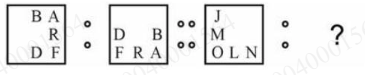
Question 11

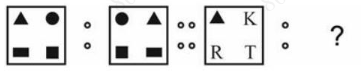
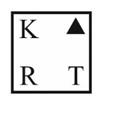
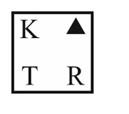
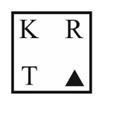
Two figures given on the left side of (::) are related with some logic/rule/relation. Select the missing figure on the right side of (::) from the given alternatives based on the same logic/rule/relation.

  1. AOption (a)

  2. BOption (b)

  3. COption (c)

  4. DOption (d)

View answer & explanation

Correct answer

Answer: (c)C.

Why this answer is correct

Pattern followed here is,

Similarly,

Hence, the correct answer is “Option 3”.

Question 12

Two figures given on the left side of (::) are related with some logic/rule/relation. Select the missing figure on the right side of (::) from the given alternatives based on the same logic/rule/relation.

<br>

  1. AOption (a)

  2. BOption (b)

  3. COption (c)

  4. DOption (d)

View answer & explanation

Correct answer

Answer: (d)D.

Why this answer is correct

Pattern followed here is,

<br> <br>

Similarly,

Hence, the correct answer is “Option 4”.

Question 13

Select the option that is related to the sixth letter-number cluster in the same way as the first letter-number cluster is related to the second letter-number cluster and third letter-number cluster is related to fourth letter-number cluster. (NOTE: Operations should be performed on the whole numbers, without breaking down the numbers into its constituent digits. E.g.13 – Operations on 13 such as adding /subtracting /multiplying etc. to 13 can be performed. Breaking down 13 into 1 and 3 and then performing mathematical operations on 1 and 3 is not allowed)

KO825 : HK425 :: HF916 : EB516 :: ? : CT428

  1. AOption (a)

    XF828

  2. BOption (b)

    FY728

  3. COption (c)

    FX828

  4. DOption (d)

    XE728

View answer & explanation

Correct answer

Answer: (c)C.

FX828

Why this answer is correct

<br> <br>

KO825 : HK425

HF916 : EB516

Similarly,

? : CT428

Hence, the correct answer is “Option 3”.

Question 14

Select the option that is related to the fifth letter-number cluster in the same way as the second letter-number cluster is related to the first letter-number cluster and fourth letter-number cluster is related to third letter-number cluster. (NOTE: Operations should be performed on the whole numbers, without breaking down the numbers into its constituent digits. E.g.13 - Operations on 13 such as adding /subtracting /multiplying etc. to 13 can be performed. Breaking down 13 into 1 and 3 and then performing mathematical operations on 1 and 3 is not allowed)

GKN11 : CGJ121 :: LMF13 : HIB169 :: OSR15 : ?

  1. AOption (a)

    NOK125

  2. BOption (b)

    KPN225

  3. COption (c)

    KOM125

  4. DOption (d)

    KON225

View answer & explanation

Correct answer

Answer: (d)D.

KON225

Why this answer is correct

<br> <br>

GKN11 : CGJ121

LMF13 : HIB169

<br> <br>

Similarly,

OSR15 : ?

<br> <br>

Hence, the correct answer is “Option 4”.

Question 15

Select the option that is related to the first number in the same way as the fourth number is related to the third number and sixth number is related to fifth number. (NOTE: Operations should be performed on the whole numbers, without breaking down the numbers into its constituent digits. E.g.13 - Operations on 13 such as adding /subtracting /multiplying etc. to 13 can be performed. Breaking down 13 into 1 and 3 and then performing mathematical operations on 1 and 3 is not allowed)

608 : ? :: 13 : 242 :: 138 : 367

  1. AOption (a)

    843

  2. BOption (b)

    837

  3. COption (c)

    845

  4. DOption (d)

    849

View answer & explanation

Correct answer

Answer: (b)B.

837

Why this answer is correct

The logic followed here is:

Logic: Second Number = First Number + 229

For the pair 13 : 242

⇒ 13 + 229 = 242.

Similarly, for the pair 138 : 367

138 : 367

Applying the same logic to the pair

608 : ?

⇒ 608 + 229 = 837.

Hence, the correct answer is 'Option 2'.

Question 16

In a certain coded language 'TILE' is coded as 'UKKA' and 'NUMB' is coded as 'OWLX'. How will 'NOTE' be coded in the same code language?

  1. AOption (a)

    MPSZ

  2. BOption (b)

    POQZ

  3. COption (c)

    NQUC

  4. DOption (d)

    OQSA

View answer & explanation

Correct answer

Answer: (d)D.

OQSA

Why this answer is correct

<br> <br>

For TILE is coded as UKKA →

For NUMB is coded as OWLX →

Similarly,

let's find the code for NOTE:

Hence, the correct answer is “Option 4”.

Question 17

A clock shows the correct time at 7 AM. The clock gains 2 seconds every 3 minutes. What time (in PM) will it show at 7 PM the same day?

  1. AOption (a)

    7:16:00

  2. BOption (b)

    7:14:00

  3. COption (c)

    7:08:00

  4. DOption (d)

    7:12:00

View answer & explanation

Correct answer

Answer: (c)C.

7:08:00

Why this answer is correct

The time interval from 7 AM to 7 PM on the same day is:

Total duration = 12 hours

Converting the total duration into minutes:

Total minutes = 12 × 60 = 720 minutes

Given that the clock gains 2 seconds every 3 minutes:

Gain in 3 minutes = 2 seconds

Gain in 1 minute = 2/3 seconds

Total gain in 720 minutes = (2/3) × 720

Total gain = 2 × 240 = 480 seconds

Now, convert the total gain from seconds to minutes:

Total gain in minutes = 480 ÷ 60 = 8 minutes

Since the clock is gaining time, the time it shows at 7 PM will be the actual time plus the gain:

Time shown = 7:00 PM + 8 minutes = 7:08:00 PM

Hence, the time the clock will show is 7:08:00.

Hence, the correct answer is “Option 3”.

Question 18

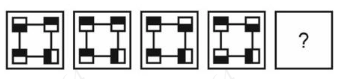
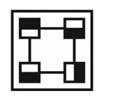
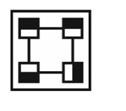
In the following figure series select the figure which can be placed at the sign of question mark (?) from the given alternatives. 

  1. AOption (a)

  2. BOption (b)

  3. COption (c)

  4. DOption (d)

View answer & explanation

Correct answer

Answer: (a)A.

Why this answer is correct

Pattern followed here is,

Hence, the correct answer is “Option 1”.

Question 19

In the following figure series select the figure which can be placed at the sign of question mark (?) from the given alternatives. 

  1. AOption (a)

  2. BOption (b)

  3. COption (c)

  4. DOption (d)

View answer & explanation

Correct answer

Answer: (a)A.

Why this answer is correct

Pattern followed here is,

Hence, the correct answer is “Option 1”.

Question 20

The ratio of present ages of two persons is 7 : 12. The sum of their ages is 57.6 years ago from now, what was the ratio of the ages of the two persons?

  1. AOption (a)

    3 : 2

  2. BOption (b)

    1 : 2

  3. COption (c)

    5 : 7

  4. DOption (d)

    3 : 5

View answer & explanation

Correct answer

Answer: (b)B.

1 : 2

Why this answer is correct

The ratio of the present ages of two persons = 7 : 12

The sum of their present ages = 57

Let the present ages of the two persons be 7x and 12x.

According to the question:

7x + 12x = 57

19x = 57

x = 57 ÷ 19

x = 3

PersonRatio PartPresent Age
First Person77 × 3 = 21 years
Second Person1212 × 3 = 36 years


Ages 6 years ago from now:

Age of the first person = 21 − 6 = 15 years

Age of the second person = 36 − 6 = 30 years

Ratio of their ages 6 years ago:

Required Ratio = 15 : 30

Ratio = 1 : 2

Hence, the correct answer is “Option 2”.

General Knowledge and General Awareness (20 questions)

Question 21

What is the meaning of the word 'Kathak'?

  1. AOption (a)

    A dance of rhythm

  2. BOption (b)

    The act of storytelling

  3. COption (c)

    Divine movement

  4. DOption (d)

    Rhythmic cycle

View answer & explanation

Correct answer

Answer: (b)B.

The act of storytelling

Why this answer is correct

The correct answer is The act of storytelling.

Key Points

  • The word Kathak is etymologically derived from the Sanskrit word Katha, which literally means story. Therefore, a Kathakar is a person who tells a story through the medium of dance.
  • This classical dance form originated in Northern India, primarily in the states of Uttar Pradesh and Rajasthan, where it was performed by nomadic bards known as Kathakars.
  • Historically, these storytellers traveled from village to village and performed in temple courtyards, using music, song, and rhythmic movements to narrate episodes from Indian epics like the Ramayana and Mahabharata.
  • Kathak is formally recognized as one of the eight major classical dance forms of India by the Sangeet Natak Akademi, distinguished by its unique blend of Hindu and Muslim cultural influences.
  • The performance involves a transition from a slow invocation to high-speed footwork and pirouettes, all while maintaining the core objective of conveying a narrative or Bhaav (emotion).

 Additional Information

  • Evolution and Gharanas:
  • The dance style evolved significantly during the Bhakti Movement, incorporating the legends of Radha and Krishna, which added a layer of divine romance to the storytelling.
  • During the Mughal era, Kathak moved from temples to royal courts, where it developed into a more sophisticated and technical form focusing on Tatkar (footwork) and Chakkars (spins).
  • There are three main Gharanas or schools of Kathak: the Lucknow Gharana (emphasizing grace and expression), the Jaipur Gharana (emphasizing rhythmic speed and power), and the Banaras Gharana (emphasizing spiritual depth).
  • Musical accompaniment typically includes instruments such as the Tabla, Pakhawaj, Harmonium, and Sarangi, which provide the rhythmic and melodic framework for the storyteller.

Question 22

In which epic is it mentioned that dying during Uttarayana leads to salvation?

  1. AOption (a)

    Ramayana

  2. BOption (b)

    Mahabharata

  3. COption (c)

    Bhagavata Purana

  4. DOption (d)

    Vedas

View answer & explanation

Correct answer

Answer: (b)B.

Mahabharata

Why this answer is correct

The correct answer is Mahabharata.

Key Points

  • The Mahabharata is one of the two major Sanskrit epics of ancient India, and it explicitly describes the spiritual significance of Uttarayana through the narrative of Bhishma Pitamaha.
  • Bhishma, the patriarch of the Kuru dynasty, possessed the rare boon of Iccha Mrityu (death at will), granted by his father, King Shantanu.
  • After being mortally wounded during the Kurukshetra War by Arjuna, Bhishma chose to lie on a bed of arrows (Sharashayya) rather than giving up his life immediately.
  • He intentionally delayed his departure from the mortal world for 58 days to wait for the onset of Uttarayana, the period when the sun begins its northward journey.
  • According to the epic, dying during this auspicious period allows the soul to travel through the Devayana (the path of gods), leading directly to Salvation or Moksha and liberation from the cycle of rebirth.

 Additional Information

  • Uttarayana and its Significance:
  • It is the six-month period between the Winter Solstice and the Summer Solstice, characterized by the sun moving into the northern hemisphere.
  • The festival of Makar Sankranti traditionally marks the beginning of this period in the Hindu solar calendar.
  • In the Bhagavad Gita, which is a section of the Mahabharata, Lord Krishna confirms that those who depart the world during the light of the day and the six months of the northern sun attain the Supreme Abode.
  • Other Epics and Texts:
  • Ramayana: An epic chronicling the life of Lord Rama, but the theological focus on waiting for Uttarayana for salvation is specific to the legend of Bhishma in the Mahabharata.
  • Vedas: The oldest scriptures of Hinduism containing hymns and rituals; while they discuss cosmic order (Rta), the specific narrative of Bhishma's death is found in the Itihasa (History) category.
  • Bhagavata Purana: Focuses on Bhakti (devotion) and the incarnations of Vishnu, particularly Krishna, but is distinct from the primary historical account of the Kuru war.

Question 23

If a planet takes 88 Earth days to orbit the Sun, what is its orbital period in seconds?

  1. AOption (a)

    7.6 × 10⁶ s

  2. BOption (b)

    6.8 × 10⁶ s

  3. COption (c)

    7.1 × 10⁶ s

  4. DOption (d)

    7.9 × 10⁶ s

View answer & explanation

Correct answer

Answer: (a)A.

7.6 × 10⁶ s

Why this answer is correct

The correct answer is 7.6 × 10⁶ s.

Key Points

  • The orbital period is defined as the time a celestial object takes to complete one full revolution around another object; in this context, it refers to a planet orbiting the Sun.
  • To determine the period in seconds, we must convert 88 Earth days using standard units of time: 1 day consists of 24 hours, 1 hour contains 60 minutes, and 1 minute contains 60 seconds.
  • The total number of seconds in a single solar day is calculated by the product: 24 × 60 × 60 = 86,400 seconds.
  • By multiplying the given orbital duration of 88 days by the number of seconds per day, we find: 88 × 86,400 = 7,603,200 seconds.
  • In scientific notation, this value is expressed as 7.6032 × 10⁶ s. Rounding to two significant figures as per the provided options results in 7.6 × 10⁶ s.

 Additional Information

  • Mercury and Orbital Mechanics
  • Mercury is the planet characterized by an orbital period of approximately 88 Earth days (specifically 87.97 days), making it the fastest planet in our Solar System.
  • Because it is the closest planet to the Sun, it must maintain a high orbital velocity (averaging 47.36 km/s) to counteract the Sun's massive gravitational pull.
  • Kepler's Third Law
  • The relationship between a planet's distance from the Sun and its period is governed by Kepler's Law of Periods, which states that the square of the orbital period (T) is proportional to the cube of the semi-major axis (a) of its orbit (T2 ∝ a3).
  • This law implies that planets further from the Sun, such as Jupiter or Neptune, have significantly longer orbital periods compared to terrestrial planets like Earth or Mercury.

Question 24

Which planet is called the stormy planet?

  1. AOption (a)

    Mercury

  2. BOption (b)

    Jupiter

  3. COption (c)

    Mars

  4. DOption (d)

    Venus

View answer & explanation

Correct answer

Answer: (b)B.

Jupiter

Why this answer is correct

The correct answer is Jupiter.

Key Points

  • Jupiter is the largest planet in our Solar System and is primarily classified as a gas giant due to its composition of hydrogen and helium.
  • It is widely known as the stormy planet because its atmosphere is in a constant state of turbulence, featuring high-velocity zonal winds and massive vortices.
  • The most famous feature of Jupiter is the Great Red Spot, an enormous anticyclonic storm that is larger than Earth and has been raging for at least 350 years.
  • Because Jupiter lacks a solid rocky surface, there is no friction to slow down these atmospheric disturbances, allowing storms to persist for decades or even centuries.
  • The planet also exhibits White Ovals and Brown Barges, which are smaller but equally intense storm systems within its distinct cloud bands.

 Additional Information

  • Mercury:
  • It is the closest planet to the Sun and the smallest in the solar system.
  • Mercury has a very thin exosphere instead of a traditional atmosphere, meaning it cannot generate weather or storms.
  • Mars:
  • Often called the Red Planet due to the prevalence of iron oxide on its surface.
  • While it experiences massive dust storms that can occasionally cover the entire planet, its thin atmosphere lacks the complex gaseous dynamics found on Jupiter.
  • Venus:
  • Known as Earths twin, it has an extremely dense atmosphere of carbon dioxide and clouds of sulfuric acid.
  • It is the hottest planet in the solar system due to a runaway greenhouse effect, rather than being defined primarily by storm activity.

Question 25

In which country was the 2nd BRIC Summit held in 2010?

  1. AOption (a)

    Russia

  2. BOption (b)

    India

  3. COption (c)

    Brazil

  4. DOption (d)

    China

View answer & explanation

Correct answer

Answer: (c)C.

Brazil

Why this answer is correct

The correct answer is Brazil.

Key Points

  • The 2nd BRIC Summit was held on April 15, 2010, in the capital city of Brasília, Brazil.
  • The summit was attended by the leaders of the four founding nations: President Luiz Inácio Lula da Silva of Brazil, President Dmitry Medvedev of Russia, Prime Minister Manmohan Singh of India, and President Hu Jintao of China.
  • The primary focus of this summit was the recovery from the 2008 global financial crisis and the necessity of reforming international financial institutions like the International Monetary Fund (IMF) and the World Bank to provide more voting power to emerging economies.
  • A significant outcome of the 2010 meeting was the discussion regarding the expansion of the group, which eventually led to South Africa being invited to join the bloc by the end of that year.
  • The leaders signed several agreements regarding technical cooperation and cooperation between their respective development banks to facilitate trade and investment.

 Additional Information

  • Chronology of Early Summits:
  • 1st BRIC Summit: Held in Yekaterinburg, Russia, on June 16, 2009. It was the first formal meeting of the group.
  • 3rd BRICS Summit: Held in Sanya, China, in 2011. This was the first summit where South Africa participated as a full member, changing the acronym to BRICS.
  • 4th BRICS Summit: Hosted by India in New Delhi on March 29, 2012.
  • BRICS Concept and Expansion:
  • The acronym BRIC was originally coined by Jim O'Neill of Goldman Sachs in 2001 to highlight the economic potential of these four nations.
  • In August 2023, during the 15th BRICS Summit in South Africa, the group announced a major expansion, inviting countries including Egypt, Ethiopia, Iran, and the United Arab Emirates to join starting January 1, 2024.

Question 26

What is the theme of India's 79th Independence Day celebrations at the Red Fort in 2025?

  1. AOption (a)

    Azadi Ka Amrit

  2. BOption (b)

    Swarnim Bharat

  3. COption (c)

    Vikas Ki Manzil

  4. DOption (d)

    Naya Bharat

View answer & explanation

Correct answer

Answer: (d)D.

Naya Bharat

Why this answer is correct

The correct answer is Naya Bharat.

Key Points

  • The 79th Independence Day of India, to be celebrated on August 15, 2025, marks a significant milestone in the country's journey toward its centenary of freedom in 2047.
  • The theme Naya Bharat (New India) reflects the government's commitment to building a nation that is self-reliant, technologically advanced, and inclusive of all social strata.
  • The celebrations held at the historic Red Fort (Lal Qila) in New Delhi traditionally feature the unfurling of the National Flag by the Prime Minister, followed by a speech outlining the national roadmap.
  • The theme emphasizes the vision of Amrit Kaal, focusing on the Panch Pran (Five Vows) which include the goal of a developed India, removing any trace of colonial mindset, taking pride in roots, unity, and sense of duty among citizens.
  • Naya Bharat serves as an umbrella concept for various flagship schemes like Digital India, Make in India, and PM Gati Shakti, aiming to position India as a global powerhouse in the 21st century.

 Additional Information

  • Viksit Bharat @ 2047:
  • This is the overarching vision to transform India into a Developed Nation by its 100th year of independence.
  • Key pillars include economic growth, social progress, environmental sustainability, and good governance.
  • The Red Fort's Historical Role:
  • Built by Mughal Emperor Shah Jahan, it has been the site for Independence Day addresses since Jawaharlal Nehru first hoisted the flag here in 1947.
  • It is a UNESCO World Heritage Site representing the architectural fusion of Persian, Timurid, and Indian styles.
  • Atmanirbhar Bharat:
  • A core component of the Naya Bharat theme, focusing on making India a global manufacturing hub and reducing import dependency.
  • It highlights advancements in sectors like Defense, Space, and Semiconductors.

Question 27

Which of the following is a major source of water vapor in the air?

  1. AOption (a)

    Evaporation from oceans

  2. BOption (b)

    Combustion

  3. COption (c)

    Photosynthesis

  4. DOption (d)

    Industrial smoke

View answer & explanation

Correct answer

Answer: (a)A.

Evaporation from oceans

Why this answer is correct

The correct answer is Evaporation from oceans.

Key Points

  • Water vapor is the gaseous state of water and serves as the primary greenhouse gas, responsible for maintaining the Earth's temperature through the Hydrological Cycle.
  • The Oceans are the largest reservoirs of liquid water on the planet, covering approximately 71 percent of the Earth's total surface area.
  • Due to the massive surface area and the absorption of Solar Radiation, approximately 85 percent to 90 percent of all atmospheric water vapor originates from the evaporation of seawater.
  • Evaporation occurs when thermal energy increases the kinetic energy of water molecules, allowing them to overcome surface tension and escape into the air as a gas.
  • The rate of this process is governed by Surface Temperature, Wind Speed, and the Vapor Pressure Gradient between the ocean surface and the lower atmosphere.

 Additional Information

  • Transpiration:
  • This is the biological process where plants release water vapor through Stomata. When combined with land evaporation (Evapotranspiration), it accounts for the remaining 10 percent of atmospheric moisture.
  • Combustion:
  • The chemical reaction of Hydrocarbons with oxygen produces Carbon Dioxide and water vapor. While significant in urban microclimates, it is a negligible contributor to global water vapor levels.
  • Photosynthesis:
  • This is the process by which green plants use Sunlight to convert water and carbon dioxide into Glucose. It acts as a consumer of water rather than a primary source of atmospheric vapor.
  • Industrial Smoke:
  • Emissions from factories often contain Steam and particulate matter. However, these Anthropogenic sources are localized and do not compare to the scale of natural oceanic evaporation.

Question 28

Which visionary is dubbed the 'father of fiber optics'?

  1. AOption (a)

    Kunal Kapoor

  2. BOption (b)

    Vivek Sehgal

  3. COption (c)

    Narinder Singh Kapany

  4. DOption (d)

    Jay Chaudhry

View answer & explanation

Correct answer

Answer: (c)C.

Narinder Singh Kapany

Why this answer is correct

The correct answer is Narinder Singh Kapany.

Key Points

  • Narinder Singh Kapany was an Indian-American physicist who is widely recognized globally as the father of fiber optics for his pioneering research in the 1950s.
  • In 1953, while working at Imperial College London, he successfully demonstrated that light can be transmitted through a bundle of glass fibers, overcoming the traditional challenge of light leaking out of the sides.
  • He achieved this by using a cladding material with a lower refractive index, which enabled Total Internal Reflection, the fundamental principle behind all modern optical communication.
  • The term fiber optics was first coined by Kapany in a seminal article for Scientific American in 1960, establishing the nomenclature for the entire industry.
  • His work paved the way for a revolution in telecommunications, high-speed broadband internet, and medical applications like endoscopy and laser-assisted surgery.
  • In recognition of his monumental contributions to science and engineering, the Government of India posthumously awarded him the Padma Vibhushan, the country's second-highest civilian honor, in 2021.

 Additional Information

  • Jay Chaudhry:
  • An Indian-American billionaire entrepreneur and the CEO of Zscaler, a leading company in cloud security and zero-trust architecture.
  • Vivek Sehgal:
  • The chairman and co-founder of Motherson Group, a major global player in the automotive component manufacturing industry.
  • Fiber Optic Cables:
  • These cables transmit data as pulses of light through strands of glass or plastic, offering significantly higher bandwidth and lower attenuation compared to traditional copper wires.
  • This technology is the backbone of the World Wide Web and long-distance digital data transmission.

Question 29

The main river flowing through the Rajasthan desert is:

  1. AOption (a)

    Chambal

  2. BOption (b)

    Banas

  3. COption (c)

    Luni

  4. DOption (d)

    Sabarmati

View answer & explanation

Correct answer

Answer: (c)C.

Luni

Why this answer is correct

The correct answer is Luni.

Key Points

  • The Luni River is the only major river system in the Thar Desert (Great Indian Desert) and serves as the primary source of water for the arid regions of western Rajasthan.
  • It originates in the Pushkar Valley of the Aravalli Range, near Ajmer, at an elevation of approximately 550 meters, where it is initially known as the Sagarmati.
  • The river flows for a total length of about 495 kilometers, passing through several districts including Nagaur, Pali, Jodhpur, Barmer, and Jalore before entering Gujarat.
  • A distinctive hydrological feature of the Luni is its salinity; the water remains fresh until it reaches Balotra in the Barmer district, but becomes saline thereafter due to high salt accumulation in the desert soil.
  • It is an endorheic river, meaning it does not reach the sea; instead, its course terminates in the marshy Rann of Kutch.
  • Its major tributaries include the Jojari, Sukri, Guhiya, Bandi, and Jawai rivers, most of which originate from the western slopes of the Aravallis.

 Additional Information

  • Chambal River:
  • Originates from the Janapav Hills in the Vindhya Range (Madhya Pradesh).
  • It is a perennial river that flows through south-eastern Rajasthan and is famous for its badland topography and ravines.
  • Banas River:
  • Known as Vana Ki Asha (Hope of the Forest), it originates from the Khamnor Hills in the Rajsamand district.
  • It is a seasonal river that flows entirely within Rajasthan before joining the Chambal as a tributary.
  • Sabarmati River:
  • Originates in the Udaipur district from the Aravalli Range.
  • While it begins in Rajasthan, the majority of its course and catchment area lie in Gujarat, eventually draining into the Gulf of Khambhat.

Question 30

Loktak Lake is located in which state?

  1. AOption (a)

    Tripura

  2. BOption (b)

    Nagaland

  3. COption (c)

    Assam

  4. DOption (d)

    Manipur

View answer & explanation

Correct answer

Answer: (d)D.

Manipur

Why this answer is correct

The correct answer is Manipur.

Key Points

  • Loktak Lake is situated in the Bishnupur district of Manipur and is recognized as the largest freshwater lake in North-East India.
  • The lake is globally renowned for its unique phumdis, which are floating islands composed of a heterogeneous mass of vegetation, soil, and organic matter in various stages of decomposition.
  • It serves as a primary source for hydropower generation, irrigation, and drinking water supply in the region, while also supporting the livelihoods of local fishermen.
  • The Keibul Lamjao National Park, located in the southeastern part of the lake, is the world’s only floating national park and is an integral part of the Loktak ecosystem.
  • This ecosystem provides the sole natural habitat for the critically endangered Sangai (Rucervus eldii eldii), also known as the dancing deer, which is the state animal of Manipur.

 Additional Information

  • Conservation Status:
  • Loktak Lake was designated as a wetland of international importance under the Ramsar Convention on March 23, 1990.
  • In 1993, it was listed under the Montreux Record due to ecological changes resulting from human activities and the construction of the Ithai Barrage.
  • Other Regional Lakes:
  • Tripura: Home to Rudrasagar Lake, a Ramsar site featuring the famous Neermahal water palace.
  • Assam: Contains Deepor Beel, a permanent freshwater lake in the Kamrup district and a significant bird sanctuary.
  • Nagaland: Known for Shilloi Lake, a natural foot-shaped lake located in the Phek district.

Question 31

In the Delhi Sultanate, ____ was one of the religious duties enjoined upon all Muslims.

  1. AOption (a)

    Mamluk

  2. BOption (b)

    Zakat

  3. COption (c)

    Kismat

  4. DOption (d)

    Ur

View answer & explanation

Correct answer

Answer: (b)B.

Zakat

Why this answer is correct

The correct answer is Zakat.

Key Points

  • Zakat is defined as a mandatory religious tax and represents one of the Five Pillars of Islam, making it a compulsory duty for all eligible Muslims to support the needy.
  • During the Delhi Sultanate (1206–1526), the administrative and fiscal systems were largely governed by the Shariat (Islamic Law), which identified Zakat as a specific tax on property and wealth.
  • It was typically levied at a fixed rate of 2.5% (or one-fortieth) on specific assets including gold, silver, livestock, and merchandise that had been in the owner's possession for at least one lunar year.
  • The revenue generated from Zakat was strictly utilized for charitable purposes, such as providing for the poor, widows, orphans, and religious institutions, rather than for general state expenditures or military funding.
  • It was distinct from other taxes like Kharaj (land tax) and Jizya because it was a purely religious obligation performed only by the Muslim subjects of the Sultanate.

 Additional Information

  • Mamluk:
  • Refers to the Slave Dynasty (1206–1290), the first ruling house of the Delhi Sultanate founded by Qutub-ud-din Aibak.
  • The term Mamluk is an Arabic word for 'owned', signifying slave-soldiers of Turkish origin who rose to political power.
  • Ur:
  • This was a type of village assembly found specifically in the Chola Empire of South India, consisting of tax-paying residents.
  • It operated alongside the Sabha, which was the assembly of Brahmin landholders in Brahmadeya villages.
  • Jizya and Khums:
  • Jizya was a protection tax levied on non-Muslim subjects (Dhimmis) in exchange for state protection and military exemption.
  • Khums referred to the state's share of war booty, which was traditionally one-fifth of the total spoils captured during military campaigns.

Question 32

Union Home Minister and Minister of Cooperation in ______ 2025 unveiled the National Cooperation Policy 2025 in New Delhi.

  1. AOption (a)

    January

  2. BOption (b)

    July

  3. COption (c)

    April

  4. DOption (d)

    May

View answer & explanation

Correct answer

Answer: (a)A.

January

Why this answer is correct

The correct answer is January.

Key Points

  • Union Home Minister and Minister of Cooperation Amit Shah officially unveiled the National Cooperation Policy 2025 on January 1, 2025, during a ceremony held at Bharat Mandapam, New Delhi.
  • The policy is designed to realize the vision of Sahakar-se-Samriddhi (Prosperity through Cooperation) by creating a more vibrant, transparent, and professional cooperative movement across the country.
  • The draft of this policy was prepared by a 47-member National Level Committee headed by former Union Minister Suresh Prabhu, which incorporated suggestions from various stakeholders, state governments, and national cooperative federations.
  • The policy focuses on 10 major themes, including strengthening the legal and institutional framework, enhancing financial sustainability, and promoting the use of modern technology and digitalization in cooperatives.
  • It aims to increase the contribution of cooperatives to the national GDP and create a level playing field for them compared to other economic sectors.

 Additional Information

  • Ministry of Cooperation:
  • Established by the Government of India in July 2021 to provide a separate administrative, legal, and policy framework for the cooperative sector.
  • It works to streamline processes for Ease of Doing Business for cooperatives and to enable the development of Multi-State Cooperative Societies (MSCS).
  • Primary Agricultural Credit Societies (PACS):
  • A major component of the new policy is the strengthening of approximately 63,000 functional PACS by converting them into Common Service Centres (CSCs).
  • The computerization of PACS is a key project aimed at improving transparency and efficiency at the village level.
  • Constitutional Framework:
  • The 97th Constitutional Amendment Act, 2011 added Part IXB to the Constitution, providing constitutional status and protection to cooperative societies.
  • Promotion of cooperatives is also a Directive Principle of State Policy under Article 43B.

Question 33

Which state was ranked first for the month of July 2025 in the PM-JANMAN scheme?

  1. AOption (a)

    Madhya Pradesh

  2. BOption (b)

    Maharashtra

  3. COption (c)

    Uttar Pradesh

  4. DOption (d)

    Gujarat

View answer & explanation

Correct answer

Answer: (d)D.

Gujarat

Why this answer is correct

The correct answer is Gujarat.

Key Points

  • The PM-JANMAN (Pradhan Mantri Janjati Adivasi Nyaya Maha Abhiyan) was launched on November 15, 2023, to coincide with Janjatiya Gaurav Divas, aiming to provide comprehensive development for 75 Particularly Vulnerable Tribal Groups (PVTGs).
  • For the ranking period of July 2025, Gujarat secured the first rank among all states by achieving the highest percentage of saturation in individual entitlement schemes, specifically in the issuance of Aadhaar cards, caste certificates, and Jan Dhan bank accounts for the PVTG population.
  • The state demonstrated exceptional administrative efficiency by conducting intensive Information, Education, and Communication (IEC) campaigns and saturation camps across districts such as Narmada, Tapi, and Dahod.
  • Gujarat led the national tally in the implementation of the 11 critical interventions, particularly in ensuring 100 percent registration for Ayushman Bharat cards and PM-Kisan benefits among its five identified PVTG communities: Sidi, Padhar, Kathodi, Kotwalia, and Kolgha.
  • The Ministry of Tribal Affairs recognized the state's progress in utilizing GIS mapping for tribal habitations, which facilitated the rapid approval of pucca houses under PM-Awas Yojana (Gramin) and the extension of off-grid solar power to remote areas.

 Additional Information

  • PM-JANMAN Scheme Framework:
  • The scheme has a total financial outlay of 24,104 crore, with a central share of 15,336 crore and a state share of 8,768 crore.
  • It focuses on 11 key interventions coordinated by 9 Central Ministries, including the Ministry of Health and Family Welfare, Ministry of Power, and Ministry of Rural Development.
  • The mission aims to bridge gaps in safe housing, clean drinking water, sanitation, and telecommunication connectivity for approximately 28 lakh PVTG individuals living in 22,000 habitations across 18 states and one UT.
  • Infrastructural targets include the construction of 8,000 km of all-weather roads and the setting up of 2,500 Anganwadi centres and Multipurpose Centres (MPCs).

Question 34

Which institution developed the Sabal 20, an electric unmanned helicopter acquired by the Indian Army in November 2024?

  1. AOption (a)

    IIT Bombay

  2. BOption (b)

    IIT Delhi

  3. COption (c)

    IIT Kanpur

  4. DOption (d)

    IIT Madras

View answer & explanation

Correct answer

Answer: (c)C.

IIT Kanpur

Why this answer is correct

The correct answer is IIT Kanpur.

Key Points

  • The Sabal 20 is a sophisticated Electric Unmanned Helicopter designed specifically for heavy-lift logistics and reconnaissance in challenging terrains.
  • This cutting-edge technology was developed by EndureAir Systems, a deep-tech startup incubated at the Indian Institute of Technology (IIT) Kanpur.
  • The Indian Army officially inducted the Sabal 20 in November 2024 to enhance its logistics capabilities in high-altitude sectors such as Ladakh and Sikkim.
  • It features a Vertical Take-Off and Landing (VTOL) capability, which allows it to operate effectively in restricted spaces without the need for a runway.
  • The helicopter is designed to carry payloads of up to 20 kilograms and can operate at altitudes exceeding 15,000 feet, providing a critical advantage in mountainous warfare.

 Additional Information

  • EndureAir Systems:
  • Founded by researchers and alumni from the Aerospace Engineering department of IIT Kanpur under the mentorship of Professor Abhishek.
  • The startup focuses on providing indigenous unmanned aerial solutions for both defense and civilian applications, aligning with the Atmanirbhar Bharat initiative.
  • Operational Features:
  • The electric propulsion system ensures a significantly lower acoustic signature compared to traditional combustion engines, making it ideal for covert operations.
  • It is equipped with advanced autonomous navigation systems, allowing it to perform last-mile delivery of medicines and essential supplies to remote forward posts.
  • Strategic Significance:
  • Reduces the reliance on animal transport or large manned helicopters (like the Cheetah or Dhruv) for small-scale logistics, thereby saving operational costs and reducing risk to human pilots.
  • Supports the Indian Army in maintaining a constant supply chain in low-oxygen and high-wind environments where traditional drones often fail.

Question 35

As announced in January 2025, which organization developed indigenously produced 'Paracetamol'?

  1. AOption (a)

    Council of Scientific and Industrial Research

  2. BOption (b)

    All India Institute of Medical Sciences

  3. COption (c)

    Indira Gandhi Medical College & Hospital

  4. DOption (d)

    Jubilee Mission Medical College and Research Institute

View answer & explanation

Correct answer

Answer: (a)A.

Council of Scientific and Industrial Research

Why this answer is correct

The correct answer is Council of Scientific and Industrial Research.

Key Points

  • The Council of Scientific and Industrial Research (CSIR), specifically through the Indian Institute of Chemical Technology (IICT) based in Hyderabad, announced the successful development of a fully indigenous technology for Paracetamol production in January 2025.
  • The project focused on synthesizing the Active Pharmaceutical Ingredient (API) using locally sourced raw materials, effectively reducing the heavy reliance on imported Key Starting Materials (KSMs) like Para-Aminophenol.
  • This development is a critical milestone under the Atmanirbhar Bharat initiative, which seeks to secure India s medical supply chain and achieve self-sufficiency in essential drug manufacturing.
  • The newly developed process is designed to be environmentally sustainable and cost-competitive, allowing domestic manufacturers to produce high-quality analgesics and antipyretics for both local consumption and global export.

 Additional Information

  • Council of Scientific and Industrial Research (CSIR):
  • Established in September 1942, it is India s premier public sector Research and Development organization.
  • It operates under the Ministry of Science and Technology and is presided over by the Prime Minister of India.
  • With a network of 37 national laboratories, it plays a pivotal role in fields such as genomics, oceanography, and pharmaceutical chemistry.
  • Active Pharmaceutical Ingredients (APIs):
  • An API is the primary chemical component in a drug responsible for the therapeutic effect.
  • To boost domestic production, the Indian government introduced the Production Linked Incentive (PLI) Scheme for Bulk Drugs and promoted the establishment of Bulk Drug Parks.
  • Reducing import dependency (specifically from China) for APIs is a strategic priority to prevent medicine shortages.

Question 36

In which year Tokyo was host city of Summer Olympic Games?

  1. AOption (a)

    2000

  2. BOption (b)

    2004

  3. COption (c)

    2008

  4. DOption (d)

    2020

View answer & explanation

Correct answer

Answer: (d)D.

2020

Why this answer is correct

The correct answer is 2020.

Key Points

  • The 2020 Summer Olympics, officially known as the Games of the XXXII Olympiad, were hosted by Tokyo, Japan, marking the city second time hosting the summer event.
  • Although scheduled to begin in July 2020, the games were officially postponed by the International Olympic Committee (IOC) to 2021 due to the global COVID-19 pandemic.
  • The event eventually took place from July 23 to August 8, 2021, but retained the official branding of Tokyo 2020 for marketing and record-keeping purposes.
  • Tokyo was awarded the games during the 125th IOC Session held in Buenos Aires, Argentina, on September 7, 2013, after defeating finalist bids from Istanbul and Madrid.
  • With this hosting, Tokyo became the first city in Asia to host the Summer Olympic Games twice, with the previous instance occurring in 1964.
  • The Japan National Stadium served as the primary venue for the opening and closing ceremonies, as well as athletics competitions.

 Additional Information

  • Evolution of the Tokyo Games:
  • Historical Legacy: The 1964 Summer Olympics were a landmark event for Japan, showcasing its technological resurgence with the debut of the Shinkansen bullet train and the first global satellite broadcast.
  • New Sporting Additions: The 2020 program introduced several new sports to appeal to younger audiences, including skateboarding, surfing, sport climbing, and karate.
  • Sustainability Initiatives: The organizers launched the Tokyo 2020 Medal Project, where approximately 5,000 medals were manufactured using 100 percent recycled metal extracted from small electronic devices like mobile phones.
  • Mascots and Motto: The official mascots were Miraitowa and Someity, and the games were conducted under the motto United by Emotion, highlighting global unity during challenging times.

Question 37

Which of the following is NOT a relay event in track events in sports?

I. 4×100 metres

II. 4×600 metres

  1. AOption (a)

    Only I

  2. BOption (b)

    Only II

  3. COption (c)

    Both I and II

  4. DOption (d)

    Neither I nor II

View answer & explanation

Correct answer

Answer: (b)B.

Only II

Why this answer is correct

The correct answer is Only II.

Key Points

  • The 4×100 metres relay is a standard track and field sprint event where four runners each complete a distance of 100 metres in succession. This event is a primary discipline in the Summer Olympic Games and World Athletics Championships, requiring athletes to pass a baton within a 30-metre exchange zone. Hence, statement I is correct.
  • The 4×600 metres is not a recognized or standard international relay event in competitive athletics. Standard middle-distance relays sanctioned by World Athletics (formerly IAAF) include the 4×400 metres, 4×800 metres, and 4×1500 metres, but the 600m distance is not utilized for major championship relay formats. Hence, statement II is incorrect.

 Additional Information

  • Relay Race Mechanics:
  • Baton Passing: In short relays like the 4×100m, runners typically use a non-visual exchange (blind handoff) to maintain top speed, while longer relays may use a visual exchange.
  • Legs: A relay team consists of a lead-off leg, two middle runners, and an anchor leg (usually the fastest runner).
  • Exchange Zone: For the 4×100m, the current World Athletics rules define a single 30-metre zone where the baton must be handed over; failing to do so results in disqualification.
  • Standard Track Events:
  • 4×400 metres: Often the finale of track meets, involving one full lap per runner.
  • Mixed 4×400 metres Relay: A modern event featuring two men and two women, which made its Olympic debut at the Tokyo 2020 Games.
  • Medley Relays: These involve legs of different distances (e.g., 1200m, 400m, 800m, 1600m in the Distance Medley Relay).

Question 38

According to Fleming left hand rule, which of the following is denoted using the second finger of the left hand?

  1. AOption (a)

    Direction of current

  2. BOption (b)

    Direction of magnetic field

  3. COption (c)

    Force acting on the conductor

  4. DOption (d)

    Measure of resistance

View answer & explanation

Correct answer

Answer: (a)A.

Direction of current

Why this answer is correct

The correct answer is Direction of current.

Key Points

  • Fleming's Left-Hand Rule is a simple visualization tool used to find the direction of the mechanical force (motion) experienced by a current-carrying conductor when it is placed in an external magnetic field.
  • To apply the rule, the thumb, forefinger (first finger), and middle finger (second finger) of the left hand are held mutually perpendicular (at 90 degrees) to one another.
  • The Forefinger (First finger) represents the direction of the Magnetic Field (B), typically pointing from the North pole to the South pole.
  • The Middle Finger (Second finger) represents the direction of the Electric Current (I) flowing through the conductor.
  • The Thumb represents the direction of the Thrust or Force (F) acting on the conductor, which dictates its direction of motion.
  • This rule is essentially a mnemonic for the Lorentz Force equation, where the force vector is the cross-product of the current and magnetic field vectors.

 Additional Information

  • Direction of magnetic field
  • In the left-hand rule, this is indicated by the index finger.
  • In SI units, the strength of this field is measured in Tesla (T).
  • Force acting on the conductor
  • This is represented by the thumb.
  • The magnitude of this force is given by the formula F = B × I × L × sin(θ), where L is the length of the wire and θ is the angle between the current and the field.
  • Measure of resistance
  • Resistance is a property of a material to oppose the flow of current, defined by Ohm's Law (R = V / I).
  • It is not determined or represented by Fleming's rules, which deal with electromagnetism and motion rather than circuit properties.
  • Electric Motors
  • Fleming's Left-Hand Rule is the fundamental principle used to understand the operation of DC Motors, where electrical energy is converted into mechanical torque.

Question 39

Who is the composer of treatise of music Swaramelakalanidhi?

  1. AOption (a)

    Matanga

  2. BOption (b)

    Sharngadeva

  3. COption (c)

    Haripala

  4. DOption (d)

    Ramamatya

View answer & explanation

Correct answer

Answer: (d)D.

Ramamatya

Why this answer is correct

The correct answer is Ramamatya.

Key Points

  • The treatise Swaramelakalanidhi was composed by the scholar-musician Ramamatya in approximately 1550 AD.
  • Ramamatya served as a prominent minister and court musician under Aliya Rama Raya, the de facto ruler of the Vijayanagara Empire.
  • This work is historically significant as it marks the formal beginning of the Carnatic music system, acting as a bridge between the ancient traditions and modern practices.
  • In Swaramelakalanidhi, the author introduced the Mela system of classification, identifying 20 Melas (parent scales) to organize various Ragas of that era.
  • The text provides a detailed study of Veena construction and tuning, categorizing them into types like Shuddha Mela Veena and Madhya Mela Veena.

 Additional Information

  • Matanga:
  • Author of the influential text Brihaddeshi, dated between the 6th and 8th centuries.
  • He was the first to technically define the term Raga and introduced the Desi (regional) music tradition.
  • Sharngadeva:
  • Composed the Sangeeta Ratnakara in the 13th century during the Yadava dynasty in Devagiri.
  • His work is known as Saptadhyayi (consisting of seven chapters) and is a foundational text for both Hindustani and Carnatic music.
  • Haripala:
  • A Chalukyan king credited with writing Sangeeta Sudhakara in the 12th or 14th century.
  • He is recognized for being one of the earliest theorists to explicitly differentiate between Hindustani and Carnatic musical styles.

Question 40

Magnetite is the finest iron ore with a very high content of iron up to ___ per cent.

  1. AOption (a)

    25

  2. BOption (b)

    45

  3. COption (c)

    55

  4. DOption (d)

    70

View answer & explanation

Correct answer

Answer: (d)D.

70

Why this answer is correct

The correct answer is 70.

Key Points

  • Magnetite is the most superior and finest iron ore found in the Earth's crust, distinguished by its high metallic iron concentration, which can reach up to 70%.
  • Chemically, it is a ferrimagnetic mineral represented by the formula Fe3O4, making it the most magnetic of all the naturally occurring minerals on Earth.
  • Due to these excellent magnetic qualities, Magnetite is of immense value in the electrical industry, where it is utilized in the production of specialized components and high-efficiency motors.
  • The ore typically appears black or brownish-black with a metallic luster and is primarily found in igneous and metamorphic rocks, as well as in banded iron formations (BIFs).
  • In India, high-grade Magnetite deposits are concentrated in the Kudremukh mines of Karnataka, which are known to be one of the largest deposits of this type in the world.

 Additional Information

  • Hematite (Fe2O3):
  • It is often referred to as 'red ore' and contains a slightly lower iron content ranging from 50% to 60%.
  • Despite having a lower iron percentage than magnetite, it is the most important industrial iron ore in terms of the total quantity used in iron and steel manufacturing.
  • Limonite and Siderite:
  • Limonite is a secondary iron ore with a content of 40% to 60%, often appearing yellowish in color.
  • Siderite is an iron carbonate (FeCO3) containing less than 40% iron, making it less economically desirable for extraction.
  • Geographic Distribution:
  • The major iron ore belts in India include the Odisha-Jharkhand belt, the Durg-Bastar-Chandrapur belt, and the Bellary-Chitradurga-Chikkamagaluru-Tumakuru belt.
  • While Hematite is predominantly found in Odisha and Chhattisgarh, Magnetite is largely exported from the Mangaluru port.

Elementary Mathematics (20 questions)

Question 41

81 + (24 × 1) - 38 + 17 + 44 ÷ 2 - 16 = ?

  1. AOption (a)

    108

  2. BOption (b)

    110

  3. COption (c)

    95

  4. DOption (d)

    90

View answer & explanation

Correct answer

Answer: (d)D.

90

Why this answer is correct

Shortcut Trick

Apply the BODMAS rule by solving the bracket and division first.

Expression: 81 + 24 − 38 + 17 + 22 − 16

Combine positive terms: 81 + 24 + 17 + 22 = 144

Combine negative terms: 38 + 16 = 54

Final result: 144 − 54 = 90

∴ The correct answer is 90.

Alternate Method

Given: 81 + (24 × 1) − 38 + 17 + 44 ÷ 2 − 16

Formula Used: BODMAS (Brackets, Orders, Division, Multiplication, Addition, Subtraction)

⇒ 81 + 24 − 38 + 17 + 44 ÷ 2 − 16 (Solving bracket 24 × 1 = 24)

⇒ 81 + 24 − 38 + 17 + 22 − 16 (Solving division 44 ÷ 2 = 22)

⇒ 105 − 38 + 17 + 22 − 16 (Addition from left: 81 + 24 = 105)

⇒ 67 + 17 + 22 − 16 (Subtraction: 105 − 38 = 67)

⇒ 84 + 22 − 16 (Addition: 67 + 17 = 84)

⇒ 106 − 16 (Addition: 84 + 22 = 106)

⇒ 90

∴ The correct answer is 90.

Additional Information

BODMAS Rule

It is an acronym to help remember the order of mathematical operations: Brackets (), Orders (exponents/roots), Division (÷), Multiplication (×), Addition (+), and Subtraction (−).

Left-to-Right Rule

When operators like addition and subtraction (or multiplication and division) appear in the same step, solve the expression from left to right.

Grouping for Speed

In expressions involving only addition and subtraction, grouping all positive terms and negative terms separately before the final subtraction can reduce errors and save time.

Question 42

The HCF of two numbers is 24, their LCM is 360, and their difference is 48. Find the numbers.

  1. AOption (a)

    96 and 144

  2. BOption (b)

    108 and 60

  3. COption (c)

    132 and 84

  4. DOption (d)

    120 and 72

View answer & explanation

Correct answer

Answer: (d)D.

120 and 72

Why this answer is correct

Shortcut Trick

The Product of two numbers = HCF × LCM = 24 × 360 = 8640.

Check options for Difference = 48 and Product = 8640.

Option (1): 144 − 96 = 48; 144 × 96 = 13824 (Incorrect).

Option (4): 120 − 72 = 48; 120 × 72 = 8640 (Correct).

∴ The correct answer is 120 and 72.

Alternate Method

Given:

HCF = 24

LCM = 360

Difference (x − y) = 48

Formula Used:

Product of numbers (x × y) = HCF × LCM

(x + y)2 = (x − y)2 + 4xy

Calculations:

⇒ x × y = 24 × 360 = 8640

⇒ (x + y)2 = (48)2 + 4 × (8640)

⇒ (x + y)2 = 2304 + 34560 = 36864

⇒ x + y = √36864 = 192

⇒ Adding (x + y = 192) and (x − y = 48):

⇒ 2x = 192 + 48 = 240 → x = 120

⇒ Subtracting (x − y = 48) from (x + y = 192):

⇒ 2y = 192 − 48 = 144 → y = 72

∴ The correct answer is 120 and 72.

Additional Information

Fundamental Property of HCF and LCM

For any two numbers a and b, the product of the numbers is always equal to the product of their HCF and LCM: a × b = HCF(a, b) × LCM(a, b).

HCF as a Factor of LCM

The HCF of any set of numbers is always a factor of their LCM. If the HCF does not divide the LCM, such numbers cannot exist.

Co-prime Factors

Two numbers can be represented as (HCF × a) and (HCF × b), where 'a' and 'b' are co-prime integers (meaning HCF(a, b) = 1).

Question 43

12.1 - (11.85 - 5.45 - 4.60) = ?

  1. AOption (a)

    10.3

  2. BOption (b)

    10.0

  3. COption (c)

    10.5

  4. DOption (d)

    10.1

View answer & explanation

Correct answer

Answer: (a)A.

10.3

Why this answer is correct

Shortcut Trick

Combine the internal terms within the bracket first: 11.85 − (5.45 + 4.60) = 11.85 − 10.05 = 1.80.

Final calculation: 12.1 − 1.80 = 10.3.

∴ The correct answer is 10.3.

Alternate Method

Given Expression: 12.1 − (11.85 − 5.45 − 4.60)

Using the BODMAS rule, we must simplify the terms inside the parentheses first from left to right:

⇒ 12.1 − (6.40 − 4.60)

⇒ 12.1 − 1.80

⇒ 10.3

∴ The correct answer is 10.3.

Additional Information

BODMAS Rule

This rule specifies the priority of operations: Brackets, Orders, Division, Multiplication, Addition, and Subtraction.

Decimal Subtraction

When subtracting decimals, always align the decimal points and append zeros (e.g., 12.1 as 12.10) to ensure the numbers have the same number of decimal places.

Question 44

(5.1)2 × 5.1 - 3 × 0.1 × (5.1)2 + 3 × 5.1 × (0.1)2 - (0.1)3 = ?

  1. AOption (a)

    125.6

  2. BOption (b)

    125

  3. COption (c)

    125.1

  4. DOption (d)

    124.5

View answer & explanation

Correct answer

Answer: (b)B.

125

Why this answer is correct

Shortcut Trick

The given expression follows the algebraic identity: a3 − 3a2b + 3ab2 − b3 = (a − b)3.

Here, let a = 5.1 and b = 0.1.

Substituting the values: (5.1 − 0.1)3 = (5.0)3.

Calculation: 5 × 5 × 5 = 125.

∴ The correct answer is 125.

Alternate Method

Given: (5.1)2 × 5.1 − 3 × 0.1 × (5.1)2 + 3 × 5.1 × (0.1)2 − (0.1)3

Formula Used: (a − b)3 = a3 − 3a2b + 3ab2 − b3

⇒ Let a = 5.1 and b = 0.1.

⇒ a2 × a − 3 × b × a2 + 3 × a × b2 − b3

⇒ a3 − 3a2b + 3ab2 − b3

⇒ (a − b)3

⇒ (5.1 − 0.1)3

⇒ (5.0)3

⇒ 5 × 5 × 5 = 125

∴ The correct answer is 125.

Additional Information

Cube of Sum Identity

(a + b)3 = a3 + 3a2b + 3ab2 + b3, which can also be written as a3 + b3 + 3ab(a + b).

Sum and Difference of Cubes

a3 + b3 = (a + b)(a2 − ab + b2) and a3 − b3 = (a − b)(a2 + ab + b2).

Conditional Identity

If a + b + c = 0, then a3 + b3 + c3 = 3abc.

Question 45

(6+2)2+(6−2)2=? (\sqrt{6}+\sqrt{2})^2+(\sqrt{6}-\sqrt{2})^2=?

  1. AOption (a)

    16

  2. BOption (b)

    20

  3. COption (c)

    24

  4. DOption (d)

    18

View answer & explanation

Correct answer

Answer: (a)A.

16

Why this answer is correct

Shortcut Trick

Use the algebraic identity: (a + b)2 + (a − b)2 = 2(a2 + b2).

Here, a = √6 and b = √2.

⇒ Result = 2((√6)2 + (√2)2)

⇒ Result = 2(6 + 2) = 2 × 8 = 16.

∴ The correct answer is 16.

Alternate Method

Given: (√6 + √2)2 + (√6 − √2)2

Formula Used: (a + b)2 = a2 + 2ab + b2 and (a − b)2 = a2 − 2ab + b2

⇒ [(√6)2 + (√2)2 + 2(√6 × √2)] + [(√6)2 + (√2)2 − 2(√6 × √2)]

⇒ (6 + 2 + 2√12) + (6 + 2 − 2√12)

⇒ (8 + 2√12) + (8 − 2√12)

⇒ 8 + 8 + 2√12 − 2√12

⇒ 16

∴ The correct answer is 16.

Additional Information

Standard Algebraic Identities

The identity (a + b)2 + (a − b)2 = 2(a2 + b2) is derived by adding the expansions of square of sum and square of difference.

Difference of Identities

Subtracting the two squares gives (a + b)2 − (a − b)2 = 4ab, which is often used in simplification problems involving roots.

Surds and Squares

For any positive number x, (√x)2 = x. This property allows for quick elimination of square root signs in algebraic expressions.

Question 46

The sum of the three consecutive even numbers is 54. What is the largest of the three numbers?

  1. AOption (a)

    14

  2. BOption (b)

    20

  3. COption (c)

    22

  4. DOption (d)

    26

View answer & explanation

Correct answer

Answer: (b)B.

20

Why this answer is correct

Shortcut Trick

For an odd number of consecutive terms, the Average is always the middle number.

Middle number = Total Sum ÷ Count of numbers = 54 ÷ 3 = 18

Since the numbers are consecutive even, they are 18 − 2, 18, and 18 + 2.

The numbers are 16, 18, and 20.

The largest among them is 20.

∴ The correct answer is 20.

Alternate Method

Given: Sum of 3 consecutive even numbers = 54

Let the three consecutive even numbers be x, x + 2, and x + 4.

⇒ Sum = x + (x + 2) + (x + 4) = 54

⇒ 3x + 6 = 54

⇒ 3x = 54 − 6

⇒ 3x = 48

⇒ x = 48 ÷ 3

⇒ x = 16

⇒ Largest number = x + 4 = 16 + 4

⇒ Largest number = 20

∴ The correct answer is 20.

Additional Information

Consecutive Even/Odd Numbers

Whether consecutive numbers are even or odd, the common difference between them is always 2.

Middle Term Property

In an Arithmetic Progression (AP) with an odd number of terms, the Average is always the middle term (Median).

Sum of AP Series

The sum of an AP is given by Sn = n/2 × (first term + last term) or Sn = n × Average.

Question 47

(9)3 + (7)3 + 3 × 9 × 7 × 16 = ?

  1. AOption (a)

    4595

  2. BOption (b)

    4096

  3. COption (c)

    3599

  4. DOption (d)

    3959

View answer & explanation

Correct answer

Answer: (b)B.

4096

Why this answer is correct

Shortcut Trick

The given expression 93 + 73 + 3 × 9 × 7 × 16 is in the form of the algebraic identity a3 + b3 + 3ab(a + b) = (a + b)3.

Here, a = 9, b = 7, and (a + b) = 16.

Substituting these values: (9 + 7)3 = 163.

Evaluating the cube: 16 × 16 × 16 = 4096.

∴ The correct answer is 4096.

Alternate Method

Given:

Expression: 93 + 73 + 3 × 9 × 7 × 16

Formula Used:

The algebraic identity for the cube of a sum is: (a + b)3 = a3 + b3 + 3ab(a + b)

Calculations:

⇒ Let a = 9 and b = 7.

⇒ Then a + b = 9 + 7 = 16.

⇒ The expression becomes: 93 + 73 + 3 × 9 × 7 × (9 + 7).

⇒ According to the identity, this is equal to (9 + 7)3.

⇒ (16)3 = 16 × 16 × 16

⇒ 256 × 16 = 4096.

∴ The correct answer is 4096.

Additional Information

Cube of a Difference Identity

The expansion for the cube of a difference is (a − b)3 = a3 − b3 − 3ab(a − b).

Sum and Difference of Cubes

Factorization formulas are a3 + b3 = (a + b)(a2 − ab + b2) and a3 − b3 = (a − b)(a2 + ab + b2).

Binomial Square Identities

Standard squares: (a + b)2 = a2 + 2ab + b2 and (a − b)2 = a2 − 2ab + b2.

Question 48

If x=2+62−6 x = \frac{2+\sqrt{6}}{2-\sqrt{6}} , y=2−62+6 y = \frac{2-\sqrt{6}}{2+\sqrt{6}} , then what is the value of x2 + y2?

  1. AOption (a)

    100

  2. BOption (b)

    98

  3. COption (c)

    90

  4. DOption (d)

    96

View answer & explanation

Correct answer

Answer: (b)B.

98

Why this answer is correct

Shortcut Trick

Observe that x and y are reciprocals of each other, hence xy = 1.

For expressions of the form (a+√b)/(a−√b) + (a−√b)/(a+√b), the sum x + y = 2(a2 + b) / (a2 − b).

Substitute a = 2 and b = 6: x + y = 2(22 + 6) / (22 − 6) = 2(10) / (−2) = −10.

Apply the identity x2 + y2 = (x + y)2 − 2xy.

Calculation: (−10)2 − 2(1) = 100 − 2 = 98.

∴ The correct answer is 98.

Alternate Method

Given: x = (2 + √6) / (2 − √6) and y = (2 − √6) / (2 + √6)

Formula Used: (a + b)2 = a2 + 2ab + b2 and Rationalization

Rationalizing x by multiplying with the conjugate (2 + √6):

⇒ x = [(2 + √6) × (2 + √6)] / [(2 − √6) × (2 + √6)]

⇒ x = (4 + 6 + 4√6) / (4 − 6) = (10 + 4√6) / −2

⇒ x = −5 − 2√6

Similarly, rationalizing y by multiplying with the conjugate (2 − √6):

⇒ y = −5 + 2√6

Now, calculate the sum and product:

⇒ x + y = (−5 − 2√6) + (−5 + 2√6) = −10

⇒ xy = (−5 − 2√6) × (−5 + 2√6) = (−5)2 − (2√6)2 = 25 − 24 = 1

Using the identity for x2 + y2:

⇒ x2 + y2 = (x + y)2 − 2xy

⇒ x2 + y2 = (−10)2 − 2(1) = 100 − 2

⇒ x2 + y2 = 98

∴ The correct answer is 98.

Additional Information

Rationalization of Surds

To rationalize a denominator of the form (a − √b), multiply both the numerator and denominator by the conjugate (a + √b).

Algebraic Identity for Sum of Squares

The expression a2 + b2 can be derived using the formula (a + b)2 − 2ab or (a − b)2 + 2ab.

Reciprocal Relations

If x = 1/y, then xy = 1. In such cases, xn + yn is always an integer if (x+y) is an integer.

Question 49

The length of a rectangle is 12 cm. The diagonal of the rectangle is 13 cm. What is the breadth (in cm) of the rectangle?

  1. AOption (a)

    7

  2. BOption (b)

    8

  3. COption (c)

    5

  4. DOption (d)

    4

View answer & explanation

Correct answer

Answer: (c)C.

5

Why this answer is correct

Shortcut Trick

For a Rectangle, the length, breadth, and diagonal form a right-angled triangle.

Recognize the standard Pythagorean Triplet: (5, 12, 13).

Given: Length = 12 cm and Diagonal (hypotenuse) = 13 cm.

Therefore, the remaining side (Breadth) must be 5 cm.

∴ The correct answer is 5 cm.

Alternate Method

Given:

Length (l) = 12 cm

Diagonal (d) = 13 cm

Formula Used:

In a Rectangle, Diagonal2 = Length2 + Breadth2 (by Pythagoras Theorem)

Calculations:

⇒ 132 = 122 + b2

⇒ 169 = 144 + b2

⇒ b2 = 169 − 144

⇒ b2 = 25

⇒ b = √25

⇒ b = 5 cm

∴ The correct answer is 5 cm.

Additional Information

Area of Rectangle

The total space occupied by the rectangle is given by Area = Length × Breadth.

Perimeter of Rectangle

The total boundary length is given by Perimeter = 2 × (Length + Breadth).

Common Pythagorean Triplets

Frequently used sets of integers satisfying a2 + b2 = c2 include (3, 4, 5), (5, 12, 13), (8, 15, 17), and (7, 24, 25).

Question 50

40 × (252 + 152 - 450) = ?

  1. AOption (a)

    16000

  2. BOption (b)

    24000

  3. COption (c)

    20000

  4. DOption (d)

    14000

View answer & explanation

Correct answer

Answer: (a)A.

16000

Why this answer is correct

Shortcut Trick

Solve the bracket first using known squares: 252 = 625 and 152 = 225.

Sum of squares = 625 + 225 = 850.

Subtracting 450 from the sum: 850 − 450 = 400.

Multiply the result by 40: 40 × 400 = 16000.

∴ The correct answer is 16000.

Alternate Method

Given expression: 40 × (252 + 152 − 450)

Apply the BODMAS rule by solving terms inside the parentheses first:

⇒ 40 × (625 + 225 − 450)

⇒ 40 × (850 − 450)

⇒ 40 × 400

⇒ 16000

∴ The correct answer is 16000.

Additional Information

BODMAS Rule

It defines the order of operations: Brackets, Orders (powers/roots), Division, Multiplication, Addition, and Subtraction.

Squares ending in 5

To find the square of a number ending in 5 (like n5), multiply n by (n+1) and suffix 25. For example, 252 = (2 × 3) and suffix 25 = 625.

Multiplication with Zeros

When multiplying numbers with trailing zeros, multiply the non-zero digits and then append the total count of zeros to the result (e.g., 40 × 400: 4 × 4 = 16, append three zeros = 16000).

Question 51

Difference between the averages of l, m and m, n is 17. What will be the difference between l and n?

  1. AOption (a)

    42

  2. BOption (b)

    38

  3. COption (c)

    34

  4. DOption (d)

    56

View answer & explanation

Correct answer

Answer: (c)C.

34

Why this answer is correct

Shortcut Trick

The difference between the sums of two groups with a common element is always equal to the difference in their averages multiplied by the number of terms.

Since m is common, the difference between the averages of (l, m) and (m, n) is simply half the difference between l and n.

Difference between l and n = 17 × 2 = 34.

∴ The correct answer is 34.

Alternate Method

Given:

Average of l and m = (l + m) / 2

Average of m and n = (m + n) / 2

Difference between averages = 17

Calculations:

⇒ ((l + m) / 2) − ((m + n) / 2) = 17

⇒ (l + m − m − n) / 2 = 17

⇒ (l − n) / 2 = 17

⇒ l − n = 17 × 2

⇒ l − n = 34

∴ The correct answer is 34.

Additional Information

Average Property

The Sum of observations is always equal to the Average × Number of observations.

Overlap Method

When subtracting two averages of the same size, any common term between the sets is cancelled out during the subtraction of their sums.

Linear Transformation

If each term in a set is increased or decreased by a constant k, the average of the set also changes by k.

Question 52

In an exam, out of total number of appeared students, 30 percent students passed and 42000 students failed. What is the number of students who passed the exam?

  1. AOption (a)

    18000

  2. BOption (b)

    22000

  3. COption (c)

    24000

  4. DOption (d)

    16000

View answer & explanation

Correct answer

Answer: (a)A.

18000

Why this answer is correct

Shortcut Trick

If Passed students = 30%, then Failed students = 100% − 30% = 70%.

Given that 70% represents 42,000 students.

Applying the Unitary Method: 1% = 42,000 ÷ 70 = 600.

Number of Passed students (30%) = 30 × 600 = 18,000.

∴ The correct answer is 18000.

Alternate Method

Given:

Total appeared students = 100%

Pass Percentage = 30%

Number of Failed Students = 42,000

Calculations:

⇒ Failed Percentage = 100% − 30% = 70%

⇒ Let the Total students be x.

⇒ 70% of x = 42,000

⇒ (70 ÷ 100) × x = 42,000

⇒ x = (42,000 × 100) ÷ 70

⇒ x = 600 × 100 = 60,000

⇒ Passed students = 30% of Total students

⇒ Passed students = 0.30 × 60,000

⇒ Passed students = 18,000

∴ The correct answer is 18000.

Additional Information

Percentage Base Calculation

To find the total value when a percentage part is known: Total = (Given Value ÷ Percentage) × 100.

Complementary Percentages

In any binary outcome (pass/fail, win/loss), the sum of percentages must always equal 100%.

Percentage to Fraction Conversion

Converting percentages to fractions (e.g., 70% = 7/10) can often simplify complex division and multiplication steps.

Question 53

A person sells an article at the profit of 30 percent. Cost price and selling price both are increased by 40 percent. What will be the new profit percentage?

  1. AOption (a)

    15 percent

  2. BOption (b)

    30 percent

  3. COption (c)

    20 percent

  4. DOption (d)

    25 percent

View answer & explanation

Correct answer

Answer: (b)B.

30 percent

Why this answer is correct

Shortcut Trick

If the Cost Price (CP) and Selling Price (SP) are both increased or decreased by the same percentage, the ratio between them remains unchanged.

Since the ratio SP : CP remains constant, the Profit Percentage will also remain the same as the initial value.

Initial profit = 30%.

New profit = 30%.

∴ The correct answer is 30%.

Alternate Method

Given: Initial profit = 30%, CP and SP increase = 40%.

Formula Used: Profit Percentage = [(Selling Price − Cost Price) ÷ Cost Price] × 100

⇒ Let the initial Cost Price (CP) = 100

⇒ Since profit is 30%, initial Selling Price (SP) = 100 + 30% of 100 = 130

⇒ New CP = 100 + (40 ÷ 100) × 100 = 140

⇒ New SP = 130 + (40 ÷ 100) × 130 = 130 + 52 = 182

⇒ New Profit = New SP − New CP = 182 − 140 = 42

⇒ New Profit Percentage = (42 ÷ 140) × 100

⇒ New Profit Percentage = (3 ÷ 10) × 100 = 30%

∴ The correct answer is 30%.

Additional Information

Invariant Profit Percentage

If both CP and SP are multiplied by the same factor k, the profit percentage remains constant because (k × SP − k × CP) ÷ (k × CP) = (SP − CP) ÷ CP.

Profit and Loss Formulas

Profit % = (Profit ÷ CP) × 100 | Loss % = (Loss ÷ CP) × 100. Profit or loss is always calculated on the Cost Price unless specified otherwise.

Selling Price Calculation

SP = CP × (100 + Profit%) ÷ 100 or SP = CP × (100 − Loss%) ÷ 100.

Question 54

Every day a person sells 60 percent of his fruits and 30 percent of the remaining fruits get spoilt during the night. If total 48 fruits got spoil on the first night, then how many fruits did he sell on the first day?

  1. AOption (a)

    300

  2. BOption (b)

    240

  3. COption (c)

    250

  4. DOption (d)

    310

View answer & explanation

Correct answer

Answer: (b)B.

240

Why this answer is correct

Shortcut Trick

Let total fruits be 100 units.

Sold = 60 units, Remaining = 40 units.

Spoilt = 30% of 40 = 12 units.

Given: 12 units = 48 fruits ⇒ 1 unit = 4 fruits.

Fruits sold = 60 units × 4 = 240.

∴ The correct answer is 240.

Alternate Method

Given:

Percentage sold = 60%

Spoilage rate = 30% of remaining fruits

Total spoilt = 48 fruits

Calculations:

⇒ Let Initial Fruits = x

⇒ Fruits remaining after selling 60% = x − 0.60x = 0.40x

⇒ Spoilt fruits = 30% of 0.40x = 0.30 × 0.40x = 0.12x

⇒ According to the question: 0.12x = 48

⇒ x = 48 ÷ 0.12 = 4800 ÷ 12 = 400

⇒ Number of fruits sold = 60% of 400 = 0.60 × 400 = 240

∴ The correct answer is 240.

Additional Information

Successive Percentage Application

When a percentage is calculated on a leftover amount, it is a form of successive deduction. Net Percentage = (Remaining%) × (Subsequent%).

Unitary Method in Percentages

Assuming the base value as 100 units simplifies multi-step percentage problems by converting them into basic arithmetic ratios.

Question 55

A person earns 25 percent profit on selling price. What will be his profit percentage on the cost price?

  1. AOption (a)

    20 percent

  2. BOption (b)

    37.5 percent

  3. COption (c)

    25 percent

  4. DOption (d)

    33.33 percent

View answer & explanation

Correct answer

Answer: (d)D.

33.33 percent

Why this answer is correct

Shortcut Trick

Profit on Selling Price (SP) = 25% = 1/4.

This implies if SP = 4 units, then Profit = 1 unit.

Cost Price (CP) = SP − Profit = 4 − 1 = 3 units.

Profit percentage on CP = (Profit ÷ CP) × 100 = (1 ÷ 3) × 100 = 33.33%.

∴ The correct answer is 33.33 percent.

Alternate Method

Given:

Profit earned on Selling Price = 25%

Formula Used:

Profit = Selling Price (SP) − Cost Price (CP)

Profit % on CP = (Profit ÷ CP) × 100

Calculations:

⇒ Let the Selling Price (SP) be ₹100.

⇒ Profit = 25% of ₹100 = ₹25.

⇒ Cost Price (CP) = SP − Profit = 100 − 25 = ₹75.

⇒ Profit % on CP = (25 ÷ 75) × 100

⇒ Profit % on CP = (1 ÷ 3) × 100

⇒ Profit % on CP = 33.333...

∴ The correct answer is 33.33 percent.

Additional Information

Relationship between Profit on SP and CP

If a person earns x% profit on SP, the actual profit percentage (on CP) is always higher and is given by [x ÷ (100 − x)] × 100.

Relationship between Loss on SP and CP

If a person incurs x% loss on SP, the actual loss percentage (on CP) is always lower and is given by [x ÷ (100 + x)] × 100.

Markup Percentage

Markup % is the percentage by which the Marked Price is higher than the Cost Price. Formula: Markup % = [(MP − CP) ÷ CP] × 100.

Question 56

There are 900 men in a group. They have food for 60 days. After 6 days, 300 men left the group. Remaining food will last for how many days?

  1. AOption (a)

    81

  2. BOption (b)

    80

  3. COption (c)

    79

  4. DOption (d)

    84

View answer & explanation

Correct answer

Answer: (a)A.

81

Why this answer is correct

Shortcut Trick

Remaining food for 900 men lasts for (60 − 6) = 54 days.

After 300 men left, remaining men = 900 − 300 = 600.

Ratio of men = 900 : 600 = 3 : 2 ⇒ Ratio of days = 2 : 3 (inverse).

2 units = 54 days ⇒ 1 unit = 27 days.

3 units = 3 × 27 = 81 days.

∴ The correct answer is 81 days.

Alternate Method

Given: Initial men = 900, Total food duration = 60 days, Days passed = 6, Men who left = 300.

Formula Used: M1 × D1 = M2 × D2 (where work/food is constant).

⇒ Remaining days for 900 men = 60 − 6 = 54 days

⇒ Total remaining food units = 900 × 54

⇒ Remaining men in group = 900 − 300 = 600

⇒ Let the remaining food last for x days for 600 men.

⇒ 600 × x = 900 × 54

⇒ x = (900 × 54) ÷ 600

⇒ x = (3 × 54) ÷ 2

⇒ x = 3 × 27 = 81

∴ The correct answer is 81 days.

Additional Information

Chain Rule Formula

The general formula for work and men is (M1 × D1 × H1) ÷ W1 = (M2 × D2 × H2) ÷ W2, where M is men, D is days, H is hours, and W is work.

Inverse Variation

The number of days is inversely proportional to the number of men (D ∝ 1/M). If manpower decreases, the food duration increases proportionally.

Man-Days Concept

Total Food Stock is often measured in Man-Days. Total Work = Strength × Duration.

Question 57

A takes twice as long as B to complete a work. C takes same time as A and B together take to complete a work. A alone can complete a work in 60 days. A, B and C together can complete the same work in how many days?

  1. AOption (a)

    8

  2. BOption (b)

    10

  3. COption (c)

    12

  4. DOption (d)

    15

View answer & explanation

Correct answer

Answer: (b)B.

10

Why this answer is correct

Shortcut Trick

Efficiency Ratio of A : B = 1 : 2 (since A takes twice as long as B).

Total Work = Efficiency of A × Time of A = 1 × 60 = 60 units.

Efficiency of C = Efficiency of (A + B) = 1 + 2 = 3 units/day.

Total Efficiency (A + B + C) = 1 + 2 + 3 = 6 units/day.

Required Time = Total Work ÷ Total Efficiency = 60 ÷ 6 = 10 days.

∴ The correct answer is 10 days.

Alternate Method

Given:

Time taken by A = 60 days

Time taken by B = 60 ÷ 2 = 30 days (since A takes twice as long)

Formula Used:

Efficiency = Total Work ÷ Time

Time taken by C = Time taken by (A + B) together

Calculations:

⇒ 1 day work of (A + B) = 1/60 + 1/30 = (1 + 2)/60 = 3/60 = 1/20

⇒ Time taken by (A + B) = 20 days

⇒ Time taken by C = 20 days

PersonDaysTotal WorkEfficiency
A6060 (LCM of 60, 30, 20)1
B302
C203

⇒ Combined efficiency of A, B, and C = 1 + 2 + 3 = 6 units/day

⇒ Total days taken by A, B, and C together = 60 ÷ 6 = 10 days

∴ The correct answer is 10 days.

Additional Information

Relationship between Time and Efficiency

Efficiency is inversely proportional to the time taken. If the ratio of time taken by A and B is x : y, then the ratio of their efficiencies is y : x.

Combined Work Formula

If A can do a work in 'x' days and B can do it in 'y' days, then together they can finish it in (x × y) ÷ (x + y) days.

Work and Wages

Wages are always distributed in the ratio of the work done by each person, which is equivalent to the ratio of their efficiencies if they work for the same duration.

Question 58

A car is moving at a speed of 270 km/hr. What will be the speed of the car in m/s?

  1. AOption (a)

    70

  2. BOption (b)

    75

  3. COption (c)

    60

  4. DOption (d)

    64

View answer & explanation

Correct answer

Answer: (b)B.

75

Why this answer is correct

Shortcut Trick

To convert speed from km/hr to m/s, multiply by the factor 5/18.

Shortcut: 270 × (5/18) = 15 × 5 = 75.

∴ The correct answer is 75 m/s.

Alternate Method

Given:

Speed of the car = 270 km/hr

Formula Used:

Speed (m/s) = Speed (km/hr) × (5 ÷ 18)

Calculations:

⇒ Speed in m/s = 270 × (5 ÷ 18)

⇒ Speed in m/s = (270 ÷ 18) × 5

⇒ Speed in m/s = 15 × 5

⇒ Speed in m/s = 75 m/s

∴ The correct answer is 75 m/s.

Additional Information

Unit Conversion Factor

1 km/hr = 1000 m ÷ 3600 s = 5/18 m/s. To convert m/s to km/hr, multiply by 18/5.

Speed, Distance and Time

Speed = Distance ÷ Time. If distance is in meters and time is in seconds, speed will be in m/s.

Average Speed

Average Speed = Total Distance ÷ Total Time. This is useful when the object moves with different speeds over different intervals.

Question 59

A train crosses a standing man in 5 seconds. This train also crosses a 'y' metre long platform in 12 seconds at the same speed. What will be the ratio of length of train to the total length of train and platform?

  1. AOption (a)

    5 : 12

  2. BOption (b)

    2 : 5

  3. COption (c)

    7 : 10

  4. DOption (d)

    3 : 5

View answer & explanation

Correct answer

Answer: (a)A.

5 : 12

Why this answer is correct

Shortcut Trick

Since the speed is constant, the distance covered is directly proportional to the time taken.

Distance 1 (Length of Train) corresponds to the time to cross a man = 5 sec.

Distance 2 (Length of Train + Platform) corresponds to the time to cross the platform = 12 sec.

The required ratio of lengths is equal to the ratio of the respective times taken.

Required Ratio = 5 : 12.

∴ The correct answer is 5 : 12.

Alternate Method

Given:

Time to cross a standing man = 5 sec

Time to cross a platform of length 'y' = 12 sec

Formula Used:

Distance = Speed × Time

Calculations:

⇒ Let the length of the train be L and its speed be S.

⇒ When crossing a man, Distance = L. ∴ L = S × 5

⇒ When crossing a platform of length y, Distance = L + y. ∴ L + y = S × 12

⇒ We need to find the ratio of length of train (L) to the total length (L + y).

⇒ Ratio = L : (L + y)

⇒ Ratio = (S × 5) : (S × 12)

⇒ Ratio = 5 : 12

∴ The correct answer is 5 : 12.

Additional Information

Point Object vs Extended Object

When a train crosses a point object (man, pole, tree), distance = length of train. When it crosses an extended object (platform, bridge, tunnel), distance = length of train + length of object.

Speed Conversion

To convert speed from km/hr to m/s, multiply the value by 5/18. To convert m/s to km/hr, multiply by 18/5.

Relative Speed

For two objects moving in the same direction, relative speed = S1 − S2. For opposite directions, relative speed = S1 + S2.

Question 60

Marked price of an article is Rs. X. A person purchased it for Rs. Y after a discount of 20 percent on marked price. He then sold it for Rs. Z. If Z is 20 percent more than Y, then what is the ratio of Z to X?

  1. AOption (a)

    24 : 25

  2. BOption (b)

    20 : 27

  3. COption (c)

    21 : 29

  4. DOption (d)

    31 : 35

View answer & explanation

Correct answer

Answer: (a)A.

24 : 25

Why this answer is correct

Shortcut Trick

Assume Marked Price (X) = 100 units.

Purchased Price (Y) = 80% of 100 = 80 units (after 20% discount).

Selling Price (Z) = 120% of 80 = 96 units (20% more than Y).

Ratio of Z : X = 96 : 100 = 24 : 25.

∴ The correct answer is 24 : 25.

Alternate Method

Given:

Marked Price = Rs. X

Discount = 20%

Purchased Price = Rs. Y

Selling Price = Rs. Z (where Z is 20% more than Y)

Calculations:

⇒ Y = X − 20% of X

⇒ Y = 0.8X

⇒ Z = Y + 20% of Y

⇒ Z = 1.2Y

⇒ Substitute Y = 0.8X in the equation for Z:

⇒ Z = 1.2 × (0.8X)

⇒ Z = 0.96X

⇒ Z/X = 0.96

⇒ Z/X = 96/100

⇒ Z/X = 24/25

∴ The correct answer is 24 : 25.

Additional Information

Successive Percentage Change

When a value is changed by a% and then by b%, the net effective change is given by the formula: [a + b + (a × b)/100]%.

Relationship between MP, CP, and SP

Marked Price (MP) × (100 − Discount%)/100 = Selling Price (SP). Also, Cost Price (CP) × (100 + Profit%)/100 = Selling Price (SP).

Fraction to Ratio Conversion

To find a ratio from a decimal like 0.96, write it as a fraction (96/100) and simplify it to its lowest terms by dividing by the Greatest Common Divisor (GCD).

English (20 questions)

Question 61

Selecting from the given alternatives, fill in the blank in the following sentence with the correct phrase with the meaning 'the rich and fashionable society'.
Rabina had no interest in _____, but she wanted to focus on acting.

  1. AOption (a)

    the anima mundi

  2. BOption (b)

    the beau monde

  3. COption (c)

    the spiritus mundi

  4. DOption (d)

    the le monde

View answer & explanation

Correct answer

Answer: (b)B.

the beau monde

Why this answer is correct

The correct answer is 'the beau monde'.


Key Points

  • The phrase 'the beau monde' is borrowed from French, literally meaning 'the beautiful world'.
  • In an English context, it refers specifically to fashionable society or the world of high society, wealth, and celebrity.
  • The sentence indicates that Rabina was more focused on her professional craft (acting) than on the social status or the glamorous lifestyle associated with the elite.

Therefore, the correct answer is 'Option 2'.

Complete Sentence: Rabina had no interest in the beau monde, but she wanted to focus on acting.

Additional Information

  • Anima mundi: A Latin phrase meaning 'the soul of the world', referring to an intrinsic connection between all living things on the planet.
  • Spiritus mundi: A Latin phrase meaning 'the spirit of the world', often used to describe a collective unconscious or a universal storehouse of images.
  • Le monde: A French term meaning 'the world'. Using it with 'the' (the le monde) is grammatically incorrect in English as 'le' already serves as the definite article.

Question 62

What is the synonym of "foe"?

  1. AOption (a)

    ally

  2. BOption (b)

    Friend

  3. COption (c)

    Enemy

  4. DOption (d)

    Guest

View answer & explanation

Correct answer

Answer: (c)C.

Enemy

Why this answer is correct

The correct answer is: Enemy.

Key Points

  • The word 'foe' refers to an individual or group that is hostile or opposed to another; it signifies an adversary or an opponent. (शत्रु)
  • Example: The two kingdoms were long-standing foes, having fought many battles over the contested territory.
  • 'Enemy' refers to a person who is actively opposed or hostile to someone or something. It is a direct synonym for 'foe' as both terms describe a person who feels enmity toward another. (दुश्मन)
  • Example: He was a fierce competitor on the field, but he never treated his opponent as an enemy.
  • Hence, we can infer that the synonym of 'foe' is 'enemy'.

Therefore, the correct answer is: Enemy.

Additional Information

Here are the other options explained along with their Hindi meanings and example sentences:

  • Ally (सहयोगी / मित्र): A person, group, or nation that is associated with another for some common cause or purpose.
  • Example: The two companies decided to become allies to dominate the emerging market.
  • Friend (दोस्त / मित्र): A person whom one knows and with whom one has a bond of mutual affection.
  • Example: She has been my closest friend since we were in primary school.
  • Guest (अतिथि / मेहमान): A person who is invited to visit someone's home or attend a particular social occasion.
  • Example: We are preparing a special meal for our guests arriving this evening.

Question 63

There are four underlined words in the sentence given below. One of them is misspelt. Choose the option with the misspelt word.

The court directed the authorities to ensure equitable distribution of resources and prevent any form of discrmination against the marginalised.

  1. AOption (a)

    equitable

  2. BOption (b)

    resources

  3. COption (c)

    discrimination

  4. DOption (d)

    marginalised

View answer & explanation

Correct answer

Answer: (c)C.

discrimination

Why this answer is correct

The correct answer is discrimination.

Key Points

  • The word discrmination as used in the sentence is misspelled. The correct spelling is discrimination, which includes the letter i after the consonant c.
  • The term is derived from the Latin word discriminatio, which refers to the act of distinguishing or perceiving differences. In a modern legal context, it specifically refers to the prejudicial treatment of different categories of people.
  • The word consists of five syllables: dis-crim-i-na-tion. The common spelling error occurs by omitting the middle vowel i, leading to the incorrect form discrmination.
  • In the context of the Indian Constitution, protection against discrimination is a fundamental right under Article 15, which prohibits the State from discriminating against any citizen on grounds only of religion, race, caste, sex, or place of birth.
  • The sentence highlights a judicial directive aimed at ensuring social justice and egalitarianism by preventing biased practices in the allocation of public goods.

 Additional Information

  • equitable:
  • This term refers to being fair and impartial. It is often distinguished from equality; while equality means giving everyone the same thing, equity involves distributing resources based on the specific needs of individuals to reach an equal outcome.
  • In legal terminology, equitable remedies are actions a court prescribes to resolve a dispute when monetary damages are insufficient.
  • resources:
  • Refers to the assets, supplies, or capital used by an individual or organization to function effectively.
  • These are often classified into tangible resources (land, machinery) and intangible resources (knowledge, brand reputation).
  • marginalised:
  • This describes groups or individuals who are pushed to the fringes of society, often experiencing social exclusion and limited access to political or economic power.
  • The spelling with an s is the standard British English variant used in India, while the American English variant is spelled with a z (marginalized).

Question 64

Choose the misspelt word from the given options.

  1. AOption (a)

    Ambeince

  2. BOption (b)

    Consequence

  3. COption (c)

    Convergence

  4. DOption (d)

    Excellence

View answer & explanation

Correct answer

Answer: (a)A.

Ambeince

Why this answer is correct

The correct answer is: Ambeince.

Key Points

  • The word 'Ambeince' is misspelt in the given options; it is an incorrect spelling of 'Ambience'. (अशुद्ध वर्तनी)
  • Example: His essay contained several spelling errors, including writing Ambeince instead of the correct term.
  • 'Ambience' refers to the character and atmosphere of a place or the mood that it creates. (माहौल / वातावरण)
  • Example: The restaurant had a very pleasant ambience with soft lighting and comfortable seating.
  • Hence, we can infer that the misspelt word is 'Ambeince'.

Therefore, the correct answer is: Ambeince.

Additional Information

Here are the other options explained along with their Hindi meanings and example sentences:

  • Consequence (परिणाम): A result or effect, typically one that is unwelcome or unpleasant.
  • Example: The loss of habitat is a direct consequence of deforestation.
  • Convergence (अभिसरण): The process or state of converging; coming together from different directions.
  • Example: The convergence of these two major roads often causes heavy traffic.
  • Excellence (उत्कृष्टता): The quality of being outstanding or extremely good.
  • Example: The university is world-renowned for its academic excellence.

Question 65

Choose the word that is most opposite in meaning to "express".

  1. AOption (a)

    convey

  2. BOption (b)

    suppress

  3. COption (c)

    Announce

  4. DOption (d)

    Declare

View answer & explanation

Correct answer

Answer: (b)B.

suppress

Why this answer is correct

The correct answer is Option (2) i.e. suppress.

Key Points

  • The word 'express' refers to the act of communicating a thought, feeling, or idea through words, gestures, or images. (व्यक्त करना)
  • Example: He found it difficult to express his true feelings to his parents.
  • 'Suppress' means to forcibly put an end to something or to prevent the development or expression of a feeling, impulse, or idea. It is the direct opposite of express. (दबाना/रोकना)
  • Example: She tried hard to suppress her anger during the meeting.
  • Hence, we can infer that the opposite of 'express' is 'suppress'.

Therefore, the correct answer is- suppress.

Additional Information

Here are the other options explained along with their Hindi meanings and example sentences:

  • Convey (सूचित करना/पहुंचाना): To transport or carry to a place; or to make an idea or feeling known or understandable to someone.
  • Example: It is hard to convey the complexity of the situation in just a few words.
  • Announce (घोषणा करना): To make a formal public statement about a fact, occurrence, or intention.
  • Example: The government will announce the new policy next week.
  • Declare (स्पष्ट रूप से कहना): To say something in a solemn and emphatic manner.
  • Example: The country decided to declare independence after years of struggle.

Question 66

Choose the correct word to complete the sentence.

The knight pledged his loyalty to the ____.

  1. AOption (a)

    lord

  2. BOption (b)

    lured

  3. COption (c)

    load

  4. DOption (d)

View answer & explanation

Correct answer

Answer: (a)A.

lord

Why this answer is correct

The correct answer is 'lord'.


Key Points

  • The word 'lord' refers to a person who has authority, control, or power over others; in a historical context, it refers to a feudal superior.
  • Historically, a knight was a soldier of high social rank who provided military service to a lord in exchange for land or protection, making the act of pledging loyalty contextually appropriate.
  • The other options do not fit the context of the sentence: 'lured' is a verb meaning to tempt, and 'load' refers to a heavy weight or burden.

Therefore, the correct answer is 'Option 1'.

Complete Sentence: The knight pledged his loyalty to the lord.

Additional Information

  • Lured: To tempt a person or animal to do something or to go somewhere, especially by offering some form of reward.
  • Load: A heavy or bulky thing that is being carried or is about to be carried.
  • Knight: A man who served his sovereign or lord as a mounted soldier in armor during the Middle Ages.

Question 67

Choose the most suitable one-word substitution for the following.
A newly coined word or expression.

  1. AOption (a)

    Neoplasm

  2. BOption (b)

    Neoteny

  3. COption (c)

    Neologism

  4. DOption (d)

    Maxim

View answer & explanation

Correct answer

Answer: (c)C.

Neologism

Why this answer is correct

The correct answer is Option (3) i.e. Neologism.

Key Points

  • The phrase 'A newly coined word or expression' refers to a term or usage that has been recently created or invented, often to describe new concepts or technologies. (नया गढ़ा गया शब्द या अभिव्यक्ति)
  • Example: In the digital age, we frequently encounter a newly coined word or expression that describes a new type of software or social trend.
  • 'Neologism' is the specific term for a relatively recent or isolated word, phrase, or usage that is in the process of entering common use but has not yet been fully accepted into mainstream language. (नया शब्द / नवशब्द)
  • Example: Many literary critics enjoy analyzing the neologisms created by authors like Lewis Carroll or George Orwell.
  • Hence, we can infer that the one-word substitution for 'a newly coined word or expression' is 'neologism'.

Therefore, the correct answer is- Neologism.

Additional Information

Here are the other options explained along with their Hindi meanings and example sentences:

  • Neoplasm (अर्बुद / रसौली): A new and abnormal growth of tissue in some part of the body, especially as a characteristic of cancer.
  • Example: The medical tests revealed a small, benign neoplasm that required monitoring but not immediate surgery.
  • Neoteny (चिरयौवन / अपरिपक्वता प्रतिधारण): The retention of juvenile or larval traits in the adult stage of an animal.
  • Example: The Axolotl is a classic example of neoteny because it retains its external gills and aquatic lifestyle throughout its entire life.
  • Maxim (सूक्ति / कहावत): A short, pithy statement expressing a general truth or a fundamental principle of conduct.
  • Example: He lived his life by the maxim that one should treat others as they wish to be treated themselves.

Question 68

Select the correct alternative to fill in the blank with the correct preposition in the following sentence.
I don't like brooding _______ my past events and killing my present.

  1. AOption (a)

    over

  2. BOption (b)

    for

  3. COption (c)

    regarding

  4. DOption (d)

    related

View answer & explanation

Correct answer

Answer: (a)A.

over

Why this answer is correct

The correct answer is 'over'.


Key Points

  • The phrase brood over is a common phrasal verb which means to think deeply or worry about something for a long time, especially something that is unhappy, anxious, or distressing.
  • In this context, the speaker is expressing their dislike for dwelling on past events which negatively impacts their present life.
  • The other prepositions provided do not form the correct idiomatic expression with the verb brooding.

Therefore, the correct answer is Option 1.


Complete Sentence: 'I don't like brooding over my past events and killing my present.'


Additional Information

  • Option 2: 'for' is incorrect because brood is not paired with this preposition to indicate the subject of thought.
  • Option 3: 'regarding' is a preposition meaning 'about' or 'concerning', but it is not used as a phrasal verb component with brooding.
  • Option 4: 'related' is primarily an adjective or a past participle and does not function as a preposition to connect the verb to the object in this structure.

Question 69

Which of the following options is the most suitable conversion of the following sentence into Passive Voice?
The early bird catches the worm.

  1. AOption (a)

    The worm catches the early bird.

  2. BOption (b)

    The worm is caught by the early bird.

  3. COption (c)

    The worm is catch by the early bird.

  4. DOption (d)

    The early bird catch the worm.

View answer & explanation

Correct answer

Answer: (b)B.

The worm is caught by the early bird.

Why this answer is correct

The correct answer is The worm is caught by the early bird.

Key Points

  • To transform a sentence from Active Voice to Passive Voice, the Object of the active sentence (the worm) must be shifted to the Subject position.
  • The original sentence is in the Simple Present Tense, following the structure: Subject + Verb (s/es) + Object.
  • The passive voice construction for the Simple Present Tense requires the structure: New Subject + is/am/are + Past Participle (V3) + by + New Object.
  • The Main Verb 'catches' must be converted into its Third Form (V3), which is 'caught'.
  • Since the new subject 'the worm' is a Singular Noun, the Auxiliary Verb 'is' is used to maintain subject-verb agreement.
  • The Agent (the early bird) is introduced at the end of the sentence following the Preposition 'by'.

 Additional Information

  • Voice Transformation Rules:
  • Interchange of Positions: The Subject and Object are swapped; the person or thing acted upon becomes the focus of the sentence.
  • Verb Conjugation: The Passive Voice always utilizes the Past Participle form of the verb, regardless of the original tense.
  • Tense Consistency:
  • Present Continuous: changes to is/am/are + being + V3.
  • Present Perfect: changes to has/have + been + V3.
  • Simple Past: changes to was/were + V3.
  • Transitivity: Only Transitive Verbs (verbs that require an object) can be converted into Passive Voice. Intransitive verbs like 'sleep' or 'go' cannot undergo this transformation because they lack a direct object to become the new subject.

Question 70

Which of the following options is the most suitable conversion of the following sentence into active voice?

Several important archaeological discoveries have been made by researchers in the desert region.

  1. AOption (a)

    Researchers make several important archaeological discoveries in the desert region.

  2. BOption (b)

    Researchers were making several important archaeological discoveries in the desert region.

  3. COption (c)

    Researchers have made several important archaeological discoveries in the desert region.

  4. DOption (d)

    Researchers had made several important archaeological discoveries in the desert region.

View answer & explanation

Correct answer

Answer: (c)C.

Researchers have made several important archaeological discoveries in the desert region.

Why this answer is correct

The correct answer is Researchers have made several important archaeological discoveries in the desert region.

Key Points

  • The provided sentence is in the Passive Voice and follows the Present Perfect Tense structure: Object + have/has + been + V3 (past participle) + by + Subject (Agent).
  • In the passive sentence, Several important archaeological discoveries is the grammatical subject (receiver), and researchers is the agent (doer) introduced by the preposition by.
  • To convert the sentence into the Active Voice, the agent researchers must be moved to the subject position at the beginning of the sentence.
  • The Present Perfect Tense in active voice requires the formula: Subject + has/have + V3 (past participle) + Object. Since Researchers is a plural noun, the auxiliary verb have is used.
  • The main verb made is the past participle (V3) form of 'make', which remains unchanged in the perfect tense active construction.
  • The phrase Several important archaeological discoveries shifts from the subject position to the direct object position, while the prepositional phrase in the desert region remains at the end as an adverbial of place.

 Additional Information

  • Understanding Tense Mismatches in Incorrect Options:
  • Simple Present Tense: Option 1 uses the verb make, which denotes a habitual action or a general truth, failing to reflect the completed nature of the Present Perfect.
  • Past Continuous Tense: Option 2 uses were making, which describes an ongoing action that was happening at a specific point in the past, which is a significant change in grammatical aspect.
  • Past Perfect Tense: Option 4 uses had made, which indicates an action completed before another past action. This shift from Present Perfect to Past Perfect is incorrect in voice conversion unless the reporting verb is in the past (as in indirect speech).

Question 71

Select the correct alternative to fill in the blank with the correct preposition in the following sentence.

Being a matter of utmost importance, it admits ________ no delay.

  1. AOption (a)

    in

  2. BOption (b)

    of

  3. COption (c)

    by

  4. DOption (d)

    for

View answer & explanation

Correct answer

Answer: (b)B.

of

Why this answer is correct

The correct answer is 'of'.


Key Points

  • The preposition 'of' is used after the verb 'admit' to form the phrasal verb 'admit of'.
  • The phrase 'admit of' means to permit, allow for, or to leave room for a certain possibility or action.
  • In the given sentence, it indicates that the matter is so critical that it does not allow or permit any delay.
  • Options 1, 3, and 4 do not form the correct idiomatic expression required in this context.

Therefore, the correct answer is Option 2.


Complete Sentence: 'Being a matter of utmost importance, it admits of no delay.'


Additional Information

  • Admit (verb): Generally means to allow someone to enter a place or to agree that something is true.
  • Admit to (phrasal verb): Used when confessing to a crime, mistake, or a specific action (e.g., He admitted to stealing the watch).
  • Admit of (phrasal verb): Used primarily with abstract nouns like doubt, delay, or excuse (e.g., The rules admit of no exceptions).

Question 72

Given below are six sentences taken from a paragraph. The first and the last sentences are numbered S1 and S2 and are placed in the first and last positions respectively and are fixed in their positions. The other four sentences between the first and last sentences are jumbled up and are numbered A, B, C, and D. Rearrange the jumbled sentences in a logical sequence keeping the unity and coherence of the paragraph intact. Choose the correct alternative that best describes the sequence.

S1. Then Frederick rode up and down upon his prancing war steed.

A. They were the flower of Germany, the bravest and best of the heroes of the Rhineland.

B. His gleaming sword flashed like lightning as he waved it above his head.

C. A thousand knights, clad in glittering suits of mail, were behind him.

D. The emperor's long beard streamed in the wind like the tail of a flaming red comet.

S2. His voice was like rolling thunder as he turned in his saddle and called to his eager followers.

  1. AOption (a)

    ACBD

  2. BOption (b)

    BACD

  3. COption (c)

    CADB

  4. DOption (d)

    CBAD

View answer & explanation

Correct answer

Answer: (d)D.

CBAD

Why this answer is correct

The correct answer is Option 4.

Key Points

  • The paragraph describes a majestic scene of Frederick (the Emperor) leading his army. The goal is to arrange the sentences to maintain the narrative flow between the leader and his knights.
  • S1 is the fixed starting sentence: It introduces Frederick riding his war steed.
  • Sentence C follows S1: It expands the scene by mentioning who was "behind him," introducing the thousand knights.
  • """"A thousand knights, clad in glittering suits of mail, were behind him.""""
  • Sentence B follows C: It returns focus to Frederick’s action as he leads the group, describing his flashing sword.
  • """"His gleaming sword flashed like lightning as he waved it above his head.""""
  • Sentence A follows B: It uses the pronoun 'They' to refer back to the knights introduced in sentence C, describing their prestige.
  • """"They were the flower of Germany, the bravest and best of the heroes of the Rhineland.""""
  • Sentence D is the final jumbled sentence: It provides a vivid visual description of the emperor's beard (""like the tail of a flaming red comet"").
  • """"The emperor's long beard streamed in the wind like the tail of a flaming red comet.""""
  • S2 is the fixed closing sentence: It connects stylistically to Sentence D; while D describes a visual (comet), S2 describes an auditory detail (""voice like rolling thunder"") as he turns to his followers.
  • The correct sequence is CBAD.

Coherent paragraph after rearrangement:

""""Then Frederick rode up and down upon his prancing war steed. A thousand knights, clad in glittering suits of mail, were behind him. His gleaming sword flashed like lightning as he waved it above his head. They were the flower of Germany, the bravest and best of the heroes of the Rhineland. The emperor's long beard streamed in the wind like the tail of a flaming red comet. His voice was like rolling thunder as he turned in his saddle and called to his eager followers.""""

Question 73

Given below are six sentences taken from a paragraph. The first and the last sentences are numbered S1 and S2 and are placed in the first and last positions respectively and are fixed in their positions. The other four sentences between the first and last sentences are jumbled up and are numbered A, B, C, and D. Rearrange the jumbled sentences in a logical sequence keeping the unity and coherence of the paragraph intact. Choose the correct alternative that best describes the sequence.

S1. Now this grand King Louis had many fine palaces and strong castles.

A. In some of his castles there were gloomy prisons where men whom he did not like were shut up.

B. A dark and lonely place it was, built close by the shore of the sea.

C. One of these prison castles was on a small island called Sainte Marguerite.

D. In his palaces was everything that could make life joyous and gay.

S2. The prisoners gazing out of the narrow windows saw only the water and the sky, and the only sound they heard was that of the waves lapping on the cold stones.

  1. AOption (a)

    CBDA

  2. BOption (b)

    BDAC

  3. COption (c)

    ACBD

  4. DOption (d)

    DACB

View answer & explanation

Correct answer

Answer: (d)D.

DACB

Why this answer is correct

The correct answer is Option 4.

Key Points

  • The paragraph begins with S1, which introduces the two main types of buildings owned by King Louis: palaces and castles.
  • Sentence D is the second sentence because it elaborates on the first part of S1 (the palaces), describing them as places of joy and gaiety.
  • Sentence A follows next as it provides a contrast by describing the second part of S1 (the castles), mentioning the gloomy prisons they contained.
  • Sentence C is the fourth sentence as it narrows the focus from general prisons to a specific example: a prison castle on the island of Sainte Marguerite.
  • Sentence B follows Sentence C by providing a physical description of this specific island prison, noting it was built near the shore of the sea.
  • Finally, S2 (the fixed last sentence) completes the narrative by describing the sensory experience of the prisoners trapped in that sea-side location.
  • The logically coherent sequence is DACB.

Coherent paragraph after rearrangement:

Now this grand King Louis had many fine palaces and strong castles. In his palaces was everything that could make life joyous and gay. In some of his castles there were gloomy prisons where men whom he did not like were shut up. One of these prison castles was on a small island called Sainte Marguerite. A dark and lonely place it was, built close by the shore of the sea. The prisoners gazing out of the narrow windows saw only the water and the sky, and the only sound they heard was that of the waves lapping on the cold stones.

Question 74

A part of the following sentence is underlined. Choose the option that can replace the underlined part to improve the sentence. If you feel Options A, B, or C do not improve the sentence, then choose Option D: "No improvement required."

I can't help feel sorry for her, even though she was clearly in the wrong and had made some poor decisions.

  1. AOption (a)

    I can't help but feel sorry for her

  2. BOption (b)

    I can't feel sorry for her

  3. COption (c)

    I can't help and feel sorry for her

  4. DOption (d)

    No improvement required

View answer & explanation

Correct answer

Answer: (a)A.

I can't help but feel sorry for her

Why this answer is correct

The correct answer is I can't help but feel sorry for her.

Key Points

  • The underlined part 'can't help feel' is a variation of an idiomatic expression that typically requires either a gerund or a specific conjunction to be considered grammatically standard in formal written English.
  • The expression 'cannot help' is an idiom meaning to be unable to refrain from or avoid a particular action, emotion, or impulse.
  • When using this idiom with a bare infinitive (the base form of a verb like 'feel'), the conjunction 'but' must be placed between 'help' and the verb. This creates the standard construction 'cannot help but [verb]'.
  • In this structure, 'but' functions as a restrictive preposition meaning 'except'. Therefore, the phrase 'can't help but feel' literally implies that the speaker is unable to do anything except feel sorry for the individual.
  • While the original phrasing 'can't help feel' is occasionally used in informal speech, it is technically incomplete. Option 1 provides the necessary grammatical bridge required for standard English usage.

 Additional Information

  • Linguistic Structures of the Idiom:
  • Gerund Construction: One of the most common standard forms is 'cannot help + [verb]-ing'. For example, 'I cannot help feeling sympathy.' This is widely used in both British English and American English.
  • Double Negative Function: The construction 'cannot help but' is technically a double negative that functions as an affirmative. It is often preferred in literary and formal contexts to emphasize a lack of choice.
  • Grammatical Avoidance:
  • Solecisms: It is important to avoid mixing these two rules. Phrases such as 'cannot help but feeling' (mixing 'but' with a gerund) or 'cannot help from' are considered grammatical errors.
  • Semantic Nuance: The use of 'cannot help' suggests a psychological or emotional compulsion, distinguishing the statement from a simple declaration of feeling (e.g., Option 2), and highlighting the speaker's involuntary empathetic response.

Question 75

The following sentence is divided into four parts and are given in the alternatives A, B, C, and D. Select that alternative which contains that part of the sentence which has an error. Selecting the part with the error is the answer.
However, on the evening, he returned with one foot limping because his heel was wounded.

  1. AOption (a)

    However, on the

  2. BOption (b)

    evening, he returned with

  3. COption (c)

    one foot limping because

  4. DOption (d)

    his heel was wounded.

View answer & explanation

Correct answer

Answer: (a)A.

However, on the

Why this answer is correct

The correct answer is Option 1.


Key Points

  • The primary grammatical error in the sentence is the usage of the phrase 'on the' to precede 'evening'.
  • In standard English, parts of the day like morning, afternoon, or evening typically take the preposition 'in' (e.g., 'in the evening').
  • When referring to a specific evening previously mentioned or implied in a narrative, the demonstrative adjective 'that' is used (e.g., 'that evening'), and the preposition 'on' is dropped.
  • The construction 'on the evening' is only correct if followed by a specific date or event, such as 'on the evening of the ceremony'.
  • Thus, the error is located in Part 1 of the sentence.

Therefore, the correct answer is 1.


Correct Sentence: 'However, that evening, he returned with one foot limping because his heel was wounded.'


Additional Information

  • (2): 'evening, he returned with' – This segment is correct; the comma properly separates the introductory temporal phrase from the main subject and verb.
  • (3): 'one foot limping because' – This part is grammatically sound, using a present participle 'limping' to describe the state of the foot and the conjunction 'because' to introduce the reason.
  • (4): 'his heel was wounded.' – This is a grammatically correct clause in the passive voice, completing the explanation.

Driving is a responsibility that demands attention, discipline, and patience. Many accidents occur because drivers ignore basic safety rules. In the past, people often drove without wearing seatbelts or helmets, and such negligence resulted in serious injuries. Today, governments emphasize strict traffic laws, speed limits, and the use of safety gear to reduce risks. Drivers are also advised to avoid distractions like mobile phones while driving, as even a second's carelessness may lead to a disaster.

Equally important is maintaining one's vehicle. A driver who keeps his brakes, headlights, and tires in proper condition ensures not only his safety but also that of others. The roads are shared spaces; therefore, courtesy and discipline are as essential as technical skills. Driving under the influence of alcohol or drugs is strictly prohibited, yet it continues to be a major cause of accidents worldwide.

In the future, with the development of advanced technology, cars will become safer and more intelligent. However, no machine can replace human responsibility. If every driver follows rules sincerely, respects pedestrians, and remains alert, the number of road mishaps will decline significantly. Precautions while driving are not just legal requirements; they are moral duties that protect lives.

Question 76

Rewrite the sentence in passive voice.

"Governments emphasize strict traffic laws."

  1. AOption (a)

    Strict traffic laws are emphasized by governments.

  2. BOption (b)

    Governments are emphasized by strict traffic laws.

  3. COption (c)

    Governments were emphasizing strict traffic laws.

  4. DOption (d)

    Strict traffic laws emphasize governments.

View answer & explanation

Correct answer

Answer: (a)A.

Strict traffic laws are emphasized by governments.

Why this answer is correct

The correct answer is Strict traffic laws are emphasized by governments.

Key Points

  • The original sentence is in the Active Voice and follows the Simple Present Tense structure: Subject + Verb (base form) + Object.
  • In this sentence, Governments is the Subject, emphasize is the Transitive Verb, and strict traffic laws is the Direct Object.
  • To convert the sentence to the Passive Voice, the Direct Object (strict traffic laws) must be moved to the Subject position.
  • In the Simple Present Tense, the passive verb form is is/am/are + Past Participle (V3). Since the new subject strict traffic laws is plural, the auxiliary verb are is used followed by emphasized.
  • The original subject Governments is placed at the end of the sentence as the Agent, preceded by the preposition by.
  • Combining these steps, the sentence becomes: Strict traffic laws are emphasized by governments.

 Additional Information

  • Voice and Tense Rules:
  • The Passive Voice is typically used when the focus is on the action or the receiver rather than the performer of the action.
  • Subject-Verb Agreement: In passive voice, the verb must agree with the new subject. If the object was singular (e.g., a strict traffic law), the verb would have been is emphasized.
  • Tense Preservation: It is crucial to maintain the original tense. Changing emphasize to were emphasizing or was emphasized would change the meaning to Past Continuous or Simple Past, respectively.
  • Transitive Verbs: Only sentences with transitive verbs (verbs that take an object) can be transformed into the passive voice.

Therefore, the correct option is 1.

Question 77

Identify the degree of comparison in the phrase "cars will become safer and more intelligent."

  1. AOption (a)

    Positive degree

  2. BOption (b)

    Comparative degree

  3. COption (c)

    Superlative degree

  4. DOption (d)

    Past degree

View answer & explanation

Correct answer

Answer: (b)B.

Comparative degree

Why this answer is correct

The correct answer is Option 2.


Key Points

  • The phrase 'cars will become safer and more intelligent' utilizes adjectives to compare the future state of cars to their current or past state.
  • Safer is the comparative degree of the adjective 'safe'. In English, for most short adjectives, the suffix '-er' is added to form the comparative degree.
  • More intelligent is the comparative degree of the adjective 'intelligent'. For longer adjectives (usually those with three or more syllables), the word 'more' is placed before the adjective.
  • The Comparative degree is specifically used to compare two things or to describe how something changes over time.

Therefore, the correct answer is Comparative degree.


Additional Information

  • Positive degree: This is the simplest form of an adjective without any comparison. Example: 'The car is safe and intelligent.'
  • Superlative degree: This form is used to compare three or more things or to state that something has the highest degree of a quality. Example: 'These are the safest and most intelligent cars ever made.'
  • Past degree: This is not a recognized term in English grammar regarding the degrees of comparison for adjectives. Degrees of comparison are strictly Positive, Comparative, and Superlative.

Question 78

Choose the synonym of "negligence".

  1. AOption (a)

    Carelessness

  2. BOption (b)

    Discipline

  3. COption (c)

    Attention

  4. DOption (d)

    strictness

View answer & explanation

Correct answer

Answer: (a)A.

Carelessness

Why this answer is correct

The correct answer is Option 1.


Key Points

  • The word negligence refers to the failure to take proper care or the failure to exercise the level of care that a reasonable person would in a similar situation.
  • In the context of the passage, it describes the act of drivers ignoring basic safety rules, which results in serious injuries.
  • The term Carelessness is the most accurate synonym, as it signifies a lack of attention, caution, or concern for the consequences of one's actions.
  • Therefore, Carelessness is the correct synonymous replacement for negligence in this context.

Therefore, the correct answer is Option 1.


Additional Information

  • Discipline: This refers to the practice of training people to obey rules or a code of behavior. It is an antonym (opposite) of negligence.
  • Attention: This means notice taken of someone or something; regarding someone or something as important. This is also an antonym of negligence.
  • Strictness: This refers to the quality of being precise and demanding that rules are obeyed. It is unrelated to the core meaning of failing to take care.

Question 79

Identify a word that is a homonym.

  1. AOption (a)

    Every

  2. BOption (b)

    Essential

  3. COption (c)

    Right

  4. DOption (d)

    Influence

View answer & explanation

Correct answer

Answer: (c)C.

Right

Why this answer is correct

The correct answer is Right.

Key Points

  • A Homonym is a linguistic term for a word that is spelled and pronounced exactly like another word but carries a different, unrelated meaning.
  • The word Right is a primary example of a homonym because it possesses multiple distinct definitions depending on the context: it can refer to a direction (the opposite of left), a state of being correct or accurate (the opposite of wrong), or a legal/moral entitlement (such as human rights).
  • Unlike Right, the words Every, Essential, and Influence do not have identical counterparts with different meanings, making them standard vocabulary terms rather than homonyms.
  • Understanding homonyms is vital for semantic clarity in English comprehension, as the meaning must be inferred from the surrounding text to avoid ambiguity.

 Additional Information

  • Linguistic Classifications:
  • Homophones: These are words that share the same pronunciation but have different spellings and meanings, such as 'their', 'there', and 'they are'.
  • Homographs: These are words that share the same spelling but may have different pronunciations and meanings, such as 'lead' (the metal) and 'lead' (to guide).
  • Polysemy: This refers to a single word having multiple related meanings, whereas homonyms often involve words with completely unrelated historical origins that eventually converged in spelling and sound.
  • Semantic Context: In competitive exams, identifying these terms helps in mastering vocabulary, word usage, and verbal reasoning.

Question 80

Why does the passage state that "no machine can replace human responsibility" even though future cars will be safer and more intelligent?

  1. AOption (a)

    Because machines are not allowed on all roads

  2. BOption (b)

    Because technology is always unsafe

  3. COption (c)

    Because pedestrians will not follow rules

  4. DOption (d)

    Because machines cannot make ethical decisions and drivers must remain alert

View answer & explanation

Correct answer

Answer: (d)D.

Because machines cannot make ethical decisions and drivers must remain alert

Why this answer is correct

The correct answer is Option 4.


Key Points

  • The passage explains that even though advanced technology will make future cars safer and more intelligent, it cannot entirely take over the role of the driver.
  • The text emphasizes that human responsibility is crucial because driving involves moral duties, such as respecting pedestrians and remaining alert.
  • While machines can assist with safety, they lack the capacity for ethical judgment and the sincerity required to uphold these moral duties in complex human environments.
  • Therefore, the statement implies that drivers must maintain vigilance and decision-making capabilities that technology cannot fully replicate.

Therefore, the correct answer is Option 4.


Additional Information

  • Option 1: The passage does not mention any legal restrictions on where machines or intelligent cars are allowed to drive.
  • Option 2: This option contradicts the passage, which explicitly states that future cars will be safer due to technology.
  • Option 3: While the passage mentions respecting pedestrians, it does not suggest that the irreplaceability of human responsibility is caused by pedestrians breaking rules.

हिंदी (20 questions)

Question 81

नीचे दिए गये वाक्य में किस प्रकार की अशुद्धि है-
आप जाकर ले लो।

  1. AOption (a)

    संज्ञा

  2. BOption (b)

    सर्वनाम

  3. COption (c)

    क्रिया

  4. DOption (d)

    विशेषण

View answer & explanation

Correct answer

Answer: (b)B.

सर्वनाम

Why this answer is correct

सही उत्तर है- सर्वनाम

Key Points

  • वाक्य 'आप जाकर ले लो' में सर्वनाम संबंधी अशुद्धि है, क्योंकि यहाँ प्रयुक्त सर्वनाम और क्रिया का मेल सही नहीं है।
  • हिंदी व्याकरण के नियमानुसार, आदरसूचक सर्वनाम 'आप' के साथ हमेशा आदरसूचक क्रिया का ही प्रयोग किया जाना चाहिए।
  • यहाँ 'आप' के साथ 'ले लो' का प्रयोग गलत है। इसे दो प्रकार से सुधारा जा सकता है:
  • तुम जाकर ले लो। (मध्यम पुरुष सर्वनाम के अनुसार)
  • आप जाकर ले लीजिए। (आदरसूचक क्रिया के अनुसार)
  • चूँकि वाक्य में 'आप' का प्रयोग हुआ है, इसलिए उसके अनुसार क्रिया 'ले लीजिए' होनी चाहिए थी, अथवा क्रिया के अनुसार सर्वनाम 'तुम' होना चाहिए था।

अन्य विकल्प -

विकल्पअशुद्धि का अर्थउदाहरण
संज्ञावाक्य में गलत संज्ञा शब्द का चयन।गुलामी की बेड़ियाँ (न कि कड़ियाँ)
क्रियाक्रिया के रूप या काल में त्रुटि।वह पढ़ता-पढ़ता सो गया।
विशेषणसंज्ञा के लिए अनुपयुक्त विशेषण का प्रयोग।घातक विष (न कि भारी विष)

Important Points 
 वाक्य अशुद्धि के मुख्य प्रकार-

  1. पदक्रम संबंधी अशुद्धि: शब्दों का क्रम सही न होना।
  2. पुनरुक्ति संबंधी अशुद्धि: एक ही अर्थ वाले दो शब्दों का प्रयोग।
  3. लिंग/वचन संबंधी अशुद्धि: संज्ञा के अनुसार लिंग या वचन का मेल न होना।
  4. कारक संबंधी अशुद्धि: गलत परसर्ग या विभक्ति का प्रयोग।

Additional Information

सर्वनाम के नियमपरिभाषा/विवरणशुद्ध रूप
आदर सूचकबड़ों के लिए 'आप' का प्रयोग होता है और क्रिया बहुवचन/आदरार्थक होती है।आप खाइए। आप बैठिए।
मध्यम पुरुषसमान आयु या छोटों के लिए 'तुम' के साथ 'ओ' अंत वाली क्रिया आती है।तुम खाओ। तुम बैठो।

Question 82

नीचे दिए गये वाक्य में किस प्रकार की अशुद्धि है:
वह सब भले लोग हैं।

  1. AOption (a)

    संज्ञा

  2. BOption (b)

    सर्वनाम

  3. COption (c)

    क्रिया

  4. DOption (d)

    विशेषण

View answer & explanation

Correct answer

Answer: (b)B.

सर्वनाम

Why this answer is correct

सही उत्तर है- सर्वनाम

Key Points

  • दिए गए वाक्य 'वह सब भले लोग हैं' में 'वह' शब्द के प्रयोग में अशुद्धि है।
  • यहाँ 'सब' और 'लोग' बहुवचन का बोध कराते हैं, जिसके साथ बहुवचन सर्वनाम 'वे' का प्रयोग होना चाहिए, न कि एकवचन सर्वनाम 'वह' का��
  • सर्वनाम संबंधी अशुद्धि: जब वाक्य में सर्वनाम का प्रयोग वचन, लिंग या कारक के अनुसार सही ढंग से नहीं किया जाता, तो उसे सर्वनाम संबंधी अशुद्धि कहते हैं।
  • शुद्ध वाक्य: वे सब भले लोग हैं।
  • अन्य उदाहरण: मेरे को (अशुद्ध) → मुझे (शुद्ध) खाना खाना है।

अन्य विकल्प -

विकल्पव्याख्याअशुद्धि का कारण
संज्ञायहाँ 'लोग' शब्द संज्ञा के रूप में व्याकरणिक दृष्टि से सही है।नहीं है
क्रिया'हैं' बहुवचन क्रिया है, जो 'लोग' के अनुसार सही प्रयुक्त हुई है।नहीं है
विशेषण'भले' शब्द विशेषण के रूप में 'लोग' की विशेषता सही बता रहा है।नहीं है

Important Points 
 वाक्य में अशुद्धियों के मुख्य भेद-

  1. संज्ञा संबंधी अशुद्धि: अनावश्यक संज्ञा पदों का प्रयोग करना।
  2. सर्वनाम संबंधी अशुद्धि: सर्वनाम का गलत रूप में प्रयोग।
  3. विशेषण संबंधी अशुद्धि: लिंग या वचन के अनुसार विशेषण का मेल न होना।
  4. लिंग/वचन संबंधी अशुद्धि: कर्ता के अनुसार क्रिया का लिंग या वचन न होना।

Additional Information

प्रकारपरिभाषाउदाहरण
सर्वनाम अशुद्धिजहाँ सर्वनाम का प्रयोग संज्ञा के पुरुष, वचन या लिंग के अनुसार न किया गया हो।वह लोग आ गए = वे लोग आ गए तेरे को क्या चाहिए = तुझे क्या चाहिए

Question 83

निम्नलिखित में वाक्य के शुद्ध रूप का चयन कीजिए:

  1. AOption (a)

    युवा अवस्था की बुराइयों से बचो

  2. BOption (b)

    यौवनावस्था की बुराइयों से बचो

  3. COption (c)

    यौवन अवस्था की बुराइयों से बचो

  4. DOption (d)

    यौवनावस्था से बचो

View answer & explanation

Correct answer

Answer: (a)A.

युवा अवस्था की बुराइयों से बचो

Why this answer is correct

दिए गए वाक्यों में शुद्ध रूप का सही उत्तर है: युवा अवस्था की बुराइयों से बचो

Key Points

  • 'युवा अवस्था की बुराइयों से बचो' वाक्य व्याकरणिक दृष्टि से पूर्णतः शुद्ध है।
  • 'यौवन' शब्द का अर्थ ही 'युवा होने की अवस्था' होता है। अतः 'यौवनावस्था' शब्द में पुनरुक्ति दोष (एक ही अर्थ वाले दो शब्दों का साथ प्रयोग) है।
  • 'युवा' शब्द एक विशेषण के रूप में कार्य करता है, जिसके साथ 'अवस्था' संज्ञा का प्रयोग करना उचित है।
  • शुद्धिकरण - वाक्य में जब किसी शब्द का अनावश्यक प्रयोग होता है या वर्तनी की अशुद्धि होती है, तो उसे हटाकर वाक्य को मानक भाषा के अनुरूप बनाया जाता है।

अन्य विकल्प-

विकल्पत्रुटि का प्रकार
यौवनावस्था की बुराइयों से बचोपुनरुक्ति दोष (यौवन + अवस्था)
यौवन अवस्था की बुराइयों से बचोपुनरुक्ति दोष
यौवनावस्था से बचोअपूर्ण भाव एवं पुनरुक्ति दोष

Additional Information

कुछ अन्य महत्वपूर्ण शुद्ध-अशुद्ध वाक्य -

अशुद्ध वाक्यशुद्ध वाक्य
ठंडा बर्फ लाओबर्फ लाओ
वह वापस लौट आयावह लौट आया
सप्रमाण सहित उत्तर देंसप्रमाण उत्तर दें
विंध्याचल पर्वत हरा-भरा हैविंध्याचल हरा-भरा है
केवल मात्र दो रुपये चाहिएमात्र दो रुपये चाहिए
साहित्य और जीवन का घोर संबंध हैसाहित्य और जीवन का घनिष्ठ संबंध है
वह अपनी स्वेच्छा से गया हैवह अपनी इच्छा से गया है
उसे मृत्युदंड की सजा मिलीउसे मृत्युदंड मिला
यह गुप्त रहस्य हैयह रहस्य है
शब्द केवल संकेत मात्र हैंशब्द केवल संकेत हैं

Question 84

निम्नलिखित में से कौन-सा एक उपयुक्त हिंदी पारिभाषिक शब्द 'High-risk offender' के लिए होगा?

  1. AOption (a)

    उच्च जोखिम अपराधी

  2. BOption (b)

    आदतन अपराधी

  3. COption (c)

    गंभीर अपराधी

  4. DOption (d)

    खतरनाक व्यक्ति

View answer & explanation

Correct answer

Answer: (a)A.

उच्च जोखिम अपराधी

Why this answer is correct

सही उत्तर है- उच्च जोखिम अपराधी

Key Points

  • अंग्रेजी शब्दावली 'High-risk offender' का सही हिंदी पारिभाषिक अर्थ 'उच्च जोखिम अपराधी' होता है।
  • 'High' का अर्थ 'उच्च', 'Risk' का अर्थ 'जोखिम' और 'Offender' का अर्थ 'अपराधी' होता है।
  • यह शब्द उन अपराधियों के लिए प्रयुक्त होता है जिनसे समाज को भविष्य में पुनः अपराध करने का अत्यधिक खतरा या संभावना होती है।
  • प्रशासनिक और कानूनी संदर्भों में, अपराधियों के पुनर्वास और निगरानी के समय इस श्रेणी का उपयोग किया जाता है।

अन्य विकल्प -

विकल्पअर्थअंग्रेजी शब्दावली
आदतन अपराधीवह जो बार-बार अपराध करता हो।Habitual offender
गंभीर अपराधीजिसने संगीन जुर्म किया हो।Serious offender
खतरनाक व्यक्तिजिससे असुरक्षा का भय हो।Dangerous person

Important Points 

 पारिभाषिक शब्दावली के मुख्य तत्व-

  1. निश्चितता: पारिभाषिक शब्द का एक निश्चित और सीमित अर्थ होता है।
  2. प्रशासनिक उपयोग: इनका उपयोग मुख्य रूप से राजकाज, कानून, और कार्यालयों में किया जाता है।
  3. यथार्थता: ये शब्द अनुवाद में भ्रम की स्थिति को समाप्त कर मूल भाव को स्पष्ट करते हैं।

Additional Information

English Termहिन्दी शब्द
Alleged offenderकथित अपराधी
First offenderप्रथम अपराधी
Juvenile offenderकिशोर अपराधी
Convictसिद्धदोष / अपराधी
Acquittalदोषमुक्ति
Bailableजमानती
Jurisdictionक्षेत्राधिकार
Evidenceसाक्ष्य / प्रमाण

Question 85

निम्नलिखित में से कौन-सा पर्यायवाची शब्द-युग्म सही है?

  1. AOption (a)

    टक्कर-मुठभेड़

  2. BOption (b)

    किनारा-नीर

  3. COption (c)

    शीत-सेवक

  4. DOption (d)

    भेंट-खोज

View answer & explanation

Correct answer

Answer: (a)A.

टक्कर-मुठभेड़

Why this answer is correct

सही उत्तर है: टक्कर-मुठभेड़

Key Points

  • 'टक्कर' और 'मुठभेड़' परस्पर समानार्थी या पर्यायवाची शब्द हैं।
  • 'टक्कर' शब्द का अर्थ भिड़ंत, आघात या संघर्ष होता है।
  • 'मुठभेड़' शब्द का अर्थ आमना-सामना, लड़ाई या भिड़ंत होता है।
  • दिए गए अन्य विकल्पों में शब्दों के अर्थ भिन्न-भिन्न हैं, इसलिए वे सही युग्म नहीं हैं।
  • पर्यायवाची - जो शब्द समान अर्थ के कारण दूसरे शब्दों का स्थान ले लेते हैं, उन्हें पर्यायवाची शब्द कहते हैं।

अन्य विकल्प-

शब्दपर्यायवाची
किनारातट, कूल, तीर
नीरजल, पानी, वारि
शीतठंड, सर्दी, जाड़ा
सेवकदास, नौकर, अनुचर
भेंटउपहार, तोहफा, मिलाप
खोजअनुसंधान, अन्वेषण, शोध

Additional Information

कुछ अन्य महत्वपूर्ण पर्यायवाची शब्द -

शब्दपर्यायवाची
अग्निपावक, अनल
आकाशगगन, नभ
कमलपंकज, जलज
घरगृह, निकेतन
चंद्रमाशशि, मयंक
नदीसरिता, तटिनी
पक्षीखग, विहग
पृथ्वीधरा, भूमि
बादलमेघ, जलद
सूर्यरवि, दिनकर

Question 86

निम्नलिखित में से कौन-सा पर्यायवाची शब्द-युग्म सही है?

  1. AOption (a)

    स्थान-ठिकाना

  2. BOption (b)

    पंजर-तलाश

  3. COption (c)

    धब्बा-कपट

  4. DOption (d)

    मवेशी-प्रभा

View answer & explanation

Correct answer

Answer: (a)A.

स्थान-ठिकाना

Why this answer is correct

सही उत्तर है: स्थान-ठिकाना

Key Points

  • 'स्थान' शब्द के पर्यायवाची शब्द 'जगह, ठिकाना, स्थल, स्थिति, पद' आदि हैं।
  • दिए गए विकल्पों में 'स्थान-ठिकाना' एक सही पर्यायवाची शब्द-युग्म है क्योंकि दोनों शब्द एक ही अर्थ को व्यक्त करते हैं।
  • 'स्थान' शब्द का अर्थ — वह निश्चित जगह जहाँ कोई वस्तु या व्यक्ति हो।
  • 'ठिकाना' शब्द का अर्थ — रहने की जगह या आधार।
  • पर्यायवाची - ऐसे शब्द जिनके अर्थ समान होते हैं, उन्हें पर्यायवाची या समानार्थी शब्द कहा जाता है।

अन्य विकल्प-

शब्दसही पर्यायवाची
पंजरकंकाल, ढाँचा
धब्बादाग, लांछन
मवेशीपशु, ढोर

Additional Information

कुछ अन्य महत्वपूर्ण पर्यायवाची शब्द -

शब्दपर्यायवाची
अमृतसुधा, पीयूष
आकाशगगन, नभ
कमलजलज, पंकज
आगअग्नि, पावक
जलपानी, नीर
सूर्यरवि, दिनकर
पृथ्वीधरा, भूमि
बादलमेघ, जलद
हाथीगज, मतंग
राजानृप, भूपति

Question 87

सुरक्षा कर्मियों की समस्याएं सुलझाने वाली बैठक को क्या कहते हैं?

  1. AOption (a)

    दरबार

  2. BOption (b)

    कोर्ट

  3. COption (c)

    सभा

  4. DOption (d)

    अनुशासन समिति

View answer & explanation

Correct answer

Answer: (a)A.

दरबार

Why this answer is correct

‘सुरक्षा कर्मियों की समस्याएं सुलझाने वाली बैठक’ वाक्यांश के लिए सार्थक शब्द है - दरबार।

Key Points

  • सुरक्षा कर्मियों (जैसे पुलिस, अर्धसैनिक बल या सेना) की समस्याओं को सुनने और उनका निवारण करने के लिए आयोजित की जाने वाली औपचारिक बैठक को ‘दरबार’ कहा जाता है।
  • सैन्य और सुरक्षा बलों में ‘दरबार’ एक महत्वपूर्ण माध्यम है जहाँ अधीनस्थ अपने उच्च अधिकारियों के समक्ष अपनी व्यक्तिगत या सामूहिक शिकायतें प्रत्यक्ष रूप से रख सकते हैं।
  • जब किसी विस्तृत कथन, भाव या समूह के स्थान पर एक सार्थक शब्द का प्रयोग किया जाता है जिससे अर्थ स्पष्ट हो जाए, तो उसे ‘वाक्यांश के लिए एक शब्द’ कहते हैं।
  • यह प्रक्रिया संगठन के भीतर अनुशासन, पारदर्शिता और संवाद को सुदृढ़ करने के उद्देश्य से की जाती है।

अन्य विकल्प-

वाक्यांशशब्द
जहाँ न्याय प्रदान किया जाता हैकोर्ट
जहाँ लोग किसी विषय पर चर्चा हेतु एकत्र होंसभा
अनुशासन बनाए रखने हेतु गठित समितिअनुशासन समिति

Additional Information

कुछ महत्वपूर्ण वाक्यांश के लिए एक शब्द -

वाक्यांशएक शब्द
जो सेना में भर्ती होने योग्य होसैनिक्य
पर्वत के पास की भूमिउपत्यका
जिसका कोई शत्रु न जन्मा होअजातशत्रु
जो युद्ध में स्थिर रहता होयुधिष्ठिर
किए हुए उपकार को न मानने वालाकृतघ्न
आकाश में विचरण करने वालानभचर
जिसकी थाह न मिल सकेअथाह
जो सब कुछ जानता होसर्वज्ञ

Question 88

कार्य के मूल्यांकन को क्या कहते हैं?

  1. AOption (a)

    निरीक्षण

  2. BOption (b)

    प्रमोशन

  3. COption (c)

    परीक्षा

  4. DOption (d)

    मूल्यांकन

View answer & explanation

Correct answer

Answer: (d)D.

मूल्यांकन

Why this answer is correct

‘कार्य के मूल्यांकन’ वाक्यांश के लिए सार्थक शब्द है - मूल्यांकन।

Key Points

  • ‘कार्य के मूल्यांकन’ वाक्यांश के लिए सबसे उपयुक्त और सार्थक शब्द ‘मूल्यांकन’ है।
  • ‘मूल्यांकन’ का अर्थ होता है — किसी व्यक्ति, वस्तु या कार्य के गुणों, योग्यता और उपयोगिता का मूल्य निर्धारित करने की प्रक्रिया।
  • जब किसी विस्तृत विचार, भाव या वाक्यांश को संक्षिप्त रूप में एक ही सार्थक शब्द द्वारा अभिव्यक्त किया जाता है, तो उसे ‘वाक्यांश के लिए एक शब्द’ कहा जाता है।
  • मूल्यांकन के माध्यम से ही किसी कार्य की सफलता या विफलता का सटीक अनुमान लगाया जाता है।

अन्य विकल्प-

वाक्यांशशब्द
किसी कार्य या वस्तु की सावधानीपूर्वक जाँच करनानिरीक्षण
पद या श्रेणी में होने वाली उन्नतिप्रमोशन
योग्यता या ज्ञान को परखने की प्रक्रियापरीक्षा

Additional Information

कुछ महत्वपूर्ण वाक्यांश के लिए एक शब्द -

वाक्यांशएक शब्द
जिसका कोई मूल्य न आँका जा सकेअमूल्य
जो पहले कभी न हुआ होअभूतपूर्व
जिसकी तुलना न की जा सकेअतुलनीय
जो सब कुछ जानता होसर्वज्ञ
उपकार को मानने वालाकृतज्ञ
जिसका अंत न होअनंत
जो आँखों के सामने होप्रत्यक्ष
कम बोलने वाला व्यक्तिमितभाषी
सत्य बोलने वालासत्यवादी

Question 89

वर्दी में निर्धारित बैज क्या दर्शाता है?

  1. AOption (a)

    प्रमोशन

  2. BOption (b)

    पहचान

  3. COption (c)

    रैंक और पद

  4. DOption (d)

    अनुशासन

View answer & explanation

Correct answer

Answer: (c)C.

रैंक और पद

Why this answer is correct

सही उत्तर है- रैंक और पद

Key Points

  • एक वर्दी (Uniform) पर लगे बैज (Badge) और चिह्न (Insignia) मुख्य रूप से उस व्यक्ति की रैंक और पद (Rank and Designation) को दर्शाते हैं।
  • ये बैज सैन्य, पुलिस और अन्य अर्धसैनिक बलों में पदानुक्रम (Hierarchy) को स्पष्ट करने के लिए उपयोग किए जाते हैं।
  • इससे यह पता चलता है कि संबंधित अधिकारी या कर्मचारी के पास कितनी शक्ति, जिम्मेदारी और अधिकार हैं।
  • विभिन्न पद के लिए अलग-अलग बैज होते हैं, जैसे सितारों (Stars) की संख्या, अशोक स्तंभ का चिह्न, या विशेष धारियाँ।

विकल्पों का विवरण -

विकल्पविवरण
पहचानयह नाम पट्टिका (Name Plate) या पहचान पत्र द्वारा दर्शाई जाती है।
अनुशासनपूरी वर्दी पहनना अनुशासन का प्रतीक है, न कि केवल एक विशिष्ट बैज।
प्रमोशनपदोन्नति के बाद नया बैज मिलता है, लेकिन बैज का स्थायी अर्थ पद होता है।

Important Points 

 बैज के अन्य महत्वपूर्ण कार्य-

  1. आदेश की श्रृंखला: यह स्पष्ट करता है कि किसे किसे सैल्यूट (Salute) करना है और किससे निर्देश लेना है।
  2. विशिष्ट पहचान: कुछ विशेष बैज किसी विशेष विंग (जैसे कमांडो, एविएशन, या मेडिकल) की पहचान कराते हैं।
  3. सम्मान: वीरता और लंबी सेवा के लिए दिए गए बैज अधिकारी के अनुभव और योगदान को दर्शाते हैं।

Additional Information

बैज के प्रकारक्या दर्शाते हैं
कंधे के बैज (Epaulettes)अधिकारी की वर्तमान रैंक।
पदक (Medals)व्यक्तिगत उपलब्धियाँ और वीरता।
यूनिट पैचसंबंधित रेजीमेंट या बटालियन।
सर्विस स्ट्राइप्ससेवा के वर्षों की संख्या।

Question 90

"निगरानी यंत्र" का प्रयोग कब किया जाता है?

  1. AOption (a)

    खेल में

  2. BOption (b)

    गुप्त तरीके से किसी गतिविधि की निगरानी

  3. COption (c)

    संगीत सुनने के लिए

  4. DOption (d)

    टीवी चलाने के लिए

View answer & explanation

Correct answer

Answer: (b)B.

गुप्त तरीके से किसी गतिविधि की निगरानी

Why this answer is correct

सही उत्तर है- गुप्त तरीके से किसी गतिविधि की निगरानी

Key Points

  • निगरानी यंत्र का मुख्य कार्य किसी विशेष क्षेत्र, व्यक्ति या वस्तु की गतिविधियों पर नजर रखना होता है।
  • इसका प्रयोग अक्सर सुरक्षा, जासूसी और अनुसंधान के कार्यों में किया जाता है ताकि गुप्त रूप से जानकारी एकत्र की जा सके।
  • निगरानी (Surveillance) का अर्थ है किसी के व्यवहार या गतिविधियों पर निरंतर ध्यान देना, और यंत्र (Device) का अर्थ है वह उपकरण जिसका उपयोग इस कार्य के लिए किया जाता है।
  • उदाहरण के लिए: सीसीटीवी कैमरा (CCTV Camera), स्पाई माइक्रोफोन, और जीपीएस ट्रैकर आदि।

अन्य विकल्प -

शब्द/विकल्पअर्थप्रकार
खेल मेंशारीरिक या मानसिक मनोरंजन हेतु गतिविधिखेल उपकरण
संगीत सुननाध्वनि तरंगों का आनंद लेनामनोरंजन
टीवी चलानादृश्य-श्रव्य प्रसारण देखनाघरेलू उपकरण

Important Points 
 तकनीकी यंत्रों के मुख्य उपयोग-

  1. सुरक्षा उपकरण: चोरी और अपराध रोकने हेतु (जैसे अलार्म, कैमरा)।
  2. संचार उपकरण: सूचनाओं के आदान-प्रदान हेतु (जैसे मोबाइल, रेडियो)।
  3. मनोरंजन उपकरण: खाली समय के सदुपयोग हेतु (जैसे गेमिंग कंसोल, म्यूजिक प्लेयर)।

Additional Information

श्रेणीपरिभाषाउदाहरण
जासूसी यंत्रवे उपकरण जो बिना अनुमति के किसी की जानकारी निकालने में सहायक हों।हिडन कैमरा = गुप्त दृश्य बग डिवाइस = गुप्त श्रवण

Question 91

"खुफिया इनपुट" किससे संबंधित होता है?

  1. AOption (a)

    परीक्षा परिणाम से

  2. BOption (b)

    ���ंभावित खतरे की गोपनीय जानकारी से

  3. COption (c)

    मौसम की जानकारी से

  4. DOption (d)

    पुस्तक सूची से

View answer & explanation

Correct answer

Answer: (b)B.

���ंभावित खतरे की गोपनीय जानकारी से

Why this answer is correct

सही उत्तर है- संभावित खतरे की गोपनीय जानकारी से

Key Points

  • खुफिया इनपुट (Intelligence Input) का तात्पर्य उस गोपनीय सूचना से होता है जो सुरक्षा एजेंसियों या जासूसी संस्थाओं द्वारा संभावित खतरों को रोकने के लिए एकत्र की जाती है।
  • जब किसी आतंकवादी हमले, सांप्रदायिक दंगों या किसी बड़े अपराध की योजना के बारे में सूचना प्राप्त होती है, तो उसे खुफिया इनपुट कहा जाता है।
  • ये इनपुट राष्ट्रीय सुरक्षा बनाए रखने और किसी भी अनहोनी को टालने में महत्वपूर्ण भूमिका निभाते हैं।
  • भारत में IB (इंटेलिजेंस ब्यूरो) और RAW (रिसर्च एंड एनालिसिस विंग) जैसी संस्थाएं मुख्य रूप से इस कार्य में संलग्न रहती हैं।

अन्य विकल्पों का विश्लेषण -

विकल्पविवरणसंबद्ध शब्दावली
परीक्षा परिणामकिसी शैक्षणिक परीक्षा का निष्कर्ष।Exam Result
मौसम की जानकारीवायुमंडलीय स्थितियों का पूर्वानुमान।Weather Forecast
पुस्तक सूचीविभिन्न पुस्तकों के नामों का संग्रह।Bibliography/Catalog

Important Points 

 खुफिया जानकारी (Intelligence) के प्रमुख प्रकार-

  1. मानवीय खुफिया जानकारी (HUMINT): जो व्यक्तियों या मुखबिरों के माध्यम से प्राप्त की जाती है।
  2. सिग्नल खुफिया जानकारी (SIGINT): जो इलेक्ट्रॉनिक सिग्नलों या संचार माध्यमों को इंटरसेप्ट करके प्राप्त होती है।
  3. ओपन सोर्स इंटेलिजेंस (OSINT): जो सार्वजनिक रूप से उपलब्ध स्रोतों जैसे इंटरनेट या समाचारों से एकत्र की जाती है।

Additional Information

English Termहिन्दी शब्द
Espionageजासूसी
Surveillanceनिगरानी
Counter-intelligenceप्रति-गुप्तचर्या
Investigationजाँच/अन्वेषण
Confidentialगोपनीय
Red Alertउच्च सतर्कता
Internal Securityआंतरिक सुरक्षा

Question 92

जब अपराधी घटना को अंजाम देने से पहले उसका पूर्वाभ्यास करता है, तो उसे क्या कहते हैं?

  1. AOption (a)

    अपराध पूर्व अभ्यास

  2. BOption (b)

    घटनाक्रम पूर्वदर्शन

  3. COption (c)

    ड्राई रन

  4. DOption (d)

    अपराध तैयारी

View answer & explanation

Correct answer

Answer: (c)C.

ड्राई रन

Why this answer is correct

‘जब अपराधी घटना को अंजाम देने से पहले उसका पूर्वाभ्यास करता है’ वाक्यांश के लिए सार्थक शब्द है - ड्राई रन।

Key Points

  • जब कोई अपराधी किसी बड़ी घटना को अंजाम देने से पहले उसकी पूरी योजना बनाकर उसका अभ्यास करता है, तो उसे ‘ड्राई रन’ कहा जाता है।
  • ‘ड्राई रन’ का अर्थ है — किसी वास्तविक प्रक्रिया या घटना के घटित होने से पूर्व उसकी कमियों को जाँचने के लिए किया गया पूर्वाभ्यास।
  • यह शब्द सुरक्षा व्यवस्था, चिकित्सा परीक्षण और आपराधिक जाँच की शब्दावली में एक तकनीकी शब्द के रूप में प्रयोग किया जाता है।
  • जब किसी विस्तृत कथन या वाक्यांश को संक्षिप्त करके एक शब्द में व्यक्त किया जाता है, तो उसे ‘वाक्यांश के लिए एक शब्द’ कहते हैं।

अन्य विकल्प-

वाक्यांशशब्द
अपराध करने से पहले किया गया सामान्य अभ्या���अपराध पूर्व अभ्यास
भविष्य की घटनाओं को पहले ही देख लेनाघटनाक्रम पूर्वदर्शन
अपराध करने हेतु आवश्यक साधनों को जुटानाअपराध तैयारी

Additional Information

कुछ महत्वपूर्ण वाक्यांश के लिए एक शब्द -

वाक्यांशएक शब्द
जो कानून के विरुद्ध होअवैध
जिस पर अभियोग लगाया गया होअभियुक्त
जिसका कोई अपराध न होनिरपराध
इतिहास से संबंधित होने वालाऐतिहासिक
जो पहले कभी न हुआ होअभूतपूर्व
जो कल्पना से परे होकल्पनातीत
जिसके पास कुछ भी न होअकिंचन
जानने की इच्छा रखने वालाजिज्ञासु
किसी कार्य के लिए दी जाने वाली सहायताअनुदान

Question 93

'प्रमाण' शब्द का सही अर्थ क्या है ?

  1. AOption (a)

    शंका

  2. BOption (b)

    साक्ष्य

  3. COption (c)

    सूची में लिखना

  4. DOption (d)

    अपराध करने वाला

View answer & explanation

Correct answer

Answer: (b)B.

साक्ष्य

Why this answer is correct

सही उत्तर है- साक्ष्य

Key Points

  • 'प्रमाण' शब्द का शाब्दिक अर्थ है वह साधन जो किसी बात या तथ्य को सिद्ध करने के लिए उपयोग किया जाए।
  • व्याकरणिक दृष्टि से, जिस माध्यम से किसी वस्तु या विषय का यथार्थ ज्ञान प्राप्त होता है, उसे प्रमाण (साक्ष्य) कहते हैं।
  • उदाहरण के लिए: न्यायालय में किसी भी दावे को सिद्ध करने के लिए साक्ष्य (प्रमाण) की आवश्यकता होती है।
  • एक अन्य उदाहरण: ऐतिहासिक घटनाओं की पुष्टि के लिए शिलालेखों को प्रमाण माना जाता है।

अन्य विकल्प -

शब्द/विकल्पविग्रह/अर्थभेद/प्रकार
शंकाकिसी बात पर होने वाला संदेह या अनिश्चय।भाववाचक संज्ञा
सूची में लिखनानाम या वस्तु को क्रमबद्ध तरीके से अंकित करना।क्रिया पदबंध
अपराध करने वालावह व्यक्ति जिसने कोई दोष या जुर्म किया हो।वाक्यांश के लिए एक शब्द (अपराधी)

Important Points 
 भारतीय दर्शन के अनुसार प्रमाण के प्रमुख भेद-

  1. प्रत्यक्ष प्रमाण: जो इन्द्रियों द्वारा साक्षात् जाना जाए।
  2. अनुमान प्रमाण: चिह्न या तर्क के आधार पर किया गया ज्ञान।
  3. शब्द प्रमाण: आप्त पुरुषों या शास्त्रों के वचन।
  4. उपमान प्रमाण: सादृश्य या समानता के आधार पर ज्ञान।

Additional Information

समानार्थी शब्दपरिभाषाप्रयोग
साक्ष्यवह वस्तु या कथन जो किसी सत्य की पुष्टि करे।साक्ष्य = प्रत्यक्ष गवाह सबूत = ठोस प्रमाण

Question 94

'आतंक' शब्द का सही अर्थ क्या है?

  1. AOption (a)

    कानूनी आदेश

  2. BOption (b)

    अपराध करने वाला

  3. COption (c)

    राज्य स्तर पर कानून व्यवस्था

  4. DOption (d)

    भय का वातावरण

View answer & explanation

Correct answer

Answer: (d)D.

भय का वातावरण

Why this answer is correct

सही उत्तर है- भय का वातावरण

Key Points

  • आतंक शब्द का अर्थ ऐसी स्थिति से है जहाँ चारों ओर अत्यधिक डर, खौफ या दहशत व्याप्त हो।
  • व्याकरणिक दृष्टि से 'आतंक' एक भाववाचक संज्ञा है, जो मन के गहरे भय या असुरक्षा के भाव को व्यक्त करती है।
  • उदाहरण 1: सीमा पर तनाव के कारण गाँवों में आतंक का माहौल है।
  • उदाहरण 2: जंगल में आदमखोर बाघ के घुसने से ग्रामीणों में आतंक फैल गया।

अन्य विकल्प -

शब्द/विकल्पविग्रह/अर्थभेद/प्रकार
कानूनी आदेशसरकार द्वारा जारी विधिक निर्देश या अध्यादेशसंज्ञा
अपराध करने वालावह व्यक्ति जो कानून तोड़ता है (अपराधी)संज्ञा/विशेषण
कानून व्यवस्थाराज्य में शांति और नियम का पालनप्रशासनिक पद

Important Points 
 'आतंक' से संबंधित अन्य महत्वपूर्ण शब्द-

  1. आतंकवाद: वह विचारधारा जो भय और हिंसा के माध्यम से अपने लक्ष्य प्राप्त करना चाहती है।
  2. आतंकवादी: वह व्यक्ति जो समाज में आतंक या दहशत फैलाता है।
  3. आतंकित: वह व्यक्ति जो भय के कारण डरा हुआ हो।

Additional Information

प्रकार/भेदपरिभाषाउदाहरण
समानार्थी शब्दसमान अर्थ रखने वाले शब्द जैसे दहशत और खौफ।दहशत = अत्यधिक डर खौफ = मन का डर

Question 95

'अवैध' शब्द का उपयुक्त हिंदी अर्थ क्या है?

  1. AOption (a)

    विशेष कार्य के लिए पुलिस टीम

  2. BOption (b)

    न्यायालय का बुलावा

  3. COption (c)

    कानून के विरुद्ध

  4. DOption (d)

    किसी समस्या की सूचना

View answer & explanation

Correct answer

Answer: (c)C.

कानून के विरुद्ध

Why this answer is correct

सही उत्तर है- कानून के विरुद्ध

Key Points

  • 'अवैध' शब्द का शाब्दिक अर्थ होता है- 'जो विधि या कानून के विरुद्ध हो'।
  • इसे अंग्रेजी में 'Illegal', 'Unlawful' या 'Illicit' कहा जाता है।
  • जब कोई कार्य राजकीय नियमों या संविधान की मर्यादा का उल्लंघन करके किया जाता है, तो उसे अवैध घोषित किया जाता है।
  • उदाहरण के तौर पर: 'He was arrested for illegal mining.' (उसे अवैध खनन के लिए गिरफ्तार किया गया था।)
  • एक अन्य उदाहरण: 'The court declared the decision unlawful.' (न्यायालय ने निर्णय को अवैध/विधि विरुद्ध घोषित कर दिया।)

अन्य विकल्प -

विकल्पअर्थ/परिभाषाउपयुक्त शब्द
विशेष कार्य के लिए पुलिस टीमकिसी खास उद्देश्य हेतु गठित दलTask Force/Squad
न्यायालय का बुलावाअदालत द्वारा भेजा गया आदेशSummons
समस्या की सूचनाकिसी घटना का लिखित विवरणReport/Information

Important Points 

 उपसर्ग के आधार पर शब्द निर्माण-

  1. 'अ' उपसर्ग: 'अवैध' शब्द में 'अ' उपसर्ग लगा है, जो अभाव या निषेध का बोध कराता है।
  2. विलोम शब्द: 'अवैध' का विलोम शब्द 'वैध' (Legal) होता है।
  3. विधिक शब्दावली: प्रशासनिक और कानूनी कार्यों में शब्दों का अर्थ निश्चित और सीमित होता है।

Additional Information

English Termहिन्दी शब्द
Validवैध/मान्य
Bailजमानत
Offenceअपराध
Evidenceसाक्ष्य/सबूत
Justiceन्याय
Constitutionसंविधान
Forbiddenवर्जित
Verdictनिर्णय

इसलिए, सही विकल्प 3 है।

आंतरिक सुरक्षा में प्रशिक्षण केवल शारीरिक नहीं, बौद्धिक भी होना आवश्यक है। कानून, तकनीक और व्यवहार विज्ञान की समझ कर्मियों को बेहतर निर्णय लेने में सक्षम बनाती है। इससे संकट की स्थिति में संतुलित प्रतिक्रिया संभव होती है।

Question 96

प्रशिक्षण किस प्रकार का होना चाहिए?

  1. AOption (a)

    केवल शारीरिक

  2. BOption (b)

    केवल तकनीकी

  3. COption (c)

    केवल प्रशासनिक

  4. DOption (d)

    शारीरिक और बौद्धिक दोनों

View answer & explanation

Correct answer

Answer: (d)D.

शारीरिक और बौद्धिक दोनों

Why this answer is correct

इसका सही उत्तर 'शारीरिक और बौद्धिक दोनों' है।

Key Points

गद्यांश के अनुसार:

  • आंतरिक सुरक्षा के संदर्भ में, प्रशिक्षण का स्वरूप केवल शारीरिक कौशल तक सीमित नहीं होना चाहिए।
  • गद्यांश की पहली पंक्ति स्पष्ट करती है कि प्रशिक्षण शारीरिक होने के साथ-सा��� बौद्धिक भी होना आवश्यक है।
  • यह दोहरा प्रशिक्षण कर्मियों को कानून, तकनीक और व्यवहार विज्ञान की गहराई से समझ प्रदान करता है।
  • इसलिए, सही उत्तर शारीरिक और बौद्धिक दोनों है।

Additional Information

  • शारीरिक प्रशिक्षण: यह कर्मियों की कार्यक्षमता, स्फूर्ति और कठिन परिस्थितियों में बने रहने की शक्ति को बढ़ाता है।
  • बौद्धिक प्रशिक्षण: यह विवेकपूर्ण निर्णय क्षमता विकसित करता है, जो जटिल सुरक्षा चुनौतियों और संकट की स्थिति में संतुलित प्रतिक्रिया देने के लिए अनिवार्य है।
  • केवल एक पक्ष (शारीरिक या तकनीकी) पर ध्यान केंद्रित करने से कर्मियों का समग्र क्षमता विकास बाधित हो सकता है।

Question 97

किसकी समझ कर्मियों को बेहतर निर्णय लेने में मदद करती है?

  1. AOption (a)

    केवल कानून

  2. BOption (b)

    कानून, तकनीक और व्यवहार विज्ञान

  3. COption (c)

    केवल तकनीक

  4. DOption (d)

    केवल प्रशासन

View answer & explanation

Correct answer

Answer: (b)B.

कानून, तकनीक और व्यवहार विज्ञान

Why this answer is correct

इसका सही उत्तर 'कानून, तकनीक और व्यवहार विज्ञान' है।

Key Points

गद्यांश के अनुसार,

  • आंतरिक सुरक्षा में संलग्न कर्मियों के लिए प्रशिक्षण केवल शारीरिक कौशल तक सीमित नहीं होना चाहिए, बल्कि इसमें बौद्धिक विकास भी शामिल होना चाहिए।
  • गद्यांश में स्पष्ट रूप से उल्लेख किया गया है कि कानून, तकनीक और व्यवहार विज्ञान की गहरी समझ कर्मियों को जटिल परिस्थितियों का विश्लेषण करने में मदद करती है।
  • यही समझ उन्हें कार्यक्षेत्र में बेहतर निर्णय लेने में सक्षम बनाती है और संकट की स्थिति में एक संतुलित प्रतिक्रिया सुनिश्चित करती है।
  • इसलिए, सही उत्तर कानून, तकनीक और व्यवहार विज्ञान है।

Additional Information अन्य विकल्प:

केवल कानून -

  • कानून का ज्ञान आवश्यक है, लेकिन गद्यांश के अनुसार इसके साथ तकनीक और व्यवहार विज्ञान का होना भी अनिवार्य है।

केवल तकनीक -

  • तकनीकी ज्ञान आधुनिक सुरक्षा का आधार है, परंतु मानवीय व्यवहार और कानूनी सीमाओं की समझ के बिना यह अधूरा है।

केवल प्रशासन -

  • गद्यांश में कर्मियों के निर्णय लेने की क्षमता के लिए प्रशासन के बजाय वैज्ञानिक और विधिक विषयों (कानून, तकनीक, व्यवहार विज्ञान) पर जोर दिया गया है।

Question 98

इस प्रशिक्षण से संकट में कैसी प्रतिक्रिया संभव होती है?

  1. AOption (a)

    तीव्र

  2. BOption (b)

    कठोर

  3. COption (c)

    संतुलित

  4. DOption (d)

    आक्रामक

View answer & explanation

Correct answer

Answer: (c)C.

संतुलित

Why this answer is correct

इसका सही उत्तर 'संतुलित' है।

Key Points

गद्यांश के अनुसार:

  • आंतरिक सुरक्षा में प्रशिक्षण का उद्देश्य कर्मियों को केवल शारीरिक रूप से ही नहीं, बल्कि बौद्धिक रूप से भी सक्षम बनाना है।
  • जब कर्मियों को कानून, तकनीक और व्यवहार विज्ञान की गहरी समझ दी जाती है, तो उनकी निर्णय लेने की क्षमता बेहतर होती है।
  • गद्यांश में स्पष्ट रूप से कहा गया है कि इस समग्र समझ के परिणामस्वरूप संकट की स्थिति में संतुलित प्रतिक्रिया संभव हो पाती है।
  • अतः, गद्यांश के आधार पर सही विकल्प संतुलित है।

Additional Informationअन्य विकल्पों का विश्लेषण:

तीव्र -

  • यद्यपि संकट में गति आवश्यक है, लेकिन गद्यांश का मुख्य जोर संतुलन और विवेक पर है।

कठोर -

  • प्रशिक्षण का लक्ष्य कर्मियों को नियमों के प्रति सजग बनाना है, न कि केवल कठोर व्यवहार के लिए प्रेरित करना।

आक्रामक -

  • व्यवहार विज्ञान की शिक्षा कर्मियों को अनावश्यक आक्रामकता से बचने और स्थिति को कुशलतापूर्वक संभालने में मदद करती है।

Question 99

गद्यांश में प्रशिक्षण का उद्देश्य क्या दिखाया गया है?

  1. AOption (a)

    अनुशासन

  2. BOption (b)

    नियंत्रण

  3. COption (c)

    दंड

  4. DOption (d)

    विवेकपूर्ण निर्णय क्षमता

View answer & explanation

Correct answer

Answer: (d)D.

विवेकपूर्ण निर्णय क्षमता

Why this answer is correct

इसका सही उत्तर 'विवेकपूर्ण निर्णय क्षमता' है।

Key Points

गद्यांश के अनुसार,

  • आंतरिक सुरक्षा में प्रशिक्षण का स्वरूप केवल शारीरिक न होकर बौद्धिक भी होना चाहिए।
  • प्रशिक्षण के माध्यम से जब कर्मियों को कानून, तकनीक और व्यवहार विज्ञान की समझ दी जाती है, तो वे बेहतर निर्णय लेने में सक्षम होते हैं।
  • यह बौद्धिक विकास उन्हें संकट के समय संतुलित प्रतिक्रिया देने और विवेकपूर्ण निर्णय लेने में मदद करता है।
  • इसलिए, प्रशिक्षण का मुख्य उद्देश्य विवेकपूर्ण निर्णय क्षमता विकसित करना है।

Additional Information अन्य विकल्प:

अनुशासन -

  • यद्यपि अनुशासन सुरक्षा बलों के लिए आवश्यक है, लेकिन गद्यांश विशेष रूप से बौद्धिक समझ और निर्णय प्रक्रिया पर केंद्रित है।

नियंत्रण -

  • नियंत्रण एक क्रियात्मक पहलू है, जबकि गद्यांश मानसिक सक्षमता और सही चुनाव करने की क्षमता की बात करता है।

दंड -

  • प्रस्तुत गद्यांश में प्रशिक्षण के सकारात्मक और विकासात्मक पहलुओं का वर्णन है, दंड का कोई उल्लेख नहीं है।

Question 100

यह गद्यांश किस प्रकार के विकास को दर्शाता है?

  1. AOption (a)

    समग्र क्षमता विकास

  2. BOption (b)

    शारीरिक विकास

  3. COption (c)

    तकनीकी विकास

  4. DOption (d)

    प्रशासनिक विकास

View answer & explanation

Correct answer

Answer: (a)A.

समग्र क्षमता विकास

Why this answer is correct

इसका सही उत्तर 'समग्र क्षमता विकास' है।

Key Points

गद्यांश के अनुसार:

  • प्रशिक्षण में शारीरिक और बौद्धिक दोनों पहलुओं के समन्वय पर जोर दिया गया है।
  • इसमें कानून, तकनीक और व्यवहार विज्ञान जैसे विविध विषयों का समावेश है, जो कर्मियों की कार्यक्षमता को बहुआयामी बनाता है।
  • यह दृष्टिकोण किसी एक विशिष्ट क्षेत्र के बजाय व्यक्ति के पूर्ण कौशल और निर्णय लेने की क्षमता को निखारता है, जिसे समग्र क्षमता विकास कहा जाता है।

Additional Information अन्य विकल्पों का विश्लेषण:

शारीरिक विकास:

  • गद्यांश स्पष्ट करता है कि प्रशिक्षण केवल शारीरिक नहीं होना चाहिए, अतः यह विकल्प अपूर्ण है।

तकनीकी विकास:

  • तकनीक प्रशिक्षण का केवल एक अंग है, जबकि गद्यांश में व्यवहार और बौद्धिक पहलुओं को भी समान महत्व दिया गया है।

प्रशासनिक विकास:

  • यद्यपि बेहतर निर्णय लेना प्रशासन का हिस्सा है, लेकिन गद्यांश का मुख्य केंद्र कर्मियों की व्यक्तिगत और व्यावसायिक द���्षता का विस्तार करना है।

100 questions in the full paper