Previous Year Paper

SSC GD Constable 2026 Official Paper (Held On 04 May, 2026 Shift 2) (Previous Year Paper)

Held in 2026

100 questions60 minutes
With answers
Free

Paper last updated:

Practise under exam conditions

Take this paper as a timed mock test. Review your answers after you submit.

Attempt timed test

Questions & answers

Read the paper at your pace. Open an explanation when you need it.

General Intelligence and Reasoning (20 questions)

Question 1

Select the option that is related to the second letter cluster in the same way as the third letter cluster is related to the fourth letter cluster and fifth letter cluster is related to sixth letter cluster.

? : PA :: FA : DW :: PK : NG

  1. AOption (a)

    RE

  2. BOption (b)

    RF

  3. COption (c)

    PE

  4. DOption (d)

View answer & explanation

Correct answer

Answer: (a)A.

RE

Why this answer is correct

For 'FA' related to 'DW':

F(6)A(1)
−2 ↓−4 ↓
D(4)W(23)

For 'PK' related to 'NG':

P(16)K(11)
−2 ↓−4 ↓
N(14)G(7)

Applying the same logic to find the first cluster related to 'PA':

R(18)E(5)
−2 ↓−4 ↓
P(16)A(1)

Thus, RE is related to PA in the same manner.

Hence, the correct answer is 'Option 1'.

Question 2

In the following question, set of letter clusters are given. The letter clusters of each set are related to the letter clusters of the same set by some Logic/Rule/Relation. From the given alternatives, select a group of letter clusters which follows the same Logic/Rule/Relation.

(AR, CW, EB) (GU, IZ, KE)

  1. AOption (a)

    (QR, RW, XY)

  2. BOption (b)

    (GR, IW, KB)

  3. COption (c)

    (GN, FN, NU)

  4. DOption (d)

    (YN, YN, FU)

View answer & explanation

Correct answer

Answer: (b)B.

(GR, IW, KB)

Why this answer is correct

For the set '(AR, CW, EB)':

A(1)R(18)
+2 ↓+5 ↓
C(3)W(23)
+2 ↓+5 ↓
E(5)B(2)

For the set '(GU, IZ, KE)':

G(7)U(21)
+2 ↓+5 ↓
I(9)Z(26)
+2 ↓+5 ↓
K(11)E(5)

Applying the same logic to 'Option 2' clusters:

G(7)R(18)
+2 ↓+5 ↓
I(9)W(23)
+2 ↓+5 ↓
K(11)B(2)

Hence, the correct answer is 'Option 2'.

Question 3

The calendar for the year 2017 will be the same as which of the following years?

  1. AOption (a)

    2029

  2. BOption (b)

    2023

  3. COption (c)

    2039

  4. DOption (d)

    2041

View answer & explanation

Correct answer

Answer: (b)B.

2023

Why this answer is correct

The standard rules for calendar repetition are:

  1. If the year is a leap year + 1, it repeats after 6 years.
  2. If the year is a leap year + 2, it repeats after 11 years.
  3. If the year is a leap year + 3, it repeats after 11 years.
  4. If the year is a leap year, it repeats after 28 years.

Calculation:

The given year is 2017.

First, we determine the type of year. We divide the year by 4 to check for leap years:

The year 2016 is a leap year (divisible by 4).

Thus, 2017 = 2016 + 1 (i.e., it is a Leap year + 1).

According to the rule, a Leap year + 1 repeats after 6 years.

Repetition Year = 2017 + 6 = 2023.

Since both 2017 and 2023 are ordinary years, they have identical calendars.

Hence, the correct answer is “Option 2”.

Alternate Method

We can verify the year by counting odd days until the sum is divisible by 7 (Note: an ordinary year has 1 odd day and a leap year has 2 odd days):

O dd days in 2017 = 1

Odd days in 2018 = 1

Odd days in 2019 = 1

Odd days in 2020 = 2 (Leap year)

Odd days in 2021 = 1

Odd days in 2022 = 1

Total sum of odd days = 1 + 1 + 1 + 2 + 1 + 1 = 7.

Since the total sum of odd days is 7 (which is a multiple of 7), the next year 2023 will start on the same day as 2017. Because both are ordinary years, the entire calendar will be the same.

Hence, the correct answer is 2023.

Question 4

5 boys A, B, C, D and E are sitting in a row facing north (not necessarily in the same order). A is second to the left of C. B is to the immediate left of A. D is second to the left of E.

How many boys are sitting between A and E?

  1. AOption (a)

    2

  2. BOption (b)

    1

  3. COption (c)

    3

  4. DOption (d)

    0

View answer & explanation

Correct answer

Answer: (a)A.

2

Why this answer is correct

5 boys A, B, C, D and E are sitting in a row facing north (not necessarily in the same order).

  1. A is second to the left of C.
  2. B is to the immediate left of A.
  3. D is second to the left of E.

Two boys are sitting between A and E.

Hence, the correct answer is “Option 1”.

Question 5

7 girls A, B, C, D, E, F and G are sitting in a row facing north (not necessarily in the same order). D sits fifth to the right of A. D does not sit at any of the extreme ends of the row. F sits exactly in the middle of row. Two girls sit between F and B. G is third to the left of E. Who is sitting at third position from the right end of the row?

  1. AOption (a)

    G

  2. BOption (b)

    D

  3. COption (c)

    E

  4. DOption (d)

    C

View answer & explanation

Correct answer

Answer: (c)C.

E

Why this answer is correct

7 girls A, B, C, D, E, F and G are sitting in a row facing north (not necessarily in the same order).

  1. D sits fifth to the right of A.
  2. D does not sit at any of the extreme ends of the row.
  3. F sits exactly in the middle of row.
  4. Two girls sit between F and B.
  5. G is third to the left of E. 

E is sitting at third position from the right end of the row.

Hence, the correct answer is “Option 3”.

Question 6

Select the appropriate option which cannot be formed using the letters of the word EXTINCTION.

  1. AOption (a)

    NICE

  2. BOption (b)

    TENT

  3. COption (c)

    TEXTS

  4. DOption (d)

    EXIT

View answer & explanation

Correct answer

Answer: (c)C.

TEXTS

Why this answer is correct

Given word: EXTINCTION

(1) NICE → Can be formed as all the letters (N, I, C, E) are present in the given word.

(2) TENT → Can be formed as all the letters (T, E, N, T) are present in the given word. The word contains two T's.

(3) TEXTS → Can not be formed as the letter "S" is not present in the given word.

(4) EXIT → Can be formed as all the letters (E, X, I, T) are present in the given word.

Hence, the correct answer is “Option 3”.

Question 7

Find the missing number in the series.

218, 236, 272, 326, ?

  1. AOption (a)

    392

  2. BOption (b)

    398

  3. COption (c)

    404

  4. DOption (d)

    408

View answer & explanation

Correct answer

Answer: (b)B.

398

Why this answer is correct

Logic followed here is,

218 + 18 = 236

236 + 36 = 272

272 + 54 = 326

326 + 72 = 398

Hence, the correct answer is “Option 2”.

Question 8

Find the missing number in the series.

147, 168, 189, 210, ?

  1. AOption (a)

    229

  2. BOption (b)

    231

  3. COption (c)

    233

  4. DOption (d)

    235

View answer & explanation

Correct answer

Answer: (b)B.

231

Why this answer is correct

Logic followed here is,

147 + 21 = 168

168 + 21 = 189

189 + 21 = 210

210 + 21 = 231

Hence, the correct answer is “Option 2”.

Question 9

Find the next number in the sequence.

6, 23, 111, 657, 4583, ?

  1. AOption (a)

    36,639

  2. BOption (b)

    37,200

  3. COption (c)

    35,895

  4. DOption (d)

    36,903

View answer & explanation

Correct answer

Answer: (a)A.

36,639

Why this answer is correct

The logic followed here is,

6 × 4 − 12 = 24 − 1 = 23

23 × 5 − 22 = 115 − 4 = 111

111 × 6 − 32 = 666 − 9 = 657

657 × 7 − 42 = 4599 − 16 = 4583

4583 × 8 − 52 = 36664 − 25 = 36,639

Hence, the correct answer is 'Option 1';

Question 10

Two figures given on the left side of (::) are related with some logic/rule/relation. Select the missing figure on the right side of (::) from the given alternatives based on the same logic/rule/relation.

  1. AOption (a)

  2. BOption (b)

  3. COption (c)

  4. DOption (d)

View answer & explanation

Correct answer

Answer: (a)A.

Why this answer is correct

Pattern followed here is,

Similarly,

Hence, the correct answer is “Option 1”.

Question 11

Two figures given on the left side of (::) are related with some logic/rule/relation. Select the missing figure on the right side of (::) from the given alternatives based on the same logic/rule/relation.

  1. AOption (a)

  2. BOption (b)

  3. COption (c)

  4. DOption (d)

View answer & explanation

Correct answer

Answer: (c)C.

Why this answer is correct

Pattern followed here is,

Similarly,

Hence, the correct answer is “Option 3”.

Question 12

Select the option that is related to the fifth letter-number cluster in the same way as the second letter-number cluster is related to the first letter-number cluster and fourth letter-number cluster is related to third letter-number cluster. (NOTE: Operations should be performed on the whole numbers, without breaking down the numbers into its constituent digits. E.g.13 - Operations on 13 such as adding /subtracting /multiplying etc. to 13 can be performed. Breaking down 13 into 1 and 3 and then performing mathematical operations on 1 and 3 is not allowed)

JT310 : WM218 :: AT520 : WD428 :: LD620 : ?

  1. AOption (a)

    GH518

  2. BOption (b)

    OH528

  3. COption (c)

    GO528

  4. DOption (d)

    OG508

View answer & explanation

Correct answer

Answer: (c)C.

GO528

Why this answer is correct

JT310 : WM218 →

AT520 : WD428 →

Similarly,

LD620 : ? →

Hence, the correct answer is 'Option 3'.

Question 13

Select the option that is related to the sixth letter-number cluster in the same way as the first letter-number cluster is related to the second letter-number cluster and third letter-number cluster is related to fourth letter-number cluster. (NOTE: Operations should be performed on the whole numbers, without breaking down the numbers into its constituent digits. E.g.13 - Operations on 13 such as adding /subtracting /multiplying etc. to 13 can be performed. Breaking down 13 into 1 and 3 and then performing mathematical operations on 1 and 3 is not allowed)

SP120 : PY180 :: EB200 : BK300 :: ? : KP135

  1. AOption (a)

    NG90

  2. BOption (b)

    GN80

  3. COption (c)

    NY90

  4. DOption (d)

    GZ70

View answer & explanation

Correct answer

Answer: (a)A.

NG90

Why this answer is correct

SP120 : PY180 → 

EB200 : BK300 → 

Similarly,

KP135 : ? → 

Hence, the correct answer is 'Option 1'.

Question 14

Select the option that is related to the fifth number in the same way as the second number is related to the first number and fourth number is related to third number. (NOTE: Operations should be performed on the whole numbers, without breaking down the numbers into its constituent digits. E.g.13 – Operations on 13 such as adding /subtracting /multiplying etc. to 13 can be performed. Breaking down 13 into 1 and 3 and then performing mathematical operations on 1 and 3 is not allowed)

2458 : 2501 :: 7327 : 7370 :: 7635 : ?

  1. AOption (a)

    7680

  2. BOption (b)

    7678

  3. COption (c)

    7676

  4. DOption (d)

    7677

View answer & explanation

Correct answer

Answer: (b)B.

7678

Why this answer is correct

The logic followed here is:

Logic: Second Number = First Number + 43

For the first pair 2458 : 2501

⇒ 2458 + 43 = 2501

Applying the same logic to the second pair

7327 : 7370

⇒ 7327 + 43 = 7370

Applying the same logic to the third pair

7635 : ?

⇒ 7635 + 43 = 7678

Hence, the correct answer is 'Option 2'.

Question 15

Select the option that is related to the fifth number in the same way as the second number is related to the first number and fourth number is related to third number. (NOTE: Operations should be performed on the whole numbers, without breaking down the numbers into its constituent digits. E.g.13 – Operations on 13 such as adding /subtracting /multiplying etc. to 13 can be performed. Breaking down 13 into 1 and 3 and then performing mathematical operations on 1 and 3 is not allowed)

13 : 34 :: 587 : 1756 :: 575 : ?

  1. AOption (a)

    1720

  2. BOption (b)

    1718

  3. COption (c)

    1715

  4. DOption (d)

    1711

View answer & explanation

Correct answer

Answer: (a)A.

1720

Why this answer is correct

The logic followed here is:

Logic: Second Number = (First Number × 3) − 5

For the first pair 13 : 34

⇒ (13 × 3) − 5

⇒ 39 − 5 = 34.

For the second pair 587 : 1756

⇒ (587 × 3) − 5

⇒ 1761 − 5 = 1756.

Applying the same logic to the third pair

575 : ?

⇒ (575 × 3) − 5

⇒ 1725 − 5 = 1720.

Hence, the correct answer is 'Option 1'.

Question 16

In a certain coded language 'LOIN' is coded as 'MTHI' and 'NUTS' is coded as 'OZSN'. How will 'DEAF' be coded in the same code language?

  1. AOption (a)

    EJZA

  2. BOption (b)

    CHYA

  3. COption (c)

    FHXA

  4. DOption (d)

    GHAY

View answer & explanation

Correct answer

Answer: (a)A.

EJZA

Why this answer is correct

LOIN is coded as MTHI →

NUTS is coded as OZSN →

Similarly,

let's find the code for DEAF:

Hence, the correct answer is “Option 1”.

Question 17

In a certain code language, 'evacuate leave with flowers' is coded as 'em ta pl rs', 'flowers has smell' is coded as 'ta rq zm', and 'pleasant smell gives relaxation' is coded as 'tr rq zi fa'. How will 'flowers smell' be coded in that code language?

  1. AOption (a)

    ta zl

  2. BOption (b)

    rq em

  3. COption (c)

    fa rq

  4. DOption (d)

    ta rq

View answer & explanation

Correct answer

Answer: (d)D.

ta rq

Why this answer is correct

Given:

"flowers smell" be coded in that code language as "ta rq".

Hence, the correct answer is “Option 4”.

Question 18

A series is given with one term missing. Select the correct alternative from the given ones that will complete the series.

PJQ408, RMU639, ?, VSC1101, XVG1332

  1. AOption (a)

    YTP807

  2. BOption (b)

    TPY870

  3. COption (c)

    PYT780

  4. DOption (d)

    TYP708

View answer & explanation

Correct answer

Answer: (b)B.

TPY870

Why this answer is correct

Pattern followed here is,

Hence, the correct answer is “Option 2”.

Question 19

How much time (in minutes) (approximately) after 2:00 PM will it take for the minute and hour hands of the clock to be at an angle of 90 degrees?

  1. AOption (a)

    27

  2. BOption (b)

    25

  3. COption (c)

    24

  4. DOption (d)

    22

View answer & explanation

Correct answer

Answer: (a)A.

27

Why this answer is correct

At 2:00 PM, the minute hand is at the 12 o clock position (0°), and the hour hand is at the 2 o clock position.

The angle covered by the hour hand at 2:00 = 2 × 30° = 60°.

For the hands to be at an angle of 90 degrees, the minute hand must first cover the initial 60° gap to catch up with the hour hand and then move an additional 90° ahead of it.

Total relative angular distance to be covered = 60° + 90° = 150°.

Time taken = Distance ÷ Relative speed

Time = 150 ÷ 5.5 ≈ 27.27 minutes.

Rounding to the nearest whole number, the time taken is approximately 27 minutes.

Hence, the correct answer is “Option 1”.

Alternate Method

The angle between the hour hand and minute hand is given by the formula:

Angle = ∣60H−11M∣2|60H - 11M| \over 2

Where H = hours and M = minutes.

Given H = 2 and Angle = 90°:

90 = ∣60×2−11M∣2|60 \times 2 - 11M| \over 2

180 = |120 − 11M|

To find the time after the hands have crossed each other (since 120 − 11M = 90 would give a negative value for M):

180 = 11M − 120

11M = 180 + 120

11M = 300

M = 300 ÷ 11 ≈ 27.27 minutes.

The approximate time is 27 minutes.

Hence, the correct answer is “Option 1”.

Question 20

A clock is 3 minutes slow at 9:00 AM and 7 minutes fast at 3:00 PM. At what time (in AM) will it show the correct time?

  1. AOption (a)

    10:30

  2. BOption (b)

    10:48

  3. COption (c)

    11:15

  4. DOption (d)

    9:50

View answer & explanation

Correct answer

Answer: (b)B.

10:48

Why this answer is correct

Given initial time = 9:00 AM

Given final time = 3:00 PM

Total time interval from 9:00 AM to 3:00 PM = 6 hours

Clock status at 9:00 AM = 3 minutes slow (−3 min)

Clock status at 3:00 PM = 7 minutes fast (+7 min)

Total gain in 6 hours = 7 − (−3) = 10 minutes

The clock gains 10 minutes in 6 hours.

To show the correct time, the clock must gain the initial lag of 3 minutes.

Time taken to gain 10 minutes = 6 hours

Time taken to gain 1 minute = 6 / 10 hours

Time taken to gain 3 minutes = (6 / 10) × 3 hours

Time = 18 / 10 hours = 1.8 hours

Converting 1.8 hours into minutes:

1.8 hours = 1 hour + 0.8 × 60 minutes

1.8 hours = 1 hour + 48 minutes

The clock shows the correct time 1 hour and 48 minutes after 9:00 AM.

Correct time = 9:00 AM + 1 hour 48 minutes = 10:48 AM

Hence, the correct answer is “Option 2”.

General Knowledge and General Awareness (20 questions)

Question 21

Who decides the salary of state governors?

  1. AOption (a)

    President

  2. BOption (b)

    Prime Minister

  3. COption (c)

    Parliament

  4. DOption (d)

    Finance Commission

View answer & explanation

Correct answer

Answer: (c)C.

Parliament

Why this answer is correct

The correct answer is Parliament.

Key Points

  • According to Article 158(3) of the Constitution of India, the Governor is entitled to such emoluments, allowances, and privileges as may be determined by Parliament by law.
  • Until the Parliament makes such a law, these emoluments are governed by the provisions specified in the Second Schedule of the Constitution.
  • The Parliament enacted the Governors (Emoluments, Allowances and Privileges) Act, 1982, to regulate these financial aspects. In 2018, the salary of the Governor was significantly increased to 3.5 lakh rupees per month.
  • The expenditure for the salary and allowances of the Governor is charged upon the Consolidated Fund of the State, meaning it is not subject to the vote of the state legislative assembly.
  • If the same person is appointed as Governor of two or more states, the emoluments and allowances payable are allocated among the states in such proportion as the President may by order determine.

 Additional Information

  • President:
  • Under Article 155, the President appoints the Governor by warrant under his hand and seal.
  • The Governor holds office during the pleasure of the President as per Article 156, but the President does not determine the salary.
  • Finance Commission:
  • This is a Constitutional Body constituted under Article 280 of the Constitution.
  • Its primary function is to recommend the distribution of net proceeds of taxes between the Union and the States and among the states themselves.
  • Salary Immunity:
  • The Constitution ensures that the emoluments and allowances of a Governor cannot be diminished during his or her term of office to maintain the independence of the post.

Question 22

Who decides the salary and allowances of the Vice President?

  1. AOption (a)

    President

  2. BOption (b)

    Prime Minister

  3. COption (c)

    Parliament

  4. DOption (d)

    Election Commission

View answer & explanation

Correct answer

Answer: (c)C.

Parliament

Why this answer is correct

The correct answer is Parliament.

Key Points

  • The salary and allowances of the Vice President are determined by the Parliament of India by law.
  • According to Article 97 of the Indian Constitution, the Parliament has the authority to fix the salaries and allowances of the Chairman and Deputy Chairman of the Council of States (Rajya Sabha), as well as the Speaker and Deputy Speaker of the House of the People (Lok Sabha).
  • The Vice President does not receive a salary specifically for the office of Vice President; instead, they receive remuneration in their capacity as the ex-officio Chairman of the Rajya Sabha.
  • The Salaries and Allowances of Officers of Parliament Act, 1953, is the legislation through which these financial provisions are regulated and updated periodically.
  • The current salary of the Vice President was significantly revised in 2018, increasing from 1.25 lakh to 4 lakh per month, plus other allowances.

 Additional Information

  • Article 63 of the Constitution states that there shall be a Vice President of India, who is the second-highest constitutional authority in the country.
  • Article 64 specifies that the Vice President shall be the ex-officio Chairman of the Council of States and shall not hold any other office of profit.
  • Consolidated Fund of India:
  • The salary and allowances of the Vice President (as Chairman of Rajya Sabha) are charged upon the Consolidated Fund of India, meaning they are not subject to the annual vote of Parliament.
  • President of India:
  • While the President is the Head of State, they do not decide the salary of the Vice President; the President's own salary (5 lakh per month) is also determined by Parliament.
  • Election Commission:
  • The Election Commission of India is responsible for conducting the election of the Vice President under Article 66, but it has no role in administrative or financial decisions like salary fixation.

Question 23

Which Indian state is the origin of the Yakshagana folk tradition?

  1. AOption (a)

    Kerala

  2. BOption (b)

    Karnataka

  3. COption (c)

    Tamil Nadu

  4. DOption (d)

    Andhra Pradesh

View answer & explanation

Correct answer

Answer: (b)B.

Karnataka

Why this answer is correct

The correct answer is Karnataka.

Key Points

  • Yakshagana is a traditional folk theater form that originated in the Coastal Karnataka region and the Malenadu districts of India.
  • The art form is a sophisticated blend of dance, music, improvised dialogue, costume, makeup, and stage techniques, dating back to at least the 11th to 16th century.
  • A typical performance is led by the Bhagavatha, who acts as the singer, narrator, and director, controlling the pace of the play while playing the Tala (cymbals).
  • The themes are primarily drawn from ancient Indian epics such as the Ramayana, Mahabharata, and the Bhagavata Purana, focusing on the triumph of good over evil.
  • The performers, known as Mummela, wear elaborate headgear called Kirita, vibrant costumes, and heavy facial makeup to depict various supernatural, heroic, or demonic characters.
  • The background musicians, or Himmela, use traditional percussion instruments like the Maddale (hand drum) and the Chande (loud drum used for war scenes).

 Additional Information

  • Styles of Yakshagana:
  • Badagutittu: Prevalent in the northern coastal areas like Uttara Kannada and Udupi, it is characterized by its emphasis on forceful dance and elaborate headgear.
  • Tenkutittu: Popular in the southern regions like Dakshina Kannada and Kasaragod, this style features complex percussion patterns and more graceful movements.
  • Other State Folk Traditions:
  • Kerala: Known for Kathakali, a highly stylized classical dance-drama, and Theyyam, a ritualistic performance.
  • Tamil Nadu: Famous for Therukoothu (street theater) and Karakattam, which are deeply rooted in village temple festivals.
  • Andhra Pradesh: Home to Kuchipudi (classical dance) and Burra Katha, a narrative storytelling technique using a stringed instrument.

Question 24

According to Newton's first law, an object remains at rest or in uniform motion unless:

  1. AOption (a)

    Balanced forces act on it.

  2. BOption (b)

    Gravity changes its speed.

  3. COption (c)

    An applied force compels a change.

  4. DOption (d)

    Friction is removed.

View answer & explanation

Correct answer

Answer: (c)C.

An applied force compels a change.

Why this answer is correct

The correct answer is An applied force compels a change.

Key Points

  • Newton's First Law of Motion, often referred to as the Law of Inertia, was first published by Sir Isaac Newton in his 1687 landmark work, Philosophiæ Naturalis Principia Mathematica.
  • The law states that an object will remain in its current state of rest or uniform motion in a straight line unless it is acted upon by an unbalanced external force. This implies that motion does not require a force to maintain it, but a change in motion does.
  • Inertia is the fundamental property of matter that describes its tendency to resist any change in its state of motion. The amount of inertia an object possesses is directly proportional to its mass.
  • From a mathematical perspective, if the net force (ΣF) acting on a body is zero, the velocity of the body remains constant, meaning its acceleration (a) is zero. An applied force is the necessary input to break this equilibrium.
  • This law effectively defines force qualitatively as an agency that can change the state of rest or uniform motion of a body.

 Additional Information

  • Balanced Forces:
  • These occur when multiple forces acting on an object have a net sum of zero. While balanced forces can cause deformation (change in shape), they cannot change the object's velocity or direction.
  • Friction:
  • A contact force that opposes the relative motion or tendency of motion between two surfaces. While friction often slows objects down in real-world scenarios, the first law applies broadly to any external force, not just friction.
  • Gravity:
  • A non-contact force of attraction between two masses. In the context of Newtonian mechanics, gravity acts as an external force that can change an object's speed or path, such as in projectile motion or orbital mechanics.
  • Frames of Reference:
  • Newton's laws are strictly valid in inertial frames of reference, which are frames that are not accelerating or rotating relative to the 'fixed' stars.

Question 25

Which Ruskin Bond book earned him the Sahitya Akademi Award in 1992?

  1. AOption (a)

    The Blue Umbrella

  2. BOption (b)

    Our Trees Still Grow in Dehra

  3. COption (c)

    Angry River

  4. DOption (d)

    Delhi Is Not Far

View answer & explanation

Correct answer

Answer: (b)B.

Our Trees Still Grow in Dehra

Why this answer is correct

The correct answer is Our Trees Still Grow in Dehra.

Key Points

  • Ruskin Bond, a prolific Indian author of British descent, was honored with the prestigious Sahitya Akademi Award in 1992 for his literary excellence in English.
  • The award-winning work, 'Our Trees Still Grow in Dehra', is a poignant collection of semi-autobiographical short stories that vividly capture the author's deep connection with the Himalayan foothills and the town of Dehradun.
  • The stories in this collection span several decades of Bond's life, reflecting themes of nature, nostalgia, and the simplicity of life in the Garhwal hills.
  • The Sahitya Akademi recognized this work for its evocative prose and its ability to portray the Indian landscape and its people with immense sensitivity and clarity.

 Additional Information

  • Other Notable Works by Ruskin Bond:
  • The Blue Umbrella: Published in 1980, this is a beloved children's novel centered on a young girl named Binya. It was later adapted into a National Award-winning film.
  • Angry River: This was Bond's first novel written specifically for children, published in 1972, featuring the character Sita and her struggle against a natural disaster.
  • Delhi Is Not Far: A classic novel that explores the life and aspirations of people in a small town called Pipalnagar, highlighting their desire to move to the capital city.
  • The Room on the Roof: His debut novel, written at the age of 17, which won the John Llewellyn Rhys Prize in 1957.
  • Major Honors:
  • Beyond the Sahitya Akademi Award, Ruskin Bond was conferred with the Padma Shri in 1999 and the Padma Bhushan in 2014 for his monumental contributions to children's literature and Indian writing in English.

Question 26

The Narmada River flows in which direction?

  1. AOption (a)

    East to West

  2. BOption (b)

    West to East

  3. COption (c)

    North to South

  4. DOption (d)

    South to North

View answer & explanation

Correct answer

Answer: (a)A.

East to West

Why this answer is correct

The correct answer is East to West.

Key Points

  • The Narmada River is the largest west-flowing river in peninsular India, traversing a distance of approximately 1,312 km.
  • It originates from the Amarkantak Plateau in the Anuppur district of Madhya Pradesh at an elevation of about 1,057 meters.
  • The river flows through a Rift Valley created by down-faulting, situated between the Vindhya Range to the north and the Satpura Range to the south.
  • Its drainage basin covers parts of Madhya Pradesh, Gujarat, Maharashtra, and Chhattisgarh, eventually emptying into the Arabian Sea through the Gulf of Khambhat.
  • Unlike most major peninsular rivers that flow towards the east and form deltas, the Narmada flows East to West and forms a broad estuary.

 Additional Information

  • Geographical and Cultural Significance:
  • It is often referred to as the Lifeline of Madhya Pradesh and Gujarat due to its huge contribution to the state economies through irrigation and power.
  • The Sardar Sarovar Dam, one of the largest water resources projects in India, is built across this river in Gujarat.
  • The river creates the famous Dhuandhar Falls (Marble Rocks) near Jabalpur, where the water plunges over steep rocks.
  • Major tributaries of the Narmada include the Hiran, Orsang, Barna, and Kolar on the right bank, and the Sher, Shakkar, Dudhi, and Tawa on the left bank.
  • The Tapi River (Tapti) is the other major river in India that flows in the same East to West direction within a rift valley.

Question 27

Which physiographic division of India has the most fertile soils?

  1. AOption (a)

    Coastal Plains

  2. BOption (b)

    Northern Plains

  3. COption (c)

    Peninsular Plateau

  4. DOption (d)

    Himalayan Mountains

View answer & explanation

Correct answer

Answer: (b)B.

Northern Plains

Why this answer is correct

The correct answer is Northern Plains.

Key Points

  • The Northern Plains of India are formed by the alluvial deposits brought down by three major river systems: the Indus, the Ganga, and the Brahmaputra, along with their numerous tributaries.
  • This physiographic division is characterized by the presence of Alluvial Soil, which is considered the most fertile soil type in India due to its rich content of potash, phosphoric acid, and lime.
  • The plains were formed over millions of years as alluvium was deposited in a vast foredeep basin located at the foothills of the Himalayas, creating a level land surface ideal for intensive agriculture.
  • With a total area of approximately 7 lakh square kilometers, this region is one of the world's most agriculturally productive areas, supporting a high population density due to favorable climate and perennial water supply.
  • The soil is consistently renewed by annual river floods, particularly in the Khadar regions, ensuring sustained fertility for crops like rice, wheat, sugarcane, and jute.

 Additional Information

  • Coastal Plains:
  • Divided into the Western Coastal Plains and the Eastern Coastal Plains.
  • While the deltas of the Mahanadi, Godavari, Krishna, and Kaveri are very fertile, the overall extent is much smaller than the Northern Plains.
  • Peninsular Plateau:
  • The oldest landmass of India, primarily composed of igneous and metamorphic rocks.
  • Contains the Deccan Trap region, famous for Black Soil (Regur), which is excellent for cotton cultivation but lacks the widespread versatility of alluvium.
  • Himalayan Mountains:
  • Feature Mountain Soils or Forest Soils which vary significantly with altitude.
  • In high-altitude snow-bound areas, these soils are often acidic with low humus content and are generally immature and skeletal.

Question 28

Which scientist is credited with discovering the neutron in 1932?

  1. AOption (a)

    Ernest Rutherford

  2. BOption (b)

    Niels Bohr

  3. COption (c)

    James Chadwick

  4. DOption (d)

    Wolfgang Pauli

View answer & explanation

Correct answer

Answer: (c)C.

James Chadwick

Why this answer is correct

The correct answer is James Chadwick.

Key Points

  • In 1932, the British physicist James Chadwick discovered the neutron, a subatomic particle that carries no electrical charge and has a mass slightly greater than that of a proton.
  • Chadwick conducted an experiment where he bombarded beryllium with alpha particles emitted from a polonium source. This interaction produced a highly penetrating radiation that was not deflected by electric or magnetic fields.
  • He concluded that this radiation consisted of neutral particles, which he termed neutrons. This discovery solved the mystery of why the atomic mass of most elements was higher than the combined mass of their protons and electrons.
  • The identification of the neutron was a pivotal moment in nuclear physics, providing the necessary tool for the fission of uranium-235 and leading directly to the development of the atomic bomb.
  • For his significant contribution to science, James Chadwick was awarded the Nobel Prize in Physics in 1935.

 Additional Information

  • Ernest Rutherford:
  • He is widely known as the Father of Nuclear Physics and discovered the atomic nucleus in 1911 through the famous Gold Foil Experiment.
  • In 1917, he performed the first artificial transmutation of an element and is credited with the discovery of the proton.
  • Niels Bohr:
  • In 1913, he proposed the Bohr Model of the atom, which integrated quantum theory to describe how electrons revolve in stable, circular orbits around the nucleus.
  • He explained that electrons can only occupy specific quantized energy levels.
  • Wolfgang Pauli:
  • He was an Austrian theoretical physicist known for formulating the Pauli Exclusion Principle in 1925.
  • The principle states that no two electrons (or other fermions) in an atom can have the same set of four quantum numbers.

Question 29

The "Getting Electricity" indicator in the Ease of Doing Business Index (EODB) measures:

  1. AOption (a)

    Number of households with power

  2. BOption (b)

    National power production

  3. COption (c)

    Cost, time, and procedures to obtain electricity

  4. DOption (d)

    Energy efficiency

View answer & explanation

Correct answer

Answer: (c)C.

Cost, time, and procedures to obtain electricity

Why this answer is correct

The correct answer is Cost, time, and procedures to obtain electricity.

Key Points

  • The Getting Electricity indicator is a crucial component of the Ease of Doing Business (EODB) Index, formerly published annually by the World Bank Group.
  • It measures the efficiency of the public utility in providing a permanent electricity connection to a newly constructed standardized warehouse.
  • The Procedures metric tracks every interaction between the business owner and external agencies, such as the utility company, government departments, or electrical inspectorates.
  • The Time metric records the number of calendar days required to complete each procedure, from the initial application to the actual flow of electricity.
  • The Cost metric includes all fees associated with the connection, including security deposits and costs for external works, expressed as a percentage of the economy’s Gross National Income (GNI) per capita.
  • Since 2015, the indicator also incorporates the Reliability of Supply and Transparency of Tariffs Index, which evaluates the frequency and duration of power outages (using SAIDI and SAIFI indices).

 Additional Information

  • Ease of Doing Business Index:
  • Launched in 2003, it ranked 190 economies based on regulatory environments.
  • Other key indicators included Starting a Business, Registering Property, and Resolving Insolvency.
  • The report was officially discontinued in September 2021 following internal audits regarding data integrity.
  • It has been replaced by a new flagship framework called Business Ready (B-READY), which focuses on the private sector development and the overall investment climate.
  • Technical Specifications:
  • The Getting Electricity data is based on a specific case study: a warehouse with a subscribed capacity of 140 kVA located in the largest business city of the country.
  • The connection is assumed to be low-voltage, three-phase, and overhead or underground depending on the local norm.

Question 30

Which Indian solar mission began regular science observations using the SUIT instrument and released its first data sets in early 2025?

  1. AOption (a)

    AstroSat-2

  2. BOption (b)

    Aditya-L1

  3. COption (c)

    Chandrayaan-3

  4. DOption (d)

    XPoSat

View answer & explanation

Correct answer

Answer: (b)B.

Aditya-L1

Why this answer is correct

The correct answer is Aditya-L1.

Key Points

  • Aditya-L1 is India's premier space-based observatory dedicated to studying the Sun, launched by the Indian Space Research Organisation (ISRO) on September 2, 2023.
  • The mission is positioned in a halo orbit around the Lagrangian Point 1 (L1), which is situated approximately 1.5 million kilometers from Earth, providing an unobstructed view of the Sun.
  • The Solar Ultra-violet Imaging Telescope (SUIT) is one of the seven primary payloads on board, designed to capture high-resolution images of the solar photosphere and chromosphere in the near-ultraviolet (200-400 nm) wavelength range.
  • In early 2025, ISRO transitioned SUIT into its regular science operations phase, releasing the first comprehensive sets of science data to the global research community for analyzing solar irradiance and space weather.
  • The SUIT instrument is critical for understanding the coupling and dynamics of the solar atmosphere and measuring the total solar irradiance variations that impact Earth's climate.

 Additional Information

  • Solar Ultra-violet Imaging Telescope (SUIT):
  • Developed by the Inter-University Centre for Astronomy and Astrophysics (IUCAA), Pune, in collaboration with various ISRO centers.
  • It helps in monitoring solar flares and Coronal Mass Ejections (CMEs) that can disrupt satellite communications and power grids on Earth.
  • XPoSat (X-ray Polarimeter Satellite):
  • Launched in January 2024, it is India's first dedicated mission to study the polarization of cosmic X-rays from sources like black holes and neutron stars.
  • AstroSat:
  • India's first multi-wavelength space observatory, launched in 2015, capable of simultaneous observations in Optical, UV, and X-ray bands.
  • Chandrayaan-3:
  • A highly successful lunar mission that achieved a historic soft landing near the Lunar South Pole on August 23, 2023, making India the fourth nation to land on the Moon.

Question 31

When was the Judo Federation of India officially founded and affiliated with the International Judo Federation?

  1. AOption (a)

    1905

  2. BOption (b)

    1929

  3. COption (c)

    1965

  4. DOption (d)

    1986

View answer & explanation

Correct answer

Answer: (c)C.

1965

Why this answer is correct

The correct answer is 1965.

Key Points

  • The Judo Federation of India (JFI) was formally established in 1965 to unify various regional groups and standardize the practice of Judo across the nation.
  • Upon its formation in 1965, the federation immediately sought and obtained official affiliation with the International Judo Federation (IJF), the global authority for the sport.
  • The JFI is also affiliated with the Judo Union of Asia (JUA) and is recognized by the Indian Olympic Association (IOA) and the Ministry of Youth Affairs and Sports, Government of India.
  • The first National Judo Championship under the aegis of the JFI was organized in 1966 at Hyderabad, marking the beginning of organized competitive Judo in India.
  • Key pioneers like Sheri N.D. Dewan, who served as the first General Secretary, played a crucial role in the institutionalization of the federation.

 Additional Information

  • Evolution and Significant Milestones:
  • Historical Background: While the federation was formed in 1965, Judo was introduced to India much earlier; Rabindranath Tagore invited a Japanese instructor to Shantiniketan in 1905, and the Kodokan Judo Academy was later established in Mumbai (then Bombay) in 1929.
  • 1986 Seoul Asian Games: This year was a turning point for Indian Judo as the sport was included for the first time in the Asian Games, and Indian judokas secured four bronze medals, boosting the federation's prominence.
  • Core Functions: The JFI is responsible for conducting technical seminars, grading examinations for Dan (Black Belt) rankings, and selecting the national team for international events like the Commonwealth Games and the Olympic Games.
  • Administrative Hub: The federation operates with its headquarters currently based in New Delhi, managing state associations across India to promote the sport at the grassroots level.

Question 32

What was significant about the Chandrayaan-2 mission despite its lander's failure?

  1. AOption (a)

    It studied Venus

  2. BOption (b)

    Its orbiter continues to send data

  3. COption (c)

    It carried astronauts

  4. DOption (d)

    It was India's first Mars mission

View answer & explanation

Correct answer

Answer: (b)B.

Its orbiter continues to send data

Why this answer is correct

The correct answer is Its orbiter continues to send data.

Key Points

  • Chandrayaan-2 was launched by the Indian Space Research Organisation (ISRO) on July 22, 2019, from the Satish Dhawan Space Centre using the GSLV MK-III M1 launch vehicle.
  • The mission was designed as a composite module consisting of a lunar Orbiter, the Vikram Lander, and the Pragyan Rover to explore the uncharted Lunar South Pole.
  • While the Vikram lander suffered a hard landing on September 7, 2019, due to a technical anomaly in the final braking phase, the Orbiter was successfully placed in a polar orbit around the Moon.
  • The Orbiter carries eight sophisticated scientific instruments and has enough fuel to remain operational for approximately seven years, significantly exceeding its initial one-year mission life.
  • It continues to transmit high-resolution imagery and data regarding the lunar topography, mineralogy, and the distribution of water ice. Hence, the statement regarding the orbiter's continuous data transmission is correct.

 Additional Information

  • Orbiter Payloads:
  • The Orbiter High-Resolution Camera (OHRC) provides the sharpest images ever from a lunar mission, with a resolution of 0.3 meters.
  • The CLASS (Chandrayaan-2 Large Area Soft X-ray Spectrometer) maps the abundance of major rock-forming elements like Magnesium, Aluminum, and Silicon.
  • Successor Mission:
  • The infrastructure and communication relay of the Chandrayaan-2 Orbiter played a pivotal role in the success of Chandrayaan-3, which achieved a historic soft landing in August 2023.
  • Mars Orbiter Mission (MOM):
  • Known as Mangalyaan, it was launched in November 2013, making India the first nation to reach Mars orbit on its maiden attempt.
  • Gaganyaan Mission:
  • This represents India's first manned space mission, intended to carry Indian astronauts (Gaganauts) into a Low Earth Orbit (LEO).

Question 33

Who is regarded as the Father of Indian Planning?

  1. AOption (a)

    Dadabhai Naoroji

  2. BOption (b)

    Jawaharlal Nehru

  3. COption (c)

    Mahalanobis

  4. DOption (d)

    M. Visvesvaraya

View answer & explanation

Correct answer

Answer: (d)D.

M. Visvesvaraya

Why this answer is correct

The correct answer is M. Visvesvaraya.

Key Points

  • Sir Mokshagundam Visvesvaraya was a distinguished civil engineer and the 19th Diwan of Mysore, serving from 1912 to 1918.
  • He is celebrated as the Father of Indian Planning because he was the first to propose a structured economic plan for the nation to combat poverty and underdevelopment.
  • In 1934, he authored the landmark book 'Planned Economy for India', which presented a ten-year blueprint for economic development and industrialization.
  • Visvesvaraya famously coined the slogan 'Industrialize or Perish', emphasizing that India's survival depended on transitioning from a purely agrarian society to an industrialized economy.
  • His contributions to infrastructure, including the Krishna Raja Sagara dam, and his vision for technical education laid the foundation for modern Indian engineering.

 Additional Information

  • Dadabhai Naoroji:
  • Known as the Grand Old Man of India, he was a key figure in the Indian National Congress.
  • He authored 'Poverty and Un-British Rule in India' and formulated the Drain of Wealth theory.
  • Jawaharlal Nehru:
  • The first Prime Minister of India and the first Chairman of the Planning Commission established in 1950.
  • He was the architect of the Mixed Economy model and advocated for state-led Socialist planning.
  • P.C. Mahalanobis:
  • Regarded as the Father of Indian Statistics and founder of the Indian Statistical Institute (ISI).
  • He designed the Mahalanobis Model, which served as the cornerstone for the Second Five-Year Plan (1956–1961), focusing on heavy industries.

Question 34

The Industrial Licensing System was introduced in:

  1. AOption (a)

    1948

  2. BOption (b)

    1951

  3. COption (c)

    1956

  4. DOption (d)

    1969

View answer & explanation

Correct answer

Answer: (b)B.

1951

Why this answer is correct

The correct answer is 1951.

Key Points

  • The industrial licensing system in India was formally established through the enactment of the Industries (Development and Regulation) Act (IDRA) in 1951, which came into force in May 1952.
  • The primary objective of this act was to provide the Central Government with the necessary powers to regulate and develop industries in accordance with national priorities and the objectives set out in the Five-Year Plans.
  • Under the 1951 Act, a license was mandatory for establishing any new industrial undertaking, manufacturing a New Article in an existing plant, or carrying out a substantial expansion of production capacity.
  • The system was designed to prevent the Concentration of Economic Power, protect the interests of Small-Scale Industries (SSI), and ensure Balanced Regional Development by incentivizing industries in backward areas.
  • This regulatory framework formed the core of the License Permit Raj, which allowed the state to control the allocation of capital and resources to ensure they served the Socialistic Pattern of Society.

 Additional Information

  • Industrial Policy Resolution (IPR) 1948:
  • This was the first official policy statement after independence, which introduced the concept of a Mixed Economy where both the public and private sectors co-existed.
  • It reserved certain sectors like Arms and Ammunition, Atomic Energy, and Railway Transport exclusively for the state.
  • Industrial Policy Resolution (IPR) 1956:
  • Often termed the Economic Constitution of India, it expanded the public sector's scope and classified industries into three schedules: Schedule A (State monopoly), Schedule B (State-led), and Schedule C (Private sector).
  • It emphasized the development of Heavy and Machine-building Industries as part of the Mahalanobis Model of growth.
  • New Industrial Policy (NIP) 1991:
  • Marked by the Liberalization, Privatization, and Globalization (LPG) reforms, this policy abolished industrial licensing for almost all industries.
  • Currently, compulsory licensing is limited to only five sectors, including Defense Equipment, Industrial Explosives, and Hazardous Chemicals, primarily for security and safety reasons.

Question 35

What is the name of the artificial intelligence action plan launched by the Indian government in 2025?

  1. AOption (a)

    INDIA-AI Mission

  2. BOption (b)

    Digital AI India Plan

  3. COption (c)

    Bharat AI Strategy

  4. DOption (d)

    AI India Vision 2040

View answer & explanation

Correct answer

Answer: (a)A.

INDIA-AI Mission

Why this answer is correct

The correct answer is INDIA-AI Mission.

Key Points

  • The IndiaAI Mission is a comprehensive national-level initiative designed to establish a robust Artificial Intelligence ecosystem in India by fostering innovation and ensuring technological sovereignty.
  • A primary objective of the mission is the creation of a massive AI Computing Infrastructure, which involves the deployment of over 10,000 Graphics Processing Units (GPUs) through public-private partnerships to support startups and researchers.
  • The mission establishes the IndiaAI Datasets Platform, which acts as a central repository for high-quality, non-personal datasets to help Indian developers train advanced AI models.
  • It focuses on indigenous development through the IndiaAI Innovation Centre, which is tasked with building Large Multimodal Models (LMMs) and foundational models specifically tailored to Indian languages and sectors like agriculture and healthcare.
  • The framework aims to democratize AI benefits by supporting Deep-Tech startups and integrating AI education into the national curriculum to bridge the digital talent gap.

 Additional Information

  • Financial Allocation and Governance:
  • The Union Cabinet, chaired by the Prime Minister, approved a total financial outlay of ₹10,372.92 crore for this mission.
  • The mission is implemented by the 'IndiaAI' Independent Business Division (IBD) under the Digital India Corporation (DIC) within the Ministry of Electronics and IT.
  • Key Pillars:
  • IndiaAI FutureSkills: This component focuses on creating AI-ready vocational courses and establishing Data and AI Labs in Tier-2 and Tier-3 cities.
  • Safe & Trusted AI: This pillar ensures the development of ethical AI frameworks, focusing on bias mitigation and establishing guardrails for responsible deployment.
  • IndiaAI Startup Financing: Provides streamlined access to capital for early-stage deep-tech AI firms to accelerate commercialization.

Question 36

Fiscal Responsibility and Budget Management (FRBM) Act primarily aims to:

  1. AOption (a)

    Control money supply

  2. BOption (b)

    Manage exports

  3. COption (c)

    Promote cooperative banking

  4. DOption (d)

    Reduce fiscal deficit

View answer & explanation

Correct answer

Answer: (d)D.

Reduce fiscal deficit

Why this answer is correct

The correct answer is Reduce fiscal deficit.

Key Points

  • The Fiscal Responsibility and Budget Management (FRBM) Act was enacted in August 2003 with the primary goal of institutionalizing fiscal discipline in the Indian economy.
  • The act aims to reduce the government's fiscal deficit and eliminate the revenue deficit to ensure long-term macroeconomic stability and inter-generational equity in fiscal management.
  • It provides a legal framework that requires the Central Government to limit its fiscal deficit to a sustainable percentage of the Gross Domestic Product (GDP), originally targeting a reduction to 3% by March 2009.
  • Under this act, the government is mandated to lay three significant documents before the Parliament along with the annual budget: the Medium-term Fiscal Policy Statement, the Fiscal Policy Strategy Statement, and the Macroeconomic Framework Statement.
  • By restricting government borrowing, the act prevents the crowding out of private investment and helps control inflationary pressures within the economy.

 Additional Information

  • Evolution and Reviews:
  • The N.K. Singh Committee was constituted in 2016 to review the FRBM Act; it recommended a Debt-to-GDP ratio of 60% (40% for the Centre and 20% for States) as a target for 2023.
  • The act contains an Escape Clause, which allows the government to deviate from the deficit targets during national security concerns, war, natural calamities, or a collapse of agriculture.
  • Distinction from other functions:
  • Control money supply: This is a function of the Reserve Bank of India (RBI) through its Monetary Policy tools like the Repo Rate, Cash Reserve Ratio (CRR), and Statutory Liquidity Ratio (SLR).
  • Manage exports: Export management is handled via the Foreign Trade Policy formulated by the Ministry of Commerce and Industry and the Directorate General of Foreign Trade (DGFT).
  • Promote cooperative banking: This is governed by the Banking Regulation Act, 1949, and falls under the supervisory jurisdiction of the RBI and NABARD.

Question 37

Which scheme provides financial incentives to promote exports from SEZs?

  1. AOption (a)

    Merchandise Exports from India Scheme (MEIS)

  2. BOption (b)

    National Export Insurance Scheme

  3. COption (c)

    Prime Minister's Export Fund

  4. DOption (d)

    Foreign Trade Investment Program

View answer & explanation

Correct answer

Answer: (a)A.

Merchandise Exports from India Scheme (MEIS)

Why this answer is correct

The correct answer is Merchandise Exports from India Scheme (MEIS).

Key Points

  • The Merchandise Exports from India Scheme (MEIS) was introduced in the Foreign Trade Policy (FTP) 2015-20 to promote the export of notified goods produced in India.
  • The scheme specifically includes Special Economic Zones (SEZs) units, making them eligible for financial rewards to offset infrastructural inefficiencies and associated costs involved in exporting.
  • Incentives under MEIS are provided in the form of Duty Credit Scrips, which are calculated as a percentage (usually 2% to 7%) of the realized Free on Board (FOB) value of exports in free foreign exchange.
  • The scheme consolidated five earlier incentive programs, such as the Focus Product Scheme (FPS) and Market Linked Focus Product Scheme (MLFPS), into a single unified framework to simplify the process for exporters.
  • By providing these incentives, the Ministry of Commerce and Industry aimed to enhance the global competitiveness of Indian manufactured goods and increase India’s share in world trade.

 Additional Information

  • Duty Credit Scrips:
  • These are freely transferable instruments that can be used to pay Basic Customs Duty on the import of inputs, capital goods, or other notified items.
  • If an exporter cannot use the scrips for their own imports, they can be sold in the secondary market at a premium.
  • Special Economic Zones (SEZs):
  • Governed by the SEZ Act, 2005, these zones are treated as foreign territories for trade operations and duties, offering tax holidays and simplified procedures.
  • Units in SEZs enjoy 100% Income Tax exemption on export income for the first 5 years under Section 10AA of the Income Tax Act.
  • Transition to RoDTEP:
  • To align with World Trade Organization (WTO) requirements regarding export subsidies, the MEIS was replaced by the Remission of Duties and Taxes on Exported Products (RoDTEP) scheme effective from January 1, 2021.

Question 38

As per Economic Survey 2024-25, social services expenditure registered an annual growth rate of ____ between FY 2021 and FY 2025.

  1. AOption (a)

    2%

  2. BOption (b)

    15%

  3. COption (c)

    21%

  4. DOption (d)

    33%

View answer & explanation

Correct answer

Answer: (b)B.

15%

Why this answer is correct

The correct answer is 15%.

Key Points

  • The Economic Survey 2024-25 (presented in July 2024) provides a comprehensive analysis of the General Government expenditure, which includes the combined spending of the Central Government and State Governments.
  • According to the survey data, the total expenditure on Social Services has grown at a Compounded Annual Growth Rate (CAGR) of 15% during the period from FY 2021 to FY 2025 (Budget Estimates).
  • Social services expenditure primarily consists of three major heads: Education, Health, and Other Social Sectors (which covers housing, water supply, and sanitation).
  • In absolute terms, the spending on social services increased significantly from ₹12.8 lakh crore in FY 2019 to approximately ₹21.3 lakh crore in FY 2023 (Revised Estimates), maintaining a robust trajectory through the FY 2025 budget.
  • The share of Social Services expenditure as a percentage of the total Gross Domestic Product (GDP) has remained stable at around 6.7% to 7.8% over this period, highlighting the government’s commitment to social welfare.

 Additional Information

  • Health Sector Focus:
  • The Health expenditure share within the social services segment saw a notable rise, driven by post-pandemic infrastructure strengthening and the expansion of the Ayushman Bharat scheme.
  • Education Sector Trends:
  • Investment in Education remains the largest component of social sector spending, with a renewed focus on the National Education Policy (NEP) 2020 and digital learning initiatives.
  • Budgetary Priorities:
  • The 15% growth reflects the transition from crisis-response spending in FY 2021 to long-term Social Infrastructure development, ensuring that the benefits of economic growth reach the vulnerable sections of society.

Question 39

Along with whom did Rani Lakshmi Bai fight with the British in Jhansi?

  1. AOption (a)

    Rani Avantibai Lodhi

  2. BOption (b)

    Bahadur Shah Zafar

  3. COption (c)

    Begum Hazrat Mahal

  4. DOption (d)

    Tantia Tope

View answer & explanation

Correct answer

Answer: (d)D.

Tantia Tope

Why this answer is correct

The correct answer is Tantia Tope.

Key Points

  • Rani Lakshmi Bai, the legendary queen of the princely state of Jhansi, was a central figure in the Indian Rebellion of 1857, resisting British annexation under the Doctrine of Lapse.
  • When the British forces, commanded by Sir Hugh Rose, besieged the Jhansi Fort in March 1858, the Rani led a fierce defense of her territory.
  • Tantia Tope, a highly skilled general and close associate of Nana Saheb, marched with an army of approximately 20,000 men to assist the Rani and relieve the siege at Jhansi.
  • Despite the defeat at the Battle of Betwa, Tantia Tope and Rani Lakshmi Bai successfully coordinated their escape and retreated toward Kalpi.
  • The two leaders, along with Rao Sahib, executed a daring plan to capture the Gwalior Fort from the Scindia rulers, who remained loyal to the British, making it a major stronghold for the rebel forces.
  • The partnership between Rani Lakshmi Bai and Tantia Tope represented one of the most significant military alliances during the First War of Independence.

 Additional Information

  • Tantia Tope:
  • His original name was Ramachandra Panduranga and he was born in Yeola, Maharashtra.
  • He was known for his expertise in guerrilla warfare and continued the struggle against the British in the jungles of Central India until his capture and execution in April 1859.
  • Begum Hazrat Mahal:
  • She was the wife of Nawab Wajid Ali Shah and took charge of the rebellion in Lucknow (Awadh).
  • She declared her son, Birjis Qadr, as the Wali of Awadh and organized resistance against Sir Henry Lawrence.
  • Bahadur Shah Zafar:
  • The last Mughal Emperor of India, he was proclaimed the Shahenshah-e-Hindustan by the sepoys in Delhi during the 1857 Revolt.
  • He was later tried for treason and exiled to Rangoon, Burma, by the British.
  • Rani Avantibai Lodhi:
  • The queen of Ramgarh (Mandla district), she raised an army of 4,000 to fight the British and is remembered for her sacrifice in the Central Provinces.

Question 40

What was the name of the army formed by Subhas Chandra Bose to fight for India's independence?

  1. AOption (a)

    Swaraj Army

  2. BOption (b)

    Hindustan Liberation Army

  3. COption (c)

    Indian National Army (INA)

  4. DOption (d)

    Bharat Mukti Sena

View answer & explanation

Correct answer

Answer: (c)C.

Indian National Army (INA)

Why this answer is correct

The correct answer is Indian National Army (INA).

Key Points

  • The Indian National Army (INA), also known as the Azad Hind Fauj, was an armed force formed by Indian nationalists in 1942 in Southeast Asia during World War II.
  • While the army was initially conceived by Captain Mohan Singh with the assistance of the Japanese, it was later reorganized and revitalized under the leadership of Subhas Chandra Bose after his arrival in Singapore in July 1943.
  • The primary objective of the INA was to liberate India from British colonial rule through an armed struggle, operating in conjunction with the Japanese Imperial Army during the Burma Campaign.
  • Subhas Chandra Bose assumed the role of Supreme Commander of the army and established the Provisional Government of Free India (Arzi Hukumat-e-Azad Hind) in October 1943.
  • Under Netaji's leadership, the INA consisted of various regiments named after prominent leaders like Gandhi, Nehru, and Azad, symbolizing a united front for National Independence.

 Additional Information

  • Structure and Special Units:
  • The INA was unique for its time as it featured a dedicated all-female combat unit known as the Rani of Jhansi Regiment, commanded by Captain Lakshmi Sahgal.
  • The force was largely composed of Indian Prisoners of War (POWs) who had been captured by the Japanese after the fall of Singapore in 1942.
  • Famous Slogans and Legacy:
  • Subhas Chandra Bose motivated his troops with the powerful slogan Give me blood, and I shall give you freedom.
  • The Red Fort Trials of 1945, where INA officers were prosecuted by the British, triggered massive public demonstrations and significantly weakened the British Raj's control over the Indian military.

Elementary Mathematics (20 questions)

Question 41

66 × 2 - 44 + (23 + 19) - 18 = ?

  1. AOption (a)

    112

  2. BOption (b)

    108

  3. COption (c)

    106

  4. DOption (d)

    110

View answer & explanation

Correct answer

Answer: (a)A.

112

Why this answer is correct

Shortcut Trick

Solve brackets and multiplication first, then group positive and negative terms.

132 − 44 + 42 − 18

⇒ (132 + 42) − (44 + 18)

⇒ 174 − 62 = 112

∴ The correct answer is 112.

Alternate Method

Given expression: 66 × 2 − 44 + (23 + 19) − 18

Formula Used: BODMAS Rule (Bracket, Of, Division, Multiplication, Addition, Subtraction)

⇒ 66 × 2 − 44 + (42) − 18 (Solving the Bracket)

⇒ 132 − 44 + 42 − 18 (Performing Multiplication)

⇒ 132 + 42 − 44 − 18 (Rearranging Addition terms)

⇒ 174 − 62 (Performing Addition for both groups)

⇒ 112 (Final Subtraction)

∴ The correct answer is 112.

Additional Information

BODMAS Rule

This rule dictates the hierarchy of operations: Brackets first, then Orders (powers/roots), followed by Division and Multiplication, and finally Addition and Subtraction.

Digital Sum Verification

To verify, find the digital sum of the expression: (6+6)×2 − (4+4) + (2+3+1+9) − (1+8) → 3×2 − 8 + 6 − 9 = 4. The digital sum of 112 is 1+1+2 = 4, confirming the result.

Question 42

64 + 36 ÷ 6 - (28 of 2) + 17 × 2 = ?

  1. AOption (a)

    45

  2. BOption (b)

    49

  3. COption (c)

    53

  4. DOption (d)

    48

View answer & explanation

Correct answer

Answer: (d)D.

48

Why this answer is correct

Shortcut Trick

Solve the expression using the VBODMAS priority order.

Perform Of calculation first: (28 of 2) = 56.

Perform Division and Multiplication: 36 ÷ 6 = 6 and 17 × 2 = 34.

Final calculation: 64 + 6 − 56 + 34 = 48.

∴ The correct answer is 48.

Alternate Method

Given: 64 + 36 ÷ 6 − (28 of 2) + 17 × 2

Using the BODMAS rule (Brackets, Of, Division, Multiplication, Addition, Subtraction):

⇒ 64 + 36 ÷ 6 − (28 × 2) + 17 × 2

⇒ 64 + 36 ÷ 6 − 56 + 17 × 2 (Solved Of inside bracket)

⇒ 64 + 6 − 56 + 17 × 2 (Solved Division: 36 ÷ 6 = 6)

⇒ 64 + 6 − 56 + 34 (Solved Multiplication: 17 × 2 = 34)

⇒ 70 − 56 + 34 (Solved Addition: 64 + 6 = 70)

⇒ 14 + 34 = 48 (Solved Subtraction then final Addition)

∴ The correct answer is 48.

Additional Information

VBODMAS Rule

The acronym stands for Vinculum, Brackets, Of, Division, Multiplication, Addition, and Subtraction, representing the hierarchy of mathematical operations.

The 'Of' Operator

The Of operator is mathematically equivalent to multiplication but must be executed before division and standard multiplication.

Left-to-Right Precedence

When multiple operators of the same level (like addition and subtraction) appear, they are generally solved from left to right for consistency.

Question 43

12+16+112+120+⋯+190=? \frac{1}{2} + \frac{1}{6} + \frac{1}{12} + \frac{1}{20} + \dots + \frac{1}{90} = ?

  1. AOption (a)

    9/10

  2. BOption (b)

    4/5

  3. COption (c)

    7/11

  4. DOption (d)

    8/13

View answer & explanation

Correct answer

Answer: (a)A.

9/10

Why this answer is correct

Shortcut Trick

Identify the factors of the denominators: 1×2, 2×3, 3×4, ..., 9×10.

For a telescoping series where the difference between factors is 1:

Sum = (1 ÷ Difference) × [(1 ÷ First Factor) − (1 ÷ Last Factor)]

Sum = (1 ÷ 1) × [1/1 − 1/10] = 1 − 0.1 = 9/10.

∴ The correct answer is 9/10.

Alternate Method

Given Expression: (1/2) + (1/6) + (1/12) + (1/20) + ... + (1/90)

Method: Convert each term into partial fractions.

⇒ 1/(1×2) + 1/(2×3) + 1/(3×4) + 1/(4×5) + ... + 1/(9×10)

⇒ (1/1 − 1/2) + (1/2 − 1/3) + (1/3 − 1/4) + (1/4 − 1/5) + ... + (1/9 − 1/10)

⇒ 1 − 1/2 + 1/2 − 1/3 + 1/3 − 1/4 + ... + 1/9 − 1/10

⇒ On cancelling intermediate terms: 1 − 1/10

⇒ (10 − 1) / 10

⇒ 9/10

∴ The correct answer is 9/10.

Additional Information

Telescoping Series Formula

For a series of the form Σ 1/[n(n+k)], the sum is (1/k) × [Σ(1/n − 1/(n+k))]. All intermediate terms cancel out except the first 'k' and last 'k' terms.

Sum of First 'n' Terms

The sum of the first 'n' terms of the series 1/(1×2) + 1/(2×3) + ... + 1/[n(n+1)] is always given by the direct formula: n / (n+1).

Partial Fraction Decomposition

It is a method used to break down complex rational expressions into sums of simpler fractions, which is highly useful in calculus and infinite series.

Question 44

Which of the following is smaller than 0.63̅ ?

  1. AOption (a)

    0.64

  2. BOption (b)

    0.67‾ 0.6\overline{7}

  3. COption (c)

    0.61ˉ 0.6\bar{1}

  4. DOption (d)

    0.69

View answer & explanation

Correct answer

Answer: (c)C.

0.61ˉ 0.6\bar{1}

Why this answer is correct

Shortcut Trick

Convert the recurring decimals into their expanded form for direct comparison.

Target value: 0.63̅ = 0.6333...

Option 1: 0.64 = 0.6400... (Greater)

Option 2: 0.67̅ = 0.6777... (Greater)

Option 3: 0.61̅ = 0.6111... (Smaller)

Option 4: 0.69 = 0.6900... (Greater)

∴ The correct answer is 0.61̅.

Alternate Method

Given: The decimal value is 0.63̅.

Formula Used: To convert a mixed recurring decimal to a fraction: (Full number − Non-recurring part) ÷ (9 for every repeating digit followed by 0 for every non-repeating digit after decimal).

⇒ Convert 0.63̅ to a fraction: (63 − 6) ÷ 90 = 57/90

⇒ Check Option 1: 0.64 = 64/100 = 57.6/90 (Greater than 57/90)

⇒ Check Option 2: 0.67̅ = (67 − 6) ÷ 90 = 61/90 (Greater than 57/90)

⇒ Check Option 3: 0.61̅ = (61 − 6) ÷ 90 = 55/90 (Smaller than 57/90)

⇒ Check Option 4: 0.69 = 69/100 = 62.1/90 (Greater than 57/90)

⇒ Comparing the numerators with a common denominator of 90: 55 < 57.

∴ The correct answer is 0.61̅.

Additional Information

Pure Recurring Decimal

A decimal in which all the figures after the decimal point are repeated. Example: 0.3̅ = 3/9 = 1/3.

Mixed Recurring Decimal

A decimal in which at least one figure after the decimal point is not repeated and then some figures are repeated. Example: 0.12̅ = (12 − 1)/90 = 11/90.

Comparison of Decimals

Compare the digits from left to right. The first place where digits differ determines which decimal is larger (e.g., 0.63 vs 0.61, since 3 > 1, 0.63 is larger).

Question 45

Which of the following lies between 213 2\frac{1}{3} & 256 2\frac{5}{6} ?

  1. AOption (a)

    18/7

  2. BOption (b)

    17/9

  3. COption (c)

    20/11

  4. DOption (d)

    38/13

View answer & explanation

Correct answer

Answer: (a)A.

18/7

Why this answer is correct

Shortcut Trick

Convert the mixed fractions and options into decimal values for quick comparison.

Range: 2 1/3 ≈ 2.33 and 2 5/6 ≈ 2.83.

Option 1: 18/7 ≈ 2.57 (Lies within the range 2.33 to 2.83).

Option 2 & 3: 17/9 ≈ 1.89 and 20/11 ≈ 1.82 (Both are less than 2.33).

Option 4: 38/13 ≈ 2.92 (This is greater than 2.83).

∴ The correct answer is 18/7.

Alternate Method

Given:

Lower Limit: 2 1/3 = 7/3

Upper Limit: 2 5/6 = 17/6

Method: Convert all fractions to common denominators or use cross-multiplication to verify the inequality.

⇒ Convert 7/3 and 18/7 to compare: (7 × 7) = 49 and (18 × 3) = 54. Since 54 > 49, then 18/7 > 7/3.

⇒ Convert 18/7 and 17/6 to compare: (18 × 6) = 108 and (17 × 7) = 119. Since 108 < 119, then 18/7 < 17/6.

⇒ Since 7/3 < 18/7 < 17/6, the value lies in the required interval.

⇒ Checking other options: 17/9 = 1.88, 20/11 = 1.81, and 38/13 = 2.92. None fall between 2.33 and 2.83.

∴ The correct answer is 18/7.

Additional Information

Comparison of Fractions

To compare two fractions a/b and c/d, check the products (a × d) and (b × c). If ad > bc, then a c/d.

Mixed Fraction Conversion

A mixed fraction a b/c is converted to an improper fraction using the formula: (a × c + b) / c.

Density Property of Rational Numbers

Between any two rational numbers, there are infinitely many other rational numbers that can be found by taking the average or using common denominators.

Question 46

The area of a rhombus is 112 square cm. One of the diagonal is 14 cm. What is the length (in cm) of the other diagonal?

  1. AOption (a)

    19

  2. BOption (b)

    11

  3. COption (c)

    14

  4. DOption (d)

    16

View answer & explanation

Correct answer

Answer: (d)D.

16

Why this answer is correct

Shortcut Trick

In a Rhombus, the Area is given by half the product of its Diagonals.

Second Diagonal (d2) = (2 × Area) ÷ d1

d2 = (2 × 112) ÷ 14 = 224 ÷ 14 = 16 cm

∴ The correct answer is 16 cm.

Alternate Method

Given:

Area of the Rhombus = 112 cm2

Length of one Diagonal (d1) = 14 cm

Formula Used:

Area of Rhombus = (1 ÷ 2) × d1 × d2

Calculations:

⇒ 112 = (1 ÷ 2) × 14 × d2

⇒ 112 = 7 × d2

⇒ d2 = 112 ÷ 7

⇒ d2 = 16 cm

∴ The correct answer is 16 cm.

Additional Information

Side Length of a Rhombus

The side 'a' can be calculated using the diagonals: a = (1 ÷ 2) × √(d12 + d22).

Relationship between Side and Diagonals

For any Rhombus, the sum of the squares of the Diagonals is equal to four times the square of its side: d12 + d22 = 4a2.

Perimeter of a Rhombus

Since all sides are equal in a Rhombus, the perimeter is simply 4 × side.

Question 47

The perimeter of a rhombus is 100 cm. One of the diagonal is 40 cm. What is the ratio of the two diagonals?

  1. AOption (a)

    2 : 3

  2. BOption (b)

    3 : 5

  3. COption (c)

    4:3

  4. DOption (d)

    3 : 8

View answer & explanation

Correct answer

Answer: (c)C.

4:3

Why this answer is correct

Shortcut Trick

Side of the Rhombus = 100 ÷ 4 = 25 cm.

Half of the given diagonal (d1/2) = 40 ÷ 2 = 20 cm.

Recognize the Pythagorean triplet (15, 20, 25) ⇒ Half of other diagonal (d2/2) = 15 cm.

Total second diagonal (d2) = 15 × 2 = 30 cm.

Required ratio = 40 : 30 = 4 : 3.

∴ The correct answer is 4:3.

Alternate Method

Given: Perimeter = 100 cm, Diagonal1 (d1) = 40 cm.

Formula: Side (a) = Perimeter ÷ 4; (Side)2 = (d1/2)2 + (d2/2)2.

⇒ Side (a) = 100 ÷ 4 = 25 cm.

⇒ (25)2 = (40 ÷ 2)2 + (d2 ÷ 2)2

⇒ 625 = 202 + (d2 ÷ 2)2

⇒ 625 = 400 + (d2 ÷ 2)2

⇒ (d2 ÷ 2)2 = 625 − 400 = 225

⇒ d2 ÷ 2 = √225 = 15 cm

⇒ Diagonal2 (d2) = 15 × 2 = 30 cm.

⇒ Ratio = d1 : d2 = 40 : 30 = 4 : 3.

∴ The correct answer is 4:3.

Additional Information

Area of Rhombus

The area of a rhombus is calculated as half the product of its diagonals: Area = 1/2 × d1 × d2.

Diagonals Property

The diagonals of a rhombus bisect each other at right angles (90°) and also bisect the interior angles.

Relation between Side and Diagonals

The sum of the squares of the diagonals is equal to four times the square of the side: d12 + d22 = 4 × a2.

Question 48

The product of Highest Common Factor and Least Common Multiple of 2 numbers is 6930. One of the numbers is 154. What is the other number?

  1. AOption (a)

    42

  2. BOption (b)

    45

  3. COption (c)

    48

  4. DOption (d)

    50

View answer & explanation

Correct answer

Answer: (b)B.

45

Why this answer is correct

Shortcut Trick

For any two numbers, the product of the numbers is equal to the product of their HCF and LCM.

Other number = (Product of HCF × LCM) ÷ Given number

Other number = 6930 ÷ 154 = 45

∴ The correct answer is 45.

Alternate Method

Given:

Product of HCF and LCM = 6930

One number (n1) = 154

Formula Used:

n1 × n2 = HCF × LCM

Calculations:

⇒ 154 × n2 = 6930

⇒ n2 = 6930 ÷ 154

⇒ n2 = 3465 ÷ 77 (Dividing by 2)

⇒ n2 = 495 ÷ 11 (Dividing by 7)

⇒ n2 = 45

∴ The correct answer is 45.

Additional Information

HCF and LCM Relation

For any two numbers a and b, the product of the numbers is always equal to the product of their HCF and LCM: a × b = HCF(a, b) × LCM(a, b).

Co-prime Numbers

Two numbers are said to be co-prime if their Highest Common Factor (HCF) is 1. For such numbers, their LCM is simply the product of the numbers.

Divisibility by HCF

The LCM of any set of numbers is always exactly divisible by their HCF.

Question 49

The ratio of two numbers is 2 : 3 and their Least Common Multiple is 60. What are the two numbers?

  1. AOption (a)

    12, 18

  2. BOption (b)

    10, 15

  3. COption (c)

    20, 30

  4. DOption (d)

    24, 36

View answer & explanation

Correct answer

Answer: (c)C.

20, 30

Why this answer is correct

Shortcut Trick

For two numbers in the ratio a : b, if a and b are co-prime, then HCF = LCM ÷ (a × b).

Here, Ratio = 2 : 3 and LCM = 60.

HCF = 60 ÷ (2 × 3) = 60 ÷ 6 = 10.

Numbers = (2 × 10) and (3 × 10) = 20 and 30.

∴ The correct answer is 20, 30.

Alternate Method

Given:

Ratio of two numbers = 2 : 3

Least Common Multiple (LCM) = 60

Formula Used:

If two numbers are ax and bx, their LCM is x × LCM(a, b).

Calculations:

⇒ Let the two numbers be 2x and 3x, where x is the Highest Common Factor (HCF).

⇒ LCM of 2x and 3x = 6x.

⇒ According to the question, 6x = 60.

⇒ x = 60 ÷ 6 = 10.

⇒ First number = 2x = 2 × 10 = 20.

⇒ Second number = 3x = 3 × 10 = 30.

∴ The correct answer is 20, 30.

Additional Information

Product Rule of Two Numbers

The product of two numbers is always equal to the product of their HCF and LCM: n1 × n2 = HCF × LCM.

LCM of Co-prime Numbers

If two numbers are co-prime (their HCF is 1), then their LCM is simply the product of the two numbers.

HCF as a Component

Any two numbers can be written as Hx and Hy, where H is the HCF and x, y are co-prime integers.

Question 50

If A is 5 times more than B, then B is what percentage less than A?

  1. AOption (a)

    83.33 percent

  2. BOption (b)

    80 percent

  3. COption (c)

    85.5 percent

  4. DOption (d)

    75 percent

View answer & explanation

Correct answer

Answer: (a)A.

83.33 percent

Why this answer is correct

Shortcut Trick

Let B = 1 unit.

A is 5 times more than B ⇒ A = 1 + 5 = 6 units.

Difference = 6 − 1 = 5 units.

Required percentage = (5 / 6) × 100 = 83.33%.

∴ The correct answer is 83.33%.

Alternate Method

Given:

Let the value of B be 100.

According to the question, A is 5 times more than B.

⇒ Value of A = B + 5 × B

⇒ Value of A = 100 + 500 = 600

⇒ Difference = A − B = 600 − 100 = 500

⇒ Percentage B is less than A = (Difference / A) × 100

⇒ Required % = (500 / 600) × 100

⇒ Required % = 5/6 × 100 = 83.33%

∴ The correct answer is 83.33%.

Additional Information

Difference between "Times" and "Times More"

If A is n times B, then A = n × B. If A is n times more than B, then A = B + (n × B) = (n + 1) × B.

Percentage Less Formula

Percentage Less = [(Higher Value − Lower Value) / Higher Value] × 100.

Standard Fraction Conversion

1/6 ≈ 16.66% | 5/6 ≈ 83.33% | 1/3 ≈ 33.33% | 2/3 ≈ 66.66%.

Question 51

Selling price and cost price of an article is Rs. 1000 and Rs. 800 respectively. What is the profit percentage?

  1. AOption (a)

    25 percent

  2. BOption (b)

    20 percent

  3. COption (c)

    40 percent

  4. DOption (d)

    30 percent

View answer & explanation

Correct answer

Answer: (a)A.

25 percent

Why this answer is correct

Shortcut Trick

Ratio of Cost Price (CP) to Selling Price (SP) = 800 : 1000 = 4 : 5.

Profit = 5 − 4 = 1 unit on base of 4 units.

Profit percentage = (1 ÷ 4) × 100 = 25%.

∴ The correct answer is 25%.

Alternate Method

Given:

Cost Price (CP) = ₹800

Selling Price (SP) = ₹1000

Formula Used:

Profit = Selling Price − Cost Price

Profit Percentage = (Profit ÷ Cost Price) × 100

Calculations:

⇒ Profit = 1000 − 800 = ₹200

⇒ Profit Percentage = (200 ÷ 800) × 100

⇒ Profit Percentage = (1 ÷ 4) × 100

⇒ Profit Percentage = 25%

∴ The correct answer is 25%.

Additional Information

Loss Percentage

When the Cost Price is greater than the Selling Price, a loss occurs. Loss % = (Loss ÷ CP) × 100, where Loss = CP − SP.

Marked Price and Discount

Discount is always calculated on the Marked Price (MP). SP = MP × (100 − Discount%) ÷ 100.

Calculating SP from Profit %

The Selling Price can be directly found using the formula: SP = CP × (100 + Profit%) ÷ 100.

Question 52

One-fourth of 70 percent of a number is equal to 1/5 of 50 percent of another number. If difference between the numbers is 240, then what is the value of 150 percent of sum of both the numbers?

  1. AOption (a)

    1510

  2. BOption (b)

    1440

  3. COption (c)

    1320

  4. DOption (d)

    1240

View answer & explanation

Correct answer

Answer: (c)C.

1320

Why this answer is correct

Shortcut Trick

Ratio of numbers (x : y) is found by: (1/4) × 70% × x = (1/5) × 50% × y

⇒ 7/40 × x = 1/10 × y ⇒ 7x = 4y ⇒ x : y = 4 : 7

Difference (7 − 4) = 3 units = 240 ⇒ 1 unit = 80

Sum (4 + 7) = 11 units = 11 × 80 = 880

Required value = 150% of 880 = 1.5 × 880 = 1320

∴ The correct answer is 1320.

Alternate Method

Given:

First number (A) condition: 1/4 × 70% × A

Second number (B) condition: 1/5 × 50% × B

Difference between numbers (B − A) = 240

Calculation:

⇒ (1/4) × (7/10) × A = (1/5) × (1/2) × B

⇒ 7/40 × A = 1/10 × B

⇒ 7A = 4B ⇒ A/B = 4/7

⇒ Let A = 4k and B = 7k

⇒ Difference = 7k − 4k = 3k = 240

⇒ k = 240 ÷ 3 = 80

⇒ Sum = A + B = 4k + 7k = 11k = 11 × 80 = 880

⇒ Required value = 150% of 880 = (150/100) × 880

⇒ Required value = 1.5 × 880 = 1320

∴ The correct answer is 1320.

Additional Information

Percentage to Fraction Conversion

Converting percentages to simplified fractions (e.g., 70% = 7/10, 50% = 1/2) speeds up calculations in ratio-based problems.

Ratio Property

If aA = bB, then the ratio A : B is b : a. This inverse relationship is fundamental in solving comparison equations.

150 Percent Calculation

Calculating 150% of a value is equivalent to adding half of the value to itself (Value + 0.5 × Value).

Question 53

The profit earned on selling an article for Rs. 2000 is 19 times of the loss incurred on selling the same article for Rs. 1200. What is the profit percentage on this article at the selling price of Rs. 2000?

  1. AOption (a)

    63.45 percent

  2. BOption (b)

    74.25 percent

  3. COption (c)

    61.29 percent

  4. DOption (d)

    84.87 percent

View answer & explanation

Correct answer

Answer: (c)C.

61.29 percent

Why this answer is correct

Shortcut Trick

Total difference in Selling Prices = 2000 − 1200 = 800.

Ratio of Profit to Loss = 19 : 1 (Total units = 20).

Value of 1 unit (Loss) = 800 ÷ 20 = 40.

Cost Price (CP) = 1200 + 40 = 1240.

Profit % at 2000 = (760 ÷ 1240) × 100 = 61.29%.

∴ The correct answer is 61.29%.

Alternate Method

Given:

Selling Price 1 (SP1) = ₹2000

Selling Price 2 (SP2) = ₹1200

Profit = 19 × Loss

Formula Used:

Profit = SP − CP | Loss = CP − SP

Profit % = (Profit ÷ CP) × 100

⇒ Let the Cost Price be x.

⇒ Profit at ₹2000 = 2000 − x

⇒ Loss at ₹1200 = x − 1200

⇒ According to the question: 2000 − x = 19 × (x − 1200)

⇒ 2000 − x = 19x − 22800

⇒ 20x = 24800

⇒ x = 1240

⇒ Cost Price (CP) = ₹1240

⇒ Profit at ₹2000 = 2000 − 1240 = 760

⇒ Profit % = (760 ÷ 1240) × 100 = 61.29%

∴ The correct answer is 61.29%.

Additional Information

Profit and Loss Basics

Profit occurs when Selling Price is greater than Cost Price, while Loss occurs when Cost Price is greater than Selling Price.

Percentage Calculation

Both Profit Percentage and Loss Percentage are always calculated on the Cost Price unless otherwise specified in the question.

Relation between Profit and SP

If Profit % is P%, then SP = CP × (100 + P) ÷ 100. If Loss % is L%, then SP = CP × (100 − L) ÷ 100.

Question 54

A, B and C working alone can complete a work in 9, 12 and 18 days respectively. In how many days A, B and C together can complete the same work?

  1. AOption (a)

    6

  2. BOption (b)

    5

  3. COption (c)

    4

  4. DOption (d)

    3

View answer & explanation

Correct answer

Answer: (c)C.

4

Why this answer is correct

Shortcut Trick

Assume Total Work as LCM of (9, 12, 18) = 36 units.

Efficiency of A = 36 ÷ 9 = 4 units/day.

Efficiency of B = 36 ÷ 12 = 3 units/day.

Efficiency of C = 36 ÷ 18 = 2 units/day.

Combined efficiency = 4 + 3 + 2 = 9 units/day.

Time taken = Total Work ÷ Total Efficiency = 36 ÷ 9 = 4 days.

∴ The correct answer is 4 days.

Alternate Method

Given:

Time taken by A = 9 days

Time taken by B = 12 days

Time taken by C = 18 days

Formula Used:

Efficiency = Total Work ÷ Time Taken

Total Work = LCM of days taken by individuals.

PersonDaysTotal WorkEfficiency
A9364
B123
C182

Calculations:

⇒ Total efficiency of A, B, and C = 4 + 3 + 2 = 9

⇒ Time taken by A, B, and C together = Total Work ÷ Combined Efficiency

⇒ Time = 36 ÷ 9

⇒ Time = 4 days

∴ The correct answer is 4 days.

Additional Information

Combined Work Rate

If A and B can do a work in x and y days, together they take (x × y) ÷ (x + y) days.

Efficiency and Time Relationship

Efficiency is inversely proportional to the time taken to complete the work (Efficiency ∝ 1/Time).

Work and Wages

When multiple people work together, wages are distributed in the ratio of their efficiencies or the amount of work done by each.

Question 55

A and B undertook a work for Rs. 6600. A alone can do that work in 25 days. B alone can do the same work in 30 days. They started and completed the work together. What will be the difference in the amounts (in Rs.) they will receive?

  1. AOption (a)

    680

  2. BOption (b)

    600

  3. COption (c)

    575

  4. DOption (d)

    660

View answer & explanation

Correct answer

Answer: (b)B.

600

Why this answer is correct

Shortcut Trick

When workers work for the same duration, their wage ratio is the inverse of their time ratio.

Time ratio of A : B = 25 : 30 = 5 : 6.

Efficiency (Wage) ratio A : B = 6 : 5.

Total units = 6 + 5 = 11 units → ₹6600.

Difference in shares = 6 − 5 = 1 unit → ₹6600 ÷ 11.

∴ The correct answer is ₹600.

Alternate Method

Given:

Time taken by A = 25 days

Time taken by B = 30 days

Total wage = ₹6600

Formula Used:

Efficiency = Total Work ÷ Time taken; Wage is distributed in the ratio of efficiency when time is constant.

PersonDaysTotal WorkEfficiency
A25150 (LCM)6
B305

Calculations:

⇒ Total Efficiency of (A + B) = 6 + 5 = 11 units.

⇒ Share of A = (6 ÷ 11) × 6600 = ₹3600.

⇒ Share of B = (5 ÷ 11) × 6600 = ₹3000.

⇒ Difference in their amounts = 3600 − 3000 = ₹600.

∴ The correct answer is ₹600.

Additional Information

Wages and Efficiency

Wages are directly proportional to the amount of work done. If workers work for the same number of days, the ratio of their wages is equal to the ratio of their efficiencies.

Inverse Variation

Efficiency is inversely proportional to the time taken to complete the work (E = W/T). For two people, E1:E2 = T2:T1.

Work and Wages Case

If a person finishes a work in D days, their one-day work (efficiency) is 1/D. The total wage is divided based on the total work contribution of each person.

Question 56

The speed of a boat in still water is 24 km/hr. If the upstream speed of the boat is 16 km/hr, then what is the speed (in km/hr) of the stream?

  1. AOption (a)

    10

  2. BOption (b)

    8

  3. COption (c)

    12

  4. DOption (d)

    7

View answer & explanation

Correct answer

Answer: (b)B.

8

Why this answer is correct

Shortcut Trick

Speed of boat in still water = 24 km/hr

Upstream speed (Against the flow) = 16 km/hr

Speed of stream = Still water speed − Upstream speed

Speed of stream = 24 − 16 = 8 km/hr

∴ The correct answer is 8 km/hr.

Alternate Method

Given:

Speed of the boat in still water (u) = 24 km/hr

Upstream speed of the boat (U) = 16 km/hr

Formula Used:

Upstream Speed (U) = Speed of boat in still water (u) − Speed of stream (v)

Calculations:

⇒ 16 = 24 − v

⇒ v = 24 − 16

⇒ v = 8 km/hr

∴ The correct answer is 8 km/hr.

Additional Information

Downstream Speed

It is the speed of the boat in the direction of the stream. Formula: Downstream Speed (D) = u + v.

Still Water Speed Formula

If downstream (D) and upstream (U) speeds are known, speed in still water (u) = (D + U) ÷ 2.

Stream Speed Formula

If downstream (D) and upstream (U) speeds are known, speed of stream (v) = (D − U) ÷ 2.

Question 57

A car cover two distances 540 km and 225 km at the speed of 15 km/hr. What is the difference between the time (in hours) taken to cover 540 km and 225 km?

  1. AOption (a)

    19

  2. BOption (b)

    23

  3. COption (c)

    21

  4. DOption (d)

    17

View answer & explanation

Correct answer

Answer: (c)C.

21

Why this answer is correct

Shortcut Trick

The difference in time can be calculated by dividing the difference in distance by the constant speed.

Difference in distance = 540 km − 225 km = 315 km

Time difference = 315 km ÷ 15 km/hr = 21 hr

∴ The correct answer is 21 hr.

Alternate Method

Given:

First distance (D1) = 540 km

Second distance (D2) = 225 km

Speed (S) = 15 km/hr

Formula Used:

Time = Distance ÷ Speed

Calculations:

⇒ Time taken for first distance (T1) = 540 ÷ 15

⇒ T1 = 36 hr

⇒ Time taken for second distance (T2) = 225 ÷ 15

⇒ T2 = 15 hr

⇒ Difference between time = T1 − T2

⇒ Difference = 36 hr − 15 hr = 21 hr

∴ The correct answer is 21 hr.

Additional Information

Speed-Distance-Time Relation

The fundamental relation is Distance = Speed × Time. When speed is constant, distance is directly proportional to time.

Average Speed

Total distance covered divided by the total time taken. For two equal distances at speeds x and y, Average Speed = 2xy ÷ (x + y).

Relative Speed

When two objects move in the same direction, relative speed = S1 − S2. When they move in opposite directions, relative speed = S1 + S2.

Question 58

The marked price of an article is 80 percent more than its cost price. If 40 percent discount is given on the marked price, then what will be the profit percentage?

  1. AOption (a)

    8 percent

  2. BOption (b)

    10 percent

  3. COption (c)

    12 percent

  4. DOption (d)

    15 percent

View answer & explanation

Correct answer

Answer: (a)A.

8 percent

Why this answer is correct

Shortcut Trick

Apply the Successive Percentage formula for net profit:

Net Profit % = M − D − (M × D ÷ 100)

Where Markup (M) = 80% and Discount (D) = 40%

Profit % = 80 − 40 − (80 × 40 ÷ 100) = 40 − 32 = 8%

∴ The correct answer is 8%.

Alternate Method

Given:

⇒ Let the Cost Price (CP) of the article be 100.

⇒ Marked Price (MP) is 80% more than CP.

⇒ Discount offered is 40% on MP.

Calculations:

⇒ Marked Price (MP) = 100 + (80% of 100) = 180

⇒ Discount Amount = 40% of 180 = (40 ÷ 100) × 180 = 72

⇒ Selling Price (SP) = MP − Discount = 180 − 72 = 108

⇒ Profit = SP − CP = 108 − 100 = 8

⇒ Profit Percentage = (Profit ÷ CP) × 100 = (8 ÷ 100) × 100 = 8%

∴ The correct answer is 8%.

Additional Information

CP, MP, Profit and Discount Relation

The relationship between cost, marked price, profit, and discount is given by: CP × (100 + P%) = MP × (100 − D%).

Markup Percentage

Markup percentage is calculated on the cost price: Markup % = [(MP − CP) ÷ CP] × 100.

Successive Discounts

If two successive discounts of d1% and d2% are given, the equivalent single discount is [d1 + d2 − (d1 × d2 ÷ 100)]%.

Question 59

Which of the following will have marked price Rs. 4500?

  1. AOption (a)

    Selling price = Rs. 4200 and Discount = 12 percent

  2. BOption (b)

    Selling price = Rs. 3800 and Discount = 14 percent

  3. COption (c)

    Selling price = Rs. 3600 and Discount = 20 percent

  4. DOption (d)

    Selling price = Rs. 4100 and Discount = 19 percent

View answer & explanation

Correct answer

Answer: (c)C.

Selling price = Rs. 3600 and Discount = 20 percent

Why this answer is correct

Shortcut Trick

Use the ratio-unitary method where Marked Price (MP) is 100%.

If Discount is 20%, then Selling Price (SP) = 80% of MP.

Checking Option (3): 80% = ₹3600 ⇒ 1% = ₹45 ⇒ 100% = ₹4500.

Since the result matches the required MP, Option (3) is correct.

∴ The correct answer is Selling price = Rs. 3600 and Discount = 20 percent.

Alternate Method

Given:

For the correct case, Selling Price (SP) = ₹3600 and Discount = 20%.

Formula Used:

Marked Price (MP) = (SP × 100) ÷ (100 − Discount%)

Calculations:

⇒ Marked Price = (3600 × 100) ÷ (100 − 20)

⇒ MP = 360000 ÷ 80

⇒ MP = ₹4500

Similarly, checking other options:

⇒ Option 1: MP = 4200 ÷ 0.88 ≈ ₹4772.7

⇒ Option 2: MP = 3800 ÷ 0.86 ≈ ₹4418.6

⇒ Option 4: MP = 4100 ÷ 0.81 ≈ ₹5061.7

∴ The correct answer is Selling price = Rs. 3600 and Discount = 20 percent.

Additional Information

Marked Price (MP)

Also known as the list price or printed price, it is the value before any discount is applied.

Discount Calculation

Discount is always calculated on the Marked Price. Formula: Discount = MP − SP.

Successive Discounts

If two discounts a% and b% are given, the equivalent discount is (a + b − (ab/100))%.

Question 60

The marked price of an article is 25 percent more than its cost price. If the profit earned is 18 percent, then what is the discount offered on the article?

  1. AOption (a)

    5.6 percent

  2. BOption (b)

    5.9 percent

  3. COption (c)

    6.5 percent

  4. DOption (d)

    7.2 percent

View answer & explanation

Correct answer

Answer: (a)A.

5.6 percent

Why this answer is correct

Shortcut Trick

Let the Cost Price (CP) of the article be 100.

Based on the 25% mark-up, the Marked Price (MP) becomes 125.

With an 18% Profit, the Selling Price (SP) becomes 100 + 18 = 118.

The Discount offered is MP − SP = 125 − 118 = 7.

Discount % = (Discount ÷ MP) × 100 = (7 ÷ 125) × 100 = 5.6%.

∴ The correct answer is 5.6%.

Alternate Method

Given:

Mark-up percentage = 25%

Profit percentage = 18%

Calculations:

⇒ Let CP = 100.

⇒ MP = CP + 25% of CP = 100 + 25 = 125.

⇒ SP = CP + 18% of CP = 100 + 18 = 118.

⇒ Discount Amount = MP − SP = 125 − 118 = 7.

⇒ Discount % = (Discount Amount ÷ MP) × 100

⇒ Discount % = (7 ÷ 125) × 100 = 5.6%.

∴ The correct answer is 5.6%.

Additional Information

Relationship between CP and MP

The ratio of Marked Price to Cost Price is given by: MP ÷ CP = (100 + Profit%) ÷ (100 − Discount%).

Successive Percentage Formula

The net Profit % can also be calculated using the formula: P = M − D − (M × D) ÷ 100, where M is Mark-up % and D is Discount %.

Effective Discount

For two successive discounts of d1% and d2%, the single equivalent discount is: d1 + d2 − (d1 × d2) ÷ 100.

English (20 questions)

Question 61

Fill in the blank in the following sentence with the correct idiom selecting from the given alternatives.

When Sohan noticed that he could not handle the situation, he decided to leave his friend to

  1. AOption (a)

    twist in the wind

  2. BOption (b)

    twist in the machine

  3. COption (c)

    twist in the grate

  4. DOption (d)

    twist in the vice

View answer & explanation

Correct answer

Answer: (a)A.

twist in the wind

Why this answer is correct

The correct answer is 'twist in the wind'.


Key Points

  • The idiom 'twist in the wind' means to be left in a state of suspense or to be left to suffer or face a difficult situation without assistance or support.
  • In the context of the sentence, it implies that Sohan abandoned his friend when the situation became too difficult to handle, leaving the friend to face the consequences alone.
  • The other phrases like 'twist in the machine', 'twist in the grate', and 'twist in the vice' are not recognized idioms in the English language.

Therefore, the correct answer is 'Option 1'.

Complete Sentence: When Sohan noticed that he could not handle the situation, he decided to leave his friend to twist in the wind.

Additional Information

  • The origin of the phrase 'twist in the wind' is often attributed to the image of a body left hanging after an execution, but in modern usage, it is strictly a metaphor for being ignored or abandoned by those who could help.
  • Synonyms for this idiom include left in the lurch or left high and dry.

Question 62

Which among the following alternatives is an idiom that means 'to start to rain heavily' ?

  1. AOption (a)

    The heavens open

  2. BOption (b)

    The stars open

  3. COption (c)

    The lightening open

  4. DOption (d)

    Zeus' pitcher open

View answer & explanation

Correct answer

Answer: (a)A.

The heavens open

Why this answer is correct

Question 1. Which among the following alternatives is an idiom that means 'to start to rain heavily' ?

The correct answer is: The heavens open.

Key Points

  • The phrase 'to start to rain heavily' refers to the commencement of rain with great intensity and volume. (मूसलाधार बारिश शुरू होना)
  • Example: We had to cancel our football match because it started to rain heavily.
  • 'The heavens open' is an English idiom used to describe a situation where it suddenly begins to rain very hard. (अचानक बहुत तेज़ बारिश शुरू होना)
  • Example: No sooner had we stepped out of the house than the heavens opened, and we were drenched.
  • Hence, we can infer that the idiom that means 'to start to rain heavily' is 'the heavens open'.

Therefore, the correct answer is- The heavens open.

Additional Information

Here are the other options explained along with their Hindi meanings and example sentences:

  • The stars open (सितारों का खुलना): This is not a standard English idiom and does not have a specific metaphorical meaning related to weather.
  • Example: The phrase 'the stars open' is not used in common English parlance to describe rain.
  • The lightening open (बिजली का खुलना): This is an incorrect phrase; the standard term is 'lightning strikes' or 'flashes', but 'open' is not used idiomatically here.
  • Example: While there was a lot of thunder, the lightening open is not a recognized expression.
  • Zeus' pitcher open (ज़्यूस के घड़े का खुलना): While Zeus is the Greek god of sky and rain, this specific combination of words is not an established English idiom.
  • Example: Authors might use 'Zeus' pitcher' as a poetic reference, but it is not a common idiom for heavy rain.

Question 63

Choose the word that is the closest synonym to the word "aroma".

  1. AOption (a)

    Noise

  2. BOption (b)

    Fragrance

  3. COption (c)

    Delight

  4. DOption (d)

    Insight

View answer & explanation

Correct answer

Answer: (b)B.

Fragrance

Why this answer is correct

The correct answer is: Fragrance.

Key Points

  • The word 'aroma' refers to a distinctive, typically pleasant smell, often associated with food, spices, or flowers. (सुगंध)
  • Example: The wonderful aroma of freshly baked cookies filled the entire house.
  • 'Fragrance' refers to a pleasant, sweet smell, especially one that is produced by flowers, perfumes, or plants. (खुशबू)
  • Example: The fragrance of jasmine in the garden is particularly strong at night.
  • Hence, we can infer that the closest synonym to the word 'aroma' is 'fragrance'.

Therefore, the correct answer is- Fragrance.

Additional Information

Here are the other options explained along with their Hindi meanings and example sentences:

  • Noise (शोर): A sound, especially one that is loud, unpleasant, or causes a disturbance.
  • Example: The constant noise from the heavy traffic made it difficult to concentrate on my work.
  • Delight (आनंद): A feeling of great pleasure, satisfaction, or happiness.
  • Example: The little girl danced with delight when she received her birthday presents.
  • Insight (अंतर्दृष्टि): The capacity to gain an accurate and deep intuitive understanding of a person or thing.
  • Example: The documentary provides a fascinating insight into the hidden lives of deep-sea creatures.

Question 64

Choose the word that is the most appropriate synonym of the word "praise".

  1. AOption (a)

    Criticize

  2. BOption (b)

    Blame

  3. COption (c)

    Applaud

  4. DOption (d)

    complain

View answer & explanation

Correct answer

Answer: (c)C.

Applaud

Why this answer is correct

The correct answer is: Applaud.

Key Points

  • The word 'praise' means to express warm approval or admiration of someone or something, often for their achievements or qualities. (प्रशंसा करना)
  • Example: The principal gave her high praise for winning the national debate competition.
  • 'Applaud' refers to showing strong approval or praise for someone, typically by clapping hands or expressing verbal admiration. (सराहना करना/तालियाँ बजाना)
  • Example: The audience began to applaud enthusiastically as the play came to an end.
  • Hence, we can infer that the most appropriate synonym of 'praise' is 'applaud'.

Therefore, the correct answer is: Applaud.

Additional Information

Here are the other options explained along with their Hindi meanings and example sentences:

  • Criticize (आलोचना करना): To indicate the faults or shortcomings of someone or something in a disapproving way.
  • Example: It is easier to criticize someone else's work than to do it yourself.
  • Blame (दोष देना): To assign responsibility for a fault, mistake, or wrong action.
  • Example: You cannot blame the weather for your lack of preparation.
  • Complain (शिकायत करना): To express dissatisfaction, pain, or annoyance about a state of affairs or an event.
  • Example: She went to the manager to complain about the rude behavior of the staff.

Question 65

Choose the misspelt word from the given options.

  1. AOption (a)

    Voracious

  2. BOption (b)

    Validictory

  3. COption (c)

    Vivacious

  4. DOption (d)

    Vindictive

View answer & explanation

Correct answer

Answer: (b)B.

Validictory

Why this answer is correct

The correct answer is: None of the options are misspelt.

Key Points

  • The word 'Valedictory' refers to a farewell or an address given at a graduation ceremony; it is used to describe something that serves as an expression of goodbye. (विदाई संबंधी)
  • Example: She was honored to deliver the valedictory speech during the graduation ceremony.
  • Upon careful examination of the provided options—'Voracious', 'Valedictory', 'Vivacious', and 'Vindictive'—it is observed that all four words are spelled correctly according to standard English dictionaries.
  • As every word in the list is spelled correctly, there is no misspelt word among the choices given.

Therefore, the correct answer is: None of the options are misspelt.

Additional Information

Here are the definitions and Hindi meanings for the other correctly spelled options:

  • Voracious (अति-उत्सुक/पेटू): Engaging in an activity with great eagerness or having a huge appetite for food.
  • Example: He has a voracious appetite for reading and often finishes a novel in a single day.
  • Vivacious (जीवंत): Someone, especially a person's behavior, that is attractively lively and animated.
  • Example: Her vivacious personality and constant energy made her the life of the party.
  • Vindictive (प्रतिशोधी): Having or showing a strong or unreasoning desire for revenge.
  • Example: The king was known to be vindictive toward anyone who dared to challenge his authority.

Question 66

Choose the word that is the most appropriate antonym of the word "stay".

  1. AOption (a)

    Depart

  2. BOption (b)

    Settle

  3. COption (c)

    Delay

  4. DOption (d)

    Reside

View answer & explanation

Correct answer

Answer: (a)A.

Depart

Why this answer is correct

The correct answer is: Depart.

Key Points

  • The word 'stay' refers to the act of remaining in a particular place or continuing in a specific state; it implies not leaving or moving away. (ठहरना)
  • Example: We decided to stay at a small cottage near the lake for our vacation.
  • 'Depart' means to leave a place, typically to start a journey; it represents the action of going away, which is the direct opposite of remaining or staying. (प्रस्थान करना)
  • Example: The international flight is scheduled to depart from the airport at midnight.
  • Hence, we can infer that the most appropriate antonym of 'stay' is 'depart'.

Therefore, the correct answer is: Depart.

Additional Information

Here are the other options explained along with their Hindi meanings and example sentences:

  • Settle (बसना): To establish a permanent home or to resolve a particular situation or dispute.
  • Example: After years of traveling, they finally decided to settle in a quiet town.
  • Delay (देरी करना): To make someone or something late or to postpone an event until a later time.
  • Example: The heavy fog caused a significant delay in the morning commute.
  • Reside (निवास करना): To live or have one's home in a specific place for a long period.
  • Example: Many researchers reside on the island to study the local wildlife.

Question 67

Choose the most suitable one-word substitution for the following.

The person who supervises the making of a film.

  1. AOption (a)

    Producer

  2. BOption (b)

    Editor

  3. COption (c)

    Director

  4. DOption (d)

    Choreographer

View answer & explanation

Correct answer

Answer: (c)C.

Director

Why this answer is correct

The correct answer is: Director.

Key Points

  • The phrase 'supervises the making of a film' refers to the role of an individual who oversees the artistic and technical aspects of a movie production, ensuring that the script is translated into a visual performance. (फिल्म निर्माण की देखरेख करने वाला)
  • Example: In the film industry, the task of the person who supervises the making of a film is to guide the actors and the camera crew to achieve a specific vision.
  • 'Director' is the specific term for a person who manages the creative direction of a film, play, or television show, including controlling the acting, visuals, and sound. (निर्देशक)
  • Example: The Director shouted 'Action!' as the lead actor began his emotional monologue on the set.
  • Hence, we can infer that the most suitable one-word substitution for the given phrase is 'Director'.

Therefore, the correct answer is- Director.

Additional Information

Here are the other options explained along with their Hindi meanings and example sentences:

  • Producer (निर्माता): A person who handles the financial and logistical management of a film production.
  • Example: The Producer spent months raising funds and hiring the staff necessary to begin filming the documentary.
  • Editor (संपादक): A person responsible for selecting and assembling recorded footage into a finished product.
  • Example: After filming was complete, the Editor worked in the studio to cut the scenes together for the final version of the movie.
  • Choreographer (नृत्य निर्देशक): A person who designs and coordinates dance sequences or complex physical movements in a production.
  • Example: The Choreographer spent weeks training the background dancers for the grand musical finale of the film.

Question 68

Choose the most suitable one-word substitution for the following.

A large and confused mass of things.

  1. AOption (a)

    Peri

  2. BOption (b)

    Welter

  3. COption (c)

    Jeopardy

  4. DOption (d)

    Archetype

View answer & explanation

Correct answer

Answer: (b)B.

Welter

Why this answer is correct

The correct answer is: Welter.

Key Points

  • The phrase 'A large and confused mass of things' refers to a state where numerous items are jumbled, disordered, or muddled together without any specific order. (वस्तुओं का भारी और अस्त-व्यस्त ढेर)
  • Example: The attic was filled with a large and confused mass of things collected by the family over several decades.
  • 'Welter' refers to a large and confused number or mass of something, often used to describe a state of turmoil or chaos. (अव्यवस्था/ढेर)
  • Example: The students had to navigate through a welter of confusing rules and regulations.
  • Hence, we can infer that the most suitable one-word substitution for the given phrase is 'welter'.

Therefore, the correct answer is: Welter.

Additional Information

Here are the other options explained along with their Hindi meanings and example sentences:

  • Peri (परी): In Persian mythology, a beautiful and benevolent supernatural being or fairy.
  • Example: In the ancient legends, a peri would often guide lost travelers to safety.
  • Jeopardy (खतरा): The state of being in danger of loss, harm, or failure.
  • Example: The lack of proper maintenance put the safety of the entire building in jeopardy.
  • Archetype (आद्यरूप): A very typical or perfect example of a certain person or thing; an original model.
  • Example: The character of the brave hero is a classic archetype found in the myths of almost every culture.

Question 69

Select the correct alternative to fill in the blank with the correct preposition in the following sentence.

Madhusudan is learning the poems _____ heart.

  1. AOption (a)

    through

  2. BOption (b)

  3. COption (c)

    on

  4. DOption (d)

    by

View answer & explanation

Correct answer

Answer: (d)D.

by

Why this answer is correct

The correct answer is 'by'.


Key Points

  • The phrase 'learn by heart' is a common idiomatic expression in the English language.
  • It means to memorize something so thoroughly that it can be recited or written from memory without looking at the source.
  • In the sentence, Madhusudan is in the process of memorizing poems, so the preposition 'by' is the only grammatically and idiomatically correct choice.

Therefore, the correct answer is Option 4.


Complete Sentence: 'Madhusudan is learning the poems by heart.'


Additional Information

  • Option 1: 'through' is used to indicate moving from one side to another or the means of completing a task, but it does not form a standard idiom with 'heart'.
  • Option 3: 'on' usually refers to the position of something on a surface or specific dates/days. It is incorrect in the context of memorization.
  • The word 'heart' in this idiom historically refers to the heart being the seat of memory and emotion.

Question 70

Which of the following options is the most suitable conversion of the following sentence into Passive Voice?

She stiches fine dresses for the queen.

  1. AOption (a)

    Fine dresses were stitched by her for the queen.

  2. BOption (b)

    Fine dresses for the queen were stitched by her.

  3. COption (c)

    Fine dresses are stitched by her for the queen.

  4. DOption (d)

    Fine dresses are stitch for the queen by her.

View answer & explanation

Correct answer

Answer: (c)C.

Fine dresses are stitched by her for the queen.

Why this answer is correct

The correct answer is Fine dresses are stitched by her for the queen.

Key Points

  • The original sentence 'She stitches fine dresses for the queen' is in the Simple Present Tense, identified by the verb stitches (V1+s).
  • In Active Voice, the structure is: Subject (She) + Verb (stitches) + Object (fine dresses) + Prepositional Phrase (for the queen).
  • To convert Simple Present into Passive Voice, the rule is: Object + is/am/are + Past Participle (V3) + by + Subject.
  • The Object 'fine dresses' is plural, so the auxiliary verb are must be used to maintain subject-verb agreement.
  • The Past Participle or V3 form of the verb 'stitch' is stitched.
  • The Subject pronoun 'She' is transformed into its objective case 'her' when placed after the preposition 'by'.
  • The phrase 'for the queen' remains as an adjunct or secondary object in the sentence, typically following the main passive construction.

 Additional Information

  • Tense Mismatch:
  • Options using were stitched represent the Simple Past Passive tense. These are incorrect because the active sentence is in the Present Tense. The tense of the sentence must remain consistent during voice conversion.
  • Verb Form Error:
  • A fundamental rule of Passive Voice across all tenses is the mandatory use of the Past Participle (V3) form. Phrases like 'are stitch' are grammatically invalid in passive constructions.
  • Voice Definition:
  • Passive Voice is used when the focus is on the action or the receiver of the action (the dresses) rather than the performer (she).

Question 71

Which of the following options is the most suitable conversion of the following sentence into active voice?

A new set of safety regulations has been introduced by the aviation authority across all domestic airports.

  1. AOption (a)

    The aviation authority introduces a new set of safety regulations across all domestic airports.

  2. BOption (b)

    The aviation authority introduced a new set of safety regulations across all domestic airports.

  3. COption (c)

    The aviation authority has introduced a new set of safety regulations across all domestic airports.

  4. DOption (d)

    The aviation authority will introduce a new set of safety regulations across all domestic airports.

View answer & explanation

Correct answer

Answer: (c)C.

The aviation authority has introduced a new set of safety regulations across all domestic airports.

Why this answer is correct

The correct answer is The aviation authority has introduced a new set of safety regulations across all domestic airports..

Key Points

  • The original sentence is in the Passive Voice and uses the Present Perfect Tense, as evidenced by the auxiliary structure has been followed by the past participle verb introduced.
  • To convert a sentence from passive to active voice, the agent mentioned after the preposition by (the aviation authority) must become the grammatical subject of the new sentence.
  • The Present Perfect Active voice follows the specific syntax: Subject + has/have + V3 (Past Participle) + Object. Since the aviation authority is a singular noun, the auxiliary has is retained.
  • The patient or receiver of the action in the passive sentence (a new set of safety regulations) shifts to the object position in the active construction.
  • The phrase across all domestic airports serves as an adverbial adjunct of place and remains positioned at the end of the sentence to maintain the original context and flow.
  • By combining these elements, the sentence becomes: The aviation authority (Subject) + has introduced (Verb) + a new set of safety regulations (Object) + across all domestic airports (Place).

 Additional Information

  • Understanding Tense Variations:
  • Simple Present Tense: Option 1 uses introduces, which denotes a routine or universal fact, failing to match the completed action aspect of has been introduced.
  • Simple Past Tense: Option 2 uses introduced. While it signifies a completed action, it lacks the present relevance or connection implied by the Perfect Tense.
  • Simple Future Tense: Option 4 uses will introduce, which incorrectly shifts the timeline of the action to a future occurrence that has not yet happened.
  • Voice Conversion Fundamentals:
  • In Active Voice, the subject performs the action. It is often more direct, concise, and authoritative in professional writing.
  • In Passive Voice, the subject receives the action. It is typically used when the action itself or the receiver is more important than the person or entity performing it.

Question 72

Select the correct alternative to fill in the blank with the correct preposition in the following sentence.

India has just entered ____ an agreement with Russia.

  1. AOption (a)

    into

  2. BOption (b)

    for

  3. COption (c)

    in

  4. DOption (d)

    to

View answer & explanation

Correct answer

Answer: (a)A.

into

Why this answer is correct

The correct answer is 'into'.


Key Points

  • The verb enter is followed by the preposition into when it refers to formally beginning or becoming involved in something such as an agreement, treaty, contract, or negotiation.
  • The phrase entered into an agreement is a standard idiomatic expression used in legal and formal contexts.
  • When enter is used to describe physical movement (e.g., walking into a room), no preposition is used (e.g., 'He entered the hall').

Therefore, the correct answer is Option 1.


Complete Sentence: 'India has just entered into an agreement with Russia.'


Additional Information

  • Option 2: 'for' is incorrect because it does not form the required phrasal verb to signify participation in a pact.
  • Option 3: 'in' is grammatically incorrect in this context; into is necessary to show the transition into a state or agreement.
  • Option 4: 'to' is not used with enter to mean signing or joining an agreement.

Question 73

A part of the following sentence is underlined. Choose the option which can replace the underlined part to improve the sentence. In case Options A, B and C are not found suitable, choose Option D: "No Improvement Required."

The members of the club have been waiting eagerly for the chief guest to arrive since two hours.

  1. AOption (a)

    to the chief guest's arrival since two hours

  2. BOption (b)

    for the chief guest to arrive for two hours

  3. COption (c)

    for the chief guest's arrival from two hours

  4. DOption (d)

    No improvement required

View answer & explanation

Correct answer

Answer: (b)B.

for the chief guest to arrive for two hours

Why this answer is correct

The correct answer is Option 2.


Key Points

  • The primary grammatical error in the underlined part is the incorrect use of the preposition 'since' with a duration of time.
  • In English grammar, 'since' is used to refer to a specific point in time (e.g., 4 o'clock, Monday, or last year).
  • On the other hand, 'for' is used to describe a period or duration of time (e.g., two hours, ten minutes, or five days).
  • The phrase 'two hr' (two hours) represents a duration, so it must be preceded by 'for' instead of 'since'.
  • The structure 'wait for someone to arrive' is the standard idiomatic way to express expectation in this context.

Therefore, the correct answer is Option 2.


Correct Sentence: 'The members of the club have been waiting eagerly for the chief guest to arrive for two hr.'


Additional Information

  • Option 1: Incorrectly uses 'to' after the verb wait (which usually takes 'for') and fails to fix the 'since' error.
  • Option 3: Uses 'from', which is generally used to indicate the starting point of an action but is not the standard preposition for expressing a total duration in the Present Perfect Continuous tense.
  • Option 4: Is incorrect because the original sentence uses 'since' wrongly for a measurement of time.

Question 74

Given below are six sentences taken from a paragraph. The first and the last sentences are numbered S1 and S2 and are placed in the first and last positions respectively and are fixed in their positions. The other four sentences between the first and last sentences are jumbled up and are numbered A, B, C, and D. Rearrange the jumbled sentences in a logical sequence keeping the unity and coherence of the paragraph intact. Choose the correct alternative that best describes the sequence.

S1. When he came on deck next morning they were close to land.

A. There was a thin strip of silver beach rising quickly to hills covered to the top with luxuriant vegetation.

B. The coconut trees, thick and green, came nearly to the water's edge, and among them you saw the grass houses of the Samoans; and here and there, gleaming white, a little church.

C. He looked at it with greedy eyes.

D. Mrs Davidson came and stood beside him.

S2. She was dressed in black and wore round her neck a gold chain, from which dangled a small cross.

  1. AOption (a)

    ABCD

  2. BOption (b)

    CABD

  3. COption (c)

    ADBC

  4. DOption (d)

    BDAC

View answer & explanation

Correct answer

Answer: (b)B.

CABD

Why this answer is correct

The correct answer is Option 2.

Key Points

  • The paragraph describes a character observing the approach to land from a ship and the subsequent arrival of another character, Mrs Davidson.
  • Sentence C follows S1 as it captures the character's immediate reaction to the land mentioned in the first sentence:
  • 'He looked at it with greedy eyes.' (Here, 'it' refers back to the land introduced in S1).
  • Sentence A follows C by beginning the physical description of the scenery the character is observing:
  • 'There was a thin strip of silver beach rising quickly to hills covered to the top with luxuriant vegetation.'
  • Sentence B continues the description of the landscape, providing more specific details:
  • 'The coconut trees, thick and green, came nearly to the water's edge, and among them you saw the grass houses of the Samoans; and here and there, gleaming white, a little church.'
  • Sentence D is the fourth sentence as it introduces a new character into the scene:
  • 'Mrs Davidson came and stood beside him.'
  • Sentence S2 is the final sentence (fixed), providing a physical description of the character introduced in Sentence D:
  • 'She was dressed in black and wore round her neck a gold chain, from which dangled a small cross.' (The pronoun 'She' logically refers back to Mrs Davidson).
  • The correct sequence is CABD.

Coherent paragraph after rearrangement:

'When he came on deck next morning they were close to land. He looked at it with greedy eyes. There was a thin strip of silver beach rising quickly to hills covered to the top with luxuriant vegetation. The coconut trees, thick and green, came nearly to the water's edge, and among them you saw the grass houses of the Samoans; and here and there, gleaming white, a little church. Mrs Davidson came and stood beside him. She was dressed in black and wore round her neck a gold chain, from which dangled a small cross.'

Question 75

A part of the following sentence is underlined. Choose the option that can replace the underlined part to improve the sentence. If you feel Options A, B, or C do not improve the sentence, then choose Option D: "No improvement required."

Despite being one of the leading experts in his field, he was unable to secure position at the prestigious university.

  1. AOption (a)

    he was unable to secure a position

  2. BOption (b)

    he was unable to secure some position

  3. COption (c)

    he was unable to secure one position

  4. DOption (d)

    No improvement required

View answer & explanation

Correct answer

Answer: (a)A.

he was unable to secure a position

Why this answer is correct

The correct answer is Option 1.


Key Points

  • The primary error in the underlined part is the omission of an article before the noun position.
  • In English grammar, a singular countable noun (like position, car, or book) generally requires a determiner, such as the indefinite article a or an, when it is used in a non-specific context.
  • The phrase secure a position is a standard idiomatic expression used to describe obtaining a job or a role.
  • Therefore, the sentence needs the article a to be grammatically complete and correct.

Therefore, the correct answer is he was unable to secure a position.


Correct Sentence: 'Despite being one of the leading experts in his field, he was unable to secure a position at the prestigious university.'


Additional Information

  • Option 2: 'he was unable to secure some position' – While some can be used with singular nouns to indicate an unspecified thing, it is less common and less formal than using a in this specific context.
  • Option 3: 'he was unable to secure one position' – Using one emphasizes the numerical value (quantity), which is not the intended meaning of the sentence. The focus is on the failure to get any job, not specifically only one.
  • Option 4: 'No improvement required' – This is incorrect because secure position is ungrammatical without a determiner.

The ancient civilizations of Mesopotamia, Egypt, and the Indus Valley were among the first to develop complex societies, relying on agriculture as the cornerstone of their economies. In Mesopotamia, the Sumerians created the first known form of writing, _____ A _____ cuneiform, which was inscribed on clay tablets. This form of communication enabled the recording of important events, laws, and even trade transactions, _____ B _____ the foundation for future generations to understand their past. In Ancient Egypt, the great pyramids stand as a testament to the engineering prowess of the civilization. The construction of these monumental structures required careful planning and _____ C _____ skilled workforce. However, much of the wealth generated through agriculture and conquest was concentrated in the hands of the elite, which led to the emergence of _____ D _____ between the ruling class and the common people. Similarly, the Indus Valley Civilization, known for its advanced urban planning, fell into decline for reasons that remain _____ E _____. Some scholars argue that environmental factors, such as shifts in river patterns, may have played a significant role in the civilization's collapse. Nevertheless, the achievements of these early societies paved the way for future innovations in science, technology, and governance.

Question 76

Based on Passage: View directions & passage

Complete the passage by filling in the blanks with the most appropriate words.

Choose the correct word to fill in blank (A) and complete the sentence.

  1. AOption (a)

    called

  2. BOption (b)

    calling

  3. COption (c)

    call

  4. DOption (d)

    have called

View answer & explanation

Correct answer

Answer: (a)A.

called

Why this answer is correct

The correct answer is 'called'.

Key Points

  • The passage discusses the historical development of ancient civilizations and their contributions to writing and architecture.
  • In blank A, the sentence refers to the specific name given to the first known form of writing developed by the Sumerians.
  • 'Called' is used as a past participle in a reduced relative clause (meaning 'which was called'), which is the standard way to provide the name or designation of a noun.
  • Using 'called' correctly identifies 'cuneiform' as the title of the writing system mentioned.

Therefore, the correct answer is 'Option 1'.
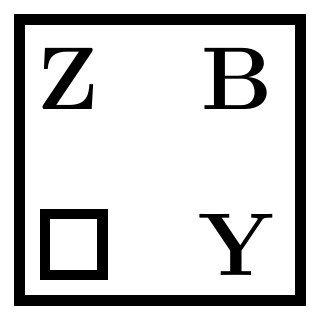
Complete Passage: The ancient civilizations of Mesopotamia, Egypt, and the Indus Valley were among the first to develop complex societies, relying on agriculture as the cornerstone of their economies. In Mesopotamia, the Sumerians created the first known form of writing, 1. called cuneiform, which was inscribed on clay tablets. This form of communication enabled the recording of important events, laws, and even trade transactions, 2. establishing the foundation for future generations to understand their past. In Ancient Egypt, the great pyramids stand as a testament to the engineering prowess of the civilization. The construction of these monumental structures required careful planning and 3. a skilled workforce. However, much of the wealth generated through agriculture and conquest was concentrated in the hands of the elite, which led to the emergence of 4. disparity between the ruling class and the common people. Similarly, the Indus Valley Civilization, known for its advanced urban planning, fell into decline for reasons that remain 5. unclear. Some scholars argue that environmental factors, such as shifts in river patterns, may have played a significant role in the civilization's collapse. Nevertheless, the achievements of these early societies paved the way for future innovations in science, technology, and governance.

Additional Information

  • Calling: This is a present participle and would imply the writing system itself is performing the action of calling something, which is logically incorrect.
  • Call: This is a base verb form and cannot function as an adjective or a reduced relative clause without a subject or auxiliary verb.
  • Have called: This is a perfect tense form that requires a subject and does not fit the grammatical structure of the sentence modifying the noun 'writing'.

Question 77

Based on Passage: View directions & passage

Complete the passage by filling in the blanks with the most appropriate words.

Choose the word that best fits blank (B).

  1. AOption (a)

    establishing

  2. BOption (b)

    demolition

  3. COption (c)

    analyzing

  4. DOption (d)

    strengthening

View answer & explanation

Correct answer

Answer: (a)A.

establishing

Why this answer is correct

The correct answer is 'establishing'.

Key Points

  • The sentence discusses how the recording of events and laws through cuneiform writing served as a base for future generations.
  • The appropriate word should indicate the act of setting up or creating a base for something.
  • 'Establishing' means to set up on a firm or permanent basis. It perfectly fits the phrase 'establishing the foundation', which implies creating the groundwork for future knowledge.
  • Other options like 'demolition' (destruction), 'analyzing' (examining), and 'strengthening' (making stronger) do not fit as logically as creating a starting point (foundation).

Therefore, the correct answer is 'Option 1'.

Complete Passage: The ancient civilizations of Mesopotamia, Egypt, and the Indus Valley were among the first to develop complex societies, relying on agriculture as the cornerstone of their economies. In Mesopotamia, the Sumerians created the first known form of writing, 1. called cuneiform, which was inscribed on clay tablets. This form of communication enabled the recording of important events, laws, and even trade transactions, 2. establishing the foundation for future generations to understand their past. In Ancient Egypt, the great pyramids stand as a testament to the engineering prowess of the civilization. The construction of these monumental structures required careful planning and 3. a skilled workforce. However, much of the wealth generated through agriculture and conquest was concentrated in the hands of the elite, which led to the emergence of 4. disparity between the ruling class and the common people. Similarly, the Indus Valley Civilization, known for its advanced urban planning, fell into decline for reasons that remain 5. unclear. Some scholars argue that environmental factors, such as shifts in river patterns, may have played a significant role in the civilization's collapse. Nevertheless, the achievements of these early societies paved the way for future innovations in science, technology, and governance.

Additional Information

  • Demolition: The action or process of demolishing or being demolished (e.g., pulling down a building).
  • Analyzing: To examine something methodically and in detail.
  • Strengthening: To make or become stronger.

Question 78

Based on Passage: View directions & passage

Complete the passage by filling in the blanks with the most appropriate words.

Choose the appropriate article for blank (C).

  1. AOption (a)

    the

  2. BOption (b)

    an

  3. COption (c)

    a

  4. DOption (d)

    No article

View answer & explanation

Correct answer

Answer: (c)C.

a

Why this answer is correct

The correct answer is 'a'.

Key Points

  • The sentence requires an article to precede the noun phrase 'skilled workforce'.
  • The noun 'workforce' is a singular countable noun in this context, and it is being described generally as a requirement for the construction.
  • The adjective 'skilled' begins with a consonant sound (/s/).
  • The indefinite article 'a' is used before words that begin with a consonant sound, while 'an' is used before words that begin with a vowel sound.
  • Therefore, 'a' is the grammatically correct choice to complete the phrase 'a skilled workforce'.

Therefore, the correct answer is 'Option 3'.

Complete Passage: The ancient civilizations of Mesopotamia, Egypt, and the Indus Valley were among the first to develop complex societies, relying on agriculture as the cornerstone of their economies. In Mesopotamia, the Sumerians created the first known form of writing, 1. called cuneiform, which was inscribed on clay tablets. This form of communication enabled the recording of important events, laws, and even trade transactions, 2. establishing the foundation for future generations to understand their past. In Ancient Egypt, the great pyramids stand as a testament to the engineering prowess of the civilization. The construction of these monumental structures required careful planning and 3. a skilled workforce. However, much of the wealth generated through agriculture and conquest was concentrated in the hands of the elite, which led to the emergence of 4. disparity between the ruling class and the common people. Similarly, the Indus Valley Civilization, known for its advanced urban planning, fell into decline for reasons that remain 5. unclear. Some scholars argue that environmental factors, such as shifts in river patterns, may have played a significant role in the civilization's collapse. Nevertheless, the achievements of these early societies paved the way for future innovations in science, technology, and governance.

Additional Information

  • An: Used before singular countable nouns starting with a vowel sound (e.g., an engineer, an ancient city).
  • The: The definite article is used when referring to a specific noun already mentioned or known to the reader (e.g., the workforce that built the Giza pyramid). In the target sentence, the requirement is stated more generally.
  • No article: Typically used for plural nouns or uncountable nouns when speaking in generalities, but 'workforce' here functions as a specific singular unit.

Question 79

Based on Passage: View directions & passage

Complete the passage by filling in the blanks with the most appropriate words.

Choose the word that fills in blank (D) and best describes the inequality between different social classes.

  1. AOption (a)

    harmony

  2. BOption (b)

    disparity

  3. COption (c)

    equality

  4. DOption (d)

    concord

View answer & explanation

Correct answer

Answer: (b)B.

disparity

Why this answer is correct

The correct answer is 'disparity'.

Key Points

  • The passage discusses the social structures and economic foundations of early civilizations like Mesopotamia, Ancient Egypt, and the Indus Valley.
  • The sentence indicates that wealth was concentrated in the hands of the elite, which naturally creates a gap or inequality between social classes.
  • 'Disparity' is the most suitable noun as it refers to a great difference or imbalance, especially regarding wealth and status.
  • Other options like 'harmony', 'equality', and 'concord' represent balance or agreement, which contradicts the context of wealth being concentrated in only one group.

Therefore, the correct answer is 'Option 2'.

Complete Passage: The ancient civilizations of Mesopotamia, Egypt, and the Indus Valley were among the first to develop complex societies, relying on agriculture as the cornerstone of their economies. In Mesopotamia, the Sumerians created the first known form of writing, 1. called cuneiform, which was inscribed on clay tablets. This form of communication enabled the recording of important events, laws, and even trade transactions, 2. establishing the foundation for future generations to understand their past. In Ancient Egypt, the great pyramids stand as a testament to the engineering prowess of the civilization. The construction of these monumental structures required careful planning and 3. a skilled workforce. However, much of the wealth generated through agriculture and conquest was concentrated in the hands of the elite, which led to the emergence of 4. disparity between the ruling class and the common people. Similarly, the Indus Valley Civilization, known for its advanced urban planning, fell into decline for reasons that remain 5. unclear. Some scholars argue that environmental factors, such as shifts in river patterns, may have played a significant role in the civilization's collapse. Nevertheless, the achievements of these early societies paved the way for future innovations in science, technology, and governance.

Additional Information

  • Harmony: A state of agreement or peaceful coexistence, which does not fit the context of social inequality.
  • Equality: The state of being equal, especially in status, rights, and opportunities; the passage describes the opposite of this.
  • Concord: Agreement or harmony between people or groups, which is inappropriate for describing a wealth gap.

Question 80

Based on Passage: View directions & passage

Complete the passage by filling in the blanks with the most appropriate words.

Choose the correct word to fill in blank (E) and complete the sentence.

  1. AOption (a)

    clear

  2. BOption (b)

    cleared

  3. COption (c)

    unclear

  4. DOption (d)

    uncleared

View answer & explanation

Correct answer

Answer: (c)C.

unclear

Why this answer is correct

The correct answer is 'unclear'.

Key Points

  • The sentence discusses the decline of the Indus Valley Civilization and the historical uncertainty surrounding it.
  • The word 'remain' suggests a continuing state or condition. In historical contexts, when the exact cause of an event is not definitively known or agreed upon by experts, it is said to be 'unclear'.
  • The context provided by the next sentence, 'Some scholars argue...', indicates that there is no singular, proven reason, but rather various theories, which confirms the reasons are currently uncertain or vague.
  • 'Unclear' means not easy to understand, not certain, or not definite, which perfectly fits the context of historical mysteries.

Therefore, the correct answer is 'Option 3'.

Complete Passage: The ancient civilizations of Mesopotamia, Egypt, and the Indus Valley were among the first to develop complex societies, relying on agriculture as the cornerstone of their economies. In Mesopotamia, the Sumerians created the first known form of writing, 1. called cuneiform, which was inscribed on clay tablets. This form of communication enabled the recording of important events, laws, and even trade transactions, 2. establishing the foundation for future generations to understand their past. In Ancient Egypt, the great pyramids stand as a testament to the engineering prowess of the civilization. The construction of these monumental structures required careful planning and 3. a skilled workforce. However, much of the wealth generated through agriculture and conquest was concentrated in the hands of the elite, which led to the emergence of 4. disparity between the ruling class and the common people. Similarly, the Indus Valley Civilization, known for its advanced urban planning, fell into decline for reasons that remain 5. unclear. Some scholars argue that environmental factors, such as shifts in river patterns, may have played a significant role in the civilization's collapse. Nevertheless, the achievements of these early societies paved the way for future innovations in science, technology, and governance.

Additional Information

  • 'Clear' (स्पष्ट): Means easy to perceive or understand; this would imply the cause of the decline is definitely known.
  • 'Cleared' (साफ किया हुआ): Refers to removing obstacles or having been authorized/passed; it does not fit the context of historical reasons.
  • 'Uncleared' (अशोधित/जो साफ न किया गया हो): Usually refers to items not removed or debts not paid; it is irrelevant to describing the nature of historical knowledge.

हिंदी (20 questions)

Question 81

निम्न में से शुद्ध वर्तनी का चयन करें।

  1. AOption (a)

    साप्ताहिक

  2. BOption (b)

    सप्ताहिक

  3. COption (c)

    सापताहिक

  4. DOption (d)

    शाप्ताहिक

View answer & explanation

Correct answer

Answer: (a)A.

साप्ताहिक

Why this answer is correct

शुद्ध वर्तनी वाला शब्द है - साप्ताहिक

Key Points

  • विकल्पों में साप्ताहिक शब्द की वर्तनी व्याकरणिक रूप से शुद्ध है।
  • यह शब्द 'सप्ताह' (मूल शब्द) और 'इक' (प्रत्यय) के योग से बना है।
  • हिंदी व्याकरण के नियमानुसार, जब किसी शब्द में 'इक' प्रत्यय जुड़ता है, तो उस शब्द के प्रथम वर्ण के स्वर में वृद्धि हो जाती है (अ का आ, इ/ई का ऐ, उ/ऊ का औ)।
  • यहाँ 'सप्ताह' के पहले वर्ण 'स' में निहित 'अ' स्वर 'आ' में बदल गया है, जिससे शब्द 'साप्ताहिक' बना।
  • साप्ताहिक का अर्थ होता है - 'सात दिनों (एक सप्ताह) में एक बार होने वाला'।

Additional Information

कुछ अशुद्ध शब्द और शुद्ध शब्द -

अशुद्धशुद्ध
समाजिकसामाजिक
संसारिकसांसारिक
प्रमाणिकप्रामाणिक
व्यवहारिकव्यावहारिक
परलोकिकपारलौकिक
अहारआहार
आधिनअधीन
अनाधिकारअनधिकार
उज्वलउज्ज्वल
आशिर्वादआशीर्वाद

Question 82

नीचे दिए गए विकल्पों में से शुद्ध शब्द कौन-सा है?

  1. AOption (a)

    सांसारिक

  2. BOption (b)

    संसारिक

  3. COption (c)

    संसारीक

  4. DOption (d)

    सांसारीक

View answer & explanation

Correct answer

Answer: (a)A.

सांसारिक

Why this answer is correct

शुद्ध शब्द है - सांसारिक

Key Points

  • दिए गए विकल्पों में शुद्ध वर्तनी वाला शब्द 'सांसारिक' है।
  • यह शब्द 'संसार' मूल शब्द में 'इक' प्रत्यय के जुड़ने से बना है।
  • नियम: जब किसी शब्द के अंत में 'इक' प्रत्यय जुड़ता है, तो शब्द के प्रथम वर्ण के स्वर में वृद्धि हो जाती है (जैसे: 'अ' का 'आ' हो जाना)।
  • अतः संसार + इक = सांसारिक सही रूप है।
  • वर्तनी: किसी शब्द में आए हुए अक्षरों को उसी क्रम में लिखना या बोलना वर्तनी कहलाता है।

Additional Information

कुछ अशुद्ध शब्द और शुद्ध शब्द -

अशुद्धशुद्ध
सप्ताहिकसाप्ताहिक
प्रमाणिकप्रामाणिक
अध्यात्मिकआध्यात्मिक
व्यवहारिकव्यावहारिक
सामाजीकसामाजिक
परलौकिकपारलौकिक
इतिहासिकऐतिहासिक
आशिर्वादआशीर्वाद
कवियत्रीकवयित्री
उज्वलउज्ज्वल

Question 83

नीचे दिए गए विकल्पों में से शुद्ध शब्द कौन-सा है?

  1. AOption (a)

    अनधिकार

  2. BOption (b)

    आनादीधिकार

  3. COption (c)

    अनादिधिकार

  4. DOption (d)

    अनादिधिकर

View answer & explanation

Correct answer

Answer: (a)A.

अनधिकार

Why this answer is correct

शुद्ध शब्द है - अनधिकार

Key Points

  • विकल्पों में 'अनधिकार' शब्द की वर्तनी पूर्णतः शुद्ध है।
  • यह शब्द 'अन्' (उपसर्ग) और 'अधिकार' (मूल शब्द) के योग से बना है। संधि के नियमानुसार अन् + अधिकार = अनधिकार होता है।
  • इसका अर्थ होता है - अधिकारहीन, जिस पर किसी का हक न हो या अनधिकृत।
  • अक्सर लोग उच्चारण दोष के कारण इसे 'अनाधिकार' लिख देते हैं, जो कि व्याकरणिक रूप से अशुद्ध है क्योंकि 'अन्' में 'अ' मिलने पर 'न' बनता है, 'ना' नहीं।

Additional Information

कुछ अशुद्ध शब्द और शुद्ध शब्द -

अशुद्धशुद्ध
अतिश्योक्तिअतिशयोक्ति
प्रदर्शिनीप्रदर्शनी
द्वारिकाद्वारका
आर्शीवादआशीर्वाद
उज्वलउज्ज्वल
निरोगनीरोग
पूज्यनीयपूजनीय
श्रीमतीश्रीमती
चिन्हचिह्न
कैलाशकैलास

Question 84

निम्नलिखित में से कौन-सी एक वर्तनी शुद्ध है?

  1. AOption (a)

    बीबी

  2. BOption (b)

    बीवी

  3. COption (c)

    बिबी

  4. DOption (d)

    विवी

View answer & explanation

Correct answer

Answer: (b)B.

बीवी

Why this answer is correct

शुद्ध वर्तनी वाला शब्द है - बीवी

Key Points

  • दिए गए विकल्पों में 'बीवी' शब्द की वर्तनी पूर्णतः शुद्ध है।
  • यह मूल रूप से फारसी भाषा का शब्द है, जिसका अर्थ 'पत्नी' या 'अर्धांगिनी' होता है।
  • हिंदी वर्तनी में 'ब' और 'व' के प्रयोग में सावधानी बरतनी चाहिए, क्योंकि इनके गलत प्रयोग से शब्द अशुद्ध हो जाता है।
  • लिखते समय शब्दों के वर्णों का उसी क्रम में प्रयोग करना जिस क्रम में वे उच्चारित होते हैं, वर्तनी कहलाती है।

Additional Information

कुछ अशुद्ध शब्द और शुद्ध शब्द -

अशुद्धशुद्ध
अनाधिकारअनधिकार
कालीदासकालिदास
द्वारिकाद्वारका
पूज्यनीयपूजनीय
अंताक्षरीअंत्याक्षरी
उपरोक्तउपर्युक्त
ज्योत्सनाज्योत्स्ना
आर्शीवादआशीर्वाद
उज्जवलउज्ज्वल
कवियित्रीकवयित्री

Question 85

निम्नलिखित में से कौन-सा एक उपयुक्त हिंदी पारिभाषिक शब्द 'Surveillance' के लिए होगा?

  1. AOption (a)

    अनुसरण

  2. BOption (b)

    निगरानी

  3. COption (c)

    पर्यवेक्षण

  4. DOption (d)

    नियंत्रण

View answer & explanation

Correct answer

Answer: (b)B.

निगरानी

Why this answer is correct

सही उत्तर है- निगरानी

Key Points

  • अंग्रेजी शब्द 'Surveillance' का सबसे सटीक हिंदी पारिभाषिक अर्थ 'निगरानी' होता है।
  • जब किसी व्यक्ति, स्थान या वस्तु की गतिविधियों पर पैनी नजर रखी जाती है, विशेषकर सुरक्षा या जांच के उद्देश्य से, तो उसे निगरानी (Surveillance) कहा जाता है।
  • उदाहरण के तौर पर: 'The suspect is under police surveillance.' (संदिग्ध पुलिस की निगरानी में है।)
  • तकनीकी संदर्भ में: 'CCTV cameras are used for surveillance.' (CCTV कैमरों का उपयोग निगरानी के लिए किया जाता है।)

अन्य विकल्प -

शब्द/विकल्पहिंदी अर्थअंग्रेजी शब्दावली
अनुसरणपीछे चलना या अनुकरण करनाFollowing/Compliance
पर्यवेक्षणऊपर से देख-रेख या निरीक्षण करनाSupervision
नियंत्रणअधिकार या वश में रखनाControl

Important Points 

 पारिभाषिक शब्दावली का महत्त्व-

  1. प्रशासनिक स्पष्टता: सरकारी और कानूनी कार्यों में शब्दों का एक निश्चित अर्थ होना अनिवार्य है ताकि भ्रम की स्थिति न रहे।
  2. सटीकता: 'Surveillance' और 'Supervision' दोनों का अर्थ सामान्य रूप से 'देखना' लग सकता है, लेकिन प्रशासनिक दृष्टि से दोनों के उद्देश्य भिन्न होते हैं।
  3. अनुवाद: आधिकारिक दस्तावेजों के अनुवाद में मानक पारिभाषिक शब्दावली का ही प्रयोग किया जाता है।

Additional Information

English Termहिन्दी शब्द
Investigationजांच/अन्वेषण
Intelligenceखुफिया/सूचना
Observationअवलोकन
Auditअंकेक्षण
Notificationअधिसूचना
Gazetteराजपत्र
Resolutionसंकल्प
Disciplineअनुशासन

Question 86

'अस्वस्थ ' का विलोम शब्द क्या होगा?

  1. AOption (a)

    स्वस्थ

  2. BOption (b)

    स्वार्थ

  3. COption (c)

    सुगंध

  4. DOption (d)

    सुकाम

View answer & explanation

Correct answer

Answer: (a)A.

स्वस्थ

Why this answer is correct

अस्वस्थ का सही उत्तर है: स्वस्थ

Key Points

  • 'अस्वस्थ' शब्द का विलोम शब्द 'स्वस्थ' होगा।
  • 'अस्वस्थ' शब्द का अर्थ है — जो निरोग न हो या बीमार हो।
  • 'स्वस्थ' शब्द का अर्थ है — जो रोगरहित या तंदुरुस्त हो।
  • विलोम - जो शब्द किसी एक शब्द के विपरीत अर्थ को व्यक्त करते हैं, वे विलोम शब्द कहलाते हैं। इन्हें विपरीतार्थक शब्द भी कहा जाता है।

अन्य विकल्प-

शब्दविलोम
स्वार्थपरमार्थ
सुगंधदुर्गंध
सुकामकुकाम

Additional Information

कुछ अन्य महत्वपूर्ण विलोम शब्द -

शब्दविलोम
अमृतविष
अंधकारप्रकाश
आदानप्रदान
उर्वरऊसर
एकताअनेकता
कटुमधु
जयपराजय
तरलठोस
नूतनपुरातन
प्रत्यक्षपरोक्ष

Question 87

'आजाद ' का विलोम शब्द क्या होगा?

  1. AOption (a)

    गुलाम

  2. BOption (b)

    स्वतंत्र

  3. COption (c)

    स्वाधीन

  4. DOption (d)

    अनित्य

View answer & explanation

Correct answer

Answer: (a)A.

गुलाम

Why this answer is correct

'आजाद' का सही उत्तर है: गुलाम

Key Points

  • 'आजाद' शब्द का सही विलोम शब्द 'गुलाम' है।
  • 'आजाद' शब्द का अर्थ है — स्वतंत्र या जिस पर किसी का बंधन न हो।
  • 'गुलाम' शब्द का अर्थ है — परतंत्र, दास या जो किसी अन्य के अधीन हो।
  • 'स्वतंत्र' का विलोम शब्द 'परतंत्र' होता है।
  • 'स्वाधीन' का विलोम शब्द 'पराधीन' होता है।
  • विलोम शब्द - जो शब्द परस्पर विपरीत अर्थ प्रकट करते हैं, उन्हें विलोम या विपरीतार्थक शब्द कहते हैं।

अन्य विकल्प-

शब्दविलोम
स्वतंत्रपरतंत्र
स्वाधीनपराधीन
अनित्यनित्य

Additional Information

कुछ अन्य महत्वपूर्ण विलोम शब्द -

शब्दविलोम
आशानिराशा
आदानप्रदान
उत्थानपतन
जंगमस्थावर
आस्तिकनास्तिक
सगुणनिर्गुण
उर्वरऊसर
हर्षशोक
अमृतविष
क्षणिकशाश्वत

Question 88

सुरक्षा कर्मी का कार्यक्षेत्र क्या कहलाता है?

  1. AOption (a)

    आदेश पत्र

  2. BOption (b)

    सेवा पुस्तिका

  3. COption (c)

    तैनाती स्थल

  4. DOption (d)

    नोटिस बोर्ड

View answer & explanation

Correct answer

Answer: (c)C.

तैनाती स्थल

Why this answer is correct

‘सुरक्षा कर्मी का कार्यक्षेत्र’ वाक्यांश के लिए उपयुक्त शब्द है - तैनाती स्थल।

Key Points

  • ‘सुरक्षा कर्मी का कार्यक्षेत्र’ वाक्यांश के लिए सर्वाधिक उपयुक्त एक शब्द ‘तैनाती स्थल’ है।
  • ‘तैनाती स्थल’ का अर्थ है— वह विशिष्ट स्थान जहाँ किसी कर्मचारी या सुरक्षा बल को सेवा या कार्य करने हेतु नियुक्त (Post) किया गया हो।
  • जब किसी बड़े वाक्यांश, विचार या भाव को संक्षिप्त रूप में एक सार्थक शब्द द्वारा प्रकट किया जाता है, तो उसे ‘वाक्यांश के लिए एक शब्द’ कहते हैं।
  • हिंदी भाषा में इसे ‘कार्यक्षेत्र’ या ‘ड्यूटी स्थल’ के पर्याय के रूप में भी समझा जा सकता है।

अन्य विकल्प-

वाक्यांशशब्द
वह पत्र जिसमें किसी प्रकार की आज्ञा या निर्देश दिया गया होआदेश पत्र
वह रजिस्टर जिसमें कर्मचारी की सेवा का पूरा विवरण दर्ज होसेवा पुस्तिका
वह स्थान या पट जहाँ सूचनाएँ लगाई जाती हैंनोटिस बोर्ड

Additional Information

कुछ महत्वपूर्ण वाक्यांश के लिए एक शब्द -

वाक्यांशएक शब्द
जहाँ सेना या सैनिक निवास करते हैंछावनी
वह स्थान जहाँ पुस्तकें संग्रह की जाती हैंपुस्तकालय
वह स्थान जहाँ औषधि (दवा) मिलती हैऔषधालय
जहाँ नाटक का मंचन किया जाता हैरंगमंच
वह स्थान जहाँ घोड़ों को बाँधा जाता हैअस्तबल
जो सब कुछ जानने वाला होसर्वज्ञ
उपकार को न मानने वालाकृतघ्न
जिसका कोई शत्रु न जन्मा होअजातशत्रु
जो आँखों के सामने होप्रत्यक्ष

Question 89

अधिकारी द्वारा मौखिक निर्देश क्या होते हैं?

  1. AOption (a)

    लिखित आदेश

  2. BOption (b)

    पूर्व सूचना

  3. COption (c)

    मौखिक आदेश

  4. DOption (d)

    सिफारिश

View answer & explanation

Correct answer

Answer: (c)C.

मौखिक आदेश

Why this answer is correct

सही उत्तर है- मौखिक आदेश

Key Points

  • प्रशासनिक शब्दावली में, जब कोई अधिकारी अपने अधीनस्थ को किसी कार्य को करने के लिए लिखित रूप के बजाय बोलकर निर्देश देता है, तो उसे मौखिक आदेश या मौखिक निर्देश कहा जाता है।
  • मौखिक निर्देश आमतौर पर तब दिए जाते हैं जब समय का अभाव हो या कार्य अति आवश्यक प्रकृति का हो।
  • प्रशासनिक नियमों के अनुसार, गंभीर मामलों में दिए गए मौखिक निर्देशों की बाद में लिखित पुष्टि (Written Confirmation) अनिवार्य होती है ताकि उत्तरदायित्व निर्धारित किया जा सके।
  • इसका मुख्य उद्देश्य त्वरित कार्रवाई सुनिश्चित करना और कार्य में आने वाली अनावश्यक देरी को कम करना होता है।

अन्य विकल्प -

शब्द/विकल्पविग्रह/अर्थ
लिखित आदेशवह निर्देश जो दस्तावेजी प्रमाण के रूप में कागज़ पर दिया जाए।
पूर्व सूचनाकिसी कार्य के होने से पहले दी जाने वाली जानकारी।
सिफारिशकिसी के पक्ष में किया गया अनुरोध या सुझाव।

Important Points 

 प्रशासनिक निर्देशों के प्रमुख प्रकार-

  1. स्थायी आदेश (Standing Orders): जो लंबे समय तक प्रभावी रहते हैं।
  2. विशिष्ट निर्देश (Specific Instructions): जो किसी विशेष कार्य या घटना के लिए दिए जाते हैं।
  3. विभागीय निर्देश (Departmental Instructions): जो विभाग के आंतरिक कामकाज के लिए जारी किए जाते हैं।

Additional Information

English Termहिन्दी शब्द
Instructionनिर्देश
Orderआदेश
Complianceअनुपालन
Subordinateअधीनस्थ
Authorityप्राधिकारी

Question 90

"सामरिक योजना" किस उद्देश्य से बनाई जाती है?

  1. AOption (a)

    भाषण देने के लिए

  2. BOption (b)

    किसी आपरेशन की योजना बनाने के लिए

  3. COption (c)

    प्रतियोगिता के लिए

  4. DOption (d)

    निर्माण कार्य के लिए

View answer & explanation

Correct answer

Answer: (b)B.

किसी आपरेशन की योजना बनाने के लिए

Why this answer is correct

सही उत्तर है- किसी आपरेशन की योजना बनाने के लिए

Key Points

  • सामरिक योजना (Strategic/Tactical Plan) का मुख्य उद्देश्य किसी विशेष आपरेशन या अभियान को सफलतापूर्वक पूरा करने के लिए एक व्यवस्थित रूपरेखा तैयार करना है।
  • यह शब्द मुख्य रूप से सैन्य विज्ञान और प्रबंधन से जुड़ा है, जहाँ किसी बड़े लक्ष्य को प्राप्त करने के लिए संसाधनों का सही आवंटन किया जाता है।
  • सामरिक योजना में जोखिम का आकलन, संसाधनों का प्रबंधन और समय सीमा का विशेष ध्यान रखा जाता है।
  • उदाहरण के तौर पर: किसी आपदा राहत कार्य या सैन्य मिशन को अंजाम देने से पहले जो विस्तृत योजना बनाई जाती है, उसे सामरिक योजना कहा जाता है।

अन्य विकल्प -

शब्द/विकल्पअर्थ/उद्देश्यअंग्रेजी शब्दावली
भाषणविचारों की मौखिक अभिव्यक्तिSpeech/Oratory
प्रतियोगिताश्रेष्ठता सिद्ध करने हेतु स्पर्धाCompetition
निर्माण कार्यकिसी भौतिक ढांचे का सृजनConstruction

Important Points 

 सामरिक योजना की विशेषताएं-

  1. दीर्घकालिक लक्ष्य: यह भविष्य के दूरगामी परिणामों को ध्यान में रखकर बनाई जाती है।
  2. संसाधन अनुकूलन: उपलब्ध जनशक्ति और सामग्री का इष्टतम उपयोग सुनिश्चित करना।
  3. लचीलापन: बदलती परिस्थितियों के अनुसार योजना में बदलाव की गुंजाइश रखना।
  4. प्रतिस्पर्धी लाभ: शत्रुओं या प्रतिद्वंद्वियों पर बढ़त हासिल करने के लिए रणनीति तैयार करना।

Additional Information

English Termहिन्दी शब्द
Strategyरणनीति
Tacticsकार्यनीति / युद्ध-कौशल
Logisticsसैन्य-संचालन / रसद
Deploymentतैनाती
Missionलक्ष्य / ध्येय
Executionकार्यान्वयन

Question 91

"सुरक्षा जोखिम आकलन" क्यों किया जाता है?

  1. AOption (a)

    त्योहारों की योजना के लिए

  2. BOption (b)

    संभावित खतरों को समझने और सुरक्षा रणनीति बनाने के लिए

  3. COption (c)

    चित्रकारी के लिए

  4. DOption (d)

    खेल प्रतियोगिता के लिए

View answer & explanation

Correct answer

Answer: (b)B.

संभावित खतरों को समझने और सुरक्षा रणनीति बनाने के लिए

Why this answer is correct

सही उत्तर है- संभावित खतरों को समझने और सुरक्षा रणनीति बनाने के लिए

Key Points

  • सुरक्षा जोखिम आकलन (Security Risk Assessment) एक व्यवस्थित प्रक्रिया है जिसका उपयोग किसी संगठन या स्थान की सुरक्षा स्थिति का मूल्यांकन करने के लिए किया जाता है।
  • इसका मुख्य उद्देश्य संभावित खतरों (Threats) की पहचान करना है जो किसी संपत्ति, व्यक्ति या सूचना को नुकसान पहुँचा सकते हैं।
  • यह प्रक्रिया सुरक्षा में मौजूद भेद्यताओं (Vulnerabilities) या कमियों को उजागर करती है, ताकि उन्हें समय रहते ठीक किया जा सके।
  • आकलन के परिणामों के आधार पर, एक प्रभावी सुरक्षा रणनीति तैयार की जाती है, जिसमें जोखिमों को कम करने के लिए निवारक उपाय शामिल होते हैं।
  • यह संसाधनों के सही आवंटन और जोखिम प्रबंधन (Risk Management) में निर्णय लेने के लिए एक आधार प्रदान करता है।

अन्य विकल्पों का विश्लेषण -

विकल्पविवरण
त्योहारों की योजनायह सांस्कृतिक प्रबंधन या इवेंट प्लानिंग का हिस्सा है, सुरक्षा आकलन का प्राथमिक उद्देश्य नहीं।
चित्रकारीयह एक रचनात्मक कला है जिसका सुरक्षा जोखिमों से कोई सीधा संबंध नहीं है।
खेल प्रतियोगितायह एथलेटिक आयोजन से संबंधित है। हालांकि सुरक्षा वहां भी जरूरी है, लेकिन यह आकलन का मूल कारण नहीं है।

Important Points 

 सुरक्षा जोखिम आकलन के मुख्य चरण:

  1. परिसंपत्ति की पहचान: उन मूल्यवान चीजों (डेटा, लोग, उपकरण) की पहचान करना जिन्हें सुरक्षित करना है।
  2. खतरे का विश्लेषण: संभावित प्राकृतिक, तकनीकी या मानवीय खतरों का पता लगाना।
  3. भेद्यता मूल्यांकन: सुरक्षा प्रणाली में कमजोर बिंदुओं की जांच करना।
  4. जोखिम का स्तर: खतरे की संभावना और उसके प्रभाव के आधार पर जोखिम का स्तर तय करना।

Additional Information

English Termहिन्दी अर्थ
Threat Assessmentखतरे का आकलन
Vulnerabilityभेद्यता/कमजोरी
Mitigationशमन/कमी करना
Asset Protectionसंपत्ति सुरक्षा
Risk Mitigationजोखिम न्यूनीकरण

Question 92

नीचे दिए गए शब्द की सही पारिभाषिक शब्दावली क्या होगाः

Objection

  1. AOption (a)

    आपत्ति

  2. BOption (b)

    स्वीकार

  3. COption (c)

    अभद्रता

  4. DOption (d)

    अनुशासन

View answer & explanation

Correct answer

Answer: (a)A.

आपत्ति

Why this answer is correct

सही उत्तर है- आपत्ति

Key Points

  • प्रशासनिक शब्दावली में अंग्रेजी शब्द 'Objection' का सही हिंदी अर्थ 'आपत्ति' होता है।
  • जब किसी कानूनी प्रक्रिया, निर्णय या कथन के प्रति असहमति या विरोध दर्ज किया जाता है, तो उसे आपत्ति कहा जाता है।
  • उदाहरण के तौर पर: 'The lawyer raised an objection in the court.' (वकील ने अदालत में आपत्ति जताई।)
  • सरकारी कामकाज में किसी फाइल या प्रस्ताव पर होने वाले एतराज को भी आपत्ति की श्रेणी में रखा जाता है।

अन्य विकल्प -

शब्द/विकल्पअर्थअंग्रेजी शब्दावली
स्वीकारकिसी बात को मान लेनाAcceptance
अभद्रताअशिष्ट व्यवहारIndecency/Rudeness
अनुशासननियमों का पालनDiscipline

Important Points 

 पारिभाषिक शब्दावली का महत्व-

  1. स्पष्टता: पारिभाषिक शब्द किसी विशेष क्षेत्र (जैसे विधि या प्रशासन) में निश्चित अर्थ प्रदान करते हैं।
  2. एकरूपता: सरकारी दस्तावेजों और कार्यालयी पत्रों में एक ही शब्द का समान अर्थ में प्रयोग सुनिश्चित होता है।

Additional Information

English Termहिन्दी शब्द
Agreementअनुबंध/सहमति
Notificationअधिसूचना
Resolutionसंकल्प/प्रस्ताव
Minutesकार्यवृत्त
Amendmentसंशोधन
Quorumगणपूर्ति
Seniorityवरिष्ठता
Voucherप्रमाणक

Question 93

पुलिस द्वारा किसी व्यक्ति को कानून के अनुसार पकड़ना क्या कहलाता है?

  1. AOption (a)

    हिरासत

  2. BOption (b)

    गिरफ्तारी

  3. COption (c)

    रोकथाम

  4. DOption (d)

    नियंत्रण

View answer & explanation

Correct answer

Answer: (b)B.

गिरफ्तारी

Why this answer is correct

‘पुलिस द्वारा किसी व्यक्ति को कानून के अनुसार पकड़ना’ वाक्यांश के लिए सार्थक शब्द है - गिरफ्तारी।

Key Points

  • ‘पुलिस द्वारा किसी व्यक्ति को कानून के अनुसार पकड़ना’ वाक्यांश के लिए सही शब्द ‘गिरफ्तारी’ है।
  • ‘गिरफ्तारी’ का अर्थ है — किसी अपराधिक मामले में संलिप्त होने के संदेह या आरोप में कानूनी रूप से किसी व्यक्ति की स्वतंत्रता को प्रतिबंधित कर उसे पकड़ना।
  • जब किसी बड़े वाक्यांश, विचार या कथन को संक्षिप्त रूप में एक सार्थक शब्द द्वारा व्यक्त किया जाता है, तो उसे ‘वाक्यांश के लिए एक शब्द’ कहते हैं। इससे भाषा प्रभावशाली और संक्षिप्त बनती है।
  • कानूनी प्रक्रिया में गिरफ्तारी के पश्चात ही व्यक्ति को न्यायालय के समक्ष प्रस्तुत किया जाता है।

अन्य विकल्प-

वाक्यांशशब्द
किसी व्यक्ति को अपनी निगरानी या अभिरक्षा में रखनाहिरासत
किसी अनुचित कार्य या घटना को होने से रोकनारोकथाम
किसी को अपने वश या अधिकार में रखने की क्रियानियंत्रण

Additional Information

कुछ महत्वपूर्ण वाक्यांश के लिए एक शब्द -

वाक्यांशएक शब्द
जो कानून के विरुद्ध होअवैध
जिस पर अभियोग लगाया गया होअभियुक्त
जो मुकदमा दायर करता हैवादी
वह जो किसी मामले की गवाही देसाक्षी
जिसे समाज से निकाल दिया गया होबहिष्कृत
जिसने अपराध किया होअपराधी
जो न्याय करने वाला होन्यायाधीश
राजकीय धन जो किसानों की सहायता हेतु दिया जाएतकावी
जो मुकदमा लड़ेमुकदमेबाज

Question 94

पुलिस द्वारा किसी क्षेत्र की स्थिति का निरीक्षण करना क्या कहलाता है?

  1. AOption (a)

    समीक्षा

  2. BOption (b)

    जांच

  3. COption (c)

    सर्वेक्षण

  4. DOption (d)

    निरीक्षण

View answer & explanation

Correct answer

Answer: (d)D.

निरीक्षण

Why this answer is correct

‘पुलिस द्वारा किसी क्षेत्र की स्थिति का निरीक्षण करना’ वाक्यांश के लिए सार्थक शब्द है - निरीक्षण।

Key Points

  • ‘पुलिस द्वारा किसी क्षेत्र की स्थिति का निरीक्षण करना’ वाक्यांश के लिए सबसे उपयुक्त शब्द ‘निरीक्षण’ है।
  • ‘निरीक्षण’ का अर्थ होता है — किसी स्थान, वस्तु या स्थिति को बहुत सावधानीपूर्वक देखना या उसकी जाँच-पड़ताल करना ताकि उसकी वास्तविक स्थिति का पता चल सके।
  • हिंदी व्याकरण में जब किसी विस्तृत विचार या वाक्यांश को संक्षिप्त कर एक शब्द में व्यक्त किया जाता है, तो उसे ‘वाक्यांश के लिए एक शब्द’ कहते हैं।
  • यह भाषा को प्रभावशाली, सटीक और संक्षिप्त बनाने में सहायक होता है।

अन्य विकल्प-

वाक्यांशशब्द
किसी विषय या गुण-दोष का विवेचन करनासमीक्षा
किसी तथ्य या सत्य की गहराई से परखजांच
किसी क्षेत्र का व्यापक अवलोकन या आंकड़े जुटानासर्वेक्षण

Additional Information

कुछ महत्वपूर्ण वाक्यांश के लिए एक शब्द -

वाक्यांशएक शब्द
जिसे टाला न जा सकेअनिवार्य
जो पहले कभी न हुआ होअभूतपूर्व
जानने की इच्छा रखने वालाजिज्ञासु
आकाश को चूमने वालागगनचुम्बी
जिसके आने की तिथि न होअतिथि
जो आँखों के सामने होप्रत्यक्ष
कम खर्च करने वालामितव्ययी
जिसका कोई शत्रु न होअजातशत्रु
जो कम बोलता होमितभाषी

Question 95

पुलिस द्वारा संदिग्ध गतिविधि पर नजर रखना क्या कहलाता है?

  1. AOption (a)

    निगरानी

  2. BOption (b)

    अवलोकन

  3. COption (c)

    सुरक्षा

  4. DOption (d)

    नियंत्रण

View answer & explanation

Correct answer

Answer: (a)A.

निगरानी

Why this answer is correct

‘पुलिस द्वारा संदिग्ध गतिविधि पर नजर रखना’ वाक्यांश के लिए सार्थक शब्द है - निगरानी।

Key Points

  • ‘पुलिस द्वारा संदिग्ध गतिविधि पर नजर रखना’ वाक्यांश के लिए सही शब्द ‘निगरानी’ है।
  • ‘निगरानी’ का अर्थ है — किसी व्यक्ति, वस्तु या स्थान पर सावधानीपूर्वक रखी जाने वाली दृष्टि या देख-रेख, विशेषकर सुरक्षा या जांच के उद्देश्य से।
  • जब किसी विस्तृत वाक्यांश या विचार को एक संक्षिप्त और प्रभावशाली शब्द में व्यक्त किया जाता है, तो उसे ‘वाक्यांश के लिए एक शब्द’ कहा जाता है।
  • इसका प्रयोग भाषा में संक्षिप्तता और स्पष्टता लाने के लिए किया जाता है।

अन्य विकल्प-

वाक्यांशशब्द
किसी वस्तु या तथ्य को ध्यानपूर्वक देखनाअवलोकन
किसी खतरे या हानि से बचाव की स्थितिसुरक्षा
किसी को अपने अधिकार या वश में रखने की क्रियानियंत्रण

Additional Information

कुछ महत्वपूर्ण वाक्यांश के लिए एक शब्द -

वाक्यांशएक शब्द
जिसकी गर्दन सुंदर होसुग्रीव
जो युद्ध में स्थिर रहता होयुधिष्ठिर
जिसे भेदा न जा सकेअभेद्य
पसीने से जन्म लेने वालास्वेदज
जो अंडे से जन्म लेता होअंडज
शरण में आया हुआशरणागत
जिसका कोई सहारा न होअसहाय
जो किए गए उपकार को न मानता होकृतघ्न

बढ़ते शहरीकरण के साथ शहरों की सुरक्षा एक जटिल कार्य हो गया है। भीड़भाड़ वाले इलाकों में आतंकवाद और अपराध की संभावना अधिक रहती है। आधुनिक समय में 'स्मार्ट सिटी' परियोजना के तहत सीसीटीवी (CCTV) कैमरों का नेटवर्क बिछाया गया है। ये कैमरे न केवल अपराधियों को डराने का काम करते हैं, बल्कि अपराध होने की स्थिति में पुलिस को महत्वपूर्ण वीडियो साक्ष्य भी प्रदान करते हैं। इसके साथ ही चेहरा पहचानने वाली तकनीक (फेशियल रिकग्निशन) के माध्यम से संदिग्धों को ट्रैक करना आसान हो गया है। हालांकि, नागरिकों की गोपनीयता (प्राइवेसी) का सम्मान करना भी अनिवार्य है।

उपरोक्त गद्यांश के आधार पर प्रश्न का उत्तर दें:

Question 96

Based on Passage: View directions & passage

शहरी सुरक्षा को क्या चुनौतीपूर्ण बनाता है?

  1. AOption (a)

    हर जगह पेड़ होना

  2. BOption (b)

    बढ़ता शहरीकरण और भीड़भाड़

  3. COption (c)

    सौर ऊर्जा का उपयोग

  4. DOption (d)

    शहरों में सड़कों की कमी

View answer & explanation

Correct answer

Answer: (b)B.

बढ़ता शहरीकरण और भीड़भाड़

Why this answer is correct

इसका सही उत्तर 'बढ़ता शहरीकरण और भीड़भाड़' है।

Key Points

गद्यांश के अनुसार:

  • दिए गए गद्यांश की पहली पंक्ति में स्पष्ट उल्लेख है कि बढ़ते शहरीकरण के साथ शहरों की सुरक्षा एक जटिल कार्य (चुनौतीपूर्ण) हो गया है।
  • गद्यांश यह भी बताता है कि भीड़भाड़ वाले इलाकों में आतंकवाद और अपराध की संभावना अधिक रहती है, जो सुरक्षा व्यवस्था को और कठिन बना देती है।
  • अतः, शहरी सुरक्षा को चुनौतीपूर्ण बनाने वाले मुख्य कारक बढ़ता शहरीकरण और भीड़भाड़ हैं।

Additional Information अन्य विकल्पों का विश्लेषण:

हर जगह पेड़ होना -

  • यह पर्यावरण की दृष्टि से सकारात्मक है और सुरक्षा के लिए कोई बड़ी चुनौती पैदा नहीं करता है।

सौर ऊर्जा का उपयोग -

  • सौर ऊर्जा एक नवीकरणीय ऊर्जा स्रोत है। इसका सुरक्षा की जटिलता या अपराध दर से कोई सीधा संबंध नहीं है।

शहरों में सड़कों की कमी -

  • यह यातायात और परिवहन से संबंधित समस्या है, लेकिन गद्यांश के संदर्भ में इसे सुरक्षा की मुख्य चुनौती के रूप में नहीं बताया गया है।

Question 97

Based on Passage: View directions & passage

सीसीटीवी (CCTV) कैमरे सुरक्षा में कैसे मदद करते हैं?

  1. AOption (a)

    वे इंटरनेट की गति बढ़ाते हैं

  2. BOption (b)

    वे बिजली पैदा करते हैं

  3. COption (c)

    वे साक्ष्य प्रदान करते हैं और संदिग्धों पर नजर रखते हैं

  4. DOption (d)

    वे प्रदूषण कम करते हैं

View answer & explanation

Correct answer

Answer: (c)C.

वे साक्ष्य प्रदान करते हैं और संदिग्धों पर नजर रखते हैं

Why this answer is correct

इसका सही उत्तर 'वे साक्ष्य प्रदान करते हैं और संदिग्धों पर नजर रखते हैं' है।

Key Points

गद्यांश के अनुसार:

  • सीसीटीवी (CCTV) कैमरों का नेटवर्क 'स्मार्ट सिटी' परियोजना के तहत बिछाया गया है, ताकि शहरी सुरक्षा को बेहतर बनाया जा सके।
  • ये कैमरे न केवल अपराधियों में भय पैदा करते हैं, बल्कि अपराध होने की स्थिति में पुलिस को महत्वपूर्ण वीडियो साक्ष्य (Evidence) भी प्रदान करते हैं।
  • आधुनिक तकनीक के साथ मिलकर ये कैमरे संदिग्धों को ट्रैक करने और उन पर निरंतर नजर रखने में सहायता करते हैं।
  • इसलिए, सही उत्तर वे साक्ष्य प्रदान करते हैं और संदिग्धों पर नजर रखते हैं है।

Additional Information अन्य विकल्पों का विश्लेषण:

इंटरनेट की गति बढ़ाना:

  • सीसीटीवी कैमरों का प्राथमिक कार्य निगरानी और सुरक्षा है, न कि नेटवर्क की बैंडविड्थ या इंटरनेट की गति को बढ़ाना।

बिजली पैदा करना:

  • सीसीटीवी कैमरे बिजली का उपयोग (Consumption) करते हैं, वे सौर पैनल या अन्य जनरेटरों की तरह ऊर्जा का उत्पादन नहीं करते।

प्रदूषण कम करना:

  • सुरक्षा तकनीक का सीधा संबंध वायु या जल प्रदूषण के स्तर को कम करने से नहीं होता है।

Question 98

Based on Passage: View directions & passage

संदिग्धों को ट्रैक करने की नई तकनीक क्या है?

  1. AOption (a)

    रेडियो तरंगें

  2. BOption (b)

    चेहरा पहचानने वाली तकनीक (फेशियल रिकग्निशन)

  3. COption (c)

    रडार प्रणाली

  4. DOption (d)

    टेलीपैथी

View answer & explanation

Correct answer

Answer: (b)B.

चेहरा पहचानने वाली तकनीक (फेशियल रिकग्निशन)

Why this answer is correct

इसका सही उत्तर 'चेहरा पहचानने वाली तकनीक (फेशियल रिकग्निशन)' है।

Key Points

गद्यांश के अनुसार:

  • गद्यांश में स्पष्ट रूप से उल्लेख किया गया है कि आधुनिक सुरक्षा प्रणाली में सीसीटीवी (CCTV) नेटवर्क के साथ उन्नत तकनीकों का समन्वय किया गया है।
  • चेहरा पहचानने वाली तकनीक (फेशियल रिकग्निशन) का उपयोग विशेष रूप से संदिग्धों को ट्रैक करने और उनकी पहचान करने के लिए किया जा रहा है।
  • यह तकनीक स्मार्ट सिटी परियोजना का एक महत्वपूर्ण हिस्सा है, जो शहरी सुरक्षा को अधिक प्रभावी और सटीक बनाती है।
  • इसलिए, सही उत्तर चेहरा पहचानने वाली तकनीक (फेशियल रिकग्निशन) है।

Additional Information अन्य विकल्प:

रेडियो तरंगें:

  • इनका उपयोग मुख्य रूप से संचार (Communication) और डेटा ट्रांसमिशन के लिए किया जाता है, न कि संदिग्धों की पहचान के लिए।

रडार प्रणाली:

  • यह तकनीक वस्तुओं की दूरी, गति और दिशा का पता लगाने के लिए उपयोग की जाती है (जैसे विमानन या नौसेना में), लेकिन शहरी भीड़ में संदिग्धों को ट्रैक करने के लिए गद्यांश में इसका उल्लेख नहीं है।

टेलीपैथी:

  • यह एक काल्पनिक या परामनोवैज्ञानिक अवधारणा है जिसमें बिना किसी भौतिक माध्यम के विचारों का आदान-प्रदान होता है। इसका वास्तविक सुरक्षा तकनीकों से कोई संबंध नहीं है।

Question 99

Based on Passage: View directions & passage

सुरक्षा तकनीकों के उपयोग में किस बात का ध्यान रखना जरूरी है?

  1. AOption (a)

    नागरिकों की गोपनीयता (प्राइवेसी) का सम्मान

  2. BOption (b)

    केवल अधिक खर्च करना

  3. COption (c)

    कैमरों का आकार

  4. DOption (d)

    कैमरों का रंग

View answer & explanation

Correct answer

Answer: (a)A.

नागरिकों की गोपनीयता (प्राइवेसी) का सम्मान

Why this answer is correct

इसका सही उत्तर 'नागरिकों की गोपनीयता (प्राइवेसी) का सम्मान' है।

Key Points

गद्यांश के अनुसार:

  • गद्यांश में सुरक्षा तकनीकों जैसे सीसीटीवी कैमरों और चेहरा पहचानने वाली तकनीक (फेशियल रिकग्निशन) के महत्व पर चर्चा की गई है।
  • इन तकनीकों के लाभों को बताने के बाद, गद्यांश की अंतिम पंक्ति स्पष्ट रूप से कहती है कि 'नागरिकों की गोपनीयता (प्राइवेसी) का सम्मान करना भी अनिवार्य है'।
  • इसका अर्थ है कि सुरक्षा उपायों को लागू करते समय व्यक्ति के मौलिक अधिकारों और उनकी प्राइवेसी के बीच संतुलन बनाना आवश्यक है।
  • इसलिए, सही उत्तर 'नागरिकों की गोपनीयता (प्राइवेसी) का सम्मान' है।

Additional Information

अन्य विकल्पों का विश्लेषण:

  • केवल अधिक खर्च करना: सुरक्षा में निवेश जरूरी है, लेकिन गद्यांश में अंधाधुंध खर्च को प्राथमिकता नहीं दी गई है।
  • कैमरों का आकार: यह एक तकनीकी विवरण हो सकता है, लेकिन गद्यांश के संदर्भ में यह सुरक्षा का मुख्य नैतिक या कानूनी पहलू नहीं है।
  • कैमरों का रंग: यह केवल सौंदर्यात्मक विषय है और सुरक्षा की प्रभावशीलता या नैतिकता से इसका सीधा संबंध नहीं है।

Question 100

Based on Passage: View directions & passage

'स्मार्ट सिटी' परियोजना का सुरक्षा पहलू क्या है?

  1. AOption (a)

    सुरक्षा के लिए डिजिटल बुनियादी ढांचे का विकास

  2. BOption (b)

    अधिक मॉल बनाना

  3. COption (c)

    केवल मेट्रो ट्रेनें चलाना

  4. DOption (d)

    कृषि विकास

View answer & explanation

Correct answer

Answer: (a)A.

सुरक्षा के लिए डिजिटल बुनियादी ढांचे का विकास

Why this answer is correct

इसका सही उत्तर 'सुरक्षा के लिए डिजिटल बुनियादी ढांचे का विकास' है।

Key Points

गद्यांश के अनुसार:

  • आधुनिक समय में 'स्मार्ट सिटी' परियोजना के तहत शहरों की सुरक्षा को पुख्ता करने के लिए सीसीटीवी (CCTV) कैमरों का एक व्यापक नेटवर्क बिछाया गया है।
  • यह नेटवर्क और इसके साथ जुड़ी चेहरा पहचानने वाली तकनीक (फेशियल रिकग्निशन) डिजिटल बुनियादी ढांचे का हिस्सा हैं।
  • इन तकनीकों का उद्देश्य अपराधियों को ट्रैक करना, साक्ष्य जुटाना और शहरी सुरक्षा को और अधिक प्रभावी बनाना है।
  • इसलिए, 'स्मार्ट सिटी' का मुख्य सुरक्षा पहलू डिजिटल बुनियादी ढांचे के विकास से जुड़ा है।

Additional Information अन्य विकल्पों का विश्लेषण:

अधिक मॉल बनाना -

  • मॉल का निर्माण आर्थिक और शहरी विस्तार का हिस्सा है, लेकिन इसका गद्यांश में सुरक्षा तकनीक के रूप में कोई उल्लेख नहीं है।

केवल मेट्रो ट्रेनें चलाना -

  • मेट्रो ट्रेनें शहरी परिवहन (ट्रांसपोर्ट) का हिस्सा हैं, न कि प्राथमिक सुरक्षा बुनियादी ढांचे का।

कृषि विकास -

  • कृषि विकास ग्रामीण अर्थव्यवस्था से संबंधित है, जबकि गद्यांश पूरी तरह से शहरी सुरक्षा और आधुनिक तकनीक पर केंद्रित है।

100 questions in the full paper