Previous Year Paper

SSC GD Constable 2025 Official Paper (Held On: 25 Feb, 2025 Shift 3) (Previous Year Paper)

Held in 2025

100 questions60 minutes
With answers
Free

Paper last updated:

Practise under exam conditions

Take this paper as a timed mock test. Review your answers after you submit.

Attempt timed test

Questions & answers

Read the paper at your pace. Open an explanation when you need it.

General Intelligence and Reasoning (20 questions)

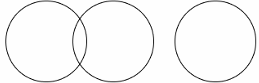
Question 1

Identify the figure given in the options which when put in place of the question mark (?) will logically complete the series.

  1. AOption (a)

  2. BOption (b)

  3. COption (c)

  4. DOption (d)

View answer & explanation

Correct answer

Answer: (b)B.

Why this answer is correct

The logic followed here is:

Hence, the correct answer is "Option 2"

Question 2

Read the given statements and conclusions carefully. Assuming that the information given in the statements is true, even if it appears to be at variance with commonly known facts, decide which of the given conclusions logically follow(s) from the statements.

Statements:

Some tabs are medicines.

Some tabs are ointments.

Some medicines are branches.

Conclusions:

(I): Some tabs are branches.

(II): Some medicines are ointments.

  1. AOption (a)

    Both conclusions (I) and (II) follow.

  2. BOption (b)

    Neither conclusion (I) nor (II) follows.

  3. COption (c)

    Only conclusion (II) follows.

  4. DOption (d)

    Only conclusion (I) follows.

View answer & explanation

Correct answer

Answer: (b)B.

Neither conclusion (I) nor (II) follows.

Why this answer is correct

The least possible Venn diagram for the given statements is as follows:

Conclusions:

(I): Some tabs are branches. - False(As their is no relation between tabs and branches may be it is possible but not definite. Hence, it is false)

(II): Some medicines are ointments.- False (As their is no relation between medicines and ointments may be it is possible but not definite. Hence, it is false)

Neither conclusion (I) nor (II) follows.

Hence, the correct answer is "Option 2"

Question 3

In a certain code language,

'A + B' means 'A is the mother of B',

'A - B' means 'A is the sister of B',

'A × B' means 'A is the father of B' and

'A ÷ B' means 'A is the brother of B'.

<br>

How is A related to C if 'A + B × C ÷ D - E'?

  1. AOption (a)

    Sister’s daughter

  2. BOption (b)

    Father’s mother

  3. COption (c)

    Mother’s mother

  4. DOption (d)

    Brother’s daughter

View answer & explanation

Correct answer

Answer: (b)B.

Father’s mother

Why this answer is correct

Family Chart:

As per the given information,

Hence, the correct answer is "Option 2"

Question 4

What should come in place of the question mark (?) in the given series?

781 791 800 808 815 ?

  1. AOption (a)

    819

  2. BOption (b)

    820

  3. COption (c)

    822

  4. DOption (d)

    821

View answer & explanation

Correct answer

Answer: (d)D.

821

Why this answer is correct

The logic follows here, 

781 + 10 = 791

791 + 9 = 800

800 + 8 = 808

808 + 7 = 815

So next, the difference should be 6.​​​

815 + 6 = 821​

Hence, the correct answer is "Option 4"

Question 5

In a certain code language, ‘STAY’ is coded as ‘3845’ and ‘LAYS’ is coded as ‘3578’. How is ‘T’ coded in the given language?

  1. AOption (a)

    8

  2. BOption (b)

    3

  3. COption (c)

    5

  4. DOption (d)

    4

View answer & explanation

Correct answer

Answer: (d)D.

4

Why this answer is correct

Given : ‘STAY’ is coded as ‘3845’ and ‘LAYS’ is coded as ‘3578’

The logic follows here,

Hence, the correct answer is "Option 4"

Question 6

The position(s) of how many letters will remain unchanged if each of the letters in the word NOTABLE is arranged in the English alphabetical order?

  1. AOption (a)

    Two

  2. BOption (b)

    Three

  3. COption (c)

    One

  4. DOption (d)

    Zero

View answer & explanation

Correct answer

Answer: (d)D.

Zero

Why this answer is correct

  • Original Word: N O T A B L E
  • Letters in alphabetical order:A B E L N O T
  • No, letters will remain unchanged

Hence, the correct answer is "Option 4"

Question 7

RC 66 is related to SD 67 in a certain way. In the same way, NV 3 is related to OW 4. To which of the following is CH 9 related, following the same logic?

  1. AOption (a)

    BI 10

  2. BOption (b)

    DI 10

  3. COption (c)

    FI 10

  4. DOption (d)

    DI 8

View answer & explanation

Correct answer

Answer: (b)B.

DI 10

Why this answer is correct

The pattern followed here is:

Hence, the correct answer is "Option 2"

Question 8

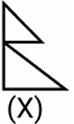
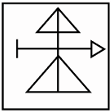
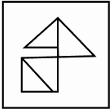
Select the option in which the given figure (X) is embedded (rotation is NOT allowed).

  1. AOption (a)

  2. BOption (b)

  3. COption (c)

  4. DOption (d)

View answer & explanation

Correct answer

Answer: (b)B.

Why this answer is correct

The option figure that is embedded in the given figure X

Hence, the correct answer is "Option 2"

Question 9

Following a certain code language, CBGD is related to HGLI and UFLO is related to ZKQT. To which of the given options is VJRM related in the given code language?

  1. AOption (a)

    BOWR

  2. BOption (b)

    AGRR

  3. COption (c)

    AOWR

  4. DOption (d)

    AWOH

View answer & explanation

Correct answer

Answer: (c)C.

AOWR

Why this answer is correct

The pattern followed here is:

CBGD → HGLI

C +5 → H

B +5 → G

G +5 → L

D +5 → I

<br>

​UFLO → ZKQT.​

U +5 → Z

F +5 → K

L +5 → Q

O +5 → T

<br>

Similarly,

VJRM  → 

V +5 → A

J +5 → O

R +5 → W

M +5 → R

Hence, the correct answer is "Option 3"

Question 10

K, L, M, N, O and P are sitting around a circular table, facing the centre (but not necessarily in the same order) . K sits second to the right of L. N sits third to the left of K. P is not an immediate neighbour of K. O sits second to the left of M. What is the position of O with respect to K?

  1. AOption (a)

    Immediate Right

  2. BOption (b)

    Immediate Left

  3. COption (c)

    Second to the Left

  4. DOption (d)

    Third to the Right

View answer & explanation

Correct answer

Answer: (b)B.

Immediate Left

Why this answer is correct

K, L, M, N, O and P are sitting around a circular table, facing the centre (but not necessarily in the same order) .

  • K sits second to the right of L.
  • N sits third to the left of K.
  • P is not an immediate neighbour of K.
  • O sits second to the left of M.

The Final Arrangement is,

Hence, the correct answer is "Option 2"

Question 11

A dice has its faces marked by letters K, N, A, B, C and Z. Two positions of the same dice are given below. Which face is opposite to face A?

  1. AOption (a)

    B

  2. BOption (b)

    N

  3. COption (c)

    K

  4. DOption (d)

    Z

View answer & explanation

Correct answer

Answer: (d)D.

Z

Why this answer is correct

The logic follows here,

In these types of dice problems, we should write all three numbers/letters in clockwise or anticlockwise from a fix common number/letter


So, Z ​is opposite to face A.

Hence, the correct answer is "Option 4"

Question 12

What should come in place of the question mark (?) in the given series based on the English alphabetical order?

BDF HJL NPR ? ZBD

  1. AOption (a)

    TVX

  2. BOption (b)

    XTV

  3. COption (c)

    XYZ

  4. DOption (d)

    VTX

View answer & explanation

Correct answer

Answer: (a)A.

TVX

Why this answer is correct

The pattern followed here is:

Hence, the correct answer is "Option 1"

Question 13

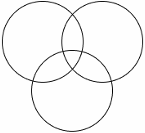
Select the Venn diagram that best illustrates the relationship between the following classes.

Cat, Pant, Ice

  1. AOption (a)

  2. BOption (b)

  3. COption (c)

  4. DOption (d)

View answer & explanation

Correct answer

Answer: (d)D.

Why this answer is correct

Cat, Pant, Ice

From the given information Venn diagram will be: 

Cat, Pant, and Ice are completely unrelated — no overlap at all

Hence, the correct answer is "Option 4"

Question 14

L, M, N, O, P, Q and R are sitting around a circular table facing the centre(but not necessarily in the same order) . O is sitting to the immediate left of M and the immediate right of Q. L is sitting to the immediate left of Q and the immediate right of P. R is sitting to the immediate right of M and the immediate left of N. Who is sitting to the immediate right of N?

  1. AOption (a)

    Q

  2. BOption (b)

    P

  3. COption (c)

    R

  4. DOption (d)

    O

View answer & explanation

Correct answer

Answer: (b)B.

P

Why this answer is correct

L, M, N, O, P, Q and R are sitting around a circular table facing the centre(but not necessarily in the same order) .

  • O is sitting to the immediate left of M and the immediate right of Q.
  • L is sitting to the immediate left of Q and the immediate right of P.
  • R is sitting to the immediate right of M and the immediate left of N

The Final Arrrangement is,

Hence, the correct answer is "Option 2"

Question 15

Find the correct alternative that when filled in the blanks in the same sequence will make the series logically complete.

MIKM_LNPS_QSVR VYU_

  1. AOption (a)

    IPNTU

  2. BOption (b)

    JPOTW

  3. COption (c)

    IMNSU

  4. DOption (d)

    JMOSW

View answer & explanation

Correct answer

Answer: (b)B.

JPOTW

Why this answer is correct

Given : MIKM_LNPS_QSVR VYU_

J MIKM P LNPS O QSVR T VYU W

Hence, the correct answer is "Option 2"

Question 16

What should come in place of the question mark (?) in the given series?

17 64 103 134 157 ?

  1. AOption (a)

    172

  2. BOption (b)

    168

  3. COption (c)

    185

  4. DOption (d)

    179

View answer & explanation

Correct answer

Answer: (a)A.

172

Why this answer is correct

The logic follows here,

Hence, the correct answer is "Option 1"

Question 17

Each of the digits in the number 78152469 is arranged in ascending order from left to right. Which of the following digits will be fourth from the left?

  1. AOption (a)

    6

  2. BOption (b)

    4

  3. COption (c)

    5

  4. DOption (d)

    7

View answer & explanation

Correct answer

Answer: (c)C.

5

Why this answer is correct

Digits of 78152469 :

7, 8, 1, 5, 2, 4, 6, 9

Arranged in ascending order (left to right):

1, 2, 4, 5, 6, 7, 8, 9

Fourth digit from the left = 5

Hence, the correct answer is "Option 3"

Question 18

Based on the English alphabetical order, three of the following four letter-clusters are alike in a certain way and thus form a group. Which is the one that DOES NOT belong to that group?

(Note: The odd one out is not based on the number of consonants/vowels or their position in the letter-cluster.)

  1. AOption (a)

    KMH

  2. BOption (b)

    QSN

  3. COption (c)

    GDH

  4. DOption (d)

    HJE

View answer & explanation

Correct answer

Answer: (c)C.

GDH

Why this answer is correct

The logic followed here is:

Option 1) KMH

Option 2) QSN

Option 3) GDH

​Option 4) HJE

Thus, out of all 'GDH' is the odd one out.

Hence, the correct answer is "Option 3".

Question 19

In a certain code language, ‘sun is hot’ is coded as ‘la ah ft’ and ‘moon is beautiful’ is coded as ‘la ik zy’. How is ‘is’ coded in the given language?

  1. AOption (a)

    ik

  2. BOption (b)

    ft

  3. COption (c)

    zy

  4. DOption (d)

    la

View answer & explanation

Correct answer

Answer: (d)D.

la

Why this answer is correct

The logic follows here, 

Hence, the correct answer is "Option 4"

Question 20

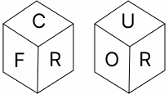
A dice has its faces marked by letters C, L, O, U, R and F. Two positions of the same dice are shown in the given figures. Which face is opposite to face L?

  1. AOption (a)

    C

  2. BOption (b)

    F

  3. COption (c)

    R

  4. DOption (d)

    O

View answer & explanation

Correct answer

Answer: (c)C.

R

Why this answer is correct

Logic: If two dice have the same face value in the given image then their clockwise or anticlockwise wise number are known as opposite numbers in dice.

R is opposite face of L

Hence, the correct answer is "Option 3"

General Knowledge and General Awareness (20 questions)

Question 21

In which month of 2024 did Prime Minister Narendra Modi visit Austria?

  1. AOption (a)

    June

  2. BOption (b)

    May

  3. COption (c)

    August

  4. DOption (d)

    July

View answer & explanation

Correct answer

Answer: (d)D.

July

Why this answer is correct

The correct answer is July.

Key Points

  • Prime Minister Narendra Modi visited Austria in July 2024 to strengthen bilateral relations between India and Austria.
  • The visit focused on areas such as trade, technology exchange, and renewable energy cooperation.
  • During the visit, PM Modi participated in high-level meetings with Austrian officials and signed agreements on clean energy and digital technology.
  • Key discussions included climate change, economic development, and regional stability, showcasing India's commitment to global issues.
  • Austria reaffirmed its commitment to enhancing ties with India, marking the visit as a significant step in strengthening India-EU relations.

Additional Information

  • Key Focus of PM Modi’s Global Visits
  • As a global statesman, PM Modi’s international visits aim to enhance bilateral and multilateral relations.
  • His agenda often includes areas like trade, technology collaboration, renewable energy, climate change, and security cooperation.
  • PM Modi also actively engages with the Indian diaspora during his visits, strengthening cultural and economic ties.

Question 22

How many teams participated in the first edition of the Women's Premier League held in 2023?

  1. AOption (a)

    8

  2. BOption (b)

    7

  3. COption (c)

    6

  4. DOption (d)

    5

View answer & explanation

Correct answer

Answer: (d)D.

5

Why this answer is correct

The correct answer is 5.

Key Points

  • The first edition of the Women’s Premier League (WPL) was held in March 2023, organized by the Board of Control for Cricket in India (BCCI).
  • A total of five teams participated in the inaugural season of the tournament.
  • The participating teams were Mumbai Indians, Delhi Capitals, Gujarat Giants, UP Warriorz, and Royal Challengers Bangalore.
  • The tournament followed a round-robin format with a playoff stage to determine the champions.
  • Mumbai Indians, led by Harmanpreet Kaur, emerged as the champions by defeating Delhi Capitals in the final match.

Additional Information

  • Background of Women’s Premier League (WPL):
  • The WPL is a T20 cricket league in India aimed at promoting women’s cricket globally and providing a platform for talented female cricketers.
  • This league is similar to the Indian Premier League (IPL) but exclusively for women players.
  • The first season was conducted successfully, marking a milestone in the history of women’s cricket.
  • Team Ownership:
  • The five franchises were auctioned for a combined value of approximately ₹4,669.99 crores, making WPL one of the most lucrative women’s sports leagues worldwide.
  • The Mumbai Indians team is owned by Indiawin Sports Pvt. Ltd. (Reliance Group), while Delhi Capitals is co-owned by JSW and GMR Group.
  • Notable Players and Achievements:
  • The tournament featured prominent Indian and international players like Harmanpreet Kaur, Smriti Mandhana, Ellyse Perry, Meg Lanning, and Sophie Ecclestone.
  • Smriti Mandhana became the most expensive player in the WPL 2023 auction, purchased by Royal Challengers Bangalore for ₹3.4 crores.

Question 23

Which of the following union ministries launched the Civil Registration System (CRS) mobile application for registration of births and deaths in October 2024?

  1. AOption (a)

    Ministry of Agriculture and Farmers' Welfare

  2. BOption (b)

    Ministry of Social Justice and Empowerment

  3. COption (c)

    Ministry of Defence

  4. DOption (d)

    Ministry of Home Affairs

View answer & explanation

Correct answer

Answer: (d)D.

Ministry of Home Affairs

Why this answer is correct

The correct answer is Ministry of Home Affairs.

Key Points

  • The Ministry of Home Affairs (MHA) launched the Civil Registration System (CRS) mobile application for the efficient registration of births and deaths in October 2024.
  • The CRS aims to streamline the process of maintaining a nationwide database of births and deaths, ensuring accuracy and ease of access.
  • The mobile application facilitates real-time registration of births and deaths, ensuring prompt data recording.
  • This initiative aligns with the government’s vision of Digital India, promoting efficient governance through technology-driven solutions.
  • The Registrar General of India (RGI), under the Ministry of Home Affairs, is tasked with coordinating and unifying the CRS across the country under the Registration of Births and Deaths Act, 1969.

Additional Information

  • Ministry of Agriculture and Farmers' Welfare:
  • This ministry is primarily responsible for agricultural policies, farmer welfare schemes, and rural development.
  • Key initiatives include the Pradhan Mantri Kisan Samman Nidhi (PM-KISAN), Pradhan Mantri Fasal Bima Yojana (PMFBY), and Soil Health Card Scheme.
  • It focuses on increasing agricultural productivity and ensuring food security in India.
  • Ministry of Social Justice and Empowerment:
  • This ministry works towards the welfare of marginalized and underprivileged communities such as Scheduled Castes (SCs), Scheduled Tribes (STs), Other Backward Classes (OBCs), and persons with disabilities.
  • Key schemes include the PM-DAKSH Yojana, Rashtriya Vayoshri Yojana, and Assistance to Disabled Persons for Purchase/Fitting of Aids and Appliances (ADIP).
  • Its focus is on social equity, inclusion, and empowerment.
  • Ministry of Defence:
  • This ministry is responsible for managing the defense forces of India, including the Army, Navy, and Air Force.
  • It oversees defense production, procurement, and the strategic security of the country.
  • Notable initiatives include the Make in India program for defense manufacturing and modernization of armed forces.
  • Registration of Births and Deaths Act, 1969:
  • This act mandates the registration of births and deaths in India for creating a legal record.
  • The Registrar General of India coordinates the implementation of the act across the states.
  • Data collected under this act is crucial for demographic studies, public health planning, and issuing legal documents.

Question 24

 In which year did Kathak dancer and guru from Ujjain, Puru Dadheech receive the Sangeet Natak Akademi Award for his overall contribution to the performing arts?

  1. AOption (a)

    2004

  2. BOption (b)

    2000

  3. COption (c)

    2018

  4. DOption (d)

    2015

View answer & explanation

Correct answer

Answer: (c)C.

2018

Why this answer is correct

The correct answer is 2018.

Key Points

  • Puru Dadheech, a renowned Kathak dancer and guru from Ujjain, was honored with the prestigious Sangeet Natak Akademi Award in 2018 for his exceptional contributions to the performing arts.
  • The Sangeet Natak Akademi Award, instituted by India’s National Academy of Music, Dance, and Drama, is the highest recognition given to performing artists in India.
  • Puru Dadheech’s contributions include scripting the first-ever Kathak syllabus for universities in India, which has helped institutionalize the academic study of Kathak.
  • He is celebrated for his efforts in preserving and reviving Kathak as a classical dance form while maintaining its traditional essence and cultural heritage.
  • Through his pioneering work, he has inspired generations of dancers and contributed significantly to the global recognition of Kathak.

Additional Information

  • About Kathak Dance:
  • Kathak is one of the eight classical dance forms of India and originated in North India.
  • It is known for its intricate footwork, graceful movements, hand gestures, and facial expressions, which are used to narrate mythological and spiritual stories.
  • The dance form is influenced by both Hindu and Mughal traditions, showcasing a unique blend of cultural elements.
  • Signature characteristics of Kathak include rhythmic patterns, storytelling, and elegant spins.
  • Sangeet Natak Akademi:
  • Established in 1952, it is India’s national-level institution dedicated to promoting and preserving the performing arts.
  • The Akademi confers awards annually to artists who have made exceptional contributions to music, dance, and drama.
  • The awards aim to honor artists and encourage the continuation of India’s rich cultural heritage.
  • Other Dance Forms Recognized by Sangeet Natak Akademi:
  • India has eight classical dance forms, including Bharatnatyam, Odissi, Kathakali, Manipuri, Kuchipudi, Mohiniyattam, Sattriya, and Kathak.
  • These dance forms have received national and international recognition for their cultural and artistic significance.
  • Efforts like Puru Dadheech’s help preserve these art forms and promote them globally.

Question 25

When did the Green Revolution begin in India?

  1. AOption (a)

    1960

  2. BOption (b)

    1975

  3. COption (c)

    1966

  4. DOption (d)

    1950

View answer & explanation

Correct answer

Answer: (c)C.

1966

Why this answer is correct

The correct answer is 1966.

Key Points

  • The Green Revolution in India began in 1966, primarily focusing on increasing agricultural productivity to address food shortages and achieve self-sufficiency in food grain production.
  • It introduced high-yielding variety (HYV) seeds for wheat and rice, along with improved irrigation methods, fertilizers, and pesticides to enhance crop yields.
  • The initiative was launched during the Third Five-Year Plan (1961–1966), with the formal adoption of HYV seeds starting in 1966.
  • Dr. Norman Borlaug, known as the "Father of the Green Revolution," was instrumental globally, while Dr. M.S. Swaminathan led its implementation in India.
  • The Green Revolution initially benefited regions like Punjab, Haryana, and western Uttar Pradesh due to their favorable irrigation infrastructure and climatic conditions.

Additional Information

  • Main Theme:
  • The Green Revolution refers to the period of agricultural transformation aimed at increasing food grain production through the introduction of HYV seeds, chemical fertilizers, irrigation facilities, and modern farming techniques.
  • While it brought significant benefits, such as self-sufficiency in food production and poverty reduction, it also led to challenges like environmental degradation, regional disparities, and increased reliance on chemical inputs.

Question 26

Which layer of the Earth's atmosphere is responsible for protecting life on Earth by blocking harmful terrestrial solar radiation?

  1. AOption (a)

     Troposphere

  2. BOption (b)

     Thermosphere

  3. COption (c)

    Stratosphere

  4. DOption (d)

    Mesosphere

View answer & explanation

Correct answer

Answer: (c)C.

Stratosphere

Why this answer is correct

The correct answer is Stratosphere.

Key Points

  • The stratosphere is the second layer of the Earth's atmosphere, located above the troposphere and below the mesosphere, extending approximately 10 to 50 kilometers above the Earth's surface.
  • This layer contains the ozone layer, which is responsible for absorbing harmful ultraviolet (UV) radiation from the Sun.
  • Ozone molecules in the stratosphere absorb UV-B and UV-C rays, preventing them from reaching the Earth's surface and protecting life from radiation-induced damage such as skin cancer and cataracts.
  • The absorption of UV radiation causes a temperature increase in the stratosphere, making it warmer compared to the troposphere.
  • Efforts to combat ozone depletion, such as the Montreal Protocol (1987), have helped reduce the damage caused by chlorofluorocarbons (CFCs) and other ozone-depleting substances, leading to gradual recovery of the ozone layer.

Additional Information

  • Troposphere:
  • The troposphere is the lowest layer of the Earth's atmosphere, extending up to about 10 kilometers above the surface.
  • This layer contains most of the atmospheric water vapor and is where weather phenomena such as rain, snow, and storms occur.
  • Temperature decreases with altitude in the troposphere due to the Earth's surface heating the air directly above it.
  • Thermosphere:
  • The thermosphere is located above the mesosphere, starting at around 85 kilometers and extending to 600 kilometers above the Earth.
  • It is characterized by high temperatures that can reach up to 2,500°C due to solar radiation absorption.
  • This layer is home to the ionosphere, which plays a crucial role in radio communication and satellite navigation.
  • Mesosphere:
  • The mesosphere lies between the stratosphere and the thermosphere, extending from about 50 kilometers to 85 kilometers above the Earth's surface.
  • It is the coldest layer of the atmosphere, with temperatures dropping as low as -90°C.
  • Meteors burn up in this layer due to the increased density of atmospheric particles.
  • Ozone Layer:
  • The ozone layer is located within the stratosphere and is essential for blocking harmful UV radiation from the Sun.
  • UV-B and UV-C radiation are absorbed by ozone molecules, reducing the risk of health issues such as skin cancer and eye damage.
  • International agreements, like the Montreal Protocol, have significantly reduced ozone depletion caused by human activities.

Question 27

According to the National Multidimensional Poverty Index Progress report 2023, how many people escaped multidimensional poverty between 2015-2021 in India?

  1. AOption (a)

     15.5 crore

  2. BOption (b)

    120.5 crore

  3. COption (c)

    16.5 crore

  4. DOption (d)

    13.5 crore

View answer & explanation

Correct answer

Answer: (d)D.

13.5 crore

Why this answer is correct

The correct answer is 13.5 crore.

Key Points

  • According to the National Multidimensional Poverty Index (MPI) Progress Report 2023, 13.5 crore people in India escaped multidimensional poverty between 2015 and 2021.
  • The report is based on an analysis of data from the National Family Health Survey (NFHS), conducted during this time period.
  • Multidimensional Poverty Index (MPI) measures poverty based on three dimensions: health, education, and standard of living, with 10 indicators such as nutrition, child mortality, school attendance, and access to basic infrastructure.
  • India's poverty reduction is attributed to impactful government schemes such as Ayushman Bharat, Pradhan Mantri Awas Yojana, Swachh Bharat Mission, and Ujjwala Yojana, targeting vulnerable populations.
  • This significant achievement showcases India's global leadership in poverty alleviation, with a notable emphasis on rural development contributing to the results.

Additional Information

  • National Multidimensional Poverty Index (MPI):
  • The MPI is developed by the Oxford Poverty and Human Development Initiative (OPHI) and the United Nations Development Programme (UNDP).
  • It provides a comprehensive view of poverty by considering multiple deprivations across health, education, and living standards simultaneously.
  • Unlike traditional income-based measures, MPI highlights overlapping disadvantages individuals face, enabling targeted interventions.
  • Key Government Schemes for Poverty Alleviation:
  • Ayushman Bharat: A national health insurance scheme providing coverage of Rs. 5 lakhs per family annually to economically disadvantaged families.
  • Pradhan Mantri Awas Yojana: Focuses on providing affordable housing to low-income families.
  • Swachh Bharat Mission: Aims at improving sanitation and hygiene, reducing health-related poverty.
  • Ujjwala Yojana: Provides LPG connections to rural households, reducing dependency on traditional fuels and improving living standards.
  • National Family Health Survey (NFHS):
  • The NFHS is a large-scale, multi-round survey conducted across India to collect data on health, nutrition, and family welfare indicators.
  • It serves as a crucial tool to track India's progress toward developmental and health-related goals.
  • Global Context:
  • India's reduction of multidimensional poverty contributes significantly to the Sustainable Development Goals (SDGs), particularly SDG 1 (No Poverty).
  • This achievement positions India as a model for poverty alleviation strategies globally.

Question 28

In which year were the Fundamental Duties added to the Constitution of India?

  1. AOption (a)

    1958

  2. BOption (b)

    1952

  3. COption (c)

    1976

  4. DOption (d)

    1951

View answer & explanation

Correct answer

Answer: (c)C.

1976

Why this answer is correct

The correct answer is 1976.

Key Points

  • Fundamental Duties were added to the Indian Constitution in 1976 through the 42nd Amendment Act.
  • This concept of Fundamental Duties was inspired by the Constitution of the Soviet Union.
  • Initially, the Constitution listed 10 Fundamental Duties under Part IVA (Article 51A).
  • The inclusion of Fundamental Duties was recommended by the Swaran Singh Committee, which was constituted in 1976 to review the Constitution.
  • In 2002, an additional Fundamental Duty was added through the 86th Amendment Act, increasing the total number to 11.

Additional Information

  • Fundamental Duties
  • Fundamental Duties aim to instill a sense of discipline and responsibility among citizens.
  • While they are non-justiciable, they play a crucial role in promoting civic values and respect for the Constitution.
  • Examples include duties to protect the environment, preserve national heritage, and uphold the spirit of brotherhood.

Question 29

According to Census 2011, which of the following states has the highest literacy rate in India?

  1. AOption (a)

    Tamil Nadu

  2. BOption (b)

    Manipur

  3. COption (c)

    Kerala

  4. DOption (d)

    Himachal Pradesh

View answer & explanation

Correct answer

Answer: (c)C.

Kerala

Why this answer is correct

The correct answer is Kerala.

Key Points

  • Kerala has the highest literacy rate in India, as per Census 2011, with an impressive literacy rate of 93.9%.
  • The state has consistently maintained the top position in literacy rates since the inception of literacy surveys in India.
  • This achievement is attributed to Kerala’s strong emphasis on education, supported by a robust public education system and governmental initiatives.
  • Programs like Akshara Kerala and various literacy campaigns have significantly contributed to improving literacy rates in the state.
  • Kerala also boasts one of the highest female literacy rates in the country, which contributes to its overall socio-economic development and gender equality.

Additional Information

  • Tamil Nadu:
  • As per Census 2011, Tamil Nadu has a literacy rate of 80.33%, which is above the national average of 74.04%.
  • The state has made significant strides in education with initiatives like the Samacheer Kalvi (Uniform System of School Education) and free lunch programs in schools.
  • Despite these advancements, it still lags behind Kerala in terms of overall literacy rate.
  • Manipur:
  • Manipur reported a literacy rate of 76.8% according to Census 2011.
  • The state has made efforts to improve education through programs targeting rural and tribal populations, but challenges such as lack of infrastructure and accessibility persist.
  • It shows potential for growth in literacy with better implementation of policies and resources.
  • Himachal Pradesh:
  • Himachal Pradesh has a literacy rate of 83.8%, which is among the highest in India.
  • The state has achieved this through sustained efforts in providing free education and improving school infrastructure, particularly in rural and remote areas.
  • However, it ranks below Kerala in terms of the overall literacy rate.
  • Literacy in India:
  • The average literacy rate in India, as per Census 2011, is 74.04%, with a significant gender gap: male literacy is 82.14%, while female literacy is 65.46%.
  • States like Bihar (63.82%) and Arunachal Pradesh (66.95%) recorded the lowest literacy rates, indicating regional disparities in access to education.
  • Government programs like Saakshar Bharat and the National Literacy Mission aim to improve literacy rates, particularly among women and marginalized communities.

Question 30

Which of the following is NOT a function of a Chief Minister of an Indian state?

  1. AOption (a)

     Is the sole link between Council of Ministers and Governor

  2. BOption (b)

     Coordinates the functioning of inter-state public service commissions

  3. COption (c)

    Advises the Governor

  4. DOption (d)

     Guides the framing of the policies for the State

View answer & explanation

Correct answer

Answer: (b)B.

 Coordinates the functioning of inter-state public service commissions

Why this answer is correct

The correct answer is Coordinates the functioning of inter-state public service commissions.

Key Points

  • The Chief Minister of an Indian state acts as the chief link between the Governor and the Council of Ministers.
  • The Chief Minister advises the Governor on various issues, including legislative and administrative matters, as per Article 163 of the Constitution of India.
  • He/she plays a vital role in guiding and framing state policies and ensuring their effective implementation.
  • The function of coordinating inter-state public service commissions is not a responsibility of the Chief Minister. This responsibility lies with the Union Public Service Commission (UPSC) or other constitutional bodies as per Articles 315-323 of the Indian Constitution.
  • The Chief Minister’s duties focus on state governance, policy implementation, and advising the Governor, making him/her the key executive authority in the state.

Additional Information

  • Link between Governor and Council of Ministers:
  • The Chief Minister acts as a bridge between the Governor and the Council of Ministers. He/she communicates decisions of the Council of Ministers to the Governor and ensures the implementation of the Governor’s decisions.
  • This role ensures smooth functioning of the state government and adherence to constitutional provisions.
  • Advising the Governor:
  • The Chief Minister advises the Governor on various issues such as the appointment of ministers, dissolution of the Legislative Assembly, and other administrative decisions.
  • Article 163 of the Indian Constitution provides that the Governor shall act on the advice of the Council of Ministers, headed by the Chief Minister, except in certain discretionary situations.
  • Inter-State Public Service Commissions:
  • These commissions are formed under Articles 315-323 of the Indian Constitution to handle recruitment and related matters for two or more states.
  • The responsibility for their functioning lies with the respective commissions and higher constitutional authorities, not the Chief Minister of a state.

Question 31

In which year was the All India Trade Union Congress (AITUC) established?

  1. AOption (a)

    1935

  2. BOption (b)

    1905

  3. COption (c)

    1920

  4. DOption (d)

    1919

View answer & explanation

Correct answer

Answer: (c)C.

1920

Why this answer is correct

The correct answer is 1920.

Key Points

  • The All India Trade Union Congress (AITUC) was established on 31 October 1920 in Bombay (now Mumbai), India.
  • Prominent leaders such as Lala Lajpat Rai, Joseph Baptista, N.M. Joshi, and Diwan Chaman Lall were instrumental in its foundation.
  • AITUC was the first national-level trade union organization in India, created to represent and protect the rights of workers.
  • The first president of AITUC was Lala Lajpat Rai, a noted freedom fighter and social reformer.
  • The organization played a critical role in the Indian freedom struggle by organizing workers and opposing exploitation under colonial rule.

Additional Information

  • Indian National Trade Union Congress (INTUC)
  • Affiliation: Indian National Congress (INC).
  • Focus: Gandhian principles, harmonious relations, large membership in textiles, mining.
  • Key: Largest union by membership, aims for social security and welfare.
  • Bharatiya Mazdoor Sangh (BMS)
  • Affiliation: Bhartiya Jan Sangh/BJP (RSS-linked).
  • Focus: Nationalist ideology, strong growth, focusing on worker welfare, often seen as a counter to left unions.
  • Key: Often third largest, gaining ground in recent years.
  • Hind Mazdoor Sangh (HMS)
  • Affiliation: Socialist parties (Praja Socialist, Samyukta Socialist).
  • Focus: Keeping free from major political interference, strong in Railways, Textiles, Engineering.
  • Key: Formed by socialists who wanted independence from INTUC/AITUC.
  • Centre of Indian Trade Unions (CITU)
  • Affiliation: Communist Party of India (Marxist) - CPI(M).
  • Focus: Militant struggle for higher wages, social security, resisting privatization.
  • Key: Strong in West Bengal, Kerala, Tripura; left-wing alternative to AITUC.

Question 32

Match the following:

compoundMade From
A. Bleaching Powder1.Heating baking soda and recrystallization of the resultant
B. Baking Powder2.Heating Gypsum
C. Washing Powder3.Chlorine Gas and Dry slaked lime
D. Plaster of Paris4. Acid - Base reaction
  1. AOption (a)

     A-2, B-4, C-1, D-3

  2. BOption (b)

     A-3, B-4, C-1, D-2

  3. COption (c)

     A-1, B-2, C-3, D-4

  4. DOption (d)

    A-4, B-3, C-1, D-2

View answer & explanation

Correct answer

Answer: (b)B.

 A-3, B-4, C-1, D-2

Why this answer is correct

The correct answer is A-3, B-4, C-1, D-2.

Key Points

  • Bleaching Powder (A-3): It is manufactured by reacting chlorine gas with dry slaked lime (calcium hydroxide).
  • Baking Powder (B-4): It is produced through an acid-base reaction between baking soda and a mild edible acid, such as tartaric acid.
  • Washing Powder (C-1): Washing powder is made by heating baking soda and recrystallizing the resultant compound.
  • Plaster of Paris (D-2): It is created by heating gypsum (calcium sulfate dihydrate) to remove water, forming calcium sulfate hemihydrate.
  • These processes are specific to the chemical composition and manufacturing techniques of each compound, ensuring their distinct properties and uses.

Additional Information

  • Bleaching Powder:
  • Its chemical name is calcium oxychloride (Ca(OCl)₂).
  • Bleaching powder is commonly used as a disinfectant, bleaching agent, and in water treatment.
  • It releases chlorine, which acts as a strong oxidizing agent.
  • Baking Powder:
  • Baking powder contains sodium bicarbonate and a mild edible acid, such as tartaric acid.
  • When mixed with water, it releases carbon dioxide gas, which helps dough rise during baking.
  • It is widely used in baking cakes, bread, and other baked goods.
  • Washing Powder:
  • It contains sodium carbonate (Na₂CO₃), also known as soda ash.
  • It is produced by heating baking soda (sodium bicarbonate).
  • Washing powder is used for cleaning purposes, removing grease, dirt, and hard water stains.
  • It acts as a water softener and is widely used in households and industries.
  • Plaster of Paris (POP):
  • Its chemical formula is CaSO₄·½H₂O (calcium sulfate hemihydrate).
  • POP is produced by heating gypsum (CaSO₄·2H₂O) to about 150°C.
  • It is used for making molds, sculptures, and false ceilings.
  • POP hardens quickly when mixed with water, forming a solid mass.

Question 33

Which national festival of India falls on the 26th of January?

  1. AOption (a)

    Constitution Day

  2. BOption (b)

     Gandhi Jayanti

  3. COption (c)

     Independence day

  4. DOption (d)

    Republic day

View answer & explanation

Correct answer

Answer: (d)D.

Republic day

Why this answer is correct

The correct answer is Republic Day.

Key Points

  • Republic Day is celebrated every year on 26th January in India to commemorate the day when the Constitution of India came into effect in 1950.
  • The Indian Constitution replaced the Government of India Act (1935) and established India as a sovereign, socialist, secular, and democratic republic.
  • The date, 26th January, was chosen to honor the declaration of Purna Swaraj (complete independence) by the Indian National Congress in 1930.
  • The Republic Day celebrations are marked by a grand parade at Rajpath, New Delhi, showcasing India’s cultural diversity, military prowess, and advancements in various fields.
  • Each year, a chief guest, usually a foreign dignitary, is invited to attend the celebrations, symbolizing India’s diplomatic relations.

Additional Information

  • Key Features of the Indian Constitution:
  • It is the longest written constitution in the world, with 448 articles, 12 schedules, and numerous amendments.
  • It establishes a parliamentary system of government with a clear separation of powers among the executive, legislature, and judiciary.
  • The Constitution guarantees fundamental rights to every citizen, including the right to equality, freedom, protection against exploitation, and cultural and educational rights.
  • Historical Significance of Republic Day:
  • On 26th January 1930, the Indian National Congress declared Purna Swaraj (complete independence) as the ultimate goal of India’s freedom struggle.
  • The date was later selected to honor this historic resolution and mark the transition from colonial rule to a sovereign republic.
  • Other National Festivals of India:
  • Independence Day (15th August): Celebrates India’s independence from British rule in 1947.
  • Gandhi Jayanti (2nd October): Marks the birth anniversary of Mahatma Gandhi, the leader of India’s freedom struggle.
  • Constitution Day (26th November): Commemorates the adoption of the Indian Constitution in 1949.

Question 34

Muthuswami Dikshitar was a great eminent singer, composer and poet of which music?

  1. AOption (a)

     Semi-classical

  2. BOption (b)

     Sufi

  3. COption (c)

    Odissi

  4. DOption (d)

     Carnatic

View answer & explanation

Correct answer

Answer: (d)D.

 Carnatic

Why this answer is correct

The correct answer is Carnatic.

Key Points

  • Muthuswami Dikshitar was one of the most renowned composers in the Carnatic music tradition of South India.
  • He is considered part of the "Trinity of Carnatic Music," alongside Thyagaraja and Syama Sastri, who collectively shaped classical Carnatic music.
  • Dikshitar composed over 400 songs in Sanskrit, focusing on intricate ragas and talas with devotional themes dedicated to Hindu deities.
  • His compositions are characterized by structured lyrics, adherence to grammatical precision, and a deep understanding of classical music theory.
  • Some of his notable contributions include kritis praising deities like Lord Shiva, Goddess Saraswati, and Lord Muruga, as well as pieces dedicated to temples across India.

Additional Information

  • Semi-Classical Music:
  • Semi-classical music refers to genres that bridge the gap between Indian classical music and light, popular music.
  • It includes styles like Thumri, Dadra, Ghazal, and Bhajan, which retain elements of classical music while being more accessible to a wider audience.
  • These forms are often performed in a lighter, more informal setting and emphasize emotive expression over rigid adherence to classical rules.
  • Sufi Music:
  • Sufi music is a devotional genre rooted in Islamic mysticism, focusing on themes of divine love and spiritual connection.
  • It is often performed as Qawwali or other forms of lyrical poetry set to music, emphasizing transcendence and unity with God.
  • Renowned Sufi poets like Rumi and Amir Khusrau have heavily influenced this genre, which is popular in regions like India, Pakistan, and the Middle East.
  • Odissi Music:
  • Odissi music is a classical music style originating in Odisha, India, and is closely associated with Odissi dance.
  • It is based on the ragas and talas found in Indian classical music, but its compositions are unique due to their structure and lyrical content, which often praise Lord Jagannath and other deities.
  • Odissi music has a distinct melodic and rhythmic pattern, emphasizing devotion and spirituality in its performances.
  • Carnatic Music:
  • Carnatic music is a classical music system originating in South India, primarily composed of kritis and improvisational styles like alapana, niraval, and kalpanaswaras.
  • It is built on the foundation of melakarta ragas (parent ragas) and tala (rhythmic cycles), with lyrics often centering on Hindu gods and spiritual themes.
  • Carnatic music is deeply interconnected with Indian classical dance forms like Bharatanatyam and continues to influence contemporary music globally.
  • Festivals like the Chennai Music Season celebrate Carnatic music annually, showcasing its rich heritage and tradition.

Question 35

During which Five-Year Plan was the Industrial Policy Resolution of 1956, which established a 'socialistic pattern of society', implemented?

  1. AOption (a)

     Fifth Plan

  2. BOption (b)

    First Plan

  3. COption (c)

    Second Plan

  4. DOption (d)

     Fourth Plan

View answer & explanation

Correct answer

Answer: (c)C.

Second Plan

Why this answer is correct

The correct answer is Second Five-Year Plan.

Key Points

  • The Industrial Policy Resolution of 1956 was implemented during the Second Five-Year Plan (1956–1961).
  • This policy aimed to achieve a “socialistic pattern of society” by emphasizing the development of the public sector and reducing wealth inequalities.
  • It categorized industries into three groups: exclusive control by the state, joint state-private collaboration, and private sector, ensuring equitable industrial development.
  • The Second Plan focused on heavy industrialization, especially in sectors like steel, cement, and heavy machinery, laying the foundation for self-reliant economic growth.
  • The Industrial Policy Resolution of 1956 also promoted reducing regional imbalances and fostering balanced economic development across India.

Additional Information

  • First Five-Year Plan (1951–1956):
  • The First Plan focused on agriculture, irrigation, and energy to address food shortages and rehabilitate the economy after independence.
  • It followed the Harrod-Domar Model, emphasizing investments in primary sectors to ensure economic stability.
  • Major projects like the Bhakra-Nangal Dam were initiated during this period.
  • Third Five-Year Plan (1961–1966):
  • The Third Plan aimed to establish a self-reliant and self-generating economy by focusing on agriculture, industry, and infrastructure.
  • However, it faced challenges due to the Sino-Indian War of 1962 and subsequent economic disruptions.
  • The plan's emphasis on defense and external pressures led to a decline in its goals for industrial and agricultural growth.
  • Fourth Five-Year Plan (1969–1974):
  • This plan emphasized growth with stability and focused on reducing income inequalities.
  • It emphasized modernization of agriculture through the Green Revolution and increased investments in the industrial sector.
  • However, the Indo-Pak war of 1971 and the oil crisis of 1973 created fiscal challenges during this plan.

Question 36

Which title did the Maukharis adopt to imitate the earlier Guptas?

  1. AOption (a)

     Maharaja

  2. BOption (b)

    Rajadhiraja

  3. COption (c)

    Maharajadhiraja

  4. DOption (d)

     Samanta

View answer & explanation

Correct answer

Answer: (c)C.

Maharajadhiraja

Why this answer is correct

The correct answer is Maharajadhiraja.

Key Points

  • The Maukharis, a significant dynasty in northern India during the post-Gupta period, adopted the title Maharajadhiraja, meaning "Great King of Kings".
  • This title was originally popularized by the Gupta rulers to symbolize supreme sovereignty and imperial authority over large territories.
  • By adopting this title, the Maukharis aimed to emulate the grandeur and legitimacy of the earlier Gupta Empire.
  • The Maukharis ruled regions like Kanauj, Uttar Pradesh, and parts of Bihar in the 6th century CE, seeking to establish dominance amidst competing dynasties such as the Later Guptas and Pushyabhutis.
  • Historical inscriptions from their reign highlight their use of the title Maharajadhiraja as a key indicator of their imperial aspirations and political identity.

Additional Information

  • Maharaja:
  • The title Maharaja, meaning "Great King," was used by regional rulers in ancient India to denote authority over a specific territory.
  • It was a hierarchical title below Maharajadhiraja, indicating significant but localized power rather than imperial sovereignty.
  • The Maukharis, aiming for greater legitimacy and supremacy, did not limit themselves to this title and opted for the higher title of Maharajadhiraja.
  • Rajadhiraja:
  • The title Rajadhiraja, meaning "King of Kings," was another royal designation used to emphasize authority over other subordinate rulers.
  • It was often adopted by rulers who sought to project dominance but had not yet achieved the imperial stature implied by Maharajadhiraja.
  • While this title held prestige, it did not convey the same level of sovereignty as Maharajadhiraja, which symbolized supreme imperial power.
  • Samanta:
  • Samanta was a title used for feudal lords or vassals during ancient and medieval Indian history.
  • These individuals owed allegiance to higher sovereigns and were responsible for managing their territories and offering military support.
  • The title lacked the imperial connotation of Maharajadhiraja and was more indicative of subordinate status within a political hierarchy.

Question 37

Which law states that the period of a planet's orbit around the Sun increases exponentially with the radius of its orbit?

  1. AOption (a)

     Hubble's law

  2. BOption (b)

     Drake law

  3. COption (c)

     Copernicus law of motion

  4. DOption (d)

    Kepler's third law

View answer & explanation

Correct answer

Answer: (d)D.

Kepler's third law

Why this answer is correct

The correct answer is Kepler's third law.

Key Points

  • Kepler's third law of planetary motion, also known as the Law of Harmonies, establishes a relationship between the orbital period of a planet and the radius of its orbit.
  • It states that the square of the orbital period (T²) of a planet is directly proportional to the cube of the semi-major axis (r³) of its orbit.
  • The mathematical expression of this law is: T² ∝ r³.
  • This implies that planets farther from the Sun have longer orbital periods because of their larger orbital radius.
  • Kepler formulated this law in the early 17th century, based on the precise observational data collected by Tycho Brahe, and it became a cornerstone in understanding planetary motion.

Additional Information

  • Hubble's Law:
  • Proposed by Edwin Hubble, this law states that the universe is expanding, and the velocity of a galaxy moving away is directly proportional to its distance from the observer.
  • The mathematical expression is: v = H₀ × d, where v is the galaxy's velocity, H₀ is the Hubble constant, and d is the distance of the galaxy.
  • It forms the foundation for the Big Bang theory and explains the redshift of light observed in distant galaxies.
  • Drake Equation:
  • The Drake Equation, formulated by Frank Drake, estimates the number of extraterrestrial civilizations in the Milky Way galaxy with which communication might be possible.
  • It is not a physical law but a probabilistic tool used in the search for extraterrestrial intelligence (SETI).
  • The equation considers factors like the rate of star formation, the fraction of stars with planets, and the likelihood of intelligent life developing.
  • Copernicus' Law of Motion:
  • Nicolaus Copernicus proposed the heliocentric theory, which stated that the Sun, not the Earth, is at the center of the solar system.
  • Although Copernicus did not develop a specific "law of motion," his work laid the groundwork for Kepler's laws and later Newton's laws of motion.
  • His model represented a significant shift from the geocentric (Earth-centered) Ptolemaic model of the universe.
  • Kepler's Contributions:
  • Kepler's three laws of planetary motion include:
  1. The Law of Ellipses: Planets move in elliptical orbits with the Sun at one focus.
  2. The Law of Equal Areas: A line joining a planet and the Sun sweeps out equal areas in equal intervals of time.
  3. The Law of Harmonies: The square of the orbital period is proportional to the cube of the semi-major axis of the orbit.
  • His work was instrumental in transitioning from geocentric to heliocentric models of the solar system.

Question 38

The first Paralympic Games took place in ________.

  1. AOption (a)

    Rome

  2. BOption (b)

    London

  3. COption (c)

     Rio De Janeiro

  4. DOption (d)

    Paris

View answer & explanation

Correct answer

Answer: (a)A.

Rome

Why this answer is correct

The correct answer is Rome.

Key Points

  • The first Paralympic Games were held in Rome, Italy, in 1960.
  • This event marked the first official international multi-sport competition for athletes with disabilities.
  • A total of 400 athletes from 23 countries participated in the inaugural Paralympic Games.
  • The games were initially designed for athletes with spinal cord injuries and focused on rehabilitation through competitive sports.
  • The Paralympic Games were organized immediately after the 1960 Summer Olympics, establishing a tradition of hosting Paralympic Games after the Olympics.

Additional Information

  • London
  • Although London did not host the first Paralympic Games, it played an important role in the evolution of the Paralympic Movement.
  • In 1948, Dr. Ludwig Guttmann organized the Stoke Mandeville Games for World War II veterans with spinal cord injuries in Stoke Mandeville, England.
  • The Stoke Mandeville Games are considered the precursor to the Paralympic Games.
  • London later hosted the Paralympic Games in 2012, which were widely celebrated for their success and inclusivity.
  • Rio de Janeiro
  • Rio de Janeiro hosted the 2016 Paralympic Games, making it the first South American city to hold the event.
  • The games featured 4,328 athletes from 159 countries, competing in 22 sports.
  • The 2016 Rio Games were lauded for their vibrant atmosphere and promotion of disability rights and awareness.
  • It was significant in showcasing the abilities of athletes with disabilities on a global stage.
  • Paris
  • Paris has not yet hosted the Paralympic Games, but it is set to host the 2024 Summer Paralympic Games.
  • The Paris 2024 Paralympics are expected to promote inclusivity and accessibility, aligning with the goals of the Paralympic Movement.
  • Paris has a strong historical association with sports and culture, making it an ideal location for the upcoming games.

Question 39

Which of the following classical dance forms belongs to Northern India?

  1. AOption (a)

    Kathakali

  2. BOption (b)

    Mohiniyattam

  3. COption (c)

    Kathak

  4. DOption (d)

    Kuchipudi

View answer & explanation

Correct answer

Answer: (c)C.

Kathak

Why this answer is correct

The correct answer is Kathak.

Key Points

  • Kathak is one of the classical dance forms of India and originates from North India.
  • It is characterized by intricate footwork, spins, and expressive gestures, often accompanied by storytelling through dance.
  • The word "Kathak" is derived from the Sanskrit word "Katha," which means "story," and the dance form was traditionally performed by storytellers known as "Kathakars."
  • Kathak evolved during the Mughal period, incorporating elements of Persian and Central Asian dance styles, along with Hindu devotional themes.
  • It is associated with the states of Uttar Pradesh, Rajasthan, and Delhi and is widely practiced in both temples and courts.

Additional Information

  • Kathakali
  • Kathakali is a classical dance-drama tradition from the state of Kerala in South India.
  • It is known for its elaborate costumes, heavy makeup, and face masks that convey emotions and characters.
  • Kathakali performances often depict stories from epics like the Ramayana and Mahabharata, with an emphasis on expressions (Navarasa).
  • Mohiniyattam
  • Mohiniyattam is another classical dance form from Kerala in South India.
  • It is known for its graceful and feminine movements, often referred to as the "dance of the enchantress."
  • Mohiniyattam performances are deeply rooted in Hindu mythology and are performed to Carnatic music.
  • Kuchipudi
  • Kuchipudi originates from Andhra Pradesh in South India.
  • This dance form is unique as it combines dance with speech and singing, where the performer often plays multiple roles.
  • Kuchipudi performances are typically based on Hindu religious themes and stories from the Bhagavatam and other scriptures.

Question 40

The sale of government assets is also known as:

  1. AOption (a)

    commercialisation

  2. BOption (b)

    capitalisation

  3. COption (c)

     disinvestment

  4. DOption (d)

    investment

View answer & explanation

Correct answer

Answer: (c)C.

 disinvestment

Why this answer is correct

The correct answer is Disinvestment.

Key Points

  • Disinvestment refers to the sale or liquidation of government-owned assets, usually in public sector undertakings (PSUs), to private entities.
  • The primary objective of disinvestment is to reduce the financial burden on the government and improve operational efficiency by introducing private sector management.
  • Disinvestment helps raise capital to fund developmental projects and bridge fiscal deficits.
  • It can be carried out through public offerings, strategic sales, or share sales to private investors.
  • Notable examples of disinvestment in India include the strategic sale of Air India to the Tata Group and partial stake sales in Bharat Petroleum Corporation Limited (BPCL) and Life Insurance Corporation (LIC).

Additional Information

  • Commercialisation:
  • Commercialisation refers to the process of introducing a product, service, or activity into the market for profit-making purposes.
  • In the context of government-owned assets, it involves making public enterprises more market-oriented without transferring ownership.
  • It focuses on improving operational efficiency and financial performance while retaining government control.
  • Unlike disinvestment, commercialisation does not involve the sale of assets but rather emphasizes generating revenue through better management.
  • Capitalisation:
  • Capitalisation refers to the process of raising funds by issuing shares or debt instruments to finance business operations or growth.
  • In the case of government entities, it often involves infusing capital into public enterprises to improve their financial health and operational efficiency.
  • Unlike disinvestment, capitalisation aims to strengthen the enterprise rather than selling its assets.
  • It is commonly used to address financial challenges faced by PSUs or to fund infrastructure projects.
  • Investment:
  • Investment refers to the allocation of funds in assets, projects, or enterprises to generate returns or achieve strategic objectives.
  • In the government context, it involves funding infrastructure, social programs, or public enterprises to boost economic growth.
  • It is the opposite of disinvestment, as it focuses on creating assets rather than liquidating them.
  • Examples include government investments in railways, highways, and education sectors.

Elementary Mathematics (20 questions)

Question 41

Ashish has ₹1218 with him. He divided it amongst his sons Arun and Mahesh and asked them to invest it at 10% rate of interest compounded annually. It was seen that Arun and Mahesh got same amount after 11 and 12 years respectively. How much (in ₹) did Ashish give to Mahesh?

  1. AOption (a)

    580

  2. BOption (b)

    638

  3. COption (c)

    430

  4. DOption (d)

    738

View answer & explanation

Correct answer

Answer: (a)A.

580

Why this answer is correct

Shortcut Trick

When amounts are equal at Compound Interest, the ratio of the principals is directly related to the multiplying factors based on the time difference.

Ratio of Arun's share to Mahesh's share = (1 + 10/100)12−11 : 1 = 11 : 10

Total ratio parts = 11 + 10 = 21 parts

21 parts = ₹1218 ⇒ 1 part = ₹58

Mahesh's share = 10 parts = 10 × 58 = ₹580

∴ The correct answer is ₹580.

Alternate Method

Given:

Total amount = ₹1218

Rate of interest (R) = 10% compounded annually

Time for Arun (T1) = 11 years

Time for Mahesh (T2) = 12 years

Formula Used:

Amount (A) = P(1 + R/100)n

Total = ₹1218

Arun's Share

Mahesh's Share

11 years @ 10% 12 years @ 10%

Equal Amount

Calculations:

⇒ Let Arun's share be x and Mahesh's share be y.

⇒ x + y = 1218

⇒ According to the question, Amount of Arun after 11 years = Amount of Mahesh after 12 years.

⇒ x(1 + 10/100)11 = y(1 + 10/100)12

⇒ x / y = (1 + 10/100)12 ÷ (1 + 10/100)11

⇒ x / y = (1 + 10/100)1 = 110 / 100 = 11 / 10

⇒ The ratio of their investments x : y = 11 : 10

⇒ Total ratio parts = 11 + 10 = 21

⇒ Mahesh's share (y) = (10 / 21) × 1218

⇒ y = 10 × 58 = 580

∴ The correct answer is ₹580.

Additional Information

Effective Compound Interest Rate

If interest is compounded half-yearly, the rate is halved (R/2) and the time is doubled (2n). Similarly, for quarterly compounding, use R/4 and 4n.

SI vs CI Difference

The difference between Compound Interest and Simple Interest for 2 years is calculated as: Difference = P × (R/100)2.

Rule of 72

To rapidly estimate the time it takes to double an investment at a given CI rate, use Time ≈ 72 ÷ Rate of Interest.

Question 42

The greatest number, which divides 1938 and 2337 to leave 0 and 3 respectively as remainders, is:

  1. AOption (a)

    13

  2. BOption (b)

    11

  3. COption (c)

    14

  4. DOption (d)

    6

View answer & explanation

Correct answer

Answer: (d)D.

6

Why this answer is correct

Shortcut Trick

The required number is the HCF of (1938 − 0) and (2337 − 3), which means we need the HCF of 1938 and 2334.

Instead of prime factorization, check the divisibility of both numbers using the given options.

Both 1938 and 2334 are even numbers, and the sum of their digits (21 and 12) are both divisible by 3.

Thus, both numbers are divisible by 2 × 3 = 6.

Other options (11, 13, 14) do not completely divide 1938.

∴ The correct answer is 6.

Alternate Method

Given:

First number = 1938 with remainder 0

Second number = 2337 with remainder 3

Formula Used:

Required greatest number = HCF of (N1 − R1) and (N2 − R2)

Calculations:

⇒ First exact divisible number = 1938 − 0 = 1938

⇒ Second exact divisible number = 2337 − 3 = 2334

⇒ We need to find the HCF of 1938 and 2334.

⇒ Prime factorization of 1938 = 2 × 3 × 17 × 19

⇒ Prime factorization of 2334 = 2 × 3 × 389

⇒ The common factors are 2 and 3.

⇒ HCF = 2 × 3 = 6

∴ The correct answer is 6.

Additional Information

HCF of Remainders Case

To find the greatest number dividing x, y and z leaving remainders a, b and c respectively, calculate the HCF of (x−a), (y−b) and (z−c).

LCM with Same Remainder Case

To find the smallest number which when divided by x, y and z leaves remainder r in each case, calculate LCM(x, y, z) + r.

Product of Two Numbers

For any two natural numbers A and B, the product of the numbers is equal to the product of their HCF and LCM: A × B = HCF(A, B) × LCM(A, B).

Question 43

 If 2% of x = 300, then x is equal to:

  1. AOption (a)

    15100

  2. BOption (b)

    15000

  3. COption (c)

    30000

  4. DOption (d)

    30100

View answer & explanation

Correct answer

Answer: (b)B.

15000

Why this answer is correct

Shortcut Trick

We know that 2% of the number x is equal to 300.

To find the complete value of x (which is 100%), we can multiply both sides by an appropriate factor.

Multiplying by 50 to reach 100% directly:

100% of x = 300 × 50

x = 15000

∴ The correct answer is x = 15000.

Alternate Method

Given:

2% of x = 300

Formula Used:

a% of b = (a ÷ 100) × b

2% = 300 Remaining 98%

Total 100% = x = 15000

Calculations:

⇒ (2 ÷ 100) × x = 300

⇒ (1 ÷ 50) × x = 300

⇒ x ÷ 50 = 300

⇒ x = 300 × 50

⇒ x = 15000

∴ The correct answer is x = 15000.

Additional Information

Percentage to Fraction Conversion

To convert any percentage value into a fraction, simply divide the percentage number by 100. For example, a% = a ÷ 100.

Percentage Change

The relative change evaluated over a given base is calculated as: ((New Value − Old Value) ÷ Old Value) × 100.

Successive Percentage

If a given value changes successively by a% and then by b%, the overall effective percentage change is given by: a + b + (a × b ÷ 100)%.

Question 44

If the ratio of radius of the bases of two cylinders is 4 : 5 and the ratio of their heights is 5 : 2, then the ratio of their volumes is:

  1. AOption (a)

    6 : 5

  2. BOption (b)

     8 : 5

  3. COption (c)

    4 : 3

  4. DOption (d)

     5 : 3

View answer & explanation

Correct answer

Answer: (b)B.

 8 : 5

Why this answer is correct

Shortcut Trick

Volume ratio = (Ratio of radii)2 × (Ratio of heights)

V1 : V2 = (4 / 5)2 × (5 / 2)

V1 : V2 = (16 / 25) × (5 / 2) = 8 : 5

∴ The correct answer is 8 : 5.

Alternate Method

Given:

Ratio of radius of the bases, r1 : r2 = 4 : 5

Ratio of their heights, h1 : h2 = 5 : 2

Formula Used:

Volume of a cylinder (V) = πr2h

Cylinder 1

h₁=5

r₁=4

Cylinder 2

h₂=2

r₂=5

Calculations:

⇒ Ratio of volumes = V1 : V2

⇒ V1 : V2 = (π × r12 × h1) : (π × r22 × h2)

⇒ V1 : V2 = (r1 / r2)2 × (h1 / h2)

⇒ V1 : V2 = (4 / 5)2 × (5 / 2)

⇒ V1 : V2 = (16 / 25) × (5 / 2)

⇒ V1 : V2 = 8 : 5

∴ The correct answer is 8 : 5.

Additional Information

Volume of a Cylinder

The volume of a right circular cylinder is calculated by multiplying the area of its base by its height using the formula: V = πr2h.

Curved Surface Area (CSA)

The area of the curved walls or lateral surface of a cylinder is given by the formula: CSA = 2πrh.

Total Surface Area (TSA)

The total surface area includes both the curved surface and the two circular flat bases, calculated as: TSA = 2πr(h + r).

Question 45

If at same rate of interest, in 2 years, the simple interest is ₹42 and compound interest is ₹49, then what is the principal (in ₹)?

  1. AOption (a)

    58

  2. BOption (b)

    63

  3. COption (c)

    67

  4. DOption (d)

    56

View answer & explanation

Correct answer

Answer: (b)B.

63

Why this answer is correct

Shortcut Trick

SI for 1st year = 42 ÷ 2 = ₹21

Difference between CI and SI for 2 years = 49 − 42 = ₹7

Rate of interest (R) = (Difference ÷ SI for 1st year) × 100 = (7 ÷ 21) × 100 = 100/3%

Principal = (SI for 1st year × 100) ÷ R = (21 × 100) ÷ (100/3) = 21 × 3 = ₹63

∴ The correct answer is ₹63.

Alternate Method

Given:

SI for 2 years = ₹42

CI for 2 years = ₹49

Formula Used:

Difference between CI and SI for 2 years = P(R/100)2

Simple Interest = (P × R × T) ÷ 100

Calculations:

⇒ Simple Interest for 1 year = 42 ÷ 2 = ₹21

⇒ Difference (CI − SI) for 2 years = 49 − 42 = ₹7

Principal (P)

Yr 1 SI = ₹21

Yr 2 SI = ₹21

CI Diff = ₹7

R% R% R% on ₹21

⇒ In Compound Interest, the extra amount earned in the 2nd year is the interest on the 1st year's Simple Interest.

⇒ Rate (R) = (7 ÷ 21) × 100 = 100/3%

⇒ Substituting R into the difference formula: CI − SI = P(R/100)2

⇒ 7 = P × (100 ÷ 300)2

⇒ 7 = P × (1/3)2

⇒ 7 = P × (1/9)

⇒ P = 7 × 9 = 63

∴ The correct answer is ₹63.

Additional Information

Difference between CI and SI for 2 Years

The difference between compound interest and simple interest for a period of exactly two years is given by the formula: Diff = P(R/100)2.

Difference between CI and SI for 3 Years

For a period of exactly three years, the difference formula extends to: Diff = P(R/100)2 × (3 + R/100).

Compound vs Simple Interest Mechanics

For the first year (when compounded annually), the Simple Interest and Compound Interest are always identical. From the second year onwards, Compound Interest generates an extra value which is simply the "Interest computed on the accumulated Interest" from the previous years.

Question 46

 In a class, the average score of boys is 75 with 20 boys and the average score of girls is 85 with 30 girls. What is the overall average score of the class?

  1. AOption (a)

    80

  2. BOption (b)

    82

  3. COption (c)

    81

  4. DOption (d)

    83

View answer & explanation

Correct answer

Answer: (c)C.

81

Why this answer is correct

Shortcut Trick

Ratio of Boys to Girls = 20 : 30 = 2 : 3

Assume the base average is 75 (boys' average).

Deviation of girls' average from base = 85 − 75 = +10

Overall net deviation = (3 × 10) ÷ (2 + 3) = +30 ÷ 5 = +6

Overall Average = 75 + 6 = 81

∴ The correct answer is 81.

Alternate Method

Given:

⇒ Average score of boys = 75, Number of boys = 20

⇒ Average score of girls = 85, Number of girls = 30

75 Boys Avg

85 Girls Avg

x Overall Avg

2 Boys Ratio

3 Girls Ratio

= 85 − x x − 75 =

Formula Used:

⇒ Overall Average = (Sum of all scores) ÷ (Total number of students)

⇒ Sum of scores = Average × Number of students

Calculation:

⇒ Total score of boys = 75 × 20 = 1500

⇒ Total score of girls = 85 × 30 = 2550

⇒ Total score of the class = 1500 + 2550 = 4050

⇒ Total number of students = 20 + 30 = 50

⇒ Overall Average = 4050 ÷ 50 = 81

∴ The correct answer is 81.

Additional Information

Weighted Average

When two groups of sizes n1 and n2 have averages A1 and A2 respectively, the combined average is calculated as: Aw = (n1 × A1 + n2 × A2) ÷ (n1 + n2).

Rule of Alligation

It is a shortcut method to find the ratio in which two groups are combined. The ratio of their quantities is inversely proportional to the differences of their averages from the overall average: Ratio = (A2 − Aw) : (Aw − A1).

Properties of Average

If every value in a dataset is increased, decreased, multiplied, or divided by a constant 'k', the new average will also undergo the exact same mathematical operation by 'k'.

Question 47

Evaluate: 16 + 8 ÷ 4 - 3 × 4

  1. AOption (a)

    5

  2. BOption (b)

    6

  3. COption (c)

    9

  4. DOption (d)

    8

View answer & explanation

Correct answer

Answer: (b)B.

6

Why this answer is correct

Given:

16 + 8 ÷ 4 - 3 × 4

Formula Used:

Order of operations: Parentheses → Exponents → Multiplication and Division (from left to right) → Addition and Subtraction (from left to right).

Calculation:

⇒ 16 + 8 ÷ 4 - 3 × 4

⇒ 16 + 2 - 12 (division and multiplication performed first)

⇒ 18 - 12 (addition performed next)

⇒ 6 (subtraction performed last)

∴ The correct answer is 6.

Question 48

A and B can finish a piece of work in 15 days and 20 days, respectively. If A and B work on alternate days, how many days will it take to complete the work (A starts the work)?

  1. AOption (a)

    17.5

  2. BOption (b)

    20

  3. COption (c)

    16

  4. DOption (d)

    17

View answer & explanation

Correct answer

Answer: (d)D.

17

Why this answer is correct

Shortcut Trick

Total Work = LCM(15, 20) = 60 units.

Efficiency of A = 4 units/day, Efficiency of B = 3 units/day.

Work done in 2 days (1 cycle of A and B) = 4 + 3 = 7 units.

In 16 days (8 cycles), work done = 8 × 7 = 56 units.

Remaining 4 units are completed by A on the 17th day exactly in 1 day.

∴ The correct answer is 17 days.

Alternate Method

Given:

Time taken by A = 15 days

Time taken by B = 20 days

Formula Used:

Total Work = Efficiency × Time

PersonDaysTotal WorkEfficiency
A15604
B203

Calculations:

⇒ Work done by A on day 1 = 4 units

⇒ Work done by B on day 2 = 3 units

⇒ Total work done in 2 days = 4 + 3 = 7 units

⇒ Multiply by 8 to reach closest to total work: Work done in 16 days = 7 × 8 = 56 units

⇒ Remaining work = 60 − 56 = 4 units

⇒ On the 17th day, it is A's turn to work.

⇒ Time taken by A to complete remaining 4 units = 4 ÷ 4 = 1 day

⇒ Total days taken to finish the work = 16 + 1 = 17 days

∴ The correct answer is 17 days.

Additional Information

Alternate Day Work

In alternate day problems, identify the total work done in one complete cycle of days, calculate the maximum full cycles possible without exceeding total work, and then manually track the remaining work day by day.

Pipes & Cisterns

Similar to the Time & Work concept, filling pipes have positive efficiency while emptying pipes (leaks) have negative efficiency.

Work & Wages

Wages are strictly distributed in the ratio of the total work done by each individual. If they work for the same number of days, the wages can directly be distributed in the ratio of their efficiencies.

Question 49

The first, second and fourth numbers in a proportion are 31, 12 and 156, respectively. The third number is:

  1. AOption (a)

    290

  2. BOption (b)

    387

  3. COption (c)

    403

  4. DOption (d)

    302

View answer & explanation

Correct answer

Answer: (c)C.

403

Why this answer is correct

Shortcut Trick

In a proportion, the product of extremes equals the product of means.

⇒ a × d = b × c

⇒ 31 × 156 = 12 × c

⇒ c = 4836 ÷ 12

⇒ c = 403

∴ The correct answer is 403.

Alternate Method

Given:

First number (a) = 31

Second number (b) = 12

Fourth number (d) = 156

Formula Used:

When four numbers are in proportion (a : b :: c : d), the product of extremes is equal to the product of means.

Product of Extremes

Product of Means

31 12 c 156

: :: :

Calculations:

Let the third number be c.

⇒ a × d = b × c

⇒ 31 × 156 = 12 × c

⇒ 4836 = 12 × c

⇒ c = 4836 ÷ 12

⇒ c = 403

∴ The correct answer is 403.

Additional Information

Fourth Proportion

If four numbers a, b, c, and d are in proportion (a : b :: c : d), then d is called the fourth proportional. It is calculated as d = (b × c) ÷ a.

Third Proportion

For two numbers a and b, their third proportion c satisfies the relation a : b :: b : c. It is calculated directly as c = b2 ÷ a.

Mean Proportion

The mean proportion (or geometric mean) between two numbers a and b is the value x such that a : x :: x : b. It is calculated using x = √(a × b).

Question 50

The simple interest on a principal amount (in ₹) is ₹714 for a period of 3 years at the rate of 7% per annum. The principal amount (in ₹) is:

  1. AOption (a)

    3406

  2. BOption (b)

    3401

  3. COption (c)

    3409

  4. DOption (d)

    3400

View answer & explanation

Correct answer

Answer: (d)D.

3400

Why this answer is correct

Shortcut Trick

Total simple interest percentage = Rate × Time = 7% × 3 = 21%

Given that 21% of the principal = ₹714

⇒ 1% of principal = 714 ÷ 21 = 34

⇒ 100% (Principal) = 34 × 100 = 3400

∴ The correct answer is ₹3400.

Alternate Method

Given:

Simple Interest (SI) = ₹714

Rate of Interest (R) = 7% per annum

Time Period (T) = 3 years

Formula Used:

SI = (P × R × T) ÷ 100

Year 0 Year 1 Year 2 Year 3 P = ? 7% 7% 7%

Total SI = ₹714 (21%)

Calculations:

⇒ 714 = (P × 7 × 3) ÷ 100

⇒ 714 = (P × 21) ÷ 100

⇒ P = (714 × 100) ÷ 21

⇒ P = 34 × 100

⇒ P = 3400

∴ The correct answer is ₹3400.

Additional Information

Total Amount Formula

The total amount (A) after a given time period is the sum of the principal and the earned interest: A = P + SI = P × [1 + (R × T) ÷ 100].

Simple vs Compound Interest

In Simple Interest, the interest percentage is calculated only on the original principal amount. In Compound Interest, the interest is calculated on both the principal and the previously accumulated interest.

Rule of 72

A quick mathematical trick used to estimate the number of years required to double the invested money at a given fixed annual interest rate: Time ≈ 72 ÷ Rate.

Question 51

The largest four-digit number which when divided by 9, 18 and 23, leaves a remainder 5 in each case, is:

  1. AOption (a)

    9921

  2. BOption (b)

    9935

  3. COption (c)

    9941

  4. DOption (d)

    9963

View answer & explanation

Correct answer

Answer: (c)C.

9941

Why this answer is correct

Shortcut Trick

The required number must be of the form: LCM(9, 18, 23) × k + 5.

The LCM of 9, 18, and 23 is 414.

The largest 4-digit number is 9999. Dividing 9999 by 414 gives a quotient of 24 and a remainder of 63.

Largest 4-digit multiple of 414 = 9999 − 63 = 9936.

Required number = 9936 + 5 = 9941.

∴ The correct answer is 9941.

Alternate Method

Given:

Divisors: 9, 18, and 23

Remainder in each case = 5

Formula Used:

Required Number = [Largest 4-digit multiple of LCM of the divisors] + Remainder

Calculations:

⇒ First, find the prime factorization to calculate the LCM of 9, 18, and 23.

⇒ 9 = 32

⇒ 18 = 2 × 32

⇒ 23 = 23 (Prime number)

⇒ LCM = 2 × 32 × 23 = 18 × 23 = 414

⇒ The largest 4-digit number is 9999.

⇒ Divide 9999 by the LCM (414) to find the largest multiple within the 4-digit range.

⇒ 9999 ÷ 414 = 24 with a remainder of 63.

⇒ The largest 4-digit multiple of 414 = 9999 − 63 = 9936.

⇒ This implies that 9936 is completely divisible by 9, 18, and 23.

⇒ Since we need a remainder of 5 in each case, we add 5 to this multiple.

⇒ Required number = 9936 + 5 = 9941.

∴ The correct answer is 9941.

Additional Information

LCM Method for Same Remainder

When a number is divided by a, b, and c leaving the same remainder r in each case, the general form of that number is LCM(a, b, c) × k + r.

LCM Method for Different Remainders

When a number divided by a, b, and c leaves remainders x, y, and z respectively, and the differences (a−x) = (b−y) = (c−z) = d are equal, the number is in the form LCM(a, b, c) × k − d.

HCF for Same Remainder

The greatest number that divides x, y, and z leaving the same remainder in each case is the HCF of |x−y|, |y−z|, and |z−x|.
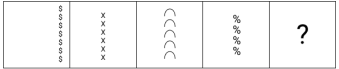
Question 52

The mean proportional between 25 and a number N is two times the mean proportional between 15 and 35. The number N is:

  1. AOption (a)

    76

  2. BOption (b)

    80

  3. COption (c)

    72

  4. DOption (d)

    84

View answer & explanation

Correct answer

Answer: (d)D.

84

Why this answer is correct

Shortcut Trick

The mean proportional between two numbers a and b is √(ab).

Given condition: √(25 × N) = 2 × √(15 × 35)

Squaring both sides directly: 25 × N = 4 × 15 × 35

⇒ N = (4 × 525) ÷ 25 = 84

∴ The correct answer is 84.

Alternate Method

Given:

First pair of numbers: 25 and N

Second pair of numbers: 15 and 35

Formula Used:

Mean proportional between a and b = √(a × b)

25

N

√(25N)

15

35

√(15 × 35)

= 2 ×

Squaring both sides: 25 × N = 4 × 15 × 35 N = 84

Calculations:

⇒ Mean proportional of 25 and N = √(25 × N)

⇒ Mean proportional of 15 and 35 = √(15 × 35)

⇒ √(25 × N) = 2 × √(15 × 35)

Squaring both sides:

⇒ 25 × N = 22 × (15 × 35)

⇒ 25 × N = 4 × 525

⇒ 25 × N = 2100

⇒ N = 2100 ÷ 25

⇒ N = 84

∴ The correct answer is 84.

Additional Information

Mean Proportional

For any two numbers a and b, the mean proportional is given by √(a × b). It is a value x such that a:x :: x:b.

Third Proportional

For two numbers a and b, the third proportional is calculated as b2 ÷ a. It is a value x such that a:b :: b:x.

Fourth Proportional

For three numbers a, b and c, the fourth proportional is (b × c) ÷ a. It is a value x such that a:b :: c:x.

Question 53

A book was purchased for ₹1,020 and sold for ₹1,224. Find the profit percentage.

  1. AOption (a)

    18%

  2. BOption (b)

    20%

  3. COption (c)

    21%

  4. DOption (d)

    19%

View answer & explanation

Correct answer

Answer: (b)B.

20%

Why this answer is correct

Shortcut Trick

Ratio of Selling Price to Cost Price = 1224 ÷ 1020 = 6 / 5

Profit parts = 6 − 5 = 1 part

Profit % = (1 ÷ 5) × 100 = 20%

∴ The correct answer is 20%.

Alternate Method

Given:

Cost Price (CP) = ₹1,020

Selling Price (SP) = ₹1,224

Formula Used:

Profit = SP − CP

Profit % = (Profit ÷ CP) × 100

CP = ₹1020

Profit = ₹204

SP = ₹1224

  • Profit %

Calculations:

⇒ Profit = 1224 − 1020

⇒ Profit = ₹204

⇒ Profit % = (204 ÷ 1020) × 100

⇒ Profit % = (1 ÷ 5) × 100

⇒ Profit % = 20%

∴ The correct answer is 20%.

Additional Information

Loss Percentage

When Selling Price is less than Cost Price, a loss occurs. Loss % = (Loss ÷ CP) × 100.

Marked Price & Discount

Discount is always calculated on the Marked Price (MP). SP = MP − Discount. Discount % = (Discount ÷ MP) × 100.

Successive Profit / Loss

If an item is sold multiple times, the final SP is calculated by applying successive percentage changes: Final SP = Initial CP × (1 + P1/100) × (1 + P2/100).

Question 54

The expenditure of Sudha is 125% more than her savings. If her expenditure decreases by 14% and savings increase by 38%, then by what percent does her income increase?

  1. AOption (a)

    4%

  2. BOption (b)

    2%

  3. COption (c)

    5%

  4. DOption (d)

    3%

View answer & explanation

Correct answer

Answer: (b)B.

2%

Why this answer is correct

Shortcut Trick

Let Savings = 100, then Expenditure = 100 + 125 = 225.

Ratio of Expenditure to Savings = 225 : 100 = 9 : 4.

Total Income ratio parts = 9 + 4 = 13.

Using the weighted average method for percentage change:

⇒ Net % change in Income = (9 × −14% + 4 × 38%) ÷ 13

⇒ Net % change = (−126 + 152) ÷ 13 = 26 ÷ 13 = 2%

∴ The correct answer is 2%.

Alternate Method

Initial (Income = 325)

Exp: 225

Sav: 100

Final (Income = 331.5)

Exp: 193.5

Sav: 138

−14%

+38%

Net Increase = 331.5 − 325 = 6.5 % Increase = (6.5 ÷ 325) × 100 = 2%

Given:

Expenditure is 125% more than Savings.

Expenditure decreases by 14%.

Savings increase by 38%.

Formula Used:

Income = Expenditure + Savings

Percentage Change = (Net Change ÷ Original Value) × 100

Calculations:

⇒ Let initial Savings = 100

⇒ Initial Expenditure = 100 + 125% of 100 = 225

⇒ Initial Income = 225 + 100 = 325

⇒ New Expenditure = 225 − (14% of 225) = 225 − 31.5 = 193.5

⇒ New Savings = 100 + (38% of 100) = 100 + 38 = 138

⇒ New Income = 193.5 + 138 = 331.5

⇒ Increase in Income = 331.5 − 325 = 6.5

⇒ Percentage Increase = (6.5 ÷ 325) × 100

⇒ Percentage Increase = (650 ÷ 325) = 2%

∴ The correct answer is 2%.

Additional Information

Income, Expenditure and Savings Relationship

Income is always the sum of expenditure and savings. A percentage change in income acts as the weighted average of the percentage changes in expenditure and savings. Formula: Income = Expenditure + Savings.

Alligation Method for Percentages

When two independent parts of a total undergo percentage changes, the individual percentage shifts and the overall aggregate percentage shift form an alligation structure. The ratio of the parts equals the inverse ratio of their deviations from the aggregate mean.

Percentage Change

The relative change between an old value and a new value is calculated relative to the original base value. The core formula is: % change = (New Value − Old Value) ÷ Old Value × 100.

Question 55

The average weight of Mohammad, Ashish and Kiran is 46 kg. If the average weight of Mohammad and Ashish be 40 kg and that of Ashish and Kiran be 42 kg, then the weight of Ashish (in kg) is:

  1. AOption (a)

    46

  2. BOption (b)

    36

  3. COption (c)

    41

  4. DOption (d)

    26

View answer & explanation

Correct answer

Answer: (d)D.

26

Why this answer is correct

Shortcut Trick Total sum of all three = 46 × 3 = 138 kg Sum of Mohammad and Ashish = 40 × 2 = 80 kg Sum of Ashish and Kiran = 42 × 2 = 84 kg Weight of Ashish = (Sum of Mohammad & Ashish) + (Sum of Ashish & Kiran) − Total Sum Weight of Ashish = 80 + 84 − 138 = 26 kg ∴ The correct answer is 26 kg.

Alternate Method

Mohammad + Ashish = 80 kg

Ashish + Kiran = 84 kg

Total (M + A + K) = 138 kg

Ashish overlap

Given: Average weight of Mohammad, Ashish, and Kiran = 46 kg Average weight of Mohammad and Ashish = 40 kg Average weight of Ashish and Kiran = 42 kg

Formula Used: Total Value = Average × Number of entities

Calculations: ⇒ Total weight of Mohammad, Ashish, and Kiran = 46 × 3 = 138 kg ⇒ Total weight of Mohammad and Ashish = 40 × 2 = 80 kg ⇒ Total weight of Ashish and Kiran = 42 × 2 = 84 kg ⇒ Weight of Ashish = (Total weight of M & A) + (Total weight of A & K) − (Total weight of M, A, & K) ⇒ Weight of Ashish = 80 + 84 − 138 ⇒ Weight of Ashish = 164 − 138 ⇒ Weight of Ashish = 26 kg ∴ The correct answer is 26 kg.

Additional Information

Missing Observation in Average If the average of N items is given, and the averages of the first 'a' and last 'b' items are given where a + b > N, the overlapping item = (Sum of first 'a' items + Sum of last 'b' items) − Sum of all N items.

Combined Average If the average of n1 items is A1 and n2 items is A2, then their combined average is given by (n1A1 + n2A2) ÷ (n1 + n2).

Weighted Average It is an average resulting from the multiplication of each component by a factor reflecting its importance. Formula: (w1x1 + w2x2 + ... + wnxn) ÷ (w1 + w2 + ... + wn).

Question 56

Evaluate: (-9) - (-60) ÷ (-12) + (-4) × 8

  1. AOption (a)

    -48

  2. BOption (b)

    -45

  3. COption (c)

    -49

  4. DOption (d)

    -46

View answer & explanation

Correct answer

Answer: (d)D.

-46

Why this answer is correct

Given:

(-9) - (-60) ÷ (-12) + (-4) × 8

Formula Used:

a - (b ÷ c) + (d × e)

Calculation:

⇒ (-9) - (-60 ÷ -12) + (-4 × 8)

⇒ (-9) - (5) + (-32)

⇒ -9 - 5 - 32

⇒ -46

∴ The correct answer is -46.

Question 57

Rupesh sold 153 chairs and had a gain equal to the selling price of 53 chairs. What is his profit percentage?

  1. AOption (a)

    58%

  2. BOption (b)

    63%

  3. COption (c)

    48%

  4. DOption (d)

    53%

View answer & explanation

Correct answer

Answer: (d)D.

53%

Why this answer is correct

Shortcut Trick

Let the Selling Price (SP) of 1 chair be 1 unit.

Total Selling Price of 153 chairs = 153 units.

Profit = Selling Price of 53 chairs = 53 units.

Total Cost Price (CP) = Total SP − Profit = 153 − 53 = 100 units.

Profit % = (Profit ÷ CP) × 100 = (53 ÷ 100) × 100 = 53%.

∴ The correct answer is 53%.

Alternate Method

Given:

Number of chairs sold = 153

Gain = Selling Price (SP) of 53 chairs

Formula Used:

Cost Price (CP) = SP − Gain

Profit % = (Gain ÷ CP) × 100

Selling Price (SP) = 153 Units

Cost Price = 100 Units Profit = 53 Units Profit % = (53 ÷ 100) × 100 = 53%

Calculations:

⇒ Let the Selling Price (SP) of 1 chair be ₹1.

⇒ Total Selling Price of 153 chairs = 153 × 1 = ₹153

⇒ Gain = SP of 53 chairs = 53 × 1 = ₹53

⇒ We know that CP = SP − Gain

⇒ Cost Price (CP) of 153 chairs = 153 − 53 = ₹100

⇒ Profit % = (Gain ÷ CP) × 100

⇒ Profit % = (53 ÷ 100) × 100 = 53%

∴ The correct answer is 53%.

Additional Information

Profit and Loss Basics

Profit occurs when the Selling Price is greater than the Cost Price (SP > CP). Formula: Profit = SP − CP. Loss occurs when the Cost Price is greater than the Selling Price (CP > SP). Formula: Loss = CP − SP.

Profit and Loss Percentage

Profit and Loss % are always calculated on the Cost Price (CP) unless stated otherwise in the question. Formula: Profit % = (Profit ÷ CP) × 100.

Dishonest Dealer Concept

When a dealer claims to sell goods at Cost Price but uses a false weight, Profit % = (True Weight − False Weight) ÷ False Weight × 100.

Question 58

A man goes to Mumbai from Pune at a speed of 78km/hr and returns to Pune at speed of 91km/hr, through same route. What is his average speed (in km/hr) of the entire journey?

  1. AOption (a)

    89

  2. BOption (b)

    82

  3. COption (c)

    79

  4. DOption (d)

    84

View answer & explanation

Correct answer

Answer: (d)D.

84

Why this answer is correct

Shortcut Trick

When a person covers two equal distances at speeds x and y, Average Speed = 2xy ÷ (x + y).

Given speeds are x = 78 km/hr and y = 91 km/hr.

Average Speed = (2 × 78 × 91) ÷ (78 + 91)

Average Speed = (2 × 78 × 91) ÷ 169

Average Speed = 2 × 6 × 7 = 84 km/hr.

∴ The correct answer is 84 km/hr.

Alternate Method

Given:

Speed from Pune to Mumbai = 78 km/hr

Speed from Mumbai to Pune = 91 km/hr

Pune Mumbai

Speed = 78 km/hr

Speed = 91 km/hr

Constant Distance (D)

Formula Used:

Average speed = Total Distance ÷ Total Time

Calculations:

⇒ Let the one-way distance be the LCM of the speeds (78 and 91) to simplify calculations.

⇒ 78 = 13 × 6 and 91 = 13 × 7

⇒ LCM of 78 and 91 = 13 × 6 × 7 = 546

⇒ Let the distance between Pune and Mumbai be 546 km.

⇒ Time taken from Pune to Mumbai = Distance ÷ Speed = 546 ÷ 78 = 7 hours.

⇒ Time taken from Mumbai to Pune = Distance ÷ Speed = 546 ÷ 91 = 6 hours.

⇒ Total Distance covered = 546 + 546 = 1092 km.

⇒ Total Time taken = 7 + 6 = 13 hours.

⇒ Average Speed = 1092 ÷ 13 = 84 km/hr.

∴ The correct answer is 84 km/hr.

Additional Information

Average Speed for Different Distances

When travelling different distances D1, D2 at speeds S1, S2 respectively, Average Speed = (Total Distance) ÷ (Total Time) = (D1 + D2) ÷ (D1/S1 + D2/S2).

Average Speed for 3 Equal Distances

When a person travels 3 equal distances at speeds x, y, and z, the Average Speed = 3xyz ÷ (xy + yz + zx).

Relative Speed

When two objects move in opposite directions, their relative speed is the sum of their individual speeds (S1 + S2). When moving in the same direction, it is the difference (S1 − S2).

Question 59

What is the effective discount per cent if a shopkeeper offers a scheme, “Buy five and get three free”?

  1. AOption (a)

    35.5%

  2. BOption (b)

    33.8%

  3. COption (c)

    41.5%

  4. DOption (d)

    37.5%

View answer & explanation

Correct answer

Answer: (d)D.

37.5%

Why this answer is correct

Shortcut Trick

Effective Discount % = (Free Items ÷ Total Items) × 100

Here, Free Items = 3

Total Items = 5 (Paid) + 3 (Free) = 8

Discount % = (3 ÷ 8) × 100 = 37.5%

∴ The correct answer is 37.5%.

Alternate Method

Buy 5 (Paid)

Get 3 (Free)

Total Items = 5 + 3 = 8

Discount % = (3 ÷ 8) × 100 = 37.5%

Given:

Scheme = Buy 5, get 3 free.

Formula Used:

Discount % = (Total Discount ÷ Total Marked Price) × 100

Calculations:

⇒ Let the marked price of 1 item be ₹10.

⇒ Total items taken by the customer = 5 (paid) + 3 (free) = 8 items.

⇒ Total marked price of 8 items = 8 × 10 = ₹80.

⇒ Total selling price (since customer pays for only 5 items) = 5 × 10 = ₹50.

⇒ Total Discount = Marked Price − Selling Price = 80 − 50 = ₹30.

⇒ Effective Discount % = (30 ÷ 80) × 100

⇒ Effective Discount % = (3 ÷ 8) × 100 = 37.5%

∴ The correct answer is 37.5%.

Additional Information

Successive Discount

When two discounts of a% and b% are given successively on an article, the net effective discount % is given by the formula: (a + b − ab ÷ 100)%.

Marked Price and Cost Price Relation

The direct relationship between Cost Price (CP) and Marked Price (MP) when dealing with a profit P% and discount D% is: MP × (100 − D)% = CP × (100 + P)%.

Combined Free Scheme and Additional Discount

If a shopkeeper offers a "Buy X Get Y Free" scheme along with an additional z% discount, the overall Selling Price is given by: SP = MP × [X ÷ (X + Y)] × [(100 − z) ÷ 100].

Question 60

Manish travels from City A to City B. If Manish drives his car at 1/3​ of his normal speed, then he reaches City B 36 minutes late. Find the time (in minutes) that Manish would have taken to travel from City A to City B if he drove at his normal speed.

  1. AOption (a)

    20

  2. BOption (b)

    15

  3. COption (c)

    26

  4. DOption (d)

    18

View answer & explanation

Correct answer

Answer: (d)D.

18

Why this answer is correct

Shortcut Trick

Speed ratio (Normal : New) = 3 : 1

Time ratio (Normal : New) = 1 : 3 (Since time is inversely proportional to speed)

Difference in time ratio = 3 − 1 = 2 units

2 units → 36 minutes late

1 unit (Normal time) → 18 minutes

∴ The correct answer is 18 minutes.

Alternate Method

City A City B Distance = D

Normal: Speed = S Time = T min

New: Speed = S / 3 Time = (T + 36) min

Given:

New speed = 1/3 of normal speed

Time delay = 36 minutes late

Formula Used:

Distance = Speed × Time

When distance is constant, Speed × Time = Constant

Calculation:

Let the normal speed be S and normal time be T.

⇒ Normal distance = S × T

⇒ New speed = S / 3

⇒ New time = T + 36

Since the distance traveled is the same in both cases:

⇒ S × T = (S / 3) × (T + 36)

⇒ T = (T + 36) / 3

⇒ 3T = T + 36

⇒ 2T = 36

⇒ T = 18 minutes

∴ The correct answer is 18 minutes.

Additional Information

Inverse Proportionality of Speed and Time

When distance is constant, speed is inversely proportional to time. If speed is reduced to a/b of its original value, the time taken becomes b/a of the original time.

Average Speed

Average Speed = Total Distance ÷ Total Time. If two equal distances are covered at speeds x and y, Average Speed = 2xy / (x + y).

Relative Speed

When two bodies move in the same direction, Relative Speed = |S1 − S2|. When moving in opposite directions, Relative Speed = S1 + S2.

English (20 questions)

Question 61

Select the most appropriate option to fill in the blank.

He made the cake all by _____.

  1. AOption (a)

    yourself

  2. BOption (b)

    himself

  3. COption (c)

    myself

  4. DOption (d)

    herself

View answer & explanation

Correct answer

Answer: (b)B.

himself

Why this answer is correct

The correct answer is Option 2.


Key Points

  • The pronoun "himself" is used as a reflexive pronoun to indicate that the subject (He) performed the action on his own.
  • Options like "yourself" or "myself" are inappropriate as they do not match the subject (He).
  • The word "herself" is also incorrect, as the subject refers to a male individual (He).
  • Thus, the correct reflexive pronoun to complete the sentence is "himself."

Therefore, the correct answer is Option 2.


Correct Sentence: "He made the cake all by himself."


Additional Information

  • Option 1 (yourself): This is incorrect as the sentence refers to "He," not "You."
  • Option 3 (myself): This is incorrect as the speaker is not referring to themselves, but rather to "He."
  • Option 4 (herself): This is incorrect as "He" refers to a male subject, not a female subject.
  • Option 5: This option is not applicable in this context.

Question 62

Select the most appropriate option to fill in the blank.

Following the credo ‘Together we stand, divided we fall’, the factory workers left their work and stepped out of the factory _________ to hold a protest rally against the higher authorities.

  1. AOption (a)

    impasse

  2. BOption (b)

    en-masse

  3. COption (c)

    ex-facto

  4. DOption (d)

    en-route

View answer & explanation

Correct answer

Answer: (b)B.

en-masse

Why this answer is correct

Code

The correct answer is '**Option 2**'.


**Key Points**

- The word "**en-masse**" means collectively or all together. (सामूहिक रूप से)
- The phrase "en-masse" fits the context of workers collectively stepping out of the factory to hold a protest rally.
- Other options like "**impasse**", "**ex-facto**", and "**en-route**" do not fit the sentence appropriately.

​Therefore, the correct answer is '**Option 2**'.

**Complete Sentence:** *Following the credo ‘Together we stand, divided we fall’, the factory workers left their work and stepped out of the factory en-masse to hold a protest rally against the higher authorities.*

**Additional Information**

- **Impasse (गतिरोध)**: means a situation where no progress is possible.
- **Ex-facto (पूर्व तथ्य)**: means from the fact or retrospective.
- **En-route (मार्ग में)**: means on the way.

Question 63

elect the most appropriate synonym of the given word.

Fragile

  1. AOption (a)

     Heavy

  2. BOption (b)

    Shiny

  3. COption (c)

    Delicate

  4. DOption (d)

    Strong

View answer & explanation

Correct answer

Answer: (c)C.

Delicate

Why this answer is correct

The correct answer is: Delicate.

Key Points

  • The word "Fragile" means something that is easily broken, damaged, or destroyed. It typically refers to objects or situations that require careful handling. (नाज़ुक)
  • Example: The old vase is fragile, so handle it with care.
  • "Delicate" refers to something that is fine, subtle, or fragile in structure or nature. It can also imply sensitivity or being easily damaged. (नाजुक)
  • Example: The delicate flowers need protection from strong winds.
  • Hence, we can infer that the most appropriate synonym for 'Fragile' is 'Delicate'.

Therefore, the correct answer is: Delicate.

Additional Information

Here are the other options explained along with their Hindi meanings and example sentences:

  • Heavy (भारी): Something that has great weight or is difficult to lift.
  • Example: The suitcase was too heavy for me to carry alone.
  • Shiny (चमकीला): Something that reflects light or has a bright and glossy appearance.
  • Example: The shiny surface of the car made it look brand new.
  • Strong (मज़बूत): Having great physical power or being sturdy and resistant to damage.
  • Example: The bridge was built strong to withstand heavy traffic.

Question 64

The following sentence has been split into four segments. Identify the segment that contains a grammatical error.

<br>

(A) The friends excited planned their upcoming vacation, / (B) researching destinations / (C) and creating an itinerary filled with / (D) thrilling activities and adventures.

  1. AOption (a)

    D

  2. BOption (b)

    A

  3. COption (c)

    B

  4. DOption (d)

    C

View answer & explanation

Correct answer

Answer: (b)B.

A

Why this answer is correct

The correct answer is Option 2.


Key Points

  • The error in the sentence lies in part A, which states: "The friends excited planned their upcoming vacation."
  • The word "excited" is incorrectly used as an adverb in this context. The correct form should be "excitedly" to describe how the friends planned their vacation.
  • Adverbs are used to modify verbs, and in this case, "excitedly" is the appropriate adverbial form to modify the verb "planned."
  • Thus, the corrected phrase should be: "The friends excitedly planned their upcoming vacation."

Therefore, the correct answer is A.


Correct Sentence: "The friends excitedly planned their upcoming vacation, researching destinations and creating an itinerary filled with thrilling activities and adventures."


Additional Information

  • B: "researching destinations" – This part of the sentence is grammatically correct and does not require any changes.
  • C: "and creating an itinerary filled with" – This part of the sentence is grammatically correct and does not require any changes.
  • D: "thrilling activities and adventures." – This part of the sentence is grammatically correct and does not require any changes.

Question 65

In the sentence 'The strategist’s thoughts were very coherent', what is the most appropriate ANTONYM of the word 'coherent'?

  1. AOption (a)

    Systematic

  2. BOption (b)

    Incomprehensible

  3. COption (c)

    Logical

  4. DOption (d)

    Lacklustre

View answer & explanation

Correct answer

Answer: (b)B.

Incomprehensible

Why this answer is correct

The correct answer is: Incomprehensible.

Key Points

  • The word "coherent" means logical and consistent; ideas that are clear and well-organized. (सुसंगत)
  • Example: Her speech was coherent, making it easy for everyone to understand her point of view.
  • "Incomprehensible" refers to something that cannot be understood or is unclear. It is the antonym of coherent. (असमझने योग्य)
  • Example: The instructions were incomprehensible, leaving the participants confused.
  • Hence, the antonym of 'coherent' is 'incomprehensible'.

Therefore, the correct answer is: Incomprehensible.

Additional Information

Here are the other options explained along with their Hindi meanings and example sentences:

  • Systematic (व्यवस्थित): Something done according to a fixed plan or system; methodical.
  • Example: Her systematic approach to studying helped her achieve top grades.
  • Logical (तार्किक): Something based on clear, sound reasoning.
  • Example: His argument was logical and convincing.
  • Lacklustre (निस्तेज): Something lacking in vitality, force, or enthusiasm.
  • Example: The movie received poor reviews due to its lacklustre plot.

Question: In the sentence 'The strategist's thoughts were very coherent', what is the most appropriate ANTONYM of the word 'coherent'?

The correct answer is: Incomprehensible.

Question 66

Select the most appropriate option to fill in the blank.

When Sarah realised that she forgot her keys at home, she felt like a fish out of _________.

  1. AOption (a)

    pond

  2. BOption (b)

    sea

  3. COption (c)

    river

  4. DOption (d)

    water

View answer & explanation

Correct answer

Answer: (d)D.

water

Why this answer is correct

Here’s the HTML solution for your question:

Code

The correct answer is '**water**'.


**Key Points**

- The idiom "**a fish out of water**" means feeling uncomfortable or out of place in a particular situation.
- In this context, Sarah felt uneasy because she forgot her keys at home.
- Other options like "**pond**," "**sea**," and "**river**" do not fit the idiom correctly.

​Therefore, the correct answer is '**Option 4**'.

**Complete Sentence:** *When Sarah realised that she forgot her keys at home, she felt like a fish out of water.*

**Additional Information**

- **Pond**: Refers to a small body of water but does not fit the idiom.
- **Sea**: Refers to a large body of saltwater but does not fit the idiom.
- **River**: Refers to a flowing body of freshwater but does not fit the idiom.

Question 67

Select the INCORRECTLY spelt word.

  1. AOption (a)

     Apology

  2. BOption (b)

    Ensure

  3. COption (c)

     Certificate

  4. DOption (d)

    Calender

View answer & explanation

Correct answer

Answer: (d)D.

Calender

Why this answer is correct

The correct answer is option 4.

Key Points

The misspelled word is 'Calender'.

  • The correct spelling would be 'Calendar'.
  • The word 'Calendar' is a noun which means 'a chart or series of pages showing the days, weeks, and months of a particular year'. (पंचांग)
  • For Example -
  • The calendar on my desk helps me keep track of appointments.

Therefore, the correct answer would be 'Calender'.

Additional Information

Let's understand the meanings of the other marked words - 

  • Apology - a regretful acknowledgment of an offense or failure (माफी)
  • Ensure - make certain that something shall occur or be the case (सुनिश्चित करना)
  • Certificate - an official document attesting a fact (प्रमाण पत्र)

Question 68

Select the most appropriate ANTONYM of the underlined word.

Climate change and environmental degradation are an existential threat to Europe and the world.

  1. AOption (a)

    Demand 

  2. BOption (b)

    Disaster

  3. COption (c)

    Development

  4. DOption (d)

    Distribution

View answer & explanation

Correct answer

Answer: (c)C.

Development

Why this answer is correct

The correct answer is: Option 3 (Development).

Key Points

  • The word "Degradation" means the process of something becoming worse or being reduced in quality, value, or strength. (अवमूल्यन, गिरावट)
  • Example: The degradation of the forest due to excessive logging is a major concern.
  • "Development" refers to the process of growth, improvement, or a positive change in quality or condition. (विकास)
  • Example: The city has seen remarkable development over the past decade with modern infrastructure and facilities.
  • Since "Development" is a positive process and the opposite of "Degradation," it is the most appropriate antonym.

Therefore, the correct answer is: Option 3 (Development).

Additional Information

Here are the other options explained along with their Hindi meanings and example sentences:

  • Demand (मांग): The desire or need for something to be bought or used.
  • Example: The demand for electric vehicles is increasing due to environmental concerns.
  • Disaster (आपदा): A sudden, catastrophic event causing great damage or suffering.
  • Example: The earthquake was a disaster that left thousands homeless.
  • Distribution (वितरण): The act of sharing or spreading something over a range of areas.
  • Example: The distribution of resources was uneven, leading to disputes.

Question: Select the most appropriate ANTONYM of the underlined word.

Climate change and environmental degradation are an existential threat to Europe and the world.

Correct Answer: Option 3 (Development)

Question 69

 Identify the sentence with the INCORRECT usage of an adverb.

  1. AOption (a)

    He called his friend last night.

  2. BOption (b)

    They met for lunch yesterday.

  3. COption (c)

    I will send you the report tomorrow.

  4. DOption (d)

    I’ll submit next week the assignment to you.

View answer & explanation

Correct answer

Answer: (d)D.

I’ll submit next week the assignment to you.

Why this answer is correct

The correct answer is Option 4.


Key Points

  • The issue in Option 4 lies in the incorrect placement of the adverb "next week."
  • Adverbs of time, such as "next week," are typically placed at the beginning or the end of the sentence for clarity.
  • The correct sentence should be: "I'll submit the assignment to you next week."
  • This ensures proper sentence structure and grammatical accuracy.

Therefore, the correct answer is Option 4.


Correct Sentence: "I'll submit the assignment to you next week."


Additional Information

  • Option 1: "He called his friend last night." – This sentence uses the adverb "last night" correctly at the end of the sentence.
  • Option 2: "They met for lunch yesterday." – The adverb "yesterday" is correctly placed at the end of the sentence.
  • Option 3: "I will send you the report tomorrow." – The adverb "tomorrow" is correctly placed at the end of the sentence.
  • No error: This would be the correct option if there were no mistakes in any of the sentences. However, Option 4 contains an error.

Question 70

Select the most appropriate synonym of the word in the brackets to fill in the blank.

We sincerely thanked them for their ________________ (benevolence) and generosity.

  1. AOption (a)

    intention

  2. BOption (b)

    liberty

  3. COption (c)

    suspicion

  4. DOption (d)

    kindness

View answer & explanation

Correct answer

Answer: (d)D.

kindness

Why this answer is correct

Here is the solution for the given question in the requested HTML format:

Code

The correct answer is '**kindness**'.


**Key Points**

- The word "**benevolence**" refers to kindness and generosity.
- Kindness is the most appropriate synonym for benevolence in this context.
- The other options: "**intention**," "**liberty**," and "**suspicion**" do not fit the meaning of benevolence.

​Therefore, the correct answer is '**Option 4**'.

**Complete Sentence:** *We sincerely thanked them for their kindness and generosity.*

**Additional Information**

- **Intention (इरादा)**: refers to a purpose or aim.
- **Liberty (स्वतंत्रता)**: refers to freedom or independence.
- **Suspicion (संदेह)**: refers to doubt or mistrust.

Question 71

Select the most appropriate option to fill in the blank.

The detective’s _______________ examination of the crime scene revealed crucial evidence that others had missed.

  1. AOption (a)

    cursory

  2. BOption (b)

    superficial

  3. COption (c)

    thorough

  4. DOption (d)

    hasty

View answer & explanation

Correct answer

Answer: (c)C.

thorough

Why this answer is correct

Below is the solution to your question in the requested HTML format:

Code

The correct answer is '**thorough**'.


**Key Points**

- The word "**thorough**" means detailed and comprehensive, leaving no aspect unnoticed.
- The detective's detailed examination uncovered crucial evidence that others had missed, highlighting thoroughness.
- The other options: "**cursory**," "**superficial**," and "**hasty**" suggest quick or incomplete actions, which do not fit the context.

​Therefore, the correct answer is '**Option 3**'.

**Complete Sentence:** *The detective's thorough examination of the crime scene revealed crucial evidence that others had missed.*

**Additional Information**

- **Cursory (सरसरी)**: means hasty and not thorough or detailed.
- **Superficial (सतही)**: means existing or occurring at the surface level, lacking depth.
- **Hasty (त्वरित)**: means done quickly without careful consideration.

Question 72

Select the most appropriate synonym of the given word.

Companion

  1. AOption (a)

    Mate

  2. BOption (b)

    Enemy

  3. COption (c)

    Neighbour

  4. DOption (d)

    Sister

View answer & explanation

Correct answer

Answer: (a)A.

Mate

Why this answer is correct

The correct answer is: Mate.

Key Points

  • The word "Companion" means a person or animal with whom one spends a lot of time or with whom one travels. (साथी)
  • Example: During his travels, he found a loyal companion in his dog.
  • The word "Mate" refers to a friend, partner, or someone with whom you share a bond or close relationship. (मित्र)
  • Example: He and his mate have been best friends since childhood.
  • Thus, "mate" and "companion" are synonyms as both refer to someone who shares a bond or association with you.

Therefore, the correct answer is: Mate.

Additional Information

Here are the other options explained along with their Hindi meanings and example sentences:

  • Enemy (दुश्मन): A person who is actively opposed or hostile to someone or something.
  • Example: The two nations have been enemies for decades.
  • Neighbour (पड़ोसी): A person living next door or very near to another.
  • Example: Our neighbour is very friendly and often helps us with small tasks.
  • Sister (बहन): A female sibling or someone who shares a sisterly bond.
  • Example: My sister and I often go shopping together on weekends.

Question: Select the most appropriate synonym of the given word. Companion

Correct answer: Mate

Question 73

Rectify the sentence by selecting the correctly spelt word from the options.

Despite his contributions to the institute, he was given a niggardlly raise in his salary

  1. AOption (a)

    Nigardly

  2. BOption (b)

     Niggardly

  3. COption (c)

    Niiggardly

  4. DOption (d)

    Niggarddly

View answer & explanation

Correct answer

Answer: (b)B.

 Niggardly

Why this answer is correct

Here is the solution for your question in the provided HTML format:

Code

The correct answer is **option 2.**

**Key Points**

**The misspelled word is 'niggardlly'.**

- **The correct spelling would be 'niggardly'.**
- The word '**niggardly**' is an **adjective** which means 'meager, stingy or miserly'. **(कंजूस)**
- **For Example -**
- Despite his significant contributions, he received a niggardly raise in his salary.

Therefore, the correct spelling would be **'niggardly'.**

**Additional Information**

**Let's understand the meanings of the other options -** 

- **Nigardly -** Incorrect spelling, not a valid word
- **Niiggardly -** Incorrect spelling, not a valid word
- **Niggarddly -** Incorrect spelling, not a valid word

Question 74

Select the most appropriate idiom that can substitute the underlined segment in the given sentence.

After the meeting, I felt like I was elated beacuse the team decided to implement my idea.

  1. AOption (a)

    walking on thin ice

  2. BOption (b)

    walking on eggshells

  3. COption (c)

    walking on a dream

  4. DOption (d)

     walking on air

View answer & explanation

Correct answer

Answer: (d)D.

 walking on air

Why this answer is correct

The correct answer is: Option 4 (walking on air).

Key Points

  • The idiom "walking on air" means feeling extremely happy or elated, as if one is floating in the air due to joy. (बेहद खुश होना)
  • Example: After hearing the news of her promotion, she was walking on air.

Therefore, the correct answer is: Option 4 (walking on air).

Additional Information

Here are the other options explained along with their Hindi meanings and example sentences:

  • Option 1: Walking on thin ice (पतली बर्फ पर चलना): Refers to being in a risky or dangerous situation.
  • Example: By speaking against his boss, he was walking on thin ice.
  • Option 2: Walking on eggshells (अंडे के छिलकों पर चलना): Refers to being extremely cautious, often to avoid offending or upsetting someone.
  • Example: During the negotiation, he felt like he was walking on eggshells.
  • Option 3: Walking on a dream (सपने पर चलना): An uncommon idiom, often used metaphorically to describe unrealistic or dreamy aspirations.
  • Example: She felt like she was walking on a dream after winning the lottery.

Question: Select the most appropriate idiom that can substitute the underlined segment in the given sentence.

The correct answer is: Option 4 (walking on air).

Question 75

Select the word that best completes the given sentence. Determine the collocation through the sentence.

Anil caught a glimpse of the rare bird before it ___________ flight into the dense forest.

  1. AOption (a)

    had

  2. BOption (b)

    took

  3. COption (c)

    laid

  4. DOption (d)

    got

View answer & explanation

Correct answer

Answer: (b)B.

took

Why this answer is correct

The correct answer is: Option 2 (took).

Key Points

  • The word "took" means to seize or capture something, or in this context, it refers to the act of beginning or initiating an action like flight. (ले लिया/प्रारंभ करना)
  • Example: The bird took flight as soon as the hunter approached.
  • The phrase "took flight" is a common collocation used to describe the action of an animal or bird starting to fly. (उड़ान भरी)
  • Example: As the sun set, the flock of birds took flight toward the horizon.
  • Hence, "took flight" fits well in the given sentence, making it the correct answer.

Therefore, the correct answer is: Option 2 (took).

Additional Information

Here are the other options explained along with their Hindi meanings and example sentences:

  • Option 1: Had (था/रखा): Refers to possession or an action that happened in the past.
  • Example: She had a wonderful time at the party.
  • Option 3: Laid (रखा/अंडा देना): Refers to placing something down or to the act of a bird producing eggs.
  • Example: The hen laid an egg early in the morning.
  • Option 4: Got (प्राप्त किया): Refers to obtaining or receiving something.
  • Example: He got the best marks in the class.

Question: Select the word that best completes the given sentence. Determine the collocation through the sentence.
Correct Answer: Option 2 (took).

In the following passage, some words have been deleted. Read the passage carefully and select the most appropriate option to fill in each blank.

The fact that the wetter periods in North Africa have 1 every 21,000 years or so is a big clue about what 2_ them: variations in Earth’s orbit. Due to gravitational influences from the moon and other planets in our solar system, the orbit of the Earth 3__ the sun is not constant. It has cyclic 4_ on multi-thousand year timescales. These orbital cycles 5 the amount of energy the Earth receives from the sun. On 100,000-year cycles, the shape of Earth’s orbit shifts between circular and oval.

Question 76

Select the most appropriate option to fill in blank no. 1.

  1. AOption (a)

    seized

  2. BOption (b)

    recurred

  3. COption (c)

    terminated

  4. DOption (d)

    abated

View answer & explanation

Correct answer

Answer: (b)B.

recurred

Why this answer is correct

The correct answer is 'recurred'.


Key Points

  • The passage discusses the wetter periods in North Africa that occur regularly.
  • The appropriate verb should indicate something that happens repeatedly or cyclically.
  • "Recurred" fits well as it denotes happening again periodically, which aligns with the context of the passage.
  • Other options ("seized", "terminated", "abated") do not fit the context of regularly occurring wetter periods.

Therefore, the correct answer is 'Option 2'.


Complete Passage: The fact that the wetter periods in North Africa have recurred every 21,000 years or so is a big clue about what 2_ them: variations in Earth’s orbit. Due to gravitational influences from the moon and other planets in our solar system, the orbit of the Earth 3__ the sun is not constant. It has cyclic 4_ on multi-thousand year timescales. These orbital cycles 5 the amount of energy the Earth receives from the sun. On 100,000-year cycles, the shape of Earth’s orbit shifts between circular and oval.


Additional Information

  • Seized (कब्जा करना): "Seized" means to take hold of suddenly or forcibly, which does not fit the context of cyclic wetter periods.
  • Terminated (समाप्त करना): "Terminated" means brought to an end, which does not reflect the ongoing recurrence of wetter periods.
  • Abated (कम होना): "Abated" means to become less intense, which does not align with the idea of periodic occurrences.

Question 77

Select the most appropriate option to fill in blank no. 2.

  1. AOption (a)

    debates

  2. BOption (b)

    bids

  3. COption (c)

    delegates

  4. DOption (d)

    causes

View answer & explanation

Correct answer

Answer: (d)D.

causes

Why this answer is correct

The correct answer is 'causes'.


Key Points

  • The passage discusses what factors are responsible for the wetter periods in North Africa.
  • The appropriate noun should indicate something that brings about or is the reason for these wetter periods.
  • "Causes" fits well as it denotes reasons or factors that lead to these events, which aligns with the context of the passage.
  • Other options ("debates", "bids", "delegates") do not fit the context of explaining what leads to the wetter periods.

Therefore, the correct answer is 'Option 4'.


Complete Passage: The fact that the wetter periods in North Africa have recurred every 21,000 years or so is a big clue about what causes them: variations in Earth’s orbit. Due to gravitational influences from the moon and other planets in our solar system, the orbit of the Earth 3__ the sun is not constant. It has cyclic 4_ on multi-thousand year timescales. These orbital cycles 5 the amount of energy the Earth receives from the sun. On 100,000-year cycles, the shape of Earth’s orbit shifts between circular and oval.


Additional Information

  • Debates (बहस): "Debates" means discussions involving opposite viewpoints, which does not fit the context of identifying reasons for the wetter periods.
  • Bids (प्रस्ताव): "Bids" means offers or attempts, which do not reflect the idea of causing or leading to wetter periods.
  • Delegates (प्रतिनिधि): "Delegates" means authorized representatives, which does not align with describing the factors behind the wetter periods.

Question 78

 Select the most appropriate option to fill in blank no. 3.

  1. AOption (a)

    around

  2. BOption (b)

    precise

  3. COption (c)

    straight

  4. DOption (d)

    direct

View answer & explanation

Correct answer

Answer: (a)A.

around

Why this answer is correct

The correct answer is 'around'.


Key Points

  • The passage discusses the orbit of the Earth in relation to the sun.
  • The appropriate preposition should describe the orbit's pathway in relation to the sun.
  • "Around" fits well as it denotes the path of the Earth's orbit encircling the sun, which aligns with the context of the passage.
  • Other options ("precise", "straight", "direct") do not fit the context of describing the Earth's orbital path.

Therefore, the correct answer is 'Option 1'.


Complete Passage: The fact that the wetter periods in North Africa have recurred every 21,000 years or so is a big clue about what causes them: variations in Earth’s orbit. Due to gravitational influences from the moon and other planets in our solar system, the orbit of the Earth around the sun is not constant. It has cyclic 4_ on multi-thousand year timescales. These orbital cycles 5 the amount of energy the Earth receives from the sun. On 100,000-year cycles, the shape of Earth’s orbit shifts between circular and oval.


Additional Information

  • Precise (सटीक): "Precise" means exact or accurate, which does not fit the context of describing the Earth's orbit pathway.
  • Straight (सीधा): "Straight" means extending in one direction without bending or curving, which does not reflect the nature of an orbit.
  • Direct (प्रत्यक्ष): "Direct" means extending or moving from one place to another without changing direction or stopping, which does not align with describing an orbital pathway.

Question 79

Select the most appropriate option to fill in blank no. 4.

  1. AOption (a)

    monotonies

  2. BOption (b)

    consistencies

  3. COption (c)

    variations

  4. DOption (d)

    regularities

View answer & explanation

Correct answer

Answer: (c)C.

variations

Why this answer is correct

The correct answer is 'variations'.


Key Points

  • The passage discusses changes that occur in the Earth's orbit over multi-thousand year timescales.
  • The appropriate noun should describe these changes or differences in Earth's orbital path.
  • "Variations" fits well as it denotes changes or differences, which aligns with the context of the passage.
  • Other options ("monotonies", "consistencies", "regularities") do not fit the context of describing changes over time.

Therefore, the correct answer is 'Option 3'.


Complete Passage: The fact that the wetter periods in North Africa have recurred every 21,000 years or so is a big clue about what causes them: variations in Earth’s orbit. Due to gravitational influences from the moon and other planets in our solar system, the orbit of the Earth around the sun is not constant. It has cyclic variations on multi-thousand year timescales. These orbital cycles 5 the amount of energy the Earth receives from the sun. On 100,000-year cycles, the shape of Earth’s orbit shifts between circular and oval.


Additional Information

  • Monotonies (एकरसता): "Monotonies" means a lack of variety and interest, which does not fit the context of describing changes in Earth's orbit.
  • Consistencies (संगतियों): "Consistencies" means the quality of always behaving or performing in a similar way, which does not reflect changes in Earth's orbit.
  • Regularities (नियमितता): "Regularities" means the state or quality of being regular, which does not capture the concept of changes or differences in Earth's orbit.

Question 80

Select the most appropriate option to fill in blank no. 5.

  1. AOption (a)

    stretch

  2. BOption (b)

    influence

  3. COption (c)

    return

  4. DOption (d)

    believe

View answer & explanation

Correct answer

Answer: (b)B.

influence

Why this answer is correct

The correct answer is 'influence'.


Key Points

  • The passage discusses how orbital cycles affect the amount of energy Earth receives from the sun.
  • The appropriate verb should indicate an effect or impact on the energy received.
  • 'Influence' fits well as it denotes having an effect on, which aligns with the context of the passage.
  • Other options ('stretch', 'return', 'believe') do not fit the context of describing the effect of orbital cycles.

Therefore, the correct answer is 'Option 2'.


Complete Passage: The fact that the wetter periods in North Africa have recurred every 21,000 years or so is a big clue about what causes them: variations in Earth’s orbit. Due to gravitational influences from the moon and other planets in our solar system, the orbit of the Earth around the sun is not constant. It has cyclic variations on multi-thousand year timescales. These orbital cycles influence the amount of energy the Earth receives from the sun. On 100,000-year cycles, the shape of Earth’s orbit shifts between circular and oval.


Additional Information

  • Stretch (खींचना): "Stretch" means to extend or elongate, which does not fit the context of describing the effect on energy.
  • Return (वापसी): "Return" means to go back to a place or person, which does not reflect the idea of influencing energy.
  • Believe (विश्वास करना): "Believe" means to accept something as true, which does not align with describing the effect of orbital cycles on energy.

हिंदी (20 questions)

Question 81

निम्न में से किस वाक्य में कारक चिह्न का अशुद्ध प्रयोग हुआ है ?

  1. AOption (a)

    तिलक ने महान भारत का सपना देखा था ।

  2. BOption (b)

    माता ने पुत्री को विदाई पर समय बहुत धन दिया ।

  3. COption (c)

    गुलाम अली द्वारा एक सुंदर ग़ज़ल सुनाई गई ।

  4. DOption (d)

    गाँधी जी ने सत्य और अहिंसा को महत्त्व दिया ।

View answer & explanation

Correct answer

Answer: (b)B.

माता ने पुत्री को विदाई पर समय बहुत धन दिया ।

Why this answer is correct

कारक चिह्न का अशुद्ध प्रयोग हुआ है- माता ने पुत्री को विदाई पर समय बहुत धन दिया ।

Key Pointsशुद्ध वाक्य होगा - 

  • माता ने पुत्री को विदाई के समय बहुत धन दिया ।

Important Pointsहिन्दी में आठ कारक’ हैं -

कारकविभक्तियाँ
कर्ताने
कर्मको
करणसे, द्वारा
सम्प्रदानको, के लिये, हेतु
अपादानसे (अलग होने के अर्थ में)
सम्बन्धका, की, के, रा, री, रे
अधिकरणमें, पर
सम्बोधनहे! अरे! ऐ! ओ! हाय!

Additional Information 

 कारक संबंधी अशुद्धियाँ - 

अशुद्ध वाक्यशुद्ध वाक्य
​शिष्य यज्ञ को लकड़ी लाया।शिष्य यज्ञ के लिए लकड़ी लाया।
मैं पुस्तक को पढ़ता हूँ।मैं पुस्तक पढ़ता हूँ।
वह देर में सोकर उठता है।वह देर से सोकर उठता है।
वह बस पर यात्रा कर रहा है।वह बस से यात्रा कर रहा है।
​घर पर सब कुशल हैं।घर में सब कुशल हैं।

Question 82

रिक्त स्थान की पूर्ति सार्थक और निरर्थक शब्द युग्म से कीजिए-

सोहन आया तो उसे खाने के लिए .... ही मिला ।

  1. AOption (a)

    भला- चंगा

  2. BOption (b)

    हिलते - जुलते

  3. COption (c)

    ऊंचा - नीचा

  4. DOption (d)

    बचा- खुचा

View answer & explanation

Correct answer

Answer: (d)D.

बचा- खुचा

Why this answer is correct

सही उत्तर है -  बचा - खुचा

Key Pointsपूर्ण वाक्य होगा - 

  • सोहन आया तो उसे खाने के लिए बचा- खुचा ही मिला।

Important Pointsसार्थक-

  • वे शब्द जिनका कुछ या कोई अर्थ निकलता हो 'सार्थक शब्द' कहते हैं।
  • जैसे- मोहन, घर, रात, आना, नीचे, ऊपर आदि।

निरर्थक-

  • जिन शब्दों का कोई अर्थ नहीं होता है, उसे निरर्थक शब्द कहते हैं। ​
  • जैसे - चाय-वाय, अच्छा-वच्छा, बुढ़ा-वुड्डा, लड़की-सड़की, बछड़ी-वछड़ी इत्यादि।

Question 83

अभ्यास अथवा व्यवहार से प्राप्त ज्ञान को __________कहते हैं । वाक्य के रिक्त स्थान की उपयुक्त शब्द से पूर्ति कीजिए।

  1. AOption (a)

    अनुशासन

  2. BOption (b)

    अनुशरण

  3. COption (c)

    अनुभव

  4. DOption (d)

    अनुभूति

View answer & explanation

Correct answer

Answer: (c)C.

अनुभव

Why this answer is correct

सही उत्तर है -  अनुभव

Key Pointsपूर्ण वाक्य होगा - 

  • अभ्यास अथवा व्यवहार से प्राप्त ज्ञान को अनुभव कहते हैं।

Important Pointsअनुभव का अर्थ है - 

  • तुजुर्बा ,  प्रत्यक्षज्ञान

अनुशासन का अर्थ है - 

  • नियंत्रण , नियम

अनुभूति का अर्थ है - 

  • अनुभव , संवेदना

Question 84

रेखांकित शब्द के स्थान पर सर्वोचित विकल्प चुनिए।

कोई ऐसा कृतघ्र नहीं हो सकता जो आपके अनुदानों को भुला दे ।

  1. AOption (a)

    कार्यों

  2. BOption (b)

    उपकारों

  3. COption (c)

    दण्डों

  4. DOption (d)

    अपकारों

View answer & explanation

Correct answer

Answer: (b)B.

उपकारों

Why this answer is correct

​सही उत्तर है - उपकारों

Key Pointsपूर्ण वाक्य होगा - 

  • कोई ऐसा कृतघ्र नहीं हो सकता जो आपके उपकारों को भुला दे।

Important Pointsउपकार का अर्थ है- 

  • भलाई

दंड का अर्थ है - 

  • सज़ा

अपकार का अर्थ है - 

  • बुराई

अनुदान का अर्थ है-

  • सरकार या किसी अन्य संस्था द्वारा किसी विशेष उद्देश्य के लिए दी जाने वाली वित्तीय सहायता या धनराशि।

Question 85

 निम्नलिखित में से सही युग्म की पहचान कीजिए-

  1. AOption (a)

    नर्स-अंग्रेजी

  2. BOption (b)

    लोटा-तत्सम

  3. COption (c)

    चाय-जापानी

  4. DOption (d)

    रिक्शा-चीनी

View answer & explanation

Correct answer

Answer: (a)A.

नर्स-अंग्रेजी

Why this answer is correct

​सही उत्तर है -  नर्स-अंग्रेजी

Key Points

  • लोटा देशज शब्द है
  • चाय चीनी भाषा का शब्द है
  • रिक्शा जापानी भाषा का शब्द है

Important Pointsविदेशज- 

  • जो शब्द विदेशी भाषा के हैं, परंतु हिंदी में उन शब्दों का प्रचलन हो रहा है, ऐसे शब्द विदेशज शब्द कहे जाते हैं।
  • विदेशी शब्द अरबी, फारसी, तुर्की, अंग्रेजी इत्यादि भाषाओं से लिए गए है। जैसे - लगाम, वापिस, शराब, हिम्मत आदि।

देशज-

  • वे शब्द जिनकी उत्पत्ति का श्रोत ज्ञात न हो और लेकिन भाषा में उनका प्रचलन भरपूर हो, देशज शब्दों की श्रेणी में आते हैं, 
  • जैसे - लोटा, कटोरा, डोंगा, डिबिया, खिचड़ी, खिड़की, पगड़ी, चिड़िया, जूता, तेंदुआ, फुनगी, कलाई आदि।

Additional Information


भाषाशब्द
अंग्रेज़ीअफसर, इंजन, डॉक्टर, लालटेन, सिलेट, अस्पताल, टिकस, कप्तान, थेटर, तारपीन, बोतल, मील, आर्डर, इंटर, इयरिंग, एजेंसी,क्रिकेट, काउन्सिल,गार्ड, जेल, चेयरमैन, ट्यूशन, डायरी, डिप्टी, ड्राइवर, पेंसिल, पेन, नंबर आदि।
फ़ारसीअफ़सोस, आबरू, आवारा, आमदनी, आईना, उम्मीद, कमीना, कुश्ती, किनारा, खामोश, खरगोश, खुश, खुराक, गवाह, गिरफ्तार, गुलाब, चाबुक, चादर, चिराग, चश्मा, चेहरा, चाशनी, जहर, जिन्दगी, जोश, तमाशा, तीर, दीवार, दस्तूर, दुकान, नाव, पलंग, पैदावार, पलक, पैमाना, बहरा, बेहूदा, बीमार, मुर्दा, मलीदा, यार, रंग, राह, लश्कर, सरदार, सौदागर, हफ्ता, हजार।
​अरबीआदत, आदमी, दावत, इनाम, इस्तीफ़ा, उम्र, एहसान,  औलाद, किस्मत, किताब, ख्याल, ख़राब, खिदमत, गरीब,जहाज, जालिम, जिक्र, तमाम, तकाजा, तारीख, तमाशा, तादात, तरक्की, दिमाग, दफ्तर, दौलत, नतीजा, नकद, फ़कीर, फैसला, मुहावरा, मामूली, मुक़दमा, मुसाफिर, मशहूर, लिफाफा, लियाकत, लायक, वकील, हाकिम।
​पुर्तगालीआलपीन, आलमारी, बाल्टी, चाबी, फीता, तम्बाकू, आया, इस्पात, इस्तिरी, कमीज, कनस्टर, कमरा, काजू, गमला, गोदाम, गोभी, तौलिया, नीलाम, परत, पिस्तौल, मेज, लबादा, साया, पादरी, परात, इस्पात।
तुर्कीउर्दू, मुग़ल, आका, काबू, कालीन, कैंची, कुली, कुर्की, चेचक, चमचा, तोप, तमगा, तलाश, बेगम, बहादुर, लाश, लफंगा, सौगात, सुराग।

Question 86

विलोम शब्द की दृष्टि से अशुद्ध विकल्प का चयन करें-

  1. AOption (a)

    हित - अहित

  2. BOption (b)

    अपमान - निरादर

  3. COption (c)

    राजा - रंक

  4. DOption (d)

    जय - पराजय

View answer & explanation

Correct answer

Answer: (b)B.

अपमान - निरादर

Why this answer is correct

'अपमान - निरादर' विलोम शब्द की दृष्टि से अशुद्ध विकल्प है। 

  • निरादर का विलोम शब्द "आदर" है।
  • अपमान का विलोम शब्द "सम्मान" है।

Key Points

विकल्पविलोम शब्द
हितअहित
राजारंक
जयपराजय

Important Points

  • विलोम - जो शब्द किसी एक शब्द के विपरीत अर्थ को व्यक्त करते हैं, वे विलोम शब्द कहलाते हैं।

कुछ महत्वपूर्ण विलोम शब्द:-

शब्दविलोम
शाश्वतक्षणिक
प्राचीनअर्वाचीन
निरालम्बअवलम्ब
उपकारअपकार
उन्नतअवनत
अतुकान्ततुकान्त
बहुमतअल्पमत
अन्तरंगबहिरंग
सध्दर्मअधर्म
अनाहूतआहुत

Question 87

'विज्ञ' का विलोम शब्द नीचे दिए विकल्पों में से चुनिए-

  1. AOption (a)

    अनुग्रह

  2. BOption (b)

    अज्ञ

  3. COption (c)

    अग्र

  4. DOption (d)

    प्रज्ञ

View answer & explanation

Correct answer

Answer: (b)B.

अज्ञ

Why this answer is correct

'विज्ञ' का विलोम शब्द 'अज्ञ' होता है। 

Key Points

शब्दविलोम शब्द
अनुग्रहकृपा या दया
अग्रपश्च
प्रज्ञमूर्ख या अज्ञ

Important Points

  • विलोम - जो शब्द किसी एक शब्द के विपरीत अर्थ को व्यक्त करते हैं, वे विलोम शब्द कहलाते हैं।

Additional Informationकुछ महत्वपूर्ण विलोम शब्द -

शब्दविलोम
शाश्वतक्षणिक
प्राचीनअर्वाचीन
निरालम्बअवलम्ब
उपकारअपकार
उन्नतअवनत
अतुकान्ततुकान्त
बहुमतअल्पमत
अन्तरंगबहिरंग
सध्दर्मअधर्म
अनाहूतआहुत

Question 88

निम्नलिखित वाक्य का कौन-सा भाग अशुद्ध है ?

'आशा है आप स्वस्थ्य , संतुष्ट और सानंद होंगे ।'

  1. AOption (a)

    सानंद होंगे

  2. BOption (b)

    संतुष्ट और

  3. COption (c)

    आशा है

  4. DOption (d)

    आप स्वस्थ्य

View answer & explanation

Correct answer

Answer: (d)D.

आप स्वस्थ्य

Why this answer is correct

वाक्य का अशुद्ध भाग है - आप स्वस्थ्य

Key Points

  • त्रुटिपूर्ण भाग - 'आप स्वस्थ्य'
  • वाक्य में 'स्वस्थ्य' की वर्तनी अशुद्ध है। सही शब्द स्वस्थ होना चाहिए। 'स्वस्थ्य' में अतिरिक्त 'य' का प्रयोग गलत है।
  • शुद्ध वाक्य: आशा है आप स्वस्थ, संतुष्ट और सानंद होंगे।

Important Pointsअन्य विकल्प-

  • विकल्प 1: सानंद होंगे - यह शुद्ध है, क्योंकि 'सानंद' (आनंदपूर्ण) और 'होंगे' का प्रयोग व्याकरणिक रूप से सही है।
  • विकल्प 2: संतुष्ट और - यह शुद्ध है, क्योंकि 'संतुष्ट' (संतुष्टि से भरा) और 'और' का प्रयोग सही है।
  • विकल्प 3: आशा है - यह शुद्ध है, क्योंकि 'आशा है' वाक्य का प्रारंभिक भाग है और व्याकरणिक रूप से ठीक है।

Additional Informationवर्तनी संबंधी त्रुटियों के उदाहरण -

अशुद्ध वाक्यशुद्ध वाक्य
आशा है आप स्वस्थ्य, संतुष्ट और सानंद होंगे।आशा है आप स्वस्थ, संतुष्ट और सानंद होंगे।
उसने पुस्तकालय में किताबें देखीं।उसने पुस्तकालय में किताबें देखीं।
वह सत्यता से बोलता है।वह सत्यता से बोलता है।
मैंने उनके द्वारा किताब मँगवायी।मैंने उनसे किताब मँगवायी।

Question 89

निम्नलिखित में से उस विकल्प का चयन करें , जिसमें उचित मुहावरे का प्रयोग किया गया है -

  1. AOption (a)

    आज तो तुमने उनको ऐसी चुभती बात सुनाई कि वे अपने मुँह मिया मिट्ठू हो गए ।

  2. BOption (b)

    नौकर किस मर्ज की दवा है : यदि तुम्हीं को सारा काम करना है ?

  3. COption (c)

    जो योग्य होते हैं उनकी प्रशंसा दूसरे करते हैं , वे खुद ईद का चाँद नहीं होते ।

  4. DOption (d)

    अपनी तरक्की के लिए ईंट का जवाब पत्थर से देना जरूरी है ।

View answer & explanation

Correct answer

Answer: (b)B.

नौकर किस मर्ज की दवा है : यदि तुम्हीं को सारा काम करना है ?

Why this answer is correct

उचित मुहावरे का प्रयोग किया गया है -नौकर किस मर्ज की दवा है : यदि तुम्हीं को सारा काम करना है ?

Key Pointsमर्ज की दवा-

  • अर्थ - किस काम का या किसलिए उपयुक्त
  • वाक्य प्रयोग -
  • डॉक्टर होकर भी अगर तुम मरीज़ का बुखार नहीं उतार सकते, तो फिर तुम किस मर्ज की दवा हो?

Important Pointsआज तो तुमने उनको ऐसी चुभती बात सुनाई कि वे अपने मुँह मिया मिट्ठू हो गए ।-

  • सही होगा -
  • आज तो तुमने उनको ऐसी चुभती बात सुनाई कि वे अपना-सा मुँह लेकर रह गए।

जो योग्य होते हैं उनकी प्रशंसा दूसरे करते हैं , वे खुद ईद का चाँद नहीं होते ।

  • सही होगा - 
  • जो योग्य होते हैं उनकी प्रशंसा दूसरे करते हैं, वे खुद अपने मुँह मिया मिट्ठू नहीं होते ।

अपनी तरक्की के लिए ईंट का जवाब पत्थर से देना जरूरी है ।

  • सही होगा - 
  • अपनी तरक्की के लिए हाथ - पैर मारना जरूरी है ।

Additional Informationअपने मुँह मिया मिट्ठू-

  • अर्थ - अपनी प्रशंसा खुद करना, अपनी बड़ाई स्वयं करना
  • वाक्य प्रयोग - 
  • यदि कोई व्यक्ति किसी काम में सफल होता है और फिर वह खुद ही अपनी सफलता का बखान करने लगता है, तो उसे "अपने मुँह मियाँ मिट्ठू बनना" कहा जाएगा।

ईद का चाँद होना - 

  • अर्थ- बहुत दिनों बाद दिखाई देना
  • वाक्य प्रयोग - 
  • "मोहन की जब से नौकरी लगी है, वह तो ईद का चाँद हो गया है" या "अरे तुम तो ईद का चाँद हो गए हो, कभी सूरत भी नहीं दिखाते"।

ईंट का जवाब पत्थर से देना-

  • अर्थ - कड़ा प्रतिरोध करना या मुंहतोड़ जवाब देना
  • वाक्य प्रयोग - 
  • ​कल रात सीमा पर शत्रु की फाइरिंग होने पर भारतीय सेना ने ईंट का जवाब पत्थर से दिया।

Question 90

यह व्यक्ति बहुत धनी है।

रेखांकित शब्द के उचित विलोम शब्द का चयन कीजिए ।

  1. AOption (a)

    धनवान

  2. BOption (b)

    निर्धन

  3. COption (c)

    धनिक

  4. DOption (d)

    निर्लज्ज

View answer & explanation

Correct answer

Answer: (b)B.

निर्धन

Why this answer is correct

'धनी' का विलोम शब्द है - निर्धन

Key Points

  • 'धनी' का अर्थ - धनवान, समृद्ध, अमीर।
  • 'निर्धन' का अर्थ - गरीब, धनहीन।
  • विश्लेषण: 'निर्धन' शब्द 'धनी' का सटीक विलोम है, क्योंकि यह धन के अभाव को व्यक्त करता है।

Important Points

  • विलोम - जो शब्द किसी एक शब्द के विपरीत अर्थ को व्यक्त करते हैं, वे विलोम शब्द कहलाते हैं।

अन्य विकल्प:-

शब्दविलोम
धनवाननिर्धन
धनिकनिर्धन
निर्लज्जसलज्ज

Additional Informationकुछ महत्वपूर्ण विलोम शब्द:-

शब्दविलोम
शाश्वतक्षणिक
प्राचीनअर्वाचीन
निरालम्बअवलम्ब
उपकारअपकार
उन्नतअवनत
अतुकान्ततुकान्त
बहुमतअल्पमत
अन्तरंगबहिरंग
सध्दर्मअधर्म
अनाहूतआहुत

Question 91

'सौम्य' का विलोम है-

  1. AOption (a)

    शांत

  2. BOption (b)

    सरल

  3. COption (c)

    कठोर

  4. DOption (d)

    उग्र

View answer & explanation

Correct answer

Answer: (d)D.

उग्र

Why this answer is correct

'सौम्य' का विलोम शब्द है - उग्र

Key Points

  • 'सौम्य' का अर्थ - शांत, नम्र, कोमल।
  • 'उग्र' का अर्थ - क्रोधी, उत्तेजित, तीव्र।
  • विश्लेषण: 'उग्र' शब्द 'सौम्य' का सटीक विलोम है, क्योंकि यह इसके विपरीत अर्थ (उत्तेजित या तीव्र) को व्यक्त करता है।

Important Points

  • विलोम - जो शब्द किसी एक शब्द के विपरीत अर्थ को व्यक्त करते हैं, वे विलोम शब्द कहलाते हैं।

अन्य विकल्प-

शब्दविश्लेषण
शांतअशांत
कठोरकोमल
सरलकठिन

Additional Informationकुछ अन्य महत्वपूर्ण विलोम शब्द -

शब्दविलोम
शांतिअशांति
सत्यअसत्य
उच्चनिम्न
प्रकाशअंधकार

Question 92

आपकी निबंध-शैली अत्यंत सरस और सुहावनी है।

उपरोक्त वाक्य में रेखांकित पद के बदले कौन सा विकल्प उपयुक्त है?

  1. AOption (a)

    जटिल

  2. BOption (b)

    सुखदायक

  3. COption (c)

    ग्रहणीय

  4. DOption (d)

    आकर्षक

View answer & explanation

Correct answer

Answer: (d)D.

आकर्षक

Why this answer is correct

सही उत्तर है - आकर्षक

Key Points

  • शुद्ध वाक्य - आपकी निबंध-शैली अत्यंत सरस और आकर्षक है।
  • दिए गए वाक्य में 'सुहावनी' शब्द का प्रयोग सही है, लेकिन प्रश्न में इसका उपयुक्त पर्यायवाची माँगा गया है। 'आकर्षक' शब्द 'सुहावनी' का सटीक पर्यायवाची है, क्योंकि यह निबंध-शैली के संदर्भ में मनोहर और रुचिकर होने का भाव दर्शाता है।

Important Pointsअन्य विकल्प-

  • विकल्प 1: जटिल - गलत, क्योंकि 'जटिल' का अर्थ है कठिन या उलझा हुआ, जो 'सुहावनी' का विलोम है।
  • विकल्प 2: सुखदायक - गलत, क्योंकि 'सुखदायक' का अर्थ सुख देने वाला है, जो 'सुहावनी' से पूरी तरह मेल नहीं खाता।
  • विकल्प 3: ग्रहणीय - गलत, क्योंकि 'ग्रहणीय' का अर्थ ग्रहण करने योग्य है, जो निबंध-शैली के संदर्भ में अनुपयुक्त है।

Additional Informationपर्यायवाची शब्द संबंधी उदाहरण -

शब्दपर्यायवाची
सुहावनीआकर्षक, मनोहर, रमणीय
पुष्पकुसुम, सुमन, फूल
नदीसरिता, तटिनी, तरंगिणी
आकाशनभ, गगन, अम्बर

Question 93

निम्नलिखित में से बहुवचन से संबंधित वाक्य है-

  1. AOption (a)

    वे सभी योद्धा हैं ।

  2. BOption (b)

    वह योद्धा है ।

  3. COption (c)

    तुम योद्धा हो ।

  4. DOption (d)

    एक योद्धा आया है ।

View answer & explanation

Correct answer

Answer: (a)A.

वे सभी योद्धा हैं ।

Why this answer is correct

बहुवचन से संबंधित वाक्य है - वे सभी योद्धा हैं।

Key Points

  • वाक्य - "वे सभी योद्धा हैं" बहुवचन से संबंधित है।
  • यहाँ "योद्धा" शब्द बहुवचन में है, और "वे सभी" एक से अधिक व्यक्तियों को दर्शाता है।

Important Pointsअन्य विकल्प -

  • विकल्प 2: वह योद्धा है।
  • विश्लेषण: यह वाक्य एकवचन से संबंधित है। यहाँ "वह" और "योद्धा" एकवचन में हैं, जो केवल एक व्यक्ति को दर्शाते हैं।
  • विकल्प 3: तुम योद्धा हो।
  • विश्लेषण: यह वाक्य एकवचन से संबंधित है। यहाँ "तुम" और "योद्धा" एकवचन में हैं, जो एक व्यक्ति को संबोधित करते हैं।
  • विकल्प 4: एक योद्धा आया है।
  • विश्लेषण: यह वाक्य एकवचन से संबंधित है। यहाँ "एक योद्धा" स्पष्ट रूप से एकवचन में है, जो केवल एक व्यक्ति को दर्शाता है।

Additional Information

वचन - संज्ञा, सर्वनाम, विशेषण और क्रिया के जिस रूप से संख्या का बोध हो, उसे वचन कहते हैं।
वचन के दो प्रकार हैं - 1. एकवचन, 2. बहुवचन
वचनपरिभाषाउदाहरण
एकवचनशब्द के जिस रूप से किसी व्यक्ति, वस्तु आदि के एक होने का बोध हो, उसे एकवचन कहते हैं।लड़का, कपड़ा, माता, पिता, माला, पुस्तक आदि।
बहुवचनशब्द के जिस रूप से एक से अधिक व्यक्तियों या वस्तुओं आदि का बोध हो, उसे बहुवचन कहते हैं।लड़के, गायें, कपड़े, टोपियाँ, मालाएँ, माताएँ, पुस्तकें आदि।

Question 94

वर्तनी की दृष्टि से दिए गए वाक्य के किस अंश में त्रुटि है ?

आपने मेरे गृह में अनाधिकार प्रवेश करने की चेष्टा कैसे की ।

  1. AOption (a)

    में अनाधिकार

  2. BOption (b)

    चेष्टा कैसे की ।

  3. COption (c)

    आपने मेरे गृह

  4. DOption (d)

    प्रवेश करने की

View answer & explanation

Correct answer

Answer: (a)A.

में अनाधिकार

Why this answer is correct

वाक्य के जिस अंश में वर्तनी की त्रुटि है - में अनाधिकार

Key Points

  • त्रुटिपूर्ण अंश - 'में अनाधिकार'
  • दिए गए वाक्य में 'अनाधिकार' शब्द की वर्तनी अशुद्ध है। इसका शुद्ध वर्तनी रूप 'अनधिकार' होता है (अन् + अधिकार)।
  • साथ ही, यह एक प्रश्नवाचक वाक्य है, इसलिए वाक्य के अंत में पूर्णविराम (।) के स्थान पर प्रश्नवाचक चिह्न (?) का प्रयोग होना चाहिए।
  • शुद्ध वाक्य: आपने मेरे गृह में अनधिकार प्रवेश करने की चेष्टा कैसे की**?**

Important Pointsअन्य विकल्प-

  • विकल्प 2: चेष्टा कैसे की । - इस भाग में 'चेष्टा' और 'कैसे की' की वर्तनी सही है, यद्यपि इसके बाद प्रश्नवाचक चिह्न की कमी है। मुख्य वर्तनी अशुद्धि विकल्प 1 में है।
  • विकल्प 3: आपने मेरे गृह - यह अंश व्याकरणिक और वर्तनी की दृष्टि से शुद्ध है।
  • विकल्प 4: प्रवेश करने की - यह अंश भी पूर्णतः शुद्ध है।

Additional Informationवर्तनी संबंधी अशुद्धियों के उदाहरण -

अशुद्ध वर्तनीशुद्ध वर्तनी
अनाधिकारअनधिकार
आशीवादआशीर्वाद
उज्वलउज्ज्वल
अतिथीअतिथि

Question 95

निम्नलिखित वाक्यांश के लिए सार्थक शब्द चुनिए -

मांस न खाने वाला

  1. AOption (a)

    आमिष

  2. BOption (b)

     निरामिष

  3. COption (c)

    अमानुष

  4. DOption (d)

    निमानुष

View answer & explanation

Correct answer

Answer: (b)B.

 निरामिष

Why this answer is correct

'मांस न खाने वाला' वाक्यांश के लिए सार्थक शब्द है - निरामिष

Key Points

  • सार्थक शब्द - 'निरामिष'
  • 'निरामिष' का अर्थ है- वह व्यक्ति जो मांस नहीं खाता, अर्थात् शाकाहारी। यह वाक्यांश 'मांस न खाने वाला' के लिए सटीक शब्द है।

Important Pointsअन्य विकल्प-

  • आमिष - गलत, क्योंकि 'आमिष' का अर्थ है मांस खाने वाला, जो वाक्यांश का विलोम है।
  • अमानुष - गलत, क्योंकि 'अमानुष' का अर्थ है अमानवीय या क्रूर, जो वाक्यांश से संबंधित नहीं है।
  • निमानुष - गलत, क्योंकि 'निमानुष' का कोई स्पष्ट अर्थ नहीं है और यह हिंदी में प्रचलित शब्द नहीं है।

Additional Informationकुछ अन्य वाक्यांश और उनके सार्थक शब्द -

वाक्यांशसार्थक शब्द
जो मर नहीं सकताअमर
जो देखा न जा सकेअदृश्य
जो बूढ़ा न होअजर

Comprehension:

गद्यांश के आधार पर प्रश्न का उत्तर दें ।

सबसे ऊँचे चबूतरे पर बड़ा बौद्ध स्तूप है । मगर यह मुअनजो - दड़ो की सभ्यता के बिखरने के बाद एक जीर्ण - शीर्ण टीले पर बना । कोई पच्चीस फुट ऊँचे चबूतरे पर छब्बीस सदी पहले बनी ईंटों के दम पर स्तूप को आकार दिया गया । चबूतरे पर भिक्षुओं के कमरे भी हैं । 1922 में जब राखालदास बनर्जी यहाँ आए , तब वे इसी स्तूप की खोजबीन करना चाहते थे 1 । इसके गिर्द खुदाई शुरू करने के बाद उन्हें इलहाम हुआ कि यहाँ ईसा पूर्व के निशान हैं । भारतीय पुरातत्त्व सर्वेक्षण के महानिदेशक जॉन मार्शल के निर्देश पर खुदाई का व्यापक अभियान शुरू हुआ । धीमे - धीमे यह खोज विशेषज्ञों को सिंधु घाटी सभ्यता की देहरी पर ले आई । इस खोज ने भारत को मिस्र और मेसोपोटामिया ( इराक ) की प्राचीन सभ्यताओं के समकक्ष ला खड़ा किया । दुनिया की प्राचीन सभ्यता होने के भारत के दावे को पुरातत्त्व का वैज्ञानिक आधार मिल गया I

Question 96

दुनिया की प्राचीन सभ्यता होने को श्रेय किसे मिला ?

  1. AOption (a)

    भारत

  2. BOption (b)

    अमेरिका

  3. COption (c)

    जापान

  4. DOption (d)

    इराक

View answer & explanation

Correct answer

Answer: (a)A.

भारत

Why this answer is correct

दुनिया की प्राचीन सभ्यता होने का श्रेय मिला - भारत

Key Points

  • गद्यांश के अनुसार -
  • इस खोज ने भारत को मिस्र और मेसोपोटामिया (इराक) की प्राचीन सभ्यताओं के समकक्ष ला खड़ा किया।
  • दुनिया की प्राचीन सभ्यता होने के भारत के दावे को पुरातत्त्व का वैज्ञानिक आधार मिल गया।

Additional Informationअन्य विकल्प -

  • विकल्प 2: अमेरिका - गलत, क्योंकि गद्यांश में अमेरिका की किसी प्राचीन सभ्यता का उल्लेख नहीं है।
  • विकल्प 3: जापान - गलत, क्योंकि गद्यांश में जापान की प्राचीन सभ्यता का कोई जिक्र नहीं है।
  • विकल्प 4: इराक - गलत, क्योंकि गद्यांश में मेसोपोटामिया (इराक) को भारत की सभ्यता के समकक्ष बताया गया है, न कि श्रेय दिया गया है।

Question 97

भारतीय पुरात्तव सर्वेक्षण के महानिदेशक कौन थे ?

  1. AOption (a)

    दलाई लामा

  2. BOption (b)

    जॉन मार्शल

  3. COption (c)

    राखालदास बनर्जी

  4. DOption (d)

    गौतम बुद्ध

View answer & explanation

Correct answer

Answer: (b)B.

जॉन मार्शल

Why this answer is correct

भारतीय पुरातत्त्व सर्वेक्षण के महानिदेशक थे - जॉन मार्शल

Key Points

  • गद्यांश के अनुसार -
  • भारतीय पुरातत्त्व सर्वेक्षण के महानिदेशक जॉन मार्शल के निर्देश पर खुदाई का व्यापक अभियान शुरू हुआ।
  • यह खोज विशेषज्ञों को सिंधु घाटी सभ्यता की देहरी पर ले आई।

Additional Informationअन्य विकल्प -

  • विकल्प 1: दलाई लामा - गलत, क्योंकि दलाई लामा एक धार्मिक नेता हैं, पुरातत्त्व सर्वेक्षण से उनका कोई संबंध नहीं है।
  • विकल्प 3: राखालदास बनर्जी - गलत, क्योंकि राखालदास बनर्जी एक पुरातत्त्वविद् थे, जिन्होंने स्तूप की खोजबीन शुरू की, लेकिन वे महानिदेशक नहीं थे।
  • विकल्प 4: गौतम बुद्ध - गलत, क्योंकि गौतम बुद्ध ऐतिहासिक धार्मिक व्यक्तित्व थे, न कि पुरातत्त्व सर्वेक्षण से जुड़े।

Question 98

1922 में बौद्ध स्तूप पर कौन शोध करना चाहते थे ?

  1. AOption (a)

    पुरातत्व विभाग

  2. BOption (b)

    जॉन मार्शल

  3. COption (c)

    बौद्ध भिक्षुक

  4. DOption (d)

    राखालदास

View answer & explanation

Correct answer

Answer: (d)D.

राखालदास

Why this answer is correct

1922 में बौद्ध स्तूप पर शोध करना चाहते थे - राखालदास

Key Points

  • गद्यांश के अनुसार -
  • 1922 में जब राखालदास बनर्जी यहाँ आए, तब वे इसी स्तूप की खोजबीन करना चाहते थे।
  • इसके गिर्द खुदाई शुरू करने के बाद उन्हें इलहाम हुआ कि यहाँ ईसा पूर्व के निशान हैं।

Additional Informationअन्य विकल्प -

  • विकल्प 1: पुरातत्व विभाग - गलत, क्योंकि गद्यांश में पुरातत्व विभाग का उल्लेख सामान्य रूप से है, न कि शोधकर्ता के रूप में।
  • विकल्प 2: जॉन मार्शल - गलत, क्योंकि जॉन मार्शल ने खुदाई का निर्देश दिया, लेकिन शोध की शुरुआत राखालदास बनर्जी ने की।
  • विकल्प 3: बौद्ध भिक्षुक - गलत, क्योंकि गद्यांश में भिक्षुओं का उल्लेख केवल चबूतरे पर उनके कमरों के संदर्भ में है, न कि शोधकर्ता के रूप में।

Question 99

स्तूप को कितनी ऊँचाई पर बने चबूतरे पर आकार दिया गया ?

  1. AOption (a)

    26 फुट

  2. BOption (b)

    25 फुट

  3. COption (c)

    24 फुट

  4. DOption (d)

    27 फुट

View answer & explanation

Correct answer

Answer: (b)B.

25 फुट

Why this answer is correct

स्तूप को जिस ऊँचाई पर बने चबूतरे पर आकार दिया गया - 25 फुट

Key Points

  • गद्यांश के अनुसार -
  • कोई पच्चीस फुट ऊँचे चबूतरे पर छब्बीस सदी पहले बनी ईंटों के दम पर स्तूप को आकार दिया गया।
  • यह स्तूप मुअनजो-दड़ो की सभ्यता के बिखरने के बाद एक जीर्ण-शीर्ण टीले पर बना।

Additional Informationअन्य विकल्प -

  • विकल्प 1: 26 फुट - गलत, क्योंकि गद्यांश में स्पष्ट रूप से 'पच्चीस फुट' (25 फुट) का उल्लेख है।
  • विकल्प 3: 24 फुट - गलत, क्योंकि गद्यांश में 'पच्चीस फुट' का ही उल्लेख है।
  • विकल्प 4: 27 फुट - गलत, क्योंकि गद्यांश में 'पच्चीस फुट' का उल्लेख है, न कि 27 फुट।

Comprehension:

गद्यांश के आधार पर प्रश्न का उत्तर दें ।

सबसे ऊँचे चबूतरे पर बड़ा बौद्ध स्तूप है । मगर यह मुअनजो - दड़ो की सभ्यता के बिखरने के बाद एक जीर्ण - शीर्ण टीले पर बना । कोई पच्चीस फुट ऊँचे चबूतरे पर छब्बीस सदी पहले बनी ईंटों के दम पर स्तूप को आकार दिया गया । चबूतरे पर भिक्षुओं के कमरे भी हैं । 1922 में जब राखालदास बनर्जी यहाँ आए , तब वे इसी स्तूप की खोजबीन करना चाहते थे 1 । इसके गिर्द खुदाई शुरू करने के बाद उन्हें इलहाम हुआ कि यहाँ ईसा पूर्व के निशान हैं । भारतीय पुरातत्त्व सर्वेक्षण के महानिदेशक जॉन मार्शल ��े निर्देश पर खुदाई का व्यापक अभियान शुरू हुआ । धीमे - धीमे यह खोज विशेषज्ञों को सिंधु घाटी सभ्यता की देहरी पर ले आई । इस खोज ने भारत को मिस्र और मेसोपोटामिया ( इराक ) की प्राचीन सभ्यताओं के समकक्ष ला खड़ा किया । दुनिया की प्राचीन सभ्यता होने के भारत के दावे को पुरातत्त्व का वैज्ञानिक आधार मिल गया I

Question 100

बड़ा बौद्ध स्तूप कहाँ स्थित है ?

  1. AOption (a)

     नीचे चबूतरे पर

  2. BOption (b)

     ऊँचे चबूतरे पर

  3. COption (c)

    ईंटों के बने चटटों पर

  4. DOption (d)

    पहाड़ पर

View answer & explanation

Correct answer

Answer: (b)B.

 ऊँचे चबूतरे पर

Why this answer is correct

बड़ा बौद्ध स्तूप स्थित है - ऊँचे चबूतरे पर

Key Points

  • गद्यांश के अनुसार -
  • सबसे ऊँचे चबूतरे पर बड़ा बौद्ध स्तूप है।
  • यह स्तूप मुअनजो-दड़ो की सभ्यता के बिखरने के बाद एक जीर्ण-शीर्ण टीले पर बना।
  • कोई पच्चीस फुट ऊँचे चबूतरे पर छब्बीस सदी पहले बनी ईंटों के दम पर स्तूप को आकार दिया गया।

Additional Informationअन्य विकल्प -

  • विकल्प 1: नीचे चबूतरे पर - गलत, क्योंकि गद्यांश में स्पष्ट रूप से 'सबसे ऊँचे चबूतरे' का उल्लेख है।
  • विकल्प 3: ईंटों के बने चटटों पर - गलत, क्योंकि गद्यांश में 'चटटों' का उल्लेख नहीं है; यह चबूतरे पर बना है।
  • विकल्प 4: पहाड़ पर - गलत, क्योंकि गद्यांश में 'पहाड़' का उल्लेख नहीं है, बल्कि 'जीर्ण-शीर्ण टीले' और 'चबूतरे' का जिक्र है।

100 questions in the full paper