Previous Year Paper

SSC GD Constable 2025 Official Paper (Held On: 20 Feb, 2025 Shift 3) (Previous Year Paper)

Held in 2025

100 questions60 minutes
With answers
Free

Paper last updated:

Practise under exam conditions

Take this paper as a timed mock test. Review your answers after you submit.

Attempt timed test

Questions & answers

Read the paper at your pace. Open an explanation when you need it.

General Intelligence and Reasoning (20 questions)

Question 1

Six people, K, L, M, N, O and Z, are sitting in a straight row facing north(but not necessarily in the same order). No one sits to the left of M. Only three people sit between M and K. Only three people sit to the right of O. Z sits to the immediate left of O. N is not an immediate neighbour of O. Who sits at the rightmost end of the line?

  1. AOption (a)

    K

  2. BOption (b)

    L

  3. COption (c)

    N

  4. DOption (d)

    O

View answer & explanation

Correct answer

Answer: (c)C.

N

Why this answer is correct

Given: Six people, K, L, M, N, O and Z, are sitting in a straight row facing north(but not necessarily in the same order). 

1)No one sits to the left of M.

  1. Only three people sit between M and K.

3) Only three people sit to the right of O.

  1. Z sits to the immediate left of O.

5) N is not an immediate neighbour of O.


So, N sits at the rightmost end of the line

Hence, the correct answer is "Option 1".

Question 2

E, F, G, H, J, K and L are sitting around a circular table facing the centre of the table (but not necessarily in the same order). K is an immediate neighbour of both L and G. G sits third to the left of F. E sits to the immediate left of F. H is NOT an immediate neighbour of G. Who sits third to the left of J?

  1. AOption (a)

    L

  2. BOption (b)

    G

  3. COption (c)

    H

  4. DOption (d)

    E

View answer & explanation

Correct answer

Answer: (a)A.

L

Why this answer is correct

Given: E, F, G, H, J, K and L are sitting around a circular table facing the centre of the table (but not necessarily in the same order). 

  1.  K is an immediate neighbour of both L and G.

  2. G sits third to the left of F.

  3.  E sits to the immediate left of F.

  4. H is NOT an immediate neighbour of G.

So, J will sit on the remaining place.

Here, L sits third to the left of J.

Hence, the correct answer is "Option 1".

Question 3

The position(s) of how many letters will remain unchanged if each of the letters in the word PUSHING is arranged in the English alphabetical order? 

  1. AOption (a)

    One

  2. BOption (b)

    Three

  3. COption (c)

    Two

  4. DOption (d)

    Zero

View answer & explanation

Correct answer

Answer: (d)D.

Zero

Why this answer is correct

Given:

Word: PUSHING 

Letters: P, U, S, H, I, N, G

Alphabetical order: G, H, I, N, P, S, U

So, No letter remains in its original position.

Hence, the correct answer is 'Option 4'.

Question 4

'NZRB' is related to 'LXOY' in a certain way based on the English alphabetical order. In the same way, 'VJAT' is related to 'THXQ'. To which of the following is "PGXL' related, following the same logic?

  1. AOption (a)

    OEVG

  2. BOption (b)

    MGVH

  3. COption (c)

    NEUI

  4. DOption (d)

    MFWJ

View answer & explanation

Correct answer

Answer: (c)C.

NEUI

Why this answer is correct

Logic: The pattern is: -2, -2, -3, -3.

'NZRB' is related to 'LXOY'

 'VJAT' is related to 'THXQ'

Similarly, 'PGXL' is coded:

So, The letter-cluster that PGXL is related to is NEUI.

Hence, the correct answer is "Option 3".

Question 5

Identify the figure given in the options which when put in place of the question mark (?) will logically complete the series.

  1. AOption (a)

  2. BOption (b)

  3. COption (c)

  4. DOption (d)

View answer & explanation

Correct answer

Answer: (c)C.

Why this answer is correct

The logic followed here is:

Logic: The arrow rotates 45° & 90° alternate in clockwise direction in each step, while the circles increase by one each time and a center line inside it in alternate and move to new corner positions in a fixed sequence.

Hence, the correct answer is "Option 3".

Question 6

What should come in place of the question mark (?) in the given series based on the English alphabetical order?

FNV GOW HPX IQY ?

  1. AOption (a)

    JRZ

  2. BOption (b)

    JRU

  3. COption (c)

    IRU

  4. DOption (d)

    ISZ

View answer & explanation

Correct answer

Answer: (a)A.

JRZ

Why this answer is correct

The logic followed here is:

Thus, 'JRZ' will come in place of  question mark.

Hence, the correct answer is "Option 1".

Question 7

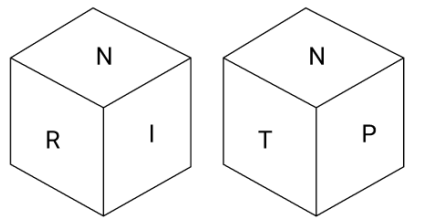
A dice has its faces marked by letters N, R, P, I, T and E. Two positions of the same dice are shown in the given figures. Which face is opposite to face E?

  1. AOption (a)

    P

  2. BOption (b)

    T

  3. COption (c)

    I

  4. DOption (d)

    N

View answer & explanation

Correct answer

Answer: (d)D.

N

Why this answer is correct

The logic followed here  is:

Logic: The four faces adjacent to N are R, I, T, and P.

Therefore, the face opposite to N must be the remaining face, which is E.

So, N and E are opposite faces, the face opposite to E is N.

Hence, the correct answer is 'Option 4'.

Question 8

What should come in place of the question mark (?) in the given series?

153 128 105 84 65 ?

  1. AOption (a)

    28

  2. BOption (b)

    48

  3. COption (c)

    32

  4. DOption (d)

    36

View answer & explanation

Correct answer

Answer: (b)B.

48

Why this answer is correct

The logic followed here is:

thus, "48" will replace the question mark in the given series.

Hence, the correct option is "Option 2".

Question 9

In a certain code language, 'XIAP' is coded as '60' and 'NGQC' is coded as '51'. What is the code for 'TFIZ' in the given language?

  1. AOption (a)

    52

  2. BOption (b)

    68

  3. COption (c)

    71

  4. DOption (d)

    55

View answer & explanation

Correct answer

Answer: (c)C.

71

Why this answer is correct

Logic: Code = (Sum of Alphabetical Positions) + 10

Now, 

 'XIAP' is coded as '60'

XIAP⇒  X(24) + I(9) + A(1) + P(16)50 = 50 + 10= 60

'NGQC' is coded as '51'

NGQC⇒  N(14) + G(7) + Q(17) + C(3)41 = 41 + 10 = 51

Similarly, 'TFIZ' is coded:

TFIZ ⇒ T(20) + F(6) + I(9) + Z(26)61 = 61 + 10 = 71

So, TFIZ will be coded as  71.

Hence, the correct answer is "Option 3".

Question 10

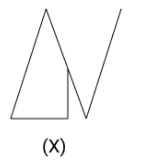
Select the option figure in which the given figure (X) is embedded as its part (rotation is NOT allowed).

  1. AOption (a)

  2. BOption (b)

  3. COption (c)

  4. DOption (d)

View answer & explanation

Correct answer

Answer: (a)A.

Why this answer is correct

The logic followed here is:

Logic: The pattern should be embedded in the given figure.

Hence, the correct answer is "Option 1".

Question 11

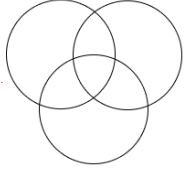
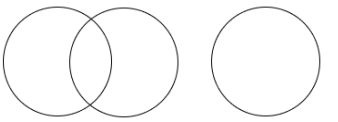
Select the Venn diagram that best illustrates the relationship between the following classes.

Mango, Fruit, Table

  1. AOption (a)

  2. BOption (b)

  3. COption (c)

  4. DOption (d)

View answer & explanation

Correct answer

Answer: (b)B.

Why this answer is correct

The logic followed here is:

Logic:

Mango and Fruit:  A Mango is a type of Fruit.

Therefore, the circle representing Mango must be completely contained within the circle representing Fruit.

This forms the nested structure (a circle inside another circle).

Table:  A Table is a piece of furniture; it is neither a fruit nor a mango.

Therefore, the circle representing Table must be completely separate from the Fruit and Mango circles.

So, The best visual representation is two concentric circles (Fruit encompassing Mango) and one completely separate circle (Table).

Hence, the correct answer  is 'Option 2'.

Question 12

What should come in place of the question mark (?) in the given series?

110, 221, 443, 887, 1775, ?

  1. AOption (a)

    2751

  2. BOption (b)

    2051

  3. COption (c)

    3051

  4. DOption (d)

    3551

View answer & explanation

Correct answer

Answer: (d)D.

3551

Why this answer is correct

The logic followed here is:

thus, "3551" will replace the question mark in the given series.

Hence, the correct option is "Option 4".

Question 13

RQAZ is related to JMSV in a certain way based on the English alphabetical order. In the same way, LAUJ is related to DWMF. To which of the following options is NOWX related, following the same logic?

  1. AOption (a)

    FOTK

  2. BOption (b)

    FOKT

  3. COption (c)

    FTOK

  4. DOption (d)

     FKOT

View answer & explanation

Correct answer

Answer: (d)D.

 FKOT

Why this answer is correct

Logic: The pattern of transformation is: -8, -4, +18, -4.

RQAZ is related to JMSV 

LAUJ is related to DWMF

Similarly, NOWX is coded:

So, The letter-cluster that NOWX is related to is FTOK.

Hence, the correct answer is "Option 4".

Question 14

Based on the English alphabetical order, three of the following four letter-clusters are alike in a certain way and thus form a group. Which letter-cluster DOES NOT belong to that group?

(Note: The odd one out is not based on the number of consonants/vowels or their position in the letter-cluster.)

  1. AOption (a)

    JLN

  2. BOption (b)

    ACD

  3. COption (c)

    LNO

  4. DOption (d)

    TVW

View answer & explanation

Correct answer

Answer: (a)A.

JLN

Why this answer is correct

The logic followed here is:

Option 1) JLN

Option 2) ACD

Option 3) LNO

Option 4) TVW

Here, 'JLN' is odd among the given options.

Hence, the correct answer is "Option 1".

Question 15

Read the given statements and conclusions carefully. Assuming that the information given in the statements is true, even if it appears to be at variance with commonly known facts, decide which of the given conclusions logically follow(s) from the statements.

Statements:

All treks are hikes.

Some hikes are climbs.

All walks are climbs.

Conclusions:

(I): Some walks are treks.

(II): Some walks are hikes.

  1. AOption (a)

    Both conclusions (I) and (II) follow.

  2. BOption (b)

    Only conclusion (II) follows.

  3. COption (c)

    Only conclusion (I) follows.

  4. DOption (d)

    Neither conclusion (I) nor (II) follows. 

View answer & explanation

Correct answer

Answer: (d)D.

Neither conclusion (I) nor (II) follows. 

Why this answer is correct

Given Statements:

All treks are hikes.

Some hikes are climbs.

All walks are climbs.

The least possible Venn diagram for the given statement is:

Conclusions:

(I)Some walks are treks :

It is possible to draw the diagram such that the set W (inside C) has no overlap with the set T (inside H).

Since a definitive overlap cannot be established, Conclusion (I) Does Not Follow.

(II) Some walks are hikes :

It is possible that the portion of Hikes (H) that overlaps with Climbs (C) does not contain the set of Walks (W).

Since W is completely contained in C, and C only partially overlaps H, W might fall entirely outside H.

Since a scenario exists where W and H have no overlap, Conclusion (II) Does Not Follow.

So, Neither conclusion (I) nor (II) follows. 

Hence, the correct answer is "Option 4".

Question 16

In a certain code language, 'WGOA' is coded as '68' and 'ISLT' is coded as '54'. What is the code for 'DXRI' in the given language?

  1. AOption (a)

    59

  2. BOption (b)

    42

  3. COption (c)

    48

  4. DOption (d)

    55

View answer & explanation

Correct answer

Answer: (a)A.

59

Why this answer is correct

Logic: Code = (Sum of Reverse Alphabetical Positions) + 6

Now, 

'WGOA' is coded as '68' 

WGOA⇒ W(4) + G(20) + O(12) + A(26)62= 62 + 6=  68

'ISLT' is coded as '54'

ISLT⇒ I(18) + S(8) + L(15) + T(7)48 = 48 + 6 = 54

Similarly, 'DXRI' is coded:

DXRI⇒ D(23) + X(3) + R(9) + I(18) = 53 + 6 = 59

So, DXRI will be coded as  59.

Hence, the correct answer is "Option 1".

Question 17

What will come in the place of the question mark ‘(?)’ in the following equation, if ‘×’ and ‘+’ are interchanged and ‘−’ and ‘÷’ are interchanged ?

44 ÷ 9 × 32 − 8 + 4 = ?

  1. AOption (a)

    52

  2. BOption (b)

    54

  3. COption (c)

    51

  4. DOption (d)

    53

View answer & explanation

Correct answer

Answer: (c)C.

51

Why this answer is correct

BODMAS Table: 

Given equation: 44 ÷ 9 × 32 − 8 + 4 = ?

Now, 

We must interchange the operators as given: × ↔ +, − ↔ ÷

44 − 9 + 32 ÷ 8 × 4

= 44 − 9 + 4 x 4 = 35 + 16 = 51

Hence, the correct answer is "Option 3".

Question 18

A paper is folded and punched as shown below. How will it appear when unfolded?

  1. AOption (a)

  2. BOption (b)

  3. COption (c)

  4. DOption (d)

View answer & explanation

Correct answer

Answer: (b)B.

Why this answer is correct

The logic followed here is:

Logic: The design in the corner of the paper will be imprinted 4 times in the whole paper.

The paper after unfolded will be:

Hence, the correct answer is "Option 2".

Question 19

In a certain code language.

'I @ Z' means 'I is the husband of Z',

'I * Z' means 'I is the mother of Z',

'I $ Z' means 'I is the daughter of Z' and

'I # Z' means 'I is the father of Z'.

Based on the above, how is L related to Q if 'L * A @ Q * M'?

  1. AOption (a)

    Husband's mother

  2. BOption (b)

    Sister

  3. COption (c)

    Sister's daughter

  4. DOption (d)

    Mother's mother

View answer & explanation

Correct answer

Answer: (a)A.

Husband's mother

Why this answer is correct

Family Chart:

Decoding the Symbols:

Symbol@*$#
MeaningHusbandMotherDaughterFather


Given: 'L * A @ Q * M'

It means:

L is the Mother of A, A is the Husband of Q, Q is the Mother of M.


So, L is the Husband's mother of Q.

Hence, the correct answer is "Option 1".

Question 20

Select the combination of letters that when sequentially placed in the blanks of the given series will make the series logically complete.

CFB D_IE GI_H JLO MOR_

  1. AOption (a)

    BEJMQ

  2. BOption (b)

    AELMN

  3. COption (c)

    BFJKQ

  4. DOption (d)

    AFLKN

View answer & explanation

Correct answer

Answer: (d)D.

AFLKN

Why this answer is correct

The logic followed here is: CFB D_IE GI_H JLO MOR_ 

Logic: The pattern is (+2, +3, −4)

Sequence: A (+2) C (+3) F (−4) B

Now, D (+3) = G but G is used in next block

D (+2) = F

Then F (+3) = I

Then I (−4) = 

and, G (+2) = I

I (+3) = L

L (−4) = H

and, J (+2) = L

L (+3) = O

O (−4) = K

and, M (+2) = O

O (+3) = R

R (−4) = N

So, A F L K N will be the correct alternative that will complete the series.

Hence, the correct answer is "Option 4".

General Knowledge and General Awareness (20 questions)

Question 21

During which Five-Year Plan was the focus on 'Self-reliance' particularly emphasised?

  1. AOption (a)

    Sixth Five-Year Plan

  2. BOption (b)

    Ninth Five-Year Plan

  3. COption (c)

    First Five-Year Plan

  4. DOption (d)

    Third Five-Year Plan 

View answer & explanation

Correct answer

Answer: (d)D.

Third Five-Year Plan 

Why this answer is correct

The correct answer is Third Five-Year Plan.

Key Points

  • The Third Five-Year Plan (1961-1966) focused heavily on achieving self-reliance in various sectors, particularly agriculture and industry.
  • This plan aimed at making India self-sufficient in the production of food and reducing dependency on imports for essential goods and resources.
  • The emphasis on self-reliance was driven by the challenges of foreign exchange reserves and the need for economic independence.
  • Under this plan, there was a significant thrust on increasing domestic production capabilities by investing heavily in agriculture, infrastructure, and basic industries.
  • The plan was disrupted by the Indo-China war (1962) and the subsequent economic crisis, but it laid the groundwork for India's long-term focus on self-sustainability.

Additional Information

  • First Five-Year Plan (1951-1956):
  • Focused primarily on agriculture and aimed at resolving food shortages caused by Partition and World War II.
  • Major investments were made in irrigation, dams, and land reforms.
  • The success of this plan was evident in increased agricultural production.
  • Sixth Five-Year Plan (1980-1985):
  • The Sixth Plan focused on poverty alleviation, infrastructure development, and rural employment.
  • This marked the beginning of the Integrated Rural Development Programme (IRDP).
  • It also emphasized improving living standards and reducing inequalities between rural and urban areas.
  • Ninth Five-Year Plan (1997-2002):
  • This plan aimed at economic growth with social justice and equity.
  • It focused on improving human development indices like education, health, and employment.
  • The plan attempted to integrate economic reforms with developmental objectives.
  • Indo-China War (1962):
  • Occurred during the Third Five-Year Plan, leading to an economic disruption.
  • India faced increased defense spending, which impacted the planned allocation of resources for development.
  • Despite the war, the emphasis on self-reliance remained intact as a cornerstone of India's economic strategy.

Important Points

  • Self-reliance:
  • Refers to the ability of a country to meet its own economic needs without heavy reliance on external sources.
  • It includes domestic production of food, industrial goods, and essential resources.
  • Key sectors involved in achieving self-reliance include agriculture, manufacturing, and infrastructure development.
  • Five-Year Plans in India:
  • India's Five-Year Plans were introduced in 1951 to promote planned economic development.
  • These plans were formulated by the Planning Commission, which was replaced by the NITI Aayog in 2015.
  • Each plan focused on specific objectives such as poverty alleviation, industrial growth, and infrastructure improvement.

Question 22

Part-IV of the Constitution of India states about which of the following?

  1. AOption (a)

    Directive Principles of State Policy

  2. BOption (b)

    State and Union Territory

  3. COption (c)

    Fundamental Rights

  4. DOption (d)

    Citizenship 

View answer & explanation

Correct answer

Answer: (a)A.

Directive Principles of State Policy

Why this answer is correct

The correct answer is Directive Principles of State Policy.

Key Points

  • Part-IV of the Constitution of India (Articles 36 to 51) contains the Directive Principles of State Policy (DPSP).
  • The Directive Principles aim to establish social and economic democracy and serve as guidelines to the state for formulating policies and laws to achieve a just society.
  • These principles are non-justiciable in nature, meaning they are not enforceable by any court, but they are fundamental in the governance of the country.
  • The concept of DPSP is borrowed from the Irish Constitution, which in turn derived it from the Spanish Constitution.
  • The DPSPs include provisions related to social justice, economic welfare, foreign policy, and legal and administrative matters.

Additional Information

  • Categories of Directive Principles:
  • Socialistic Principles: These aim to promote social and economic justice. For example, Article 39 emphasizes securing adequate means of livelihood, equal pay for equal work, and prevention of the concentration of wealth.
  • Gandhian Principles: Inspired by Mahatma Gandhi's ideals, these principles promote village panchayats, cottage industries, and upliftment of weaker sections of society.
  • Liberal-Intellectual Principles: These include provisions like promoting international peace and security (Article 51), protecting monuments of historic interest, and promoting equal justice and free legal aid.
  • Features of Directive Principles:
  • The DPSPs are non-justiciable, meaning individuals cannot go to court for their enforcement.
  • They act as guiding principles for the government to formulate policies and laws aimed at achieving socio-economic welfare.
  • The implementation of the Directive Principles depends on the resources available to the state.
  • Comparison with Fundamental Rights:
  • Fundamental Rights are justiciable and enforceable by the courts, while DPSPs are not.
  • Fundamental Rights focus on civil and political rights, whereas DPSPs emphasize socio-economic rights.
  • In case of a conflict between Fundamental Rights and DPSPs, the Supreme Court has ruled in favor of Fundamental Rights in most cases.
  • Significance of DPSPs:
  • They reflect the ideals and objectives of the Constitution and aim to ensure a welfare state.
  • Provide a framework for the government to formulate and implement progressive policies.
  • Act as a benchmark to assess the performance of the government.
  • Examples of DPSPs in practice:
  • The Mahatma Gandhi National Rural Employment Guarantee Act (MGNREGA) was implemented to ensure the right to work under Article 41.
  • Steps taken for equal pay for equal work are aligned with Article 39(d).
  • Promotion of education under Article 45 led to the enactment of the Right to Education Act.

Important Points

  • The 42nd Amendment Act of 1976 added four new Directive Principles: participation of workers in management, protection of the environment, promotion of equal justice, and free legal aid.
  • The 86th Amendment Act of 2002 modified Article 45 to make free and compulsory education a Fundamental Right under Article 21A.
  • The DPSPs emphasize the role of the state in improving the quality of life for citizens and promoting equality and justice.

Question 23

If a National Emergency is in place under Article 352, then the Parliament can extend the term of the Legislative Assemblies for _________ at a time. 

  1. AOption (a)

    upto one month 

  2. BOption (b)

    upto nine months 

  3. COption (c)

    upto one year 

  4. DOption (d)

    upto six months

View answer & explanation

Correct answer

Answer: (c)C.

upto one year 

Why this answer is correct

The correct answer is upto one year.

Key Points

  • National Emergency under Article 352 is declared when there is a threat to the security of India or any part of it due to war, external aggression, or armed rebellion.
  • During a National Emergency, the Parliament gains extraordinary powers to legislate and take decisions impacting the entire nation.
  • Under this emergency provision, the term of the Legislative Assemblies can be extended by the Parliament for up to one year at a time, ensuring governance continuity during the crisis.
  • This extension is permissible only while the National Emergency is in effect, and it cannot exceed six months after the emergency is lifted.
  • Such measures are taken to maintain administrative stability during times of national crisis. Hence, the correct option is up to one year.

Additional Information

  • Article 352 of the Constitution:
  • Article 352 empowers the President of India to declare a National Emergency based on written recommendations from the Cabinet.
  • It can be proclaimed due to war, external aggression, or armed rebellion.
  • The declaration must be approved by both Houses of Parliament within one month of its issuance.
  • Impact of National Emergency on Governance:
  • The powers of the State Legislatures are suspended, and the Parliament assumes the authority to legislate on matters in the State List.
  • During this period, Fundamental Rights under Article 19 are suspended.
  • Extension of Legislative Assemblies:
  • The term of State Legislative Assemblies can be extended by Parliament through a law for one year at a time.
  • This extension ensures administrative continuity during emergencies.
  • Revocation of National Emergency:
  • A National Emergency can be revoked at any time by the President through another proclamation.
  • It must also be revoked if the Lok Sabha disapproves the continuation of the Emergency.

Important Points

  • Historical Examples:
  • India has experienced three National Emergencies: 1962 (China War), 1971 (Pakistan War), and 1975 (Internal Disturbance).
  • Parliament's Role:
  • During an emergency, the Parliament assumes the power to legislate on state matters and ensures governance continuity.
  • Judicial Safeguards:
  • The Supreme Court can review the validity of the proclamation of an emergency.

Question 24

Under which scheme will 500 new 'waste to wealth' plants be established, as per the 2023-24 Union Budget of the Government of India?

  1. AOption (a)

    PM KUSUM

  2. BOption (b)

    SWACHH Bharat

  3. COption (c)

    GOBARdhan 

  4. DOption (d)

    Ujjwala Yojana

View answer & explanation

Correct answer

Answer: (c)C.

GOBARdhan 

Why this answer is correct

The correct answer is GOBARdhan.

Key Points

  • The GOBARdhan (Galvanizing Organic Bio-Agro Resources Dhan) scheme was introduced as part of the 2018-19 Union Budget by the Government of India.
  • It aims to support the establishment of biogas plants and promote organic waste management by converting waste into valuable resources such as bioenergy and organic fertilizers.
  • As per the 2023-24 Union Budget, the government has announced the establishment of 500 new 'waste-to-wealth' plants under this scheme to address agricultural and organic waste effectively.
  • These plants include 200 compressed biogas (CBG) plants, including 75 plants in urban areas.
  • The scheme aligns with the goals of Sustainable Development by reducing waste, promoting renewable energy, and generating employment opportunities in rural areas.
  • The GOBARdhan scheme is implemented under the Swachh Bharat Mission (Gramin) to promote cleanliness, waste management, and sanitation.

Additional Information

  • PM KUSUM Scheme:
  • The Pradhan Mantri Kisan Urja Suraksha Evam Utthan Mahabhiyan (PM KUSUM) was launched to promote solar energy in the agricultural sector.
  • It aims to install solar pumps and grid-connected solar power plants to reduce dependence on conventional energy sources.
  • The scheme focuses on providing financial support to farmers for adopting renewable energy solutions.
  • SWACHH Bharat Mission:
  • Launched on October 2, 2014, the SWACHH Bharat Mission aims to eliminate open defecation and improve sanitation infrastructure in India.
  • The mission has two components: Swachh Bharat Mission (Urban) and Swachh Bharat Mission (Gramin).
  • The GOBARdhan scheme operates under the Swachh Bharat Mission (Gramin) to promote cleanliness and waste management in rural areas.
  • Ujjwala Yojana:
  • Launched on May 1, 2016, the Pradhan Mantri Ujjwala Yojana (PMUY) aims to provide free LPG connections to women from Below Poverty Line (BPL) households.
  • It seeks to reduce indoor air pollution and health hazards caused by traditional cooking methods in rural areas.
  • While it addresses energy access, it does not focus on waste management like the GOBARdhan scheme.
  • Compressed Biogas (CBG) Plants:
  • CBG plants are essential components of the GOBARdhan scheme, converting organic waste into compressed biogas that can be used as a renewable energy source.
  • CBG has applications in transportation, cooking fuel, and power generation, reducing reliance on fossil fuels.
  • These plants also produce organic fertilizers, promoting sustainable agricultural practices.

Important Points

  • Waste-to-Wealth Initiative:
  • The GOBARdhan scheme is part of India's broader waste-to-wealth initiative, focusing on converting waste into useful resources.
  • It contributes to achieving clean energy goals, promoting sustainable practices, and reducing environmental pollution.
  • Employment Opportunities:
  • The establishment of 500 new plants under the scheme is expected to create employment opportunities in rural areas.
  • It will also boost entrepreneurship in the waste management and renewable energy sectors.

Question 25

Which of the following is NOT a type of water body?

  1. AOption (a)

    Lagoon

  2. BOption (b)

    Delta

  3. COption (c)

    Estuary 

  4. DOption (d)

    Oxbow lake

View answer & explanation

Correct answer

Answer: (b)B.

Delta

Why this answer is correct

The correct answer is Delta.

Key Points

  • A delta is a landform created at the mouth of a river where it flows into an ocean, sea, lake, or another river.
  • It is formed by the deposition of sediment carried by the river as the flow velocity decreases upon entering the stagnant water.
  • Deltas are typically fan-shaped or triangular, but their formation depends on the interaction between sediment supply, river flow, and tidal or wave action.
  • Famous examples include the Sundarbans Delta (formed by the Ganges, Brahmaputra, and Meghna rivers) and the Nile Delta.
  • Deltas support rich biodiversity and are crucial for agriculture, fisheries, and human settlements. They provide fertile soil due to the accumulation of sediments over time.

Additional Information

  • Lagoon:
  • A lagoon is a shallow body of water separated from a larger body of water, such as a sea, by barrier islands, reefs, or sandbanks.
  • They are common in coastal areas and can be classified as coastal lagoons or atoll lagoons.
  • Examples include the Chilka Lake in India, which is the largest coastal lagoon in the country.
  • Estuary:
  • An estuary is a partially enclosed coastal body of water where freshwater from rivers and streams mixes with saltwater from the ocean.
  • Estuaries are highly productive ecosystems that support diverse marine life.
  • The Hooghly Estuary in India is an example of an estuary.
  • Oxbow Lake:
  • An oxbow lake is a U-shaped body of water formed when a wide meander of a river is cut off from the main channel.
  • It occurs when the river changes its course, leaving behind a standalone water body.
  • Such lakes are found along floodplains and are a common feature of mature rivers.
  • Delta Formation:
  • The process of delta formation involves sediment deposition due to reduced velocity of a river as it enters stagnant water.
  • Factors such as wave action, tides, and sediment composition determine the shape and type of the delta.
  • Types of deltas include arcuate deltas (e.g., Nile Delta), bird-foot deltas (e.g., Mississippi Delta), and cuspate deltas.

Important Points

  • Deltas are vital for human settlements due to their fertile soil, which supports agriculture.
  • The Sundarbans Delta is the largest delta in the world, formed by the Ganges and Brahmaputra rivers.
  • Deltas also act as natural barriers against coastal erosion and floods.
  • Many deltas face threats from rising sea levels and human activities such as dam construction and urbanization.

Question 26

In which part of India did the earliest iron objects appear in the overlap between the Neolithic and Megalithic phases?

  1. AOption (a)

    South-West India

  2. BOption (b)

    South India 

  3. COption (c)

    North India

  4. DOption (d)

    North-East India 

View answer & explanation

Correct answer

Answer: (b)B.

South India 

Why this answer is correct

The correct answer is South India.

Key Points

  • The earliest iron objects in India appeared during the overlap between the Neolithic and Megalithic phases, primarily in South India.
  • During the Neolithic period, people in South India were transitioning from stone tools to metal tools, marking the beginning of the use of iron in this region.
  • The Megalithic phase in South India is characterized by the construction of large burial structures and the use of iron tools and weapons, indicating advancements in technology and societal development.
  • Archaeological evidence from sites such as Adichanallur, Hallur, and Brahmagiri in South India shows the presence of iron objects and tools dating back to around 1200 BCE.
  • These iron objects were used for agricultural tools, weapons, and daily life implements, showing the importance of iron in early South Indian societies.

Additional Information

  • Neolithic Period in India:
  • The Neolithic period in India dates back to around 6000 BCE.
  • It is characterized by the domestication of animals, agriculture, pottery-making, and the use of polished stone tools.
  • Notable Neolithic sites include Mehrgarh (now in Pakistan), Burzahom (Kashmir), and Kodekal and Hallur (South India).
  • Megalithic Phase:
  • The Megalithic phase in India began around 1200 BCE and is marked by the construction of large stone monuments or burial sites, known as megaliths.
  • These monuments were often associated with iron tools and weapons, indicating the transition to the Iron Age.
  • Megalithic sites in South India, such as Adichanallur and Brahmagiri, show evidence of complex burial practices and the use of iron tools.
  • Iron Age in India:
  • The Iron Age in India began around 1200 BCE and marked significant technological advancements.
  • Iron tools and weapons were widely used for agriculture, warfare, and daily activities.
  • South India played a crucial role in the early adoption and development of iron metallurgy.
  • Archaeological Evidence:
  • Sites like Adichanallur have yielded iron implements such as sickles, swords, and axes.
  • Excavations at Hallur have revealed early iron smelting techniques.
  • These findings provide insights into the technological and cultural practices of early South Indian societies.
  • Important Points:
  • The overlap between the Neolithic and Megalithic phases in South India marks the transition from stone to iron tools.
  • South India is considered one of the earliest regions in India to adopt iron technology.
  • Iron objects from this period were used for practical and ceremonial purposes, highlighting their significance in early societies.

Question 27

CV Chandrasekhar, recipient of Padma Bhushan is a performer of which of the following classical dance forms of India?

  1. AOption (a)

    Mohiniattam

  2. BOption (b)

    Kathakali

  3. COption (c)

    Kathak

  4. DOption (d)

    Bharatanatyam

View answer & explanation

Correct answer

Answer: (d)D.

Bharatanatyam

Why this answer is correct

The correct answer is Bharatanatyam.

Key Points

  • CV Chandrasekhar is one of the most renowned exponents of Bharatanatyam, a classical dance form of India.
  • He is a recipient of the Padma Bhushan, the third-highest civilian award in India, in recognition of his immense contribution to Indian classical dance.
  • Bharatanatyam is a dance form that originated in Tamil Nadu and is known for its intricate footwork, graceful expressions, and emotive storytelling.
  • CV Chandrasekhar is also an acclaimed choreographer, teacher, and scholar in the field of Bharatanatyam, having trained numerous students worldwide.
  • He has played a significant role in preserving and propagating Bharatanatyam by combining its traditional roots with innovative choreography.

Additional Information

  • Bharatanatyam:
  • Origin: Bharatanatyam originated in temples of Tamil Nadu as a form of devotional dance dedicated to the deities, particularly Lord Shiva.
  • Components: The dance integrates Bhava (expression), Raga (melody), Tala (rhythm), and Natya (dramatic art), collectively known as Bharatanatyam.
  • Features: It is characterized by intricate hand gestures (Mudras), rhythmic footwork, elaborate costumes, and facial expressions that convey emotions and stories from Hindu mythology.
  • Performances: Bharatanatyam performances often draw inspiration from texts like the Natya Shastra and include themes from the Ramayana, Mahabharata, and Puranas.
  • Other Classical Dance Forms of India:
  • Mohiniattam: Originating in Kerala, this dance form is known for its graceful, feminine movements and is often performed as a solo recital by women.
  • Kathakali: A classical dance-drama also from Kerala, known for its elaborate costumes, face masks, and storytelling through music and dance.
  • Kathak: Originating in North India, Kathak is characterized by its intricate footwork, spins, and storytelling through facial expressions and hand gestures.
  • Padma Bhushan Award:
  • It is the third-highest civilian award in India, instituted in 1954, recognizing distinguished service of a high order in any field.
  • Recipients include individuals from diverse fields such as art, science, public affairs, and sports.

Important Points

  • Evolution of Bharatanatyam:
  • Historically, Bharatanatyam was performed in temples as a form of worship and was an integral part of religious rituals.
  • In the 20th century, pioneers like Rukmini Devi Arundale redefined Bharatanatyam as a performance art, bringing it to the global stage.
  • Significance of Bharatanatyam:
  • It serves as a medium for spiritual expression and showcases Indian cultural heritage.
  • It is one of the eight recognized classical dance forms of India as per the Sangeet Natak Akademi.

Question 28

Anil Srinivasan is one of the unique artists of India who plays which musical instrument?

  1. AOption (a)

    Piano

  2. BOption (b)

    Flute

  3. COption (c)

    Mandolin 

  4. DOption (d)

    Violin

View answer & explanation

Correct answer

Answer: (a)A.

Piano

Why this answer is correct

The correct answer is Piano.

Key Points

  • Anil Srinivasan is a renowned Indian musician who is widely recognized for his exceptional skills in playing the Piano.
  • He is known for blending Western classical piano music with Indian classical music, creating a unique and innovative musical style.
  • Anil Srinivasan’s performances often involve collaborations with celebrated Indian classical artists, such as Sikkil Gurucharan, showcasing the harmonious fusion of diverse musical traditions.
  • His contributions have earned him accolades and recognition both nationally and internationally, making him one of India’s most unique and versatile artists.
  • Anil Srinivasan also uses music as a tool for education and therapy, working with schools and organizations to promote the cognitive and emotional benefits of music.

Additional Information

  • Piano:
  • The Piano is a musical instrument invented in the early 18th century by Bartolomeo Cristofori in Italy.
  • It is widely used in various genres of music, including classical, jazz, pop, and rock, due to its versatility and dynamic range.
  • The piano is played by pressing keys, which trigger hammers that strike strings inside the instrument, producing sound.
  • Modern pianos come in two types: grand pianos and upright pianos, each suited to different settings and uses.
  • Renowned pianists include Wolfgang Amadeus Mozart, Ludwig van Beethoven, and contemporary artists such as Lang Lang.
  • Other Musical Instruments:
  • Flute: A wind instrument made of wood or metal, played by blowing air across its opening. Famous flute players include Hariprasad Chaurasia.
  • Mandolin: A string instrument popular in folk and classical music. It has a pear-shaped body and is played with a pick.
  • Violin: A bowed string instrument used extensively in classical music. Renowned violinists include Yehudi Menuhin and L. Subramaniam.
  • Anil Srinivasan’s Contribution:
  • Anil Srinivasan has worked on innovative projects such as music education programs for children to enhance their learning abilities.
  • He has collaborated with several organizations to use music as therapy for individuals with mental health challenges.
  • His work bridges the gap between Indian classical music and Western styles, making music accessible to diverse audiences.

Question 29

The birdie (shuttlecock) of badminton is made up of 16 feathers, it is between 62-70 mm long and weighs between _____. 

  1. AOption (a)

    4.22 and 5.5 g

  2. BOption (b)

    2.74 and 5.0 g

  3. COption (c)

    2.74 and 3.5 g

  4. DOption (d)

    4.74 and 5.5 g

View answer & explanation

Correct answer

Answer: (d)D.

4.74 and 5.5 g

Why this answer is correct

The correct answer is 4.74 and 5.5 g.

Key Points

  • The birdie (shuttlecock) used in badminton is a high-quality projectile made with 16 feathers, typically sourced from a goose or duck.
  • The shuttlecock has a standard length of 62-70 mm, ensuring uniformity in play and compliance with international badminton regulations.
  • The official weight range of the shuttlecock is 4.74 to 5.5 grams, as specified by the Badminton World Federation (BWF). This weight ensures optimal flight stability and aerodynamics.
  • The feather structure of the shuttlecock provides precision in flight and is designed for high-speed gameplay. The unique design ensures it decelerates faster than most projectiles in sports.
  • The shuttlecock undergoes rigorous testing for weight and balance before being approved for professional matches, making the range of 4.74 to 5.5 grams a critical specification.

Additional Information

  • Badminton Shuttlecock Design:
  • The shuttlecock consists of a cork base, typically covered with a thin layer of leather, which provides structural integrity and weight.
  • The feathers are arranged in a circular pattern, glued to the cork base, and carefully trimmed to maintain balance and flight consistency.
  • Most shuttlecocks used in professional tournaments are made of goose feathers, as they are more durable and provide better flight characteristics compared to synthetic ones.
  • Modern shuttlecocks are tested for speed, trajectory, and stability under specific conditions to ensure compatibility with international standards.
  • Badminton World Federation (BWF) Regulations:
  • The BWF governs all aspects of badminton, including specifications for equipment such as shuttlecocks, rackets, and court dimensions.
  • Shuttlecock weight and design are critical for maintaining fairness and uniform gameplay across tournaments worldwide.
  • Shuttlecocks are categorized into different speeds (slow, medium, fast) to adapt to varying conditions like altitude and temperature during gameplay.
  • Feather Shuttlecock vs Synthetic Shuttlecock:
  • Feather shuttlecocks are preferred for professional play due to their precision and ability to decelerate quickly after being hit.
  • Synthetic shuttlecocks are more durable and cost-effective but do not offer the same flight characteristics as feathered ones. They are commonly used in recreational play.
  • Important Facts about Badminton:
  • Badminton originated in Pune, India, during the British colonial era and was initially referred to as "Poona."
  • The first official badminton rules were established in 1877 by the Bath Badminton Club in England.
  • Badminton became an Olympic sport in 1992, with events for singles, doubles, and mixed doubles.

Important Points

  • Shuttlecock Testing:
  • Shuttlecock testing involves ensuring that it flies consistently through the air and lands within specific areas when hit with a standard force.
  • The testing process includes verifying the weight, feather arrangement, and cork dimensions.
  • Professional Use:
  • Feathered shuttlecocks are exclusively used in international tournaments sanctioned by the BWF.
  • Recreational players often use synthetic shuttlecocks to reduce costs and enhance durability.

Question 30

 Nritya Chudamani Award is given every year by which cultural institution to an artist of Indian classical dance style?

  1. AOption (a)

    Kala Utsava

  2. BOption (b)

    Sri Krishna Gana Sabha

  3. COption (c)

    Revathi Natyalaya

  4. DOption (d)

    Kalakshetra Foundation

View answer & explanation

Correct answer

Answer: (b)B.

Sri Krishna Gana Sabha

Why this answer is correct

The correct answer is Sri Krishna Gana Sabha.

Key Points

  • Nritya Chudamani Award is one of the prestigious awards conferred annually by Sri Krishna Gana Sabha, a renowned cultural institution based in Chennai.
  • This award is presented to an artist excelling in the field of Indian classical dance styles, such as Bharatanatyam, Kathak, Odissi, or other traditional dance forms.
  • Sri Krishna Gana Sabha was established in 1953 and is dedicated to the promotion and celebration of Indian arts and culture, particularly dance and music.
  • The award recognizes and honors the contribution of dancers who have made significant achievements and showcased excellence in their respective classical dance forms.
  • The Nritya Chudamani Award is considered a mark of distinction and respect in the classical dance community, encouraging artists to preserve and promote India’s rich cultural heritage.

Additional Information

  • Sri Krishna Gana Sabha:
  • Sri Krishna Gana Sabha is one of the oldest and most reputed cultural organizations based in Chennai, Tamil Nadu.
  • It has been instrumental in promoting Indian classical arts, including dance, music, and drama.
  • The institution hosts several cultural events and festivals, such as the Natya Kala Conference, which attracts eminent artists and scholars globally.
  • Sri Krishna Gana Sabha has been a platform for nurturing young talent and showcasing established performers in the field of Indian classical arts.
  • Indian Classical Dance Forms:
  • India has 8 classical dance forms, recognized by the Sangeet Natak Akademi: Bharatanatyam, Kathak, Odissi, Manipuri, Kuchipudi, Mohiniyattam, Kathakali, and Sattriya.
  • These dance forms are rooted in India's rich cultural and spiritual traditions and are often based on themes derived from Hindu mythology, epics, and devotional expressions.
  • Bharatanatyam, for instance, is known for its intricate footwork and expressive hand gestures, while Kathak is famous for its storytelling elements and rhythmic patterns.
  • Each dance form has its unique style, techniques, costumes, and musical accompaniment, representing the diversity of Indian art.
  • Other Prestigious Awards in Indian Classical Arts:
  • Padma Awards: India’s highest civilian honors, including Padma Shri, Padma Bhushan, and Padma Vibhushan, are often conferred on artists in the field of classical dance and music.
  • Sangeet Natak Akademi Awards: Recognized as the most prestigious honor for performing artists in India, these awards are presented annually by the Sangeet Natak Akademi.
  • Kalidas Samman: Instituted by the Madhya Pradesh government, this award honors artists in classical music, dance, and theatre.
  • Importance of Cultural Institutions:
  • Cultural institutions like Sri Krishna Gana Sabha play a vital role in preserving and promoting India’s cultural heritage.
  • They serve as platforms for artists to showcase their talent and connect with audiences who appreciate traditional art forms.
  • Such institutions contribute to the continuity of classical arts and their relevance in modern times.
  • They also play a significant role in fostering a sense of pride and identity among Indians regarding their rich artistic traditions.

Question 31

The ________ festival, in which the serpent goddess Mansa is worshipped, is celebrated in some parts of Bengal, Bihar and Jharkhand in India.

  1. AOption (a)

    Matasya

  2. BOption (b)

    Ambubasi

  3. COption (c)

    Bihula

  4. DOption (d)

    Kumbh

View answer & explanation

Correct answer

Answer: (c)C.

Bihula

Why this answer is correct

The correct answer is Bihula.

Key Points

  • Bihula is a traditional festival celebrated in parts of Bengal, Bihar, and Jharkhand, where the serpent goddess Mansa is worshipped.
  • The festival is primarily associated with the Bihula-Bishari folklore, which emphasizes devotion, familial love, and the belief in resurrection.
  • Mansa Devi is considered the goddess of snakes and fertility in Hindu mythology, particularly in eastern India.
  • The rituals of Bihula include folk songs, dance, and storytelling, depicting the tale of Bihula's undeterred devotion to save her husband from death.
  • The festival is celebrated during the monsoon season, as snakes are most active during this time, symbolizing nature's balance and agricultural fertility.

Additional Information

  • About Mansa Devi:
  • Mansa Devi is a Hindu goddess associated with snakes, fertility, and the prevention of snakebite-related calamities.
  • She is particularly worshipped in the states of Bengal, Bihar, Jharkhand, and Assam during festivals like Bihula.
  • Her temples are often located near water bodies, symbolizing the habitat of snakes.
  • Other Festivals Worshipping Mansa Devi:
  • Besides Bihula, Nag Panchami is another festival celebrated across India to honor snakes and Mansa Devi.
  • During Nag Panchami, devotees offer milk, flowers, and prayers to snake idols or live snakes.
  • Folk Significance of Bihula:
  • The legend of Bihula-Bishari is a tale of marital devotion and resilience, where Bihula embarks on a journey to revive her deceased husband.
  • This folklore is preserved through oral traditions, including songs and performances in rural communities.
  • Serpent Worship in India:
  • Snake worship is an ancient tradition in India, symbolizing fertility, protection, and renewal.
  • It is rooted in agricultural societies where snakes were considered guardians of crops and water resources.

Important Points

  • Ambubasi Festival:
  • This is a significant festival in Assam, associated with the Kamakhya Temple, symbolizing fertility and the goddess's menstrual cycle.
  • It is not related to snake worship or Mansa Devi.
  • Kumbh Mela:
  • This is a major Hindu pilgrimage and religious gathering held at four locations in India: Haridwar, Allahabad, Nashik, and Ujjain.
  • The festival involves bathing in sacred rivers and is not connected to the worship of Mansa Devi.
  • Matasya Festival:
  • This is a cultural festival in Rajasthan, celebrating traditional arts and crafts.
  • It has no connection to serpent worship.

Question 32

In which of the following states was the highest male literacy rate recorded as per census 2011?

  1. AOption (a)

    Sikkim

  2. BOption (b)

    Goa

  3. COption (c)

    Kerala

  4. DOption (d)

    Mizoram

View answer & explanation

Correct answer

Answer: (c)C.

Kerala

Why this answer is correct

The correct answer is Kerala.

Key Points

  • As per the Census 2011, Kerala recorded the highest male literacy rate in India, which stood at 96.11%.
  • Kerala is renowned for its strong educational infrastructure and policy initiatives that have prioritized literacy and education over decades.
  • The state has consistently been a top performer in literacy rates, not only for males but also for females, making it the most literate state in the country overall.
  • Kerala's high literacy rate is attributed to its emphasis on universal primary education, adult literacy programs, and effective government policies post-independence.
  • The state has also invested heavily in public education, libraries, and information dissemination, which have significantly contributed to its high literacy levels.

Additional Information

  • Literacy in India:
  • As per the 2011 Census, the overall literacy rate in India was 74.04%.
  • The male literacy rate was higher at 82.14%, while the female literacy rate was 65.46%, highlighting a significant gender gap.
  • Kerala had the highest overall literacy rate at 93.91%, followed by Lakshadweep at 92.28% and Mizoram at 91.33%.
  • Kerala's Literacy Initiatives:
  • The state introduced the Kerala State Literacy Mission, which played a pivotal role in reducing illiteracy.
  • Kerala implemented the Right to Education Act effectively, ensuring primary education for all children.
  • The state's public library network and encouragement of reading habits have also contributed significantly to the high literacy rate.
  • Comparison with Other States:
  • Goa: Known for its high literacy rate, but it stands lower compared to Kerala, with male literacy at 92.81%.
  • Sikkim: Has made progress in literacy, but its male literacy rate of 87.29% is lower than Kerala's.
  • Mizoram: A northeastern state with a commendable literacy rate, but male literacy stands at 93.35%, still lower than Kerala.
  • Importance of Literacy:
  • Literacy is a critical factor in the socio-economic development of a region.
  • It empowers individuals to access better employment opportunities, healthcare, and participate in civic activities.
  • High literacy rates are often associated with higher human development indices and improved quality of life.

Important Points

  • Census 2011:
  • The 2011 Census was the 15th Indian Census and the 7th after independence.
  • The census is conducted every 10 years to collect data on various population parameters, including literacy, population, and employment.
  • It is conducted by the Office of the Registrar General and Census Commissioner, under the Ministry of Home Affairs, Government of India.
  • Gender Gap in Literacy:
  • Despite progress, India still faces a gender gap in literacy rates, with male literacy significantly higher than female literacy.
  • Efforts like the Beti Bachao Beti Padhao scheme aim to address these disparities.

Question 33

Who among the following was appointed as Director General (DG) of the Border Security Force (BSF) in August 2024? 

  1. AOption (a)

    Amrit Mohan Prasad 

  2. BOption (b)

    Pankaj Kumar Singh

  3. COption (c)

    Nitin Agarwal

  4. DOption (d)

    Daljit Singh Chaudhary 

View answer & explanation

Correct answer

Answer: (d)D.

Daljit Singh Chaudhary 

Why this answer is correct

The correct answer is Daljit Singh Chaudhary.

Key Points

  • Daljit Singh Chaudhary was appointed as the Director General (DG) of the Border Security Force (BSF) in August 2024. His appointment was approved by the Indian Government for his excellence in service and leadership skills.
  • The BSF, also known as the first line of defence, is one of India’s largest paramilitary forces tasked with guarding India's land borders during peacetime and preventing trans-border crimes.
  • Daljit Singh Chaudhary is a senior Indian Police Service (IPS) officer known for his extensive experience in security and law enforcement, making him a suitable candidate for this position.
  • The appointment of the DG of BSF is crucial for ensuring effective border management and maintaining the integrity of Indian territory.
  • His leadership is expected to strengthen the operational capabilities of the BSF, particularly in tackling challenges like cross-border infiltration and smuggling.

Additional Information

  • Border Security Force (BSF):
  • Established on 1 December 1965, the BSF is under the administrative control of the Ministry of Home Affairs (MHA).
  • It is tasked with border guarding duties and counter-insurgency operations along India's international borders with Pakistan and Bangladesh.
  • The BSF is the world's largest border guarding force, with over 257,000 personnel as of recent estimates.
  • It also plays a vital role in disaster management and counter-terrorism operations within the country.
  • Appointment of DG in Central Armed Police Forces:
  • The DG of a central armed police force like the BSF is typically chosen from the senior-most IPS officers in the country.
  • Appointments are made by the central government based on factors like experience, leadership skills, and expertise in handling national security issues.
  • The tenure of the DG varies but is generally for a fixed period, depending on the policies of the Government of India.
  • Key Responsibilities of BSF DG:
  • Ensuring the integrity and security of India's land borders during peacetime.
  • Preventing activities such as illegal immigration, smuggling, and infiltration across the border.
  • Providing support to the army during wartime and maintaining law and order in border areas.
  • Implementing new technologies and strategies to enhance border surveillance and security.
  • Other Senior Officers in Consideration:
  • Amrit Mohan Prasad: An IPS officer known for his contributions to police modernization but not selected for the BSF DG role in 2024.
  • Pankaj Kumar Singh: A distinguished officer and the former DG of the BSF (appointed in 2021).
  • Nitin Agarwal: A senior officer with expertise in counter-insurgency operations but not appointed as the DG of BSF in 2024.

Question 34

In which stadium was the inaugural ceremony of the 19th Commonwealth Games held in 2010?

  1. AOption (a)

    Arun Jaitley Stadium

  2. BOption (b)

    Major Dhyan Chand National Stadium 

  3. COption (c)

    Talkatora Indoor Stadium

  4. DOption (d)

    Jawaharlal Nehru Stadium

View answer & explanation

Correct answer

Answer: (d)D.

Jawaharlal Nehru Stadium

Why this answer is correct

The correct answer is Jawaharlal Nehru Stadium.

Key Points

  • The inaugural ceremony of the 19th Commonwealth Games held in 2010 was hosted at the Jawaharlal Nehru Stadium in New Delhi, India.
  • The stadium is one of the largest in the country and was specifically refurbished for the Commonwealth Games with state-of-the-art facilities.
  • The inaugural event featured a grand display of Indian culture, music, and dance performances, showcasing the nation's rich heritage.
  • The ceremony included a spectacular ‘Aerostat’ balloon, a first-of-its-kind in India, which was used to project visuals and enhance the viewing experience for the audience.
  • The Jawaharlal Nehru Stadium served as the centerpiece for the Commonwealth Games, hosting the opening and closing ceremonies as well as several athletic events.

Additional Information

  • Jawaharlal Nehru Stadium:
  • Located in New Delhi, the Jawaharlal Nehru Stadium is named after India’s first Prime Minister, Jawaharlal Nehru.
  • It was originally built in 1982 for the Asian Games and has undergone several renovations since, including a major upgrade for the 2010 Commonwealth Games.
  • With a seating capacity of approximately 60,000 spectators, it is one of the largest multipurpose stadiums in India, hosting both sporting and non-sporting events.
  • The stadium is equipped with modern amenities, including synthetic tracks, video screens, and advanced lighting systems.
  • 19th Commonwealth Games (2010):
  • The Commonwealth Games 2010 was held in New Delhi, marking the first time India hosted the event.
  • The games took place from 3rd to 14th October 2010, featuring over 6,000 athletes from 71 nations.
  • India finished in second place in the medal tally with a total of 101 medals, including 38 golds.
  • The event was a showcase of India's ability to host a large-scale international sporting event.
  • Other Venues for the 2010 Commonwealth Games:
  • Major Dhyan Chand National Stadium: Hosted hockey matches during the event.
  • Talkatora Indoor Stadium: Venue for boxing competitions.
  • Dr. Karni Singh Shooting Range: Hosted shooting events.
  • Indira Gandhi Indoor Stadium: Hosted gymnastics and wrestling events.
  • Significance of the Event:
  • The Commonwealth Games 2010 were a major milestone for India's sports infrastructure development.
  • It helped promote India as a global destination for hosting international sports events.
  • The event also highlighted India's capability to deliver world-class facilities and logistics for large-scale events.

Important Points

  • Arun Jaitley Stadium: Formerly known as Feroz Shah Kotla Stadium, it is primarily a cricket stadium in New Delhi. It was not used for the Commonwealth Games 2010.
  • Major Dhyan Chand National Stadium: A dedicated hockey stadium in Delhi, named after legendary hockey player Major Dhyan Chand.
  • Talkatora Indoor Stadium: This stadium hosted boxing events during the Commonwealth Games.
  • Jawaharlal Nehru Stadium: Served as the main venue for the 2010 Commonwealth Games, hosting the opening and closing ceremonies as well as athletic events.

Question 35

Select the correct option about typhoid fever in human beings.

Statement A: Streptococcus pneumonia is a pathogenic bacterium which causes typhoid.

Statement B: Typhoid fever could be confirmed by widal test.

Statement C: Typhoid causes Intestinal perforation.

  1. AOption (a)

    Statements A and B are correct

  2. BOption (b)

    All statements A, B and C correct

  3. COption (c)

    Only statement B is correct 

  4. DOption (d)

    Statements B and C are correct

View answer & explanation

Correct answer

Answer: (d)D.

Statements B and C are correct

Why this answer is correct

The correct answer is Option 4: Statements B and C are correct.

Key Points

  • Statement A: Streptococcus pneumonia is not a bacterium responsible for typhoid fever. Typhoid fever is caused by Salmonella typhi, a pathogenic bacterium. Hence, statement A is incorrect.
  • Statement B: Typhoid fever can be confirmed using the Widal test, which detects antibodies against Salmonella typhi in a patient's serum. This diagnostic method is widely used for typhoid detection. Hence, statement B is correct.
  • Statement C: Typhoid fever can cause severe complications, including intestinal perforation. This occurs due to the damage caused by Salmonella typhi bacteria to the intestinal walls. It is a serious condition requiring immediate medical intervention. Hence, statement C is correct.
  • Conclusion: Since statements B and C are correct, the correct answer is Option 4: Statements B and C are correct.

Additional Information

  • Typhoid Fever:
  • Typhoid fever is a bacterial infection caused by Salmonella typhi, transmitted through contaminated food, water, or close contact with an infected person.
  • Symptoms include high fever, weakness, abdominal pain, headache, constipation or diarrhea, and loss of appetite.
  • It is common in areas with poor sanitation and limited access to clean drinking water.
  • Widal Test:
  • The Widal test detects antibodies (agglutinins) against Salmonella typhi (O and H antigens).
  • It is based on the principle of agglutination, where specific antibodies in the patient's serum bind to antigens on Salmonella typhi.
  • This test is commonly used in areas where typhoid is endemic, but its accuracy can be limited due to cross-reactivity or previous infections.
  • Intestinal Perforation:
  • One of the severe complications of typhoid fever is intestinal perforation, where the bacteria damage the intestinal walls, leading to leakage of contents into the abdominal cavity.
  • This condition can cause peritonitis, a life-threatening abdominal infection requiring surgical intervention.
  • Effective treatment with antibiotics can prevent complications, but delayed diagnosis increases the risk.
  • Salmonella typhi:
  • Salmonella typhi is a gram-negative bacterium responsible for typhoid fever.
  • It primarily affects the intestinal tract and can spread to the bloodstream, leading to systemic infections.
  • Vaccines like Ty21a (oral vaccine) and Vi capsular polysaccharide vaccine are available for typhoid prevention.

Important Points

  • Prevention of Typhoid:
  • Practice good hygiene such as regular handwashing with soap and water.
  • Ensure access to clean drinking water and proper sanitation facilities.
  • Vaccination is recommended for people traveling to endemic areas or those at high risk.
  • Treatment:
  • Typhoid fever is treated with antibiotics like azithromycin, ceftriaxone, or ciprofloxacin.
  • Early diagnosis and treatment are crucial to prevent complications.
  • Supportive care such as hydration and nutrition is essential during recovery.

Question 36

Who is the cabinet minister of the Union Ministry of Heavy Industries as of September 2024?

  1. AOption (a)

    HD Kumaraswamy 

  2. BOption (b)

    Manohar Lal Khattar 

  3. COption (c)

    Nitin Jairam Gadkari 

  4. DOption (d)

    Amit Shah

View answer & explanation

Correct answer

Answer: (a)A.

HD Kumaraswamy 

Why this answer is correct

The correct answer is HD Kumaraswamy.

Key Points

  • HD Kumaraswamy is the cabinet minister for the Union Ministry of Heavy Industries as of September 2024.
  • He has been a prominent leader in the Bharatiya Janata Party (BJP) and is known for his contributions to infrastructure development, especially in the transportation sector.
  • The Ministry of Heavy Industries oversees the development and promotion of heavy industries such as machine tools, heavy electricals, and automotive manufacturing.
  • Nitin Gadkari has played a significant role in advancing the government's focus on electric vehicles (EVs) and sustainable industrial growth.
  • Under his leadership, the Ministry has undertaken initiatives to promote green manufacturing and enhance India's global competitiveness in the industrial sector.

Additional Information

  • Union Ministry of Heavy Industries:
  • The Ministry is responsible for the development of capital goods, heavy electrical equipment, and the automotive industry.
  • It plays a key role in formulating policies to promote industrial growth, innovation, and sustainability in manufacturing.
  • The Ministry actively promotes the adoption of electric vehicles (EVs) under the FAME India Scheme (Faster Adoption and Manufacturing of Hybrid and Electric Vehicles).
  • It supports the development of industrial clusters and investments in modernizing India's heavy industries.
  • Nitin Jairam Gadkari:
  • Nitin Gadkari is a senior leader of the BJP and has held various important portfolios in the Government of India.
  • He is widely recognized for his work as the Minister of Road Transport and Highways, where he focused on building world-class infrastructure projects across India.
  • He has a strong background in agriculture and sustainable development and has been instrumental in promoting biofuels and green energy solutions.
  • FAME India Scheme:
  • The Faster Adoption and Manufacturing of Hybrid and Electric Vehicles (FAME) India Scheme was launched to promote the production and adoption of electric and hybrid vehicles in India.
  • It aims to reduce dependency on fossil fuels, improve air quality, and promote eco-friendly mobility solutions.
  • Under this scheme, financial incentives are provided to manufacturers and buyers of EVs.
  • Important Points:
  • The Ministry of Heavy Industries also plays a significant role in promoting Make in India initiatives to strengthen domestic manufacturing capabilities.
  • It collaborates with various stakeholders, including industries, policymakers, and researchers, to foster innovation and technology development in heavy industries.
  • India's industrial sector is a significant contributor to the GDP, and the Ministry works to ensure its growth aligns with global sustainability goals.

Question 37

In which year did Henry Moseley use X-rays to measure the wavelength of elements, and correlate these measurements with their atomic numbers?

  1. AOption (a)

    1925

  2. BOption (b)

    1931

  3. COption (c)

    1913

  4. DOption (d)

    1902

View answer & explanation

Correct answer

Answer: (c)C.

1913

Why this answer is correct

The correct answer is 1913.

Key Points

  • Henry Moseley, an English physicist, used X-ray spectroscopy in 1913 to measure the wavelengths of X-rays emitted by elements.
  • Moseley discovered that these wavelengths were correlated with the atomic number of each element rather than their atomic weight.
  • This groundbreaking work led to the modern understanding of the periodic table, reorganizing elements based on their atomic numbers rather than atomic masses.
  • Moseley formulated the concept of Moseley's Law, which states that the square root of the frequency of emitted X-rays is proportional to the atomic number.
  • This study established the atomic number as a fundamental property of elements, marking a significant advancement in atomic physics and chemistry.

Additional Information

  • Henry Moseley’s Contributions:
  • Moseley’s work provided clarity in the arrangement of elements in the periodic table, identifying gaps where undiscovered elements should be placed.
  • His research directly influenced the discovery of new elements such as technetium (atomic number 43) and promethium (atomic number 61).
  • Moseley’s findings resolved inconsistencies in the earlier classification, where elements like iodine and tellurium were misplaced due to reliance on atomic weights.
  • Applications of Moseley’s Law:
  • Moseley’s Law is used in X-ray crystallography to analyze the structure of materials and identify elements.
  • It is widely employed in scientific and industrial fields, including material science and analytical chemistry.
  • Historical Context:
  • Moseley conducted his research during the early 20th century, a period marked by significant advancements in quantum physics and atomic theory.
  • His work complemented the discoveries of other scientists like Dmitri Mendeleev, who initially proposed the periodic table based on atomic weights.
  • Important Points:
  • Moseley’s untimely death in World War I in 1915 at the age of 27 was a great loss to the scientific community.
  • His contributions are remembered as a foundational step in the development of modern atomic theory.
  • The atomic numbers identified by Moseley remain fundamental in element classification and periodic table organization.

Question 38

As per Economic Survey 2022-23, what was the students’ enrollment in higher education in India during the year 2020-21? 

  1. AOption (a)

    2.0 crore

  2. BOption (b)

    3.9 crore

  3. COption (c)

    4.1 crore

  4. DOption (d)

    3.7 crore 

View answer & explanation

Correct answer

Answer: (c)C.

4.1 crore

Why this answer is correct

The correct answer is 3. 4.1 crore.

Key Points

  • As per the Economic Survey 2022-23, the total enrollment of students in higher education in India during the year 2020-21 stood at 4.1 crore.
  • This data represents the enrollment of students across various higher education institutions including universities, colleges, and standalone institutions in India.
  • The increase in enrollment reflects the Indian government's efforts to enhance access to higher education through initiatives such as NEP 2020 and schemes promoting online education.
  • The Gross Enrollment Ratio (GER) in higher education for students in the 18-23 age group also showed improvement during this period.
  • This figure aligns with the government's focus on achieving higher literacy and educational standards to support economic and social development in the country.

Additional Information

  • Gross Enrollment Ratio (GER) in Higher Education:
  • The GER refers to the percentage of the eligible age group (18-23 years) enrolled in higher education institutions.
  • India's GER in higher education improved significantly in recent years, driven by government initiatives such as Rashtriya Uchchatar Shiksha Abhiyan (RUSA) and the introduction of National Education Policy (NEP) 2020.
  • Efforts to improve GER include enhancing infrastructure, promoting online education, and providing scholarships to disadvantaged groups.
  • Key Government Initiatives for Higher Education:
  • The National Education Policy (NEP) 2020 aims to achieve a GER of 50% by 2035 in higher education.
  • Programs such as SWAYAM, a platform for online learning, have been launched to increase accessibility to quality education.
  • Funding initiatives like RUSA aim to improve the quality and infrastructure of higher education institutions.
  • Enrollment Trends in Higher Education:
  • Between 2019-20 and 2020-21, enrollment in higher education institutions witnessed a significant rise, which can be attributed to efforts to reduce dropout rates and improve access.
  • More women are enrolling in higher education, indicating progress toward gender parity in educational opportunities.
  • Standalone Institutions in India:
  • Standalone institutions include medical colleges, engineering colleges, management institutions, and polytechnic institutions that are not affiliated with universities.
  • Such institutions contribute significantly to the overall enrollment in higher education in India.

Important Points

  • Economic Survey 2022-23:
  • The survey provides detailed insights into various sectors, including education, highlighting trends, challenges, and opportunities.
  • The focus is on improving the education sector to align with global standards and support India's economic growth.
  • It underscores the importance of increasing access to quality education and enhancing employability through skill development programs.
  • Impact of COVID-19 on Higher Education:
  • The pandemic accelerated the adoption of online education platforms, contributing to increased enrollment numbers.
  • Government schemes and digital infrastructure improvements played a significant role in ensuring continuity in education.

Question 39

What was the primary effect of the Green Revolution on India’s agriculture?

  1. AOption (a)

    Reduction in employment in the industrial sector 

  2. BOption (b)

    Decline in food grain production 

  3. COption (c)

    Self-sufficiency in food grains 

  4. DOption (d)

    Increased reliance on food imports 

View answer & explanation

Correct answer

Answer: (c)C.

Self-sufficiency in food grains 

Why this answer is correct

The correct answer is Self-sufficiency in food grains.

Key Points

  • The Green Revolution was introduced in India during the 1960s under the leadership of Dr. M.S. Swaminathan, often referred to as the "Father of the Green Revolution in India." It aimed at increasing agricultural productivity to combat food shortages.
  • The primary effect of the Green Revolution was the achievement of self-sufficiency in food grains, particularly in crops like wheat and rice, ensuring that India no longer relied heavily on food imports to feed its population.
  • The revolution involved the adoption of high-yield variety (HYV) seeds, improved irrigation techniques, modern agricultural machinery, and the extensive use of fertilizers and pesticides.
  • States like Punjab, Haryana, and Uttar Pradesh became the hub of agricultural growth, contributing significantly to India's increased production of food grains.
  • While the Green Revolution ensured food security for the nation, it also had unintended consequences, such as environmental degradation, soil fertility depletion, and water resource overuse.

Additional Information

  • Key Features of the Green Revolution:
  • The Green Revolution introduced high-yield variety (HYV) seeds like IR8 rice and K68 wheat, which dramatically increased crop productivity.
  • It emphasized the use of chemical fertilizers, pesticides, and modern irrigation methods to boost agricultural output.
  • The revolution also encouraged the use of mechanized tools such as tractors and threshers to improve efficiency in farming.
  • Impact of the Green Revolution:
  • Positive Impact: India achieved self-sufficiency in food production, particularly in wheat and rice, reducing dependence on food imports.
  • It transformed India from a food-deficit country into a food exporter, boosting agricultural exports and generating rural employment.
  • Negative Impact: Overuse of chemical fertilizers and pesticides led to soil degradation, water table depletion, and environmental pollution.
  • Role of Regions in the Green Revolution:
  • Punjab, Haryana, and Uttar Pradesh were the primary beneficiaries, owing to their fertile lands and irrigation facilities.
  • States with lesser access to irrigation and infrastructure, such as Bihar and Odisha, lagged behind, creating regional disparities in agricultural development.
  • Comparison with Other Options:
  • Option 1: Reduction in employment in the industrial sector: The Green Revolution focused on agriculture, and its effects were unrelated to employment in the industrial sector. This statement is incorrect.
  • Option 2: Decline in food grain production: The revolution led to an increase, not a decline, in food grain production. This statement is incorrect.
  • Option 4: Increased reliance on food imports: The Green Revolution reduced reliance on imports by achieving self-sufficiency. This statement is incorrect.
  • Important Points:
  • The Green Revolution was a global agricultural movement, but its impact was especially significant in countries like India, Mexico, and the Philippines.
  • It was supported by international organizations such as the Ford Foundation and Rockefeller Foundation.
  • In India, the first phase of the Green Revolution focused on wheat production, and the second phase expanded to crops like rice and maize.

Question 40

Who was the prominent leader of the Deoband Movement, which aimed to preserve Islamic culture? 

  1. AOption (a)

    Maulana Abul Kalam Azad

  2. BOption (b)

    Syed Ahmed Khan

  3. COption (c)

    Shah Waliullah

  4. DOption (d)

    Muhammad Qasim Nanotavi

View answer & explanation

Correct answer

Answer: (d)D.

Muhammad Qasim Nanotavi

Why this answer is correct

The correct answer is Muhammad Qasim Nanotavi.

Key Points

  • Muhammad Qasim Nanotavi was a prominent Islamic scholar and a key leader of the Deoband Movement, which aimed to preserve Islamic teachings and culture amidst the challenges of British colonial rule in India.
  • The Deoband Movement was initiated in 1866 with the establishment of the Darul Uloom Deoband, an Islamic seminary located in Deoband, Uttar Pradesh.
  • Muhammad Qasim Nanotavi believed in promoting education based on Islamic principles and worked to counter the influence of Western culture and education introduced by colonial powers.
  • The movement emphasized the study of Quran, Hadith, and Islamic jurisprudence while opposing British policies that were seen as detrimental to Islamic traditions.
  • Nanotavi's efforts helped lay the foundation for a robust Islamic educational system in India, which continues to influence Islamic education globally.

Additional Information

  • Deoband Movement:
  • The movement was founded with the establishment of the Darul Uloom Deoband in 1866.
  • The primary goal of the movement was to preserve Islamic teachings and counter the cultural and educational impact of British colonial rule.
  • The curriculum at Darul Uloom Deoband focused on traditional Islamic education, including the study of the Quran, Hadith, and Fiqh (Islamic jurisprudence).
  • Graduates from this seminary spread its teachings across India and abroad, influencing Islamic education systems worldwide.
  • Muhammad Qasim Nanotavi:
  • Born in 1833 in Nanauta, Uttar Pradesh, Nanotavi was a scholar of Islamic theology and a reformer.
  • He played a vital role in the Indian Rebellion of 1857, opposing British colonial rule.
  • Nanotavi’s vision for Islamic education was rooted in the idea of reviving the Islamic spirit and resisting Western influence.
  • He passed away in 1880, but his legacy lives on through the Deoband Movement and its institutions.
  • Key Features of Darul Uloom Deoband:
  • It is among the most respected Islamic seminaries globally, offering advanced studies in Islamic theology.
  • It advocates for adherence to Islamic principles and promotes Sufi traditions.
  • It also serves as a center for Islamic jurisprudence and fatwa issuance, catering to queries from across the world.
  • Comparison with Other Leaders:
  • Maulana Abul Kalam Azad: He was a freedom fighter, scholar, and India’s first Education Minister, but not a leader of the Deoband Movement.
  • Syed Ahmed Khan: He founded the Aligarh Movement, focusing on modernizing education for Muslims, distinct from the Deoband Movement.
  • Shah Waliullah: He was an 18th-century reformer who significantly influenced Islamic thought in India but predated the Deoband Movement.

Important Points

  • The Deoband Movement has been instrumental in shaping Islamic education and preserving Islamic traditions in South Asia.
  • It has inspired the establishment of Islamic seminaries in several countries, including Pakistan, Bangladesh, and South Africa.
  • The teachings of Muhammad Qasim Nanotavi and the principles of the Deoband Movement continue to influence Islamic scholars and institutions globally.

Elementary Mathematics (20 questions)

Question 41

If at same rate of interest, in 2 years, the simple interest is ₹40 and compound interest is ₹41, then what is the principal (in ₹)? 

  1. AOption (a)

    400

  2. BOption (b)

    393

  3. COption (c)

    404

  4. DOption (d)

    395

View answer & explanation

Correct answer

Answer: (a)A.

400

Why this answer is correct

Shortcut Trick

When the Simple Interest (SI) and Compound Interest (CI) for 2 years are given, the principal can be calculated directly:

Principal = (SI)2 ÷ (4 × Difference)

Difference between CI and SI = 41 − 40 = ₹1

Principal = (40 × 40) ÷ (4 × 1) = 1600 ÷ 4 = 400

∴ The correct answer is ₹400.

Alternate Method

Given:

Time (T) = 2 years

Simple Interest (SI) = ₹40

Compound Interest (CI) = ₹41

Principal (P)

Year 1 SI ₹ 20

Year 2 SI ₹ 20

CI Diff = ₹ 1 R% Interest

Calculations:

⇒ Since simple interest is identical for each year, the SI for the 1st year = 40 ÷ 2 = ₹20

⇒ The compound interest for the 1st year is the same as SI, which is ₹20

⇒ Total compound interest for the 2nd year = Total CI − 1st year CI = 41 − 20 = ₹21

⇒ Extra interest earned in the 2nd year = 21 − 20 = ₹1

⇒ This extra ₹1 is the interest generated from the 1st year's interest (₹20) at rate R%

⇒ Rate of interest (R) = (1 × 100) ÷ 20 = 5%

⇒ Now, substitute the values into the Simple Interest formula for 1 year:

⇒ SI = (P × R × T) ÷ 100

⇒ 20 = (P × 5 × 1) ÷ 100

⇒ P = (20 × 100) ÷ 5 = ₹400

∴ The correct answer is ₹400.

Additional Information

2-Year Difference Formula

The difference between Compound Interest and Simple Interest for 2 years can be directly found using: D = P × (R ÷ 100)2

3-Year Difference Formula

The difference for 3 years is given by: D = P × (R ÷ 100)2 × (3 + R ÷ 100)

Effective Rate of Compound Interest

For 2 years at R%, the effective CI rate is [2R + (R2 ÷ 100)]%, whereas the effective SI rate is just 2R%.

Question 42

The average age of 52 students of a class is 12 years. If the age of the teacher is also included, the average age of the whole group becomes 13 years. The age (in years) of the teacher is:

  1. AOption (a)

    63

  2. BOption (b)

    68

  3. COption (c)

    66

  4. DOption (d)

    65

View answer & explanation

Correct answer

Answer: (d)D.

65

Why this answer is correct

Shortcut Trick

If a new member joins and the average increases, the new value can be calculated directly:

Teacher's Age = Old Average + (Total Members × Increase in Average)

Teacher's Age = 12 + (53 × 1)

Teacher's Age = 12 + 53 = 65

∴ The correct answer is 65 years.

Alternate Method

Given:

Number of students = 52

Average age of students = 12 years

New average age including the teacher = 13 years

Total members including the teacher = 52 + 1 = 53

Formula Used:

Average = Sum of observations ÷ Number of observations

Old Avg. 12

Total Inc. 53 × 1

=

Teacher 65

Teacher's Age = Old Average + (Total Persons × Increase in Average)

Calculations:

⇒ Sum of ages of 52 students = 52 × 12 = 624 years

⇒ Sum of ages of 53 members = 53 × 13 = 689 years

⇒ Teacher's age = Sum of ages of 53 members − Sum of ages of 52 students

⇒ Teacher's age = 689 − 624 = 65 years

∴ The correct answer is 65 years.

Additional Information

Averages (Net Deviation)

If a new value is added and the average increases, the new value is greater than the old average by an amount equal to (Total observations × increase in average).

Averages (Removal)

If a value is removed and the average decreases, the removed value was strictly greater than the old average of the group.

Combined Average

Combined Average = (n1A1 + n2A2) ÷ (n1 + n2) where n is the number of items and A is the average of each respective group.

Question 43

A person buys a ceiling fan for Rs. 2,200 and sells it at a loss of 35%. What is the selling price of the ceiling fan?

  1. AOption (a)

    Rs. 1430

  2. BOption (b)

    Rs. 1440

  3. COption (c)

    Rs. 1420

  4. DOption (d)

    Rs. 1410

View answer & explanation

Correct answer

Answer: (a)A.

Rs. 1430

Why this answer is correct

Shortcut Trick

Selling Price (SP) = (100 − Loss%) of Cost Price (CP)

⇒ SP = (100 − 35)% of 2200

⇒ SP = 65% of 2200

⇒ SP = (65 ÷ 100) × 2200

⇒ SP = 65 × 22 = 1430

∴ The correct answer is Rs. 1430.

Alternate Method

Given:

Cost Price (CP) of the ceiling fan = Rs. 2200

Loss percentage = 35%

Formula Used:

Loss = (Loss% ÷ 100) × CP

Selling Price (SP) = CP − Loss

Cost Price (CP) Rs. 2200

Selling Price (SP) Rs. 1430

Loss = 35% − Rs. 770

SP = CP − Loss = 2200 − 770 = 1430

Calculations:

⇒ Loss = (35 ÷ 100) × 2200

⇒ Loss = 35 × 22

⇒ Loss = Rs. 770

⇒ SP = 2200 − 770

⇒ SP = 1430

∴ The correct answer is Rs. 1430.

Additional Information

Direct Formula for Selling Price

SP = CP × (100 − Loss%) ÷ 100  |  SP = CP × (100 + Profit%) ÷ 100

Profit and Loss Percentage

Both profit and loss amounts are always calculated on the original Cost Price (CP) unless specifically mentioned otherwise in the question.

Marked Price & Discount

A discount is always offered on the Marked Price (MP) of an item. The selling price after discount is: SP = MP × (100 − Discount%) ÷ 100.

Question 44

100 chickooes were bought at ₹1210 per hundred and were sold at a profit of ₹940. Find the selling price (in ₹) per dozen of chickooes.

  1. AOption (a)

    253

  2. BOption (b)

    268

  3. COption (c)

    258

  4. DOption (d)

    263

View answer & explanation

Correct answer

Answer: (c)C.

258

Why this answer is correct

Shortcut Trick

Total Selling Price for 100 items = Cost Price + Profit = 1210 + 940 = ₹2150

Selling Price of 1 item = 2150 ÷ 100 = ₹21.5

Selling Price of 1 dozen (12 items) = 21.5 × 12 = ₹258

∴ The correct answer is ₹258.

Alternate Method

Given:

Cost Price (CP) of 100 chickooes = ₹1210

Profit on selling 100 chickooes = ₹940

Number of chickooes in a dozen = 12

Formula Used:

Selling Price (SP) = Cost Price (CP) + Profit

CP (100 items) ₹ 1210

  • ₹ 940 (Profit)

SP (100 items) ₹ 2150

Divide by 100 Multiply by 12

SP (1 dozen = 12) ₹ 258

Calculations:

⇒ Total Selling Price of 100 chickooes = 1210 + 940

⇒ Total Selling Price of 100 chickooes = ₹2150

⇒ Selling Price of 1 chickoo = 2150 ÷ 100 = ₹21.5

⇒ Selling Price of 1 dozen (12 chickooes) = 21.5 × 12

⇒ Selling Price of 1 dozen = ₹258

∴ The correct answer is ₹258.

Additional Information

Profit and Loss Basics

Profit occurs when the Selling Price (SP) is greater than the Cost Price (CP). It is calculated as Profit = SP − CP. Conversely, Loss occurs when CP is greater than SP, and is calculated as Loss = CP − SP.

Profit Percentage

Profit percentage is typically calculated on the Cost Price (unless specifically stated otherwise). The formula is: Profit % = (Profit ÷ CP) × 100.

Unitary Method Application

To find the total value for a specific number of items, first calculate the value of a single unit by dividing the total value by its total quantity. Then, multiply this single unit value by the required quantity.

Question 45

The LCM of 44, 32, 176 and 352 is:

  1. AOption (a)

    352

  2. BOption (b)

    379

  3. COption (c)

    269

  4. DOption (d)

    255

View answer & explanation

Correct answer

Answer: (a)A.

352

Why this answer is correct

Shortcut Trick

Identify the largest number in the given set, which is 352.

Check if 352 is perfectly divisible by the other given numbers:

352 ÷ 44 = 8 | 352 ÷ 32 = 11 | 352 ÷ 176 = 2

Since the largest number is perfectly divisible by all the other numbers, it is their LCM.

∴ The correct answer is 352.

Alternate Method

Given:

Numbers: 44, 32, 176, and 352

Concept Used:

In the prime factorisation method, the LCM is the product of the highest powers of all prime factors involved in the given numbers.

Calculations:

⇒ 44 = 22 × 11

⇒ 32 = 25

⇒ 176 = 24 × 11

⇒ 352 = 25 × 11

⇒ LCM = Highest power of 2 × Highest power of 11

⇒ LCM = 25 × 11

⇒ LCM = 32 × 11 = 352

∴ The correct answer is 352.

Additional Information

Least Common Multiple (LCM)

The smallest positive integer that is perfectly divisible by each of the given numbers.

Highest Common Factor (HCF)

The largest common divisor that completely divides two or more given numbers without leaving a remainder.

Relation between HCF and LCM

For any two numbers 'a' and 'b': a × b = HCF(a, b) × LCM(a, b).

LCM of Fractions

LCM of fractions = (LCM of Numerators) ÷ (HCF of Denominators).

Question 46

Suman covers a certain distance by car, driving at 22 km/hr, and he returns to the starting point, riding on a scooter at a speed of 17 km/hr. Find the average speed for the whole journey.

  1. AOption (a)

    1773917\frac{7}{39} km/hr

  2. BOption (b)

    1973919\frac{7}{39} km/hr

  3. COption (c)

    1873918\frac{7}{39} km/hr

  4. DOption (d)

    2073920\frac{7}{39} km/hr

View answer & explanation

Correct answer

Answer: (b)B.

1973919\frac{7}{39} km/hr

Why this answer is correct

Shortcut Trick

When the distance covered is the same for two parts of a journey, use the direct formula:

Average Speed = (2 × S1 × S2) ÷ (S1 + S2)

⇒ Average Speed = (2 × 22 × 17) ÷ (22 + 17)

⇒ Average Speed = 748 ÷ 39 = 19 7/39 km/hr

∴ The correct answer is 19 7/39 km/hr.

Alternate Method

Given:

Speed while going (S1) = 22 km/hr

Speed while returning (S2) = 17 km/hr

Start End

Distance = d

Car Speed = 22 km/hr

Scooter Speed = 17 km/hr

Formula Used:

Average Speed = Total Distance ÷ Total Time

Time = Distance ÷ Speed

Calculations:

Let the one-way distance be d.

⇒ Total distance = d + d = 2d

⇒ Total time = Time taken to go + Time taken to return

⇒ Total time = (d ÷ 22) + (d ÷ 17)

⇒ Total time = d × (17 + 22) ÷ (22 × 17) = 39d ÷ 374

⇒ Average Speed = 2d ÷ (39d ÷ 374)

⇒ Average Speed = (2d × 374) ÷ 39d

⇒ Average Speed = 748 ÷ 39

⇒ Average Speed = 19 7/39 km/hr

∴ The correct answer is 19 7/39 km/hr.

Additional Information

Average Speed for 3 Equal Distances

If three equal distances are covered at speeds a, b, and c, then the average speed for the whole journey is given by 3abc ÷ (ab + bc + ca).

Average Speed for Constant Time

If a person travels at speed S1 for a certain time T and at speed S2 for the exact same amount of time T, then the average speed is simply the arithmetic mean: (S1 + S2) ÷ 2.

Relative Speed

When two objects are moving in the same direction, their relative speed is the difference of their speeds (S1 − S2). When moving in opposite directions towards each other, their relative speed is the sum of their speeds (S1 + S2).

Question 47

In a circular race of 500 m, A and B start from the same point and at the same time at speeds of 36 km/hr and 45 km/hr in the same direction. After how long will they meet again for the first time on the track?

  1. AOption (a)

    240 sec 

  2. BOption (b)

    200 sec 

  3. COption (c)

    320 sec

  4. DOption (d)

    250 sec

View answer & explanation

Correct answer

Answer: (b)B.

200 sec 

Why this answer is correct

Shortcut Trick

Convert speeds to m/s: A = 36 × (5/18) = 10 m/s, B = 45 × (5/18) = 12.5 m/s.

Because they run in the same direction, Relative Speed = 12.5 − 10 = 2.5 m/s.

Time to meet = Track Length ÷ Relative Speed = 500 ÷ 2.5 = 200 seconds.

∴ The correct answer is 200 sec.

Alternate Method

Given:

Length of the circular track = 500 m

Speed of A = 36 km/hr

Speed of B = 45 km/hr

Length = 500 m

Start Point

A: 10 m/s

B: 12.5 m/s

Formula Used:

Time to meet = Distance ÷ Relative Speed

Conversion: 1 km/hr = 5/18 m/s

Calculations:

⇒ Speed of A = 36 × (5 ÷ 18) = 10 m/s

⇒ Speed of B = 45 × (5 ÷ 18) = 12.5 m/s

⇒ Both run in the same direction, so we subtract their speeds to find the relative speed.

⇒ Relative Speed = 12.5 − 10 = 2.5 m/s

⇒ Time taken to meet for the first time = Total Track Length ÷ Relative Speed

⇒ Time = 500 ÷ 2.5 = 200 sec

∴ The correct answer is 200 sec.

Additional Information

Time to meet anywhere on the track

When two persons run in the same direction, time taken = Track Length ÷ (S1 − S2). If running in opposite directions, relative speed is (S1 + S2).

Time to meet exactly at the starting point

It is always the LCM of the individual times taken by each person to complete one full round independently: LCM(T1, T2).

Number of distinct meeting points

If the ratio of speeds S1 : S2 is simplified to a : b, the number of distinct meeting points is |a − b| for same direction, and a + b for opposite direction.

Question 48

The population of a district is 357000, out of which 194000 are males. 47% of the population is literate. If 47% males are literate, then what percentage of females are literate? 

  1. AOption (a)

    45%

  2. BOption (b)

    47%

  3. COption (c)

    46%

  4. DOption (d)

    48%

View answer & explanation

Correct answer

Answer: (b)B.

47%

Why this answer is correct

Shortcut Trick

The overall literacy percentage is the weighted average of the male and female literacy percentages.

If the overall percentage (47%) is exactly equal to the male literacy percentage (47%), the female percentage must also be equal to the overall percentage.

No calculations are required for this conceptual question.

∴ The correct answer is 47%.

Alternate Method

Given:

Total population = 357,000

Number of males = 194,000

Overall literate percentage = 47%

Male literate percentage = 47%

Formula Used:

Percentage = (Part value ÷ Total value) × 100

Total Population: 357,000 Literacy: 47%

Males: 194,000 Literacy: 47%

Females: 163,000 Literacy: ?%

Avg Literacy = 47% → Female Literacy = 47%

Calculations:

⇒ Number of females = Total population − Number of males

⇒ Number of females = 357,000 − 194,000 = 163,000

⇒ Total literate population = 47% of 357,000

⇒ Male literate population = 47% of 194,000

⇒ Female literate population = Total literate population − Male literate population

⇒ Female literate population = (47% of 357,000) − (47% of 194,000)

⇒ Female literate population = 47% of (357,000 − 194,000)

⇒ Female literate population = 47% of 163,000

⇒ Percentage of literate females = (Female literate population ÷ Total females) × 100

⇒ Percentage of literate females = [(47% of 163,000) ÷ 163,000] × 100

⇒ Percentage of literate females = 47%

∴ The correct answer is 47%.

Additional Information

Weighted Average Concept

When two groups are combined, the overall average is the weighted average of the two individual groups: Aw = (n1A1 + n2A2) ÷ (n1 + n2).

Rule of Constant Average

If the average of one sub-group is exactly equal to the average of the total group, then the average of the other sub-group must also be equal to the total average, regardless of the size or population quantities of each group.

Mixture and Alligation

The ratio of the quantities of two groups can be verified using the alligation method: Ratio = (Higher % − Average %) ÷ (Average % − Lower %). If the average perfectly matches one component, the gap is 0, mandating that the other component must also match the average to maintain balance.

Question 49

Vipul invests a sum of ₹5400 and Vijay invests a sum of ₹9400 at the same rate of simple interest per annum. If, at the end of 5 years, Vijay gets ₹480 more interest than Vipul, then find the rate of interest per annum (in percentage).

  1. AOption (a)

    2.4

  2. BOption (b)

    3.4

  3. COption (c)

    4.4

  4. DOption (d)

    1.4

View answer & explanation

Correct answer

Answer: (a)A.

2.4

Why this answer is correct

Shortcut Trick

Difference in Principal = ₹9400 − ₹5400 = ₹4000

Total difference in interest for 5 years = ₹480

Difference in interest for 1 year = 480 ÷ 5 = ₹96

Rate of interest (R) = (Interest for 1 year ÷ Principal difference) × 100

⇒ R = (96 ÷ 4000) × 100 = 2.4%

∴ The correct answer is 2.4%.

Alternate Method

Given:

Principal for Vipul = ₹5400

Principal for Vijay = ₹9400

Time (T) = 5 years

Difference in Simple Interest = ₹480

Formula Used:

Simple Interest (SI) = (P × R × T) ÷ 100

Vijay: ₹9400

5 yrs, R%

Interest 1

Vipul: ₹5400

5 yrs, R%

Interest 2

Diff = ₹480

Calculations:

Let the rate of interest be R%.

⇒ Simple Interest of Vijay = (9400 × R × 5) ÷ 100 = 470R

⇒ Simple Interest of Vipul = (5400 × R × 5) ÷ 100 = 270R

⇒ According to the question, 470R − 270R = 480

⇒ 200R = 480

⇒ R = 480 ÷ 200

⇒ R = 2.4%

∴ The correct answer is 2.4%.

Additional Information

Simple Interest Concept

Simple Interest is calculated only on the principal amount, which remains constant throughout the investment period. The formula is SI = (P × R × T) ÷ 100.

Total Amount Formula

The total accumulated amount at the end of the time period is Amount (A) = Principal + SI, which can also be written as A = P[1 + (R×T)÷100].

Difference in Interest Rule

When rate (R) and time (T) are constant, the difference in Simple Interest is directly proportional to the difference in Principal. Difference in SI = (Difference in P) × R × T ÷ 100.

Question 50

The mean proportional of 0.5 and 72 is:

  1. AOption (a)

    √5

  2. BOption (b)

    √6

  3. COption (c)

    6

  4. DOption (d)

    √3

View answer & explanation

Correct answer

Answer: (c)C.

6

Why this answer is correct

Shortcut Trick

The mean proportional between any two numbers 'a' and 'b' is calculated directly using the formula √(a × b).

Mean proportional = √(0.5 × 72)

Mean proportional = √36

Mean proportional = 6

∴ The correct answer is 6.

Alternate Method

Given:

The two provided numbers are a = 0.5 and b = 72.

Formula Used:

If three quantities are in continued proportion such that a : x :: x : b, then x is considered the mean proportional between a and b.

Product of extremes = Product of means ⇒ x2 = a × b

0.5

:

x

::

x

:

72

Mean Proportional (x) = √(a × b) x = √(0.5 × 72) = 6

Calculations:

⇒ Let the required mean proportional be x.

⇒ 0.5 ÷ x = x ÷ 72

⇒ x2 = 0.5 × 72

⇒ x2 = 36

⇒ x = √36

⇒ x = 6

∴ The correct answer is 6.

Additional Information

Third Proportional

If three numbers a, b, and c are in continued proportion (a : b :: b : c), then c is called the third proportional to a and b. Formula: c = b2 ÷ a.

Fourth Proportional

If four numbers a, b, c, and d are in proportion (a : b :: c : d), then d is the fourth proportional to a, b, and c. Formula: d = (b × c) ÷ a.

Continued Proportion

Three non-zero quantities a, b, and c of the same kind are said to be in continued proportion if the ratio of a to b is absolutely equal to the ratio of b to c.

Question 51

A company offers a buy 2 get 1 free scheme on pens priced at ₹10 each. What is the effective discount percentage? 

  1. AOption (a)

    2723%27\frac{2}{3}\%

  2. BOption (b)

    3323%33\frac{2}{3}\%

  3. COption (c)

    3313%33\frac{1}{3}\%

  4. DOption (d)

    2713%27\frac{1}{3}\%

View answer & explanation

Correct answer

Answer: (c)C.

3313%33\frac{1}{3}\%

Why this answer is correct

Shortcut Trick

For any Buy X Get Y Free scheme, the discount percentage is always calculated on the total number of items.

Discount % = [Free Items ÷ Total Items] × 100

⇒ Discount % = [1 ÷ (2 + 1)] × 100

⇒ Discount % = (1 ÷ 3) × 100 = 331/3%

∴ The correct answer is 331/3%.

Alternate Method

Buy 1 ₹10

Buy 2 ₹10

Get 1 Free ₹10

Total Marked Price (3 pens) = ₹30

Selling Price (2 pens) = ₹20

Discount = ₹10

Given:

Marked price of 1 pen = ₹10

Scheme: Buy 2 get 1 free

<br>

Formula Used:

Discount % = (Discount ÷ Marked Price) × 100

<br>

Calculations:

⇒ Total number of pens received = 2 (bought) + 1 (free) = 3

⇒ Total Marked Price (MP) of 3 pens = 3 × 10 = ₹30

⇒ Total Selling Price (SP) for the customer (paying only for 2 pens) = 2 × 10 = ₹20

⇒ Discount amount = MP − SP = 30 − 20 = ₹10

⇒ Discount % = (10 ÷ 30) × 100

⇒ Discount % = 100 ÷ 3 = 331/3%

∴ The correct answer is 331/3%.

Additional Information

Buy X Get Y Free Rule

The effective discount is always calculated on the total number of items taken out of the shop. Effective Discount % = [Y ÷ (X + Y)] × 100.

Marked Price and Discount

Discount is always given on the Marked Price (MP), not the Cost Price (CP). Therefore, Selling Price = Marked Price × [(100 − Discount %) ÷ 100].

Successive Discounts

When two successive discounts of a% and b% are offered, the equivalent single discount percentage is [a + b − (a × b ÷ 100)]%.

Question 52

One-third of a work is finished in four days by P and one-fourth of the same work is finished in six days by Q. P and Q together work for six days and the rest of the work is finished by R in two days. R alone can finish the whole work in _____ days.

  1. AOption (a)

    9

  2. BOption (b)

    12

  3. COption (c)

    8

  4. DOption (d)

    6

View answer & explanation

Correct answer

Answer: (c)C.

8

Why this answer is correct

Shortcut Trick

Time taken by P to finish the whole work = 4 × 3 = 12 days, and Q = 6 × 4 = 24 days.

Let Total Work = LCM(12, 24) = 24 units.

Efficiency of P = 2 units/day, Q = 1 unit/day ⇒ P + Q = 3 units/day.

Work done by P and Q in 6 days = 6 × 3 = 18 units.

Remaining work = 24 − 18 = 6 units, which is done by R in 2 days ⇒ R's efficiency = 3 units/day.

Time taken by R alone to complete the work = 24 ÷ 3 = 8 days.

∴ The correct answer is 8 days.

Alternate Method

Given:

Time taken by P to complete 1/3 of the work = 4 days

Time taken by Q to complete 1/4 of the work = 6 days

Time worked by P and Q together = 6 days

Calculations:

⇒ Total time taken by P to complete the whole work = 4 × 3 = 12 days

⇒ Total time taken by Q to complete the whole work = 6 × 4 = 24 days

PersonDaysTotal WorkEfficiency
P122424 ÷ 12 = 2
Q2424 ÷ 24 = 1

⇒ Combined efficiency of (P + Q) = 2 + 1 = 3 units/day

⇒ Total work completed by P and Q in 6 days = 6 × 3 = 18 units

⇒ Remaining work = Total work − Work done = 24 − 18 = 6 units

⇒ R finishes the remaining 6 units in 2 days, so the Efficiency of R = 6 ÷ 2 = 3 units/day

⇒ Time taken by R alone to finish the whole work (24 units) = 24 ÷ 3 = 8 days

∴ The correct answer is 8 days.

Additional Information

Pipes & Cisterns

Functions exactly like Time and Work, but an outlet pipe has a negative efficiency. If an inlet fills the tank in X hours and an outlet empties it in Y hours, the net filling capacity in 1 hour is (1/X − 1/Y).

Work & Wages

Wages are always distributed in direct proportion to the actual amount of work done by each person. If all persons work for the same number of days, the total wages are divided directly in the ratio of their efficiencies.

Alternate Days Work

If two people A and B work on alternate days, find the combined work done in a single 2-day cycle. Then multiply this cycle to approach the total work closely before calculating the time needed to finish the remainder.

Question 53

What will be the surface area of the sphere having 5.4 cm radius?

  1. AOption (a)

    116.64 π cm2

  2. BOption (b)

    118.6 π cm2

  3. COption (c)

    117.6 π cm2

  4. DOption (d)

    115.64 π cm2

View answer & explanation

Correct answer

Answer: (a)A.

116.64 π cm2

Why this answer is correct

Shortcut Trick

The surface area of a sphere is calculated directly using the formula 4πr2.

Square the given radius: 5.4 × 5.4 = 29.16.

Multiply by 4: 29.16 × 4 = 116.64.

Append π to obtain the final surface area.

∴ The correct answer is 116.64 π cm2.

Alternate Method

Given:

Radius of the sphere (r) = 5.4 cm

Formula Used:

Surface Area of a Sphere = 4 × π × r2

r = 5.4 cm Surface Area = 4 × π × r²

Calculations:

⇒ Surface Area = 4 × π × (5.4)2

⇒ Surface Area = 4 × π × 29.16

⇒ Surface Area = 116.64 π cm2

∴ The correct answer is 116.64 π cm2.

Additional Information

Volume of a Sphere

The total volume enclosed by a solid sphere is determined by the formula: V = (4 ÷ 3) × π × r3.

Curved Surface Area of a Hemisphere

When a sphere is cut perfectly in half, the resulting curved surface area is exactly half of the full sphere: CSA = 2 × π × r2.

Total Surface Area of a Hemisphere

By including the flat circular base, the total surface area of a solid hemisphere becomes: TSA = 3 × π × r2.

Question 54

Find the ratio between the third proportional of 32 and 48 with the third proportional of 4 and 18.

  1. AOption (a)

    7 : 8

  2. BOption (b)

    4 : 7

  3. COption (c)

    8 : 9

  4. DOption (d)

    3 : 4

View answer & explanation

Correct answer

Answer: (c)C.

8 : 9

Why this answer is correct

Shortcut Trick

Third proportional to a and b is b2 ÷ a.

First proportional = 482 ÷ 32 = 72

Second proportional = 182 ÷ 4 = 81

Required Ratio = 72 : 81 = 8 : 9

∴ The correct answer is 8 : 9.

Alternate Method

Given:

First pair of numbers: 32 and 48

Second pair of numbers: 4 and 18

Formula Used:

If c is the third proportional to a and b, then c = b2 ÷ a

First Pair 32 and 48 c1 = 72

Second Pair 4 and 18 c2 = 81

Ratio = 8 : 9

Calculations:

⇒ Let c1 be the third proportional of 32 and 48.

⇒ c1 = (48 × 48) ÷ 32 = 2304 ÷ 32 = 72

⇒ Let c2 be the third proportional of 4 and 18.

⇒ c2 = (18 × 18) ÷ 4 = 324 ÷ 4 = 81

⇒ Required Ratio = c1 : c2 = 72 : 81

⇒ Simplifying the ratio by dividing both sides by 9, we get 8 : 9.

∴ The correct answer is 8 : 9.

Additional Information

Third Proportional

If a : b :: b : c, then c is called the third proportional to a and b. Formula: c = b2 ÷ a.

Fourth Proportional

If a : b :: c : d, then d is the fourth proportional to a, b and c. Formula: d = (b × c) ÷ a.

Mean Proportional

The mean proportional between two numbers a and b is given by √(a × b).

Question 55

There are four equilateral triangles with sides 95 cm, 76 cm, 57 cm and 152 cm. What maximum size scale (in cm) can measure all of them exactly? 

  1. AOption (a)

    31

  2. BOption (b)

    19

  3. COption (c)

    11

  4. DOption (d)

    27

View answer & explanation

Correct answer

Answer: (b)B.

19

Why this answer is correct

Shortcut Trick

The maximum exact measuring scale size is the Highest Common Factor (HCF) of the given lengths.

Given lengths: 57, 76, 95, 152.

Shortcut to find HCF: Check the minimum difference between any two given sorted numbers.

Minimum difference = 76 − 57 = 19.

Since 19 perfectly divides all the given numbers, it is the HCF.

∴ The correct answer is 19 cm.

Alternate Method

Given:

Sides of the equilateral triangles = 95 cm, 76 cm, 57 cm, and 152 cm.

Formula Used:

Maximum size scale = HCF(95, 76, 57, 152)

Maximum Scale = HCF(57, 76, 95, 152)

19 19 19 19 19 19 19 19

57 cm

76 cm

95 cm

152 cm

Calculations:

Let's find the prime factorization of each given number:

⇒ 57 = 3 × 19

⇒ 76 = 2 × 2 × 19 = 22 × 19

⇒ 95 = 5 × 19

⇒ 152 = 2 × 2 × 2 × 19 = 23 × 19

The highest common factor present in all the numbers is 19.

⇒ HCF = 19

Thus, the maximum size of the scale required to measure exactly all these sides is 19 cm.

∴ The correct answer is 19 cm.

Additional Information

Highest Common Factor (HCF)

The largest number that exactly divides two or more given numbers. It is strictly used in problems asking for "maximum size", "longest tape", or "equal largest portions".

Difference Method for HCF

The HCF of a set of numbers is either the smallest difference between any two numbers in the set, or a factor of that difference. This method serves as a highly effective shortcut for competitive exams.

Least Common Multiple (LCM)

The smallest number that is a multiple of all given numbers. Used heavily in "meeting point", "bells ringing together", or "circular track" type problems.

Equilateral Triangle

A triangle in which all three sides have the identical length. Area = (√3 ÷ 4) × a2 and Perimeter = 3 × a, where 'a' represents the side length.

Question 56

Evaluate: (-9) - (-60) ÷ (-15) + (-3) × 8

  1. AOption (a)

    -37

  2. BOption (b)

    -40

  3. COption (c)

    -39

  4. DOption (d)

    -36

View answer & explanation

Correct answer

Answer: (a)A.

-37

Why this answer is correct

Given:

(-9) - (-60) ÷ (-15) + (-3) × 8

Formula Used:

a - b ÷ c + d × e

Calculation:

⇒ (-9) - (-60) ÷ (-15) + (-3) × 8

⇒ (-9) - (-60 ÷ -15) + (-3 × 8)

⇒ (-9) - (4) + (-24)

⇒ (-9) - 4 - 24

⇒ -9 - 28

⇒ -37

∴ The correct answer is -37.

Question 57

Hari travels from City A to City B. If Hari drives his car at 23\frac{2}{3} of his normal speed, then he reaches City B 30 minutes late. Find the time (in minutes) that Hari would have taken to travel from City A to City B if he drove at his normal speed.

  1. AOption (a)

    62

  2. BOption (b)

    61

  3. COption (c)

    59

  4. DOption (d)

    60

View answer & explanation

Correct answer

Answer: (d)D.

60

Why this answer is correct

Shortcut Trick

For a constant distance, Speed and Time are inversely proportional.

Speed ratio (New : Normal) = 2 : 3 ⇒ Time ratio (New : Normal) = 3 : 2

Difference in time ratio = 3 − 2 = 1 unit

Given, the delay is 1 unit = 30 minutes.

Normal time corresponds to 2 units ⇒ 2 × 30 = 60 minutes.

∴ The correct answer is 60 minutes.

Alternate Method

City A City B

Normal: Speed = S, Time = T

New: Speed = 2S/3, Time = T + 30 Constant Distance (D)

Given:

New speed = 2/3 of normal speed

Time delay = 30 minutes late

Formula Used:

Distance = Speed × Time

Since the distance is constant, S1 × T1 = S2 × T2

Calculations:

⇒ Let normal speed = S and normal time = T minutes

⇒ New speed = 2S / 3

⇒ New time = T + 30

⇒ S × T = (2S / 3) × (T + 30)

⇒ Cancel S from both sides:

⇒ T = 2/3 × (T + 30)

⇒ 3T = 2 × (T + 30)

⇒ 3T = 2T + 60

⇒ 3T − 2T = 60

⇒ T = 60

∴ The correct answer is 60 minutes.

Additional Information

Relative Speed

When two bodies move in the same direction, Relative Speed = S1 − S2. When moving in opposite directions, Relative Speed = S1 + S2.

Average Speed

If equal distances are covered at speeds S1 and S2 sequentially, the Average Speed = (2 × S1 × S2) ÷ (S1 + S2).

Trains and Platforms

When a train crosses a stationary object with length (such as a platform or a bridge), the total distance covered = Length of Train + Length of Platform.

Question 58

The cost price of an article is increased by 15% and later the new price is decreased by 15%. If the latest price of the article is ₹19,550, find the original cost price of the article. 

  1. AOption (a)

    ₹18,500

  2. BOption (b)

    ₹22,500 

  3. COption (c)

    ₹20,000

  4. DOption (d)

    ₹16,500

View answer & explanation

Correct answer

Answer: (c)C.

₹20,000

Why this answer is correct

Shortcut Trick

When a value is increased by x% and then decreased by x%, there is always a net decrease of (x2 ÷ 100)%.

Net percentage change = −(15 × 15) ÷ 100 = −2.25%.

Final price is (100 − 2.25)% = 97.75% of original CP.

97.75% of CP = ₹19,550

CP = (19550 × 100) ÷ 97.75 = ₹20,000

∴ The correct answer is ₹20,000.

Alternate Method

Given:

Percentage increase = 15%

Percentage decrease = 15%

Latest price = ₹19,550

Formula Used:

Final Value = Initial Value × (1 + Rate1/100) × (1 − Rate2/100)

Original CP 400 units

Increased 460 units

₹19,550 391 units

+15%

−15% Net Change = −2.25%

Calculation:

⇒ Let the original cost price be ₹x.

⇒ Final Price = x × (1 + 15/100) × (1 − 15/100)

⇒ 19550 = x × (115/100) × (85/100)

⇒ 19550 = x × (23/20) × (17/20)

⇒ 19550 = x × (391/400)

⇒ x = (19550 × 400) ÷ 391

⇒ x = 50 × 400

⇒ x = 20000

∴ The correct answer is ₹20,000.

Additional Information

Successive Percentage Change

When a value undergoes successive changes of a% and b%, the net percentage change is calculated using the formula: a + b + (a × b) ÷ 100.

Equal Successive Increase and Decrease

If a number is first increased by x% and then decreased by x%, there is always an overall decrease. The net decrease percentage is x2 ÷ 100.

Multiplier / Ratio Method

This method is highly efficient for complex fractional percentages. Convert each percentage change into a fraction and multiply the initial value by all the respective multiplying factors to instantly arrive at the final value.

Question 59

If at same rate of interest, in 2 years, the simple interest is ₹40 and compound interest is ₹80, then what is the principal (in ₹)?

  1. AOption (a)

    3

  2. BOption (b)

    14

  3. COption (c)

    10

  4. DOption (d)

    5

View answer & explanation

Correct answer

Answer: (c)C.

10

Why this answer is correct

Shortcut Trick

Direct formula for Principal when 2-year Simple Interest (SI) and Compound Interest (CI) are given:

P = (SI)2 ÷ [4 × (CI − SI)]

⇒ P = (40)2 ÷ [4 × (80 − 40)]

⇒ P = 1600 ÷ [4 × 40]

⇒ P = 1600 ÷ 160 = 10

∴ The correct answer is ₹10.

Alternate Method

R% R% R%

Principal P

1st Yr SI: ₹20

2nd Yr SI: ₹20

Interest: ₹40

Total CI = 20 + 20 + 40 = ₹80

Given:

Simple Interest (SI) for 2 years = ₹40

Compound Interest (CI) for 2 years = ₹80

Calculations:

⇒ Simple Interest for 1 year = 40 ÷ 2 = ₹20

⇒ In Compound Interest, additional interest is earned on the 1st year's interest during the 2nd year.

⇒ Total Compound Interest = 1st year SI + 2nd year SI + Interest on 1st year SI

⇒ 80 = 20 + 20 + Interest on 1st year SI

⇒ Interest on 1st year SI = 80 − 40 = ₹40

⇒ Rate of Interest (R) = (Interest on 1st year SI ÷ 1st year SI) × 100

⇒ R = (40 ÷ 20) × 100 = 200%

⇒ Simple Interest for 1 year = (Principal × R × 1) ÷ 100

⇒ 20 = (P × 200) ÷ 100

⇒ 20 = 2P

⇒ P = 10

∴ The correct answer is ₹10.

Additional Information

Difference between CI and SI for 2 Years

The difference between compound interest and simple interest for two years is directly calculated as D = P × (R ÷ 100)2.

Difference between CI and SI for 3 Years

For a period of three years, the formula extends to D = P × (R ÷ 100)2 × [(300 + R) ÷ 100].

Ratio of CI and SI for 2 Years

The relationship between Compound Interest and Simple Interest over exactly two years can be expressed as CI ÷ SI = (200 + R) ÷ 200.

Question 60

The value of 36 - 10 × [ 3 + 8 × { 18 - 6 ( 6 - 5 ) × 3} ÷ 36] is:

  1. AOption (a)

    14

  2. BOption (b)

    4

  3. COption (c)

    2

  4. DOption (d)

    6

View answer & explanation

Correct answer

Answer: (d)D.

6

Why this answer is correct

Given:

36 - 10 × [ 3 + 8 × { 18 - 6 ( 6 - 5 ) × 3 } ÷ 36 ]

Formula Used:

Parentheses → Brackets → Order of Operations (BODMAS)

Calculation:

⇒ 36 - 10 × [ 3 + 8 × { 18 - 6 × ( 1 ) × 3 } ÷ 36 ]

⇒ 36 - 10 × [ 3 + 8 × { 18 - 18 } ÷ 36 ]

⇒ 36 - 10 × [ 3 + 8 × 0 ÷ 36 ]

⇒ 36 - 10 × [ 3 + 0 ]

⇒ 36 - 10 × 3

⇒ 36 - 30

⇒ 6

∴ The correct answer is 6.

English (20 questions)

Question 61

Select the most appropriate meaning of the underlined word.

The scientist observed a peculiar phenomenon in the laboratory.

  1. AOption (a)

    An observable fact or event 

  2. BOption (b)

    A mathematical equation

  3. COption (c)

    A type of anima

  4. DOption (d)

    A rare flower

View answer & explanation

Correct answer

Answer: (a)A.

An observable fact or event 

Why this answer is correct

The correct answer is: Option 1 i.e. An observable fact or event.

Key Points

  • The word "phenomenon" refers to an observable fact or event, especially one that is unusual or remarkable. (घटना या अद्भुत घटना)
  • Example: The aurora borealis is a natural phenomenon that occurs in polar regions.
  • Explanation of the given word: "Phenomenon" (घटना) describes something that is seen or noticed, often of great interest or importance.
  • Example: The scientist observed a peculiar phenomenon in the laboratory.

Therefore, the correct answer is: Option 1.

Additional Information

Here are the other options explained along with their Hindi meanings and example sentences:

  • Option 2: A mathematical equation (गणितीय समीकरण): A statement that expresses the equality of two mathematical expressions.
  • Example: The quadratic equation x² + 3x + 2 = 0 has two solutions.
  • Option 3: A type of animal (एक प्रकार का जानवर): This is unrelated to the meaning of "phenomenon."
  • Example: Lions are a type of animal found in Africa and Asia.
  • Option 4: A rare flower (एक दुर्लभ फूल): A flower that is uncommon or found in limited regions.
  • Example: The corpse flower is a rare flower known for its strong odor.

Question 62

The given sentence is divided into four segments. Select the option that has the segment with an adverbial usage error. '

Mr. Andrew beautifully / approached the / podium for his / Ph.D. viva voce.

  1. AOption (a)

    Mr. Andrew beautifully

  2. BOption (b)

    approached the

  3. COption (c)

    Ph.D. viva voce

  4. DOption (d)

    podium for his

View answer & explanation

Correct answer

Answer: (a)A.

Mr. Andrew beautifully

Why this answer is correct

The correct answer is Option 1.


Key Points

  • The error lies in the adverbial usage of "beautifully" in the sentence.
  • Adverbs should describe the verb's action appropriately; however, "beautifully approached" is awkward and not contextually suitable.
  • A more appropriate verb or adverb should be used to indicate the manner of approaching the podium, such as "confidently approached" or "gracefully approached."
  • Thus, the adverbial usage error occurs in Option 1.

Therefore, the correct answer is Option 1.


Correct Sentence: "Mr. Andrew gracefully approached the podium for his Ph.D. viva voce."


Additional Information

  • Option 2: "approached the" – This segment is grammatically correct and does not have any issues.
  • Option 3: "Ph.D. viva voce" – This segment is correctly written and does not contain any errors.
  • Option 4: "podium for his" – This part is clear and grammatically correct.

Question 63

Select the most appropriate option to substitute the underlined segment in the given sentence.

It is us responsible for the current situation of the company.

  1. AOption (a)

    us that are responsible

  2. BOption (b)

    we who are responsible 

  3. COption (c)

    we that responsible

  4. DOption (d)

    who are responsible

View answer & explanation

Correct answer

Answer: (b)B.

we who are responsible 

Why this answer is correct

The correct answer is 'we who are responsible'.


Key Points

  • The phrase "we who are responsible" is grammatically correct and fits the context.
  • The use of "we" is appropriate as it is the subject form of the pronoun, while "us" is the object form and does not fit in this sentence.
  • Other options are incorrect:
  • Option 1: "us that are responsible" is incorrect because "us" cannot act as the subject.
  • Option 3: "we that responsible" is grammatically incorrect due to the missing verb "are."
  • Option 4: "who are responsible" is incomplete and does not specify the subject.

Therefore, the correct answer is Option 2.


Complete Sentence: "It is we who are responsible for the current situation of the company."


Additional Information

  • Option 2 correctly uses "we" as the subject form and "who are responsible" to complete the sentence meaningfully.
  • This construction is commonly used to emphasize the subject's role in a particular situation.

Question 64

Select the most appropriate option that can substitute the underlined word(s) in the given sentence.

The deer were afraid when they saw a school of fish approaching.

  1. AOption (a)

    herd of lions

  2. BOption (b)

    pack of wolves 

  3. COption (c)

    swarm of hyenas

  4. DOption (d)

    flock of buffaloes 

View answer & explanation

Correct answer

Answer: (b)B.

pack of wolves 

Why this answer is correct

The correct answer is Option 2.


Key Points

  • The error in the sentence lies in the incorrect use of the collective noun "school of fish" in the context of deer being afraid.
  • Deer are more likely to fear predators such as wolves, not fish.
  • The correct collective noun for wolves is "pack," making "pack of wolves" the appropriate substitution.
  • Thus, the correct replacement creates a logical and grammatically sound sentence.

Therefore, the correct answer is B.


Correct Sentence: "The deer were afraid when they saw a pack of wolves approaching."


Additional Information

  • A: "herd of lions" – Incorrect, as lions form a "pride," not a herd.
  • C: "swarm of hyenas" – Incorrect, as hyenas form a "clan," not a swarm.
  • D: "flock of buffaloes" – Incorrect, as buffaloes form a "herd," not a flock.
  • Correct usage – "Pack of wolves" is the accurate collective noun in this context.

Question 65

Select the most appropriate ANTONYM of the given word.

Inferior

  1. AOption (a)

    Permit

  2. BOption (b)

    Exterior 

  3. COption (c)

    Senior 

  4. DOption (d)

    Unfair

View answer & explanation

Correct answer

Answer: (c)C.

Senior 

Why this answer is correct

The correct answer is: Option 3) Senior.

Key Points

  • The word "Inferior" refers to something of lower quality, rank, or importance. (निम्न, कम महत्व का)
  • Example: The products made of cheap materials are often considered inferior to premium-quality items.
  • "Senior" refers to someone of higher rank, age, or importance, and is the opposite of "inferior." (वरिष्ठ, उच्च पदस्थ)
  • Example: She was promoted to a senior position due to her hard work and dedication.
  • Hence, we can infer that the opposite of "inferior" is "senior."

Therefore, the correct answer is: Option 3) Senior.

Additional Information

Here are the other options explained along with their Hindi meanings and example sentences:

  • Permit (अनुमति देना): To allow something or give authorization for something to happen.
  • Example: The teacher did not permit the students to leave early.
  • Exterior (बाहरी): Referring to the outer surface or appearance of something.
  • Example: The exterior of the house was beautifully painted in white.
  • Unfair (अन्यायपूर्ण): Not based on justice or equality; unjust or biased.
  • Example: It was unfair of him to blame her for the mistake.

Question 66

Select the most appropriate option to fill in the blank.

After completing higher studies and gaining entrepreneurship training at IIM Ahmedabad, Prateek felt a strong __________ towards uplifting the agricultural sector in his home state.

  1. AOption (a)

    calling

  2. BOption (b)

    murmuring

  3. COption (c)

    hobby 

  4. DOption (d)

    yelling

View answer & explanation

Correct answer

Answer: (a)A.

calling

Why this answer is correct

The correct answer is 'calling'.


Key Points

  • The word "calling" refers to a strong urge or inclination towards a particular career or purpose.
  • In the given context, Prateek feels a strong desire or sense of duty towards uplifting the agricultural sector, which aligns with the meaning of "calling."
  • Options 2, 3, and 4 are grammatically or contextually inappropriate in this sentence.

Therefore, the correct answer is Option 1.


Complete Sentence: "After completing higher studies and gaining entrepreneurship training at IIM Ahmedabad, Prateek felt a strong calling towards uplifting the agricultural sector in his home state."


Additional Information

  • Option 2: "murmuring" is incorrect because it refers to speaking softly or indistinctly, which does not fit the context.
  • Option 3: "hobby" is incorrect because the sentence describes a strong sense of purpose, not a leisure activity.
  • Option 4: "yelling" is incorrect because it refers to shouting loudly, which is unrelated to the context.

Question 67

Complete the sentence with the suitable collocation.

It is not everybody's ____________.

  1. AOption (a)

    cup of tea

  2. BOption (b)

    cup of milk

  3. COption (c)

    cup of coffee 

  4. DOption (d)

    mug of ice

View answer & explanation

Correct answer

Answer: (a)A.

cup of tea

Why this answer is correct

The correct answer is 'cup of tea'.


Key Points

  • The phrase "cup of tea" is a common idiomatic expression in English used to indicate something that someone likes or prefers.
  • The sentence implies that not everything suits everyone's preferences, and the correct collocation in this context is "cup of tea."
  • Options 2, 3, and 4 are grammatically incorrect and not valid idiomatic expressions.

Therefore, the correct answer is Option 1.


Complete Sentence: "It is not everybody's cup of tea."


Additional Information

  • Option 2: "cup of milk" is incorrect as it does not fit the idiomatic expression.
  • Option 3: "cup of coffee" is incorrect because it is not a recognized idiom for preferences or likings.
  • Option 4: "mug of ice" is incorrect as it is nonsensical in this context.

Question 68

Select the INCORRECTLY spelt word. 

  1. AOption (a)

    sedetion 

  2. BOption (b)

    sediment

  3. COption (c)

    seduction

  4. DOption (d)

    sedition

View answer & explanation

Correct answer

Answer: (a)A.

sedetion 

Why this answer is correct

The correct answer is option 1.

Key Points

The misspelled word is 'sedetion'.

  • The correct spelling would be 'sedition'.
  • The word 'sedition' is a noun which means 'conduct or speech inciting people to rebel against the authority of a state or monarch'. (विद्रोह)
  • For Example -
  • He was charged with sedition for his anti-government speech.

Therefore, the correct answer would be 'sedetion'.

Additional Information

Let's understand the meanings of the other marked words - 

  • Sediment - matter that settles to the bottom of a liquid (तलछट)
  • Seduction - the act of enticing someone into a desired action (प्रलोभन)
  • Sedition - conduct or speech inciting rebellion against authority (विद्रोह)

Question 69

Select the most appropriate meaning of the given idiom.

Lick your wounds

  1. AOption (a)

    To go away and recover from bad experience

  2. BOption (b)

    To curse a lot

  3. COption (c)

    To prepare for further confrontation

  4. DOption (d)

    To ask for help 

View answer & explanation

Correct answer

Answer: (a)A.

To go away and recover from bad experience

Why this answer is correct

The correct answer is: Option 1 i.e. "To go away and recover from bad experience".

Key Points

  • The idiom "Lick your wounds" means to retreat and take time to recover after an emotional or physical setback or bad experience. (अपने घावों को चाटना / अपने अनुभव से उबरना)
  • Example: After losing the match, the team needed some time to lick their wounds and regroup.
  • In this context, it refers to taking a break to heal and recover from a tough situation.

Therefore, the correct answer is: Option 1.

Additional Information

Here are the other options explained along with their Hindi meanings and example sentences:

  • Option 2: To curse a lot (बहुत ज्यादा शाप देना): Refers to frequently using foul or offensive language.
  • Example: He was so angry after the argument that he started to curse a lot.
  • Option 3: To prepare for further confrontation (आगे के टकराव के लिए तैयार होना): Means getting ready for another disagreement or fight.
  • Example: After the heated debate, both sides decided to prepare for further confrontation.
  • Option 4: To ask for help (मदद मांगना): Refers to seeking assistance or support from someone.
  • Example: He had no choice but to ask for help from his friends during his financial crisis.

Question 70

Select the most appropriate ANTONYM of the highlighted word in the given sentence.

When I reported the cashier’s poor customer service, the manager tried to appease me with the offer of a free pizza.

  1. AOption (a)

    Suppress

  2. BOption (b)

    Foster

  3. COption (c)

    Inflame 

  4. DOption (d)

    Enrich 

View answer & explanation

Correct answer

Answer: (c)C.

Inflame 

Why this answer is correct

The correct answer is: Inflame.

Key Points

  • The word "appease" means to calm, pacify, or soothe someone by acceding to their demands or providing concessions. (शांत करना)
  • Example: The parents tried to appease their crying child with a toy.
  • "Inflame" refers to provoking or intensifying feelings of anger, rage, or emotional disturbance. It is the opposite of appease, which seeks to calm someone down. (भड़काना)
  • Example: His insensitive remarks inflamed the crowd, making them more agitated.
  • Hence, we can infer that the antonym of 'appease' is 'inflame'.

Therefore, the correct answer is: Inflame.

Additional Information

Here are the other options explained along with their Hindi meanings and example sentences:

  • Suppress (दबाना): To forcibly put an end to something or restrain it.
  • Example: The government tried to suppress the protests with strict measures.
  • Foster (प्रोत्साहित करना): To encourage or promote the development of something.
  • Example: The organization aims to foster creativity among young artists.
  • Enrich (समृद्ध करना): To improve or enhance the quality or value of something.
  • Example: Reading books can enrich your vocabulary and knowledge.

Question 71

Select the appropriate synonym of the given word.

Diligent

  1. AOption (a)

    Lazy

  2. BOption (b)

    Careless

  3. COption (c)

    Hardworking

  4. DOption (d)

    Unreliable

View answer & explanation

Correct answer

Answer: (c)C.

Hardworking

Why this answer is correct

The correct answer is: Hardworking.

Key Points

  • The word "Diligent" refers to showing steady, earnest, and energetic effort in one's work or duties. (परिश्रमी)
  • Example: She was diligent in her studies, ensuring she understood every topic thoroughly.
  • "Hardworking" means putting in a lot of effort and perseverance to achieve goals. (मेहनती)
  • Example: The hardworking farmer rose early every day to tend to his crops.
  • Hence, we can infer that the synonym of 'Diligent' is 'Hardworking'.

Therefore, the correct answer is: Hardworking.

Additional Information

Here are the other options explained along with their Hindi meanings and example sentences:

  • Lazy (आलसी): Unwilling to work or use energy.
  • Example: He avoided his tasks because he was feeling lazy that day.
  • Careless (लापरवाह): Showing a lack of attention or concern.
  • Example: The careless driver caused a minor accident by running a red light.
  • Unreliable (अविश्वसनीय): Not dependable or trustworthy.
  • Example: The unreliable weather forecast made it hard to plan the picnic.

Question 72

Identify the INCORRECTLY spelt word in the given sentence.

The politician’s hypocrisy and incogruent policies were met with vehement opposition.

  1. AOption (a)

    incogruent 

  2. BOption (b)

    vehement

  3. COption (c)

    opposition 

  4. DOption (d)

    hypocrisy 

View answer & explanation

Correct answer

Answer: (a)A.

incogruent 

Why this answer is correct

The correct answer is option 1.

Key Points

The misspelled word is 'incogruent'.

  • The correct spelling would be 'incongruent'.
  • The word 'incongruent' is an adjective which means 'not in harmony or keeping with the surroundings or other aspects of something'. (असंगत)
  • For Example -
  • His actions were incongruent with his words.

Therefore, the correct answer would be 'incogruent'.

Additional Information

Let's understand the meanings of the other marked words - 

  • Vehement - showing strong and often angry feelings; very emotional (उग्र)
  • Opposition - resistance or dissent, expressed in action or argument (विरोध)
  • Hypocrisy - the practice of claiming to have moral standards or beliefs to which one's own behavior does not conform (पाखंड)

Question 73

Select the most appropriate synonym of the given word.

Encumbrance

  1. AOption (a)

    Incentive 

  2. BOption (b)

    Catalyst 

  3. COption (c)

    Impetus

  4. DOption (d)

    Hurdle

View answer & explanation

Correct answer

Answer: (d)D.

Hurdle

Why this answer is correct

The correct answer is: Hurdle.

Key Points

  • The word "Encumbrance" refers to a burden or impediment that hinders or obstructs progress. (बाधा या रुकावट)
  • Example: The encumbrance of heavy luggage made their journey extremely difficult.
  • "Hurdle" means an obstacle or difficulty that must be overcome. (बाधा)
  • Example: She faced many hurdles while starting her own business but managed to succeed.
  • Both "Encumbrance" and "Hurdle" refer to obstacles, making "Hurdle" the most appropriate synonym for "Encumbrance."

Therefore, the correct answer is: Hurdle.

Additional Information

Here are the other options explained along with their Hindi meanings and example sentences:

  • Incentive (प्रोत्साहन): A reward or encouragement to motivate someone to act.
  • Example: The company offered incentives to employees for achieving their targets.
  • Catalyst (उत्प्रेरक): Something or someone that causes or accelerates change or action.
  • Example: Her speech acted as a catalyst for social reform in the community.
  • Impetus (प्रेरणा): A force or influence that makes something happen or happen faster.
  • Example: The new policies gave an impetus to economic growth.

Question 74

Select the most appropriate option that can substitute the underlined segment in the given sentence. If no substitution is required, select ‘No substitution’.

All the teachers, along a few students, attended the program.

  1. AOption (a)

    along few students

  2. BOption (b)

    along with a few students 

  3. COption (c)

    No substitution 

  4. DOption (d)

    along of

View answer & explanation

Correct answer

Answer: (b)B.

along with a few students 

Why this answer is correct

The correct answer is 'along with a few students'.


Key Points

  • The phrase "along with a few students" is grammatically correct and appropriate for the sentence.
  • The original phrase "along a few students" is incorrect because "along" needs to be followed by "with" to make sense in this context.
  • Option 2 correctly substitutes the underlined segment, ensuring the sentence is grammatically sound.

Therefore, the correct answer is Option 2.


Complete Sentence: "All the teachers, along with a few students, attended the program."


Additional Information

  • Option 1: "along few students" is incorrect because it lacks the necessary preposition "with."
  • Option 3: "No substitution" is incorrect because the original phrase is grammatically flawed.
  • Option 4: "along of" is incorrect as "of" does not make sense in this context.

Question 75

The given sentence is divided into four segments. Select the option that has the segment with an adverbial usage error.

Nicholas and / his team / violently worked / on the project.

  1. AOption (a)

    Nicholas and

  2. BOption (b)

    violently worked 

  3. COption (c)

    his team

  4. DOption (d)

    on the project 

View answer & explanation

Correct answer

Answer: (b)B.

violently worked 

Why this answer is correct

The correct answer is Option 2.


Key Points

  • The primary issue lies in the incorrect adverbial usage of "violently."
  • Adverbs must align with the verb they modify to convey the intended meaning.
  • The word "violently" does not appropriately describe the action of "worked."
  • A better word choice would be "intensely" or "diligently" to correctly convey the effort or manner of working.

Therefore, the correct answer is Option 2.


Correct Sentence: "Nicholas and his team diligently worked on the project."


Additional Information

  • Option 1: "Nicholas and" – This part of the sentence is grammatically correct and does not require any changes.
  • Option 3: "his team" – This part of the sentence is grammatically correct and does not require any changes.
  • Option 4: "on the project" – This part of the sentence is grammatically correct and does not require any changes.

In the following passage, some words have been deleted. Read the passage carefully and select the most appropriate option to fill in each blank.

Given the amount of (1)________ and misunderstanding surrounding the climate crisis, (2)________ climate education and engagement are fundamental to addressing the root causes of climate change. We need education not only based (3)________ climate science but also on the ways in (4)________ climate change is deeply intertwined with a range of other social, racial and environmental issues that (5)________ our daily life experiences.

Question 76

Select the most appropriate option to fill in blank number 1. 

  1. AOption (a)

    declaration 

  2. BOption (b)

    denial 

  3. COption (c)

    demand 

  4. DOption (d)

    development

View answer & explanation

Correct answer

Answer: (b)B.

denial 

Why this answer is correct

The correct answer is 'denial'.


Key Points

  • The passage talks about the widespread confusion and lack of understanding regarding the climate crisis.
  • The noun needed should reflect a negative response or rejection of the reality of climate change.
  • "Denial" is the most appropriate word as it refers to refusing to accept or acknowledge the facts about climate change, which aligns with the context.
  • Other options ("declaration", "demand", "development") do not express the idea of rejecting or ignoring the reality of the climate crisis.

Therefore, the correct answer is 'Option 2'.


Complete Passage: Given the amount of 1. denial and misunderstanding surrounding the climate crisis, 2. meaningful climate education and engagement are fundamental to addressing the root causes of climate change. We need education not only based 3. on climate science but also on the ways in 4. which climate change is deeply intertwined with a range of other social, racial and environmental issues that 5. shape our daily life experiences.


Additional Information

  • Declaration: A formal statement or announcement, not relevant to the idea of rejecting climate crisis facts.
  • Demand: Refers to a need or request, which does not fit the context of widespread misunderstanding.
  • Development: Means growth or progress, not suitable for the given context.

Question 77

Select the most appropriate option to fill in blank number 2. 

  1. AOption (a)

    wishful

  2. BOption (b)

    widespread

  3. COption (c)

    wholehearted

  4. DOption (d)

    wholesale 

View answer & explanation

Correct answer

Answer: (c)C.

wholehearted

Why this answer is correct

The correct answer is 'wholehearted'.


Key Points

  • The passage emphasizes the need for sincere and committed climate education and engagement to address the climate crisis effectively.
  • The adjective should describe the type of education and engagement required to tackle the root causes of climate change.
  • "Wholehearted" means showing complete sincerity and dedication, which suits the context of the passage.
  • Other options ("wishful", "widespread", "wholesale") do not convey the sense of commitment or sincerity needed in climate education and engagement.

Therefore, the correct answer is 'Option 3'.


Complete Passage: Given the amount of 1. denial and misunderstanding surrounding the climate crisis, 2. wholehearted climate education and engagement are fundamental to addressing the root causes of climate change. We need education not only based 3. on climate science but also on the ways in 4. which climate change is deeply intertwined with a range of other social, racial and environmental issues that 5. shape our daily life experiences.


Additional Information

  • Wishful: Means characterized by or expressing wishful thinking; not appropriate for describing education or engagement.
  • Widespread: Means existing or happening over a large area; does not relate to the depth of commitment required.
  • Wholesale: Means on a large scale; not suitable for describing the quality of education or engagement in this context.

Question 78

Select the most appropriate option to fill in blank number 3.

  1. AOption (a)

    at

  2. BOption (b)

    in

  3. COption (c)

    by

  4. DOption (d)

    on

View answer & explanation

Correct answer

Answer: (d)D.

on

Why this answer is correct

The correct answer is 'on'.


Key Points

  • The phrase “based on” is the correct prepositional combination in English usage.
  • It correctly connects the concept of education being founded or grounded upon climate science.
  • "On" is the only option that forms a standard and idiomatic phrase with “based.”
  • Other options (“at”, “in”, “by”) do not form the correct phrase and would make the sentence grammatically incorrect.

Therefore, the correct answer is 'Option 4'.


Complete Passage: Given the amount of 1. denial and misunderstanding surrounding the climate crisis, 2. wholehearted climate education and engagement are fundamental to addressing the root causes of climate change. We need education not only based 3. on climate science but also on the ways in 4. which climate change is deeply intertwined with a range of other social, racial and environmental issues that 5. shape our daily life experiences.


Additional Information

  • At: “Based at” is not a standard phrase for this context.
  • In: “Based in” is used for locations, not subject matter.
  • By: “Based by” is not grammatically correct in this structure.

Question 79

Select the most appropriate option to fill in blank number 4.

  1. AOption (a)

    which

  2. BOption (b)

    whose

  3. COption (c)

    whom

  4. DOption (d)

    that

View answer & explanation

Correct answer

Answer: (a)A.

which

Why this answer is correct

The correct answer is 'which'.


Key Points

  • The blank requires a relative pronoun to connect “the ways” to the clause describing how climate change is intertwined with other issues.
  • "Which" is the correct relative pronoun when referring to “ways” in the phrase “the ways in which.”
  • Other options (“whose”, “whom”, “that”) do not form the standard and correct phrase for this context.
  • “In which” is the idiomatic and grammatically correct combination here.

Therefore, the correct answer is 'Option 1'.


Complete Passage: Given the amount of 1. denial and misunderstanding surrounding the climate crisis, 2. wholehearted climate education and engagement are fundamental to addressing the root causes of climate change. We need education not only based 3. on climate science but also on the ways in 4. which climate change is deeply intertwined with a range of other social, racial and environmental issues that 5. shape our daily life experiences.


Additional Information

  • Whose: Refers to possession, not suitable for connecting “ways” to a descriptive clause.
  • Whom: Used for people as the object of a verb or preposition, not appropriate here.
  • That: Sometimes used as a relative pronoun, but “the ways in that…” is not standard English.

Question 80

Select the most appropriate option to fill in blank number 5

  1. AOption (a)

    decline

  2. BOption (b)

    deceive

  3. COption (c)

    define

  4. DOption (d)

    deal

View answer & explanation

Correct answer

Answer: (c)C.

define

Why this answer is correct

The correct answer is 'define'.


Key Points

  • The blank requires a verb that describes how various issues influence or shape our daily lives.
  • The verb should indicate that these issues play a significant role in determining our experiences.
  • "Define" is the best fit, as it means to shape, determine, or give meaning to something, which matches the context here.
  • Other options ("decline", "deceive", "deal") do not accurately describe the relationship between these issues and daily life experiences.

Therefore, the correct answer is 'Option 3'.


Complete Passage: Given the amount of 1. denial and misunderstanding surrounding the climate crisis, 2. wholehearted climate education and engagement are fundamental to addressing the root causes of climate change. We need education not only based 3. on climate science but also on the ways in 4. which climate change is deeply intertwined with a range of other social, racial and environmental issues that 5. define our daily life experiences.


Additional Information

  • Decline: Means to decrease or deteriorate, which does not fit the context.
  • Deceive: Means to mislead or trick, which is not relevant here.
  • Deal: Means to handle or manage, which does not accurately express the idea of shaping experiences.

हिंदी (20 questions)

Question 81

हिमालय पर्वत भारत की उत्तर दिशा में स्थित है, रेखांकित शब्द में कौन सी संज्ञा है?

  1. AOption (a)

    व्यक्तिवाचक

  2. BOption (b)

     जातिवाचक

  3. COption (c)

    भाववाचक

  4. DOption (d)

    समूहवाचक

View answer & explanation

Correct answer

Answer: (a)A.

व्यक्तिवाचक

Why this answer is correct

हिमालय पर्वत भारत की उत्तर दिशा में स्थित है, रेखांकित शब्द में संज्ञा है- व्यक्तिवाचक

Key Points

  • "हिमालय" शब्द एक व्यक्तिवाचक संज्ञा है। "हिमालय" एक विशिष्ट पर्वत श्रृंखला का नाम है, इसलिए यह व्यक्तिवाचक संज्ञा है।
  • किसी भी विशेष व्यक्ति, वस्तु या स्थान के नाम का बोध कराने वाली संज्ञा ही व्यक्तिवाचक संज्ञा कहलाती हैं।
  • जैसे- महात्मा गाँधी, भगत सिंह, रमेश, रामायण, बाइबल, दिल्ली, मुंबई, लखनऊ आदि।
  • ​​​ शिमला एक पर्यटन स्थल है।

Important Points 


  • किसी भी व्यक्ति, वस्तु, जाति, भाव या स्थान के नाम को संज्ञा कहते हैं।
  • जैसे - मनुष्य (जाति), भारत (स्थान), बचपन (भाव), टेबल (वस्तु) आदि।
  • संज्ञा के भेद -
  • व्यक्तिवाचक संज्ञा
  • जातिवाचक संज्ञा
  • भाववाचक संज्ञा
  • समुदाय या समूहवाचक संज्ञा
  • द्रव्यवाचक संज्ञा

Additional Information 

संज्ञापरिभाषाउदाहरण
जातिवाचकजो शब्द किसी व्यक्ति, वस्तु या स्थान की संपूर्ण जाति का बोध कराते हैं, उन शब्दों को जातिवाचक संज्ञा कहते हैं। ​जैसे- मोबाइल, टीवी, गाँव, स्कूल, शहर, बगीचा, नदी, जानवर, पशु, पक्षी, गाय, लड़का आदि।​गाय एक बहुत ही उपयोगी पशु है।
भाववाचकजो शब्द किसी चीज़ या पदार्थ की अवस्था, दशा या भाव का बोध कराते हैं, उन शब्दों को भाववाचक संज्ञा कहते हैं। जैसे- बचपन, बुढ़ापा, मोटापा, मिठास, उमंग, चढाई, थकावट, मानवता, चतुराई, जवानी, लम्बाई, मित्रता, मुस्कुराहट, अपनापन, भूख, आदि।राम के वियोग में सीता अत्यंत दुःखी थी।
समूहवाचकजिन संज्ञा शब्दों से किसी भी व्यक्ति या वस्तु के समूह का बोध होता है, उन शब्दों को समूहवाचक या समुदायवाचक संज्ञा कहते हैं। जैसे- भीड़, मेला, सभा, कक्षा, परिवार, पुस्तकालय, झुंड, गिरोह, सेना, दल, गुच्छा, दल, टुकड़ी आदि।कक्षा 10वीं के छात्र बहुत मेहनती हैं।
द्रव्यवाचकजो शब्द किसी ठोस, तरल, पदार्थ, धातु, अधातु या द्रव्य का बोध करते हैं, द्रव्यवाचक संज्ञा कहलाते हैं। जैसे- कोयला, पानी, तेल, घी, लोहा, सोना, चांदी, हीरा, चीनी, फल, सब्ज़ी आदि द्रव्य हैं।पानी ही जीवन है।

Question 82

दिए गए वाक्यांश के लिए एक शब्द होगा-

जिसका अंग दुरुस्त न हो-

  1. AOption (a)

    अपाव

  2. BOption (b)

    अपंग

  3. COption (c)

    अपात्र

  4. DOption (d)

    उपांग

View answer & explanation

Correct answer

Answer: (b)B.

अपंग

Why this answer is correct

सही उत्तर है - अपंग

Key Points

  • 'जिसका अंग दुरुस्त न हो' वाक्यांश के लिए एक शब्द होगा - अपंग
  • वाक्यांश के लिए उपयुक्त शब्द - अनेक शब्दों के लिए एक शब्द को प्रयुक्त करना ही वाक्यांश के लिए एक शब्द कहलाता है।

अन्य विकल्प -

वाक्यांशशब्द
अस्तित्व में न होने की अवस्था​अभाव
जो योग्य न हो या जिसमें पात्रता न होअपात्र
किसी वस्तु का जुड़ा हुआ या सहायक भाग​उपांग

Additional Information 


 कुछ महत्वपूर्ण वाक्यांश के लिए एक शब्द -

वाक्यांशशब्द
​जिसे किसी बात का पता न होअनभिज्ञ
​ऊपर की ओर बढ़ती हुई साँसउर्ध्वश्वास
​कलम की कमाई खाने वालेमसिजीवी
​खाने से बचा हुआ जूठा भोजनउच्छिष्ट
​दूसरों के दोष को खोजने वालाछिद्रान्वेषी
​आकाश में विचरण करने वाले जंतुनभचर
​जिसके सिर पर चन्द्रकला होचन्द्रचूड़

Question 83

'दसवीं के विद्यार्थियों को हिन्दी पढ़ना _______ है।' वाक्य के रिक्त स्थान के लिए 'अनिवार्य' शब्द का सर्वाधिक उपयुक्त विलोम शब्द चुनिए-

  1. AOption (a)

    ऐच्छिक

  2. BOption (b)

    अपरिहार्य

  3. COption (c)

    अनावश्यक 

  4. DOption (d)

    जरूरी

View answer & explanation

Correct answer

Answer: (a)A.

ऐच्छिक

Why this answer is correct

वाक्य के रिक्त स्थान के लिए 'अनिवार्य' शब्द का सर्वाधिक उपयुक्त विलोम शब्द होगा- ऐच्छिक

Key Points

  • वाक्य - दसवीं के विद्यार्थियों को हिन्दी पढ़ना ऐच्छिक है।
  • 'अनिवार्य' शब्द का विलोम शब्द 'ऐच्छिक' होगा।
  • 'अनिवार्य' का अर्थ- ​​ज़रूरी, आवश्यक, या जिसे टाला न जा सके।
  • 'ऐच्छिक' का अर्थ- ​​अपनी इच्छा या पसंद से लिया या दिया जाने वाला या "वैकल्पिक"।
  • विलोम - जो शब्द किसी एक शब्द के विपरीत अर्थ को व्यक्त करते हैं, वे विलोम शब्द कहलाते हैं।

 अन्य विकल्प -

शब्दविलोम
अपरिहार्यपरिहार्य
अनावश्यकआवश्यक, जरूरी

Additional Information कुछ अन्य महत्वपूर्ण विलोम शब्द -

शब्दविलोम
दुत्कारस्वागत
पूर्ववर्तीपरवर्ती
निरर्थकसार्थक
मौखिकलिखित
वरदानअभिशाप
लक्षणाअभिधा
सहयोगीप्रतियोगी
क्षणिकशाश्वत
अपव्ययमितव्यय

Question 84

'दरिद्र' का पर्याय है-

  1. AOption (a)

    अकिंचन

  2. BOption (b)

    अमीर

  3. COption (c)

    धनी

  4. DOption (d)

    बलवान

View answer & explanation

Correct answer

Answer: (a)A.

अकिंचन

Why this answer is correct

'दरिद्र' का पर्याय है- अकिंचन

Key Points

  • 'दरिद्र' का पर्यायवाची शब्द - 'अकिंचन' होगा।
  • 'दरिद्र' के अन्य पर्यायवाची शब्द है - ​​निर्धन, गरीब, रंक, कंगाल, दीन।
  • पर्यायवाची - जो शब्द समान अर्थ के कारण किसी दूसरे शब्द की जगह ले लेते हैं, उन्हें पर्यायवाची शब्द कहते हैं।

अन्य विकल्प-

शब्दपर्यायवाची शब्द
अमीर​धनी, धनवान, धनाढ्य, रईस, मालदार, संपन्न, और दौलतमंद।
बलवान​शक्तिशाली, बलशाली, ताकतवर, मजबूत, दृढ़, और ओजस्वी।

Additional Information कुछ महत्वपूर्ण पर्यायवाची शब्द -

शब्दपर्यायवाची शब्द
आकर्षकमोहक, आकर्षणीय, प्रलोभनकारी, मनमोहक।
उत्सवमेला, महोत्सव, आनंदोत्सव, उत्साह।
इंकारअस्वीकार, नकार, अनुमोदन, विरोध।
मातामातृ, जननी, पितामही, अव्यक्त, मां, अम्मा।
कानकर्ण, श्रुति, श्रुतिपटल, श्रवण, श्रोत, श्रुतिपुट।
दुर्दशाबुरी, दशा, खराब, हालत, अवस्था, दुर्गति।
​सरितातटिनी, वाहिनी, तरंगिणी, निर्झरिणी, शैलजा।

Question 85

निम्नलिखित वाक्य को ध्यानपूर्वक पढ़ें और सकर्मक क्रिया संबंधी त्रुटि की पहचान कर शुद्ध वाक्य का चयन करें।

मोहन अब शहर में नहीं रहता अतः राम पत्र लिखता है।

  1. AOption (a)

    राम पत्र पढ़ता है।

  2. BOption (b)

    राम मोहन को पत्र लिखता है।

  3. COption (c)

    राम और मोहन पत्र लिखते हैं।

  4. DOption (d)

    राम संदेश लिखता है।

View answer & explanation

Correct answer

Answer: (b)B.

राम मोहन को पत्र लिखता है।

Why this answer is correct

शुद्ध वाक्य होगा - राम मोहन को पत्र लिखता है।

Key Points

  • अशुद्ध वाक्य - मोहन अब शहर में नहीं रहता अतः राम पत्र लिखता है।
  • शुद्ध वाक्य - राम मोहन को पत्र लिखता है।
  • यह वाक्य स्पष्ट और संक्षिप्त है। यह सीधा तौर पर बताता है कि राम किसे पत्र लिख रहा है, यहाँ "मोहन" को।
  • इस प्रकार, शुद्ध वाक्य के रूप में "राम मोहन को पत्र लिखता है।" स्पष्टता और सही वाक्य संरचना को दर्शाता है।
  • जिन क्रियाओं के कार्य का फल कर्ता को छोड़कर कर्म पर पड़ता है उन्हे सकर्मक क्रिया कहते है।
  • सकर्मक क्रिया कर्म के बिना अपना भाव पूर्ण रूप से प्रकट नहीं कर पाती। 
  • ​उदाहरण- ​मैंने अपनी माँ को फोन किया।

अन्य विकल्प -

  • राम पत्र पढ़ता है।
  • यह वाक्य शुद्ध है, लेकिन यह उद्देश्य को पूरा नहीं कर रहा है
  • क्योंकि यह लिखने के बारे में नहीं है। कार्य पत्र पढ़ना है, लिखना नहीं।
  • राम और मोहन पत्र लिखते हैं।
  • यह वाक्य भी शुद्ध है, लेकिन यह दो व्यक्तियों (राम और मोहन) की बात कर रहा है जो पत्र लिख रहे हैं।
  • यह वाक्य मूल वाक्य "राम मोहन को पत्र लिखता है" से भिन्न है क्योंकि यहाँ दोनों मिलकर पत्र लिख रहे हैं।
  • राम संदेश लिखता है।
  • यह वाक्य शुद्ध है, लेकिन यह पत्र लिखने के बजाय संदेश लिखने की बात कर रहा है।
  • यह मूल वाक्य से भिन्न है क्योंकि इसका संदर्भ "पत्र" की बजाय "संदेश" पर है।

Important Points 

 क्रिया के भेद -

  • कर्म के आधार पर क्रिया के दो भेद होते हैं।
  1. सकर्मक क्रिया
  2. अकर्मक क्रिया

Additional Information 

क्रियापरिभाषाउदाहरण
अकर्मकजिस क्रिया में कार्य का फल कर्ता पर ही पड़े, उसे अकर्मक क्रिया कहते हैं।अकर्मक क्रिया में कर्म नहीं पाया जाता है।
सूर्य उगता है।

Question 86

'तुम्हारी कोई मान-मर्यादा है कि नहीं, हर वक्त _______

उचित सार्थक शब्द-युग्म युक्त विकल्प से वाक्य पूर्ण करें-

  1. AOption (a)

    मार-पीट करना तुम्हें शोभा नहीं देता

  2. BOption (b)

    झगड़ा-वगड़ा तुम्हें शोभा नहीं देता

  3. COption (c)

    रोना- वोना ठीक नहीं है।

  4. DOption (d)

    गाली-वाली देना तुम्हें शोभा नहीं देता

View answer & explanation

Correct answer

Answer: (a)A.

मार-पीट करना तुम्हें शोभा नहीं देता

Why this answer is correct

सही उत्तर है - मार-पीट करना तुम्हें शोभा नहीं देता

Key Points

  • 'तुम्हारी कोई मान-मर्यादा है कि नहीं, हर वक्त मार-पीट करना तुम्हें शोभा नहीं देता।
  • उचित सार्थक शब्द-युग्म युक्त 'मार-पीट' से वाक्य को पूर्ण किया जा सकता है।

अन्य विकल्प -

  • झगड़ा-वगड़ा तुम्हें शोभा नहीं देता **(**सार्थक-निरर्थक शब्द युग्म)
  • रोना-वोना ठीक नहीं है। (सार्थक-निरर्थक शब्द युग्म)
  • गाली-वाली देना तुम्हें शोभा नहीं देता (सार्थक-निरर्थक शब्द युग्म)

Additional Informationसार्थक-

  • वे शब्द जिनका कुछ या कोई अर्थ निकलता हो 'सार्थक शब्द' कहते हैं।
  • जैसे- ​घर, विद्यालय, पुस्तक, अलमारी, गाड़ी, वायु, आकाश, मुंबई आदि।

निरर्थक-

  • जिन शब्दों का कोई अर्थ नहीं होता है, उसे निरर्थक शब्द कहते हैं। ​
  • जैसे - जनमो, दआमी, वच्छा, वुड्डा, सड़की, सामग इत्यादि।

Question 87

निम्नलिखित वाक्य में रेखांकित खंड के स्थान पर प्रयुक्त होने वाले सबसे उपयुक्त विकल्प का चयन कीजिए-

सौरभ जो ने भाषण दिया, वह तथ्यपूर्ण था।

  1. AOption (a)

    ने भाषण दिया जो

  2. BOption (b)

    भाषण दिया जो

  3. COption (c)

    भाषण दिया ने जो

  4. DOption (d)

    ने जो भाषण दिया

View answer & explanation

Correct answer

Answer: (d)D.

ने जो भाषण दिया

Why this answer is correct

सही उत्तर है - ने जो भाषण दिया

Key Points

  • अशुद्ध वाक्य - सौरभ जो ने भाषण दिया, वह तथ्यपूर्ण था।
  • दिए गये वाक्य में पदक्रम प्रयोग की त्रुटि है,
  • ​यहाँ 'जो ने भाषण दिया' सार्थक शब्द नहीं है और इससे सही अर्थ प्रकट नहीं हो रहा।
  • ​अत: सार्थक शब्द 'ने जो भाषण दिया' होना चाहिए।
  • शुद्ध वाक्य - सौरभ ने जो भाषण दिया, वह तथ्यपूर्ण था।
  • पदों के उचित क्रम में न होने पर उसके भाव या अर्थ में स्पष्टता नहीं रहती और इसे वाक्य की पदक्रम संबंधी अशुद्धियाँ कहा जाता है।

Additional Information

  पदक्रम संबंधी अशुद्धियाँ - 

अशुद्ध वाक्यशुद्ध वाक्य
मुझे एक दूध का गर्म प्याला चाहिए।मुझे गर्म दूध का एक प्याला चाहिए।
गाय का ताकतवर दूध होता है।गाय का दूध ताकतवर होता है।
शहीदों का देश सदा आभारी रहेगा।देश शहीदों का सदा आभारी रहेगा।
अपनी बात आपको मैं बताता हूँ।मैं आपको अपनी बात बताता हूँ।
कई रेलवे कर्मचारियों की गिरफ्तारी हुई।रेलवे के कई कर्मचारियों की गिरफ्तारी हुई।

Question 88

'तिमिरासन्न रात अधिक भयप्रद थी। इस वाक्य में प्रयुक्त 'तिमिर' शब्द का विलोम निम्न में से कौनसा शब्द है?

  1. AOption (a)

    तामसिक

  2. BOption (b)

    तम

  3. COption (c)

    अंधकार

  4. DOption (d)

    प्रकाश

View answer & explanation

Correct answer

Answer: (d)D.

प्रकाश

Why this answer is correct

'तिमिरासन्न रात अधिक भयप्रद थी। इस वाक्य में प्रयुक्त 'तिमिर' शब्द का विलोम शब्द है- प्रकाश

Key Points

  • 'तिमिर' शब्द का विलोम शब्द 'प्रकाश' होगा।
  • 'तिमिर' का अर्थ- ​अंधकार, अँधेरा, तम।
  • 'प्रकाश' का अर्थ- ​​रोशनी, चमक, प्रतिभा।
  • विलोम - जो शब्द किसी एक शब्द के विपरीत अर्थ को व्यक्त करते हैं, वे विलोम शब्द कहलाते हैं।

 अन्य विकल्प -

शब्दविलोम
तामसिकसात्विक

Additional Information कुछ अन्य महत्वपूर्ण विलोम शब्द -

शब्दविलोम
आरोहअवरोह
उन्मीलननिमीलन
एकांगीसर्वांगीण
कंठस्थविस्मरण
सदाचारकदाचार
गणतंत्रराजतंत्र
चिंतितनिश्चिंत
तटस्थपक्षपाती

Question 89

'दाल मे काला होना' मुहावरे का सही अर्थ इनमें से क्या होगा?

  1. AOption (a)

    आशंका होना

  2. BOption (b)

    दाल खराब होना

  3. COption (c)

    दाल जल जाना

  4. DOption (d)

    गलत कार्य होना

View answer & explanation

Correct answer

Answer: (a)A.

आशंका होना

Why this answer is correct

'दाल मे काला होना' मुहावरे का सही अर्थ इनमें से होगा- आशंका होना

Key Points

  • 'दाल मे काला होना' का अर्थ - आशंका होना।
  • वाक्य प्रयोग - पुलिस का अचानक उसके घर आना, "दाल में कुछ काला होने" का संकेत है।
  • मुहावरा - ऐसे वाक्यांश, जो सामान्य अर्थ का बोध न कराकर किसी विलक्षण अर्थ को प्रकट करते है, उसे मुहावरा कहते है।
  • जैसे : ​​​खेत रहना का अर्थ- शहीद होना। वाक्य प्रयोग - पाकिस्तान से मुठभेड़ में कई भारतीय सैनिक "खेत रह गए"।​

Additional Information

मुहावराअर्थवाक्य प्रयोग
नाक में दम करनाबहुत परेशान करनाबहुत दिनों से स्कूल बंद होने के कारण बच्चों ने घरवालों की "नाक में दम कर रखा है"।
लोहे के चने चबानाकठिनाई झेलनाभारतीय सेना के सामने पाकिस्तानी सेना को "लोहे के चने चबाने पड़े"।
हथेली पर सरसों जमानाकोई कठिन काम तुरन्त करनाजब सीमा ने राजू को दो घंटे में पूरी किताब याद करने को कहा तो राजू ने "हथेली पर सरसों जमाने" के लिए मना कर दिया"।
आँतों में बल पड़ना​पेट में दर्द होनारात की पूड़ियाँ खाकर मेरी "आँतों में बल पड़ गए"।

Question 90

इनमें से किस वाक्य में त्रुटि है? -

  1. AOption (a)

    उनके रहस्य प्रकट हो गए।

  2. BOption (b)

    मेरी तो जान पर बन आई।

  3. COption (c)

    पानी में कौन पड़ गया।

  4. DOption (d)

    यह तो नई प्रकार की वस्तु है।

View answer & explanation

Correct answer

Answer: (c)C.

पानी में कौन पड़ गया।

Why this answer is correct

वाक्य में त्रुटि है - पानी में कौन पड़ गया।

Key Points

  • अशुद्ध वाक्य - पानी में कौन पड़ गया।
  • दिए गये वाक्य में क्रिया प्रयोग की त्रुटि है,
  • ​यहाँ 'पड़' सार्थक शब्द नहीं है और इससे सही अर्थ प्रकट नहीं हो रहा।
  • ​अत: सार्थक शब्द 'गयी है।' होना चाहिए।
  • क्योंकि "पड़ना" क्रिया का प्रयोग सामान्यतः किसी सतह पर गिरने या लेट जाने के लिए होता है,
  • जबकि पानी में गिरने के लिए "गिरना" या "चला जाना" क्रिया का प्रयोग होता है।
  • शुद्ध वाक्य - पानी में कौन गिर गया।
  • (वाक्य में लिंग,वचन, पुरुष, काल, कारक आदि का क्रिया के साथ ठीक ठीक मेल हो, उसे शुद्ध वाक्य कहते है।)

Additional Information

  क्रिया संबंधी अशुद्धियाँ - 

अशुद्ध वाक्यशुद्ध वाक्य
वह कुरता डालकर गया है।वह कुरता पहनकर गया है।
पगड़ी ओढ़कर आओ।पगड़ी बाँधकर आओ।
अपना हस्ताक्षर लगा दो।अपना हस्ताक्षर कर दो।
हमें यह सावधानी लेनी होगी।हमें यह सावधानी बरतनी होगी।

Question 91

'हमें अच्छे साहित्य का अधयन करना चाहिए।'

वाक्य में रेखांकित शब्द की शुद्ध वर्तनी है-

  1. AOption (a)

    अध्ययन

  2. BOption (b)

    अध्य्यन

  3. COption (c)

    अधय्यन

  4. DOption (d)

    अध्यन 

View answer & explanation

Correct answer

Answer: (a)A.

अध्ययन

Why this answer is correct

वाक्य में रेखांकित शब्द की शुद्ध वर्तनी है- अध्ययन

Key Points

  • वाक्य - हमें अच्छे साहित्य का अधयन करना चाहिए।
  • अशुद्ध शब्द - 'अधयन'  शुद्ध शब्द - 'अध्ययन'
  • 'अध्ययन' का अर्थ - ​पठन-पाठन, पढ़ाई, पुस्तक या लेख आदि में लिखी हुई बातें।
  • अन्य सभी विकल्प वर्तनी की दृष्टि से अशुद्ध है।
  • वर्तनी - भाषा के किसी शब्द को को लिखने में प्रयुक्त वर्णों के सही क्रम को वर्तनी कहते हैं।

Additional Information

अशुद्धशुद्ध
​अन्त्यक्षरीअन्त्याक्षरी
सूचिपत्रसूचीपत्र
​अनुदितअनूदित
पैत्रिकपैतृक
केंटीनकैंटीन
​त्यौहारत्योहार
​आकांछाआकांक्षा
​जमुनायमुना

Question 92

गर्मी के मौसम में _______ लगना स्वाभाविक है। प्रस्तुत वाक्य के रिक्त स्थान में उचित तद्भव शब्द क्या होगा ?

  1. AOption (a)

    प्यास

  2. BOption (b)

    पुष्य

  3. COption (c)

    पुच्छ

  4. DOption (d)

    पिपासा

View answer & explanation

Correct answer

Answer: (a)A.

प्यास

Why this answer is correct

प्रस्तुत वाक्य के रिक्त स्थान में उचित तद्भव शब्द होगा - प्यास

Key Points

  • 'प्यास' एक शब्द तद्भव है, जबकि इसका तत्सम शब्द '​पिपासा' होगा।
  • तत्सम - जिन शब्दों को संस्कृत से बिना किसी परिवर्तन के ले लिया जाता है, उन्हें तत्सम शब्द कहते हैं। 
  • जैसे- ओष्ठ, उष्ट्र, मूल्य आदि।
  • तद्भव - जिन शब्दों में समय और परिस्थितियों के कारण कुछ परिवर्तन होने से जो शब्द बने हैं, उन्हें तद्भव कहते हैं। 
  • जैसे- ओंठ, ऊँट, मोल आदि।​

अन्य विकल्प -

तत्समतद्भव
पुष्यपूस
पुच्छपूंछ

Additional Information कुछ महत्वपूर्ण ​तत्सम और तद्भव शब्द -

तत्समतद्भव
​अंधकारअँधेरा
कपाटकिवाड़
गायकगवैया
​चतुष्पदचौपाया
तिथिवारत्यौहार
​पंचदशपन्द्रह
​बधिरबहरा
​मृत्तिकामिट्टी

Question 93

निम्नलिखित वाक्यांश के लिए सार्थक शब्द चुनिए-

जिसे लाज नहीं आती

  1. AOption (a)

    निर्लज्जित

  2. BOption (b)

    लज्ज

  3. COption (c)

    लज्जित

  4. DOption (d)

    निर्लज्ज

View answer & explanation

Correct answer

Answer: (d)D.

निर्लज्ज

Why this answer is correct

सही उत्तर है - निर्लज्ज

Key Points

  • 'जिसे लाज नहीं आती' वाक्यांश के लिए उपयुक्त शब्द - निर्लज्ज
  • वाक्यांश के लिए ���पयुक्त शब्द - अनेक शब्दों के लिए एक शब्द को प्रयुक्त करना ही वाक्यांश के लिए एक शब्द कहलाता है।

अन्य विकल्प -

वाक्यांशशब्द
निर्लज्ज होने की अवस्थानिर्लज्जता
मान-मर्यादा, इज़्ज़त, प्रतिष्ठालज्जा
​शर्म में पड़ा हुआलज्जित

Additional Information कुछ महत्वपूर्ण वाक्यांश के लिए एक शब्द -

वाक्यांशशब्द
​जो आज तक से सम्बन्ध रखता हैअद्यतन
​खाने से बचा हुआ जूठा भोजनउच्छिष्ट
​दूर की सोचने वालादूरदर्शी
​दोपहर के बाद का समयअपराह्न
​दूसरों के मत का विरोध करनाखण्डन
​जो बहुत समय तक ठहर सकेचिरस्थायी
​जो गुप्त रूप से निवास कर रहा होछद्मवासी

Question 94

निम्न वाक्य में रेखांकित पद को संशोधित कर लिखिए।

वे सब कालचक्र के पहिए के नीचे पिस गए।

  1. AOption (a)

    पहिए के साथ

  2. BOption (b)

    के पहिए पर

  3. COption (c)

    से

  4. DOption (d)

    में

View answer & explanation

Correct answer

Answer: (d)D.

में

Why this answer is correct

सही उत्तर है - में

Key Points

  • अशुद्ध वाक्य - वे सब कालचक्र के पहिए के नीचे पिस गए।
  • दिए गये वाक्य में ​कारक व अनावश्यक शब्द प्रयोग की त्रुटि है,
  • ​यहाँ **'**के पहिए के नीचे' सार्थक शब्द नहीं है और इससे सही अर्थ प्रकट नहीं हो रहा।
  • ​अत: सार्थक शब्द 'में' होना चाहिए।
  • शुद्ध वाक्य - ​वे सब कालचक्र में पिस गए।

Important Pointsहिन्दी में आठ कारक हैं -

कारकविभक्तियाँ
कर्ताने
कर्मको
करणसे, द्वारा
सम्प्रदानको, के लिये, हेतु
अपादानसे (अलग होने के अर्थ में)
सम्बन्धका, की, के, रा, री, रे
अधिकरणमें, पर
सम्बोधनहे! अरे! ऐ! ओ! हाय!

Additional Information कारक व अनावश्यक शब्द संबंधी अशुद्धियाँ - 

अशुद्ध वाक्यशुद्ध वाक्य
दशरथ को चार पुत्र थे।दशरथ के चार पुत्र थे।
वह देर में खाना खाता है।वह देर से खाना खाता है।
घर पर सब कुशल-मंगल हैं।घर में सब कुशल-मंगल है।
वह लड़का बहुत ही होशियार है।वह लड़का होशियार है।
​मैं वापस पुनः घर जा रहा हूँ।मैं वापस घर जा रहा हूँ।
कृपया आप यहाँ पर बैठ जाइए।आप यहाँ बैठ जाइए।

Question 95

'समूल' का विलोम है-

  1. AOption (a)

    विमूल

  2. BOption (b)

    निर्मूल

  3. COption (c)

    जड़

  4. DOption (d)

    अमूल

View answer & explanation

Correct answer

Answer: (b)B.

निर्मूल

Why this answer is correct

'समूल' का विलोम है- निर्मूल

Key Points

  • 'समूल' शब्द का विलोम शब्द 'निर्मूल' होगा।
  • 'समूल' का अर्थ- ​​​जड़ सहित या मूल सहित।
  • 'निर्मूल' का अर्थ- बिना जड़ का।
  • विलोम - जो शब्द किसी एक शब्द के विपरीत अर्थ को व्यक्त करते हैं, वे विलोम शब्द कहलाते हैं।

अन्य विकल्प-

शब्दविलोम
विमलमलिन
​जड़चेतन
अमूल्यमूल्य

Additional Information 

 कुछ अन्य महत्वपूर्ण विलोम शब्द -

शब्दविलोम
आकर्षणविकर्षण
इकहरादुहरा
उन्नतिअवनति
एकांगीसर्वांगीण
कृतज्ञकृतघ्न
गृहस्थसन्यासी
चिंतितनिश्चिंत
जंगलीपालतू

निम्नलिखित गद्यांश को पढ़कर प्रश्नों के उत्तर दीजिए-

सृष्टि के प्रत्येक कार्यकलाप को अनुशासित तथा सुष्ठु रूप में गतिशील देखकर उसके ______ (1) को  जानने की अभिलाषा मनुष्य में आदिकाल से रही है। वैदिक ऋषियों ने उसके रूप-निर्माण का भरसक प्रयत्न किया, . करके रह गये। उसका रूप स्थिर करने में स्वयं को असमर्थ मानकर किंतु हताश होकर वे ______ (2) करके रह गये। उसका रुप स्थिर करने में स्वयं को असमर्थ मानकर उन्होंने उसे अरूप ही रहने दिया, किंतु उसे जानने की प्रक्रिया में कई नवीन रहस्यों के _______ (3), हुए। प्राचीन आर्य दो दलों में बँट गये। उनमें से एक एक दल तर्क और युक्ति से ब्रह्मा के रूप निर्धारण का प्रयत्न करता रहा और दूसरे दल ने उसके रूप-निर्माण में तर्क और बुद्धि की पराजय को घोषित किया। इसी दूसरे दल के मनीषियों ने यह अनुभव किया कि मन केवल उसको जानने की ______ (4) से संतुष्ट नहीं है, बल्कि अधिकाधिक उस और आकर्षित होता जा रहा है। कभी-कभी ऐसे स्थल भी अनुभूति में आते हैं, जहाँ व्यक्ति उसके आलिंगन में स्वयं संपूर्ण विश्व को कुछ समय के लिए ऐसे भूल जाता है, मानो कोई पुरुष अपनी प्रिया के आलिंगन में स्वयं को और विश्व को भूल जाता हो। रहस्य भावना के उद्गम के विषय में यह उक्ति ______ (5) ही है

Question 96

निम्न विकल्पों में से उचित शब्द का चयन कर अनुच्छेद में रिक्त स्थान की पूर्ति करें। (1)

  1. AOption (a)

    चालक

  2. BOption (b)

    नियतांक

  3. COption (c)

    बंधक

  4. DOption (d)

    नियंता

View answer & explanation

Correct answer

Answer: (d)D.

नियंता

Why this answer is correct

उचित शब्द चुनकर गद्यांश में रिक्त स्थान (1) की पूर्ति करता है - नियंता

Key Points

  • सृष्टि के प्रत्येक कार्यकलाप को अनुशासित तथा सुष्ठु रूप में गतिशील देखकर उसके नियंता (1) को  जानने की अभिलाषा मनुष्य में आदिकाल से रही है।
  • वाक्य में 'नियंता' के प्रयोग सार्थक अर्थ हो रहा है।
  • 'नियंता' का अर्थ - जो नियंत्रित करता है, प्रबंधक।

Additional Information अन्य विकल्प -

  • चालक -
  • अर्थ: गाड़ी चलाने वाला व्यक्ति।
  • उदाहरण: बस का चालक बहुत सावधानी से ड्राइविंग कर ��हा है।
  • नियतांक -
  • अर्थ: किसी निश्चित संख्या या मान।
  • उदाहरण: गणित में पाई एक महत्वपूर्ण नियतांक है।
  • बंधक -
  • अर्थ: किसी संपत्ति को गिरवी रखना।
  • उदाहरण: मकान को बंधक रख कर ऋण लिया गया।

निम्नलिखित गद्यांश को पढ़कर प्रश्नों के उत्त�� दीजिए-

सृष्टि के प्रत्येक कार्यकलाप को अनुशासित तथा सुष्ठु रूप में गतिशील देखकर उसके ______ (1) को  जानने की अभिलाषा मनुष्य में आदिकाल से रही है। वैदिक ऋषियों ने उसके रूप-निर्माण का भरसक प्रयत्न किया, . करके रह गये। उसका रूप स्थिर करने में स्वयं को असमर्थ मानकर किंतु हताश होकर वे ______ (2) करके रह गये। उसका रुप स्थिर करने में स्वयं को असमर्थ मानकर उन्होंने उसे अरूप ही रहने दिया, किंतु उसे जानने की प्रक्रिया में कई नवीन रहस्यों के _______ (3), हुए। प्राचीन आर्य दो दलों में बँट गये। उनमें से एक एक दल तर्क और युक्ति से ब्रह्मा के रूप निर्धारण का प्रयत्न करता रहा और दूसरे दल ने उसके रूप-निर्माण में तर्क और बुद्धि की पराजय को घोषित किया। इसी दूसरे दल के मनीषियों ने यह अनुभव किया कि मन केवल उसको जानने की ______ (4) से संतुष्ट नहीं है, बल्कि अधिकाधिक उस और आकर्षित होता जा रहा है। कभी-कभी ऐसे स्थल भी अनुभूति में आते हैं, जहाँ व्यक्ति उसके आलिंगन में स्वयं संपूर्ण विश्व को कुछ समय के लिए ऐसे भूल जाता है, मानो कोई पुरुष अपनी प्रिया के आलिंगन में स्वयं को और विश्व को भूल जाता हो। रहस्य भावना के उद्गम के विषय में यह उक्ति ______ (5) ही है

Question 97

निम्न विकल्पों में से उचित शब्द का चयन कर अनुच्छेद में रिक्त स्थान की पूर्ति करें। (2)

  1. AOption (a)

    नेक-बश्ती

  2. BOption (b)

    नेति - नेति

  3. COption (c)

    नेति - धोती

  4. DOption (d)

    चेतनकी

View answer & explanation

Correct answer

Answer: (b)B.

नेति - नेति

Why this answer is correct

उचित शब्द चुनकर गद्यांश में रिक्त स्थान (2) की पूर्ति करता है - नेति - नेति

Key Points

  • उसका रूप स्थिर करने में स्वयं को असमर्थ मानकर किंतु हताश होकर वे नेति - नेति (2) करके रह गये।
  • वाक्य में 'नेति - नेति' के प्रयोग से सार्थक अर्थ निकलता है।
  • 'नेति - नेति' का अर्थ - इसका अर्थ 'यह नहीं, यह नहीं' होता है, जो विशेष स्थितियों का वर्णन करने के लिए उपयोग होता है।

Additional Information अन्य विकल्प -

  • नेक-बश्ती -
  • अर्थ: सज्जनतापूर्ण व्यवहार।
  • उदाहरण: उसका नेक-बश्ती स्वभाव सबको पसंद है।
  • नेति - धोती -
  • अर्थ: यह कोई सही अर्थ नहीं देता, इसलिए यह विकल्प उपयुक्त नहीं है।
  • चेतन की -
  • अर्थ: चेतना से सम्बंधित।
  • उदाहरण: उसकी चेतनकी चेतना अद्वितीय है।

Question 98

निम्न विकल्पों में से उचित शब्द का चयन कर अनुच्छेद में रिक्त स्थान की पूर्ति करें। (3)

  1. AOption (a)

    उदजनीकरण

  2. BOption (b)

    उद्भावन

  3. COption (c)

    उद्घाटन

  4. DOption (d)

    उद्रूहण

View answer & explanation

Correct answer

Answer: (c)C.

उद्घाटन

Why this answer is correct

उचित शब्द चुनकर गद्यांश में रिक्त स्थान की पूर्ति करता है - उद्घाटन

Key Points 

  • उसका रुप स्थिर करने में स्वयं को असमर्थ मानकर उन्होंने उसे अरूप ही रहने दिया, किंतु उसे जानने की प्रक्रिया में कई नवीन रहस्यों के उद्घाटन (3), हुए।
  • वाक्य में 'उद्घाटन' के प्रयोग से सार्थक अर्थ हो रहा है।
  • 'उद्घाटन' का अर्थ - किसी समारोह, भवन या परियोजना का शुभारंभ।

Additional Information अन्य विकल्प -

  • उदासीनीकरण​ -
  • अर्थ: किसी अम्ल की क्षार के साथ क्रिया के परिणामस्वरूप लवण व जल बनाना उदासीनीकरण कहलाता है।
  • उद्भावन -
  • अर्थ: नई खोज या आविष्कार।
  • उदाहरण: वैज्ञानिकों ने नई तकनीक का उद्भावन किया।
  • उद्रूहण -
  • अर्थ: किसी वस्तु को ऊपर उठाने की क्रिया।
  • उदाहरण: मशीन द्वारा पत्थर का उद्रूहण किया गया।

Question 99

निम्न विकल्पों में से उचित शब्द का चयन कर अनुच्छेद में रिक्त स्थान की पूर्ति करें। (4)

  1. AOption (a)

    जिज्ञासा

  2. BOption (b)

    जिगीषा

  3. COption (c)

    जिहासा

  4. DOption (d)

    जिघांसा

View answer & explanation

Correct answer

Answer: (a)A.

जिज्ञासा

Why this answer is correct

उचित शब्द चुनकर गद्यांश में रिक्त स्थान की पूर्ति करता है - जिज्ञासा

Key Points

  • इसी दूसरे दल के मनीषियों ने यह अनुभव किया कि मन केवल उसको जानने की जिज्ञासा (4) से संतुष्ट नहीं है, बल्कि अधिकाधिक उस और आकर्षित होता जा रहा है।
  • वाक्य में 'जिज्ञासा' के प्रयोग से सार्थक अर्थ हो रहा है।
  • 'जिज्ञासा' का अर्थ - जानने की इच्छा या उत्सुकता।

Additional Information अन्य विकल्प -

  • जिगीषा -
  • अर्थ: जीतने की इच्छा या विजय की कामना।
  • उदाहरण: खिलाड़ियों में जिगीषा की भावना प्रबल थी।
  • जिहासा -
  • अर्थ: यह कोई मानक हिंदी शब्द नहीं है और इस संदर्भ में अर्थहीन है।
  • जिघांसा -
  • अर्थ: हानि करने की इच्छा या नष्ट करने की कामना।
  • उदाहरण: उसके मन में किसी के प्रति जिघांसा नहीं थी।

Question 100

निम्न विकल्पों में से उचित शब्द का चयन कर अनुच्छेद में रिक्त स्थान की पूर्ति करें। (5)

  1. AOption (a)

    सगंध

  2. BOption (b)

    शकुंत

  3. COption (c)

    संहत

  4. DOption (d)

    संगत

View answer & explanation

Correct answer

Answer: (d)D.

संगत

Why this answer is correct

उचित शब्द चुनकर गद्यांश में रिक्त स्थान की पूर्ति करता है - सगंध

Key Points

  • रहस्य भावना के उद्गम के विषय में यह उक्ति संगत (5) ही है
  • वाक्य में  'सगंध' के प्रयोग से सार्थक अर्थ हो रहा है।
  • 'सगंध' का अर्थ - सुगंध या अच्छी खुशबू।

Additional Information अन्य विकल्प -

  • शकुंत -
  • अर्थ: यह कोई मानक हिंदी शब्द नहीं है और इस संदर्भ में अर्थहीन है।
  • संहत -
  • अर्थ: एकत्रित, संगठित या ठोस रूप में।
  • उदाहरण: सैनिकों की संहत टुकड़ी ने मोर्चा संभाला।
  • संगत -
  • अर्थ: साथ, सहयोग या तालमेल।
  • उदाहरण: उसने संगीत में संगत प्रदान की।

100 questions in the full paper