Previous Year Paper

SSC GD Constable 2025 Official Paper (Held On: 19 Feb, 2025 Shift 1) (Previous Year Paper)

Held in 2025

100 questions60 minutes
With answers
Free

Paper last updated:

Practise under exam conditions

Take this paper as a timed mock test. Review your answers after you submit.

Attempt timed test

Questions & answers

Read the paper at your pace. Open an explanation when you need it.

General Intelligence and Reasoning (20 questions)

Question 1

 In a certain code language, ‘drink clean water’ is coded as ‘rd tm kg’ and ‘clean your house’ is coded as ‘db fo tm’. How is ‘clean’ coded in the given language?

  1. AOption (a)

    fo

  2. BOption (b)

    rd

  3. COption (c)

    tm

  4. DOption (d)

    kg

View answer & explanation

Correct answer

Answer: (c)C.

tm

Why this answer is correct

According to the question:     

Thus, code for 'clean' is 'tm'.

Hence, "Option 3" is the correct answer.

Question 2

Select the correct mirror image of the given figure when the mirror is placed at MN as shown below.

  1. AOption (a)

  2. BOption (b)

  3. COption (c)

  4. DOption (d)

View answer & explanation

Correct answer

Answer: (a)A.

Why this answer is correct

The correct mirror image of the given figure is:

Here, option figure 1 shows the mirror image of the given figure.

Hence, the correct answer is "Option 1".

Question 3

What should come in place of the question mark (?) in the given series?

310 311 301 303 293 296 286 ?

  1. AOption (a)

    289

  2. BOption (b)

    290

  3. COption (c)

    276

  4. DOption (d)

    288

View answer & explanation

Correct answer

Answer: (b)B.

290

Why this answer is correct

The logic followed here is:

Hence, "Option 2" is the correct answer.

Question 4

4A dice has its faces marked by letters L, E, A, T, F and U. Two positions of the same dice are shown in the given figures. Which face is opposite to face E?

  1. AOption (a)

    A

  2. BOption (b)

    L

  3. COption (c)

    F

  4. DOption (d)

    T

View answer & explanation

Correct answer

Answer: (d)D.

T

Why this answer is correct

The logic followed here is :-

From the given two different cubes the adjacent sides are as shown below :

As T is common on both the dices, it is clear that U, F, A, and L are adjacent to it, and the remaining i.e. E will be opposite to it.

Opposite pairs:

U → L

F → A

T → E

So, the opposite side of "E" will be side "T".

Hence, the correct answer is "Option 4".

Question 5

KMOQ is related to SUWY in a certain way based on the English alphabetical order. In the same way, EGIK is related to MOQS. To which of the given options is YACE related, following the same logic?

  1. AOption (a)

     GIJK

  2. BOption (b)

    GIMK

  3. COption (c)

    GIKM

  4. DOption (d)

    GIKL

View answer & explanation

Correct answer

Answer: (c)C.

GIKM

Why this answer is correct

The logic followed here is:

KMOQ is related to SUWY

And,

EGIK is related to MOQS

Similarly,

YACE is related to

Hence, "Option 3" is the correct answer.

Question 6

What will come in the place of the question mark ‘(?)’ in the following equation, if ‘÷’ and ‘×’ are interchanged and ‘+’ and ‘−’ are interchanged?

20 − 7 ÷ 4 + 20 × 4 = ?

  1. AOption (a)

    43

  2. BOption (b)

    44

  3. COption (c)

    42

  4. DOption (d)

    41

View answer & explanation

Correct answer

Answer: (a)A.

43

Why this answer is correct

Given: 20 − 7 ÷ 4 + 20 × 4 = ?

According to the question, after ‘÷’ and ‘×’ are interchanged and ‘+’ and ‘−’ are interchanged:

20 − 7 ÷ 4 + 20 × 4 = ? ⇒ 20 + 7 × 4 - 20 ÷ 4 = ?

⇒ 20 + 7 × 4 - 20 ÷ 4 = ?

⇒ 20 + 7 × 4 - 5 = ?

⇒ 20 + 28 - 5 = ?

⇒ 48 - 5 = ?

⇒ 43 = ?

Hence, "Option 1" is the correct answer.

Question 7

Read the given statements and conclusions carefully. Assuming that the information given in the statements is true, even if it appears to be at variance with commonly known facts, decide which of the given conclusions logically follow(s) from the statements.

Statements:

Some papers are books.

All books are shelves.

No shelf is a library.

Conclusions:

(I): Some papers are shelves.

(II): All books are libraries.

  1. AOption (a)

    Neither conclusion (I) nor (II) follows.

  2. BOption (b)

    Only conclusion (I) follows.

  3. COption (c)

    Both conclusions (I) and (II) follow.

  4. DOption (d)

    Only conclusion (II) follows.

View answer & explanation

Correct answer

Answer: (b)B.

Only conclusion (I) follows.

Why this answer is correct

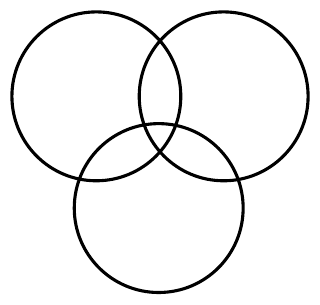
The least possible Venn diagram for the given statements is as shown below :

Conclusions:

(I) Some papers are shelves → Follow (As some papers are books and all books are shelves. As some part of papers is common with books which whole comes in shelves, therefore it is true)

(II) All books are libraries → Does not follow (As all books are shelves and no shelf is a library. As whole books comes in shelves which cannot be library, therefore it is false)

∴ Here, Only conclusion (I) follows.​

Hence, the correct answer is "Option 2".

Question 8

What should come in place of the question mark (?) in the given series?

23 32 67 76 155 164 ?

  1. AOption (a)

     330

  2. BOption (b)

    303

  3. COption (c)

    313

  4. DOption (d)

    331

View answer & explanation

Correct answer

Answer: (d)D.

331

Why this answer is correct

The logic followed here is:

Hence, "Option 4" is the correct answer.

Question 9

In a certain code language.

'U $ J' means 'U is the husband of J',

'U # J' means 'U is the mother of J',

'U @ J' means 'U is the father of J' and

'U + J' means 'U is the daughter of J'.

Based on the above, how is B related to C if 'B # L $ C # Q'?

  1. AOption (a)

     Mother's mother

  2. BOption (b)

    Husband's mother

  3. COption (c)

    Sister's mother

  4. DOption (d)

    Father's mother

View answer & explanation

Correct answer

Answer: (b)B.

Husband's mother

Why this answer is correct

A is
Symbol$#@+
MeaningHusbandMotherFatherDaughter
of B

Given Expression: B # L $ C # Q

B # L → B is the mother of L

L $ C → L is the husband of C

C # Q → C is the mother of Q

Thus, B is the C's husband's mother.

Hence, "Option 2" is the correct answer$.

Question 10

Select the option that represents the letters that, when sequentially placed from left to right in the blanks below, will complete the letter series.

A _ P L _ _ Z _ L M _ _ P L M A Z P _ _

  1. AOption (a)

    MZAPAZLM 

  2. BOption (b)

    MZPAAZML 

  3. COption (c)

    ZMPAAZLM

  4. DOption (d)

    ZMAPAZLM 

View answer & explanation

Correct answer

Answer: (d)D.

ZMAPAZLM 

Why this answer is correct

Given series: A _ P L _ _ Z _ L M _ _ P L M A Z P _ _

Option 1) MZAPAZLM → A M P L Z A Z P L M A Z P L M A Z P L M → (It doesn't follow any pattern)

Option 2) MZPAAZML  → A M P L Z P Z A L M A Z P L M A Z P M L → (It doesn't follow any pattern)

Option 3) ZMPAAZLM → A Z P L M P Z A L M A Z P L M A Z P L M → (It doesn't follow any pattern)

Option 4) ZMAPAZLM → A Z P L M A Z P L M A Z P L M A Z P L M → (It follows the pattern of: AZPLM - AZPLM - AZPLM - AZPLM)

Hence, "Option 4" is the correct answer.

Question 11

Each letter in the word INJURED is arranged in the English alphabetical order. How many letters are there in the English alphabetical order between the letter which is second from the left end and the one which is fourth from the right end in the new letter-cluster thus formed?

  1. AOption (a)

    2

  2. BOption (b)

    3

  3. COption (c)

    6

  4. DOption (d)

    4

View answer & explanation

Correct answer

Answer: (d)D.

4

Why this answer is correct

Given series: INJURED

According to the question, arranged alphabetically:

INJURED → DEIJNRU

Thus, the number of letters between the letter which is second from the left end and the one which is fourth from the right end in the new letter-cluster thus formed→ DEIJNRU → Four (F, G, H and I)

Hence, "Option 4" is the correct answer.

Question 12

GTBK is related to KRFI in a certain way based on the English alphabetical order. In the same way, NSFX is related to RQJV. To which of the given options is EKVO related, following the same logic?

  1. AOption (a)

    IIZM

  2. BOption (b)

     HJRN

  3. COption (c)

    .HJTN

  4. DOption (d)

    GJSO

View answer & explanation

Correct answer

Answer: (a)A.

IIZM

Why this answer is correct

The logic followed here is:

GTBK is related to KRFI

And,

NSFX is related to RQJV

Similarly,

EKVO is related to

Hence, "Option 1" is the correct answer.

Question 13

Six people, Q, R, S, T, U and Y, are sitting in a row facing North (but not necessarily in the same order). Only four people sit between R and Q. S sits to the immediate left of Q. Only one person sits between S and Y. Y sits at some place to the left of T but at some place to the right of U. Who sits third from the left end of the line?

  1. AOption (a)

     T

  2. BOption (b)

    .U

  3. COption (c)

    Y

  4. DOption (d)

    S

View answer & explanation

Correct answer

Answer: (c)C.

Y

Why this answer is correct

Given: Six people, Q, R, S, T, U and Y, are sitting in a row facing North.

1) Only four people sit between R and Q.

2) S sits to the immediate left of Q.

3) Only one person sits between S and Y.

  1. Y sits at some place to the left of T but at some place to the right of U.

Thus, Y sits third from the left end of the line.

Hence, "Option 3" is the correct answer.

Question 14

What should come in place of '?' in the given series based on the English alphabetical order?

HNB KQE NTH QWK ?

  1. AOption (a)

    TZL

  2. BOption (b)

     KWQ

  3. COption (c)

    TZN

  4. DOption (d)

    RXL

View answer & explanation

Correct answer

Answer: (c)C.

TZN

Why this answer is correct

The logic followed here is:

Hence, "Option 3" is the correct answer.

Question 15

Select the Venn diagram that best illustrate the relationship between the following classes.

Mother, Princess, Wife

  1. AOption (a)

  2. BOption (b)

  3. COption (c)

  4. DOption (d)

View answer & explanation

Correct answer

Answer: (a)A.

Why this answer is correct

The diagram/set that indicates the relation between the given classes is shown below: 

Some princess can be mothers or wives.

Hence, the correct answer is "Option 1".

Question 16

Select the figure from among the given options that can replace the question mark (?) in the following series.

  1. AOption (a)

  2. BOption (b)

  3. COption (c)

  4. DOption (d)

View answer & explanation

Correct answer

Answer: (c)C.

Why this answer is correct

The logic followed here is:

  1. The

 and 

elements shift clockwise subsequently.

rotates 45º anticlockwise.

  1. The 

element shift diagonally and rotates 90º clockwise subsequently. 

Thus, final series is:

Hence, "Option 3" is the correct answer.

Question 17

Based on the English alphabetical order, three of the following four letter-clusters are alike in a certain way and thus form a group. Which letter-cluster DOES NOT belong to that group?

(Note: The odd one out is not based on the number of consonants/vowels or their position in the letter-cluster.)

  1. AOption (a)

    LNS

  2. BOption (b)

    SUZ

  3. COption (c)

    MOT

  4. DOption (d)

    DFO

View answer & explanation

Correct answer

Answer: (d)D.

DFO

Why this answer is correct

The logic followed here is:

Option 1) LNS

Option 2) SUZ

Option 3) MOT

Option 4) DFO​

Thus, out of all 'DFO' is the odd one out.

Hence, "Option 4" is the correct answer.

Question 18

Six students A, B, C, U, V and W are seating around a circular table facing the centre (but not necessarily in the same order) . Only one person sits between U and W when counted from the right of U. Only one person sits between A and W. Only two people sit between A and B. C is an immediate neighbour of U. How many people sit between A and V when counted from the left of V?

  1. AOption (a)

    One

  2. BOption (b)

    Four

  3. COption (c)

    Three

  4. DOption (d)

    Two

View answer & explanation

Correct answer

Answer: (b)B.

Four

Why this answer is correct

Given: Six students A, B, C, U, V and W are seating around a circular table facing the centre.

1) Only one person sits between U and W when counted from the right of U. 

2) Only one person sits between A and W.

3) Only two people sit between A and B.

  1. C is an immediate neighbour of U.

After positioning B and C only one position is left which will be occupied by the only person left i.e. V.

Thus, four people sit between A and V when counted from the left of V.

Hence, "Option 2" is the correct answer.

Question 19

A paper is folded and punched as shown below. How will it appear when unfolded?

  1. AOption (a)

  2. BOption (b)

  3. COption (c)

  4. DOption (d)

View answer & explanation

Correct answer

Answer: (c)C.

Why this answer is correct

The figure that will when the given paper is unfolded is shown below:


Thus, Option figure 3 will appear when unfolded the given paper.

Hence, "Option 3" is the correct answer

Question 20

In a certain code language, 'JQBT' is coded as '147' and 'IWOG' is coded as '162'. What is the code for 'SDLO' in the given language?

  1. AOption (a)

    150

  2. BOption (b)

    156

  3. COption (c)

    138

  4. DOption (d)

    145

View answer & explanation

Correct answer

Answer: (a)A.

150

Why this answer is correct

The logic followed here is:

'JQBT' is coded as '147'

And,

'IWOG' is coded as '162'

Similarly,

'SDLO' is coded as

Hence, "Option 1" is the correct answer.

General Knowledge and General Awareness (20 questions)

Question 21

When was the rolling plan adopted?

  1. AOption (a)

     After the fifth five-year plan

  2. BOption (b)

    After the sixth five-year plan

  3. COption (c)

    After the eighth five-year plan

  4. DOption (d)

    After the seventh five-year plan

View answer & explanation

Correct answer

Answer: (a)A.

 After the fifth five-year plan

Why this answer is correct

The correct answer is After the fifth five-year plan.

Key Points

  • The Rolling Plan was introduced after the termination of the Fifth Five-Year Plan in 1978 by the Janata Party Government.
  • The concept of the Rolling Plan was aimed to replace the fixed five-year plans with a flexible annual plan that could be revised based on the country's economic performance and requirements.
  • It was initiated under the leadership of Morarji Desai, who served as the Prime Minister of India during that period.
  • This plan was designed to provide greater flexibility to policymaking, ensuring that the government could adapt to changing economic conditions without being constrained by the rigid framework of a fixed-term plan.
  • The Rolling Plan was eventually abandoned, and the Sixth Five-Year Plan was introduced in 1980 under the Congress government led by Indira Gandhi.

Additional Information

  • Five-Year Plans in India:
  • The concept of Five-Year Plans was introduced in India in 1951 inspired by the Soviet Union's planning model.
  • The First Five-Year Plan (1951-56) focused on agricultural development and infrastructure building.
  • The Second Five-Year Plan (1956-61) emphasized industrialization and the development of heavy industries.
  • Subsequent plans had specific objectives, such as poverty alleviation, employment generation, and sustainable growth.
  • Janata Party's Economic Policy:
  • The Janata Party, under Morarji Desai's leadership, sought to modify the planning process by introducing the Rolling Plan concept.
  • This approach was designed to align economic priorities with the actual outcomes and adjust the policies dynamically.
  • The government emphasized decentralization and reducing state control over industries and businesses during this period.
  • Challenges of Rolling Plan:
  • The Rolling Plan faced criticism for lacking long-term vision and consistency in policy-making.
  • Frequent revisions led to confusion and inefficiencies in implementation.
  • The Congress government, upon returning to power in 1980, decided to revert to the traditional Five-Year Plan structure.
  • Historical Context:
  • During the late 1970s, India was undergoing significant economic and political changes, including the Emergency period (1975-77).
  • The Janata Party's policies reflected its commitment to democracy, decentralization, and liberalization of the economy.
  • However, the lack of coherence and long-term planning under the Rolling Plan contributed to its failure.

Important Points

  • Planning Commission:
  • Established in 1950, the Planning Commission was responsible for creating and overseeing Five-Year Plans in India.
  • It was replaced by the NITI Aayog in 2015 under the Modi government.
  • Sixth Five-Year Plan (1980-85):
  • This plan marked the return to fixed-term planning after the failure of the Rolling Plan.
  • It focused on poverty alleviation, employment creation, and economic modernization.
  • It was successful in achieving a growth rate of 5.7%, which exceeded its target.
  • Flexible Planning:
  • While the Rolling Plan was abandoned, the idea of flexible planning influenced later approaches to economic policy-making in India.
  • It highlighted the importance of adapting policies to changing circumstances and economic realities.

Question 22

Identify the correct statement(s) from the following with reference to 2023-24 Union Budget of the Government of India.

i. The outlay for PM Awas Yojana is being enhanced to over ₹79,000 crores.

ii. The targeted agriculture credit is ₹20 lakh crores.

iii. The Government has targeted to provide central assistance of approximately ₹10,000 crores to the drought-prone central region of Karnataka.

  1. AOption (a)

    Only iii

  2. BOption (b)

     Only ii

  3. COption (c)

     i and ii

  4. DOption (d)

    ii and iii

View answer & explanation

Correct answer

Answer: (c)C.

 i and ii

Why this answer is correct

The correct answer is Option 3.

Key Points

  • Statement i: The outlay for PM Awas Yojana has been enhanced to over ₹79,000 crores. This is correct, as the Union Budget 2023-24 allocated this increased funding to provide housing for all under the flagship scheme.
  • Statement ii: The targeted agriculture credit for 2023-24 is set at ₹20 lakh crores. This is accurate, as the government aims to boost agricultural productivity and support farmers through institutional credit.
  • Statement iii: The government has targeted central assistance of approximately ₹10,000 crores to the drought-prone central region of Karnataka. This statement is incorrect, as the Union Budget 2023-24 did not specifically mention such a targeted allocation for Karnataka.
  • Correct Option: Since statements i and ii are correct, the correct answer is Option 3.

Additional Information

  • PM Awas Yojana:
  • Launched in 2015, this scheme aims to provide affordable housing to urban and rural poor by 2022.
  • The enhanced allocation of ₹79,000 crores in the 2023-24 budget highlights the government’s commitment to achieving the "Housing for All" mission.
  • The scheme includes both PMAY-Urban and PMAY-Gramin segments for holistic development.
  • Targeted Agriculture Credit:
  • The ₹20 lakh crores target for agriculture credit is designed to provide financial support to farmers and agricultural enterprises for better productivity.
  • The credit allocation includes loans for animal husbandry, dairy, and fisheries sectors.
  • This initiative also supports digital public infrastructure for agriculture and boosts the adoption of sustainable practices.
  • Union Budget 2023-24 Highlights:
  • Capital investment was increased by 33% to ₹10 lakh crores, representing 3.3% of GDP.
  • Focus on green growth initiatives, including energy transition and climate action.
  • Promotion of inclusive development, aiming to support sectors such as education, healthcare, and agriculture.
  • Drought-Prone Area Allocation:
  • While the budget focuses on addressing climate resilience and drought mitigation, no specific ₹10,000 crore allocation to Karnataka was announced.
  • Programs such as the Pradhan Mantri Krishi Sinchayee Yojana (PMKSY) aim to mitigate drought impacts across India.

Important Points

  • PM Awas Yojana:
  • Eligibility includes economically weaker sections (EWS), low-income groups, and middle-income groups.
  • The scheme provides subsidies on interest rates for home loans and ensures access to basic amenities.
  • Agriculture Credit:
  • Includes interest subvention schemes for farmers to reduce the financial burden.
  • Promotes digitization in agriculture by supporting startups and agri-tech firms.
  • Union Budget Objectives:
  • Aligns with Amrit Kaal vision for India’s development by 2047.
  • Focus on infrastructure, education, healthcare, and economic growth.
  • Encourages participation in global supply chains through initiatives like the PLI scheme.

Question 23

T Balasaraswati, who received the Sangeet Natak Akademi and Padma Vibhushan award, was a _________ dancer.

  1. AOption (a)

     Kuchipudi

  2. BOption (b)

    Kathak

  3. COption (c)

     Odissi

  4. DOption (d)

    Bharatanatyam

View answer & explanation

Correct answer

Answer: (d)D.

Bharatanatyam

Why this answer is correct

The correct answer is Bharatanatyam.

Key Points

  • T Balasaraswati was a renowned Indian classical dancer, famous for her mastery of the Bharatanatyam dance form.
  • She is credited with popularizing Bharatanatyam, which originated in the temples of Tamil Nadu, as an art form on a global platform.
  • Balasaraswati was a recipient of prestigious awards such as the Sangeet Natak Akademi Award in 1955 and the Padma Vibhushan in 1977 for her outstanding contribution to Indian classical dance.
  • Her performances were known for their emotional depth, intricate footwork, and the ability to convey complex stories through expressions and movements, which are hallmarks of Bharatanatyam.
  • The Bharatanatyam dance form is one of the oldest classical dance styles in India, characterized by fixed upper torso movements, bent legs, intricate footwork, and hand gestures (mudras) to convey a narrative.

Additional Information

  • Bharatanatyam:
  • Bharatanatyam is one of the eight major classical dance forms of India, originating from Tamil Nadu.
  • The name "Bharatanatyam" is derived from Bhava (expression), Raga (melody), Tala (rhythm), and Natyam (dance).
  • It is traditionally performed as a form of devotional expression, often narrating stories from Hindu mythology, particularly focusing on the deities Shiva, Vishnu, and Krishna.
  • The dance form is known for its intricate mudras (hand gestures), facial expressions, and rhythmic footwork.
  • It is accompanied by Carnatic music and follows a structured performance format including Alarippu, Jatiswaram, Varnam, Padam, and Tillana.
  • Other Classical Dance Forms of India:
  • Kuchipudi: Originating in Andhra Pradesh, it combines dance, acting, and narration, often performed as dance dramas.
  • Kathak: A dance form from North India, characterized by spinning movements, intricate footwork, and storytelling through expressions.
  • Odissi: A classical dance from Odisha, known for its fluid movements and sculpturesque poses, often depicting stories of Lord Jagannath.
  • Recognition for T Balasaraswati:
  • She was one of the first artists to bring Bharatanatyam to the global stage in the 20th century.
  • Her family lineage played a significant role in preserving and promoting this art form, with generations dedicated to Bharatanatyam.
  • She received international acclaim for her performances and was invited to perform at venues across the world.
  • Indian Classical Dance Forms:
  • The eight major classical dance forms of India are Bharatanatyam, Kathak, Kathakali, Kuchipudi, Odissi, Manipuri, Mohiniyattam, and Sattriya, each with its unique features and regional influences.
  • These dance forms are deeply rooted in Indian culture, history, and traditions, often expressing religious and mythological themes.

Question 24

Who administers the oath of office to the Governor?

  1. AOption (a)

    Chief Justice of High Court

  2. BOption (b)

    Prime Minister

  3. COption (c)

    Chief Minister

  4. DOption (d)

    President

View answer & explanation

Correct answer

Answer: (a)A.

Chief Justice of High Court

Why this answer is correct

The correct answer is Chief Justice of High Court.

Key Points

  • The Governor of a state in India is administered the oath of office by the Chief Justice of the High Court of that respective state.
  • This process is outlined under Article 159 of the Indian Constitution, which provides details regarding the oath or affirmation taken by the Governor.
  • The oath emphasizes allegiance to the Constitution of India and ensures the Governor’s commitment to discharging their duties faithfully and impartially.
  • If the Chief Justice of the High Court is unavailable, the oath may be administered by the senior-most judge of the High Court as per constitutional provisions.
  • This formal process is crucial for the Governor to officially assume their role and exercise their constitutional powers.

Additional Information

  • Governor:
  • The Governor is the constitutional head of a state in India and represents the authority of the central government at the state level.
  • The Governor is appointed by the President of India and typically serves a five-year term.
  • The Governor’s primary responsibilities include preserving, protecting, and defending the Constitution within the state.
  • Article 159:
  • This article explicitly describes the oath or affirmation undertaken by the Governor before assuming office.
  • The oath includes allegiance to the Constitution, upholding its provisions, and fulfilling the duties of the office faithfully and impartially.
  • Role of the Chief Justice:
  • The Chief Justice of the High Court plays a pivotal role in administering the oath to the Governor, signifying the legal and constitutional nature of the process.
  • This ensures that the Governor’s assumption of office is conducted according to constitutional norms and safeguards.
  • Alternate Arrangements:
  • In cases where the Chief Justice of the High Court is unable to administer the oath, the senior-most judge of the High Court steps in.
  • This provision ensures continuity and adherence to constitutional mandates even in unforeseen circumstances.
  • Historical Context:
  • The system of administering the oath by the Chief Justice underscores the separation of powers and the independence of the judiciary in ensuring constitutional governance.
  • This practice is designed to uphold democratic principles and promote accountability in state administration.

Important Points

  • Governor’s Role:
  • The Governor acts as a bridge between the state and the central government and ensures that constitutional provisions are implemented effectively within the state.
  • They hold the power to summon, prorogue, and dissolve the state legislative assembly and give assent to bills passed by the legislature.
  • In certain situations, the Governor may exercise discretionary powers as provided by the Constitution.
  • Judiciary’s Independence:
  • The involvement of the Chief Justice in administering the oath underscores the independence of the judiciary and its role in upholding constitutional principles.
  • This practice is a testament to the checks and balances embedded within the Indian democratic framework.
  • Legal Framework:
  • The process of oath-taking is a legal requirement, ensuring that the Governor fully understands their responsibilities and pledges allegiance to the Constitution before assuming office.
  • This formal procedure emphasizes the sanctity of the Constitution and the importance of adhering to its principles in governance.

Question 25

Aligned with the objective of state control over vital sectors of the economy, the Industrial Policy of Resolution of 1956 was enacted, serving as the foundation for the ___________ Five Year Plan.

  1. AOption (a)

    first

  2. BOption (b)

     second

  3. COption (c)

    third

  4. DOption (d)

    fourth

View answer & explanation

Correct answer

Answer: (b)B.

 second

Why this answer is correct

The correct answer is second.

Key Points

  • The Industrial Policy Resolution of 1956 was a landmark policy document in India that aimed to strengthen the role of the state in controlling critical sectors of the economy. It emphasized the establishment of a socialist pattern of society by encouraging the public sector to play a dominant role.
  • This resolution prioritized the allocation of resources to industries of strategic importance, such as defense, atomic energy, and heavy industries, under the direct control of the government.
  • The Second Five-Year Plan (1956-1961), formulated under the leadership of Prime Minister Jawaharlal Nehru and guided by economist Dr. P.C. Mahalanobis, was heavily influenced by the principles outlined in the Industrial Policy Resolution of 1956.
  • The Second Five-Year Plan focused on the development of capital goods industries, such as iron and steel, heavy engineering, and machine-building, aligning with the goal of state control over vital economic sectors.
  • The resolution and the plan together aimed to create a balanced and self-reliant economy by prioritizing industrialization as a key driver of economic growth, poverty reduction, and modernization.

Additional Information

  • Industrial Policy Resolution of 1956:
  • The resolution divided industries into three categories:
  • Category 1: Industries exclusively under state control, such as arms and ammunition, atomic energy, and railways.
  • Category 2: Industries where the state would play a dominant role but private sector participation was allowed, including machine tools, fertilizers, and chemicals.
  • Category 3: Industries left for private sector operation, with the state providing necessary support.
  • The resolution aimed to reduce regional disparities by promoting industrial development in less developed regions.
  • It emphasized the importance of small-scale industries to complement large-scale industries.
  • Second Five-Year Plan:
  • It was based on the Mahalanobis model, which emphasized heavy industries and capital goods production.
  • The plan allocated substantial resources to the establishment of public sector enterprises like Bharat Heavy Electricals Limited (BHEL) and Steel Authority of India (SAIL).
  • This plan marked the beginning of planned industrial development with a focus on self-reliance.
  • Key Features of the Five-Year Plans:
  • The First Plan (1951-1956) focused on agriculture and irrigation to recover from the partition's aftermath.
  • The Second Plan emphasized industrialization as a key tool for economic development.
  • Subsequent plans built upon the foundation laid by the Industrial Policy Resolution of 1956.
  • Impact of the Industrial Policy Resolution:
  • It laid the groundwork for India’s industrial policy and its focus on public sector-led growth.
  • It helped establish institutions like the National Small Industries Corporation (NSIC) to support small-scale industries.
  • The policy was instrumental in creating a mixed economy with both public and private sector participation.

Important Points

  • Planned Economy: India adopted the concept of Five-Year Plans inspired by the Soviet Union to achieve economic development in a systematic manner.
  • Role of Public Sector: The resolution emphasized the expansion of the public sector to ensure equitable distribution of resources and economic stability.
  • Balanced Regional Development: It aimed to reduce regional disparities through targeted investment in backward areas.
  • Legacy: The Industrial Policy Resolution of 1956 continues to be a significant milestone in shaping India's economic policies and industrial development strategy.

Question 26

 In the 'Pradhan Mantri Mudra Yojana', the loan cover for Shishu category is upto _______.

  1. AOption (a)

    ₹5,00,000

  2. BOption (b)

    ₹10,00,000

  3. COption (c)

    ₹50,000

  4. DOption (d)

    ₹7,00,000

View answer & explanation

Correct answer

Answer: (c)C.

₹50,000

Why this answer is correct

The correct answer is ₹50,000.

Key Points

  • Pradhan Mantri Mudra Yojana (PMMY) was launched by the Government of India in April 2015 to provide financial support to micro and small enterprises.
  • Under PMMY, loans are categorized into three types based on the amount: Shishu, Kishor, and Tarun.
  • The Shishu category provides loans up to ₹50,000 to support small-scale business activities such as startups or enterprises requiring minimal capital. This is the correct answer.
  • The Kishor category covers loans ranging from ₹50,001 to ₹5,00,000, aimed at enterprises in the growth phase.
  • The Tarun category provides loans ranging from ₹5,00,001 to ₹10,00,000, targeting businesses seeking to expand operations or scale up.
  • These loans are collateral-free and are issued by banks, NBFCs, and MFIs.

Additional Information

  • Purpose of PMMY:
  • The scheme aims to promote entrepreneurship and self-employment among individuals, especially in rural and semi-urban areas.
  • It focuses on promoting the economic empowerment of women and marginalized sections of society.
  • Eligibility Criteria:
  • Any Indian citizen with a viable business plan for manufacturing, trading, or service activities can apply for loans under PMMY.
  • Applicants must not have any prior loan defaults and should meet the financial institution’s criteria.
  • Loan Coverage:
  • Loans are provided for a variety of purposes, including setting up shops, purchasing equipment, and starting small businesses.
  • These loans do not require collateral, making them accessible to small entrepreneurs.
  • Features of PMMY:
  • The interest rates are determined by the lending institutions, but they are generally lower than commercial rates.
  • Repayment tenure can go up to 5 years.
  • Impact:
  • Since its launch, PMMY has supported millions of micro and small businesses in India, contributing significantly to job creation and economic growth.
  • It has empowered people from economically weaker sections by providing access to credit.

Important Points

  • Micro Units Development and Refinance Agency (MUDRA):
  • MUDRA was established as a subsidiary of SIDBI to regulate and refinance microfinance institutions.
  • Its primary aim is to provide financial support to non-corporate, non-farm small/micro enterprises.
  • Funding Sources:
  • Loans under PMMY are funded by banks, NBFCs, and MFIs, with refinancing support from MUDRA.
  • MUDRA extends refinance support to these institutions at concessional rates.
  • MUDRA Card:
  • MUDRA Card is a debit card issued under PMMY, which enables borrowers to withdraw funds from ATMs or make digital payments.
  • It is linked to the borrower’s account, ensuring easy access to credit.
  • Achievements:
  • Since its inception, PMMY has disbursed loans worth billions of rupees, benefiting over 30 crore beneficiaries across India.
  • It has played a crucial role in fostering a culture of self-reliance and entrepreneurship.

Question 27

In 2021, Dr. Padmaja Suresh was awarded the title of 'Karnataka Kalashree' for her best performance in which dance form?

  1. AOption (a)

    Bharatanatyam

  2. BOption (b)

    Mohiniattam

  3. COption (c)

    Kathak

  4. DOption (d)

    Sattriya

View answer & explanation

Correct answer

Answer: (a)A.

Bharatanatyam

Why this answer is correct

The correct answer is Bharatanatyam.

Key Points

  • Dr. Padmaja Suresh was honored with the prestigious title of 'Karnataka Kalashree' in 2021 for her excellence and contribution to the classical dance form Bharatanatyam.
  • Bharatanatyam is one of the oldest and most revered forms of Indian classical dance, originating in Tamil Nadu. It is deeply rooted in the Natya Shastra, an ancient Sanskrit treatise on performing arts.
  • As a renowned dancer, Dr. Padmaja Suresh has dedicated her life to preserving and promoting Indian classical dance, especially Bharatanatyam, through performances, workshops, and academic engagements.
  • The 'Karnataka Kalashree' title is awarded to individuals who have significantly contributed to the field of arts, culture, and heritage in Karnataka.
  • Dr. Padmaja Suresh's recognition highlights her immense talent, dedication, and contribution to the preservation and propagation of Bharatanatyam as an art form.

Additional Information

  • Bharatanatyam:
  • Origin: Bharatanatyam is believed to have originated more than 2,000 years ago in South India, particularly in temples of Tamil Nadu.
  • Philosophy: It is deeply connected to spiritual themes, portraying stories from Hindu mythology and expressing devotion to deities such as Lord Shiva, Vishnu, and Krishna.
  • Technique: This dance form incorporates complex footwork, graceful hand gestures (mudras), and intricate facial expressions (abhinaya) to convey emotions and narratives.
  • Structure: A Bharatanatyam performance is divided into several segments, including Alarippu, Jatiswaram, Varnam, Tillana, and Padams. Each segment showcases different aspects of rhythm, expression, and storytelling.
  • Costume: The dancers wear traditional attire consisting of colorful silk sarees, adorned with intricate jewelry and expressive makeup, including exaggerated eye designs.
  • Karnataka Kalashree Award:
  • This award is presented by the Karnataka Government to individuals excelling in various forms of art, culture, and heritage.
  • It recognizes contributions to fields such as classical music, dance, theater, literature, and visual arts.
  • The recipients of the award are celebrated for their efforts in promoting and preserving the cultural traditions of Karnataka and India.
  • Other Indian Classical Dance Forms:
  • Mohiniattam: Originating from Kerala, this dance form is known for its graceful movements and feminine charm, often revolving around themes of love and devotion.
  • Kathak: A classical dance form from North India, characterized by intricate footwork, spins, and storytelling through gestures and facial expressions.
  • Sattriya: Originating in Assam, it was introduced by the saint Srimanta Sankardeva and is traditionally performed in monasteries as a form of devotional expression.
  • Natya Shastra:
  • It is an ancient Sanskrit text attributed to the sage Bharata, considered the foundation of Indian classical dances.
  • The text outlines the principles, postures, gestures, and techniques of performing arts, including dance, drama, and music.
  • It serves as the basis for the classical dance forms of India, including Bharatanatyam, Kathakali, and Odissi.

Question 28

What can be used to sanitise water in swimming pools?

  1. AOption (a)

    Washing soda

  2. BOption (b)

    Bleaching powder

  3. COption (c)

    Dettol

  4. DOption (d)

    Caustic soda

View answer & explanation

Correct answer

Answer: (b)B.

Bleaching powder

Why this answer is correct

The correct answer is Bleaching powder.

Key Points

  • Bleaching powder, chemically known as calcium hypochlorite, is widely used to sanitize water in swimming pools. It acts as a disinfectant by killing bacteria, viruses, and other pathogens present in the water.
  • Bleaching powder releases chlorine when dissolved in water, which effectively destroys microorganisms and ensures the water is safe for swimming.
  • It helps prevent the spread of waterborne diseases, such as cryptosporidiosis and giardiasis, which can occur through contaminated pool water.
  • This compound is highly effective, affordable, and easy to use, making it a preferred choice for pool maintenance worldwide.
  • Swimming pool operators often monitor the chlorine levels regularly to ensure proper sanitization and maintain the safety and hygiene of the pool water.

Additional Information

  • Characteristics of Bleaching Powder:
  • Bleaching powder is a white or light yellow powder with a strong chlorine smell.
  • It is soluble in water, and its effectiveness depends on its chlorine content.
  • Commonly used not only for swimming pools but also for disinfecting drinking water, cleaning surfaces, and bleaching fabrics.
  • Comparison with Other Options:
  • Washing soda: While washing soda (sodium carbonate) is used for cleaning purposes, it is not suitable for sanitizing water as it does not have disinfectant properties.
  • Dettol: Dettol is a liquid antiseptic used for personal hygiene and cleaning wounds but is not appropriate for sanitizing large volumes of water like swimming pools.
  • Caustic soda: Caustic soda (sodium hydroxide) is a strong base used in industrial cleaning but does not have disinfectant capabilities for water treatment.
  • Safety Measures:
  • Bleaching powder should be handled with care as it can irritate the skin, eyes, and respiratory system.
  • Proper dosage is essential to avoid excessive chlorine levels, which can lead to health issues like skin irritation and eye redness.
  • Global Usage:
  • Bleaching powder is widely used worldwide for water sanitation, especially in developing countries where access to advanced water treatment systems is limited.
  • It is a critical component in emergency relief efforts to purify water during natural disasters and public health crises.

Important Points

  • Chlorine Chemistry: Chlorine, released from bleaching powder, kills microorganisms by reacting with their cellular components, disrupting essential processes for survival.
  • Environmental Concerns: Excessive chlorine usage can lead to the formation of harmful by-products like trihalomethanes (THMs) in water, which can pose risks to human health and the environment.
  • Monitoring Pool Water: Regular testing of chlorine levels and pH is essential to ensure the pool water remains safe and comfortable for swimmers.
  • Storage of Bleaching Powder: It should be stored in a cool, dry place away from moisture to prevent degradation and loss of effectiveness.

Question 29

According to the Census of India 2011, which state from the following has the highest sex ratio?

  1. AOption (a)

     Nagaland

  2. BOption (b)

     Andhra Pradesh

  3. COption (c)

    Tamil Nadu

  4. DOption (d)

    Manipur

View answer & explanation

Correct answer

Answer: (c)C.

Tamil Nadu

Why this answer is correct

The correct answer is Tamil Nadu.

Key Points

  • According to the Census of India 2011, Tamil Nadu recorded a high sex ratio of 996 females per 1000 males, making it one of the states with a commendable gender ratio.
  • The sex ratio is an important demographic indicator that reflects the number of females per 1000 males in a population. It helps in assessing gender equity in a society.
  • Tamil Nadu's high sex ratio can be attributed to the state's progressive social policies, better healthcare facilities, and awareness campaigns aimed at improving gender equality.
  • The state's commitment to improving women's status through schemes like Amma Maternity Nutrition Kit and Cradle Baby Scheme has played a vital role in addressing gender disparities.
  • While Tamil Nadu leads in this regard, other states like Kerala have also recorded exceptional sex ratios, showcasing the impact of sustained social development efforts.

Additional Information

  • Sex Ratio in India:
  • The average sex ratio of India as per the 2011 Census stood at 943 females per 1000 males, indicating a slight improvement compared to previous census figures.
  • Kerala recorded the highest sex ratio with 1084 females per 1000 males, followed by Puducherry at 1037.
  • States like Haryana and Punjab recorded lower sex ratios due to prevailing societal issues such as gender-based discrimination and female infanticide.
  • Impact of Policies on Sex Ratio:
  • Awareness campaigns such as Beti Bachao Beti Padhao launched by the government aim to reduce gender inequality and improve the sex ratio in states with lower figures.
  • The implementation of laws like the Pre-Conception and Pre-Natal Diagnostic Techniques (PCPNDT) Act helps to curb sex-selective abortions and promote gender equity.
  • Healthcare initiatives focusing on maternal and child health have significantly contributed to improving survival rates of female infants in India.
  • State-wise Sex Ratio in 2011:
  • Kerala: 1084 females per 1000 males (highest).
  • Tamil Nadu: 996 females per 1000 males.
  • Haryana: 879 females per 1000 males (lowest among major states).

Important Points

  • Significance of Sex Ratio:
  • It is a critical indicator of gender equality and social development in a society.
  • A balanced sex ratio fosters equitable opportunities and reduces gender-based disparities in education, employment, and healthcare.
  • Improving sex ratio helps in addressing issues like gender-based violence and exploitation.
  • Challenges in Improving Sex Ratio:
  • Social biases and practices such as dowry system and gender discrimination contribute to skewed sex ratios in certain regions.
  • Lack of access to education and healthcare in rural areas exacerbates gender disparity.
  • Increasing awareness and strict enforcement of laws are essential to overcome these challenges.

Question 30

When did India host the Asian Games for the first time?

  1. AOption (a)

    1951

  2. BOption (b)

    1982

  3. COption (c)

    1981

  4. DOption (d)

    1952

View answer & explanation

Correct answer

Answer: (a)A.

1951

Why this answer is correct

The correct answer is 1951.

Key Points

  • The Asian Games were hosted by India for the first time in 1951. This was a landmark event in the history of Indian sports.
  • The games were held in New Delhi, India. It marked the debut of the Asian Games as a continental multi-sport event.
  • The inaugural Asian Games were conducted under the aegis of the Asian Games Federation, with the participation of 11 nations and over 490 athletes.
  • The event featured six sports disciplines, including athletics, aquatics, basketball, cycling, football, and weightlifting.
  • The opening ceremony took place at the National Stadium in New Delhi, with the then Prime Minister of India, Jawaharlal Nehru, formally inaugurating the games.
  • The 1951 Asian Games symbolized the unity and cooperation among Asian nations and set the stage for subsequent editions of the games.

Additional Information

  • Asian Games History:
  • The Asian Games, also known as Asiad, are a continental multi-sport event held every four years among athletes from across Asia.
  • The concept of the Asian Games was initiated by the Asian Games Federation in 1949, with the first games held in 1951.
  • The Asian Games are governed by the Olympic Council of Asia (OCA), which oversees the event's organization and management.
  • The games aim to foster unity and friendship among Asian nations through sports.
  • India's Role in the Asian Games:
  • India was the first host country of the Asian Games, showcasing its commitment to promoting international sports.
  • India has hosted the Asian Games twice: 1951 and 1982, both in New Delhi.
  • India has been an active participant in the Asian Games, winning numerous medals across various disciplines.
  • Key Facts about the 1951 Asian Games:
  • The games had 11 participating nations, including Afghanistan, Burma (Myanmar), Indonesia, Iran, Japan, Nepal, Philippines, Singapore, Sri Lanka, Thailand, and India.
  • A total of 169 events were held in the six sports categories.
  • India finished second in the medal tally, winning 15 gold medals.
  • Evolution of the Asian Games:
  • The Asian Games have grown significantly in scale over the years, with more countries and participants joining each edition.
  • The most recent Asian Games were held in Hangzhou, China, in 2023, featuring 45 nations and thousands of athletes.
  • The games now include a wide variety of sports, ranging from traditional events like athletics to newer sports such as esports.

Important Points

  • Significance of the Asian Games:
  • The Asian Games serve as a platform for cultural exchange and unity among Asian nations.
  • It offers athletes from diverse backgrounds the opportunity to compete internationally and showcase their talent.
  • The event contributes to the development of sports infrastructure and promotes physical fitness and sportsmanship.
  • India's Achievements:
  • India consistently performs well at the Asian Games, particularly in athletics, shooting, and wrestling.
  • Indian athletes have earned global recognition through their performance in the Asian Games.
  • The event has inspired many young athletes in India to pursue sports as a career.
  • Future of the Asian Games:
  • The Asian Games continue to expand, incorporating new sports and events to stay relevant with global trends.
  • Efforts are being made to enhance the inclusivity of the games by introducing events for disabled athletes.
  • The games are a crucial step toward achieving greater cooperation and understanding among Asian countries.

Question 31

Bhupinder Singh was awarded Sangeet Natak Akademi award in 2015 for which of the following musical traditions?

  1. AOption (a)

    Ghazal

  2. BOption (b)

    Carnatic music

  3. COption (c)

    Pop music

  4. DOption (d)

     Sugam Sangeet

View answer & explanation

Correct answer

Answer: (d)D.

 Sugam Sangeet

Why this answer is correct

The correct answer is Sugam Sangeet.

Key Points

  • Bhupinder Singh was awarded the Sangeet Natak Akademi Award in 2015 for his contributions to Sugam Sangeet, which is a genre of light classical music that blends traditional and modern elements.
  • Sugam Sangeet refers to the genre of music that encompasses light classical music forms, including ghazals, bhajans, patriotic songs, folk songs, and other semi-classical music styles.
  • The Sangeet Natak Akademi Awards are presented annually by the Government of India to recognize individuals' achievements in performing arts, including music, dance, and drama.
  • Bhupinder Singh was noted for his ability to render soulful melodies, blending lyrical depth with musical finesse, which made his performances stand out in the realm of Sugam Sangeet.
  • His contributions to Indian music have been widely acclaimed, and his award in 2015 highlighted his efforts to popularize this unique musical genre.

Additional Information

  • Sangeet Natak Akademi Awards:
  • Established in 1952, the awards are India's highest national recognition given to practicing artists in the field of performing arts.
  • The awards cover various categories, including classical music, dance, theatre, traditional folk, and tribal art forms.
  • The award consists of a citation, an angavastram (shawl), and a cash prize.
  • Sugam Sangeet:
  • It is a form of light music intended to be more accessible and melodious, catering to a wide audience.
  • Sugam Sangeet includes genres such as ghazals, bhajans, and patriotic songs, with a focus on lyrical beauty and emotional expression.
  • The genre bridges the gap between classical and popular music, making it widely appreciated across India.
  • Other Musical Genres:
  • Ghazals: A poetic form that consists of rhyming couplets and a refrain, often expressing themes of love and loss.
  • Carnatic Music: A classical music tradition originating from South India, characterized by its complex ragas and talas.
  • Pop Music: A genre of popular music that originated in the mid-20th century, characterized by catchy melodies and simple rhythms.
  • 2015 Sangeet Natak Akademi Awardees:
  • Besides Bhupinder Singh, several other artists were recognized in various categories, showcasing India's diverse and rich cultural heritage.
  • The award ceremony honors individuals who have made significant contributions to preserving and promoting Indian performing arts.

Question 32

When trapped water in an aquifer is surrounded by layers of impermeable rock or clay, which apply positive pressure to the water, it is known as:

  1. AOption (a)

    unconfined aquifer

  2. BOption (b)

    unsaturated aquifer

  3. COption (c)

    artesian aquifer

  4. DOption (d)

    perched aquifer

View answer & explanation

Correct answer

Answer: (c)C.

artesian aquifer

Why this answer is correct

The correct answer is Artesian Aquifer.

Key Points

  • An artesian aquifer is a confined aquifer containing groundwater under positive pressure.
  • It is surrounded by layers of impermeable rock or clay that prevent water from escaping, creating pressure.
  • When water is tapped in an artesian aquifer, it rises above the top of the aquifer without the need for pumping, due to the hydrostatic pressure.
  • This phenomenon occurs because the aquifer is sandwiched between impermeable layers and receives water from a higher elevation, allowing it to maintain positive pressure.
  • Such aquifers are often used as a reliable source of groundwater for irrigation, municipal water supply, and industrial purposes.

Additional Information

  • Unconfined Aquifer:
  • An unconfined aquifer is not bounded by impermeable layers, and the water table is exposed to atmospheric pressure.
  • The water level in wells tapping this aquifer corresponds to the water table level, and pumping is required to extract water.
  • These aquifers are susceptible to contamination from surface pollutants because of their open nature.
  • Unsaturated Aquifer:
  • The unsaturated zone, also known as the vadose zone, is located above the water table and contains both air and water within soil pores.
  • It is not a reliable source of water extraction as it lacks saturation.
  • This zone serves as a transit layer for water moving downward towards saturated aquifers.
  • Perched Aquifer:
  • A perched aquifer is formed above the main water table due to a localized impermeable layer (like clay) preventing water from draining downward.
  • It is smaller and less reliable compared to other aquifer types.
  • Such aquifers are often temporary and may disappear during dry periods.
  • Artesian Aquifer Characteristics:
  • These aquifers have high pressure, enabling water to flow to the surface naturally.
  • They are commonly found in areas where water infiltrates at higher elevations and flows down to regions with impermeable rock layers.
  • Examples include the Great Artesian Basin in Australia, one of the largest and most important artesian aquifers globally.

Important Points

  • Groundwater Recharge:
  • Artesian aquifers depend on recharge zones where water infiltrates from the surface, often at higher elevations.
  • These recharge zones are critical for maintaining water pressure and ensuring long-term sustainability.
  • Uses of Artesian Aquifers:
  • They are extensively used for irrigation, drinking water supply, and industrial processes.
  • Natural springs formed from artesian aquifers are often tourist attractions due to their scenic beauty and therapeutic properties.
  • Environmental Concerns:
  • Over-extraction of water from artesian aquifers can lead to a decrease in pressure and loss of natural spring flow.
  • Proper management and regulation are essential to protect these resources from depletion and contamination.

Question 33

Which of the following chemical reactions is best described as double displacement reaction?

  1. AOption (a)

    Fe (s) + CuSO4 (aq) → FeSO4 (aq) + Cu (s)

  2. BOption (b)

    MnO2 + 4HCl → MnCl2 + 2H2O + Cl2

  3. COption (c)

     2HNO3 + Ca(OH)2 → Ca(NO3)2 + 2H2O

  4. DOption (d)

    Na2SO4 (aq) + BaCl2 (aq) → BaSO4 (s) + 2NaCl (aq)

View answer & explanation

Correct answer

Answer: (d)D.

Na2SO4 (aq) + BaCl2 (aq) → BaSO4 (s) + 2NaCl (aq)

Why this answer is correct

The correct answer is Na2SO4 (aq) + BaCl2 (aq) → BaSO4 (s) + 2NaCl (aq).

Key Points

  • Double displacement reactions involve the exchange of ions between two compounds to form two new compounds. These reactions typically occur in aqueous solutions.
  • The given reaction Na2SO4 (aq) + BaCl2 (aq) → BaSO4 (s) + 2NaCl (aq) is a perfect example of a double displacement reaction, where the sulfate ions (SO42-) from Na2SO4 combine with barium ions (Ba2+) from BaCl2 to form BaSO4, a precipitate.
  • The reaction also results in the formation of sodium chloride (NaCl), which remains dissolved in the aqueous solution.
  • This reaction demonstrates the principle of precipitation, where the insoluble compound BaSO4 forms as a solid and can be separated from the solution.
  • The reactants (Na2SO4 and BaCl2) are soluble in water, but the product BaSO4 is insoluble, making it a characteristic double displacement reaction.

Additional Information

  • Double Displacement Reaction:
  • These reactions are also called metathesis reactions.
  • It typically occurs when two ionic compounds react in aqueous solutions, exchanging their ions to form two new compounds.
  • One of the products in such reactions is often a precipitate, gas, or water.
  • Example: AgNO3 (aq) + NaCl (aq) → AgCl (s) + NaNO3 (aq).
  • Explanation of Other Options:
  • Fe (s) + CuSO4 (aq) → FeSO4 (aq) + Cu (s): This is a single displacement reaction where Fe replaces Cu in CuSO4. Not a double displacement reaction.
  • MnO2 + 4HCl → MnCl2 + 2H2O + Cl2: This is a redox reaction involving oxidation and reduction. Not a double displacement reaction.
  • 2HNO3 + Ca(OH)2 → Ca(NO3)2 + 2H2O: This is a neutralization reaction where an acid reacts with a base to form salt and water. Not a double displacement reaction.
  • Characteristics of Double Displacement Reactions:
  • Usually occurs in aqueous solutions.
  • Produces a precipitate, gas, or neutral compound like water.
  • Commonly used to identify compounds in chemical analysis.
  • Applications:
  • Used in qualitative analysis to identify ions and compounds.
  • Important in pharmaceuticals for synthesizing certain compounds.
  • Useful in wastewater treatment to precipitate harmful ions.

Important Points

  • Precipitation Reactions:
  • These are a subset of double displacement reactions where a solid is formed from the reaction of two aqueous solutions.
  • In the correct answer, BaSO4 is the precipitate formed, which is insoluble in water.
  • Such reactions are used to test for the presence of specific ions in solution.
  • Solubility Rules:
  • Barium sulfate (BaSO4) is insoluble in water, making it a precipitate in the reaction.
  • Sodium chloride (NaCl) is soluble and remains in the aqueous phase.
  • Understanding solubility rules helps predict the outcomes of double displacement reactions.

Question 34

Who among the following retired from the position of Cabinet Secretary of India in August 2024?

  1. AOption (a)

    Ajit Kumar Seth

  2. BOption (b)

    Pradeep Kumar

  3. COption (c)

    TV Somanathan

  4. DOption (d)

    Rajiv Gauba

View answer & explanation

Correct answer

Answer: (d)D.

Rajiv Gauba

Why this answer is correct

The correct answer is Rajiv Gauba.

Key Points

  • Rajiv Gauba retired as the Cabinet Secretary of India in August 2024. He was serving in one of the highest administrative positions in the country.
  • The Cabinet Secretary is the head of the Indian Administrative Services (IAS) cadre and acts as the principal coordinator of all central government departments.
  • Rajiv Gauba, a 1982 batch IAS officer from the Jharkhand cadre, was appointed Cabinet Secretary in August 2019 and served for five years after receiving extensions.
  • As Cabinet Secretary, he played a key role in coordinating policy implementation, managing crises, and ensuring inter-ministerial cooperation.
  • During his tenure, Rajiv Gauba contributed significantly to initiatives such as COVID-19 pandemic management, national security, and economic reforms.

Additional Information

  • Role of the Cabinet Secretary:
  • The Cabinet Secretary is the highest civil servant in the Government of India and serves as the top coordinator for central government functions.
  • They act as the principal advisor to the Prime Minister and provide secretarial assistance to the Cabinet and its committees.
  • The Cabinet Secretary is responsible for ensuring inter-ministerial coordination and resolving administrative disputes.
  • This position is crucial for maintaining the smooth functioning of the bureaucratic machinery in India.
  • Tenure and Appointment:
  • The Cabinet Secretary is appointed by the Prime Minister and serves typically for a term of two years, with possible extensions based on performance.
  • Extensions are granted by the Appointments Committee of the Cabinet (ACC), chaired by the Prime Minister.
  • Rajiv Gauba’s Career:
  • Before becoming Cabinet Secretary, Rajiv Gauba served in various high-profile positions, including as the Secretary of the Ministry of Home Affairs.
  • He has extensive experience in governance, policy formulation, and administrative leadership.
  • His tenure as Cabinet Secretary was marked by major events like the COVID-19 pandemic and national-level reforms.
  • Other Prominent Cabinet Secretaries:
  • Ajit Kumar Seth: Served as Cabinet Secretary from 2011 to 2015.
  • Pradeep Kumar: Known for his contributions in various administrative roles but did not serve as Cabinet Secretary.
  • TV Somanathan: Currently serves as the Finance Secretary and holds expertise in economic policy but is not a former Cabinet Secretary.

Important Points

  • Functions of the Cabinet Secretary:
  • Acts as the chief coordinator for policy implementation across central government ministries.
  • Provides advisory support to the Prime Minister and other Cabinet ministers.
  • Heads the Indian Administrative Services cadre and ensures smooth inter-ministerial coordination.
  • Manages crisis situations and ensures effective administrative functioning during emergencies.
  • Rajiv Gauba’s Legacy:
  • Known for his proactive approach in handling crises like COVID-19.
  • Played a significant role in coordinating national security and administrative reforms.
  • His leadership style emphasized effective governance and policy execution.

Question 35

Generally, what portion of the crop was collected as tax by the state during the Mahajanapada period?

  1. AOption (a)

    1/5th

  2. BOption (b)

    1/8th

  3. COption (c)

    1/4th

  4. DOption (d)

    1/6th

View answer & explanation

Correct answer

Answer: (d)D.

1/6th

Why this answer is correct

The correct answer is 1/6th.

Key Points

  • During the Mahajanapada period, the state collected a specific portion of the crop as tax from farmers, which was referred to as Bali.
  • The tax collected was generally 1/6th of the total produce, which was considered fair and sufficient to support the administrative and military needs of the kingdom.
  • This taxation system was a critical part of the economic structure and ensured the functioning of the state, including the king’s court and public welfare activities.
  • The tax collection system during the Mahajanapada period was well-organized, and the collected revenue was used for state administration, defense, and development projects.
  • Farmers were expected to pay taxes in the form of agricultural produce, as the economy during this era was primarily agrarian.

Additional Information

  • Mahajanapada Period:
  • The Mahajanapada period marks a significant phase in Indian history, roughly around the 6th century BCE.
  • There were 16 Mahajanapadas, including kingdoms like Magadha, Kosala, and Vatsa, which were prominent political entities.
  • The economy during this era was predominantly agrarian, with trade and commerce also playing an essential role.
  • Taxation System:
  • Taxes were crucial for the functioning of the state and were collected from farmers in the form of a portion of their agricultural produce.
  • This system ensured a steady revenue for the administration and supported activities such as infrastructure development and maintenance of the army.
  • Social Structure:
  • Society during the Mahajanapada period was divided into various classes based on occupation, including farmers, traders, warriors, and priests.
  • The taxation system was designed to be equitable, ensuring that the burden was shared among different sections of society.
  • Historical Context:
  • The collection of 1/6th of the produce as tax is mentioned in ancient texts like the Arthashastra and other historical documents.
  • This system was considered fair and sustainable, allowing the state to meet its needs without overburdening the farmers.

Important Points

  • King’s Role:
  • The king was responsible for ensuring the welfare of his subjects and utilized tax revenue for public works, defense, and maintaining law and order.
  • He was also tasked with protecting agricultural activities and ensuring the farmers’ prosperity.
  • Economic Sustainability:
  • The collection of 1/6th of the produce as tax was designed to balance the needs of the state and the farmers.
  • It allowed farmers to retain a significant portion of their produce for personal use and trade.

Question 36

During the Raja festival, womanhood is celebrated. In which Indian state is this festival extremely popular?

  1. AOption (a)

     Kerala

  2. BOption (b)

    Odisha

  3. COption (c)

    West Bengal

  4. DOption (d)

     Maharashtra

View answer & explanation

Correct answer

Answer: (b)B.

Odisha

Why this answer is correct

The correct answer is Odisha.

Key Points

  • Raja Festival is a popular festival celebrated in the Indian state of Odisha. It is one of the most well-known festivals in the region.
  • The festival is dedicated to womanhood and specifically celebrates fertility and menstruation, which is considered sacred and vital for human life.
  • It is a three-day festival that marks the beginning of the agricultural season and is celebrated with great enthusiasm and traditional fervor.
  • The term "Raja" is derived from the Sanskrit word "Rajas," meaning menstruation. It is believed that during this time, Mother Earth undergoes a period of rest and rejuvenation, similar to a menstruating woman.
  • During this festival, women are treated with respect, and they refrain from cooking or performing household chores as a symbol of rest and rejuvenation.

Additional Information

  • Celebration of Raja Festival:
  • The festival is celebrated in the month of June, coinciding with the arrival of the monsoon season.
  • It is also known as "Raja Parba" or "Mithuna Sankranti" in Odisha.
  • During the festival, swings (locally called "Dolies") are hung from trees, and women enjoy swinging on them as part of the festivities.
  • Special dishes such as "Poda Pitha" (baked rice cake) and other traditional delicacies are prepared and shared among family members and neighbors.
  • Women wear new clothes, apply alatha (a red dye applied to the feet), and participate in folk songs and dances.
  • Significance of Raja Festival:
  • The festival signifies the sacredness of womanhood and acknowledges the importance of menstruation as a natural process vital for life.
  • It also marks the agricultural significance, as it is believed that Mother Earth menstruates during these three days and prepares herself for the upcoming agricultural season.
  • The fourth day of the festival is known as "Vasumati Snana," when women bathe the grinding stone (symbolizing Mother Earth) with turmeric paste and water.
  • Other Indian States:
  • Kerala: Known for its prominent festivals like Onam and Vishu. It does not celebrate Raja Festival.
  • West Bengal: Celebrates festivals such as Durga Puja and Poush Mela, but Raja Festival is not significant in this state.
  • Maharashtra: Famous for Ganesh Chaturthi and Gudi Padwa, but does not have any cultural or traditional association with Raja Festival.

Important Points

  • The Raja Festival is a unique celebration of femininity and nature, emphasizing the interconnectedness between the two.
  • It highlights the cultural values and traditions of Odisha, making it an integral part of the state's identity.
  • Through this festival, the community also acknowledges and respects the biological processes of women, offering a break from their daily responsibilities.
  • The festival also brings families and communities together, strengthening social bonds through shared traditions and joyful celebrations.

Question 37

The Partition of Bengal was implemented by which British official?

  1. AOption (a)

    Lord Curzon

  2. BOption (b)

    Lord Minto

  3. COption (c)

    Lord Mountbatten

  4. DOption (d)

     Lord Wellesley

View answer & explanation

Correct answer

Answer: (a)A.

Lord Curzon

Why this answer is correct

The correct answer is Lord Curzon.

Key Points

  • The Partition of Bengal was implemented by Lord Curzon, the then Viceroy of India, on 16 October 1905.
  • The partition was carried out with the objective of dividing Bengal into two provinces: Eastern Bengal and Assam and Western Bengal.
  • It was officially justified by the British government on administrative grounds, citing Bengal's vast size and population as reasons for improved governance.
  • The real motive behind the partition was to weaken the nationalist movement in Bengal by dividing the region along religious lines—Hindus in the west and Muslims in the east.
  • The partition led to widespread protests and was eventually annulled in 1911 due to the strong opposition from Indian nationalists.

Additional Information

  • Lord Curzon:
  • Lord Curzon served as the Viceroy of India from 1899 to 1905.
  • He introduced several reforms, including the Calcutta Corporation Act and Indian Universities Act, but his tenure is most remembered for the controversial Partition of Bengal.
  • He believed in strong imperial control and was criticized for his policies that favored British interests over Indian welfare.
  • Impact of the Partition:
  • The partition led to the emergence of the Swadeshi Movement, which encouraged Indians to boycott British goods and promote indigenous industries.
  • It united Indians across regions, religions, and communities, fostering a stronger sense of nationalism.
  • While the British aimed to divide Hindus and Muslims, the partition inadvertently strengthened nationalist sentiments against colonial rule.
  • Protests and Annulment:
  • The partition faced significant opposition from leaders like Rabindranath Tagore and Surendranath Banerjee, who rallied people through protests, songs, and literature.
  • On 12 December 1911, the British government annulled the partition, citing administrative inefficiency and nationalist resistance.
  • The capital of India was shifted from Calcutta to Delhi in the same year.
  • Religious Divide:
  • The partition exacerbated religious divisions between Hindus and Muslims, which later became a significant factor in India's struggle for independence.
  • It laid the foundation for communal politics that continued to affect Indian society in the years leading up to partition in 1947.

Important Points

  • Other British Officials:
  • Lord Minto: Served as Viceroy of India from 1905 to 1910. He is known for the Morley-Minto Reforms (1909), which introduced separate electorates for Muslims.
  • Lord Mountbatten: The last Viceroy of India, oversaw India's independence and partition in 1947.
  • Lord Wellesley: Served as Governor-General of India from 1798 to 1805. He is known for implementing the Subsidiary Alliance system.
  • Historical Context:
  • The Partition of Bengal marked a turning point in India's struggle for independence, as it galvanized people to fight against British imperialism.
  • It highlighted the British strategy of "divide and rule," which sought to weaken Indian unity.
  • Understanding the partition is crucial to comprehending the socio-political dynamics that shaped India's journey to independence.

Question 38

Who among the following is associated with the badminton game?

  1. AOption (a)

     Sumit Antil

  2. BOption (b)

    Pramod Bhagat

  3. COption (c)

     Amit Kumar Saroha

  4. DOption (d)

    Devendra Jhanjhariya

View answer & explanation

Correct answer

Answer: (b)B.

Pramod Bhagat

Why this answer is correct

The correct answer is Pramod Bhagat.

Key Points

  • Pramod Bhagat is a renowned Indian para-badminton player who has achieved international recognition for his exceptional skills and contributions to the sport.
  • He is a recipient of the Arjuna Award, which is one of India's highest honors in sports, given for outstanding performance.
  • Pramod Bhagat won a historic gold medal in the Tokyo Paralympics 2020 in the SL3 category, making India proud and bringing para-badminton into the spotlight globally.
  • He specializes in the SL3 category of para-badminton, which is for athletes with lower limb impairments that affect their ability to walk or run.
  • Pramod Bhagat has been actively contributing to the development and promotion of para-badminton in India, inspiring many young athletes with disabilities to take up the sport.

Additional Information

  • Badminton as a Sport:
  • Badminton is a popular racket sport played worldwide and involves players hitting a shuttlecock across a net.
  • It is an Olympic sport and has various formats like singles, doubles, and mixed doubles.
  • India has produced many renowned badminton players such as P.V. Sindhu, Saina Nehwal, and Kidambi Srikanth, who have achieved global success.
  • Para-Badminton:
  • Para-badminton is an adaptation of badminton for athletes with physical disabilities, governed by the Badminton World Federation (BWF).
  • It has multiple classifications based on the type and severity of disability, including wheelchair and standing categories.
  • India has emerged as a strong contender in para-badminton, with players like Pramod Bhagat and Sujit Munda achieving international accolades.
  • Other Mentioned Personalities:
  • Sumit Antil: He is a celebrated Indian para-athlete specializing in javelin throw. He won a gold medal at the Tokyo Paralympics 2020.
  • Amit Kumar Saroha: A renowned Indian para-athlete in the field of club throw and discus throw, he has represented India in multiple international events.
  • Devendra Jhajharia: An iconic Indian javelin thrower, he is the first Indian para-athlete to win two gold medals at the Paralympics.

Important Points

  • Pramod Bhagat’s Achievements:
  • He has won multiple medals in World Championships, Asian Championships, and other international tournaments.
  • He was honored with the Major Dhyan Chand Khel Ratna Award in 2021 for his outstanding achievements in para-badminton.
  • He continues to be a role model for aspiring para-athletes and contributes to the growth of the sport in India.
  • Significance of Para-Badminton:
  • It provides a platform for athletes with disabilities to showcase their talent and compete at the highest level.
  • The inclusion of para-badminton in the Paralympics has significantly boosted its popularity and recognition globally.
  • India’s success in para-badminton highlights the growing support and infrastructure for para-sports in the country.

Question 39

Who became the 26th Chief of the Naval Staff (CNS) of India on 30 April 2024?

  1. AOption (a)

     Admiral Raghvendra Sing Sudan

  2. BOption (b)

     Admiral Rakesh Sharma

  3. COption (c)

    Admiral Dinesh Kumar Tripathi

  4. DOption (d)

    Admiral Pushpendra Bhanu

View answer & explanation

Correct answer

Answer: (c)C.

Admiral Dinesh Kumar Tripathi

Why this answer is correct

The correct answer is Admiral Dinesh Kumar Tripathi.

Key Points

  • Admiral Dinesh Kumar Tripathi became the 26th Chief of the Naval Staff (CNS) of India on 30 April 2024.
  • He succeeded Admiral R Hari Kumar, who retired from service after completing his tenure as the CNS.
  • Admiral Dinesh Kumar Tripathi is known for his exceptional contributions to the Indian Navy, including his efforts in modernizing naval operations and infrastructure.
  • As CNS, Admiral Tripathi will oversee India's maritime strategy, enhance naval capabilities, and ensure the security of India's vast coastal and maritime borders.
  • His appointment is in alignment with India's focus on strengthening its naval forces amidst increasing geopolitical challenges in the Indo-Pacific region.

Additional Information

  • Admiral Dinesh Kumar Tripathi's Career:
  • He has had an illustrious career in the Indian Navy, serving in various capacities and roles that have contributed to India's maritime defense.
  • Admiral Tripathi has commanded numerous ships and operations, showcasing his leadership and strategic acumen.
  • He has also played a significant role in enhancing the operational readiness of the Indian Navy.
  • Role of the Chief of Naval Staff:
  • The CNS is the highest-ranking officer in the Indian Navy and is responsible for its overall administration, operational readiness, and policy formulation.
  • The CNS advises the government on maritime defense policies and oversees the Navy's modernization efforts.
  • In addition, the CNS represents India in international naval forums and promotes maritime cooperation with other nations.
  • Importance of the Indian Navy:
  • The Indian Navy plays a crucial role in safeguarding India's maritime interests, ensuring the security of trade routes, and promoting regional stability.
  • India's naval forces are pivotal in the Indo-Pacific region, where geopolitical tensions and strategic interests are increasingly prominent.
  • The Navy also participates in humanitarian missions and disaster relief operations, showcasing India's commitment to global peace and security.
  • Geopolitical Challenges in the Indo-Pacific:
  • The Indo-Pacific region faces challenges such as maritime disputes, piracy, and competition for resources.
  • India's naval strategy focuses on enhancing its presence in this region and collaborating with nations like the US, Japan, and Australia under frameworks like the Quad.
  • The Indian Navy's modernization efforts aim to counter emerging threats and maintain strategic dominance in the region.

Important Points

  • Admiral Dinesh Kumar Tripathi's Vision:
  • Admiral Tripathi aims to strengthen India's naval forces and enhance maritime security in line with India's strategic interests.
  • His leadership is expected to focus on integrating advanced technologies like artificial intelligence and cyber defense into naval operations.
  • Modernization of the Indian Navy:
  • Recent modernization initiatives include the induction of advanced ships, submarines, and aircraft into the Navy's fleet.
  • The Indian Navy has been focusing on indigenous manufacturing under the ‘Make in India’ initiative to reduce dependency on foreign imports.
  • Strategic Importance of the Indian Ocean:
  • The Indian Ocean is vital for global trade and energy routes, making India's role as a maritime power crucial.
  • India's naval strategy emphasizes maintaining a strong presence in this region to deter threats and ensure the security of sea lanes.

Question 40

Which Article of the Indian Constitution instructs the State to ensure the right to work, education and public assistance in specific circumstances?

  1. AOption (a)

     Article 48

  2. BOption (b)

    Article 45

  3. COption (c)

    Article 47

  4. DOption (d)

     Article 41

View answer & explanation

Correct answer

Answer: (d)D.

 Article 41

Why this answer is correct

The correct answer is Article 41.

Key Points

  • Article 41 of the Constitution of India falls under the Directive Principles of State Policy (Part IV of the Constitution).
  • It specifically instructs the State to make provisions for securing the right to work, education, and public assistance in cases of unemployment, old age, sickness, and disablement, and in other cases of undeserved want.
  • Directive Principles are not enforceable by any court but are considered fundamental in the governance of the country.
  • Article 41 emphasizes the responsibility of the State to ensure social and economic justice to its citizens.
  • The provisions under Article 41 aim to reduce inequalities and promote welfare measures for disadvantaged sections of society.

Additional Information

  • Directive Principles of State Policy (DPSP):
  • DPSPs are enshrined in Part IV of the Indian Constitution under Articles 36 to 51.
  • They are inspired by the Irish Constitution and are non-justiciable, meaning they cannot be enforced by courts.
  • The objective of DPSPs is to establish social and economic democracy and welfare in the country.
  • Article 38:
  • It directs the State to strive to promote the welfare of the people by securing and protecting a social order in which justice, social, economic, and political, shall inform all institutions.
  • Article 45:
  • Originally, Article 45 aimed to provide free and compulsory education for children up to the age of 14 years within ten years of the Constitution's adoption.
  • It was later amended by the 86th Constitutional Amendment Act of 2002, which made elementary education a fundamental right under Article 21A.
  • Article 48:
  • It directs the State to organize agriculture and animal husbandry on modern and scientific lines and to preserve and improve breeds and prohibit the slaughter of cows and calves.

Important Points

  • The Directive Principles act as guidelines for the government to frame laws and policies aimed at achieving socio-economic justice.
  • Although not enforceable, they are fundamental for governance and the State is expected to apply them in its administration.
  • The courts have upheld the importance of DPSPs in various judgments, stating that they are as significant as Fundamental Rights in guiding government policies.
  • While Article 41 specifically deals with the right to work, education, and public assistance, other articles like 39, 42, 43 complement it by addressing related issues like health, equal pay, and living wages.

Elementary Mathematics (20 questions)

Question 41

Lokesh travels from City A to City B. If Lokesh drives his car at 3/4 of his normal speed, then he reaches City B 24 minutes late.Find the time (in minutes) that Lokesh would have taken to travel from City A to City B if he drove at his normal speed.

  1. AOption (a)

    65

  2. BOption (b)

    72

  3. COption (c)

    62

  4. DOption (d)

    70

View answer & explanation

Correct answer

Answer: (b)B.

72

Why this answer is correct

Shortcut Trick

Speed ratio = 3 : 4 (New : Normal)

Time ratio = 4 : 3 (New : Normal) [Since distance is constant]

Difference in time ratio = 4 − 3 = 1 part.

1 part = 24 minutes.

Normal time = 3 parts = 3 × 24 = 72 minutes.

∴ The correct answer is 72 minutes.

Alternate Method

Given:

New speed = 3/4 of normal speed.

Time delayed = 24 minutes.

Formula Used:

Distance = Speed × Time

City A

City B

Normal Speed = S | Time = T

New Speed = 3/4 S | Time = T + 24

Distance is Constant

Calculations:

Let the normal speed be S and normal time be T.

⇒ Normal distance = S × T

⇒ New speed = 3S / 4

⇒ New time = T + 24

Since the distance between City A and City B is constant:

⇒ S × T = (3S / 4) × (T + 24)

⇒ T = 3/4 × (T + 24)

⇒ 4T = 3(T + 24)

⇒ 4T = 3T + 72

⇒ 4T − 3T = 72

⇒ T = 72

∴ The correct answer is 72 minutes.

Additional Information

Inverse Relation of Speed and Time

When the distance is constant, speed and time are inversely proportional (S ∝ 1/T). If the ratio of speeds is a : b, then the ratio of the corresponding times will be b : a.

Average Speed for Equal Distances

When an object travels two equal distances at speeds S1 and S2, the Average Speed over the entire journey is given by (2 × S1 × S2) ÷ (S1 + S2).

Relative Speed

If two bodies are moving in the same direction, their relative speed is S1 − S2. If they are moving in opposite directions, their relative speed is S1 + S2.

Question 42

 A can finish a work in 16 days, and B can do the same work in 12 days. While with the help of C, they completed the work in 4 days. in how many days can C alone do the same work?

  1. AOption (a)

    485 \cfrac{48}{5}

  2. BOption (b)

    437\cfrac{43}{7} \quad

  3. COption (c)

     487\ \cfrac{48}{7} \quad

  4. DOption (d)

    387 \cfrac{38}{7} \quad

View answer & explanation

Correct answer

Answer: (a)A.

485 \cfrac{48}{5}

Why this answer is correct

Shortcut Trick

Total work = LCM(16, 12, 4) = 48 units.

Efficiency of A = 48 ÷ 16 = 3 units/day, B = 48 ÷ 12 = 4 units/day.

Combined efficiency of (A + B + C) = 48 ÷ 4 = 12 units/day.

Efficiency of C = 12 − (3 + 4) = 5 units/day.

Time taken by C alone = Total Work ÷ Efficiency = 48/5 days.

∴ The correct answer is 48/5 days.

Alternate Method

Given:

Time taken by A = 16 days

Time taken by B = 12 days

Time taken by A, B, and C together = 4 days

PersonDaysTotal WorkEfficiency
A164848 ÷ 16 = 3
B1248 ÷ 12 = 4
A + B + C448 ÷ 4 = 12

Calculations:

⇒ Efficiency of A + B + C = 12 units/day

⇒ Efficiency of C = Total Efficiency − (Efficiency of A + Efficiency of B)

⇒ Efficiency of C = 12 − (3 + 4)

⇒ Efficiency of C = 12 − 7 = 5 units/day

⇒ Time taken by C alone = Total Work ÷ Efficiency of C

⇒ Time taken by C alone = 48 ÷ 5 days

∴ The correct answer is 48/5 days.

Additional Information

Work and Wages

Wages are distributed in proportion to the work done. If individuals work for the same number of days, their wages are divided exactly in the ratio of their daily efficiencies.

Pipes and Cisterns

The mathematical concept is identical to Time and Work, with the key difference that an emptying pipe or leak is considered to have a negative efficiency.

Alternate Day Work

When people work on alternate days, find the total work completed in one full cycle (e.g., 2 days for 2 people). Then multiply by the maximum possible integer cycles before manually completing the remaining fractional work.

Question 43

The average weight of Shivam, Rupesh and Mandar is 46 kg. If the average weight of Shivam and Rupesh be 39 kg and that of Rupesh and Mandar be 48 kg, then the weight of Rupesh (in kg) is:

  1. AOption (a)

    36

  2. BOption (b)

    46

  3. COption (c)

    51

  4. DOption (d)

    56

View answer & explanation

Correct answer

Answer: (a)A.

36

Why this answer is correct

Shortcut Trick

Total weight = Average × Number of people

Weight of Rupesh = (Sum of S and R) + (Sum of R and M) − (Sum of S, R and M)

Weight of Rupesh = (39 × 2) + (48 × 2) − (46 × 3)

Weight of Rupesh = 78 + 96 − 138

Weight of Rupesh = 174 − 138 = 36 kg

∴ The correct answer is 36 kg.

Alternate Method

Given:

Average weight of Shivam, Rupesh and Mandar = 46 kg

Average weight of Shivam and Rupesh = 39 kg

Average weight of Rupesh and Mandar = 48 kg

Formula Used:

Sum of observations = Average × Number of observations

Shivam (S)

Rupesh (R)

Mandar (M)

Total S + R + M = 138 kg

S + R = 78 kg

R + M = 96 kg

Calculations:

⇒ Total weight of S, R and M = 46 × 3 = 138 kg

⇒ Total weight of S and R = 39 × 2 = 78 kg

⇒ Total weight of R and M = 48 × 2 = 96 kg

⇒ We can see that by adding the two smaller sets, Rupesh's weight is counted twice:

⇒ (S + R) + (R + M) = 78 + 96

⇒ S + 2R + M = 174 kg

⇒ Now, subtract the total weight of all three from this sum to find the overlap (Rupesh):

⇒ R = (S + 2R + M) − (S + R + M)

⇒ R = 174 − 138 = 36 kg

∴ The correct answer is 36 kg.

Additional Information

Average Formula

Average = Sum of all values ÷ Total number of values.

Overlapping Set Concept

When subsets of a whole overlap, the intersecting portion is evaluated as: Overlap = Sum of individual subset sums − Total value of the whole.

Weighted Average

Used when combining groups with different item counts and averages. Combined Average = (n1A1 + n2A2) ÷ (n1 + n2).

Question 44

If 4% of x = 48, then x is equal to:

  1. AOption (a)

    1200

  2. BOption (b)

    2400

  3. COption (c)

    1300

  4. DOption (d)

    2500

View answer & explanation

Correct answer

Answer: (a)A.

1200

Why this answer is correct

Given:

4% of x = 48

Formula Used:

To find x, use the formula: x = (value × 100) / percentage

Calculation:

4% of x = 48

⇒ x = (48 × 100) / 4

⇒ x = 4800 / 4

⇒ x = 1200

The value of x is 1200.

Question 45

Find the value of \left[ (19 \times 8) \times \left{ 7 \div 7 \times \frac{(16 - 12)}{4} \right} \right]

  1. AOption (a)

    170

  2. BOption (b)

    152

  3. COption (c)

    146

  4. DOption (d)

    155

View answer & explanation

Correct answer

Answer: (b)B.

152

Why this answer is correct

Given:

Expression to solve: \left[ (19 \times 8) \times \left{ 7 \div 7 \times \frac{(16 - 12)}{4} \right} \right]

Formula Used:

Simplify the given expression using BODMAS (Bracket, Order, Division/Multiplication, Addition/Subtraction).

Calculation:

\left[ (19 \times 8) \times \left{ 7 \div 7 \times \frac{(16 - 12)}{4} \right} \right]

⇒ \left[ (152) \times \left{ 1 \times \frac{(4)}{4} \right} \right]

⇒ \left[ (152) \times \left{ 1 \times 1 \right} \right]

⇒ 152

The value of the given expression is 152.

Question 46

Evaluate: 16 + 12 ÷ 3 - 3 × 4

  1. AOption (a)

    10

  2. BOption (b)

    8

  3. COption (c)

    11

  4. DOption (d)

    7

View answer & explanation

Correct answer

Answer: (b)B.

8

Why this answer is correct

Given:

Expression to evaluate: 16 + 12 ÷ 3 - 3 × 4

Formula Used:

Follow BODMAS (Bracket, Order, Division, Multiplication, Addition, Subtraction).

Calculation:

16 + 12 ÷ 3 - 3 × 4

⇒ 16 + 4 - 12

⇒ 4 + 4 

⇒ 8

The evaluated result is 8.

Question 47

The value of 50 - 7 × [ 2 + 5 × { 16 - 2 ( 6 - 5 ) × 8} ÷ 31] is:

  1. AOption (a)

    35

  2. BOption (b)

    34

  3. COption (c)

    36

  4. DOption (d)

    40

View answer & explanation

Correct answer

Answer: (c)C.

36

Why this answer is correct

Shortcut Trick

Solve brackets from inside out: (6 − 5) = 1.

Simplify curly braces: {16 − 2 × 1 × 8} = 16 − 16 = 0.

Simplify square brackets: [2 + 5 × 0 ÷ 31] = 2 + 0 = 2.

Final Step: 50 − 7 × 2 = 50 − 14 = 36.

∴ The correct answer is 36.

Alternate Method

Given: 50 − 7 × [2 + 5 × {16 − 2(6 − 5) × 8} ÷ 31]

Formula Used: BODMAS Rule (Brackets, Of, Division, Multiplication, Addition, Subtraction)

⇒ 50 − 7 × [2 + 5 × {16 − 2(1) × 8} ÷ 31]

⇒ 50 − 7 × [2 + 5 × {16 − 16} ÷ 31]

⇒ 50 − 7 × [2 + 5 × 0 ÷ 31]

⇒ 50 − 7 × [2 + 0]

⇒ 50 − 14

⇒ 36

∴ The correct answer is 36.

Additional Information

BODMAS Rule

Determines the sequence of operations: Brackets → Orders → Division/Multiplication → Addition/Subtraction.

Order of Brackets

Always solve in this order: Parentheses (), then Braces {}, and finally Square Brackets [].

Multiplication and Division Priority

Division and Multiplication carry equal priority and should be performed from left to right as they appear in the expression.

Question 48

A man sold an article for ₹217, there by gaining 8.5%. The cost of the article (in ₹) was:

  1. AOption (a)

    198

  2. BOption (b)

    238

  3. COption (c)

    200

  4. DOption (d)

    235

View answer & explanation

Correct answer

Answer: (c)C.

200

Why this answer is correct

Shortcut Trick

Fraction equivalent of 8.5% = 8.5 ÷ 100 = 17 ÷ 200

Let Cost Price (CP) = 200 units, then Gain = 17 units.

Selling Price (SP) = CP + Gain = 200 + 17 = 217 units.

Given 217 units = ₹217 ⇒ 1 unit = ₹1

Cost Price = 200 units = 200 × 1 = ₹200

∴ The correct answer is ₹200.

Alternate Method

Given:

⇒ Selling Price (SP) of the article = ₹217

⇒ Gain percentage = 8.5%

Formula Used:

⇒ Cost Price (CP) = [100 ÷ (100 + Gain%)] × SP

CP = ? (100%)

SP = ₹217 (108.5%)

  • 8.5% Gain

CP = (217 ÷ 108.5) × 100 = ₹200

Calculations:

⇒ CP = [100 ÷ (100 + 8.5)] × 217

⇒ CP = (100 ÷ 108.5) × 217

⇒ CP = (1000 ÷ 1085) × 217

⇒ CP = (200 ÷ 217) × 217

⇒ CP = 200

∴ The correct answer is ₹200.

Additional Information

Loss Percentage Formula

When an article is sold below its cost price, the loss percentage is calculated as: Loss % = [(CP − SP) ÷ CP] × 100.

Marked Price and Discount

Discount is always calculated on the Marked Price (MP) of the item. The effective Selling Price is determined by: SP = MP × [1 − (Discount% ÷ 100)].

Successive Discounts

If two successive discounts of x% and y% are applied, the equivalent single discount percentage is given by: [x + y − (x × y) ÷ 100]%.

Question 49

A man goes to Ahmedabad from Kolkata at a speed of 4km/hr and returns to Kolkata at speed of 12km/hr, through same route. What is his average speed (in km/hr) of the entire journey?

  1. AOption (a)

    9

  2. BOption (b)

    10

  3. COption (c)

    7

  4. DOption (d)

    6

View answer & explanation

Correct answer

Answer: (d)D.

6

Why this answer is correct

Shortcut Trick

When the distance covered is equal in both directions, the formula for average speed is (2 × S1 × S2) ÷ (S1 + S2)

Here, the onward speed S1 = 4 km/hr and return speed S2 = 12 km/hr

Average speed = (2 × 4 × 12) ÷ (4 + 12)

⇒ Average speed = 96 ÷ 16 = 6 km/hr

∴ The correct answer is 6 km/hr.

Alternate Method

Kolkata Ahmedabad

Distance = D

Onward Speed = 4 km/hr

Return Speed = 12 km/hr

Given:

Speed from Kolkata to Ahmedabad = 4 km/hr

Speed from Ahmedabad to Kolkata = 12 km/hr

Formula Used:

Time = Distance ÷ Speed

Average Speed = Total Distance ÷ Total Time

Calculations:

Let the distance between Kolkata and Ahmedabad be D km.

⇒ Total distance for the entire journey = D + D = 2D km

⇒ Time taken for onward journey = D ÷ 4 hours

⇒ Time taken for return journey = D ÷ 12 hours

⇒ Total time taken = (D ÷ 4) + (D ÷ 12)

⇒ Total time taken = (3D + D) ÷ 12 = 4D ÷ 12 = D ÷ 3 hours

⇒ Average speed = 2D ÷ (D ÷ 3)

⇒ Average speed = 2 × 3 = 6 km/hr

∴ The correct answer is 6 km/hr.

Additional Information

Average Speed for Two Equal Distances

When a person travels two equal distances at speeds S1 and S2, the average speed is given directly by the harmonic mean of the speeds: (2 × S1 × S2) ÷ (S1 + S2).

Average Speed for Three Equal Distances

When a person covers three equal distances at speeds x, y, and z, the average speed is (3xyz) ÷ (xy + yz + zx).

Average Speed for Unequal Distances

For journey segments of differing distances, always use the fundamental formula: Average Speed = Total Distance ÷ Total Time.

Question 50

Evaluate: 16 + 12 ÷ 4 - 3 × 4

  1. AOption (a)

    7

  2. BOption (b)

    9

  3. COption (c)

    6

  4. DOption (d)

    10

View answer & explanation

Correct answer

Answer: (a)A.

7

Why this answer is correct

Given:

Expression to evaluate: 16 + 12 ÷ 4 - 3 × 4

Formula Used:

Follow BODMAS (Bracket, Order, Division/Multiplication, Addition/Subtraction) rules to evaluate the expression.

Calculation:

16 + 12 ÷ 4 - 3 × 4

⇒ 16 + 3 - 12

⇒ 19 - 12

⇒ 7

The correct answer is 7.

Question 51

What is the single per cent discount equivalent to two successive discounts of 18.5% and 11.5%?

  1. AOption (a)

     27.8725%

  2. BOption (b)

     32.1275%

  3. COption (c)

    27%

  4. DOption (d)

     30%

View answer & explanation

Correct answer

Answer: (a)A.

 27.8725%

Why this answer is correct

Shortcut Trick

For two successive discounts of x% and y%, the single equivalent discount is given by: x + y − (x × y) / 100

⇒ Equivalent Discount = 18.5 + 11.5 − (18.5 × 11.5) / 100

⇒ Equivalent Discount = 30 − 212.75 / 100

⇒ Equivalent Discount = 30 − 2.1275 = 27.8725%

∴ The correct answer is 27.8725%.

Alternate Method

Given:

First discount (D1) = 18.5%

Second discount (D2) = 11.5%

MP = 100

−18.5%

81.5

−11.5%

72.1275

Net Equivalent Discount = 27.8725%

Calculations:

⇒ Let Marked Price (MP) = 100

⇒ Selling Price (SP) = MP × (1 − D1 / 100) × (1 − D2 / 100)

⇒ SP = 100 × (1 − 18.5 / 100) × (1 − 11.5 / 100)

⇒ SP = 100 × (81.5 / 100) × (88.5 / 100)

⇒ SP = (81.5 × 88.5) / 100

Using algebraic identity (a − b)(a + b) = a2 − b2:

⇒ SP = [(85 − 3.5) × (85 + 3.5)] / 100

⇒ SP = (852 − 3.52) / 100

⇒ SP = (7225 − 12.25) / 100

⇒ SP = 7212.75 / 100 = 72.1275

⇒ Equivalent discount = MP − SP

⇒ Equivalent discount = 100 − 72.1275 = 27.8725%

∴ The correct answer is 27.8725%.

Additional Information

Successive Discount Formula

For three successive discounts of x%, y% and z%, calculate the equivalent of the first two, and then apply the formula again with the third discount.

Equivalent Change Rule

If an article's price is first increased by x% and then decreased by x%, the net change is always a decrease of (x2 / 100)%.

Marked Price and Selling Price

Discounts are always calculated on the Marked Price (MP). The fundamental relationship is given by: SP = MP × (1 − D / 100).

Question 52

The ratio of income and expenditure is 6 ∶ 5. Income increases by 40% and expenditure decreases by 20%. If the initial expenditure is ₹4,50,000. Find the final saving (in ₹).

  1. AOption (a)

    3,90,000

  2. BOption (b)

    3,84,000

  3. COption (c)

    3,96,000

  4. DOption (d)

    3,69,000

View answer & explanation

Correct answer

Answer: (c)C.

3,96,000

Why this answer is correct

Shortcut Trick

Initial Income : Expenditure = 6 : 5. Given 5 units = ₹4,50,000, so 1 unit = ₹90,000.

New Income = 6 × 1.4 = 8.4 units.

New Expenditure = 5 × 0.8 = 4.0 units.

Final Saving = 8.4 − 4.0 = 4.4 units.

Final Value = 4.4 × 90,000 = ₹3,96,000.

∴ The correct answer is ₹3,96,000.

Alternate Method

Given:

Ratio of Income to Expenditure = 6 : 5

Initial Expenditure = ₹4,50,000

Income increases by 40% and Expenditure decreases by 20%.

Formula Used:

Income = Expenditure + Saving

Initial Values

Income: 5,40,000

Exp: 4,50,000

Sav: 90k

Final Values

New Income (+40%): 7,56,000

New Exp (−20%): 3,60,000

New Sav: 3,96,000

Calculations:

⇒ Let Income be 6x and Expenditure be 5x.

⇒ 5x = 4,50,000 ⇒ x = 90,000

⇒ Initial Income = 6 × 90,000 = ₹5,40,000

⇒ Income increases by 40%: New Income = 5,40,000 × (1 + 40 ÷ 100) = ₹7,56,000

⇒ Expenditure decreases by 20%: New Expenditure = 4,50,000 × (1 − 20 ÷ 100) = ₹3,60,000

⇒ Final Saving = New Income − New Expenditure

⇒ Final Saving = 7,56,000 − 3,60,000 = ₹3,96,000

∴ The correct answer is ₹3,96,000.

Additional Information

Income and Expenditure Relationship

The fundamental formula is: Income = Expenditure + Saving. Changes in income are directly distributed among the sum of changes in expenditure and saving.

Percentage Increase / Decrease

For any value changing by R%, the new value is computed as Base Value × (1 ± R ÷ 100), using addition for an increase and subtraction for a decrease.

Ratio Multiplier

When values are given in a ratio a : b, calculating the absolute value for 1 unit allows scaling up linearly to evaluate any connected part quickly.

Question 53

A hemispherical bowl made of brass has an inner radius 3.5 cm. Find the cost of tin plating it on the inside at the rate of ₹4 per cm2.

  1. AOption (a)

    ₹308

  2. BOption (b)

    ₹318

  3. COption (c)

    ₹328

  4. DOption (d)

    ₹348

View answer & explanation

Correct answer

Answer: (a)A.

₹308

Why this answer is correct

Shortcut Trick

Total cost for inner plating = Inner Curved Surface Area × Rate per cm2

Cost = 2πr2 × Rate

Cost = 2 × (22/7) × 3.5 × 3.5 × 4

Cost = (44/7) × 12.25 × 4 = 77 × 4 = ₹308

∴ The correct answer is ₹308.

Alternate Method

Given:

Inner radius of the hemispherical bowl (r) = 3.5 cm

Rate of tin plating = ₹4 per cm2

Formula Used:

Inner Surface Area of a hemisphere = 2πr2

Total Cost = Inner Surface Area × Rate

r = 3.5 cm

Inside Plating @ ₹4 / cm² Inner Surface Area = 2πr²

Calculations:

⇒ Inner Surface Area = 2 × (22/7) × (3.5)2

⇒ Inner Surface Area = 2 × (22/7) × 12.25

⇒ Inner Surface Area = 44 × 1.75 = 77 cm2

⇒ Total Cost = 77 × 4

⇒ Total Cost = ₹308

∴ The correct answer is ₹308.

Additional Information

Total Surface Area of a Hemisphere

It includes the curved surface area and the flat circular base area. Formula: TSA = 3πr2

Volume of a Hemisphere

It is exactly half the volume of a full sphere. Formula: Volume = (2/3)πr3

Surface Area of a Full Sphere

A full sphere has only one continuous curved surface. Formula: Surface Area = 4πr2

Question 54

If x and y are inversely proportional, then which of the following is correct?

  1. AOption (a)

    xy=k\frac{x}{y} = k

  2. BOption (b)

    xy=k

  3. COption (c)

    xy=yxxy = \frac{y}{x}

  4. DOption (d)

    xy=1\frac{x}{y} = 1

View answer & explanation

Correct answer

Answer: (b)B.

xy=k

Why this answer is correct

Shortcut Trick

For two quantities to be inversely proportional, an increase in one must result in a proportional decrease in the other.

This means their mathematical product is always a constant value.

Thus, x × y = Constant (k).

∴ The correct answer is xy = k.

Alternate Method

Given:

Two variables, x and y, are inversely proportional.

Formula Used:

If x is inversely proportional to y, it is mathematically written as x ∝ 1/y.

To convert the proportionality into an equation, we introduce a constant of proportionality, k.

x y xy = k Inverse Proportion Curve

(x, y)

Calculations:

⇒ x ∝ 1/y

⇒ x = k × (1/y)

Multiplying both sides by y:

⇒ x × y = k

∴ The correct answer is xy = k.

Additional Information

Direct Proportion

Two quantities are directly proportional if they increase or decrease together at a constant ratio. Formula: x / y = k.

Joint Proportion

A quantity is jointly proportional to two or more other quantities if it is directly proportional to their product. Formula: x = k × y × z.

Constant of Proportionality

It is the constant multiplier (k) that equates the proportional variables. Its geometric meaning corresponds to the area of the rectangle formed by the coordinates on the hyperbola graph.

Question 55

What will be difference in population 3 years ago and 2 years ago of a town, whose current population is 110000 and which is increasing at a rate of 25% every year?

  1. AOption (a)

    14080

  2. BOption (b)

    13530

  3. COption (c)

    13330

  4. DOption (d)

    14430

View answer & explanation

Correct answer

Answer: (a)A.

14080

Why this answer is correct

Shortcut Trick

Rate of increase = 25% = 1/4 ⇒ Yearly multiplying factor = 5/4.

Let population 3 years ago be 64x (as 43 = 64 to avoid fractions).

Population values ⇒ 3 yrs ago = 64x, 2 yrs ago = 64x × (5/4) = 80x, Present = 64x × (5/4)3 = 125x.

Present population = 125x = 110000 ⇒ x = 880.

Required difference (2 yrs ago − 3 yrs ago) = 80x − 64x = 16x.

Difference = 16 × 880 = 14080.

∴ The correct answer is 14080.

Alternate Method

Given:

Present population = 110000

Rate of increase (R) = 25%

3 Yrs Ago 2 Yrs Ago 1 Yr Ago Present

+25%

+25%

+25%

64x 80x 100x 125x = 110000

Diff = 16x

Formula Used:

P = P0 × (1 + R/100)n

Calculations:

⇒ Present population = Population 2 years ago × (1 + 25/100)2

⇒ 110000 = Population 2 years ago × (5/4) × (5/4)

⇒ Population 2 years ago = 110000 × (16/25) = 70400

⇒ Present population = Population 3 years ago × (1 + 25/100)3

⇒ 110000 = Population 3 years ago × (5/4) × (5/4) × (5/4)

⇒ Population 3 years ago = 110000 × (64/125) = 56320

⇒ Required difference = 70400 − 56320 = 14080

∴ The correct answer is 14080.

Additional Information

Successive Population Change

When population changes successively by R1%, R2%, etc., the final population is calculated as P = P0 × (1 ± R1/100) × (1 ± R2/100).

Ratio Method for Constant Rate

If the rate of percentage increase is equivalent to fraction a/b, the ratio of initial to final quantity after 'n' years translates directly to bn : (b+a)n.

Population Decrease / Depreciation

For a constant decrease rate of R% annually, the retained value after 'n' years is strictly defined by P = P0 × (1 − R/100)n.

Question 56

If at same rate of interest, in 2 years, the simple interest is ₹42 and compound interest is ₹43, then what is the principal (in ₹)?

  1. AOption (a)

    441

  2. BOption (b)

    434

  3. COption (c)

    436

  4. DOption (d)

    445

View answer & explanation

Correct answer

Answer: (a)A.

441

Why this answer is correct

Shortcut Trick

For 2 years, the difference between CI and SI is simply the interest earned on the 1st year's simple interest.

1st year's SI = ₹42 ÷ 2 = ₹21.

Difference = ₹43 − ₹42 = ₹1 (This is the interest earned on ₹21 in the 2nd year).

Rate (R) = (Interest ÷ Principal) × 100 = (1 ÷ 21) × 100%.

Principal = (1st year's SI × 100) ÷ R = (21 × 100) ÷ (100/21) = 21 × 21 = ₹441.

∴ The correct answer is ₹441.

Alternate Method

Given:

SI for 2 years = ₹42

CI for 2 years = ₹43

Time = 2 years

Formula Used:

SI = (P × R × T) ÷ 100

Difference for 2 years = CI − SI = Interest generated on the 1st year's SI

Principal (P) = ?

1st Yr SI = ₹21

2nd Yr SI = ₹21

Rate R%

Diff (on 1st SI) = ₹1

Total SI = ₹42 Total CI = ₹43

Calculations:

⇒ SI is the same for every year, so 1st year's SI = 42 ÷ 2 = ₹21

⇒ CI for the 2nd year = Total CI − 1st year's SI = 43 − 21 = ₹22

⇒ Extra interest generated in the 2nd year = CI for 2nd year − SI for 2nd year = 22 − 21 = ₹1

⇒ This ₹1 is the simple interest calculated on the 1st year's SI (₹21) for a period of 1 year.

⇒ Rate (R) = (100 × Interest) ÷ (Principal × Time)

⇒ R = (100 × 1) ÷ (21 × 1) = 100/21%

⇒ Now, substitute R into the SI formula for the 1st year:

⇒ 21 = (P × (100/21) × 1) ÷ 100

⇒ 21 = P ÷ 21

⇒ P = 21 × 21

⇒ P = ₹441

∴ The correct answer is ₹441.

Additional Information

Difference between CI and SI (2 Years)

The formula is Diff = P × (R/100)2. It strictly represents the interest generated on the first year's simple interest.

Difference between CI and SI (3 Years)

The formula is Diff = P × (R/100)2 × (3 + R/100). This formula helps bypass lengthy calculations for 3-year differences.

Uniformity of Simple Interest

Simple Interest (SI) is calculated only on the original principal. Therefore, the interest earned remains constant for every year of the investment period.

Question 57

The price (per litre) of petrol increases by 50%. By what percent should its consumption be reduced such that the expenditure on it increases by 11% only?

  1. AOption (a)

    26%

  2. BOption (b)

    74%

  3. COption (c)

    36%

  4. DOption (d)

    80%

View answer & explanation

Correct answer

Answer: (a)A.

26%

Why this answer is correct

Shortcut Trick

Let initial Expenditure = 100

Due to a 50% price increase, expenditure to maintain the same consumption = 150

Allowed expenditure is only 11% higher ⇒ Target Expenditure = 111

Required reduction in consumption = [(150 − 111) ÷ 150] × 100

⇒ Reduction % = (39 ÷ 150) × 100 = 26%

∴ The correct answer is 26%.

Alternate Method

Given:

Percentage increase in the price of petrol = 50%

Allowed percentage increase in expenditure = 11%

Formula Used:

Expenditure = Price × Consumption

100 Original Exp.

Price +50%

150 Required Exp.

Allowed +11%

111 Target Exp.

−39

Calculations:

⇒ Let the initial price of petrol be 100/litre and initial consumption be 100 litres.

⇒ Initial Expenditure = Price × Consumption = 100 × 100 = 10000 units.

⇒ New Price = 100 + 50% of 100 = 150/litre.

⇒ Target Expenditure = 10000 + 11% of 10000 = 11100 units.

⇒ Target Expenditure = New Price × New Consumption

⇒ 11100 = 150 × New Consumption

⇒ New Consumption = 11100 ÷ 150 = 74 litres.

⇒ Reduction in consumption = Initial Consumption − New Consumption = 100 − 74 = 26 litres.

⇒ Percentage reduction = (26 ÷ 100) × 100 = 26%.

∴ The correct answer is 26%.

Additional Information

Constant Expenditure Rule

When expenditure remains constant, price and consumption are inversely proportional: P1 × C1 = P2 × C2.

Percentage Change Formula

Change % = [(Final Value − Initial Value) ÷ Initial Value] × 100.

Successive Percentage Change

The net percentage change for two successive changes of a% and b% is given by the formula: (a + b + ab/100)%.

Question 58

The average of 19 consecutive natural numbers is 41. What is the smallest number among these numbers?

  1. AOption (a)

    33

  2. BOption (b)

    32

  3. COption (c)

    31

  4. DOption (d)

    30

View answer & explanation

Correct answer

Answer: (b)B.

32

Why this answer is correct

Shortcut Trick

For an odd number of consecutive integers, the average is exactly the middle term.

Middle term position = (19 + 1) ÷ 2 = 10th term.

Since the 10th term is 41, we move backward 9 steps to find the 1st term.

Smallest term = 41 − 9 = 32.

∴ The correct answer is 32.

Alternate Method

Given:

Number of consecutive natural numbers (n) = 19

Average of these numbers = 41

Formula Used:

Average = Sum of terms ÷ Total number of terms

Sum of first n natural numbers = n(n + 1) ÷ 2

Smallest 32

Average (Middle) 41

Largest 50

−9 steps

+9 steps

Calculations:

⇒ Let the 19 consecutive natural numbers be x, x + 1, x + 2, ..., x + 18

⇒ Total sum = 19x + (0 + 1 + 2 + ... + 18)

⇒ Total sum = 19x + [18 × 19 ÷ 2]

⇒ Total sum = 19x + 171

⇒ Average = Total Sum ÷ Number of terms

⇒ 41 = (19x + 171) ÷ 19

⇒ 41 = x + 9

⇒ x = 41 − 9

⇒ x = 32

⇒ The smallest number is x = 32.

∴ The correct answer is 32.

Additional Information

Average of Consecutive Numbers

If n is an odd number, the average of n consecutive integers is always exactly the middle term, which is located at the (n + 1)÷2 th position.

Average of Arithmetic Progression

The average of any sequence forming an arithmetic progression (like consecutive numbers, even numbers, or odd numbers) is given by (First Term + Last Term) ÷ 2.

Largest Number Shortcut

For n consecutive integers with a known average A, the largest number in the series can be directly computed as A + (n − 1)÷2.

Question 59

The simple interest on a principal amount (in ₹) is ₹576 for a period of 3 years at the rate of 6% per annum. The principal amount (in ₹) is:

  1. AOption (a)

    3200

  2. BOption (b)

    3213

  3. COption (c)

    3206

  4. DOption (d)

    3202

View answer & explanation

Correct answer

Answer: (a)A.

3200

Why this answer is correct

Shortcut Trick

Effective rate of Simple Interest for 3 years = 6% × 3 = 18%.

According to the question, 18% of Principal = ₹576.

1% of Principal = 576 ÷ 18 = ₹32.

100% of Principal = 32 × 100 = ₹3200.

∴ The correct answer is ₹3200.

Alternate Method

Given:

Simple Interest (SI) = ₹576

Rate of Interest (R) = 6% per annum

Time Period (T) = 3 years

Formula Used:

Simple Interest (SI) = (P × R × T) ÷ 100

where P is the Principal amount.

Principal (P) ? = ₹3200

Simple Interest ₹576

Time = 3 Yrs Rate = 6% p.a.

Effective Rate = 18% of Principal = ₹576

Calculations:

⇒ 576 = (P × 6 × 3) ÷ 100

⇒ 576 = (P × 18) ÷ 100

⇒ P = (576 × 100) ÷ 18

⇒ P = 32 × 100

⇒ P = 3200

∴ The correct answer is ₹3200.

Additional Information

Amount in Simple Interest

The total amount (A) returned after the period is the sum of Principal and Simple Interest. The formula is A = P(1 + RT/100).

Compound Interest (CI)

In Compound Interest, interest is calculated on both the initial principal and the accumulated interest of previous periods. The formula is A = P(1 + R/100)T.

Difference Between SI and CI

For 2 years, the difference between CI and SI on the same principal is calculated directly using the formula: Difference = P(R/100)2.

Question 60

Ketan bought a shirt and sold it to Mahesh at a profit of 5%. Mahesh sold it to David at a loss of 24%. If David paid ₹3990, then the cost price (in ₹) of the shirt Ketan bought is

  1. AOption (a)

    5150

  2. BOption (b)

    5000

  3. COption (c)

    4750

  4. DOption (d)

    4800

View answer & explanation

Correct answer

Answer: (b)B.

5000

Why this answer is correct

Shortcut Trick

Using the fractional multiplier method for successive profit and loss:

Initial CP × (100 + P%) ÷ 100 × (100 − L%) ÷ 100 = Final SP

⇒ CP × 105/100 × 76/100 = 3990

⇒ CP × 21/20 × 19/25 = 3990

⇒ CP × 399/500 = 3990

⇒ CP = 3990 × 500 ÷ 399 = 5000

∴ The correct answer is ₹5000.

Alternate Method

Given:

Profit percentage of Ketan = 5%

Loss percentage of Mahesh = 24%

Price paid by David = ₹3990

Formula Used:

Selling Price (SP) = CP × (1 + Profit% ÷ 100)

Selling Price (SP) = CP × (1 − Loss% ÷ 100)

Ketan (CP)

+5% Profit

Mahesh (SP1)

−24% Loss

David (SP2)

₹ x ₹ 3990

Calculation:

Let the cost price of the shirt for Ketan be ₹x.

⇒ Ketan sold it to Mahesh at a profit of 5%.

⇒ Mahesh's Cost Price = x × (100 + 5) ÷ 100 = x × 105/100 = 21x/20

⇒ Mahesh sold it to David at a loss of 24%.

⇒ David's Cost Price = (21x/20) × (100 − 24) ÷ 100 = (21x/20) × 76/100

⇒ David paid ₹3990 for the shirt.

⇒ (21x/20) × (19/25) = 3990

⇒ 399x/500 = 3990

⇒ x = 3990 × 500 ÷ 399

⇒ x = 10 × 500 = 5000

∴ The correct answer is ₹5000.

Additional Information

Chain of Sales

If A sells to B at a profit of P1%, and B sells to C at a loss of L2%, the final price C pays is given directly by: Final Price = CPA × (1 + P1 ÷ 100) × (1 − L2 ÷ 100).

Multiplier Method

Instead of using extensive formulas, quickly convert percentages into fraction multipliers. A 5% profit equates to a multiplier of 105/100 (or 21/20), and a 24% loss equates to 76/100 (or 19/25).

Successive Percentage Change

When a value is successively changed by a% and b%, the effective overall percentage change is given by the formula: (a + b + a×b ÷ 100)%. For loss, use a negative sign for the variable.

English (20 questions)

Question 61

Select the most appropriate option to fill in the blanks.

The old library had (1)___ shelves, (2)___ books and (3)___ corners, where students could study in peace, surrounded by historical knowledge.

  1. AOption (a)

     (1) towering ; (2) quiet ; (3) dusty

  2. BOption (b)

    (1) towering ; (2) dusty ; (3) quiet

  3. COption (c)

    (1) dusty ; (2) quiet ; (3) towering

  4. DOption (d)

    (1) quiet ; (2) dusty ; (3) towering

View answer & explanation

Correct answer

Answer: (b)B.

(1) towering ; (2) dusty ; (3) quiet

Why this answer is correct

The correct answer is 'Option 2'.


Key Points

  • The sentence describes the old library with specific characteristics.
  • The word "towering" is appropriate for shelves, as they are tall.
  • The word "dusty" fits well for books, as old libraries often have books covered in dust.
  • The word "quiet" is fitting for corners, as they provide peaceful spaces for studying.

​Therefore, the correct answer is 'Option 2'.

Complete Sentence: The old library had towering shelves, dusty books and quiet corners, where students could study in peace, surrounded by historical knowledge.

Additional Information

  • Towering: means very tall or high.
  • Dusty: means covered with or resembling dust.
  • Quiet: means making little or no noise; calm and peaceful.

Question 62

Select the most appropriate idiom to fill in the blank.

The hotel’s spacious rooms and convenient location ______________ for our family vacation perfectly.

  1. AOption (a)

    fit to be tied

  2. BOption (b)

    fit of rage

  3. COption (c)

    fit the bill

  4. DOption (d)

    fit to kill

View answer & explanation

Correct answer

Answer: (c)C.

fit the bill

Why this answer is correct

The correct answer is: Option 3 i.e. "fit the bill".

Key Points

  • The idiom "fit the bill" means to be suitable for a particular purpose or requirement; to meet the necessary conditions or criteria. (ज़रूरत को पूरा करना)
  • Example: This software fits the bill perfectly for our business needs.
  • Explanation: The spacious rooms and convenient location of the hotel were exactly what the family required for their vacation, making "fit the bill" the most appropriate choice. (ज़रूरत के अनुसार होना)
  • Example: The new dress fit the bill for the wedding party.

Therefore, the correct answer is: Option 3.

Additional Information

Here are the other options explained along with their Hindi meanings and example sentences:

  • Option 1: Fit to be tied (बहुत गुस्से में होना): Refers to being extremely angry or annoyed.
  • Example: He was fit to be tied when he found out someone had scratched his car.
  • Option 2: Fit of rage (गुस्से का दौरा): Refers to a sudden burst of anger or fury.
  • Example: In a fit of rage, he slammed the door and left the room.
  • Option 4: Fit to kill (बहुत आकर्षक या शानदार): Refers to being dressed or looking exceptionally stylish or impressive.
  • Example: She was dressed to kill at the party and turned heads wherever she went.

Question 63

Select the INCORRECTLY spelt word.

  1. AOption (a)

    Nation

  2. BOption (b)

    Preffer

  3. COption (c)

    Refer

  4. DOption (d)

    Almighty

View answer & explanation

Correct answer

Answer: (b)B.

Preffer

Why this answer is correct

The correct answer is option 2.

Key Points

The misspelled word is 'Preffer'.

  • The correct spelling would be 'Prefer'.
  • The word 'Prefer' is a verb which means 'like (one thing or person) better than another; tend to choose' (अधिमान देना).
  • For Example -
  • I prefer tea over coffee.

Therefore, the correct answer is 'Preffer'.

Additional Information

Let's understand the meanings of the other options - 

  • Nation - a large body of people united by common descent, history, culture, or language, inhabiting a particular country or territory (राष्ट्र).
  • Refer - mention or allude to (संदर्भित करना).
  • Almighty - having complete power; omnipotent (सर्वशक्तिमान).

Question 64

Fill in the blank with the most appropriate ANTONYM of the word given in brackets.

In this (endeavour) __________, he met with vigorous opponents.

  1. AOption (a)

     force

  2. BOption (b)

    business

  3. COption (c)

     inactivity 

  4. DOption (d)

    design 

View answer & explanation

Correct answer

Answer: (c)C.

 inactivity 

Why this answer is correct

The correct answer is: Inactivity.

Key Points

  • The word "Endeavour" means a determined effort to achieve something. It refers to attempting or striving for a goal. (प्रयास)
  • Example: His endeavour to improve his skills paid off with a promotion.
  • "Inactivity" refers to a lack of action, movement, or effort. It is the opposite of endeavour, as it denotes idleness or passivity. (निष्क्रियता)
  • Example: Prolonged inactivity can lead to a decline in physical health.
  • Hence, the antonym of "endeavour" is "inactivity".

Therefore, the correct answer is: Inactivity.

Additional Information

Here are the other options explained along with their Hindi meanings and example sentences:

  • Force (बल): Refers to physical power or strength exerted on something.
  • Example: The soldiers used force to break through the enemy's defenses.
  • Business (व्यापार): Refers to commercial activity or work related to trade or services.
  • Example: He runs a successful business selling handmade crafts.
  • Design (डिज़ाइन): Refers to a plan or drawing created to show the appearance and function of something before it is made.
  • Example: The architect presented a stunning design for the new building.

Question 65

Select the most appropriate ANTONYM of the bracketed word to fill in the blank.

No child should be exposed to violence, abuse or ______________________ (neglect).

  1. AOption (a)

    appear

  2. BOption (b)

    attend

  3. COption (c)

    feel

  4. DOption (d)

    forgive

View answer & explanation

Correct answer

Answer: (b)B.

attend

Why this answer is correct

The correct answer is: Option 2 (attend).

Key Points

  • The word "neglect" means to fail to care for properly or to pay proper attention to something or someone. (उपेक्षा करना)
  • Example: The parents were charged for neglecting their child's basic needs.
  • "Attend" refers to taking care of or giving attention to someone or something. (देखभाल करना)
  • Example: The nurse attended to the patient's injuries with great care.
  • Hence, the antonym of "neglect" is "attend."

Therefore, the correct answer is: Option 2 (attend).

Additional Information

Here are the other options explained along with their Hindi meanings and example sentences:

  • Appear (प्रकट होना): To become visible or noticeable.
  • Example: She appeared nervous during the interview.
  • Feel (महसूस करना): To experience a sensation or emotion.
  • Example: I feel happy when I spend time with my family.
  • Forgive (माफ करना): To stop feeling angry or resentful towards someone for a mistake or offense.
  • Example: She decided to forgive her friend for the misunderstanding.

Question 66

Select the most appropriate synonym of the given word.

Gorge

  1. AOption (a)

    Yacht

  2. BOption (b)

    Storm

  3. COption (c)

    Aside

  4. DOption (d)

    Canyon

View answer & explanation

Correct answer

Answer: (d)D.

Canyon

Why this answer is correct

The correct answer is: Option 4.

Key Points

  • The word "Gorge" means a deep narrow valley with steep sides, often with a stream running through it. (घाटी)
  • Example: The hikers marveled at the beauty of the gorge, with its high cliffs and flowing river below.
  • The correct synonym is "Canyon", which also refers to a deep ravine, typically one with a river flowing through it. (गहरी घाटी)
  • Example: The Grand Canyon in the United States is one of the most famous canyons in the world.
  • Hence, the correct synonym of 'Gorge' is 'Canyon'.

Therefore, the correct answer is: Option 4.

Additional Information

Here are the other options explained along with their Hindi meanings and example sentences:

  • Yacht (नौका): A medium-sized sailing boat, often used for racing or pleasure trips.
  • Example: The family rented a yacht for their vacation on the sea.
  • Storm (तूफ़ान): A violent disturbance in the atmosphere, often with strong winds and heavy rain.
  • Example: The storm caused widespread damage across the coastal towns.
  • Aside (एक ओर): To one side; out of the way.
  • Example: She pushed the books aside to make space for her laptop.

Question 67

Select the most appropriate synonym of the given word.

Enraged

  1. AOption (a)

    Sharp

  2. BOption (b)

    Jealous

  3. COption (c)

    Synthetic

  4. DOption (d)

    Furious

View answer & explanation

Correct answer

Answer: (d)D.

Furious

Why this answer is correct

The correct answer is: Furious.

Key Points

  • The word "Enraged" means extremely angry or furious, often to the point of losing control. (क्रोधित)
  • Example: The customer was enraged after receiving a damaged product.
  • "Furious" is a synonym for enraged, and it also means extremely angry or full of rage. (उग्र)
  • Example: She was furious when she found out that her plans were canceled at the last minute.
  • Hence, we can infer that the synonym for 'Enraged' is 'Furious'.

Therefore, the correct answer is: Furious.

Additional Information

Here are the other options explained along with their Hindi meanings and example sentences:

  • Sharp (तेज़): Having a keen edge or being very quick-witted.
  • Example: The knife is very sharp and cuts through vegetables easily.
  • Jealous (ईर्ष्यालु): Feeling resentment or envy towards someone else's success or possessions.
  • Example: He was jealous of his brother's achievements.
  • Synthetic (कृत्रिम): Something made by chemical synthesis, especially to imitate a natural product.
  • Example: Synthetic materials are often used in manufacturing clothing.

Question 68

 Identify the sentence with the INCORRECT usage of adverb.

  1. AOption (a)

    Nancy had completely forgotten about the meeting.

  2. BOption (b)

    Thomas seldomly takes time off work, even when necessary.

  3. COption (c)

    The coffee tasted very bitter to him.

  4. DOption (d)

     They will soon finish the project, despite the delays.

View answer & explanation

Correct answer

Answer: (b)B.

Thomas seldomly takes time off work, even when necessary.

Why this answer is correct

The correct answer is option 2.

Key Points

The incorrect usage of the adverb is in the phrase 'seldomly takes'.

  • The word 'seldomly' is not standard English usage.
  • The correct word is 'seldom', which is an adverb that means 'not often' or 'rarely'.
  • For example -
  • Thomas seldom takes time off work, even when necessary.

Therefore, the correct answer is 'seldomly takes' (Option 2).

Additional Information

Let’s review the correct usage of adverbs in the other sentences:

  • Option 1: 'Completely forgotten' is correct. 'Completely' modifies 'forgotten' appropriately.
  • Option 3: 'Very bitter' is correct. 'Very' is an intensifier modifying 'bitter'.
  • Option 4: 'Will soon finish' is correct. 'Soon' modifies 'finish' appropriately.

Question 69

Select the most appropriate option to fill in the blank.

In the present situation, teachers not only face criticism, but are also _______ for their innovative teaching methodologies.

  1. AOption (a)

     applauded

  2. BOption (b)

     commended

  3. COption (c)

    derided

  4. DOption (d)

    approved

View answer & explanation

Correct answer

Answer: (a)A.

 applauded

Why this answer is correct

The correct answer is 'Option 1: applauded'.


Key Points

  • The word "applauded" means praised or appreciated for efforts or achievements. (सराहना करना)
  • In the context of the sentence, teachers are being recognized for their innovative teaching methodologies, which aligns with the meaning of "applauded."
  • The other options: "commended" is similar but less specific, "derided" means mocked (which is inappropriate here), and "approved" does not convey the sense of public recognition as effectively.

​Therefore, the correct answer is 'Option 1'.

Complete Sentence: In the present situation, teachers not only face criticism, but are also applauded for their innovative teaching methodologies.

Additional Information

  • Commended (सराहना करना): means to formally praise or recommend.
  • Derided (उपहास करना): means to ridicule or mock.
  • Approved (मंजूरी देना): means officially agreed or accepted, but lacks the nuance of appreciation.

Question 70

Fill in the blank with the most suitable collocation.

She ______________ asthma all her life.

  1. AOption (a)

    has suffered from

  2. BOption (b)

     suffered to

  3. COption (c)

    has suffered

  4. DOption (d)

    is suffering in

View answer & explanation

Correct answer

Answer: (a)A.

has suffered from

Why this answer is correct

The correct answer is 'has suffered from'.


Key Points

  • The verb phrase "has suffered from" is a correct collocation used to describe an ongoing or long-term condition.
  • In this context, the sentence refers to a continuous state ("all her life"), which requires the present perfect tense "has suffered from."
  • Options 2, 3, and 4 are either grammatically incorrect or do not fit the context of the sentence.

Therefore, the correct answer is Option 1.


Complete Sentence: "She has suffered from asthma all her life."


Additional Information

  • Option 2: "suffered to" is incorrect because "suffer" is not followed by "to" in this context.
  • Option 3: "has suffered" is incomplete as it does not specify what she suffered from.
  • Option 4: "is suffering in" is incorrect because it is not the correct tense or preposition for this context.

Question 71

Select the most appropriate option that can substitute the underlined segment in the given sentence.

I thanked God for enabling me to save the child's life and feared about my school principal would accept my reason for coming late to school.

  1. AOption (a)

    shocked if my

  2. BOption (b)

    disgusted as if

  3. COption (c)

    surprised though my

  4. DOption (d)

     wondered whether my

View answer & explanation

Correct answer

Answer: (d)D.

 wondered whether my

Why this answer is correct

The correct answer is option 4.

Key Points

The underlined segment is 'feared about my school principal would accept my reason for coming late to school.'

  • The segment "feared about my" should be replaced with " wondered whether my" as both are giving the same meaning of doing something wrong.
  • The replaced phrase would be "wondered whether my school principal would accept my reason...."
  • Here, the verb 'wondered whether' correctly conveys the speaker's doubt or curiosity.

Therefore, the correct answer is 'Option 4'.

Additional Information

Let's understand the meanings of the options - 

  • Option 1: shocked if my - Grammatically incorrect in this context.
  • Option 2: disgusted as if - Doesn't fit the context of the sentence.
  • Option 3: surprised though my - Grammatically incorrect and semantically incorrect.

Question 72

Select the most appropriate ANTONYM of the underlined word.

It was extremely difficult for me to suppress my anger.

  1. AOption (a)

    Release

  2. BOption (b)

    Praise

  3. COption (c)

    Harass

  4. DOption (d)

    Reward

View answer & explanation

Correct answer

Answer: (a)A.

Release

Why this answer is correct

The correct answer is: Release.

Key Points

  • The word "suppress" means to forcibly put an end to something or to restrain oneself from expressing feelings or emotions. (दबाना)
  • Example: She tried to suppress her laughter during the serious meeting.
  • "Release" refers to the act of letting go, allowing something to be free, or expressing emotions openly. (मुक्त करना)
  • Example: He released his pent-up anger by yelling loudly.
  • Hence, we can infer that the opposite of 'suppress' is 'release'.

Therefore, the correct answer is: Release.

Additional Information

Here are the other options explained along with their Hindi meanings and example sentences:

  • Praise (प्रशंसा): To express admiration or approval for someone or something.
  • Example: The teacher praised the student for his excellent performance in the exam.
  • Harass (परेशान करना): To disturb or trouble someone persistently.
  • Example: She felt harassed by the constant calls from unknown numbers.
  • Reward (इनाम): A prize or recognition given for achieving something.
  • Example: He received a reward for his hard work and dedication.

Question 73

The given sentence is divided into four segments. Select the option that has the segment with an adverbial usage error.

Teacher Sophia / told the class, / "Henry beautiful / finished his homework."

  1. AOption (a)

    finished his homework."

  2. BOption (b)

    told the class,

  3. COption (c)

     Teacher Sophia

  4. DOption (d)

     "Henry beautiful

View answer & explanation

Correct answer

Answer: (d)D.

 "Henry beautiful

Why this answer is correct

The correct answer is option 4.

Key Points

The segment with the adverbial usage error is '"Henry beautiful'.

  • The word 'beautiful' is an adjective, but it has been incorrectly used in place of an adverb.
  • An adverb should modify the verb 'finished' to describe how Henry completed his homework.
  • The corrected sentence should be: "Henry beautifully finished his homework."

Therefore, the correct answer is option 4.

Question 74

Select the most appropriate option to fill in the blank.

________ advice you gave me was very useful for solving the issue.

  1. AOption (a)

    A piece

  2. BOption (b)

    The

  3. COption (c)

    An

  4. DOption (d)

    A

View answer & explanation

Correct answer

Answer: (b)B.

The

Why this answer is correct

The correct answer is 'The'.


Key Points

  • The word "The" is used when referring to something specific or already known to the listener or reader.
  • In the given sentence, the blank refers to a specific piece of advice that was given earlier, so "The" is the most appropriate choice.
  • Options 1, 3, and 4 are grammatically incorrect in this context.

Therefore, the correct answer is Option 2.


Complete Sentence: "The advice you gave me was very useful for solving the issue."


Additional Information

  • Option 1: "A piece" is incorrect because the sentence does not refer to a single piece of advice but to advice in general.
  • Option 3: "An" is incorrect because "advice" is an uncountable noun and does not require "An."
  • Option 4: "A" is incorrect because "advice" is uncountable, so "A" cannot be used before it.

Question 75

Identify the INCORRECTLY spelt word in the given sentence.

The new software update includes several enhancments to improve performance.

  1. AOption (a)

    Software  

  2. BOption (b)

    Update

  3. COption (c)

    Performance

  4. DOption (d)

    Enhancments

View answer & explanation

Correct answer

Answer: (d)D.

Enhancments

Why this answer is correct

The correct answer is option 4.

Key Points

The misspelled word is 'enhancments'.

  • The correct spelling would be 'enhancements'.
  • The word 'enhancements' is a noun which means 'improvements or upgrades made to something'. (सुधार)
  • For Example -
  • The new software update includes several enhancements to improve performance.

Therefore, the correct answer would be 'enhancments'.

Additional Information

Let's understand the meanings of the other marked words - 

  • Software - the programs and other operating information used by a computer (सॉफ्टवेयर)
  • Update - make something more modern or up to date (अद्यतन करना)
  • Performance - the action or process of performing a task or function (प्रदर्शन)

Comprehension:

In the following passage, some words have been deleted. Read the passage carefully and select the most appropriate option to fill in each blank.

Excessive gaming can negatively impact both (1)________ and physical health, especially among young people. Social media frequently exposes users to (2) content, which may influence their behaviour. However, the extent of this effect has not been widely studied. In this study, 25 young (3)(average age 21.5) who played online games casually were examined. Participants reported their gaming desire after being exposed to gaming-related content on social media. An implicit association test (IAT) was also conducted to measure their implicit attitudes toward this content. Additionally, the relationship between these attitudes and psychological factors, such as personality traits and impulsiveness, was investigated. The results showed that participants had a stronger gaming desire when exposed to gaming cues as compared to (4)content. They also had a positive implicit attitude towards gaming content. Moreover, higher levels of neuroticism were (5)_________ to correlate with greater explicit gaming desire.

Question 76

Based on Passage: View directions & passage

Select the most appropriate option to fill in blank number 1.

  1. AOption (a)

    society

  2. BOption (b)

    cognition

  3. COption (c)

    mental

  4. DOption (d)

    emotions

View answer & explanation

Correct answer

Answer: (c)C.

mental

Why this answer is correct

The correct answer is 'mental'.


Key Points

  • The passage talks about the negative effects of excessive gaming on health, particularly highlighting its impact on both mental and physical health.
  • The word “mental” appropriately fits the blank as it refers to the psychological or emotional aspect of health, which complements “physical health.”
  • Other options like society, cognition, and emotions do not fit grammatically or contextually in the given sentence.
  • Hence, the correct completion is: “Excessive gaming can negatively impact both mental and physical health.”

Therefore, the correct answer is Option 3.


Additional Information

  • Society: Refers to a group of people, not health — hence incorrect here.
  • Cognition: Means mental processes like thinking or understanding — too specific for the general idea of health.
  • Emotions: Refers to feelings, not overall mental health, thus doesn’t pair correctly with “physical health.”

Question 77

Based on Passage: View directions & passage

Select the most appropriate option to fill in blank number 2.

  1. AOption (a)

     educational

  2. BOption (b)

    news

  3. COption (c)

    advertising

  4. DOption (d)

    gaming-related

View answer & explanation

Correct answer

Answer: (d)D.

gaming-related

Why this answer is correct

The correct answer is 'gaming-related'.


Key Points

  • The passage discusses how exposure to certain types of content on social media influences young people's behaviour.
  • Specifically, the study examines participants' reactions to gaming-related content and how it affects their gaming desires.
  • Thus, the blank should be filled with a word that directly connects to the topic of the study — gaming-related.
  • Other options such as educational, news, or advertising do not match the focus of the passage, which is about gaming exposure.

Therefore, the correct answer is 'Option 4'.


Additional Information

  • Educational content: Refers to materials designed for learning — not relevant here.
  • News content: Relates to current affairs and reports, unrelated to gaming desire.
  • Advertising content: Focuses on promoting products or services — not the subject of this study.

Question 78

Based on Passage: View directions & passage

Select the most appropriate option to fill in blank number 3.

  1. AOption (a)

    adults

  2. BOption (b)

    children

  3. COption (c)

    teenagers

  4. DOption (d)

    minors

View answer & explanation

Correct answer

Answer: (a)A.

adults

Why this answer is correct

The correct answer is 'adults'.


Key Points

  • The passage mentions that the study involved 25 young individuals with an average age of 21.5 years.
  • People around this age are legally and socially considered young adults, not children or minors.
  • Hence, the most suitable word for the blank is adults.
  • Other options like children and teenagers do not fit, as their average age would be below 20, and minors implies those under 18, which contradicts the given average age of 21.5.

Therefore, the correct answer is 'Option 1'.


Additional Information

  • Children – Refers to individuals below the age of 13; does not fit the context.
  • Teenagers – Refers to people aged 13–19; the given average age (21.5) is beyond this range.
  • Minors – Refers to anyone legally under 18; again inconsistent with the provided age.

Question 79

Based on Passage: View directions & passage

Select the most appropriate option to fill in blank number 4.

  1. AOption (a)

    positivity

  2. BOption (b)

    neutral

  3. COption (c)

    negativity

  4. DOption (d)

     gaming

View answer & explanation

Correct answer

Answer: (b)B.

neutral

Why this answer is correct

The correct answer is 'neutral'.


Key Points

  • The passage compares participants’ reactions when exposed to gaming-related content with their reactions to another type of content.
  • The contrast indicates that the other type of content should be neutral or non-stimulating, to measure the difference in desire caused by gaming cues.
  • Hence, “neutral content” appropriately fits the blank because it provides a balanced comparison in a psychological study context.
  • Other options like “positivity,” “negativity,” and “gaming” do not fit logically since they either overlap or fail to contrast with gaming cues.

Therefore, the correct answer is 'Option 2'.


Additional Information

  • Positivity: Refers to optimistic or encouraging content, which doesn’t contrast neutrally with gaming content.
  • Negativity: Means discouraging or harmful content, which could influence mood rather than serve as a neutral baseline.
  • Gaming: Repetition of the same type of content, which fails to create the required comparison in the experiment.

Question 80

Based on Passage: View directions & passage

Select the most appropriate option to fill in blank number 5.

  1. AOption (a)

    find

  2. BOption (b)

    finds

  3. COption (c)

    founded

  4. DOption (d)

    found

View answer & explanation

Correct answer

Answer: (d)D.

found

Why this answer is correct

The correct answer is 'found'.


Key Points

  • The passage discusses the results of a study examining the relationship between psychological traits and gaming desire.
  • The sentence is in the past tense (“The results showed…”), so the correct form of the verb must also be in the past tense.
  • Therefore, the correct choice is “found”, which matches the past tense context and means “discovered” or “observed.”
  • Other options like find or finds are in the present tense, while founded means “established,” which doesn’t fit the meaning here.

Therefore, the correct answer is 'Option 4'.


Additional Information

  • Find – present tense, not suitable for past context.
  • Finds – simple present (third-person singular), doesn’t fit the sentence.
  • Founded – means “established” (e.g., He founded a school), which changes the meaning entirely.

हिंदी (20 questions)

Question 81

निबंध लेखक पाठक का ______ विषय से परिचय कराता है। दिए गए वाक्यांश के लिए सार्थक शब्द चुनिए ।

  1. AOption (a)

    प्रकरण में

  2. BOption (b)

    विषय-प्रतिपादन में

  3. COption (c)

    उपसंहार में

  4. DOption (d)

    प्रस्तावना में

View answer & explanation

Correct answer

Answer: (d)D.

प्रस्तावना में

Why this answer is correct

इसका सही उत्तर "प्रस्तावना में" है।

Key Points

वाक्य के संदर्भ के अनुसार,

  • निबंध लेखक पाठक का विषय से परिचय निबंध की शुरुआत में कराता है, जो सामान्यतः प्रस्तावना कहलाती है।
  • **सही वाक्य:**निबंध लेखक पाठक का प्रस्तावना में विषय से परिचय कराता है।
  • प्रस्तावना में लेखक विषय की पृष्ठभूमि और मुख्य विचार प्रस्तुत करता है।
  • इसलिए, सही उत्तर "प्रस्तावना में" है।

Additional Information अन्य विकल्प:

प्रकरण में -

  • यह विकल्प सही नहीं है, क्योंकि प्रकरण का अर्थ निबंध का कोई विशिष्ट भाग नहीं, बल्कि सामान्य संदर्भ हो सकता है।

विषय-प्रतिपादन में -

  • यह निबंध के मध्य भाग को दर्शाता है, जहाँ विषय का विस्तार होता है, न कि परिचय।

उपसंहार में -

  • उपसंहार निबंध का अंतिम भाग होता है, जहाँ निष्कर्ष दिया जाता है, न कि विषय का परिचय।

Question 82

संस्कृत शब्द ' राजन् ' का शुद्ध स्त्रीलिंग रूप है-

  1. AOption (a)

    रत्ना

  2. BOption (b)

    राज्ञी

  3. COption (c)

     राजनि

  4. DOption (d)

     राजश्री

View answer & explanation

Correct answer

Answer: (b)B.

राज्ञी

Why this answer is correct

'कर्ता' शब्द का स्त्रीलिंग रूप है - राज्ञी

Key Points

  • 'राजन्' एक पुल्लिंग शब्द है इसका स्त्रीलिंग शब्द 'राज्ञी' होगा।
  • स्त्रीलिंग - शब्द के जिस रूप से व्यक्ति या वस्तु की स्त्री जाति का बोध होता है, उसे स्त्रीलिंग कहते हैं।
  • जैसे - छात्रा, चाची, बुढ़िया, नौकरानी, घास, खिड़की आदि।

अन्य विकल्प-

  • **'रत्ना'-**यह शब्द "रत्न" से बना है और इसका उपयोग आमतौर पर लड़कियों के नाम के रूप में किया जाता है, इसलिए यह स्त्रीलिंग है।
  • राजश्री-यह शब्द "राजा" और "श्री" से मिलकर बना है और इसका उपयोग भी लड़कियों के नाम के रूप में किया जाता है, इसलिए यह भी स्त्रीलिंग है।
  • राजनि शब्द में वर्तनी त्रुटि है।

Important Pointsलिंग दो प्रकार के होते हैं-

  1. पुल्लिंग
  2. स्त्रीलिंग

Additional Information पुल्लिंग - 

  • शब्द के जिस रूप से पुरुष जाति का बोध होता है, उसे पुल्लिंग कहते हैं।
  • जैसे- छात्र, चाचा, बूढ़ा, नौकर, शेर, बंदर, ताला आदि।

Question 83

निम्नलिखित वाक्य को ध्यानपूर्वक पढ़ें और क्रिया संबंधी त्रुटि की पहचान कर शुद्ध वाक्य का चयन करें ।

वह तालाब में भटक रहा है ।

  1. AOption (a)

    वह तालाब में तैर रहा है ।

  2. BOption (b)

    सुरेश तालाब में भटक रहा है ।

  3. COption (c)

    वह तालाब में जुताई कर रहा है ।

  4. DOption (d)

    सीमा तालाब में पढ़ रही है ।

View answer & explanation

Correct answer

Answer: (a)A.

वह तालाब में तैर रहा है ।

Why this answer is correct

सही उत्तर है - वह तालाब में तैर रहा है।

Key Points

  • 'वह तालाब में भटक रहा है।' में क्रिया 'भटक रहा है' त्रुटिपूर्ण है, क्योंकि तालाब में भटकना संदर्भ की दृष्टि से असंगत है।
  • तालाब में सामान्यतः तैरने की क्रिया होती है, इसलिए 'वह तालाब में तैर रहा है।' सही और अर्थपूर्ण है।
  • क्रिया का चयन संदर्भ और स्थान के अनुरूप होना चाहिए।

अन्य विकल्प-

विकल्पविश्लेषण
सुरेश तालाब में भटक रहा हैयह विकल्प क्रिया की त्रुटि को ठीक नहीं करता, क्योंकि 'भटक रहा है' अभी भी असंगत है।
वह तालाब में जुताई कर रहा हैजुताई खेतों में की जाती है, तालाब में नहीं, इसलिए यह विकल्प असंगत है।
सीमा तालाब में पढ़ रही हैपढ़ने की क्रिया तालाब में करना अर्थहीन और असंगत है।

Additional Information क्रिया संबंधी अशुद्धियाँ - 

अशुद्ध वाक्यशुद्ध वाक्य
​मैं दर्शन देने आया था।मैं दर्शन करने आया था।
मैं आप सबको धन्यवाद करता हूँ।मैं आप सबको धन्यवाद देता हूँ।
समारोह में मुख्य अतिथि को अभिनन्दन पत्र प्रदान किया गया।समारोह में मुख्य अतिथि को अभिनन्दन पत्र दिया।
कृपया एक गिलास पानी बुझाइए।कृपया एक गिलास पानी दीजिए।
​वह पढ़ना माँगता है।वह पढ़ना चाहता है।

Question 84

 यदि कनिष्ठ ज्येष्ठ है . उसी प्रकार निम्नलिखित में से कौन एक सही युग्म है ?

  1. AOption (a)

    बहुज्ञ - जानकार

  2. BOption (b)

    अस्त - छुपना

  3. COption (c)

    सक्षम - सबल

  4. DOption (d)

    अनुकूल - प्रतिकूल

View answer & explanation

Correct answer

Answer: (d)D.

अनुकूल - प्रतिकूल

Why this answer is correct

इसका सही उत्तर "अनुकूल - प्रतिकूल।

Key Points

विश्लेषण:

  • प्रश्न में "कनिष्ठ - ज्येष्ठ" का संबंध विलोम (विपरीत अर्थ) का है, क्योंकि कनिष्ठ का अर्थ छोटा या छोटे वाला और ज्येष्ठ का अर्थ बड़ा या बड़े वाला होता है।
  • इसी प्रकार, "अनुकूल" का अर्थ समर्थन करने वाला और "प्रतिकूल" का अर्थ विरोध करने वाला है, जो विलोम संबंध को दर्शाता है।
  • इसलिए, सही उत्तर "अनुकूल - प्रतिकूल" है।

Additional Information अन्य विकल्प:

बहुज्ञ - जानकार -

  • ये दोनों शब्द पर्यायवाची (समान अर्थ) के हैं, न कि विलोम।

अस्त - छुपना -

  • अस्त का अर्थ सूर्य का डूबना और छुपना उसका परिणाम हो सकता है, लेकिन यह सटीक विलोम संबंध नहीं है।

सक्षम - सबल -

  • ये दोनों शब्द भी पर्यायवाची हैं, क्योंकि दोनों का अर्थ समान (शक्तिशाली या योग्य) है।

Question 85

निम्नलिखित वाक्यांश के लिए उपयुक्त सार्थक शब्द है:

  हाल में ही हुआ बच्चा

  1. AOption (a)

    नवजात

  2. BOption (b)

    नया बच्चा

  3. COption (c)

    बचपन

  4. DOption (d)

    बच्चा

View answer & explanation

Correct answer

Answer: (a)A.

नवजात

Why this answer is correct

सही उत्तर है - "नवजात"

Key Points

  • 'हाल में ही हुआ बच्चा' के लिए सार्थक शब्द है - नवजात।
  • अन्य विकल्प:
  • नया बच्चा का अर्थ है:
  • हाल ही में जन्मा बच्चा, लेकिन यह सामान्य और कम विशिष्ट शब्द है।
  • बचपन का अर्थ है:
  • बच्चे की उम्र या अवस्था, न कि नवजन्मा बच्चा।
  • बच्चा का अर्थ है:
  • सामान्य रूप से छोटा बच्चा, लेकिन यह 'हाल में ही हुआ' पर जोर नहीं देता।

Additional Information

  • नवजात के पर्यायवाची:
  • शिशु, नवजन्मा, नवशिशु।
  • वाक्य प्रयोग:
  • नवजात शिशु को विशेष देखभाल की आवश्यकता होती है।

Question 86

रिक्त स्थान की पूर्ति तत्सम शब्द से करें-

 उस दृश्य को देखकर उसका ... तार - तार हो गया ।

  1. AOption (a)

     मन

  2. BOption (b)

     हिय

  3. COption (c)

     हृदय

  4. DOption (d)

    भावना

View answer & explanation

Correct answer

Answer: (c)C.

 हृदय

Why this answer is correct

इसका सही उत्तर  हृदय है।

Key Points

  • वाक्य - उस दृश्य को देखकर उसका हृदय तार-तार हो गया।
  • 'हृदय' एक तत्सम शब्द है, जबकि इसका तद्भव शब्द 'हिय' होगा।
  • तत्सम - जिन शब्दों को संस्कृत से बिना किसी परिवर्तन के ले लिया जाता है, उन्हें तत्सम शब्द कहते हैं।
  • जैसे- अग्नि, नद, पुष्प, विद्या आदि।
  • तद्भव - जिन शब्दों में समय और परिस्थितियों के कारण कुछ परिवर्तन होने से जो शब्द बने हैं, उन्हें तद्भव कहते हैं।
  • जैसे- आग, नदी, फूल, विद्या आदि।

अन्य विकल्प-

  • 'मन' एक तत्सम शब्द है, लेकिन इसका अर्थ 'मस्तिष्क' या 'चित्त' है, जो इस संदर्भ में कम उपयुक्त है।
  • 'हिय' एक तद्भव शब्द है, जो 'हृदय' का तद्भव रूप है, इसलिए यह तत्सम नहीं है।
  • 'भावना' एक तत्सम शब्द है, लेकिन इसका अर्थ 'भाव' या 'संवेदना' है, जो इस संदर्भ में उपयुक्त नहीं है।

Additional Information

तत्समतद्भव
उद्यानबाग़
तड़ागतालाब
चंद्रिकाचाँदनी
घोटकघोड़ा
कोकिलकोयल
अम्लिकाइमली
ग्रामीणगँवार
चतुष्पदचौपाया

Question 87

निम्नलिखित वाक्यांश के लिए सार्थक शब्द चुनिए -

 जिसके समान कोई दूसरा न हो

  1. AOption (a)

     अद्वैत

  2. BOption (b)

     अद्वितीय

  3. COption (c)

    द्वितीय

  4. DOption (d)

    द्वैत

View answer & explanation

Correct answer

Answer: (b)B.

 अद्वितीय

Why this answer is correct

सही उत्तर है - ‘अद्वितीय’।

  • ‘जिसके समान कोई दूसरा न हो’ वाक्यांश लिए एक शब्द ‘अद्वितीय’ होगा।

Key Pointsअन्य विकल्प:

  • जिसके समान दूसरा न हो : अद्वैत।
  • द्वितीय का अर्थ : दूसरा।
  • द्वैत का अर्थ है :"दो" या "जोड़ा"।

Additional Information​

  • जब किसी वाक्य में प्रयुक्त या स्वतन्त्र, किसी वाक्यांश के लिए किसी एक शब्द का प्रयोग किया जाता है,

अनेक शब्दों के लिए एक शब्द को प्रयुक्त करना ही वाक्यांश के लिए एक शब्द कहलाता है।

वाक्यांश के लिए एक शब्द :-

  • मन से चुना हुआ : मनोनीत
  • चित्र बनानेवाला : चित्रकार
  • हो सकने योग्य : संभव
  • जो पूरा न हो : अपूर्ण

Question 88

निम्नांकित मुहावरे के रिक्त स्थान के लिए सर्वाधिक उपयुक्त शब्द कौन-सा है?

एक और एक _______ होना ।

  1. AOption (a)

    दस

  2. BOption (b)

     बारह

  3. COption (c)

    दो

  4. DOption (d)

    ग्यारह

View answer & explanation

Correct answer

Answer: (d)D.

ग्यारह

Why this answer is correct

सही उत्तर है - ग्यारह।

Key Points

  • **'**एक और एक ग्यारह होना' का अर्थ - संगठन में शक्ति होना या एकता में बल होना।
  • वाक्य प्रयोग - "अगर हम सब मिलकर काम करें, तो हम एक और एक ग्यारह होकर इस मुश्किल का सामना कर सकते हैं"।
  • मुहावरा - ऐसे वाक्यांश, जो सामान्य अर्थ का बोध न कराकर किसी विलक्षण अर्थ को प्रकट करते है, उसे मुहावरा कहते है।
  • जैसे : ​​​खेत रहना का अर्थ- शहीद होना। वाक्य प्रयोग - पाकिस्तान से मुठभेड़ में कई भारतीय सैनिक "खेत रह गए"।

Additional Information 


मुहावराअर्थवाक्य प्रयोग
नाक में दम करनाबहुत परेशान करनाबहुत दिनों से स्कूल बंद होने के कारण बच्चों ने घरवालों की "नाक में दम कर रखा है"।
लोहे के चने चबानाकठिनाई झेलनाभारतीय सेना के सामने पाकिस्तानी सेना को "लोहे के चने चबाने पड़े"।
हथेली पर सरसों जमानाकोई कठिन काम तुरन्त करनाजब सीमा ने राजू को दो घंटे में पूरी किताब याद करने को कहा तो राजू ने "हथेली पर सरसों जमाने" के लिए मना कर दिया"।
आँतों में बल पड़ना​पेट में दर्द होनारात की पूड़ियाँ खाकर मेरी "आँतों में बल पड़ गए"।

Question 89

दिए गए शब्द का उचित विलोम शब्द चुनिए-

उत्थान

  1. AOption (a)

    डूबना

  2. BOption (b)

    समाप्त

  3. COption (c)

    कमी

  4. DOption (d)

    पतन

View answer & explanation

Correct answer

Answer: (d)D.

पतन

Why this answer is correct

'उत्थान' शब्द का उचित विलोम शब्द होगा - पतन

Key Points

  • 'उत्थान' शब्द का विलोम शब्द 'पतन' होगा।
  • 'उत्थान' का अर्थ- उठने का कार्य या भाव।
  • 'पतन' का अर्थ- गिरने की क्रिया।
  • विलोम - जो शब्द किसी एक शब्द के विपरीत अर्थ को व्यक्त करते हैं, वे विलोम शब्द कहलाते हैं।

अन्य विकल्प-

शब्दविलोम
डूबनातैरना
समाप्तआरंभ
कमीअधिकता

Additional Information कुछ अन्य महत्वपूर्ण विलोम शब्द -

शब्दविलोम
रचनाविनाश
बहारपतझड़
निर्गुणसगुण
नकदउधार
प्रत्यक्षपरोक्ष
भलाईबुराई
दोषीनिर्दोषी
तामसिकसात्विक
डरपोकसाहसी
जीवात्मापरमात्मा

Question 90

अमन को क्षीर बहुत पसंद है। इस वाक्य में क्षीर शब्द का तद्भव रूप प्रयुक्त कर वाक्य पूर्ण कीजिए।

  1. AOption (a)

    अमन को खीर बहुत पसंद है।

  2. BOption (b)

    अमन को दूध बहुत पसंद है।

  3. COption (c)

    अमन को जल बहुत पसंद है।

  4. DOption (d)

     अमन को नीर बहुत पसंद है।

View answer & explanation

Correct answer

Answer: (a)A.

अमन को खीर बहुत पसंद है।

Why this answer is correct

सही उत्तर है-अमन को खीर बहुत पसंद है।

Key Points

  • क्षीर शब्द का तद्भव रूप होगा- खीर।

Important Points

  • तत्सम - जिन शब्दों को संस्कृत से बिना किसी परिवर्तन के ले लिया जाता है, उन्हें तत्सम शब्द कहते हैं। 
  • जैसे- आम्र, इक्षु, गृह, उष्ट्र आदि।
  • तद्भव - जिन शब्दों में समय और परिस्थितियों के कारण कुछ परिवर्तन होने से जो शब्द बने हैं, उन्हें तद्भव कहते हैं। 
  • जैसे- आम, ईंख, घर, ऊँट आदि।​

Additional Informationकुछ अन्य तत्सम और तद्भव शब्द -

तत्समतद्भव
​खर्परखप्पर
भिक्षुकभिखारी
उद्यानबाग़
तड़ागतालाब
चंद्रिकाचाँदनी
घोटकघोड़ा
कोकिलकोयल
अम्लिकाइमली
ग्रामीणगँवार
चतुष्पदचौपाया

Question 91

निम्नलिखित वाक्य में किस भाग में वर्तनी अशुद्धि है ?

'अनाब्रिष्टि से देश के इस भाग में सूखा पड़ गया है।'

  1. AOption (a)

     पड़ गया है

  2. BOption (b)

    अनाब्रिष्टि से

  3. COption (c)

    देश के

  4. DOption (d)

    इस भाग में सूखा

View answer & explanation

Correct answer

Answer: (b)B.

अनाब्रिष्टि से

Why this answer is correct

अशुद्ध भाग है- अनाब्रिष्टि से

Key Pointsशुद्ध होगा-

  • अनावृष्टि से देश के इस भाग में सूखा पड़ गया है।'

Additional Information

वाक्य में गलतियाँ अनेक प्रकार से होती है –उदाहरण
1. शब्द के निर्माण संबंधी अशुद्धियाँहमें सदैव निःस्वार्थ भाव से सेवा करनी चाहिए l
2. शब्द के चयन संबंधी अशुद्धियाँहमारी प्रधानाचार्य बहुत सख्त है l
3. लिंग के चयन संबंधी अशुद्धियाँकल कृति बाजार जाएगी l
4. वचन के चयन संबंधी अशुद्धियाँएक दर्जन केले लाओ l
5. सर्वनाम के चयन संबंधी अशुद्धियाँमुझे लौकी पसंद नहीं l
6. विशेषण के चयन संबंधी अशुद्धियाँमुझे नीले रंग कि साड़ी पसंद हैं l
7. क्रिया के चयन संबंधी अशुद्धियाँवर्षा नाच रही हैं l
8. संज्ञा के चयन संबंधी अशुद्धियाँमैं गाय का दूध ले आई।

Question 92

सक्षम की जितनी प्रशंसा की जाए, वह कम है।

रेखांकित शब्द के उचित विलोम शब्द का चयन कीजिए।

  1. AOption (a)

    निंदा

  2. BOption (b)

     बुराई

  3. COption (c)

    बातचीत

  4. DOption (d)

    अनुशंसा

View answer & explanation

Correct answer

Answer: (a)A.

निंदा

Why this answer is correct

सही उत्तर है - निंदा।

Key Points

  • 'प्रशंसा' शब्द का विलोम शब्द 'निंदा' होगा।
  • 'प्रशंसा' का अर्थ - किसी की अच्छाई या गुणों की सराहना करना।
  • 'निंदा' का अर्थ - किसी की बुराई या दोषों की आलोचना करना।
  • विलोम - जो शब्द किसी एक शब्द के विपरीत अर्थ को व्यक्त करते हैं, वे विलोम शब्द कहलाते हैं।

अन्य विकल्प-

  • बुराई का अर्थ - निंदा के समान है, लेकिन यह सामान्य रूप से दोष या कमी को दर्शाता है, जो 'प्रशंसा' का सटीक विलोम नहीं है।
  • बातचीत का अर्थ - संवाद या चर्चा, जो 'प्रशंसा' का विलोम नहीं है।
  • अनुशंसा का अर्थ - सिफारिश या समर्थन, जो 'प्रशंसा' का पर्यायवाची हो सकता है, न कि विलोम।

Additional Information कुछ अन्य महत्वपूर्ण विलोम शब्द -

शब्दविलोम
आदरनिरादर
उन्नतिअवनति
सफलताअसफलता
प्रकाशअंधकार
सुखदुख
जयपराजय
हितअहित

Question 93

निम्नलिखित वाक्य का कौन सा भाग अशुद्ध है ?

'विवाह समारोह संपन्न हो गया है और उसने अपने विवाह के उपलक्ष में एक भोज दिया है।'

  1. AOption (a)

    विवाह के उपलक्ष में

  2. BOption (b)

    संपन्न हो गया है और उसने

  3. COption (c)

    एक भोज दिया है

  4. DOption (d)

    विवाह समारोह

View answer & explanation

Correct answer

Answer: (a)A.

विवाह के उपलक्ष में

Why this answer is correct

अशुद्ध भाग है - "विवाह के उपलक्ष में"।

'विवाह के उपलक्ष में' के स्थान पर 'विवाह के अवसर पर' या 'विवाह के उपलक्ष्य में' का प्रयोग सही है।

Key Points

  1. 'उपलक्ष में' के स्थान पर 'उपलक्ष्य में' या 'अवसर पर' का प्रयोग उचित है, क्योंकि 'उपलक्ष' शब्द का अर्थ 'अवसर' या 'प्रसंग' होता है, और इसका सही प्रयोग 'उपलक्ष्य में' होता है।
  2. हिन्दी में 'उपलक्ष में' का प्रयोग प्रचलित नहीं है और यह व्याकरणिक रूप से अशुद्ध माना जाता है।
  • शुद्ध वाक्य होगा -
  • "विवाह समारोह संपन्न हो गया है और उसने अपने विवाह के उपलक्ष्य में एक भोज दिया है।"

Additional Information

  • "वाक्य-अशुद्धि" वाक्य में 'संज्ञा', 'सर्वनाम', 'विशेषण', 'क्रिया', 'अव्यय' आदि के गलत प्रयोग से हो स���ती है।
  • "विवाह के उपलक्ष में" इस वाक्य में 'अव्यय' संबंधी अशुद्धि है।

Question 94

 निम्न में से किस विकल्प में मिश्र वाक्य का प्रयोग नहीं हुआ है?

  1. AOption (a)

     आप नहीं जानते कि मैं कौन हूँ।

  2. BOption (b)

     मैं उस अध्यापक से मिला था जिसे राष्ट्रीय पुरस्कार मिला था।

  3. COption (c)

     जो जागत है सो पावत है। जो सोवत है वह खोवत है।

  4. DOption (d)

     शिक्षक आया और राम पढ़ने लगा।

View answer & explanation

Correct answer

Answer: (d)D.

 शिक्षक आया और राम पढ़ने लगा।

Why this answer is correct

इसका सही उत्तर शिक्षक आया और राम पढ़ने लगा है।

Key Points

शिक्षक आया और राम पढ़ने लगा संयुक्त वाक्य है ,इस वाक्य में दो स्वतंत्र उपवाक्य हैं, जो 'और' योजक से जुड़े हैं

संयुक्त वाक्यजिस वाक्य में दो या दो से अधिक उपवाक्य मिले हों, परन्तु सभी वाक्य प्रधान हो तो ऐसे वाक्य को संयुक्त वाक्य कहते है।मैंने खाना खाया और घूमने निकल गया।


अन्य विकल्प:

वाक्यवाक्य-प्रकार
जो जागत है सो पावत है। जो सोवत है वह खोवत है।मिश्र वाक्य
मैं उस अध्यापक से मिला था जिसे राष्ट्रीय पुरस्कार मिला था।मिश्र  वाक्य
आप नहीं जानते कि मैं कौन हूँ।मिश्र वाक्य

Additional Information

वाक्यपरिभाषाउदाहरण
सरल वाक्यऐसे वाक्य जिनमें एक ही क्रिया एवं एक ही कर्ता होता है या जिस वाक्य में एक ही उद्देश्य एवं एक ही विधेय होता है, वे वाक्य सरल वाक्य कहलाते हैं। इसमें कर्ता एक से अधिक हो सकते हैं लेकिन मुख्य क्रिया एक ही होगी।मैं वहाँ नहीं गया।
मिश्र वाक्यजिस वाक्य में एक से अधिक वाक्य मिले हों, किन्तु एक प्रधान उपवाक्य तथा शेष आश्रित उपवाक्य हों, मिश्रित वाक्य कहलाता है।मैं खाना खा चुका, तब वह आया।

Question 95

'उद्भव' शब्द का विलोम पहचानिए।

  1. AOption (a)

    सद्भाव

  2. BOption (b)

    पराभव

  3. COption (c)

    अभाव

  4. DOption (d)

    अनुभाव

View answer & explanation

Correct answer

Answer: (b)B.

पराभव

Why this answer is correct

सही उत्तर 'पराभव' है।

  • दिए गए विकल्पों में से, 'उद्भव' का विलोम शब्द 'पराभव' है।
  • उद्भव का अर्थ: उद्‌गम।
  • पराभव का अर्थ: पराजित होना।

Key Points अन्य विकल्पों का विश्लेषण:

शब्दविलोम शब्द
अभावभाव या प्रचुरता
सद्भावदुर्भाव

Additional Information

  • विलोमार्थक शब्द/ विलोम: 'विलोम’ शब्द का अर्थ है- उल्टा या विपरीत।
  • अत: किसी शब्द का उल्टा अर्थ व्यक्त करने वाला शब्द विलोमार्थक शब्द कहलाता है।
  • विलोमार्थक शब्दों को विपर्यायवाची, प्रतिलोमार्थक और विलोम शब्द भी कहते हैं।
शब्दविलोम शब्द
ख्यातकुख्यात
प्रख्यातअख्यात
विज्ञअज्ञ
अभिज्ञअनभिज्ञ
कदाचारसदाचार
दुराचारसदाचार

Comprehension :

प्रश्न संख्या 36 से 40 तक के उत्तर दिए गए गद्यांश के आधार पर दीजिए ।

दिए गए विकल्पों में से उचित विकल्पों से खाली स्थान भरें ।

ऐसा माना जाता है कि मनुष्य एकमात्र ऐसी जाति है , जो सदा ________( 36 ) रही है और यह चरितार्थ भी हुआ है ।परंतु , ________( 37 ) के विकास के क्रम में मानव ने ज्यों - ज्यों अपने क़दम आगे बढ़ाए , त्यों - त्यों सामाजिक-व्यवस्था में पुरुषों ने अपना ________( 38 ) स्थापित कर लिया और महिलाओं को पर्याप्त योगदान के बावजूदपृष्ठभूमि में डाल दिया गया । महिलाएँ नियमित रूप से ________( 39 ) झेलती रहीं और सामाजिक - व्यवस्था के कठोर होने के कारण इसके विरुद्ध आवाज़ उठाने में भी ________( 40 ) करती रहीं ।

Question 96

Based on Passage: View directions & passage

गद्यांश के रिक्त स्थान की पूर्ति दिए गए विकल्पों में से उचित विकल्प से कीजिए _______( 36 ) 

  1. AOption (a)

    पतनशील

  2. BOption (b)

    पतित

  3. COption (c)

    विकसित

  4. DOption (d)

    विकासशील

View answer & explanation

Correct answer

Answer: (d)D.

विकासशील

Why this answer is correct

इसका सही उत्तर "विकासशील" है।

Key Points

गद्यांश के अनुसार,

  • ऐसा माना जाता है कि मनुष्य एकमात्र ऐसी जाति है, जो सदा विकासशील रही है, अर्थात् मानव ने निरंतर प्रगति और विकास की दिशा में कदम बढ़ाए हैं।
  • इसलिए, रिक्त स्थान (36) के लिए सही विकल्प "विकासशील" है, क्योंकि यह गद्यांश के संदर्भ में मानव की प्रगति को सबसे उपयुक्त रूप से दर्शाता है।

Additional Information अन्य विकल्प:

पतनशील -

  • यह विकल्प गद्यांश के संदर्भ में उपयुक्त नहीं है, क्योंकि मानव का विकास निरंतर प्रगति की ओर रहा है, न कि पतन की ओर।

पतित -

  • यह शब्द मानव की प्रगति के संदर्भ में सही नहीं है, क्योंकि यह नकारात्मक अर्थ रखता है और गद्यांश में इसका कोई संकेत नहीं है।

विकसित -

  • यह विकल्प भी पूरी तरह उपयुक्त नहीं है, क्योंकि "विकसित" पूर्ण विकास को दर्शाता है, जबकि गद्यांश में मानव के निरंतर विकास (विकासशील) की बात कही गई है।

Question 97

Based on Passage: View directions & passage

गद्यांश के रिक्त स्थान की पूर्ति दिए गए विकल्पों में से उचित विकल्प से कीजिए ______( 37 ) 

  1. AOption (a)

     परम्परा

  2. BOption (b)

    समाज

  3. COption (c)

    सभ्यता

  4. DOption (d)

    संस्कार

View answer & explanation

Correct answer

Answer: (c)C.

सभ्यता

Why this answer is correct

इसका सही उत्तर "सभ्यता" है।

Key Points

गद्यांश के अनुसार,

  • गद्यांश में मानव के विकास के संदर्भ में सभ्यता के विकास की बात की गई है, जिसमें मानव ने अपने कदम आगे बढ़ाए।
  • "सभ्यता" शब्द इस संदर्भ में सबसे उपयुक्त है, क्योंकि यह मानव समाज के समग्र विकास और प्रगति को दर्शाता है।
  • इसलिए, रिक्त स्थान (37) के लिए सही विकल्प "सभ्यता" है।

Additional Information अन्य विकल्प:

परम्परा -

  • यह विकल्प उपयुक्त नहीं है, क्योंकि गद्यांश में परंपराओं के बजाय समग्र सामाजिक और सांस्कृतिक विकास पर जोर दिया गया है।

समाज -

  • यह विकल्प आंशिक रूप से सही हो सकता है, लेकिन "सभ्यता" अधिक व्यापक और गद्यांश के संदर्भ में उपयुक्त है।

संस्कार -

  • यह शब्द व्यक्तिगत या सामाजिक रीति-रिवाजों को दर्शाता है, जो गद्यांश के विकास के संदर्भ में पूरी तरह फिट नहीं बैठता।

Question 98

Based on Passage: View directions & passage

गद्यांश के रिक्त स्थान की पूर्ति दिए गए विकल्पों में से उचित विकल्प से कीजिए ______( 38 ) 

  1. AOption (a)

    राज

  2. BOption (b)

    वर्चस्व

  3. COption (c)

     महत्त्व

  4. DOption (d)

    शासन

View answer & explanation

Correct answer

Answer: (b)B.

वर्चस्व

Why this answer is correct

इसका सही उत्तर "वर्चस्व" है।

Key Points

गद्यांश के अनुसार,

  • गद्यांश में उल्लेख है कि सामाजिक-व्यवस्था में पुरुषों ने अपना प्रभुत्व या नियंत्रण स्थापित कर लिया, जिसके कारण महिलाओं को पृष्ठभूमि में डाल दिया गया।
  • "वर्चस्व" शब्द इस संदर्भ में सबसे उपयुक्त है, क्योंकि यह पुरुषों द्वारा सामाजिक व्यवस्था में प्रभुत्व और नियंत्रण स्थापित करने की स्थिति को स्पष्ट रूप से दर्शाता है।
  • इसलिए, रिक्त स्थान (38) के लिए सही विकल्प "वर्चस्व" है।

Additional Information अन्य विकल्प:

राज -

  • यह शब्द शासकीय या राजनीतिक सत्ता को दर्शाता है, जो गद्यांश के सामाजिक-व्यवस्था के संदर्भ में पूरी तरह उपयुक्त नहीं है।

महत्त्व -

  • यह शब्द महत्वपूर्ण होने की स्थिति को दर्शाता है, लेकिन यह पुरुषों के प्रभुत्व या नियंत्रण को व्यक्त करने में सटीक नहीं है।

शासन -

  • यह शब्द प्रशासनिक या सरकारी नियंत्रण को दर्शाता है, जो गद्यांश के सामाजिक वर्चस्व के संदर्भ से मेल नहीं खाता।

Question 99

Based on Passage: View directions & passage

गद्यांश के रिक्त स्थान की पूर्ति दिए गए विकल्पों में से उचित विकल्प से कीजिए ______( 39 ) 

  1. AOption (a)

    उत्पीड़न

  2. BOption (b)

    अवमानना

  3. COption (c)

     अनुशंसा

  4. DOption (d)

    अपेक्षा

View answer & explanation

Correct answer

Answer: (a)A.

उत्पीड़न

Why this answer is correct

इसका सही उत्तर "उत्पीड़न" है।

Key Points

गद्यांश के अनुसार,

  • गद्यांश में उल्लेख है कि महिलाएँ नियमित रूप से सामाजिक-व्यवस्था में कठिनाइयों और दमन का सामना करती रहीं।
  • "उत्पीड़न" शब्द इस संदर्भ में सबसे उपयुक्त है, क्योंकि यह महिलाओं द्वारा झेले गए दमन और अन्याय को स्पष्ट रूप से दर्शाता है।
  • इसलिए, रिक्त स्थान (39) के लिए सही विकल्प "उत्पीड़न" है।

Additional Information अन्य विकल्प:

अवमानना -

  • यह शब्द अपमान या तिरस्कार को दर्शाता है, लेकिन यह उत्पीड़न की तीव्रता और व्यापकता को पूरी तरह व्यक्त नहीं करता।

अनुशंसा -

  • यह शब्द सिफारिश या सलाह को दर्शाता है, जो गद्यांश के संदर्भ में असंगत है।

अपेक्षा -

  • यह शब्द उम्मीद या अपेक्षा को दर्शाता है, जो गद्यांश में महिलाओं द्वारा झेले गए दमन के संदर्भ में उपयुक्त नहीं है।

Question 100

Based on Passage: View directions & passage

गद्यांश के रिक्त स्थान की पूर्ति दिए गए विकल्पों में से उचित विकल्प से कीजिए ______( 40 ) 

  1. AOption (a)

    विचार

  2. BOption (b)

    लज्जा

  3. COption (c)

    संकोच

  4. DOption (d)

     क्षोभ

View answer & explanation

Correct answer

Answer: (c)C.

संकोच

Why this answer is correct

इसका सही उत्तर "संकोच" है।

Key Points

गद्यांश के अनुसार,

  • गद्यांश में उल्लेख है कि सामाजिक-व्यवस्था के कठोर होने के कारण महिलाएँ उत्पीड़न के विरुद्ध आवाज़ उठाने में हिचक या डर महसूस करती रहीं।
  • "संकोच" शब्द इस संदर्भ में सबसे उपयुक्त है, क्योंकि यह महिलाओं की हिचक और सामाजिक दबाव के कारण विरोध न कर पाने की स्थिति को स्पष्ट रूप से दर्शाता है।
  • इसलिए, रिक्त स्थान (40) के लिए सही विकल्प "संकोच" है।

Additional Information अन्य विकल्प:

विचार -

  • यह शब्द सोच-विचार को दर्शाता है, जो गद्यांश में महिलाओं की आवाज़ उठाने में हिचक के संदर्भ में उपयुक्त नहीं है।

लज्जा -

  • यह शब्द शर्म या लज्जा को दर्शाता है, लेकिन यह सामाजिक दबाव के कारण विरोध न कर पाने की स्थिति को पूरी तरह व्यक्त नहीं करता।

क्षोभ -

  • यह शब्द क्रोध या रोष को दर्शाता है, जो गद्यांश के संदर्भ में महिलाओं की हिचक के लिए सटीक नहीं है।

100 questions in the full paper