Previous Year Paper

SSC GD Constable 2025 Official Paper (Held On: 17 Feb, 2025 Shift 1) (Previous Year Paper)

Held in 2025

100 questions60 minutes
With answers
Free

Paper last updated:

Practise under exam conditions

Take this paper as a timed mock test. Review your answers after you submit.

Attempt timed test

Questions & answers

Read the paper at your pace. Open an explanation when you need it.

General Intelligence and Reasoning (20 questions)

Question 1

In a certain code language,

'A + B' means ‘A is the mother of B’,

'A – B' means ‘A is the brother of B,’

'A × B' means ‘A is the wife of B’ and

'A ÷ B' means ‘ A is the father of B’.

Based on the above, how is D related to F if ‘B + C × D – E ÷ F’?

  1. AOption (a)

    Wife’s father 

  2. BOption (b)

     Brother’s brother

  3. COption (c)

    Father’s brother

  4. DOption (d)

    Mother’s husband

View answer & explanation

Correct answer

Answer: (c)C.

Father’s brother

Why this answer is correct

A is
Symbol+–×÷
MeaningMotherBrotherWifeFather
of B

Given Expression: B + C × D – E ÷ F

B + C: B is the mother of C.

C × D: C is the wife of D.

D – E: D is the brother of E.

E ÷ F: E is the father of F.

Therefore, D is the Father's brother of F.

Hence, the correct answer is "Option 3"

Question 2

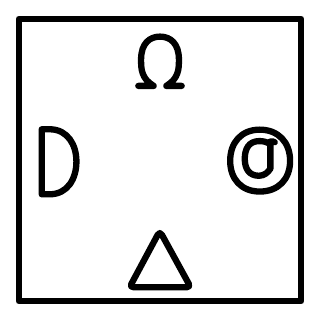
Identify the figure given in the options, which when put in place of the question mark (?) will logically complete the series.

  1. AOption (a)

  2. BOption (b)

  3. COption (c)

  4. DOption (d)

View answer & explanation

Correct answer

Answer: (a)A.

Why this answer is correct

The completion of the image based series:

Hence, the correct answer is "Option 1".

Question 3

Based on the English alphabetical order, three of the following four letter-clusters are alike in a certain way and thus form a group. Which letter-cluster DOES NOT belong to that group?

(Note: The odd one out is not based on the number of consonants/vowels or their position in the letter-cluster.)

  1. AOption (a)

    JKP

  2. BOption (b)

    FGL

  3. COption (c)

    RSX

  4. DOption (d)

    MRZ

View answer & explanation

Correct answer

Answer: (d)D.

MRZ

Why this answer is correct

The letter-cluster that does not belong to the group is MRZ.

The logic followed here is:

Option (1): JKP


Option (2): FGL


Option (3): RSX


Option (4): MRZ

Hence, the correct answer is "Option 4".

Question 4

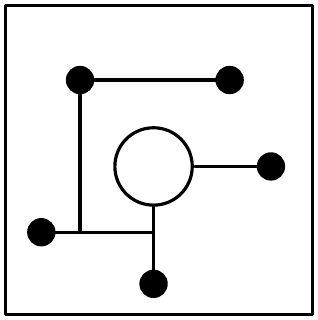
Select the option in which the given figure (X) is embedded (rotation is NOT allowed).

  1. AOption (a)

  2. BOption (b)

  3. COption (c)

  4. DOption (d)

View answer & explanation

Correct answer

Answer: (b)B.

Why this answer is correct

The hidden inmage of the given figure is:

Hence, the correct answer is "Option 2".

Question 5

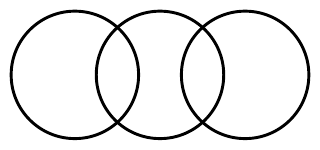
Select the Venn diagram that best illustrates the relationship between the following classes.

Clothes, Shoes, Black

  1. AOption (a)

  2. BOption (b)

  3. COption (c)

  4. DOption (d)

View answer & explanation

Correct answer

Answer: (d)D.

Why this answer is correct

Given: Clothes, Shoes, Black

Some clothes are black.

Some shoes are black.

Hence, the correct answer is "Option 4".

Question 6

Seven people, G, H, I, J, K, L and M, are sitting in a row, facing north(but not necessarily in the same order) . Only two people sit to the left of I. Only three people sit between I and K. L sits second to the right of I. Only two people sit between L and G. M sits at some place to the right of H but at some place to the left of J. How many people sit to the right of M? 

  1. AOption (a)

    Four

  2. BOption (b)

    Two

  3. COption (c)

    Three

  4. DOption (d)

    One

View answer & explanation

Correct answer

Answer: (c)C.

Three

Why this answer is correct

Given: Seven people, G, H, I, J, K, L and M, are sitting in a row, facing north(but not necessarily in the same order) .

Only two people sit to the left of I. Only three people sit between I and K.

L sits second to the right of I. Only two people sit between L and G.

M sits at some place to the right of H but at some place to the left of J. 

Thus, Only three people sit to the right of M.

Hence, the correct answer is "Option 3".

Question 7

In a certain code language, 'HXCT' is coded as '55' and 'LAMU' is coded as '47'. What is the code for 'ZFGD' in the given code language?

  1. AOption (a)

    56

  2. BOption (b)

    48

  3. COption (c)

    53

  4. DOption (d)

    43

View answer & explanation

Correct answer

Answer: (d)D.

43

Why this answer is correct

The logic followed here is:

The logic is to find the "sum of the positional values" of the letters in the word.

For 'HXCT': 55

Positional values: H(8), X(24), C(3), T(20)

Sum: 8 + 24 + 3 + 20 = 55

This matches the given code.

For 'LAMU': 47

Positional values: L(12), A(1), M(13), U(21)

Sum: 12 + 1 + 13 + 21 = 47

Similarly, 

For 'ZFGD':

Positional values: Z(26), F(6), G(7), D(4)

Sum: 26 + 6 + 7 + 4 = 43

Therefore, the code for 'ZFGD' is 43"

Hence, the correct answer is "Option 4".

Question 8

What will come in place of '?' in the following equation , if '+' and '÷' are interchanged and '−' and '×' are interchanged?

112 + 8 × 2 − 13 ÷ 21 = ?

  1. AOption (a)

    5

  2. BOption (b)

    9

  3. COption (c)

    6

  4. DOption (d)

    11

View answer & explanation

Correct answer

Answer: (b)B.

9

Why this answer is correct

Given interchange rules:

  • ‘+’ and ‘÷’ are interchanged.
  • ‘−’ and ‘×’ are interchanged.

The given equation is:

112 + 8 × 2 − 13 ÷ 21 = ?

After applying the interchange rules, the equation becomes:

112 ÷ 8 − 2 × 13 + 21 = ?

Now, we solve the equation following the BODMAS rule:

= 112 ÷ 8 − 2 × 13 + 21

= 14 − 26 + 21

= -12 + 21

= 9

Hence, the correct answer is "Option 2".

Question 9

What should come in place of the question mark (?) in the given series?

800 789 767 734 690 635 ?

  1. AOption (a)

    569

  2. BOption (b)

    530

  3. COption (c)

    400

  4. DOption (d)

    250

View answer & explanation

Correct answer

Answer: (a)A.

569

Why this answer is correct

The logic followed here is:                                                                                                                                                                                                                   


Thus, the missing term in the series is 569.

Hence, the correct answer is "Option 1".

Question 10

What should come in place of the question mark (?) in the given series based on the English alphabetical order?

Y, N, X, L, W, J, V, H, ?, F

  1. AOption (a)

    T

  2. BOption (b)

    I

  3. COption (c)

    U

  4. DOption (d)

    J

View answer & explanation

Correct answer

Answer: (c)C.

U

Why this answer is correct

The logic followed here is:

Thus, the missing letter in the series is U.

Hence, the correct answer is "Option 3";

Question 11

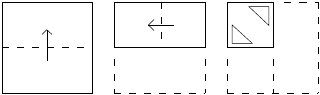
The sequence of folding a piece of paper and the manner in which the folded paper is cut is shown in the following figures. How would this paper look when unfolded?

  1. AOption (a)

  2. BOption (b)

  3. COption (c)

  4. DOption (d)

View answer & explanation

Correct answer

Answer: (a)A.

Why this answer is correct

The completion of the incomplete figure is:

Hence, the correct answer is "Option 1".

Question 12

What should come in place of the question mark (?) in the given series?

645 650 656 663 671 ?

  1. AOption (a)

    676

  2. BOption (b)

    677

  3. COption (c)

    680

  4. DOption (d)

    679

View answer & explanation

Correct answer

Answer: (c)C.

680

Why this answer is correct

The logic followed here is:

Thus, the missing term in the series is 680.

Hence, the correct answer is "Option 3".

Question 13

MISC is related to OFUZ in a certain way based on the English alphabetical order. In the same way, ZDEN is related to BAGK. To which of the given options is PVAT related, following the same logic?

  1. AOption (a)

    TQBO

  2. BOption (b)

    RSCQ

  3. COption (c)

    STDP

  4. DOption (d)

    STBP

View answer & explanation

Correct answer

Answer: (b)B.

RSCQ

Why this answer is correct

The logic followed here is:

For MISC to OFUZ:

For ZDEN to BAGK:

Applying the same logic to PVAT:

Thus, the letter cluster related to PVAT is "RSCQ".

Hence, the correct answer is "Option 2".

Question 14

E, F, G, H, K, L and N are sitting around a circular table facing the centre (but not necessarily in the same order) .

N sits to the immediate right of E. Only three people sit between N and H when counted from the left of N. Only three people sit between E and K. F sits to the immediate right of G.

How many people sit between E and G when counted from the right of G?

  1. AOption (a)

    Three

  2. BOption (b)

    Four

  3. COption (c)

    One

  4. DOption (d)

    Two

View answer & explanation

Correct answer

Answer: (c)C.

One

Why this answer is correct

Given: E, F, G, H, K, L and N are sitting around a circular table facing the centre (but not necessarily in the same order) .

N sits to the immediate right of E. Only three people sit between N and H when counted from the left of N.

Only three people sit between E and K. F sits to the immediate right of G.

Thus, only one people sit between E and G when counted from the right of G.

Hence, the correct answer is "Option 3".

Question 15

Select the combination of letters that when sequentially placed in the blanks of the given series, will logically complete the series.

QMRN_OTPU_VRWS TYU_

  1. AOption (a)

    LSQXZ

  2. BOption (b)

    KSNXW

  3. COption (c)

    LRQUZ

  4. DOption (d)

    KRNUW

View answer & explanation

Correct answer

Answer: (a)A.

LSQXZ

Why this answer is correct

The logic followed here is:

Hence, the correct answer is "Option 1".

Question 16

In a certain code language, ‘plant more trees' is coded as ‘uf gk ro’ and ‘trees give oxygen’ is coded as ‘lm xs gk’. How is ‘trees’ coded in the given language? 

  1. AOption (a)

    ro

  2. BOption (b)

    uf

  3. COption (c)

    xs

  4. DOption (d)

    gk

View answer & explanation

Correct answer

Answer: (d)D.

gk

Why this answer is correct

The logic followed here is:

The code for "tree" is "gk".

Hence, the correct answer is "Option 4".

Question 17

A dice has its faces marked by letters U, J, T, H, A and S. Two positions of the same dice are given below. Which face is opposite to face J? 

  1. AOption (a)

    S

  2. BOption (b)

    A

  3. COption (c)

    U

  4. DOption (d)

    T

View answer & explanation

Correct answer

Answer: (c)C.

U

Why this answer is correct

The logic followed here is:

From the given two positions of the dice, we observe that the letter 'U' is common to both figures.

From Figure 1 (Clockwise from U): U → A → T 

From Figure 2 (Clockwise from A): U → H → S

By comparing the sequences, we can find the opposite pairs:

Opposite pairs:

A ↔ H

T ↔ S

The letters on the faces of the dice are  U, J, T, H, A and S

We have found pairs for A, H, T,S. The remaining two letters are U and J.

Since 'U' is the common face, the remaining unseen face must be opposite to 'U'. The remaining unseen face is 'J'.

So, the face opposite to "U" is "J".

Therefore, the face opposite to "J" is "U".

Hence, the correct answer is "Option 3".

Question 18

The position(s) of how many letters will remain unchanged if each of the letters in the word FUNFAIRS is arranged in reverse English alphabetical order?

  1. AOption (a)

    Zero

  2. BOption (b)

    Three

  3. COption (c)

    One

  4. DOption (d)

    Two

View answer & explanation

Correct answer

Answer: (a)A.

Zero

Why this answer is correct

Given Word: FUNFAIRS 

Arrange each letter in reverse English alphabetical order.

Position1st2nd3rd4th5th6th7th8th
Original WordFUNFAIRS
Reversed OrderUSRNIFFA

Number of letters with unchanged positions: Zero 

Hence, the correct answer is "Option 1".

Question 19

In a certain code language, GTSU is written as TGHF and KJIE is written as PQRV. How will ALMO be written in the given language?

  1. AOption (a)

    ZYEL

  2. BOption (b)

    ZLNO

  3. COption (c)

    ZONL

  4. DOption (d)

    LOGL

View answer & explanation

Correct answer

Answer: (c)C.

ZONL

Why this answer is correct

The logic followed here is: 

For GTSU to TGHF:

For KJIE to PQRV:

Applying the same logic to ALMO:

Thus, the word ALMO is coded as ZONL.

Hence, the correct asnwer is "Option 3".

Question 20

Read the given statements and conclusions carefully. Assuming that the information given in the statements is true, even if it appears to be at variance with commonly known facts, decide which of the given conclusions logically follow(s) from the statements.

Statements:

All vacuums are machines.

No vacuum is a game.

All games are toys.

Conclusions:

(I) No toy is a machine.

(II) Some toys are vacuums.

  1. AOption (a)

    Only conclusion (II) follows

  2. BOption (b)

    Both conclusions (I) and (II) follow

  3. COption (c)

    Only conclusion (I) follows

  4. DOption (d)

    Neither conclusion (I) nor (II) follows

View answer & explanation

Correct answer

Answer: (d)D.

Neither conclusion (I) nor (II) follows

Why this answer is correct

The least possible venn digaram is given:

Conclusions:

(I) No toy is a machine - False(as there is n direct relation is given between them so, it can be possible only).

(II) Some toys are vacuums - False(as there is n direct relation is given between them so, it can be possible only).

Thus, Neither conclusion (I) nor (II) follows.

Hence, the correct answer is "Option 4".

General Knowledge and General Awareness (20 questions)

Question 21

Which of the following rivers is NOT mentioned in Rigveda?

  1. AOption (a)

    Krishna

  2. BOption (b)

    Yamuna

  3. COption (c)

    Saraswati 

  4. DOption (d)

    Sindhu

View answer & explanation

Correct answer

Answer: (a)A.

Krishna

Why this answer is correct

The correct answer is Krishna.

Key Points

  • The Rigveda is the oldest of the four Vedas and is a primary source of early Indian history, focusing on hymns, rituals, and nature worship.
  • Rivers like Saraswati, Sindhu (Indus), and Yamuna are prominently mentioned in the Rigveda as sacred rivers with vital cultural and religious significance.
  • The Rigveda praises the Sindhu (Indus) as a mighty river, referring to it as the lifeblood of the ancient Vedic civilization.
  • The Saraswati River, often described as a divine and mythical river, is extensively referenced in the Rigveda, symbolizing fertility and prosperity.
  • Krishna, a river in southern India, is not mentioned in the Rigveda, as the focus of the text is primarily on rivers in the northwestern and northern regions of the Indian subcontinent.

Additional Information

  • Geographical Context of the Rigveda: The hymns of the Rigveda were composed in the Sapta Sindhu (land of seven rivers) region, which includes the modern-day areas of Punjab and Haryana.
  • Important Rivers in the Rigveda: The Rigveda mentions rivers like Saraswati, Sindhu (Indus), Ganga, Yamuna, and others, emphasizing their significance in agriculture, rituals, and trade.
  • Saraswati River: The Saraswati River, often considered mythical, is described as flowing between the Yamuna and Sutlej rivers. It is central to Vedic cosmology and is regarded as a sacred river.
  • Absence of Southern Rivers: Rivers like Krishna, Godavari, and Kaveri, located in southern India, are not mentioned in the Rigveda, as the Vedic civilization primarily flourished in northern and northwestern India during its composition.
  • Later Textual Developments: The southern rivers gained prominence in later texts like the Mahabharata, Ramayana, and Puranas, reflecting the geographic expansion of Vedic culture over time.

Question 22

Which was an ancient ocean that existed approximately 250 to 50 million years ago before the evolution of the Indian Ocean? 

  1. AOption (a)

    Tethys sea

  2. BOption (b)

    Ionian Sea

  3. COption (c)

    Aegean Sea

  4. DOption (d)

    Aral Sea

View answer & explanation

Correct answer

Answer: (a)A.

Tethys sea

Why this answer is correct

The correct answer is option 1,

The correct answer is Tethys Sea.

Key Points

  • The Tethys Sea was an ancient ocean that existed between approximately 250 to 50 million years ago, during the Mesozoic and early Cenozoic eras.
  • It played a crucial role in separating the supercontinents of Laurasia (in the northern hemisphere) and Gondwana (in the southern hemisphere).
  • During the Jurassic and Cretaceous periods, the Tethys Sea acted as a biodiversity hotspot, housing a wide range of marine organisms.
  • As tectonic plates shifted, the Tethys Sea gradually disappeared, giving rise to modern-day seas like the Mediterranean Sea and contributing to the formation of the Indian Ocean.
  • The remnants of the Tethys Sea are visible today in the form of sedimentary rocks, fossil deposits, and geological features across Europe, Asia, and Africa.

Additional Information

  • Supercontinents: Laurasia and Gondwana were two major supercontinents separated by the Tethys Sea during the Mesozoic era.
  • Plate Tectonics: The movement of tectonic plates caused the closure of the Tethys Sea and eventually led to the collision of India with Asia, forming the Himalayas.
  • Marine Ecosystems: The Tethys Sea supported diverse marine ecosystems, including ammonites, corals, and other marine life forms, many of which are now extinct.
  • Fossil Records: Fossil deposits from the Tethys Sea provide valuable insights into the evolutionary history of marine organisms and the Earth's geological past.
  • Modern Geological Impact: The disappearance of the Tethys Sea influenced the formation of various mountain ranges, such as the Alps, Himalayas, and Zagros mountains.

Question 23

Who among the following authored the book ‘Sarvajanik Satyadharma’?

  1. AOption (a)

    Jyotiba Phule

  2. BOption (b)

    Swami Vivekananda

  3. COption (c)

    Debendranath Tagore 

  4. DOption (d)

    Mahatma Gandhi

View answer & explanation

Correct answer

Answer: (a)A.

Jyotiba Phule

Why this answer is correct

The correct answer is Jyotiba Phule.

Key Points

  • Jyotiba Phule, a prominent social reformer and thinker, authored the book 'Sarvajanik Satyadharma'.
  • The book emphasizes equality and justice and was written to challenge the caste system and social injustices prevailing during the 19th century.
  • Phule used his writings, including 'Sarvajanik Satyadharma,' to advocate for the upliftment of oppressed communities, especially the Dalits and women.
  • This book reflects his broader philosophy of Satyashodhak Samaj (Society of Truth Seekers), which he founded in 1873 to promote social equality.
  • Jyotiba Phule’s contributions extended to education reform, where he worked tirelessly to promote the education of women and lower-caste individuals.

Additional Information

  • Jyotiba Phule: Born in 1827 in Maharashtra, he was a pioneer of social reform movements in India and is often referred to as the "Father of Indian Social Revolution."
  • Satyashodhak Samaj: An organization founded by Phule to fight against Brahmanical supremacy and to advocate for the rights of marginalized communities.
  • Educational Reforms: Phule, along with his wife Savitribai Phule, opened the first school for girls in India in 1848, marking a major step towards gender equality in education.
  • Other Works: Jyotiba Phule also authored 'Gulamgiri' (Slavery), which criticized caste-based discrimination and oppression.
  • Legacy: Jyotiba Phule's work laid the foundation for the social justice movements that followed, inspiring leaders like B.R. Ambedkar in their fight for equality and rights for the oppressed.

Question 24

What was a unique feature of the Fifth Five Year Plan (1974-1979)?

  1. AOption (a)

    It was the first plan to focus on the environment.

  2. BOption (b)

    It introduced economic liberalisation.

  3. COption (c)

    Exclusive focus on the service sector

  4. DOption (d)

    Emphasis on 'Garibi Hatao' (Eradicate Poverty)

View answer & explanation

Correct answer

Answer: (d)D.

Emphasis on 'Garibi Hatao' (Eradicate Poverty)

Why this answer is correct

The correct answer is Emphasis on 'Garibi Hatao' (Eradicate Poverty).

Key Points

  • The Fifth Five Year Plan (1974-1979) was a major turning point in India's economic planning, with a strong focus on 'Garibi Hatao' (Eradicate Poverty) as its central theme.
  • The plan was designed to address the acute issue of poverty in India, with policies aimed at improving the living standards of the poor and marginalized sections of society.
  • It marked a shift towards greater emphasis on the social sector, including employment generation, rural development, and self-reliance in food production.
  • This plan included specific programs such as the Minimum Needs Programme (MNP) and the National Rural Employment Programme to directly tackle poverty.
  • Indira Gandhi's slogan 'Garibi Hatao' became the political and economic mantra during this period, reflecting the government's commitment to inclusive development.

Additional Information

  • Minimum Needs Programme (MNP):
  • Introduced as part of the Fifth Five Year Plan, it aimed at providing basic necessities such as education, healthcare, clean drinking water, and housing to the poorest sections of society.
  • The program was an effort to reduce inequalities and improve the quality of life for disadvantaged communities.
  • Self-Reliance in Food Production:
  • The plan prioritized agricultural development and food security to reduce dependence on imports and ensure self-sufficiency in food production.
  • Efforts included increasing irrigation facilities, adopting high-yield variety seeds, and promoting cooperative farming.
  • Shift in Strategy:
  • The Fifth Five Year Plan marked a departure from earlier growth-focused strategies to include a more welfare-oriented approach.
  • It integrated poverty alleviation programs directly into the planning framework.
  • Political Context:
  • The plan coincided with the period of political and economic turbulence, including the Emergency (1975-1977) declared by Prime Minister Indira Gandhi.
  • Despite its ambitious goals, the plan faced implementation challenges due to political instability and resource constraints.
  • Outcome:
  • The Fifth Five Year Plan laid the foundation for future poverty alleviation programs and highlighted the importance of inclusive development in India's economic planning.
  • However, the plan was terminated early in 1978 by the subsequent government, which introduced a new plan with different priorities.

Question 25

Who is the female singer of the song 'London Thumagda' from the film Queen?

  1. AOption (a)

    Lata Mageshkar

  2. BOption (b)

    Neha Kakkar

  3. COption (c)

    Asha Bhosle

  4. DOption (d)

    Alka Yagnik

View answer & explanation

Correct answer

Answer: (b)B.

Neha Kakkar

Why this answer is correct

The correct answer is Neha Kakkar.

Key Points

  • London Thumakda is a popular Bollywood song from the movie Queen, released in 2014.
  • The song is sung by Neha Kakkar, Labh Janjua, and Sonu Kakkar.
  • It was composed by the music director duo Amit Trivedi, known for their distinctive style in Bollywood music.
  • The lyrics of the song were penned by Anvita Dutt, who is celebrated for her quirky and engaging writing.
  • The song gained widespread popularity for its upbeat rhythm and vibrant depiction of Indian wedding celebrations.

Additional Information

  • Neha Kakkar is a renowned Indian playback singer known for her energetic and melodious voice.
  • She gained fame with songs like Second Hand Jawani, Kala Chashma, and Aankh Marey.
  • Neha Kakkar started her singing journey by participating in the reality show Indian Idol and later became one of the judges on the same show.
  • The movie Queen, starring Kangana Ranaut, is a critically acclaimed film that celebrates themes of self-discovery and empowerment.
  • The song London Thumakda is widely recognized as one of the iconic tracks that adds to the joyous and celebratory vibe of Indian weddings.

Question 26

According to the 74th Constitutional Amendment Act, which of the following institutions is responsible for regular and fair elections to the Municipalities?

  1. AOption (a)

    District Election Commission

  2. BOption (b)

    State Election Commission

  3. COption (c)

    Divisional Election Commission

  4. DOption (d)

    Election Commission of India

View answer & explanation

Correct answer

Answer: (b)B.

State Election Commission

Why this answer is correct

The correct answer is State Election Commission.

Key Points

  • The 74th Constitutional Amendment Act, 1992, mandates the establishment of the State Election Commission in each state to oversee elections at the municipal level.
  • The State Election Commission is responsible for conducting regular, free, and fair elections to the urban local bodies (Municipalities) and rural local bodies (Panchayats).
  • Under Article 243K and 243ZA of the Indian Constitution, the powers of superintendence, direction, and control of the preparation of electoral rolls and the conduct of all elections to Panchayati Raj Institutions and Municipalities are vested in the State Election Commission.
  • The State Election Commission is an independent body, and its composition, tenure, and functions are determined by the respective state governments as per the guidelines of the Constitution.
  • The Election Commission of India is responsible for conducting elections to the Parliament and State Legislatures, but the State Election Commission handles local body elections.

Additional Information

  • 74th Constitutional Amendment Act:
  • It was enacted in 1992 to provide constitutional status to urban local bodies (Municipalities).
  • The Act introduced three types of municipalities: Nagar Panchayat, Municipal Council, and Municipal Corporation.
  • It aimed to strengthen decentralized governance in urban areas.
  • State Election Commissions:
  • Each state has its own State Election Commission, headed by a State Election Commissioner.
  • The State Election Commissioner is appointed by the Governor of the state.
  • The Commission ensures independent and impartial elections to local bodies.
  • Election Commission of India vs. State Election Commission:
  • The Election Commission of India (ECI) conducts elections to the Parliament, State Legislative Assemblies, and the offices of the President and Vice President.
  • The State Election Commission conducts elections to Panchayats and Municipalities.
  • Both bodies operate independently of each other.
  • Articles 243K and 243ZA:
  • These articles provide for the establishment and functioning of the State Election Commissions.
  • They empower the State Election Commissions to oversee the preparation of electoral rolls and conduct of elections to Panchayats and Municipalities.

Question 27

In which year did Indian dancer, Sonal Mansingh receive the Padma Vibhushan, India's second highest civilian award?

  1. AOption (a)

    2003

  2. BOption (b)

    2016

  3. COption (c)

    1996

  4. DOption (d)

    2000

View answer & explanation

Correct answer

Answer: (a)A.

2003

Why this answer is correct

The correct answer is 2003.

Key Points

  • Sonal Mansingh is one of the most celebrated Indian classical dancers, excelling in Bharatanatyam and Odissi dance forms.
  • She was honored with the Padma Vibhushan, India's second-highest civilian award, in the year 2003.
  • The Padma Vibhushan recognizes "exceptional and distinguished service" in any field, including arts, public affairs, science, and more.
  • Sonal Mansingh is known for her contributions to the promotion of classical Indian dance and culture globally.
  • She is also a recipient of the Padma Bhushan (1992) and the Sangeet Natak Akademi Award (1987).

Additional Information

  • Padma Awards:
  • The Padma Awards are conferred in three categories: Padma Vibhushan, Padma Bhushan, and Padma Shri.
  • They are announced annually on the eve of Republic Day.
  • Padma Vibhushan is the second-highest award, followed by Padma Bhushan and Padma Shri.
  • Indian Classical Dance Forms:
  • India has eight recognized classical dance forms: Bharatanatyam, Kathak, Odissi, Kathakali, Kuchipudi, Manipuri, Mohiniyattam, and Sattriya.
  • Sonal Mansingh is a renowned practitioner of Bharatanatyam and Odissi.
  • Sonal Mansingh's Contributions:
  • She has used dance as a medium to address social issues and promote Indian cultural heritage.
  • Her performances often combine storytelling, music, and movement to depict themes from mythology and contemporary life.
  • Recognition for Indian Artists:
  • The Padma Awards are a testament to India's commitment to honoring its cultural ambassadors.
  • By recognizing artists like Sonal Mansingh, the awards inspire younger generations to preserve and promote traditional art forms.

Question 28

Who is the 25th Chief Election Commissioner of India?

  1. AOption (a)

    Sukumar Sen 

  2. BOption (b)

    T Swaminathan

  3. COption (c)

    N Gopalaswam

  4. DOption (d)

    Rajiv Kumar 

View answer & explanation

Correct answer

Answer: (d)D.

Rajiv Kumar 

Why this answer is correct

The correct answer is option 4,

The correct answer is Rajiv Kumar.

Key Points

  • Rajiv Kumar is the 25th Chief Election Commissioner (CEC) of India, appointed on 15 May 2022.
  • He succeeded Sushil Chandra as the Chief Election Commissioner.
  • Rajiv Kumar has been serving in various administrative capacities, including roles in the Ministry of Finance and Department of Personnel and Training.
  • The Chief Election Commissioner is responsible for overseeing elections for the Lok Sabha, Rajya Sabha, State Legislatures, and the offices of President and Vice President in India.
  • Rajiv Kumar played a significant role in implementing electoral reforms and ensuring transparency in the election process.

Additional Information

  • Election Commission of India (ECI)
  • Established in 1950, the ECI is an autonomous constitutional authority responsible for conducting free and fair elections in India.
  • The ECI consists of the Chief Election Commissioner (CEC) and two Election Commissioners (ECs).
  • It operates under Article 324 of the Constitution of India.
  • Roles and Powers of the Chief Election Commissioner
  • Ensures the conduct of free and fair elections at national and state levels.
  • Issues guidelines for political parties and candidates during elections.
  • Oversees the implementation of the Model Code of Conduct during elections.
  • Has quasi-judicial powers to settle disputes related to elections.
  • Electoral Reforms
  • Introduction of Voter Verifiable Paper Audit Trail (VVPAT) system for transparency.
  • Digitization and simplification of voter registration processes.
  • Reforms aimed at reducing the influence of money and muscle power during elections.
  • Significance of ECI
  • Plays a vital role in upholding India's democratic values.
  • Ensures the participation of citizens in the electoral process.
  • Maintains the integrity of the electoral system.

Question 29

Who were the flag bearers in the opening ceremony of the Asian Games 2023?

  1. AOption (a)

    Harmanpreet Singh and Annu Rani

  2. BOption (b)

    Neeraj Chopra and Lovlina Borgohain 

  3. COption (c)

    Bajrang Punia and PV Sindhu

  4. DOption (d)

    Harmanpreet Singh and Lovlina Borgohain

View answer & explanation

Correct answer

Answer: (d)D.

Harmanpreet Singh and Lovlina Borgohain

Why this answer is correct

The correct answer is Harmanpreet Singh and Lovlina Borgohain.

Key Points

  • Harmanpreet Singh, the captain of the Indian men’s hockey team, and Lovlina Borgohain, an Olympic medal-winning boxer, were the flag bearers for India at the opening ceremony of the Asian Games 2023.
  • The opening ceremony of the Asian Games 2023 took place on 23rd September 2023 in Hangzhou, China.
  • The decision to select these athletes reflects their significant achievements and contributions to Indian sports on the global stage.
  • This marked a proud moment for India as these two athletes represented the spirit and excellence of the country at the prestigious event.

Additional Information

  • Asian Games: The Asian Games, also known as Asiad, is a continental multi-sport event held every four years among athletes from across Asia.
  • Harmanpreet Singh: He is an accomplished hockey player and has been instrumental in the success of the Indian men’s hockey team, including their bronze medal win at the Tokyo Olympics.
  • Lovlina Borgohain: She is an Indian boxer who won a bronze medal in the women’s welterweight event at the Tokyo Olympics, making her one of India’s top-performing athletes.
  • Opening Ceremony: The opening ceremony of the Asian Games is a grand event that showcases the culture, tradition, and spirit of sportsmanship of the host country.
  • India at Asian Games: India has been a consistent participant in the Asian Games since its inception in 1951, with achievements across various sports disciplines.

Question 30

The constant number of water molecules present in one formula of a single unit of salt is known as: 

  1. AOption (a)

    fixed water

  2. BOption (b)

    unmovable water

  3. COption (c)

    crystallised aqua 

  4. DOption (d)

    water of crystallisation

View answer & explanation

Correct answer

Answer: (d)D.

water of crystallisation

Why this answer is correct

The correct answer is Water of Crystallisation.

Key Points

  • Water of crystallisation refers to the fixed number of water molecules that are chemically bound within the crystalline structure of a compound.
  • It is essential for maintaining the physical properties and structure of the crystal.
  • Compounds with water of crystallisation are often called hydrated salts.
  • Examples include copper sulfate pentahydrate (CuSO₄·5H₂O) and gypsum (CaSO₄·2H₂O).
  • On heating, these compounds may lose their water of crystallisation, resulting in anhydrous forms.

Additional Information

  • Hydrated Salts: These are crystalline solids containing water molecules within their structure. The water molecules are known as water of crystallisation.
  • Anhydrous Compounds: When hydrated salts lose their water of crystallisation upon heating, they become anhydrous. For example, heating CuSO₄·5H₂O forms anhydrous CuSO₄.
  • Efflorescence: Some hydrated salts lose water of crystallisation naturally when exposed to air. This phenomenon is called efflorescence. Example: Washing soda (Na₂CO₃·10H₂O).
  • Deliquescence: Certain compounds absorb moisture from the air and dissolve in it to form a solution. These are called deliquescent substances, like calcium chloride (CaCl₂).
  • Applications: Water of crystallisation is significant in chemical analysis, construction materials (e.g., plaster of Paris), and in maintaining the stability of certain compounds.

Question 31

In what reference was ‘Growth’ the goal of all the five-year plans?

  1. AOption (a)

    Growth of country’s capacity to produce goods and services

  2. BOption (b)

    Growth in foreign investment in the country

  3. COption (c)

    Growth in the import of goods and services in the country 

  4. DOption (d)

    Growth of population

View answer & explanation

Correct answer

Answer: (a)A.

Growth of country’s capacity to produce goods and services

Why this answer is correct

The correct answer is Growth of country's capacity to produce goods and services.

Key Points

  • The term "growth" in the context of the five-year plans refers to the country's capacity to produce goods and services, measured by economic indicators like Gross Domestic Product (GDP).
  • All five-year plans aimed at ensuring self-reliance, modernization, and economic development through industrialization, agricultural growth, and infrastructure development.
  • The primary goal of the plans was to achieve a sustained increase in production capacity to meet the needs of the growing population and reduce reliance on imports.
  • Economic growth was seen as the cornerstone for improving living standards, reducing poverty, and achieving balanced regional development.
  • For example, the Second Five-Year Plan (1956–61) emphasized rapid industrialization and the growth of capital goods industries to strengthen the economic base of the country.

Additional Information

  • Gross Domestic Product (GDP): GDP is the total monetary value of all finished goods and services produced within a country's borders in a specific time period, serving as a primary indicator of economic growth.
  • Planned Economy: India adopted a planned economic model post-independence, where the government played a central role in setting production targets and resource allocation through five-year plans.
  • Self-Reliance: A key objective was to reduce dependence on foreign aid and imports by developing indigenous industries and enhancing production capacity.
  • Balanced Regional Development: Special focus was placed on reducing regional disparities by encouraging growth in backward and underdeveloped areas.
  • Role of the Planning Commission: The Planning Commission (now replaced by NITI Aayog) was responsible for formulating and overseeing the implementation of five-year plans to achieve economic growth and social welfare objectives.

Question 32

The New Year as per the Assamese calendar coincides with the beginning of the harvest season, which is also known as ______ Bihu.

  1. AOption (a)

    Bohag

  2. BOption (b)

    Chaitra

  3. COption (c)

    Kaati

  4. DOption (d)

    Maagh

View answer & explanation

Correct answer

Answer: (a)A.

Bohag

Why this answer is correct

The correct answer is Bohag Bihu.

Key Points

  • Bohag Bihu, also known as Rongali Bihu, marks the Assamese New Year and the beginning of the harvest season.
  • It is celebrated in the month of April, typically on the 14th or 15th, and aligns with the harvest festivals in other parts of India like Tamil Nadu's Puthandu and Punjab's Baisakhi.
  • This festival spans three primary days: Goru Bihu (for cattle), Manuh Bihu (for humans), and Gosai Bihu (for deities).
  • Bohag Bihu involves traditional dances like the Bihu dance, music, and the preparation of delicacies such as pithas (rice cakes) and larus (sweet snacks).
  • The festival is rooted in agrarian traditions, celebrating fertility, prosperity, and the bond between humans and nature.

Additional Information

  • Other Types of Bihu:
  • Magh Bihu: Also known as Bhogali Bihu, it is the post-harvest festival celebrated in January, emphasizing feasts and bonfires.
  • Kati Bihu: Observed in October, it is a simpler festival focused on lighting lamps in paddy fields to pray for a good harvest.
  • Agrarian Connection: Bihu festivals are directly linked to the agricultural cycle of Assam, reflecting the socio-economic dependence on farming.
  • Cultural Significance: Bohag Bihu is a symbol of Assamese identity and unity, transcending religious and ethnic boundaries in the state.
  • Bihu Dance: Recognized worldwide, it is a vibrant folk dance that showcases the energy and spirit of the Assamese people, performed during the festival.
  • Assamese Calendar: Bohag Bihu marks the start of the Assamese calendar year, aligning with the traditional Hindu solar calendar.

Question 33

Who is the chief minister of Delhi as of October 2024?

  1. AOption (a)

    Hemant Soren

  2. BOption (b)

    Atishi Marlena

  3. COption (c)

    Sukhvinder Singh Sukhu

  4. DOption (d)

    Bhupendra Patel 

View answer & explanation

Correct answer

Answer: (b)B.

Atishi Marlena

Why this answer is correct

The correct answer is Atishi Marlena.

Key Points

  • Atishi Marlena is the Chief Minister of Delhi as of October 2024, succeeding Arvind Kejriwal.
  • Atishi is a senior leader of the Aam Aadmi Party (AAP) and has been a prominent figure in Delhi's education reforms.
  • She has been instrumental in implementing key initiatives like the transformation of Delhi's government schools and the introduction of the "Happiness Curriculum."
  • Atishi holds a degree from St. Stephen's College, Delhi, and further pursued her education at the University of Oxford as a Rhodes Scholar.
  • Her leadership focuses on governance reforms, public welfare, and ensuring inclusive development for all citizens in Delhi.

Additional Information

  • Aam Aadmi Party (AAP):
  • AAP was founded in 2012 by Arvind Kejriwal and others following the anti-corruption movement led by Anna Hazare.
  • The party's core agenda focuses on transparency, anti-corruption, and public welfare.
  • AAP has been in power in Delhi since 2015, focusing on education, healthcare, and infrastructure development.
  • Happiness Curriculum:
  • Introduced in Delhi government schools in 2018 to promote emotional well-being and mindfulness among students.
  • It includes meditation, storytelling, and activities aimed at fostering self-awareness and critical thinking skills.
  • Education Reforms in Delhi:
  • Under the AAP government, massive investments have been made in improving the quality of education in government schools.
  • Initiatives like "Mission Buniyaad" focus on bridging learning gaps among students.
  • Delhi government schools have been recognized nationally and internationally for their infrastructure and academic results.
  • Delhi Governance Model:
  • The Delhi governance model emphasizes accessible healthcare through "Mohalla Clinics" and improved public services.
  • Water and electricity subsidies have been key welfare measures under AAP's leadership.

Question 34

Magnesium hydroxide is a common ingredient of antacids and laxatives popularly known as: 

  1. AOption (a)

    fused magnesia

  2. BOption (b)

    milk of magnesia

  3. COption (c)

    magnesia alba 

  4. DOption (d)

    caustic-calcined magnesia

View answer & explanation

Correct answer

Answer: (b)B.

milk of magnesia

Why this answer is correct

The correct answer is option 2,

The correct answer is Milk of Magnesia.

Key Points

  • Milk of Magnesia is a suspension of magnesium hydroxide in water and is widely used as an antacid to neutralize stomach acid and relieve indigestion or heartburn.
  • It is also used as a laxative to treat occasional constipation by drawing water into the intestines, promoting bowel movement.
  • Magnesium hydroxide reacts with hydrochloric acid in the stomach to form magnesium chloride and water, thereby reducing acidity.
  • Milk of Magnesia is available in liquid form and is popular due to its gentle and effective action.
  • It is commonly prescribed in cases of mild digestive disturbances and is considered safe when used in recommended doses.

Additional Information

  • Magnesium Hydroxide:
  • A chemical compound with the formula Mg(OH)2, classified as an inorganic base.
  • It appears as a white powder or suspension and is sparingly soluble in water.
  • Commonly used in medicine, agriculture, and as a flame retardant in plastics.
  • Antacid Function:
  • Milk of Magnesia neutralizes excess stomach acid, providing relief from acid reflux, bloating, and heartburn.
  • Other common antacid ingredients include calcium carbonate, aluminum hydroxide, and sodium bicarbonate.
  • Laxative Effect:
  • Magnesium hydroxide works as an osmotic laxative, drawing water into the intestines to soften stool.
  • Recommended for short-term use to avoid dependency or electrolyte imbalance.
  • Safety and Precautions:
  • Overuse may lead to diarrhea, electrolyte imbalance, or dehydration.
  • Not recommended for individuals with kidney disease or those on a low-magnesium diet.

Question 35

Which Article of the Indian Constitution stipulates that the State shall work to promote the educational and economic interests of Scheduled Castes and Scheduled Tribes?

  1. AOption (a)

    Article 49 

  2. BOption (b)

    Article 45

  3. COption (c)

    Article 48

  4. DOption (d)

    Article 46

View answer & explanation

Correct answer

Answer: (d)D.

Article 46

Why this answer is correct

The correct answer is Article 46.

Key Points

  • Article 46 of the Indian Constitution comes under the Directive Principles of State Policy (Part IV).
  • It mandates the State to promote the educational and economic interests of Scheduled Castes (SCs), Scheduled Tribes (STs), and other weaker sections of society.
  • The provision emphasizes protecting these communities from social injustice and exploitation.
  • The directive serves as a guiding principle for the government to formulate policies aimed at reducing inequalities and ensuring social justice.
  • Though not legally enforceable, the principles under Part IV act as a moral obligation for the State.

Additional Information

  • Directive Principles of State Policy (DPSP):
  • These are guidelines for the State to ensure socio-economic justice and aim to create a welfare state.
  • They are non-justiciable, meaning they cannot be enforced by the courts.
  • Part IV of the Indian Constitution (Articles 36-51) deals with the Directive Principles.
  • Scheduled Castes (SCs) and Scheduled Tribes (STs):
  • SCs and STs are historically disadvantaged communities recognized in the Constitution.
  • The Constitution provides special measures to uplift these groups, including reservations in education, employment, and political representation.
  • Social Justice and Equality:
  • Social justice refers to fair treatment and equal opportunities for all sections of society.
  • Article 46 aligns with the broader goals of Articles 14 (Equality before the law) and 15 (Prohibition of discrimination).
  • Educational and Economic Measures:
  • Government schemes such as Pre-Matric and Post-Matric Scholarships, Eklavya Model Residential Schools, and Stand-Up India aim to empower SCs and STs.
  • Skill development initiatives and financial inclusion programs are part of these efforts.

Question 36

Aajeevika - National Rural Livelihoods Mission (NRLM) was launched by the Ministry of Rural Development (MoRD), Government of India in the year _______________.

  1. AOption (a)

    2013

  2. BOption (b)

    2012

  3. COption (c)

    2011

  4. DOption (d)

    2010

View answer & explanation

Correct answer

Answer: (c)C.

2011

Why this answer is correct

The correct answer is option 3,

The correct answer is 2011.

Key Points

  • Aajeevika - National Rural Livelihoods Mission (NRLM) was launched by the Ministry of Rural Development (MoRD), Government of India, in June 2011.
  • NRLM aims at reducing poverty by enabling the rural poor to engage in sustainable livelihood opportunities through self-help groups (SHGs).
  • It was designed as a successor to the Swarnjayanti Gram Swarozgar Yojana (SGSY) with a broader focus on livelihood enhancement.
  • The mission is funded in partnership between the Government of India and the World Bank.
  • NRLM operates on the principle of community-driven development, empowering women and marginalized groups.

Additional Information

  • Self-Help Groups (SHGs):
  • SHGs are the backbone of NRLM and consist of 10-20 members who come together to save and improve their financial status.
  • They also receive training for capacity building, financial literacy, and entrepreneurial skills.
  • Key Features of NRLM:
  • Focus on women empowerment, with 70% of SHGs comprising women.
  • Access to credit, skill-building, and market linkages for livelihood enhancement.
  • Encouragement of sustainable development practices.
  • World Bank Partnership:
  • The World Bank supports NRLM through financial aid and technical assistance.
  • It emphasizes community-based institutions for implementation.
  • Sustainable Livelihoods:
  • NRLM promotes agriculture, animal husbandry, handicrafts, and other sustainable livelihoods.
  • It aims to ensure that the rural poor achieve significant economic independence.

Question 37

As per Census 2011, which of the following southern states has the lowest literacy rate?

  1. AOption (a)

    Karnataka

  2. BOption (b)

    Andhra Pradesh 

  3. COption (c)

    Tamil Nadu

  4. DOption (d)

    Kerala

View answer & explanation

Correct answer

Answer: (b)B.

Andhra Pradesh 

Why this answer is correct

The correct answer is option 2,

Key Points

  • According to Census 2011, Andhra Pradesh recorded the lowest literacy rate among southern states at 67.02%.
  • Among the southern states, Kerala had the highest literacy rate at 93.91%, followed by Tamil Nadu at 80.33%, Karnataka at 75.36%, and Andhra Pradesh at the bottom.
  • The national average literacy rate as per Census 2011 was 74.04%, making Andhra Pradesh's literacy rate significantly lower than the average.
  • Literacy rate is calculated as the percentage of literate individuals aged seven years and above in a given population.
  • The low literacy rate in Andhra Pradesh can be attributed to various factors, including regional disparities, socio-economic challenges, and lack of access to educational resources.

Additional Information

  • Literacy Rate Definition: Literacy rate is defined as the percentage of people aged 7 years and above who can read and write with understanding in any language.
  • Kerala's Literacy Model: Kerala's high literacy rate is often attributed to effective government policies and a strong emphasis on education and health infrastructure.
  • National Literacy Mission: The Government of India launched the National Literacy Mission in 1988 to eradicate illiteracy among adults aged 15 and above.
  • Regional Variations: Literacy rates in India vary significantly across states due to factors like economic development, cultural practices, and accessibility to education.
  • Female Literacy: Female literacy rates are often lower than male literacy rates, highlighting the need for gender-focused educational initiatives.

Question 38

In the monasteries of which state was the Sattriya dance form developed?

  1. AOption (a)

    West Bengal 

  2. BOption (b)

    Arunachal Pradesh

  3. COption (c)

    Assam

  4. DOption (d)

    Sikkim

View answer & explanation

Correct answer

Answer: (c)C.

Assam

Why this answer is correct

The correct answer is option 3,

The correct answer is Assam.

Key Points

  • Sattriya is a classical dance form of India that originated in the monasteries of Assam.
  • The dance was introduced in the 15th century by Srimanta Sankardev, a Vaishnavite saint and reformer.
  • Sattriya was initially performed in Satras (Vaishnavite monasteries) as a form of religious expression and storytelling.
  • The dance combines elements of drama, music, and dance to depict stories from Hindu mythology, particularly the life of Lord Krishna.
  • In 2000, Sattriya was recognized as one of the eight classical dance forms of India by the Sangeet Natak Akademi.

Additional Information

  • Srimanta Sankardev: He was a 15th-century saint, scholar, and cultural icon of Assam who played a key role in the spread of the Bhakti movement.
  • Satras: These are Vaishnavite monasteries established by Srimanta Sankardev and his followers, serving as centers for religion, art, and culture.
  • Costumes: Sattriya dancers wear traditional Assamese attire, including the dhoti, chadar, and ghuri for men and the mekhela chadar for women.
  • Music: The dance is accompanied by traditional Assamese musical instruments such as the Khol (drum), taal (cymbals), and flute.
  • Other classical dance forms: India has eight recognized classical dances, including Bharatanatyam, Kathak, Kathakali, Odissi, Manipuri, Mohiniyattam, Kuchipudi, and Sattriya.

Question 39

 From where does the customer get the ability to buy goods and services?

  1. AOption (a)

    Advertisement

  2. BOption (b)

    Investment

  3. COption (c)

    Taste and preference

  4. DOption (d)

    Income

View answer & explanation

Correct answer

Answer: (d)D.

Income

Why this answer is correct

The correct answer is option 4.

Key Points

  • Income is the primary determinant of an individual's ability to buy goods and services, as it directly affects purchasing power.
  • Higher income levels enable individuals to access a broader range of goods and services, improving their standard of living.
  • Disposable income, which is the portion of income left after taxes and essential expenses, plays a crucial role in discretionary spending.
  • Economic theories, such as the Keynesian consumption function, emphasize the direct relationship between income and consumption.
  • Income inequality significantly impacts the overall demand for goods and services in an economy, as lower-income groups have limited purchasing power.

Additional Information

  • Purchasing Power: Defined as the financial ability to buy goods and services, it depends on income levels and inflation rates.
  • Disposable Income: The amount of money individuals or households have available for spending and saving after taxes and essential expenses.
  • Consumption Function: An economic concept that represents the relationship between disposable income and consumer spending.
  • Marginal Propensity to Consume (MPC): The fraction of additional income that is spent on consumption rather than saved.
  • Inflation Impact: Rising inflation can erode purchasing power, reducing the ability to buy goods and services even with the same income.

Question 40

Bhakti Pradip Kulkarni is a famous _______ player.

  1. AOption (a)

    judo

  2. BOption (b)

    badminton

  3. COption (c)

    chess

  4. DOption (d)

    cricket

View answer & explanation

Correct answer

Answer: (c)C.

chess

Why this answer is correct

The correct answer is option 3,

The correct answer is Chess.

Key Points

  • Bhakti Pradip Kulkarni is an Indian chess player and a FIDE Woman Grandmaster (WGM).
  • She won the Asian Chess Championship (Women) in 2018 held in Makati City, Philippines.
  • Bhakti has represented India in multiple international chess tournaments and has secured several laurels.
  • She is known for her strategic gameplay and has been a prominent figure in Indian women's chess.
  • Bhakti Kulkarni has contributed to promoting chess in India by inspiring young players through her achievements.

Additional Information

  • Chess Terminology:
  • Checkmate: A position where the opponent's king is under threat and cannot escape.
  • FIDE: Fédération Internationale des Échecs or International Chess Federation, the governing body for chess.
  • Opening: The initial moves in a chess game aimed at controlling the center and developing pieces.
  • Endgame: The final stage of the game where fewer pieces remain on the board.
  • India's Chess Legacy:
  • India has produced renowned chess players like Viswanathan Anand, a former World Chess Champion.
  • Chess is believed to have originated in India as "Chaturanga" during the Gupta Empire.
  • Women in Chess:
  • Women's chess is gaining prominence globally, with various championships held exclusively for women.
  • Indian women players like Bhakti Kulkarni and Harika Dronavalli have excelled in international chess tournaments.
  • Chess Benefits:
  • Improves cognitive skills like problem-solving, strategic thinking, and memory enhancement.
  • Promotes patience, concentration, and decision-making abilities.

Elementary Mathematics (20 questions)

Question 41

What time (in seconds) is required for a 238 m long train to cross a 702 m long tunnel, if the train travels at a speed of 36 km/h?

  1. AOption (a)

    94

  2. BOption (b)

    90

  3. COption (c)

    100

  4. DOption (d)

    104

View answer & explanation

Correct answer

Answer: (a)A.

94

Why this answer is correct

Shortcut Trick

Total distance = Length of train + Length of tunnel = 238 + 702 = 940 m

Speed = 36 × (5/18) = 10 m/s

Time = Distance ÷ Speed = 940 ÷ 10 = 94 s

∴ The correct answer is 94 seconds.

Alternate Method

Speed = 36 km/h → 10 m/s

Train: 238 m

Tunnel: 702 m

Total Distance = 238 + 702 = 940 m

Time = 940 ÷ 10 = 94 s

Given:

Length of the train (L1) = 238 m

Length of the tunnel (L2) = 702 m

Speed of the train = 36 km/h

Formula Used:

Total Distance = Length of Train + Length of Object

Time = Total Distance ÷ Speed

Calculations:

⇒ Total Distance = 238 + 702 = 940 m

⇒ Speed in m/s = 36 × (5/18)

⇒ Speed = 10 m/s

⇒ Time = 940 ÷ 10

⇒ Time = 94 seconds

∴ The correct answer is 94 seconds.

Additional Information

Trains Crossing Objects with Length

When a train crosses a platform, bridge, or tunnel, the total distance covered is the sum of the length of the train and the length of the object.

Speed Conversion

To convert km/h to m/s, multiply the speed by 5/18. To convert m/s to km/h, multiply by 18/5.

Trains Crossing Poles or People

When a train crosses a stationary pole or a standing person, the distance covered is equal to the length of the train itself since the width of a pole or person is negligible.

Question 42

How many kilograms of sugar at ₹3.80 per kg should be mixed with 60 kgs of sugar at ₹4.60 per kg, so that by selling the mixture at ₹5 per kg, there may be gain of 25%?

  1. AOption (a)

    160 kg

  2. BOption (b)

    180 kg 

  3. COption (c)

    170 kg

  4. DOption (d)

    190 kg

View answer & explanation

Correct answer

Answer: (b)B.

180 kg 

Why this answer is correct

Shortcut Trick

Cost Price (CP) of the mixture = 5 × (100 ÷ 125) = ₹4 per kg.

By alligation, ratio of quantities = (4.60 − 4.00) : (4.00 − 3.80) = 0.60 : 0.20 = 3 : 1.

Let the required quantity of the first type of sugar be x kg.

x : 60 = 3 : 1 ⇒ x = 60 × 3 = 180 kg.

∴ The correct answer is 180 kg.

Alternate Method

Given:

Price of 1st type of sugar = ₹3.80 per kg

Quantity of 2nd type of sugar = 60 kg

Price of 2nd type of sugar = ₹4.60 per kg

Selling Price (SP) of mixture = ₹5 per kg

Gain percentage = 25%

Formula Used:

Cost Price (CP) = SP × [100 ÷ (100 + Gain%)]

Calculations:

⇒ Mean Cost Price (CP) of the mixture = 5 × [100 ÷ (100 + 25)] = 5 × (100 ÷ 125) = ₹4 per kg

⇒ Let the required quantity of the first type of sugar be x kg.

⇒ Applying the rule of alligation:

₹3.80 (x kg)

₹4.60 (60 kg)

Mean: ₹4.00

0.60

0.20 Ratio → 3 : 1

⇒ From the alligation diagram, the ratio of quantities = 0.60 : 0.20 = 3 : 1

⇒ x ÷ 60 = 3 ÷ 1

⇒ x = 60 × 3

⇒ x = 180 kg

∴ The correct answer is 180 kg.

Additional Information

Alligation Rule

It is a method used to find the exact ratio in which two ingredients at different prices must be mixed to get a mixture of a desired mean price. Ratio = (Quantity of Cheaper) ÷ (Quantity of Dearer) = (Price of Dearer − Mean Price) ÷ (Mean Price − Price of Cheaper).

Profit & Loss Base

Profit or Loss percentages are fundamentally calculated on the Cost Price (CP) unless specifically stated otherwise in the problem. If Selling Price (SP) is given, CP = SP × [100 ÷ (100 + Profit%)].

Successive Replacement Method

If initially a vessel contains a liters of liquid, and b liters are withdrawn and replaced by water n times, the final quantity of pure liquid left = a × (1 − b ÷ a)n.

Question 43

To do a certain work, Q and R work on alternate days, with Q beginning the work on the first day. Q can finish the work alone in 56 days. If the work gets completed in 37.5 days, then R alone can finish half of the same work in: 

  1. AOption (a)

    28 days

  2. BOption (b)

    21 days

  3. COption (c)

    14 days

  4. DOption (d)

    7 days

View answer & explanation

Correct answer

Answer: (c)C.

14 days

Why this answer is correct

Shortcut Trick

Total time = 37.5 days. Since Q starts the work, Q works for 19 days (all odd days up to 37) and R works for 18.5 days (all even days up to 36, plus 0.5 day on the 38th day).

Work done by Q = 19 ÷ 56.

Remaining work = 1 − (19 ÷ 56) = 37 ÷ 56.

R completes 37 ÷ 56 of the work in 18.5 days.

Time for R to complete the whole work = (18.5 × 56) ÷ 37 = 28 days.

Time for R to complete half of the work = 28 ÷ 2 = 14 days.

∴ The correct answer is 14 days.

Alternate Method

Given:

Time taken by Q to finish the work = 56 days

Total time taken by Q and R working alternately = 37.5 days

Let the total work be 56 units (which is the LCM of 56).

PersonDaysTotal WorkEfficiency
Q565656 ÷ 56 = 1
R2856 ÷ 28 = 2

Calculations:

⇒ Total days = 37.5 days

⇒ Since Q starts, Q works on days 1, 3, 5, ..., 37 (total 19 days).

⇒ R works on days 2, 4, 6, ..., 36 and for 0.5 days on day 38 (total 18.5 days).

⇒ Work done by Q = 19 days × 1 unit/day = 19 units.

⇒ Remaining work = 56 − 19 = 37 units.

⇒ This remaining work is completed by R in 18.5 days.

⇒ Efficiency of R = 37 ÷ 18.5 = 2 units/day.

⇒ Time required by R alone to complete the full work = 56 ÷ 2 = 28 days.

⇒ Time required by R alone to complete half of the work = 28 ÷ 2 = 14 days.

∴ The correct answer is 14 days.

Additional Information

Alternate Day Work Cycle

When individuals work alternately, calculating the work done in one complete 2-day cycle simplifies the process of finding the total number of days taken.

Efficiency and Time Relationship

Efficiency is inversely proportional to time. Total Work = Efficiency × Time taken.

Fractional Work Calculation

If a person can complete a task in N days, the time taken to complete a fraction of the work is N × Fraction of work.

Question 44

The third proportional to 0.13 and 0.52 is: 

  1. AOption (a)

    1.45

  2. BOption (b)

    3.12

  3. COption (c)

    2.65

  4. DOption (d)

    2.08

View answer & explanation

Correct answer

Answer: (d)D.

2.08

Why this answer is correct

Shortcut Trick

The third proportional of two numbers a and b is given by b2 ÷ a.

For finding it quickly, calculate the multiplier between the first and second term.

Multiplier = 0.52 ÷ 0.13 = 4

Third proportional = Second term × Multiplier = 0.52 × 4 = 2.08

∴ The correct answer is 2.08.

Alternate Method

Continuous Proportion: a : b :: b : x

0.13

:

0.52

::

0.52

:

x

× 4

× 4

Given:

First number (a) = 0.13

Second number (b) = 0.52

Formula Used:

If three terms a, b, and c are in continuous proportion, then a : b = b : c.

⇒ a ÷ b = b ÷ c

⇒ c = b2 ÷ a

Calculations:

⇒ c = (0.52 × 0.52) ÷ 0.13

⇒ c = 0.52 × (0.52 ÷ 0.13)

⇒ c = 0.52 × 4

⇒ c = 2.08

∴ The correct answer is 2.08.

Additional Information

Mean Proportional

The mean proportional between two given numbers a and b is √(a × b). It acts as the geometric mean.

Fourth Proportional

For three separate numbers a, b, and c, the fourth proportional x satisfies a : b :: c : x. It is calculated using the formula x = (b × c) ÷ a.

Compound Ratio

When two or more ratios are combined by multiplying their corresponding antecedents and consequents term by term, it creates a compound ratio. For a : b and c : d, it is ac : bd.

Question 45

Evaluate: (-9) - (-60) ÷ (-12) + (-3) × 8

  1. AOption (a)

    -38

  2. BOption (b)

    -37

  3. COption (c)

    -41

  4. DOption (d)

    -40

View answer & explanation

Correct answer

Answer: (a)A.

-38

Why this answer is correct

Given:

Evaluate: (-9) - (-60) ÷ (-12) + (-3) × 8

Calculation:

(-9) - (-60) ÷ (-12) + (-3) × 8

⇒ (-9) - [(-60) ÷ (-12)] + [(-3) × 8]

⇒ (-9) - [5] + [-24]

⇒ (-9) - 5 - 24

⇒ -9 - 5 - 24 = -38

∴ The correct answer is option (1).

Question 46

The simple interest on a principal amount (in ₹) is ₹486 for a period of 3 years at the rate of 8% per annum. The principal amount (in ₹) is: 

  1. AOption (a)

    2015

  2. BOption (b)

    2027

  3. COption (c)

    2029

  4. DOption (d)

    2025

View answer & explanation

Correct answer

Answer: (d)D.

2025

Why this answer is correct

Shortcut Trick

Total effective interest rate for 3 years = 8% × 3 = 24%

According to the question, 24% of the Principal = ₹486

1% of the Principal = 486 ÷ 24 = ₹20.25

Principal (100%) = 20.25 × 100 = ₹2025

∴ The correct answer is ₹2025.

Alternate Method

Given:

Simple Interest (SI) = ₹486

Rate of Interest (R) = 8% per annum

Time period (T) = 3 years

Formula Used:

Principal (P) = (SI × 100) ÷ (R × T)

Principal (P) ?

8% per annum 3 Years

Simple Interest ₹486 Total Interest % = 8% × 3 = 24%

Calculations:

⇒ P = (486 × 100) ÷ (8 × 3)

⇒ P = 48600 ÷ 24

⇒ P = ₹2025

∴ The correct answer is ₹2025.

Additional Information

Amount under Simple Interest

The total amount (A) after T years is the sum of the Principal and the Simple Interest. Formula: A = P[1 + (R × T) ÷ 100].

Simple Interest vs Compound Interest

For the first year, if compounded annually, Simple Interest and Compound Interest remain exactly equal. From the second year onwards, Compound Interest is strictly greater than Simple Interest on the same principal amount.

Rule of 72

A commonly used financial shortcut to estimate how many years it will take to double an investment at a given interest rate (R) is approximately calculated as 72 ÷ R.

Question 47

The LCM of 18, 72, 184 and 144 is:

  1. AOption (a)

    3388

  2. BOption (b)

    3351

  3. COption (c)

    3312

  4. DOption (d)

    3220

View answer & explanation

Correct answer

Answer: (c)C.

3312

Why this answer is correct

Shortcut Trick

144 is a direct multiple of both 18 and 72, so their combined LCM is simply 144.

We now only need to find the LCM of 144 and 184.

Extracting the highest common factor 8, we get: 144 = 8 × 18 and 184 = 8 × 23.

The LCM is the product of the common factor and the remaining uncommon factors.

LCM = 8 × 18 × 23 = 144 × 23 = 3312.

∴ The correct answer is 3312.

Alternate Method

Given:

The numbers are 18, 72, 184, and 144.

Method Used:

The LCM is the product of the highest powers of all prime factors present in the given numbers.

Calculations:

⇒ Prime factorization of 18 = 2 × 32

⇒ Prime factorization of 72 = 23 × 32

⇒ Prime factorization of 184 = 23 × 23

⇒ Prime factorization of 144 = 24 × 32

⇒ The highest power of 2 is 24

⇒ The highest power of 3 is 32

⇒ The highest power of 23 is 231

⇒ LCM = 24 × 32 × 23

⇒ LCM = 16 × 9 × 23

⇒ LCM = 144 × 23 = 3312

∴ The correct answer is 3312.

Additional Information

Product of Two Numbers

For any two numbers a and b, the product of their LCM and HCF is equal to the product of the numbers: LCM(a, b) × HCF(a, b) = a × b.

LCM of Fractions

The LCM of two or more fractions is calculated as: LCM = (LCM of numerators) ÷ (HCF of denominators).

HCF of Fractions

The HCF of two or more fractions is calculated as: HCF = (HCF of numerators) ÷ (LCM of denominators).

Co-prime Numbers

If two numbers are co-prime (having no common factor other than 1), their HCF is 1 and their LCM is strictly equal to their product.

Question 48

The population of a district is 340000, out of which 217000 are males. 11% of the population is literate. If 11% males are literate, then what percentage of females are literate? 

  1. AOption (a)

    12%

  2. BOption (b)

    14%

  3. COption (c)

    13%

  4. DOption (d)

    11%

View answer & explanation

Correct answer

Answer: (d)D.

11%

Why this answer is correct

Shortcut Trick

By the concept of weighted average or mixtures:

If the overall percentage of a quantity is 11%, and one part of it is also exactly 11%, then the remaining part must also be exactly 11%.

Since overall literacy is 11% and male literacy is 11%, female literacy will directly be 11% irrespective of the population distribution.

∴ The correct answer is 11%.

Alternate Method

Given:

Total population = 340000

Males = 217000

Literate population = 11%

Literate males = 11%

Total: 340000 (11% Lit.)

Males: 217000 Literate = 11%

Females: 123000 Literate = ?%

Female Literacy = 11%

Calculations:

⇒ Females = 340000 − 217000 = 123000

⇒ Total literate = 11% of 340000 = 37400

⇒ Literate males = 11% of 217000 = 23870

⇒ Literate females = 37400 − 23870 = 13530

⇒ Literate females % = (13530 ÷ 123000) × 100

⇒ Literate females % = 11%

∴ The correct answer is 11%.

Additional Information

Weighted Average

When a quantity is divided into two parts with averages A1 and A2, the overall average A is given by A = (n1A1 + n2A2) ÷ (n1 + n2).

Percentage Change

It is calculated as: % Change = [(Final Value − Initial Value) ÷ Initial Value] × 100.

Base Independence in Percentages

If every subset of a population shares the exact same percentage for a specific attribute, the overall population will also exhibit that same percentage, regardless of subset sizes.

Question 49

Evaluate: 16 + 10 ÷ 5 - 3 × 3

  1. AOption (a)

    8

  2. BOption (b)

    9

  3. COption (c)

    11

  4. DOption (d)

    12

View answer & explanation

Correct answer

Answer: (b)B.

9

Why this answer is correct

Given:

Expression: 16 + 10 ÷ 5 - 3 × 3

Calculation:

16 + 10 ÷ 5 - 3 × 3

⇒ 16 + 2 - 3 × 3

⇒ 16 + 2 - 9

⇒ 18 - 9

⇒ 9

∴ The correct answer is option (2).

Question 50

The average weight of Chetan, Vipul and Mohan is 46 kg. If the average weight of Chetan and Vipul be 40 kg and that of Vipul and Mohan be 44 kg, then the weight of Vipul (in kg) is:

  1. AOption (a)

    40

  2. BOption (b)

    30

  3. COption (c)

    50

  4. DOption (d)

    45

View answer & explanation

Correct answer

Answer: (b)B.

30

Why this answer is correct

Shortcut Trick

Total weight of Chetan, Vipul and Mohan = 46 × 3 = 138 kg

Combined weight of (Chetan + Vipul) and (Vipul + Mohan) = (40 × 2) + (44 × 2) = 168 kg

Since Vipul's weight is counted twice in the above combined sum, we can find his exact weight by subtraction:

Weight of Vipul = 168 − 138 = 30 kg

∴ The correct answer is 30 kg.

Alternate Method

Given:

Average weight of Chetan, Vipul and Mohan = 46 kg

Average weight of Chetan and Vipul = 40 kg

Average weight of Vipul and Mohan = 44 kg

Formula Used:

Total Sum = Average × Number of persons

Total (Chetan + Vipul + Mohan) = 138 kg

Chetan + Vipul = 80 kg

Chetan

Vipul

Mohan

Vipul + Mohan = 88 kg

Vipul = (80 + 88) − 138 = 30 kg

Calculations:

Let the weights of Chetan, Vipul, and Mohan be C, V, and M respectively.

⇒ Total weight of all three = C + V + M = 46 × 3 = 138 kg --- (1)

⇒ Total weight of Chetan and Vipul = C + V = 40 × 2 = 80 kg --- (2)

⇒ Total weight of Vipul and Mohan = V + M = 44 × 2 = 88 kg --- (3)

Adding equations (2) and (3):

⇒ (C + V) + (V + M) = 80 + 88

⇒ C + 2V + M = 168 kg --- (4)

Subtracting equation (1) from (4):

⇒ (C + 2V + M) − (C + V + M) = 168 − 138

⇒ V = 30 kg

∴ The correct answer is 30 kg.

Additional Information

Average Formula

Average is mathematically defined as the sum of all observations divided by the total number of observations. Formula: Average = Sum of Observations ÷ Number of Observations.

Overlapping Groups Concept

When one individual or item is counted simultaneously in two separate sub-groups, the sum of those two sub-groups will strictly exceed the actual combined group total. The exact value of the overlapping item is determined by the difference between the sum of the sub-groups and the actual total sum.

Weighted Average

Used when dealing with multiple groups of different sample sizes. Formula: Combined Average = (n1 × A1 + n2 × A2) ÷ (n1 + n2), where n represents the number of elements and A represents their respective averages.

Question 51

When difference between compound and simple interest for three years is ₹122 at 5% interest per annum, the principal is ₹______

  1. AOption (a)

    16000

  2. BOption (b)

    15425

  3. COption (c)

    16420

  4. DOption (d)

    17200

View answer & explanation

Correct answer

Answer: (a)A.

16000

Why this answer is correct

Shortcut Trick

Convert Rate into fraction: 5% = 1/20.

Let Principal = (Denominator)3 = (20)3 = 8000 units.

Difference between CI and SI for 3 years = 3 × (Denominator) + 1 = 3 × 20 + 1 = 61 units.

Given 61 units = ₹122 ⇒ 1 unit = ₹2.

Principal = 8000 units × 2 = ₹16000.

∴ The correct answer is ₹16000.

Alternate Method

Given:

Difference between CI and SI for 3 years (D) = ₹122

Rate (R) = 5% per annum

Time (T) = 3 years

Formula Used:

D = P × (R/100)2 × (300 + R)/100

Simple Interest 5% × 3 years = 15%

Compound Interest Effective Rate = 15.7625%

Diff = 0.7625% = ₹122

Calculations:

⇒ D = P × (R/100)2 × (300 + R)/100

⇒ 122 = P × (5/100)2 × (300 + 5)/100

⇒ 122 = P × (1/20)2 × (305/100)

⇒ 122 = P × (1/400) × (61/20)

⇒ 122 = P × (61/8000)

⇒ P = (122 × 8000) ÷ 61

⇒ P = 2 × 8000

⇒ P = ₹16000

∴ The correct answer is ₹16000.

Additional Information

Difference Between CI and SI for 2 Years

For 2 years, the difference between compound interest and simple interest is given by: D = P × (R/100)2.

Effective Rate Method for 3 Years CI

Effective CI % = 3R . 3R2 R3 (where R2 and R3 are written as two-digit blocks). Example: for 5% per annum, the effective compound interest rate over 3 years is 15.7625%.

Ratio Method for SI and CI

If rate R = 1/x, principal can be assumed as x3 for 3 years. Then CI = 3x2 + 3x + 1, SI = 3x2, giving a Difference = 3x + 1.

Question 52

The ice compartment in a refrigerator is 36 cm deep, 16 cm high and 12 cm wide. How many ice cubes will it hold, if each cube is 4 cm as its edge? 

  1. AOption (a)

    216

  2. BOption (b)

    54

  3. COption (c)

    108

  4. DOption (d)

    27

View answer & explanation

Correct answer

Answer: (c)C.

108

Why this answer is correct

Shortcut Trick

Since the dimensions of the compartment are perfectly divisible by the cube edge, calculate directly:

Number of cubes = (Depth ÷ edge) × (Height ÷ edge) × (Width ÷ edge)

Number of cubes = (36 ÷ 4) × (16 ÷ 4) × (12 ÷ 4)

Number of cubes = 9 × 4 × 3 = 108

∴ The correct answer is 108 cubes.

Alternate Method

Given:

Depth of the ice compartment = 36 cm

Height of the ice compartment = 16 cm

Width of the ice compartment = 12 cm

Edge of each ice cube = 4 cm

36 cm 12 cm 16 cm

4 cm 4 cm 4 cm

Ice Compartment vs Ice Cube

Formula Used:

Volume of a cuboid = Length × Width × Height

Volume of a cube = a3 (where a is the edge)

Number of objects = Volume of larger container ÷ Volume of one small object

Calculations:

⇒ Volume of the ice compartment = 36 × 16 × 12 = 6912 cm3

⇒ Volume of one ice cube = 4 × 4 × 4 = 64 cm3

⇒ Total number of ice cubes = 6912 ÷ 64

⇒ Total number of ice cubes = 108

∴ The correct answer is 108 cubes.

Additional Information

Volume of a Cuboid

The volume of a cuboid represents the total space it occupies, calculated using the formula: Volume = L × B × H.

Volume of a Cube

A cube is a special 3D shape where all sides are equal. Its volume is calculated as: Volume = a3, where 'a' is the edge length.

Fitting Smaller Objects

When fitting small uniform objects into a larger container, if the dimensions are completely divisible, the count is simply the ratio of their volumes: Count = Volume of Container ÷ Volume of Object.

Question 53

Find the value of \rm \left[(60\div5)\times \left{\frac{56}{4}+\frac{14}{3}\times (9-6)\right}\right]

  1. AOption (a)

    347

  2. BOption (b)

    336

  3. COption (c)

    349

  4. DOption (d)

    325

View answer & explanation

Correct answer

Answer: (b)B.

336

Why this answer is correct

Given:

Expression: [(60 ÷ 5) × {(56 ÷ 4) + (14 ÷ 3) × (9 - 6)}]

Formula used:

Follow the BODMAS rule (Brackets, Orders, Division/Multiplication, Addition/Subtraction).

Calculations:

Expression: [(60 ÷ 5) × {(56 ÷ 4) + (14 ÷ 3) × (9 - 6)}]

⇒ [(12) × {14 + (14 ÷ 3) × 3}]

⇒ [(12) × {14 + 14}]

⇒ [(12) × 28]

⇒ 336

∴ The correct answer is option (2).

Question 54

There are three persons M,N And P. They are running in the same direction around a circular track of length 150 m. Their speeds are 20 m/sec,15 m/sec and 12 m/sec, respectively. If they start at same time and same point, then after what time do they meet for the first time?

  1. AOption (a)

    15 sec

  2. BOption (b)

    16 sec

  3. COption (c)

    150 sec

  4. DOption (d)

    240 sec

View answer & explanation

Correct answer

Answer: (c)C.

150 sec

Why this answer is correct

Shortcut Trick

When running in the same direction, the first meeting time anywhere is the LCM of their pair-wise relative meeting times.

Time for M and N to meet = Distance ÷ Relative Speed = 150 ÷ (20 − 15) = 30 sec.

Time for N and P to meet = Distance ÷ Relative Speed = 150 ÷ (15 − 12) = 50 sec.

Time to meet for all three = LCM(30, 50) = 150 sec.

∴ The correct answer is 150 sec.

Alternate Method

Centre

Track Length = 150 m

Start Point

M = 20 m/s

N = 15 m/s

P = 12 m/s

Meeting Time = LCM of Individual Lap Times

Given:

⇒ Length of circular track = 150 m

⇒ Speed of M = 20 m/sec

⇒ Speed of N = 15 m/sec

⇒ Speed of P = 12 m/sec

Formula Used:

⇒ Time taken to complete one lap = Distance ÷ Speed

⇒ Time to meet at starting point = LCM of individual lap times

⇒ LCM of fractions = LCM of Numerators ÷ HCF of Denominators

Calculation:

⇒ Lap time for M = 150 ÷ 20 = 15/2 sec

⇒ Lap time for N = 150 ÷ 15 = 10/1 sec

⇒ Lap time for P = 150 ÷ 12 = 25/2 sec

⇒ Time to meet = LCM(15/2, 10/1, 25/2)

⇒ LCM of Numerators (15, 10, 25) = 150

⇒ HCF of Denominators (2, 1, 2) = 1

⇒ Meeting time = 150 ÷ 1 = 150 sec

(Note: For these specific speeds, the time to meet for the first time anywhere on the track is identically equal to the time to meet at the starting point.)

∴ The correct answer is 150 sec.

Additional Information

First Meeting at Starting Point

Regardless of the direction of running, the time taken for all runners to meet again at the starting point is always the LCM of their individual lap times: Time = LCM(T1, T2, T3).

First Meeting Anywhere on Track (Same Direction)

When running in the same direction, the time to meet for the first time is the LCM of the times taken to meet in pairs using relative speed: Time = LCM [ D ÷ (S1 − S2) , D ÷ (S2 − S3) ].

First Meeting Anywhere on Track (Opposite Direction)

When two persons run in opposite directions, their relative speeds are added. The time taken to meet for the first time anywhere on the track is: Time = D ÷ (S1 + S2).

LCM of Fractions Rule

To calculate the LCM of fractions, always use the rule: LCM(a/b, c/d) = LCM(a, c) ÷ HCF(b, d).

Question 55

Mohan sold 153 chairs and had a gain equal to the selling price of 68 chairs. What is his profit percentage?

  1. AOption (a)

    80%

  2. BOption (b)

    90%

  3. COption (c)

    85%

  4. DOption (d)

    75%

View answer & explanation

Correct answer

Answer: (a)A.

80%

Why this answer is correct

Shortcut Trick

Let the Selling Price (SP) of 1 chair be ₹1.

Total Selling Price of 153 chairs = ₹153

Profit = Selling Price of 68 chairs = ₹68

Cost Price (CP) of 153 chairs = SP − Profit = 153 − 68 = ₹85

Profit Percentage = (Profit ÷ CP) × 100 = (68 ÷ 85) × 100 = 80%

∴ The correct answer is 80%.

Alternate Method

Total SP of 153 chairs = 153 units

CP = 85 units

Profit = 68 units

Profit % = (68 / 85) × 100 = 80%

Given:

Number of chairs sold = 153

Gain = Selling price of 68 chairs

Formula Used:

Profit = SP − CP

Profit % = (Profit ÷ CP) × 100

Calculations:

⇒ Profit on 153 chairs = SP of 153 chairs − CP of 153 chairs

⇒ SP of 68 chairs = SP of 153 chairs − CP of 153 chairs

⇒ CP of 153 chairs = SP of 153 chairs − SP of 68 chairs

⇒ CP of 153 chairs = SP of (153 − 68) chairs = SP of 85 chairs

⇒ Let SP of 1 chair be ₹1

⇒ Cost Price (CP) = ₹85

⇒ Profit = ₹68

⇒ Profit % = (68 ÷ 85) × 100

⇒ Profit % = (4 ÷ 5) × 100

⇒ Profit % = 80%

∴ The correct answer is 80%.

Additional Information

Calculation Base for Profit/Loss

Unless otherwise explicitly stated in the question, the profit or loss percentage is always calculated over the Cost Price (CP).

Selling Price Relation

Selling Price (SP) can be derived directly using CP and profit percentage as: SP = CP × (100 + Profit%) ÷ 100.

Loss in Terms of SP

If there is a loss equal to the SP of some items, then the CP becomes greater than the SP: CP of sold items = SP of sold items + SP of loss items.

Question 56

 When difference between compound and simple interest for three years is ₹186 at 10% interest per annum, the principal is ₹______

  1. AOption (a)

    5425

  2. BOption (b)

    6420

  3. COption (c)

    7200

  4. DOption (d)

    6000

View answer & explanation

Correct answer

Answer: (d)D.

6000

Why this answer is correct

Shortcut Trick

Effective SI for 3 years at 10% = 10% × 3 = 30%

Effective CI for 3 years at 10% = 33.1%

Difference = 33.1% − 30% = 3.1%

Given 3.1% of Principal = 186

⇒ Principal = (186 ÷ 3.1) × 100 = 6000

∴ The correct answer is ₹6000.

Alternate Method

Principal P

SI = 30% of P

CI = 33.1% of P

Difference 3.1% = ₹186

Given:

Rate of Interest (R) = 10% per annum

Time (T) = 3 years

Difference between CI and SI = ₹186

Formula Used:

Difference for 3 years = P × (R / 100)2 × (3 + R / 100)

Calculations:

⇒ 186 = P × (10 / 100)2 × (3 + 10 / 100)

⇒ 186 = P × (1 / 10)2 × (3 + 1 / 10)

⇒ 186 = P × (1 / 100) × (31 / 10)

⇒ 186 = P × (31 / 1000)

⇒ P = (186 × 1000) ÷ 31

⇒ P = 6 × 1000

⇒ P = 6000

∴ The correct answer is ₹6000.

Additional Information

CI vs SI Difference for 2 Years

The difference between compound and simple interest for exactly 2 years is calculated using the formula: Diff = P × (R / 100)2.

Effective CI Rate Calculation

For 2 years: Effective Rate = 2R + (R2 ÷ 100)%

For 3 years: Effective Rate = 3R + (3R2 ÷ 100) + (R3 ÷ 10000)%

Simple vs Compound Interest

Simple interest is calculated only on the principal amount: SI = (P × R × T) ÷ 100, while Compound interest includes interest earned on accumulated interest from prior periods.

Question 57

A shopkeeper bought an article for ₹540. At what price (in ₹) should he sell the article to make 20% profit?

  1. AOption (a)

    648

  2. BOption (b)

    636

  3. COption (c)

    432

  4. DOption (d)

    660

View answer & explanation

Correct answer

Answer: (a)A.

648

Why this answer is correct

Shortcut Trick

Fraction value of 20% = 1 ÷ 5

If CP = 5 units, SP = 5 + 1 = 6 units

Given 5 units = 540

1 unit = 540 ÷ 5 = 108

SP = 6 units = 6 × 108 = 648

∴ The correct answer is ₹648.

Alternate Method

Given:

Cost Price (CP) = ₹540

Profit = 20%

CP = ₹540

SP = ?

  • 20% Profit 100% Value 120% Value

Formula Used:

Selling Price (SP) = CP × [ (100 + Profit%) ÷ 100 ]

Calculations:

⇒ SP = 540 × [ (100 + 20) ÷ 100 ]

⇒ SP = 540 × (120 ÷ 100)

⇒ SP = 540 × 1.2

⇒ SP = 648

∴ The correct answer is ₹648.

Additional Information

Profit and Loss Basics

Profit occurs when the Selling Price (SP) is greater than the Cost Price (CP). Profit = SP − CP.

Profit Percentage

Profit % is always calculated on the Cost Price unless stated otherwise. Formula: Profit % = (Profit ÷ CP) × 100.

Loss Scenario

When SP is less than CP, a loss is incurred. Loss % = (Loss ÷ CP) × 100.

Question 58

A medicine has 60% substance S and 40% substance T. If the cost price of S is increased from ₹30 to ₹40 per unit and the cost price of T is decreased to ₹20 from ₹30 per unit, then the cost of the medicine will _____ by _____%. 

  1. AOption (a)

    decrease; 6.67

  2. BOption (b)

    decrease; 3.33

  3. COption (c)

    increase; 3.33

  4. DOption (d)

    increase; 6.67 

View answer & explanation

Correct answer

Answer: (d)D.

increase; 6.67 

Why this answer is correct

Shortcut Trick

Net change per unit = (Proportion of S × Change in S) + (Proportion of T × Change in T)

Net change = (60% × +10) + (40% × −10) = +6 − 4 = +₹2

Initial average cost per unit = (60% × 30) + (40% × 30) = ₹30

Percentage increase = (Net change ÷ Initial cost) × 100

Percentage increase = (2 ÷ 30) × 100 ≈ 6.67%

∴ The correct answer is increase by 6.67%.

Alternate Method

Given:

Composition: Substance S = 60%, Substance T = 40%

Initial cost of S = ₹30/unit, Initial cost of T = ₹30/unit

New cost of S = ₹40/unit, New cost of T = ₹20/unit

Formula Used:

Percentage Change = [(Final Cost − Initial Cost) ÷ Initial Cost] × 100

₹30 Initial Cost

₹32 New Cost

  • ₹2 / unit

Calculations:

⇒ Let the total quantity of the medicine be 100 units.

⇒ Quantity of S = 60 units, Quantity of T = 40 units

⇒ Initial cost = (60 × 30) + (40 × 30)

⇒ Initial cost = 1800 + 1200 = ₹3000

⇒ New cost = (60 × 40) + (40 × 20)

⇒ New cost = 2400 + 800 = ₹3200

⇒ Increase in cost = 3200 − 3000 = ₹200

⇒ Percentage increase = (200 ÷ 3000) × 100

⇒ Percentage increase = 20 ÷ 3 ≈ 6.67%

∴ The correct answer is increase by 6.67%.

Additional Information

Percentage Change

Percentage change represents the degree of change over time, calculated as the ratio of the difference to the original value, multiplied by 100. Formula: % Change = (Final Value − Initial Value) ÷ Initial Value × 100.

Weighted Average

It calculates the average of a set of values where each value carries a different weight or proportion. Formula: Average = (w1x1 + w2x2) ÷ (w1 + w2).

Alligation Rule

Alligation is an arithmetic method used to compute the average price or composition when two or more ingredients at given prices or concentrations are mixed together.

Question 59

If 4% of x = 60, then x is equal to: 

  1. AOption (a)

    3000

  2. BOption (b)

    1600

  3. COption (c)

    1500

  4. DOption (d)

    3100

View answer & explanation

Correct answer

Answer: (c)C.

1500

Why this answer is correct

Shortcut Trick

4% of the value corresponds to 60.

Therefore, 1% corresponds to 60 ÷ 4 = 15.

Hence, the total value (100%) = 15 × 100 = 1500.

∴ The correct answer is 1500.

Alternate Method

Given:

4% of x = 60

4% = 60 Remaining 96%

Total (100%) = x

Calculations:

⇒ 4% of x = 60

⇒ (4 / 100) × x = 60

⇒ x = (60 × 100) ÷ 4

⇒ x = 15 × 100

⇒ x = 1500

∴ The correct answer is 1500.

Additional Information

Percentage Change

Percentage change is calculated as: ((New Value − Old Value) ÷ Old Value) × 100.

Fraction to Percentage Conversion

Important fraction equivalents: 4% = 1/25, 5% = 1/20, 10% = 1/10, 20% = 1/5, 25% = 1/4.

Successive Percentage

If a value changes successively by a% and b%, the net percentage change is given by: (a + b + (a × b) ÷ 100)%.

Question 60

A store offers two successive discounts of 12% and 18% on an item. What is the equivalent single discount that a customer would receive if these two discounts were applied together?

  1. AOption (a)

    26.46%

  2. BOption (b)

    27.84%

  3. COption (c)

    30%

  4. DOption (d)

    28.64% 

View answer & explanation

Correct answer

Answer: (b)B.

27.84%

Why this answer is correct

Shortcut Trick

The equivalent single discount for two successive discounts of x% and y% is given by the formula: x + y − (x × y ÷ 100)

⇒ Equivalent Discount = 12 + 18 − (12 × 18 ÷ 100)

⇒ 30 − (216 ÷ 100)

⇒ 30 − 2.16 = 27.84%

∴ The correct answer is 27.84%.

Alternate Method

Given:

First successive discount (D1) = 12%

Second successive discount (D2) = 18%

Formula Used:

Selling Price (SP) = Marked Price (MP) × (100 − D1) ÷ 100 × (100 − D2) ÷ 100

100 88 72.16

MP After D1 Final SP

− 12%

− 18%

Equivalent Discount: 27.84%

Calculations:

Let the Marked Price (MP) of the item be 100.

⇒ Selling Price (SP) = 100 × (100 − 12) ÷ 100 × (100 − 18) ÷ 100

⇒ SP = 100 × (88 ÷ 100) × (82 ÷ 100)

⇒ SP = 88 × 0.82

⇒ SP = 72.16

Total Equivalent Discount = MP − SP

⇒ Total Discount = 100 − 72.16 = 27.84

Since the base value is 100, the equivalent single discount percentage is 27.84%.

∴ The correct answer is 27.84%.

Additional Information

Successive Discount

When a discount is given on an already discounted price, it is called a successive discount. The equivalent single discount for three successive discounts of x%, y%, and z% is calculated by first finding the equivalent of x% and y%, and then applying the formula again with z%.

Marked Price (MP) vs Selling Price (SP)

A discount is always calculated on the Marked Price (also known as the List Price). The final Selling Price is derived by subtracting the discount from the Marked Price (SP = MP − Discount).

Net Change Formula

The overall percentage change for any two consecutive changes of A% and B% can be calculated using the net effect formula: A + B + (A × B ÷ 100). For discounts, the values of A and B are taken as negative quantities.

English (20 questions)

Question 61

Select the most appropriate option that can substitute the highlighted word segment in the given sentence. If the sentence is grammatically correct, select ‘No correction’.

The book, which has all the details on parenting, missing.

  1. AOption (a)

    No correction

  2. BOption (b)

    had been missing 

  3. COption (c)

    is missing

  4. DOption (d)

    had missing 

View answer & explanation

Correct answer

Answer: (c)C.

is missing

Why this answer is correct

The correct answer is Option 3.


Key Points

  • The highlighted phrase "missing" is incomplete and does not fit the structure of the sentence properly.
  • The correct verb form to indicate the current state of the book's unavailability is "is missing."
  • The use of "is missing" ensures the sentence is grammatically correct and conveys the intended meaning clearly.

Therefore, the correct answer is Option 3.


Correct Sentence: "The book, which has all the details on parenting, is missing."


Additional Information

  • No correction – This option would be correct if the original sentence was grammatically accurate, but it is not since "missing" alone is incomplete.
  • Had been missing – This implies a past action that is no longer true, which does not fit the context of the sentence.
  • Had missing – This is grammatically incorrect as it does not follow standard English syntax.

Question 62

Select the most appropriate synonym that can substitute the underlined word in the given sentence.

The brothers defended their sister every time.

  1. AOption (a)

    invaded

  2. BOption (b)

    condemned 

  3. COption (c)

    united

  4. DOption (d)

    protected

View answer & explanation

Correct answer

Answer: (d)D.

protected

Why this answer is correct

The correct answer is Option 4.


Key Points

  • Defended: English meaning – to protect from harm or attack; Hindi meaning – बचाव करना (Bachav Karna)
  • Example: The soldiers defended their country bravely during the war.
  • Protected: English meaning – kept safe from harm or injury; Hindi meaning – सुरक्षा करना (Suraksha Karna)
  • Example: The mother protected her child from the stray dog.

Therefore, the correct answer is- protected


Additional Information

  • Option 1: Invaded – English meaning: to enter forcefully; Hindi meaning – घुसपैठ करना (Ghuspaith Karna)
  • Option 2: Condemned – English meaning: to express disapproval; Hindi meaning – निंदा करना (Ninda Karna)
  • Option 3: United – English meaning: joined together; Hindi meaning – एकजुट होना (Ekjut Hona)

Question 63

Select the correct spelling of the incorrectly spelt word in the given sentence.

The aroma of freshly brewed coffee was irressistible.

  1. AOption (a)

    irrisitable

  2. BOption (b)

    irressistibal 

  3. COption (c)

    irresistible

  4. DOption (d)

     irrisistable

View answer & explanation

Correct answer

Answer: (c)C.

irresistible

Why this answer is correct

The correct answer is option 3.

Key Points

The misspelled word is 'irressistible'.

  • The correct spelling would be 'irresistible'.
  • The word 'irresistible' is an adjective which means 'too attractive and tempting to be resisted'. (अवरोधनीय)
  • For Example -
  • The aroma of freshly baked cookies was simply irresistible.

Therefore, the correct answer would be 'irressistible'.

Question 64

Select the most appropriate option that can substitute the underlined segment in the given sentence.

The new technology proved to be quite efficient in streamlining daily tasks.

  1. AOption (a)

    sojourning

  2. BOption (b)

    startling

  3. COption (c)

    simplifiying

  4. DOption (d)

    stripling

View answer & explanation

Correct answer

Answer: (c)C.

simplifiying

Why this answer is correct

The correct answer is: Option 3 i.e., 'simplifying'.

Key Points

  • The word "streamlining" means to make a process or system more easy.
  • Example: The company decided to streamline its service process by implementing an automated chat bot to handle common inquiries.
  • "Simplifying" refers to making something easier to do or understand. (सरल बनाना)
  • Example: The software is very effective in simplifying complex calculations.

Therefore, the correct answer is: simplifying.

Additional Information

Here are the other options explained along with their Hindi meanings and example sentences:

  • Sojourning (अस्थायी प्रवास): Staying somewhere temporarily.
  • Example: He is sojourning at a friend's house until he finds a new apartment.
  • Startling (चौंकाने वाला): Very surprising, astonishing, or remarkable.
  • Example: The news of his resignation was startling to everyone.
  • Stripling (युवक): A youth in the early stages of development.
  • Example: The stripling aspired to become a great warrior like his father.

Question 65

Select the most appropriate ANTONYM of the given word.

Abundant

  1. AOption (a)

    Sparse

  2. BOption (b)

    Plentiful 

  3. COption (c)

    Ample

  4. DOption (d)

    Copious

View answer & explanation

Correct answer

Answer: (a)A.

Sparse

Why this answer is correct

The correct answer is: Option 1 i.e., 'Sparse'.

Key Points

  • The word "Abundant" means existing or available in large quantities; plentiful. (प्रचुर मात्रा में)
  • Example: The harvest was abundant this year, resulting in plenty of food for everyone.
  • "Sparse" refers to something that is thinly dispersed or scattered; not dense. (विरल)
  • Example: Vegetation becomes sparse as you move towards the desert.
  • Hence, we can infer that the antonym of 'abundant' is 'sparse'.

Therefore, the correct answer is: Sparse.

Additional Information

Here are the other options explained along with their Hindi meanings and example sentences:

  • Plentiful (प्रचुर): Existing in great quantities.
  • Example: During the spring, flowers are plentiful in this region.
  • Ample (पर्याप्त): Enough or more than enough; plentiful.
  • Example: There was ample evidence to support the claim.
  • Copious (प्रचुर): Abundant in supply or quantity.
  • Example: The author provided copious details about the historical event.

Question 66

Select the most appropriate option that can substitute the underlined words in the given sentence.

The software was developed in a team of experts and tested by users before its release.

  1. AOption (a)

    The software was developed across

  2. BOption (b)

    The software was developed at

  3. COption (c)

    The software was developed by

  4. DOption (d)

    The software was developed on

View answer & explanation

Correct answer

Answer: (c)C.

The software was developed by

Why this answer is correct

The correct answer is Option 3.


Key Points

  • The preposition "by" is the most appropriate choice to indicate the agents or people responsible for the action (in this case, the team of experts).
  • Using "across" or "at" in this context would be incorrect, as they do not align with the intended meaning of collaboration or creation.
  • The preposition "on" also does not fit the context, as it generally refers to working on a specific task or subject, not indicating the creators.
  • Thus, "by" correctly conveys that the software was developed by a team of experts.

Therefore, the correct answer is Option 3.


Correct Sentence: "The software was developed by a team of experts and tested by users before its release."


Additional Information

  • Option 1: "developed across" – Incorrect, as "across" implies a physical space or area, which is not relevant here.
  • Option 2: "developed at" – Incorrect, as "at" refers to a specific location, which is not the focus here.
  • Option 4: "developed on" – Incorrect, as "on" is unsuitable for describing the creators of the software.

Question 67

Rectify the sentence by selecting the correctly spelt word from the options.

The speech was insipeed, leaving everyone restless and bored.

  1. AOption (a)

    Insiepid

  2. BOption (b)

    Innsipid

  3. COption (c)

    Insepid

  4. DOption (d)

    Insipid

View answer & explanation

Correct answer

Answer: (d)D.

Insipid

Why this answer is correct

The correct answer is option 4.

Key Points

The misspelled word is 'insipeed'.

  • The correct spelling would be 'insipid'.
  • The word 'insipid' is an adjective which means 'lacking flavor, vigor, or interest'. (नीरस)
  • For Example -
  • The soup was insipid, lacking any taste or spices.

Therefore, the correct answer would be 'insipid'.

Question 68

Select the most appropriate option to substitute the underlined segment in the given sentence.

The players were disappointed above the defeat of their team.

  1. AOption (a)

    by the defeat 

  2. BOption (b)

    over the defeat

  3. COption (c)

    around the defeat 

  4. DOption (d)

    in the defeat

View answer & explanation

Correct answer

Answer: (a)A.

by the defeat 

Why this answer is correct

The correct answer is Option 1.


Key Points

  • The preposition "above" is incorrect in the given context of the sentence.
  • When referring to disappointment caused by something, the correct preposition to use is "by."
  • Thus, the correct phrase should be "disappointed by the defeat of their team."

Therefore, the correct answer is Option 1.


Correct Sentence: "The players were disappointed by the defeat of their team."


Additional Information

  • Option 2: "over the defeat" – While "over" can sometimes be used to express disappointment, it is less formal and not as appropriate as "by" in this context.
  • Option 3: "around the defeat" – This phrase is incorrect and does not fit the context of disappointment.
  • Option 4: "in the defeat" – This phrase is also incorrect and does not convey the intended meaning.

Question 69

Select the sentence with an error in the adverb used. 

  1. AOption (a)

    The software update was implemented so seamlessly that users barely noticed any changes.

  2. BOption (b)

    The manager evaluated the proposals more critically than her colleagues.

  3. COption (c)

    The results were analysed careful to ensure accuracy.

  4. DOption (d)

    The team worked incredibly hard to meet the tight deadline.

View answer & explanation

Correct answer

Answer: (c)C.

The results were analysed careful to ensure accuracy.

Why this answer is correct

The correct answer is Option 3.


Key Points

  • The sentence in Option 3, "The results were analysed careful to ensure accuracy," contains an error in the use of the adverb.
  • The word "careful" is an adjective, but the sentence requires an adverb to describe how the results were analysed.
  • The correct adverb form is "carefully."
  • Thus, the correct sentence should be: "The results were analysed carefully to ensure accuracy."

Therefore, the correct answer is Option 3.


Correct Sentence: "The results were analysed carefully to ensure accuracy."

Question 70

Select the most appropriate idiom that can substitute the underlined segment in the given sentence.

Don't assume that everyone but you is happy. The grass is always redder on one side.

  1. AOption (a)

    sky is red in the evening

  2. BOption (b)

    grass is always greener on the other side

  3. COption (c)

    plant is always greener on all sides 

  4. DOption (d)

    fruit is yellow on the other side

View answer & explanation

Correct answer

Answer: (b)B.

grass is always greener on the other side

Why this answer is correct

The correct answer is: Option 2 i.e. "grass is always greener on the other side".

Key Points

  • The phrase "grass is always greener on the other side" is an idiom that means people often believe that others have it better or easier, even though this may not be true. (दूसरों की स्थिति या चीजें हमेशा बेहतर लगती हैं, भले ही ऐसा न हो।)
  • Example: He quit his stable job thinking the grass is greener on the other side, but soon realized the challenges of freelancing.
  • Explanation: In the given sentence, "The grass is always redder on one side" does not make sense. The correct idiom is "grass is always greener on the other side," which fits the context and conveys the intended meaning.

Therefore, the correct answer is: Option 2.

Additional Information

Here are the other options explained along with their Hindi meanings and example sentences:

  • Option 1: Sky is red in the evening (सूर्यास्त के समय आकाश लाल होता है): This is a literal statement and not an idiom. It refers to the natural phenomenon of the sky appearing red due to the scattering of sunlight.
  • Example: The sky is red in the evening during sunset.
  • Option 3: Plant is always greener on all sides (पौधा हमेशा सभी तरफ हरा होता है): This is not a recognized idiom in English. It is an incorrect variation of the actual idiom.
  • Option 4: Fruit is yellow on the other side (फल दूसरी तरफ पीला होता है): This is also not an idiom and has no relevance to the context of the sentence.

Question 71

The following sentence has been split into four segments. Identify the segment that contains a grammatical error.

(A) She quick finished her homework / (B) before dinner, eager to join her friends / (C) at the park for / (D) an exciting game of soccer.

  1. AOption (a)

    A

  2. BOption (b)

    D

  3. COption (c)

    C

  4. DOption (d)

    B

View answer & explanation

Correct answer

Answer: (a)A.

A

Why this answer is correct

The correct answer is Option 1.


Key Points

  • The primary issue in the sentence lies in part A.
  • The word "quick" is incorrectly used as an adverb. The appropriate adverbial form of "quick" is "quickly."
  • Adverbs are used to modify verbs, adjectives, or other adverbs. In this case, "quickly" should modify the verb "finished" to indicate how the action was performed.
  • Thus, part A should be corrected to "She quickly finished her homework."

Therefore, the correct answer is Option 1.


Correct Sentence: "She quickly finished her homework before dinner, eager to join her friends at the park for an exciting game of soccer."

Question 72

Select the most appropriate option to fill in the blank.

She always looks on the ______ side of life, no matter how tough things get.

  1. AOption (a)

     bright

  2. BOption (b)

    negative 

  3. COption (c)

    dark

  4. DOption (d)

    neutral

View answer & explanation

Correct answer

Answer: (a)A.

 bright

Why this answer is correct

The correct answer is 'bright'.


Key Points

  • The word "bright" means optimistic or cheerful. (उज्ज्वल/आशावादी)
  • Someone who always looks on the bright side of life remains positive even during tough times.
  • The other options: "negative," "dark," and "neutral" do not fit the context.

​Therefore, the correct answer is 'Option 1'.

Complete Sentence: She always looks on the bright side of life, no matter how tough things get.

Additional Information

  • Negative (नकारात्मक): means pessimistic or harmful.
  • Dark (अंधकारमय): means gloomy or pessimistic.
  • Neutral (तटस्थ): means impartial or not leaning towards any side.

Question 73

Select the most appropriate ANTONYM of the underlined word.

The driver made an obscene gesture at the passenger

  1. AOption (a)

    Decent

  2. BOption (b)

    Hilarious 

  3. COption (c)

    Improper

  4. DOption (d)

    Mean

View answer & explanation

Correct answer

Answer: (a)A.

Decent

Why this answer is correct

The correct answer is: Option 1 i.e., 'Decent'.

Key Points

  • The word "obscene" means offensive or disgusting by accepted standards of morality and decency. (अश्लील)
  • Example: The driver made an obscene gesture at the passenger, shocking everyone around.
  • "Decent" refers to conforming with generally accepted standards of respectable or moral behavior. (सभ्य)
  • Example: He was known for his decent behavior and courteous manners.
  • Hence, we can infer that the antonym of 'obscene' is 'decent'.

Therefore, the correct answer is: Decent.

Additional Information

Here are the other options explained along with their Hindi meanings and example sentences:

  • Hilarious (बहुत मजेदार): Extremely amusing.
  • Example: The comedian's performance was absolutely hilarious.
  • Improper (अनुचित): Not in accordance with accepted standards, especially of morality or honesty.
  • Example: His improper remarks were not appreciated by the audience.
  • Mean (नीच): Unkind, spiteful, or unfair.
  • Example: She made a mean comment about his appearance.

Question 74

Select the most appropriate ANTONYM of the given word.

Vigilant

  1. AOption (a)

    Awake 

  2. BOption (b)

    Careless

  3. COption (c)

    Choosy

  4. DOption (d)

    Mindful 

View answer & explanation

Correct answer

Answer: (b)B.

Careless

Why this answer is correct

The correct answer is: Option 2 i.e., 'Careless'.

Key Points

  • The word "vigilant" means keeping careful watch for possible danger or difficulties. (सतर्क)
  • Example: The security guard remained vigilant throughout the night to ensure safety.
  • "Careless" refers to not giving sufficient attention or thought to avoiding harm or errors. (लापरवाह)
  • Example: His careless driving resulted in a minor accident.
  • Hence, we can infer that the antonym of 'vigilant' is 'careless'.

Therefore, the correct answer is: Careless.

Additional Information

Here are the other options explained along with their Hindi meanings and example sentences:

  • Awake (जागृत): Not asleep.
  • Example: He stayed awake all night to finish his project.
  • Choosy (चूजी): Overly particular or fastidious in making a choice.
  • Example: She is very choosy about what she eats.
  • Mindful (ध्यानशील): Conscious or aware of something.
  • Example: Be mindful of how you speak to others.

Question 75

Select the word that best completes the sentence.

Determine the collocation through the sentence. He tends to ______ a lot of noise when he's working.

  1. AOption (a)

    have

  2. BOption (b)

    give

  3. COption (c)

    get

  4. DOption (d)

     make

View answer & explanation

Correct answer

Answer: (d)D.

 make

Why this answer is correct

The correct answer is 'make'.


Key Points

  • The collocation "make noise" is a commonly used phrase in English.
  • The verb "make" is often paired with "noise" to indicate the act of producing sound.
  • Options 1, 2, and 3 are incorrect because they do not form a proper collocation with "noise."

Therefore, the correct answer is Option 4.


Complete Sentence: "He tends to make a lot of noise when he's working."


Additional Information

  • Option 1: "have noise" is incorrect because "have" is not used to describe the act of producing noise.
  • Option 2: "give noise" is incorrect as it does not align with standard English usage.
  • Option 3: "get noise" is incorrect because it does not form a correct collocation with "noise."

In the following passage, some words have been deleted. Read the passage carefully and select the most appropriate option to fill in each blank.

For many healthcare workers, (1) _______________ nurses, longer hours and shift work are the norm. Nurses are (2)___________________ expected to work on public holidays, and may have to work for six or seven (3)_________________ days before having a few days off, instead of the standard five days on, two days off.Also, many healthcare services, such as hospitals and aged care facilities, (4)______________ staffing seven days a week. It’s imperative any restructured work arrangements are designed to (5)___________________ continuous, adequate staffing. Consequently, a direct transition from a five-day to a four-day work week might not be immediately logical or applicable.

Question 76

Based on Passage: View directions & passage

 Select the most appropriate option to fill in blank no. 1. 

  1. AOption (a)

    ascetically

  2. BOption (b)

    equally

  3. COption (c)

    especially

  4. DOption (d)

    fanatically

View answer & explanation

Correct answer

Answer: (c)C.

especially

Why this answer is correct

The correct answer is 'especially'.


Key Points

  • The blank requires an adverb that emphasizes the significance or specificity of the statement being discussed.
  • The word "especially" highlights something that is of particular importance or relevance in the context.
  • Other options like "ascetically", "equally", and "fanatically" do not fit the context or meaning intended in the sentence.
  • "Especially" is the most appropriate choice to fill the blank.

Therefore, the correct answer is 'Option 3'.


Additional Information

  • Ascetically (संयमपूर्वक): "Ascetically" refers to self-discipline or abstention, which does not fit the context.
  • Equally (समान रूप से): "Equally" means in equal measure, which does not emphasize the importance or relevance as required.
  • Fanatically (कट्टरता से): "Fanatically" means with excessive enthusiasm or zeal, which is unrelated to the passage.

Question 77

Based on Passage: View directions & passage

Select the most appropriate option to fill in blank no. 2. 

  1. AOption (a)

    often

  2. BOption (b)

    hardly

  3. COption (c)

    rarely

  4. DOption (d)

    seldom 

View answer & explanation

Correct answer

Answer: (a)A.

often

Why this answer is correct

The correct answer is 'Option 1'.


Key Points

  • The blank No. 2 in the passage needs an adverb to describe the frequency of forest fires in summer.
  • "Often" is the most appropriate choice as it indicates a frequent occurrence, which aligns with the context of forest fires happening regularly during summers.
  • Other options like "hardly," "rarely," and "seldom" suggest infrequency, which contradicts the idea of frequent forest fires described in the passage.

Therefore, the correct answer is 'Option 1'.


Additional Information

  • Hardly (मुश्किल से): "Hardly" means rarely or barely, which contradicts the idea of frequent forest fires.
  • Rarely (कभी-कभार): "Rarely" suggests infrequency, which does not fit the passage’s context of frequent forest fires.
  • Seldom (कभी-कभार): "Seldom" also implies infrequency and is unsuitable for describing the regular occurrence of forest fires.

In the following passage, some words have been deleted. Read the passage carefully and select the most appropriate option to fill in each blank.

For many healthcare workers, (1) _______________ nurses, longer hours and shift work are the norm. Nurses are (2)___________________ expected to work on public holidays, and may have to work for six or seven (3)_________________ days before having a few days off, instead of the standard five days on, two days off.Also, many healthcare services, such as hospitals and aged care facilities, (4)______________ staffing seven days a week. It’s imperative any restructured work arrangements are designed to (5)___________________ continuous, adequate staffing. Consequently, a direct transition from a five-day to a four-day work week might not be immediately logical or applicable.

Question 78

Based on Passage: View directions & passage

Select the most appropriate option to fill in blank no. 3. 

  1. AOption (a)

    consensus

  2. BOption (b)

    conjunctional 

  3. COption (c)

    consecutive

  4. DOption (d)

    continent

View answer & explanation

Correct answer

Answer: (c)C.

consecutive

Why this answer is correct

The correct answer is 'Option 3'.


Key Points

  • The blank no. 3 requires a word that aligns with the context of events happening in a sequential or uninterrupted manner.
  • The word "consecutive" means "following continuously" and fits well in the context of describing the repeated occurrence of work days for nurses.
  • Other options, such as "consensus" (agreement), "conjunctional" (related to conjunctions), and "continent" (landmass), do not fit the context of the passage.

Therefore, the correct answer is 'Option 3'.


Additional Information

  • Consensus (सहमति): "Consensus" means general agreement, which is not relevant to the context of describing work schedules.
  • Conjunctional (संयोजक): "Conjunctional" relates to conjunctions, which does not fit the context of the passage.
  • Continent (महाद्वीप): "Continent" refers to a large landmass, which is unrelated to the description of work shifts.

Question 79

Based on Passage: View directions & passage

Select the most appropriate option to fill in blank no. 4

  1. AOption (a)

    rectify

  2. BOption (b)

    pacify

  3. COption (c)

    require

  4. DOption (d)

    specify

View answer & explanation

Correct answer

Answer: (c)C.

require

Why this answer is correct

The correct answer is 'Option 3'.


Key Points

  • The blank no. 4 in the passage is meant to describe a specific characteristic or action.
  • "Require" fits appropriately in the context, as it indicates the necessity or demand for something to happen.
  • Other options ("Rectify," "Pacify," "Specify") do not align with the context of describing what is needed or demanded by the situation.

Therefore, the correct answer is 'Option 3'.


Additional Information

  • Rectify (सुधारना): "Rectify" means to correct something, which does not fit the context of describing what is needed.
  • Pacify (शांत करना): "Pacify" means to calm or soothe, which does not align with the demand or necessity being described.
  • Specify (निर्दिष्ट करना): "Specify" means to state explicitly, which is unrelated to the idea of necessity in this context.

Question 80

Based on Passage: View directions & passage

Select the most appropriate option to fill in blank no. 5.

  1. AOption (a)

    treat

  2. BOption (b)

    animate

  3. COption (c)

    scrutinise 

  4. DOption (d)

    ensure

View answer & explanation

Correct answer

Answer: (d)D.

ensure

Why this answer is correct

The correct answer is 'ensure'.


Key Points

  • The passage discusses the need to maintain proper staffing levels in healthcare services.
  • The word to be filled should indicate the requirement for maintaining or securing continuous, adequate staffing.
  • "Ensure" fits well as it means to make certain that something will occur or be the case.
  • Other options ("treat", "animate", "scrutinise") do not fit the context of ensuring continuous staffing in healthcare facilities.

Therefore, the correct answer is 'Option 4'.


Additional Information

  • Treat (इलाज करना): "Treat" means to deal with medically or look after in a specified manner, which does not fit the context of staffing needs.
  • Animate (जीवंत करना): "Animate" means to bring to life, which does not fit the context of ensuring staffing levels.
  • Scrutinise (गहराई से जांचना): "Scrutinise" means to examine or inspect closely, which does not align with the context of ensuring staff levels.

हिंदी (20 questions)

Question 81

निम्नलिखित में से 'उल्लास' का विलोम शब्द है-

  1. AOption (a)

    विषाद

  2. BOption (b)

    प्रसन्नता 

  3. COption (c)

    हर्ष

  4. DOption (d)

    आनंद

View answer & explanation

Correct answer

Answer: (a)A.

विषाद

Why this answer is correct

"उल्लास" का विलोम शब्द है- विषाद

Key Points 

  • 'उल्लास' शब्द का विलोम शब्द विषाद होगा।
  • 'उल्लास' शब्द का अर्थ है - आनंद, प्रसन्नता, हर्ष, उत्साह।
  • 'विषाद' शब्द का अर्थ है - दुख, उदासी, निराशा।
  • विलोम - जो शब्द किसी एक शब्द के विपरीत अर्थ को व्यक्त करते हैं, वे विलोम शब्द कहलाते हैं।

अन्य विकल्प-

शब्दविलोम
प्रसन्नताअप्रसन्नता
हर्षशोक
आनंदशोक या दुख

Additional Informationकुछ अन्य विलोम शब्द-

शब्दविलोम
सुखदुख
प्रकाशअंधकार
आदरनिरादर
उत्थानपतन

Question 82

निम्नलिखित वाक्य को ध्यानपूर्वक पढ़ें और क्रिया संबंधी त्रुटि की पहचान कर शुद्ध वाक्य का चयन करें।

वह क्रिकेट खेल है।

  1. AOption (a)

    वह क्रिकेट खेलता है।

  2. BOption (b)

    वह क्रिकेट खेल हैं। 

  3. COption (c)

    वह वहाँ क्रिकेट खेल है।

  4. DOption (d)

    वह क्रिकेट खोता है।

View answer & explanation

Correct answer

Answer: (a)A.

वह क्रिकेट खेलता है।

Why this answer is correct

शुद्ध वाक्य होगा - वह क्रिकेट खेलता है।

Key Points 

  • अशुद्ध वाक्य - वह क्रिकेट खेल है**।**
  • दिए गये वाक्य में क्रिया प्रयोग की त्रुटि है।
  • यहाँ 'खेल है।' सार्थक नहीं है और इससे सही अर्थ प्रकट नहीं हो रहा।
  • अत: सार्थक क्रिया खेलता है होना चाहिए।
  • शुद्ध वाक्य - वह क्रिकेट खेलता है।

अन्य विकल्प-

विकल्पविश्लेषण
वह क्रिकेट खेल हैं।क्रिया 'खेल हैं' में बहुवचन का प्रयोग गलत है, क्योंकि कर्ता 'वह' एकवचन है।
वह वहाँ क्रिकेट खेल है।'वहाँ' जोड़ने से अर्थ स्पष्ट नहीं होता और क्रिया 'खेल है' गलत है।
वह क्रिकेट खोता है।'खोता है' का अर्थ 'गंवाना' होता है, जो वाक्य के संदर्भ में सही नहीं है।

Additional Informationक्रिया संबंधी अशुद्धियाँ - 

अशुद्ध वाक्यशुद्ध वाक्य
​मैं दर्शन देने आया था।मैं दर्शन करने आया था।
मैं आप सबको धन्यवाद करता हूँ।मैं आप सबको धन्यवाद देता हूँ।
समारोह में मुख्य अतिथि को अभिनन्दन पत्र प्रदान किया गया।समारोह में मुख्य अतिथि को अभिनन्दन पत्र दिया।
कृपया एक गिलास पानी बुझाइए।कृपया एक गिलास पानी दीजिए।
​वह पढ़ना माँगता है।वह पढ़ना चाहता है।

Question 83

व्यक्ति को पहले स्वार्थ त्यागना चाहिए।

इस वाक्य में 'स्वार्थ' शब्द का कौन सा विलोम होगा ?

  1. AOption (a)

    अर्थ

  2. BOption (b)

    निहितार्थ

  3. COption (c)

    परार्थ

  4. DOption (d)

    सामर्थ्य

View answer & explanation

Correct answer

Answer: (c)C.

परार्थ

Why this answer is correct

उपरोक्त विकल्प में सही उत्तर 'परार्थ' है| अन्य सभी विकल्प असंगत हैं|

Key Points

  • स्वार्थ का विलोम शब्द परार्थ है।
  • स्वार्थ का अर्थ - अपना हित साधने की उग्र भावना।
  • परार्थ का अर्थ - दूसरे का हित।
अर्थविलोम
अर्थअनर्थ
निहितार्थस्पष्टीकरण
सामर्थ्यअसामर्थ्य

Additional Information

विलोम शब्द- कुछ शब्दों के युग्म में ऐसे होते हैं जो परस्पर विरोधी होते हैं। ऐसे युग्म विलोम अथवा विपरीतार्थक कहे जाते हैं। जैसे सुख और दुःख परस्पर विरोधी है।

Question 84

'आपने यह इंतजाम कितने ______ के लिए किया है।' वाक्य के रिक्त स्थान के लिए उपयुक्त गैर- विदेशज शब्द का चुनाव कीजिए-

  1. AOption (a)

    हाकिमों

  2. BOption (b)

    रिश्तेदारों

  3. COption (c)

    मेहमानों

  4. DOption (d)

    व्यापारियों

View answer & explanation

Correct answer

Answer: (d)D.

व्यापारियों

Why this answer is correct

इसका सही उत्तर "व्यापारियों" है। 

Key Pointsगैर-विदेशज: गैर-विदेशज शब्द का अर्थ होता है वह शब्द जो विदेशी न हो, अर्थात जिसका उद्गम या स्रोत किसी विदेशी भाषा में न हो। हिंदी भाषा में ऐसे शब्द जिन्हें हमारी अपनी भाषाओं से लिया गया है, गैर-विदेशज शब्द कहलाते हैं।

  • यह वाक्य किसी व्यापार सम्मेलन या व्यापारिक बैठक का संदर्भ देता है।
  • यह शब्द "व्यापार" से बना है, जिसका अर्थ है "व्यवसाय" या "कारोबार", और "व्यापारियों" का अर्थ है "व्यवसाय करने वाले लोग" या "कारोबार करने वाले लोग"। यह शब्द हिंदी में संस्कृत से आया है, इसलिए इसे गैर-विदेशज माना जाता है।
  • इसमें प्रश्न किया गया है कि आपने यह इंतजाम कितने व्यापारियों के लिए किया है।
  • इसलिए, सही उत्तर व्यापारियों है।

Additional Information अन्य विकल्प:

हाकिमों -

  • यह शब्द "हाकिम" से बना है, जिसका अर्थ है शासक या अधिकारी, और "हाकिम" शब्द अरबी भाषा से हिंदी में आया है। ।

रिश्तेदारों -

  • रिश्तेदारों के लिए विदेशज (विदेशी) शब्द "रिलेटिव्स" है। यह एक अंग्रेजी शब्द है जो हिंदी में भी उपयोग होता है।

मेहमानों -

  • मेहमानों का मतलब अतिथि होता है, जो विदेशी शब्द है ।

Important Points विदेशज - 

  • जो शब्द विदेशी भाषा के हैं, परंतु हिंदी में उन शब्दों का प्रचलन हो रहा है, ऐसे शब्द विदेशज शब्द कहे जाते हैं।
  • विदेशी शब्द अरबी, फारसी, तुर्की, अंग्रेजी इत्यादि भाषाओं से लिए गए है। जैसे - डॉक्टर,चश्मा,फकीर आदि।

देशज -

  • वे शब्द जिनकी उत्पत्ति का श्रोत ज्ञात न हो और लेकिन भाषा में उनका प्रचलन भरपूर हो, देशज शब्दों की श्रेणी में आते हैं,
  • जैसे - लोटा, कटोरा, डोंगा, डिबिया, खिचड़ी, खिड़की, पगड़ी, चिड़िया, जूता, तेंदुआ, फुनगी, कलाई आदि।

Question 85

निम्न वाक्य में रेखांकित पद को संशोधित कीजिए ।

यदि उन्हें लकड़ी मिल जाएँ तो वे पोस्टर बनाएँगे।

  1. AOption (a)

    सीमेंट

  2. BOption (b)

    कागज

  3. COption (c)

    ​पत्ते

  4. DOption (d)

    कलम

View answer & explanation

Correct answer

Answer: (b)B.

कागज

Why this answer is correct

सही उत्तर है - कागज

Key Points

  • अशुद्ध वाक्य - यदि उन्हें लकड़ी मिल जाएँ तो वे पोस्टर बनाएँगे।
  • दिए गये वाक्य में शब्द-अर्थ प्रयोग की त्रुटि है,
  • ​यहाँ 'लकड़ी' सार्थक शब्द नहीं है और इससे सही अर्थ प्रकट नहीं हो रहा।
  • ​अत: सार्थक शब्द 'कागज' होना चाहिए।
  • शुद्ध वाक्य - यदि उन्हें कागज मिल जाएँ तो वे पोस्टर बनाएँगे।

Additional Information

   शब्द-अर्थ संबंधी अशुद्धियाँ - 

अशुद्ध वाक्यशुद्ध वाक्य
मुझे सफल होने की निराशा है।मुझे सफल होने की आशा नहीं है।
राम और मोहन घोर मित्र हैं।राम और मोहन घनिष्ठ मित्र हैं।
वह मेरे शब्दों पर ध्यान नहीं देती।वह मेरी बातों पर ध्यान नहीं देती।
इस समस्या का औषध मेरे पास है।इस समस्या का समाधान मेरे पास है।
मैंने अपना ग्रहकार्य कर लिया है।मैंने अपना गृहकार्य कर लिया है।
तुम हमेशा बेफ़िजूल की बातें करते हो।तुम हमेशा फ़िजूल की बातें करते हो।

Question 86

निम्न वाक्य में वर्तनीगत त्रुटि पहचानिए । लेखिका की यह किताब पुनरिक्षीत हो चुकी है।

  1. AOption (a)

    किताब

  2. BOption (b)

    पुनरिक्षीत

  3. COption (c)

    लेखिका

  4. DOption (d)

    चुकी है

View answer & explanation

Correct answer

Answer: (b)B.

पुनरिक्षीत

Why this answer is correct

सही उत्तर है - पुनरिक्षीत।

Key Points 

  • अशुद्ध वाक्य - लेखिका की यह किताब पुनरिक्षीत हो चुकी है।
  • दिए गए वाक्य में वर्तनी की त्रुटि है।
  • यहाँ 'पुनरिक्षीत' सही शब्द नहीं है और इससे सही अर्थ प्रकट नहीं हो रहा।
  • सही शब्द 'पुनरीक्षित' होना चाहिए।
  • शुद्ध वाक्य - लेखिका की यह किताब पुनरीक्षित हो चुकी है।
  • वर्तनी - किसी शब्द के अक्षरों और मात्राओं को सही क्रम में लिखने की प्रक्रिया को वर्तनी कहते हैं।

Additional Informationवर्तनी संबंधी अशुद्धियाँ - 

अशुद्ध वाक्यशुद्ध वाक्य
गुलाम की एक माला खरीद लेना।गुलाब की माला खरीद लेना।
सहित्य और संस्कृती का गहरा संबंध हैं।साहित्य और संस्कृति का गहरा संबंध हैं।
यह आपकी अनाधिकार चेष्टा हैं।यह आपकी अनधिकार चेष्टा हैं।
उसे पैत्रिक संपत्ति में हिस्सा नहीं मिला।उसे पैतृक संपत्ति में हिस्सा नहीं मिला।
इस कहानी का शीर्क्षक बताओ।इस कहानी का शीर्षक बताओ।

Question 87

मेरा मित्र बहुत कपटी है।

इसमें प्रयुक्त 'कपटी' शब्द का विलोम चयन कीजिए।

  1. AOption (a)

    निष्कपट

  2. BOption (b)

    अकपट

  3. COption (c)

    निर्मल

  4. DOption (d)

    छल

View answer & explanation

Correct answer

Answer: (a)A.

निष्कपट

Why this answer is correct

इसका सही उत्तर निष्कपट है। 

Key Points 

  • वाक्य - मेरा मित्र बहुत (कपटी) निष्कपट है।
  • कोष्ठक में 'कपटी' शब्द का विलोम शब्द 'निष्कपट' होगा।
  • 'कपटी' शब्द का अर्थ है - छल करने वाला, धोखेबाज।
  • 'निष्कपट' शब्द का अर्थ - जो छल या कपट से रहित हो, सरल।
  • विलोम - जो शब्द किसी एक शब्द के विपरीत अर्थ को व्यक्त करते हैं, वे विलोम शब्द कहलाते हैं।

अन्य विकल्प-

शब्दविलोम
अकपटकपट
निर्मलमलिन
छलनिश्छल

Additional Information कुछ अन्य महत्वपूर्ण विलोम शब्द -

शब्दविलोम
अधिकतमन्यूनतम
इहलोकपरलोक
उत्कृष्टनिकृष्ट
एकत्रविकर्ण
आदरअनादर
कपूतसपूत
विख्यातकुख्यात
गृहस्थसन्यासी
चिंतितनिश्चिंत
जाग्रतसुषुप्त

Question 88

वाक्य में रेखांकित शब्द के स्थान पर सर्वोचित शब्द का चयन कीजिए।

इस कक्ष का निर्माण रोटरी क्लब की दया से हुआ है।

  1. AOption (a)

    इच्छा

  2. BOption (b)

    आकांक्षा

  3. COption (c)

    कृपा

  4. DOption (d)

    सुजनता

View answer & explanation

Correct answer

Answer: (d)D.

सुजनता

Why this answer is correct

सही उत्तर है - सुजनता।

Key Points

  • इस कक्ष का निर्माण रोटरी क्लब की दया से हुआ है।
  • वाक्य में 'दया' के स्थान पर 'सुजनता' शब्द का प्रयोग अधिक उपयुक्त है।
  • सुजनता का अर्थ: सौजन्य।
  • संशोधित वाक्य इस प्रकार होगा: इस कक्ष का निर्माण रोटरी क्लब की सुजनता से हुआ है।

Additional Informationअन्य विकल्प -

  • इच्छा का अर्थ - चाह, अभिलाषा।
  • जैसे - उसकी इच्छा थी कि वह विदेश जाए।
  • आकांक्षा का अर्थ - तीव्र इच्छा, महत्वाकांक्षा।
  • जैसे - उसकी आकांक्षा थी कि वह एक सफल व्यवसायी बने।
  • कृपा का अर्थ - अनुग्रह, दया।
  • जैसे - गुरु की कृपा से उसने बहुत कुछ सीखा।

Question 89

'काशी नरेश ने अपनी पुत्रियों के विवाह के लिए सवयंबर का आयोजन किया।'

वाक्य में रेखांकित शब्द की शुद्ध वर्तनी है-

  1. AOption (a)

    स्वयंवर

  2. BOption (b)

    सुयमंवर

  3. COption (c)

    स्वयंम्बर

  4. DOption (d)

    स्वयम्बर

View answer & explanation

Correct answer

Answer: (a)A.

स्वयंवर

Why this answer is correct

इसका सही उत्तर स्वयंवर है। 

Key Points 

  • अशुद्ध वाक्य - काशी नरेश ने अपनी पुत्रियों के विवाह के लिए सवयंबर का आयोजन किया।
  • दिए गये वाक्य में 'वर्तनी प्रयोग' की त्रुटि है।
  • यहाँ 'सवयंबर' सार्थक शब्द नहीं है और इससे सही अर्थ प्रकट नहीं हो रहा।
  • अत: सार्थक शब्द स्वयंवर' होना चाहिए।
  • शुद्ध वाक्य - काशी नरेश ने अपनी पुत्रियों के विवाह के लिए स्वयंवर का आयोजन किया।
  • वर्तनी - भाषा के किसी शब्द को लिखने में प्रयुक्त वर्णों के सही क्रम को वर्तनी कहते हैं।

Additional Information 

अशुद्धशुद्ध
वाल्मीकीवाल्मीकि
उपलक्षउपलक्ष्य
मैथलीमैथिली
भगीरथीभागीरथी
प्रदर्शिनीप्रदर्शनी
भाष्करभास्कर
सन्यासीसंन्यासी
माधुर्यतामधुरता
न्यौछावरन्योछावर

Question 90

निम्नलिखित वाक्यांश को ध्यानपूर्वक पढ़ें और वाक्यांश हेतु सार्थक शब्द प्रस्तुत करें।

जो परस्पर एक-दूसरे पर आश्रित हो ।

  1. AOption (a)

    अन्योन्याश्रित

  2. BOption (b)

    अन्त्योश्रय

  3. COption (c)

    आश्रय

  4. DOption (d)

    आश्रित

View answer & explanation

Correct answer

Answer: (a)A.

अन्योन्याश्रित

Why this answer is correct

सही उत्तर है - अन्योन्याश्रित।

Key Points

  • 'जो परस्पर एक-दूसरे पर आश्रित हो' वाक्यांश के लिए एक शब्द होगा - अन्योन्याश्रित।
  • वाक्यांश के लिए उपयुक्त शब्द - अनेक शब्दों के लिए एक शब्द को प्रयुक्त करना ही वाक्यांश के लिए एक शब्द कहलाता है।

अन्य विकल्प:

वाक्यांशशब्द
सुरक्षा का स्थानआश्रय
शरण में रहने वालाआश्रित
अंतिम आश्रयअन्त्योश्रय

Additional Information कुछ महत्वपूर्ण वाक्यांश के लिए एक शब्द -

वाक्यांशशब्द
दूसरों के दोषों को खोजनाछिद्रान्वेषण
जो गाँव से सम्बन्धित होग्रामीण
जो धर्म या शास्त्र के विरुद्ध होअधर्म
जो राज्य या राजा से द्रोह करेराजद्रोही
किसी मत को मानने वालामतानुयायी
जो कटु बोलता हैकटुभाषी

Question 91

निम्नलिखित में से 'मुख्य' का विलोम शब्द है- 

  1. AOption (a)

    गौण

  2. BOption (b)

    ​प्रधान

  3. COption (c)

    विशिष्ट

  4. DOption (d)

    ख़ास

View answer & explanation

Correct answer

Answer: (a)A.

गौण

Why this answer is correct

'मुख्य' का विलोम है- गौण

Key Points

  • 'मुख्य' शब्द का विलोम शब्द गौण होगा।
  • 'मुख्य' का अर्थ- प्रधान, महत्वपूर्ण या प्रथम।
  • 'गौण' का अर्थ- द्वितीयक, कम महत्वपूर्ण।
  • विलोम - जो शब्द किसी एक शब्द के विपरीत अर्थ को व्यक्त करते हैं, वे विलोम शब्द कहलाते हैं।

अन्य विकल्प-

शब्दविलोम
प्रधानगौण
विशिष्टसामान्य
ख़ासआम

Additional Informationकुछ अन्य महत्वपूर्ण विलोम शब्द -

शब्दविलोम
आकर्षणविकर्षण
आगमनप्रस्थान
उत्थानपतन
कठिनसरल
सुखदुख

Question 92

प्रेरणार्थक क्रिया की दृष्टि से शुद्ध वाक्य है- 

  1. AOption (a)

    रमेश इस किताब को पढ़ सकता है।

  2. BOption (b)

    ठेकेदार मज़दूर से ईंटें उठवाता है।

  3. COption (c)

    वह कल बनारस चला गया।

  4. DOption (d)

    मैं खाना खाता हूँ।

View answer & explanation

Correct answer

Answer: (b)B.

ठेकेदार मज़दूर से ईंटें उठवाता है।

Why this answer is correct

उपरोक्त विकल्पों में से सही उत्तर 'ठेकेदार मज़दूर से ईंटें उठवाता है।' होगा। अन्य विकल्प इसके त्रुटिपूर्ण उत्तर होंगे।

Key Points दिए गए विकल्पों में 'ठेकेदार मज़दूर से ईंटें उठवाता है।' यह वाक्य प्रेरणार्थक क्रिया का उदाहरण है।

प्रेरणार्थक क्रियाजहाँ कर्ता स्वयं कार्य न कर किसी अन्य को उसे करने के लिए प्रेरित करता है।उठना- उठवाना पढ़ना- पढ़वाना

अन्य विकल्प:

  1. रमेश इस किताब को पढ़ सकता है। - संभावनार्थक क्रिया
  2. वह कल बनारस चला गया। - संयुक्त क्रिया
  3. मैं खाना खाता हूँ। - सकर्मक क्रिया

Additional Informationजिन शब्दों में किसी कार्य का करना या होना था, किसी घटना में घटित होने का संज्ञान होता है, उसे क्रिया कहते हैं।

क्रियापरिभाषा
सामान्य क्रियाजहां केवल एक क्रिया का प्रयोग होता है। जैसे – वह नहाया।
प्रेरणार्थक क्रियाजहाँ कर्ता स्वयं कार्य न कर किसी अन्य को उसे करने के लिए प्रेरित करता है। जैसे - उठना- उठवाना, पढ़ना- पढ़वाना।
संभावनार्थक क्रियाजहाँ कार्य के होने की संभावना व्यक्त होती है। जैसे – वह पढ़ सकता है।
नामधातु क्रियावह क्रिया जो संज्ञा, सर्वनाम, विशेषण शब्दों में प्रत्यय जोड़कर बनाई जाती है। जैसे - शर्म से शरमाना।

Question 93

निम्नलिखित वाक्यांश के लिए सार्थक शब्द चुनिए-

जो कभी बूढ़ा न हो

  1. AOption (a)

    अगर

  2. BOption (b)

    अमर

  3. COption (c)

    अजर

  4. DOption (d)

    मगर

View answer & explanation

Correct answer

Answer: (c)C.

अजर

Why this answer is correct

'जो कभी बूढ़ा न हो' वाक्‍यांश के ल‍िए एक शब्‍द- "अजर" है। 

Key Points  

  • अजर- जो कभी बूढ़ा न हो।

अन्‍य व‍िकल्‍प- 

शब्‍दवाक्‍यांश
अमरन मरने वाला।

Important Points 

शब्‍दवाक्‍यांश
दुर्गमजहॉं पहुँचना कठिन हो।
अगमजहॉं पहुँचा न जा सके।
दुष्‍करजिसे करना बहुत कठिन हो।
अपारजिसका पार न हो।
अजन्माजिसका जन्म न हुआ हो।

Additional Information 

परिभाषाउदा‍हरण
वाक्‍यांश- जब अनेक शब्‍दों के स्‍थान पर केवल एक शब्‍द का प्रयोग किया जाता है, तो उसे वाक्‍यांश के लिए एक शब्‍द कहा जाता है।जिसका विवाह न हुआ हो- अपरिणीत

Question 94

‘रामू बाजार में अलग-थलग खड़ा था।' वाक्य में प्रयुक्त अलग-थलग

किस प्रकार के शब्द युग्म के अंतर्गत आएँगे?

  1. AOption (a)

    सार्थक निरर्थक

  2. BOption (b)

    सार्थक सार्थक

  3. COption (c)

    पर्यायवाची शब्द

  4. DOption (d)

    शब्द विलोम

View answer & explanation

Correct answer

Answer: (a)A.

सार्थक निरर्थक

Why this answer is correct

‘रामू बाजार में अलग-थलग खड़ा था।' वाक्य में प्रयुक्त अलग-थलग के शब्द युग्म होगा - सार्थक निरर्थक।

Key Points

  • वाक्य में प्रयुक्त अलग-थलग शब्द युग्म सार्थक-निरर्थक है। "घर" का अर्थ है "अलग" का हिंदी में अर्थ है भिन्न, पृथक, जुदा, या एक-दूसरे से अलग।
  • जबकि "थलग" का अर्थ यहां निरर्थक है और इसका कोई सापेक्ष अर्थ नहीं निकलता।

Important Pointsसार्थक-

  • वे शब्द जिनका कुछ या कोई अर्थ निकलता हो 'सार्थक शब्द' कहते हैं।
  • जैसे- मोहन, घर, रात, आना, नीचे, ऊपर आदि।

निरर्थक-

  • जिन शब्दों का कोई अर्थ नहीं होता है, उसे निरर्थक शब्द कहते हैं। ​
  • जैसे - चाय-वाय, अच्छा-वच्छा, बुढ़ा-वुड्डा, लड़की-सड़की, बछड़ी-वछड़ी इत्यादि।

Additional Information विलोम शब्द-

  • जिन शब्दों का अर्थ किसी दूसरे शब्द के विपरीत होता है, उन्हें विलोम शब्द कहते हैं।
  • जैसे - अगम - सुगम, कठिन - सरल, खटास - मिठास, गुलाम - आजाद आदि।

पर्यायवाची शब्द -

  • पर्यायवाची शब्द, जिन्हें समानार्थी शब्द भी कहा जाता है, वे शब्द होते हैं जिनका अर्थ समान या लगभग समान होता है।
  • जैसे -पानी: जल, नीर, वारि, सलिल, उदक
  • सूर्य: रवि, भानु, भास्कर, दिवाकर, दिनकर
  • आग: अग्नि, अनल, पावक, दहन, हुताशन
  • पवन: वायु, समीर, हवा, अनिल
  • पुत्र: बेटा, सुत, तनय, आत्मज

Question 95

'आग में घी डालना' मुहावरे का अर्थ है -

  1. AOption (a)

    समझौता कराना

  2. BOption (b)

    बीच बचाव करना

  3. COption (c)

    क्रोध बढ़ाना

  4. DOption (d)

    शांत करना

View answer & explanation

Correct answer

Answer: (c)C.

क्रोध बढ़ाना

Why this answer is correct

'आग में घी डालना' मुहावरे का उचित अर्थ है - क्रोध बढ़ाना। अन्य विकल्प असंगत हैं। 

Key Points

  • 'आग में घी डालना' मुहावरे का उचित अर्थ है - क्रोध बढ़ाना।
  • वाक्य प्रयोग - तुम उसे पुरानी बातें याद कराकर आग में घी डालने का काम कर रहे हो
  • इसके अन्य विकल्प किसी मुहावरे के अर्थ नहीं है बल्कि ऐसे ही साधारण वाक्य हैं।

Additional Information

मुहावरा परिभाषाउदहारणवाक्य प्रयोग
मुहावरा का शाब्दिक अर्थ‘ अभ्यास’ है। मुहावरा शब्द अरबी भाषा का शब्द है। हिन्दी में ऐसे वाक्यांशों को मुहावरा कहा जाता है, जो अपने साधारण अर्थ को छोड़कर विशेष अर्थ  को व्यक्त करते हैं।अंक में भरना स्नेह से लिपटा  लेनामाँ ने स्नेह से अपने पुत्र को अंक में भर लिया।

निम्नलिखित गद्यांश को पढ़कर प्रश्नों के उत्तर दीजिए-

राष्ट्रभाषा से यह अभिप्राय है कि वह अंतरप्रांतीय व्यापार और (41) ________ व्यवहार में सभी प्रांतों में रहनेवालों द्वारा बरती जाए और बदरीनाथ से रामेश्वरम् तक तथा अमृतसर से कटक तक सभी स्थानों में परस्पर बातचीत करने और (42) _______ में काम लाई जाए। राष्ट्रभाषा होने की अधिकाधिक योग्यता हिंदी में आनी और लानी चाहिए। आज के युग में जब वैज्ञानिक आविष्कार के कारण दुनिया से स्थान और समय की दूरी समाप्त होती जा रही है, कोई भी भाषा दूसरी भाषा के संपर्क से अपने को (43) _______ नहीं रख सकती। हिंदी का यह एक विशेष गुण है कि उसने हिंदुओं की भाषा होते हुए भी अरबी, फारसी, अंगरेजी इत्यादि के शब्दों को अछूत नहीं समझा। (44) ________ की नीति तो वह कदापि स्वीकार नहीं कर सकती और न विदेशी शब्दों को ही बाहर रखकर वह अपनी उन्नति कर सकती है। हिंदुस्तान में हिंदू, मुसलमान, ईसाई, सिख इत्यादि सभी बसते हैं, तो भी वह (45) ________ इसी प्रकार, यदि हम सभी भाषाओं से उत्तम और आवश्यक शब्द लेंगे, तो भी हिंदी ही रहेगी।

Question 96

Based on Passage: View directions & passage

निम्न विकल्पों में से उचित शब्द का चयन कर अनुच्छेद में रिक्त स्थान की पूर्ति करें। (41)

  1. AOption (a)

    सार्विक

  2. BOption (b)

    सार्वत्रिक

  3. COption (c)

    सार्वलौकिक

  4. DOption (d)

    सार्वजनिक

View answer & explanation

Correct answer

Answer: (d)D.

सार्वजनिक

Why this answer is correct

इसका सही उत्तर "सार्वजनिक" है।

Key Points

गद्यांश के अनुसार,

  • राष्ट्रभाषा का अभिप्राय है कि वह अंतरप्रांतीय व्यापार और सार्वजनिक व्यवहार में सभी प्रांतों में रहने वालों द्वारा बरती जाए।
  • इस संदर्भ में "सार्वजनिक" शब्द सबसे उपयुक्त है, क्योंकि यह सामान्य और सभी के लिए लागू होने वाले व्यवहार को दर्शाता है।
  • इसलिए, सही उत्तर सार्वजनिक है।

Additional Information अन्य विकल्प:

सार्विक -

  • यह शब्द हिंदी में प्रचलित नहीं है और गद्यांश के संदर्भ में उपयुक्त नहीं है।

सार्वत्रिक -

  • यह शब्द "हर जगह" या "सर्वत्र" को दर्शाता है, जो गद्यांश के संदर्भ में व्यवहार के लिए पूरी तरह उपयुक्त नहीं है।

सार्वलौकिक -

  • यह शब्द "विश्वव्यापी" या "सार्वभौमिक" अर्थ देता है, जो गद्यांश में राष्ट्रभाषा के व्यवहार के संदर्भ में अनुचित है।

Question 97

Based on Passage: View directions & passage

निम्न विकल्पों में से उचित शब्द का चयन कर अनुच्छेद में रिक्त स्थान की पूर्ति करें। (42)

  1. AOption (a)

    विचार क्रम

  2. BOption (b)

    विचार स्वातंत्र्य

  3. COption (c)

    विचार- विज्ञ

  4. DOption (d)

    विचार विनिमय

View answer & explanation

Correct answer

Answer: (d)D.

विचार विनिमय

Why this answer is correct

इसका सही उत्तर "विचार विनिमय" है।

Key Points

गद्यांश के अनुसार,

  • राष्ट्रभाषा का उपयोग बदरीनाथ से रामेश्वरम् तक और अमृतसर से कटक तक सभी स्थानों में परस्पर बातचीत करने और विचार विनिमय में किया जाना चाहिए।
  • इस संदर्भ में "विचार विनिमय" शब्द सबसे उपयुक्त है, क्योंकि यह आपसी संवाद और विचारों के आदान-प्रदान को दर्शाता है।
  • इसलिए, सही उत्तर विचार विनिमय है।

Additional Information अन्य विकल्प:

विचार क्रम -

  • यह शब्द हिंदी में प्रचलित नहीं है और गद्यांश के संदर्भ में विचारों के आदान-प्रदान के लिए उपयुक्त नहीं है।

विचार स्वातंत्र्य -

  • यह शब्द "विचार की स्वतंत्रता" को दर्शाता है, जो गद्यांश में संवाद के संदर्भ में अनुचित है।

विचार-विज्ञ -

  • यह शब्द हिंदी में प्रयोग नहीं होता और गद्यांश के संदर्भ में अर्थहीन है।

Question 98

Based on Passage: View directions & passage

निम्न विकल्पों में से उचित शब्द का चयन कर अनुच्छेद में रिक्त स्थान की पूर्ति करें। (43)

  1. AOption (a)

    अछोह

  2. BOption (b)

    अछूता

  3. COption (c)

    अचिति

  4. DOption (d)

    अचूक

View answer & explanation

Correct answer

Answer: (b)B.

अछूता

Why this answer is correct

इसका सही उत्तर "अछूता" है।

Key Points

गद्यांश के अनुसार,

  • कोई भी भाषा दूसरी भाषा के संपर्क से अपने को अछूता नहीं रख सकती, जिसका अर्थ है कि हिंदी अन्य भाषाओं के प्रभाव से अलग नहीं रह सकती।
  • इस संदर्भ में "अछूता" शब्द सबसे उपयुक्त है, क्योंकि यह "अलग" या "असंपृक्त" रहने की अवस्था को दर्शाता है।
  • इसलिए, सही उत्तर अछूता है।

Additional Information अन्य विकल्प:

अछोह -

  • यह शब्द हिंदी में प्रचलित नहीं है और गद्यांश के संदर्भ में अर्थहीन है।

अचिति -

  • यह शब्द हिंदी में प्रयोग नहीं होता और गद्यांश के संदर्भ में उपयुक्त नहीं है।

अचूक -

  • यह शब्द "सटीक" या "अनघट" अर्थ देता है, जो गद्यांश में भाषा के संदर्भ में अनुचित है।

Question 99

Based on Passage: View directions & passage

निम्न विकल्पों में से उचित शब्द का चयन कर अनुच्छेद में रिक्त स्थान की पूर्ति करें। (44)

  1. AOption (a)

    बहिश्वर

  2. BOption (b)

    बधियाना

  3. COption (c)

    बहिष्कार

  4. DOption (d)

    बहिनापा

View answer & explanation

Correct answer

Answer: (c)C.

बहिष्कार

Why this answer is correct

इसका सही उत्तर "बहिष्कार" है।

Key Points

गद्यांश के अनुसार,

  • हिंदी विदेशी शब्दों को अछूत नहीं समझती और न ही उनकी बहिष्कार की नीति अपनाती है।
  • इस संदर्भ में "बहिष्कार" शब्द सबसे उपयुक्त है, क्योंकि यह विदेशी शब्दों को अस्वीकार करने या बाहर रखने की नीति को दर्शाता है।
  • इसलिए, सही उत्तर बहिष्कार है।

Additional Information अन्य विकल्प:

बहिश्वर -

  • यह शब्द हिंदी में प्रचलित नहीं है और गद्यांश के संदर्भ में अर्थहीन है।

बधियाना -

  • यह शब्द हिंदी में प्रयोग नहीं होता और गद्यांश के संदर्भ में अनुचित है।

बहिनापा -

  • यह शब्द हिंदी में प्रचलित नहीं है और गद्यांश के संदर्भ में उपयुक्त नहीं है।

Question 100

Based on Passage: View directions & passage

निम्न विकल्पों में से उचित शब्द का चयन कर अनुच्छेद में रिक्त स्थान की पूर्ति करें। (45)

  1. AOption (a)

    राजस्तान

  2. BOption (b)

    पाकिस्तान

  3. COption (c)

    हिंदुस्तान

  4. DOption (d)

    हिंदुआनी

View answer & explanation

Correct answer

Answer: (c)C.

हिंदुस्तान

Why this answer is correct

इसका सही उत्तर "हिंदुस्तान" है।

Key Points

गद्यांश के अनुसार,

  • हिंदुस्तान में हिंदू, मुसलमान, ईसाई, सिख इत्यादि सभी बसते हैं, और हिंदी राष्ट्रभाषा के रूप में सभी को एकजुट करती है।
  • इस संदर्भ में "हिंदुस्तान" शब्द सबसे उपयुक्त है, क्योंकि यह देश के नाम को दर्शाता है जहां ये सभी समुदाय रहते हैं।
  • इसलिए, सही उत्तर हिंदुस्तान है।

Additional Information अन्य विकल्प:

राजस्थान -

  • यह एक राज्य का नाम है, जो गद्यांश में पूरे देश के संदर्भ में उपयुक्त नहीं है।

पाकिस्तान -

  • यह एक अलग देश है और गद्यांश में हिंदुस्तान के संदर्भ में अनुचित है।

हिंदुआनी -

  • यह शब्द हिंदी में प्रचलित नहीं है और गद्यांश के संदर्भ में अर्थहीन है।

100 questions in the full paper