Previous Year Paper

SSC GD Constable 2025 Official Paper (Held On: 11 Feb, 2025 Shift 3) (Previous Year Paper)

Held in 2025

100 questions60 minutes
With answers
Free

Paper last updated:

Practise under exam conditions

Take this paper as a timed mock test. Review your answers after you submit.

Attempt timed test

Questions & answers

Read the paper at your pace. Open an explanation when you need it.

General Intelligence and Reasoning (20 questions)

Question 1

Read the given statements and conclusions carefully. Assuming that the information given in the statements is true, even if it appears to be at variance with commonly known facts, decide which of the given conclusion(s) logically follow(s) from the statements.

Statements:

All sprouts are lentils.

Some lentils are ramens.

Some ramens are pastas.

Conclusions:

(I) Some pastas are sprouts.

(II) Some ramens are sprouts.

  1. AOption (a)

    Neither conclusion (I) nor (II) follows.

  2. BOption (b)

    Both conclusions (I) and (II) follow.

  3. COption (c)

    Only conclusion (I) follows.

  4. DOption (d)

    Only conclusion (II) follows.

View answer & explanation

Correct answer

Answer: (a)A.

Neither conclusion (I) nor (II) follows.

Why this answer is correct

Given Statements:

  • All sprouts are lentils.
  • Some lentils are ramens.
  • Some ramens are pastas.

The least possible Venn diagram for the given statements is as follows:

Conclusions:

I. Some pastas are sprouts - False (There is no direct or definite connection established between 'pastas' and 'sprouts' from the given statements. So this conclusion does not follows.)

II. Some ramens are sprouts - False (There is no direct or definite connection established between 'ramens ' and 'sprouts' from the given statements. So this conclusion does not follows.)

So, Neither conclusion I nor II follows.

Hence, the correct answer is "Option 1".

Question 2

Select the Venn diagram that best illustrates the relationship among the following classes.

Doctors, Surgeons, Men

  1. AOption (a)

  2. BOption (b)

  3. COption (c)

  4. DOption (d)

View answer & explanation

Correct answer

Answer: (c)C.

Why this answer is correct

Venn Diagram Relationship Analysis

Let's analyze the relationships:

Doctors and Surgeons: All surgeons are doctors, but not all doctors are surgeons.

This implies a subset relationship where "Surgeons" is a subset of "Doctors."

Men and Doctors/Surgeons: Some doctors are men, and some are not.

Similarly, some surgeons are men, and some are not.

This implies an overlapping relationship.

Option 3 show the correct venn diagram.

Hence, the correct answer is "Option 3".

Question 3

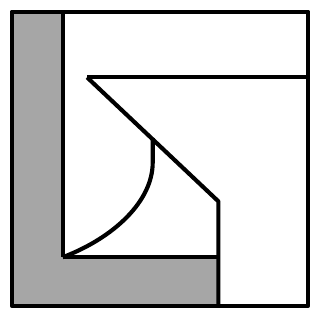
Select the correct mirror image of the given figure when the mirror is placed at LM as shown below.

  1. AOption (a)

  2. BOption (b)

  3. COption (c)

  4. DOption (d)

View answer & explanation

Correct answer

Answer: (b)B.

Why this answer is correct

The correct mirror image of the given figure is:

Hence, the correct answer is "Option 2".

Question 4

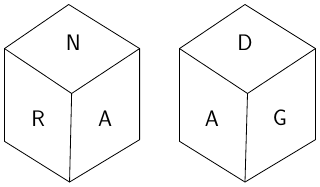
A dice has its faces marked by letters G, E, D, A, N and R. Two positions of the same dice are shown in the given figures. Which face is opposite to face E?

  1. AOption (a)

    D

  2. BOption (b)

    G

  3. COption (c)

    A

  4. DOption (d)

    N

View answer & explanation

Correct answer

Answer: (c)C.

A

Why this answer is correct

The logic followed here is:

From the given two positions of the dice, we observe that the letter 'A' is common to both figures.

From Figure 1 (Clockwise from A): A → R → N 

From Figure 2 (Clockwise from A): A → D → G

By comparing the sequences, we can find the opposite pairs:

Opposite pairs:

N ↔ G

R ↔ D

The letters on the faces of the dice are G, E, D, A, N, R.

We have found pairs for N, G, R, D. The remaining two letters are A and E.

Since 'A' is the common face, the remaining unseen face must be opposite to 'A'. The remaining unseen face is 'E'.

So, the face opposite to "A" is "E".

Therefore, the face opposite to "E" is "A".

Hence, the correct answer is "Option 3".

Question 5

NRNL is related to IMIG in a certain way based on the English alphabetical order. In the same way, PTPN is related to KOKI. To which of the given options is DHDB related, following the same logic?

  1. AOption (a)

    YBXW

  2. BOption (b)

    YCXW

  3. COption (c)

    YDXE

  4. DOption (d)

    YCYW

View answer & explanation

Correct answer

Answer: (d)D.

YCYW

Why this answer is correct

Here is the alphabetical place value for each letter:

The logic followed here is,

For 'NRNL' related to 'IMIG':

For 'PTPN' related to 'KOKI':

Applying the same logic to 'DHDB':

Thus, DHDB is related to YCYW.

Hence, the correct answer is "Option 4".

Question 6

G, H, I, J, K, L and M are sitting around a circular table, facing the centre of the table (but not necessarily in the same order).

K sits to the immediate right of L. Only three people sit between K and M when counted from the left of K. Only three people sit between L and H. J sits to the immediate right of I. How many people sit between L and I when counted from the left of I?

  1. AOption (a)

    Three

  2. BOption (b)

    One

  3. COption (c)

    Two

  4. DOption (d)

    Four

View answer & explanation

Correct answer

Answer: (d)D.

Four

Why this answer is correct

Given, G, H, I, J, K, L and M are sitting around a circular table, facing the centre of the table (but not necessarily in the same order).

K sits to the immediate right of L.

Only three people sit between K and M when counted from the left of K.

Only three people sit between L and H.

J sits to the immediate right of I.

And G sits at the remaining place.

Four people sit between L and I when counted from the left of I.

Hence, the correct answer is "Option 4".

Question 7

In a certain code language.

'Y + F' means 'Y is the daughter of F',

'Y - F' means 'Y is the son of F',

'Y @ F' means 'Y is the sister of F' and

'Y # F' means 'Y is the father of F'.

Based on the above, how is S related to A if 'A + H @ S - C'?

  1. AOption (a)

    Mother's brother

  2. BOption (b)

    Sister

  3. COption (c)

    Mother's sister

  4. DOption (d)

    Sister's daughter

View answer & explanation

Correct answer

Answer: (a)A.

Mother's brother

Why this answer is correct

A is
Symbol+-@#
MeaningDaughterSonSisterFather
of B

Given Expression: A + H @ S - C

A + H: A is the daughter of H.

H @ S: H is the sister of S.

S - C: S is the son of C.

According to the given information Family Tree Representation:

Relationship between S and A: S is the brother of H. H is the mother of A.

Therefore, S is A's Mother's brother.

Hence, the correct answer is "Option 1"

Question 8

What should come in place of the question mark (?) in the given series?

670 668 671 666 673 662 676 ?

  1. AOption (a)

    654

  2. BOption (b)

    681

  3. COption (c)

    680

  4. DOption (d)

    656

View answer & explanation

Correct answer

Answer: (d)D.

656

Why this answer is correct

The logic followed here is that there are two alternating series:


Hence, the correct answer is "Option 4".

Question 9

CJ 16 is related to DF 9 in a certain way. In the same way, FK 9 is related to GG 2. To which of the following is OO 2 related following the same logic?

  1. AOption (a)

    SP -6

  2. BOption (b)

    PR -2

  3. COption (c)

    LP -4

  4. DOption (d)

    PK -5

View answer & explanation

Correct answer

Answer: (d)D.

PK -5

Why this answer is correct

The logic followed here is,

For 'CJ 16' related to 'DF 9':

For 'FK 9' related to 'GG 2':

The consistent pattern observed is: First letter +1, Second letter -4, Number -7.

Applying the same logic to 'OO 2':

Thus, 'OO 2' is related to PK -5.

Hence, the correct answer is "Option 4".

Question 10

Based on the English alphabetical order, three of the following four letter-clusters are alike in a certain way and thus form a group. Which letter-cluster DOES NOT belong to that group?

(Note: The odd man out is not based on the number of consonants/vowels or their position in the letter-cluster.)

  1. AOption (a)

    UBI

  2. BOption (b)

    SZG

  3. COption (c)

    BIO

  4. DOption (d)

    KRY

View answer & explanation

Correct answer

Answer: (c)C.

BIO

Why this answer is correct

The logic followed here is:

Option (1): UBI

Option (2): SZG

Option (3): BIO

Option (4): KRY

The letter-cluster that DOES NOT belong to the group is: BIO

Hence, the correct answer is "Option (3)"

Question 11

What should come in place of the question mark (?) in the given series?

7, 10, 16, 25, ?, 52

  1. AOption (a)

    37

  2. BOption (b)

    35

  3. COption (c)

    36

  4. DOption (d)

    38

View answer & explanation

Correct answer

Answer: (a)A.

37

Why this answer is correct

The logic followed here is:

Hence, the correct answer is "Option 1".

Question 12

What will come in the place of the question mark '(?)' in the following equation, if '÷' and '×' are interchanged and '+' and '-' are interchanged?

45 - 2  ÷ 8 + 2 × 2 = ?

  1. AOption (a)

    61

  2. BOption (b)

    62

  3. COption (c)

    60

  4. DOption (d)

    59

View answer & explanation

Correct answer

Answer: (c)C.

60

Why this answer is correct

Given interchange rules:

  • ‘÷’ and ‘×’ are interchanged.
  • ‘+’ and ‘−’ are interchanged.

The given equation is:

45 − 2 ÷ 8 + 2 × 2 = ?

Replace the operators with their corresponding new meanings:

45 + 2 × 8 − 2 ÷ 2 = ?

Now, we solve the equation following the BODMAS/PEMDAS rule (Brackets, Orders, Division/Multiplication from left to right, Addition/Subtraction from left to right):

= 45 + 2 × 8 − 2 ÷ 2

= 45 + 16 − 1

= 61 − 1 = 60

Hence, the correct answer is "Option 3".

Question 13

In a certain code language, 'DAYS' is coded as '7812' and 'AIDS' is coded as '1237'. What is the code for 'l' in the given code language?

  1. AOption (a)

    1

  2. BOption (b)

    7

  3. COption (c)

    3

  4. DOption (d)

    2

View answer & explanation

Correct answer

Answer: (c)C.

3

Why this answer is correct

The given code language is:

Comparing the words and their codes:

Letters unique to 'AIDS' (and not in 'DAYS'): 'I'

Digits unique to '1237' (and not in '7812'): '3'

So, 'I' is coded as '3'.

Hence, the correct answer is "Option 3".

Question 14

The position(s) of how many letters will remain unchanged if each letter in the word MIGHTY is arranged in the English alphabetical order?

  1. AOption (a)

    Two

  2. BOption (b)

    One

  3. COption (c)

    None

  4. DOption (d)

    Three

View answer & explanation

Correct answer

Answer: (a)A.

Two

Why this answer is correct

Given word: 'MIGHTY'

After arranging the letters in English alphabetical order:

OriginalMIGHTY
AlphabeticalGHIMTY
StatusChangedChangedChangedChangedUnchangedUnchanged

The letters that remain unchanged in their original spot are T and Y.

Therefore, the positions of "2" letters remain unchanged.

Hence, the correct answer is "Option 1".

Question 15

In a certain code language, 'TDYI' is coded as '116' and 'NRDP' is coded as '104'. What is the code for 'LAWG' in the given language?

  1. AOption (a)

    82

  2. BOption (b)

    77

  3. COption (c)

    72

  4. DOption (d)

    86

View answer & explanation

Correct answer

Answer: (d)D.

86

Why this answer is correct

Logic followed here is.

Logic: The code for a word is determined by summing the positional values of its letters and then multiplying the sum by a constant factor.

TDYI is coded as 116 →

Sum of positional values = 20 + 4 + 25 + 9 = 58

Code = 58 × 2 = 116

NRDP is coded as 104 →

Sum of positional values = 14 + 18 + 4 + 16 = 52

Code = 52 × 2 = 104

The pattern observed is: (Sum of positional values of letters) × 2.

Similarly, let's find the code for LAWG:

Sum of positional values = 12 + 1 + 23 + 7 = 43

Code = 43 × 2 = 86

Therefore, the code for 'LAWG' is 86.

Hence, the correct answer is "Option 4".

Question 16

Select the combination of letters that when sequentially placed in the blanks of the given series, will logically complete the series.

YUXT_SVRU_TPSO NQM_

  1. AOption (a)

    TXSUO

  2. BOption (b)

    VXQUP

  3. COption (c)

    VWQRP

  4. DOption (d)

    TWSRO

View answer & explanation

Correct answer

Answer: (c)C.

VWQRP

Why this answer is correct

The logic followed here is,

Given,

YUXT_SVRU_TPSO NQM_

So, VWQRP come at blank place to make pattern.

Hence, the correct answer is "Option 3".

Question 17

A dice has its faces marked by letters T, F, H, A, R and E. Two positions of the same dice are shown in the given figures. Which face is opposite to face A?

  1. AOption (a)

    E

  2. BOption (b)

    H

  3. COption (c)

    R

  4. DOption (d)

    F

View answer & explanation

Correct answer

Answer: (a)A.

E

Why this answer is correct

The logic followed here is:

From the given two positions of the dice, we observe that the letter 'E' is common to both figures.

From Figure 1 (Clockwise from E): E → R → H

From Figure 2 (Clockwise from E): E → F → T

By comparing the sequences, we can find the opposite pairs:

Opposite pairs:

R ↔ F

H ↔ T

The letters on the faces of the dice are T, F, H, A, R, E.

We have found pairs for R, T, H, F. The remaining two letters are A and E.

Since 'E' is the common face, the remaining unseen face must be opposite to 'E'. The remaining unseen face is 'A'.

So, the face opposite to "E" is "A".

Hence, the correct answer is "Option 1".

Question 18

Seven people A, B, C, D, E, F and G are sitting in a straight line facing the north (but not necessarily in the same order). B is sitting to the immediate right of D and the immediate left of F. A is sitting to the immediate left of E and the immediate right of F. G is sitting to the immediate right of E and the immediate left of C. Who is sitting at the left end of the line?

  1. AOption (a)

    E

  2. BOption (b)

    G

  3. COption (c)

    D

  4. DOption (d)

    F

View answer & explanation

Correct answer

Answer: (c)C.

D

Why this answer is correct

Given, seven people A, B, C, D, E, F and G are sitting in a straight line facing the north (but not necessarily in the same order).

B is sitting to the immediate right of D and the immediate left of F.

A is sitting to the immediate left of E and the immediate right of F.

G is sitting to the immediate right of E and the immediate left of C.

So, D is sitting at the left end of the line.

Hence, the correct answer is "Option 3".

Question 19

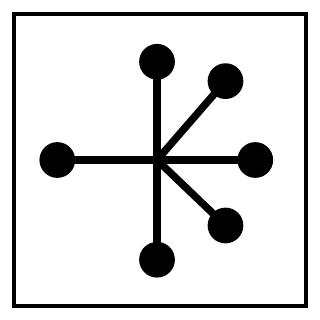
Select the figure from among the given options that can replace the question mark (?) in the following series.

  1. AOption (a)

  2. BOption (b)

  3. COption (c)

  4. DOption (d)

View answer & explanation

Correct answer

Answer: (c)C.

Why this answer is correct

The logic followed here is,

Logic: One arrow is added in the subsequent figure in the clockwise direction to make the next figure.

Hence, the correct answer is "Option 3".

Question 20

What should come in place of (?) in the given series based on the English alphabetical order?

MTD, JRC, GPB, DNA, ?

  1. AOption (a)

    ALZ

  2. BOption (b)

    BMX

  3. COption (c)

    CNY

  4. DOption (d)

    CMX

View answer & explanation

Correct answer

Answer: (a)A.

ALZ

Why this answer is correct

The logic followed here is:

Thus, 'ALZ' will be the next in the series.

Hence, the correct answer is "Option 1".

General Knowledge and General Awareness (20 questions)

Question 21

Yamini Krishnamurthy was recognised as the 'Asthana Narthaki' of which style of dance?

  1. AOption (a)

    Bharatanatyam and Kuchipudi

  2. BOption (b)

    Odissi and Kathak

  3. COption (c)

    Kathakali and Manipuri

  4. DOption (d)

    Mohiniattam and Sattriya

View answer & explanation

Correct answer

Answer: (a)A.

Bharatanatyam and Kuchipudi

Why this answer is correct

The Correct answer is Bharatanatyam and Kuchipudi.

Key Points

  • Yamini Krishnamurthy is one of the most renowned dancers in India, recognized for her mastery in Bharatanatyam and Kuchipudi.
  • She was honored as the 'Asthana Narthaki' (court dancer) of the Thanjavur style of Bharatanatyam and also excelled in Kuchipudi, a classical dance form from Andhra Pradesh.
  • Bharatanatyam, originating from Tamil Nadu, is one of the oldest classical dance forms in India and is known for its expressive gestures, intricate footwork, and spiritual themes.
  • Kuchipudi, originating from Andhra Pradesh, combines graceful movements with dramatic storytelling, often performed with music and dialogue.
  • Yamini Krishnamurthy’s contributions to these dance forms have earned her national and international recognition, including prestigious awards such as the Padma Shri and Padma Bhushan.
  • She has been an inspiration to countless dancers, and her performances reflect the rich heritage and spirituality of Indian classical dance.
  • Her dedication to promoting these dance forms led her to establish dance academies and mentor aspiring dancers, ensuring the preservation and growth of Bharatanatyam and Kuchipudi.

 Additional Information

  • Odissi and Kathak
  • Odissi is a classical dance form from Odisha, characterized by its fluid movements and sculpturesque poses. It is deeply rooted in temple traditions and often depicts stories of Lord Jagannath.
  • Kathak, originating from North India, is known for its intricate footwork, spins, and storytelling. It has influences from both Hindu and Mughal cultures.
  • While Yamini Krishnamurthy is associated with Bharatanatyam and Kuchipudi, her contributions do not extend to these dance forms.
  • Kathakali and Manipuri
  • Kathakali, from Kerala, is a classical dance-drama known for its elaborate makeup, costumes, and facial expressions. It often portrays stories from the Mahabharata and Ramayana.
  • Manipuri, originating from Manipur, is a devotional dance form that focuses on themes of Vaishnavism and stories of Lord Krishna.
  • Yamini Krishnamurthy has not been associated with these dance forms, as her expertise lies in Bharatanatyam and Kuchipudi.
  • Mohiniattam and Sattriya
  • Mohiniattam is a classical dance form from Kerala, characterized by its graceful and feminine movements. It is performed mainly by women and depicts stories of love and devotion.
  • Sattriya, from Assam, is a dance form associated with Vaishnava monasteries and is known for its spiritual themes and storytelling.
  • Yamini Krishnamurthy has not trained in or performed these dance forms.

Question 22

Which mountain range is triangular in shape, with its apex at Ratnapuri, the other two sides parallel to Tapti and the holy Narmada river?

  1. AOption (a)

    Purvanchal Range

  2. BOption (b)

    Aravalli Range

  3. COption (c)

    Satpura Range

  4. DOption (d)

    Pir Panjal Range

View answer & explanation

Correct answer

Answer: (c)C.

Satpura Range

Why this answer is correct

The Correct answer is Satpura Range.

Key Points

  • The Satpura Range is a prominent mountain range in India, known for its triangular shape, with its apex at Ratnapuri.
  • The other two sides of the range run parallel to the rivers Tapti and Narmada, which are important rivers in central India.
  • The Satpura Range is located in central India and spans across the states of Madhya Pradesh, Maharashtra, and Gujarat.
  • It is part of the Vindhyan-Satpura hill system and serves as a natural barrier between the northern and southern parts of India.
  • The range is known for its rich biodiversity and is home to several wildlife sanctuaries and national parks, such as Pachmarhi Biosphere Reserve and Satpura National Park.
  • Geologically, the Satpura Range is composed of igneous and metamorphic rocks, and it plays a significant role in influencing the regional climate and ecology.
  • The range is also a source of several tributaries that feed into the Tapti and Narmada rivers.

 Additional Information

  • Purvanchal Range
  • The Purvanchal Range lies in the northeastern part of India and is an extension of the Himalayas.
  • It consists of hills such as the Naga Hills, Mizo Hills, and Patkai Hills, which are located in states like Nagaland, Mizoram, and Arunachal Pradesh.
  • These hills are characterized by their dense forests, steep slopes, and rich biodiversity.
  • Unlike the Satpura Range, the Purvanchal Range is not triangular in shape and does not run parallel to the Tapti or Narmada rivers.
  • Aravalli Range
  • The Aravalli Range is one of the oldest mountain ranges in the world, located in western India.
  • It stretches across the states of Rajasthan, Haryana, and Gujarat.
  • The Aravalli Range is known for its rich mineral deposits and historical significance, with many ancient forts and palaces situated along its length.
  • Unlike the Satpura Range, the Aravalli Range is not triangular in shape and does not align with the Tapti and Narmada rivers.
  • Pir Panjal Range
  • The Pir Panjal Range is part of the greater Himalayas and is located in the northernmost regions of India.
  • It spans across states like Jammu & Kashmir and Himachal Pradesh.
  • The Pir Panjal Range is known for its snow-clad peaks, valleys, and alpine forests.
  • It is geographically distinct from the Satpura Range and does not share the triangular shape or proximity to the Tapti and Narmada rivers.

Question 23

Who is the cabinet minister of the Ministry of Panchayati Raj, as of September 2024?

  1. AOption (a)

    Nitin Jairam Gadkari

  2. BOption (b)

    Dharmendra Pradhan

  3. COption (c)

    Rajiv Ranjan Singh

  4. DOption (d)

    Piyush Goyal

View answer & explanation

Correct answer

Answer: (c)C.

Rajiv Ranjan Singh

Why this answer is correct

The Correct answer is Rajiv Ranjan Singh.

Key Points

  • Rajiv Ranjan Singh, also known as Lalan Singh, is an Indian politician and a member of the Janata Dal (United) party.
  • He holds the position of Cabinet Minister of the Ministry of Panchayati Raj as of September 2024.
  • The Ministry of Panchayati Raj is responsible for the implementation of decentralized governance and empowering Panchayati Raj Institutions (PRIs) under the 73rd Constitutional Amendment Act.
  • The ministry works on strengthening rural governance, facilitating development at the grassroots level, and ensuring participatory democracy for effective governance.
  • Rajiv Ranjan Singh has actively contributed to policies aimed at enhancing the efficiency of PRIs through financial and administrative empowerment.
  • The Ministry of Panchayati Raj also oversees important programs such as Swachh Bharat Mission (Gramin), Mahatma Gandhi National Rural Employment Guarantee Act (MGNREGA), and National Social Assistance Program, which directly impact rural communities.
  • The ministry emphasizes the implementation of e-governance and digital initiatives like e-Panchayat to make governance more transparent and accessible.
  • Rajiv Ranjan Singh's leadership in the ministry ensures adherence to sustainable development goals (SDGs) at the local level, particularly in rural India.

 Additional Information

  • Nitin Jairam Gadkari
  • Nitin Jairam Gadkari is a senior politician of the Bharatiya Janata Party (BJP).
  • He is known for his role as the Minister for Road Transport and Highways, where he has been instrumental in transforming India's infrastructure with projects like Bharatmala Pariyojana.
  • He has also contributed to sustainable practices in the transport sector, including the promotion of electric vehicles and alternative fuels.
  • Dharmendra Pradhan
  • Dharmendra Pradhan is a prominent leader of the BJP and serves as the Minister of Education and Minister of Skill Development and Entrepreneurship.
  • He has played a key role in implementing the National Education Policy (NEP) 2020, focusing on holistic and inclusive education.
  • Under his leadership, the ministry has strengthened programs for skill development to cater to the needs of India's growing economy.
  • Piyush Goyal
  • Piyush Goyal is a senior leader in the BJP and currently serves as the Minister of Commerce and Industry, as well as the Minister of Consumer Affairs, Food and Public Distribution.
  • He has contributed significantly to India's trade policies, including the promotion of Atmanirbhar Bharat and increasing exports.
  • His ministry also oversees critical issues related to consumer rights and the distribution of essential commodities.

Question 24

In 1887, whose work did Heinrich Rudolf Hertz apply to conduct a series of experiments from which he generated radio waves?

  1. AOption (a)

    Christiaan Huygens

  2. BOption (b)

    James Clerk Maxwell

  3. COption (c)

    Christian Doppler

  4. DOption (d)

    Thomas Young

View answer & explanation

Correct answer

Answer: (b)B.

James Clerk Maxwell

Why this answer is correct

The correct answer is James Clerk Maxwell.

Key Points

  • James Clerk Maxwell was a Scottish physicist who formulated a set of equations that describe the behavior of electric and magnetic fields, known as Maxwell's equations.
  • Maxwell’s equations predicted the existence of electromagnetic waves, which could travel through space at the speed of light.
  • Heinrich Rudolf Hertz applied Maxwell’s theoretical work in 1887 to conduct experiments that demonstrated the existence of radio waves.
  • Hertz’s experiments involved the generation of electromagnetic waves, confirming Maxwell’s prediction and laying the foundation for the development of wireless communication technologies.
  • Maxwell’s contributions are considered a cornerstone of modern physics, as his equations unified the fields of electricity, magnetism, and light.
  • The confirmation of Maxwell's theory by Hertz eventually led to the invention of the radio, television, and radar systems.
  • Maxwell’s work is a significant milestone in the development of the field of electromagnetic theory, influencing various scientific and technological advancements.

 Additional Information

  • Christiaan Huygens
  • Christiaan Huygens was a Dutch mathematician, physicist, and astronomer known for his work on the wave theory of light.
  • He proposed the Huygens-Fresnel principle, which describes how wavefronts propagate.
  • Huygens invented the pendulum clock, significantly improving timekeeping accuracy.
  • While his work on waves was influential, it primarily focused on light, not the electromagnetic waves described by Maxwell.
  • Christian Doppler
  • Christian Doppler was an Austrian physicist best known for the Doppler effect, which describes the change in frequency or wavelength of a wave in relation to an observer moving relative to the source of the wave.
  • The Doppler effect has applications in astronomy, weather radar, and medical imaging (e.g., Doppler ultrasound).
  • His work is unrelated to the generation or propagation of radio waves.
  • Thomas Young
  • Thomas Young was an English polymath known for his contributions to the double-slit experiment, which demonstrated the wave nature of light.
  • He also made significant contributions to the fields of vision, elasticity, and linguistics.
  • Young’s work focused on optics and mechanics, not electromagnetic waves or radio wave generation.

Question 25

Which of the following plants is a Pteridophyte which is usually found in moist, shady places or gardens and on hills where the temperatures are low?

  1. AOption (a)

    Ferns

  2. BOption (b)

    Sphagnum

  3. COption (c)

    Riccia

  4. DOption (d)

    Porphyra

View answer & explanation

Correct answer

Answer: (a)A.

Ferns

Why this answer is correct

The Correct answer is Ferns.

Key Points

  • Ferns are classified as Pteridophytes, which are vascular plants that reproduce via spores rather than seeds.
  • They thrive in moist and shady environments, making them common in gardens, forests, and areas with high humidity.
  • These plants are often found on hills or in regions with low temperatures, which provide the ideal conditions for their growth.
  • Ferns possess a well-developed vascular system, including roots, stems, and leaves, which allows them to transport water and nutrients efficiently.
  • They exhibit a unique alternation of generations, involving a sporophyte (diploid) and a gametophyte (haploid) phase.
  • Ferns are considered primitive plants but play a significant role in maintaining ecological balance and are often used in landscaping for their aesthetic appeal.
  • Examples of commonly known ferns include Adiantum (Maidenhair Fern), Pteris, and Dryopteris.

 Additional Information

  • Sphagnum
  • Sphagnum is commonly known as peat moss and is classified as a Bryophyte.
  • It grows in wetlands, such as bogs and marshes, and is known for its ability to retain water.
  • Sphagnum has a significant role in the formation of peat, which is used as fuel and in agriculture as a soil conditioner.
  • Riccia
  • Riccia is a genus of liverworts that belongs to the Bryophyte group.
  • It is typically found in damp and moist places and is characterized by its thalloid structure.
  • Unlike Pteridophytes, Riccia lacks a vascular system and reproduces through spores.
  • Porphyra
  • Porphyra is a type of red algae and is not a vascular plant.
  • It is commonly found in marine environments, especially in intertidal zones.
  • Porphyra is widely cultivated for its use as nori in sushi and other food products.

Question 26

Mayurbhanj Chhau is a tribal dance form of _____.

  1. AOption (a)

    Tripura

  2. BOption (b)

    Odisha

  3. COption (c)

    Bihar

  4. DOption (d)

    Assam

View answer & explanation

Correct answer

Answer: (b)B.

Odisha

Why this answer is correct

The Correct answer is Odisha.

Key Points

  • Mayurbhanj Chhau is one of the three distinct forms of Chhau dance in India, originating from the Mayurbhanj district of Odisha.
  • It is a tribal dance form that combines elements of martial arts, folk traditions, and classical dance.
  • Unlike other Chhau forms such as Purulia Chhau or Seraikela Chhau, Mayurbhanj Chhau does not use masks in performances.
  • The dance is known for its vigorous movements and intricate footwork, depicting themes from epic stories such as the Mahabharata and Ramayana.
  • Mayurbhanj Chhau employs martial postures and movements, showcasing the strength and agility of the performers.
  • The costumes are elaborate, and the dance is accompanied by traditional music played using instruments such as drums (Dhol), cymbals, and reed instruments.
  • It has been recognized as an Intangible Cultural Heritage by UNESCO, highlighting its cultural and historical significance.
  • Mayurbhanj Chhau is a form of ritualistic storytelling that reflects the rich cultural heritage of Odisha.

 Additional Information

  • Tripura
  • Tripura is known for its rich cultural heritage and tribal traditions, but it does not have any major association with the Chhau dance form.
  • The state is famous for its indigenous dances such as Hojagiri (performed by the Reang tribe) and Garia dance, which are linked to its tribal communities.
  • Tripura's dances often reflect themes of nature, agriculture, and folklore.
  • Bihar
  • Bihar is culturally significant but is not historically known for Chhau dance.
  • The state is renowned for its folk dances such as Bidesia and Jat-Jatin, which reflect the rural life and traditions of the region.
  • Bihar’s cultural practices are largely influenced by its association with the ancient kingdoms of Magadha and Maurya.
  • Assam
  • Assam is known for its famous dance forms such as Bihu, which celebrates the harvest festival.
  • Other notable dances include Sattriya, a classical dance form rooted in Vaishnavite traditions, and Bagurumba, performed by the Bodo tribe.
  • While Assam has a rich repertoire of dance forms, it is not associated with the Chhau dance tradition.

Question 27

How many members were there in the Constituent Assembly on 31st December 1947?

  1. AOption (a)

    334

  2. BOption (b)

    299

  3. COption (c)

    200

  4. DOption (d)

    195

View answer & explanation

Correct answer

Answer: (b)B.

299

Why this answer is correct

The Correct answer is 299.

Key Points

  • On 31st December 1947, the Constituent Assembly of India had a total of 299 members.
  • The Constituent Assembly was established to draft the Constitution of India, which came into effect on 26th January 1950.
  • The assembly originally had 389 members, but after the partition of India in 1947, the number reduced to 299 members.
  • Out of the 299 members, 229 represented British India, and 70 represented the princely states.
  • The assembly was chaired by Dr. Rajendra Prasad, who later became the first President of India.
  • The work of the Constituent Assembly was divided into several committees, such as the Drafting Committee, chaired by Dr. B.R. Ambedkar, which was responsible for preparing the draft of the Constitution.
  • The assembly met for a total of 165 days spread over 2 years, 11 months, and 18 days to deliberate on the provisions of the Constitution.
  • The Constituent Assembly played a vital role in shaping the legal and institutional framework of India, incorporating values of justice, equality, liberty, and fraternity.

 Additional Information

  • Key Historical Contributions of the Assembly:
  • The assembly drafted and adopted the Indian Constitution, which is one of the largest written constitutions in the world.
  • It incorporated important principles like Fundamental Rights, Directive Principles of State Policy, and provisions for a federal structure.
  • Prominent leaders such as Jawaharlal Nehru, Sardar Patel, Maulana Azad, and B.R. Ambedkar contributed significantly to the debates and discussions.

Question 28

Out of the following events, which event is NOT a part of Competitive Yogasana Sports?

  1. AOption (a)

    Rhythmic Yogasana (Single)

  2. BOption (b)

    Traditional Yogasana

  3. COption (c)

    Artistic Yogasana (Single)

  4. DOption (d)

    Artistic Yogasana (Pair)

View answer & explanation

Correct answer

Answer: (a)A.

Rhythmic Yogasana (Single)

Why this answer is correct

The Correct answer is Rhythmic Yogasana (Single).

Key Points

  • Rhythmic Yogasana (Single) is not included as part of Competitive Yogasana Sports.
  • Competitive Yogasana Sports focus on showcasing strength, flexibility, balance, and artistic expression through specific formats such as Artistic Yogasana (Single & Pair) and Traditional Yogasana.
  • Rhythmic Yogasana is primarily associated with a synchronized flow of movements performed to music, emphasizing aesthetics rather than competitive scoring.
  • It does not align with the standardized rules and scoring system defined for Competitive Yogasana Sports, which prioritize measurable physical performance.
  • The formats of Competitive Yogasana Sports include specific poses, choreography, and techniques that adhere to globally recognized standards of competition.
  • Exclusion of Rhythmic Yogasana ensures clarity in competition categories and avoids overlapping with other performance arts.
  • The focus of Competitive Yogasana Sports is on poses and sequences that demonstrate the essence of traditional and artistic yoga practices rather than rhythm-based performances.

 Additional Information

  • Traditional Yogasana
  • Traditional Yogasana is a core component of Competitive Yogasana Sports, focusing on poses that are rooted in classical yoga practices.
  • It emphasizes the discipline of holding static postures for a defined duration, showcasing stability and alignment.
  • Examples of poses include Padmasana, Chakrasana, and Sarvangasana, which are integral to traditional yoga.
  • Artistic Yogasana (Single)
  • Artistic Yogasana (Single) involves a solo performance of yoga postures combined with flowing movements and choreography.
  • It focuses on grace, expression, and creativity while maintaining the essence of yoga poses.
  • This format is scored based on presentation, difficulty, and execution.
  • Artistic Yogasana (Pair)
  • Artistic Yogasana (Pair) is performed in pairs, emphasizing synchronization and coordination between two participants.
  • It includes choreography and poses that require teamwork and balance.
  • This format highlights the harmony and interaction between participants, making it unique in Competitive Yogasana Sports.

Question 29

As per SRS Bulletin 2020, what was the birth rate in India?

  1. AOption (a)

    19.5

  2. BOption (b)

    21.8

  3. COption (c)

    17.6

  4. DOption (d)

    23.3

View answer & explanation

Correct answer

Answer: (a)A.

19.5

Why this answer is correct

The Correct answer is 19.5.

Key Points

  • As per the Sample Registration System (SRS) Bulletin 2020, the birth rate in India was reported to be 19.5 per 1000 population.
  • The birth rate is defined as the number of live births per 1000 people in a year.
  • The SRS Bulletin is one of the most reliable sources of demographic data in India, published by the Registrar General of India (RGI).
  • The data helps in understanding trends in population growth, planning for healthcare, and allocation of resources.
  • The birth rate is influenced by several factors such as education levels, healthcare access, economic conditions, and social norms.
  • India's declining birth rate over the years is indicative of improving family planning measures and increased awareness about reproductive health.
  • The birth rate varies across states in India, with states like Bihar having higher rates compared to states like Kerala, which often report lower rates.
  • Tracking the birth rate is crucial for achieving sustainable development goals (SDGs), especially those related to healthcare, education, and poverty alleviation.

Question 30

Union Minister Dr. Jitendra Singh received the 'Lifetime Achievement Award' for his significant contributions in which field?

  1. AOption (a)

    Cancer research

  2. BOption (b)

    Diabetes care and research

  3. COption (c)

    Dermatology research

  4. DOption (d)

    Child care and research

View answer & explanation

Correct answer

Answer: (b)B.

Diabetes care and research

Why this answer is correct

The Correct answer is Diabetes care and research.

Key Points

  • Union Minister Dr. Jitendra Singh is a renowned medical professional apart from his political contributions. He has made significant advancements in the field of Diabetes care and research.
  • Dr. Singh has been actively involved in the study of Type 1 and Type 2 Diabetes, particularly focusing on the prevalence and management of diabetes in the Indian population.
  • He is also recognized for his work in diabetes-related complications, including diabetic neuropathy and retinopathy, which are common in long-term untreated cases.
  • Dr. Singh has authored numerous research papers and has contributed to medical journals, enhancing the body of knowledge in the field of diabetes.
  • He has also been instrumental in educating the public about the importance of lifestyle modifications such as diet, exercise, and early diagnosis to manage diabetes effectively.
  • As a Union Minister, he has balanced his responsibilities in governance while also promoting health awareness campaigns, particularly focusing on the prevention and management of diabetes in rural and urban India.
  • The 'Lifetime Achievement Award' recognizes his decades-long contributions and commitment to improving the lives of individuals suffering from diabetes.

 Additional Information

  • Cancer research
  • Cancer research involves studying the causes, progression, and treatment of various cancers, including lung, breast, colorectal, and prostate cancer.
  • It focuses on developing new therapies such as immunotherapy, targeted drugs, and gene therapy to improve patient outcomes.
  • Prominent institutions like AIIMS and Tata Memorial Centre in India are deeply involved in cancer research.
  • Dermatology research
  • Dermatology research focuses on studying and treating skin conditions such as eczema, psoriasis, acne, and skin cancers.
  • Research in this field also includes the development of cosmetic dermatology solutions like laser treatments, fillers, and anti-aging therapies.
  • It plays a critical role in understanding rare diseases like epidermolysis bullosa and autoimmune skin disorders.
  • Child care and research
  • This field focuses on improving the health and well-being of children, including their physical, mental, and emotional development.
  • It involves studying childhood diseases, nutrition, and the impact of vaccines and preventive healthcare measures.
  • Organizations like UNICEF and WHO work extensively in child healthcare and research globally.

Question 31

Which sectors should work together to be known as a mixed economy?

  1. AOption (a)

    Government and Private

  2. BOption (b)

    Foreign and Private

  3. COption (c)

    Private and Corporate

  4. DOption (d)

    Government and Cooperative

View answer & explanation

Correct answer

Answer: (a)A.

Government and Private

Why this answer is correct

The Correct answer is Government and Private.

Key Points

  • A mixed economy is characterized by the coexistence of both the government sector and the private sector in economic activities.
  • In a mixed economy, the government typically regulates essential industries, provides public goods, and ensures equitable distribution of resources, while the private sector contributes to innovation, efficiency, and economic growth.
  • This model allows for a balance between economic freedom and social welfare, ensuring that the benefits of economic growth reach all sections of society.
  • The government intervenes to correct market failures, such as monopolies, externalities, and income inequality, while the private sector drives competition and increases efficiency.
  • Examples of mixed economies include India, the United States, and the United Kingdom, where both sectors play a significant role in shaping the economy.
  • In the context of India, the mixed economy approach is evident through the presence of public sector enterprises like Indian Railways and private corporations like Tata Group working concurrently.
  • This collaboration allows the economy to leverage the strengths of both sectors—government control for essential services and private entrepreneurship for innovation and growth.

 Additional Information

  • Foreign and Private
  • Foreign and private sectors together do not define a mixed economy. However, foreign investments play a significant role in a globalized economy, boosting industrial growth and infrastructure development.
  • Countries like Singapore and Hong Kong are examples of economies that rely heavily on foreign investment and private enterprises.
  • Foreign involvement is often regulated by the government to ensure that it aligns with national interests and does not lead to undue dependence on external entities.
  • Private and Corporate
  • Private and corporate sectors are subsets of the private economy, and while they contribute to economic development, they do not constitute a mixed economy.
  • The corporate sector includes large businesses and conglomerates, whereas the private sector encompasses smaller enterprises and individual entrepreneurs.
  • These sectors are essential for fostering competition, driving innovation, and generating employment.
  • Government and Cooperative
  • Government and cooperative sectors can coexist in an economy, but they are not the defining components of a mixed economy.
  • The cooperative sector is a form of collective enterprise where members work together for a common economic goal, often seen in agriculture and banking.
  • Examples include Amul in India, which is a successful dairy cooperative. However, this model is distinct from the mixed economy approach.

Question 32

Who led the Salt March to Dandi in 1930?

  1. AOption (a)

    Rajendra Prasad

  2. BOption (b)

    Mahatma Gandhi

  3. COption (c)

    Sardar Vallabhbhai Patel

  4. DOption (d)

    Jawaharlal Nehru

View answer & explanation

Correct answer

Answer: (b)B.

Mahatma Gandhi

Why this answer is correct

The Correct answer is Mahatma Gandhi.

Key Points

  • Mahatma Gandhi, also known as Mohandas Karamchand Gandhi, led the Salt March to Dandi in 1930, which was part of the Civil Disobedience Movement.
  • The march began on 12th March 1930, from Sabarmati Ashram and ended on 6th April 1930, in the coastal village of Dandi, located in the present-day Gujarat.
  • The primary objective of the Salt March was to protest against the British salt tax, which was seen as oppressive and unjust.
  • During the march, Gandhi and his followers walked a distance of approximately 240 miles, covering various villages and inspiring the masses to join the movement.
  • On reaching Dandi, Gandhi symbolically defied the British law by making salt from the seawater, which was a direct challenge to British authority.
  • The Salt March is considered a pivotal moment in India’s struggle for independence as it garnered widespread national and international attention.
  • It demonstrated the power of non-violent resistance or Satyagraha, a philosophy advocated by Gandhi to fight injustice without violence.
  • The march inspired millions of Indians to participate in the Civil Disobedience Movement by breaking laws such as not paying taxes, boycotting foreign goods, and making their own salt.
  • It was a significant step in uniting the Indian population against British colonial rule and highlighted the economic exploitation by the British.

 Additional Information

  • Rajendra Prasad
  • Dr. Rajendra Prasad was the first President of India and a prominent leader in the Indian independence movement.
  • He played a significant role in the Champaran Satyagraha alongside Gandhi.
  • However, he did not lead the Salt March to Dandi.
  • Sardar Vallabhbhai Patel
  • Sardar Vallabhbhai Patel, also known as the Iron Man of India, was a key figure in the Indian freedom struggle.
  • He played a critical role in organizing the Bardoli Satyagraha of 1928, which was a precursor to the Civil Disobedience Movement.
  • Though he supported the Salt March, he did not lead it.
  • Jawaharlal Nehru
  • Jawaharlal Nehru was a prominent leader in the Indian independence movement and later became the first Prime Minister of India.
  • He was actively involved in the Civil Disobedience Movement and supported the Salt March, but he did not lead it.
  • Nehru's leadership came to prominence in other significant movements and initiatives in India’s freedom struggle.

Question 33

Who was the Greek envoy who visited the Mauryan capital Pataliputra and whose account is a key source for the Mauryan period?

  1. AOption (a)

    Pliny

  2. BOption (b)

    Herodotus

  3. COption (c)

    Arrian

  4. DOption (d)

    Megasthenes

View answer & explanation

Correct answer

Answer: (d)D.

Megasthenes

Why this answer is correct

The Correct answer is Megasthenes.

Key Points

  • Megasthenes was a Greek envoy who visited the Mauryan capital Pataliputra during the reign of Chandragupta Maurya.
  • He served as an ambassador of Seleucus I Nicator, a successor of Alexander the Great, to the Mauryan court.
  • Megasthenes is known for his detailed account of the Mauryan empire in his work titled Indica.
  • Although the original text of Indica is lost, fragments and references to his work are found in later writings by historians such as Strabo, Diodorus, and Arrian.
  • His writings provide valuable insights into the political, social, and economic structure of the Mauryan empire, including information about the administration, cities, agriculture, and military.
  • Megasthenes described the Mauryan capital, Pataliputra, as a well-planned city with fortified walls and a strong administration.
  • He highlighted the existence of a disciplined bureaucracy, an efficient judicial system, and a focus on agricultural prosperity under the Mauryan rule.
  • Megasthenes' account is considered one of the most important foreign sources for understanding the ancient Indian history during the Mauryan period.

 Additional Information

  • Pliny
  • Pliny the Elder was a Roman author and naturalist, known for his work Natural History, which is an encyclopedia of ancient knowledge.
  • He did not visit India but compiled information about India from various sources, including accounts of traders and travelers.
  • His writings include descriptions of Indian goods such as spices, textiles, and gems, which were highly valued in ancient Rome.
  • Herodotus
  • Herodotus, often referred to as the "Father of History," was a Greek historian.
  • He lived in the fifth century BCE and wrote extensively about the ancient world, including accounts of the Persian empire.
  • Herodotus did not document any direct information about the Mauryan empire or visit India. His focus was primarily on the Mediterranean and West Asian regions.
  • Arrian
  • Arrian was a Greek historian and military commander who lived during the second century CE.
  • He is known for his work Anabasis of Alexander, which chronicles the campaigns of Alexander the Great.
  • Arrian's writings include references to India as part of Alexander's expedition, but he did not visit India personally.

Question 34

What was the impact of the global oil crisis of 1973 on the Fifth Five Year Plan (1974-1979)?

  1. AOption (a)

    It had no significant impact on the plan.

  2. BOption (b)

    Led to a reduction in agricultural focus

  3. COption (c)

    Accelerated the plan's industrialisation objectives

  4. DOption (d)

    Caused economic disruptions and re-prioritisation

View answer & explanation

Correct answer

Answer: (d)D.

Caused economic disruptions and re-prioritisation

Why this answer is correct

The Correct answer is Caused economic disruptions and re-prioritisation.

Key Points

  • The global oil crisis of 1973 was triggered by the Arab Oil Embargo, resulting in a sharp increase in crude oil prices worldwide.
  • The oil crisis had a significant impact on India’s economy, especially during the planning of the Fifth Five-Year Plan (1974–1979).
  • This economic shock disrupted the government’s planning process and forced the re-prioritisation of developmental goals.
  • Higher oil prices increased the import bill, leading to a rise in inflation and a deterioration in the balance of payments.
  • The plan had to address the issue of energy security and focus on reducing dependence on oil imports by promoting domestic energy production.
  • The crisis underscored the importance of resource mobilisation and necessitated adjustments to the original plan, including curtailing ambitious expenditure.
  • The government shifted focus to sectors like agriculture and rural development, which were deemed critical for ensuring food security and employment in the face of economic instability.
  • The plan also emphasised poverty alleviation programs and social sector investments to mitigate the adverse effects of the crisis on vulnerable sections of the population.

Question 35

In which of the following Five-Year Plans was the minimum needs programme introduced?

  1. AOption (a)

    Third

  2. BOption (b)

    Sixth

  3. COption (c)

    Fourth

  4. DOption (d)

    Fifth

View answer & explanation

Correct answer

Answer: (d)D.

Fifth

Why this answer is correct

The correct answer is Fifth Five-Year Plan.

Key Points

  • The Minimum Needs Programme (MNP) was introduced during India’s Fifth Five-Year Plan (1974–1979).
  • The programme aimed to provide a basic standard of living to the people by ensuring access to essential services such as education, health care, drinking water, sanitation, nutrition, and housing.
  • It was designed to reduce poverty and inequality, focusing on rural development and the upliftment of underprivileged sections of society.
  • The Fifth Five-Year Plan shifted its focus from growth-centric policies to welfare-centric policies due to widespread poverty and unemployment.
  • The plan was influenced by the idea of “Garibi Hatao” (Remove Poverty), popularized by then Prime Minister Indira Gandhi.
  • The introduction of the Minimum Needs Programme was in line with the government's goal to ensure social justice and eliminate disparities between urban and rural areas.
  • Under MNP, priority was given to areas like primary education, rural health care, rural roads, and rural electrification.
  • This programme laid the foundation for subsequent policies targeting inclusive growth and the welfare of marginalized communities.

 Additional Information

  • Third Five-Year Plan
  • The Third Five-Year Plan (1961–1966) focused on agriculture and industry and aimed to make India self-sufficient in food production.
  • This plan emphasized growth through a balanced approach between industry and agriculture.
  • However, its goals were largely disrupted due to the Indo-China war in 1962 and economic challenges faced during that period.
  • Fourth Five-Year Plan
  • The Fourth Five-Year Plan (1969–1974) focused on economic growth with social equity.
  • This plan emphasized the reduction of income inequality and the eradication of poverty.
  • It also concentrated on improving industrial production and achieving growth targets in agriculture.
  • Sixth Five-Year Plan
  • The Sixth Five-Year Plan (1980–1985) focused on poverty alleviation, rural employment, and improving infrastructure.
  • This plan introduced measures to improve productivity in agriculture and industry and focused on export promotion.
  • It also emphasized technological advancements and modernization.

Question 36

The Chief Justice and Judges of High Courts are appointed by who among the following?

  1. AOption (a)

    Governor

  2. BOption (b)

    Chief Minister

  3. COption (c)

    President

  4. DOption (d)

    Prime Minister

View answer & explanation

Correct answer

Answer: (c)C.

President

Why this answer is correct

The Correct answer is President.

Key Points

  • The President of India appoints the Chief Justice and other Judges of High Courts as per the provisions of the Constitution of India.
  • The appointment process is based on Article 217 of the Indian Constitution, which specifies the qualifications and procedure for the appointment of High Court judges.
  • The Chief Justice of India and the Governor of the concerned state are consulted by the President before making these appointments.
  • The collegium system, comprising the Chief Justice of India and a group of senior Supreme Court judges, plays a crucial role in recommending suitable candidates for appointment as High Court judges.
  • The independence of the judiciary is upheld through this process, ensuring that the executive does not have unrestrained power in judicial appointments.
  • This system is part of the basic structure of the Constitution and was reinforced by landmark cases such as the Second Judges Case (1993).
  • The President also appoints acting judges and additional judges as required, based on recommendations from the collegium and the advice of the Chief Justice of the respective High Court.

 Additional Information

  • Governor
  • The Governor is the constitutional head of a state in India, appointed by the President of India.
  • While the Governor is consulted in judicial appointments of High Court judges, they do not have the authority to appoint judges themselves.
  • The Governor's role is largely advisory and ceremonial in the context of judiciary appointments.
  • Chief Minister
  • The Chief Minister is the head of the government in a state but has no direct role in the appointment of High Court judges.
  • However, the Chief Minister may provide input during consultations between the Governor and the judiciary.
  • The Chief Minister's role is primarily confined to the executive functions of the state and does not overlap with judicial appointments.
  • Prime Minister
  • The Prime Minister leads the central executive but does not have a direct role in the appointment of High Court judges.
  • Judicial appointments are made by the President of India, based on the recommendations of the judiciary (via the collegium system).
  • The Prime Minister's involvement is limited to advising the President on matters of national governance and not specific judicial appointments.

Question 37

Who among the following was a Shehnai player and performed at Delhi's Red Fort as the Indian flag unfurled at the hour of India's independence on 15 August 1947?

  1. AOption (a)

    Ramnad Raghavan

  2. BOption (b)

    Hemant Kumar

  3. COption (c)

    Bismillah Khan

  4. DOption (d)

    Ali Akbar Khan

View answer & explanation

Correct answer

Answer: (c)C.

Bismillah Khan

Why this answer is correct

The Correct answer is Bismillah Khan.

Key Points

  • Bismillah Khan was a legendary Indian musician and is regarded as one of the greatest players of the Shehnai.
  • He performed at the historic moment of India’s independence on 15 August 1947 at the Red Fort in Delhi when the Indian flag was unfurled.
  • His performance marked the celebration of independence and symbolized India's rich cultural heritage.
  • Bismillah Khan was born in 1916 in a family of court musicians in Dumraon, Bihar.
  • He popularized the Shehnai, an instrument that was traditionally played in temples and weddings, elevating it to the status of a concert instrument.
  • He received the prestigious Bharat Ratna, India’s highest civilian award, in 2001 for his contribution to Indian music.
  • His music was deeply rooted in the Banaras Gharana and reflected the ethos of Indian classical traditions.
  • Bismillah Khan was known for his humility and dedication to his art, often referring to music as his religion.

 Additional Information

  • Ramnad Raghavan
  • Ramnad Raghavan was a renowned Mridangam player associated with Carnatic music.
  • He contributed significantly to South Indian classical music but was not related to the historic performance at India’s independence.
  • He was born in Tamil Nadu and was known for his collaborations with legendary Carnatic musicians.
  • Hemant Kumar
  • Hemant Kumar was a prominent playback singer and music composer in the Indian film industry.
  • He was known for his contribution to Hindi and Bengali music, but he was not associated with the Shehnai or the performance at the Red Fort.
  • He composed music for iconic films such as Nagin and Bees Saal Baad.
  • Ali Akbar Khan
  • Ali Akbar Khan was a legendary Sarod player and one of the most celebrated figures in Indian classical music.
  • He was a disciple of Baba Allauddin Khan and helped popularize Indian classical music internationally.
  • Though highly influential in Indian music, he was not connected to the Shehnai or the independence day performance.

Question 38

The celebrations for which of the following festivals are held for ten days in the month of Chingam (August/September) as per the local traditions in India?

  1. AOption (a)

    Pongal

  2. BOption (b)

    Bihu

  3. COption (c)

    Makar Sankranti

  4. DOption (d)

    Onam

View answer & explanation

Correct answer

Answer: (d)D.

Onam

Why this answer is correct

The Correct answer is Onam.

Key Points

  • Onam is a major harvest festival celebrated in the Indian state of Kerala.
  • The festival is observed during the month of Chingam (August–September), which is the first month of the Malayalam calendar.
  • Onam lasts for ten days, with each day having its own significance and rituals.
  • The highlight of the festival is the celebration of the return of the legendary King Mahabali, whose reign is believed to have been a golden era of prosperity and equality.
  • During Onam, houses are decorated with Pookalam (floral rangoli), traditional feasts called Onasadya, and cultural activities such as boat races, folk dances, and music.
  • One of the main attractions of Onam is the Vallam Kali, or the famous snake boat races, which are held in various parts of Kerala.
  • Onam is celebrated by people of all religions in Kerala, reflecting the state's cultural diversity and unity.
  • The festival is recognized as Kerala's state festival and attracts tourism due to its vibrant traditions and activities.

 Additional Information

  • Pongal
  • Pongal is a harvest festival celebrated primarily in the Indian state of Tamil Nadu.
  • It is observed during the month of January and marks the beginning of the Tamil month Thai.
  • The festival lasts for four days and is dedicated to the Sun God and agriculture.
  • Key activities during Pongal include cooking the traditional dish Pongal, decorating houses, and performing rituals to honor cattle.
  • Bihu
  • Bihu is the major festival of Assam and is celebrated in three forms: Bohag Bihu (April), Magh Bihu (January), and Kati Bihu (October).
  • Bohag Bihu, the most prominent, marks the Assamese New Year and the onset of spring.
  • The festival is characterized by traditional dances, music, feasts, and cultural performances.
  • Bihu celebrates the harvest season and strengthens social bonds among communities.
  • Makar Sankranti
  • Makar Sankranti is a Hindu festival celebrated across India in the month of January.
  • It marks the transition of the Sun into the zodiac sign Capricorn (Makara).
  • The festival signifies the end of the winter solstice and the beginning of longer days.
  • Key activities include kite flying, bonfires, feasts, and offering prayers to the Sun God.
  • This festival is celebrated under different names across India, such as Pongal in Tamil Nadu, Lohri in Punjab, and Uttarayana in Gujarat.

Question 39

According to the Census of India 2011, which of the following union territories has the lowest population?

  1. AOption (a)

    Puducherry

  2. BOption (b)

    Chandigarh

  3. COption (c)

    Daman and Diu

  4. DOption (d)

    Dadra and Nagar Haveli

View answer & explanation

Correct answer

Answer: (c)C.

Daman and Diu

Why this answer is correct

The Correct answer is Daman and Diu.

Key Points

  • Daman and Diu was reported as the union territory with the lowest population according to the Census of India 2011.
  • The population of Daman and Diu was recorded at approximately 2,42,911, making it the least populated union territory in India.
  • The union territory is divided into two separate districts: Daman and Diu, located on the western coast of India.
  • Daman is situated near Gujarat, while Diu is an island close to the southern coast of Gujarat.
  • Daman and Diu were former Portuguese colonies and became part of India in 1961.
  • The region is known for its beaches, historical forts, and churches, attracting tourists from across the country.
  • In 2020, Daman and Diu were merged with Dadra and Nagar Haveli to form a single union territory known as Dadra and Nagar Haveli and Daman and Diu.

 Additional Information

  • Puducherry
  • Puducherry is a union territory located in southern India and consists of four districts: Puducherry, Karaikal, Mahe, and Yanam.
  • It was a French colony before being incorporated into India in 1954.
  • Puducherry is known for its French architecture, cultural heritage, and spiritual centers, such as the Auroville and Sri Aurobindo Ashram.
  • Chandigarh
  • Chandigarh is a union territory and the capital of both Punjab and Haryana.
  • It is known for its modern urban design, planned by the famous Swiss-French architect Le Corbusier.
  • The city is known for its green spaces like the Rock Garden and Sukhna Lake.
  • Dadra and Nagar Haveli
  • Dadra and Nagar Haveli is a union territory located in western India, bordering Gujarat and Maharashtra.
  • The region was under Portuguese rule until it joined India in 1961.
  • It is known for its lush greenery, tribal heritage, and natural beauty.

Question 40

In table tennis, what is the maximum number of consecutive lets permitted during a serve?

  1. AOption (a)

    No limit

  2. BOption (b)

    Two

  3. COption (c)

    Three

  4. DOption (d)

    One

View answer & explanation

Correct answer

Answer: (a)A.

No limit

Why this answer is correct

The Correct answer is No limit.

Key Points

  • In table tennis, a let is called during a serve when the ball touches the net and still lands in the correct service area, or when there is an interference during the serve.
  • The rules of table tennis, as governed by the International Table Tennis Federation (ITTF), do not impose a limit on the number of consecutive lets during a serve.
  • Players are allowed to continue serving until they produce a valid serve or fail to meet the criteria for a proper let.
  • The absence of a limit ensures fairness in cases where external factors like net interference may occur multiple times.
  • Let serves do not count as points, and the server must attempt the serve again.
  • This rule is designed to maintain the competitive integrity of the game while ensuring that players are not penalized for unavoidable occurrences during serves.
  • The concept of letting the server retry without restrictions is part of the sport's emphasis on skill and precision.
  • It also ensures smooth gameplay without unnecessary interruptions or penalties for repeated lets.

Elementary Mathematics (20 questions)

Question 41

Find the value of \left[(12 \times 10) \times\left{6 \div 6 \times \frac{(15-12)}{3}\right}\right]

  1. AOption (a)

    138

  2. BOption (b)

    109

  3. COption (c)

    120

  4. DOption (d)

    122

View answer & explanation

Correct answer

Answer: (c)C.

120

Why this answer is correct

Given:

Expression to solve: \left[(12 \times 10) \times\left{6 \div 6 \times \frac{(15-12)}{3}\right}\right]


Formula Used:

Follow BODMAS (Bracket, Order, Division, Multiplication, Addition, Subtraction) rules to simplify the expression.

Calculation:

\left[(12 \times 10) \times\left{6 \div 6 \times \frac{(15-12)}{3}\right}\right]

⇒ \left[(12 \times 10) \times\left{6 \div 6 \times \frac{(3)}{3}\right}\right]

⇒ \left[(120) \times\left{1 \times 1\right}\right]

⇒ 120

The value of the expression is 120.

Question 42

Find the ratio between the third proportional of 12 and 42 with the third proportional of 16 and 56.

  1. AOption (a)

    2 : 3

  2. BOption (b)

    3 : 4

  3. COption (c)

    5 : 6

  4. DOption (d)

    4 : 5

View answer & explanation

Correct answer

Answer: (b)B.

3 : 4

Why this answer is correct

Shortcut Trick

The third proportional of numbers a and b is b2 / a.

Required Ratio = (b12 / a1) : (b22 / a2)

Required Ratio = (422 / 12) : (562 / 16)

Required Ratio = (42 / 56)2 × (16 / 12) = (3 / 4)2 × (4 / 3)

Required Ratio = (9 / 16) × (4 / 3) = 3 / 4 = 3 : 4

∴ The correct answer is 3 : 4.

Alternate Method

Given:

First set of numbers: 12 and 42

Second set of numbers: 16 and 56

Formula Used:

The third proportional c of two numbers a and b is given by: c = b2 / a

Set 1: 12, 42 c1 = 147

Set 2: 16, 56 c2 = 196

Ratio = 147 : 196 = 3 : 4

Calculations:

⇒ Let the third proportional of 12 and 42 be c1.

⇒ 12 / 42 = 42 / c1

⇒ c1 = (42 × 42) ÷ 12 = 1764 ÷ 12 = 147

⇒ Let the third proportional of 16 and 56 be c2.

⇒ 16 / 56 = 56 / c2

⇒ c2 = (56 × 56) ÷ 16 = 3136 ÷ 16 = 196

⇒ Required Ratio = c1 : c2

⇒ Required Ratio = 147 : 196

⇒ Both 147 and 196 are divisible by 49.

⇒ Required Ratio = (147 ÷ 49) : (196 ÷ 49) = 3 : 4

∴ The correct answer is 3 : 4.

Additional Information

Mean Proportional

The mean proportional between two quantities a and b is given by the formula √(a × b).

Fourth Proportional

If four numbers a, b, c, and d are in proportion such that a : b = c : d, then d is called the fourth proportional. Formula: d = (b × c) ÷ a.

Duplicate Ratio

The duplicate ratio of two numbers in ratio a : b is given as a2 : b2.

Sub-duplicate Ratio

The sub-duplicate ratio of two numbers in ratio a : b is given as √a : √b.

Question 43

Anil has ₹1224 with him. He divided it amongst his sons Ashok and Raj and asked them to invest it at 4% rate of interest compounded annually. It was seen that Ashok and Raj got same amount after 13 and 14 years respectively. How much (in ₹) did Anil give to Raj?

  1. AOption (a)

    724

  2. BOption (b)

    624

  3. COption (c)

    450

  4. DOption (d)

    600

View answer & explanation

Correct answer

Answer: (d)D.

600

Why this answer is correct

Shortcut Trick

When amounts are equal under CI, the ratio of principals is determined by the rate and time difference.

Ratio of Ashok's share to Raj's share = (100 + R)/100 : 1 = 104 : 100 = 26 : 25.

Total ratio parts = 26 + 25 = 51 parts.

Raj gets 25 parts because his money is invested for a longer period (14 years vs 13 years).

Raj's share = (25 / 51) × 1224 = 25 × 24 = ₹600.

∴ The correct answer is ₹600.

Alternate Method

Given:

Total amount given by Anil = ₹1224

Rate of interest (R) = 4% compounded annually

Time for Ashok = 13 years

Time for Raj = 14 years

Formula Used:

Amount in compound interest: A = P(1 + R/100)n

Total = ₹1224

Ashok (A) Time = 13 years Rate = 4% CI

Raj (R) Time = 14 years Rate = 4% CI Amount(Ashok) = Amount(Raj)

Calculations:

⇒ Let the amount given to Ashok be A and the amount given to Raj be R.

⇒ Total amount = A + R = 1224

⇒ According to the given condition, their amounts are equal after their respective periods.

⇒ A × (1 + 4/100)13 = R × (1 + 4/100)14

⇒ A / R = (1 + 4/100)14 / (1 + 4/100)13

⇒ A / R = (1 + 4/100)14 − 13

⇒ A / R = 1 + 1/25 = 26/25

⇒ The ratio of their shares A : R = 26 : 25

⇒ Sum of the ratio parts = 26 + 25 = 51 parts

⇒ Raj's share = (25 / 51) × 1224

⇒ Raj's share = 25 × 24 = 600

∴ The correct answer is ₹600.

Additional Information

Compound Interest Formula

The amount after n years is calculated as A = P(1 + R/100)n, where P is the principal, R is the rate of interest, and n is the time in years.

Splitting a Sum for Equal Amounts

If a sum is divided into two parts P1 and P2 invested at R% CI for t1 and t2 years respectively such that amounts are equal, then P1 / P2 = (1 + R/100)t<sub>2</sub> − t<sub>1</sub>.

Inverse Proportionality Principle

To achieve the same final amount under compound interest, the principal invested for a longer time period must be smaller than the principal invested for a shorter time period.

Question 44

A can do a piece of work in 15 days and B can do it in 24 days. If they do the work alternately, in how many days will they finish the work, provided that A begins the work?

  1. AOption (a)

    183818 \frac{3}{8}

  2. BOption (b)

    172517 \frac{2}{5}

  3. COption (c)

    181418 \frac{1}{4}

  4. DOption (d)

    17

View answer & explanation

Correct answer

Answer: (a)A.

183818 \frac{3}{8}

Why this answer is correct

Shortcut Trick

Total Work = LCM(15, 24) = 120 units.

Efficiency of A = 120 ÷ 15 = 8 units/day, Efficiency of B = 120 ÷ 24 = 5 units/day.

Work done in the first 2 days (A + B) = 8 + 5 = 13 units.

Work done in 18 days (9 alternating pairs) = 13 × 9 = 117 units.

Remaining 3 units are done by A on the 19th day in 3/8 days.

∴ The correct answer is 18 3/8 days.

Alternate Method

Given:

Time taken by A = 15 days

Time taken by B = 24 days

Formula Used:

Total Work = LCM of given days

Efficiency = Total Work ÷ Time

PersonDaysTotal WorkEfficiency
A151208
B245

Calculations:

⇒ In alternate working, A works on Day 1, B works on Day 2.

⇒ Work done in 2 days = Efficiency of A + Efficiency of B = 8 + 5 = 13 units.

⇒ Multiply by 9 to get close to the total work: 13 × 9 = 117 units.

⇒ Time taken for 117 units = 2 × 9 = 18 days.

⇒ Remaining work = Total work − Work done = 120 − 117 = 3 units.

⇒ On the 19th day, it is A's turn to work.

⇒ Time taken by A to complete the remaining work = 3 ÷ 8 days.

⇒ Total time taken = 18 + 3/8 = 18 3/8 days.

∴ The correct answer is 18 3/8 days.

Additional Information

Alternate Day Work

When people work on alternate days, calculate the combined work of one complete cycle (e.g., 2 days for 2 people) and find how many full cycles fit into the total work before assigning remaining work to the starter.

Work & Wages

Wages are always distributed in the ratio of the actual total work done by each person. If they work together for the same number of days, wages are distributed exactly in the ratio of their individual efficiencies.

Pipes & Cisterns

Works on the same concept as Time & Work. The only major difference is that an outlet or leakage pipe does negative work, which subtracts from the total combined efficiency.

Question 45

The average weight of Atul, Baban and Rakesh is 46 kg. If the average weight of Atul and Baban be 39 kg and that of Baban and Rakesh be 50 kg , then the weight of Baban (in kg) is:

  1. AOption (a)

    55

  2. BOption (b)

    50

  3. COption (c)

    40

  4. DOption (d)

    60

View answer & explanation

Correct answer

Answer: (c)C.

40

Why this answer is correct

Shortcut Trick

Weight of Baban = (Total weight of Atul & Baban) + (Total weight of Baban & Rakesh) − (Total weight of all three)

Weight of Baban = (39 × 2) + (50 × 2) − (46 × 3)

Weight of Baban = 78 + 100 − 138

Weight of Baban = 178 − 138 = 40 kg

∴ The correct answer is 40 kg.

Alternate Method

Given:

Average weight of Atul, Baban, and Rakesh = 46 kg

Average weight of Atul and Baban = 39 kg

Average weight of Baban and Rakesh = 50 kg

Formula Used:

Total sum of observations = Average × Number of observations

Atul Baban Rakesh

A + B + R = 138 kg

Atul + Baban = 78 kg

Baban + Rakesh 100 kg =

Calculations:

⇒ Let the weights of Atul, Baban, and Rakesh be A, B, and R respectively.

⇒ Total weight of all three (A + B + R) = 46 × 3 = 138 kg

⇒ Total weight of Atul and Baban (A + B) = 39 × 2 = 78 kg

⇒ Total weight of Baban and Rakesh (B + R) = 50 × 2 = 100 kg

⇒ Adding both pairs together gives us the weight of everyone, but Baban is counted twice:

⇒ (A + B) + (B + R) = 78 + 100

⇒ A + 2B + R = 178 kg

⇒ Subtracting the total weight of all three from the equation above:

⇒ B = (A + 2B + R) − (A + B + R)

⇒ B = 178 − 138 = 40 kg

∴ The correct answer is 40 kg.

Additional Information

Inclusion-Exclusion in Averages

When sub-groups overlap, the value of the overlapping entity is determined using the logic: Overlapping Value = (Sum of partial group totals) − (Overall total).

Weighted Average

If group 1 has n1 items with an average of A1, and group 2 has n2 items with an average of A2, the combined average is calculated as (n1A1 + n2A2) ÷ (n1 + n2).

Deviation Method for Averages

The algebraic sum of the deviations of a set of values from their arithmetic mean is always equal to zero. This principle provides a faster route for missing or replaced values in a series.

Question 46

When 7516, 7635 and 7992 are divided by the greatest number x, then the remainder in each case is the same. The product of the digits of x is:

  1. AOption (a)

    6

  2. BOption (b)

    4

  3. COption (c)

    8

  4. DOption (d)

    9

View answer & explanation

Correct answer

Answer: (d)D.

9

Why this answer is correct

Shortcut Trick

The greatest number leaving the same remainder is the HCF of their absolute differences.

Differences = (7635 − 7516), (7992 − 7635), (7992 − 7516) = 119, 357, 476.

x = HCF(119, 357, 476) = 119.

Product of digits of x = 1 × 1 × 9 = 9.

∴ The correct answer is 9.

Alternate Method

Given:

The numbers are 7516, 7635, and 7992.

Formula Used:

The greatest number x that divides given numbers a, b, and c leaving the same remainder is given by x = HCF(|a − b|, |b − c|, |c − a|).

Calculations:

⇒ |a − b| = 7635 − 7516 = 119

⇒ |b − c| = 7992 − 7635 = 357

⇒ |c − a| = 7992 − 7516 = 476

⇒ x = HCF(119, 357, 476)

⇒ We can observe that 357 = 119 × 3 and 476 = 119 × 4.

⇒ Hence, the HCF of 119, 357, and 476 is 119, meaning x = 119.

⇒ We need the product of the digits of x.

⇒ Product of digits = 1 × 1 × 9 = 9.

∴ The correct answer is 9.

Additional Information

HCF of Numbers with Different Remainders

When finding the greatest number dividing a, b, c and leaving remainders r1, r2, r3 respectively, the required number is HCF(a − r1, b − r2, c − r3).

LCM of Numbers Leaving the Same Remainder

To find the smallest number which when divided by x, y, and z leaves the same remainder r in each case, the number is LCM(x, y, z) + r.

Difference Property of HCF

The HCF of any set of numbers is always a factor of their absolute differences. This property simplifies finding the HCF of large numbers by focusing on evaluating the smallest difference between them.

Question 47

The marked price of an electronic watch in a store is ₹ 45,880 and it is available at a discount of 25%. What is the price (in ₹) that a customer pays if he buys it from the store?

  1. AOption (a)

    31,440

  2. BOption (b)

    31,400

  3. COption (c)

    34,140

  4. DOption (d)

    34,410

View answer & explanation

Correct answer

Answer: (d)D.

34,410

Why this answer is correct

Shortcut Trick

Discount = 25% = 1/4

Selling Price (SP) = Marked Price (MP) × (1 − 1/4) = 3/4 × MP

⇒ SP = 3/4 × 45880

⇒ SP = 3 × 11470

⇒ SP = 34410

∴ The correct answer is ₹34,410.

Alternate Method

Marked Price (MP) = ₹45,880 (100%) Selling Price (75%) Discount (25%) SP = ? 1/4 of MP

Given:

Marked Price (MP) = ₹45,880

Discount = 25%

Formula Used:

Selling Price (SP) = MP × (100 − D%) ÷ 100

Calculations:

⇒ SP = 45880 × (100 − 25) ÷ 100

⇒ SP = 45880 × (75 ÷ 100)

⇒ SP = 45880 × (3 ÷ 4)

⇒ SP = 11470 × 3

⇒ SP = 34410

∴ The correct answer is ₹34,410.

Additional Information

Discount Amount

Discount is a reduction given on the Marked Price (MP) of an article. Discount = MP − SP.

Marked Price vs Cost Price

The relationship between Cost Price (CP), Marked Price (MP), Profit (P) and Discount (D) is given by: MP ÷ CP = (100 + P%) ÷ (100 − D%).

Successive Discounts

When two successive discounts of a% and b% are given, the equivalent single discount percentage is (a + b − ab ÷ 100)%.

Question 48

A shopkeeper bought an article for ₹520. At what price (in ₹) should he sell the article to make 30% profit?

  1. AOption (a)

    664

  2. BOption (b)

    676

  3. COption (c)

    688

  4. DOption (d)

    364

View answer & explanation

Correct answer

Answer: (b)B.

676

Why this answer is correct

Shortcut Trick

To find the selling price directly, multiply the cost price by the profit percentage factor.

Multiplying factor for 30% profit = 100% + 30% = 130% = 1.3

Selling Price = 520 × 1.3 = 676

∴ The correct answer is ₹676.

Alternate Method

CP ₹520

SP ?

  • 30% Profit

SP = 520 + (30% of 520) = 676

Given:

Cost Price (CP) = ₹520

Profit = 30%

Formula Used:

Selling Price (SP) = CP + Profit Amount

Profit Amount = (Profit% ÷ 100) × CP

Calculations:

⇒ Profit Amount = (30 ÷ 100) × 520

⇒ Profit Amount = 3 × 52 = ₹156

⇒ Selling Price (SP) = 520 + 156 = ₹676

∴ The correct answer is ₹676.

Additional Information

Loss Percentage

When the Selling Price is less than the Cost Price, a loss occurs. Loss% = (Loss ÷ CP) × 100.

Marked Price and Discount

Discount is always calculated on the Marked Price (MP). Selling Price = Marked Price − Discount.

Successive Discounts

For two successive discounts of d1% and d2%, the equivalent single discount % = (d1 + d2 − d1×d2 ÷ 100)%.

Question 49

The greatest number that will divide 42, 84 and 153 so as to leave the same remainder in each case is:

  1. AOption (a)

    3

  2. BOption (b)

    9

  3. COption (c)

    5

  4. DOption (d)

    7

View answer & explanation

Correct answer

Answer: (a)A.

3

Why this answer is correct

Shortcut Trick

To find the greatest number that leaves the same remainder, take the HCF of their absolute differences.

Differences: |84 − 42| = 42, |153 − 84| = 69, |153 − 42| = 111.

Required number = HCF of (42, 69, 111).

HCF(3 × 14, 3 × 23, 3 × 37) = 3.

∴ The correct answer is 3.

Alternate Method

Given:

The numbers are 42, 84 and 153.

Formula Used:

The greatest number that divides x, y, and z leaving the same remainder in each case is given by the HCF of |x − y|, |y − z| and |z − x|.

Calculations:

⇒ First difference = |84 − 42| = 42

⇒ Second difference = |153 − 84| = 69

⇒ Third difference = |153 − 42| = 111

⇒ Now, we need to find the HCF of 42, 69, and 111.

⇒ Prime factorization of 42 = 2 × 3 × 7

⇒ Prime factorization of 69 = 3 × 23

⇒ Prime factorization of 111 = 3 × 37

⇒ The common factor among all three numbers is 3.

⇒ HCF(42, 69, 111) = 3

∴ The correct answer is 3.

Additional Information

Greatest number leaving same unknown remainder

When a number divides x, y, and z leaving the same remainder, the required greatest number is the HCF of |x − y|, |y − z|, and |z − x|.

Greatest number leaving specific remainders

The greatest number that divides x, y, and z leaving remainders a, b, and c respectively is the HCF of (x − a), (y − b), and (z − c).

Least number leaving same remainder

The smallest number which when divided by x, y, and z leaves the same remainder r in each case is given by LCM(x, y, z) + r.

Least number leaving different remainders

If divided by x, y, z leaving remainders a, b, c where (x − a) = (y − b) = (z − c) = k, the required number is LCM(x, y, z) − k.

Question 50

A number is increased by 50% and then again by 50%. By what percentage should the increased number be reduced so as to get back the original number?

  1. AOption (a)

    4023%40 \frac{2}{3} \%

  2. BOption (b)

    4543%45 \frac{4}{3} \%

  3. COption (c)

    5559%55 \frac{5}{9} \%

  4. DOption (d)

    5015%50 \frac{1}{5} \%

View answer & explanation

Correct answer

Answer: (c)C.

5559%55 \frac{5}{9} \%

Why this answer is correct

Shortcut Trick

Successive increases of 50% mean multiplying by the fraction (1 + 1/2) = 3/2 twice.

Final value = Original value × (3/2) × (3/2) = Original × (9/4).

This means if the original number is 4, it becomes 9.

To restore the original number, the final value 9 must be reduced by 5.

Required percentage reduction = (5 ÷ 9) × 100 = 500/9 % = 55 5/9 %.

∴ The correct answer is 55 5/9 %.

Alternate Method

Given:

A number is increased successively by 50% and then again by 50%.

100 Original

  • 50%

150

  • 50%

225 Final

Reduce by 125 to get Original Required % = (125 ÷ 225) × 100 = 55 5/9 %

Calculations:

⇒ Let the original number be 100.

⇒ After the first 50% increase, the number = 100 + (50% of 100) = 150.

⇒ After the second 50% increase, the number = 150 + (50% of 150) = 150 + 75 = 225.

⇒ The new final number is 225.

⇒ To get back to the original number (100), the required reduction = 225 − 100 = 125.

⇒ Percentage reduction = (Reduction ÷ New Number) × 100

⇒ Percentage reduction = (125 ÷ 225) × 100

⇒ Percentage reduction = (5 ÷ 9) × 100

⇒ Percentage reduction = 500 / 9 % = 55 5/9 %.

∴ The correct answer is 55 5/9 %.

Additional Information

Successive Percentage Change

When a value is changed by a% and then successively by b%, the overall net percentage change is calculated using the formula: Net % Change = a + b + (a × b) ÷ 100. In this case, 50 + 50 + (50 × 50) ÷ 100 = 125% net increase.

Base Change Reversal Rule

If a number is increased by x%, the resulting new number must be reduced by [x ÷ (100 + x)] × 100 % to revert to the original value. Since the overall increase was 125%, the required reduction percentage is [125 ÷ (100 + 125)] × 100 = 55 5/9 %.

Question 51

Find the mean proportional between 6 and 150.

  1. AOption (a)

    30

  2. BOption (b)

    60

  3. COption (c)

    90

  4. DOption (d)

    45

View answer & explanation

Correct answer

Answer: (a)A.

30

Why this answer is correct

Shortcut Trick

The mean proportional between any two numbers a and b is given directly by the formula √(a × b).

Here, the given numbers are a = 6 and b = 150.

Mean proportional = √(6 × 150)

⇒ Mean proportional = √900 = 30

∴ The correct answer is 30.

Alternate Method

Given:

Two numbers are 6 and 150.

Formula Used:

If x is the mean proportional between a and b, then they are in continued proportion: a : x :: x : b, which implies x2 = a × b.

Area = 6 × 150 150 6

=

Area = x² x (Mean Proportional) x

x² = 900 → x = 30

Calculations:

⇒ Let the mean proportional be x.

⇒ 6 : x :: x : 150

⇒ 6 ÷ x = x ÷ 150

⇒ x2 = 6 × 150

⇒ x2 = 900

⇒ x = √900

⇒ x = 30

∴ The correct answer is 30.

Additional Information

Third Proportional

If a : b :: b : c, then c is called the third proportional to a and b. It is calculated directly as c = b2 ÷ a.

Fourth Proportional

If a : b :: c : d, then d is called the fourth proportional to a, b, and c. It is calculated as d = (b × c) ÷ a.

Duplicate & Sub-duplicate Ratios

The duplicate ratio of a : b is given by a2 : b2, while the sub-duplicate ratio is calculated as √a : √b.

Question 52

Akshay has ₹1218 with him. He divided it amongst his sons Arjun and Kartik and asked them to invest it at 10% rate of interest compounded annually. It was seen that Arjun and Kartik got same amount after 12 and 13 years respectively. How much (in ₹) did Akshay give to Kartik?

  1. AOption (a)

    580

  2. BOption (b)

    430

  3. COption (c)

    638

  4. DOption (d)

    738

View answer & explanation

Correct answer

Answer: (a)A.

580

Why this answer is correct

Shortcut Trick

The multiplying factor for 10% compound interest is (100 + 10) ÷ 100 = 11/10.

The difference in their investment time periods = 13 − 12 = 1 year.

The ratio of initial investments (Arjun : Kartik) will be (11/10)1 : 1 = 11 : 10.

Total ratio parts = 11 + 10 = 21 parts.

Kartik's share = (10 ÷ 21) × 1218 = ₹580.

∴ The correct answer is ₹580.

Alternate Method

Given: Total sum = ₹1218, Rate (R) = 10% p.a., Time for Arjun = 12 years, Time for Kartik = 13 years.

Formula: Amount = P(1 + R/100)T

Total = ₹1218

Arjun (A)

Kartik (K)

12 yrs @ 10% 13 yrs @ 10%

A × (1.1)12

K × (1.1)13

=

⇒ Let Arjun's initial share be A and Kartik's initial share be K.

⇒ According to the question, the total amount received by both after their respective years is equal.

⇒ Amount of Arjun = Amount of Kartik

⇒ A × (1 + 10/100)12 = K × (1 + 10/100)13

⇒ A × (1.1)12 = K × (1.1)13

⇒ A / K = (1.1)13 / (1.1)12

⇒ A / K = 1.1 / 1 = 11 / 10

⇒ The ratio of Arjun's share to Kartik's share is 11 : 10.

⇒ Total parts = 11 + 10 = 21 parts.

⇒ Kartik's share (K) = (10 ÷ 21) × 1218

⇒ K = 10 × 58 = 580

∴ The correct answer is ₹580.

Additional Information

Compound Interest Formula

The amount after T years with compound interest is calculated as Amount = P(1 + R/100)T, where P is the Principal and R is the Rate of Interest.

Investment Division Rule

When a total sum is divided into two parts P1 and P2 such that their amounts are equal after T1 and T2 years respectively, the ratio of P1 : P2 is directly given by (1 + R/100)T<sub>2</sub> − T<sub>1</sub> : 1.

Effective Rate of Compound Interest

For 2 years at a rate of R%, the effective compound interest rate is evaluated as (2R + R2/100)%.

Question 53

The perimeter of a rectangle is 26 cm and its length is 7 cm. Find its area in cm2.

  1. AOption (a)

    48

  2. BOption (b)

    36

  3. COption (c)

    32

  4. DOption (d)

    42

View answer & explanation

Correct answer

Answer: (d)D.

42

Why this answer is correct

Shortcut Trick

Sum of length and breadth = Perimeter ÷ 2 = 26 ÷ 2 = 13 cm.

Since the length is 7 cm, the breadth is 13 − 7 = 6 cm.

Area = length × breadth = 7 × 6 = 42 cm2.

∴ The correct answer is 42 cm2.

Alternate Method

Given:

Perimeter of the rectangle = 26 cm

Length (l) = 7 cm

Formula Used:

Perimeter = 2(l + b)

Area = l × b

Length (l) = 7 cm Breadth (b) = 6 cm Area = ?

Calculations:

⇒ 2(l + b) = 26

⇒ 7 + b = 13

⇒ b = 13 − 7 = 6 cm

⇒ Area = l × b

⇒ Area = 7 × 6 = 42 cm2

∴ The correct answer is 42 cm2.

Additional Information

Diagonal of a Rectangle

The length of the diagonal d of a rectangle can be calculated using the formula d = √(l2 + b2).

Square Properties

A square is a special type of rectangle where all four sides are equal (length = breadth = a). Its Perimeter = 4a and Area = a2.

Area of Four Walls of a Room

Also known as the lateral surface area of a cuboid, it is calculated as Area = 2(l + b) × h, where h is the height of the room.

Question 54

The simple interest on a principal amount (in ₹) is ₹284 for a period of 2 years at the rate of 5% per annum. The principal amount (in ₹) is:

  1. AOption (a)

    2840

  2. BOption (b)

    2832

  3. COption (c)

    2845

  4. DOption (d)

    2844

View answer & explanation

Correct answer

Answer: (a)A.

2840

Why this answer is correct

Shortcut Trick

Total effective interest rate for 2 years = 5% × 2 = 10%

It is given that 10% of Principal = ₹284

⇒ 100% of Principal = 284 × 10 = ₹2840

∴ The correct answer is ₹2840.

Alternate Method

Principal (P) ?

R = 5% p.a. T = 2 years

Simple Interest ₹284

SI = (P × R × T) ÷ 100

Given:

Simple Interest (SI) = ₹284

Rate of Interest (R) = 5% per annum

Time (T) = 2 years

Formula Used:

Simple Interest (SI) = (P × R × T) ÷ 100

Calculations:

⇒ 284 = (P × 5 × 2) ÷ 100

⇒ 284 = (P × 10) ÷ 100

⇒ 284 = P ÷ 10

⇒ P = 284 × 10

⇒ P = ₹2840

∴ The correct answer is ₹2840.

Additional Information

Amount in Simple Interest

The total amount paid or received at the end of the time period is Amount (A) = P + SI = P[1 + (R × T) ÷ 100].

Compound Interest Formula

Compound interest is calculated on the initial principal and the accumulated interest of previous periods. Formula: CI = P(1 + R ÷ 100)T − P.

Difference between CI and SI for 2 Years

The difference between compound interest and simple interest for exactly 2 years on the same principal is D = P(R ÷ 100)2.

Question 55

On a circular path of 432 m, Soham and Rohan start running from the same point and in same direction at the speed of 12 m/sec and 9 m/sec, respectively. Find the time in which they will meet for the first time.

  1. AOption (a)

    144 seconds

  2. BOption (b)

    156 seconds

  3. COption (c)

    112 seconds

  4. DOption (d)

    98 seconds

View answer & explanation

Correct answer

Answer: (a)A.

144 seconds

Why this answer is correct

Shortcut Trick

Relative speed in the same direction = Speed of Soham − Speed of Rohan

Relative speed = 12 − 9 = 3 m/sec

Time for first meeting = Path Length ÷ Relative speed

Time = 432 ÷ 3 = 144 seconds

∴ The correct answer is 144 seconds.

Alternate Method

Start Point

Distance = 432 m

Soham: 12 m/sec

Rohan: 9 m/sec

Given:

Length of the circular path = 432 m

Speed of Soham = 12 m/sec

Speed of Rohan = 9 m/sec

Formula Used:

When running in the same direction, relative speed = Speed1 − Speed2

Time to meet = Total Distance ÷ Relative Speed

Calculation:

⇒ Relative speed of Soham and Rohan = 12 − 9 = 3 m/sec

⇒ Time required for their first meeting = 432 ÷ 3

⇒ Time = 144 seconds

∴ The correct answer is 144 seconds.

Additional Information

Meeting at the Starting Point

To find the time when the runners will meet specifically at the starting point, calculate the LCM (Least Common Multiple) of the times taken by each individual to complete exactly one full round.

Meeting Anywhere (Opposite Directions)

If two runners move in opposite directions, their relative speed becomes the sum of their individual speeds (S1 + S2). The time of their first meeting is Path Length ÷ (S1 + S2).

Number of Distinct Meeting Points

When two individuals run on a circular track with speeds 'a' and 'b' (expressed in simplest ratio form), the number of distinct points they meet at is |a − b| for the same direction and (a + b) for opposite directions.

Question 56

Two trains having lengths of 300 m and 200 m are running at speeds of 70 km/h and 120 km/h, respectively, in the same direction. The time taken (in minutes) by the faster train, coming from behind, to completely cross the other train is:

  1. AOption (a)

    3

  2. BOption (b)

    0.6

  3. COption (c)

    2

  4. DOption (d)

    3.9

View answer & explanation

Correct answer

Answer: (b)B.

0.6

Why this answer is correct

Shortcut Trick

Total Distance = 300 + 200 = 500 m = 0.5 km

Relative Speed (same direction) = 120 − 70 = 50 km/h

Time (hours) = Distance ÷ Speed = 0.5 ÷ 50 = 1/100 hours

Time (minutes) = (1/100) × 60 = 0.6 minutes

∴ The correct answer is 0.6 minutes.

Alternate Method

Given:

Length of slower train (L1) = 300 m

Speed of slower train (S1) = 70 km/h

Length of faster train (L2) = 200 m

Speed of faster train (S2) = 120 km/h

Formula Used:

Time taken to cross = Total Distance ÷ Relative Speed

Relative Speed (same direction) = S2 − S1

Slower (300 m)

70 km/h

Faster (200 m)

120 km/h

Relative Distance = 300 + 200 = 500 m

Relative Speed = 120 − 70 = 50 km/h

Calculations:

⇒ Total distance to cross = L1 + L2 = 300 + 200 = 500 m

⇒ Relative Speed = 120 − 70 = 50 km/h

⇒ Convert speed to m/s = 50 × (5/18) = 125/9 m/s

⇒ Time taken (seconds) = Distance ÷ Speed = 500 ÷ (125/9)

⇒ Time taken (seconds) = (500 × 9) ÷ 125 = 4 × 9 = 36 seconds

⇒ Time taken (minutes) = 36 ÷ 60 = 0.6 minutes

∴ The correct answer is 0.6 minutes.

Additional Information

Relative Speed (Same Direction)

When two objects move in the same direction, their relative speed is the difference between their individual speeds (S1 − S2).

Relative Speed (Opposite Direction)

When two objects move in opposite directions, their relative speed is the sum of their individual speeds (S1 + S2).

Train Crossing Objects

When a train crosses another train, platform, or bridge, the total distance covered is always the sum of the lengths of the train and the object it is crossing.

Speed Unit Conversions

To convert km/h to m/s, multiply the speed by 5/18. To convert m/s to km/h, multiply the speed by 18/5.

Question 57

Find the value of \left[(14 \times 9) \times\left{8 \div 2 \times \frac{(18-15)}{3}\right}\right]

  1. AOption (a)

    504

  2. BOption (b)

    513

  3. COption (c)

    521

  4. DOption (d)

    517

View answer & explanation

Correct answer

Answer: (a)A.

504

Why this answer is correct

Given:

Expression to solve = \left[(14 × 9) ×\left{8 \div 2 × \frac{(18-15)}{3}\right}\right]

Formula Used:

Follow BODMAS (Brackets, Orders, Division/Multiplication, Addition/Subtraction).

Calculation:

\left[(14 × 9) ×\left{8 \div 2 × \frac{(18-15)}{3}\right}\right]

⇒ \left[(126) ×\left{4 × \frac{3}{3}\right}\right]

⇒ 126 × 4

⇒ 504

The value of the expression is 504.

Question 58

400 mangoes were bought at ₹1210 per hundred and were sold at a profit of ₹960. Find the selling price (in ₹) per dozen of mangoes.

  1. AOption (a)

    184

  2. BOption (b)

    174

  3. COption (c)

    189

  4. DOption (d)

    164

View answer & explanation

Correct answer

Answer: (b)B.

174

Why this answer is correct

Shortcut Trick

Total Cost Price (CP) for 400 mangoes = 4 × 1210 = ₹4840

Total Selling Price (SP) = CP + Profit = 4840 + 960 = ₹5800

Selling Price per dozen = (Total SP ÷ Total Mangoes) × 12

Selling Price per dozen = (5800 ÷ 400) × 12 = 14.5 × 12 = 174

∴ The correct answer is ₹174.

Alternate Method

Given:

Total number of mangoes = 400

Cost Price per 100 mangoes = ₹1210

Total Profit = ₹960

Formula Used:

Selling Price (SP) = Cost Price (CP) + Profit

Total CP ₹4840

  • Profit ₹960

Total SP ₹5800

SP per dozen = ₹174

Calculations:

⇒ Total CP of 400 mangoes = (400 ÷ 100) × 1210

⇒ Total CP = 4 × 1210 = ₹4840

⇒ Total SP of 400 mangoes = Total CP + Total Profit

⇒ Total SP = 4840 + 960 = ₹5800

⇒ SP of 1 mango = 5800 ÷ 400 = ₹14.5

⇒ SP of 1 dozen (12 mangoes) = 14.5 × 12 = ₹174

∴ The correct answer is ₹174.

Additional Information

Profit and Loss Fundamentals

Profit occurs when the Selling Price (SP) is greater than the Cost Price (CP). Formula: Profit = SP − CP.

Profit Percentage

Profit % is always calculated on the base of Cost Price unless stated otherwise. Formula: Profit % = (Profit ÷ CP) × 100.

Unitary Method

A mathematical technique where you first find the value of a single unit, and then multiply it to find the value of the required number of units.

Question 59

The time period of a simple pendulum is found to be 2.2 sec, 1.8 sec, 2 sec, 1.6 sec and 2.4 sec. What is the average time period (in sec)?

  1. AOption (a)

    2.4

  2. BOption (b)

    1.6

  3. COption (c)

    2.2

  4. DOption (d)

    2

View answer & explanation

Correct answer

Answer: (d)D.

2

Why this answer is correct

Shortcut Trick

Let the assumed average be 2.0 sec.

Deviations of values from 2.0 are: +0.2, −0.2, 0, −0.4, +0.4.

Sum of deviations = 0.2 − 0.2 + 0 − 0.4 + 0.4 = 0.

Actual Average = Assumed Average + (Sum of deviations ÷ n) = 2.0 + (0 ÷ 5) = 2.0 sec.

∴ The correct answer is 2 sec.

Alternate Method

Given:

Time periods = 2.2 sec, 1.8 sec, 2 sec, 1.6 sec, 2.4 sec

Total number of observations = 5

Formula Used:

Average = Sum of all observations ÷ Total number of observations

2.2 T1

1.8 T2

2.0 T3

1.6 T4

2.4 T5

Avg = 2.0

Calculations:

⇒ Sum of time periods = 2.2 + 1.8 + 2.0 + 1.6 + 2.4

⇒ Sum = 10 sec

⇒ Average = 10 ÷ 5 = 2 sec

∴ The correct answer is 2 sec.

Additional Information

Arithmetic Mean

The arithmetic mean is the sum of a collection of numbers divided by the count of numbers in the collection.

Deviation Method

For simple calculations, assume a middle value as the average. The net deviation of all terms from this assumed average divided by total terms gives the required adjustment to find the actual average.

Time Period of a Simple Pendulum

The time taken for one complete oscillation is given by T = 2π√(L ÷ g), where L is the length of the string and g is the acceleration due to gravity.

Question 60

The price (per litre) of petrol increases by 75%. By what percent should its consumption be reduced such that the expenditure on it increases by 47% only?

  1. AOption (a)

    26%

  2. BOption (b)

    77%

  3. COption (c)

    84%

  4. DOption (d)

    16%

View answer & explanation

Correct answer

Answer: (d)D.

16%

Why this answer is correct

Shortcut Trick

Let the initial expenditure and price base be 100 units.

If consumption remains unchanged, the new expenditure after a 75% price hike will be 175.

However, the allowed new expenditure is only 147 (due to a maximum 47% increase).

Required reduction on the new price base = 175 − 147 = 28.

Percentage reduction in consumption = (28 ÷ 175) × 100 = 16%.

∴ The correct answer is 16%.

Alternate Method

100 Initial

175 Price Base

147 New Exp

  • 75% (Price Increase)

  • 47% (Exp Limit)

−28 Reduction

Reduction = 16%

Given:

Price increase = 75%

Expenditure increase = 47%

Formula Used:

Expenditure = Price × Consumption

Calculations:

⇒ Let the initial price be ₹100 and initial consumption be 100 units.

⇒ Initial Expenditure = 100 × 100 = ₹10,000

⇒ New Price = ₹100 + 75% of 100 = ₹175

⇒ New Expenditure = ₹10,000 + 47% of 10,000 = ₹14,700

⇒ New Consumption = New Expenditure ÷ New Price

⇒ New Consumption = 14,700 ÷ 175 = 84 units

⇒ Reduction in consumption = Initial Consumption − New Consumption

⇒ Reduction in consumption = 100 − 84 = 16 units

⇒ Percentage reduction = (16 ÷ 100) × 100% = 16%

∴ The correct answer is 16%.

Additional Information

Price, Consumption & Expenditure Relation

Expenditure = Price × Consumption. If Expenditure is constant, Price and Consumption are inversely proportional to each other.

Percentage Change

Percentage Change = [(Final Value − Initial Value) ÷ Initial Value] × 100. It measures the relative magnitude of change compared to the original base value.

Successive Percentage Change

When a value is subjected to two consecutive percentage changes of a% and b%, the effective net percentage change is given by the formula: a + b + (a × b ÷ 100)%.

English (20 questions)

Question 61

Which word best replaces the underlined word in the sentence?

The chef used a wonderful blend of spices to flavour the dish.

  1. AOption (a)

    a bland

  2. BOption (b)

    an essential

  3. COption (c)

    a supernatural

  4. DOption (d)

    an exotic

View answer & explanation

Correct answer

Answer: (d)D.

an exotic

Why this answer is correct

The correct answer is Option 4: an exotic.


Key Points

  • The word "exotic" refers to something unusual, striking, or from a distant place, which is fitting when describing a "wonderful blend of spices" that may be unique or foreign in nature.
  • Example: The chef used an exotic blend of spices from India to flavour the dish.
  • "Exotic" is the best replacement because it conveys the idea of something that is appealingly different, which fits well with the context of spices used in cooking to add flavor.

Therefore, the correct answer is: Option 4: an exotic.


Complete Sentence: The chef used an exotic blend of spices to flavour the dish.


Additional Information

  • Option 1: "a bland" (साधारण, फीका): Refers to something dull or lacking flavor, which is the opposite of a "wonderful blend of spices" that should add distinct flavor.
  • Example: The soup was bland and lacked the spices that could make it delicious.
  • Option 2: "an essential" (आवश्यक): Refers to something necessary, which doesn't fit with the idea of spices adding special flavor to a dish.
  • Example: Water is an essential ingredient in many dishes.
  • Option 3: "a supernatural" (अलौकिक): Refers to something beyond the natural world, which is unrelated to the description of a spice blend used in cooking.
  • Example: The movie was full of supernatural events, including magic and mythical creatures.

Question 62

Select the most appropriate option to fill in the blank.

My friend has gone to Kerala on vacation, but I have no special plans. I will stay home and ______.

  1. AOption (a)

    slip up

  2. BOption (b)

    goof off

  3. COption (c)

    pitch in

  4. DOption (d)

    iron out

View answer & explanation

Correct answer

Answer: (b)B.

goof off

Why this answer is correct

The correct answer is 'goof off'.


Key Points

  • The phrase "goof off" means to relax or waste time in a casual, unproductive way, which fits the context of staying home without any specific plans.
  • Option 1, "slip up," means to make a mistake, which does not fit the context of staying home without plans.
  • Option 3, "pitch in," means to help or contribute, which is unrelated to the context of staying home casually.
  • Option 4, "iron out," means to resolve or clarify something, which doesn't fit the idea of simply staying at home with no special plans.

Therefore, the correct answer is Option 2.


Complete Sentence: "My friend has gone to Kerala on vacation, but I have no special plans. I will stay home and goof off."


Additional Information

  • Option 1: "slip up" is incorrect because it refers to a mistake, which is not relevant to the context of the sentence.
  • Option 3: "pitch in" is incorrect because it implies helping or contributing, which is not the intended meaning in this sentence.
  • Option 4: "iron out" is incorrect because it refers to resolving or clarifying something, which does not match the casual tone of the sentence.

Question 63

Select the most appropriate option to fill in the blank.

After years of hard work, he finally ________ his dream of becoming a doctor.

  1. AOption (a)

    accomplished

  2. BOption (b)

    forfeit

  3. COption (c)

    solved

  4. DOption (d)

    tried

View answer & explanation

Correct answer

Answer: (a)A.

accomplished

Why this answer is correct

The correct answer is 'accomplished'.


Key Points

  • The word "accomplished" means to successfully achieve or complete a goal, which is appropriate in the context of realizing a long-term aspiration like becoming a doctor.
  • The other options: "forfeit," "solved," and "tried" do not convey the sense of achieving a dream or goal in the same way as "accomplished" does.

​Therefore, the correct answer is 'Option 1'.

Complete Sentence: After years of hard work, he finally accomplished his dream of becoming a doctor.

Additional Information

  • Forfeit (त्यागना): means to give up or lose something, which does not fit the context of achieving a goal.
  • Solved (हल किया): means to find an answer to a problem, but it does not convey the broader sense of achieving a long-term goal like "accomplished" does.
  • Tried (कोशिश की): means to attempt something but does not imply successful achievement, unlike "accomplished."

Question 64

Select the most appropriate ANTONYM of the given word.

Accurate

  1. AOption (a)

    Errorless

  2. BOption (b)

    Careful

  3. COption (c)

    Faulty

  4. DOption (d)

    Correct

View answer & explanation

Correct answer

Answer: (c)C.

Faulty

Why this answer is correct

The correct answer is: Faulty.

Key Points

  • The word "Accurate" means something that is correct and free from errors; it represents precision or exactness. (सटीक)
  • Example: The scientist provided an accurate measurement of the chemical composition.
  • "Faulty" refers to something that is defective, imperfect, or contains errors. (त्रुटिपूर्ण)
  • Example: The report was rejected because it contained faulty data that led to incorrect conclusions.
  • Hence, we can infer that the opposite of "Accurate" is "Faulty".

Therefore, the correct answer is: Faulty.

Additional Information

Here are the other options explained along with their Hindi meanings and example sentences:

  • Errorless (त्रुटिरहित): Something free from mistakes or errors.
  • Example: The errorless execution of the project earned praise from the manager.
  • Careful (सावधान): Acting with caution and attention to avoid mistakes or harm.
  • Example: She was very careful while handling the fragile glassware.
  • Correct (सही): Free from errors and consistent with truth or accuracy.
  • Example: His answer to the math problem was absolutely correct.

Question 65

Parts of the following sentence have been given as options. Select the option that contains a grammatical error.

The Chairman instructed the managers that he shall been holding a meeting in Alberto Hall tomorrow evening.

  1. AOption (a)

    shall been holding a meeting

  2. BOption (b)

    managers that he

  3. COption (c)

    in Alberto Hall tomorrow evening.

  4. DOption (d)

    The Chairman instructed the

View answer & explanation

Correct answer

Answer: (a)A.

shall been holding a meeting

Why this answer is correct

The correct answer is Option 1: shall been holding a meeting.


Key Points

  • The phrase "shall been holding" is grammatically incorrect because "been" should be replaced with "be." The correct phrase is "shall be holding," which uses the correct auxiliary verb structure for future continuous tense.
  • Example: He shall be holding a meeting tomorrow evening.
  • "Shall be holding" is the proper future continuous form, where "shall" indicates future tense, and "holding" is the present participle of the verb "hold."

Therefore, the correct answer is: Option 1: shall been holding a meeting.


Complete Sentence: The Chairman instructed the managers that he shall be holding a meeting in Alberto Hall tomorrow evening.


Additional Information

  • Option 2: "managers that he" (no error): This part of the sentence is grammatically correct and does not require any changes.
  • Option 3: "in Alberto Hall tomorrow evening" (no error): This part of the sentence is also grammatically correct and does not need any changes.
  • Option 4: "The Chairman instructed the" (no error): This part is correct and is a proper subject-verb construction.

Question 66

Select the most appropriate ANTONYM of the underlined word in the sentence given below.

An important meeting ended up in farce because of the miscreants.

  1. AOption (a)

    Tragedy

  2. BOption (b)

    Mockery

  3. COption (c)

    Charity

  4. DOption (d)

    Chaos

View answer & explanation

Correct answer

Answer: (a)A.

Tragedy

Why this answer is correct

The correct answer is: Tragedy.

Key Points

  • The word "farce" means a situation or event that is absurd or ridiculous, often used to describe something that has gone awry or turned into a mockery. (मूर्खतापूर्ण प्रहसन)
  • Example: The play turned into a farce when the lead actor forgot all his lines.
  • "Tragedy" refers to a serious event or situation that involves suffering, distress, or a disastrous outcome, often the opposite of farce. (दुःखद घटना)
  • Example: The tragic accident left the entire community in mourning.
  • Hence, we can infer that the opposite of 'farce' is 'tragedy'.

Therefore, the correct answer is: Tragedy.

Additional Information

Here are the other options explained along with their Hindi meanings and example sentences:

  • Mockery (मज़ाक): Teasing or making fun of someone or something in a contemptuous way.
  • Example: His attempt to imitate the teacher turned into a mockery.
  • Charity (दान): The act of giving help, typically in the form of money, to those in need.
  • Example: The organization raises funds for charity to support underprivileged children.
  • Chaos (अराजकता): Complete disorder and confusion.
  • Example: The sudden power outage caused chaos in the shopping mall.

Question 67

Select the INCORRECTLY spelt word.

  1. AOption (a)

    Necessary

  2. BOption (b)

    Maintenence

  3. COption (c)

    Embarrassment

  4. DOption (d)

    Inadvertent

View answer & explanation

Correct answer

Answer: (b)B.

Maintenence

Why this answer is correct

The correct answer is: Option 2.

Key Points

  • The word "Maintenence" is incorrectly spelled. The correct spelling is "Maintenance".
  • Meaning of "Maintenence" (incorrect spelling): It is supposed to mean the process of keeping something in good condition, but the spelling is wrong. (रखरखाव)
  • Example: The maintenence of the building was scheduled, but the notice had a spelling error.
  • Correct word: "Maintenance" (रखरखाव)
  • Example: Regular maintenance of your car ensures it runs smoothly for years.
  • Hence, the word "Maintenence" is incorrect, and the correct spelling is "Maintenance".

Therefore, the correct answer is: Option 2.

Additional Information

Here are the other options explained along with their Hindi meanings and example sentences:

  • Necessary (आवश्यक): Something that is required or essential.
  • Example: It is necessary to bring your ID card to the event.
  • Embarrassment (शर्मिंदगी): A feeling of self-consciousness, shame, or awkwardness.
  • Example: She felt a deep sense of embarrassment when she forgot her speech.
  • Inadvertent (अनजाने में): Something that happens unintentionally or without planning.
  • Example: His inadvertent mistake caused a delay in the project.

Question 68

Select the most appropriate ANTONYM of the given word.

Diligent

  1. AOption (a)

    Industrious

  2. BOption (b)

    Hardworking

  3. COption (c)

    Inactive

  4. DOption (d)

    Persistent

View answer & explanation

Correct answer

Answer: (c)C.

Inactive

Why this answer is correct

The correct answer is: Option 3 i.e. Inactive.

Key Points

  • The word "Diligent" means showing care and conscientiousness in one's work or duties. (परिश्रमी)
  • Example: She is a diligent student who spends hours studying for her exams.
  • "Inactive" refers to someone or something that is not engaging in any activity or is idle. (निष्क्रिय)
  • Example: Due to illness, he became inactive and spent most of his time resting.
  • Hence, the antonym of "Diligent" is "Inactive".

Therefore, the correct answer is: Option 3 i.e. Inactive.

Additional Information

Here are the other options explained along with their Hindi meanings and example sentences:

  • Industrious (मेहनती): Hardworking and diligent in nature.
  • Example: He is known for being industrious and committed to his job.
  • Hardworking (परिश्रमी): Putting a lot of effort and care into work.
  • Example: The hardworking farmer toils day and night in the fields.
  • Persistent (दृढ़): Continuing firmly in a course of action despite difficulties.
  • Example: Her persistent efforts finally led to success in the project.

Question 69

Select the most appropriate option to fill in the blank.

The artist's ______ use of colour made the painting boring and dull.

  1. AOption (a)

    exciting

  2. BOption (b)

    drab

  3. COption (c)

    exceptional

  4. DOption (d)

    vibrant

View answer & explanation

Correct answer

Answer: (b)B.

drab

Why this answer is correct

The correct answer is 'drab'.


Key Points

  • The word "drab" means dull, lacking brightness or liveliness, which fits the context of the painting being boring and dull.
  • "Drab" is the opposite of vibrant and colorful, making it the most appropriate word for describing a painting that lacks excitement or energy.
  • Other options like "exciting," "exceptional," and "vibrant" do not match the description of the painting being boring and dull.

​Therefore, the correct answer is 'Option 2'.

Complete Sentence: The artist's drab use of colour made the painting boring and dull.

Additional Information

  • Exciting (रोमांचक): means thrilling or full of excitement, which is the opposite of boring or dull, so it does not fit in this context.
  • Exceptional (असाधारण): means outstanding or remarkable, which does not align with the description of a boring and dull painting.
  • Vibrant (जीवंत): means full of energy, lively, or bright, which contradicts the idea of the painting being boring and dull.

Question 70

Select the most appropriate meaning of the given idiom.

Burn the midnight oil

  1. AOption (a)

    To work late into the night

  2. BOption (b)

    To literally burn oil at midnight

  3. COption (c)

    To waste time

  4. DOption (d)

    To extinguish a flame

View answer & explanation

Correct answer

Answer: (a)A.

To work late into the night

Why this answer is correct

The correct answer is: Option 1.

Key Points

  • The idiom "Burn the midnight oil" means to work late into the night, often to complete a task or meet a deadline. (रात में देर तक काम करना)
  • Example: She had to burn the midnight oil to finish the project before the deadline.
  • Literal meaning: If taken literally, it means burning oil in a lamp at midnight, but the figurative meaning is widely used to denote working late hours. (मध्यरात्रि में तेल जलाना)
  • Example: During ancient times, scholars used to burn the midnight oil to study by lamplight.

Therefore, the correct answer is: Option 1.

Additional Information

Here are the other options explained along with their Hindi meanings and example sentences:

  • Option 2: To literally burn oil at midnight (मध्यरात्रि में सचमुच तेल जलाना): This refers to the literal act of burning oil, which is not the intended meaning of the idiom.
  • Example: In the past, people burned oil lamps at midnight due to lack of electricity.
  • Option 3: To waste time (समय बर्बाद करना): This does not align with the actual meaning of the idiom, which refers to productive work rather than wasting time.
  • Example: Wasting time is the opposite of burning the midnight oil.
  • Option 4: To extinguish a flame (ज्वाला को बुझाना): This refers to putting out a fire or flame, which is unrelated to the idiom's meaning.
  • Example: The firefighter extinguished the flame quickly.

Question 71

Select the correct spelling of the underlined incorrectly spelt word in the given sentence.

Kashiram was very symphathetic towards his housekeeper.

  1. AOption (a)

    symphathetik

  2. BOption (b)

    sympathetic

  3. COption (c)

    simpatetic

  4. DOption (d)

    simpathetic

View answer & explanation

Correct answer

Answer: (b)B.

sympathetic

Why this answer is correct

The correct answer is: Option 2 (sympathetic).

Key Points

  • The word "symphathetic" is incorrectly spelled. The correct spelling is "sympathetic."
  • "Sympathetic" means showing concern or understanding for someone else's suffering or hardship. (सहानुभूतिपूर्ण)
  • Example: She was very sympathetic to her friend's struggles and offered to help in any way possible.
  • "Symphathetic" is an incorrect spelling and does not exist in English. The correct spelling is "sympathetic." (सहानुभूतिपूर्ण)
  • Example: The doctor was sympathetic towards the patient's concerns and reassured them calmly.

Therefore, the correct answer is: Option 2 (sympathetic).

Additional Information

Here are the other options explained along with their Hindi meanings and example sentences:

  • Option 1: Symphathetik (सिम्फैथेटिक): This is an incorrect spelling and does not exist in English.
  • Example: This spelling is invalid and has no meaning in the English language.
  • Option 3: Simpatetic (सिम्पैटेटिक): This is also an incorrect spelling and does not exist in English.
  • Example: This spelling is not recognized as a valid English word.
  • Option 4: Simpathetic (सिम्पैथेटिक): Another incorrect spelling that is not valid in English.
  • Example: This spelling is invalid and has no meaning in English.

Question 72

Select the word from among the given options that is closest in meaning to the underlined word in the given sentence.

Ajay was cautious when investing in the stock market.

  1. AOption (a)

    Lax

  2. BOption (b)

    Heedless

  3. COption (c)

    Elaborate

  4. DOption (d)

    Careful

View answer & explanation

Correct answer

Answer: (d)D.

Careful

Why this answer is correct

The correct answer is: Option 4 (Careful).

Key Points

  • The word "Cautious" refers to being careful to avoid potential dangers or problems. (सावधान)
  • Example: He was cautious while crossing the busy street to ensure his safety.
  • "Careful" means giving attention and thought to avoid harm or mistakes. (सावधान)
  • Example: She was careful to lock all the doors before leaving the house.
  • Since "cautious" and "careful" have very similar meanings, they are closest in meaning in this context.

Therefore, the correct answer is: Option 4 (Careful).

Additional Information

Here are the other options explained along with their Hindi meanings and example sentences:

  • Lax (ढीला): Not strict or severe; careless or negligent.
  • Example: The company faced problems because of lax security measures.
  • Heedless (लापरवाह): Showing a reckless lack of care or attention.
  • Example: His heedless driving caused several accidents on the road.
  • Elaborate (विस्तृत): Involving many carefully arranged parts or details; detailed and complicated.
  • Example: The designer created an elaborate plan for the new building.

Question 73

The following sentence has been split into four segments. Identify the segment that contains a grammatical error.

(A) The team worked diligently  /(B) to meet the project deadline, / (C) collaborating seamless to ensure / (D) every detail was accounted for and polished.

  1. AOption (a)

    B

  2. BOption (b)

    D

  3. COption (c)

    C

  4. DOption (d)

    A

View answer & explanation

Correct answer

Answer: (c)C.

C

Why this answer is correct

The correct answer is Option 3: C.


Key Points

  • The error is in segment "collaborating seamless," as "seamless" is an adjective, and it should be paired with the adverb "seamlessly" to modify the verb "collaborating."
  • Correct phrase: "collaborating seamlessly"
  • "Seamlessly" is the correct form of the word, as it is an adverb modifying the verb "collaborating" to describe the manner in which the collaboration occurred.

Therefore, the correct answer is: Option 3: C.


Complete Sentence: The team worked diligently to meet the project deadline, collaborating seamlessly to ensure every detail was accounted for and polished.


Additional Information

  • Option 1: "B" ("to meet the project deadline") (no error): This segment is grammatically correct and does not need any changes.
  • Option 2: "D" ("every detail was accounted for and polished") (no error): This segment is also grammatically correct and does not require any changes.
  • Option 4: "A" ("The team worked diligently I") (no error): This segment is correct, and "I" is used correctly after "diligently" to connect the clauses.

Question 74

Select the word that best completes the given sentence. Determine the collocation through the sentence.

Ms. Suma aims to maintain ________ standards of customer care.

  1. AOption (a)

    loyal

  2. BOption (b)

    expensive

  3. COption (c)

    confident

  4. DOption (d)

    high

View answer & explanation

Correct answer

Answer: (d)D.

high

Why this answer is correct

The correct answer is 'high'.


Key Points

  • The phrase "high standards" is a common collocation that refers to having a superior level of quality or excellence in customer care.
  • "High" is the appropriate word here as it aligns with the idea of maintaining excellent standards of service or care.
  • Other options like "loyal," "expensive," and "confident" do not collocate naturally with "standards" in the context of customer care.

​Therefore, the correct answer is 'Option 4'.

Complete Sentence: Ms. Suma aims to maintain high standards of customer care.

Additional Information

  • Loyal (निष्ठावान): does not form a natural collocation with "standards," as it refers to allegiance or faithfulness, not quality levels.
  • Expensive (महंगा): refers to cost and is not commonly used to describe "standards" in this context.
  • Confident (आत्मविश्वासी): describes a person’s attitude, but does not work with "standards" in the context of customer care.

Question 75

5 Select the word from among the given options that is closest in meaning to the underlined word in the given sentence.

For leisure, Arjun prefers to unwind by playing chess with friends.

  1. AOption (a)

    Profit

  2. BOption (b)

    Relaxation

  3. COption (c)

    Incarceration

  4. DOption (d)

    Labour

View answer & explanation

Correct answer

Answer: (b)B.

Relaxation

Why this answer is correct

The correct answer is: Relaxation.

Key Points

  • The word "unwind" means to relax and reduce stress or tension, often after a period of work or activity. (आराम करना)
  • Example: After a long day at work, Ramesh likes to unwind by listening to music.
  • "Relaxation" refers to the state of being free from tension and stress, allowing the mind and body to rest. (विश्राम)
  • Example: Yoga and meditation are great techniques for relaxation.
  • Hence, the word closest in meaning to "unwind" in the given sentence is "Relaxation".

Therefore, the correct answer is: Relaxation.

Additional Information

Here are the other options explained along with their Hindi meanings and example sentences:

  • Profit (लाभ): Financial gain or benefit from a business or investment.
  • Example: The company made a significant profit last quarter.
  • Incarceration (कैद): The state of being confined in prison or imprisonment.
  • Example: The criminal was sentenced to five years of incarceration.
  • Labour (श्रम): Physical or mental effort done to achieve a task, especially work.
  • Example: Hard labour was required to complete the construction project.

In the following passage, some words have been deleted. Read the passage carefully and select the most appropriate option to fill in each blank.

We often encounter people who appear delightful on the surface but are secretly struggling with inner sadness because they don't have money. For many, (1) _____ is often viewed as the key to happiness or sorrow. However, this is a misconception. While (2) _____ can provide material comforts such as food, luxurious homes, a healthy lifestyle and various conveniences, it cannot purchase true happiness.

If wealth were the source of happiness, the rich would undoubtedly be the happiest individuals on earth. However, what we observe is quite the opposite-many wealthy people are plagued by (3) ______, anxiety, fear, stress and a variety of other problems. In conclusion, (4) _______ is unrelated to happiness and true joy often comes from nonmaterial aspects of life, such as relationships and personal fulfillment. Therefore, it is essential to recognise that (5) ________ can be found within oneself rather than in external possessions.

Question 76

Based on Passage: View directions & passage

Select the most appropriate option to fill in blank number 1.

  1. AOption (a)

    knowledge

  2. BOption (b)

    love

  3. COption (c)

    wealth

  4. DOption (d)

    friendship

View answer & explanation

Correct answer

Answer: (c)C.

wealth

Why this answer is correct

The correct answer is 'wealth'.


Key Points

  • The passage discusses the concept of happiness and how wealth is perceived as a source of it.
  • The appropriate noun should refer to something that is commonly associated with the perception of happiness.
  • "Wealth" fits well as it is often linked with happiness in societal views, but the passage indicates it is a misconception.
  • Other options such as "knowledge," "love," and "friendship" do not align with the context of the misconception about wealth being a source of happiness.

Therefore, the correct answer is 'Option 3'.


Complete Passage: We often encounter people who appear delightful on the surface but are secretly struggling with inner sadness because they don't have money. For many, (1) wealth is often viewed as the key to happiness or sorrow. However, this is a misconception. While (2) _____ can provide material comforts such as food, luxurious homes, a healthy lifestyle and various conveniences, it cannot purchase true happiness. If wealth were the source of happiness, the rich would undoubtedly be the happiest individuals on earth. However, what we observe is quite the opposite-many wealthy people are plagued by (3) ______, anxiety, fear, stress and a variety of other problems. In conclusion, (4) _______ is unrelated to happiness and true joy often comes from nonmaterial aspects of life, such as relationships and personal fulfillment. Therefore, it is essential to recognise that (5) ________ can be found within oneself rather than in external possessions.


Additional Information

  • Knowledge (ज्ञान): "Knowledge" does not fit the context of being linked to wealth and material possessions.
  • Love (प्रेम): "Love" is a non-material source of happiness, but the passage discusses wealth as a material factor, making it an incorrect fit for the blank.
  • Friendship (मित्रता): "Friendship" is another non-material source of happiness, which contrasts with the material nature of wealth discussed in the passage.

Question 77

Based on Passage: View directions & passage

Select the most appropriate option to fill in blank number 2.

  1. AOption (a)

    love

  2. BOption (b)

    success

  3. COption (c)

    money

  4. DOption (d)

    knowledge

View answer & explanation

Correct answer

Answer: (c)C.

money

Why this answer is correct

The correct answer is 'money'.


Key Points

  • The passage discusses the misconception that money is the key to happiness or sorrow, making "money" the most fitting word for the blank.
  • The appropriate noun should relate to material comforts, which are traditionally associated with wealth.
  • "Money" is the most logical choice as it can provide the material comforts mentioned in the passage, such as food, luxurious homes, and a healthy lifestyle.
  • Other options like "love," "success," and "knowledge" are not directly related to material comforts in the way that money is.

Therefore, the correct answer is 'Option 3'.


Complete Passage: We often encounter people who appear delightful on the surface but are secretly struggling with inner sadness because they don't have money. For many, (1) _____ is often viewed as the key to happiness or sorrow. However, this is a misconception. While (2) money can provide material comforts such as food, luxurious homes, a healthy lifestyle and various conveniences, it cannot purchase true happiness. If wealth were the source of happiness, the rich would undoubtedly be the happiest individuals on earth. However, what we observe is quite the opposite-many wealthy people are plagued by (3) ______, anxiety, fear, stress and a variety of other problems. In conclusion, (4) _______ is unrelated to happiness and true joy often comes from nonmaterial aspects of life, such as relationships and personal fulfillment. Therefore, it is essential to recognise that (5) ________ can be found within oneself rather than in external possessions.


Additional Information

  • Love (प्रेम): "Love" is not directly associated with material comforts such as food or luxurious homes.
  • Success (सफलता): "Success" could be linked to happiness but does not directly correspond to material comforts as mentioned in the passage.
  • Knowledge (ज्ञान): "Knowledge" can provide fulfillment but does not refer to the material comforts discussed in the context of the passage.

Question 78

Based on Passage: View directions & passage

Select the most appropriate option to fill in blank number 3.

  1. AOption (a)

    sadness

  2. BOption (b)

    success

  3. COption (c)

    contentment

  4. DOption (d)

    happiness

View answer & explanation

Correct answer

Answer: (a)A.

sadness

Why this answer is correct

The correct answer is 'sadness'.


Key Points

  • The passage indicates that despite material wealth, many wealthy individuals suffer from inner struggles, suggesting sadness as a suitable word for the blank.
  • The appropriate noun should reflect emotional distress or a negative state, which aligns with the idea of wealth not leading to true happiness.
  • "Sadness" fits perfectly as it contrasts with the common perception of happiness derived from wealth, highlighting the emotional burden some wealthy people face.
  • Other options such as "success," "contentment," and "happiness" do not convey the emotional distress described in the passage.

Therefore, the correct answer is 'Option 1'.


Complete Passage: We often encounter people who appear delightful on the surface but are secretly struggling with inner sadness because they don't have money. For many, (1) _____ is often viewed as the key to happiness or sorrow. However, this is a misconception. While (2) _____ can provide material comforts such as food, luxurious homes, a healthy lifestyle and various conveniences, it cannot purchase true happiness. If wealth were the source of happiness, the rich would undoubtedly be the happiest individuals on earth. However, what we observe is quite the opposite-many wealthy people are plagued by (3) sadness, anxiety, fear, stress and a variety of other problems. In conclusion, (4) _______ is unrelated to happiness and true joy often comes from nonmaterial aspects of life, such as relationships and personal fulfillment. Therefore, it is essential to recognise that (5) ________ can be found within oneself rather than in external possessions.


Additional Information

  • Success (सफलता): "Success" is often associated with achievement and does not fit the emotional distress described in the passage.
  • Contentment (संतोष): "Contentment" would indicate a peaceful state of mind, which contradicts the struggle faced by wealthy individuals in the passage.
  • Happiness (खुशी): "Happiness" would not fit as it contradicts the idea that wealth does not guarantee happiness, as suggested by the passage.

Question 79

Based on Passage: View directions & passage

Select the most appropriate option to fill in blank number 4.

  1. AOption (a)

    excitement

  2. BOption (b)

    joy

  3. COption (c)

    wealth

  4. DOption (d)

    satisfaction

View answer & explanation

Correct answer

Answer: (c)C.

wealth

Why this answer is correct

The correct answer is 'wealth'.


Key Points

  • The passage discusses how wealth does not correlate with true happiness, and thus, the appropriate option should highlight the misconception of wealth's role in happiness.
  • "Wealth" is the most fitting word here, as the passage emphasizes that wealth, contrary to popular belief, is not related to true happiness.
  • "Excitement" and "joy" refer to emotional experiences, while "satisfaction" could be an outcome of wealth but does not directly relate to the context of the passage.

Therefore, the correct answer is 'Option 3'.


Complete Passage: We often encounter people who appear delightful on the surface but are secretly struggling with inner sadness because they don't have money. For many, (1) _____ is often viewed as the key to happiness or sorrow. However, this is a misconception. While (2) _____ can provide material comforts such as food, luxurious homes, a healthy lifestyle and various conveniences, it cannot purchase true happiness. If wealth were the source of happiness, the rich would undoubtedly be the happiest individuals on earth. However, what we observe is quite the opposite-many wealthy people are plagued by (3) ______, anxiety, fear, stress and a variety of other problems. In conclusion, (4) wealth is unrelated to happiness and true joy often comes from nonmaterial aspects of life, such as relationships and personal fulfillment. Therefore, it is essential to recognise that (5) ________ can be found within oneself rather than in external possessions.


Additional Information

  • Excitement (उत्साह): "Excitement" refers to a temporary emotional state, not related to the idea of wealth and happiness discussed in the passage.
  • Joy (खुशी): "Joy" is closely related to happiness, but the passage focuses on wealth as a misconception regarding true happiness.
  • Satisfaction (संतोष): "Satisfaction" could be an outcome of wealth but does not convey the core idea of the passage about wealth and happiness.

Question 80

Based on Passage: View directions & passage

Select the most appropriate option to fill in blank number 5.

  1. AOption (a)

    success

  2. BOption (b)

    happiness

  3. COption (c)

    financial help

  4. DOption (d)

    social status

View answer & explanation

Correct answer

Answer: (b)B.

happiness

Why this answer is correct

The correct answer is 'happiness'.


Key Points

  • The passage emphasizes that happiness cannot be found in material possessions or wealth, making "happiness" the most appropriate choice for the blank.
  • The context of the passage points towards the idea that true happiness is intrinsic and comes from nonmaterial aspects of life, such as personal fulfillment and relationships.
  • "Success," "financial help," and "social status" are not aligned with the passage's main idea of internal fulfillment and true happiness.

Therefore, the correct answer is 'Option 2'.


Complete Passage: We often encounter people who appear delightful on the surface but are secretly struggling with inner sadness because they don't have money. For many, (1) _____ is often viewed as the key to happiness or sorrow. However, this is a misconception. While (2) _____ can provide material comforts such as food, luxurious homes, a healthy lifestyle and various conveniences, it cannot purchase true happiness. If wealth were the source of happiness, the rich would undoubtedly be the happiest individuals on earth. However, what we observe is quite the opposite-many wealthy people are plagued by (3) ______, anxiety, fear, stress and a variety of other problems. In conclusion, (4) _______ is unrelated to happiness and true joy often comes from nonmaterial aspects of life, such as relationships and personal fulfillment. Therefore, it is essential to recognise that (5) happiness can be found within oneself rather than in external possessions.


Additional Information

  • Success (सफलता): "Success" can be seen as an outcome of wealth, but it does not directly relate to the passage's central theme of internal fulfillment.
  • Financial Help (आर्थिक मदद): "Financial help" refers to external support, which contradicts the idea that happiness comes from within oneself.
  • Social Status (सामाजिक स्थिति): "Social status" relates to external perceptions and does not align with the passage's argument that happiness is internal.

हिंदी (20 questions)

Question 81

'वैवाहारिक रूप से आपका मंतव्य पूर्णरूपेण उचित है।'

उपर्युक्त वाक्य में अशुद्ध शब्द है-

  1. AOption (a)

    पूर्णरूपेण

  2. BOption (b)

    वैवाहारिक

  3. COption (c)

    उचित

  4. DOption (d)

    मंतव्य

View answer & explanation

Correct answer

Answer: (b)B.

वैवाहारिक

Why this answer is correct

सही उत्तर है- वैवाहारिक

Key Pointsसही वाक्य होगा-

  • व्यावहारिक रूप से आपका मन्तव्य पूर्णरूपेण उचित है।

Important Pointsवर्तनी :

  • वर्तनी (Spelling) का सही प्रयोग भाषा की शुद्धता और स्पष्टता के लिए अत्यंत महत्वपूर्ण है।
  • किसी भी भाषा का सही संप्रेषण और सही अभिव्यक्ति उसकी शुद्ध वर्तनी पर आधारित होती है।
  • यदि वर्तनी में गलतियाँ होती हैं, तो वाक्य का अर्थ और उसकी समझ में समस्या उत्पन्न हो सकती है

Additional Information

अशुद्ध वाक्यशुद्ध वाक्य
वह अपने काम को पूरी ईमानदारी से करता है।वह अपने काम को पूरी इमानदारी से करता है।
हमें सदा सत्य बोलना चाहिएहमें सदा सत बोलना चाहिए
जीवन में संधर्ष आवश्यक है।जीवन में संघर्ष आवश्यक है।
उसने मुझें बहुत खुश कर दिया।उसने मुझे बहुत खुश कर दिया।
ऐसी किताबें बच्चों के लिए अहम हैं।ऐसी किताबें बच्चों के लिए अहम् हैं।

Question 82

निम्नलिखित में से किस वाक्य में लिंग की अशुद्धि है?

  1. AOption (a)

    रायता बहुत स्वादिष्ट लग रहा है।

  2. BOption (b)

    दही रखी है, खा लो।

  3. COption (c)

    हलवा बन रहा है।

  4. DOption (d)

    आज टमाटर और आलू की सब्जी बनी है।

View answer & explanation

Correct answer

Answer: (b)B.

दही रखी है, खा लो।

Why this answer is correct

वाक्य में लिंग की अशुद्धि है- दही रखी है, खा लो।

Key Pointsदही शब्द पुल्लिंग है-

  • दही रखा है, खा लो।

Important Points

लिंग सम्बन्धी अशुद्धि के उदाहरण - 

अशुद्ध वाक्यशुद्ध वाक्य
परीक्षा की प्रणाली बदलना चाहिए।परीक्षा की प्रणाली बदलनी चाहिए।
मुझे मजा आती है।मुझे मजा आता है।
राम और सीता वन को गई।राम और सीता वन को गए।
हिन्दी की शिक्षा अनिवार्य कर दिया गया।हिन्दी की शिक्षा अनिवार्य कर दी गयी।
आज तुमने नया पोशाक पहना है।आज तुमने नई पोशाक पहनी है।

Question 83

निम्न में से 'अंकुर' का पर्याय है-

  1. AOption (a)

    गोद 

  2. BOption (b)

    नमक

  3. COption (c)

    अंग

  4. DOption (d)

    कोंपल

View answer & explanation

Correct answer

Answer: (d)D.

कोंपल

Why this answer is correct

'अंकुर' का पर्याय है- कोंपल

Key Points

'अंकुर' का पर्याय है-

  • कोंपल, कल्ला, नवजात, या अंकुआ।

Important Points

'गोद' का पर्याय है-

  • उत्संग, अंक, और कोरा

'नमक' का पर्याय है-

  • 'लवण', 'नोन', 'लोन', 'रामरस' और 'रेह'

'अंग' का पर्याय है-

  • शरीर, देह, अवयव, काया, बदन, गात्र

Additional Information

  • पर्यायवाची - ऐसे शब्द जिनके अर्थ समान हों, पर्यायवाची शब्द कहलाते हैं।

कुछ महत्वपूर्ण पर्यायवाची शब्द -

शब्दपर्यायवाची शब्द
घरगृह, सदन, आवास, आलय, गेह, निवास, निलय, मंदिर।
​अश्वघोड़ा, घोटक, हरि, हय, वाजि, सैन्धव, रविपुत्र।
​पुत्रबेटा, सुत, तनय, आत्मज, जनज, लड़का, तनुज।
​स्त्रीललना, नारी, कामिनी, रमणी, महिला, वनिता, कांता।
​चोरतस्कर, दस्यु, रजनीचर, मोषक, कुंभिल, खनक।
वृक्षतरु, द्रुम, पादप, विटप, अगम, पेड़, गाछ।
​किरणमरीचि, मयूख, अंशु, कर, रश्मि, प्रभा, अर्चि, गो।
सिंहशेर, वनराज, शार्दूल, मृगराज, व्याघ्र, मृगेंद��र, महावीर।

Question 84

निम्नलिखित वाक्य को ध्यानपूर्वक पढ़ें और वाक्य में उपलब्ध त्रुटिपूर्ण शब्द की पहचान करें।

यदि सही दिशा में प्रयास किया जाए तो शने शने सफलता मिलने लगती है।

  1. AOption (a)

    सफलता

  2. BOption (b)

    शनेशने

  3. COption (c)

    दिशा

  4. DOption (d)

    प्रयास

View answer & explanation

Correct answer

Answer: (b)B.

शनेशने

Why this answer is correct

सही उत्तर है- शनेशने

Key Points

  • शुद्ध वाक्य - कहानी हमारे व्यक्तित्व को एक दर्पण की भांति हमारे सामने प्रेषित करती है।
  • वर्तनी - किसी शब्द में आये हुए अक्षरों को मात्राओं सहित कहने या लिखने की रीति को वर्तनी कहते हैं।

Additional Information 

 वर्तनी संबंधी अशुद्धियाँ - 

अशुद्ध शब्दशुद्ध शब्द
अकांक्षाआकांक्षा
​ईमारतइमारत
​उंगलीऊँगली
​एच्छिकऐच्छिक
​कार्यवाईकार्रवाई
​खूँखरखूँखार
​ज्योत्सनाज्योत्स्ना
​टिप्पड़ीटिप्पणी

Question 85

निम्न में से किस वाक्य में कारक चिह्न का अशुद्ध प्रयोग हुआ है?

  1. AOption (a)

    अध्यापक शरारती बच्चों को दंड दे रहे हैं।

  2. BOption (b)

    दूधवाला ग्राहकों को दूध दे रहा था।

  3. COption (c)

    माँ बच्चे को खाना खिला रही थी।

  4. DOption (d)

    अध्यापक ने छात्रों को कॉपी को लिखवाया।

View answer & explanation

Correct answer

Answer: (d)D.

अध्यापक ने छात्रों को कॉपी को लिखवाया।

Why this answer is correct

कारक चिह्न का अशुद्ध प्रयोग हुआ है- अध्यापक ने छात्रों को कॉपी को लिखवाया।

Key Pointsसही वाक्य होगा-

  • अध्यापक ने छात्रों से कॉपी पर लिखवाया।

Important Pointsहिन्दी में आठ कारक’ हैं -

कारकविभक्तियाँ
कर्ताने
कर्मको
करणसे, द्वारा
सम्प्रदानको, के लिये, हेतु
अपादानसे (अलग होने के अर्थ में)
सम्बन्धका, की, के, रा, री, रे
अधिकरणमें, पर
सम्बोधनहे! अरे! ऐ! ओ! हाय!

Additional Informationकारक संबंधी अशुद्धियाँ - 

अशुद्ध वाक्यशुद्ध वाक्य
हिन्दी भारत का राष्ट्रभाषा है।हिन्दी भारत की राष्ट्रभाषा है।
वह देर में खाना खाता है।वह देर से खाना खाता है।
​किसान ने खेत पर बीज बोया है।किसान ने खेत में बीज बोया है।
शिष्य यज्ञ को लकड़ी लाया।शिष्य यज्ञ के लिए लकड़ी लाया।
मैं शीतल जल को पी रहा हूँ।मैं शीतल जल पी रहा हूँ।

Question 86

निम्नलिखित वाक्य में रेखांकित खंड के स्थान पर प्रयुक्त होने वाले सबसे उपयुक्त विकल्प का चयन कीजिए-

बच्चे मैदान में विद्यालय के खेल रहे हैं।

  1. AOption (a)

    के मैदान विद्यालय में

  2. BOption (b)

    के मैदान में विद्यालय

  3. COption (c)

    विद्यालय में मैदान के

  4. DOption (d)

    विद्यालय के मैदान में

View answer & explanation

Correct answer

Answer: (d)D.

विद्यालय के मैदान में

Why this answer is correct

सही उत्तर है- विद्यालय के मैदान में

Key Pointsसही वाक्य होगा-

  • बच्चे विद्यालय के मैदान में खेल रहे हैं।

Important Points

अशुद्ध वाक्‍यशुद्ध वाक्‍य
बच्चे उधम मचा रहे हैं।बच्चे ऊधम मचा रहे हैं।
वाल्मीकी ने रामायण रचना की।वाल्मीकि ने रामायण रचना की।
गुरुजी से आशीर्वाद लो।गुरुजी का आशीर्वाद लो।

Additional Information


  • वाक्य रचना में संज्ञा,सर्वनाम,विशेषण,क्रिया,अव्यय, वर्तनी से सम्बंधित या अन्य प्रकार की अशुद्धियाँ हो सकती हैं जिनसे सम्बंधित विभिन्न प्रश्न परीक्षाओं में पूछे जाते हैं।

जैसे -

संज्ञा संबंधित वाक्य शुद्धि

  • अशुद्ध - मैं रविवार के दिन तुम्हारे घर आऊँगा।
  • शुद्ध - मैं रविवार को तुम्हारे घर आऊँगा।

लिंग संबंधित अशुद्धियाँ

  • अशुद्ध - सविता ने जोर से हँस दिया।
  • शुद्ध - सविता जोर से हँस दी।

वचन संबंधित अशुद्धियाँ

  • अशुद्ध -मेरे आँसू से रूमाल भींग गया।
  • शुद्ध - मेरे आँसुओं से रूमाल भींग गया।

Question 87

कहा जाता है कि यदि कोई व्यक्ति अच्छे कर्म करता है, तो वह दीर्घायु होता है।

वाक्य में दीर्घायु का विपरीतार्थक शब्द है?

  1. AOption (a)

    अल्पायु

  2. BOption (b)

    बहिरंग

  3. COption (c)

    उदय

  4. DOption (d)

    बहुज्ञ

View answer & explanation

Correct answer

Answer: (a)A.

अल्पायु

Why this answer is correct

सही उत्तर है- अल्पायु

Key Points

  • बहिरंग- अंतरंग
  • उदय- अस्त
  • बहुज्ञ- अल्पज्ञ

Important Points

  • किसी शब्द का विलोम शब्द उस शब्द के अर्थ से उल्टा अर्थ वाला होता है।

Additional Informationकुछ महत्वपूर्ण विलोम शब्द:-

शब्दविलोम
गमखुशी, बेगम
कठिनसरल
दुर्लभसुलभ
अभिज्ञअनभिज्ञ
सगुणनिर्गुण
कृतज्ञकृतघ्न
क्षणिकशाश्वत
विधिनिषेध
सुगंधदुर्गन्ध
सजीवनिर्जीव
प्रत्यक्षपरोक्ष
उत्थानपतन

Question 88

‘जिसे सभी बातों का ज्ञान हो’ वाक्यांश के लिए उपयुक्त शब्द होगा-

  1. AOption (a)

    विशेषज्ञ

  2. BOption (b)

    मर्मज्ञ

  3. COption (c)

    त्रिकालदर्शी

  4. DOption (d)

    सर्वज्ञ

View answer & explanation

Correct answer

Answer: (d)D.

सर्वज्ञ

Why this answer is correct

‘जिसे सभी बातों का ज्ञान हो’ वाक्यांश के लिए उपयुक्त शब्द होगा- सर्वज्ञ

Key Points

विशेषज्ञ-

  • विषय का विशेष ज्ञान रखनेवाला।

मर्मज्ञ-

  • गूढ़ अर्थ, रहस्य को जाननेवाला।

त्रिकालदर्शी-

  • वह व्यक्ति जो तीनों कालों को देख सकता है

Important Points

कुछ महत्वपूर्ण वाक्यांश के लिए एक शब्द -

वाक्यांशशब्द
बहुत समय से परिचितचिरपरिचित
जहां सैनिक निवास करते होछावनी
​दूसरों के मत का विरोध करनाखण्डन
​दो भाषाएं बोलने वालाद्विभाषी
कठिनाई से समझने योग्यदुर्बोध
​ऊपर आने वाला श्वासउच्छवास
जिसका दमन न किया जा सकेअदम्य

Question 89

इस कार्य के परिणामस्वरूप मुझे ______ लाभ हुआ है।''अर्पण शब्द का क्या ________ है?'

उपर्युक्त वाक्यों में रिक्त स्थान की पूर्ति के लिए उपयुक्त अनेकार्थी शब्द है-

  1. AOption (a)

    अधिक

  2. BOption (b)

    मतलब

  3. COption (c)

    बहुत

  4. DOption (d)

    अर्थ

View answer & explanation

Correct answer

Answer: (d)D.

अर्थ

Why this answer is correct

सही उत्तर है- अर्थ 

Key Points

  • "अर्थ" का मतलब है-
  • किसी बात या शब्द का मतलब
  • किसी चीज का उद्देश्य
  • धन

Important Points​अन्य विकल्प -

  • 'अधिक' का अनेकार्थी शब्द -  
  • बहुत, ज्यादा, प्रचुर, अति, फ़ालतू।
  • 'मतलब' का अनेकार्थी शब्द -
  • अर्थ, प्रयोजन, अभिप्राय, तात्पर्य, आशय, उद्देश्य, हेतु, कारण

Additional Information

  • अनेकार्थी शब्द - ऐसे शब्द, जिनके अनेक अर्थ होते है, अनेकार्थी शब्द कहलाते है।

कुछ अन्य महत्वपूर्ण अनेकार्थी शब्द:-

शब्दअनेकार्थी शब्द
अरुणलाल, सूर्य, सूर्य का सारथी, प्रभात का सूर्य।
कुंभघड़ा, एक राशि, हाथी का मस्तक
ग्रहणलेना, सूर्य ग्रहण, चंद्र ग्रहण, स्वीकार करना।
चपलास्त्री, बिजली, लक्ष्मी, नटखट, चंचल।
घरसम्पत्ति, स्त्री, भूमि, नायिका, जोड़।
क्षेत्रशरीर, तीर्थ, गृह, प्रकृति, खेल, स्त्री।

Question 90

निम्नलिखित मुहावरे का उचित अर्थ लिखें।

अंगूठा दिखाना

  1. AOption (a)

    इनकार करना

  2. BOption (b)

    जाहिल

  3. COption (c)

    अनपढ़

  4. DOption (d)

    निशान लगाना

View answer & explanation

Correct answer

Answer: (a)A.

इनकार करना

Why this answer is correct

'अंगूठा दिखाना' मुहावरे का अर्थ है- इनकार करना

Key Points

  • 'अंगूठा दिखाना' का अर्थ - इनकार करना
  • वाक्य प्रयोग - 
  • मैंने जब राम से पैन माँगा तो उसने मुझे "अंगूठा दिखा दिया"।

Important Points

  • मुहावरा - ऐसे वाक्यांश, जो सामान्य अर्थ का बोध न कराकर किसी विलक्षण अर्थ को प्रकट करते है, उसे मुहावरा कहते है।
  • उदाहरण के लिए - 'अंगारे बरसना' का अर्थ - कड़ी धूप होना, वाक्य प्रयोग - आज बाहर जाकर देखा तो पता चला की "अंगारे बरस रहे है"।

Additional Information

मुहावराअर्थवाक्य प्रयोग
अपनी डफली आप बजानाअपने मन की करनाराधा दूसरे की बात नहीं सुनती, वह हमेशा "अपनी डफली आप बजाती है"।
एक ही थैली के चट्टे-बट्टेएक जैसे स्वभाव के लोगउस कक्षा में तो सब बच्चे "एक ही थैली के चट्टे-बट्टे हैं"- सबके सब उधम मचाने वाले।
​कुआँ खोदनाहानि पहुँचाने के यत्न करनाजो दूसरों के लिये "कुआँ खोदता है" उसमे वह खुद गिरता है।
गुदड़ी का लालगरीब के घर में गुणवान का उत्पन्न होनाअपने वंश में प्रेमचन्द सचमुच "गुदड़ी के लाल थे"।

Question 91

निम्नलिखित वाक्यांश के लिए उपयुक्त सार्थक शब्द है:

जिसके विषय में जानकारी न हो

  1. AOption (a)

    पता नहीं

  2. BOption (b)

    अज्ञात

  3. COption (c)

    ज्ञान

  4. DOption (d)

    जानना

View answer & explanation

Correct answer

Answer: (b)B.

अज्ञात

Why this answer is correct

सही उत्तर है- अज्ञात

Key Points

  • जिसके विषय में जानकारी न हो- अज्ञात

Important Pointsकुछ महत्वपूर्ण वाक्यांश के लिए एक शब्द -

वाक्यांशशब्द
​जिसके समान दूसरा कोई न होअद्वितीय
जो किनारे से सटे हुए होतटवर्ती
​जो बिना वेतन के कार्य करे​अवैतनिक
जो दूसरों के साथ भलाई करेपरोपकारी
जिस स्त्री का पति मर चुका होविधवा
​जो ऋण-मुक्त हो गया होउऋण

Question 92

रिक्त स्थान की पूर्ति विदेशी शब्द से करें

मोहन के जाते ही _________ में कार्रवाई शुरू हो गई।

  1. AOption (a)

    सभागार

  2. BOption (b)

    अदालत

  3. COption (c)

    सभा

  4. DOption (d)

    न्यायालय

View answer & explanation

Correct answer

Answer: (b)B.

अदालत

Why this answer is correct

सही उत्तर है- अदालत

Key Pointsपूर्ण वाक्य होगा-

  • मोहन के जाते ही अदालत में कार्रवाई शुरू हो गई।

Important Pointsविदेशज:- 

  • जो शब्द विदेशी भाषा के हैं, परंतु हिंदी में उन शब्दों का प्रचलन हो रहा है, ऐसे शब्द विदेशज शब्द कहे जाते हैं।
  • विदेशी शब्द अरबी, फारसी, तुर्की, अंग्रेजी इत्यादि भाषाओं से लिए गए है। जैसे - लगाम, वापिस, शराब, हिम्मत आदि।

देशज:-

  • वे शब्द जिनकी उत्पत्ति का श्रोत ज्ञात न हो और लेकिन भाषा में उनका प्रचलन भरपूर हो, देशज शब्दों की श्रेणी में आते हैं, 
  • जैसे - लोटा, कटोरा, डोंगा, डिबिया, खिचड़ी, खिड़की, पगड़ी, चिड़िया, जूता, तेंदुआ, फुनगी, कलाई आदि।

Additional Information

भाषाशब्द
फ़ारसीअफ़सोस, आबरू, आवारा, आमदनी, आईना, उम्मीद, कमीना, कुश्ती, किनारा, खामोश, खरगोश, खुश, खुराक, गवाह, गिरफ्तार, गुलाब, चाबुक, चादर, चिराग, चश्मा, चेहरा, चाशनी, जहर, जिन्दगी, जोश, तमाशा, तीर, दीवार, दस्तूर, दुकान, नाव, पलंग, पैदावार, पलक, पैमाना, बहरा, बेहूदा, बीमार, मुर्दा, मलीदा, यार, रंग, राह, लश्कर, सरदार, सौदागर, हफ्ता, हजार।
​अरबीआदत, आदमी, दावत, इनाम, इस्तीफ़ा, उम्र, एहसान,  औलाद, किस्मत, किताब, ख्याल, ख़राब, खिदमत, गरीब,जहाज, जालिम, जिक्र, तमाम, तकाजा, तारीख, तमाशा, तादात, तरक्की, दिमाग, दफ्तर, दौलत, नतीजा, नकद, फ़कीर, फैसला, मुहावरा, मामूली, मुक़दमा, मुसाफिर, मशहूर, लिफाफा, लियाकत, लायक, वकील, हाकिम।
​पुर्तगालीआलपीन, आलमारी, बाल्टी, चाबी, फीता, तम्बाकू, आया, इस्पात, इस्तिरी, कमीज, कनस्टर, कमरा, काजू, गमला, गोदाम, गोभी, तौलिया, नीलाम, परत, पिस्तौल, मेज, लबादा, साया, पादरी, परात, इस्पात।
तुर्कीउर्दू, मुग़ल, आका, काबू, कालीन, कैंची, कुली, कुर्की, चेचक, चमचा, तोप, तमगा, तलाश, बेगम, बहादुर, लाश, लफंगा, सौगात, सुराग।

Question 93

निम्नलिखित वाक्यांश हेतु सार्थक शब्द की पहचान करें।

जिसका कोई आरंभ न हो

  1. AOption (a)

    आदि

  2. BOption (b)

    पीछे

  3. COption (c)

    आगे

  4. DOption (d)

    अनादि

View answer & explanation

Correct answer

Answer: (d)D.

अनादि

Why this answer is correct

सही उत्तर है- अनादि

Key Points

  • जिसका कोई आरंभ न हो- अनादि

Important Pointsकुछ महत्वपूर्ण वाक्यांश के लिए एक शब्द -

वाक्यांशशब्द
​जिसके समान दूसरा कोई न होअद्वितीय
जो किनारे से सटे हुए होतटवर्ती
​जो बिना वेतन के कार्य करे​अवैतनिक
जो दूसरों के साथ भलाई करेपरोपकारी
जिस स्त्री का पति मर चुका होविधवा
​जो ऋण-मुक्त हो गया होउऋण

Question 94

‘आज सड़क पर एक बड़ा __________l'

उपयुक्त विदेशज शब्द युक्त विकल्प से वाक्य पूर्ण करें-

  1. AOption (a)

    प्याऊ लगा था

  2. BOption (b)

    कार्यक्रम था

  3. COption (c)

    भालू दिखाई दिया

  4. DOption (d)

    जुलूस निकल रहा था

View answer & explanation

Correct answer

Answer: (d)D.

जुलूस निकल रहा था

Why this answer is correct

सही उत्तर है- जुलूस निकल रहा था

Key Pointsपूर्ण वाक्य होगा-

  • ‘आज सड़क पर एक बड़ा जुलूस निकल रहा था।'

Important Pointsविदेशज:- 

  • जो शब्द विदेशी भाषा के हैं, परंतु हिंदी में उन शब्दों का प्रचलन हो रहा है, ऐसे शब्द विदेशज शब्द कहे जाते हैं।
  • विदेशी शब्द अरबी, फारसी, तुर्की, अंग्रेजी इत्यादि भाषाओं से लिए गए है। जैसे - लगाम, वापिस, शराब, हिम्मत आदि।

देशज:-

  • वे शब्द जिनकी उत्पत्ति का श्रोत ज्ञात न हो और लेकिन भाषा में उनका प्रचलन भरपूर हो, देशज शब्दों की श्रेणी में आते हैं, 
  • जैसे - लोटा, कटोरा, डोंगा, डिबिया, खिचड़ी, खिड़की, पगड़ी, चिड़िया, जूता, तेंदुआ, फुनगी, कलाई आदि।

Additional Information

भाषाशब्द
फ़ारसीअफ़सोस, आबरू, आवारा, आमदनी, आईना, उम्मीद, कमीना, कुश्ती, किनारा, खामोश, खरगोश, खुश, खुराक, गवाह, गिरफ्तार, गुलाब, चाबुक, चादर, चिराग, चश्मा, चेहरा, चाशनी, जहर, जिन्दगी, जोश, तमाशा, तीर, दीवार, दस्तूर, दुकान, नाव, पलंग, पैदावार, पलक, पैमाना, बहरा, बेहूदा, बीमार, मुर्दा, मलीदा, यार, रंग, राह, लश्कर, सरदार, सौदागर, हफ्ता, हजार।
​अरबीआदत, आदमी, दावत, इनाम, इस्तीफ़ा, उम्र, एहसान,  औलाद, किस्मत, किताब, ख्याल, ख़राब, खिदमत, गरीब,जहाज, जालिम, जिक्र, तमाम, तकाजा, तारीख, तमाशा, तादात, तरक्की, दिमाग, दफ्तर, दौलत, नतीजा, नकद, फ़कीर, फैसला, मुहावरा, मामूली, मुक़दमा, मुसाफिर, मशहूर, लिफाफा, लियाकत, लायक, वकील, हाकिम।
​पुर्तगालीआलपीन, आलमारी, बाल्टी, चाबी, फीता, तम्बाकू, आया, इस्पात, इस्तिरी, कमीज, कनस्टर, कमरा, काजू, गमला, गोदाम, गोभी, तौलिया, नीलाम, परत, पिस्तौल, मेज, लबादा, साया, पादरी, परात, इस्पात।
तुर्कीउर्दू, मुग़ल, आका, काबू, कालीन, कैंची, कुली, कुर्की, चेचक, चमचा, तोप, तमगा, तलाश, बेगम, बहादुर, लाश, लफंगा, सौगात, सुराग।

Question 95

'रात्रि' का पर्याय निम्न में से है-

  1. AOption (a)

    धरित्री

  2. BOption (b)

    शिलीमुख

  3. COption (c)

    नन्दिनि

  4. DOption (d)

    विभावरी

View answer & explanation

Correct answer

Answer: (d)D.

विभावरी

Why this answer is correct

'रात्रि' का पर्याय है - विभावरी

Key Points

  • 'रात्रि' के अन्य पर्यायवाची शब्द हैं - रैन, रजनी, यामिनी, तमी, निशि, त्रियामा, विभावरी, क्षणदा, शर्वरी, रात आदि।

Important Pointsअन्य शब्द-

शब्दपर्यायवाची
धरित्रीपृथ्वी, धरा, धरती, भूमि, वसुंधरा, वसुधा, अवनि, इला, मेदिनी, क्षिति, मही
शिलीमुखभौंरा, भ्रमर, बाण, तीर
नन्दिनिबेटी, पुत्री, तनया, आत्मजा, दुहिता, और तनुजा

Additional Information

शब्दपरिभाषाउदाहरण
पर्यायवाचीजो विभिन्न शब्द एक ही अर्थ का बोध कराएं, उन्हें पर्यायवाची शब्द कहते हैं। सामान्य भाषा में इनको समानार्थक शब्द भी कहते हैं।अक्षर- वर्ण, हर्फ़ आज्ञा- आदेश, हुक्म, निर्देश

गद्यांश के आधार पर प्रश्न का उत्तर दें।

व्यक्तित्व के विकास और इसकी प्रखरता के लिए (1) _______ सोच जरूरी है। यह सफलता की भी (2) __________ होती है। सकारात्मक सोच को (3) ________ का हिस्सा कैसे बनाया जाए, प्रतियोगी छात्रों के लिए यह समझ लेना अत्यंत आवश्यक है। हममें से अधिकांश लोगों की आदत होती है कि वे या तो अपने आने वाले कल को लेकर चिंतित रहते हैं या भूतकाल के (4) _________ में उलझे रहते हैं| अपने वर्तमान से (5) _________ रहकर भविष्य और भूत में उलझना बिलकुल उचित नहीं होता है।

Question 96

Based on Passage: View directions & passage

उचित शब्द चुनकर गद्यांश में रिक्त स्थान (1) की पूर्ति करें-

  1. AOption (a)

    नकारात्मक

  2. BOption (b)

    भावात्मक

  3. COption (c)

    सकारात्मक

  4. DOption (d)

    तठस्थ

View answer & explanation

Correct answer

Answer: (c)C.

सकारात्मक

Why this answer is correct

सही उत्तर है- सकारात्मक 

Key Pointsपूर्ण वाक्य होगा-

  • व्यक्तित्व के विकास और इसकी प्रखरता के लिए (1) सकारात्मक सोच जरूरी है।

Important Pointsसकारात्मक-

  • स्वीकृति का सूचक।

नकारात्मक-

  • जिसमें कोई बात न मानी गई हो

भावात्मक-

  • भावमय।

तटस्थ-

  • जो समीप रहता हो, निकटस्थ।

Question 97

Based on Passage: View directions & passage

उचित शब्द चुनकर गद्यांश में रिक्त स्थान (2) की पूर्ति करें-

  1. AOption (a)

    सामर्थ्य

  2. BOption (b)

    पूँजी

  3. COption (c)

    कुंजी

  4. DOption (d)

    कसौटी

View answer & explanation

Correct answer

Answer: (c)C.

कुंजी

Why this answer is correct

सही उत्तर है- कुंजी 

Key Pointsपूर्ण वाक्य होगा-

  • यह सफलता की भी (2) कुंजी होती है।

Additional Informationकुंजी-

  • सरल साधन, ताली।

सामर्थ्य-

  • समर्थ होने का भाव।

पूँजी-

  • जमा किया हुआ धन

कसौटी-

  • परख, जाँच।

Question 98

Based on Passage: View directions & passage

उचित शब्द चुनकर गद्यांश में रिक्त स्थान (3) की पूर्ति करें-

  1. AOption (a)

    महत्वाकांक्षा

  2. BOption (b)

    समाज

  3. COption (c)

    मानवता

  4. DOption (d)

    व्यक्तित्व

View answer & explanation

Correct answer

Answer: (d)D.

व्यक्तित्व

Why this answer is correct

सही उत्तर है- व्यक्तित्व 

Key Pointsपूर्ण वाक्य होगा-

  • सकारात्मक सोच को (3) व्यक्तित्व का हिस्सा कैसे बनाया जाए, प्रतियोगी छात्रों के लिए यह समझ लेना अत्यंत आवश्यक है।

Important Pointsव्यक्तित्व-

  • व्यक्ति की विशेषता या गुण

महत्वाकांक्षा-

  • बड़ा बनने की आकांक्षा।

समाज-

  • समुदाय, दल, समूह।

मानवता-

  • मनुष्यता

Question 99

Based on Passage: View directions & passage

उचित शब्द चुनकर गद्यांश में रिक्त स्थान (4) की पूर्ति करें-

  1. AOption (a)

    संस्कारों

  2. BOption (b)

    आचरणों

  3. COption (c)

    समीकरणों

  4. DOption (d)

    उपलख्यियों

View answer & explanation

Correct answer

Answer: (c)C.

समीकरणों

Why this answer is correct

सही उत्तर है- समीकरणों

Key Pointsपूर्ण वाक्य होगा-

  • हममें से अधिकांश लोगों की आदत होती है कि वे या तो अपने आने वाले कल को लेकर चिंतित रहते हैं या भूतकाल के (4) समीकरणों में उलझे रहते हैं।

Additional Informationसमीकरण-

  • समान करने की क्रिया।

संस्कार-

  • व्यवस्थित करना, सजाना

आचरण-

  • चरित्र, व्यवहार

उपलब्धि-

  • ग्रहण करने की योग्ता

Question 100

Based on Passage: View directions & passage

उचित शब्द चुनकर गद्यांश में रिक्त स्थान (5) की पूर्ति करें-

  1. AOption (a)

    संतृप्त

  2. BOption (b)

    विमुख

  3. COption (c)

    सन्मुख

  4. DOption (d)

    भयभीत

View answer & explanation

Correct answer

Answer: (b)B.

विमुख

Why this answer is correct

सही उत्तर है- विमुख

Key Pointsपूर्ण वाक्य होगा-

  • अपने वर्तमान से (5) विमुख रहकर भविष्य और भूत में उलझना बिलकुल उचित नहीं होता है।

Important Pointsविमुख-

  • विरत, प्रतिकूल

संतृप्त-

  • पूर्णतः तृप्त

सन्मुख-

  • सामने या अभिमुख

भयभीत-

  • डरा हुआ

100 questions in the full paper