Previous Year Paper

SSC GD Constable 2025 Official Paper (Held On: 11 Feb, 2025 Shift 2) (Previous Year Paper)

Held in 2025

100 questions60 minutes
With answers
Free

Paper last updated:

Practise under exam conditions

Take this paper as a timed mock test. Review your answers after you submit.

Attempt timed test

Questions & answers

Read the paper at your pace. Open an explanation when you need it.

General Intelligence and Reasoning (20 questions)

Question 1

What should come in place of the question mark (?) in the given series?

450 460 471 483 496 ?

  1. AOption (a)

    504 

  2. BOption (b)

    510 

  3. COption (c)

    508 

  4. DOption (d)

    500

View answer & explanation

Correct answer

Answer: (b)B.

510 

Why this answer is correct

The logic followed here is,

Hence, the correct answer is "Option 2".

Question 2

UMCP is related to ZOEU in a certain way based on the English alphabetical order. In the same way, QBXK is related to VDZP. To which of the given options is EJAH related, following the same logic? 

  1. AOption (a)

    HNCL 

  2. BOption (b)

    HMDN 

  3. COption (c)

    JLCM

  4. DOption (d)

    INBK

View answer & explanation

Correct answer

Answer: (c)C.

JLCM

Why this answer is correct

The logic followed here is,

UMCP is related to ZOEU:

QBXK is related to VDZP:

Now, let's apply the same logic to EJAH:

So, EJAH is related to JLCM.

Hence, the correct answer is Option (3).

Question 3

Eight people are sitting in two parallel rows containing 4 people each in such a way that there is equal distance between adjacent persons.

In row 1 – L, M, N and O are seated and all of them are facing south.

In row 2 – P, Q, R and S are seated and all of them are facing north.

Thus, each person faces another person from the other row.

S sits third to the left of R. The one facing M is an immediate neighbour of R. O sits at some place to the right of M and is not facing P. L sits third to the right of N.

Who among the following faces Q?

  1. AOption (a)

    L

  2. BOption (b)

    N

  3. COption (c)

    O

  4. DOption (d)

    M

View answer & explanation

Correct answer

Answer: (c)C.

O

Why this answer is correct

Given Eight people are sitting in two parallel rows containing 4 people each in such a way that there is equal distance between adjacent persons.

In row 1 – L, M, N and O are seated and all of them are facing south.

In row 2 – P, Q, R and S are seated and all of them are facing north.

Thus, each person faces another person from the other row.

S sits third to the left of R.

The one facing M is an immediate neighbour of R.

L sits third to the right of N.

O sits at some place to the right of M and is not facing P.

And Q sits the remaining place.

So, O faces Q.

Hence, the correct answer is "Option 3".

Question 4

What will come in the place of the question mark ‘(?)’ in the following equation, if ‘×’ and ‘+’ are interchanged and ‘−’ and ‘÷’ are interchanged ?

51 ÷ 30 × 36 − 6 + 6 = ?

  1. AOption (a)

    55

  2. BOption (b)

    58

  3. COption (c)

    57 

  4. DOption (d)

    56

View answer & explanation

Correct answer

Answer: (c)C.

57 

Why this answer is correct

BODMAS Table: 

Given equation: 51 ÷ 30 × 36 - 6 + 6 = ?

Now, if ‘×’ and ‘+‘ are interchanged and ‘−‘ and ‘÷’ are interchanged, then:

⇒ 51 − 30 + 36 ÷ 6 × 6 = ?

⇒ 51 - 30 + 36 ÷ 6 × 6 = ?

⇒ 51 - 30 + 6 × 6 = ?

⇒ 51 - 30 + 36 = ?

⇒ 21 + 36 = 57.

Hence, the correct answer is "Option 3".

Question 5

BYVT is related to PMJH in a certain way based on the English alphabetical order. In the same way, QNKI is related to EBYW. To which of the given options is NKHF related, following the same logic? 

  1. AOption (a)

    BYVT 

  2. BOption (b)

    BZUY

  3. COption (c)

    BYUT 

  4. DOption (d)

    BXUT

View answer & explanation

Correct answer

Answer: (a)A.

BYVT 

Why this answer is correct

Let's analyze the given relationships to find the pattern.

BYVT is related to PMJH:

Here, each letter is shifted backward by 12 positions. When the shift goes before 'A', it wraps around to 'Z'. For example, Y(25) - 12 = 13 (M).

QNKI is related to EBYW:

This also follows the same pattern of shifting backward by 12 positions.

Now, let's apply the same logic to NKHF:

So, NKHF is related to BYVT.

Hence, the correct answer is Option (1).

Question 6

In a certain code language, ‘BASH’ is coded as ‘5431’ and ‘HASE’ is coded as ‘1234’. What is the code for ‘E’ in the given code language?

  1. AOption (a)

    2

  2. BOption (b)

    1

  3. COption (c)

    4

  4. DOption (d)

    3

View answer & explanation

Correct answer

Answer: (a)A.

2

Why this answer is correct

The given code language is:

Since 'E' is the only letter unique to 'HASE' (when compared to 'BASH'), and '2' is the only digit unique to '1234' (when compared to '5431'),

It directly follows that 'E' is coded as '2'.

Hence, the correct answer is "Option 1".

Question 7

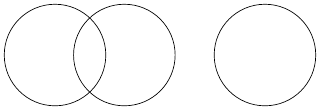
Select the Venn diagram that best illustrates the relationship between the following classes.

Female, Doctor, Sister

  1. AOption (a)

  2. BOption (b)

  3. COption (c)

  4. DOption (d)

View answer & explanation

Correct answer

Answer: (c)C.

Why this answer is correct

The relationship between the three classes: Female, Doctor, and Sister.

Female and Sister: All sisters are females.

Therefore, the circle representing "Sister" should be completely inside the circle representing "Female".

Female and Doctor: Some females are doctors, and some doctors are females.

This indicates an overlapping relationship between "Female" and "Doctor".

Doctor and Sister: Some sisters can be doctors, and some doctors can be sisters.

This indicates an overlapping relationship between "Doctor" and "Sister".


Option 3: Shows one circle encompassing another, and a third circle overlapping both.

This correctly represents that all sisters are females, and some females are doctors, and some sisters are also doctors.

Therefore, Option 3 best illustrates the relationship.

Hence, the correct answer is "Option 3".

Question 8

Seven people, E, F, G, H, K, L and N, are sitting in a row facing north (but not necessarily in the same order) .Only three people sit to the left of L. Only F sits to the right of G. Only three people sit between G and K. N sits at some place to the left of H but at some place to the right of E. How many people sit between E and N?

  1. AOption (a)

    Two 

  2. BOption (b)

    One 

  3. COption (c)

    Three 

  4. DOption (d)

    Four

View answer & explanation

Correct answer

Answer: (b)B.

One 

Why this answer is correct

Given, Seven people, E, F, G, H, K, L and N, are sitting in a row facing north (but not necessarily in the same order) .

Only three people sit to the left of L.

Only F sits to the right of G.

Only three people sit between G and K.

N sits at some place to the left of H but at some place to the right of E.

One people sit between E and N.

Hence, the correct answer is "Option 2".

Question 9

A dice has its faces marked by letters I, S, H, N, A and T. Two positions of the same dice are given below. Which face is opposite to face I?

  1. AOption (a)

    A

  2. BOption (b)

    S

  3. COption (c)

    T

  4. DOption (d)

    N

View answer & explanation

Correct answer

Answer: (d)D.

N

Why this answer is correct

The logic followed here is :-

From the given two different cubes the adjacent sides are as shown below :

As N is common on both the dice, it is clear that A, T, S, and H are adjacent to it, and the remaining i.e. I will be opposite to it.

Opposite pairs:

A → H

T → S

I → N

So, the opposite side of "I" will be side "N".

Hence, the correct answer is "Option 4".

Question 10

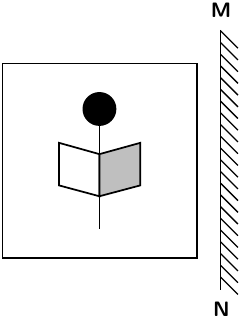
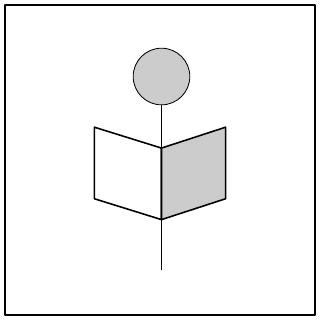
Select the correct mirror image of the given figure when the mirror is placed at MN as shown below.

  1. AOption (a)

  2. BOption (b)

  3. COption (c)

  4. DOption (d)

View answer & explanation

Correct answer

Answer: (a)A.

Why this answer is correct

The correct mirror image of the figure is,

Hence, the correct answer is "Option 1".

Question 11

Select the option that represents the letters that, when sequentially placed from left to right in the blanks below, will complete the letter series.

s t o l b _ _ _ _ o l b r _ s t _ _ _ r i

  1. AOption (a)

    ristiolb 

  2. BOption (b)

    tolrisb 

  3. COption (c)

    sirbtol 

  4. DOption (d)

    bristol

View answer & explanation

Correct answer

Answer: (a)A.

ristiolb 

Why this answer is correct

The given letter series is: s t o l b _ _ _ _ o l b r _ s t _ _ _ r i

Option 1: ristiolb

If we place 'ristiolb' into the blanks:

s t o l b r i    s t o l b r i    s t o l b r i

Based on the analysis, only Option 1, 'ristiolb', successfully completes the letter series by forming a consistent repeating pattern of "stolbri".

Therefore, option 1 completes the series correctly.

Option 2: tolrisb

If we place 'tolrisb' into the blanks:

s t o l b t o l r o l b r i s t o l b r i

This does not form a consistent or repeating pattern. 

Option 3: sirbtol

If we place 'sirbtol' into the blanks:

s t o l b s i r b o l b r t s t o l r i

This also does not form a consistent or repeating pattern. 

Option 4: bristol

If we place 'bristol' into the blanks:

s t o l b b r i s o l b r t s t o l r i

This does not result in a clear repeating pattern. 

Based on the analysis, only Option 1, 'ristiolb', successfully completes the letter series by forming a consistent repeating pattern of "stolbri".

Hence, the correct answer is "Option 1".

Question 12

What should come in place of the question mark (?) in the given series?

7 17 25 53 61 ?

  1. AOption (a)

    125

  2. BOption (b)

    148

  3. COption (c)

    152

  4. DOption (d)

    184

View answer & explanation

Correct answer

Answer: (a)A.

125

Why this answer is correct

The logic followed here is,

Hence, the correct answer is "Option 1".

Question 13

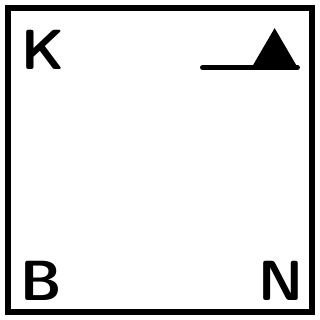
Select the figure from among the given options that can replace the question mark (?) in the following series.

  1. AOption (a)

  2. BOption (b)

  3. COption (c)

  4. DOption (d)

View answer & explanation

Correct answer

Answer: (d)D.

Why this answer is correct

The logic followed here is,

Logic: The flag rotate 45° in anticlockwise direction.

And the movement of the letter is shown figure.

Hence, the correct answer is "Option 4".

Question 14

The position(s) of how many letters will remain unchanged if each of the letters in the word LIGHTER is arranged in the English alphabetical order? 

  1. AOption (a)

    Two

  2. BOption (b)

    Zero 

  3. COption (c)

    Three 

  4. DOption (d)

    One

View answer & explanation

Correct answer

Answer: (b)B.

Zero 

Why this answer is correct

Given word: 'LIGHTER'

After arranged in alphabetical order:

Original Position1234567
Letters (LIGHTER)LIGHTER
Alphabetical OrderEGHILRT

Now, let's compare the original positions with the alphabetical order positions:

  • Original: L I G H T E R
  • Sorted: E G H I L R T

No letter remains in the same position.

Hence, the correct answer is "Option 2".

Question 15

In a certain code language,

'A + B' means 'A is the brother of B',

'A - B' means 'A is the sister of B',

'A × B' means 'A is the mother of B' and

'A ÷ B' means 'A is the father of B'.

How is M related to P if 'M + N - O × P ÷ Q'?

  1. AOption (a)

    Mother’s brother

  2. BOption (b)

    Sister’s daughter 

  3. COption (c)

    Brother’s daughter

  4. DOption (d)

    Father’s mother

View answer & explanation

Correct answer

Answer: (a)A.

Mother’s brother

Why this answer is correct

Decoding the Symbols:

Symbol+-×÷
MeaningBrotherSisterMotherFather


Given: M + N - O × P ÷ Q

Let's break down the relationships step by step:

  • M + N: 'M is the brother of N'.
  • N - O: 'N is the sister of O'.
  • O × P: 'O is the mother of P'.
  • P ÷ Q: 'P is the father of Q'.

From the relationships, we can establish the following:

​

So, M is the brother of O, and O is the mother of P. This makes M the mother's brother of P.

Hence, the correct answer is "Option 1".

Question 16

Read the given statements and conclusions carefully. Assuming that the information given in the statements is true, even if it appears to be at variance with commonly known facts, decide which of the given conclusions logically follow(s) from the statements.

Statements :

All beats are music.

All music are rhythms.

No rhythm is a tune.

Conclusions :

(I): No beat is a tune.

(II): Some rhythms are beats.

  1. AOption (a)

    Both conclusions (I) and (II) follow.

  2. BOption (b)

    Only conclusion (II) follows.

  3. COption (c)

    Only conclusion (I) follows.

  4. DOption (d)

    Neither conclusion (I) nor (II) follows.

View answer & explanation

Correct answer

Answer: (a)A.

Both conclusions (I) and (II) follow.

Why this answer is correct

Given Statements:

All beats are music.

All music are rhythms.

No rhythm is a tune.

The least possible Venn diagram for the given statements is:

Conclusions:

(I): No beat is a tune. → True (Since all beats are music, and all music are rhythms, it implies that all beats are also rhythms. As no rhythm is a tune, it logically follows that no beat can be a tune.) 

(II): Some rhythms are beats. → True (If all beats are part of rhythms, then it naturally follows that some rhythms must be beats)

So, "Both conclusions I and II follow".

Hence, the correct answer is "Option 1".

Question 17

What should come in place of the question mark (?) in the given series based on the English alphabetical order?

ZXV PNL FDB VTR ?

  1. AOption (a)

    LJH 

  2. BOption (b)

    JIG 

  3. COption (c)

    RQP 

  4. DOption (d)

    XVW

View answer & explanation

Correct answer

Answer: (a)A.

LJH 

Why this answer is correct

The logic followed here is,

Hence, the correct answer is "Option 1".

Question 18

Based on the English alphabetical order, three of the following four letter-clusters are alike in a certain way and thus form a group. Which letter-cluster DOES NOT belong to that group?

(Note : The odd one out is not based on the number of consonants / vowels or their position in the letter-cluster.)

  1. AOption (a)

    FKR 

  2. BOption (b)

    RWD 

  3. COption (c)

    JOD 

  4. DOption (d)

    DIP

View answer & explanation

Correct answer

Answer: (c)C.

JOD 

Why this answer is correct

The logic followed here is,

Let's examine each option:

Option 1) FKR

Option 2) RWD

Option 3) JOD

Does not follow the same logic.

Option 4) DIP

Hence, the correct answer is Option (3).

Question 19

In a certain code language, ‘SOUL’ is coded as ‘6415’ and ‘LOST’ is coded as ‘6548’. How is ‘U’ coded in the given language?

  1. AOption (a)

    1

  2. BOption (b)

    8

  3. COption (c)

    5

  4. DOption (d)

    4

View answer & explanation

Correct answer

Answer: (a)A.

1

Why this answer is correct

The given code language is

SOL is common in both the word, and 1 is common in both the code.

Thus, 'U' is coded as '1'.

Hence, the correct answer is "Option 1".

Question 20

A dice has its faces marked by letters L, Z, I, D, N and A. Two positions of the same dice are given below. Which face is opposite to face N?

  1. AOption (a)

    A

  2. BOption (b)

    Z

  3. COption (c)

    L

  4. DOption (d)

    D

View answer & explanation

Correct answer

Answer: (a)A.

A

Why this answer is correct

The logic followed here is :-

From the given two different cubes the adjacent sides are as shown below :

As A is common on both the dice, it is clear that D, L, Z, and I are adjacent to it, and the remaining i.e. N will be opposite to it.

Opposite pairs:

D → I

L → Z

A → N

So, the opposite side of "A" will be side "N".

Hence, the correct answer is "Option 1".

General Knowledge and General Awareness (20 questions)

Question 21

The physiological state which decreases appetite and indicates the feeling of fullness is known as _______. 

  1. AOption (a)

    satiety 

  2. BOption (b)

    defecation 

  3. COption (c)

    chyme 

  4. DOption (d)

    ingestion

View answer & explanation

Correct answer

Answer: (a)A.

satiety 

Why this answer is correct

The correct answer is satiety.

Key Points

  • Satiety is the physiological state of feeling full or satisfied, leading to a decreased desire to eat.
  • It is regulated by complex interactions between the gastrointestinal tract, the brain, and hormones such as leptin and ghrelin.
  • Satiety is critical for maintaining energy balance and preventing overeating, contributing to healthy body weight.
  • Foods rich in fiber, protein, and healthy fats are known to enhance satiety by slowing digestion and promoting prolonged feelings of fullness.
  • The hypothalamus, a part of the brain, plays a central role in integrating signals related to hunger and satiety.

Additional Information

  • Leptin
  • A hormone produced by fat cells (adipocytes) that signals the brain to reduce appetite and increase energy expenditure.
  • Leptin resistance, often seen in obesity, can impair satiety signals and lead to overeating.
  • Ghrelin
  • Known as the "hunger hormone," ghrelin is secreted by the stomach when it is empty to stimulate appetite.
  • Levels of ghrelin decrease after eating, contributing to feelings of satiety.
  • Hypothalamus
  • A region of the brain responsible for regulating hunger and satiety through neural and hormonal signals.
  • It integrates information from hormones like leptin, ghrelin, insulin, and peptide YY to maintain energy homeostasis.
  • Role of Fiber in Satiety
  • Dietary fiber slows gastric emptying, prolonging the digestion process and promoting feelings of fullness.
  • High-fiber foods like vegetables, fruits, and whole grains are often recommended for weight management.
  • Satiety vs. Hunger
  • Hunger is the physiological need for food, driven by energy deficits, while satiety is the state of being satisfied after eating.
  • Both states are essential for energy regulation and are influenced by a variety of internal and external factors.

Question 22

According to Census 2011, what was the percentage of Uttar Pradesh population of the total population of India? 

  1. AOption (a)

    17.5%

  2. BOption (b)

    14.5% 

  3. COption (c)

    15.5% 

  4. DOption (d)

    16.5%

View answer & explanation

Correct answer

Answer: (d)D.

16.5%

Why this answer is correct

The correct answer is Option 4 (16.5%).

Key Points

  • According to Census 2011, the population of Uttar Pradesh constituted 16.5% of the total population of India.
  • Uttar Pradesh had the largest population among all Indian states, with a population count of approximately 199.81 million.
  • The total population of India in Census 2011 was recorded as 1.21 billion.
  • Uttar Pradesh's demographic dominance significantly impacts national policies and electoral outcomes due to its population size.
  • The Census of India is conducted every 10 years, and Census 2011 was the 15th National Census exercise.

Additional Information

  • Census 2011:
  • Census 2011 was conducted by the Registrar General and Census Commissioner of India under the Ministry of Home Affairs.
  • This census recorded key demographic data such as population, literacy rate, sex ratio, and urban-rural distribution.
  • It is considered the most comprehensive data collection exercise in India.
  • The literacy rate in India as per Census 2011 was 74.04%, and the sex ratio was 943 females per 1000 males.
  • Uttar Pradesh Population Impact:
  • Uttar Pradesh has 80 Lok Sabha seats, the highest among all states, making it politically significant.
  • The state's large population places immense pressure on infrastructure, healthcare, and education systems.
  • It is the most populous state in India, and its population growth has implications for resource allocation and governance.
  • India's Population Distribution:
  • India's population is unevenly distributed across states, with Uttar Pradesh, Maharashtra, and Bihar among the most populous.
  • Smaller states such as Sikkim and Goa have much lower population counts.
  • Population density varies widely, with states like Bihar having high density and others like Arunachal Pradesh having low density.
  • Future Census Developments:
  • The next Census will likely focus on integrating digital data collection methods to improve accuracy.
  • Population trends observed in the Census help shape long-term national strategies for economic and social development.

Question 23

In geology, Sima (the lower layer of Earth's crust) is made of an assemblage of rocks rich in ________ and magnesium. These two minerals are the most abundance minerals in the oceanic crust.

  1. AOption (a)

    silinaite 

  2. BOption (b)

    sillimanite 

  3. COption (c)

    silicate 

  4. DOption (d)

    sigloite

View answer & explanation

Correct answer

Answer: (c)C.

silicate 

Why this answer is correct

The correct answer is Silicate.

Key Points

  • Sima refers to the lower layer of Earth's crust, which is primarily found beneath the oceanic crust.
  • It is rich in silicate minerals, which are compounds of silicon and oxygen, along with significant amounts of magnesium.
  • Silicate minerals are the most abundant mineral group in Earth's crust, comprising over 90% of its composition.
  • Oceanic crust is predominantly made of basalt, which is composed of silicate minerals such as pyroxene and plagioclase feldspar.
  • The term "Sima" is derived from the first letters of "silica" and "magnesium," indicating its composition.

Additional Information

  • Silicate Minerals
  • Silicates are categorized into different groups based on their crystal structure, including nesosilicates, inosilicates, phyllosilicates, and tectosilicates.
  • Examples of silicate minerals include quartz, feldspar, mica, olivine, and pyroxene.
  • These minerals are essential components of rocks and play a significant role in shaping Earth's geological processes.
  • Oceanic Crust Composition
  • The oceanic crust is thinner and denser than continental crust, with a thickness of about 5-10 km.
  • It is mainly composed of basaltic rocks, which are rich in silicate minerals.
  • Basalt
  • Basalt is a fine-grained igneous rock that forms from the rapid cooling of lava at Earth's surface.
  • It is rich in iron and magnesium-bearing silicate minerals.
  • Crustal Layers
  • Earth's crust is divided into two main layers: the upper continental crust (rich in silica and aluminum, termed "Sial") and the lower oceanic crust (rich in silica and magnesium, termed "Sima").
  • Sima forms the foundation of Earth's ocean basins.

Question 24

Which Act, introduced in 1861, established a legal framework for the governance of British India? 

  1. AOption (a)

    Rowlatt Act 

  2. BOption (b)

    Indian Councils Act

  3. COption (c)

    Indian Independence Act 

  4. DOption (d)

    Government of India Act

View answer & explanation

Correct answer

Answer: (b)B.

Indian Councils Act

Why this answer is correct

The correct answer is Indian Councils Act.

Key Points

  • The Indian Councils Act of 1861 established a legal framework for the governance of British India, allowing Indians to participate in legislation.
  • It marked a significant step toward representative governance by introducing legislative councils in India.
  • The Act empowered the Governor-General to create new provinces and appoint Lieutenant Governors for them.
  • It restored the legislative power of the provinces, enabling local self-governance at provincial levels.
  • The Act allowed the inclusion of non-official Indian members in legislative councils, though their participation was limited.

Additional Information

  • Indian Councils Act 1892
  • This Act expanded the powers of legislative councils, allowing them to discuss budgets and ask questions.
  • It increased the representation of Indians in the legislative councils, strengthening their role in governance.
  • Indian Councils Act 1909 (Morley-Minto Reforms)
  • Introduced separate electorates for Muslims, laying the foundation for communal representation in India.
  • Increased Indian representation in legislative councils further, including elected members.
  • Government of India Act 1919 (Montagu-Chelmsford Reforms)
  • Introduced the concept of dyarchy, dividing provincial subjects into reserved and transferred categories.
  • Marked a major step towards self-governance in India by expanding participation in administration.
  • Government of India Act 1935
  • Proposed the establishment of an All-India Federation and introduced provincial autonomy.
  • It was the longest act passed by the British Parliament for India, forming the basis for the Constitution of India.

Question 25

In 1950, besides the chief justice of India, what was the number of other judges in the Supreme Court of India? 

  1. AOption (a)

    Six

  2. BOption (b)

    Eight 

  3. COption (c)

    Seven

  4. DOption (d)

    Five

View answer & explanation

Correct answer

Answer: (c)C.

Seven

Why this answer is correct

The correct answer is Seven.

Key Points

  • At the time of its establishment in 1950, the Supreme Court of India consisted of the Chief Justice of India and seven other judges, making a total of eight judges.
  • This composition of the Supreme Court was prescribed under the provisions of the Constitution of India, Article 124(1).
  • The number of judges in the Supreme Court, including the Chief Justice, has been increased over the years through various amendments due to the increasing workload.
  • The first Chief Justice of India was H. J. Kania, who served from January 26, 1950, to November 6, 1951.
  • The Supreme Court initially functioned from the Parliament House until it moved to its current building in 1958.

Additional Information

  • Composition of the Supreme Court:
  • As per Article 124 of the Constitution, the Supreme Court comprises the Chief Justice of India and other judges as prescribed by Parliament.
  • Over time, the sanctioned strength of Supreme Court judges has been increased to meet the growing demands of judicial work.
  • Amendments to the Number of Judges:
  • The number of judges was increased to 11 in 1956, 14 in 1960, and further expanded in subsequent decades.
  • As of 2019, the sanctioned strength of the Supreme Court stands at 34 judges, including the Chief Justice of India.
  • Role of the Supreme Court:
  • The Supreme Court of India is the highest judicial authority and the final court of appeal under the Constitution.
  • It has the power of judicial review to ensure the constitutionality of laws and executive actions.
  • It also acts as the guardian of the Constitution and protects fundamental rights of citizens.
  • Important Articles Related to the Supreme Court:
  • Article 124: Establishment and composition of the Supreme Court.
  • Article 131: Original jurisdiction of the Supreme Court in disputes between the Centre and states or between states.
  • Article 136: Special leave to appeal by the Supreme Court.
  • Article 141: The law declared by the Supreme Court is binding on all courts in India.

Question 26

Bholanath Prasanna was associated with which of the following musical instruments? 

  1. AOption (a)

    Tanpura 

  2. BOption (b)

    Sitar 

  3. COption (c)

    Jaltarangam

  4. DOption (d)

    Flute

View answer & explanation

Correct answer

Answer: (d)D.

Flute

Why this answer is correct

The correct answer is Flute.

Key Points

  • Bholanath Prasanna was a renowned flautist known for his mastery in playing the Flute, a popular Indian classical musical instrument.
  • He was associated with Hindustani classical music and significantly contributed to its enrichment through his performances and teachings.
  • The flute, in Indian classical music, is referred to as the Bansuri and is known for its melodious and soulful sound.
  • Bholanath Prasanna trained several notable students, including the legendary flautist Pt. Hariprasad Chaurasia, who credits him as his mentor.
  • His expertise and dedication to the flute have left a lasting legacy in Indian music, inspiring many budding musicians.

Additional Information

  • Flute (Bansuri) in Indian Classical Music
  • The flute is a wind instrument made of bamboo and is one of the oldest musical instruments in India.
  • It has a distinct role in both Hindustani and Carnatic classical music traditions.
  • The Bansuri is often associated with Lord Krishna in Indian mythology, symbolizing divine love and harmony.
  • In Hindustani music, the Bansuri is primarily used for ragas and has a rich, emotive tonal quality.
  • Pt. Hariprasad Chaurasia
  • A legendary flautist who popularized the Bansuri in international music circles.
  • He received training under Bholanath Prasanna and later became one of the most celebrated musicians in the field.
  • Pt. Hariprasad Chaurasia has been honored with numerous awards, including the Padma Vibhushan.
  • Role of Guru-Shishya Parampara
  • In Indian classical music, the Guru-Shishya tradition plays a pivotal role in the transmission of knowledge.
  • Bholanath Prasanna exemplified this tradition by mentoring several students, ensuring the continuity of musical heritage.
  • Flute Construction and Playing Technique
  • The Bansuri is traditionally made from a single hollow bamboo piece with six to eight finger holes.
  • It requires precise breath control and finger placement to produce the desired notes and embellishments.

Question 27

Article 49 of the Constitution of India deals with which of the following Directive Principles of State Policy? 

  1. AOption (a)

    To protect all monuments of historic interest and national importance

  2. BOption (b)

    To defend the country and render national service when called upon to do so 

  3. COption (c)

    To organise village Panchayats as units of self government 

  4. DOption (d)

    To secure just and humane conditions of work and maternity relief

View answer & explanation

Correct answer

Answer: (a)A.

To protect all monuments of historic interest and national importance

Why this answer is correct

The correct answer is To protect all monuments of historic interest and national importance.

Key Points

  • Article 49 of the Indian Constitution falls under the Directive Principles of State Policy (Part IV).
  • It directs the state to protect monuments, places, and objects of historic and artistic interest that are of national importance.
  • The state is responsible for preventing any damage, disfigurement, destruction, or removal of such heritage properties.
  • This provision reflects India's commitment to preserving its rich cultural and historical heritage.
  • The protection of these monuments is often carried out in collaboration with institutions like the Archaeological Survey of India (ASI).

Additional Information

  • Directive Principles of State Policy (DPSP):
  • Part IV of the Indian Constitution contains the Directive Principles, which serve as guidelines to the state for governance.
  • They are non-justiciable in nature, meaning they are not enforceable in a court of law.
  • However, they aim to create a welfare state and ensure social and economic justice.
  • Archaeological Survey of India (ASI):
  • Established in 1861, the ASI is the premier organization for archaeological research and the preservation of cultural heritage.
  • It functions under the Ministry of Culture, Government of India.
  • ASI is responsible for the maintenance and conservation of monuments and sites of national importance.
  • UNESCO World Heritage Sites in India:
  • India has 40 UNESCO World Heritage Sites as of 2023, including cultural and natural sites.
  • These sites are of significant importance and are protected under international guidelines as well as national legislation.
  • Monuments of National Importance:
  • These are monuments declared to be of national importance under the Ancient Monuments and Archaeological Sites and Remains Act, 1958.
  • There are over 3,600 monuments under the protection of the ASI.

Question 28

Who among the following tendered his resignation as the Chairperson of the Union Public Service Commission (UPSC) in July 2024? 

  1. AOption (a)

    Saloni Sinha 

  2. BOption (b)

    Preeti Sudan 

  3. COption (c)

    Manoj Tiwari

  4. DOption (d)

    Manoj Soni

View answer & explanation

Correct answer

Answer: (d)D.

Manoj Soni

Why this answer is correct

The correct answer is Manoj Soni.

Key Points

  • Manoj Soni tendered his resignation as the Chairperson of the Union Public Service Commission (UPSC) in July 2024.
  • He was appointed as the Chairperson of UPSC on 5 April 2022, succeeding Dr. Pradeep Kumar Joshi.
  • Manoj Soni has had an illustrious career in academics and administration, previously serving as the Vice-Chancellor of two universities in Gujarat.
  • As the UPSC Chairperson, he oversaw the conduct of prestigious examinations such as the Civil Services Examination, which is crucial for selecting candidates for elite administrative positions in India.
  • His tenure focused on enhancing transparency and efficiency in the examination process while ensuring equitable opportunities for candidates.

Additional Information

  • Union Public Service Commission (UPSC):
  • UPSC is India's premier central recruiting agency, responsible for appointments and examinations for All India Services and Group 'A' & 'B' of Central Services.
  • It was established on 1 October 1926, and its functions are derived from Article 315 to 323 of the Indian Constitution.
  • The UPSC conducts key exams such as the Civil Services Examination (CSE), Indian Forest Service Examination (IFoS), and Engineering Services Examination (ESE).
  • Role of UPSC Chairperson:
  • The Chairperson leads the commission in formulating examination policies and ensuring their effective implementation.
  • They play a key role in maintaining the integrity, fairness, and transparency of the recruitment process.
  • Eligibility for UPSC Exams:
  • Indian citizens aged between 21 to 32 years (general category) are eligible to appear for the Civil Services Examination.
  • Relaxations in age and attempts are provided for reserved categories as per government rules.
  • Significance of UPSC:
  • UPSC ensures a merit-based recruitment process for India's administrative, police, and foreign services.
  • It plays a crucial role in shaping the leadership and governance framework of the country.

Question 29

Acting as a 'medium of exchange' is an important function of ____________. 

  1. AOption (a)

    commodity 

  2. BOption (b)

    metal 

  3. COption (c)

    money 

  4. DOption (d)

    water

View answer & explanation

Correct answer

Answer: (c)C.

money 

Why this answer is correct

The correct answer is money.

Key Points

  • Money serves as a universally accepted medium of exchange, facilitating transactions for goods and services.
  • It eliminates the inefficiencies of the barter system, such as the need for a double coincidence of wants.
  • Money also acts as a unit of account, allowing individuals to measure the value of goods and services in a consistent manner.
  • It functions as a store of value, enabling individuals to save and transfer purchasing power across time.
  • Modern forms of money include fiat currency, digital currency, and electronic payment systems, all of which are integral to economic operations globally.

Additional Information

  • Barter System:
  • It is an ancient system where goods and services were exchanged directly without the use of money.
  • The major drawback was the requirement for a double coincidence of wants, making transactions inefficient.
  • Fiat Money:
  • Fiat money refers to currency that has no intrinsic value but is established as legal tender by government decree.
  • Examples include paper currency and coins used globally.
  • Digital Currency:
  • It includes cryptocurrencies like Bitcoin and government-backed digital currencies.
  • Digital currencies leverage blockchain technology for secure and transparent transactions.
  • Functions of Money:
  • Medium of exchange: Facilitates buying and selling.
  • Unit of account: Provides a standard measure for pricing goods and services.
  • Store of value: Maintains its worth over time, allowing savings.
  • Standard of deferred payment: Enables credit and future payments.

Question 30

The Sangeet Natak Akademi Award carries a purse money of __________, in addition to a Angavastram and Tamrapatra.

  1. AOption (a)

    ₹2,50,000

  2. BOption (b)

    ₹1,00,000

  3. COption (c)

    ₹5,00,000 

  4. DOption (d)

    ₹3,00,000

View answer & explanation

Correct answer

Answer: (b)B.

₹1,00,000

Why this answer is correct

The correct answer is ₹1,00,000.

Key Points

  • The Sangeet Natak Akademi Award is India's highest recognition given to practicing artists for their outstanding contribution in the fields of music, dance, and drama.
  • The award includes a cash prize of ₹1,00,000, along with an Angavastram (a traditional garment) and a Tamrapatra (a copper plaque).
  • It was instituted in 1952 by the Sangeet Natak Akademi, India's National Academy for Music, Dance, and Drama.
  • The awards are presented annually by the President of India in a ceremony that celebrates the contribution of artists in preserving and promoting India's cultural heritage.
  • The categories under this award include Hindustani and Carnatic music, classical dance forms, traditional/folk/tribal arts, theatre, and puppetry.

Additional Information

  • Sangeet Natak Akademi:
  • The Sangeet Natak Akademi was established in 1953 as an autonomous body under the Ministry of Culture, Government of India.
  • It aims to preserve and promote India's diverse cultural expressions in music, dance, and drama.
  • The Akademi also supports research, documentation, and training in these art forms.
  • Angavastram:
  • An Angavastram is a traditional Indian stole or shawl, often made of cotton or silk, symbolizing honor and respect.
  • It is an important cultural garment offered during ceremonies and awards in India.
  • Tamrapatra:
  • A Tamrapatra is a copper plate engraved with inscriptions or a citation, symbolizing a formal acknowledgment of achievement.
  • In the context of awards, it represents the enduring recognition of the recipient's contributions.
  • Other Prestigious Awards in Arts:
  • Padma Awards: Recognize distinguished contributions in various fields, including arts.
  • Kalidas Samman: Honors artists for their exceptional work in performing arts.
  • Bharat Ratna: India's highest civilian award, occasionally given for contributions to arts and culture.

Question 31

In which of the following states is the 'Thaipusam' festival held?

  1. AOption (a)

    Telangana 

  2. BOption (b)

    Tamil Nadu 

  3. COption (c)

    Tripura 

  4. DOption (d)

    Sikkim

View answer & explanation

Correct answer

Answer: (b)B.

Tamil Nadu 

Why this answer is correct

The correct answer is Tamil Nadu.

Key Points

  • Thaipusam is a Hindu festival celebrated predominantly in the state of Tamil Nadu, India.
  • It is observed during the Tamil month of Thai (January-February) on the day of the full moon.
  • The festival is dedicated to Lord Murugan (also known as Kartikeya), the son of Lord Shiva and Goddess Parvati, who is revered as the god of war and victory.
  • Devotees carry kavadi (ornate structures) or perform other penance rituals as acts of devotion during the festival.
  • Major celebrations of Thaipusam take place at temples such as the Palani Murugan Temple in Tamil Nadu and the Batu Caves in Malaysia.

Additional Information

  • Lord Murugan:
  • He is a prominent deity in Tamil culture, also known as Kartikeya, Subramanya, or Skanda.
  • Murugan is often depicted with a spear (Vel), representing knowledge and wisdom.
  • Kavadi Attam:
  • This is a ceremonial sacrifice and offering performed by devotees during Thaipusam.
  • Devotees carry decorated structures, known as kavadi, as an act of devotion to Lord Murugan.
  • Palani Murugan Temple:
  • One of the most significant pilgrimage sites for Lord Murugan devotees in Tamil Nadu.
  • It is located on the Palani Hills and attracts thousands of devotees during Thaipusam.
  • Global Celebrations:
  • Thaipusam is celebrated not only in Tamil Nadu but also in countries with a significant Tamil diaspora, such as Malaysia, Singapore, and Sri Lanka.
  • The Batu Caves in Malaysia hosts one of the largest Thaipusam celebrations outside India.

Question 32

Which of the following is Russia's highest civilian honour given to the Indian Prime Minister Narendra Modi in July 2024? 

  1. AOption (a)

    John the Apostle Award 

  2. BOption (b)

    Golden Eagle Award 

  3. COption (c)

    St. Peter the Apostle Award

  4. DOption (d)

    Order of St. Andrew the Apostle

View answer & explanation

Correct answer

Answer: (d)D.

Order of St. Andrew the Apostle

Why this answer is correct

The correct answer is Order of St. Andrew the Apostle.

Key Points

  • The Order of St. Andrew the Apostle is the highest civilian honor in Russia, established in 1698 by Tsar Peter the Great.
  • It is awarded for exceptional services to the state and society in Russia or for strengthening international relations with Russia.
  • Indian Prime Minister Narendra Modi was honored with the award in July 2024 for his contributions to fostering strong ties between India and Russia.
  • The award is named after St. Andrew, one of the twelve apostles of Jesus Christ, and is symbolized by a blue sash and a gold insignia.
  • The honor highlights the importance of India-Russia strategic partnership in areas such as defense, energy, space, and trade.

Additional Information

  • History of the Order:
  • It was the first and highest order of chivalry in Russia, created by Peter the Great in 1698 to honor military and civilian merit.
  • After the fall of the Russian Empire in 1917, the order was discontinued but reinstated in 1998 by the Russian Federation.
  • St. Andrew the Apostle:
  • St. Andrew was one of Jesus Christ's apostles and is considered the patron saint of Russia.
  • The order is named after him as a symbol of courage, devotion, and service.
  • India-Russia Relations:
  • India and Russia have a strong bilateral relationship, with collaborations in defense, space, energy, and trade.
  • The two countries have a history of supporting each other on global platforms, including the United Nations.
  • Similar International Honors:
  • PM Narendra Modi has also received other prestigious international awards, such as the UAE's Order of Zayed and the United Nations' Champions of the Earth Award.
  • These honors recognize his global leadership and contributions to international cooperation.

Question 33

Who among the following founded the Mauryan Empire in 322 BCE? 

  1. AOption (a)

    Chandragupta Maurya

  2. BOption (b)

    Samprati Maurya 

  3. COption (c)

    Shalishuka Maurya

  4. DOption (d)

    Dasaratha Maurya

View answer & explanation

Correct answer

Answer: (a)A.

Chandragupta Maurya

Why this answer is correct

The correct answer is Chandragupta Maurya.

Key Points

  • Chandragupta Maurya founded the Mauryan Empire in 322 BCE after overthrowing the Nanda dynasty.
  • He was guided by his chief advisor, Chanakya (Kautilya), who authored the famous political treatise, Arthashastra.
  • The Mauryan Empire was the first major centralized empire in ancient India, with its capital at Pataliputra (modern-day Patna).
  • Chandragupta Maurya expanded his empire by defeating Seleucus I Nicator, a general of Alexander the Great, in 305 BCE, and established a treaty through matrimonial alliances.
  • He later abdicated the throne and embraced Jainism, spending his final years in Karnataka at Shravanabelagola.

Additional Information

  • Mauryan Empire:
  • The Mauryan Empire (322 BCE–185 BCE) is considered one of the largest and most powerful empires in Indian history.
  • It was known for its efficient administration, military prowess, and trade network.
  • Chanakya (Kautilya):
  • A key figure in the establishment of the Mauryan Empire, Chanakya was a scholar of economics and political science.
  • He authored the Arthashastra, a comprehensive guide on governance, economics, and military strategy.
  • Seleucus I Nicator:
  • A successor of Alexander the Great, Seleucus attempted to reclaim territories in India but was defeated by Chandragupta Maurya.
  • As part of the peace treaty, Chandragupta gifted Seleucus 500 war elephants, which played a significant role in Seleucus’ subsequent campaigns.
  • Shravanabelagola:
  • A historical Jain pilgrimage site in Karnataka where Chandragupta Maurya is believed to have spent his final years as a Jain ascetic.
  • The site houses the famous monolithic statue of Lord Bahubali (Gommateshwara).

Question 34

How did the Second Five Year Plan (1956-1961) differ from the First in terms of its approach to industrialisation?

  1. AOption (a)

    Prioritised private sector over public sector 

  2. BOption (b)

    Continued the focus solely on agriculture 

  3. COption (c)

    Emphasised the development of heavy industries 

  4. DOption (d)

    Shifted focus from heavy to light industries

View answer & explanation

Correct answer

Answer: (c)C.

Emphasised the development of heavy industries 

Why this answer is correct

The correct answer is Emphasised the development of heavy industries.

Key Points

  • The Second Five Year Plan (1956-1961) marked a shift in focus to rapid industrialisation, with particular emphasis on the development of heavy industries such as steel, machinery, and engineering.
  • It was based on the Mahalanobis model, which prioritised capital goods industries to create a strong industrial base for the economy.
  • This plan sought to reduce dependence on imports by promoting self-reliance in industrial production and emphasising the public sector as the primary driver of industrial development.
  • Unlike the First Five Year Plan, which was primarily focused on agriculture and rural development, the Second Plan shifted towards industrial growth to achieve long-term economic stability and employment generation.
  • Prominent industrial projects during this period included the establishment of major steel plants such as Bhilai, Rourkela, and Durgapur, with assistance from countries like the USSR, Germany, and the UK.

Additional Information

  • Mahalanobis Model:
  • Proposed by Indian statistician P.C. Mahalanobis, this model was adopted to prioritise heavy industries for long-term economic growth.
  • It emphasised investment in the capital goods sector to build the foundation for industrialisation.
  • The model assumed that industrial growth would indirectly stimulate agricultural growth and overall development.
  • Public Sector Enterprises:
  • Under the Second Plan, the government took a leading role in industrialisation by establishing public sector units (PSUs).
  • These PSUs were seen as tools for economic self-reliance and reducing regional inequalities.
  • Focus of the First Five Year Plan:
  • The First Five Year Plan (1951-1956) concentrated on agriculture, irrigation, and land reforms to address food security and rural development.
  • It was largely inspired by the Harrod-Domar model, focusing on increasing investment to achieve economic growth.
  • Steel Plants and Collaboration:
  • Bhilai Steel Plant was established with Soviet assistance, Rourkela with German assistance, and Durgapur with British assistance.
  • These projects were seen as symbols of India’s industrial progress.
  • Economic Goals of the Second Plan:
  • Self-reliance in industrial production to reduce imports.
  • Creation of employment opportunities through industrialisation.
  • Balanced regional development by setting up industries in underdeveloped areas.

Question 35

The Popir dance is performed by the Galo tribe of which of the following states? 

  1. AOption (a)

    Goa 

  2. BOption (b)

    Uttarakhand 

  3. COption (c)

    Kerala 

  4. DOption (d)

    Arunachal Pradesh

View answer & explanation

Correct answer

Answer: (d)D.

Arunachal Pradesh

Why this answer is correct

The correct answer is Arunachal Pradesh.

Key Points

  • The Popir dance is a traditional folk dance performed by the Galo tribe, which is indigenous to Arunachal Pradesh.
  • This dance is typically performed during harvest festivals and other significant cultural events in the state.
  • The Galo tribe is one of the major tribes in Arunachal Pradesh, known for its rich cultural heritage and traditional practices.
  • Popir dance is characterized by graceful movements, vibrant costumes, and rhythmic music, showcasing the tribe's deep connection with nature and their traditions.
  • Arunachal Pradesh is renowned for its diverse tribal communities, and dances like Popir play a crucial role in preserving and promoting their cultural identity.

Additional Information

  • Galo Tribe:
  • The Galo tribe is primarily located in the West Siang and East Siang districts of Arunachal Pradesh.
  • They speak the Galo language, which belongs to the Tibeto-Burman language family.
  • The tribe is known for its practices of sustainable agriculture and reverence for nature.
  • Traditional Tribal Dances of Arunachal Pradesh:
  • Besides Popir, other tribal dances include Wancho Dance, Pasi Kongki, and Buiya Dance.
  • These dances are performed during festivals, religious ceremonies, and social gatherings.
  • They often include storytelling elements and rituals that reflect the tribe's way of life.
  • Harvest Festivals in Arunachal Pradesh:
  • Major harvest festivals celebrated include Solung, Mopin, and Nyokum.
  • These festivals signify gratitude to nature and ancestral spirits for a bountiful harvest.
  • Dance and music are integral to these celebrations, fostering community bonding.
  • Arunachal Pradesh:
  • It is India’s northeastern-most state, often referred to as the "Land of the Rising Sun."
  • The state is home to 26 major tribes and over 100 sub-tribes, making it culturally diverse.
  • Arunachal Pradesh is known for its scenic beauty, biodiversity, and unique tribal traditions.

Question 36

When did Hans Christian Oersted discover that the flow of electric current in a wire could deflect a nearby magnetic compass needle?

  1. AOption (a)

    1810 

  2. BOption (b)

    1830 

  3. COption (c)

    1850 

  4. DOption (d)

    1820

View answer & explanation

Correct answer

Answer: (d)D.

1820

Why this answer is correct

The correct answer is 1820.

Key Points

  • Hans Christian Oersted discovered in 1820 that an electric current flowing through a wire produces a magnetic field capable of deflecting a nearby magnetic compass needle.
  • This finding marked the beginning of the field of electromagnetism, bridging the gap between electricity and magnetism.
  • Oersted demonstrated this effect during a public lecture, showcasing the interaction between electric currents and magnetic fields.
  • The experiment showed that the magnetic field produced by the current was circular and centered around the wire.
  • The discovery laid the foundation for subsequent advancements in electromagnetism, including Faraday’s and Maxwell’s work.

Additional Information

  • Electromagnetism: A branch of physics dealing with the interaction of electric currents and magnetic fields, forming the basis for technologies like electric motors and generators.
  • Magnetic Field: A region around a magnetic material or current-carrying conductor where magnetic forces can be observed.
  • Faraday’s Law: Later developments by Michael Faraday showed that a changing magnetic field could induce an electric current, leading to the principle of electromagnetic induction.
  • Maxwell’s Equations: James Clerk Maxwell unified the concepts of electricity and magnetism into four mathematical equations, forming the foundation of classical electromagnetism.
  • Applications: The principles of electromagnetism are used in various devices, including compasses, electric motors, generators, transformers, and communication technologies.

Question 37

What was the targeted growth rate of the Eleventh Five-year Plan (2007–2012)? 

  1. AOption (a)

    9% 

  2. BOption (b)

    7%

  3. COption (c)

    8%

  4. DOption (d)

    6%

View answer & explanation

Correct answer

Answer: (a)A.

9% 

Why this answer is correct

The correct answer is 9%.

Key Points

  • The Eleventh Five-Year Plan of India (2007–2012) targeted a GDP growth rate of 9%.
  • It focused on inclusive growth, aiming to reduce poverty and ensure that economic benefits reached all sections of society.
  • The plan emphasized investments in agriculture, education, health, and infrastructure to boost growth and improve quality of life.
  • Though the target was 9%, the actual growth rate achieved was approximately 7.9%, falling short due to the global financial crisis of 2008.
  • It was approved under the leadership of then Prime Minister Dr. Manmohan Singh, with Montek Singh Ahluwalia as the Deputy Chairman of the Planning Commission.

Additional Information

  • Five-Year Plans in India
  • Five-Year Plans were introduced in India in 1951 based on the Soviet model to promote economic development through centralized planning.
  • These plans were formulated by the Planning Commission (later replaced by NITI Aayog in 2015).
  • The focus of each plan varied, addressing different sectors such as agriculture, industry, education, and health.
  • Inclusive Growth
  • Inclusive growth refers to economic growth that is distributed fairly across society and creates opportunities for all, especially the marginalized sections.
  • The Eleventh Plan aimed to bridge disparities in income, education, gender, and regions.
  • Global Financial Crisis of 2008
  • The crisis began with the collapse of major financial institutions in the United States, causing a ripple effect worldwide.
  • India's economy was impacted, leading to slower GDP growth during the later years of the Eleventh Plan.
  • Transition to NITI Aayog
  • The Planning Commission was replaced by NITI Aayog in 2015 to adopt a more decentralized and participatory approach to planning.
  • NITI Aayog focuses on fostering cooperative federalism and preparing long-term strategies for India’s development.

Question 38

Which edition of Kumar Surendra Singh Memorial Shooting Championship 2023 was organised at Bhopal and Trivandrum?

  1. AOption (a)

    25th 

  2. BOption (b)

    21st 

  3. COption (c)

    15th 

  4. DOption (d)

    18th

View answer & explanation

Correct answer

Answer: (b)B.

21st 

Why this answer is correct

The correct answer is 21st.

Key Points

  • The 21st edition of the Kumar Surendra Singh Memorial Shooting Championship 2023 was organized in Bhopal and Trivandrum.
  • This championship is an important event in the Indian shooting sports calendar, conducted annually to promote shooting talent.
  • It is named after Kumar Surendra Singh, a former President of the National Rifle Association of India (NRAI), who contributed significantly to the development of shooting sports in the country.
  • The event includes competitions across various categories such as rifle, pistol, and shotgun shooting, attracting top shooters from across the nation.
  • It serves as a platform for aspiring shooters to showcase their skills and gain recognition at the national level.

Additional Information

  • National Rifle Association of India (NRAI):
  • NRAI is the governing body for shooting sports in India, established in 1951.
  • It is affiliated with the International Shooting Sport Federation (ISSF) and oversees the development of shooting disciplines in the country.
  • Shooting Sports in India:
  • Shooting has gained significant popularity in India, especially after performances by Indian shooters in events like the Olympics and ISSF World Cups.
  • Prominent Indian shooters include Abhinav Bindra (India's first individual Olympic gold medalist), Manu Bhaker, and Saurabh Chaudhary.
  • Types of Shooting Events:
  • Shooting events are broadly categorized into rifle, pistol, and shotgun disciplines.
  • Each discipline involves different techniques, equipment, and competition formats.
  • Importance of Championships:
  • National-level championships like the Kumar Surendra Singh Memorial Shooting Championship help in identifying and nurturing talent for international competitions.
  • They also provide athletes with exposure to competitive environments and help improve their performance under pressure.

Question 39

As per Census 2011, which north-eastern state has the highest literacy rate? 

  1. AOption (a)

    Arunachal Pradesh 

  2. BOption (b)

    Tripura 

  3. COption (c)

    Assam

  4. DOption (d)

    Mizoram

View answer & explanation

Correct answer

Answer: (d)D.

Mizoram

Why this answer is correct

The correct answer is Mizoram.

Key Points

  • As per Census 2011, Mizoram recorded the highest literacy rate among north-eastern states at 91.33%.
  • The literacy rate of Mizoram is significantly higher than the national average of 74.04% reported in Census 2011.
  • Among districts, Serchhip district of Mizoram had the highest literacy rate in the state, showcasing a strong emphasis on education.
  • Mizoram's high literacy rate is attributed to its effective implementation of education policies and the cultural emphasis on acquiring knowledge.
  • Other northeastern states like Tripura and Assam also have commendable literacy rates, but Mizoram leads the region.

Additional Information

  • Literacy Rate Definition:
  • Literacy rate refers to the percentage of people aged 7 years and above who can read and write with understanding.
  • It is a critical indicator of a region's educational attainment and socio-economic development.
  • Census 2011:
  • Census 2011 is the 15th National Census conducted by the Government of India.
  • It provided important demographic, social, and economic data, including literacy rates across states and districts.
  • Factors Contributing to High Literacy Rates in Mizoram:
  • Efficient implementation of educational policies by the state government.
  • Strong community participation in promoting education.
  • Availability of educational infrastructure even in remote areas.
  • Comparison with Other States:
  • Kerala recorded the highest literacy rate in India at 93.91%, followed closely by Mizoram among northeastern states.
  • Other northeastern states like Tripura (87.75%) and Assam (72.19%) also showed notable literacy achievements.

Question 40

With which game is the Indian player R Vaishali associated? 

  1. AOption (a)

    Badminton 

  2. BOption (b)

    Chess 

  3. COption (c)

    Boxing 

  4. DOption (d)

    Archery

View answer & explanation

Correct answer

Answer: (b)B.

Chess 

Why this answer is correct

The correct answer is Chess.

Key Points

  • R Vaishali is an Indian chess player who has earned the titles of International Master (IM) and Woman Grandmaster (WGM).
  • She is the elder sister of Indian chess prodigy R Praggnanandhaa.
  • Vaishali has represented India at numerous international chess tournaments, bringing accolades to the nation.
  • In 2022, she won a bronze medal with the Indian team in the Chess Olympiad held in Chennai.
  • Her achievements include winning the World Youth Chess Championship twice (Under-12 and Under-14 categories).

Additional Information

  • Chess Terminologies:
  • Grandmaster (GM): The highest title awarded by FIDE, the international chess federation.
  • International Master (IM): A title awarded to players below the level of Grandmaster but above other FIDE titles.
  • Woman Grandmaster (WGM): The highest title exclusively for female chess players.
  • Chess Olympiad:
  • A biennial chess tournament where teams from different countries compete.
  • India has been emerging as a strong contender in recent editions of the Olympiad.
  • Indian Chess Achievements:
  • India has produced several renowned players like Viswanathan Anand, the first Indian to become a Grandmaster.
  • Indian chess players have consistently performed well at youth championships, Olympiads, and international events.
  • FIDE:
  • FIDE stands for Fédération Internationale des Échecs or International Chess Federation.
  • It is the governing body of international chess competitions and awards titles like GM, IM, and WGM.

Elementary Mathematics (20 questions)

Question 41

Evaluate: 32 ÷ 8 x 5 - 2 x 3

  1. AOption (a)

    13

  2. BOption (b)

    17

  3. COption (c)

    14

  4. DOption (d)

    16

View answer & explanation

Correct answer

Answer: (c)C.

14

Why this answer is correct

Given:

Evaluate: 32 ÷ 8 x 5 - 2 x 3

Calculation:

32 ÷ 8 x 5 - 2 x 3

⇒ (32 ÷ 8) x 5 - (2 x 3)

⇒ 4 x 5 - 6

⇒ 20 - 6

⇒ 14

∴ The correct answer is option (3).

Question 42

Rakesh sold 154 chairs and had a gain equal to the selling price of 66 chairs. What is his profit percentage?

  1. AOption (a)

    75%

  2. BOption (b)

    85%

  3. COption (c)

    80%

  4. DOption (d)

    70%

View answer & explanation

Correct answer

Answer: (a)A.

75%

Why this answer is correct

Shortcut Trick

Let the Selling Price (SP) of 1 chair be 1 unit.

Total SP of 154 chairs = 154 units, and Gain = SP of 66 chairs = 66 units.

Cost Price (CP) = Total SP − Gain = 154 − 66 = 88 units.

Profit % = (Gain ÷ CP) × 100 = (66 ÷ 88) × 100.

∴ The correct answer is 75%.

Alternate Method

Given:

Total chairs sold = 154

Gain = SP of 66 chairs

Formula Used:

SP = CP + Profit

Profit % = (Profit ÷ CP) × 100

CP (88 units) Profit (66 units)

Total SP of 154 chairs (154 units)

Profit % = (66 ÷ 88) × 100 = 75%

Calculations:

⇒ SP of 154 chairs = CP of 154 chairs + Gain

⇒ SP of 154 chairs = CP of 154 chairs + SP of 66 chairs

⇒ SP of 154 chairs − SP of 66 chairs = CP of 154 chairs

⇒ SP of 88 chairs = CP of 154 chairs

⇒ Let SP of 1 chair = 1 unit, so CP of 154 chairs = 88 units.

⇒ Gain = SP of 66 chairs = 66 units.

⇒ Profit % = (66 ÷ 88) × 100

⇒ Profit % = (3 ÷ 4) × 100 = 75%

∴ The correct answer is 75%.

Additional Information

Profit and Loss Percentage

Profit or Loss percentage is always calculated on the Cost Price (CP) unless specifically stated otherwise in the question. Formula: Profit % = (Profit ÷ CP) × 100.

Loss based on SP Concept

If the loss on selling x articles equals the SP of y articles, then the CP of x articles = SP of (x + y) articles. Similarly, if there is a gain, CP of x articles = SP of (x − y) articles.

Dishonest Dealer

When a dealer sells goods at CP but uses a false weight, the Profit % = [Error ÷ (True Value − Error)] × 100.

Question 43

The product of two numbers 5184 and their HCF is 24. What is their LCM? 

  1. AOption (a)

    216 

  2. BOption (b)

    324 

  3. COption (c)

    125 

  4. DOption (d)

    343

View answer & explanation

Correct answer

Answer: (a)A.

216 

Why this answer is correct

Shortcut Trick

For any two numbers, LCM = Product of the numbers ÷ HCF

LCM = 5184 ÷ 24

LCM = 216

∴ The correct answer is 216.

Alternate Method

Given:

Product of the two numbers = 5184

HCF of the numbers = 24

Formula Used:

LCM × HCF = Product of two numbers

Calculations:

⇒ LCM × 24 = 5184

⇒ LCM = 5184 ÷ 24

⇒ LCM = 216

∴ The correct answer is 216.

Additional Information

LCM and HCF Relationship

For any two given numbers a and b, the product of their HCF and LCM is always equal to the product of the numbers themselves (a × b = HCF × LCM). Note that this rule applies exclusively to exactly two numbers.

Co-prime Numbers

Two numbers are said to be co-prime if their HCF is 1. The LCM of two co-prime numbers is always equal to their direct product.

Fractions Rule

LCM of fractions = LCM of Numerators ÷ HCF of Denominators.

HCF of fractions = HCF of Numerators ÷ LCM of Denominators.

Question 44

The volume of a right circular cone is 168π cm3 and its height is 0.12 m. Find its radius.

  1. AOption (a)

    41\sqrt{41} cm

  2. BOption (b)

    42\sqrt{42} cm

  3. COption (c)

    47\sqrt{47} cm

  4. DOption (d)

    43\sqrt{43} cm

View answer & explanation

Correct answer

Answer: (b)B.

42\sqrt{42} cm

Why this answer is correct

Shortcut Trick

Direct formula for the volume of a cone: V = (1/3) × π × r2 × h

Convert height to matching units: h = 0.12 m = 12 cm

⇒ 168π = (1/3) × π × r2 × 12

⇒ 168 = 4 × r2

⇒ r2 = 42 ⇒ r = √42

∴ The correct answer is √42 cm.

Alternate Method

h = 12 cm r = ? Volume = 168π cm³

Given:

Volume of the right circular cone (V) = 168π cm3

Height of the cone (h) = 0.12 m

Formula Used:

Volume of a right circular cone = (1/3) × π × r2 × h

Calculations:

⇒ First, we must ensure all dimensions are in the same unit. Let us convert the height from meters to centimeters.

⇒ h = 0.12 m = 0.12 × 100 cm = 12 cm

⇒ Substituting the given values into the volume formula:

⇒ 168π = (1/3) × π × r2 × 12

⇒ Canceling out π from both sides of the equation:

⇒ 168 = (1/3) × r2 × 12

⇒ 168 = 4 × r2

⇒ r2 = 168 ÷ 4

⇒ r2 = 42

⇒ Taking the square root on both sides:

⇒ r = √42 cm

∴ The correct answer is √42 cm.

Additional Information

Curved Surface Area (CSA)

The curved surface area of a cone is given by π × r × l, where l represents the slant height.

Total Surface Area (TSA)

The total surface area includes both the curved part and the circular base, calculated as π × r × (r + l).

Slant Height

The slant height (l) forms a right-angled triangle with the radius and the normal height. It is calculated using the Pythagoras theorem: l = √(r2 + h2).

Relation with Cylinder

A cone occupies exactly one-third of the volume of a cylinder that shares the exact same base radius and height.

Question 45

Zakir travels from City A to City B. If Zakir drives his car at 14\frac{1}{4} of his normal speed, then he reaches City B 45 minutes late. Find the time (in minutes) that Zakir would have taken to travel from City A to City B if he drove at his normal speed.

  1. AOption (a)

    6

  2. BOption (b)

    16

  3. COption (c)

    12

  4. DOption (d)

    15

View answer & explanation

Correct answer

Answer: (d)D.

15

Why this answer is correct

Shortcut Trick

Distance is constant, so speed and time are inversely proportional.

Speed ratio (Normal : New) = 4 : 1

Time ratio (Normal : New) = 1 : 4

Difference in time ratio = 4 − 1 = 3 units.

3 units = 45 minutes ⇒ 1 unit = 15 minutes.

∴ The correct answer is 15 minutes.

Alternate Method

Given:

Zakir drives at 1/4 of his normal speed.

He reaches 45 minutes late.

Formula Used:

Distance = Speed × Time

When Distance is constant, Speed and Time are inversely proportional.

City A City B Distance is Constant

Normal Scenario Speed = S, Time = T

New Scenario Speed = S/4, Time = 4T

Delay: 4T − T = 45 min

Calculations:

⇒ Let his normal speed be S and his normal time be T.

⇒ Normal Distance = S × T

⇒ Under the new condition, his speed becomes S/4.

⇒ New Distance = (S/4) × New Time

⇒ Since distance is the same: S × T = (S/4) × New Time

⇒ New Time = 4T

⇒ Zakir reaches 45 minutes late, which means the difference between the new time and the normal time is 45 minutes.

⇒ 4T − T = 45

⇒ 3T = 45

⇒ T = 45 ÷ 3 = 15

⇒ Normal time taken = 15 minutes.

∴ The correct answer is 15 minutes.

Additional Information

Proportionality Rules

If distance is constant, speed is inversely proportional to time (S ∝ 1/T). If time is constant, distance is directly proportional to speed (D ∝ S).

Average Speed

For two equal distances covered at speeds x and y, Average Speed = (2xy) ÷ (x + y). This applies when a person travels a specific distance at one speed and returns at another.

Relative Speed

For two bodies moving in opposite directions, relative speed = S1 + S2. When moving in the same direction, relative speed = |S1 − S2|.

Question 46

In an English exam of 50 marks of a class, 20 students had an average score of 40 marks, 25 students had an average score of 34 marks and 15 students had an average score of 26 marks. What is the weighted average score of the entire class? 

  1. AOption (a)

    33

  2. BOption (b)

    34 

  3. COption (c)

    36 

  4. DOption (d)

    35

View answer & explanation

Correct answer

Answer: (b)B.

34 

Why this answer is correct

Shortcut Trick

Ratio of number of students = 20 : 25 : 15 = 4 : 5 : 3 (Total ratio parts = 12)

Let the assumed average be 34.

Net deviation = 4 × (40 − 34) + 5 × (34 − 34) + 3 × (26 − 34)

Net deviation = (4 × 6) + (5 × 0) + (3 × −8) = 24 + 0 − 24 = 0

Actual Average = Assumed Average + (Net Deviation ÷ Total Ratio Parts) = 34 + (0 ÷ 12) = 34

∴ The correct answer is 34 marks.

Alternate Method

Given:

Number of students in group 1 (n1) = 20, Average score (x1) = 40

Number of students in group 2 (n2) = 25, Average score (x2) = 34

Number of students in group 3 (n3) = 15, Average score (x3) = 26

Formula Used:

Weighted Average = (n1x1 + n2x2 + n3x3) ÷ (n1 + n2 + n3)

20 Students Avg: 40

25 Students Avg: 34

15 Students Avg: 26

Total 60 Students → Avg: 34

Calculations:

⇒ Total marks of group 1 = 20 × 40 = 800

⇒ Total marks of group 2 = 25 × 34 = 850

⇒ Total marks of group 3 = 15 × 26 = 390

⇒ Total marks of all students = 800 + 850 + 390 = 2040

⇒ Total number of students = 20 + 25 + 15 = 60

⇒ Weighted Average = 2040 ÷ 60 = 34

∴ The correct answer is 34 marks.

Additional Information

Weighted Average

Used when different quantities have different weights or frequencies. Formula: Aw = (w1x1 + w2x2 + ... + wnxn) ÷ (w1 + w2 + ... + wn).

Net Deviation Method

An assumed mean is chosen to simplify calculations. The actual average equals the assumed mean plus the sum of net deviations divided by the total number of items.

Question 47

Sanjay and Tannu working separately can do a piece of work in 6 and 20 days, respectively. If they work for an alternate day, Tannu beginning, in how many days will the work be completed?

  1. AOption (a)

    10.5

  2. BOption (b)

    8.5

  3. COption (c)

    11.5

  4. DOption (d)

    9.5

View answer & explanation

Correct answer

Answer: (d)D.

9.5

Why this answer is correct

Shortcut Trick

Total work = LCM(6, 20) = 60 units. Sanjay's efficiency = 10, Tannu's efficiency = 3.

Work in 1 cycle of 2 days (Tannu then Sanjay) = 3 + 10 = 13 units.

Work in 4 cycles (8 days) = 13 × 4 = 52 units, leaving 60 − 52 = 8 units remaining.

On day 9, Tannu completes 3 units. On day 10, Sanjay does the last 5 units in 5 ÷ 10 = 0.5 days.

∴ The correct answer is 9.5 days.

Alternate Method

Given:

Sanjay can do the work in 6 days.

Tannu can do the work in 20 days.

They work on alternate days starting with Tannu.

PersonDaysTotal WorkEfficiency
Sanjay66010
Tannu203

Calculations:

⇒ Work done in Day 1 by Tannu = 3 units

⇒ Work done in Day 2 by Sanjay = 10 units

⇒ Total work done in 2 days (1 cycle) = 3 + 10 = 13 units

⇒ Work done in 8 days (4 cycles) = 13 × 4 = 52 units

⇒ Remaining work = 60 − 52 = 8 units

⇒ On the 9th day, Tannu works and completes = 3 units

⇒ Remaining work = 8 − 3 = 5 units

⇒ On the 10th day, it is Sanjay's turn. Time taken to complete 5 units = 5 ÷ 10 = 0.5 days

⇒ Total time taken = 8 days + 1 day + 0.5 days = 9.5 days

∴ The correct answer is 9.5 days.

Additional Information

Alternate Days Work Concept

When individuals work on alternate days, calculate the combined work of one complete cycle (equal to the number of people). Multiply the cycle to get as close to the total work as possible without exceeding it, then calculate the remaining work day by day in the specific order.

Total Work & Efficiency

Total Work is typically assumed as the Least Common Multiple (LCM) of the individual days taken. Efficiency is the work done per day: Efficiency = Total Work ÷ Days Taken.

Work and Wages

Wages are always distributed in the ratio of the total work done by each individual. If they work for the same number of days, the wages are divided in the ratio of their efficiencies.

Question 48

A bus goes from city P to Q in 45 minutes, covering a distance of 60 km, and comes back to city P with a speed of 40 km/hr. The average speed of the bus in the journey is _____ km/hr (correct to two decimal places).

  1. AOption (a)

    53.67 

  2. BOption (b)

    53.33

  3. COption (c)

    56.67

  4. DOption (d)

    56.33

View answer & explanation

Correct answer

Answer: (b)B.

53.33

Why this answer is correct

Shortcut Trick

Speed from P to Q (S1) = Distance ÷ Time = 60 ÷ (45/60) = 80 km/hr.

Speed from Q to P (S2) = 40 km/hr.

Since the distances covered are equal, Average Speed = (2 × S1 × S2) ÷ (S1 + S2)

Average Speed = (2 × 80 × 40) ÷ (80 + 40) = 6400 ÷ 120

Average Speed = 160 ÷ 3 = 53.33 km/hr.

∴ The correct answer is 53.33 km/hr.

Alternate Method

Given:

Distance from P to Q = 60 km

Time taken from P to Q = 45 minutes

Speed from Q to P = 40 km/hr

City P City Q

Distance = 60 km Time = 45 min

Speed = 40 km/hr Distance = 60 km

Average Speed = ?

Formula Used:

Average Speed = Total Distance ÷ Total Time

Time = Distance ÷ Speed

Calculations:

⇒ Total distance = Distance(P → Q) + Distance(Q → P)

⇒ Total distance = 60 + 60 = 120 km

⇒ Time for forward journey = 45 minutes = 45/60 hr = 3/4 hr

⇒ Time for return journey = 60 ÷ 40 = 3/2 hr

⇒ Total time = 3/4 + 3/2 = (3 + 6) / 4 = 9/4 hr

⇒ Average speed = 120 ÷ (9/4)

⇒ Average speed = (120 × 4) ÷ 9

⇒ Average speed = 480 ÷ 9 = 53.33 km/hr

∴ The correct answer is 53.33 km/hr.

Additional Information

Average Speed (Equal Distances)

When two equal halves of a journey are covered at speeds x and y, Average Speed = (2xy) ÷ (x + y).

Average Speed (Equal Time)

When traveling at varying speeds x and y for equal amounts of time, Average Speed = (x + y) ÷ 2.

General Average Speed Formula

Average Speed = Total Distance Covered ÷ Total Time Taken. This logic is valid for any number of segments with varying distances and speeds.

Question 49

Rupali scored twice as many marks in maths as she did in science. Her total marks in maths, science and computer are 234. If the ratio of her marks in maths and computer is 4 ∶ 3. Find Rupali’s marks in maths. 

  1. AOption (a)

    98 

  2. BOption (b)

    104 

  3. COption (c)

    68 

  4. DOption (d)

    89

View answer & explanation

Correct answer

Answer: (b)B.

104 

Why this answer is correct

Shortcut Trick

Ratio of Maths to Computer = 4 : 3, and Maths is twice Science, so Science ratio = 4 ÷ 2 = 2.

Combined ratio of Maths : Science : Computer = 4 : 2 : 3.

Total ratio units = 4 + 2 + 3 = 9 units.

9 units = 234 marks ⇒ 1 unit = 26 marks.

Maths marks = 4 units × 26 = 104 marks.

∴ The correct answer is 104 marks.

Alternate Method

Given:

Total marks = 234

Maths marks = 2 × Science marks

Ratio of Maths and Computer marks = 4 : 3

Maths (4x)

Science (2x)

Computer (3x)

Total Marks = 9x = 234

Calculation:

⇒ Let the marks in Maths and Computer be 4x and 3x respectively.

⇒ Science marks = Maths marks ÷ 2 = 4x ÷ 2 = 2x

⇒ Total marks = Maths + Science + Computer

⇒ 4x + 2x + 3x = 234

⇒ 9x = 234

⇒ x = 234 ÷ 9 = 26

⇒ Marks in Maths = 4x = 4 × 26 = 104

∴ The correct answer is 104 marks.

Additional Information

Proportion Rule

If two ratios are equal (a : b = c : d), they are in proportion. The product of the extremes equals the product of the means: a × d = b × c.

Combining Ratios

If ratios a : b and b : c are given, multiply the terms so that the common element 'b' has the same value. The combined ratio is then a : b : c.

Distribution of a Quantity

If a total amount T is to be divided in the ratio a : b : c, the share of the first part is calculated as [a ÷ (a + b + c)] × T.

Question 50

When difference between compound and simple interest for three years is ₹124 at 10% interest per annum, the principal is ₹ ______

  1. AOption (a)

    5200 

  2. BOption (b)

    3425 

  3. COption (c)

    4000 

  4. DOption (d)

    4420

View answer & explanation

Correct answer

Answer: (c)C.

4000 

Why this answer is correct

Shortcut Trick

Effective SI rate for 3 years at 10% = 10% × 3 = 30%

Effective CI rate for 3 years at 10% = 33.1%

Difference in effective rates = 33.1% − 30% = 3.1%

According to the given data, 3.1% ≡ ₹124

Principal (100%) = (124 ÷ 3.1) × 100 = ₹4000

∴ The correct answer is ₹4000.

Alternate Method

Given:

Rate (R) = 10% per annum

Time (T) = 3 years

Difference between CI and SI = ₹124

Effective Rate Method for 3 Years @ 10%

Simple Interest 10% × 3 = 30%

Compound Interest Successive = 33.1%

Difference = 3.1% 3.1% ≡ ₹124

Formula Used:

Difference between CI and SI for 3 years = P × (R/100)2 × (3 + R/100)

Calculations:

⇒ Let the principal be P.

⇒ 124 = P × (10/100)2 × (3 + 10/100)

⇒ 124 = P × (1/10)2 × (3 + 1/10)

⇒ 124 = P × (1/100) × (31/10)

⇒ 124 = P × 31 / 1000

⇒ P = (124 × 1000) ÷ 31

⇒ P = 4 × 1000 = 4000

∴ The correct answer is ₹4000.

Additional Information

Difference for 2 Years

The difference between Compound Interest and Simple Interest for exactly 2 years is calculated using the formula: Difference = P(R/100)2.

Difference for 3 Years

The difference for exactly 3 years is calculated using the extended formula: Difference = P(R/100)2 × (3 + R/100).

Effective Rate of Compound Interest

The effective CI percentage for 3 years at rate R% is given by the formula: 3R + 3R2/100 + R3/10000. For R = 10%, this evaluates directly to 33.1%.

Question 51

If 2% of x = 336, then x is equal to: 

  1. AOption (a)

    16800 

  2. BOption (b)

    16900 

  3. COption (c)

    33700 

  4. DOption (d)

    33600

View answer & explanation

Correct answer

Answer: (a)A.

16800 

Why this answer is correct

Given:

2% of x = 336

Calculation:

2% of x = 336

⇒ 3362%=x\frac{336}{2\%} = x

⇒ 3362×100=x\frac{336}{2} \times 100 = x

⇒ 16800 = x

∴ The correct answer is option (1).

Question 52

The ages of A and B are in the ratio 4 ∶ 9. If the difference of their ages is 10 years, compare their ages after 4 years from now. 

  1. AOption (a)

    13 ∶ 23 

  2. BOption (b)

    12 ∶ 19

  3. COption (c)

    6 ∶ 11 

  4. DOption (d)

    25 ∶ 29

View answer & explanation

Correct answer

Answer: (c)C.

6 ∶ 11 

Why this answer is correct

Shortcut Trick

Difference in ratio parts = 9 − 4 = 5 parts.

Given difference is 10 years, so 5 parts = 10 years ⇒ 1 part = 2 years.

Present ages: A = 4 × 2 = 8 years, B = 9 × 2 = 18 years.

Ages after 4 years: A = 8 + 4 = 12 years, B = 18 + 4 = 22 years.

New ratio = 12 : 22 = 6 : 11.

∴ The correct answer is 6 : 11.

Alternate Method

Given:

Ratio of present ages of A and B = 4 : 9

Difference of their ages = 10 years

Formula Used:

If the ratio is a : b, the actual values can be considered as ax and bx.

Present Age Age after 4 years

A

4 × 2 = 8

  • 4 years

12

B

9 × 2 = 18

  • 4 years

22

New Ratio = 12 : 22 = 6 : 11

Calculations:

⇒ Let the present age of A be 4x and B be 9x.

⇒ Difference in their ages = 9x − 4x = 5x

⇒ 5x = 10

⇒ x = 2

⇒ Present age of A = 4 × 2 = 8 years

⇒ Present age of B = 9 × 2 = 18 years

⇒ Age of A after 4 years = 8 + 4 = 12 years

⇒ Age of B after 4 years = 18 + 4 = 22 years

⇒ Required ratio = 12 : 22 = 6 : 11

∴ The correct answer is 6 : 11.

Additional Information

Constant Age Difference

The difference between the ages of two individuals always remains constant regardless of the number of years passed.

Ratio Multiplier Method

If a combined value or difference of a ratio a : b is given, finding the value of 1 ratio unit directly solves the question in a single step without algebra.

Question 53

The simple interest on a principal amount (in ₹) is ₹387 for a period of 2 years at the rate of 6% per annum. The principal amount (in ₹) is: 

  1. AOption (a)

    3225 

  2. BOption (b)

    3228 

  3. COption (c)

    3234 

  4. DOption (d)

    3221

View answer & explanation

Correct answer

Answer: (a)A.

3225 

Why this answer is correct

Shortcut Trick

Total interest percentage for 2 years = 6% × 2 = 12%

This 12% corresponds to the Simple Interest of ₹387.

⇒ 1% = 387 ÷ 12 = 32.25

⇒ 100% (Principal) = 32.25 × 100 = 3225

∴ The correct answer is ₹3225.

Alternate Method

Principal (P) ?

Simple Interest ₹387

R = 6% p.a. T = 2 years

SI = (P × R × T) ÷ 100

Given:

Simple Interest (SI) = ₹387

Time (T) = 2 years

Rate (R) = 6% per annum

Formula Used:

SI = (P × R × T) ÷ 100

Calculation:

⇒ 387 = (P × 6 × 2) ÷ 100

⇒ 387 = (P × 12) ÷ 100

⇒ P = (387 × 100) ÷ 12

⇒ P = 38700 ÷ 12

⇒ P = 3225

∴ The correct answer is ₹3225.

Additional Information

Compound Interest (CI)

When interest is compounded annually, Amount A = P(1 + R÷100)T. The compound interest is calculated as CI = A − P.

Difference between CI and SI for 2 years

The difference between Compound Interest and Simple Interest for exactly 2 years is calculated directly as: Difference = P(R÷100)2.

Rule of 72

A mental math shortcut used to estimate the number of years required to double the invested principal at a given annual compound rate of return: Years ≈ 72 ÷ Rate.

Question 54

Three-fifth of a journey is covered at a speed of 84 km/hr, and the remaining distance is covered at the rate of 56 km/hr. The average speed for the whole journey (in km/hr) is: 

  1. AOption (a)

    60 

  2. BOption (b)

    65 

  3. COption (c)

    70 

  4. DOption (d)

    55

View answer & explanation

Correct answer

Answer: (c)C.

70 

Why this answer is correct

Shortcut Trick

Let the total distance be 5 units, divided into 3 units and 2 units.

Time for the first part = Distance ÷ Speed = 3 ÷ 84 = 1/28 hours.

Time for the remaining part = Distance ÷ Speed = 2 ÷ 56 = 1/28 hours.

Total time taken = 1/28 + 1/28 = 2/28 = 1/14 hours.

Average speed = Total Distance ÷ Total Time = 5 ÷ (1/14) = 5 × 14 = 70 km/hr.

∴ The correct answer is 70 km/hr.

Alternate Method

Given:

Speed for 3/5 of the journey = 84 km/hr

Speed for the remaining journey = 56 km/hr

Formula Used:

Average Speed = Total Distance ÷ Total Time

Time = Distance ÷ Speed

3/5 Distance

2/5 Distance

Speed = 84 km/hr Speed = 56 km/hr

Time = (3/5 D) / 84 Time = (2/5 D) / 56

Average Speed = Total Distance ÷ Total Time

Calculations:

⇒ Let the total distance of the journey be D.

⇒ Distance covered in the first part = 3D / 5

⇒ Remaining distance = D − (3D / 5) = 2D / 5

⇒ Time taken for the first part = (3D / 5) ÷ 84 = 3D / 420 = D / 140

⇒ Time taken for the remaining part = (2D / 5) ÷ 56 = 2D / 280 = D / 140

⇒ Total time = (D / 140) + (D / 140) = 2D / 140 = D / 70

⇒ Average speed = Total Distance ÷ Total Time

⇒ Average speed = D ÷ (D / 70) = D × (70 / D) = 70

∴ The correct answer is 70 km/hr.

Additional Information

Average Speed (General Concept)

Average speed over a journey is defined as the total distance traveled divided by the total time taken, not the simple arithmetic mean of the speeds.

Average Speed (Equal Distances)

If a person covers two equal halves of a journey at speeds x and y, the average speed is given by the formula: (2 × x × y) ÷ (x + y).

Relative Speed

When two bodies move in the same direction at speeds x and y (where x > y), their relative speed is (x − y). If they move in opposite directions, it is (x + y).

Question 55

The price of fuel decreases by 25%, 10% and 30% in three successive months, but increases by 60% in the fourth month. What is the percentage increase/decrease in the price of fuel in the fourth month as compared to its original price?

  1. AOption (a)

    Increases by 23.98%

  2. BOption (b)

    Decreases by 24.4%

  3. COption (c)

    Increases by 27.32%

  4. DOption (d)

    Decreases by 30.76%

View answer & explanation

Correct answer

Answer: (b)B.

Decreases by 24.4%

Why this answer is correct

Shortcut Trick

Let the initial price be 100.

Using successive multiplying factors for the given percentage changes:

Final Price = 100 × (3/4) × (9/10) × (7/10) × (8/5)

Final Price = 100 × 0.756 = 75.6

Net percentage change = 100 − 75.6 = 24.4% decrease

∴ The correct answer is 24.4% decrease.

Alternate Method

Given:

Successive changes in fuel price: −25%, −10%, −30% and +60%.

Formula Used:

Final Value = Initial Value × (1 ± R1/100) × (1 ± R2/100) ...

100 Original

−25%

75

−10%

67.5

−30%

47.25

+60%

75.6 Final

Net Change: −24.4%

Calculation:

⇒ Let the original price of fuel be 100.

⇒ Price after 1st month = 100 × (100 − 25)/100 = 75

⇒ Price after 2nd month = 75 × (100 − 10)/100 = 75 × 0.9 = 67.5

⇒ Price after 3rd month = 67.5 × (100 − 30)/100 = 67.5 × 0.7 = 47.25

⇒ Price after 4th month = 47.25 × (100 + 60)/100 = 47.25 × 1.6 = 75.6

⇒ Net decrease = Original Price − Final Price = 100 − 75.6 = 24.4

⇒ Percentage decrease = (24.4 / 100) × 100 = 24.4%

∴ The correct answer is 24.4% decrease.

Additional Information

Successive Percentage Change

When a value undergoes successive changes of a% and b%, the effective percentage change is given by the formula: Net Change = a + b + (a × b)/100.

Fractional Equivalent Method

Successive percentage changes can be rapidly calculated by converting percentages into fractions and multiplying them sequentially: Final = Initial × (1 ± f1) × (1 ± f2).

Base Reference Principle

In successive percentage problems, the updated value always becomes the base (100%) for the calculation of the very next percentage change, rather than the original starting value.

Question 56

Find the value of \left[(65 \div 5) \times\left{\frac{16}{8}+\frac{14}{2} \times(6-4)\right}\right]

  1. AOption (a)

    215 

  2. BOption (b)

    198

  3. COption (c)

    193

  4. DOption (d)

    208

View answer & explanation

Correct answer

Answer: (d)D.

208

Why this answer is correct

Given:

Expression = [(65 ÷ 5) × {(16 ÷ 8) + (14 ÷ 2) × (6 - 4)}]

Calculation:

Start solving step by step:

⇒ [(65 ÷ 5) × {(16 ÷ 8) + (14 ÷ 2) × (6 - 4)}]

⇒ [(65 ÷ 5) × {(2) + (7) × (2)}]

⇒ [(65 ÷ 5) × {2 + 14}]

⇒ [(65 ÷ 5) × 16]

⇒ [13 × 16]

⇒ 208

∴ The correct answer is option (4).

Question 57

Find the value of \left[(16 \times 12) \times\left{5 \div 5 \times \frac{(13-11)}{2}\right}\right]

  1. AOption (a)

    192 

  2. BOption (b)

    177

  3. COption (c)

    174

  4. DOption (d)

    183

View answer & explanation

Correct answer

Answer: (a)A.

192 

Why this answer is correct

Given:

Expression: [(16 × 12) × {5 ÷ 5 × ((13 - 11) ÷ 2)}]

Calculation:

Step-by-step simplification:

⇒ [(16 × 12) × {5 ÷ 5 × ((13 - 11) ÷ 2)}]

⇒ [(16 × 12) × {1 × (2 ÷ 2)}]

⇒ [(16 × 12) × {1 × 1}]

⇒ [(16 × 12) × 1]

⇒ (192 × 1)

⇒ 192

∴ The correct answer is option 1.

Question 58

Vijay has ₹1218 with him. He divided it amongst his sons Ajay and Prakash and asked them to invest it at 10% rate of interest compounded annually. It was seen that Ajay and Prakash got same amount after 14 and 15 years respectively. How much (in ₹) did Vijay give to Prakash?

  1. AOption (a)

    430 

  2. BOption (b)

    738 

  3. COption (c)

    638 

  4. DOption (d)

    580

View answer & explanation

Correct answer

Answer: (d)D.

580

Why this answer is correct

Shortcut Trick

Ratio of shares when amounts are equal at CI = (1 + R/100)Time Diff.

Time difference = 15 − 14 = 1 year.

Ajay's Share : Prakash's Share = (1 + 10/100)1 = 11 : 10.

Prakash's share = (10 / 21) × 1218 = 10 × 58 = ₹580.

∴ The correct answer is ₹580.

Alternate Method

Given:

Total amount = ₹1218

Time for Ajay (T1) = 14 years

Time for Prakash (T2) = 15 years

Rate of Interest (R) = 10%

Formula Used:

A = P(1 + R/100)n

Total = ₹1218

Ajay (Share: A) T = 14 yrs, R = 10%

Prakash (Share: P) T = 15 yrs, R = 10%

Amounts are Equal → A / P = 11 / 10

Calculations:

⇒ Let Ajay's share be A and Prakash's share be P.

⇒ Amount of Ajay after 14 years = A × (1 + 10/100)14

⇒ Amount of Prakash after 15 years = P × (1 + 10/100)15

⇒ Since both amounts are equal:

⇒ A × (11/10)14 = P × (11/10)15

⇒ A / P = (11/10)15 − 14

⇒ A / P = 11 / 10

⇒ The ratio of shares of Ajay and Prakash is 11 : 10

⇒ Total ratio parts = 11 + 10 = 21 parts

⇒ Value of 21 parts = ₹1218

⇒ Value of 1 part = 1218 / 21 = 58

⇒ Prakash's share (10 parts) = 10 × 58 = ₹580

∴ The correct answer is ₹580.

Additional Information

Compound Interest Formula

Amount = P(1 + R/100)n, where P is the principal sum, R is the rate of interest, and n is the time period in years.

Division of Amount in CI

If a total sum is divided into two parts P1 and P2 such that their amounts after t1 and t2 years respectively at R% CI are equal, then P1 / P2 = (1 + R/100)t<sub>2</sub> − t<sub>1</sub>. The person with less time gets a larger share of the principal.

Simple Interest vs Compound Interest

In Simple Interest, the principal remains constant throughout the period. In Compound Interest, the interest earned in previous periods is added to the principal for the calculation of interest in subsequent periods.

Question 59

What is the effective discount per cent (rounded off to 2 decimal places) if a shopkeeper offers a scheme, “buy five and get one free”?

  1. AOption (a)

    24.67% 

  2. BOption (b)

    16.33%

  3. COption (c)

    24.33%

  4. DOption (d)

    16.67%

View answer & explanation

Correct answer

Answer: (d)D.

16.67%

Why this answer is correct

Shortcut Trick

For a “Buy X Get Y Free” scheme, the discount percentage is calculated directly based on the free items.

Effective Discount % = [Free Items ÷ Total Items] × 100

Here, Free items = 1 and Total items = 5 + 1 = 6

⇒ Discount % = (1 ÷ 6) × 100 = 16.666...% ≈ 16.67%

∴ The correct answer is 16.67%.

Alternate Method

Given:

Scheme: “Buy 5, Get 1 Free”

Formula Used:

Discount % = (Discount Amount ÷ Total Marked Price) × 100

Scheme: Buy 5 Get 1 Free

Buy

Buy

Buy

Buy

Buy

Free

Paid Items = 5

Total Items = 6

Calculations:

⇒ Let the Marked Price (MP) of 1 item be 10 units.

⇒ Total items given to the customer = 5 + 1 = 6 items.

⇒ Total MP of 6 items = 6 × 10 = 60 units.

⇒ The customer only pays for 5 items, so Selling Price (SP) = 5 × 10 = 50 units.

⇒ Discount Amount = Total MP − SP = 60 − 50 = 10 units.

⇒ Effective Discount % = (10 ÷ 60) × 100 = 100 ÷ 6 = 16.666...%

⇒ Rounded off to two decimal places, the discount is 16.67%.

∴ The correct answer is 16.67%.

Additional Information

Buy X Get Y Free

The effective discount percentage is always calculated on the total number of items taken by the customer. Discount % = [Y ÷ (X + Y)] × 100.

Successive Discounts

When two successive discounts of a% and b% are offered, the single equivalent discount is given by: (a + b − ab ÷ 100)%.

Marked Price vs Selling Price

Discount is always calculated on the Marked Price (MP). The Selling Price (SP) is obtained after subtracting the discount: SP = MP × [(100 − Discount%) ÷ 100].

Question 60

If the selling price of 30 toys is equal to the cost price of 50 toys, then find the gain percentage (round up to two decimal places).

  1. AOption (a)

    66.67% 

  2. BOption (b)

    33.33% 

  3. COption (c)

    25.55%

  4. DOption (d)

    83.33%

View answer & explanation

Correct answer

Answer: (a)A.

66.67% 

Why this answer is correct

Shortcut Trick If the Selling Price (SP) of x articles is equal to the Cost Price (CP) of y articles, the gain/loss percentage is given directly by the ratio. Gain % = [(y − x) ÷ x] × 100 Here, x = 30 and y = 50. Gain % = [(50 − 30) ÷ 30] × 100 = (20 ÷ 30) × 100 Gain % = 66.666... % ≈ 66.67% ∴ The correct answer is 66.67%.

Alternate Method Given: Selling Price of 30 toys = Cost Price of 50 toys Formula Used: Gain = SP − CP Gain % = (Gain ÷ CP) × 100

Cost Price = 3 Units

Selling Price = 5 Units

Profit = 2 Units

Gain % = (2 ÷ 3) × 100 = 66.67%

Calculations: ⇒ 30 × SP = 50 × CP ⇒ SP ÷ CP = 50 ÷ 30 ⇒ SP ÷ CP = 5 ÷ 3 ⇒ Let the Selling Price (SP) be 5 units and Cost Price (CP) be 3 units. ⇒ Gain = SP − CP = 5 − 3 = 2 units ⇒ Gain % = (2 ÷ 3) × 100 ⇒ Gain % = 200 ÷ 3 ⇒ Gain % = 66.666... % ≈ 66.67% ∴ The correct answer is 66.67%.

Additional Information Profit and Loss Fundamentals Profit occurs when Selling Price > Cost Price. Both Profit and Loss percentages are always calculated on the base of Cost Price unless stated otherwise. Marked Price and Discount Discount is offered on the Marked Price (MP) of an item. Selling Price (SP) = Marked Price × (1 − Discount / 100). Dishonest Dealer Concept When a dealer sells goods pretending it is at Cost Price but uses a lighter weight, Profit % = [Error ÷ (True Weight − Error)] × 100.

English (20 questions)

Question 61

Which of the following collocations given in the option is correct?

The report highlights the ______ significance of education in society.

  1. AOption (a)

    major 

  2. BOption (b)

    vastly 

  3. COption (c)

    serious 

  4. DOption (d)

    critical

View answer & explanation

Correct answer

Answer: (a)A.

major 

Why this answer is correct

The correct answer is 'major'.


Key Points

  • The word "major" is the most appropriate choice for the blank as it collocates well with "significance."
  • The expression "major significance" is commonly used to emphasize the importance of something.
  • The other options: "vastly," "serious," and "critical" do not fit the context as appropriately.

​Therefore, the correct answer is 'Option 1'.

Complete Sentence: The report highlights the major significance of education in society.

Additional Information

  • Vastly (बेहद): refers to a great extent or degree but does not collocate well with "significance."
  • Serious (गंभीर): refers to something important or not trivial, but it is not typically used to describe "significance."
  • Critical (महत्वपूर्ण): often used to mean crucial or essential but is less common in this specific collocation.

Question 62

Select the most appropriate synonym of the underlined word.

The scientist's research was perplexing to many people.

  1. AOption (a)

    Exciting 

  2. BOption (b)

    Clear 

  3. COption (c)

    Confusing 

  4. DOption (d)

    Helpful

View answer & explanation

Correct answer

Answer: (c)C.

Confusing 

Why this answer is correct

The correct answer is: Confusing.

Key Points

  • The word "perplexing" refers to something that is puzzling or difficult to understand; it causes confusion or uncertainty. (उलझन भरा)
  • Example: The complex instructions for assembling the furniture were perplexing to many customers.
  • "Confusing" means something that is hard to grasp or unclear, often leading to a state of bewilderment or uncertainty. (उलझन भरा)
  • Example: The directions to the event were so confusing that many people arrived late.
  • Hence, we can infer that the synonym for 'perplexing' is 'confusing'.

Therefore, the correct answer is: Confusing.

Additional Information

Here are the other options explained along with their Hindi meanings and example sentences:

  • Exciting (रोमांचक): Something that causes enthusiasm or thrill.
  • Example: The thrilling plot of the movie made it an exciting experience.
  • Clear (स्पष्ट): Something that is easy to understand or transparent.
  • Example: The teacher gave a clear explanation of the complex topic.
  • Helpful (सहायक): Something that provides assistance or support.
  • Example: The guidebook was extremely helpful during our trip.

Question 63

Select the most appropriate option to fill in the blank.

She has been working here _____ 5 years.

  1. AOption (a)

    since 

  2. BOption (b)

    for 

  3. COption (c)

    in 

  4. DOption (d)

    by

View answer & explanation

Correct answer

Answer: (b)B.

for 

Why this answer is correct

The correct answer is 'for'.


Key Points

  • The preposition "for" is used to indicate a period of time. (के लिए)
  • In the given sentence, the action of "working" has been ongoing for a duration of 5 years.
  • The other options: "since," "in," and "by" do not fit the context grammatically.

​Therefore, the correct answer is 'Option 2'.

Complete Sentence: She has been working here for 5 years.

Additional Information

  • Since: is used to indicate a specific point in time (e.g., Since 2018).
  • In: is used for locations, or time periods within a day, month, or year.
  • By: is used to indicate the latest time something will occur.

Question 64

Select the most appropriate option to fill in the blank.

His ___________ of the new policy was based on a careful analysis of its long-term implications.

  1. AOption (a)

    timidity 

  2. BOption (b)

    assessment 

  3. COption (c)

    courtesy 

  4. DOption (d)

    shyness

View answer & explanation

Correct answer

Answer: (b)B.

assessment 

Why this answer is correct

The correct answer is 'assessment'.


Key Points

  • The word "assessment" means the process of evaluating or analyzing something. (मूल्यांकन)
  • The context of the sentence indicates that the person carefully analyzed the long-term implications of the policy, and the word "assessment" fits appropriately.
  • The other options: "timidity," "courtesy," and "shyness" do not align with the context of evaluation or analysis.

​Therefore, the correct answer is 'Option 2'.

Complete Sentence: His assessment of the new policy was based on a careful analysis of its long-term implications.

Additional Information

  • Timidity (भीरुता): means lack of courage or confidence.
  • Courtesy (शिष्टाचार): means politeness in behavior or speech.
  • Shyness (संकोच): means the quality of being reserved or nervous in social situations.

Question 65

Select the most appropriate option to fill in the blank.

My brother goes for swimming every day _________ summer.

  1. AOption (a)

    at 

  2. BOption (b)

    during 

  3. COption (c)

    for 

  4. DOption (d)

    thoroughly

View answer & explanation

Correct answer

Answer: (b)B.

during 

Why this answer is correct

The correct answer is 'during'.


Key Points

  • The word "during" is used to indicate a period of time in which something happens. (के दौरान)
  • In this sentence, "during summer" is the most appropriate option as it correctly specifies when the activity (swimming) takes place.
  • The other options: "at", "for", and "thoroughly" do not fit the context as appropriately as "during".

​Therefore, the correct answer is 'Option 2'.

Complete Sentence: My brother goes for swimming every day during summer.

Additional Information

  • At (पर): Refers to a specific point or location but does not indicate a period of time in this context.
  • For (के लिए): Indicates purpose or duration but is not the correct choice here.
  • Thoroughly (पूरी तरह से): Indicates completeness but is irrelevant in this context.

Question 66

Parts of the following sentence have been given as options. Select the option that contains an error.

'The team worked extremely efficient under pressure'.

  1. AOption (a)

    The team worked 

  2. BOption (b)

    extremely 

  3. COption (c)

    under pressure.

  4. DOption (d)

    efficient

View answer & explanation

Correct answer

Answer: (d)D.

efficient

Why this answer is correct

The correct answer is '4' i.e. efficient .

Key Points

  • The error in the sentence lies in the use of the word "efficient".
  • The word "efficient" is an adjective, but the sentence requires an adverb to modify the verb "worked".
  • The correct adverb form of "efficient" is "efficiently".

Correct sentence: The team worked extremely efficiently under pressure.

Additional Information

  • Adverbs vs. Adjectives:
  • Adjectives: Modify nouns or pronouns (e.g., efficient team).
  • Adverbs: Modify verbs, adjectives, or other adverbs (e.g., worked efficiently).
  • To correct grammatical errors, always ensure the modifier matches the word it describes.

Question 67

Select the most appropriate meaning of the underlined word.

The explorer encountered an ancient artifact in the cave.

  1. AOption (a)

    A sudden burst of energy 

  2. BOption (b)

    An object made by humans, usually of historical or cultural significance 

  3. COption (c)

    A type of insect 

  4. DOption (d)

    A form of currency

View answer & explanation

Correct answer

Answer: (b)B.

An object made by humans, usually of historical or cultural significance 

Why this answer is correct

The correct answer is: Option 2 i.e. "An object made by humans, usually of historical or cultural significance".

Key Points

  • The word "artifact" refers to an object made by humans, often of historical, cultural, or archaeological significance. (हस्तनिर्मित वस्तु)
  • Example: The museum displayed ancient artifacts from the Indus Valley Civilization.
  • An artifact can be anything ranging from tools, pottery, ornaments, or remnants that provide insight into the past civilizations and cultures. (प्राचीन वस्तुएं)

Therefore, the correct answer is: Option 2.

Additional Information

Here are the other options explained along with their Hindi meanings and example sentences:

  • Option 1: A sudden burst of energy (अचानक ऊर्जा का प्रस्फुटन): Refers to a quick and intense release or surge of energy.
  • Example: The athlete felt a sudden burst of energy as he crossed the finish line.
  • Option 3: A type of insect (कीट का प्रकार): Refers to a specific classification of small, six-legged creatures.
  • Example: The scientist discovered a new type of insect in the Amazon rainforest.
  • Option 4: A form of currency (मुद्रा का प्रकार): Refers to a system or medium of exchange used in economic transactions.
  • Example: Gold coins were once used as a form of currency in ancient times.

Question 68

Select the INCORRECTLY spelt word. 

  1. AOption (a)

    Phillosophical

  2. BOption (b)

    Demonstrated 

  3. COption (c)

    Profound 

  4. DOption (d)

    Students

View answer & explanation

Correct answer

Answer: (a)A.

Phillosophical

Why this answer is correct

The correct answer is: Option 1.

Key Points

  • The word "Phillosophical" is incorrectly spelt. The correct spelling is "Philosophical". (दार्शनिक)
  • The meaning of the word "Philosophical" is related to the study of fundamental nature of knowledge, reality, and existence. (ज्ञान, वास्तविकता और अस्तित्व के मूलभूत स्वभाव का अध्ययन)
  • Example: His philosophical approach to life helps him remain calm in difficult situations.
  • The incorrect spelling "Phillosophical" includes an extra 'l', making it incorrect. The correct spelling is "Philosophical", which refers to being calm and rational, or related to the discipline of philosophy. (दार्शनिक)
  • Example: The professor shared philosophical insights during the lecture.

Therefore, the correct answer is: Option 1.

Additional Information

Here are the other options explained along with their Hindi meanings and example sentences:

  • Demonstrated (दिखाया): Clearly show the existence or truth of something by giving proof or evidence.
  • Example: The teacher demonstrated how to solve the math problem step by step.
  • Profound (गहरा): Very great or intense; having or showing great knowledge or insight.
  • Example: His speech had a profound impact on the audience.
  • Students (छात्र): A person who is studying at a school, college, or university.
  • Example: The students were eager to learn about the new topic.

Question 69

Select the most appropriate meaning of the given word.

Reluctant

  1. AOption (a)

    Unwilling or hesitant 

  2. BOption (b)

    Carefree and indifferent 

  3. COption (c)

    Confused and unsure

  4. DOption (d)

    Eager and enthusiastic

View answer & explanation

Correct answer

Answer: (a)A.

Unwilling or hesitant 

Why this answer is correct

The correct answer is: Option 1 i.e. "Unwilling or hesitant."

Key Points

  • The word "Reluctant" means unwilling or hesitant to do something. (अनिच्छुक या झिझकने वाला)
  • Example: She was reluctant to share her personal details with strangers.
  • "Unwilling or hesitant" describes the state of being unsure or not inclined to act voluntarily. (अनिच्छुक)
  • Example: He was unwilling to participate in the event due to lack of preparation.
  • Hence, the word "Reluctant" aligns with the meaning "Unwilling or hesitant."

Therefore, the correct answer is: Option 1.

Additional Information

Here are the other options explained along with their Hindi meanings and example sentences:

  • Carefree and indifferent (बेपरवाह और उदासीन): Someone who does not show concern or worry about things.
  • Example: He seemed carefree and indifferent about the consequences of his actions.
  • Confused and unsure (उलझन में और अनिश्चित): A state of being perplexed or not certain about something.
  • Example: She felt confused and unsure about which course to choose.
  • Eager and enthusiastic (उत्सुक और उत्साही): Showing interest, excitement, or readiness to do something.
  • Example: The students were eager and enthusiastic to participate in the science fair.

Question 70

Select the INCORRECTLY spelt word. 

  1. AOption (a)

    Institute 

  2. BOption (b)

    Brellient 

  3. COption (c)

    Company 

  4. DOption (d)

    Request

View answer & explanation

Correct answer

Answer: (b)B.

Brellient 

Why this answer is correct

The correct answer is: Option 2.

Key Points

  • The word "Brellient" is incorrectly spelt. The correct spelling is "Brilliant", which means exceptionally clever, talented, or bright. (प्रतिभाशाली / चमकदार)
  • Example: She came up with a brilliant idea to solve the problem.
  • "Brellient" is an incorrect spelling and does not hold any meaning. (कोई अर्थ नहीं)
  • Example: The word "Brellient" is a typographical error and should be avoided.
  • Hence, the correct spelling is "Brilliant", and option 2 is the incorrect word in the list.

Therefore, the correct answer is: Option 2.

Additional Information

Here are the other options explained along with their Hindi meanings and example sentences:

  • Institute (संस्थान): An organization created for a specific purpose, especially for education, research, or training.
  • Example: The institute offers various courses in engineering and science.
  • Company (कंपनी): A business or organization that sells goods or services.
  • Example: He works in a multinational company based in New York.
  • Request (अनुरोध): An act of asking politely or formally for something.
  • Example: She made a request to extend the deadline for the project submission.

Question 71

Select the most appropriate ANTONYM of the given word.

Daring

  1. AOption (a)

    Cheerful 

  2. BOption (b)

    Confident 

  3. COption (c)

    Cautious 

  4. DOption (d)

    Clean

View answer & explanation

Correct answer

Answer: (c)C.

Cautious 

Why this answer is correct

The correct answer is: Cautious.

Key Points

  • The word "Daring" means bold, brave, or adventurous; someone willing to take risks and face challenges fearlessly. (साहसी)
  • Example: She performed a daring stunt by skydiving from an airplane.
  • "Cautious" refers to someone who is careful, avoids risks, and acts with great attention to prevent danger or harm. (सतर्क)
  • Example: He was cautious while crossing the busy street, looking both ways multiple times.
  • Hence, we can infer that the opposite of 'Daring' is 'Cautious'.

Therefore, the correct answer is: Cautious.

Additional Information

Here are the other options explained along with their Hindi meanings and example sentences:

  • Cheerful (प्रसन्न): Happy and optimistic in nature.
  • Example: She always has a cheerful smile that brightens everyone's day.
  • Confident (आत्मविश्वासी): Having self-assurance and belief in one's abilities.
  • Example: He felt confident about his chances of winning the competition.
  • Clean (स्वच्छ): Free from dirt or impurities.
  • Example: She cleaned her room until it was spotless and tidy.

Question 72

Fill in the blank with the suitable option.

_________ men and women are paid equally in the labour force and there is no division of labour based on gender, women’s work in the home will have no value.

  1. AOption (a)

    Unless 

  2. BOption (b)

    Yet 

  3. COption (c)

    Up till 

  4. DOption (d)

    Although

View answer & explanation

Correct answer

Answer: (a)A.

Unless 

Why this answer is correct

The correct answer is 'Option 1'.


Key Points

  • The word "Unless" is a conjunction that indicates a conditional clause and means "if not." (जब तक नहीं)
  • In this context, the sentence implies that the condition for women’s work having no value is the absence of equal pay and the division of labour based on gender.
  • The other options like "Yet," "Up till," and "Although" do not fit the conditional meaning of the sentence as accurately.

​Therefore, the correct answer is 'Option 1'.

Complete Sentence: Unless men and women are paid equally in the labour force and there is no division of labour based on gender, women’s work in the home will have no value.

Additional Information

  • Yet: (फिर भी) means nevertheless or in spite of that.
  • Up till: (तक) means until a specific point in time.
  • Although: (हालांकि) means even though or despite the fact that.

Question 73

Select the most appropriate option to fill in the blank and complete the given idiom.

The disputed land is the ___________ of discord between two families.

  1. AOption (a)

    orange 

  2. BOption (b)

    mango 

  3. COption (c)

    grapes 

  4. DOption (d)

    apple

View answer & explanation

Correct answer

Answer: (d)D.

apple

Why this answer is correct

The correct answer is 'apple'.


Key Points

  • The idiom "apple of discord" refers to something that causes trouble or disagreement. (कलह का कारण)
  • The disputed land is being referred to as the source of conflict between the two families.
  • The other options: "orange," "mango," and "grapes" do not fit the context of the idiom.

​Therefore, the correct answer is 'Option 4'.

Complete Sentence: The disputed land is the apple of discord between two families.

Additional Information

  • Apple of discord: An idiom that originated from Greek mythology, symbolizing a subject or issue that causes conflict.
  • Orange, Mango, Grapes: While they are fruits, they do not have any significance in this idiom.

Question 74

Select the most appropriate synonym of the given word.

Gigantic

  1. AOption (a)

    Fragile 

  2. BOption (b)

    Rough 

  3. COption (c)

    Tiny 

  4. DOption (d)

    Huge

View answer & explanation

Correct answer

Answer: (d)D.

Huge

Why this answer is correct

The correct answer is: Huge.

Key Points

  • The word "Gigantic" means something extremely large in size, scale, or degree. (विशालकाय)
  • Example: The gigantic skyscraper towered over the city, visible for miles around.
  • "Huge" is a synonym of gigantic and also means very large in size or extent. (बहुत बड़ा)
  • Example: The football stadium was huge, capable of seating over 80,000 spectators.
  • Hence, we can infer that the most appropriate synonym for "Gigantic" is "Huge".

Therefore, the correct answer is: Huge.

Additional Information

Here are the other options explained along with their Hindi meanings and example sentences:

  • Fragile (नाजुक): Easily broken or damaged; delicate.
  • Example: The fragile glass vase shattered as soon as it hit the floor.
  • Rough (खुरदरा): Having an uneven or irregular surface; coarse.
  • Example: The rough texture of the fabric was uncomfortable against the skin.
  • Tiny (छोटा): Extremely small in size or amount.
  • Example: The tiny ant struggled to carry the large crumb back to its nest.

Question 75

Identify the sentence with the INCORRECT usage of an adverb.

  1. AOption (a)

    Sita often visits her grandparents on weekends

  2. BOption (b)

    We visit often our grandparents on weekends. 

  3. COption (c)

    Mihir sometimes visits his grandparents on weekends.

  4. DOption (d)

    She hardly ever visits her grandparents on weekends.

View answer & explanation

Correct answer

Answer: (b)B.

We visit often our grandparents on weekends. 

Why this answer is correct

The correct answer is '2' i.e. We visit often our grandparents on weekends.

Key Points

  • An adverb typically modifies a verb, adjective, or another adverb and is placed appropriately in a sentence for grammatical correctness.
  • In English, adverbs of frequency (e.g., often, sometimes, rarely) are usually placed between the subject and the main verb or after auxiliary verbs.
  • In the incorrect sentence, "We visit often our grandparents on weekends," the placement of the adverb "often" disrupts the natural flow of the sentence. The correct placement should be "We often visit our grandparents on weekends."
  • The other options are correct as the adverbs are placed appropriately within the sentences.

Correct sentence: We often visit our grandparents on weekends.

Additional Information

  • Adverbs of Frequency:
  • Examples: always, often, sometimes, rarely, never.
  • Placement: Before the main verb or after auxiliary verbs.
  • Correct Usage: He always arrives on time. / She is rarely late.
  • Common Errors:
  • Misplacing the adverb in a way that disrupts the sentence structure.
  • Example of incorrect usage: "He arrives always on time." Correct: "He always arrives on time."

In the following passage, some words have been deleted. Read the passage carefully and select the most appropriate option to fill in each blank.

In 1981, the US Surgeon General issued a public health warning that alcohol use by women (1) _______ pregnancy was the cause of physical and mental birth (2) ______ in children. This warning came in (3) _______ to growing recognition that a group of (4) _______ physical and mental impairments in children, now commonly known as foetal alcohol syndrome, were correlated with maternal alcohol use during pregnancy. Today, doctors and scientists (5) _______ that as many as 1 in 20 US school children may exhibit some form of foetal alcohol spectrum disorders, many of which cause lifelong challenges for those affected.

Question 76

Based on Passage: View directions & passage

Select the most appropriate option to fill in blank no. 1.

  1. AOption (a)

    on

  2. BOption (b)

    about

  3. COption (c)

    along

  4. DOption (d)

    during

View answer & explanation

Correct answer

Answer: (d)D.

during

Why this answer is correct

The correct answer is 'during'.


Key Points   

  • The sentence is: "In 1981, the US Surgeon General issued a public health warning that alcohol use by women (1) _______ pregnancy was the cause of physical and mental birth (2) ______ in children.
  • We need a preposition that indicates the period or duration when alcohol use is problematic in relation to pregnancy.
  • Let's analyze the options:              
  • 1) on: "On" usually refers to a surface or a specific day/date (e.g., "on the table," "on Monday"). It doesn't fit the context of a period like pregnancy.
  • 2) about: "About" means concerning or relating to something. While alcohol use about pregnancy could imply "related to pregnancy," "during" is much more precise for the act of consumption throughout the gestation period.
  • 3) along: "Along" refers to movement in a line or in accompaniment (e.g., "walk along the road," "along with"). It's not appropriate here.
  • 4) during: "During" means throughout the course or duration of (an event or period). This is the most appropriate word because the warning is specifically about consuming alcohol throughout the period of pregnancy.
  • The warning concerns the use of alcohol throughout the time of pregnancy, making "during" the most accurate choice.

Therefore, the correct answer is 'Option 4'.


Complete Passage (with only blank 1 filled): In 1981, the US Surgeon General issued a public health warning that alcohol use by women 1. during pregnancy was the cause of physical and mental birth (2) ______ in children. This warning came in (3) _______ to growing recognition that a group of (4) _______ physical and mental impairments in children, now commonly known as foetal alcohol syndrome, were correlated with maternal alcohol use during pregnancy. Today, doctors and scientists (5) _______ that as many as 1 in 20 US school children may exhibit some form of foetal alcohol spectrum disorders, many of which cause lifelong challenges for those affected.


Additional Information   

  • The phrase "alcohol use during pregnancy" is a standard and precise way to describe alcohol consumption by a pregnant woman.
  • This choice maintains the formal and medical tone of the passage.

Question 77

Based on Passage: View directions & passage

Select the most appropriate option to fill in blank no. 2.

  1. AOption (a)

    defects

  2. BOption (b)

    process

  3. COption (c)

    collects

  4. DOption (d)

    affection

View answer & explanation

Correct answer

Answer: (a)A.

defects

Why this answer is correct

The correct answer is 'defects'.


Key Points  

  • The sentence is: "In 1981, the US Surgeon General issued a public health warning that alcohol use by women (1) _______ pregnancy was the cause of physical and mental birth (2) ______ in children."
  • Given the context of a public health warning about the effects of alcohol during pregnancy, the blank should refer to negative outcomes or abnormalities.
  • Let's analyze the options: defects means a shortcoming, imperfection, or abnormality, fitting the common medical term "birth defects." process refers to a series of actions or steps. collects is a verb meaning to gather. affection refers to a gentle feeling of fondness.
  • The phrase "physical and mental birth defects" is standard terminology for the adverse effects caused by harmful substances during pregnancy, making "defects" the most appropriate choice.

Therefore, the correct answer is 'Option 1'.


Complete Passage (with blanks 1 & 2 filled): In 1981, the US Surgeon General issued a public health warning that alcohol use by women 1. during pregnancy was the cause of physical and mental birth 2. defects in children. This warning came in (3) _______ to growing recognition that a group of (4) _______ physical and mental impairments in children, now commonly known as foetal alcohol syndrome, were correlated with maternal alcohol use during pregnancy. Today, doctors and scientists (5) _______ that as many as 1 in 20 US school children may exhibit some form of foetal alcohol spectrum disorders, many of which cause lifelong challenges for those affected.


Additional Information 

  • The term "birth defects" specifically refers to problems that are present at birth, whether they are physical or functional, which aligns with the medical context of the passage.

Question 78

Based on Passage: View directions & passage

Select the most appropriate option to fill in blank no. 3.

  1. AOption (a)

    repose

  2. BOption (b)

    response

  3. COption (c)

    repulse

  4. DOption (d)

    recuse

View answer & explanation

Correct answer

Answer: (b)B.

response

Why this answer is correct

The correct answer is 'response'.


Key Points   

  • The sentence is: "This warning came in (3) _______ to growing recognition that a group of (4) _______ physical and mental impairments in children, now commonly known as foetal alcohol syndrome, were correlated with maternal alcohol use during pregnancy."
  • We need a word that indicates the warning was issued because of or as a reaction to the growing recognition of the link between alcohol and birth defects.
  • Let's analyze the options:              
  • 1) repose: This means a state of rest, sleep, or tranquility. It does not fit the context of a warning being issued due to a growing understanding.
  • 2) response: This means a reaction to something. The phrase "in response to" is a common idiom meaning "as a reaction to" or "as a result of." This perfectly fits the context, indicating the warning was a reaction to the growing recognition.
  • 3) repulse: This means to drive back (an attack or attacker) or to cause to feel intense distaste or aversion. This is irrelevant to the context.
  • 4) recuse: This means to challenge (a judge, prosecutor, or juror) as unqualified to act in a case, especially because of their prejudice or impartiality. This is a legal term and does not fit here.
  • The warning was issued as a direct reaction to the increasing awareness of Foetal Alcohol Syndrome. Therefore, "in response to" is the most appropriate phrase.

Therefore, the correct answer is 'Option 2'.


Complete Passage (with blanks 1, 2 & 3 filled): In 1981, the US Surgeon General issued a public health warning that alcohol use by women 1. during pregnancy was the cause of physical and mental birth 2. defects in children. This warning came in 3. response to growing recognition that a group of (4) _______ physical and mental impairments in children, now commonly known as foetal alcohol syndrome, were correlated with maternal alcohol use during pregnancy. Today, doctors and scientists (5) _______ that as many as 1 in 20 US school children may exhibit some form of foetal alcohol spectrum disorders, many of which cause lifelong challenges for those affected.


Additional Information   

  • "In response to" is a very common and appropriate collocation used to explain that an action or statement is a direct reaction or result of a preceding event or observation.

Question 79

Based on Passage: View directions & passage

Select the most appropriate option to fill in blank no. 4.

  1. AOption (a)

    social

  2. BOption (b)

    limited

  3. COption (c)

    pivotal

  4. DOption (d)

    severe

View answer & explanation

Correct answer

Answer: (d)D.

severe

Why this answer is correct

The correct answer is 'severe'.


Key Points   

  • The sentence is: "This warning came in (3) _______ to growing recognition that a group of (4) _______ physical and mental impairments in children, now commonly known as foetal alcohol syndrome, were correlated with maternal alcohol use during pregnancy."
  • The blank describes "physical and mental impairments." Given that Foetal Alcohol Syndrome involves serious and lasting challenges, the word describing these impairments should convey their gravity.
  • Let's analyze the options:               
  • 1) social: Relates to society or social organization. While impairments can have social consequences, "social impairments" on its own doesn't fit the direct description of physical and mental issues caused by a medical condition.
  • 2) limited: Restricted in size, amount, or extent. This suggests minor or partial impairments, which might not fully capture the seriousness implied by "foetal alcohol syndrome" and "lifelong challenges."
  • 3) pivotal: Of crucial importance in relation to the development or success of something else. This describes importance, not the nature of the impairments.
  • 4) severe: Very great; intense. This word implies a high degree of seriousness or intensity, which is appropriate for describing the physical and mental impairments associated with Foetal Alcohol Syndrome.
  • The context emphasizes the serious nature of the impairments that cause "lifelong challenges," making "severe" the most fitting descriptor.

Therefore, the correct answer is 'Option 4'.


Complete Passage (with blanks 1, 2, 3 & 4 filled): In 1981, the US Surgeon General issued a public health warning that alcohol use by women 1. during pregnancy was the cause of physical and mental birth 2. defects in children. This warning came in 3. response to growing recognition that a group of 4. severe physical and mental impairments in children, now commonly known as foetal alcohol syndrome, were correlated with maternal alcohol use during pregnancy. Today, doctors and scientists (5) _______ that as many as 1 in 20 US school children may exhibit some form of foetal alcohol spectrum disorders, many of which cause lifelong challenges for those affected.


Additional Information   

  • The term "severe" accurately conveys the intensity and gravity of the impairments caused by Foetal Alcohol Syndrome, which are described later as leading to "lifelong challenges."

Question 80

Based on Passage: View directions & passage

Select the most appropriate option to fill in blank no. 5.

  1. AOption (a)

    subsidise

  2. BOption (b)

    normalise

  3. COption (c)

    recognise

  4. DOption (d)

    vaporise

View answer & explanation

Correct answer

Answer: (c)C.

recognise

Why this answer is correct

The correct answer is 'recognise'.


Key Points   

  • The sentence is: "Today, doctors and scientists (5) _______ that as many as 1 in 20 US school children may exhibit some form of foetal alcohol spectrum disorders, many of which cause lifelong challenges for those affected."
  • We need a verb that describes what doctors and scientists do regarding the prevalence of foetal alcohol spectrum disorders. They are stating or acknowledging a fact based on their expertise.
  • Let's analyze the options:               
  • 1) subsidise: To support (an organization or activity) financially. This is unrelated to the context.
  • 2) normalise: To bring or return to a normal condition or state. This doesn't fit the context of identifying a widespread health issue.
  • 3) recognise: To identify (someone or something) from having encountered them before; to acknowledge the existence, validity, or legality of something. In this context, it means they acknowledge or identify that a certain percentage of children may exhibit these disorders. This fits perfectly as scientists and doctors are identifying or acknowledging the scope of the problem.
  • 4) vaporise: To convert or be converted into vapor. This is irrelevant to the context.
  • The most logical action for doctors and scientists in this context is to "recognise" or acknowledge the prevalence of these disorders.

Therefore, the correct answer is 'Option 3'.


Complete Passage: In 1981, the US Surgeon General issued a public health warning that alcohol use by women 1. during pregnancy was the cause of physical and mental birth 2. defects in children. This warning came in 3. response to growing recognition that a group of 4. severe physical and mental impairments in children, now commonly known as foetal alcohol syndrome, were correlated with maternal alcohol use during pregnancy. Today, doctors and scientists 5. recognise that as many as 1 in 20 US school children may exhibit some form of foetal alcohol spectrum disorders, many of which cause lifelong challenges for those affected.


Additional Information   

  • The phrase "doctors and scientists recognise that..." is a common way to introduce a widely accepted fact or understanding within a scientific or medical community.

हिंदी (20 questions)

Question 81

'भगवान विष्णु ने भाग्नासुर को भस्मीभूत कर दिया और देवताओं को अभय प्रदान किया।'

उपरोक्त वाक्य के किस भाग में वर्तनी सम्बन्धी अशुद्धि है?

  1. AOption (a)

    भगवान विष्णु ने भाग्नासुर को

  2. BOption (b)

    और देवताओं को

  3. COption (c)

    भस्मीभूत कर दिया

  4. DOption (d)

    अभय प्रदान किया

View answer & explanation

Correct answer

Answer: (a)A.

भगवान विष्णु ने भाग्नासुर को

Why this answer is correct

सही उत्तर है- भगवान विष्णु ने भाग्नासुर को

Key Points

  • "भाग्नासुर" में "भाग्न" एक अशुद्ध रूप है, जो अर्थहीन है।
  • "भस्मासुर" एक पौराणिक राक्षस का नाम है, जिसे भगवान विष्णु ने भस्म कर दिया था। यह नाम "भस्म" (राख) और "असुर" (राक्षस) से मिलकर बना है, जो इस संदर्भ में सही है।

Important Points

वाक्य में गलतियाँ अनेक प्रकार से होती है –उदाहरण
1. शब्द के निर्माण संबंधी अशुद्धियाँहमें सदैव निःस्वार्थ भाव से सेवा करनी चाहिए l
2. शब्द के चयन संबंधी अशुद्धियाँहमारी प्रधानाचार्य बहुत सख्त है l
3. लिंग के चयन संबंधी अशुद्धियाँकल कृति बाजार जाएगी l
4. वचन के चयन संबंधी अशुद्धियाँएक दर्जन केले लाओ l
5. सर्वनाम के चयन संबंधी अशुद्धियाँमुझे लौकी पसंद नहीं l
6. विशेषण के चयन संबंधी अशुद्धियाँमुझे नीले रंग कि साड़ी पसंद हैं l
7. क्रिया के चयन संबंधी अशुद्धियाँवर्षा नाच रही हैं l
8. संज्ञा के चयन संबंधी अशुद्धियाँमैं गाय का दूध ले आई l

Question 82

'गला छुड़ाना' मुहावरे का सही अर्थ इनमें से क्या होगा?

  1. AOption (a)

    पीछे भागना

  2. BOption (b)

    पीछा छुड़ाना

  3. COption (c)

    पीछे पड़ना

  4. DOption (d)

    पीछा करना

View answer & explanation

Correct answer

Answer: (b)B.

पीछा छुड़ाना

Why this answer is correct

'गला छुड़ाना' मुहावरे का सही अर्थ होगा- पीछा छुड़ाना

Key Pointsवाक्य प्रयोग-

  • रिश्वत मामले में कड़ी कार्यवाही न होने के कारण सोहन का गला छूट गया।
  • अपराधियों के चंगुल से निकलकर सुनील का गला छूट गया।
  • आज मोहन का लेनदारों से गला छूट गया।

Additional Information

  • मुहावरा - 
  • ​ऐसे वाक्यांश, जो सामान्य अर्थ का बोध न कराकर किसी विलक्षण अर्थ को प्रकट करते है, उसे मुहावरा कहते है।
  • उदाहरण के लिए - 
  • ​काठ का उल्लू - महामूर्ख व्यक्ति, वाक्य प्रयोग - रामू तो "काठ का उल्लू हैं"। उसकी समझ में कुछ नहीं आता।

Important Points


मुहावराअर्थवाक्य प्रयोग
​अक्ल पर पत्थर पड़ना​बुद्धि भष्ट होनाविद्वान और वीर होकर भी रावण की "अक्ल पर पत्थर ही पड़ गया था" कि उसने माता सीता का अपहरण किया।
​उँगलियों पर नचानावश में करनाइब्राहीम की पत्नी तो उसे अपनी "उँगलियों पर नचाती है"।
एक ही नाव में सवार होनाएक जैसी परिस्थिति में होनासाल भर राम और श्याम मज़े करते रहे, अब परीक्षा के समय दोनों "एक ही नाव में सवार हैं"।
​खाई से निकलकर खंदक में कूदनाएक परेशानी या मुसीबत से निकलकर दूसरी में जानामुझे ज्ञात नहीं था कि मैं "खाई से निकलकर खंदक में कूदने जा रहा हूँ"।

Question 83

रिक्त स्थान की पूर्ति देशज शब्द से करें-

श्याम के घर का फर्श बहुत ही ______ है ।

  1. AOption (a)

    चिकना

  2. BOption (b)

    मार्बल

  3. COption (c)

    स्वर्ण

  4. DOption (d)

    उज्ज्वल

View answer & explanation

Correct answer

Answer: (a)A.

चिकना

Why this answer is correct

सही उत्तर है- चिकना

Key Points

  • श्याम के घर का फर्श बहुत ही चिकना है।

Additional Informationचिकना-

  • अर्थ-
  • जिसका तल खुरदरा न हो

मार्बल-

  • मार्बल का अर्थ संगमरमर होता है।

स्वर्ण-

  • सोना नामक धातु, कनक

उज्ज्वल-

  • सफेद

Question 84

निम्नलिखित वाक्य के किस खंड में अशुद्धि है?

ललित ने इस रहशय को अपने भीतर ही रखा।

  1. AOption (a)

    रहशय

  2. BOption (b)

    रखा

  3. COption (c)

    ललित

  4. DOption (d)

    भीतर

View answer & explanation

Correct answer

Answer: (a)A.

रहशय

Why this answer is correct

सही उत्तर है- रहशय

Key Pointsसही वाक्य होगा -

  • ललित ने इस रहस्य को अपने भीतर ही रखा।

Additional Information

  • कभी-कभी वाक्यों में सही शब्दों की जगह उनके ही सादृश लगने वाले शब्दों का प्रयोग अर्थ में परिवर्तन का कारण बन जाता है, जिसके कारण वाक्य का सही अर्थ ही बदल जाता है और यह वाक्य में शब्द-अर्थ प्रयोग की अशुद्धि कहलाती है।

उदाहरण:-

  • अशुद्ध रूप – तुम तो तुम्हारा काम करो।
  • शुद्ध रूप – तुम तो अपना काम करो।
  • अशुद्ध रूप – मैंने अपना ग्रहकार्य कर लिया है।
  • शुद्ध रूप – मैंने अपना गृहकार्य कर लिया है।

Question 85

'छेड़ना' शब्द का निम्न में से किस वाक्य में सही प्रयोग नहीं हुआ है? 

  1. AOption (a)

    उसने सितार के तार छेड़ दिए।

  2. BOption (b)

    उसने ऐसी बात कहकर मेरे दिल को छेड़ दिया।

  3. COption (c)

    चाईना ने युद्ध छेड़ दिया।

  4. DOption (d)

    तुमने तो मेरे पुराने घाव छेड़ दिए।

View answer & explanation

Correct answer

Answer: (b)B.

उसने ऐसी बात कहकर मेरे दिल को छेड़ दिया।

Why this answer is correct

सही उत्तर है- उसने ऐसी बात कहकर मेरे दिल को छेड़ दिया।

Important Points

  • कभी-कभी वाक्यों में सही शब्दों की जगह उनके ही सादृश लगने वाले शब्दों का प्रयोग अर्थ में परिवर्तन का कारण बन जाता है, जिसके कारण वाक्य का सही अर्थ ही बदल जाता है और यह वाक्य में शब्द-अर्थ प्रयोग की अशुद्धि कहलाती है।

उदाहरण:-

  • अशुद्ध रूप – तुम तो तुम्हारा काम करो।
  • शुद्ध रूप – तुम तो अपना काम करो।
  • अशुद्ध रूप – मैंने अपना ग्रहकार्य कर लिया है।
  • शुद्ध रूप – मैंने अपना गृहकार्य कर लिया है।

Question 86

निम्न वाक्य में रेखांकित पद को संशोधित कीजिए ।

अमावस की रातें बड़ी रमणीय होती हैं।

  1. AOption (a)

    चाँदनी

  2. BOption (b)

    अंधेरी

  3. COption (c)

    बादलों

  4. DOption (d)

    काली

View answer & explanation

Correct answer

Answer: (a)A.

चाँदनी

Why this answer is correct

सही उत्तर है- चाँदनी 

Key Points

  • चाँदनी की रातें बड़ी रमणीय होती हैं।

Additional Information

​चाँदनी-

  • चाँद का प्रकाश, ज्योत्स्ना।

काली-

  • दुर्गा का एक रूप, काली देवी, अँधेरी रात।

अंधेरी-

  • अँधेरा।

Question 87

'बरसात के मौसम में आसमान में अक्सर सात रंग दिखाई देते हैं। '

सर्वाधिक उपयुक्त विकल्प चुनकर वाक्य के रेखांकित अंश को बदलें -

  1. AOption (a)

    सप्तवर्ण

  2. BOption (b)

    इंद्रधनुष

  3. COption (c)

    बदरंग

  4. DOption (d)

    सतरंगी

View answer & explanation

Correct answer

Answer: (b)B.

इंद्रधनुष

Why this answer is correct

सही उत्तर है- इंद्रधनुष

Key Pointsसही वाक्य होगा-

  • बरसात के मौसम में आसमान में अक्सर इंद्रधनुष दिखाई देते हैं।

Important Pointsइंद्रधनुष-

  • इंद्रधनुष, जिसे अंग्रेजी में "Rainbow" कहते हैं, एक प्राकृतिक घटना है जो बारिश के बाद सूर्य के प्रकाश के पानी की बूंदों से गुजरने पर दिखाई देती है।

सप्तवर्ण-

  • सात रंग

बदरंग-

  • बुरा रंग

सतरंगी-

  • सात रंगों से बना या सात रंगों वाला

Question 88

तलवार एक _________ का उदाहरण है। उपयुक्त एकार्थी शब्द से रिक्त स्थान की पूर्ति कीजिए -

  1. AOption (a)

    अस्त्र

  2. BOption (b)

    शस्त्र

  3. COption (c)

    औजार

  4. DOption (d)

    वीरता

View answer & explanation

Correct answer

Answer: (b)B.

शस्त्र

Why this answer is correct

सही उत्तर है- शस्त्र 

Key Pointsवाक्य होगा-

  • तलवार एक शस्त्र का उदाहरण है।

Important Pointsअस्त्र-

  • अस्त्र  उसे कहते हैं, जिसे मन्त्रों के द्वारा दूरी से फेंकते हैं। वे अग्नि, गैस और विद्युत तथा यान्त्रिक उपायों से चलते हैं। शस्त्र ख़तरनाक हथियार हैं, जिनके प्रहार से चोट पहुँचती है और मृत्यु होती है। ये हथियार अधिक उपयोग किये जाते हैं।

शस्त्र-

  • शस्त्र ख़तरनाक   हथियार हैं, जिनके   प्रहार   से चोट पहुँचती   है और मृत्यु होती है।

औजार-

  • कार्य करने के लिए उपयोगी उपकरण

वीरता-

  • वीर होने का भाव।

Additional Information

  • ऐसे शब्द जिनका साधारणतः एक ही अर्थ होता है, कोई दूसरा अर्थ प्रकट नहीं होता ऐसे शब्दों को एकार्थी शब्द कहते हैं।
  • पाप और अपराध, अपयश और कलंक -
  • यह दोनों जोड़े और इनका अर्थ एक जैसा लगता है, परंतु इन के अर्थ में और वाक्य प्रयोग में बहुत अंतर है l
  • दिए गए शब्दों का वाक्य प्रयोग ताकि इन में अंतर स्पष्ट हो सके l
  • भगवान् मुझे किस पाप की सज़ा देते हो l
  • अपराध को होने ही न देना उसके लिए सज़ा देने से बेहतर है।
  • बड़े घोटाले के उजागर होने के बाद पूर्व प्रबंधक का जीवन शर्म और अपयश के गर्त में गिर गया l
  • साक्षात् मेरे ऊपर कलंक का टीका लगा रही हो।

Question 89

'भयभीत' का विलोम शब्द नीचे दिए विकल्पों में से चुनिए-

  1. AOption (a)

    मलिन

  2. BOption (b)

    निर्बल

  3. COption (c)

    सबल

  4. DOption (d)

    निर्भीक

View answer & explanation

Correct answer

Answer: (d)D.

निर्भीक

Why this answer is correct

'भयभीत' का विलोम शब्द - निर्भीक

Key Points

  • विलोम - जो शब्द किसी एक शब्द के विपरीत अर्थ को व्यक्त करते हैं, वे विलोम शब्द कहलाते हैं।

अन्य विकल्प-

शब्दविलोम
मलिननिर्मल
सबलनिर्बल

Important Points कुछ अन्य महत्वपूर्ण विलोम शब्द -

शब्दविलोम
प्राच्यपाश्चात्य
कुख्यातविख्यात
खुशबूबदबू
���कमुखीबहुमुखी
उपमाअनुपमा
कर्कशकोमल
औहातीविधवा
वितलअतल
स्फूर्तिआलस्य

Question 90

रीतिवाचक क्रियाविशेषण का प्रकार है?

  1. AOption (a)

    अंदर

  2. BOption (b)

    सुबह 

  3. COption (c)

    दोपहर

  4. DOption (d)

    ध्यान से

View answer & explanation

Correct answer

Answer: (d)D.

ध्यान से

Why this answer is correct

रीतिवाचक क्रियाविशेषण का प्रकार है- ध्यान से

Key Pointsक्रियाविशेषण की परिभाषा: 

  • क्रियाविशेषण वह शब्द है जो क्रिया, विशेषण, या अन्य क्रियाविशेषण की विशेषता बताता है।
  • यह वाक्य में कार्यवाही के समय, स्थान, रीति, परिमाण, आदि को व्यक्त करता है।

उदाहरण:

  1. कभी (समयवाचक क्रियाविशेषण): वह कभी स्कूल नहीं जाता।
  2. धीरे (रीतिवाचक क्रियाविशेषण): वह धीरे-धीरे चलता है।
  3. बहुत (परिमाणवाचक क्रियाविशेषण): वह बहुत तेज दौड़ता है।
  4. यहाँ (स्थानवाचक क्रियाविशेषण): वह यहाँ बैठा है।
  5. निश्चित (निश्चयवाचक क्रियाविशेषण): वह निश्चित रूप से आएगा।

Important Points

कालवाचक क्रिया विशेषण:- - ऐसे क्रिया विशेषण शब्द जो क्रिया के होने के समय के बारे में बताते हैं, कालवाचक क्रिया विशेषण कहलाते हैं। उदाहरण- - श्यामू कल मेरे घर आया था। - परसों बरसात होगी। स्थानवाचक क्रिया विशेषण:- - ऐसे अविकारी शब्द जो हमें क्रियाओं के होने के स्थान का बोध कराते हैं, वे शब्द स्थानवाचक क्रिया विशेषण कहलाते हैं। उदाहरण- - तुम अन्दर जाकर बैठो। - मैं बाहर खेलता हूँ। रीतिवाचक क्रिया विशेषण:- - ऐसे क्रिया विशेषण शब्द जो किसी क्रिया के होने की विधि या तरीके के बारे में बताते हैं, वह शब्द रीतिवाचक क्रिया विशेषण कहलाते हैं। उदाहरण- - सुरेश ध्यान से चलता है। - वह फटाफट खाता है।

Question 91

उपयुक्त विदेशज शब्द युक्त विकल्प से वाक्य पूर्ण करें - 

'_______ बेटे को तुरंत बुलाओ।'

  1. AOption (a)

    इस महिला के

  2. BOption (b)

    इस सुंदरी के

  3. COption (c)

    इस औरत के

  4. DOption (d)

    इस स्त्री के

View answer & explanation

Correct answer

Answer: (c)C.

इस औरत के

Why this answer is correct

सही उत्तर है- इस औरत के 

Key Points

  • इस औरत के बेटे को तुरंत बुलाओ।

Important Pointsविदेशज:- 

  • जो शब्द विदेशी भाषा के हैं, परंतु हिंदी में उन शब्दों का प्रचलन हो रहा है, ऐसे शब्द विदेशज शब्द कहे जाते हैं।
  • विदेशी शब्द अरबी, फारसी, तुर्की, अंग्रेजी इत्यादि भाषाओं से लिए गए है। जैसे - लगाम, वापिस, शराब, हिम्मत आदि।

देशज:-

  • वे शब्द जिनकी उत्पत्ति का श्रोत ज्ञात न हो और लेकिन भाषा में उनका प्रचलन भरपूर हो, देशज शब्दों की श्रेणी में आते हैं, 
  • जैसे - लोटा, कटोरा, डोंगा, डिबिया, खिचड़ी, खिड़की, पगड़ी, चिड़िया, जूता, तेंदुआ, फुनगी, कलाई आदि।

Additional Information


भाषाशब्द
फ़ारसीअफ़सोस, आबरू, आवारा, आमदनी, आईना, उम्मीद, कमीना, कुश्ती, किनारा, खामोश, खरगोश, खुश, खुराक, गवाह, गिरफ्तार, गुलाब, चाबुक, चादर, चिराग, चश्मा, चेहरा, चाशनी, जहर, जिन्दगी, जोश, तमाशा, तीर, दीवार, दस्तूर, दुकान, नाव, पलंग, पैदावार, पलक, पैमाना, बहरा, बेहूदा, बीमार, मुर्दा, मलीदा, यार, रंग, राह, लश्कर, सरदार, सौदागर, हफ्ता, हजार।
​अरबीआदत, आदमी, दावत, इनाम, इस्तीफ़ा, उम्र, एहसान,  औलाद, किस्मत, किताब, ख्याल, ख़राब, खिदमत, गरीब,जहाज, जालिम, जिक्र, तमाम, तकाजा, तारीख, तमाशा, तादात, तरक्की, दिमाग, दफ्तर, दौलत, नतीजा, नकद, फ़कीर, फैसला, मुहावरा, मामूली, मुक़दमा, मुसाफिर, मशहूर, लिफाफा, लियाकत, लायक, वकील, हाकिम।
​पुर्तगालीआलपीन, आलमारी, बाल्टी, चाबी, फीता, तम्बाकू, आया, इस्पात, इस्तिरी, कमीज, कनस्टर, कमरा, काजू, गमला, गोदाम, गोभी, तौलिया, नीलाम, परत, पिस्तौल, मेज, लबादा, साया, पादरी, परात, इस्पात।
तुर्कीउर्दू, मुग़ल, आका, काबू, कालीन, कैंची, कुली, कुर्की, चेचक, चमचा, तोप, तमगा, तलाश, बेगम, बहादुर, लाश, लफंगा, सौगात, सुराग।

Question 92

निम्नलिखित में से स्त्रीलिंग शब्द की पहचान कीजिये-

  1. AOption (a)

    झरना 

  2. BOption (b)

    तारा 

  3. COption (c)

    झील 

  4. DOption (d)

    वृहस्पति

View answer & explanation

Correct answer

Answer: (c)C.

झील 

Why this answer is correct

स्त्रीलिंग शब्द है- झील 

Important Points

  • स्त्रीलिंग – जिन संज्ञा या सर्वनाम शब्दों से स्त्री जाती का बोध होता है, उन्हें स्त्रीलिंग कहा जाता है।
  • जैसे – चिड़िया, बकरी, बच्ची, नानी, दादी, मासी, माता।
  • पुल्लिंग – जिन संज्ञा या सर्वनाम शब्दों से पुरुष जाती का बोध होता है, उन्हें पुल्लिंग कहा जाता है। 
  • जैसे – पिता, दादा, नाना, मामा, चाचा, बच्चा, बन्दर।

Question 93

दिए गए वाक्य में शब्द या वाक्य खण्ड को बदलिए ।

किसी भी आदमी को तो भेज दो ।

  1. AOption (a)

    किसी आदमी को तो भेज दो ।

  2. BOption (b)

    किसी आदमी को भेज दो ।

  3. COption (c)

    किसी आदमी को ही भेज दो।

  4. DOption (d)

    किसी आदमी को तो भेज ही दो ।

View answer & explanation

Correct answer

Answer: (b)B.

किसी आदमी को भेज दो ।

Why this answer is correct

सही उत्तर है- किसी आदमी को भेज दो।

Key Points

  • अशुद्ध वाक्य - किसी भी आदमी को तो भेज दो ।
  • दिए गये वाक्य में शब्द-अर्थ प्रयोग की त्रुटि है,
  • ​यहाँ भी आदमी को तो भेज दो।  सार्थक नहीं है और इससे सही अर्थ प्रकट नहीं हो रहा।​
  • शुद्ध वाक्य - 
  • ​किसी आदमी को भेज दो ।

Important Pointsशब्द-अर्थ संबंधी अशुद्धियाँ - 

अशुद्ध वाक्यशुद्ध वाक्य
साहित्य और जीवन का घोर सम्बन्ध है।​साहित्य और जीवन का घनिष्ठ संबंध है।
इस समय आपकी आयु चालीस वर्ष की है।इस समय आपकी अवस्था चालीस वर्ष की है।
वह मेरे शब्दों पर ध्यान नहीं देती।वह मेरी बातों पर ध्यान नहीं देती।
इस समस्या का औषध मेरे पास है।इस समस्या का समाधान मेरे पास है।

Question 94

'इच्छा' का पर्याय निम्न में से नहीं है -

  1. AOption (a)

    कामना 

  2. BOption (b)

    ईप्सा 

  3. COption (c)

    लोभ

  4. DOption (d)

    आकांक्षा

View answer & explanation

Correct answer

Answer: (c)C.

लोभ

Why this answer is correct

'इच्छा' का पर्याय में से नहीं है - लोभ

Key Pointsलोभ के पर्यायवाची शब्द हैं-

  • लालच, लिप्सा, लालसा आदि।

Important Points

  • किसी शब्द-विशेष के लिए प्रयुक्त समानार्थक शब्दों को पर्यायवाची शब्द कहते हैं।

Additional Informationकुछ महत्वपूर्ण पर्यायवाची शब्द:-

  • अनुपम- अपूर्व, अतुल, अनोखा, अनूठा, अद्वितीय, अदभुत, अनन्य।
  • इच्छा- अभिलाषा, अभिप्राय, चाह, कामना, लालसा, मनोरथ, आकांक्षा, अभीष्ट।
  • उत्कृष्ट- उत्तम, उन्नत, श्रेष्ठ, अच्छा, बढ़िया, उम्दा।
  • एकरूप- समरूप, तुल्यरूप, अभिन्न, अनुरूप, समानता, सादृश्य, अभेद।
  • ओझल- अदृश्य, अंतर्धान, तिरोहित, लुप्त, छिपा हुआ, गायब, विलुप्त।
  • क्रोध- रोष, कोप, अमर्ष, गुस्सा, आक्रोश, कोह, प्रतिघात।
  • खतरा- भय, डर, खौफ, आशंका, खटका, अंदेशा।

Question 95

निम्नलिखित वाक्यांश के लिए उपयुक्त सार्थक शब्द है:

वह फूल जो खिला न हो

  1. AOption (a)

    फूल

  2. BOption (b)

    पराग 

  3. COption (c)

    फूल केशर

  4. DOption (d)

    कली

View answer & explanation

Correct answer

Answer: (d)D.

कली

Why this answer is correct

'वह फूल जो खिला न हो' वाक्यांश के लिए एक शब्द है- कली

Key Pointsवाक्यांश के लिए एक शब्द- 

  • जब किसी वाक्य को कम से कम शब्दों में प्रकट किया जाता है और वह शब्द वाक्यांश के अर्थ को पूरी तरह सिद्ध करता हो तो उसे वाक्यांश के लिए एक शब्द कहते हैं, अर्थात अनेक शब्दों के लिए एक शब्द को प्रयुक्त करना ही वाक्यांश के लिए एक शब्द कहलाता है।

Additional Informationअन्य वाक्यांश के लिए एक शब्द के उदाहरण-

वाक्यांशवाक्यांश के लिए एक शब्द
अत्यधिक बढ़ा–चढ़ा कर कही गई बातअतिशयोक्ति
जिसका पता न होअज्ञात
वह सूचना जो सरकार की ओर से जारी होअधिसूचना
विधायिका द्वारा स्वीकृत नियम  अधिनियमअधिनियम
जो सुना हुआ न होअश्रव्य

निम्नलिखित गद्यांश में से कुछ शब्द हटा दिए गए हैं। दिए गए विकल्पों की सहायता से रिक्त स्थानों की पूर्ति कीजिए । प्रत्येक संख्या के लिए उपयुक्त विकल्प का चयन कीजिए-

मेघाच्छादित आकाश । तेज _______ (1) हवाएँ तन, मन और आत्मा तक में सिहरन सी भरती हुईं। रह-रहकर होती हुई बारिश। धीमी और निशब्द । गीली हवाएँ छतरी को उलट देने के _______ (2) आतुर। डगमगाती हुई दिन की नौका। भारत में चौमास और अगहन पूस जैसा समय। किंतु यहाँ लंदन में यह मई _______ (3) एक दिन है। आकाश की अलगनी में मेघों की भारी और गीली चादरें सूख रही हैं जिन्हें हटाकर सूर्य कभी-कभी नीचे झाँकता है और धूप नीचे धरती में ऐसे उतरती है घड़ी _______ (4) के लिए जैसे मायावी परी हो और सहसा छप्प (अदृश्य हो जाती है। धूप यहाँ इतनी दुर्लभ और कीमती है जैसे सोना हो। धूप का सोना तो भारत में बरसता है - बदस्तूर । जब तक अभाव का सामना नहीं होता; तब तक भाव की संपदा का अनुभव ______ (5) होता।

Question 96

Based on Passage: View directions & passage

उपरोक्त गद्यांश के आधार पर निम्नलिखित रिक्त स्थान की पूर्ति करें ।

तेज (1) ________ हवाएँ तन, मन और आत्मा तक में सिहरन सी भरती हुईं।

  1. AOption (a)

    दूर

  2. BOption (b)

    पास

  3. COption (c)

    बर्फानी

  4. DOption (d)

    ख़राब

View answer & explanation

Correct answer

Answer: (c)C.

बर्फानी

Why this answer is correct

सही उत्तर है- बर्फानी 

Key Pointsपूर्ण वाक्य होगा-

  • मेघाच्छादित आकाश । तेज बर्फानी (1) हवाएँ तन, मन और आत्मा तक में सिहरन सी भरती हुईं।

Additional Information

  • बर्फानी शब्द का अर्थ है- "बर्फ से ढका हुआ" या "बर्फ से संबंधित"।
  • यह एक विशेषण है जो किसी ऐसी चीज का वर्णन करता है जो बर्फ से ढकी हुई है या जिसमें बर्फ शामिल है।
  • दूर का अर्थ है- पास न होनेवाला, पास न रहनेवाला, असमीपस्थ।
  • पास का अर्थ है- करीब होना, समीप।
  • खराब का अर्थ है- बुरी स्थिति में।

Question 97

Based on Passage: View directions & passage

उपरोक्त गद्यांश के आधार पर निम्नलिखित रिक्त स्थान की पूर्ति करें ।

गीली हवाएँ छतरी को उलट देने के ________ (2) आतुर

  1. AOption (a)

    दिये

  2. BOption (b)

    नीचे

  3. COption (c)

    लिए

  4. DOption (d)

    पर

View answer & explanation

Correct answer

Answer: (c)C.

लिए

Why this answer is correct

सही उत्तर है- लिए 

Key Pointsपूर्ण वाक्य है-

  • रह-रहकर होती हुई बारिश। धीमी और निशब्द । गीली हवाएँ छतरी को उलट देने के लिए (2) आतुर। डगमगाती हुई दिन की नौका।

Additional Information

  • "नीचे" शब्द का अर्थ है- "below" या "under"
  • उदाहरण के लिए- "पेड़ के नीचे", "मेज के नीचे"।
  • पर का अर्थ है- परंतु

Important Points

  • संज्ञा या सर्वनाम के जिस रूप से वाक्य के अन्य शब्दों के साथ उनका (संज्ञा या सर्वनाम का) सम्बन्ध सूचित हो,
  • उसे (उस रूप को) 'कारक' कहते हैं।

कारकों की पहचान के चिह्न व लक्षण निम्न प्रकार हैं-

कारकलक्षणचिह्न
(1)कर्ताजो काम करेंने
(2)कर्मजिस पर क्रिया का फल पड़ेको
(3)करणकाम करने (क्रिया) का साधनसे, के द्वारा
(4)सम्प्रदानजिसके लिए किया की जाएको,के लिए
(5)अपादानजिससे कोई वस्तु अलग होसे (अलग के अर्थ में)
(6) सम्बन्धजो एक शब्द का दूसरे से सम्बन्ध जोड़ेका, की, के, रा, री, रे
(7)अधिकरणजो क्रिया का आधार होमें,पर
(8) सम्बोधनजिससे किसी को पुकारा जायेहे! अरे! हो

Question 98

Based on Passage: View directions & passage

उपरोक्त गद्यांश के आधार पर निम्नलिखित रिक्त स्थान की पूर्ति करें ।

किंतु यहाँ लंदन में यह मई _______ (3) एक दिन है।

  1. AOption (a)

    के

  2. BOption (b)

    का

  3. COption (c)

    को

  4. DOption (d)

    की

View answer & explanation

Correct answer

Answer: (b)B.

का

Why this answer is correct

सही उत्तर है- का 

Key Pointsपूर्ण वाक्य है-

  • किंतु यहाँ लंदन में यह मई का (3) एक दिन है।

Important Points

  • संज्ञा या सर्वनाम के जिस रूप से वाक्य के अन्य शब्दों के साथ उनका (संज्ञा या सर्वनाम का) सम्बन्ध सूचित हो,
  • उसे (उस रूप को) 'कारक' कहते हैं।

कारकों की पहचान के चिह्न व लक्षण निम्न प्रकार हैं-

कारकलक्षणचिह्न
(1)कर्ताजो काम करेंने
(2)कर्मजिस पर क्रिया का फल पड़ेको
(3)करणकाम करने (क्रिया) का साधनसे, के द्वारा
(4)सम्प्रदानजिसके लिए किया की जाएको,के लिए
(5)अपादानजिससे कोई वस्तु अलग होसे (अलग के अर्थ में)
(6) सम्बन्धजो एक शब्द का दूसरे से सम्बन्ध जोड़ेका, की, के, रा, री, रे
(7)अधिकरणजो क्रिया का आधार होमें,पर
(8) सम्बोधनजिससे किसी को पुकारा जायेहे! अरे! हो!

Question 99

Based on Passage: View directions & passage

उपरोक्त गद्यांश के आधार पर निम्नलिखित रिक्त स्थान की पूर्ति करें।

घड़ी _______ (4) के लिए

  1. AOption (a)

    भर

  2. BOption (b)

    के

  3. COption (c)

    पर

  4. DOption (d)

    जी

View answer & explanation

Correct answer

Answer: (a)A.

भर

Why this answer is correct

सही उत्तर है- भर 

Key Pointsपूर्ण वाक्य होगा-

  • आकाश की अलगनी में मेघों की भारी और गीली चादरें सूख रही हैं जिन्हें हटाकर सूर्य कभी-कभी नीचे झाँकता है और धूप नीचे धरती में ऐसे उतरती है घड़ी भर (4) के लिए जैसे मायावी परी हो और सहसा छप्प (अदृश्य हो जाती है।

Important Pointsके-

  • संबंधकारक ‘का’विभक्ति का बहुवचन (जैसे—आम के पेड़)।

पर-

  • अर्थ- परंतु

जी-

  • सम्मान सूचक शब्द

Question 100

Based on Passage: View directions & passage

उपरोक्त गद्यांश के आधार पर निम्नलिखित रिक्त स्थान की पूर्ति करें ।

जब तक अभाव का सामना नहीं होता; तब तक भाव की संपदा का अनुभव _______ (5) होता।

  1. AOption (a)

    नहीं

  2. BOption (b)

    जब

  3. COption (c)

    वही

  4. DOption (d)

    तब

View answer & explanation

Correct answer

Answer: (a)A.

नहीं

Why this answer is correct

सही उत्तर है- नहीं 

Key Pointsपूर्ण वाक्य होगा-

  • जब तक अभाव का सामना नहीं होता; तब तक भाव की संपदा का अनुभव नहीं होता।

Important Points

  • "जब" और "तब" हिंदी वाक्य में क्रिया-विशेषण के रूप में इस्तेमाल होने वाले शब्द हैं, जो समय और कारण-परिणाम के संबंध को दर्शाते हैं।
  • "जब" का अर्थ है "जिस समय" या "जिस क्षण", और "तब" का अर्थ है "उस समय" या "फिर"।
  • "वही" का अर्थ है "वह" या "वही", जिसका उपयोग किसी ऐसे व्यक्ति या वस्तु को संदर्भित करने के लिए किया जाता है जिसके बारे में पहले ही बात की जा चुकी है।

100 questions in the full paper