Previous Year Paper

SSC GD Constable 2025 Official Paper (Held On: 10 Feb, 2025 Shift 1) (Previous Year Paper)

Held in 2025

100 questions60 minutes
With answers
Free

Paper last updated:

Practise under exam conditions

Take this paper as a timed mock test. Review your answers after you submit.

Attempt timed test

Questions & answers

Read the paper at your pace. Open an explanation when you need it.

General Intelligence and Reasoning (20 questions)

Question 1

 If 2 is added to each odd digit and 2 is subtracted from each even digit in the number 5163748, what will be the sum of the highest and lowest digit in the new number thus formed?

  1. AOption (a)

    14

  2. BOption (b)

    16

  3. COption (c)

    11

  4. DOption (d)

    9

View answer & explanation

Correct answer

Answer: (c)C.

11

Why this answer is correct

Given Number:

5163748

Add 2 to each odd digit.

Subtract 2 from each even digit.

Original DigitTypeOperationNew Digit
5Odd5 + 27
1Odd1 + 23
6Even6 - 24
3Odd3 + 25
7Odd7 + 29
4Even4 - 22
8Even8 - 26

The new number thus formed is: 7345926

Highest digit: 9

Lowest digit: 2

Sum = Highest Digit + Lowest Digit

= 9 + 2 = 11

Hence, the correct answer is "Option 3".

Question 2

What should come in place of the question mark (?) in the given series?

9 25 53 157 317 ?

  1. AOption (a)

    953

  2. BOption (b)

    951

  3. COption (c)

    949

  4. DOption (d)

    947

View answer & explanation

Correct answer

Answer: (c)C.

949

Why this answer is correct

The logic followed here is:


Thus, 949 will be the next number in the series.

Hence, the correct answer is "Option 3".

Question 3

RMDH is related to PKBF in a certain way based on the English alphabetical order. In the same way, SUGV is related to QSET. To which of the given options is MXKD related, following the same logic?

  1. AOption (a)

    KZIF

  2. BOption (b)

    KVIB

  3. COption (c)

    OVMB

  4. DOption (d)

    OZMF

View answer & explanation

Correct answer

Answer: (b)B.

KVIB

Why this answer is correct

The logic followed here is:

RMDH is related to PKBF

SUGV is related to QSET

Similarly,

MXKD is related to

Thus, MXKD is related to KVIB.

Hence, the correct answer is "Option 2".

Question 4

4Read the given statements and conclusions carefully. Assuming that the information given in the statements is true, even if it appears to be at variance with commonly known facts, decide which of the given conclusion(s) logically follow(s) from the statements.

Statements:

All crows are rocks.

All rocks are plants.

All plants are flowers.

Conclusions:

(I) All crows are flowers.

(II) Some flowers are rocks

  1. AOption (a)

    Only conclusion (I) follows.

  2. BOption (b)

    Only conclusion (II) follows.

  3. COption (c)

    Both conclusions (I) and (II) follow.

  4. DOption (d)

    Neither conclusion (I) nor (II) follows.

View answer & explanation

Correct answer

Answer: (c)C.

Both conclusions (I) and (II) follow.

Why this answer is correct

The least possible venn diagram is:


Conclusions:

(I) All crows are flowers → True ( As, All crows are rocks, All rocks are plants, All plants are flowers. so, All crows are flowers holds true)

(II) Some flowers are rocks → True ( As, All crows are rocks, All rocks are plants, All plants are flowers. so,Some flowers are rocks holds true)

Thus,  Both conclusions (I) and (II) follow.

Hence, the correct answer is "Option 2".

Question 5

In a certain code language, ‘STAIR’ is coded as ‘#&@$’ and ‘TEARS’ is coded as ‘&^@#’. What is the code for ‘I’ in the given code language$?

  1. AOption (a)

    @

  2. BOption (b)

  3. COption (c)

    ^

  4. DOption (d)

View answer & explanation

Correct answer

Answer: (d)D.

Why this answer is correct

The given code language is:


Thus, the code for I is '$'.

Hence, the correct answer is "Option 4".$

Question 6

Based on the English alphabetical order, three of the following four letter-clusters are alike in a certain way and thus form a group. Which letter-cluster DOES NOT belong to that group?

(Note: The odd one out is not based on the number of consonants/vowels or their position in the letter-cluster.)

  1. AOption (a)

    MTW

  2. BOption (b)

    KOI

  3. COption (c)

    OSM

  4. DOption (d)

    LPJ

View answer & explanation

Correct answer

Answer: (a)A.

MTW

Why this answer is correct

The logic followed here is:

Logic = 1st letter + 4 = 2nd letter

2nd letter - 6 = 3rd letter.

Option 1)

Not follow the same logic.

Option 2)

Follow the same logic

Option 3)

Follow the same logic

Option 4)

Follow the same logic

Hence, the correct answer is "Option 1".

Question 7

Select the figure from among the given options that can replace the question mark (?) in the following series.

  1. AOption (a)

  2. BOption (b)

  3. COption (c)

  4. DOption (d)

View answer & explanation

Correct answer

Answer: (a)A.

Why this answer is correct

The pattern followed here is:

Hence, the correct answer is "Option 1".

Question 8

E, F, G, H, K, L and N are sitting around a circular table, facing the centre (but not necessarily in the same order) .

G sits third to the left of K. N sits second to the left of H. Only K sits between L and N. F is not an immediate neighbour of G.

How many people sit between E and N when counted from the right of E?

  1. AOption (a)

    One

  2. BOption (b)

    Three

  3. COption (c)

    Four

  4. DOption (d)

    Two

View answer & explanation

Correct answer

Answer: (d)D.

Two

Why this answer is correct

Given:

E, F, G, H, K, L and N are sitting around a circular table, facing the centre.

G sits third to the left of K.

Only K sits between L and N.

N sits second to the left of H.

F is not an immediate neighbour of G.

Thus, two people sit between E and N when counted from the right of E.

Hence, the correct answer is "Option 4".

Question 9

In a certain code language, ‘SKIP’ is coded as ‘5269’ and ‘SILK’ is coded as ‘2576’. How is ‘L’ coded in the given language?

  1. AOption (a)

    2

  2. BOption (b)

    7

  3. COption (c)

    5

  4. DOption (d)

    9

View answer & explanation

Correct answer

Answer: (b)B.

7

Why this answer is correct

The given code language is:

Thus, the code for L is '7'.

Hence, the correct answer is "Option 2".

Question 10

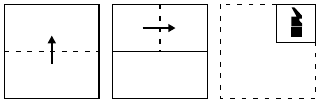
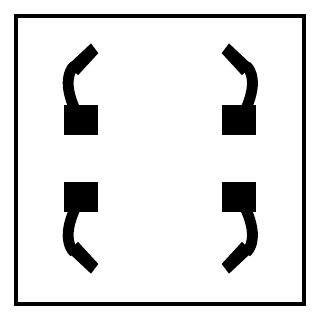
A paper is folded and cut as shown below. How will it appear when unfolded?

  1. AOption (a)

  2. BOption (b)

  3. COption (c)

  4. DOption (d)

View answer & explanation

Correct answer

Answer: (b)B.

Why this answer is correct

The paper appears when unfolded:

Hence, the correct answer is "Option 2".

Question 11

In a certain code language,

'A + B' means ‘A is the mother of B’,

'A – B' means ‘A is the brother of B’,

'A × B' means ‘A is the wife of B’ and

'A ÷ B' means ‘A is the father of B’.

Based on the above, how is F related to J if ‘F + G × H ÷ I – J’?

  1. AOption (a)

    Wife’s father

  2. BOption (b)

    Daughter

  3. COption (c)

    Mother’s husband

  4. DOption (d)

     Mother’s mother

View answer & explanation

Correct answer

Answer: (d)D.

 Mother’s mother

Why this answer is correct

Decoding symbols:

A is
Symbol+–×÷
MeaningMotherBrotherWifeFather
to B

Given: F + G × H ÷ I – J

F + G → F is the mother of G.

G × H → G is the wife of H.

H ÷ I → H is the father of I.

I – J → I is the brother of J.

Thus, F is the Mother’s mother (maternal grandmother) of J.

Hence, the correct answer is "Option 4".

Question 12

The position(s) of how many letters will remain unchanged if each of the letters in the word GRISTLE is arranged in the English alphabetical order?

  1. AOption (a)

     Zero

  2. BOption (b)

    One

  3. COption (c)

    Three

  4. DOption (d)

    Two

View answer & explanation

Correct answer

Answer: (b)B.

One

Why this answer is correct

Given Word:

GRISTLE

Original Word:

Letter:   G R I S T L E

2. Arrange the letters of the word "GRISTLE" in English alphabetical order:

Arranging them alphabetically: E, G, I, L, R, S, T

CategoryLetters
Original LettersG, R, I, S, T, L, E
New Letters (Alphabetical)E, G, I, L, R, S, T

From the comparison, only the letter 'I' remains in its original position (position 3).

The position(s) of One letter will remain unchanged.

Hence, the correct answer is "Option 2".

Question 13

Select the Venn diagram that best illustrates the relationship between the following classes.

Amphibian, Crow, Frog

  1. AOption (a)

  2. BOption (b)

  3. COption (c)

  4. DOption (d)

View answer & explanation

Correct answer

Answer: (a)A.

Why this answer is correct

The Venn diagram that best illustrates the relationship between the following classes.

Hence, the correct answer is "Option 1".

Question 14

Select the option in which the given figure (X) is embedded (rotation is NOT allowed)

  1. AOption (a)

  2. BOption (b)

  3. COption (c)

  4. DOption (d)

View answer & explanation

Correct answer

Answer: (c)C.

Why this answer is correct

The option in which the given figure (X) is embedded is:

Hence, the correct answer is "Option 3".

Question 15

Eight people are sitting in two parallel rows containing 4 people each in such a way that there is equal distance between adjacent persons.

In row 1, P, E, S and T are seated and all of them are facing south.

In row 2, M, O, L and D are seated and all of them are facing north.

Thus, each person faces another person from the other row.

O faces the one sitting to the immediate right of P. Only one person sits between O and D. Only two people sit between L and D. D faces the one sitting second to the left of T. E sits at some place to the right of S. Which of the following represents both people sitting at extreme ends of the rows?

  1. AOption (a)

    S and O

  2. BOption (b)

     P and L

  3. COption (c)

     T and O

  4. DOption (d)

    E and D

View answer & explanation

Correct answer

Answer: (d)D.

E and D

Why this answer is correct

Given:

In row 1, P, E, S and T are seated and all of them are facing south.

In row 2, M, O, L and D are seated and all of them are facing north.

Thus, each person faces another person from the other row.

Only one person sits between O and D.

O faces the one sitting to the immediate right of P.

Only two people sit between L and D.

D faces the one sitting second to the left of T.

E sits at some place to the right of S. 

Thus, E and D both people sitting at extreme ends of the rows.

Hence, the correct answer is "Option 4".

Question 16

What should come in place of the question mark (?) in the given series based on the English alphabetical order?

TEJ UDK VCL WBM ?

  1. AOption (a)

    XAN

  2. BOption (b)

    XAO

  3. COption (c)

    YAN

  4. DOption (d)

    YAO

View answer & explanation

Correct answer

Answer: (a)A.

XAN

Why this answer is correct

The logic followed here is:

Thus, XAN will be the next term in the series.

Hence, the correct answer is "Option 1".

Question 17

Select the correct alternative that when filled in the blanks in the same sequence will make the series logically complete.

URVQ_SWRW_XSXU TYV_

  1. AOption (a)

    PUTWZ

  2. BOption (b)

    OVSYX

  3. COption (c)

    OUSWX

  4. DOption (d)

    PVTYZ

View answer & explanation

Correct answer

Answer: (d)D.

PVTYZ

Why this answer is correct

Given Sequence: URVQ_SWRW_XSXU TYV_

The series is formed by groups of 4 letters. Each subsequent group is obtained by incrementing each letter of the previous group by one position in the English alphabet.

Option 4) PVTYZ → PURV / QVSW / RWTX / SXUY / TYVZ

Hence, the correct answer is "Option 4".

Question 18

A paper is folded and punched as shown below. How will it appear when unfolded?

  1. AOption (a)

  2. BOption (b)

  3. COption (c)

  4. DOption (d)

View answer & explanation

Correct answer

Answer: (a)A.

Why this answer is correct

The paper appears when unfolded:

Hence, the correct answer is "Option 1".

Question 19

In a certain code language, ACEG is coded as 16 and BOQT is coded as 54. How will UWIF be coded in the given language?

  1. AOption (a)

    75

  2. BOption (b)

    57

  3. COption (c)

    60

  4. DOption (d)

    59

View answer & explanation

Correct answer

Answer: (d)D.

59

Why this answer is correct

The logic followed here is:

ACEG is coded as 16

And,

BOQT is coded as 54

Similarly,

UWIF is coded as

Hence, the correct answer is "Option 4".

Question 20

What should come in place of the question mark (?) in the given series?

77 86 104 140 212 ?

  1. AOption (a)

    358

  2. BOption (b)

    356

  3. COption (c)

    357

  4. DOption (d)

    355

View answer & explanation

Correct answer

Answer: (b)B.

356

Why this answer is correct

The logic followed here is:

Thus, 356 will be the next number in the series.

Hence, the correct answer is "Option 2".

General Knowledge and General Awareness (20 questions)

Question 21

The Khilafat Movement was associated with which of the following communities?

  1. AOption (a)

    Hindu

  2. BOption (b)

    Muslim

  3. COption (c)

    Sikh

  4. DOption (d)

    Christian

View answer & explanation

Correct answer

Answer: (b)B.

Muslim

Why this answer is correct

The correct answer is Muslim.

Key Points

  • The Khilafat Movement was initiated by the Muslim community in India in 1919 to protect the Ottoman Caliphate after World War I.
  • It aimed to pressure the British government to preserve the sovereignty of the Ottoman Sultan, who was also regarded as the Caliph of Islam.
  • Leaders such as Maulana Mohammad Ali and Maulana Shaukat Ali played pivotal roles in organizing and leading the movement.
  • The Khilafat Movement was closely linked to the Indian freedom struggle and received support from Mahatma Gandhi as part of the Non-Cooperation Movement.
  • The movement eventually declined by 1924 following the abolition of the Caliphate by Mustafa Kemal Atatürk in Turkey.

Additional Information

  • Ottoman Caliphate: The Ottoman Caliphate was the Islamic Caliphate under the Ottoman Empire, symbolizing religious and political unity for Muslims.
  • World War I Impact: The Ottoman Empire's defeat in World War I led to its partition, threatening the Caliphate's existence and prompting the Khilafat Movement.
  • Non-Cooperation Movement: Mahatma Gandhi supported the Khilafat Movement, integrating it into the broader struggle against British colonial rule in India.
  • Decline of the Movement: The abolition of the Caliphate by Mustafa Kemal Atatürk in 1924 marked the end of the Khilafat Movement.
  • Legacy: While the movement did not achieve its goal, it strengthened Hindu-Muslim unity temporarily and contributed to India's independence movement.

Question 22

Who is the Cabinet Secretary of India as of September 2024?

  1. AOption (a)

    Ajit Kumar Seth

  2. BOption (b)

    Rajiv Gauba

  3. COption (c)

    Pradeep Kumar Sinha

  4. DOption (d)

    TV Somanathan

View answer & explanation

Correct answer

Answer: (d)D.

TV Somanathan

Why this answer is correct

The correct answer is TV Somanathan

Key Points

  • T. V. Somanathan (born 10 May 1965) is an Indian bureaucrat and IAS officer who is serving as the Cabinet Secretary of India since 30 August 2024.
  • Before this, he served as the Finance Secretary of India (Department of Expenditure).
  • Prior to this appointment, he served as Additional Secretary and Joint Secretary in the Prime Minister's Office (PMO).
  • He also worked as Director at the World Bank Group, Washington D.C., where he initially joined under its Young Professionals Program.
  • He is a 1987 batch Indian Administrative Service (IAS) officer of the Tamil Nadu cadre.

Additional Information

  • Role of the Cabinet Secretary:
  • Acts as the principal coordinator between the Union Government and various ministries/departments.
  • Heads the Cabinet Secretariat and facilitates decision-making at the highest level of governance.
  • Advises the Prime Minister and the Council of Ministers on policy matters and administrative decisions.
  • Appointment Process:
  • The Cabinet Secretary is appointed by the Appointments Committee of the Cabinet (ACC), chaired by the Prime Minister.
  • The tenure is generally fixed at two years, but extensions can be granted based on performance and necessity.
  • Historical Context:
  • The post of Cabinet Secretary was established in 1950, with N. R. Pillai being the first to hold the position.
  • It is considered the apex post in the Indian civil service hierarchy.
  • Cabinet Secretariat:
  • It functions as the administrative arm of the Cabinet and handles major inter-ministerial coordination.
  • It ensures smooth communication and implementation of decisions taken by the Union Council of Ministers.

Question 23

What change was observed in agricultural practices after the Green Revolution?

  1. AOption (a)

    Focus on monoculture of wheat only

  2. BOption (b)

    Decrease in the use of fertilisers

  3. COption (c)

    Shift from low-yield to high-yield crops

  4. DOption (d)

    Shift from cash crops to subsistence farming

View answer & explanation

Correct answer

Answer: (c)C.

Shift from low-yield to high-yield crops

Why this answer is correct

The correct answer is Shift from low-yield to high-yield crops.

Key Points

  • The Green Revolution in India, initiated in the 1960s, led to a significant shift from traditional low-yield crops to high-yield varieties (HYVs) of crops, particularly wheat and rice.
  • The introduction of HYVs was complemented by the use of chemical fertilizers, pesticides, and advanced irrigation techniques to enhance agricultural productivity.
  • It resulted in a dramatic increase in food grain production, especially in states like Punjab, Haryana, and Uttar Pradesh, transforming India from a food-deficient country to a food-surplus one.
  • The focus was primarily on staple crops like wheat and rice, which were scientifically bred to produce higher yields, ensuring food security and reducing dependency on imports.

Additional Information

  • High-Yield Varieties (HYVs): These are genetically modified crops designed to produce higher yields than traditional varieties, requiring intensive use of fertilizers and irrigation.
  • Irrigation Techniques: The Green Revolution encouraged the adoption of modern irrigation methods like canal systems and tube wells to ensure adequate water supply for crops.
  • Fertilizers and Pesticides: Chemical fertilizers and pesticides became integral to the success of the Green Revolution, aiding in pest control and providing essential nutrients to crops.
  • Impact on Economy: The increased agricultural output contributed to a rise in rural incomes, reduced poverty in certain regions, and boosted India's economic growth during the late 20th century.
  • Criticism of Monoculture: While the Green Revolution improved food security, it also led to environmental issues like soil degradation, water scarcity, and loss of biodiversity due to the focus on monoculture farming.

Question 24

Which outcome is typically expected from a government's expansionary fiscal policy?

  1. AOption (a)

     Increased government savings

  2. BOption (b)

    Stimulation of economic growth

  3. COption (c)

    Higher interest rates

  4. DOption (d)

    Reduced public spending and investment

View answer & explanation

Correct answer

Answer: (b)B.

Stimulation of economic growth

Why this answer is correct

The correct answer is Stimulation of economic growth.

Key Points

  • Expansionary fiscal policy involves increasing government spending or reducing taxes to boost aggregate demand in the economy.
  • The primary goal is to stimulate economic growth, especially during periods of economic slowdown or recession.
  • By increasing public expenditure, the government encourages job creation and higher consumer spending.
  • Tax cuts leave individuals and businesses with more disposable income, further fueling consumption and investment.
  • This policy often leads to a temporary rise in the fiscal deficit, which is offset by the long-term economic benefits of growth.

Additional Information

  • Fiscal Policy:
  • Fiscal policy refers to the use of government spending and taxation to influence the economy.
  • It is categorized into two types: expansionary and contractionary fiscal policy.
  • Aggregate Demand:
  • Aggregate demand is the total demand for goods and services within an economy at a given overall price level and time.
  • It includes consumption, investment, government spending, and net exports.
  • Multiplier Effect:
  • Increased government spending can have a multiplier effect, where the initial spending leads to multiple rounds of increased economic activity.
  • This amplifies the overall impact of fiscal measures on GDP growth.
  • Challenges:
  • Expansionary fiscal policy can lead to inflationary pressures if the economy is already operating near its capacity.
  • It may increase the government's debt levels if not managed prudently.

Question 25

A very heavy concentration of Malwa settlements of Chalcolithic period was found in the:

  1. AOption (a)

    Mahanadi basin

  2. BOption (b)

    central Narmada basin

  3. COption (c)

    Ganga basin

  4. DOption (d)

    Indus basin

View answer & explanation

Correct answer

Answer: (b)B.

central Narmada basin

Why this answer is correct

The correct answer is Central Narmada Basin.

Key Points

  • The Central Narmada Basin is one of the richest regions in terms of Chalcolithic settlements, particularly those belonging to the Malwa culture.
  • Malwa settlements are characterized by advanced pottery styles, including painted pottery with intricate designs.
  • Excavations in this region have revealed evidence of agricultural practices, including the cultivation of wheat and barley.
  • The sites in the Central Narmada Basin include significant findings such as tools made of copper and stone, indicating a transitional phase between the Stone Age and Metal Age.
  • Prominent Chalcolithic sites in this region include Navdatoli and Daimabad, which provide insights into the socio-economic aspects of the Malwa culture.

Additional Information

  • Chalcolithic Period: The Chalcolithic period refers to the phase of human history where copper began to be used alongside stone tools.
  • Malwa Culture: This culture is one of the prominent Chalcolithic cultures in India, known for its distinctive painted pottery and advanced agricultural practices.
  • Navdatoli: A key Chalcolithic site located near the Narmada River, offering evidence of early settlement patterns, agricultural activity, and craft production.
  • Daimabad: A significant site in Maharashtra linked to the Malwa culture, known for its discovery of bronze artifacts including the famous "Bronze Chariot."
  • Geographical Significance: The Narmada Basin provided fertile land, water resources, and access to raw materials, making it suitable for early human settlements and the growth of Chalcolithic cultures.

Question 26

How many points are awarded for Lona in Kabaddi?

  1. AOption (a)

    Four

  2. BOption (b)

    Three

  3. COption (c)

    Two

  4. DOption (d)

    Five

View answer & explanation

Correct answer

Answer: (c)C.

Two

Why this answer is correct

The correct answer is Two.

Key Points

  • In Kabaddi, a Lona is awarded when the entire opposing team is declared out.
  • A Lona in Kabaddi fetches the team 2 additional points apart from the points scored for individual outs.
  • The concept of Lona encourages teams to strategize and attempt to eliminate all the opposing players.
  • The awarded 2 points for a Lona can play a crucial role in deciding the final outcome of the match, especially in close contests.
  • These rules are governed by the International Kabaddi Federation (IKF) and are standardized across professional tournaments.

Additional Information

  • Kabaddi:
  • Kabaddi is a contact team sport originating from India and is now popular worldwide, particularly in South Asia.
  • The game is played between two teams of seven players each, and the objective is to score points by raiding the opponent’s half and tagging players.
  • Players must chant "Kabaddi" continuously during a raid to demonstrate controlled breathing.
  • Point System in Kabaddi:
  • Each player tagged by the raider earns the raider's team 1 point.
  • Bonus points are awarded when specific conditions are met, such as crossing a bonus line during a raid.
  • The defensive team earns points by successfully tackling the raider (known as a super tackle if done with 3 or fewer defenders).
  • Lona Importance:
  • The Lona rule incentivizes aggressive gameplay and teamwork.
  • Teams often attempt to eliminate all opposing players for a strategic advantage.
  • International Kabaddi Federation (IKF):
  • The governing body that standardizes Kabaddi rules worldwide.
  • Founded in 2004, the IKF organizes major international tournaments, including the Kabaddi World Cup.

Question 27

What does the Greek letter ν (nu) represent in physics?

  1. AOption (a)

    Velocity of particles

  2. BOption (b)

    Frequency of a wave

  3. COption (c)

    Density of a substance

  4. DOption (d)

    Coefficient of friction

View answer & explanation

Correct answer

Answer: (b)B.

Frequency of a wave

Why this answer is correct

The correct answer is Frequency of a wave.

Key Points

  • The Greek letter ν (nu) is commonly used in physics to denote the frequency of a wave, particularly in the context of electromagnetic waves and sound waves.
  • Frequency is defined as the number of oscillations or cycles per unit of time, usually measured in Hertz (Hz), where 1 Hz equals 1 cycle per second.
  • The relationship between the speed of a wave (v), its frequency (ν), and wavelength (λ) is given by the equation: v = ν × λ.
  • In quantum mechanics, ν is also used to represent the frequency of photons, which is related to their energy by the equation E = hν, where h is Planck's constant.
  • The symbol ν should not be confused with similar Greek letters like μ (mu), which represents different physical quantities such as permeability or reduced mass.

Additional Information

  • Frequency (ν): Frequency is a fundamental property of waves, describing how often the wave oscillates. It is inversely proportional to the period (T) of the wave, where ν = 1/T.
  • Hertz (Hz): The SI unit of frequency, named after Heinrich Hertz, where 1 Hz equals 1 cycle per second.
  • Wave Equation: The wave equation v = ν× × λ establishes a relationship between the speed of the wave (v), its frequency (ν), and its wavelength (λ).
  • Applications of Frequency: Frequency plays a crucial role in various fields, including telecommunications (radio and TV signals), acoustics (sound waves), and quantum mechanics (photon energy).
  • Planck's Equation: In quantum mechanics, the energy of a photon is directly proportional to its frequency, represented by the equation E = hν, where h = 6.626 × 10⁻³⁴ J·s (Planck's constant).

Question 28

Who advocated that India would be truly independent only when the poorest of its people became free of human suffering?

  1. AOption (a)

    Indira Gandhi

  2. BOption (b)

    Mahatma Gandhi

  3. COption (c)

    Subhash Chandra Bose

  4. DOption (d)

    Jawaharlal Nehru

View answer & explanation

Correct answer

Answer: (b)B.

Mahatma Gandhi

Why this answer is correct

The correct answer is Mahatma Gandhi.

Key Points

  • Mahatma Gandhi, often referred to as the "Father of the Nation" in India, emphasized the importance of uplifting the poorest sections of society.
  • He believed that true independence would only be achieved when the most marginalized people were free from suffering, poverty, and injustice.
  • This philosophy aligns with his concept of "Sarvodaya," meaning the welfare of all, which he passionately advocated throughout his life.
  • Gandhi's vision for India included a focus on self-reliance, rural development, and the empowerment of the underprivileged, especially through non-violent means.
  • He often referred to the poorest individuals as "Daridranarayan," symbolizing God in the form of the poor, and prioritized their well-being in his ideology.

Additional Information

  • Sarvodaya: A Gandhian principle meaning "universal uplift" or "progress for all," focusing on the well-being of the weakest sections of society.
  • Mahatma Gandhi's economic philosophy, advocating that wealth should be held in trust and used for the welfare of society, particularly for the poor.
  • Economic Self-Reliance: Gandhi promoted the use of khadi (handwoven cloth) and village industries to make Indian villages self-sufficient and reduce dependence on industrialized economies.
  • Harijan Movement: Gandhi worked tirelessly to uplift the "Harijans" (now referred to as Dalits or Scheduled Castes), emphasizing their inclusion in society and opposing untouchability.
  • Gandhi's Legacy: His principles of non-violence, equality, and focus on the marginalized continue to inspire socio-economic reforms in modern India and across the world.

Question 29

Gombe Habba, celebrated in the state of Karnataka during Navaratri, is a festival of:

  1. AOption (a)

    dolls

  2. BOption (b)

    mountains

  3. COption (c)

    rivers

  4. DOption (d)

    kites

View answer & explanation

Correct answer

Answer: (a)A.

dolls

Why this answer is correct

The correct answer is dolls.

Key Points

  • Gombe Habba, also known as the Doll Festival, is celebrated during the Navaratri festival in Karnataka.
  • It involves the arrangement and display of decorative dolls and figurines on steps or platforms in households.
  • This tradition is especially popular among families to showcase art, culture, and stories from Indian mythology.
  • Gombe Habba is a way to pass on traditional values and stories to the next generation while celebrating the cultural heritage of Karnataka.
  • The displayed dolls are often passed down through generations, making the practice a mix of cultural preservation and religious devotion.

Additional Information

  • Navaratri Festival: Navaratri, meaning "nine nights," is a major Hindu festival dedicated to the worship of Goddess Durga and her nine forms.
  • Significance of Dolls: In Gombe Habba, the dolls symbolize divine beings, cultural stories, and social themes, reflecting a blend of devotion and creativity.
  • Steps Arrangement: The dolls are typically arranged on odd-numbered steps (e.g., 3, 5, 7, or 9) in a tiered fashion, symbolizing ascension and order.
  • Regional Variations: Similar doll festivals are celebrated in other southern states, such as Bommai Kolu in Tamil Nadu and Bommala Koluvu in Andhra Pradesh.
  • Community Bonding: The festival fosters community interaction as families visit each other’s homes to view doll displays and exchange sweets and gifts.

Question 30

Padma Shri awardee of 2024, Mahabir Singh Guddu is a folk dancer from which Indian state?

  1. AOption (a)

    Rajasthan

  2. BOption (b)

    Uttar Pradesh

  3. COption (c)

    Gujarat

  4. DOption (d)

    Haryana

View answer & explanation

Correct answer

Answer: (d)D.

Haryana

Why this answer is correct

The correct answer is Haryana.

Key Points

  • Mahabir Singh Guddu is a renowned folk dancer and Padma Shri awardee from the state of Haryana.
  • He has contributed significantly to the promotion and preservation of Haryana's traditional folk dance forms, especially Ragini and Haryanvi folk art.
  • The Padma Shri award, India's fourth-highest civilian honor, was conferred upon him in recognition of his lifelong dedication to cultural artistry.
  • Haryana's folk dances are known for their vibrant energy and deep connection to rural traditions, with artists like Mahabir Singh Guddu playing a pivotal role in keeping these traditions alive.
  • His work has not only gained national recognition but also inspired younger generations to embrace and promote local cultural heritage.

Additional Information

  • Padma Awards:
  • The Padma Awards are among the highest civilian honors in India, categorized as Padma Vibhushan, Padma Bhushan, and Padma Shri.
  • They are awarded annually on Republic Day for exceptional contributions in various fields such as art, literature, science, sports, social work, and public affairs.
  • Haryana Folk Culture:
  • Haryana boasts a rich cultural heritage with popular folk dances including Jhumar, Ghoomar, and Ragini.
  • Music and dance are integral to social and festive occasions in Haryana.
  • Ragini Tradition:
  • Ragini is a traditional Haryanvi folk art form that blends music, poetry, and storytelling.
  • It often highlights social themes and is performed during village fairs and gatherings.
  • Preservation of Folk Art:
  • Artists like Mahabir Singh Guddu contribute to the preservation of folk art by conducting workshops and performances in rural and urban regions.
  • Efforts to document and promote these traditions are crucial for safeguarding India's intangible cultural heritage.

Question 31

As per NFHS 5, what percentage of the Indian population was deprived of drinking water during the year 2019-21?

  1. AOption (a)

    2.06%

  2. BOption (b)

    7.32%

  3. COption (c)

    5.27%

  4. DOption (d)

    3.27%

View answer & explanation

Correct answer

Answer: (b)B.

7.32%

Why this answer is correct

The correct answer is 0.0732.

Key Points

  • According to the National Family Health Survey (NFHS-5) conducted during 2019-21, 7.32% of the Indian population lacked access to basic drinking water facilities.
  • The survey highlights disparities in access to safe drinking water, particularly in rural areas compared to urban regions.
  • NFHS-5 is a comprehensive survey conducted to assess health, nutrition, and infrastructure-related parameters across India.
  • Access to safe drinking water is a critical indicator of public health and directly impacts the quality of life and overall development of the population.
  • The government of India has launched various programs, like the Jal Jeevan Mission, to address water accessibility issues and improve water supply in rural areas.

Additional Information

  • National Family Health Survey (NFHS)
  • NFHS is a large-scale, multi-round survey conducted in a representative sample of households throughout India.
  • The survey provides crucial data on health, family welfare, and other emerging issues in India.
  • NFHS-5 was conducted between 2019 and 2021, covering all 707 districts of India.
  • Jal Jeevan Mission
  • Launched in 2019, Jal Jeevan Mission aims to provide functional household tap connections (FHTCs) to every rural household by 2024.
  • The mission focuses on sustainable water supply systems through the creation of local infrastructure.
  • It also promotes water conservation and rainwater harvesting.
  • Impact of Lack of Drinking Water
  • Access to unsafe water can lead to waterborne diseases like diarrhea, cholera, and typhoid.
  • It can also affect hygiene practices, particularly in rural and underserved regions.
  • Lack of clean drinking water disproportionately affects women and children, who are often responsible for water collection in rural areas.
  • Safe Drinking Water Definition
  • As per WHO guidelines, safe drinking water is water that is free of contaminants, harmful chemicals, and pathogens.
  • Safe drinking water is essential for maintaining health and preventing waterborne diseases.

Question 32

Who was the first to introduce Brazilian bossa nova rhythm in Hindi film music?

  1. AOption (a)

    OP Nayyar

  2. BOption (b)

    RD Burman

  3. COption (c)

    AR Rahman

  4. DOption (d)

    Anu Malik

View answer & explanation

Correct answer

Answer: (b)B.

RD Burman

Why this answer is correct

The correct answer is RD Burman.

Key Points

  • RD Burman was the first to introduce the Brazilian bossa nova rhythm into Hindi film music.
  • Bossa nova, which means "new trend" in Portuguese, is a Brazilian music style blending samba and jazz, and RD Burman incorporated it innovatively into Bollywood music.
  • An iconic example of this rhythm in Hindi music is the song "Maar Dalega Dard-e-Jigar" from the film "Pati Patni" (1966).
  • RD Burman’s creative genius was instrumental in infusing global music styles like bossa nova into Indian soundscapes, marking a transformative era in Hindi cinema music.
  • This fusion of international rhythms with Indian melodies contributed significantly to RD Burman's legacy as a revolutionary music composer in Indian cinema.

Additional Information

  • Bossa Nova: A Brazilian music style that emerged in the late 1950s, characterized by a syncopated rhythm and smooth, melodic tones blending samba and jazz.
  • RD Burman’s Musical Legacy: Known as the "Music Maverick," RD Burman introduced several global influences into Indian music, including reggae, funk, and disco, apart from bossa nova.
  • Global Influence in Bollywood Music: During the 1960s-1980s, Indian film music began incorporating international music styles, largely due to composers like RD Burman.
  • Fusion in Film Music: RD Burman’s approach to music was a pioneering mix of Indian classical, folk, and international styles, making his compositions timeless.
  • Brazilian Music Influence: Beyond bossa nova, Brazilian samba and carnival rhythms occasionally influenced Bollywood music during the 20th century.

Question 33

As of October 2024, who is the Comptroller and Auditor General (CAG) of India?

  1. AOption (a)

    Nirmala Sitharaman

  2. BOption (b)

    Shivraj Singh Chouhan

  3. COption (c)

    Girish Chandra Murmu

  4. DOption (d)

    Manohar Lal

View answer & explanation

Correct answer

Answer: (c)C.

Girish Chandra Murmu

Why this answer is correct

The correct answer is Girish Chandra Murmu.

Key Points

  • Girish Chandra Murmu has been serving as the Comptroller and Auditor General (CAG) of India since August 8, 2020.
  • He succeeded Rajiv Mehrishi as the 14th CAG of India.
  • Girish Chandra Murmu is a 1985-batch IAS officer of the Gujarat cadre and has held several key positions in the Indian government, including the first Lieutenant Governor of Jammu and Kashmir.
  • The CAG of India is appointed by the President of India under Article 148 of the Constitution.
  • The CAG is responsible for auditing the accounts of the Union and state governments and ensuring accountability in public financial management.

Additional Information

  • Role of the CAG: The CAG audits government accounts, ensures transparency, and submits reports to the President or Governors, which are then tabled in Parliament or state legislatures.
  • Article 148: This article of the Indian Constitution establishes the position of the Comptroller and Auditor General and outlines its duties and powers.
  • Audit Scope: The CAG audits expenditure from the Consolidated Fund of India, state consolidated funds, and public sector undertakings (PSUs).
  • Independence of CAG: The CAG enjoys complete independence, with provisions for security of tenure and immunity from arbitrary removal during its term.
  • International Recognition: The CAG of India is a member of the International Organization of Supreme Audit Institutions (INTOSAI) and the Asian Organization of Supreme Audit Institutions (ASOSAI).

Question 34

Right to constitutional remedies as a Fundamental Right of the Constitution of India is stated in which of the following Articles?

  1. AOption (a)

    Article 33

  2. BOption (b)

    Article 31

  3. COption (c)

    Article 34

  4. DOption (d)

    Article 32

View answer & explanation

Correct answer

Answer: (d)D.

Article 32

Why this answer is correct

The correct answer is Article 32.

Key Points

  • Article 32 of the Indian Constitution provides the right to constitutional remedies, empowering citizens to move the Supreme Court for enforcement of their Fundamental Rights.
  • Dr. B.R. Ambedkar referred to Article 32 as the "heart and soul" of the Indian Constitution as it guarantees the protection of Fundamental Rights.
  • Under Article 32, the Supreme Court can issue writs such as habeas corpus, mandamus, prohibition, quo warranto, and certiorari to enforce rights.
  • This article ensures that no individual’s Fundamental Rights are violated without legal recourse.
  • Article 32 is applicable only when there is a violation of Fundamental Rights, making it a cornerstone of judicial review in India.

Additional Information

  • Fundamental Rights: Enshrined in Part III of the Indian Constitution, these rights are guaranteed to all citizens and include rights such as equality, freedom, and protection from exploitation.
  • Types of Writs: The writs issued under Article 32 include habeas corpus (protection against unlawful detention), mandamus (commanding public authority to perform its duty), prohibition (preventing lower courts from exceeding jurisdiction), certiorari (quashing orders of inferior courts), and quo warranto (challenging the legality of a public office).
  • Judicial Review: Article 32 underlines the concept of judicial review, which allows the judiciary to ensure that laws and executive actions do not violate Fundamental Rights.
  • Supreme Court’s Role: Article 32 exclusively empowers the Supreme Court to be the guardian of Fundamental Rights, though High Courts can enforce these rights under Article 226.
  • Article 226: While Article 32 applies to the Supreme Court, Article 226 allows High Courts to issue writs for the enforcement of Fundamental Rights as well as other legal rights.

Question 35

How many types of plate tectonic boundaries are there?

  1. AOption (a)

    Two

  2. BOption (b)

    Four

  3. COption (c)

    Three

  4. DOption (d)

    Five

View answer & explanation

Correct answer

Answer: (c)C.

Three

Why this answer is correct

The correct answer is Three.

Key Points

  • There are three types of plate tectonic boundaries: divergent, convergent, and transform boundaries.
  • Divergent boundaries occur when plates move apart, leading to the formation of new crust (e.g., mid-ocean ridges).
  • Convergent boundaries occur when plates collide, often resulting in mountain formation or subduction zones (e.g., Himalayas or Mariana Trench).
  • Transform boundaries occur when plates slide past one another horizontally, causing earthquakes (e.g., San Andreas Fault).
  • These boundaries are driven by the movement of tectonic plates due to mantle convection, slab pull, and ridge push.

Additional Information

  • Tectonic Plates: Large sections of Earth's lithosphere divided into rigid plates that float on the semi-fluid asthenosphere below.
  • Mid-Ocean Ridges: Underwater mountain ranges formed at divergent boundaries, where magma rises to create new crust.
  • Subduction Zones: Areas where one plate is forced beneath another at convergent boundaries, often causing volcanic activity.
  • Earthquakes: Commonly associated with transform boundaries, where stress builds up as plates move past each other.
  • Plate Movement Drivers: Mantle convection (heat-driven fluid motion), slab pull (gravity pulling a subducting plate), and ridge push (force exerted by magma at divergent boundaries) are key mechanisms behind plate tectonics.

Question 36

In a forest ecosystem of Grass → Impala → Hyena, if all the Hyenas are taken away, what will happen ultimately?

  1. AOption (a)

    Impala population will remain stable.

  2. BOption (b)

    Impala will live happily forever.

  3. COption (c)

    Grass land will not be affected.

  4. DOption (d)

    Impala will die of starvation due to higher population.

View answer & explanation

Correct answer

Answer: (d)D.

Impala will die of starvation due to higher population.

Why this answer is correct

The correct answer is Impala will die of starvation due to higher population.

Key Points

  • Hyenas are predators in the forest ecosystem responsible for controlling the population of Impalas.
  • With the removal of Hyenas, the Impala population will grow unchecked, leading to overpopulation.
  • Overpopulation of Impalas increases competition for limited resources like grass, causing depletion of food supply.
  • The lack of adequate food will result in starvation, leading to a decline in the Impala population over time.
  • Such disturbances demonstrate the interdependence of species in an ecosystem and the importance of predators in maintaining ecological balance.

Additional Information

  • Forest Ecosystems: These are complex systems consisting of producers (grass), consumers (Impala), and predators (Hyena), which maintain ecological balance through food chains.
  • Role of Predators: Predators control the population of herbivores, preventing overgrazing and ensuring the sustainability of vegetation.
  • Food Chain Dynamics: In a food chain, removal of any species disrupts the flow of energy and resource availability, leading to ecological imbalance.
  • Carrying Capacity: The maximum population size that an environment can sustain without depleting resources; exceeding this limit results in starvation and population collapse.
  • Trophic Levels: Each level in a food chain represents energy transfer; producers (grass), primary consumers (Impala), and secondary consumers (Hyena) are interconnected.

Question 37

In tennis, the court should be _________ wide for a doubles match as per the International Tennis Federation.

  1. AOption (a)

    37ft

  2. BOption (b)

    38ft

  3. COption (c)

    35ft

  4. DOption (d)

    36ft

View answer & explanation

Correct answer

Answer: (d)D.

36ft

Why this answer is correct

The correct answer is 36ft.

Key Points

  • According to the International Tennis Federation (ITF), the standard width of a tennis court for doubles matches is 36 feet (10.97 meters).
  • The doubles court is wider than the singles court, which measures 27 feet (8.23 meters) in width, to accommodate the additional players on each team.
  • The total length of a doubles tennis court remains the same as a singles court: 78 feet (23.77 meters).
  • The extra width in doubles courts is provided by the “doubles alleys,” which are the areas between the singles sidelines and the doubles sidelines.
  • The court dimensions for doubles are consistent across all levels of play, from amateur to professional, as regulated by the ITF.

Additional Information

  • International Tennis Federation (ITF):
  • The ITF is the governing body of world tennis and is responsible for defining and maintaining the rules of the game.
  • It ensures consistent court dimensions and standards across international tournaments.
  • Doubles Alley:
  • The area on a tennis court between the singles and doubles sidelines, used only in doubles matches.
  • The width of the doubles alley on each side is 4.5 feet (1.37 meters), making the total extra width 9 feet (2.74 meters).
  • Standard Court Surface Types:
  • The main types of tennis court surfaces are clay, grass, and hard courts, each affecting the speed and bounce of the ball.
  • The dimensions of the court remain the same regardless of the surface type.
  • Key Court Markings:
  • Baseline: The back boundary line of the court, running parallel to the net.
  • Sidelines: The outer boundaries of the court that vary for singles and doubles matches.
  • Service Boxes: The rectangular areas on each side of the net where the serve must land.
  • Net Height:
  • The net height at the center is 3 feet (0.914 meters), and at the posts, it is 3.5 feet (1.07 meters).
  • The net divides the court into two equal halves for play.

Question 38

Which of the following classical dance forms from southern India derives its textual sanction from 'Balarama Bharatam' and 'Hastalakshana Deepika'?

  1. AOption (a)

    Mohiniattam

  2. BOption (b)

    Kathakali

  3. COption (c)

    Kuchipudi

  4. DOption (d)

    Sattriya

View answer & explanation

Correct answer

Answer: (b)B.

Kathakali

Why this answer is correct

The correct answer is Kathakali.

Key Points

  • Kathakali is a classical dance-drama form that originated in Kerala, India, and is renowned for its elaborate costumes, face painting, and expressive gestures.
  • The textual foundation of Kathakali is derived from two ancient treatises: 'Balarama Bharatam', which focuses on classical dance and drama, and 'Hastalakshana Deepika', which explains the gestures and hand movements.
  • Kathakali combines elements of dance, music, and acting, rooted in themes from Indian epics like the Mahabharata and Ramayana.
  • The art form employs intricate facial expressions and a vocabulary of hand gestures called mudras, which are codified in the 'Hastalakshana Deepika'.
  • Kathakali is performed traditionally as a temple art and later evolved into a theatrical art form performed in open-air theatres.

Additional Information

  • Balarama Bharatam: An ancient Sanskrit text attributed to Karthika Thirunal Balarama Varma, focusing on the theory and practice of natya (drama) and nritya (dance).
  • Hastalakshana Deepika: A seminal treatise that codifies the hand gestures or mudras used in Kathakali and other traditional Indian dance forms.
  • Costume and Makeup: Kathakali performers wear intricate and colorful costumes, including large headdresses, and apply elaborate facial makeup to depict various characters like gods, demons, and humans.
  • Musical Accompaniment: The performance is accompanied by traditional percussion instruments like the chenda and maddalam, along with vocalists narrating the story.
  • Training and Rigorous Practice: Kathakali artists undergo years of intense training, focusing on body flexibility, facial expressions, and synchronization of gestures with music and rhythm.

Question 39

No money bill can be introduced in the State Legislative Assembly without the prior permission of the ________.

  1. AOption (a)

    Chief Minister

  2. BOption (b)

    Governor

  3. COption (c)

    Speaker

  4. DOption (d)

    Deputy Chief Minister

View answer & explanation

Correct answer

Answer: (b)B.

Governor

Why this answer is correct

The correct answer is Governor.

Key Points

  • A Money Bill can only be introduced in the State Legislative Assembly with the prior permission of the Governor.
  • As per Article 207 of the Constitution of India, the Governor's recommendation is mandatory for introducing Money Bills in the State Legislature.
  • The Money Bill deals with matters such as the imposition, abolition, remission, alteration, or regulation of taxes, borrowing of money by the state, and matters related to the Consolidated Fund of the State.
  • The Governor acts as the formal authority for legislative proposals involving state finances, ensuring they align with constitutional provisions.
  • Without the Governor's recommendation, a Money Bill cannot proceed in the legislative process.

Additional Information

  • Money Bill:
  • It is defined under Article 110 of the Indian Constitution (at the Union level) and Article 199 (at the State level).
  • A Money Bill exclusively deals with financial matters like taxation, appropriation of funds, and public expenditure.
  • It can only be introduced in the Lok Sabha (Union) or State Legislative Assembly (State) and requires prior recommendation from the President (Union) or Governor (State).
  • Role of the Governor:
  • The Governor is the constitutional head of the state and acts on the advice of the Council of Ministers.
  • In financial matters, the Governor ensures compliance with constitutional provisions by granting or withholding consent for legislative proposals.
  • State Legislature:
  • It comprises the Legislative Assembly (Vidhan Sabha) and, in some states, the Legislative Council (Vidhan Parishad).
  • The Legislative Assembly is the lower house where Money Bills are introduced and deliberated upon.
  • Legislative Process for Money Bills:
  • A Money Bill, after being introduced in the Legislative Assembly with the Governor's consent, goes through a detailed legislative process including debate, approval, and assent.
  • The Legislative Council, if present, can only make recommendations and cannot amend or reject a Money Bill.
  • After approval, it requires the Governor's assent to become law.

Question 40

Which of the following statements is/are INCORRECT?

i. The 'SGSY' scheme was implemented in 2009.

ii. The primary objective of the 'SGSY' scheme was to promote and attain self employment.

iii. The 'SGSY' scheme performed well in Andhra Pradesh.

  1. AOption (a)

    Only ii

  2. BOption (b)

    Only iii

  3. COption (c)

    Only ii and iii

  4. DOption (d)

    Only i

View answer & explanation

Correct answer

Answer: (d)D.

Only i

Why this answer is correct

The correct answer is Option 4.

Key Points

  • The Swarnjayanti Gram Swarozgar Yojana (SGSY) was launched in 1999, not 2009, making statement i incorrect.
  • The primary objective of SGSY was to promote self-employment by organizing rural poor into Self-Help Groups (SHGs), making statement ii correct.
  • SGSY showed significant success in states like Andhra Pradesh due to effective implementation, making statement iii correct.
  • Since statement i is the only incorrect one, the correct option is Option 4.

Additional Information

  • Swarnjayanti Gram Swarozgar Yojana (SGSY):
  • SGSY was introduced in 1999 as a holistic program for poverty alleviation.
  • It aimed at promoting self-employment by organizing rural poor into Self-Help Groups (SHGs).
  • The scheme focused on skill development, infrastructure creation, and bank linkage.
  • It was later restructured into the National Rural Livelihood Mission (NRLM) in 2011.
  • Self-Help Groups (SHGs):
  • SHGs are small groups of individuals from similar socio-economic backgrounds who come together to form savings and credit groups.
  • They play a critical role in empowering rural women and promoting financial inclusion.
  • National Rural Livelihood Mission (NRLM):
  • NRLM replaced SGSY in 2011 to provide a more focused and comprehensive approach to rural poverty alleviation.
  • It emphasizes community-driven approaches and the formation of SHGs.
  • Key Success Factors in Andhra Pradesh:
  • Effective implementation through strong community institutions.
  • Active involvement of women in SHGs.
  • Focus on livelihood diversification and skill development.

Elementary Mathematics (20 questions)

Question 41

The smallest natural number which is divisible by 33, 72, 11 and 18 is:

  1. AOption (a)

    881

  2. BOption (b)

    839

  3. COption (c)

    792

  4. DOption (d)

    696

View answer & explanation

Correct answer

Answer: (c)C.

792

Why this answer is correct

Shortcut Trick

The required number must be divisible by 72, which means it must be a multiple of 9.

Using the divisibility rule of 9 (sum of digits must be divisible by 9) on the given options:

⇒ 881 → 8 + 8 + 1 = 17 | 839 → 8 + 3 + 9 = 20 | 696 → 6 + 9 + 6 = 21 (None are divisible by 9)

⇒ 792 → 7 + 9 + 2 = 18 (Divisible by 9)

Since only 792 is a multiple of 9, we can eliminate all other options instantly.

∴ The correct answer is 792.

Alternate Method

Given:

The numbers are 33, 72, 11, and 18.

Method Used:

The smallest natural number completely divisible by all given numbers is their Least Common Multiple (LCM).

Calculations:

⇒ Prime factorization of 33 = 3 × 11

⇒ Prime factorization of 72 = 23 × 32

⇒ Prime factorization of 11 = 11

⇒ Prime factorization of 18 = 2 × 32

⇒ LCM = Highest powers of all prime factors present

⇒ LCM = 23 × 32 × 11

⇒ LCM = 8 × 9 × 11

⇒ LCM = 72 × 11

⇒ LCM = 792

∴ The correct answer is 792.

Additional Information

Least Common Multiple (LCM)

The smallest positive integer that is perfectly divisible by each of the given numbers. It is obtained by multiplying the highest powers of all prime factors present in the numbers.

Highest Common Factor (HCF)

The largest positive integer that divides all the given numbers without leaving a remainder. It is the product of the lowest powers of common prime factors.

Divisibility Rule of 9

A number is perfectly divisible by 9 if the sum of all its digits is a multiple of 9.

Divisibility Rule of 11

A number is divisible by 11 if the difference between the sum of its digits at odd places and the sum of its digits at even places is either 0 or a multiple of 11.

Question 42

Govind invested some money in HDFC at 3% per annum rate of interest. What would be the corresponding simple interest (in ₹) if after 2 years, Govind got ₹203 as compound interest, considering annual compounding?

  1. AOption (a)

    195

  2. BOption (b)

    200

  3. COption (c)

    215

  4. DOption (d)

    210

View answer & explanation

Correct answer

Answer: (b)B.

200

Why this answer is correct

Shortcut Trick

Effective rate of Compound Interest for 2 years = R + R + (R×R)÷100 = 3 + 3 + (3×3)÷100 = 6.09%.

Effective rate of Simple Interest for 2 years = 2 × R = 6%.

Given Compound Interest = 6.09% which is equal to ₹203.

Required Simple Interest = 6% ≡ (203 ÷ 6.09) × 6 = ₹200.

∴ The correct answer is ₹200.

Alternate Method

Given:

⇒ Rate of interest (R) = 3% per annum

⇒ Time (T) = 2 years

⇒ Compound Interest (CI) = ₹203

Principal

Year 1: 100u

Year 2: 100u

3%

Interest: 3u

Total CI = 100u + 100u + 3u = 203u

Method Used (Unit Assumption):

⇒ Let the Simple Interest for 1 year be 100 units.

⇒ Simple Interest for the 2nd year = 100 units.

⇒ Compound interest on 1st year's interest at 3% = 3% of 100 = 3 units.

⇒ Total Compound Interest (CI) for 2 years = 100 + 100 + 3 = 203 units.

⇒ Total Simple Interest (SI) for 2 years = 100 + 100 = 200 units.

Calculations:

⇒ We are given CI = ₹203.

⇒ 203 units = ₹203

⇒ 1 unit = ₹1

⇒ Total SI = 200 units = 200 × 1 = ₹200.

∴ The correct answer is ₹200.

Additional Information

Direct Relation for 2 Years

For a given rate R and time of 2 years, Compound Interest and Simple Interest are directly related by the formula: CI = SI × (1 + R ÷ 200).

Difference Between CI and SI (2 Years)

The difference between Compound Interest and Simple Interest for 2 years is calculated as: D = P × (R ÷ 100)2.

Difference Between CI and SI (3 Years)

For 3 years, the standard difference formula is extended to: D = P × (R ÷ 100)2 × (3 + R ÷ 100).

Effective Rate of Compound Interest

For 2 years, the effective CI percentage can be quickly found using the successive percentage change formula: 2R + (R2 ÷ 100)%.

Question 43

P can complete a round of circular track in 1 minute and 30 seconds while Q can complete a round in 45 seconds. If they start moving from the same point and move in opposite directions, then they meet after _____ seconds.

  1. AOption (a)

    40

  2. BOption (b)

    30

  3. COption (c)

    35

  4. DOption (d)

    25

View answer & explanation

Correct answer

Answer: (b)B.

30

Why this answer is correct

Shortcut Trick

When two persons start simultaneously from the same point and move in opposite directions on a circular track, the time taken to meet is T = (T1 × T2) ÷ (T1 + T2).

⇒ T1 = 90 seconds (1 min 30 sec), T2 = 45 seconds

⇒ T = (90 × 45) ÷ (90 + 45)

⇒ T = 4050 ÷ 135 = 30 seconds

∴ The correct answer is 30 seconds.

Alternate Method

Given:

Time taken by P (T1) = 1 minute 30 seconds = 90 seconds

Time taken by Q (T2) = 45 seconds

Formula Used:

Relative Speed in opposite direction = S1 + S2

Time to meet = Total Distance ÷ Relative Speed

Start Point

Meeting Point

P (90 s)

Q (45 s)

Time to Meet = 30 seconds

Calculations:

⇒ Let the total length of the track be the LCM of 90 and 45 = 90 units.

⇒ Speed of P = 90 units ÷ 90 seconds = 1 unit/second.

⇒ Speed of Q = 90 units ÷ 45 seconds = 2 units/second.

⇒ Since they are moving in opposite directions, their relative speed is added up.

⇒ Relative Speed = Speed of P + Speed of Q = 1 + 2 = 3 units/second.

⇒ Time taken to meet = Total Distance ÷ Relative Speed

⇒ Time = 90 ÷ 3 = 30 seconds.

∴ The correct answer is 30 seconds.

Additional Information

Meeting in Same Direction

If two objects move in the same direction, their relative speed is |S1 − S2|. The time taken to meet for the first time is T = (T1 × T2) ÷ |T1 − T2|.

Meeting at the Starting Point

Regardless of the direction of motion, the time taken for them to meet again exactly at the starting point is always the LCM of their individual times to complete one round.

Distinct Meeting Points

If the ratio of their speeds is a:b (in simplest form), the number of distinct meeting points on the track is (a + b) for opposite directions, and |a − b| for the same direction.

Question 44

Six persons went to a hotel to have their meals. Five of them spent ₹30 each on their meals. The sixth person spent ₹50 more than the average expenditure of all the six. What was the total money spent by all the persons?

  1. AOption (a)

     ₹264

  2. BOption (b)

    ₹300

  3. COption (c)

     ₹240

  4. DOption (d)

    ₹270

View answer & explanation

Correct answer

Answer: (c)C.

 ₹240

Why this answer is correct

Shortcut Trick

The 6th person pays the average amount plus an extra ₹50.

This extra ₹50 compensates for the remaining 5 persons who paid less than the average.

Deficit per person = 50 ÷ 5 = ₹10.

Average expenditure = 30 + 10 = ₹40.

Total expenditure of 6 persons = 6 × 40 = ₹240.

∴ The correct answer is ₹240.

Alternate Method

Given:

Expenditure of 5 persons = ₹30 each

Expenditure of 6th person = Average expenditure of all 6 + ₹50

Avg (₹x)

₹30

₹30

₹30

₹30

₹30

+10

+10

+10

+10

+10

₹x

₹50

6th Person 5 Persons

Extra ₹50 balances the deficits (₹10 each)

Formula Used:

Average = Total Sum ÷ Number of Persons

Calculations:

⇒ Let the average expenditure of all 6 persons be ₹x.

⇒ Total expenditure of 6 persons = 6x

⇒ Total expenditure = (Expenditure of 5 persons) + (Expenditure of 6th person)

⇒ 6x = (5 × 30) + (x + 50)

⇒ 6x = 150 + x + 50

⇒ 6x − x = 200

⇒ 5x = 200

⇒ x = 40

⇒ Total money spent by all persons = 6x = 6 × 40 = ₹240

∴ The correct answer is ₹240.

Additional Information

Concept of Average

The average of a given set of numbers is calculated as the sum of all observations divided by the total number of observations. Average = Sum of observations ÷ Number of observations.

Deviation Method

The net deviation of all values from the average is always zero. If a value is greater than the average, it provides a positive deviation that perfectly balances the combined negative deviations of values strictly lesser than the average.

Combined Average

When combining two separate groups, the overall sum is simply the sum of the individual products of their respective averages and counts. Total Sum = (n1 × A1) + (n2 × A2).

Question 45

What is the highest number between 4000 and 5000, which when divided by 12, 16 and 24 would leave the remainder 4?

  1. AOption (a)

    4969

  2. BOption (b)

    6499

  3. COption (c)

    4699

  4. DOption (d)

    4996

View answer & explanation

Correct answer

Answer: (d)D.

4996

Why this answer is correct

Shortcut Trick

LCM of 12, 16, and 24 is 48.

The required number format is 48k + 4.

Divide the upper limit 5000 by 48 ⇒ Remainder = 8.

Highest multiple of 48 under 5000 = 5000 − 8 = 4992.

Required highest number = 4992 + 4 = 4996.

∴ The correct answer is 4996.

Alternate Method

Given:

Divisors = 12, 16, and 24

Range = 4000 to 5000

Remainder = 4

Concept Used:

Number = LCM of divisors × k + Remainder

Calculation:

⇒ Prime factors of 12 = 22 × 3

⇒ Prime factors of 16 = 24

⇒ Prime factors of 24 = 23 × 3

⇒ LCM(12, 16, 24) = 24 × 3 = 16 × 3 = 48

⇒ The required number must be of the form N = 48k + 4.

⇒ Divide 5000 by 48 to find the highest multiple under 5000.

⇒ 5000 ÷ 48 = 104 with a remainder of 8.

⇒ Highest multiple of 48 under 5000 = 5000 − 8 = 4992.

⇒ Substitute the multiple back to find the number:

⇒ N = 4992 + 4 = 4996.

⇒ 4996 clearly lies within the target range of 4000 to 5000.

∴ The correct answer is 4996.

Additional Information

LCM with Constant Remainder

When finding a number that leaves the same remainder r when divided by a, b, and c, use the form: N = LCM(a, b, c) × k + r.

LCM with Different Remainders

If a number divided by a, b, and c leaves remainders x, y, and z respectively, and the difference is constant (a−x = b−y = c−z = K), the number format is: N = LCM(a, b, c) × k − K.

HCF with Given Remainders

The greatest number that divides a, b, and c leaving remainders x, y, and z respectively is given by HCF of (a−x), (b−y), and (c−z).

Question 46

There are 81 members in group A, 29 members in group B and 70 members in group C. All the members of these groups went to a restaurant. The average amount spent on each member of group A, B and C is ₹467, ₹117 and ₹378, respectively. The total average amount (in ₹) spent per member is:

  1. AOption (a)

    380

  2. BOption (b)

    377

  3. COption (c)

    375

  4. DOption (d)

    376

View answer & explanation

Correct answer

Answer: (d)D.

376

Why this answer is correct

Shortcut Trick

We can use the Deviation Method by assuming an average close to the given values, say ₹378.

Deviations from ₹378: Group A = +89, Group B = −261, Group C = 0.

Total deviation = (81 × 89) + (29 × −261) + (70 × 0) = 7209 − 7569 = −360.

Actual combined average = Assumed Average + (Total deviation ÷ Total members) = 378 + (−360 ÷ 180) = 378 − 2 = ₹376.

∴ The correct answer is ₹376.

Alternate Method

Group A (81) ₹467

Group B (29) ₹117

Group C (70) ₹378

Total Members = 81 + 29 + 70 = 180 Overall Average = ₹376

Given:

Number of members in Group A = 81, Average amount spent = ₹467

Number of members in Group B = 29, Average amount spent = ₹117

Number of members in Group C = 70, Average amount spent = ₹378

Formula Used:

Total Average = (Total amount spent by all groups) ÷ (Total number of members)

Calculations:

⇒ Total members = 81 + 29 + 70 = 180

⇒ Total amount spent by Group A = 81 × 467 = ₹37827

⇒ Total amount spent by Group B = 29 × 117 = ₹3393

⇒ Total amount spent by Group C = 70 × 378 = ₹26460

⇒ Total amount spent by all members = 37827 + 3393 + 26460 = ₹67680

⇒ Total average amount per member = 67680 ÷ 180 = ₹376

∴ The correct answer is ₹376.

Additional Information

Weighted Average

When combining groups of different sizes, the combined average is a weighted average. Formula: Aw = (n1A1 + n2A2 + n3A3) ÷ (n1 + n2 + n3).

Deviation Method

To quickly find the average of large numbers, pick an assumed average (A). The true average = A + (Sum of all deviations ÷ Total number of observations). This is extremely helpful in eliminating calculation-heavy multiplication.

Properties of Average

If every observation in a set is increased or decreased by a constant value 'k', the new average also increases or decreases by exactly 'k'.

Question 47

If the curved surface area of a right circular cylinder of height 12 cm is 96 π cm2, then its radius is:

  1. AOption (a)

    8 cm

  2. BOption (b)

    6 cm

  3. COption (c)

    3 cm

  4. DOption (d)

    4 cm

View answer & explanation

Correct answer

Answer: (d)D.

4 cm

Why this answer is correct

Shortcut Trick

Curved Surface Area (CSA) of a cylinder = 2πrh

⇒ 2 × π × r × 12 = 96π

⇒ 24π × r = 96π

⇒ r = 4 cm

∴ The correct answer is 4 cm.

Alternate Method

r = ?

h = 12 cm CSA = 96π cm²

Given:

Height of the cylinder (h) = 12 cm

Curved Surface Area (CSA) = 96π cm2

Formula Used:

CSA of a right circular cylinder = 2πrh

Calculation:

⇒ 2 × π × r × 12 = 96π

⇒ 24π × r = 96π

⇒ r = 96π ÷ 24π

⇒ r = 4 cm

∴ The correct answer is 4 cm.

Additional Information

Total Surface Area of Cylinder

The total surface area encompasses both the curved face and the two flat circular bases. Formula: TSA = 2πr(r + h)

Volume of a Cylinder

The amount of 3D space occupied by a right circular cylinder. Formula: Volume = πr2h

Curved Surface Area of a Cone

For a right circular cone having base radius r and slant height l. Formula: CSA = πrl

Question 48

By selling an article for ₹1,500, a man gains ₹150. At what price (in ₹) should he sell the article to gain 24%?

  1. AOption (a)

    1,674

  2. BOption (b)

    1,560

  3. COption (c)

    1,493

  4. DOption (d)

    1,870

View answer & explanation

Correct answer

Answer: (a)A.

1,674

Why this answer is correct

Shortcut Trick

Cost Price = Selling Price − Gain

CP = 1500 − 150 = ₹1,350

New Selling Price to gain 24% = 124% of Cost Price

New SP = 1350 × 1.24 = ₹1,674

∴ The correct answer is ₹1,674.

Alternate Method

Given:

Selling Price (SP) = ₹1,500

Gain = ₹150

Target Gain = 24%

Formula Used:

Cost Price (CP) = SP − Gain

Selling Price (New) = CP × [(100 + Gain%) ÷ 100]

CP ₹1350

SP1 ₹1500

SP2 ₹1674

Gain = ₹150

Gain = 24%

Calculations:

⇒ CP = 1500 − 150 = ₹1,350

⇒ Target Gain = 24% of 1350

⇒ Target Gain = (24 ÷ 100) × 1350

⇒ Target Gain = 24 × 13.5 = ₹324

⇒ New Selling Price = CP + Target Gain

⇒ New SP = 1350 + 324 = ₹1,674

∴ The correct answer is ₹1,674.

Additional Information

Successive Discounts

When two successive discounts of d1% and d2% are given, the equivalent single discount is [d1 + d2 − (d1 × d2 ÷ 100)]%.

Dishonest Dealer

When a dealer sells at cost price but uses a false weight, the actual Profit % is calculated by [(True Weight − False Weight) ÷ False Weight] × 100%.

Marked Price & Profit Relationship

Discount is always applied on the Marked Price (MP). To find the relation between CP and MP when Profit is P% and Discount is D%: CP × (100 + P)% = MP × (100 − D)%.

Question 49

Manoj travels from City A to City B. If Manoj drives his car at 35\frac{3}{5} of his normal speed, then he reaches City B 10 minutes late. Find the time (in minutes) that Manoj would have taken to travel from City A to City B if he drove at his normal speed.

  1. AOption (a)

    24

  2. BOption (b)

    11

  3. COption (c)

    15

  4. DOption (d)

    17

View answer & explanation

Correct answer

Answer: (c)C.

15

Why this answer is correct

Shortcut Trick

When distance is constant, Speed is inversely proportional to Time.

Ratio of Normal Speed to New Speed = 5 : 3

Ratio of Normal Time to New Time = 3 : 5

Difference in time ratio = 5 − 3 = 2 units.

Given delay = 10 minutes ⇒ 2 units = 10 mins ⇒ 1 unit = 5 mins.

Normal time = 3 units = 3 × 5 = 15 minutes.

∴ The correct answer is 15 minutes.

Alternate Method

Given:

New speed = 3/5 × Normal speed

Delay in reaching City B = 10 minutes

City A City B

Distance = Constant

Normal Speed = S Normal Time = T

New Speed = 3/5 S New Time = T + 10

Formula Used:

Distance = Speed × Time

Calculations:

⇒ Let the normal speed be S and the normal time taken be T minutes.

⇒ Since the distance travelled is constant in both cases:

⇒ Distance at normal speed = Distance at new speed

⇒ S × T = (3/5 × S) × (T + 10)

⇒ T = 3/5 × (T + 10)

⇒ 5 × T = 3 × (T + 10)

⇒ 5T = 3T + 30

⇒ 5T − 3T = 30

⇒ 2T = 30

⇒ T = 15 minutes

∴ The correct answer is 15 minutes.

Additional Information

Inverse Proportionality

When distance is constant, Speed and Time are inversely proportional. If speed changes to a/b of the original, time changes to b/a of the original.

Average Speed

If two equal distances are covered at speeds S1 and S2, the average speed for the whole journey is (2 × S1 × S2) ÷ (S1 + S2).

Relative Speed

For two objects moving in the same direction, Relative Speed = S1 − S2. For opposite directions, Relative Speed = S1 + S2.

Question 50

The fourth proportional to 5, 35 and x is 84, find the value of x.

  1. AOption (a)

    294

  2. BOption (b)

    14

  3. COption (c)

    12

  4. DOption (d)

    588

View answer & explanation

Correct answer

Answer: (c)C.

12

Why this answer is correct

Shortcut Trick

In a proportion a : b :: c : d, the multiplier relationship between the first and second term is identical to the third and fourth term.

Ratio of the first two terms is 5 : 35, which means the second term is 7 times the first.

Therefore, the fourth term must also be 7 times the third term (x).

x × 7 = 84 ⇒ x = 12

∴ The correct answer is 12.

Alternate Method

Given:

The numbers are 5, 35, x and the fourth proportional is 84.

Formula Used:

For any four numbers in proportion, a : b :: c : d ⇒ a ÷ b = c ÷ d.

a = 5

b = 35

× 7 ::

c = x

d = 84

× 7

Calculation:

⇒ 5 ÷ 35 = x ÷ 84

⇒ 1 ÷ 7 = x ÷ 84

⇒ x = 84 ÷ 7

⇒ x = 12

∴ The correct answer is 12.

Additional Information

Mean Proportional

The mean proportional between two numbers a and b is calculated as √(a × b).

Third Proportional

If c is the third proportional to a and b, then a : b :: b : c, which implies c = b2 ÷ a.

Continued Proportion

Three non-zero numbers a, b, c are said to be in continued proportion if the ratio of the first to the second is equal to the ratio of the second to the third (a : b = b : c).

Question 51

A and B can do a piece of work in 25 days and 30 days, respectively. They worked together for 6 days, after while B was replaced by P and the work was finished in the next 8 days. How long will P alone take to complete the same work?

  1. AOption (a)

    3313 days33 \frac{1}{3} \text{ days}

  2. BOption (b)

    2534 days25 \frac{3}{4} \text{ days}

  3. COption (c)

    1512 days15 \frac{1}{2} \text{ days}

  4. DOption (d)

    3025 days30 \frac{2}{5} \text{ days}

View answer & explanation

Correct answer

Answer: (a)A.

3313 days33 \frac{1}{3} \text{ days}

Why this answer is correct

Shortcut Trick

Total work = LCM(25, 30) = 150 units. Efficiency of A = 6, B = 5.

Work completed by A and B in 6 days = (6 + 5) × 6 = 66 units. Remaining work = 150 − 66 = 84 units.

Work done by A in the next 8 days = 6 × 8 = 48 units. So, work done by P in 8 days = 84 − 48 = 36 units.

Efficiency of P = 36 ÷ 8 = 4.5 units/day. Time taken by P alone = 150 ÷ 4.5 = 33 1/3 days.

∴ The correct answer is 33 1/3 days.

Alternate Method

Given:

⇒ Time taken by A alone = 25 days

⇒ Time taken by B alone = 30 days

⇒ They worked together for = 6 days

⇒ Time A and P worked together for remaining work = 8 days

Calculations:

⇒ Let the total work be the LCM of 25 and 30.

PersonDaysTotal WorkEfficiency
A25150150 ÷ 25 = 6
B30150 ÷ 30 = 5

⇒ Work done by A and B in 6 days = (Efficiency of A + Efficiency of B) × 6

⇒ Work completed in 6 days = (6 + 5) × 6 = 11 × 6 = 66 units

⇒ Remaining work = Total work − Work completed

⇒ Remaining work = 150 − 66 = 84 units

⇒ For the remaining work, A and P worked together for 8 days.

⇒ Work done by A in these 8 days = 6 × 8 = 48 units

⇒ Work done by P in 8 days = Total remaining work − Work done by A

⇒ Work done by P = 84 − 48 = 36 units

⇒ Efficiency of P = Work done ÷ Time taken

⇒ Efficiency of P = 36 ÷ 8 = 4.5 units/day

⇒ Time taken by P alone to complete the total work = Total Work ÷ Efficiency of P

⇒ Time = 150 ÷ 4.5 = 1500 ÷ 45 = 100 ÷ 3 = 33 1/3 days

∴ The correct answer is 33 1/3 days.

Additional Information

Pipes and Cisterns

Similar to time and work problems, the total capacity of the tank is taken as the LCM of the individual filling or emptying times. Emptying pipes or leakages are treated as having negative efficiency.

Alternate Day Work

Instead of single days, calculate the total work done in a full cycle (e.g., 2 days for 2 workers). Divide the total work by the cycle work to find the number of full cycles, then calculate the remaining work for the final fraction of days.

Work and Wages

Wages are directly distributed in proportion to the total amount of work done by each individual. If workers work together from start to finish, the wage ratio is identical to their efficiency ratio.

Question 52

Raj has ₹1612 with him. He divided it amongst his sons Varun and Ashish and asked them to invest it at 8% rate of interest compounded annually. It was seen that Varun and Ashish got same amount after 18 and 19 years respectively. How much (in ₹) did Raj give to Varun?

  1. AOption (a)

    687

  2. BOption (b)

    775

  3. COption (c)

    837

  4. DOption (d)

    875

View answer & explanation

Correct answer

Answer: (c)C.

837

Why this answer is correct

Shortcut Trick

For equal amounts, Ratio of Principals = (1 + R/100)Difference in Time

Ratio of Varun's share to Ashish's share = (1 + 8/100)19 − 18 = 108/100 = 27 : 25

Total parts = 27 + 25 = 52 parts ≡ ₹1612

⇒ Varun's share = (27/52) × 1612 = 27 × 31 = ₹837

∴ The correct answer is ₹837.

Alternate Method

Given:

Total sum to be divided = ₹1612

Rate of Interest (R) = 8% p.a. compounded annually

Time for Varun (T1) = 18 years

Time for Ashish (T2) = 19 years

Formula Used:

Amount in Compound Interest: A = P(1 + R/100)T

Total: ₹1612

Varun: T = 18 yrs Share: P1

Ashish: T = 19 yrs Share: P2

Equal Amount @ 8% CI p.a. Ratio P1 : P2 = 27 : 25

Calculations:

Let Varun's share be P1 and Ashish's share be P2.

⇒ P1 + P2 = 1612

According to the given condition, the amounts received by both are equal:

⇒ P1(1 + 8/100)18 = P2(1 + 8/100)19

Dividing both sides by (1 + 8/100)18:

⇒ P1 / P2 = (1 + 8/100)19 − 18

⇒ P1 / P2 = (1 + 8/100)1

⇒ P1 / P2 = 108 / 100 = 27 / 25

The ratio of Varun's share to Ashish's share is 27 : 25.

⇒ Total ratio parts = 27 + 25 = 52 parts

⇒ Value of 52 parts = ₹1612

⇒ Value of 1 part = 1612 ÷ 52 = ₹31

⇒ Varun's share (P1) = 27 parts × 31 = ₹837

∴ The correct answer is ₹837.

Additional Information

Half-Yearly Compound Interest

When interest is compounded half-yearly, the rate is halved (R/2) and time is doubled (2T). The formula becomes: A = P(1 + R/200)2T.

Difference Between CI and SI for 2 Years

The difference between compound interest and simple interest for exactly 2 years on a given principal is calculated using the formula: D = P(R/100)2.

Rule of 72

A quick mental math rule used to estimate the number of years required to double the invested money at a given annual fixed interest rate. Time to double ≈ 72 ÷ Rate of Interest.

Question 53

Evaluate: (-9) - (-60) ÷ (-12) + (-3) × 7

  1. AOption (a)

    -37

  2. BOption (b)

    -38

  3. COption (c)

    -35

  4. DOption (d)

    -34

View answer & explanation

Correct answer

Answer: (c)C.

-35

Why this answer is correct

Given:

Evaluate: (-9) - (-60) ÷ (-12) + (-3) × 7

Formula used:

Follow the BODMAS rule: Brackets, Orders (i.e., powers and square roots, etc.), Division and Multiplication, Addition and Subtraction (from left to right).

Calculation:

(-9) - (-60) ÷ (-12) + (-3) × 7

⇒ (-9) - [(-60) ÷ (-12)] + [(-3) × 7]

⇒ (-9) - [5] + [-21]

⇒ -9 - 5 - 21

⇒ -14 - 21

⇒ -35

∴ The correct answer is option (3).

Question 54

The LCM of 36, 45, 465 and 310 is:

  1. AOption (a)

    5560

  2. BOption (b)

    5580

  3. COption (c)

    5497

  4. DOption (d)

    5658

View answer & explanation

Correct answer

Answer: (b)B.

5580

Why this answer is correct

Shortcut Trick

Break the numbers into pairs to find the LCM efficiently.

LCM of 36 and 45 = 180

LCM of 465 and 310 = 31 × LCM(15, 10) = 31 × 30 = 930

Now find the LCM of the results: LCM of 180 and 930 = 30 × LCM(6, 31) = 30 × 186 = 5580

∴ The correct answer is 5580.

Alternate Method

Given:

Numbers: 36, 45, 465 and 310

Formula Used:

The Least Common Multiple (LCM) is the product of the highest powers of all prime factors involved in the given numbers.

Calculations:

Step 1: Find the prime factorisation of each number.

⇒ 36 = 22 × 32

⇒ 45 = 32 × 5

⇒ 465 = 3 × 5 × 31

⇒ 310 = 2 × 5 × 31

Step 2: Extract the highest power of every prime factor present.

⇒ Highest power of 2 is 22

⇒ Highest power of 3 is 32

⇒ Highest power of 5 is 51

⇒ Highest power of 31 is 311

Step 3: Multiply them together to obtain the LCM.

⇒ LCM = 22 × 32 × 5 × 31

⇒ LCM = 4 × 9 × 5 × 31

⇒ LCM = 36 × 155

⇒ LCM = 5580

∴ The correct answer is 5580.

Additional Information

Prime Factorisation Method

To find the LCM, express each number as a product of prime numbers. The LCM is the product of the highest power of each prime factor present.

Relation Between HCF and LCM

For any two given numbers a and b, the product of their HCF and LCM equals the product of the numbers: HCF(a, b) × LCM(a, b) = a × b.

LCM of Fractions

To find the LCM of fractions, use the formula: LCM = (LCM of numerators) ÷ (HCF of denominators).

Question 55

The price (per litre) of petrol increases by 50%. By what percent should its consumption be reduced such that the expenditure on it increases by 23% only?

  1. AOption (a)

    81%

  2. BOption (b)

    18%

  3. COption (c)

    21%

  4. DOption (d)

    82%

View answer & explanation

Correct answer

Answer: (b)B.

18%

Why this answer is correct

Shortcut Trick

Let the initial price and expenditure be 100.

New Price Base = 100 + 50 = 150

Desired Expenditure = 100 + 23 = 123

Percentage reduction in consumption = [(New Price − Desired Expenditure) ÷ New Price] × 100

⇒ [(150 − 123) ÷ 150] × 100 = (27 ÷ 150) × 100 = 18%

∴ The correct answer is 18%.

Alternate Method

Initial = 100

Exp = 123

Price = 150

+50% (Price Effect)

Reduce by 27 (150 − 123)

+23% (Net Exp)

Required % Reduction = (27 ÷ 150) × 100 = 18%

Given:

Increase in the price of petrol = 50%

Desired increase in expenditure = 23%

Formula Used:

Expenditure = Price × Consumption

Calculations:

Let the initial price of petrol be ₹100/litre and the initial consumption be 100 litres.

⇒ Initial Expenditure = 100 × 100 = ₹10000

⇒ New Price = 100 + 50% of 100 = ₹150/litre

⇒ New Expenditure = 10000 + 23% of 10000 = ₹12300

⇒ New Consumption = New Expenditure ÷ New Price

⇒ New Consumption = 12300 ÷ 150 = 82 litres

⇒ Reduction in consumption = Initial Consumption − New Consumption = 100 − 82 = 18 litres

⇒ Required Percentage Reduction = (18 ÷ 100) × 100 = 18%

∴ The correct answer is 18%.

Additional Information

  1. Price and Consumption Relationship

When expenditure is kept constant, Price and Consumption are inversely proportional. If price increases by R%, consumption must be reduced by (R ÷ (100 + R)) × 100%.

  1. Successive Percentage Change

When a quantity experiences two consecutive percentage changes of a% and b%, the effective net percentage change is given by the formula: Net % Change = a + b + (a × b ÷ 100).

  1. Base Change Method

To calculate the required change from a new base value back to a desired value, use: % Change = (Difference ÷ New Base) × 100.

Question 56

The marks in Mathematics and English of S are in proportion. Last year when he got 60 marks in Mathematics, he secured 75 marks in English. If his marks in English this year are 60, then his Mathematics marks are _____.

  1. AOption (a)

    60

  2. BOption (b)

    48

  3. COption (c)

    40

  4. DOption (d)

    75

View answer & explanation

Correct answer

Answer: (b)B.

48

Why this answer is correct

Shortcut Trick

Ratio of Mathematics to English marks = 60 : 75 = 4 : 5

Current English marks = 5 units = 60

1 unit = 60 ÷ 5 = 12

Current Mathematics marks = 4 units = 4 × 12 = 48

∴ The correct answer is 48 marks.

Alternate Method

Given:

Mathematics marks last year (M1) = 60

English marks last year (E1) = 75

English marks this year (E2) = 60

Let Mathematics marks this year be x

Last Year

Math: 60

English: 75

::

This Year

Math: x

English: 60

Ratio = 60 : 75 = 4 : 5

Formula Used:

Since the marks are in proportion:

M1 : E1 :: x : E2

Calculation:

⇒ M1 / E1 = x / E2

⇒ 60 / 75 = x / 60

⇒ 4 / 5 = x / 60

⇒ x = (4 × 60) / 5

⇒ x = 240 / 5

⇒ x = 48

∴ The correct answer is 48 marks.

Additional Information

Proportion

When two ratios are equal, they are said to be in proportion. If a:b = c:d, then the product of means equals the product of extremes (b × c = a × d).

Direct Proportion

Two quantities are in direct proportion if they increase or decrease together such that their ratio remains constant. That is, a/b = constant.

Third and Fourth Proportional

For a proportion a:b = c:d, 'd' is the fourth proportional to a, b and c. If a:b = b:c, then 'c' is the third proportional to a and b.

Question 57

If 4% of x = 24, then x is equal to:

  1. AOption (a)

    700

  2. BOption (b)

    1300

  3. COption (c)

    600

  4. DOption (d)

    1200

View answer & explanation

Correct answer

Answer: (c)C.

600

Why this answer is correct

Given:

4% of x = 24

Formula used:

x = (Value ÷ Percentage) × 100

Calculations:

⇒ x = (24 ÷ 4) × 100

⇒ x = 6 × 100

⇒ x = 600

∴ The correct answer is option (3).

Question 58

A shopkeeper offers a festive offer: buy any three shirts, get two free. Find the equivalent percentage discount for the offer.

  1. AOption (a)

    30%

  2. BOption (b)

    60%

  3. COption (c)

    20%

  4. DOption (d)

    40%

View answer & explanation

Correct answer

Answer: (d)D.

40%

Why this answer is correct

Shortcut Trick

In Buy X Get Y Free offers, the discount percentage is calculated on the total number of items.

Total items = Paid items + Free items = 3 + 2 = 5

Discount % = (Free items ÷ Total items) × 100

Discount % = (2 ÷ 5) × 100 = 40%

∴ The correct answer is 40%.

Alternate Method

Given:

Number of shirts paid for = 3

Number of shirts received free = 2

Formula Used:

Discount % = (Discount ÷ Marked Price) × 100

Buy Buy Buy

Free Free

Paid: 3 Shirts

Free: 2 Shirts

Total: 5 Shirts (Marked Price base)

Calculations:

⇒ Let the marked price of 1 shirt be ₹10.

⇒ Marked price of 5 shirts = 5 × 10 = ₹50

⇒ Since 2 shirts are given for free, the customer pays for only 3 shirts.

⇒ Selling price of the transaction = 3 × 10 = ₹30

⇒ Discount = Marked Price − Selling Price

⇒ Discount = 50 − 30 = ₹20

⇒ Discount % = (20 ÷ 50) × 100

⇒ Discount % = 40%

∴ The correct answer is 40%.

Additional Information

Successive Discounts

When two consecutive discounts of a% and b% are given, the equivalent single discount is [a + b − (a × b) ÷ 100]%.

Marked Price vs Cost Price

Marked Price (MP) is the price placed on the label. Discount is always calculated on the MP, while profit or loss is calculated on the Cost Price (CP).

Buy X Get Y Free + Extra % Discount

In cases where an additional d% discount is given over a Buy X Get Y Free offer, first calculate the Selling Price after deducting the free items, then apply the extra d% discount on that value to find the final Selling Price.

Question 59

Vijay invests a sum of ₹5400 and Mohan invests a sum of ₹9400 at the same rate of simple interest per annum. If, at the end of 4 years, Mohan gets ₹360 more interest than Vijay, then find the rate of interest per annum (in percentage).

  1. AOption (a)

    4.25

  2. BOption (b)

    1.5

  3. COption (c)

    3.25

  4. DOption (d)

    2.25

View answer & explanation

Correct answer

Answer: (d)D.

2.25

Why this answer is correct

Shortcut Trick

Difference in Principal = ₹9400 − ₹5400 = ₹4000

The extra interest of ₹360 is generated purely by this extra principal over 4 years.

Interest on ₹4000 for 1 year = 360 ÷ 4 = ₹90

Rate of Interest (R%) = (Interest for 1 year ÷ Principal) × 100

R = (90 ÷ 4000) × 100 = 2.25%

∴ The correct answer is 2.25%.

Alternate Method

Given:

Vijay's investment (P1) = ₹5400

Mohan's investment (P2) = ₹9400

Time (T) = 4 years

Mohan's extra interest = ₹360

Formula Used:

Simple Interest (SI) = (P × R × T) ÷ 100

Vijay: ₹5400

Mohan: ₹9400

Diff: ₹4000

4 yr SI = ₹360

R = (360 × 100) ÷ (4000 × 4) = 2.25%

Calculations:

⇒ Mohan's SI − Vijay's SI = 360

⇒ [(9400 × R × 4) ÷ 100] − [(5400 × R × 4) ÷ 100] = 360

⇒ [(9400 − 5400) × R × 4] ÷ 100 = 360

⇒ (4000 × R × 4) ÷ 100 = 360

⇒ 40 × R × 4 = 360

⇒ 160 × R = 360

⇒ R = 360 ÷ 160

⇒ R = 2.25%

∴ The correct answer is 2.25%.

Additional Information

Simple Interest (SI)

The interest calculated solely on the initial principal. The interest amount remains constant for every year if the rate and principal do not change. Final Amount = Principal + SI.

Constant Difference Principle

The difference in Simple Interests earned on two different principals at the same rate and time is exactly equal to the simple interest calculated on the difference of their principals.

Compound Interest (CI) vs Simple Interest (SI)

For the first year, SI and CI are equal. For subsequent years, CI calculates interest on the accumulated interest as well. The difference for 2 years is calculated as P(R÷100)2.

Question 60

A dishonest shopkeeper promises to sell his goods at cost price. However, he uses a weight that actually weighs 24% less than what is written on it. Find his profit percentage.

  1. AOption (a)

    321219%32 \frac{12}{19}\%

  2. BOption (b)

    311119%31 \frac{11}{19}\%

  3. COption (c)

    332219%33 \frac{22}{19}\%

  4. DOption (d)

    301119%30 \frac{11}{19}\%

View answer & explanation

Correct answer

Answer: (b)B.

311119%31 \frac{11}{19}\%

Why this answer is correct

Shortcut Trick

For a dishonest dealer selling at cost price, Profit % = [Error ÷ (True Value − Error)] × 100

⇒ Error in weight = 24%

⇒ Profit % = [24 ÷ (100 − 24)] × 100

⇒ Profit % = (24 ÷ 76) × 100

⇒ Profit % = (6 ÷ 19) × 100 = 600 ÷ 19% = 31 11/19%

∴ The correct answer is 31 11/19%.

Alternate Method

Given:

The shopkeeper promises to sell his goods at Cost Price (CP).

He uses a false weight that is 24% less than the true weight.

Billed Weight: 100 units (SP = ₹100)

Actual Weight: 76 units (CP = ₹76)

24% Less

Profit = ₹24

Calculations:

⇒ Let the cost price of 100 units of weight be ₹100.

⇒ Selling Price (SP) for 100 units = ₹100 (as he promises to sell at CP).

⇒ The actual weight given to the customer = 100 − 24 = 76 units.

⇒ Cost Price (CP) for the actual 76 units given = ₹76.

⇒ Profit = SP − CP = 100 − 76 = ₹24.

⇒ Profit % = (Profit ÷ CP) × 100

⇒ Profit % = (24 ÷ 76) × 100

⇒ Profit % = (6 ÷ 19) × 100 = 600 ÷ 19

⇒ Profit % = 31 11/19 %

∴ The correct answer is 31 11/19%.

Additional Information

Dishonest Dealer Selling at Markup

If a dealer marks up the goods by x% and also uses a false weight, calculate the overall profit using the ratio: CP / SP = (Actual Weight / Billed Weight) × [100 / (100 + x)].

Dishonest Dealer Selling at a Loss

If claiming to sell at a loss of L% but using false weight, actual profit or loss can be found by evaluating the net impact of the weight reduction against the loss percentage.

Successive Percentage Change

Net effect of two successive percentage changes a% and b% = (a + b + ab ÷ 100)%. This rule is widely applicable across profit and loss problems involving multiple stages.

English (20 questions)

Question 61

Select the most appropriate option to fill in the blank.

Growing up in Mumbai, Nehal’s childhood was _______ with memories of playing in gardens and nurturing plants.

  1. AOption (a)

    full

  2. BOption (b)

    filled

  3. COption (c)

    filling

  4. DOption (d)

    fills

View answer & explanation

Correct answer

Answer: (b)B.

filled

Why this answer is correct

The correct answer is 'filled'.


Key Points

  • The word "filled" is the correct choice as it accurately conveys the idea of Nehal's childhood being imbued with memories.
  • The option "full" is incorrect because it is generally used as an adjective, not as a past participle for this context.
  • The option "filling" is incorrect as it does not fit grammatically in the sentence.
  • The option "fills" is incorrect because it is present tense, whereas the sentence requires a past participle.

​Therefore, the correct answer is 'Option 2'.

Complete Sentence: Growing up in Mumbai, Nehal’s childhood was filled with memories of playing in gardens and nurturing plants.

Additional Information

  • Full (पूर्ण): Used as an adjective to describe something that is complete or has reached its capacity.
  • Filling (भरना): A present participle, used to describe an ongoing action, and is not suitable for this sentence.
  • Fills (भरता है): A present tense verb, which does not fit the past context of the sentence.

Question 62

Select the most appropriate option to fill in the blank.

Your tongue gives you information about the taste of food, but your sense of smell also plays an important role when you breathe air out ______ eating.

  1. AOption (a)

    with

  2. BOption (b)

    in

  3. COption (c)

    while

  4. DOption (d)

    from

View answer & explanation

Correct answer

Answer: (c)C.

while

Why this answer is correct

The correct answer is 'Option 3'.


Key Points

  • The blank in the sentence is appropriately filled with the word "while," which indicates the action happening simultaneously during eating.
  • Option 1 "with" does not fit the context as it refers to accompaniment.
  • Option 2 "in" does not make sense in the sentence construction.
  • Option 4 "from" would be incorrect as it implies direction or origin.

​Therefore, the correct answer is 'Option 3'.

Complete Sentence: Your tongue gives you information about the taste of food, but your sense of smell also plays an important role when you breathe air out while eating.

Additional Information

  • With: Indicates accompaniment or association but is not appropriate here.
  • In: Suggests location or involvement but does not fit the sentence.
  • From: Refers to direction or origin, which is unrelated to the context.
  • While: Indicates simultaneous action, making it the most suitable option.

Question 63

Select the most appropriate ANTONYM of the given word.

Copious

  1. AOption (a)

    Splendid

  2. BOption (b)

    Excellent

  3. COption (c)

    Practical

  4. DOption (d)

    Meager

View answer & explanation

Correct answer

Answer: (d)D.

Meager

Why this answer is correct

The correct answer is: Option 4 i.e. Meager.

Key Points

  • The word "Copious" means abundant in quantity or supply; large in number or amount. (प्रचुर मात्रा में)
  • Example: She took copious notes during the lecture to ensure she didn’t miss any important points.
  • "Meager" refers to something that is lacking in quantity or quality; scanty or insufficient. (अल्प मात्रा में)
  • Example: The villagers were struggling to survive on their meager food supplies during the drought.
  • Hence, we can infer that the opposite of 'Copious' is 'Meager'.

Therefore, the correct answer is: Option 4.

Additional Information

Here are the other options explained along with their Hindi meanings and example sentences:

  • Splendid (शानदार): Something magnificent or very impressive.
  • Example: The view from the top of the mountain was absolutely splendid.
  • Excellent (उत्कृष्ट): Extremely good or outstanding.
  • Example: She did an excellent job on her presentation, earning praise from everyone.
  • Practical (व्यावहारिक): Concerned with actual use or practice rather than theory.
  • Example: He offered a practical solution to the problem that everyone could implement.

Question 64

Select the most appropriate synonym of the given word.

Placate

  1. AOption (a)

     Appease

  2. BOption (b)

    Infuriate

  3. COption (c)

    Serve

  4. DOption (d)

    Bother

View answer & explanation

Correct answer

Answer: (a)A.

 Appease

Why this answer is correct

The correct answer is: Option 1: Appease.

Key Points

  • The word "Placate" means to calm, soothe, or pacify someone, especially by making concessions or giving in to their demands. (शांत करना, तुष्ट करना)
  • Example: The manager tried to placate the angry customers by offering them a discount on their next purchase.
  • "Appease" means to pacify or soothe someone by acceding to their demands or by making them feel content. (सांत्वना देना, तुष्ट करना)
  • Example: The government took steps to appease the protestors by addressing their grievances.
  • Both words, "Placate" and "Appease," are synonyms as they share a similar meaning of calming or pacifying someone.

Therefore, the correct answer is: Option 1: Appease.

Additional Information

Here are the other options explained along with their Hindi meanings and example sentences:

  • Infuriate (क्रोधित करना): To make someone extremely angry or enraged.
  • Example: The delay in the flight infuriated the passengers waiting at the airport.
  • Serve (सेवा करना): To perform duties or provide assistance to someone.
  • Example: The waiter served our meals with a smile.
  • Bother (परेशान करना): To annoy or cause inconvenience to someone.
  • Example: I didn’t want to bother her with my problems while she was busy.

Question 65

Select the INCORRECTLY spelt word.

He made an appoitment with the dentist for next week.

  1. AOption (a)

    made

  2. BOption (b)

    appoitment

  3. COption (c)

    dentist

  4. DOption (d)

    next

View answer & explanation

Correct answer

Answer: (b)B.

appoitment

Why this answer is correct

The correct answer is: Option 2.

Key Points

  • The word "appoitment" is incorrectly spelled. The correct spelling is "appointment".
  • "Appoitment" is not a valid word in the English language.
  • "Appointment" (अपॉइंटमेंट) means an arrangement to meet someone at a particular time and place.
  • Example: She scheduled an appointment with the doctor for next Monday.

Therefore, the correct word is appointment (अपॉइंटमेंट).

Additional Information

Here are the other options explained along with their Hindi meanings and example sentences:

  • Made (बनाया): Refers to something that has been created or produced.
  • Example: He made a beautiful sculpture out of clay.
  • Dentist (दंत चिकित्सक): A doctor who specializes in the care of teeth.
  • Example: I visited the dentist to get my teeth cleaned.
  • Next (अगला): Refers to something coming immediately after the present one.
  • Example: We will discuss the next chapter tomorrow.

Question 66

The given sentence is divided into four segments. Select the option that has the segment with an adverbial usage error.

Christopher told Mathew, / "Politely, she / takes the bus / to work."

  1. AOption (a)

    "Politely, she

  2. BOption (b)

     Christopher told Mathew,

  3. COption (c)

    to work."

  4. DOption (d)

     takes the bus

View answer & explanation

Correct answer

Answer: (a)A.

"Politely, she

Why this answer is correct

The correct answer is '1' i.e. "Politely, she".

Key Points

  • The word "politely" is used as an adverb and is incorrectly placed at the beginning of the sentence, modifying the subject "she" instead of the action "takes the bus."
  • Adverbs that describe the manner of an action are typically placed closer to the verb they modify, ensuring the meaning is clear.
  • The correct placement of the adverb would be: "She takes the bus politely to work."

Correct sentence: Christopher told Mathew, "She takes the bus politely to work."

Additional Information

  • Adverb Placement Rules:
  • Before the verb: Adverbs like "always," "never," and "often" are placed before the main verb. Example: She always takes the bus.
  • After the verb: Adverbs of manner (like "politely") are typically placed after the verb they modify. Example: She takes the bus politely.
  • At the beginning: Some adverbs (like "fortunately" or "sadly") can be placed at the beginning of a sentence to modify the whole sentence. Example: Fortunately, she reached on time.

Question 67

Select the most appropriate ANTONYM of the word in the brackets to fill in the blank.

Shoaib's _______(determination) for the cause of the eradication of child labour is praiseworthy.

  1. AOption (a)

     Cowardice

  2. BOption (b)

    Contentment

  3. COption (c)

    Sacrifice

  4. DOption (d)

    Victory

View answer & explanation

Correct answer

Answer: (a)A.

 Cowardice

Why this answer is correct

The correct answer is 'Cowardice'.


Key Points

  • The word "determination" means firmness of purpose or resoluteness.
  • The antonym of "determination" is "Cowardice," which means lack of bravery or fearfulness.
  • The other options: "Contentment," "Sacrifice," and "Victory" do not fit as appropriate antonyms.

​Therefore, the correct answer is 'Option 1'.

Complete Sentence: Shoaib's cowardice for the cause of the eradication of child labour is praiseworthy.

Additional Information

  • Contentment (संतोष): means a state of happiness and satisfaction.
  • Sacrifice (बलिदान): means giving up something valuable for the sake of others.
  • Victory (जीत): means winning or triumphing over a challenge or opponent.

Question 68

The following sentence has been split into four segments. Identify the segment that contains an error.

A) The supervisor advised / B) him to focus on the / C) examination first and / D) submit the assignment latter.

  1. AOption (a)

    D

  2. BOption (b)

    A

  3. COption (c)

    C

  4. DOption (d)

    B

View answer & explanation

Correct answer

Answer: (a)A.

D

Why this answer is correct

The correct answer is '1' i.e. D contains an error .

Key Points

  • The error lies in segment D) submit the assignment latter.
  • The word "latter" is incorrect in this context. The correct word should be "later", as "later" refers to a time in the future, whereas "latter" refers to the second of two items mentioned.
  • Thus, the correct sentence is: "The supervisor advised him to focus on the examination first and submit the assignment later."

Correct sentence: The supervisor advised him to focus on the examination first and submit the assignment later.

Additional Information

  • Commonly Confused Words:
  • Later: Refers to a point in time in the future. Example: "I will call you later."
  • Latter: Refers to the second of two things previously mentioned. Example: "Between tea and coffee, I prefer the latter."
  • Always ensure that the word used in a sentence aligns with its intended meaning to avoid such errors.

Question 69

Select the most appropriate option to fill in the blank.

The diplomat’s _______________ manner helped in diffusing the tension between the two conflicting parties.

  1. AOption (a)

    conciliatory

  2. BOption (b)

    abrasive

  3. COption (c)

    confrontational

  4. DOption (d)

    indifferent

View answer & explanation

Correct answer

Answer: (a)A.

conciliatory

Why this answer is correct

The correct answer is 'conciliatory'.


Key Points

  • The word "conciliatory" means intended or likely to placate or pacify. (मिलापकारी)
  • The diplomat's conciliatory manner was instrumental in easing tensions and fostering peace between conflicting parties.
  • The other options: "abrasive," "confrontational," and "indifferent" do not fit the context as they suggest aggression, conflict, or lack of concern, which are inappropriate in this case.

​Therefore, the correct answer is 'Option 1'.

Complete Sentence: The diplomat's conciliatory manner helped in diffusing the tension between the two conflicting parties.

Additional Information

  • Abrasive (रूखा): means showing little concern for the feelings of others; harsh.
  • Confrontational (आक्रामक): means tending to deal with situations in an aggressive way.
  • Indifferent (उदासीन): means having no particular interest or sympathy; unconcerned.

Question 70

Select the most appropriate option that can substitute the underlined segment in the given sentence and rectify it. If no correction is needed, select ‘No correction required’.

The article publishes in the newspaper today.

  1. AOption (a)

     was been published

  2. BOption (b)

     has been published

  3. COption (c)

     had published

  4. DOption (d)

    No correction required

View answer & explanation

Correct answer

Answer: (b)B.

 has been published

Why this answer is correct

The correct answer is '2' i.e. has been published .

Key Points

  • The given sentence, "The article publishes in the newspaper today," is in the present tense, but it describes an action that has already occurred and is relevant to the present.
  • To convey this accurately, the present perfect tense is required. The present perfect tense is formed using "has been" + past participle.
  • The correct phrase is "has been published", which indicates that the article was published recently and is relevant at the time of speaking.

Correct sentence: The article has been published in the newspaper today.

Additional Information

  • Present Perfect Tense:
  • Structure: Has/Have + Past Participle.
  • Example: She has completed her homework.
  • Usage: Used for actions that occurred in the past but are relevant to the present moment.
  • Past Tense:
  • Structure: Subject + Verb (Past Form).
  • Example: He went to the market yesterday.
  • Usage: Describes completed actions that occurred in the past.

Question 71

Select the most appropriate ANTONYM of the given word.

Malice

  1. AOption (a)

    Animosity

  2. BOption (b)

     Resentment

  3. COption (c)

    Sympathy

  4. DOption (d)

    Antipathy

View answer & explanation

Correct answer

Answer: (c)C.

Sympathy

Why this answer is correct

The correct answer is: Option 3 i.e. Sympathy.

Key Points

  • The word "Malice" means the desire to harm someone or ill will. It is the intention or desire to do evil. (द्वेष, शत्रुता)
  • Example: His actions were driven by pure malice, intending to ruin her reputation.
  • "Sympathy" refers to feelings of pity and compassion for someone else's misfortune. It is the opposite of malice as it represents kindness and understanding rather than ill will. (सहानुभूति)
  • Example: She expressed her sympathy by helping the family during their tough time.
  • Hence, the antonym of 'Malice' is 'Sympathy.'

Therefore, the correct answer is: Option 3.

Additional Information

Here are the other options explained along with their Hindi meanings and example sentences:

  • Animosity (शत्रुता): Strong hostility or dislike towards someone.
  • Example: Their animosity towards each other was evident during the debate.
  • Resentment (आक्रोश): Bitter indignation at having been treated unfairly.
  • Example: She felt deep resentment after being excluded from the team.
  • Antipathy (घृणा): A deep-seated feeling of aversion or dislike.
  • Example: He had a strong antipathy towards dishonest people.

Question 72

Select the word that best completes the given sentence. Determine the collocation through the sentence.

Siva, the singer, ___________ live for the first time in five years.

  1. AOption (a)

    risen

  2. BOption (b)

    lighted

  3. COption (c)

    performed

  4. DOption (d)

    shown

View answer & explanation

Correct answer

Answer: (c)C.

performed

Why this answer is correct

The correct answer is 'performed'.


Key Points

  • The word "performed" is the correct choice as it fits the context of the sentence.
  • In this sentence, the word "performed" collocates naturally with the word "live," which refers to a live performance or show.
  • The other options: "risen," "lighted," and "shown" do not fit the context appropriately.

​Therefore, the correct answer is 'Option 3'.

Complete Sentence: Siva, the singer, performed live for the first time in five years.

Additional Information

  • Risen: means to move upward or to increase, which does not fit the context here.
  • Lighted: means illuminated or set on fire, which is unrelated to the context of singing live.
  • Shown: means to display or exhibit, which does not collocate naturally with "live" in this context.

Question 73

Select the INCORRECTLY spelt word.

  1. AOption (a)

    Evidance

  2. BOption (b)

    Hypothesis

  3. COption (c)

     Scientists

  4. DOption (d)

     Corroborated

View answer & explanation

Correct answer

Answer: (a)A.

Evidance

Why this answer is correct

The correct answer is: Option 1 i.e. "Evidance".

Key Points

  • The word "Evidance" is incorrectly spelt. The correct spelling is "Evidence". "Evidance" does not have any recognized meaning in the English language. (गलत वर्तनी)
  • The correct word "Evidence" refers to facts or information that indicate whether a belief or proposition is true or valid. (साक्ष्य)
  • Example: The detective found new evidence that could solve the case.

Therefore, the correct answer is: Option 1.

Additional Information

Here are the other options explained along with their Hindi meanings and example sentences:

  • Hypothesis (परिकल्पना): A proposed explanation for a phenomenon based on limited evidence as a starting point for further investigation.
  • Example: The scientist tested her hypothesis through a series of experiments.
  • Scientists (वैज्ञानिक): People who study or practice science in order to understand the natural world.
  • Example: Scientists are working tirelessly to find a cure for the disease.
  • Corroborated (पुष्टि की गई): Confirmed or supported with evidence or authority.
  • Example: The witness's testimony corroborated the suspect's alibi.

Question 74

Select the most appropriate option to fill in the blank and complete the given idiom.

Everybody said that Mr. Sen was a man of _____________.

  1. AOption (a)

    books

  2. BOption (b)

     messages

  3. COption (c)

    copies

  4. DOption (d)

    letters

View answer & explanation

Correct answer

Answer: (d)D.

letters

Why this answer is correct

The correct answer is 'letters'.


Key Points

  • The idiom "a man of letters" refers to someone who is well-versed in literature or scholarly pursuits.
  • The word "letters" in this context symbolizes literary or academic knowledge.
  • The other options: "books," "messages," and "copies" do not fit the idiomatic expression correctly.

​Therefore, the correct answer is 'Option 4'.

Complete Sentence: Everybody said that Mr. Sen was a man of letters.

Additional Information

  • Books: While related to literature, it does not complete the idiom "a man of letters."
  • Messages: This refers to communication and is unrelated to the idiomatic context.
  • Copies: Refers to duplicates and has no connection to the idiom.

Question 75

Select the most appropriate ANTONYM of the word in brackets to fill in the blank.

The chef prepared a ________ (spicy) curry with bland flavours for those who preferred less heat.

  1. AOption (a)

    pungent

  2. BOption (b)

    mild

  3. COption (c)

    zesty

  4. DOption (d)

    fiery

View answer & explanation

Correct answer

Answer: (b)B.

mild

Why this answer is correct

The correct answer is: Option 2 i.e. Mild.

Key Points

  • The word "Spicy" refers to food that has a strong, hot flavor due to the addition of spices. (मसालेदार)
  • Example: The spicy curry made everyone reach for water to cool their tongues.
  • The word "Mild" is the antonym of spicy and refers to food that has a gentle or soft flavor, without strong or hot spices. (हल्का)
  • Example: The soup had a mild taste, making it perfect for children.
  • Hence, the opposite of 'spicy' is 'mild'.

Therefore, the correct answer is: Option 2 i.e. Mild.

Additional Information

Here are the other options explained along with their Hindi meanings and example sentences:

  • Pungent (तीव्र): Having a sharply strong taste or smell.
  • Example: The pungent aroma of garlic filled the kitchen.
  • Zesty (जोशीला): Having a strong, pleasant, and somewhat spicy flavor or quality.
  • Example: The zesty lemon sauce added a refreshing tang to the dish.
  • Fiery (अति तीखा): Very hot or spicy in flavor.
  • Example: The fiery chili sauce was too much for her to handle.

Comprehension:

In the following passage, some words have been deleted. Read the passage carefully and select the most appropriate option to fill in each blank

The 18th century witnessed a fierce struggle for supremacy in India, pitting the Marathas, a powerful indigenous force, against the formidable British East India Company. The Marathas (1)_____ vast territories and played a pivotal role in shaping the subcontinent's political landscape, receiving tributes from regions beyond their direct rule. The Second Anglo-Maratha War had shattered the power of the Maratha chiefs but not their spirit. The (2)_____ of their freedom rankled in their hearts. They made a last desperate attempt to regain their independence and old prestige in 1817. The lead in organising a united front of the Maratha chiefs was taken by the Peshwa who was smarting under the (3)_____ control exercised by the British Resident. However, Elphinstone, the British Resident at Pune, compelled the Peshwa to sign the treaty of Poona in June 1817. The Peshwa (4)_____ his claim as the ‘Peshwa’. Lord Hastings also compelled Daulatrao Sindhia to conclude the Treaty of Gwalior in November 1817. Hardly had Scindia signed the treaty of Gwalior when the Peshwa Bajirao II attacked the British at Kirki, near Pune. The British forces (5)_____ and occupied Pune. The might of the British forces since then had established completely and on many occasions they had proved it easily during their regime.

Question 76

Based on Passage: View directions & passage

 Select the most appropriate option to fill in blank no 1.

  1. AOption (a)

     gifted

  2. BOption (b)

     controlled

  3. COption (c)

    survived

  4. DOption (d)

    lost

View answer & explanation

Correct answer

Answer: (b)B.

 controlled

Why this answer is correct

The correct answer is 'controlled'.


Key Points

  • The sentence describes the Marathas as a powerful force that "played a pivotal role in shaping the subcontinent's political landscape, receiving tributes from regions beyond their direct rule."
  • The verb chosen for blank (1) must reflect their active dominion and influence over territories.
  • "Controlled" (Option 2) directly indicates that they had power or authority over these vast territories, which is consistent with their role as a "powerful indigenous force" and their ability to receive tributes.
  • "Gifted" (Option 1) means to give something, which is opposite to taking or holding territories.
  • "Survived" (Option 3) means to continue to live or exist, which is too passive and doesn't convey their active dominance over vast territories.
  • "Lost" (Option 4) means they no longer possessed the territories, which contradicts the context that they were a formidable power and played a pivotal role at that time.

Therefore, the correct answer is 'Option 2'.


Complete Passage: The 18th century witnessed a fierce struggle for supremacy in India, pitting the Marathas, a powerful indigenous force, against the formidable British East India Company. The Marathas 1. controlled vast territories and played a pivotal role in shaping the subcontinent's political landscape, receiving tributes from regions beyond their direct rule. The Second Anglo-Maratha War had shattered the power of the Maratha chiefs but not their spirit. The 2. _____of their freedom rankled in their hearts. They made a last desperate attempt to regain their independence and old prestige in 1817. The lead in organising a united front of the Maratha chiefs was taken by the Peshwa who was smarting under the 3. _____control exercised by the British Resident. However, Elphinstone, the British Resident at Pune, compelled the Peshwa to sign the treaty of Poona in June 1817. The Peshwa 4. _____his claim as the ‘Peshwa’. Lord Hastings also compelled Daulatrao Sindhia to conclude the Treaty of Gwalior in November 1817. Hardly had Scindia signed the treaty of Gwalior when the Peshwa Bajirao II attacked the British at Kirki, near Pune. The British forces 5. _____and occupied Pune. The might of the British forces since then had established completely and on many occasions they had proved it easily during their regime.

Question 77

Based on Passage: View directions & passage

Select the most appropriate option to fill in blank no 2.

  1. AOption (a)

    lost

  2. BOption (b)

    benefit

  3. COption (c)

    disappearance

  4. DOption (d)

     empowerment

View answer & explanation

Correct answer

Answer: (c)C.

disappearance

Why this answer is correct

The correct answer is 'disappearance'.


Key Points

  • The sentence indicates that the "Second Anglo-Maratha War had shattered the power of the Maratha chiefs but not their spirit." This implies a loss or vanishing of their previous state of freedom and independence.
  • The phrase "rankled in their hearts" suggests a deep resentment or irritation caused by this state.
  • They then made a "last desperate attempt to regain their independence and old prestige," further supporting the idea that something related to their freedom was no longer present.
  • "Disappearance" (Option 3) is the most fitting noun. It directly conveys that their freedom or the state of being free had ceased to exist or become invisible, which would indeed cause deep emotional distress and a desire to regain it.
  • "Lost" (Option 1) is a verb or adjective; it is grammatically incorrect to be a noun in the structure "The _____ of their freedom." The noun form would be "loss."
  • "Benefit" (Option 2) means an advantage, which contradicts the negative feeling implied by "rankled."
  • "Empowerment" (Option 4) means gaining power or authority, which is the opposite of what would make them want to "regain" their independence.

Therefore, the correct answer is 'Option 3'.


Complete Passage: The 18th century witnessed a fierce struggle for supremacy in India, pitting the Marathas, a powerful indigenous force, against the formidable British East India Company. The Marathas 1. controlled vast territories and played a pivotal role in shaping the subcontinent's political landscape, receiving tributes from regions beyond their direct rule. The Second Anglo-Maratha War had shattered the power of the Maratha chiefs but not their spirit. The 2. disappearance of their freedom rankled in their hearts. They made a last desperate attempt to regain their independence and old prestige in 1817. The lead in organising a united front of the Maratha chiefs was taken by the Peshwa who was smarting under the 3. ____control exercised by the British Resident. However, Elphinstone, the British Resident at Pune, compelled the Peshwa to sign the treaty of Poona in June 1817. The Peshwa 4. ____his claim as the ‘Peshwa’. Lord Hastings also compelled Daulatrao Sindhia to conclude the Treaty of Gwalior in November 1817. Hardly had Scindia signed the treaty of Gwalior when the Peshwa Bajirao II attacked the British at Kirki, near Pune. The British forces 5. ____and occupied Pune. The might of the British forces since then had established completely and on many occasions they had proved it easily during their regime.

Question 78

Based on Passage: View directions & passage

Select the most appropriate option to fill in blank no 3.

  1. AOption (a)

    satisfying

  2. BOption (b)

    rigid

  3. COption (c)

    orthodox

  4. DOption (d)

    pleasant

View answer & explanation

Correct answer

Answer: (b)B.

rigid

Why this answer is correct

The correct answer is 'rigid'.


Key Points

  • The sentence states that the Peshwa was "smarting under the _____ control exercised by the British Resident." The word "smarting" implies feeling a sting of pain, resentment, or annoyance.
  • This suggests that the control was oppressive, strict, or unpleasant for the Peshwa.
  • "Rigid" (Option 2) means stiff, unyielding, or strict. "Rigid control" perfectly conveys the idea of a very strict and inflexible control that would cause resentment or annoyance.
  • "Satisfying" (Option 1) means pleasing or fulfilling, which contradicts the negative feeling of "smarting."
  • "Orthodox" (Option 3) means conforming to traditional or accepted rules. While control can be orthodox, this word does not inherently convey the strictness or oppressiveness that would make someone "smart."
  • "Pleasant" (Option 4) means agreeable or enjoyable, which is the opposite of what would cause the Peshwa to "smart."

Therefore, the correct answer is 'Option 2'.


Complete Passage: The 18th century witnessed a fierce struggle for supremacy in India, pitting the Marathas, a powerful indigenous force, against the formidable British East India Company. The Marathas 1. controlled vast territories and played a pivotal role in shaping the subcontinent's political landscape, receiving tributes from regions beyond their direct rule. The Second Anglo-Maratha War had shattered the power of the Maratha chiefs but not their spirit. The 2. disappearance of their freedom rankled in their hearts. They made a last desperate attempt to regain their independence and old prestige in 1817. The lead in organising a united front of the Maratha chiefs was taken by the Peshwa who was smarting under the 3. rigid control exercised by the British Resident. However, Elphinstone, the British Resident at Pune, compelled the Peshwa to sign the treaty of Poona in June 1817. The Peshwa 4. ____his claim as the ‘Peshwa’. Lord Hastings also compelled Daulatrao Sindhia to conclude the Treaty of Gwalior in November 1817. Hardly had Scindia signed the treaty of Gwalior when the Peshwa Bajirao II attacked the British at Kirki, near Pune. The British forces 5. ____and occupied Pune. The might of the British forces since then had established completely and on many occasions they had proved it easily during their regime.

Question 79

Based on Passage: View directions & passage

 Select the most appropriate option to fill in blank no 4.

  1. AOption (a)

     remembered

  2. BOption (b)

    renounced

  3. COption (c)

    retreated

  4. DOption (d)

    resigned

View answer & explanation

Correct answer

Answer: (b)B.

renounced

Why this answer is correct

The correct answer is 'renounced'.


Key Points

  • The sentence states that Elphinstone "compelled the Peshwa to sign the treaty of Poona in June 1817." This compulsion implies that the Peshwa was forced to give up something.
  • The blank refers to what the Peshwa did with "his claim as the ‘Peshwa’."
  • "Renounced" (Option 2) means to formally declare one's abandonment of a claim, right, or possession. This aligns perfectly with the context of being compelled by a treaty to give up his position or authority as Peshwa.
  • "Remembered" (Option 1) means to recall something, which is irrelevant to giving up a claim under compulsion.
  • "Retreated" (Option 3) refers to withdrawing, typically in a physical sense, not giving up a claim.
  • "Resigned" (Option 4) means to voluntarily leave a job or position. While it involves giving up a position, "renounced" is more specific to formally abandoning a claim or right, especially when forced by a treaty.

Therefore, the correct answer is 'Option 2'.


Complete Passage: The 18th century witnessed a fierce struggle for supremacy in India, pitting the Marathas, a powerful indigenous force, against the formidable British East India Company. The Marathas 1. controlled vast territories and played a pivotal role in shaping the subcontinent's political landscape, receiving tributes from regions beyond their direct rule. The Second Anglo-Maratha War had shattered the power of the Maratha chiefs but not their spirit. The 2. disappearance of their freedom rankled in their hearts. They made a last desperate attempt to regain their independence and old prestige in 1817. The lead in organising a united front of the Maratha chiefs was taken by the Peshwa who was smarting under the 3. rigid control exercised by the British Resident. However, Elphinstone, the British Resident at Pune, compelled the Peshwa to sign the treaty of Poona in June 1817. The Peshwa 4. renounced his claim as the ‘Peshwa’. Lord Hastings also compelled Daulatrao Sindhia to conclude the Treaty of Gwalior in November 1817. Hardly had Scindia signed the treaty of Gwalior when the Peshwa Bajirao II attacked the British at Kirki, near Pune. The British forces 5. ____and occupied Pune. The might of the British forces since then had established completely and on many occasions they had proved it easily during their regime.

Question 80

Based on Passage: View directions & passage

 Select the most appropriate option to fill in blank no 5.

  1. AOption (a)

    revenge

  2. BOption (b)

    retaliated

  3. COption (c)

    restricted

  4. DOption (d)

    retreated

View answer & explanation

Correct answer

Answer: (b)B.

retaliated

Why this answer is correct

The correct answer is 'retaliated'.


Key Points

  • The sentence describes an action-reaction sequence: "Hardly had Scindia signed the treaty of Gwalior when the Peshwa Bajirao II attacked the British at Kirki, near Pune. The British forces (5)_____ and occupied Pune."
  • Since the Peshwa "attacked" the British forces, the word in the blank should describe the British forces' counter-action that led to them occupying Pune.
  • "Retaliated" (Option 2) means to make an attack or assault in return for a similar attack. This fits the context perfectly, as the British forces would respond to the Peshwa's attack with their own forceful action, leading to occupation.
  • "Revenge" (Option 1) is a noun and cannot be used as a verb in this context.
  • "Restricted" (Option 3) means to limit or control, which doesn't directly convey a forceful response to an attack that results in occupation.
  • "Retreated" (Option 4) means to withdraw, which is the opposite of advancing to occupy a place.

Therefore, the correct answer is 'Option 2'.


Complete Passage: The 18th century witnessed a fierce struggle for supremacy in India, pitting the Marathas, a powerful indigenous force, against the formidable British East India Company. The Marathas 1. controlled vast territories and played a pivotal role in shaping the subcontinent's political landscape, receiving tributes from regions beyond their direct rule. The Second Anglo-Maratha War had shattered the power of the Maratha chiefs but not their spirit. The 2. disappearance of their freedom rankled in their hearts. They made a last desperate attempt to regain their independence and old prestige in 1817. The lead in organising a united front of the Maratha chiefs was taken by the Peshwa who was smarting under the 3. rigid control exercised by the British Resident. However, Elphinstone, the British Resident at Pune, compelled the Peshwa to sign the treaty of Poona in June 1817. The Peshwa 4. renounced his claim as the ‘Peshwa’. Lord Hastings also compelled Daulatrao Sindhia to conclude the Treaty of Gwalior in November 1817. Hardly had Scindia signed the treaty of Gwalior when the Peshwa Bajirao II attacked the British at Kirki, near Pune. The British forces 5. retaliated and occupied Pune. The might of the British forces since then had established completely and on many occasions they had proved it easily during their regime.

हिंदी (20 questions)

Question 81

संपत्ति विवाद के कारण दोनों भाइयों के मध्य संबंध विचेद हो गया।'

वाक्य में रेखांकित शब्द की शुद्ध वर्तनी है -

  1. AOption (a)

    विच्छेद

  2. BOption (b)

    विच्चछेद

  3. COption (c)

    बिच्चछेद

  4. DOption (d)

    विच्छेद्द

View answer & explanation

Correct answer

Answer: (a)A.

विच्छेद

Why this answer is correct

वाक्य में रेखांकित शब्द की शुद्ध वर्तनी है - विच्छेद

Key Point

  • अशुद्ध वाक्य - संपत्ति विवाद के कारण दोनों भाइयों के मध्य संबंध विचेद हो गया।
  • दिए गये वाक्य में वर्तनी प्रयोग की त्रुटि है,
  • ​यहाँ 'विचेद' सार्थक शब्द नहीं है और इससे सही अर्थ प्रकट नहीं हो रहा।
  • ​अत: सार्थक शब्द 'विच्छेद' होना चाहिए।
  • शुद्ध वाक्य - संपत्ति विवाद के कारण दोनों भाइयों के मध्य संबंध विच्छेद हो गया।
  • अन्य सभी विकल्प वर्तनी की दृष्टि से अशुद्ध है।
  • वर्तनी - भाषा के किसी शब्द को को लिखने में प्रयुक्त वर्णों के सही क्रम को वर्तनी कहते हैं।

Additional Information 


अशुद्धशुद्ध
आक्षादनआच्छादन
उलंघनउल्लंघन
कौसल्याकौशल्या
ज्योत्सना​ज्योत्स्ना
तरुछायातरुच्छाया
दुरावस्थादुरवस्था
प्रदर्शिनीप्रदर्शनी
विस्लेषणविश्लेषण

Question 82

दिए गए वाक्य में शब्द या वाक्य खण्ड को बदलिए ।

शब्द केवल संकेत मात्र है ।

  1. AOption (a)

    शब्द संकेत मात्र ही है ।

  2. BOption (b)

    शब्द सिर्फ संके मात्र है ।

  3. COption (c)

    शब्द केवल संकेत है ।

  4. DOption (d)

    शब्द ही संकेत मात्र है ।

View answer & explanation

Correct answer

Answer: (c)C.

शब्द केवल संकेत है ।

Why this answer is correct

सही उत्तर है - शब्द केवल संकेत है।

Key Points

  • अशुद्ध वाक्य - शब्द केवल संकेत मात्र है।
  • दिए गये वाक्य में वचन प्रयोग की त्रुटि है,
  • ​यहाँ 'केवल, मात्र' सार्थक शब्द नहीं है और इससे सही अर्थ प्रकट नहीं हो रहा।
  • ​अत: सार्थक शब्द 'केवल' होना चाहिए।
  • शुद्ध वाक्य - शब्द केवल संकेत है।

Additional Informationशब्द पुनरावृत्ति संबंधी अशुद्धियाँ - 

अशुद्ध वाक्यशुद्ध वाक्य
इसके बाद फिर क्या हुआ ?इसके बाद क्या हुआ?
सारा दिन भर मैं काम करता रहा।दिन भर मैं काम करता रहा।
मुझसे यह काम संभव नहीं हो सकता।मुझसे यह काम नहीं हो सकता।
​वह जल्दी से शीघ्रता से भागा।​वह शीघ्रता से भागा।
​मुझे वापस दोबारा घर लौटना है।मुझे वापस घर लौटना है।

Question 83

मुहावरे और उसके अर्थ के लिए सही विकल्प चुनें ।

अगर - मगर करना

  1. AOption (a)

    बहाना कर देना

  2. BOption (b)

    टाल - मटोल करना

  3. COption (c)

    अच्छा नहीं करना

  4. DOption (d)

    अच्छा करना

View answer & explanation

Correct answer

Answer: (b)B.

टाल - मटोल करना

Why this answer is correct

सही उत्तर है - टाल - मटोल करना

Key Points

  • 'अगर - मगर करना' का अर्थ - 'टाल - मटोल करना'
  • वाक्य प्रयोग - ​जब मैंने राम से पैसे मांगे तो वह "अगर-मगर करने लगा"।
  • ऐसे वाक्यांश, जो सामान्य अर्थ का बोध न कराकर किसी विलक्षण अर्थ को प्रकट करते है, उसे मुहावरा कहते है।
  • अक्ल घास चरने जाना - वक्त पर बुद्धि का काम न करना, वाक्य प्रयोग - लगता हैं, तुम्हारी "अक्ल घास चरने गई है", तभी तो तुमने सरकारी नौकरी छोड़ दी।

Important Points 


मुहावराअर्थ
अब-तब करना​बहाना बनाना
अंगूठा दिखानासाफ इनकार करना

Additional Information 

मुहावराअर्थवाक्य प्रयोग
​ आड़े हाथों लेनाझिड़कना, बुरा-भला कहनारमेश ने जब होमवर्क (गृह-कार्य) नहीं किया, तो अध्यापक ने कक्षा में उसे "आड़े हाथों लिया"।
दूध के दाँत न टूटनाज्ञानहीन या अनुभवहीनमोहन सभा में क्या बोलेगा? अभी तो उसके दूध के दाँत भी नहीं टूटे हैं।
नाक में नकेल डालनानियंत्रण में करनाअशोक ने मैनेजर बनकर सबकी "नाक में नकेल डाल दी है"।
प्राण हथेली पर लेनाजान खतरे में डालनासैनिक "प्राण हथेली पर लेकर" देश की रक्षा करते हैं।

Question 84

 वह बाण ' जिससे आग की ज्वाला प्रकट' हो के लिए सार्थक शब्द होना चाहिए ।

  1. AOption (a)

    अग्रिसमन

  2. BOption (b)

    अग्नि मिसाइल

  3. COption (c)

    अग्निबाण

  4. DOption (d)

    अग्निहोत्री

View answer & explanation

Correct answer

Answer: (c)C.

अग्निबाण

Why this answer is correct

सही उत्तर है - अग्निबाण

Key Points

  • 'जिससे आग की ज्वाला प्रकट' वाक्यांश के लिए एक शब्द होगा - अग्निबाण
  • वाक्यांश के लिए उपयुक्त शब्द - अनेक शब्दों के लिए एक शब्द को प्रयुक्त करना ही वाक्यांश के लिए एक शब्द कहलाता है।

अन्य विकल्प -

वाक्यांशशब्द
आग को बुझाना या नियंत्रित करनाअग्निशमन
दूर की वस्तु पर प्रहार करने के लिए फेंकीमिसाइल
अग्निहोत्र का पालन करने वालाअग्निहोत्री

Additional Information

  कुछ महत्वपूर्ण वाक्यांश के लिए एक शब्द -

वाक्यांशशब्द
​ जिस पर अनुग्रह किया गया होअनुगृहीत
​जिसकी इच्छा की गई होईप्सित
​खाने से बचा हुआ जूठा भोजनउच्छिष्ट
​उपकार को मानने वालाकृतज्ञ
​जो ग्रहण करने योग्य होग्राह्य
​जो आंखों से संबंधित होचाक्षुष

Question 85

 'अपकर्ष' का विलोम शब्द नीचे दिए विकल्पों में से चुनिए-

  1. AOption (a)

    उत्कर्ष

  2. BOption (b)

    विमर्श

  3. COption (c)

    सत्कर्ष

  4. DOption (d)

    अ���ुरूप

View answer & explanation

Correct answer

Answer: (a)A.

उत्कर्ष

Why this answer is correct

'अपकर्ष' का विलोम शब्द होगा- उत्कर्ष

Key Points

  • 'अपकर्ष' शब्द का विलोम शब्द 'उत्कर्ष' होगा।
  • 'अपकर्ष' का अर्थ- ​किसी चीज का गिरना, घटना, या कम होना।
  • 'उत्कर्ष' का अर्थ- ​​समृद्धि या जागृति या उच्च गुणवत्ता।
  • विलोम - जो शब्द किसी एक शब्द के विपरीत अर्थ को व्यक्त करते हैं, वे विलोम शब्द कहलाते हैं।

अन्य विकल्प-

शब्दविलोम
विमर्श​अनभिज्ञता
अनुरूप​प्रतिरूप

Additional Information 

 कुछ अन्य महत्वपूर्ण विलोम शब्द -

शब्दविलोम
अनुरक्तिविरक्ति
इकहरादुहरा
उत्कृष्टनिकृष्ट
एकांगीसर्वांगीण
कंठस्थविस्मरण
गतिरोधनिर्विरोध
चिंतितनिश्चिंत
जागरूकउदासीन

Question 86

दिए गए वाक्य में शब्द या वाक्य खण्ड को बदलिए।

आपका पत्र सधन्यवाद मिला।

  1. AOption (a)

    आपका पत्र धन्यवाद-सहित मिला।

  2. BOption (b)

    आपका पत्र मिला। धन्यवाद।

  3. COption (c)

    आपका पत्र धन्यवाद के साथ मिला।

  4. DOption (d)

    आपका पत्र धन्यवाद लिये हुए मिला।

View answer & explanation

Correct answer

Answer: (b)B.

आपका पत्र मिला। धन्यवाद।

Why this answer is correct

सही उत्तर है - आपका पत्र मिला। धन्यवाद।

Key Points

  • अशुद्ध वाक्य - आपका पत्र सधन्यवाद मिला।
  • दिए गये वाक्य में शब्द-अर्थ प्रयोग की त्रुटि है,
  • ​यहाँ 'सधन्यवाद' सार्थक शब्द नहीं है और इससे सही अर्थ प्रकट नहीं हो रहा।
  • ​अत: सार्थक शब्द 'धन्यवाद' होना चाहिए।
  • शुद्ध वाक्य - आपका पत्र मिला। धन्यवाद।

Additional Information 

  शब्द-अर्थ संबंधी अशुद्धियाँ - 

अशुद्ध वाक्यशुद्ध वाक्य
मुझे सफल होने की निराशा है।मुझे सफल होने की आशा नहीं है।
राम और मोहन घोर मित्र हैं।राम और मोहन घनिष्ठ मित्र हैं।
वह मेरे शब्दों पर ध्यान नहीं देती।वह मेरी बातों पर ध्यान नहीं देती।
इस समस्या का औषध मेरे पास है।इस समस्या का समाधान मेरे पास है।
पुलिस ने चोरी के भ्रम में आशीष को पकड़ लिया।पुलिस ने चोरी के शक में आशीष को पकड़ लिया।

Question 87

निम्नलिखित वाक्यों में से किस वाक्य में क्रिया विशेषण का प्रयोग नहीं हुआ है?

  1. AOption (a)

    यह पत्थर तेजी से डूबता है।

  2. BOption (b)

    चावल जल्दी उबलता है।

  3. COption (c)

    वह धीरे धीरे चलता है।

  4. DOption (d)

    चावल मत खाओ।

View answer & explanation

Correct answer

Answer: (d)D.

चावल मत खाओ।

Why this answer is correct

वाक्य में क्रिया विशेषण का प्रयोग नहीं हुआ है- चावल मत खाओ।

Key Points

  • इस वाक्य में क्रिया विशेषण का प्रयोग नहीं हुआ है।
  • "चावल मत खाओ" वाक्य में "मत" शब्द क्रिया (खाओ) को निषेध कर रहा है, यह क्रिया की विशेषता नहीं बता रहा है।
  • जिन शब्दों से क्रिया की विशेषता का पता चलता है, उन शब्दों को हम क्रिया-विशेषण कहते हैं।
  • जैसे- ​धीरे-धीरे, तेज, जब, तब, अवश्य, आज, जितना, जैसे, जहां, उतना आदि।
  • वह धीरे-धीरे चल रहा है।

Important Pointsअर्थ के आधार पर क्रिया-विशेषण के भेद-

  • स्थानवाचक क्रिया-विशेषण
  • कालवाचक क्रिया-विशेषण
  • परिमाणवाचक क्रिया-विशेषण
  • रीतिवाचक क्रिया-विशेषण

Additional Information 


क्रियाविशेषणपरिभाषाउदाहरण
स्थानवाचकवे शब्द जो क्रिया के घटित होने के स्थान का बोध कराते हैं, उन्हें स्थानवाचक क्रियाविशेषण कहते हैं। जैसे - यहाँ, वहाँ, कहाँ, जहाँ, सामने, नीचे, ऊपर, आगे, भीतर, बाहर, दूर, पास, अंदर, किधर, इस ओर, उस ओर, इधर, उधर, जिधर, दाएँ, बाएँ, दाहिने आदि।​सुधा बाहर गई है।
कालवाचकजिन शब्दों से क्रिया के घटित होने के समय का पता चले उसे कालवाचक क्रियाविशेषण कहते हैं। जैसे - आज, कल, परसों, पहले, अब तक, अभी-अभी, लगातार, बार-बार, प्रतिदिन, अक्सर, बाद में, जब, तब, अभी, कभी, नित्य, सदा, तुरंत, आजकल, कई बार, हर बार आदि।​ अंशु अभी गई है।
परिमाणवाचकजिन अविकारी शब्दों से क्रिया के परिमाण और उसकी संख्या का पता चलता है, उसे परिमाणवाचक क्रिया-विशेषण कहते हैं। जैसे - बहुत, अधिक, पूर्णतया, कुछ, थोडा, काफी, केवल, इतना, उतना, कितना, थोड़ा-थोड़ा, एक-एक करके, जरा, खूब, बिलकुल, ज्यादा, अल्प, बड़ा, भारी, लगभग, क्रमशः आदि।वाहन धीरे-धीरे चलता है।
रीतिबोधकजिन अविकारी शब्दों से क्रिया की रीति या विधि का पता चलता है, उसे रीतिवाचक क्रिया-विशेषण अव्यय कहते हैं। जैसे - सचमुच, ठीक, अवश्य, कदाचित, ऐसे, वैसे, सहसा, तेज, सच, झूठ, धीरे, ध्यानपूर्वक, हंसते हुए, तेजी से, फटाफट आदि।​घोड़ा तेज दौड़ता है।

Question 88

निम्नलिखित में से देशज शब्द की पहचान कीजिए।

  1. AOption (a)

    झोला

  2. BOption (b)

    गरीब

  3. COption (c)

    कॉलेज

  4. DOption (d)

     मुँह

View answer & explanation

Correct answer

Answer: (a)A.

झोला

Why this answer is correct

देशज शब्द होगा - झोला

Key Points

  • "झोला" एक देशज शब्द है। "झोला" शब्द का अर्थ है - कपड़े की एक बड़ी थैली या झोली।
  • वे शब्द जिनकी उत्पत्ति का श्रोत ज्ञात न हो और लेकिन भाषा में उनका प्रचलन भरपूर हो, देशज शब्दों की श्रेणी में आते हैं, 
  • जैसे - लोटा, कटोरा, डोंगा, डिबिया, खिचड़ी, खिड़की, पगड़ी, चिड़िया, जूता, तेंदुआ, फुनगी, कलाई आदि।

अन्य विकल्प -

  • "गरीब" शब्द मूल रूप से अरबी भाषा का शब्द है।
  • कॉलेज (College) शब्द अंग्रेजी भाषा का शब्द है।
  • ​"मुख" तत्सम शब्द है, जबकि "मुँह" तद्भव शब्द है।

Important Points विदेशज:-

  • जो शब्द विदेशी भाषा के हैं, परंतु हिंदी में उन शब्दों का प्रचलन हो रहा है, ऐसे शब्द विदेशज शब्द कहे जाते हैं।
  • विदेशी शब्द अरबी, फारसी, तुर्की, अंग्रेजी इत्यादि भाषाओं से लिए गए है। 
  • जैसे - अदालत, हज़म, डॉक्टर, कमीज, मजबूर, पैमाना आदि।

तत्सम:- 

  • जिन शब्दों को संस्कृत से बिना किसी परिवर्तन के ले लिया जाता है, उन्हें तत्सम शब्द कहते हैं। 
  • जैसे - अक्षर, ​उलूक, कुक्षी, गायक, चवर्ण आदि।

तद्भव:- 

  • जिन शब्दों में समय और परिस्थितियों के कारण कुछ परिवर्तन होने से जो शब्द बने हैं, उन्हें तद्भव कहते हैं। 
  • जैसे- अच्छर, उल्लू, कोख, गवैया, चबाना आदि।​

Additional Information

भाषाशब्द
अंग्रेज़ीअफसर, इंजन, डॉक्टर, लालटेन, सिलेट, अस्पताल, टिकस, कप्तान, थेटर, तारपीन, बोतल, मील, आर्डर, इंटर, इयरिंग, एजेंसी,क्रिकेट, काउन्सिल,गार्ड, जेल, चेयरमैन, ट्यूशन, डायरी, डिप्टी, ड्राइवर, पेंसिल, पेन, नंबर आदि।
फ़ारसीअफ़सोस, आबरू, आवारा, आमदनी, आईना, उम्मीद, कमीना, कुश्ती, किनारा, खामोश, खरगोश, खुश, खुराक, गवाह, गिरफ्तार, गुलाब, चाबुक, चादर, चिराग, चश्मा, चेहरा, चाशनी, जहर, जिन्दगी, जोश, तमाशा, तीर, दीवार, दस्तूर, दुकान, नाव, पलंग, पैदावार, पलक, पैमाना, बहरा, बेहूदा, बीमार, मुर्दा, मलीदा, यार, रंग, राह, लश्कर, सरदार, सौदागर, हफ्ता, हजार।
​अरबीआदत, आदमी, दावत, इनाम, इस्तीफ़ा, उम्र, एहसान,  औलाद, किस्मत, किताब, ख्याल, ख़राब, खिदमत, गरीब,जहाज, जालिम, जिक्र, तमाम, तकाजा, तारीख, तमाशा, तादात, तरक्की, दिमाग, दफ्तर, दौलत, नतीजा, नकद, फ़कीर, फैसला, मुहावरा, मामूली, मुक़दमा, मुसाफिर, मशहूर, लिफाफा, लियाकत, लायक, वकील, हाकिम।
​पुर्तगालीआलपीन, आलमारी, बाल्टी, चाबी, फीता, तम्बाकू, आया, इस्पात, इस्तिरी, कमीज, कनस्टर, कमरा, काजू, गमला, गोदाम, गोभी, तौलिया, नीलाम, परत, पिस्तौल, मेज, लबादा, साया, पादरी, परात, इस्पात।
तुर्कीउर्दू, मुग़ल, आका, काबू, कालीन, कैंची, कुली, कुर्की, चेचक, चमचा, तोप, तमगा, तलाश, बेगम, बहादुर, लाश, लफंगा, सौगात, सुराग।

Question 89

'जिस बालक के माता - पिता न हों' वाक्यांश के लिए उपयुक्त शब्द होगा-

  1. AOption (a)

    अजर

  2. BOption (b)

    अबोध

  3. COption (c)

    अनाथ

  4. DOption (d)

    नवजात

View answer & explanation

Correct answer

Answer: (c)C.

अनाथ

Why this answer is correct

'जिस बालक के माता - पिता न हों' वाक्यांश के लिए उपयुक्त शब्द होगा- अनाथ

Key Points 


  • 'जिस बालक के माता - पिता न हों' वाक्यांश के लिए एक शब्द होगा - अनाथ
  • वाक्यांश के लिए उपयुक्त शब्द - अनेक शब्दों के लिए एक शब्द को प्रयुक्त करना ही वाक्यांश के लिए एक शब्द कहलाता है।

अन्य विकल्प -

वाक्यांशशब्द
जो बुढ़ापा या जरा को प्राप्त न होअजर
किसी वस्तु से परिचित होनाअबोध
तुरंत का पैदा हुआनवजात

Additional Information कुछ महत्वपूर्ण वाक्यांश के लिए एक शब्द -

वाक्यांशशब्द
​जिसका निषेध किया गया हो​निषिद्ध
जो उक्ति बार-बार कहीं जाएपुनरुक्ति
​जिसने मृत्यु को जीत लिया होमृत्यंजय
जो आसानी से पचता होसुपाच्य
ऊपर की ओर जाने वालाऊर्ध्वगामी
​जो अपनी हत्या कर लेता हैआत्महंता
​जो विधि या कानून के विरुद्ध होअवैध

Question 90

 निम्नलिखित में से किस वाक्य में वर्तनी सम्बन्धी अशुद्धि नहीं है? चयन करें-

  1. AOption (a)

    भेड़िया मेरे सन्मुख खड़ा था।

  2. BOption (b)

    ब्रम्हा का मंदिर किस राज्य में स्थित है।

  3. COption (c)

    वे जीवनपर्यंत ब्रम्हचारी रहे।

  4. DOption (d)

    यह जगद्‌गुरू शंकराचार्य का कथन है।

View answer & explanation

Correct answer

Answer: (d)D.

यह जगद्‌गुरू शंकराचार्य का कथन है।

Why this answer is correct

वाक्य में वर्तनी सम्बन्धी अशुद्धि नहीं है - यह जगद्‌गुरू शंकराचार्य का कथन है।

Key Points

  • शुद्ध वाक्य- यह जगद्‌गुरू शंकराचार्य का कथन है।
  • वाक्य में लिंग, वचन, पुरुष, काल, कारक आदि का क्रिया के साथ ठीक ठीक मेल हो, उसे शुद्ध वाक्य कहते है।
  • वर्तनी - किसी शब्द में आये हुए अक्षरों को मात्राओं सहित कहने या लिखने की रीति को वर्तनी कहते हैं।

अन्य विकल्प-

अशुद्ध वाक्यशुद्ध वाक्य
भेड़िया मेरे सन्मुख खड़ा था।​भेड़िया मेरे सम्मुख खड़ा था।
ब्रम्हा का मंदिर किस राज्य में स्थित है**।**​ब्रह्मा का मंदिर किस राज्य में स्थित है**?**
वे जीवनपर्यंत ब्रम्हचारी रहे।​वे जीवनपर्यंत ब्रह्मचारी रहे।

Additional Information 

 वर्तनी संबंधी अशुद्धियाँ - 

अशुद्ध वाक्यशुद्ध वाक्य
एक गुलाम की माला खरीद लेना।एक गुलाब की माला खरीद लेना।
सहित्य और संस्कृती का गहरा संबंध हैं।साहित्य और संस्कृति का गहरा संबंध हैं।
यह आपकी अनाधिकार चेष्टा हैं।यह आपकी अनधिकार चेष्टा हैं।
उसे पैत्रिक संपत्ति में हिस्सा नहीं मिला।उसे पैतृक संपत्ति में हिस्सा नहीं मिला।

Question 91

______ और पुरुष जीवन की गाड़ी के दो पहिये हैं ' ।

रिक्त स्थान की पूर्ति के लिए उचित सार्थक शब्द है -

  1. AOption (a)

     शेरनी

  2. BOption (b)

    बकरी

  3. COption (c)

    स्त्री

  4. DOption (d)

    गाय

View answer & explanation

Correct answer

Answer: (c)C.

स्त्री

Why this answer is correct

रिक्त स्थान की पूर्ति के लिए उचित सार्थक शब्द है - स्त्री

Key Points

  • स्त्री और पुरुष जीवन की गाड़ी के दो पहिये हैं।
  • वाक्य में 'स्त्री' का प्रयोग से वाक्य का सार्थक अर्थ प्रकट हो रहा है।
  • 'स्त्री' का अर्थ - ​मनुष्य जाति की वयस्क मादा, औरत, नारी।

Additional Informationअन्य विकल्प -

  • शेरनी - शेरनी का अर्थ है मादा शेर। यह शब्द स्त्री को उस अर्थ में नहीं दर्शाता है जिसमें मनुष्य जाति में एक व्यक्ति की बात हो रही है।
  • उदाहरण: शेरनी अपने शिकार की रक्षा करती है।
  • बकरी - बकरी का अर्थ है वह जानवर जो आमतौर पर दुग्ध उत्पादन के लिए पाली जाती है। यह भी 'स्त्री' के संदर्भ में फिट नहीं बैठता है। 
  • ​उदाहरण: बकरी हमें दूध देती है।
  • गाय - गाय का अर्थ है वह पालतू जानवर जो दुग्ध उत्पादन के लिए पाली जाती है। यह भी मनुष्य जाति की 'स्त्री' के रूप में उपयुक्त नहीं है। 
  • ​उदाहरण: गाय हिन्दू धर्म में पवित्र मानी जाती है।

Question 92

निम्न में से किस वाक्य में कारक चिह्न का अशुद्ध प्रयोग हुआ है ?

  1. AOption (a)

    गार्ड से हरी झंडी दिखाई और गाड़ी चल पड़ी ।

  2. BOption (b)

    जिस समय आपने आवाज़ दी , मैं तैयार हो चुका था ।

  3. COption (c)

    इस नौकरी से पहले वह तीन नौकरियाँ छोड़ चुका है ।

  4. DOption (d)

    उसने जाने से पहले भोजन किया था ।

View answer & explanation

Correct answer

Answer: (a)A.

गार्ड से हरी झंडी दिखाई और गाड़ी चल पड़ी ।

Why this answer is correct

वाक्य में कारक चिह्न का अशुद्ध प्रयोग हुआ है - गार्ड से हरी झंडी दिखाई और गाड़ी चल पड़ी।

Key Points

  • अशुद्ध वाक्य - गार्ड से हरी झंडी दिखाई और गाड़ी चल पड़ी।
  • दिए गये वाक्य में कारक प्रयोग की त्रुटि है,
  • ​यहाँ 'से' सार्थक शब्द नहीं है और इससे सही अर्थ प्रकट नहीं हो रहा।
  • ​अत: सार्थक शब्द 'ने' होना चाहिए।
  • शुद्ध वाक्य - गार्ड ने हरी झंडी दिखाई और गाड़ी चल पड़ी।

Important Pointsहिन्दी में आठ कारक’ हैं -

कारकविभक्तियाँ
कर्ताने
कर्मको
करणसे, द्वारा
सम्प्रदानको, के लिये, हेतु
अपादानसे (अलग होने के अर्थ में)
सम्बन्धका, की, के, रा, री, रे
अधिकरणमें, पर
सम्बोधनहे! अरे! ऐ! ओ! हाय!

Additional Information कारक संबंधी अशुद्धियाँ - 

अशुद्ध वाक्यशुद्ध वाक्य
​शिष्य यज्ञ को लकड़ी लाया।शिष्य यज्ञ के लिए लकड़ी लाया।
मैं पुस्तक को पढ़ता हूँ।मैं पुस्तक पढ़ता हूँ।
वह देर में सोकर उठता है।वह देर से सोकर उठता है।
वह बस पर यात्रा कर रहा है।वह बस से यात्रा कर रहा है।
​घर पर सब कुशल हैं।घर में सब कुशल हैं।

Question 93

'मुद्रिका' का पर्याय निम्न में से हैं -

  1. AOption (a)

    मिट्टी

  2. BOption (b)

    अँगूठी

  3. COption (c)

    रुपया

  4. DOption (d)

    बंदरगाह

View answer & explanation

Correct answer

Answer: (b)B.

अँगूठी

Why this answer is correct

'मुद्रिका' का पर्याय में से हैं - अँगूठी

Key Points

  • 'मुद्रिका' शब्द का पर्यायवाची 'अँगूठी' होगा।
  • 'मुद्रिका' के अन्य पर्यायवाची शब्द - ​मुँदरी, मुद्रिका, अँगुश्तरी।
  • पर्यायवाची- जो शब्द समान अर्थ के कारण किसी दूसरे शब्द की जगह ले लेते हैं, उन्हें पर्यायवाची शब्द कहते हैं।

अन्य विकल्प-

शब्दपर्यायवाची शब्द
मिट्टी​धूल, धूली, धूलिका, मृदा, माटी, मृत्तिका, रज।
रुपया​धन, दौलत, वित्त, संपत्ति, मुद्रा, पैसा।
बंदरगाह​पत्तन, पोरट, नौका घाट, और गोदी।

Additional Information

कुछ महत्वपूर्ण पर्यायवाची शब्द -

शब्दपर्यायवाची शब्द
आकर्षकमोहक, आकर्षणीय, प्रलोभनकारी, मनमोहक।
इंकारअस्वीकार, नकार, अनुमोदन, विरोध।
उद्यमीकार्यशील, प्रवृत्तिमान, उद्यमशील, सक्रिय।
​सोनास्वर्ण, कंचन, कनक, हेम, कुंदन, महारजत।
पण्डितसुधी, विद्वान, कोविद, बुध, धीर, मनीषी, प्राज्ञ।
संसारजग, विश्व, जगत, लोक, दुनिया।

Question 94

निम्नलिखित विकल्पों में से 'नकद' शब्द के लिए किस एक वाक्य में उचित विलोम का प्रयोग हुआ है ?

  1. AOption (a)

    उधार माँगने से प्रतिष्ठा गिरती है ।

  2. BOption (b)

    नव्या की पोशाक खूबसूरत है ।

  3. COption (c)

     रीता कितना खाती है ?

  4. DOption (d)

    उसका भवन सोने का है ।

View answer & explanation

Correct answer

Answer: (a)A.

उधार माँगने से प्रतिष्ठा गिरती है ।

Why this answer is correct

'नकद' शब्द के लिए एक वाक्य में उचित विलोम का प्रयोग हुआ है - उधार माँगने से प्रतिष्ठा गिरती है ।

Key Points

  • वाक्य - उधार माँगने से प्रतिष्ठा गिरती है।
  • 'नकद' शब्द का विलोम शब्द 'उधार' होगा।
  • 'नकद' का अर्थ- वह धन जो सिक्के या रुपए के रूप में हो, रोकड़, नगद, (कैश)।
  • 'उधार' का अर्थ- ​किसी को कुछ समय के लिए कुछ देना और फिर वापस करना।
  • विलोम - जो शब्द किसी एक शब्द के विपरीत अर्थ को व्यक्त करते हैं, वे विलोम शब्द कहलाते हैं।

अन्य विकल्प-

शब्दविलोम
नव्यापुराना या प्राचीन

Additional Information   कुछ अन्य महत्वपूर्ण विलोम शब्द -

शब्दविलोम
अतिवृष्टिअनावृष्टि
इहलोकपरलोक
उद्यमीआलसी
एकहरादोहरा
करुणनिष्ठुर
खंडितअखंडित
​गतिरोधनिर्विरोध
सौभाग्यदुर्भाग्य

Question 95

नीचे दिया गया कौन सा विकल्प रंग, अक्षर और जाति जैसे शब्दों का उपयुक्त अनेकार्थी शब्द है ?

  1. AOption (a)

    वर्ण

  2. BOption (b)

    विचार

  3. COption (c)

    विसर्ग

  4. DOption (d)

    संकल्प

View answer & explanation

Correct answer

Answer: (a)A.

वर्ण

Why this answer is correct

विकल्प रंग, अक्षर और जाति जैसे शब्दों का उपयुक्त अनेकार्थी शब्द है - वर्ण

Key Points

  • 'वर्ण'​ के अनेकार्थी शब्द - ​रंग, अक्षर, जाति, और रूप।
  • अनेकार्थी शब्द - ऐसे शब्द, जिनके अनेक अर्थ होते है, अनेकार्थी शब्द कहलाते है।

अन्य विकल्प -

  • विचार - राय, सोच, मत, धारणा, ख्याल, विचारणा और सोचना।
  • विसर्ग - त्याग, प्रस्थान, पृथक्करण, उपहार, अंतिम मुक्ति, मल का निष्कासन।
  • संकल्प - दृढ़ निश्चय, प्रतिज्ञा, व्रत, इरादा, और विचार।

Additional Information 

  कुछ प्रमुख अनेकार्थी शब्द:-

शब्दअनेकार्थी शब्द
अर्कसूर्य, रस, इंद्र, स्फटिक, मदार, ताँबा।
​कक्षकमरा, काँख, लता, रनिवास, बाजू।
​गतिपाल, हालत, चाल, दशा, मोक्ष, पहुँच।
​जालफरेब, बुनावट, फंदा, किरण, जाला।
​पतंगसूर्य, पक्षी, टिड्डी, फतिंगा, गुड्डी।
​मंडलजिला, हल्का, बिम्ब, क्षितिज।
​काककौआ, लँगड़ा आदमी, अतिधृष्ट।

Comprehension:

गद्यांश के आधार पर प्रश्न का उत्तर दें।

धरती के तापमान में लगातार वृद्धि हो रही है। तापमान बढ़ने से (21) पिघलेंगे। समुद्र___ (22)________ बढ़ने से महासागरों के अथाह जल भंडार के वितरण में_______ (23)होगा। इससे पृथ्वी पर (24) _______और बढ़ेगा। नतीजतन भूकंपीय (25) की संभावना भी बढ़ जाएगी।

Question 96

Based on Passage: View directions & passage

उचित शब्द चुनकर गद्यांश में रिक्त स्थान (21) की पूर्ति करें-

  1. AOption (a)

    पहाड़

  2. BOption (b)

    सतह

  3. COption (c)

    ग्लेशियर

  4. DOption (d)

    समुद्र

View answer & explanation

Correct answer

Answer: (c)C.

ग्लेशियर

Why this answer is correct

उचित शब्द चुनकर गद्यांश में रिक्त स्थान (21) की पूर्ति करेगा - ग्ल���शियर

Key Points

  • वाक्य - धरती के तापमान में लगातार वृद्धि हो रही है। तापमान बढ़ने से ग्लेशियर पिघलेंगे।
  • वाक्य में 'ग्लेशियर' के प्रयोग से सार्थक अर्थ प्रकट हो रहा है। 
  • 'ग्लेशियर' का अर्थ - ​​हिमनद, हिमानी।

Additional Informationअन्य विकल्प -

  • 'पहाड़' का अर्थ - पर्वत, गिरि, नग, भूधर, शैल, अचल।
  • 'सतह' का अर्थ - किसी वस्तु का ऊपरी भाग।
  • 'समुद्र' का अर्थ - सागर, उदधि, जलधि, वारिधि, पारावार, सिंधु।

Question 97

Based on Passage: View directions & passage

उचित शब्द चुनकर गद्यांश में रिक्त स्थान (22) की पूर्ति करें-

  1. AOption (a)

    क्षेत्रफल

  2. BOption (b)

    भूमि

  3. COption (c)

    तल

  4. DOption (d)

    सम्पदा

View answer & explanation

Correct answer

Answer: (c)C.

तल

Why this answer is correct

उचित शब्द चुनकर गद्यांश में रिक्त स्थान (22) की पूर्ति करेगा - ग्लेशियर

Key Points

  • वाक्य -  समुद्र तल बढ़ने से महासागरों के अथाह जल भंडार के वितरण में_______ (23)_______होगा।
  • वाक्य में 'तल' के प्रयोग से सार्थक अर्थ प्रकट हो रहा है। 
  • 'तल' का अर्थ - किसी चीज के बिलकुल नीचे का अंश या भाग।

Additional Information अन्य विकल्प -

  • 'क्षेत्रफल' का अर्थ - लंबाई एवं चौड़ाई का गुणनफल, रक़बा।
  • 'भूमि' का अर्थ - धरती, पृथ्वी।
  • 'सम्पदा' का अर्थ - धन, दौलत, ऐश्वर्य, या वैभव।

Question 98

Based on Passage: View directions & passage

उचित शब्द चुनकर गद्यांश में रिक्त स्थान (23) की पूर्ति करें-

  1. AOption (a)

    परिवर्तन

  2. BOption (b)

    अभाव

  3. COption (c)

    भेदभाव

  4. DOption (d)

    प्रदूषण

View answer & explanation

Correct answer

Answer: (a)A.

परिवर्तन

Why this answer is correct

उचित शब्द चुनकर गद्यांश में रिक्त स्थान (23) की पूर्ति करेगा - परिवर्तन

Key Points

  • वाक्य -  समुद्र तल बढ़ने से महासागरों के अथाह जल भंडार के वितरण में परिवर्तन होगा।
  • वाक्य में 'परिवर्तन' के प्रयोग से सार्थक अर्थ प्रकट हो रहा है। 
  • 'परिवर्तन' का अर्थ - एक वस्तु के बदले दूसरी वस्तु देना।

Additional Information 

 अन्य विकल्प -

  • 'अभाव' का अर्थ - किसी चीज की कमी, न होना, या अनुपस्थिति।
  • 'भेदभाव' का अर्थ - मतैक्य का अभाव।
  • 'प्रदूषण' का अर्थ - वायु, जल, मिट्टी आदि का अवांछित द्रव्यों से दूषित होना।

Question 99

Based on Passage: View directions & passage

उचित शब्द चुनकर गद्यांश में रिक्त स्थान (24) की पूर्ति करें-

  1. AOption (a)

    भेदभाव

  2. BOption (b)

    दबाव

  3. COption (c)

    तापमान

  4. DOption (d)

    भूस्खलन

View answer & explanation

Correct answer

Answer: (b)B.

दबाव

Why this answer is correct

उचित शब्द चुनकर गद्यांश में रिक्त स्थान (24) की पूर्ति करेगा - दबाव

Key Points 

  • वाक्य - इससे पृथ्वी पर दबाव और बढ़ेगा।
  • वाक्य में 'दबाव' के प्रयोग से सार्थक अर्थ प्रकट हो रहा है। 
  • 'दबाव' का अर्थ - दबाने की क्रिया, चाँप।

Additional Information

  अन्य विकल्प -

  • 'भेदभाव' का अर्थ - मतैक्य का अभाव।
  • 'तापमान' का अर्थ - ​थर्मामीटर द्वारा मापी गई ताप की मात्रा।
  • 'भूस्खलन' का अर्थ - ​चट्टान, मिट्टी या मलबे का ढलान से नीचे की ओर अचानक और तेजी से खिसक जाना या गिरना।

Question 100

Based on Passage: View directions & passage

उचित शब्द चुनकर गद्यांश में रिक्त स्थान (25) की पूर्ति करें-

  1. AOption (a)

    परिवर्तनों

  2. BOption (b)

    स्खलन

  3. COption (c)

    गतिविधियों

  4. DOption (d)

    समस्याओं

View answer & explanation

Correct answer

Answer: (c)C.

गतिविधियों

Why this answer is correct

उचित शब्द चुनकर गद्यांश में रिक्त स्थान (25) की पूर्ति करेगा - गतिविधियों

Key Points

  • वाक्य - नतीजतन भूकंपीय गतिविधियों की संभावना भी बढ़ जाएगी।
  • वाक्य में 'गतिविधियों' के प्रयोग से सार्थक अर्थ प्रकट हो रहा है। 
  • 'गतिविधि' का अर्थ - ​कोई कार्य, क्रिया, या कोई विशिष्ट व्यवहार या संचालन।

Additional Information

   अन्य विकल्प -

  • 'परिवर्तन' का अर्थ - एक वस्तु के बदले दूसरी वस्तु देना।
  • 'भूस्खलन' का अर्थ - ​चट्टान, मिट्टी या मलबे का ढलान से नीचे की ओर अचानक और तेजी से खिसक जाना या गिरना।
  • 'समस्या' का अर्थ - कठिन या विकट प्रसंग।

100 questions in the full paper