Previous Year Paper

SSC GD Constable 2025 Official Paper (Held On: 05 Feb, 2025 Shift 2) (Previous Year Paper)

Held in 2025

100 questions60 minutes
With answers
Free

Paper last updated:

Practise under exam conditions

Take this paper as a timed mock test. Review your answers after you submit.

Attempt timed test

Questions & answers

Read the paper at your pace. Open an explanation when you need it.

General Intelligence and Reasoning (20 questions)

Question 1

In a certain code language,

'A + B' means 'A is the daughter of B',

'A - B' means 'A is the brother of B',

'A × B' means 'A is the wife of B' and

'A ÷ B' means 'A is the father of B'.

If 'P + Q ÷ R × S - T', then based on the above, how is P related to T?

  1. AOption (a)

    brother's wife's mother

  2. BOption (b)

    brother's wife's sister

  3. COption (c)

    wife's mother

  4. DOption (d)

    wife's sister

View answer & explanation

Correct answer

Answer: (b)B.

brother's wife's sister

Why this answer is correct

Given expression: P + Q ÷ R × S - T

A is
Symbol+-×÷
MeaningDaughterBrotherWifeFather
to B


P + Q: P is the daughter of Q.

Q ÷ R: Q is the father of R.

R × S: R is the wife of S. 

S - T: S is the brother of T.

Thus, P is brother's wife's sister of T.

Hence, the correct answer is "Option 2".

Question 2

What will come in the place of the question mark (?) in the following equation, if '+' and '-' are interchanged and '×' and '÷' are interchanged?

19 + 55 × 5 - 7 ÷ 3 = ?

  1. AOption (a)

    33

  2. BOption (b)

    29

  3. COption (c)

    37

  4. DOption (d)

    41

View answer & explanation

Correct answer

Answer: (b)B.

29

Why this answer is correct

Given equation: 19 + 55 × 5 - 7 ÷ 3 = ?

After interchanging ‘+’ and ‘−’ and ‘×’ and ‘÷’, we get:

19 − 55 ÷ 5 + 7 × 3 = ?

= 19 − 11 + 7 × 3

= 19 − 11 + 21

= 8 + 21

= 29

Hence, the correct answer is "Option 2".

Question 3

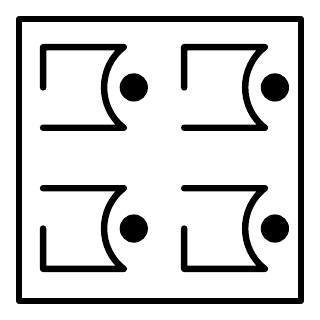
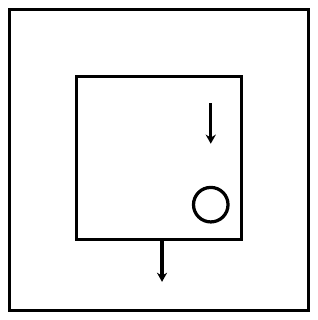
A paper is folded and punched as shown below. How will it appear when unfolded?

  1. AOption (a)

  2. BOption (b)

  3. COption (c)

  4. DOption (d)

View answer & explanation

Correct answer

Answer: (b)B.

Why this answer is correct

The paper when unfold:

Hence , the correct answer is "Option 2".

Question 4

A dice has its faces marked by letters C, L, A, U, T and E. Two positions of the same dice are shown in the given figures. Which face is opposite to face A?

  1. AOption (a)

    T

  2. BOption (b)

    U

  3. COption (c)

    E

  4. DOption (d)

    C

View answer & explanation

Correct answer

Answer: (c)C.

E

Why this answer is correct

Given:

Logic: If two dice have the same face value in the given image then their clockwise or anticlockwise wise number are known as opposite numbers in dice.

Opposite pairs

L ⇔ C

T ⇔ U

E ⇔ A

Thus, E face opposite to A.

Hence, the correct answer is "Option 3".

Question 5

Seven people A, B, C, D, E, F and G are sitting in a straight line facing the north(but not necessarily in the same order). G and C are sitting at the ends of the line not necessarily in the same order. F is sitting to the immediate right of G and the immediate left of D. E is sitting to the immediate right of D. A is sitting second to the right of E. B is sitting second to the left of C. Who is sitting between B and C?

  1. AOption (a)

    D

  2. BOption (b)

    E

  3. COption (c)

    F

  4. DOption (d)

    A

View answer & explanation

Correct answer

Answer: (d)D.

A

Why this answer is correct

Given:

Seven people A, B, C, D, E, F and G are sitting in a straight line facing the north.

G and C are sitting at the ends of the line not necessarily in the same order.

F is sitting to the immediate right of G and the immediate left of D.

E is sitting to the immediate right of D. A is sitting second to the right of E. B is sitting second to the left of C.

Thus, A is sitting between B and C.

Hence, the correct answer is "Option 4".

Question 6

Select the Venn diagram that best illustrates the relationship between the following classes.

Married, Women, Doctors

  1. AOption (a)

  2. BOption (b)

  3. COption (c)

  4. DOption (d)

View answer & explanation

Correct answer

Answer: (d)D.

Why this answer is correct

The possible venn diagram is:

Hence, the correct answer is 'Option 4".

Question 7

What should come in place of the question mark (?) in the given series based on the English alphabetical order?

GID KMH OQL SUP ?

  1. AOption (a)

    WYT

  2. BOption (b)

    WYR

  3. COption (c)

    VXS

  4. DOption (d)

    RWT

View answer & explanation

Correct answer

Answer: (a)A.

WYT

Why this answer is correct

The logic followed here is:

Thus, 'WYT' will be the next in the series.

Hence, the correct answer is 'Option 1".

Question 8

DSXL is related to FUZN in a certain way based on the English alphabetical order. In the same way, GMUB is related to IOWD. To which of the following is TFON related, following the same logic?

  1. AOption (a)

    VHQP

  2. BOption (b)

    SENM

  3. COption (c)

    SEQP

  4. DOption (d)

    VHNM

View answer & explanation

Correct answer

Answer: (a)A.

VHQP

Why this answer is correct

Given:

The logic followed here is:

DSXL is related to FUZN

And,

GMUB is related to IOWD

Similarly,

TFON is related to

Thus, TFON is related to 'VHQP'.

Hence, the correct answer is "Option 1".

Question 9

Based on the English alphabetical order, three of the following four letter-clusters are alike in a certain way and thus form a group. Which letter-cluster DOES NOT belong to that group?

(Note: The odd one out is not based on the number of consonants/vowels or their position in the letter-cluster.)

  1. AOption (a)

    KON

  2. BOption (b)

    SWU

  3. COption (c)

    GKI

  4. DOption (d)

    MQO

View answer & explanation

Correct answer

Answer: (a)A.

KON

Why this answer is correct

The logic followed here is:

Option 1) KON

Option 2) SWU

Option 3) GKI

Option 4) MQO

Thus, KON not follow same logic.

Hence, the correct answer is "Option 1".

Question 10

Select the option that represents the letters that, when sequentially placed from left to right in the blanks below, will complete the letter series.

A _ _ F D _ S G F _ A _ _ F D A S _ _ D

  1. AOption (a)

    SGADSGGF

  2. BOption (b)

    SGADGSGF

  3. COption (c)

    SGADAGGF

  4. DOption (d)

    SGADGSDF

View answer & explanation

Correct answer

Answer: (a)A.

SGADSGGF

Why this answer is correct

The given letter series is:

A _ _ F D _ S G F _ A _ _ F D A S _ _ D

Option 1: SGADSGGF

Filled series: A S G F D/ A S G F D/ A S G F D/ A S G F D

The pattern seems to be ASGFD.

Option 2: SGADGSGF

Filled series: A S G F D /A S G F D/ A S G F D/ A S G S D

Not followed any pattern.

Option 3: SGADAGGF

Filled series: A S G F D/ A S G F D/ A A G F D/ A S G F D

Not followed any pattern.

Option 4: SGADGSDF

Filled series: A S G F D/ A S G F D/ A G S F D/ A S D F D

Not followed any pattern.


Hence, the correct answer is "Option 1".

Question 11

The position(s) of how many letters will remain unchanged if each letter in the word SCRAMBLE is arranged in the English alphabetical order?

  1. AOption (a)

    Two

  2. BOption (b)

    Three

  3. COption (c)

    None

  4. DOption (d)

    One

View answer & explanation

Correct answer

Answer: (c)C.

None

Why this answer is correct

The word is SCRAMBLE.

Now, let's arrange the letters of the word SCRAMBLE in English alphabetical order:

WordSCRAMBLE
Alphabetical orderABCELMRS


Thus, none of the letters remain in their original positions after the rearrangement.

Hence, the correct answer is "Option 3".

Question 12

In a certain code language, 'WEDS' is coded as '3' and 'MAIUFQX' is coded as '6'. How is 'GIQRBZLA' coded in the given language?

  1. AOption (a)

    7

  2. BOption (b)

    8

  3. COption (c)

    5

  4. DOption (d)

    4

View answer & explanation

Correct answer

Answer: (a)A.

7

Why this answer is correct

The logic followed here is:

Logic: Total number of letter - 1 = Number.

'WEDS' is coded as '3'

Total letters 4

→ 4 - 1 

→ 3.

And,

'MAIUFQX' is coded as '6'

Total letters 7

→ 7 - 1 

→ 6.

Similarly,

'GIQRBZLA' is coded as 

Total letters 8

→ 8 - 1 

→ 7.

Hence, the correct answer is "Option 1".

Question 13

What should come in place of the question mark (?) in the given series?

878 880 884 890 898 ?

  1. AOption (a)

    910

  2. BOption (b)

    904

  3. COption (c)

    908

  4. DOption (d)

    906

View answer & explanation

Correct answer

Answer: (c)C.

908

Why this answer is correct

The logic followed here is:

Thus, '908' will be the next number in the series.

Hence, the correct answer is "Option 3".

Question 14

Select the option figure in which the given figure (X) is embedded as its part (rotation is NOT allowed).

  1. AOption (a)

  2. BOption (b)

  3. COption (c)

  4. DOption (d)

View answer & explanation

Correct answer

Answer: (d)D.

Why this answer is correct

The embedded figure is:

Hence, the correct answer is "Option 4".

Question 15

What should come in place of the question mark (?) in the given series?

83 95 108 122 137 ?

  1. AOption (a)

    166

  2. BOption (b)

    172

  3. COption (c)

    153

  4. DOption (d)

    148

View answer & explanation

Correct answer

Answer: (c)C.

153

Why this answer is correct

The logic followed here is:

Thus, '153' will be the next number in the series.

Hence, the correct answer is "Option 3".

Question 16

In a certain code language, 'MRGF' is coded as '15-20-9-8' and 'YDXB' is coded as '27-6-26-4'. What is the code for 'JWAS' in the given code language?

  1. AOption (a)

    14-27-5-23

  2. BOption (b)

    11-23-2-22

  3. COption (c)

    12-25-3-21

  4. DOption (d)

    16-28-6-24

View answer & explanation

Correct answer

Answer: (c)C.

12-25-3-21

Why this answer is correct

The logic followed here is:

'MRGF' is coded as '15-20-9-8' 

'YDXB' is coded as '27-6-26-4'

Similarly,

'JWAS' is coded as

Thus, 'JWAS' is coded as 12-25-3-21

Hence, the correct answer is "Option 3".

Question 17

Eight people are sitting in two parallel rows containing 4 people each in such a way that there is equal distance between adjacent persons.

In row 1-L, M, N and O are seated and all of them are facing south. In row 2-P, Q, R and S are seated and all of them are facing north.

Thus, each person faces another person from the other row. Q sits to the immediate right of S. Only two people sit between L and M. S faces L. The one who faces N, sits to the immediate left of P. R does not sit at any of the extreme ends.

Who among the following faces O?

  1. AOption (a)

    Q

  2. BOption (b)

    R

  3. COption (c)

    P

  4. DOption (d)

    S

View answer & explanation

Correct answer

Answer: (a)A.

Q

Why this answer is correct

Given:

Eight people are sitting in two parallel rows containing 4 people each in such a way that there is equal distance between adjacent persons.

In row 1- L, M, N and O are seated and all of them are facing south.

In row 2- P, Q, R and S are seated and all of them are facing north.

Only two people sit between L and M. S faces L.

Case 1:


Case 2:

Q sits to the immediate right of S.

R does not sit at any of the extreme ends.

The one who faces N, sits to the immediate left of P. 

Now, case 2 gets eliminated as Q cannot sit immediate right of S

Case 1:

Thus, 'Q' face 'O' in sitting arrangement.

Hence, the correct answer is "Option 1".

Question 18

Read the given statements and conclusions carefully. Assuming that the information given in the statements is true, even if it appears to be at variance with commonly known facts, decide which of the given conclusions logically follow(s) from the statements.

Statements:

All cars are rabbits.

All rabbits are bananas.

All bananas are lamps.

Conclusions:

(I): All cars are lamps.

(II): Some lamps are rabbits.

  1. AOption (a)

    Neither conclusion (I) nor (II) follows.

  2. BOption (b)

    Only conclusion (I) follows.

  3. COption (c)

    Only conclusion (II) follows.

  4. DOption (d)

    Both conclusions (I) and (II) follow.

View answer & explanation

Correct answer

Answer: (d)D.

Both conclusions (I) and (II) follow.

Why this answer is correct

The possible venn diagram:

Conclusions:

(I): All cars are lamps → True (As, All cars are rabbits, All rabbits are bananas, All bananas are lamps. so, All cars are lamps  holds true)

(II): Some lamps are rabbits → True (As, All rabbits are bananas, All bananas are lamps. so, Some lamps are rabbits holds true)

Thus, Both conclusions (I) and (II) follow.

Hence, the correct answer is "Option 4".

Question 19

DKSO is related to CIPK in a certain way based on the English alphabetical order. In the same way, LAPZ is related to KYMV. To which of the given options is EYGN related, following the same logic?

  1. AOption (a)

    DWDJ

  2. BOption (b)

    CVCl

  3. COption (c)

    BVDK

  4. DOption (d)

    BWDK

View answer & explanation

Correct answer

Answer: (a)A.

DWDJ

Why this answer is correct

The logic followed here is:

DKSO is related to CIPK

LAPZ is related to KYMV

Similarly,

EYGN is related to

Thus, EYGN is related to DWDJ.

Hence, the correct answer is "Option 1".

Question 20

Identify the figure given in the options, which when put in place of the question mark (?) will logically complete the series.

  1. AOption (a)

  2. BOption (b)

  3. COption (c)

  4. DOption (d)

View answer & explanation

Correct answer

Answer: (a)A.

Why this answer is correct

The figure logically complete the series:

Hence, the correct answer is 'Option 1".

General Knowledge and General Awareness (20 questions)

Question 21

The Attorney General of India provides legal advice to _________.

  1. AOption (a)

    Governor of the State

  2. BOption (b)

    Chief Justice of India

  3. COption (c)

    Chief Minister of the State

  4. DOption (d)

    Union Government

View answer & explanation

Correct answer

Answer: (d)D.

Union Government

Why this answer is correct

The correct answer is Union Government.

Key Points

  • The Attorney General of India is the chief legal advisor to the Union Government and is appointed by the President under Article 76 of the Indian Constitution.
  • He/she represents the Union Government in all legal matters, including cases in the Supreme Court and High Courts.
  • The Attorney General provides legal advice to the government on matters of law and performs any other legal duties assigned by the President.
  • While the Attorney General has the right to participate in Parliamentary proceedings, he/she does not have voting rights.
  • The Attorney General must be a person qualified to be appointed as a judge of the Supreme Court, i.e., with at least 10 years of experience as an advocate or a judge.

Additional Information

  • Solicitor General of India
  • Assists the Attorney General and represents the government in important legal cases.
  • Unlike the Attorney General, the Solicitor General does not provide advice directly to the government.
  • Advocate General of a State
  • The Advocate General is the highest legal authority in a state and provides advice to the state government.
  • He/she is appointed by the Governor under Article 165 of the Constitution.
  • Role of Attorney General in Constitutional Matters
  • Acts as an advisor in constitutional disputes and government policies.
  • Provides guidance on issues like federalism and separation of powers.
  • Limitations of the Attorney General
  • He/she cannot defend any accused or oppose the government in legal matters.
  • The Attorney General is not a full-time employee of the government and can take up private legal practice, provided it does not conflict with official duties.

Question 22

According to Census 2011, in which State is the difference in the male and female literacy rates the highest?

  1. AOption (a)

    Rajasthan

  2. BOption (b)

    Jharkhand

  3. COption (c)

    Bihar

  4. DOption (d)

    Madhya Pradesh

View answer & explanation

Correct answer

Answer: (a)A.

Rajasthan

Why this answer is correct

The correct answer is Rajasthan.

Key Points

  • According to Census 2011, Rajasthan recorded the highest difference in male and female literacy rates among Indian states.
  • The male literacy rate in Rajasthan was approximately 80.51%, whereas the female literacy rate stood at 52.66%, creating a significant gap of 27.85%.
  • This disparity highlights gender inequality in education, particularly in rural areas of Rajasthan.
  • Efforts have been made by the state government through programs like Beti Bachao Beti Padhao and Sarva Shiksha Abhiyan to bridge the literacy gap.
  • Rajasthan has historically faced challenges such as socio-cultural norms and lack of access to education for women, contributing to this disparity.

Additional Information

  • Literacy Rate
  • Literacy rate refers to the percentage of the population aged 7 years and above who can read and write with understanding.
  • It is an essential indicator of a region's social and economic development.
  • Gender Disparity in Literacy
  • Gender disparity in literacy rates is caused by factors like traditional societal norms, poverty, and lack of access to education.
  • Government schemes such as Beti Bachao Beti Padhao aim to reduce this disparity by promoting girl child education.
  • Census 2011
  • Census 2011 is the 15th Indian Census conducted by the Registrar General and Census Commissioner of India.
  • It provides comprehensive data on population, literacy rates, employment, and housing conditions.
  • Schemes to Promote Literacy
  • Samagra Shiksha Abhiyan: Focuses on universal access to education and improving literacy rates.
  • Beti Bachao Beti Padhao: Aims to improve gender equality in education and combat discrimination against girls.

Question 23

According to the Vishnu Purana, who was Chandragupta Maurya's mother?

  1. AOption (a)

    Subhadrangi, daughter of a Brahmin

  2. BOption (b)

    The wife of a Nanda king

  3. COption (c)

    Mura, daughter of a hunter

  4. DOption (d)

    A Greek noblewoman

View answer & explanation

Correct answer

Answer: (c)C.

Mura, daughter of a hunter

Why this answer is correct

The correct answer is Mura, daughter of a hunter.

Key Points

  • According to the Vishnu Purana, Chandragupta Maurya’s mother was Mura, who was described as the daughter of a hunter.
  • Mura is often referred to as a woman of humble origin, whose lineage was tied to the Shudra class.
  • Chandragupta Maurya's rise to power is frequently cited as an example of how individuals from lower social strata could ascend to great heights in ancient India.
  • Historical texts and puranas emphasize Chandragupta's humble beginnings, which contributed to his perception as a transformative leader.
  • The Vishnu Purana, along with other ancient texts like the Buddhist chronicles, provides various accounts of Chandragupta’s ancestry, reflecting the diverse narratives surrounding his life.

Additional Information

  • Chandragupta Maurya:
  • He was the founder of the Maurya Empire, which became one of the largest empires in ancient India.
  • Chandragupta was guided by his mentor, Chanakya, who authored the Arthashastra, a treatise on governance and economics.
  • Under his reign, the Maurya Empire unified the Indian subcontinent and established a centralized administration.
  • Chandragupta later renounced his throne and adopted Jainism, spending his final years as an ascetic.
  • Vishnu Purana:
  • It is one of the eighteen Mahapuranas, a genre of ancient Indian texts.
  • The Vishnu Purana provides genealogies of kings and stories of prominent figures like Chandragupta Maurya.
  • The Purana emphasizes the role of Vishnu in preserving dharma and cosmic order.
  • Chanakya’s Role:
  • Chanakya, also known as Kautilya, was the political advisor and strategist behind Chandragupta’s success.
  • He played a pivotal role in overthrowing the Nanda dynasty and establishing the Maurya Empire.
  • Chanakya’s teachings in the Arthashastra include principles of governance, economics, and military strategy.
  • Social Stratification in Ancient India:
  • Ancient Indian society was divided into varnas (social classes), with Shudras typically occupying the lowest tier.
  • Chandragupta’s ascent challenged traditional notions of caste-based hierarchies.

Question 24

As per Census 2011, which of the following northern states has the highest literacy rate?

  1. AOption (a)

    Haryana

  2. BOption (b)

    Punjab

  3. COption (c)

    Uttarakhand

  4. DOption (d)

    Himachal Pradesh

View answer & explanation

Correct answer

Answer: (d)D.

Himachal Pradesh

Why this answer is correct

The correct answer is Himachal Pradesh.

Key Points

  • As per Census 2011, Himachal Pradesh recorded the highest literacy rate among northern states with a literacy rate of 82.80%.
  • Himachal Pradesh's focus on education policies and rural literacy programs played a key role in achieving this milestone.
  • The literacy rate for males in Himachal Pradesh stood at 89.53%, while for females it was 75.93%, showcasing efforts toward gender inclusivity in education.
  • The state invested heavily in primary education and teacher training programs to improve its literacy rate.
  • Himachal Pradesh ranks 11th overall in literacy rates across India as per Census 2011 data.

Additional Information

  • Literacy Rate Definition:
  • Literacy rate refers to the percentage of people aged 7 and above who can read and write with understanding.
  • Census 2011 classified literacy into male and female literacy rates to assess gender disparity in education.
  • Key Focus Areas in Himachal Pradesh:
  • Emphasis on universal primary education and mid-day meal schemes to boost enrolment.
  • Implementation of adult literacy programs to bridge gaps in literacy among older age groups.
  • Strengthening of infrastructure like schools and libraries in rural areas.
  • Comparison with Other Northern States:
  • Punjab (76.68%) and Uttarakhand (78.82%) follow Himachal Pradesh but lag behind in overall literacy rate.
  • Haryana’s literacy rate stood at 75.55%, significantly lower compared to Himachal Pradesh.
  • National Literacy Rate (Census 2011):
  • The overall literacy rate of India was 74.04% in 2011, with Kerala leading at 93.91%.
  • Himachal Pradesh’s literacy rate was above the national average, showcasing its focus on educational reforms.

Question 25

The Union Cabinet chaired by Prime Minister, approved which scheme to promote sustainable agriculture and to achieve food security for self sufficiency in October 2024?

  1. AOption (a)

    National Food Security Mission

  2. BOption (b)

    National Mission on Agricultural Extension and Technology

  3. COption (c)

    National Mission on Oilseeds and Oil Palm

  4. DOption (d)

    PM Rashtriya Krishi Vikas Yojana

View answer & explanation

Correct answer

Answer: (d)D.

PM Rashtriya Krishi Vikas Yojana

Why this answer is correct

The correct answer is PM Rashtriya Krishi Vikas Yojana.

Key Points

  • The PM Rashtriya Krishi Vikas Yojana (RKVY) aims to achieve food security, sustainable agriculture, and self-sufficiency by promoting growth in the agricultural sector.
  • It is a state plan scheme launched in 2007 but restructured as RKVY-Remunerative Approaches for Agriculture and Allied sector Rejuvenation (RKVY-RAFTAAR) in 2017 to focus on pre- and post-harvest infrastructure.
  • Under this scheme, funds are provided to states as grants for agricultural development, ensuring decentralization and flexibility for local needs.
  • The scheme also supports innovation and technology adoption in agriculture to increase productivity and profitability for farmers.
  • It aligns with the government's goal of doubling farmers' incomes by 2024, with a focus on value addition, market linkages, and sustainable farming practices.

Additional Information

  • Sustainable Agriculture
  • It involves practices that maintain soil health, conserve water, and reduce dependency on chemical inputs.
  • Techniques include crop rotation, organic farming, integrated pest management, and agroforestry.
  • Sustainable agriculture ensures long-term productivity while minimizing environmental harm.
  • National Food Security Mission (NFSM)
  • Launched in 2007-08, it aims to increase the production of rice, wheat, pulses, and coarse cereals to meet the growing demand.
  • It focuses on area expansion, productivity enhancement, and restoring soil fertility.
  • The mission operates through cluster demonstrations, distribution of quality seeds, and resource conservation technologies.
  • National Mission on Oilseeds and Oil Palm (NMOOP)
  • It was launched in 2014-15 to augment the production of edible oils by promoting oilseeds and oil palm cultivation.
  • The mission aims to achieve self-sufficiency in edible oil production and reduce dependency on imports.
  • It emphasizes increasing the area under cultivation, improving productivity, and adopting high-yielding varieties.
  • Krishi Infrastructure Fund
  • Launched in 2020, it provides financial support for building post-harvest infrastructure and community farming assets.
  • The fund has a corpus of Rs. 1 lakh crore, focusing on storage, processing, and value-addition facilities.
  • It empowers farmers and Farmer Producer Organizations (FPOs) to gain better market access and reduce wastage.

Question 26

Padmashree Mukund Nayak was honoured with the Sangeet Natak Akademi Award 2017 for which of the following categories?

  1. AOption (a)

    Carnatic music

  2. BOption (b)

    Hindustani classical music

  3. COption (c)

    Folk music

  4. DOption (d)

    Qawwali

View answer & explanation

Correct answer

Answer: (c)C.

Folk music

Why this answer is correct

The correct answer is Folk Music.

Key Points

  • Padmashree Mukund Nayak is a celebrated folk artist from Jharkhand, known for his contributions to the folk music traditions of the state.
  • He was honoured with the prestigious Sangeet Natak Akademi Award in 2017 for his exceptional contributions to folk music.
  • The award is India’s highest recognition given to practicing artists for their outstanding work in various performing arts categories, including music, dance, and theater.
  • Mukund Nayak has worked extensively to preserve and promote the Karma folk tradition, a cultural heritage of Jharkhand.
  • His efforts in bringing Jharkhand's folk music to national recognition have greatly contributed to the preservation of indigenous art forms.

Additional Information

  • Sangeet Natak Akademi Awards:
  • Established in 1952, these awards are conferred annually by the Sangeet Natak Akademi, India's National Academy for Music, Dance, and Drama.
  • The awards recognize outstanding achievements in various performing arts categories such as classical music, folk music, dance, and theater.
  • Recipients receive a cash prize, a citation, and a tamrapatra (copper plaque).
  • Karma Folk Tradition:
  • Karma is a popular folk dance and music tradition practiced predominantly in Jharkhand, Odisha, Chhattisgarh, and Madhya Pradesh.
  • It celebrates nature and the harvest season, performed during the Karma festival.
  • The music involves traditional instruments like the mandar, nagara, and flute.
  • Padmashree Award:
  • It is the fourth highest civilian award in India, given for distinguished contributions in various fields such as art, literature, education, sports, and social service.
  • Mukund Nayak was awarded the Padmashree for his contributions to folk music and cultural preservation.
  • Preservation of Folk Music:
  • Folk music reflects the cultural heritage and traditions of a region, passed down orally through generations.
  • Efforts to preserve folk music include documentation, performances, and integration into mainstream platforms.
  • Artists like Mukund Nayak play a crucial role in safeguarding these traditions against the rapid modernization of society.

Question 27

In which month does the Rann Utsav start at Kachchh, Gujarat?

  1. AOption (a)

    May

  2. BOption (b)

    November

  3. COption (c)

    April

  4. DOption (d)

    February

View answer & explanation

Correct answer

Answer: (b)B.

November

Why this answer is correct

The correct answer is November.

Key Points

  • The Rann Utsav is an annual cultural festival celebrated in the Rann of Kutch, Gujarat.
  • It begins in the month of November and continues until February, showcasing the vibrant culture, crafts, and traditions of Gujarat.
  • The festival is organized by the Gujarat Tourism Department and attracts tourists from across the globe.
  • Key attractions include the white salt desert, folk music and dance performances, camel rides, adventure sports, and traditional Gujarati cuisine.
  • The event is held in Dhordo village, often referred to as the "Tent City" due to its luxurious tent accommodations.

Additional Information

  • Rann of Kutch
  • The Rann of Kutch is a seasonal salt marsh located in the Thar Desert in Gujarat.
  • It spans an area of approximately 7,500 square kilometers, making it one of the largest salt deserts in the world.
  • The region is known for its unique geography, biodiversity, and cultural significance.
  • Significance of Rann Utsav
  • The festival highlights the art, craft, and cultural heritage of Gujarat.
  • It boosts tourism and contributes significantly to the local economy.
  • It provides a platform for artisans and performers to showcase their talent and promote indigenous crafts.
  • Activities at Rann Utsav
  • Adventure activities such as paramotoring, ATV rides, and hot air ballooning are popular among visitors.
  • Shopping for handmade crafts, jewelry, and textiles is a key attraction.
  • Visitors can enjoy stargazing, as the desert offers clear night skies.
  • Best Time to Visit
  • The ideal time to attend Rann Utsav is between November and February when the weather is pleasant.
  • The full moon nights during the festival offer breathtaking views of the white desert illuminated by moonlight.

Question 28

What was the pre-determined principle announced in the Union Budget for 2018-19 regarding the Minimum Support Price (MSP) for the principal crops in India?

  1. AOption (a)

    Equal to the cost of production

  2. BOption (b)

    One-and-a-half times the cost of production

  3. COption (c)

    50 per cent less than the cost of production

  4. DOption (d)

    Double the cost of production

View answer & explanation

Correct answer

Answer: (b)B.

One-and-a-half times the cost of production

Why this answer is correct

The correct answer is One-and-a-half times the cost of production.

Key Points

  • In the Union Budget for 2018-19, the government announced that the Minimum Support Price (MSP) for all principal crops would be set at one-and-a-half times (1.5x) the cost of production.
  • This decision aimed to ensure remunerative prices for farmers and address the issue of agrarian distress in the country.
  • The MSP calculation is based on the comprehensive cost of production, including expenses such as seeds, fertilizers, labor, irrigation, and other inputs.
  • The announcement was in line with the Swaminathan Commission's recommendations, which advocated fixing MSP at least 50% higher than the cost of production.
  • The initiative was primarily targeted at improving farmers' income and boosting agricultural productivity in India.

Additional Information

  • Minimum Support Price (MSP):
  • MSP is a form of market intervention by the Government of India to safeguard farmers against sharp price falls during bumper production years.
  • The MSP is announced for 22 mandated crops and is determined by the Cabinet Committee on Economic Affairs (CCEA).
  • It is based on the recommendations of the Commission for Agricultural Costs and Prices (CACP).
  • Swaminathan Commission:
  • The National Commission on Farmers, chaired by Dr. M.S. Swaminathan, recommended fixing MSP at least 50% above the cost of production (C2).
  • The formula includes both input costs (A2) and the imputed value of family labor (FL).
  • Types of Costs in MSP Calculation:
  • A2: Includes out-of-pocket expenses like seeds, fertilizers, and labor.
  • A2+FL: A2 costs plus the imputed value of unpaid family labor.
  • C2: Comprehensive cost, including A2+FL and the rental value of owned land and interest on fixed capital.
  • Implementation and Benefits:
  • The 1.5x MSP policy ensures better income for farmers and reduces their dependence on informal credit systems.
  • It also incentivizes crop diversification and adoption of sustainable farming practices.

Question 29

When was the First Five-Year Plan launched in India?

  1. AOption (a)

    1947

  2. BOption (b)

    1950

  3. COption (c)

    1951

  4. DOption (d)

    1956

View answer & explanation

Correct answer

Answer: (c)C.

1951

Why this answer is correct

The correct answer is 1951.

Key Points

  • The First Five-Year Plan of India was launched in 1951 and covered the period from 1951 to 1956.
  • It was based on the Harrod-Domar Model, which emphasized investment and savings as the key to economic growth.
  • The primary focus of the First Five-Year Plan was on agriculture, irrigation, and energy to address food shortages and boost rural development.
  • The plan aimed at achieving a growth rate of 2.1% annually, but India successfully achieved a growth rate of around 3.6%.
  • The Planning Commission, established in 1950, was responsible for formulating and overseeing the implementation of the Five-Year Plans.

Additional Information

  • Five-Year Plans in India
  • India adopted the concept of centralized economic planning inspired by the Soviet Union.
  • The Planning Commission was established under the leadership of Prime Minister Jawaharlal Nehru to implement the Five-Year Plans.
  • Each plan targeted specific sectors such as agriculture, industry, and social development based on national priorities.
  • The Five-Year Plans continued until 2017, when they were replaced by the NITI Aayog's Three-Year Action Agenda.
  • Harrod-Domar Model
  • This economic model emphasizes the importance of savings and investment in achieving economic growth.
  • The model assumes that economic growth is directly proportional to the savings rate and inversely proportional to the capital-output ratio.
  • It was used as a foundational framework for India's First Five-Year Plan.
  • Planning Commission
  • Established in 1950, the Planning Commission was tasked with assessing resources and formulating India's Five-Year Plans.
  • The commission worked under the chairmanship of the Prime Minister and included experts from various fields.
  • It was replaced by NITI Aayog in 2015 to better align with contemporary needs.
  • Focus of the First Five-Year Plan
  • The plan prioritized agriculture due to severe food shortages in the post-independence period.
  • Key projects included the development of irrigation systems like the Bhakra Nangal Dam and energy initiatives.
  • It also focused on land reforms and rural development to improve livelihoods in the countryside.

Question 30

In which sport does the "Timed Out" rule apply?

  1. AOption (a)

    Badminton

  2. BOption (b)

    Wrestling

  3. COption (c)

    Cricket

  4. DOption (d)

    Judo

View answer & explanation

Correct answer

Answer: (c)C.

Cricket

Why this answer is correct

The correct answer is Cricket.

Key Points

  • The "Timed Out" rule in cricket is outlined in the Marylebone Cricket Club (MCC) Laws of Cricket, under Law 40.
  • This rule states that a new batter must be ready to face the next delivery or at the crease within three minutes of the previous batter's dismissal.
  • If the incoming batter fails to arrive within the stipulated time, the fielding team can appeal to the umpire to declare the batter as "Timed Out."
  • The "Timed Out" rule is a rare mode of dismissal and emphasizes maintaining the pace and flow of the game.
  • This rule applies to all formats of cricket, including Test matches, One-Day Internationals (ODIs), and Twenty20 (T20) matches.

Additional Information

  • Rare Dismissal Modes in Cricket:
  • Other rare modes of dismissal in cricket include Hit Wicket, Obstructing the Field, Handling the Ball (now included under Obstructing the Field), and Retired Out.
  • These dismissals occur infrequently in professional matches compared to common methods like bowled, caught, or LBW.
  • Historical Instances of Timed Out:
  • The first recorded instance of a "Timed Out" dismissal in first-class cricket occurred in 1987 when Andrew Jordaan was dismissed in South Africa's domestic competition.
  • There have been very few instances of this dismissal in professional cricket, making it one of the rarest ways to lose a wicket.
  • Purpose of the Rule:
  • The rule ensures that the game maintains its rhythm and prevents unnecessary delays caused by players taking excessive time to get ready.
  • It also serves to uphold the spirit of the game by emphasizing punctuality and readiness among players.
  • Recent Updates to MCC Laws:
  • The MCC regularly updates the Laws of Cricket to address evolving scenarios and ensure fairness in the game.
  • The 2022 Code of Laws included revisions to clarify several rules, including "Timed Out," to ensure better understanding and implementation.

Question 31

87-year-old Ramlal Bareth, the only surviving Kathak Dancer of Raigarh court, was awarded with which of the following awards in 2024?

  1. AOption (a)

    Padma Vibhushan

  2. BOption (b)

    Padma Bhushan

  3. COption (c)

    Padma Shri

  4. DOption (d)

    Sahitya Academy Award

View answer & explanation

Correct answer

Answer: (c)C.

Padma Shri

Why this answer is correct

The correct answer is Padma Shri.

Key Points

  • Ramlal Bareth, an 87-year-old Kathak dancer, is the last surviving exponent of the Raigarh court's classical dance tradition.
  • He was recognized with the Padma Shri award in 2024 for his contributions to Indian classical dance.
  • The Padma Shri is India's fourth-highest civilian award, given for distinguished achievements in various fields such as arts, literature, sports, and social service.
  • Ramlal Bareth has dedicated decades to preserving and promoting Kathak, a classical dance form renowned for storytelling through intricate footwork and expressions.
  • His recognition highlights the importance of preserving India's rich cultural heritage and honoring its traditional art forms.

Additional Information

  • Kathak Dance:
  • Kathak is one of the eight classical dance forms of India, originating from the northern regions.
  • The term "Kathak" is derived from "Katha," meaning story, as it involves storytelling through dance.
  • It is characterized by intricate footwork, spins, and expressive gestures, often accompanied by Hindustani classical music.
  • Historically, Kathak was performed in temples and later evolved under Mughal patronage, blending Hindu and Persian influences.
  • Raigarh Court's Contribution:
  • The Raigarh princely state was a notable patron of arts, especially classical dance and music.
  • It played a significant role in nurturing Kathak and ensuring its growth as a respected art form.
  • The court's dancers and musicians contributed to the development of unique styles and compositions.
  • Padma Awards:
  • Instituted in 1954, the Padma Awards are classified into Padma Vibhushan, Padma Bhushan, and Padma Shri.
  • Padma Shri is awarded for distinguished service in any field, including arts, literature, sports, and public service.
  • The awards are announced annually on Republic Day and are conferred by the President of India.
  • Preserving Cultural Heritage:
  • Honoring artists like Ramlal Bareth underscores the importance of safeguarding India's classical art forms.
  • Government initiatives such as Sangeet Natak Akademi and cultural awards play a key role in supporting traditional arts.
  • Awareness and education about classical dance forms help promote cultural continuity among younger generations.

Question 32

Which of the following was a new agricultural practice introduced during the Green Revolution?

  1. AOption (a)

    Reliance on animal labour

  2. BOption (b)

    Use of traditional seeds

  3. COption (c)

    Use of modern irrigation techniques

  4. DOption (d)

    Organic farming methods

View answer & explanation

Correct answer

Answer: (c)C.

Use of modern irrigation techniques

Why this answer is correct

The correct answer is Use of modern irrigation techniques.

Key Points

  • The Green Revolution introduced advanced agricultural practices, including the use of modern irrigation techniques like drip and sprinkler systems for water conservation.
  • Modern irrigation methods ensured efficient utilization of water resources and helped increase crop yields, especially in areas with scarce water supply.
  • These techniques supported the cultivation of high-yield variety (HYV) crops, which required timely and adequate water supply for optimal growth.
  • The adoption of modern irrigation systems reduced dependency on monsoon rainfall, making agriculture more resilient to climate variability.
  • Modern irrigation played a critical role in transforming India’s agricultural sector during the Green Revolution, contributing to food security and self-sufficiency.

Additional Information

  • High-Yield Variety (HYV) Seeds:
  • HYV seeds were developed to produce higher output per hectare compared to traditional seeds.
  • These seeds often required proper irrigation, fertilizers, and pesticides for maximum productivity.
  • Chemical Fertilizers and Pesticides:
  • The Green Revolution encouraged the use of chemical fertilizers to enhance soil fertility and crop production.
  • Pesticides were introduced to protect crops from pests and diseases, ensuring a more stable yield.
  • Mechanization of Agriculture:
  • Tractors, harvesters, and other machinery replaced traditional animal labor, significantly improving efficiency.
  • Mechanization allowed large-scale farming and reduced manual labor dependency.
  • Impact on Food Security:
  • The Green Revolution helped India achieve self-sufficiency in food grains, reducing dependency on imports.
  • It significantly contributed to reducing hunger and malnutrition in the country.
  • Environmental Concerns:
  • Excessive use of fertilizers and pesticides caused soil degradation and water pollution.
  • Modern irrigation techniques, though efficient, sometimes led to waterlogging and salinization in certain areas.

Question 33

The increased concentration of suspended solids in water and their accumulation on bottoms where they are undesirable, creates what kind of water pollution?

  1. AOption (a)

    Siltation

  2. BOption (b)

    Thermal pollution

  3. COption (c)

    Microbiological pollution

  4. DOption (d)

    Nutrient pollution

View answer & explanation

Correct answer

Answer: (a)A.

Siltation

Why this answer is correct

The correct answer is Siltation.

Key Points

  • Siltation refers to the process by which fine particles like silt and sediment accumulate in water bodies, leading to pollution and degradation of aquatic ecosystems.
  • This type of pollution occurs due to activities like deforestation, mining, and construction that increase erosion and sediment runoff.
  • Siltation can disrupt aquatic habitats by blocking sunlight penetration, reducing oxygen levels, and smothering organisms living on the seabed or riverbed.
  • It also affects water quality and can reduce the capacity of reservoirs, lakes, and rivers, impacting human activities such as irrigation and hydroelectric power generation.
  • Preventive measures include soil conservation practices, afforestation, and the use of sediment control techniques to reduce erosion.

Additional Information

  • Suspended solids:
  • They are small solid particles that remain in water due to turbulence or slow settling rates.
  • Sources include agricultural runoff, industrial discharge, and urban stormwater.
  • Excessive suspended solids can lead to turbidity, reducing light penetration and affecting aquatic photosynthesis.
  • Impact of siltation:
  • Damages aquatic ecosystems by burying habitats and reducing biodiversity.
  • Causes economic losses by reducing the efficiency of water infrastructure such as reservoirs and dams.
  • Can lead to increased flooding due to reduced channel capacity.
  • Soil erosion:
  • A major contributor to siltation, caused by deforestation, overgrazing, and improper land management.
  • Erosion control measures include terracing, planting vegetation, and using sediment barriers.
  • Other types of water pollution:
  • Thermal pollution: Caused by the discharge of heated water, impacting aquatic life.
  • Microbiological pollution: Involves harmful pathogens entering water, affecting human and animal health.
  • Nutrient pollution: Excess nitrogen and phosphorus lead to eutrophication, depleting oxygen levels in water bodies.

Question 34

The President of India, Droupadi Murmu, was previously the Governor of _______.

  1. AOption (a)

    Uttar Pradesh

  2. BOption (b)

    Jharkhand

  3. COption (c)

    Odisha

  4. DOption (d)

    Assam

View answer & explanation

Correct answer

Answer: (b)B.

Jharkhand

Why this answer is correct

The correct answer is Jharkhand.

Key Points

  • Droupadi Murmu served as the 9th Governor of Jharkhand from May 18, 2015, to July 12, 2021.
  • She was the first tribal woman to be appointed as the Governor of Jharkhand since the state's formation in 2000.
  • During her tenure, she was known for her work in tribal welfare and governance in the state.
  • Her appointment as the Governor was widely seen as a recognition of her contributions to public service and her commitment to social causes.
  • She has now become the 15th President of India, making history as the first tribal woman to hold this prestigious position.

Additional Information

  • Governorship in India:
  • The Governor is the constitutional head of a state, appointed by the President of India for a term of five years.
  • The Governor acts as the representative of the central government in the state.
  • Key responsibilities include giving assent to bills, summoning or dissolving the state legislature, and overseeing the functioning of the state government.
  • Jharkhand:
  • Jharkhand is a state in eastern India, carved out of Bihar in 2000.
  • It is rich in natural resources and is known for its tribal culture and traditions.
  • The state has a significant tribal population, comprising around 26% of its total population.
  • Droupadi Murmu’s Background:
  • She hails from the Santhal tribal community in Odisha.
  • She began her political career as a member of the Bharatiya Janata Party (BJP) and served in various capacities in Odisha, including as a minister.
  • Her rise to becoming the President of India is a landmark achievement for tribal representation in Indian politics.
  • Role as President of India:
  • The President is the head of state and the supreme commander of the armed forces in India.
  • The President's role is largely ceremonial, but they have significant powers in times of political crises, such as the dissolution of Lok Sabha or the imposition of President's Rule in a state.
  • As President, Droupadi Murmu has emphasized inclusive development and the empowerment of marginalized communities.

Question 35

Which law is Willebrod Snell's most important contribution to science?

  1. AOption (a)

    Law of viscosity

  2. BOption (b)

    Law of motion

  3. COption (c)

    Law of refraction

  4. DOption (d)

    Law of electrolysis

View answer & explanation

Correct answer

Answer: (c)C.

Law of refraction

Why this answer is correct

The correct answer is Law of Refraction.

Key Points

  • Willebrord Snell, a Dutch mathematician and astronomer, formulated the Law of Refraction, commonly known as Snell's Law, in 1621.
  • Snell's Law mathematically describes how light bends when it passes from one medium to another with different refractive indices.
  • The law is expressed as n₁sinθ₁ = n₂sinθ₂, where n₁ and n₂ are the refractive indices of the two media, and θ₁ and θ₂ are the angles of incidence and refraction respectively.
  • This discovery is fundamental to the field of optics and is widely used in designing lenses, optical instruments, and understanding light behavior.
  • The law also underpins modern technologies such as fiber optics, laser systems, and imaging devices.

Additional Information

  • Refraction:
  • Refraction is the bending of light as it passes from one transparent medium to another due to a change in its speed.
  • It is governed by the refractive index, which is a measure of how much light slows down in a medium compared to a vacuum.
  • Applications include magnifying glasses, cameras, telescopes, and corrective lenses.
  • Refractive Index:
  • The refractive index is a dimensionless number indicating the ratio of the speed of light in a vacuum to its speed in a given medium.
  • It determines how much light will bend when transitioning between materials.
  • Common values: Air (≈1), Water (≈1.33), Glass (≈1.5).
  • Critical Angle and Total Internal Reflection:
  • The critical angle is the angle of incidence above which light is entirely reflected within a medium, rather than refracted.
  • Total internal reflection is a phenomenon used in fiber optics and diamond brilliance.
  • Applications of Snell's Law:
  • Fiber optic communication systems rely on controlled refraction and total internal reflection.
  • It is essential in lens design for cameras, microscopes, and telescopes.
  • Understanding atmospheric refraction helps explain phenomena like mirages and the apparent bending of starlight.

Question 36

Which of the following generally form at the upper part of a river?

  1. AOption (a)

    Oxbow lakes

  2. BOption (b)

    Meanders

  3. COption (c)

    Gorges

  4. DOption (d)

    Floodplains

View answer & explanation

Correct answer

Answer: (c)C.

Gorges

Why this answer is correct

The correct answer is Gorges.

Key Points

  • Gorges are deep, narrow valleys with steep sides, typically formed by the erosional activity of a river in its upper course.
  • These are created due to the river cutting vertically into the bedrock as it flows downhill with high energy, carving out steep walls over time.
  • Gorges are most commonly formed in areas with resistant rock, where the river's erosive power is greater than the resistance of the rock.
  • The formation of a gorge is a characteristic feature of a river's youthful stage, where it flows rapidly down steep gradients.
  • Examples include the Kali Gandaki Gorge in Nepal and the Grand Canyon in the USA, both of which highlight the erosive power of rivers over millennia.

Additional Information

  • Upper Course of a River:
  • It is the first stage of a river’s journey, typically found in mountainous or hilly regions.
  • Rivers in this stage have high velocity and energy, leading to vertical erosion and the formation of features like gorges, waterfalls, and rapids.
  • Other Features of a River's Upper Course:
  • Waterfalls: Sudden drops in a river's course, often formed where hard rock overlays softer rock.
  • Rapids: Sections of turbulent, fast-flowing water caused by a steep gradient or obstacles in the riverbed.
  • Meanders and Floodplains:
  • These are features of the river's middle and lower courses where the flow is slower, and lateral erosion and deposition dominate.
  • Unlike gorges, meanders and floodplains are absent in the upper course due to high energy and steep gradients.
  • Oxbow Lakes:
  • These are U-shaped water bodies formed from abandoned meanders in the lower course of a river.
  • Their formation occurs due to sediment deposition cutting off a meander loop from the main river channel.

Question 37

Which classical dance form originated in Kuchelapuram village of Krishna district?

  1. AOption (a)

    Kathakali

  2. BOption (b)

    Kuchipudi

  3. COption (c)

    Kathak

  4. DOption (d)

    Mohiniattam

View answer & explanation

Correct answer

Answer: (b)B.

Kuchipudi

Why this answer is correct

The correct answer is Kuchipudi.

Key Points

  • Kuchipudi is a classical dance form originating from Kuchelapuram village in Krishna district of Andhra Pradesh, India.
  • It was developed as a form of dance-drama combining music, acting, and movement, which is unique among Indian classical dance forms.
  • The dance form is named after its place of origin, Kuchelapuram, and traditionally performed by male Brahmin priests.
  • Kuchipudi performances often depict stories from Hindu mythology, especially the Ramayana, Mahabharata, and Puranas.
  • Over time, Kuchipudi transitioned into a refined classical art form, incorporating intricate footwork, graceful movements, and expressive storytelling.

Additional Information

  • Origin and Development:
  • Kuchipudi originated in the 3rd century BCE, but its codified form emerged in the 17th century under Siddhendra Yogi.
  • Siddhendra Yogi is considered the father of Kuchipudi and refined it into a structured art form.
  • Performance Style:
  • It is characterized by rapid footwork, dramatic expression, and rhythmic patterns.
  • Performers often combine singing and acting with dancing, making it a holistic art form.
  • Costumes and Makeup:
  • Kuchipudi dancers wear vibrant costumes, intricate jewelry, and expressive makeup to enhance their storytelling.
  • The attire varies based on the character being portrayed, such as gods, demons, or humans.
  • Modern Adaptations:
  • While Kuchipudi was historically performed by men, today, women also actively participate and dominate the art form.
  • Contemporary Kuchipudi performances often include solo dances, which were rare in traditional formats.

Question 38

The Government of India Act, 1935 provided for how many lists of divisions of power between the federation (central government) and provinces?

  1. AOption (a)

    Four lists

  2. BOption (b)

    Three lists

  3. COption (c)

    Two lists

  4. DOption (d)

    One list

View answer & explanation

Correct answer

Answer: (b)B.

Three lists

Why this answer is correct

The correct answer is Three lists.

Key Points

  • The Government of India Act, 1935 introduced a federal structure with a division of powers between the central government (federation) and provinces through three legislative lists.
  • The three lists were categorized as Federal List, Provincial List, and Concurrent List.
  • Federal List included subjects under the exclusive jurisdiction of the central government such as defense, foreign affairs, and railways.
  • Provincial List contained subjects under the provincial governments, including police, public health, and education.
  • Concurrent List covered subjects where both the center and provinces could legislate, such as criminal law and marriage.

Additional Information

  • Government of India Act, 1935:
  • It was the longest and most detailed legislation ever passed by the British Parliament for India.
  • The Act introduced provincial autonomy, allowing provinces to function as autonomous administrative units.
  • It provided for the establishment of a Federal Court to resolve disputes between provinces and the federation.
  • The Act also proposed the creation of an All-India Federation, but it never came into effect due to lack of agreement among princely states.
  • Concurrent List:
  • The concept of a concurrent list was introduced for the first time in Indian legislative history by the 1935 Act.
  • It laid the foundation for cooperative federalism in India, later adopted in the Constitution of India (1950).
  • Impact on Indian Constitution:
  • The Government of India Act, 1935 served as an important blueprint for the drafting of the Indian Constitution.
  • Many features such as division of powers, bicameralism, and federal structure were adopted and refined in the Indian Constitution.
  • Key Terminology:
  • Federalism: A system of governance where power is divided between central and regional authorities.
  • Provincial Autonomy: The ability of provinces to govern themselves independently within certain areas.

Question 39

What is the standard width of the field in an international hockey match?

  1. AOption (a)

    60 m

  2. BOption (b)

    45 m

  3. COption (c)

    50 m

  4. DOption (d)

    55 m

View answer & explanation

Correct answer

Answer: (d)D.

55 m

Why this answer is correct

The correct answer is 55 m.

Key Points

  • The standard width of a hockey field for international matches is 55 meters, as per the regulations set by the International Hockey Federation (FIH).
  • The field is rectangular, with a length of 91.4 meters and a width of 55 meters, ensuring uniformity in competitive play.
  • The field is divided into halves, each featuring a 23-meter line that helps demarcate key playing zones.
  • The dimensions are strictly maintained to support fair gameplay and adherence to international standards.
  • The goalposts are placed at the center of each width side, with standardized dimensions to align with the field size.

Additional Information

  • Field Markings:
  • The field includes distinct markings such as the 23-meter line, penalty spot, and shooting circle.
  • The shooting circle is a D-shaped area around the goal, where attacking players can score.
  • Surface Type:
  • International hockey matches are generally played on synthetic turf, which ensures consistent ball movement and player traction.
  • Natural grass was traditionally used but is now rare due to maintenance challenges and uneven play.
  • Goal Dimensions:
  • The goal width is 3.66 meters, and the height is 2.14 meters, standardized for all international matches.
  • The goalposts are equipped with nets to catch the ball securely after scoring.
  • Regulatory Body:
  • The International Hockey Federation (FIH) is responsible for setting and enforcing field dimensions and other rules globally.
  • FIH regulations ensure uniform standards across international tournaments.

Question 40

The Quit India Resolution was passed during which session of the Indian National Congress?

  1. AOption (a)

    Karachi Session

  2. BOption (b)

    Bombay Session

  3. COption (c)

    Lahore Session

  4. DOption (d)

    Calcutta Session

View answer & explanation

Correct answer

Answer: (b)B.

Bombay Session

Why this answer is correct

The correct answer is Bombay Session.

Key Points

  • The Quit India Resolution was passed during the Bombay Session of the Indian National Congress held on 8 August 1942.
  • This session was presided over by Maulana Abul Kalam Azad, who was the President of the Indian National Congress at the time.
  • The resolution, also known as the "August Kranti", marked the beginning of the Quit India Movement against British rule in India.
  • The movement called for immediate independence of India and was characterized by the slogan "Do or Die", given by Mahatma Gandhi.
  • The British government reacted swiftly by arresting top Congress leaders, including Mahatma Gandhi, Jawaharlal Nehru, and Sardar Patel, effectively crippling the movement's leadership.

Additional Information

  • Quit India Movement (1942):
  • It was a mass protest demanding an end to British rule in India during World War II.
  • The movement was non-violent in principle but saw instances of violent clashes with the British authorities.
  • The British government described it as the most serious revolt since the 1857 uprising.
  • Despite the suppression, it significantly strengthened Indian unity and paved the way for independence in 1947.
  • Key Leaders:
  • Although Mahatma Gandhi was the central figure, other leaders like Jawaharlal Nehru, Sardar Patel, and Aruna Asaf Ali played vital roles.
  • Aruna Asaf Ali became known as the "Heroine of the Quit India Movement" for hoisting the Congress flag at the Gowalia Tank Maidan in Bombay.
  • Significance of the Bombay Session:
  • The session demonstrated the Indian National Congress's unified demand for complete independence.
  • It marked a shift from earlier demands for dominion status to a clear call for outright independence.
  • Impact on British Rule:
  • The movement created immense pressure on the British, who had to divert resources during World War II to suppress the unrest in India.
  • It showcased the Indian people's determination for self-rule and contributed to the eventual withdrawal of British rule in 1947.

Elementary Mathematics (20 questions)

Question 41

A dealer marks 20% above the cost price and allows a 20% discount. What is the profit or loss per cent?

  1. AOption (a)

    Loss of 4%

  2. BOption (b)

    Profit of 4%

  3. COption (c)

    Profit of 1%

  4. DOption (d)

    Loss of 1%

View answer & explanation

Correct answer

Answer: (a)A.

Loss of 4%

Why this answer is correct

Shortcut Trick When an article is marked up by x% and then a discount of x% is given, there is always a net loss. Loss % = (x2 ÷ 100)% ⇒ Loss % = (202 ÷ 100)% ⇒ Loss % = (400 ÷ 100)% = 4% ∴ The correct answer is Loss of 4%.

Alternate Method Given: Markup percentage = 20% Discount percentage = 20%

CP = 100

MP = 120

SP = 96

+20% Markup

−20% Discount

4% Loss

Calculations: ⇒ Let Cost Price (CP) = 100 ⇒ Marked Price (MP) = 100 + (20% of 100) = 100 + 20 = 120 ⇒ Discount = 20% of MP = 20% of 120 = 24 ⇒ Selling Price (SP) = MP − Discount = 120 − 24 = 96 ⇒ Since SP < CP, there is a loss. ⇒ Loss = CP − SP = 100 − 96 = 4 ⇒ Loss % = (Loss ÷ CP) × 100 ⇒ Loss % = (4 ÷ 100) × 100 = 4% ∴ The correct answer is Loss of 4%.

Additional Information Successive Percentage Formula Net % change = x + y + (x × y ÷ 100). If one is an increase and one is a decrease, use positive and negative signs accordingly. Same Markup and Discount Rule When a value is increased by x% and then decreased by x%, there is always a net loss given by (x2 ÷ 100)%. Marked Price (MP) and Selling Price (SP) Selling Price = Marked Price − Discount. The discount is always calculated on the Marked Price. Profit/Loss Percentage Profit or loss is always calculated on the Cost Price (CP) unless stated otherwise. Loss % = (Loss ÷ CP) × 100.

Question 42

A shopkeeper bought an article for ₹500. At what price (in ₹) should he sell the article to make 28% profit?

  1. AOption (a)

    640

  2. BOption (b)

    360

  3. COption (c)

    652

  4. DOption (d)

    628

View answer & explanation

Correct answer

Answer: (a)A.

640

Why this answer is correct

Shortcut Trick

The Cost Price (CP) of an article is always considered as 100%.

Since the shopkeeper makes a profit of 28%, the Selling Price (SP) becomes 100% + 28% = 128% of CP.

⇒ SP = 128% of 500

⇒ SP = 1.28 × 500 = 640

∴ The correct answer is ₹640.

Alternate Method

Given:

Cost Price (CP) = ₹500

Profit = 28%

CP = ₹500 (100%)

  • 28% Profit
  • ₹140

SP = ₹640 (128%)

Formula Used:

Selling Price (SP) = CP × [(100 + Profit %) ÷ 100]

Calculations:

⇒ SP = 500 × [(100 + 28) ÷ 100]

⇒ SP = 500 × [128 ÷ 100]

⇒ SP = 500 × 1.28

⇒ SP = 640

∴ The correct answer is ₹640.

Additional Information

Loss Percentage

Loss happens when the Cost Price is greater than the Selling Price. The formula is: Loss % = [(CP − SP) ÷ CP] × 100.

Marked Price and Discount

Discount is always calculated on the Marked Price (MP) given on the label of an article. The Selling Price is derived as: SP = MP × [1 − (Discount % ÷ 100)].

Successive Discounts

When two successive discounts of a% and b% are applied, the effective single discount is calculated using the formula: [a + b − (a × b ÷ 100)]%.

Question 43

Divide ₹4,800 among Ram, Shyam and Kartik in the ratio of 4 : 8 : 3. Find the amount received by Shyam.

  1. AOption (a)

    ₹1,680

  2. BOption (b)

    ₹2,270

  3. COption (c)

    ₹1,850

  4. DOption (d)

    ₹2,560

View answer & explanation

Correct answer

Answer: (d)D.

₹2,560

Why this answer is correct

Shortcut Trick

Total parts in ratio = 4 + 8 + 3 = 15 parts

15 parts = ₹4,800

1 part = 4800 ÷ 15 = ₹320

Shyam's share = 8 parts = 8 × 320 = ₹2,560

∴ The correct answer is ₹2,560.

Alternate Method

Total Amount = ₹4,800

Ram (4)

Shyam (8)

Kartik (3)

? = 8/15 × 4800

Given:

Total Amount = ₹4,800

Ratio of Ram : Shyam : Kartik = 4 : 8 : 3

Formula Used:

Individual Share = (Individual Ratio ÷ Total Ratio) × Total Amount

Calculations:

⇒ Total Ratio = 4 + 8 + 3 = 15

⇒ Shyam's Share = (8 ÷ 15) × 4800

⇒ Shyam's Share = 8 × (4800 ÷ 15)

⇒ Shyam's Share = 8 × 320

⇒ Shyam's Share = 2560

∴ The correct answer is ₹2,560.

Additional Information

Proportional Division Rule

If a total quantity is distributed among three entities in the ratio a : b : c, the share of the second entity is determined by the formula: (b ÷ (a + b + c)) × Total Quantity.

Equivalent Ratios

Ratios can be simplified or scaled up by dividing or multiplying all terms by the same non-zero number without altering the true distribution. For example, the ratio 4 : 8 : 3 directly indicates the parts out of a sum of 15 identical units.

Direct Proportion

When shares are distributed via a fixed ratio, the amount received is directly proportional to the numerical value of the individual ratio term. Higher ratio figures will yield a strictly greater slice of the final total.

Question 44

Mahesh has ₹1617 with him. He divided it amongst his sons Vijay and Ajay and asked them to invest it at 10% rate of interest compounded annually. It was seen that Vijay and Ajay got same amount after 15 and 16 years respectively. How much (in ₹) did Mahesh give to Vijay?

  1. AOption (a)

    870

  2. BOption (b)

    770

  3. COption (c)

    697

  4. DOption (d)

    847

View answer & explanation

Correct answer

Answer: (d)D.

847

Why this answer is correct

Shortcut Trick

Rate of Interest = 10% = 1/10.

Multiplying factor for compound amount = (1 + 1/10) = 11/10.

Difference in time period between the investments = 16 − 15 = 1 year.

Ratio of Vijay's share to Ajay's share = (11/10)1 = 11 : 10.

Vijay's share = 11 / (11 + 10) × 1617 = 11/21 × 1617 = 11 × 77 = 847.

∴ The correct answer is ₹847.

Alternate Method

Given:

Total amount Mahesh has = ₹1617

Rate of Interest (R) = 10% compounded annually

Time for Vijay (t1) = 15 years

Time for Ajay (t2) = 16 years

Formula Used:

Compound Interest Amount (A) = P(1 + R/100)n

Total: ₹1617

Vijay's Share (V) 15 Years @ 10% CI

Ajay's Share (A) 16 Years @ 10% CI

Equal Final Amount

Calculations:

⇒ Let Mahesh give ₹V to Vijay and ₹A to Ajay.

⇒ Amount received by Vijay after 15 years = V(1 + 10/100)15 = V(1.1)15

⇒ Amount received by Ajay after 16 years = A(1 + 10/100)16 = A(1.1)16

⇒ According to the question, their received amounts are equal: V(1.1)15 = A(1.1)16

⇒ V = A(1.1)16 − 15

⇒ V = A(1.1)1

⇒ V / A = 11 / 10

⇒ The ratio of shares of Vijay and Ajay = 11 : 10

⇒ Total ratio parts = 11 + 10 = 21 parts

⇒ 21 parts = ₹1617

⇒ 1 part = 1617 ÷ 21 = ₹77

⇒ Vijay's initial share (V) = 11 parts = 11 × 77 = ₹847

∴ The correct answer is ₹847.

Additional Information

Division of Sum for Equal Compound Amounts

When a total sum is divided into two parts P1 and P2 invested at R% for t1 and t2 years respectively to yield equal amounts, the ratio of their principals is given by P1/P2 = (1 + R/100)t<sub>2</sub> − t<sub>1</sub>.

Compound Interest Growth Factor

The final amount A under compound interest is given by A = P(1 + R/100)n. The term (1 + R/100) is the multiplying factor that grows the principal every successive year.

Difference Between Simple and Compound Interest

For the first year at a given rate of interest, both simple interest and compound interest yield the same amount. In compound interest, the interest for successive years is calculated on the previously accumulated amount, whereas in simple interest, it is calculated only on the initial principal.

Question 45

To do a certain task, A and B work alternately on alternate days, with B starting on the first day. A alone can complete the task in 22 days. If the work is completed in 111211 \frac{1}{2} days, then in how many days will B alone complete the  34\frac{3}{4} part of the original task?

  1. AOption (a)

    Six days

  2. BOption (b)

    Seven days

  3. COption (c)

    Nine days

  4. DOption (d)

    Eight days

View answer & explanation

Correct answer

Answer: (a)A.

Six days

Why this answer is correct

Shortcut Trick

Total time = 11.5 days. Since B starts the work, B works for 6 days (odd days) and A works for 5.5 days (even days).

Work done by A in 5.5 days = 5.5 ÷ 22 = 1/4 of the total work.

Remaining work = 1 − 1/4 = 3/4.

This remaining 3/4 of the work is completed by B exactly in his 6 days.

∴ The correct answer is 6 days.

Alternate Method

Given:

Time taken by A alone to complete the work = 22 days.

Total time taken when working alternately (B starting first) = 11.5 days.

Formula Used:

Total Work = Efficiency × Time

Deductions:

⇒ In 11.5 days, B works on days 1, 3, 5, 7, 9, 11 (total 6 days).

⇒ A works on days 2, 4, 6, 8, 10, and half of day 12 (total 5.5 days).

⇒ Part of work completed by A = 5.5 / 22 = 1/4.

⇒ Remaining work completed by B in 6 days = 1 − 1/4 = 3/4.

⇒ Time taken by B to complete the whole work = 6 × 4/3 = 8 days.

PersonDaysTotal WorkEfficiency
A22884
B811

Calculations:

⇒ Let total work be the LCM of 22 and 8 = 88 units.

⇒ We need to find the time B takes to complete 3/4 of the original task.

⇒ Required work = 3/4 × 88 = 66 units.

⇒ Time taken by B alone = Required Work ÷ B's Efficiency = 66 ÷ 11 = 6 days.

∴ The correct answer is 6 days.

Additional Information

Alternate Day Work

When two individuals A and B work alternately, the work completed in a cycle of 2 days is the exact sum of their individual 1-day efficiencies.

Efficiency and Time Relation

Efficiency is inversely proportional to the time taken to complete a task. If the ratio of time taken by A and B is x : y, then the ratio of their efficiencies is y : x.

Work and Wages

Wages are strictly distributed in the ratio of the total work done by each individual. If they work for the exact same number of days, wages are distributed in the ratio of their efficiencies.

Question 46

What will be the volume (V) of the cuboid, if its length is doubled, height is halved and breadth is tripled?

  1. AOption (a)

    4V

  2. BOption (b)

    6V

  3. COption (c)

    3V

  4. DOption (d)

    2V

View answer & explanation

Correct answer

Answer: (c)C.

3V

Why this answer is correct

Shortcut Trick

Let the initial volume of the cuboid be V.

Volume depends directly on length, breadth, and height.

Net scaling factor = (Length factor) × (Breadth factor) × (Height factor)

Net factor = 2 × 3 × (1/2) = 3

New Volume = 3 × V = 3V

∴ The correct answer is 3V.

Alternate Method

Given:

The original length = l, breadth = b, height = h

Original volume = V

New length (l') = 2l

New breadth (b') = 3b

New height (h') = h/2

Formula Used:

Volume of a cuboid = Length × Breadth × Height

Original Cuboid L = l, B = b, H = h V = l × b × h

→

New Cuboid L = 2l, B = 3b, H = h/2 V' = 3 × l × b × h

Calculations:

⇒ Original Volume (V) = l × b × h

⇒ New Volume (V') = l' × b' × h'

⇒ V' = 2l × 3b × (h/2)

⇒ V' = (2 × 3 × 1/2) × (l × b × h)

⇒ V' = 3 × (l × b × h)

⇒ V' = 3V

∴ The correct answer is 3V.

Additional Information

Total Surface Area of Cuboid

The total surface area of a cuboid is given by the formula TSA = 2 × (lb + bh + hl).

Lateral Surface Area of Cuboid

The lateral (or curved) surface area includes all faces except the top and bottom: LSA = 2h × (l + b).

Length of Diagonal of Cuboid

The longest straight line inside a cuboid is its diagonal: d = √(l2 + b2 + h2).

Question 47

Two trains having lengths of 170 m and 480 m are running at speeds of 70 km/h and 80 km/h, respectively, in the same direction. The time taken (in minutes) by the faster train, coming from behind, to completely cross the other train is:

  1. AOption (a)

    4

  2. BOption (b)

    5

  3. COption (c)

    4.2

  4. DOption (d)

    3.9

View answer & explanation

Correct answer

Answer: (d)D.

3.9

Why this answer is correct

Shortcut Trick

Total distance to cross = 170 + 480 = 650 m.

Relative speed (same direction) = 80 − 70 = 10 km/h = 10 × (5/18) = 25/9 m/s.

Time (seconds) = Distance ÷ Relative Speed = 650 ÷ (25/9) = 234 seconds.

Time (minutes) = 234 ÷ 60 = 3.9 minutes.

∴ The correct answer is 3.9 minutes.

Alternate Method

Train 1: 170 m

70 km/h

Train 2: 480 m

80 km/h

Total Crossing Distance = 650 m

Given:

Length of slower train (L1) = 170 m

Length of faster train (L2) = 480 m

Speed of slower train (V1) = 70 km/h

Speed of faster train (V2) = 80 km/h

Formula Used:

Relative speed (same direction) = V2 − V1

Total Distance = L1 + L2

Time = Total Distance ÷ Relative speed

Calculations:

⇒ Total distance = 170 + 480 = 650 m

⇒ Relative speed = 80 − 70 = 10 km/h

⇒ Relative speed in m/s = 10 × (5/18) = 25/9 m/s

⇒ Time taken = 650 ÷ (25/9) = (650 × 9) ÷ 25

⇒ Time taken = 26 × 9 = 234 seconds

⇒ Convert seconds to minutes: 234 ÷ 60 = 3.9 minutes

∴ The correct answer is 3.9 minutes.

Additional Information

Relative Speed (Same Direction)

When two bodies travel in the same direction, their relative speed is the difference of their individual speeds (V1 − V2).

Relative Speed (Opposite Direction)

When two bodies travel in opposite directions towards each other, their relative speed is the sum of their individual speeds (V1 + V2).

Distance While Crossing

When a train crosses another train (stationary or moving), the total distance covered is the sum of the lengths of both trains (L1 + L2), irrespective of their direction.

Speed Conversion Factor

To convert km/h to m/s, multiply by 5/18. To convert m/s to km/h, multiply by 18/5.

Question 48

Manoj has ₹1612 with him. He divided it amongst his sons Anand and Anil and asked them to invest it at 8% rate of interest compounded annually. It was seen that Anand and Anil got same amount after 13 and 14 years respectively. How much (in ₹) did Manoj give to Anand?

  1. AOption (a)

    687

  2. BOption (b)

    775

  3. COption (c)

    837

  4. DOption (d)

    875

View answer & explanation

Correct answer

Answer: (c)C.

837

Why this answer is correct

Shortcut Trick

For equal amounts in Compound Interest, the ratio of shares is inversely proportional to their multiplying factors (1 + R/100)T.

Time difference = 14 − 13 = 1 year.

Ratio of Anand's share to Anil's share = (1 + 8/100)1 = 108/100 = 27/25.

Total ratio parts = 27 + 25 = 52 parts → ₹1612.

Anand's share = 27 × (1612 ÷ 52) = 27 × 31 = ₹837.

∴ The correct answer is ₹837.

Alternate Method

Given:

Total amount distributed = ₹1612

Rate of interest (R) = 8% p.a. compounded annually

Anand's investment time (T1) = 13 years

Anil's investment time (T2) = 14 years

Total: ₹1612

Anand: ₹x Time: 13 yrs @ 8%

Anil: ₹y Time: 14 yrs @ 8%

Equal Final Amount

Formula Used:

Amount in Compound Interest, A = P × (1 + R/100)T

Calculations:

Let the amount given to Anand be x and the amount given to Anil be y.

⇒ x + y = 1612

Since the final amounts received by both are equal:

⇒ x × (1 + 8/100)13 = y × (1 + 8/100)14

⇒ x / y = (1 + 8/100)14 / (1 + 8/100)13

⇒ x / y = (1 + 8/100)1

⇒ x / y = 108 / 100 = 27 / 25

The ratio of Anand's share to Anil's share = 27 : 25

⇒ Sum of ratio parts = 27 + 25 = 52 parts

⇒ 52 parts = 1612

⇒ 1 part = 1612 ÷ 52 = 31

Since we need to find Anand's share (which is 27 parts):

⇒ Anand's share = 27 × 31 = 837

∴ The correct answer is ₹837.

Additional Information

Compound Interest Formula

Amount = P × (1 + R/100)T, where P is the principal, R is the rate of interest, and T is the time period.

Equal Amounts in Compound Interest

When a sum is divided into two parts P1 and P2 invested for T1 and T2 years respectively to get equal amounts, the ratio of principals is given by P1/P2 = (1 + R/100)T<sub>2</sub>−T<sub>1</sub>.

Difference between CI and SI for 2 years

The difference between compound interest and simple interest for two years on a principal P at an annual rate R is given by D = P × (R/100)2.

Question 49

Find the value of \left[(91 \div 7) \times\left{\frac{64}{4}+\frac{17}{6} \times(8-2)\right}\right]

  1. AOption (a)

    432

  2. BOption (b)

    447

  3. COption (c)

    434

  4. DOption (d)

    429

View answer & explanation

Correct answer

Answer: (d)D.

429

Why this answer is correct

Given:

Expression: [(91 ÷ 7) × {(64 ÷ 4) + (17 ÷ 6) × (8 - 2)}]

Formula Used:

Order of operations (BODMAS): Solve inside brackets first, then division/multiplication, and finally addition/subtraction.

Calculation:

⇒ [(91 ÷ 7) × {(64 ÷ 4) + (17 ÷ 6) × (8 - 2)}]

⇒ (13) × {(16) + (17 ÷ 6) × (6)}

⇒ (13) × {16 + (17 × 6 ÷ 6)}

⇒ (13) × {16 + 17}

⇒ 13 × 33

⇒ 429

∴ The value of [(91 ÷ 7) × {(64 ÷ 4) + (17 ÷ 6) × (8 - 2)}] is 429.

Question 50

A and B are two stations 370 km apart. A train starts from station A at 9:00 A.M. and travels towards station B at a speed of 20 km/hr. Another train starts from station B at 10:00 A.M. and travels towards station A at a speed of 50 km per/ hr. At what time do they meet?

  1. AOption (a)

    2 : 30 P.M.

  2. BOption (b)

    2 : 00 P.M.

  3. COption (c)

    1 : 00 P.M.

  4. DOption (d)

    3 : 00 P.M.

View answer & explanation

Correct answer

Answer: (d)D.

3 : 00 P.M.

Why this answer is correct

Shortcut Trick

Distance covered by train A from 9:00 A.M. to 10:00 A.M. = 20 × 1 = 20 km.

Remaining distance between trains at 10:00 A.M. = 370 − 20 = 350 km.

Relative speed (opposite direction) = 20 + 50 = 70 km/hr.

Time to meet after 10:00 A.M. = 350 ÷ 70 = 5 hours.

Meeting time = 10:00 A.M. + 5 hours = 3:00 P.M.

∴ The correct answer is 3:00 P.M.

Alternate Method

Given:

Total distance between station A and station B = 370 km

Speed of the train starting from A at 9:00 A.M. = 20 km/hr

Speed of the train starting from B at 10:00 A.M. = 50 km/hr

Total Distance = 370 km

A

B

A' (10 A.M.)

Meet

20 km

350 km

9:00 A.M. 20 km/hr

10:00 A.M. 50 km/hr

Calculations:

⇒ In 1 hour (from 9:00 A.M. to 10:00 A.M.), distance covered by train A = 20 km/hr × 1 hr = 20 km

⇒ Remaining distance between the two trains at exactly 10:00 A.M. = 370 km − 20 km = 350 km

⇒ Since both trains are moving towards each other, their relative speed = Speed of A + Speed of B

⇒ Relative speed = (20 + 50) km/hr = 70 km/hr

⇒ Time taken to meet = Remaining distance ÷ Relative speed

⇒ Time taken = 350 ÷ 70 = 5 hours

⇒ They will meet 5 hours after 10:00 A.M.

⇒ Meeting time = 10:00 A.M. + 5 hours = 3:00 P.M.

∴ The correct answer is 3:00 P.M.

Additional Information

Relative Speed (Opposite Direction)

When two objects move towards each other, their relative speed is the sum of their individual speeds (S1 + S2).

Relative Speed (Same Direction)

When two objects move in the same direction, their relative speed is the difference between their speeds (|S1 − S2|).

Time of Meeting

To calculate the time at which two moving objects meet, make their starting times uniform, then apply: Time = Distance between them at the same start time ÷ Relative Speed.

Question 51

The average weight of Anwar, Amit and Gopal is 45 kg. If the average weight of Anwar and Amit be 43 kg and that of Amit and Gopal be 42 kg, then the weight of Amit (in kg ) is:

  1. AOption (a)

    45

  2. BOption (b)

    55

  3. COption (c)

    35

  4. DOption (d)

    50

View answer & explanation

Correct answer

Answer: (c)C.

35

Why this answer is correct

Shortcut Trick

Total weight of Anwar, Amit and Gopal = 45 × 3 = 135 kg

Total weight of (Anwar + Amit) + (Amit + Gopal) = (43 × 2) + (42 × 2) = 86 + 84 = 170 kg

Weight of Amit = Sum of pairs − Total sum of all three

Weight of Amit = 170 − 135 = 35 kg

∴ The correct answer is 35 kg.

Alternate Method

Given:

Average weight of Anwar, Amit, and Gopal = 45 kg

Average weight of Anwar and Amit = 43 kg

Average weight of Amit and Gopal = 42 kg

Formula Used:

Sum of observations = Average × Number of observations

Total (Anwar + Amit + Gopal) = 135 kg

Anwar Amit (?) Gopal

Anwar + Amit = 86 kg

Amit + Gopal = 84 kg

Calculations:

⇒ Total weight of Anwar, Amit, and Gopal = 45 × 3 = 135 kg

⇒ Total weight of Anwar and Amit = 43 × 2 = 86 kg

⇒ Total weight of Amit and Gopal = 42 × 2 = 84 kg

Adding the two pairs' weights:

⇒ (Anwar + Amit) + (Amit + Gopal) = 86 + 84

⇒ Anwar + 2 × Amit + Gopal = 170 kg

Now, substitute the total weight of all three into the equation:

⇒ (Anwar + Amit + Gopal) + Amit = 170 kg

⇒ 135 + Amit = 170

⇒ Amit = 170 − 135

⇒ Amit = 35 kg

∴ The correct answer is 35 kg.

Additional Information

Weighted Average

When groups of sizes n1 and n2 have averages A1 and A2, the combined average is calculated as (n1A1 + n2A2) ÷ (n1 + n2).

Deviation Method

The average can also be found by assuming an arbitrary mean and adjusting by the net deviation. True Average = Assumed Mean + (Sum of Deviations ÷ Total Count).

Overlapping Groups

When the combined sum of overlapping subset pairs exceeds the sum of the whole group, the difference directly represents the overlapping element that was counted twice.

Question 52

If F1 and F2 are the fourth proportional to 27,712,8\frac{2}{7}, \frac{7}{12}, 8 and 56,43,10\frac{5}{6}, \frac{4}{3}, 10 , respectively, then what is F1 : F2?

  1. AOption (a)

    49 : 48

  2. BOption (b)

    49 : 16

  3. COption (c)

    25 : 16

  4. DOption (d)

    16 : 9

View answer & explanation

Correct answer

Answer: (a)A.

49 : 48

Why this answer is correct

Shortcut Trick

The fourth proportional to a, b, c is calculated directly as (b × c) ÷ a.

F1 = (7/12 × 8) ÷ (2/7) = 14/3 × 7/2 = 49/3

F2 = (4/3 × 10) ÷ (5/6) = 40/3 × 6/5 = 16

F1 : F2 = 49/3 : 16 = 49 : 48

∴ The correct answer is 49 : 48.

Alternate Method

Given:

First set of numbers: 2/7, 7/12, 8

Second set of numbers: 5/6, 4/3, 10

Formula Used:

If x is the fourth proportional to a, b, c, then a : b = c : x ⇒ x = (b × c) ÷ a

Case 1: 2/7 : 7/12 :: 8 : F1 2/7 × F1 = 7/12 × 8

Case 2: 5/6 : 4/3 :: 10 : F2 5/6 × F2 = 4/3 × 10

Calculations:

⇒ For F1, we have 2/7 : 7/12 :: 8 : F1

⇒ Product of Extremes = Product of Means

⇒ 2/7 × F1 = 7/12 × 8

⇒ 2/7 × F1 = 14/3

⇒ F1 = 14/3 × 7/2 = 49/3

⇒ For F2, we have 5/6 : 4/3 :: 10 : F2

⇒ 5/6 × F2 = 4/3 × 10

⇒ 5/6 × F2 = 40/3

⇒ F2 = 40/3 × 6/5 = 16

⇒ Required ratio F1 : F2 = 49/3 : 16

⇒ F1 : F2 = 49 : 48

∴ The correct answer is 49 : 48.

Additional Information

Mean Proportional

The mean proportional between two numbers a and b is √(ab).

Third Proportional

If a : b :: b : c, then c is called the third proportional to a and b. Formula: c = b2 ÷ a.

Compounded Ratio

The compounded ratio of two ratios a : b and c : d is defined by the product of their respective terms, which is ac : bd.

Question 53

The average age of 30 students in a group is 18 years. When the teacher's age is included, the average age of the group increases by 1 year. What is the teacher's age (in years)?

  1. AOption (a)

    40

  2. BOption (b)

    49

  3. COption (c)

    56

  4. DOption (d)

    45

View answer & explanation

Correct answer

Answer: (b)B.

49

Why this answer is correct

Shortcut Trick

Teacher's Age = Old Average + (Total Members × Increase in Average)

Old average = 18 years

Total new members = 30 + 1 = 31

Increase in average = 1 year

Teacher's Age = 18 + (31 × 1) = 49 years

∴ The correct answer is 49 years.

Alternate Method

Given:

Number of students = 30

Average age of students = 18 years

Average age when teacher is included = 18 + 1 = 19 years

Total number of members including teacher = 31

Total Age of 31 Members (Avg 19) = 589

Total Age of 30 Students = 540

Teacher = ?

Teacher's Age = 589 − 540 = 49

Formula Used:

Total Value = Average × Number of Observations

Calculations:

⇒ Total age of 30 students = 30 × 18 = 540 years

⇒ Total age of 31 members = 31 × 19 = 589 years

⇒ Teacher's age = Total age of 31 members − Total age of 30 students

⇒ Teacher's age = 589 − 540 = 49 years

∴ The correct answer is 49 years.

Additional Information

Deviation Method for Averages

Average = Assumed Average + (Sum of Deviations ÷ Total Number of Items). This method significantly reduces calculation time when numbers are large.

Replacement Method

When a new person replaces an old person: New Person's Value = Old Person's Value + (Total Members × Change in Average).

Weighted Average

If two groups have sizes n1 and n2 with averages A1 and A2, then Combined Average = (n1 × A1 + n2 × A2) ÷ (n1 + n2).

Question 54

Evaluate: 32 ÷ 8 × 3 - 3 × 3

  1. AOption (a)

    3

  2. BOption (b)

    2

  3. COption (c)

    6

  4. DOption (d)

    5

View answer & explanation

Correct answer

Answer: (a)A.

3

Why this answer is correct

Given:

Expression: 32 ÷ 8 × 3 - 3 × 3

Formula Used:

Follow the BODMAS rule (Bracket, Order, Division, Multiplication, Addition, Subtraction).

Calculation:

Step-by-step evaluation:

⇒ 32 ÷ 8 = 4

⇒ 4 × 3 = 12

⇒ 3 × 3 = 9

⇒ 12 - 9 = 3

The correct answer is 3.

Question 55

A dishonest shopkeeper promises to sell his goods at cost price. However, he uses a weight that actually weighs 21% less than what is written on it. Find his profit percentage.

  1. AOption (a)

    274779%27 \frac{47}{79} \%

  2. BOption (b)

    254679%25 \frac{46}{79} \%

  3. COption (c)

    289279%28 \frac{92}{79} \%

  4. DOption (d)

    264679%26 \frac{46}{79} \%

View answer & explanation

Correct answer

Answer: (d)D.

264679%26 \frac{46}{79} \%

Why this answer is correct

Shortcut Trick

False weight used = 100% − 21% = 79%

Profit % = [Error ÷ False Weight] × 100

Profit % = (21 ÷ 79) × 100 = 2100 ÷ 79 %

Profit % = 26 46/79 %

∴ The correct answer is 26 46/79 %.

Alternate Method

Given:

A shopkeeper promises to sell at Cost Price (CP).

He uses a weight that is 21% less than the actual written weight.

Actual: 79g Cost Price (CP)

Billed: 100g Selling Price (SP)

Profit = 21g

Profit % = (21 ÷ 79) × 100

Calculations:

⇒ Let the true weight be 100g and the cost of 1g be ₹1.

⇒ Cost Price (CP) of 100g = ₹100.

⇒ The shopkeeper promises to sell at CP, so Selling Price (SP) for 100g = ₹100.

⇒ However, he uses 21% less weight.

⇒ Actual weight given = 100g − 21% of 100g = 79g.

⇒ Actual Cost Price incurred for 79g = ₹79.

⇒ Profit earned = SP − Actual CP = 100 − 79 = ₹21.

⇒ Profit % = (Profit ÷ Actual CP) × 100

⇒ Profit % = (21 ÷ 79) × 100

⇒ Profit % = 2100 ÷ 79

⇒ Profit % = 26 46/79 %

∴ The correct answer is 26 46/79 %.

Additional Information

Dishonest Dealer (Selling at Cost Price)

When a dealer sells goods at CP but uses false weights: Profit % = [Error ÷ (True Value − Error)] × 100.

Dishonest Dealer (Selling at Profit or Loss %)

If claimed profit/loss is x%: Overall Profit % = {[(100 ± x) × True Weight] ÷ False Weight − 100}%.

Marked Price & Discount

Selling Price = Marked Price − Discount. For successive discounts d1% and d2%: Net Discount = d1 + d2 − (d1 × d2) ÷ 100 %.

Question 56

LCM and HCF of two numbers are 168 and 6 respectively. If one of the numbers is 24, then find the other number.

  1. AOption (a)

    42

  2. BOption (b)

    45

  3. COption (c)

    44

  4. DOption (d)

    40

View answer & explanation

Correct answer

Answer: (a)A.

42

Why this answer is correct

Shortcut Trick

The product of two numbers is equal to the product of their LCM and HCF.

Second Number = (LCM × HCF) ÷ First Number

Second Number = (168 × 6) ÷ 24

Second Number = 168 ÷ 4 = 42

∴ The correct answer is 42.

Alternate Method

Given:

LCM of the two numbers = 168

HCF of the two numbers = 6

First number = 24

Formula Used:

First Number × Second Number = LCM × HCF

Calculation:

⇒ 24 × Second Number = 168 × 6

⇒ 24 × Second Number = 1008

⇒ Second Number = 1008 ÷ 24

⇒ Second Number = 42

∴ The correct answer is 42.

Additional Information

LCM and HCF of Fractions

LCM of fractions = (LCM of Numerators) ÷ (HCF of Denominators).

HCF of fractions = (HCF of Numerators) ÷ (LCM of Denominators).

Co-prime Numbers

Two numbers are co-prime if their HCF is 1. The LCM of two co-prime numbers is always equal to their product.

Relation Between HCF and LCM

The HCF of any two or more numbers is always a perfect divisor (factor) of their LCM.

Question 57

The population of a district is 369000, out of which 186000 are males. 45% of the population is literate. If 45% males are literate, then what percentage of females are literate?

  1. AOption (a)

    47%

  2. BOption (b)

    46%

  3. COption (c)

    45%

  4. DOption (d)

    44%

View answer & explanation

Correct answer

Answer: (c)C.

45%

Why this answer is correct

Shortcut Trick

By the rule of weighted averages, if an overall group is divided into subgroups, the overall percentage is the weighted average of the subgroup percentages.

Overall district literacy rate = 45%

Male literacy rate = 45%

Since the male literacy rate is exactly equal to the overall literacy rate, the female literacy rate must also be equal to the overall literacy rate to balance the average.

∴ The correct answer is 45%.

Alternate Method

Population Literacy Distribution

Total: 369000 | Literate: 45%

Males: 186000 Females: 183000

Lit: 45%

Lit: ? = 45%

Literate Population

Given:

Total population = 369000

Number of males = 186000

Overall literate population = 45% of total

Literate males = 45% of total males

Calculations:

⇒ Number of females = Total population − Number of males

⇒ Number of females = 369000 − 186000 = 183000

⇒ Total literate population = Literate males + Literate females

⇒ Literate females = Total literate population − Literate males

⇒ Literate females = (45% of 369000) − (45% of 186000)

⇒ Taking 45% common: Literate females = 45% of (369000 − 186000)

⇒ Literate females = 45% of 183000

⇒ Percentage of literate females = (Literate females ÷ Total females) × 100

⇒ Percentage of literate females = [(45% of 183000) ÷ 183000] × 100

⇒ Percentage of literate females = 45%

∴ The correct answer is 45%.

Additional Information

Weighted Average Rule

If a group is divided into two mutually exclusive subsets and one subset has the exact same average or percentage as the entire combined group, the remaining subset will necessarily also share the exact same average or percentage. Formula: Aw = (n1A1 + n2A2) ÷ (n1 + n2).

Distributive Property in Percentages

Calculating percentages separately and then subtracting is mathematically identical to finding the percentage of the difference directly: x% of A − x% of B = x% of (A − B). Applying this rule eliminates the need to calculate excessively large raw numerical values during the exam.

Question 58

Amit invests a sum of ₹5400 and Gopal invests a sum of ₹9400 at the same rate of simple interest per annum. If, at the end of 6 years, Gopal gets ₹960 more interest than Amit, then find the rate of interest per annum (in percentage).

  1. AOption (a)

    2

  2. BOption (b)

    4

  3. COption (c)

    6

  4. DOption (d)

    3

View answer & explanation

Correct answer

Answer: (b)B.

4

Why this answer is correct

Shortcut Trick

Difference in Principal = ₹9400 − ₹5400 = ₹4000

Difference in Interest = ₹960, Time = 6 years

Rate (R) = (Difference in Interest × 100) ÷ (Difference in Principal × Time)

R = (960 × 100) ÷ (4000 × 6) = 96000 ÷ 24000

R = 4

∴ The correct answer is 4%.

Alternate Method

Given:

Amit's Principal (P1) = ₹5400

Gopal's Principal (P2) = ₹9400

Time (T) = 6 years

Difference in Interest = ₹960

Formula Used:

Simple Interest (SI) = (P × R × T) ÷ 100

Amit: P = ₹5400

Gopal: P = ₹5400

  • ₹4000 Extra

Generates ₹960 SI in 6 yrs

Rate = R% (Same for both)

Calculations:

⇒ Gopal's SI − Amit's SI = 960

⇒ [(9400 × R × 6) ÷ 100] − [(5400 × R × 6) ÷ 100] = 960

⇒ 564R − 324R = 960

⇒ 240R = 960

⇒ R = 960 ÷ 240

⇒ R = 4

∴ The correct answer is 4%.

Additional Information

Simple Interest Formula

SI = (P × R × T) ÷ 100, where P is Principal, R is Rate of Interest, and T is Time period.

Difference in Simple Interest

When the rate and time are constant, the difference in simple interest earned is directly proportional to the difference in the principal amounts: ΔI = (ΔP × R × T) ÷ 100.

Amount Formula

The total amount (A) at the end of the time period is the sum of the principal and the simple interest: A = P + SI = P × [1 + (R × T) ÷ 100].

Question 59

Find the value of \left[(44 \div 4) \times\left{\frac{48}{8}+\frac{21}{5} \times(7-2)\right}\right]

  1. AOption (a)

    313

  2. BOption (b)

    296

  3. COption (c)

    299

  4. DOption (d)

    297

View answer & explanation

Correct answer

Answer: (d)D.

297

Why this answer is correct

Given:

Expression: [(44 ÷ 4) × {(48 ÷ 8) + (21 ÷ 5) × (7 - 2)}]

Formula Used:

Follow the BODMAS rule (Brackets, Orders, Division/Multiplication, Addition/Subtraction).

Calculation:

[(44 ÷ 4) × {(48 ÷ 8) + (21 ÷ 5) × (7 - 2)}]

⇒ [11 × {6 + 21/5 × 5}]

⇒ [11 × {6 + 21}]

⇒ [11 × 27]

⇒ 297

Therefore, the value of [(44 ÷ 4) × {(48 ÷ 8) + (21 ÷ 5) × (7 - 2)}] is 297.

Question 60

The price of a shirt is first increased by 15% and then decreased by 12%, and again increased by 8%. Find the net increase or decrease percentage (correct to one decimal place) in the price of the shirt.

  1. AOption (a)

    Decrease of 10.6%

  2. BOption (b)

    Increase of 10.6%

  3. COption (c)

    Increase of 9.3%

  4. DOption (d)

    Decrease of 9.3%

View answer & explanation

Correct answer

Answer: (c)C.

Increase of 9.3%

Why this answer is correct

Shortcut Trick

Use the successive percentage change formula for two values: a + b + (a × b)/100

Combine the first two changes (+15% and −12%):

⇒ 15 − 12 − (15 × 12)/100 = 3 − 1.8 = +1.2%

Now combine this result with the third change (+1.2% and +8%):

⇒ 1.2 + 8 + (1.2 × 8)/100 = 9.2 + 0.096 = +9.296%

⇒ Rounding to one decimal place, the net change is +9.3%.

∴ The correct answer is Increase of 9.3%.

Alternate Method

Given:

First change = +15%

Second change = −12%

Third change = +8%

Calculation:

+15% −12% +8%

100

115

101.2

109.296

Net Increase = 9.296% ≈ 9.3%

Let the initial price of the shirt be 100.

⇒ Price after 1st change (15% increase) = 100 × (115/100) = 115

⇒ Price after 2nd change (12% decrease) = 115 × (88/100) = 101.2

⇒ Price after 3rd change (8% increase) = 101.2 × (108/100) = 109.296

⇒ Net change = Final Price − Initial Price

⇒ Net change = 109.296 − 100 = +9.296

⇒ Percentage change = (9.296 / 100) × 100 = 9.296%

⇒ Correct to one decimal place, there is a net increase of 9.3%.

∴ The correct answer is Increase of 9.3%.

Additional Information

Successive Percentage Formula

For two consecutive changes of a% and b%, the combined effect is calculated as (a + b + ab/100)%. Use positive signs for increases and negative signs for decreases.

Fractional Ratio Method

When dealing with fractional percentages like 16.66% or 14.28%, convert them into fractions first. The successive change is calculated directly by multiplying the initial base ratio parts and comparing with the final ratio parts.

Effective Discount

A series of discounts d1% and d2% is equivalent to a single net discount of (d1 + d2 − (d1 × d2)/100)%. It's a special case of successive percentage where values strictly decrease.

English (20 questions)

Question 61

Select the option that best defines the given word.

Apportion

  1. AOption (a)

    To complicate

  2. BOption (b)

    To confess

  3. COption (c)

    To allocate

  4. DOption (d)

    To request

View answer & explanation

Correct answer

Answer: (c)C.

To allocate

Why this answer is correct

The correct answer is: Option 3.

Key Points

  • The word "Apportion" means to allocate or distribute something among individuals or groups. (विभाजित करना)
  • Example: The manager decided to apportion the budget equally among all departments.
  • "Allocate" refers to assigning or distributing resources or responsibilities for a specific purpose. (आवंटित करना)
  • Example: The government allocated funds for building schools in rural areas.
  • Hence, the word "Apportion" is best defined by "Allocate".

Therefore, the correct answer is: Option 3.

Additional Information

Here are the other options explained along with their Hindi meanings and example sentences:

  • To complicate (जटिल बनाना): To make something more difficult or complex.
  • Example: Adding unnecessary details will only complicate the problem.
  • To confess (स्वीकार करना): To admit or acknowledge something, often a wrongdoing.
  • Example: He confessed to his teacher that he had forgotten to do his homework.
  • To request (निवेदन करना): To ask for something formally or politely.
  • Example: She requested a day off to attend her friend's wedding.

Question 62

Identify the sentence with the INCORRECT usage of adverb.

  1. AOption (a)

    Mohan could barely make out the distant figure.

  2. BOption (b)

    Mohan could make out barely the distant figure.

  3. COption (c)

    Mohan could often make out the distant figure.

  4. DOption (d)

    Mohan could usually make out the distant figure.

View answer & explanation

Correct answer

Answer: (b)B.

Mohan could make out barely the distant figure.

Why this answer is correct

The correct answer is: Option 2.

Key Points

  • The adverb 'barely' modifies the verb 'make out', describing the difficulty with which the action is performed.
  • 'Barely' should generally appear before the verb when it modifies the action (verb).
  • In Option 2, the placement of 'barely' after 'make out' is incorrect and disrupts the meaning.

The correct placement would be "Mohan could barely make out the distant figure."

Key Points

  • Option 1: The usage of 'barely' is correct, as it modifies 'make out' and is placed before the verb.
  • Option 3: The adverb 'often' is correctly placed before 'make out' to describe frequency.
  • Option 4: The adverb 'usually' is correctly placed before 'make out' to describe frequency.

Question 63

Parts of the following sentence have been given as options. Select the option that contains an error.

'The rain fell heavy and caused flooding in the streets'.

  1. AOption (a)

    in the streets

  2. BOption (b)

    The rain

  3. COption (c)

    fell heavy

  4. DOption (d)

    and caused flooding

View answer & explanation

Correct answer

Answer: (c)C.

fell heavy

Why this answer is correct

The correct answer is Option 3.


Key Points

  • The error in the sentence lies in the phrase fell heavy.
  • In standard English, the word "heavy" is an adjective, and it cannot directly modify the verb "fell."
  • To ensure grammatical correctness, the adverb "heavily" should be used instead of the adjective "heavy."
  • The corrected phrase should be "fell heavily."

Therefore, the correct answer is Option 3.


Correct Sentence: "The rain fell heavily and caused flooding in the streets."


Additional Information

  • Option 1: "in the streets" – This part of the sentence is grammatically correct and does not require any changes.
  • Option 2: "The rain" – This part of the sentence is grammatically correct and does not require any changes.
  • Option 4: "and caused flooding" – This part of the sentence is grammatically correct and does not require any changes.

Question 64

Select the most appropriate option that can substitute the underlined segment in the given sentence.

Each of the two farmers wants the certified seeds but neither have any papers.

  1. AOption (a)

    But neither has any papers

  2. BOption (b)

    But either has any papers

  3. COption (c)

    Yet neither has many papers

  4. DOption (d)

    Yet none has many papers

View answer & explanation

Correct answer

Answer: (a)A.

But neither has any papers

Why this answer is correct

The correct answer is Option 1.


Key Points

  • The word "neither" is a singular pronoun and must be followed by a singular verb. Therefore, "has" should replace "have" in the sentence.
  • The correct construction is "neither has any papers," ensuring subject-verb agreement.
  • This rule ensures grammatical correctness and clarity in the sentence.

Therefore, the correct answer is Option 1.


Correct Sentence: "Each of the two farmers wants the certified seeds but neither has any papers."


Additional Information

  • Option 2: "But either has any papers" – This is incorrect as "either" refers to one of two and does not fit the context of the sentence.
  • Option 3: "Yet neither has many papers" – This is incorrect because "many" is used with countable nouns, but "papers" in this context is uncountable.
  • Option 4: "Yet none has many papers" – This is incorrect as "none" does not fit the context of the sentence, which refers specifically to "neither" of the two farmers.

Question 65

Select the most appropriate idiom that can substitute the underlined segment in the given sentence.

Her explanation was so convoluted that it left everyone confused.

  1. AOption (a)

    biting the bullet

  2. BOption (b)

    turning a blind eye

  3. COption (c)

    stealing the show

  4. DOption (d)

    scratching their heads

View answer & explanation

Correct answer

Answer: (d)D.

scratching their heads

Why this answer is correct

The correct answer is: Option 4.

Key Points

  • The idiom "scratching their heads" means to be puzzled or confused about something. (असमंजस में होना)
  • Example: The students were scratching their heads trying to solve the tricky math problem.
  • In the given sentence, "Her explanation was so convoluted that it left everyone confused," the idiom "scratching their heads" perfectly fits as it describes people being perplexed due to the explanation. (असमंजस के कारण)

​Therefore, the correct answer is: Option 4.

Additional Information

Here are the other options explained along with their Hindi meanings and example sentences:

  • Biting the bullet (गंभीर स्थिति को सहन करना): To face a difficult or unpleasant situation with courage.
  • Example: She decided to bite the bullet and confront her boss about the unfair treatment.
  • Turning a blind eye (जानबूझकर अनदेखा करना): To ignore something intentionally.
  • Example: The manager turned a blind eye to the employee’s minor mistakes to maintain harmony in the team.
  • Stealing the show (सबका ध्यान आकर्षित करना): To attract the most attention or admiration in a performance or event.
  • Example: The young dancer stole the show with her breathtaking performance.

Question 66

Select the most appropriate idiom to substitute the underlined phrase in the given sentence.

When it comes to negotiations, he knows how to act in a way that maximises his advantages and get the best deal.

  1. AOption (a)

    play it safe

  2. BOption (b)

    play it by the ear

  3. COption (c)

    play it by air

  4. DOption (d)

    play his cards right

View answer & explanation

Correct answer

Answer: (d)D.

play his cards right

Why this answer is correct

The correct answer is: Option 4 i.e., play his cards right.

Key Points

  • "Play his cards right" refers to using one's resources or strategies wisely to achieve the best possible outcome. (समस्याओं से निपटने के लिए समझदारी से काम करना)
  • Example: If he plays his cards right, he could become the next CEO of the company.
  • Hence, we can infer that the most appropriate idiom for maximizing advantages in negotiations is 'play his cards right'.

Therefore, the correct answer is: play his cards right.

Additional Information

Here are the other options explained along with their Hindi meanings and example sentences:

  • Play it safe (सावधानी से खेलना): Acting cautiously and avoiding risks.
  • Example: She always prefers to play it safe when trying new things.
  • Play it by ear (अनुमान के आधार पर कार्य करना): To act spontaneously and according to the situation without a fixed plan.
  • Example: Let's not plan everything in detail now, we'll just play it by ear.
  • Play it by air (हवा में खेलना): This phrase is typically a mistaken version of "play it by ear" and does not have a recognized idiomatic meaning.
  • Example: Incorrect usage: He decided to play it by air and see what happens during the trip. Correct usage: He decided to play it by ear and see what happens during the trip.

Question 67

Select the most appropriate synonym of the highlighted word.

You need to have at least a rudimentary understanding of technology before you can upload a video on website.

  1. AOption (a)

    exquisite

  2. BOption (b)

    mysterious

  3. COption (c)

    creative

  4. DOption (d)

    primitive

View answer & explanation

Correct answer

Answer: (d)D.

primitive

Why this answer is correct

The correct answer is: Primitive.

Key Points

  • The word "rudimentary" refers to something that is basic, elementary, or in its earliest stages of development. (मौलिक / प्रारंभिक)
  • Example: She has only a rudimentary understanding of mathematics, so she finds advanced calculations challenging.
  • "Primitive" means something that is simple or undeveloped, often referring to an early stage of development or basic form. (आदिम / सरल)
  • Example: The tools used in the Stone Age were primitive compared to modern machinery.
  • Hence, the synonym of "rudimentary" is "primitive".

Therefore, the correct answer is: Primitive.

Additional Information

Here are the other options explained along with their Hindi meanings and example sentences:

  • Exquisite (अत्यंत सुंदर): Extremely beautiful and delicate.
  • Example: The artist's work is known for its exquisite detail and craftsmanship.
  • Mysterious (रहस्यमय): Something that is difficult or impossible to understand or explain.
  • Example: The sudden disappearance of the ship in the Bermuda Triangle remains mysterious.
  • Creative (रचनात्मक): Involving the use of imagination or original ideas to create something new.
  • Example: The designer's creative approach helped bring innovation to the project.

Question 68

Select the most appropriate synonym of the given word.

Dodge

  1. AOption (a)

    Panic

  2. BOption (b)

    Opine

  3. COption (c)

    Display

  4. DOption (d)

    Trick

View answer & explanation

Correct answer

Answer: (d)D.

Trick

Why this answer is correct

The correct answer is: Option 4 (Trick).

Key Points

  • The word "Dodge" means to avoid something by a quick movement or clever manoeuvre. (बचाना)
  • Example: He dodged the ball thrown at him by quickly stepping aside.
  • "Trick" refers to a clever or deceitful action meant to achieve a goal or outwit someone. (चालाकी/चाल)
  • Example: The magician performed an amazing trick that left the audience stunned.
  • Hence, "Dodge" and "Trick" are synonymous as they both involve clever or skilful actions to avoid or deceive.

Therefore, the correct answer is: Option 4 (Trick).

Additional Information

Here are the other options explained along with their Hindi meanings and example sentences:

  • Panic (घबराहट): A sudden overwhelming fear or anxiety that may cause irrational behaviour.
  • Example: She felt panic when she realized she had lost her wallet.
  • Opine (मत व्यक्त करना): To express an opinion about something.
  • Example: He opined that the new policy would benefit small businesses.
  • Display (प्रदर्शन): To show or exhibit something publicly.
  • Example: The artist's paintings were displayed at the gallery last weekend.

Question 69

Select the word that best completes the given sentence. Determine the collocation through the sentence.

Santra took a deep breath before __________ onto the stage to deliver her speech.

  1. AOption (a)

    stuck

  2. BOption (b)

    stepping

  3. COption (c)

    hit

  4. DOption (d)

    made

View answer & explanation

Correct answer

Answer: (b)B.

stepping

Why this answer is correct

The correct answer is 'stepping'.


Key Points

  • The word "stepping" means to lift and set down one's foot or one foot after the other. (चरण करना)
  • The phrase "stepping onto the stage" is a common expression used when someone is about to start a performance or speech.
  • The other options: "stuck," "hit," and "made" do not fit the context appropriately.

​Therefore, the correct answer is 'Option 2'.

Complete Sentence: Santra took a deep breath before stepping onto the stage to deliver her speech.

Additional Information

  • Stuck (फंसना): means to be caught or fixed in a particular position.
  • Hit (मारना): means to come into contact with forcefully.
  • Made (बनाया): means created or formed.

Question 70

Select the most appropriate idiom that refers to the underlined segment in the given sentence.

The agents are struck in a difficult circumstance with no escape at all.

  1. AOption (a)

    Back against the wall

  2. BOption (b)

    To give one a long rope

  3. COption (c)

    To go to the dogs

  4. DOption (d)

    To give currency

View answer & explanation

Correct answer

Answer: (a)A.

Back against the wall

Why this answer is correct

The correct answer is: Option 1 (Back against the wall).

Key Points

  • The idiom "Back against the wall" refers to being in a very difficult situation with few or no options available to escape or resolve it. (मुश्किल स्थिति में फंस जाना)
  • Example: With mounting debts and no job, he felt like his back was against the wall.
  • "Difficult circumstance with no escape at all" matches the meaning of the idiom "Back against the wall," indicating helplessness in a tough situation. (मुसीबत में फंसा हुआ)
  • Example: The agents were stuck in a dangerous mission with no way out, making them feel like their backs were against the wall.
  • Hence, the idiom "Back against the wall" is the most appropriate choice for the underlined segment.

Therefore, the correct answer is: Option 1 (Back against the wall).

Additional Information

Here are the other options explained along with their Hindi meanings and example sentences:

  • To give one a long rope (किसी को स्वतंत्रता देना): To allow someone the freedom to act as they please, even if it might lead to trouble.
  • Example: The manager decided to give the new employee a long rope to see how he handled responsibilities.
  • To go to the dogs (बिगड़ जाना): To deteriorate or decline in quality, value, or success.
  • Example: The business went to the dogs after the owner mismanaged it.
  • To give currency (लोकप्रिय बनाना): To make something widely known or accepted.
  • Example: The media gave currency to the rumour about the celebrity's secret wedding.

Question 71

Identify the INCORRECTLY spelt word in the given sentence.

The report was filled with spurious data and ambigous conclusions, making it untenable to rely on.

  1. AOption (a)

    ambigous

  2. BOption (b)

    untenable

  3. COption (c)

    conclusions

  4. DOption (d)

    spurious

View answer & explanation

Correct answer

Answer: (a)A.

ambigous

Why this answer is correct

The correct answer is: Option 1.

Key Points

  • The word "ambigous" is incorrectly spelt. The correct spelling is "ambiguous".
  • Meaning: Something that is unclear or can be understood in more than one way. (अस्पष्ट)
  • Example: The instructions were ambiguous, leading to confusion among the participants.

Therefore, the correct answer is: Option 1.

Additional Information

Here are the other options explained along with their Hindi meanings and example sentences:

  • Option 2: Untenable (अस्थिर): Not able to be maintained or defended against attack or objection.
  • Example: The theory was untenable due to a lack of supporting evidence.
  • Option 3: Conclusions (निष्कर्ष): Judgements or decisions reached after consideration.
  • Example: The conclusions drawn from the experiment were groundbreaking.
  • Option 4: Spurious (कृत्रिम): Not genuine; false or fake.
  • Example: The spurious claims made by the company led to a lawsuit.

Question 72

Select the most appropriate word segment that rectifies the bracketed word segment and complete the given sentence meaningfully.

It took quite (few some time) to finish the project.

  1. AOption (a)

    some time

  2. BOption (b)

    a time some

  3. COption (c)

    some a time

  4. DOption (d)

    time

View answer & explanation

Correct answer

Answer: (a)A.

some time

Why this answer is correct

The correct answer is Option 1.


Key Points

  • The phrase "few some time" is grammatically incorrect and does not convey the intended meaning.
  • The correct term "some time" is used to refer to an unspecified amount of time required to complete a task.
  • Replacing "few some time" with "some time" makes the sentence grammatically correct and meaningful.

Therefore, the correct answer is Option 1.


Correct Sentence: "It took quite some time to finish the project."


Additional Information

  • Option 2: "a time some" – This arrangement is grammatically incorrect and does not fit the context of the sentence.
  • Option 3: "some a time" – This phrase is also grammatically incorrect and nonsensical.
  • Option 4: "time" – While grammatically correct, it does not fully capture the intended meaning of the sentence.

Question 73

Select the INCORRECTLY spelt word in the following sentence.

"I can't believe I recieved such a beautiful gift."

  1. AOption (a)

    recieved

  2. BOption (b)

    gift

  3. COption (c)

    such

  4. DOption (d)

    believe

View answer & explanation

Correct answer

Answer: (a)A.

recieved

Why this answer is correct

The correct answer is: Option 1.

Key Points

  • The word "recieved" is incorrectly spelt. The correct spelling is "received".
  • Meaning: To be given or presented with something. (प्राप्त करना)
  • Example: She was delighted when she received an award for her hard work.

Therefore, the correct answer is: Option 1.

Additional Information

Here are the other options explained along with their Hindi meanings and example sentences:

  • Gift (उपहार): Something given to someone without expecting anything in return.
  • Example: She received a wonderful gift on her birthday.
  • Such (ऐसा): Used to emphasize the quality or degree of something.
  • Example: I’ve never seen such a beautiful view before.
  • Believe (विश्वास करना): To accept something as true or to have faith in something.
  • Example: I can’t believe how amazing this gift is.

Question 74

Fill in the blank with the most appropriate synonym of the word in brackets in the following sentence.

In that case, a gentle chemical peel from a dermatologist may __________ up (hasten) improvement.

  1. AOption (a)

    delay

  2. BOption (b)

    stall

  3. COption (c)

    loiter

  4. DOption (d)

    speed

View answer & explanation

Correct answer

Answer: (d)D.

speed

Why this answer is correct

The correct answer is: Option 4 (Speed).

Key Points

  • The word "hasten" means to cause something to happen sooner or to speed up a process. (शीघ्र करना/तेज़ करना)
  • Example: The doctor prescribed medication to hasten the recovery process.
  • "Speed" refers to the rate at which something happens or is done, often implying quickness or acceleration. (गति/तेज़ी)
  • Example: The new system helped speed up the decision-making process.
  • Hence, the synonym of "hasten" that fits best in the sentence is "speed."

Therefore, the correct answer is: Option 4 (Speed).

Additional Information

Here are the other options explained along with their Hindi meanings and example sentences:

  • Option 1: Delay (विलंब) - To postpone or cause something to happen later than expected.
  • Example: Heavy rain caused a delay in the construction work.
  • Option 2: Stall (रोकना) - To stop or delay progress deliberately or unintentionally.
  • Example: The negotiations stalled due to disagreements over the terms.
  • Option 3: Loiter (आवारा घूमना) - To spend time idly, often without purpose.
  • Example: The children were told not to loiter around the store after school.

Question 75

Select the appropriate ANTONYM of the given word.

Opaque

  1. AOption (a)

    Cloudy

  2. BOption (b)

    Transparent

  3. COption (c)

    Dull

  4. DOption (d)

    Dark

View answer & explanation

Correct answer

Answer: (b)B.

Transparent

Why this answer is correct

The correct answer is: Transparent.

Key Points

  • The word "Opaque" means not allowing light to pass through; it is something that is not transparent or clear. (अपारदर्शी)
  • Example: The frosted glass on the window is opaque and prevents anyone from seeing inside.
  • "Transparent" refers to something that allows light to pass through so that objects behind can be clearly seen. (पारदर्शी)
  • Example: The transparent plastic sheet allowed us to see the contents inside the package.
  • Hence, we can infer that the opposite of "Opaque" is "Transparent".

Therefore, the correct answer is: Transparent.

Additional Information

Here are the other options explained along with their Hindi meanings and example sentences:

  • Cloudy (धुंधला): Not clear or transparent; filled with clouds or resembling a cloud.
  • Example: The sky was cloudy before the heavy rain started.
  • Dull (मंद): Lacking brightness or vividness; not lively.
  • Example: The dull surface of the old mirror made it hard to see reflections.
  • Dark (अंधकारमय): Having little or no light; black or deep in colour.
  • Example: The room was dark after the power outage.

In the following passage, some words have been deleted. Read the passage carefully and select the most appropriate option to fill in each blank.

Sarah and Tom love to go to the park (1) _______ weekends. Last Sunday, they (2) ________ a picnic basket with sandwiches, fruit, and juice. They (3) _________ a blanket to sit on and a frisbee to play with.

As soon as (4) ________ at the park, Sarah spread the blanket on the green grass. They enjoyed their sandwiches and had juicy oranges. After eating, (5) __________ to play with the frisbee.

Question 76

Based on Passage: View directions & passage

Select the most appropriate option to fill in blank no. 1.

  1. AOption (a)

    on

  2. BOption (b)

    before

  3. COption (c)

    during

  4. DOption (d)

    in

View answer & explanation

Correct answer

Answer: (a)A.

on

Why this answer is correct

The correct answer is 'on'.


Key Points

  • The context indicates a regular activity carried out by Sarah and Tom during their free time, specifically over the weekend.
  • The correct preposition to indicate this regular weekend activity is "on."
  • Other options ("before," "during," "in") do not fit the context of specifying time accurately and appropriately in this sentence.

Therefore, the correct answer is 'Option 1'.


Complete Passage: Sarah and Tom love to go to the park on weekends. Last Sunday, they (2) ________ a picnic basket with sandwiches, fruit, and juice. They (3) _________ a blanket to sit on and a frisbee to play with.

As soon as (4) ________ at the park, Sarah spread the blanket on the green grass. They enjoyed their sandwiches and had juicy oranges. After eating, (5) __________ to play with the frisbee.


Additional Information

  • Before (पहले): "Before" indicates a previous time or earlier than a specific point, which does not fit accurately in this context.
  • During (के दौरान): "During" indicates a period of time in which something occurs, but it is not suitable for indicating a specific time at which an activity is done regularly.
  • In (में): "In" can be used to indicate a period of time or a general sense of being inside a place, but it is incorrect for specifying weekends specifically.

In the following passage, some words have been deleted. Read the passage carefully and select the most appropriate option to fill in each blank.

Sarah and Tom love to go to the park (1) _______ weekends. Last Sunday, they (2) ________ a picnic basket with sandwiches, fruit, and juice. They (3) _________ a blanket to sit on and a frisbee to play with.

As soon as (4) ________ at the park, Sarah spread the blanket on the green grass. They enjoyed their sandwiches and had juicy oranges. After eating, (5) __________ to play with the frisbee.

Question 77

Based on Passage: View directions & passage

Select the most appropriate option to fill in blank no. 2.

  1. AOption (a)

    gathered

  2. BOption (b)

    arranged

  3. COption (c)

    accumulated

  4. DOption (d)

    packed

View answer & explanation

Correct answer

Answer: (d)D.

packed

Why this answer is correct

The correct answer is 'packed'.


Key Points

  • The sentence describes how Sarah and Tom prepared their picnic basket by putting different food items inside it.
  • The verb "packed" is the standard collocation for preparing a picnic basket, as it implies putting items into a container for transport.
  • Options like "gathered" and "accumulated" imply collecting items but do not specifically refer to the act of filling the basket.
  • While "arranged" implies organization, "packed" is the most natural and common term used in the context of preparing a picnic basket.

Therefore, the correct answer is 'Option 4'.


Complete Passage: Sarah and Tom love to go to the park on weekends. Last Sunday, they packed a picnic basket with sandwiches, fruit, and juice. They (3) _________ a blanket to sit on and a frisbee to play with.

As soon as (4) ________ at the park, Sarah spread the blanket on the green grass. They enjoyed their sandwiches and had juicy oranges. After eating, (5) __________ to play with the frisbee.


Additional Information

  • Gathered (एकत्र किया): Means to collect, not necessarily to put into a container.
  • Arranged (व्यवस्थित किया): Implies organizing, but is less common than 'packed' for a picnic basket.
  • Accumulated (संग्रहित किया): Refers to collecting over time, not suitable in the picnic context.

Question 78

Based on Passage: View directions & passage

Select the most appropriate option to fill in blank no. 3.

  1. AOption (a)

    buy

  2. BOption (b)

    manage

  3. COption (c)

    brought

  4. DOption (d)

    arrange

View answer & explanation

Correct answer

Answer: (c)C.

brought

Why this answer is correct

The correct answer is 'brought'.


Key Points

  • The sentence talks about carrying items like a blanket and a frisbee to the park for a picnic.
  • The verb required here should indicate the action of taking items from home to another place, which is perfectly expressed by "brought".
  • "Brought" is the past tense of "bring" and is the correct word to describe carrying something along to a location.
  • Other options like "buy" (purchase), "manage" (handle or control), and "arrange" (organize) do not fit the context of carrying picnic items to a park.

Therefore, the correct answer is 'Option 3'.


Complete Passage: Sarah and Tom love to go to the park on weekends. Last Sunday, they arranged a picnic basket with sandwiches, fruit, and juice. They brought a blanket to sit on and a frisbee to play with.

As soon as (4) ________ at the park, Sarah spread the blanket on the green grass. They enjoyed their sandwiches and had juicy oranges. After eating, (5) __________ to play with the frisbee.


Additional Information

  • Buy (खरीदना): Refers to purchasing, not the act of carrying something along.
  • Manage (प्रबंध करना): Implies control or handling, not relevant here.
  • Arrange (व्यवस्थित करना): Means to organize or set in order, not suitable for the action of bringing items.

Question 79

Based on Passage: View directions & passage

Select the most appropriate option to fill in blank no. 4.

  1. AOption (a)

    they had arrive

  2. BOption (b)

    they arrive

  3. COption (c)

    they arrived

  4. DOption (d)

    they was arrive

View answer & explanation

Correct answer

Answer: (c)C.

they arrived

Why this answer is correct

The correct answer is 'they arrived'.


Key Points

  • The sentence refers to a completed action in the past — Sarah and Tom reaching the park last Sunday.
  • "They arrived" is the correct past simple tense, which matches the rest of the passage that uses past tense consistently.
  • Options like "they arrive" (present tense), "they had arrive" (incorrect verb form), and "they was arrive" (grammatically incorrect) do not fit the sentence structure or tense.

Therefore, the correct answer is 'Option 3'.


Complete Passage: Sarah and Tom love to go to the park on weekends. Last Sunday, they arranged a picnic basket with sandwiches, fruit, and juice. They brought a blanket to sit on and a frisbee to play with.

As soon as they arrived at the park, Sarah spread the blanket on the green grass. They enjoyed their sandwiches and had juicy oranges. After eating, (5) __________ to play with the frisbee.


Additional Information

  • They had arrive – Incorrect past perfect structure; “arrive” should be “arrived”.
  • They arrive – Present tense, incorrect in a past narrative.
  • They was arrive – Grammatically incorrect; “was” should not be used with “they”, and “arrive” needs proper conjugation.

Question 80

Based on Passage: View directions & passage

Select the most appropriate option to fill in blank no. 5.

  1. AOption (a)

    everyone decide

  2. BOption (b)

    they had decide

  3. COption (c)

    they all decide

  4. DOption (d)

    they decided

View answer & explanation

Correct answer

Answer: (d)D.

they decided

Why this answer is correct

The correct answer is 'they decided'.


Key Points

  • The action of choosing to play with the frisbee occurred after eating, in the past, so the verb must be in the simple past tense.
  • "They decided" correctly follows the past tense structure used throughout the passage.
  • Other options are grammatically incorrect: "everyone decide" has a subject-verb mismatch, "they had decide" is incorrect past perfect (should be "had decided"), and "they all decide" is in present tense.

Therefore, the correct answer is 'Option 4'.


Complete Passage: Sarah and Tom love to go to the park on weekends. Last Sunday, they arranged a picnic basket with sandwiches, fruit, and juice. They brought a blanket to sit on and a frisbee to play with.

As soon as they arrived at the park, Sarah spread the blanket on the green grass. They enjoyed their sandwiches and had juicy oranges. After eating, they decided to play with the frisbee.


Additional Information

  • Everyone decide – Incorrect subject-verb agreement.
  • They had decide – Incorrect form of past perfect; should be "had decided".
  • They all decide – Present tense; not suitable in a past narrative.

हिंदी (20 questions)

Question 81

'मैं बीमार हूँ, इसलिए कार्यालय नहीं जा सकता |' निम्नलिखित विकल्पों में से इस वाक्य के लिए कौन सा एक उचित सरल वाक्य होगा?

  1. AOption (a)

    बीमार होने के कारण मैं कार्यालय नहीं जा सका।

  2. BOption (b)

    मैं नहीं जा सका बीमारी होने के कारण।

  3. COption (c)

    मैं कार्यालय नहीं जा सका बीमारी के कारण।

  4. DOption (d)

    मैं बीमार था इसलिए कार्यालय नहीं जा सका।

View answer & explanation

Correct answer

Answer: (a)A.

बीमार होने के कारण मैं कार्यालय नहीं जा सका।

Why this answer is correct

'मैं बीमार हूँ, इसलिए कार्यालय नहीं जा सकता |' इस वाक्य के लिए एक उचित सरल वाक्य होगा- बीमार होने के कारण मैं कार्यालय नहीं जा सका।

Key Points

  • ''मैं बीमार हूँ, इसलिए कार्यालय नहीं जा सकता।' यह एक संयुक्त वाक्य होगा
  • इसका सरल वाक्य होगा- बीमार होने के कारण मैं कार्यालय नहीं जा सका।

Important Points 

 रचना के आधार पर वाक्य भेद -

  • रचना के आधार पर वाक्य तीन प्रकार के होते हैं।
  • सरल वाक्य
  • मिश्रित वाक्य
  • संयुक्त वाक्य

Additional Information

वाक्यपरिभाषाउदाहरण
सरलऐसा वाक्य जिसमे एक ही क्रिया एवं एक ही कर्ता होता है या जिस वाक्य में एक ही उद्देश्य एवं एक ही विधेय होता है, वे वाक्य सरल वाक्य कहलाते हैं।​मुक्केबाज़ी उनका पसंदीदा खेल है।
मिश्रऐसे वाक्य जिनमें सरल वाक्य के साथ-साथ कोई दूसरा उपवाक्य भी हो, वे वाक्य मिश्र वाक्य कहलाते हैं। मिश्र वाक्य में प्रधान वाक्य को आश्रित उपवाक्य से जोड़ने के लिए जो आपस में कि, जो, क्योंकि, जितना, उतना, जैसा, वैसा, जब, तब, जहाँ, वहाँ, जिधर, उधर, अगर/यदि, तो, यद्यपि, तथापि आदि का प्रयोग किया जाता है।​ ​लोग समझते हैं कि तुम मूर्ख हो।
संयुक्त​ऐसा वाक्य जिसमे दो या दो से अधिक उपवाक्य हो एवं सभी उपवाक्य प्रधान हों, ऐसे वाक्य को सयुंक्त वाक्य कहते हैं।  ​सयुंक्त वाक्य में दो या दो से अधिक सरल वाक्यों को और, एवं, तथा, या, अथवा, इसलिए, अतः, तो, नहीं तो, किन्तु, परन्तु, लेकिन, पर आदि का प्रयोग करके जोड़ा जाता है।​मैं अभी काम कर रहा हूं, लेकिन हम बाद में खाना खाएंगे।

Question 82

‘अपने को धोखा देने वाला’ वाक्यांश के लिए इनमें से उपयुक्त शब्द कौन-सा है?

  1. AOption (a)

    आत्मवंचक

  2. BOption (b)

    आत्मवादी

  3. COption (c)

    आत्मपीड़क

  4. DOption (d)

    आत्मश्लाघा

View answer & explanation

Correct answer

Answer: (a)A.

आत्मवंचक

Why this answer is correct

‘अपने को धोखा देने वाला’ वाक्यांश के लिए इनमें से उपयुक्त शब्द है- आत्मवंचक

Key Points

  • ‘अपने को धोखा देने वाला’ वाक्यांश के लिए उपयुक्त शब्द - आत्मवंचक
  • वाक्यांश के लिए उपयुक्त शब्द - अनेक शब्दों के लिए एक शब्द को प्रयुक्त करना ही वाक्यांश के लिए एक शब्द कहलाता है।

अन्य विकल्प -

वाक्यांशशब्द
वह विचारधारा या मत जो आत्मा के अस्तित्व को मानता हैआत्मवादी
स्वयं को कष्ट देकर या अन्य द्वारा कष्ट पाकर संतुष्ट होना​आत्मपीड़क
अपनी तारीफ़ करना या अपनी प्रशंसा खुद करनाआत्मश्लाघा

Additional Information कुछ महत्वपूर्ण वाक्यांश के लिए एक शब्द -

वाक्यांशशब्द
​जिसका आदर न किया गया होअनादृत
​उपकार के प्रति किया गया उपकारप्रत्युपकार
​कठिनाई से समझने योग्यदुर्बोध
​खाने से बचा हुआ जूठा भोजनउच्छिष्ट
​दाव (जंगल) में लगने वाली आगदावानल
​दो वेदों को जानने वालाद्विवेदी
​जो बहुत समय तक ठहर सकेचिरस्थायी

Question 83

निम्नांकित मुहावरे के रिक्त स्थान के लिए सर्वाधिक उपयुक्त शब्द कौन-सा है?

अपनी खिचड़ी अलग ________ l

  1. AOption (a)

    खाना

  2. BOption (b)

    बनाना

  3. COption (c)

    पकाना

  4. DOption (d)

    पीना

View answer & explanation

Correct answer

Answer: (c)C.

पकाना

Why this answer is correct

सही उत्तर है - पकाना

Key Points

  • 'अपनी खिचड़ी अलग पकाना' का अर्थ - अलग-थलग रहना।
  • वाक्य प्रयोग - सरिता हमेशा से "अपनी खिचड़ी अलग पकाती आई है" पता नहीं इससे उसके बच्चों पर क्या प्रभाव पड़ेगा।
  • मुहावरा - ऐसे वाक्यांश, जो सामान्य अर्थ का बोध न कराकर किसी विलक्षण अर्थ को प्रकट करते है, उसे मुहावरा कहते है।
  • जैसे : ​​​कन्नी काटना का अर्थ- आँख बचाकर भाग जाना। वाक्य प्रयोग - मेरा कर्ज न लौटना पड़े इसलिए वह आजकल मुझसे "कन्नी काटता फिरता है"।

Additional Information 


मुहावराअर्थवाक्य प्रयोग
अपने पैरों पर खड़ा होनास्वालंबी होनायुवकों को "अपने पैरों पर खड़े होने" पर ही विवाह करना चाहिए।
इधर-उधर की हाँकनाबेकार की बातें करना या गप मारनामहेश हमेशा "इधर-उधर की हाँकता रहता हैं", कभी बैठकर पढ़ता नहीं।
उँगलियों पर नचानावश में करनाइब्राहीम की पत्नी तो उसे अपनी "उँगलियों पर नचाती है"।
कुत्ते की मौत मरनाबुरी तरह मरनाकंस की किस्मत ही ऐसी थी। "कुत्ते की मौत मरा"।

Question 84

वाक्य के रेखांकित शब्दों के आधार पर बताइए कि किस विकल्प में पुल्लिंग शब्द का प्रयोग नहीं हुआ है-

  1. AOption (a)

    मेरी मोती की माला टूट गई।

  2. BOption (b)

    पुराने पीपल के पेड़ पर चुड़ैल रहती है यह अच्छा मज़ाक है।

  3. COption (c)

    समुद्र में लहरें उठ रही हैं।

  4. DOption (d)

    राजा-रजवाड़े चाँदी के बर्तनों में खाना खाते थे।

View answer & explanation

Correct answer

Answer: (d)D.

राजा-रजवाड़े चाँदी के बर्तनों में खाना खाते थे।

Why this answer is correct

पुल्लिंग शब्द का प्रयोग नहीं हुआ है- राजा-रजवाड़े चाँदी के बर्तनों में खाना खाते थे।

  • आयोग द्वारा विकल्प 3 में 'नदी की धारा बहती है'। दिया गया था,
  • जिससे प्रश्न के दो उत्तर निकल रहे थे जिसे हमारे द्वारा विकल्प में उचित परिवर्तन कर दिया गया।

Key Points

  • कुछ संज्ञाएँ हमेशा पुल्लिंग रहती है- 
  • पेड़ों के नाम - केला, पपीता, शीशम, सागौन, बरगद, पीपल, नीम, आम, अमरुद, देवदार, अनार आदि।
  • रत्नों के नाम - नीलम, पुखराज, मूँगा, माणिक्य, पन्ना, मोती, हीरा आदि।
  • समुद्रों के नाम- हिंद महासागर, प्रशांत महासागर, अरब सागर आदि।
  • द्रव्य पदार्थों के नाम - लोहा, सोना, पानी, घी, तेल आदि। अपवाद : मिट्टी, चाँदी (स्त्रीलिंग) ।

Additional Information 


लिंगपरिभाषाउदाहरण
स्त्रीलिंगजिन संज्ञा या सर्वनाम शब्दों से स्त्री जाति का बोध होता है, उन्हें स्त्रीलिंग कहा जाता है।चिड़िया, बकरी, बच्ची, नानी, दादी, मासी, माता आदि।
पुल्लिंगजिन संज्ञा या सर्वनाम शब्दों से पुरुष जाति का बोध होता है, उन्हें पुल्लिंग कहा जाता है।पिता, दादा, नाना, मामा, चाचा, बच्चा, बन्दर आदि।

Question 85

ईश्वर में विश्वास न रखने वालो को समाज नास्तिक कहता है। वाक्य में प्रयुक्त नास्तिक का विलोमार्थी शब्द है।

  1. AOption (a)

    आस्तिक

  2. BOption (b)

    विश्वासपात्र

  3. COption (c)

    अनासक्त

  4. DOption (d)

    नास्तिक

View answer & explanation

Correct answer

Answer: (a)A.

आस्तिक

Why this answer is correct

ईश्वर में विश्वास न रखने वालो को समाज नास्तिक कहता है। वाक्य में प्रयुक्त 'नास्तिक' का विलोमार्थी शब्द है- आस्तिक

Key Points

  • 'नास्तिक' शब्द का विलोम शब्द 'आस्तिक' होगा।
  • 'नास्तिक' का अर्थ- ईश्वर की सत्ता को न माननेवाला।
  • 'आस्तिक' का अर्थ- ईश्वर में विश्वास करनेवाला व्यक्ति।
  • विलोम - जो शब्द किसी एक शब्द के विपरीत अर्थ को व्यक्त करते हैं, वे विलोम शब्द कहलाते हैं।

अन्य विकल्प-

शब्दविलोम
विश्वासपात्रविश्वासघाती
अनासक्तआसक्त

Additional Information

  कुछ अन्य महत्वपूर्ण विलोम शब्द -

शब्दविलोम
अपकारउपकार
इहलोकपरलोक
उन्नतिअवनति
एकतंत्रबहुतंत्र
कंठस्थविस्मरण
घटियाबढ़िया
चालाकबेवकूफ
जातीयविजातीय
डरपोकनिडर
थलचरजलचर

Question 86

‘समतल’ के लिए उपयुक्त विलोम शब्द है-

  1. AOption (a)

    सीधा

  2. BOption (b)

    धरती

  3. COption (c)

    ढाल

  4. DOption (d)

    समान

View answer & explanation

Correct answer

Answer: (c)C.

ढाल

Why this answer is correct

‘समतल’ के लिए उपयुक्त विलोम शब्द है- ढाल

Key Points

  • ‘समतल' शब्द का ��िलोम शब्द 'ढाल' होगा।
  • ‘समतल'​ का अर्थ- जिसका तल सम हो, ऊबड़ खाबड़ न हो ।
  • 'ढाल' का अर्थ- आगे की ओर क्रमशः नीची होती गई ज़मीन।
  • विलोम - जो शब्द किसी एक शब्द के विपरीत अर्थ को व्यक्त करते हैं, वे विलोम शब्द कहलाते हैं।

अन्य विकल्प-

शब्दविलोम
सीधाटेढ़ा
धरतीआकाश
समानअसमान

Additional Information

  कुछ अन्य महत्वपूर्ण विलोम शब्द -

शब्दविलोम
दुर्भाग्यसौभाग्य
निर्मलमलिन
प्रत्यक्षपरोक्ष
मितव्ययअपव्यय
विशुद्धदूषित
विकासपतन
अज्ञानीविदुषी
क्षणिकशाश्वत

Question 87

'माली ने पौधों को पानी देने से मना कर दिया।'

सर्वाधिक उपयुक्त विकल्प चुनकर वाक्य के रेखांकित अंश को बदलें-

  1. AOption (a)

    भिगोने

  2. BOption (b)

    पानी उड़ेलने

  3. COption (c)

    पानी गिरना

  4. DOption (d)

    सींचने

View answer & explanation

Correct answer

Answer: (d)D.

सींचने

Why this answer is correct

सही उत्तर है - सींचने

Key Points

  • शुद्ध वाक्य - माली ने पौधों को पानी देने से मना कर दिया।
  • दिए गये वाक्य में क्रिया प्रयोग की त्रुटि है,
  • ​यहाँ 'पानी देने' सार्थक शब्द नहीं है और इससे सही अर्थ प्रकट नहीं हो रहा।
  • ​अत: सार्थक शब्द 'सींचने' होना चाहिए।
  • शुद्ध वाक्य - माली ने पौधों को सींचने से मना कर दिया।

Additional Information 

 क्रिया संबंधी अशुद्धियाँ - 

अशुद्ध वाक्यशुद्ध वाक्य
​मैं दर्शन देने आया था।मैं दर्शन करने आया था।
मैं आप सबको धन्यवाद करता हूँ।मैं आप सबको धन्यवाद देता हूँ।
समारोह में मुख्य अतिथि को अभिनन्दन पत्र प्रदान किया गया।समारोह में मुख्य अतिथि को अभिनन्दन पत्र दिया।
कृपया एक गिलास पानी बुझाइए।कृपया एक गिलास पानी दीजिए।
​वह पढ़ना माँगता है।वह पढ़ना चाहता है।

Question 88

‘अपने स्थान पर अचल रहने वाला’ वाक्यांश के लिए सार्थक शब्द इनमें से कौन-सा है?

  1. AOption (a)

    मंगल

  2. BOption (b)

    ध्रुव

  3. COption (c)

    शुक्र

  4. DOption (d)

    बुध

View answer & explanation

Correct answer

Answer: (b)B.

ध्रुव

Why this answer is correct

‘अपने स्थान पर अचल रहने वाला’ वाक्यांश के लिए सार्थक शब्द है - ध्रुव

Key Points

  • ‘अपने स्थान पर अचल रहने वाला’  वाक्यांश के लिए उपयुक्त शब्द - 'ध्रुव'
  • वाक्यांश के लिए उपयुक्त शब्द - अनेक शब्दों के लिए एक शब्द को प्रयुक्त करना ही वाक्यांश के लिए एक शब्द कहलाता है।

अन्य विकल्प -

वाक्यांशशब्द
सौर जगत् का एक ग्रहमंगल
सौर ग्रह का एक प्रमुख तथा बहुत चमकीला ग्रहशुक्र
सौर जगत् का सबसे छोटा ग्रहबुध

Additional Information

  कुछ महत्वपूर्ण वाक्यांश के लिए एक शब्द -

वाक्यांशशब्द
वह जिसने बच्चा जना होप्रसूता
मछली पकड़कर आजीिवका चलाने वालाधीवर
जहां सैनिक निवास करते होछावनी
जो निन्दा के योग्य हो​निन्दनीय
समान दृष्टि से देखने वालासमदर्शी
रात्रि में विचरण करने वालानिशाचर
जिसका कोई शत्रु ही न जन्मा होअजातशत्रु

Question 89

कौन-सा शब्द ‘वसंत’ का विलोम है?

  1. AOption (a)

    पतझर

  2. BOption (b)

    मुखर

  3. COption (c)

    साकार

  4. DOption (d)

    पुरस्कार

View answer & explanation

Correct answer

Answer: (a)A.

पतझर

Why this answer is correct

‘वसंत’ का विलोम है - पतझर

Key Points

  • ‘वसंत’ शब्द का विलोम शब्द 'पतझर' होगा।
  • ‘वसंत’ का अर्थ- वर्ष की छः ऋतुओं में से एक ऋतु।
  • 'पतझर' का अर्थ- पतझड़, शिशिर, पेड़ों के पत्तों का झड़ना।
  • विलोम - जो शब्द किसी एक शब्द के विपरीत अर्थ को व्यक्त करते हैं, वे विलोम शब्द कहलाते हैं।

अन्य विकल्प-

शब्दविलोम
मुखरमौन
साकारनिराकार
पुरस्कारतिरस्कार

Additional Information 

 कुछ अन्य महत्वपूर्ण विलोम शब्द -

शब्दविलोम
आजादगुलाम
सकामनिष्काम
लक्षणाअभिधा
वीरानआबाद
लौकिकअलौकिक
रक्षकभक्षक
बंधनमुक्ति
नास्तिकआस्तिक

Question 90

‘मेरी किताब मेरी मित्र प्रिया के पास है।' वाक्य में प्रयुक्त कौन सा शब्द विदेशज है?

  1. AOption (a)

    किताब

  2. BOption (b)

    पास

  3. COption (c)

    प्रिया

  4. DOption (d)

    मित्र

View answer & explanation

Correct answer

Answer: (a)A.

किताब

Why this answer is correct

‘मेरी किताब मेरी मित्र प्रिया के पास है।' वाक्य में प्रयुक्त शब्द विदेशज है - किताब

Key Points

  • वाक्य - मेरी किताब मेरी मित्र प्रिया के पास है।​
  • 'किताब' एक विदेशज शब्द (अरबी भाषा) का शब्द है।
  • दिए गये अन्य विकल्पों के प्रयोग स��� वाक्य का सार्थक अर्थ प्रकट नहीं हो रहा हैं।

अन्य विकल्प -

  • ​"मित्र" शब्द संस्कृत भाषा (तत्सम) से आया है।
  • ​"प्रिया" शब्द संस्कृत भाषा (तत्सम) से आया है।
  • 'पास​' शब्द संस्कृत के 'पार्श्व' (पार्श्व) शब्द का अपभ्रंश है।

Important Points 

 विदेशज:- 

  • जो शब्द विदेशी भाषा के हैं, परंतु हिंदी में उन शब्दों का प्रचलन हो रहा है, ऐसे शब्द विदेशज शब्द कहे जाते हैं।
  • विदेशी शब्द अरबी, फारसी, तुर्की, अंग्रेजी इत्यादि भाषाओं से लिए गए है। जैसे - लगाम, वापिस, शराब, हिम्मत आदि।

देशज:-

  • वे शब्द जिनकी उत्पत्ति का श्रोत ज्ञात न हो और लेकिन भाषा में उनका प्रचलन भरपूर हो, देशज शब्दों की श्रेणी में आते हैं, 
  • जैसे - लोटा, कटोरा, डोंगा, डिबिया, खिचड़ी, खिड़की, पगड़ी, चिड़िया, जूता, तेंदुआ, फुनगी, कलाई आदि।

Additional Information 


भाषाशब्द
फ़ारसीअफ़सोस, आबरू, आवारा, आमदनी, आईना, उम्मीद, कमीना, कुश्ती, किनारा, खामोश, खरगोश, खुश, खुराक, गवाह, गिरफ्तार, गुलाब, चाबुक, चादर, चिराग, चश्मा, चेहरा, चाशनी, जहर, जिन्दगी, जोश, तमाशा, तीर, दीवार, दस्तूर, दुकान, नाव, पलंग, पैदावार, पलक, पैमाना, बहरा, बेहूदा, बीमार, मुर्दा, मलीदा, यार, रंग, राह, लश्कर, सरदार, सौदागर, हफ्ता, हजार।
​अरबीआदत, आदमी, दावत, इनाम, इस्तीफ़ा, उम्र, एहसान,  औलाद, किस्मत, किताब, ख्याल, ख़राब, खिदमत, गरीब,जहाज, जालिम, जिक्र, तमाम, तकाजा, तारीख, तमाशा, तादात, तरक्की, दिमाग, दफ्तर, दौलत, नतीजा, नकद, फ़कीर, फैसला, मुहावरा, मामूली, मुक़दमा, मुसाफिर, मशहूर, लिफाफा, लियाकत, लायक, वकील, हाकिम।
​पुर्तगालीआलपीन, आलमारी, बाल्टी, चाबी, फीता, तम्बाकू, आया, इस्पात, इस्तिरी, कमीज, कनस्टर, कमरा, काजू, गमला, गोदाम, गोभी, तौलिया, नीलाम, परत, पिस्तौल, मेज, लबादा, साया, पादरी, परात, इस्पात।
तुर्कीउर्दू, मुग़ल, आका, काबू, कालीन, कैंची, कुली, कुर्की, चेचक, चमचा, तोप, तमगा, तलाश, बेगम, बहादुर, लाश, लफंगा, सौगात, सुराग।

Question 91

दिए गए वाक्य में त्रुटि पहचानें। दूध में थोड़ा पड़ गया है ।

  1. AOption (a)

    पड़

  2. BOption (b)

    दूध

  3. COption (c)

    थोड़ा

  4. DOption (d)

    गया

View answer & explanation

Correct answer

Answer: (c)C.

थोड़ा

Why this answer is correct

सही उत्तर है - थोड़ा

Key Points

  • अशुद्ध वाक्य - दूध में थोड़ा पड़ गया है।
  • दिए गये वाक्य में सर्वनाम प्रयोग की त्रुटि है,
  • ​यहाँ 'थोड़ा' सार्थक शब्द नहीं है और इससे सही अर्थ प्रकट नहीं हो रहा।
  • ​अत: सार्थक शब्द 'कुछ' होना चाहिए।
  • शुद्ध वाक्य - दूध में कुछ पड़ गया है।

Additional Information 

 सर्वनाम संबंधी अशुद्धियाँ - 

अशुद्ध वाक्यशुद्ध वाक्य
तेरे को क्या चाहिए?तुझे क्या चाहिए?
दूध में कौन गिर गया?दूध में क्या गिर गया?
तुम तो तुम्हारा काम करो।तुम तो अपना काम करो।
मेरे को दूध का गर्म एक प्याला चाहिए।मुझे गर्म दूध का एक प्याला चाहिए।
मैं स्वयं खुद वहाँ जाना चाहता हूँ।मैं स्वयं वहाँ जाना चाहता हूँ।

Question 92

'परलोक' का विलोम शब्द है-

  1. AOption (a)

    अलौकिक

  2. BOption (b)

    सांसारिक

  3. COption (c)

    पारलौकिक

  4. DOption (d)

    इहलोक

View answer & explanation

Correct answer

Answer: (d)D.

इहलोक

Why this answer is correct

'परलोक' का विलोम शब्द है- इहलोक

Key Points

  • 'परलोक' शब्द का विलोम शब्द 'इहलोक' होगा।
  • 'परलोक' का अर्थ - दूसरा लोक, स्वर्ग।
  • 'इहलोक' का अर्थ - जगत्, दुनिया; इसी संसार में।
  • विलोम - जो शब्द किसी एक शब्द के विपरीत अर्थ को व्यक्त करते हैं, वे विलोम शब्द कहलाते हैं।

अन्य विकल्प-

शब्दविलोम
अलौकिकलौकिक
सांसारिकआध्यात्मिक
पारलौकिकइहलौकिक

Additional Information  

 कुछ अन्य महत्वपूर्ण विलोम शब्द -

शब्दविलोम
​अनुरागविराग
इकहरादुहरा
उत्कर्षअपकर्ष
ऐश्वर्यअनैश्वर्य
कृतज्ञकृतघ्न
गृहस्थसंन्यासी
तटस्थपक्षपाती
दुत्कारस्वागत
प्रवृतिनिवृति

Question 93

निम्नलिखित वाक्य को ध्यानपूर्वक पढ़ें और वाक्य में प्रयुक्त त्रुटिपूर्ण शब्द की पहचान करें।

कहानी हमारे व्यक्तित्व को एक दर्पण की भांति हमारे सामने प्रेशित करती है

  1. AOption (a)

    प्रेशित

  2. BOption (b)

    कहानी

  3. COption (c)

    दर्पण

  4. DOption (d)

    व्यक्तित्व

View answer & explanation

Correct answer

Answer: (a)A.

प्रेशित

Why this answer is correct

सही उत्तर है - प्रेशित

Key Points

  • अशुद्ध वाक्य - कहानी हमारे व्यक्तित्व को एक दर्पण की भांति हमारे सामने प्रेशित करती है।
  • दिए गये वाक्य में वर्तनी प्रयोग की त्रुटि है,
  • ​यहाँ 'प्रेशित' सार्थक शब्द नहीं है और इससे सही अर्थ प्रकट नहीं हो रहा।
  • ​अत: सार्थक शब्द '​प्रेषित' होना चाहिए।
  • शुद्ध वाक्य - कहानी हमारे व्यक्तित्व को एक दर्पण की भांति हमारे सामने प्रेषित करती है।
  • वर्तनी - किसी शब्द में आये हुए अक्षरों को मात्राओं सहित कहने या लिखने की रीति को वर्तनी कहते हैं।

Additional Information वर्तनी संबंधी अशुद्धियाँ - 

अशुद्ध शब्दशुद्ध शब्द
अकांक्षाआकांक्षा
​ईमारतइमारत
​उंगलीऊँगली
​एच्छिकऐच्छिक
​कार्यवाईकार्रवाई
​खूँखरखूँखार
​ज्योत्सनाज्योत्स्ना
​टिप्पड़ीटिप्पणी

Question 94

निम्नलिखित वाक्य में वर्तनी संबंधी त्रुटि की पहचान कर शुद्ध वाक्य का चयन करें?

गर्मी में हम शिमला घुमने जाएंगे।

  1. AOption (a)

    गर्मी में हम शिमला पर घुमने जाएं।

  2. BOption (b)

    गर्मियों में हम शिमला घूमने जाएंगे।

  3. COption (c)

    गमी मे हम शिमला घूमने जाएगे।

  4. DOption (d)

    गर्मि में हम शिमला घूमने जाएंगे।

View answer & explanation

Correct answer

Answer: (b)B.

गर्मियों में हम शिमला घूमने जाएंगे।

Why this answer is correct

सही उत्तर है - गर्मियों में हम शिमला घूमने जाएंगे।

Key Points

  • अशुद्ध वाक्य - गर्मी में हम शिमला घुमने जाएंगे।
  • दिए गये वाक्य में वर्तनी प्रयोग की त्रुटि है,
  • ​यहाँ 'गर्मी, घुमने' सार्थक शब्द नहीं है और इससे सही अर्थ प्रकट नहीं हो रहा।
  • ​अत: सार्थक शब्द 'गर्मियों, घूमने' होना चाहिए।
  • शुद्ध वाक्य - गर्मियों में हम शिमला घूमने जाएंगे।
  • वर्तनी - किसी शब्द में आये हुए अक्षरों को मात्राओं सहित कहने या लिखने की रीति को वर्तनी कहते हैं।

अन्य विकल्प में अशुद्धि -

  • गर्मी में हम शिमला पर घुमने जाएं।
  • गमी मे हम शिमला घूमने जाएगे।
  • गर्मि में हम शिमला घूमने जाएंगे।

Additional Information वर्तनी संबंधी अशुद्धियाँ - 

अशुद्ध वाक्यशुद्ध वाक्य
मेले में विद्यार्थियों की कई टोलीयाँ थीं।मेले में विद्यार्थियों की कई टोलियाँ थीं।
पड़ोसी देश में भूकंप और सूनामी से भारी क्षति हुई।पड़ोसी देश में भूकंप और सुनामी से भारी क्षति हुई।
यह आपकी अनाधिकार चेष्टा हैं।यह आपकी अनधिकार चेष्टा हैं।
उसे पैत्रिक संपत्ति में हिस्सा नहीं मिला।उसे पैतृक संपत्ति में हिस्सा नहीं मिला।
इस कहानी का शीर्क्षक बताओ।इस कहानी का शीर्षक बताओ।

Question 95

‘मुझे आये इतनी देर हो गयी, अब तक _____ I'

उपरोक्त वाक्य पूर्ण करने के लिए उचित सार्थक और निरर्थक शब्द-युग्म वाले विकल्प का चयन करें-

  1. AOption (a)

    किसी ने चाय-वाय भी नहीं पूछा|

  2. BOption (b)

    किसी ने दाना-पानी भी नहीं पूछा|

  3. COption (c)

    किसी ने चाय-बिस्कुट तक नहीं मिला|

  4. DOption (d)

    किसी ने पानी-शरबत भी नहीं दिया।

View answer & explanation

Correct answer

Answer: (a)A.

किसी ने चाय-वाय भी नहीं पूछा|

Why this answer is correct

सही उत्तर है - किसी ने चाय-वाय भी नहीं पूछा।

Key Points

  • वाक्य में प्रयुक्त "चाय-वाय" शब्द युग्म सार्थक-निरर्थक है। "चाय" का अर्थ है पेय पदार्थ,
  • जबकि "वाय" का अर्थ यहां निरर्थक है और इसका कोई सापेक्ष अर्थ नहीं निकलता।

Additional Information सार्थक-

  • वे शब्द जिनका कुछ या कोई अर्थ निकलता हो 'सार्थक शब्द' कहते हैं।
  • जैसे- मोहन, घर, रात, आना, नीचे, ऊपर आदि।

निरर्थक-

  • जिन शब्दों का कोई अर्थ नहीं होता है, उसे निरर्थक शब्द कहते हैं। ​
  • जैसे - चाय-वाय, अच्छा-वच्छा, बुढ़ा-वुड्डा, लड़की-सड़की, बछड़ी-वछड़ी इत्यादि।

निम्नलिखित गद्यांश को पढ़कर प्रश्नों के उत्तर दीजिए-

हमारा यह _1 नौसिखुआ नहीं है उसके ज्ञान-विज्ञान का _1 विशाल है। उसके खोहों और भग्नावशेष में प्रेरणा का समुद्र लहरा रहा है। यह हमारा परम सौभाग्य है की जड़ तत्वों के इतने _2 लिए देश के _2 में बिखरे पड़े हैं। अन्य किसी भी देश को शायद ही इतनी परिपूर्ण साधन-सामग्री प्राप्त हो। यदि हम _3 के साथ इस संपूर्ण सामग्री का उपयोग _3 के लिए करें, तभी कल्याण है। केवल इन सामग्रियों को ही लक्ष्य मान लेना गलती है। इनके _4 से सिद्धि नहीं मिलेगी,यद्यपि इनकी सूक्ष्म और

_4 जानकारी परम आवश्यक है। प्राचीनता का अध्ययन _5 है। उसमें पग-पग पर सावधानी की आवश्यकता है, प्रतिक्षण अपने लक्ष्य को याद रखने की आवश्यकता है और सदा-सर्वदा कठोर _5 साहस का होना जरूरी है।

Question 96

Based on Passage: View directions & passage

हमारा यह _1  नौसिखुआ नहीं है उसके ज्ञान-विज्ञान का _1  विशाल है। उसके खोहों और भगनावशेषों में प्रेरणा का समुद्र लहरा रहा है। प्रस्तुत अप्रत्यक्ष गद्य लेखन के आधार पर निम्नलिखित वाक्य में रिक्त स्थान 1 में उचित शब्दों का प्रयोग कीजिए

  1. AOption (a)

    नियति/दशा

  2. BOption (b)

    देश/ इतिहास

  3. COption (c)

    भारत/अकारण

  4. DOption (d)

    विश्व/नाटक

View answer & explanation

Correct answer

Answer: (b)B.

देश/ इतिहास

Why this answer is correct

सही उत्तर है - देश/ इतिहास

Key Points

  • वाक्य - हमारा यह देश नौसिखुआ नहीं है उसके ज्ञान-विज्ञान का इतिहास विशाल है।
  • उसके खोहों और भगनावशेषों में प्रेरणा का समुद्र लहरा रहा है।
  • वाक्य में 'देश/ इतिहास' के प्रयोग सार्थक अर्थ प्रकट हो रहा है।

Additional Informationअन्य विकल्प -

  • 'नियति' का अर्थ - नियत होने की अवस्था या भाव।
  • 'दशा' का अर्थ - स्थिति, अवस्था, हालत या जीवन की अवधि।
  • 'अकारण' का अर्थ - बिना किसी कारण के, बेवजह।

Question 97

Based on Passage: View directions & passage

यह हमारा परम सौभाग्य है की जड़ तत्वों के इतने 2 हमारी साधना के लिए देश के 2 में बिखरे पड़े हैं| अन्य किसी भी देश को शायद ही इतनी परिपूर्ण साधन-सामग्री प्राप्त हो। प्रस्तुत अप्रत्यक्ष गद्य लेखन के आधार पर निम्नलिखित वाक्य में रिक्त स्थान 2 में उचित शब्दों का प्रयोग कीजिए

  1. AOption (a)

    उम्मीद/स्वास्थ्य

  2. BOption (b)

    परिपूर्णसंघात/कोने-कोने

  3. COption (c)

    क्रूर/आसपास

  4. DOption (d)

    आलोचना/सम्भावना

View answer & explanation

Correct answer

Answer: (b)B.

परिपूर्णसंघात/कोने-कोने

Why this answer is correct

सही उत्तर है - देश/ इतिहास

Key Points 

  • वाक्य - यह हमारा परम सौभाग्य है की जड़ तत्वों के इतने परिपूर्णसंघात हमारी साधना के लिए देश के कोने-कोने में बिखरे पड़े हैं।
  • अन्य किसी भी देश को शायद ही इतनी परिपूर्ण साधन-सामग्री प्राप्त हो।
  • वाक्य में 'परिपूर्णसंघात/कोने-कोने' के प्रयोग सार्थक अर्थ प्रकट हो रहा है। 
  • 'परिपूर्णसंघात' का अर्थ - किसी भी चीज या प्रक्रिया में सभी आवश्यक या पारंपरिक विशेषताओं, कौशल, या इसी तरह की चीज़ों से युक्त होना।

Additional Information अन्य विकल्प -

  • 'उम्मीद' का अर्थ - भरोसा, आस, आशा या उम्मीदवारी।
  • 'आलोचना' का अर्थ - किसी व्यक्ति, वस्तु, या विषय के गुण-दोषों और उपयुक्तता का विवेचन करना।
  • 'सम्भावना' का अर्थ - किसी बात के होने की संभावना या संभावना।

Question 98

Based on Passage: View directions & passage

यदि हम 3 के साथ इस संपूर्ण सामग्री का उपयोग 3 के लिए करें, तभी कल्याण है| प्रस्तुत अप्रत्यक्ष गद्य लेखन के आधार पर निम्नलिखित वाक्य में रिक्त स्थान 3 में उचित शब्दों का प्रयोग कीजिए

  1. AOption (a)

    निष्ठा और प्रेम/ भविष्य-निर्माण

  2. BOption (b)

    करुणा/दया

  3. COption (c)

    असहज/संकुचित

  4. DOption (d)

    श्रद्धा और भक्ति/प्रेम

View answer & explanation

Correct answer

Answer: (a)A.

निष्ठा और प्रेम/ भविष्य-निर्माण

Why this answer is correct

सही उत्तर है - निष्ठा और प्रेम/ भविष्य-निर्माण

Key Points 


  • वाक्य - यदि हम निष्ठा और प्रेम के साथ इस संपूर्ण सामग्री का उपयोग भविष्य-निर्माण के लिए करें, तभी कल्याण है|
  • वाक्य में 'निष्ठा और प्रेम/ भविष्य-निर्माण' के प्रयोग सार्थक अर्थ प्रकट हो रहा है। 
  • 'निष्ठा' का अर्थ - किसी व्यक्ति, सिद्धांत, या वस्तु के प्रति गहरा विश्वास, समर्पण, और वफादारी।

Additional Information 

 अन्य विकल्प -

  • 'करुणा' का अर्थ - करुणा, दया, नम्रता।
  • 'असहज' का अर्थ -  जो सहज न हो, असामान्य, अस्वाभाविक।
  • 'संकुचित' का अर्थ - सिकुड़ा हुआ, सिमटा हुआ, तंग या संकीर्ण।

Question 99

Based on Passage: View directions & passage

सामग्रियों को ही लक्ष्य मान लेना गलती है। इनके 4 से सिद्धि नहीं मिलेगी,यद्यपि इनकी सूक्ष्म और 4 जानकारी परम आवश्यक है। प्रस्तुत अप्रत्यक्ष गद्य लेखन के आधार पर निम्नलिखित वाक्य में रिक्त स्थान 4 में उचित शब्दों का प्रयोग कीजिए

  1. AOption (a)

    जैसा/निराला

  2. BOption (b)

    यहाँ/जहाँ

  3. COption (c)

    ज्ञान-मात्र/ ठीक-ठीक

  4. DOption (d)

    कृपा/प्रतिभावान

View answer & explanation

Correct answer

Answer: (c)C.

ज्ञान-मात्र/ ठीक-ठीक

Why this answer is correct

सही उत्तर है - ज्ञान-मात्र/ ठीक-ठीक

Key Points 


  • वाक्य - सामग्रियों को ही लक्ष्य मान लेना गलती है। इनके ज्ञान-मात्र से सिद्धि नहीं मिलेगी,
  • यद्यपि इनकी सूक्ष्म और ठीक-ठीक जानकारी परम आवश्यक है।
  • वाक्य में 'ज्ञान-मात्र/ ठीक-ठीक' के प्रयोग सार्थक अर्थ प्रकट हो रहा है।

Additional Information अन्य विकल्प -

  • 'निराला' का अर्थ - अनोखा, अलग, या अद्वितीय।
  • 'प्रतिभावान' का अर्थ - जिसमें प्रतिभा या विशेष योग्यता हो, प्रतिभाशाली।

Question 100

Based on Passage: View directions & passage

प्राचीनता का अध्ययन 5 है। उसमें पग-पग पर सावधानी की आवश्यकता है, प्रतिक्षण अपने लक्ष्य को याद रखने की आवश्यकता है और सदा-सर्वदा कठोर 5 साहस का होना जरूरी है। प्रस्तुत अप्रत्यक्ष गद्य लेखन के आधार पर निम्नलिखित वाक्य में रिक्त स्थान 5 में उचित शब्दों का प्रयोग कीजिए

  1. AOption (a)

    प्रकाशवान/सरल

  2. BOption (b)

    किसने/महान

  3. COption (c)

    उम्मीद की किरण/जगराता

  4. DOption (d)

    उत्तम शव-साधना/ संयम और अपार

View answer & explanation

Correct answer

Answer: (d)D.

उत्तम शव-साधना/ संयम और अपार

Why this answer is correct

सही उत्तर है - उत्तम शव-साधना/ संयम और अपार

Key Points 


  • वाक्य - प्राचीनता का अध्ययन उत्तम शव-साधना है। उसमें पग-पग पर सावधानी की आवश्यकता है,
  • प्रतिक्षण अपने लक्ष्य को याद रखने की आवश्यकता है और सदा-सर्वदा कठोर संयम और अपार साहस का होना जरूरी है��
  • वाक्य में 'उत्तम शव-साधना/ संयम और अपार' के प्रयोग सार्थक अर्थ प्रकट हो रहा है। 
  • 'संयम' का अर्थ - रोक, निग्रह, नियंत्रण।
  • 'अपार' का अर्थ - जिसका पार न हो, अनंत, असीम, बेहद।

Additional Information 

 अन्य विकल्प -

  • 'प्रकाशवान' का अर्थ - जिसमें प्रकाश हो, प्रकाशयुक्त, चमकीला।
  • 'उम्मीद' का अर्थ - भरोसा, आस, आशा या उम्मीदवारी।
  • 'जगराता' का अर्थ - रात भर जागकर भगवान की पूजा करना।

100 questions in the full paper