Previous Year Paper

SSC GD Constable 2025 Official Paper (Held On: 04 Feb, 2025 Shift 2) (Previous Year Paper)

Held in 2025

100 questions60 minutes
With answers
Free

Paper last updated:

Practise under exam conditions

Take this paper as a timed mock test. Review your answers after you submit.

Attempt timed test

Questions & answers

Read the paper at your pace. Open an explanation when you need it.

General Intelligence and Reasoning (20 questions)

Question 1

Read the given statements and conclusions carefully. Assuming that the information given in the statements is true, even if it appears to be at variance with commonly known facts, decide which of the given conclusions logically follow(s) from the statements.

Statements:

All wires are cables.

All wires are ropes.

Some ropes are steels.

Conclusions

(I) Some steels are wires.

(II) Some ropes are cables.

  1. AOption (a)

     Both conclusions (I) and (II) follow

  2. BOption (b)

    Only conclusion (II) follows

  3. COption (c)

    Only conclusion (I) follows

  4. DOption (d)

     Neither conclusion (I) nor (II) follows

View answer & explanation

Correct answer

Answer: (b)B.

Only conclusion (II) follows

Why this answer is correct

iven Statements:

All wires are cables.

All wires are ropes.

Some ropes are steels.

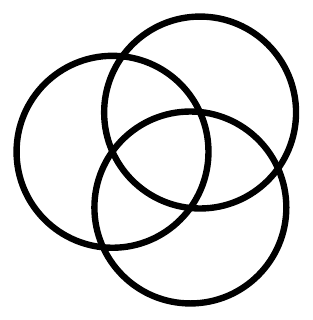
The least possible Venn diagram for the given statements is:

Conclusions:

I. Some steels are wires - False (From the Venn diagram, there is no direct intersection between the circle representing 'steels' and the circle representing 'wires'. It is not a definite conclusion based on the given statements and the least possible overlap.)

II. Some ropes are cables - True (Since all wires are cables and all wires are ropes, the set of 'wires' is a subset of both 'cables' and 'ropes'. Therefore, there must be some overlap between 'ropes' and 'cables'. In fact, all wires are common to both, implying 'some ropes are cables' is definitely true.)

So, Only conclusion II follows.

Hence, the correct answer is "Option 2".

Question 2

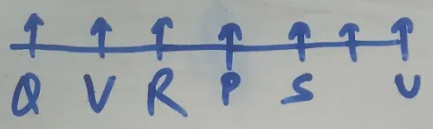
Seven persons P, Q, R, S, T, U and V are seated in a straight line facing north (but not necessarily in the same order). V is seated immediately to the right of Q and immediately to the left of R. P is seated immediately to the right of R and immediately to the left of S. U is seated second to the right of S. U is seated at one of the extreme ends of the line. Who is sitting between S and U?

  1. AOption (a)

    R

  2. BOption (b)

    V

  3. COption (c)

    T

  4. DOption (d)

    P

View answer & explanation

Correct answer

Answer: (c)C.

T

Why this answer is correct

Given, Seven people P, Q. R, S, T, U and V are sitting in a straight line facing the north (but not necessarily in the same order).

V is sitting to the immediate right of Q and the immediate left of R.

P is sitting to the immediate right of R and the immediate left of S.

U is sitting second to the right of S.

U is sitting at one of the ends of the line.

T sits at remaining place.

So, T is sitting between S and U

Hence, the correct answer is "Option 3"

Question 3

Identify the figure given in the options which when put in place of the question mark (?) will logically complete the series.

  1. AOption (a)

  2. BOption (b)

  3. COption (c)

  4. DOption (d)

View answer & explanation

Correct answer

Answer: (a)A.

Why this answer is correct

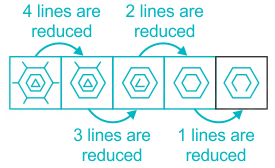
Logic followed here is,

Hence, the correct answer is "Option 1".
Question 4

Three of the following four letter-clusters are alike in a certain way and thus form a group. Which is the letter-cluster that does NOT belong to that group? (Note: The odd one out is not based on the number of consonants/vowels or their positions in the letter-cluster.)

  1. AOption (a)

    CGI

  2. BOption (b)

    GLM

  3. COption (c)

    PTV

  4. DOption (d)

    EIK

View answer & explanation

Correct answer

Answer: (b)B.

GLM

Why this answer is correct

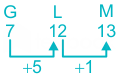
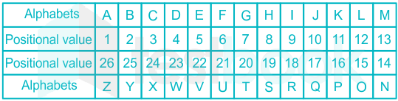
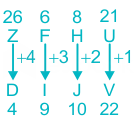
Place value and reverse value of letters. 

Logic followed here is,

Option 1) CGI

Option 2) GLM

Does not follow the same logic.

Option 3) PTV

Option 4) EIK

Hence, the correct answer is "Option 2"

Question 5

What will come in the place of the question mark (?) in the following equation, if ‘+’ and ‘−’ are interchanged and ‘×’ and ‘÷’ are interchanged?

18 ÷ 5 + 26 − 45 × 5 = ?

  1. AOption (a)

    80

  2. BOption (b)

    75

  3. COption (c)

    68

  4. DOption (d)

    73

View answer & explanation

Correct answer

Answer: (d)D.

73

Why this answer is correct

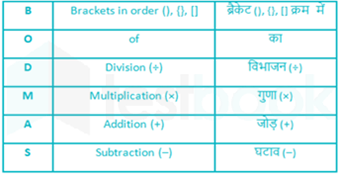
BODMAS Table: 

Given equation: 18 ÷ 5 + 26 − 45 × 5 = ?

Now, if ‘+’ and ‘−‘ and ‘×’ and ‘÷’ are interchanged, then:

⇒ 18 × 5 − 26 + 45 ÷ 5 = ?

⇒ 18 × 5 − 26 + 45 ÷ 5 = ?

⇒ 90 − 26 + 9 = ?

⇒ 64 + 9 = 73.

Hence, the correct answer is "Option 4"

Question 6

A dice has its faces marked by letters I, L, O, V, A and F. Two positions of the same dice are given below. Which face is opposite to face O?

  1. AOption (a)

    F

  2. BOption (b)

    A

  3. COption (c)

    V

  4. DOption (d)

    L

View answer & explanation

Correct answer

Answer: (a)A.

F

Why this answer is correct

The logic followed here is :-

From the given two different cubes the adjacent sides are as shown below :

As F is common on both dice, it is clear that A, I, L and V are adjacent to it, and the remaining number i.e. O will be opposite to it.


Opposite pairs:

I → V

A → L

F → O

So, the opposite side of "O" will be side "F".

Hence, the correct answer is "F".

Question 7

Select the option that represents the letters that, when sequentially placed from left to right in the blanks below, will complete the letter series.

_ K _ U T O _ L _ T O _ _ U T O K L _ _

  1. AOption (a)

    LOKUKTUL 

  2. BOption (b)

    OLKUKUTL

  3. COption (c)

    OKLUKULT 

  4. DOption (d)

    OLKUKLUT 

View answer & explanation

Correct answer

Answer: (d)D.

OLKUKLUT 

Why this answer is correct

Given series: _ K _ U T O _ L _ T O _ _ U T O K L _ _

Option 1) LOKUKTUL → L K O U T O K L U T O K T U T O K L U L → (It doesn't follow any clear repeating pattern)

Option 2) OLKUKUTL → O K L U T O K L U T O K U U T O K L T L → (It doesn't follow any clear repeating pattern)

Option 3) OKLUKULT → O K K U T O L L U T O K U U T O K L L T → (It doesn't follow any clear repeating pattern)

Option 4) OLKUKLUT → O K L U T O K L U T O K L U T O K L  U T → (It follows a clear repeating pattern → O K L U T   O K L U T   O K L U T   O K L  U T )

Hence, "Option 4" is the correct answer.

Question 8

What should come in place of the question mark (?) in the given series?

14 23 42 71 110 ?

  1. AOption (a)

    164

  2. BOption (b)

    172

  3. COption (c)

    180

  4. DOption (d)

    159

View answer & explanation

Correct answer

Answer: (d)D.

159

Why this answer is correct

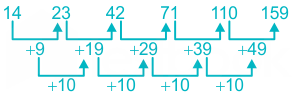
Logic followed here is,

Hence, the correct answer is "Option 4."

Question 9

PSPN is related to OROM in a certain way based on the English alphabetical order. In the same way, YBYW is related to XAXV. To which of the given options is QTQO related, following the same logic?

  1. AOption (a)

    PSPN

  2. BOption (b)

    PTOQ

  3. COption (c)

    PRON

  4. DOption (d)

    PSON

View answer & explanation

Correct answer

Answer: (a)A.

PSPN

Why this answer is correct

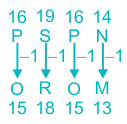
The logic followed here is,

For, PSPN is related to OROM

And YBYW is related to XAXV

Similarly, QTQO is related to PSPN

Hence, the correct answer is "Option 1"

Question 10

Select the correct mirror image of the given figure when the mirror is placed at MN as shown below.

  1. AOption (a)

  2. BOption (b)

  3. COption (c)

  4. DOption (d)

View answer & explanation

Correct answer

Answer: (c)C.

Why this answer is correct

The correct mirror image is,

Hence, the correct answer is "Option 3"

Question 11

Select the Venn diagram that best illustrates the relationship between the following classes.

Transport, Bus, Airplane

  1. AOption (a)

  2. BOption (b)

  3. COption (c)

  4. DOption (d)

View answer & explanation

Correct answer

Answer: (b)B.

Why this answer is correct

Given:

Classes: Transport, Bus, Airplane

Logic:

Bus is a type of transport.

Airplane is a type of transport.

Bus and Airplane are distinct types of transport.

⇒ A larger circle represents Transport.

⇒ Two smaller, non-overlapping circles inside the Transport circle represent Bus and Airplane.

∴ The correct answer is option (2).

Question 12

The position(s) of how many letters will remain unchanged if each letter in the word JOSTLED is arranged in the English alphabetical order?

  1. AOption (a)

    0

  2. BOption (b)

    2

  3. COption (c)

    3

  4. DOption (d)

    1

View answer & explanation

Correct answer

Answer: (a)A.

0

Why this answer is correct

Given word: 'JOSTLED'

After arranged in alphabetical order:

Original Position1234567
Original LettersJOSTLED
Alphabetical OrderDEJLOST


Comparing the original positions and the alphabetical order, we find that there are no letters whose positions remain unchanged.

Hence, the correct answer is "Option 1"

Question 13

A dice has its faces marked by letters D, X, A, N, R and E. Two positions of the same dice are given below. Which face is opposite to face A?

  1. AOption (a)

    N

  2. BOption (b)

    R

  3. COption (c)

    D

  4. DOption (d)

    E

View answer & explanation

Correct answer

Answer: (d)D.

E

Why this answer is correct

The logic followed here is :-

From the given two different cubes the adjacent sides are as shown below :

As E is common on both dice, it is clear that N, R, X and D are adjacent to it, and the remaining number i.e. A will be opposite to it.


Opposite pairs:

R → X

N → D

E → A

So, the opposite side of "A" will be side "E".

Hence, the correct answer is "E".

Question 14

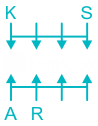
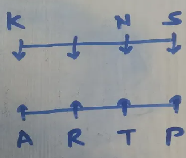
Eight people are sitting in two parallel rows containing 4 people each, in such a way that there is equal distance between adjacent persons.

In row 1 – I, N, K and S are seated and all of them are facing south

In row 2 – P, A, R and T are seated and all of them are facing north.

Thus, each person faces another person from the other row.

R sits to the immediate right of A. Only two people sit between K and S. A faces K. The one who faces N, sits to the immediate left of P.

T doesn’t sit at any of the extreme ends. Which of the following options represents both people facing each other?

  1. AOption (a)

     I and R

  2. BOption (b)

     N and P

  3. COption (c)

    K and T

  4. DOption (d)

     S and R

View answer & explanation

Correct answer

Answer: (a)A.

 I and R

Why this answer is correct

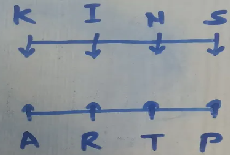
Given, Eight people are sitting in two parallel rows containing 4 people each,

In row 1 – I, N, K and S are seated and all of them are facing south.

In row 2 – P, A, R and T are seated and all of them are facing north.

Only two people sit between K and S.

A faces K.

R sits to the immediate right of A.

T doesn’t sit at any of the extreme ends.

The one who faces N, sits to the immediate left of P.

And I sit at the remaining place.

From the diagram, I and R are facing each other

Hence, the correct answer is "Option 1."

Question 15

What should come in place of the question mark (?) in the given series?

79 72 58 37 9 ?

  1. AOption (a)

    -25

  2. BOption (b)

    -24

  3. COption (c)

    -27

  4. DOption (d)

    -26

View answer & explanation

Correct answer

Answer: (d)D.

-26

Why this answer is correct

The logic followed here is,

Logic: The Next number is decreased by multiple of 7.

Hence, the correct answer is "Option 4."

Question 16

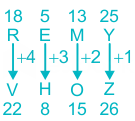
REMY is related to VHOZ in a certain way based on the English alphabetical order. In the same way, ZFHU is related to DIJV. To which of the given options is LBSO related, following the same logic?

  1. AOption (a)

     QDWR

  2. BOption (b)

     RDWP

  3. COption (c)

     OFVQ

  4. DOption (d)

     PEUP

View answer & explanation

Correct answer

Answer: (d)D.

 PEUP

Why this answer is correct

Place value and reverse value of letters. 

Logic followed here is,

For REMY is related to VHOZ

And ZFHU is related to DIJV

Similarly, LBSO is related to PEUP

Hence, the correct answer is "Option 4"

Question 17

What should come in place of the question mark (?) in the given series based on the English alphabetical order?

WUY KIM YWA MKO ?

  1. AOption (a)

     BYC

  2. BOption (b)

    CYC

  3. COption (c)

    ZYC

  4. DOption (d)

    AYC

View answer & explanation

Correct answer

Answer: (d)D.

AYC

Why this answer is correct

Place value and reverse value of letters. 

Logic followed here is,

Hence, the correct answer is "Option 4"

Question 18

In a certain code language 'PGMS' is coded as '9-18-12-6' and 'TBRX' is coded as '5-23 7-1'. What is the code for 'KAVO' in the given language?

  1. AOption (a)

    15-26-4-11

  2. BOption (b)

    13-25-6-12

  3. COption (c)

    11-21-2-9

  4. DOption (d)

     14-24-3-10

View answer & explanation

Correct answer

Answer: (d)D.

 14-24-3-10

Why this answer is correct

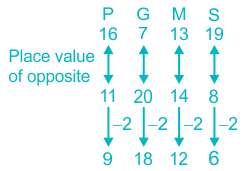
Place value and reverse value of letters. 

Logic followed here is,

For 'PGMS' is coded as '9-18-12-6'

And 'TBRX' is coded as '5-23 7-1'.

Similarly, ''KAVO'' is coded as '14-24-3-10'. 

Hence, the correct answer is "Option 4"

Question 19

In a certain code language, 'TEDI' is coded as '11' and 'SUCBVO' is coded as '13'. How is 'YXJIAZL' coded in the given language?

  1. AOption (a)

    14

  2. BOption (b)

    10

  3. COption (c)

    9

  4. DOption (d)

    12

View answer & explanation

Correct answer

Answer: (a)A.

14

Why this answer is correct

The logic followed here is,

Logic**: code = total number of letters + 7**

For  'TEDI' is coded as '11'

Number of letters in TEDI = 4

Code = 4 + 7 = 11

Also for  'SUCBVO' is coded as '13'

Number of letters in SUCBVO = 6

Code = 6 + 7 = 13.

Similarly, 'YXJIAZL' is coded as 

Number of letters in YXJIAZL = 7

Code = 7 + 7 = 14.

Hence, the correct answer is "Option 1"

Question 20

In a certain code language,

'A + B' means 'A is the sister of B',

'A - B' means 'A is the father of B',

'A x B' means 'A is the brother of B' and

'A ÷ B' means 'A is the mother of B'.

How is A related to D if 'A ÷ B + C x D - E'?

  1. AOption (a)

    Father’s mother

  2. BOption (b)

    Sister’s daughter

  3. COption (c)

     Daughter’s sister

  4. DOption (d)

    Mother

View answer & explanation

Correct answer

Answer: (d)D.

Mother

Why this answer is correct

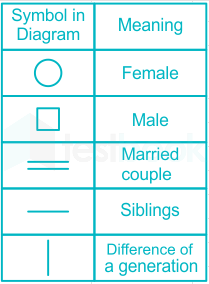
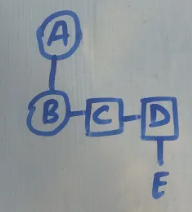
Family Chart:

Let's break down the expression 'A ÷ B + C x D - E':

Combining these relationships:

  • A is the mother of B.
  • B is the sister of C, which means A is also the mother of C.
  • C is the brother of D, which means A is also the mother of D.
  • D is the father of E.

Therefore, A is the mother of D.

So, A is the 'Mother' of D.

Hence, the correct answer is "Option 4"

General Knowledge and General Awareness (20 questions)

Question 21

Rani Machaiah is an Ummathat folk dancer from ___________________ who received Padma Shri 2023 in the field of Art (Folk Dance).

  1. AOption (a)

     Kerala

  2. BOption (b)

    Goa

  3. COption (c)

    Telangana

  4. DOption (d)

    Karnataka

View answer & explanation

Correct answer

Answer: (d)D.

Karnataka

Why this answer is correct

The correct answer is Karnataka.

Key Points

  • Rani Machaiah is renowned for her contributions to the Ummathat folk dance, a traditional dance form of Karnataka.
  • She was honored with the Padma Shri award in 2023 for her excellence in the field of Art, specifically Folk Dance.
  • The Padma Shri is one of the highest civilian awards in India, recognizing distinguished contributions in various spheres.
  • Ummathat is a significant cultural dance of the Kodava community, performed by women to the beats of traditional drums and cymbals.

Additional Information

  • Padma Awards:
  • The Padma Awards, including Padma Shri, Padma Bhushan, and Padma Vibhushan, are among the highest civilian honors in India.
  • These awards are announced annually on the eve of Republic Day, recognizing individuals for their contributions in various fields such as arts, education, industry, literature, science, sports, medicine, social service, and public affairs.
  • The Padma Shri is the fourth highest civilian award in the Padma series, following the Bharat Ratna, Padma Vibhushan, and Padma Bhushan.
  • Kodava Community:
  • The Kodavas are an ethno-linguistic group from the Kodagu district of Karnataka, known for their distinct culture and traditions.
  • They have a rich heritage of martial traditions and are known for their unique festivals, dances, and cuisine.
  • Ummathat is one of the traditional folk dances performed by Kodava women, showcasing their cultural heritage.
  • Folk Dances of Karnataka:
  • Karnataka has a rich tradition of folk dances, including Yakshagana, Dollu Kunitha, and Veeragase.
  • These dances are characterized by vibrant costumes, dynamic movements, and traditional music, reflecting the cultural diversity of the state.
  • Folk dances in Karnataka often depict historical, mythological, and social themes.
  • Traditional Musical Instruments:
  • Ummathat and other folk dances are often accompanied by traditional musical instruments like the 'Dudi' (drum) and cymbals.
  • These instruments play a crucial role in setting the rhythm and enhancing the overall performance.
  • The use of traditional instruments is an integral part of preserving and promoting the cultural heritage of Karnataka.

Question 22

Which of the given colours in NOT associated with the judo grades?

  1. AOption (a)

     Red

  2. BOption (b)

     Blue

  3. COption (c)

    Pink

  4. DOption (d)

    White

View answer & explanation

Correct answer

Answer: (c)C.

Pink

Why this answer is correct

The correct answer is Pink.

Key Points

  • Judo belt colors generally include white, yellow, orange, green, blue, brown, and black.
  • The color pink is not traditionally associated with judo grades.
  • Judo belts signify the rank and expertise level of the practitioner, with white being the beginner level and black representing advanced proficiency.
  • Some variations in belt colors can exist between different judo organizations, but pink is not a standard color.

Additional Information

  • Judo Grading System:
  • The judo ranking system is based on the Kyu-Dan system, where Kyu grades are for colored belts and Dan grades are for black belts.
  • Each color indicates the level of knowledge and proficiency in judo techniques.
  • Origin of Judo:
  • Judo was created by Jigoro Kano in Japan in 1882.
  • Kano developed judo as a physical, mental, and moral pedagogy in the form of a martial art.
  • Judo in the Olympics:
  • Judo was first included as an Olympic sport in the 1964 Tokyo Olympics.
  • It is a globally practiced sport with significant international competitions.
  • Judo Techniques:
  • Judo techniques are classified into throwing techniques (nage-waza) and grappling techniques (katame-waza).
  • Mastery of these techniques is essential for advancement in judo ranks.

Question 23

According to the National Multidimensional Poverty Index 2023, which of the following states showed the fastest poverty reduction?

  1. AOption (a)

     Karnataka

  2. BOption (b)

    Haryana

  3. COption (c)

     Manipur

  4. DOption (d)

    Uttar Pradesh

View answer & explanation

Correct answer

Answer: (d)D.

Uttar Pradesh

Why this answer is correct

The correct answer is Uttar Pradesh.

Key Points

  • Uttar Pradesh has shown the fastest reduction in poverty according to the National Multidimensional Poverty Index 2023.
  • The state has significantly reduced its poverty rate from 37.79% in 2015-16 to 22.93% in 2019-21.
  • The efforts include extensive implementation of social welfare programs and schemes aimed at improving the living conditions of the poor.
  • Uttar Pradesh's performance is attributed to improvements in education, health, and living standards.

Additional Information

  • National Multidimensional Poverty Index (MPI):
  • The MPI is a measure designed to capture the multidimensional nature of poverty, beyond income alone, by considering factors like health, education, and living standards.
  • The index is developed by the Oxford Poverty and Human Development Initiative (OPHI) and the United Nations Development Programme (UNDP).
  • Poverty Reduction Initiatives:
  • Various government schemes like Pradhan Mantri Awas Yojana, Swachh Bharat Abhiyan, and the National Health Mission have contributed to poverty reduction.
  • Focus on improving infrastructure, job creation, and access to basic amenities have been key strategies.
  • Education and Health Improvements:
  • Increased access to education and healthcare services has been pivotal in reducing poverty in Uttar Pradesh.
  • Programs like Mid-Day Meal Scheme and Ayushman Bharat have had a significant impact.
  • Living Standards:
  • Improvements in living standards, such as better housing, sanitation, and electricity access, have played a crucial role.
  • Initiatives like Saubhagya Scheme (for electricity) have improved the quality of life for many.

Question 24

Which of the following goals of the Five-Year Plan is directly related to the people?

  1. AOption (a)

    Growth

  2. BOption (b)

     Modernisation

  3. COption (c)

    Equity

  4. DOption (d)

    Self-reliance

View answer & explanation

Correct answer

Answer: (c)C.

Equity

Why this answer is correct

The correct answer is Equity.

Key Points

  • Equity in the context of the Five-Year Plans refers to reducing inequality in income and wealth distribution.
  • It involves providing all citizens with equal opportunities to improve their living standards.
  • Equity aims at social justice by focusing on the welfare of the poor and marginalized sections of society.
  • Key measures include land reforms, progressive taxation, and social welfare programs to support vulnerable groups.

Additional Information

  • Growth:
  • Focuses on increasing the country's economic output and overall development.
  • Targets sectors like agriculture, industry, and services to boost GDP.
  • Modernisation:
  • Refers to adopting new technologies and methods to improve productivity and efficiency.
  • Includes initiatives in infrastructure development, education, and healthcare.
  • Self-reliance:
  • Aims to reduce dependence on foreign aid and imports.
  • Encourages indigenous production and utilization of local resources.
  • Five-Year Plans:
  • Were central planning mechanisms for economic and social development in India.
  • Formulated by the Planning Commission from 1951 to 2017 before it was replaced by NITI Aayog.

Question 25

What was a key focus of the First Five Year Plan (1951-1956)?

  1. AOption (a)

     Agricultural development

  2. BOption (b)

    Development of heavy industries

  3. COption (c)

    Rapid industrialisation

  4. DOption (d)

    Privatisation of industries

View answer & explanation

Correct answer

Answer: (a)A.

 Agricultural development

Why this answer is correct

The correct answer is Agricultural development.

Key Points

  • The First Five Year Plan (1951-1956) of India primarily focused on the development of the agricultural sector.
  • The plan aimed to address the food deficit and improve agricultural productivity to ensure food security for the growing population.
  • Substantial investments were made in irrigation projects, land reclamation, and community development programs.
  • Emphasis was placed on the expansion of agricultural infrastructure and the use of modern farming techniques to increase crop yields.

Additional Information

  • Five Year Plans:
  • India's Five Year Plans were centralized and integrated national economic programs.
  • The Planning Commission of India was responsible for formulating these plans, which aimed to achieve specific economic goals over five-year periods.
  • Green Revolution:
  • The Green Revolution occurred in India during the late 1960s and 1970s, significantly increasing agricultural production through high-yield variety seeds, fertilizers, and irrigation.
  • This revolution was a response to the need for food security and was influenced by the agricultural focus of the First Five Year Plan.
  • Irrigation Projects:
  • Large-scale irrigation projects such as the Bhakra Nangal Dam and Hirakud Dam were initiated during the First Five Year Plan.
  • These projects aimed to provide a reliable water supply for agriculture, thereby increasing crop productivity.
  • Community Development Programs:
  • The plan included community development programs to promote rural development and enhance the quality of life in villages.
  • These programs focused on education, health, sanitation, and infrastructure development.

Question 26

Padma Shri awardee Shovana Narayan is associated with which Indian classical dance form?

  1. AOption (a)

     Kathak

  2. BOption (b)

    Manipuri

  3. COption (c)

    Bharatanatyam

  4. DOption (d)

    Odissi

View answer & explanation

Correct answer

Answer: (a)A.

 Kathak

Why this answer is correct

The correct answer is Kathak.

Key Points

  • Shovana Narayan is a renowned Indian classical dancer known for her expertise in Kathak.
  • She has been honored with the prestigious Padma Shri award for her contributions to the field of dance.
  • Shovana Narayan has performed extensively both in India and internationally, promoting Kathak on global platforms.
  • Her style is characterized by its intricate footwork, graceful movements, and expressive storytelling.
  • She has also trained numerous students, contributing to the preservation and propagation of Kathak.

Additional Information

  • Kathak:
  • Kathak is one of the eight major forms of Indian classical dance.
  • It originated from the northern regions of India and is known for its intricate footwork and spins.
  • Kathak dancers use a combination of hand gestures, facial expressions, and body movements to narrate stories.
  • The dance form is traditionally performed to classical Hindustani music.
  • Padma Shri:
  • Padma Shri is the fourth highest civilian award in the Republic of India.
  • It is awarded to citizens of India in recognition of their distinguished contributions in various spheres such as arts, education, industry, literature, science, sports, medicine, social service, and public affairs.
  • The award is announced on Republic Day (26th January) every year.
  • Indian Classical Dance:
  • India has a rich tradition of classical dance forms that include Bharatanatyam, Kathak, Kathakali, Kuchipudi, Manipuri, Mohiniyattam, Odissi, and Sattriya.
  • Each dance form has its own unique style, costumes, and music.
  • These dances are deeply rooted in Indian mythology, spirituality, and cultural traditions.
  • Storytelling in Kathak:
  • Kathak dancers often narrate tales from Indian epics like Mahabharata and Ramayana.
  • The dance form originally evolved from the storytelling practices of ancient bards known as Kathakars.
  • These narratives are enhanced through the dancer's expressions, gestures, and rhythmic footwork.

Question 27

Which of the following Vedas is primarily the collection of magic spells and charms to ward off evil spirits and diseases?

  1. AOption (a)

     Rigveda

  2. BOption (b)

    Yajurveda

  3. COption (c)

     Atharvaveda

  4. DOption (d)

    Samaveda

View answer & explanation

Correct answer

Answer: (c)C.

 Atharvaveda

Why this answer is correct

The correct answer is Atharvaveda.

Key Points

  • Atharvaveda is one of the four Vedas of ancient Indian scriptures.
  • It is primarily a collection of magic spells and charms intended to ward off evil spirits and diseases.
  • The Atharvaveda contains hymns, mantras, and incantations for various purposes, including healing and protection.
  • It is distinct from the other three Vedas (Rigveda, Yajurveda, and Samaveda) due to its focus on practical aspects of daily life and rituals.

Additional Information

  • Rigveda
  • The oldest of the four Vedas, primarily consisting of hymns and praises dedicated to various deities.
  • It is divided into ten books called Mandalas.
  • Yajurveda
  • Focuses on the procedures for performing various rituals and sacrifices.
  • It is divided into two parts: the Shukla (White) Yajurveda and the Krishna (Black) Yajurveda.
  • Samaveda
  • Consists mainly of melodies and chants intended to be sung during rituals.
  • It is often considered the root of Indian classical music.
  • Vedic Literature
  • The Vedas are the oldest sacred texts of Hinduism, composed in early Sanskrit.
  • They form the foundation of Vedic traditions and are divided into four main categories: Rigveda, Yajurveda, Samaveda, and Atharvaveda.

Question 28

Which chemical is used for whitening (or removal of colours) of cloth in cloth industries?

  1. AOption (a)

    Sodium carbonate

  2. BOption (b)

     Sodium hydrogencarbonate

  3. COption (c)

    Calcium oxychloride

  4. DOption (d)

     Calcium chloride

View answer & explanation

Correct answer

Answer: (c)C.

Calcium oxychloride

Why this answer is correct

The correct answer is Calcium oxychloride.

Key Points

  • Calcium oxychloride, commonly known as bleaching powder, is extensively used in the textile industry for bleaching cloth.
  • Its strong oxidizing properties help in the effective removal of colors and stains from fabrics.
  • Bleaching powder is preferred due to its cost-effectiveness and efficiency in large-scale applications.
  • It also serves a dual purpose by disinfecting the cloth during the bleaching process.
  • Calcium oxychloride is a stable compound that releases chlorine gradually, ensuring consistent bleaching action.

Additional Information

  • Bleaching Powder (Calcium oxychloride):
  • Chemical Formula: Ca(OCl)2
  • It is produced by reacting calcium hydroxide with chlorine gas.
  • It is widely used for bleaching, disinfecting water, and sanitation purposes.
  • It is a white or grayish powder with a strong chlorine smell.
  • Other Chemicals Used in Textile Industry:
  • Sodium Carbonate (Na2CO3): Used in the dyeing process to fix dye on fibers.
  • Sodium Hydrogencarbonate (NaHCO3): Used for neutralizing acids in textile processing.
  • Calcium Chloride (CaCl2): Used as a desiccant and in dyeing baths to remove moisture.
  • Textile Bleaching:
  • Bleaching is a chemical process that removes natural colors from fibers to achieve whiteness.
  • Common bleaching agents include chlorine-based compounds, hydrogen peroxide, and sulfur dioxide.
  • Effective bleaching ensures uniform dyeing and enhances fabric appearance.
  • Safety Considerations:
  • Bleaching agents can be hazardous and should be handled with care, using proper protective equipment.
  • Proper ventilation is necessary to avoid inhalation of chlorine fumes during the bleaching process.
  • Storage of bleaching agents should be in a cool, dry place, away from direct sunlight and incompatible substances.

Question 29

Which Five-Year Plan was the first to be terminated before its completion, and why?

  1. AOption (a)

    Second Plan, due to economic instability

  2. BOption (b)

    Seventh Plan, due to political conflicts

  3. COption (c)

    Fifth Plan, due to a change in government

  4. DOption (d)

     Third Plan, due to natural disasters

View answer & explanation

Correct answer

Answer: (c)C.

Fifth Plan, due to a change in government

Why this answer is correct

The correct answer is Fifth Plan, due to a change in government.

Key Points

  • The Fifth Five-Year Plan (1974-1978) was the first plan to be terminated prematurely.
  • This plan was terminated by the newly elected Janata Party government in 1978.
  • The termination occurred due to the government's shift in economic policy direction.
  • The Janata Party government replaced the Fifth Plan with a Rolling Plan for 1978-1980.
  • The Rolling Plan aimed to provide more flexibility in planning and adjustment to changing economic conditions.

Additional Information

  • Five-Year Plans in India:
  • India's Five-Year Plans were centralized and integrated national economic programs.
  • These plans were developed, executed, and monitored by the Planning Commission of India.
  • The first Five-Year Plan was launched in 1951 and focused on the agricultural sector.
  • Planning Commission:
  • The Planning Commission was an institution in the Government of India, which formulated India's Five-Year Plans.
  • It was established in March 1950 by a resolution of the Government of India.
  • It was replaced by the NITI Aayog in January 2015.
  • Janata Party:
  • The Janata Party was formed in 1977 as a coalition of several opposition parties.
  • It was the first non-Congress party to form a government at the center after the 1977 general elections.
  • The government was led by Prime Minister Morarji Desai.
  • Economic Policy Shifts:
  • The Janata Party government focused on reducing government intervention in the economy.
  • They aimed to promote a more market-oriented economic policy.
  • This shift led to the termination of the ongoing Fifth Five-Year Plan.

Question 30

Nilgiri is one of the oldest mountain ranges, located at the tri-junction of which three states?

  1. AOption (a)

     Northern UP, Uttarakhand, Himachal Pradesh

  2. BOption (b)

    Gujarat, Rajasthan, Haryana

  3. COption (c)

    Assam, Nagaland, Tripura

  4. DOption (d)

     Tamil Nadu, Kerala, Karnataka

View answer & explanation

Correct answer

Answer: (d)D.

 Tamil Nadu, Kerala, Karnataka

Why this answer is correct

The correct answer is Tamil Nadu, Kerala, Karnataka.

Key Points

  • The Nilgiri mountain range is located at the tri-junction of the states of Tamil Nadu, Kerala, and Karnataka in southern India.
  • It is part of the Western Ghats, a mountain range that runs parallel to the western coast of the Indian peninsula.
  • The Nilgiri Hills are known for their rich biodiversity and are home to several protected areas and wildlife sanctuaries.
  • The highest peak in the Nilgiri range is Doddabetta, which stands at an elevation of 2,637 meters (8,652 feet).
  • The Nilgiris are famous for their tea plantations, which produce some of the finest tea in India.

Additional Information

  • Western Ghats:
  • The Western Ghats is a mountain range that runs parallel to the western coast of the Indian peninsula, spanning six states: Gujarat, Maharashtra, Goa, Karnataka, Kerala, and Tamil Nadu.
  • It is recognized as one of the world's eight "hottest hotspots" of biological diversity.
  • The Western Ghats are home to a large number of endemic species of flora and fauna.
  • Biodiversity in the Nilgiris:
  • The Nilgiri Biosphere Reserve, established in 1986, includes the Nilgiri Hills and is part of the Western Ghats.
  • It is home to several endangered species, including the Nilgiri tahr, Bengal tiger, Indian elephant, and lion-tailed macaque.
  • Tea Plantations:
  • The Nilgiri Hills are known for their extensive tea plantations, which are a major source of income and employment in the region.
  • Tea from the Nilgiris is known for its distinct flavor and aroma, and the region produces both black and green tea.
  • Climate:
  • The Nilgiri Hills have a subtropical highland climate, characterized by mild temperatures and high humidity.
  • The region experiences heavy rainfall during the monsoon season, contributing to its lush green landscapes.

Question 31

Who was the British Prime Minister when India gained independence in 1947?

  1. AOption (a)

    Anthony Eden

  2. BOption (b)

     Winston Churchill

  3. COption (c)

    Clement Attlee

  4. DOption (d)

    Ramsay MacDonald

View answer & explanation

Correct answer

Answer: (c)C.

Clement Attlee

Why this answer is correct

The correct answer is Clement Attlee.

Key Points

  • Clement Attlee was the British Prime Minister from 1945 to 1951.
  • He led the Labour Party to victory in the 1945 general election, replacing Winston Churchill.
  • Under Attlee's leadership, the British government decided to grant independence to India.
  • The Indian Independence Act was passed on July 18, 1947, and India gained independence on August 15, 1947.
  • Attlee's government also oversaw the partition of India, leading to the creation of Pakistan.

Additional Information

  • Indian Independence Act 1947:
  • This act was passed by the British Parliament and led to the partition of British India into two independent dominions, India and Pakistan.
  • It marked the end of British rule in India and the transfer of power to Indian leaders.
  • Mountbatten Plan:
  • Also known as the June 3rd Plan, it was the plan for the partition of India proposed by the last Viceroy of India, Lord Louis Mountbatten.
  • It outlined the method of partition and was accepted by the Indian National Congress and the Muslim League.
  • Partition of India:
  • The partition resulted in the creation of two independent dominions, India and Pakistan.
  • It led to significant demographic shifts, with large-scale migrations and communal violence.
  • Labour Government Reforms:
  • Under Attlee, the Labour government implemented significant reforms including the establishment of the National Health Service (NHS) and the nationalization of key industries.
  • These reforms laid the foundations for the modern welfare state in the UK.

Question 32

In which state is the festival of ‘Kalinga Mahotsav ’celebrated?

  1. AOption (a)

     Odisha

  2. BOption (b)

    Karnataka

  3. COption (c)

    Maharashtra

  4. DOption (d)

    Assam

View answer & explanation

Correct answer

Answer: (a)A.

 Odisha

Why this answer is correct

The correct answer is Odisha.

Key Points

  • The Kalinga Mahotsav is celebrated in Odisha, particularly at the Dhauli hills, near Bhubaneswar.
  • This festival commemorates the Kalinga War fought by Emperor Ashoka in the 3rd century BC.
  • It is a major festival that showcases the rich cultural heritage and martial arts traditions of Odisha.
  • The event features a variety of performances, including traditional dance forms like Odissi and other classical Indian dances.
  • The festival aims to promote peace and non-violence, reflecting the transformation of Emperor Ashoka after the Kalinga War.

Additional Information

  • Emperor Ashoka
  • He was the third emperor of the Maurya Dynasty and ruled from 268 to 232 BCE.
  • After witnessing the mass deaths during the Kalinga War, Ashoka embraced Buddhism and promoted non-violence and Dharma (moral law).
  • Ashoka's reign is marked by the spread of Buddhism across Asia.
  • Dhauli Hills
  • Dhauli Hills are located on the banks of the Daya River in Odisha.
  • The site is famous for the Shanti Stupa (Peace Pagoda) built by the Japan Buddha Sangha and the Kalinga Nippon Buddha Sangha.
  • It is believed to be the battlefield of the Kalinga War.
  • Odissi Dance
  • Odissi is one of the classical dance forms of India, originating from the state of Odisha.
  • It is known for its intricate movements, gestures, and expressions.
  • Odissi dance is deeply rooted in the traditions and culture of Odisha, often depicting themes from Hindu mythology.
  • Martial Arts of Odisha
  • Odisha has a rich tradition of martial arts, including the Paika Akhada, which is a form of ancient martial art.
  • Paika Akhada was historically performed by the warrior class known as Paikas.
  • This martial art form includes various physical exercises and fighting techniques.

Question 33

What is the atomic number of Lawrencium, a chemical element that is classified as the last member of the actinides?

  1. AOption (a)

    108

  2. BOption (b)

    103

  3. COption (c)

    101

  4. DOption (d)

    99

View answer & explanation

Correct answer

Answer: (b)B.

103

Why this answer is correct

The correct answer is option 2.

Key Points

  • Lawrencium is a chemical element with the symbol Lr and atomic number 103.
  • It is classified as the last member of the actinide series.
  • Lawrencium was first synthesized in 1961 by the Lawrence Berkeley National Laboratory.
  • It is a synthetic element, which means it is not found naturally and must be created in a laboratory.

Additional Information

  • The actinides are a series of 15 metallic elements from actinium (Ac) to lawrencium (Lr) in the periodic table.
  • Lawrencium's most stable isotope is Lr-262, which has a half-life of about 3.6 hours.
  • The element is named after Ernest Lawrence, the inventor of the cyclotron, a type of particle accelerator.
  • As a synthetic element, lawrencium is primarily used for research purposes and has no significant commercial applications.
  • Lawrencium, like other actinides, exhibits radioactive properties and must be handled with special precautions in a laboratory setting.

Question 34

With which sport is the Indian Para Athlete Parul Parmar associated?

  1. AOption (a)

    Badminton

  2. BOption (b)

    Athletics

  3. COption (c)

    Shooting

  4. DOption (d)

    Swimming

View answer & explanation

Correct answer

Answer: (a)A.

Badminton

Why this answer is correct

The correct answer is Badminton.

Key Points

  • Parul Parmar is a prominent Indian Para Athlete known for her achievements in badminton.
  • She has won several medals at international events, including the Asian Para Games and the World Para-Badminton Championships.
  • Parul Parmar has been a significant figure in promoting badminton among differently-abled athletes in India.
  • She has been awarded the Arjuna Award for her contributions to the sport of badminton.

Additional Information

  • Para-Badminton:
  • Para-badminton is a variant of badminton designed for athletes with physical disabilities.
  • The sport is governed by the Badminton World Federation (BWF).
  • Para-badminton was included in the Paralympic Games for the first time at the Tokyo 2020 Paralympic Games.
  • Arjuna Award:
  • The Arjuna Award is one of the highest sporting honors in India.
  • It is awarded annually by the Ministry of Youth Affairs and Sports to recognize outstanding achievement in sports.
  • The award includes a bronze statue of Arjuna, a certificate, and a cash prize.
  • Asian Para Games:
  • The Asian Para Games are a multi-sport event held every four years for athletes with physical disabilities.
  • The event is organized by the Asian Paralympic Committee (APC).
  • The first Asian Para Games were held in Guangzhou, China, in 2010.
  • World Para-Badminton Championships:
  • The World Para-Badminton Championships is an international competition for para-badminton players organized by the BWF.
  • The event features various categories based on the type and level of disability.
  • It serves as an important platform for athletes to compete at the highest level and showcase their skills.

Question 35

Which of the following is the state religion of Bangladesh, as per the Constitution of Bangladesh?

  1. AOption (a)

    Islam

  2. BOption (b)

    Buddhism

  3. COption (c)

    Christianity

  4. DOption (d)

    Hinduism

View answer & explanation

Correct answer

Answer: (a)A.

Islam

Why this answer is correct

The correct answer is Islam.

Key Points

  • As per the Constitution of Bangladesh, Islam is the state religion.
  • Article 2A of the Constitution explicitly mentions Islam as the state religion.
  • While Islam is the state religion, the Constitution ensures equal status and equal rights in the practice of other religions.
  • Bangladesh is a secular state in practice, promoting religious harmony and coexistence among different religious communities.

Additional Information

  • Secularism in Bangladesh:
  • Secularism was one of the original four principles of the 1972 Constitution of Bangladesh.
  • The principle was removed during military rule but was reinstated in the Constitution through the 15th Amendment in 2011.
  • Religious Demographics:
  • Islam is the religion of about 90% of the population in Bangladesh.
  • Hinduism is the second-largest religion, followed by Buddhism and Christianity.
  • Freedom of Religion:
  • The Constitution guarantees freedom of religion and permits religious practices of all communities.
  • There are legal protections against religious discrimination.
  • Religious Festivals:
  • Major Islamic festivals like Eid-ul-Fitr and Eid-ul-Adha are national holidays.
  • Other religious communities also celebrate their festivals, such as Durga Puja for Hindus and Christmas for Christians.

Question 36

The Constitution (Scheduled Castes and Scheduled Tribes) Orders (Amendment) Bill, 2024 intends to modify the list of Scheduled Castes and Scheduled Tribes in which of the following Indian states?

  1. AOption (a)

    Uttar Pradesh

  2. BOption (b)

     Rajasthan

  3. COption (c)

    Maharashtra

  4. DOption (d)

    Odisha

View answer & explanation

Correct answer

Answer: (d)D.

Odisha

Why this answer is correct

The correct answer is Odisha.

Key Points

  • The Constitution (Scheduled Castes and Scheduled Tribes) Orders (Amendment) Bill, 2024 aims to update the list of Scheduled Castes and Scheduled Tribes specifically for the state of Odisha.
  • This bill seeks to include new communities and make adjustments to the existing lists to ensure accurate representation.
  • The amendment is crucial for providing the benefits of reservation, education, and employment opportunities to the newly included communities.
  • The process of modifying the Scheduled Castes and Scheduled Tribes lists is governed by Article 341 and 342 of the Indian Constitution.

Additional Information

  • Scheduled Castes (SCs)
  • Scheduled Castes are communities that are historically disadvantaged and were subjected to untouchability in India.
  • The Constitution provides for affirmative action in the form of reservations in education, employment, and political representation.
  • Article 341 of the Indian Constitution allows the President to specify the castes, races, or tribes deemed to be Scheduled Castes.
  • Scheduled Tribes (STs)
  • Scheduled Tribes are indigenous communities recognized as socially and economically disadvantaged.
  • Article 342 of the Indian Constitution allows the President to specify the tribes or tribal communities deemed to be Scheduled Tribes.
  • The Constitution mandates affirmative action for STs similar to SCs, including reservations in various sectors.
  • Article 341 and 342
  • Article 341 pertains to the identification of Scheduled Castes, while Article 342 deals with the identification of Scheduled Tribes.
  • Both articles empower the President to notify these communities, and any subsequent changes require a parliamentary amendment.
  • These articles are fundamental in ensuring that the benefits of affirmative action reach the intended communities.
  • Affirmative Action
  • Affirmative action in India includes a system of reservations for SCs, STs, and Other Backward Classes (OBCs) in education, employment, and political representation.
  • The goal is to address historical injustices and provide equal opportunities to disadvantaged communities.
  • Reservations are a contentious issue, often debated in terms of their impact on meritocracy and social equity.

Question 37

Who among the following has the power to dissolve the legislative assembly of a state?

  1. AOption (a)

    Chief Justice of High Court

  2. BOption (b)

     Chief Secretary of the State

  3. COption (c)

    Governor of the State

  4. DOption (d)

    Chief Minister of the State

View answer & explanation

Correct answer

Answer: (c)C.

Governor of the State

Why this answer is correct

The correct answer is Governor of the State.

Key Points

  • The Governor of a state in India has the constitutional power to dissolve the legislative assembly of the state.
  • This action can be taken based on the advice of the Chief Minister and the Council of Ministers.
  • Such a dissolution usually happens when the Chief Minister loses the majority support in the assembly.
  • The Governor exercises this power under Article 174(2)(b) of the Indian Constitution.
  • The dissolution is aimed at paving the way for fresh elections and is a significant step in the democratic process.

Additional Information

  • Article 174 of the Indian Constitution:
  • Article 174 empowers the Governor to summon and prorogue the state legislature and to dissolve the legislative assembly.
  • The Governor acts on the aid and advice of the Council of Ministers headed by the Chief Minister.
  • Role of the Governor:
  • The Governor acts as the nominal head of the state with the real powers being vested in the Chief Minister and the Council of Ministers.
  • The Governor's role includes appointing the Chief Minister, dissolving the legislative assembly, and giving assent to bills passed by the state legislature.
  • Legislative Assembly Dissolution:
  • Dissolution of the legislative assembly can be either automatic at the end of its five-year term or earlier upon the recommendation of the Chief Minister.
  • The dissolution leads to the requirement of new elections to form a new assembly.
  • Emergency Situations:
  • In case of constitutional breakdown, the President of India can dissolve the state legislative assembly and impose President's Rule under Article 356.
  • This is done on the recommendation of the Governor when the state government is unable to function as per the Constitution.

Question 38

Who among the following was the first music director to bring Rock 'n' Roll to Hindi tunes?

  1. AOption (a)

     Hariprasad Chaurasia

  2. BOption (b)

     Ravi Shankar

  3. COption (c)

     Zakir Hussain

  4. DOption (d)

    Rahul Dev Burman

View answer & explanation

Correct answer

Answer: (d)D.

Rahul Dev Burman

Why this answer is correct

The correct answer is Rahul Dev Burman.

Key Points

  • Rahul Dev Burman, also known as R.D. Burman, was a pioneering music director in the Hindi film industry.
  • He is credited with bringing Rock 'n' Roll to Hindi film music during the 1960s and 1970s.
  • His innovative compositions incorporated western musical styles, including rock, jazz, and disco, into Indian cinema.
  • R.D. Burman's work on films like "Teesri Manzil" (1966) is particularly noted for its rock 'n' roll influence.
  • He collaborated extensively with prominent singers like Kishore Kumar and Asha Bhosle, further popularizing the fusion of western and Indian music styles.

Additional Information

  • Rock 'n' Roll:
  • A genre of popular music that originated in the United States in the late 1940s and early 1950s.
  • Characterized by a strong rhythm, simple melodies, and the use of electric guitars, it was a significant influence on many other music genres.
  • Hindi Film Industry (Bollywood):
  • The Hindi-language film industry based in Mumbai, India, and one of the largest centers of film production in the world.
  • Known for its diverse array of musical styles incorporated into film soundtracks.
  • Innovations in Music:
  • R.D. Burman was known for his experimental approach, combining various musical elements to create unique soundscapes.
  • He was one of the first Indian composers to use electronic instruments and multi-track recording.
  • Collaborations with Singers:
  • His collaborations with Kishore Kumar resulted in some of the most memorable songs in Hindi cinema.
  • He married Asha Bhosle, who sang many of his compositions, further enhancing his musical legacy.

Question 39

Which of the following rights is considered a component of the Right to Life and Personal Liberty?

  1. AOption (a)

     Right to Equality

  2. BOption (b)

     Right to Privacy

  3. COption (c)

     Right to Freedom of Speech

  4. DOption (d)

    Right to Property

View answer & explanation

Correct answer

Answer: (b)B.

 Right to Privacy

Why this answer is correct

The correct answer is Right to Privacy.

Key Points

  • The Right to Privacy is considered a component of the Right to Life and Personal Liberty under Article 21 of the Indian Constitution.
  • This recognition was affirmed by the Supreme Court of India in the landmark judgment of Justice K.S. Puttaswamy (Retd.) vs Union of India in 2017.
  • The judgment held that the Right to Privacy is a fundamental right and an intrinsic part of the freedoms guaranteed by the Constitution.
  • Privacy encompasses various aspects including personal autonomy, bodily integrity, and the protection of personal information.

Additional Information

  • Article 21 of the Indian Constitution:
  • Article 21 states that "No person shall be deprived of his life or personal liberty except according to the procedure established by law."
  • This article is fundamental to the protection of individual rights in India.
  • Justice K.S. Puttaswamy vs Union of India (2017):
  • This case addressed the constitutionality of the Aadhaar project and the broader implications on privacy.
  • The Supreme Court's verdict affirmed privacy as a fundamental right under the Constitution.
  • Implications of the Right to Privacy:
  • It impacts various domains such as data protection, surveillance, and personal autonomy.
  • Legislations and policies now need to ensure they do not infringe upon this fundamental right.
  • Global Context:
  • Many international human rights instruments, including the Universal Declaration of Human Rights, recognize the right to privacy.
  • This right is crucial in the digital age where personal data is extensively used and shared.

Question 40

In June 2024, who resigned from their Wayanad Lok Sabha seat?

  1. AOption (a)

    Rahul Gandhi

  2. BOption (b)

     Priyanka Gandhi Vadra

  3. COption (c)

     Mallikarjun Kharge

  4. DOption (d)

     Sonia Gandhi

View answer & explanation

Correct answer

Answer: (a)A.

Rahul Gandhi

Why this answer is correct

The correct answer is Rahul Gandhi.

Key Points

  • Rahul Gandhi is a prominent Indian politician and a member of the Indian National Congress (INC).
  • He represented the Wayanad Lok Sabha constituency in Kerala.
  • In June 2024, Rahul Gandhi resigned from his Wayanad Lok Sabha seat.
  • This resignation was a significant political event, drawing substantial media attention.

Additional Information

  • Rahul Gandhi's Political Career
  • He is the son of former Prime Minister Rajiv Gandhi and Congress leader Sonia Gandhi.
  • He has served as the President of the Indian National Congress from December 2017 to August 2019.
  • He has been a Member of Parliament for Amethi, Uttar Pradesh, before contesting from Wayanad.
  • Wayanad Constituency
  • Wayanad is a Lok Sabha constituency in Kerala.
  • It is known for its high literacy rates and political engagement.
  • The constituency has a diverse population with significant tribal communities.
  • Indian National Congress (INC)
  • One of the two major political parties in India, the other being the Bharatiya Janata Party (BJP).
  • Founded in 1885, it played a significant role in the Indian independence movement.
  • The party advocates for a secular, democratic, and inclusive India.

Elementary Mathematics (20 questions)

Question 41

The price (per litre) of petrol increases by 60%. By what percent should its consumption be reduced such that the expenditure on it increases by 12% only?

  1. AOption (a)

    30%

  2. BOption (b)

    36%

  3. COption (c)

     66%

  4. DOption (d)

    70%

View answer & explanation

Correct answer

Answer: (a)A.

30%

Why this answer is correct

Shortcut Trick

Let initial expenditure be 100.

If consumption is unchanged, the expenditure will become 160 (since price increased by 60%).

But the desired target expenditure is 112 (only 12% increase from 100).

Reduction needed in consumption = [(160 − 112) ÷ 160] × 100

⇒ (48 ÷ 160) × 100 = 30%

∴ The correct answer is 30%.

Alternate Method

Given:

Increase in price of petrol = 60%

Required increase in expenditure = 12%

Formula Used:

Expenditure = Price × Consumption

Initial Expenditure = 100160Expenditure if consumption is unchanged (+60%)112Target Expenditure (+12%)Decrease = 48

Calculations:

⇒ Let the initial price be ₹100 per litre and initial consumption be 100 litres.

⇒ Initial Expenditure = 100 × 100 = ₹10000

⇒ New Price = 100 + 60% of 100 = ₹160 per litre

⇒ New Expenditure = 10000 + 12% of 10000 = ₹11200

⇒ New Consumption = New Expenditure ÷ New Price

⇒ New Consumption = 11200 ÷ 160 = 70 litres

⇒ Reduction in Consumption = Initial Consumption − New Consumption

⇒ Reduction = 100 − 70 = 30 litres

⇒ Percentage Reduction = (Reduction ÷ Initial Consumption) × 100

⇒ Percentage Reduction = (30 ÷ 100) × 100 = 30%

∴ The correct answer is 30%.

Additional Information

Price and Consumption Rule

Since Expenditure = Price × Consumption, if Expenditure remains constant, an increase of r% in Price leads to a reduction of [r ÷ (100 + r)] × 100% in Consumption.

Successive Percentage Formula

The net percentage change for two successive changes of a% and b% is calculated as: a + b + (a × b) ÷ 100.

Percentage Change

Percentage change is always calculated on the initial base value: % Change = (Difference ÷ Original Base) × 100.

Question 42

Nitin has ₹1617 with him. He divided it amongst his sons Pravin and Rishi and asked them to invest it at 10% rate of interest compounded annually. It was seen that Pravin and Rishi got same amount after 17 and 18 years respectively. How much (in ₹) did Nitin give to Pravin?

  1. AOption (a)

    770

  2. BOption (b)

    870

  3. COption (c)

    847

  4. DOption (d)

    697

View answer & explanation

Correct answer

Answer: (c)C.

847

Why this answer is correct

Shortcut Trick

When compound interest amounts are equal, the Ratio of Principals = (1 + R/100)Time Difference.

The principal invested for the shorter time will be proportionally larger.

Ratio of Pravin's share to Rishi's share = (1 + 10/100)18 − 17 : 1 = 11 : 10.

Total parts = 11 + 10 = 21 parts → ₹1617.

Pravin's share (11 parts) = (1617 ÷ 21) × 11 = 77 × 11 = ₹847.

∴ The correct answer is ₹847.

Alternate Method

Given:

Total Amount Nitin has = ₹1617

Rate of interest (R) = 10% compounded annually

Time for Pravin (T1) = 17 years

Time for Rishi (T2) = 18 years

Formula Used:

Amount in CI, A = P(1 + R/100)T

Total: ₹1617

Pravin T = 17 years

Rishi T = 18 years

10% CI 10% CI

Amount = A

Amount = A

=

Calculations:

⇒ Amount received by Pravin = Amount received by Rishi

⇒ Pravin's Share × (1 + 10/100)17 = Rishi's Share × (1 + 10/100)18

⇒ Pravin's Share / Rishi's Share = (11/10)18 / (11/10)17

⇒ Pravin's Share / Rishi's Share = (11/10)18 − 17 = 11 / 10

⇒ Ratio of Pravin's share to Rishi's share = 11 : 10

⇒ Sum of ratio parts = 11 + 10 = 21

⇒ 21 parts = ₹1617

⇒ 1 part = 1617 ÷ 21 = ₹77

⇒ Pravin's share = 11 parts = 11 × 77 = ₹847

∴ The correct answer is ₹847.

Additional Information

Compound Interest (CI)

Compound interest is calculated on the initial principal and also on the accumulated interest of previous periods. Formula: A = P(1 + R/100)n.

Splitting Sum into Equal CI Amounts

When a total sum is split into two parts P1 and P2 such that they yield equal amounts after T1 and T2 years, their ratio directly depends on the time gap: P1 : P2 = (1 + R/100)T<sub>2</sub> − T<sub>1</sub>.

SI vs CI Difference for 2 Years

The difference between compound interest and simple interest for exactly 2 years on a certain sum is consistently calculated using the formula D = P(R/100)2.

Question 43

A shopkeeper has one spherical laddoo of radius 7 cm. With the same material, how many laddoos of radius 3.5 cm can be made?

  1. AOption (a)

    8

  2. BOption (b)

    4

  3. COption (c)

    12

  4. DOption (d)

    6

View answer & explanation

Correct answer

Answer: (a)A.

8

Why this answer is correct

Shortcut Trick

The number of smaller objects formed by melting a larger object is equal to the ratio of their volumes.

Since the Volume of a sphere ∝ (Radius)3, the ratio of volumes is the cube of the ratio of their radii.

Ratio of radii (Large : Small) = 7 : 3.5 = 2 : 1.

Ratio of volumes = (2)3 : (1)3 = 8 : 1.

Thus, 8 small laddoos can be made from 1 large laddoo.

∴ The correct answer is 8 laddoos.

Alternate Method

R = 7 cm

→ Melted and recast

r = 3.5 cm

n laddoos

Volume of Large = n × Volume of Small

Given:

Radius of large spherical laddoo (R) = 7 cm

Radius of smaller spherical laddoos (r) = 3.5 cm

Formula Used:

Volume of a sphere = (4/3) × π × r3

Number of laddoos (n) = Volume of large laddoo ÷ Volume of one small laddoo

Calculations:

⇒ Volume of large laddoo = (4/3) × π × (7)3

⇒ Volume of one small laddoo = (4/3) × π × (3.5)3

⇒ n = [(4/3) × π × 73] ÷ [(4/3) × π × 3.53]

⇒ n = 73 ÷ 3.53

⇒ n = (7 ÷ 3.5)3

⇒ n = (2)3

⇒ n = 8

∴ The correct answer is 8 laddoos.

Additional Information

Melting and Recasting

When a 3D solid is melted and recast into another shape or multiple smaller identical shapes, the total volume of the material remains constant. Thus, Total Volume Before = Total Volume After.

Volume of a Sphere

The volume of a sphere depends entirely on its radius and is calculated using the standard formula V = (4/3) × π × r3.

Volume Proportionality in Similar Figures

For similar 3D objects (like two spheres), if the ratio of their 1D dimensions (such as radius or diameter) is a : b, then the ratio of their volumes will always be a3 : b3.

Question 44

The LCM of 672 and 7056 is _____.

  1. AOption (a)

    42336

  2. BOption (b)

    14112

  3. COption (c)

    28224

  4. DOption (d)

    7056

View answer & explanation

Correct answer

Answer: (b)B.

14112

Why this answer is correct

Shortcut Trick

Find the simplest ratio of the given numbers to determine their LCM quickly.

Ratio of 7056 to 672 = 7056 ÷ 672 = 10.5 = 21 / 2

The simplest ratio is 21 : 2.

LCM = First Number × Ratio part of Second Number

LCM = 672 × 21 = 14112 (or 7056 × 2 = 14112)

∴ The correct answer is 14112.

Alternate Method

Given:

The numbers are 672 and 7056.

Formula Used:

LCM = Product of the highest powers of all prime factors present in the numbers.

Calculations:

⇒ Prime factorization of 672 = 2 × 2 × 2 × 2 × 2 × 3 × 7 = 25 × 31 × 71

⇒ Prime factorization of 7056 = 2 × 2 × 2 × 2 × 3 × 3 × 7 × 7 = 24 × 32 × 72

⇒ Identify the highest power of each prime factor present:

⇒ Highest power of 2 is 5 (25)

⇒ Highest power of 3 is 2 (32)

⇒ Highest power of 7 is 2 (72)

⇒ LCM = 25 × 32 × 72

⇒ LCM = 32 × 9 × 49

⇒ LCM = 32 × 441 = 14112

∴ The correct answer is 14112.

Additional Information

Least Common Multiple (LCM)

The LCM of two or more numbers is the smallest number that is a multiple of all of them. It is calculated by multiplying the highest powers of all prime factors.

Highest Common Factor (HCF)

The HCF is the largest number that divides two or more numbers without leaving a remainder. It is calculated using the lowest powers of common prime factors.

Relationship between LCM and HCF

For any two numbers A and B, the product of their LCM and HCF is always equal to the product of the numbers: LCM × HCF = A × B.

Co-prime Numbers

If two numbers do not have any common prime factors (HCF = 1), they are called co-prime numbers. Their LCM is strictly the product of the two numbers.

Question 45

Evaluate: 16 + 10 ÷ 5 - 2 × 3

  1. AOption (a)

    12

  2. BOption (b)

    15

  3. COption (c)

    11

  4. DOption (d)

    14

View answer & explanation

Correct answer

Answer: (a)A.

12

Why this answer is correct

Given:

Evaluate: 16 + 10 ÷ 5 - 2 × 3

Formula used:

Order of operations (BODMAS/BIDMAS): Brackets, Orders (i.e. powers and square roots, etc.), Division and Multiplication, Addition and Subtraction.

Calculations:

16 + 10 ÷ 5 - 2 × 3

⇒ 16 + 2 - 6

⇒ 18 - 6

⇒ 12

∴ The correct answer is option (1).

Question 46

Two trains are moving in opposite directions at speeds of 60 km/h and 110 km/h. The length of one train is 360 m. The time taken by them to cross each other is 21 seconds. The length (in m) of the other train, correct to 2 decimal places, is:

  1. AOption (a)

     631.66

  2. BOption (b)

    630.08

  3. COption (c)

    630.92

  4. DOption (d)

    632.93

View answer & explanation

Correct answer

Answer: (a)A.

 631.66

Why this answer is correct

Shortcut Trick

Relative speed in opposite directions = 60 + 110 = 170 km/h.

Convert relative speed to m/s = 170 × (5/18) = 850/18 m/s.

Total distance covered = Speed × Time = (850/18) × 21 = 2975/3 m ≈ 991.66 m.

Length of the other train = Total distance − 360 = 991.66 − 360 = 631.66 m.

∴ The correct answer is 631.66 m.

Alternate Method

Given:

Speed of Train 1 = 60 km/h

Speed of Train 2 = 110 km/h

Length of Train 1 (L1) = 360 m

Time taken to cross = 21 seconds

Train 1: 360 m

60 km/h

Train 2: L m

110 km/h

Opposite Direction Crossing Time = 21 s

Formula Used:

Relative Speed (Opposite Direction) = S1 + S2

Total Distance = Length of Train 1 + Length of Train 2

Total Distance = Relative Speed × Time

Calculations:

⇒ Relative Speed = 60 + 110 = 170 km/h

⇒ Relative Speed in m/s = 170 × (5/18) = 850/18 m/s = 425/9 m/s

⇒ Total Distance = Speed × Time

⇒ 360 + L2 = (425/9) × 21

⇒ 360 + L2 = 425 × (7/3)

⇒ 360 + L2 = 2975 / 3

⇒ 360 + L2 ≈ 991.66 m

⇒ L2 = 991.66 − 360

⇒ L2 = 631.66 m

∴ The correct answer is 631.66 m.

Additional Information

Trains Crossing in Same Direction

When two trains travel in the same direction, their relative speed is the difference between their speeds (S1 − S2). The total distance covered remains the sum of their lengths (L1 + L2).

Trains Crossing a Stationary Object

If a train crosses a pole or a standing man, the distance covered is exactly the length of the train itself. The time taken is calculated as Length / Speed.

Average Speed

Average speed is the total distance traveled divided by the total time taken. For two equal distances traveled at speeds x and y, the Average Speed = 2xy / (x + y).

Converting Speed Units

To convert a speed value from km/h to m/s, multiply it by 5/18. Conversely, to convert from m/s to km/h, multiply by 18/5.

Question 47

A fort had provision of food for 150 men for 85 days. After 15 days, 25 men left the fort. Find the number of days for which the remaining food will last.

  1. AOption (a)

    84

  2. BOption (b)

    88

  3. COption (c)

    80

  4. DOption (d)

    82

View answer & explanation

Correct answer

Answer: (a)A.

84

Why this answer is correct

Shortcut Trick

Remaining food is sufficient for 150 men for (85 − 15) = 70 days.

New number of men after 25 left = 150 − 25 = 125 men.

Using M1D1 = M2D2 ⇒ 150 × 70 = 125 × x

⇒ x = 10500 ÷ 125 = 84

∴ The correct answer is 84 days.

Alternate Method

Given:

Initial number of men = 150

Initial duration = 85 days

Men leaving after 15 days = 25

Formula Used:

Total Food = Men × Days

M1 × D1 = M2 × D2

Initial Plan:

150 Men × 85 Days

Actual Consumption:

15d (150M)

? Days (125 Men)

Remaining Food = 150 × 70 = 125 × x

Calculations:

⇒ Total food consumed in 15 days = 150 × 15

⇒ Remaining food = (150 × 85) − (150 × 15)

⇒ Remaining food = 150 × (85 − 15) = 150 × 70

⇒ Number of remaining men = 150 − 25 = 125

⇒ Let the remaining food last for 'x' days

⇒ 125 × x = 150 × 70

⇒ 125 × x = 10500

⇒ x = 10500 ÷ 125

⇒ x = 84

∴ The correct answer is 84 days.

Additional Information

Inverse Proportion

When the amount of food is constant, the number of men and the number of days are inversely proportional. If men increase, days decrease and vice-versa.

MDH Rule in Time & Work

The relationship is given by M1 × D1 × H1 = M2 × D2 × H2, where M = Men, D = Days, and H = Hours.

Mid-way Addition or Removal

When people join or leave after some days, always compute the remaining work or food. Equate the remaining quantity to the new group size to find the required time.

Question 48

A customer could not decide between a discount of 40% or two successive discounts of 25% and 15% to buy a certain article. What is the difference between both the discounts?

  1. AOption (a)

    2.75%

  2. BOption (b)

    3.75%

  3. COption (c)

    2.25%

  4. DOption (d)

     3.25%

View answer & explanation

Correct answer

Answer: (b)B.

3.75%

Why this answer is correct

Shortcut Trick

For a single discount of (A + B)% and successive discounts of A% and B%, the difference is always given directly by the product term.

Difference % = (A × B) ÷ 100

Here, A = 25 and B = 15.

Difference % = (25 × 15) ÷ 100 = 375 ÷ 100 = 3.75%

∴ The correct answer is 3.75%.

Alternate Method

Given:

Single Discount = 40%

Successive Discounts = 25% and 15%

Formula Used:

Equivalent discount for successive discounts A% and B% = (A + B − (A × B) ÷ 100)%

100 MP

Single Discount: 40%

60 SP 1

  • 25%

75

  • 15%

63.75 SP 2

Diff = 3.75

Calculations:

⇒ Using the formula, equivalent discount for 25% and 15% = 25 + 15 − (25 × 15) ÷ 100

⇒ Equivalent successive discount = 40 − 3.75 = 36.25%

⇒ First option provides a flat discount of 40%.

⇒ Difference between the two discounts = 40% − 36.25% = 3.75%

⇒ Alternatively, assuming Marked Price = 100, Selling Price after 40% discount = 60.

⇒ Selling Price after successive discounts = 100 × (75 ÷ 100) × (85 ÷ 100) = 63.75.

⇒ Difference in Selling Price = 63.75 − 60 = 3.75 (which is exactly 3.75% of 100).

∴ The correct answer is 3.75%.

Additional Information

Marked Price (MP)

The price on the label of an article. Discount is always calculated on the Marked Price unless stated otherwise. Formula: SP = MP − Discount.

Successive Discounts

When two or more discounts are applied one after the other on the remaining value. Effective discount for A% and B% = (A + B − AB ÷ 100)%.

Three Successive Discounts

For three successive discounts A%, B% and C%, the effective SP can be found using: SP = MP × (1 − A ÷ 100) × (1 − B ÷ 100) × (1 − C ÷ 100).

Buy X Get Y Free

In such promotional schemes, the discount percentage is calculated on the total number of articles. Discount % = (Free articles ÷ Total articles) × 100.

Question 49

Evaluate: (-9) - (-60) ÷ (-12) + (-3) × 9

  1. AOption (a)

    -41

  2. BOption (b)

    -43

  3. COption (c)

    -44

  4. DOption (d)

    -40

View answer & explanation

Correct answer

Answer: (a)A.

-41

Why this answer is correct

Given:

Evaluate: (-9) - (-60) ÷ (-12) + (-3) × 9

Formula used:

Order of operations (PEMDAS/BODMAS): Parentheses, Exponents, Multiplication and Division (from left to right), Addition and Subtraction (from left to right).

Calculation:

(-9) - (-60) ÷ (-12) + (-3) × 9

⇒ (-9) - [(-60) ÷ (-12)] + (-3) × 9

⇒ (-9) - 5 + (-27)

⇒ - 9 -  5 -  27

⇒ - 41

∴ The correct answer is option (1).

Question 50

A candidate scores 25% marks and fails by 68 marks, while another candidate, who scores 50% marks, gets 42 marks more than the minimum required marks to pass the examination. Find the maximum marks for the examination.

  1. AOption (a)

    400

  2. BOption (b)

    410

  3. COption (c)

    440

  4. DOption (d)

    430

View answer & explanation

Correct answer

Answer: (c)C.

440

Why this answer is correct

Shortcut Trick

Difference in percentage = 50% − 25% = 25%

Difference in marks = 68 (failed by) + 42 (passed by) = 110 marks

25% of total marks = 110 marks

Total maximum marks = 110 × 4 = 440 marks

∴ The correct answer is 440 marks.

Alternate Method

Given:

Marks scored by Candidate 1 = 25%

Marks failed by Candidate 1 = 68 marks

Marks scored by Candidate 2 = 50%

Marks passed by Candidate 2 = 42 marks

25% Passing Mark 50%

+68 Marks

+42 Marks

Gap: 50% − 25% = 25% → 110 Marks

Formula Used:

Passing Marks = (Score% of Max Marks) + Marks Failed By

Passing Marks = (Score% of Max Marks) − Marks Passed By

Calculations:

Let the maximum marks for the examination be x.

⇒ Passing marks according to Candidate 1 = 25% of x + 68

⇒ Passing marks according to Candidate 2 = 50% of x − 42

Since the passing marks remain the same, we can equate both expressions:

⇒ 25% of x + 68 = 50% of x − 42

⇒ 50% of x − 25% of x = 68 + 42

⇒ 25% of x = 110

⇒ x × (25 ÷ 100) = 110

⇒ x ÷ 4 = 110

⇒ x = 110 × 4

⇒ x = 440

∴ The correct answer is 440 marks.

Additional Information

Percentage Difference Rule

When one value is below the passing mark and another is above, the absolute difference in their percentages equals the sum of their individual mark deviations.

Finding the Pass Percentage

Once maximum marks (M) are calculated, the pass percentage can be directly found as: Pass % = (Passing Marks ÷ M) × 100.

Base Value Concept

In examinations, the maximum possible score acts as the base value (100%). Finding the equivalent value of 1% allows calculating any required value by simple multiplication.

Question 51

Rachin travels a distance at 60 km/hr for 2 hours and 80 km at 40 km/hr. Find the average speed of Rachin (in km/hr).

  1. AOption (a)

    47

  2. BOption (b)

    55

  3. COption (c)

    59

  4. DOption (d)

    50

View answer & explanation

Correct answer

Answer: (d)D.

50

Why this answer is correct

Shortcut Trick

D1 = 60 × 2 = 120 km

T2 = 80 ÷ 40 = 2 hours

Total Distance = 120 + 80 = 200 km

Total Time = 2 + 2 = 4 hours

Average speed = 200 ÷ 4 = 50 km/hr

∴ The correct answer is 50 km/hr.

Alternate Method

Given:

Speed in part 1 (S1) = 60 km/hr

Time in part 1 (T1) = 2 hours

Distance in part 2 (D2) = 80 km

Speed in part 2 (S2) = 40 km/hr

Formula Used:

Distance = Speed × Time

Time = Distance ÷ Speed

Average Speed = Total Distance ÷ Total Time

120 km S1 = 60 km/hr T1 = 2 hr 80 km S2 = 40 km/hr T2 = 2 hr

Total Distance = 200 km, Total Time = 4 hr Average Speed = 200 ÷ 4 = 50 km/hr

Calculations:

⇒ D1 = S1 × T1 = 60 × 2 = 120 km

⇒ T2 = D2 ÷ S2 = 80 ÷ 40 = 2 hours

⇒ Total Distance = D1 + D2 = 120 + 80 = 200 km

⇒ Total Time = T1 + T2 = 2 + 2 = 4 hours

⇒ Average Speed = Total Distance ÷ Total Time = 200 ÷ 4 = 50 km/hr

∴ The correct answer is 50 km/hr.

Additional Information

Average Speed (General Formula)

The average speed of a journey is defined as the Total Distance traveled divided by the Total Time taken.

Average Speed (Equal Distances)

If a person travels equal distances at speeds x and y, the average speed is given by (2 × x × y) ÷ (x + y).

Average Speed (Equal Times)

If a person travels for equal durations of time at speeds x and y, the average speed is (x + y) ÷ 2.

Question 52

Rajeshwar can do a piece of work in 12 days, Vikram in 6 days and Tiger in 15 days. They all start the work together, but Rajeshwar leaves after 2 days and Vikram leaves 3 days before the work is completed. In how many days is the work completed?

  1. AOption (a)

    5475 \frac{4}{7}

  2. BOption (b)

    5575 \frac{5}{7}

  3. COption (c)

    5375 \frac{3}{7}

  4. DOption (d)

    5675 \frac{6}{7}

View answer & explanation

Correct answer

Answer: (b)B.

5575 \frac{5}{7}

Why this answer is correct

Shortcut Trick

Total Work = LCM(12, 6, 15) = 60 units, Efficiency: Rajeshwar = 5, Vikram = 10, Tiger = 4.

Rajeshwar leaves after 2 days → Work left = 60 − (5 × 2) = 50 units.

Vikram leaves 3 days early → If he stayed, work increases by 10 × 3 = 30 units.

New total work = 50 + 30 = 80 units, done by Vikram and Tiger together (Combined Efficiency = 10 + 4 = 14).

Total days = 80 ÷ 14 = 40/7 = 5 5/7 days.

∴ The correct answer is 5 5/7 days.

Alternate Method

Given:

Time taken by Rajeshwar = 12 days, Vikram = 6 days, Tiger = 15 days.

Rajeshwar works for 2 days. Vikram leaves 3 days before completion.

PersonDaysTotal WorkEfficiency
Rajeshwar126060 ÷ 12 = 5
Vikram660 ÷ 6 = 10
Tiger1560 ÷ 15 = 4

Calculations:

⇒ Let the total time taken to complete the work be x days.

⇒ Rajeshwar works for 2 days → Work done = 5 × 2 = 10 units.

⇒ Vikram works for (x − 3) days → Work done = 10 × (x − 3) units.

⇒ Tiger works for x days → Work done = 4 × x units.

⇒ Total Work = Work by Rajeshwar + Work by Vikram + Work by Tiger

⇒ 10 + 10(x − 3) + 4x = 60

⇒ 10 + 10x − 30 + 4x = 60

⇒ 14x − 20 = 60

⇒ 14x = 80

⇒ x = 80 ÷ 14 = 40/7 = 5 5/7 days.

∴ The correct answer is 5 5/7 days.

Additional Information

Time and Work Relationship

Total Work is directly proportional to Time Taken and Efficiency. Formula: Total Work = Efficiency × Time.

Leaving Before Completion

If a person leaves 'n' days before the work is finished, add their equivalent work for those 'n' days to the total work and assume they worked alongside others for the entire duration.

Leaving After Some Days

If a person leaves after working for 'n' days initially, subtract their 'n' days of work from the total work and completely exclude them from the remaining calculations.

Question 53

A shopkeeper bought an article for ₹520. At what price (in ₹) should he sell the article to make 10% profit?

  1. AOption (a)

    560

  2. BOption (b)

    468

  3. COption (c)

    572

  4. DOption (d)

    584

View answer & explanation

Correct answer

Answer: (c)C.

572

Why this answer is correct

Shortcut Trick

To find the Selling Price directly for a 10% profit, multiply the Cost Price by 110% (or 1.1).

SP = 110% of CP

SP = 1.1 × 520 = 572

∴ The correct answer is ₹572.

Alternate Method

Given:

Cost Price (CP) = ₹520

Profit Percentage = 10%

Formula Used:

Profit = (Profit % ÷ 100) × CP

Selling Price (SP) = CP + Profit

CP = ₹520

  • 10%

SP = ?

Calculations:

⇒ Profit = (10 ÷ 100) × 520

⇒ Profit = 0.1 × 520 = 52

⇒ SP = CP + Profit

⇒ SP = 520 + 52

⇒ SP = 572

∴ The correct answer is ₹572.

Additional Information

Loss Calculation

Loss happens when the Selling Price is less than the Cost Price. Formula: Loss % = (Loss ÷ CP) × 100.

Marked Price and Discount

Discount is always offered on the Marked Price (MP) of an article. Formula: SP = MP − Discount.

Successive Percentage Change

If an article is sold at successive profits or losses of a% and b%, the effective change % = a + b + (a × b) ÷ 100.

Question 54

Two trains, each 180 m long, are moving towards each other on parallel tracks at speeds of 50 km/hr and 70 km/hr. In how many seconds will they completely cross each other?

  1. AOption (a)

    10.4

  2. BOption (b)

    10.2

  3. COption (c)

    10.8

  4. DOption (d)

    10.6

View answer & explanation

Correct answer

Answer: (c)C.

10.8

Why this answer is correct

Shortcut Trick

Total distance = Sum of lengths of both trains = 180 + 180 = 360 m.

Relative speed (opposite directions) = 50 + 70 = 120 km/hr.

Convert relative speed to m/s = 120 × (5/18) = 100/3 m/s.

Time = Distance ÷ Relative speed = 360 ÷ (100/3) = (360 × 3) / 100 = 10.8 seconds.

∴ The correct answer is 10.8 seconds.

Alternate Method

180 m

50 km/hr

180 m

70 km/hr

Relative Speed = 50 + 70 = 120 km/hr

Given:

Length of Train 1 (L1) = 180 m

Length of Train 2 (L2) = 180 m

Speed of Train 1 (S1) = 50 km/hr

Speed of Train 2 (S2) = 70 km/hr

Formula Used:

When two objects are moving towards each other (in opposite directions):

Relative Speed = S1 + S2

Time Taken = Total Distance Covered ÷ Relative Speed

Total Distance = Length of Train 1 + Length of Train 2

Calculation:

⇒ Total Distance = 180 + 180 = 360 m

⇒ Relative Speed = 50 + 70 = 120 km/hr

⇒ To convert km/hr to m/s, multiply by 5/18

⇒ Relative Speed in m/s = 120 × (5/18) = 600 / 18 = 100/3 m/s

⇒ Time taken = Total Distance ÷ Relative Speed

⇒ Time taken = 360 ÷ (100/3)

⇒ Time taken = (360 × 3) / 100 = 1080 / 100 = 10.8 seconds

∴ The correct answer is 10.8 seconds.

Additional Information

Relative Speed in Same Direction

When two bodies or trains are moving in the exact same direction, their relative speed is calculated by taking the difference between their individual speeds: Srelative = |S1 − S2|.

Train Crossing a Point Object

When a train crosses a stationary pole, tree, or a standing man, the total distance covered is strictly equal to the length of the train itself: Distance = Ltrain.

Train Crossing a Bridge or Platform

When a train crosses a stationary object that possesses significant length (like a platform, tunnel, or bridge), the total distance covered equals the sum of their respective lengths: Distance = Ltrain + Lplatform.

Speed Conversion Factor

To rapidly convert km/hr to m/s, always multiply the speed value by 5/18. To seamlessly convert m/s back to km/hr, multiply the speed value by 18/5. This derives from 1 km/hr = 1000 meters ÷ 3600 seconds = 5/18 m/s.

Question 55

The average age of 48 students of a class is 22 years. If the age of the teacher is also included, the average age of the whole group becomes 23 years. The age (in years) of the teacher is:

  1. AOption (a)

    70

  2. BOption (b)

    60

  3. COption (c)

    68

  4. DOption (d)

    71

View answer & explanation

Correct answer

Answer: (d)D.

71

Why this answer is correct

Shortcut Trick

Age of the newly added person = Old Average + (Total new members × Increase in average)

Here, Old average = 22 years, Total new people = 49, Increase in average = (23 − 22) = 1 year.

Teacher's age = 22 + (49 × 1)

⇒ Teacher's age = 22 + 49 = 71

∴ The correct answer is 71 years.

Alternate Method

Given:

Average age of 48 students = 22 years.

New average age of 49 people (48 students + 1 teacher) = 23 years.

Formula Used:

Total Sum = Average × Number of Observations

48 Students Avg Age = 22 yrs

1 Teacher Age = ? yrs

Total 49 People → New Avg = 23 yrs

Calculations:

⇒ Total age of 48 students = 48 × 22 = 1056 years

⇒ Total age of 49 persons = 49 × 23 = 1127 years

⇒ Age of the teacher = (Total age of 49 persons) − (Total age of 48 students)

⇒ Age of the teacher = 1127 − 1056

⇒ Age of the teacher = 71 years

∴ The correct answer is 71 years.

Additional Information

Weighted Average

When combining two separate groups, the combined average is calculated as: Combined Avg = (N1A1 + N2A2) ÷ (N1 + N2).

Replacement in Average

If an old member is replaced by a new member, the change in the total average depends on the weight difference. Value of new person = Value of old person + (Total members × Change in Average).

Exclusion from Average

If a person leaves a group, their value can be found directly: Leaving Person's Value = Old Average − (Remaining members × Change in Average).

Question 56

If 7A = 6B = 12C, what is A : B : C?

  1. AOption (a)

    7 : 12 : 14

  2. BOption (b)

    12 : 14 : 7

  3. COption (c)

    12 : 7 : 14

  4. DOption (d)

    14 : 12 : 7

View answer & explanation

Correct answer

Answer: (b)B.

12 : 14 : 7

Why this answer is correct

Shortcut Trick

Use the Hide Method to find the ratio of A : B : C directly:

A = 6 × 12 = 72

B = 7 × 12 = 84

C = 7 × 6 = 42

Ratio = 72 : 84 : 42 = 12 : 14 : 7

∴ The correct answer is 12 : 14 : 7.

Alternate Method

Given:

7A = 6B = 12C

Visual Representation of Ratio A : B : C

A

12 Parts 7A = 7 × 12 = 84

B

14 Parts 6B = 6 × 14 = 84

C

7 Parts 12C = 12 × 7 = 84

Calculations:

⇒ Let 7A = 6B = 12C = k

⇒ A = k/7, B = k/6, C = k/12

⇒ Ratio A : B : C = k/7 : k/6 : k/12

⇒ LCM of the denominators (7, 6, 12) = 84

⇒ Multiply each term by 84 to remove the fractions:

⇒ A : B : C = (k/7 × 84) : (k/6 × 84) : (k/12 × 84)

⇒ A : B : C = 12k : 14k : 7k

⇒ A : B : C = 12 : 14 : 7

∴ The correct answer is 12 : 14 : 7.

Additional Information

Inverse Ratio Concept

If variables are given in the form ax = by = cz, their resulting ratio x : y : z is inversely proportional to their coefficients, equating to 1/a : 1/b : 1/c.

LCM Method for Simplification

To simplify fractional ratios like 1/a : 1/b : 1/c into integers, find the LCM of the denominators a, b, and c, then multiply each fractional term by this LCM.

Compound Ratio

When two or more ratios a:b and c:d are combined by multiplying their respective antecedents and consequents, the resulting ratio ac:bd is known as the compound ratio.

Question 57

Sarang invested some money in HDFC at 4% per annum rate of interest. What would be the corresponding simple interest (in ₹) if after 2 years, Sarang got ₹153 as compound interest, considering annual compounding?

  1. AOption (a)

    145

  2. BOption (b)

    165

  3. COption (c)

    150

  4. DOption (d)

    160

View answer & explanation

Correct answer

Answer: (c)C.

150

Why this answer is correct

Shortcut Trick

For 2 years, the direct relation between Compound Interest (CI) and Simple Interest (SI) is:

CI ÷ SI = (200 + R) ÷ 200

⇒ 153 ÷ SI = (200 + 4) ÷ 200 = 204 ÷ 200

⇒ 153 ÷ SI = 51 ÷ 50

⇒ SI = (153 × 50) ÷ 51 = 3 × 50 = 150

∴ The correct answer is ₹150.

Alternate Method

Given:

Rate (R) = 4% = 1 ÷ 25

Time (T) = 2 years

Compound Interest (CI) = ₹153

Principal = 625 units

4% 4%

1st Yr SI = 25 units

2nd Yr SI = 25 units

4%

Diff = 1 unit

Total CI = 25 + 25 + 1 = 51 units

Calculations:

⇒ Let the Principal be (25)2 = 625 units to avoid fractions.

⇒ Simple Interest for 1st year = 4% of 625 = 25 units.

⇒ Simple Interest for 2nd year = 4% of 625 = 25 units.

⇒ Interest on 1st year's interest = 4% of 25 = 1 unit.

⇒ Total Compound Interest (CI) = 25 + 25 + 1 = 51 units.

⇒ It is given that 51 units = ₹153

⇒ 1 unit = 153 ÷ 51 = ₹3

⇒ Total Simple Interest (SI) = 25 + 25 = 50 units.

⇒ Simple Interest = 50 × 3 = 150

∴ The correct answer is ₹150.

Additional Information

Effective Rate of Compound Interest

For 2 years, the effective rate of CI can be calculated directly as 2R + (R2 ÷ 100)%. Here, it is 8 + 0.16 = 8.16% while SI is simply 8%.

Difference between CI and SI

For 2 years, the difference between CI and SI is equal to P × (R ÷ 100)2. It represents the interest earned on the 1st year's interest.

Simple Interest Formula

Simple interest is computed strictly on the principal amount: SI = (P × R × T) ÷ 100.

Question 58

Find the value of \left[ (84 \div 6) \times \left{ \frac{91}{7} + \frac{16}{2} \times (8 - 6) \right} \right]

  1. AOption (a)

    400

  2. BOption (b)

    409

  3. COption (c)

    406

  4. DOption (d)

    426

View answer & explanation

Correct answer

Answer: (c)C.

406

Why this answer is correct

Given:

Find the value of [ (84 ÷ 6) × { (91 ÷ 7) + (16 ÷ 2) × (8 - 6) } ]

Formula used:

Perform operations inside brackets first, then solve from innermost to outermost brackets.

Calculations:

⇒ [ (84 ÷ 6) × { (91 ÷ 7) + (16 ÷ 2) × (8 - 6) } ]

⇒ [ (84 ÷ 6) × { 13 + 8 × 2 } ]

⇒ [ 14 × { 13 + 16 } ]

⇒ [ 14 × 29 ]

⇒ 406

∴ The correct answer is option (3).

Question 59

A dishonest shopkeeper promises to sell his goods at cost price. However, he uses a weight that actually weighs 26% less than what is written on it. Find his profit percentage.

  1. AOption (a)

    34537%34 \frac{5}{37}\%

  2. BOption (b)

    36637%36 \frac{6}{37}\%

  3. COption (c)

    371037%37 \frac{10}{37}\%

  4. DOption (d)

    35537%35 \frac{5}{37}\%

View answer & explanation

Correct answer

Answer: (d)D.

35537%35 \frac{5}{37}\%

Why this answer is correct

Shortcut Trick

For a dishonest dealer selling at cost price:

Profit % = [Error ÷ (True Value − Error)] × 100%

Here, Error = 26% and True Value = 100%

⇒ Profit % = [26 ÷ (100 − 26)] × 100% = (26 ÷ 74) × 100%

⇒ Profit % = 1300 ÷ 37 = 35 5/37%

∴ The correct answer is 35 5/37%.

Alternate Method

Given:

Shopkeeper promises to sell his goods at Cost Price.

Weight used is 26% less than the marked weight.

Formula Used:

Profit % = (Profit ÷ Cost Price) × 100%

Promised Weight = 100% (SP)

Actual Weight = 74% (CP)

26% Profit

Profit is calculated on the actual weight given (74%)

⇒ Let the promised weight be 100 g and Cost Price of 1 g be ₹1.

⇒ Promised Selling Price (SP) for 100 g = ₹100.

⇒ Actual weight given by shopkeeper = 100 g − 26% of 100 g = 74 g.

⇒ Actual Cost Price (CP) incurred by the shopkeeper = CP of 74 g = ₹74.

⇒ Profit = SP − CP = 100 − 74 = ₹26.

⇒ Profit % = (Profit ÷ CP) × 100%

⇒ Profit % = (26 ÷ 74) × 100%

⇒ Profit % = (13 ÷ 37) × 100% = 1300 ÷ 37 %

⇒ Profit % = 35 5/37%

∴ The correct answer is 35 5/37%.

Additional Information

Dishonest Dealer Selling at Profit/Loss

If a dealer sells goods at a gain/loss of x% but uses a false weight, Overall Profit % = [(x% + % Error) ÷ (100 − % Error)] × 100.

Successive Percentage Change

When a value changes by a% and then by b%, the net change is given by: Net Change % = a + b + (a × b) ÷ 100.

Marked Price vs Cost Price

CP ÷ MP = (100 − Discount %) ÷ (100 + Profit %). This is a direct relationship linking discount and profit to the cost and marked prices.

Question 60

Amit invests a sum of ₹5400 and Gopal invests a sum of ₹9400 at the same rate of simple interest per annum. If, at the end of 4 years, Gopal gets ₹480 more interest than Amit, then find the rate of interest per annum (in percentage).

  1. AOption (a)

    5

  2. BOption (b)

    3

  3. COption (c)

    2

  4. DOption (d)

    4

View answer & explanation

Correct answer

Answer: (b)B.

3

Why this answer is correct

Shortcut Trick

The difference in interest is caused entirely by the difference in their invested principals.

Difference in Principal = ₹9400 − ₹5400 = ₹4000

Simple Interest on this difference for 4 years equals the difference in interest earned, which is ₹480.

Using SI = (P × R × T) ÷ 100

⇒ 480 = (4000 × R × 4) ÷ 100 ⇒ 160 × R = 480 ⇒ R = 3

∴ The correct answer is 3%.

Alternate Method

Given:

Amit's principal (P1) = ₹5400

Gopal's principal (P2) = ₹9400

Time (T) = 4 years

Difference in Simple Interest = ₹480

Formula Used:

Simple Interest (SI) = (P × R × T) ÷ 100

Gopal's Investment = ₹9400

Amit's Inv. = ₹5400

Diff = ₹4000

SI on ₹4000 for 4 years = ₹480 Rate (R) = 3%

Calculations:

Let the common rate of interest per annum be R%.

⇒ Gopal's SI = (9400 × R × 4) ÷ 100 = 376R

⇒ Amit's SI = (5400 × R × 4) ÷ 100 = 216R

⇒ Difference in SI = Gopal's SI − Amit's SI

⇒ 376R − 216R = 480

⇒ 160R = 480

⇒ R = 480 ÷ 160

⇒ R = 3

∴ The correct answer is 3%.

Additional Information

Simple Interest (SI)

Interest calculated strictly on the original principal amount. The formula is SI = (P × R × T) ÷ 100.

Compound Interest (CI)

Interest calculated on both the initial principal and the accumulated interest from previous periods. Formula: A = P(1 + R ÷ 100)T.

Difference Between SI and CI (For 2 Years)

The difference between Compound Interest and Simple Interest on a certain sum for 2 years at a given rate is calculated as D = P × (R ÷ 100)2.

English (20 questions)

Question 61

Select the word that best completes the given sentence. Determine the collocation through the sentence.

Marz would describe it in ___________ detail.

  1. AOption (a)

     elaborate

  2. BOption (b)

     great

  3. COption (c)

    big

  4. DOption (d)

    good

View answer & explanation

Correct answer

Answer: (b)B.

 great

Why this answer is correct

The correct answer is 'great'.


Key Points

  • The word "great" means considerable in degree, amount, or intensity. (विशाल, महान)
  • In the context of describing detail, "great detail" is a common collocation that means extensive or thorough detail.
  • The other options: "elaborate," "big," and "good" do not fit the context as appropriately.

​Therefore, the correct answer is 'Option 2'.

Complete Sentence: Marz would describe it in great detail.

Additional Information

  • Elaborate (विस्तृत): means involving many carefully arranged parts or details; detailed and complicated in design and planning.
  • Big (बड़ा): means of considerable size, extent, or intensity.
  • Good (अच्छा): means to be desired or approved of.

Question 62

Select the most appropriate option to fill in the blank.

Ram dropped the glass and it shattered on the floor. 'Drop' here means ____________.

  1. AOption (a)

    fall or let fall

  2. BOption (b)

    stopped

  3. COption (c)

     pay a casual visit

  4. DOption (d)

     an ascent

View answer & explanation

Correct answer

Answer: (a)A.

fall or let fall

Why this answer is correct

The correct answer is 'fall or let fall'.


Key Points

  • The word "drop" in this context means to let something fall accidentally or intentionally.
  • Ram accidentally let the glass fall from his hand, causing it to shatter on the floor.
  • The other options: "stopped," "pay a casual visit," and "an ascent" do not fit the context as appropriately.

​Therefore, the correct answer is 'Option 1'.

Complete Sentence: Ram dropped the glass and it shattered on the floor. 'Drop' here means fall or let fall.

Additional Information

  • Stopped: means to cease movement or operation.
  • Pay a casual visit: means to visit someone briefly without prior arrangement.
  • An ascent: means a climb or rise to a higher point.

Question 63

Select the most appropriate meaning of the given word.

Dilemma

  1. AOption (a)

    Plight

  2. BOption (b)

     Portion

  3. COption (c)

    Worn

  4. DOption (d)

    Situation

View answer & explanation

Correct answer

Answer: (a)A.

Plight

Why this answer is correct

The correct answer is: Option 1.

Key Points

  • The word "dilemma" means a situation in which a difficult choice has to be made between two or more alternatives, especially ones that are equally undesirable. (दुविधा)
  • Example: She faced a dilemma about whether to accept the job offer or pursue further studies.
  • "Plight" refers to a dangerous, difficult, or otherwise unfortunate situation. (मुसीबत)
  • Example: The plight of the refugees was heartbreaking.

Therefore, the correct answer is: Option 1.

Additional Information

Here are the other options explained along with their Hindi meanings and example sentences:

  • Portion (हिस्सा): A part of a whole.
  • Example: He ate a large portion of the cake.
  • Worn (घिसा हुआ): Damaged and shabby as a result of much use.
  • Example: His shoes were old and worn.
  • Situation (स्थिति): A set of circumstances in which one finds oneself.
  • Example: The situation is under control.

Question 64

Select the most appropriate meaning of the underlined idiom.

He suddenly tried to throw cold water on my plans.

  1. AOption (a)

    To discourage

  2. BOption (b)

    To seize the opportunity

  3. COption (c)

    To understand the hidden meaning

  4. DOption (d)

    To take revenge

View answer & explanation

Correct answer

Answer: (a)A.

To discourage

Why this answer is correct

The correct answer is: Option 1 i.e. To discourage.

Key Points

  • The idiom "to throw cold water on" means to discourage a plan or idea, or to present reasons why it cannot succeed. (उत्साह को ठंडा करना)
  • Example: His negative comments threw cold water on our enthusiasm for the project.
  • "To discourage" refers to making someone less confident or enthusiastic about something. (हतोत्साहित करना)
  • Example: She discouraged him from taking the risky investment.

Therefore, the correct answer is: Option 1.

Additional Information

Here are the other options explained along with their Hindi meanings and example sentences:

  • To seize the opportunity (मौके का फायदा उठाना): To take advantage of a situation or chance.
  • Example: He seized the opportunity to travel when he got a job offer abroad.
  • To understand the hidden meaning (छिपे हुए अर्थ को समझना): To grasp the underlying or implicit message.
  • Example: It took him a while to understand the hidden meaning behind her words.
  • To take revenge (बदला लेना): To retaliate or get back at someone for a wrongdoing.
  • Example: He vowed to take revenge on those who had wronged him.

Question 65

Select the option that best defines the given word.

Banish

  1. AOption (a)

    To determine

  2. BOption (b)

    To harm

  3. COption (c)

    To evaluate

  4. DOption (d)

    To relegate

View answer & explanation

Correct answer

Answer: (d)D.

To relegate

Why this answer is correct

The correct answer is: Option 4.

Key Points

  • The word "banish" means to send someone away from a country or place as an official punishment; to get rid of something unwanted. (निर्वासित करना)
  • Example: The king decided to banish the traitor from the kingdom.
  • "Relegate" refers to consign or dismiss to an inferior rank or position; to move to a lower position. (पदावनति करना)
  • Example: The team was relegated to the second division after a poor season.
  • Hence, we can infer that the word 'banish' is best defined by 'relegate'.

Therefore, the correct answer is: Option 4.

Additional Information

Here are the other options explained along with their Hindi meanings and example sentences:

  • To determine (निर्धारित करना): To decide or conclude something after consideration.
  • Example: The jury will determine the verdict by tomorrow.
  • To harm (नुकसान पहुंचाना ): To cause physical injury or damage to someone or something.
  • Example: The chemicals in the factory can harm the environment.
  • To evaluate (मूल्यांकन करना): To assess or appraise the value, quality, or importance of something.
  • Example: The teacher will evaluate the students' projects next week.

Question 66

Select the option that rectifies the spelling error in the given sentence.

He was determined to acomplish his goals.

  1. AOption (a)

     accompalish

  2. BOption (b)

     determened

  3. COption (c)

    accomplish

  4. DOption (d)

    detarmined

View answer & explanation

Correct answer

Answer: (c)C.

accomplish

Why this answer is correct

The correct answer is option 3.

Key Points

The misspelled word is 'accomplish'.

  • The correct spelling would be 'accomplish'.
  • The word 'accomplish' is a verb which means 'to achieve or complete successfully'. (पूरा करना)
  • For Example -
  • He was determined to accomplish his goals.

Therefore, the correct answer would be 'accomplish'.

Additional Information

Let's understand the meanings of the other marked words - 

  • Determined - having made a firm decision and being resolved not to change it (दृढ़ निश्चयी)

Question 67

Identify the INCORRECTLY spelt word in the given sentence.

The chef used a special recepie for the gourmet dish.

  1. AOption (a)

     Gourmet

  2. BOption (b)

    Recepie

  3. COption (c)

    Chef

  4. DOption (d)

    Special

View answer & explanation

Correct answer

Answer: (b)B.

Recepie

Why this answer is correct

The correct answer is option 2.

Key Points

The misspelled word is 'recepie'.

  • The correct spelling would be 'recipe'.
  • The word 'recipe' is a noun which means 'a set of instructions for preparing a particular dish, including a list of the ingredients required'. (व्यंजन विधि)
  • For Example -
  • She followed the recipe carefully to make the cake.

Therefore, the correct answer would be 'recepie'.

Additional Information

Let's understand the meanings of the other marked words - 

  • Gourmet - a connoisseur of good food; a person with a discerning palate (भोजन विशेषज्ञ)
  • Chef -  a professional cook, typically the chief cook in a restaurant or hotel (रसोइया)
  • Special - better, greater, or otherwise different from what is usual (विशेष)

Question 68

Select the most appropriate ANTONYM of the given word.

Dainty

  1. AOption (a)

     Inelegant

  2. BOption (b)

     Timid

  3. COption (c)

     Critical

  4. DOption (d)

    Demanding

View answer & explanation

Correct answer

Answer: (a)A.

 Inelegant

Why this answer is correct

The correct answer is: Inelegant.

Key Points

  • The word "dainty" means something that is delicately small and pretty; it often refers to something that is elegant and refined in appearance. (नाज़ुक)
  • Example: She picked up the dainty teacup with her fingers.
  • "Inelegant" refers to something that lacks grace or refinement; it is clumsy or awkward in appearance or manner. (अशिष्ट)
  • Example: His inelegant dance moves were the talk of the party.
  • Hence, we can infer that the opposite of 'dainty' is 'inelegant'.

Therefore, the correct answer is: Inelegant.

Additional Information

Here are the other options explained along with their Hindi meanings and example sentences:

  • Timid (डरपोक): Lacking in courage or confidence.
  • Example: The timid child was hesitant to speak in front of the class.
  • Critical (आलोचनात्मक): Expressing adverse or disapproving comments or judgments.
  • Example: The critical review of the movie made the director upset.
  • Demanding (मांग करनेवाला): Requiring much effort or attention.
  • Example: The demanding job left her with little free time.

Question 69

Select the most appropriate synonym of the given word.

Petite

  1. AOption (a)

     Best

  2. BOption (b)

     Flexible

  3. COption (c)

    Small

  4. DOption (d)

     Fit

View answer & explanation

Correct answer

Answer: (c)C.

Small

Why this answer is correct

The correct answer is: Option 3.

Key Points

  • The word "petite" means small in size or having a small and attractively dainty build. (छोटा)
  • Example: She wore a beautiful petite dress for the evening party.
  • "Small" refers to something that is little in size, quantity, or extent. (छोटा)
  • Example: The small puppy fit perfectly in her hands.
  • Hence, we can infer that the synonym of 'petite' is 'small'.

Therefore, the correct answer is: Option 3.

Additional Information

Here are the other options explained along with their Hindi meanings and example sentences:

  • Best (सबसे अच्छा): Of the highest quality, excellence, or standing.
  • Example: She is the best student in the class.
  • Flexible (लचीला): Capable of bending easily without breaking.
  • Example: The flexible hose can be adjusted to any direction.
  • Fit (फिट): In good health, especially because of regular physical exercise.
  • Example: He goes to the gym daily to stay fit.

Question 70

Select the most appropriate option to substitute the underlined segment in the given sentence.

The article that you have submitted isn’t make sense to me.

  1. AOption (a)

    does it make sense

  2. BOption (b)

    doesn’t it make sense

  3. COption (c)

     is it making sense

  4. DOption (d)

    doesn’t make sense

View answer & explanation

Correct answer

Answer: (d)D.

doesn’t make sense

Why this answer is correct

The correct answer is '4' doesn't make sense .

Key Points

  • The given sentence is in the present tense and requires a phrase that matches this tense.
  • The correct phrase should indicate that the article does not make sense, which is a present continuous state.
  • Option 4, "doesn't make sense," fits this requirement correctly.

Correct sentence: The article that you have submitted doesn't make sense to me.

Additional Information

  • Present Continuous Tense:
  • Structure: Subject + is/am/are + verb-ing.
  • Example: She is reading a book.
  • Usage: Describes actions happening right now.
  • Simple Present Tense:
  • Structure: Subject + base form of the verb.
  • Example: They play soccer every weekend.
  • Usage: Describes habitual or general actions.

Question 71

Parts of the following sentence have been given as options. Select the option that contains an error.

The experimental chef combined flavours audacious and with an almost synesthetic sensibility, creating dishes that challenged the very notion of culinary categories.

  1. AOption (a)

    almost synesthetic sensibility

  2. BOption (b)

    combined flavours audacious

  3. COption (c)

    experimental chef

  4. DOption (d)

     culinary categories

View answer & explanation

Correct answer

Answer: (b)B.

combined flavours audacious

Why this answer is correct

The correct answer is '2' combined flavours audacious .

Key Points

  • The correct order should be "combined audacious flavours" to follow proper adjective-noun placement.
  • "Audacious" is an adjective and it should directly modify the noun "flavours".
  • Therefore, the phrase "combined flavours audacious" is incorrect.

Correct sentence: The experimental chef combined audacious flavours and with an almost synesthetic sensibility, creating dishes that challenged the very notion of culinary categories.

Additional Information

  • Adjective-Noun Order:
  • Structure: Adjective + Noun
  • Example: "a beautiful painting" (not "a painting beautiful")
  • Usage: Describes the noun with the adjective placed before it for clarity and correctness.

Question 72

Select the most appropriate option to substitute the underlined segment in the given sentence.

He enjoy going in a jog in the morning to start his day on a healthy note.

  1. AOption (a)

     will enjoy going to a jog

  2. BOption (b)

    has been enjoyed go in the jog

  3. COption (c)

    is enjoy going at a jog

  4. DOption (d)

    enjoys going for a jog

View answer & explanation

Correct answer

Answer: (d)D.

enjoys going for a jog

Why this answer is correct

The correct answer is '4' i.e. enjoys going for a jog .

Key Points

  • The given sentence is in the present tense and requires the correct form of the verb "enjoy" to match the subject "He".
  • The subject "He" is singular, thus the verb "enjoy" must be in its singular form "enjoys".
  • The correct prepositional phrase for jogging is "going for a jog".

Correct sentence: He enjoys going for a jog in the morning to start his day on a healthy note.

Additional Information

  • Present Simple Tense:
  • Structure: Subject + base verb (s/es for singular third person).
  • Example: She walks to school every day.
  • Usage: Describes habitual actions or universal truths.
  • Present Continuous Tense:
  • Structure: Subject + am/is/are + verb-ing.
  • Example: He is jogging right now.
  • Usage: Describes actions currently in progress.

Question 73

Select the most appropriate option that can substitute the underlined segment in the given sentence. If there is no need to substitute it, select ‘No substitution required’.

All criminal tendencies must be nipped on the bud during childhood.

  1. AOption (a)

    nipped off the bud

  2. BOption (b)

    nipped at the bud

  3. COption (c)

    No substitution required

  4. DOption (d)

     nipped in the bud

View answer & explanation

Correct answer

Answer: (d)D.

 nipped in the bud

Why this answer is correct

The correct answer is '4' i.e. nipped in the bud .

Key Points

  • The phrase "nipped in the bud" is an idiom that means to stop something at an early stage before it has a chance to develop.
  • Options 1 ("nipped off the bud") and 2 ("nipped at the bud") are incorrect because they do not convey the same idiomatic meaning.
  • Option 3 ("No substitution required") is incorrect because the original phrase "nipped on the bud" is not the correct idiom.

Correct sentence: All criminal tendencies must be nipped in the bud during childhood.

Additional Information

  • Idioms:
  • Idioms are phrases or expressions that have a figurative meaning different from the literal meaning of the words used.
  • Example: "Spill the beans" means to reveal a secret.
  • Commonly Confused Phrases:
  • Using correct idioms is important for clear and effective communication.
  • Example: "Piece of cake" means something very easy.

Question 74

Select the word segment that can substitute the bracketed word segment correctly and complete the sentence. Select 'No correction required' if the given segment is correct.

(Did she gave) her business card to the clients at the party last night?

  1. AOption (a)

    Did she given her business card to the clients at the party last night?

  2. BOption (b)

    Does she gave her business card to the clients at the party last night?

  3. COption (c)

    Did she give her business card to the clients at the party last night?

  4. DOption (d)

    No correction required

View answer & explanation

Correct answer

Answer: (c)C.

Did she give her business card to the clients at the party last night?

Why this answer is correct

The correct answer is '3' Did she give her business card to the clients at the party last night? .

Key Points

  • The given sentence is an example of a question in the past simple tense.
  • In a question using "Did" (the past form of "do"), the correct form of the main verb is the base form, which is "give" in this case.
  • The structure of the question is "Did + subject + base verb + rest of the sentence."

Correct sentence: Did she give her business card to the clients at the party last night?.

Additional Information

  • Present Simple Question:
  • Structure: Do/Does + subject + base verb.
  • Example: Does she give her business card to the clients at the party?
  • Usage: Used for general habits and truths.
  • Past Simple Statement:
  • Structure: Subject + past form of the verb.
  • Example: She gave her business card to the clients at the party last night.
  • Usage: Used for actions completed in the past.

Question 75

The given sentence is divided into four segments. Select the option that has the segment with an adverbial usage error.

Jackson told Aria, "Generally, I am grateful for your help."

  1. AOption (a)

    Jackson told Aria,

  2. BOption (b)

    "Generally, I am

  3. COption (c)

    your help."

  4. DOption (d)

    grateful for

View answer & explanation

Correct answer

Answer: (b)B.

"Generally, I am

Why this answer is correct

The correct answer is '2' i.e. "Generally, I am."

Key Points

  • The given sentence is an example of the adverbial usage, which is used to modify verbs, adjectives, or other adverbs.
  • In this sentence, the placement of the adverb "Generally" is incorrect.
  • Adverbs of frequency typically follow the verb "to be" (e.g., "I am generally grateful").

Correct sentence: "Jackson told Aria, "I am generally grateful for your help."

Additional Information

  • Placement of Adverbs:
  • Adverbs of frequency (e.g., always, never, often, generally) typically come after the verb "to be".
  • Example: She is always early.
  • Usage: This positioning helps to clearly modify the intended adjective or verb.

Comprehension:

In the following passage, some words have been deleted. Read the passage carefully and select the most appropriate option to fill in each blank.

Adopting sustainable practices in daily life (1) _________ to environmental conservation. Small actions, (2)_______ reducing single-use plastics, conserving energy, planting trees, using water sparingly and reducing the use of electronic gadgets, (3)________ make a significant impact. Research shows that communities (4)________ sustainable living not only reduce their carbon footprint but also create a healthier environment (5)_______ future generations.

Question 76

Based on Passage: View directions & passage

Select the most appropriate option to fill in blank number 1.

  1. AOption (a)

    contribute

  2. BOption (b)

     sacrifice

  3. COption (c)

     supplies

  4. DOption (d)

     addition

View answer & explanation

Correct answer

Answer: (a)A.

contribute

Why this answer is correct

The correct answer is 'contribute'.


Key Points

  • The sentence states that adopting sustainable practices in daily life has an effect on environmental conservation.
  • The word 'contribute' means to give or supply something as a part or share in order to help achieve or provide something.
  • In this context, adopting sustainable practices helps in achieving environmental conservation.
  • Other options like 'sacrifice' (to give up something valued), 'supplies' (to make something needed available), and 'addition' (the process of adding) do not fit the intended meaning of how sustainable practices relate to environmental conservation.

Therefore, the correct answer is 'Option 1'.


Complete Passage: Adopting sustainable practices in daily life (1) contribute to environmental conservation. Small actions, (2)_______ reducing single-use plastics, conserving energy, planting trees, using water sparingly and reducing the use of electronic gadgets, (3)________ make a significant impact. Research shows that communities (4)________ sustainable living not only reduce their carbon footprint but also create a healthier environment (5)_______ future generations


Additional Information

  • Sacrifice: This implies giving up something, which is not the direct action of adopting sustainable practices towards conservation.
  • Supplies: This means providing something, which doesn't accurately describe the relationship between sustainable practices and conservation.
  • Addition: While sustainable practices add to conservation efforts, 'contribute' is a more direct and appropriate verb in this context.

Question 77

Based on Passage: View directions & passage

Select the most appropriate option to fill in blank number 2.

  1. AOption (a)

     instance

  2. BOption (b)

     likes

  3. COption (c)

    such as

  4. DOption (d)

    dislike

View answer & explanation

Correct answer

Answer: (c)C.

such as

Why this answer is correct

The correct answer is 'such as'.


Key Points

  • The sentence provides examples of small actions that contribute to environmental conservation.
  • The blank requires a phrase that introduces these examples.
  • 'Such as' is used to give examples of something that has just been mentioned.
  • In this context, 'such as' correctly introduces the list of small actions like reducing single-use plastics, conserving energy, etc.
  • Other options like 'instance' (a particular case), 'likes' (similar to), and 'dislike' (a feeling of distaste) do not fit the context of introducing examples.

Therefore, the correct answer is 'Option 3'.


Complete Passage: Adopting sustainable practices in daily life (1) contribute to environmental conservation. Small actions, (2) such as reducing single-use plastics, conserving energy, planting trees, using water sparingly and reducing the use of electronic gadgets, (3)________ make a significant impact. Research shows that communities (4)________ sustainable living not only reduce their carbon footprint but also create a healthier environment (5)_______ future generations


Additional Information

  • Instance: While it relates to an example, 'such as' is more appropriate for introducing a list of examples.
  • Likes: This usually refers to preferences or similarities and doesn't fit the context of listing actions.
  • Dislike: This expresses an aversion and is completely irrelevant to the context of providing examples of sustainable practices.

Question 78

Based on Passage: View directions & passage

Select the most appropriate option to fill in blank number 3.

  1. AOption (a)

     additionally

  2. BOption (b)

    frequently

  3. COption (c)

    sparingly

  4. DOption (d)

    collectively

View answer & explanation

Correct answer

Answer: (d)D.

collectively

Why this answer is correct

The correct answer is 'collectively'.


Key Points

  • The sentence discusses how small actions, when performed by many, can have a significant effect.
  • The blank requires an adverb that describes how these small actions lead to a significant impact.
  • 'Collectively' means together as a group.
  • In this context, the small actions mentioned will make a significant impact when done together by many individuals or communities.
  • Other options like 'additionally' (in addition), 'frequently' (often), and 'sparingly' (in a restricted manner) do not fit the idea of the combined effect of small actions.

Therefore, the correct answer is 'Option 4'.


Complete Passage: Adopting sustainable practices in daily life (1) contribute to environmental conservation. Small actions, (2) such as reducing single-use plastics, conserving energy, planting trees, using water sparingly and reducing the use of electronic gadgets, (3) collectively make a significant impact. Research shows that communities (4)________ sustainable living not only reduce their carbon footprint but also create a healthier environment (5)_______ future generations


Additional Information

  • Additionally: This means 'in addition' and doesn't convey the idea of a combined effect of multiple actions.
  • Frequently: This means 'often' and refers to the frequency of actions, not their combined impact.
  • Sparingly: This means 'in a restricted manner' and contradicts the idea of making a significant impact.

Question 79

Based on Passage: View directions & passage

Select the most appropriate option to fill in blank number 4.

  1. AOption (a)

    embracing

  2. BOption (b)

     squeeze

  3. COption (c)

    clutch

  4. DOption (d)

    enfold

View answer & explanation

Correct answer

Answer: (a)A.

embracing

Why this answer is correct

The correct answer is 'embracing'.


Key Points

  • The sentence talks about communities and their relationship with sustainable living.
  • The blank requires a verb that describes how communities adopt or take on sustainable living.
  • 'Embracing' means accepting or supporting willingly and enthusiastically.
  • In this context, communities that willingly adopt sustainable living achieve positive environmental outcomes.
  • Other options like 'squeeze' (to compress forcefully), 'clutch' (to grasp tightly), and 'enfold' (to surround or envelop) do not fit the context of adopting a way of life.

Therefore, the correct answer is 'Option 1'.


Complete Passage: Adopting sustainable practices in daily life (1) contribute to environmental conservation. Small actions, (2) such as reducing single-use plastics, conserving energy, planting trees, using water sparingly and reducing the use of electronic gadgets, (3) collectively make a significant impact. Research shows that communities (4) embracing sustainable living not only reduce their carbon footprint but also create a healthier environment (5)_______ future generations


Additional Information

  • Squeeze: This implies a physical compression and is not relevant to adopting a lifestyle.
  • Clutch: This means to grasp tightly, often out of fear or desperation, which doesn't fit the positive connotation of adopting sustainable living.
  • Enfold: This means to surround or envelop, which is not the appropriate verb to describe adopting a set of practices.

Question 80

Based on Passage: View directions & passage

Select the most appropriate option to fill in blank number 5.

  1. AOption (a)

     towards

  2. BOption (b)

    of

  3. COption (c)

    for

  4. DOption (d)

    against

View answer & explanation

Correct answer

Answer: (c)C.

for

Why this answer is correct

The correct answer is 'for'.


Key Points

  • The sentence discusses the benefit of a healthier environment created by communities adopting sustainable living.
  • The blank requires a preposition that indicates the beneficiary of this healthier environment.
  • 'For' is used to indicate the person or thing that receives something or that something is done.
  • In this context, the healthier environment is created for the benefit of future generations.
  • Other options like 'towards' (in the direction of), 'of' (indicating possession or origin), and 'against' (in opposition to) do not fit the meaning of benefiting future generations.

Therefore, the correct answer is 'Option 3'.


Complete Passage: Adopting sustainable practices in daily life (1) contribute to environmental conservation. Small actions, (2) such as reducing single-use plastics, conserving energy, planting trees, using water sparingly and reducing the use of electronic gadgets, (3) collectively make a significant impact. Research shows that communities (4) embracing sustainable living not only reduce their carbon footprint but also create a healthier environment (5) for future generations.


Additional Information

  • Towards: This indicates direction and doesn't fit the context of who benefits from the healthier environment.
  • Of: This usually indicates possession or origin and is not suitable here.
  • Against: This indicates opposition and is the opposite of the intended meaning.

हिंदी (20 questions)

Question 81

निम्नलिखित वाक्य में वर्तनी संबंधी त्रुटि की पहचान करें।

ज्योति लंबी समय पश्चात अपने गाँव वापस लौटी थी।

  1. AOption (a)

    लंबी

  2. BOption (b)

    पश्चात

  3. COption (c)

    गाँव

  4. DOption (d)

    ज्योति

View answer & explanation

Correct answer

Answer: (a)A.

लंबी

Why this answer is correct

सही उत्तर है - लंबी

Key Points

  • वाक्य में त्रुटि - ज्योति लंबी समय पश्चात अपने गाँव वापस लौटी थी।
  • दिए गये वाक्य में 'वर्तनी प्रयोग' की त्रुटि है।
  • यहाँ 'लंबी' सार्थक शब्द नहीं है और इससे सही अर्थ प्रकट नहीं हो रहा।
  • अत: सार्थक शब्द 'लंबे' होना चाहिए।
  • त्रुटिरहित वाक्य- ज्योति लंबे समय पश्चात अपने गाँव वापस लौटी थी।

Additional Information

 वर्तनी संबंधी अशुद्धि:-​

अशुद्ध वाक्यशुद्ध वाक्य
बाल्मीकि ने रामायन की रचना की।वाल्मीकि ने रामायण की रचना की।
आचार्य से आर्शिवाद लो।आचार्य से आशीर्वाद लो।
कालीदास का नाम सर्वविदित है।कालिदास का नाम सर्वविदित है।
आध्यात्म मानसिक शांति का प्रदाता है।अध्यात्म मानसिक शांति का प्रदाता है।
कमला की माँग में सिन्दुर नहीं था।कमला की माँग में सिन्दूर नहीं था।

Question 82

'कहाँ राजा भोज, नहीं गंगू तेली।' वाक्य शुद्धि हेतु रेखांकित स्थान पर उचित क्रिया विशेषण होगा-

  1. AOption (a)

    कहाँ

  2. BOption (b)

    कहीं

  3. COption (c)

    तो

  4. DOption (d)

    इसलिए

View answer & explanation

Correct answer

Answer: (a)A.

कहाँ

Why this answer is correct

'कहाँ राजा भोज, नहीं गंगू तेली।' वाक्य शुद्धि हेतु रेखांकित स्थान पर उचित क्रिया विशेषण होगा- कहाँ

Key Points

  • अशुद्ध वाक्य - कहाँ राजा भोज, नहीं गंगू तेली।
  • दिए गये वाक्य में क्रिया विशेषण प्रयोग की त्रुटि है,
  • ​यहाँ 'नहीं' सार्थक शब्द नहीं है और इससे सही अर्थ प्रकट नहीं हो रहा।
  • ​अत: सार्थक शब्द 'कहाँ' होना चाहिए।
  • शुद्ध वाक्य - कहाँ राजा भोज, कहाँ गंगू तेली।

Additional Informationक्रिया विशेषण संबंधी अशुद्धियाँ - 

अशुद्ध वाक्यशुद्ध वाक्य
​तुम बड़ा आगे बढ़ गया।तुम बहुत आगे बढ़ गए।
जैसा बोओगे उसी तरह काटोगे।जैसा बोओगे वैसा काटोगे।
पुस्तक विद्वतापूर्ण लिखी गई है।पुस्तक विद्वतापूर्वक लिखी गई है।
वह लगभग दौड़ रहा था।वह दौड़ रहा था।

Question 83

 'सत्कार' का विलोम शब्द है-

  1. AOption (a)

    परमार्थ

  2. BOption (b)

    पुरस्कार

  3. COption (c)

    तिरस्कार

  4. DOption (d)

    आतिथ्य

View answer & explanation

Correct answer

Answer: (c)C.

तिरस्कार

Why this answer is correct

'सत्कार' का विलोम शब्द है- तिरस्कार

Key Points

  • 'सत्कार' का विलोम 'तिरस्कार' होगा।
  • 'सत्कार' शब्द का अर्थ - आदर सम्मान और सेवा।
  • 'तिरस्कार' शब्द का अर्थ - अपमान, अनादरपूर्वक त्याग, अवहेलना।
  • विलोम - जो शब्द किसी एक शब्द के विपरीत अर्थ को व्यक्त करते हैं, वे विलोम शब्द कहलाते हैं।

अन्य विकल्प-

शब्दविलोम
परमार्थस्वार्थ
पुरस्कारतिरस्कार
आतिथ्यअशिष्टता

Additional Information 

 कुछ अन्य महत्वपूर्ण विलोम शब्द -

शब्दविलोम
अनादरआदर
सम्मानअपमान
कंठस्थविस्मरण
गृहस्थसन्यासी
उन्नतिअवनति
केंद्रितविकेन्द्रित
डरपोकसाहसी
तटस्थपक्षपाती
अतिथिआतिथेय

Question 84

'पड़ोसी देश में भूकंप और सूनामी से भारी क्षति हुई।'

उपरोक्त अशुद्ध वाक्य के शुद्ध रूप का चयन करें

  1. AOption (a)

    पड़ोसी देश में भूकंप और सूनामी से भारी क्षती हुई।

  2. BOption (b)

    पड़ोसी देश में भूकंप और सूनामी से भारी क्षति हुई।

  3. COption (c)

    पड़ोसी देश में भूकंप और सुनामी से भारी क्षति हुई।

  4. DOption (d)

    पड़ोसी देश में भूकंप और सुनामी से भारी क्षती हुई।

View answer & explanation

Correct answer

Answer: (c)C.

पड़ोसी देश में भूकंप और सुनामी से भारी क्षति हुई।

Why this answer is correct

सही उत्तर है - पड़ोसी देश में भूकंप और सुनामी से भारी क्षति हुई।

Key Points

  • अशुद्ध वाक्य - पड़ोसी देश में भूकंप और सूनामी से भारी क्षति हुई।
  • दिए गये वाक्य में वर्तनी प्रयोग की त्रुटि है,
  • ​यहाँ 'सूनामी' सार्थक शब्द नहीं है और इससे सही अर्थ प्रकट नहीं हो रहा।
  • ​अत: सार्थक शब्द 'सुनामी' होना चाहिए।
  • शुद्ध वाक्य - पड़ोसी देश में भूकंप और सुनामी से भारी क्षति हुई।
  • वर्तनी - किसी शब्द में आये हुए अक्षरों को मात्राओं सहित कहने या लिखने की रीति को वर्तनी कहते हैं।

Additional Informationवर्तनी संबंधी अशुद्धियाँ - 

अशुद्ध वाक्यशुद्ध वाक्य
मेले में विद्यार्थियों की कई टोलीयाँ थीं।मेले में विद्यार्थियों की कई टोलियाँ थीं।
सहित्य और संस्कृती का गहरा संबंध हैं।साहित्य और संस्कृति का गहरा संबंध हैं।
यह आपकी अनाधिकार चेष्टा हैं।यह आपकी अनधिकार चेष्टा हैं।
उसे पैत्रिक संपत्ति में हिस्सा नहीं मिला।उसे पैतृक संपत्ति में हिस्सा नहीं मिला।
इस कहानी का शीर्क्षक बताओ।इस कहानी का शीर्षक बताओ।

Question 85

'उल्लू सीधा करना' मुहावरे का उपयुक्त अर्थ क्या हैं?

  1. AOption (a)

    भयभीत करना

  2. BOption (b)

    उल्लू पालना

  3. COption (c)

    खुशामद करना

  4. DOption (d)

    अपना काम निकालना।

View answer & explanation

Correct answer

Answer: (d)D.

अपना काम निकालना।

Why this answer is correct

'उल्लू सीधा करना' मुहावरे का उपयुक्त अर्थ हैं- अपना काम निकालना।

Key Points

  • 'उल्लू सीधा करना' का अर्थ - अपना काम निकालना।
  • वाक्य प्रयोग - आजकल व्यक्ति बहुत चालक होता जा रहा है, हर जगह अपना "उल्लू सीधा करने" की ही फिराक में रहता है।
  • मुहावरा - ऐसे वाक्यांश, जो सामान्य अर्थ का बोध न कराकर किसी विलक्षण अर्थ को प्रकट करते है, उसे मुहावरा कहते है।
  • जैसे - चिकना घड़ा होना - बेशर्म होना, वाक्य प्रयोग - मोहित ऐसा "चिकना घड़ा है" कि उसके ऊपर कहने-सुनने का कोई असर नहीं पड़ता।

Important Points

मुहावराअर्थ
कलेजा मुँह को आनाभयभीत करना
काठ का उल्लू होना​मूर्ख या बेवकूफ होना।
तलवे चाटनाखुशामद करना

Additional Information 


मुहावराअर्थवाक्य प्रयोग
​अपना-सा मुँह लेकर रह जानाशर्मिन्दा होनाबड़े भाई ने छोटे भाई को ऐसी चुभती बात कही कि वह "अपना-सा मुँह लिए रह गया"।
​ईद का चाँद होनाबहुत दिनों बाद दिखाई देनातुम तो कभी दिखाई ही नहीं देते, तुम्हें देखने को तरस गया, ऐसा लगता है कि तुम "ईद के चाँद हो गए हो"।
​किताब का कीड़ा होनापढाई के अलावा कुछ न करनाविद्यार्थी को केवल "किताब का कीड़ा नहीं होना चाहिए", बल्कि स्वस्थ शरीर और उन्नत मस्तिष्क वाला होनहार युवक होना है।
घड़ों पानी पड़नाअत्यंत लज्जित होनावह हमेशा कक्षा में प्रथम आता था मगर इस बार परीक्षा में चोरी करते समय रँगे हाथ पकड़े जाने पर मनीष पर "घड़ों पानी पड़ गया"।

Question 86

दिए गए शब्द का उचित विलोम शब्द चुनिए-

उन्नत

  1. AOption (a)

    अवनत

  2. BOption (b)

    सवनत

  3. COption (c)

    उन्नति

  4. DOption (d)

    पतन

View answer & explanation

Correct answer

Answer: (a)A.

अवनत

Why this answer is correct

सही उत्तर है - अवनत

Key Points

  • 'उन्नत' शब्द का विलोम शब्द 'अवनत' होगा।
  • 'उन्नत' का अर्थ- ऊँचा, ऊपर उठा हुआ।
  • 'अवनत' का अर्थ- नीचा, झुका हुआ।
  • विलोम - जो शब्द किसी एक शब्द के विपरीत अर्थ को व्यक्त करते हैं, वे विलोम शब्द कहलाते हैं।

अन्य विकल्प-

शब्दविलोम
उन्नतिअवनति
पतनउत्थान

Additional Information 

 कुछ अन्य महत्वपूर्ण विलोम शब्द -

शब्दविलोम
दुत्कारस्वागत
तीक्ष्णकुंठित
सज्जनदुर्जन
प्रवृतिनिवृति
निरक्षरसाक्षर
बंधनमुक्ति
बीमारनिरोग
मौखिकलिखित
रहितसहित

Question 87

निम्नलिखित में से कौन-सा वाक्य सकर्मक क्रिया की दृष्टि से अशुद्ध है?

  1. AOption (a)

    मोहन रोटी खाता है

  2. BOption (b)

    शीला पत्र लिखती है

  3. COption (c)

    उपासना दूध पीती है

  4. DOption (d)

    राम बहुत रोता है

View answer & explanation

Correct answer

Answer: (d)D.

राम बहुत रोता है

Why this answer is correct

सकर्मक क्रिया की दृष्टि से अशुद्ध है - राम बहुत रोता है

Key Points

  • वाक्य - राम बहुत रोता है।
  • (वाक्य में कर्म का अभाव है तथा 'रोना' (क्रिया) का प्रभाव 'राम' (कर्ता) पर पड़ रहा है, अत: यह अकर्मक क्रिया उदाहरण है।)
  • जिस क्रिया में कार्य का फल कर्ता पर ही पड़े, उसे अकर्मक क्रिया कहते हैं।अकर्मक क्रिया में कर्म नहीं पाया जाता है।
  • जैसे - वह बहुत तेज दौड़ता है। आकाश दिन भर खेलता रहता है।

अन्य विकल्प -

  • मोहन रोटी खाता है।
  • शीला पत्र लिखती है।
  • उपासना दूध पीती है।
  • (वाक्यों में 'खाता, लिखती, पीती' क्रियाओं का प्रभाव क्रमशः 'मोहन, शीला, उपासना'
  • पर न पड़कर 'रोटी, पत्र, दूध' पर पड़ रहा है। 'रोटी, पत्र, दूध' कर्म हैं। ये सभी सकर्मक क्रिया के उदाहरण हैं।)

Important Points

क्रिया के भेद -

  • कर्म के आधार पर क्रिया के दो भेद होते हैं।
  1. सकर्मक क्रिया
  2. अकर्मक क्रिया

Additional Information

क्रियापरिभाषाउदाहरण
सकर्मकजिन क्रियाओं के कार्य का फल कर्ता को छोड़कर कर्म पर पड़ता है उन्हे सकर्मक क्रिया कहते है।सकर्मक क्रिया कर्म के बिना अपना भाव पूर्ण रूप से प्रकट नहीं कर पाती।अम्मा खाना बना रही है।

Question 88

 'बिना सोचे समझे किसी भी बात पर विश्वास करना' के लिए निम्नलिखित में से उपयुक्त मुहावरा है।

  1. AOption (a)

    अपना राग अलापना

  2. BOption (b)

    अत्यधिक विश्वास पात्र न होना

  3. COption (c)

    कान का कच्चा होना

  4. DOption (d)

    अत्यधिक गुणी होना

View answer & explanation

Correct answer

Answer: (c)C.

कान का कच्चा होना

Why this answer is correct

'बिना सोचे समझे किसी भी बात पर विश्वास करना' के लिए उपयुक्त मुहावरा है - कान का कच्चा होना

Key Points

  • 'कान का कच्चा होना' का अर्थ - बिना सोचे-समझे,
  • वाक्य प्रयोग - मम्मी, आप तो "कान की कच्ची हो", पड़ोस वाली आंटी ने कहा और आपने मान भी लिया।
  • मुहावरा - ऐसे वाक्यांश, जो सामान्य अर्थ का बोध न कराकर किसी विलक्षण अर्थ को प्रकट करते है, उसे मुहावरा कहते है।
  • उदाहरण के लिए - 'कोसों दूर भागना' का अर्थ - बहुत अलग रहना, वाक्य प्रयोग - मैं झूठ बोलने वाले लोगों से हमेशा "कोसों दूर रहना पसंद करती हूँ"।

Important Points

मुहावराअर्थ
अपना राग अलापनाअपनी बात कहना दूसरे की ना सुनना
दाहिना हाथ होनाअत्यन्त विश्वासपात्र बनना
अंधों में काना राजाअत्यधिक गुणी होना

Additional Information 

मुहावराअर्थवाक्य प्रयोग
कानोंकान खबर न होनाचुपके-चुपके कार्य करनाप्रधानाध्यापक ने सभी अध्यापकों से कहा कि परीक्षा-प्रश्न पत्र आ गए हैं, किसी को इसकी "कानोंकान खबर न हो"।
गधे को बाप बनानाकाम निकालने के लिए मूर्ख की खुशामद करनारामू "गधे को बाप बनाना" अच्छी तरह जानता हैं।
​चिकना घड़ा होनाबेशर्म होनामोहित ऐसा "चिकना घड़ा है" कि उसके ऊपर कहने सुनने का कोई असर नहीं पड़ता।
छाती पर मूँग या कोदो दलनाकिसी को कष्ट देनाराजन के घर रानी दिन-रात उसकी विधवा माँ की "छाती पर मूँग दल रही है"।

Question 89

'रसोइये ने आज ____'।

उपयुक्त विदेशज शब्द से वाक्य पूर्ण करें -

  1. AOption (a)

    आटा नहीं गूँधा

  2. BOption (b)

    रसोई नहीं बनायी

  3. COption (c)

    रोटी नहीं बनायी

  4. DOption (d)

    सूप नहीं बनाया

View answer & explanation

Correct answer

Answer: (d)D.

सूप नहीं बनाया

Why this answer is correct

सही उत्तर है - सूप नहीं बनाया

Key Points

  • वाक्य - 'रसोइये ने आज सूप नहीं बनाया'।​
  • 'सूप' एक विदेशज शब्द (फ़ारसी भाषा) का शब्द है।
  • दिए गये अन्य विकल्पों के प्रयोग से वाक्य का सार्थक अर्थ प्रकट नहीं हो रहा हैं।

अन्य विकल्प -

  • ​"आटा" शब्द संस्कृत भाषा से आया है, जिसका अर्थ है "पिसान" या "पिसा हुआ अनाज" ।
  • ​"रसोई" शब्द संस्कृत के "रसवती" (रस से युक्त) शब्द का तद्भव रूप है।
  • '​रोटी' शब्द संस्कृत भाषा के शब्द 'रोटिका' से लिया गया है।

Important Points विदेशज:-

  • जो शब्द विदेशी भाषा के हैं, परंतु हिंदी में उन शब्दों का प्रचलन हो रहा है, ऐसे शब्द विदेशज शब्द कहे जाते हैं।
  • विदेशी शब्द अरबी, फारसी, तुर्की, अंग्रेजी इत्यादि भाषाओं से लिए गए है। जैसे - लगाम, वापिस, शराब, हिम्मत आदि।

देशज:-

  • वे शब्द जिनकी उत्पत्ति का श्रोत ज्ञात न हो और लेकिन भाषा में उनका प्रचलन भरपूर हो, देशज शब्दों की श्रेणी में आते हैं,
  • जैसे - लोटा, कटोरा, डोंगा, डिबिया, खिचड़ी, खिड़की, पगड़ी, चिड़िया, जूता, तेंदुआ, फुनगी, कलाई आदि।

Additional Information

भाषाशब्द
फ़ारसीअफ़सोस, आबरू, आवारा, आमदनी, आईना, उम्मीद, कमीना, कुश्ती, किनारा, खामोश, खरगोश, खुश, खुराक, गवाह, गिरफ्तार, गुलाब, चाबुक, चादर, चिराग, चश्मा, चेहरा, चाशनी, जहर, जिन्दगी, जोश, तमाशा, तीर, दीवार, दस्तूर, दुकान, नाव, पलंग, पैदावार, पलक, पैमाना, बहरा, बेहूदा, बीमार, मुर्दा, मलीदा, यार, रंग, राह, लश्कर, सरदार, सौदागर, हफ्ता, हजार।
​अरबीआदत, आदमी, दावत, इनाम, इस्तीफ़ा, उम्र, एहसान, औलाद, किस्मत, किताब, ख्याल, ख़राब, खिदमत, गरीब,जहाज, जालिम, जिक्र, तमाम, तकाजा, तारीख, तमाशा, तादात, तरक्की, दिमाग, दफ्तर, दौलत, नतीजा, नकद, फ़कीर, फैसला, मुहावरा, मामूली, मुक़दमा, मुसाफिर, मशहूर, लिफाफा, लियाकत, लायक, वकील, हाकिम।
​पुर्तगालीआलपीन, आलमारी, बाल्टी, चाबी, फीता, तम्बाकू, आया, इस्पात, इस्तिरी, कमीज, कनस्टर, कमरा, काजू, गमला, गोदाम, गोभी, तौलिया, नीलाम, परत, पिस्तौल, मेज, लबादा, साया, पादरी, परात, इस्पात।
तुर्कीउर्दू, मुग़ल, आका, काबू, कालीन, कैंची, कुली, कुर्की, चेचक, चमचा, तोप, तमगा, तलाश, बेगम, बहादुर, लाश, लफंगा, सौगात, सुराग।

Question 90

निम्नलिखित वाक्यांश के लिए सार्थक शब्द चुनिए-

जिसका कोई अंग भंग हो

  1. AOption (a)

    चौपाया

  2. BOption (b)

    भुजाहीन

  3. COption (c)

    पडंग

  4. DOption (d)

    अपाहिज

View answer & explanation

Correct answer

Answer: (d)D.

अपाहिज

Why this answer is correct

सही उत्तर है - अपाहिज

Key Points

  • 'जिसका कोई अंग भंग हो' वाक्यांश के लिए एक शब्द होगा - अपाहिज
  • वाक्यांश के लिए उपयुक्त शब्द - अनेक शब्दों के लिए एक शब्द को प्रयुक्त करना ही वाक्यांश के लिए एक शब्द कहलाता है।

अन्य विकल्प -

वाक्यांशशब्द
जिसमें चार पावे होंचौपाया
जिसके हाथ न होंभुजाहीन
उड़नेवाला या पतंगपडंग

Additional Information 

 कुछ महत्वपूर्ण वाक्यांश के लिए एक शब्द -

वाक्यांशशब्द
जिसका जन्म न हुआ होअजन्मा
अनुचित बात के लिए आग्रहदुराग्रह
जो दूसरों के दोष खोजेछिद्रान्वेषी
जिसे कठिनाई से जाना जा सकेदुर्ज्ञेय
बिना पलक झपकाए हुएनिर्निमेष
युद्ध की इच्छा रखने वालायुयुत्सु
जो सदा से चला आ रहा होसनातन

Question 91

रेखांकित शब्द के विलोम से दिया गया वाक्य पूर्ण करें-

सृष्टि का आरंभ ईश्वर से है तो ____ भी उसी की इच्छा से होगी।

  1. AOption (a)

    निर्माण

  2. BOption (b)

    विनाश

  3. COption (c)

    प्रलय

  4. DOption (d)

    ध्वंस

View answer & explanation

Correct answer

Answer: (c)C.

प्रलय

Why this answer is correct

सही उत्तर है - प्रलय

Key Points

  • वाक्य - सृष्टि का आरंभ ईश्वर से है तो प्रलय भी उसी की इच्छा से होगी।
  • 'सृष्टि' शब्द का विलोम शब्द 'प्रलय' होगा।
  • 'सृष्टि' का अर्थ- उत्पत्ति, निर्माण, रचना।
  • 'प्रलय' का अर्थ- नाश, विनाश, ध्वंस,विलीनता लय।
  • विलोम - जो शब्द किसी एक शब्द के विपरीत अर्थ को व्यक्त करते हैं, वे विलोम शब्द कहलाते हैं।

Additional Information

  कुछ अन्य महत्वपूर्ण विलोम शब्द -

शब्दविलोम
अनुरागविराग
इच्छितअनिच्छित
उत्कृष्टनिकृष्ट
ऋजुतावक्रता
कुरूपसुन्दर
खारिजमंजूर
गरिष्ठसुपाच्य
संन्यासीगृहस्थ
घमंडीविनयी

Question 92

निम्नलिखित वाक्यांश के लिए सार्थक शब्द चुनिए -

बढ़ा-चढ़ाकर कही गयी बात

  1. AOption (a)

    अतिशयोक्ति

  2. BOption (b)

    अनाशयोक्ति

  3. COption (c)

    अन्योक्ति

  4. DOption (d)

    उपपुक्ति

View answer & explanation

Correct answer

Answer: (a)A.

अतिशयोक्ति

Why this answer is correct

'बढ़ा-चढ़ाकर कही गयी बात' वाक्यांश के लिए सार्थक शब्द होगा - अतिशयोक्ति

Key Points

  • 'बढ़ा-चढ़ाकर कही गयी बात' वाक्यांश के लिए उपयुक्त शब्द - अतिशयोक्ति
  • वाक्यांश के लिए उपयुक्त शब्द - अनेक शब्दों के लिए एक शब्द को प्रयुक्त करना ही वाक्यांश के लिए एक शब्द कहलाता है।

अन्य विकल्प -

वाक्यांशशब्द
अलंकार जिसमें एक से कही हुई बात किसी दूसरे पर घटित होअन्योक्ति
उपयोग में लाया हुआ।उपयुक्त

Additional Information

   कुछ महत्वपूर्ण वाक्यांश के लिए एक शब्द -

वाक्यांशशब्द
​जिसका आदर न किया गया होअनादृत
​उपकार के प्रति किया गया उपकारप्रत्युपकार
​कठिनाई से समझने योग्यदुर्बोध
​खाने से बचा हुआ जूठा भोजनउच्छिष्ट
​दाव (जंगल) में लगने वाली आगदावानल
​दो वेदों को जानने वालाद्विवेदी
​जो बहुत समय तक ठहर सकेचिरस्थायी

Question 93

कौन - सा तत्सम शब्द निम्न वाक्य के लिए उपयुक्त होगा ? चयन करके वाक्य पूर्ण कीजिए।

आप पहले ____ का मेल करें ; फिर आगे बढ़िए।

  1. AOption (a)

    निवृत्ति

  2. BOption (b)

    कुंडली

  3. COption (c)

    मंडली

  4. DOption (d)

    कौमुदी

View answer & explanation

Correct answer

Answer: (b)B.

कुंडली

Why this answer is correct

सही उत्तर है - कुंडली

Key Points

  • वाक्य - आप पहले कुंडली का मेल करें ; फिर आगे बढ़िए।
  • 'कुंडली' एक तत्सम शब्द है,
  • तत्सम - जिन शब्दों को संस्कृत से बिना किसी परिवर्तन के ले लिया जाता है, उन्हें तत्सम शब्द कहते हैं। 
  • जैसे - घट, गृह, ग्रन्थि, ज्येष्ठ आदि।
  • तद्भव - जिन शब्दों में समय और परिस्थितियों के कारण कुछ परिवर्तन होने से जो शब्द बने हैं, उन्हें तद्भव कहते हैं। 
  • जैसे- घड़ा, घर, गाँठ, जेठ आदि।​

अन्य विकल्प -

तत्समतद्भव
निवृत्तिनिबट
मंडली-
कौमुदीचाँदनी

Additional Information कुछ महत्वपूर्ण ​तत्सम और तद्भव शब्द -

तत्समतद्भव
सूचिकासूई
श्रावणसावन
मृत्तिकामिट्टी
भगिनीबहिन
पर्पटपापड़
नकुलनेवला
घटिकाघड़ी
कुक्षिकोख
​आशीषअसीस

Question 94

निम्नलिखित में से 'दुराग्रह' के लिए विलोम शब्द है-

  1. AOption (a)

    अवस्था

  2. BOption (b)

    आग्रह

  3. COption (c)

    आरंभ

  4. DOption (d)

    अवसान

View answer & explanation

Correct answer

Answer: (b)B.

आग्रह

Why this answer is correct

'दुराग्रह' के लिए विलोम शब्द है- आग्रह

Key Points

  • 'दुराग्रह' शब्द का विलोम शब्द 'आग्रह' होगा।
  • 'दुराग्रह' का अर्थ- अनुचित ज़िद, हठ।
  • 'आग्रह' का अर्थ- अनुरोध, निवेदन।
  • विलोम - जो शब्द किसी एक शब्द के विपरीत अर्थ को व्यक्त करते हैं, वे विलोम शब्द कहलाते हैं।

अन्य विकल्प-

  • 'अवस्था' का अर्थ- हालत, दशा।
शब्दविलोम
आरंभअंत
अवसानउद्भव

Additional Information  कुछ अन्य महत्वपूर्ण विलोम शब्द -

शब्दविलोम
अनुरक्तिविरक्ति
इहलोकपरलोक
उत्कर्षअपकर्ष
एकत्रविकर्ण
कठोरकोमल
गणतंत्रराजतंत्र
सन्यासीगृहस्थ
जातीयविजातीय
तामसिकसात्विक

Question 95

निम्नलिखित वाक्य में रेखांकित पद के बदले कौन सा विकल्प उपयुक्त होगा? बूढ़ी काकी जूठी पत्तलों को खा​ने लगी।

  1. AOption (a)

    देखने

  2. BOption (b)

    चबाने

  3. COption (c)

    चाटने

  4. DOption (d)

    निगलने

View answer & explanation

Correct answer

Answer: (c)C.

चाटने

Why this answer is correct

सही उत्तर है - चाटने

Key Points

  • अशुद्ध वाक्य - बूढ़ी काकी जूठी पत्तलों को खाने लगी।
  • दिए गये वाक्य में क्रिया प्रयोग की त्रुटि है,
  • ​यहाँ 'खाने' सार्थक शब्द नहीं है और इससे सही अर्थ प्रकट नहीं हो रहा।
  • ​अत: सार्थक शब्द 'चाटने' होना चाहिए।
  • शुद्ध वाक्य - बूढ़ी काकी जूठी पत्तलों को चाटने लगी।

Additional Information 

 क्रिया संबंधी अशुद्धियाँ - 

अशुद्ध वाक्यशुद्ध वाक्य
​मैं दर्शन देने आया था।मैं दर्शन करने आया था।
मैं आप सबको धन्यवाद करता हूँ।मैं आप सबको धन्यवाद देता हूँ।
कृपया एक गिलास पानी बुझाइए।कृपया एक गिलास पानी दीजिए।
​वह पढ़ना माँगता है।वह पढ़ना चाहता है।

Comprehension:

प्रश्न संख्या 26 से 30 तक के उत्तर दिए गए गद्यांश के आधार पर दीजिए।

राष्ट्रीय एवं अंतरराष्ट्रीय स्तर पर ____ (26) महिलाओं के समक्ष भारत में बल्कि यह कहे कि सम्पूर्ण विश्व में एक समस्या सर्वाधिक ____ (27) है और वह यह कि इन महिलाओं को यौन-उत्पीड़न का भी शिकार होना पड़ता है। पूर्व में केवल फिल्म-जगत से जुड़े महिला कलाकारों के सम्बंध में ऐसी बातें उठत्ती थीं, जबकि वर्तमान में ____ (28) के हर क्षेत्र में यह समस्या उत्पन्न होने लगी है। ____ (29) लोगों द्वारा तो उन्हें सताया जाता ही था, अब तथाकथित शिक्षितों द्वारा भी उन्हें सताया जा रहा है। पंजाब के पूर्व पुलिस महानिदेशक और भारतीय हॉकी संघ के अध्यक्ष कंवरपाल सिंह गिल और भारतीय प्रशासनिक सेवा की 1 ____ (30) श्रीमती बजाज के बीच विवाद को लेकर न्यायालय में जो मामला उठाया गया था वह यौन उत्पीड़न का ही मामला था।

Question 96

Based on Passage: View directions & passage

गद्यांश के रिक्त स्थान की पूर्ति दिए गए विकल्पों में से उचित विकल्प से कीजिए-(26)

  1. AOption (a)

    घरेलू

  2. BOption (b)

    वृद्ध

  3. COption (c)

    अकेली

  4. DOption (d)

    कामकाजी

View answer & explanation

Correct answer

Answer: (d)D.

कामकाजी

Why this answer is correct

सही उत्तर है - कामकाजी

Key Points

  • वाक्य - राष्ट्रीय एवं अंतरराष्ट्रीय स्तर पर कामकाजी (26) महिलाओं के समक्ष भारत में बल्कि यह कहे
  • वाक्य में 'कामकाजी' शब्द के प्रयोग से सार्थक अर्थ प्रकट हो रहा है।   
  • 'कामकाजी' का अर्थ - काम करने वाला या काम धंधे में लगा रहने वाला व्यक्ति।

Additional Informationअन्य विकल्प -

  • 'घरेलू' का अर्थ - घर में रखा जाने वाला।
  • 'वृद्ध' का अर्थ - बूढ़ा, वृद्धावस्था, या बुज़ुर्ग।
  • 'अकेली' का अर्थ - बिना किसी साथी के।

Question 97

Based on Passage: View directions & passage

गद्यांश के रिक्त स्थान की पूर्ति दिए गए विकल्पों में से उचित विकल्प से कीजिए-(27)

  1. AOption (a)

    सहज

  2. BOption (b)

    विशेष

  3. COption (c)

    सामान्य

  4. DOption (d)

    जटिल

View answer & explanation

Correct answer

Answer: (d)D.

जटिल

Why this answer is correct

सही उत्तर है - जटिल

Key Points

  • वाक्य - कि सम्पूर्ण विश्व में एक समस्या सर्वाधिक जटिल (27) है और वह यह कि इन महिलाओं को यौन-उत्पीड़न का भी शिकार होना पड़ता है।
  • वाक्य में 'जटिल' शब्द के प्रयोग से सार्थक अर्थ प्रकट हो रहा है।   
  • 'जटिल' का अर्थ - उलझा हुआ, पेचीदा।

Additional Information अन्य विकल्प -

  • 'सहज' का अर्थ - स्वाभाविक रूप से, सरल या सुगम।
  • 'विशेष' का अर्थ - विशिष्ट, खास, अलग या असाधारण।
  • 'सामान्य' का अर्थ - मामूली, साधारण।

Question 98

Based on Passage: View directions & passage

 गद्यांश के रिक्त स्थान की पूर्ति दिए गए विकल्पों में से उचित विकल्प से कीजिए-(28)

  1. AOption (a)

    विश्व

  2. BOption (b)

    संस्कृति

  3. COption (c)

    समाज

  4. DOption (d)

    शहर

View answer & explanation

Correct answer

Answer: (c)C.

समाज

Why this answer is correct

सही उत्तर है - समाज

Key Points

  • वाक्य - पूर्व में केवल फिल्म-जगत से जुड़े महिला कलाकारों के सम्बंध में ऐसी बातें उठत्ती थीं, जबकि वर्तमान में समाज (28) के हर क्षेत्र में यह समस्या उत्पन्न होने लगी है।
  • वाक्य में 'समाज' शब्द के प्रयोग से सार्थक अर्थ प्रकट हो रहा है।   
  • 'समाज' का अर्थ - एक से ज़्यादा लोगों का समूह।

Additional Information 

 अन्य विकल्प -

  • 'विश्व' का अर्थ - स���सार, जगत्, दुनिया।
  • 'संस्कृति' का अर्थ - किसी समूह में साझा की जाने वाली मान्यताओं, मूल्यों, और प्रथाओं का समूह।
  • 'शहर' का अर्थ - नगर, महानगर, टाउन।

Question 99

Based on Passage: View directions & passage

गद्यांश के रिक्त स्थान की पूर्ति दिए गए विकल्पों में से उचित विकल्प से कीजिए-(29)

  1. AOption (a)

    बली

  2. BOption (b)

    अशिक्षित

  3. COption (c)

    गँवार

  4. DOption (d)

    ग़रीब

View answer & explanation

Correct answer

Answer: (b)B.

अशिक्षित

Why this answer is correct

सही उत्तर है - अशिक्षित

Key Points 

  • वाक्य - अशिक्षित (29) लोगों द्वारा तो उन्हें सताया जाता ही था, अब तथाकथित शिक्षितों द्वारा भी उन्हें सताया जा रहा है।
  • वाक्य में 'अशिक्षित' शब्द के प्रयोग से सार्थक अर्थ प्रकट हो रहा है।   
  • 'अशिक्षित' का अर्थ - अपढ़, गँवार।

Additional Information अन्य विकल्प -

  • 'बली' का अर्थ - बलवान या ताकतवर व्यक्ति।
  • 'ग़रीब' का अर्थ - कम धन या संपत्ति होना।

Question 100

Based on Passage: View directions & passage

गद्यांश के रिक्त स्थान की पूर्ति दिए गए विकल्पों में से उचित विकल्प से कीजिए-(30)

  1. AOption (a)

    पदाधिकारी

  2. BOption (b)

    नौकर

  3. COption (c)

    कर्मचारी

  4. DOption (d)

    सहयोगी

View answer & explanation

Correct answer

Answer: (a)A.

पदाधिकारी

Why this answer is correct

सही उत्तर है - पदाधिकारी

Key Points 


  • वाक्य - पंजाब के पूर्व पुलिस महानिदेशक और भारतीय हॉकी संघ के अध्यक्ष कंवरपाल सिंह गिल और भारतीय
  • प्रशासनिक सेवा की पदाधिकारी (30) श्रीमती बजाज के बीच विवाद को लेकर न्यायालय में जो मामला उठाया गया था वह यौन उत्पीड़न का ही मामला था।
  • वाक्य में 'पदाधिकारी' शब्द के प्रयोग से सार्थक अर्थ प्रकट हो रहा है।
  • 'पदाधिकारी' का अर्थ - पद पर रहकर कार्य करनेवाला, ओहदेदार।

Additional Information 

 अन्य विकल्प -

  • 'नौकर' का अर्थ - वेतन लेकर काम करने वाला व्यक्ति, सेवक, या भृत्य।
  • 'कर्मचारी' का अर्थ -  एक कर्मचारी जिसे नौकरी पर रखा जाता है।
  • 'सहयोगी' का अर्थ - वह व्यक्ति जो किसी चीज़ पर दूसरे के साथ काम करता है या सहयोग करता है।

100 questions in the full paper