Previous Year Paper

SSC CHSL 2025 Tier-1 (Held On: 30 Nov, 2025 Shift 2) (Previous Year Paper)

Held in 2025

100 questions60 minutes
With answers
Free

Paper last updated:

Practise under exam conditions

Take this paper as a timed mock test. Review your answers after you submit.

Attempt timed test

Questions & answers

Read the paper at your pace. Open an explanation when you need it.

English Language (25 questions)

Question 1

Choose the correct option to specify the meaning of the highlighted idiom.

"I know you are ready. Go break a leg now."

  1. AOption (a)

    Say Good Luck to someone

  2. BOption (b)

    Ask someone not to go for a task

  3. COption (c)

    Say Bad Luck to someone

  4. DOption (d)

    Not saying anything to someone

View answer & explanation

Correct answer

Answer: (a)A.

Say Good Luck to someone

Why this answer is correct

The correct answer is: Option 1 i.e. Say Good Luck to someone.

Key Points

  • The idiom "Break a leg" is commonly used to wish someone good luck before they perform or attempt something. (शुभकामनाएं देना)
  • Example: Before her big performance, her friends said, "Break a leg!" to encourage her.
  • The highlighted idiom does not literally mean to break a leg but is instead a way of expressing encouragement and well-wishing. (हिंदी में: शुभकामनाएं देने के लिए इस्तेमाल किया जाता है)
  • Example: "Break a leg! You'll do great in your interview."

Therefore, the correct answer is: Option 1 i.e. Say Good Luck to someone.

Additional Information

Here are the other options explained along with their Hindi meanings and example sentences:

  • Option 2: Ask someone not to go for a task (किसी को काम करने से मना करना)
  • Example: This option is incorrect as "Break a leg" does not mean to discourage or stop someone.
  • Option 3: Say Bad Luck to someone (किसी को दुर्भाग्य की कामना करना)
  • Example: This option is incorrect because the idiom "Break a leg" conveys good luck, not bad luck.
  • Option 4: Not saying anything to someone (किसी से कुछ भी न कहना)
  • Example: This option is incorrect because "Break a leg" is a phrase actively used to wish someone good luck.
Question 2

Identify the meaning of the phrase highlighted in bold.

Looking at the situation, the best plan of action would be to throw caution to the wind.

  1. AOption (a)

    Take risks

  2. BOption (b)

    Ignore the situation

  3. COption (c)

    Playing safe

  4. DOption (d)

    Take a meeting and ask for everyone's input

View answer & explanation

Correct answer

Answer: (a)A.

Take risks

Why this answer is correct

The correct answer is: Option 1 i.e. Take risks.

Key Points

  • The phrase "throw caution to the wind" means:
  • To act in a reckless manner, without worrying about the risks or possible negative outcomes. (बिना किसी चिंता के जोखिम लेना या संभावित नकारात्मक परिणामों के बारे में अन्यथा सोचना)
  • Example: She decided to throw caution to the wind and invested all her savings in the new startup.
  • "Correct answer" means:
  • Referring to the specific answer that properly defines or fits the context of the question. (सही उत्तर)
  • Example: The correct answer to the quiz question assured him a perfect score.

Therefore, the phrase "throw caution to the wind" in the given context means: Take risks.

Additional Information

Here are the other options explained along with their Hindi meanings and example sentences:

  • Ignore the situation (स्थिति को नजरअंदाज करना): To deliberately avoid dealing with or paying attention to a particular situation.
  • Example: It is not advisable to ignore the situation when serious problems arise.
  • Playing safe (सुरक्षित खेलना): To act in a cautious and risk-averse manner to avoid potential problems or dangers.
  • Example: In uncertain times, it is often better to play safe with your investments.
  • Take a meeting and ask for everyone's input (एक बैठक करना और सभी से राय पूछना): To hold a discussion involving all relevant parties to gather opinions or suggestions.
  • Example: Before making a final decision, the manager decided to take a meeting and ask for everyone's input.

Question 3

Identify the incorrect sentence.

  1. AOption (a)

    Mitali's hair is long and black.

  2. BOption (b)

    Either of the alternatives seem to present major difficulties

  3. COption (c)

    One of the cars in the garage is fifty years old.

  4. DOption (d)

    Sharon has six brothers.

View answer & explanation

Correct answer

Answer: (b)B.

Either of the alternatives seem to present major difficulties

Why this answer is correct

The correct answer is option 2.

Key Points

To answer this question, let's break down each sentence to identify the grammatically correct and incorrect ones:

  • A. Mitali's hair is long and black.
  • When referring to all the hair on a person's head, "hair" is an uncountable noun and takes a singular verb.
  • This sentence is grammatically and contextually correct.
  • B. Either of the alternatives seem to present major difficulties.
  • The word "Either" is a distributive pronoun that always acts as a singular subject. Therefore, it requires a singular verb ("seems").
  • The sentence is erroneous because "seem" is the plural form of the verb.
  • The correct sentence would be: "Either of the alternatives seems to present major difficulties."
  • C. One of the cars in the garage is fifty years old.
  • In the phrase "One of the [plural noun]," the subject is "One," which is singular. The verb "is" correctly agrees with "One."
  • This sentence is grammatically and contextually correct.
  • D. Sharon has six brothers.
  • The singular subject "Sharon" is correctly paired with the singular verb "has."
  • This sentence is grammatically and contextually correct.
  • So, out of the given options, sentence 2 is the only grammatically incorrect sentence.
  • Therefore, the correct answer is "Option 2."

Question 4

Fill in the blank with the most appropriate preposition:

The detective inquired ______ the suspect's whereabouts during the investigation.

  1. AOption (a)

    of

  2. BOption (b)

    for

  3. COption (c)

    about

  4. DOption (d)

    to

View answer & explanation

Correct answer

Answer: (c)C.

about

Why this answer is correct

The correct answer is 'about'.


Key Points

  • The preposition "about" is used when inquiring or asking for information related to a topic, subject, or situation.
  • In the given sentence, the detective is asking for information regarding the suspect's whereabouts during the investigation, which makes "about" the most appropriate choice.
  • Option 1 (of) is incorrect as it implies possession or association, which is not suitable here.
  • Option 2 (for) is incorrect as it is typically used to indicate purpose or intention, which does not fit the context.
  • Option 4 (to) is incorrect as it is used to indicate direction or movement, which is irrelevant in this sentence.

Therefore, the correct answer is Option 3.


Complete Sentence: "The detective inquired about the suspect's whereabouts during the investigation."


Additional Information

  • Option 1: "of" is incorrect as it implies belonging or connection, not inquiry.
  • Option 2: "for" is incorrect because it implies seeking something for a purpose, which does not match the context of asking for information.
  • Option 4: "to" is incorrect as it implies direction, movement, or relation, which does not apply here.

Question 5

Select the most appropriate synonym of the word: CLOUT

  1. AOption (a)

    Weakness

  2. BOption (b)

    Power

  3. COption (c)

    Unimportance

  4. DOption (d)

    Failure

View answer & explanation

Correct answer

Answer: (b)B.

Power

Why this answer is correct

The correct answer is: Option 2 i.e. Power.

Key Points

  • The word "Clout" means influence or power, especially in a political or social context. (प्रभाव, शक्ति)
  • Example: His political clout helped him secure the funding for the project.
  • "Power" refers to the ability or capacity to do something or act in a particular way, or the ability to control or influence others. (शक्ति)
  • Example: The CEO has significant power to make decisions that impact the company.
  • Hence, we can infer that the synonym of 'Clout' is 'Power'.

Therefore, the correct answer is: Option 2 i.e. Power.

Additional Information

Here are the other options explained along with their Hindi meanings and example sentences:

  • Weakness (कमज़ोरी): Lack of strength or influence.
  • Example: His weakness in math made it difficult for him to pass the exam.
  • Unimportance (महत्त्वहीनता): Lack of significance or value.
  • Example: The unimportance of the issue was evident in the lack of discussion about it.
  • Failure (असफलता): Lack of success in achieving a goal.
  • Example: The failure of the project resulted in financial losses for the company.

Question 6

Choose the correctly spelt word:

  1. AOption (a)

    Unlanimous

  2. BOption (b)

    Unanimous

  3. COption (c)

    Uninamous

  4. DOption (d)

    Unanimus

View answer & explanation

Correct answer

Answer: (b)B.

Unanimous

Why this answer is correct

The correct answer is option 2 i.e. Unanimous.

Key Points

  • Unanimous means "fully in agreement or united in opinion".
  • The word "unanimous" comes from the Latin word "unanimus," which translates to "one-minded."
  • Correct spelling is essential for clear communication, and "Unanimous" is widely used in contexts of agreement, decision-making, or voting.

Example Sentence:

  • The committee was unanimous in its decision to approve the new policy.

Additional Information

  • Incorrect options:
  • Option 1 - Unlanimous: Misspelled version of "Unanimous."
  • Option 3 - Uninamous: Another misspelled version of "Unanimous."
  • Option 4 - Unanimus: Incorrect spelling that drops the "o."

Question 7

Choose the correctly spelt word:

  1. AOption (a)

    Aberrant

  2. BOption (b)

    Abberant

  3. COption (c)

    Abberrent

  4. DOption (d)

    Abberrant

View answer & explanation

Correct answer

Answer: (a)A.

Aberrant

Why this answer is correct

The correct answer is option 1.

Key Points

The correctly spelt word is 'Aberrant'.

  • Meaning of Aberrant: deviating from the usual or natural type; atypical or abnormal behavior.
  • Usage: The scientist noticed aberrant data in the results of the experiment.
  • The other options ('Abberant', 'Abberrent', 'Abberrant') are misspelled versions of the word.

Therefore, the correct answer is 'Aberrant'.

Additional Information

Other related words:

  • Deviant: Someone or something deviating from an established norm.
  • Anomalous: Something that is irregular or abnormal.

Question 8

Choose the best option to replace the underlined part to improve the given sentence. If no substitution is required, select 'No substitution'.

He is upset at the matter.

  1. AOption (a)

    on the matter

  2. BOption (b)

    about the matter

  3. COption (c)

    for the matter

  4. DOption (d)

    No substitution

View answer & explanation

Correct answer

Answer: (b)B.

about the matter

Why this answer is correct

The correct answer is 'about the matter'.


Key Points

  • The phrase "about the matter" is the correct preposition usage in this context.
  • The word "upset" typically pairs with "about" to express concern or unhappiness regarding a specific topic.
  • Options 1 ("on the matter") and 3 ("for the matter") are grammatically incorrect in this context.
  • Option 4 ("No substitution") is incorrect because the sentence requires improvement.

Therefore, the correct answer is Option 2.


Complete Sentence: "He is upset about the matter."


Additional Information

  • Option 1: "on the matter" is incorrect because "on" is not the standard preposition for the verb "upset" in this context.
  • Option 3: "for the matter" is incorrect; "for" does not appropriately express concern or unhappiness here.
  • Option 4: "No substitution" is incorrect because the sentence can be improved by using the correct preposition "about."

Question 9

Select the sentence containing the homonym of the highlighted word:

He offered a great deal on the used car.

  1. AOption (a)

    The two countries signed a new trade deal.

  2. BOption (b)

    The magician will deal out the cards for the trick.

  3. COption (c)

    I found a great deal on airline tickets.

  4. DOption (d)

    The business deal was finalized this morning.

View answer & explanation

Correct answer

Answer: (b)B.

The magician will deal out the cards for the trick.

Why this answer is correct

The correct answer is: Option 2 i.e. "The magician will deal out the cards for the trick."

Key Points

  • The word "deal" has multiple meanings, making it a homonym. In English, "deal" can mean an agreement or transaction, or the act of distributing something. (समझौता या बांटना)
  • Example 1: Transaction: He offered a great deal on the used car. (The word "deal" here refers to a transaction or bargain.)
  • Example 2: Distribution: The magician will deal out the cards for the trick. (The word "deal" here refers to the act of distributing or handing out cards.)
  • In Option 2, "deal" refers to the act of distributing cards, which is a homonym of the highlighted usage in the question.

Therefore, the correct answer is: Option 2 i.e. "The magician will deal out the cards for the trick."

Additional Information

Here are the other options explained along with their Hindi meanings and example sentences:

  • Option 1: "The two countries signed a new trade deal."
  • Meaning: Here, "deal" refers to an agreement or contract made between two parties. (समझौता)
  • Example: The two countries signed a new trade deal to improve economic relations.
  • Option 3: "I found a great deal on airline tickets."
  • Meaning: Here, "deal" refers to a bargain or a good price for a product or service. (सौदा)
  • Example: I found a great deal on airline tickets for my vacation.
  • Option 4: "The business deal was finalized this morning."
  • Meaning: Here, "deal" refers to a finalized agreement or negotiation between business parties. (व्यवसायिक समझौता)
  • Example: The business deal was finalized this morning after lengthy discussions.

In the given passage, some words have been deleted. Read the passage intently and choose the most appropriate option to fill in each blank:

Sustainable farming is meant to satisfy current needs without hurting the potential of future generations to supply food. This method focuses on practices that reduce environmental degradation while sustaining productivity. One of its main principles is (1), where crops are rotated to maintain soil quality and prevent the necessity of chemical fertilizers. Another key feature is water management. Effective irrigation systems can avert waste and make sure that water resources are responsibly used. Farmers also use (2) practices, e.g., planting cover crops, to avert erosion and preserve biodiversity.

Sustainable agriculture is not solely concerned with environmental yields; it also supports economic and social objectives. By minimising dependency on costly inputs, farmers can save money and enhance their (3)__________. Furthermore, encouraging equitable labour practices means that employees are treated fairly and paid accordingly.

While it has its perks, sustainable agriculture has its drawbacks too, such as resistance to innovation and a lack of resources. To overcome these obstacles, governments, organisations, and (4)__________ must work together. By adopting sustainable practices, we can create a food system that is robust and (5)__________.

Question 10

Based on Passage: View directions & passage

What should come in the place of blank number 1?

  1. AOption (a)

    Crop rotation

  2. BOption (b)

    Crop diversity

  3. COption (c)

    Plant growth

  4. DOption (d)

    Soil fertility

View answer & explanation

Correct answer

Answer: (a)A.

Crop rotation

Why this answer is correct

The correct answer is 'Crop rotation'.


Key Points

  • The passage highlights a principle where crops are rotated to maintain soil quality and reduce reliance on chemical fertilizers.
  • This practice is technically known as "Crop rotation", which directly matches the description given in the passage.
  • Other options like "Crop diversity" or "Soil fertility" are related concepts but do not fit the specific definition of rotating crops.
  • Therefore, "Crop rotation" is the most appropriate choice for blank number 1.

Therefore, the correct answer is 'Option 1'.


Complete Passage: Sustainable farming is meant to satisfy current needs without hurting the potential of future generations to supply food. This method focuses on practices that reduce environmental degradation while sustaining productivity. One of its main principles is Crop rotation , where crops are rotated to maintain soil quality and prevent the necessity of chemical fertilizers. Another key feature is water management. Effective irrigation systems can avert waste and make sure that water resources are responsibly used. Farmers also use (2)__________ practices, e.g., planting cover crops, to avert erosion and preserve biodiversity.


Additional Information

  • Crop diversity: Refers to growing different types of crops but does not imply rotation.
  • Plant growth: Too general and does not address soil management.
  • Soil fertility: This is the outcome of crop rotation, not the principle itself.

Question 11

Based on Passage: View directions & passage

What should come in the place of blank number 2?

  1. AOption (a)

    Sustainable

  2. BOption (b)

    Conservation

  3. COption (c)

    Ecological

  4. DOption (d)

    Preventative

View answer & explanation

Correct answer

Answer: (b)B.

Conservation

Why this answer is correct

The correct answer is 'Conservation'.


Key Points

  • The passage mentions practices like planting cover crops to avert erosion and preserve biodiversity.
  • Such practices are best described as "Conservation" since they focus on protecting natural resources and maintaining ecological balance.
  • Other options like "Sustainable" are too broad and already implied by the overall theme of sustainable farming.
  • "Ecological" and "Preventative" do not specifically capture the idea of resource preservation.

Therefore, the correct answer is 'Option 2'.


Complete Passage: Sustainable farming is meant to satisfy current needs without hurting the potential of future generations to supply food. This method focuses on practices that reduce environmental degradation while sustaining productivity. One of its main principles is Crop rotation, where crops are rotated to maintain soil quality and prevent the necessity of chemical fertilizers. Another key feature is water management. Effective irrigation systems can avert waste and make sure that water resources are responsibly used. Farmers also use Conservation practices, e.g., planting cover crops, to avert erosion and preserve biodiversity.


Additional Information

  • Sustainable: Too general, already implied by the theme of sustainable farming.
  • Ecological: Relates to the environment but does not emphasize preservation of resources.
  • Preventative: Suggests avoiding harm but lacks the focus on conserving biodiversity and soil.

Question 12

Based on Passage: View directions & passage

What should come in the place of blank number 3?

  1. AOption (a)

    Profits

  2. BOption (b)

    Yields

  3. COption (c)

    Sustainability

  4. DOption (d)

    Welfare

View answer & explanation

Correct answer

Answer: (a)A.

Profits

Why this answer is correct

The correct answer is 'Profits'.


Key Points

  • The passage states that by minimising dependency on costly inputs, farmers can save money and enhance their (3)__________.
  • The most logical word here is "Profits", since saving money directly increases financial gains.
  • "Yields" refers to crop output, but the sentence is about reducing costs, not production volume.
  • "Sustainability" is the overall theme of the passage, but it does not fit grammatically in this specific context.
  • "Welfare" relates to social well-being, which is mentioned later in the passage, not in this financial context.

Therefore, the correct answer is 'Option 1'.


Complete Passage: Sustainable farming is meant to satisfy current needs without hurting the potential of future generations to supply food. This method focuses on practices that reduce environmental degradation while sustaining productivity. One of its main principles is Crop rotation, where crops are rotated to maintain soil quality and prevent the necessity of chemical fertilizers. Another key feature is water management. Effective irrigation systems can avert waste and make sure that water resources are responsibly used. Farmers also use Conservation practices, e.g., planting cover crops, to avert erosion and preserve biodiversity.

Sustainable agriculture is not solely concerned with environmental yields; it also supports economic and social objectives. By minimising dependency on costly inputs, farmers can save money and enhance their Profits . Furthermore, encouraging equitable labour practices means that employees are treated fairly and paid accordingly.


Additional Information

  • Yields: Refers to crop output, not financial savings.
  • Sustainability: Too broad and thematic, not specific to financial improvement.
  • Welfare: Relates to social well-being, not monetary gains.

Question 13

Based on Passage: View directions & passage

What should come in the place of blank number 4?

  1. AOption (a)

    Schools

  2. BOption (b)

    Builders

  3. COption (c)

    Children

  4. DOption (d)

    Individuals

View answer & explanation

Correct answer

Answer: (d)D.

Individuals

Why this answer is correct

The correct answer is 'Individuals'.


Key Points

  • The passage states that governments, organisations, and (4)__________ must work together to overcome obstacles in sustainable agriculture.
  • The most logical word here is "Individuals", since collaboration requires active participation from people alongside institutions.
  • "Schools" and "Builders" do not fit the context of agricultural cooperation.
  • "Children" are not relevant in this context of policy and resource management.

Therefore, the correct answer is 'Option 4'.


Complete Passage: Sustainable farming is meant to satisfy current needs without hurting the potential of future generations to supply food. This method focuses on practices that reduce environmental degradation while sustaining productivity. One of its main principles is Crop rotation, where crops are rotated to maintain soil quality and prevent the necessity of chemical fertilizers. Another key feature is water management. Effective irrigation systems can avert waste and make sure that water resources are responsibly used. Farmers also use Conservation practices, e.g., planting cover crops, to avert erosion and preserve biodiversity.

Sustainable agriculture is not solely concerned with environmental yields; it also supports economic and social objectives. By minimising dependency on costly inputs, farmers can save money and enhance their Profits. Furthermore, encouraging equitable labour practices means that employees are treated fairly and paid accordingly.

While it has its perks, sustainable agriculture has its drawbacks too, such as resistance to innovation and a lack of resources. To overcome these obstacles, governments, organisations, and Individuals must work together. By adopting sustainable practices, we can create a food system that is robust and (5)__________.


Additional Information

  • Schools: Not relevant in the context of agricultural collaboration.
  • Builders: Associated with construction, not farming or sustainability.
  • Children: Do not fit the context of policy and cooperative efforts.

Question 14

Based on Passage: View directions & passage

What should come in the place of blank number 5?

  1. AOption (a)

    Vulnerable

  2. BOption (b)

    Resilient

  3. COption (c)

    Weak

  4. DOption (d)

    Fragile

View answer & explanation

Correct answer

Answer: (b)B.

Resilient

Why this answer is correct

The correct answer is 'Resilient'.


Key Points

  • The passage concludes by stating that adopting sustainable practices can create a food system that is robust and (5)__________.
  • The word "Resilient" perfectly complements "robust," as it conveys strength, adaptability, and the ability to withstand challenges.
  • Options like "Vulnerable", "Weak", and "Fragile" contradict the positive tone of the passage and do not align with the idea of a strong food system.
  • Thus, "Resilient" is the most appropriate choice.

Therefore, the correct answer is 'Option 2'.


Complete Passage: Sustainable farming is meant to satisfy current needs without hurting the potential of future generations to supply food. This method focuses on practices that reduce environmental degradation while sustaining productivity. One of its main principles is Crop rotation, where crops are rotated to maintain soil quality and prevent the necessity of chemical fertilizers. Another key feature is water management. Effective irrigation systems can avert waste and make sure that water resources are responsibly used. Farmers also use Conservation practices, e.g., planting cover crops, to avert erosion and preserve biodiversity.

Sustainable agriculture is not solely concerned with environmental yields; it also supports economic and social objectives. By minimising dependency on costly inputs, farmers can save money and enhance their Profits. Furthermore, encouraging equitable labour practices means that employees are treated fairly and paid accordingly.

While it has its perks, sustainable agriculture has its drawbacks too, such as resistance to innovation and a lack of resources. To overcome these obstacles, governments, organisations, and Individuals must work together. By adopting sustainable practices, we can create a food system that is robust and Resilient .


Additional Information

  • Vulnerable: Suggests weakness, opposite of "robust."
  • Weak: Contradicts the intended positive outcome of sustainable practices.
  • Fragile: Implies delicacy and instability, not suitable in this context.

Question 15

Select the most appropriate antonym of the word: Euphemism

  1. AOption (a)

    Directness

  2. BOption (b)

    Ambiguity

  3. COption (c)

    Politeness

  4. DOption (d)

    Formality

View answer & explanation

Correct answer

Answer: (a)A.

Directness

Why this answer is correct

The correct answer is: Directness.

Key Points

  • The word "Euphemism" refers to the use of polite or mild expressions to replace harsh or unpleasant words. (शिष्ट शब्दावली)
  • Example: Saying "passed away" is a euphemism for "died."
  • "Directness" refers to the quality of being straightforward and explicit without using subtle or polite expressions. (सपष्टता)
  • Example: His directness in addressing the issue was appreciated by everyone.
  • Hence, the antonym of 'Euphemism' is 'Directness'.

Therefore, the correct answer is: Directness.

Additional Information

Here are the other options explained along with their Hindi meanings and example sentences:

  • Ambiguity (अस्पष्टता): The quality of being unclear or open to multiple interpretations.
  • Example: The ambiguity in his answer made it difficult to understand his actual intentions.
  • Politeness (शिष्टता): The quality of showing good manners or being respectful.
  • Example: She thanked her guests with great politeness.
  • Formality (औपचारिकता): Adherence to conventional rules or etiquette.
  • Example: The meeting was conducted with a high degree of formality.

Question 16

Which sentence contains a misspelled word?

  1. AOption (a)

    The professor's detailed critique helped the student improve his final draft.

  2. BOption (b)

    The film received a thoughtful critiqe from several renowned reviewers.

  3. COption (c)

    She asked her peers to critique her presentation before the big conference.

  4. DOption (d)

    An honest critique is essential for personal and professional growth.

View answer & explanation

Correct answer

Answer: (b)B.

The film received a thoughtful critiqe from several renowned reviewers.

Why this answer is correct

The correct answer is option 2.

Key Points

  • The sentence in option 2 contains the misspelled word "critiqe".
  • The correct spelling is "critique", which refers to a detailed analysis or assessment of something.
  • In all other options, the word "critique" is spelled correctly.

Correct sentence: The film received a thoughtful critique from several renowned reviewers.

Additional Information

  • Definition of "Critique": A detailed analysis or assessment of something, especially a literary, philosophical, or political theory.
  • Examples:
  • The professor’s critique of the research paper was insightful.
  • An honest critique helps to improve one’s work.
  • Synonyms: Review, analysis, assessment, evaluation.

Question 17

Change the following sentence into the Active form.

The evidence could not have been overlooked by an experienced detective, a fact that was later emphasized.

  1. AOption (a)

    An experienced detective could not have overlooked the evidence, a fact that was later emphasized

  2. BOption (b)

    The evidence could not overlook an experienced detective.

  3. COption (c)

    An experienced detective could not overlook the evidence.

  4. DOption (d)

    The evidence was not overlooked by an experienced detective, a fact that was later emphasized.

View answer & explanation

Correct answer

Answer: (a)A.

An experienced detective could not have overlooked the evidence, a fact that was later emphasized

Why this answer is correct

The correct answer is Option 1.


Key Points

  • Active voice structure: The subject performs the action directly on the object.
  • In the passive voice, the sentence was: "The evidence could not have been overlooked by an experienced detective, a fact that was later emphasized."
  • To convert to active voice: Place the original subject "an experienced detective" at the beginning.
  • Change the passive verb phrase "could not have been overlooked" to "could not have overlooked" (active voice structure).
  • Ensure the rest of the sentence remains intact, including "a fact that was later emphasized" for clarity.

Therefore, the correct answer is Option 1.


Correct Sentence: "An experienced detective could not have overlooked the evidence, a fact that was later emphasized."


Additional Information

  • Option 2: "The evidence could not overlook an experienced detective." – Incorrect because the object "evidence" cannot perform the action.
  • Option 3: "An experienced detective could not overlook the evidence." – Incorrect because it omits "a fact that was later emphasized," changing the meaning.
  • Option 4: "The evidence was not overlooked by an experienced detective, a fact that was later emphasized." – This is the original passive voice sentence, not active voice.

Question 18

Change the following sentence into the Active form.

The suspect was believed to have been seen near the crime scene.

  1. AOption (a)

    Someone believed that the suspect was seen near the crime scene.

  2. BOption (b)

    They believed someone had seen the suspect near the crime scene.

  3. COption (c)

    The suspect was seen near the crime scene, it was believed.

  4. DOption (d)

    People believed that someone had seen the suspect near the crime scene.

View answer & explanation

Correct answer

Answer: (b)B.

They believed someone had seen the suspect near the crime scene.

Why this answer is correct

The correct answer is Option 2.


Key Points

  • The given sentence is in the passive voice.
  • To convert it into the active voice, the subject performing the action must be identified and placed at the beginning of the sentence.
  • In this case, the subject performing the action is "someone" or "they," as implied by the context.
  • The active form of the sentence should follow the structure: "[Subject] + [verb] + [object]."
  • The correct active voice structure for this sentence is: "They believed someone had seen the suspect near the crime scene."

Therefore, the correct answer is Option 2.


Correct Sentence: "They believed someone had seen the suspect near the crime scene."


Additional Information

  • Option 1: "Someone believed that the suspect was seen near the crime scene." – Although plausible, it alters the original meaning slightly by emphasizing "someone."
  • Option 3: "The suspect was seen near the crime scene, it was believed." – This is still in passive voice and does not follow the active voice structure.
  • Option 4: "People believed that someone had seen the suspect near the crime scene." – This introduces "people," which changes the subject unnecessarily.

Question 19

Select the option that expresses the given sentence in indirect voice.

He said, "I will be travelling next month."

  1. AOption (a)

    He said that he would be travelling the following month.

  2. BOption (b)

    He said that he will be travelling the next month.

  3. COption (c)

    He said that he would have been travelling the following month.

  4. DOption (d)

    He said that he was travelling next month.

View answer & explanation

Correct answer

Answer: (a)A.

He said that he would be travelling the following month.

Why this answer is correct

The correct answer is Option 1.


Key Points

  • Indirect Speech: He said that he would be travelling the following month.
  • Key Conversions:
  • "I will be travelling" becomes "he would be travelling"
  • The pronoun "I" is changed to "he" to match the subject in the indirect speech.
  • The modal verb "will" is changed to "would" to reflect the past tense reporting.
  • "next month" becomes "the following month"
  • Time expressions are changed in indirect speech to reflect their relative context.
  • Punctuation and Format:
  • Quotation marks are removed in indirect speech.
  • The sentence is restructured to maintain the meaning and grammatical accuracy.

Therefore, the correct answer is Option 1.


Correct Sentence: "He said that he would be travelling the following month."


Additional Information

  • Option 2: "He said that he will be travelling the next month."
  • Incorrect: "will" is not changed to "would" as required in indirect speech.
  • Option 3: "He said that he would have been travelling the following month."
  • Incorrect: "would have been travelling" changes the meaning to a past hypothetical scenario, which does not match the original sentence.
  • Option 4: "He said that he was travelling next month."
  • Incorrect: "was travelling" does not match the original future tense of the sentence.

Question 20

One of these words is spelled incorrectly. Which one is it?

  1. AOption (a)

    Miscellaneous

  2. BOption (b)

    Exhilarate

  3. COption (c)

    Surreptitious

  4. DOption (d)

    Idiosyncracy

View answer & explanation

Correct answer

Answer: (d)D.

Idiosyncracy

Why this answer is correct

The correct answer is option 4.

Key Points

The misspelled word is 'Idiosyncracy'.

  • The correct spelling would be 'Idiosyncrasy'.
  • The word 'Idiosyncrasy' is a noun which means 'a mode of behavior or way of thought peculiar to an individual'. (विशिष्टता)
  • For Example -
  • Her habit of humming while working is just one of her idiosyncrasies.

Therefore, the correct answer would be 'Idiosyncrasy'.

Additional Information

Let's understand the meanings of the other marked words - 

  • Miscellaneous - consisting of a variety of different things or types (विविध)
  • Exhilarate - make someone feel very happy, animated, or elated (उल्लासित करना)
  • Surreptitious - kept secret, especially because it would not be approved of (गुप्त)

Question 21

Select the option that expresses the given sentence in direct voice.

The teacher asked the students if they had finished their homework.

  1. AOption (a)

    The teacher said to the students, "Have you finished your homework?"

  2. BOption (b)

    The teacher said to the students, "Did you finish your homework?"

  3. COption (c)

    The teacher said to the students, "Have you finished their homework?"

  4. DOption (d)

    The teacher said to the students, "Had you finished your homework?"

View answer & explanation

Correct answer

Answer: (a)A.

The teacher said to the students, "Have you finished your homework?"

Why this answer is correct

The correct answer is Option 1.


Key Points

  • Indirect Speech: The teacher asked the students if they had finished their homework.
  • Key Conversions:
  • "if they had finished" becomes "Have you finished"
  • Indirect question "if they had finished" is converted to direct question "Have you finished."
  • Pronoun "they" is changed to "you" to match direct speech.
  • Reporting verb:
  • Indirect: "asked"
  • Converted to: "said to," maintaining the context of addressing the students.
  • Punctuation and Format:
  • Direct speech is enclosed in quotation marks.
  • Starts with a capital letter "Have" and ends with a question mark "?".
  • Reporting clause follows the quoted speech, starting with a lowercase letter after the comma.

Therefore, the correct answer is Option 1.


Correct Sentence: "The teacher said to the students, 'Have you finished your homework?'"


Additional Information

  • Option 2: "The teacher said to the students, 'Did you finish your homework?'"
  • Changes the tense from present perfect "Have you finished" to simple past "Did you finish," altering the meaning.
  • Option 3: "The teacher said to the students, 'Have you finished their homework?'"
  • Pronoun "their" is incorrect, as it does not match the direct speech context.
  • Option 4: "The teacher said to the students, 'Had you finished your homework?'"
  • Changes the tense to past perfect "Had you finished," which is inconsistent with the original sentence.

Question 22

Choose the correct passive voice transformation of the sentence:

They must have taken the intricate artifacts from the museum's security vault with great care.

  1. AOption (a)

    The intricate artifacts must have been taken with great care from the museum's security vault.

  2. BOption (b)

    The intricate artifacts had to be taken with great care from the museum's security vault.

  3. COption (c)

    It must have been the intricate artifacts that were taken from the museum's security vault with great care.

  4. DOption (d)

    The intricate artifacts should have been taken from the museum's security vault with great care.

View answer & explanation

Correct answer

Answer: (a)A.

The intricate artifacts must have been taken with great care from the museum's security vault.

Why this answer is correct

The correct answer is Option 1.


Key Points

  • Passive voice structure: The object of the active voice sentence becomes the subject of the passive voice sentence.
  • In the active voice, the sentence is: "They must have taken the intricate artifacts from the museum's security vault with great care."
  • To convert to passive voice: Place the object "the intricate artifacts" at the beginning.
  • Change the active verb form "must have taken" to "must have been taken" (perfect modal passive).
  • Retain the prepositional phrase "with great care" and "from the museum's security vault" for clarity.
  • Ensure the sentence structure remains logical and grammatically correct in passive voice.

Therefore, the correct answer is Option 1.


Correct Sentence: "The intricate artifacts must have been taken with great care from the museum's security vault."


Additional Information

  • Option 2: "The intricate artifacts had to be taken with great care from the museum's security vault." – Incorrect as it changes the modal verb "must" to "had to," altering the meaning.
  • Option 3: "It must have been the intricate artifacts that were taken from the museum's security vault with great care." – Wordy and indirect, not the best passive transformation.
  • Option 4: "The intricate artifacts should have been taken from the museum's security vault with great care." – Incorrect as it changes the modal verb "must" to "should," altering the meaning.

Question 23

Which of the following pairs of homonyms can be used to fill in the blanks most suitably?

The journalist was careful to ______ her sources, ensuring every statement could be traced to its original ______.

  1. AOption (a)

    sight, site

  2. BOption (b)

    site, cite

  3. COption (c)

    cite, sight

  4. DOption (d)

    cite, site

View answer & explanation

Correct answer

Answer: (d)D.

cite, site

Why this answer is correct

The correct answer is: Option 4 i.e. cite, site.

Key Points

  • The word "cite" means to refer to or quote a source for information or evidence. (उल्लेख करना)
  • Example: The researcher was careful to cite all references in her paper.
  • The word "site" refers to a location, place, or area, often where an event occurs or something is situated. (स्थान)
  • Example: The construction site was inspected by the engineers before the work began.
  • Hence, in the given sentence, "cite" is used to indicate referencing sources, and "site" is used to refer to the location of those sources.

Therefore, the correct answer is: Option 4 i.e. cite, site.

Additional Information

Here are the other options explained along with their Hindi meanings and example sentences:

  • Option 1: sight, site (दृष्टि, स्थान)
  • "Sight" refers to the ability to see or something that is seen. (दृष्टि)
  • Example: The sight of the mountains was breathtaking.
  • "Site" refers to a location or place, as explained above. (स्थान)
  • Example: They visited the historical site during their trip.
  • However, this pair does not fit the sentence meaningfully.
  • Option 2: site, cite (स्थान, उल्लेख करना)
  • This pair reverses the correct order of "cite, site" and does not align with the intended meaning of the sentence.
  • Option 3: cite, sight (उल्लेख करना, दृष्टि)
  • "Sight" refers to vision or the ability to see, as explained above. (दृष्टि)
  • This pair does not fit the context of the sentence, as "sight" is unrelated to the idea of location.

Question 24

Which word is closest in meaning to grim?

The visitor sat with a look of grim resolution on his face.

  1. AOption (a)

    Relaxed

  2. BOption (b)

    Joyful

  3. COption (c)

    Content

  4. DOption (d)

    Serious

View answer & explanation

Correct answer

Answer: (d)D.

Serious

Why this answer is correct

The correct answer is: Option 4 i.e. Serious.

Key Points

  • The word "grim" refers to something stern, serious, or forbidding in appearance or demeanor. It is often associated with a sense of severity or harshness. (गंभीर/कठोर)
  • Example: The soldier's grim expression revealed the gravity of the situation.
  • "Serious" is the closest word in meaning to "grim" as it also conveys a sense of being solemn or grave. (गंभीर)
  • Example: His serious tone made everyone pay attention to the issue at hand.
  • Hence, the correct answer is 'Serious'.

Therefore, the correct answer is: Option 4 i.e. Serious.

Additional Information

Here are the other options explained along with their Hindi meanings and example sentences:

  • Relaxed (आरामदायक): Free from tension or anxiety; calm and easy-going.
  • Example: After finishing the project, she felt relaxed and happy.
  • Joyful (आनंदमय): Feeling, expressing, or causing great happiness or delight.
  • Example: The children were joyful during the birthday celebration.
  • Content (संतुष्ट): A state of being satisfied or at peace with one's situation.
  • Example: He was content with his life and had no complaints.

Question 25

What does the word "Suspect" refer to?

  1. AOption (a)

    A person who believes in something without proof

  2. BOption (b)

    A person who is believed to be involved in a crime

  3. COption (c)

    A person who investigates crimes

  4. DOption (d)

    A person who has been wrongly accused

View answer & explanation

Correct answer

Answer: (b)B.

A person who is believed to be involved in a crime

Why this answer is correct

The correct answer is: Option 2 i.e. A person who is believed to be involved in a crime.

Key Points

  • The word "Suspect" refers to someone who is believed to have committed or participated in a crime or unlawful act. (संदिग्ध व्यक्ति)
  • Example: The police questioned the suspect after finding evidence at the crime scene.
  • In legal contexts, a suspect is not proven guilty but is under investigation or suspicion. (संदेह के घेरे में व्यक्ति)
  • Example: The suspect denied all allegations made against him.

Therefore, the correct answer is: Option 2 i.e. A person who is believed to be involved in a crime.

Additional Information

Here are the other options explained along with their Hindi meanings and example sentences:

  • Option 1: A person who believes in something without proof (बिना सबूत के कुछ मानने वाला व्यक्ति)
  • Example: A person who believes in conspiracy theories often accepts ideas without proof.
  • Option 3: A person who investigates crimes (अपराधों की जांच करने वाला व्यक्ति)
  • Example: The detective worked tirelessly to solve the murder case.
  • Option 4: A person who has been wrongly accused (जिसे गलत तरीके से आरोपी बनाया गया हो)
  • Example: The wrongly accused man was later proven innocent in court.

General Intelligence (25 questions)

Question 26

You are organizing a fundraising event. You can choose to charge a high ticket price for a small, exclusive event, or a low ticket price for a large, inclusive event. Your primary goal is to maximize total funds raised. Which decision is most effective?

  1. AOption (a)

    High ticket price, small event.

  2. BOption (b)

    Low ticket price, large event

  3. COption (c)

    Carefully calculate potential attendance vs. ticket price to find the optimal balance. 

  4. DOption (d)

    Don't charge anything, just ask for donations

View answer & explanation

Correct answer

Answer: (c)C.

Carefully calculate potential attendance vs. ticket price to find the optimal balance. 

Why this answer is correct

StatementCorrectnessReasoning
High ticket price, small eventIncorrectLimits the number of attendees, which may reduce overall funds despite higher ticket prices.
Low ticket price, large eventIncorrectWhile attendance increases, low pricing may not generate maximum total revenue.
Carefully calculate potential attendance vs. ticket price to find the optimal balanceCorrectMaximizing funds requires analyzing the trade-off between price and attendance to achieve the highest total revenue.
Don't charge anything, just ask for donationsIncorrectUncertain contributions may lead to lower overall funds compared to a structured pricing strategy.


  • Qualities projected in this situation: (Analytical Thinking, Strategic Planning, and Decision Making)

The correct answer is "option (3)".

Additional Information

To maximize total funds, it is essential to balance ticket pricing with expected attendance. This ensures neither price nor participation negatively impacts overall revenue.


Question 27

Read the following statement carefully and identify the inference that follows.

Statement: A study shows that people who regularly eat breakfast tend to have lower rates of obesity and other health problems.

Inference:

I. Skipping breakfast causes obesity and other health problems.

II. Eating breakfast regularly can prevent obesity and other health problems.

III. People who are obese should stop eating breakfast.

  1. AOption (a)

    If only I follows

  2. BOption (b)

    If only II follows

  3. COption (c)

    If both I and II follow

  4. DOption (d)

    If both II and III follow

View answer & explanation

Correct answer

Answer: (b)B.

If only II follows

Why this answer is correct

Given Statement: A study shows that people who regularly eat breakfast tend to have lower rates of obesity and other health problems.

Inferences:

I. Skipping breakfast causes obesity and other health problems - Not Implicit (The statement only shows a correlation, not a direct cause-and-effect relationship.)

II. Eating breakfast regularly can prevent obesity and other health problems - Implicit (Since regular breakfast eaters have lower rates, it reasonably suggests a preventive benefit.)

III. People who are obese should stop eating breakfast - Not Implicit (This is opposite to the given information and not supported by the statement.)

Here, only inference II follows.

Hence, the correct answer is "Option 2".

Question 28

Read the following statement carefully and identify the inference that follows.

Statement: The government has announced a new tax policy that will increase taxes on luxury goods.

Inference:

I. The government wants to discourage people from buying luxury goods.

II. The government wants to generate more revenue through taxes.

III. The government is trying to address income inequality by targeting luxury goods.

  1. AOption (a)

    If only I follows

  2. BOption (b)

    If only II follows

  3. COption (c)

    If both I and II follow

  4. DOption (d)

    If both II and III follow

View answer & explanation

Correct answer

Answer: (b)B.

If only II follows

Why this answer is correct

Given Statement: The government has announced a new tax policy that will increase taxes on luxury goods.

Inferences:

I. The government wants to discourage people from buying luxury goods - Not implicit (While higher taxes may lead to decreased consumption, the statement does not explicitly confirm that "discouragement" is the primary goal of the policy).

II. The government wants to generate more revenue through taxes - Implicit (Higher taxes generally aim to increase government revenue.)

III. The government is trying to address income inequality by targeting luxury goods - Not Implicit (This is a possible objective but not directly stated or necessarily implied in the statement.)

If only II follows

Hence, the correct answer is "Option 2".

Question 29

Few of the letters are given followed by a question mark [?]. These letters are following a specific pattern; you have to give the correct option which can replace the question mark.

What is next: Y, W, U, S, ?

  1. AOption (a)

    P

  2. BOption (b)

    Q

  3. COption (c)

    R

  4. DOption (d)

    S

View answer & explanation

Correct answer

Answer: (b)B.

Q

Why this answer is correct

Pattern followed here is,

Y - 2 = W

W - 2 = U

U - 2 = S

S - 2 = Q

Hence, the correct answer is “Option 2”.

Question 30

Directions

The symbols @, ©, $, % and * are used with different meanings as follows:
$

'P © Q' means 'P is either greater than or equal to Q'

'P $ Q' means 'P is either smaller than or equal to Q'

'P % Q' means 'P is neither greater than nor smaller than Q'

'P * Q' means 'P is greater than Q'

'P @ Q' means 'P is smaller than Q'

In each of the following questions assuming the given statements to be true, find out which of the following of the two conclusions I and II given below them is/are definitely true. Given answer

Statements: B @ H, H $ N, N % F

Conclusions:

I. F © H

II. N * B

  1. AOption (a)

    If only conclusion I is true

  2. BOption (b)

    If only conclusion II is true

  3. COption (c)

    If either conclusion I or conclusion II is true

  4. DOption (d)

    If both conclusion I and II are true

View answer & explanation

Correct answer

Answer: (d)D.

If both conclusion I and II are true

Why this answer is correct

According to the given information,

P is
Symbol©$%*@
Meaning≥≤=><
to Q

Statement: B @ H, H $ N, N % F

On converting: B < H, H ≤ N, N = F → B < H ≤ N = F

Conclusions:

I. F © H → F ≥ H → True (As F = N and H ≤ N, therefore F ≥ H).

II. N * B → N > B → True (As B < H ≤ N, therefore N > B).

If both conclusion I and II are true.

Hence, the correct answer is “Option 4”.

Question 31

Find the next element that replaces the '?' logically: 42, 55, 70, 87, ?

  1. AOption (a)

    106

  2. BOption (b)

    126

  3. COption (c)

    108

  4. DOption (d)

    102

View answer & explanation

Correct answer

Answer: (a)A.

106

Why this answer is correct

Logic followed here is,

42 + 13 = 55

55 + 15 = 70

70 + 17 = 87

87 + 19 = 106

Hence, the correct answer is “Option 1”.

Question 32

Find the next element that replaces the '?' logically: 4, 7, 13, 25, ?

  1. AOption (a)

    62

  2. BOption (b)

    49

  3. COption (c)

    41

  4. DOption (d)

    50

View answer & explanation

Correct answer

Answer: (b)B.

49

Why this answer is correct

Logic followed here is,

4 + 3  = 7

7 + 6 = 13

13 + 12 = 25

25 + 24 = 49

Hence, the correct answer is “Option 2”.

Question 33

Find the next element that replaces the '?' logically: 4, 14, 64, 314, ?

  1. AOption (a)

    1584

  2. BOption (b)

    1570

  3. COption (c)

    1556

  4. DOption (d)

    1564

View answer & explanation

Correct answer

Answer: (d)D.

1564

Why this answer is correct

Given Series: 4, 14, 64, 314, ?

Pattern followed here is,

4 × 5 - 6 = 20 - 6 = 14

14 × 5 - 6 = 70 - 6 = 64

64 × 5 - 6 = 320 - 6 = 314

314 × 5 - 6 = 1570 - 6 = 1564

Hence, the correct answer is “Option 4”.

Question 34

Among four given words, three are alike in some way, but one stands out. Determine the odd one.

  1. AOption (a)

    Hovercraft

  2. BOption (b)

    Canoe

  3. COption (c)

    Catamaran

  4. DOption (d)

    Submersible

View answer & explanation

Correct answer

Answer: (d)D.

Submersible

Why this answer is correct

Concept Used: Mode of operation (surface vs underwater)

Here, Hovercraft, Canoe, and Catamaran operate on or above the water surface.

Whereas, Submersible operates underwater.

Hence, the correct answer is “Option 4”.

Additional Information 

OptionTypeAnalysis
HovercraftSurface vehicleTravels above water using an air cushion.
CanoeSurface watercraftOperates on the surface of water.
CatamaranSurface watercraftOperates on the surface of water with twin hulls.
SubmersibleUnderwater vehicleDesigned to operate underwater, not on the surface.

Question 35

Direction: Pick the odd one out from the given options.

  1. AOption (a)

    Silver

  2. BOption (b)

    Charcoal

  3. COption (c)

    Diamond

  4. DOption (d)

    Graphite

View answer & explanation

Correct answer

Answer: (a)A.

Silver

Why this answer is correct

Concept Used: Classification based on chemical composition

Here, Charcoal, Diamond, and Graphite are all forms (allotropes) of carbon.

Whereas, Silver is a metal element.

Hence, the correct answer is “Option 1”.

Additional Information

OptionPropertyAnalysis
SilverMetal elementIt is a metal and not a form of carbon.
CharcoalForm of carbonIt is an amorphous form of carbon.
DiamondForm of carbonIt is a crystalline allotrope of carbon.
GraphiteForm of carbonIt is a crystalline allotrope of carbon.

Question 36

Direction: Select the correct options from the given alternatives: 50, 59, 49, 58, 48, ?

  1. AOption (a)

    58

  2. BOption (b)

    57

  3. COption (c)

    56

  4. DOption (d)

    62

View answer & explanation

Correct answer

Answer: (b)B.

57

Why this answer is correct

Logic followed here is,

50 + 9 = 59

59 - 10 = 49

49 + 9 = 58

58 - 10 = 48

48 + 9 = 57

Hence, the correct answer is “Option 2”.

Question 37

In the question below there are three statements followed by two conclusions I and II. You have to take the three given statements to be true even if they seem to be at variance from commonly known facts and then decide which of the given conclusions logically follows from the three statements disregarding commonly known facts.

Statements:

25% Hit are Hop

Some Pop are Hit

Some Pop are Rock

Conclusions:

I. Some Hop are Rock

II. No Hit are Rock

  1. AOption (a)

    Only conclusion I follows

  2. BOption (b)

    Only conclusion II follows

  3. COption (c)

    Both conclusions I and II follow

  4. DOption (d)

    Neither conclusion I nor conclusion II follows

View answer & explanation

Correct answer

Answer: (d)D.

Neither conclusion I nor conclusion II follows

Why this answer is correct

Statements:

25% Hit are Hop

Some Pop are Hit

Some Pop are Rock

Leat possible Venn diagram,

Conclusions:

I. Some Hop are Rock → Does not follow (There is no direct relation given between Hop and Rock. so, it is possible not definite).

II. No Hit are Rock → Does not follow (There is no direct relation given between Hit and Rock. so, it is possible not definite)

Neither conclusion I nor conclusion II follows.

Hence, the correct answer is “Option 4”.

Question 38

Complete the following series from the given options.

mn_ omnn _ _ nn_

  1. AOption (a)

    mono

  2. BOption (b)

    nomo

  3. COption (c)

    nmmo

  4. DOption (d)

    nnmo

View answer & explanation

Correct answer

Answer: (b)B.

nomo

Why this answer is correct

Series: mn_ omnn _ _ nn_

(1) mono → mnmo/mnno/nnno

(2) nomo → mnno/mnno/mnno (Repeat pattern mnno)

(3) nmmo → mnno/mnnm/mnno

(4) nnmo → mnno/mnnn/mnno

Hence, the correct answer is “Option 2”.

Question 39

What should come next in the following series? Z8, X64, V216, T512, ?

  1. AOption (a)

    Q0729

  2. BOption (b)

    R1728

  3. COption (c)

    R1000

  4. DOption (d)

    S5729

View answer & explanation

Correct answer

Answer: (c)C.

R1000

Why this answer is correct

Pattern followed here is,

Hence, the correct answer is “Option 3”.

Question 40

Select the combination of letters that, when placed sequentially in the blanks of the given series, will complete the series: G _ _ L K _ _ S P _ _ U G S _ _ K U

  1. AOption (a)

    P, S, U, G, L, K, P, L

  2. BOption (b)

    S, P, U, L, G, K, P, L

  3. COption (c)

    S, P, U, G, L, K, P, L

  4. DOption (d)

    S, P, L, G, U, K, P, L

View answer & explanation

Correct answer

Answer: (c)C.

S, P, U, G, L, K, P, L

Why this answer is correct

Given series:  G _ _ L K _ _ S P _ _ U G S _ _ K U

(1) P, S, U, G, L, K, P, L

G P S L K U/ G S P L K U/ G S P L K U

(2) S, P, U, L, G, K, P, L

G S P L K U/ L S P G K U/ G S P L K U

(3) S, P, U, G, L, K, P, L

G S P L K U/ G S P L K U/ G S P L K U

Repeat the pattern GSPLKU.

(4) S, P, L, G, U, K, P, L

G S P L K L/ G S P U K U/ G S P L K U

Hence, the correct answer is “Option 3”.

Question 41

Identify the next number: 0, 3, 8, 15, 24, ?

  1. AOption (a)

    33

  2. BOption (b)

    35

  3. COption (c)

    39

  4. DOption (d)

    37

View answer & explanation

Correct answer

Answer: (b)B.

35

Why this answer is correct

Logic followed here is,

0 + 3 = 3

3 + 5 = 8

8 + 7 = 15

15 + 9 = 24

24 + 11 = 35

Hence, the correct answer is “Option 2”.

Question 42

Select the option that is related to the second number in the same way as the third number is related to the fourth number and fifth number is related to sixth number.

(Note: operations should be performed on the whole numbers...)

? : 7309 :: 9935 : 10889 :: 6802 : 7756

  1. AOption (a)

    6398

  2. BOption (b)

    6333

  3. COption (c)

    6345

  4. DOption (d)

    6355

View answer & explanation

Correct answer

Answer: (d)D.

6355

Why this answer is correct

Given: ? : 7309 :: 9935 : 10889 :: 6802 : 7756

Pattern: First number + 954 = Second Number

9935 : 10889 → 

9935 + 954 = 10889

6802 : 7756 → 

6802 + 954 = 7756 

Now apply the same for the missing number:

x + 954 = 7309

x = 7309 − 954 = 6355

Hence, the correct answer is “Option 4”.

Question 43

Select the option that is related to the fifth number in the same way as the second number is related to the first number and fourth number is related to third number.

691 : 4834 :: 514 : 3595 :: 927 : ?

  1. AOption (a)

    6495

  2. BOption (b)

    6488

  3. COption (c)

    6490

  4. DOption (d)

    6486

View answer & explanation

Correct answer

Answer: (d)D.

6486

Why this answer is correct

Given: 691 : 4834 :: 514 : 3598 :: 927 : ?

Pattern: Number × 7 − 3 (or slight adjustment to match pattern)

691 : 4834 → 

691 × 7 - 3  = 4837 - 3 = 4834

514 : 3595 → 

514 × 7 - 3  = 3598 - 3 = 3595

Apply to 927 : ?

927 × 7 - 3 = 6489 - 3 = 6486

Hence, the correct answer is “Option 4”.

Question 44

Select the option that is related to the second number in the same way as the third number is related to the fourth number and fifth number is related to sixth number.

? : 5230 :: 135 : 1898 :: 410 : 5748

  1. AOption (a)

    381

  2. BOption (b)

    373

  3. COption (c)

    374

  4. DOption (d)

    363

View answer & explanation

Correct answer

Answer: (b)B.

373

Why this answer is correct

Given: ? : 5230 :: 135 : 1898 :: 410 : 5748

Pattern: First Number × 14 + 8 = Second number

135 : 1898 → 

135 × 14 + 8 = 1890+ 8 = 1898

410 : 5748 → 

410 × 14 + 8  = 5740 + 8 = 5748

Now apply the same for the missing number:

Let the number be x

x × 14 + 8 = 5230

x × 14 = 5230 − 8 = 5222

x = 5222 ÷ 14 = 373

Hence, the correct answer is “Option 2”.

Question 45

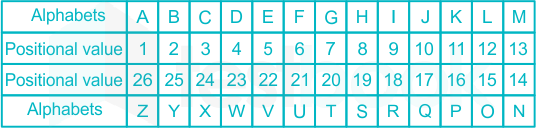
In the following question, four letter-number pairs are given. The letter-number on the left side of (-) is related to the letter-number on the right side of (-) with some Logic/Rule/Relation. Three pairs are similar on the basis of same Logic/Rule/Relation. Select the odd one out from the given alternatives.

  1. AOption (a)

    244BR - 488CU

  2. BOption (b)

    196KP - 392LS

  3. COption (c)

    148LM - 296MP

  4. DOption (d)

    256ZW - 502AZ

View answer & explanation

Correct answer

Answer: (d)D.

256ZW - 502AZ

Why this answer is correct

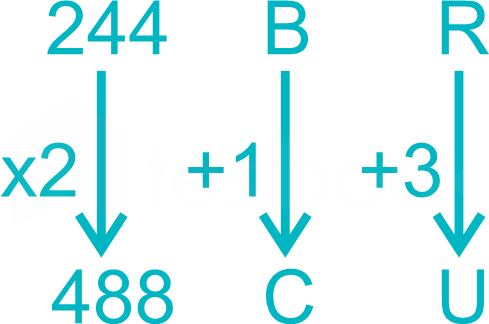
(1) 244BR - 488CU

(2) 196KP - 392LS

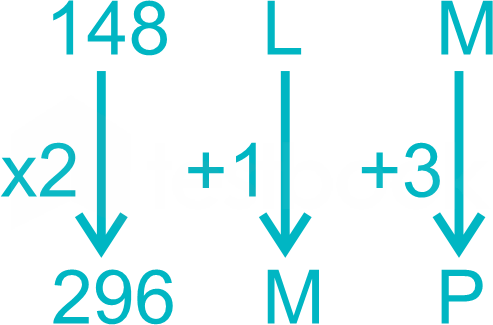
(3) 148LM - 296MP

(4) 256ZW - 502AZ


Hence, the correct answer is “Option 4”.

Question 46

In the following question, four letter-number pairs are given. The letter-number on the left side of (–) is related to the letter-number on the right side of (–) with some Logic/Rule/Relation. Three pairs are similar on the basis of same Logic/Rule/Relation. Select the odd one out from the given alternatives.

(NOTE: Operations should be performed on the whole numbers, without breaking down the number into its constituent digits. E.g. 13 – Operations on 13 such as adding/subtracting/multiplying etc. to 13 can be performed. Breaking down 13 into 1 and 3 and then performing mathematical operations on 1 and 3 is not allowed)

  1. AOption (a)

    TD440 – ZJ630

  2. BOption (b)

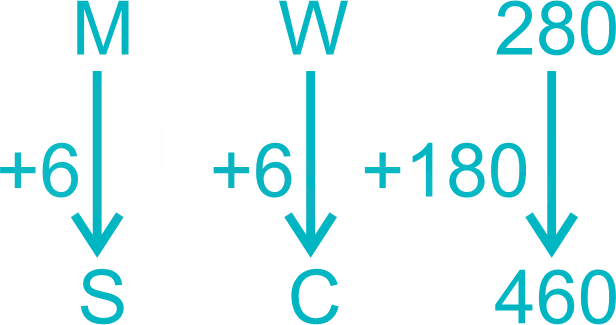
    MW280 – SC460

  3. COption (c)

    FE360 – LK550

  4. DOption (d)

    RI520 – XO710

View answer & explanation

Correct answer

Answer: (b)B.

MW280 – SC460

Why this answer is correct

(1) TD440 – ZJ630

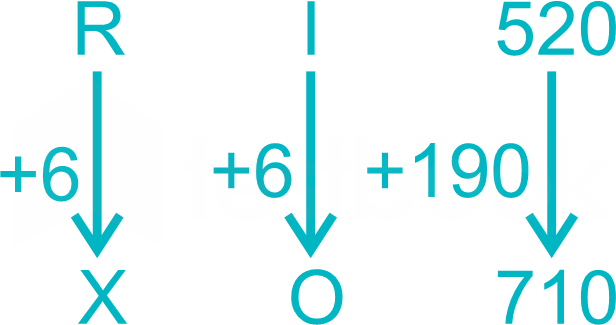
(2) MW280 – SC460

(3) FE360 – LK550

(4) RI520 – XO710

Hence, the correct answer is “Option 2”.

Question 47

In the following question, four number pairs are given. In each pair the number on left side of (–) is related to the number of the right side of (–) with some Logic/Rule/Relation. Three pairs are similar on the basis of same Logic/Rule/Relation. Select the odd one out from the given alternatives.

(NOTE: Operations should be performed on the whole numbers, without breaking down the number into its constituent digits. E.g. 13 – Operations on 13 such as adding/subtracting/multiplying etc. to 13 can be performed. Breaking down 13 into 1 and 3 and then performing mathematical operations on 1 and 3 is not allowed)

  1. AOption (a)

    13 – 169

  2. BOption (b)

    12 – 144

  3. COption (c)

    11 – 121

  4. DOption (d)

    10 – 110

View answer & explanation

Correct answer

Answer: (d)D.

10 – 110

Why this answer is correct

Logic: (First number)2 = Second number

(1) 13 – 169

(13)2 = 169

(2) 12 – 144

(12)2 = 144

(3) 11 – 121

(11)2 = 121

(4) 10 – 110

(10)2 = 100 ≠ 110

Hence, the correct answer is “Option 4”.

Question 48

Select the option that is related to the fifth letter-number cluster in the same way as the second letter-number cluster is related to the first letter-number cluster and fourth letter-number cluster is related to third letter-number cluster.

(NOTE: Operations should be performed on the whole numbers, without breaking down the numbers into its constituent digits. E.g. 13 – Operations on 13 such as adding/subtracting/multiplying etc. to 13 can be performed. Breaking down 13 into 1 and 3 and then performing mathematical operations on 1 and 3 is not allowed)

SB760 : PY530 :: AR1040 : XO810 :: FK840 : ?

  1. AOption (a)

    CG590

  2. BOption (b)

    CH590

  3. COption (c)

    CH610

  4. DOption (d)

    BG630

View answer & explanation

Correct answer

Answer: (c)C.

CH610

Why this answer is correct

SB760 : PY530 →

AR1040 : XO810 →

Similarly,

FK840 : ? →

Hence, the correct answer is “Option 3”.

Question 49

Select the option that is related to the fifth letter-number cluster in the same way as the second letter-number cluster is related to the first letter-number cluster and fourth letter-number cluster is related to third letter-number cluster.

(NOTE: Operations should be performed on the whole numbers, without breaking down the numbers into its constituent digits. E.g. 13 – Operations on 13 such as adding/subtracting/multiplying etc. to 13 can be performed. Breaking down 13 into 1 and 3 and then performing mathematical operations on 1 and 3 is not allowed)

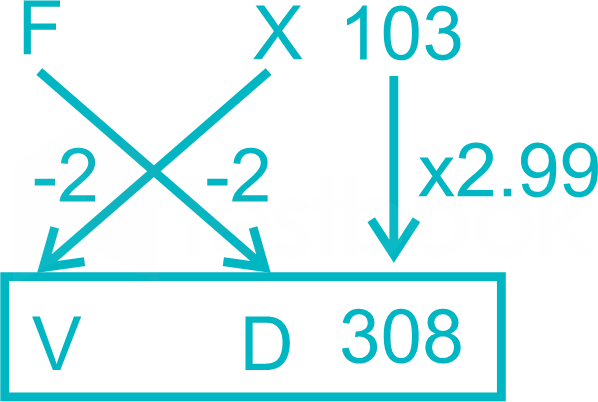
LW72 : UJ215 :: CA93 : YA278 :: FX103 : ?

  1. AOption (a)

    UD308

  2. BOption (b)

    VD308

  3. COption (c)

    TD309

  4. DOption (d)

    UD309

View answer & explanation

Correct answer

Answer: (b)B.

VD308

Why this answer is correct

LW72 : UJ215 →

CA93 : YA278 →

Similarly,

FX103 : ? →

Hence, the correct answer is “Option 2”.

Question 50

Select the option that is related to the fifth letter-number cluster in the same way as the second letter-number cluster is related to the first letter-number cluster and fourth letter-number cluster is related to third letter-number cluster.

(NOTE: Operations should be performed on the whole numbers, without breaking down the numbers into its constituent digits. E.g. 13 – Operations on 13 such as adding/subtracting/multiplying etc. to 13 can be performed. Breaking down 13 into 1 and 3 and then performing mathematical operations on 1 and 3 is not allowed)

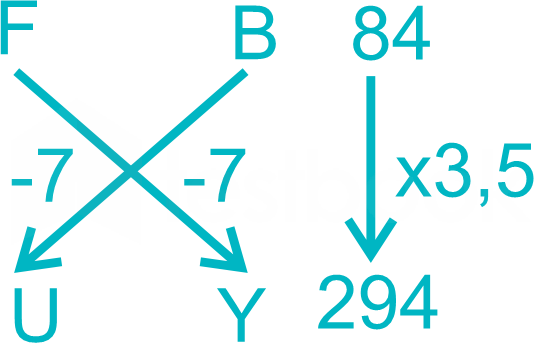
PN112 : GI392 :: FB84 : UY294 :: AR56 : ?

  1. AOption (a)

    KT204

  2. BOption (b)

    KT196

  3. COption (c)

    LS204

  4. DOption (d)

    LS196

View answer & explanation

Correct answer

Answer: (b)B.

KT196

Why this answer is correct

PN112 : GI392 →

FB84 : UY294 →

Similarly,

AR56 : ? →

Hence, the correct answer is “Option 2”.

Quantitative Aptitude (25 questions)

Question 51

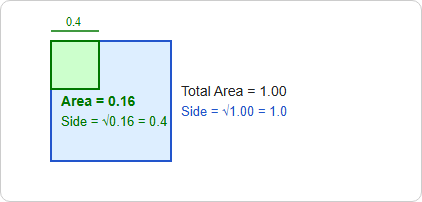
What is the square root of 0.16?

  1. AOption (a)

    0.004

  2. BOption (b)

    0.04

  3. COption (c)

    0.4

  4. DOption (d)

    4

View answer & explanation

Correct answer

Answer: (c)C.

0.4

Why this answer is correct

Shortcut Trick

To find the square root of a decimal, first count the number of decimal places.

In 0.16, there are 2 decimal places.

The square root will have half the number of places: 2 ÷ 2 = 1 decimal place.

Now, take the square root of the number as an integer: √16 = 4.

Applying the 1 decimal place to the result, we get 0.4.

∴ The correct answer is 0.4.

Alternate Method

Given: The number is 0.16.

Formula Used: √(a/b) = √a / √b

Calculations:

⇒ Convert the decimal 0.16 into a fraction:

⇒ 0.16 = 16 / 100

⇒ Apply the square root to the fraction:

⇒ √0.16 = √(16 / 100)

⇒ √0.16 = √16 / √100

⇒ Since √16 = 4 and √100 = 10:

⇒ √0.16 = 4 / 10

⇒ √0.16 = 0.4

∴ The correct answer is 0.4.

Additional Information

Square Root of Decimals

The square root of a decimal with 2n places will always result in a number with n decimal places. For example, √0.0016 = 0.04.

Perfect Square Property

If a number ends in 6, its square root must end in either 4 or 6 (e.g., 4×4=16, 6×6=36).

Inverse Operations

Squaring a number and finding the square root are inverse operations. To verify: 0.42 = 0.4 × 0.4 = 0.16.

Question 52

solve :- (111 ×  54) = ?

  1. AOption (a)

    67000

  2. BOption (b)

    69375

  3. COption (c)

    76500

  4. DOption (d)

    77200

View answer & explanation

Correct answer

Answer: (b)B.

69375

Why this answer is correct

Given:

111 ×  54

Formula Used:

Multiplication: A × B

Calculation:

⇒ 111 × 54

⇒ 111 × 625

⇒ 69375

∴ The correct answer is 69375.

Question 53

An article costing Rs. 200 is sold at a loss of 10%. Find the selling price.

  1. AOption (a)

    Rs. 180

  2. BOption (b)

    Rs. 185

  3. COption (c)

    Rs. 190

  4. DOption (d)

    Rs. 195

View answer & explanation

Correct answer

Answer: (a)A.

Rs. 180

Why this answer is correct

Given:

Cost Price (CP) = Rs. 200

Loss = 10%

Formula Used:

Selling Price (SP) = CP × (1 − Loss%)

Calculation:

⇒ SP = 200 × (1 − 10/100)

⇒ SP = 200 × (1 − 0.1)

⇒ SP = 200 × 0.9

⇒ SP = Rs. 180

∴ The correct answer is Rs. 180.

Question 54

If the selling price of 15 items is equal to the cost price of 20 items, what is the percentage profit or loss?

  1. AOption (a)

    33.33% profit

  2. BOption (b)

    25% profit

  3. COption (c)

    20% loss

  4. DOption (d)

    25% loss

View answer & explanation

Correct answer

Answer: (a)A.

33.33% profit

Why this answer is correct

Shortcut Trick

Ratio of Cost Price (CP) to Selling Price (SP) is inversely proportional to the number of items.

Number of items: CP items = 20, SP items = 15

Ratio of CP : SP = 15 : 20 = 3 : 4

Profit % = (Difference / CP ratio) × 100 = (1 / 3) × 100 = 33.33%

∴ The correct answer is 33.33% profit.

Alternate Method

Given:

Selling Price (SP) of 15 items = Cost Price (CP) of 20 items

Formula Used:

Profit % = [(SP − CP) / CP] × 100

Let the Cost Price (CP) of 1 item be ₹1.

⇒ CP of 20 items = ₹20

⇒ SP of 15 items = CP of 20 items = ₹20

⇒ CP of 15 items = ₹15

⇒ Profit = SP of 15 items − CP of 15 items

⇒ Profit = 20 − 15 = ₹5

⇒ Profit % = (Profit / CP of 15 items) × 100

⇒ Profit % = (5 / 15) × 100

⇒ Profit % = (1 / 3) × 100 = 33.33%

∴ The correct answer is 33.33% profit.

Additional Information

Profit and Loss on Item Count

When the cost price of 'm' articles is equal to the selling price of 'n' articles, then Profit % = [(m − n) / n] × 100. If the result is negative, it represents a loss.

Base for Percentage

Profit or loss percentage is always calculated on the Cost Price (CP) unless stated otherwise in the question.

Successive Discount

If two successive discounts of a% and b% are given, the single equivalent discount is [a + b − (a × b / 100)]%.

Question 55

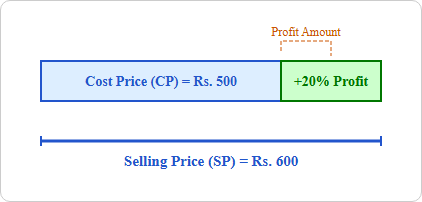
A trader sold an item at a profit of 20%. If the cost price was Rs. 500, find the selling price.

  1. AOption (a)

    Rs. 580

  2. BOption (b)

    Rs. 600

  3. COption (c)

    Rs. 620

  4. DOption (d)

    Rs. 640

View answer & explanation

Correct answer

Answer: (b)B.

Rs. 600

Why this answer is correct

Shortcut Trick

Consider Cost Price (CP) as 100%.

Since the trader sold the item at a profit of 20%, the Selling Price (SP) is 120% of CP.

SP = 120% of 500 = 1.2 × 500 = 600.

∴ The correct answer is Rs. 600.

Alternate Method

Given:

Cost Price (CP) of the item = Rs. 500

Profit Percentage = 20%

Formula Used:

Selling Price (SP) = CP × (100 + Profit%) / 100

Calculations:

⇒ Profit Amount = 20% of 500

⇒ Profit Amount = (20 / 100) × 500

⇒ Profit Amount = 0.2 × 500 = Rs. 100

⇒ Selling Price (SP) = Cost Price (CP) + Profit Amount

⇒ SP = 500 + 100

⇒ SP = 600

∴ The correct answer is Rs. 600.

Additional Information

Profit and Loss Basics

Profit occurs when SP > CP. Formula: Profit = SP − CP. Loss occurs when CP > SP. Formula: Loss = CP − SP.

Selling Price for Loss

If an item is sold at a loss percentage, then SP = CP × (100 − Loss%) / 100.

Calculating CP from SP

To find the Cost Price when SP and Profit% are known: CP = (SP × 100) / (100 + Profit%).

Question 56

An article is sold at Rs. 920 after giving a discount of 8%. What is the marked price?

  1. AOption (a)

    Rs. 1,000

  2. BOption (b)

    Rs. 980

  3. COption (c)

    Rs. 960

  4. DOption (d)

    Rs. 1,100

View answer & explanation

Correct answer

Answer: (a)A.

Rs. 1,000

Why this answer is correct

Given:

Selling Price (SP) = Rs. 920

Discount = 8%

Formula Used:

Discounted Price = Marked Price × (1 - Discount/100)

Marked Price = Discounted Price ÷ (1 - Discount/100)

Calculation:

⇒ Marked Price = 920 ÷ (1 - 8/100)

⇒ Marked Price = 920 ÷ (1 - 0.08)

⇒ Marked Price = 920 ÷ 0.92

⇒ Marked Price = Rs. 1,000

∴ The correct answer is Rs. 1,000.

Question 57

If a 20% discount is given on Rs. 2,500, what is the selling price?

  1. AOption (a)

    Rs. 1,800

  2. BOption (b)

    Rs. 1,900

  3. COption (c)

    Rs. 2,000

  4. DOption (d)

    Rs. 2,100

View answer & explanation

Correct answer

Answer: (c)C.

Rs. 2,000

Why this answer is correct

Given:

Original Price = Rs. 2,500

Discount = 20%

Formula Used:

Discount Amount = Original Price × (Discount % ÷ 100)

Selling Price = Original Price - Discount Amount

Calculation:

⇒ Discount Amount = 2,500 × (20 ÷ 100)

⇒ Discount Amount = 2,500 × 0.2

⇒ Discount Amount = Rs. 500

⇒ Selling Price = 2,500 - 500

⇒ Selling Price = Rs. 2,000

∴ The correct answer is Rs. 2,000.

Question 58

Train travels 60 km in 1.5 h. What is the speed?

  1. AOption (a)

    30 km/h

  2. BOption (b)

    40 km/h

  3. COption (c)

    50 km/h

  4. DOption (d)

    60 km/h

View answer & explanation

Correct answer

Answer: (b)B.

40 km/h

Why this answer is correct

Shortcut Trick

Speed is calculated by dividing Distance by Time.

Ratio of Distance to Time = 60 : 1.5

To simplify, multiply both by 2: 120 km in 3 h.

Speed = 120 ÷ 3 = 40 km/h.

∴ The correct answer is 40 km/h.

Alternate Method

Given:

Total Distance covered by the train = 60 km

Total Time taken = 1.5 h

Formula Used:

Speed (v) = Distance (d) ÷ Time (t)

Calculations:

⇒ Speed = 60 ÷ 1.5

⇒ To remove the decimal from the denominator, multiply both numerator and denominator by 10:

⇒ Speed = (60 × 10) ÷ (1.5 × 10)

⇒ Speed = 600 ÷ 15

⇒ Speed = 40 km/h

∴ The correct answer is 40 km/h.

Additional Information

Unit Conversion

To convert Speed from km/h to m/s, multiply by 5/18. To convert m/s to km/h, multiply by 18/5.

Average Speed

Average Speed = (Total Distance) ÷ (Total Time). For two equal distances with speeds x and y, Average Speed = 2xy ÷ (x + y).

Relative Speed

When two objects move in the same direction, relative speed is the difference (s1 − s2). In opposite directions, it is the sum (s1 + s2).

Question 59

A sum of Rs. 6250 earns Rs. 976.50 as simple interest in 3 years. Find the approximate rate of interest.

  1. AOption (a)

    4.21%

  2. BOption (b)

    5.21%

  3. COption (c)

    6.21%

  4. DOption (d)

    7.21%

View answer & explanation

Correct answer

Answer: (b)B.

5.21%

Why this answer is correct

Given:

Principal = 6250

Simple Interest = 976.50

Time = 3 years

Formula Used:

Simple Interest = (Principal × Rate × Time) ÷ 100

Rate = (Simple Interest × 100) ÷ (Principal × Time)

Calculation:

⇒ Rate = (976.50 × 100) ÷ (6250 × 3)

⇒ Rate = 97650 ÷ 18750

⇒ Rate ≈ 5.208

⇒ Rate ≈ 5.21%

∴ The correct answer is 5.21%.

Question 60

A sum of Rs. 6500 earns Rs. 1602.00 as simple interest in 4 years. Find the approximate rate of interest.

  1. AOption (a)

    5.16%

  2. BOption (b)

    6.16%

  3. COption (c)

    7.16%

  4. DOption (d)

    8.16%

View answer & explanation

Correct answer

Answer: (b)B.

6.16%

Why this answer is correct

Given:

Principal = 6500

Simple Interest = 1602.00

Time = 4 years

Formula Used:

Simple Interest = (Principal × Rate × Time) ÷ 100

Rate = (Simple Interest × 100) ÷ (Principal × Time)

Calculation:

⇒ Rate = (1602 × 100) ÷ (6500 × 4)

⇒ Rate = 160200 ÷ 26000

⇒ Rate ≈ 6.1615

⇒ Rate ≈ 6.16%

∴ The correct answer is 6.16%.

Question 61

A train 150 m long crosses a platform 350 m long in 40 seconds. Find its speed.

  1. AOption (a)

    36 km/h

  2. BOption (b)

    45 km/h

  3. COption (c)

    72 km/h

  4. DOption (d)

    90 km/h

View answer & explanation

Correct answer

Answer: (b)B.

45 km/h

Why this answer is correct

Given:

Length of train = 150 m

Length of platform = 350 m

Time taken = 40 seconds

Formula Used:

Total distance = Length of train + Length of platform

Speed = Total distance ÷ Time taken

1 m/s = 18 ÷ 5 km/h

Calculation:

⇒ Total distance = 150 + 350 = 500 m

⇒ Speed in m/s = 500 ÷ 40 = 12.5 m/s

⇒ Speed in km/h = 12.5 × (18 ÷ 5) = 45 km/h

∴ The correct answer is 45 km/h.

Question 62

If 8 workers can build a wall in 10 days, how many days will 4 workers take to build the same wall?

  1. AOption (a)

    20 days 

  2. BOption (b)

    18 days 

  3. COption (c)

    15 days 

  4. DOption (d)

    12 day

View answer & explanation

Correct answer

Answer: (a)A.

20 days 

Why this answer is correct

Given:

8 workers can build a wall in 10 days.

Number of workers reduced to 4.

Formula Used:

Work is inversely proportional to the number of workers when the total work is constant.

Workers × Days = Constant.

Calculation:

⇒ 8 × 10 = 4 × Days

⇒ 80 = 4 × Days

⇒ Days = 80 ÷ 4

⇒ Days = 20

∴ The correct answer is 20 days.

Question 63

A metallic conical bowl with base radius 10 cm and height 24 cm is uniformly heated, increasing all dimensions by 10%. By how much does the volume increase?

  1. AOption (a)

    10%

  2. BOption (b)

    21%

  3. COption (c)

    33.1%

  4. DOption (d)

    35%

View answer & explanation

Correct answer

Answer: (c)C.

33.1%

Why this answer is correct

Given:

Radius = 10 cm

Height = 24 cm

Increase in dimensions = 10%

Formula Used:

Volume of cone = (1 ÷ 3) × π × r2 × h

New volume = Original volume × (1.1)3

Calculation:

⇒ Original volume = (1 ÷ 3) × π × 102 × 24

⇒ Original volume = (1 ÷ 3) × π × 100 × 24

⇒ Original volume = 800π

⇒ New volume = 800π × (1.1)3

⇒ New volume = 800π × 1.331

⇒ New volume = 1064.8π

⇒ Increase in volume = 1064.8π − 800π

⇒ Increase = 264.8π

⇒ Percentage increase = (264.8π ÷ 800π) × 100

⇒ Percentage increase = 33.1%

∴ The correct answer is 33.1%.

Question 64

A cone-shaped tent (height 4 m, base radius 3 m) is exposed to wind. If only the lateral surface faces the wind, what area is affected?

  1. AOption (a)

    12 π m2

  2. BOption (b)

    15 π m2

  3. COption (c)

    20 π m2

  4. DOption (d)

    25 π m2

View answer & explanation

Correct answer

Answer: (b)B.

15 π m2

Why this answer is correct

Given:

Height of the cone (h) = 4 m

Radius of the base (r) = 3 m

Formula Used:

Slant height (l) = √(h2 + r2)

Lateral surface area = π × r × l

Calculation:

⇒ l = √(42 + 32)

⇒ l = √(16 + 9)

⇒ l = √25

⇒ l = 5 m

⇒ Lateral surface area = π × 3 × 5

⇒ Lateral surface area = 15π m2

∴ The correct answer is 15π m2.

Question 65

In a community library, there are three sections: Fiction, Non-Fiction, and Children's books. The average number of books in the Fiction and Non-Fiction sections is 1,275. The average number of books in the Non-Fiction and Children's sections is 1,450. If the total number of books in all three sections is 3,900, find the number of books in the Non-Fiction section.

  1. AOption (a)

    1600

  2. BOption (b)

    1550

  3. COption (c)

    1500

  4. DOption (d)

    1575

View answer & explanation

Correct answer

Answer: (b)B.

1550

Why this answer is correct

Given:

Average of Fiction and Non-Fiction = 1275

Average of Non-Fiction and Children's = 1450

Total books = 3900

Formula Used:

Average = (Sum of values) ÷ Number of values

Calculation:

⇒ Fiction + Non-Fiction = 1275 × 2 = 2550

⇒ Non-Fiction + Children's = 1450 × 2 = 2900

⇒ (Fiction + Non-Fiction) + (Non-Fiction + Children's) = 2550 + 2900

⇒ Fiction + 2 × Non-Fiction + Children's = 5450

⇒ Total = Fiction + Non-Fiction + Children's = 3900

⇒ Subtracting: (Fiction + 2 × Non-Fiction + Children's) − (Fiction + Non-Fiction + Children's)

⇒ Non-Fiction = 5450 − 3900

⇒ Non-Fiction = 1550

∴ The correct answer is 1550.

Question 66

A right prism has a rectangular base of dimensions 6.5 cm by 4.2 cm, and its height is 12 cm. Calculate the total surface area of the prism.

  1. AOption (a)

    318.2 cm2

  2. BOption (b)

    311.4 cm2

  3. COption (c)

    305.6 cm2

  4. DOption (d)

    327.3 cm2

View answer & explanation

Correct answer

Answer: (b)B.

311.4 cm2

Why this answer is correct

Given:

l = 6.5 cm

b = 4.2 cm

h = 12 cm

Formula Used:

Total Surface Area = 2 × (l × b + b × h + l × h)

Calculation:

⇒ l × b = 6.5 × 4.2 = 27.3

⇒ b × h = 4.2 × 12 = 50.4

⇒ l × h = 6.5 × 12 = 78

⇒ Sum = 27.3 + 50.4 + 78 = 155.7

⇒ Total Surface Area = 2 × 155.7 = 311.4 cm2

∴ The correct answer is 311.4 cm2.

Question 67

In a construction project, two support beams form angles of 30∘  and 60∘  with the ground, respectively. Engineers must calculate combined efficiency using tan A + cot B where A = 30∘ and B = 60∘ . Both angles are complementary. Find the value of tan A + cot B when A = 30∘  and B = 60∘ .

  1. AOption (a)

    1

  2. BOption (b)

    √ 3

  3. COption (c)

    2/√3

  4. DOption (d)

    2

View answer & explanation

Correct answer

Answer: (c)C.

2/√3

Why this answer is correct

Given:

A = 30°

B = 60°

Formula Used:

tan θ = opposite ÷ adjacent

cot θ = 1 ÷ tan θ

Calculation:

⇒ tan 30° = 1 ÷ √3

⇒ cot 60° = 1 ÷ tan 60°

⇒ tan 60° = √3

⇒ cot 60° = 1 ÷ √3

⇒ tan A + cot B = 1 ÷ √3 + 1 ÷ √3

⇒ = 2 ÷ √3

⇒ = (2√3) ÷ 3 = 2 ÷ √3

∴ The correct answer is 2 ÷ √3.

Question 68

If sin x = 3/5 and x is acute, find the value of (2tan x + sec x).

  1. AOption (a)

    7/13

  2. BOption (b)

    11/4

  3. COption (c)

    6/5

  4. DOption (d)

    2/9

View answer & explanation

Correct answer

Answer: (b)B.

11/4

Why this answer is correct

Shortcut Trick

Recognize the basic Pythagorean triplet (3, 4, 5) where sin x = Opposite/Hypotenuse = 3/5.

For an acute angle x, the Base is 4.

Determine the ratios: tan x = 3/4 and sec x = 5/4.

Substitute into the expression: 2 × (3/4) + 5/4 = 6/4 + 5/4 = 11/4.

∴ The correct answer is 11/4.

Alternate Method

Given: sin x = 3/5 and x is an acute angle.

Formula Used:

  1. sin x = Opposite / Hypotenuse
  2. tan x = Opposite / Base
  3. sec x = Hypotenuse / Base
  4. Base = √(Hypotenuse2 − Opposite2)

Calculations:

⇒ Let Opposite = 3 and Hypotenuse = 5.

⇒ Base = √(52 − 32)

⇒ Base = √(25 − 9) = √16 = 4

⇒ Since x is acute, all ratios are positive.

⇒ tan x = 3 / 4

⇒ sec x = 5 / 4

⇒ Value = 2tan x + sec x

⇒ Value = 2 × (3/4) + (5/4)

⇒ Value = 6/4 + 5/4 = 11/4

∴ The correct answer is 11/4.

Additional Information

Trigonometric Identities

The fundamental identity is sin2x + cos2x = 1. Other derived forms include 1 + tan2x = sec2x and 1 + cot2x = cosec2x.

Pythagorean Triplets

Common triplets include (3, 4, 5), (5, 12, 13), (8, 15, 17), and (7, 24, 25), which are useful for solving competitive exam problems quickly.

Quadrant Signs (ASTC Rule)

In the 1st Quadrant (Acute), all ratios are positive. In the 2nd Quadrant, only sin and cosec are positive. In the 3rd Quadrant, only tan and cot are positive. In the 4th Quadrant, only cos and sec are positive.

Question 69

A sum becomes Rs. 11,760 in 6 years at r % simple interest. If the interest rate had been (r + 5)% p.a., the amount would have been Rs. 13,320. Find the principal.

  1. AOption (a)

    Rs. 5,200

  2. BOption (b)

    Rs. 5,800

  3. COption (c)

    Rs. 5,000

  4. DOption (d)

    Rs. 6,000

View answer & explanation

Correct answer

Answer: (a)A.

Rs. 5,200

Why this answer is correct

Given:

A₁ = 11760

A₂ = 13320

t = 6

Rate difference = 5%

Formula Used:

Simple Interest = (P × R × t) ÷ 100

Difference in Amount = (P × Rate difference × t) ÷ 100

Calculation:

⇒ Difference in amount = 13320 − 11760 = 1560

⇒ 1560 = (P × 5 × 6) ÷ 100

⇒ 1560 = (30P) ÷ 100

⇒ 1560 = (3P) ÷ 10

⇒ P = (1560 × 10) ÷ 3

⇒ P = 15600 ÷ 3 = 5200

∴ The correct answer is 5200.

Question 70

In a mixture of 35 litres, the ratio of milk to water is 2 : 3. If this ratio is to be 1 : 3, then what quantity of water needs to be added?

  1. AOption (a)

    17 litres

  2. BOption (b)

    19 litres

  3. COption (c)

    25 litres

  4. DOption (d)

    21 litres

View answer & explanation

Correct answer

Answer: (d)D.

21 litres

Why this answer is correct

Given:

Total mixture = 35 litres

Initial ratio (milk : water) = 2 : 3

Final ratio (milk : water) = 1 : 3

Formula Used:

Quantity = (Ratio part ÷ Total ratio) × Total mixture

Calculation:

⇒ Milk = (2 ÷ 5) × 35 = 14

⇒ Water = (3 ÷ 5) × 35 = 21

⇒ Let water added = x

⇒ New water = 21 + x

⇒ Ratio condition: 14 ÷ (21 + x) = 1 ÷ 3

⇒ 14 × 3 = 21 + x

⇒ 42 = 21 + x

⇒ x = 21

∴ The correct answer is 21 litres.

Question 71

A can do a certain work in the same time that B and C together can do it. If A and B together could do it in 10 days and B alone in 25 days, then C alone could do it in:

  1. AOption (a)

    47 days

  2. BOption (b)

    38 days

  3. COption (c)

    50 days

  4. DOption (d)

    40 days

View answer & explanation

Correct answer

Answer: (c)C.

50 days

Why this answer is correct

Given:

(A + B) time = 10 days

B time = 25 days

A = (B + C)

Formula Used:

Work rate = 1 ÷ Time

A = B + C ⇒ Rate(A) = Rate(B) + Rate(C)

Calculation:

⇒ LCM of 10 and 25 = 50

⇒ Rate (A + B) = 5 ÷ 50

⇒ Rate B = 2 ÷ 50

⇒ Rate A = Rate (A + B) − Rate B

⇒ Rate A = (5 ÷ 50) − (2 ÷ 50) = 3 ÷ 50

⇒ Rate A = Rate B + Rate C

⇒ 3 ÷ 50 = 2 ÷ 50 + Rate C

⇒ Rate C = (3 ÷ 50) − (2 ÷ 50) = 1 ÷ 50

⇒ Time of C = 50 days

∴ The correct answer is 50 days.

Question 72

Which of the following statements is/are CORRECT?

I. The average of 6 numbers is 42. If one number is removed, the average of the remaining 5 numbers becomes 40, so the removed number is 52.

II. If instead, the removed number was 38, the average of the remaining 5 numbers would be 43.

  1. AOption (a)

    Only I

  2. BOption (b)

    Only II

  3. COption (c)

    Both I and II

  4. DOption (d)

    Neither I nor II

View answer & explanation

Correct answer

Answer: (a)A.

Only I

Why this answer is correct

Given:

Average of 6 numbers = 42

Average of 5 numbers (case I) = 40

Removed number (case II) = 38

Formula Used:

Sum = Average × Number of terms

Calculation:

⇒ Total sum of 6 numbers = 42 × 6 = 252

⇒ Sum of 5 numbers (case I) = 40 × 5 = 200

⇒ Removed number (case I) = 252 − 200 = 52

⇒ Sum of remaining 5 numbers (case II) = 252 − 38 = 214

⇒ Average = 214 ÷ 5 = 42.8

∴ The correct answer is Only statement I is correct.

Question 73

If sin(θ) = 0 .6, then cos(θ) is:

  1. AOption (a)

    0.8

  2. BOption (b)

    0.6

  3. COption (c)

    0.5

  4. DOption (d)

    0.4

View answer & explanation

Correct answer

Answer: (a)A.

0.8

Why this answer is correct

Given:

sin(θ) = 0.6

Formula Used:

sin2(θ) + cos2(θ) = 1

Calculation:

⇒ sin2(θ) = (0.6)2 = 0.36

⇒ sin2(θ) + cos2(θ) = 1

⇒ 0.36 + cos2(θ) = 1

⇒ cos2(θ) = 1 - 0.36 = 0.64

⇒ cos(θ) = √0.64 = 0.8

∴ The correct answer is 0.8.

Question 74

Simplify the expression: (1 - sin x)(1 + sin x).

  1. AOption (a)

    sin2 x

  2. BOption (b)

    2 sinx

  3. COption (c)

    1 - sinx

  4. DOption (d)

    cos2x

View answer & explanation

Correct answer

Answer: (d)D.

cos2x

Why this answer is correct

Shortcut Trick

Apply the algebraic identity (a − b)(a + b) = a2 − b2.

Here, let a = 1 and b = sin x.

The expression becomes 12 − sin2 x = 1 − sin2 x.

Using the fundamental trigonometric identity, 1 − sin2 x = cos2 x.

∴ The correct answer is cos2 x.

Alternate Method

Given:

Trigonometric expression: (1 − sin x)(1 + sin x)

Formula Used:

  1. Difference of squares: (a − b)(a + b) = a2 − b2
  2. Pythagorean Identity: sin2 x + cos2 x = 1 ⇒ cos2 x = 1 − sin2 x

Calculations:

⇒ Expression = (1 − sin x)(1 + sin x)

⇒ Expression = (1)2 − (sin x)2

⇒ Expression = 1 − sin2 x

From the Pythagorean identity, we know that:

⇒ sin2 x + cos2 x = 1

⇒ cos2 x = 1 − sin2 x

Substituting this back into the expression:

⇒ 1 − sin2 x = cos2 x

∴ The correct answer is cos2 x.

Additional Information

Basic Trigonometric Identities

The three fundamental identities are sin2 θ + cos2 θ = 1, 1 + tan2 θ = sec2 θ, and 1 + cot2 θ = cosec2 θ.

Algebraic Conjugates

Multiplying a term by its conjugate (like 1 − sin x and 1 + sin x) is a common technique to simplify trigonometric fractions and expressions.

Double Angle Formulas

Note that cos(2x) is different from cos2 x; cos(2x) = cos2 x − sin2 x = 2cos2 x − 1 = 1 − 2sin2 x.

Question 75

A shopkeeper offers a "Buy 3, Get 1 Free" scheme. What is the equivalent single discount percentage?

  1. AOption (a)

    25%

  2. BOption (b)

    20%

  3. COption (c)

    40%

  4. DOption (d)

    35%

View answer & explanation

Correct answer

Answer: (a)A.

25%

Why this answer is correct

Given:

Buy 3 items.

Get 1 item free.

Formula Used:

Equivalent discount percentage = (Free items ÷ Total items) × 100

Calculation:

⇒ Free items = 1

⇒ Total items = 3 + 1 = 4

⇒ Equivalent discount percentage = (1 ÷ 4) × 100

⇒ Equivalent discount percentage = 25%

∴ The correct answer is 25%.

General Awareness (25 questions)

Question 76

Which of the following is NOT the aim to establish the Directive Principles of State Policy?

  1. AOption (a)

    Welfare state

  2. BOption (b)

    Economic democracy

  3. COption (c)

    Social democracy

  4. DOption (d)

    Political democracy

View answer & explanation

Correct answer

Answer: (d)D.

Political democracy

Why this answer is correct

The correct answer is Political democracy.

Key Points

  • The Directive Principles of State Policy (DPSP) are enshrined in Part IV of the Indian Constitution and aim to create a framework for establishing a welfare state by guiding the government in policy-making and legislation. These principles are not enforceable by law but are fundamental in governance.
  • The primary objectives of the DPSP include achieving social justice, ensuring economic democracy, and fostering social democracy. These are necessary for reducing inequalities in wealth, income, and opportunities.
  • Political democracy, while an essential aspect of a democratic state, is not specifically addressed as an aim of the Directive Principles. Political democracy primarily concerns free and fair elections, individual rights, and political freedoms, which are guaranteed by other parts of the Constitution, notably the Fundamental Rights in Part III.
  • The DPSP focuses on promoting an equitable society through measures like equal pay for equal work, protection of workers, promotion of education, public health, and living standards, and reducing the concentration of wealth (Articles 38–51).
  • Thus, the goal of political democracy is distinct from the aims of the Directive Principles, which are more oriented towards creating a welfare state and ensuring economic and social justice. Hence, the correct answer is Political democracy.

Additional Information

  • Directive Principles of State Policy:
  • The DPSP are inspired by the Irish Constitution, which in turn drew from the directive principles of social policy in the Spanish Constitution.
  • These principles aim at ensuring socio-economic justice and serve as a guide for the state to establish policies that reduce disparities and ensure overall development.
  • Examples include provisions for free and compulsory education for children (Article 45) and the promotion of the welfare of people through economic justice (Article 38).
  • Fundamental Rights and Political Democracy:
  • Political democracy is primarily upheld through Fundamental Rights (Part III) like the right to equality (Article 14–18), the right to freedom (Article 19–22), and the right to constitutional remedies (Article 32).
  • These rights ensure that citizens can freely participate in the political process, express opinions, and seek protection against state excesses.
  • Political democracy also involves periodic free and fair elections, which are conducted under the supervision of the Election Commission of India.
  • Key Articles of DPSP:
  • Article 38: Directs the state to promote the welfare of the people by securing a social order marked by justice – social, economic, and political.
  • Article 39: Calls for ensuring that the ownership and control of resources are distributed to serve the common good.
  • Article 41: Directs the state to make effective provisions for securing the right to work, education, and public assistance.
  • Comparison of DPSP and Fundamental Rights:
  • Fundamental Rights are justiciable, meaning they are enforceable by courts, whereas DPSP are non-justiciable but act as guiding principles for governance.
  • Fundamental Rights focus more on individual freedoms, while DPSP aims to achieve collective welfare.

Important Points

  • Implementation of DPSP:
  • Many laws and policies in India, such as the National Rural Employment Guarantee Act (NREGA), the Mid-Day Meal Scheme, and the Right to Education Act, derive inspiration from the DPSP.
  • The 73rd and 74th Constitutional Amendments for local self-governance also reflect the spirit of the DPSP.
  • Challenges in Implementing DPSP:
  • Lack of adequate resources and political will often hampers the realization of these principles.
  • Balancing DPSP with Fundamental Rights can sometimes lead to conflicts, as seen in cases like the Kesavananda Bharati case (1973).

Question 77

In March 2024, at India's first National Creators Awards, who won the 'Best Creator for Social Change' award?

  1. AOption (a)

    Kamiya Jani

  2. BOption (b)

    RJ Raunac

  3. COption (c)

    Jaya Kishori

  4. DOption (d)

    Pankti Pandey

View answer & explanation

Correct answer

Answer: (c)C.

Jaya Kishori

Why this answer is correct

The correct answer is Jaya Kishori.

Key Points

  • Jaya Kishori was awarded the title of "Best Creator for Social Change" at India's first National Creators Awards in March 2024.
  • She is a renowned spiritual speaker, motivational leader, and social influencer known for her efforts in creating positive societal changes through her philosophical teachings and active charity work.
  • Jaya Kishori has been instrumental in promoting mental wellness, spiritual growth, and philanthropy, inspiring millions through her speeches and social media content.
  • Her initiatives often focus on addressing mental health issues, spiritual guidance, and moral education, which have been impactful in bringing awareness to societal issues.
  • The National Creators Awards was established to honor influential creators across diverse fields who have made significant contributions to society through their work.

Additional Information

  • About Jaya Kishori:
  • She is a motivational speaker and spiritual storyteller who delivers lectures on self-improvement, spirituality, and mindfulness.
  • Jaya Kishori is widely recognized for her Bhajan and Katha sessions, which emphasize moral values and inner peace.
  • She has also been associated with various charitable causes like education for underprivileged children and healthcare for the needy.
  • Her teachings often blend traditional wisdom with modern-day relevance, making her a favorite among youth and adults alike.
  • National Creators Awards:
  • India's first National Creators Awards were introduced to honor individuals excelling in content creation and social impact.
  • The awards aim to recognize creators who bring about positive societal changes through their platforms, including digital media, arts, and activism.
  • Categories include areas such as social change, innovation, education, and entertainment.
  • Other Nominees:
  • Kamiya Jani: Known for her contributions to travel journalism and influencing a generation of wanderlust enthusiasts through her platform "Curly Tales."
  • RJ Raunac: A popular radio jockey and digital creator, famous for his humorous takes on social and political issues under his persona "Baua."
  • Pankti Pandey: A rising social media influencer focusing on environmental awareness and sustainable living practices.
  • Impact of Social Influencers:
  • Social influencers like Jaya Kishori use their platforms to educate, inspire, and mobilize people towards addressing societal issues.
  • They often collaborate with NGOs and government initiatives to amplify their impact on healthcare, education, and environmental challenges.

Important Points

  • Role of Spiritual Leaders in Social Change:
  • Spiritual leaders like Jaya Kishori play a significant role in motivating communities through their teachings and charitable work.
  • They often focus on mental health, ethical behavior, and community service, which are critical for societal harmony.
  • Recognition of Influential Creators:
  • Awards like the National Creators Awards highlight the importance of content creators in shaping public opinion and inspiring societal improvements.
  • Such recognition encourages more individuals to leverage their platforms for social good.

Question 78

In October 2024, who has been appointed as the Chief of the Indian Coast Guard?

  1. AOption (a)

    Ambarish Kenghe

  2. BOption (b)

    Devendra Kumar Upadhyaya

  3. COption (c)

    Paramesh Sivamani

  4. DOption (d)

    Neeraj Parakh

View answer & explanation

Correct answer

Answer: (c)C.

Paramesh Sivamani

Why this answer is correct

The correct answer is Paramesh Sivamani.

Key Points

  • Paramesh Sivamani was appointed as the Chief of the Indian Coast Guard in October 2024.
  • The Indian Coast Guard is one of the country's critical maritime security agencies responsible for safeguarding India's vast coastline and enforcing maritime laws.
  • Paramesh Sivamani is a highly experienced officer who has held various important positions within the Indian Coast Guard prior to his appointment as Chief.
  • As Chief, he is tasked with overseeing operations such as search and rescue missions, anti-smuggling operations, and maritime environmental protection.
  • The appointment of Paramesh Sivamani reflects the government's focus on ensuring robust maritime security and efficient management of India's coastal regions.

Additional Information

  • Indian Coast Guard:
  • Established in 1978, the Indian Coast Guard operates under the Ministry of Defence.
  • It is tasked with protecting India's maritime interests and enforcing maritime law within the territorial waters.
  • Its responsibilities include search and rescue operations, preventing smuggling, and protecting marine biodiversity.
  • The Coast Guard collaborates closely with other organizations such as the Indian Navy, fisheries department, and state police.
  • Role of the Chief of Indian Coast Guard:
  • The Chief is the highest-ranking officer of the Indian Coast Guard, responsible for strategic planning and operational oversight.
  • Key duties include managing coastal security, coordinating inter-agency operations, and ensuring preparedness for maritime emergencies.
  • The Chief also represents India in international maritime forums, promoting global cooperation in maritime security.
  • Maritime Security in India:
  • India’s coastline spans 7,516 kilometers, making maritime security a crucial aspect of national defense.
  • The Indian Coast Guard plays a pivotal role in maintaining surveillance along this vast coastline to prevent illegal activities and threats.
  • Key challenges include piracy, illegal fishing, and environmental hazards.
  • Training and Modernization:
  • The Indian Coast Guard continually invests in the modernization of its fleet, including advanced ships, aircraft, and surveillance equipment.
  • Specialized training programs focus on equipping personnel to handle complex maritime challenges effectively.

Important Points

  • Indian Coast Guard Fleet:
  • The Indian Coast Guard operates a fleet of over 150 ships and 60 aircraft.
  • These include offshore patrol vessels, interceptor boats, and reconnaissance aircraft.
  • International Collaboration:
  • The Indian Coast Guard frequently participates in joint exercises with other nations to enhance maritime security capabilities.
  • It has signed memorandums of understanding (MoUs) with countries like Japan, South Korea, and Australia for cooperation in maritime law enforcement.
  • Notable Operations:
  • Successful operations include the prevention of drug smuggling and interception of vessels involved in illegal activities.
  • During cyclones and other natural disasters, the Coast Guard plays a vital role in evacuation and relief efforts.

Question 79

What is the full form of PM-AJAY, seen in news in May 2025?

  1. AOption (a)

    Pradhan Mantri Anusuchit Jaati Abhyuday Yojana

  2. BOption (b)

    Pradhan Mantri Awas Jan Aadhar Yojna

  3. COption (c)

    Pradhan Mantri Adarsh Jan Abhiyan Yojna

  4. DOption (d)

    PM Ann-Jal Aarthik Yojna

View answer & explanation

Correct answer

Answer: (a)A.

Pradhan Mantri Anusuchit Jaati Abhyuday Yojana

Why this answer is correct

The correct answer is Pradhan Mantri Anusuchit Jaati Abhyuday Yojana.

Key Points

  • Pradhan Mantri Anusuchit Jaati Abhyuday Yojana (PM-AJAY) is a government scheme aimed at the development and empowerment of Scheduled Castes (SCs) in India.
  • The scheme focuses on providing financial assistance, skill development programs, and infrastructure support to uplift the socio-economic status of SC communities.
  • PM-AJAY was introduced to ensure inclusive growth and equitable access to resources for marginalized sections of society.
  • The scheme emphasizes areas such as education, livelihood generation, housing, and healthcare to address the challenges faced by the SC population.
  • PM-AJAY also includes provisions for residential education and scholarships to promote higher education among SC students and reduce dropout rates.

Additional Information

  • Key Objectives of PM-AJAY:
  • The scheme aims to bridge the gap between the SC population and other communities in terms of access to basic amenities and opportunities.
  • It seeks to promote self-reliance among Scheduled Castes through vocational training and skill development programs.
  • PM-AJAY strives to reduce poverty and unemployment by enabling SC individuals to engage in sustainable livelihood activities.
  • Scheduled Castes in India:
  • Scheduled Castes (SCs) are historically marginalized communities listed under Schedule I of the Indian Constitution.
  • The Constitution provides special provisions for the upliftment and protection of SCs under Articles 341, 46, and 17.
  • SCs constitute about 16.6% of India’s population according to the 2011 Census.
  • Government Initiatives for SC Development:
  • Several schemes such as Post-Matric Scholarships, National Scheduled Castes Finance and Development Corporation (NSFDC), and Stand-Up India are implemented for SC empowerment.
  • Programs like Dr. Ambedkar Foundation promote awareness about social justice and the contributions of Dr. B.R. Ambedkar.
  • Comparison of Other Options:
  • Pradhan Mantri Awas Jan Aadhar Yojna: This scheme does not exist as per authentic records and is not related to SC development.
  • Pradhan Mantri Adarsh Jan Abhiyan Yojna: Although this sounds similar, it does not align with the objectives of PM-AJAY.
  • PM Ann-Jal Aarthik Yojna: This is not a recognized scheme and does not pertain to Scheduled Castes.

Important Points

  • Funding: PM-AJAY is funded by the central government with provisions for state governments to contribute to the implementation of specific projects.
  • Target Beneficiaries: SC communities across India, with special focus on regions with a high concentration of Scheduled Castes.
  • Monitoring: The scheme is monitored by the Ministry of Social Justice and Empowerment to ensure effective implementation and transparency.
  • Impact Assessment: Regular surveys and reports are conducted to evaluate the progress and impact of PM-AJAY on SC beneficiaries.

Question 80

As of July 2025, women in India represent only ______ of the STEM workforce, limiting women's access to career opportunities offered by the STEM sector.

  1. AOption (a)

    43%

  2. BOption (b)

    13%

  3. COption (c)

    27%

  4. DOption (d)

    6%

View answer & explanation

Correct answer

Answer: (c)C.

27%

Why this answer is correct

The correct answer is 0.27.

Key Points

  • As of July 2025, women in India represent 27% (or 0.27) of the STEM workforce. This indicates a significant gender disparity in the STEM (Science, Technology, Engineering, and Mathematics) sector.
  • The underrepresentation of women in STEM fields limits their access to career opportunities in these high-growth and lucrative areas.
  • Globally, the percentage of women in STEM varies widely, but India’s 27% participation rate highlights the need for focused measures to promote gender equity in these fields.
  • One of the contributing factors is the lack of inclusive policies and support systems for women, including workplace flexibility, mentoring, and initiatives to reduce gender bias.
  • The government and organizations are working towards increasing women's participation in STEM through scholarships, awareness campaigns, and educational programs to encourage girls to pursue careers in science and technology.

Additional Information

  • Global Comparison:
  • Globally, women make up around 28-30% of the STEM workforce on average, according to various reports such as UNESCO’s Cracking the Code: Girls’ and Women’s Education in STEM.
  • Countries like the United States report a slightly higher percentage of women in STEM fields (around 35%), while the numbers are lower in developing economies.
  • Factors Affecting Women in STEM:
  • Socio-cultural norms: Gender stereotypes and societal expectations often discourage women from pursuing STEM careers.
  • Lack of role models: The absence of visible female leaders in STEM fields reduces inspiration for young girls to enter these areas.
  • Workplace challenges: Gender biases, unequal pay, and limited opportunities for growth create barriers for women in STEM professions.
  • Government Initiatives in India:
  • The Government of India has launched several programs like the Vigyan Jyoti Program by the Department of Science & Technology (DST) to increase women's participation in STEM.
  • Under the New Education Policy (NEP) 2020, emphasis is laid on promoting gender equality in education, including STEM disciplines.
  • Efforts such as scholarships for girls in STEM fields and campaigns like Beti Bachao Beti Padhao aim to bridge the gender gap.
  • Benefits of Women in STEM:
  • Studies show that increasing women’s participation in STEM can drive innovation, improve economic outcomes, and create more inclusive work environments.
  • Diversity in STEM teams leads to better problem-solving and enhanced creativity, which benefits organizations and industries.

Important Points

  • Key Statistics:
  • A report by UNESCO highlights that globally, only 30% of female students choose STEM-related fields in higher education.
  • Fields like engineering and computer science have particularly low representation of women (10-15% in some countries).
  • Examples of STEM Role Models:
  • Prominent women in STEM include Kalpana Chawla (Astronaut), Maryam Mirzakhani (Mathematician), and Dr. Tessy Thomas (Indian Missile Scientist).
  • Such role models inspire young girls to pursue careers in science and technology.

Question 81

Who administers and regulates the NPS Vatsalya scheme launched in September 2024?

  1. AOption (a)

    Reserve Bank of India

  2. BOption (b)

    Securities and Exchange Board of India

  3. COption (c)

    Pension Fund Regulatory and Development Authority

  4. DOption (d)

    Ministry of Education

View answer & explanation

Correct answer

Answer: (c)C.

Pension Fund Regulatory and Development Authority

Why this answer is correct

The correct answer is Pension Fund Regulatory and Development Authority.

Key Points

  • Pension Fund Regulatory and Development Authority (PFRDA) is the statutory authority responsible for regulating and overseeing pension schemes in India, including the NPS Vatsalya scheme.
  • The NPS Vatsalya scheme was launched to provide social security benefits for specific groups, such as women, children, and economically weaker sections.
  • PFRDA was established under the PFRDA Act, 2013, and its primary function is to regulate the National Pension System (NPS) and other pension-related schemes.
  • The authority ensures transparency, fairness, and efficiency in the management of pension funds and promotes retirement planning among citizens.
  • NPS Vatsalya scheme is a specialized initiative under the umbrella of the National Pension System (NPS), aimed at providing financial stability and security to beneficiaries.

Additional Information

  • Pension Fund Regulatory and Development Authority (PFRDA):
  • PFRDA regulates pension funds and ensures the safe and efficient management of savings for retirement.
  • It supervises schemes like the NPS and the Atal Pension Yojana (APY), aimed at providing retirement income.
  • PFRDA allows both individuals and organizations to subscribe to pension schemes and ensures compliance with regulatory standards.
  • National Pension System (NPS):
  • NPS is a government-backed pension scheme launched in 2004 for government employees and later extended to all citizens in 2009.
  • It is a voluntary, defined contribution retirement savings scheme regulated by PFRDA.
  • NPS allows subscribers to systematically save for their retirement and provides options for investing in equity, corporate bonds, and government securities.
  • Atal Pension Yojana (APY):
  • APY is another pension scheme regulated by PFRDA, primarily aimed at unorganized sector workers.
  • Under this scheme, subscribers receive a guaranteed minimum pension ranging from ₹1,000 to ₹5,000 per month after the age of 60.
  • The government provides co-contribution for eligible individuals who are not members of any other social security schemes.
  • Features of NPS Vatsalya Scheme:
  • The scheme targets vulnerable groups like orphans, women, and economically weaker sections to provide them with a secure financial future.
  • It integrates with the National Pension System to offer long-term benefits and financial stability to its beneficiaries.
  • The scheme is managed by PFRDA and implemented through designated financial institutions.

Important Points

  • Reserve Bank of India:
  • The RBI is the central banking institution of India, responsible for monetary policy and regulation of banking institutions.
  • It does not regulate pension schemes like the NPS Vatsalya scheme.
  • Securities and Exchange Board of India (SEBI):
  • SEBI regulates the securities market and ensures protection for investors.
  • While SEBI oversees mutual funds and stock market operations, it does not administer pension schemes.
  • Ministry of Education:
  • The Ministry of Education oversees policies related to education and skill development in India.
  • It is not responsible for pension schemes or their regulation.

Question 82

In Global University Employability Ranking 2025, which was the highest ranked Indian university?

  1. AOption (a)

    IIT Delhi

  2. BOption (b)

    Indian Institute of Science

  3. COption (c)

    IIT Bombay

  4. DOption (d)

    IIT Kharagpur

View answer & explanation

Correct answer

Answer: (a)A.

IIT Delhi

Why this answer is correct

The correct answer is IIT Delhi.

Key Points

  • Global University Employability Ranking: This ranking evaluates universities worldwide based on their ability to prepare students for employment, often factoring in employer feedback and graduate outcomes.
  • IIT Delhi: In the 2025 edition of the Global University Employability Ranking, IIT Delhi secured the highest rank among Indian universities, showcasing its excellence in fostering employability and industry readiness among graduates.
  • Factors contributing to IIT Delhi's ranking: The institute's strong emphasis on research, innovation, industry collaboration, and practical learning are key contributors to its high employability score.
  • Global Position: IIT Delhi often ranks among the top institutions globally in terms of employability, highlighting its reputation and quality education standards.
  • Other Indian Institutes: While several IITs and Indian Institute of Science are consistently ranked in global employability indices, IIT Delhi outperformed them in this specific ranking, affirming its leadership in the field.

Additional Information

  • IIT Delhi Overview:
  • Established: IIT Delhi was founded in 1961 and designated as an Institute of National Importance in 1963.
  • Location: It is located in New Delhi, India, and serves as one of the premier engineering institutions in the country.
  • Programs: IIT Delhi offers undergraduate, postgraduate, and doctoral programs in various engineering, technology, and applied sciences disciplines.
  • Industry Collaboration: The institute is known for its strong industry linkages, internships, and placement opportunities for students, contributing to high employability.
  • Other Top Indian Universities in Employability Rankings:
  • Indian Institute of Science (IISc): Located in Bangalore, IISc excels in research-oriented programs and often ranks highly in global indices.
  • IIT Bombay: Established in 1958, it is situated in Mumbai and is recognized for its industry-centric education and strong alumni network.
  • IIT Kharagpur: Known as the oldest IIT, established in 1951, it is located in West Bengal and emphasizes interdisciplinary and innovative learning approaches.
  • Global University Employability Ranking Methodology:
  • The ranking is based on surveys conducted among employers worldwide, focusing on aspects like graduate skills, industry readiness, and academic excellence.
  • Indian universities, particularly IITs, have consistently improved their rankings due to their focus on quality education, internships, and industry collaboration.
  • This ranking serves as a benchmark for students and employers to assess institutions' capabilities in preparing graduates for the workforce.
  • Importance of Employability Rankings:
  • Global Recognition: Rankings help universities gain international recognition and attract students from around the world.
  • Policy Development: They provide valuable insights for governments and institutions to improve educational frameworks and employability skills.
  • Student Decision-Making: Rankings assist students in making informed choices about their higher education pathways.

Important Points

  • Role of IITs in India's Education System:
  • Flagship Institutions: IITs are considered the backbone of India's technical education, fostering innovation and research.
  • Global Alumni Network: Graduates from IITs have excelled globally, contributing to their high employability rankings.
  • Government Support: Indian government initiatives and funding have enabled IITs to maintain their status as world-class institutions.
  • Impact of Rankings on Higher Education:
  • Increased Competition: Universities strive to improve their standards to rank higher, ensuring better opportunities for students.
  • Collaboration Opportunities: High-ranking universities attract partnerships with global institutions and industries.
  • Student Mobility: Rankings influence the flow of international students to top-ranking institutions.

Question 83

Tulika Maan is related to which of the following sports?

  1. AOption (a)

    Judo

  2. BOption (b)

    Athletics

  3. COption (c)

    Weightlifting

  4. DOption (d)

    Badminton

View answer & explanation

Correct answer

Answer: (a)A.

Judo

Why this answer is correct

The correct answer is Judo.

Key Points

  • Tulika Maan is an accomplished Indian judoka who competes in international Judo tournaments.
  • She has represented India in several prestigious competitions and has gained recognition for her consistent performance in the sport of Judo.
  • Judo, which originated in Japan, is a martial art and combat sport where opponents try to throw or take down their opponent to the ground.
  • Tulika Maan achieved significant success in the Commonwealth Games 2022, where she won a silver medal in the women's 78 kg category.
  • Her performance has brought attention to Judo in India and has inspired many young athletes to pursue this sport.

Additional Information

  • Judo as a Sport:
  • Judo was founded by Jigoro Kano in Japan in 1882 as a modern martial art derived from jujutsu.
  • It is practiced worldwide and became an Olympic sport in 1964.
  • The objective is to score points through techniques like throws, holds, and submissions.
  • The sport emphasizes discipline, respect, and physical fitness, making it a popular choice for individuals of all ages.
  • Tulika Maan’s Achievements:
  • She has participated in various international events, including the Asian Judo Championships and the Commonwealth Games.
  • Her silver medal at the 2022 Commonwealth Games was a remarkable achievement that showcased her talent and dedication.
  • She is among the growing pool of Indian judokas bringing recognition to the sport.
  • Other Popular Sports in India:
  • Athletics: Includes track and field events like sprints, long-distance running, and javelin throw. Athletes like Neeraj Chopra have brought fame to India by winning international medals.
  • Weightlifting: India has seen success in weightlifting events at the Commonwealth Games, with athletes like Mirabai Chanu earning accolades.
  • Badminton: A highly popular sport in India, with stars like P.V. Sindhu and Kidambi Srikanth making the country proud on global platforms.

Important Points

  • Government Initiatives for Judo in India:
  • The Sports Authority of India (SAI) provides training facilities, coaching, and funding to support athletes in Judo.
  • Judo is also a part of the Khelo India program, which aims to develop sports talent at the grassroots level.
  • Indian judokas receive support for participating in international events through programs like the Target Olympic Podium Scheme (TOPS).
  • Notable Indian Judokas:
  • Avtar Singh: Represented India in the 2016 Rio Olympics.
  • Shushila Likmabam: Won a silver medal in Judo at the 2022 Commonwealth Games.
  • Garima Chaudhary: Competed in the 2012 London Olympics.

Question 84

As of June 2025, which of the following city has surpassed Mumbai to become the India's leopard capital?

  1. AOption (a)

    Chennai

  2. BOption (b)

    बेंगलुरु

  3. COption (c)

    Bhopal 

  4. DOption (d)

    Hyderabad

View answer & explanation

Correct answer

Answer: (b)B.

बेंगलुरु

Why this answer is correct

The correct answer is बेंगलुरु.

Key Points

  • बेंगलुरु has surpassed Mumbai to become India's leopard capital as of June 2025.
  • The city has recorded the highest number of leopards in its vicinity, particularly in regions like Bannerghatta National Park and surrounding forest areas.
  • This change in leopard population density is attributed to better conservation efforts, improved wildlife corridors, and stricter anti-poaching measures in Karnataka.
  • Leopards are highly adaptive animals, often thriving in urban fringes where they find abundant food and shelter.
  • Studies and surveys by wildlife organizations such as the Wildlife Institute of India and the Karnataka Forest Department have confirmed this significant shift in leopard demographics.

Additional Information

  • Leopards in India:
  • The leopard (Panthera pardus fusca) is one of the five big cats found in India, alongside the tiger, lion, snow leopard, and clouded leopard.
  • Leopards are listed as Vulnerable on the International Union for Conservation of Nature (IUCN) Red List.
  • They are widely distributed across India, from the Himalayas to the southernmost parts of the country.
  • Bannerghatta National Park:
  • Located near Bengaluru, this park is a significant habitat for leopards and other wildlife species.
  • It acts as a critical wildlife corridor connecting various forest areas in Karnataka.
  • Efforts to mitigate human-wildlife conflict in this region have contributed to the thriving leopard population.
  • Conservation Challenges:
  • Leopards often come into conflict with humans due to habitat encroachment and urbanization.
  • Poaching and illegal wildlife trade remain significant threats to their survival.
  • State governments and wildlife organizations are working on creating awareness and implementing conservation measures.
  • Leopard Census in India:
  • The All India Leopard Census 2018 estimated the leopard population in India to be around 12,852.
  • The census highlighted a positive growth in leopard numbers in states like Karnataka, Madhya Pradesh, and Uttarakhand due to focused conservation efforts.

Important Points

  • Human-Wildlife Coexistence:
  • In regions like Bengaluru, initiatives to manage leopard-human interactions have been crucial in minimizing conflicts.
  • Measures include setting up camera traps, creating awareness among local communities, and establishing rapid response teams.
  • State’s Role in Wildlife Conservation:
  • The Karnataka Forest Department has been proactive in implementing wildlife conservation policies.
  • Programs such as the Project Leopard aim to ensure the long-term survival of leopards in the state.

Question 85

The Darbhanga gayaki of Dhrupad, a classical form of Indian music, is associated with which Indian state/UT?

  1. AOption (a)

    Bihar

  2. BOption (b)

    Haryana

  3. COption (c)

    Gujarat

  4. DOption (d)

    Jammu and Kashmir

View answer & explanation

Correct answer

Answer: (a)A.

Bihar

Why this answer is correct

The correct answer is Bihar.

Key Points

  • The Darbhanga Gharana is one of the prominent styles of Dhrupad singing, a classical form of Indian music.
  • Dhrupad is considered one of the oldest genres of Hindustani classical music, dating back to the 16th century.
  • The Darbhanga style is named after Darbhanga, a city in the state of Bihar, where this tradition flourished under royal patronage.
  • The style is known for its emphasis on rhythmic variations and intricate compositions, performed in a slow and meditative manner.
  • Prominent musicians from the Darbhanga Gharana include Padma Shri Ram Chatur Mallik and Prem Kumar Mallik, who have contributed significantly to preserving this tradition.

Additional Information

  • Historical Significance of Dhrupad:
  • Dhrupad originated in the temples of India as devotional music dedicated to deities like Lord Shiva.
  • It was later adapted for court performances during the reign of Akbar, who was a patron of Dhrupad and employed musicians like Tansen.
  • Characteristics of Dhrupad:
  • Dhrupad compositions typically consist of a slow and deliberate alaap (introduction), followed by rhythmic sections called jor and jhala.
  • It is performed in Sanskrit or Braj Bhasha and emphasizes purity of raga and tonal quality.
  • Other Dhrupad Gharanas:
  • In addition to the Darbhanga Gharana, notable styles include the Bettiah Gharana (also from Bihar), the Dagur Gharana, and the Khandar Gharana.
  • Each gharana has distinct features in terms of vocal presentation and composition structure.
  • Present-Day Scenario:
  • Efforts are being made to revive Dhrupad through institutions like the Dhrupad Sansthan in Madhya Pradesh and the ITC Sangeet Research Academy in Kolkata.
  • Contemporary musicians continue to perform Dhrupad on global platforms, showcasing the rich heritage of Indian classical music.

Important Points

  • Bihar’s Contribution to Music:
  • Bihar has been home to several classical music traditions, including Dhrupad and folk music like Bhojpuri songs.
  • Darbhanga and Bettiah have historically been centers of musical excellence in the state.
  • Preservation of Dhrupad:
  • Institutions and government bodies are working toward documenting and promoting Dhrupad to prevent its decline.
  • Scholarships and grants are provided to aspiring musicians to learn and practice this art form.

Question 86

Which of the following novels is the first in a trilogy written by R.K. Narayan?

  1. AOption (a)

    The Scream

  2. BOption (b)

    The Namesake

  3. COption (c)

    Swami and Friends

  4. DOption (d)

    The Hungry Tide

View answer & explanation

Correct answer

Answer: (c)C.

Swami and Friends

Why this answer is correct

The correct answer is Swami and Friends.

Key Points

  • Swami and Friends is the first novel in the trilogy written by R.K. Narayan. It was published in 1935, marking his debut as a novelist.
  • The trilogy, also known as the Malgudi series, includes three novels: Swami and Friends, The Bachelor of Arts, and The English Teacher.
  • The novel is set in the fictional town of Malgudi, which R.K. Narayan created as the backdrop for many of his literary works.
  • Swami and Friends captures the life of a young boy named Swaminathan and his adventures, friendships, and challenges during his childhood in pre-independence India.
  • The story is known for its relatable depiction of childhood, humor, and the cultural essence of India. It reflects R.K. Narayan's gift for portraying universal themes through simple narratives.
  • The novel played a significant role in establishing R.K. Narayan as a prominent figure in Indian-English literature.

Additional Information

  • About R.K. Narayan:
  • R.K. Narayan was born in 1906 in Madras (now Chennai), India, and is regarded as one of the pioneers of Indian writing in English.
  • He is known for creating the fictional town of Malgudi, which became the setting for many of his novels and short stories.
  • R.K. Narayan's writing style is characterized by simplicity, humor, and deep insight into human nature.
  • His works often depict the everyday lives of ordinary people, highlighting their struggles, joys, and moral dilemmas.
  • He received numerous accolades, including the Sahitya Akademi Award for his novel The Guide and the Padma Vibhushan, India's second-highest civilian honor.
  • About the Malgudi Series:
  • The Malgudi series is renowned for its portrayal of life in a small Indian town, offering readers a glimpse into the country's cultural and social landscape during the early and mid-20th century.
  • Some of the notable works in the series include Swami and Friends, The Vendor of Sweets, and The Man-Eater of Malgudi.
  • These stories are celebrated for their relatable characters, timeless themes, and vivid descriptions of Malgudi's streets, schools, and homes.
  • R.K. Narayan's ability to blend humor and pathos in his narratives has made the Malgudi series a classic in Indian literature.
  • Characteristics of Other Options:
  • The Scream: This is not related to R.K. Narayan and is a term commonly associated with Edvard Munch's famous painting.
  • The Namesake: Written by Jhumpa Lahiri, this novel explores the immigrant experience and generational conflicts in America. It is unrelated to the works of R.K. Narayan.
  • The Hungry Tide: Authored by Amitav Ghosh, this novel is set in the Sundarbans and deals with ecological and social themes. It is not part of R.K. Narayan's trilogy.
  • Significance of Swami and Friends:
  • The novel is a reflection of childhood innocence, exploring themes like friendship, education, and societal expectations.
  • It provides a window into life in colonial India, capturing the essence of traditional Indian values and the challenges posed by modernization.
  • Its relatable characters and universal themes have made it a favorite among readers across generations.
  • The book's success encouraged R.K. Narayan to continue writing and eventually establish himself as one of India's greatest storytellers.

Important Points

  • Malgudi: A fictional town created by R.K. Narayan, it symbolizes the microcosm of Indian society, combining traditional and modern elements.
  • Literary Style: R.K. Narayan's language is marked by simplicity and humor, making his works accessible to readers worldwide.
  • Influence: Narayan's writings have influenced generations of authors and continue to be studied in Indian and global literary circles.
  • Adaptations: Several works by R.K. Narayan, including Swami and Friends, have been adapted into television series, further popularizing Malgudi and its inhabitants.

Question 87

Which of the following statements is correct regarding the 'Doongri Festival' of Himachal Pradesh?

  1. AOption (a)

    It is celebrated in honour of Hidimba Devi [wife of Bhima].

  2. BOption (b)

    It is dedicated to the Goddess of wealth.

  3. COption (c)

    It marks the beginning of the Tibetan year.

  4. DOption (d)

    It is celebrated in honour of Lord Shiva.

View answer & explanation

Correct answer

Answer: (a)A.

It is celebrated in honour of Hidimba Devi [wife of Bhima].

Why this answer is correct

The correct answer is It is celebrated in honour of Hidimba Devi [wife of Bhima].

Key Points

  • Doongri Festival is a famous festival celebrated in the state of Himachal Pradesh, particularly in the Kullu Valley.
  • The festival is held to honor Hidimba Devi, who is regarded as a local deity and the wife of Bhima, one of the Pandavas in the epic Mahabharata.
  • The Hidimba Devi Temple, also known as the Doongri Temple, serves as the focal point of this festival. It is an ancient wooden temple located in Manali.
  • The festival usually occurs in the spring season and is marked by traditional dances, music, and rituals performed by the local communities.
  • The festival signifies the strong cultural and religious traditions of Himachal Pradesh, where worship of local deities plays a significant role in the lives of the people.

Additional Information

  • Hidimba Devi:
  • Hidimba Devi is a prominent character in the Mahabharata. She was a demoness who married Bhima, one of the Pandavas, after he defeated her brother, Hidimb.
  • She is revered as a deity in Himachal Pradesh and is believed to have meditated in the region, leading to her worship in the area.
  • Hidimba Devi Temple:
  • The Hidimba Devi Temple in Manali is an architectural marvel built in 1553 by Maharaja Bahadur Singh.
  • The temple is made of wood and stone and is surrounded by dense cedar forests, enhancing its serene and spiritual atmosphere.
  • It is one of the most visited tourist attractions in Manali.
  • Significance of Doongri Festival:
  • The festival is an example of how ancient epics like the Mahabharata continue to influence the cultural and religious practices of Indian communities.
  • It showcases the rich heritage of Himachal Pradesh through its vibrant folk music, dance, and costumes.
  • Other Festivals of Himachal Pradesh:
  • Kullu Dussehra: Celebrated in the Kullu Valley, this week-long festival showcases the culture and traditions of the region.
  • Lohri: Celebrated in January to mark the end of winter and the harvest season.
  • Losar: The Tibetan New Year celebrated by the Buddhist community in Himachal Pradesh.

Important Points

  • Option 2: The festival is not dedicated to the Goddess of wealth. This statement is incorrect as the festival is in honor of Hidimba Devi, not Lakshmi.
  • Option 3: The Doongri Festival does not mark the beginning of the Tibetan year. This statement is incorrect as it is not related to the Tibetan calendar or traditions.
  • Option 4: The festival is not celebrated in honor of Lord Shiva. This statement is incorrect as it is specifically dedicated to Hidimba Devi.

Question 88

The Victoria Memorial built between 1906 and 1921 is located in ______.

  1. AOption (a)

    Delhi

  2. BOption (b)

    Kolkata

  3. COption (c)

    Chennai

  4. DOption (d)

    Shimla

View answer & explanation

Correct answer

Answer: (b)B.

Kolkata

Why this answer is correct

The correct answer is Kolkata.

Key Points

  • The Victoria Memorial is located in Kolkata, West Bengal, India. It is one of the most iconic landmarks and serves as a museum and tourist attraction.
  • The construction of the memorial began in 1906 and was completed in 1921. It was built to commemorate Queen Victoria, Empress of India.
  • The architectural style of the memorial is a blend of British and Mughal elements. It is made of white Makrana marble, giving it a majestic and grand appearance.
  • The memorial was designed by the architect William Emerson, who incorporated influences from European Renaissance and Indo-Islamic architecture.
  • The Victoria Memorial houses a museum that contains paintings, sculptures, artifacts, and historical documents related to British India and Queen Victoria.

Additional Information

  • Location and Accessibility:
  • The Victoria Memorial is situated in the heart of Kolkata, near the Maidan, a large urban park.
  • It is easily accessible by various means of transportation, including local buses, taxis, and the Kolkata Metro.
  • Historical Background:
  • The memorial was commissioned by Lord Curzon, the then Viceroy of India, as a tribute to Queen Victoria.
  • It symbolizes the British imperial legacy in India and serves as a reminder of the colonial era.
  • Architectural Features:
  • The central dome is surmounted by a bronze statue of Victory, which is approximately 16 feet tall.
  • The memorial is surrounded by lush gardens designed by Lord Redesdale and David Prain.
  • Significance:
  • The Victoria Memorial is not just a historical monument but also a cultural and artistic hub, hosting exhibitions and events.
  • It attracts millions of visitors every year, making it one of the most popular tourist destinations in India.

Important Points

  • Other Locations Mentioned:
  • Delhi: Known for historical landmarks like the Red Fort, Qutub Minar, and India Gate, but it does not house the Victoria Memorial.
  • Chennai: Famous for its colonial architecture and cultural landmarks like Fort St. George, but not associated with the Victoria Memorial.
  • Shimla: Known for being a former summer capital during British India, it features colonial buildings like Viceregal Lodge, but the Victoria Memorial is not located here.
  • Tourism Impact:
  • The Victoria Memorial is a major contributor to tourism revenue in Kolkata and West Bengal.
  • It is part of India's effort to preserve and promote its colonial heritage.

Question 89

'Sattriya Nritya' is the classical dance of which of the following Indian state?

  1. AOption (a)

    Assam

  2. BOption (b)

    Rajasthan

  3. COption (c)

    Tamil Nadu

  4. DOption (d)

    Odisha

View answer & explanation

Correct answer

Answer: (a)A.

Assam

Why this answer is correct

The correct answer is Assam.

Key Points

  • Sattriya Nritya is one of the eight classical dance forms of India, recognized by the Sangeet Natak Akademi.
  • It originates from the northeastern state of Assam and was introduced by the great Vaishnavite saint and reformer, Srimanta Sankardeva, in the 15th century.
  • This dance form was initially performed by male monks known as ‘Bhakats’ in Satras (Vaishnavite monasteries) as a form of storytelling and devotion.
  • Sattriya Nritya combines elements of music, drama, and dance, and its performances are deeply rooted in the Vaishnavite tradition.
  • It was formally recognized as a classical dance form by the Sangeet Natak Akademi in 2000, highlighting its cultural and historical significance.
  • The dance is characterized by intricate hand movements (mudras), rhythmic footwork, and facial expressions that convey stories from the Bhagavad Purana and other scriptures.

Additional Information

  • Srimanta Sankardeva:
  • Sankardeva was a 15th-century saint, scholar, poet, and reformer who played a crucial role in spreading Vaishnavism in Assam.
  • He established Satras, which are Vaishnavite monasteries, as centers of religious learning, cultural activities, and spiritual discourse.
  • He is credited with creating Sattriya Nritya as a medium to convey religious teachings and stories from sacred texts.
  • Features of Sattriya Nritya:
  • It is performed with costumes made of traditional Assamese silk, such as Muga and Pat.
  • The dance incorporates ankle bells (ghungroos) and musical instruments like Khol (drum), cymbals, and flute.
  • It is highly disciplined and follows strict guidelines in terms of movements, expressions, and music.
  • It has two distinct styles: Paurashik Bhangi (masculine style) and Stri Bhangi (feminine style).
  • Recognition and Preservation:
  • Sattriya Nritya was recognized as a classical dance form by the Sangeet Natak Akademi in 2000, giving it national and global recognition.
  • Efforts are being made to preserve and promote this dance form through performances, workshops, and festivals.
  • It is performed both as a devotional act and as a cultural representation of Assam in various international forums.
  • Comparison with Other Classical Dance Forms:
  • Unlike other classical dances, Sattriya Nritya is unique in its origins as part of monastic practices and devotion.
  • It shares similarities with dance forms like Bharatanatyam and Kathak in terms of storytelling but retains its distinctive Assamese cultural identity.
  • Important Points:
  • The dance form is deeply intertwined with Assamese culture and the Vaishnavite religious tradition.
  • It is now performed by male and female artists, breaking away from its traditional monastic roots.
  • Sattriya Nritya serves as a medium for preserving Assamese heritage and spreading awareness about the state's rich cultural history.

Question 90

What is Spadex, launched by ISRO in December 2024?

  1. AOption (a)

    A lunar lander

  2. BOption (b)

    A solar observation mission

  3. COption (c)

    A navigation satellite

  4. DOption (d)

    A docking experiment

View answer & explanation

Correct answer

Answer: (d)D.

A docking experiment

Why this answer is correct

The correct answer is A docking experiment.

Key Points

  • Spadex (Space Docking Experiment) is an experimental mission by the Indian Space Research Organisation (ISRO), planned for launch in December 2024.
  • The primary objective of Spadex is to demonstrate docking technology, a critical capability required for future missions involving on-orbit satellite servicing, refueling, and human spaceflight.
  • Docking technology involves the precise maneuvering and coupling of two spacecraft in orbit, enabling them to connect physically and function together.
  • It is a significant milestone for ISRO as it paves the way for advanced operations like space station creation, autonomous spacecraft operations, and collaborative missions with other space agencies.
  • The Spadex mission will likely involve two small spacecraft equipped with docking mechanisms to test and validate this technology under real-space conditions.

Additional Information

  • ISRO's Advancements:
  • ISRO has been consistently working on cutting-edge technologies, including space docking, to enhance India's capabilities in space exploration.
  • The development of Spadex aligns with future plans for manned space missions like Gaganyaan and potential collaborations for international space stations.
  • Docking Technology Applications:
  • Docking technology is essential for on-orbit servicing, such as repairing or upgrading satellites.
  • It enables refueling operations for extended satellite missions and reduces the risk of space debris.
  • This technology is vital for crew transfer missions to space stations and interplanetary spacecraft assembly in orbit.
  • Global Context:
  • Docking technology has been successfully demonstrated by agencies like NASA, Roscosmos, and ESA during missions involving the International Space Station (ISS).
  • SpaceX's Dragon spacecraft and Boeing's Starliner utilize advanced docking systems for ISS missions.
  • ISRO's Future Missions:
  • Post-Spadex, ISRO plans to integrate docking capabilities into missions like Gaganyaan for crew module docking and space station assembly.
  • These technologies will enhance India's ability to collaborate with global space agencies on complex missions.

Important Points

  • ISRO's Technical Innovations:
  • Spadex demonstrates autonomous docking capabilities, reducing dependency on manual interventions.
  • It involves technologies like onboard sensors, guidance systems, and advanced software algorithms for precise alignment and connection.
  • Strategic Importance:
  • Mastering docking technology positions India as a key player in international space collaborations.
  • It enhances India's ability to contribute to global space missions and strengthens its technological independence.

Question 91

In February 2025, National Institute of Ocean Technology has been entrusted with the ambitious task of designing and developing the 4th generation deep-ocean human scientific submersible named ______ as part of the Samudrayaan Project.

  1. AOption (a)

    Matsya-6000

  2. BOption (b)

    Samudra-5000

  3. COption (c)

    Manimekhala-6000

  4. DOption (d)

    Shankha-5000

View answer & explanation

Correct answer

Answer: (a)A.

Matsya-6000

Why this answer is correct

The correct answer is Matsya-6000.

Key Points

  • Matsya-6000 is the fourth-generation deep-ocean human scientific submersible designed under the Samudrayaan Project, spearheaded by the National Institute of Ocean Technology (NIOT).
  • The project aims to facilitate scientific exploration and resource assessment in the deep-sea regions of the Indian Ocean.
  • Developed with advanced technology, Matsya-6000 is capable of diving to depths up to 6000 meters under the ocean surface, making it one of the most advanced submersibles.
  • The submersible is equipped with cutting-edge features such as a titanium sphere for housing scientists, life-support systems, and high-definition imaging technologies for deep-sea research.
  • It is part of India's ambitious initiatives to explore marine biodiversity, mineral resources, and ecosystems in line with the Deep Ocean Mission launched by the government.
  • The Samudrayaan project is expected to contribute to India's blue economy and foster innovation in marine technology.

Additional Information

  • Samudrayaan Project:
  • The Samudrayaan Project is a flagship initiative under the Deep Ocean Mission launched by the Government of India.
  • The goal is to enable scientists to explore the deep sea by developing human submersibles capable of reaching depths of up to 6000 meters.
  • The project focuses on studying deep-sea biodiversity, mapping resources, and understanding the marine ecosystem.
  • This initiative is part of India's broader strategy to develop its blue economy and advance marine technology.
  • National Institute of Ocean Technology (NIOT):
  • NIOT was established in 1993 under the Ministry of Earth Sciences, Government of India.
  • It specializes in developing technologies for exploiting marine resources and supporting oceanographic research.
  • NIOT plays a pivotal role in India's Deep Ocean Mission and the Samudrayaan Project.
  • Its research focuses on areas like underwater robotics, energy, coastal protection, and deep-sea mining.
  • Deep Ocean Mission:
  • Launched in 2021, this mission aims to explore and harness resources from the deep ocean for sustainable development.
  • It includes components like deep-sea mining, biodiversity studies, and development of underwater vehicles.
  • The mission aligns with India's efforts to boost its blue economy and secure marine resources for future generations.
  • It is funded by the Ministry of Earth Sciences and involves collaboration with various research institutions.
  • Other Deep-Sea Technologies:
  • Submersibles: These are specialized vehicles used for deep-sea exploration, typically equipped with advanced navigation and imaging systems.
  • Remotely Operated Vehicles (ROVs): These are unmanned underwater vehicles used for deep-sea surveys and research.
  • Underwater Sensors: Tools for monitoring marine conditions like temperature, salinity, and pressure.
  • Ocean Drilling: Methods used for studying sub-seafloor structures and extracting samples.

Important Points

  • Global Examples of Deep-Sea Exploration:
  • The DSV Alvin, operated by the United States, is one of the most advanced deep-sea submersibles.
  • The Challenger Deep, part of the Mariana Trench, is the deepest known point in the ocean.
  • China's Fendouzhe submersible reached depths of over 10,000 meters, setting a global benchmark.
  • Japan's Shinkai 6500 is capable of exploring depths up to 6500 meters.
  • Significance of Deep-Sea Exploration:
  • Provides insights into marine biodiversity and ecosystem dynamics.
  • Helps in identifying potential mineral and energy resources.
  • Supports climate research and understanding oceanic processes.
  • Promotes innovation in marine technology and underwater robotics.
  • Challenges in Deep-Sea Exploration:
  • Extreme pressure and temperature conditions require advanced engineering solutions.
  • High costs associated with developing deep-sea technologies.
  • Limited access to areas in international waters due to geopolitical concerns.
  • Environmental concerns related to deep-sea mining and resource extraction.

Question 92

Which of the following is known as the Paper tax in India?

I. Wealth tax

II. Goods and services tax

  1. AOption (a)

    Only I

  2. BOption (b)

    Only II

  3. COption (c)

    Both I and II

  4. DOption (d)

    Neither I nor II

View answer & explanation

Correct answer

Answer: (a)A.

Only I

Why this answer is correct

The correct answer is Only I.

Key Points

  • Wealth tax was a direct tax levied on the net wealth of individuals, Hindu Undivided Families (HUFs), and companies in India. It was abolished in the Union Budget 2015-16 due to its low revenue collection and high administrative costs.
  • The term "Paper tax" refers to Wealth tax as it requires detailed documentation and paperwork related to the assets owned by the taxpayer. Hence, statement I is correct.
  • Goods and Services Tax (GST), introduced in July 2017, is an indirect tax system that subsumes multiple indirect taxes. It is not referred to as "Paper tax" as it is based on consumption rather than wealth documentation. Hence, statement II is not correct.
  • The Wealth tax was applicable only to individuals whose net assets exceeded a prescribed threshold. It was primarily aimed at taxing the wealthy and ensuring equitable distribution of resources.
  • GST, on the other hand, is designed to simplify the taxation system and ensure uniformity across the country, but it does not relate to wealth documentation.

Additional Information

  • Wealth Tax:
  • Introduced in 1957 under the Wealth Tax Act, 1957.
  • It was levied on the net wealth exceeding Rs. 30 lakhs, and the tax rate was 1% of the amount exceeding the threshold.
  • Assets considered for wealth tax included real estate, cars, yachts, cash exceeding Rs. 50,000, jewelry, and more.
  • It was abolished in 2015 due to its inefficiency, and the government replaced it with a surcharge on income tax for super-rich individuals.
  • Taxpayers had to submit detailed documentation of their wealth, making it a "Paper tax."
  • Goods and Services Tax (GST):
  • GST is an indirect tax that replaced multiple indirect taxes like VAT, excise duty, and service tax.
  • It was implemented in July 2017 under the GST Act, aimed at creating a unified taxation system in India.
  • GST is categorized into CGST, SGST, IGST, and UTGST depending on the transaction type.
  • It is applicable to goods and services at various rates, ranging from 0% to 28%.
  • GST has simplified the taxation process but does not involve wealth documentation like the Wealth Tax.
  • Differences between Wealth Tax and GST:
  • Wealth Tax: Direct tax on net wealth exceeding a threshold; abolished in 2015.
  • GST: Indirect tax on consumption of goods and services; introduced in 2017.
  • Wealth Tax: Required extensive documentation of assets; hence known as "Paper tax."
  • GST: Focuses on simplifying tax compliance without wealth documentation.
  • Important Points:
  • The Wealth Tax Act, 1957 was a significant legislation for taxing the wealthy but was later deemed inefficient in terms of revenue collection.
  • The abolition of Wealth Tax and introduction of GST marked a shift in India's taxation policy towards efficiency and simplification.
  • GST, though revolutionary, does not target wealth but consumption, making it distinct from Wealth Tax.
  • Understanding the differences between these taxes highlights India's evolving tax framework aimed at balancing equity and efficiency.

Question 93

Which of the following relates to those expenses incurred for the normal functioning of the government departments?

  1. AOption (a)

    Revenue expenditure

  2. BOption (b)

    Capital expenditure

  3. COption (c)

    Revenue receipt

  4. DOption (d)

    Capital receipt

View answer & explanation

Correct answer

Answer: (a)A.

Revenue expenditure

Why this answer is correct

The correct answer is Revenue expenditure.

Key Points

  • Revenue expenditure refers to the expenses incurred for the day-to-day functioning of government departments and services. These are recurring expenses and do not create assets.
  • It includes spending on salaries, pensions, subsidies, interest payments on loans, and other administrative costs required for running government operations.
  • Such expenditures are essential for maintaining the normal functioning of the government and ensuring the provision of public services like healthcare, education, and infrastructure maintenance.
  • Revenue expenditure is financed through revenue receipts, such as tax revenues (direct and indirect taxes) and non-tax revenues (fees, fines, and dividends from public sector enterprises).
  • Unlike capital expenditure, revenue expenditure does not result in the creation of long-term assets and is entirely consumed during the fiscal year.

Additional Information

  • Capital expenditure:
  • Capital expenditure is used for acquiring or maintaining fixed assets, such as buildings, land, machinery, and infrastructure.
  • It contributes to the creation of long-term assets that aid in economic growth and development.
  • Examples include construction of highways, railways, airports, and purchase of equipment for public services.
  • Unlike revenue expenditure, this type of spending has a lasting impact and enhances the productive capacity of the economy.
  • Revenue receipt:
  • Revenue receipts include all the income generated by the government through taxes and non-tax sources.
  • Examples of tax revenue include income tax, corporate tax, GST, and customs duties.
  • Non-tax revenue sources include fees, fines, dividends from public enterprises, and grants from foreign governments.
  • Revenue receipts are used to finance revenue expenditure and do not create liabilities or reduce assets.
  • Capital receipt:
  • Capital receipts are funds raised by the government through loans, disinvestment, and recovery of loans.
  • These receipts either create liabilities (such as borrowing) or result in a reduction of assets (such as selling public assets).
  • Examples include issuing bonds, external loans, and proceeds from the sale of government-owned enterprises.
  • Capital receipts are used to finance both capital and revenue expenditure.
  • Key distinction:
  • Revenue expenditure: Does not create assets and is recurring in nature.
  • Capital expenditure: Creates assets and has long-term implications for economic growth.

Important Points

  • Budget Classification:
  • The government budget is divided into revenue budget (covering revenue receipts and revenue expenditure) and capital budget (covering capital receipts and capital expenditure).
  • Both components are essential for ensuring economic stability and proper management of public finances.
  • Examples of Revenue Expenditure:
  • Payment of salaries and pensions to government employees.
  • Subsidies on food, fertilizers, and petroleum products.
  • Interest payments on government borrowings.
  • Expenses on public administration, defense, and social welfare schemes.
  • Fiscal Responsibility:
  • The government aims to control revenue expenditure to avoid fiscal deficits and ensure efficient use of public funds.
  • Excessive revenue expenditure can lead to inflation and debt accumulation, which may harm economic stability.

Question 94

The Foreign Investment Promotion Board was initially constituted in India under the ______.

  1. AOption (a)

    Prime Minister's Office

  2. BOption (b)

    Parliament of India

  3. COption (c)

    Finance Commission

  4. DOption (d)

    President of India

View answer & explanation

Correct answer

Answer: (a)A.

Prime Minister's Office

Why this answer is correct

The correct answer is Prime Minister's Office.

Key Points

  • The Foreign Investment Promotion Board (FIPB) was initially constituted under the Prime Minister's Office (PMO) in 1991 as part of the economic liberalization reforms in India.
  • The primary purpose of establishing the FIPB was to promote and facilitate foreign direct investment (FDI) in India by simplifying policies and procedures.
  • The FIPB functioned as an inter-ministerial body and was responsible for processing FDI proposals that required government approval.
  • It played a crucial role in reviewing and recommending FDI proposals to facilitate economic growth and attract foreign investment in key sectors.
  • The FIPB was later abolished in 2017, and its functions were transferred to the concerned ministries and departments to streamline the approval process.

Additional Information

  • Functions of the FIPB:
  • The FIPB was responsible for processing FDI proposals requiring government approval and ensuring compliance with India's FDI policy.
  • It acted as an advisory body to the government on matters relating to foreign investment, providing recommendations based on the economic and strategic importance of proposals.
  • It aimed to ensure that foreign investments aligned with India's development goals and national interests.
  • Abolition of the FIPB:
  • The FIPB was abolished in May 2017 to promote the ease of doing business in India and to simplify the FDI approval process.
  • After its abolition, the responsibility for granting FDI approvals was delegated to the respective ministries and departments of the Indian government.
  • This move was part of the government's broader effort to reduce bureaucratic hurdles and attract more foreign investment.
  • Prime Minister's Office (PMO):
  • The PMO is the administrative office of the Prime Minister of India and serves as a central point for policy formulation and implementation.
  • It oversees the functioning of key bodies, including those related to economic and investment matters, such as the FIPB.
  • The PMO plays a vital role in coordinating between various ministries and departments to ensure smooth governance and implementation of policies.
  • Impact of Economic Reforms in 1991:
  • The economic reforms of 1991, also known as the Liberalization, Privatization, and Globalization (LPG) reforms, marked a significant shift in India's economic policy.
  • These reforms aimed to open up the Indian economy to foreign investment, reduce trade barriers, and promote industrial growth.
  • The establishment of the FIPB was a key measure under these reforms to attract foreign investment and modernize India's economy.

Important Points

  • Foreign Direct Investment (FDI):
  • Definition: FDI refers to investments made by a foreign entity into the business interests of another country, typically by acquiring ownership or controlling interest in a company.
  • Importance: FDI brings in capital, technology, and expertise, contributing to economic development and job creation.
  • FDI in India: India has emerged as a significant destination for FDI due to its large consumer market, skilled workforce, and favorable government policies.
  • Economic Reforms of 1991:
  • The reforms introduced measures such as removal of industrial licensing, reduction in import tariffs, and deregulation of industries.
  • The reforms were initiated under the leadership of Prime Minister P.V. Narasimha Rao and Finance Minister Dr. Manmohan Singh.
  • The objective was to address the balance of payments crisis and to integrate the Indian economy with the global market.

Question 95

The Reserve Bank had first introduced the Banking Ombudsman Scheme in ______ to provide expeditious and inexpensive forum to bank customers for resolution of their complaints relating to deficiency in banking services.

  1. AOption (a)

    1995

  2. BOption (b)

    1996

  3. COption (c)

    1991

  4. DOption (d)

    1992

View answer & explanation

Correct answer

Answer: (a)A.

1995

Why this answer is correct

The correct answer is 1995.

Key Points

  • The Banking Ombudsman Scheme was first introduced by the Reserve Bank of India (RBI) in the year 1995.
  • This scheme was launched to provide an expeditious and inexpensive forum for addressing complaints by bank customers relating to deficiencies in banking services.
  • The scheme aimed to enhance customer protection by resolving disputes between customers and banks in a structured manner.
  • The Banking Ombudsman acts as an independent adjudicator to handle complaints regarding services provided by banks, such as delays, non-disbursement of loans, non-payment or delay in collection of cheques, and others.
  • The scheme has undergone multiple revisions over the years to expand its coverage and include more services, the latest being the Integrated Ombudsman Scheme of 2021.

Additional Information

  • Banking Ombudsman Scheme Evolution:
  • The scheme was revised in 2002 to incorporate additional banking services and streamline the complaint redressal process.
  • In 2006, the scheme was further simplified to make it more accessible to customers, including the introduction of an electronic complaint filing system.
  • The Integrated Ombudsman Scheme launched in 2021 merged the Banking Ombudsman Scheme with other ombudsman schemes to create a unified structure for grievance redressal across financial institutions.
  • Key Features of the Banking Ombudsman Scheme:
  • The ombudsman handles complaints related to deficiency in banking services, such as non-payment or delay in issuing drafts, wrong debits, and misrepresentation of terms.
  • The scheme covers both scheduled commercial banks and regional rural banks (RRBs).
  • Complaints can be filed free of cost, and customers are not required to hire a lawyer or financial expert to represent them.
  • Integrated Ombudsman Scheme 2021:
  • This scheme integrates the Banking Ombudsman Scheme, NBFC Ombudsman Scheme, and Digital Transactions Ombudsman Scheme into a single framework.
  • The motto of this scheme is "One Nation, One Ombudsman", enabling customers to lodge complaints through a single portal regardless of the type of financial institution.
  • It simplifies the grievance redressal process and ensures a more uniform and transparent mechanism.
  • Important Points:
  • The Banking Ombudsman is appointed by the Reserve Bank of India under Section 35A of the Banking Regulation Act, 1949.
  • Customers can approach the ombudsman if their complaints are not resolved by the bank within 30 days of filing.
  • The scheme ensures that disputes are resolved in a time-bound manner, typically within 30 days to 60 days.

Question 96

Which type of bill cannot originate in the State Legislative Council of an Indian state?

I. Money Bill

II. Ordinary Bill

  1. AOption (a)

    Only I

  2. BOption (b)

    Only II

  3. COption (c)

    Both I and II

  4. DOption (d)

    Neither I nor II

View answer & explanation

Correct answer

Answer: (a)A.

Only I

Why this answer is correct

The correct answer is Only I.

Key Points

  • Money Bills cannot originate in the State Legislative Council. They can only originate in the State Legislative Assembly, as per Article 198 of the Indian Constitution.
  • A Money Bill deals with taxation, public expenditure, borrowing of money by the government, or matters related to the Consolidated Fund of the state.
  • The State Legislative Assembly has the exclusive power to discuss and pass a Money Bill. The Legislative Council, where it exists, can only provide recommendations, which the Assembly may accept or reject.
  • Ordinary Bills, on the other hand, can originate in either the State Legislative Assembly or the State Legislative Council, where a bicameral system exists.
  • Therefore, the statement "Money Bill cannot originate in the State Legislative Council" is correct, while the statement for Ordinary Bills is incorrect. Hence, Only I is correct.

Additional Information

  • Money Bill:
  • A Money Bill is defined under Article 110 of the Indian Constitution at the Union level and Article 198 at the state level.
  • It exclusively deals with financial matters like taxation, public expenditure, and government borrowings.
  • The Speaker of the Legislative Assembly has the final authority to decide whether a bill is a Money Bill.
  • The role of the State Legislative Council, if present, is advisory; they must return the bill to the Assembly within 14 days, with or without recommendations.
  • The Assembly is not bound to accept the recommendations made by the Legislative Council.
  • Ordinary Bill:
  • Unlike a Money Bill, an Ordinary Bill can originate in either the Legislative Assembly or the Legislative Council in states with a bicameral legislature.
  • Both Houses must pass the Ordinary Bill before it is sent to the Governor for assent.
  • If there is a disagreement between the two Houses, the decision of the Legislative Assembly prevails.
  • Bicameral System in India:
  • Only a few Indian states have a bicameral legislature, including Uttar Pradesh, Maharashtra, Bihar, Karnataka, Andhra Pradesh, and Telangana.
  • In these states, the legislature comprises two Houses: the Legislative Assembly (Vidhan Sabha) and the Legislative Council (Vidhan Parishad).
  • In states with a unicameral system, there is only a Legislative Assembly, and all bills originate and are passed within this single House.
  • Important Articles of the Indian Constitution:
  • Article 198: Deals with Money Bills in state legislatures.
  • Article 199: Defines the scope of what constitutes a Money Bill.
  • Article 200: Outlines the Governor's role in assenting to bills passed by the state legislature.
  • Article 110: Defines Money Bills at the Union level.
  • Article 111: Discusses the President's role in assenting to Money Bills.

Important Points

  • The State Legislative Council’s powers are limited when compared to the Legislative Assembly, especially for Money Bills.
  • The existence of a Legislative Council in a state is optional. A state can abolish or create a Legislative Council through a resolution passed by the Legislative Assembly and approved by Parliament.
  • The decision-making authority for financial matters in a state rests primarily with the Legislative Assembly.
  • The bicameral system is aimed at providing a system of checks and balances but is limited in its scope for financial legislation.
  • The Governor's assent is mandatory for all bills (Money or Ordinary) passed by the state legislature before they become laws.

Question 97

The Konkan Railway connects ______.

  1. AOption (a)

    Roha and Mangalore

  2. BOption (b)

    Kolkata and Cuttack

  3. COption (c)

    Cuttack and Hyderabad

  4. DOption (d)

    Kochi and Chennai

View answer & explanation

Correct answer

Answer: (a)A.

Roha and Mangalore

Why this answer is correct

The correct answer is Roha and Mangalore.

Key Points

  • The Konkan Railway is a major railway line in India that connects Roha in Maharashtra to Mangalore in Karnataka.
  • The railway line runs parallel to the Konkan Coast, covering regions in Maharashtra, Goa, and Karnataka.
  • It spans a total distance of approximately 741 kilometers, making it one of the longest railway routes in India.
  • Known for its engineering marvels, the Konkan Railway features numerous tunnels, bridges, and viaducts across the picturesque Western Ghats.
  • The railway is highly significant for providing connectivity to remote areas along the Konkan coastline, facilitating trade, tourism, and travel.

Additional Information

  • Historical Background:
  • The Konkan Railway Corporation Limited (KRCL) was established in 1990 to oversee the construction and operation of the railway line.
  • The first passenger train service on the Konkan Railway was inaugurated on 26 January 1998.
  • Engineering Features:
  • The railway passes through 91 tunnels, the longest being the Karbude Tunnel, which is 6.5 kilometers long.
  • It has over 2,000 bridges, including the Panval Nadi Viaduct, which is one of the tallest viaducts in India.
  • Geographical Importance:
  • The line runs through the rugged terrain of the Western Ghats, offering scenic views of valleys, waterfalls, and forests.
  • It connects the coastal regions of Maharashtra, Goa, and Karnataka, which are vital for tourism and trade.
  • Economic Impact:
  • The railway has boosted the economy of the Konkan region by providing faster and more efficient transportation options.
  • It facilitates the movement of goods such as agricultural products, seafood, and industrial goods.
  • Tourism Benefits:
  • Popular destinations along the route include Goa, Ratnagiri, and Karwar, attracting tourists from across India.
  • Special trains such as the Madgaon-Mumbai Konkan Kanya Express provide scenic travel experiences.

Important Points

  • The Konkan Railway is renowned for being an engineering marvel, overcoming challenges posed by the Western Ghats' rugged terrain.
  • It has significantly reduced travel time between Mumbai and Mangalore, benefiting both passengers and freight transport.
  • The railway uses advanced technologies such as anti-collision devices (ACD) to enhance safety.
  • It operates in a region prone to heavy rainfall, requiring the use of innovative drainage systems to prevent flooding and landslides.

Question 98

In India, the second five year plan ended in which year?

  1. AOption (a)

    1950

  2. BOption (b)

    1955

  3. COption (c)

    1961

  4. DOption (d)

    1972

View answer & explanation

Correct answer

Answer: (c)C.

1961

Why this answer is correct

The correct answer is 1961.

Key Points

  • The Second Five-Year Plan in India was implemented from 1956 to 1961, ending in the year 1961.
  • This plan was based on the P.C. Mahalanobis model, emphasizing the growth of the industrial sector and heavy industries in India.
  • The focus was on rapid industrialization, particularly in sectors like iron, steel, heavy machinery, and infrastructure development.
  • The plan aimed to reduce reliance on agriculture and shift towards a more industrialized economy to achieve long-term economic growth.
  • It also emphasized the importance of public sector enterprises and aimed to promote a socialistic pattern of society.

Additional Information

  • First Five-Year Plan (1951–1956):
  • Focused on agriculture, irrigation, and energy.
  • Aimed at addressing food shortages and rehabilitating the economy after independence.
  • Key projects: Bhakra Nangal Dam and Hirakud Dam.
  • Second Five-Year Plan (1956–1961):
  • Emphasized the development of heavy industries and public sector enterprises.
  • Introduced the P.C. Mahalanobis model, focusing on capital goods production.
  • Major industries developed: steel plants in Bhilai, Durgapur, and Rourkela.
  • Third Five-Year Plan (1961–1966):
  • Aimed at achieving self-reliance in food production and setting up a diversified industrial base.
  • Faced challenges due to the Indo-China war (1962) and Indo-Pak war (1965).
  • Plan period experienced significant agricultural setbacks.
  • Mahalanobis Model:
  • Developed by Prasanta Chandra Mahalanobis, an eminent Indian statistician.
  • Focused on the growth of the industrial sector to achieve long-term economic growth.
  • Advocated investment in capital goods industries to accelerate economic development.
  • Public Sector Enterprises:
  • Key component of the Second Five-Year Plan.
  • Initiated several large-scale projects to boost industrial output and economic self-reliance.
  • Major projects: Bokaro Steel Plant, Heavy Engineering Corporation, and Oil refineries.

Important Points

  • The Second Five-Year Plan laid the foundation for India's industrialization, marking a shift from an agrarian economy to an industrial one.
  • Introduced measures for the promotion of small-scale industries and entrepreneurship.
  • Faced criticism for neglecting agriculture, leading to food shortages and increased imports.
  • The plan's success was instrumental in shaping India's long-term economic strategies and vision.

Question 99

As per MOSPI report of 2024, sex ratio of India by 2036 will be ______.

  1. AOption (a)

    952

  2. BOption (b)

    972

  3. COption (c)

    932

  4. DOption (d)

    982

View answer & explanation

Correct answer

Answer: (a)A.

952

Why this answer is correct

The correct answer is 952.

Key Points

  • The sex ratio refers to the number of females per 1,000 males in a population. It is a critical demographic indicator used to evaluate gender balance.
  • According to the Ministry of Statistics and Programme Implementation (MOSPI) report for 2024, the projected sex ratio of India for the year 2036 is expected to be 952 females per 1,000 males.
  • This projection indicates a steady improvement in the sex ratio, reflecting efforts made by the government and society to address gender disparities.
  • The increase in sex ratio can be attributed to initiatives such as Beti Bachao Beti Padhao, women empowerment programs, and improved awareness regarding gender equality.
  • The sex ratio is calculated using census data and population surveys conducted by organizations like MOSPI, ensuring accuracy and reliability.

Additional Information

  • Sex Ratio Trends in India:
  • The sex ratio in India has historically been skewed in favor of males due to factors like gender discrimination, female infanticide, and prenatal sex determination.
  • In the 2011 Census, India's sex ratio stood at 940 females per 1,000 males, showing gradual improvement over previous decades.
  • Efforts to improve the sex ratio have included government schemes such as Beti Bachao Beti Padhao, which aim to eliminate gender biases and promote the welfare of girls.
  • MOSPI Role and Reports:
  • The Ministry of Statistics and Programme Implementation (MOSPI) is responsible for compiling and analyzing data related to various socio-economic indicators.
  • MOSPI’s projections are based on data collected through surveys like the National Sample Survey (NSS) and Population Census.
  • The sex ratio projection for 2036 highlights the expected demographic changes over time due to policy interventions and changing societal norms.
  • Factors Affecting Sex Ratio:
  • Social practices such as dowry and son preference have historically contributed to a lower sex ratio.
  • Improved education for women, better healthcare, and awareness campaigns are critical factors in enhancing the sex ratio.
  • Legislative measures like the Pre-Conception and Pre-Natal Diagnostic Techniques (PCPNDT) Act, 1994 have been implemented to prevent sex-selective abortion.
  • Comparison with Other Countries:
  • India's sex ratio is lower than many developed countries, which often have ratios closer to 1,000 females per 1,000 males.
  • Countries like Sweden and Norway have nearly balanced sex ratios due to their strong emphasis on gender equality and social welfare systems.
  • India’s progress in this area is significant but requires sustained effort to reach parity.

Important Points

  • Historical Data:
  • India's sex ratio in 1951 was 946 females per 1,000 males, which declined over the decades before improving again in recent years.
  • The 2001 Census reported a sex ratio of 933 females per 1,000 males, highlighting the need for intervention.
  • Government Schemes:
  • Beti Bachao Beti Padhao: Launched in 2015, this scheme aims to address declining child sex ratios and promote gender equality.
  • Kishori Shakti Yojana: Focuses on empowering adolescent girls through education and skill development.
  • National Rural Health Mission (NRHM): Includes provisions for maternal and child healthcare to improve survival rates for female infants.
  • Global Perspective:
  • Countries like China also face similar challenges due to historical policies like the One-Child Policy, which led to gender imbalances.
  • International organizations like UNICEF and WHO advocate for gender equality as a global priority.

Question 100

In which direction does the electrical impulse travel in a nerve cell of an animal after being created?

  1. AOption (a)

    From the dendrite to the cell body, then along the axon

  2. BOption (b)

    From the axon to the dendrite

  3. COption (c)

    From the cell body to the axon

  4. DOption (d)

    From the synapse to the muscle cells

View answer & explanation

Correct answer

Answer: (a)A.

From the dendrite to the cell body, then along the axon

Why this answer is correct

The correct answer is From the dendrite to the cell body, then along the axon..

Key Points

  • Nerve cells, also called neurons, are the basic units of the nervous system responsible for transmitting electrical impulses.
  • The electrical impulse in a neuron travels in a specific direction: from the dendrites to the cell body, and then along the axon to the axon terminals.
  • Dendrites receive incoming signals (stimuli) from other neurons or sensory cells, which are then transmitted to the cell body for processing.
  • Once the signal is processed in the cell body (soma), it is transmitted down the axon as an electrical impulse, also called an action potential.
  • The signal reaches the axon terminals, where it is transmitted to the next neuron or an effector organ (e.g., muscles or glands) via chemical messengers called neurotransmitters.

Additional Information

  • Structure of a Neuron:
  • Dendrites: Branch-like structures that receive signals from other neurons or sensory receptors.
  • Cell Body (Soma): Contains the nucleus and organelles, responsible for processing incoming signals.
  • Axon: A long, thin structure that transmits signals away from the cell body to other neurons or effectors.
  • Axon Terminals: The endpoints of the axon where neurotransmitters are released to communicate with the next cell.
  • Mechanism of Signal Transmission:
  • Signal transmission begins when a stimulus triggers a change in the electrical potential across the neuron’s membrane.
  • This creates an action potential, which propagates along the axon to the axon terminals.
  • At the axon terminals, the electrical signal is converted into a chemical signal via neurotransmitter release.
  • Functions of Neurons:
  • Neurons enable the body to respond to external and internal stimuli by transmitting signals.
  • They are involved in processes such as sensation, movement, thought, and homeostasis.
  • Types of Neurons:
  • Sensory Neurons: Transmit signals from sensory receptors to the central nervous system (CNS).
  • Motor Neurons: Transmit signals from the CNS to muscles or glands.
  • Interneurons: Connect sensory and motor neurons and are involved in reflex arcs and processing information.

Important Points

  • Option 2: "From the axon to the dendrite" is incorrect because signals do not travel in reverse order.
  • Option 3: "From the cell body to the axon" is partially correct but does not describe the entire path of the signal, which starts from the dendrites.
  • Option 4: "From the synapse to muscle cells" is incorrect as it describes only the final step in motor neurons, not the overall pathway in a neuron.
  • The unidirectional flow of signals ensures proper communication between neurons and target cells, maintaining the efficiency of the nervous system.

100 questions in the full paper