Previous Year Paper

SSC CHSL 2025 Tier-1 (Held On: 22 Nov, 2025 Shift 2) (Previous Year Paper)

Held in 2025

100 questions60 minutes
With answers
Free

Paper last updated:

Practise under exam conditions

Take this paper as a timed mock test. Review your answers after you submit.

Attempt timed test

Questions & answers

Read the paper at your pace. Open an explanation when you need it.

English Language (25 questions)

Question 1

Identify the incorrect sentence.

  1. AOption (a)

    All of the cities in California is being affected by the rain yesterday.

  2. BOption (b)

    Seven people were rescued from the fire.

  3. COption (c)

    Half of the boxes are empty.

  4. DOption (d)

    Some of the TV programs are very interesting.

View answer & explanation

Correct answer

Answer: (a)A.

All of the cities in California is being affected by the rain yesterday.

Why this answer is correct

The correct answer is option 1.

Key Points

  • Option 1: "All of the cities in California is being affected by the rain yesterday" is incorrect because:
  • The sentence uses incorrect tense and subject-verb agreement.
  • "Is being affected" is grammatically incorrect for past events. Instead, "were affected" should be used to indicate a completed action in the past.
  • The correct form of the sentence would be: "All of the cities in California were affected by the rain yesterday."
  • Option 2: "Seven people were rescued from the fire" is correct. The sentence uses proper past tense and is grammatically accurate.
  • Option 3: "Half of the boxes are empty" is correct. It uses proper plural subject-verb agreement and is grammatically accurate.
  • Option 4: "Some of the TV programs are very interesting" is correct. It uses proper plural subject-verb agreement and is grammatically accurate.

Therefore, the correct answer is option 1.

Additional Information

  • Subject-Verb Agreement:
  • The verb must agree with the subject in both number and tense.
  • For example:
  • Correct: "He runs every morning." (Singular subject matches singular verb)
  • Correct: "They run every morning." (Plural subject matches plural verb)
  • Past Tense Usage:
  • Past tense is used to describe actions that have already been completed.
  • Example: "She walked to the park yesterday."
Question 2

Which of the following is free from grammatical error?

  1. AOption (a)

    She is senior than me by two years.

  2. BOption (b)

    He was prevented to go out by the guard.

  3. COption (c)

    I look forward to meet you soon.

  4. DOption (d)

    The manager, as well as his assistants, was late.

View answer & explanation

Correct answer

Answer: (d)D.

The manager, as well as his assistants, was late.

Why this answer is correct

The correct answer is option 4.

Key Points

To identify the sentence that is free from error, let's analyze the prepositional and structural rules in each option:

  • Option 1: She is senior than me by two years.
  • Adjectives ending in "-ior" (such as senior, junior, superior, inferior, prior) are followed by the preposition "to," not "than."
  • The sentence is erroneous.
  • The correct sentence would be: "She is senior to me by two years."
  • Option 2: He was prevented to go out by the guard.
  • The verb "prevented" must be followed by the preposition "from" and a gerund (verb+ing), not an infinitive ("to go").
  • The sentence is erroneous.
  • The correct sentence would be: "He was prevented from going out by the guard."
  • Option 3: I look forward to meet you soon.
  • In the phrase "look forward to," the word "to" is a preposition, not part of an infinitive. Therefore, it must be followed by a noun or a gerund.
  • The sentence is erroneous.
  • The correct sentence would be: "I look forward to meeting you soon."
  • Option 4: The manager, as well as his assistants, was late.
  • When a subject is connected by phrases like "as well as," "along with," or "together with," the verb agrees only with the first subject. Since "The manager" is singular, the singular verb "was" is correct.
  • This sentence is grammatically and contextually correct.
  • Therefore, out of the given options, only sentence 4 is free from grammatical error.

Question 3

Fill in the blank with the most appropriate preposition:

The witness was reluctant to testify________ fear of retaliation.

  1. AOption (a)

    from

  2. BOption (b)

    of

  3. COption (c)

    for

  4. DOption (d)

    in

View answer & explanation

Correct answer

Answer: (c)C.

for

Why this answer is correct

The correct answer is Option 3.


Key Points

  • The idiomatic expression "for fear of" means "because of the fear that something unpleasant might happen."
  • In the given sentence, the witness is reluctant to testify because he fears retaliation.
  • Therefore, the preposition "for" correctly completes the sentence.
  • The complete sentence is: "The witness was reluctant to testify for fear of retaliation."

Therefore, the correct answer is for.


Correct Sentence: "The witness was reluctant to testify for fear of retaliation."


Additional Information

  • For fear of: An idiomatic expression meaning "to avoid something bad that one is afraid of."
  • From – Indicates source or origin and is incorrect in this context.
  • Of – Cannot independently complete the sentence.
  • In fear of – Although grammatically possible in some contexts, "for fear of" is the standard idiomatic expression used here.

Question 4

Fill in the blank with the most appropriate conjunction:

_________the forecast warned of heavy rain, the outdoor ceremony proceeded as planned.

  1. AOption (a)

    Even though

  2. BOption (b)

    Because

  3. COption (c)

    Unless

  4. DOption (d)

    Since

View answer & explanation

Correct answer

Answer: (a)A.

Even though

Why this answer is correct

The correct answer is 'Even though'.


Key Points

  • The conjunction "Even though" is used to introduce a contrast or unexpected outcome.
  • In this sentence, despite the warning of heavy rain, the outdoor ceremony proceeded. This indicates a contrast, making "Even though" the appropriate choice.
  • Options 2, 3, and 4 do not fit the context because they do not convey contrast:
  • Option 2 ("Because"): Indicates cause-effect, which is incorrect here.
  • Option 3 ("Unless"): Indicates a condition, which is irrelevant to the meaning of the sentence.
  • Option 4 ("Since"): Indicates cause or time, which does not align with the sentence's context of contrast.

Therefore, the correct answer is Option 1.


Complete Sentence: "Even though the forecast warned of heavy rain, the outdoor ceremony proceeded as planned."


Additional Information

  • Option 2: "Because" explains a reason or cause, but the sentence requires a contrast.
  • Option 3: "Unless" introduces a condition, which is irrelevant in this context.
  • Option 4: "Since" indicates a reason or time, but does not fit the contrasting nature of the sentence.

Question 5

Choose the correctly spelt word:

  1. AOption (a)

    Humonirous

  2. BOption (b)

    Humorious

  3. COption (c)

    Humorous

  4. DOption (d)

    Hummorious

View answer & explanation

Correct answer

Answer: (c)C.

Humorous

Why this answer is correct

The correct answer is option 3.

Key Points

The correctly spelt word is 'Humorous'.

  • Humorous is an adjective that means 'causing laughter and amusement; funny'. (मज़ेदार)
  • This word is spelled with a single 'M' and ends with '-ous'.
  • Incorrect Options:
  • Option 1: Humonirous - Incorrect spelling as it contains an extra 'I' and misspells the root word.
  • Option 2: Humorious - Incorrect spelling as it omits the 'E' and changes the word structure.
  • Option 4: Hummorious - Incorrect spelling as it doubles the 'M' and alters the correct form.

Therefore, the correct spelling is 'Humorous'.

Additional Information

Let's understand the usage of the word 'Humorous':

  • Example 1: The comedian gave a humorous speech that had the audience laughing nonstop.
  • Example 2: She always finds a humorous side to every difficult situation.

Question 6

Choose the best option to replace the underlined part to improve the given sentence. If no substitution is required, select 'No substitution.'

This paper is made up of wood.

  1. AOption (a)

    made of wood

  2. BOption (b)

    made up from wood

  3. COption (c)

    made from wood

  4. DOption (d)

    No substitution

View answer & explanation

Correct answer

Answer: (c)C.

made from wood

Why this answer is correct

The correct answer is '3' i.e. 'made from wood'.


Key Points

  • The phrase "made from" is used when the material undergoes a transformation to create the final product.
  • The sentence mentions "wood" as the material that has been processed to make paper, so "made from wood" is the correct option.
  • Option 1: "made of wood" is incorrect because "made of" is used when the material is still recognizable in the final product, which is not the case here.
  • Option 2: "made up from wood" is incorrect because "made up from" is not a valid phrase in standard English for this context.
  • Option 4: "No substitution" is incorrect because the original sentence is not grammatically accurate.

Therefore, the correct answer is Option 3.


Correct Sentence: "This paper is made from wood."


Additional Information

  • "Made of": Used when the material retains its form in the final product. Example: "The table is made of wood."
  • "Made from": Used when the material undergoes a transformation. Example: "Wine is made from grapes."
  • "Made up of": Describes the composition of something. Example: "The team is made up of skilled players."

Question 7

  • Select the sentence containing the homonym of the highlighted word:

The hunters waited patiently for the duck to land.

  1. AOption (a)

    The mother duck led her ducklings to the water.

  2. BOption (b)

    The children loved to feed the ducks at the park.

  3. COption (c)

    He had to duck to avoid the low-hanging branch.

  4. DOption (d)

    The artist painted a beautiful picture of a duck.

View answer & explanation

Correct answer

Answer: (c)C.

He had to duck to avoid the low-hanging branch.

Why this answer is correct

The correct answer is: Option 3 i.e. He had to duck to avoid the low-hanging branch.

Key Points

  • The word "duck" has two meanings in English:
  • Meaning 1: A waterbird with a broad blunt bill, short legs, and webbed feet. (हंस/बतख)
  • Example: The mother duck led her ducklings to the water.
  • Meaning 2: To lower the head or body quickly to avoid something. (झुकना)
  • Example: He had to duck to avoid the low-hanging branch.
  • In the given sentence, the word duck is used as a verb (to lower the head or body quickly) in Option 3, which is the correct homonym for the highlighted word.

Therefore, the correct answer is: Option 3 i.e. He had to duck to avoid the low-hanging branch.


Additional Information

Here are the other options explained along with their Hindi meanings and example sentences:

  • Option 1: The mother duck led her ducklings to the water. (बतख)
  • This uses duck as a noun, referring to the waterbird.
  • Example: The duck swam gracefully across the pond.
  • Option 2: The children loved to feed the ducks at the park. (बतखें)
  • This also uses duck as a noun, referring to the waterbird in plural form.
  • Example: Ducks often gather near lakes to be fed by visitors.
  • Option 4: The artist painted a beautiful picture of a duck. (बतख)
  • This uses duck as a noun again, referring to the bird being painted.
  • Example: The painting of the duck won first prize in the art competition.

Question 8

Choose the correct one-word substitute for: Showing deep respect.

  1. AOption (a)

    Reverent

  2. BOption (b)

    Polite

  3. COption (c)

    Courteous

  4. DOption (d)

    Deferential

View answer & explanation

Correct answer

Answer: (a)A.

Reverent

Why this answer is correct

The correct answer is: Option 1 i.e. Reverent.

Key Points

  • The word "Reverent" means showing deep respect and admiration for someone or something. (गंभीर सम्मान)
  • Example: The audience was silent and reverent during the teacher's farewell speech.
  • In this context, "Reverent" is the best one-word substitute for "showing deep respect."
  • The Hindi meaning of "Reverent" is "श्रद्धालु" or "सम्मानजनक."

Therefore, the correct answer is: Option 1 i.e. Reverent.

Additional Information

Here are the other options explained along with their Hindi meanings and example sentences:

  • Polite (शिष्ट): Behaving in a respectful and considerate manner.
  • Example: She is always polite to everyone, regardless of their behavior.
  • Courteous (विनम्र): Showing good manners and respect for others.
  • Example: The courteous waiter ensured we had a pleasant dining experience.
  • Deferential (आदरपूर्ण): Showing humble submission and respect toward someone.
  • Example: He was deferential to his elders during the family meeting.

Question 9

Select the most appropriate antonym of the word: Deleterious

  1. AOption (a)

    Harmless

  2. BOption (b)

    Dangerous

  3. COption (c)

    Toxic

  4. DOption (d)

    Poisonous

View answer & explanation

Correct answer

Answer: (a)A.

Harmless

Why this answer is correct

The correct answer is: Option 1 i.e. Harmless.

Key Points

  • The word "Deleterious" means causing harm or damage. It is often used to describe something that is harmful to health or well-being. (हानिकारक)
  • Example: Smoking has a deleterious effect on your lungs.
  • The correct antonym of deleterious is "Harmless", which means not causing any harm or injury. (अहानिकर)
  • Example: The medicine is completely harmless and safe for children.
  • Hence, we can infer that the opposite of 'deleterious' is 'harmless'.

Therefore, the correct answer is: Option 1 i.e. Harmless.


Additional Information

Here are the other options explained along with their Hindi meanings and example sentences:

  • Dangerous (खतरनाक): Likely to cause harm or injury.
  • Example: Driving at high speeds on wet roads is very dangerous.
  • Toxic (विषाक्त): Poisonous or harmful, especially to health.
  • Example: The factory released toxic gases into the environment.
  • Poisonous (विषैला): Containing poison or being very harmful.
  • Example: Some mushrooms are poisonous and should not be eaten.

Question 10

Choose the option that is the most appropriate conversion of the following sentence into Direct Speech. He said that the machine operates automatically but had malfunctioned that morning.

  1. AOption (a)

    He said, "The machine operated automatically but had malfunctioned that morning."

  2. BOption (b)

    He said, "The machine operated automatically but had malfunctioned this morning."

  3. COption (c)

    He said, "The machine operates automatically, but malfunctioned this morning." morning."

  4. DOption (d)

    He said, "The machine is operating automatically, but malfunctioned this morning."

View answer & explanation

Correct answer

Answer: (c)C.

He said, "The machine operates automatically, but malfunctioned this morning." morning."

Why this answer is correct

The correct answer is Option 3.


Key Points

  • Indirect Speech: He said that the machine operates automatically but had malfunctioned that morning.
  • Key Conversions from Indirect to Direct:
  • General Truth/Permanent State:
  • The verb "operates" remains in the simple present tense because it describes a general fact or a permanent characteristic of the machine. When a statement is a universal/permanent truth, the tense does not necessarily back-shift even if the reporting verb is in the past.
  • Tense Change (Past Perfect to Simple Past):
  • The past perfect "had malfunctioned" in indirect speech typically converts back to the simple past "malfunctioned" in direct speech to represent a completed action in the past.
  • Time Expression:
  • The phrase "that morning" is converted back to "this morning" in direct speech.
  • Structure: The conjunction "that" is removed, and the speaker's exact words are enclosed in quotation marks, preceded by a comma.

Therefore, the correct answer is Option 3.


Correct Sentence: "He said, 'The machine operates automatically, but malfunctioned this morning.'"


Additional Information

  • Option 1: Incorrect because it uses "operated" (changing a general fact to a past event) and fails to change "that morning" to "this morning."
  • Option 2: Incorrect because it uses "operated," which would normally back-shift to "had operated" in indirect speech, unlike the original sentence.
  • Option 4: Incorrect because it uses the present continuous "is operating," which would change to "was operating" in indirect speech.

Question 11

Which sentence contains a misspelled word?

  1. AOption (a)

    The teacher asked the students to annotate the text.

  2. BOption (b)

    Please annotate any important points in the article.

  3. COption (c)

    He forgot to anotate the key sections before submitting the paper.

  4. DOption (d)

    Use a pencil to annotate your notes neatly.

View answer & explanation

Correct answer

Answer: (c)C.

He forgot to anotate the key sections before submitting the paper.

Why this answer is correct

The correct answer is option 3.

Key Points

The misspelled word is 'anotate'.

  • The correct spelling would be 'annotate'.
  • The word 'annotate' is a verb that means 'to add notes to a text or diagram giving explanation or comment'. (टिप्पणी करना)
  • For Example -
  • The students were asked to annotate the article with their thoughts and observations.

Therefore, the correct answer would be 'anotate'.

Additional Information

Let's understand the meanings of the other options - 

  • Option 1: The teacher asked the students to annotate the text.
  • Correct spelling and usage. No error.
  • Option 2: Please annotate any important points in the article.
  • Correct spelling and usage. No error.
  • Option 4: Use a pencil to annotate your notes neatly.
  • Correct spelling and usage. No error.

Question 12

Change the following sentence into the Active form.

The students were made to write a detailed summary of the complex text.

  1. AOption (a)

    They made the students write a detailed summary of the complex text.

  2. BOption (b)

    The students wrote a detailed summary of the complex text.

  3. COption (c)

    They made the students to write a detailed summary of the complex text.

  4. DOption (d)

    The students were made that they should write a detailed summary.

View answer & explanation

Correct answer

Answer: (a)A.

They made the students write a detailed summary of the complex text.

Why this answer is correct

The correct answer is Option 1.


Key Points

  • Tense Identification: The original sentence "were made" is in the Simple Past Passive voice.
  • Active Voice Rule: To convert Simple Past Passive to Active, the structure changes from "was/were made + to + V1" to "made + [Object] + V1 (bare infinitive)".
  • Special Rule for "Make": In the passive voice, "make" is followed by a full infinitive (to write). However, in the active voice, "make" is a causative verb followed by a bare infinitive (write without "to").
  • Subject Placement: Since the passive sentence does not specify who "made" the students do the work, a placeholder subject like "They" is introduced.
  • Maintaining Meaning: Option 1 correctly applies the causative verb rule and maintains the original past tense context.

Therefore, the correct answer is Option 1.


Correct Sentence: "They made the students write a detailed summary of the complex text."


Additional Information

  • Option 2: "The students wrote..." removes the causative element ("made"), changing the meaning from being forced to doing it voluntarily.
  • Option 3: "made the students to write" is grammatically incorrect in the active voice; "make" requires the bare infinitive (no "to").
  • Option 4: "The students were made that..." is an ungrammatical and awkward construction that does not follow standard English syntax.

Question 13

Select the option that expresses the given sentence in indirect

She said, "I have completed my task."

  1. AOption (a)

    She said that she has completed her task.

  2. BOption (b)

    She said that she had completed her task.

  3. COption (c)

    She said that I had completed my task.

  4. DOption (d)

    She said that I have completed her task.

View answer & explanation

Correct answer

Answer: (b)B.

She said that she had completed her task.

Why this answer is correct

The correct answer is Option 2.


Key Points

  • Direct Speech: She said, "I have completed my task."
  • Key Conversions:
  • Pronoun Change:
  • The first-person pronoun "I" changes to the third-person "she" because it refers to the speaker.
  • The possessive adjective "my" changes to "her" to match the subject.
  • Tense Change (Present Perfect to Past Perfect):
  • Since the reporting verb is in the past tense ("said"), the present perfect "have completed" must be changed to the past perfect "had completed".
  • Conjunction:
  • The conjunction "that" is used to connect the reporting verb with the reported speech, and the quotation marks are removed.

Therefore, the correct answer is Option 2.


Correct Sentence: "She said that she had completed her task."


Additional Information

  • Option 1: Incorrect because it keeps the present perfect tense ("has completed") instead of back-shifting to the past perfect.
  • Option 3: Incorrect because it fails to change the first-person pronouns ("I" and "my"), which changes the meaning of who completed the task.
  • Option 4: Incorrect because it fails to change the pronoun "I" and the tense "have completed."

Question 14

Choose the correct passive voice transformation of the sentence:

Did the renowned author finally release the highly anticipated sequel to his award-winning novel?

  1. AOption (a)

    Was the highly anticipated sequel to his award-winning novel finally released by the renowned author?

  2. BOption (b)

    Has the highly anticipated sequel to his award-winning novel been finally released by the renowned author?

  3. COption (c)

    Was the highly anticipated sequel to his award-winning novel been released by the renowned author?

  4. DOption (d)

    Did the highly anticipated sequel to his award-winning novel be released by the renowned author?

View answer & explanation

Correct answer

Answer: (a)A.

Was the highly anticipated sequel to his award-winning novel finally released by the renowned author?

Why this answer is correct

The correct answer is Option 1.


Key Points

  • Tense Identification: The original sentence "Did... release" is an interrogative (question) form of the Simple Past tense.
  • Passive Voice Rule: To convert a Simple Past question into Passive Voice, the structure is: Was/Were + Subject + V3 (Past Participle)?
  • Subject-Object Swap: The object of the active sentence ("the highly anticipated sequel...") becomes the subject of the passive sentence.
  • Verb Conversion: The auxiliary "Did" is replaced by "Was" (because "sequel" is singular), and the base verb "release" changes to its V3 form, "released."
  • Adverb Placement: The adverb "finally" is placed before the main verb "released" to maintain the flow and meaning of the original sentence.

Therefore, the correct answer is Option 1.


Correct Sentence: "Was the highly anticipated sequel to his award-winning novel finally released by the renowned author?"


Additional Information

  • Option 2: "Has... been finally released" changes the tense to Present Perfect, which is not the tense of the original sentence.
  • Option 3: "Was... been released" is grammatically incorrect because "was" and "been" cannot be used together in this manner for the Simple Past.
  • Option 4: "Did... be released" is an incorrect construction; "did" is not used as an auxiliary in standard passive voice transformations.

Read the passage and answer the following questions:

Metals are often associated with industrial use and construction, but many of them play a vital role in the human body and are essential for maintaining good health. These bio essential metals, present in small quantities, are involved in crucial physiological functions such as oxygen transport, enzyme activity, and immune response,

Iron, for instance, is a key component of hemoglobin, the protein in red blood cells that carries oxygen throughout the body. A deficiency in iron can lead to anemia, fatigue, and reduced cognitive function. Zinc supports the immune system, aids in wound healing, and is necessary for proper growth and development, especially in children.

Calcium, though more commonly known as a mineral, is technically a metal. It is essential for strong bones and teeth, and also plays a role in muscle contraction and nerve transmission. Similarly, magnesium contributes to over 300 enzyme reactions in the body and supports muscle and nerve function.

Copper aids in the formation of red blood cells and supports cardiovascular health, while selenium, a trace metal, functions as an antioxidant, protecting cells from damage.

However, it is important to note that while these metals are beneficial in small amounts, excessive intake either through supplements or environmental exposure can be toxic.

Maintaining a balanced diet rich in fruits, vegetables, whole grains, and lean proteins typically provides sufficient amounts of these essential metals. Understanding their role highlights the intricate connection between nutrition, chemistry, and overall health.

Choose the correct negative interrogative form of the following sentence:

Question 15

Based on Passage: View directions & passage

Choose the correct negative interrogative form of the following sentence:

"It is essential for strong bones and teeth, and also plays a role in muscle contraction and nerve transmission."

  1. AOption (a)

    It isn't essential for strong bones and teeth, and also plays a role in muscle contraction and nerve transmission.

  2. BOption (b)

    It should not be essential for strong bones and teeth, and also plays a role in muscle contraction and nerve transmission.

  3. COption (c)

    Shouldn't it be essential for strong bones and teeth, and also plays a role in muscle contraction and nerve transmission.

  4. DOption (d)

    Isn't it essential for strong bones and teeth, and doesn't it play a role in muscle contraction and nerve transmission?

View answer & explanation

Correct answer

Answer: (d)D.

Isn't it essential for strong bones and teeth, and doesn't it play a role in muscle contraction and nerve transmission?

Why this answer is correct

The correct answer is Option 4.


Key Points

  • The sentence is originally affirmative: "It is essential for strong bones and teeth, and also plays a role in muscle contraction and nerve transmission."
  • To form a negative interrogative, we use Isn't it for the first clause and Doesn't it for the second clause.
  • Options 1 and 2 are negative statements, not interrogatives, so they are incorrect.
  • Option 3 uses Shouldn't, which changes the meaning of the sentence.
  • Option 4 correctly preserves both meaning and structure, making it the right choice.

Therefore, the correct answer is Option 4.


Correct Sentence: "Isn't it essential for strong bones and teeth, and doesn't it play a role in muscle contraction and nerve transmission?"


Additional Information

  • Option 1: "It isn't essential..." – This is a statement, not a question.
  • Option 2: "It should not be essential..." – Incorrect modal usage, changes meaning.
  • Option 3: "Shouldn't it be essential..." – Grammatically valid but shifts the sense of necessity.
  • Option 4: "Isn't it essential... and doesn't it play..." – Correct negative interrogative form, matches the original meaning.

Question 16

Based on Passage: View directions & passage

Choose the correct interrogative form of the following sentence

"Copper aids in the formation of red blood cells."

  1. AOption (a)

    Do copper aid in the formation of red blood cells?

  2. BOption (b)

    Is copper aiding in the formation of red blood cells?

  3. COption (c)

    Does copper aid in the formation of red blood cells?

  4. DOption (d)

    Has copper aided in the formation of red blood cells?

View answer & explanation

Correct answer

Answer: (c)C.

Does copper aid in the formation of red blood cells?

Why this answer is correct

The correct answer is Option 3.


Key Points

  • The original sentence is affirmative: "Copper aids in the formation of red blood cells."
  • To form an interrogative, we use the auxiliary verb does with singular subjects like "copper."
  • Option 1 ("Do copper aid...") is incorrect because "copper" is singular, so "do" should be replaced with "does."
  • Option 2 ("Is copper aiding...") changes the tense to present continuous, which alters the meaning.
  • Option 4 ("Has copper aided...") shifts the tense to present perfect, which is not equivalent to the original sentence.
  • Option 3 correctly preserves the tense and meaning while forming a proper interrogative.

Therefore, the correct answer is Option 3.


Correct Sentence: "Does copper aid in the formation of red blood cells?"


Additional Information

  • Option 1: "Do copper aid..." – Incorrect subject-verb agreement.
  • Option 2: "Is copper aiding..." – Changes tense to present continuous.
  • Option 3: "Does copper aid..." – Correct interrogative form, matches original meaning.
  • Option 4: "Has copper aided..." – Changes tense to present perfect, not equivalent.

Question 17

Based on Passage: View directions & passage

Which of the following is the most appropriate antonym for "sufficient" as used above?

  1. AOption (a)

    Inadequate

  2. BOption (b)

    Abundant

  3. COption (c)

    Excessive

  4. DOption (d)

    Absent

View answer & explanation

Correct answer

Answer: (a)A.

Inadequate

Why this answer is correct

The correct answer is: Option (1) i.e. Inadequate.

Key Points

  • The word "sufficient" means enough to meet the needs or requirements. (पर्याप्त)
  • The most appropriate antonym for "sufficient" is "inadequate", which means not enough to meet the needs or requirements. (अपर्याप्त)
  • Example: The resources provided were inadequate to complete the project.

Therefore, the correct answer is: Inadequate.

Additional Information

Here are the other options explained:

  • Abundant (प्रचुर):
  • Example: The region is abundant in natural resources.
  • Excessive (अत्यधिक):
  • Example: Excessive consumption of sugar can lead to health problems.
  • Absent (अनुपस्थित):
  • Example: He was absent from the meeting due to illness.

Question 18

Based on Passage: View directions & passage

Which idiom best describes the importance of consuming essential metals in the right amounts, as highlighted in the passage?

  1. AOption (a)

    A bitter pill to swallow

  2. BOption (b)

    A stitch in time saves nine

  3. COption (c)

    Too much of a good thing

  4. DOption (d)

    Every cloud has a silver lining

View answer & explanation

Correct answer

Answer: (c)C.

Too much of a good thing

Why this answer is correct

The correct answer is: Option (3) i.e. Too much of a good thing.

Key Points

  • The idiom "Too much of a good thing" means that something beneficial can become harmful if taken or consumed in excess. This idiom highlights the importance of moderation, especially in the context of consuming essential metals in the right amounts. (अच्छी चीज़ की अधिकता का नुकसान)
  • Example: While vitamins are essential for health, too much of a good thing can lead to toxicity.

Therefore, the correct answer is: Too much of a good thing.

Additional Information

Here are the other options explained:

  • A bitter pill to swallow (कड़वा घूंट पीना):
  • This idiom refers to an unpleasant fact or situation that is difficult to accept.
  • Example: Receiving criticism was a bitter pill to swallow.
  • A stitch in time saves nine (समय पर किया गया कार्य बाद में बड़ा नुकसान बचा सकता है):
  • This idiom means that taking immediate action can prevent larger problems later on.
  • Example: Repairing the roof before the rainy season can prevent major leaks; a stitch in time saves nine.
  • Every cloud has a silver lining (हर बुराई में कुछ अच्छाई होती है):
  • This idiom means that there is something positive even in difficult situations.
  • Example: Although the project was canceled, it allowed us to explore new opportunities; every cloud has a silver lining.

Question 19

Based on Passage: View directions & passage

What the role of iron is in the human body as described in the passage?

  1. AOption (a)

    It strengthens bones and teeth

  2. BOption (b)

    It supports muscle relaxation

  3. COption (c)

    It protects cells from damage

  4. DOption (d)

    It helps in the formation of hemoglobin which transports oxygen

View answer & explanation

Correct answer

Answer: (d)D.

It helps in the formation of hemoglobin which transports oxygen

Why this answer is correct

The correct answer is 'Option 4'.


Key Points

  • A) It strengthens bones and teeth.
  • This cannot be inferred from the passage. The passage states that calcium, not iron, is responsible for strengthening bones and teeth.
  • B) It supports muscle relaxation.
  • This cannot be inferred from the passage. Magnesium is linked to muscle and nerve function, not iron.
  • C) It protects cells from damage.
  • This cannot be inferred from the passage. Selenium, a trace metal, functions as an antioxidant protecting cells, not iron.
  • D) It helps in the formation of hemoglobin which transports oxygen.
  • This can be inferred from the passage. Iron is explicitly mentioned as a key component of hemoglobin, the protein that carries oxygen throughout the body.

Therefore, the correct answer is Option 4.


Additional Information

  • Option 1: Incorrect because calcium, not iron, strengthens bones and teeth.
  • Option 2: Incorrect because magnesium, not iron, supports muscle relaxation.
  • Option 3: Incorrect because selenium, not iron, protects cells from damage.
  • Option 4: Correct because iron is essential for hemoglobin formation and oxygen transport.

Question 20

Rearrange the following sentences to form a meaningful and grammatically correct paragraph:

P. He started leaning big branches on a solid wood after discovering a natural hollow in the ground.

Q. He made a frame for the walls by weaving smaller branches between the major supports.

R. To provide insulation, he covered the structure with thick grass and leaf layers.

S. He was shielded from the rain and wind within the completed shelter.

  1. AOption (a)

    R, Q, P, S

  2. BOption (b)

    P, S, R, Q

  3. COption (c)

    P, Q, R, S

  4. DOption (d)

    S, Q, R, P

View answer & explanation

Correct answer

Answer: (c)C.

P, Q, R, S

Why this answer is correct

The correct answer is Option 3.


Key Points

  • The paragraph follows a chronological and logical sequence of building a primitive shelter, moving from foundation to completion.
  • Sentence P is the first sentence as it establishes the starting point: finding a location and setting up the primary supports:
  • "He started leaning big branches on a solid wood after discovering a natural hollow in the ground."
  • Sentence Q follows as it describes the next logical step in construction—adding a secondary frame to the main supports:
  • "He made a frame for the walls by weaving smaller branches between the major supports."
  • Sentence R is the third sentence because it explains the finishing touches applied to the exterior for protection:
  • "To provide insulation, he covered the structure with thick grass and leaf layers."
  • Sentence S is the fourth as it describes the final result and the utility of the shelter once finished:
  • "He was shielded from the rain and wind within the completed shelter."
  • The correct sequence is PQRS.


Coherent paragraph after rearrangement:

"He started leaning big branches on a solid wood after discovering a natural hollow in the ground. He made a frame for the walls by weaving smaller branches between the major supports. To provide insulation, he covered the structure with thick grass and leaf layers. He was shielded from the rain and wind within the completed shelter."

Question 21

Rearrange the following sentences to form a meaningful and grammatically correct paragraph:

P. A wonder of contemporary urban planning was the city's new public transport system.

Q. It was intended to lessen traffic jams and enhance the city's air quality overall.

R. The project needed a significant government investment and took more than ten years to finish.

S. The system was a massive hit with commuters, even if it was expensive.

  1. AOption (a)

    R, Q, P, S

  2. BOption (b)

    P, Q, R, S

  3. COption (c)

    S, Q, R, P

  4. DOption (d)

    Q, P, R, S

View answer & explanation

Correct answer

Answer: (b)B.

P, Q, R, S

Why this answer is correct

The correct answer is Option 2.


Key Points

  • The paragraph follows a logical flow starting from the introduction of a project, its purpose, the effort required to build it, and finally its reception.
  • Sentence P is the first sentence as it introduces the main subject—the city's new public transport system—and sets the context:
  • "A wonder of contemporary urban planning was the city's new public transport system."
  • Sentence Q follows as it uses the pronoun "It" to refer back to the transport system and explains the goals/objectives of the project:
  • "It was intended to lessen traffic jams and enhance the city's air quality overall."
  • Sentence R is the third sentence because it provides specific details about the implementation, such as the time frame and the investment required:
  • "The project needed a significant government investment and took more than ten years to finish."
  • Sentence S is the fourth as it concludes the narrative by describing the public's reaction and acknowledging the cost mentioned in the previous sentence:
  • "The system was a massive hit with commuters, even if it was expensive."
  • The correct sequence is PQRS.


Coherent paragraph after rearrangement:

"A wonder of contemporary urban planning was the city's new public transport system. It was intended to lessen traffic jams and enhance the city's air quality overall. The project needed a significant government investment and took more than ten years to finish. The system was a massive hit with commuters, even if it was expensive."

Question 22

What is the antonym of "Sanguine"?

  1. AOption (a)

    Cheerful

  2. BOption (b)

    Melancholic

  3. COption (c)

    Confident

  4. DOption (d)

    Buoyant

View answer & explanation

Correct answer

Answer: (b)B.

Melancholic

Why this answer is correct

The correct answer is: 2) Melancholic.

Key Points

  • The word "Sanguine" means optimistic or hopeful, especially in a difficult situation. (आशावादी)
  • Example: Despite the financial challenges, she remained sanguine about the future.
  • The correct antonym is "Melancholic," which refers to being sad, gloomy, or depressed. (उदासीन)
  • Example: He had a melancholic expression after hearing the bad news.
  • The two words have opposite meanings, where "sanguine" conveys positivity and "melancholic" conveys negativity or sadness.

Therefore, the correct answer is: 2) Melancholic.

Additional Information

Here are the other options explained along with their Hindi meanings and example sentences:

  • Cheerful (प्रसन्न): Being noticeably happy and optimistic.
  • Example: She was cheerful throughout the day, spreading joy to everyone around her.
  • Confident (आत्मविश्वासी): Feeling or showing certainty about something.
  • Example: He is confident that his team will win the match.
  • Buoyant (उत्साहित): Able to stay positive or cheerful even in difficult times.
  • Example: Despite the challenges, her buoyant attitude kept the team motivated.

Question 23

Which word is nearest in meaning to shamefacedly?

The father laughed shamefacedly at the son's outburst.

  1. AOption (a)

    Boldly

  2. BOption (b)

    Embarrassedly

  3. COption (c)

    Arrogantly

  4. DOption (d)

    Cheerfully

View answer & explanation

Correct answer

Answer: (b)B.

Embarrassedly

Why this answer is correct

The correct answer is: Option 2 i.e. Embarrassedly.

Key Points

  • The word "shamefacedly" means feeling or showing shame or embarrassment. (शर्मिंदा होकर)
  • Example: He admitted his mistake shamefacedly in front of the entire team.
  • "Embarrassedly" refers to feeling self-conscious or awkward due to shame or discomfort. (शर्मिंदा होकर)
  • Example: She smiled embarrassedly as she realized her mistake during the presentation.
  • In the given sentence, the father laughed in a manner that showed he was feeling embarrassed, which makes "Embarrassedly" the correct choice.

Therefore, the correct answer is: Option 2 i.e. Embarrassedly.

Additional Information

Here are the other options explained along with their Hindi meanings and example sentences:

  • Boldly (साहसपूर्वक): Acting with confidence and without fear.
  • Example: The soldier boldly stepped forward to protect his comrades.
  • Arrogantly (घमंडी तरीके से): Behaving in a manner that shows an exaggerated sense of self-importance.
  • Example: He arrogantly dismissed everyone's opinion during the meeting.
  • Cheerfully (खुशी-खुशी): Acting in a happy and optimistic manner.
  • Example: She cheerfully greeted everyone at the party.

Question 24

Which of the following pairs of homonyms can be used to fill in the blanks most suitably?

As the lonely______________ wailed over the lake, the pale _________rose slowly, casting silver ripples on the water.

  1. AOption (a)

    lune, loon

  2. BOption (b)

    loon, loon

  3. COption (c)

    lune, lune

  4. DOption (d)

    loon, lune

View answer & explanation

Correct answer

Answer: (d)D.

loon, lune

Why this answer is correct

The correct answer is: Option 4 i.e. loon, lune.

Key Points

  • The word "loon" refers to a large water bird known for its eerie, wailing calls. (पानी का पक्षी)
  • Example: The haunting cry of the loon echoed across the lake in the early morning.
  • The word "lune" refers to something shaped like a crescent or resembling the moon. (अर्धचंद्राकार या चंद्र के समान)
  • Example: The pale lune of the moon cast a soft glow over the quiet landscape.
  • In the given sentence, "loon" is used to describe the bird making a wailing sound, and "lune" is used to describe the crescent moon rising over the lake.

Therefore, the correct answer is: Option 4 i.e. loon, lune.

Additional Information

Here are the other options explained along with their Hindi meanings and example sentences:

  • Option 1: Lune, Loon (अर्धचंद्राकार, पानी का पक्षी): The words are swapped incorrectly in the given sentence, making this option unsuitable.
  • Option 2: Loon, Loon (पानी का पक्षी, पानी का पक्षी): Using "loon" in both blanks doesn’t make sense in context as the second blank refers to the moon.
  • Option 3: Lune, Lune (अर्धचंद्राकार, अर्धचंद्राकार): Using "lune" in both blanks doesn’t fit as the first blank refers to a bird, not the moon.

Question 25

What does the word "gourmand" mean?

  1. AOption (a)

    A person who loves and enjoys food

  2. BOption (b)

    A person who avoids food

  3. COption (c)

    A type of exotic food

  4. DOption (d)

    A type of cooking technique

View answer & explanation

Correct answer

Answer: (a)A.

A person who loves and enjoys food

Why this answer is correct

The correct answer is: Option 1 i.e. A person who loves and enjoys food.

Key Points

  • The word "gourmand" means a person who is extremely fond of eating and often eats excessively. (भोजन प्रेमी)
  • Example: As a gourmand, she always seeks out the best restaurants in every city she visits.
  • The correct word here is "gourmand", which specifically refers to someone who delights in good food and often indulges in it. (भोजन का आनंद लेने वाला व्यक्ति)
  • Example: The gourmand savored every course of the elaborate meal prepared by the chef.

Therefore, the correct answer is: Option 1 i.e. A person who loves and enjoys food.

Additional Information

Here are the other options explained along with their Hindi meanings and example sentences:

  • Option 2: A person who avoids food (भोजन से बचने वाला व्यक्ति): This refers to someone who deliberately avoids eating or has an aversion to food, which does not align with the meaning of "gourmand."
  • Example: A person fasting for religious reasons may avoid food entirely during specific periods.
  • Option 3: A type of exotic food (एक प्रकार का विदेशी भोजन): This option refers to unique or unusual types of food that are considered rare or luxurious, but it is unrelated to the meaning of "gourmand."
  • Example: Truffles are considered an exotic food delicacy in many cuisines.
  • Option 4: A type of cooking technique (पाक कला की एक प्रकार की तकनीक): This option suggests a specific method of preparing or cooking food, which does not match the definition of "gourmand."
  • Example: Sous-vide is a cooking technique that involves vacuum-sealing food and cooking it at a precise temperature.

General Intelligence (25 questions)

Question 26

What is 0.45 as a fraction in its simplest form?

  1. AOption (a)

    9/20

  2. BOption (b)

    45/100

  3. COption (c)

    1/45

  4. DOption (d)

    4.5/10

View answer & explanation

Correct answer

Answer: (a)A.

9/20

Why this answer is correct

Given:

Decimal number = 0.45

Formula used:

Convert decimal to fraction and simplify

Calculation:

⇒ 0.45 = 45/100

⇒ Divide numerator and denominator by 5

⇒ 45/100 = 9/20

∴ Simplest form = 9/20

Question 27

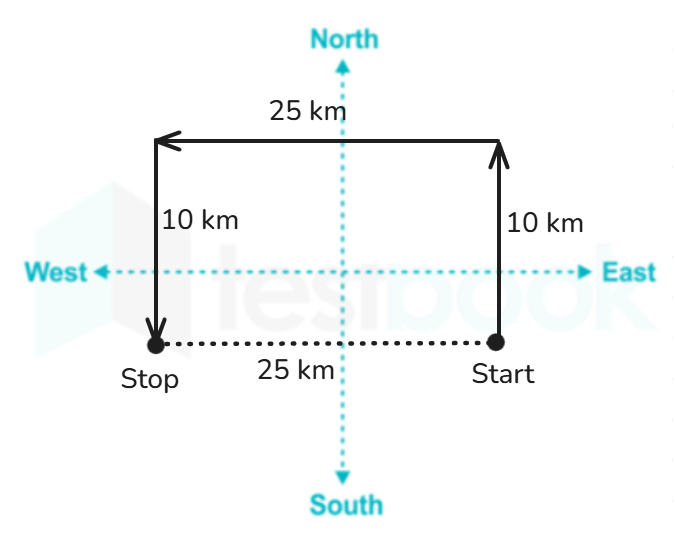
A person walks 10 km north, then 25 km west, and finally 10 km south. How far is he from his starting point?

  1. AOption (a)

    24 km

  2. BOption (b)

    25 km

  3. COption (c)

    26 km

  4. DOption (d)

    27 km

View answer & explanation

Correct answer

Answer: (b)B.

25 km

Why this answer is correct

Given: A person walks 10 km north, then 25 km west, and finally 10 km south.

Thus, the person is 25 km from his starting point.

Hence, the correct answer is "Option 2".

Question 28

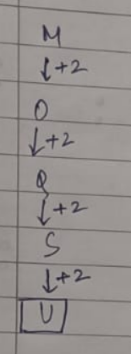
Few of the letters are given followed by a question mark (?) these letters are following a specific pattern you have to give the correct option which can replace question mark.

Complete the sequence: M, O, Q, S, ?

  1. AOption (a)

    U

  2. BOption (b)

    V

  3. COption (c)

    W

  4. DOption (d)

    X

View answer & explanation

Correct answer

Answer: (a)A.

U

Why this answer is correct

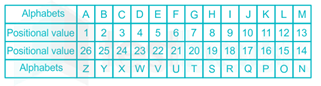
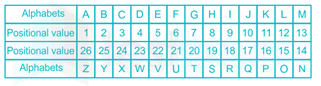
The position and positional values or English Alphabets are:

Given: M, O, Q, S, ?

The logic followed here is:

Thus, U will complete the sequence.

Hence, the correct answer is "Option 1".

Question 29

In this type of questions, question is provided with some issues/disputes/problem, followed by few methods to resolve the problem in statement choosing the appropriate problem solving method that can be implemented.

A politician wants to win votes by promising unrealistic freebies. What's the responsible approach?

  1. AOption (a)

    ​Make those promises anyway to gain short-term support

  2. BOption (b)

    Avoid campaigning

  3. COption (c)

    Blame previous administrations

  4. DOption (d)

    Communicate realistic benefits and phased implementation

View answer & explanation

Correct answer

Answer: (d)D.

Communicate realistic benefits and phased implementation

Why this answer is correct

Given: A politician wants to win votes by promising unrealistic freebies. What’s the responsible approach?

  1. Make those promises anyway to gain short-term support → Does not follow (Because it is unethical and unsustainable.)
  2. Avoid campaigning → Does not follow (Because it avoids responsibility rather than addressing the issue.)
  3. Blame previous administrations → Does not follow (Because it shifts responsibility instead of providing solutions.)
  4. Communicate realistic benefits and phased implementation → Follows (Promoting honesty, transparency, and practical planning reflects responsible leadership.)

Thus, 'Communicate realistic benefits and phased implementation' is the best course of action.

Hence, the correct answer is "Option 4".

Question 30

In each of the following question, there is a certain relationship between two given numbers on one side of (::) and one number is given on another side of (::) where another number is to be found from the given alternatives, having the same relationship with this number as the numbers of the given pair bear. Choose the best alternative.

4:64::5:?

  1. AOption (a)

    125

  2. BOption (b)

    124

  3. COption (c)

    126

  4. DOption (d)

    142

View answer & explanation

Correct answer

Answer: (a)A.

125

Why this answer is correct

Given: 4:64::5:?

The logic followed here is:

Logic: a : a2

4 : 64 → 42 = 64

Similarly,

5 : ? → 52 = 125

⇒ ? = 125

Hence, the correct answer is "Option 1".

Question 31

Directions

Choose the related word from the given alternatives

Resistance: ?:: Magnetic flux: Weber

  1. AOption (a)

    Hertz

  2. BOption (b)

    Joule

  3. COption (c)

    Ohm

  4. DOption (d)

    Ampere

View answer & explanation

Correct answer

Answer: (c)C.

Ohm

Why this answer is correct

The logic followed here is:

Logic: The first quantity is related to its unit of measurement.

Magnetic flux : Weber → Magnetic flux is measured in Weber.

Similarly,

Resistance : Ohm → Resistance is measured in Ohm.

Thus, Resistance is related to Ohm.

Hence, the correct answer is "Option 3".

Question 32

Directions

Pick the correct options from the given alternatives

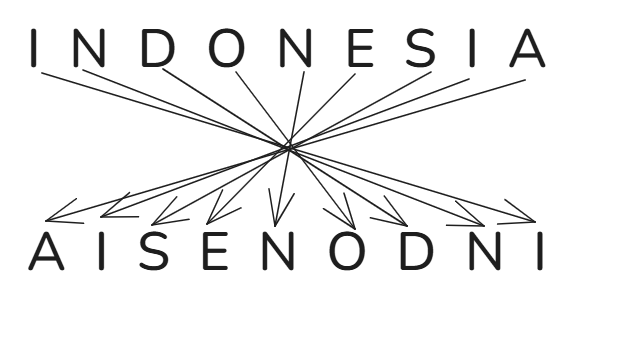
GERMAN :NAMREG :: INDONESIA:?

  1. AOption (a)

    AISENONDI

  2. BOption (b)

    AISENDONI

  3. COption (c)

    AISEONDNI

  4. DOption (d)

    AISENODNI

View answer & explanation

Correct answer

Answer: (d)D.

AISENODNI

Why this answer is correct

Given: GERMAN :NAMREG :: INDONESIA:?

The logic followed here is:

Similarly,

Thus, INDONESIA is related to  AISENODNI.

Hence, the correct answer is "Option 4".

Question 33

Directions

Select the related letter from the given alternatives

RATS: STAR :: YXALG: ?

  1. AOption (a)

    GLAXZ

  2. BOption (b)

    GLAXY

  3. COption (c)

    GLAXI

  4. DOption (d)

    SOLAR

View answer & explanation

Correct answer

Answer: (b)B.

GLAXY

Why this answer is correct

Given:

RATS : STAR

YXALG : ?

Logic used:

Rearrangement (reverse order pattern)

⇒ RATS → STAR (letters reversed)

⇒ Apply same to YXALG

⇒ YXALG → GLAXY

∴ Required answer = GLAXY

Question 34

Directions

Select the related letter from the given alternatives

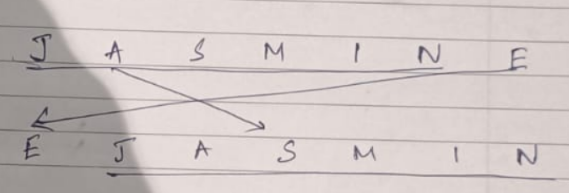
MARIGOLD: DMARIGOL:: JASMINE:?

  1. AOption (a)

    AJASMIN

  2. BOption (b)

    EJASMIN

  3. COption (c)

    IJASMIN

  4. DOption (d)

    OJASMIN

View answer & explanation

Correct answer

Answer: (b)B.

EJASMIN

Why this answer is correct

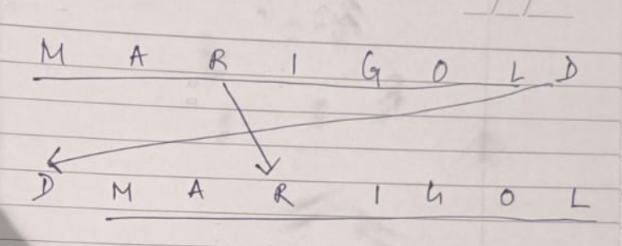
Given: MARIGOLD: DMARIGOL:: JASMINE:?

The logic followed here is:

Similarly,

Thus, JASMINE is related to EJASMIN.

Hence, the correct answer is "Option 2".

Question 35

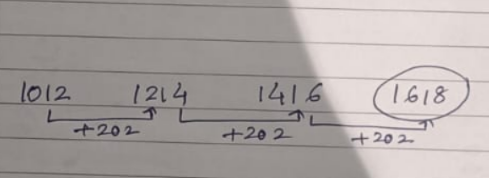
Directions: Select the correct options from the given alternatives...?1012 1214 1416 

  1. AOption (a)

    1820

  2. BOption (b)

    1618

  3. COption (c)

    1517

  4. DOption (d)

    1620

View answer & explanation

Correct answer

Answer: (b)B.

1618

Why this answer is correct

Given: 1012 1214 1416 

The logic followed here is:

Thus, 1618 is the correct options from the given alternatives.

Hence, the correct answer is "Option 2".

Question 36

Instructions: For the question below, analyse the given information and conditions. Based on your understanding of relative positions and rankings, determine the correct order or position and answer the question.

Scenario: In a row of boys, Deepak is 10th from the left and Sachin is 15th from the right. If there are 8 boys between them.

Question: What is the total number of boys in the row?

  1. AOption (a)

    32

  2. BOption (b)

    33

  3. COption (c)

    34

  4. DOption (d)

    35

View answer & explanation

Correct answer

Answer: (b)B.

33

Why this answer is correct

Given:

Deepak is 10th from the left.

Sachin is 15th from the right.

Number of boys between them = 8

So, positions gap = 8 + 1 = 9

Total number of boys = 10 + 15 + 8 = 33

Thus, the total number of boys in the row is 33.

Hence, the correct answer is "Option 2".

Question 37

Identify the term which does not follow the pattern.

  1. AOption (a)

    DDC

  2. BOption (b)

    FFE

  3. COption (c)

    HHG

  4. DOption (d)

    KKI

View answer & explanation

Correct answer

Answer: (d)D.

KKI

Why this answer is correct

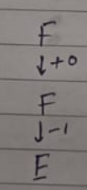
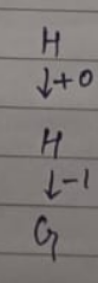
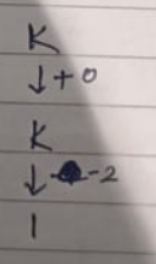
The position and positional values or English Alphabets are:

The pattern followed here is:

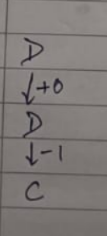
Pattern: +0, -1

  1. DDC 

The letter-cluster follows the pattern +0, -1.

  1. FFE 

The letter-cluster follows the pattern +0, -1.

  1. HHG

The letter-cluster follows the pattern +0, -1.

  1. KKI 

The letter-cluster does not follow the pattern +0, -1.

Thus, KKI is the odd one out.

Hence, the correct answer is "Option 1".

Question 38

You are given a Master Address (MA) from official records. Your task is to identify the correct candidate address that matches exactly with the master address in terms of formatting, punctuation, spelling, and structure.

Master Address (MA): H.No. 2 - 3 - 45 / A Sai Nagar Colony, Opp. Apollo Hospital, Hyderabad - 500034

Candidate Addresses:

  1. AOption (a)

    H.No. 2 - 3 - 45 / A Sai Nagar Colony, Opp. Apollo Hospital, Hyderabad - 500034

  2. BOption (b)

    H No. 2 - 3 - 45 / A Sai Nagar Colony, Opp. Apollo Hospital, Hyderabad - 500034

  3. COption (c)

    H. No. 2 - 3 - 45 / A Sai Nagar Colony, Opp. Apollo Hospital, Hyderabad - 500034

  4. DOption (d)

    H.No. 2 - 3 - 45 / A Sai Nagar, Opp. Apollo Hospital, Hyderabad - 500034

View answer & explanation

Correct answer

Answer: (a)A.

H.No. 2 - 3 - 45 / A Sai Nagar Colony, Opp. Apollo Hospital, Hyderabad - 500034

Why this answer is correct

AddressOptionsVerdict
H.No. 2 - 3 - 45 / A Sai Nagar Colony, Opp. Apollo Hospital, Hyderabad - 5000341H.No. 2 - 3 - 45 / A Sai Nagar Colony, Opp. Apollo Hospital, Hyderabad - 500034Exactly Same.
H.No. 2 - 3 - 45 / A Sai Nagar Colony, Opp. Apollo Hospital, Hyderabad - 5000342H No. 2 - 3 - 45 / A Sai Nagar Colony, Opp. Apollo Hospital, Hyderabad - 500034A . is missing after H.
H.No. 2 - 3 - 45 / A Sai Nagar Colony, Opp. Apollo Hospital, Hyderabad - 5000343H. No. 2 - 3 - 45 / A Sai Nagar Colony, Opp. Apollo Hospital, Hyderabad - 500034An extra space is present between H. and No.
H.No. 2 - 3 - 45 / A Sai Nagar Colony, Opp. Apollo Hospital, Hyderabad - 5000344H.No. 2 - 3 - 45 / A Sai Nagar, Opp. Apollo Hospital, Hyderabad - 500034Colony is missing after Nagar.

Thus, option 1 is exactly the same as the one given.

Hence, the correct answer is "Option 1".

Question 39

You are given a Master Address (MA) from official records. Your task is to identify the correct candidate address that matches exactly with the master address in terms of formatting, punctuation, spelling, and structure.

Master Address (MA): C-101, Orchid Apartments, Sector 18, Dwarka, New Delhi - 110075 Delhi

Candidate Addresses:

  1. AOption (a)

    C 101, Orchid Apartments, Sector 18, Dwarka, New Delhi-110075

  2. BOption (b)

    C-101, Orchid Apartments, Sec. 18, Dwarka, New Delhi - 110075

  3. COption (c)

    C-101, Orchid Apartments, Sector 18, Dwarka, New Delhi-110075

  4. DOption (d)

    C-101, Orchid Apartment, Sector 18, Dwarka, New Delhi - 110075

View answer & explanation

Correct answer

Answer: (c)C.

C-101, Orchid Apartments, Sector 18, Dwarka, New Delhi-110075

Why this answer is correct

AddressOptionsVerdict
C-101, Orchid Apartments, Sector 18, Dwarka, New Delhi - 110075 Delhi1C 101, Orchid Apartments, Sector 18, Dwarka, New Delhi-110075- is missing after C.
C-101, Orchid Apartments, Sector 18, Dwarka, New Delhi - 110075 Delhi2C-101, Orchid Apartments, Sec. 18, Dwarka, New Delhi - 110075Sector is written as Sec.
C-101, Orchid Apartments, Sector 18, Dwarka, New Delhi - 110075 Delhi3C-101, Orchid Apartments, Sector 18, Dwarka, New Delhi-110075Exactly Same.
C-101, Orchid Apartments, Sector 18, Dwarka, New Delhi - 110075 Delhi4C-101, Orchid Apartment, Sector 18, Dwarka, New Delhi - 110075Apartments is written as Apartment.

Thus, option 3 is exactly the same as the one given.

Hence, the correct answer is "Option 3".

Question 40

You are interviewing a candidate who answers perfectly but behaves arrogantly. What should influence your judgement?

  1. AOption (a)

    Only knowledge

  2. BOption (b)

    Only attitude

  3. COption (c)

    A balance of both competence and humility

  4. DOption (d)

    Personal dislike for arrogance

View answer & explanation

Correct answer

Answer: (c)C.

A balance of both competence and humility

Why this answer is correct

Given: You are interviewing a candidate who answers perfectly but behaves arrogantly.

  1. Only knowledge → Does not follow (Because attitude is also important in professional settings.)
  2. Only attitude → Does not follow (Because competence and knowledge are essential for the role.)
  3. A balance of both competence and humility → Follows (A good candidate should have both skills and a professional attitude.)
  4. Personal dislike for arrogance → Does not follow (Personal bias should not influence professional decisions.)

Thus, 'A balance of both competence and humility' is the best criterion.

Hence, the correct answer is "Option 3".

Question 41

Length of 5 rectangles J, K, L, M and N is compared. Length of no two rectangles is same. Length of K is less than only three rectangles. Length of no rectangle is less than M. Length of L is not more than N but more than J. Length of how many rectangles is less than L?

  1. AOption (a)

    2

  2. BOption (b)

    1

  3. COption (c)

    0

  4. DOption (d)

    3

View answer & explanation

Correct answer

Answer: (d)D.

3

Why this answer is correct

Given: Length of 5 rectangles J, K, L, M and N is compared. Length of no two rectangles is same.

  1. Length of no rectangle is less than M.

__ > __ > __ > __ > M

  1. Length of K is less than only three rectangles.

__ > __ > __ > K > M

  1. Length of L is not more than N but more than J.

N > L > J > K > M

Thus, length of 3 rectangles is less than L.

Hence, the correct answer is "Option 4".

Question 42

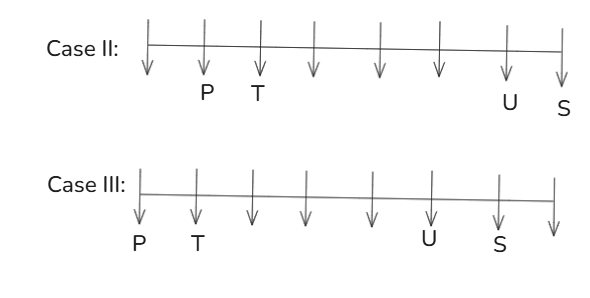
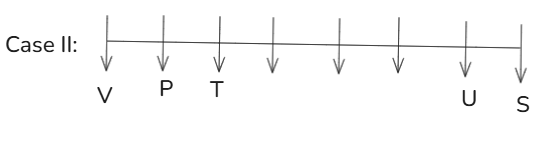
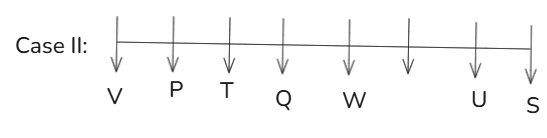
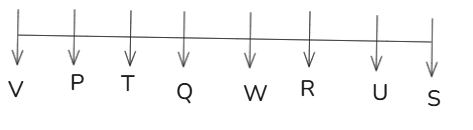
P, Q, R, S, T, U, V and W are sitting in a row facing south (not necessarily in the same order). P is to the immediate right of T. P is fifth to the right of U. S is fifth to the left of T. W is third to the right of S. Only two girls sit between Q and V. V is an immediate neighbour of P. Which girl is sitting to the immediate right of R?

  1. AOption (a)

    W

  2. BOption (b)

    S

  3. COption (c)

    U

  4. DOption (d)

    P

View answer & explanation

Correct answer

Answer: (a)A.

W

Why this answer is correct

Given: P, Q, R, S, T, U, V and W are sitting in a row facing south (not necessarily in the same order).

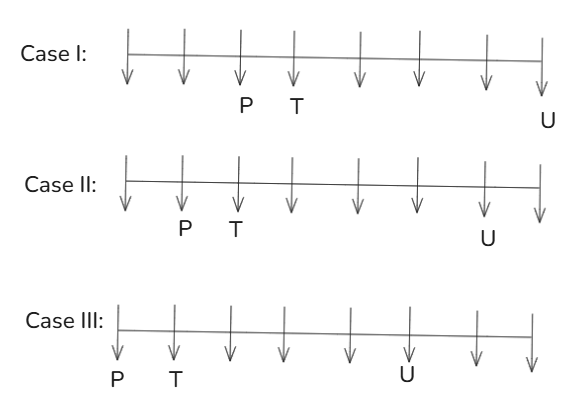
  1. P is fifth to the right of U. 2. P is to the immediate right of T.

  1. S is fifth to the left of T.

The above statement cannot be satisfied in case I, so it is eliminated.

4. V is an immediate neighbour of P.

The above statement cannot be satisfied in case III, so it is eliminated.

  1. W is third to the right of S.
  2. Only two girls sit between Q and V.

R, the only person left will occupy the vacant position.


Thus, W is sitting to the immediate right of R.

Hence, the correct answer is "Option 1".

Question 43

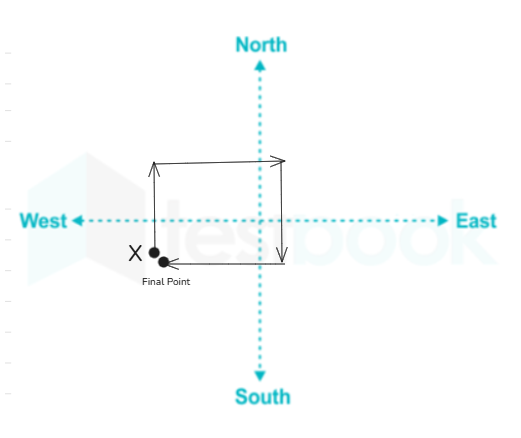
G started walking straight from a point X. He turned 3 times right during his journey. Finally, he is facing towards west. In which direction he started walking from X? (He took no left turn)

  1. AOption (a)

    North 

  2. BOption (b)

    South

  3. COption (c)

    East

  4. DOption (d)

    West

View answer & explanation

Correct answer

Answer: (a)A.

North 

Why this answer is correct

Given: G started walking straight from a point X. He turned 3 times right during his journey. Finally, he is facing towards west.

Thus, he started from North direction.

Hence, the correct answer is "Option 1".

Question 44

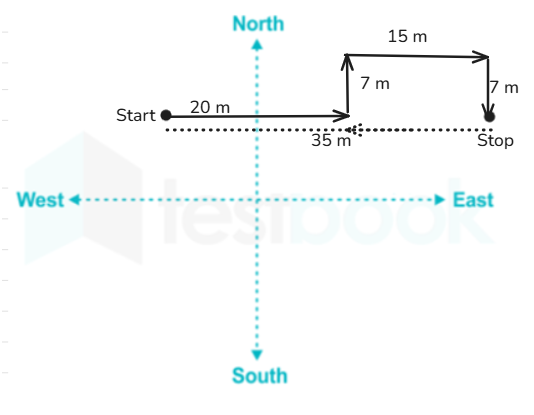
R walks 20 meters in east direction. He turns left and walks 7 meters. He turns right and walks 15 meters. He finally turns right and walks 7 meters. How far (in meters) and in which direction is he now from the starting point?

  1. AOption (a)

    35, east

  2. BOption (b)

    42, east

  3. COption (c)

    35, west

  4. DOption (d)

    42, west

View answer & explanation

Correct answer

Answer: (a)A.

35, east

Why this answer is correct

Given: R walks 20 meters in east direction. He turns left and walks 7 meters. He turns right and walks 15 meters. He finally turns right and walks 7 meters.

Thus, he is 35 m in the east direction from the starting point.

Hence, the correct answer is "Option 1".

Question 45

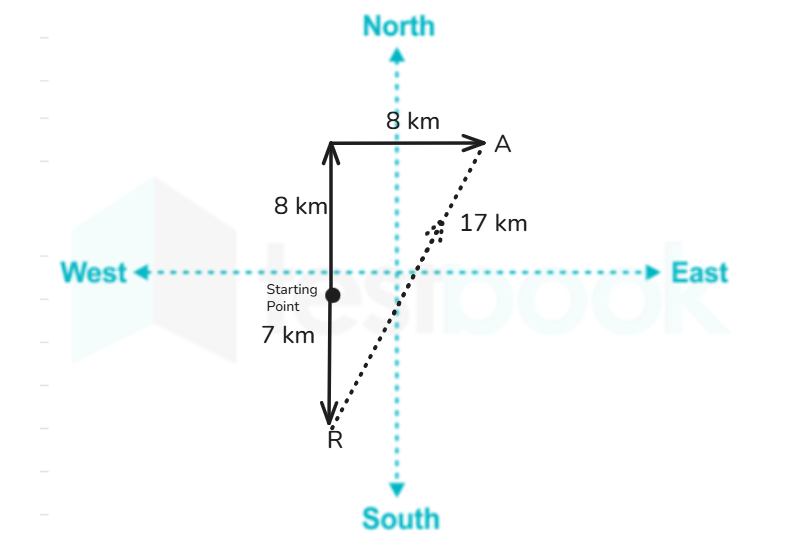
A and R started walking from a same point. A walks 8 km towards north. R walks 7 km towards south. A turns right and walks 8 km. How far (in km) and in which direction is A now from the R?

  1. AOption (a)

    17, South-west

  2. BOption (b)

    15, South-west

  3. COption (c)

    15, North-west

  4. DOption (d)

    17, North-east

View answer & explanation

Correct answer

Answer: (d)D.

17, North-east

Why this answer is correct

Given: A and R started walking from a same point. A walks 8 km towards north. R walks 7 km towards south. A turns right and walks 8 km.

Distance between A and R =   

 = 17 km

Thus, A is 17 km to the North-east of R.

Hence, the correct answer is "Option 4".

Question 46

After interchanging the given two numbers (not digits), what will be the value of the given equation?

1 and 5

5 × 7 + 1 - 9 ÷ 3 = ?

  1. AOption (a)

    15

  2. BOption (b)

    18

  3. COption (c)

    9

  4. DOption (d)

    8

View answer & explanation

Correct answer

Answer: (c)C.

9

Why this answer is correct

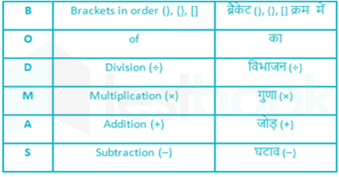
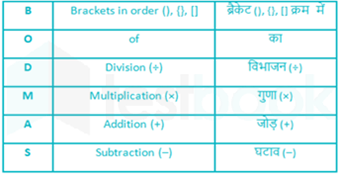
BODMAS Rule:

Given equation: 5 × 7 + 1 - 9 ÷ 3 = ?

Now after replacing the numbers 1 and 5, we get:

⇒ 1 × 7 + 5 - 9 ÷ 3 = ? 

⇒ 1 × 7 + 5 - 3 = ?   

⇒ 7 + 5 - 3 = ?   

⇒ 12 - 3 = ?

⇒ 9 = ?

Hence, the correct answer is "Option 3".

Question 47

By interchanging the given two numbers (not digits) which of the following equation will NOT be correct?

2 and 7

I. 7 × 3 + 2 - 6 ÷ 1 = 9

II. 2 × 8 + 7 - 9 ÷ 3 = 40

  1. AOption (a)

    Only I 

  2. BOption (b)

    Only II

  3. COption (c)

    Both I and II

  4. DOption (d)

    Neither I nor II

View answer & explanation

Correct answer

Answer: (c)C.

Both I and II

Why this answer is correct

BODMAS Rule:

Given equations: 

I. 7 × 3 + 2 - 6 ÷ 1 = 9

After interchanging 2 and 7, we get: 

⇒  2 × 3 + 7 - 6 ÷ 1 = 9 

⇒  2 × 3 + 7 - 6 = 9 

⇒  6 + 7 - 6 = 9 

⇒  13 - 6 = 9 

⇒  7 ≠ 9 

⇒ LHS ≠ RHS

II. 2 × 8 + 7 - 9 ÷ 3 = 40

After interchanging 2 and 7, we get: 

⇒ 7 × 8 + 2 - 9 ÷ 3 = 40

⇒ 7 × 8 + 2 - 3 = 40

⇒ 56 + 2 - 3 = 40

⇒ 58 - 3 = 40

⇒ 55 ≠ 40

⇒ LHS ≠ RHS

Thus, both I and II equation will NOT be correct by interchanging the given two numbers.

Hence, the correct answer is "Option 3".

Question 48

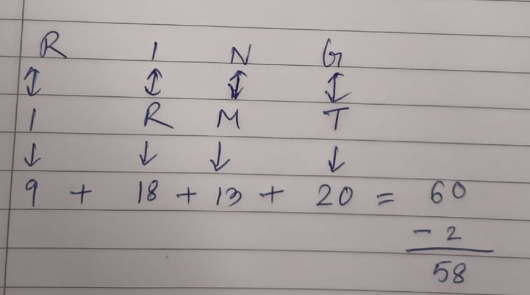
 In a certain code language, 'SHIRT' is coded as '59', 'WATCH' is coded as '78'. How will 'RING' be coded in that code language?

  1. AOption (a)

    54

  2. BOption (b)

    60

  3. COption (c)

    58

  4. DOption (d)

    62

View answer & explanation

Correct answer

Answer: (c)C.

58

Why this answer is correct

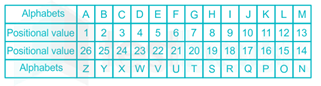
The position and positional values or English Alphabets are:

The logic followed here is:

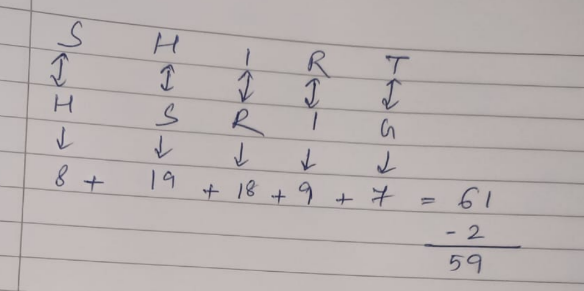
'SHIRT' is coded as '59'

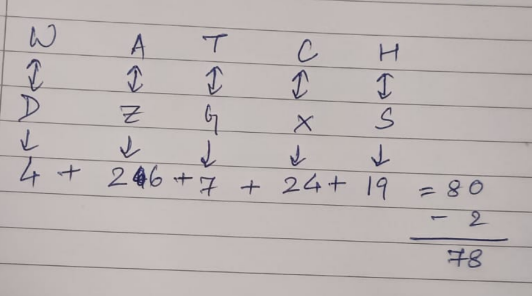
'WATCH' is coded as '78'. 

Similarly,

Thus, 'RING' is coded as 58 in that code language.

Hence, the correct answer is "Option 3".

Question 49

A word has been given in the question. This word CANNOT be formed by using the letters of the word given in one of the alternatives only. Select that alternative.

NIGHT

  1. AOption (a)

    THING

  2. BOption (b)

    HINGE

  3. COption (c)

    KNIGHT

  4. DOption (d)

    THRINGE

View answer & explanation

Correct answer

Answer: (b)B.

HINGE

Why this answer is correct

Given: NIGHT

  1. THING → NIGHT → Can be formed.
  2. HINGE → NIGHT → Cannot be formed as 'T' is missing.
  3. KNIGHT → NIGHT → Can be formed.
  4. THRINGE → NIGHT → Can be formed.

Thus, NIGHT cannot be formed using the letters of the given word HINGE.

Hence, the correct option is “Option 2”.

Question 50

A word has been given in the question. This word CANNOT be formed by using the letters of the word given in one of the alternatives only. Select that alternative.

GUARD

  1. AOption (a)

    GUAREN

  2. BOption (b)

    ARUGED

  3. COption (c)

    DRAUGE

  4. DOption (d)

    AROUGED

View answer & explanation

Correct answer

Answer: (a)A.

GUAREN

Why this answer is correct

Given: GUARD

1. GUAREN → GUARD → Cannot be formed as 'D' is missing. 2. ARGUED → GUARD → Can be formed. 3. DRAUGE → GUARD → Can be formed. 4. AROUGED → GUARD → Can be formed.

Thus, GUARD cannot be formed using the letters of the word GUAREN.

Hence, the correct answer is "Option 1".

Quantitative Aptitude (25 questions)

Question 51

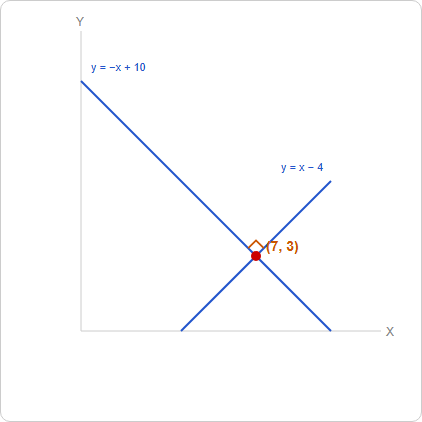
A drone flies along y = - x + 10. Another follows y = x - 4. At what point do they intersect?

  1. AOption (a)

    (7,3)

  2. BOption (b)

    (6,4)

  3. COption (c)

    (5,5)

  4. DOption (d)

    (4,6)

View answer & explanation

Correct answer

Answer: (a)A.

(7,3)

Why this answer is correct

Shortcut Trick

To find the point of intersection, equate the two expressions for y.

−x + 10 = x − 4

⇒ 2x = 14 ⇒ x = 7

Substitute x = 7 into the second equation: y = 7 − 4 = 3.

The intersection point is (7, 3).

∴ The correct answer is (7, 3).

Alternate Method

Given:

Equation of first drone path: y = −x + 10

Equation of second drone path: y = x − 4

Formula Used:

The intersection point of two lines is the set of coordinates (x, y) that satisfies both linear equations simultaneously.

Calculations:

Let Equation 1 be: x + y = 10

Let Equation 2 be: x − y = 4

Add both equations to eliminate y:

⇒ (x + y) + (x − y) = 10 + 4

⇒ 2x = 14

⇒ x = 7

Substitute the value of x in Equation 1:

⇒ 7 + y = 10

⇒ y = 10 − 7

⇒ y = 3

The coordinates are (7, 3).

∴ The correct answer is (7, 3).

Additional Information

Slope-Intercept Form

The equation y = mx + c represents a line where m is the slope and c is the y-intercept.

Perpendicular Lines

Two lines are perpendicular if the product of their slopes is −1. Here, m1 = −1 and m2 = 1, so (−1) × 1 = −1.

Simultaneous Equations

Solving a system of linear equations yields the coordinates of the common point where the lines cross on a graph.

Question 52

The digit in the unit's place in the square root of 15876 is?

  1. AOption (a)

    2

  2. BOption (b)

    4

  3. COption (c)

    6

  4. DOption (d)

    8

View answer & explanation

Correct answer

Answer: (c)C.

6

Why this answer is correct

Given:

Number = 15876

Formula Used:

Unit digit of square root depends on unit digit of perfect square

Calculation:

⇒ 126 × 126 = 15876

⇒ Square root = 126

⇒ Unit digit = 6

∴ The correct answer is 6.

Question 53

A and B start a business with ₹2000 and ₹3000 respectively. After 1 year, total profit is ₹1000. Find B's share.

  1. AOption (a)

    ₹400

  2. BOption (b)

    ₹500

  3. COption (c)

    ₹600

  4. DOption (d)

    ₹700

View answer & explanation

Correct answer

Answer: (c)C.

₹600

Why this answer is correct

Given:

A's investment = ₹2000

B's investment = ₹3000

Total profit = ₹1000

Formula Used:

Profit share ratio = Investment of A : Investment of B

B's share = (B's ratio ÷ Total ratio) × Total profit

Calculation:

⇒ Profit share ratio = 2000 : 3000

⇒ Profit share ratio = 2 : 3

⇒ Total ratio = 2 + 3 = 5

⇒ B's share = (3 ÷ 5) × 1000

⇒ B's share = ₹600

∴ The correct answer is ₹600.

Question 54

A invests ₹6000 for 6 months, B invests ₹8000 for 4 months. Find their profit-sharing ratio.

  1. AOption (a)

    1:1

  2. BOption (b)

    9:8

  3. COption (c)

    3:4

  4. DOption (d)

    2:1

View answer & explanation

Correct answer

Answer: (b)B.

9:8

Why this answer is correct

Given:

A's investment = ₹6000

A's time = 6 months

B's investment = ₹8000

B's time = 4 months

Formula Used:

Profit-sharing ratio = (Investment of A × Time of A) : (Investment of B × Time of B)

Calculation:

⇒ A's contribution = ₹6000 × 6

⇒ A's contribution = ₹36000

⇒ B's contribution = ₹8000 × 4

⇒ B's contribution = ₹32000

⇒ Ratio = ₹36000 : ₹32000

⇒ Ratio = 36000 ÷ 4000 : 32000 ÷ 4000

⇒ Ratio = 9 : 8

∴ The correct answer is 9 : 8.

Question 55

Average of 20 results is 35. Later, it was found one score 45 was misread as 25. What is the correct average?

  1. AOption (a)

    36

  2. BOption (b)

    37

  3. COption (c)

    38

  4. DOption (d)

    39

View answer & explanation

Correct answer

Answer: (a)A.

36

Why this answer is correct

Given:

Number of observations = 20

Incorrect average = 35

Wrong value = 25

Correct value = 45

Formula Used:

Sum = Average × Number of observations

Calculation:

⇒ Incorrect sum = 35 × 20 = 700

⇒ Correct sum = 700 - 25 + 45

⇒ Correct sum = 720

⇒ Correct average = 720 ÷ 20

⇒ Correct average = 36

∴ The correct answer is 36.

Question 56

An item's price is increased by 25% and then by another 20%. What is the overall percentage increase?

  1. AOption (a)

    45%

  2. BOption (b)

    50%

  3. COption (c)

    52%

  4. DOption (d)

    55%

View answer & explanation

Correct answer

Answer: (b)B.

50%

Why this answer is correct

Given:

First increase = 25%

Second increase = 20%

Formula Used:

Net increase % = a + b + (a × b ÷ 100)

Calculation:

⇒ Net increase = 25 + 20 + (25 × 20 ÷ 100)

⇒ Net increase = 45 + (500 ÷ 100)

⇒ Net increase = 45 + 5

⇒ Net increase = 50%

∴ The correct answer is 50%.

Question 57

The population of a town increases by 10% annually. If the current population is 24,200, what was the population 2 years ago?

  1. AOption (a)

    20,000

  2. BOption (b)

    19,800

  3. COption (c)

    19,200

  4. DOption (d)

    18,800

View answer & explanation

Correct answer

Answer: (a)A.

20,000

Why this answer is correct

Given:

Present population = 24200

Rate = 10%

Time = 2 years

Formula Used:

Present = Past × (1 + r/100)t

Calculation:

⇒ 24200 = P × (1.1)2

⇒ 24200 = P × 1.21

⇒ P = 24200 ÷ 1.21

⇒ P = 20000

∴ The correct answer is 20000.

Question 58

 Two numbers are such that 30% of the first is equal to 45% of the second. What is the ratio of the first to the second?

  1. AOption (a)

    2:3

  2. BOption (b)

    3:2

  3. COption (c)

    3:4

  4. DOption (d)

    4:3

View answer & explanation

Correct answer

Answer: (b)B.

3:2

Why this answer is correct

Given:

30% of first = 45% of second

Formula Used:

Percentage = (value ÷ 100)

Calculation:

⇒ (30 ÷ 100) × First = (45 ÷ 100) × Second

⇒ 30 × First = 45 × Second

⇒ First ÷ Second = 45 ÷ 30

⇒ First ÷ Second = 3 ÷ 2

∴ The correct answer is 3 : 2.

Question 59

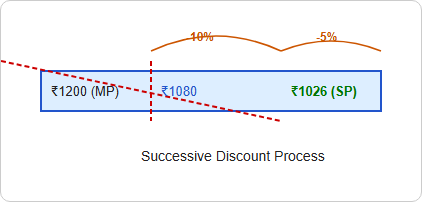
If a man purchases an article marked at Rs. 1200 with two successive discounts of 10% and 5%, what is the final price?

  1. AOption (a)

    Rs. 1020

  2. BOption (b)

    Rs. 1026

  3. COption (c)

    Rs. 1030

  4. DOption (d)

    Rs. 1040

View answer & explanation

Correct answer

Answer: (b)B.

Rs. 1026

Why this answer is correct

Shortcut Trick

Use the Ratio Method for successive discounts:

10% discount = 1/10 ⇒ Ratio is 10 : 9

5% discount = 1/20 ⇒ Ratio is 20 : 19

Overall Ratio = (10 × 20) : (9 × 19) = 200 : 171

200 units = ₹1200 ⇒ 1 unit = ₹6

171 units = 171 × 6 = ₹1026

∴ The correct answer is ₹1026.

Alternate Method

Given:

Marked Price (MP) = ₹1200

First Discount (D1) = 10%

Second Discount (D2) = 5%

Formula Used:

Final Price = MP × (100 − D1)/100 × (100 − D2)/100

Calculations:

⇒ Price after 10% discount = 1200 − (10% of 1200)

⇒ Price after 10% discount = 1200 − 120 = ₹1080

⇒ Price after 5% discount = 1080 − (5% of 1080)

⇒ Price after 5% discount = 1080 − 54

⇒ Final Price = ₹1026

∴ The final purchase price of the article is ₹1026, which matches Option (2).

∴ The correct answer is ₹1026.

Additional Information

Single Equivalent Discount

For two successive discounts of a% and b%, the single effective discount is calculated as [a + b − (a × b / 100)]%.

Marked Price (MP) and Selling Price (SP)

Selling Price is the final amount paid after deducting all discounts from the Marked Price: SP = MP − Discount.

Discount Percentage

Discount % = (Total Discount / Marked Price) × 100.

Question 60

An article is sold at Rs. 850 after giving 15% discount. What is the marked price?

  1. AOption (a)

    Rs. 950

  2. BOption (b)

    Rs. 970

  3. COption (c)

    Rs. 1000

  4. DOption (d)

    Rs. 1020

View answer & explanation

Correct answer

Answer: (c)C.

Rs. 1000

Why this answer is correct

Given:

Discount = 15%

Selling Price = Rs. 850

Formula Used:

Marked Price = Selling Price ÷ (1 - Discount ÷ 100)

Calculation:

⇒ Marked Price = 850 ÷ (1 - 15 ÷ 100)

⇒ Marked Price = 850 ÷ (1 - 0.15)

⇒ Marked Price = 850 ÷ 0.85

⇒ Marked Price = Rs. 1000

∴ The correct answer is Rs. 1000.

Question 61

 A train 120 meters long passes a man running at 6 km/h in the same direction in 6 seconds. What is the speed of the train?

  1. AOption (a)

    60 km/h

  2. BOption (b)

    66 km/h

  3. COption (c)

    72 km/h

  4. DOption (d)

    78 km/h

View answer & explanation

Correct answer

Answer: (d)D.

78 km/h

Why this answer is correct

Given:

Length of train = 120 m

Speed of man = 6 km/h

Time = 6 s

Formula Used:

Relative speed = Distance ÷ Time

1 km/h = 5/18 m/s

Calculation:

⇒ Relative speed = 120 ÷ 6 = 20 m/s

⇒ Speed of man = 6 × 5 ÷ 18 = 5/3 m/s

⇒ Speed of train = 20 + 5/3

⇒ Speed of train = (60 + 5) ÷ 3 = 65/3 m/s

⇒ Speed of train = 65/3 × 18 ÷ 5

⇒ Speed of train = 78 km/h

∴ The correct answer is 78.

Question 62

A train passes a tunnel 200 m long in 20 seconds. Speed is 72 km/h. Find train's length.

  1. AOption (a)

    100 m

  2. BOption (b)

    200 m

  3. COption (c)

    300 m

  4. DOption (d)

    400 m

View answer & explanation

Correct answer

Answer: (b)B.

200 m

Why this answer is correct

Given:

Speed = 72 km/h

Time = 20 s

Length of tunnel = 200 m

Formula Used:

Distance = Speed × Time

Total distance = Length of train + Length of tunnel

1 km/h = 5/18 m/s

Calculation:

⇒ Speed = 72 × 5 ÷ 18 = 20 m/s

⇒ Distance = 20 × 20 = 400 m

⇒ Length of train = 400 - 200

⇒ Length of train = 200 m

∴ The correct answer is 200.

Question 63

A small temple dome is shaped like a hemisphere of radius 3.5 m. How much area (in square meters) must be painted on the curved surface?

  1. AOption (a)

    75.6

  2. BOption (b)

    76.93

  3. COption (c)

    77.12

  4. DOption (d)

    77.84

View answer & explanation

Correct answer

Answer: (b)B.

76.93

Why this answer is correct

Given:

Radius = 3.5 m

Formula Used:

Curved surface area of hemisphere = 2 × π × r2

Calculation:

⇒ Area = 2 × 3.14 × (3.5)2

⇒ Area = 2 × 3.14 × 12.25

⇒ Area = 2 × 38.465

⇒ Area = 76.93 m2

∴ The correct answer is 76.93.

Question 64

A land plot is defined by points A(0,0), B(4,0), C(5,3), D(1,3). What is the area of the parallelogram representing this plot?

  1. AOption (a)

    12

  2. BOption (b)

    8

  3. COption (c)

    14

  4. DOption (d)

    10

View answer & explanation

Correct answer

Answer: (a)A.

12

Why this answer is correct

Shortcut Trick

Identify the base and the perpendicular height of the parallelogram from the given coordinates.

The base AB lies on the x-axis from x = 0 to x = 4, so Base (b) = 4 − 0 = 4 units.

The vertices C(5,3) and D(1,3) have a y-coordinate of 3, while A and B have a y-coordinate of 0.

Height (h) = 3 − 0 = 3 units.

⇒ Area = Base × Height = 4 × 3 = 12 sq. units.

∴ The correct answer is 12 sq. units.

Alternate Method

Given: Coordinates of the plot are A(0,0), B(4,0), C(5,3), and D(1,3).

Formula Used: Area of a polygon with coordinates (x1, y1), (x2, y2)... is given by the Shoelace Formula: 0.5 × |(x1y2 + x2y3 + x3y4 + x4y1) − (y1x2 + y2x3 + y3x4 + y4x1)|

Applying the Shoelace Formula:

⇒ Sum1 = (0×0) + (4×3) + (5×3) + (1×0) = 0 + 12 + 15 + 0 = 27

⇒ Sum2 = (0×4) + (0×5) + (3×1) + (3×0) = 0 + 0 + 3 + 0 = 3

⇒ Area = 0.5 × |27 − 3|

⇒ Area = 0.5 × 24

⇒ Area = 12 sq. units.

∴ The correct answer is 12 sq. units.

Additional Information

Properties of a Parallelogram

Opposite sides are equal and parallel. The area is simply the product of any base and its corresponding altitude (Base × Height).

Distance Formula

The distance between two points (x1, y1) and (x2, y2) is given by d = √((x2 − x1)2 + (y2 − y1)2).

Coordinate Geometry Area

For any quadrilateral with vertices (x1, y1) to (x4, y4), the area can be found by splitting it into two triangles or using the determinant-based Shoelace theorem.

Question 65

A conference hall of 6 m x 4 m is to be tiled using 60 cm x 40 cm tiles. How many are needed?

  1. AOption (a)

    120

  2. BOption (b)

    130

  3. COption (c)

    100

  4. DOption (d)

    140

View answer & explanation

Correct answer

Answer: (c)C.

100

Why this answer is correct

Given:

Length of hall = 6 m

Breadth of hall = 4 m

Tile size = 60 cm × 40 cm

Formula Used:

Number of tiles = Area of hall ÷ Area of one tile

Calculation:

⇒ Area of hall = 6 × 4 = 24 m2

⇒ Tile size = 0.6 m × 0.4 m

⇒ Area of tile = 0.6 × 0.4 = 0.24 m2

⇒ Number of tiles = 24 ÷ 0.24

⇒ Number of tiles = 100

∴ The correct answer is 100.

Question 66

A large wooden block of size 60 cm x 40 cm x 20 cm is cut into smaller cuboidal blocks of size 10 cm x 10 cm x 10 cm. How many small blocks are obtained?

  1. AOption (a)

    24

  2. BOption (b)

    48

  3. COption (c)

    60

  4. DOption (d)

    96

View answer & explanation

Correct answer

Answer: (b)B.

48

Why this answer is correct

Given:

Large block = 60 cm × 40 cm × 20 cm

Small block = 10 cm × 10 cm × 10 cm

Formula Used:

Number of blocks = (L ÷ l) × (B ÷ b) × (H ÷ h)

Calculation:

⇒ 60 ÷ 10 = 6

⇒ 40 ÷ 10 = 4

⇒ 20 ÷ 10 = 2

⇒ Number of blocks = 6 × 4 × 2

⇒ Number of blocks = 48

∴ The correct answer is 48.

Question 67

A water filter tank is 1 m wide, 0.6 m deep, and 1.2 m long. It takes 1.5 hours to fill it. At what rate is water being filled (in liters per minute)?

  1. AOption (a)

    8

  2. BOption (b)

    6

  3. COption (c)

    12

  4. DOption (d)

    10

View answer & explanation

Correct answer

Answer: (a)A.

8

Why this answer is correct

Given:

Length = 1.2 m

Breadth = 1 m

Depth = 0.6 m

Time = 1.5 hours = 90 minutes

Formula Used:

Volume = Length × Breadth × Depth

Rate = Volume ÷ Time

1 m3 = 1000 liters

Calculation:

⇒ Volume = 1.2 × 1 × 0.6

⇒ Volume = 0.72 m3

⇒ Volume = 0.72 × 1000 = 720 liters

⇒ Rate = 720 ÷ 90

⇒ Rate = 8 liters per minute

∴ The correct answer is 8.

Question 68

 A square-based pyramid tent has sides of 5 m and slant height 6 m. How much canvas is needed to cover only the four triangular sides (lateral surface)?

  1. AOption (a)

    75 M2

  2. BOption (b)

    70 M2

  3. COption (c)

    65 M2

  4. DOption (d)

    60 M2

View answer & explanation

Correct answer

Answer: (d)D.

60 M2

Why this answer is correct

Given:

Side of square base = 5 m

Slant height = 6 m

Formula Used:

Lateral surface area of square pyramid = 12×Perimeterofbase×Slantheight\frac{1}{2} × Perimeter of base × Slant height

Perimeter of square = 4 × Side

Calculation:

⇒ Perimeter = 4 × 5 = 20

⇒ Lateral surface area = 12×20×6\frac{1}{2} × 20 × 6

⇒ Lateral surface area = 10 × 6

⇒ Lateral surface area = 60 m2

∴ The correct answer is 60 m2.

Question 69

A triangular pyramid is built on a triangular concrete base of sides 10 m, 10 m, 12 m. if the height of the pyramid is 6 m, what is the volume?

  1. AOption (a)

    96 M3

  2. BOption (b)

    108M3

  3. COption (c)

    112 M3

  4. DOption (d)

    88 M3

View answer & explanation

Correct answer

Answer: (a)A.

96 M3

Why this answer is correct

Given:

Base of the triangular concrete: sides 10 m, 10 m, 12 m

Height of the pyramid: 6 m

Formula Used:

Area of triangle = √[s(s - a)(s - b)(s - c)], where s = (a + b + c) ÷ 2

Volume of pyramid = (1/3) × Base Area × Height

Calculation:

⇒ s = (10 + 10 + 12) ÷ 2 = 16 m

⇒ Area of triangle = √[16(16 - 10)(16 - 10)(16 - 12)]

⇒ Area of triangle = √[16 × 6 × 6 × 4]

⇒ Area of triangle = √[2304]

⇒ Area of triangle = 48 m2

⇒ Volume of pyramid = (1/3) × 48 × 6

⇒ Volume of pyramid = 96 m3

∴ The correct answer is 96 m3.

Question 70

In a manufacturing plant, a cone-shaped part has a curved surface area of 330 cm² and a base radius of 7 cm. What is its height?

  1. AOption (a)

    10 cm

  2. BOption (b)

    13.26 cm

  3. COption (c)

    12.78 cm

  4. DOption (d)

    11.57 cm

View answer & explanation

Correct answer

Answer: (b)B.

13.26 cm

Why this answer is correct

Given:

Curved surface area = 330 cm2

Radius = 7 cm

Formula Used:

Curved surface area of cone = π × r × l

l2 = r2 + h2

Calculation:

⇒ 330 = π × 7 × l

⇒ 330 = 22/7 × 7 × l

⇒ 330 = 22 × l

⇒ l = 330 ÷ 22 = 15

⇒ l2 = 225

⇒ r2 = 49

⇒ h2 = 225 - 49 = 176

⇒ h = √176

⇒ h = 13.26 cm

∴ The correct answer is 13.26.

Question 71

A construction worker uses a right triangular prism block with base sides 6 cm, 8 cm, and 10 cm and height 15 cm. What is the volume of the block?

  1. AOption (a)

    360 cm3

  2. BOption (b)

    480 cm3

  3. COption (c)

    600 cm3

  4. DOption (d)

    720 cm3

View answer & explanation

Correct answer

Answer: (a)A.

360 cm3

Why this answer is correct

Given:

Sides of triangular base = 6 cm, 8 cm, 10 cm

Height of prism = 15 cm

Formula Used:

Area of triangle = 1/2 × base × height

Volume of prism = Area of base × height

Calculation:

⇒ 62 + 82 = 36 + 64 = 100

⇒ √100 = 10

⇒ Area = 1/2 × 6 × 8

⇒ Area = 24 cm2

⇒ Volume = 24 × 15

⇒ Volume = 360 cm3

∴ The correct answer is 360.

Question 72

A sphere is tightly enclosed inside a cube of side length a. If the cube is then inscribed inside another sphere, what is the ratio of the inner to outer sphere volumes?

  1. AOption (a)

    1:21:\sqrt{2}

  2. BOption (b)

    1:221:2\sqrt{2}

  3. COption (c)

    1:331:3\sqrt{3}

  4. DOption (d)

    1:61:\sqrt{6}

View answer & explanation

Correct answer

Answer: (c)C.

1:331:3\sqrt{3}

Why this answer is correct

Given:

Side of cube = a

Formula Used:

Volume of sphere = 4/3 × π × r3

Radius of inscribed sphere in cube = a/2

Radius of circumscribed sphere about cube = (√3 × a)/2

Calculation:

⇒ Inner radius = a/2

⇒ Outer radius = (√3 × a)/2

⇒ Ratio = (a/2)3 ÷ ((√3 × a)/2)3

⇒ Ratio = (a3/8) ÷ (3√3 × a3/8)

⇒ Ratio = a3 ÷ (3√3 × a3)

⇒ Ratio = 1 ÷ 3√3

∴ The correct answer is 1 : 3√3.

Question 73

What is the fourth proportional to 2, 6, 4?

  1. AOption (a)

    8

  2. BOption (b)

    12

  3. COption (c)

    10

  4. DOption (d)

    6

View answer & explanation

Correct answer

Answer: (b)B.

12

Why this answer is correct

Given:

First value = 2

Second value = 6

Third value = 4

Formula Used:

Fourth proportional = (Second value × Third value) ÷ First value

Calculation:

⇒ Fourth proportional = (6 × 4) ÷ 2

⇒ Fourth proportional = 24 ÷ 2

⇒ Fourth proportional = 12

∴ The correct answer is 12.

Question 74

The average of the squares of the first 10 natural numbers is A. If each number is doubled first, and then squared, what is the new average?

  1. AOption (a)

    157

  2. BOption (b)

    148

  3. COption (c)

    154

  4. DOption (d)

    152

View answer & explanation

Correct answer

Answer: (c)C.

154

Why this answer is correct

Shortcut Trick

The average of the squares of the first 10 natural numbers is given by A = [(n + 1)(2n + 1)] ÷ 6.

For n = 10, A = (11 × 21) ÷ 6 = 38.5.

If each number is multiplied by a factor k, its square is multiplied by k2.

Here, numbers are doubled (k = 2), so each square becomes 22 = 4 times the original square.

New Average = 4 × A = 4 × 38.5 = 154.

∴ The correct answer is 154.

Alternate Method

Given: First 10 natural numbers (1, 2, 3, ..., 10), Average of squares = A.

Formula Used: Sum of squares of first n natural numbers = [n(n + 1)(2n + 1)] ÷ 6.

⇒ Sum of squares of first 10 numbers = [10 × (10 + 1) × (2 × 10 + 1)] ÷ 6

⇒ Sum = (10 × 11 × 21) ÷ 6 = 385

⇒ Original Average A = 385 ÷ 10 = 38.5

⇒ When each number (x) is doubled and squared, the term becomes (2x)2 = 4x2

⇒ New Sum = 4 × (12 + 22 + ... + 102) = 4 × 385 = 1540

⇒ New Average = 1540 ÷ 10 = 154

∴ The correct answer is 154.

Additional Information

Sum of First n Natural Numbers

The sum of first n natural numbers is calculated using the formula Sn = n(n + 1) ÷ 2.

Sum of Cubes of First n Natural Numbers

The sum of the cubes of the first n natural numbers is the square of their sum: [n(n + 1) ÷ 2]2.

Effect of Scaling on Average

If every observation in a data set is multiplied by a constant k, the mean (average) is also multiplied by k.

Question 75

The average age of a group of 4 people increases by 2 years when one person aged 24 years leaves and another person joins. What is the age of the new person?

  1. AOption (a)

    24

  2. BOption (b)

    32

  3. COption (c)

    28

  4. DOption (d)

    36

View answer & explanation

Correct answer

Answer: (b)B.

32

Why this answer is correct

Given:

Number of people = 4

Increase in average = 2

Age of person leaving = 24

Formula Used:

Total = Average × Number of people

Calculation:

⇒ Increase in total age = 2 × 4 = 8

⇒ New total = Old total + 8

⇒ New total = Old total − 24 + New person's age

⇒ Old total − 24 + New person's age = Old total + 8

⇒ New person's age − 24 = 8

⇒ New person's age = 32

∴ The correct answer is 32.

General Awareness (25 questions)

Question 76

At which of the following places was the inscription of Pratihara king Nagabhata found?

  1. AOption (a)

    Amaravati, Andhra Pradesh 

  2. BOption (b)

    Gwalior, Madhya Pradesh

  3. COption (c)

    Agra, Uttar Pradesh

  4. DOption (d)

    Kandahar, Afghanistan

View answer & explanation

Correct answer

Answer: (b)B.

Gwalior, Madhya Pradesh

Why this answer is correct

The correct answer is Gwalior, Madhya Pradesh.

Key Points

  • The inscription of Pratihara king Nagabhata was discovered in Gwalior, Madhya Pradesh. This inscription is of historical importance as it provides insights into the achievements and reign of the Pratihara dynasty.
  • The inscription highlights the military conquests of Nagabhata I, who was a key ruler of the Pratihara dynasty. He is credited with successfully defending his territories against Arab invasions.
  • The Pratiharas, also known as Gurjara-Pratiharas, played a crucial role in the early medieval period of Indian history, particularly in northern India. They were known for their contributions to art, architecture, and culture.
  • The Gwalior inscription is written in Sanskrit and provides valuable information about the socio-political and economic conditions of the time, as well as the administrative capabilities of the Pratihara rulers.
  • Gwalior, located in present-day Madhya Pradesh, served as a significant political and cultural center during the reign of the Pratiharas and is renowned for its historic monuments and inscriptions.

Additional Information

  • Pratihara Dynasty:
  • The Pratihara dynasty was a prominent ruling dynasty in northern India during the 8th–11th centuries. They are also known as the Gurjara-Pratiharas.
  • Their empire extended from Gujarat to Bengal at its peak, and they were known for their military strength in resisting Arab invasions.
  • They contributed significantly to temple architecture, particularly in regions like Khajuraho and Kannauj.
  • Gwalior:
  • Gwalior is a historic city in Madhya Pradesh, known for its rich cultural heritage and architectural marvels like the Gwalior Fort and ancient temples.
  • The Gwalior inscription of Nagabhata I is one of the many historical records found in this city, shedding light on India's medieval history.
  • Other Options:
  • Amaravati, Andhra Pradesh: Known for its Buddhist stupas and sculptures, Amaravati was not associated with the Pratihara dynasty.
  • Agra, Uttar Pradesh: While historically significant, Agra is not linked to inscriptions of the Pratihara dynasty.
  • Kandahar, Afghanistan: Kandahar has historical significance due to its role in ancient and medieval trade routes but is unrelated to the Pratihara inscriptions.
  • Significance of Inscriptions:
  • Inscriptions serve as primary sources of historical information, providing details about rulers, their achievements, and the socio-economic conditions of their times.
  • The Gwalior inscription of Nagabhata I is a testament to the administrative and military prowess of the Pratihara dynasty.

Question 77

The Regional Anti-Terrorist Structure body is associated with which of the following International Organisation?

  1. AOption (a)

    BRICS

  2. BOption (b)

    Shanghai Cooperation Organisation

  3. COption (c)

    Organisation of Islamic Cooper

  4. DOption (d)

    SAARC

View answer & explanation

Correct answer

Answer: (b)B.

Shanghai Cooperation Organisation

Why this answer is correct

The correct answer is Shanghai Cooperation Organisation.

Key Points

  • The Regional Anti-Terrorist Structure (RATS) is a permanent organ of the Shanghai Cooperation Organisation (SCO), which is focused on addressing terrorism, separatism, and extremism in the region.
  • The headquarters of RATS is located in Tashkent, Uzbekistan, and it plays a pivotal role in fostering regional cooperation on security matters.
  • RATS promotes intelligence sharing, joint counter-terrorism exercises, and the coordination of operations between member states to combat transnational threats.
  • SCO, established in 2001, is an intergovernmental organization that primarily aims to enhance political, economic, and security cooperation among its members, which include countries like China, Russia, India, Pakistan, and others.
  • Through RATS, SCO member states work together to counter issues such as terrorist financing, cyberterrorism, and the proliferation of extremist ideologies.

Additional Information

  • Shanghai Cooperation Organisation (SCO):
  • The SCO is a political, economic, and security alliance originally founded by China, Russia, Kazakhstan, Kyrgyzstan, and Tajikistan in 2001. It later expanded to include India and Pakistan in 2017.
  • SCO's goals include promoting peace, stability, and development in the region, as well as combating terrorism, drug trafficking, and organized crime.
  • It is considered one of the world's largest regional organizations, covering a significant portion of the Eurasian continent.
  • RATS Structure and Functions:
  • RATS acts as a coordination center for member states to combat terrorism, separatism, and extremism.
  • It facilitates regular meetings, the exchange of intelligence, and the development of joint strategies to counter regional security challenges.
  • RATS also focuses on issues related to cybersecurity, such as addressing cyberterrorism and ensuring safe digital communication.
  • Key SCO Initiatives:
  • Joint military exercises such as the “Peace Mission” drills, aimed at strengthening counter-terrorism capabilities.
  • Promotion of regional economic connectivity through initiatives like the Belt and Road Initiative (BRI) and regional trade agreements.
  • Cultural and educational exchanges to foster mutual understanding and cooperation among member states.
  • Important Points about Other Options:
  • BRICS: A group of five major emerging economies – Brazil, Russia, India, China, and South Africa – focused on economic cooperation and development but not directly associated with RATS.
  • Organisation of Islamic Cooperation (OIC): Comprises 57 member states and is focused on promoting solidarity among Islamic countries; it does not have a specific anti-terror body like RATS.
  • SAARC: The South Asian Association for Regional Cooperation aims to promote development and cooperation in South Asia but has no direct affiliation with RATS.

Important Points

  • SCO Member States: The organization consists of eight permanent members: China, Russia, India, Pakistan, Kazakhstan, Kyrgyzstan, Tajikistan, and Uzbekistan. Observer states include Iran, Afghanistan, Belarus, and Mongolia.
  • RATS Achievements: RATS has contributed to enhancing regional security through intelligence sharing, capacity building, and joint counter-terrorism operations.
  • Significance of SCO: With its focus on security and economic integration, SCO plays a critical role in stabilizing Central Asia and fostering cooperation between Eurasian nations.
  • Challenges: Despite its achievements, SCO faces challenges such as differing political ideologies among members and the complex geopolitical environment of the region.

Question 78

As of 31st July 2025, which of the following is the official language of the Shanghai Cooperation Organisation?

  1. AOption (a)

    Persian 

  2. BOption (b)

    Chinese

  3. COption (c)

    French

  4. DOption (d)

    Spanish

View answer & explanation

Correct answer

Answer: (b)B.

Chinese

Why this answer is correct

The correct answer is Chinese.

Key Points

  • The Shanghai Cooperation Organisation (SCO) recognizes two official languages: Chinese and Russian. Among these, Chinese is one of the most prominently used languages.
  • The inclusion of Chinese as an official language reflects the geopolitical influence of China, as it is one of the founding members of the SCO and a major regional power.
  • The SCO was founded in 2001 in Shanghai, and its official languages were established to facilitate communication among member states.
  • The language is used for official documentation, meetings, and communications within the organization, ensuring inclusivity for Chinese-speaking nations.
  • Countries like China, which is a permanent member, actively promote the use of Chinese as a medium to strengthen their diplomatic and cultural ties with other member nations.

Additional Information

  • Shanghai Cooperation Organisation (SCO):
  • The SCO is a political, economic, and security alliance comprising eight member countries: China, Russia, India, Pakistan, Kazakhstan, Kyrgyzstan, Tajikistan, and Uzbekistan.
  • The organization was officially established on 15 June 2001, and its headquarters are located in Beijing, China.
  • The SCO focuses on promoting regional cooperation in areas such as security, trade, culture, and development.
  • The observer states of the SCO include Afghanistan, Belarus, Iran, and Mongolia, while countries like Turkey and Sri Lanka are dialogue partners.
  • Official Languages of the SCO:
  • The SCO recognizes Chinese and Russian as its official languages for all its operations and communications.
  • These languages were chosen due to the significant role played by China and Russia in the formation and functioning of the SCO.
  • Both languages are used for documentation, translations, and official meetings within the organization.
  • China's Role in the SCO:
  • China is one of the founding members of the SCO and plays a key role in shaping its agenda and priorities.
  • The country's economic and diplomatic influence is evident in its promotion of Chinese language and culture within the organization.
  • China also contributes significantly to the SCO's economic and security initiatives.
  • Importance of Official Languages:
  • The use of official languages like Chinese and Russian ensures effective communication and collaboration among member states.
  • It allows for the standardization of documents and facilitates better understanding during multilateral meetings.
  • These languages also reflect the cultural and political influence of the founding member countries.

Important Points

  • Russian as an Official Language:
  • In addition to Chinese, Russian is also an official language of the SCO, reflecting the significant role of Russia in the organization.
  • Russia uses the SCO platform to enhance its regional influence and foster cooperation with Central Asian countries.
  • Multilingual Cooperation:
  • Despite the official use of Chinese and Russian, member countries often collaborate in other languages for bilateral or multilateral initiatives.
  • This multilingual approach promotes inclusivity and respects the linguistic diversity of member and observer states.

Question 79

Who was honoured with the Dadasaheb Phalke Lifetime Achievement Award for the year 2022?

  1. AOption (a)

    Nagarjuna 

  2. BOption (b)

    Paresh Rawal

  3. COption (c)

    Salman Khan

  4. DOption (d)

    Mithun Chakraborty

View answer & explanation

Correct answer

Answer: (d)D.

Mithun Chakraborty

Why this answer is correct

The correct answer is Mithun Chakraborty.

Key Points

  • Mithun Chakraborty was honoured with the Dadasaheb Phalke Lifetime Achievement Award for the year 2022. This award is one of the most prestigious recognitions in the Indian film industry.
  • The Dadasaheb Phalke Award was instituted in 1969 and is regarded as the highest award in Indian cinema, named after the "Father of Indian Cinema," Dadasaheb Phalke.
  • Mithun Chakraborty, popularly known as "Disco King," is a legendary actor, producer, and politician who has contributed immensely to Indian cinema, particularly in Bollywood, as well as in Bengali cinema.
  • He is renowned for his roles in iconic films such as "Disco Dancer," "Mrigayaa" (for which he won a National Award), and many other hits that established him as a versatile actor.
  • The Dadasaheb Phalke Lifetime Achievement Award recognizes his outstanding contribution to Indian cinema over the decades, celebrating his career spanning more than four decades.

Additional Information

  • Dadasaheb Phalke Award:
  • It is the highest award in Indian cinema and is presented annually at the National Film Awards ceremony. The award is administered by the Directorate of Film Festivals, under the Ministry of Information and Broadcasting.
  • The recipient of the award receives a Swarna Kamal (Golden Lotus) medallion, a shawl, and a cash prize.
  • Prominent past recipients include legendary personalities like Prithviraj Kapoor, Satyajit Ray, Raj Kapoor, Lata Mangeshkar, and Amitabh Bachchan.
  • Mithun Chakraborty:
  • Born on June 16, 1950, in Barisal, Bangladesh (formerly East Pakistan), Mithun Chakraborty is one of the most celebrated actors in Indian cinema.
  • He made his debut in the 1976 film "Mrigayaa," which earned him his first National Film Award for Best Actor.
  • He rose to fame with his dance performances and his role in "Disco Dancer" (1982), a film that made him a global icon, especially in countries like the Soviet Union.
  • In addition to acting, Mithun is also a producer and a former Member of Parliament in the Rajya Sabha.
  • Other Nominees or Contenders:
  • Nagarjuna: A prominent actor in Telugu cinema, known for his versatility and iconic performances in films like "Annamayya" and "Shiva."
  • Paresh Rawal: A veteran actor known for his comic roles and powerful dramatic performances in Bollywood films like "Hera Pheri" and "OMG: Oh My God!"
  • Salman Khan: A Bollywood superstar recognized for his blockbuster hits such as "Bajrangi Bhaijaan" and "Sultan."
  • Significance of the Dadasaheb Phalke Award:
  • The award celebrates the lifetime achievements of individuals who have made significant contributions to the growth and development of Indian cinema.
  • It highlights the importance of Indian cinema as a cultural and creative force globally.
  • The recognition inspires artists and filmmakers to strive for excellence in their craft.

Question 80

In October 2024, Nayab Singh Saini was elected as the Chief Minister of which state?

  1. AOption (a)

    Meghalaya 

  2. BOption (b)

    Karnataka

  3. COption (c)

    Haryana

  4. DOption (d)

    Andhra Pradesh

View answer & explanation

Correct answer

Answer: (c)C.

Haryana

Why this answer is correct

The correct answer is Haryana.

Key Points

  • Nayab Singh Saini was elected as the Chief Minister of Haryana in October 2024. This marked a significant political development in the state, showcasing a shift in leadership.
  • Haryana, a state in northern India, is known for its significant contributions to agriculture, sports, and industrial growth. It has been a politically active state with frequent leadership changes.
  • The election of Nayab Singh Saini highlights his growing popularity and the trust of the people in his leadership and policies.
  • Haryana has been a key state in India's political landscape, and its leadership plays a crucial role in shaping regional and national policies, especially in areas like agriculture and industry.
  • The decision to elect Nayab Singh Saini as Chief Minister reflects the political dynamics and priorities of the state electorate in 2024.

Additional Information

  • About Haryana:
  • Haryana was carved out of Punjab in 1966 and is one of India's youngest states.
  • The state is often referred to as the "Breadbasket of India" because of its significant contribution to India's agriculture, especially wheat and rice production.
  • Haryana is also known for its industrial hubs like Gurugram and Faridabad, which contribute to India's economic growth.
  • The state has been a leader in sports, producing several Olympians and world champions in wrestling, boxing, and other disciplines.
  • Nayab Singh Saini:
  • Nayab Singh Saini is a prominent politician in Haryana known for his grassroots connection and focus on development.
  • He has held various political positions before becoming the Chief Minister, showcasing his administrative capabilities and leadership skills.
  • His political career has been marked by efforts to improve infrastructure, education, and healthcare in the state.
  • Other States in the Options:
  • Meghalaya: A northeastern state known for its scenic beauty and tribal culture. The state capital is Shillong.
  • Karnataka: A southern state with Bengaluru as its capital. Known for IT hubs and cultural heritage.
  • Andhra Pradesh: A southern state known for its rich history, cultural landmarks, and the city of Amaravati as its capital.
  • Haryana's Political Importance:
  • The state's proximity to Delhi makes it a politically significant region in India.
  • Haryana often plays a crucial role in national politics due to its strategic location and economic contributions.

Important Points

  • Chief Minister's Role:
  • The Chief Minister is the head of the state government and is responsible for the implementation of state policies and administration.
  • The CM also plays a key role in coordinating with the central government on various schemes and policies.
  • Political Landscape in Haryana:
  • Haryana has seen a mix of political leadership from various parties, reflecting a diverse political culture.
  • Key issues in the state include agriculture, industrial development, and employment generation.

Question 81

In October 2024, who has been appointed as ambassador of India to France?

  1. AOption (a)

    Hari Babu Kambhampati

  2. BOption (b)

    Sanjeev Kumar Singla

  3. COption (c)

    Rajendra Vishwanath Arlekar

  4. DOption (d)

    Sandip Goenka

View answer & explanation

Correct answer

Answer: (b)B.

Sanjeev Kumar Singla

Why this answer is correct

The correct answer is Sanjeev Kumar Singla.

Key Points

  • Sanjeev Kumar Singla has been appointed as the Ambassador of India to France in October 2024.
  • Sanjeev Kumar Singla is a senior officer from the Indian Foreign Service (IFS), which is responsible for managing India’s external relations.
  • Previously, he served as the Ambassador of India to Israel, where he played a critical role in strengthening India-Israel relations.
  • His appointment to France comes at a time when India and France are deepening their strategic partnership, particularly in the areas of defense, space, energy, and technology.
  • The role of an Ambassador is crucial in representing India’s interests in bilateral and multilateral dialogues with France, one of India’s key allies in Europe.

Additional Information

  • India-France Relations:
  • India and France have a strategic partnership established in 1998 focusing on defense, nuclear energy, and space cooperation.
  • France has been a key supplier of defense equipment to India, including the Rafale fighter jets.
  • Both countries collaborate closely on climate change initiatives and were key partners in the International Solar Alliance (ISA).
  • France is one of India’s top trading partners in Europe, with significant bilateral trade in sectors like aerospace, pharmaceuticals, IT, and agriculture.
  • Role of an Ambassador:
  • An Ambassador represents the interests of their country in the host nation and works to strengthen bilateral relations.
  • They also play a critical role in facilitating economic, cultural, and political exchanges between nations.
  • They act as a liaison between the host government and their own government, addressing diplomatic issues and fostering cooperation.
  • Indian Foreign Service (IFS):
  • The IFS is one of the central civil services of India, responsible for managing India’s external affairs.
  • IFS officers are trained to handle diverse aspects of foreign policy, such as trade negotiations, cultural diplomacy, and consular services.
  • France’s Global Importance:
  • France is a permanent member of the United Nations Security Council (UNSC), making it a significant player in global diplomacy.
  • It is a leading member of the European Union (EU), contributing heavily to its economic and political policies.
  • France is also a part of major international forums like the G7, G20, and NATO.

Important Points

  • France’s Role in India’s Energy Security:
  • France has been a key partner in India’s nuclear energy program through agreements on civil nuclear cooperation.
  • The Jaitapur Nuclear Power Project in Maharashtra, developed in collaboration with France, is one of the largest nuclear power projects in the world.
  • India-France Space Collaboration:
  • Both nations have collaborated on numerous space missions, including satellite development and launch vehicle technology.
  • The ISRO-CNES partnership (CNES being the French space agency) has been instrumental in Earth observation and climate monitoring.

Question 82

In March 2025, which High court division bench comprising Justice C S Sudha questioned the extent to which the state can interfere in regulating violence in visual media?

  1. AOption (a)

    Kerala High Court 

  2. BOption (b)

    Delhi High Court

  3. COption (c)

    Calcutta High Court

  4. DOption (d)

    Bombay High Court

View answer & explanation

Correct answer

Answer: (a)A.

Kerala High Court 

Why this answer is correct

The correct answer is Kerala High Court.

Key Points

  • Kerala High Court: In March 2025, a division bench of the Kerala High Court comprising Justice C S Sudha raised concerns about the extent of state interference in regulating violence depicted in visual media. This query emerged due to debates about balancing artistic freedom and societal impact.
  • Freedom of Expression: The court highlighted the significance of Article 19(1)(a) of the Indian Constitution, which guarantees the freedom of speech and expression, while also questioning whether this freedom can be curtailed to limit violent imagery in visual media.
  • Social Responsibility: The bench emphasized the potential impact of violence in visual media on societal behavior, particularly its influence on young and impressionable minds, sparking debates on ethical filmmaking and censorship.
  • Regulatory Framework: The court explored the role of existing regulatory mechanisms like the Cinematograph Act, 1952, and the Central Board of Film Certification (CBFC) in maintaining a balance between creative freedom and societal interests.
  • Kerala's Cultural Perspective: Kerala, known for its vibrant film industry, often engages in debates around the intersection of culture, media, and law. The High Court's observations reflect this ongoing discourse on responsible filmmaking and media representation.

Additional Information

  • Article 19(1)(a) of the Indian Constitution:
  • Guarantees freedom of speech and expression to citizens of India.
  • While this freedom is fundamental, it is subject to reasonable restrictions under Article 19(2) for purposes such as public order, decency, morality, and sovereignty of India.
  • Cinematograph Act, 1952:
  • This Act governs the certification of films for public exhibition in India.
  • The Central Board of Film Certification (CBFC) is the regulatory authority that determines the suitability of a film for public viewing based on various criteria, including depictions of violence.
  • It plays a crucial role in implementing censorship guidelines.
  • Impact of Visual Media:
  • Visual media, including films and television, has a profound influence on societal behavior and norms.
  • Studies indicate that prolonged exposure to violent content can normalize aggression and desensitize audiences to real-world violence.
  • Debates around media regulation often center on the need to balance creative freedom with social responsibility.
  • Kerala's Film Industry:
  • Kerala is renowned for its progressive and socially conscious cinema, often addressing themes like caste, gender, and political issues.
  • The state's filmmakers frequently navigate the intersection of artistic expression and societal impact, making it a hub for discussions on media ethics.

Important Points

  • Central Board of Film Certification (CBFC):
  • The CBFC classifies films into categories like U (Universal), UA (Parental Guidance), and A (Adult), based on their content.
  • It aims to ensure that films adhere to cultural and legal norms while respecting creative liberties.
  • Judicial Oversight:
  • Indian courts often intervene in cases where freedom of expression and public interest clash, ensuring that both are upheld in balance.
  • Judgments like the Kerala High Court's observations contribute to the evolving discourse on media regulation.
  • Relevance of Media Ethics:
  • Media ethics emphasize the responsibility of creators to produce content that is socially constructive.
  • This includes adhering to standards of decency, accuracy, and fairness, particularly in visual media.

Question 83

 As the Pradhan Mantri Jan Dhan Yojana (PMJDY) completed 10 years in August 2024, which ministry oversees its implementation?

  1. AOption (a)

    Ministry of Finance 

  2. BOption (b)

    Ministry of Home Affairs

  3. COption (c)

    Ministry of Agriculture & Farmers' Welfare

  4. DOption (d)

    Ministry of Defence

View answer & explanation

Correct answer

Answer: (a)A.

Ministry of Finance 

Why this answer is correct

The correct answer is Ministry of Finance.

Key Points

  • The Pradhan Mantri Jan Dhan Yojana (PMJDY) is a flagship financial inclusion program launched by the Government of India on 28th August 2014.
  • The scheme aims to provide universal access to banking facilities, including basic savings bank accounts, financial literacy, and access to credit, insurance, and pension services.
  • The Ministry of Finance oversees its implementation, ensuring effective coordination across banks, financial institutions, and other stakeholders.
  • The program is specifically designed to target the unbanked population in rural and urban areas, helping them integrate into the formal financial system.
  • Under PMJDY, beneficiaries receive zero-balance savings accounts, a RuPay debit card, and accidental insurance cover of up to Rs. 2 lakhs. Additionally, an overdraft facility of up to Rs. 10,000 is provided to eligible account holders.

Additional Information

  • Key Features of PMJDY:
  • The scheme is aimed at providing universal access to banking services for every household in the country.
  • It includes benefits such as direct benefit transfers (DBT), social security schemes like PM Jeevan Jyoti Bima Yojana (PMJJBY) and PM Suraksha Bima Yojana (PMSBY), and pension schemes like the Atal Pension Yojana (APY).
  • Accounts opened under PMJDY have grown substantially over the years, with over 50 crore beneficiaries as of 2023.
  • Ministry of Finance:
  • The Ministry of Finance is one of the key ministries in the Government of India, responsible for managing the country's economic policy, government finances, and financial regulations.
  • It oversees various departments, including the Department of Financial Services, which plays a pivotal role in implementing schemes like PMJDY.
  • The Ministry also ensures the success of financial inclusion initiatives by collaborating with public sector banks, private banks, and regional rural banks (RRBs).
  • Impact of PMJDY:
  • PMJDY has significantly contributed to financial inclusion by bringing millions of unbanked individuals into the formal banking system.
  • It has facilitated the implementation of direct benefit transfers, reducing leakages in subsidy disbursements and promoting transparency.
  • The scheme has also empowered women and rural populations by providing them with access to financial services, enabling economic empowerment.
  • Other Relevant Ministries:
  • Ministry of Home Affairs: Responsible for internal security and law enforcement.
  • Ministry of Agriculture & Farmers' Welfare: Oversees agricultural development and welfare schemes for farmers.
  • Ministry of Defence: Manages the defense and security of the nation.

Important Points

  • The PMJDY scheme is considered the world's largest financial inclusion program, recognized globally for its scale and impact.
  • It has played a crucial role in implementing the JAM trinity (Jan Dhan-Aadhaar-Mobile), which is central to India's digital economy framework.
  • The scheme has been instrumental in providing financial stability to economically weaker sections, especially during crises like the COVID-19 pandemic.
  • PMJDY accounts are integrated with Aadhaar, ensuring the authenticity of beneficiaries and reducing duplication.

Question 84

Which of the following is a report published by Reserve Bank of India?

I. Financial Stability Report

II. Handbook of Statistics on Indian Economy

  1. AOption (a)

    Only I

  2. BOption (b)

    Only II

  3. COption (c)

    Both I and II

  4. DOption (d)

    Neither I nor II

View answer & explanation

Correct answer

Answer: (c)C.

Both I and II

Why this answer is correct

The correct answer is Both I and II.

Key Points

  • The Reserve Bank of India (RBI) publishes various reports to provide insights into the financial system, economy, and macroeconomic conditions in India.
  • The Financial Stability Report (FSR) is a biannual publication by the RBI. It focuses on the stability and resilience of the Indian financial system and provides insights into systemic risks. Hence, statement I is correct.
  • The Handbook of Statistics on Indian Economy is another critical publication by the RBI. It serves as a comprehensive source of statistical data on various economic indicators, including banking, financial markets, and external sector statistics. Hence, statement II is correct.
  • Both these reports are key publications by the Reserve Bank of India and are widely used by policymakers, analysts, and researchers to assess the economic and financial environment in India.
  • Hence, the correct answer is Both I and II.

Additional Information

  • Financial Stability Report (FSR):
  • The first FSR was published by the RBI in March 2010.
  • It provides an assessment of risks to financial stability, including macroeconomic risks, institutional vulnerabilities, and financial sector resilience.
  • The report includes sections such as Systemic Risk Survey, which provides a qualitative assessment of risks as perceived by market participants.
  • FSR is crucial for understanding trends in credit growth, banking sector performance, and financial market trends.
  • Handbook of Statistics on Indian Economy:
  • This publication has been a key source of historical and current economic data since its inception in 1998.
  • It covers a wide range of data categories, including national income, inflation, fiscal statistics, balance of payments, and banking statistics.
  • The handbook is updated annually and is considered a reliable source for researchers, economists, and policymakers.
  • It supports transparency and informed decision-making by providing detailed and authentic data.
  • Other Key Publications by RBI:
  • Annual Report: Provides a comprehensive overview of the RBI’s operations, policies, and financial performance in a fiscal year.
  • Report on Trend and Progress of Banking in India: Offers insights into the performance and challenges of the Indian banking sector.
  • Monetary Policy Report (MPR): Reviews the state of the economy and outlines the rationale for monetary policy decisions.

Important Points

  • Reserve Bank of India:
  • The RBI was established on April 1, 1935, under the Reserve Bank of India Act, 1934.
  • It is the central bank of India responsible for monetary policy implementation, regulation of banks, and ensuring financial stability.
  • The RBI plays a critical role in maintaining the overall economic and financial health of the country.
  • Key Functions of RBI:
  • Formulates and implements monetary policy to control inflation and ensure economic stability.
  • Regulates and supervises commercial banks, cooperative banks, and NBFCs.
  • Manages the country’s foreign exchange reserves and oversees the exchange rate policy.
  • Acts as a banker to the Government of India and state governments.
  • Issues and manages the supply of Indian Rupee currency.

Question 85

In _____the All-India Kabaddi Federation came into existence.

  1. AOption (a)

    1950

  2. BOption (b)

    1952

  3. COption (c)

    1953

  4. DOption (d)

    1954

View answer & explanation

Correct answer

Answer: (a)A.

1950

Why this answer is correct

The correct answer is 1950.

Key Points

  • The All-India Kabaddi Federation was established in the year 1950. This marked the formal organization and promotion of Kabaddi as a sport in India.
  • The federation was responsible for organizing and standardizing the rules of the game, ensuring its growth across the country.
  • The formation of the All-India Kabaddi Federation provided a platform for national-level competitions and paved the way for Kabaddi's inclusion in major tournaments, such as the Asian Games.
  • It helped popularize Kabaddi across different regions of India and initiated efforts to make it a recognized sport internationally.
  • The establishment of the federation was a significant milestone in the history of Kabaddi, ensuring the game's development and structured governance in India.

Additional Information

  • History of Kabaddi:
  • Kabaddi is believed to have originated in ancient India and was played as a recreational and physical training activity.
  • The game is rooted in Indian culture and has references in mythological texts like the Mahabharata.
  • Traditionally, Kabaddi was played in rural areas and gained prominence due to its simplicity and minimal equipment requirements.
  • Kabaddi in International Events:
  • Kabaddi was introduced as a demonstration sport in the 1936 Berlin Olympics, showcasing its uniqueness to the global audience.
  • The sport was officially included in the Asian Games in 1990, further boosting its international recognition.
  • India has been a dominant force in Kabaddi, winning multiple gold medals in the Asian Games.
  • Pro Kabaddi League (PKL):
  • The Pro Kabaddi League, launched in 2014, transformed the sport into a professional and commercial entity.
  • PKL brought Kabaddi into the limelight and attracted millions of fans, both nationally and globally.
  • The league features a franchise-based model, similar to other sports leagues like the IPL, and has significantly contributed to the sport's popularity.
  • Features of Kabaddi:
  • Kabaddi is a contact team sport that requires agility, strength, and strategy.
  • The game involves two teams of seven players each, competing to score points by raiding the opposing team's half.
  • It is played on a rectangular court, with each raid lasting a maximum of 30 seconds.

Important Points

  • The All-India Kabaddi Federation was instrumental in promoting Kabaddi at both the national and international levels.
  • The sport gained recognition and structure under the federation, leading to its inclusion in events like the Asian Games.
  • Kabaddi has evolved over the years, from being a rural pastime to a globally recognized sport, thanks to efforts by organizations like the All-India Kabaddi Federation and initiatives like the Pro Kabaddi League.
  • The game's simplicity and accessibility have made it a favorite among players and fans alike, ensuring its growth and sustainability.

Question 86

'Faster Than Lightning: My Story' is the autobiography of which of the following Olympian?

  1. AOption (a)

    Carl Lewis 

  2. BOption (b)

    Usain Bolt

  3. COption (c)

    Justin Gatlin

  4. DOption (d)

    Yohan Blake

View answer & explanation

Correct answer

Answer: (b)B.

Usain Bolt

Why this answer is correct

The correct answer is Usain Bolt.

Key Points

  • Faster Than Lightning: My Story is the autobiography of Usain Bolt, the legendary Jamaican sprinter widely regarded as the fastest man in history.
  • This book was first published in 2013 and provides a detailed account of Bolt's life, from his early years to his rise as a global sports icon.
  • Usain Bolt won a total of 8 Olympic gold medals in sprinting events, including the 100m, 200m, and 4x100m relay races.
  • The autobiography shares insights into Bolt's rigorous training, his personal struggles, and the challenges he faced on his journey to becoming a world champion.
  • Known for his charismatic personality and unmatched speed, Usain Bolt holds the world records for the 100m (9.58 seconds) and 200m (19.19 seconds) races, achieved in 2009.

Additional Information

  • Usain Bolt's Achievements:
  • He is an 11-time World Athletics Championships gold medalist, making him one of the most decorated athletes in the history of track and field.
  • Bolt's unique running style combines explosive power and efficient strides, allowing him to dominate sprinting events for over a decade.
  • He retired from professional athletics in 2017 after the World Championships in London.
  • About the Book:
  • Faster Than Lightning gives readers a glimpse into Bolt's upbringing in Trelawny, Jamaica, where he discovered his natural talent for running.
  • The book also delves into his struggles with injuries, self-doubt, and the pressure of living up to expectations on the global stage.
  • Through this autobiography, Bolt emphasizes the importance of hard work, dedication, and maintaining a positive mindset.
  • Other Notable Olympians (Options):
  • Carl Lewis: A retired American track and field athlete who won 9 Olympic gold medals in events like the long jump and sprints.
  • Justin Gatlin: An American sprinter and Olympic gold medalist in the 100m at the 2004 Athens Olympics.
  • Yohan Blake: A Jamaican sprinter known as the "Beast" and a teammate of Usain Bolt in the 4x100m relay team.

Important Points

  • World Records: Usain Bolt's world records in the 100m (9.58 seconds) and 200m (19.19 seconds) remain unbeaten as of 2023.
  • Olympic Highlights: Bolt achieved the "triple-triple" by winning gold medals in the 100m, 200m, and 4x100m relay at three consecutive Olympics (2008, 2012, and 2016).
  • Charitable Work: Bolt is involved in philanthropic activities, particularly in his home country of Jamaica, through the Usain Bolt Foundation, which supports education and cultural development.
  • Legacy: Usain Bolt's dominance in sprinting has inspired countless athletes worldwide and solidified his status as a global sports legend.

Question 87

In Dravida style of architecture, the front wall has an entrance gateway in its centre, which is known as a_________.

  1. AOption (a)

    Gopuram

  2. BOption (b)

    Pada

  3. COption (c)

    Prastara

  4. DOption (d)

    Griva

View answer & explanation

Correct answer

Answer: (a)A.

Gopuram

Why this answer is correct

The correct answer is Gopuram.

Key Points

  • Gopuram is the term used for the entrance gateway in Dravida style of temple architecture. It is a prominent architectural feature commonly seen in South Indian temples.
  • The Gopuram serves as the monumental tower at the entrance of temple complexes and is often adorned with intricate carvings and sculptures depicting gods, goddesses, and mythological tales.
  • In the Dravida style, the Gopuram is a towering structure that acts as a landmark and symbolizes the spiritual gateway to the temple.
  • Historically, Gopurams were constructed to reflect the architectural and cultural grandeur of the respective dynasties, particularly during the reigns of the Chola, Pandya, and Vijayanagara empires.
  • The construction of Gopurams was aimed at attracting devotees and showcasing the artistic excellence of temple builders in ancient India.

Additional Information

  • Dravida Style of Architecture:
  • The Dravida style of temple architecture flourished in South India, particularly under the Chola, Pallava, Pandya, and Vijayanagara dynasties.
  • This style is characterized by pyramid-shaped towers called Vimana over the sanctum and the presence of ornate gateways known as Gopurams.
  • The temples often include features such as pillared halls (Mandapas), water tanks, and elaborate sculptures.
  • Examples of Dravida architecture include the Brihadeshwara Temple in Tamil Nadu and the Meenakshi Temple in Madurai.
  • Gopuram Features:
  • Height: Gopurams are tall structures, often rising several hundred feet, making them visible from great distances.
  • Decoration: They are adorned with intricate carvings, colorful stucco figures, and representations of deities, celestial beings, and mythical creatures.
  • Purpose: The Gopuram serves both religious and functional purposes, acting as a spiritual gateway and a marker for temple complexes.
  • Other Architectural Features:
  • Pada: Refers to the base or pedestal of the temple and is not related to the entrance gateway.
  • Prastara: Denotes the horizontal layers of the superstructure and is unrelated to the entrance gateway.
  • Griva: Refers to the neck or transitional part of the temple tower and does not represent the entrance gateway.
  • Examples of Famous Gopurams:
  • The Raja Gopuram at the Meenakshi Temple in Madurai.
  • The Gopuram of the Brihadeshwara Temple in Thanjavur.
  • The Gopurams of the Virupaksha Temple in Hampi.

Important Points

  • Historical Context: The construction of Gopurams reached its zenith during the Vijayanagara Empire, showcasing the grandeur and artistic excellence of South Indian temple architecture.
  • Cultural Significance: Gopurams are not merely architectural elements but also serve as symbols of devotion, spirituality, and the cultural heritage of South India.
  • Modern Relevance: Many Gopurams are now recognized as UNESCO World Heritage Sites, attracting millions of tourists and devotees annually.

Question 88

"Nazu' festival is celebrated in which of the following state?

  1. AOption (a)

    Assam

  2. BOption (b)

    Nagaland

  3. COption (c)

    West Bengal

  4. DOption (d)

    Telangana

View answer & explanation

Correct answer

Answer: (b)B.

Nagaland

Why this answer is correct

The correct answer is Nagaland.

Key Points

  • Nazu Festival is a significant cultural festival celebrated in the state of Nagaland, India.
  • It is primarily observed by the Pochury tribe, one of Nagaland's indigenous tribes known for their rich traditions and customs.
  • The festival is celebrated annually in the month of February, before the sowing season begins, signifying the importance of agriculture in the lives of the community.
  • During the festival, various rituals are performed to seek blessings for a bountiful harvest and to ensure prosperity and happiness in the coming year.
  • The Nazu Festival is marked by vibrant celebrations, including traditional dances, music, and feasts, which showcase the Pochury tribe's cultural heritage.

Additional Information

  • Location and Tribes of Nagaland:
  • Nagaland is located in the northeastern region of India and is known for its diverse tribal communities.
  • It is home to 16 officially recognized tribes, including the Ao, Angami, Konyak, Pochury, and Chakhesang tribes.
  • Each tribe has its unique traditions, festivals, and dialects, contributing to Nagaland's cultural richness.
  • Agricultural Significance:
  • Agriculture is the primary occupation of the people in Nagaland, and festivals like Nazu emphasize its importance.
  • The sowing and harvesting seasons are closely tied to the cultural and religious practices of the tribes.
  • Rituals performed during such festivals often aim to ensure the fertility of the land and protection from natural calamities.
  • Traditional Dances and Music:
  • Nazu Festival showcases the vibrant cultural heritage of the Pochury tribe through traditional dances, songs, and music.
  • The performances often involve colorful costumes, symbolic movements, and indigenous instruments.
  • These cultural expressions serve as a medium to preserve tribal identity and pass down traditions to younger generations.
  • Other Festivals in Nagaland:
  • Besides Nazu, Nagaland celebrates various other festivals, such as Hornbill Festival, Sekrenyi, and Moatsu Mong, each representing different tribal cultures and traditions.
  • The Hornbill Festival, often referred to as the "Festival of Festivals," is celebrated annually in December and attracts visitors worldwide.
  • These festivals play a crucial role in promoting Nagaland's tourism and showcasing its rich cultural diversity.

Important Points

  • Geographical Features: Nagaland is characterized by hilly terrain, dense forests, and rich biodiversity, which play a vital role in its tribal customs and festivals.
  • Statehood: Nagaland became the 16th state of India on 1 December 1963.
  • Tourism: Festivals like Nazu highlight the state's cultural uniqueness and attract tourists, contributing to economic growth and cultural exchange.
  • Preservation of Tribal Culture: Efforts are being made by the government and local communities to preserve and promote the indigenous traditions and festivals of Nagaland.

Question 89

"Tlanglam' is a famous dance performed in which of the following Indian state/Union Territory?

  1. AOption (a)

    Mizoram 

  2. BOption (b)

    Kerala

  3. COption (c)

    Himachal Pradesh

  4. DOption (d)

    Jammu and Kashmir

View answer & explanation

Correct answer

Answer: (a)A.

Mizoram 

Why this answer is correct

The correct answer is Mizoram.

Key Points

  • 'Tlanglam' is a traditional dance form that originates from the state of Mizoram, located in the northeastern region of India.
  • This dance is an integral part of the rich cultural heritage of the Mizos and is often performed during festivals, celebrations, and community gatherings.
  • It is a group dance characterized by synchronized movements and vibrant costumes, reflecting the unity and coordination of the performers.
  • The dance is performed to the rhythm of traditional Mizo music, often accompanied by instruments like drums and gongs, creating a lively and energetic atmosphere.
  • 'Tlanglam' is not only an art form but also a medium to showcase the social harmony, traditions, and folklore of Mizoram.

Additional Information

  • Mizoram:
  • Mizoram is one of the seven sister states in northeastern India, with its capital at Aizawl.
  • The state is known for its lush green hills, bamboo forests, and unique tribal culture.
  • The primary inhabitants of Mizoram are the Mizos, who have a deep connection to their traditions, including music, dance, and attire.
  • Festivals like Chapchar Kut, Mim Kut, and Pawl Kut are celebrated with great enthusiasm, showcasing traditional Mizo dances like 'Cheraw' and 'Tlanglam'.
  • Other Traditional Dances in Mizoram:
  • Cheraw Dance: Also known as the bamboo dance, it involves dancers skillfully stepping between moving bamboo poles.
  • Khuallam: A dance performed to welcome honored guests and symbolize the spirit of hospitality.
  • Chheihlam: A lively dance performed in groups, typically accompanied by singing and traditional instruments.
  • Neighboring States and Dance Forms:
  • Assam: Known for Bihu Dance, celebrating the Assamese New Year.
  • Manipur: Famous for classical Manipuri dance, often associated with the Vaishnavite themes of Lord Krishna and Radha.
  • Tripura: Known for dances like Hojagiri and Garia, reflecting tribal traditions.
  • Festivals and Dance:
  • In Mizoram, dances like 'Tlanglam' play a significant role in festivals, symbolizing joy, community bonding, and cultural preservation.
  • The synchronization and energy in 'Tlanglam' represent the Mizo spirit of togetherness and harmony.

Important Points

  • Costumes: Dancers wear traditional Mizo attire, which includes colorful handwoven fabrics that reflect the intricate craftsmanship of the region.
  • Music: Traditional Mizo instruments like khuang (drum) and gongs add rhythm and vibrancy to the dance performances.
  • Social Significance: 'Tlanglam' and other dances are often performed during community feasts, weddings, and festivals, promoting social unity.
  • Tourism: Mizoram's cultural dances like 'Tlanglam' attract tourists, contributing to the state's economy and cultural recognition.
  • Preservation: Efforts by the government and local communities ensure the preservation and promotion of traditional Mizo dances on national and international platforms.

Question 90

What is a disadvantage of friction?

  1. AOption (a)

    It increases speed 

  2. BOption (b)

    It improves machinery efficiency

  3. COption (c)

    It prevents objects from wearing out

  4. DOption (d)

    It causes wear and tear of materials

View answer & explanation

Correct answer

Answer: (d)D.

It causes wear and tear of materials

Why this answer is correct

The correct answer is It causes wear and tear of materials.

Key Points

  • Friction is a resistive force that occurs when two surfaces come into contact and move relative to each other. While it has some advantages, it also has significant disadvantages, especially in mechanical applications.
  • One major disadvantage of friction is that it causes wear and tear of materials. This happens because the continuous rubbing of surfaces damages their structural integrity over time.
  • Friction leads to a reduction in the lifespan of machinery and components, as the constant abrasion deteriorates the material quality.
  • In industries, wear and tear caused by friction can result in higher maintenance costs. Frequent replacement or repair of components is required to ensure the machinery functions properly.
  • Friction also generates heat, which can further accelerate the degradation of materials, leading to issues such as overheating and thermal damage.
  • Hence, minimizing friction through lubrication or advanced materials is a key focus in mechanical engineering to reduce wear and tear.

Additional Information

  • Advantages of Friction:
  • Friction is essential for performing tasks such as walking, driving, and holding objects. Without friction, movement would be uncontrollable.
  • It helps in the braking systems of vehicles, allowing them to stop effectively.
  • Friction plays a critical role in processes such as cutting, grinding, and polishing in manufacturing.
  • Methods to Reduce Friction:
  • Lubrication: Using oils or greases reduces the direct contact between surfaces, minimizing wear and tear.
  • Using advanced materials such as ceramics or polymers with lower coefficients of friction can decrease the impact of friction.
  • Implementing ball bearings or roller bearings reduces friction in rotating systems.
  • Types of Friction:
  • Static Friction: The frictional force that prevents relative motion between surfaces in contact.
  • Kinetic Friction: The resistive force occurring during relative motion between surfaces.
  • Rolling Friction: The friction that occurs when an object rolls over a surface.
  • Fluid Friction: The resistance encountered by objects moving through fluids (liquids or gases).
  • Applications of Friction:
  • Friction is used in mechanical systems such as clutches and brakes for controlling motion.
  • It is also utilized in sports to enhance grip, such as in climbing shoes or car tires.
  • In construction, friction is exploited for fastening components, such as nails and screws.

Important Points

  • Heat Generation: Friction converts kinetic energy into thermal energy, which can lead to overheating in machines and devices.
  • Energy Loss: Friction results in the loss of energy, reducing the efficiency of systems such as engines and turbines.
  • Material Degradation: The repeated action of friction causes scratches, cracks, and deformation of surfaces over time.
  • Scientific Study: The coefficient of friction is studied to design systems with optimal performance, balancing frictional force requirements.

Question 91

The Parker Solar Probe, launched to study the Sun by moving in a solar orbit, is a mission of which space agency?

  1. AOption (a)

    JAXA 

  2. BOption (b)

    ISRO

  3. COption (c)

    NASA

  4. DOption (d)

    CNES

View answer & explanation

Correct answer

Answer: (c)C.

NASA

Why this answer is correct

The correct answer is NASA.

Key Points

  • The Parker Solar Probe is a space mission launched by NASA, the space agency of the United States.
  • It was launched on August 12, 2018, from Cape Canaveral, Florida, aboard a Delta IV Heavy rocket.
  • The mission's primary objective is to study the Sun's outer atmosphere (corona) and understand phenomena such as solar winds and solar energy particles.
  • The Parker Solar Probe is designed to get closer to the Sun than any previous spacecraft, reaching within 3.83 million miles (6.16 million kilometers) of the Sun's surface.
  • It is equipped with a heat shield made of carbon-composite materials to withstand temperatures of up to 2,500 degrees Fahrenheit (1,377 degrees Celsius).

Additional Information

  • About NASA:
  • NASA stands for the National Aeronautics and Space Administration.
  • It was established in 1958 and is headquartered in Washington, D.C., United States.
  • NASA is responsible for civilian space exploration, aeronautics research, and scientific discovery.
  • Some of NASA's notable missions include the Apollo moon landings, the Voyager probes, and the Mars Perseverance Rover.
  • About the Parker Solar Probe:
  • It was named after Eugene Parker, an astrophysicist who first proposed the concept of solar winds.
  • The spacecraft uses advanced instruments like the FIELDS Experiment to measure electric and magnetic fields and the WISPR telescope to image the solar corona.
  • The Parker Solar Probe aims to solve mysteries about the Sun, such as why the corona is hotter than the solar surface.
  • This mission is expected to last until 2025 and will provide groundbreaking data for solar physics research.
  • Other Space Agencies:
  • JAXA: The Japan Aerospace Exploration Agency, headquartered in Japan, focuses on space research and satellite development.
  • ISRO: The Indian Space Research Organisation, headquartered in Bengaluru, India, is known for missions like Chandrayaan and Mangalyaan.
  • CNES: The French National Centre for Space Studies, headquartered in Paris, France, specializes in satellite systems and space exploration.

Important Points

  • Significance of Parker Solar Probe:
  • It is the first spacecraft to fly into the Sun's corona, gathering data that will help scientists understand space weather and its impact on Earth.
  • The mission contributes to forecasting solar storms, which can disrupt satellite communications and power grids.
  • It provides insights into the fundamental processes of star formation and energy transfer.
  • Applications of Solar Research:
  • Understanding solar winds is crucial for protecting astronauts and spacecraft from radiation.
  • The findings will enhance our knowledge of stellar dynamics, which impacts planetary systems.

Question 92

As of March 2025, under the National Supercomputing Mission (NSM) how many supercomputers have been deployed across India?

  1. AOption (a)

    28

  2. BOption (b)

    34

  3. COption (c)

    40

  4. DOption (d)

    46

View answer & explanation

Correct answer

Answer: (b)B.

34

Why this answer is correct

The correct answer is 34.

Key Points

  • The National Supercomputing Mission (NSM) was launched by the Government of India to enhance the country’s supercomputing capacity and capability in research and development.
  • As of March 2025, a total of 34 supercomputers have been deployed across India under the NSM initiative.
  • The supercomputers have been installed in various educational and research institutions to foster innovation in areas such as weather forecasting, computational biology, artificial intelligence, and material science.
  • NSM is a collaboration between the Ministry of Electronics and Information Technology (MeitY) and the Department of Science and Technology (DST), with the systems built indigenously by the Centre for Development of Advanced Computing (C-DAC).
  • The mission aims to establish a network of supercomputers with a combined computational capacity of over 64 Petaflops, greatly enhancing India's computational infrastructure.

Additional Information

  • National Supercomputing Mission (NSM):
  • The mission was launched in 2015 with an outlay of Rs. 4,500 crore.
  • It focuses on developing an indigenous supercomputing ecosystem to reduce reliance on imported technology.
  • NSM is being implemented in three phases, with the final phase targeting the development of systems with exascale computing capabilities.
  • The mission emphasizes the use of Make in India components, with efforts to produce over 60% of the hardware domestically.
  • Applications of Supercomputing in India:
  • Supercomputers are used in weather prediction to forecast cyclones, monsoons, and other climate-related events.
  • They assist in drug discovery and molecular modeling, especially during pandemics like COVID-19.
  • Supercomputing is crucial for simulations in astrophysics, material science, and particle physics experiments.
  • It supports artificial intelligence (AI) and machine learning (ML) applications in fields like defense, healthcare, and agriculture.
  • Examples of Deployed Supercomputers:
  • Param Siddhi-AI: A high-performance AI supercomputer ranked among the top 100 globally (as of 2023).
  • Param Shivay: Installed at IIT (BHU) Varanasi, it was the first system deployed under NSM.
  • Param Brahma: Deployed at IISER Pune, it aids in advanced scientific research.
  • Global Context:
  • India’s supercomputing initiative places it among countries like the USA, China, and Japan, which are pioneers in high-performance computing.
  • The global leader in supercomputing as of 2023 is the Fugaku supercomputer from Japan, which has a peak performance of over 442 Petaflops.

Important Points

  • Role of C-DAC: The Centre for Development of Advanced Computing (C-DAC) plays a pivotal role in designing and deploying supercomputers under NSM.
  • Petaflop Computing: The term "Petaflop" refers to a computer's ability to perform one quadrillion floating-point operations per second, a critical measure of speed for high-performance computing.
  • Indigenous Efforts: Developing supercomputers locally helps reduce dependence on foreign technology and enhances India’s technological sovereignty.
  • Future Goals: India aims to build systems capable of exascale computing, which would perform a billion billion calculations per second.

Question 93

Which of the following statement regarding income is correct?

I. Out of private income, what finally reaches the households is known as personal income.

II. The total national income of the country is composed of two parts private income and public income.

  1. AOption (a)

    Only I 

  2. BOption (b)

    Only II

  3. COption (c)

    Both I and II

  4. DOption (d)

    Neither I nor II

View answer & explanation

Correct answer

Answer: (c)C.

Both I and II

Why this answer is correct

The correct answer is Both I and II.

Key Points

  • Statement I: Out of private income, what finally reaches the households is known as personal income.
  • Private income refers to the total income earned by private individuals, including wages, salaries, interest, profits, dividends, and rents.
  • Personal income is derived from private income after deducting corporate taxes, undistributed profits, and adding transfer payments like pensions and unemployment benefits.
  • This statement is correct because personal income essentially represents the actual disposable income available to households.
  • Statement II: The total national income of the country is composed of two parts: private income and public income.
  • National income is the aggregate income generated by a nation, which includes the income earned by both private and public sectors.
  • Private income refers to income earned by individuals and businesses, while public income includes revenues earned by the government through taxes, public enterprises, and other sources.
  • This statement is correct as it accurately describes the components of national income.
  • As both statements are accurate and logically aligned, the correct answer is Both I and II.

Additional Information

  • Private Income:
  • It includes incomes generated by households, individuals, and private businesses.
  • Components of private income include:
  • Wages and salaries earned by individuals.
  • Profits from private enterprises.
  • Dividends earned from shares of companies.
  • Rent received from property ownership.
  • Public Income:
  • Public income refers to government revenue, primarily derived from:
  • Direct taxes like income tax.
  • Indirect taxes like GST, excise duties, and customs.
  • Non-tax revenue from public enterprises and other government services.
  • It is used to fund public goods and services such as infrastructure, education, and healthcare.
  • Personal Income:
  • Personal income is the total income received by individuals and households from all sources.
  • It includes wages, transfer payments (like pensions), and income from investments.
  • It excludes corporate retained earnings and taxes directly paid by corporations.
  • National Income:
  • National income is the total value of all final goods and services produced within a country in a given period, typically measured as:
  • GDP (Gross Domestic Product): Total value of goods/services produced domestically.
  • GNP (Gross National Product): GDP plus net income from abroad.
  • It is an essential indicator of a country's economic health and standard of living.

Important Points

  • Difference between Private Income and Personal Income:
  • Private income: Includes the total income earned by private entities (individuals and businesses).
  • Personal income: Is the portion of private income that is directly available to households after accounting for taxes and undistributed corporate profits.
  • Uses of National Income Data:
  • Helps in determining the economic growth of a nation.
  • Aids in policy formulation for equitable distribution of income.
  • Facilitates international economic comparisons.

Question 94

The National Logistics Policy in India was launched in_________.

  1. AOption (a)

    2005

  2. BOption (b)

    2010

  3. COption (c)

    2015

  4. DOption (d)

    2022

View answer & explanation

Correct answer

Answer: (d)D.

2022

Why this answer is correct

The correct answer is 2022.

Key Points

  • The National Logistics Policy (NLP) in India was launched on 17 September 2022, by Prime Minister Narendra Modi during an event held in New Delhi.
  • The policy aims to address challenges in India’s logistics sector and reduce costs, making the sector more competitive globally.
  • The primary goal of the NLP is to bring down the logistics cost in India to 8% of GDP from the current 13-14%, aligning with developed nations.
  • It provides a comprehensive framework for the development of the logistics ecosystem in India, integrating various logistics-related initiatives.
  • The policy focuses on areas such as infrastructure improvement, digital transformation, skill development, and streamlining regulatory processes.

Additional Information

  • Logistics Sector in India:
  • The logistics sector contributes around 5% of India’s GDP and employs more than 22 million people.
  • India ranked 44th in the Logistics Performance Index (LPI) 2018 published by the World Bank, highlighting the need for improvement in this sector.
  • The sector is fragmented, with a significant share being unorganized, posing challenges in terms of efficiency and cost-effectiveness.
  • Components of the National Logistics Policy:
  • It integrates initiatives like PM Gati Shakti, which focuses on multimodal infrastructure connectivity.
  • The policy is supported by a Unified Logistics Interface Platform (ULIP), ensuring digital integration across various ministries and stakeholders.
  • Introduction of the Ease of Logistics (E-Logs) portal to resolve issues faced by industry stakeholders in a transparent manner.
  • Emphasis on the development of Multimodal Logistics Parks (MMLPs) to facilitate integrated transportation and reduce costs.
  • Significance of NLP:
  • Helps improve India’s global trade competitiveness by reducing logistics costs and improving efficiency.
  • Supports the government's vision of making India a global manufacturing hub under the Make in India initiative.
  • Encourages private sector participation in logistics infrastructure development.
  • Promotes sustainability by enhancing green logistics practices and reducing carbon emissions.
  • Challenges in India’s Logistics Sector:
  • High logistics costs compared to global standards.
  • Fragmented infrastructure and lack of integration among transport modes.
  • Regulatory hurdles and inefficiencies in supply chain management.
  • Dependence on road transport, leading to higher costs and environmental issues.

Important Points

  • PM Gati Shakti: Launched in October 2021, it is a National Master Plan for multimodal connectivity, aiming to improve infrastructure planning and reduce logistics costs.
  • Logistics Performance Index (LPI): Published by the World Bank, it evaluates countries based on their logistics performance across indicators like infrastructure, customs, and international shipments.
  • India’s Target: To achieve a $5 trillion economy, reducing logistics costs is pivotal for improving trade and manufacturing competitiveness.
  • Multimodal Logistics Parks (MMLPs): These are being developed under the Bharatmala Pariyojana to enhance the integration of different modes of transport.
  • Digital Transformation: Platforms like ULIP and E-Logs aim to streamline processes and reduce bureaucratic inefficiencies in the logistics sector$.

Question 95

What was the name of the principal minister in the Maratha kingdom?

  1. AOption (a)

    Nawab 

  2. BOption (b)

    Peshwa

  3. COption (c)

    Diwan

  4. DOption (d)

    Subedar

View answer & explanation

Correct answer

Answer: (b)B.

Peshwa

Why this answer is correct

The correct answer is Peshwa.

Key Points

  • The Peshwa was the principal minister and the chief executive authority in the Maratha Empire. This title became prominent during the reign of the Marathas.
  • The Peshwa initially served as a subordinate to the Chhatrapati (king), but over time, they became the de facto rulers, especially during the 18th century.
  • The first Peshwa was Moropant Trimbak Pingle, appointed by Chhatrapati Shivaji Maharaj, the founder of the Maratha Empire, in 1674.
  • The Peshwas played a pivotal role in expanding the Maratha Empire across India. They handled both administrative and military affairs and were instrumental in uniting various Maratha factions.
  • The most notable Peshwa was Baji Rao I, known for his military genius and administrative skills. He expanded the Maratha Empire significantly during his tenure (1720–1740).

Additional Information

  • Other Titles in the Maratha Kingdom:
  • Nawab: This was a title used by Muslim rulers or governors of a province in the Mughal Empire. It was not associated with the Maratha administration.
  • Diwan: This term referred to a finance minister or an administrator in charge of revenue collection in various Indian empires, including the Mughals. However, it was not the principal minister in the Maratha Empire.
  • Subedar: This title was used for a military governor or head of a province under the Mughal administration. In the Maratha context, it referred to a provincial governor but not the chief executive authority.
  • Evolution of Peshwa Authority:
  • Initially, the Peshwas were advisors to the Chhatrapati and were responsible for carrying out administrative duties.
  • Under the reign of Chhatrapati Shahu, the Peshwas gained more power and became the real rulers, while the Chhatrapati became a ceremonial figurehead.
  • The Peshwa headquarters were established in Pune, which became the center of Maratha administration and power.
  • Key Peshwas and Their Contributions:
  • Baji Rao I: Known for his military conquests and undefeated record in battles. He expanded the Maratha influence across northern India.
  • Nana Saheb (Balaji Baji Rao): Played a role in consolidating the Maratha Empire but faced setbacks like the defeat at the Third Battle of Panipat (1761).
  • Madhav Rao I: Known for restoring the strength of the empire after the Panipat debacle and improving the administration.
  • Decline of the Peshwas:
  • The Peshwas' power declined after the defeat of the Marathas in the Third Anglo-Maratha War (1817–1818), leading to British dominance in India.
  • The last Peshwa, Baji Rao II, was defeated by the British, marking the end of the Peshwa era and the integration of the Maratha territories into British India.

Important Points

  • The Peshwa title originated under Chhatrapati Shivaji Maharaj but gained prominence under his successors, especially during the era of Chhatrapati Shahu.
  • The Maratha Empire was characterized by its decentralized administration, where local rulers (Sardars) had significant autonomy under the overall leadership of the Peshwa.
  • The Third Battle of Panipat (1761) was a major turning point in Maratha history. Although the Marathas were defeated, they continued to be a significant power in India until the British overtook them in the 19th century.
  • The role of Peshwas in the Maratha Empire reflects the transition of power from centralized monarchy to a more administrative and ministerial form of governance.

Question 96

Who among the following became the Nawab of Bengal after Alivardi Khan?

  1. AOption (a)

    Mir Jafar 

  2. BOption (b)

    Mir Qasim

  3. COption (c)

    Murshid Quli Khan

  4. DOption (d)

    Sirajuddaulah

View answer & explanation

Correct answer

Answer: (d)D.

Sirajuddaulah

Why this answer is correct

The correct answer is Sirajuddaulah.

Key Points

  • Sirajuddaulah became the Nawab of Bengal after the death of Alivardi Khan in 1756. He was the grandson of Alivardi Khan and succeeded him as the ruler of Bengal.
  • Sirajuddaulah was a young and ambitious ruler, but his tenure was marked by conflicts with the British East India Company, primarily due to their increasing interference in the internal affairs of Bengal.
  • The conflict culminated in the famous Battle of Plassey (1757), where Sirajuddaulah faced the British forces led by Robert Clive. Betrayal by his commander, Mir Jafar, led to his defeat.
  • Sirajuddaulah’s reign was significant as it marked the beginning of British dominance in India, following their victory in the Battle of Plassey.
  • After his defeat, Sirajuddaulah was captured and executed, and Mir Jafar was installed as a puppet Nawab by the British.

Additional Information

  • Alivardi Khan:
  • Alivardi Khan was the Nawab of Bengal from 1740 to 1756. He was known for his administrative skills and efforts to maintain Bengal's independence from external forces.
  • He successfully resisted invasions by the Marathas during his reign and maintained relative stability in the region.
  • Mir Jafar:
  • Mir Jafar was a commander in Sirajuddaulah’s army who conspired with the British East India Company to overthrow Sirajuddaulah.
  • After the Battle of Plassey, Mir Jafar was installed as the Nawab of Bengal but served as a puppet ruler under British control.
  • He later fell out of favor with the British and was replaced by Mir Qasim.
  • Battle of Plassey:
  • Fought on June 23, 1757, the Battle of Plassey marked a turning point in Indian history.
  • The British East India Company, led by Robert Clive, defeated Sirajuddaulah with the help of conspirators like Mir Jafar.
  • This victory laid the foundation for British political and economic dominance in India.
  • Mir Qasim:
  • Mir Qasim succeeded Mir Jafar as the Nawab of Bengal in 1760. He attempted to assert his independence from the British, leading to conflicts.
  • He was eventually defeated in the Battle of Buxar (1764), which further consolidated British control over Bengal.
  • Murshid Quli Khan:
  • Murshid Quli Khan was the first Nawab of Bengal, serving from 1717 to 1727. He established Bengal as an independent political entity under the nominal suzerainty of the Mughal Empire.
  • He is remembered for his administrative reforms and efforts to increase revenue collection.

Important Points

  • Context of the British East India Company:
  • The company initially came to India for trade but gradually started interfering in the political affairs of Indian states.
  • Their control over Bengal began with the Battle of Plassey and later expanded to other parts of India.
  • Economic Exploitation of Bengal:
  • Following the British victory, Bengal became a major source of revenue for the East India Company.
  • This exploitation contributed to famines and economic decline in the region.

Question 97

About__________ per cent of the total road length in India are categorised as rural roads.

  1. AOption (a)

    80

  2. BOption (b)

    60

  3. COption (c)

    40

  4. DOption (d)

    20

View answer & explanation

Correct answer

Answer: (a)A.

80

Why this answer is correct

The correct answer is 80 per cent.

Key Points

  • Rural roads constitute approximately 80 per cent of the total road length in India, forming a crucial part of the country's road infrastructure.
  • Rural roads play a significant role in connecting villages and towns, ensuring accessibility to markets, schools, healthcare centers, and other essential services.
  • The focus on rural road development aligns with the Government of India's initiatives like Pradhan Mantri Gram Sadak Yojana (PMGSY), which aims to provide all-weather road connectivity to unconnected villages.
  • India has one of the largest road networks globally, with rural roads forming the backbone of the country's transportation system.
  • Investments in rural road infrastructure are pivotal for boosting rural economy, reducing poverty, and enabling socio-economic development.

Additional Information

  • Pradhan Mantri Gram Sadak Yojana (PMGSY):
  • Launched in 2000, PMGSY is a flagship program aimed at providing connectivity to unconnected habitations in rural areas.
  • Under PMGSY, roads are constructed to meet all-weather standards, ensuring year-round connectivity.
  • PMGSY has significantly contributed to improving rural infrastructure and enhancing accessibility to remote regions.
  • Importance of Rural Roads:
  • Rural roads enhance agricultural productivity by facilitating easier transport of produce to markets.
  • They are critical for improving healthcare access by enabling timely transport to medical facilities.
  • Education benefits from better connectivity as students can access schools and colleges more conveniently.
  • India's Road Network:
  • India has a total road length of approximately 6.2 million kilometers, making it one of the largest road networks globally.
  • Rural roads form the majority of this network, highlighting their importance in the country's infrastructure development.
  • Challenges in Rural Road Development:
  • Lack of proper maintenance is a common issue, leading to poor road conditions.
  • Funding constraints often limit the scope of rural road projects.
  • Seasonal challenges such as monsoons impact the durability of rural roads.

Important Points

  • Rural Infrastructure Development:
  • Programs like PMGSY, Mahatma Gandhi National Rural Employment Guarantee Act (MGNREGA), and Bharat Nirman emphasize rural road development.
  • Improved rural roads have direct impacts on poverty reduction, rural employment generation, and economic mobility.
  • Global Perspective:
  • India's focus on rural roads mirrors similar initiatives in countries like China, where rural infrastructure development is prioritized for economic growth.
  • Globally, rural roads are recognized as a key factor in achieving Sustainable Development Goals (SDGs), particularly those related to poverty, education, and healthcare.

Question 98

Who was architect of Indian Planning?

  1. AOption (a)

    Prasanta Chandra Mahalanobis 

  2. BOption (b)

    Sardar Vallabh Bhai Patel

  3. COption (c)

    Manmohan Singh

  4. DOption (d)

    Jay Prakash Narayan

View answer & explanation

Correct answer

Answer: (a)A.

Prasanta Chandra Mahalanobis 

Why this answer is correct

The correct answer is Prasanta Chandra Mahalanobis.

Key Points

  • Prasanta Chandra Mahalanobis, often referred to as the "architect of Indian Planning," was a renowned Indian statistician and economist.
  • He played a pivotal role in the formulation of India's Second Five-Year Plan (1956–1961), which emphasized the importance of industrialization and the growth of the public sector.
  • Mahalanobis introduced the Mahalanobis Model, which focused on the development of heavy industries as the backbone of India's economy.
  • He was the founder of the Indian Statistical Institute (ISI) and contributed significantly to the statistical and economic planning of the country.
  • His contributions to India's economic planning earned him recognition as a key advisor to the Planning Commission of India, established in 1950.

Additional Information

  • The Mahalanobis Model:
  • This model emphasized the allocation of resources to industries producing capital goods, such as steel, machinery, and infrastructure, to accelerate economic growth.
  • It prioritized heavy industries over consumer goods industries, believing that this approach would lead to long-term economic stability.
  • The model was integral to the Second Five-Year Plan (1956–1961) and had a lasting influence on India's economic policies.
  • Indian Statistical Institute (ISI):
  • The ISI was founded by Mahalanobis in 1931 in Kolkata to promote research and training in statistics.
  • It became a key institution for developing statistical methods and their applications in various fields, including economics, biology, and social sciences.
  • Other Contributions:
  • Mahalanobis introduced the Mahalanobis Distance, a statistical measure used widely in various fields.
  • He was a strong advocate of using statistical tools for economic planning and policy-making in India.
  • Recognition:
  • Prasanta Chandra Mahalanobis was awarded the prestigious Padma Vibhushan in 1968 for his contributions to science and public service.
  • His birth anniversary, June 29, is celebrated as National Statistics Day in India to honor his legacy.

Important Points

  • Second Five-Year Plan:
  • This plan, heavily influenced by Mahalanobis, aimed to establish a socialistic pattern of society by focusing on the growth of industries and reducing inequalities.
  • It marked a shift from agriculture to industrialization as the main driver of economic growth.
  • Planning Commission of India:
  • The Planning Commission was established in 1950 to assess and allocate resources for the country's development plans.
  • Mahalanobis served as a key advisor, shaping India's economic strategy during the early years of independence.
  • Legacy:
  • Mahalanobis is remembered as a pioneer in applying statistical methods to solve real-world problems in India.
  • His work laid the foundation for the country's economic planning and scientific research in statistics.

Question 99

There are broadly_________ sets of factors that influence migration.

  1. AOption (a)

    2

  2. BOption (b)

    3

  3. COption (c)

    4

  4. DOption (d)

    5

View answer & explanation

Correct answer

Answer: (a)A.

2

Why this answer is correct

The correct answer is 1.

Key Points

  • Migration is influenced by broadly two sets of factors: push factors and pull factors.
  • Push factors refer to conditions that compel individuals to leave their place of origin, such as poverty, unemployment, lack of resources, natural disasters, and political instability.
  • Pull factors refer to conditions that attract individuals to a new location, such as better job opportunities, higher standard of living, access to education, and social stability.
  • These two sets of factors operate in tandem and are central to understanding the dynamics of migration globally and locally.
  • Social, economic, and environmental reasons are often categorized under push and pull factors, making these two sets the primary frameworks for analyzing migration. Hence, the correct answer is 1.

Additional Information

  • Push Factors:
  • Poverty: Lack of financial resources and economic opportunities often forces individuals to migrate to regions with better prospects.
  • Unemployment: High unemployment rates in the region of origin push individuals to seek work elsewhere.
  • Natural Disasters: Events like floods, earthquakes, and droughts displace people and lead to migration.
  • Political Instability: Conflict, war, and oppressive regimes are significant reasons for forced migration.
  • Pull Factors:
  • Employment Opportunities: Availability of jobs and higher wages attract individuals to specific regions.
  • Better Living Standards: Access to healthcare, education, and improved infrastructure acts as a pull factor.
  • Safety and Stability: Political and social stability in the destination regions encourage migration.
  • Urbanization: Cities often provide better economic and social opportunities, attracting migrants.
  • Types of Migration:
  • Internal Migration: Movement within the same country, often from rural to urban areas.
  • International Migration: Movement across national borders, often for economic opportunities or safety.
  • Seasonal Migration: Temporary movement due to seasonal work, such as agricultural labor.
  • Global Statistics: According to the International Organization for Migration (IOM), there were an estimated 281 million international migrants globally in 2020, highlighting the significance of migration factors.

Important Points

  • Economic Migration: Driven primarily by financial factors such as better job opportunities or wages.
  • Forced Migration: Includes refugees and internally displaced persons due to wars, natural disasters, or persecution.
  • Urban-Rural Divide: Migration often occurs due to disparities in opportunities between urban and rural areas.
  • Policy Frameworks: Countries often implement migration policies influenced by factors like workforce needs and humanitarian considerations.
  • Historical Context: Migration has been a constant in human history, driven by the search for resources, safety, and better living conditions.

Question 100

Rig Veda is a collection of approximately how many hymns?

  1. AOption (a)

    508

  2. BOption (b)

    838

  3. COption (c)

    1028

  4. DOption (d)

    1508

View answer & explanation

Correct answer

Answer: (c)C.

1028

Why this answer is correct

The correct answer is 1028.

Key Points

  • The Rig Veda is one of the oldest sacred texts in the world and holds a prominent place in the ancient Indian Vedic literature.
  • It is a collection of 1028 hymns (suktas) written in Vedic Sanskrit, divided into 10 books or Mandalas.
  • These hymns are primarily dedicated to various deities such as Agni (fire), Indra (rain and thunderstorms), Varuna (cosmic order), and Soma (a sacred ritual drink).
  • The Rig Veda is part of the four Vedas, which include the Yajur Veda, Sama Veda, and Atharva Veda. It is considered the oldest and most important among them.
  • The hymns in the Rig Veda were composed between 1500 BCE and 1200 BCE, during the early Vedic period in ancient India.

Additional Information

  • Structure of the Rig Veda:
  • The Rig Veda is divided into 10 Mandalas (books), which vary in size and thematic content.
  • The 10th Mandala contains the famous Purusha Sukta, which describes the creation of the universe and the caste system.
  • Each hymn (sukta) is composed of multiple verses (Riks), written in a poetic meter.
  • Language and Composition:
  • The hymns are written in Vedic Sanskrit, which is an ancient form of the Sanskrit language.
  • The composition was oral, passed down through generations using precise recitation techniques.
  • Significance of Rig Veda:
  • The Rig Veda provides deep insights into the religious, philosophical, and social life of early Vedic civilization.
  • It is a key source for understanding the mythology and rituals of ancient India.
  • Other Vedas:
  • Yajur Veda: Contains instructions for performing rituals and sacrifices.
  • Sama Veda: Focuses on melodies and chants used in rituals.
  • Atharva Veda: Includes hymns, spells, and incantations for daily life and healing.
  • Historical Context:
  • The Rig Veda reflects a pastoral and agrarian society where natural forces were deified and worshipped.
  • It showcases the transition from a nomadic lifestyle to settled agriculture in the Indo-Gangetic plain.

Important Points

  • Compilation: The Rig Veda was likely compiled by ancient sages known as the Rishis, including Vishwamitra, Vashishta, and others.
  • Preservation: The oral tradition of shruti (hearing) and smriti (memory) ensured the accurate transmission of the text over centuries.
  • Global Recognition: The Rig Veda is recognized as a UNESCO Memory of the World document for its historical significance.
  • Philosophical Ideas: Concepts such as Rta (cosmic order) and Yajna (sacrifice) play a central role in the hymns.

100 questions in the full paper