Previous Year Paper

SSC CHSL 2025 Tier-1 (Held On: 20 Nov, 2025 Shift 1) (Previous Year Paper)

Held in 2025

100 questions60 minutes
With answers
Free

Paper last updated:

Practise under exam conditions

Take this paper as a timed mock test. Review your answers after you submit.

Attempt timed test

Questions & answers

Read the paper at your pace. Open an explanation when you need it.

English Language (25 questions)

Question 1

Identify the part of the sentence that contains a grammatical error.

A. My grandfather B. is not only C. a fastly runner, D. but also a great swimmer.

  1. AOption (a)

    My grandfather

  2. BOption (b)

    is not only

  3. COption (c)

    a fastly runner,

  4. DOption (d)

    but also a great swimmer.

View answer & explanation

Correct answer

Answer: (c)C.

a fastly runner,

Why this answer is correct

The correct answer is '3' i.e. a fastly runner .

Key Points

  • The word “fastly” is grammatically incorrect. The correct adverb form of “fast” is simply “fast”, as “fast” does not take an additional suffix like “-ly.”
  • Hence, the phrase “a fastly runner” contains the error.

Correct sentence: My grandfather is not only a fast runner, but also a great swimmer.

Additional Information

  • Adverbs describe how an action is performed. Not all adjectives take the suffix “-ly” to become adverbs, e.g., “fast” remains “fast” as an adverb.
  • For example:
  • Incorrect: He runs fastly.
  • Correct: He runs fast.

Question 2

Identify the part of the sentence that contains a grammatical error.

A. He are one of the B. few researchers whom I believe C. has the potential to make a D. significant breakthrough in this field.

  1. AOption (a)

    He are one of the

  2. BOption (b)

    few researchers whom I believe

  3. COption (c)

    has the potential to make a

  4. DOption (d)

    significant breakthrough in this field

View answer & explanation

Correct answer

Answer: (a)A.

He are one of the

Why this answer is correct

The correct answer is '1' i.e. He are one of the .

Key Points

  • The error lies in part A, "He are one of the."
  • The subject "He" is singular and should be followed by the singular verb "is" instead of the plural verb "are."
  • The correct phrase should be "He is one of the."

Correct sentence: He is one of the few researchers whom I believe has the potential to make a significant breakthrough in this field.

Additional Information

  • Subject-verb agreement is an essential rule in grammar, where the verb must agree in number (singular/plural) with the subject.
  • Examples of correct subject-verb agreement:
  • Singular: She is a great artist.
  • Plural: They are great artists.

Question 3

Identify the part of the sentence that contains a grammatical error.

A. The company has been B. experiencing a lot of C. problems since D. the last two years.

  1. AOption (a)

    The company has been

  2. BOption (b)

    experiencing a lot of

  3. COption (c)

    problems since

  4. DOption (d)

    the last two years

View answer & explanation

Correct answer

Answer: (c)C.

problems since

Why this answer is correct

The correct answer is '3' i.e. problems since

Key Points

  • The phrase "the last two years" is incorrect in the given context because it is preceded by the word "since", which requires a specific point in time (e.g., "since 2021") rather than a duration.
  • The correct word to use with a duration like "the last two years" would be "for".
  • The corrected sentence should be: The company has been experiencing a lot of problems for the last two years.

Correct sentence: The company has been experiencing a lot of problems for the last two years.

Additional Information

  • Usage of "since":
  • Since is used to refer to a specific point in time in the past (e.g., since 2020).
  • Example: I have been working here since 2015.
  • Usage of "for":
  • For is used to refer to a duration of time (e.g., for two years).
  • Example: I have been working here for two years.

Question 4

Fill in the blank with the most appropriate preposition:

The committee arrived ____ a unanimous decision after hours of deliberation.

  1. AOption (a)

    at

  2. BOption (b)

    in

  3. COption (c)

    on

  4. DOption (d)

    into

View answer & explanation

Correct answer

Answer: (a)A.

at

Why this answer is correct

The correct answer is '1' i.e. at .

Key Points

  • The correct preposition to use in this context is "at."
  • The phrase "arrive at a decision" is an idiomatic expression that means to reach or conclude a decision.
  • Other prepositions like "in," "on," or "into" do not fit the context or the structure of this sentence.

Correct sentence: The committee arrived at a unanimous decision after hours of deliberation.

Additional Information

  • The use of prepositions can change the meaning of a sentence. For example:
  • "Arrive at": Used for reaching abstract decisions or conclusions (e.g., "arrive at a decision").
  • "Arrive in": Used for reaching a large geographical location (e.g., "arrive in London").
  • "Arrive on": Rarely used, but can refer to reaching a surface (e.g., "arrive on a platform").

Question 5

Select the most appropriate synonym of the word: PROVENANCE

  1. AOption (a)

    Fabrication

  2. BOption (b)

    Origin

  3. COption (c)

    Prediction

  4. DOption (d)

    Imitation

View answer & explanation

Correct answer

Answer: (b)B.

Origin

Why this answer is correct

The correct answer is '2' i.e. Origin .

Key Points

  • The word PROVENANCE refers to the origin or source of something, especially in the context of art, antiques, or historical items.
  • Among the given options:
  • Fabrication: Refers to making or constructing something, often implying falsification.
  • Origin: Refers to the starting point or source of something, which is the exact synonym of "provenance."
  • Prediction: Refers to forecasting or foretelling future events, unrelated to "provenance."
  • Imitation: Refers to copying or mimicking something, unrelated to "provenance."

Correct sentence: The provenance of the artifact suggests it dates back to the 18th century.

Additional Information

  • Usage in Context: The term "provenance" is often used in art and history to trace the history and ownership of an object.
  • Example: The painting's provenance was meticulously documented, proving its authenticity.

Question 6

Fill in the blank with the most appropriate phrase:

The manager dismissed the idea outright, calling it ____ without any substantial benefit.

  1. AOption (a)

    a storm in a teacup

  2. BOption (b)

    a shot in the dark

  3. COption (c)

    a bone of contention

  4. DOption (d)

    a blessing in disguise

View answer & explanation

Correct answer

Answer: (b)B.

a shot in the dark

Why this answer is correct

The correct answer is '2' i.e. a shot in the dark .

Key Points

  • The phrase "a shot in the dark" refers to an action or idea that is based on guesswork or has little chance of success.
  • The sentence mentions that the manager dismissed the idea outright, implying that the idea was not well thought out or lacked a solid foundation, which aligns with the meaning of "a shot in the dark."
  • Other options do not fit the context:
  • A storm in a teacup: Refers to an exaggerated reaction to something insignificant.
  • A bone of contention: Means a subject of disagreement or dispute.
  • A blessing in disguise: Refers to something that seems bad initially but turns out to be good later.

Correct sentence: The manager dismissed the idea outright, calling it a shot in the dark without any substantial benefit.

Additional Information

  • It is important to choose a phrase that aligns with the tone and meaning of the sentence provided.
  • Understanding idioms and their meanings is crucial for answering such questions correctly.

Question 7

Choose the correctly spelt word:

  1. AOption (a)

    Recession

  2. BOption (b)

    Recission

  3. COption (c)

    Recesion

  4. DOption (d)

    Recessiom

View answer & explanation

Correct answer

Answer: (a)A.

Recession

Why this answer is correct

The correct answer is '1' i.e. Recession.

Key Points

  • The word Recession is correctly spelt and refers to a period of economic decline.
  • Other options provided are incorrectly spelt:
  • Recission: Incorrect spelling of the word.
  • Recesion: Missing an 's'.
  • Recessiom: Incorrect ending with 'm'.

Additional Information

  • Recession: A term used in economics to denote a temporary period of economic decline during which trade and industrial activity are reduced.
  • Correct Usage: "The country is facing a serious recession due to economic policies."

Question 8

Choose the correctly spelt word:

  1. AOption (a)

    Secretarite

  2. BOption (b)

    Secretaritat

  3. COption (c)

    Secretariat

  4. DOption (d)

    Secretarirat

View answer & explanation

Correct answer

Answer: (c)C.

Secretariat

Why this answer is correct

The correct answer is '3' i.e. Secretariat.

Key Points

  • Among the options provided, Secretariat is the correctly spelt word.
  • Other options like Secretarite, Secretaritat, and Secretarirat are misspelled forms of the word.
  • Secretariat refers to a department or office responsible for administrative tasks, often in an organization or government.

Additional Information

  • Definition: The word Secretariat is commonly used in administrative contexts to describe offices or departments responsible for handling official tasks.
  • Usage Example: The secretariat managed the coordination of the international conference.

Question 9

Choose the correct meaning of the idiom: On the same wavelength

  1. AOption (a)

    Talking to someone for a long time

  2. BOption (b)

    Having similar ideas and understanding each other well

  3. COption (c)

    Waiting for a good opportunity to speak

  4. DOption (d)

    Arguing about a different point of view

View answer & explanation

Correct answer

Answer: (b)B.

Having similar ideas and understanding each other well

Why this answer is correct

The correct answer is '2' i.e. Having similar ideas and understanding each other well .

Key Points

  • The idiom "On the same wavelength" means that two people share similar ideas, opinions, or ways of thinking and can understand each other well.
  • This phrase is often used in the context of teamwork, relationships, or conversations where mutual understanding is evident.

Additional Information

  • Example of Usage:
  • John and Sarah work well together because they are always on the same wavelength.
  • Similar Idioms:
  • See eye to eye: To agree completely with someone.
  • Be on the same page: To share the same understanding or agreement about something.

Question 10

Select the most appropriate antonym of the word: Disgracers

  1. AOption (a)

    Honorees

  2. BOption (b)

    Outcasts

  3. COption (c)

    Rejects

  4. DOption (d)

    Insulters

View answer & explanation

Correct answer

Answer: (a)A.

Honorees

Why this answer is correct

The correct answer is '1' i.e. Honorees .

Key Points

  • The word Disgracers refers to people who bring shame or dishonor.
  • The antonym of Disgracers would be a word that signifies people who bring honor or are honored.
  • Among the given options, Honorees fits this definition, as it refers to people who are celebrated or honored for their achievements.

Additional Information

  • Outcasts: Refers to people who are rejected or excluded from society, which is not an antonym of Disgracers.
  • Rejects: Refers to discarded or refused individuals, also not an antonym of Disgracers.
  • Insulters: Refers to people who offend or insult others, which is closely related to Disgracers rather than being an antonym.

Question 11

Choose the correct one-word substitute for:

Persistent harassment to do something.

  1. AOption (a)

    Coerce

  2. BOption (b)

    Convince

  3. COption (c)

    Persuade

  4. DOption (d)

    Importune

View answer & explanation

Correct answer

Answer: (d)D.

Importune

Why this answer is correct

The correct answer is '4' i.e. Importune .

Key Points

  • The term "Importune" means to repeatedly or persistently harass someone to do something.
  • "Coerce" implies forcing someone to act through threats or pressure, but it is not the correct one-word substitute for persistent harassment.
  • "Convince" means to persuade someone to agree or believe, but it does not involve harassment.
  • "Persuade" refers to convincing someone by reasoning, which is different from harassment.

Correct explanation: The word "Importune" accurately describes the act of persistent harassment to do something..

Question 12

Select the most appropriate antonym of the word: Sublime

  1. AOption (a)

    Mediocre

  2. BOption (b)

    Exalted

  3. COption (c)

    Glorious

  4. DOption (d)

    Supreme

View answer & explanation

Correct answer

Answer: (a)A.

Mediocre

Why this answer is correct

The correct answer is '1' i.e. Mediocre.

Key Points

  • The word Sublime refers to something of great beauty or excellence that inspires awe and admiration.
  • An antonym for Sublime would describe something ordinary or unimpressive.
  • Mediocre fits as the best antonym because it means average or unremarkable, which contrasts sharply with the meaning of Sublime.
  • Other options like Exalted, Glorious, and Supreme are synonymous with Sublime rather than antonyms.

Correct sentence: The most appropriate antonym of Sublime is Mediocre.

Additional Information

  • Synonyms of Sublime: Exalted, Glorious, Supreme.
  • Antonyms of Sublime: Mediocre, Ordinary, Average.
  • Example Sentence: The view of the mountains was sublime, in stark contrast to the mediocre scenery of the city.

Question 13

Change the following sentence into the Active form.

The manuscript will have been translated by the time the expedition returns.

  1. AOption (a)

    They will have translated the manuscript by the time the expedition returns.

  2. BOption (b)

    The expedition will return by the time they translate the manuscript.

  3. COption (c)

    Someone will translate the manuscript by the time the expedition returns.

  4. DOption (d)

    They have translated the manuscript by the time the expedition returns.

View answer & explanation

Correct answer

Answer: (a)A.

They will have translated the manuscript by the time the expedition returns.

Why this answer is correct

The correct answer is '1' i.e. They will have translated the manuscript by the time the expedition returns.

Key Points

  • The given sentence is in the passive voice and needs to be converted into the active voice.
  • In active voice, the subject performing the action is explicitly stated.
  • The structure of the active voice in this sentence is Subject + will have + past participle + by the time + clause.
  • In this case, "They" is the subject performing the action of translating the manuscript.

Correct sentence: They will have translated the manuscript by the time the expedition returns.

Additional Information

  • Active vs Passive Voice:
  • Active Voice: The subject performs the action. Example: "He wrote the book."
  • Passive Voice: The subject receives the action. Example: "The book was written by him."
  • Passive voice sentences can be converted to active voice by identifying the subject performing the action and restructuring the sentence accordingly.

Question 14

Change the following sentence into the Active form.

The ancient manuscript has to be handled with extreme care.

  1. AOption (a)

    Extreme care has to handle the ancient manuscript.

  2. BOption (b)

    The ancient manuscript is handled with extreme care.

  3. COption (c)

    They have to handle the ancient manuscript with extreme care.

  4. DOption (d)

    They must handle the ancient manuscript with extreme care.

View answer & explanation

Correct answer

Answer: (c)C.

They have to handle the ancient manuscript with extreme care.

Why this answer is correct

The correct answer is '3' i.e. They have to handle the ancient manuscript with extreme care. .

Key Points

ShutterstockExplore

  • The given sentence is in Passive Voice (Object + has to be + V3). To convert it into Active Voice, we must identify or supply a subject.
  • Since the "agent" (the person handling the manuscript) is not mentioned in the passive sentence, we use an indefinite subject like "They," "One," or "Someone."
  • Structural Change:
  • Passive: Object + has to be + V3 (handled)
  • Active: Subject + have/has to + V1 (handle) + Object
  • Option 3 correctly maintains the modal obligation "have to" and uses the base form of the verb "handle."

Additional Information

  • Why other options are incorrect:
  • Option 1: Incorrectly makes "Extreme care" the subject (Care cannot handle a manuscript).
  • Option 2: Changes the tense from an obligation (has to be) to a simple present fact (is handled).
  • Option 4: Changes the modal from "have to" to "must." While the meaning is similar, in transformation exercises, we must stick as closely as possible to the original helping verbs.

Question 15

One of these words is spelled incorrectly. Which one is it?

  1. AOption (a)

    Taciturn

  2. BOption (b)

    Decadence

  3. COption (c)

    Pernicious

  4. DOption (d)

    Joviel

View answer & explanation

Correct answer

Answer: (d)D.

Joviel

Why this answer is correct

The correct answer is '4' i.e. Joviel is spelled incorrectly.

Key Points

  • The word Joviel is spelled incorrectly. The correct spelling is Jovial.
  • Taciturn, Decadence, Pernicious are spelled correctly.

Additional Information

  • Taciturn: Means reserved or uncommunicative in speech.
  • Decadence: Refers to moral or cultural decline characterized by excessive indulgence.
  • Pernicious: Means having a harmful effect, especially in a gradual or subtle way.
  • Jovial: Describes someone who is cheerful and friendly.

Question 16

Choose the most suitable option to replace the highlighted part of the sentence:

The trend of wearing boots is something that has most sure come around this season.

  1. AOption (a)

    most surely

  2. BOption (b)

    very certainly

  3. COption (c)

    very sure

  4. DOption (d)

    most certainly

View answer & explanation

Correct answer

Answer: (d)D.

most certainly

Why this answer is correct

The correct answer is '4' i.e. most certainly .

Key Points

  • The phrase "most sure" is incorrect in the sentence because it is grammatically awkward and not a recognized collocation in English.
  • The correct phrase to use in this context is "most certainly" as it aligns with the intended meaning of strong affirmation and suits the sentence structure better.
  • "Most surely" (Option 1) and "very certainly" (Option 2) are grammatically correct, but they are less natural in this context compared to "most certainly."

Correct sentence: The trend of wearing boots is something that has most certainly come around this season.

Additional Information

  • Adverbs of Certainty:
  • Used to express the degree of certainty about an event or action.
  • Examples include certainly, surely, undoubtedly, definitely.
  • In this context, "most certainly" is the most natural and widely used phrase to express strong affirmation.

Question 17

Choose the correct passive voice transformation of the sentence:

The head of state will have already addressed the nation about the critical matter.

  1. AOption (a)

    The nation will have been addressed about the critical matter by the head of state.

  2. BOption (b)

    The nation will be addressed about the critical matter by the head of state.

  3. COption (c)

    The nation has been addressed about the critical matter by the head of state.

  4. DOption (d)

    The nation will have addressed about the critical matter by the head of state.

View answer & explanation

Correct answer

Answer: (a)A.

The nation will have been addressed about the critical matter by the head of state.

Why this answer is correct

The correct answer is '1' i.e. The nation will have been addressed about the critical matter by the head of state.

Key Points

  • The given sentence is in the active voice and needs to be converted to the passive voice.
  • The sentence is in the future perfect tense ("will have already addressed").
  • In passive voice, the object of the active sentence (the nation) becomes the subject of the passive sentence.
  • The correct structure for transforming a future perfect sentence into the passive voice is: Subject + will have been + past participle + by + agent.

Correct transformation: The nation will have been addressed about the critical matter by the head of state.

Additional Information

  • Active voice: The subject performs the action (e.g., "The head of state will have already addressed the nation").
  • Passive voice: The subject receives the action (e.g., "The nation will have been addressed by the head of state").
  • In passive voice, the focus shifts from the doer (the head of state) to the receiver of the action (the nation).

Question 18

Choose the correct passive voice transformation of the sentence:

We are supposed to submit the final report to the department head by the end of the week.

  1. AOption (a)

    The final report is supposed to be submitted to the department head by the end of the week by us.

  2. BOption (b)

    The final report is to be submitted to the department head by the end of the week by us.

  3. COption (c)

    The final report was supposed to be submitted to the department head by the end of the week.

  4. DOption (d)

    We were supposed to submit the final report to the department head by the end of the week.

View answer & explanation

Correct answer

Answer: (a)A.

The final report is supposed to be submitted to the department head by the end of the week by us.

Why this answer is correct

The correct answer is '1' i.e. The final report is supposed to be submitted to the department head by the end of the week by us.

Key Points

  • The given sentence is in the active voice: We are supposed to submit the final report to the department head by the end of the week.
  • To convert it into passive voice, the subject ("We") is omitted or placed after "by," and the object ("the final report") becomes the subject of the sentence.
  • The structure of the passive voice is: Object + is/are + supposed to be + past participle + by + subject.
  • Here, "The final report" becomes the subject, followed by "is supposed to be," and the verb "submitted" is in its past participle form.

Correct transformation: The final report is supposed to be submitted to the department head by the end of the week by us.

Additional Information

  • The passive voice is used when the focus is on the action or the object receiving the action, rather than the doer of the action.
  • The phrase "by us" can be omitted if the doer is not important or obvious from the context.

Read the passage and answer the following questions:

In modern households, electrical devices are as common as furniture. From refrigerators and washing machines to smart televisions and microwave ovens, these appliances have transformed domestic life. However, their increasing presence has also heightened the risks, particularly for children, whose natural curiosity often overrides caution.

Electrical devices operate on currents that can cause severe injury or even death if mishandled. Young children, unaware of these dangers, may insert fingers or objects into sockets, tug at dangling cords, or attempt to open appliance panels. Such actions can result in shocks, burns, or mechanical harm. Even low voltage devices, if defective or poorly maintained, can be hazardous.

The responsibility for preventing accidents rests largely with adults. Installing socket covers, keeping cords out of reach, and unplugging appliances when not in use are basic precautions. More advanced measures include using Residual Current Devices (RCDs), which automatically cut off power during faults, and ensuring all wiring complies with safety standards. Regular inspection of devices is equally critical, as frayed wires or exposed components can tum everyday items into hidden threats.

Education plays a vital role. Teaching children the "look, don't touch" rule, explaining the dangers of electricity in age-appropriate terms, and supervising them around devices are all effective strategies. Safety is not merely a matter of physical barriers but also of fostering awareness.

Ultimately, a home equipped with electrical conveniences need not be a danger zone. Through vigilant supervision, proper maintenance, and informed habits, families can enjoy technology while safeguarding their youngest members.

Question 19

"Families can enjoy technology while safeguarding their youngest members."

Rewrite the above sentence in passive voice.

  1. AOption (a)

    Technology can be enjoyed by families while their youngest members are safeguarded.

  2. BOption (b)

    Technology is enjoyed by families while safeguarding their youngest members.

  3. COption (c)

    Technology will be enjoyed by families while their youngest members safeguard them.

  4. DOption (d)

    Technology has been enjoyed by families while safeguarding their youngest members.

View answer & explanation

Correct answer

Answer: (a)A.

Technology can be enjoyed by families while their youngest members are safeguarded.

Why this answer is correct

The correct answer is Option 1.


Key Points

  • The question requires converting a sentence with two clauses from Active Voice to Passive Voice.
  • Active Voice: Families (Subject) can enjoy (Verb) technology (Object) while safeguarding (Verb) their youngest members (Object).
  • In the first clause, "technology" becomes the subject, and "can enjoy" becomes "can be enjoyed."
  • In the second clause, "youngest members" becomes the subject, and the participle "safeguarding" is converted to the passive form "are safeguarded."
  • Option 1 correctly transforms both parts of the sentence while maintaining the original meaning and tense (present/modal capability).

Therefore, the correct answer is 1.


Grammar Insight: When converting a sentence with a modal verb like "can," the passive structure is Subject + modal + be + Past Participle (V3). Similarly, the continuous/participle action "safeguarding" must be reflected as a state in the passive voice to indicate that the protection is being provided to the members.


Additional Information

  • Option 2: Uses "is enjoyed," which changes the modal "can" to a simple present statement, losing the sense of "possibility" or "ability."
  • Option 3: Uses "will be enjoyed," which changes the tense to future, and incorrectly suggests the members are safeguarding the families.
  • Option 4: Uses "has been enjoyed," which incorrectly changes the tense to the Present Perfect.

Question 20

"Education plays a vital role."

Change the above sentence into an interrogative sentence without changing its meaning.

  1. AOption (a)

    Education plays a vital role?

  2. BOption (b)

    Does education play a vital role?

  3. COption (c)

    Is education playing a vital role?

  4. DOption (d)

    Has education played a vital role?

View answer & explanation

Correct answer

Answer: (b)B.

Does education play a vital role?

Why this answer is correct

The correct answer is Option 2.


Key Points

  • The question requires transforming an Assertive Sentence into an Interrogative Sentence while maintaining the original tense and meaning.
  • The original sentence is in the Simple Present Tense: "Education (Subject) + plays (Verb + s) + a vital role."
  • To form a question in the Simple Present Tense for a singular subject (Education), we use the auxiliary verb "Does" followed by the base form of the main verb (play).
  • Option 2 correctly uses this structure: "Does education play a vital role?"

Therefore, the correct answer is 2.


Grammar Insight: When converting to an interrogative form using "do" or "does," the main verb always reverts to its base form (infinitive without 'to'). Even though "education" is singular, we do not say "Does education plays..."; the 's' is transferred to the auxiliary "do," making it "does."


Additional Information

  • Option 1: Simply adds a question mark to an assertive statement. While used in casual speech, it is not the correct grammatical transformation into an interrogative structure.
  • Option 3: Changes the tense to Present Continuous ("is playing"), which alters the original meaning of a general fact.
  • Option 4: Changes the tense to Present Perfect ("Has played"), which suggests the action is completed rather than being a constant truth.

Question 21

Which of the following is the correct collocation used in the passage to describe constant and careful observation?

  1. AOption (a)

    Strict supervision

  2. BOption (b)

    Watchful monitoring

  3. COption (c)

    Vigilant supervision

  4. DOption (d)

    Continuous alertness

View answer & explanation

Correct answer

Answer: (c)C.

Vigilant supervision

Why this answer is correct

The correct answer is Option 3.


Key Points

  • A collocation is a pair or group of words that are habitually used together in a language to sound natural to native speakers.
  • In the final paragraph of the passage, the author concludes: "Through vigilant supervision, proper maintenance, and informed habits, families can enjoy technology..."
  • The word "vigilant" means keeping careful watch for possible danger or difficulties, which perfectly complements "supervision" in the context of household safety.
  • Option 3 directly uses the exact phrase (collocation) found in the text.

Therefore, the correct answer is 3.


Analytical Insight: While "watchful monitoring" or "strict supervision" might convey a similar meaning, Reading Comprehension questions regarding collocations or vocabulary usually require the exact word choice used by the author to maintain the specific tone of the passage.


Additional Information

  • Option 1: "Strict supervision" – Often used in disciplinary or educational settings, but not the phrase selected by the author here.
  • Option 2: "Watchful monitoring" – A synonym for the intended meaning, but it does not appear in the text.
  • Option 4: "Continuous alertness" – Describes a state of mind rather than the act of overseeing children, and is not present in the passage.

Question 22

Which word from the passage means "hidden danger"?

  1. AOption (a)

    Vigilant

  2. BOption (b)

    Threat

  3. COption (c)

    Hazard

  4. DOption (d)

    Curiosity

View answer & explanation

Correct answer

Answer: (b)B.

Threat

Why this answer is correct

The correct answer is Option 2 (specifically when used as "hidden threats").


Key Points

  • The question asks for a word used in the passage that corresponds to the definition of a "hidden danger."
  • In the third paragraph, the author writes: "...frayed wires or exposed components can turn everyday items into hidden threats."
  • While "Hazard" (Option 3) is a synonym for danger, the passage explicitly pairs the adjective "hidden" with "threats" to describe dangers that are not immediately obvious.
  • Option 2 is the word the author chose to convey this specific meaning within the context of domestic safety.

Therefore, the correct answer is 2.


Analytical Insight: In Reading Comprehension, when two synonyms are provided (like threat and hazard), always look for the word that the author has contextualized with descriptive modifiers. The author uses "hazardous" to describe low voltage devices, but specifically uses "hidden threats" to describe the danger posed by neglected maintenance.


Additional Information

  • Option 1: "Vigilant" – This means being alert or watchful (the opposite of being a danger).
  • Option 3: "Hazard" – This is a general term for a danger or risk; while correct in a general sense, it isn't specifically labeled as "hidden" in the passage's phrasing.
  • Option 4: "Curiosity" – This refers to a strong desire to know or learn something, which the passage identifies as a cause of risk, not the danger itself.

Question 23

According to the passage, what is the primary reason children are at risk around electrical devices?

  1. AOption (a)

    They are often unsupervised at home.

  2. BOption (b)

    Their curiosity can lead them to unsafe interactions.

  3. COption (c)

    They like playing with toys near appliances.

  4. DOption (d)

    They are physically weaker than adults.

View answer & explanation

Correct answer

Answer: (b)B.

Their curiosity can lead them to unsafe interactions.

Why this answer is correct

The correct answer is Option 2.


Key Points

  • The passage identifies the psychological drive behind child-related accidents in the first paragraph.
  • It states that the presence of appliances has heightened risks "particularly for children, whose natural curiosity often overrides caution."
  • This "curiosity" leads them to engage in dangerous behaviors mentioned later, such as inserting objects into sockets or tugging at cords, because they are "unaware of these dangers."
  • Option 2 directly addresses this internal driver (curiosity) as the reason for their vulnerability.

Therefore, the correct answer is 2.


Analytical Insight: While the passage mentions that the responsibility for safety rests with adults, the "primary reason" for the risk itself is linked to the child's developmental trait—curiosity. The author suggests that because children don't naturally have "caution," they require physical barriers and supervision to stay safe.


Additional Information

  • Option 1: "Often unsupervised" – The passage recommends supervision as a strategy, but it does not claim that children are "often" left alone as the root cause of the risk.
  • Option 3: "Playing with toys near appliances" – While children play with toys, the passage specifically highlights them inserting objects into sockets or opening panels, not just playing nearby.
  • Option 4: "Physically weaker" – Physical strength is not mentioned as a factor; the risk is attributed to their lack of awareness and high level of curiosity.

Question 24

Which of the following pairs of homonyms can be used to fill in the blanks most suitably?

After realizing their leader had planned to ____ them in the middle of the vast ____, the people refused to follow him any further.

  1. AOption (a)

    dessert, desert

  2. BOption (b)

    dessert, dessert

  3. COption (c)

    desert, desert

  4. DOption (d)

    desert, dessert

View answer & explanation

Correct answer

Answer: (c)C.

desert, desert

Why this answer is correct

The correct answer is '3' i.e. desert, desert .

Key Points

  • The context of the sentence provides clues for selecting the correct pair of homonyms.
  • The first blank refers to the act of abandoning or leaving someone, and the verb "desert" (meaning to abandon) fits here appropriately.
  • The second blank refers to a geographical feature, specifically a vast and empty area like a desert. The noun "desert" (a barren area of land) is the correct fit here.

Correct sentence: After realizing their leader had planned to desert them in the middle of the vast desert, the people refused to follow him any further.

Additional Information

  • Homonyms: Words that are spelled or pronounced the same but have different meanings.
  • Examples:
  • "Desert" (verb): To abandon someone or something.
  • "Desert" (noun): A barren area of land, typically covered with sand.
  • It is important to analyze the context of the sentence to choose the correct homonym.

Question 25

Which of the following pairs of homonyms can be used to fill in the blanks most suitably?

Many new ideas are ____ when challenges are bravely ____ by those who dare to think differently.

  1. AOption (a)

    born, borne

  2. BOption (b)

    born, bourn

  3. COption (c)

    borne, born

  4. DOption (d)

    bourn, bourne

View answer & explanation

Correct answer

Answer: (a)A.

born, borne

Why this answer is correct

The correct answer is '1' i.e. born, borne .

Key Points

  • The word 'born' means the act of coming into existence, which fits the context of ideas being created or coming into existence.
  • The word 'borne' is the past participle of 'bear,' meaning to endure or carry, which fits the context of challenges being bravely carried or endured.
  • Other options like 'bourn' or 'bourne' do not fit the sentence contextually or grammatically.

Correct sentence: Many new ideas are born when challenges are bravely borne by those who dare to think differently.

Additional Information

  • Homonyms: These are words that sound the same but have different meanings and spellings. Examples: 'born' and 'borne.'
  • Contextual Usage: Always choose the homonym that makes sense in the context of the sentence, considering both meaning and grammar.

General Intelligence (25 questions)

Question 26

Some friends planned on a leisure trip where they had planned Rs.96 on eatables. 4 of them did not come. So the rest of them had to pay Rs. 4 each extra. The number of people who turned up on the trip was:

  1. AOption (a)

    8

  2. BOption (b)

    12

  3. COption (c)

    16

  4. DOption (d)

    24

View answer & explanation

Correct answer

Answer: (a)A.

8

Why this answer is correct

Given:

Total money planned for eatables = ₹96

4 friends did not come

Each remaining friend paid ₹4 extra

Formula used:

Total money = Number of people × Contribution per person

Calculations:

⇒ Let total planned friends = x

⇒ Original share per person = 96 ÷ x

⇒ Friends who turned up = x − 4

⇒ New share per person = 96 ÷ (x − 4)

⇒ Given extra paid per person = 4

⇒ 96x−4−96x=4\frac{96}{x-4}-\frac{96}{x}=4

⇒ Multiply by x(x − 4)

⇒ 96x − 96(x − 4) = 4x(x − 4)

⇒ 96x − 96x + 384 = 4x2 − 16x

⇒ 384 = 4x2 − 16x

⇒ x2 − 4x − 96 = 0

⇒ (x − 12)(x + 8) = 0

⇒ x = 12

⇒ Friends who turned up = 12 − 4 = 8

∴ The number of people who turned up on the trip was 8.

Question 27

A shopkeeper sells an article for ₹800, making a profit of 25%. What was the cost price of the article?

  1. AOption (a)

    ₹600

  2. BOption (b)

    ₹640

  3. COption (c)

    ₹720

  4. DOption (d)

    ₹750

View answer & explanation

Correct answer

Answer: (b)B.

₹640

Why this answer is correct

Given:

Selling Price (SP) = ₹800

Profit = 25%

Formula used:

Profit % = (Profit ÷ Cost Price) × 100

Calculations:

⇒ Profit = 25% of CP

⇒ SP = CP + Profit

⇒ SP = CP + 25% of CP

⇒ SP = 1.25 × CP

⇒ 800 = 1.25 × CP

⇒ CP = 800 ÷ 1.25

⇒ CP = 640

∴ The cost price of the article is ₹640.

Question 28

Find the next number in the series: 1, 4, 9, 16, 25, ?

  1. AOption (a)

    30

  2. BOption (b)

    32

  3. COption (c)

    36

  4. DOption (d)

    40

View answer & explanation

Correct answer

Answer: (c)C.

36

Why this answer is correct

The logic followed here is:

thus, "36" will replace the question mark in the given series.

Hence, the correct option is "Option 3".

Question 29

Instructions: For each given equation, identify the correct interchange (of signs or numbers) from the options that makes the equation true.

5 × 2 + 9 - 8 = 20

  1. AOption (a)

    Interchange 2 and 9

  2. BOption (b)

    Interchange 5 and 8

  3. COption (c)

    Interchange 9 and 8

  4. DOption (d)

    Interchange × and +

View answer & explanation

Correct answer

Answer: (b)B.

Interchange 5 and 8

Why this answer is correct

BODMAS Table: 

Given equation: 5 × 2 + 9 - 8 = 20

Now, if ‘+’ and ‘-‘ and ‘×' and '÷’ are interchanged, then:

Option 1) Interchange 2 and 9

⇒ 5×9+2−8=?

5×9=45

45+2=47

47−8=39

Option 2) Interchange 5 and 8

⇒ 8×2+9−5=?

8×2=16

16+9=25

25−5=20

Option 3) Interchange 9 and 8

⇒ 5×2+8−9=?

5×2=10

10+8=18

18−9=9

Option 4) Interchange × and +

⇒ 5+2×9−8=?

2×9=18

5+18=23

23−8=15

Hence, the correct answer is "Option 3".

Question 30

Directions

Select the related word from the given alternatives

Eye : Vision :: Ear : ?

  1. AOption (a)

    Echo

  2. BOption (b)

    Hear

  3. COption (c)

    Drum

  4. DOption (d)

    Sound

View answer & explanation

Correct answer

Answer: (b)B.

Hear

Why this answer is correct

The logic followed here is:

Given:

Eye : Vision — The eye enables vision.

Ear : ? — The ear enables hearing.

Now, checking the given options:

Option 1) Echo

Echo → Not correct; echo is a reflection of sound, not what the ear enables.

Option 2) Hear

Hear → This is an action (verb), not exactly the sensory function.

Option 3) Drum

Drum → Irrelevant; it's an object.

Option 4) Sound

Sound → This is what the ear detects, but the analogy is about function enabled by the organ, not the stimulus.

Thus, The best fit here, considering the analogy pattern, is Hear.

Hence, the correct answer is 'Option 2'.

Question 31

Which of the following will not be a number in the following series?

64, 125, 216, 343, 512, ......

  1. AOption (a)

    1000

  2. BOption (b)

    1331

  3. COption (c)

    1728

  4. DOption (d)

    829

View answer & explanation

Correct answer

Answer: (d)D.

829

Why this answer is correct

The logic followed here is: 

Logic: Each number in the series is a perfect cube.

NumberCube
6443
12553
21663
34373
51283

Now, Checking the given options:

Option 1) 1000

1000 = 103

Option 2) 1331

1331 = 113

Option 3) 1728

1728 = 123

Option 4) 829

(not a perfect cube)

thus, "829" will not be a number in the following series.

Hence, the correct option is "Option 4".

Question 32

Directions

Select the related letter from the given alternatives.

MSB: 13- 19-2:: ?: 4- 10- 18

  1. AOption (a)

    DJR

  2. BOption (b)

    CSK

  3. COption (c)

    RAD

  4. DOption (d)

    CJL

View answer & explanation

Correct answer

Answer: (a)A.

DJR

Why this answer is correct

Logic followed here is.

Logic: Mapping the numerical positional value back to its corresponding letter.

For

MSB is coded as 13-19-2 →

Positional values are: M = 13, S = 19, B = 2

Code = 13-19-2

Similarly, we need to find the letters for the code 4-10-18:

The pattern observed is: Mapping the numerical positional value back to its corresponding letter.

Alphabetical mapping: 4 = D, 10 = J, 18 = R

Therefore, the related letters for '4-10-18' are DJR.

Hence, the correct answer is "Option 1".

Question 33

What comes next in the following series?

A1, B8, A27, B64, ?

  1. AOption (a)

    A100

  2. BOption (b)

    A125

  3. COption (c)

    B125

  4. DOption (d)

    C125

View answer & explanation

Correct answer

Answer: (b)B.

A125

Why this answer is correct

The logic followed here is:

The numbers are cubes of consecutive natural numbers: 1³, 2³, 3³, 4³... The next number is 5³ = 125.


Thus, the missing term in the series is A125.

 Hence, the correct answer is Option "2".

Question 34

You are given a Master Address (MA) from official records. Your task is to identify the correct candidate address that matches exactly with the master address in terms of formatting, punctuation, spelling, and structure.

Master Address (MA): 15, Sector VII, Salt Lake City, Block DB, Kolkata - 700091

Candidate Addresses:

  1. AOption (a)

    15, Sector VII, Salt Lake City, Block D.B., Kolkata - 700091

  2. BOption (b)

    15, Sector 7, Salt Lake City, Block DB, Kolkata - 700091

  3. COption (c)

    15, Sector VII, Salt Lake City, Block DB, Kolkata - 700091

  4. DOption (d)

    15, Sector VII, Saltlake City, Block DB, Kolkata - 700091

View answer & explanation

Correct answer

Answer: (c)C.

15, Sector VII, Salt Lake City, Block DB, Kolkata - 700091

Why this answer is correct

The logic followed here is:

Given:  Master Address (MA): 15, Sector VII, Salt Lake City, Block DB, Kolkata - 700091

Now, checking the options given:

Option 1) 15, Sector VII, Salt Lake City, Block D.B., Kolkata - 700091

→ Extra punctuation (.) not present in MA

Option 2) 15, Sector 7, Salt Lake City, Block DB, Kolkata - 700091

→ Uses numeral 7 instead of Roman numeral VII

Option 3) 15, Sector VII, Salt Lake City, Block DB, Kolkata - 700091

→ Perfect match — spelling, punctuation, spacing, and format are identical

Option 4) 15, Sector VII, Saltlake City, Block DB, Kolkata - 700091

→ Missing space between Salt and Lake

Thus, 15, Sector VII, Salt Lake City, Block DB, Kolkata - 700091 is a right match.

Hence, the correct answer is 'Option 3'.

Question 35

You are given a Master Address (MA) from official records. Your task is to identify the correct candidate address that matches exactly with the master address in terms of formatting, punctuation, spelling, and structure.

Master Address (MA): Shop 3, Level 1, City Centre, Near Bus Stand, Nashik - 422001

Candidate Addresses:

  1. AOption (a)

    Shop 3, Level 1, City Center, Near Bus Stand, Nashik - 422001

  2. BOption (b)

    Shop 3, Level 1, City Centre, Near Bus Std, Nashik - 422001

  3. COption (c)

    Shop 3, Level 1, City Centre, Near Bus Stand, Nashik - 422001

  4. DOption (d)

    Shop No. 3, Level 1, City Centre, Near Bus Stand, Nashik - 422001

View answer & explanation

Correct answer

Answer: (c)C.

Shop 3, Level 1, City Centre, Near Bus Stand, Nashik - 422001

Why this answer is correct

The logic followed here is:

Given:  Master Address (MA): Shop 3, Level 1, City Centre, Near Bus Stand, Nashik - 422001

Now, checking the options given:

Option 1) Shop 3, Level 1, City Center, Near Bus Stand, Nashik - 422001

→ “Center” ≠ Centre

Option 2) Shop 3, Level 1, City Centre, Near Bus Std, Nashik - 422001

→ Abbreviation used instead of Bus Stand

Option 3) Shop 3, Level 1, City Centre, Near Bus Stand, Nashik - 422001

→ Perfect match in spelling, punctuation, and structure

Option 4) Shop No. 3, Level 1, City Centre, Near Bus Stand, Nashik - 422001

→ Extra word “No.” added

Thus, Shop 3, Level 1, City Centre, Near Bus Stand, Nashik - 422001 is a right match.

Hence, the correct answer is 'Option 3'.

Question 36

Find the odd one out.

  1. AOption (a)

    Elbow

  2. BOption (b)

    Ankle

  3. COption (c)

    Knee

  4. DOption (d)

    Heart

View answer & explanation

Correct answer

Answer: (d)D.

Heart

Why this answer is correct

The logic followed here is:

Logic: Example of joints.

Now, checking the given options:

Option 1) Elbow

Elbow → a joint

Option 2) Ankle

Ankle → a joint

Option 3) Knee

Knee → a joint

Option 4) Heart

Heart → an organ, not a joint

Thus, Heart Is odd from the given options.

Hence, the correct answer is 'Option 4'.

Question 37

During an exam, a student is caught whispering but says they were asking for a pen. You didn't see cheating. What should be done?

  1. AOption (a)

    Cancel their paper

  2. BOption (b)

    Give a warning and allow to continue

  3. COption (c)

    Ask other invigilators to watch them

  4. DOption (d)

    File a complaint immediately

View answer & explanation

Correct answer

Answer: (b)B.

Give a warning and allow to continue

Why this answer is correct

The logic followed here is:

Logic: This ensures fairness, discipline, and prevention without injustice.

Now, checking the given options:

Option 1) Cancel their paper

→ Too harsh without proof

Option 2) Give a warning and allow to continue

→ Fair, balanced, and maintains exam discipline

Option 3) Ask other invigilators to watch them

→ Helpful, but alone it avoids direct action; usually combined with a warning

Option 4) File a complaint immediately

→ Premature without evidence

Thus, Heart Is odd from the given options.

Hence, the correct answer is 'Option 2'.

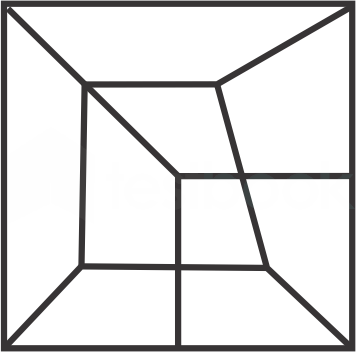
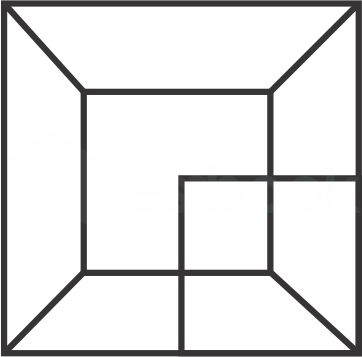
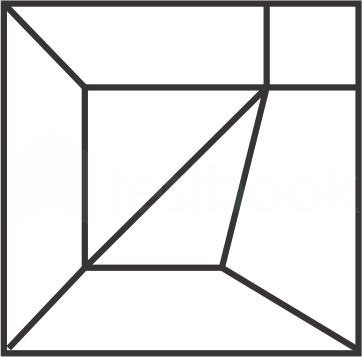
Question 38

From the given option figures, select the one in which the question figure is hidden/embedded. (Rotation is not allowed)

  1. AOption (a)

  2. BOption (b)

  3. COption (c)

  4. DOption (d)

View answer & explanation

Correct answer

Answer: (c)C.

Why this answer is correct

Figure in which the question figure is hidden/embedded is,

<br>

Hence, the correct answer is “Option 3”.

Question 39

From the given option figures, select the one in which the question figure is hidden/embedded. (Rotation is not allowed)

  1. AOption (a)

  2. BOption (b)

  3. COption (c)

  4. DOption (d)

View answer & explanation

Correct answer

Answer: (a)A.

Why this answer is correct

The logic followed here is:

Logic: The pattern is embedded in the figure.

Hence, the correct answer is "Option 1".

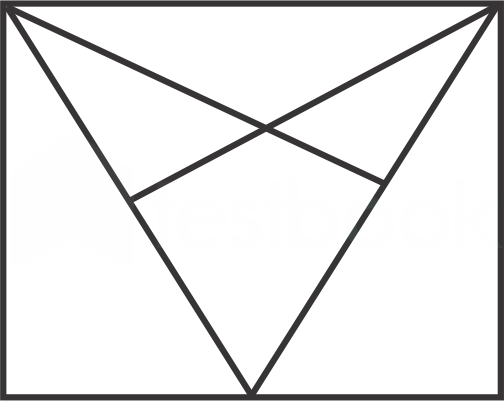
Question 40

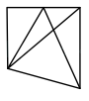
How many triangles are there in the given figure?

  1. AOption (a)

    8

  2. BOption (b)

    9

  3. COption (c)

    10

  4. DOption (d)

    11

View answer & explanation

Correct answer

Answer: (c)C.

10

Why this answer is correct

The logic followed here is:

Thus, there are 10 triangles.

Hence, the correct answer is 'Option 3'.

Question 41

How many triangles are there in the given figure?

  1. AOption (a)

    9

  2. BOption (b)

    10

  3. COption (c)

    11

  4. DOption (d)

    12

View answer & explanation

Correct answer

Answer: (b)B.

10

Why this answer is correct

The logic followed here is:

Logic: Labeled triangles identified in the figure → 10

​​Hence, the correct answer is 'Option 2'.

Question 42

How many triangles are there in the given figure?

  1. AOption (a)

    10

  2. BOption (b)

    11

  3. COption (c)

    12

  4. DOption (d)

    13

View answer & explanation

Correct answer

Answer: (c)C.

12

Why this answer is correct

The logic followed here is:

Thus, 12 triangles.​​​

Hence, the correct answer is 'Option 3'.

Question 43

Radius of 5 circles A, B, C, D and E is compared. Radius of no two circles is same. Radius of C is more than B but less than D. Radius of E is the maximum. Radius of B is 14 cm and radius of A is 11 cm. What will be the possible radius (in cm) of circle C?

  1. AOption (a)

    14

  2. BOption (b)

    11

  3. COption (c)

    10

  4. DOption (d)

    16

View answer & explanation

Correct answer

Answer: (d)D.

16

Why this answer is correct

The logic followed here is:

Given: Five circles: A, B, C, D, E

No two circles have the same radius

C > B but C < D

E has the maximum radius

B = 14 cm

A = 11 cm

So, the relative order must be: A (11) < B (14) < C < D < E

Now, checking the given options:

Option 1) 14

→ Cannot be equal to B (all radii are different)

Option 2)  11

→ Cannot be equal to A and also must be greater than B

Option 3) 10

→ Less than B (14), violates condition

Option 4) 16

→ Greater than 14 and allows D and E to be larger

Thus, 16 will be the possible radius (in cm) of circle C.

Hence, the correct answer is 'Option 4'.

Question 44

Some conditional data is provided to you in form of statement you have to check which of the following statement are logically inference from given statement.

The email from the company's HR department had the subject line "Important Updates to Employee Benefits" and was marked as high priority. All employees received it simultaneously at 9 AM on a Monday. What can you infer?

  1. AOption (a)

    Someone is getting fired

  2. BOption (b)

    The company is announcing layoffs

  3. COption (c)

    Significant policy changes are being communicated

  4. DOption (d)

    It's routine quarterly information

View answer & explanation

Correct answer

Answer: (c)C.

Significant policy changes are being communicated

Why this answer is correct

The logic followed here is:

Given:

Email is from HR department

Subject: “Important Updates to Employee Benefits”

Marked high priority

Sent to all employees simultaneously

Now, checking the given options:

Option 1) Someone is getting fired

→ No information suggests termination of any individual.

Option 2)  The company is announcing layoffs

→ Layoffs are not mentioned or implied by “employee benefits”.

Option 3) Significant policy changes are being communicated

→ Logical inference — important updates, high priority, and benefits strongly indicate changes or updates in company policies affecting employees.

Option 4) It's routine quarterly information

→ Routine information is usually not marked high priority.

Thus, Significant policy changes are being communicated Is odd from the given options as it logically follows.

Hence, the correct answer is 'Option 3'.

Question 45

M is facing towards west. By taking which of the following combination of turns, he will be finally facing towards north?

  1. AOption (a)

    Right, Left, Left, Right, Right

  2. BOption (b)

    Right, Left, Right, Left, Left

  3. COption (c)

    Left, Right, Left, Right, Left, Right, Right, Left

  4. DOption (d)

    Left, Left, Left, Left, Right, Right, Right, Right

View answer & explanation

Correct answer

Answer: (a)A.

Right, Left, Left, Right, Right

Why this answer is correct

The logic followed here is:

Given: M is facing towards west.

Now, checking the given options:

Option 1) Right, Left, Left, Right, Right

→ +90−90−90+90+90=+90

Net turn = 90° Right → Facing North

Option 2)  Right, Left, Right, Left, Left

→ +90−90+90−90−90=−90

Facing South

Option 3) Left, Right, Left, Right, Left, Right, Right, Left

→ −90+90−90+90−90+90+90−90=0

Still facing West

Option 4) Left, Left, Left, Left, Right, Right, Right, Right

→−360+360=0

 Still facing West

Thus, He should go: Right, Left, Left, Right, Right.

Hence, the correct answer is 'Option 1'.

Question 46

In the following question, in each option a pair of figures is given. In each pair the figure towards the left of (:) is related by some logic/rule/relation with the figure on the right of (:). Select the odd figure pair from the given alternatives.

  1. AOption (a)

  2. BOption (b)

  3. COption (c)

  4. DOption (d)

View answer & explanation

Correct answer

Answer: (c)C.

Why this answer is correct

The logic followed here is:

Now, checking the given options:

Option 1)

The symbols at the ends (circle, square, arrow) swap their vertical positions.

The direction of arrows reverses.

A consistent transformation rule exists.

Option 2)  

Filled and unfilled symbols swap sides.

Arrow directions reverse.

Logical and consistent transformation.

Option 3) 

The left figure has a circle at the bottom, but in the right figure the circle appears at the top.

However, other symbols do not follow the same consistent swapping or reversal rule seen in the rest.

Transformation is inconsistent compared to other options.

Option 4) 

Filled diamond ↔ hollow diamond swap positions.

Arrow direction reverses.

Clear and consistent logic.

Thus,

 is odd from the rest.

Hence, the correct answer is 'Option 3'.

Question 47

In the following question, in each option a pair of figures is given. In each pair the figure towards the left of (:) is related by some logic/rule/relation with the figure on the right of (:). Select the odd figure pair from the given alternatives.

  1. AOption (a)

  2. BOption (b)

  3. COption (c)

  4. DOption (d)

View answer & explanation

Correct answer

Answer: (c)C.

Why this answer is correct

The logic followed here is:

Now, checking the given options:

Option 1)

Observation: The positions of letters and numbers are swapped diagonally. This is a clear positional swap pattern.

Option 2)  

Observation: Numbers are rearranged rotated 180°. This is a numeric rotation pattern.

Option 3) 

Observation: Only two symbols in the top row are swapped, while bottom row stays the same. This is not a rotation or diagonal swap like the others.

Option 4) 

Observation: The positions of all elements are swapped along the diagonal, similar to option 1.

Thus,  

 is odd from the rest.

Hence, the correct answer is 'Option 3'.

Question 48

In the following figure series, select the figure which can be placed at the sign of question mark (?) from the given alternatives.

  1. AOption (a)

  2. BOption (b)

  3. COption (c)

  4. DOption (d)

View answer & explanation

Correct answer

Answer: (a)A.

Why this answer is correct

he logic followed here is:

Logic: is based on a sequential rotational movement of the arrows and the outer frame.

Hence, the correct answer is "Option 1".

Question 49

In a certain code language, 'HEAD' is coded as '88', 'REAR' is coded as '64'. How will 'FRONT' be coded in that code language?

  1. AOption (a)

    58

  2. BOption (b)

    64

  3. COption (c)

    62

  4. DOption (d)

    60

View answer & explanation

Correct answer

Answer: (d)D.

60

Why this answer is correct

The logic followed here is:

For, 'HEAD' is coded as '88'

HEAD
19222623

Total = 19 + 22 + 26 + 23 = 90

90 − 2 = 88

For, 'REAR' is coded as '64'

REAR
922269

Total = 9 + 22 + 26 + 9 = 66

66 − 2 = 64

Similarly, for 'FRONT' 

FRONT
21912137

Total = 21 + 9 + 12 + 13 + 7 = 62

62 − 2 = 60

So, 'FRONT' will be related to 60.

Hence, the correct answer is "Option 4".

Question 50

A word has been given in the question. This word CAN be formed by using the letters of the word given in one of the alternatives only. Select that alternative.

STONE

  1. AOption (a)

    PANTHOR

  2. BOption (b)

    NESTOR

  3. COption (c)

    TONICS

  4. DOption (d)

    BANTERS

View answer & explanation

Correct answer

Answer: (b)B.

NESTOR

Why this answer is correct

The logic followed here is:

Given:

Letters available: S, T, O, N, E

Now, checking the given options:

Option 1) PANTHOR

→ Letters like P, A, H, R are not in STONE

Option 2)  NESTOR

→ Letters: N, E, S, T, O, R

Option 3) TONICS

→ Letters: T, O, N, I, C, S 

Extra letters I, C

Option 4) BANTERS

→ Letters: B, A, N, T, E, R, S

Extra letters B, A, R

Thus, NESTOR Can be formed from STONE.

Hence, the correct answer is 'Option 2'.

Quantitative Aptitude (25 questions)

Question 51

A, B, and C start a business. A invests ₹5000 for 12 months, B ₹4000 for 9 months, and C ₹3000 for 6 months. If profit is ₹380000, find the share of B.

  1. AOption (a)

    ₹120000

  2. BOption (b)

    ₹130000

  3. COption (c)

    ₹140000

  4. DOption (d)

    ₹150000

View answer & explanation

Correct answer

Answer: (a)A.

₹120000

Why this answer is correct

Given:

A's investment = ₹5000

A's time = 12 months

B's investment = ₹4000

B's time = 9 months

C's investment = ₹3000

C's time = 6 months

Total profit = ₹380000

Formula Used:

Profit share = (Investment × Time) ÷ Total ratio

Total ratio = Sum of individual ratios

Calculation:

⇒ A's ratio = ₹5000 × 12 = ₹60000

⇒ B's ratio = ₹4000 × 9 = ₹36000

⇒ C's ratio = ₹3000 × 6 = ₹18000

⇒ Total ratio = ₹60000 + ₹36000 + ₹18000 = ₹114000

⇒ B's share of profit = (₹36000 ÷ ₹114000) × ₹380000

⇒ B's share of profit = ₹120000

∴ The correct answer is ₹120000.

Question 52

If, a + b = 24 and a2 + b2 = 320, then find the value of (a3+b3).

  1. AOption (a)

    4608

  2. BOption (b)

    4567

  3. COption (c)

    3890

  4. DOption (d)

    4112

View answer & explanation

Correct answer

Answer: (a)A.

4608

Why this answer is correct

Given:

a + b = 24

a2 + b2 = 320

Formula Used:

(a + b)2 = a2 + b2 + 2ab

a3 + b3 = (a + b) × (a2 + b2 - ab)

Calculation:

⇒ (a + b)2 = 242 = 576

⇒ 576 = 320 + 2ab

⇒ 2ab = 576 - 320

⇒ 2ab = 256

⇒ ab = 256 ÷ 2 = 128

⇒ a3 + b3 = (a + b) × (a2 + b2 - ab)

⇒ a3 + b3 = 24 × (320 - 128)

⇒ a3 + b3 = 24 × 192

⇒ a3 + b3 = 4608

∴ The correct answer is 4608.

Question 53

440 candies are to be distributed among 'N' number of students such that each student gets (N+2) candies. Find the value of 'N' if all the candies are distributed.

  1. AOption (a)

    20

  2. BOption (b)

    45

  3. COption (c)

    49

  4. DOption (d)

    72

View answer & explanation

Correct answer

Answer: (a)A.

20

Why this answer is correct

Given:

Total candies = 440

Each student receives = N + 2 candies

Formula Used:

Total candies = Number of students × Candies per student

N × (N + 2) = 440

Calculation:

⇒ N × (N + 2) = 440

⇒ N2 + 2N = 440

⇒ N2 + 2N - 440 = 0

⇒ (N + 22)(N - 20) = 0

⇒ N = -22 or N = 20

⇒ N = 20 (as N cannot be negative)

∴ The correct answer is 20.

Question 54

The volume of a cone is 462 cm³, and its height is 14 cm. Find the radius of the base.

  1. AOption (a)

    5.41cm

  2. BOption (b)

    5.31cm

  3. COption (c)

    5.61cm

  4. DOption (d)

    5.51cm

View answer & explanation

Correct answer

Answer: (c)C.

5.61cm

Why this answer is correct

Given:

Volume of cone = 462 cm3

Height (h) = 14 cm

Formula Used:

Volume of cone = (1 ÷ 3) × π × r2 × h

Calculation:

⇒ 462 = (1 ÷ 3) × π × r2 × 14

⇒ 462 = (14π ÷ 3) × r2

⇒ 462 × 3 = 14π × r2

⇒ 1386 = 14π × r2

⇒ 1386 ÷ 14π = r2

⇒ 99 ÷ π = r2

⇒ r2 = 99 ÷ (22 ÷ 7)

⇒ r2 = 99 × 7 ÷ 22

⇒ r2 = 693 ÷ 22

⇒ r2 = 31.5

⇒ r ≈ 5.61 cm

∴ The correct answer is 5.61 cm.

Question 55

A regular polygon has twice the number of sides as another regular polygon. The perimeter of the smaller polygon is 84.8 cm and each of its interior angles measures 140°. The side length of the larger polygon is 1.2 times that of the smaller one. What is the measure of angle of the larger polygon?

  1. AOption (a)

    155°

  2. BOption (b)

    158°

  3. COption (c)

    160°

  4. DOption (d)

    162°

View answer & explanation

Correct answer

Answer: (c)C.

160°

Why this answer is correct

Given:

Perimeter of smaller polygon = 84.8 cm

Each interior angle of smaller polygon = 140°

Larger polygon has twice the number of sides

Formula Used:

Interior angle of regular polygon = [(n − 2) × 180] ÷ n

Calculation:

⇒ [(n − 2) × 180] ÷ n = 140

⇒ 180n − 360 = 140n

⇒ 40n = 360

⇒ n = 9

⇒ Number of sides of larger polygon = 2 × 9

⇒ Number of sides of larger polygon = 18

⇒ Interior angle of larger polygon = [(18 − 2) × 180] ÷ 18

⇒ Interior angle = (16 × 180) ÷ 18

⇒ Interior angle = 2880 ÷ 18

⇒ Interior angle = 160°

∴ The correct answer is 160°.

Question 56

In a Δ\DeltaABC, 'D' and 'E' are points on BC such that AD = AE and ∠\angleBAD = ∠\angleCAE. IF AB = (2p + 3) units, BD = '2p' units, AC = (3q - 1) units and CE = 'q' units, then find the value of (p + q).

  1. AOption (a)

    4

  2. BOption (b)

    2

  3. COption (c)

    5

  4. DOption (d)

    3

View answer & explanation

Correct answer

Answer: (d)D.

3

Why this answer is correct

Given:

AD = AE

∠BAD = ∠CAE

AB = 2p + 3

BD = 2p

AC = 3q − 1

CE = q

Formula Used:

If AD = AE and ∠BAD = ∠CAE, then △BAD ≅ △CAE

Corresponding sides of congruent triangles are equal

Calculation:

⇒ From congruency, AB = AC

⇒ 2p + 3 = 3q − 1

⇒ 2p − 3q = −4

⇒ From congruency, BD = CE

⇒ 2p = q

⇒ Substitute q = 2p in 2p − 3q = −4

⇒ 2p − 3(2p) = −4

⇒ 2p − 6p = −4

⇒ −4p = −4

⇒ p = 1

⇒ q = 2p

⇒ q = 2

⇒ p + q = 1 + 2

⇒ p + q = 3

∴ The correct answer is 3.

Question 57

The length, breadth, and height of a rectangular parallelepiped are in the ratio 2 : 3 : 4. If the total length of all edges is 108 cm, what is the volume of the parallelepiped?

  1. AOption (a)

    640 cubic cm

  2. BOption (b)

    668 cubic cm

  3. COption (c)

    648 cubic cm

  4. DOption (d)

    612 cubic cm

View answer & explanation

Correct answer

Answer: (c)C.

648 cubic cm

Why this answer is correct

Given:

Ratio of length : breadth : height = 2 : 3 : 4

Total length of all edges = 108 cm

Formula Used:

Total length of all edges of cuboid = 4(l + b + h)

Volume = l × b × h

Calculation:

⇒ Let l = 2x, b = 3x, h = 4x

⇒ 4(l + b + h) = 108

⇒ 4(2x + 3x + 4x) = 108

⇒ 4(9x) = 108

⇒ 36x = 108

⇒ x = 3

⇒ l = 2 × 3 = 6 cm

⇒ b = 3 × 3 = 9 cm

⇒ h = 4 × 3 = 12 cm

⇒ Volume = 6 × 9 × 12

⇒ Volume = 648 cm3

∴ The correct answer is 648 cm3.

Question 58

A metal sphere of radius 18 cm is melted and recast into n identical solid hemispheres, each of radius 6 cm. Then, find the total curved surface area of all hemispheres combined.

  1. AOption (a)

    3888π\pi cm²

  2. BOption (b)

    4288π\pi cm²

  3. COption (c)

    3560π\pi cm²

  4. DOption (d)

    4060π\pi cm²

View answer & explanation

Correct answer

Answer: (a)A.

3888π\pi cm²

Why this answer is correct

Shortcut Trick

Ratio of radii (k) = 18 ÷ 6 = 3.

Number of hemispheres (n) = 2 × k3 = 2 × 33 = 54.

Total CSA = n × 2πr2 = 54 × 2 × π × 62 = 108 × 36π = 3888π cm2.

∴ The correct answer is 3888π cm2.

Alternate Method

Given:

Radius of metal sphere (R) = 18 cm

Radius of each solid hemisphere (r) = 6 cm

Formula Used:

Volume of sphere = (4/3)πR3

Volume of hemisphere = (2/3)πr3

Curved Surface Area (CSA) of hemisphere = 2πr2

Calculations:

When the sphere is melted to form n hemispheres, their volumes must be equal:

⇒ Volume of sphere = n × Volume of one hemisphere

⇒ (4/3)π(18)3 = n × (2/3)π(6)3

⇒ 4 × 18 × 18 × 18 = n × 2 × 6 × 6 × 6

⇒ n = [2 × 18 × 18 × 18] ÷ [6 × 6 × 6]

⇒ n = 2 × 3 × 3 × 3 = 54

Now, calculate the total curved surface area of 54 hemispheres:

⇒ Total CSA = n × 2πr2

⇒ Total CSA = 54 × 2 × π × (6)2

⇒ Total CSA = 108 × 36π

⇒ Total CSA = 3888π cm2

∴ The correct answer is 3888π cm2.

Additional Information

Total Surface Area of Hemisphere

The TSA of a solid hemisphere includes the curved area and the flat circular base: TSA = 2πr2 + πr2 = 3πr2.

Volume Conservation

In melting and recasting problems, the volume of the original shape is always equal to the sum of the volumes of the new shapes.

Surface Area of Sphere

A sphere does not have a separate CSA and TSA; its total surface area is given by 4πR2.

Question 59

What is the lateral surface area of a pyramid whose base dimension is 12 m x 8 m and slant height is 18 m?

  1. AOption (a)

    240 m²

  2. BOption (b)

    320 m²

  3. COption (c)

    360 m²

  4. DOption (d)

    270 m²

View answer & explanation

Correct answer

Answer: (c)C.

360 m²

Why this answer is correct

Given:

Length of base = 12 m

Breadth of base = 8 m

Slant height = 18 m

Formula Used:

Lateral surface area of pyramid = 1 ÷ 2 × Perimeter of base × Slant height

Perimeter of rectangle = 2(l + b)

Calculation:

⇒ Perimeter of base = 2(12 + 8)

⇒ Perimeter of base = 2 × 20

⇒ Perimeter of base = 40 m

⇒ Lateral surface area = 1 ÷ 2 × 40 × 18

⇒ Lateral surface area = 20 × 18

⇒ Lateral surface area = 360 m2

∴ The correct answer is 360 m2.

Question 60

One article is sold at 10% profit and another (different article) is sold at 20% loss. Determine the ratio of their cost prices so that the seller breaks even (overall no profit, no loss) on the two articles combined.

  1. AOption (a)

    CP = 1:2

  2. BOption (b)

    CP = 2:1

  3. COption (c)

    CP = 3:1

  4. DOption (d)

    CP = 1:3

View answer & explanation

Correct answer

Answer: (b)B.

CP = 2:1

Why this answer is correct

Given:

Profit on first article = 10%

Loss on second article = 20%

Formula Used:

Selling price = Cost price × (100 + Profit%) ÷ 100

Selling price = Cost price × (100 − Loss%) ÷ 100

Calculation:

⇒ Let cost price of first article = 100

⇒ Selling price of first article = 100 × 110 ÷ 100

⇒ Selling price of first article = 110

⇒ Let cost price of second article = x

⇒ Selling price of second article = x × 80 ÷ 100

⇒ Selling price of second article = 0.8x

⇒ For no profit no loss

⇒ Total SP = Total CP

⇒ 110 + 0.8x = 100 + x

⇒ 110 − 100 = x − 0.8x

⇒ 10 = 0.2x

⇒ x = 50

⇒ Ratio of cost prices = 100 : 50

⇒ Ratio = 2 : 1

∴ The correct answer is 2 : 1.

Question 61

If P and Q invested in a business, and the profit-sharing ratio is 3:4, and P invested Rs 30,000, how much did Q invest?

  1. AOption (a)

    Rs 36,000

  2. BOption (b)

    Rs 40,000

  3. COption (c)

    Rs 42,000

  4. DOption (d)

    Rs 45,000

View answer & explanation

Correct answer

Answer: (b)B.

Rs 40,000

Why this answer is correct

Shortcut Trick

The profit-sharing ratio is directly proportional to the investment ratio when the time period is constant.

Ratio of P : Q = 3 : 4

Given, 3 units = ₹30,000

⇒ 1 unit = ₹10,000

⇒ Q's Investment (4 units) = 4 × ₹10,000 = ₹40,000

∴ The correct answer is ₹40,000.

Alternate Method

Given:

Investment of P = ₹30,000

Profit Sharing Ratio P : Q = 3 : 4

Formula Used:

Investment of P ÷ Investment of Q = Profit Share of P ÷ Profit Share of Q

Calculations:

⇒ 30,000 ÷ Q's Investment = 3 ÷ 4

⇒ Q's Investment = (30,000 × 4) ÷ 3

⇒ Q's Investment = 10,000 × 4

⇒ Q's Investment = ₹40,000

By comparing the result with the given options, we find it matches Option (2).

∴ The correct answer is ₹40,000.

Additional Information

Simple Partnership

When all partners invest their capital for the same time period, the profit or loss is distributed in the ratio of their investments.

Compound Partnership

When partners invest capital for different time periods, the profit sharing ratio is (Capital1 × Time1) : (Capital2 × Time2).

Working and Sleeping Partner

A working partner manages the business and often receives a share of profit as salary before the remaining profit is divided based on investment.

Question 62

The sum of three numbers A, B and C is given as 3500. If the ratio of A to B is 2:3 and the ratio of B to C is 4:5 then what is the value of B?

  1. AOption (a)

    1200

  2. BOption (b)

    1300

  3. COption (c)

    1150

  4. DOption (d)

    1250

View answer & explanation

Correct answer

Answer: (a)A.

1200

Why this answer is correct

Given:

A + B + C = 3500

A : B = 2 : 3

B : C = 4 : 5

Formula Used:

If a : b = x : y, then a = kx and b = ky

Calculation:

⇒ A : B = 2 : 3

⇒ B : C = 4 : 5

⇒ Make B common

⇒ LCM of 3 and 4 = 12

⇒ A : B = 8 : 12

⇒ B : C = 12 : 15

⇒ A : B : C = 8 : 12 : 15

⇒ Total ratio = 8 + 12 + 15

⇒ Total ratio = 35

⇒ Value of one part = 3500 ÷ 35

⇒ Value of one part = 100

⇒ B = 12 × 100

⇒ B = 1200

∴ The correct answer is 1200.

Question 63

Given,6 men and 8 boys can complete the task in 10 days, and 26 men and 48 boys can finish it in just 2 days, how long will it take for 15 men and 20 boys to do the same work?

  1. AOption (a)

    4 days

  2. BOption (b)

    15 days

  3. COption (c)

    18 days

  4. DOption (d)

    7 days

View answer & explanation

Correct answer

Answer: (a)A.

4 days

Why this answer is correct

Shortcut Trick

Equating total work capacity: (6M + 8B) × 10 days = (26M + 48B) × 2 days.

⇒ 60M + 80B = 52M + 96B ⇒ 8M = 16B ⇒ 1M = 2B.

Initial efficiency in boys: 6(2) + 8 = 20 boys. Target efficiency: 15(2) + 20 = 50 boys.

Using M1D1 = M2D2 ⇒ 20 × 10 = 50 × D ⇒ D = 200 ÷ 50 = 4 days.

∴ The correct answer is 4 days.

Alternate Method

Given: Group 1 (6 men and 8 boys) takes 10 days; Group 2 (26 men and 48 boys) takes 2 days.

Formula Used: Total Work = Efficiency × Time

Person GroupDaysTotal WorkEfficiency
6M + 8B101010 ÷ 10 = 1
26M + 48B210 ÷ 2 = 5

⇒ 6M + 8B = 1 ... (i)

⇒ 26M + 48B = 5 ... (ii)

⇒ Multiplying (i) by 6 ⇒ 36M + 48B = 6 ... (iii)

⇒ Subtracting (ii) from (iii) ⇒ 10M = 1 ⇒ M = 0.1

⇒ Substituting M in (i) ⇒ 6(0.1) + 8B = 1 ⇒ 8B = 0.4 ⇒ B = 0.05

⇒ Efficiency of 15 men and 20 boys = 15(0.1) + 20(0.05) = 1.5 + 1.0 = 2.5

⇒ Time required = Total Work ÷ Combined Efficiency = 10 ÷ 2.5 = 4 days

∴ The correct answer is 4 days.

Additional Information

Man-Days Equivalence

When multiple types of workers are involved, convert them to a single unit using the efficiency ratio derived from the formula M1D1 = M2D2.

Efficiency and Time

Efficiency is inversely proportional to the time taken to complete a fixed amount of work. If efficiency doubles, time is halved.

General Work Formula

The relationship between men (M), days (D), hours (H), and work (W) is given by (M1 × D1 × H1) ÷ W1 = (M2 × D2 × H2) ÷ W2.

Question 64

A product is sold for ₹1,680 after a discount of 16% is given on its marked price. What would be the selling price if the discount was 25%?

  1. AOption (a)

    ₹1,500

  2. BOption (b)

    ₹1,750

  3. COption (c)

    ₹1,875

  4. DOption (d)

    ₹1,600

View answer & explanation

Correct answer

Answer: (a)A.

₹1,500

Why this answer is correct

Given:

Selling price after 16% discount = ₹1,680

Discount percentage = 16%

New discount percentage = 25%

Formula Used:

Marked Price = Selling Price ÷ (1 - Discount% / 100)

Selling Price = Marked Price × (1 - Discount% / 100)

Calculation:

⇒ Marked Price = ₹1,680 ÷ (1 - 16 / 100)

⇒ Marked Price = ₹1,680 ÷ (1 - 0.16)

⇒ Marked Price = ₹1,680 ÷ 0.84

⇒ Marked Price = ₹2,000

⇒ New Selling Price = ₹2,000 × (1 - 25 / 100)

⇒ New Selling Price = ₹2,000 × (1 - 0.25)

⇒ New Selling Price = ₹2,000 × 0.75

⇒ New Selling Price = ₹1,500

∴ The correct answer is ₹1,500.

Question 65

A sum of money becomes 5 times itself in 20 years at a certain rate of simple interest. In how many years will it become 9 times itself at the same rate?

  1. AOption (a)

    30 years

  2. BOption (b)

    40 years

  3. COption (c)

    45 years

  4. DOption (d)

    50 years

View answer & explanation

Correct answer

Answer: (b)B.

40 years

Why this answer is correct

Given:

Amount becomes 5 times in 20 years

Simple Interest

Formula Used:

Amount = Principal + Simple Interest

Simple Interest = Principal × Rate × Time ÷ 100

Calculation:

⇒ Let Principal = P

⇒ Amount after 20 years = 5P

⇒ Simple Interest in 20 years = 5P − P

⇒ Simple Interest = 4P

⇒ P × R × 20 ÷ 100 = 4P

⇒ R × 20 ÷ 100 = 4

⇒ R = 20%

⇒ For amount to become 9P

⇒ Required Simple Interest = 9P − P

⇒ Required Simple Interest = 8P

⇒ P × 20 × T ÷ 100 = 8P

⇒ 20T ÷ 100 = 8

⇒ T ÷ 5 = 8

⇒ T = 40 years

∴ The correct answer is 40 years.

Question 66

If a sum doubles itself in 10 years under simple interest, what is the annual rate of interest?

  1. AOption (a)

    10%

  2. BOption (b)

    15%

  3. COption (c)

    5%

  4. DOption (d)

    12%

View answer & explanation

Correct answer

Answer: (a)A.

10%

Why this answer is correct

Given:

Time = 10 years

Amount becomes double

Formula Used:

Simple Interest = Principal × Rate × Time ÷ 100

Amount = Principal + Simple Interest

Calculation:

⇒ Let Principal = P

⇒ Amount after 10 years = 2P

⇒ Simple Interest in 10 years = 2P − P

⇒ Simple Interest = P

⇒ P × R × 10 ÷ 100 = P

⇒ R × 10 ÷ 100 = 1

⇒ R ÷ 10 = 1

⇒ R = 10%

∴ The correct answer is 10%.

Question 67

A tea dealer blends two varieties of tea, one priced at ₹120 per kilogram and the other at ₹150 per kilogram. He sells the combined mixture at ₹168 per kilogram and earns a 20% profit on the overall cost. Determine the proportion (by weight) in which the two types of tea must be mixed to obtain the desired selling price and profit.

  1. AOption (a)

    2:3

  2. BOption (b)

    3:2

  3. COption (c)

    1:2

  4. DOption (d)

    3:1

View answer & explanation

Correct answer

Answer: (c)C.

1:2

Why this answer is correct

Given:

Cost price of first tea = 120

Cost price of second tea = 150

Selling price of mixture = 168

Profit = 20%

Formula Used:

Selling price = Cost price × (100 + Profit%) ÷ 100

Alligation rule: Ratio = (Higher − Mean) : (Mean − Lower)

Calculation:

⇒ 168 = Cost price × 120 ÷ 100

⇒ Cost price of mixture = 168 × 100 ÷ 120

⇒ Cost price of mixture = 140

⇒ Using alligation

⇒ Ratio = (150 − 140) : (140 − 120)

⇒ Ratio = 10 : 20

⇒ Ratio = 1 : 2

∴ The required proportion is 1 : 2.

Question 68

A container holds a mixture of liquid A and liquid B in the ratio 7:5. After 9 litres of this mixture are removed and the container is refilled with pure liquid B, the proportion of A to B changes to 7: 9. Determine the initial quantity of liquid A present in the container.

  1. AOption (a)

    22 litres

  2. BOption (b)

    18 litres

  3. COption (c)

    24 litres

  4. DOption (d)

    21 litres

View answer & explanation

Correct answer

Answer: (d)D.

21 litres

Why this answer is correct

Given:

Initial ratio of A : B = 7 : 5

Mixture removed = 9 litres

New ratio of A : B = 7 : 9

Formula Used:

If quantities are in ratio a : b, take total as (a + b)x

Removed quantity of each component = Removed × (Part ÷ Sum)

Calculation:

⇒ Let total quantity = 12x

⇒ Initial A = 7x

⇒ Initial B = 5x

⇒ A removed = 9 × 7 ÷ 12

⇒ A removed = 21 ÷ 4

⇒ B removed = 9 × 5 ÷ 12

⇒ B removed = 15 ÷ 4

⇒ Remaining A = 7x − 21 ÷ 4

⇒ Remaining B = 5x − 15 ÷ 4

⇒ After adding 9 litres of B

⇒ Final B = 5x − 15 ÷ 4 + 9

⇒ Final B = 5x + 21 ÷ 4

⇒ (7x − 21 ÷ 4) ÷ (5x + 21 ÷ 4) = 7 ÷ 9

⇒ LCM of denominators = 4

⇒ 9(28x − 21) = 7(20x + 21)

⇒ 252x − 189 = 140x + 147

⇒ 112x = 336

⇒ x = 3

⇒ Initial A = 7x

⇒ Initial A = 21 litres

∴ The correct answer is 21 litres.

Question 69

In a circle with a radius of 25 cm, a chord with a length of 48 cm is drawn. What is the minimum distance from this chord to another parallel chord of length 40 cm?

  1. AOption (a)

    10 cm

  2. BOption (b)

    16 cm

  3. COption (c)

    8 cm

  4. DOption (d)

    4 cm

View answer & explanation

Correct answer

Answer: (c)C.

8 cm

Why this answer is correct

Given:

Radius of circle = 25 cm

Length of first chord = 48 cm

Length of second chord = 40 cm

Formula Used:

Distance from centre to chord = √(r2 − (l ÷ 2)2)

Minimum distance between parallel chords = Difference of their distances from centre

Calculation:

⇒ Distance₁ = √(252 − 242)

⇒ Distance₁ = √(625 − 576)

⇒ Distance₁ = √49

⇒ Distance₁ = 7 cm

⇒ Distance₂ = √(252 − 202)

⇒ Distance₂ = √(625 − 400)

⇒ Distance₂ = √225

⇒ Distance₂ = 15 cm

⇒ Minimum distance = 15 − 7

⇒ Minimum distance = 8 cm

∴ The correct answer is 8 cm.

Question 70

A trapezoid is circumscribed around a circle. The lengths of the non-parallel sides are given as 6 cm and 8 cm. Determine the perimeter of the trapezoid.

  1. AOption (a)

    14 cm

  2. BOption (b)

    28 cm

  3. COption (c)

    24 cm

  4. DOption (d)

    26 cm

View answer & explanation

Correct answer

Answer: (b)B.

28 cm

Why this answer is correct

Given:

Non-parallel sides = 6 cm and 8 cm

Trapezoid is circumscribed about a circle

Formula Used:

In a quadrilateral circumscribed about a circle, sum of opposite sides are equal

Perimeter = Sum of all sides

Calculation:

⇒ Let parallel sides be a and b

⇒ a + b = 6 + 8

⇒ a + b = 14

⇒ Perimeter = a + b + 6 + 8

⇒ Perimeter = 14 + 14

⇒ Perimeter = 28 cm

∴ The correct answer is 28 cm.

Question 71

The equation of a line is 2x - 3y = 6. What is the slope of the line?

  1. AOption (a)

    −49-\frac{4}{9}

  2. BOption (b)

    13\frac{1}{3}

  3. COption (c)

    45\frac{4}{5}

  4. DOption (d)

    23\frac{2}{3}

View answer & explanation

Correct answer

Answer: (d)D.

23\frac{2}{3}

Why this answer is correct

Given:

Equation of line = 2x − 3y = 6

Formula Used:

Standard form of line = Ax + By + C = 0

Slope (m) = −A ÷ B

Calculation:

⇒ 2x − 3y − 6 = 0

⇒ A = 2

⇒ B = −3

⇒ m = −2 ÷ (−3)

⇒ m = 2 ÷ 3

∴ The correct answer is 2 ÷ 3.

Question 72

Two similar triangles, Triangle X and Triangle Y, have perimeters of 24 cm and 36 cm, respectively. If the area of Triangle X is 40 cm², what is the area of Triangle Y?

  1. AOption (a)

    60 cm²

  2. BOption (b)

    78 cm²

  3. COption (c)

    90 cm²

  4. DOption (d)

    56 cm²

View answer & explanation

Correct answer

Answer: (c)C.

90 cm²

Why this answer is correct

Given:

Perimeter of Triangle X = 24 cm

Perimeter of Triangle Y = 36 cm

Area of Triangle X = 40 cm2

Formula Used:

Ratio of perimeters of similar triangles = Ratio of corresponding sides

Ratio of areas of similar triangles = Square of ratio of corresponding sides

Calculation:

⇒ Ratio of sides = 36 ÷ 24

⇒ Ratio of sides = 3 ÷ 2

⇒ Ratio of areas = (3 ÷ 2)2

⇒ Ratio of areas = 9 ÷ 4

⇒ Area of Triangle Y = 40 × 9 ÷ 4

⇒ Area of Triangle Y = 40 × 2.25

⇒ Area of Triangle Y = 90 cm2

∴ The correct answer is 90 cm2.

Question 73

Triangle ABC is similar to Triangle DEF. If the area of Triangle ABC is 4 times the area of Triangle DEF, what is the ratio of their perimeters?

  1. AOption (a)

    3:5

  2. BOption (b)

    7:9

  3. COption (c)

    2:1

  4. DOption (d)

    6:7

View answer & explanation

Correct answer

Answer: (c)C.

2:1

Why this answer is correct

Given:

Area of Triangle ABC is 4 times the area of Triangle DEF.

Triangles ABC and DEF are similar.

Formula Used:

Ratio of areas of similar triangles = (Ratio of corresponding sides)2.

Ratio of perimeters of similar triangles = Ratio of corresponding sides.

Calculation:

⇒ Ratio of areas = 4:1.

⇒ (Ratio of corresponding sides)2 = 4:1.

⇒ Ratio of corresponding sides = √4:√1 = 2:1.

⇒ Ratio of perimeters = 2 : 1.

∴ The correct answer is 2 : 1.

Question 74

What is the maximum number of common tangents that can be drawn between two circles?

  1. AOption (a)

    2

  2. BOption (b)

    3

  3. COption (c)

    4

  4. DOption (d)

    5

View answer & explanation

Correct answer

Answer: (c)C.

4

Why this answer is correct

Given:

Two circles

Formula Used:

Maximum number of common tangents depends on relative position of circles

Calculation:

⇒ If circles are separate and do not intersect

⇒ Two direct common tangents can be drawn

⇒ Two transverse common tangents can be drawn

⇒ Total common tangents = 4

∴ The correct answer is 4.

Question 75

A car was sold for ₹3,30,000 at a 10% profit. For what price should the car be sold to gain a 25% profit?

  1. AOption (a)

    ₹3,65,000

  2. BOption (b)

    ₹3,89,000

  3. COption (c)

    ₹3,69,678

  4. DOption (d)

    ₹3,75,000

View answer & explanation

Correct answer

Answer: (d)D.

₹3,75,000

Why this answer is correct

Shortcut Trick

Profit of 10% implies Selling Price = 110% of Cost Price.

Given: 110% → ₹3,30,000

Target Profit of 25% implies New Selling Price = 125% of Cost Price.

New Selling Price = (3,30,000 ÷ 110) × 125

New Selling Price = 3,000 × 125 = ₹3,75,000

∴ The correct answer is ₹3,75,000.

Alternate Method

Given:

Initial Selling Price (SP1) = ₹3,30,000

Initial Profit (P1) = 10%

Required Profit (P2) = 25%

Formula Used:

Cost Price (CP) = [SP × 100] / [100 + Profit %]

Selling Price (SP) = [CP × (100 + Profit %)] / 100

Calculations:

⇒ CP = (3,30,000 × 100) / (100 + 10)

⇒ CP = (3,30,000 × 100) / 110

⇒ CP = 3,000 × 100 = ₹3,00,000

⇒ New Selling Price = [3,00,000 × (100 + 25)] / 100

⇒ New Selling Price = 3,00,000 × (125 / 100)

⇒ New Selling Price = 3,000 × 125

⇒ New Selling Price = ₹3,75,000

∴ The correct answer is ₹3,75,000.

Additional Information

Basic Profit and Loss

Profit occurs when SP > CP. Profit = SP − CP. Profit % = (Profit / CP) × 100.

Selling Price for Profit/Loss

SP = CP × (100 ± P/L%) / 100. Use (+) for profit and (−) for loss.

Successive Changes

If an object is sold to multiple people with profits x% and y%, the final SP = CP × [(100+x)/100] × [(100+y)/100].

General Awareness (25 questions)

Question 76

Which of the following ruler was Brahmins who gave up their traditional professions and established kingdom in Rajasthan?

  1. AOption (a)

    Dantidurga

  2. BOption (b)

    Gurjara-Pratihara Harichandra

  3. COption (c)

    Nagabhata

  4. DOption (d)

    Dharmapala Deva

View answer & explanation

Correct answer

Answer: (b)B.

Gurjara-Pratihara Harichandra

Why this answer is correct

The correct answer is Gurjara-Pratihara Harichandra.

Key Points

  • Gurjara-Pratihara Harichandra is considered one of the rulers of the Gurjara-Pratihara dynasty who was a Brahmin by origin. He abandoned his traditional profession as a Brahmin and established a ruling dynasty in the region of Rajasthan.
  • The Gurjara-Pratihara dynasty was an important early medieval Indian dynasty, which played a pivotal role in protecting India from foreign invasions, particularly the Arab invasions.
  • Harichandra's rise to power as a ruler marked a significant shift from the traditional Brahminical profession to assuming kingship, illustrating the dynamism of Indian society during that era.
  • The Gurjara-Pratiharas are known for their contributions to Indian art, culture, and architecture, particularly during their rule in the 8th to 11th centuries CE.
  • The dynasty’s influence extended over a large part of northern India, and they were significant in resisting invasions and establishing political stability.

Additional Information

  • Gurjara-Pratihara Dynasty:
  • The Gurjara-Pratiharas were one of the three major powers of northern India during the early medieval period, along with the Palas and the Rashtrakutas.
  • Their reign is known for the construction of significant temples and monuments, particularly in Gwalior and Khajuraho.
  • The dynasty reached its zenith under Mihira Bhoja, who expanded the empire and strengthened its administration.
  • Contributions to Art and Culture:
  • The Gurjara-Pratiharas are credited with the revival of Hinduism and the promotion of Indian art and architecture.
  • They were patrons of temple architecture and are associated with the development of the Nagara style of temple construction.
  • Arab Invasions:
  • The Gurjara-Pratiharas played a crucial role in repelling Arab invasions into India, particularly under the leadership of Nagabhata I.
  • This resistance helped preserve the cultural and religious heritage of India during a period of significant external threats.
  • Other Dynasties and Rulers:
  • Dantidurga: Founder of the Rashtrakuta dynasty, which ruled over parts of the Deccan region. He is not associated with the Gurjara-Pratiharas.
  • Nagabhata: Another important ruler of the Gurjara-Pratihara dynasty, known for his military achievements and resistance to Arab invasions.
  • Dharmapala Deva: Ruler of the Pala dynasty, based in eastern India (Bengal region). He was a contemporary of the Gurjara-Pratiharas and is not related to Rajasthan.

Question 77

Which Mughal ruler made Gakkhar chief Kamal Khan, a Mansabdar?

  1. AOption (a)

    Babur

  2. BOption (b)

    Akbar

  3. COption (c)

    Shah Jahan

  4. DOption (d)

    Aurangzeb

View answer & explanation

Correct answer

Answer: (b)B.

Akbar

Why this answer is correct

The correct answer is Akbar.

Key Points

  • Akbar, the third Mughal emperor, is known for his progressive policies and administrative reforms during his reign from 1556 to 1605.
  • He introduced the Mansabdari system, a unique military and civil administrative system to effectively manage his empire. Under this system, officials were granted ranks or "Mansabs."
  • The Gakkhar chief Kamal Khan was made a Mansabdar by Akbar as part of his policy to integrate regional leaders into the Mughal administration.
  • Akbar's strategy of appointing local chiefs like Kamal Khan to administrative positions helped consolidate the Mughal empire and maintain local support.
  • The Gakkhars were a warrior tribe primarily based in the regions of present-day Punjab and northern Pakistan, and their allegiance was crucial for maintaining stability in the frontier regions of the empire.

Additional Information

  • Mansabdari System:
  • The Mansabdari system was introduced by Akbar and was a rank-based system used to determine the position, salary, and military responsibilities of officials.
  • Mansabdars were ranked from 10 to 5000, and these ranks were based on their Zat (personal rank) and Sawar (number of cavalry).
  • It ensured a centralized administration and loyalty to the emperor while providing effective governance over the vast Mughal empire.
  • Akbar’s Policies:
  • Akbar followed a policy of religious tolerance and established the Ibadat Khana (House of Worship) for interfaith discussions.
  • He implemented reforms such as the abolition of the Jizya tax and introduced the Din-i-Ilahi, a syncretic religious philosophy.
  • His administration was marked by decentralization, efficient revenue systems like Raja Todar Mal's land revenue reforms, and cultural patronage.
  • Gakkhar Tribe:
  • The Gakkhars were a warrior tribe known for their strength and influence in the regions of Punjab and northern Pakistan.
  • They played an important role in guarding the northwestern frontier of the Mughal empire.
  • By appointing leaders like Kamal Khan as Mansabdars, Akbar ensured their loyalty and strengthened his control over these strategic regions.
  • Akbar’s Legacy:
  • Akbar is regarded as one of the greatest Mughal emperors due to his administrative, military, and cultural contributions.
  • His reign laid the foundation for the Mughal empire's peak under his successors Jahangir and Shah Jahan.
  • He was a patron of the arts, and his court included famous personalities like Birbal, Tansen, and Abul Fazl.

Important Points

  • Akbar’s Administrative System:
  • His administration was divided into provinces, each governed by a Subedar (provincial governor).
  • The Mansabdari system was integral to both civil and military administration, ensuring a well-maintained bureaucracy.
  • The system was designed to prevent hereditary succession, ensuring loyalty to the emperor.
  • Integration of Regional Leaders:
  • Akbar’s policy of appointing regional leaders like Kamal Khan helped integrate diverse communities into the Mughal empire.
  • This approach reduced rebellion risks and strengthened the central government’s authority.

Question 78

_________ has secured the top position in India in the Times Higher Education (THE) Asia Rankings 2025.

  1. AOption (a)

    Indian Institute of Science

  2. BOption (b)

    IIT Lucknow

  3. COption (c)

    IIT Bombay

  4. DOption (d)

    IIT Kanpur

View answer & explanation

Correct answer

Answer: (a)A.

Indian Institute of Science

Why this answer is correct

The correct answer is Indian Institute of Science.

Key Points

  • Indian Institute of Science (IISc), Bangalore, has consistently ranked as one of the leading educational and research institutions in India. It secured the top position in the Times Higher Education (THE) Asia Rankings 2025.
  • The Times Higher Education Asia Rankings assess universities based on various parameters such as teaching, research, citations, international outlook, and industry income.
  • IISc is globally recognized for its excellence in scientific research, cutting-edge facilities, and contributions to various fields of science and technology.
  • As of the latest rankings, IISc has excelled in parameters like research citations, which highlight the impact and quality of the research conducted by the institution.
  • This achievement further reinforces IISc’s role as a leader in advancing education and innovation in India and globally.

Additional Information

  • Indian Institute of Science (IISc):
  • Founded: IISc was established in 1909 and is located in Bangalore, Karnataka.
  • Focus Areas: IISc specializes in advanced scientific and technological research, covering areas like aerospace, biological sciences, chemical engineering, computer science, and more.
  • International Recognition: IISc is renowned for producing high-quality research and is often ranked among the top institutions globally.
  • Notable Contributions: IISc has made significant strides in areas such as quantum computing, nanotechnology, and climate science.
  • Times Higher Education Asia Rankings:
  • Objective: The rankings evaluate institutions across Asia based on core performance indicators, including research output, teaching environment, and global collaborations.
  • Parameters: Institutions are assessed on five criteria: Teaching, Research, Citations, International Outlook, and Industry Income.
  • Global Impact: The rankings serve as a benchmark for academic excellence and help universities attract international collaborations and funding opportunities.
  • Other Notable Indian Institutions:
  • IIT Bombay: Recognized for its engineering programs and research innovation, IIT Bombay has consistently performed well in global rankings.
  • IIT Kanpur: Known for its focus on technology and science, IIT Kanpur excels in areas like robotics and artificial intelligence.
  • IIT Lucknow: A relatively newer addition to the IITs, this institute is emerging in areas of engineering and management studies.
  • Importance of Rankings:
  • Global Recognition: Rankings like THE Asia Rankings help Indian institutions showcase their achievements globally.
  • Attracting Talent: High rankings enable institutions to attract top students, faculty, and industry partnerships.
  • Policy Impact: Such rankings also influence government policies and funding for higher education in India.

Important Points

  • Research Citations: Citations are a key metric in rankings as they indicate the quality and impact of the research conducted by institutions.
  • International Outlook: This parameter assesses the institution's ability to attract international students, faculty, and collaborations.
  • Industry Income: Measures how effectively institutions transfer knowledge to industry, indicating practical applications of research.
  • Teaching Environment: Evaluates the learning atmosphere, faculty qualifications, and student support systems.

Question 79

The term 'Raider' is related to which of the following sports?

  1. AOption (a)

    Kabaddi

  2. BOption (b)

    Badminton

  3. COption (c)

    Lawn tennis

  4. DOption (d)

    Cricket

View answer & explanation

Correct answer

Answer: (a)A.

Kabaddi

Why this answer is correct

The correct answer is Kabaddi.

Key Points

  • The term 'Raider' is primarily associated with the sport of Kabaddi.
  • A Raider is a player who enters the opponent's half of the court to touch opponents and return to their half while holding their breath and chanting "Kabaddi."
  • The role of the Raider is crucial as they score points by touching opposition players and successfully returning to their own half without being tackled.
  • Kabaddi is a traditional Indian sport that originated thousands of years ago and is now played internationally, including in the Asian Games and Pro Kabaddi League.
  • The game emphasizes physical fitness, agility, strategy, and teamwork, and the Raider’s performance significantly impacts the outcome of the match.

Additional Information

  • About Kabaddi:
  • Kabaddi is a contact sport that originated in ancient India and is widely played in South Asia and other parts of the world.
  • The game involves two teams, each consisting of seven players, playing on a rectangular court.
  • Players take turns sending a Raider into the opposition's half, aiming to tag opponents and return without being tackled.
  • Key skills in Kabaddi include breath control, agility, strength, and tactical intelligence.
  • Roles in Kabaddi:
  • Raider: The attacking player who enters the opponent's half to score points.
  • Defender: The players who attempt to stop the Raider by tackling him/her before they return to their half.
  • International Recognition:
  • Kabaddi is recognized as an official sport in the Asian Games and has been included since 1990.
  • The Pro Kabaddi League (PKL), launched in 2014, has popularized the sport globally, attracting players and audiences from various countries.
  • Other Terms in Kabaddi:
  • Super Raid: A raid that scores three or more points in a single attempt.
  • Do-or-Die Raid: A situation where the Raider must score, or the team will lose a point.
  • Bonus Point: Awarded when the Raider successfully crosses the bonus line with at least one foot.
  • Other Sports Terminologies:
  • Badminton: Terms include "Smash," "Drop," and "Net Play."
  • Lawn Tennis: Common terms include "Ace," "Volley," and "Baseline."
  • Cricket: Terms like "Bowler," "Batsman," and "Run-out" are widely used.

Question 80

In 2025, Mumbai Marathon was held in which month?

  1. AOption (a)

    January

  2. BOption (b)

    March

  3. COption (c)

    July

  4. DOption (d)

    February

View answer & explanation

Correct answer

Answer: (a)A.

January

Why this answer is correct

The correct answer is January.

Key Points

  • The Mumbai Marathon is one of the most popular and prestigious marathon events held annually in India, attracting runners from across the globe.
  • Since its inception in 2004, the Mumbai Marathon has traditionally been held in the month of January. This is due to favorable weather conditions during this time of the year.
  • The event is typically scheduled on a Sunday in mid-January to facilitate maximum participation and minimize disruption to city activities.
  • January is considered ideal for running long distances in Mumbai as the temperature during this period is generally cool, ranging from 16°C to 24°C, which enhances runner performance and comfort.
  • The event includes various categories such as Full Marathon, Half Marathon, Dream Run, and Senior Citizen Run, making it accessible to participants of all ages and abilities.

Additional Information

  • History and Significance:
  • The Mumbai Marathon was launched in 2004 and has since grown into one of the largest and most prestigious marathons in Asia.
  • It is organized by Procam International and is sponsored by leading corporations, ensuring professional execution and high standards.
  • The event promotes health, fitness, and community participation, while also serving as a platform for raising funds for various charitable causes. Since its inception, it has raised millions for charity.
  • Venue and Route:
  • The marathon route offers participants a scenic view of Mumbai, including iconic landmarks like the Marine Drive, Chhatrapati Shivaji Maharaj Terminus, and the Sea Link.
  • The race starts and ends at the Chhatrapati Shivaji Maharaj Terminus and passes through various areas of the city.
  • Participation and Categories:
  • The marathon attracts participants from across the globe, including elite runners, amateur athletes, and fitness enthusiasts.
  • Categories include the Full Marathon (42.195 km), Half Marathon (21.097 km), Dream Run (6 km), and Senior Citizen Run.
  • The event also includes a Champions with Disability Run, promoting inclusivity and participation for differently-abled individuals.
  • Weather Considerations:
  • January is one of the coolest months in Mumbai, with temperatures ranging from 16°C to 24°C, providing ideal conditions for marathon runners.
  • Humidity is also relatively lower in January compared to other months, ensuring better endurance and performance for participants.
  • Global Recognition:
  • The Mumbai Marathon is recognized by global organizations such as the World Athletics and attracts elite athletes who compete for prize money.
  • It is part of the prestigious Abbott World Marathon Majors, showcasing its significance in the global marathon calendar.

Important Points

  • Charity Impact:
  • The Mumbai Marathon is a major platform for fundraising, with hundreds of NGOs participating to raise funds for various causes.
  • In 2020 alone, the event raised over ₹32 crore, benefiting numerous charitable organizations.
  • COVID-19 Adaptations:
  • During the COVID-19 pandemic, the marathon adopted virtual formats to ensure continuity while adhering to safety protocols.
  • Participants were encouraged to run in their local areas and submit their results online.
  • Elite Participation:
  • Every year, elite athletes from Kenya, Ethiopia, and other nations participate, showcasing their prowess in distance running.
  • The event provides an opportunity for Indian runners to compete alongside international athletes and gain exposure.

Question 81

Which of the following books has NOT been written by Amitav Ghosh?

  1. AOption (a)

    The Glass Palace

  2. BOption (b)

    The Imam and the Indian

  3. COption (c)

    The Hungry Tide

  4. DOption (d)

    The Ground Beneath Her Feet

View answer & explanation

Correct answer

Answer: (d)D.

The Ground Beneath Her Feet

Why this answer is correct

The correct answer is The Ground Beneath Her Feet.

Key Points

  • The Ground Beneath Her Feet is not written by Amitav Ghosh. It is authored by Salman Rushdie and published in 1999. The book offers a reimagining of the myth of Orpheus and Eurydice in a modern setting.
  • The Glass Palace is a historical novel written by Amitav Ghosh, first published in 2000. It explores themes of colonialism, history, and identity, set against the backdrop of Burma, India, and Malaysia.
  • The Imam and the Indian is a collection of essays by Amitav Ghosh, dealing with anthropology, history, and cultural identity. It showcases his academic and literary prowess.
  • The Hungry Tide is another renowned novel by Amitav Ghosh, published in 2004. It is set in the Sundarbans and deals with ecological and human conflicts.
  • The works of Amitav Ghosh are well-known for their deep engagement with history, culture, and environmental issues, distinguishing them from the themes explored by Salman Rushdie in his works, including The Ground Beneath Her Feet.

Additional Information

  • Amitav Ghosh’s Works:
  • The Glass Palace: Set in Burma, India, and Malaysia, this novel explores themes of colonialism, migration, and familial bonds against the backdrop of the British invasion of Burma.
  • The Hungry Tide: Focused on the Sundarbans, it delves into the lives of the local population, the environmental challenges, and the socio-political conflicts of the region.
  • The Shadow Lines: A seminal work dealing with partition, memory, and identity, highlighting how personal and national histories intertwine.
  • Sea of Poppies: The first book in the Ibis Trilogy, it examines the opium trade and its impact on individuals and societies in the 19th century.
  • Salman Rushdie’s The Ground Beneath Her Feet:
  • Published in 1999, this novel blends myth, music, and love, offering a global narrative on modern culture and art.
  • It incorporates elements of magical realism, a hallmark of Rushdie’s writing style, and reinterprets classical myths in a contemporary framework.
  • Comparison Between Ghosh and Rushdie:
  • Amitav Ghosh: Known for his intricate storytelling, historical depth, and exploration of environmental and cultural issues.
  • Salman Rushdie: Famous for his use of magical realism, postcolonial themes, and narrative experimentation, as seen in works like Midnight’s Children and The Satanic Verses.
  • Important Points to Note:
  • Both authors are celebrated for their contributions to literature, but their thematic focuses and narrative styles are distinct.
  • Understanding the authorship of key works is essential for appreciating the broader trends and themes in contemporary literature.

Question 82

Who is the author of the book 'Guerrillas' published in 1975?

  1. AOption (a)

    Novoneel Chakraborty

  2. BOption (b)

    V. S. Naipaul

  3. COption (c)

    Bapsi Sidhwa

  4. DOption (d)

    Mohsin Hamid

View answer & explanation

Correct answer

Answer: (b)B.

V. S. Naipaul

Why this answer is correct

The correct answer is V. S. Naipaul.

Key Points

  • V. S. Naipaul is the author of the book 'Guerrillas', published in the year 1975.
  • Naipaul is a renowned writer of Indo-Trinidadian descent, celebrated for his novels, travel writing, and essays. He received the Nobel Prize in Literature in 2001.
  • The book 'Guerrillas' explores themes of politics, revolution, and individual disillusionment in a post-colonial society.
  • The story is set in an unnamed Caribbean island and reflects Naipaul's critique of the political and social conditions in such regions during that time.
  • Naipaul's writing often delves into the complexities of post-colonial identity and the impact of colonization, which are central to 'Guerrillas'.

Additional Information

  • About V. S. Naipaul:
  • Full Name: Vidiadhar Surajprasad Naipaul.
  • Birth: He was born on 17 August 1932 in Chaguanas, Trinidad and Tobago.
  • Naipaul is widely recognized for works like 'A House for Mr. Biswas', 'In a Free State', and 'A Bend in the River'.
  • His writing style is characterized by precision, narrative depth, and insightful observations on post-colonial societies.
  • About the Book 'Guerrillas':
  • The novel is a psychological and political drama set in an unnamed Caribbean island.
  • The story revolves around a young Englishman, his lover, and a charismatic revolutionary leader, exploring themes of power, betrayal, and the aftermath of colonial rule.
  • It reflects Naipaul's critical take on the idealism and failures of revolutionary movements in post-colonial nations.
  • Notable Awards and Recognition:
  • Naipaul received the Booker Prize for 'In a Free State' in 1971.
  • He was honored with the Nobel Prize in Literature in 2001 for his work, which was described as "united perceptive narrative and incorruptible scrutiny."
  • Details of Other Options:
  • Novoneel Chakraborty: An Indian author known for romantic thrillers like 'Marry Me, Stranger'. He is unrelated to 'Guerrillas'.
  • Bapsi Sidhwa: A Pakistani novelist known for works like 'Ice-Candy-Man' and 'The Pakistani Bride'.
  • Mohsin Hamid: A Pakistani novelist famous for books like 'The Reluctant Fundamentalist'. He is not associated with 'Guerrillas'.

Question 83

Which of the following novel has been authored by Anita Desai?

  1. AOption (a)

    Book of Humour

  2. BOption (b)

    I Shall Not Hear the Nightingale

  3. COption (c)

    Where Shall We Go This Summer

  4. DOption (d)

    The Struggle for India's Soul

View answer & explanation

Correct answer

Answer: (c)C.

Where Shall We Go This Summer

Why this answer is correct

The correct answer is Where Shall We Go This Summer.

Key Points

  • Anita Desai is a renowned Indian author known for her extensive contribution to English literature. One of her famous novels is “Where Shall We Go This Summer?”, published in 1975.
  • The novel explores themes of loneliness, identity, and self-discovery. It portrays the psychological struggles of the protagonist, Sita, who is trying to escape from societal norms and her own emotional turmoil.
  • Set in India, the story is divided between the urban chaos of Bombay (now Mumbai) and the serene environment of Manori Island, symbolizing the contrasting realities of the protagonist’s life.
  • Anita Desai’s works are often characterized by a focus on female protagonists, their inner lives, and how they navigate through emotional and existential crises.
  • “Where Shall We Go This Summer?” is considered a significant work in Indian English literature, highlighting Anita Desai’s ability to delve deep into human emotions and societal pressures.

Additional Information

  • About Anita Desai:
  • Born on 24 June 1937, Anita Desai is one of India’s foremost authors writing in English.
  • She has been nominated for the Booker Prize multiple times and has received the Sahitya Akademi Award for her contributions to literature.
  • Her works often explore themes of alienation, displacement, and cultural identity.
  • Other Books by Anita Desai:
  • “Cry, the Peacock” (1963): This was her debut novel, focusing on the psychological dimensions of marriage and loneliness.
  • “Fire on the Mountain” (1977): This novel won the Sahitya Akademi Award and explores themes of solitude and womanhood.
  • “Clear Light of Day” (1980): A semi-autobiographical novel that delves into family relationships and post-partition India.
  • “In Custody” (1984): This novel, shortlisted for the Booker Prize, focuses on the preservation of Urdu poetry amidst cultural shifts in India.
  • Details of Other Options:
  • Book of Humour: This is a collection of humorous writings by Ruskin Bond, not related to Anita Desai.
  • I Shall Not Hear the Nightingale: Authored by Khushwant Singh, this book is set during the Indian independence movement.
  • The Struggle for India's Soul: Written by Shashi Tharoor, this book focuses on contemporary Indian politics and society.
  • Thematic Focus in Anita Desai’s Novels:
  • Her novels often explore the psychological intricacies of human relationships.
  • She highlights the cultural and existential dilemmas faced by individuals, especially women.
  • Settings in her novels often contrast urban chaos with rural serenity to reflect the internal conflicts of characters.

Question 84

'Shad Suk Mynsiem' festival is celebrated in which of the following state?

  1. AOption (a)

    Ladakh

  2. BOption (b)

    Meghalaya

  3. COption (c)

    Assam

  4. DOption (d)

    Gujarat

View answer & explanation

Correct answer

Answer: (b)B.

Meghalaya

Why this answer is correct

The correct answer is Meghalaya.

Key Points

  • Shad Suk Mynsiem, meaning "Dance of Contentment," is a prominent festival celebrated by the Khasi tribe of Meghalaya.
  • It is an annual spring festival observed to honor the harvest season and express gratitude to the divine creator U Blei for blessings and prosperity.
  • The festival is marked by traditional dance performances where both men and women participate. Men symbolize protectors, while women symbolize fertility and prosperity.
  • It is celebrated according to Khasi customs and traditions, and the event is organized by the Seng Khasi, a socio-religious organization dedicated to preserving Khasi culture.
  • The festival typically occurs in April, attracting locals and tourists alike to witness the vibrant cultural display and rituals.

Additional Information

  • Meghalaya:
  • Meghalaya, meaning "Abode of Clouds," is a state in northeastern India, formed in 1972.
  • The state is known for its rich biodiversity, scenic landscapes, and unique culture.
  • Meghalaya is inhabited by three main tribal groups: Khasi, Garo, and Jaintia.
  • The state is famous for its living root bridges, Mawsmai caves, and Cherrapunji, one of the wettest places on Earth.
  • Other Festivals of Meghalaya:
  • Wangala Festival: Celebrated by the Garo tribe to mark the harvest season and honor their deity Saljong.
  • Behdienkhlam Festival: Celebrated by the Jaintia tribe to drive away evil spirits and invoke blessings for a good harvest.
  • Nongkrem Dance: A traditional Khasi festival celebrated to seek blessings for a bountiful harvest.
  • Khasi Tribe:
  • The Khasi people follow a matrilineal system, where lineage and inheritance pass through the female line.
  • Their religion, Niam Khasi, is based on reverence for nature and ancestral spirits.
  • The Khasi language is a part of the Mon-Khmer family of languages.
  • Importance of Festivals:
  • Festivals like Shad Suk Mynsiem play a vital role in preserving the cultural heritage and traditions of indigenous communities.
  • They foster a sense of identity and pride among tribal groups and promote tourism in the region.
  • These celebrations also serve as a medium to convey social values, such as gratitude, community participation, and harmony with nature.

Question 85

The red sandstone tower of Qutb Minar has ______ meters diameter at its base.

  1. AOption (a)

    14.32

  2. BOption (b)

    16.32

  3. COption (c)

    10.32

  4. DOption (d)

    12.32

View answer & explanation

Correct answer

Answer: (a)A.

14.32

Why this answer is correct

The correct answer is 14.32 meters.

Key Points

  • The Qutb Minar, located in Delhi, is a UNESCO World Heritage Site and a prominent historical monument in India.
  • Its base diameter is 14.32 meters, which gradually tapers to a diameter of 2.75 meters at the top. This structural design ensures stability and an elegant appearance.
  • The Qutb Minar is made primarily of red sandstone, which enhances its visual appeal and durability.
  • The monument was commissioned by Qutb-ud-din Aibak in 1192 and later completed by his successors, including Iltutmish.
  • The overall height of the Qutb Minar is approximately 72.5 meters, making it one of the tallest minarets in the world built entirely of bricks.

Additional Information

  • Historical Significance of Qutb Minar:
  • The Qutb Minar marks the beginning of the Delhi Sultanate, symbolizing the victory of Islamic rulers in India.
  • It is surrounded by several other historical structures, including the Quwwat-ul-Islam Mosque and the Iron Pillar.
  • Architectural Features:
  • The Qutb Minar has five distinct storeys, each separated by intricately designed balconies.
  • The first three storeys are made of red sandstone, while the fourth and fifth are constructed with a combination of sandstone and marble.
  • The tower is adorned with Arabic inscriptions and intricate carvings, showcasing a blend of Indo-Islamic architectural styles.
  • Construction Details:
  • The monument was initially started by Qutb-ud-din Aibak, the founder of the Delhi Sultanate.
  • Subsequent rulers, such as Iltutmish and Firoz Shah Tughlaq, contributed to its completion and restoration.
  • Other Key Structures in the Qutb Complex:
  • The Iron Pillar, located nearby, is known for its rust-resistant composition despite being over 1,600 years old.
  • The Quwwat-ul-Islam Mosque, built by Qutb-ud-din Aibak, is considered one of the earliest mosques constructed in India.
  • Recognition and Tourism:
  • The Qutb Minar was declared a UNESCO World Heritage Site in 1993.
  • It remains one of the most visited tourist attractions in India, drawing both domestic and international visitors.

Important Points

  • The Qutb Minar's design and construction reflect the influence of Persian and local Indian artisans.
  • It has faced damage over the centuries due to natural calamities like earthquakes and has undergone several restoration efforts.
  • Inscriptions on the minar provide valuable insights into the history and culture of the Delhi Sultanate period.

Question 86

__________ is performed in front of an image of the Goddess Mariamman in Tamil Nadu.

  1. AOption (a)

    Karakattam

  2. BOption (b)

    Villu Pattu

  3. COption (c)

    Sevai Attam

  4. DOption (d)

    Kolattam

View answer & explanation

Correct answer

Answer: (a)A.

Karakattam

Why this answer is correct

The correct answer is Karakattam.

Key Points

  • Karakattam is a traditional folk dance form performed in Tamil Nadu, India.
  • This dance is performed in honor of the Goddess Mariamman, who is believed to be the goddess of rain and fertility.
  • Performers in Karakattam balance a pot (karakam) on their head while dancing, showcasing incredible skill and agility.
  • The dance is typically performed during religious festivals or temple celebrations as an offering to the goddess.
  • Karakattam is accompanied by traditional music, including drums and songs, which narrate praises to the goddess.

Additional Information

  • Goddess Mariamman:
  • Mariamman is a Hindu goddess primarily worshipped in South India.
  • She is associated with rain, fertility, and health, and devotees often seek her blessings for curing diseases and ensuring prosperity.
  • Her temples are widespread in Tamil Nadu, and annual festivals dedicated to her often include folk performances like Karakattam.
  • Villu Pattu:
  • Villu Pattu is another traditional art form of Tamil Nadu, often referred to as "bow songs."
  • It involves storytelling through songs, accompanied by a bow-like musical instrument.
  • Villu Pattu performers narrate stories from mythology, folk tales, and social themes.
  • Sevai Attam:
  • Sevai Attam is a folk dance of Tamil Nadu performed during religious festivals and community celebrations.
  • It emphasizes rhythm and coordination among dancers, often performed in groups.
  • This dance form reflects the cultural heritage of Tamil Nadu.
  • Kolattam:
  • Kolattam is a traditional stick dance performed in Tamil Nadu and other parts of South India.
  • It involves rhythmic movements with sticks and is performed in groups during festivals.
  • Kolattam represents unity and joy within communities.

Important Points

  • Karakattam's significance:
  • Karakattam is not just a dance; it is a spiritual offering to Goddess Mariamman.
  • The intricate balance of the pot on the dancer's head symbolizes devotion and gratitude.
  • It often represents the connection between nature, rain, and human prosperity in Tamil Nadu's agrarian society.
  • Other folk traditions:
  • Folk traditions like Villu Pattu, Sevai Attam, and Kolattam play a vital role in preserving Tamil Nadu's cultural identity.
  • These art forms are passed down through generations and continue to thrive in local communities.
  • They are often performed during temple festivals, weddings, and social gatherings.

Question 87

The Mars Orbiter Mission of India was launched in _________.

  1. AOption (a)

    2006

  2. BOption (b)

    2009

  3. COption (c)

    2013

  4. DOption (d)

    2019

View answer & explanation

Correct answer

Answer: (c)C.

2013

Why this answer is correct

The correct answer is 2013.

Key Points

  • The Mars Orbiter Mission (MOM), also known as Mangalyaan, was launched by the Indian Space Research Organisation (ISRO) on 5 November 2013.
  • The mission was launched using the Polar Satellite Launch Vehicle (PSLV-C25), which is a reliable launch vehicle developed by ISRO.
  • Mangalyaan was India's first interplanetary mission and made India the first Asian nation to reach Mars orbit successfully.
  • The primary objectives of the mission included testing the technologies required for interplanetary missions and conducting scientific research on Mars' surface and atmosphere.
  • It was launched from the Satish Dhawan Space Centre in Sriharikota, Andhra Pradesh, India.

Additional Information

  • Key Features of the Mars Orbiter Mission:
  • The Mars Orbiter Mission was developed with a budget of around ₹450 crore, making it one of the most cost-effective space missions to Mars.
  • It was designed to study the Martian surface, morphology, atmosphere, and mineralogy.
  • The spacecraft carried several scientific instruments, including a Mars Color Camera, Lyman Alpha Photometer, and Methane Sensor for Mars among others.
  • The spacecraft utilized a Hohmann transfer orbit to travel to Mars, which is a fuel-efficient trajectory for interplanetary missions.
  • Significance of the Mission:
  • MOM demonstrated India's capability in space technology, including interplanetary exploration.
  • It placed India among the elite group of countries, including the USA, Russia, and the European Space Agency, that have successfully reached Mars.
  • The mission contributed valuable data regarding Martian climate, surface features, and atmosphere.
  • Comparative Achievements:
  • India became the first nation to succeed in its maiden attempt to reach Mars.
  • ISRO achieved this remarkable feat with a significantly lower budget compared to similar missions by other countries.
  • Mangalyaan's success highlighted India's growing expertise in low-cost space exploration.
  • Important Dates and Facts Related to ISRO:
  • ISRO was established in 1969, with its headquarters in Bengaluru, India.
  • The organization has launched several notable missions, including Chandrayaan (India's lunar mission) and Gaganyaan (India's human spaceflight program).
  • The Mars Orbiter Mission was one of ISRO's most ambitious projects, showcasing India's ability to achieve complex interplanetary missions.

Important Points

  • Key Details about Mars Missions:
  • The first successful Mars mission was conducted by NASA with the Mariner 4 spacecraft in 1965.
  • Other notable Mars missions include the Viking program (USA), Mars Express (ESA), and Curiosity Rover (NASA).
  • The Mars Orbiter Mission remains a symbol of India's growing prowess in space exploration and a significant achievement in global space research.

Question 88

Which of the following gas is used in homes for cooking?

  1. AOption (a)

    Argon gas

  2. BOption (b)

    Nitrogen gas

  3. COption (c)

    Liquefied petroleum gas

  4. DOption (d)

    Oxygen gas

View answer & explanation

Correct answer

Answer: (c)C.

Liquefied petroleum gas

Why this answer is correct

The correct answer is Liquefied petroleum gas.

Key Points

  • Liquefied Petroleum Gas (LPG) is a commonly used fuel for cooking in households due to its high energy efficiency and clean combustion.
  • LPG is a mixture of hydrocarbons, primarily propane (C3H8) and butane (C4H10), which are easily liquefied under moderate pressure.
  • It is stored in pressurized cylinders and used with burners or stoves designed for LPG combustion.
  • The clean-burning nature of LPG makes it a preferred option as it produces minimal soot and carbon emissions, thus reducing indoor air pollution.
  • LPG is widely distributed in both urban and rural areas, making it accessible to a large population globally for domestic purposes such as cooking and heating water.

Additional Information

  • Characteristics of Liquefied Petroleum Gas:
  • LPG is colorless and odorless in its natural state; however, an odorant (ethyl mercaptan) is added to detect leaks.
  • It has a high calorific value, making it an efficient source of energy for cooking and heating.
  • LPG is non-toxic but can displace oxygen in confined spaces, posing a risk of suffocation in case of leakage.
  • Uses of LPG:
  • Domestic Use: Primarily used for cooking and water heating in households.
  • Commercial Use: Utilized in restaurants, hotels, and catering services for cooking.
  • Industrial Use: Used as fuel in industrial processes such as metal cutting, melting, and drying.
  • Automotive Use: Used as an alternative fuel in vehicles, known as autogas.
  • Alternative Gases and Their Applications:
  • Argon: An inert gas used in welding, lighting, and preserving historical documents, but not suitable for cooking.
  • Nitrogen: Used in food packaging, cryogenics, and as an inert atmosphere in industrial applications, but not a cooking fuel.
  • Oxygen: Essential for combustion and used in medical and industrial applications; however, it is not a standalone cooking fuel.
  • Environmental Benefits of LPG:
  • LPG produces significantly lower carbon dioxide (CO2) and other greenhouse gas emissions compared to solid fuels like wood or coal.
  • It helps reduce indoor air pollution, thereby improving the health conditions of individuals using it for cooking, especially in rural areas.
  • India’s LPG Coverage:
  • The Government of India launched the Pradhan Mantri Ujjwala Yojana (PMUY) in 2016 to provide subsidized LPG connections to women in Below Poverty Line (BPL) households.
  • As of 2023, the PMUY has benefited over 9 crore families, promoting clean cooking fuel in rural and economically weaker sections of society.

Question 89

The forces of attraction between the particles are maximum in __________ and minimum in __________.

  1. AOption (a)

    solids, gases

  2. BOption (b)

    gases, liquid

  3. COption (c)

    liquid, solids

  4. DOption (d)

    solids, liquid

View answer & explanation

Correct answer

Answer: (a)A.

solids, gases

Why this answer is correct

The correct answer is solids, gases.

Key Points

  • The forces of attraction between particles are the strongest in solids. This is because the particles in solids are tightly packed and have limited movement, which results in strong intermolecular forces.
  • In gases, the particles are widely separated and move freely in all directions, leading to minimal forces of attraction between them.
  • Solids have a definite shape and volume, which is maintained by the strong intermolecular forces. Hence, the forces of attraction are maximum in solids.
  • In contrast, gases do not have a definite shape or volume because the intermolecular forces are extremely weak, allowing particles to move independently.
  • This relationship between the state of matter and the forces of attraction is a fundamental concept in the study of states of matter and their properties.

Additional Information

  • Solids:
  • Solids are characterized by fixed shape and volume due to strong intermolecular forces.
  • Particles in solids are arranged in a regular and closely-packed structure, such as in crystalline solids (e.g., diamond, salt).
  • They exhibit vibrational motion but do not move freely.
  • Examples: Metals like iron, non-metals like sulfur, and crystalline substances like ice.
  • Liquids:
  • Liquids have a definite volume but take the shape of their container, as the intermolecular forces are moderate.
  • Particles are loosely packed compared to solids but are more ordered than in gases.
  • Liquids can flow and exhibit properties such as viscosity and surface tension.
  • Examples: Water, oil, alcohol.
  • Gases:
  • Gases have neither a definite shape nor a definite volume, as the particles are widely separated.
  • Their particles move randomly at high speeds, resulting in negligible intermolecular forces.
  • Gases can be compressed easily and expand to fill the entire container.
  • Examples: Oxygen, nitrogen, carbon dioxide.
  • Plasma:
  • Plasma is a state of matter where gases are ionized, and particles carry an electric charge.
  • It is found in stars, lightning, and fluorescent lights.
  • Plasma behaves differently from gases because of electromagnetic interactions.

Important Points

  • Intermolecular forces play a crucial role in determining the state of matter.
  • The Kinetic Theory of Matter explains that the energy and motion of particles increase from solids to liquids to gases.
  • Changes in temperature and pressure can alter the state of matter by affecting intermolecular forces.
  • Phase transitions, such as melting, boiling, and sublimation, occur due to changes in intermolecular forces.

Question 90

In January 2025, which became the first indigenous robotic system of India to performed two cardiac surgeries through telesurgery over a distance of 286 km?

  1. AOption (a)

    Da Vinci

  2. BOption (b)

    Mitra

  3. COption (c)

    SSI Mantra

  4. DOption (d)

    Robonaut

View answer & explanation

Correct answer

Answer: (c)C.

SSI Mantra

Why this answer is correct

The correct answer is SSI Mantra.

Key Points

  • SSI Mantra is the first indigenous robotic system of India to successfully perform two cardiac surgeries through telesurgery over a distance of 286 km in January 2025.
  • The system was developed to demonstrate the potential of advanced robotic technology in the field of healthcare, specifically in performing complex surgeries remotely.
  • This innovation reflects India's growing capabilities in robotics and artificial intelligence (AI) applications within medical sciences.
  • The telesurgery was performed using a combination of precision robotics and high-speed internet, ensuring seamless communication and control over the surgical tools from a remote location.
  • The success of SSI Mantra highlights the possibility of providing specialized healthcare services to remote areas, addressing the challenges of accessibility and availability of skilled surgeons in rural locations.

Additional Information

  • About SSI Mantra:
  • SSI Mantra stands for "Surgical Smart India Mantra", an indigenous initiative in the field of surgical robotics.
  • It was developed by Indian engineers and medical professionals with a focus on creating cost-effective and reliable robotic solutions for healthcare.
  • The system integrates robotic arms, advanced sensors, and AI-based controls to ensure precision and safety during surgeries.
  • Its development is part of India's push towards self-reliance (Atmanirbhar Bharat) in critical technologies.
  • Impact of Robotic Telesurgery in Healthcare:
  • Telesurgery enables doctors to perform surgeries remotely, bridging the gap between urban centers and remote rural areas.
  • It reduces the need for patients to travel long distances for specialized treatments, saving time and costs.
  • Such technologies are particularly useful in emergency situations where immediate surgical intervention is required, but no specialist is available locally.
  • Other Robotic Systems in Healthcare:
  • Da Vinci Surgical System: A globally renowned robotic system used for minimally invasive surgeries. It is known for its precision and high-resolution 3D imaging but is not indigenous.
  • Robonaut: Developed by NASA, this robotic system is not designed for medical use but for assisting astronauts in space missions.
  • Mitra: An Indian robot introduced during the COVID-19 pandemic for non-surgical healthcare tasks such as patient interaction and monitoring.
  • Future Scope of Robotic Surgery in India:
  • The success of SSI Mantra paves the way for further research and development in affordable robotic solutions for healthcare.
  • India aims to expand the use of robotics in various medical fields, including orthopedics, neurology, and oncology.
  • Focus on training medical professionals to use robotic systems effectively will be crucial for widespread adoption.

Important Points

  • Telesurgery Requirements:
  • It requires a high-speed internet connection with low latency to ensure real-time control and feedback.
  • Advanced robotic systems with high precision and reliability are essential for successful operations.
  • Proper training for surgeons and support staff is crucial to handle robotic and AI-based systems.
  • Government Initiatives:
  • India is actively promoting indigenous technology development under the "Make in India" and "Atmanirbhar Bharat" initiatives.
  • Support for healthcare innovation through funding and collaboration between public and private sectors is a priority.

Question 91

The estimates of revenue receipts take into account the effects of tax proposals made in the ______.

  1. AOption (a)

    Finance bill

  2. BOption (b)

    Appropriation bill

  3. COption (c)

    Constitution amendment bill

  4. DOption (d)

    Demand for grant bill

View answer & explanation

Correct answer

Answer: (a)A.

Finance bill

Why this answer is correct

The correct answer is Finance Bill.

Key Points

  • The Finance Bill is a legislative proposal presented alongside the Union Budget in Parliament to implement the financial proposals of the government for the upcoming fiscal year.
  • The Finance Bill includes provisions related to the imposition, abolition, remission, alteration, or regulation of taxes proposed in the budget.
  • It serves as a crucial legislative tool through which the government seeks approval for all taxation measures, making it essential for calculating revenue receipts.
  • The estimates of revenue receipts in the Union Budget reflect the expected financial impact of the tax proposals included in the Finance Bill.
  • Once passed, the Finance Bill becomes the Finance Act, giving legal effect to the budgetary provisions and taxation measures.

Additional Information

  • Finance Bill:
  • The Finance Bill is introduced in Parliament every year along with the Union Budget as per Article 110 of the Indian Constitution.
  • It is categorized as a Money Bill, which means it can only be introduced in the Lok Sabha and requires the approval of the President of India.
  • It contains detailed measures for modifying existing tax laws and introducing new taxes, which are necessary for implementing the budget proposals.
  • Examples include amendments to the Income Tax Act, Goods and Services Tax (GST) laws, and Customs and Excise Acts.
  • Appropriation Bill:
  • The Appropriation Bill is introduced in Parliament to legalize the withdrawal of funds from the Consolidated Fund of India for government expenditure.
  • It allows the government to allocate funds for specific projects and activities as outlined in the budget.
  • Unlike the Finance Bill, it does not deal with taxation or revenue generation.
  • Constitution Amendment Bill:
  • A Constitution Amendment Bill is introduced to amend provisions of the Constitution of India, as per Article 368.
  • It is unrelated to taxation or revenue receipts and deals with structural and administrative changes in the Constitution.
  • Demand for Grant Bill:
  • The Demand for Grant Bill is presented after the budget discussion, detailing the expenditure required by different ministries and departments of the government.
  • It must be approved by the Lok Sabha, and it does not directly impact taxation or revenue collection.
  • Important Points:
  • The Finance Bill is integral to the government’s financial operations and is essential for the implementation of new taxation policies.
  • It is distinct from other bills like the Appropriation Bill and Constitution Amendment Bill, which serve different legislative purposes.
  • The Finance Bill ensures that government tax proposals are debated, amended, and approved before being enacted into law.

Question 92

The Battle of Buxar took place in which of the following years?

  1. AOption (a)

    1757

  2. BOption (b)

    1764

  3. COption (c)

    1773

  4. DOption (d)

    1785

View answer & explanation

Correct answer

Answer: (b)B.

1764

Why this answer is correct

The correct answer is 1764.

Key Points

  • The Battle of Buxar took place in 1764 between the British East India Company and a coalition of Indian rulers, which included Mir Qasim (the Nawab of Bengal), Shuja-ud-Daula (the Nawab of Awadh), and Mughal Emperor Shah Alam II.
  • The battle was fought at Buxar, which is located in present-day Bihar, India.
  • It marked a decisive victory for the British East India Company, consolidating their control over Bengal, Bihar, and Odisha and paving the way for British dominance in India.
  • The defeat of the Indian coalition resulted in the Treaty of Allahabad in 1765, where Shah Alam II granted the Diwani rights (revenue collection) of Bengal, Bihar, and Odisha to the British East India Company.
  • This battle is considered a turning point in Indian history as it established the British East India Company as a dominant power in India, fundamentally altering the political and economic landscape of the country.

Additional Information

  • Historical Context:
  • The Battle of Buxar was preceded by the Battle of Plassey (1757), where the British East India Company defeated Siraj-ud-Daulah, the Nawab of Bengal.
  • After Plassey, Mir Qasim replaced Mir Jafar as the Nawab of Bengal, but tensions arose between Mir Qasim and the British due to economic and administrative disputes.
  • Key Figures:
  • Mir Qasim: The Nawab of Bengal, who allied with Shuja-ud-Daula and Shah Alam II to resist British control.
  • Shuja-ud-Daula: The Nawab of Awadh, who supported Mir Qasim in the battle.
  • Shah Alam II: The Mughal Emperor, who was part of the coalition but eventually accepted British dominance after the defeat.
  • Impact of the Battle:
  • The Treaty of Allahabad established British control over Bengal, Bihar, and Odisha through the Diwani rights.
  • It marked the beginning of British fiscal and administrative dominance in India, leading to the exploitation of Indian resources.
  • The Mughal Emperor Shah Alam II became a pensioner of the British East India Company.
  • Economic Implications:
  • The British gained control over the revenue collection system, which allowed them to finance their military and administrative expenses in India.
  • The revenue from Bengal was used to fund British operations and expansion in other parts of India.
  • Geographical Significance:
  • Buxar: Located in present-day Bihar, it became a strategic location for the British victory.
  • The region around Bengal, Bihar, and Odisha became the economic and administrative hub for the British East India Company.

Question 93

After the indigo revolution in Bengal, where did the planters shift their operations?

  1. AOption (a)

    Bihar

  2. BOption (b)

    Maharashtra

  3. COption (c)

    Karnataka

  4. DOption (d)

    Andhra Pradesh

View answer & explanation

Correct answer

Answer: (a)A.

Bihar

Why this answer is correct

The correct answer is Bihar.

Key Points

  • After the Indigo Revolution in Bengal, many planters faced resistance from farmers due to the oppressive conditions of cultivation under the Indigo system.
  • The movement against indigo farming in Bengal was led by farmers who refused to grow indigo, culminating in the famous Indigo Revolt of 1859-60.
  • As a result of the revolt, the planters shifted their operations to Bihar, where they continued indigo cultivation under more favorable conditions.
  • Bihar became a significant center for indigo production in colonial India, as the soil and climatic conditions were suitable for indigo cultivation.
  • Historical records highlight that indigo cultivation in Bihar persisted until synthetic dyes began to replace natural indigo in the early 20th century.

Additional Information

  • Indigo Cultivation in Colonial India:
  • Indigo was a crucial cash crop for the British due to its high demand as a natural dye for textiles.
  • The cultivation of indigo was introduced in Bengal by the British East India Company in the late 18th century.
  • Farmers were forced to grow indigo under exploitative contracts that led to severe socio-economic hardships.
  • The Indigo Revolt in Bengal marked one of the first organized protests against colonial exploitation.
  • Indigo Revolt of 1859-60:
  • The Indigo Revolt was a peasant movement in Bengal against the forced cultivation of indigo.
  • The revolt was sparked by farmers’ refusal to grow indigo and their demand for fair treatment.
  • Leaders like Digambar Biswas and Bishnucharan Biswas played a prominent role in organizing farmers.
  • The revolt received widespread support, including from intellectuals and local leaders, leading to significant changes in indigo farming policies.
  • Shift to Bihar:
  • After resistance in Bengal, planters moved to Bihar, where conditions were initially more favorable for indigo cultivation.
  • Bihar’s geography and climate were conducive to indigo farming, making it a preferred location for planters.
  • Indigo production in Bihar peaked during the colonial period but declined after the introduction of synthetic dyes.
  • Decline of Indigo Cultivation:
  • By the early 20th century, synthetic dyes began to replace natural indigo globally.
  • With the advent of industrialization, the demand for indigo declined significantly, leading to the collapse of the indigo industry in India.
  • The exploitation associated with indigo farming was one of the factors that fueled nationalist movements against British colonial rule.

Important Points

  • Indigo in Global Trade:
  • Indigo was a valuable commodity in the global textile trade during the 18th and 19th centuries.
  • India was one of the largest producers of indigo during the colonial period.
  • The exploitation of Indian farmers for indigo cultivation highlighted the adverse impacts of colonial economic policies.
  • Legacy of the Indigo Revolt:
  • The Indigo Revolt is considered a precursor to larger nationalist movements in India.
  • It demonstrated the power of organized peasant resistance against colonial oppression.
  • The revolt inspired other movements for socio-economic justice in colonial India.

Question 94

Merchandise Exports from India Scheme was launched in which of the following years?

  1. AOption (a)

    1998

  2. BOption (b)

    2002

  3. COption (c)

    2019

  4. DOption (d)

    2015

View answer & explanation

Correct answer

Answer: (d)D.

2015

Why this answer is correct

The correct answer is 2015.

Key Points

  • The Merchandise Exports from India Scheme (MEIS) was launched in the year 2015 under the Foreign Trade Policy (2015-2020).
  • This scheme was introduced by the Government of India to boost the export of goods and products manufactured in India.
  • The primary objective of MEIS is to provide financial incentives for exporters, ensuring that Indian goods remain competitive in the international markets.
  • Under MEIS, exporters receive duty credit scrips that can be used for paying customs duties, excise duties, and service tax.
  • The MEIS scheme covers a wide range of products including agricultural goods, pharmaceuticals, textiles, and leather products, among others.

Additional Information

  • Foreign Trade Policy (2015-2020):
  • The MEIS scheme was part of the Foreign Trade Policy 2015-2020, which aimed at increasing exports and contributing to the overall economic growth of India.
  • The Foreign Trade Policy focuses on creating an export-friendly environment, simplifying export procedures, and providing incentives.
  • Other schemes under this policy include Service Exports from India Scheme (SEIS) and Advance Authorization Scheme.
  • Key Features of MEIS:
  • Exporters receive duty credit scrips, which are transferable and can be used for payment of various taxes and duties.
  • The scheme targets specific countries and regions to promote Indian exports.
  • The incentive rates vary from 2% to 5% depending on the product and the target market.
  • Replacement of MEIS:
  • MEIS was replaced by the Remission of Duties and Taxes on Exported Products (RoDTEP) scheme in 2021 to comply with WTO rules.
  • RoDTEP aims to refund taxes and duties that were previously not reimbursed under MEIS.
  • Impact of MEIS:
  • The scheme significantly contributed to India's export growth during its tenure.
  • It helped Indian exporters compete globally by reducing the cost of production and incentivizing exports.

Important Points

  • Implementation:
  • MEIS was implemented by the Directorate General of Foreign Trade (DGFT) under the Ministry of Commerce and Industry.
  • The scheme covers goods exported through e-commerce platforms, ensuring support for small and medium-sized exporters.
  • Eligibility:
  • Only goods manufactured in India are eligible for MEIS incentives.
  • Exporters need to provide specific documentation like the Shipping Bill to avail of the benefits.

Question 95

Which of the following was NOT the goal of five year plans in India?

  1. AOption (a)

    Growth

  2. BOption (b)

    Dependency on foreign aid

  3. COption (c)

    Modernisation

  4. DOption (d)

    Equity

View answer & explanation

Correct answer

Answer: (b)B.

Dependency on foreign aid

Why this answer is correct

The correct answer is Dependency on foreign aid.

Key Points

  • The Five-Year Plans in India were initiated post-independence in 1951 to guide the country’s economic development.
  • The key objectives of the plans included Growth, which focused on increasing the Gross Domestic Product (GDP) and national income levels. This was a critical goal of all the Five-Year Plans. Hence, this option is correct.
  • Modernisation was another major goal, aiming to introduce new technologies and industrial development to improve productivity and living standards. Hence, this option is correct.
  • Equity was emphasized to ensure a fair distribution of wealth and opportunities, aiming to reduce disparities among different sections of society. Hence, this option is correct.
  • The dependency on foreign aid was never a stated goal of the Five-Year Plans. In fact, the aim was to promote self-reliance and reduce the reliance on foreign assistance. Hence, this option is incorrect and the correct answer.

Additional Information

  • Growth as a Goal:
  • Growth was aimed at increasing the overall economic development of the country, measured through metrics like GDP and per capita income.
  • The focus was on developing key sectors such as agriculture, industry, and infrastructure to create a balanced economy.
  • Examples include the heavy industrialization efforts during the Second Five-Year Plan.
  • Modernisation as a Goal:
  • Modernisation involved adopting new technologies and industrial practices to enhance productivity.
  • The introduction of green revolution technologies during the 1960s is an example of modernisation efforts.
  • This goal was crucial to improving the quality of life and making the economy globally competitive.
  • Equity as a Goal:
  • Equity was focused on reducing income and wealth inequalities among different groups in society.
  • Efforts were made to uplift the weaker sections through targeted policies, subsidies, and employment programs.
  • For example, the Integrated Rural Development Programme (IRDP) was launched in 1978 to reduce rural poverty.
  • Dependency on Foreign Aid:
  • India’s Five-Year Plans explicitly aimed at reducing dependency on foreign aid.
  • Emphasis was placed on achieving self-reliance, especially in sectors like food production and industrial goods.
  • For instance, the Green Revolution reduced India's dependency on imported food grains.
  • Important Points:
  • The first Five-Year Plan (1951–1956) prioritized agriculture and irrigation to ensure food security.
  • Later plans shifted focus to industrialization, modernization, and economic diversification.
  • The Planning Commission, set up in 1950, was responsible for drafting and implementing these plans until its dissolution in 2014, when it was replaced by NITI Aayog.

Question 96

Which of the following five year plan in India was thorough failure in reaching targets due to unforeseen events like Chinese aggression (1962)?

  1. AOption (a)

    First

  2. BOption (b)

    Second

  3. COption (c)

    Third

  4. DOption (d)

    Fifth

View answer & explanation

Correct answer

Answer: (c)C.

Third

Why this answer is correct

The correct answer is Third Five Year Plan.

Key Points

  • The Third Five Year Plan (1961-1966) was aimed at making India self-reliant and self-generating in agriculture and industry.
  • However, this plan was a failure in achieving its goals due to unforeseen circumstances like the Chinese aggression in 1962, the Indo-Pak war in 1965, and severe droughts.
  • The Chinese aggression of 1962 led to a diversion of resources towards defense, significantly impacting the planned development objectives.
  • Economic instability occurred during this period due to external and internal challenges, including food shortages caused by droughts in 1965-1966.
  • This plan emphasized agriculture, but the combined effect of wars and droughts disrupted agricultural productivity, leading to a decline in economic growth.

Additional Information

  • Overview of the Five-Year Plans:
  • The First Five Year Plan (1951-1956) focused on agriculture, irrigation, and energy. It was a success due to the improvement in agricultural production.
  • The Second Five Year Plan (1956-1961) emphasized heavy industries and the public sector, inspired by the Mahalanobis model.
  • The Third Five Year Plan (1961-1966) primarily targeted agriculture and industry but failed due to wars and natural calamities.
  • The Fourth Five Year Plan (1969-1974) aimed at economic stability and focused on growth with stability and progressive reduction of poverty.
  • Impact of Chinese Aggression (1962):
  • The war with China in 1962 caused significant financial strain on India, forcing the government to reallocate resources to defense.
  • This event highlighted the vulnerability of India's borders and the need for a strong defense mechanism.
  • Effect of Indo-Pak War (1965):
  • The war with Pakistan further disrupted the economic plans, leading to a financial crisis and increased expenditure on the military.
  • It also caused a strain on foreign relations and trade, aggravating economic challenges.
  • Severe Droughts (1965-1966):
  • India faced back-to-back droughts during 1965 and 1966, leading to a sharp decline in agricultural output.
  • These droughts caused food shortages and increased dependence on imports, especially from the USA under the PL-480 agreement.
  • Important Points:
  • The failure of the Third Five Year Plan emphasized the need for food security, leading to the Green Revolution in the subsequent years.
  • The economic instability during this period laid the foundation for the introduction of annual plans (1966-1969) to tackle immediate challenges.
  • The focus shifted towards self-sufficiency in food production and reducing dependence on foreign aid.

Question 97

The Fiscal Responsibility and Budget Management Act-2003 requires the reduction in revenue deficit by _________ of GDP every year.

  1. AOption (a)

    0.5%

  2. BOption (b)

    2.5%

  3. COption (c)

    4%

  4. DOption (d)

    6%

View answer & explanation

Correct answer

Answer: (a)A.

0.5%

Why this answer is correct

The correct answer is 0.5% of GDP.

Key Points

  • The Fiscal Responsibility and Budget Management (FRBM) Act, 2003 was enacted to institutionalize fiscal discipline, reduce fiscal deficits, and improve macroeconomic management.
  • The Act mandates the reduction of the revenue deficit by 0.5% of GDP every year, to eliminate the revenue deficit completely over time.
  • Its primary goal is to ensure that the government maintains fiscal prudence, avoids excessive borrowing, and ensures long-term economic stability.
  • The FRBM Act also requires that the fiscal deficit should be reduced to a specific target (originally 3% of GDP) within a pre-determined timeline.
  • Regular monitoring of fiscal indicators such as the revenue deficit, fiscal deficit, and primary deficit ensures compliance with the Act's provisions.

Additional Information

  • Fiscal Responsibility and Budget Management (FRBM) Act:
  • The FRBM Act was enacted by the Indian Parliament in 2003 and came into force in July 2004.
  • The Act aims to ensure intergenerational equity in fiscal management and long-term macroeconomic stability by controlling the fiscal deficit and revenue deficit.
  • The Act applies to the central government and lays down rules for fiscal policy and annual targets for fiscal indicators.
  • Revenue Deficit:
  • The revenue deficit refers to the difference between the government's revenue expenditure and revenue receipts. It indicates that the government is spending more than it earns from its normal operations.
  • The FRBM Act aims to reduce the revenue deficit to 0% in the long term, which means achieving a balanced budget for revenue accounts.
  • Fiscal Deficit:
  • Fiscal deficit is the difference between the government's total expenditure and its total receipts (excluding borrowings).
  • The FRBM Act originally aimed to reduce the fiscal deficit to 3% of GDP. However, this target has been revised over time to accommodate economic realities and priorities.
  • Amendments to the FRBM Act:
  • The FRBM Act has been amended multiple times to revise fiscal deficit targets and timelines. For example, after the COVID-19 pandemic, the fiscal deficit targets were relaxed to allow for increased government spending.
  • States also have their own versions of the FRBM Act, which set similar fiscal targets for state governments.
  • Important Points:
  • The FRBM Act mandates the government to present three documents annually: the Medium-Term Fiscal Policy Statement, the Fiscal Policy Strategy Statement, and the Macroeconomic Framework Statement.
  • It also includes a provision for deviation from the prescribed fiscal targets under exceptional circumstances, such as a natural calamity or national security concerns.

Question 98

How many carbon molecules does pyruvate has?

  1. AOption (a)

    3

  2. BOption (b)

    4

  3. COption (c)

    5

  4. DOption (d)

    6

View answer & explanation

Correct answer

Answer: (a)A.

3

Why this answer is correct

The correct answer is Option 1: 3 carbon molecules.

Key Points

  • Pyruvate is a key intermediate in cellular respiration and is produced during the process of glycolysis.
  • It is a three-carbon molecule with the chemical formula C3H4O3.
  • During glycolysis, one molecule of glucose (6-carbon) is broken down into two molecules of pyruvate (3-carbon each).
  • Pyruvate plays a crucial role in metabolic pathways, including the Krebs Cycle and fermentation.
  • Its three-carbon structure is essential for further energy production and biosynthetic processes. Hence, the correct answer is Option 1.

Additional Information

  • Glycolysis:
  • Glycolysis is the first step in cellular respiration, occurring in the cytoplasm of cells.
  • It involves the breakdown of one molecule of glucose (C6H12O6) into two molecules of pyruvate (C3H4O3).
  • This process produces a net gain of 2 ATP molecules and 2 NADH molecules, which are later used for energy production.
  • Krebs Cycle:
  • Pyruvate enters the mitochondria and is converted into Acetyl-CoA, which is utilized in the Krebs Cycle.
  • The cycle generates ATP, NADH, and FADH2, which are crucial for the electron transport chain.
  • Fermentation:
  • In the absence of oxygen, pyruvate undergoes fermentation to produce lactic acid or ethanol, depending on the organism.
  • Fermentation helps regenerate NAD+, which is essential for glycolysis to continue.
  • Biochemical Importance:
  • Pyruvate serves as a precursor for various biosynthetic pathways, including the synthesis of amino acids and fatty acids.
  • Its three-carbon structure allows flexibility in metabolic reactions, ensuring cellular energy needs are met efficiently.

Important Points

  • Glucose Breakdown: The breakdown of glucose into pyruvate is a highly conserved biochemical process, essential for energy production in both prokaryotic and eukaryotic organisms.
  • ATP Production: Glycolysis is anaerobic and does not require oxygen, making it a vital energy source for cells under low oxygen conditions.
  • Role in Metabolism: Pyruvate's conversion into Acetyl-CoA links glycolysis to the aerobic pathways of the Krebs Cycle and oxidative phosphorylation.
  • Fermentation Applications: Pyruvate fermentation is utilized in industries for the production of ethanol and lactic acid, with applications in food and beverage production.

Question 99

'Daimabad', a Harappan site, is located in which state?

  1. AOption (a)

    Haryana

  2. BOption (b)

    Punjab

  3. COption (c)

    Gujarat

  4. DOption (d)

    Maharashtra

View answer & explanation

Correct answer

Answer: (d)D.

Maharashtra

Why this answer is correct

The correct answer is Maharashtra.

Key Points

  • Daimabad is an important archaeological site belonging to the Harappan Civilization, located in the state of Maharashtra.
  • It is situated in the Ahmednagar district, near the Pravara River, which is a tributary of the Godavari River.
  • The site was discovered in 1958 by B.P. Bopardikar, and further excavations were carried out by the Archaeological Survey of India (ASI).
  • It is known for its unique findings of bronze artifacts like the bronze chariot, which are considered rare in Harappan sites.
  • Daimabad is significant as it marks the southernmost extent of the Harappan Civilization, showcasing its geographical reach.

Additional Information

  • Harappan Civilization:
  • The Harappan Civilization, also known as the Indus Valley Civilization, flourished between 2600 BCE to 1900 BCE.
  • It was spread across modern-day Pakistan and parts of India, including states like Gujarat, Rajasthan, Punjab, Haryana, and Maharashtra.
  • The civilization is renowned for its urban planning, advanced drainage systems, and unique artifacts.
  • Major Harappan sites include Harappa, Mohenjo-Daro, Dholavira, Rakhigarhi, and Lothal.
  • Daimabad Excavations:
  • The excavations revealed a large settlement with structures resembling Harappan architecture, including brick platforms and drainage systems.
  • Significant findings include terracotta figurines, pottery, seals, and tools.
  • The discovery of bronze objects, such as a chariot, a figure of an elephant, and a buffalo, suggests advanced metallurgical techniques.
  • These artifacts indicate possible cultural exchanges between the Harappan Civilization and other contemporary societies.
  • Geographical Spread of Harappan Sites:
  • While Harappa and Mohenjo-Daro are located in Pakistan, sites like Rakhigarhi and Lothal are situated in modern-day India.
  • Daimabad, being the southernmost Harappan site, highlights the extent of the civilization into the Deccan Plateau.
  • Other Harappan Sites in India:
  • Lothal: Located in Gujarat, famous for its dockyard and trade links.
  • Dholavira: Also in Gujarat, known for its water conservation systems.
  • Rakhigarhi: Located in Haryana, one of the largest known Harappan sites.

Question 100

Who was the composer of the Allahabad pillar inscription of Samudragupta?

  1. AOption (a)

    Simuka

  2. BOption (b)

    Kalidasa

  3. COption (c)

    Harisena

  4. DOption (d)

    Simhavishnu

View answer & explanation

Correct answer

Answer: (c)C.

Harisena

Why this answer is correct

The correct answer is Harisena.

Key Points

  • The Allahabad pillar inscription is one of the most important historical inscriptions of ancient India and provides valuable insights into the reign of the Gupta emperor Samudragupta.
  • It was composed by Harisena, a court poet and minister in the court of Samudragupta. Harisena was known for his mastery of Sanskrit and his poetic skills.
  • The inscription is written in Sanskrit language and in the Brahmi script, which was prevalent during the Gupta period.
  • The pillar inscription glorifies the achievements of Samudragupta, including his military conquests, political alliances, and patronage of arts and culture. It refers to him as the "Napoleon of India" due to his extensive military campaigns.
  • The inscription also highlights Samudragupta’s policy of dharmavijaya (conquest through righteousness) and his role as a patron of religion and culture.

Additional Information

  • Details about the Allahabad Pillar:
  • The Allahabad pillar is part of the Ashokan pillars that were initially created during the reign of Emperor Ashoka in the 3rd century BCE.
  • Samudragupta later added his inscriptions to this pillar, making it a unique source of information about both the Mauryan and Gupta periods.
  • The pillar is located in Allahabad (modern-day Prayagraj), Uttar Pradesh, and serves as an important archaeological artifact.
  • Samudragupta's Achievements:
  • Samudragupta was one of the greatest rulers of the Gupta Empire, which is considered the Golden Age of India.
  • He is known for his military conquests, which extended the Gupta Empire across large parts of India, from the Ganges Valley to the southern regions.
  • Besides being a great warrior, he was also a patron of art, culture, and learning. He was a skilled musician and is often depicted playing the veena in coins issued during his reign.
  • Harisena's Role:
  • Harisena served as a court poet, minister, and military commander under Samudragupta.
  • He played a crucial role in documenting the achievements of the emperor through inscriptions like the Allahabad pillar inscription.
  • His poetic and literary skills reflect the high standard of Sanskrit literature during the Gupta period.
  • Other Options Explained:
  • Simuka: He was the founder of the Satavahana dynasty and is unrelated to the Allahabad pillar inscription.
  • Kalidasa: A renowned poet and playwright of the Gupta period, but not connected to the composition of the inscription.
  • Simhavishnu: He was a ruler of the Pallava dynasty and has no link to the Allahabad pillar inscription.

Important Points

  • The Gupta period is often referred to as the Golden Age of India due to significant developments in art, culture, science, and literature.
  • The Allahabad pillar inscription is a testament to the administrative efficiency, military prowess, and cultural patronage of the Gupta rulers, especially Samudragupta.
  • The inscription serves as a primary source for reconstructing the history of India during the Gupta period.

100 questions in the full paper