Previous Year Paper

SSC CHSL 2025 Tier-1 (Held On: 19 Nov, 2025 Shift 3) (Previous Year Paper)

Held in 2025

100 questions60 minutes
With answers
Free

Paper last updated:

Practise under exam conditions

Take this paper as a timed mock test. Review your answers after you submit.

Attempt timed test

Questions & answers

Read the paper at your pace. Open an explanation when you need it.

English Language (25 questions)

Question 1

Identify the part of the sentence that contains a grammatical error.

The new policy has had A. a positive affect on the company's C. bottom line, but it has D. also caused some negative publicity.

  1. AOption (a)

    The new policy has had

  2. BOption (b)

    a positive affect on the company's

  3. COption (c)

    bottom line, but it has

  4. DOption (d)

    also caused some negative publicity

View answer & explanation

Correct answer

Answer: (b)B.

a positive affect on the company's

Why this answer is correct

The correct answer is Option 2.


Key Points

  • The primary issue in the sentence is the misuse of the word "affect" instead of "effect."
  • In this context, we need a noun to follow the adjective "positive." "Effect" is a noun meaning a result or consequence, whereas "affect" is primarily a verb meaning to influence.
  • The phrase should be "a positive effect on," which correctly identifies the impact the policy had on the company.
  • Thus, the error is located in part A (Option 2) of the sentence.

Therefore, the correct answer is Option 2.


Correct Sentence: "The new policy has had a positive effect on the company's bottom line, but it has also caused some negative publicity."


Additional Information

  • Option 1: "The new policy has had" – This part uses the present perfect tense correctly to describe an action that began in the past and continues to have relevance.
  • Option 3: "bottom line, but it has" – This part is correct; "bottom line" is a standard business term for net income, and the conjunction "but" properly introduces the contrast.
  • Option 4: "also caused some negative publicity" – This part is grammatically sound and correctly completes the second half of the contrast.
  • Affect vs. Effect: A common mnemonic is RAVEN: Remember Affect Verb Effect Noun.
Question 2

Identify the part of the sentence that contains a grammatical error.

A. The painting B. is the most unique C. of all the pieces D. in the gallery.

  1. AOption (a)

    The painting

  2. BOption (b)

    is the most unique

  3. COption (c)

    of all the pieces

  4. DOption (d)

    in the gallery

View answer & explanation

Correct answer

Answer: (b)B.

is the most unique

Why this answer is correct

The correct answer is Option 2.


Key Points

  • The primary issue in the sentence is the use of the comparative modifier "most" with the word "unique."
  • "Unique" is an absolute adjective, meaning it describes a state that cannot be intensified or compared. Something is either unique (the only one of its kind) or it is not.
  • Using "most unique," "very unique," or "more unique" is considered a logical and grammatical error in formal English because you cannot be "more" of the only one.
  • The correct phrase should simply be "is unique" or "is the most unusual" if a comparison is intended.

Therefore, the correct answer is Option 2.


Correct Sentence: "The painting is unique of all the pieces in the gallery." (Or: "The painting is the most remarkable...")


Additional Information

  • Option 1: "The painting" – This is the subject of the sentence and is grammatically correct.
  • Option 3: "of all the pieces" – This prepositional phrase is used correctly to define the group being discussed.
  • Option 4: "in the gallery" – This correctly identifies the location and contains no errors.
  • Absolute Adjectives: Other examples include dead, square, essential, and infinite. You wouldn't typically say something is "very dead" or "more infinite."

Question 3

Select the most appropriate meaning of the word: Salubrious

  1. AOption (a)

    Unhealthy

  2. BOption (b)

    Wholesome

  3. COption (c)

    Harmful

  4. DOption (d)

    Detrimental

View answer & explanation

Correct answer

Answer: (b)B.

Wholesome

Why this answer is correct

The correct answer is: 2) Wholesome.

Key Points

  • The word "Salubrious" means something that is health-giving, beneficial, or promoting well-being. (स्वास्थ्यकर)
  • Example: The salubrious climate of the hill station attracted many tourists who wanted to escape the polluted city air.
  • The correct word "Wholesome" also means conducive to health or well-being, and is often used to describe something beneficial or good for physical or mental health. (पौष्टिक/स्वास्थ्यप्रद)
  • Example: The doctor recommended a wholesome diet consisting of fresh fruits and vegetables for better health.

Therefore, the correct answer is: Wholesome.

Additional Information

Here are the other options explained along with their Hindi meanings and example sentences:

  • Unhealthy (अस्वास्थ्यकर): Something that is harmful to health or not conducive to well-being.
  • Example: Eating junk food regularly can lead to an unhealthy lifestyle.
  • Harmful (हानिकारक): Something that causes damage or injury to someone or something.
  • Example: Smoking is harmful to both the smoker and those around them.
  • Detrimental (हानिकारक): Something that has a negative or damaging effect on something else.
  • Example: The factory's emissions are detrimental to the environment.

Question 4

Select the most appropriate synonym of the word: APORETIC

  1. AOption (a)

    Resolute

  2. BOption (b)

    Conflicted

  3. COption (c)

    Certain

  4. DOption (d)

    Conclusive

View answer & explanation

Correct answer

Answer: (b)B.

Conflicted

Why this answer is correct

The correct answer is: Conflicted.

Key Points

  • The word "Aporetic" refers to a state of doubt or uncertainty, especially in philosophical discussions. (संदेहपूर्ण)
  • Example: The philosopher's arguments left the audience in an aporetic state, uncertain about the truth.
  • Conflicted means being in a state of emotional or mental struggle because of opposing needs, desires, or values. (संघर्षरत)
  • Example: She felt conflicted about whether to stay in her current job or pursue her passion for painting.
  • Hence, the synonym of 'Aporetic' is 'Conflicted'.

Therefore, the correct answer is: Conflicted.

Additional Information

Here are the other options explained along with their Hindi meanings and example sentences:

  • Resolute (दृढ़): Admirably purposeful, determined, and unwavering.
  • Example: He remained resolute in his decision to pursue his dreams despite the challenges.
  • Certain (निश्चित): Known for sure; established beyond doubt.
  • Example: I am certain that we will win the game tomorrow.
  • Conclusive (निश्चायक): Serving to settle an issue or provide a final answer.
  • Example: The DNA evidence provided conclusive proof of his innocence.

Question 5

Choose the correctly spelt word:

  1. AOption (a)

    Newtrol

  2. BOption (b)

    Neutral

  3. COption (c)

    Neutrel

  4. DOption (d)

    Newtrel

View answer & explanation

Correct answer

Answer: (b)B.

Neutral

Why this answer is correct

The correct answer is option 2.

Key Points

  • The correctly spelled word is 'Neutral'.
  • The word 'Neutral' is an adjective that refers to something that is impartial, unbiased, or not taking sides in a dispute.
  • Other options are misspelled:
  • Option 1: Newtrol - Incorrect spelling.
  • Option 3: Neutrel - Incorrect spelling.
  • Option 4: Newtrel - Incorrect spelling.

Therefore, the correct answer is 'Neutral.'

Additional Information

  • The word 'Neutral' is often used in various contexts:
  • In conflicts: A country or person not supporting either side (e.g., "The country remained neutral during the war.").
  • In science: A state of no charge, such as a neutral pH in chemistry.
  • In design: Refers to colors or tones that are not strong or dominant, such as beige or gray.

Question 6

Choose the correctly spelt word:

  1. AOption (a)

    Assassination

  2. BOption (b)

    Assasination

  3. COption (c)

    Assassinaition

  4. DOption (d)

    Assasinashion

View answer & explanation

Correct answer

Answer: (a)A.

Assassination

Why this answer is correct

The correct answer is option 1.

Key Points

  • The correct spelling of the word is Assassination.
  • The word Assassination refers to the act of killing someone, especially a prominent or important person, for political or ideological reasons.
  • The misspelled options include:
  • Option 2: Assasination - Missing one "s".
  • Option 3: Assassinaition - Incorrect vowel placement ("ai" instead of "i").
  • Option 4: Assasinashion - Incorrect spelling with "shion" instead of "tion".

Correct sentence: The assassination of the leader shocked the entire nation.

Additional Information

  • Origin: The word "assassination" comes from "assassin," which has historical roots linked to a secretive group in the Middle Ages.
  • Usage: It is commonly used in political, historical, or fictional contexts to describe the killing of a significant figure.

Question 7

Fill in the blank with the most appropriate idiom:

The manager's refusal to adapt to modern methods proved to be his ______.

  1. AOption (a)

    Achilles' heel

  2. BOption (b)

    baptism by fire

  3. COption (c)

    swan song

  4. DOption (d)

    stepping stone

View answer & explanation

Correct answer

Answer: (a)A.

Achilles' heel

Why this answer is correct

The correct answer is: 1) Achilles' heel.

Key Points

  • The idiom "Achilles' heel" refers to a weakness or vulnerable point in an otherwise strong or powerful person or situation. (कमजोरी)
  • Example: Despite being a skilled leader, his arrogance proved to be his Achilles' heel.
  • In the given sentence, the manager's refusal to adapt is described as his downfall, which aligns with the meaning of "Achilles' heel." (कमजोरी)
  • Example: The manager's refusal to adapt to modern methods proved to be his Achilles' heel.
  • Therefore, the correct idiom that fits the sentence is "Achilles' heel."

Therefore, the correct answer is: 1) Achilles' heel.

Additional Information

Here are the other options explained along with their Hindi meanings and example sentences:

  • Baptism by fire (कठिन शुरुआत): Refers to a difficult or challenging introduction to a new experience, task, or job.
  • Example: Her first day on the job was a baptism by fire as she had to deal with multiple crises.
  • Swan song (अंतिम प्रदर्शन): Refers to a person's final performance, act, or accomplishment before retirement or death.
  • Example: The actor's last movie was considered his swan song, a masterpiece to end his career.
  • Stepping stone (सीढ़ी का पत्थर): Refers to a means of progress or advancement to achieve something greater.
  • Example: This internship will be a stepping stone to her dream career in finance.

Question 8

Choose the correct one-word substitute for:

The study of the human mind and its functions.

  1. AOption (a)

    Psychology

  2. BOption (b)

    Neurology

  3. COption (c)

    Physiology

  4. DOption (d)

    Pathology

View answer & explanation

Correct answer

Answer: (a)A.

Psychology

Why this answer is correct

The correct answer is: 1) Psychology.

Key Points

  • Psychology is the scientific study of the human mind and its functions, especially those affecting behavior in a given context. (मनोविज्ञान)
  • Example: She is studying psychology to better understand human behavior.
  • The word Psychology focuses on understanding mental processes, emotions, and behavior.
  • Example: A psychologist helps people deal with mental health issues by understanding their psychological state.

Therefore, the correct answer is: Psychology.

Additional Information

Here are the other options explained along with their Hindi meanings and example sentences:

  • Neurology (न्यूरोलॉजी): The branch of medicine or biology that deals with the anatomy, functions, and organic disorders of nerves and the nervous system.
  • Example: The doctor specializes in neurology and treats disorders of the brain and spinal cord.
  • Physiology (शरीर क्रिया विज्ञान): The branch of biology that deals with the normal functions of living organisms and their parts.
  • Example: Understanding human physiology is essential for medical students.
  • Pathology (रोग विज्ञान): The scientific study of disease, its causes, and its effects on the body.
  • Example: The pathology report confirmed the diagnosis of cancer.

Question 9

Select the most appropriate antonym of the word: Condemned

  1. AOption (a)

    Praised

  2. BOption (b)

    Blamed

  3. COption (c)

    Cursed

  4. DOption (d)

    Jinxed

View answer & explanation

Correct answer

Answer: (a)A.

Praised

Why this answer is correct

The correct answer is: Option 1 i.e. Praised.

Key Points

  • The word "Condemned" means to express strong disapproval of someone or something, often in a formal or public way. It can also mean to sentence someone to a punishment. (निंदा करना या दंडित करना)
  • Example: The criminal was condemned to life imprisonment for his actions.
  • The correct antonym is "Praised", which means to express admiration or approval for someone or something. (प्रशंसा करना)
  • Example: The teacher praised the student for their excellent performance in the exam.
  • Hence, the opposite of "Condemned" is "Praised."

Therefore, the correct answer is: Option 1 i.e. Praised.


Additional Information

Here are the other options explained along with their Hindi meanings and example sentences:

  • Blamed (दोष देना): To hold someone responsible for a fault or wrong.
  • Example: She was unfairly blamed for the team's failure.
  • Cursed (श्राप देना): To express a wish of misfortune or evil upon someone.
  • Example: The villagers believed they were cursed because of their past deeds.
  • Jinxed (अभिशप्त): To bring bad luck to someone or something.
  • Example: They thought the project was jinxed as everything kept going wrong.

Question 10

Choose the correct indirect narration of the following statement from the given alternatives:

Sujit said, "Can you pass me the chilli sauce please?"

  1. AOption (a)

    Sujit requested if he could pass him the chilli sauce please.

  2. BOption (b)

    Sujit requested if he can pass him the chilli sauce please.

  3. COption (c)

    Sujit requested if he can pass him the chilli sauce.

  4. DOption (d)

    Sujit requested if he could pass him the chilli sauce.

View answer & explanation

Correct answer

Answer: (d)D.

Sujit requested if he could pass him the chilli sauce.

Why this answer is correct

The correct answer is Option 4.


Key Points

  • Direct Speech: Sujit said, "Can you pass me the chilli sauce please?"
  • Key Conversions:
  • Reporting verb:
  • The word "please" indicates a request. Therefore, the reporting verb "said" is converted to "requested".
  • "Can" becomes "could":
  • When the reporting verb is in the past tense ("said/requested"), the modal verb "can" must be changed to its past form "could" in indirect speech.
  • Pronoun change:
  • The first-person pronoun "me" refers to the speaker (Sujit), so it changes to the third-person "him".
  • Removal of "Please":
  • In indirect speech, the word "please" is omitted because the sense of requesting is already conveyed by the reporting verb "requested."
  • Structure: Since the direct speech is a Yes/No question, we use the conjunction "if" or "whether" to join the reporting clause and the reported speech.

Therefore, the correct answer is Option 4.


Correct Sentence: "Sujit requested if he could pass him the chilli sauce."


Additional Information

  • Option 1: "Sujit requested if he could pass him the chilli sauce please."
  • Incorrect because it redundantly includes the word "please" at the end.
  • Option 2: "Sujit requested if he can pass him the chilli sauce please."
  • Incorrect because "can" is not changed to "could" and it retains "please."
  • Option 3: "Sujit requested if he can pass him the chilli sauce."
  • Incorrect because the modal verb "can" remains in the present tense, which does not match the past tense reporting verb.

Question 11

Select the most appropriate antonym of the word: Belligerent

  1. AOption (a)

    Aggressive

  2. BOption (b)

    Hostile

  3. COption (c)

    Peaceful

  4. DOption (d)

    Combative

View answer & explanation

Correct answer

Answer: (c)C.

Peaceful

Why this answer is correct

The correct answer is: 3) Peaceful.

Key Points

  • The word "Belligerent" refers to someone or something that is hostile, aggressive, or eager to fight. (युद्धप्रिय, आक्रामक)
  • Example: The belligerent tone of his speech only escalated the conflict.
  • "Peaceful", on the other hand, means free from disturbance; calm or tranquil. It is the opposite of belligerent. (शांत)
  • Example: After a long day, she enjoyed a peaceful evening at the park.
  • Thus, the correct antonym of 'Belligerent' is 'Peaceful'.

Therefore, the correct answer is: 3) Peaceful.

Additional Information

Here are the other options explained along with their Hindi meanings and example sentences:

  • Aggressive (आक्रामक): Ready or likely to attack or confront; characterized by bold, forceful action.
  • Example: His aggressive behavior during the meeting was uncalled for.
  • Hostile (शत्रुतापूर्ण): Unfriendly and antagonistic; showing opposition or dislike.
  • Example: The hostile reception they received made them leave the venue immediately.
  • Combative (लड़ाकू): Eager to fight or argue; ready to engage in conflict.
  • Example: Her combative stance on every issue makes it difficult to work with her.

Question 12

Which sentence contains a misspelled word?

  1. AOption (a)

    It's necessary to double-check your work.

  2. BOption (b)

    She packed all the neccessary documents.

  3. COption (c)

    Only bring what is truly necessary.

  4. DOption (d)

    Is this information really necessary?

View answer & explanation

Correct answer

Answer: (b)B.

She packed all the neccessary documents.

Why this answer is correct

The correct answer is option 2.

Key Points

The misspelled word in the sentence is 'neccessary'.

  • The correct spelling is 'necessary'.
  • The word 'necessary' is an adjective, which means 'required to be done, achieved, or present; needed; essential'.
  • For Example -
  • It is necessary to drink water to stay hydrated.
  • She completed all the necessary paperwork before leaving.

Therefore, the correct answer is 'neccessary'.

Additional Information

Let's understand how to identify misspelled words effectively:

  • Double-check words with double letters, such as 'necessary'.
  • Pay attention to commonly confused spellings, for example, 'definitely' vs. 'definately'.
  • Use a dictionary or spell checker to verify words if unsure.

Question 13

Which sentence contains a misspelled word?

  1. AOption (a)

    The company hired new personnel to handle the workload.

  2. BOption (b)

    All perssonnel must attend the safety briefing.

  3. COption (c)

    The HR department manages all personnel files.

  4. DOption (d)

    Only authorized personnel are allowed in this area.

View answer & explanation

Correct answer

Answer: (b)B.

All perssonnel must attend the safety briefing.

Why this answer is correct

The correct answer is option 2.

Key Points

The misspelled word is 'perssonnel'.

  • The correct spelling would be 'personnel'.
  • The word 'personnel' is a noun that refers to the people who work for an organization or are engaged in a specific activity. (कर्मचारी)
  • For Example -
  • All personnel are expected to attend the team meeting at 10 AM.

Therefore, the correct answer would be 'perssonnel'.

Additional Information

Let's understand the meanings of the other sentences - 

  • Option 1: The sentence is correct, and the spelling of "personnel" is accurate.
  • Option 3: The sentence is correct, and the spelling of "personnel" is accurate.
  • Option 4: The sentence is correct, and the spelling of "personnel" is accurate.

Question 14

Change the following sentence into the Active form.

The decision will have been announced before the meeting concludes.

  1. AOption (a)

    Someone will announce the decision before the meeting concludes.

  2. BOption (b)

    They will have announced the decision before the meeting concludes.

  3. COption (c)

    The decision will be announced before the meeting concludes.

  4. DOption (d)

    The meeting will have announced the decision.

View answer & explanation

Correct answer

Answer: (b)B.

They will have announced the decision before the meeting concludes.

Why this answer is correct

The correct answer is Option 2.


Key Points

  • Tense Identification: The original sentence "will have been announced" is in the Future Perfect Passive voice.
  • Active Voice Rule: To convert Future Perfect Passive to Active, the structure changes from "will have been + V3" to "will have + V3".
  • Subject Placement: Since the passive sentence does not specify who is announcing the decision, a generic subject like "They" or "Someone" is used in the active voice.
  • Object Placement: The subject of the passive sentence ("The decision") becomes the object of the active sentence.
  • Conjunctions: The phrase "before the meeting concludes" remains unchanged as it provides the time context for the action.

Therefore, the correct answer is Option 2.


Correct Sentence: "They will have announced the decision before the meeting concludes."


Additional Information

  • Option 1: "Someone will announce..." changes the tense to Future Simple, which alters the original meaning of a completed action in the future.
  • Option 3: "The decision will be announced..." is still in the passive voice and changes the tense to Future Simple Passive.
  • Option 4: "The meeting will have announced..." is logically incorrect as it implies the meeting itself is performing the action of announcing.

Question 15

Select the option that expresses the given sentence in indirect voice.

He said, "The train will leave in ten minutes."

  1. AOption (a)

    He said that the train would leave in ten minutes.

  2. BOption (b)

    He said that the train will leave in ten minutes.

  3. COption (c)

    He said that the train left in ten minutes.

  4. DOption (d)

    He said that the train was leaving in ten minutes.

View answer & explanation

Correct answer

Answer: (a)A.

He said that the train would leave in ten minutes.

Why this answer is correct

Key Points

  • Direct Speech: He said, "The train will leave in ten minutes."
  • Key Conversions:
  • Reporting Verb:
  • The reporting verb "said" remains "said" in indirect speech because it is not followed by an object (e.g., "said to me").
  • Conjunction:
  • The comma and quotation marks are removed and replaced by the conjunction "that" to connect the reporting clause with the reported speech.
  • Tense Change (Will to Would):
  • Since the reporting verb is in the past tense ("said"), the future tense modal "will" must be changed to its past equivalent, "would".
  • Structure: The sentence follows the standard rule for assertive sentences where the tense shifts backward when the reporting verb is in the past.

Therefore, the correct answer is Option 1.


Correct Sentence: "He said that the train would leave in ten minutes."


Additional Information

  • Option 2: "He said that the train will leave in ten minutes."
  • Incorrect because it fails to change the modal "will" to "would," which is necessary when the reporting verb is in the past.
  • Option 3: "He said that the train left in ten minutes."
  • Incorrect because "will leave" (future) is incorrectly changed to "left" (simple past), which alters the original meaning.
  • Option 4: "He said that the train was leaving in ten minutes."
  • Incorrect because it changes the tense to past continuous, which does not accurately reflect the simple future "will leave."

Question 16

Choose the most suitable option to replace the highlighted part of the sentence:

The man was effected by the remarks made by his peers.

  1. AOption (a)

    affected with

  2. BOption (b)

    effected with

  3. COption (c)

    affected by

  4. DOption (d)

    effected to

View answer & explanation

Correct answer

Answer: (c)C.

affected by

Why this answer is correct

The correct answer is 'affected by'.


Key Points

  • The word "affected" is the correct past tense of the verb "affect," which means to influence or impact.
  • The word "effected" is incorrect here as it means "to bring about" or "to cause," which does not fit the context of the sentence.
  • The preposition "by" is used to indicate the agent or cause of an action, making "affected by" the correct choice.

Therefore, the correct answer is Option 3.


Complete Sentence: "The man was affected by the remarks made by his peers."


Additional Information

  • Option 1: "affected with" is incorrect because "with" does not fit the context of the sentence.
  • Option 2: "effected with" is incorrect because "effected" is not the correct verb to indicate being influenced by something.
  • Option 4: "effected to" is incorrect as "effected" is used in the sense of causing something to happen, not being influenced.

Question 17

Choose the correct passive voice transformation of the sentence:

The cat drank all the milk.

  1. AOption (a)

    All the milk was drunk by the cat.

  2. BOption (b)

    All the milk is drunk by the cat.

  3. COption (c)

    All the milk has been drunk by the cat.

  4. DOption (d)

    All the milk had been drunk by the cat.

View answer & explanation

Correct answer

Answer: (a)A.

All the milk was drunk by the cat.

Why this answer is correct

The correct answer is Option 1.


Key Points

  • Tense Identification: The original sentence "The cat drank all the milk" is in the Simple Past tense.
  • Passive Voice Rule: To convert Simple Past to Passive, the structure used is "was/were + past participle (V3)".
  • Subject-Object Swap: The object of the active sentence ("all the milk") becomes the subject of the passive sentence.
  • Verb Conversion: The past tense "drank" changes to "was drunk" because "milk" is an uncountable (singular) noun.
  • Agent: The original subject "the cat" is added at the end, preceded by the preposition "by."

Therefore, the correct answer is Option 1.


Correct Sentence: "All the milk was drunk by the cat."


Additional Information

  • Option 2: "is drunk" is in the Simple Present Passive, which changes the timing of the action.
  • Option 3: "has been drunk" is in the Present Perfect Passive, which implies a connection to the present.
  • Option 4: "had been drunk" is in the Past Perfect Passive, used for actions completed before another past action.

Question 18

Choose the correct passive voice transformation of the sentence:

The new CEO has promised to give all employees a substantial bonus at the end of the year.

  1. AOption (a)

    All employees have been promised a substantial bonus at the end of the year by the new CEO.

  2. BOption (b)

    A substantial bonus have been promised to all employees by the new CEO at the end of the year.

  3. COption (c)

    All employees will be given a substantial bonus at the end of the year by the new CEO.

  4. DOption (d)

    A substantial bonus will be promised to all employees by the new CEO at the end of the year.

View answer & explanation

Correct answer

Answer: (a)A.

All employees have been promised a substantial bonus at the end of the year by the new CEO.

Why this answer is correct

The correct answer is Option 1.


Key Points

  • Tense Identification: The original sentence "has promised" is in the Present Perfect tense.
  • Passive Voice Rule: To convert Present Perfect to Passive, the structure is "has/have + been + past participle (V3)".
  • Indirect Object as Subject: This sentence has two objects: "all employees" (indirect) and "a substantial bonus" (direct). In Option 1, the indirect object "All employees" is correctly used as the new subject.
  • Subject-Verb Agreement: Because "All employees" is plural, the auxiliary verb must be "have" (not "has").
  • Maintaining Meaning: Option 1 preserves the exact tense and meaning of the original active sentence while shifting the focus to the employees.

Therefore, the correct answer is Option 1.


Correct Sentence: "All employees have been promised a substantial bonus at the end of the year by the new CEO."


Additional Information

  • Option 2: "A substantial bonus have been promised..." is grammatically incorrect because "a substantial bonus" is singular and requires "has," not "have."
  • Option 3: "will be given" changes the tense from Present Perfect to Future Simple, altering the original meaning.
  • Option 4: "will be promised" also incorrectly changes the tense to Future Simple.

Question 19

Select the option that expresses the given sentence in direct voice.

The politician declared that he would not be swayed by the opposition's baseless accusations which were aimed at destabilizing the government that had been working for the welfare of the country for years.

  1. AOption (a)

    "I will not be swayed by the opposition's baseless accusations which were aimed at destabilizing the government that had been working for the welfare of the country for years," the politician declared.

  2. BOption (b)

    "I would not be swayed by the opposition's baseless accusations which were aimed at destabilizing the government that was working for the welfare of the country for years," the politician declared

  3. COption (c)

    "I will not be swayed by the opposition's baseless accusations which are aimed at destabilizing the government that has been working for the welfare of the country for years," the politician declared.

  4. DOption (d)

    "He would not be swayed by the opposition's baseless accusations which were aimed at destabilizing the government that had been working for the welfare of the country for years," the politician declared.

View answer & explanation

Correct answer

Answer: (c)C.

"I will not be swayed by the opposition's baseless accusations which are aimed at destabilizing the government that has been working for the welfare of the country for years," the politician declared.

Why this answer is correct

The correct answer is Option 3.


Key Points

  • Indirect Speech: The politician declared that he would not be swayed by the opposition's baseless accusations which were aimed at destabilizing the government that had been working for the welfare of the country for years.
  • Key Conversions from Indirect to Direct:
  • Pronoun change:
  • The third-person "he" in indirect speech refers to the politician, so it must change to the first-person "I" in direct speech.
  • Tense Change (Back-shifting Reversed):
  • "would" changes back to "will" (future).
  • "were aimed" (simple past) changes back to "are aimed" (simple present).
  • "had been working" (past perfect continuous) changes back to "has been working" (present perfect continuous).
  • Conjunction Removal:
  • The conjunction "that" is removed and replaced by a comma and quotation marks to introduce the direct words of the speaker.
  • Structure: When converting back to direct speech, the tenses must move forward (e.g., past to present) to reflect the original moment the politician spoke.

Therefore, the correct answer is Option 3.


Correct Sentence: "“I will not be swayed by the opposition's baseless accusations which are aimed at destabilizing the government that has been working for the welfare of the country for years,” the politician declared."


Additional Information

  • Option 1: Incorrect because it fails to change "were aimed" and "had been working" back to their present forms, creating a tense mismatch within the direct quote.
  • Option 2: Incorrect because it retains "would" instead of "will" and uses the past continuous "was working" incorrectly.
  • Option 4: Incorrect because it keeps the pronoun in the third-person ("He") and maintains past tenses ("would," "were," "had been"), which is not the standard format for direct speech.

Read the passage and answer the following question:

Medical waste management is one of the most important yet often overlooked aspects of healthcare. Hospitals, clinics, and laboratories generate large amounts of waste every day, including used syringes, bandages, gloves, and other materials that may be contaminated. If not handled and disposed of properly, this waste can pose serious risks to human health and the environment.

Proper medical waste management involves separating, treating, and safely disposing of different types of waste. Many healthcare institutions follow strict guidelines to ensure that hazardous waste is not mixed with general waste. Incineration, chemical treatment, and secure landfills are some common methods used to manage medical waste.

However, poor management and lack of awareness still lead to unsafe disposal practices in some places. Experts believe that training healthcare workers, strict enforcement of rules, and public awareness are essential to improving medical waste management and protecting communities from potential harm.

Question 20

Identify the voice (active or passive) and the tense of the verb in the sentence:

"Many healthcare institutions follow strict guidelines to ensure that hazardous waste is not mixed with general waste."

  1. AOption (a)

    Passive voice, simple past

  2. BOption (b)

    Active voice, present perfect

  3. COption (c)

    Active voice, simple present

  4. DOption (d)

    Passive voice, present continuous

View answer & explanation

Correct answer

Answer: (c)C.

Active voice, simple present

Why this answer is correct

The correct answer is Option 3.


Key Points

  • Sentence: "Many healthcare institutions follow strict guidelines to ensure that hazardous waste is not mixed with general waste."
  • Voice Identification:
  • The subject "Many healthcare institutions" performs the action "follow".
  • Since the subject is doing the action, the sentence is in the Active Voice.
  • Tense Identification:
  • The verb "follow" is in its base form used with a plural subject.
  • This indicates the Simple Present Tense, which describes general truths or habitual actions.
  • Additional Clause Explanation:
  • The clause "hazardous waste is not mixed with general waste" is in the passive voice, but it is only a subordinate clause.
  • The question focuses on the main verb of the sentence, which is "follow" (active voice, simple present).

Therefore, the correct answer is Option 3.


Correct Identification: Active voice, simple present.


Additional Information

  • Option 1: Passive voice, simple past
  • Incorrect because the verb "follow" is not in passive voice and not in past tense.
  • Option 2: Active voice, present perfect
  • Incorrect because present perfect would require "have followed", which is not used in the sentence.
  • Option 4: Passive voice, present continuous
  • Incorrect because present continuous passive would be "are being followed", which is not present in the sentence.

Question 21

Identify the part of speech of the word "properly" in the sentence:

"If not handled and disposed of properly, this waste can pose serious risks to human health and the environment."

  1. AOption (a)

    Adjective

  2. BOption (b)

    Adverb

  3. COption (c)

    Preposition

  4. DOption (d)

    Pronoun

View answer & explanation

Correct answer

Answer: (b)B.

Adverb

Why this answer is correct

The correct answer is Option 2 i.e 'Adverb'.

Key Points

  • The word "properly" modifies the verbs "handled" and "disposed" by explaining how the actions were performed, which is a characteristic of an adverb.
  • Adverbs often answer the questions how, when, where, and to what extent. In this case, "properly" is answering "how" the waste should be handled and disposed of.
  • The word "properly" ends in -ly, which is a common suffix for adverbs, although not all words ending in -ly are adverbs.
  • Adverbs can modify verbs, adjectives, or other adverbs, further specifying or qualifying the action or characteristic they are describing.

Therefore, the correct answer is- Option 2.

Additional Information

  • Adjective: An adjective modifies or describes a noun or pronoun. In the given sentence, "properly" does not describe a noun, so it is not an adjective.
  • Preposition: A preposition shows the relationship between words (e.g., in, on, at). "Properly" does not function as a preposition here.
  • Pronoun: A pronoun replaces a noun (e.g., he, she, it). "Properly" is not replacing a noun, so it is not a pronoun.
Question 22

The word "contaminated" means:

  1. AOption (a)
    Clean and pure

  2. BOption (b)

    Burned completely

  3. COption (c)

    Made impure or infected

  4. DOption (d)

    Recycled safely

View answer & explanation

Correct answer

Answer: (c)C.

Made impure or infected

Why this answer is correct

The correct answer is: Option (3) i.e. Made impure or infected.

Key Points

  • The word "contaminated" means something that has been made impure or infected by exposure to or addition of a poisonous or polluting substance. (प्रदूषित किया हुआ)
  • Example: The water in the river was contaminated by industrial waste.

Therefore, the correct answer is: Made impure or infected.

Additional Information

Here are the other options explained:

  • Clean and pure (साफ और शुद्ध):
  • Example: We need to drink clean and pure water to stay healthy.
  • Burned completely (पूरी तरह से जलाया हुआ):
  • Example: The old documents were burned completely to prevent misuse.
  • Recycled safely (सुरक्षित रूप से पुन:प्रयुक्त):
  • Example: The plastic bottles were recycled safely into new products.

Question 23

The word "hazardous" means:

  1. AOption (a)

    Safe and secure

  2. BOption (b)

    Harmful and dangerous

  3. COption (c)

    Easily manageable

  4. DOption (d)

    Reusable

View answer & explanation

Correct answer

Answer: (b)B.

Harmful and dangerous

Why this answer is correct

The correct answer is: Option (2) i.e. Harmful and dangerous.

Key Points

  • The word "hazardous" means something that is harmful or dangerous and poses a risk to health or safety. (हानिकारक और खतरनाक)
  • Example: Handling hazardous chemicals without proper protection can be very risky.

Therefore, the correct answer is: Harmful and dangerous.

Additional Information

Here are the other options explained:

  • Safe and secure (सुरक्षित और संरक्षित):
  • Example: The facility is designed to be safe and secure against external threats.
  • Easily manageable (आसानी से प्रबंधनीय):
  • Example: With the right tools, the project became easily manageable.
  • Reusable (पुनःप्रयोज्य):
  • Example: Reusable bags help reduce plastic waste.

Question 24

What is the main idea of the passage?

  1. AOption (a)

    Medical waste is not harmful

  2. BOption (b)

    Medical waste management is essential to protect health and environment

  3. COption (c)

    Hospitals can mix all waste together

  4. DOption (d)

    Incineration is the only method of disposal

View answer & explanation

Correct answer

Answer: (b)B.

Medical waste management is essential to protect health and environment

Why this answer is correct

The correct answer is 'Option 2'.


Key Points

  • Option 1) Medical waste is not harmful
  • This cannot be inferred from the passage. The passage clearly states that medical waste can pose serious risks to human health and the environment if not managed properly.
  • Option 2) Medical waste management is essential to protect health and environment
  • This is the main idea of the passage. It emphasizes the importance of proper medical waste management to safeguard both human health and the environment.
  • Option 3) Hospitals can mix all waste together
  • This cannot be inferred. The passage highlights that healthcare institutions follow strict guidelines to ensure hazardous waste is not mixed with general waste.
  • Option 4) Incineration is the only method of disposal
  • This cannot be inferred. The passage mentions multiple methods such as incineration, chemical treatment, and secure landfills.

Therefore, the correct answer is Option 2.


Additional Information

  • Option 1: Incorrect because the passage states medical waste is harmful if not managed properly.
  • Option 3: Incorrect because hospitals must separate hazardous waste from general waste.
  • Option 4: Incorrect because incineration is not the only method; chemical treatment and secure landfills are also mentioned.

Question 25

What term describes the assumption of something as true without proof?

  1. AOption (a)

    Hypothesis

  2. BOption (b)

    Inference

  3. COption (c)

    Presumption

  4. DOption (d)

    Conclusion

View answer & explanation

Correct answer

Answer: (c)C.

Presumption

Why this answer is correct

The correct answer is: 3) Presumption.

Key Points

  • The word "Presumption" means the act of assuming something to be true without proof or evidence. (अनुमान)
  • Example: His presumption that everyone would agree with his plan turned out to be wrong.
  • "Presumption" often implies a belief or acceptance of something as likely or true, even though it hasn't been confirmed. (अधिकार मान लेना)
  • Example: The court operates on the presumption of innocence until proven guilty.

Therefore, the correct answer is: 3) Presumption.

Additional Information

Here are the other options explained along with their Hindi meanings and example sentences:

  • Hypothesis (परिकल्पना): A proposed explanation made on the basis of limited evidence as a starting point for further investigation.
  • Example: The scientist proposed a hypothesis to explain the unusual weather patterns.
  • Inference (निष्कर्ष): A conclusion reached on the basis of evidence and reasoning.
  • Example: Based on the evidence, the detective made an inference about the suspect's whereabouts.
  • Conclusion (निष्कर्ष): The end or finish of an event or process; a judgment or decision reached by reasoning.
  • Example: After hours of debate, the committee reached a conclusion on the matter.

General Intelligence (25 questions)

Question 26

The ratio of the present ages of A and B is 4:5. Five years from now, the ratio of their ages will be 5:6. What is the present age of B?

  1. AOption (a)

    20 years

  2. BOption (b)

    25 years

  3. COption (c)

    30 years

  4. DOption (d)

    35 years

View answer & explanation

Correct answer

Answer: (b)B.

25 years

Why this answer is correct

The logic followed here is:

Logic: Let the present ages of A and B be 4x and 5x respectively. Five years later, their ages will be (4x + 5) and (5x + 5). The ratio after 5 years is 5:6.

Calculation:

6 × (4x + 5) = 5 × (5x + 5)

24x + 30 = 25x + 25

25x − 24x = 30 − 25

x = 5

Present age of B = 5 × 5 = 25

Hence, the correct answer is Option 2.

Question 27

A close friend is making a career choice you believe is unwise. What’s the best way to influence without damaging friendship?

  1. AOption (a)

    Ignore and let them fail

  2. BOption (b)

    Share your concerns with examples and ask if they've considered alternatives

  3. COption (c)

    Tell them bluntly they are making a mistake

  4. DOption (d)

    Spread doubts among mutual friends

View answer & explanation

Correct answer

Answer: (b)B.

Share your concerns with examples and ask if they've considered alternatives

Why this answer is correct

The logic followed here is:

Logic: The best way to influence a friend’s career decision is to be supportive, honest, and respectful. Sharing concerns thoughtfully and providing examples allows them to consider alternatives without harming the friendship.

Now, checking the Options:

Option 1: Ignore and let them fail

–  Unhelpful and passive; may harm the friend in the long run.

Option 2: Share your concerns with examples and ask if they've considered alternatives

–  Respectful and constructive; maintains friendship while guiding them.

Option 3: Tell them bluntly they are making a mistake

– Can offend or strain the relationship; may not be persuasive.

Option 4: Spread doubts among mutual friends

– Manipulative and dishonest; damages trust and friendship.

Hence, the correct answer is Option 2.

Question 28

In this type of questions, question is provided with substitutes for various mathematical symbols, followed by a question involving calculation of an expression or choosing the correct/incorrect equation. You have to put the real signs in the given equation and then solve the questions as required.

If '-' stands for '+', '@' stands for '+', '&' stands for '-', '*' stands for '× ', then find the value of: 5 &  7 * 6 & 4 = ?

  1. AOption (a)

    -42

  2. BOption (b)

    -41

  3. COption (c)

    -40

  4. DOption (d)

    -16

View answer & explanation

Correct answer

Answer: (b)B.

-41

Why this answer is correct

BODMAS Table: 

Given equation: 5 & 7 * 6 & 4

Now, if ‘-’ stands for ‘+’, ‘@’ stands for ‘+’, ‘&’ stands for ‘−’, and ‘*’ stands for ‘×’, then:

⇒ 5 − 7 × 6 − 4

⇒ 7 × 6 = 42

⇒ 5 − 42 − 4

⇒ -37 − 4 = -41

Hence, the correct answer is Option 2.

Question 29

There are 18 chairs in a row. Chair M is 5th from the beginning and Chair N is 8th from the end. Find the number of chairs between M and N.

  1. AOption (a)

    4

  2. BOption (b)

    5

  3. COption (c)

    6

  4. DOption (d)

    7

View answer & explanation

Correct answer

Answer: (b)B.

5

Why this answer is correct

Given 18 chairs.

Chair M is 5th from the beginning, and Chair N is 8th from the end.

Here,

Total chairs = 18

Chairs before M = 5 − 1 = 4

Chairs after N = 8 − 1 = 7

Chairs between M and N = Total chairs − (Chairs before M + Chairs after N + 2 for M and N themselves)

= 18 − (4 + 7 + 2)

= 18 − 13

= 5

Hence, the correct answer is Option 2.

Question 30

Few of the letters are given followed by a question mark (?) these letters are following a specific pattern you have to give the correct option which can replace question mark.

Which of the following continues the sequence: W, S, O, K, ?

  1. AOption (a)

    E

  2. BOption (b)

    F

  3. COption (c)

    G

  4. DOption (d)

    H

View answer & explanation

Correct answer

Answer: (c)C.

G

Why this answer is correct

The logic followed here is:

So, the missing term = G

Hence, the correct answer is Option 3.

Question 31

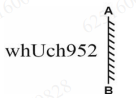
A mirror is placed on the line AB. Out of the option figures which figure will be the right image of the question figure?

  1. AOption (a)

  2. BOption (b)

  3. COption (c)

  4. DOption (d)

View answer & explanation

Correct answer

Answer: (d)D.

Why this answer is correct

The logic followed here is:

Logic: When a mirror is placed on the right side, the sequence gets reversed and each character is horizontally flipped.

The correct mirror image of the given figure is:

Hence, the correct answer is "Option 4".

Question 32

A piece of paper is folded and punched as shown below in the question figures. From the given option figures, indicate how it will appear when opened.

  1. AOption (a)

  2. BOption (b)

  3. COption (c)

  4. DOption (d)

View answer & explanation

Correct answer

Answer: (d)D.

Why this answer is correct

The paper after unfolded will be:

Hence, the correct answer is "Option 4".

Question 33

Find out the missing number in the following sequence.

5, 4, 20, 16, 80, ?, 320, 256

  1. AOption (a)

    120

  2. BOption (b)

    128

  3. COption (c)

    156

  4. DOption (d)

    64

View answer & explanation

Correct answer

Answer: (d)D.

64

Why this answer is correct

The logic followed here is:

thus, "64" will replace the question mark in the given series.

Hence, the correct option is "Option 4".

Question 34

Find out the missing number in the following sequence.

1, 6, 6, 12, 11, ?, 16, 24

  1. AOption (a)

    14

  2. BOption (b)

    18

  3. COption (c)

    20

  4. DOption (d)

    16

View answer & explanation

Correct answer

Answer: (b)B.

18

Why this answer is correct

The logic followed here is:

thus, "18" will replace the question mark in the given series.

Hence, the correct option is "Option 2".

Question 35

Directions

Select the related letter from the given alternatives.

CJM : GGQ :: NRU : ?

  1. AOption (a)

    RNZ

  2. BOption (b)

    QPY

  3. COption (c)

    SOW

  4. DOption (d)

    ROY

View answer & explanation

Correct answer

Answer: (d)D.

ROY

Why this answer is correct

The logic followed here is:

Logic: The pattern is based on shifting letters forward by a fixed number.

For, CJM → GGQ

Similarly, NRU → ?

Hence, the correct answer is Option 4.

Question 36

Directions

Pick the correct options from below.

9, 63, 217, ?, 1001, 1727

  1. AOption (a)

    316

  2. BOption (b)

    511

  3. COption (c)

    528

  4. DOption (d)

    419

View answer & explanation

Correct answer

Answer: (b)B.

511

Why this answer is correct

The logic followed here is:

thus, "511" will replace the question mark in the given series.

Hence, the correct option is "Option 2".

Question 37

Your top performer has been rude to support staff. What's the right approach?

  1. AOption (a)

    Fire them immediately

  2. BOption (b)

    Ignore for productivity's sake

  3. COption (c)

    Issue a warning and monitor behavior

  4. DOption (d)

    Promote them anyway

View answer & explanation

Correct answer

Answer: (c)C.

Issue a warning and monitor behavior

Why this answer is correct

The logic followed here is:

Logic: The appropriate way to handle a top performer who has been rude to support staff is to address the behavior responsibly. Issuing a warning and monitoring behavior ensures accountability without overreacting or ignoring the issue.

Now, checking the options:

Option 1: Fire them immediately

– This is too extreme for a first offense and may harm productivity unnecessarily.

Option 2: Ignore for productivity's sake

–  Ignoring inappropriate behavior can create a toxic work environment and set a bad example.

Option 3: Issue a warning and monitor behavior

– This is balanced and professional. It corrects behavior while giving the employee a chance to improve.

Option 4: Promote them anyway

–  Promoting someone with poor interpersonal behavior rewards bad conduct and can demotivate other staff.

Hence, the correct answer is Option 3.

Question 38

From the given option figures, select the one in which the question figure is hidden/embedded. (Rotation is not allowed)

  1. AOption (a)

  2. BOption (b)

  3. COption (c)

  4. DOption (d)

View answer & explanation

Correct answer

Answer: (d)D.

Why this answer is correct

The image embedded in given figure is as shown below:

Hence, "Option 4" is the correct answer.

Question 39

From the given option figures, select the one in which the question figure is hidden/embedded. (Rotation is not allowed)

  1. AOption (a)

  2. BOption (b)

  3. COption (c)

  4. DOption (d)

View answer & explanation

Correct answer

Answer: (d)D.

Why this answer is correct

The image embedded in given figure is as shown below:

Hence, "Option 4" is the correct answer.

Question 40

In the following question, select the number which can be placed at the sign of question mark (?) from the given alternatives.

54748
82339
73?42
  1. AOption (a)

    2

  2. BOption (b)

    3

  3. COption (c)

    4

  4. DOption (d)

    5

View answer & explanation

Correct answer

Answer: (c)C.

4

Why this answer is correct

The logic followed here is:

Logic: In each row, add the first three numbers and then multiply the sum by 3 to get the fourth number.

Stepwise Analysis:

Row 1: (5 + 4 + 7) × 3 = 16 × 3 = 48 

Row 2: (8 + 2 + 3) × 3 = 13 × 3 = 39 

Row 3: (7 + 3 + ?) × 3 = 14 × 3 = 42 → 7 + 3 + ? = 14 → ? = 4 

Hence, the missing number is Option 3.

Question 41

How many triangles are there in the given figure?

  1. AOption (a)

    8

  2. BOption (b)

    9

  3. COption (c)

    10

  4. DOption (d)

    11

View answer & explanation

Correct answer

Answer: (d)D.

11

Why this answer is correct

The logic followed here is:

Logic: Count all triangles by grouping them into smallest individual triangles and larger triangles formed by combining smaller parts.

Now,

There are 6 small triangles formed individually.

Combine smaller triangles to form larger ones:

3 triangles formed by combining two parts.

1 triangle formed by combining three parts.

1 large composite triangle formed by combining major sections.

Total triangles = 6 + 3 + 1 + 1 = 11

Hence, the correct answer is Option 4.

Question 42

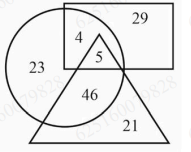
In the figure given below the triangle represents locks, the circle represents bags and the rectangle represents purses. The number in each area represents the number of items in that area.

How many bags are locks?

  1. AOption (a)

    5

  2. BOption (b)

    46

  3. COption (c)

    51

  4. DOption (d)

    21

View answer & explanation

Correct answer

Answer: (c)C.

51

Why this answer is correct

The logic followed here is:

Logic: Add the numbers present in the intersection of circle (bags) and triangle (locks), including the common region with all three sets.

Now,

Numbers common to bags and locks are:

5 (bags and locks only)

46 (bags, locks, and purses)

Total = 5 + 46 = 51

Hence, the correct answer is Option 3.

Question 43

Identify the diagram that best represents the relationship among the given classes.

Door, Window, Fan

  1. AOption (a)

    ​

  2. BOption (b)

  3. COption (c)

  4. DOption (d)

    ​

View answer & explanation

Correct answer

Answer: (a)A.

​

Why this answer is correct

According to the given Venn diagram:

The diagram shows that Door, Window, and Fan are completely different and independent items.

So, all three are separate with no overlap between them.

Hence, the correct answer is "Option 1".

Question 44

5 persons A, B, C, D and E are sitting around a circular table facing towards the centre (not necessarily in the same order). B is sitting second to the right of D. A is sitting second to the right of B. C is not an immediate neighbour of A. Who is to the immediate right of A?

  1. AOption (a)

    E

  2. BOption (b)

    B

  3. COption (c)

    C

  4. DOption (d)

    D

View answer & explanation

Correct answer

Answer: (d)D.

D

Why this answer is correct

Given: Five persons A, B, C, D and E are sitting around a circular table facing the centre.

B is sitting second to the right of D.

A is sitting second to the right of B.

C is not an immediate neighbour of A.

Here, the person sitting to the immediate right of A is D.

Hence, the correct answer is Option 4.

Question 45

Which option figure will complete the pattern in the question figure? (Rotation is not allowed)

  1. AOption (a)

  2. BOption (b)

  3. COption (c)

  4. DOption (d)

View answer & explanation

Correct answer

Answer: (c)C.

Why this answer is correct

The logic followed here is:

Logic: The missing quadrant must contain the outer boundary lines, a quarter-circle arc in the inner corner, a diagonal line from the outer corner toward the center, and two small parallel lines framing the central intersection to maintain overall symmetry.

Hence, the correct answer is Option 3.

Question 46

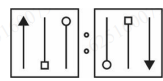
In the following question, in each option a pair of figures is given. In each pair the figure towards the left of (:) is related by some logic/rule/relation with the figure on the right of (:). Select the odd figure pair from the given alternatives.

  1. AOption (a)

  2. BOption (b)

  3. COption (c)

  4. DOption (d)

View answer & explanation

Correct answer

Answer: (d)D.

Why this answer is correct

The logic followed here is:

Logic: In the given figure pairs, the number of sides of the outer shape should match the number of internal elements (lines, dots, or symbols).

The odd pair is where this rule is broken.

Option 1) 

Outer Shape: Pentagon (5 sides)

Inner Elements: 5 lines

⇒ Matches perfectly. 5 sides = 5 internal elements.

Option 2) 

Outer Shape: Square (4 sides)

Inner Elements: 4 lines

⇒  Matches perfectly. 4 sides = 4 internal elements.

Option 3) 

Outer Shape: Triangle (3 sides)

Inner Elements: 3 lines

⇒ Matches perfectly. 3 sides = 3 internal elements.

Option 4) 

Outer Shape: Hexagon (6 sides)

Inner Elements: 5 lines

⇒ Does not match. 6 sides ≠ 5 internal elements.

Hence, the correct answer is Option 4.

Question 47

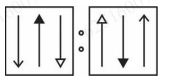
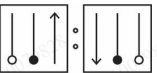
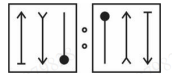
In the following question, in each option a pair of figures is given. In each pair the figure towards the left of (:) is related by some logic/rule/relation with the figure on the right of (:). Select the odd figure pair from the given alternatives.

  1. AOption (a)

  2. BOption (b)

  3. COption (c)

  4. DOption (d)

View answer & explanation

Correct answer

Answer: (b)B.

Why this answer is correct

The logic followed here is:

Logic: In Options 1, 3, and 4, the figure on the right is a vertically inverted (flipped) version of the figure on the left.

Now, checking the options:

Option 1) 

Left Arrow → Right Arrow

Middle Arrow → Middle Arrow (flipped)

Right Arrow → Right Arrow (flipped)

⇒ Follows the vertical flip pattern correctly.

Option 2) 

Left: Circle at bottom → Arrow at bottom (symbol changes, no flip)

Middle: Black circle at bottom → Black circle at bottom (no flip)

Right: Arrow at top → Circle at top (symbol changes, no flip)

⇒ Does not follow the vertical flip pattern. Symbols change and are static.

Option 3) 

Left: Arrow up → Circle at bottom (flipped correctly)

Middle: Square at bottom → Square at top (flipped correctly)

Right: Circle at top → Arrow pointing down (flipped correctly)

⇒ Follows the vertical flip pattern.

Option 4) 

Left: Single Arrow Up → Black Circle Top (flipped correctly)

Middle: Double Arrow Down → Double Arrow Up (flipped correctly)

Right: Black Circle Bottom → Single Arrow Down (flipped correctly)

⇒ Follows the vertical flip pattern

In Option 2, the symbols on the lines change their shape and do not follow the vertical inversion rule.

Hence, the correct answer is Option 2.

Question 48

In the following figure series, select the figure which can be placed at the sign of question mark (?) from the given alternatives.

  1. AOption (a)

  2. BOption (b)

  3. COption (c)

  4. DOption (d)

View answer & explanation

Correct answer

Answer: (a)A.

Why this answer is correct

The logic followed here is:

Logic: The horizontal lines toggle in length (short-long-short-long-short → long-short-long-short-long) in each consecutive figure.

The next figure continues this alternating pattern.

Hence, the correct answer is Option 1.

Question 49

In a certain coded language 'PRAM' is coded as 'KLVG' and 'DENY' is coded as 'YYIS'. How will 'HATS' be coded in the same code language?

  1. AOption (a)

    CUOM

  2. BOption (b)

    EVNL

  3. COption (c)

    BTPN

  4. DOption (d)

    CUPO

View answer & explanation

Correct answer

Answer: (a)A.

CUOM

Why this answer is correct

PRAM → KLVG

DENY → YYIS

Now apply the same to HATS:

So, the code becomes CUOM

Hence, the correct answer is Option 1.

Question 50

From the given alternatives, select the word that CANNOT be formed by using the letters of the given word.

DEVELOPMENT

  1. AOption (a)

    DROME

  2. BOption (b)

    TEMPO

  3. COption (c)

    DOVE

  4. DOption (d)

    DENT

View answer & explanation

Correct answer

Answer: (a)A.

DROME

Why this answer is correct

Given word: DEVELOPMENT

Rule: A word can be formed only if all required letters (with correct frequency) are available in the given word.

Letters in DEVELOPMENT:

D E V E L O P M E N T

Now, checking each option:

Option 1: DROME

D, R, O, M, E → ‘R’ is NOT present 

Option 2: TEMPO

T, E, M, P, O → All letters available 

Option 3: DOVE

D, O, V, E → All letters available 

Option 4: DENT

D, E, N, T → All letters available 

Hence, the correct answer is Option 1.

Quantitative Aptitude (25 questions)

Question 51

O is the incentre of triangle PQR. If angle POR = 140°, find angle PQR.

  1. AOption (a)

    90°

  2. BOption (b)

    100°

  3. COption (c)

    120°

  4. DOption (d)

    140°

View answer & explanation

Correct answer

Answer: (b)B.

100°

Why this answer is correct

Given:

O is incentre

∠POR = 140°

Formula Used:

∠POR = 90° + (1 ÷ 2) × ∠PQR

Calculation:

⇒ 140 = 90 + (1 ÷ 2) × ∠PQR

⇒ 140 − 90 = (1 ÷ 2) × ∠PQR

⇒ 50 = (1 ÷ 2) × ∠PQR

⇒ ∠PQR = 100°

∴ The correct answer is 100°.

Question 52

The length and breadth of a rectangle are in the ratio 14:11, respectively, and the perimeter of the rectangle is 150 cm. If the area of the rectangle is equal to the area of the top surface of a solid cylinder, then find the curved surface area of the cylinder given that its radius is 105% of its height.

  1. AOption (a)

    2330 cm2

  2. BOption (b)

    2560 cm2

  3. COption (c)

    2120 cm2

  4. DOption (d)

    2640 cm2

View answer & explanation

Correct answer

Answer: (d)D.

2640 cm2

Why this answer is correct

Shortcut Trick

Ratio sum 2 × (14 + 11) = 50 units → 150 cm ∴ 1 unit = 3 cm.

Area of Rectangle = (14 × 3) × (11 × 3) = 1386 cm2.

Top surface area πr2 = 1386 ⇒ r2 = 1386 × 7/22 = 441 ⇒ radius (r) = 21 cm.

Height (h) = 21 ÷ 1.05 = 20 cm.

Curved Surface Area = 2 × 22/7 × 21 × 20 = 2640 cm2.

∴ The correct answer is 2640 cm2.

Alternate Method

Given:

Ratio of length (L) and breadth (B) = 14 : 11

Perimeter of rectangle = 150 cm

Radius (r) of cylinder = 105% of height (h)

Formula Used:

Perimeter = 2(L + B)

Area of circle = πr2

Curved Surface Area (CSA) = 2πrh

Calculations:

⇒ 2(14x + 11x) = 150

⇒ 50x = 150 ⇒ x = 3

⇒ Length = 14 × 3 = 42 cm, Breadth = 11 × 3 = 33 cm

⇒ Area of rectangle = 42 × 33 = 1386 cm2

⇒ πr2 = 1386

⇒ (22/7) × r2 = 1386

⇒ r2 = (1386 × 7) ÷ 22 = 63 × 7 = 441

⇒ Radius (r) = √441 = 21 cm

⇒ Height (h) = 21 ÷ 1.05 = 20 cm

⇒ CSA = 2 × (22/7) × 21 × 20

⇒ CSA = 2 × 22 × 3 × 20 = 2640 cm2

∴ The correct answer is 2640 cm2.

Additional Information

Total Surface Area of Cylinder

The Total Surface Area (TSA) of a cylinder includes the curved surface and two circular bases: TSA = 2πrh + 2πr2 = 2πr(h + r).

Volume of a Cylinder

The volume represents the capacity of the cylinder and is calculated as: V = πr2h.

Ratio and Percentage Relation

If a value A is x% of B, then A = (x/100) × B. For x > 100, A is greater than B; for x < 100, A is smaller than B.

Question 53

A rhombus has diagonals in the ratio 7:24. If the side length is 25 cm, find the exact lengths of the diagonals and hence the area of the rhombus.

  1. AOption (a)

    8 cm and 25 cm, 212 cm2

  2. BOption (b)

    14 cm and 48 cm, 336 cm2

  3. COption (c)

    18 cm and 32 cm, 248 cm2

  4. DOption (d)

    10 cm and 28 cm, 312 cm2

View answer & explanation

Correct answer

Answer: (b)B.

14 cm and 48 cm, 336 cm2

Why this answer is correct

Given:

Ratio of diagonals = 7 : 24

Side = 25 cm

Formula Used:

(d1 ÷ 2)2 + (d2 ÷ 2)2 = side2

Area of rhombus = (1 ÷ 2) × d1 × d2

Calculation:

⇒ Let d1 = 7x, d2 = 24x

⇒ (7x ÷ 2)2 + (24x ÷ 2)2 = 252

⇒ (49x2 ÷ 4) + (576x2 ÷ 4) = 625

⇒ (625x2 ÷ 4) = 625

⇒ x2 = 4

⇒ x = 2

⇒ d1 = 14 cm, d2 = 48 cm

⇒ Area = (1 ÷ 2) × 14 × 48 = 336 cm2

∴ The correct answer is diagonals = 14 cm and 48 cm, area = 336 cm2.

Question 54

A and B invested Rs. 40,000 and Rs. 60,000, respectively. At the end of 6 months, the total profit is Rs. 40,000. What is B's share in the profit?

  1. AOption (a)

    Rs. 16,000

  2. BOption (b)

    Rs. 18,000

  3. COption (c)

    Rs. 20,000

  4. DOption (d)

    Rs. 24,000

View answer & explanation

Correct answer

Answer: (d)D.

Rs. 24,000

Why this answer is correct

Given:

A investment = 40000

B investment = 60000

Time = 6 months

Total profit = 40000

Formula Used:

Profit share ∝ Investment × Time

Calculation:

⇒ A's share ∝ 40000 × 6 = 240000

⇒ B's share ∝ 60000 × 6 = 360000

⇒ Ratio = 240000 : 360000 = 2 : 3

⇒ B's share = (3 ÷ 5) × 40000

⇒ B's share = 24000

∴ The correct answer is 24000.

Question 55

The average score of 36 students is 40. When a group of 12 new students joins, the average rises to 44. Find the average score of the new students.

  1. AOption (a)

    60

  2. BOption (b)

    56

  3. COption (c)

    58

  4. DOption (d)

    64

View answer & explanation

Correct answer

Answer: (b)B.

56

Why this answer is correct

Given:

Number of students = 36

Initial average = 40

New average = 44

Total students = 44

Formula Used:

Sum = Average × Number of terms

Calculation:

⇒ Initial sum = 36 × 40 = 1440

⇒ New sum = 48 × 44 = 2112

⇒ Sum of score of new students = 2112 - 1440 = 672

So, 

 Average score of new students = 672 / 12 = 56

∴ The correct answer is 56.

Question 56

The average monthly salary of employees in a company is Rs. 40,000. When 4 new employees with average salary Rs.25,000 join, the average salary of the whole company decreases by Rs. 3,000. Find the original number of employees.

  1. AOption (a)

    16

  2. BOption (b)

    14

  3. COption (c)

    12

  4. DOption (d)

    20

View answer & explanation

Correct answer

Answer: (a)A.

16

Why this answer is correct

Shortcut Trick

New Mean Average = 40,000 − 3,000 = 37,000.

Apply Alligation between Original Average (40,000) and New Joiners Average (25,000).

Ratio of (Original Employees) : (New Joiners) = (37,000 − 25,000) : (40,000 − 37,000).

Ratio = 12,000 : 3,000 = 4 : 1.

Given 1 unit = 4 employees, then 4 units = 4 × 4 = 16.

∴ The correct answer is 16.

Alternate Method

Given:

Original Average Salary = ₹40,000

Number of New Employees = 4

Average Salary of new employees = ₹25,000

Reduction in Average = ₹3,000

Calculations:

⇒ Let the original number of employees be n.

⇒ New total average = 40,000 − 3,000 = 37,000.

⇒ Total salary of original employees = 40,000 × n.

⇒ Total salary of new employees = 4 × 25,000 = 100,000.

⇒ New Total Average = (40,000n + 100,000) ÷ (n + 4).

⇒ 37,000 = (40,000n + 100,000) ÷ (n + 4).

⇒ 37,000(n + 4) = 40,000n + 100,000.

⇒ 37,000n + 148,000 = 40,000n + 100,000.

⇒ 40,000n − 37,000n = 148,000 − 100,000.

⇒ 3,000n = 48,000.

⇒ n = 48,000 ÷ 3,000 = 16.

∴ The correct answer is 16.

Additional Information

Weighted Average Formula

When two groups are combined, the resulting average is given by: Aavg = (n1A1 + n2A2) ÷ (n1 + n2).

Alligation Rule

The ratio of the quantities of two components is inversely proportional to the differences of their individual averages from the mean average: (Quantity 1) ÷ (Quantity 2) = (Average 2 − Mean) ÷ (Mean − Average 1).

Basic Average Concept

Average = (Sum of all observations) ÷ (Total number of observations). ∴ Sum = Average × Count.

Question 57

A cyclist covers a total distance of 36. After cycling for 2 hours and 30 minutes, he finds that the distance he has covered is 3/5 of the remaining distance. What is his speed in km/hr?

  1. AOption (a)

    4.8 km/hr

  2. BOption (b)

    5.4 km/hr

  3. COption (c)

    6.0 Km/hr

  4. DOption (d)

    6.5 km/hr

View answer & explanation

Correct answer

Answer: (b)B.

5.4 km/hr

Why this answer is correct

Given:

Total distance = 36 km

Time = 2.5 hours

Formula Used:

Distance = Speed × Time

Calculation:

⇒ Let covered distance = x

⇒ Remaining distance = 36 - x

⇒ x = 3/5 × (36 - x)

⇒ 5x = 3(36 - x)

⇒ 5x = 108 - 3x

⇒ 8x = 108

⇒ x = 108 ÷ 8 = 13.5 km

⇒ Speed = 13.5 ÷ 2.5

⇒ Speed = 5.4 km/h

∴ The correct answer is 5.4.

Question 58

A train is on a 120 km journey. After travelling for 2 hours and  40 minutes, the distance it has covered is 7/8 of the remaining distance. What is the speed of the train in m/s?

  1. AOption (a)

    5.21 m/s

  2. BOption (b)

    4.50 m/s

  3. COption (c)

    5.83 m/s

  4. DOption (d)

    6.25 m/s

View answer & explanation

Correct answer

Answer: (c)C.

5.83 m/s

Why this answer is correct

Given:

Total distance = 120 km

Time = 2 hours 40 minutes = 8/3 hours

Formula Used:

Distance = Speed × Time

Calculation:

⇒ Let covered distance = x

⇒ Remaining distance = 120 - x

⇒ x = 7/8 × (120 - x)

⇒ 8x = 7(120 - x)

⇒ 8x = 840 - 7x

⇒ 15x = 840

⇒ x = 840 ÷ 15 = 56 km

⇒ Speed = 56 ÷ (8/3)

⇒ Speed = 56 × 3 ÷ 8 = 21 km/h

⇒ Speed = 21 × 5 ÷ 18

⇒ Speed = 105 ÷ 18 = 5.83 m/s

∴ The correct answer is 5.83.

Question 59

A and B together can complete a task in 15 days. If A alone can complete the task in 25 days, how long will B take to complete the task alone?

  1. AOption (a)

    20.5 days

  2. BOption (b)

    37.5  days

  3. COption (c)

    40 days

  4. DOption (d)

    50 days

View answer & explanation

Correct answer

Answer: (b)B.

37.5  days

Why this answer is correct

Given:

A + B = 15 days

A = 25 days

Formula Used:

Work = LCM of times

Efficiency = Work ÷ Time

Total efficiency = Sum of individual efficiencies

Calculation:

⇒ LCM of 15 and 25 = 75

⇒ Efficiency of A + B = 75 ÷ 15 = 5

⇒ Efficiency of A = 75 ÷ 25 = 3

⇒ Efficiency of B = 5 - 3 = 2

⇒ Time of B = 75 ÷ 2

⇒ Time of B = 37.5 days

∴ The correct answer is 37.5.

Question 60

A shopkeeper offers successive discounts of 20% and 10% on a bag and sells it for ₹864. What was the original marked price of the bag?

  1. AOption (a)

    ₹1,897

  2. BOption (b)

    ₹1,200

  3. COption (c)

    ₹1,786

  4. DOption (d)

    ₹1,123

View answer & explanation

Correct answer

Answer: (b)B.

₹1,200

Why this answer is correct

Given:

Selling price = 864

First discount = 20%

Second discount = 10%

Formula Used:

Selling price = Marked price × (1 - d1/100) × (1 - d2/100)

Calculation:

⇒ 864 = MP × 0.8 × 0.9

⇒ 864 = MP × 0.72

⇒ MP = 864 ÷ 0.72

⇒ MP = 1200

∴ The correct answer is 1200.

Question 61

A product is sold for ₹1,680 after a 16% discount is given on its marked price. What was the marked price of the product?

  1. AOption (a)

    ₹1,900

  2. BOption (b)

    ₹2,000

  3. COption (c)

    ₹2,100

  4. DOption (d)

    ₹2,200

View answer & explanation

Correct answer

Answer: (b)B.

₹2,000

Why this answer is correct

Given:

Selling Price (SP) = ₹1,680

Discount = 16%

Formula Used:

Marked Price (MP) = SP ÷ (1 − Discount ÷ 100)

Calculation:

⇒ MP = ₹1,680 ÷ (1 − 16 ÷ 100)

⇒ MP = ₹1,680 ÷ (1 − 0.16)

⇒ MP = ₹1,680 ÷ 0.84

⇒ MP = ₹2,000

∴ The correct answer is ₹2,000.

Question 62

The width of a rectangle is such that its length exceeds it by 2 cm. Given that the perimeter measures 44 cm, determine the area of the rectangle.

  1. AOption (a)

    44 cm2

  2. BOption (b)

    40 cm2

  3. COption (c)

    144 cm2

  4. DOption (d)

    120 cm2

View answer & explanation

Correct answer

Answer: (d)D.

120 cm2

Why this answer is correct

Given:

Length exceeds width by 2 cm.

Perimeter = 44 cm.

Formula Used:

Perimeter of rectangle = 2 × (Length + Width).

Area of rectangle = Length × Width.

Calculation:

Let Width = W and Length = W + 2.

⇒ Perimeter = 2 × (W + (W + 2)) = 44.

⇒ 2 × (2W + 2) = 44.

⇒ 4W + 4 = 44.

⇒ 4W = 40.

⇒ W = 10.

⇒ Length = W + 2 = 10 + 2 = 12.

⇒ Area = Length × Width = 12 × 10.

⇒ Area = 120 cm2.

∴ The correct answer is 120 cm2.

Question 63

In a 70 liter mixture of milk and water, the ratio of milk to water is 4:3. How much water must be added to make the ratio of milk to water 2:3?

  1. AOption (a)

    25 liters

  2. BOption (b)

    20 liters

  3. COption (c)

    15 liters

  4. DOption (d)

    30 liters

View answer & explanation

Correct answer

Answer: (d)D.

30 liters

Why this answer is correct

Shortcut Trick

Initial Ratio (Milk : Water) = 4 : 3 (Total = 7 units)

New Ratio (Milk : Water) = 2 : 3

Since only water is added, Milk units must remain same. Multiply new ratio by 2: 4 : 6

Change in Water = 6 − 3 = 3 units

Given 7 units = 70 liters → 1 unit = 10 liters

∴ Added Water = 3 units × 10 = 30 liters.

∴ The correct answer is 30 liters.

Alternate Method

Given: Initial mixture = 70 liters, Initial ratio (M:W) = 4:3, Final ratio (M:W) = 2:3.

Formula: Quantity of Component = (Ratio share ÷ Total shares) × Total Volume

⇒ Initial Milk = (4/7) × 70 = 40 liters

⇒ Initial Water = (3/7) × 70 = 30 liters

⇒ Let the water added be 'x' liters.

⇒ New Water = (30 + x) liters

⇒ New Ratio: Milk / (Water + x) = 2 / 3

⇒ 40 / (30 + x) = 2 / 3

⇒ 2 × (30 + x) = 40 × 3

⇒ 60 + 2x = 120

⇒ 2x = 60

⇒ x = 30

∴ The correct answer is 30 liters.

Additional Information

Rule of Constant Quantity

When one component is added to a mixture, the quantity of the other component remains unchanged. This is used to equate ratios.

Alligation Rule

Ratio of quantities = (Value of 2nd − Mean Value) : (Mean Value − Value of 1st).

Mixture Dilution

Adding pure solvent (water) increases the denominator in the concentration formula: Concentration = (Solute / Total Volume) × 100.

Question 64

If a chord of a circle is 24 cm and the distance of the chord from the center is 5 cm, what is the diameter of the circle?

  1. AOption (a)

    13 cm

  2. BOption (b)

    26 cm

  3. COption (c)

    17 cm

  4. DOption (d)

    34 cm

View answer & explanation

Correct answer

Answer: (b)B.

26 cm

Why this answer is correct

Given:

Chord length = 24

Distance from center = 5

Formula Used:

Radius2 = (Half chord)2 + (Distance from center)2

Diameter = 2 × Radius

Calculation:

⇒ Half chord = 24 ÷ 2 = 12

⇒ Radius2 = 122 + 52

⇒ Radius2 = 144 + 25 = 169

⇒ Radius = 13

⇒ Diameter = 2 × 13 = 26

∴ The correct answer is 26.

Question 65

Two chords AB and CD of a circle intersect at a point P inside the circle. If AP = 5 cm, PB = 8 cm, and CP = 4 cm, what is the length of chord CD?

  1. AOption (a)

    10 cm

  2. BOption (b)

    14 cm

  3. COption (c)

    16 cm

  4. DOption (d)

    18 cm

View answer & explanation

Correct answer

Answer: (b)B.

14 cm

Why this answer is correct

Shortcut Trick

When two chords intersect inside a circle, the product of their segments is equal.

Product of segments of Chord AB = Product of segments of Chord CD

AP × PB = CP × PD

5 × 8 = 4 × PD ⇒ 40 = 4 × PD ⇒ PD = 10 cm.

Total length of Chord CD = CP + PD = 4 + 10 = 14 cm.

∴ The correct answer is 14 cm.

Alternate Method

Given:

Length of segment AP = 5 cm

Length of segment PB = 8 cm

Length of segment CP = 4 cm

Formula Used:

Intersecting Chords Theorem: If two chords AB and CD of a circle intersect at a point P, then AP × PB = CP × PD.

Calculations:

⇒ AP × PB = CP × PD

⇒ 5 × 8 = 4 × PD

⇒ 40 = 4 × PD

⇒ PD = 40 ÷ 4

⇒ PD = 10 cm

Now, length of Chord CD = CP + PD

⇒ CD = 4 + 10

⇒ CD = 14 cm

∴ The correct answer is 14 cm.

Additional Information

Intersecting Chords Theorem (Power of a Point)

When two chords intersect inside a circle, the product of the segments of one chord equals the product of the segments of the other: PA × PB = PC × PD.

Chord Perpendicular Bisector

A perpendicular drawn from the center of a circle to a chord bisects the chord. Conversely, the perpendicular bisector of a chord passes through the center.

Equal Chords Property

Equal chords of a circle are equidistant from the center, and chords that are equidistant from the center are equal in length.

Question 66

In a circle with center O, two parallel chords AB and CD are on opposite sides of the center. If the length of chord AB is 16 cm and chord CD is 12 cm, and the distance between them is 14 cm, find the radius of the circle.

  1. AOption (a)

    15 cm

  2. BOption (b)

    10 cm

  3. COption (c)

    12 cm

  4. DOption (d)

    8 cm

View answer & explanation

Correct answer

Answer: (b)B.

10 cm

Why this answer is correct

Given:

Chord AB = 16

Chord CD = 12

Distance between chords = 14

Formula Used:

Radius2 = (Half chord)2 + (Distance from center)2

Sum of distances of chords from center = Distance between chords

Calculation:

⇒ Let distances from center be d1 and d2

⇒ d1 + d2 = 14

⇒ For chord AB: Radius2 = 82 + d12

⇒ Radius2 = 64 + d12 ...(1)

⇒ For chord CD: Radius2 = 62 + d22

⇒ Radius2 = 36 + d22 ...(2)

⇒ From (1) and (2): 64 + d12 = 36 + d22

⇒ d22 - d12 = 28

⇒ (d2 - d1)(d2 + d1) = 28

⇒ (d2 - d1) × 14 = 28

⇒ d2 - d1 = 2

⇒ Solving with d1 + d2 = 14

⇒ d2 = 8, d1 = 6

⇒ Radius2 = 64 + 62 = 64 + 36 = 100

⇒ Radius = 10

∴ The correct answer is 10.

Question 67

In a circle, chord AB has a length of 30 cm and the perpendicular distance from the center O to the chord is 8 cm. What is the diameter of the circle?

  1. AOption (a)

    17 cm

  2. BOption (b)

    34 cm

  3. COption (c)

    25 cm

  4. DOption (d)

    30 cm

View answer & explanation

Correct answer

Answer: (b)B.

34 cm

Why this answer is correct

Given:

Chord length = 30

Distance from center = 8

Formula Used:

Radius2 = (Half chord)2 + (Distance from center)2

Diameter = 2 × Radius

Calculation:

⇒ Half chord = 30 ÷ 2 = 15

⇒ Radius2 = 152 + 82

⇒ Radius2 = 225 + 64 = 289

⇒ Radius = 17

⇒ Diameter = 2 × 17 = 34

∴ The correct answer is 34.

Question 68

Two tangent segments, PA and PB, are drawn from an external point P to a circle with center O. If ∠ APB=70º, what is the measure of the angle ∠ AOB?

  1. AOption (a)

    70∘ 

  2. BOption (b)

    110º

  3. COption (c)

    140∘ 

  4. DOption (d)

    90∘ 

View answer & explanation

Correct answer

Answer: (b)B.

110º

Why this answer is correct

Shortcut Trick

The angle between two tangents drawn from an external point and the angle subtended by the line segments joining the points of contact at the center are supplementary.

⇒ ∠AOB + ∠APB = 180º

⇒ ∠AOB + 70º = 180º

⇒ ∠AOB = 180º − 70º = 110º

∴ The correct answer is 110 º.

Alternate Method

Given:

Center of the circle = O

External point = P

Tangents = PA and PB

Angle between tangents ∠APB = 70º

Formula Used:

  1. The tangent at any point of a circle is perpendicular to the radius through the point of contact (∠OAP = ∠OBP = 90º).
  2. The sum of interior angles of a quadrilateral is 360º.

Calculations:

In quadrilateral OAPB:

⇒ ∠OAP + ∠APB + ∠OBP + ∠AOB = 360º

⇒ 90º + 70º + 90º + ∠AOB = 360º

⇒ 250º + ∠AOB = 360º

⇒ ∠AOB = 360º − 250º

⇒ ∠AOB = 110º

∴ The correct answer is 110 º.

Additional Information

Tangent Length Property

The lengths of tangents drawn from an external point to a circle are always equal (PA = PB).

Cyclic Quadrilateral

The quadrilateral formed by the center, the two points of contact, and the external point (OAPB) is always a cyclic quadrilateral because ∠OAP + ∠OBP = 180º.

Angle Bisector Property

The line joining the external point to the center (OP) bisects the angle between the two tangents (∠APO = ∠BPO).

Question 69

From a point P outside a circle, two tangents PA and PB are drawn. If the length of PA is 7 units, what is the length of PB?

  1. AOption (a)

    8 units

  2. BOption (b)

    14 units

  3. COption (c)

    6  units

  4. DOption (d)

    7  units

View answer & explanation

Correct answer

Answer: (d)D.

7  units

Why this answer is correct

Shortcut Trick

The lengths of tangents drawn from an external point to a circle are always equal.

Given that PA and PB are two tangents from the same point P.

∴ PA = PB

Since PA = 7 units, then PB = 7 units.

∴ The correct answer is 7 units.

Alternate Method

Given:

Length of tangent PA = 7 units

External point = P

Formula Used:

For any circle, the lengths of two tangents drawn from an external point to the circle are equal (Theorem of tangents).

Calculations:

⇒ Let the center of the circle be O.

⇒ OA and OB are radii of the circle perpendicular to tangents PA and PB respectively.

⇒ In right-angled triangles ΔOAP and ΔOBP:

⇒ OA = OB (Radii of the same circle)

⇒ OP = OP (Common hypotenuse)

⇒ ∠OAP = ∠OBP = 90°

⇒ By RHS congruence criterion, ΔOAP ≅ ΔOBP.

⇒ By CPCT (Corresponding Parts of Congruent Triangles), PA = PB.

⇒ Since PA = 7 units, PB = 7 units.

∴ The correct answer is 7 units.

Additional Information

Tangent-Radius Property

A tangent at any point of a circle is perpendicular to the radius through the point of contact (OA ⊥ PA).

Power of a Point

For an external point P, the square of the tangent length is equal to the product of the secant segments: PA2 = PB2 = PT × PS.

Angle Bisector Property

The line segment joining the center of the circle to the external point P bisects the angle between the two tangents (∠APO = ∠BPO).

Question 70

A circle with center O has a radius of 5 cm. A point P is outside the circle, and a tangent from P to the circle is 12 cm long. What is the length of the shortest distance from P to the circle?

  1. AOption (a)

    8 cm

  2. BOption (b)

    12 cm

  3. COption (c)

    13 cm

  4. DOption (d)

    17 cm

View answer & explanation

Correct answer

Answer: (a)A.

8 cm

Why this answer is correct

Given:

Radius = 5

Tangent length = 12

Formula Used:

OP2 = (Tangent)2 + (Radius)2

Shortest distance = OP − Radius

Calculation:

⇒ OP2 = 122 + 52

⇒ OP2 = 144 + 25 = 169

⇒ OP = 13

⇒ Shortest distance = 13 − 5 = 8

∴ The correct answer is 8.

Question 71

If the centroid of a triangle is at the origin (0,0) and two of its vertices are at (3,5) and (-4,1), what are the coordinates of the third vertex?

  1. AOption (a)

    (1, -6)

  2. BOption (b)

    (2, 6)

  3. COption (c)

    (3, -5)

  4. DOption (d)

    (1, 5)

View answer & explanation

Correct answer

Answer: (a)A.

(1, -6)

Why this answer is correct

Given:

Centroid = (0,0)

First vertex = (3,5)

Second vertex = (-4,1)

Formula Used:

Centroid = (x1 + x2 + x3) ÷ 3 , (y1 + y2 + y3) ÷ 3

Calculation:

⇒ (3 + (−4) + x) ÷ 3 = 0

⇒ (−1 + x) ÷ 3 = 0

⇒ −1 + x = 0

⇒ x = 1

⇒ (5 + 1 + y) ÷ 3 = 0

⇒ (6 + y) ÷ 3 = 0

⇒ 6 + y = 0

⇒ y = −6

∴ The correct answer is (1, −6).

Question 72

 What is the slope of the line represented by the equation x + 3y = 6?

  1. AOption (a)

    −12-\frac{1}{2}

  2. BOption (b)

    −13-\frac{1}{3}

  3. COption (c)

    14\frac{1}{4}

  4. DOption (d)

    23\frac{2}{3}

View answer & explanation

Correct answer

Answer: (b)B.

−13-\frac{1}{3}

Why this answer is correct

Given:

Equation: x + 3y = 6

Formula Used:

Slope-intercept form: y = mx + c

Slope (m) is the coefficient of x.

Calculation:

⇒ Rearrange x + 3y = 6 to slope-intercept form:

⇒ 3y = -x + 6

⇒ y = (-1/3)x + 2

⇒ Slope (m) = -1/3

∴ The correct answer is -1/3.

Question 73

A circle has a diameter AB. A point C is on the circumference. If ∠ CAB=40∘ , what is the measure of ∠ ABC?

  1. AOption (a)

    40∘ 

  2. BOption (b)

    50∘ 

  3. COption (c)

    65∘ 

  4. DOption (d)

    75∘ 

View answer & explanation

Correct answer

Answer: (b)B.

50∘ 

Why this answer is correct

Given:

∠CAB = 40

Formula Used:

Angle in a semicircle = 90

Sum of angles of triangle = 180

Calculation:

⇒ ∠ACB = 90

⇒ ∠ABC = 180 − (90 + 40)

⇒ ∠ABC = 180 − 130

⇒ ∠ABC = 50

∴ The correct answer is 50.

Question 74

In a circle with center O, a cyclic quadrilateral ABCD is inscribed. If the measure of the angle ∠ADC=110∘ , what is the measure of the angle ∠ABC?

  1. AOption (a)

    120∘ 

  2. BOption (b)

    130∘ 

  3. COption (c)

    70°

  4. DOption (d)

    150∘

View answer & explanation

Correct answer

Answer: (c)C.

70°

Why this answer is correct

Given:

∠ADC = 110°

Formula Used:

Opposite angles of a cyclic quadrilateral are supplementary

Sum of opposite angles = 180°

Calculation:

⇒ ∠ABC + ∠ADC = 180°

⇒ ∠ABC + 110° = 180°

⇒ ∠ABC = 180° − 110°

⇒ ∠ABC = 70°

∴ The correct answer is 70°

Question 75

An item was sold for ₹ 12000 at a 20% loss. At what price should it be sold to gain a 20% profit?

  1. AOption (a)

    ₹ 18,000

  2. BOption (b)

    ₹ 13,000

  3. COption (c)

    ₹ 16,000

  4. DOption (d)

    ₹ 17,000

View answer & explanation

Correct answer

Answer: (a)A.

₹ 18,000

Why this answer is correct

Given:

Selling Price at 20% loss = ₹ 12,000

Loss Percentage = 20%

Profit Percentage = 20%

Formula Used:

Cost Price = Selling Price ÷ (1 - Loss Percentage / 100)

New Selling Price for Profit = Cost Price × (1 + Profit Percentage / 100)

Calculation:

⇒ Cost Price = ₹ 12,000 ÷ (1 - 20 / 100)

⇒ Cost Price = ₹ 12,000 ÷ 0.8

⇒ Cost Price = ₹ 15,000

⇒ New Selling Price = ₹ 15,000 × (1 + 20 / 100)

⇒ New Selling Price = ₹ 15,000 × 1.2

⇒ New Selling Price = ₹ 18,000

∴ The correct answer is ₹ 18,000.

General Awareness (25 questions)

Question 76

What does the term 'sulh-i-kul' refer to in the context of Akbar's reign?

  1. AOption (a)

    A military strategy

  2. BOption (b)

    Universal peace

  3. COption (c)

    Economic reforms

  4. DOption (d)

    A legal code

View answer & explanation

Correct answer

Answer: (b)B.

Universal peace

Why this answer is correct

The correct answer is Universal Peace.

Key Points

  • The term 'Sulh-i-Kul' translates to “Universal Peace” and was a cornerstone principle of Emperor Akbar's administration during his reign in the Mughal Empire (1556–1605).
  • It emphasized religious tolerance, equal treatment of all religions, and the promotion of harmony among the diverse religious and cultural communities of the empire.
  • Akbar developed the concept of 'Sulh-i-Kul' to ensure a secular governance model where no single religion was given special preference over others, fostering an environment of inclusivity.
  • The policy of 'Sulh-i-Kul' was reflected in Akbar's administrative reforms, such as the abolition of the jizya tax (a tax imposed on non-Muslims) in 1564 and the appointment of individuals from various religious backgrounds to high-ranking positions in his court.
  • Akbar also established the Ibadat Khana (House of Worship) at Fatehpur Sikri, where scholars from different faiths such as Hinduism, Islam, Christianity, Jainism, and Zoroastrianism could engage in theological discussions, embodying the spirit of 'Sulh-i-Kul'.

Additional Information

  • Akbar's Administrative Policies:
  • Akbar's policies were aimed at creating a unified and stable administration. 'Sulh-i-Kul' was integral to achieving this goal by promoting peaceful coexistence.
  • The emperor abolished discriminatory practices like the pilgrimage tax on Hindus and allowed Hindus to build temples freely.
  • He appointed Hindus to high offices, such as Raja Todar Mal, who became Akbar's finance minister and implemented the efficient Zabt revenue system.
  • Religious Tolerance Under Akbar:
  • Akbar married Rajput princesses, symbolizing his commitment to integrating different communities.
  • He founded a new syncretic faith called Din-i-Ilahi, which combined elements of various religions and reflected his vision of universal peace.
  • Akbar abolished the practice of forced religious conversion and allowed freedom of worship for all communities.
  • Comparison with Other Mughal Rulers:
  • Unlike his predecessors like Babur and Humayun, Akbar took a more inclusive approach to governance and focused on integrating diverse communities.
  • His successors, such as Aurangzeb, deviated from this policy, leading to increased religious intolerance and uprisings.
  • Significance of Ibadat Khana:
  • The Ibadat Khana at Fatehpur Sikri was a unique platform where representatives of various faiths debated theological and philosophical ideas.
  • It showcased Akbar's commitment to understanding and respecting diverse religious perspectives.

Important Points

  • Characteristics of 'Sulh-i-Kul':
  • It was based on the principles of justice, peace, and harmony.
  • It rejected any form of religious discrimination or persecution.
  • This policy played a crucial role in stabilizing Akbar's vast and diverse empire.
  • Legacy of 'Sulh-i-Kul':
  • The policy set a precedent for secular governance in India.
  • It influenced modern Indian constitutional principles, such as secularism and religious freedom.
  • 'Sulh-i-Kul' remains a model for fostering peace and inclusivity in multi-religious societies.
Code

Question 77

______, Akbar's famous general, attacked and defeated the Cheros in 1591.

  1. AOption (a)

    Raja Man Singh

  2. BOption (b)

    Raja Jai Singh

  3. COption (c)

    Todarmal

  4. DOption (d)

    Birbal

View answer & explanation

Correct answer

Answer: (a)A.

Raja Man Singh

Why this answer is correct

The correct answer is Raja Man Singh.

Key Points

  • Raja Man Singh was one of the most trusted and prominent generals of Emperor Akbar, known for his military prowess and administrative skills.
  • In 1591, Raja Man Singh led a successful military campaign against the Cheros, a tribal community known for their dominance in parts of modern-day Bihar and Jharkhand.
  • The Cheros were a powerful tribal group, and their defeat showcased the military strength and strategic planning of the Mughal Empire under Akbar's leadership.
  • Raja Man Singh was not only a military leader but also served as the Subedar (Governor) of Bengal, Bihar, and Orissa, which were strategically significant regions in Akbar's empire.
  • This campaign was part of Akbar's broader efforts to consolidate Mughal authority over remote and tribal regions, thereby extending the empire's influence across the Indian subcontinent.

Additional Information

  • Raja Man Singh:
  • Raja Man Singh was a Rajput king from the Amber region (modern-day Jaipur) and one of Akbar's Nau Ratanas (nine jewels).
  • He played a crucial role in strengthening the Mughal-Rajput alliance, which was pivotal for the stability of the Mughal Empire.
  • He is credited with the construction of the famous Amber Fort in Jaipur, a significant architectural marvel of his time.
  • The Cheros:
  • The Cheros were an influential tribal community who ruled over parts of present-day Bihar and Jharkhand.
  • They were known for their resistance against external forces, including the Mughals.
  • Their defeat by Raja Man Singh marked the decline of their political significance in the region.
  • Akbar's Military Campaigns:
  • Akbar's reign (1556–1605) was marked by significant military campaigns aimed at consolidating Mughal authority across India.
  • He adopted a policy of diplomacy and military strength, often integrating defeated rulers into his administration to ensure loyalty.
  • The campaigns against tribal groups like the Cheros were part of his strategy to bring remote and resistant regions under Mughal control.
  • Mughal Administration:
  • The Mughal administration under Akbar was highly centralized and efficient, with a strong emphasis on revenue collection and governance.
  • Raja Man Singh's role as a Subedar was significant in maintaining law and order and ensuring the smooth functioning of the empire's administrative machinery in the provinces he governed.
  • Other Generals in Akbar's Court:
  • Raja Birbal: Known more for his wit and wisdom than military prowess.
  • Raja Todar Mal: Renowned for his contributions to the revenue system (Ain-i-Dahsala).
  • Raja Jai Singh: A later Rajput general during Aurangzeb's reign, not Akbar's.

Important Points

  • Raja Man Singh's Legacy:
  • He is remembered as one of the most capable military commanders and administrators of the Mughal Empire.
  • His campaigns were instrumental in extending Mughal rule to eastern India and parts of central India.
  • Akbar's Policy of Integration:
  • Akbar's alliances with Rajputs like Raja Man Singh were key to his policy of religious tolerance and political integration.
  • This approach helped the Mughal Empire achieve stability and prosperity during Akbar's reign.
  • Impact of the Defeat of Cheros:
  • The defeat of the Cheros weakened tribal resistance in eastern India, paving the way for greater Mughal control in the region.
  • It also facilitated the integration of tribal regions into the Mughal administrative framework.

Question 78

In January 2025, who published a report titled ‘Takers Not Makers: The Unjust Poverty and Unearned Wealth of Colonial Inheritance’?

  1. AOption (a)

    Oxfam

  2. BOption (b)

    NGO Pratham

  3. COption (c)

    Azad Foundation 

  4. DOption (d)

    NITI Aayog

View answer & explanation

Correct answer

Answer: (a)A.

Oxfam

Why this answer is correct

The correct answer is Oxfam.

Key Points

  • Oxfam, an international confederation of charitable organizations, published a report titled 'Takers Not Makers: The Unjust Poverty and Unearned Wealth of Colonial Inheritance' in January 2025.
  • The report focuses on the economic and social inequalities arising from the legacies of colonialism.
  • Oxfam is known for producing reports that highlight global inequality, poverty, and other humanitarian issues, often released at significant global events like the World Economic Forum.
  • The report emphasizes how colonial practices have contributed to systemic wealth disparities between nations, leaving former colonies impoverished while former colonizers retain economic advantages.
  • This report is consistent with Oxfam's advocacy for fair economic policies and its criticism of structures that perpetuate global inequality.

Additional Information

  • Oxfam:
  • Oxfam is a global organization working in over 90 countries to combat poverty and inequality.
  • Founded in 1942, its mission is to tackle the root causes of poverty and injustice through advocacy, campaigns, and direct action.
  • Oxfam often publishes reports on issues such as wealth inequality, climate change, and tax avoidance.
  • Colonial Inheritance:
  • The term refers to the economic, political, and social systems left behind by colonial powers, which often entrenched inequality.
  • Former colonies frequently face challenges like underdeveloped economies, resource exploitation, and geopolitical instability.
  • Impact of Reports like 'Takers Not Makers':
  • Such reports aim to highlight historical injustices and advocate for policy changes to address inequality.
  • They often serve as a tool for organizations to call for reparations or structural reforms in international policies.
  • Other Oxfam Reports:
  • Oxfam's 'Time to Care' report (2020) focused on economic inequality and the undervaluation of unpaid care work.
  • The 'India Inequality Report' highlights wealth disparities within India.

Important Points

  • NGO Pratham: Primarily focuses on education and literacy in India, not economic inequality or colonial legacies.
  • Azad Foundation: Works toward empowering women through training and employment, particularly in the transport sector.
  • NITI Aayog: A policy think tank of the Government of India, which focuses on economic strategies and development in India, not colonial inheritance issues.

Question 79

In January 2025, largest-ever distribution of property cards ceremony under the SVAMITVA Scheme of the ______ was done.

  1. AOption (a)

    Ministry of Panchayati Raj

  2. BOption (b)

    Ministry of Petroleum & Natural Gas

  3. COption (c)

    Ministry of Defence

  4. DOption (d)

    Ministry of Home Affairs

View answer & explanation

Correct answer

Answer: (a)A.

Ministry of Panchayati Raj

Why this answer is correct

The correct answer is Ministry of Panchayati Raj.

Key Points

  • The SVAMITVA Scheme is a flagship initiative of the Ministry of Panchayati Raj, launched by the Government of India on April 24, 2020, on the occasion of National Panchayati Raj Day.
  • The scheme aims to provide ‘Record of Rights’ to village household owners in rural areas and issue property cards to enable them to use their property as a financial asset.
  • In January 2025, the largest-ever distribution ceremony of property cards under this scheme was conducted, showcasing the government's commitment to empowering rural households.
  • The scheme utilizes drone technology and advanced survey methods to map rural inhabited lands in villages, ensuring accuracy and transparency in land ownership records.
  • It is implemented in collaboration with State Revenue Departments, Survey of India, and Panchayati Raj Institutions.

Additional Information

  • Ministry of Panchayati Raj:
  • The Ministry of Panchayati Raj is responsible for strengthening rural governance through Panchayati Raj Institutions (PRIs).
  • It oversees schemes aimed at rural development, including the SVAMITVA Scheme, Rashtriya Gram Swaraj Abhiyan (RGSA), and other initiatives for decentralization.
  • The Ministry plays a key role in implementing technology-driven governance in rural areas.
  • SVAMITVA Scheme Features:
  • The scheme is designed to reduce property disputes in rural areas by providing clear ownership records.
  • Property cards issued under the scheme can be used for availing loans and other financial benefits.
  • The scheme also supports development planning and revenue collection in villages.
  • Drone Technology in SVAMITVA:
  • Drones are used to conduct high-resolution surveys of village lands.
  • The technology ensures accurate demarcation of property boundaries, reducing the scope for disputes.
  • This is a significant step toward modernizing land records management in India.
  • Impact of SVAMITVA Scheme:
  • The scheme enhances rural economic development by empowering property owners.
  • It contributes to financial inclusion by enabling rural property holders to access institutional loans.
  • The initiative also improves governance and dispute resolution at the village level.

Important Points

  • Significance of Property Cards:
  • They act as a legal document for property ownership in rural areas.
  • Property cards help in reducing land disputes and enable better land management.
  • They facilitate easy access to credit by using the property as collateral.
  • National Panchayati Raj Day:
  • Observed on April 24 every year to commemorate the enactment of the 73rd Constitutional Amendment Act in 1993.
  • This amendment institutionalized the three-tier Panchayati Raj system in India.

Question 80

Which index ranks countries based on conventional military strength in 2025?

  1. AOption (a)

    Global Firepower Index

  2. BOption (b)

    Military Might Index

  3. COption (c)

    Defense Capability Index

  4. DOption (d)

    Strategic Forces Index

View answer & explanation

Correct answer

Answer: (a)A.

Global Firepower Index

Why this answer is correct

The correct answer is Global Firepower Index.

Key Points

  • The Global Firepower Index (GFP) is an annual ranking that evaluates the military strength of countries globally based on various metrics, including weapon systems, manpower, and resources.
  • This index uses more than 60 individual factors to determine a nation’s PowerIndex score, ensuring a comprehensive analysis of each country's conventional military capabilities.
  • It includes metrics such as the number of active personnel, weapon diversity, logistics, geographical factors, natural resources, and financial stability, among others.
  • The Global Firepower Index does not solely depend on the quantity of weapons but also considers the balance of power, logistics, and force quality.
  • As of 2025, it remains one of the most recognized and widely referred indices for assessing military strength and capabilities worldwide.

Additional Information

  • Global Firepower Index (GFP):
  • The GFP was first introduced in the early 2000s and has since evolved into a key resource for analyzing global military power.
  • The scoring system includes factors like total available manpower, defense budgets, tank and aircraft diversity, and naval capabilities.
  • It assigns a PowerIndex (PwrIndx) score, where a lower score (closer to 0.0000) indicates a stronger military capability.
  • The index includes approximately 145 nations and provides rankings annually.
  • Countries like the United States, Russia, and China have consistently dominated the top positions in the rankings.
  • Other Military Indices:
  • Military Might Index: While the name suggests a focus on military capabilities, this is not an officially recognized or widely used index for ranking global military strength.
  • Defense Capability Index: This hypothetical term might be used in some contexts, but it is not a globally established ranking system like the GFP.
  • Strategic Forces Index: This term could imply an analysis of strategic assets like nuclear weapons but is not a formal ranking system for conventional military strength.
  • Factors Considered in GFP:
  • Manpower: Includes total population, available workforce, and active military personnel.
  • Land Systems: Tanks, armored vehicles, artillery, and rocket systems.
  • Air Power: Fighter jets, transport aircraft, helicopters, and drones.
  • Naval Power: Aircraft carriers, submarines, destroyers, and patrol vessels.
  • Logistics: Fuel consumption, road networks, and logistics flexibility.
  • Geography: Strategic location, coastline length, and natural resources.
  • Importance of Military Indices:
  • They provide a comprehensive assessment of a country's military strength, helping governments understand their defense capabilities compared to others.
  • Such indices are used in defense planning, geopolitical analysis, and as a reference for academic and strategic studies.
  • They highlight the importance of a balanced military force rather than solely focusing on weapon numbers.

Important Points

  • The Global Firepower Index is widely referenced by military analysts, researchers, and policymakers globally.
  • The index does not include nuclear stockpiles as a determining factor but considers its indirect impact.
  • It assesses defense budgets and economic stability as critical contributors to a nation’s military potential.
  • The GFP is updated annually to reflect changes in military strength due to new developments, acquisitions, and policy shifts.

Question 81

India was ranked what in the Global Hunger Index 2024?

  1. AOption (a)

    75th

  2. BOption (b)

    95th

  3. COption (c)

    125th

  4. DOption (d)

    105th

View answer & explanation

Correct answer

Answer: (d)D.

105th

Why this answer is correct

The correct answer is 105th.

Key Points

  • India's Ranking: In the Global Hunger Index (GHI) 2024, India has been ranked 105th out of 125 countries.
  • Global Hunger Index (GHI): The GHI is an annual report published by Concern Worldwide and Welthungerhilfe, assessing hunger across the globe using multiple indicators.
  • Indicators Used: The GHI uses four key indicators: undernourishment, child wasting (low weight for height), child stunting (low height for age), and child mortality.
  • India's Score: India scored poorly on parameters such as child wasting, where it has one of the highest rates globally at approximately 18.7%.
  • Comparison: India’s ranking is lower compared to its neighbors such as Bangladesh (81st), Nepal (69th), and Sri Lanka (60th), highlighting challenges in addressing hunger and malnutrition.

Additional Information

  • Global Hunger Index Methodology:
  • The GHI combines four indicators to calculate a score on a 100-point scale, where 0 is the best score (no hunger) and 100 is the worst score.
  • The four indicators include: undernourishment (population lacking adequate caloric intake), child wasting (low weight for height), child stunting (low height for age), and child mortality (death rate of children under five).
  • India's Challenges:
  • India struggles with high levels of child wasting, driven by factors such as poverty, lack of access to nutritious food, poor sanitation, and inadequate healthcare services.
  • The prevalence of undernourishment remains significant, affecting millions of people due to income disparities and insufficient food distribution systems.
  • Comparison with Neighbors:
  • India’s ranking is worse than its South Asian neighbors such as Sri Lanka, Nepal, and Bangladesh, indicating scope for improvement in combating hunger.
  • Countries like Sri Lanka have better scores due to stronger healthcare and nutritional programs.
  • Government Initiatives:
  • India has launched several programs like Poshan Abhiyaan, Mid-Day Meal Scheme, and Integrated Child Development Services (ICDS) to combat malnutrition and hunger.
  • Despite these efforts, the implementation and outreach of these programs need further strengthening.

Important Points

  • Global Hunger Trends:
  • Globally, hunger has worsened due to factors like climate change, conflict, and economic disruptions, including the COVID-19 pandemic.
  • Regions like Sub-Saharan Africa and South Asia face the highest levels of hunger.
  • Poshan Abhiyaan:
  • India’s flagship program for nutrition, launched in 2018, aims to reduce stunting, undernutrition, anemia, and low birth weight by 2022.
  • The program focuses on leveraging technology, spreading awareness, and improving service delivery.
  • UN Sustainable Development Goals:
  • The United Nations Sustainable Development Goal 2 aims to achieve “Zero Hunger” by 2030.
  • India’s progress on SDG 2 is crucial to global efforts in reducing hunger and malnutrition.

Question 82

In India, the Fiscal Health Index 2025 is based on a comprehensive set of indicators that are grouped into ______ broad categories.

  1. AOption (a)

    3

  2. BOption (b)

    4

  3. COption (c)

    5

  4. DOption (d)

    7

View answer & explanation

Correct answer

Answer: (c)C.

5

Why this answer is correct

The correct answer is 3.

Key Points

  • The Fiscal Health Index 2025 in India is based on a comprehensive set of indicators grouped into five broad categories.
  • The categories include factors such as revenue generation, expenditure management, debt sustainability, economic growth, and fiscal prudence.
  • It aims to assess the financial health of states and the central government using a multidimensional approach to measure their fiscal performance.
  • The five categories allow policymakers to identify areas of concern and strengths, facilitating better resource allocation and fiscal planning.
  • The grouping into five categories ensures that the index captures a holistic view of fiscal health rather than focusing on a single dimension, such as revenue or expenditure.

Additional Information

  • Definition of Fiscal Health Index:
  • A tool used to measure the overall financial performance and sustainability of government entities.
  • It includes multiple indicators such as revenue collection, expenditure efficiency, debt management, and economic growth.
  • Key Indicators of Fiscal Health:
  • Revenue Generation: Measures the ability to generate resources through taxes, fees, and other channels.
  • Expenditure Management: Evaluates how efficiently a government utilizes its funds to meet public needs.
  • Debt Sustainability: Assesses the government’s ability to manage and repay its debts without compromising future growth.
  • Economic Growth: Monitors the impact of fiscal policies on overall economic progress and development.
  • Fiscal Prudence: Gauges adherence to sound financial management practices and frameworks.
  • Importance of Fiscal Health Index:
  • Helps in identifying fiscal risks and challenges at both state and national levels.
  • Provides insights for long-term financial planning and policy formulation.
  • Encourages transparency and accountability in government financial practices.
  • Supports evidence-based decision-making for resource allocation and budgeting.

Important Points

  • Categorization: Grouping indicators into broad categories ensures comprehensive coverage of fiscal health dimensions.
  • Use of Data: The index relies heavily on quantitative data from government reports, budgets, and economic surveys.
  • Policy Implications: Findings from the index can lead to reforms in taxation, expenditure, and debt management strategies.
  • Global Standards: Some of the parameters align with international fiscal sustainability benchmarks, ensuring comparability across nations.
  • Examples: Similar indices include the Fiscal Responsibility and Budget Management (FRBM) Act in India and fiscal monitoring frameworks by organizations like the IMF and World Bank.

Question 83

In basketball there are how many categories of rebounds?

  1. AOption (a)

    2

  2. BOption (b)

    3

  3. COption (c)

    4

  4. DOption (d)

    5

View answer & explanation

Correct answer

Answer: (a)A.

2

Why this answer is correct

The correct answer is 2.

Key Points

  • Rebounds in basketball are categorized into two main types: Offensive Rebounds and Defensive Rebounds.
  • Offensive Rebounds: These occur when a player from the offensive team retrieves the basketball after a missed shot attempt, thereby giving their team another chance to score.
  • Defensive Rebounds: These happen when a player from the defensive team gains possession of the basketball after the opposing team misses a shot, effectively ending the opponent's offensive play.
  • Thus, the two categories of rebounds are based on the team that gains possession of the ball after a missed shot: offensive and defensive.
  • Rebounds play a crucial role in determining possession and can significantly impact the outcome of a basketball game. Hence, the correct answer is 2 categories.

Additional Information

  • Definition of Rebounds: In basketball, a rebound occurs when a player retrieves the ball after a missed field goal or free throw attempt. Rebounds are essential for controlling the game flow and securing possession.
  • Offensive Rebounds:
  • These help the offensive team retain possession and provide an additional opportunity to score.
  • Offensive rebounds are often collected by players positioned near the basket, such as centers or power forwards.
  • An example is when a player tips the ball back into the hoop after a missed shot attempt by their teammate.
  • Defensive Rebounds:
  • These are crucial for ending the opponent's offensive possession and transitioning to an offensive play.
  • Defensive rebounds are often secured by players with strong positioning skills and awareness, such as power forwards and small forwards.
  • For instance, a defensive rebound occurs when a player grabs the ball after the opposing team’s missed three-point attempt.
  • Importance of Rebounds:
  • Rebounds are a key statistical measure used to evaluate a player’s performance and contribution to the team.
  • They allow teams to gain or regain possession of the ball, thereby influencing the game's pace and strategy.
  • Players like Wilt Chamberlain and Bill Russell are renowned for their exceptional rebounding abilities in basketball history.
  • Rebounding Techniques:
  • Boxing Out: This technique involves positioning oneself between the opponent and the basket to secure a better chance of grabbing the rebound.
  • Timing and Jumping: A player’s ability to time their jump accurately is crucial for securing both offensive and defensive rebounds.
  • Positioning: Players must anticipate the trajectory of the ball and position themselves accordingly to maximize their chances of grabbing the rebound.

Important Points

  • Statistical Metrics: Rebounds are a crucial statistical category in basketball, often listed on stat sheets alongside points, assists, and blocks.
  • Role of Positions: Centers and power forwards typically secure the most rebounds due to their size and proximity to the basket during gameplay.
  • All-Time Leaders: Legendary players like Wilt Chamberlain and Bill Russell are among the top rebounders in basketball history, showcasing their dominance in this aspect of the game.
  • Impact on Games: Teams with superior rebounding capabilities often dominate matches by controlling possession and limiting opponents' scoring opportunities.

Question 84

The Asian Games Federation was inaugurated in New Delhi in ______.

  1. AOption (a)

    1947

  2. BOption (b)

    1949

  3. COption (c)

    1951

  4. DOption (d)

    1953

View answer & explanation

Correct answer

Answer: (c)C.

1951

Why this answer is correct

The correct answer is 1951.

Key Points

  • The Asian Games Federation was inaugurated in New Delhi, India, in the year 1951.
  • The first Asian Games, also known as the Asiad, were held in New Delhi from 4th March to 11th March 1951.
  • This event marked the beginning of the Asian Games movement, with the aim of fostering goodwill and understanding among Asian nations.
  • Eleven nations participated in the 1951 Asian Games, and six sports were featured, including athletics, aquatics, basketball, cycling, football, and weightlifting.
  • The idea of the Asian Games was first proposed by Guru Dutt Sondhi, an Indian sports administrator, during the 1947 Asian Relations Conference.

Additional Information

  • History of the Asian Games:
  • The Asian Games are organized by the Olympic Council of Asia (OCA), which was formed in 1982.
  • The idea of the Asian Games stemmed from the desire to strengthen the camaraderie among Asian nations post-World War II.
  • The first Asian Games were held under the auspices of the Asian Games Federation, which was established in 1949.
  • The event is held every four years, similar to the Olympic Games.
  • Significance of the 1951 Asian Games:
  • The 1951 Asian Games were a landmark event as they symbolized the unity and solidarity of newly independent nations in Asia.
  • India, as the host country, showcased its ability to organize a major international sporting event.
  • The Games served as a platform for promoting peace and cooperation among Asian nations.
  • Sports and Participation:
  • The 1951 Asian Games featured six sports and saw the participation of 11 nations.
  • Countries like Japan, India, Iran, Thailand, and Sri Lanka were among the participants.
  • The sports included were athletics, aquatics, basketball, cycling, football, and weightlifting.
  • Important Developments:
  • The Asian Games have grown significantly since 1951, now featuring over 40 sports and the participation of more than 40 nations.
  • The event is now regarded as the second-largest multi-sport event after the Olympics.
  • India has hosted the Asian Games twice—in 1951 and 1982.

Important Points

  • Guru Dutt Sondhi:
  • He was an Indian sports administrator who proposed the idea of the Asian Games.
  • The proposal was made during the 1947 Asian Relations Conference held in New Delhi.
  • Venues and Hosting:
  • The first Asian Games were held at the National Stadium in New Delhi.
  • India has hosted the event twice, with the second edition being in 1982, also in New Delhi.
  • Olympic Council of Asia:
  • The Olympic Council of Asia (OCA) took over the organization of the Asian Games from the Asian Games Federation in 1982.
  • The OCA oversees all aspects of the Games, including the selection of host cities and sports.
  • Expansion of the Games:
  • The Asian Games now include over 40 sports, ranging from traditional sports like wrestling to modern ones like esports.
  • The Games have become a platform for showcasing the diversity and talent of Asian athletes.

Question 85

In which of the following state the Amrabad Tiger Reserve is located?

  1. AOption (a)

    Kerala

  2. BOption (b)

    Madhya Pradesh

  3. COption (c)

    Telangana

  4. DOption (d)

    Tamil Nadu

View answer & explanation

Correct answer

Answer: (c)C.

Telangana

Why this answer is correct

The correct answer is Telangana.

Key Points

  • The Amrabad Tiger Reserve is located in the state of Telangana, India.
  • It was previously part of the Nagarjunasagar-Srisailam Tiger Reserve, which is the largest tiger reserve in India. After the bifurcation of Andhra Pradesh in 2014, it became part of Telangana.
  • The reserve covers a vast area of 2,611 square kilometers and is known for its lush greenery, deep valleys, and diverse flora and fauna.
  • The reserve is home to a wide range of wildlife, including Bengal tigers, leopards, sloth bears, wild dogs, spotted deer, and various bird species.
  • The Amrabad Tiger Reserve is also significant for its tribal population, particularly the Chenchu tribe, who have lived in harmony with nature for centuries.

Additional Information

  • Geographical Features of Amrabad Tiger Reserve:
  • The reserve is located in the Nallamala Hills and is characterized by rugged terrain, gorges, and plateaus.
  • It is part of the Deccan Plateau and features dry deciduous forests interspersed with grasslands.
  • It serves as an important watershed area for the Krishna River, which flows nearby.
  • Conservation Efforts:
  • The reserve is managed under the guidelines of Project Tiger, a national initiative launched by the Government of India in 1973 to protect tigers and their habitats.
  • Conservation measures include wildlife monitoring, habitat restoration, and anti-poaching activities.
  • The involvement of local tribal communities, such as the Chenchu tribe, plays a crucial role in sustainable conservation efforts.
  • Tourism and Eco-tourism:
  • The Amrabad Tiger Reserve is a popular destination for eco-tourism, offering activities such as safaris, trekking, and birdwatching.
  • The reserve is home to attractions like the Farahabad Viewpoint and the Umamaheswaram Temple.
  • Efforts are made to promote responsible tourism to minimize human impact on the environment.
  • Flora and Fauna:
  • The reserve's vegetation includes dry deciduous forests, thorn forests, and bamboo groves.
  • In addition to tigers, the reserve supports a diverse range of fauna, including gaur, sambar deer, chinkara, and various reptiles.
  • The area is also home to many medicinal plants and herbs, adding to its ecological significance.

Important Points

  • Project Tiger:
  • Launched in 1973, it is a centrally sponsored scheme aimed at conserving the tiger population in India.
  • Amrabad Tiger Reserve is one of the many tiger reserves under this project, which currently covers 53 tiger reserves across India.
  • State Bifurcation:
  • The state of Andhra Pradesh was bifurcated in June 2014, leading to the creation of Telangana.
  • The Amrabad Tiger Reserve, originally part of the Nagarjunasagar-Srisailam Tiger Reserve, was allocated to Telangana.
  • Chenchu Tribe:
  • The Chenchu tribe is an indigenous community residing in and around the Amrabad Tiger Reserve.
  • They rely on forest resources for their livelihood and have a deep understanding of the region's biodiversity.
  • Efforts are being made to integrate their traditional knowledge into modern conservation strategies.

Question 86

Which of the following is the nodal organisation for International Big Cat Alliance in India?

  1. AOption (a)

    National Tiger Conservation Authority

  2. BOption (b)

    National Lion Protection Authority

  3. COption (c)

    Wildlife Institute of India

  4. DOption (d)

    Central Wildlife Control Board

View answer & explanation

Correct answer

Answer: (a)A.

National Tiger Conservation Authority

Why this answer is correct

The correct answer is National Tiger Conservation Authority.

Key Points

  • The National Tiger Conservation Authority (NTCA) is the nodal agency in India responsible for the implementation of the International Big Cat Alliance, which aims to conserve big cats globally.
  • The NTCA was established in 2005 under the provisions of the Wildlife Protection Act, 1972, and is tasked with strengthening tiger conservation efforts in the country.
  • India launched the International Big Cat Alliance (IBCA) in April 2023 at Mysuru, Karnataka, during the 50th anniversary celebrations of Project Tiger. It focuses on conserving seven species of big cats: Tigers, Lions, Leopards, Snow Leopards, Cheetahs, Jaguars, and Pumas.
  • The alliance is open to 97 range countries that are home to big cats and aims to facilitate collaboration, research, and funding for conservation initiatives.
  • The NTCA oversees the implementation of various conservation measures, including habitat restoration, anti-poaching operations, and wildlife monitoring, and works in coordination with international organizations for big cat protection.

Additional Information

  • National Tiger Conservation Authority (NTCA):
  • The NTCA is a statutory body under the Ministry of Environment, Forest, and Climate Change. It was constituted as part of Project Tiger, which was launched in 1973 to protect India's tiger population.
  • It formulates policies for tiger conservation, monitors implementation, and provides funding for tiger reserves across India.
  • As of 2023, India has 53 tiger reserves, covering approximately 75,000 sq km of protected area.
  • The NTCA also collaborates with international agencies such as the Global Tiger Forum to strengthen conservation efforts.
  • Project Tiger:
  • Launched in 1973, Project Tiger is one of India's most significant wildlife conservation programs, aiming to protect tigers and their habitats.
  • The project seeks to reduce human-wildlife conflict, restore ecosystems, and prevent poaching.
  • India is home to approximately 70% of the global tiger population, making it a leader in tiger conservation.
  • According to the latest census in 2022, India’s tiger population stands at 3,167.
  • International Big Cat Alliance (IBCA):
  • The IBCA was launched in 2023 to promote global collaboration in conserving big cats like tigers, lions, snow leopards, and cheetahs.
  • The initiative is guided by India's successful tiger conservation model under Project Tiger.
  • It focuses on research, habitat management, community engagement, and funding conservation efforts across range countries.
  • India has committed to supporting the alliance financially for the first five years, with a funding of $100 million.
  • Other Relevant Organizations:
  • Wildlife Institute of India (WII): It provides research and training to support wildlife conservation, including tiger monitoring initiatives.
  • Central Wildlife Control Board: Focuses on addressing wildlife-related issues and supports anti-poaching efforts but does not directly oversee big cat conservation.
  • National Lion Protection Authority: While lions are part of big cat conservation, this specific entity is not tasked with international alliances like the IBCA.

Important Points

  • India's Leadership in Big Cat Conservation:
  • India's successful tiger conservation under Project Tiger has become a model for other countries globally.
  • India reintroduced cheetahs from Namibia and South Africa under the Cheetah Reintroduction Program in 2022.
  • India plays a pivotal role in fostering international collaboration for big cat conservation through initiatives like IBCA.
  • Global Tiger Day:
  • Celebrated annually on 29th July to raise awareness about tiger conservation worldwide.
  • The day highlights the importance of protecting tiger habitats and combating threats like deforestation and poaching.

Question 87

The first Indian meteorological rocket launched in 1963 had a diameter of ______ mm.

  1. AOption (a)

    25

  2. BOption (b)

    50

  3. COption (c)

    75

  4. DOption (d)

    125

View answer & explanation

Correct answer

Answer: (c)C.

75

Why this answer is correct

The correct answer is 75 mm.

Key Points

  • The first Indian meteorological rocket was launched in the year 1963 from Thumba Equatorial Rocket Launching Station (TERLS), located in Kerala.
  • The diameter of the rocket was 75 mm, designed for conducting atmospheric studies and weather research. Hence, the correct answer is 75 mm.
  • This marked the beginning of India's entry into the field of space research and rocket technology.
  • The rocket used was a small sounding rocket, which was lightweight and capable of carrying meteorological instruments.
  • The mission's success demonstrated India's capability to contribute to global meteorological and atmospheric research.

Additional Information

  • Thumba Equatorial Rocket Launching Station (TERLS):
  • TERLS is located near Thiruvananthapuram, Kerala, and was established in 1962.
  • It was chosen due to its proximity to the geomagnetic equator, making it an ideal location for atmospheric and ionospheric studies.
  • The station marked the foundation of India's space program under the visionary leadership of Dr. Vikram Sarabhai.
  • Sounding Rockets:
  • Sounding rockets are suborbital rockets designed to carry scientific instruments into the upper atmosphere.
  • They are primarily used for meteorological studies, space environment analysis, and atmospheric research.
  • These rockets provide valuable data on temperature, humidity, and wind patterns at high altitudes.
  • Milestones in Indian Space Research:
  • The launch of the 75 mm meteorological rocket in 1963 was a significant milestone in India's space history.
  • India's space program has since evolved, leading to the establishment of the Indian Space Research Organisation (ISRO) in 1969.
  • ISRO has achieved global recognition with missions like Chandrayaan, Mangalyaan, and Gaganyaan.
  • Importance of Meteorological Rockets:
  • These rockets play a crucial role in collecting weather data, which is vital for forecasting and disaster management.
  • They contribute to understanding climate change and atmospheric behavior.
  • Meteorological rockets have paved the way for advancements in satellite-based weather monitoring systems.

Important Points

  • Dr. Vikram Sarabhai: Known as the Father of the Indian Space Program, he played a pivotal role in the establishment of TERLS and ISRO.
  • NASA Collaboration: The first meteorological rocket launch involved technical collaboration with NASA, showcasing early international partnerships in India's space journey.
  • ISRO’s Evolution: From launching sounding rockets to developing advanced satellites and interplanetary missions, ISRO has become a global leader in space technology.
  • Global Impacts: The data collected from meteorological rockets aids in addressing global challenges like climate change and improving agricultural productivity through weather prediction.

Question 88

In June 2025, India's first agentic AI system ______ has been developed by Krutrim start up.

  1. AOption (a)

    Mitra

  2. BOption (b)

    Sanchita

  3. COption (c)

    Vaani

  4. DOption (d)

    Kruti

View answer & explanation

Correct answer

Answer: (d)D.

Kruti

Why this answer is correct

The correct answer is Kruti.

Key Points

  • India's first agentic AI system named Kruti was developed by the startup Krutrim in June 2025.
  • Agentic AI refers to systems that possess autonomous decision-making capabilities, enabling them to make independent choices and actions in dynamic environments.
  • Kruti leverages advanced AI algorithms and machine learning models to provide solutions across various industries, including healthcare, education, and logistics.
  • The development by Krutrim startup represents a significant milestone in India's AI innovation landscape, showcasing the country's capability to create cutting-edge technology.
  • This achievement aligns with India's broader objectives of promoting AI research, fostering startups, and enhancing its position as a global leader in artificial intelligence.

Additional Information

  • Agentic AI:
  • Agentic AI systems are designed to function autonomously, capable of learning, adapting, and making decisions without constant human intervention.
  • These systems are being increasingly deployed in applications such as self-driving cars, personal assistants, and automated customer service.
  • Krutrim Startup:
  • Krutrim is an Indian startup focused on developing advanced AI solutions and promoting indigenous technology.
  • Its mission is to create AI systems that address real-world challenges and contribute to sustainable development.
  • Artificial Intelligence in India:
  • India has seen a rapid growth in AI adoption, with initiatives like the National AI Strategy and AI for All campaign.
  • The government, along with private organizations, is investing heavily in AI research and development to foster innovation.
  • Applications of AI in India:
  • AI applications in India span diverse fields such as agriculture, healthcare, education, e-commerce, and financial services.
  • Examples include predictive analytics for crop yields, AI-driven diagnostic tools, and personalized learning platforms.

Important Points

  • AI Policies in India:
  • The Indian government is focusing on creating a supportive ecosystem for AI research through policies like Digital India and Startup India.
  • India’s AI strategy emphasizes ethical AI deployment, ensuring that systems adhere to privacy, security, and transparency standards.
  • Global AI Trends:
  • Countries like the USA and China are leading the global AI revolution, with heavy investments in AI research and innovation.
  • India is gaining recognition globally for its skilled workforce and cost-effective AI solutions.

Question 89

Which of the following statements about the state of substances is correct?

  1. AOption (a)

    Pressure alone determines whether a substance is a solid, liquid, or gas.

  2. BOption (b)

    Temperature alone determines the state of a substance.

  3. COption (c)

    Both pressure and temperature influence the state of a substance.

  4. DOption (d)

    State changes are unaffected by pressure and temperature.

View answer & explanation

Correct answer

Answer: (c)C.

Both pressure and temperature influence the state of a substance.

Why this answer is correct

The correct answer is Both pressure and temperature influence the state of a substance.

Key Points

  • Pressure and temperature play a critical role in determining the state of a substance (solid, liquid, or gas). Both factors influence the energy and arrangement of particles in a material, affecting phase transitions like melting, boiling, or condensation.
  • Temperature: When temperature increases, particles gain kinetic energy. For example, a solid melts into a liquid or a liquid evaporates into a gas due to increased molecular motion.
  • Pressure: Higher pressure can force particles closer together, stabilizing the solid or liquid state. For instance, water remains liquid at higher temperatures under increased pressure, as seen in pressure cookers.
  • Combined Effects: The interplay of pressure and temperature is represented in phase diagrams, which show how substances transition between states under different conditions. For example, water's triple point occurs at a specific pressure and temperature, where solid, liquid, and gas phases coexist.
  • Statement Validity:
  • Statement 1: "Pressure alone determines whether a substance is a solid, liquid, or gas." – Incorrect. Pressure alone does not determine the state; temperature is equally important.
  • Statement 2: "Temperature alone determines the state of a substance." – Incorrect. Temperature alone is not sufficient to determine the state as pressure also plays a role.
  • Statement 3: "Both pressure and temperature influence the state of a substance." – Correct. Both factors are necessary for determining the state of matter.
  • Statement 4: "State changes are unaffected by pressure and temperature." – Incorrect. State changes are directly influenced by changes in pressure and temperature.

Additional Information

  • Phase Diagram: A phase diagram maps the states of a substance under different temperatures and pressures. For example:
  • The triple point is where all three states (solid, liquid, and gas) coexist.
  • The critical point is where the liquid and gas phases become indistinguishable.
  • Applications:
  • Pressure cookers utilize high pressure to raise the boiling point of water, cooking food faster.
  • Industrial processes like liquefaction of gases depend on precise control of temperature and pressure.
  • Examples of State Changes:
  • Melting: Solid to liquid (e.g., ice to water).
  • Boiling: Liquid to gas (e.g., water to steam).
  • Sublimation: Solid to gas without passing through the liquid phase (e.g., dry ice to carbon dioxide gas).
  • Real-world Observations:
  • At low atmospheric pressure (e.g., on mountains), water boils at a lower temperature.
  • High-pressure systems in industrial refrigeration help liquefy gases like ammonia or carbon dioxide.

Important Points

  • Critical Temperature: The temperature above which a gas cannot be liquefied, regardless of pressure. For example, the critical temperature of water is 374°C.
  • Boyle’s Law: At constant temperature, the pressure of a gas is inversely proportional to its volume. This law demonstrates the influence of pressure on gaseous states.
  • Charles’s Law: At constant pressure, the volume of a gas is directly proportional to its temperature. This highlights the role of temperature in determining a gas's behavior.
  • Latent Heat: The heat required for a substance to change state without changing temperature. For example, latent heat of fusion is the energy needed to convert solid to liquid.
  • Examples from Nature:
  • Water cycle processes like evaporation, condensation, and freezing depend on pressure and temperature.
  • Snow formation occurs when water vapor sublimates into ice at specific low pressures and temperatures.

Question 90

From which decade did the Maratha campaigns into Rajasthan put severe pressure on principalities and checked their further expansion?

  1. AOption (a)

    1560s

  2. BOption (b)

    1620s

  3. COption (c)

    1680s

  4. DOption (d)

    1740s

View answer & explanation

Correct answer

Answer: (d)D.

1740s

Why this answer is correct

The correct answer is 1740s.

Key Points

  • The Maratha campaigns into Rajasthan began putting severe pressure on the principalities of Rajasthan during the 1740s.
  • The Marathas, under leaders like Baji Rao I and his successors, adopted an expansionist policy and began asserting dominance over different regions of India, including Rajasthan.
  • By this time, the Mughal Empire was in decline, and the Marathas were emerging as a significant power in India, filling the power vacuum left by the Mughals.
  • The continuous invasions and demands for chauth (a tax or tribute) by the Marathas weakened the Rajput principalities, limiting their ability to expand or maintain autonomy.
  • These campaigns contributed to the fragmentation of power in Rajasthan, compelling local rulers to either ally with the Marathas or face military subjugation.

Additional Information

  • Maratha Expansion:
  • The Marathas, under leaders like Shivaji and later Peshwas, sought to expand their control throughout India, including the northern regions.
  • The Maratha campaigns in the 18th century aimed to extract tribute and consolidate power by defeating regional rulers or forcing them into alliances.
  • Decline of the Mughal Empire:
  • By the mid-18th century, the Mughal Empire had significantly weakened due to internal strife, foreign invasions, and economic mismanagement.
  • This allowed regional powers like the Marathas, Sikhs, and Jats to assert greater autonomy and expand their territories.
  • Rajput Principalities in Rajasthan:
  • The Rajput rulers of Rajasthan were known for their valor and stronghold over their territories but were often divided due to internal rivalries.
  • The Maratha campaigns exploited these divisions and forced many Rajput rulers to pay tribute or accept Maratha suzerainty.
  • Chauth and Sardeshmukhi:
  • The Marathas imposed chauth (25% of a region’s revenue) and sardeshmukhi (an additional 10%) on territories they controlled or subjugated.
  • These economic demands placed a significant burden on the local rulers and economies, further weakening resistance to Maratha dominance.

Important Points

  • Role of Baji Rao I: The Maratha leader Baji Rao I, known for his military strategies, played a crucial role in expanding Maratha influence into northern India, including Rajasthan.
  • Battle of Bhopal (1737): This battle marked the Maratha victory over the combined forces of the Mughals and their allies, showcasing their rising dominance in northern India.
  • Impact on Rajasthan: The repeated Maratha invasions drained resources, disrupted stability, and significantly weakened the Rajput principalities’ ability to resist external pressures.
  • End of Expansion: Over time, the Maratha expansion faced challenges from emerging powers like the British, leading to the eventual decline of Maratha dominance in the late 18th century.
Code

Question 91

Who succeeded Chhatrapati Shivaji Maharaj as the ruler of the Maratha Empire?

  1. AOption (a)

    Chhatrapati Shahu

  2. BOption (b)

    Chhatrapati Rajaram

  3. COption (c)

    Chhatrapati Sambhaji

  4. DOption (d)

    Maharani Tarabai

View answer & explanation

Correct answer

Answer: (c)C.

Chhatrapati Sambhaji

Why this answer is correct

The correct answer is Chhatrapati Sambhaji.

Key Points

  • Chhatrapati Shivaji Maharaj, the founder of the Maratha Empire, passed away on April 3, 1680. After his demise, his son Chhatrapati Sambhaji succeeded him as the ruler of the empire.
  • Chhatrapati Sambhaji (born on May 14, 1657) was the eldest son of Shivaji Maharaj and was crowned as the second Chhatrapati of the Maratha Empire on July 20, 1680.
  • He faced significant challenges during his reign, including invasions by the Mughals, particularly by Aurangzeb, who aimed to suppress the Marathas.
  • Chhatrapati Sambhaji is known for his courageous leadership and his relentless efforts to safeguard the Maratha Empire from external threats. He is remembered as a valiant warrior and a skilled administrator.
  • Unfortunately, Sambhaji was captured by the Mughal forces in 1689 and was brutally executed on March 11, 1689, marking a tragic end to his reign.

Additional Information

  • Chhatrapati Shivaji Maharaj:
  • He was the founder of the Maratha Empire and established a strong administrative framework and military tactics.
  • Shivaji is credited with introducing the concept of naval power in India and constructed a strong navy to protect the coastline from foreign invasions.
  • He was crowned as the Chhatrapati of the Maratha Empire on June 6, 1674, at Raigad Fort.
  • Shivaji implemented a highly efficient administrative system and promoted the use of the Marathi language for governance.
  • Chhatrapati Sambhaji:
  • He was well-educated and multilingual, fluent in languages like Sanskrit, Marathi, Persian, and Hindi.
  • Sambhaji played an active role in military campaigns during his father’s reign and later as the ruler.
  • His reign is remembered for his efforts to protect the Maratha Empire from the Mughal forces led by Emperor Aurangzeb.
  • Despite his short reign, Sambhaji’s resistance to Mughal domination is an essential chapter in Maratha history.
  • Chhatrapati Rajaram:
  • Rajaram was the younger son of Shivaji Maharaj and became the Chhatrapati after Sambhaji's death in 1689.
  • During his reign, Rajaram focused on guerrilla warfare and continued the resistance against Mughal forces.
  • Chhatrapati Shahu:
  • Shahu was the grandson of Shivaji Maharaj and ruled the Maratha Empire after the death of Rajaram.
  • His reign marked the expansion of the Maratha Empire across a significant part of India.
  • Maharani Tarabai:
  • Tarabai was the wife of Chhatrapati Rajaram and served as the regent for her son after Rajaram’s death.
  • She played a significant role in maintaining the Maratha resistance against the Mughals during her regency.

Important Points

  • The Maratha Empire was established in 1674 by Chhatrapati Shivaji Maharaj and became a dominant power in India in the 17th and 18th centuries.
  • The empire played a crucial role in resisting Mughal domination and later became a significant force in the decline of the Mughal Empire.
  • Key leaders like Chhatrapati Shivaji, Sambhaji, Rajaram, and Shahu shaped the empire’s legacy through their leadership and military strategies.
  • The Marathas are known for their innovative warfare techniques, including guerrilla warfare, which played a pivotal role in their success against more extensive and better-equipped armies.

Question 92

In ______, a dual exchange rate system called Liberalised Exchange Rate Management System (LERMS) was introduced in India.

  1. AOption (a)

    February 1993

  2. BOption (b)

    March 1992

  3. COption (c)

    May 1992

  4. DOption (d)

    October 1992

View answer & explanation

Correct answer

Answer: (b)B.

March 1992

Why this answer is correct

The correct answer is Sun Mar 01 1992 00:00:00 GMT+0530 (India Standard Time).

Key Points

  • The Liberalised Exchange Rate Management System (LERMS) was introduced in India on March 1, 1992, as part of the broader economic reforms initiated in 1991 to address the balance of payment crisis and stabilize the Indian economy.
  • LERMS introduced a dual exchange rate system, where 40% of foreign exchange earnings were surrendered to the Reserve Bank of India (RBI) at the official exchange rate, and the remaining 60% could be converted at market-determined rates.
  • The system aimed to transition India from a fixed exchange rate regime to a more market-driven exchange rate mechanism in a phased manner.
  • This reform was a significant step towards integrating the Indian economy with the global market and improving the foreign exchange reserves of the country.
  • LERMS was eventually replaced by a unified exchange rate system in 1993, marking a shift to a fully market-determined exchange rate regime.

Additional Information

  • Background of Economic Reforms in India:
  • India faced a severe balance of payment crisis in 1991, with foreign exchange reserves plummeting to dangerously low levels, enough to cover only two weeks of imports.
  • In response, the government initiated a series of economic liberalization measures, including reforms in trade, industry, and the financial sector.
  • The reforms were spearheaded by the then Finance Minister Dr. Manmohan Singh under the leadership of Prime Minister P.V. Narasimha Rao.
  • Objectives of LERMS:
  • To improve the availability of foreign exchange in the domestic market.
  • To allow exporters and importers greater flexibility by introducing a market-determined exchange rate for a portion of foreign exchange earnings.
  • To reduce the gap between the official and black-market exchange rates and curb illegal foreign exchange transactions.
  • Impact of LERMS:
  • It helped in boosting foreign exchange reserves and increasing the confidence of international investors in the Indian economy.
  • The dual exchange rate system acted as a transitional mechanism before adopting a fully market-driven exchange rate regime in 1993.
  • It played a key role in enhancing India's export competitiveness by aligning exchange rates closer to market realities.
  • Unified Exchange Rate System (1993):
  • In 1993, India moved to a unified exchange rate system, where the dual exchange rate system under LERMS was replaced by a single market-determined exchange rate.
  • This marked the beginning of a fully convertible current account in India's balance of payments.
  • The reform further strengthened India's integration with the global financial system and enhanced its economic stability.

Important Points

  • Key Features of LERMS:
  • It was a dual exchange rate system, which allowed partial market determination of foreign exchange rates.
  • The 40:60 ratio of foreign exchange surrender was a unique feature designed to balance control and market freedom.
  • The system was implemented as a temporary measure during the transition from a fixed exchange rate to a market-driven regime.
  • Economic Reforms of 1991:
  • The 1991 reforms included measures such as industrial deregulation, trade liberalization, privatization, and financial sector reforms.
  • The reforms were instrumental in transforming India into a global economic player and attracting foreign direct investment (FDI).

Question 93

The ______ sector of an economy involves groups of activities related with extraction of raw materials directly from nature.

  1. AOption (a)

    Primary

  2. BOption (b)

    Secondary

  3. COption (c)

    Tertiary

  4. DOption (d)

    Quinary

View answer & explanation

Correct answer

Answer: (a)A.

Primary

Why this answer is correct

The correct answer is Primary.

Key Points

  • The primary sector is the first stage of economic activity that deals with the direct extraction of natural resources from the Earth.
  • It includes activities such as agriculture, fishing, forestry, mining, and hunting, which directly use natural resources.
  • The primary sector forms the foundation of an economy by providing raw materials to the secondary sector (manufacturing) and the tertiary sector (services).
  • Countries with a significant portion of their population involved in the primary sector are often considered developing or agrarian economies.
  • Examples of industries in the primary sector include coal mining, oil extraction, and farming.

Additional Information

  • Primary Sector Characteristics:
  • The primary sector is labor-intensive and often depends on natural factors like climate, soil fertility, and water resources.
  • It contributes significantly to the Gross Domestic Product (GDP) in developing nations.
  • This sector employs a large portion of the workforce in countries where industrial and service sectors are less developed.
  • Secondary Sector:
  • The secondary sector involves manufacturing and industrial production, where raw materials from the primary sector are processed into finished goods.
  • Examples include steel production, automobile manufacturing, and textile production.
  • This sector is more prominent in industrialized economies.
  • Tertiary Sector:
  • The tertiary sector focuses on providing services rather than goods.
  • It includes industries such as banking, education, healthcare, entertainment, and retail.
  • The tertiary sector grows as economies become more developed and urbanized.
  • Quaternary and Quinary Sectors:
  • The quaternary sector includes knowledge-based activities like research, development, and information technology.
  • The quinary sector refers to high-level decision-making roles such as government officials, corporate executives, and policy-makers.

Important Points

  • Historical Context: The primary sector was the earliest form of economic activity in human civilization, beginning with hunting and gathering societies.
  • Global Examples: Countries like India, China, and Brazil have large segments of their workforce employed in the primary sector, particularly in agriculture.
  • Modern Trends: As economies develop, there is typically a shift from the primary sector to the secondary and tertiary sectors due to advancements in technology and industrialization.
  • Challenges: The primary sector faces challenges like climate change, resource depletion, and low economic returns for workers in developing countries.
Code

Question 94

Which of the following is an example of Kharif crop?

  1. AOption (a)

    Rice

  2. BOption (b)

    Wheat

  3. COption (c)

    Watermelon

  4. DOption (d)

    Mustard

View answer & explanation

Correct answer

Answer: (a)A.

Rice

Why this answer is correct

The correct answer is Rice.

Key Points

  • Kharif crops are crops that are sown at the beginning of the monsoon season (June) and harvested at the end of the monsoon season (September-October).
  • Rice is a significant example of Kharif crop and is widely cultivated in regions with high rainfall and warm temperatures, making it suitable for the monsoon season.
  • Other examples of Kharif crops include maize, millets (bajra, jowar), cotton, groundnut, and pulses.
  • The cultivation of rice requires a hot and humid climate, with an average temperature of 21°C to 37°C and rainfall of about 100-200 cm, making it ideal for the Kharif season.
  • Rice is primarily grown in states such as West Bengal, Uttar Pradesh, Punjab, Haryana, Odisha, Andhra Pradesh, and Tamil Nadu, which experience significant monsoon rainfall.

Additional Information

  • Characteristics of Kharif Crops:
  • Kharif crops depend heavily on the monsoon rains for water supply.
  • They are typically grown in areas that receive high rainfall during the monsoon season.
  • The sowing season starts with the onset of monsoon in June, and the crops are harvested in September-October.
  • Other Options Explained:
  • Wheat: It is a Rabi crop, cultivated in winter (October to December) and harvested in spring (March to April). It requires a cooler climate and less rainfall compared to Kharif crops.
  • Watermelon: It is a Zaid crop, grown between the Rabi and Kharif seasons (March to June). It requires a dry climate and sufficient irrigation.
  • Mustard: It is also a Rabi crop that thrives in a cooler climate and is harvested in spring.
  • Importance of Kharif Crops:
  • Kharif crops like rice are staple foods for a large population in India and provide essential nutrients like carbohydrates.
  • They contribute significantly to India's agricultural economy and are vital for ensuring food security.
  • Major export items such as basmati rice belong to this category, boosting foreign exchange earnings.
  • Regions Favorable for Kharif Crops:
  • Kharif crops are predominantly grown in states like Punjab, Haryana, Uttar Pradesh, Bihar, West Bengal, Maharashtra, Karnataka, Tamil Nadu, and Andhra Pradesh.
  • The Indo-Gangetic plains and coastal regions are particularly suitable for rice cultivation due to their fertile soil and adequate water supply.

Question 95

India’s Socio Economic and Caste Census [SECC] 2011 has a meaningful use in which of the following initiatives?

I. MGNREGA

II. National Food Security Act

  1. AOption (a)

    Only I

  2. BOption (b)

    Only II

  3. COption (c)

    Both I and II

  4. DOption (d)

    Neither I nor II

View answer & explanation

Correct answer

Answer: (c)C.

Both I and II

Why this answer is correct

The correct answer is Both I and II.

Key Points

  • India's Socio-Economic and Caste Census (SECC) 2011 was conducted to collect data about the socio-economic status and caste demographics of households across the country.
  • The SECC data is crucial for implementing welfare schemes like Mahatma Gandhi National Rural Employment Guarantee Act (MGNREGA) and the National Food Security Act (NFSA).
  • MGNREGA: The SECC data helps identify households eligible for guaranteed wage employment under MGNREGA, focusing on families below the poverty line or those with limited income sources. Statement I is correct.
  • National Food Security Act (NFSA): SECC 2011 data is used to determine beneficiaries of subsidized food grains under NFSA, targeting vulnerable sections of society such as households with low incomes and socially disadvantaged groups. Statement II is correct.
  • The SECC data plays a pivotal role in ensuring that welfare benefits are directed to the most deserving sections of society, thereby enhancing transparency and accountability in government schemes.

Additional Information

  • Socio-Economic and Caste Census (SECC) 2011:
  • SECC was conducted by the Ministry of Rural Development, Ministry of Housing and Urban Poverty Alleviation, and the Registrar General of India.
  • The census collected data on parameters such as income, occupation, housing, caste, and education, providing comprehensive insights into the socio-economic dynamics of India.
  • It identified households based on deprivation criteria to target welfare schemes effectively.
  • Mahatma Gandhi National Rural Employment Guarantee Act (MGNREGA):
  • Launched in 2005, MGNREGA provides at least 100 days of guaranteed wage employment in a financial year to every rural household whose adult members volunteer to do unskilled manual work.
  • The SECC data helps identify households eligible for employment, ensuring that economically weaker sections benefit from the scheme.
  • It contributes to poverty alleviation and rural development by empowering vulnerable communities.
  • National Food Security Act (NFSA):
  • Enacted in 2013, NFSA aims to provide subsidized food grains to approximately two-thirds of India's population.
  • SECC data is used to identify eligible households, ensuring targeted distribution of food grains under the Public Distribution System (PDS).
  • The NFSA covers pregnant women, lactating mothers, and children under 14 years, ensuring nutritional security for vulnerable groups.
  • Importance of SECC Data:
  • SECC data helps the government implement welfare schemes with precision, targeting the most deprived sections of society.
  • It plays a vital role in policy formulation, ensuring evidence-based decision-making for socio-economic development.
  • The data enhances transparency and accountability in the distribution of resources and benefits.

Important Points

  • SECC Implementation:
  • The SECC was conducted in both rural and urban areas, covering over 24 crore households.
  • The deprivation criteria include households with no income from regular wages or salaried jobs, female-headed households with no adult male members, and households dependent on manual scavenging.
  • Other Uses of SECC Data:
  • SECC data is utilized for schemes like Pradhan Mantri Awas Yojana (PMAY) and Ayushman Bharat.
  • It helps identify beneficiaries for skill development programs and financial inclusion initiatives.

Question 96

Why prices rise when the government increases spending or cuts taxes?

  1. AOption (a)

    Firm not be able to produce higher quantities that are being demanded at ongoing prices.

  2. BOption (b)

    Aggregate demand falls rapidly

  3. COption (c)

    Wage increases unprecedently.

  4. DOption (d)

    Firm exports their produces to the foreign destinations

View answer & explanation

Correct answer

Answer: (a)A.

Firm not be able to produce higher quantities that are being demanded at ongoing prices.

Why this answer is correct

The correct answer is Firm not be able to produce higher quantities that are being demanded at ongoing prices..

Key Points

  • Government Spending and Aggregate Demand: When the government increases spending or cuts taxes, it boosts aggregate demand in the economy. People and businesses have more money to spend, leading to an increase in the overall demand for goods and services.
  • Firm's Production Capacity: Firms may not be able to immediately increase their production to match the higher demand at current prices. This is because production capacities are often limited by resources, machinery, or labor availability.
  • Price Rise: When demand surpasses the available supply and firms cannot produce more in the short term, prices rise. This phenomenon is known as demand-pull inflation.
  • Inflationary Impact: The increased spending by consumers and businesses due to higher disposable income (from tax cuts or government spending) creates upward pressure on prices, leading to inflation.
  • Economic Equilibrium: Until firms adjust their production capacities or supply chains to meet the higher demand, prices continue to rise as a mechanism to balance demand and supply.

Additional Information

  • Demand-Pull Inflation:
  • This type of inflation occurs when demand in the economy exceeds supply.
  • It is often caused by factors such as increased government spending, reduced taxes, or a rise in consumer confidence.
  • For example, during an economic stimulus package, consumers spend more, leading to higher demand for goods and services.
  • Cost-Push Inflation:
  • This occurs when the cost of production rises, pushing up prices of goods and services.
  • Factors include rising raw material costs, higher wages, or increased transportation costs.
  • Role of Government Policies:
  • Fiscal policies like increased government spending or tax cuts aim to stimulate economic growth but can lead to inflationary pressures.
  • Monetary policy, such as adjusting interest rates, is used by central banks to control inflation.
  • Short-Term vs. Long-Term Adjustments:
  • In the short term, firms cannot instantly expand their production capacity due to constraints like limited resources or labor availability.
  • In the long term, firms may increase capacity, improve technology, or find alternative suppliers to meet demand and stabilize prices.
  • Examples of Rising Prices Due to Government Action:
  • During the COVID-19 pandemic, several countries implemented stimulus packages, leading to increased demand and inflation in some sectors, such as housing and consumer goods.
  • The 2008 global financial crisis also saw governments increasing spending, which in turn had inflationary effects in some regions.

Important Points

  • Aggregate Demand: It is the total demand for goods and services in an economy at a given overall price level and in a given time period.
  • Fiscal Stimulus: A combination of increased government spending and tax cuts aimed at boosting economic activity.
  • Price Elasticity of Supply: It measures how the quantity supplied of a good responds to a change in price. In the short term, supply is often inelastic, contributing to price rises when demand increases.
  • Inflation Control: Central banks and governments use tools like interest rate adjustments, monetary policy, and fiscal discipline to manage inflation.

Question 97

Around which year (in BC) did Chandragupta Maurya establish the Maurya Empire?

  1. AOption (a)

    211

  2. BOption (b)

    321

  3. COption (c)

    426

  4. DOption (d)

    524

View answer & explanation

Correct answer

Answer: (b)B.

321

Why this answer is correct

The correct answer is 321 BC.

Key Points

  • Chandragupta Maurya established the Maurya Empire around 321 BC after overthrowing the Nanda Dynasty in Magadha (modern-day Bihar).
  • He was the founder of the first significant centralized empire in ancient India and ruled with the guidance of his mentor and advisor, Chanakya (Kautilya), the author of the Arthashastra.
  • Chandragupta's reign marked the beginning of a new political era in Indian history, characterized by a unified and centralized administration.
  • The Maurya Empire under Chandragupta expanded across a vast territory, encompassing northern and central India and parts of present-day Afghanistan and Pakistan.
  • His establishment of the empire was crucial for laying the foundation for one of India's greatest empires, which later reached its peak under his grandson, Ashoka the Great.

Additional Information

  • Chandragupta Maurya's Rise:
  • Chandragupta was mentored by Chanakya, a Brahmin scholar and strategist who played a pivotal role in his rise to power.
  • He built his army and defeated Dhana Nanda, the last ruler of the Nanda Dynasty, to establish his rule over Magadha.
  • The Maurya Empire became a symbol of political unity and centralization in ancient India.
  • Administration under Chandragupta:
  • Chandragupta maintained a well-structured bureaucracy and centralized governance with provinces governed by royal officials.
  • The capital of the empire was Pataliputra (modern-day Patna), which was a hub of administration and culture.
  • Chanakya's Arthashastra served as a guide for governance, economy, and military strategy.
  • Expansion of the Maurya Empire:
  • Chandragupta expanded his empire through conquests, including defeating Seleucus I Nicator, a general of Alexander the Great, in 305 BC.
  • The peace treaty with Seleucus resulted in the acquisition of territories in modern-day Afghanistan, and Chandragupta married Seleucus' daughter as part of the alliance.
  • Legacy of Chandragupta Maurya:
  • Chandragupta's rule laid the foundation for one of the most extensive and enduring empires in Indian history.
  • He abdicated the throne later in life, became a Jain monk, and is believed to have spent his final days at Shravanabelagola in Karnataka.

Important Points

  • Chanakya's Role:
  • Chanakya, also known as Kautilya or Vishnugupta, was instrumental in Chandragupta's rise to power.
  • He authored the Arthashastra, an ancient Indian treatise on politics, economics, and military strategy, which served as a guide for the administration of the Maurya Empire.
  • Seleucus-Chandragupta Treaty:
  • After defeating Seleucus I Nicator, Chandragupta gained territories west of the Indus River, including modern-day Afghanistan and Balochistan.
  • The treaty also established friendly relations between the Maurya Empire and the Seleucid Empire.
  • Religious Influence:
  • Chandragupta later embraced Jainism and renounced his throne, reflecting the religious diversity and philosophical depth of ancient Indian society.

Question 98

What philosophical system did Lord Mahavira develop?

  1. AOption (a)

    Dualism

  2. BOption (b)

    Syadvada

  3. COption (c)

    Vedanta

  4. DOption (d)

    Mimamsa

View answer & explanation

Correct answer

Answer: (b)B.

Syadvada

Why this answer is correct

The correct answer is Syadvada.

Key Points

  • Syadvada is a fundamental philosophical doctrine of Jainism propounded by Lord Mahavira, the 24th Tirthankara.
  • The term Syadvada is derived from the Sanskrit word "Syat," which means "maybe" or "in some respect," emphasizing the concept of relativity and conditionality in truth.
  • It is a theory of sevenfold predication (Sapta-bhangi Nyaya) that explains how truth can be expressed in seven different ways, depending on perspectives and conditions.
  • The doctrine promotes Anekantavada (the principle of manifold perspectives), which asserts that reality is complex and multifaceted, and no single viewpoint can capture the whole truth.
  • The purpose of Syadvada is to encourage tolerance, non-absolutism, and open-mindedness in understanding the nature of reality and the views of others.

Additional Information

  • Philosophical Systems Mentioned in the Options:
  • Dualism: A concept primarily associated with Western philosophy, particularly the ideas of René Descartes, which separates reality into two distinct substances: mind and body. It is unrelated to Jain philosophy.
  • Vedanta: A Hindu philosophical system based on the Upanishads, focusing on the nature of Brahman (ultimate reality) and Atman (soul). It contrasts with the Jain emphasis on non-absolutism and Syadvada.
  • Mimamsa: An orthodox Hindu school of philosophy that emphasizes the interpretation of Vedic texts and rituals, unrelated to Jainism or Syadvada.
  • Lord Mahavira and Jain Philosophy:
  • Lord Mahavira, born in 599 BCE in Kundagrama (modern-day Bihar, India), was the last Tirthankara in Jainism and a key figure in consolidating Jain doctrines.
  • He emphasized principles like Ahimsa (non-violence), Satya (truth), and Aparigraha (non-possessiveness).
  • Jain philosophy is built on three core principles: Anekantavada (pluralism), Syadvada (conditional truth), and Parigraha (restraint).
  • Sevenfold Predication of Syadvada:
  • Syat asti: "In some respect, it exists."
  • Syat nasti: "In some respect, it does not exist."
  • Syat asti nasti: "In some respect, it exists and does not exist."
  • Syat avaktavyam: "In some respect, it is indescribable."
  • Syat asti avaktavyam: "In some respect, it exists and is indescribable."
  • Syat nasti avaktavyam: "In some respect, it does not exist and is indescribable."
  • Syat asti nasti avaktavyam: "In some respect, it exists, does not exist, and is indescribable."

Important Points

  • Relevance of Syadvada in Modern Times:
  • Syadvada fosters intellectual humility and encourages the acceptance of multiple perspectives, making it relevant in resolving conflicts and promoting dialogue in diverse societies.
  • It aligns with the Jain principle of Ahimsa, as respecting different viewpoints helps avoid verbal and ideological violence.
  • Comparative Analysis with Other Philosophies:
  • Unlike absolutist philosophies, Syadvada rejects the notion of a single, universal truth, emphasizing conditional and contextual understanding.
  • It complements scientific methods that rely on hypotheses and perspectives to explain phenomena.
Code

Question 99

In which Indian state is the Indus Valley Civilization city of Rakhigarhi located?

  1. AOption (a)

    Punjab

  2. BOption (b)

    Gujarat

  3. COption (c)

    Uttar Pradesh

  4. DOption (d)

    Haryana

View answer & explanation

Correct answer

Answer: (d)D.

Haryana

Why this answer is correct

The correct answer is Haryana.

Key Points

  • Rakhigarhi is one of the largest sites of the Indus Valley Civilization (IVC), located in the Hisar district of Haryana, India.
  • The site dates back to the Harappan period (approximately 2600–1900 BCE) and is considered a critical location for understanding the urban planning, trade, and culture of the IVC.
  • Excavations at Rakhigarhi have revealed evidence of a well-planned city with features such as drainage systems, granaries, and multi-room dwellings.
  • The site has also yielded several artifacts, including pottery, beads, tools, and seals, which indicate a high level of craftsmanship and trade links with other regions.
  • Rakhigarhi is considered unique because of its size and the presence of different phases of the Harappan civilization, from the early Harappan to the mature Harappan periods.

Additional Information

  • Indus Valley Civilization (IVC):
  • The IVC is one of the world’s earliest urban civilizations, flourishing in the northwestern regions of South Asia during the Bronze Age (3300–1300 BCE).
  • Major IVC sites include Harappa, Mohenjo-Daro (both in present-day Pakistan), Dholavira (Gujarat, India), and Rakhigarhi (Haryana, India).
  • The civilization is noted for its planned cities, advanced drainage systems, and standardized weights and measures.
  • The economy relied heavily on agriculture, trade, and craftsmanship.
  • Features of Rakhigarhi:
  • Spanning over 350 hectares, Rakhigarhi is larger than Mohenjo-Daro, making it the largest known Harappan site.
  • Recent DNA studies from skeletons found at Rakhigarhi indicate insights into the genetic makeup of the people of the IVC, providing evidence of continuity with modern South Asian populations.
  • Artifacts such as terracotta figurines, jewelry, and ceramics have been discovered, showcasing the artistic and cultural advancements of the time.
  • The presence of burial sites with grave goods suggests the belief in an afterlife and social stratification.
  • Other Options and Their Relevance:
  • Punjab: While the IVC had sites in present-day Punjab (both India and Pakistan), Rakhigarhi is specifically located in Haryana.
  • Gujarat: The IVC site of Dholavira, known for its water management systems, is located in Gujarat.
  • Uttar Pradesh: The IVC site of Alamgirpur is located in Uttar Pradesh, but it is much smaller compared to Rakhigarhi.
  • Significance of Rakhigarhi:
  • It offers insights into the evolution of urban centers and the socio-economic life of the Harappans.
  • The findings at Rakhigarhi contribute to understanding the transition from the early Harappan phase to the mature phase.
  • The site has been proposed as a UNESCO World Heritage Site due to its historical and cultural importance.

Important Points

  • Key Discoveries:
  • In 2014, the Archaeological Survey of India (ASI) initiated large-scale excavations at Rakhigarhi, unearthing significant artifacts and structures.
  • In 2021, DNA analysis of skeletal remains from Rakhigarhi provided evidence regarding the ancestry of the Harappan people.
  • Government Initiatives:
  • The Indian government is working to preserve Rakhigarhi and promote it as a site of historical tourism.
  • Efforts are underway to establish a museum at the site to showcase the artifacts and findings.

Question 100

Where was 'carnelian', a stone used by the Harappans for making beads, mostly found?

  1. AOption (a)

    Assam

  2. BOption (b)

    Gujarat

  3. COption (c)

    Punjab

  4. DOption (d)

    Bihar

View answer & explanation

Correct answer

Answer: (b)B.

Gujarat

Why this answer is correct

The correct answer is Gujarat.

Key Points

  • Carnelian, a semi-precious stone, was extensively used by the Harappans for making beads, ornaments, and other decorative items.
  • It was primarily sourced from the Ratanpur area in Gujarat, which was known for its abundant deposits of carnelian stones during the Harappan civilization.
  • The Harappans had developed sophisticated techniques for bead-making, including cutting, shaping, and polishing carnelian into intricate designs.
  • Gujarat also had significant trading centers like Lothal and Dholavira, where carnelian beads were crafted and traded, indicating its importance in Harappan commerce.
  • The presence of carnelian in various Harappan archaeological sites is evidence of its widespread usage and trade within the civilization.

Additional Information

  • Harappan Civilization:
  • The Harappan Civilization, also known as the Indus Valley Civilization, flourished between 2600 BCE and 1900 BCE.
  • It was known for its urban planning, advanced drainage systems, and trade networks spanning across regions.
  • Bead-Making Industry:
  • Bead-making was one of the prominent industries in Harappan society, with materials like carnelian, agate, and steatite being used extensively.
  • Specialized techniques, such as heating and coloring carnelian to enhance its appearance, were employed.
  • Trading Centers in Gujarat:
  • Lothal: Known as a major port and bead-making center, Lothal had a specialized dockyard and workshops for crafting beads and ornaments.
  • Dholavira: Another significant Harappan site in Gujarat, Dholavira showcased advanced urban planning and evidence of trade and craft production.
  • Significance of Carnelian:
  • Carnelian beads were highly valued and were traded not only within the Harappan civilization but also with Mesopotamia and other neighboring regions.
  • The durability and vibrant color of carnelian made it a preferred material for jewelry and decorative items.

Important Points

  • Other Sources of Stones:
  • Agate: Found in regions like Maharashtra and Gujarat, used for crafting beads.
  • Steatite: Sourced from Rajasthan, used for seals and ornaments.
  • Trade Networks:
  • Harappans traded extensively with Mesopotamia, Oman, and other regions, exchanging goods like beads, pottery, and textiles.
  • Evidence of Harappan carnelian beads has been found in Mesopotamian archaeological sites.
  • Craftsmanship:
  • Harappan artisans were skilled in precision bead-making, using techniques such as drilling and polishing.
  • The quality of Harappan beads indicates high levels of expertise in lapidary work.

100 questions in the full paper