Previous Year Paper

SSC CHSL 2025 Tier-1 (Held On: 19 Nov, 2025 Shift 1) (Previous Year Paper)

Held in 2025

100 questions60 minutes
With answers
Free

Paper last updated:

Practise under exam conditions

Take this paper as a timed mock test. Review your answers after you submit.

Attempt timed test

Questions & answers

Read the paper at your pace. Open an explanation when you need it.

English Language (25 questions)

Question 1

Select the most of appropriate synonym of the word: Wane

  1. AOption (a)

    Grow

  2. BOption (b)

    Intensify

  3. COption (c)

    Decline

  4. DOption (d)

    Increase

View answer & explanation

Correct answer

Answer: (c)C.

Decline

Why this answer is correct

The correct answer is '3' i.e. Decline .

Key Points

  • The word "Wane" means to decrease in size, extent, or degree, or to diminish gradually.
  • Among the given options, the most appropriate synonym for "Wane" is "Decline."
  • Option Analysis:
  • Option 1: Grow — Incorrect, as it means to increase or develop, which is opposite to "Wane."
  • Option 2: Intensify — Incorrect, as it means to strengthen or make more severe, which does not align with the meaning of "Wane."
  • Option 3: Decline — Correct, as it aligns with the meaning of "Wane" (gradual decrease).
  • Option 4: Increase — Incorrect, as it is opposite to the meaning of "Wane."

Correct sentence: The synonym of "Wane" is Decline.

Additional Information

  • Antonyms of Wane:
  • Grow
  • Intensify
  • Increase
  • Other Synonyms of Wane:
  • Diminish
  • Fade
  • Subside

Question 2

Select the most appropriate synonym of the word: Vacillate

  1. AOption (a)

    Decide

  2. BOption (b)

    Waver

  3. COption (c)

    Resolve

  4. DOption (d)

    Settle

View answer & explanation

Correct answer

Answer: (b)B.

Waver

Why this answer is correct

The correct answer is '2' i.e. Waver .

Key Points

  • The word "vacillate" means to be indecisive or to waver between different opinions or actions.
  • Option 1: Decide - This is the opposite of "vacillate" as it implies coming to a firm conclusion or choice.
  • Option 2: Waver - This is the correct synonym as it also means to be undecided or to hesitate between choices.
  • Option 3: Resolve - This is incorrect as it refers to determination or a firm decision, which is the opposite of vacillating.
  • Option 4: Settle - This is also incorrect as it implies making a decision or resolving something, which contrasts with the indecisiveness implied by "vacillate."

Correct sentence: The most appropriate synonym for "vacillate" is waver.

Additional Information

  • Synonyms:
  • Hesitate
  • Fluctuate
  • Waver
  • Antonyms:
  • Decide
  • Resolve
  • Settle

Question 3

Choose the correctly spelt word:

  1. AOption (a)

    Liaison

  2. BOption (b)

    Liasion

  3. COption (c)

    Leyson

  4. DOption (d)

    Layson

View answer & explanation

Correct answer

Answer: (a)A.

Liaison

Why this answer is correct

The correct answer is '1' i.e. Liaison .

Key Points

  • The word "Liaison" refers to a person who helps groups or organizations work together and provides communication between them.
  • Correct spelling: Liaison.
  • The other options are incorrect spellings of the word:
  • Option 2: "Liasion" - Incorrect.
  • Option 3: "Leyson" - Incorrect.
  • Option 4: "Layson" - Incorrect.

Correct usage: She acted as a liaison between the two departments to ensure smooth communication.

Additional Information

  • Tips to remember the spelling:
  • The word "Liaison" contains the vowels 'i' and 'a' in sequence.
  • It derives from the French word "lier," meaning "to bind."
  • Other examples of correct usage:
  • The company appointed a liaison to mediate with the government authorities.
  • Effective liaison between departments can improve overall productivity.

Question 4

Choose the correctly spelt word:

  1. AOption (a)

    Itinerary

  2. BOption (b)

    Itinary

  3. COption (c)

    Itinerery

  4. DOption (d)

    Itinarey

View answer & explanation

Correct answer

Answer: (a)A.

Itinerary

Why this answer is correct

The correct answer is '1' i.e. Itinerary .

Key Points

  • The word Itinerary is correctly spelled and refers to a planned route or journey, typically used to describe travel schedules.
  • Options 2, 3, and 4 (Itinary, Itinerery, Itinarey) are incorrect spellings of the word and do not exist in standard English.
  • Correct spelling is essential for clear communication and maintaining professionalism, especially in written contexts.

Correct sentence: The correctly spelt word is Itinerary.

Additional Information

  • Commonly Misspelled Words:
  • Incorrect: Recieve | Correct: Receive
  • Incorrect: Seperate | Correct: Separate
  • Incorrect: Definately | Correct: Definitely
  • Tips to Avoid Spelling Errors:
  • Break the word into smaller parts and focus on their sounds.
  • Use mnemonic devices, e.g., "I TINERary" to remember "Itinerary."
  • Practice frequently with spelling exercises or tools like dictionaries.

Question 5

Choose the correct meaning of the idiom: Took the wind out of her sails

  1. AOption (a)

    Made her feel confident

  2. BOption (b)

    Took away her strength or energy

  3. COption (c)

    Encouraged her to do more

  4. DOption (d)

    Helped her succeed

View answer & explanation

Correct answer

Answer: (b)B.

Took away her strength or energy

Why this answer is correct

The correct answer is '2' i.e. took away her strength or energy .

Key Points

  • The idiom "took the wind out of her sails" is used to describe a situation where someone's confidence, energy, or strength is diminished or taken away, usually due to an unexpected event or remark.
  • It is often employed metaphorically to illustrate how someone's momentum or enthusiasm is interrupted or deflated.
  • In this context, the correct meaning is "took away her strength or energy", as it aligns with the intended use of the idiom.

Correct sentence: The unexpected criticism took the wind out of her sails, leaving her feeling defeated and drained.

Additional Information

  • Examples of similar idioms:
  • "Knocked the wind out of her": To physically or emotionally leave someone stunned or weakened.
  • "Burst her bubble": To shatter someone's illusion or excitement about something.
  • Usage in Context:
  • The idiom is often used in interpersonal situations, such as when someone receives unexpected bad news or criticism.
  • Example: "When her idea was rejected in the meeting, it really took the wind out of her sails."

Question 6

Choose the correct meaning of the idiom: On the warpath

  1. AOption (a)

    To be in a peaceful state

  2. BOption (b)

    To be angry and ready to fight

  3. COption (c)

    To be very busy

  4. DOption (d)

    To be on a journey

View answer & explanation

Correct answer

Answer: (b)B.

To be angry and ready to fight

Why this answer is correct

The correct answer is '2' i.e. To be angry and ready to fight .

Key Points

  • The idiom "on the warpath" is commonly used to describe someone who is angry and ready to fight or argue.
  • It originates from the historical context of Native American tribes who would prepare for battle by going on a "warpath."
  • In modern usage, it figuratively refers to someone being in a state of aggression or conflict, not necessarily related to literal fighting.

Correct sentence: After hearing the unfair decision, she was on the warpath and determined to confront her manager.

Additional Information

  • Examples of usage in sentences:
  • After discovering the mistake, the customer was on the warpath, demanding a resolution.
  • The students were on the warpath when the new policies were announced.
  • Incorrect Options Explained:
  • Option 1: To be in a peaceful state – This is the opposite of the idiom's meaning.
  • Option 3: To be very busy – This does not relate to anger or conflict.
  • Option 4: To be on a journey – While the literal meaning of "warpath" involves movement, the idiom does not refer to this.

Question 7

Which of the following sentences uses the word "steep" with a different meaning from the others?

  1. AOption (a)

    The road was very steep.

  2. BOption (b)

    He decided to steep the tea tea for five minutes.

  3. COption (c)

    The roof of the house was very steep.

  4. DOption (d)

    The price of the new car was too steep.

View answer & explanation

Correct answer

Answer: (b)B.

He decided to steep the tea tea for five minutes.

Why this answer is correct

The correct answer is '2' i.e. He decided to steep the tea for five minutes .

Key Points

  • The word "steep" can have multiple meanings depending on the context in which it is used.
  • Options 1, 3, and 4 use the word "steep" to describe something very high, sharp, or excessive in degree.
  • Option 1: "The road was very steep" refers to a sharp incline or slope.
  • Option 3: "The roof of the house was very steep" also refers to a steep angle or slope.
  • Option 4: "The price of the new car was too steep" uses "steep" figuratively to mean "excessive" or "too high."
  • However, option 2 uses the word "steep" with a completely different meaning. Here, "steep" refers to the process of soaking something (such as tea leaves) in liquid to extract flavor.

Correct sentence: He decided to steep the tea for five minutes.

Additional Information

  • Different Meanings of "Steep":
  • Literal (Incline): Refers to something sharply sloped, such as a road or roof.
  • Figurative (Excessive): Used to describe something that is too high, such as a price.
  • Infusion (Soaking): Refers to the process of soaking a substance in liquid, often used in cooking or brewing (as in tea or spices).
  • Understanding the context is key to identifying the correct meaning of a word with multiple definitions.

Question 8

Select the sentence containing the homonym of the highlighted word:

He put the fish on the hook and threw it into the water.

  1. AOption (a)

    He used a small hook to hang the picture.

  2. BOption (b)

    He needed a small hook to attach the keychain

  3. COption (c)

    The boxer threw a right hook.

  4. DOption (d)

    The latch on the gate was a simple hook.

View answer & explanation

Correct answer

Answer: (c)C.

The boxer threw a right hook.

Why this answer is correct

The correct answer is '3' i.e. The boxer threw a right hook .

Key Points

  • The highlighted word in the question is "hook," which is a homonym. A homonym is a word that has the same spelling or pronunciation as another word but differs in meaning.
  • In the given sentence, "He put the fish on the hook and threw it into the water," the word "hook" refers to a curved or bent tool used for fishing.
  • The correct answer, option 3, "The boxer threw a right hook," uses the word "hook" in a different context. Here, "hook" refers to a specific type of punch in boxing.
  • The other options do not change the meaning of the word "hook" significantly and are still closely related to the original usage of "hook" as a curved or bent object.

Correct sentence: The boxer threw a right hook.

Additional Information

  • Other examples of homonyms:
  • Bat: A flying mammal or a piece of equipment used in cricket/baseball.
  • Bank: A financial institution or the side of a river.
  • Importance of homonyms: Understanding homonyms is essential for effective communication as they can create confusion if the context is unclear.

Question 9

Choose the correct one-word substitute for:

A feeling of apprehension in tense situations.

  1. AOption (a)

    Elation

  2. BOption (b)

    Fury

  3. COption (c)

    Trepidation

  4. DOption (d)

    Serenity

View answer & explanation

Correct answer

Answer: (c)C.

Trepidation

Why this answer is correct

The correct answer is '3' i.e. Trepidation .

Key Points

  • The word trepidation refers to a feeling of fear or apprehension, especially in tense or uncertain situations.
  • It accurately describes the emotional state of being anxious or uneasy, often when anticipating an event or outcome.
  • The other options do not fit the context of the question:
  • Elation: A feeling of great happiness or joy.
  • Fury: Intense anger or rage.
  • Serenity: A state of being calm, peaceful, and untroubled.
  • Thus, the correct answer is trepidation, as it aligns with the meaning of “a feeling of apprehension in tense situations.”

Correct sentence: A feeling of apprehension in tense situations is referred to as trepidation.

Additional Information

  • Synonyms of Trepidation: Anxiety, nervousness, uneasiness, dread.
  • Antonyms of Trepidation: Calmness, confidence, composure, serenity.
  • Example Sentence: She felt a sense of trepidation as she stepped onto the stage to deliver her first speech.

Question 10

Choose the correct one-word substitute for:

A person who is a lover of fine arts

  1. AOption (a)

    Aesthete

  2. BOption (b)

    Artist

  3. COption (c)

    Sculptor

  4. DOption (d)

    Painter

View answer & explanation

Correct answer

Answer: (a)A.

Aesthete

Why this answer is correct

The correct answer is '1' i.e. Aesthete .

Key Points

  • The word "Aesthete" refers to a person who has a deep appreciation or love for fine arts, beauty, and aesthetics.
  • "Artist" refers to someone who creates art, such as paintings or sculptures, but it does not necessarily imply a lover of fine arts.
  • "Sculptor" is someone who specifically creates sculptures, which is a narrow field within fine arts.
  • "Painter" refers to someone who creates paintings and is also a specific type of artist, but it does not define a general lover of fine arts.
  • Hence, the most appropriate one-word substitute for "a person who is a lover of fine arts" is "Aesthete."

Correct sentence: A person who is a lover of fine arts is called an Aesthete.

Additional Information

  • Aesthetics: A branch of philosophy that deals with the nature of beauty and artistic taste.
  • Synonyms for Aesthete: Connoisseur, Art lover, Patron of fine arts.
  • Antonym: Philistine - A person who lacks appreciation for art or culture.

Question 11

Change the following sentence into the Active form.

The message could have been sent by an automated system.

  1. AOption (a)

    An automated system could have sent the message.

  2. BOption (b)

    The message could be sent by an automated system.

  3. COption (c)

    An automated system might have sent the message.

  4. DOption (d)

    The message had been sent by an automated system.

View answer & explanation

Correct answer

Answer: (a)A.

An automated system could have sent the message.

Why this answer is correct

The correct answer is '1' i.e. An automated system could have sent the message .

Key Points

  • The given sentence is in the passive voice, as the subject ("The message") is receiving the action.
  • To convert a sentence from passive to active voice, we identify the agent (doer of the action) and make it the subject of the sentence.
  • In this case, the agent performing the action is "an automated system."
  • The verb phrase "could have been sent" changes to "could have sent" in the active voice.

Correct sentence: An automated system could have sent the message.

Additional Information

  • Active Voice:
  • The subject performs the action.
  • Example: The cat chased the mouse.
  • Passive Voice:
  • The subject receives the action.
  • Example: The mouse was chased by the cat.
  • Conversion Tips:
  • Identify the subject (doer) and object (receiver) in the passive sentence.
  • Switch their positions to make the doer the subject in the active voice.
  • Modify the verb form accordingly (e.g., remove "been" and adjust tense).

Question 12

Change the following sentence into the Active form.

The painting could not be exhibited without being restored first.

  1. AOption (a)

    They could not exhibit the painting without restoring it first.

  2. BOption (b)

    The painting could not have been exhibited without being restored.

  3. COption (c)

    The painting could not exhibit itself without being restored first.

  4. DOption (d)

    Without being restored first, they could not exhibit the painting.

View answer & explanation

Correct answer

Answer: (a)A.

They could not exhibit the painting without restoring it first.

Why this answer is correct

The correct answer is '1' i.e. They could not exhibit the painting without restoring it first. .

Key Points

  • The given sentence is written in the passive voice.
  • To convert the sentence into the active voice, we need to identify the subject performing the action. In this case, the subject performing the action is "They".
  • The passive structure is: "The painting could not be exhibited without being restored first."
  • The active structure is: "They could not exhibit the painting without restoring it first."

Correct sentence in active form: They could not exhibit the painting without restoring it first.

Additional Information

  • Passive Voice:
  • Structure: Object + could not + be + past participle + additional details.
  • Example: The book could not be read without being translated first.
  • Active Voice:
  • Structure: Subject + could not + base verb + object + additional details.
  • Example: They could not read the book without translating it first.

Question 13

One of these words is spelled incorrectly. Which one is it?

  1. AOption (a)

    Entrepreneur

  2. BOption (b)

    Resilience

  3. COption (c)

    Embarrasment

  4. DOption (d)

    Diligence

View answer & explanation

Correct answer

Answer: (c)C.

Embarrasment

Why this answer is correct

The correct answer is '3' i.e. Embarrasment .

Key Points

  • The word “Embarrasment” is spelled incorrectly because it has only one "r" and one "s".
  • The correct spelling of the word is “Embarrassment”, which has a double "r" and double "s".
  • It is important to use the correct spelling in formal writing or communication.

Correct word: Embarrassment.

Additional Information

  • Common Spelling Mistakes:
  • Words like “accommodate,” “occasion,” and “occurrence” are often misspelled due to incorrect doubling of letters.
  • Always double-check words with double consonants to ensure accuracy.
  • Tips to Remember the Correct Spelling:
  • Break the word into syllables: em-bar-rass-ment.
  • Focus on the double “r” and double “s” in the middle of the word.

Question 14

Spot the misspelled word:

  1. AOption (a)

    Aesthetics

  2. BOption (b)

    Irrefutable

  3. COption (c)

    Subtlety

  4. DOption (d)

    Incorrigeble

View answer & explanation

Correct answer

Answer: (d)D.

Incorrigeble

Why this answer is correct

The correct answer is '4' i.e. Incorrigeble.

Key Points

  • The word "Incorrigeble" is incorrectly spelled.
  • The correct spelling of the word is "Incorrigible".
  • Incorrigible is an adjective used to describe a person or their behavior as not able to be corrected, improved, or reformed.

Correct sentence: The correct spelling is Incorrigible, meaning someone who is beyond correction or improvement.

Additional Information

  • Aesthetics: Correctly spelled. It refers to the appreciation of beauty or art.
  • Irrefutable: Correctly spelled. It means something that cannot be disproven or denied.
  • Subtlety: Correctly spelled. It refers to the quality of being subtle or understated.
  • Incorrigible: The correct spelling of the misspelled word "Incorrigeble".

Question 15

Select the option that expresses the given sentence in indirect voice.

The professor said, "The students who had been absent yesterday will have to submit their assignments by tomorrow, or they will be penalized."

  1. AOption (a)

    The professor said that the students who had been absent the day before would have to submit their assignments by the next day, or they would be penalized.

  2. BOption (b)

    The professor said that the students who were absent yesterday would have to submit their assignments by tomorrow, or they will be penalized.

  3. COption (c)

    The professor said that the students who had been absent the day before will have to submit their assignments by tomorrow, or they will be penalized.

  4. DOption (d)

    The professor said that the students who were absent the day before would have to submit their assignments by tomorrow, or they would be penalized.

View answer & explanation

Correct answer

Answer: (a)A.

The professor said that the students who had been absent the day before would have to submit their assignments by the next day, or they would be penalized.

Why this answer is correct

The correct answer is '1' i.e. The professor said that the students who had been absent the day before would have to submit their assignments by the next day, or they would be penalized.

Key Points

  • The given sentence is in direct speech, and the task is to convert it into indirect speech.
  • When converting direct speech to indirect speech:
  • The reporting verb “said” remains unchanged as there is no request or command.
  • Time expressions such as “yesterday” change to “the day before”, and “tomorrow” changes to “the next day.”
  • The tense of the reported speech shifts one step back in time. For example:
  • “will” changes to “would.”
  • “had been” remains unchanged as it is already in the past perfect tense.
  • Therefore, the correct option must reflect these changes accurately.

Correct sentence: The professor said that the students who had been absent the day before would have to submit their assignments by the next day, or they would be penalized.

Additional Information

  • Changes in Time Expressions:
  • Direct Speech: yesterday → Indirect Speech: the day before
  • Direct Speech: tomorrow → Indirect Speech: the next day
  • Changes in Tenses:
  • Direct Speech: will → Indirect Speech: would
  • Direct Speech: present/past tense → Indirect Speech: past/past perfect tense

Question 16

Select the option that expresses the given sentence in indirect voice.

He told me, 'I was trying to call you, but my phone's battery died, so I have been looking for a public phone since then."

  1. AOption (a)

    He told me that he was trying to call you, but his phone's battery died, so he has been looking for a public phone since then.

  2. BOption (b)

    He told me that he had been trying to call me, but his phone's battery died, so he had been looking for a public phone since then.

  3. COption (c)

    He told me that he had been trying to call me, but his phone's battery had died, so he had been looking for a public phone since then.

  4. DOption (d)

    He told me that he had been trying to call me, but his phone's battery died, so he has been looking for a public phone since then.

View answer & explanation

Correct answer

Answer: (c)C.

He told me that he had been trying to call me, but his phone's battery had died, so he had been looking for a public phone since then.

Why this answer is correct

The correct answer is '3' i.e. He told me that he had been trying to call me, but his phone's battery had died, so he had been looking for a public phone since then .

Key Points

  • The given sentence needs to be converted into indirect speech.
  • When converting from direct to indirect speech, the following rules are applied:
  • The pronouns are adjusted according to the speaker and listener.
  • The tense of the verbs is shifted back one step in time if the reporting verb (e.g., "told") is in the past tense.
  • In this case:
  • Direct speech: "I was trying to call you, but my phone's battery died, so I have been looking for a public phone since then."
  • The present perfect tense "have been looking" changes to past perfect "had been looking."
  • The past tense "died" changes to past perfect "had died."
  • The pronoun "I" changes to "he," and "you" changes to "me" as per the context.

Correct sentence: He told me that he had been trying to call me, but his phone's battery had died, so he had been looking for a public phone since then.

Additional Information

  • Changes in tenses in indirect speech:
  • Present simple → Past simple
  • Present perfect → Past perfect
  • Past simple → Past perfect
  • Will → Would
  • Example:
  • Direct: She said, "I am happy."
  • Indirect: She said that she was happy.

Question 17

Select the option that expresses the given sentence in direct speech.

The journalist noted that the celebrity was having a very busy schedule that week.

  1. AOption (a)

    The journalist noted, "The celebrity is having a very busy schedule this week."

  2. BOption (b)

    The journalist said, "The celebrity was having a very busy schedule this week."

  3. COption (c)

    The journalist noted, "The celebrity has a busy schedule that week."

  4. DOption (d)

    The journalist said, "The celebrity had a very busy schedule this week."

View answer & explanation

Correct answer

Answer: (a)A.

The journalist noted, "The celebrity is having a very busy schedule this week."

Why this answer is correct

The correct answer is '1' i.e. "The journalist noted, 'The celebrity is having a very busy schedule this week.'".

Key Points

  • The question requires converting the given indirect speech sentence into direct speech.
  • The sentence provided in the question is: "The journalist noted that the celebrity was having a very busy schedule that week."
  • To convert indirect speech into direct speech, the following points must be considered:
  • Identify the reporting verb ("noted" in this case).
  • Change the tense of the reported clause. Since the reported speech uses "was having" (past continuous), it must be converted to "is having" (present continuous) in direct speech as per the context (that week → this week).
  • Ensure the sentence structure aligns with direct speech rules (add quotation marks and correct pronoun usage).

Correct sentence: The journalist noted, "The celebrity is having a very busy schedule this week."

Additional Information

  • Rules for Indirect to Direct Speech Conversion:
  • Change the pronouns and time expressions as per the context.
  • Adjust the tense according to the reporting verb (present or past tense).
  • Enclose the direct speech in quotation marks.
  • Examples:
  • Indirect: She said that she was reading a book. → Direct: She said, "I am reading a book."
  • Indirect: He mentioned that he had completed the project. → Direct: He mentioned, "I have completed the project."

Question 18

Choose the correct passive voice transformation of the sentence:

The board members had to listen to the presentation with rapt attention.

  1. AOption (a)

    The presentation had to be listened to with rapt attention by the board members.

  2. BOption (b)

    The presentation had been listened to with rapt attention by the board members.

  3. COption (c)

    The presentation was listened to with rapt attention by the board members.

  4. DOption (d)

    The presentation had to have been listened to with rapt attention by the board mems

View answer & explanation

Correct answer

Answer: (a)A.

The presentation had to be listened to with rapt attention by the board members.

Why this answer is correct

The correct answer is '1' i.e. The presentation had to be listened to with rapt attention by the board members .

Key Points

  • The sentence is in the active voice, where the subject "The board members" is performing the action of "listening to the presentation."
  • To transform it into passive voice, the object "The presentation" becomes the subject of the sentence.
  • The verb "had to listen" changes to its passive form "had to be listened to."
  • The agent "by the board members" is included at the end of the sentence to indicate who performed the action.

Correct sentence: The presentation had to be listened to with rapt attention by the board members.

Additional Information

  • Rules for Passive Voice Transformation:
  • The object of the active voice becomes the subject of the passive voice.
  • The main verb is changed to its past participle form, and appropriate helping verbs are added.
  • The agent (performer of the action) is introduced using "by," though it is optional in some cases.
  • Examples:
  • Active: The teacher gave the students homework. → Passive: The students were given homework by the teacher.
  • Active: They will complete the project by tomorrow. → Passive: The project will be completed by them by tomorrow.

Question 19

Choose the correct passive voice transformation of the sentence:

People say that she will make a great leader someday.

  1. AOption (a)

    She is said to make a great leader someday.

  2. BOption (b)

    It is said that she will be made a great leader someday.

  3. COption (c)

    It is said that she will make a great leader someday.

  4. DOption (d)

    She is said that she is a prodigy.

View answer & explanation

Correct answer

Answer: (c)C.

It is said that she will make a great leader someday.

Why this answer is correct

The correct answer is '3' i.e. It is said that she will make a great leader someday .

Key Points

  • The sentence is written in the active voice, and the task is to convert it into passive voice.
  • In the given sentence: "People say that she will make a great leader someday," the reporting verb is "say," and the subject performing the action is "People."
  • In passive voice, the structure changes to: "It is said that..." to emphasize the statement rather than the doer of the action.
  • The correct passive transformation for the statement is: "It is said that she will make a great leader someday."

Correct sentence: It is said that she will make a great leader someday.

Additional Information

  • Active Voice: The subject performs the action, e.g., People say that she will make a great leader someday.
  • Passive Voice: The object of the active voice becomes the subject of the passive voice, and emphasis is shifted to the action or the object, e.g., It is said that she will make a great leader someday.
  • Incorrect Options:
  • Option 1: "She is said to make a great leader someday" is incorrect because the tense does not align with the original statement.
  • Option 2: "It is said that she will be made a great leader someday" is incorrect as it changes the meaning of the sentence.
  • Option 4: "She is said that she is a prodigy" is incorrect as it introduces a new subject and alters the original statement.

Question 20

Select the option that expresses the given sentence in direct voice.

The student, with a confused look, asked the librarian how he could find a book on medieval history.

  1. AOption (a)

    The student asked the librarian, "How can I find a book on medieval history?"

  2. BOption (b)

    The student said to the librarian, "How can he find a book on medieval history?"

  3. COption (c)

    The student said, "How could he find a book on medieval history?"

  4. DOption (d)

    The student asked, "How could I find a book on medieval history?"

View answer & explanation

Correct answer

Answer: (a)A.

The student asked the librarian, "How can I find a book on medieval history?"

Why this answer is correct

The correct answer is '1' i.e. The student asked the librarian, "How can I find a book on medieval history?" .

Key Points

  • The given sentence involves a question in direct voice, and the goal is to convert it into an appropriate direct speech format.
  • Option 1 correctly follows the rules of direct speech by using the exact words of the speaker and maintaining proper punctuation. The question is enclosed in quotes, and the pronoun "I" remains as it is.
  • Option 2 is incorrect because it changes the pronoun "I" to "he," which alters the meaning of the original sentence.
  • Option 3 is incorrect because it uses "could" instead of "can," which changes the tense and does not match the original question in the present tense.
  • Option 4 is incorrect because it combines "could" and "I," which creates a mismatch between the tense and the pronoun.

Correct sentence: The student asked the librarian, "How can I find a book on medieval history?".

Additional Information

  • Rules for Direct Speech:
  • Structure: The exact words of the speaker are enclosed in quotation marks (" ").
  • Punctuation: A comma separates the reporting clause from the quote, and the first letter inside the quote is capitalized.
  • Example: She said, "I am going to the market."
  • Rules for Indirect Speech:
  • Structure: The sentence is rephrased using conjunctions like "that" or "if," and the pronouns and tenses may change accordingly.
  • Example: She said that she was going to the market.

Read the passage and answer the following question:

In today's fast paced world, maintaining a nutritious diet has become increasingly challenging for youngsters. Surrounded by fast food outlets and sugary snacks, many adolescents are tempted to choose convenience over nourishment. However, health experts emphasize that cultivating healthy eating habits during youth is vital for long-term well-being.

A balanced diet, rich in fruits, vegetables, whole grains, and lean proteins, can significantly boost immunity, enhance concentration, and prevent lifestyle diseases such as obesity and diabetes. Additionally, developing mindful eating practices helps youngsters make conscious choices about what they consume, rather than eating impulsively.

Therefore, parents and schools play a pivotal role in promoting a healthy lifestyle by providing access to nutritious meals and educating young people about the consequences of poor dietary choices. If youngsters adopt healthy eating patterns early, they are more likely to carry these habits into adulthood, reaping lifelong benefits.

Question 21

Based on Passage: View directions & passage

Identify the tense of the verb "has become" in the first sentence.

  1. AOption (a)

    Present Perfect

  2. BOption (b)

    Present Continuous

  3. COption (c)

    Simple Past

  4. DOption (d)

    Future Perfect

View answer & explanation

Correct answer

Answer: (a)A.

Present Perfect

Why this answer is correct

The correct answer is Option 1.


Key Points

  • The verb phrase "has become" follows the structure of the Present Perfect Tense.
  • The formula for the Present Perfect tense is: Subject + Has/Have + Past Participle (V3).
  • Has: Used because the subject ("maintaining a nutritious diet") is singular.
  • Become: This is the V3 (past participle) form of the verb (Become - Became - Become).
  • This tense is used here to describe an action or state that started in the past and continues to be true or has relevance in the present.
  • Why other options are incorrect:
  • Option 2 (Present Continuous): This would be "is becoming," indicating an action currently in progress.
  • Option 3 (Simple Past): This would be "became," indicating a completed action in the past.
  • Option 4 (Future Perfect): This would be "will have become," indicating an action that will be completed by a certain point in the future.

Therefore, the correct answer is 1.


Analytical Insight: In competitive exams like, identifying the Present Perfect often hinges on recognizing the V3 form. Some verbs, like "become" or "run," have the same form for V1 and V3, which can be a common point of confusion.


Additional Information

  • Pivotal: Of crucial importance in relation to the development or success of something else.
  • Impulsively: Doing something without forethought; acting on a sudden urge.
  • Nourishment: The food or other substances necessary for growth, health, and good condition.
  • Mindful: Conscious or aware of something.

Question 22

Based on Passage: View directions & passage

Choose the option that correctly changes this sentence into passive voice:

"Parents and schools play a pivotal role in promoting a healthy lifestyle."

  1. AOption (a)

    A pivotal role is played by parents and schools in promoting a healthy lifestyle.

  2. BOption (b)

    Parents and schools are played by a pivotal role in promoting a healthy lifestyle.

  3. COption (c)

    A pivotal role was played by parents and schools in promoting a healthy lifestyle.

  4. DOption (d)

    A pivotal role is play by parents and schools for promoting a healthy lifestyle.

View answer & explanation

Correct answer

Answer: (a)A.

A pivotal role is played by parents and schools in promoting a healthy lifestyle.

Why this answer is correct

The correct answer is Option 1.


Key Points

  • To change a sentence from Active to Passive Voice, the object of the active sentence becomes the subject of the passive sentence.
  • The original sentence is in the Simple Present Tense ("play").
  • The formula for Passive Voice in Simple Present is: New Subject + am/is/are + Past Participle (V3) + by + New Object.
  • Active Subject: Parents and schools
  • Active Verb: play
  • Active Object: A pivotal role
  • Passive Transformation: "A pivotal role" (New Subject) + "is" (Auxiliary) + "played" (V3) + "by parents and schools" (New Object).
  • Why other options are incorrect:
  • Option 2: The meaning is reversed, suggesting the parents are being played by the role.
  • Option 3: This uses "was," which changes the tense to Simple Past. The tense must remain consistent.
  • Option 4: This uses "play" (V1) instead of the required Past Participle "played" (V3).

Therefore, the correct answer is 1.


Analytical Insight: In competitive exams, voice change questions often try to trick you by changing the tense. Always identify the tense of the main verb first; if the active is present, the passive must use "is/am/are."


Additional Information

  • Pivotal: Central and important to the situation.
  • Lifestyle diseases: Diseases linked with the way people live (e.g., Type 2 diabetes, heart disease).
  • Nourishment: The food or other substances necessary for growth and health.
  • Adolescents: Young people in the process of developing from a child into an adult.

Question 23

Based on Passage: View directions & passage

What does "cultivating" most nearly mean as used in the passage?

  1. AOption (a)

    Destroying

  2. BOption (b)

    Ignoring

  3. COption (c)

    Developing

  4. DOption (d)

    Avoiding

View answer & explanation

Correct answer

Answer: (c)C.

Developing

Why this answer is correct

The correct answer is Option 3.


Key Points

  • In the context of the passage, "cultivating" refers to the process of fostering, growing, or developing healthy eating habits over time.
  • The word is often used metaphorically in English to describe the act of nurturing a skill, habit, or relationship, much like a farmer nurtures a crop.
  • Why other options are incorrect:
  • Option 1 (Destroying): This is an antonym. The passage encourages building habits, not ending them.
  • Option 2 (Ignoring): The text emphasizes the importance of paying attention to these habits for long-term well-being.
  • Option 4 (Avoiding): The passage suggests that youngsters should embrace and adopt these habits, not stay away from them.

Therefore, the correct answer is 3.


Analytical Insight: In competitive exams, vocabulary questions often use words with both literal and figurative meanings. While "cultivating" literally refers to farming, in this "health and lifestyle" context, it strictly means the gradual development of a behavior.


Additional Information

  • Nourishment: The food or other substances necessary for growth, health, and good condition.
  • Mindful: Conscious or aware of something.
  • Pivotal: Of crucial importance in relation to the development or success of something else.
  • Adolescents: Young people in the process of developing from a child into an adult.

Question 24

Based on Passage: View directions & passage

What is the antonym of the word "impulsively" as used in the passage?

  1. AOption (a)

    Carefully

  2. BOption (b)

    Rapidly

  3. COption (c)

    Silently

  4. DOption (d)

    Angrily

View answer & explanation

Correct answer

Answer: (a)A.

Carefully

Why this answer is correct

The correct answer is Option 1.


Key Points

  • In the passage, "impulsively" describes the act of eating without thinking, driven by sudden urges or convenience rather than health goals.
  • Carefully (Option 1): This is the antonym. If someone eats "carefully," they are acting with thought, attention, and deliberation—the exact opposite of acting on a sudden, unthinking impulse. The text contrasts impulsive eating with "mindful eating" and "conscious choices."
  • Why other options are incorrect:
  • Option 2 (Rapidly): This refers to speed. While impulsive eating can be fast, "rapidly" is not a direct opposite in terms of the decision-making process.
  • Option 3 (Silently): This refers to noise levels and has no relevance to the decision to eat healthily or impulsively.
  • Option 4 (Angrily): This refers to an emotional state (anger) which is not the primary contrast intended in the passage.

Therefore, the correct answer is 1.


Analytical Insight: In competitive exams, antonym questions often provide words that are "mindset" opposites. Since "impulsively" implies a lack of planning, the correct antonym must involve calculation or caution.


Additional Information

  • Mindful: Taking care to be aware of something; the opposite of being on "autopilot."
  • Pivotal: Crucially important to the outcome of something.
  • Conscious: Having knowledge of and being aware of one's surroundings or actions.
  • Adolescents: Young people developing from children into adults.

Question 25

Based on Passage: View directions & passage

According to the passage, how can schools help youngsters maintain a healthy diet?

  1. AOption (a)

    By banning all snacks

  2. BOption (b)

    By providing access to healthy meals and nutrition education

  3. COption (c)

    By allowing students to eat whatever they want

  4. DOption (d)

    By discouraging physical activity

View answer & explanation

Correct answer

Answer: (b)B.

By providing access to healthy meals and nutrition education

Why this answer is correct

The correct answer is Option 2.


Key Points

  • The passage explicitly outlines the responsibility of educational institutions in the third paragraph: "Therefore, parents and schools play a pivotal role in promoting a healthy lifestyle by providing access to nutritious meals and educating young people..."
  • This highlights a two-pronged approach: Physical access (nutritious meals) and Knowledge (education about consequences).
  • Why other options are incorrect:
  • Option 1: The text mentions providing access to good food, but it does not specifically mention "banning" all snacks.
  • Option 3: The passage suggests that schools should guide and educate students, which is the opposite of a "whatever they want" approach.
  • Option 4: Physical activity is not discussed in this passage; the focus is entirely on dietary habits.

Therefore, the correct answer is 2.


Analytical Insight: In competitive exams, questions about the "role" of an entity require you to find the specific sentence where that entity (in this case, "schools") is the subject. The correct answer will almost always be a direct paraphrase of that sentence.


Additional Information

  • Pivotal role: A role that is central and crucial to the success of a plan or activity.
  • Nutritious: Efficient as food; providing those substances necessary for growth and health.
  • Consequences: The results or effects of an action or condition.
  • Mindful eating: The practice of maintaining a non-judgmental awareness of food and drink consumption.

General Intelligence (25 questions)

Question 26

The sum of the ages of A and B is 35 years. A is 5 years older than B. What is the age of B?

  1. AOption (a)

    15 years

  2. BOption (b)

    20 years

  3. COption (c)

    25 years

  4. DOption (d)

    30 years

View answer & explanation

Correct answer

Answer: (a)A.

15 years

Why this answer is correct

The logic followed here is:

Logic: Let B's age = x. Then A's age = x + 5. The sum of their ages is 35.

Calculation:

x + (x + 5) = 35

2x + 5 = 35

2x = 30

x = 15

Hence, the correct answer is Option 1.

Question 27

What is the simple interest on ₹5000 at 10% per annum for 3 years?

  1. AOption (a)

    ₹1000

  2. BOption (b)

    ₹1200

  3. COption (c)

    ₹1500

  4. DOption (d)

    ₹1800

View answer & explanation

Correct answer

Answer: (c)C.

₹1500

Why this answer is correct

The logic followed here is:

Logic: Use the simple interest formula: SI = (P × R × T) / 100, where P = principal, R = rate, T = time.

Calculation:

SI = (5000 × 10 × 3) / 100

SI = 150000 / 100

SI = 1500

Hence, the correct answer is Option 3.

Question 28

A person walks 5 km towards the north, then turns to his right and walks 3 km. He then turns to his right again and walks 5 km. In which direction is he now facing?

  1. AOption (a)

    North 

  2. BOption (b)

    South

  3. COption (c)

    East 

  4. DOption (d)

    West 

View answer & explanation

Correct answer

Answer: (b)B.

South

Why this answer is correct

Given:

The person walks:

5 km north → initially facing north

Turns right → now facing east, walks 3 km

Turns right again → now facing south, walks 5 km

Hence, the person is now facing south.

Hence, the correct answer is "Option 2".

Question 29

A person walks 10 km east, then 10 km north, and finally 10 km west. How far is he from his starting point?

  1. AOption (a)

    10 km

  2. BOption (b)

    15 km

  3. COption (c)

    20 km

  4. DOption (d)

    5 km

View answer & explanation

Correct answer

Answer: (a)A.

10 km

Why this answer is correct

Given:

The person walks:

10 km east → moves 10 km 

10 km north → moves 10 km 

10 km west → moves 10 km 

Distance from starting point = 10 km

Hence, the correct answer is "Option 1".

Question 30

In the following questions some issues are provided to you. you have to mark the appropriate answer logically that can be taken in such circumstances.

Your colleague receives credit for a task you did. How should you respond?

  1. AOption (a)

    Publicly confront the colleague 

  2. BOption (b)

    Stay silent to avoid conflict

  3. COption (c)

    Calmly talk to the colleague and manager about the situation

  4. DOption (d)

    Start avoiding the colleague

View answer & explanation

Correct answer

Answer: (c)C.

Calmly talk to the colleague and manager about the situation

Why this answer is correct

The logic followed here is:

Logic: The best approach is to address the issue professionally and calmly, ensuring your contribution is recognized without creating unnecessary conflict.

Now, checking the given options:

Option 1: Publicly confront

→ Aggressive and unprofessional

Option 2: Stay silent

→ Your work goes unrecognized

Option 3: Calmly talk to colleague and manager

→ Professional and constructive

Option 4: Avoid the colleague

→ Unproductive and creates tension

Hence, the correct answer is Option 3.

Question 31

Directions

Select the related letter from the given alternatives.

ACE: NPR:: JLN: ?

  1. AOption (a)

    VWZ

  2. BOption (b)

    WYA

  3. COption (c)

    VYB

  4. DOption (d)

    XZA

View answer & explanation

Correct answer

Answer: (b)B.

WYA

Why this answer is correct

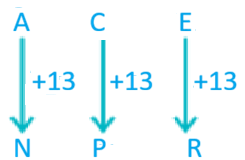
The logic followed here is:

Logic: The pattern is based on letter position shifts in the alphabet. Each letter in the first group is shifted forward by a fixed number to get the corresponding letter in the second group.

Stepwise analysis: 

First pair: ACE → NPR

Apply the same logic to JLN → ?

So, the missing group is VWZ.

Hence, the correct answer is Option 2.

Question 32

Directions

Select the related letter from the given alternatives.

E : I :: O : ?

  1. AOption (a)

    L

  2. BOption (b)

    U

  3. COption (c)

    V

  4. DOption (d)

    K

View answer & explanation

Correct answer

Answer: (b)B.

U

Why this answer is correct

The logic followed here is:

Logic: two consecutive vowels

Vowels: A, E, I, O, U

The next vowel to 'E' is 'I'.

So, 

The next vowel to 'O' is 'U'.

Hence, Option 2 is correct.

Question 33

Directions

Select the correct options from the given alternatives

1001 1011 1021 .....?

  1. AOption (a)

    1041

  2. BOption (b)

    1031

  3. COption (c)

    1029

  4. DOption (d)

    1030

View answer & explanation

Correct answer

Answer: (b)B.

1031

Why this answer is correct

The logic followed here is:

thus, "1031" will replace the question mark in the given series.

Hence, the correct option is "Option 2".

Question 34

Instructions: For the question below, carefully examine the Reference Statement. Then, identify the single option among the four alternatives (a, b, c, d) that is an EXACT AND COMPLETE REPLICATION of the Reference Statement. Pay exceptionally close attention to every character, number, symbol, space, and punctuation mark.

Reference: Vatican City: 11th February, 1929 CE.

  1. AOption (a)

    Vatican City: 11th February, 1929 CE.

  2. BOption (b)

    Vatican City: 11th February, 1929 C.E.

  3. COption (c)

    Vatican Citi: 11th February, 1929 CE.

  4. DOption (d)

    Vatican City: 11th Februry, 1929 CE.

View answer & explanation

Correct answer

Answer: (a)A.

Vatican City: 11th February, 1929 CE.

Why this answer is correct

Given Reference Statement: Vatican City: 11th February, 1929 CE. Let's compare each option carefully.

OptionStatement in OptionReference StatementComment
(1)Vatican City: 11th February, 1929 CE.Vatican City: 11th February, 1929 CE.The statement is exactly the same as the reference.
(2)Vatican City: 11th February, 1929 C.E.Vatican City: 11th February, 1929 CE.Extra dots in 'C.E'.
(3)Vatican Citi: 11th February, 1929 CE.Vatican City: 11th February, 1929 CE.Spelling mistake in 'City'.
(4)Vatican City: 11th Februry, 1929 CE.Vatican City: 11th February, 1929 CE.Spelling mistake in 'February'.

So, the statement that is exactly the same as the reference is in option (1).

Hence, the correct answer is Option 1.

Question 35

Instructions: For the question below, carefully examine the Reference Statement. Then, identify the single option among the four alternatives (a, b, c, d) that is an EXACT AND COMPLETE REPLICATION of the Reference Statement. Pay exceptionally close attention to every character, number, symbol, space, and punctuation mark.

Reference: Accra (GH): Mar 6, 1957.

  1. AOption (a)

    Accra (GH): Mar 6, 1957.

  2. BOption (b)

    Accr_a (GH): Mar 6, 1957.

  3. COption (c)

    Accra (GH): Mar. 6, 1957.

  4. DOption (d)

    Accra (GH): Mar 6, 1975.

View answer & explanation

Correct answer

Answer: (a)A.

Accra (GH): Mar 6, 1957.

Why this answer is correct

Given Reference Statement: Accra (GH): Mar 6, 1957. Let's compare each option carefully.

OptionStatement in OptionReference StatementComment
(1)Accra (GH): Mar 6, 1957.Accra (GH): Mar 6, 1957.The statement is exactly the same as the reference.
(2)Accr_a (GH): Mar 6, 1957.Accra (GH): Mar 6, 1957.Extra character '_' in 'Accra'.
(3)Accra (GH): Mar. 6, 1957.Accra (GH): Mar 6, 1957.Extra full stop after 'Mar'.
(4)Accra (GH): Mar 6, 1975.Accra (GH): Mar 6, 1957.Year is incorrect.

So, the statement that is exactly the same as the reference is in option (1).

Hence, the correct answer is Option 1.

Question 36

From the given option figures, select the one in which the question figure is hidden/embedded. (Rotation is not allowed)

  1. AOption (a)

  2. BOption (b)

  3. COption (c)

  4. DOption (d)

View answer & explanation

Correct answer

Answer: (a)A.

Why this answer is correct

The image embedded in given figure is as shown below:

Hence, "Option 1" is the correct answer.

Question 37

From the given option figures, select the one in which the question figure is hidden/embedded. (Rotation is not allowed)

  1. AOption (a)

  2. BOption (b)

  3. COption (c)

  4. DOption (d)

View answer & explanation

Correct answer

Answer: (c)C.

Why this answer is correct

The image embedded in given figure is as shown below:

Hence, "Option 3" is the correct answer.

Question 38

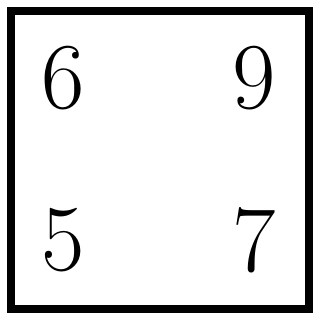
In the following question, select the number which can be placed at the sign of question mark (?) from the given alternatives.

1059
276
785
14002800?
  1. AOption (a)

    2300

  2. BOption (b)

    2500

  3. COption (c)

    2700

  4. DOption (d)

    2900

View answer & explanation

Correct answer

Answer: (c)C.

2700

Why this answer is correct

The logic followed here is:

Logic: In each column, multiply the three numbers and then multiply the product by 100 to get the fourth number.

Stepwise Analysis:

Column 1: (10 × 2 × 7) × 100 = 140 × 100 = 14000 

Column 2: (5 × 7 × 8) × 100 = 280 × 100 = 28000 

Column 3 (Missing Value): (9 × 6 × 5) × 100 = 270 × 100 = 27000 

Hence, the missing number is Option 3.

Question 39

How many triangles are there in the given figure?

  1. AOption (a)

    5

  2. BOption (b)

    9

  3. COption (c)

    11

  4. DOption (d)

    15

View answer & explanation

Correct answer

Answer: (b)B.

9

Why this answer is correct

The logic followed here is:

Logic: Count all the triangles carefully by avoiding overcounting and considering only valid combinations.

Now,

There are 6 small triangles formed individually.

Combine smaller triangles to form larger ones:

2 triangles formed by combining two smaller triangles.

1 triangle formed by combining all sections into the largest triangle.

Total triangles = 6 + 2 + 1 = 9

Hence, the correct answer is Option 3.

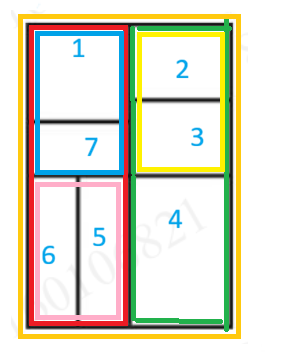
Question 40

How many quadrilaterals are there in the given figure?

  1. AOption (a)

    15

  2. BOption (b)

    16

  3. COption (c)

    17

  4. DOption (d)

    18

View answer & explanation

Correct answer

Answer: (d)D.

18

Why this answer is correct

The logic followed here is:

Logic: Count all quadrilaterals by selecting any two horizontal lines and any two vertical lines in the grid.

Now,

Number of horizontal lines = 4 → choose any 2 = 6 ways

Number of vertical lines = 3 → choose any 2 = 3 ways

Total quadrilaterals = 6 × 3 = 18

Hence, the correct answer is Option 4.

Question 41

P started walking straight towards north. After taking how many right turns during her journey she will be finally facing towards north? (she took only right turns during her journey)

  1. AOption (a)

    4

  2. BOption (b)

    3

  3. COption (c)

    5

  4. DOption (d)

    6

View answer & explanation

Correct answer

Answer: (a)A.

4

Why this answer is correct

Given:

P starts walking north and takes only right turns.

1st right turn: faces east

2nd right turn: faces south

3rd right turn: faces west

4th right turn: faces north

Hence, after 4 right turns, P will be facing north.

Hence, the correct answer is "Option 1".

Question 42

Which option figure will complete the pattern in the question figure? (Rotation is not allowed)

  1. AOption (a)

  2. BOption (b)

  3. COption (c)

  4. DOption (d)

View answer & explanation

Correct answer

Answer: (a)A.

Why this answer is correct

The logic followed here is:

Logic: The missing bottom-right quadrant must have the large outer quarter-circle, the small inner quarter-circle near the center, and the two diagonal connecting lines, perfectly mirroring the other three quadrants to maintain the overall symmetry.

Hence, the correct answer is Option 4.

Question 43

In the following question, in each option a pair of figures is given. In each pair the figure towards the left of (:) is related by some logic/rule/relation with the figure on the right of (:). Select the odd figure pair from the given alternatives.

  1. AOption (a)

  2. BOption (b)

  3. COption (c)

  4. DOption (d)

View answer & explanation

Correct answer

Answer: (d)D.

Why this answer is correct

The logic followed here is:

Logic: In both sets of figures, the odd pair is identified by breaking the established pattern.

Now, the checking Options:

Option 1: 

4 sides, 4 lines → Follows rule

Option 2: 

5 sides, 5 lines → Follows rule

Option 3: 

4 sides, 4 lines → Follows rule

Option 4: 

3 sides, 4 lines → Odd one out

The rule is number of sides = number of lines crossing the shape. Option 4 (triangle with 4 lines) breaks this rule.

Hence, the correct answer for both sets is Option 4.

Question 44

Two figures given on the left side of (::) are related with some logic/rule/relation. Select the missing figure on the right side of (::) from the given alternatives based on the same logic/rule/relation.

  1. AOption (a)

  2. BOption (b)

  3. COption (c)

  4. DOption (d)

View answer & explanation

Correct answer

Answer: (d)D.

Why this answer is correct

The logic followed here is:

Logic: In the first image, the pattern relates the number of sides of the shape to the number of lines crossing its boundary. Options 1, 2, and 3 follow the rule (n sides = n lines), while Option 4 does not (triangle with 4 lines).

Now, checking the Options:

Option 1: 

4-sided arrow-head with 4 lines –  Follows the rule

Option 2: 

5-sided pentagon with 5 lines –  Follows the rule

Option 3: 

4-sided rectangle with 4 lines –  Follows the rule

Option 4: 

3-sided triangle with 4 lines – Breaks the rule → Odd one out

Hence, Option 4 is the odd figure pair.

Question 45

Two figures given on the left side of (::) are related with some logic/rule/relation. Select the missing figure on the right side of (::) from the given alternatives based on the same logic/rule/relation.

  1. AOption (a)

  2. BOption (b)

  3. COption (c)

  4. DOption (d)

View answer & explanation

Correct answer

Answer: (a)A.

Why this answer is correct

The logic followed here is:

Logic: The pattern in each box involves a clockwise rotation of three elements, with the element in the bottom-left position being replaced by a new one in the top-left.

Option 1: 

Top-left: New element 

Top-right: 8 

Bottom-right: 5 

Bottom-left: Circle 

Perfectly follows the clockwise rotation and replacement rule

Option 2: 

Top-left: 8  Should be the new element

Top-right: 5  Top-right should have 8

Bottom-right: Circle  Bottom-right should have 5

Bottom-left: Arrow Should be replaced by new element

 Does not follow the pattern

Option 3: 

Top-left: Circle  Should be the new element

Top-right: 8 

Bottom-right: 5 

Bottom-left: Arrow  Should be replaced

 Partially follows the rotation but bottom-left not replaced correctly

Option 4: 

Top-left: 5  Should be new element

Top-right: Circle Should be 8

Bottom-right: 8 Should be 5

Bottom-left: Arrow Should be replaced

Completely misaligned

Hence, the correct answer is Option 1.

Question 46

In the following figure series, select the figure which can be placed at the sign of question mark (?) from the given alternatives.

  1. AOption (a)

  2. BOption (b)

  3. COption (c)

  4. DOption (d)

View answer & explanation

Correct answer

Answer: (a)A.

Why this answer is correct

The logic followed here is:

Logic: The dot moves two positions clockwise in each step within the hexagon divided into six triangles. This +2 movement continues consistently through the series.

Hence, the dot will land in the bottom-middle section.

Hence, the correct answer is Option 2.

Question 47

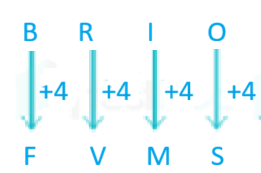
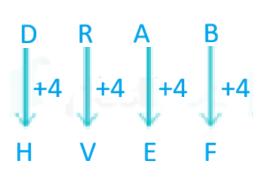
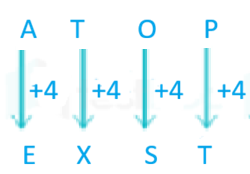
In a certain coded language 'BRIO' is coded as 'FVMS' and 'DRAB' is coded as 'HVEF'. How will 'ATOP' be coded in the same code language?

  1. AOption (a)

    DXUV

  2. BOption (b)

    CWSS

  3. COption (c)

    FVQS

  4. DOption (d)

    EXST

View answer & explanation

Correct answer

Answer: (d)D.

EXST

Why this answer is correct

The logic followed here is:

Logic: Each letter is shifted +4 positions forward in the alphabet.

Here,

BRIO → FVMS

DRAB → HVEF

Now apply the same to ATOP:

So, the code becomes EXST

Hence, the correct answer is Option 4.

Question 48

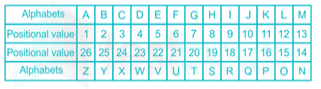
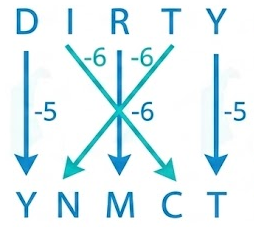
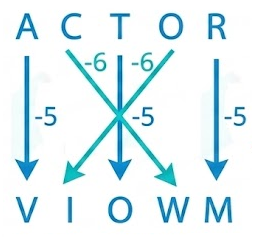
In a certain coded language 'FLOOR' is coded as 'AIJFM' and 'DIRTY' is coded as 'YNMCT'. How will 'ACTOR' be coded in the same code language?

  1. AOption (a)

    XINYL

  2. BOption (b)

    XJPWM

  3. COption (c)

    VIOWM

  4. DOption (d)

    UKPXK

View answer & explanation

Correct answer

Answer: (c)C.

VIOWM

Why this answer is correct

The logic followed here is:

FLOOR → AIJFM

DIRTY → YNMCT

Now apply the same to ACTOR:

So, the code becomes VIOWM

Hence, the correct answer is Option 3.

Question 49

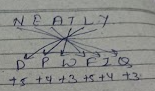
In a certain coded language 'INDICT' is coded as 'YGLIRL' and 'NEATLY' is coded as 'DPWFIQ'. How will 'DIALOG' be coded in the same code language?

  1. AOption (a)

    JROENH

  2. BOption (b)

    KTODLF

  3. COption (c)

    NSMGME

  4. DOption (d)

    LSOFMG

View answer & explanation

Correct answer

Answer: (d)D.

LSOFMG

Why this answer is correct

The logic followed here is:

Logic: Each letter is shifted by alternating positions — first letter +8, second +10, third +14, fourth −6, fifth −2, sixth +5 (fixed pattern based on positions).

Here, 

INDICT → YGLIRL

NEATLY → DPWFIQ

Now apply the same positional pattern to DIALOG:

So, the code becomes LSOFMG

Hence, the correct answer is Option 4.

Question 50

A word has been given in the question. This word CAN be formed by using the letters of the word given in one of the alternatives only. Select that alternative.

STAMP

  1. AOption (a)

    PLANTS

  2. BOption (b)

    CAMPUS

  3. COption (c)

    STAMEN

  4. DOption (d)

    MAPSTER

View answer & explanation

Correct answer

Answer: (d)D.

MAPSTER

Why this answer is correct

Given word: STAMP

Rule: The given word must be formed using letters of the option (with correct frequency).

Now, checking each option:

Option 1: PLANTS

P, L, A, N, T, S → ‘M’ is missing 

Option 2: CAMPUS

C, A, M, P, U, S → ‘T’ is missing 

Option 3: STAMEN

S, T, A, M, E, N → All required letters (S, T, A, M, P) are NOT fully available (‘P’ missing) 

Option 4: MAPSTER

M, A, P, S, T, E, R → Contains all letters of STAMP 

Hence, the correct answer is Option 4.

Quantitative Aptitude (25 questions)

Question 51

Which is a mixed recurring decimal?

  1. AOption (a)

    0.25

  2. BOption (b)

    0.6666...

  3. COption (c)

    0.123123...

  4. DOption (d)

    1.436363...

View answer & explanation

Correct answer

Answer: (d)D.

1.436363...

Why this answer is correct

Formula Used:

Mixed recurring decimal: A number with both a non-repeating part and a repeating decimal part.

Calculation:

⇒ Option 1: 0.25 has no repeating decimal part.

⇒ Option 2: 0.6666... is purely recurring, no non-repeating part.

⇒ Option 3: 0.123123... is purely recurring, no non-repeating part.

⇒ Option 4: 1.436363... has 1.43 as the non-repeating part and 63 as the repeating decimal part.

∴ The correct answer is 1.436363...

Question 52

A microwave is sold at a discount of 25%. If a man buys it for Rs. 7500, what is the marked price?

  1. AOption (a)

    8900

  2. BOption (b)

    10000

  3. COption (c)

    12000

  4. DOption (d)

    9000

View answer & explanation

Correct answer

Answer: (b)B.

10000

Why this answer is correct

Given:

Discount = 25%

Selling Price (SP) = Rs. 7500

Formula Used:

Marked Price (MP) = SP ÷ (1 - Discount/100)

Calculation:

⇒ MP = 7500 ÷ (1 - 25/100)

⇒ MP = 7500 ÷ (1 - 0.25)

⇒ MP = 7500 ÷ 0.75

⇒ MP = Rs. 10000

∴ The correct answer is 10000.

Question 53

In triangle ABC, the orthocenter O and the incenter I. If ∠BIC - ∠BOC = 90o , what is ∠A?

  1. AOption (a)

    100o

  2. BOption (b)

    90o

  3. COption (c)

    110o

  4. DOption (d)

    120o

View answer & explanation

Correct answer

Answer: (d)D.

120o

Why this answer is correct

Given:

∠BIC - ∠BOC = 90°

Formula Used:

∠BIC = 90 + A/2

∠BOC = 180 - A

Calculation:

⇒ (90 + A/2) - (180 - A) = 90

⇒ 90 + A/2 - 180 + A = 90

⇒ -90 + 3A/2 = 90

⇒ 3A/2 = 180

⇒ A = 120°

∴ The correct answer is 120°.

Question 54

If cot θ\theta = 3/4, 0° < θ\theta < 90°, then find the value of: [(1 + sin θ\theta) / cos θ\theta] + [(1 - sin θ\theta) / cos θ\theta].

  1. AOption (a)

    10/3

  2. BOption (b)

    3/17

  3. COption (c)

    -5/7

  4. DOption (d)

    2/9

View answer & explanation

Correct answer

Answer: (a)A.

10/3

Why this answer is correct

Given:

cotθ = 3/4

Formula Used:

cotθ = adjacent ÷ opposite

sinθ = opposite ÷ hypotenuse

cosθ = adjacent ÷ hypotenuse

Calculation:

⇒ adjacent = 3, opposite = 4

⇒ hypotenuse = √(32 + 42) = 5

⇒ sinθ = 4 ÷ 5

⇒ cosθ = 3 ÷ 5

⇒ (1 + sinθ) ÷ cosθ = (1 + 4/5) ÷ (3/5) = (9/5) × (5/3) = 3

⇒ (1 - sinθ) ÷ cosθ = (1 - 4/5) ÷ (3/5) = (1/5) × (5/3) = 1/3

⇒ Total = 3 + 1/3

⇒ Total = 10/3

∴ The correct answer is 10/3.

Question 55

Two tangents are drawn from a point P outside a circle of radius 5 cm. The angle between the tangents is 90°, and the distance from P to the center of the circle is R cm. Find the value of R.

  1. AOption (a)

    6.30 cm

  2. BOption (b)

    5.32 cm

  3. COption (c)

    7.07 cm

  4. DOption (d)

    62 cm6\sqrt{2} \text{ cm}

View answer & explanation

Correct answer

Answer: (c)C.

7.07 cm

Why this answer is correct

Given:

Radius = 5 cm

Angle between tangents = 90°

Formula Used:

Length of tangent = √(R2 - r2)

tan(θ) = opposite ÷ adjacent

Calculation:

⇒ Angle between tangents = 90°

⇒ Each angle = 90 ÷ 2 = 45°

⇒ tan45° = tangent ÷ radius

⇒ 1 = tangent ÷ 5

⇒ tangent = 5

⇒ R2 = 52 + 52

⇒ R2 = 25 + 25 = 50

⇒ R = √50

⇒ R = 7.07 cm

∴ The correct answer is 7.07.

Question 56

In a circle with center O, AC is a chord. OB is perpendicular to AC at point B. If OA = 15 cm and AC = 24cm what is the length of OB?

  1. AOption (a)

    9 cm

  2. BOption (b)

    12 cm

  3. COption (c)

    15 cm

  4. DOption (d)

    10 cm

View answer & explanation

Correct answer

Answer: (a)A.

9 cm

Why this answer is correct

Given:

OA = 15 cm

AC = 24 cm

Formula Used:

Perpendicular from center to chord bisects the chord

OA2 = OB2 + AB2

Calculation:

⇒ AB = 24 ÷ 2 = 12

⇒ OA2 = 152 = 225

⇒ OB2 = 225 - 122

⇒ OB2 = 225 - 144

⇒ OB2 = 81

⇒ OB = 9 cm

∴ The correct answer is 9.

Question 57

The perimeter of a rectangle is 282 cm28\sqrt{2} \text{ cm} , while the area of the rectangle is 96 cm². Find the difference between the length and the breadth of the given rectangle.

  1. AOption (a)

    333\sqrt{3}  cm

  2. BOption (b)

    2\sqrt{2}  cm

  3. COption (c)

    222\sqrt{2}  cm

  4. DOption (d)

    3\sqrt{3}  cm

View answer & explanation

Correct answer

Answer: (c)C.

222\sqrt{2}  cm

Why this answer is correct

Shortcut Trick

Sum of sides (l + b) = Perimeter ÷ 2 = 14√2 cm.

Direct formula: (l − b)2 = (l + b)2 − 4 × Area.

⇒ (l − b)2 = (14√2)2 − 4 × 96 = 392 − 384 = 8.

⇒ (l − b) = √8 = 2√2 cm.

∴ The correct answer is 2√2 cm.

Alternate Method

Given:

Perimeter of the rectangle = 28√2 cm

Area of the rectangle = 96 cm2

Formula Used:

  1. Perimeter = 2 × (l + b)

  2. Area = l × b

  3. (l − b)2 = (l + b)2 − 4lb

Calculations:

⇒ 2(l + b) = 28√2

⇒ l + b = 14√2

⇒ lb = 96

⇒ (l − b)2 = (14√2)2 − 4 × 96

⇒ (l − b)2 = (196 × 2) − 384

⇒ (l − b)2 = 392 − 384 = 8

⇒ l − b = √8 = 2√2 cm

∴ The correct answer is 2√2 cm.

Additional Information

Rectangle Diagonal

The diagonal (d) of a rectangle is calculated using Pythagoras theorem: d = √(l2 + b2).

Algebraic Identity

The relation between sum and difference of two numbers is given by: (a + b)2 − (a − b)2 = 4ab.

Properties of a Rectangle

A rectangle is a quadrilateral where all interior angles are 90° and opposite sides are equal and parallel.

Question 58

The floor of a building consists of 600 rhombus-shaped tiles. If the lengths of the diagonals of each tile are 16 cm and 19 cm, respectively, then find the cost of polishing the floor at a rate of Rs. 10 per m².

  1. AOption (a)

    Rs. 89.5

  2. BOption (b)

    Rs. 98

  3. COption (c)

    Rs. 91.2

  4. DOption (d)

    Rs. 102

View answer & explanation

Correct answer

Answer: (c)C.

Rs. 91.2

Why this answer is correct

Given:

Number of tiles = 600

Diagonal 1 = 16 cm

Diagonal 2 = 19 cm

Rate = 10 per m2

Formula Used:

Area of rhombus = 1/2 × d1 × d2

Total cost = Total area × rate

Calculation:

⇒ Area of one tile = 1/2 × 16 × 19

⇒ Area of one tile = 8 × 19 = 152 cm2

⇒ Total area = 600 × 152 = 91200 cm2

⇒ Total area = 91200 ÷ 10000 = 9.12 m2

⇒ Cost = 9.12 × 10

⇒ Cost = 91.2

∴ The correct answer is 91.2.

Question 59

In a rhombus, the diagonals are in the ratio 8:15. If the side of the rhombus is 17 cm, determine the exact lengths of both diagonals and the area.

  1. AOption (a)

    12 cm and 26 cm, 220 cm² 

  2. BOption (b)

    22 cm and 38 cm, 340 cm²

  3. COption (c)

    16 cm and 30 cm, 240 cm²

  4. DOption (d)

    Can't be determined

View answer & explanation

Correct answer

Answer: (c)C.

16 cm and 30 cm, 240 cm²

Why this answer is correct

Given:

Ratio of diagonals = 8 : 15

Side = 17 cm

Formula Used:

(d1/2)2 + (d2/2)2 = side2

Area of rhombus = 1/2 × d1 × d2

Calculation:

⇒ Let d1 = 8x, d2 = 15x

⇒ (8x/2)2 + (15x/2)2 = 172

⇒ (4x)2 + (7.5x)2 = 289

⇒ 16x2 + 56.25x2 = 289

⇒ 72.25x2 = 289

⇒ x2 = 289 ÷ 72.25 = 4

⇒ x = 2

⇒ d1 = 8 × 2 = 16 cm

⇒ d2 = 15 × 2 = 30 cm

⇒ Area = 1/2 × 16 × 30

⇒ Area = 8 × 30 = 240 cm2

∴ The correct answer is 16 cm, 30 cm and 240 cm2.

Question 60

In a partnership, A and B invest in the ratio 4:5. If the total profit is Rs. 1,10,000, how much profit does A get?

  1. AOption (a)

    Rs. 44,000

  2. BOption (b)

    Rs. 52,678

  3. COption (c)

    Rs. 66,780

  4. DOption (d)

    Rs. 48,889

View answer & explanation

Correct answer

Answer: (d)D.

Rs. 48,889

Why this answer is correct

Given:

Ratio = 4 : 5

Total profit = 110000

Formula Used:

Share = Total profit × individual ratio ÷ sum of ratios

Calculation:

⇒ Total ratio = 4 + 5 = 9

⇒ A's share = 110000 × 4 ÷ 9

⇒ A's share = 440000 ÷ 9

⇒ A's share = 48889

∴ The correct answer is 48889.

Question 61

The greatest four-digit number that is divisible by each of the numbers 12, 18, 21, and 28 is?

  1. AOption (a)

    9288

  2. BOption (b)

    9882

  3. COption (c)

    9828

  4. DOption (d)

    9928

View answer & explanation

Correct answer

Answer: (c)C.

9828

Why this answer is correct

Given:

Numbers = 12, 18, 21, 28

Formula Used:

LCM of given numbers

Required number = Largest 4-digit number ÷ LCM × LCM

Calculation:

⇒ 12 = 22 × 3

⇒ 18 = 2 × 32

⇒ 21 = 3 × 7

⇒ 28 = 22 × 7

⇒ LCM = 22 × 32 × 7 = 252

⇒ 9999 ÷ 252 = 39

⇒ Required number = 252 × 39

⇒ Required number = 9828

∴ The correct answer is 9828.

Question 62

The average of 9 numbers is 63. If the average of the first 4 numbers is 60 and the average of the last 4 numbers is 66, what is the fifth number? 

  1. AOption (a)

    63

  2. BOption (b)

    69

  3. COption (c)

    67

  4. DOption (d)

    65

View answer & explanation

Correct answer

Answer: (a)A.

63

Why this answer is correct

Shortcut Trick

Base average of 9 numbers = 63.

Deviation of first 4 numbers = 4 × (60 − 63) = −12.

Deviation of last 4 numbers = 4 × (66 − 63) = +12.

Net deviation = −12 + 12 = 0.

Fifth number = Base Average + Net Deviation = 63 + 0 = 63.

∴ The correct answer is 63.

Alternate Method

Given:

Average of 9 numbers = 63

Average of first 4 numbers = 60

Average of last 4 numbers = 66

Formula Used:

Sum of observations = Average × Total observations

Calculations:

⇒ Sum of all 9 numbers = 9 × 63 = 567

⇒ Sum of first 4 numbers = 4 × 60 = 240

⇒ Sum of last 4 numbers = 4 × 66 = 264

⇒ Sum of 8 numbers (excluding the 5th) = 240 + 264 = 504

⇒ Fifth number = 567 − 504 = 63

∴ The correct answer is 63.

Additional Information

Deviation Method

The sum of deviations of all observations from their arithmetic mean is always zero. This property is used to find a missing term by balancing positive and negative deviations.

Net Change in Average

If every observation is increased or decreased by a constant value k, the new average also increases or decreases by k.

Weighted Average

When two groups with averages A1 and A2 and sizes n1 and n2 are combined, the combined average = (n1A1 + n2A2) ÷ (n1 + n2).

Question 63

A batsman typically scores 40 runs in 20 innings. To raise his average by two, how many runs does he need to score in the twenty-first inning?

  1. AOption (a)

    80

  2. BOption (b)

    82

  3. COption (c)

    79

  4. DOption (d)

    86

View answer & explanation

Correct answer

Answer: (b)B.

82

Why this answer is correct

Given:

Initial average = 40 runs

Total innings = 20

New average = 42 runs

21st inning score = ?

Formula Used:

Total runs = Average × Number of innings

21st inning score = New total runs − Previous total runs

Calculation:

⇒ Previous total runs = 40 × 20

⇒ Previous total runs = 800

⇒ New total runs = 42 × 21

⇒ New total runs = 882

⇒ 21st inning score = 882 − 800

⇒ 21st inning score = 82

∴ The correct answer is 82.

Question 64

A cyclist rides at a speed of 30 km/h and covers a distance of 90 km. Then, he increases his speed by 20% and covers another 60 km. What is the total time taken for the journey?

  1. AOption (a)

    4 hour 40 minutes 

  2. BOption (b)

    2 hour 10 minutes

  3. COption (c)

    2 hour 40 minutes

  4. DOption (d)

    3 hour 10 minutes

View answer & explanation

Correct answer

Answer: (a)A.

4 hour 40 minutes 

Why this answer is correct

Given:

Speed 1 = 30 km/h

Distance 1 = 90 km

Increase = 20%

Distance 2 = 60 km

Formula Used:

Time = Distance ÷ Speed

Calculation:

⇒ Time 1 = 90 ÷ 30 = 3 hours

⇒ New speed = 30 × 120 ÷ 100 = 36 km/h

⇒ Time 2 = 60 ÷ 36

⇒ Time 2 = 5/3 hours

⇒ Total time = 3 + 5/3

⇒ Total time = 14/3 hours = 4 hour 40 minutes 

∴ The correct answer is 4 hour 40 minutes.

Question 65

Ravi and Raj are running a 200-meter race. Ravi completes it in 25 seconds, while Raj takes 30 seconds. By what distance will Ravi beat Raj?

  1. AOption (a)

    30.25 m

  2. BOption (b)

    41.27 m

  3. COption (c)

    25.55 m

  4. DOption (d)

    33.33 m

View answer & explanation

Correct answer

Answer: (d)D.

33.33 m

Why this answer is correct

Given:

Distance = 200 m

Time taken by Ravi = 25 s

Time taken by Raj = 30 s

Formula Used:

Speed = Distance ÷ Time

Distance = Speed × Time

Calculation:

⇒ Speed of Ravi = 200 ÷ 25 = 8 m/s

⇒ Speed of Raj = 200 ÷ 30 = 20/3 m/s

⇒ Distance covered by Raj in 25 s = (20/3) × 25

⇒ Distance = 500/3 m

⇒ Difference = 200 - 500/3

⇒ Difference = (600 - 500) ÷ 3

⇒ Difference = 100/3 m

⇒ Difference = 33.33 m

∴ The correct answer is 33.33.

Question 66

A and B can complete a work in 6 days together. If A alone can do it in 12 days, how many days will B alone take?

  1. AOption (a)

    8 days

  2. BOption (b)

    10 days

  3. COption (c)

    12 days

  4. DOption (d)

    14 days

View answer & explanation

Correct answer

Answer: (c)C.

12 days

Why this answer is correct

Given:

A + B = 6 days

A alone = 12 days

Formula Used:

Total work = LCM of given days

Work rate = Work ÷ Days

Calculation:

⇒ LCM of 6 and 12 = 12

⇒ Total work = 12 units

⇒ (A + B)'s 1 day work = 12 ÷ 6 = 2

⇒ A's 1 day work = 12 ÷ 12 = 1

⇒ B's 1 day work = 2 − 1 = 1

⇒ B's time = 12 ÷ 1 = 12 days

∴ The correct answer is 12 days.

Question 67

A watch is sold for ₹840 after a discount of 20% is applied. What was the original marked price of the watch?

  1. AOption (a)

    ₹950

  2. BOption (b)

    ₹1,000

  3. COption (c)

    ₹1,050

  4. DOption (d)

    ₹1,120

View answer & explanation

Correct answer

Answer: (c)C.

₹1,050

Why this answer is correct

Given:

Discount = 20%

Selling Price = ₹840

Formula Used:

Discount = (Discount Percentage ÷ 100) × Marked Price

Selling Price = Marked Price − Discount

Calculation:

Let Marked Price = ₹x

⇒ Discount = (20 ÷ 100) × x = 0.2x

⇒ Selling Price = x − 0.2x

⇒ ₹840 = 0.8x

⇒ x = ₹840 ÷ 0.8

⇒ x = ₹1,050

∴ The correct answer is ₹1,050.

Question 68

Two containers of equal capacity are each filled with a milk-water mixture. In the first container, the ratio of milk to water is 3:2, while in the second container the ratio is 4: 1. If the contents of both containers are combined thoroughly in a larger vessel, what will be the resulting ratio of milk to water in the final mixture?

  1. AOption (a)

    7:3

  2. BOption (b)

    31:19

  3. COption (c)

    19:31

  4. DOption (d)

    7:1

View answer & explanation

Correct answer

Answer: (a)A.

7:3

Why this answer is correct

Given:

Equal quantities in both containers

Ratio (milk : water) in A = 3 : 2

Ratio (milk : water) in B = 4 : 1

Formula Used:

Quantity = Total × (part ÷ sum of ratio)

Calculation:

⇒ Let each container = 5 litres

⇒ Milk in A = 5 × (3 ÷ 5) = 3

⇒ Water in A = 5 × (2 ÷ 5) = 2

⇒ Milk in B = 5 × (4 ÷ 5) = 4

⇒ Water in B = 5 × (1 ÷ 5) = 1

⇒ Total milk = 3 + 4 = 7

⇒ Total water = 2 + 1 = 3

⇒ Ratio = 7 : 3

∴ The correct answer is 7 : 3.

Question 69

In a circle of radius 10 cm, two parallel chords of lengths 12 cm and 16 cm lie on opposite sides of the centre. Determine the distance separating these two chords.

  1. AOption (a)

    14 cm

  2. BOption (b)

    12 cm

  3. COption (c)

    10 cm

  4. DOption (d)

    11 cm

View answer & explanation

Correct answer

Answer: (a)A.

14 cm

Why this answer is correct

Given:

Radius = 10 cm

Chord1 = 12 cm

Chord2 = 16 cm

Formula Used:

Distance from center = √(r2 − (chord ÷ 2)2)

Calculation:

⇒ Distance1 = √(102 − 62)

⇒ = √(100 − 36) = √64 = 8

⇒ Distance2 = √(102 − 82)

⇒ = √(100 − 64) = √36 = 6

⇒ Total distance = 8 + 6 = 14 cm

∴ The correct answer is 14 cm.

Question 70

Two parallel chords of a circle, with lengths 16 cm and 12 cm, are on opposite sides of the center. If the distance between the two chords is 14 cm, what is the radius of the circle?

  1. AOption (a)

    10 cm

  2. BOption (b)

    8 cm

  3. COption (c)

    12 cm

  4. DOption (d)

    14 cm

View answer & explanation

Correct answer

Answer: (a)A.

10 cm

Why this answer is correct

Given:

Chord 1 = 16 cm

Chord 2 = 12 cm

Distance between chords = 14 cm

Formula Used:

Distance from center to chord = √(r2 - (chord/2)2)

Calculation:

⇒ Let radius = r

⇒ Distance for chord 16 = √(r2 - 82)

⇒ Distance for chord 12 = √(r2 - 62)

⇒ √(r2 - 64) + √(r2 - 36) = 14

⇒ Let √(r2 - 64) = a

⇒ √(r2 - 36) = b

⇒ a + b = 14

⇒ b2 - a2 = 28

⇒ (b - a)(b + a) = 28

⇒ (b - a) × 14 = 28

⇒ b - a = 2

⇒ Solve a + b = 14 and b - a = 2

⇒ b = 8, a = 6

⇒ r2 - 36 = 64

⇒ r2 = 100

⇒ r = 10 cm

∴ The correct answer is 10.

Question 71

From a point P, two tangents PA and PB are drawn to a circle. If the length of the chord AB is equal to the radius of the circle, what is the angle ∠APB?

  1. AOption (a)

    90°

  2. BOption (b)

    60°

  3. COption (c)

    45°

  4. DOption (d)

    120°

View answer & explanation

Correct answer

Answer: (d)D.

120°

Why this answer is correct

Given:

Chord AB = radius

PA and PB are tangents

Formula Used:

Chord = 2 × r × sin(θ ÷ 2)

Angle between tangents = 180° − central angle

Calculation:

⇒ r = 2 × r × sin(θ ÷ 2)

⇒ 1 = 2 × sin(θ ÷ 2)

⇒ sin(θ ÷ 2) = 1 ÷ 2

⇒ θ ÷ 2 = 30°

⇒ θ = 60°

⇒ ∠APB = 180 − 60 = 120°

∴ The correct answer is 120°.

Question 72

A circle has radius of 6 cm, and there is a point situated 10 cm away from the center of the circle. A tangent is drawn from this point to touch the circle. Calculate the length of the tangent segment.

  1. AOption (a)

    7 cm

  2. BOption (b)

    8 cm

  3. COption (c)

    9 cm

  4. DOption (d)

    6 cm

View answer & explanation

Correct answer

Answer: (b)B.

8 cm

Why this answer is correct

Given:

Radius = 6 cm

Distance from center = 10 cm

Formula Used:

Length of tangent = √(distance2 − radius2)

Calculation:

⇒ Length = √(102 − 62)

⇒ Length = √(100 − 36)

⇒ Length = √64

⇒ Length = 8 cm

∴ The correct answer is 8 cm.

Question 73

A line passes through the points (1, 2) and (3, 6). What is the equation of the line?

  1. AOption (a)

    y = 2x

  2. BOption (b)

    y =x3\frac{x}{3}

  3. COption (c)

    y = x2\frac{x}{2}

  4. DOption (d)

    y = 5x

View answer & explanation

Correct answer

Answer: (a)A.

y = 2x

Why this answer is correct

Shortcut Trick

Test the given points in the options to find the correct linear equation.

For the point (1, 2): y = 2(1) = 2. This satisfies the equation y = 2x.

For the point (3, 6): y = 2(3) = 6. This also satisfies the equation y = 2x.

Since both coordinates satisfy the relation, the equation must be y = 2x.

∴ The correct answer is y = 2x.

Alternate Method

Given: Point 1 (x1, y1) = (1, 2) and Point 2 (x2, y2) = (3, 6).

Formula Used:

Slope (m) = (y2 − y1) / (x2 − x1)

Equation of line: (y − y1) = m(x − x1)

⇒ Slope (m) = (6 − 2) / (3 − 1)

⇒ m = 4 / 2 = 2

⇒ Equation: (y − 2) = 2(x − 1)

⇒ y − 2 = 2x − 2

⇒ y = 2x

∴ The correct answer is y = 2x.

Additional Information

Slope-Intercept Form

The standard equation of a line is y = mx + c, where m is the slope and c is the y-intercept.

Intercept Form

If a line cuts the x-axis at 'a' and the y-axis at 'b', its equation is (x/a) + (y/b) = 1.

Parallel Lines

Two parallel lines have the same slope (m1 = m2).

Perpendicular Lines

The product of slopes of two perpendicular lines is −1 (m1 × m2 = −1).

Question 74

The angle at the center of a circle subtended by a chord is 60°. What is the length of the chord if the radius of the circle is 7 cm?

  1. AOption (a)

    7 cm

  2. BOption (b)

    8 cm

  3. COption (c)

    9 cm

  4. DOption (d)

    10 cm

View answer & explanation

Correct answer

Answer: (a)A.

7 cm

Why this answer is correct

Given:

Central angle = 60°

Radius = 7 cm

Formula Used:

Chord length = 2 × r × sin(θ ÷ 2)

Calculation:

⇒ Length = 2 × 7 × sin(60 ÷ 2)

⇒ Length = 14 × sin30

⇒ Length = 14 × (1 ÷ 2)

⇒ Length = 7 cm

∴ The correct answer is 7 cm.

Question 75

Ravi sold a bicycle for ₹4200 at a 5% profit. What should be the selling price of the bicycle to gain a 15% profit?

  1. AOption (a)

    ₹5237

  2. BOption (b)

    ₹4600

  3. COption (c)

    ₹3489

  4. DOption (d)

    ₹4789

View answer & explanation

Correct answer

Answer: (b)B.

₹4600

Why this answer is correct

Shortcut Trick

Old Selling Price (105%) = ₹4200

Unit value (1%) = 4200 ÷ 105 = 40

New Selling Price required (115%) = 40 × 115

Required SP = ₹4600

∴ The correct answer is ₹4600.

Alternate Method

Given:

First Selling Price (SP1) = ₹4200

Profit Percentage (P1) = 5%

Desired Profit Percentage (P2) = 15%

Formula Used:

Cost Price (CP) = [SP × 100] ÷ [100 + Profit %]

New Selling Price = CP × [(100 + New Profit %) ÷ 100]

Calculations:

⇒ Cost Price = (4200 × 100) ÷ (100 + 5)

⇒ Cost Price = 420000 ÷ 105

⇒ Cost Price = ₹4000

⇒ New Selling Price = 4000 × (115 ÷ 100)

⇒ New Selling Price = 40 × 115

⇒ New Selling Price = ₹4600

∴ The correct answer is ₹4600.

Additional Information

Profit and Loss Calculation Base

Profit and Loss percentages are always calculated on the Cost Price (CP) of the article unless the question specifies calculation on Selling Price.

Direct SP Relation

When multiple selling prices are involved for the same article, the ratio of Selling Prices is equal to the ratio of their respective percentage values: SP1 ÷ (100 + P1) = SP2 ÷ (100 + P2).

Marked Price and Discount

Selling Price can also be calculated as Marked Price × (100 − Discount%) ÷ 100.

General Awareness (25 questions)

Question 76

What actions did Vijayalaya Chola take after capturing the Kaveri delta?

I. He established the town of Thanjavur.

II. He built a temple for the goddess Nishumbhasudini.

  1. AOption (a)

    Only I 

  2. BOption (b)

    Only II

  3. COption (c)

    Both I and II

  4. DOption (d)

    Neither I nor II

View answer & explanation

Correct answer

Answer: (c)C.

Both I and II

Why this answer is correct

The correct answer is Both I and II.

Key Points

  • Vijayalaya Chola captured the Kaveri delta, marking the beginning of the Chola dynasty's resurgence in South India. This region was strategically important due to its fertile lands and proximity to trade routes.
  • After capturing the Kaveri delta, Vijayalaya Chola established the town of Thanjavur, which later became the capital and a cultural hub for the Cholas. This statement is correct.
  • Vijayalaya Chola also built a temple for the goddess Nishumbhasudini (a form of Durga) in Thanjavur to commemorate his victory and to signify the divine approval of his rule. This temple was an important religious and cultural landmark. This statement is correct.
  • Both actions—establishing Thanjavur and constructing the temple—reflect Vijayalaya Chola’s efforts to consolidate political authority and establish religious and cultural legitimacy.
  • These developments laid the foundation for the Chola dynasty's future prosperity and dominance in South India.

Additional Information

  • Vijayalaya Chola:
  • He was the founder of the Imperial Chola dynasty in the 9th century CE.
  • He emerged as a powerful ruler after defeating the Pallavas and Pandya rulers in the Kaveri delta region.
  • His reign marked the rise of the Cholas as a dominant power in South India after centuries of decline.
  • Thanjavur:
  • Thanjavur became the political and cultural capital of the Chola dynasty during its peak.
  • The city was known for its architectural marvels, including the Brihadeeswarar Temple, built later by Rajaraja Chola I.
  • It served as a center for art, literature, and religion under Chola patronage.
  • Temple of Goddess Nishumbhasudini:
  • Vijayalaya Chola built this temple to honor the goddess and to signify his victory over enemies.
  • The temple reflects the importance of religion and divine authority in legitimizing kingship during ancient times.
  • The goddess Nishumbhasudini represents the triumph of good over evil, symbolizing Vijayalaya’s own victory.
  • Chola Dynasty:
  • The Chola dynasty is renowned for its contributions to art, architecture, administration, and maritime trade.
  • It reached its zenith under rulers like Rajaraja Chola I and Rajaraja Chola II.
  • The Cholas were also known for their naval prowess, which helped them establish trade routes and cultural ties with Southeast Asia.

Important Points

  • The Chola dynasty's resurgence under Vijayalaya Chola marked the beginning of a significant era in South Indian history. It was characterized by advancements in architecture, literature, and governance.
  • Thanjavur, established by Vijayalaya, became a model city that symbolized the grandeur of the Chola empire.
  • Religious patronage, such as building temples, was a common practice among rulers to demonstrate their piety and gain public support.
  • The Cholas’ emphasis on temple construction and patronage of the arts played a pivotal role in the cultural development of South India.

Question 77

Which Rajputs refused to accept the authority of the Mughals for a long time?

  1. AOption (a)

    Rathore

  2. BOption (b)

    Kachhwaha

  3. COption (c)

    Chauhan

  4. DOption (d)

    Sisodiya

View answer & explanation

Correct answer

Answer: (d)D.

Sisodiya

Why this answer is correct

The correct answer is Sisodiya Rajputs.

Key Points

  • The Sisodiya Rajputs, primarily ruling from Mewar, were known for their fierce independence and refusal to accept the authority of the Mughals for a long time.
  • The most notable Sisodiya ruler, Maharana Pratap, resisted Mughal emperor Akbar's attempts to annex Mewar and fought the famous Battle of Haldighati in 1576.
  • Even after their defeat in Haldighati, the Sisodiyas continued guerrilla warfare under Maharana Pratap and later rulers, maintaining their sovereignty over parts of Mewar.
  • Unlike other Rajput clans such as the Kachhwaha of Amer and the Rathores of Marwar, who allied with the Mughals and served in their administration, the Sisodiyas upheld their policy of defiance.
  • The Sisodiya Rajputs are celebrated in Indian history for their valor, dedication to their homeland, and their commitment to maintaining independence, making them a symbol of resistance against Mughal imperialism.

Additional Information

  • Maharana Pratap:
  • Maharana Pratap (1540–1597) was the most famous ruler of the Sisodiya dynasty and is remembered for his valiant resistance against the Mughal empire.
  • He refused to accept Mughal suzerainty, unlike most other Rajput rulers, and chose to fight rather than surrender.
  • He established his capital at Chavand after losing Chittorgarh to the Mughals.
  • Even after the Battle of Haldighati, he continued a guerrilla war against Akbar and reclaimed much of his lost territory.
  • Battle of Haldighati (1576):
  • The battle was fought between Maharana Pratap and the Mughal forces led by Man Singh I of Amber, a Rajput who had allied with Akbar.
  • Though inconclusive, the battle demonstrated the fierce resistance of Maharana Pratap and his determination to defend his kingdom.
  • Pratap's loyal horse, Chetak, is also remembered for its bravery during this battle.
  • Other Rajput Clans:
  • The Kachhwaha Rajputs of Amer, under Raja Bharmal and later Raja Man Singh, allied with Akbar and became prominent commanders in his army.
  • The Rathore Rajputs of Marwar also formed alliances with the Mughals, with rulers like Rao Maldeo and Jaswant Singh serving in the Mughal court.
  • The Chauhans were significant during earlier medieval times but had lesser political influence during the Mughal period.
  • Rajput Resistance:
  • While many Rajput clans collaborated with the Mughals, the Sisodiyas' resistance became a defining feature of their legacy.
  • This resistance inspired future leaders and symbolized the Rajput spirit of independence and valor.

Important Points

  • Chittorgarh: The historic capital of the Sisodiya Rajputs and a significant symbol of Rajput pride. It was besieged multiple times by Muslim rulers, including Alauddin Khilji and Akbar.
  • Akbar's Rajput Policy: Akbar adopted a strategy of alliance and diplomacy with Rajput rulers, offering them positions in his administration and matrimonial alliances to secure their loyalty.
  • Guerrilla Warfare: Maharana Pratap effectively used guerrilla tactics against the Mughal forces, exploiting the rugged terrain of Mewar to his advantage.
  • Rajput Heritage: The Sisodiya Rajputs' legacy of resistance is celebrated in Indian folklore, literature, and art, with Maharana Pratap becoming a national hero.

Question 78

'Al Kiran' in India is a pioneering initiative co-led by the _________

  1. AOption (a)

    Office of the Principal Scientific Adviser

  2. BOption (b)

    NITI Aayog

  3. COption (c)

    Confederation of Indian Industry

  4. DOption (d)

    National Association of Software and Service Companies

View answer & explanation

Correct answer

Answer: (a)A.

Office of the Principal Scientific Adviser

Why this answer is correct

The correct answer is Office of the Principal Scientific Adviser.

Key Points

  • 'Al Kiran' is a pioneering initiative in India co-led by the Office of the Principal Scientific Adviser (PSA) to the Government of India.
  • The Principal Scientific Adviser plays a key role in advising on science and technology policies and their application for national development.
  • The initiative focuses on fostering innovation, enabling the application of scientific research, and promoting sustainable development in India.
  • It aims to address critical challenges in areas such as healthcare, agriculture, energy, and education through the use of science and technology.
  • The Office of the PSA collaborates with various stakeholders, including research institutions, industry leaders, and government agencies, to implement such initiatives.

Additional Information

  • Office of the Principal Scientific Adviser (PSA):
  • The Office of the Principal Scientific Adviser was established in 1999 by the Government of India.
  • The PSA's role includes providing science and technology advice to the Prime Minister and the Cabinet for formulating policies and strategies.
  • It works to promote synergy between academia, industry, and government for scientific and technological advancements.
  • The office also oversees the implementation of national missions and initiatives like National Mission on Interdisciplinary Cyber-Physical Systems (NM-ICPS) and other innovation-driven programs.
  • Key Functions of the PSA Office:
  • Advising on strategic science and technology policies.
  • Collaborating with international organizations to promote global partnerships in science and technology.
  • Overseeing the implementation of major national projects, such as those aimed at solving climate change, energy security, and public health challenges.
  • Other Relevant Organizations:
  • NITI Aayog: Focuses on policy formulation and economic development but is not directly involved in the 'Al Kiran' initiative.
  • Confederation of Indian Industry (CII): Primarily represents industrial bodies and works on economic growth initiatives.
  • National Association of Software and Service Companies (NASSCOM): Represents the IT and software services industry in India.
  • Importance of 'Al Kiran':
  • The initiative reflects India's commitment to leveraging science and technology for sustainable development.
  • It emphasizes the need for innovation-driven solutions to address critical societal challenges.
  • 'Al Kiran' serves as a model for integrating scientific research with policy-making and implementation at the national level.

Question 79

What is the minimum annual contribution (in Rs.) required to open and maintain an NPS Vatsalya account launched in September 20247

  1. AOption (a)

    500

  2. BOption (b)

    1000

  3. COption (c)

    2500

  4. DOption (d)

    No minimum limit

View answer & explanation

Correct answer

Answer: (b)B.

1000

Why this answer is correct

The correct answer is 1000.

Key Points

  • The NPS Vatsalya account, introduced in September 2024, is a new initiative under the National Pension Scheme (NPS) aimed at providing financial security.
  • The minimum annual contribution required to open and maintain this account is Rs. 1000, making it accessible for a broad segment of the population.
  • This initiative is particularly tailored to encourage savings for retirement and financial protection for individuals.
  • The NPS Vatsalya account follows the broader framework of the NPS, emphasizing tax benefits and flexible investment options.
  • Contributors can build a retirement corpus over time with relatively low annual contributions, ensuring inclusivity and financial planning for individuals across different income groups.

Additional Information

  • About NPS:
  • The National Pension Scheme (NPS) is a government-sponsored pension scheme launched in 2004 for government employees and extended to all citizens in 2009.
  • It aims to provide financial security in old age through regular contributions over an individual’s working life.
  • Investors can choose between various asset classes, such as equities, corporate bonds, and government securities, for their contributions.
  • Subscribers receive a regular pension after retirement, based on the corpus accumulated during their working years.
  • Features of NPS Vatsalya:
  • The NPS Vatsalya account has been introduced to expand the reach of the NPS scheme and encourage savings among lower-income groups.
  • It requires a minimum annual contribution of Rs. 1000, which is affordable for most individuals.
  • The scheme offers tax benefits under Section 80C and Section 80CCD of the Income Tax Act, 1961.
  • Flexibility in contributions allows subscribers to save and grow their retirement corpus according to their financial capacity.
  • Benefits of the NPS:
  • Subscribers receive a fixed monthly pension after retirement, depending on the accumulated savings.
  • Investments under NPS are managed by professional fund managers, ensuring optimal returns for subscribers.
  • Partial withdrawals are permitted under specific conditions, such as education, marriage, or critical illness.
  • Eligibility for NPS Vatsalya Account:
  • Any Indian citizen between the ages of 18 and 65 can open an NPS Vatsalya account.
  • The scheme is designed to promote financial inclusion among individuals in both urban and rural areas.

Important Points

  • Comparison of Contribution Limits:
  • The minimum annual contribution for an NPS Vatsalya account is Rs. 1000, which is lower than the typical minimum contribution required for regular NPS accounts.
  • There is no upper limit for contributions, allowing individuals to save more based on their financial goals.
  • Tax Benefits:
  • Contributions to the NPS are eligible for tax deductions of up to Rs. 1.5 lakh under Section 80C of the Income Tax Act.
  • Additional deductions of up to Rs. 50,000 are available under Section 80CCD(1B), making it an attractive savings tool.
  • Withdrawal Rules:
  • Subscribers can withdraw up to 25% of their contributions after completing three years in the scheme, for specific purposes such as higher education or medical emergencies.
  • At retirement, subscribers must use at least 40% of their corpus to purchase an annuity, ensuring a steady income post-retirement.
  • Role of PFRDA:
  • The Pension Fund Regulatory and Development Authority (PFRDA) regulates the NPS and ensures its smooth functioning.
  • The PFRDA also approves and monitors fund managers responsible for managing subscribers’ investments.

Question 80

Which of the following is one of the parameters of Financial Inclusion Index in India?

  1. Access

II. Usage

  1. AOption (a)

    Only I

  2. BOption (b)

    Only II

  3. COption (c)

    Both I and II

  4. DOption (d)

    Neither I nor II

View answer & explanation

Correct answer

Answer: (c)C.

Both I and II

Why this answer is correct

The correct answer is Both I and II.

Key Points

  • Financial Inclusion Index (FI-Index) was introduced by the Reserve Bank of India (RBI) in July 2021. It measures the level of financial inclusion in the country.
  • The index comprises three parameters: Access, Usage, and Quality.
  • Access: This parameter evaluates the availability of financial services, such as the number of bank branches, ATMs, and other financial outlets per population.
  • Usage: This parameter measures how actively people use financial services, such as savings accounts, loans, or insurance policies.
  • Quality: While not mentioned in the question, this parameter assesses the effectiveness and efficiency of financial services provided.
  • The FI-Index is a comprehensive measure that ranges from 0 to 100, where 0 represents complete financial exclusion and 100 signifies full financial inclusion.
  • Hence, both I (Access) and II (Usage) are correct.

Additional Information

  • Reserve Bank of India:
  • The RBI introduced the FI-Index to provide a comprehensive tool for policymakers and researchers to track financial inclusion progress.
  • This index is released annually and incorporates data from 21 parameters, grouped into the three mentioned dimensions.
  • Financial Inclusion:
  • Financial inclusion aims to provide affordable financial services to all individuals, especially marginalized and underserved communities.
  • It includes services such as banking, credit, insurance, and digital payments.
  • Government Initiatives:
  • The Government of India has launched programs like Pradhan Mantri Jan Dhan Yojana (PMJDY) to enhance financial inclusion.
  • PMJDY focuses on providing universal access to banking facilities, financial literacy, and insurance coverage.
  • Global Context:
  • Similar indices exist globally, such as the Global Findex Database by the World Bank, which measures financial inclusion worldwide.
  • India’s FI-Index aligns with international efforts to track progress toward achieving UN Sustainable Development Goals (SDGs), particularly SDG 8.10.

Important Points

  • Pradhan Mantri Jan Dhan Yojana:
  • Launched on 28th August 2014, PMJDY aims to provide universal banking access.
  • It has led to the opening of over 48 crore bank accounts as of 2023.
  • Digital Financial Services:
  • India’s financial inclusion efforts are bolstered by the rise of digital services like UPI and mobile banking.
  • UPI (Unified Payments Interface) has revolutionized payment systems, processing over 10 billion transactions monthly in 2023.

Question 81

What is India's position in the World Press Freedom Index 2025?

  1. AOption (a)

    169th

  2. BOption (b)

    102nd

  3. COption (c)

    132nd

  4. DOption (d)

    151st

View answer & explanation

Correct answer

Answer: (d)D.

151st

Why this answer is correct

The correct answer is 151st.

Key Points

  • India ranked 151st on the World Press Freedom Index 2025, reflecting a decline in press freedom within the country.
  • The World Press Freedom Index is published annually by the Reporters Without Borders (RSF), which evaluates the level of press freedom in 180 countries and territories.
  • The ranking is based on indicators like media independence, safety of journalists, legal framework, and the plurality of opinions.
  • India’s position has been affected by increasing restrictions on journalists, censorship, and threats to media personnel.
  • The top-ranked countries on the index include Norway, Denmark, and Sweden, while countries like North Korea and Eritrea are ranked at the bottom.

Additional Information

  • World Press Freedom Index:
  • Introduced in 2002 by Reporters Without Borders (RSF), the index evaluates the environment for journalism in 180 countries.
  • The index uses five indicators: political context, legal framework, economic factors, sociocultural context, and safety of journalists.
  • The aim of the index is to promote and safeguard freedom of information and press rights across the globe.
  • India's Declining Press Freedom:
  • India’s decline in rankings is attributed to violence against journalists, internet blackouts, and governmental pressures.
  • Instances of censorship and restrictions on critical reporting have increased significantly in recent years.
  • Journalists reporting on sensitive topics like corruption, politics, or human rights often face threats or legal actions.
  • Top-ranked Countries:
  • Norway has consistently ranked first in the index due to its strong commitment to press freedom.
  • Denmark and Sweden also rank high, reflecting their democratic values and protection of press rights.
  • Bottom-ranked Countries:
  • North Korea and Eritrea are at the bottom of the index due to their repressive regimes and complete state control over media.
  • Journalists in these countries face severe restrictions and risks, including imprisonment and violence.

Important Points

  • Role of Reporters Without Borders (RSF):
  • RSF is an independent non-governmental organization that advocates for media freedom and access to information.
  • It provides support to journalists in danger and promotes the universal right to freedom of expression.
  • Challenges to Press Freedom in India:
  • India faces challenges like political interference in media, lack of safety for journalists, and increasing digital surveillance.
  • The rise of fake news and online trolling has also contributed to creating a hostile environment for journalists.
  • Global Trends:
  • Globally, press freedom is under threat with increasing instances of censorship, disinformation, and attacks on media personnel.
  • Countries with strong press freedom often have independent judiciary systems, transparent governance, and public trust.

Question 82

The Export Preparedness Index in India is based on how many pillars?

  1. AOption (a)

    2

  2. BOption (b)

    4

  3. COption (c)

    6

  4. DOption (d)

    8

View answer & explanation

Correct answer

Answer: (b)B.

4

Why this answer is correct

The correct answer is 4.

Key Points

  • The Export Preparedness Index (EPI) in India is based on four pillars. These pillars provide a comprehensive framework for evaluating the export readiness of states and union territories.
  • The four pillars of the EPI include Policy, Business Ecosystem, Export Ecosystem, and Export Performance.
  • Policy: This pillar evaluates the regulatory framework, trade policies, and institutional support provided by states to promote exports.
  • Business Ecosystem: It assesses the ease of doing business, infrastructure development, and the overall environment for businesses to thrive.
  • Export Ecosystem: This evaluates factors like logistics, export infrastructure, and support mechanisms that facilitate exports.
  • Export Performance: This pillar measures the actual performance of states in terms of export volumes and growth trends.
  • The EPI was developed by the NITI Aayog in collaboration with the Institute of Competitiveness to foster competitive spirit among states and encourage them to enhance their export capabilities.

Additional Information

  • Export Preparedness Index (EPI) Overview:
  • The EPI is a comprehensive tool developed by NITI Aayog to measure the export potential and preparedness of Indian states and union territories.
  • It provides valuable insights into the strengths and weaknesses of various states in terms of export readiness.
  • The index aims to help states identify areas of improvement and leverage their export potential effectively.
  • Objectives of EPI:
  • The primary objective is to promote regional export competitiveness across India.
  • It emphasizes the importance of an enabling environment for exports, including trade policies, efficient logistics, and infrastructure.
  • By identifying gaps, states can formulate targeted policies to enhance their export performance.
  • Significance of the Four Pillars:
  • Policy: Policies that encourage exports, streamline procedures, and reduce barriers are crucial for export growth.
  • Business Ecosystem: A robust business ecosystem ensures that enterprises have access to resources, technology, and markets.
  • Export Ecosystem: Efficient logistics and infrastructure directly impact the ease and cost-effectiveness of exporting goods.
  • Export Performance: Tracking performance helps states benchmark themselves against others and set measurable goals for improvement.
  • Key Findings of EPI:
  • States like Gujarat, Maharashtra, and Tamil Nadu often rank high due to their robust industrial base, infrastructure, and proactive policies.
  • The EPI highlights disparities in export readiness among states, encouraging lagging regions to prioritize export development.
  • The index also emphasizes the need for a national-level strategy to support states in overcoming export challenges.

Important Points

  • NITI Aayog:
  • NITI Aayog was established in 2015 as the policy think tank of the Government of India.
  • Its mandate includes promoting cooperative federalism and fostering competitive spirit among states.
  • Institute of Competitiveness:
  • The institute is a leading research organization focused on economic and competitiveness studies.
  • Its collaboration with NITI Aayog ensures that global best practices are incorporated into the EPI framework.
  • Other Indices by NITI Aayog:
  • India Innovation Index: Measures states' innovation capabilities and identifies areas for improvement.
  • Sustainable Development Goals (SDG) Index: Tracks progress towards achieving the United Nations SDGs.

Question 83

The World Wetlands Day 2025 was celebrated at which of the following place of Uttar Pradesh?

  1. AOption (a)

    Prayagraj 

  2. BOption (b)

    Kanpur

  3. COption (c)

    Gonda

  4. DOption (d)

    Varanasi

View answer & explanation

Correct answer

Answer: (c)C.

Gonda

Why this answer is correct

The correct answer is Gonda.

Key Points

  • The World Wetlands Day is observed annually on February 2nd to raise global awareness about the vital role of wetlands for people and the planet.
  • The theme for World Wetlands Day 2025 emphasizes the importance of preserving and restoring wetlands, which are crucial for biodiversity, climate regulation, and water purification.
  • In Uttar Pradesh, the celebrations of World Wetlands Day 2025 were held in Gonda, showcasing efforts to conserve wetlands in the region, particularly focusing on the Sarayu River and nearby wetlands.
  • Uttar Pradesh is home to important wetlands like Sandi Bird Sanctuary, Nawabganj Bird Sanctuary, and Sur Sarovar Bird Sanctuary, which are significant for ecological balance and biodiversity conservation.
  • The event in Gonda aimed to involve local communities, students, and policymakers to discuss the importance of wetlands and promote sustainable practices to protect them.

Additional Information

  • Wetlands:
  • Wetlands are areas where water covers the soil, either permanently or seasonally, including marshes, swamps, bogs, and mangroves.
  • They act as natural water filters, store carbon, and provide critical habitats for a wide range of species.
  • Globally, wetlands cover about 6% of the Earth's surface, but they are disappearing three times faster than forests.
  • Ramsar Convention:
  • The Ramsar Convention, signed in 1971 in Ramsar, Iran, is an international treaty for the conservation and sustainable use of wetlands.
  • India is a signatory to the convention, with 75 Ramsar sites as of 2023, covering an area of over 13 lakh hectares.
  • Sarayu River Wetlands:
  • The wetlands along the Sarayu River are ecologically rich and provide livelihood support to local communities.
  • They are significant for migratory birds and aquatic biodiversity, making them an integral part of conservation discussions in Uttar Pradesh.
  • Importance of Wetlands in India:
  • India's wetlands are crucial for water security, flood control, and supporting agriculture and fisheries.
  • Initiatives like National Plan for Conservation of Aquatic Ecosystems (NPCA) aim to protect and restore wetlands across the country.

Important Points

  • World Wetlands Day History:
  • The day marks the date of the adoption of the Ramsar Convention on Wetlands on February 2, 1971.
  • It was first celebrated in 1997 to raise awareness about the importance of wetlands globally.
  • Wetland Conservation Challenges:
  • Urbanization, pollution, and agricultural expansion are major threats to wetlands in India.
  • Efforts like afforestation, reducing pollutant discharge, and community involvement are critical for wetland conservation.

Question 84

The Bandipur Tiger Reserve is in _______ .

  1. AOption (a)

    Assam

  2. BOption (b)

    Karnataka

  3. COption (c)

    Madhya Pradesh

  4. DOption (d)

    Kerala

View answer & explanation

Correct answer

Answer: (b)B.

Karnataka

Why this answer is correct

The correct answer is Karnataka.

Key Points

  • The Bandipur Tiger Reserve is located in the state of Karnataka, in southern India.
  • It was established in 1974 as part of Project Tiger, a conservation program launched by the Government of India to protect tigers and their habitats.
  • The reserve is part of the Nilgiri Biosphere Reserve, which encompasses parts of Karnataka, Tamil Nadu, and Kerala, making it one of the largest protected areas in India.
  • The Bandipur Tiger Reserve covers an area of approximately 874 square kilometers and is known for its rich biodiversity, including Bengal tigers, Indian elephants, leopards, and various other species.
  • It is famous for its dry deciduous forests, tropical mixed deciduous forests, and grassy woodlands, offering a diverse habitat for wildlife.

Additional Information

  • Project Tiger:
  • Launched in 1973, Project Tiger is a flagship conservation program of India aimed at protecting the endangered Bengal tiger and its natural habitats.
  • Under this initiative, several tiger reserves, including Bandipur, were established to conserve biodiversity and ensure sustainable development.
  • Geographical Location:
  • The Bandipur Tiger Reserve is located at the intersection of the Western Ghats and the Nilgiri Hills.
  • This region is a part of the Nilgiri Biosphere Reserve, which is recognized as a UNESCO World Heritage Site for its ecological importance.
  • Flora and Fauna:
  • The reserve is home to diverse vegetation, including teak, sandalwood, Indian laurel, rosewood, and several types of grasses.
  • Prominent wildlife species include the Bengal tiger, Indian elephant, sloth bear, gaur, chital, sambar deer, and a variety of bird species.
  • Tourism and Conservation:
  • The Bandipur Tiger Reserve is a popular destination for wildlife enthusiasts and eco-tourists.
  • Strict conservation measures are in place to minimize human impact, including restrictions on vehicle movement and eco-friendly tourism practices.

Important Points

  • Connectivity:
  • Bandipur is well-connected to nearby cities like Mysuru (Mysore) and Bengaluru (Bangalore), making it accessible for tourists.
  • The National Highway 766 passes through the reserve, but strict measures are enforced to reduce vehicle speed and protect wildlife.
  • Neighboring Reserves:
  • The Bandipur Tiger Reserve is contiguous with other prominent wildlife reserves such as Nagarhole National Park (Karnataka), Wayanad Wildlife Sanctuary (Kerala), and Madumalai Tiger Reserve (Tamil Nadu).
  • This interconnected region forms a crucial wildlife corridor, promoting genetic diversity and species movement.
  • Ecological Importance:
  • The reserve plays a vital role in maintaining the ecological balance of the Western Ghats and serves as a major watershed for the region.
  • It supports numerous endemic and endangered species, highlighting its global conservation significance.

Question 85

The operation of a satellite launch vehicle is based on which of the following?

  1. AOption (a)

    Newton's first law of motion

  2. BOption (b)

    Newton's second law of motion

  3. COption (c)

    Newton's third law of motion

  4. DOption (d)

    Archimede's principle

View answer & explanation

Correct answer

Answer: (c)C.

Newton's third law of motion

Why this answer is correct

The correct answer is Newton's third law of motion.

Key Points

  • Newton's third law of motion states that for every action, there is an equal and opposite reaction. This principle is fundamental to the operation of a satellite launch vehicle.
  • During the launch, the rocket engines expel gases at high speed in the downward direction (action), and as a result, the rocket is propelled upward (reaction).
  • The expulsion of gases creates a force that pushes the rocket upward, overcoming gravity and atmospheric resistance. This is a direct application of Newton's third law.
  • The launch vehicle achieves sufficient velocity to reach orbit by continuously applying this principle through the stages of the rocket.
  • Hence, the operation of a satellite launch vehicle entirely relies on the principle outlined in Newton's third law of motion.

Additional Information

  • Newton's Laws of Motion:
  • First Law: An object will remain at rest or in uniform motion in a straight line unless acted upon by an external force. This is also known as the law of inertia.
  • Second Law: The force acting on an object is equal to the mass of the object multiplied by its acceleration (F = ma). This explains how the rocket gains acceleration during launch.
  • Third Law: For every action, there is an equal and opposite reaction, which is the primary principle behind rocket propulsion.
  • Rocket Propulsion:
  • The expulsion of exhaust gases at high velocities generates thrust due to Newton's third law.
  • Modern rockets use liquid or solid propellants to produce controlled explosions that generate the necessary thrust for launch.
  • Stages of a Launch Vehicle:
  • Most satellite launch vehicles operate in multiple stages, each designed to provide thrust and discard unnecessary weight as the rocket ascends.
  • The first stage provides initial thrust to overcome Earth's gravity, while subsequent stages refine the trajectory and increase speed.
  • Applications of Satellite Launch Vehicles:
  • Used to place satellites into orbit for communication, navigation, weather forecasting, and research.
  • Enable space exploration missions by carrying spacecraft to distant planets or the Moon.

Important Points

  • Archimedes' Principle: This principle deals with buoyancy and does not apply to the operation of satellite launch vehicles. It states that an object submerged in a fluid experiences an upward force equal to the weight of the displaced fluid.
  • Examples of Rocket Launch Vehicles:
  • PSLV: Polar Satellite Launch Vehicle developed by ISRO, used for deploying satellites into polar orbits.
  • Falcon 9: SpaceX's reusable rocket used for various missions, including satellite launches and resupply missions to the ISS.
  • Global Space Agencies:
  • NASA: The National Aeronautics and Space Administration (USA).
  • ISRO: Indian Space Research Organisation (India).
  • ESA: European Space Agency (Europe).

Question 86

In 2024, which country became the first in the world to develop a wooden satellite named LignoSat?

  1. AOption (a)

    Japan

  2. BOption (b)

    Russia

  3. COption (c)

    China

  4. DOption (d)

    Israel

View answer & explanation

Correct answer

Answer: (a)A.

Japan

Why this answer is correct

The correct answer is Japan.

Key Points

  • Japan became the first country to develop a wooden satellite named LignoSat in 2024.
  • The satellite was developed through a collaboration between Kyoto University and Sumitomo Forestry Co. Ltd., a leading Japanese wood-processing company.
  • LignoSat is designed to explore the potential of using wood as a sustainable and environmentally friendly material for space exploration.
  • The satellite aims to address the issue of space debris, as wooden materials are expected to burn up completely upon re-entry into Earth's atmosphere, leaving no harmful residue.
  • This innovation represents a significant step in the field of green technology and sustainable space science, contributing to global efforts to reduce space debris.

Additional Information

  • Wooden Satellite Technology:
  • Wooden satellites like LignoSat are designed to use treated wood that can withstand the extreme conditions of space, including radiation, vacuum pressure, and temperature fluctuations.
  • The use of wood minimizes the environmental impact of satellite launches and de-orbiting, as it fully burns upon re-entry without creating additional space debris.
  • Space Debris Issue:
  • Space debris refers to defunct satellites, spent rocket stages, and fragments from collisions, which pose significant risks to operational satellites and spacecraft.
  • According to estimates, there are over 27,000 pieces of space debris tracked by the U.S. Department of Defense.
  • Wooden satellites provide a potential solution by being biodegradable and reducing long-term space pollution.
  • Japan's Leadership in Innovation:
  • Japan is recognized globally for its advancements in technology and environmental sustainability.
  • Projects like LignoSat reflect Japan's commitment to innovation in green technology and eco-friendly scientific solutions.
  • Other Countries' Initiatives in Space Technology:
  • Russia and China have focused on traditional materials for satellites, prioritizing durability and cost-efficiency over environmental concerns.
  • Israel is known for its advancements in miniaturized satellite technology but has not ventured into wooden satellite development.

Important Points

  • Wooden Satellite Development:
  • The wood used in LignoSat is treated to resist weathering and insect damage, making it viable for space applications.
  • The project highlights the use of natural materials in high-tech applications, promoting sustainability.
  • Environmental Impact:
  • Traditional satellite materials like aluminum and titanium contribute to long-term space debris issues.
  • Wooden satellites offer a biodegradable alternative, reducing the risk of space pollution.

Question 87

Which of the following is an example of cooling due to evaporation?

  1. Pouring of acetone on palm.

II. After a sunny day sprinkling water on roof.

  1. AOption (a)

    Only I 

  2. BOption (b)

    Only II

  3. COption (c)

    Both I and II

  4. DOption (d)

    Neither I nor II

View answer & explanation

Correct answer

Answer: (c)C.

Both I and II

Why this answer is correct

The correct answer is Both I and II.

Key Points

  • Evaporation is the process in which a liquid converts into vapor at a temperature below its boiling point. It is responsible for cooling because it absorbs heat from the surrounding environment during the phase change.
  • Statement I: Pouring acetone on the palm leads to cooling. Acetone evaporates quickly due to its low boiling point and high volatility. During evaporation, it absorbs heat from the skin, causing a cooling sensation. This statement is correct.
  • Statement II: Sprinkling water on the roof after a sunny day results in cooling. The heat from the roof causes the water to evaporate, and during this process, water absorbs latent heat from the surface, lowering the temperature. This statement is correct.
  • Both scenarios highlight cooling due to evaporation, as heat is absorbed from the surrounding environment to facilitate the phase change from liquid to vapor.
  • Hence, the correct answer is Both I and II.

Additional Information

  • Factors Affecting Evaporation:
  • Surface Area: Larger surface area allows for more molecules to escape, increasing the rate of evaporation.
  • Temperature: Higher temperatures provide more energy to liquid molecules, increasing their ability to break free and evaporate.
  • Humidity: Lower humidity levels enhance evaporation as there is less moisture in the air to hinder the process.
  • Air Movement: Wind or air circulation removes vapor from the surface, promoting faster evaporation.
  • Applications of Evaporation:
  • Refrigeration: Refrigerators and air conditioners use evaporation to absorb heat and cool the surrounding environment.
  • Drying Clothes: Evaporation removes water from wet clothes when exposed to air and sunlight.
  • Cooling Mechanism in Living Beings: Sweating in humans and transpiration in plants are natural processes that utilize evaporation for cooling.
  • Practical Examples:
  • Acetone and Alcohol: Substances like acetone and alcohol evaporate rapidly, making them effective as cleaning agents and for cooling purposes.
  • Sprinkling Water: Commonly used in summers to cool down roofs, ground, or other heated surfaces.

Important Points

  • Latent Heat of Vaporization: The energy required for a substance to change from liquid to vapor at constant temperature is known as latent heat of vaporization. This energy is absorbed from the surroundings, causing cooling.
  • Volatility of Liquids: Substances with high volatility, like acetone or alcohol, evaporate faster and produce a stronger cooling effect.
  • Evaporation vs. Boiling: While both involve the transition of liquid to vapor, evaporation occurs at all temperatures, whereas boiling happens at a specific boiling point.
  • Daily Life Relevance: Evaporation plays a crucial role in water cycles, cooling systems, and even in industrial processes like drying and distillation.

Question 88

In which of the following year the ruler of Iran, Nadir Shah, sacked and plundered the city of Delhi?

  1. AOption (a)

    1707

  2. BOption (b)

    1728

  3. COption (c)

    1739

  4. DOption (d)

    1751

View answer & explanation

Correct answer

Answer: (c)C.

1739

Why this answer is correct

The correct answer is 1739.

Key Points

  • Nadir Shah, the ruler of Iran, invaded India in 1739 and sacked the city of Delhi, causing immense destruction and looting.
  • He defeated the Mughal Emperor Mohammed Shah in the Battle of Karnal on 24 February 1739, paving the way for his entry into Delhi.
  • Nadir Shah’s forces plundered Delhi and carried away immense wealth, including the famous Koh-i-Noor diamond and Peacock Throne.
  • The invasion caused a massive loss of life and destabilized the Mughal Empire, marking the beginning of its decline.
  • Nadir Shah returned to Persia after his campaign, leaving behind a scarred and weakened Mughal administration.

Additional Information

  • Background of Nadir Shah:
  • Nadir Shah was a powerful ruler of Persia (Iran), known for his military prowess and ambition.
  • He established the Afsharid dynasty and aimed to expand his empire by conquering neighboring territories.
  • His invasion of India was motivated by the immense wealth of the Mughal Empire.
  • Battle of Karnal:
  • The Battle of Karnal was fought between Nadir Shah’s Persian forces and the Mughal army led by Emperor Mohammed Shah.
  • Nadir Shah’s army was significantly smaller but highly disciplined and equipped with advanced weaponry.
  • The Mughal forces suffered a crushing defeat, enabling Nadir Shah to march into Delhi unopposed.
  • Impact on the Mughal Empire:
  • Nadir Shah’s invasion exposed the administrative weaknesses and military inefficiency of the Mughal Empire.
  • The massive looting led to economic instability and the loss of treasures like the Koh-i-Noor diamond.
  • The invasion marked the beginning of the Mughal Empire’s decline, leading to the rise of regional powers in India.
  • Significance of the Peacock Throne:
  • The Peacock Throne was a symbol of the Mughal Empire’s grandeur and wealth.
  • Nadir Shah carried it back to Persia, where it became a prized possession and symbol of his victory.

Important Points

  • Delhi Massacre: During Nadir Shah’s occupation of Delhi, a massacre was ordered, resulting in the death of an estimated 20,000 to 30,000 people.
  • Koh-i-Noor Diamond: One of the world’s most famous diamonds, the Koh-i-Noor, was taken by Nadir Shah during his plunder of Delhi.
  • Decline of Mughal Empire: The invasion highlighted the vulnerability of the Mughal Empire, leading to the rise of regional powers like the Marathas and the British East India Company.
  • Nadir Shah’s Legacy: Despite his military achievements, Nadir Shah’s reign was marked by brutality and his eventual assassination in 1747.

Question 89

What was the new capital founded by Sawai Raja Jai Singh of Amber?

  1. AOption (a)

    Jaipur 

  2. BOption (b)

    Udaipur

  3. COption (c)

    Jodhpur

  4. DOption (d)

    Ajmer

View answer & explanation

Correct answer

Answer: (a)A.

Jaipur 

Why this answer is correct

The correct answer is Jaipur.

Key Points

  • Jaipur was founded by Sawai Raja Jai Singh II, the ruler of Amber, in 1727.
  • It was planned and constructed as a new capital city to replace Amber, which had become inadequate due to a growing population and water scarcity.
  • The city was meticulously designed by the architect Vidyadhar Bhattacharya, following the principles of Indian Vastu Shastra and Shilpa Shastra, ensuring optimal urban planning.
  • Jaipur is known as the Pink City, a name derived from the uniform pink hue of its buildings, introduced during the visit of the Prince of Wales in 1876.
  • The city is recognized for its historical significance, architectural marvels, and planned layout, making it one of the earliest planned cities in India.

Additional Information

  • Amber:
  • Before Jaipur, the capital of the Kachwaha dynasty was Amber, located approximately 11 km from Jaipur.
  • Amber was established in the 10th century and is renowned for its Amber Fort, a UNESCO World Heritage site.
  • Amber's limited infrastructure and scarcity of water led to the decision to establish Jaipur as the new capital.
  • Urban Planning of Jaipur:
  • Jaipur's design is based on a grid system with wide streets and uniform blocks, inspired by ancient Hindu architectural texts.
  • The city is divided into nine blocks, symbolizing the nine divisions of the universe in Vastu Shastra.
  • Key landmarks include the City Palace, Jantar Mantar, and Hawa Mahal, showcasing the city's architectural brilliance.
  • Historical Significance:
  • Jaipur became an important center for trade and culture during the rule of Sawai Raja Jai Singh II.
  • It was a hub for scholars, artists, and merchants, contributing to its reputation as a cultural and intellectual city.
  • The city's strategic location facilitated trade routes and economic development in the region.
  • Other Options:
  • Udaipur: Founded by Maharana Udai Singh II of the Mewar dynasty in 1559. Known for its lakes and palaces, it is called the City of Lakes.
  • Jodhpur: Established by Rao Jodha in 1459. Famous for its Mehrangarh Fort and blue-painted houses, it is referred to as the Blue City.
  • Ajmer: Known for the Dargah Sharif of Moinuddin Chishti, Ajmer has significant religious and historical importance but was not founded as a new capital.

Important Points

  • Sawai Raja Jai Singh II:
  • He was a visionary ruler and an accomplished astronomer.
  • He constructed observatories (Jantar Mantar) in Jaipur, Delhi, Ujjain, Mathura, and Varanasi.
  • Under his reign, Jaipur emerged as a center for science, architecture, and culture.
  • UNESCO Recognition:
  • Jaipur was declared a UNESCO World Heritage City in 2019 for its exceptional urban planning and architectural heritage.
  • It is one of the few cities globally with such recognition for its design and cultural significance.

Question 90

In India, how many policy statements are mandated by the Fiscal responsibility and budget management act along with the budget?

  1. AOption (a)

    Two

  2. BOption (b)

    Three

  3. COption (c)

    Five

  4. DOption (d)

    Eight

View answer & explanation

Correct answer

Answer: (b)B.

Three

Why this answer is correct

The correct answer is Three.

Key Points

  • The Fiscal Responsibility and Budget Management (FRBM) Act, enacted in 2003, aims to institutionalize financial discipline, reduce India’s fiscal deficit, and improve macroeconomic management.
  • Under the FRBM Act, the government is required to present three policy statements to Parliament along with the Union Budget. These include:
  • Fiscal Policy Strategy Statement: This outlines the government’s fiscal strategy, including revenue generation and expenditure management.
  • Macroeconomic Framework Statement: This provides an overview of the macroeconomic outlook for the country, including growth projections, inflation trends, and other key economic indicators.
  • Medium-Term Fiscal Policy Statement: This contains three-year rolling targets for fiscal indicators, such as revenue deficit, fiscal deficit, and debt levels.
  • The FRBM Act mandates transparency and accountability in fiscal operations and aims to create a framework for the government to manage its finances prudently.
  • Regular monitoring and presentation of these statements provide a clear roadmap for fiscal management and help in achieving fiscal consolidation targets.
  • Hence, the correct answer is Three.

Additional Information

  • Fiscal Responsibility and Budget Management Act (FRBM):
  • The FRBM Act was enacted by the Government of India in 2003 to improve fiscal discipline and reduce the fiscal deficit.
  • It sets targets for revenue deficit and fiscal deficit to ensure sustainable economic growth.
  • The Act mandates the government to ensure transparency in fiscal operations and provide periodic updates through reports to Parliament.
  • Fiscal Policy Strategy Statement:
  • This statement is a part of the FRBM Act requirements and outlines the government’s fiscal policies, including expenditure priorities, revenue generation methods, and debt reduction strategies.
  • It highlights the measures required to achieve short-term and long-term fiscal goals.
  • Macroeconomic Framework Statement:
  • This statement provides an overview of the economy’s performance and projections for key macroeconomic variables, such as GDP growth, inflation rate, and fiscal deficit.
  • It helps policymakers and stakeholders understand the broader economic environment in which fiscal decisions are being made.
  • Medium-Term Fiscal Policy Statement:
  • This statement provides rolling targets for three years for key fiscal indicators like revenue deficit, fiscal deficit, and debt levels.
  • It ensures that fiscal policy aligns with long-term sustainability goals.
  • Challenges in Implementation:
  • Despite being a landmark legislation, the FRBM Act has faced challenges due to global economic uncertainties, natural disasters, and changes in government priorities.
  • Amendments to the Act have been made over the years to adapt to changing economic conditions.

Important Points

  • FRBM Act Amendment (2018):
  • The amendment introduced a new fiscal deficit target of 3% of GDP, with a deviation of up to 0.5% under special circumstances.
  • It replaced the older metrics with the concept of debt-to-GDP ratio as a key fiscal indicator.
  • Role of Comptroller and Auditor General (CAG):
  • The CAG is tasked with monitoring the compliance of the government with the fiscal targets set under the FRBM Act.
  • It provides independent audits and reports to ensure adherence to fiscal responsibility norms.
  • Global Context:
  • Many countries, including New Zealand, Canada, and the UK, have adopted fiscal responsibility legislation to ensure sound financial management and accountability.
  • India’s FRBM Act aligns with global best practices while addressing local economic challenges.

Question 91

In which year was the Competition Act passed by the Parliament in India?

  1. AOption (a)

    1998

  2. BOption (b)

    2004

  3. COption (c)

    2000

  4. DOption (d)

    2002

View answer & explanation

Correct answer

Answer: (d)D.

2002

Why this answer is correct

The correct answer is 2002.

Key Points

  • The Competition Act was passed by the Parliament of India in 2002 and came into effect on 13 January 2003.
  • This act was enacted to replace the Monopolies and Restrictive Trade Practices Act, 1969 (MRTP Act), which had become outdated in addressing the modern economic framework and competition issues.
  • The Competition Commission of India (CCI) was established under this act to promote competition, prevent practices that have an adverse effect on competition, and protect the interests of consumers.
  • The act focuses on prohibition of anti-competitive agreements, abuse of dominant position, and regulation of combinations (mergers and acquisitions) that may harm competition.
  • The Competition Act, 2002, aligns India’s economic regulations with the liberalized and globalized economic environment of the 21st century, promoting fair competition in the market.

Additional Information

  • Objectives of the Competition Act, 2002:
  • To prevent practices that have an adverse effect on competition.
  • To promote and sustain competition in markets.
  • To protect the interests of consumers.
  • To ensure freedom of trade carried on by participants in markets in India.
  • Competition Commission of India (CCI):
  • The CCI is a statutory body established under the Competition Act, 2002.
  • It is tasked with eliminating practices that affect competition and regulating mergers or acquisitions to ensure they do not harm market competition.
  • The CCI comprises a Chairperson and 6 members, appointed by the Central Government.
  • Key Features of the Competition Act:
  • It prohibits anti-competitive agreements, such as cartels, that can harm competition.
  • It addresses the abuse of dominant position by enterprises, ensuring that no entity exploits its market power unfairly.
  • It regulates mergers, acquisitions, and combinations to prevent concentration of market power.
  • Replacement of MRTP Act:
  • The Monopolies and Restrictive Trade Practices (MRTP) Act of 1969 aimed to curb monopolistic practices but was deemed inadequate for a liberalized economic environment.
  • The Competition Act, 2002, was introduced to address modern economic challenges like globalization and ensure fair competition.
  • Significance:
  • The act fosters a healthy competitive environment, ensuring efficiency and innovation in the market.
  • It enhances consumer welfare by ensuring fair pricing and quality products.
  • The act plays a pivotal role in preventing exploitation by monopolies or cartels.

Question 92

Which of the following crop is associated with dryland farming?

  1. AOption (a)

    Rice

  2. BOption (b)

    Sugarcane

  3. COption (c)

    Jute

  4. DOption (d)

    Ragi

View answer & explanation

Correct answer

Answer: (d)D.

Ragi

Why this answer is correct

The correct answer is Ragi.

Key Points

  • Ragi, also known as finger millet, is a crop that thrives in dryland farming conditions due to its ability to grow in areas with low rainfall.
  • It is a drought-resistant crop and requires minimal water compared to crops like rice and sugarcane, which need abundant irrigation. This makes it suitable for semi-arid and arid regions.
  • Ragi is cultivated primarily in countries like India and Africa, especially in states such as Karnataka, Tamil Nadu, Andhra Pradesh, and Maharashtra, which have significant dryland farming areas.
  • It is a highly nutritious grain, rich in calcium, iron, and dietary fiber, and is considered a staple food in many rural and tribal areas.
  • Unlike crops like rice and jute, which require significant water resources, and sugarcane, which is water-intensive, ragi performs well in rainfed conditions and is ideal for farmers practicing dryland agriculture.

Additional Information

  • Dryland Farming:
  • Dryland farming refers to agricultural practices carried out in regions with low rainfall, typically less than 50 cm annually.
  • This type of farming relies on rainwater for crop cultivation and does not involve irrigation.
  • Crops grown under dryland farming include drought-resistant varieties such as ragi, bajra, jowar, and pulses.
  • Farmers practicing dryland farming often use techniques like mulching, crop rotation, and contour plowing to conserve soil moisture.
  • Characteristics of Ragi:
  • Ragi is a C4 plant, which makes it highly efficient in photosynthesis under high temperatures, aiding its growth in dry regions.
  • It can grow in poor and degraded soils but performs best in sandy loam or red loam soils.
  • The grain has a long shelf life and is used to make a variety of food products such as porridge, bread, and malted beverages.
  • Ragi is often referred to as a superfood due to its high nutritional value, particularly its calcium and iron content.
  • Comparison with Other Crops:
  • Rice: Requires significant water for cultivation and is not suitable for dryland farming.
  • Sugarcane: A highly water-intensive crop, typically grown in irrigated areas.
  • Jute: Requires a humid climate with plenty of rainfall and is unsuitable for dry regions.
  • Ragi: Grows well in semi-arid regions with minimal water requirements, making it ideal for dryland farming.
  • Government Initiatives for Dryland Farming:
  • The National Mission for Sustainable Agriculture (NMSA) promotes sustainable practices in dryland regions, including the cultivation of drought-resistant crops like ragi.
  • Programs such as the Rashtriya Krishi Vikas Yojana (RKVY) provide financial support for dryland farming technologies and research.

Important Points

  • Global Significance: Ragi is an important crop for ensuring food security in arid and semi-arid regions of the world, including parts of Africa and South Asia.
  • Health Benefits: It is a gluten-free grain, making it suitable for people with gluten intolerance or celiac disease, and is often recommended for infants and elderly people due to its digestibility.
  • Economic Importance: Ragi cultivation supports small-scale and marginal farmers in regions with limited water resources, providing them with a reliable source of income.
  • Climate Resilience: As a drought-resistant crop, ragi can play a crucial role in adapting to climate change and mitigating the effects of water scarcity in agriculture.

Question 93

In which of the following valleys, over 97% of India's coal reserves are located?

  1. AOption (a)

    Damodar, Sone, Mahanadi and Godavari 

  2. BOption (b)

    Ganaga and Yamuna

  3. COption (c)

    Narmada and Tapi

  4. DOption (d)

    Indus, Jhelum, Chenab and Sutlej

View answer & explanation

Correct answer

Answer: (a)A.

Damodar, Sone, Mahanadi and Godavari 

Why this answer is correct

The correct answer is Damodar, Sone, Mahanadi and Godavari Valleys.

Key Points

  • India’s coal reserves: Over 97% of India's coal reserves are concentrated in the valleys of Damodar, Sone, Mahanadi, and Godavari, making them the most significant coal-bearing regions.
  • Damodar Valley: Known as the "Ruhr of India", it is one of the primary coal-producing regions, spanning states like Jharkhand and West Bengal. Major coalfields include Jharia, Bokaro, and Raniganj.
  • Sone Valley: Located in Madhya Pradesh, this valley hosts significant coal reserves, contributing to India’s energy sector.
  • Mahanadi Valley: Found in Odisha, major coalfields like Talcher and Ib Valley are situated here. This region is a key supplier of thermal coal for power generation.
  • Godavari Valley: Located in Telangana and Andhra Pradesh, the Singareni coalfields are prominent here, known for producing high-grade coal.
  • Economic significance: These valleys play a crucial role in India’s energy security, as coal is the primary source for electricity generation and industrial processes.

Additional Information

  • Damodar Valley:
  • It is known for its historical coal mining activities dating back to colonial times.
  • Major coalfields include Jharia (famous for its coking coal), Bokaro, and Raniganj.
  • Coal from this region is extensively used in steel production and thermal power generation.
  • Sone Valley:
  • This valley is located primarily in Madhya Pradesh.
  • It contains coalfields like Singrauli, which supply coal for power plants such as NTPC Singrauli.
  • Mahanadi Valley:
  • Located in Odisha, it includes major coalfields such as Talcher and Ib Valley.
  • Coal from this region is used for thermal power generation and industrial purposes.
  • Godavari Valley:
  • This valley spans Telangana and Andhra Pradesh.
  • It is home to the Singareni Collieries, which produce high-quality coal.
  • Coal from this region is used in power plants and other industrial applications.
  • Importance of Coal:
  • Coal contributes to over 55% of India’s electricity generation.
  • India ranks as the second-largest coal producer globally, after China.
  • Coal is vital for industries like steel, cement, and chemicals.

Important Points

  • Coal Types in India:
  • Anthracite: Found in small quantities; used for heating purposes.
  • Bituminous: Most abundant type; used in power generation and industries.
  • Lignite: Found in Tamil Nadu and Rajasthan; used for electricity generation.
  • Peat: Least carbon content; found in small quantities.
  • Coal Mining in India:
  • Managed primarily by Coal India Limited (CIL), a government-owned entity.
  • India’s coal production reached 893.08 million tonnes in 2022-23.
  • Coal blocks are allocated to private players under auction schemes.
  • Environmental Impact:
  • Coal mining leads to deforestation, soil erosion, and air pollution.
  • Efforts are being made to promote clean coal technologies and renewable energy sources to reduce dependency on coal.

Question 94

As per Economic Survey 2023-24, it is expected that by 2030, more than _______  of India's population will live in urban areas.

  1. AOption (a)

    40%

  2. BOption (b)

    50%

  3. COption (c)

    55%

  4. DOption (d)

    60%

View answer & explanation

Correct answer

Answer: (a)A.

40%

Why this answer is correct

The correct answer is 50%.

Key Points

  • The Economic Survey 2023-24 projects that by the year 2030, more than 50% of India's population will reside in urban areas. This marks a significant shift in India's demographic and urbanization trends.
  • As of 2023, around 35%-40% of India's population lives in urban areas, showing a steady increase over the last few decades due to migration and urbanization.
  • The urbanization trend is driven by factors such as economic opportunities, better infrastructure, access to education, and improved healthcare facilities in cities.
  • With the rapid growth of urbanization, the government has initiated various schemes like the Smart Cities Mission and AMRUT (Atal Mission for Rejuvenation and Urban Transformation) to manage urban development sustainably.
  • This demographic shift is expected to have a significant impact on sectors like housing, transportation, sanitation, and employment in urban areas, requiring strategic urban planning and governance.

Additional Information

  • Urbanization in India:
  • India is experiencing rapid urbanization, with an estimated 600 million people projected to live in urban areas by 2030.
  • Urban areas contribute significantly to India's economy, with their share in GDP being around 63% as of 2023.
  • Urbanization brings challenges such as overcrowding, pollution, traffic congestion, and inadequate infrastructure, necessitating sustainable urban planning.
  • Government Urban Development Schemes:
  • Smart Cities Mission: Aims to develop 100 cities with modern infrastructure and sustainable living standards.
  • AMRUT (Atal Mission for Rejuvenation and Urban Transformation): Focuses on improving urban infrastructure and ensuring basic services like water supply and sanitation for urban residents.
  • PMAY-Urban (Pradhan Mantri Awas Yojana – Urban): Aims to provide affordable housing to the urban poor by 2022.
  • Global Urbanization Trends:
  • According to the United Nations, more than 56% of the world’s population currently lives in urban areas, and this figure is expected to reach 68% by 2050.
  • Countries like China, the USA, and Brazil have already crossed the 50% urbanization mark, showcasing the global trend of urban migration.
  • Challenges of Urbanization:
  • Increased pressure on urban infrastructure like housing, transportation, water supply, and energy.
  • Environmental concerns such as air pollution, waste management, and depletion of natural resources.
  • Growing urban inequality, with a rise in slum populations and unequal access to resources.

Important Points

  • India's Population Growth:
  • India's total population is expected to reach 1.5 billion by 2030, with urban areas accommodating a significant portion of this growth.
  • This rapid population increase in cities will intensify the need for urban policy reforms, efficient resource allocation, and sustainable development.
  • Role of Economic Survey:
  • The Economic Survey is an annual document presented by the Ministry of Finance that provides a detailed analysis of the country's economic performance and highlights future trends.
  • It serves as a crucial policy-making tool for the government, guiding reforms and initiatives across sectors.

Question 95

Which of the following statement is correct regarding Rashtriya Vayoshri Yojana Yojana (RVY)?

I. It is a Central Sector Scheme.

II. It is a Senior Citizens' Welfare Fund.

  1. AOption (a)

    Only I 

  2. BOption (b)

    Only II

  3. COption (c)

    Both I and II

  4. DOption (d)

    Neither I nor II

View answer & explanation

Correct answer

Answer: (c)C.

Both I and II

Why this answer is correct

The correct answer is Both I and II.

Key Points

  • Rashtriya Vayoshri Yojana (RVY) is a Central Sector Scheme funded fully by the Government of India. Hence, statement I is correct.
  • The scheme is targeted at providing physical aids and assisted-living devices to senior citizens belonging to the Below Poverty Line (BPL) category. It aims to improve the quality of life for the elderly population.
  • The funds for the scheme are drawn from the Senior Citizens' Welfare Fund, which was established under the 2015-16 Budget. Hence, statement II is correct.
  • Under the scheme, devices such as hearing aids, wheelchairs, walkers, spectacles, and other assistive devices are distributed to eligible senior citizens.
  • The scheme is implemented by the Artificial Limbs Manufacturing Corporation (ALIMCO), a Public Sector Undertaking under the Ministry of Social Justice and Empowerment.

Additional Information

  • Eligibility Criteria:
  • Beneficiaries must belong to the BPL category and should be senior citizens aged 60 years or above.
  • Preference is given to senior citizens suffering from age-related disabilities such as low vision, hearing impairment, loss of teeth, and locomotor disabilities.
  • Key Features of the Scheme:
  • The scheme provides one-time free distribution of physical aids and assisted-living devices to eligible beneficiaries.
  • Devices include walking sticks, elbow crutches, walkers, tripods/quadrupods, hearing aids, spectacles, and dentures.
  • The devices aim to assist senior citizens in carrying out daily activities and improving their mobility and independence.
  • Implementation Process:
  • The scheme is implemented in camps organized at district levels across India.
  • Beneficiaries are identified through a process involving gram panchayats, municipal bodies, and urban local bodies.
  • Senior Citizens' Welfare Fund:
  • This fund was established as per the Finance Act, 2015, using unclaimed funds from schemes such as small savings and other similar programs.
  • The fund is utilized for the welfare of senior citizens, including implementing schemes like RVY.

Important Points

  • Senior Citizens' Welfare Fund: It serves as a financial reservoir for schemes aimed at improving the lives of senior citizens in India. The fund ensures the sustained implementation of initiatives like RVY.
  • Artificial Limbs Manufacturing Corporation (ALIMCO): ALIMCO is a key player in the implementation of RVY. It manufactures and supplies high-quality assistive devices to beneficiaries under the scheme.
  • Focus on Accessibility: RVY emphasizes improving accessibility and mobility for senior citizens, thereby enabling them to lead a dignified life.
  • Inclusive Approach: The scheme ensures that senior citizens from rural and urban areas, especially those from marginalized communities, are given due importance during beneficiary identification.

Question 96

As per MOSPI report of 2024, the female population of India by 2036 will be _______ of total population.

  1. AOption (a)

    48.8%

  2. BOption (b)

    41.8%

  3. COption (c)

    53.8%

  4. DOption (d)

    51.8%

View answer & explanation

Correct answer

Answer: (a)A.

48.8%

Why this answer is correct

The correct answer is 0.488.

Key Points

  • The Ministry of Statistics and Programme Implementation (MOSPI) released a report projecting that the female population of India by 2036 will constitute 0.488 (or approximately 48.8%) of the total population.
  • This projection is based on the population growth trends and the sex ratio at birth, which has been improving due to various government initiatives and societal changes.
  • As per the 2024 MOSPI report, the estimated total population of India by 2036 will be approximately 1.52 billion, with females accounting for a significant proportion of this population.
  • The value 0.488 highlights that, while close to equal, the female population will still be slightly less than the male population.
  • This projection aligns with the United Nations' World Population Prospects, which also emphasizes the gradual narrowing of the gender gap in India's population.

Additional Information

  • Current Population Trends:
  • As of 2023, India has a total population of approximately 1.428 billion, with a near-equal distribution of males and females.
  • The sex ratio at birth in India has been improving and currently stands at around 929 females per 1,000 males, according to the National Family Health Survey (NFHS-5).
  • Factors Influencing Female Population Projections:
  • Improved access to healthcare, education, and nutrition for women and girls has contributed to a better life expectancy for females.
  • Government initiatives such as Beti Bachao Beti Padhao and POSHAN Abhiyaan aim to address gender disparities in health and education.
  • Projections by International Organizations:
  • The United Nations Population Division projects that India's population will peak around 1.7 billion in the late 21st century, with a balanced gender distribution.
  • The World Bank and WHO have emphasized the need for continued gender-focused policies to sustain positive trends.
  • Demographic Transition:
  • India is undergoing a demographic transition characterized by declining fertility rates and increasing life expectancy.
  • This transition is expected to result in a stabilization of population growth and a more balanced gender ratio by 2036.

Important Points

  • Government Initiatives:
  • Beti Bachao Beti Padhao: Launched in 2015, this initiative aims to combat declining child sex ratios and promote the education of girls.
  • POSHAN Abhiyaan: Focuses on improving the nutritional status of children, pregnant women, and lactating mothers, which indirectly impacts female survival rates.
  • Janani Suraksha Yojana: A scheme under the National Health Mission to reduce maternal and neonatal mortality rates.
  • Sex Ratio Trends:
  • The sex ratio at birth has improved significantly due to the enforcement of the Pre-Conception and Pre-Natal Diagnostic Techniques (PCPNDT) Act, which prevents sex-selective abortions.
  • States like Kerala and Chhattisgarh have reported the highest sex ratios, reflecting better gender equality and healthcare access.
  • Global Comparisons:
  • India's gender ratio is improving but still lags behind countries like China and Bangladesh in terms of achieving a balanced population distribution.
  • Efforts to improve women's participation in the workforce and governance are crucial for bridging gender gaps.

Question 97

Which two causes did the Buddha identify as the roots of human suffering?

  1. AOption (a)

    Hunger and Thirst 

  2. BOption (b)

    War and Poverty

  3. COption (c)

    Ignorance and Attachment

  4. DOption (d)

    Violence and Disease

View answer & explanation

Correct answer

Answer: (c)C.

Ignorance and Attachment

Why this answer is correct

The correct answer is Ignorance and Attachment.

Key Points

  • Buddha identified Ignorance (Avidya): Ignorance refers to the lack of understanding of the true nature of reality, including the impermanent and interconnected nature of all things. It causes individuals to cling to illusions and false beliefs, leading to suffering.
  • Attachment (Trishna or Upadana): Attachment signifies the craving or clinging to desires, material possessions, or relationships. Buddha taught that excessive attachment leads to suffering because everything in life is impermanent and subject to change.
  • Four Noble Truths: Buddha’s teachings on suffering (Dukkha) are deeply rooted in the Four Noble Truths. He explained that suffering arises from causes like ignorance and attachment and can be overcome by following the Eightfold Path.
  • Ignorance and Attachment's Role in Samsara: Samsara is the cycle of birth, death, and rebirth. Ignorance and attachment keep individuals trapped in this cycle, perpetuating suffering until enlightenment is achieved.
  • Path to Liberation: Buddha emphasized the importance of wisdom (Prajna) and mindfulness (Sati) as tools to overcome ignorance and attachment, leading to liberation from suffering and attainment of Nirvana.

Additional Information

  • The Four Noble Truths:
  • First Truth: Life is suffering (Dukkha) – This encompasses physical, emotional, and existential pain.
  • Second Truth: The cause of suffering is attachment (Trishna) – This includes desires and ignorance.
  • Third Truth: Suffering can end – Liberation (Nirvana) is possible by overcoming ignorance and attachment.
  • Fourth Truth: The path to end suffering is the Eightfold Path – It offers guidelines for ethical living, mindfulness, and wisdom.
  • Ignorance (Avidya):
  • Ignorance is considered the root cause of suffering in Buddhist philosophy.
  • It refers to a lack of understanding of the impermanence (Anicca) and interconnectedness of all things.
  • Ignorance leads to delusions about self-identity and attachment to transient phenomena.
  • Attachment (Trishna or Upadana):
  • Attachment includes desires for material possessions, sensory pleasures, and ego-centered relationships.
  • It causes suffering because all things are impermanent and cannot provide lasting satisfaction.
  • Buddha recommended cultivating detachment through mindfulness and meditation.
  • The Eightfold Path:
  • The Eightfold Path comprises Right Understanding, Right Intent, Right Speech, Right Action, Right Livelihood, Right Effort, Right Mindfulness, and Right Concentration.
  • It is the practical guide to overcoming ignorance and attachment.
  • Each step helps in cultivating wisdom, ethical conduct, and mental discipline.

Important Points

  • Buddhism and Impermanence: The teachings of Buddha emphasize the impermanent nature of all things (Anicca), which is fundamental to overcoming attachment and ignorance.
  • Nirvana: Nirvana is the ultimate goal of Buddhist practice. It represents liberation from the cycle of Samsara and cessation of suffering.
  • Mindfulness Practice: Mindfulness (Sati) is crucial for cultivating awareness and reducing attachment. It helps individuals live in the present moment and understand the transient nature of experiences.
  • Buddhist Meditation: Meditation practices like Vipassana and Metta are essential tools for overcoming ignorance and attachment, fostering self-awareness and compassion.

Question 98

Which ruler was the founder of the Nanda Dynasty? 

  1. AOption (a)

    Ashoka

  2. BOption (b)

    Dhanananda 

  3. COption (c)

    Mahapadma Nanda 

  4. DOption (d)

    Chandragupta Maurya 

View answer & explanation

Correct answer

Answer: (c)C.

Mahapadma Nanda 

Why this answer is correct

The correct answer is Mahapadma Nanda.

Key Points

  • Mahapadma Nanda was the founder of the Nanda Dynasty, which ruled over Magadha in ancient India during the 4th century BCE.
  • He is often referred to as the "first historical emperor of India," as he established a large and powerful empire that laid the groundwork for the later Mauryan Empire.
  • Mahapadma Nanda is considered the first ruler in Indian history to establish a centralized empire, uniting various regions under one rule.
  • He belonged to a family of low caste origin, and his rise marked a significant social transformation, as he overthrew the ruling Shishunaga dynasty to ascend to power.
  • His reign is characterized by a strong central administration and a large standing army, which made the Nanda Dynasty an influential power in ancient India.

Additional Information

  • Nanda Dynasty:
  • The Nanda Dynasty ruled from around 345 BCE to 322 BCE and controlled a vast territory that included present-day Bihar, Bengal, Uttar Pradesh, and parts of Odisha and Andhra Pradesh.
  • They are known for their immense wealth and efficient administration, which was supported by a strong taxation system and centralized governance.
  • The Nandas maintained one of the largest armies of their time, with accounts suggesting they had a large number of war elephants, chariots, and infantry.
  • Mahapadma Nanda’s Legacy:
  • He is often referred to as "Ekrat" or "the sole monarch" in ancient texts, indicating his absolute control over the empire.
  • Mahapadma Nanda’s reign was marked by the consolidation of power, making Magadha the dominant power in northern India.
  • His centralized administration and military strength paved the way for Chandragupta Maurya, who eventually overthrew the Nandas to establish the Mauryan Empire.
  • Other Rulers in Context:
  • Ashoka: He was a ruler of the Mauryan Empire, not the Nanda Dynasty. He is famous for spreading Buddhism and his policy of Dhamma.
  • Dhanananda: He was the last ruler of the Nanda Dynasty, overthrown by Chandragupta Maurya with the help of Chanakya.
  • Chandragupta Maurya: He founded the Mauryan Empire after defeating Dhanananda and is not related to the founding of the Nanda Dynasty.

Important Points

  • Decline of the Nanda Dynasty:
  • The Nanda Dynasty came to an end when Chandragupta Maurya, with the guidance of Chanakya (Kautilya), overthrew Dhanananda and established the Mauryan Empire in 322 BCE.
  • Despite its end, the Nanda Dynasty’s administrative systems and economic policies influenced the succeeding Mauryan rulers.
  • Historical Sources:
  • Much of what we know about the Nanda Dynasty comes from ancient texts like the Mahabharata, Purāṇas, and the accounts of Greek historians like Megasthenes.
  • The dynasty is also mentioned in Buddhist and Jain texts, highlighting their extensive rule and significant contributions to the Indian subcontinent’s history.

Question 99

Which of the following is NOT a name used to refer to the Indus-Sarasvati Civilization?

  1. AOption (a)

    Harappan Civilization

  2. BOption (b)

    Mesopotamian Civilization

  3. COption (c)

    Sindhu-Sarasvati Civilization

  4. DOption (d)

    Indus Civilization 

View answer & explanation

Correct answer

Answer: (b)B.

Mesopotamian Civilization

Why this answer is correct

The correct answer is Mesopotamian Civilization.

Key Points

  • The Indus-Sarasvati Civilization is also widely referred to as the Harappan Civilization because Harappa was the first site of this ancient culture to be excavated in 1921. Hence, Option 1 is correct.
  • The civilization is often called the Sindhu-Sarasvati Civilization, emphasizing the Sarasvati River, which is believed to have been a crucial part of the region's geography during the time. Hence, Option 3 is correct.
  • It is also commonly referred to as the Indus Civilization, focusing on the Indus River, where many of its settlements were concentrated. Hence, Option 4 is correct.
  • Mesopotamian Civilization is an entirely different ancient civilization located in present-day Iraq, between the Tigris and Euphrates rivers. It is distinct from the Indus-Sarasvati Civilization and is not a name used to refer to it. Hence, Option 2 is incorrect and the correct answer.

Additional Information

  • Indus-Sarasvati Civilization:
  • It is one of the world's oldest civilizations, flourishing around 3300 BCE to 1300 BCE in the northwestern regions of South Asia.
  • Major sites include Harappa, Mohenjo-daro, Rakhigarhi, Dholavira, and Lothal.
  • The civilization is known for its advanced urban planning, drainage systems, and standardized weights and measures.
  • It is believed to have declined due to climate change, shifts in river courses, and other factors.
  • Mesopotamian Civilization:
  • Often called the "cradle of civilization," it emerged around 3100 BCE in the fertile region between the Tigris and Euphrates rivers.
  • It is known for its contributions to writing (cuneiform), mathematics, astronomy, and law (e.g., the Code of Hammurabi).
  • Major Mesopotamian cities include Ur, Babylon, and Nineveh.
  • The civilization was located in modern-day Iraq and is unrelated to the Indus-Sarasvati Civilization.
  • Key Characteristics of Harappan Civilization:
  • Its cities were well-planned with grid-like patterns, large public baths, and advanced sewage systems.
  • The society was primarily agrarian, with evidence of trade with Mesopotamia and other regions.
  • Artifacts like seals, pottery, and jewelry reflect their artistic and cultural achievements.
  • Discovery and Excavation:
  • The first site, Harappa, was discovered in 1921 by Daya Ram Sahni.
  • Further excavations at Mohenjo-daro, led by R. D. Banerji, revealed the scale and sophistication of the civilization.

Important Points

  • Harappan Script:
  • The script of the Harappan Civilization remains undeciphered to date, making it a mystery for researchers.
  • It is a pictographic script that has been found on seals, pottery, and other artifacts.
  • Decline of Indus-Sarasvati Civilization:
  • Scholars attribute the decline to factors such as climate change, tectonic activity, and changes in river courses.
  • It is believed that the drying up of the Sarasvati River played a significant role in the civilization's downfall.

Question 100

During the Gupta period, 'Bhagvatism', which emphasized bhakti and ahimsa, centered on the worship of which deity?

  1. AOption (a)

    Shiva 

  2. BOption (b)

    Vishnu

  3. COption (c)

    Brahma

  4. DOption (d)

    Indra

View answer & explanation

Correct answer

Answer: (b)B.

Vishnu

Why this answer is correct

The correct answer is Vishnu.

Key Points

  • Bhagvatism emerged during the Gupta period, emphasizing bhakti (devotion) and ahimsa (non-violence), which were central tenets of Hindu philosophy.
  • It was primarily centered on the worship of Lord Vishnu, who was considered the preserver in the Hindu trinity of Brahma, Vishnu, and Shiva.
  • During the Gupta period, Vaishnavism (worship of Vishnu) gained prominence and became one of the dominant religious practices.
  • Bhagvatism promoted the idea of a personal relationship with God through devotion and love, marking a shift from ritualistic practices to emotional and spiritual connection.
  • The Gupta rulers, such as Chandragupta II, were great patrons of Vaishnavism, and many temples dedicated to Vishnu were built during this era.
  • Texts like the Bhagavad Gita and Puranas, especially the Vishnu Purana, played a significant role in spreading the teachings of Bhagvatism and strengthening its philosophical base.

Additional Information

  • Lord Vishnu:
  • He is known as the preserver in the Hindu trinity and is associated with qualities such as compassion, protection, and sustenance.
  • Vishnu is often depicted as resting on the cosmic serpent Shesha, with his consort Lakshmi, the goddess of wealth, by his side.
  • His ten incarnations, known as the Dashavatara, include famous forms like Rama, Krishna, and Narasimha.
  • Vishnu Purana and Bhagavad Gita serve as key texts elaborating on his role and teachings, emphasizing dharma and devotion.
  • The Gupta Empire:
  • The Gupta period (320-550 CE) is known as the Golden Age of India for its advancements in art, literature, science, and religion.
  • The rulers were patrons of Hinduism, especially Vaishnavism, and contributed to temple architecture and iconography.
  • Key temples dedicated to Vishnu include the Dashavatara Temple at Deogarh and other structures showcasing intricate carvings and depictions of Vishnu’s avatars.
  • Bhakti Movement:
  • Bhagvatism laid the foundation for the later Bhakti Movement, which spread across India during medieval times.
  • It emphasized devotion over rituals, promoting a personal connection with God.
  • Saints like Meerabai, Kabir, and Chaitanya Mahaprabhu carried forward the ideals of bhakti, making religion accessible to all social classes.
  • Other Deities in Hinduism:
  • Shiva: Known as the destroyer, worshipped in Shaivism, he symbolizes transformation and renewal.
  • Brahma: The creator in the Hindu trinity, though his worship declined significantly over time.
  • Indra: A Vedic deity associated with rain and thunder, primarily worshipped during earlier Vedic times but less prominent during the Gupta era.

Important Points

  • Bhagavad Gita:
  • It is part of the Mahabharata, a sacred text advocating devotion, dharma, and selfless action.
  • The Gita serves as a philosophical guide for understanding the principles of Bhagvatism.
  • Vaishnavism’s Influence:
  • Many Gupta coins featured images of Vishnu and his avatars, showcasing the empire's allegiance to Vaishnavism.
  • The religious practices of the time were inclusive, with a focus on unity and spiritual growth.
  • Ahimsa:
  • This principle of non-violence was integral to Bhagvatism and influenced subsequent religious movements like Jainism and Buddhism.

100 questions in the full paper