Previous Year Paper

SSC CHSL 2025 Tier-1 (Held On: 18 Nov, 2025 Shift 2) (Previous Year Paper)

Held in 2025

100 questions60 minutes
With answers
Free

Paper last updated:

Practise under exam conditions

Take this paper as a timed mock test. Review your answers after you submit.

Attempt timed test

Questions & answers

Read the paper at your pace. Open an explanation when you need it.

English Language (25 questions)

Question 1

Which sentence is grammatically correct?

  1. AOption (a)

    Each of the players are given a trophy.

  2. BOption (b)

    Every boy and girl have their task.

  3. COption (c)

    Either of the answers is acceptable.

  4. DOption (d)

    Neither she nor her friends is ready.

View answer & explanation

Correct answer

Answer: (c)C.

Either of the answers is acceptable.

Why this answer is correct

The correct answer is '3' i.e. Either of the answers is acceptable .

Key Points

  • Option 3, "Either of the answers is acceptable," is grammatically correct because the subject "either" is singular and requires a singular verb "is."
  • Option 1, "Each of the players are given a trophy," is incorrect because "each" is singular and should be followed by a singular verb "is."
  • Option 2, "Every boy and girl have their task," is incorrect because "every" is singular and should be followed by a singular verb "has."
  • Option 4, "Neither she nor her friends is ready," is incorrect because when using "neither...nor", the verb agrees with the subject closer to it. In this case, "friends" is plural, so the correct verb would be "are."

Correct sentence: Either of the answers is acceptable.

Additional Information

  • Agreement with Indefinite Pronouns:
  • Singular indefinite pronouns (e.g., "each," "every," "either," "neither") take singular verbs.
  • Example: Each of the students has completed their assignment.
  • Neither...Nor and Either...Or:
  • The verb agrees with the subject closest to it.
  • Example: Neither the teacher nor the students are ready.

Question 2

Identify Spot the error in the given sentence.

"The principal, along with the teachers, have approved the new syllabus."

  1. AOption (a)

    The principal

  2. BOption (b)

    along with the teachers

  3. COption (c)

    have approved

  4. DOption (d)

    the new syllabus

View answer & explanation

Correct answer

Answer: (c)C.

have approved

Why this answer is correct

The correct answer is '3' i.e. have approved should be replaced with "has approved".

Key Points

  • The subject of the sentence is "The principal", which is singular.
  • The phrase "along with the teachers" is additional information and does not affect the verb agreement.
  • In subject-verb agreement, the verb should agree with the main subject of the sentence.
  • The correct verb form for a singular subject like "The principal" is "has", not "have".

Correct sentence: The principal, along with the teachers, has approved the new syllabus.

Additional Information

  • Rules for Subject-Verb Agreement:
  • When the subject is singular, the verb must also be singular.
  • When the subject is plural, the verb must also be plural.
  • Parenthetical phrases like "along with," "as well as," "in addition to", etc., do not affect the verb agreement.
  • Examples:
  • The teacher, along with the students, is preparing for the event.
  • The manager, as well as the staff, has agreed to the new policy.

Question 3

Fill in the blank with the most appropriate conjunction:

He was determined to win, ______  the odds were clearly stacked against him.

  1. AOption (a)

    although

  2. BOption (b)

    because

  3. COption (c)

    whether

  4. DOption (d)

    since

View answer & explanation

Correct answer

Answer: (a)A.

although

Why this answer is correct

The correct answer is '1' i.e. although .

Key Points

  • The given sentence conveys a contrast between two ideas: his determination to win and the fact that the odds were against him.
  • The conjunction "although" is used to show a contrast or contradiction between two clauses in a sentence.
  • The other options do not fit the context:
  • Because: Indicates cause and effect, which is not relevant here.
  • Whether: Indicates uncertainty, which is not appropriate in this sentence.
  • Since: Indicates cause or time, which does not create the contrast required in this context.

Correct sentence: He was determined to win, although the odds were clearly stacked against him.

Additional Information

  • Although:
  • Used to introduce a subordinate clause expressing a contrast.
  • Example: Although he was tired, he continued working.
  • Usage: Often used to connect two ideas that are contradictory or in opposition.

Question 4

Select the most appropriate synonym of the word: Cogent

  1. AOption (a)

    Ineffective

  2. BOption (b)

    Unconvincing

  3. COption (c)

    Persuasive

  4. DOption (d)

    Weak

View answer & explanation

Correct answer

Answer: (c)C.

Persuasive

Why this answer is correct

The correct answer is '3' i.e. Persuasive .

Key Points

  • The word Cogent is used to describe something that is clear, logical, and convincing.
  • Out of the given options:
  • Ineffective and Weak are antonyms of "Cogent" and do not align with its meaning.
  • Unconvincing is also an antonym, as it means not persuasive or not convincing.
  • Persuasive is the synonym of "Cogent" because both convey the idea of compelling or convincing someone effectively.

Correct sentence: The most appropriate synonym of "Cogent" is Persuasive.

Additional Information

  • Synonyms: Words with similar meanings.
  • Example: "Persuasive" is a synonym of "Cogent".
  • Antonyms: Words with opposite meanings.
  • Example: "Unconvincing" and "Weak" are antonyms of "Cogent".

Question 5

Select the most appropriate synonym of the word: HISTORIOGRAPHICAL

  1. AOption (a)

    Fictional

  2. BOption (b)

    Historical writing

  3. COption (c)

    Prophetic

  4. DOption (d)

    Verbal

View answer & explanation

Correct answer

Answer: (b)B.

Historical writing

Why this answer is correct

The correct answer is '2' i.e. Historical writing .

Key Points

  • The word "historiographical" is derived from the term historiography, which refers to the writing of history and the study of historical methods.
  • The most appropriate synonym for "historiographical" is "historical writing", as it directly relates to the process and methods of recording and analyzing history.
  • Other options like Fictional, Prophetic, and Verbal are unrelated to the concept of historiography and do not fit the meaning of the word.

Correct sentence: The term historiographical refers to the study and methods of historical writing.

Additional Information

  • Historiography:
  • Definition: The writing of history based on the critical examination of sources, the selection of details from authentic materials, and the synthesis of these details into a narrative.
  • Example: The historiographical analysis of World War II looks at how historians have interpreted the causes and outcomes of the war.
  • Other Options:
  • Fictional: Related to stories or narratives created from imagination, not real or historical.
  • Prophetic: Relating to predictions of future events, often based on divine inspiration.
  • Verbal: Relating to spoken or written words, not specific to historical context.

Question 6

Choose the correctly spelt word:

  1. AOption (a)

    Millionire

  2. BOption (b)

    Millionaire

  3. COption (c)

    Millioner

  4. DOption (d)

    Millionair

View answer & explanation

Correct answer

Answer: (b)B.

Millionaire

Why this answer is correct

The correct answer is '2' i.e. Millionaire .

Key Points

  • The correct spelling of the word is "Millionaire", which refers to a person whose wealth is equal to or exceeds one million units of currency.
  • Option 1 (Millionire), Option 3 (Millioner), and Option 4 (Millionair) are incorrect as they are misspelled and do not conform to standard English usage.
  • To verify the spelling, one may refer to authoritative dictionaries such as the Oxford English Dictionary or Merriam-Webster Dictionary.

Correct spelling: Millionaire

Additional Information

  • Word Origin:
  • The word Millionaire is derived from the French term millionaire, which is based on the word million.
  • It was first used in the early 19th century to describe individuals with substantial wealth.
  • Example Usage:
  • He became a millionaire after his company was acquired by a large corporation.
  • Many people aspire to become millionaires by working hard and investing wisely.

Question 7

Choose the correct meaning of the idiom: At sixes and sevens

  1. AOption (a)

    In chaos or confusion

  2. BOption (b)

    In complete agreement

  3. COption (c)

    In complete harmony

  4. DOption (d)

    In a calm state

View answer & explanation

Correct answer

Answer: (a)A.

In chaos or confusion

Why this answer is correct

The correct answer is '1' i.e. In chaos or confusion .

Key Points

  • The idiom "At sixes and sevens" is used to describe a state of chaos or confusion.
  • It is often used in situations where there is disorder, lack of organization, or uncertainty.
  • For example: The office was at sixes and sevens after the sudden announcement of the CEO's resignation.

Correct sentence: The team was at sixes and sevens after the project deadline was unexpectedly moved up by a week.

Additional Information

  • Origin: The phrase is believed to have originated from an old dice game where the numbers six and seven symbolized confusion or risk.
  • Usage in Context: This idiom is commonly used in informal and formal settings to describe disorganized situations.
  • Other Idioms with Similar Meaning: "In a shambles," "All over the place," "In disarray."

Question 8

Choose the correct meaning of the idiom: Mum's the word

  1. AOption (a)

    Keep quiet

  2. BOption (b)

    Speak loudly

  3. COption (c)

    Stay neutral

  4. DOption (d)

    Gossip secretly

View answer & explanation

Correct answer

Answer: (a)A.

Keep quiet

Why this answer is correct

The correct answer is '1' i.e. Keep quiet .

Key Points

  • The idiom "Mum's the word" is used to instruct someone to remain silent or to keep a secret.
  • Mum in this phrase refers to silence, not speaking or revealing anything.
  • It implies that the speaker is urging secrecy or discretion regarding a particular matter.

Correct usage: "I’ve heard some exciting news, but mum’s the word until it’s officially announced."

Additional Information

  • Other idioms related to silence or secrecy:
  • "Seal your lips": To keep quiet or not disclose information.
  • "Bite your tongue": To stop yourself from saying something you might regret.
  • Incorrect Options:
  • Option 2: Speak loudly – This is opposite in meaning to the idiom.
  • Option 3: Stay neutral – The idiom does not imply neutrality but rather secrecy.
  • Option 4: Gossip secretly – This involves speaking, which is contrary to the meaning of the idiom.

In the given passage, some words have been deleted. Read the passage ssage intently and choose the most appropriate option to fill in each blank:

The used bookstore was not merely a location where one might purchase books; it was a refuge. The air was thick with the earthy, rich smell of paper and dust, an odd fragrance which was at once soothing and (1) _______. I would spend hours there, running my fingers over the spines of ancient, forgotten books that stood on the shelves. Each novel was another world to discover, and I finally removed a leather-bound book with an odd, yellowed title. Its pages were dry and (2)____. to the touch, as if one careless turn would make them disintegrate. As I picked up to read the opening lines, the words didn't merely speak a tale-they whisked me off to a whole different world, a place of magical creatures, gallant heroes, and secret spells. The vocabulary was old-fashioned, but impossibly (3)_, describing gaudy pictures in my head that were more real than the creaky aisles surrounding me. I was amazed by the imagination of the writer, a well that was presumably truly (4)_____.  I felt a rush of awe, an appreciation that these tales, as ancient as they were, remained supremely (5) _________  and capable of igniting the imagination of a new generation.

Question 9

Based on Passage: View directions & passage

What should come in the place of blank number 1?

  1. AOption (a)

    Refreshing

  2. BOption (b)

    Overwhelming

  3. COption (c)

    Invigorating

  4. DOption (d)

    Disconcerting

View answer & explanation

Correct answer

Answer: (b)B.

Overwhelming

Why this answer is correct

The correct answer is 'Overwhelming'.


Key Points

  • The passage describes the air as "thick" with the smell of paper and dust. When a sensation is described as thick or dense, it often suggests it is overwhelming (अभिभूत कर देने वाला).
  • The phrase "at once soothing and overwhelming" establishes a sensory paradox. It means the scent is comforting (soothing) but also so intense and powerful (overwhelming) that it completely occupies the narrator's senses.
  • While "Invigorating" (Option 3) means energizing, it doesn't align as well with the description of a "thick" and "earthy" atmosphere as the concept of intensity does.
  • "Refreshing" (Option 1) usually describes light, clean scents, which contrasts with the "dusty" and "earthy" description.
  • "Disconcerting" (Option 4) implies a negative or upsetting feeling, which contradicts the bookstore being called a "refuge."

Therefore, the correct answer is 'Option 2'.

Complete Passage Segment: The used bookstore was not merely a location where one might purchase books; it was a refuge. The air was thick with the earthy, rich smell of paper and dust, an odd fragrance which was at once soothing and (1) overwhelming*. I would spend hours there, running my fingers over the spines of ancient, forgotten books that stood on the shelves. Each novel was another world to discover, and I finally removed a leather-bound book with an odd, yellowed title. Its pages were dry and (2)________. to the touch, as if one careless turn would make them disintegrate. As I picked up to read the opening lines, the words didn't merely speak a tale-they whisked me off to a whole different world, a place of magical creatures, gallant heroes, and secret spells. The vocabulary was old-fashioned, but impossibly (3)_____, describing gaudy pictures in my head that were more real than the creaky aisles surrounding me. I was amazed by the imagination of the writer, a well that was presumably truly (4)_______.  I felt a rush of awe, an appreciation that these tales, as ancient as they were, remained supremely (5) _________  and capable of igniting the imagination of a new generation.*


Additional Information

  • Fragrance (सुगंध): A pleasant, sweet smell. The author uses this word to show that the narrator finds beauty even in the old, dusty air of the shop.
  • Tone and Context: In competitive exam "Cloze Tests," the adjectives often work in pairs. "Soothing" and "Overwhelming" describe the duality of a deep, nostalgic experience.
  • Refuge: A condition of being safe or sheltered from pursuit, danger, or trouble.

Question 10

Based on Passage: View directions & passage

What should come in the place of blank number 2?

  1. AOption (a)

    Rough

  2. BOption (b)

    Fragile

  3. COption (c)

    Stiff

  4. DOption (d)

    Soft

View answer & explanation

Correct answer

Answer: (b)B.

Fragile

Why this answer is correct

The correct answer is 'Fragile'.


Key Points

  • The sentence provides a strong contextual clue: "as if one careless turn would make them disintegrate."
  • "Fragile" (नाज़ुक/भंगुर) means easily broken or damaged. This perfectly matches the description of dry, ancient pages that are on the verge of falling apart.
  • "Rough" (Option 1) describes texture (uneven or coarse) but does not necessarily imply that the object will break or disintegrate.
  • "Stiff" (Option 3) means rigid or difficult to bend. While old pages can be stiff, the focus here is on their vulnerability to being destroyed, which "fragile" captures best.
  • "Soft" (Option 4) is the opposite of what is expected of "dry" and "ancient" pages that are about to crumble.

Therefore, the correct answer is 'Option 2'.

Complete Passage Segment: The used bookstore was not merely a location where one might purchase books; it was a refuge. The air was thick with the earthy, rich smell of paper and dust, an odd fragrance which was at once soothing and (1) overwhelming. I would spend hours there, running my fingers over the spines of ancient, forgotten books that stood on the shelves. Each novel was another world to discover, and I finally removed a leather-bound book with an odd, yellowed title. Its pages were dry and (2)fragile . to the touch, as if one careless turn would make them disintegrate. As I picked up to read the opening lines, the words didn't merely speak a tale-they whisked me off to a whole different world, a place of magical creatures, gallant heroes, and secret spells. The vocabulary was old-fashioned, but impossibly (3), describing gaudy pictures in my head that were more real than the creaky aisles surrounding me. I was amazed by the imagination of the writer, a well that was presumably truly (4).  I felt a rush of awe, an appreciation that these tales, as ancient as they were, remained supremely (5) _________  and capable of igniting the imagination of a new generation.


Additional Information

  • Disintegrate (बिखर जाना): To break up into small parts as a result of decay or impact.
  • Brittle: A synonym often used in competitive exams to describe old paper; it means hard but liable to shatter easily.
  • Contextual Vocabulary: In "Cloze Test" questions, always look for the result described in the sentence (like "disintegrate") to determine the required characteristic of the blank.

Question 11

Based on Passage: View directions & passage

What should come in the place of blank number 3?

  1. AOption (a)

    Engaging

  2. BOption (b)

    Vivid

  3. COption (c)

    Simplistic

  4. DOption (d)

    Unclear

View answer & explanation

Correct answer

Answer: (b)B.

Vivid

Why this answer is correct

The correct answer is 'Vivid'.


Key Points

  • The sentence describes the vocabulary as "old-fashioned, but impossibly (3) _________." The word "but" indicates a contrast to the potentially "dry" nature of old-fashioned language.
  • The crucial clue follows immediately: "...describing gaudy pictures in my head that were more real than the creaky aisles." This suggests the words created very clear, intense mental images.
  • "Vivid" (ज्वलंत/सुस्पष्ट) means producing powerful feelings or strong, clear images in the mind. This perfectly fits the description of the reading experience being more "real" than the physical surroundings.
  • "Engaging" (Option 1) means charming or attractive, but it doesn't specifically address the ability to create "pictures in the head."
  • "Simplistic" (Option 3) and "Unclear" (Option 4) are negative or neutral terms that contradict the narrator's sense of being "amazed" and "whisked off" to another world.

Therefore, the correct answer is 'Option 2'.

Complete Passage Segment: The used bookstore was not merely a location where one might purchase books; it was a refuge. The air was thick with the earthy, rich smell of paper and dust, an odd fragrance which was at once soothing and (1) overwhelming. I would spend hours there, running my fingers over the spines of ancient, forgotten books that stood on the shelves. Each novel was another world to discover, and I finally removed a leather-bound book with an odd, yellowed title. Its pages were dry and (2)fragile . to the touch, as if one careless turn would make them disintegrate. As I picked up to read the opening lines, the words didn't merely speak a tale-they whisked me off to a whole different world, a place of magical creatures, gallant heroes, and secret spells. The vocabulary was old-fashioned, but impossibly (3)vivid, describing gaudy pictures in my head that were more real than the creaky aisles surrounding me. I was amazed by the imagination of the writer, a well that was presumably truly (4)_________.  I felt a rush of awe, an appreciation that these tales, as ancient as they were, remained supremely (5) _________  and capable of igniting the imagination of a new generation.


Additional Information

  • Gaudy (भड़कीला): Extravagantly bright or showy, typically so as to be tasteless. However, in this context, it emphasizes the brightness and intensity of the mental imagery.
  • Whisked off: To take someone or something somewhere else very suddenly and quickly.
  • Imagery: A literary device that refers to the use of figurative language to evoke a sensory experience or create a picture with words.

Question 12

Based on Passage: View directions & passage

What should come in the place of blank number 4?

  1. AOption (a)

    Boundless

  2. BOption (b)

    Shallow

  3. COption (c)

    Stagnant

  4. DOption (d)

    Predictable

View answer & explanation

Correct answer

Answer: (a)A.

Boundless

Why this answer is correct

The correct answer is 'Boundless'.


Key Points

  • The writer's imagination is compared to a "well." In literature, a well of imagination implies a source of ideas.
  • The narrator is "amazed" by this imagination, suggesting it is vast and never-ending.
  • "Boundless" (असीम/बेहिसाब) means having no bounds; infinite or vast. This is the only word that fits the positive and awe-struck tone of the passage.
  • "Shallow" (Option 2) means lacking depth, which contradicts the narrator's amazement.
  • "Stagnant" (Option 3) means showing no activity or dull, which is the opposite of the "vivid" world described.
  • "Predictable" (Option 4) means behaving in a way that is expected, whereas the narrator felt they were discovering "another world."

Therefore, the correct answer is 'Option 1'.

Complete Passage Segment: The used bookstore was not merely a location where one might purchase books; it was a refuge. The air was thick with the earthy, rich smell of paper and dust, an odd fragrance which was at once soothing and (1) overwhelming. I would spend hours there, running my fingers over the spines of ancient, forgotten books that stood on the shelves. Each novel was another world to discover, and I finally removed a leather-bound book with an odd, yellowed title. Its pages were dry and (2)fragile . to the touch, as if one careless turn would make them disintegrate. As I picked up to read the opening lines, the words didn't merely speak a tale-they whisked me off to a whole different world, a place of magical creatures, gallant heroes, and secret spells. The vocabulary was old-fashioned, but impossibly (3)vivid, describing gaudy pictures in my head that were more real than the creaky aisles surrounding me. I was amazed by the imagination of the writer, a well that was presumably truly (4)boundless.  I felt a rush of awe, an appreciation that these tales, as ancient as they were, remained supremely (5) _________  and capable of igniting the imagination of a new generation.


Additional Information

  • Metaphor: The use of "well" is a metaphor for a deep, inexhaustible source of creativity.
  • Awe (विस्मय): A feeling of reverential respect mixed with fear or wonder.
  • Inexhaustible: A strong synonym for boundless often used in competitive exams to describe creativity or resources.

Question 13

Based on Passage: View directions & passage

What should come in the place of blank number 5?

  1. AOption (a)

    Dull

  2. BOption (b)

    Relevant

  3. COption (c)

    Boring

  4. DOption (d)

    Irrelevant

View answer & explanation

Correct answer

Answer: (b)B.

Relevant

Why this answer is correct

The correct answer is 'Relevant'.


Key Points

  • The passage describes an appreciation for ancient tales that still have the power to "ignite the imagination of a new generation."
  • "Relevant" (प्रासंगिक/सार्थक) means closely connected or appropriate to what is being done or considered. In this context, it suggests that even though the books are old, their themes and stories still matter and connect with modern readers.
  • "Dull" (Option 1) and "Boring" (Option 3) are negative descriptors that would prevent a book from "igniting the imagination."
  • "Irrelevant" (Option 4) is the exact opposite of what the narrator feels; they are experiencing a "rush of awe," which only happens when something feels meaningful or significant.

Therefore, the correct answer is 'Option 2'.

Complete Passage Segment: The used bookstore was not merely a location where one might purchase books; it was a refuge. The air was thick with the earthy, rich smell of paper and dust, an odd fragrance which was at once soothing and (1) overwhelming. I would spend hours there, running my fingers over the spines of ancient, forgotten books that stood on the shelves. Each novel was another world to discover, and I finally removed a leather-bound book with an odd, yellowed title. Its pages were dry and (2)fragile . to the touch, as if one careless turn would make them disintegrate. As I picked up to read the opening lines, the words didn't merely speak a tale-they whisked me off to a whole different world, a place of magical creatures, gallant heroes, and secret spells. The vocabulary was old-fashioned, but impossibly (3)vivid, describing gaudy pictures in my head that were more real than the creaky aisles surrounding me. I was amazed by the imagination of the writer, a well that was presumably truly (4)boundless.  I felt a rush of awe, an appreciation that these tales, as ancient as they were, remained supremely (5) relevant and capable of igniting the imagination of a new generation.


Additional Information

  • Universal Themes: Stories that remain relevant across generations often touch on timeless human experiences like heroism, mystery, and wonder.
  • Igniting (प्रज्वलित करना): Used metaphorically here to mean to provoke or trigger a sudden, strong interest or emotion.
  • Synonyms for Relevant: Pertinent, germane, applicable, significant.

Question 14

Select the most appropriate antonym of the word: Immutable

  1. AOption (a)

    Unchanging

  2. BOption (b)

    Fixed

  3. COption (c)

    Alterable

  4. DOption (d)

    Permanent

View answer & explanation

Correct answer

Answer: (c)C.

Alterable

Why this answer is correct

The correct answer is '3' i.e. Alterable .

Key Points

  • The word Immutable means "unchanging over time or unable to be changed."
  • To find the antonym (opposite meaning), we need a word that implies "capable of being changed."
  • Among the options:
  • Unchanging: Synonym of "immutable," not the correct answer.
  • Fixed: Similar in meaning to "immutable," not the correct answer.
  • Alterable: Means "capable of being altered or changed," which is the opposite of "immutable." This is the correct answer.
  • Permanent: Synonym of "unchanging," not the correct answer.

Correct sentence: The most appropriate antonym of "immutable" is Alterable.

Additional Information

  • Synonyms: Words with similar meanings.
  • Example: Immutable - Unchanging, Fixed, Permanent.
  • Antonyms: Words with opposite meanings.
  • Example: Immutable - Alterable, Changeable, Flexible.

Question 15

Choose the correct one-word substitute for: 

A person who studies the science of the human mind

  1. AOption (a)

    Psychologist

  2. BOption (b)

    Neurologist

  3. COption (c)

    Psychiatrist

  4. DOption (d)

    Psychopath

View answer & explanation

Correct answer

Answer: (a)A.

Psychologist

Why this answer is correct

The correct answer is '1' i.e. Psychologist .

Key Points

  • A psychologist is a professional who studies the science of the human mind and behavior.
  • The question asks for a one-word substitute for someone who focuses on the study of the mind and its processes, such as emotions, thoughts, and mental states.
  • The other options are incorrect as they do not align with the definition provided:
  • Neurologist: A medical doctor specializing in the nervous system, not the human mind.
  • Psychiatrist: A medical doctor who diagnoses and treats mental disorders, often with medication.
  • Psychopath: Refers to an individual with a specific personality disorder, not a scientist or professional studying the mind.

Correct sentence: A person who studies the science of the human mind is called a Psychologist.

Additional Information

  • Psychology: The scientific study of the mind and behavior. It encompasses various fields such as cognitive, developmental, and social psychology.
  • Psychologist vs Psychiatrist: While both deal with mental health, psychologists primarily use therapy and research, whereas psychiatrists are medical doctors who can prescribe medication.
  • Neurologist: Focuses on the anatomy, functions, and disorders of the nervous system.

Question 16

Select the most appropriate antonym of the word: Debacle

  1. AOption (a)

    Disaster

  2. BOption (b)

    Success

  3. COption (c)

    Failure

  4. DOption (d)

    Collapse

View answer & explanation

Correct answer

Answer: (b)B.

Success

Why this answer is correct

The correct answer is '2' i.e. Success .

Key Points

  • The word Debacle means a sudden and ignominious failure or a complete collapse.
  • To find an antonym, we need a word that has the opposite meaning, i.e., something that conveys success or triumph.
  • Among the given options:
  • Disaster (Option 1): Synonymous with debacle, meaning a catastrophic failure.
  • Success (Option 2): Opposite of debacle, meaning achievement or victory.
  • Failure (Option 3): Synonymous with debacle, meaning lack of success.
  • Collapse (Option 4): Synonymous with debacle, meaning breakdown or failure.

Correct sentence: The most appropriate antonym of the word Debacle is Success.

Additional Information

  • Synonyms of Debacle:
  • Disaster
  • Collapse
  • Failure
  • Antonyms of Debacle:
  • Success
  • Triumph
  • Achievement

Question 17

Choose the correct one-word substitute for: 

A person who lives in solitude

  1. AOption (a)

    Dancer

  2. BOption (b)

    Recluse

  3. COption (c)

    Ascetic

  4. DOption (d)

    Monk

View answer & explanation

Correct answer

Answer: (b)B.

Recluse

Why this answer is correct

The correct answer is '2' i.e. Recluse .

Key Points

  • The word "Recluse" refers to a person who lives in solitude, often avoiding social interactions.
  • Option 1, "Dancer", does not fit the description of someone who lives in solitude, as it refers to a person who performs dance.
  • Option 3, "Ascetic", refers to someone who leads a life of severe self-discipline and abstention from indulgence, especially for religious reasons. While it may involve solitude, it is not a perfect match for the given definition.
  • Option 4, "Monk", refers to a member of a religious community who may live a solitary or communal life, but it does not specifically mean a person who lives in solitude.
  • Thus, the best one-word substitute for "a person who lives in solitude" is "Recluse."

Correct sentence: A person who lives in solitude is called a Recluse.

Additional Information

  • Recluse: A person who deliberately avoids the company of others and prefers to live a solitary life.
  • Synonyms: Hermit, Loner, Solitary.
  • Example: After retiring, he became a recluse and spent his days reading and gardening.
  • Ascetic vs. Recluse: An ascetic may seek solitude for spiritual or religious reasons, while a recluse may do so for personal preference or other reasons.

Question 18

Which sentence contains a misspelled word?

  1. AOption (a)

    His absense at the meeting was noted by the manager.

  2. BOption (b)

    The doctor explained her prolonged absence.

  3. COption (c)

    In his absence, she handled all the work.

  4. DOption (d)

    The teacher asked about the reason for his absence.

View answer & explanation

Correct answer

Answer: (a)A.

His absense at the meeting was noted by the manager.

Why this answer is correct

The correct answer is '1' i.e. His absense at the meeting was noted by the manager. .

Key Points

  • The word "absense" in option 1 is misspelled. The correct spelling is "absence."
  • All the other options, i.e., options 2, 3, and 4, use the correct spelling of the word "absence."
  • Spelling mistakes such as this can alter the meaning or clarity of a sentence, making it important to identify and correct them.

Correct sentence: His absence at the meeting was noted by the manager.

Additional Information

  • Commonly Confused Words:
  • Absence: The state of being away or not present.
  • Absense: This is a misspelling of "absence" and does not exist as a word in English.
  • Tips to Avoid Spelling Errors:
  • Double-check words that seem incorrect or unfamiliar.
  • Use tools like spell checkers or dictionaries when in doubt.

Question 19

Which sentence contains a misspelled word?

  1. AOption (a)

    The colors of the charts should correspond with the data provided in the report.

  2. BOption (b)

    Please corospond with the client directly to clarify the details.

  3. COption (c)

    The two versions do not correspond exactly, so further edits are required.

  4. DOption (d)

    They agreed to correspond regularly to keep the project on track.

View answer & explanation

Correct answer

Answer: (b)B.

Please corospond with the client directly to clarify the details.

Why this answer is correct

The correct answer is '2' i.e. Please corospond with the client directly to clarify the details. .

Key Points

  • The sentence in option 2 contains a misspelled word: corospond.
  • The correct spelling of the word is correspond, which means to communicate by exchanging letters, emails, or messages.
  • The other options (1, 3, and 4) do not have any spelling errors and use the word "correspond" correctly.

Correct sentence: Please correspond with the client directly to clarify the details.

Additional Information

  • Common spelling mistake: "corospond" is a common misspelling of "correspond."
  • Definition of "correspond": To communicate by letter, email, or message, or to match or be equivalent to something.
  • Example sentences:
  • We corresponded through email to finalize the details of the agreement.
  • The colors of the charts correspond with the data provided in the report.

Question 20

Choose the correct passive voice transformation of the sentence:

They were discussing the new plan.

  1. AOption (a)

    The new plan has been discussed by them.

  2. BOption (b)

    The new plan was discussed by them.

  3. COption (c)

    The new plan was being discussed by them.

  4. DOption (d)

    The new plan is being discussed by them. 

View answer & explanation

Correct answer

Answer: (c)C.

The new plan was being discussed by them.

Why this answer is correct

The correct answer is '3' i.e. The new plan was being discussed by them.

Key Points

  • The given sentence is in the past continuous tense, as indicated by the verb "were discussing."
  • When converting a sentence from active to passive voice, the tense of the verb must remain the same.
  • The structure for the passive voice in the past continuous tense is: Subject + was/were + being + past participle + by + object.

Correct sentence: The new plan was being discussed by them.

Additional Information

  • Active Voice: The subject performs the action (e.g., They were discussing the new plan).
  • Passive Voice: The focus shifts to the object, which becomes the subject of the sentence (e.g., The new plan was being discussed by them).

Question 21

Choose the correct passive voice transformation of the sentence:

The famous art curator, who is known for his unique taste, is organizing a special exhibition.

  1. AOption (a)

    A special exhibition is organized by the famous art curator, who is known for his unique taste.

  2. BOption (b)

    A special exhibition is being organized by the famous art curator, who is known for his unique taste.

  3. COption (c)

    A special exhibition was being organized by the famous art curator, who is known for his unique taste.

  4. DOption (d)

    A special exhibition has been organized by the famous art curator, who is known for his unique taste.

View answer & explanation

Correct answer

Answer: (b)B.

A special exhibition is being organized by the famous art curator, who is known for his unique taste.

Why this answer is correct

The correct answer is '2' i.e. A special exhibition is being organized by the famous art curator, who is known for his unique taste .

Key Points

  • The given sentence is in the present continuous tense, as indicated by the use of the verb "is organizing."
  • When converting a sentence from active voice to passive voice, the tense of the verb must remain the same. For present continuous, the structure becomes "is/are being + past participle."
  • In this case, the subject "The famous art curator" becomes the agent, and the object "A special exhibition" becomes the subject of the passive voice sentence.

Correct sentence: A special exhibition is being organized by the famous art curator, who is known for his unique taste.

Additional Information

  • Passive Voice Transformation Rules:
  • Identify the verb tense: Ensure the tense remains the same while transforming into passive voice.
  • Rearrange the sentence: The object of the active voice sentence becomes the subject of the passive voice sentence.
  • Use appropriate auxiliary verbs: Add "is/are being" for present continuous tense.
  • Add the past participle of the main verb: Use the third form of the verb.
  • Example of Passive Voice Transformation:
  • Active Voice: The chef is preparing a delicious meal.
  • Passive Voice: A delicious meal is being prepared by the chef.

Question 22

Select the option that expresses the given sentence in direct speech.

The teacher told the students that they had to complete the complex project that had been assigned to them the previous week, as it was a crucial part of their curriculum which would determine their final grades.

  1. AOption (a)

    "You must complete this complex project that has been assigned to you last week, as it is a crucial part of your curriculum which will determine your final grades," the teacher said to the students.

  2. BOption (b)

    "You had to complete the complex project that was assigned to you last week, as it was a crucial part of your curriculum which would determine your final grades," the teacher said to the students.

  3. COption (c)

    "You must complete this complex project that was assigned to you last week, as it is a crucial part of your curriculum which determine your final grades," the teacher said to the students.

  4. DOption (d)

    "You must complete that complex project that was assigned to you the previous week, as it is a crucial part of your curriculum which will determine your final grades," the teacher said to the students.

View answer & explanation

Correct answer

Answer: (a)A.

"You must complete this complex project that has been assigned to you last week, as it is a crucial part of your curriculum which will determine your final grades," the teacher said to the students.

Why this answer is correct

The correct answer is 'Option 1'.

Key Points

  • The given sentence is in indirect speech: "The teacher told the students that they had to complete the complex project..."
  • While converting it into direct speech:
  • The pronoun "they" changes to "you".
  • "had to" changes back to "must".
  • The reporting verb "told" changes to "said to".
  • The time expression "the previous week" changes to "last week".
  • Option 1 most closely follows these rules and best represents the original direct speech.

Therefore, the correct answer is Option 1.

Direct Speech: "You must complete this complex project that has been assigned to you last week, as it is a crucial part of your curriculum which will determine your final grades," the teacher said to the students.

Additional Information

  • Option 2 incorrectly retains the backshifted tense ("had to", "was", "would").
  • Option 3 contains a subject-verb agreement error: "which determine" should be "which determines" or "which will determine".
  • Option 4 incorrectly retains the deictic expression "the previous week" instead of "last week", and uses "that" where "this" is appropriate in direct speech.

Question 23

Select the option that expresses the given sentence in direct voice,

The manager told the employees that their hard work had been noticed and that they would be given a bonus at the end of the quarter, which would be an acknowledgement of their dedication.

  1. AOption (a)

    "Your hard work has been noticed and you will be given a bonus at the end of the quarter, which will be an acknowledgement of your dedication," the manager said to the employees.

  2. BOption (b)

    "Your hard work was noticed and you will be given a bonus at the end of the quarter, which is an acknowledgement of your dedication," the manager said to the employees.

  3. COption (c)

    "Your hard work had been noticed and you would be given a bonus at the end of the quarter, which would be an acknowledgement of your dedication," the manager said to the employees.

  4. DOption (d)

    "Their hard work had been noticed and they would be given a bonus at the end of the quarter, which was an acknowledgement of their dedication," the manager said to the employees.

View answer & explanation

Correct answer

Answer: (a)A.

"Your hard work has been noticed and you will be given a bonus at the end of the quarter, which will be an acknowledgement of your dedication," the manager said to the employees.

Why this answer is correct

The correct answer is '1' i.e. "Your hard work has been noticed and you will be given a bonus at the end of the quarter, which will be an acknowledgement of your dedication," the manager said to the employees. .

Key Points

  • The given sentence requires conversion from indirect speech to direct speech while maintaining the correct tense and structure.
  • In indirect speech, the sentence states that the manager told the employees about their hard work being noticed and a bonus being awarded as an acknowledgment.
  • When converting to direct speech, the pronouns and tenses must align with the context and time frame of the original message.
  • The correct option (1) uses the present perfect tense "has been noticed", which matches the sense of the original indirect statement.
  • It also uses the future tense "will be given" and "will be an acknowledgment" to indicate actions that are yet to happen, as expressed in the original sentence.

Correct sentence: "Your hard work has been noticed and you will be given a bonus at the end of the quarter, which will be an acknowledgement of your dedication," the manager said to the employees.

Additional Information

  • Rules for Direct and Indirect Speech:
  • When converting from indirect to direct speech, ensure the pronouns, tenses, and time expressions are adjusted to match the context.
  • For example, "their" becomes "your" and "they" becomes "you" in direct speech when the speaker is addressing the employees directly.
  • Why other options are incorrect:
  • Option 2: Uses "was noticed", which incorrectly changes the tense from present perfect to past simple.
  • Option 3: Uses "had been noticed" and "would be given", which alters the original meaning and implies a hypothetical or past scenario rather than a future event.
  • Option 4: Uses "their" and "they", which fails to align with the direct speech perspective where the manager is addressing the employees directly.

Question 24

Which of the following pairs of homonyms can be used to fill in the blanks most suitably?

The officer was ______ in his conduct, revealing nothing about the investigation into his superior's involvement in several _______ incidents of bribery.

  1. AOption (a)

    eminent, imminent

  2. BOption (b)

    imminent, eminent

  3. COption (c)

    discreet, discrete

  4. DOption (d)

    discrete, discreet

View answer & explanation

Correct answer

Answer: (c)C.

discreet, discrete

Why this answer is correct

The correct answer is '3' i.e. discreet, discrete .

Key Points

  • The first blank requires a word that describes the officer as being careful and tactful in his behavior. The word ‘discreet’ fits this context perfectly, as it means showing prudence and self-restraint.
  • The second blank requires a word that describes separate or distinct incidents. The word ‘discrete’ is appropriate here, as it means individually separate and distinct.
  • Both words are homonyms, i.e., they sound similar but have different meanings and spellings, making them suitable for this sentence.

Correct sentence: The officer was discreet in his conduct, revealing nothing about the investigation into his superior's involvement in several discrete incidents of bribery.

Additional Information

  • Discreet:
  • Meaning: Careful and circumspect in one's speech or actions, especially to avoid causing offense or gaining attention.
  • Example: She was very discreet about her personal life.
  • Usage: Used to describe someone who exercises caution or prudence.
  • Discrete:
  • Meaning: Individually separate and distinct.
  • Example: The data can be divided into discrete categories.
  • Usage: Used in contexts where separation or distinction between entities is emphasized.

Question 25

Which of the following pairs of homonyms can be used to fill in the blanks most suitably**?**

The special _______ members decided to seek legal _________ before taking the final decision.

  1. AOption (a)

    council, council

  2. BOption (b)

    counsel, counsel

  3. COption (c)

    council, counsel

  4. DOption (d)

    counsel, council

View answer & explanation

Correct answer

Answer: (c)C.

council, counsel

Why this answer is correct

The correct answer is '3' i.e. council, counsel .

Key Points

  • The sentence requires two homonyms that fit the context of the blanks.
  • The first blank refers to a "special group or body" which is correctly represented by the word council.
  • The second blank refers to "legal advice or guidance" which is correctly represented by the word counsel.
  • Homonyms are words that sound similar but have different meanings and spellings.

Correct sentence: The special council members decided to seek legal counsel before taking the final decision.

Additional Information

  • Homonyms Examples:
  • Council vs Counsel:
  • Council: A group of people convened for advice or decision-making. Example: The student council organized the event.
  • Counsel: Advice or guidance, particularly legal advice. Example: She sought counsel from her lawyer.
  • Stationary vs Stationery:
  • Stationary: Not moving. Example: The car remained stationary at the signal.
  • Stationery: Writing materials. Example: I bought new stationery for school.

General Intelligence (25 questions)

Question 26

In a certain code language, if FLOWER is written as REWOLF, GARDEN is written as NEDRAG, and RAINBOW is written as WOBNIAR, then according to this coding pattern, how would MOUNTAIN be coded in the same language system?

  1. AOption (a)

    NIATNUOM

  2. BOption (b)

    NIATNOUM

  3. COption (c)

    NIATUNOM

  4. DOption (d)

    NIATMUOM

View answer & explanation

Correct answer

Answer: (a)A.

NIATNUOM

Why this answer is correct

The logic followed here is:

Logic: The word is written in reverse order.

FLOWER → REWOLF

GARDEN → NEDRAG

RAINBOW → WOBNIAR

Apply to MOUNTAIN → NIATNUOM

Hence, the correct answer is Option 1.

Question 27

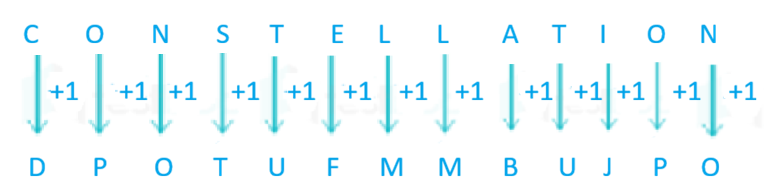
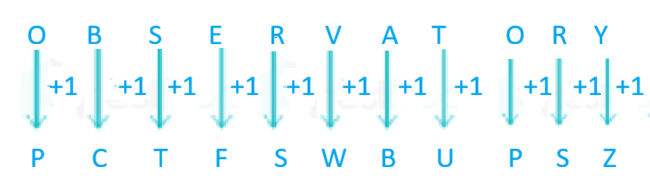
In a particular code language, if CONSTELLATION is coded as DPOTUFMMBUJPO and OBSERVATORY is coded as PCTFSWBUPSZ, then what is the code for PLANETARIUM?

  1. AOption (a)

    QMBOFUBSJVN

  2. BOption (b)

    QMBOGUBSJVN

  3. COption (c)

    QMBOFUBSKVN

  4. DOption (d)

    QMBOFUBSJWO

View answer & explanation

Correct answer

Answer: (a)A.

QMBOFUBSJVN

Why this answer is correct

The logic followed here is:

Logic: Each letter of the word is shifted one step forward in the English alphabetical order.

CONSTELLATION → DPOTUFMMBUJPO

OBSERVATORY → PCTFSWBUPSZ

Apply to PLANETARIUM:


So, PLANETARIUM → QMBOFUBSJVN

Hence, the correct answer is Option 1.

Question 28

Each item describes a situation and is followed by four possible responses. Indicate the response you find most appropriate. Choose only one response for each item. The responses will be evaluated based on the level of appropriateness for the given situation.

A project manager's team wants an extended deadline, but the client insists on the original date. What is the best decision?

  1. AOption (a)

    Ignore the team and push them harder

  2. BOption (b)

    Request a partial delivery plan to satisfy both

  3. COption (c)

    Cancel the projec

  4. DOption (d)

    Replace the team

View answer & explanation

Correct answer

Answer: (b)B.

Request a partial delivery plan to satisfy both

Why this answer is correct

The logic is based on effective decision-making and conflict resolution.

Option 1: Ignore the team and push them harder – May reduce morale and productivity.

Option 2: Request a partial delivery plan to satisfy both – Balances team capacity and client expectations.

Option 3: Cancel the project – Not practical or appropriate.

Option 4: Replace the team – Extreme and unnecessary action.

Among these, requesting a partial delivery plan is the most balanced and practical solution.

Hence, the correct answer is Option 2.

Question 29

In this type of questions, question is provided with substitutes for various mathematical symbols, followed by a question involving calculation of an expression or choosing the correct/incorrect equation. You have to put the real signs in the given equation and then solve the questions as required.

If '%' stands for 'x', '?' stands for '+', '&' stands for '÷', '^' stands for '-', then find the value of: 2 ? 11 % 4 % 5 = ?

  1. AOption (a)

    222

  2. BOption (b)

    223

  3. COption (c)

    260

  4. DOption (d)

    221

View answer & explanation

Correct answer

Answer: (a)A.

222

Why this answer is correct

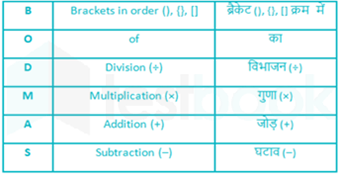
BODMAS Table: 

Given equation: 2 ? 11 % 4 % 5

Now, if ‘%’ stands for ‘×’, ‘?’ stands for ‘+’, ‘&’ stands for ‘÷’, and ‘^’ stands for ‘−’, then:

⇒ 2 + 11 × 4 × 5

⇒ 11 × 4 = 44

⇒ 44 × 5 = 220

⇒ 2 + 220 = 222

Hence, the correct answer is "Option 1".

Question 30

A colleague takes extended breaks, and the team workload falls on you. Most constructive response? 

  1. AOption (a)

    Do their work secretly 

  2. BOption (b)

    Discuss with them privately to understand if there's a reason and adjust task distribution collaboratively 

  3. COption (c)

    Complain to management immediately 

  4. DOption (d)

    Spread rumors about their laziness 

View answer & explanation

Correct answer

Answer: (b)B.

Discuss with them privately to understand if there's a reason and adjust task distribution collaboratively 

Why this answer is correct

The logic is based on professional and constructive workplace behavior.

Option 1: Do their work secretly – Encourages dependency and avoids addressing the issue.

Option 2: Discuss with them privately to understand if there's a reason and adjust task distribution collaboratively – Promotes communication, fairness, and teamwork.

Option 3: Complain to management immediately – May be premature without first addressing the issue directly.

Option 4: Spread rumors about their laziness – Unprofessional and harmful to the work environment.

Among these, discussing the issue privately and collaborating is the most constructive approach.

Hence, the correct answer is Option 2.

Question 31

A family consists of 6 members P, Q, R, S, T, U. Q is the son of R, but R is not the mother of Q. P and R are a married couple. T is the brother of R. S is the daughter of P. U is the brother of P. How many male members are there in the family?

  1. AOption (a)

    2

  2. BOption (b)

    3

  3. COption (c)

    4

  4. DOption (d)

    5

View answer & explanation

Correct answer

Answer: (c)C.

4

Why this answer is correct

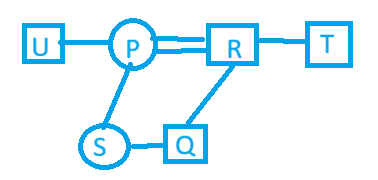
Family Chart:

Given:

Q is the son of R.

R is not the mother of Q.

P and R are a married couple.

T is the brother of R.

S is the daughter of P.

U is the brother of P.

Therefore, male members are: R, Q, T, U → Total = 4

Hence, the correct answer is Option 3.

Question 32

A work can be completed by 10 men in 8 days. How many days will 16 men take to complete the same work?

  1. AOption (a)

    4 days

  2. BOption (b)

    5 days

  3. COption (c)

    6 days

  4. DOption (d)

    7 days

View answer & explanation

Correct answer

Answer: (b)B.

5 days

Why this answer is correct

Given:

A work can be completed by 10 men in 8 days.

Logic:  Work = Men × Days

Total work = 10 × 8 = 80 man-days

Now, for 16 men:

Required days = Total work ÷ Men

= 80 ÷ 16 = 5 days

Hence, the correct answer is Option 2.

Question 33

Simplify: 1/4+1/3-1/6

  1. AOption (a)

    5/12

  2. BOption (b)

    7/12

  3. COption (c)

    1/2

  4. DOption (d)

    1/3

View answer & explanation

Correct answer

Answer: (a)A.

5/12

Why this answer is correct

BODMAS Table: 

Given: 1/4 + 1/3 − 1/6

Logic: Take LCM of 4, 3, and 6 = 12

Convert into like fractions:

1/4 = 3/12

1/3 = 4/12

1/6 = 2/12

Now,

3/12 + 4/12 − 2/12 = 5/12

Hence, the correct answer is Option 1.

Question 34

Few of the letters are given followed by a question mark (?) these letters are following a specific pattern you have to give the correct option which can replace question mark.

What comes after: G, K, O, S, ?

  1. AOption (a)

    U

  2. BOption (b)

    V

  3. COption (c)

    W

  4. DOption (d)

    X

View answer & explanation

Correct answer

Answer: (c)C.

W

Why this answer is correct

The logic followed here is:

So, 'W' will replace the question mark in the given series.

Hence, the correct answer is "Option 3".

Question 35

Few of the letters are given followed by a question mark (?) these letters are following a specific pattern you have to give the correct option which can replace question mark.

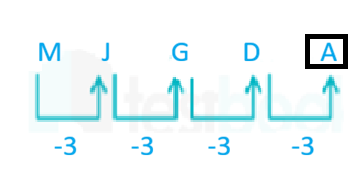
What is the next letter in the sequence: M, J, G, D, ?

  1. AOption (a)

    A

  2. BOption (b)

    B

  3. COption (c)

    C

  4. DOption (d)

    D

View answer & explanation

Correct answer

Answer: (a)A.

A

Why this answer is correct

The logic followed here is:

So, 'A' will replace the question mark in the given series.

Hence, the correct answer is "Option 1".

Question 36

Four meaningful words are given in the options you have to check that which of the following words cannot be formed from the letters.

'CHARACTER'?

  1. AOption (a)

    HEARTY

  2. BOption (b)

    CRATE

  3. COption (c)

    TRACER

  4. DOption (d)

    CHARTER

View answer & explanation

Correct answer

Answer: (a)A.

HEARTY

Why this answer is correct

The logic followed here is:

Given word: CHARACTER

LetterFrequency in CHARACTER
C2
H1
A2
R2
T1
E1

Now, Checking the options:

OptionWordPossible/Not
1HEARTYNot possible (Letter Y not present)
2CRATEPossible (All letters present)
3TRACERPossible (All letters present)
4CHARTERNot possible (T appears 2 times, but available 1)

Thus, HEARTY and CHARTER cannot be formed, but since HEARTY fails due to missing letter, it is the correct choice.

Hence, the correct answer is Option 1.

Question 37

What will come in place of the question mark (?) in the following number series?

1, 8, 2, 27, 3, 64, 4, ?

  1. AOption (a)

    125

  2. BOption (b)

    100

  3. COption (c)

    5

  4. DOption (d)

    49

View answer & explanation

Correct answer

Answer: (a)A.

125

Why this answer is correct

The logic followed here is:

thus, "125" will replace the question mark in the given series.

Hence, the correct option is "Option 1".

Question 38

Which of the following numbers would replace the question mark (?) in the given number series?

90, 110, 132, ?, 182

  1. AOption (a)

    140

  2. BOption (b)

    146

  3. COption (c)

    156

  4. DOption (d)

    166

View answer & explanation

Correct answer

Answer: (c)C.

156

Why this answer is correct

The logic followed here is:

thus, "156" will replace the question mark in the given series.

Hence, the correct option is "Option 4".

Question 39

Directions

Select the related letter from the given alternatives.

BKMP: EFPK :: DJOS: ?

  1. AOption (a)

    FGST

  2. BOption (b)

    .EHQM

  3. COption (c)

    GFSO

  4. DOption (d)

    GERN

View answer & explanation

Correct answer

Answer: (d)D.

GERN

Why this answer is correct

The logic followed here is:

Given: BKMP → EFPK

So, the pattern is: +3, −5, +3, −5

Similarly, For DJOS:

So, DJOS → GERN

Hence, the correct answer is "Option 4".

Question 40

Directions

Select the related letter from the given alternatives.

BEIN: YVRM:: DGKP: ?

  1. AOption (a)

    XUQK

  2. BOption (b)

    XVPL

  3. COption (c)

    YTLP

  4. DOption (d)

    WTPK

View answer & explanation

Correct answer

Answer: (d)D.

WTPK

Why this answer is correct

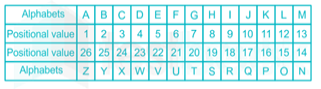
The logic followed here is:

Logic: Each letter is replaced by its opposite letter in the alphabet (Atbash pattern)

Given: BEIN → YVRM

B ↔ Y

E ↔ V

I ↔ R

N ↔ M

Similarly, For DGKP:

D ↔ W

G ↔ T

K ↔ P

P ↔ K

So, DGKP → WTPK

Hence, the correct answer is "Option 4".

Question 41

You are given a Master Address (MA) from official records. Your task is to identify the correct candidate address that matches exactly with the master address in terms of formatting, punctuation, spelling, and structure.

Master Address (MA): Gate No. 5, IT Park, Phase IV, Electronic City, Bengaluru - 560100

Candidate Addresses:

  1. AOption (a)

    Gate No. 5, IT Park, Phase 4, Electronic City, Bengaluru - 560100

  2. BOption (b)

    Gate No 5, IT Park, Phase IV, Electronic City, Bengaluru - 560100

  3. COption (c)

    Gate No. 5, I.T. Park, Phase IV, Electronic City, Bengaluru - 560100

  4. DOption (d)

    Gate No. 5, IT Park, Phase IV, Electronic City, Bengaluru - 560100

View answer & explanation

Correct answer

Answer: (d)D.

Gate No. 5, IT Park, Phase IV, Electronic City, Bengaluru - 560100

Why this answer is correct

The address given in the problem is,

Gate No. 5, IT Park, Phase IV, Electronic City, Bengaluru - 560100

Let's match this address with the given options one by one to find the exact match.

OptionAddress in OptionGiven AddressComment
(1)Gate No. 5, IT Park, Phase 4, Electronic City, Bengaluru - 560100Gate No. 5, IT Park, Phase IV, Electronic City, Bengaluru - 560100Uses '4' instead of 'IV'.
(2)Gate No 5, IT Park, Phase IV, Electronic City, Bengaluru - 560100Gate No. 5, IT Park, Phase IV, Electronic City, Bengaluru - 560100Missing '.' after 'No'.
(3)Gate No. 5, I.T. Park, Phase IV, Electronic City, Bengaluru - 560100Gate No. 5, IT Park, Phase IV, Electronic City, Bengaluru - 560100'I.T. Park' used instead of 'IT Park'.
(4)Gate No. 5, IT Park, Phase IV, Electronic City, Bengaluru - 560100Gate No. 5, IT Park, Phase IV, Electronic City, Bengaluru - 560100Match

Hence, "Option 4" is the correct answer.

Question 42

Your friend cheats in a public exam and asks you to stay silent. What is the right judgement?

  1. AOption (a)

    Stay loyal and silent

  2. BOption (b)

    Report them anonymously

  3. COption (c)

    Give a warning only

  4. DOption (d)

    Talk to them but take no action

View answer & explanation

Correct answer

Answer: (b)B.

Report them anonymously

Why this answer is correct

The logic is based on ethics and integrity.

Option 1: Stay loyal and silent – Supports dishonest behavior.

Option 2: Report them anonymously – Upholds fairness and integrity while avoiding personal conflict.

Option 3: Give a warning only – Does not address the seriousness of cheating.

Option 4: Talk to them but take no action – Acknowledges the issue but fails to act responsibly.

Among these, reporting anonymously is the most ethical and appropriate response.

Hence, the correct answer is Option 2.

Question 43

Select the combination of letters that, when sequentially placed in the blanks of the given letter series, will complete the series.

A S_F G J_ S F G J A S S _ _

  1. AOption (a)

    S, F, S, A, G, J

  2. BOption (b)

    S, A, A, G, G, J

  3. COption (c)

    S, A, S, G, F, J

  4. DOption (d)

    S, A, S, F, G, J

View answer & explanation

Correct answer

Answer: (d)D.

S, A, S, F, G, J

Why this answer is correct

The logic followed here is:

Given Sequence: A S _ F G J _ _ S F G J A S S _ _ _

Now, putting the letters in the blank spaces given in the option one by one:

Option 1) S, F, S, A, G, J → A S S / F G J / F S F / G J A / S S A / G J

Option 2) S, A, A, G, G, J → A S S / F G J / A A F / G J A / S S G / G J

Option 3) S, A, S, G, F, J → A S S / F G J / A S F / G J A / S S G / F J

Option 4) S, A, S, F, G, J → A S S / F G J / A S F / G J A / S S F / G J

Here, ASFGJ is repeating as a pattern.

Hence, the correct answer is "Option 4".

Question 44

Identify the pattern in the following sequence.

0.3, 1.2, 2.7, 4.8, 7.5

What is the next number in the sequence ?

  1. AOption (a)

    18

  2. BOption (b)

    10.8

  3. COption (c)

    16.8

  4. DOption (d)

    28

View answer & explanation

Correct answer

Answer: (b)B.

10.8

Why this answer is correct

The logic followed here is:

thus, "10.8" will replace the question mark in the given series.

Hence, the correct option is "Option 2".

Question 45

Some conditional data is provided to you in form of statement you have to check which of the following statement are logically inference from given statement.

Statement: Only students with a GPA above 3.5 can join the honor society. Michael joined the honor society. What can we infer about Michael?

  1. AOption (a)

    Michael has exactly a 3.5 GPA 

  2. BOption (b)

    Michael has a GPA above 3.5

  3. COption (c)

    Michael is the smartest student

  4. DOption (d)

    Michael studies very hard

View answer & explanation

Correct answer

Answer: (b)B.

Michael has a GPA above 3.5

Why this answer is correct

Given Statement:

Only students with a GPA above 3.5 can join the honor society. Michael joined the honor society.

Conclusions:

I. Michael has exactly a 3.5 GPA –

False (Because, the condition says GPA must be above 3.5, not equal to 3.5.)

II. Michael has a GPA above 3.5 –

True (Because, only students with GPA above 3.5 are allowed, and Michael joined, so he must satisfy this condition.)

III. Michael is the smartest student –

False (No information about comparison with others.)

IV. Michael studies very hard –

False (No such information is given in the statement.)

So, only conclusion II follows.

Hence, the correct answer is "Option 2".

Question 46

Some conditional data is provided to you in form of statement you have to check which of the following statement are logically inference from given statement.

Statement: Every house on Maple Street has a red roof. The house at 123 Oak Street has a blue roof.

What can we infer?

  1. AOption (a)

    123 Oak Street is not on Maple Street.

  2. BOption (b)

    The house was recently painted.

  3. COption (c)

    Oak Street is different from Maple Street.

  4. DOption (d)

    The homeowner likes blue colour.

View answer & explanation

Correct answer

Answer: (a)A.

123 Oak Street is not on Maple Street.

Why this answer is correct

Statement: Every house on Maple Street has a red roof. The house at 123 Oak Street has a blue roof.

Check the options:

Option (1): 23 Oak Street is not on Maple Street ⇒ Correct

This follows directly from the given statements.

Option (2): The house was recently painted ⇒ Incorrect

No information is given about painting.

Option (3): Oak Street is different from Maple Street ⇒ Incorrect

While the addresses suggest different streets, this is not the logical inference intended from the conditional statement. The conclusion is about the house, not the identity of the streets.

Option (4): The homeowner likes blue colour ⇒ Incorrect

No such information is provided.

Hence, the correct is 123 Oak Street is not on Maple Street.

Question 47

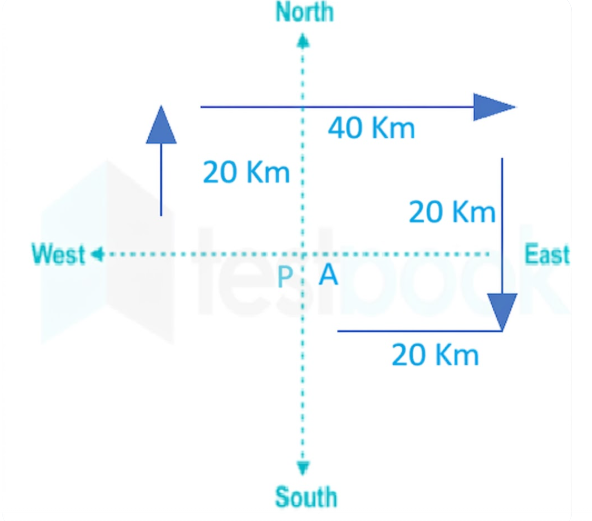
P walks 20 km towards north. He turns right and walks 40 km. He again turns right and walks 20 km. How far (in km) and in which direction is he now from the starting point?

  1. AOption (a)

    40, East

  2. BOption (b)

    30, West

  3. COption (c)

    30, East

  4. DOption (d)

    40, West

View answer & explanation

Correct answer

Answer: (a)A.

40, East

Why this answer is correct

Given:

P walks 20 km towards north.

He turns right and walks 40 km.

He again turns right and walks 20 km.

So, net vertical displacement = 20 − 20 = 0 km (north-south)

Net horizontal displacement = 40 km (east-west) = 40 km East

Hence, P is 40 km East from the starting point.

Hence, the correct answer is "Option 1".

Question 48

Three out of the following four are alike in a particular pattern and hence form a group. Find the one which does not belong to that group.

Google, Amazon, Facebook, Oracle

  1. AOption (a)

    Google

  2. BOption (b)

    Amazon

  3. COption (c)

    Facebook

  4. DOption (d)

    Oracle

View answer & explanation

Correct answer

Answer: (d)D.

Oracle

Why this answer is correct

The logic followed here is:

Logic: The pattern is based on companies primarily known for internet-based consumer services (tech platforms).

Google → Internet services

Amazon → E-commerce platform 

Facebook → Social media platform 

Oracle → Mainly enterprise software (not a consumer internet platform) 

Hence, the correct answer is Option 4.

Question 49

In the following question, four letter-number pairs are given. The letter-number on the left side of (-) is related to the letter-number on the right side of (-) with some Logic/Rule/Relation. Three pairs are similar on the basis of same Logic/Rule/Relation. Select the odd one out from the given alternatives.

(NOTE: Operations should be performed on the whole numbers, without breaking down the number into its constituent digits. E.g.13 Operations on 13 such as adding /subtracting/multiplying etc. to 13 can be performed. Breaking down 13 into 1 and 3 and then performing mathematical operations on 1 and 3 is not allowed)

  1. AOption (a)

    78AV - 156BY

  2. BOption (b)

    94TC - 198UF

  3. COption (c)

    108LD - 216MG

  4. DOption (d)

    136MI - 272NL

View answer & explanation

Correct answer

Answer: (b)B.

94TC - 198UF

Why this answer is correct

The logic followed here is:

Logic: The pattern is → Number is multiplied by 2, and letters shift forward by +1 position each.

Option 1) 78AV

→ 78 × 2 = 156, A→B, V→Y 

Option 2)  94TC

→ 94 × 2 = 188 (but given 198 ), T→U, C→F (number rule fails)

Option 3)  108LD

→ 108 × 2 = 216, L→M, D→G 

Option 4) 136MI

→ 136 × 2 = 272, M→N, I→L 

Only Option 2 does not follow the number pattern.

Hence, the correct answer is Option 2.

Question 50

From the given alternatives, select the word that CANNOT be formed by using the letters of the given word.

CONSERVATION

  1. AOption (a)

    VAIN

  2. BOption (b)

    CAUTION

  3. COption (c)

    ACTOR

  4. DOption (d)

    STAIN

View answer & explanation

Correct answer

Answer: (b)B.

CAUTION

Why this answer is correct

Given word: CONSERVATION

Rule: Check which word cannot be formed using the letters of the given word.

LetterCount
C1
O2
N2
S1
E1
R1
V1
A1
T1
I1

Now check each option:

Option (1): VAIN

V A I N → All letters available

 Can be formed

Option (2): CAUTION

C A U T I O N → ‘U’ is not present in given word

 Cannot be formed

Option (3): ACTOR

A C T O R → All letters available

Can be formed

Option (4): STAIN

S T A I N → All letters available

Can be formed

Hence, the word that cannot be formed is CAUTION.

Hence, the correct answer is Option 2.

Quantitative Aptitude (25 questions)

Question 51

A shopkeeper sells an article at a discount of 12%. Had he given only a 5% discount, he would have earned ₹504 more as profit. If the cost price of the article is ₹3,000, then find the marked price.

  1. AOption (a)

    ₹7,200

  2. BOption (b)

    ₹6,800

  3. COption (c)

    ₹6,500

  4. DOption (d)

    ₹7,500

View answer & explanation

Correct answer

Answer: (a)A.

₹7,200

Why this answer is correct

Given:

Cost price = 3000

Discount1 = 12%

Discount2 = 5%

Difference in profit = 504

Formula Used:

Selling price = Marked price × (100 − discount%) ÷ 100

Profit = Selling price − Cost price

Calculation:

⇒ Let Marked price = M

⇒ SP1 = M × (88 ÷ 100)

⇒ SP2 = M × (95 ÷ 100)

⇒ Profit difference = SP2 − SP1

⇒ 504 = M × (95 ÷ 100) − M × (88 ÷ 100)

⇒ 504 = M × (7 ÷ 100)

⇒ M = 504 × (100 ÷ 7)

⇒ M = 7200

∴ The correct answer is 7200.

Question 52

The marked prices of a pen and pencil are in the ratio of 5:6. The shopkeeper gives an 18% discount on the pen. If the total discount on both the pen and the pencil is 12%, then the discount offered on the pencil is:

  1. AOption (a)

    7%

  2. BOption (b)

    10%

  3. COption (c)

    11%

  4. DOption (d)

    8%

View answer & explanation

Correct answer

Answer: (a)A.

7%

Why this answer is correct

Given:

Ratio of marked prices (pen : pencil) = 5 : 6

Discount on pen = 18%

Total discount = 12%

Formula Used:

Discount amount = Marked price × discount% ÷ 100

Total discount % = (Total discount ÷ Total marked price) × 100

Calculation:

⇒ Let marked prices = 5x and 6x

⇒ Discount on pen = 5x × (18 ÷ 100) = 0.9x

⇒ Discount on pencil = 6x × (d ÷ 100) = (6d ÷ 100)x

⇒ Total marked price = 11x

⇒ Total discount = 0.9x + (6d ÷ 100)x

⇒ 12% of 11x = 0.9x + (6d ÷ 100)x

⇒ (12 ÷ 100) × 11x = 0.9x + (6d ÷ 100)x

⇒ 1.32x = 0.9x + (6d ÷ 100)x

⇒ 1.32 − 0.9 = (6d ÷ 100)

⇒ 0.42 = (6d ÷ 100)

⇒ d = (0.42 × 100) ÷ 6 = 7

∴ The correct answer is 7%.

Question 53

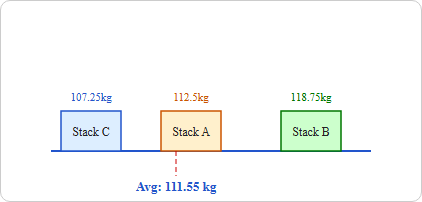
In a warehouse, there are 3 stacks of bricks. The average weight of the bricks in Stack A is 112.5 kg, in Stack B is 118.75 kg, and in Stack C is 107.25 kg. If Stack A has 12 bricks, Stack B has 8 bricks, and Stack C has 16 bricks, find the overall average weight of all bricks in the warehouse.

  1. AOption (a)

    111.55 kg

  2. BOption (b)

    110.25 kg

  3. COption (c)

    113.75 kg

  4. DOption (d)

    109.85 kg

View answer & explanation

Correct answer

Answer: (a)A.

111.55 kg

Why this answer is correct

Shortcut Trick

Ratio of number of bricks in Stack A : B : C = 12 : 8 : 16 = 3 : 2 : 4.

Assume base average = 110 kg.

Net Deviation = [3 × (112.5 − 110)] + [2 × (118.75 − 110)] + [4 × (107.25 − 110)]

Net Deviation = [3 × 2.5] + [2 × 8.75] + [4 × (−2.75)] = 7.5 + 17.5 − 11 = 14.

Overall Average = 110 + (14 ÷ 9) = 110 + 1.555... ≈ 111.55 kg.

∴ The correct answer is 111.55 kg.

Alternate Method

Given:

Stack A: 12 bricks at 112.5 kg | Stack B: 8 bricks at 118.75 kg | Stack C: 16 bricks at 107.25 kg

Formula Used:

Overall Average = (Total Weight) ÷ (Total Number of Bricks)

⇒ Total weight of Stack A = 12 × 112.5 = 1350 kg

⇒ Total weight of Stack B = 8 × 118.75 = 950 kg

⇒ Total weight of Stack C = 16 × 107.25 = 1716 kg

⇒ Total Weight of all bricks = 1350 + 950 + 1716 = 4016 kg

⇒ Total number of bricks = 12 + 8 + 16 = 36

⇒ Overall Average = 4016 ÷ 36

⇒ Overall Average = 1004 ÷ 9 = 111.555...

∴ The correct answer is 111.55 kg.

Additional Information

Weighted Average Formula

The weighted average is calculated as (w1x1 + w2x2 + ... + wnxn) ÷ (w1 + w2 + ... + wn), where w is the weight (quantity) and x is the value.

Deviation Method

New Average = Assumed Average + (Net Deviation ÷ Total Count). This simplifies calculations by using smaller numbers.

Average Property

If every value in a set is increased or decreased by a constant k, the overall average also increases or decreases by k.

Question 54

Which of the following is the largest three-digit number that is a perfect square?

  1. AOption (a)

    951

  2. BOption (b)

    961

  3. COption (c)

    971

  4. DOption (d)

    981

View answer & explanation

Correct answer

Answer: (b)B.

961

Why this answer is correct

Formula Used:

Perfect square: A number that can be expressed as the square of an integer.

Largest three-digit number: 999.

Calculation:

⇒ Check if the square root of each option is an integer:

⇒ √951 ≈ 30.81 (not an integer)

⇒ √961 = 31 (an integer)

⇒ √971 ≈ 31.17 (not an integer)

⇒ √981 ≈ 31.34 (not an integer)

∴ The correct answer is 961.

Question 55

A started a business with ₹30,000. B joined after 6 months with ₹40,000. At the end of the year, what is the profit-sharing ratio?

  1. AOption (a)

    3:5

  2. BOption (b)

    3:4

  3. COption (c)

    4:5

  4. DOption (d)

    3:2

View answer & explanation

Correct answer

Answer: (d)D.

3:2

Why this answer is correct

Given:

A's investment = ₹30,000

B's investment = ₹40,000

B joined after 6 months

Total time = 1 year

Formula Used:

Profit-sharing ratio = (Investment × Time)

Calculation:

⇒ A's share = ₹30,000 × 12 months

⇒ A's share = ₹360,000

⇒ B's share = ₹40,000 × 6 months

⇒ B's share = ₹240,000

⇒ Profit-sharing ratio = A's share : B's share

⇒ Profit-sharing ratio = ₹360,000 : ₹240,000

⇒ Profit-sharing ratio = 3 : 2

∴ The correct answer is 3:2.

Question 56

If sin(A + B) = sinAcosB + cosAsinB, then the value of sin 75° is:

  1. AOption (a)

    (3+1)/2(\sqrt{3} + 1)/2

  2. BOption (b)

    (3+1)/2(\sqrt{3} + 1)/ \sqrt2

  3. COption (c)

    (2+1)/22(\sqrt{2} + 1)/ 2 \sqrt2

  4. DOption (d)

    (3+1)/22(\sqrt{3} + 1)/ 2 \sqrt2

View answer & explanation

Correct answer

Answer: (d)D.

(3+1)/22(\sqrt{3} + 1)/ 2 \sqrt2

Why this answer is correct

Given:

sin(A + B) = sinAcosB + cosAsinB

75° = 45° + 30°

Formula Used:

sin(A + B) = sinAcosB + cosAsinB

Calculation:

⇒ sin75° = sin(45 + 30)

⇒ sin75° = sin45 × cos30 + cos45 × sin30

⇒ sin45 = 1 ÷ √2, cos30 = √3 ÷ 2

⇒ cos45 = 1 ÷ √2, sin30 = 1 ÷ 2

⇒ sin75° = (1 ÷ √2 × √3 ÷ 2) + (1 ÷ √2 × 1 ÷ 2)

⇒ sin75° = (√3 ÷ 2√2) + (1 ÷ 2√2)

⇒ sin75° = (√3 + 1) ÷ (2√2)

∴ The correct answer is (√3 + 1) ÷ (2√2).

Question 57

If numbers are in numbers are in a ratio 2:5:3:4, and the numbers are increased by 20%, 30%, 40% and 10% respectively. Find the new ratio.

  1. AOption (a)

    22:67:47:40

  2. BOption (b)

    19:63:41:47

  3. COption (c)

    23:61:41:43

  4. DOption (d)

    24:65:42:44

View answer & explanation

Correct answer

Answer: (d)D.

24:65:42:44

Why this answer is correct

Given:

Ratio = 2 : 5 : 3 : 4

Increase = 20%, 30%, 40%, 10%

Formula Used:

New value = Original × (100 + increase%) ÷ 100

Calculation:

⇒ New values = 2 × (120 ÷ 100), 5 × (130 ÷ 100), 3 × (140 ÷ 100), 4 × (110 ÷ 100)

⇒ = 2.4, 6.5, 4.2, 4.4

⇒ Multiply by 10 ⇒ 24 : 65 : 42 : 44

∴ The correct answer is 24 : 65 : 42 : 44.

Question 58

The ratio of milk and water in 560 liters of mixture is 4: 3. 140 liters of mixture are taken out. Find the quantity of milk now.

  1. AOption (a)

    300 liters

  2. BOption (b)

    320 liters

  3. COption (c)

    240 liters

  4. DOption (d)

    280 liters

View answer & explanation

Correct answer

Answer: (c)C.

240 liters

Why this answer is correct

Given:

Total mixture = 560 litres

Ratio (milk : water) = 4 : 3

Mixture removed = 140 litres

Formula Used:

Quantity = Total × (part ÷ sum of ratio)

Remaining = Initial − Removed proportion

Calculation:

⇒ Milk initially = 560 × (4 ÷ 7) = 320

⇒ Milk removed = 140 × (4 ÷ 7) = 80

⇒ Milk remaining = 320 − 80 = 240

∴ The correct answer is 240 litres.

Question 59

In a mixture of 60 litres, the ratio of wine to water is 1: 2. If this ratio is to be 1: 3, then what quantity of water needs to be added?

  1. AOption (a)

    24 litres

  2. BOption (b)

    18 litres

  3. COption (c)

    22 litres

  4. DOption (d)

    20 litres

View answer & explanation

Correct answer

Answer: (d)D.

20 litres

Why this answer is correct

Given:

Total mixture = 60 litres

Initial ratio (wine : water) = 1 : 2

New ratio = 1 : 3

Formula Used:

Quantity = Total × (part ÷ sum of ratio)

Calculation:

⇒ Wine = 60 × (1 ÷ 3) = 20

⇒ Water = 60 × (2 ÷ 3) = 40

⇒ Let water added = x

⇒ New ratio = 20 : (40 + x) = 1 : 3

⇒ 20 ÷ (40 + x) = 1 ÷ 3

⇒ 60 = 40 + x

⇒ x = 20

∴ The correct answer is 20 litres.

Question 60

If secθ\theta + tanθ\theta = 5 where θ\theta is an acute angle, find the value of secθ\theta.

  1. AOption (a)

    12/5

  2. BOption (b)

    13/5

  3. COption (c)

    5/2

  4. DOption (d)

    3

View answer & explanation

Correct answer

Answer: (b)B.

13/5

Why this answer is correct

Given:

secθ + tanθ = 5

θ is acute

Formula Used:

(secθ + tanθ)(secθ − tanθ) = 1

Calculation:

⇒ secθ − tanθ = 1 ÷ 5

⇒ Add equations:

⇒ (secθ + tanθ) + (secθ − tanθ) = 5 + 1 ÷ 5

⇒ 2secθ = 26 ÷ 5

⇒ secθ = 13 ÷ 5

∴ The correct answer is 13 ÷ 5.

Question 61

A bike is chasing a car, which is 12 km ahead of it. The speeds of the bike and the car are 96 km/hr and 60 km/hr, respectively. If the bike catches the car in 'a' minutes, then find the distance covered by the bike in (a - 16) hours.

  1. AOption (a)

    312 km

  2. BOption (b)

    384 km

  3. COption (c)

    360 km

  4. DOption (d)

    398 km

View answer & explanation

Correct answer

Answer: (b)B.

384 km

Why this answer is correct

Given:

Speed of bike = 96 km/h

Speed of car = 60 km/h

Initial distance = 12 km

Formula Used:

Relative speed = Speed of bike - Speed of car

Time = Distance ÷ Relative speed

Distance = Speed × Time

Calculation:

⇒ Relative speed = 96 - 60 = 36 km/h

⇒ Time to catch = 12 ÷ 36 = 1/3 hour

⇒ a = 1/3 × 60 = 20 minutes

Now,

(a - 16) = 20 - 16 = 4 hours

So, distance covered by the bike in (a - 16) hours

⇒ 96 × 4 = 384 km

∴ The correct answer is 384 km

Question 62

If x = 10+3 \sqrt{10} + \sqrt{3} and y = 10−3,\sqrt{10} - \sqrt{3}, then find x² + y².

  1. AOption (a)

    26

  2. BOption (b)

    56

  3. COption (c)

    25

  4. DOption (d)

    15

View answer & explanation

Correct answer

Answer: (a)A.

26

Why this answer is correct

Given:

x = √10 + √3

y = √10 - √3

Formula Used:

(a + b)2 = a2 + b2 + 2ab

(a - b)2 = a2 + b2 - 2ab

Calculation:

⇒ x2 = (√10 + √3)2

⇒ x2 = 10 + 3 + 2√30 = 13 + 2√30

⇒ y2 = (√10 - √3)2

⇒ y2 = 10 + 3 - 2√30 = 13 - 2√30

⇒ x2 + y2 = (13 + 2√30) + (13 - 2√30)

⇒ x2 + y2 = 26

∴ The correct answer is 26.

Question 63

If a = 8+3,\sqrt{8} + \sqrt{3}, and b = 8−3,\sqrt{8} - \sqrt{3}, find the value of (a + b) / (a - b).

  1. AOption (a)

    (36)/5(3\sqrt{6})/5

  2. BOption (b)

    (26)/3(2\sqrt{6})/3

  3. COption (c)

    (23)/7(2\sqrt{3})/7

  4. DOption (d)

    None of these

View answer & explanation

Correct answer

Answer: (b)B.

(26)/3(2\sqrt{6})/3

Why this answer is correct

Given:

a = √8 + √3

b = √8 - √3

Formula Used:

(a + b)

(a - b)

Calculation:

⇒ a + b = (√8 + √3) + (√8 - √3)

⇒ a + b = 2√8

⇒ a - b = (√8 + √3) - (√8 - √3)

⇒ a - b = 2√3

⇒ (a + b) ÷ (a - b) = (2√8) ÷ (2√3)

⇒ (a + b) ÷ (a - b) = √8 ÷ √3

⇒ (a + b) ÷ (a - b) = √(8 ÷ 3)

⇒ (a + b) ÷ (a - b) = 2√6 ÷ 3

∴ The correct answer is 2√6/3.

Question 64

A rectangular tile having a perimeter of 224 cm has been used to pave a floor of length and breadth 25.6 m and 14.4 m, respectively. If the ratio of length to breadth of each tile is 4:3, then find the number of tiles required to pave the floor completely.

  1. AOption (a)

    1200

  2. BOption (b)

    1050

  3. COption (c)

    1140

  4. DOption (d)

    1540

View answer & explanation

Correct answer

Answer: (a)A.

1200

Why this answer is correct

Given:

Perimeter of tile = 224 cm

Ratio = 4 : 3

Floor = 25.6 m × 14.4 m

Formula Used:

Perimeter = 2 × (l + b)

Number of tiles = Area of floor ÷ Area of tile

Calculation:

⇒ Let l = 4x, b = 3x

⇒ 2 × (4x + 3x) = 224

⇒ 2 × 7x = 224

⇒ 14x = 224

⇒ x = 16

⇒ l = 64 cm, b = 48 cm

⇒ Area of tile = 64 × 48 = 3072 cm2

⇒ Floor = 25.6 m × 14.4 m = 2560 cm × 1440 cm

⇒ Area of floor = 2560 × 1440 = 3686400 cm2

⇒ Number of tiles = 3686400 ÷ 3072

⇒ Number of tiles = 1200

∴ The correct answer is 1200.

Question 65

A rectangle has one side of 6 cm, and its diagonal is 22 cm. Find the other side and the area.

  1. AOption (a)

    87 cm and 487 cm28\sqrt{7} \text{ cm and } 48\sqrt{7} \text{ cm}^2

  2. BOption (b)

    57 cm and 407 cm25\sqrt{7} \text{ cm and } 40\sqrt{7} \text{ cm}^2

  3. COption (c)

    27 cm and 337 cm22\sqrt{7} \text{ cm and } 33\sqrt{7} \text{ cm}^2

  4. DOption (d)

    37 cm and 447 cm23\sqrt{7} \text{ cm and } 44\sqrt{7} \text{ cm}^2

View answer & explanation

Correct answer

Answer: (a)A.

87 cm and 487 cm28\sqrt{7} \text{ cm and } 48\sqrt{7} \text{ cm}^2

Why this answer is correct

Given:

One side = 6 cm

Diagonal = 22 cm

Formula Used:

Diagonal2 = length2 + breadth2

Area = length × breadth

Calculation:

⇒ Other side2 = 222 - 62

⇒ Other side2 = 484 - 36

⇒ Other side2 = 448

⇒ Other side = √448

⇒ Other side = 8√7 cm

⇒ Area = 6 × 8√7

⇒ Area = 48√7 cm2

∴ The correct answer is 8√7 and 48√7.

Question 66

The average of 5 consecutive even numbers is 46. If the next 3 consecutive even numbers are added, what is the new average? 

  1. AOption (a)

    48

  2. BOption (b)

    49

  3. COption (c)

    50

  4. DOption (d)

    51

View answer & explanation

Correct answer

Answer: (b)B.

49

Why this answer is correct

Given:

Average of 5 consecutive even numbers = 46

Formula Used:

Average of consecutive numbers = middle number

Average = Sum ÷ Number of terms

Calculation:

⇒ Middle number = 46

⇒ Numbers = 42, 44, 46, 48, 50

⇒ Next numbers = 52, 54, 56

⇒ Total sum = 42 + 44 + 46 + 48 + 50 + 52 + 54 + 56

⇒ Total sum = 392

⇒ New average = 392 ÷ 8

⇒ New average = 49

∴ The correct answer is 49.

Question 67

A population falls by 12% in the first year. By what percentage must it increase in the second year so that at the end of the second year the population is exactly the same as the original?

  1. AOption (a)

    10.6%

  2. BOption (b)

    11.6%

  3. COption (c)

    13.6%

  4. DOption (d)

    14.6%

View answer & explanation

Correct answer

Answer: (c)C.

13.6%

Why this answer is correct

Shortcut Trick

To restore a value after a percentage decrease, use the formula:

Required Increase % = [r ÷ (100 − r)] × 100, where r is the percentage fall.

Required Increase % = [12 ÷ (100 − 12)] × 100

Required Increase % = (12 ÷ 88) × 100 ≈ 13.63%

∴ The correct answer is 13.6%.

Alternate Method

Given: First year population decrease = 12%.

Formula Used: Percentage Increase = (Change ÷ Initial Value) × 100

⇒ Let the original population be 100.

⇒ Population after 1st year = 100 − (12% of 100) = 100 − 12 = 88.

⇒ To return to 100, the increase needed = 100 − 88 = 12.

⇒ Percentage increase required on the new base (88) = (12 ÷ 88) × 100

⇒ Percentage increase = (3 ÷ 22) × 100 = 300 ÷ 22

⇒ Percentage increase = 13.6363...

∴ The correct answer is 13.6%.

Additional Information

Percentage Reversal Rule

If a value decreases by x%, the percentage increase required to restore the original value is [x ÷ (100 − x)] × 100.

Base Change Principle

Percentage values change when the base value changes. Here, the first change is calculated on 100, while the second must be calculated on 88.

Reciprocal Ratios

Common restoration pairs: a 20% decrease requires a 25% increase; a 25% decrease requires a 33.33% increase; a 50% decrease requires a 100% increase.

Question 68

A shopkeeper marks up his goods by 20% and then offers a discount of 10%. If the cost price is ₹500, what is the selling price?

  1. AOption (a)

    ₹550

  2. BOption (b)

    ₹540

  3. COption (c)

    ₹600

  4. DOption (d)

    ₹450

View answer & explanation

Correct answer

Answer: (b)B.

₹540

Why this answer is correct

Shortcut Trick

Net Profit% = Markup% − Discount% − (Markup × Discount / 100)

Net Profit% = 20 − 10 − (20 × 10 / 100) = 20 − 10 − 2 = 8%

Selling Price (SP) = 108% of Cost Price (CP) = 1.08 × 500 = ₹540

∴ The correct answer is ₹540.

Alternate Method

Given:

Cost Price (CP) = ₹500

Markup Percentage = 20%

Discount Percentage = 10%

Formula Used:

  1. Marked Price (MP) = CP × (100 + Markup%) / 100
  2. Selling Price (SP) = MP × (100 − Discount%) / 100

Calculations:

⇒ Marked Price (MP) = 500 × (1 + 20/100)

⇒ Marked Price (MP) = 500 × 1.2 = ₹600

⇒ Selling Price (SP) = 600 × (1 − 10/100)

⇒ Selling Price (SP) = 600 × 0.9 = ₹540

∴ The correct answer is ₹540.

Additional Information

Marked Price and Markup

Marked Price is the price at which a shopkeeper intends to sell a product before any discounts. Markup is the amount added to the Cost Price to arrive at the Marked Price.

Relation between CP and MP

A direct relationship exists between CP and MP: CP/MP = (100 − Discount%) / (100 + Profit%).

Profit and Discount Interaction

Profit is always calculated on Cost Price, whereas Discount is always calculated on the Marked Price. Effective profit change follows the successive percentage rule.

Question 69

A sum of money becomes 16 times in 2 years. What is the annual compound interest rate?

  1. AOption (a)

    100%

  2. BOption (b)

    200%

  3. COption (c)

    300%

  4. DOption (d)

    400%

View answer & explanation

Correct answer

Answer: (c)C.

300%

Why this answer is correct

Given:

Final amount = 16 × Principal

Time = 2 years

Formula Used:

Amount = Principal × (1 + R ÷ 100)n

Calculation:

⇒ 16P = P × (1 + R ÷ 100)2

⇒ 16 = (1 + R ÷ 100)2

⇒ 1 + R ÷ 100 = 4

⇒ R ÷ 100 = 3

⇒ R = 300%

∴ The correct answer is 300%.

Question 70

A bus starts 30 minutes late and to reach its destination 150 km away on time, it increases its speed by 25 km/h. What is the usual speed of the bus ?

  1. AOption (a)

    70 km/h

  2. BOption (b)

    75 km/h

  3. COption (c)

    80 km/h

  4. DOption (d)

    95 km/h

View answer & explanation

Correct answer

Answer: (b)B.

75 km/h

Why this answer is correct

Given:

Distance = 150 km

Time lost = 30 minutes = 1 ÷ 2 hour

Increase in speed = 25 km/h

Formula Used:

Time = Distance ÷ Speed

Calculation:

⇒ Let usual speed = x

⇒ Usual time = 150 ÷ x

⇒ New time = 150 ÷ (x + 25)

⇒ Time difference = 1 ÷ 2

⇒ 150 ÷ x − 150 ÷ (x + 25) = 1 ÷ 2

⇒ 150(x + 25) − 150x = (1 ÷ 2) × x(x + 25)

⇒ 3750 = (1 ÷ 2)(x2 + 25x)

⇒ 7500 = x2 + 25x

⇒ x2 + 25x − 7500 = 0

⇒ x = 75

∴ The correct answer is 75.

Question 71

In a cricket series, Team A had a winning rate of 70% after playing x matches. Then they lost 20 matches consecutively, and their winning rate fell to 50%. Find the total matches played by Team A before the losing streak.

  1. AOption (a)

    40

  2. BOption (b)

    50

  3. COption (c)

    60

  4. DOption (d)

    80

View answer & explanation

Correct answer

Answer: (b)B.

50

Why this answer is correct

Given:

Winning rate initially = 70%

Matches = x

Lost matches = 20

Final winning rate = 50%

Formula Used:

Wins = (Winning % ÷ 100) × Total matches

Calculation:

⇒ Initial wins = (70 ÷ 100) × x = 0.7x

⇒ Total matches after losing = x + 20

⇒ Wins remain = 0.7x

⇒ Final winning rate = 50%

⇒ 0.7x = (50 ÷ 100) × (x + 20)

⇒ 0.7x = 0.5(x + 20)

⇒ 0.7x = 0.5x + 10

⇒ 0.2x = 10

⇒ x = 50

∴ The correct answer is 50.

Question 72

A and B together can complete a job in 8 days. If A alone can do it in 16 days, how many days will B alone take? 

  1. AOption (a)

    16 days

  2. BOption (b)

    10 days

  3. COption (c)

    12 days

  4. DOption (d)

    14 days

View answer & explanation

Correct answer

Answer: (a)A.

16 days

Why this answer is correct

Shortcut Trick

Let Total Work be the LCM of 8 and 16 = 16 units.

Efficiency of (A + B) = 16 ÷ 8 = 2 units/day.

Efficiency of A = 16 ÷ 16 = 1 unit/day.

Efficiency of B = 2 − 1 = 1 unit/day.

Time taken by B = 16 ÷ 1 = 16 days.

∴ The correct answer is 16 days.

Alternate Method

Given: Time taken by (A + B) = 8 days | Time taken by A = 16 days.

Formula Used: Total Work = Efficiency × Time | Efficiency of B = Efficiency of (A+B) − Efficiency of A.

PersonDaysTotal WorkEfficiency
A + B816 (LCM)2
A161

⇒ Efficiency of B = Efficiency of (A + B) − Efficiency of A

⇒ Efficiency of B = 2 − 1 = 1 unit/day

⇒ Time taken by B = Total Work ÷ Efficiency of B

⇒ Time taken by B = 16 ÷ 1 = 16 days

∴ The correct answer is 16 days.

Additional Information

Work and Efficiency Relation

Efficiency is inversely proportional to Time taken when Work is constant. If time ratio is x : y, efficiency ratio is y : x.

Total Work Formula

Total Work = Efficiency × Time. For multiple people, total efficiency is the sum of their individual efficiencies.

Pipes and Cisterns

This logic applies to Pipes and Cisterns, where an outlet pipe has negative efficiency (work done in removing water).

Question 73

If the original price of the the items is 2,050 and the discount discount is 26%, what will be the final price after the discount?

  1. AOption (a)

    ₹1,500

  2. BOption (b)

    ₹1,650

  3. COption (c)

    ​₹1,517

  4. DOption (d)

    ₹1,710

View answer & explanation

Correct answer

Answer: (c)C.

​₹1,517

Why this answer is correct

Given:

Marked price = 2050

Discount = 26%

Formula Used:

Selling price = Marked price × (100 − discount%) ÷ 100

Calculation:

⇒ Selling price = 2050 × (74 ÷ 100)

⇒ Selling price = 1517

∴ The correct answer is 1517.

Question 74

A farmer wants to fence a triangular field with sides 60 m, 111 m, and 123 m. If the cost of fencing is 18 per meter, what will be the total expense?

  1. AOption (a)

    ₹5,292

  2. BOption (b)

    ₹5,000

  3. COption (c)

    ₹4,982

  4. DOption (d)

    ₹5,512

View answer & explanation

Correct answer

Answer: (a)A.

₹5,292

Why this answer is correct

Given:

Sides = 60 m, 111 m, 123 m

Cost per meter = 18

Formula Used:

Perimeter = Sum of all sides

Total cost = Perimeter × cost per meter

Calculation:

⇒ Perimeter = 60 + 111 + 123 = 294

⇒ Total cost = 294 × 18 = 5292

∴ The correct answer is 5292.

Question 75

A triangular piece of land has sides that are in the ratio of 3:5:7, with a total perimeter of 300 meters. What are the sides of this land?

  1. AOption (a)

    60 m, 100 m, 140 m

  2. BOption (b)

    70 m, 110 m, 120 m

  3. COption (c)

    50 m, 80 m, 120 m

  4. DOption (d)

    65 m, 95 m, 140 m

View answer & explanation

Correct answer

Answer: (a)A.

60 m, 100 m, 140 m

Why this answer is correct

Shortcut Trick Total Ratio of sides = 3 : 5 : 7 ⇒ Sum of parts = 15 units. Given Total Perimeter = 300 m. Value of 1 unit = 300 ÷ 15 = 20 m. Sides = (3 × 20) m, (5 × 20) m, (7 × 20) m = 60 m, 100 m, 140 m. ∴ The correct answer is 60 m, 100 m, 140 m. Alternate Method Given: The ratio of the sides of the triangular land is 3 : 5 : 7 and the Perimeter is 300 m. Formula Used: Perimeter of triangle = Side1 + Side2 + Side3

⇒ Let the actual sides of the triangle be 3x, 5x, and 7x. ⇒ Sum of sides = Perimeter ⇒ 3x + 5x + 7x = 300 ⇒ 15x = 300 ⇒ x = 300 ÷ 15 ⇒ x = 20 ⇒ Side1 = 3 × 20 = 60 m ⇒ Side2 = 5 × 20 = 100 m ⇒ Side3 = 7 × 20 = 140 m ∴ The correct answer is 60 m, 100 m, 140 m. Additional Information Heron's Formula Used to find the area of a triangle when all three sides (a, b, c) are known: Area = √[s(s − a)(s − b)(s − c)], where s is the semi-perimeter (a+b+c)/2. Triangle Inequality Theorem The sum of the lengths of any two sides of a triangle must be greater than the length of the third side (a + b > c). Semi-Perimeter It is half of the total perimeter of the triangle. For this land, s = 300 ÷ 2 = 150 m. Classification of Triangles Based on sides: Equilateral (all sides equal), Isosceles (two sides equal), and Scalene (no sides equal). This land is a Scalene triangle.

General Awareness (25 questions)

Question 76

Which Chahamana ruler defeated Sultan Muhammad Ghori in 1191 A.D?

  1. AOption (a)

    Ajayaraja II

  2. BOption (b)

    Vigraharaja IV

  3. COption (c)

    Prithviraja III

  4. DOption (d)

    Vigraharaja V

View answer & explanation

Correct answer

Answer: (c)C.

Prithviraja III

Why this answer is correct

The correct answer is Prithviraja III.

Key Points

  • Prithviraja III, also known as Prithviraj Chauhan, was one of the most prominent rulers of the Chahamana dynasty of Rajasthan.
  • He is renowned for his victory over Sultan Muhammad Ghori in the First Battle of Tarain in 1191 A.D., where he successfully repelled Ghori's invasion.
  • Prithviraj Chauhan utilized skilled strategies and the valor of his Rajput army to decisively defeat Muhammad Ghori, marking a significant event in Indian history.
  • The First Battle of Tarain is considered a historic moment as it showcased the resistance of Rajputs against foreign invasions.
  • Despite his victory in 1191 A.D., Prithviraja III was defeated by Muhammad Ghori in the Second Battle of Tarain in 1192 A.D., leading to the establishment of Muslim rule in northern India.

Additional Information

  • Chahamana Dynasty:
  • The Chahamana dynasty, also known as the Chauhan dynasty, ruled parts of present-day Rajasthan and Delhi.
  • They were known for their valor and resistance against foreign invasions, particularly from the Ghaznavids and Ghurids.
  • The dynasty had several notable rulers, including Ajayaraja II and Vigraharaja IV, who contributed to its expansion and consolidation.
  • First Battle of Tarain:
  • The battle took place in 1191 A.D. near the town of Tarain, which is located in present-day Haryana, India.
  • Prithviraja III's forces successfully defeated Muhammad Ghori's army, forcing him to retreat to Ghazni.
  • This battle is celebrated for Rajput bravery and strategic warfare.
  • Second Battle of Tarain:
  • It occurred in 1192 A.D., a year after the first battle, at the same location.
  • In this battle, Muhammad Ghori returned with a stronger army and defeated Prithviraj Chauhan, leading to the decline of Rajput dominance in northern India.
  • The defeat marked the beginning of Muslim rule in India, particularly under the Delhi Sultanate.
  • Muhammad Ghori:
  • Muhammad Ghori was a ruler of the Ghurid dynasty who sought to expand his empire into the Indian subcontinent.
  • His invasions laid the foundation for Islamic rule in India, which lasted for several centuries.
  • Despite his defeat in the First Battle of Tarain, he persisted and ultimately succeeded in the Second Battle of Tarain.
  • Legacy of Prithviraj Chauhan:
  • Prithviraja III is remembered as a symbol of Rajput valor and resistance against foreign invasions.
  • His exploits have been immortalized in Indian folklore and literature, including the epic poem Prithviraj Raso, attributed to his court poet Chand Bardai.
  • He remains an iconic figure in Indian history for his bravery and patriotism.

Question 77

Which of the following is NOT a Fundamental Duty mentioned in the Indian Constitution?

  1. AOption (a)

    To promote co-operative societies

  2. BOption (b)

    To protect integrity of India

  3. COption (c)

    To value the rich heritage of our composite culture

  4. DOption (d)

    To develop the scientific temper

View answer & explanation

Correct answer

Answer: (a)A.

To promote co-operative societies

Why this answer is correct

The correct answer is To promote co-operative societies.

Key Points

  • The Fundamental Duties of Indian citizens are listed under Article 51A of the Indian Constitution, which was added by the 42nd Amendment Act, 1976.
  • The Fundamental Duties include several obligations such as safeguarding the sovereignty, unity, and integrity of India, promoting harmony, and valuing the rich heritage of the country.
  • To promote co-operative societies is not mentioned among the Fundamental Duties listed under Article 51A. Hence, this option is correct.
  • The duty to protect the integrity of India is explicitly included under the Fundamental Duties, emphasizing the importance of national unity and security. This is correct.
  • Similarly, duties like valuing the rich heritage of our composite culture and developing a scientific temper are also part of the Fundamental Duties aimed at fostering intellectual and cultural development. These are correct.
  • The Fundamental Duties are not enforceable by law; however, they serve as moral obligations for citizens to uphold the spirit of the Constitution.

Additional Information

  • Fundamental Duties:
  • The Fundamental Duties were inspired by the Constitution of the USSR and were introduced in India to remind citizens of their responsibilities towards the nation.
  • There are currently 11 Fundamental Duties listed under Article 51A.
  • Examples include respecting the Constitution, the National Flag, and the National Anthem, promoting harmony, and protecting the environment.
  • The 86th Constitutional Amendment Act, 2002, added the 11th duty, which obligates parents or guardians to provide opportunities for education to their children or wards aged 6 to 14 years.
  • Key Characteristics of Fundamental Duties:
  • The Fundamental Duties are non-justiciable, meaning they cannot be legally enforced by the courts.
  • They are considered essential for promoting a sense of discipline and commitment among citizens towards the nation.
  • The duties aim to ensure that citizens actively participate in the process of nation-building and uphold the democratic values of the country.
  • Comparison with Fundamental Rights:
  • While Fundamental Rights empower citizens, Fundamental Duties remind them of their responsibilities.
  • Both Fundamental Rights and Duties are essential for maintaining the balance between individual liberty and societal interests.
  • The inclusion of Fundamental Duties was one of the significant recommendations of the Swaran Singh Committee.
  • Examples of Fundamental Duties:
  • To abide by the Constitution and respect its ideals and institutions.
  • To cherish and follow the noble ideals that inspired the national struggle for freedom.
  • To defend the country and render national service when called upon to do so.
  • To protect and improve the natural environment, including forests, lakes, rivers, and wildlife.
  • To safeguard public property and to abjure violence.

Question 78

Which of the following features of the Indian Constitution is NOT borrowed from Australia? 

  1. AOption (a)

    Concept of Concurrent list 

  2. BOption (b)

    Joint sitting of the two houses

  3. COption (c)

    Freedom of trade and commerce

  4. DOption (d)

    Election of members of the Rajya Sabha

View answer & explanation

Correct answer

Answer: (d)D.

Election of members of the Rajya Sabha

Why this answer is correct

The correct answer is Election of members of the Rajya Sabha.

Key Points

  • The Indian Constitution has borrowed several features from the Australian Constitution, but the system for the election of members of the Rajya Sabha is not one of them. The Rajya Sabha members are elected by the elected members of the State Legislative Assemblies through a system of proportional representation by means of a single transferable vote, which is not a feature of the Australian Constitution.
  • The concept of the Concurrent List, which specifies subjects on which both the Union and State Legislatures can legislate, is borrowed from the Australian Constitution. Hence, this statement is correct.
  • The provision for a joint sitting of the two houses of Parliament to resolve deadlocks between the Lok Sabha and the Rajya Sabha is also inspired by the Australian parliamentary system. Hence, this statement is correct.
  • The principle of freedom of trade, commerce, and intercourse across the territory of India, as provided under Article 301 of the Indian Constitution, is another feature borrowed from the Australian Constitution. Hence, this statement is correct.
  • The election process for the members of Rajya Sabha, however, is uniquely adapted to India's federal structure and is not derived from the Australian Constitution. Hence, this is the correct option.

Additional Information

  • Concurrent List:
  • The Concurrent List is enumerated in the Seventh Schedule of the Indian Constitution.
  • It contains subjects on which both the Union and State Governments can legislate, such as education, marriage, bankruptcy, and forests.
  • This feature was borrowed from the Australian Constitution, where a similar division of powers between the federal and state governments exists.
  • Joint Sitting of the Parliament:
  • The provision of a joint sitting is mentioned in Article 108 of the Indian Constitution.
  • It is summoned by the President to resolve any deadlock between the Lok Sabha and the Rajya Sabha when there is a disagreement on a bill.
  • This feature is also inspired by the Australian parliamentary system.
  • Freedom of Trade and Commerce:
  • Article 301 of the Indian Constitution ensures the freedom of trade, commerce, and intercourse throughout the territory of India.
  • This principle was borrowed from the Australian Constitution, which emphasizes economic integration and free trade among its states.
  • Restrictions on this freedom can only be imposed by Parliament under specific conditions mentioned in Articles 302-307.
  • Election of Members of the Rajya Sabha:
  • The Rajya Sabha, or the Council of States, is the upper house of the Indian Parliament.
  • Its members are elected by the elected members of the State Legislative Assemblies using a system of proportional representation with a single transferable vote.
  • This system reflects the federal structure of India and was not borrowed from the Australian Constitution.

Important Points

  • The Indian Constitution is unique in its adaptability, borrowing features from various constitutions worldwide, including those of the UK, USA, Australia, Canada, and Ireland.
  • While it has borrowed the Concurrent List, Joint Sitting, and Freedom of Trade from Australia, the election process of Rajya Sabha is distinct to India’s federal system.
  • The Constitution reflects a deliberate effort to balance the powers of the center and states, ensuring both national unity and state autonomy.

Question 79

As of 31st July 2025, which of the following country is the member of BIMSTEC?

I. Thailand

II. Iran

  1. AOption (a)

    Only I

  2. BOption (b)

    Only II

  3. COption (c)

    Both I and II

  4. DOption (d)

    Neither I nor II

View answer & explanation

Correct answer

Answer: (a)A.

Only I

Why this answer is correct

The correct answer is Only I.

Key Points

  • BIMSTEC stands for Bay of Bengal Initiative for Multi-Sectoral Technical and Economic Cooperation, comprising countries dependent on the Bay of Bengal for trade and economic cooperation.
  • The member countries of BIMSTEC as of 31st July 2025 are Bangladesh, Bhutan, India, Nepal, Sri Lanka, Myanmar, and Thailand.
  • Thailand is one of the founding members of BIMSTEC, established on 6th June 1997. Hence, Statement I is correct.
  • Iran is not a member of BIMSTEC. It is geographically located outside the Bay of Bengal region and has no affiliation with BIMSTEC as of the given date. Hence, Statement II is incorrect.
  • BIMSTEC primarily aims to foster cooperation in areas like trade, investment, energy, technology, and tourism among member countries in the Bay of Bengal region.

Additional Information

  • BIMSTEC Establishment:
  • BIMSTEC was established through the Bangkok Declaration on 6th June 1997 with initial members including Bangladesh, India, Sri Lanka, and Thailand.
  • Later, Myanmar joined in December 1997, Nepal and Bhutan joined in February 2004.
  • Key Objectives of BIMSTEC:
  • To enhance regional cooperation among member countries in the Bay of Bengal region.
  • To promote economic growth and sustainable development through mutual collaboration.
  • To strengthen connectivity, trade, and investment among member nations.
  • Focus Areas of BIMSTEC Cooperation:
  • Major focus areas include trade and investment, technology, energy, transportation and communication, tourism, fisheries, agriculture, public health, poverty alleviation, and climate change adaptation.
  • Special emphasis is laid on improving connectivity in the region via infrastructure development.
  • Differences with SAARC:
  • BIMSTEC is seen as an alternative to SAARC, focusing exclusively on regional cooperation without political conflicts.
  • Unlike SAARC, BIMSTEC excludes Pakistan, which makes it a preferred platform for India to strengthen regional ties.
  • Recent Developments:
  • The 5th BIMSTEC Summit was held on 30th March 2022 in Colombo, Sri Lanka, where member countries agreed to enhance cooperation in various sectors.
  • India emphasized the importance of regional connectivity and the implementation of the BIMSTEC Master Plan for Transport Connectivity.

Important Points

  • Member Countries:
  • India, Bangladesh, Bhutan, Nepal, Sri Lanka, Myanmar, and Thailand.
  • These countries represent a significant portion of the global population and economy in the Bay of Bengal region.
  • BIMSTEC Secretariat:
  • The BIMSTEC Secretariat is located in Dhaka, Bangladesh.
  • It was established in 2014 to coordinate and monitor BIMSTEC activities.
  • Connectivity Projects:
  • Projects like the Kaladan Multi-Modal Transit Transport Project aim to enhance connectivity between India and Myanmar.
  • Efforts are underway to establish a BIMSTEC Free Trade Area (FTA) to boost trade and economic cooperation.
  • Future Agenda:
  • Strengthening institutional mechanisms and enhancing cooperation in priority sectors.
  • Promoting people-to-people contact and cultural exchange among member nations.

Question 80

The International Solar Alliance is a collaborative initiative between India and ______.

  1. AOption (a)

    France

  2. BOption (b)

    USA

  3. COption (c)

    Brazil

  4. DOption (d)

    Italy

View answer & explanation

Correct answer

Answer: (a)A.

France

Why this answer is correct

The correct answer is France.

Key Points

  • The International Solar Alliance (ISA) is a joint initiative launched by India and France during the 21st session of the Conference of the Parties (COP-21) to the United Nations Framework Convention on Climate Change (UNFCCC) in Paris on 30th November 2015.
  • The primary aim of the ISA is to promote the use of solar energy, facilitate energy access, and help in reducing dependence on fossil fuels to combat climate change.
  • It is a coalition of solar resource-rich countries that lie fully or partially between the Tropic of Cancer and the Tropic of Capricorn, although other countries can also join the alliance.
  • ISA focuses on key areas such as scaling solar applications for agricultural use, scaling solar mini-grids, and scaling rooftop solar installations.
  • The headquarters of the ISA is located in Gurugram, India, and it is the first international intergovernmental organization to have its headquarters in India.

Additional Information

  • Objectives of the International Solar Alliance:
  • To reduce the cost of solar energy and its components through bulk purchase and local manufacturing.
  • To mobilize financial resources for the development of solar energy projects in member countries.
  • To promote research and development in solar energy and its applications.
  • To increase the use of solar technologies to reduce greenhouse gas emissions and promote sustainable development.
  • Key Initiatives under ISA:
  • One Sun, One World, One Grid: This initiative aims to interconnect solar energy grids across countries to ensure a reliable supply of clean energy globally.
  • STAR-C program: Aims to develop solar technology application and research centers across member countries.
  • Affordable Finance at Scale: Seeks to lower the cost of capital for solar projects by leveraging international public finance.
  • France’s Role in ISA:
  • France has been a key partner of India in this initiative, providing technical and financial support to operationalize the ISA framework.
  • The French Development Agency (AFD) has committed significant financial resources to support solar energy projects under the ISA initiative.
  • Partnerships and Membership:
  • As of 2023, 124 countries have signed the ISA framework agreement, out of which more than 90 have ratified it.
  • Major partners include the European Union, the United Nations Development Programme (UNDP), and the World Bank.
  • Milestones Achieved:
  • The ISA has launched several global programs, such as the Affordable Solar Power for Agriculture and Scaling Solar Applications for Agricultural Use (SSAAU).
  • It has been instrumental in mobilizing investments in solar energy infrastructure across developing countries.

Question 81

Who among the following is the first Indian woman mountaineer to climb Mount Everest?

  1. AOption (a)

    Ruma Pal

  2. BOption (b)

    Cornelia Sorabji 

  3. COption (c)

    Bachendri Pal

  4. DOption (d)

    Shikha Sharma

View answer & explanation

Correct answer

Answer: (c)C.

Bachendri Pal

Why this answer is correct

The correct answer is Bachendri Pal.

Key Points

  • Bachendri Pal became the first Indian woman to climb Mount Everest on 23rd May 1984.
  • She was a part of the Indian expedition to Mount Everest in 1984, which was organized by the Indian Mountaineering Foundation.
  • Her achievement marked a significant milestone in Indian mountaineering history and inspired many women in India to pursue mountaineering.
  • Bachendri Pal hails from a small village in Uttarkashi district of Uttarakhand and is known for her determination and perseverance.
  • She has been honored with several awards for her achievement, including the Padma Shri in 1984 and the Arjuna Award in 1986.

Additional Information

  • Ruma Pal:
  • Ruma Pal is a renowned legal personality and served as a judge of the Supreme Court of India.
  • She has no association with mountaineering or climbing Mount Everest.
  • Cornelia Sorabji:
  • Cornelia Sorabji was the first woman to practice law in India.
  • She is known for her contributions to the legal field and women's rights but has no connection with mountaineering.
  • Shikha Sharma:
  • Shikha Sharma is a well-known Indian banker and the former Managing Director & CEO of Axis Bank.
  • She is not related to mountaineering or climbing Mount Everest.
  • Legacy of Bachendri Pal:
  • After her Everest expedition, she continued to inspire young mountaineers by leading several expeditions, including the First All-Women Trans-Himalayan Expedition in 1997.
  • She served as the director of the Tata Steel Adventure Foundation, promoting adventure sports and mountaineering in India.

Important Points

  • First Indian Woman on Everest: Bachendri Pal’s achievement made her a national icon, showcasing the potential of Indian women in adventure sports.
  • Awards and Recognition: Apart from the Padma Shri and Arjuna Award, she has also received the National Adventure Award.
  • Inspiration: Her success encouraged many Indian women to take up mountaineering and adventure sports, breaking societal stereotypes.
  • Mount Everest Facts: Mount Everest, with an elevation of 8,848.86 meters, is the highest peak in the world, located in the Himalayas on the Nepal-China border.

Question 82

Who was the first woman IPS officer of India?

  1. AOption (a)

    Annie Besant 

  2. BOption (b)

    Kiran Bedi

  3. COption (c)

    Matangini Hazra

  4. DOption (d)

    Lakshmi Sahgal

View answer & explanation

Correct answer

Answer: (b)B.

Kiran Bedi

Why this answer is correct

The correct answer is Kiran Bedi.

Key Points

  • Kiran Bedi became the first woman Indian Police Service (IPS) officer in India in 1972.
  • She is known for her exceptional service in various challenging roles, including her tenure as the Director General of the Bureau of Police Research and Development.
  • Bedi earned recognition for her anti-corruption efforts and her work in prison reforms, especially during her tenure as the Inspector General of Prisons in Tihar Jail, Delhi.
  • In her career, she was awarded several accolades, including the Ramon Magsaysay Award in 1994 for her efforts in public service and reforms.
  • Kiran Bedi's pioneering journey in the IPS and her contributions to society have made her an inspirational figure in India.

Additional Information

  • Annie Besant:
  • Annie Besant was a British theosophist, activist, and educationist who played a significant role in India’s independence movement.
  • She became the first woman to preside over the Indian National Congress in 1917.
  • Though a notable figure in India's history, she was not an IPS officer.
  • Matangini Hazra:
  • Matangini Hazra was an Indian freedom fighter known for her role in the Quit India Movement.
  • She was affectionately called “Gandhi Buri” (old lady Gandhi) for her dedication to the Gandhian principles of non-violence.
  • She was not associated with the IPS or police service.
  • Lakshmi Sahgal:
  • Lakshmi Sahgal was a freedom fighter and officer in Subhas Chandra Bose’s Indian National Army (INA).
  • She was a prominent leader of the Rani of Jhansi Regiment, an all-women regiment of the INA.
  • She, however, was not an IPS officer.
  • Kiran Bedi’s Achievements:
  • She introduced several prison reforms during her tenure as Inspector General of Tihar Jail, focusing on rehabilitation and skill development for inmates.
  • She was the first woman to lead the all-male contingent of the Delhi Police at the Republic Day Parade in 1975.
  • Her contribution to social causes includes her work on anti-drug campaigns, women’s empowerment, and child welfare.

Important Points

  • Indian Police Service (IPS):
  • The IPS is one of the All India Services, alongside the Indian Administrative Service (IAS) and Indian Forest Service (IFS).
  • It was formed in 1948, and IPS officers are recruited through the Union Public Service Commission (UPSC).
  • IPS officers are responsible for maintaining law and order, crime prevention, and public safety in India.
  • Representation of Women in IPS:
  • Kiran Bedi’s entry into the IPS marked a significant milestone for women’s representation in law enforcement.
  • Over the years, the number of women in the IPS has increased, but they still constitute a minority in the service.
  • Several initiatives, including reservations and awareness programs, aim to increase female representation in the police force.

Question 83

In January 2025, who has been appointed as the India's new Ambassador to Israel? 

  1. AOption (a)

    Amit Kumar

  2. BOption (b)

    Jitender Pal Singh

  3. COption (c)

    Akash Tripathi

  4. DOption (d)

    Ravi Ahuja

View answer & explanation

Correct answer

Answer: (b)B.

Jitender Pal Singh

Why this answer is correct

The correct answer is Jitender Pal Singh.

Key Points

  • Jitender Pal Singh has been appointed as India's new Ambassador to Israel in January 2025.
  • The appointment comes amidst strengthening diplomatic relations between India and Israel, focusing on areas such as technology, defense, agriculture, and innovation.
  • Ambassadors play a crucial role in representing India's interests in foreign countries and fostering bilateral cooperation.
  • India and Israel have shared a strong relationship since the establishment of diplomatic ties in 1992, with collaborations in sectors like counter-terrorism, water management, and cybersecurity.
  • The role of an ambassador involves facilitating agreements, coordinating diplomatic missions, and promoting cultural exchange between the two nations.

Additional Information

  • India-Israel Relations:
  • India officially recognized Israel in 1950, but formal diplomatic ties were established in 1992.
  • Key areas of collaboration include defense technology, agricultural advancements, and strategic partnerships in combating terrorism.
  • In 2017, Indian Prime Minister Narendra Modi became the first Indian PM to visit Israel, further strengthening bilateral ties.
  • Role of Ambassadors:
  • An ambassador is the highest-ranking diplomat representing their nation in a foreign country.
  • They are responsible for promoting economic, cultural, and political interests and maintaining bilateral relations.
  • Ambassadors coordinate negotiations, treaties, and agreements between nations.
  • Israel's Importance to India:
  • Israel is one of India's leading partners in the defense sector, supplying cutting-edge military technology.
  • India imports agricultural innovations, water management technologies, and cybersecurity tools from Israel.
  • Israel is also a key player in India's energy and renewable energy initiatives.
  • Diplomatic Appointments:
  • Diplomatic appointments are decided by the Ministry of External Affairs (MEA) in India.
  • Such appointments are crucial in strengthening global partnerships and advancing India's foreign policy objectives.
  • Ambassadors are often chosen based on their expertise in foreign relations and their ability to represent India effectively on international platforms.

Important Points

  • India-Israel Defense Collaboration:
  • India is the largest buyer of Israeli military equipment, ranging from drones to missile defense systems.
  • Israel has supported India's defense modernization efforts and provides joint research and development opportunities.
  • Strategic Cooperation:
  • Both countries collaborate on counter-terrorism strategies and intelligence sharing to combat global security challenges.
  • Israel has supported India on issues like border security and fighting terrorism in international forums.
  • Agricultural and Water Management:
  • Israel's drip irrigation and water recycling technologies have been widely adopted in India to improve agricultural productivity.
  • Joint projects focus on enhancing rural livelihoods and combating water scarcity issues.

Question 84

In August 2024, which Indian received 'Grand-Collar of the Order' the highest civilian award of Timor Leste?

  1. AOption (a)

    Droupadi Murmu

  2. BOption (b)

    Narendra Modi

  3. COption (c)

    Amit Shah

  4. DOption (d)

    S. Jaishankar

View answer & explanation

Correct answer

Answer: (a)A.

Droupadi Murmu

Why this answer is correct

The correct answer is Droupadi Murmu.

Key Points

  • Droupadi Murmu, the 15th President of India, received the 'Grand Collar of the Order', the highest civilian honor of Timor Leste in August 2024.
  • The award was conferred on her for her significant contributions to strengthening bilateral relations between India and Timor Leste.
  • The 'Grand Collar of the Order' is a prestigious civilian honor awarded to distinguished personalities for their exceptional service and contributions.
  • This recognition highlights India's growing influence and its leaders' efforts in fostering global partnerships and diplomatic ties.
  • Droupadi Murmu is India's first tribal President and has been actively working towards promoting inclusivity and representation, both domestically and internationally.

Additional Information

  • Timor Leste:
  • Timor Leste, also known as East Timor, is a Southeast Asian nation located in the eastern half of the island of Timor.
  • It gained independence from Indonesia in 2002 and has been a member of the United Nations since then.
  • The country shares a strong diplomatic relationship with India, with both nations focusing on areas like education, health, and cultural exchange.
  • Grand Collar of the Order:
  • This honor is typically reserved for heads of state or distinguished individuals who have made exceptional contributions to international relations.
  • It symbolizes friendship, unity, and collaboration between nations.
  • Droupadi Murmu's Contributions:
  • As the President of India, Droupadi Murmu represents the highest constitutional authority in the country.
  • Her leadership has played a significant role in reinforcing India's global standing, particularly in regions like Southeast Asia.
  • She is also recognized for her efforts in promoting social justice, tribal welfare, and inclusive development.
  • India-Timor Leste Relations:
  • India was one of the first countries to recognize Timor Leste's independence.
  • Both nations cooperate in sectors like education, agriculture, and capacity building under the Indian Technical and Economic Cooperation (ITEC) program.
  • The award to Droupadi Murmu reflects the strong diplomatic ties and mutual respect between the two nations.

Important Points

  • Historical Significance:
  • The award symbolizes global acknowledgment of India's leadership and its leaders' commitment to fostering global partnerships.
  • Droupadi Murmu's recognition as the recipient of this honor reflects the growing acknowledgment of diversity and inclusivity in international relations.
  • India's Role in Global Diplomacy:
  • India has been increasingly recognized as a major player in promoting peace, development, and cooperation in the international arena.
  • Awards like the 'Grand Collar of the Order' are a testament to India's efforts to strengthen its diplomatic ties worldwide.

Question 85

In Janaury 2025, The Women Entrepreneurship Platform (WEP) of NITI Aayog launched _______.

  1. AOption (a)

    Nari Shakti Puraskar 

  2. BOption (b)

    Mahila Coir Yojana

  3. COption (c)

    SERB-POWER

  4. DOption (d)

    EmpowHER Biz - Sapno Ki Udaan

View answer & explanation

Correct answer

Answer: (d)D.

EmpowHER Biz - Sapno Ki Udaan

Why this answer is correct

The correct answer is EmpowHER Biz - Sapno Ki Udaan.

Key Points

  • EmpowHER Biz - Sapno Ki Udaan was launched by the Women Entrepreneurship Platform (WEP) of NITI Aayog in January 2025.
  • It aims to empower aspiring and existing women entrepreneurs by providing them with the necessary tools, resources, and networks to achieve their entrepreneurial dreams.
  • This initiative focuses on equipping women with business mentoring, skill enhancement, and market linkages to help them establish and grow their ventures.
  • The program also emphasizes financial inclusion, enabling women entrepreneurs to access loans, grants, and other financial assistance required to scale their businesses.
  • Through partnerships with various stakeholders, including the corporate sector, non-profits, and government agencies, the initiative ensures a comprehensive ecosystem for women entrepreneurship development.

Additional Information

  • Women Entrepreneurship Platform (WEP):
  • The WEP is a flagship initiative by NITI Aayog launched in 2018 to create an ecosystem that supports and promotes women entrepreneurs across India.
  • It provides information, mentorship, and funding support tailored to the needs of women-led businesses.
  • The platform collaborates with industry leaders, financial institutions, and non-profits to foster entrepreneurship among women.
  • Key Features of EmpowHER Biz:
  • Focuses on capacity building, financial literacy, and market access.
  • Encourages participation from women in rural and semi-urban areas.
  • Includes training modules on digital marketing, e-commerce, and business management.
  • Provides a platform for networking and knowledge-sharing among women entrepreneurs.
  • Other Women-Centric Initiatives by the Government:
  • Mahila E-Haat: An online platform for women entrepreneurs to showcase their products and services.
  • Stand-Up India: Facilitates bank loans between Rs. 10 lakh and Rs. 1 crore to women entrepreneurs.
  • Pradhan Mantri Mudra Yojana (PMMY): Provides financial support to small business owners, including women.
  • Importance of Women Entrepreneurship:
  • Encourages economic independence and empowers women to contribute to the nation’s GDP.
  • Drives innovation and enhances job creation opportunities in various sectors.
  • Helps in achieving gender equality and reducing the gender gap in the workforce.

Important Points

  • Empowering Women through Entrepreneurship:
  • Access to Credit: Programs like EmpowHER Biz bridge the financial gap for women entrepreneurs.
  • Networking Opportunities: Women entrepreneurs are connected with mentors, industry leaders, and peers.
  • Skill Development: Training modules ensure that women entrepreneurs are equipped with modern business practices.
  • Impact of Women Entrepreneurship:
  • Contributes to socio-economic progress by uplifting families and communities.
  • Reduces unemployment by creating new business opportunities.
  • Promotes a diverse and inclusive economy.

Question 86

In January 2025, what practice did the Supreme Court of India order to be completely stopped in six major metropolitan cities?

  1. AOption (a)

    Open defecation 

  2. BOption (b)

    Use of single use Plastic

  3. COption (c)

    Manual scavenging and hazardous sewer cleaning

  4. DOption (d)

    Water rationin

View answer & explanation

Correct answer

Answer: (c)C.

Manual scavenging and hazardous sewer cleaning

Why this answer is correct

The correct answer is Manual scavenging and hazardous sewer cleaning.

Key Points

  • Manual scavenging, the practice of cleaning human excreta by hand, has been banned in India under the Prohibition of Employment as Manual Scavengers and Their Rehabilitation Act, 2013.
  • Despite the ban, instances of manual scavenging and hazardous sewer cleaning persist, especially in metropolitan cities, leading to severe health risks and fatalities.
  • On January 2025, the Supreme Court of India ordered the complete cessation of manual scavenging and hazardous sewer cleaning in six major metropolitan cities, emphasizing the use of mechanized cleaning methods.
  • The Court highlighted the urgent need to enforce mechanization and technological advancements to ensure the dignity, safety, and well-being of sanitation workers.
  • Key focus areas included implementing advanced sewer-cleaning machines, providing safety equipment, and ensuring compliance with labor laws to safeguard sanitation workers.

Additional Information

  • Prohibition of Employment as Manual Scavengers and Their Rehabilitation Act, 2013:
  • This Act bans manual scavenging and prescribes penalties for those engaging in or employing others for such practices.
  • It mandates the identification and rehabilitation of manual scavengers, including financial assistance, education, and alternative employment opportunities.
  • Health Risks of Manual Scavenging:
  • Manual scavengers are exposed to harmful pathogens, toxic gases, and hazardous chemicals, leading to severe health issues such as respiratory diseases, skin infections, and fatal accidents.
  • The lack of safety equipment and training exacerbates the risks faced by sanitation workers.
  • Mechanization and Alternatives:
  • Technological solutions, such as robotic sewer-cleaning machines and automated tools, are being adopted to eliminate manual scavenging.
  • Government initiatives promote the use of mechanized cleaning methods to ensure worker safety and efficiency in sewer management.
  • Supreme Court's Directions:
  • In several judgments, the Supreme Court has condemned the practice of manual scavenging, terming it a violation of the Right to Life under Article 21 of the Constitution.
  • It has directed strict enforcement of laws and monitoring mechanisms to eradicate manual scavenging across the nation.

Important Points

  • Government Initiatives:
  • The Swachh Bharat Mission aims to eliminate open defecation and promote hygiene and sanitation, indirectly addressing the issue of manual scavenging.
  • Programs like National Safai Karamcharis Finance and Development Corporation (NSKFDC) provide financial assistance and skill development for sanitation workers.
  • Legal Framework:
  • Under the Scheduled Castes and Scheduled Tribes (Prevention of Atrocities) Act, 1989, manual scavenging is treated as an atrocity against marginalized communities.
  • Employers can face imprisonment and fines for violating the laws prohibiting manual scavenging.
  • Statistics:
  • According to the latest data, over 50,000 manual scavengers have been identified across India despite the ban.
  • Government surveys highlight the urgent need for rehabilitation and stricter enforcement of anti-manual scavenging laws.

Question 87

Prime Minister's Internship Scheme (PMIS) aims to provide _________ crore young Indians with 12-month paid internships in the nation's top companies over the next five years. 

  1. AOption (a)

    1

  2. BOption (b)

    2

  3. COption (c)

    3

  4. DOption (d)

    4

View answer & explanation

Correct answer

Answer: (a)A.

1

Why this answer is correct

The correct answer is 1.

Key Points

  • The Prime Minister's Internship Scheme (PMIS) is an ambitious program launched by the Government of India to provide youth with meaningful employment opportunities.
  • The scheme aims to provide 1 crore young Indians with 12-month paid internships in the nation's top companies over the next five years.
  • It is designed to equip Indian youth with practical skills and corporate exposure to enhance their employability and professional growth.
  • The program will partner with leading companies across India, ensuring a variety of industrial sectors are covered, including IT, manufacturing, education, healthcare, and more.
  • The initiative aligns with the government's broader goal of addressing youth unemployment and encouraging skill development as part of India's demographic dividend.

Additional Information

  • Objectives of PMIS:
  • To create a structured pathway for youth to transition from education to employment.
  • To ensure the participation of India's corporate sector in addressing the unemployment challenge.
  • To provide interns with a stipend and financial support during their internship tenure.
  • Eligibility Criteria:
  • Applicants should be Indian nationals aged between 18 and 30 years.
  • They must have at least completed their secondary education or an equivalent qualification.
  • Preference may be given to individuals from economically weaker sections or marginalized communities.
  • Implementation:
  • The scheme will be implemented in collaboration with private companies, public sector enterprises, and non-governmental organizations.
  • Internships will cover various domains such as technology, finance, marketing, human resources, and operations.
  • The government will provide financial incentives to participating companies to encourage their involvement in the program.
  • Expected Outcomes:
  • Enhanced employability of Indian youth through skill development and on-the-job training.
  • Increased participation of the private sector in nation-building initiatives.
  • A reduction in the overall youth unemployment rate in India.

Important Points

  • Global Context: Several countries, including the USA and Germany, have implemented similar internship programs to bridge the gap between education and employment.
  • Skill Development in India: The PMIS complements other initiatives like Skill India and National Apprenticeship Promotion Scheme (NAPS).
  • Monitoring and Evaluation: The scheme will be monitored by a dedicated government task force to ensure its effectiveness and scalability.

Question 88

In July 2025, Pradhan Mantri Kaushal Vikas Yojana has completed how many years?

  1. AOption (a)

    7

  2. BOption (b)

    8

  3. COption (c)

    9

  4. DOption (d)

    10

View answer & explanation

Correct answer

Answer: (d)D.

10

Why this answer is correct

The correct answer is 10 years.

Key Points

  • The Pradhan Mantri Kaushal Vikas Yojana (PMKVY) was launched on 15 July 2015 by the Ministry of Skill Development and Entrepreneurship (MSDE). This aligns with the celebration of World Youth Skills Day.
  • By July 2025, the scheme will have completed 10 years of its implementation, focusing on skill development and employability enhancement.
  • The primary objective of PMKVY is to enable youth to take up industry-relevant skill training that will help them secure better livelihood opportunities.
  • The scheme operates under the Skill India Mission, aiming to train over 40 crore people in India by 2022 in different skills.
  • PMKVY is implemented by the National Skill Development Corporation (NSDC), which acts as a nodal agency for monitoring and coordinating the program.

Additional Information

  • Key Components of PMKVY:
  • Short Term Training (STT): Aimed at school/college dropouts and unemployed youth, providing industry-relevant skills training aligned with the National Skills Qualification Framework (NSQF).
  • Recognition of Prior Learning (RPL): This component assesses and certifies individuals with existing skills and prior experience.
  • Special Projects: This component allows for the creation of projects to address skill requirements in regions or sectors that are not covered under standard PMKVY courses.
  • Placement Assistance: Successful candidates are provided placement opportunities through Training Partners under the scheme.
  • Achievements of PMKVY:
  • As of 2023, over 1.37 crore individuals have received training under PMKVY across various sectors and disciplines.
  • The scheme has significantly contributed to bridging the skill gap in industries such as IT, construction, healthcare, and automotive sectors.
  • Many beneficiaries of PMKVY have successfully secured employment or started their entrepreneurial ventures.
  • Skill India Mission:
  • Launched in 2015, the mission aims to create a skilled workforce in India to meet the demands of a growing economy.
  • Under this mission, several initiatives like PMKVY, Udaan, and the National Apprenticeship Promotion Scheme (NAPS) have been introduced.
  • It aligns with the government's focus on ‘Atmanirbhar Bharat’ by promoting self-reliance and skill development.
  • Global Perspective:
  • India's focus on skill development through initiatives like PMKVY is in line with global efforts to address unemployment and enhance workforce productivity.
  • Countries like Germany and Australia have also implemented similar vocational training programs to meet industrial demands.

Question 89

A designated portion of a relay race is called as _______.

  1. AOption (a)

    Leg

  2. BOption (b)

    Heat

  3. COption (c)

    Spikes

  4. DOption (d)

    Lifting

View answer & explanation

Correct answer

Answer: (a)A.

Leg

Why this answer is correct

The correct answer is Leg.

Key Points

  • A leg refers to a designated portion or segment of a relay race. It is a critical term used in athletics to divide the race into sections for each team member.
  • In a relay race, the total distance is divided into equal segments called "legs," which are run by individual team members.
  • The performance in each leg contributes to the overall team result in the relay race. A strong performance by all runners ensures a higher chance of winning.
  • Relay races commonly include 4x100 meters or 4x400 meters, where each runner completes a specific leg before passing the baton to the next runner.
  • This term is specific to athletics and is not interchangeable with other options provided, such as "heat," which refers to a qualifying race, or "spikes," which are shoes worn by athletes.

Additional Information

  • Relay Races:
  • Relay races are team events in track and field where four athletes complete equal segments of the race, passing a baton to the next runner after completing their respective leg.
  • The two most common relay events are the 4x100 meters and 4x400 meters. In the 4x100 meters relay, each runner covers 100 meters, while in the 4x400 meters relay, each runner covers 400 meters.
  • Relay races require precise coordination during baton exchanges to avoid disqualification.
  • Other Related Terms:
  • Heat: Refers to a preliminary race used to qualify athletes for the final race. It is not related to a portion of the relay race.
  • Spikes: Specialized shoes with spikes on the sole to provide better grip and traction on the track, aiding in faster sprints.
  • Lifting: This term is unrelated to athletics and is typically associated with weightlifting or the act of picking something up.
  • History of Relay Races:
  • The concept of relay races originates from ancient Greece, where messengers ran in relays to deliver messages over long distances.
  • Modern relay races became part of the Olympic Games in the early 20th century, with the 4x100m and 4x400m events introduced in 1912.
  • Rules and Techniques:
  • Each runner must run entirely within their designated lane during their leg of the race, particularly in the 4x100 meters relay.
  • The baton must be passed within a designated zone of 20 meters, and dropping the baton or passing it outside this zone leads to disqualification.
  • In the 4x400 meters relay, runners may merge into the innermost lane after the first leg is completed.

Question 90

Long distance races are generally used to describe races of at least, _______ metres.

  1. AOption (a)

    1000

  2. BOption (b)

    1500

  3. COption (c)

    3000

  4. DOption (d)

    15000

View answer & explanation

Correct answer

Answer: (c)C.

3000

Why this answer is correct

The correct answer is 3000 metres.

Key Points

  • Long-distance races are events in athletics that typically involve running distances of at least 3000 metres.
  • These races test the endurance, stamina, and pace control of athletes over extended periods of time.
  • The 3000 metres is considered the minimum distance for a race to be categorized as a long-distance event in track and field competitions.
  • Examples of long-distance races include the 5000 metres, 10,000 metres, half-marathons, and marathons, which are widely recognized in international athletic events.
  • Long-distance running is an essential discipline in athletics, requiring

Additional Information

  • Historical Background:
  • Long-distance running has been a key component of athletics since the inception of the modern Olympic Games in 1896.
  • The marathon, which is 42.195 km, was introduced as a tribute to the legendary run of the Greek soldier Pheidippides in 490 BCE.
  • Physiological Aspects:
  • Long-distance running requires a well-developed aerobic capacity and efficient oxygen utilization.
  • Athletes need to train their bodies to store and use glycogen efficiently, as it's a crucial energy source for endurance activities.
  • Popular Events:
  • Internationally recognized races include the Boston Marathon, Berlin Marathon, New York City Marathon, and the London Marathon.
  • In athletics, the 5000 metres and 10,000 metres are staple events in competitions like the Olympics and World Championships.
  • Training Techniques:
  • Long-distance runners often use techniques such as interval training, long runs, and tempo runs to build endurance and improve speed.
  • Nutrition and hydration strategies play a critical role in ensuring optimal performance and recovery.
  • World Records:
  • The men's 5000m and 10,000m world records are currently held by Joshua Cheptegei, while the women's records are held by Letesenbet Gidey.
  • Marathon world records are held by Eliud Kipchoge (men) and Brigid Kosgei (women).

Question 91

India's first Vista dome jungle safari train was launched in which state in May 2025?

  1. AOption (a)

    Meghalaya

  2. BOption (b)

    Sikkim

  3. COption (c)

    Uttar Pradesh

  4. DOption (d)

    Tripura

View answer & explanation

Correct answer

Answer: (c)C.

Uttar Pradesh

Why this answer is correct

The correct answer is Uttar Pradesh.

Key Points

  • India's first Vista Dome Jungle Safari Train was launched in Uttar Pradesh on May 2025.
  • The train is designed to provide an immersive experience for tourists, offering panoramic views of the Chambal Valley and other scenic landscapes.
  • It features glass-ceiling coaches, large observation windows, and rotating seats to enhance the sightseeing experience.
  • This initiative aims to boost eco-tourism and attract travelers to explore the rich biodiversity and wildlife of the region.
  • Uttar Pradesh has been taking significant steps to promote tourism, and the launch of this train adds to the state's efforts to offer unique travel experiences.

Additional Information

  • Vista Dome Coaches:
  • Vista Dome coaches are specially designed with glass rooftops and wide windows to provide an enhanced viewing experience.
  • These coaches are equipped with modern amenities like air conditioning, Wi-Fi, and rotating seats.
  • Such trains are commonly used in scenic routes to promote eco-tourism and offer travelers a closer connection to nature.
  • Eco-Tourism in India:
  • Eco-tourism focuses on sustainable travel to natural areas, aiming to conserve the environment and improve the well-being of local communities.
  • Popular eco-tourism destinations in India include the Kaziranga National Park, Sundarbans, and Kerala's backwaters.
  • Chambal Valley:
  • The Chambal Valley is known for its unique geography, offering stunning landscapes and rich biodiversity.
  • This region is home to rare species like the Gharial and Indian Skimmer, making it a hotspot for wildlife enthusiasts.
  • Tourism Initiatives by Uttar Pradesh:
  • Uttar Pradesh has been actively promoting tourism through projects like the Kashi Vishwanath Corridor and Heritage Arc.
  • The state attracts millions of tourists every year with destinations like Agra (Taj Mahal), Varanasi, and Lucknow.

Important Points

  • Tourism Statistics:
  • Uttar Pradesh is one of the top tourist destinations in India, attracting both domestic and international visitors.
  • In 2022, the state recorded over 100 million domestic tourists, making it a leader in tourism growth.
  • Government Initiatives:
  • The Ministry of Railways is actively introducing Vista Dome trains to promote scenic travel across India.
  • Such initiatives align with the National Tourism Policy, aiming to boost sustainable tourism and regional development.
  • Impact of Eco-Tourism:
  • Eco-tourism fosters environmental conservation and generates income for local communities.
  • It also helps raise awareness about the importance of protecting natural habitats and biodiversity.

Question 92

As per the "Status of Tigers in Kaziranga, 2024" report what is the total number of tigers in Kaziranga Tiger reserve?

  1. AOption (a)

    355

  2. BOption (b)

    68

  3. COption (c)

    148

  4. DOption (d)

    252

View answer & explanation

Correct answer

Answer: (c)C.

148

Why this answer is correct

The correct answer is 148.

Key Points

  • The “Status of Tigers in Kaziranga, 2024” report provides crucial insights into the tiger population in the Kaziranga Tiger Reserve, a major habitat for tigers in India.
  • The report states that the total number of tigers in the Kaziranga Tiger Reserve is 148, showcasing the reserve's role in tiger conservation efforts.
  • Kaziranga Tiger Reserve is located in Assam, India, and is globally recognized for its diverse biodiversity, including tigers, rhinos, and elephants.
  • The tiger population in this reserve is monitored under the National Tiger Conservation Authority (NTCA) and the Project Tiger initiative, ensuring regular assessments and conservation measures.
  • Kaziranga is a UNESCO World Heritage Site, emphasizing its importance as a protected area and a critical tiger habitat.

Additional Information

  • Project Tiger:
  • Launched in 1973, Project Tiger is a flagship conservation initiative by the Government of India aimed at ensuring the survival and growth of the tiger population.
  • It is implemented by the National Tiger Conservation Authority (NTCA), which monitors tiger populations in India through regular assessments and reports.
  • India is home to approximately 70% of the global tiger population, making conservation efforts like Project Tiger critically important.
  • National Tiger Conservation Authority (NTCA):
  • The NTCA was established in 2005 under the Wildlife Protection Act of 1972 to strengthen tiger conservation initiatives.
  • It provides funding, technical support, and policy guidance for tiger reserves across India, including Kaziranga.
  • The NTCA conducts periodic tiger population assessments using advanced technologies like camera traps and GIS mapping.
  • Kaziranga Tiger Reserve:
  • Kaziranga National Park, declared a tiger reserve in 2006, spans across 430 sq km and serves as a critical tiger habitat.
  • The reserve is also famous for its population of the Indian one-horned rhinoceros and other wildlife species.
  • It is located along the banks of the Brahmaputra River, providing a rich ecological environment for diverse flora and fauna.
  • Global Tiger Day:
  • Observed annually on July 29, Global Tiger Day raises awareness about tiger conservation and the threats faced by tigers globally.
  • India plays a pivotal role in global tiger conservation efforts due to its significant tiger population and protected areas like Kaziranga.
  • Events and campaigns are organized nationwide to promote public engagement in tiger conservation initiatives.
  • Challenges in Tiger Conservation:
  • Tigers face threats like habitat loss, poaching, and human-wildlife conflict, which necessitate stringent conservation measures.
  • Efforts like community participation and strict anti-poaching laws are essential to address these challenges effectively.

Question 93

Which of the following is NOT a feature of Indus Valley cities?

  1. AOption (a)

    Roads intersecting at right angles

  2. BOption (b)

    Extensive use of iron tools

  3. COption (c)

    Burnt brick construction

  4. DOption (d)

    Advanced drainage system

View answer & explanation

Correct answer

Answer: (b)B.

Extensive use of iron tools

Why this answer is correct

The correct answer is Extensive use of iron tools.

Key Points

  • The Indus Valley Civilization belongs to the Bronze Age.
  • Iron was not discovered or used in this civilization.
  • Tools were mainly made of copper and bronze (not iron).
  • Hence, “extensive use of iron tools” is not a feature of Indus cities.

Additional Information

  • Well-planned grid-pattern cities (roads intersect at right angles)
  • Houses built with burnt (baked) bricks
  • Highly developed drainage and sanitation system
  • Standardized weights and measures system
  • Strong focus on urban planning and trade

Question 94

'Nautanki' is a folk dance of which among the following state?

  1. AOption (a)

    Haryana 

  2. BOption (b)

    Assam

  3. COption (c)

    Maharashtra

  4. DOption (d)

    Uttar Pradesh

View answer & explanation

Correct answer

Answer: (d)D.

Uttar Pradesh

Why this answer is correct

The correct answer is Uttar Pradesh.

Key Points

  • Nautanki is a popular folk dance-drama form originating from the state of Uttar Pradesh.
  • It is known for its musical storytelling with a blend of drama, dance, and humor, performed traditionally in open-air settings.
  • Themes in Nautanki are often inspired by mythological stories, historical events, or local legends, making it relatable to the rural audience.
  • Performances are accompanied by live music, primarily using instruments like dholak, harmonium, and nagara, which add to the vibrancy of the art form.
  • Nautanki has played a significant role in preserving cultural heritage and spreading awareness on social issues in rural areas.

Additional Information

  • Other Folk Dances of Uttar Pradesh:
  • Raslila: A traditional dance-drama depicting the life of Lord Krishna.
  • Charkula: A dance form performed to celebrate Krishna’s birth, where women balance lamps on their heads.
  • Kajri: A monsoon folk song and dance form popular in the Mirzapur region.
  • Distinct Features of Nautanki:
  • Focuses on dialogue delivery and expressive gestures to captivate the audience.
  • It is known for its interactive style, often involving audience participation.
  • Characters are typically larger-than-life, with exaggerated costumes and makeup.
  • Historical Significance:
  • The origins of Nautanki can be traced back to the Mughal era, where it evolved as a form of entertainment for the masses.
  • The name "Nautanki" is believed to have been derived from a legendary story about a beautiful princess named Nautanki.
  • Current Status:
  • Despite modern entertainment options, Nautanki continues to thrive in rural areas.
  • Efforts are being made by cultural organizations to preserve and promote this traditional art form.

Important Points

  • Other States and Their Folk Dances:
  • Haryana: Famous for dances like Phag and Jhumar.
  • Assam: Known for the Bihu dance, performed during the Assamese New Year.
  • Maharashtra: Celebrated for folk dances like Lavani and Koli.
  • Role of Folk Arts:
  • Folk arts like Nautanki help in preserving regional culture and maintaining a sense of community.
  • They are often used as a medium for social change, spreading awareness on issues like health, education, and rights.

Question 95

The 'Tapu' dance is traditionally performed by tribes belonging to which Indian state?

  1. AOption (a)

    Goa

  2. BOption (b)

    Odisha

  3. COption (c)

    Jharkhand

  4. DOption (d)

    Arunachal Pradesh

View answer & explanation

Correct answer

Answer: (d)D.

Arunachal Pradesh

Why this answer is correct

The correct answer is Arunachal Pradesh.

Key Points

  • The 'Tapu' dance is a traditional dance form performed by tribes of Arunachal Pradesh.
  • It is primarily performed by the Adi tribe, one of the prominent tribal communities of Arunachal Pradesh.
  • The dance is associated with agricultural activities and is performed during festivals like Solung, which is celebrated to invoke blessings for a good harvest.
  • The performers of the 'Tapu' dance wear traditional attire, which includes ornate headgear, colorful costumes, and accessories made from natural materials.
  • This dance showcases the rich cultural heritage of Arunachal Pradesh and reflects the tribal community's connection with nature and agriculture.

Additional Information

  • Adi Tribe:
  • The Adi tribe is an indigenous community of Arunachal Pradesh, primarily residing in the Siang district.
  • Their culture is deeply rooted in their agrarian lifestyle, and various dance forms like 'Tapu' are performed to celebrate agricultural and social milestones.
  • They follow animistic beliefs and worship nature and deities, such as Kine Nane and Doying Bote, for blessings and prosperity.
  • Solung Festival:
  • The Solung festival is a key cultural celebration of the Adi tribe and is observed annually during the month of September.
  • The festival includes rituals to honor deities and to pray for a bountiful harvest and the well-being of livestock.
  • Traditional dances like the 'Tapu' dance are an integral part of the festivities, symbolizing unity and joy.
  • Other Tribal Dances of Arunachal Pradesh:
  • Wancho Dance: Performed by the Wancho tribe to celebrate the harvest season.
  • Rikhampada: A dance form performed by the Apatani tribe during festivals.
  • Buiya Dance: Performed by the Mishmi tribe to mark festive occasions and rituals.
  • Geographical and Cultural Context:
  • Arunachal Pradesh is located in the northeastern region of India and is known as the "Land of the Dawn-lit Mountains."
  • The state is home to 26 major tribes and over 100 sub-tribes, each with its own unique language, traditions, and dance forms.
  • Dance plays a pivotal role in the tribal culture of Arunachal Pradesh, serving as a medium to preserve and showcase their heritage.
  • Recognition of Tribal Culture:
  • The Indian government and cultural organizations have taken initiatives to promote and preserve the tribal heritage of Arunachal Pradesh.
  • Festivals and traditional dance forms like 'Tapu' are showcased at national and international events to highlight the rich diversity of Indian culture.

Question 96

In the eighteenth century, where did the Sikh community gather during Baisakhi and Diwali to take collective decisions called Gurmatas? 

  1. AOption (a)

    Nagpur 

  2. BOption (b)

    Amritsar

  3. COption (c)

    Patna Sahib

  4. DOption (d)

    Bhopal

View answer & explanation

Correct answer

Answer: (b)B.

Amritsar

Why this answer is correct

The correct answer is Amritsar.

Key Points

  • During the eighteenth century, the Sikh community gathered in Amritsar during the festivals of Baisakhi and Diwali to take collective decisions known as Gurmatas.
  • The Gurmata was a form of deliberative assembly among the Sikhs, where important communal and political decisions were taken collectively by the community leaders.
  • Amritsar, being a major religious and cultural center for Sikhs, served as the focal point for such gatherings, especially at the Golden Temple.
  • These decisions, called Gurmatas, were binding on the entire Sikh community and often pertained to critical matters like military strategy, religious issues, and governance.
  • The practice of holding Gurmatas in Amritsar highlights the city’s importance as the spiritual and political heart of the Sikh community during that period.

Additional Information

  • Gurmata:
  • The term Gurmata translates to "Guru’s decision" and refers to resolutions passed during Sikh gatherings.
  • These decisions were considered sacred and of utmost importance, as they were believed to be guided by divine will.
  • Gurmatas played a significant role in uniting the Sikh community and addressing both internal and external challenges during the turbulent eighteenth century.
  • Amritsar:
  • Amritsar is one of the holiest cities for Sikhs and is home to the Golden Temple, also known as Harmandir Sahib.
  • It was founded in the 16th century by Guru Ram Das, the fourth Sikh Guru, and became the epicenter of Sikhism.
  • The city hosted important Sikh gatherings, especially during the festivals of Baisakhi and Diwali.
  • Baisakhi:
  • Baisakhi is a major Sikh festival that marks the harvest season and the establishment of the Khalsa Panth in 1699 by Guru Gobind Singh Ji.
  • It is celebrated with great enthusiasm and is one of the key occasions for the Sikh community to gather and discuss matters of importance.
  • Diwali and Sikhs:
  • For Sikhs, Diwali holds special significance as it marks the release of the sixth Guru, Guru Hargobind Ji, from captivity in 1619.
  • It is also a time for the community to come together, commemorate historical events, and make collective decisions.
  • Historical Importance of Sikh Assemblies:
  • Such assemblies contributed to the strengthening of Sikh unity and allowed the community to respond collectively to external threats, especially during the Mughal period and invasions by Afghan rulers.
  • The resolutions passed during these gatherings often had far-reaching impacts on Sikh governance and military strategies.

Question 97

Which of the following bill provides details on the imposition, abolition, or regulation of taxes proposed in the budget?

  1. AOption (a)

    Finance bill 

  2. BOption (b)

    Private member bill

  3. COption (c)

    Constitution amendment bill

  4. DOption (d)

    Ordinary bill

View answer & explanation

Correct answer

Answer: (a)A.

Finance bill 

Why this answer is correct

The correct answer is Finance Bill.

Key Points

  • The Finance Bill is a legislative proposal presented in Parliament along with the Union Budget to give effect to the financial proposals for the upcoming financial year.
  • It contains provisions related to the imposition, abolition, or alteration of taxes, as proposed in the Union Budget.
  • The Finance Bill is a Money Bill as per Article 110 of the Indian Constitution, meaning it is primarily concerned with taxation and government spending.
  • The Bill needs to be passed by the Lok Sabha and can only be discussed but not amended by the Rajya Sabha, as per the provisions of the Constitution.
  • The passage of the Finance Bill is crucial for implementing the financial proposals of the government, including tax amendments and budgetary allocations.

Additional Information

  • Private Member Bill:
  • A Private Member Bill is introduced by a Member of Parliament who is not a minister.
  • It is used to propose new laws or amendments to existing laws but is not related to financial matters.
  • Only a small fraction of private member bills are passed in Parliament.
  • Constitution Amendment Bill:
  • This bill is introduced to amend the Constitution of India under Article 368.
  • It requires a special majority in both Houses of Parliament and, in some cases, ratification by half of the state legislatures.
  • It is not related to the imposition or abolition of taxes.
  • Ordinary Bill:
  • An Ordinary Bill is concerned with any matter other than financial or constitutional amendments.
  • It can be introduced in either House of Parliament and does not require a special procedure for its passage.
  • It is not used for tax-related proposals or budget implementation.
  • Money Bill:
  • A Money Bill is a subset of the Finance Bill and deals only with provisions mentioned in Article 110 of the Constitution, such as taxation, government borrowing, or expenditure from the Consolidated Fund of India.
  • It is certified as a Money Bill by the Speaker of the Lok Sabha.
  • The Finance Bill encompasses a broader scope than a Money Bill, including tax-related and non-tax-related financial proposals.

Important Points

  • Stages of the Finance Bill:
  • The Finance Bill is introduced in the Lok Sabha during the presentation of the Union Budget.
  • It is debated and voted upon after the General Budget discussion is completed.
  • The Bill must be passed within 75 days of its introduction, as per constitutional provisions.
  • Role of the Rajya Sabha:
  • The Rajya Sabha can only make recommendations to the Finance Bill but cannot amend or reject it.
  • The Lok Sabha may accept or reject these recommendations.
  • Difference Between Finance Bill and Appropriation Bill:
  • The Finance Bill deals with taxation and financial proposals, while the Appropriation Bill authorizes the government to withdraw funds from the Consolidated Fund of India.
  • Both are essential for implementing the Union Budget.

Question 98

As per the Fiscal Responsibility and Budget Management. Act-2003, the actual deficits may exceed the targets only on which of the following ground?

I. National security

II. National calamity

  1. AOption (a)

    Only I

  2. BOption (b)

    Only II

  3. COption (c)

    Both I and I

  4. DOption (d)

    Neither I nor II

View answer & explanation

Correct answer

Answer: (c)C.

Both I and I

Why this answer is correct

The correct answer is Both I and II.

Key Points

  • The Fiscal Responsibility and Budget Management Act, 2003 (FRBM Act) was enacted by the Government of India to institutionalize financial discipline, reduce fiscal deficit, and improve macroeconomic management.
  • As per the provisions of the FRBM Act, the central government is required to set annual targets to reduce fiscal deficits and eliminate revenue deficits.
  • However, Section 4(2) of the FRBM Act provides for certain exceptions where the fiscal deficit targets can be exceeded. These are:
  • National Security: In situations where national security is threatened, the government may breach the deficit target. This is deemed a valid exception. Hence, Statement I is correct.
  • National Calamity: In the event of a severe national calamity (such as natural disasters), the government is allowed to exceed the prescribed fiscal deficit target to address the crisis effectively. Hence, Statement II is correct.
  • The exceptions ensure that the government has the flexibility to respond to extraordinary circumstances without being constrained by fiscal deficit limits.
  • It is important to note that these deviations must be approved by Parliament, and the government is required to present a detailed explanation for breaching the fiscal targets.
  • Hence, the correct answer is Both I and II.

Additional Information

  • Fiscal Responsibility and Budget Management Act, 2003:
  • The FRBM Act was enacted to ensure responsible fiscal management and achieve long-term macroeconomic stability.
  • The Act includes measures such as reducing the fiscal deficit to a specified target (e.g., 3% of GDP) and eliminating the revenue deficit over time.
  • The objective is to boost public savings, reduce inflationary pressures, and maintain sustainable debt levels.
  • It applies to both the central government and state governments, although states have their own versions of FRBM laws.
  • Provisions for Deviation under FRBM Act:
  • Deviation from deficit targets is permissible under exceptional circumstances such as war, national security threats, natural calamities, or other extraordinary events.
  • The government must provide a detailed explanation to Parliament when deviating from set targets, including measures to return to the prescribed path.
  • Amendments to the FRBM Act:
  • The Act has been amended several times, including the 2018 amendment, which introduced a fiscal deficit glide path and mandated the establishment of a Fiscal Council.
  • The fiscal deficit target was revised to a more flexible range, allowing for economic uncertainties.
  • Impact of the COVID-19 Pandemic:
  • The fiscal rules under the FRBM Act were temporarily relaxed during the COVID-19 pandemic to allow the government to undertake higher spending to address the health and economic crisis.
  • This highlighted the importance of having flexibility in fiscal management policies during emergencies.
  • Important Points:
  • India's fiscal deficit for FY 2022-23 was projected at 6.4% of GDP, reflecting higher government expenditure due to economic recovery measures.
  • The FRBM Act emphasizes transparency and accountability in fiscal management by requiring the government to present fiscal policy statements and medium-term fiscal frameworks to Parliament.

Question 99

_______ in Bihar was the capital of Magadha for several years. Later the capital was shifted to Pataliputra

  1. AOption (a)

    Rajagriha

  2. BOption (b)

    Ujjain

  3. COption (c)

    Vaishali

  4. DOption (d)

    Taxila

View answer & explanation

Correct answer

Answer: (a)A.

Rajagriha

Why this answer is correct

The correct answer is Rajagriha.

Key Points

  • Rajagriha, now known as Rajgir in Bihar, was the first capital of the Magadha Empire.
  • It served as the capital for several years before the capital was shifted to Pataliputra (modern-day Patna).
  • Rajagriha, meaning "House of the King," was strategically located amidst five hills, which provided it with natural fortification and made it an important center of political and cultural significance.
  • The city is associated with the early teachings of both Buddhism and Jainism. Lord Buddha spent several years in Rajagriha, and it was here that King Bimbisara of Magadha met Buddha and became his follower.
  • Historical records and archaeological evidence indicate that Rajagriha was an important hub of activity during the reigns of rulers like Bimbisara and Ajatashatru.
  • The shift to Pataliputra was made due to its more central location and better opportunities for trade, transportation, and military strategy.

Additional Information

  • Pataliputra (Patna):
  • Pataliputra was established as the capital of Magadha during the reign of King Ajatashatru. It later became the center of major political activities in ancient India.
  • It flourished as a cultural and administrative center under the Mauryan and Gupta Empires.
  • Notable rulers like Chandragupta Maurya and Ashoka made Pataliputra their capital, and it became famous for its grand architecture and urban planning.
  • Other Options:
  • Ujjain: Ujjain, located in modern-day Madhya Pradesh, was a prominent city in ancient India but never served as the capital of Magadha. It was a major center of trade, learning, and spirituality.
  • Vaishali: Vaishali, also in Bihar, was the capital of the Vajji confederacy and holds significance in Jain and Buddhist traditions. It was not the capital of Magadha.
  • Taxila: Located in present-day Pakistan, Taxila was a center of learning and an important city in the Gandhara region. It was not associated with Magadha.
  • Importance of Magadha:
  • Magadha was one of the most powerful Mahajanapadas in ancient India, known for its military strength, strategic location, and economic prosperity.
  • The Magadha Empire laid the foundation for later empires like the Mauryan and Gupta dynasties, which significantly influenced Indian history.
  • Buddhism and Jainism in Rajagriha:
  • Rajagriha was an early center for Buddhism and Jainism. It is said to be the location of the first Buddhist Council, which was held after the death of Buddha.
  • Mahavira, the 24th Tirthankara of Jainism, also spent considerable time in Rajagriha, spreading his teachings.
  • Geographical and Strategic Importance:
  • Rajagriha's location amidst five hills provided natural defense against invasions, making it a secure capital for Magadha.
  • The fertile plains around the city contributed to the economic prosperity of the Magadha Empire.

Question 100

Which Veda contains hymns mostly taken from the Rigveda, arranged for singing?

I. Samaveda

II. Yajurveda

  1. AOption (a)

    Only I 

  2. BOption (b)

    Only II

  3. COption (c)

    Both I and II

  4. DOption (d)

    Neither I nor II

View answer & explanation

Correct answer

Answer: (a)A.

Only I 

Why this answer is correct

The correct answer is Samaveda.

Key Points

  • The Samaveda primarily consists of hymns and melodies that have been taken from the Rigveda. These hymns are specifically arranged for chanting and singing during rituals.
  • It is one of the four Vedas—Rigveda, Yajurveda, Samaveda, and Atharvaveda—and is regarded as the "Veda of melodies and chants."
  • The hymns of the Samaveda are chanted during religious rituals and sacrifices to invoke divine blessings. It is closely associated with the practice of Soma rituals.
  • Unlike the Rigveda, which focuses on the poetic aspect of hymns, the Samaveda emphasizes the musical rendition of these hymns, making it a unique collection of Vedic literature.
  • While many hymns in the Samaveda are borrowed from the Rigveda, their arrangement and purpose in the Samaveda are distinct, as they are meant to be sung rather than recited.

Additional Information

  • Rigveda:
  • The Rigveda is the oldest of the four Vedas and consists of hymns that focus on the praise of various deities such as Agni, Indra, and Varuna.
  • It is written in Sanskrit and is considered one of the most ancient religious texts in the world.
  • The Rigveda contains a total of 1,028 hymns divided into 10 books called Mandalas.
  • Its focus is on the poetic and philosophical aspects of Vedic literature.
  • Yajurveda:
  • The Yajurveda is primarily a compilation of prose and verses designed to guide the performance of rituals and sacrifices.
  • It is divided into two parts: the Shukla (White) Yajurveda and the Krishna (Black) Yajurveda.
  • Unlike the Samaveda, the Yajurveda focuses more on the procedural and practical aspects of conducting Vedic rituals.
  • Atharvaveda:
  • The Atharvaveda is considered the Veda of knowledge and includes hymns, spells, and incantations for practical purposes like healing, marriage, and protection against evils.
  • It is distinct from the other three Vedas in its focus on the everyday concerns of life rather than rituals.
  • Samaveda's Unique Features:
  • The Samaveda is often referred to as the "Book of Chants" due to its emphasis on musical notations.
  • It is regarded as the origin of Indian classical music and has had a profound influence on its development.
  • Priests who specialize in the Samaveda are called Udgatris, and they play a key role in chanting during rituals.
  • Important Points:
  • The Samaveda is closely associated with the Sama Gana, the singing style of Vedic hymns used during rituals.
  • It is especially used in Soma Yajnas, where Soma, a sacred plant, is offered to deities.
  • The Samaveda has contributed significantly to the cultural and spiritual heritage of India.

100 questions in the full paper