Previous Year Paper

SSC CHSL 2025 Tier-1 (Held On: 14 Nov, 2025 Shift 1) (Previous Year Paper)

Held in 2025

100 questions60 minutes
With answers
Free

Paper last updated:

Practise under exam conditions

Take this paper as a timed mock test. Review your answers after you submit.

Attempt timed test

Questions & answers

Read the paper at your pace. Open an explanation when you need it.

English Language (25 questions)

Question 1

Identify the part of the sentence that contains a grammatical error.

A. I can't hardly B. believe that C. he managed to D. finish the marathon.

  1. AOption (a)

    I can’t hardly

  2. BOption (b)

    believe that

  3. COption (c)

    he managed to

  4. DOption (d)

    finish the marathon.

View answer & explanation

Correct answer

Answer: (a)A.

I can’t hardly

Why this answer is correct

The correct answer is '1' i.e. I can't hardly .

Key Points

  • The phrase "I can't hardly" is grammatically incorrect because it is an example of a double negative.
  • The word "can't" is already negative, and adding the word "hardly", which also has a negative connotation, creates redundancy.
  • In standard English grammar, double negatives are avoided as they can create confusion or alter the intended meaning of the sentence.

Correct sentence: I can hardly believe that he managed to finish the marathon.

Additional Information

  • Double negatives occur when two negative words are used in the same clause. They often confuse the meaning or make the sentence informal.
  • For example:
  • Incorrect: I don't need no help.
  • Correct: I don't need any help.
  • It's important to revise the sentence structure to eliminate such errors and maintain clarity and formality.

Question 2

Fill in the blank with the most appropriate phrase:

Negotiations broke down when both sides refused to meet ______

  1. AOption (a)

    with open arms

  2. BOption (b)

    half the battle

  3. COption (c)

    in the same breath

  4. DOption (d)

    halfway

View answer & explanation

Correct answer

Answer: (d)D.

halfway

Why this answer is correct

The correct answer is '4' i.e. halfway.

Key Points

  • To make the sentence meaningful, the phrase that fits correctly is "halfway", which implies reaching a compromise or middle ground.
  • The sentence indicates that negotiations failed because neither side agreed to compromise.
  • The other options do not logically fit the context of the statement.

Correct sentence: Negotiations broke down when both sides refused to meet halfway.

Additional Information

  • Contextual Usage of Phrases:
  • With open arms: Refers to warmly welcoming someone, which does not fit the scenario.
  • Half the battle: Refers to achieving a significant part of a task, which is unrelated to negotiation breakdowns.
  • In the same breath: Refers to saying two things simultaneously, which does not relate to compromise.
  • Halfway: Refers to meeting in the middle or compromising, which correctly fits the context of the sentence.

Question 3

Select the most appropriate synonym of the word: Glib

  1. AOption (a)

    Sincere

  2. BOption (b)

    Forthright

  3. COption (c)

    Articulate

  4. DOption (d)

    Dispassionate

View answer & explanation

Correct answer

Answer: (c)C.

Articulate

Why this answer is correct

The correct answer is '3' i.e. Articulate .

Key Points

  • The word "Glib" refers to being fluent or smooth in speech but often in an insincere or superficial manner.
  • The synonym for "glib" that best matches its meaning is "articulate", as it conveys the idea of being fluent and expressive in speech.
  • Other options such as "sincere" and "forthright" do not match the nuanced meaning of "glib," which often carries a negative connotation of insincerity.
  • Option 4, "Dispassionate," means unemotional or impartial, which is unrelated to the meaning of "glib."

Correct sentence: The synonym for the word "glib" is articulate.

Additional Information

  • Contextual Meaning: While "glib" can mean fluent, it often implies a lack of sincerity, which should be considered when choosing its synonym.
  • Example Usage: The politician’s glib answers during the debate impressed some but left others questioning his sincerity.

Question 4

Fill in the blank with the most appropriate idiom:

Despite numerous setbacks, she remained optimistic and continued to ______.

  1. AOption (a)

    turn over a new leaf

  2. BOption (b)

    keep her nose to the grindstone

  3. COption (c)

    throw caution to the wind

  4. DOption (d)

    pull the plug

View answer & explanation

Correct answer

Answer: (b)B.

keep her nose to the grindstone

Why this answer is correct

The correct answer is '2' i.e. keep her nose to the grindstone .

Key Points

  • The idiom keep her nose to the grindstone means to work hard and stay focused on a task despite challenges or setbacks.
  • In the given sentence, the subject continues to remain optimistic and work hard despite difficulties, which aligns perfectly with the meaning of the idiom.
  • The other options are not appropriate in this context:
  • Option 1: Turn over a new leaf: Refers to starting fresh or making a change in behavior, which does not fit the context of persistence.
  • Option 3: Throw caution to the wind: Means to act recklessly, which contradicts the sense of optimism and hard work.
  • Option 4: Pull the plug: Refers to stopping or discontinuing something, which is the opposite of continuing to work hard.

Correct sentence: Despite numerous setbacks, she remained optimistic and continued to keep her nose to the grindstone.

Additional Information

  • Idioms are expressions that convey a figurative meaning different from their literal meaning.
  • Choosing the correct idiom depends on the context of the sentence and the intended meaning.

Question 5

Which of the following sentences uses the word "tire" with the same meaning as in the following sentence? "I am starting to tire of this long journey"

  1. AOption (a)

    My bicycle has a flat tire.

  2. BOption (b)

    The mechanic replaced the old tire.

  3. COption (c)

    The baby started to tire of playing with the same toy.

  4. DOption (d)

    We needed to put air in the car’s tire.

View answer & explanation

Correct answer

Answer: (c)C.

The baby started to tire of playing with the same toy.

Why this answer is correct

The correct answer is '3' i.e. The baby started to tire of playing with the same toy .

Key Points

  • The word "tire" in the given sentence means to become bored or exhausted by something.
  • In Option 3, the sentence "The baby started to tire of playing with the same toy" uses the word "tire" in the same sense, meaning to grow bored or weary.
  • Options 1, 2, and 4 refer to "tire" as a part of a vehicle (e.g., a bicycle or car tire), which is a completely different meaning.

Correct sentence: The baby started to tire of playing with the same toy.

Additional Information

  • Homonyms: Words that are spelled and pronounced the same but have different meanings. In this case, "tire" can mean:
  • To grow weary or bored (e.g., "I am starting to tire of this long journey").
  • A rubber covering for wheels (e.g., "My bicycle has a flat tire").
  • Always focus on the context of the sentence to determine the correct meaning.

Read the following passage and answer the questions based on it:

Movies, being a potent medium of storytelling, have a tremendous influence on society, determining cultural norms, public opinion, and individual opinions. Films are more than a form of entertainment; they represent and caricature social values and are a mirror to the collective consciousness of society. Movies can introduce new ideas, challenge old prejudices, and initiate serious discussions on social issues.Legendary characters and stories can touch the hearts of generations, defining fashion, vocabulary, and even ambition. The pictorial and emotional power of film provides a special kind of empathy, taking viewers into other worlds and experiences, hence understanding and expanding horizons. Still, this power has responsibility; movies can reinforce stereotypes, help spread harmful ideologies, or offer unrealized versions of life, and all the more reason to embrace critical interaction with the narratives we watch.

Question 6

Based on Passage: View directions & passage

What is one of the major influences of movies on society according to the text?

  1. AOption (a)

    They only entertain and do not impact societal values

  2. BOption (b)

    They determine cultural norms, public opinion, and individual opinions

  3. COption (c)

    They are used primarily for advertising products

  4. DOption (d)

    They focus solely on fantasy and escapism

View answer & explanation

Correct answer

Answer: (b)B.

They determine cultural norms, public opinion, and individual opinions

Why this answer is correct

The correct answer is Option 2.


Key Points

  • The passage clearly states that movies are a powerful storytelling medium that significantly influence society.
  • Films help in shaping cultural norms, meaning they influence the traditions, behaviour, and social practices of people.
  • Movies also affect public opinion and individual perspectives by presenting ideas, social issues, and narratives that audiences engage with.
  • Through their emotional and visual impact, films can introduce new ideas and challenge existing prejudices, thereby influencing societal thinking.

Therefore, the correct answer is Option 2.


Additional Information

  • Option 1 – Incorrect because the passage clearly mentions that films influence societal values and perceptions, not merely entertainment.
  • Option 3 – Incorrect as the passage does not mention advertising; it focuses on the social and cultural impact of movies.
  • Option 4 – Incorrect because the passage explains that movies address real social issues and ideas, not only fantasy or escapism.

Question 7

Based on Passage: View directions & passage

How do movies challenge old prejudices according to the text?

  1. AOption (a)

    By reinforcing stereotypes

  2. BOption (b)

    By introducing new ideas and initiating discussions on social issues

  3. COption (c)

    By focusing only on entertainment

  4. DOption (d)

    By avoiding controversial topics

View answer & explanation

Correct answer

Answer: (b)B.

By introducing new ideas and initiating discussions on social issues

Why this answer is correct

The correct answer is Option 2.


Key Points

  • The passage explicitly states: "Movies can introduce new ideas, challenge old prejudices, and initiate serious discussions on social issues."
  • It explains that the "pictorial and emotional power" of film creates a "special kind of empathy," which helps viewers understand different experiences and expand their horizons.
  • While the text warns that movies can reinforce stereotypes, it presents the introduction of new ideas and social discussion as the specific means by which they challenge existing prejudices.
  • Therefore, Option 2 is the only choice that reflects the positive, transformative role of cinema described in the text.

Therefore, the correct answer is Option 2.


Correct Sentence from Text: "Movies can introduce new ideas, challenge old prejudices, and initiate serious discussions on social issues."


Additional Information

  • Option 1: Incorrect. The text lists reinforcing stereotypes as a negative outcome or a misuse of film's power, not as a way to challenge prejudice.
  • Option 3: Incorrect. The author clarifies that films are "more than a form of entertainment," serving as a "mirror to the collective consciousness."
  • Option 4: Incorrect. The text suggests movies do the opposite by initiating "serious discussions on social issues," which often involves tackling controversial topics.

Question 8

Based on Passage: View directions & passage

What aspect of movies contributes to their power of empathy?

  1. AOption (a)

    Their use of humor and light-heartedness

  2. BOption (b)

    Their ability to transport viewers into other worlds and experiences

  3. COption (c)

    Their focus on unrealistic fantasy elements

  4. DOption (d)

    Their reliance on visual effects and action scenes

View answer & explanation

Correct answer

Answer: (b)B.

Their ability to transport viewers into other worlds and experiences

Why this answer is correct

The correct answer is Option 2.


Key Points

  • The text highlights that the "pictorial and emotional power of film" is what creates a "special kind of empathy" in the audience.
  • This empathy is achieved by "taking viewers into other worlds and experiences," which allows them to understand perspectives different from their own.
  • The passage suggests that this immersion is what leads to "expanding horizons" and a deeper understanding of the collective consciousness.
  • Option 2 directly paraphrases the text's explanation of how film generates empathy, while the other options focus on specific genres or technical elements not emphasized in this context.

Therefore, the correct answer is Option 2.


Correct Sentence from Text: "The pictorial and emotional power of film provides a special kind of empathy, taking viewers into other worlds and experiences, hence understanding and expanding horizons."


Additional Information

  • Option 1: Incorrect. While humor is a common movie element, the text identifies "pictorial and emotional power" as the source of empathy, not specifically humor.
  • Option 3: Incorrect. The text mentions "unrealized versions of life" as a potential negative responsibility, rather than the primary driver of empathy.
  • Option 4: Incorrect. Although movies use visuals, the text focuses on the emotional result of the "pictorial power" rather than just the technical "action scenes."

Question 9

Based on Passage: View directions & passage

What responsibility do movies have, as mentioned in the text?

  1. AOption (a)

    To entertain without influencing society

  2. BOption (b)

    To reinforce stereotypes and spread harmful ideologies

  3. COption (c)

    To offer an idealized version of life and avoid critical discussion

  4. DOption (d)

    To be critically examined for the narratives they present

View answer & explanation

Correct answer

Answer: (d)D.

To be critically examined for the narratives they present

Why this answer is correct

The correct answer is Option 4.


Key Points

  • The passage concludes by noting that because movies have the power to influence society, there is a significant "responsibility" attached to them.
  • It mentions that because films can reinforce stereotypes or spread harmful ideologies, there is "all the more reason to embrace critical interaction with the narratives we watch."
  • This implies that the responsibility lies in the critical examination and mindful consumption of film narratives to mitigate potential negative effects.
  • Option 4 accurately reflects the author's call for "critical interaction," which is the core responsibility suggested for handling the medium's power.

Therefore, the correct answer is Option 4.


Correct Sentence from Text: "Still, this power has responsibility... and all the more reason to embrace critical interaction with the narratives we watch."


Additional Information

  • Option 1: Incorrect. The text explicitly states that movies have a "tremendous influence on society," so entertaining without influencing is not the described reality or responsibility.
  • Option 2: Incorrect. While the text says movies can do this, it is presented as a risk or negative potential, not a desirable responsibility.
  • Option 3: Incorrect. The text advocates for the opposite—challenging prejudices and initiating serious discussions—rather than avoiding them.

Question 10

Based on Passage: View directions & passage

What is a possible negative outcome of movies, according to the text?

  1. AOption (a)

    They have no impact on societal views

  2. BOption (b)

    They help reinforce stereotypes and spread harmful ideologies

  3. COption (c)

    They are always accurate representations of real life

  4. DOption (d)

    They only focus on emotional appeal without any societal influence

View answer & explanation

Correct answer

Answer: (b)B.

They help reinforce stereotypes and spread harmful ideologies

Why this answer is correct

The correct answer is Option 2.


Key Points

  • The author acknowledges that while film is a powerful tool for good, it also carries potential risks: "movies can reinforce stereotypes, help spread harmful ideologies, or offer unrealized versions of life."
  • These negative outcomes are the reason the text advocates for "critical interaction" with the media we consume.
  • The passage suggests that the same "pictorial and emotional power" that builds empathy can also be misused to promote harmful narratives or social biases.
  • Option 2 directly lists the negative consequences mentioned in the final sentence of the passage.

Therefore, the correct answer is Option 2.


Correct Sentence from Text: "Still, this power has responsibility; movies can reinforce stereotypes, help spread harmful ideologies, or offer unrealized versions of life..."


Additional Information

  • Option 1: Incorrect. The text states that movies have a "tremendous influence on society."
  • Option 3: Incorrect. The text mentions that movies can offer "unrealized versions of life," implying they are not always accurate representations of reality.
  • Option 4: Incorrect. The passage argues that movies influence "cultural norms, public opinion, and individual opinions," showing they have vast societal influence beyond just emotional appeal.

Question 11

Choose the correctly spelt word:

  1. AOption (a)

    Evanescence

  2. BOption (b)

    Evinescence

  3. COption (c)

    Evaneccense

  4. DOption (d)

    Evanescense

View answer & explanation

Correct answer

Answer: (a)A.

Evanescence

Why this answer is correct

The correct answer is '1' i.e. Evanescence .

Key Points

  • The word Evanescence means the process of vanishing or fading away.
  • Among the given options, Evanescence is the correct spelling.
  • The other options are misspelled forms of the word.

Correct usage: The beauty of the sunset had a sense of evanescence, fading quickly as the night approached.

Additional Information

  • Etymology: The word "evanescence" originates from the Latin word "evanescere," meaning "to vanish."
  • Usage: Commonly used in literature or poetry to describe something fleeting or temporary.

Question 12

Choose the correctly spelt word:

  1. AOption (a)

    Voluptuous

  2. BOption (b)

    Voluptous

  3. COption (c)

    Voloptuous

  4. DOption (d)

    Volaptuous

View answer & explanation

Correct answer

Answer: (a)A.

Voluptuous

Why this answer is correct

The correct answer is '1' i.e. Voluptuous.

Key Points

  • The word 'Voluptuous' is correctly spelled, meaning full of luxury, sensual pleasure, or indulgence.
  • Other options like 'Voluptous,' 'Voloptuous,' and 'Volaptuous' are incorrect spellings and do not exist in standard English.

Correct spelling: Voluptuous, which refers to something sensuous or luxurious.

Additional Information

  • Tips for Spelling:
  • Break down the word into syllables: Vo-lup-tu-ous.
  • Pay attention to the correct arrangement of vowels and consonants.
  • Common Usage:
  • She wore a voluptuous gown that was the highlight of the evening.
  • The artist painted a voluptuous landscape filled with vibrant colors.

Question 13

Choose the correct meaning of the idiom: Chalk and cheese

  1. AOption (a)

    Things that are opposites or completely different

  2. BOption (b)

    Things that are similar

  3. COption (c)

    Things that complement each other

  4. DOption (d)

    Things that are tasteless

View answer & explanation

Correct answer

Answer: (a)A.

Things that are opposites or completely different

Why this answer is correct

The correct answer is '1' i.e. Things that are opposites or completely different .

Key Points

  • The idiom "Chalk and cheese" is used to describe two things that are completely different or opposites in nature.
  • The idiom emphasizes the idea that the two things being compared have nothing in common, just like chalk and cheese, which are unrelated and dissimilar substances.

Correct sentence: The two brothers are as different as chalk and cheese; one is outgoing while the other is reserved.

Additional Information

  • Idioms to Compare Similar Things:
  • Like two peas in a pod: Used to describe two things or people that are very similar.
  • Cut from the same cloth: Indicates that two people or things are alike in character or behavior.
  • Idioms for Opposites:
  • As different as night and day: Highlights the complete difference between two things or people.

Question 14

Choose the correct one-word substitute for:

A person who is unable to pay their debts.

  1. AOption (a)

    Debtor

  2. BOption (b)

    Bankrupt

  3. COption (c)

    Pauper

  4. DOption (d)

    Lender

View answer & explanation

Correct answer

Answer: (b)B.

Bankrupt

Why this answer is correct

The correct answer is '2' i.e. Bankrupt .

Key Points

  • The word Bankrupt refers to a person who is legally declared unable to pay their debts.
  • While Debtor is someone who owes money, it does not necessarily imply legal insolvency.
  • Pauper denotes a very poor person, but it does not directly refer to the specific status of being unable to pay debts.
  • Lender refers to an individual or a financial institution that makes funds available to another.

Correct sentence: The correct one-word substitute for a person who is unable to pay their debts is Bankrupt.

Additional Information

  • Bankrupt:
  • Legally declared unable to pay debts.
  • Often involves a legal process to resolve financial obligations.
  • Debtor:
  • A person who owes money.
  • Does not necessarily imply financial insolvency.
  • Pauper:
  • A very poor person.
  • Does not directly mean inability to pay debts.
  • Lender:
  • A person or organization that lends money.
  • Expects the borrowed amount to be repaid, usually with interest.

Question 15

Select the most appropriate antonym of the word: Ignorance

  1. AOption (a)

    Knowledge

  2. BOption (b)

    Wisdom

  3. COption (c)

    Awareness

  4. DOption (d)

    Understanding

View answer & explanation

Correct answer

Answer: (a)A.

Knowledge

Why this answer is correct

The correct answer is '1' i.e. Knowledge .

Key Points

  • The word ignorance refers to the lack of knowledge or awareness about a particular subject or situation.
  • Among the given options, knowledge is the most appropriate antonym as it directly refers to having information, understanding, or awareness about something.
  • The other options, such as wisdom, awareness, and understanding, are related to knowledge but do not directly serve as the opposite of ignorance in the most literal sense.

Correct sentence: The antonym of ignorance is knowledge.

Additional Information

  • Wisdom: While it involves knowledge, it specifically refers to the ability to apply knowledge and experience for sound judgment and decision-making.
  • Awareness: Refers to being conscious or informed about something, but it does not directly contradict ignorance.
  • Understanding: Refers to comprehending something, which is related to knowledge but not a direct antonym of ignorance.

Question 16

Select the most appropriate antonym of the word: Iconoclast

  1. AOption (a)

    Critic

  2. BOption (b)

    Rebel

  3. COption (c)

    Conformist

  4. DOption (d)

    Dissenter

View answer & explanation

Correct answer

Answer: (c)C.

Conformist

Why this answer is correct

The correct answer is '3' i.e. Conformist .

Key Points

  • The word Iconoclast refers to a person who challenges or opposes established beliefs, customs, or institutions.
  • An antonym for Iconoclast would describe someone who adheres to or conforms to established norms and beliefs.
  • Among the options provided:
  • Critic: Refers to someone who evaluates or finds faults, not the opposite of Iconoclast.
  • Rebel: Someone who opposes authority, similar to Iconoclast.
  • Conformist: Someone who follows established customs or norms, which is the opposite of Iconoclast.
  • Dissenter: Someone who disagrees with majority opinions, similar to Iconoclast.

Correct antonym: Conformist.

Additional Information

  • Synonyms for Iconoclast: Rebel, Dissenter, Nonconformist.
  • Other Antonyms for Iconoclast: Traditionalist, Conventionalist.

Question 17

Choose the correct one-word substitute for:

A person who believes that everything in life is determined by fate

  1. AOption (a)

    Fatalist

  2. BOption (b)

    Realist

  3. COption (c)

    Idealist

  4. DOption (d)

    Pragmatist

View answer & explanation

Correct answer

Answer: (a)A.

Fatalist

Why this answer is correct

The correct answer is '1' i.e. Fatalist .

Key Points

  • A fatalist is a person who believes that all events in life are predetermined by fate and cannot be changed.
  • The word Fatalist is derived from "fate," which signifies destiny or predetermined events.
  • Other options do not align with the meaning of the word:
  • Realist: A person who accepts a situation as it is and deals with it practically.
  • Idealist: A person who is guided by ideals rather than practical considerations.
  • Pragmatist: A person who is practical and focused on reaching goals.

Correct sentence: A fatalist believes that everything in life is determined by fate.

Additional Information

  • It is important to understand the meaning of each word in the options to select the correct one-word substitute.
  • Word substitution questions often test vocabulary and comprehension skills.

Question 18

Change the following sentence into the Active form.

Why was the window broken by the child?

  1. AOption (a)

    Why did the child break the window?

  2. BOption (b)

    The child broke the window why?

  3. COption (c)

    Why the child broke the window?

  4. DOption (d)

    Why has the child broken the window?

View answer & explanation

Correct answer

Answer: (a)A.

Why did the child break the window?

Why this answer is correct

The correct answer is '1' i.e. Why did the child break the window?

Key Points

  • The given sentence is written in the Passive Voice.
  • The question asks to change it into the Active Voice.
  • In the passive voice sentence, the subject (the child) is receiving the action, and the object (the window) is being acted upon.
  • In the active voice, we need to make the subject (the child) perform the action (break the window).
  • The correct transformation is: "Why did the child break the window?"

Correct sentence: Why did the child break the window?

Additional Information

  • Active Voice:
  • In the active voice, the subject performs the action.
  • Example: The child broke the window.
  • Passive Voice:
  • In the passive voice, the subject receives the action.
  • Example: The window was broken by the child.

Question 19

Select the option that expresses the given sentence in indirect voice.

He said to her, "If you can solve this puzzle, I will give you the prize that I was planning to give away all along."

  1. AOption (a)

    He told her that if she could solve that puzzle, he would give her the prize that he had been planning to give away all along.

  2. BOption (b)

    He told her that if she can solve this puzzle, he will give her the prize that he had been planning to give away all along.

  3. COption (c)

    He told her that if she could solve this puzzle, he would give her the prize that he was planning to give away all along.

  4. DOption (d)

    He told her that if she can solve that puzzle, he will give her the prize that he was planning to give away all along.

View answer & explanation

Correct answer

Answer: (a)A.

He told her that if she could solve that puzzle, he would give her the prize that he had been planning to give away all along.

Why this answer is correct

The correct answer is '1' i.e. He told her that if she could solve that puzzle, he would give her the prize that he had been planning to give away all along. .

Key Points

  • Pronoun Logic: The pronouns must align with the reporter's perspective. "You" becomes "she" and "I" becomes "he".
  • Tense Backshift: Since the reporting verb "said" is in the past, all verbs in the quoted speech must shift one step back into the past.
  • Can becomes Could.
  • Will becomes Would.
  • Was planning (Past Continuous) becomes Had been planning (Past Perfect Continuous).
  • Distance Shift: Words showing nearness in time or place (e.g., "this") are changed to words showing distance ("that").
  • The Indirect Sentence: He told her that if she could solve that puzzle, he would give her the prize that he had been planning to give away all along.

Additional Information

  • Type 1 Conditionals: In indirect speech, Type 1 conditional sentences (If + Present, Will + Verb) usually shift to Type 2 (If + Past, Would + Verb).
  • Continuous Tenses: Note that "was planning" doesn't just stay in the past; it moves to the Past Perfect Continuous to indicate the action was ongoing before the conversation took place.

Question 20

Choose the most suitable option to replace the highlighted part of the sentence:

The less clothes that I made for the wedding have gone out of style.

  1. AOption (a)

    The few clothes

  2. BOption (b)

    The fewer clothes

  3. COption (c)

    The fewest clothes

  4. DOption (d)

    The little clothes

View answer & explanation

Correct answer

Answer: (a)A.

The few clothes

Why this answer is correct

The correct answer is '1' i.e. The few clothes.

Key Points

  • The word "clothes" is a plural noun. Therefore, the use of "less clothes" in the given sentence is incorrect because "less" is used for uncountable nouns.
  • The correct quantifier to use with plural countable nouns like "clothes" is "few."
  • Among the options provided, "The few clothes" is the most suitable replacement for the highlighted part of the sentence.
  • It conveys the idea that the small number of clothes made for the wedding have gone out of style.

Correct sentence: The few clothes that I made for the wedding have gone out of style.

Additional Information

  • Usage of Quantifiers:
  • Few: Used with plural countable nouns to indicate a small number (e.g., "few apples").
  • Less: Used with uncountable nouns to indicate a smaller amount (e.g., "less water").
  • Little: Used with uncountable nouns to indicate a small amount (e.g., "little time").
  • Fewer: Used with plural countable nouns to compare two quantities (e.g., "fewer books").

Question 21

Choose the most suitable option to replace the highlighted part of the sentence:

In an act of brazen defiance and indiscipline, the armed forces publicly challenging a notification issued by the prime minister’s office to deal with the leak of information, on a report in the respected Dawn newspaper.

  1. AOption (a)

    At armed forces challenging a notification issued by the

  2. BOption (b)

    The armed forces challenging a notification issue by the

  3. COption (c)

    The armed forces publicly challenged a notification issued by the

  4. DOption (d)

    The armed forces publicly challenged a notification issuing by the

  5. EOption (e)

    The armed forces were publicly challenging a notification issuing by the

View answer & explanation

Correct answer

Answer: (c)C.

The armed forces publicly challenged a notification issued by the

Why this answer is correct

The correct answer is '3' i.e. The armed forces publicly challenged a notification issued by the .

Key Points

  • The given sentence refers to a completed action in the past. Hence, the verb should be in the past tense.
  • Option 3 correctly uses the past tense verb "challenged", making it grammatically appropriate.
  • Options 1, 2, and 4 use incorrect verb forms or structures, which do not align with the sentence's context.

Correct sentence: In an act of brazen defiance and indiscipline, the armed forces publicly challenged a notification issued by the prime minister’s office to deal with the leak of information, on a report in the respected Dawn newspaper..

Additional Information

  • Past Tense: Used to describe actions that have already been completed.
  • Correct Usage: "challenged" is the appropriate verb form to match the past tense narrative of the sentence.

Question 22

Choose the correct passive voice transformation of the sentence:

She buys a new book every month.

  1. AOption (a)

    A new book is bought by her every month.

  2. BOption (b)

    A new book was bought by her every month.

  3. COption (c)

    A new book has been bought by her every month.

  4. DOption (d)

    A new book is being bought by her every month.

View answer & explanation

Correct answer

Answer: (a)A.

A new book is bought by her every month.

Why this answer is correct

The correct answer is '1' i.e. A new book is bought by her every month.

Key Points

  • The given sentence is in the active voice, stating that "She buys a new book every month."
  • To transform this sentence into the passive voice, the object of the active sentence ("a new book") becomes the subject of the passive sentence.
  • The verb "buys" is in the present simple tense. When changing to passive voice, the correct form is "is + past participle," resulting in "is bought."
  • The phrase "by her" is added to indicate the doer of the action in the passive construction.

Correct passive sentence: A new book is bought by her every month.

Additional Information

  • Active vs Passive Voice:
  • In the active voice, the subject performs the action (e.g., "She buys a book").
  • In the passive voice, the subject receives the action (e.g., "A book is bought by her").
  • Passive voice is formed using the verb "to be" + past participle.
  • Examples:
  • Active: He writes a letter. → Passive: A letter is written by him.
  • Active: They clean the room. → Passive: The room is cleaned by them.

Question 23

Select the option that expresses the given sentence in direct voice.

The detective asked the suspect how he could have committed the crime without leaving any evidence when the security cameras had been recording all night.

  1. AOption (a)

    The detective asked the suspect, "How could you have committed the crime without leaving any evidence when the security cameras ​had been recording all night?"

  2. BOption (b)

    The detective asked the suspect, "How can you commit the crime without leaving any evidence when the security cameras have been recording all night?"

  3. COption (c)

    The detective asked the suspect, "How could you have committed the crime without leaving any evidence when the security cameras were recording all night?"

  4. DOption (d)

    The detective asked the suspect, "How can you have committed the crime without leaving any evidence when the security cameras have been recording all night?"

View answer & explanation

Correct answer

Answer: (d)D.

The detective asked the suspect, "How can you have committed the crime without leaving any evidence when the security cameras have been recording all night?"

Why this answer is correct

The correct answer is '4' i.e. The detective asked the suspect, "How can you have committed the crime without leaving any evidence when the security cameras have been recording all night?" .

Key Points

  • To convert Indirect Speech to Direct Speech, we must reverse the tense back-shifting that occurred during reporting.
  • The modal "could" in indirect speech generally shifts back to "can" in direct speech to maintain the original perspective of the speaker.
  • The past perfect continuous tense "had been recording" in indirect speech typically originates from the present perfect continuous "have been recording" in direct speech.
  • Pronouns also shift: the third-person "he" (referring to the suspect) must be changed to the second-person "you" as the detective is addressing the suspect directly.

Correct sentence: The detective asked the suspect, "How can you have committed the crime without leaving any evidence when the security cameras have been recording all night?"

Additional Information

  • Direct to Indirect Tense Shifting:
  • Present Perfect Continuous (have been recording) becomes Past Perfect Continuous (had been recording).
  • Can becomes Could.
  • Present Perfect (have committed) becomes Past Perfect (had committed/could have committed in modal context).
  • Reporting Interrogative Sentences:
  • In "Wh-" questions, the question word (how, what, where) acts as the connector.
  • The sentence structure changes from interrogative (Verb + Subject) in direct speech to assertive (Subject + Verb) in indirect speech.

Question 24

Rearrange the following sentence parts to form a meaningful and grammatically correct paragraph:

P. He took his keys and scrawled a few last things on his shopping list.

Q. He loaded his cart with bread, milk, and some goodies while navigating the crowded aisles.

R. He paid for his meal at the register while the cashier’s scanner beeped steadily.

S. At last, he made it home, eager to pack and begin the week.

  1. AOption (a)

    P, Q, R, S

  2. BOption (b)

    R, Q, S, R

  3. COption (c)

    R, Q, P, S

  4. DOption (d)

    S, Q, R, P

View answer & explanation

Correct answer

Answer: (a)A.

P, Q, R, S

Why this answer is correct

The correct answer is '1' i.e. P, Q, R, S .

Key Points

  • To form a meaningful and grammatically correct paragraph, the sequence of the sentences must follow a logical flow of events.
  • The paragraph starts with P, where the subject is getting ready for shopping by taking his keys and preparing a shopping list.
  • Next, Q describes the shopping activity in the crowded aisles, logically following P.
  • R comes next, where the subject pays for the items at the register, which naturally comes after shopping.
  • Finally, S concludes the paragraph with the subject reaching home and preparing for the week, completing the sequence.

Correct sequence: P, Q, R, S.

Additional Information

  • While rearranging sentences, identify the context and logical order of the events.
  • Look for clues such as connectors, pronouns, or transitions that indicate the flow of ideas.
  • Ensure that the paragraph is coherent and grammatically correct after rearranging the parts.

Question 25

Rearrange the following sentence parts to form a meaningful and grammatically correct paragraph:

P. They believed that individuals were free to make their own choices, but were also condemned to bear the responsibility for them.

Q. Existentialist philosophers emerged in the 20th20^{th} century, seeking to understand the human condition in a world without inherent meaning.

R. The movement was a response to the moral vacuum left by the devastation of two world wars.

S. This radical sense of freedom, therefore, came with a profound sense of anxiety and dread.

  1. AOption (a)

    P, R, Q, S

  2. BOption (b)

    Q, R, P, S

  3. COption (c)

    S, R, P, Q

  4. DOption (d)

    R, Q, P, S

View answer & explanation

Correct answer

Answer: (b)B.

Q, R, P, S

Why this answer is correct

The correct answer is '2' i.e. Q, R, P, S .

Key Points

  • The paragraph revolves around the emergence and philosophy of existentialism in the 20th20th

century, emphasizing the human condition, freedom, responsibility, and its psychological effects.

  • The correct order of sentences is determined by their logical flow and coherence.
  • Q: The paragraph begins with introducing the topic of existentialist philosophers and their focus on the human condition in a world without inherent meaning.
  • R: The next sentence explains the context or background, highlighting how existentialism was a response to the moral vacuum left by two world wars.
  • P: The idea of individual freedom and responsibility is then introduced as a key aspect of existentialist thought.
  • S: Finally, the paragraph concludes with the emotional consequence of this radical freedom—anxiety and dread.

Correct sentence order: Q, R, P, S.

Additional Information

  • Existentialism: A philosophical movement that emphasizes individual freedom, choice, and responsibility in a world lacking inherent meaning.
  • Anxiety and Dread: Existentialist concepts referring to the emotional burden of recognizing one's freedom and responsibility.

General Intelligence (25 questions)

Question 26

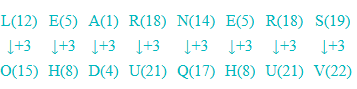
In a code, LEARNERS is written as OHDUQHUV. What is the code for TEACHERS?

  1. AOption (a)

    WHDFKHUV

  2. BOption (b)

    WHDFKHSV

  3. COption (c)

    WHDFKHVS

  4. DOption (d)

    WHDFKHVU

View answer & explanation

Correct answer

Answer: (a)A.

WHDFKHUV

Why this answer is correct

Positional value Table

Given:

The logic followed here is that each letter is shifted by 3 positions forward (+3 pattern) in the alphabetical series.

For LEARNERS : OHDUQHUV

Applying the same logic to TEACHERS : ?

The resulting code is WHDFKHUV.

Hence, the correct answer is "Option 1".

Question 27

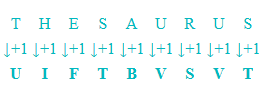
In a specific coding system, if ENCYCLOPEDIA is coded as FODZDMPQFEJB and DICTIONARY is coded as EJDUJPOBSZ, then what is the code for THESAURUS?

  1. AOption (a)

    UIFTBVSVT

  2. BOption (b)

    UIFTBWSVT

  3. COption (c)

    UIFSBVSVT

  4. DOption (d)

    UIFTBVSWT

View answer & explanation

Correct answer

Answer: (a)A.

UIFTBVSVT

Why this answer is correct

Positional value Table

Given:

The logic followed here is that each letter is shifted to its immediate next letter in the alphabetical series (+1 pattern).

For ENCYCLOPEDIA : FODZDMPQFEJB


For DICTIONARY : EJDUJPOBSZ


Applying the same logic to THESAURUS : ?


The resulting code is UIFTBVSVT.

Hence, the correct answer is "Option 1".

Question 28

In a particular code language, if TELESCOPE is coded as 20-5-12-5-19-3-15-16-5 and MICROSCOPE is coded as 13-9-3-18-15-19-3-15-16-5, then what is the code for STETHOSCOPE?

  1. AOption (a)

    19-20-5-20-8-15-19-3-15-16-5

  2. BOption (b)

    19-20-5-20-8-16-19-3-15-16-5

  3. COption (c)

    19-20-4-20-8-15-19-3-15-16-5

  4. DOption (d)

    19-19-5-20-8-15-19-3-15-16-5

View answer & explanation

Correct answer

Answer: (a)A.

19-20-5-20-8-15-19-3-15-16-5

Why this answer is correct

The logic followed here is:

Logic: Each letter is replaced by its alphabetical position number.

TELESCOPE is coded as 20-5-12-5-19-3-15-16-5

T → 20

E → 5

L → 12

E → 5

S → 19

C → 3

O → 15

P → 16

E → 5

MICROSCOPE is coded as 13-9-3-18-15-19-3-15-16-5

M → 13

I → 9

C → 3

R → 18

O → 15

S → 19

C → 3

O → 15

P → 16

E → 5

Similarly, STETHOSCOPE is coded as:

S → 19

T → 20

E → 5

T → 20

H → 8

O → 15

S → 19

C → 3

O → 15

P → 16

E → 5

So, STETHOSCOPE will be coded as

19-20-5-20-8-15-19-3-15-16-5

Hence, the correct option is Option 1

Question 29

Here some problem or solution of the problem is given in the statement you have to choose the appropriate logical deduction for given statement.

Statement:

Tourism helps promote cultural exchange and contributes to the economy. However, in several heritage sites, the surge in visitors has caused damage to ancient monuments and local ecosystems. Authorities are now limiting access and introducing conservation fees.

Conclusions:

I. Tourism can harm the very sites it seeks to promote.

II. All tourists intentionally damage heritage sites.

III. Authorities are taking steps to reduce the negative impact of tourism.

Which conclusion necessarily follows?

  1. AOption (a)

    Only I follows

  2. BOption (b)

    I and III follow

  3. COption (c)

    Only II follows

  4. DOption (d)

    All follow

View answer & explanation

Correct answer

Answer: (b)B.

I and III follow

Why this answer is correct

Solution

Tourism can harm the very sites it seeks to promote - True (The statement mentions that the surge in visitors has caused damage to ancient monuments and local ecosystems, which means tourism can harm heritage sites).

All tourists intentionally damage heritage sites - False (The statement does not mention that all tourists intentionally cause damage; it only refers to damage due to increased visitors).

Authorities are taking steps to reduce the negative impact of tourism - True (It is clearly stated that authorities are limiting access and introducing conservation fees).

hence the correct option is Option 2.

Question 30

Each item describes a situation and is followed by four possible responses. Indicate the response you find most appropriate. Choose only one response for each item. The responses will be evaluated based on the level of appropriateness for the given situation.

An athlete is recovering from injury. The doctor says he can resume light training, but he wants to return to full form quickly. What’s the safer choice?

  1. AOption (a)

    Train hard anyway

  2. BOption (b)

    Follow gradual recovery plan

  3. COption (c)

    Quit sports altogether

  4. DOption (d)

    Take painkillers and push through

View answer & explanation

Correct answer

Answer: (b)B.

Follow gradual recovery plan

Why this answer is correct

Train hard anyway – False, Ignoring the doctor’s advice can worsen the injury and delay proper recovery.

Follow gradual recovery plan – True, Gradually resuming training as advised by the doctor ensures safe and steady recovery.

Quit sports altogether – False, There is no need to quit since light training is allowed.

Take painkillers and push through –False This may hide pain and cause further serious damage.

Hence, the correct option is Option 2.

Question 31

In this type of questions, question is provided with substitutes for various mathematical symbols, followed by a question involving calculation of an expression or choosing the correct/incorrect equation. You have to put the real signs in the given equation and then solve the questions as required.

If ’%’ stands for ’x’, ’#’ stands for ’÷\div’, ’!’ stands for ’+’, ’@’ stands for ’-’, then find the value of: 11 % 2 # 6 @ 15 = ?

  1. AOption (a)

    −403-\frac{40}{3}

  2. BOption (b)

    −343-\frac{34}{3}

  3. COption (c)

    −373-\frac{37}{3}

  4. DOption (d)

    −313-\frac{31}{3}

View answer & explanation

Correct answer

Answer: (b)B.

−343-\frac{34}{3}

Why this answer is correct

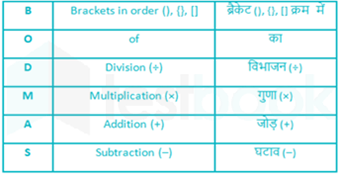
BODMAS Rule:

According to the question, the symbols denote the following operations:

Symbol%#!@
Operation×÷+−

Now, given the expression: 11 % 2 # 6 @ 15 = ?

After substituting the specified symbols, the new equation is:

11 × 2 ÷ 6 − 15

⇒ 11 × (2 ÷ 6) − 15

⇒ 11 × (1/3) − 15 = −343-\frac{34}{3}​

The value of the expression is −343-\frac{34}{3}

Hence, the correct answer is "Option 2".

Question 32

Your office junior is afraid to speak up despite having good ideas. How can you encourage them?

  1. AOption (a)

    Privately praise their insights and invite them to share, offering support

  2. BOption (b)

    Take credit for their ideas to boost confidence

  3. COption (c)

    Ignore and let them remain quiet

  4. DOption (d)

    Publicly ask them to speak up in a meeting without prior notice

View answer & explanation

Correct answer

Answer: (a)A.

Privately praise their insights and invite them to share, offering support

Why this answer is correct

Check option: 

Privately praise their insights and invite them to share, offering support – True, This builds confidence and creates a safe environment for them to express their ideas.

Take credit for their ideas to boost confidence – false ,This is unethical and may damage trust.

Ignore and let them remain quiet – false, This does not help them grow or overcome their fear.

Publicly ask them to speak up in a meeting without prior notice – false, This may increase their anxiety instead of encouraging them.

Hence, the correct option is, Option 1.

Question 33

35 students are arranged in a row. Karan is 9th from left and Arjun is 15th from right. Find the number of students between Karan and Arjun.

  1. AOption (a)

    10

  2. BOption (b)

    11

  3. COption (c)

    12

  4. DOption (d)

    13

View answer & explanation

Correct answer

Answer: (b)B.

11

Why this answer is correct

Total students = 35

Karan is 9th from the left.

Arjun is 15th from the right.

Position of Arjun from the left = 35 − 15 + 1 = 21st

Now positions are:

Karan → 9th

Arjun → 21st

Number of students between them = 21 − 9 − 1 = 11

Hence, the correct answer is Option 2.

Question 34

During Navratri, Priya arranges 30 diyas in a row. A golden diya is 8th from the left, and a silver diya is 10th from the right. How many diyas are between them?

  1. AOption (a)

    11

  2. BOption (b)

    15

  3. COption (c)

    13

  4. DOption (d)

    12

View answer & explanation

Correct answer

Answer: (d)D.

12

Why this answer is correct

Given

Golden diya is 8th from the left end.

Silver diya is 10th from the right end.

Position of silver diya from left = 30 − 10 + 1 = 21st

So, diyas between golden and silver diya = 21 − 8 − 1 = 12.

So, there are '12' diyas between them.

Hence, the correct answer is Option 4.

Question 35

In each question below is given a statement followed by two courses of action numbered I and II. You have to assume everything in the statement to be true and on the basis of the information given in the statement, decide which of the suggested courses of action logically follow(s) for pursuing.

Statement : Several complaints have been received about delayed emergency ambulance services in a metro city.

Course of action I : Increase the number of ambulances and ensure GPS tracking for quick response.

Course of action II : Close all emergency services until better management is implemented.

  1. AOption (a)

    Only I follows

  2. BOption (b)

    Only II follows

  3. COption (c)

    Both follow

  4. DOption (d)

    Either I or II follows

View answer & explanation

Correct answer

Answer: (a)A.

Only I follows

Why this answer is correct

Course of action I: Increase the number of ambulances and ensure GPS tracking for quick response – Follows, Since there are complaints about delays, increasing ambulances and improving tracking directly addresses the problem and helps improve response time.

Course of action II: Close all emergency services until better management is implemented – Does not follow Closing emergency services would worsen the situation and is not a practical or logical solution.

Hence, the correct option is Option 1

Question 36

Each question given below consists of a statement, followed by two arguments numbered I and II. You have to decide which of the arguments is a ’strong’ argument and which is a ’weak’ argument.

Statement: Should there be tax benefits for parents sending kids to government schools?

Argument I: Yes, it will improve enrollment.

Argument II: No, it discriminates against private school students.

  1. AOption (a)

    Only I is strong

  2. BOption (b)

    Both I and II are strong

  3. COption (c)

    Only II is strong

  4. DOption (d)

    Neither I nor II is strong

View answer & explanation

Correct answer

Answer: (b)B.

Both I and II are strong

Why this answer is correct

Argument I: Yes, it will improve enrollment – Strong, It gives a clear, practical reason supporting the proposal. Tax benefits can motivate parents to choose government schools, which may increase enrollment.

Argument II: No, it discriminates against private school students – Strong, This is also a valid concern. Providing tax benefits only to parents of government school students may create inequality and raise fairness issues.

Since both arguments present logical and relevant points from different perspectives, both are strong arguments.

Hence, the correct answer is Option 2.

Question 37

Few of the letters are given followed by a question mark (?) these letters are following a specific pattern you have to give the correct option which can replace question mark.

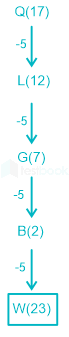
Find the missing letter: Q, L, G, B, ?

  1. AOption (a)

    X

  2. BOption (b)

    Y

  3. COption (c)

    Z

  4. DOption (d)

    W

View answer & explanation

Correct answer

Answer: (d)D.

W

Why this answer is correct

The logic followed here is:

Thus, the missing letter in the series is W.

Hence, the correct answer is "Option 4".

Question 38

Few of the letters are given followed by a question mark (?) these letters are following a specific pattern you have to give the correct option which can replace question mark.

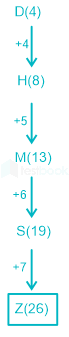
What is next: D, H, M, S, ?

  1. AOption (a)

    Z

  2. BOption (b)

    A

  3. COption (c)

    B

  4. DOption (d)

    C

View answer & explanation

Correct answer

Answer: (a)A.

Z

Why this answer is correct

The logic followed here is:

Thus, the missing letter in the series is Z.

Hence, the correct answer is "Option 1".

Question 39

In this question some conditions or circumstances is provided to you, you have to make logical judgement according to mentioned circumstances and mark the correct judgement for question.

A tech startup develops a powerful AI that can imitate human voices perfectly. It’s groundbreaking but risks being misused for fraud. What is the most responsible judgment?

  1. AOption (a)

    Launch the AI without restrictions.

  2. BOption (b)

    Keep the AI a company secret.

  3. COption (c)

    Release the AI with strict ethical guidelines and detection tools.

  4. DOption (d)

    Sell it to the highest bidder.

View answer & explanation

Correct answer

Answer: (c)C.

Release the AI with strict ethical guidelines and detection tools.

Why this answer is correct

Launch the AI without restrictions – Inappropriate,This could lead to misuse, fraud, and serious ethical concerns.

Keep the AI a company secret – Inappropriate While it prevents misuse, it also limits positive and responsible innovation.

Release the AI with strict ethical guidelines and detection tools – Most appropriate This balances innovation with safety by reducing the risk of misuse through proper safeguards.

Sell it to the highest bidder – Inappropriate Profit-focused decision without considering ethical consequences.

Hence the correct option is Option 3.

Question 40

Four meaningful words are given in the options you have to check that which of the following words cannot be formed from the letters.

’COMMUNICATION’?

  1. AOption (a)

    NATION

  2. BOption (b)

    UNISON

  3. COption (c)

    ACTION

  4. DOption (d)

    UNION

View answer & explanation

Correct answer

Answer: (b)B.

UNISON

Why this answer is correct

Given Word: COMMUNICATION

NATION → Can be formed

UNISON → Cannot be formed (Because the letter 'S' is not in the given word)

ACTION → Can be formed

UNION → Can be formed

Hence, the correct answer is "Option 2".

Question 41

In this type of questions, question is provided with some issues/disputes/problem, followed by few methods to resolve the problem in statement choosing the appropriate problem solving method that can be implemented.

A city’s water supply is low. Officials are deciding between rationing and investing in short-term tanker distribution. What is immediate approach?

  1. AOption (a)

    Charge high fees for water

  2. BOption (b)

    Start rationing permanently

  3. COption (c)

    Ignore and hope rain comes

  4. DOption (d)

    Deploy tankers temporarily while fixing main pipeline

View answer & explanation

Correct answer

Answer: (d)D.

Deploy tankers temporarily while fixing main pipeline

Why this answer is correct

Charge high fees for water – Inappropriate, This may create inequality and does not immediately solve the shortage problem.

Start rationing permanently – Inappropriate,  Permanent rationing is not justified without assessing long-term conditions.

Ignore and hope rain comes – Inappropriate, This is irresponsible and does not address the crisis.

Deploy tankers temporarily while fixing main pipeline –  appropriate This provides immediate relief while corrective measures are taken to restore regular supply.

Hence, the correct answer is Option 4.

Question 42

In each of the following questions, there is a certain relationship between two given letter pairs on one side of (::) and pair is given on another side of (::) where another pair is to be found from the given alternatives, having the same relationship with this pair as the pairs of the given pair bear. Choose the best alternative.

AZ : ZA :: BY : ?

  1. AOption (a)

    YB

  2. BOption (b)

    BX

  3. COption (c)

    YV

  4. DOption (d)

    BB

View answer & explanation

Correct answer

Answer: (a)A.

YB

Why this answer is correct

The logic followed here:

AZ : ZA

Here, the letters are reversed.

A Z → Z A

Now apply the same pattern to BY:

B Y → Y B

Hence, the correct answer is Option 1.

Question 43

In each of the following questions, there is a certain relationship between two given letter pairs on one side of (::) and pair is given on another side of (::) where another pair is to be found from the given alternatives, having the same relationship with this pair as the pairs of the given pair bear. Choose the best alternative.

BA : EZ :: CO : ?

  1. AOption (a)

    GM

  2. BOption (b)

    FN

  3. COption (c)

    EN

  4. DOption (d)

    FO

View answer & explanation

Correct answer

Answer: (b)B.

FN

Why this answer is correct

Positional Value Table

The logic followed here is:

For BA : EZ

Applying the same logic to CO : ?

The resulting pair is FN.

Hence, the correct answer is "Option 2".

Question 44

Find the next element that replace the ? Logically

24, 61, 122, 213, ?

  1. AOption (a)

    341

  2. BOption (b)

    340

  3. COption (c)

    330

  4. DOption (d)

    359

View answer & explanation

Correct answer

Answer: (b)B.

340

Why this answer is correct

The logic followed here is:

Thus, the missing term in the series is 340.

Hence, the correct answer is "Option 2";

Question 45

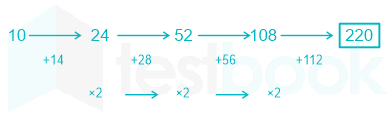
Find the next element that replace the ? Logically

10, 24, 52, 108, ?

  1. AOption (a)

    220

  2. BOption (b)

    226

  3. COption (c)

    214

  4. DOption (d)

    233

View answer & explanation

Correct answer

Answer: (a)A.

220

Why this answer is correct

The logic followed here is:

Thus, the missing term in the series is 220.

Hence, the correct answer is "Option 1";

Question 46

Find the next element that replace the ? Logically

8, 24, 88, 344, ?

  1. AOption (a)

    1368

  2. BOption (b)

    1385

  3. COption (c)

    1373

  4. DOption (d)

    1367

View answer & explanation

Correct answer

Answer: (a)A.

1368

Why this answer is correct

The logic followed here is:

Thus, the missing term in the series is 1368.

Hence, the correct answer is "Option 1";

Question 47

In this type of questions, question is provided with substitutes for various mathematical symbols, followed by a question involving calculation of an expression or choosing the correct/incorrect equation. You have to put the real signs in the given equation and then solve the questions as required.

If ’@’ stands for ’-’, ’*’ stands for ’x’, ’%’ stands for ’+’, ’~’ stands for ’÷’, then find the value of: 8 @ 4 ~ 2 ~ 6 = ?

  1. AOption (a)

    233\frac{23}{3}

  2. BOption (b)

    13\frac{1}{3}

  3. COption (c)

    263\frac{26}{3}

  4. DOption (d)

    203\frac{20}{3}

View answer & explanation

Correct answer

Answer: (a)A.

233\frac{23}{3}

Why this answer is correct

Given:

8 @ 4 ~ 2 ~ 6 = ?

By using the BODMAS rule:

By decoding the given symbols we get:

SYMBOLSMEANING
@-
*×
%+
~÷

Substituting the given operators in the expression:

⇒ 8 @ 4 ~ 2 ~ 6

⇒ 8 - (4 ÷ 2) ÷ 6

⇒ 8 - 2 ÷ 6

⇒ 8 - 1/3

⇒ (24 - 1) / 3

⇒ 23/3 

Hence, the correct answer is "Option 1".

Question 48

In three of the following pairs are same by same pattern except one pair. Which pair does not follow this pattern?

  1. AOption (a)

    22 : 39

  2. BOption (b)

    55 : 66

  3. COption (c)

    77 : 88

  4. DOption (d)

    33 : 44

View answer & explanation

Correct answer

Answer: (a)A.

22 : 39

Why this answer is correct

The logic followed here is:

Logic: 1st number + 11 = 2nd number.

Now, let's check the options:

For, 55 : 66

⇒ 55 + 11 = 66. (Follows pattern)

For, 77 : 88

⇒ 77 + 11 = 88. (Follows pattern)

For, 33 : 44

⇒ 33 + 11 = 44. (Follows pattern)

Similarly, for 22 : 39

⇒ 22 + 11 = 33 ≠ 39.

Hence, the correct answer is "Option 1".

Question 49

Select the option that represents the correct order of the given words as they would appear in an English dictionary.

  1. Galaxy

  2. Garden

  3. Garage

  4. General

  5. Gentle

  6. Golden

  1. AOption (a)

    1,3,2,4,5,6

  2. BOption (b)

    1,2,3,4,5,6

  3. COption (c)

    1,3,2,4,6,5

  4. DOption (d)

    1,2,3,4,6,5

View answer & explanation

Correct answer

Answer: (a)A.

1,3,2,4,5,6

Why this answer is correct

The arrangement of the given words in the order in which they appear in an English dictionary is as shown below :

1. Galaxy

3. Garage

2. Garden

4. General

5. Gentle

6. Golden

Hence, the correct answer is 1, 3, 2, 4, 5, 6.

Question 50

Select the option that represents the correct order of the given words as they would appear in an English dictionary.

  1. Retrospective

  2. Retroactive

  3. Retrogression

  4. Retrospection

  5. Retrograde

  1. AOption (a)

    2, 5, 3, 4, 1

  2. BOption (b)

    2, 3, 5, 4, 1

  3. COption (c)

    5, 2, 3, 4, 1

  4. DOption (d)

    2, 5, 4, 3, 1

View answer & explanation

Correct answer

Answer: (a)A.

2, 5, 3, 4, 1

Why this answer is correct

The arrangement of the given words in the order in which they appear in an English dictionary is as shown below:

2. Retroactive

5. Retrograde

3. Retrogression

4. Retrospection

1. Retrospective

Hence, the correct answer is 2, 5, 3, 4, 1

Quantitative Aptitude (25 questions)

Question 51

In a partnership, A invested Rs. 75,000, B invested Rs. 1,00,000, and C invested Rs. 1,50,000. After 1 year, B withdrew Rs. 20,000 from his capital. At the end of 3 years, the total profit is Rs. 4,50,000. What is C’s share in the profit?

  1. AOption (a)

    Rs. 1,50,000

  2. BOption (b)

    Rs. 1,80,453.89

  3. COption (c)

    Rs. 2,00,000

  4. DOption (d)

    Rs. 2,16,577.54

View answer & explanation

Correct answer

Answer: (d)D.

Rs. 2,16,577.54

Why this answer is correct

Given:

A invested = Rs. 75,000 (for 3 years)

B invested = Rs. 1,00,000 (after 1 year withdrew Rs. 20,000, so remaining Rs. 80,000 for next 2 years)

C invested = Rs. 1,50,000 (for 3 years)

Total profit = Rs. 4,50,000

Formula used: 

Profit sharing ratio = Capital × Time

Calculations:

A’s capital-time = 75,000 × 3 = 2,25,000

B’s capital-time:

First year = 1,00,000 × 1 = 1,00,000

Next 2 years = 80,000 × 2 = 1,60,000

Total = 1,00,000 + 1,60,000 = 2,60,000

C’s capital-time = 1,50,000 × 3 = 4,50,000

Profit sharing ratio:

2,25,000 : 2,60,000 : 4,50,000

Divide by 5,000 to simplify:

45 : 52 : 90

Total parts = 45 + 52 + 90 = 187

C’s share = (90 / 187) × 4,50,000

= 4,05,00,000 / 187

≈ Rs. 2,16,577.54

∴ The correct answer is “Option 4.”

Question 52

If SinA = 35\frac{3}{5} and CosB = 513\frac{5}{13}, find SinA CosB + CosA SinB.

  1. AOption (a)

    6365\frac{63}{65}

  2. BOption (b)

    5365\frac{53}{65}

  3. COption (c)

    1213\frac{12}{13}

  4. DOption (d)

    2565\frac{25}{65}

View answer & explanation

Correct answer

Answer: (a)A.

6365\frac{63}{65}

Why this answer is correct

Given:

Sin A = 3/5

Cos B = 5/13

We know that: Sin A Cos B + Cos A Sin B = Sin (A + B)

So, first we need to find Cos A and Sin B.

Since, Sin A = 3/5

Formula used: 

Sin²A + Cos²A = 1

Sin²B + Cos²B = 1

Calculations:

Sin²A + Cos²A = 1

Cos A = √(1 − (3/5)²)

= √(1 − 9/25)

= √(16/25)

= 4/5

Sin²B + Cos²B = 1

Sin B = √(1 − (5/13)²)

= √(1 − 25/169)

= √(144/169)

= 12/13

Sin A Cos B + Cos A Sin B

= (3/5 × 5/13) + (4/5 × 12/13)

= (15/65) + (48/65)

= 63/65

∴ The correct answer is “Option 1.”

Question 53

The difference between the selling price and the cost price of an article is ₹500\text{₹}500. If the profit percentage is 25%25\%, what is the selling price of the article?

  1. AOption (a)

    ₹2000\text{₹}2000

  2. BOption (b)

    ₹2500\text{₹}2500

  3. COption (c)

    ₹2250\text{₹}2250

  4. DOption (d)

    ₹1500\text{₹}1500

View answer & explanation

Correct answer

Answer: (b)B.

₹2500\text{₹}2500

Why this answer is correct

Given:

Difference between Selling Price (SP) and Cost Price (CP) = ₹500

Profit percentage = 25%

Since SP − CP = Profit,

Profit = ₹500

Formula used: Profit % = (Profit / CP) × 100

Calculations:

25 = (500 / CP) × 100

25 = 50000 / CP

CP = 50000 / 25

CP = ₹2000

Now, SP = CP + Profit

SP = 2000 + 500

SP = ₹2500

∴ The correct answer is “Option 2.”

Question 54

The number of cars in a parking lot is 20% more than the number of trucks. What is the ratio of the number of trucks to the number of cars?

  1. AOption (a)

    5:6

  2. BOption (b)

    6:5

  3. COption (c)

    7:6

  4. DOption (d)

    6:7

View answer & explanation

Correct answer

Answer: (a)A.

5:6

Why this answer is correct

Shortcut Trick

Convert percentage to fraction: 20% = 1/5.

Since the number of cars is 20% more, let trucks = 5 units.

Then cars = 5 + 1 = 6 units.

The ratio of trucks to cars = 5 : 6.

∴ The correct answer is 5:6.

Alternate Method

Given:

Number of cars is 20% more than the number of trucks.

Formula Used:

Ratio = Value1 : Value2

Calculations:

Let the number of trucks be 100.

⇒ Number of cars = 100 + 20% of 100

⇒ Number of cars = 100 + 20 = 120

⇒ Ratio of trucks to cars = 100 : 120

⇒ Ratio = 100/20 : 120/20

⇒ Ratio = 5 : 6

∴ The correct answer is 5:6.

Additional Information

Percentage to Ratio Conversion

To convert a percentage increase to a ratio, use the base 100. An x% increase results in a ratio of 100 : (100 + x).

Inverse Percentage Relation

If A is 20% more than B, then B is [20/(100+20)] × 100 = 16.67% less than A.

Ratio Basics

A ratio is a comparison of two similar quantities. The order of terms is crucial; the ratio of A to B (A:B) is different from B to A (B:A).

∴ The correct answer is 5:6.

Question 55

An amount doubles in 7 years under compound interest. How many years will it take for the amount to grow to 16 times its original value?

  1. AOption (a)

    21 years

  2. BOption (b)

    28 years

  3. COption (c)

    35 years

  4. DOption (d)

    42 years

View answer & explanation

Correct answer

Answer: (b)B.

28 years

Why this answer is correct

Given:

Amount doubles in 7 years (under compound interest)

We need to find the time required for the amount to become 16 times.

Formula used:

If amount doubles in T years, then

Final amount after n such periods = Principal × (2ⁿ)

Calculations:

Since, amount doubles in 7 years:

After 7 years → 2 times

After 14 years → 4 times

After 21 years → 8 times

After 28 years → 16 times

Because: 16 = 2⁴

So, number of doubling periods needed = 4

Each doubling takes 7 years:

Total time = 4 × 7

Total time = 28 years

∴ The correct answer is “Option 2.”

Question 56

Three groups of students have average marks 50, 60, and 70 respectively. The number of students in these groups are 20, 30, and 50. What is the combined average of all students?

  1. AOption (a)

    63

  2. BOption (b)

    64

  3. COption (c)

    67

  4. DOption (d)

    70

View answer & explanation

Correct answer

Answer: (a)A.

63

Why this answer is correct

Shortcut Trick

Ratio of number of students in groups = 20 : 30 : 50 = 2 : 3 : 5.

Let the assumed average be 60 marks.

Net deviation = [2 × (50 − 60) + 3 × (60 − 60) + 5 × (70 − 60)] ÷ (2 + 3 + 5)

Net deviation = [−20 + 0 + 50] ÷ 10 = 30 ÷ 10 = 3.

Combined Average = Assumed Average + Net deviation = 60 + 3 = 63.

∴ The correct answer is 63.

Alternate Method

Given:

Number of students (n1, n2, n3) = 20, 30, 50

Average marks (A1, A2, A3) = 50, 60, 70

Formula Used:

Combined Average = (n1A1 + n2A2 + n3A3) ÷ (n1 + n2 + n3)

⇒ Total Marks = (20 × 50) + (30 × 60) + (50 × 70)

⇒ Total Marks = 1000 + 1800 + 3500

⇒ Total Marks = 6300

⇒ Total Students = 20 + 30 + 50 = 100

⇒ Combined Average = 6300 ÷ 100 = 63

∴ The correct answer is 63.

Additional Information

Weighted Average Formula

The formula for weighted average is ∑(wi × xi) ÷ ∑wi, where w is the weight (quantity) and x is the value (average).

Combined Average with N Groups

If multiple groups join, the combined mean is the sum of all individual sums divided by the total count: Aavg = (n1A1 + n2A2 + ... + nkAk) ÷ (n1 + n2 + ... + nk).

Effect of Constant Addition

If every observation in a data set is increased by a constant k, the mean of the data set also increases by exactly k.

Question 57

A number when divided by 45 leaves remainder 27, and when divided by 27 leaves remainder 9. Find the smallest such number.

  1. AOption (a)

    189

  2. BOption (b)

    117

  3. COption (c)

    369

  4. DOption (d)

    459

View answer & explanation

Correct answer

Answer: (b)B.

117

Why this answer is correct

Given:

When a number is divided by 45, remainder = 27

When the same number is divided by 27, remainder = 9

Let the number be N.

From the first condition:

N = 45a + 27

From the second condition:

N = 27b + 9

Formula used:

If N leaves remainder r when divided by d, then

N − r is divisible by d.

Calculations:

From first condition:

N − 27 is divisible by 45

From second condition:

N − 9 is divisible by 27

Now check options:

Option 1: 189

189 ÷ 45 = remainder 9 (not 27) 

Option 2: 117

117 ÷ 45 = remainder 27 

117 ÷ 27 = remainder 9 

So, 117 satisfies both conditions.

∴ The correct answer is “Option 2.”

Question 58

Ravi scores 40%40\% marks and fails by 30 marks. Sohan scores 50%50\% marks and gets 20 marks more than the pass marks. Find the maximum marks of the exam.

  1. AOption (a)

    400

  2. BOption (b)

    450

  3. COption (c)

    500

  4. DOption (d)

    550

View answer & explanation

Correct answer

Answer: (c)C.

500

Why this answer is correct

Given:

Ravi scores 40% marks and fails by 30 marks.

Sohan scores 50% marks and gets 20 marks more than the pass marks.

Let the maximum marks = M

Let the pass marks = P

Formula used: 

Marks obtained = (Percentage × Maximum marks) / 100

Calculations:

Ravi’s marks = 40% of M

= 40M / 100

= 0.4M

Since he fails by 30 marks:

0.4M = P − 30 …… (1)

Sohan’s marks = 50% of M

= 50M / 100

= 0.5M

He gets 20 marks more than pass marks:

0.5M = P + 20 …… (2)

Now subtract equation (1) from equation (2):

0.5M − 0.4M = (P + 20) − (P − 30)

0.1M = 50

M = 50 / 0.1

M = 500

∴ The correct answer is “Option 3.”

Question 59

A man travels from Gurugram to Jaipur, a distance of 240 km, at a speed of 60 km/h. He then takes a break in Jaipur for 1 hour. After the break, he travels from Jaipur to Ajmer, a distance of 130 km, at a speed of 50 km/h. What is his average speed for the entire journey from Gurugram to Ajmer?

  1. AOption (a)

    48.68 km/h

  2. BOption (b)

    48.00 km/h

  3. COption (c)

    47.67 km/h

  4. DOption (d)

    45.52 km/h

View answer & explanation

Correct answer

Answer: (a)A.

48.68 km/h

Why this answer is correct

Given:

Distance from Gurugram to Jaipur = 240 km

Speed = 60 km/h

Distance from Jaipur to Ajmer = 130 km

Speed = 50 km/h

Break time = 1 hour

Formula used: Average Speed = Total Distance / Total Time

Calculations:

Step 1: Time taken from Gurugram to Jaipur

Time = Distance / Speed

Time = 240 / 60 = 4 hours

Step 2: Time taken from Jaipur to Ajmer

Time = 130 / 50 = 2.6 hours

Step 3: Total distance

Total distance = 240 + 130 = 370 km

Step 4: Total time (including break)

Total time = 4 + 1 + 2.6

Total time = 7.6 hours

Step 5: Average speed

Average speed = 370 / 7.6

Average speed ≈ 48.68 km/h

∴ The correct answer is “Option 1.”

Question 60

A can complete a work in 30 days. How much work will he complete in 6 days?

  1. AOption (a)

    35\frac{3}{5}

  2. BOption (b)

    25\frac{2}{5}

  3. COption (c)

    15\frac{1}{5}

  4. DOption (d)

    75\frac{7}{5}

View answer & explanation

Correct answer

Answer: (c)C.

15\frac{1}{5}

Why this answer is correct

Given:

A can complete the whole work in 30 days.

Number of days given = 6

Formula used:

Work done = (Number of days worked / Total days required) × Total work

Since, total work = 1 (complete work),

Calculations:

Work done in 6 days = 6 / 30 = 1 / 5 = 0.2

To express in percentage: 0.2 × 100 = 20%

So, A will complete

1/5 of the work (or 20% of the work) in 6 days.

∴ The correct answer is “Option 3.”

Question 61

An item is marked at 20%20\% more than its cost price by the retailer. He then offers a 10%10\% discount. Determine the shopkeeper’s percentage of profit.

  1. AOption (a)

    10%10\%

  2. BOption (b)

    8%8\%

  3. COption (c)

    12%12\%

  4. DOption (d)

    15%15\%

View answer & explanation

Correct answer

Answer: (b)B.

8%8\%

Why this answer is correct

Given:

Marked Price (MP) is 20% more than Cost Price (CP).

Discount offered = 10% on Marked Price.

Let CP = 100 (assumption method for easy calculation)

Formula used:

Marked Price = CP + 20% of CP

Selling Price = MP − 10% of MP

Profit % = (Profit / CP) × 100

Calculations:

Step 1: CP = 100

Step 2: MP = 100 + 20% of 100

MP = 100 + 20

MP = 120

Step 3: Discount = 10% of 120 = 12

Selling Price (SP) = 120 − 12

SP = 108

Step 4: Profit = SP − CP

Profit = 108 − 100

Profit = 8

Profit % = (8 / 100) × 100

Profit % = 8%

∴ The correct answer is “Option 2.”

Question 62

A man lends a sum of money at 8% simple interest. After 3 years, the total interest received is ₹2,400. What is the amount of money he would receive at the end of 5 years?

  1. AOption (a)

    ₹12,000

  2. BOption (b)

    ₹10,000

  3. COption (c)

    ₹14,000

  4. DOption (d)

    ₹11,000

View answer & explanation

Correct answer

Answer: (c)C.

₹14,000

Why this answer is correct

Given:

Rate of interest (R) = 8% per annum

Time (T₁) = 3 years

Simple Interest (SI₁) = ₹2400

Formula used: Simple Interest = (Principal × Rate × Time) / 100

Calculations:

2400 = (P × 8 × 3) / 100

2400 = (24P) / 100

2400 = 0.24P

P = 2400 / 0.24

P = 10,000

Now find the amount after 5 years.

Simple Interest for 5 years:

SI₂ = (10000 × 8 × 5) / 100

= (10000 × 40) / 100 = 400000 / 100 = 4000

Amount after 5 years = Principal + Interest

= 10000 + 4000 = ₹14,000

So, the required amount is ₹14,000

∴ The correct answer is “Option 3.”

Question 63

If x2+y2=58x^2 + y^2 = 58 and x+y=10x + y = 10, then what is the value of xyxy?

  1. AOption (a)

    21

  2. BOption (b)

    29

  3. COption (c)

    32

  4. DOption (d)

    25

View answer & explanation

Correct answer

Answer: (a)A.

21

Why this answer is correct

Given:

x² + y² = 58

x + y = 10

We need to find: xy

Formula used: (x + y)² = x² + y² + 2xy

Calculations:

Step 1:(x + y)² = 10² = 100

Step 2: Using the formula: 100 = 58 + 2xy

Step 3: 100 − 58 = 2xy

42 = 2xy

Step 4:

xy = 42 / 2

xy = 21

∴ The correct answer is “Option 1.”

Question 64

What is the square root of 7744?

  1. AOption (a)

    82

  2. BOption (b)

    88

  3. COption (c)

    72

  4. DOption (d)

    94

View answer & explanation

Correct answer

Answer: (b)B.

88

Why this answer is correct

Given:

Number = 7744

Formula used: If a × a = N, then √N = a

Calculations:

Check by multiplication:

88 × 88 = 88 × (80 + 8)

= (88 × 80) + (88 × 8)

= 7040 + 704

= 7744

Since 88 × 88 = 7744

Therefore, √7744 = 88

∴ The correct answer is “Option 2.”

Question 65

A mixture of 75 litres contains milk and water in the ratio 2 :1. How much more water should be added to the mixture to make the ratio of milk to water 1 : 2?

  1. AOption (a)

    60 litres

  2. BOption (b)

    70 litres

  3. COption (c)

    75 litres

  4. DOption (d)

    80 litres

View answer & explanation

Correct answer

Answer: (c)C.

75 litres

Why this answer is correct

Shortcut Trick

Initial ratio of Milk : Water = 2 : 1 (Total = 3 units).

Target ratio = 1 : 2. Since Milk quantity is constant, multiply target ratio by 2 → 2 : 4.

Increase in Water units = 4 − 1 = 3 units.

Initial total mixture = 3 units = 75 litres.

Water to be added = 3 units = 75 litres.

∴ The correct answer is 75 litres.

Alternate Method

Given:

Initial volume = 75 litres | Initial ratio (Milk:Water) = 2 : 1 | Final ratio = 1 : 2

Calculations:

⇒ Quantity of Milk = (2/3) × 75 = 50 litres

⇒ Quantity of Water = (1/3) × 75 = 25 litres

⇒ Let x litres of water be added.

⇒ New Ratio = Milk ÷ (Water + x) = 1 ÷ 2

⇒ 50 ÷ (25 + x) = 1 ÷ 2

⇒ 100 = 25 + x

⇒ x = 100 − 25 = 75 litres

∴ The correct answer is 75 litres.

Additional Information

Constant Component Rule

In mixture problems where only one component is added or removed, the absolute quantity of the other component remains unchanged. Use this to equate the ratios.

Alligation Method

Ratio of quantities = (Value2 − Mean Value) : (Mean Value − Value1). Here, added water is 100% water concentration.

Percentage Change in Mixture

Initial Mixture × Initial % of Constant Part = Final Mixture × Final % of Constant Part.

Question 66

A solid metal sphere with a radius of 12 cm is melted and transformed into multiple smaller spheres, each with a radius of 2 cm. How many smaller spheres can be created from the original sphere?

  1. AOption (a)

    282

  2. BOption (b)

    256

  3. COption (c)

    216

  4. DOption (d)

    214

View answer & explanation

Correct answer

Answer: (c)C.

216

Why this answer is correct

Shortcut Trick

When a larger solid sphere is melted to form smaller identical spheres, the number of spheres (n) is the ratio of their volumes.

Shortcut formula: n = (Radius of larger sphere ÷ Radius of smaller sphere)3

n = (12 ÷ 2)3 = 63

n = 216

∴ The correct answer is 216.

Alternate Method

Given:

Radius of the large metal sphere (R) = 12 cm

Radius of each small sphere (r) = 2 cm

Formula Used:

Volume of a sphere = (4/3) × π × radius3

Calculations:

⇒ Volume of the large sphere = (4/3) × π × (12)3

⇒ Volume of one small sphere = (4/3) × π × (2)3

⇒ Let the number of smaller spheres be n.

⇒ Total volume of n small spheres = Volume of the large sphere

⇒ n × (4/3) × π × (2)3 = (4/3) × π × (12)3

⇒ n × 23 = 123

⇒ n × 8 = 1728

⇒ n = 1728 ÷ 8

⇒ n = 216

∴ The correct answer is 216.

Additional Information

Conservation of Volume

When a solid is melted and recast into other shapes, its total volume remains unchanged, provided there is no wastage of material.

Volume of a Sphere

The volume (V) of a sphere with radius r is given by the formula V = (4/3)πr3.

Surface Area of a Sphere

The total surface area (A) of a sphere is 4πr2. Unlike other solids, a sphere only has a curved surface area which is equal to its total surface area.

Hemisphere Properties

A hemisphere is half of a sphere. Its volume is (2/3)πr3 and its total surface area is 3πr2.

Question 67

A hemispherical tank has an inner radius of 3 m. It is filled with water at a rate of 1800π1800\pi liters per minute. How long will it take to fill the tank completely? (Note: 1m3=10001 m^3=1000 liters)

  1. AOption (a)

    12 minutes

  2. BOption (b)

    10 minutes

  3. COption (c)

    5 minutes

  4. DOption (d)

    15 minutes

View answer & explanation

Correct answer

Answer: (b)B.

10 minutes

Why this answer is correct

Given:

Inner radius of hemispherical tank (r) = 3 m

Rate of filling = 1800π liters per minute

1 m³ = 1000 liters

We need to find the time required to fill the tank completely.

Formula used:

Volume of hemisphere = (2/3) π r³

Time = Volume / Rate

Calculations:

Step 1:Volume of hemisphere

= (2/3) π (3)³

= (2/3) π × 27

= 18π m³

Step 2:Convert volume into liters

18π m³ = 18π × 1000 liters

= 18000π liters

Step 3:Time required

Time = Volume / Rate

= 18000π / 1800π

π cancels out

= 18000 / 1800

= 10 minutes

∴ The correct answer is “Option 2.”

Question 68

What is the simplest form of the fraction represented by the recurring decimal 0.454545…0.{454545\dots}?

  1. AOption (a)

    4591\frac{45}{91}

  2. BOption (b)

    511\frac{5}{11}

  3. COption (c)

    920\frac{9}{20}

  4. DOption (d)

    111\frac{1}{11}

View answer & explanation

Correct answer

Answer: (b)B.

511\frac{5}{11}

Why this answer is correct

Given:

Recurring decimal = 0.454545…

Let, x = 0.454545…

Formula used:

For a recurring decimal with two repeating digits (ab),

If x = 0.ababab…, then

100x − x removes the repeating part.

Calculations:

x = 0.454545…

Multiply both sides by 100:

100x = 45.454545…

Now subtract: 100x − x

45.454545…

− 0.454545…

= 45

So, 99x = 45

x = 45 / 99

Simplify: Divide numerator and denominator by 9

45 ÷ 9 = 5

99 ÷ 9 = 11

x = 5 / 11

∴ The correct answer is “Option 2.”

Question 69

Two identical circular plates, each at their maximum size, are cut from a circular sheet of paper with a circumference of 352 cm. The circumference of each circular plate is

  1. AOption (a)

    176 cm

  2. BOption (b)

    190 cm

  3. COption (c)

    185 cm

  4. DOption (d)

    215 cm

View answer & explanation

Correct answer

Answer: (a)A.

176 cm

Why this answer is correct

Given:

Circumference of the circular sheet = 352 cm

Two identical circular plates of maximum size are cut from it.

Formula used:

Circumference of circle = 2πR

When two identical maximum circles are cut from a larger circle,

Diameter of each small circle = Radius of the large circle

Calculations:

Step 1: Find radius of the large circular sheet

2πR = 352

Using π = 22/7

2 × (22/7) × R = 352

(44/7)R = 352

R = 352 × 7 / 44

R = 8 × 7

R = 56 cm

Step 2: Diameter of each small plate = Radius of large circle

So, diameter of small circle = 56 cm

Radius of small circle = 56 / 2 = 28 cm

Step 3:Circumference of each small plate

= 2πr

= 2 × (22/7) × 28

= 44 × 4

= 176 cm

∴ The correct answer is “Option 1.”

Question 70

Given that 343×(7)n=494343 \times (\sqrt{7})^n = 49^4, find n.

  1. AOption (a)

    8

  2. BOption (b)

    10

  3. COption (c)

    9

  4. DOption (d)

    12

View answer & explanation

Correct answer

Answer: (b)B.

10

Why this answer is correct

Given:

343×(7)n=494343 × (\sqrt{7})^n = 49^4

Formula Used:

an × am = an + m

Calculation:

343×(7)n=494343 × (\sqrt{7})^n = 49^4

⇒ (7)3 + × (7)n/2 = (72)4

⇒ (7)3 + n/2 = (7)8

On equating, we get

3 + n/2 = 8

⇒ n/2 = 8 - 3

⇒ n/2 = 5

⇒ n = 10

Hence, the correct answer is option (2).

Question 71

The slope of a line is −5-5. If the line passes through the point (2,3)(2, 3), what is its equation?

  1. AOption (a)

    y=2x−1y = 2x - 1

  2. BOption (b)

    y=7x+19y = 7x + 19

  3. COption (c)

    y=−x4−4y = -\frac{x}{4} - 4

  4. DOption (d)

    y=−5x+13y = -5x + 13

View answer & explanation

Correct answer

Answer: (d)D.

y=−5x+13y = -5x + 13

Why this answer is correct

Given:

Slope of the line (m) = −5

Point through which the line passes = (2, 3)

Formula used:

Point–slope form of a line:

y − y₁ = m(x − x₁)

Calculations:

Step 1: Substitute the given values in the formula:

y − 3 = −5(x − 2)

Step 2: Simplify the equation:

y − 3 = −5x + 10

Step 3: Bring 3 to the right-hand side:

y = −5x + 13

∴ The correct answer is “Option 4.”

Question 72

If a+b=17a + b = \sqrt{17} and a−b=1a - b = \sqrt{1}, find (a2+b2)(ab)\frac{(a^2+b^2)}{(ab)}.

  1. AOption (a)

    94\frac{9}{4}

  2. BOption (b)

    56\frac{5}{6}

  3. COption (c)

    98\frac{9}{8}

  4. DOption (d)

    79\frac{7}{9}

View answer & explanation

Correct answer

Answer: (a)A.

94\frac{9}{4}

Why this answer is correct

Shortcut Trick

Direct formula for the sum of squares: 2(a2 + b2) = (a + b)2 + (a − b)2

Direct formula for the product: 4ab = (a + b)2 − (a − b)2

Given (a + b)2 = 17 and (a − b)2 = 1

⇒ a2 + b2 = (17 + 1) ÷ 2 = 9 and ab = (17 − 1) ÷ 4 = 4

Required value = (a2 + b2) / ab = 9/4

∴ The correct answer is 9/4.

Alternate Method

Given:

a + b = √17

a − b = √1 = 1

Formula Used:

(a + b)2 = a2 + b2 + 2ab

(a − b)2 = a2 + b2 − 2ab

Calculations:

Squaring both given equations:

⇒ (a + b)2 = (√17)2 = 17

⇒ (a − b)2 = (1)2 = 1

Adding the two squared equations:

⇒ (a + b)2 + (a − b)2 = 2(a2 + b2)

⇒ 17 + 1 = 2(a2 + b2)

⇒ 18 = 2(a2 + b2)

⇒ a2 + b2 = 9

Subtracting the two squared equations:

⇒ (a + b)2 − (a − b)2 = 4ab

⇒ 17 − 1 = 4ab

⇒ 16 = 4ab

⇒ ab = 4

Now, find the ratio:

⇒ (a2 + b2) / ab = 9 / 4

∴ The correct answer is 9/4.

Additional Information

Standard Algebraic Identities

Useful relations include (a + b)2 + (a − b)2 = 2(a2 + b2) and (a + b)2 − (a − b)2 = 4ab.

Sum and Product Relation

If the Sum (S) and Difference (D) of two numbers are known, then a2 + b2 = (S2 + D2) ÷ 2 and ab = (S2 − D2) ÷ 4.

Quadratic Roots

For a quadratic equation x2 − (a+b)x + ab = 0, the values of a and b are the roots of the equation.

Question 73

Simplify : 1+sin(x)1−cos(x)+1−sin(x)1+cos(x)\frac{1+\text{sin}(x)}{1-\text{cos}(x)} + \frac{1-\text{sin}(x)}{1+\text{cos}(x)}

  1. AOption (a)

    2(5+sin(x)cos(x))4sin2(x)\frac{2(5+\text{sin}(x)\text{cos}(x))}{4\text{sin}^2(x)}

  2. BOption (b)

    2(1+sin(x)cos(x))sin2(x)\frac{2(1+\text{sin}(x)\text{cos}(x))}{\text{sin}^2(x)}

  3. COption (c)

    3(1+sin(x)cos(x))5sin2(x)\frac{3(1+\text{sin}(x)\text{cos}(x))}{5\text{sin}^2(x)}

  4. DOption (d)

    6(3+sin(x)cos(x))sin2(x)\frac{6(3+\text{sin}(x)\text{cos}(x))}{\text{sin}^2(x)}

View answer & explanation

Correct answer

Answer: (b)B.

2(1+sin(x)cos(x))sin2(x)\frac{2(1+\text{sin}(x)\text{cos}(x))}{\text{sin}^2(x)}

Why this answer is correct

Given:

1 + sin(x) / 1 − cos(x) + 1 − sin(x) / 1 + cos(x)

Formula used:

sin²x + cos²x = 1

Rationalization using conjugate: (a / b) × (b / b)

Calculations:

(1 + sin x) / (1 − cos x)

Multiply numerator and denominator by (1 + cos x):

= (1 + sin x)(1 + cos x) / (1 − cos x)(1 + cos x)

= (1 + sin x)(1 + cos x) / (1 − cos²x)

Using identity: 1 − cos²x = sin²x

= (1 + sin x)(1 + cos x) / sin²x

Second term: (1 − sin x) / (1 + cos x)

Multiply numerator and denominator by (1 − cos x):

= (1 − sin x)(1 − cos x) / (1 + cos x)(1 − cos x)

= (1 − sin x)(1 − cos x) / (1 − cos²x)

= (1 − sin x)(1 − cos x) / sin²x

Now add both terms:

= [ (1 + sin x)(1 + cos x) + (1 − sin x)(1 − cos x) ] / sin²x

Expand both:

(1 + sin x)(1 + cos x)

= 1 + cos x + sin x + sin x cos x

(1 − sin x)(1 − cos x)

= 1 − cos x − sin x + sin x cos x

Now add:

= (1 + cos x + sin x + sin x cos x)

(1 − cos x − sin x + sin x cos x)

= 2 + 2 sin x cos x

So expression becomes:

= (2 + 2 sin x cos x) / sin²x

= 2(1 + sin x cos x) / sin²x

∴ The correct answer is “Option 2.”

Question 74

If tan⁡(θ)=125\tan(\theta) = \frac{12}{5} in a right-angled triangle, what is the length of the hypotenuse?

  1. AOption (a)

    13

  2. BOption (b)

    15

  3. COption (c)

    10

  4. DOption (d)

    14

View answer & explanation

Correct answer

Answer: (a)A.

13

Why this answer is correct

Given:

tan(θ) = 12/5

Formula used:

tan(θ) = Perpendicular / Base

Hypotenuse² = Perpendicular² + Base² (Pythagoras Theorem)

Calculations:

tan(θ) = 12/5

So, Perpendicular = 12 units

Base = 5 units

Now using Pythagoras Theorem:

Hypotenuse² = 12² + 5²

Hypotenuse² = 144 + 25

Hypotenuse² = 169

Hypotenuse = √169

Hypotenuse = 13

∴ The correct answer is “Option 1.”

Question 75

If cosA = 1213\frac{12}{13}, find the values of SinA and CotA.

  1. AOption (a)

    513\frac{5}{13} and 712\frac{7}{12}

  2. BOption (b)

    78\frac{7}{8} and 89\frac{8}{9}

  3. COption (c)

    513\frac{5}{13} and 125\frac{12}{5}

  4. DOption (d)

    56\frac{5}{6} and 67\frac{6}{7}

View answer & explanation

Correct answer

Answer: (c)C.

513\frac{5}{13} and 125\frac{12}{5}

Why this answer is correct

Shortcut Trick

Identify the Pythagorean Triplet: The set (5, 12, 13) satisfies the condition 52 + 122 = 132.

Given cos A = Base/Hypotenuse = 12/13, we directly identify Base = 12 and Hypotenuse = 13.

The Perpendicular must be 5 based on the triplet.

sin A = Perpendicular/Hypotenuse = 5/13 and cot A = Base/Perpendicular = 12/5.

∴ The correct answer is 5/13 and 12/5.

Alternate Method

Given: cos A = 12/13

Formula Used: sin A = Perpendicular (p) / Hypotenuse (h); cot A = Base (b) / Perpendicular (p); h2 = p2 + b2

⇒ In ΔABC, let Base (AB) = 12 and Hypotenuse (AC) = 13.

⇒ Using Pythagoras Theorem: AC2 = AB2 + BC2

⇒ 132 = 122 + BC2

⇒ 169 = 144 + BC2

⇒ BC2 = 169 − 144 = 25

⇒ Perpendicular (BC) = √25 = 5

⇒ sin A = BC / AC = 5/13

⇒ cot A = AB / BC = 12/5

∴ The correct answer is 5/13 and 12/5.

Additional Information

Pythagorean Theorem

In a right-angled triangle, the square of the hypotenuse is equal to the sum of the squares of the other two sides: h2 = p2 + b2.

Trigonometric Ratios

Basic ratios include sin θ = P/H, cos θ = B/H, tan θ = P/B, and their reciprocals cosec θ, sec θ, and cot θ = B/P.

Pythagorean Triplets

Common triplets used in exams include (3, 4, 5), (5, 12, 13), (8, 15, 17), and (7, 24, 25).

General Awareness (25 questions)

Question 76

In India, ’National Science Day’ is celebrated on February 28 to mark the achievement of which scientist?

  1. AOption (a)

    C. V. Raman

  2. BOption (b)

    Homi J. Bhabha

  3. COption (c)

    Vikram Sarabhai

  4. DOption (d)

    A. P. J. Abdul Kalam

View answer & explanation

Correct answer

Answer: (a)A.

C. V. Raman

Why this answer is correct

The correct answer is C. V. Raman.

Key Points

  • National Science Day is celebrated on February 28 every year in India to commemorate the discovery of the Raman Effect by Sir C. V. Raman on this day in 1928.
  • Raman was awarded the Nobel Prize in Physics in 1930 for his groundbreaking work on the scattering of light, which came to be known as the Raman Effect.
  • The Raman Effect is a phenomenon in which light changes its wavelength when it passes through a transparent medium, leading to the discovery of molecular energy levels.
  • The celebration of National Science Day is aimed at spreading awareness about the importance of science, technology, and innovation in daily life and encouraging the younger generation to pursue scientific careers.
  • Every year, National Science Day is celebrated with a specific theme. For example, in 2023, the theme was "Global Science for Global Wellbeing."

Additional Information

  • C. V. Raman:
  • Born on November 7, 1888, in Tiruchirappalli, Tamil Nadu, India.
  • He completed his education at Presidency College, Madras, and was a brilliant student in physics.
  • In 1928, he discovered the Raman Effect, which became a cornerstone of modern physics and spectroscopy.
  • He was the first Indian to win a Nobel Prize in Physics, establishing India's global reputation in scientific research.
  • He was also awarded the Bharat Ratna, India’s highest civilian honor, in 1954.
  • Raman Effect:
  • The Raman Effect explains the scattering of light when it traverses a material medium and undergoes a change in energy and wavelength.
  • This discovery opened up new avenues for studying molecular structures and has applications in fields such as chemistry, material science, and biology.
  • The Raman Spectroscopy technique is widely used in various industries, including pharmaceuticals and environmental science.
  • Other Notable Scientists Mentioned in the Options:
  • Homi J. Bhabha: Known as the Father of India’s Nuclear Program; he was instrumental in establishing the Bhabha Atomic Research Centre (BARC).
  • Vikram Sarabhai: Known as the Father of the Indian Space Program; he played a pivotal role in establishing ISRO (Indian Space Research Organisation).
  • A. P. J. Abdul Kalam: Known as the Missile Man of India for his work on ballistic missile technology; he also served as the 11th President of India.

Important Points

  • National Science Day:
  • Started in 1986 upon the recommendation of the National Council for Science and Technology Communication (NCSTC).
  • It is an occasion to honor the contributions of Indian scientists and promote the importance of scientific research.
  • Applications of Raman Effect:
  • Used in chemical analysis to determine the composition of substances.
  • Applied in forensic science for crime scene investigations.
  • Widely utilized in astronomy to study the composition of distant celestial bodies.

Question 77

In June 2025, who has become the first woman ADC (Aide-de-Camp) to the President of India?

  1. AOption (a)

    Neena Gupta

  2. BOption (b)

    Aliawati Longkumer

  3. COption (c)

    Yashasvi Solanki

  4. DOption (d)

    Anuradha Thakur

View answer & explanation

Correct answer

Answer: (c)C.

Yashasvi Solanki

Why this answer is correct

The correct answer is Yashasvi Solanki.

Key Points

  • Yashasvi Solanki has become the first woman Aide-de-Camp (ADC) to the President of India in June 2025.
  • An Aide-de-Camp (ADC) is a personal assistant or aide to a senior military officer or head of state and serves as a prestigious designation.
  • Her appointment marks a significant milestone in the Indian Armed Forces, as it demonstrates the growing representation of women in leadership and high-ranking positions.
  • As an ADC to the President, her responsibilities include assisting the President in official ceremonies, functions, and day-to-day activities, along with liaising with military and civilian agencies.
  • Her achievement is a testament to the Indian Armed Forces' evolving inclusivity and commitment to recognizing talent irrespective of gender.

Additional Information

  • Aide-de-Camp (ADC) Role:
  • An ADC is a military officer who acts as a confidential assistant to a senior officer or dignitary, such as the President of India.
  • They are generally selected from the Indian Armed Forces, including the Army, Navy, and Air Force, based on their exemplary service record and leadership skills.
  • ADCs play a pivotal role in coordinating schedules, organizing events, and maintaining decorum during official functions.
  • Women in Armed Forces:
  • The appointment of women in higher and distinguished roles highlights gender inclusivity in the Indian Armed Forces.
  • In recent years, several steps have been taken to empower women in the military, such as offering permanent commissions and leadership roles.
  • Notable achievements include women being inducted as fighter pilots, commanding units, and now serving as ADCs to the President.
  • President's Secretariat:
  • The President of India is the Supreme Commander of the Indian Armed Forces, and the ADC serves as a direct link between the President and the military.
  • The ADC accompanies the President during official engagements, both within India and abroad.
  • Other Options in the Question:
  • Neena Gupta: Known as a celebrated actress in Indian cinema, she is not associated with the military or the ADC role.
  • Aliawati Longkumer: While a notable name, there is no record of her serving as an ADC to the President.
  • Anuradha Thakur: A senior bureaucrat, but not linked to the military or ADC appointments.

Important Points

  • Significance of ADC Appointment:
  • The ADC role is a recognition of excellence and discipline in the armed forces.
  • This position is highly prestigious and allows the officer to act as a direct representative of the President in military matters.
  • Milestones in Women Empowerment:
  • The appointment of women in roles such as ADC reflects the government's efforts towards inclusivity and gender equality.
  • It also inspires future generations of women to pursue challenging and prestigious careers in the military.

Question 78

PM-YUVA 3. 0 launched in March 2025 is related to which of the following?

  1. AOption (a)

    Mentoring Young Authors

  2. BOption (b)

    Promoting Young Entrepreneurs

  3. COption (c)

    Providing Digital Literacy Training

  4. DOption (d)

    Healthcare Awareness Campaign

View answer & explanation

Correct answer

Answer: (a)A.

Mentoring Young Authors

Why this answer is correct

The correct answer is Mentoring Young Authors.

Key Points

  • PM-YUVA 3.0, which stands for Prime Minister’s Scheme for Mentoring Young Authors, was launched in March 2025 to promote and mentor budding Indian authors and writers.
  • The scheme focuses on creating a platform for young authors (below 30 years of age) to express their ideas, thoughts, and creativity in various genres such as literature, culture, and history.
  • Under this initiative, a nationwide contest is conducted to identify promising authors, and a select number of winners are provided with mentorship, training, and an opportunity to publish their work.
  • The goal of PM-YUVA is to nurture literary talent, promote Indian literature, and encourage young voices to contribute to the cultural and intellectual heritage of the nation.
  • The scheme is implemented by the National Book Trust (NBT), under the Ministry of Education, Government of India.

Additional Information

  • Eligibility:
  • Indian citizens aged below 30 years are eligible to participate in this scheme.
  • The scheme primarily targets first-time authors who have the potential to contribute to national and global literature.
  • Mentorship Program:
  • The selected young authors are provided with a structured training program by mentors appointed by the National Book Trust.
  • The training includes workshops, mentoring sessions, and guidance on how to develop a manuscript into a publishable book.
  • Publishing Opportunities:
  • The manuscripts developed under the mentorship program are published by the National Book Trust or other partnering organizations.
  • The authors also get an opportunity to showcase their work at international literary platforms such as book fairs and cultural events.
  • Objectives of PM-YUVA:
  • Promote Indian literature on a global scale.
  • Encourage young voices to explore and preserve India’s cultural and historical heritage.
  • Create a platform for storytelling that resonates with India’s diverse traditions and values.

Important Points

  • PM-YUVA 1.0 and 2.0:
  • The earlier versions of the PM-YUVA scheme were also aimed at mentoring young authors. However, the third iteration, PM-YUVA 3.0, is more expansive in its scope and reach.
  • The scheme aligns with the National Education Policy (NEP) 2020, which emphasizes the need to nurture creative and critical thinking.
  • Relevance to Indian Literature:
  • India has a rich literary heritage, and initiatives like PM-YUVA aim to sustain and promote this legacy among the youth.
  • Such programs encourage the documentation of local cultures, histories, and languages to prevent their erosion.

Question 79

One Nation, One Subscription (ONOS) scheme, introduced on 1 January 2025 by which of the following ministry?

  1. AOption (a)

    Ministry of Education

  2. BOption (b)

    Ministry of Finance

  3. COption (c)

    Ministry of Commerce and Industry

  4. DOption (d)

    Ministry of Heavy Industries

View answer & explanation

Correct answer

Answer: (a)A.

Ministry of Education

Why this answer is correct

The correct answer is Ministry of Education.

Key Points

  • The One Nation, One Subscription (ONOS) scheme was introduced by the Ministry of Education on 1 January 2025.
  • The initiative aims to provide universal access to academic resources such as journals, research papers, and e-books for students, researchers, and institutions across India.
  • This scheme is expected to reduce the financial burden on educational institutions by centralizing the procurement of educational and research resources.
  • It is designed to strengthen the research ecosystem in India, enabling both public and private institutions to access resources at a significantly lower cost.
  • The initiative aligns with the goals of the National Education Policy (NEP) 2020, which emphasizes equitable and inclusive access to education.

Additional Information

  • National Education Policy (NEP) 2020:
  • The NEP 2020 is a comprehensive framework aimed at transforming the Indian education system by 2030.
  • It focuses on universal access, equity, and quality improvement in education.
  • The policy emphasizes the importance of digital learning platforms to ensure that knowledge is accessible to all.
  • Digital Library Initiative:
  • The ONOS scheme is a step towards the creation of a National Digital Library that will house resources from Indian and global publishers.
  • It will cater to various fields, including science, technology, arts, and humanities.
  • Cost Efficiency:
  • Centralized subscription plans will significantly reduce the cost of accessing research materials for educational institutions.
  • It will also eliminate the need for individual institutions to negotiate with publishers, ensuring uniform access across the country.
  • Implementation Agency:
  • The scheme will be implemented by the Ministry of Education, with support from government bodies such as the University Grants Commission (UGC) and National Digital Library of India (NDLI).
  • Global Context:
  • Similar initiatives, like the European Union’s Open Access 2020, aim to make research publications freely available to the public.
  • The ONOS scheme will enable India to align with global standards in open access and academic inclusivity.

Important Points

  • Ministry of Education: The Ministry plays a key role in formulating policies and implementing schemes to improve India’s educational framework.
  • The ONOS scheme is specifically targeted at addressing the digital divide in education by ensuring equitable access to academic resources.
  • The scheme will also facilitate collaborative research and innovation by providing a common platform for researchers across the country.

Question 80

As per State of the Judiciary Report 2023, women constitute ______ of the working strength of the district judiciary.

  1. AOption (a)
    1. 3%
  2. BOption (b)
    1. 3%
  3. COption (c)
    1. 3%
  4. DOption (d)
    1. 3%
View answer & explanation

Correct answer

Answer: (b)B.
  1. 3%

Why this answer is correct

The correct answer is 36.3%.

Key Points

  • As per the State of the Judiciary Report 2023, women constitute 36.3% of the working strength of the district judiciary in India.
  • The report highlights the gender disparity in the judiciary, emphasizing that although women are increasingly represented, the overall ratio still remains skewed.
  • District judiciary plays a pivotal role in the justice delivery system as it deals with a majority of the cases in India, making gender representation crucial for equitable justice.
  • This data reflects progress in gender inclusion but also indicates the need for policies promoting higher representation of women in the judiciary.
  • The percentage of women in the district judiciary is higher compared to the representation of women in the higher judiciary, including High Courts and the Supreme Court.

Additional Information

  • State of the Judiciary Report:
  • The State of the Judiciary Report is an annual publication that provides insights into the functioning, efficiency, and representation within the judiciary system in India.
  • It evaluates various aspects such as gender disparity, case pendency, infrastructure challenges, and judicial reforms.
  • The report aims to promote transparency and accountability in the judicial system.
  • Representation of Women in Judiciary:
  • Despite the increase in women representation, the overall percentage of female judges in India remains low, especially in higher judiciary institutions.
  • Efforts are being made to increase gender diversity through initiatives like reservation for women in judicial services exams.
  • The judiciary has witnessed landmark appointments, such as Justice Indira Banerjee in the Supreme Court, reflecting gradual progress.
  • Challenges Faced by Women in Judiciary:
  • Women often face challenges such as societal prejudice, lack of mentorship, and work-life balance issues.
  • Infrastructure in courts often lacks gender-friendly facilities, which can discourage women from pursuing a career in law.
  • There is a need for policy reforms to encourage and support women in judicial roles.
  • Judicial Reforms in India:
  • Judicial reforms aim to improve efficiency, accessibility, and inclusivity within the Indian judicial system.
  • Key reforms include digitization of court records, fast-track courts for specific cases, and promotion of Alternative Dispute Resolution (ADR) mechanisms.
  • Efforts are also being made to address gender disparity through awareness programs and policy interventions.

Important Points

  • District Judiciary:
  • District judiciary forms the backbone of the Indian judicial system and deals with a majority of the cases across the country.
  • It includes civil courts, criminal courts, and family courts, among others, at the district level.
  • Judicial officers at the district level are recruited through state judiciary exams conducted by respective High Courts.
  • Gender Representation in Higher Judiciary:
  • Women representation in the Supreme Court and High Courts is significantly lower compared to district courts.
  • The appointment of female judges has been a topic of discussion, with calls for more equitable representation.
  • In 2021, three women judges were appointed to the Supreme Court, marking a progressive step in gender representation.
  • Initiatives to Promote Women in Judiciary:
  • Several state governments have introduced gender-based reservations for women in judicial services exams.
  • Training programs and workshops are being organized to encourage women to pursue careers in law and judiciary.
  • Awareness campaigns aim to change societal perceptions regarding women in leadership roles within the judiciary.

Question 81

Which of the following species of big cat cannot roar?

  1. AOption (a)

    Leopard

  2. BOption (b)

    Tiger

  3. COption (c)

    Jaguar

  4. DOption (d)

    Cheetah

View answer & explanation

Correct answer

Answer: (d)D.

Cheetah

Why this answer is correct

The correct answer is Cheetah.

Key Points

  • Cheetahs, unlike other big cats such as tigers, leopards, and jaguars, cannot roar. Instead, they communicate with chirps, growls, purrs, and other vocalizations.
  • The inability of cheetahs to roar is due to the anatomy of their voice box. They have a fixed structure in their larynx, which allows them to purr but not produce the deep, resonating roar typical of other big cats.
  • The roaring ability in big cats is attributed to the presence of an elastic ligament in their hyoid bone, which cheetahs lack. This ligament is essential for producing the low-frequency sound of a roar.
  • Leopards, tigers, and jaguars all belong to the genus Panthera, which is characterized by the ability to roar. Cheetahs, on the other hand, belong to the genus Acinonyx, which does not include roaring species.
  • The cheetah's unique vocalizations, such as chirping, help them communicate with their cubs and other cheetahs in the wild, especially over short distances.

Additional Information

  • Leopard:
  • Leopards belong to the genus Panthera and are capable of roaring.
  • They are found in sub-Saharan Africa, parts of Asia, and the Indian subcontinent.
  • Their roars are used for territorial marking and to warn off rivals or predators.
  • Tiger:
  • Tigers, also part of the genus Panthera, are known for their loud and powerful roars.
  • They use their roar for communication, territorial marking, and mating calls.
  • Tigers are mostly found in dense forests in Asia, including India, Siberia, and Southeast Asia.
  • Jaguar:
  • Jaguars are native to Central and South America and are part of the genus Panthera.
  • They are capable of roaring, which helps them establish dominance and communicate with others.
  • Jaguars are often found in tropical rainforests and other dense habitats.
  • Cheetah:
  • Cheetahs are classified under the genus Acinonyx, distinguishing them from roaring big cats.
  • They are known for their extraordinary speed, capable of reaching up to 70 mph (112 km/h) in short bursts.
  • Cheetahs are typically found in savannas and grasslands of Africa and parts of Iran.
  • Their social structure is different, with males often forming coalitions, while females are solitary or stay with their cubs.

Important Points

  • The ability to roar in big cats is determined by the structure of their hyoid bone and the presence of an elastic ligament.
  • Cheetahs, being the fastest land animals, rely more on speed and agility for hunting rather than roaring for territorial dominance or communication.
  • The differences in vocal abilities among big cats highlight the diversity in their evolutionary adaptations, which are shaped by their respective habitats and lifestyles.
  • Conservation efforts are crucial for all big cat species, as many face threats from habitat loss, poaching, and human-wildlife conflict.

Question 82

Who is the author of the book ’The Gopi Diaries: Finding Love’?

  1. AOption (a)

    Sudha Murty

  2. BOption (b)

    Rekha Verma

  3. COption (c)

    Anuradha Roy

  4. DOption (d)

    Chitra Banerjee Divakaruni

View answer & explanation

Correct answer

Answer: (a)A.

Sudha Murty

Why this answer is correct

The correct answer is Sudha Murty.

Key Points

  • Sudha Murty is the author of the book "The Gopi Diaries: Finding Love." She is a well-known Indian author, philanthropist, and chairperson of the Infosys Foundation.
  • The book "The Gopi Diaries: Finding Love" is part of a series written from the perspective of a dog named Gopi, blending emotional storytelling with a sense of warmth and familial bonding.
  • Sudha Murty is an acclaimed writer in both English and Kannada, known for her simple yet impactful writing style, making her works relatable and accessible to a wide audience.
  • The book reflects Sudha Murty's love for animals, her ability to weave compassion into her stories, and her focus on themes like love, family, and kindness, which resonate with readers of all ages.
  • Sudha Murty has authored numerous other popular books, including "Wise and Otherwise," "The Day I Stopped Drinking Milk," and "How I Taught My Grandmother to Read."

Additional Information

  • About Sudha Murty:
  • Born on 19 August 1950, Sudha Murty is an Indian author and social worker. She is also the wife of Narayana Murthy, co-founder of Infosys.
  • She has received several accolades, including the Padma Shri in 2006 for her contributions to social work.
  • She is celebrated for her philanthropic efforts through the Infosys Foundation, focusing on education, healthcare, and rural development.
  • About The Gopi Diaries:
  • "The Gopi Diaries" is a trilogy centered around a dog named Gopi, narrated from his perspective. It captures the life of Gopi as he adjusts to a new family and finds love and belonging.
  • The series is written in a language suitable for children and adults, making it a delightful read for animal lovers and families alike.
  • Other Options:
  • Rekha Verma: Not associated with this book. She is not a widely recognized author in this genre or context.
  • Anuradha Roy: A celebrated Indian author known for her works like "Sleeping on Jupiter", but not related to "The Gopi Diaries."
  • Chitra Banerjee Divakaruni: A well-known writer famous for books like "The Palace of Illusions" and "The Forest of Enchantments," which focus on Indian mythology and women's perspectives. However, she is not connected to this book.
  • Sudha Murty's Writing Style:
  • Her writing is characterized by simplicity, making her stories accessible to readers across age groups.
  • She often focuses on themes of human values, family relationships, and societal issues, blending them seamlessly into her narratives.

Important Points

  • Sudha Murty's Contribution to Literature: She has written numerous books for children and adults, often emphasizing Indian culture, traditions, and social values.
  • Philanthropy: Through the Infosys Foundation, she has contributed significantly to education, healthcare, and rural development, making her a role model in both literature and social work.
  • Recognition: Apart from the Padma Shri, she has received many awards, including the R.K. Narayan Award for Literature and the Attimabbe Award.
  • Inspirational Figure: Sudha Murty's life and work inspire people to value kindness, empathy, and simplicity, which are reflected in her stories.

Question 83

’Adhratiya’ is a traditional folk song of which Indian state?

  1. AOption (a)

    Telangana

  2. BOption (b)

    Jharkhand

  3. COption (c)

    Punjab

  4. DOption (d)

    Maharashtra

View answer & explanation

Correct answer

Answer: (b)B.

Jharkhand

Why this answer is correct

The correct answer is Jharkhand.

Key Points

  • ‘Adhratiya’ is a traditional folk song associated with the Indian state of Jharkhand.
  • It is an integral part of the tribal culture in Jharkhand and reflects the rich cultural heritage of the region.
  • This folk song is often performed during traditional festivals and community gatherings, showcasing the vibrant lifestyle of the tribal communities.
  • The lyrics of ‘Adhratiya’ usually narrate stories of local legends, rural life, and nature, which resonate deeply with the people of the region.
  • Jharkhand is home to numerous tribal communities, including Santhals, Mundas, Oraons, and others, who have preserved this folk tradition through generations.

Additional Information

  • Jharkhand:
  • Jharkhand was formed on 15 November 2000, carved out of Bihar.
  • The state is known for its rich mineral resources, including coal, iron ore, and bauxite.
  • It is also famous for its tribal culture, with more than 32% of its population belonging to tribal communities.
  • Some important tribal festivals celebrated in Jharkhand include Karma, Jitia, and Sarhul.
  • Folk Songs in India:
  • Folk songs form an integral part of India’s cultural diversity, with each state having its unique traditions.
  • For example, Bihu Geet in Assam, Lavani in Maharashtra, and Baul in West Bengal reflect the local culture and traditions.
  • These songs often narrate stories of love, nature, and daily life, making them relatable to the local population.
  • Folk songs are passed down through oral traditions and are often performed during festivals and ceremonies.
  • Tribal Culture in Jharkhand:
  • Jharkhand is home to tribes like Santhal, Oraon, Munda, Ho, Kharia, and others, each with its unique cultural traditions.
  • They have their own languages, including Santhali, Mundari, and Ho, which are recognized under the Eighth Schedule of the Indian Constitution.
  • Tribal dances such as Chhau, Paika, and Santhali dance are significant to the region's cultural identity.
  • The tribal communities of Jharkhand primarily depend on agriculture and forest produce for their livelihood.
  • Importance of Folk Songs:
  • Folk songs like ‘Adhratiya’ help preserve the oral history and cultural identity of communities.
  • They play a critical role in educating the younger generation about the traditions and values of their ancestors.
  • Folk songs often serve as a medium to express social issues, emotions, and community solidarity.
  • In modern times, efforts are being made to document and promote these traditional art forms to ensure their preservation.

Question 84

’Baul’ dance is performed in _____.

  1. AOption (a)

    Rajasthan

  2. BOption (b)

    Ladakh

  3. COption (c)

    Maharashtra

  4. DOption (d)

    West Bengal

View answer & explanation

Correct answer

Answer: (d)D.

West Bengal

Why this answer is correct

The correct answer is West Bengal.

Key Points

  • Baul Dance originates in West Bengal, India, and is closely associated with the Baul community, known for their unique musical traditions.
  • The Bauls are a group of mystic minstrels who combine elements of Hinduism, Buddhism, Sufi Islam, and Tantra in their philosophies and practices. Their dance and music reflect their spiritual ideals.
  • Baul dance is an expression of devotion and joy, performed alongside Baul songs, which are characterized by the use of indigenous musical instruments such as the ektara, dotara, and duggi.
  • This dance form is deeply rooted in the folk culture of Bengal and emphasizes simplicity, spontaneity, and a connection with the divine.
  • The Bauls are recognized as an Intangible Cultural Heritage by UNESCO (since 2005), highlighting their cultural significance.

Additional Information

  • Baul Philosophy:
  • Baul philosophy is centered around spiritual freedom, rejecting societal norms and materialism. It advocates for love, humanity, and the pursuit of the inner self.
  • The Bauls often refer to their belief system as the path of the "Moner Manush" (the man of the heart).
  • They emphasize the importance of connecting with the divine within oneself rather than external rituals.
  • Musical Instruments:
  • Baul songs are accompanied by traditional instruments such as the ektara (one-stringed instrument), dotara (two-stringed instrument), duggi (small drum), and khamak (percussion instrument).
  • The music creates a soulful and meditative ambiance, often performed in rural gatherings or festivals.
  • Recognition:
  • The Baul tradition was inscribed in the UNESCO Intangible Cultural Heritage List in 2005, showcasing its importance as a global cultural asset.
  • The Bauls are celebrated in various festivals in West Bengal, such as the Joydeb Kenduli Mela, which attracts Baul artists and enthusiasts from across the region.
  • Other Dance Forms of West Bengal:
  • Besides Baul dance, West Bengal is home to other folk dances such as Chhau, Santhali, and Rabindra Nritya, each reflecting the diverse cultural heritage of the state.
  • These dance forms are performed during festivals, rituals, and community celebrations.
  • Comparison with Other States:
  • Rajasthan: Known for folk dances like Ghoomar and Kalbelia, which represent the vibrant culture of the desert state.
  • Ladakh: Famous for traditional dances such as Cham, performed during Buddhist festivals.
  • Maharashtra: Recognized for Lavani and Tamasha, which are energetic and expressive dance forms.

Important Points

  • Historical Roots: The Baul tradition dates back several centuries and is believed to have been influenced by Tantric practices and the Sufi mysticism prevalent in Bengal.
  • Community: Bauls often lead a nomadic lifestyle, traveling across villages and towns to spread their message of love and spirituality through music and dance.
  • Modern Influence: Baul music has inspired many modern-day artists and remains a significant part of Bengal’s cultural identity.
  • Celebrations: Baul performances are integral to rural festivals and fairs in Bengal, such as Poush Mela in Shantiniketan.

Question 85

Who among the following was the first chairman of the Indian Space Research Organisation?

  1. AOption (a)

    Dr. Vikram A Sarabhai

  2. BOption (b)

    Prof. M G K Menon

  3. COption (c)

    Prof. Satish Dhawan

  4. DOption (d)

    Homi J Bhabha

View answer & explanation

Correct answer

Answer: (a)A.

Dr. Vikram A Sarabhai

Why this answer is correct

The correct answer is Dr. Vikram A Sarabhai.

Key Points

  • Dr. Vikram A Sarabhai was the founder and the first chairman of the Indian Space Research Organisation (ISRO), established in 1969. He is regarded as the father of the Indian space program.
  • He played a pivotal role in establishing the Indian National Committee for Space Research (INCOSPAR) in 1962, which later evolved into ISRO.
  • Dr. Sarabhai's vision was to use space technology for socio-economic development. He emphasized the importance of using satellites for communication, education, and agricultural development in India.
  • Under his leadership, India's first satellite, Aryabhata, was conceptualized, although it was launched later in 1975.
  • He collaborated with global space agencies, including NASA, to set up the Thumba Equatorial Rocket Launching Station (TERLS) in Kerala for launching sounding rockets.

Additional Information

  • Dr. Vikram A Sarabhai:
  • Born on 12 August 1919, in Ahmedabad, Gujarat, he belonged to a prominent industrialist family.
  • He was instrumental in setting up several scientific institutions in India, including the Physical Research Laboratory (PRL) in Ahmedabad in 1947.
  • He also contributed to the development of India's nuclear power program and worked closely with Homi J Bhabha.
  • Dr. Sarabhai received several accolades, including the Padma Bhushan (1966) and Padma Vibhushan (posthumously in 1972).
  • Indian Space Research Organisation (ISRO):
  • ISRO was established in 1969 under the Department of Atomic Energy (DAE). It became a part of the Department of Space in 1972.
  • ISRO's primary objective is to develop space technology and use its applications for various national tasks.
  • It has launched numerous satellites like INSAT, GSAT, and RISAT for communication, weather forecasting, and remote sensing.
  • ISRO's achievements include the Mangalyaan mission (Mars Orbiter Mission, 2013) and the Chandrayaan missions to the Moon.
  • Other Options:
  • Prof. M G K Menon: He was a renowned physicist who served as the Chairman of the Indian Space Commission but not the first chairman of ISRO.
  • Prof. Satish Dhawan: He succeeded Dr. Sarabhai as the Chairman of ISRO in 1972 and contributed significantly to its growth, including the launch of the first Indian satellite, Aryabhata.
  • Homi J Bhabha: Known as the father of the Indian nuclear program, he was instrumental in the establishment of atomic energy research in India but was not directly involved with ISRO.

Important Points

  • First Satellite: India's first satellite, Aryabhata, was launched on 19 April 1975, from the Soviet Union. It marked a significant milestone in India's space journey.
  • Thumba Equatorial Rocket Launching Station (TERLS): Established in 1963, TERLS was India's first rocket launching station, located in Thiruvananthapuram, Kerala.
  • INSAT Series: The Indian National Satellite (INSAT) system, launched in the 1980s, is one of the largest domestic communication satellite systems in the Asia-Pacific region.
  • Vision of Dr. Sarabhai: He believed in using space technology for developmental purposes rather than military or competitive aspirations.

Question 86

What happens to the pressure when the area is reduced while keeping the force same?

  1. AOption (a)

    Pressure decreases

  2. BOption (b)

    Pressure increases

  3. COption (c)

    Pressure remains constant

  4. DOption (d)

    Pressure becomes zero

View answer & explanation

Correct answer

Answer: (b)B.

Pressure increases

Why this answer is correct

The correct answer is Pressure increases.

Key Points

  • Pressure is defined as the force exerted per unit area. It is mathematically expressed as:

Pressure = Force/Area (P = F/A).

  • If the force remains constant, and the area over which the force is applied is reduced, the pressure will increase. This is because pressure is inversely proportional to area.
  • For example, when a sharp knife (smaller area) is used to cut an object, it applies more pressure compared to a blunt knife (larger area) for the same force applied.
  • This principle is also utilized in hydraulic systems, where smaller areas are used to generate higher pressures.
  • Hence, when the area is reduced while keeping the force constant, the pressure increases.

Additional Information

  • Definition of Pressure:
  • Pressure is a scalar quantity and is measured in units such as Pascals (Pa) in the SI system.
  • 1 Pascal = 1 Newton per square meter (N/m²).
  • Applications of Pressure:
  • In medical syringes, the small cross-sectional area of the needle increases pressure, allowing the fluid to be easily injected or extracted.
  • Hydraulic brakes in vehicles work on the principle of transmitting pressure through a fluid, using smaller areas to generate large forces.
  • In construction, pile drivers use smaller areas to exert higher pressure for driving piles into the ground.
  • Real-Life Examples:
  • Walking on snow with flat shoes is difficult due to lesser pressure distribution, but snowshoes help distribute the pressure over a larger area, preventing sinking.
  • High-heeled shoes exert greater pressure on the ground compared to flat-soled shoes because of their smaller contact area.
  • Scientific Context:
  • The formula P = F/A demonstrates the inverse proportionality between pressure and area when force is constant.
  • This relationship is a fundamental concept in fluid mechanics and solid mechanics.

Important Points

  • Option 1: Pressure decreases - Incorrect. Since pressure is inversely proportional to area, reducing the area increases pressure, not decreases it.
  • Option 3: Pressure remains constant - Incorrect. Pressure cannot remain constant if the area changes while the force is constant, as they are mathematically related.
  • Option 4: Pressure becomes zero - Incorrect. Pressure can only become zero if the force is zero or the area approaches infinity, which is not the case here.

Question 87

Which of the following statement about weight is correct?

I. Weight has only magnitude but no direction

II. Weight is a force acting vertically downwards

  1. AOption (a)

    Only I

  2. BOption (b)

    Only II

  3. COption (c)

    Both I and II

  4. DOption (d)

    Neither I nor II

View answer & explanation

Correct answer

Answer: (b)B.

Only II

Why this answer is correct

The correct answer is Only II.

Key Points

  • Statement I: "Weight has only magnitude but no direction" is incorrect. Weight is a vector quantity because it has both magnitude and direction. The direction of weight is always towards the center of the Earth (vertically downwards). Hence, this statement is incorrect.
  • Statement II: "Weight is a force acting vertically downwards" is correct. Weight is defined as the gravitational force exerted by the Earth on an object. It acts in a vertical downward direction, towards the center of the Earth. Hence, this statement is correct.
  • Weight is calculated using the formula W = mg, where:
  • W is the weight of the object (measured in newtons).
  • m is the mass of the object (measured in kilograms).
  • g is the acceleration due to gravity (approximately 9.8 m/s² on the surface of the Earth).
  • Weight depends on both the mass of the object and the gravitational field strength. This means weight can vary depending on the location (e.g., on the Moon, weight is about 1/6th of that on Earth).
  • Unlike weight, mass is a scalar quantity and remains constant irrespective of location. Mass only has magnitude but no direction.

Additional Information

  • Difference between Mass and Weight:
  • Mass: It is the amount of matter in an object. Measured in kilograms (kg). It is a scalar quantity and does not change with location.
  • Weight: It is the force due to gravity acting on the mass of an object. Measured in newtons (N). It is a vector quantity and depends on the gravitational field strength.
  • Gravitational Force: The force of attraction between two objects with mass. The weight of an object is a specific example of gravitational force.
  • Variation in Gravitational Field Strength: The value of g (acceleration due to gravity) is not uniform across the Earth. It varies slightly with altitude, latitude, and the density of Earth's crust at different locations.
  • Weightlessness: A condition experienced when there is no net force of gravity acting on an object. For example:
  • Astronauts in orbit experience weightlessness because they are in free fall, moving along with the spacecraft under the influence of gravity.
  • Applications of Weight:
  • In designing elevators, aircraft, and bridges, engineers consider weight as a critical factor.
  • Weight is crucial in understanding motion, stability, and balance in various physical systems.

Important Points

  • Weight on Different Celestial Bodies: Weight varies depending on the gravitational pull of the celestial body. For example:
  • On the Moon, the gravitational acceleration is about 1.62 m/s², which is approximately 1/6th of Earth's gravity.
  • On Jupiter, the gravitational acceleration is much stronger, approximately 24.79 m/s².
  • SI Unit of Weight: The standard unit of weight is the newton (N), named after Sir Isaac Newton, who formulated the law of gravitation.
  • Measurement of Weight: Weight is commonly measured using a spring balance, which works based on the extension or compression of a spring under the influence of gravitational force.

Question 88

Celonis and Indian institute of Information Technology, Allahabad (IIITA) have announced to launch a centre. Which of the following is one of the focus areas of the centre?

  1. AOption (a)

    A fashion design institute

  2. BOption (b)

    A sports training academy

  3. COption (c)

    Semiconductor fab

  4. DOption (d)

    Object-centric process mining

View answer & explanation

Correct answer

Answer: (d)D.

Object-centric process mining

Why this answer is correct

The correct answer is Object-centric process mining.

Key Points

  • Celonis, a global leader in execution management systems, partnered with the Indian Institute of Information Technology, Allahabad (IIITA) to launch a specialized center focused on Object-centric process mining (OCPM).
  • Object-centric process mining is an advanced approach to analyze, optimize, and monitor business processes based on multiple interconnected data objects.
  • The center aims to focus on research, innovation, and skill development in the domain of process mining, enhancing India’s expertise in data-driven decision-making.
  • IIITA, a premier institute in India, is known for its strength in technology and information systems, making it an ideal partner for Celonis in establishing this initiative.
  • This collaboration is expected to enhance the capabilities of Indian students and researchers in execution management systems, contributing to India's technological growth.

Additional Information

  • Object-centric process mining:
  • Unlike traditional process mining, which focuses on single case identifiers, OCPM analyzes processes based on multiple interconnected objects such as orders, invoices, and products.
  • It provides a holistic view of processes by incorporating event logs related to multiple objects, enabling better insights into complex workflows.
  • Applications include areas like supply chain management, customer relationship management, and financial process optimization.
  • OCPM is essential for organizations dealing with large-scale and interconnected processes.
  • Celonis:
  • Founded in 2011, Celonis is headquartered in Munich, Germany, and New York, USA.
  • It is a pioneer in process mining and execution management systems, helping businesses optimize their operations.
  • The company’s technology allows organizations to identify inefficiencies, streamline workflows, and improve overall performance.
  • Celonis has been instrumental in transforming industries through its data-driven solutions.
  • Indian Institute of Information Technology, Allahabad (IIITA):
  • Established in 1999, IIITA is among the prestigious institutions dedicated to information technology and computer science.
  • It offers undergraduate, postgraduate, and doctoral programs in cutting-edge fields like data science, artificial intelligence, and machine learning.
  • IIITA collaborates with global entities to provide world-class education and training to its students.
  • The institute is known for fostering innovation and research in technological domains.
  • Importance of process mining:
  • Process mining is crucial for organizations aiming to optimize their business operations and improve efficiency.
  • It helps identify bottlenecks, reduce costs, and enhance productivity through real-time data analysis.
  • Industries such as manufacturing, healthcare, finance, and logistics widely use process mining for decision-making.
  • With advancements like OCPM, businesses can address more complex challenges and gain competitive advantages.

Important Points

  • Semiconductor fab:
  • Semiconductor fabrication involves manufacturing semiconductor chips used in computers, smartphones, and other electronics.
  • While significant for technological advancements, it is not the focus of the Celonis-IIITA initiative.
  • Sports training academy:
  • Focused on physical fitness and skill development in sports, a sports training academy does not align with the technological objectives of Celonis and IIITA.
  • Fashion design institute:
  • Such institutes cater to creative fields like apparel and accessory design, unrelated to process mining or execution management systems.

Question 89

Which company developed the Gemini AI model?

  1. AOption (a)

    Apple

  2. BOption (b)

    Amazon

  3. COption (c)

    Google

  4. DOption (d)

    IBM

View answer & explanation

Correct answer

Answer: (c)C.

Google

Why this answer is correct

The correct answer is Google.

Key Points

  • Google developed the Gemini AI model, which is part of its advanced artificial intelligence initiatives under its DeepMind and Google Brain teams.
  • The Gemini AI model was introduced as a next-generation AI system combining language processing and multimodal capabilities, enabling it to process text, images, and other types of data simultaneously.
  • This model was designed to compete with other advanced AI systems, such as OpenAI's GPT models and other similar large language models.
  • The development of the Gemini AI model showcases Google's focus on advancing AI technologies, particularly in areas like natural language understanding, machine learning, and multimodal processing.
  • Google's commitment to responsible AI development ensures that the Gemini AI model is aligned with ethical guidelines to avoid misuse and bias.

Additional Information

  • Google's AI Initiatives:
  • Google has been a leader in artificial intelligence research through its DeepMind and Google Brain teams.
  • The company has contributed to AI development with projects like AlphaGo, which defeated human champions in the game of Go, and BERT, a natural language processing model.
  • Applications of Gemini AI Model:
  • The Gemini AI model is designed to be used across multiple domains, including content creation, customer support, data analysis, and scientific research.
  • Its multimodal capabilities allow it to understand and analyze text, images, and voice inputs, making it highly versatile in real-world applications.
  • Competition in AI:
  • Google's Gemini AI model competes directly with other major AI models, such as OpenAI's GPT series and Meta's LLaMA model.
  • This competition drives innovation and advancements in AI, benefiting industries like healthcare, education, and entertainment.
  • Features of Gemini AI:
  • Gemini AI integrates advanced techniques in natural language processing (NLP) and machine learning.
  • It is designed to handle complex tasks, such as creating detailed summaries, answering questions, and generating creative content.

Important Points

  • DeepMind:
  • DeepMind, a subsidiary of Google, is known for its groundbreaking work in artificial intelligence, including projects like AlphaFold for protein structure prediction.
  • Google Brain:
  • Google Brain focuses on deep learning and neural networks, contributing to Google’s AI-powered products such as Search, Translate, and Assistant.
  • AI Ethics:
  • Google places an emphasis on responsible AI development, incorporating guidelines to ensure fairness, transparency, and accountability in its AI systems.

Question 90

The National Pension System was launched in India in _______.

  1. AOption (a)

    1995

  2. BOption (b)

    1998

  3. COption (c)

    2004

  4. DOption (d)

    2010

View answer & explanation

Correct answer

Answer: (c)C.

2004

Why this answer is correct

The correct answer is 2004.

Key Points

  • The National Pension System (NPS) was launched by the Government of India on 1st January 2004. It was initially introduced for government employees, replacing the old pension system.
  • The NPS was later extended to all citizens of India, including those in the unorganized sector, on a voluntary basis in May 2009.
  • It is a defined contribution pension system, where individuals contribute towards their retirement savings during their working life.
  • The scheme is regulated by the Pension Fund Regulatory and Development Authority (PFRDA), which ensures transparency and proper management of funds.
  • Under NPS, subscribers can choose between active choice (where they manage asset allocation themselves) and auto choice (where the allocation is made automatically based on their age).
  • It allows subscribers to withdraw a portion of the corpus at retirement as a lump sum, while the remaining amount is used to purchase an annuity for regular pension.

Additional Information

  • Important Features of NPS:
  • The NPS is open to all Indian citizens aged between 18 and 70 years.
  • Subscribers can contribute to the NPS account until the age of 60 years, after which they can start receiving pensions.
  • The scheme has a tiered structure:
  • Tier I: Mandatory, restricted withdrawal account meant for retirement savings.
  • Tier II: Voluntary, flexible savings account that allows subscribers to withdraw funds as needed.
  • Investments are made in a mix of equities, government bonds, corporate bonds, and other instruments, ensuring both growth and safety of funds.
  • Subscribers can choose fund managers to handle their investments.
  • Tax Benefits:
  • Contributions to NPS are eligible for tax deductions under Section 80CCD(1) of the Income Tax Act, up to a limit of ₹1.5 lakh.
  • An additional deduction of ₹50,000 is available under Section 80CCD(1B).
  • The lump sum withdrawal at retirement (up to 60% of the corpus) is tax-free under current tax laws.
  • Comparison with Old Pension Scheme (OPS):
  • Under the OPS, the pension amount was fixed and funded by the government, while NPS is a market-linked scheme where the pension depends on investment returns.
  • OPS created a large financial burden on the government, whereas NPS shifts the responsibility of retirement savings to individuals.
  • Pension Fund Regulatory and Development Authority (PFRDA):
  • The PFRDA is a statutory body established under the PFRDA Act, 2013.
  • Its primary role is to regulate and oversee the pension sector, ensuring transparency, accountability, and the safety of funds.
  • Global Context:
  • Similar pension systems exist in other countries, such as the 401(k) in the United States and the Superannuation Fund in Australia.
  • NPS has been tailored to suit the economic and demographic conditions of India, focusing on financial inclusion and encouraging retirement savings among the working population.

Question 91

In which year Guru Gobind Singh died?

  1. AOption (a)

    1708

  2. BOption (b)

    1711

  3. COption (c)

    1718

  4. DOption (d)

    1722

View answer & explanation

Correct answer

Answer: (a)A.

1708

Why this answer is correct

The correct answer is 1708.

Key Points

  • Guru Gobind Singh, the tenth Sikh Guru, passed away on 7 October 1708 at Nanded, Maharashtra.
  • He was the last of the Sikh Gurus and played a pivotal role in shaping the Sikh religion and community.
  • Guru Gobind Singh's death marked the end of the line of human Gurus in Sikhism. He declared the Guru Granth Sahib as the eternal Guru of Sikhs before his passing.
  • He was assassinated by a Pathan named Jamshed Khan, who was sent by the Mughal Governor of Sirhind, Wazir Khan, as part of a conspiracy.
  • Guru Gobind Singh's leadership and sacrifices were instrumental in establishing the Khalsa Panth, a community of initiated Sikhs who uphold justice and equality.

Additional Information

  • Early Life of Guru Gobind Singh:
  • He was born on 22 December 1666 in Patna Sahib, Bihar.
  • His birth name was Gobind Rai.
  • He was formally installed as the tenth Sikh Guru in 1675 at the age of nine after the martyrdom of his father, Guru Tegh Bahadur.
  • Formation of Khalsa:
  • Guru Gobind Singh founded the Khalsa Panth on 13 April 1699 at Anandpur Sahib.
  • The Khalsa emphasized the principles of equality, courage, and devotion to God.
  • He introduced the Five Ks: Kesh (uncut hair), Kangha (wooden comb), Kara (iron bracelet), Kirpan (sword), and Kachera (cotton undergarments) as symbols of Sikh identity.
  • Contributions to Sikhism:
  • He compiled the Dasam Granth, a religious scripture containing his writings.
  • He declared the Guru Granth Sahib as the eternal Guru of the Sikhs, ensuring the continuity of Sikh teachings.
  • He fought several battles against the Mughal Empire and Hill Rajas to protect religious freedom and the Sikh community.
  • Legacy:
  • Guru Gobind Singh’s teachings and sacrifices continue to inspire Sikhs worldwide.
  • He emphasized values like self-respect, justice, and spirituality.
  • The city of Nanded, where he died, is now home to the Takht Sri Hazur Sahib, a prominent Sikh shrine.

Important Points

  • Guru Granth Sahib:
  • It is the holy scripture of Sikhism and was declared the eternal Guru by Guru Gobind Singh.
  • The scripture contains the teachings of Sikh Gurus and other saints and emphasizes a universal message of peace and equality.
  • Takht Sri Hazur Sahib:
  • Located in Nanded, Maharashtra, this is one of the five Takhts (seats of authority) in Sikhism.
  • It commemorates the place where Guru Gobind Singh spent his final days and where he passed away.

Question 92

In India, the SEZs Rules, 2006 came into effect in ____.

  1. AOption (a)

    Nov 2006 

  2. BOption (b)

    Feb 2006 

  3. COption (c)

    Jun 2006 

  4. DOption (d)

    Sep 2006 

View answer & explanation

Correct answer

Answer: (b)B.

Feb 2006 

Why this answer is correct

The correct answer is Feb 2006.

Key Points

  • Special Economic Zones (SEZs) were introduced in India to promote export-oriented economic activities and attract foreign investment.
  • The SEZs Rules, 2006, which govern the establishment and functioning of SEZs, came into effect on February 10, 2006.
  • The rules were part of the Special Economic Zones Act, 2005, which was passed by the Parliament of India to provide a comprehensive policy framework for SEZ development.
  • The SEZs aim to create infrastructure for industrial growth, generate employment, and boost the country's export earnings.
  • The SEZ Rules, 2006, provide clear guidelines on procedures related to land acquisition, approval processes, and operational frameworks for businesses within SEZs.

Additional Information

  • Special Economic Zones Act, 2005:
  • The SEZ Act, 2005, was enacted to promote the creation of SEZs in India. It provides tax incentives and other benefits to developers and businesses operating within SEZs.
  • The Act is aimed at attracting both domestic and foreign investment, improving infrastructure, and boosting exports.
  • Businesses operating in SEZs enjoy exemptions from customs duties, central excise duties, and service tax, among other benefits.
  • Types of SEZs:
  • India has various types of SEZs, such as manufacturing SEZs, IT/ITES SEZs, multi-product SEZs, and sector-specific SEZs.
  • Each type of SEZ is tailored to specific industries and is designed to provide the necessary infrastructure and facilities for those industries.
  • Key Benefits of SEZs:
  • They promote export growth by providing businesses with duty-free imports and tax exemptions.
  • SEZs attract foreign direct investment (FDI) due to favorable policies and incentives.
  • They help in employment generation by creating job opportunities in various sectors, including manufacturing, IT, and services.
  • SEZs contribute to infrastructure development in the regions where they are established.
  • Implementation of SEZs in India:
  • The Ministry of Commerce and Industry oversees the implementation of the SEZ policy in India.
  • State governments play a crucial role in providing land and other resources for the establishment of SEZs.
  • The Development Commissioner is the nodal authority for SEZ operations and administration in each SEZ.

Important Points

  • Historical Context:
  • SEZs were introduced in India to replace the existing Export Processing Zones (EPZs), which had limited success in promoting exports.
  • The first SEZ in India was established in Gujarat in 2000, followed by other states adopting the concept.
  • Global Perspective:
  • SEZs are not unique to India; they are widely used worldwide as tools for economic development. Examples include Shenzhen SEZ in China and Jebel Ali Free Zone in Dubai.
  • India's SEZs are inspired by the success of these global SEZs in attracting investment and promoting exports.
  • Challenges Faced by SEZs in India:
  • Land acquisition issues, delays in approvals, and lack of infrastructure are some of the key challenges faced by SEZs in India.
  • Despite these challenges, SEZs continue to play a vital role in India's economic growth by contributing significantly to export earnings and employment generation.

Question 93

The minimum age to vote in Indian State Legislative Election is _______.

  1. AOption (a)

    16 years

  2. BOption (b)

    18 years

  3. COption (c)

    21 years

  4. DOption (d)

    25 years

View answer & explanation

Correct answer

Answer: (b)B.

18 years

Why this answer is correct

The correct answer is 18 years.

Key Points

  • The minimum age for voting in Indian State Legislative Elections is 18 years. This applies uniformly across the country.
  • The voting age was reduced from 21 years to 18 years through the 61st Amendment of the Constitution in 1988, under Article 326.
  • This amendment was introduced by the government led by Rajiv Gandhi, recognizing the importance of engaging the youth in the democratic process.
  • Individuals who are 18 years or older can register as voters in the electoral rolls maintained by the Election Commission of India.
  • The Election Commission ensures free, fair, and inclusive elections, and age eligibility is one of the key criteria in determining voter eligibility.
  • India's voting system follows the principle of universal adult suffrage, ensuring that all citizens above the age of 18, regardless of gender, caste, or religion, have the right to vote.

Additional Information

  • 61st Amendment of the Indian Constitution:
  • This amendment was enacted in 1988 and brought significant changes to India's democratic framework by lowering the voting age from 21 years to 18 years.
  • The amendment modified Article 326 of the Constitution, which deals with elections to the House of the People and to State Legislative Assemblies.
  • The rationale for this change was to empower the youth and increase their participation in the democratic process.
  • Election Commission of India:
  • The Election Commission is an autonomous constitutional authority responsible for conducting free and fair elections in India.
  • It ensures that eligible citizens who are 18 years or older can register in the electoral rolls and participate in elections.
  • Voter registration is carried out through initiatives like the National Voter Service Portal (NVSP), simplifying the process for first-time voters.
  • Universal Adult Suffrage:
  • India follows the principle of universal adult suffrage, which ensures that every citizen above the age of 18 has the right to vote.
  • This principle is enshrined in the Indian Constitution, guaranteeing equality in the voting process irrespective of gender, caste, religion, or socioeconomic status.
  • Universal adult suffrage reflects India's commitment to democratic values and inclusivity.
  • Role of Youth in Elections:
  • The reduction of the voting age to 18 years has significantly increased youth participation in elections.
  • Youth voters play a pivotal role in shaping policies and electing representatives who align with their aspirations.
  • Various campaigns, such as Systematic Voters’ Education and Electoral Participation (SVEEP), aim to educate and motivate young voters to exercise their voting rights responsibly.

Important Points

  • Eligibility Criteria for Voting:
  • To be eligible to vote in India, a person must be a citizen of India, at least 18 years old, and registered in the electoral rolls.
  • Voters must possess a valid Voter ID card issued by the Election Commission of India.
  • Individuals who are of unsound mind or disqualified due to criminal offenses are not eligible to vote.
  • Key Facts About Indian Elections:
  • India conducts elections for the Lok Sabha, State Legislative Assemblies, and local bodies.
  • India's electoral process is one of the largest democratic exercises globally, involving millions of voters.
  • The introduction of electronic voting machines (EVMs) has enhanced the efficiency and transparency of elections.
  • Historical Context:
  • Before the 61st Amendment, the minimum voting age was 21 years.
  • The amendment marked a significant milestone in Indian democracy, recognizing the role of youth in shaping the nation.
  • It was implemented during the tenure of Prime Minister Rajiv Gandhi, reflecting his focus on empowering young citizens.

Question 94

The AMUL milk cooperative was established in which of the following state?

  1. AOption (a)

    Bihar

  2. BOption (b)

    Gujarat

  3. COption (c)

    Tamil Nadu

  4. DOption (d)

    Kerela

View answer & explanation

Correct answer

Answer: (b)B.

Gujarat

Why this answer is correct

The correct answer is Gujarat.

Key Points

  • The AMUL (Anand Milk Union Limited) cooperative was established in Anand, Gujarat, in 1946. It played a pivotal role in India’s dairy industry revolution, often referred to as the White Revolution.
  • AMUL was formed under the guidance of Tribhuvandas Patel and later nurtured by the renowned Dr. Verghese Kurien, known as the "Father of the White Revolution" in India.
  • The cooperative aimed to eliminate the exploitation of farmers by milk contractors and middlemen. It sought to empower farmers and improve their livelihoods.
  • The success of AMUL led to the establishment of the National Dairy Development Board (NDDB) in 1965, with Dr. Verghese Kurien as its chairman, to replicate the AMUL model across India.
  • The AMUL model is a three-tier cooperative system that includes village-level dairy societies, district-level milk unions, and state-level marketing federations.
  • Today, AMUL is one of the largest dairy brands in India and is known for its wide range of dairy products, including milk, butter, cheese, and ice cream.

Additional Information

  • Tribhuvandas Patel:
  • He was the first chairman of AMUL and played a key role in setting up the cooperative in 1946.
  • Under his leadership, farmers were motivated to form a cooperative to directly process and market their milk.
  • Dr. Verghese Kurien:
  • Known as the "Father of the White Revolution," Dr. Kurien played a critical role in transforming India into the largest producer of milk globally.
  • He was the architect of Operation Flood, which was initiated by NDDB in 1970 and is considered the largest dairy development program in the world.
  • White Revolution:
  • This movement made India self-sufficient in dairy production and helped improve rural incomes significantly.
  • It was driven by the AMUL model and supported by government policies and initiatives like Operation Flood.
  • AMUL’s Contribution:
  • It has provided a sustainable livelihood to millions of farmers, especially in rural areas.
  • AMUL’s products are now exported globally, making it a symbol of India’s dairy success story.
  • Other States:
  • Bihar: While this state has a significant agricultural base, it is not the origin of AMUL.
  • Tamil Nadu: Known for its own dairy cooperatives like Aavin, but not linked to the establishment of AMUL.
  • Kerala: Famous for its spices and agricultural products, but not related to AMUL's foundation.

Question 95

Which of the following five year plan in India tried to build the basis for a socialist pattern of society?

  1. AOption (a)

    First

  2. BOption (b)

    Second

  3. COption (c)

    Tenth

  4. DOption (d)

    Eleventh

View answer & explanation

Correct answer

Answer: (b)B.

Second

Why this answer is correct

The correct answer is Second Five Year Plan.

Key Points

  • The Second Five Year Plan (1956-1961) was aimed at creating the foundation for a socialist pattern of society in India.
  • The plan focused on the industrialization of the economy, especially heavy industries, to reduce the dependence on agriculture and create a more balanced economic structure.
  • It emphasized public sector dominance in key industries such as iron and steel, heavy engineering, and machine-building, aligning with the principles of socialism.
  • Under the leadership of Prime Minister Jawaharlal Nehru, this plan was heavily influenced by the Soviet Union's planning model, which focused on centralized economic planning and state control.
  • The plan also aimed to achieve self-reliance by reducing imports and building a strong industrial base in the country.
  • The Mahalanobis Model, named after statistician P.C. Mahalanobis, was adopted for this plan, emphasizing investment in the capital goods sector to accelerate economic growth.

Additional Information

  • First Five Year Plan (1951-1956):
  • The focus was on agriculture, irrigation, and energy to address food shortages and improve the standard of living post-independence.
  • The plan emphasized initiatives like the Community Development Programme and the Bhakra Nangal Dam project.
  • The growth target was 2.1%, and the actual growth achieved was 3.6%.
  • Tenth Five Year Plan (2002-2007):
  • The focus was on poverty alleviation, employment generation, and universal access to education and healthcare.
  • It set a target of 8% GDP growth and emphasized the need for good governance and financial reforms.
  • Special attention was given to self-help groups (SHGs) and microcredit facilities for rural development.
  • Eleventh Five Year Plan (2007-2012):
  • It focused on “Faster and More Inclusive Growth”, addressing disparities in income, education, and healthcare.
  • Key initiatives included the National Rural Employment Guarantee Scheme (NREGS) and the Right to Education Act.
  • The plan aimed for a 9% growth rate but achieved about 7.9% growth due to global economic challenges.
  • Key Features of the Mahalanobis Model:
  • Emphasis on heavy industries and capital goods as a strategy for long-term economic development.
  • The model assumed that industrialization would lead to a trickle-down effect, improving the standard of living.
  • It aimed to reduce income disparities and create a self-sustaining economy.

Important Points

  • Socialist Pattern of Society:
  • The concept aimed at equal distribution of wealth and state control of key sectors like industries, education, and healthcare.
  • The emphasis was on reducing the gap between rich and poor and achieving social justice.
  • Industrial Policy Resolution of 1956:
  • This resolution defined the role of the public and private sectors in industrial development.
  • It classified industries into three schedules, with the public sector dominating in Schedule A industries.
  • Outcome of the Second Plan:
  • It led to the establishment of several public sector enterprises like Hindustan Steel Limited and Bharat Heavy Electricals Limited (BHEL).
  • However, the plan faced challenges like foreign exchange shortages and underperformance of the agricultural sector.

Question 96

The first industrial policy of Government of India was announced in _______.

  1. AOption (a)

    1947

  2. BOption (b)

    1948

  3. COption (c)

    1958

  4. DOption (d)

    1964

View answer & explanation

Correct answer

Answer: (b)B.

1948

Why this answer is correct

The correct answer is 1948.

Key Points

  • The first industrial policy of independent India was announced on 6 April 1948. It laid the foundation for the country's industrial development.
  • The policy emphasized a mixed economy model, where both the public and private sectors would play significant roles in industrial development.
  • The 1948 Industrial Policy Resolution categorized industries into four groups based on their ownership and control: those exclusively under the state, those progressively under state control, those in the public-private partnership, and those left to private enterprise.
  • The government also emphasized the importance of small-scale industries as a means of employment generation and self-reliance.
  • This policy marked the beginning of India's journey towards planned economic development and industrialization post-independence.

Additional Information

  • Industrial Policy of 1948:
  • The policy served as a blueprint for India's industrial growth and aimed to reduce dependence on imported goods by encouraging domestic production.
  • It also highlighted the necessity for state intervention in essential industries, such as defense, infrastructure, and energy, to ensure national security and economic stability.
  • The policy outlined the need for labor welfare, social justice, and equitable distribution of wealth.
  • Subsequent Industrial Policies:
  • Following the 1948 policy, India introduced the Industrial Policy of 1956, which emphasized the development of a socialistic pattern of society and gave the public sector a commanding role.
  • The Industrial Policy of 1991 marked a significant shift towards liberalization, privatization, and globalization, reducing the state's role in industrial activities.
  • Mixed Economy Model:
  • India adopted a mixed economy model under the 1948 policy, balancing the roles of both private and public sectors in economic activities.
  • This model aimed to combine the efficiency of private enterprises with the social objectives of the public sector.
  • Small-Scale Industries:
  • The 1948 policy recognized the importance of small-scale industries in generating employment and promoting self-reliance in rural areas.
  • Special incentives and support were provided to promote these industries, including financial assistance and training programs.

Important Points

  • Significance of the 1948 Policy:
  • It marked the beginning of a systematic approach to industrial development in India.
  • It addressed issues like capital formation, labor welfare, and equitable resource distribution.
  • Public and Private Sector Roles:
  • The public sector was assigned the responsibility for industries critical to national security and economic stability.
  • The private sector was encouraged to invest in less critical industries to promote entrepreneurship and innovation.

Question 97

There are mainly ______ main processes of change of population.

  1. AOption (a)

    3

  2. BOption (b)

    5

  3. COption (c)

    6

  4. DOption (d)

    7

View answer & explanation

Correct answer

Answer: (a)A.

3

Why this answer is correct

The correct answer is 3.

Key Points

  • Change in population occurs primarily due to three main processes: birth rate, death rate, and migration. These are the fundamental factors influencing population dynamics.
  • The birth rate refers to the number of live births per thousand people in a year. It contributes to the increase in population.
  • The death rate is the number of deaths per thousand people in a year. A lower death rate leads to population growth, while a higher one can decrease it.
  • Migration involves the movement of people from one place to another. It can be internal (within a country) or international (between countries). Migration affects the distribution and size of the population in different regions.
  • These three processes—birth rate, death rate, and migration—are essential for understanding population trends and patterns globally. Hence, the correct answer is 3.

Additional Information

  • Birth Rate:
  • The birth rate is expressed as the number of live births per 1,000 individuals per year.
  • Countries with a high birth rate often experience rapid population growth, especially in developing nations.
  • For example, in 2021, countries like Niger had one of the highest birth rates globally.
  • Death Rate:
  • It is the number of deaths per 1,000 individuals per year.
  • Advancements in healthcare and sanitation have significantly lowered death rates worldwide, particularly in developed nations.
  • For instance, countries like Japan have a low death rate due to their excellent healthcare system.
  • Migration:
  • Migration is categorized into immigration (moving into a new area) and emigration (moving out of an area).
  • Migration can be driven by factors like economic opportunities, conflict, natural disasters, and education.
  • For example, the Syrian refugee crisis saw millions of people migrating to other countries.
  • Population Growth:
  • Population growth is determined by the balance between birth rate and death rate, coupled with the net migration rate.
  • Countries like India and China have seen significant population growth, while countries like Japan face population decline due to a low birth rate and high aging population.

Important Points

  • Demographic Transition Theory:
  • This theory explains population change over time based on the birth and death rates.
  • It has four stages: high stationary, early expanding, late expanding, and low stationary.
  • Developed countries are in the last stage, while many developing nations are in the second or third stage.
  • Global Population Trends:
  • The world population reached 8 billion in 2022, as per the United Nations.
  • Regions like Sub-Saharan Africa are expected to see the highest population growth by 2050.

Question 98

The sum of the gross value added of all the firms in an economy in a year is called _________.

  1. AOption (a)

    Gross Domestic Product

  2. BOption (b)

    Net National Product

  3. COption (c)

    Gross Disposable Income

  4. DOption (d)

    Net National Income

View answer & explanation

Correct answer

Answer: (a)A.

Gross Domestic Product

Why this answer is correct

The correct answer is Gross Domestic Product.

Key Points

  • Gross Domestic Product (GDP) is the total monetary or market value of all the finished goods and services produced within a country’s borders in a specific time frame, typically calculated annually.
  • The gross value added (GVA) of all firms in an economy is a significant component of GDP calculation. GVA reflects the contribution of labor and capital in the production process.
  • GDP can be calculated using three approaches: the production approach (based on GVA), the income approach (sum of incomes), and the expenditure approach (total spending).
  • It serves as a primary indicator of a country’s economic performance and is widely used to compare the economic strength of nations globally.
  • GDP includes data from various sectors like agriculture, manufacturing, services, and other industries, providing insights into the structural composition of the economy.

Additional Information

  • Gross Domestic Product (GDP):
  • GDP does not account for depreciation of capital assets, making it different from Net Domestic Product (NDP), which includes depreciation adjustments.
  • It is classified into Nominal GDP (measured at current market prices) and Real GDP (adjusted for inflation).
  • India’s GDP is calculated by the Ministry of Statistics and Programme Implementation (MoSPI), and the base year for calculation is currently 2011–2012.
  • In 2022, India ranked as the fifth-largest economy globally based on nominal GDP.
  • Gross Value Added (GVA):
  • GVA measures the contribution of a sector to the economy, calculated as the difference between output and intermediate consumption.
  • It provides detailed insights into sector-wise performance, making it useful for policymakers.
  • GVA is a precursor to GDP, as GDP is derived by adding taxes and subtracting subsidies from GVA.
  • Net National Product (NNP):
  • NNP is GDP minus depreciation, reflecting the net production of goods and services in an economy.
  • It includes income earned by residents both domestically and abroad.
  • Gross Disposable Income (GDI):
  • GDI refers to the total income available to the nation for spending or saving after accounting for taxes, subsidies, and transfers.
  • It is a broader measure of economic well-being but does not directly represent production output.
  • Net National Income (NNI):
  • NNI is calculated as NNP minus indirect taxes. It represents the actual income earned by the citizens.
  • While important for understanding income distribution, NNI does not directly measure economic performance like GDP.

Important Points

  • GDP Calculation in India:
  • India’s GDP data is released quarterly by the National Statistical Office (NSO).
  • The latest GDP figures are crucial for policy decisions by the Reserve Bank of India (RBI) and the Ministry of Finance.
  • World Economic Rankings:
  • As per the World Bank and International Monetary Fund (IMF), GDP is used as a benchmark for international economic comparison.
  • The United States remains the largest economy by nominal GDP, while China leads in GDP based on Purchasing Power Parity (PPP).
  • Applications of GDP Data:
  • GDP data is used for fiscal policy planning, monetary policy adjustments, and international trade negotiations.
  • It helps identify growth trends and areas requiring government intervention.

Question 99

Which of the following hormone is associated with puberty in human males?

  1. AOption (a)

    Adrenaline

  2. BOption (b)

    Oestrogen

  3. COption (c)

    Thyroxin

  4. DOption (d)

    Testosterone

View answer & explanation

Correct answer

Answer: (d)D.

Testosterone

Why this answer is correct

The correct answer is Testosterone.

Key Points

  • Testosterone is the primary male sex hormone responsible for the development of secondary sexual characteristics in males during puberty.
  • It is produced mainly by the testes in males, with a small amount being produced by the adrenal glands.
  • Testosterone levels rise significantly during puberty, leading to changes such as the development of facial and body hair, deepening of the voice, and increased muscle mass.
  • It also plays a vital role in sperm production and the maintenance of libido in males.
  • Hormonal imbalances in testosterone levels can lead to various health issues, such as delayed puberty or fertility problems in males.

Additional Information

  • Adrenaline:
  • Adrenaline, also known as epinephrine, is a hormone released by the adrenal glands in response to stress or danger.
  • It is part of the body's "fight or flight" response and helps in increasing heart rate, blood flow to muscles, and energy availability.
  • Adrenaline is not linked to the changes that occur during puberty.
  • Oestrogen:
  • Oestrogen is the primary female sex hormone, produced mainly by the ovaries.
  • It is responsible for the development of female secondary sexual characteristics, such as breast development and regulation of the menstrual cycle.
  • Although males have small amounts of oestrogen, it does not play a significant role in male puberty.
  • Thyroxin:
  • Thyroxin is a hormone produced by the thyroid gland and is essential for regulating metabolism, growth, and development.
  • It is not directly involved in the hormonal changes associated with puberty.
  • An imbalance in thyroxin can lead to conditions such as hypothyroidism or hyperthyroidism, which may indirectly affect growth and development.
  • Testosterone:
  • It is a steroid hormone classified under androgens.
  • Testosterone plays a critical role in the differentiation of male reproductive tissues such as the testes and prostate.
  • It also influences behaviors such as aggression and competitiveness, which become more pronounced during puberty.
  • Testosterone levels are typically higher in males than in females, contributing to the distinct physical differences between the sexes.

Important Points

  • Role of Testosterone in Puberty:
  • Testosterone is responsible for the growth of the male reproductive organs, including the penis and testes.
  • It stimulates the production of sperm in the testes, a process called spermatogenesis.
  • The hormone also contributes to the development of secondary sexual characteristics, such as a deeper voice and facial hair.
  • Age of Onset of Puberty:
  • In boys, puberty typically begins between the ages of 9 and 14 years.
  • The increase in testosterone levels during this period triggers various physical and emotional changes.
  • Testosterone and Health:
  • Low testosterone levels in males can lead to delayed puberty, reduced muscle mass, and fatigue.
  • High testosterone levels may result in aggressive behavior or other health issues.

Question 100

Most of Ashoka’s edicts were composed in which language?

  1. AOption (a)

    Pali

  2. BOption (b)

    Arabic

  3. COption (c)

    Prakrit

  4. DOption (d)

    English

View answer & explanation

Correct answer

Answer: (c)C.

Prakrit

Why this answer is correct

The correct answer is Prakrit.

Key Points

  • Most of Ashoka’s edicts were composed in the Prakrit language, which was the common language of the masses during that period.
  • Prakrit was chosen because it was widely understood by ordinary people across the Mauryan Empire, making it easier to communicate the emperor’s messages.
  • The edicts were inscribed on rocks and pillars, emphasizing Dhamma (righteousness), moral values, and non-violence.
  • While Prakrit was the primary language, some edicts were written in other scripts and languages, such as Greek, Aramaic, and Sanskrit, to address diverse communities.
  • These inscriptions were written in the Brahmi script, the most prominent script of ancient India, and in some cases, the Kharosthi script was also used.

Additional Information

  • Prakrit Language:
  • Prakrit refers to a group of middle Indo-Aryan languages that were spoken in ancient and medieval India.
  • It was the vernacular language as opposed to Sanskrit, which was considered the language of the elite and scholars.
  • Examples of Prakrit dialects include Magadhi, Shauraseni, and Ardhamagadhi.
  • It was widely used in Jain and Buddhist texts as well.
  • Ashoka’s Edicts:
  • The edicts of Emperor Ashoka are a collection of 33 inscriptions found across South Asia, including India, Nepal, Pakistan, and Afghanistan.
  • They provide valuable historical information about Ashoka’s reign, his policies, and his adoption of Buddhism.
  • The inscriptions focus on themes like religious tolerance, welfare of people, animal rights, and ethical conduct.
  • They are considered one of the earliest examples of written communication by an Indian ruler.
  • Brahmi Script:
  • The Brahmi script is one of the oldest writing systems used in the Indian subcontinent and is the precursor to many modern scripts like Devanagari and Tamil.
  • The script was used extensively in Ashoka’s inscriptions, especially in the Prakrit language.
  • It is written from left to right and is phonetic in nature.
  • Other Languages in Ashoka's Inscriptions:
  • While Prakrit was the dominant language, some inscriptions in regions like Kandahar were written in Greek and Aramaic.
  • This demonstrates Ashoka’s efforts to communicate with diverse linguistic and cultural groups within his empire.
  • Historical Significance:
  • Ashoka’s inscriptions are a vital source of information about the Mauryan Empire, its administration, and the spread of Buddhism.
  • They also reflect the emperor’s commitment to ethical governance and his conversion to Buddhism after the Kalinga War.

Important Points

  • Languages of the Edicts:
  • Prakrit was the main language, written in Brahmi script.
  • Greek and Aramaic were used in Afghanistan and other northwestern regions of the empire.
  • Kalinga War and Ashoka’s Transformation:
  • The Kalinga War (circa 261 BCE) was a turning point in Ashoka’s life and led to his adoption of Buddhism and the principles of non-violence.
  • The edicts reflect his efforts to promote Dhamma (moral law) across his empire.
  • Key Locations:
  • Some significant sites of Ashoka’s inscriptions include Sanchi, Sarnath, Dhauli, and Girnar.
  • The Kandahar inscription is notable for being written in Greek and Aramaic.

100 questions in the full paper