Previous Year Paper

SSC CGL 2024 Tier-I Official Paper (Held On: 26 Sept, 2024 Shift 1) (Previous Year Paper)

Held in 2024

100 questions60 minutes
With answers
Free

Paper last updated:

Practise under exam conditions

Take this paper as a timed mock test. Review your answers after you submit.

Attempt timed test

Questions & answers

Read the paper at your pace. Open an explanation when you need it.

General Intelligence and Reasoning (25 questions)

Question 1

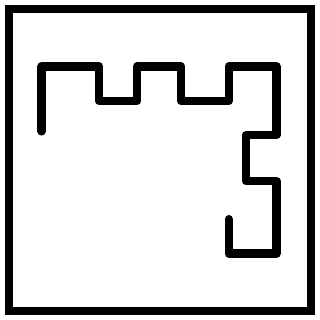
How many triangles are there in the given figure?

  1. AOption (a)

    10

  2. BOption (b)

    8

  3. COption (c)

    11

  4. DOption (d)

    9

View answer & explanation

Correct answer

Answer: (b)B.

8

Why this answer is correct

Counting the triangles are there in the given figure:

Hence, the correct answer is "8".

Question 2

Select the option that can replace the question mark (?) in the following series.

OA33, RD36, UG39, XJ42, ?

  1. AOption (a)

    CN41

  2. BOption (b)

    AM45

  3. COption (c)

    BO43

  4. DOption (d)

    BN44

View answer & explanation

Correct answer

Answer: (b)B.

AM45

Why this answer is correct

The logic followed here is:

Hence, the correct answer is "AM45".

Question 3

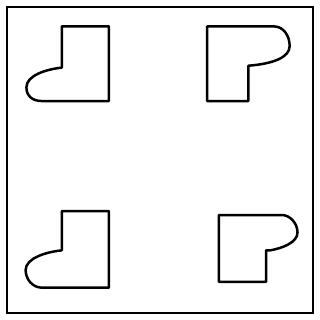
Select the option figure in which the given figure (X) is embedded (rotation is NOT allowed).

  1. AOption (a)

  2. BOption (b)

  3. COption (c)

  4. DOption (d)

View answer & explanation

Correct answer

Answer: (b)B.

Why this answer is correct

The option figure in which the given figure (X) is embedded:

Hence, the correct answer is "Option 2".

Question 4

In a certain code language, FIGURE is coded as 'VSUGJW' and COPIED is coded as 'YMLSWX'. What will be the code for BLANKET?

  1. AOption (a)

    ZPANQWH

  2. BOption (b)

    ZPMNQHW

  3. COption (c)

    ZPANQHW

  4. DOption (d)

    ZPNAQWH

View answer & explanation

Correct answer

Answer: (a)A.

ZPANQWH

Why this answer is correct

The logic followed here is:

FIGURE is coded as 'VSUGJW'

COPIED is coded as 'YMLSWX'

Similarly, the code for BLANKET:

Hence, the correct answer is "ZPANQWH".

Question 5

‘Simple’ is related to ‘Basic’ in the same way as ‘Difficult’ is related to ‘________’.

  1. AOption (a)

    Trivial

  2. BOption (b)

    Wrong

  3. COption (c)

    Imaginary

  4. DOption (d)

    Complex

View answer & explanation

Correct answer

Answer: (d)D.

Complex

Why this answer is correct

The logic followed here is:

Logic: Simple and Basic are synonyms.

Here,

Simple : Basic → Simple is synonymous with Basic.

Similarly,

Difficult : Complex → Difficult is synonymous with Complex.

Hence, the correct answer is "Option 4".

Question 6

In a certain code language,

‘A + B’ means ‘A is the son of B’;

‘A # B’ means ‘A is the sister of B’;

‘A × B’ means ‘A is the wife of B’; and,

‘A @ B’ means ‘A is the father of B’.

Based on the above, how is M related to T if ‘M # N @ L × P + T’?

  1. AOption (a)

     Son’s wife’s sister

  2. BOption (b)

    Son’s wife’s father’s sister

  3. COption (c)

    Son’s wife’s father

  4. DOption (d)

    Son’s wife’s father’s mother

View answer & explanation

Correct answer

Answer: (b)B.

Son’s wife’s father’s sister

Why this answer is correct

Family Chart:

Decoding the Symbols:

Symbol+#×@
MeaningSonSisterWifeFather


Given: ‘M # N @ L × P + T

It means: M is the sister of N, N is the father of L, L is the wife of P and P is the son of T.

S, M is the 'Son’s wife’s father’s sister' of T.

Hence, the correct answer is "Son’s wife’s father’s sister".

Question 7

What will come in place of the question mark (?) in the following equation, if '+' and '−' are interchanged and '×' and '÷' are interchanged?

229 ÷ 41 + 502 × 2 − 44 = ?

  1. AOption (a)

    9281

  2. BOption (b)

    9812

  3. COption (c)

    9218

  4. DOption (d)

    9182

View answer & explanation

Correct answer

Answer: (d)D.

9182

Why this answer is correct

BODMAS Table: 

After decoding signs:

SignsDecoded signs
+-
-+
×÷
÷×


Given equation: 229 ÷ 41 + 502 × 2 − 44 = ?

After interchanging the signs then:

⇒ 229 × 41 - 502 ÷ 2 + 44 = ?

⇒ ? = 229 × 41 - 251 + 44 = ?

⇒ ? = 9389 - 251 + 44

⇒ ? = 9433 - 251 = 9182

Hence, the correct answer is "9182".

Question 8

Select the figure from among the given options that can replace the question mark (?) in the following series.

  1. AOption (a)

  2. BOption (b)

  3. COption (c)

  4. DOption (d)

View answer & explanation

Correct answer

Answer: (c)C.

Why this answer is correct

The logic followed here is:

Small lines are decreasing by 3 from the previous figure.

Hence, the correct answer is "Option 3".

Question 9

Select the triad in which the numbers are related in the same way as are the numbers of the given triads. (NOTE: Operations should be performed on the whole numbers, without breaking down the numbers into its constituent digits. E.g., 13 – Operations on 13 such as adding/deleting/multiplying etc. to 13 can be performed. Breaking down 13 into 1 and 3 and then performing mathematical operations on 1 and 3 is not allowed.)

(3, 5, 32)

(9, 1, 26)

  1. AOption (a)

    (5, 6, 33)

  2. BOption (b)

    (2, 6, 30)

  3. COption (c)

    (6, 1, 23)

  4. DOption (d)

    (4, 2, 28)

View answer & explanation

Correct answer

Answer: (c)C.

(6, 1, 23)

Why this answer is correct

The logic followed here is:

Logic: (1st number × 2nd number) + 17 = 3rd number.

Now,

For (3, 5, 32):

⇒ (3 × 5) + 17

= 15 + 17 = 32.

For (9, 1, 26)

⇒ (9 × 1) + 17

= 9 + 17 = 26.

Similarly, for Option 3: (6, 1, 23)

⇒ (6 × 1) + 17

= 6 + 17 = 23

Hence, the correct answer is Option (3).

Question 10

What will come in the place of ‘?’ in the following equation, if ‘+’ and ‘–‘ are interchanged and ‘×’ and ‘÷’ are interchanged?

4 – 5 ÷ 9 + 6 × 2 = ?

  1. AOption (a)

    42

  2. BOption (b)

    46

  3. COption (c)

    36

  4. DOption (d)

    38

View answer & explanation

Correct answer

Answer: (b)B.

46

Why this answer is correct

BODMAS Table: 

Given equation: 4 – 5 ÷ 9 + 6 × 2 = ?

Now, if ‘+’ and ‘-’ and ‘×’ and ‘÷’ are interchanged, then:

⇒ 4 + 5 × 9 – 6 ÷ 2 = ?

⇒ 4 + 45 – 3 = ?

⇒ 49 - 3 = ?

⇒ 46.

Hence, the correct answer is "Option 2".

Question 11

Which of the following terms will replace the question mark (?) in the given series?

OPOR, NOPS, ?, LMRU, KLSV

  1. AOption (a)

    MNQT

  2. BOption (b)

    MNTQ

  3. COption (c)

    MNQP

  4. DOption (d)

    NMQT

View answer & explanation

Correct answer

Answer: (a)A.

MNQT

Why this answer is correct

The logic followed here is:

Hence, the correct answer is "MNQT".

Question 12

Select the option that represents the letters that when sequentially placed from left to right in the blanks below will complete

the letter series.

Y _ Y _ _ Y _ T _ Y _ Y

  1. AOption (a)

    YTYTYT

  2. BOption (b)

    TTYYTT

  3. COption (c)

    TYTYYT

  4. DOption (d)

    TYTYTY

View answer & explanation

Correct answer

Answer: (c)C.

TYTYYT

Why this answer is correct

The logic followed here is:

Given Sequence: Y _ Y _ _ Y _ T _ Y _ Y

Now, putting the letters in the blank spaces given in the option one by one:

Option 1) YTYTYT → Y Y Y / T Y Y / T T Y  / Y T Y

Option 2) TTYYTT → Y T Y / T Y Y / Y T T  / Y T Y

Option 3) TYTYYT → Y T Y / Y T Y / Y T Y / Y T Y

Here, 'Y T Y' is the pattern.

Option 4) TYTYTY → Y T Y / Y T Y / Y T T Y Y Y

Hence, the correct answer is "TYTYYT".

Question 13

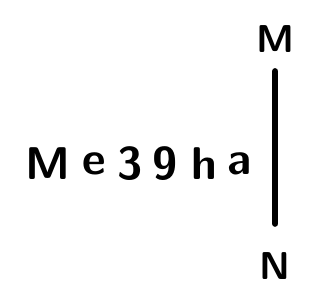
Select the correct mirror image of the given figure when the mirror is placed at MN.

  1. AOption (a)

  2. BOption (b)

  3. COption (c)

  4. DOption (d)

View answer & explanation

Correct answer

Answer: (b)B.

Why this answer is correct

The correct mirror image of the given figure is:

Hence, the correct answer is "Option 2".

Question 14

Three of the following four options are alike in a certain way and thus form a group. Which is the one that does NOT belong to that group?

(NOTE: Operations should be performed on the whole numbers, without breaking down the numbers into its constituent 

digits. E.g. 13 – Operations on 13 such as adding/subtracting/multiplying etc. to 13 can be performed. Breaking down 13 into

1 and 3 and then performing mathematical operations on 1 and 3 is not allowed.)

  1. AOption (a)

    82 – 46 – 10

  2. BOption (b)

    90 – 99 – 108

  3. COption (c)

    67 – 45 – 23

  4. DOption (d)

    90 – 51 – 13

View answer & explanation

Correct answer

Answer: (d)D.

90 – 51 – 13

Why this answer is correct

The logic followed here is: (1st number + 3rd number) / 2 = 2nd number.

1)  82 – 46 – 10 → (82 + 10) / 2 = 92 / 2 = 46

2)  90 – 99 – 108 → (90 + 108) / 2 = 198 / 2 = 99

3)  67 – 45 – 23 → (67 + 23) / 2 = 90 / 2 = 45

4)  90 – 51 – 13 → (90 + 13) / 2 = 103 / 2 = 51.5 ≠ 51

Thus, "90 – 51 – 13" is the one that does NOT belong to that group.

Hence, the correct answer is "90 – 51 – 13".

Question 15

A paper is folded and cut as shown below. How will it appear when unfolded?

  1. AOption (a)

  2. BOption (b)

  3. COption (c)

  4. DOption (d)

View answer & explanation

Correct answer

Answer: (c)C.

Why this answer is correct

The paper will look when unfolded:

Hence, the correct answer is "Option 3".

Question 16

Based on the position in the English alphabetical order, three of the following letter-clusters are alike in some manner and one is different. Select the odd letter-cluster.

Note: The odd one out is not based on the number of consonants/vowels or their position in the letter cluster.

  1. AOption (a)

    SUZY

  2. BOption (b)

    MPUT

  3. COption (c)

    QSXW

  4. DOption (d)

    PRWV

View answer & explanation

Correct answer

Answer: (b)B.

MPUT

Why this answer is correct

The logic followed here is:

1)  SUZY

2)  MPUT

3)  QSXW

4)  PRWV

Hence, the correct answer is "MPUT".

Question 17

Select the set in which the numbers are related in the same way as are the numbers of the following sets.

(NOTE : Operations should be performed on the whole numbers, without breaking down the numbers into its constituent

digits. E.g. 13 – Operations on 13 such as adding /deleting /multiplying etc., to 13 can be performed. Breaking down 13 into 1

and 3 and then performing mathematical operations on 1 and 3 is not allowed.)

(108, 12, 9)

(114, 19, 6)

  1. AOption (a)

     (136, 17, 8)

  2. BOption (b)

    (144, 14, 8)

  3. COption (c)

    (156, 18, 5)

  4. DOption (d)

    (148, 16, 9)

View answer & explanation

Correct answer

Answer: (a)A.

 (136, 17, 8)

Why this answer is correct

The logic followed here is:

Logic: 2nd number × 3rd number = 1st number.

Now,

For (108, 12, 9):

⇒ 12 × 9 = 108

For, (114, 19, 6)

⇒ 19 × 6 = 114

Similarly, for (136, 17, 8)

⇒ 17 × 8 = 136

Hence, the correct answer is "Option 1".

Question 18

Two sets of numbers are given below. In each set of numbers, certain mathematical operation(s) on the first number

result(s) in the second number. Similarly, certain mathematical operation(s) on the second number result(s) in the third

number and so on. Which of the given options follows the same set of operations as in the given sets?

(NOTE: Operations should be performed on the whole numbers, without breaking down the numbers into their constituent

digits. E.g. 13 – Operations on 13 such as adding/subtracting/multiplying to 13 can be performed. Breaking down 13 into 1

and 3 and then performing mathematical operations on 1 and 3 is not allowed.)

17 – 19 – 16 – 20; 22 – 24 – 21 – 25

  1. AOption (a)

    15 – 17 – 14 – 18

  2. BOption (b)

    16 – 18 – 12 – 16

  3. COption (c)

    11 – 13 – 10 – 15

  4. DOption (d)

    18 – 20 – 16 – 14

View answer & explanation

Correct answer

Answer: (a)A.

15 – 17 – 14 – 18

Why this answer is correct

The logic followed here is: 1st number + 2 = 2nd number; 2nd number - 3 = 3rd number; 3rd number + 4 = 4th number.

17 – 19 – 16 – 20 → 17 + 2 = 19; 19 - 3 = 16; 16 + 4 = 20;

22 – 24 – 21 – 25 → 22 + 2 = 24; 24 - 3 = 21; 21 + 4 = 25;

Similarly,

Option 1) 15 – 17 – 14 – 18 → 15 + 2 = 17: 17 - 3 = 14; 14 + 4 = 18

Option 2) 16 – 18 – 12 – 16 → 16 + 2 = 18; 18 - 6 = 12; 12 + 4 = 16

Option 3) 11 – 13 – 10 – 15 → 11 + 2 = 13; 13 - 3 = 10; 10 + 5 = 15

Option 4) 18 – 20 – 16 – 14 → 18 + 2 = 20; 20 - 4 = 16; 16 - 2 = 14

Hence, the correct answer is "15 – 17 – 14 – 18".

Question 19

Read the given statements and conclusions carefully. Assuming that the information given in the statements is true, even if

it appears to be at variance with commonly known facts, decide which of the given conclusion(s) logically follow(s) from the

statements.

Statements:

All pastries are chocolates.

Some chocolates are cookies.

All cookies are cakes.

Conclusions:

(I) No pastry is a cake.

(II) Some cakes are chocolates.

  1. AOption (a)

    Only conclusion I follows.

  2. BOption (b)

    Both conclusions I and II follow.

  3. COption (c)

    Neither conclusion I nor II follows.

  4. DOption (d)

    Only conclusion II follows.

View answer & explanation

Correct answer

Answer: (d)D.

Only conclusion II follows.

Why this answer is correct

Statements:

All pastries are chocolates.

Some chocolates are cookies.

All cookies are cakes.

The least possible Venn diagram is as follows:

Conclusions:

(I) No pastry is a cake. - False (because there is no direct relation given between pastry and cake so it can be possible but not definite)

(II) Some cakes are chocolates. - True (because Some chocolates are cookies and All cookies are cakes. So, Some cakes are chocolates it is definite)

Hence, the correct answer is "Only conclusion II follows".

Question 20

Identify the figure given in the options which when put in place of ? will logically complete the series.

  1. AOption (a)

    ​

  2. BOption (b)

  3. COption (c)

  4. DOption (d)

View answer & explanation

Correct answer

Answer: (a)A.

​

Why this answer is correct

The logic followed here is:

All letters are flipped horizontally one-by-one in each next figure.

Hence, the correct answer is "Option 1".

Question 21

In a certain code language, 'FRAMED' is coded as '497621' and 'DREAMT' is coded as '769542'. What is the code for 'T' in that language?

  1. AOption (a)

    5

  2. BOption (b)

    1

  3. COption (c)

    4

  4. DOption (d)

    7

View answer & explanation

Correct answer

Answer: (a)A.

5

Why this answer is correct

The logic followed here is:

Thus, the code for 'T' = 5

Hence, the correct answer is "5".

Question 22

In this question, three statements are given, followed by two conclusions numbered I and II. Assuming the statements to be

true, even if they seem to be at variance with commonly known facts, decide which of the conclusions logically

follows/follow from the statements.

Statements:

All red are green.

All green are pink.

No pink is blue.

Conclusions:

I. No green is blue.

II. Some blue are red.

  1. AOption (a)

    Only conclusion II follows.

  2. BOption (b)

    Neither conclusion I nor II follows.

  3. COption (c)

    Only conclusion I follows.

  4. DOption (d)

    Both conclusions I and II follow.

View answer & explanation

Correct answer

Answer: (c)C.

Only conclusion I follows.

Why this answer is correct

Statements:

All red are green.

All green are pink.

No pink is blue.

The least possible Venn diagram is as follows:

Conclusions:

I. No green is blue. - True (because All green are pink and No pink is blue. So, No green is also blue)

II. Some blue are red. - False (because All red are green, All green are pink and No pink is blue. So, Some blue cannot red)

Hence, the correct answer is "Only conclusion I follows".

Question 23

The position of how many letters will remain unchanged if each of the letters in the word 'SPIDER' is arranged in the English alphabetical order?

  1. AOption (a)

    Three

  2. BOption (b)

    None

  3. COption (c)

    Two

  4. DOption (d)

    One

View answer & explanation

Correct answer

Answer: (d)D.

One

Why this answer is correct

Given word: 'SPIDER'

After arranged in alphabetical order:

AlphabetsSPIDER
Alphabetical orderDEIPRS


Now,

there are only One alphabets "I" that will remain unchanged if each of the letters in the word 'SPIDER' is arranged in English alphabetical order.

Hence, the correct answer is "Option 4".

Question 24

A square is folded and cut as shown below. How will it appear when unfolded?

  1. AOption (a)

  2. BOption (b)

  3. COption (c)

  4. DOption (d)

View answer & explanation

Correct answer

Answer: (a)A.

Why this answer is correct

The paper will look when unfolded:

Hence, the correct answer is "Option 1".

Question 25

Select the number from among the given options that can replace the question mark (?) in the following series.

30, 22, 36, 75, 178, ?

  1. AOption (a)

    343

  2. BOption (b)

    480

  3. COption (c)

    361

  4. DOption (d)

    400

View answer & explanation

Correct answer

Answer: (b)B.

480

Why this answer is correct

The logic followed here is:

Hence, the correct answer is "480".

General Awareness (25 questions)

Question 26

Which part of Indian Constitution deals with the election of the Vice President?

  1. AOption (a)

    Part IV

  2. BOption (b)

    Part III

  3. COption (c)

    Part VI

  4. DOption (d)

    Part V

View answer & explanation

Correct answer

Answer: (d)D.

Part V

Why this answer is correct

The correct answer is Part V.

Key Points

  • Part V of the Indian Constitution is titled "The Union".
  • It encompasses provisions related to the President, the Vice-President, the Council of Ministers, and the Parliament.
  • Articles 52 to 151 deal with the executive, legislative, and administrative functions of the Union Government.
  • The election of the Vice President of India is specifically covered under Articles 63 to 71 in Part V of the Constitution.

Additional Information

  • Part IV
  • Part IV of the Indian Constitution is titled "Directive Principles of State Policy".
  • It contains Articles 36 to 51.
  • These articles guide the State in making laws and policies to establish a just society in the country.
  • However, they are non-justiciable, meaning they are not enforceable by any court.
  • Part III
  • Part III of the Indian Constitution is titled "Fundamental Rights".
  • It contains Articles 12 to 35.
  • These articles guarantee essential rights such as equality, freedom, and protection against exploitation.
  • These rights are justiciable, meaning they can be enforced by the courts.
  • Part VI
  • Part VI of the Indian Constitution is titled "The States".
  • It contains Articles 152 to 237.
  • This part deals with the executive, legislative, and administrative structure of the States.
  • It outlines the roles and responsibilities of the Governor, State Legislature, and Council of Ministers.

Question 27

In which of the following games is the 'Baulk Line' used?

  1. AOption (a)

    Kabaddi

  2. BOption (b)

    Badminton

  3. COption (c)

    Tennis

  4. DOption (d)

    Kho-Kho

View answer & explanation

Correct answer

Answer: (a)A.

Kabaddi

Why this answer is correct

The correct answer is Kabaddi.

Key Points

  • The 'Baulk Line' is a critical feature in the game of Kabaddi.
  • It is used to determine the playing area for raiders and defenders.
  • A raider must cross the baulk line to make their raid valid.
  • Crossing the baulk line puts pressure on the defenders and adds a strategic element to the game.

Additional Information

  • Kabaddi
  • Kabaddi is a contact team sport that originated in India.
  • The objective of the game is for a single player, known as a "raider," to run into the opposing team's half of the court, tag out as many of their defenders as possible, and return to their own half of the court, all without being tackled by the defenders, and in a single breath.
  • The baulk line plays a critical role during a raid. A raider must cross this line to make their raid valid, and it acts as a challenge for both raiders and defenders.
  • Kabaddi has gained international recognition and is played in several countries, with professional leagues and tournaments being organized globally.
  • Badminton
  • Badminton is a racquet sport played using racquets to hit a shuttlecock across a net.
  • It is usually played as a singles or doubles game.
  • The boundaries of the playing area in badminton are defined by lines on the court, but terms like "baulk line" are not used in this sport.
  • Tennis
  • Tennis is a racquet sport that can be played individually against a single opponent (singles) or between two teams of two players each (doubles).
  • The court is rectangular and bounded by lines, but does not include a "baulk line."
  • Players use the tennis racquet to hit the ball over a net into the opponent's court.
  • Kho-Kho
  • Kho-Kho is a traditional Indian sport that involves two teams of twelve players each.
  • The game is played on a rectangular field, and the main objective is to avoid being tagged by members of the opposing team.
  • While the sport involves various lines and zones, such as the central line and the posts, the term "baulk line" is not applicable to Kho-Kho.

Question 28

Which of the following statements is NOT correct?

  1. AOption (a)

    Light year is the unit of distance.

  2. BOption (b)

    Light year is the distance travelled by light in one year.

  3. COption (c)

    Light year is the unit of time.

  4. DOption (d)

    Angstrom is unit of length.

View answer & explanation

Correct answer

Answer: (c)C.

Light year is the unit of time.

Why this answer is correct

The correct answer is Light year is the unit of time..

Key Points

  • A light year is not a unit of time; it is a unit of distance.
  • A light year is the distance that light travels in one year in a vacuum.
  • The concept of a light year is used in astronomy to measure vast distances between celestial objects.
  • One light year is approximately 9.461 trillion kilometers (5.879 trillion miles).

Additional Information

  • Light Year:
  • A light year is defined as the distance that light travels in a vacuum in one Julian year (365.25 days).
  • This distance is used in astronomy to express the scale of the universe.
  • It allows astronomers to measure distances between stars, galaxies, and other celestial objects.
  • Angstrom:
  • An angstrom is a unit of length used primarily in the field of physics and chemistry.
  • It is equal to 10-10 meters or 0.1 nanometers.
  • Angstroms are often used to measure wavelengths of light, atomic radii, and the size of molecules.
  • Distance Measurement in Astronomy:
  • Astronomers use various units to measure distances, including astronomical units (AU), light years, and parsecs.
  • 1 AU is the average distance from the Earth to the Sun, approximately 149.6 million kilometers.
  • 1 parsec is equal to about 3.26 light years or 31 trillion kilometers.
  • These measurements help in understanding the vastness of space and the relative positions of celestial bodies.

Question 29

What is the economic justification for subsidies in the agriculture sector?

  1. AOption (a)

    It is mostly used to provide benefits for rich farmers.

  2. BOption (b)

    It is a part of government expenditure in the service sector.

  3. COption (c)

    It is an incentive to provide the benefits of advanced technology and decrease the cost of production.

  4. DOption (d)

    It is used to provide benefits for capital goods producers in agriculture.

View answer & explanation

Correct answer

Answer: (c)C.

It is an incentive to provide the benefits of advanced technology and decrease the cost of production.

Why this answer is correct

The correct answer is It is an incentive to provide the benefits of advanced technology and decrease the cost of production.

Key Points

  • Subsidies in the agriculture sector are primarily aimed at reducing the cost of production for farmers.
  • They help in making advanced technologies and farming techniques more accessible to farmers, which can lead to increased productivity.
  • By lowering production costs, subsidies can help in stabilizing food prices and ensuring food security.
  • Such incentives also encourage farmers to adopt sustainable agricultural practices, which can lead to long-term benefits for the environment and the economy.

Additional Information

  • Subsidies
  • Subsidies are financial aids provided by the government to support economic sectors, making goods and services more affordable.
  • They can be in the form of direct cash transfers, tax breaks, or reduced prices.
  • Agricultural Subsidies
  • Agricultural subsidies are designed to support farmers by reducing the cost of inputs such as seeds, fertilizers, and machinery.
  • These subsidies aim to enhance agricultural productivity and ensure food security.
  • Food Security
  • Food security means ensuring that all people have access to sufficient, safe, and nutritious food to maintain a healthy and active life.
  • It is dependent on food availability, accessibility, and proper utilization.
  • Sustainable Agriculture
  • Sustainable agriculture involves farming practices that are environmentally friendly, economically viable, and socially responsible.
  • It aims to meet the needs of the present without compromising the ability of future generations to meet their own needs.

Question 30

The Environment (Protection) Act, 1986 empowers the ________ to establish authorities charged with the mandate of preventing environmental pollution in all its forms.

  1. AOption (a)

    State Government

  2. BOption (b)

    Central Government

  3. COption (c)

    Supreme Court

  4. DOption (d)

    local municipalities

View answer & explanation

Correct answer

Answer: (b)B.

Central Government

Why this answer is correct

The correct answer is Central Government.

Key Points

  • The Environment (Protection) Act, 1986, is an Act of the Parliament of India, enacted in the wake of the Bhopal Gas Tragedy.
  • The Act empowers the Central Government to make rules to regulate environmental pollution and to establish authorities for the purpose.
  • It provides the Central Government with the authority to take all necessary measures to protect and improve the quality of the environment.
  • It encompasses a wide range of regulations and standards to control pollution and manage hazardous substances.

Additional Information

  • Environment (Protection) Act, 1986
  • The Act was passed in response to the need for overarching legislation to protect and improve the environment.
  • The Act gives the Central Government the power to take measures for environmental protection, such as setting standards for emissions or discharge of environmental pollutants from various sources.
  • It provides a framework for coordinating the activities of various central and state authorities established under other laws to ensure environmental protection.
  • The Act also includes provisions for penalties for contravention of the standards and restrictions set by the government.
  • Key Provisions of the Act
  • Section 3: Empowers the Central Government to take measures to protect and improve the environment and to prevent, control, and abate environmental pollution.
  • Section 6: Empowers the Central Government to make rules to regulate environmental pollution, including standards for the quality of the environment, and the maximum allowable concentrations of various pollutants.
  • Section 15: Provides for penalties for non-compliance with the provisions of the Act, including imprisonment and fines.
  • Section 19: Allows any person to file a complaint in a court of law against anyone who fails to comply with the Act's provisions.
  • Importance of the Act
  • The Environment (Protection) Act, 1986, serves as a comprehensive framework for the protection and improvement of the environment in India.
  • It addresses the need for a unified approach to environmental regulation and management.
  • The Act empowers the government to take proactive measures to prevent environmental degradation and to respond effectively to environmental emergencies.
  • It plays a crucial role in ensuring sustainable development and safeguarding public health and well-being.

Question 31

Which of the following Articles and Parts of the Indian Constitution deal with the State Legislature?

  1. AOption (a)

    Articles 214 to 231 in Part VI

  2. BOption (b)

    Articles 168 to 212 in Part VI

  3. COption (c)

    Articles 243 to 243-O in Part IX

  4. DOption (d)

    Articles 79 to 122 in Part V

View answer & explanation

Correct answer

Answer: (b)B.

Articles 168 to 212 in Part VI

Why this answer is correct

The correct answer is Articles 168 to 212 in Part VI.

Key Points

  • Articles 168 to 212 in Part VI of the Indian Constitution deal with the State Legislature.
  • The State Legislature consists of the Governor and one or two Houses, as the case may be.
  • In some states, the legislature is bicameral, consisting of the Legislative Assembly and the Legislative Council, while in others, it is unicameral, consisting only of the Legislative Assembly.
  • These articles lay down the composition, duration, and functions of the State Legislatures.

Additional Information

  • Article 168: This article specifies the composition of the State Legislature, which can be either unicameral (with only the Legislative Assembly) or bicameral (with both the Legislative Assembly and the Legislative Council).
  • Article 170: This article deals with the composition of the Legislative Assemblies, including the number of seats and the delimitation of constituencies.
  • Article 171: This article outlines the composition of the Legislative Councils, including the method of election and nomination of members.
  • Article 174: This article mandates that the Governor shall summon the Legislature at least once every six months.
  • Article 176: This article requires the Governor to address the Legislature at the commencement of the first session after each general election and at the commencement of the first session of each year.
  • Article 178: This article provides for the election of the Speaker and Deputy Speaker of the Legislative Assembly.
  • Article 194: This article grants certain privileges and immunities to the members of the State Legislature.
  • Article 212: This article states that the validity of any proceedings in the Legislature of a state shall not be called in question on the ground of any alleged irregularity of procedure.

Question 32

The upper portion of the Earth is known as:

  1. AOption (a)

    Stratosphere

  2. BOption (b)

    Troposphere

  3. COption (c)

    Lithosphere

  4. DOption (d)

    Mesosphere

View answer & explanation

Correct answer

Answer: (c)C.

Lithosphere

Why this answer is correct

The correct answer is Lithosphere.

Key Points

  • The Lithosphere is the rigid, outermost shell of the Earth, encompassing both the crust and the uppermost part of the mantle.
  • It is divided into tectonic plates that float on the semi-fluid asthenosphere beneath it.
  • The thickness of the Lithosphere varies, being thinnest at mid-ocean ridges and thickest beneath continental crust.
  • The Lithosphere is crucial for plate tectonics, as its movements and interactions cause earthquakes, volcanic activity, and the creation of mountain ranges.

Additional Information

  • Stratosphere
  • The Stratosphere is the second major layer of Earth's atmosphere, lying above the Troposphere and below the Mesosphere.
  • It extends from about 10 km to 50 km above Earth's surface.
  • This layer contains the ozone layer, which absorbs and scatters ultraviolet solar radiation.
  • Commercial jet aircraft typically fly in the lower stratosphere.
  • Troposphere
  • The Troposphere is the lowest layer of Earth's atmosphere, extending from Earth's surface up to about 8-15 km.
  • It contains approximately 75% of the atmosphere's mass and 99% of its water vapor and aerosols.
  • Weather events occur in the Troposphere.
  • Mesosphere
  • The Mesosphere is the layer of the atmosphere above the Stratosphere and below the Thermosphere.
  • It extends from about 50 km to 85 km above the Earth's surface.
  • This layer is where most meteorites burn up upon entering the Earth's atmosphere.
  • The temperature decreases with altitude in the Mesosphere.

Question 33

Match the following social reform organisations with their respective founders:|

Social Reform OrganisationsTheir Founders
a) Brahmo Samaji. Raja Ram Mohan Roy
b) Ramakrishna Missionii. Swami Vivekanand
c) Prarthana Samajiii.  Dayananda Saraswati
d) Arya Samajiv.  Atmaram Pandurang
  1. AOption (a)

    a-ii, b-iii, c-iv, d-i

  2. BOption (b)

    a-iii, b-i, c-ii, d-iv

  3. COption (c)

    a-iv, b-iii, c-ii, d-i

  4. DOption (d)

    a-i, b-ii, c-iv, d-iii

View answer & explanation

Correct answer

Answer: (d)D.

a-i, b-ii, c-iv, d-iii

Why this answer is correct

The correct answer is option 4.

Key Points

  • Brahmo Samaj was founded by Raja Ram Mohan Roy in 1828.
  • Ramakrishna Mission was founded by Swami Vivekanand in 1897.
  • Prarthana Samaj was founded by Atmaram Pandurang in 1867.
  • Arya Samaj was founded by Dayananda Saraswati in 1875.

Additional Information

  • Brahmo Samaj:
  • Founded by Raja Ram Mohan Roy in 1828.
  • Played a significant role in the socio-religious reform movements in India.
  • It aimed to purify Hinduism and to promote monotheism.
  • It advocated for the abolition of practices like Sati and child marriage.
  • Ramakrishna Mission:
  • Founded by Swami Vivekanand in 1897.
  • Named after Swami Vivekanand's guru, Ramakrishna Paramahamsa.
  • It focuses on religious and educational activities, and also on social service.
  • The mission aims to promote the ideas of Vedanta and Yoga.
  • Prarthana Samaj:
  • Founded by Atmaram Pandurang in 1867.
  • It was a reform movement within Hinduism.
  • The organization aimed at making social reforms like the abolition of caste system, widow remarriage, and women's education.
  • The Samaj promoted monotheism and condemned idolatry.
  • Arya Samaj:
  • Founded by Dayananda Saraswati in 1875.
  • It aimed at promoting the values of the Vedas.
  • The movement sought to reform and rejuvenate Hinduism.
  • It opposed the caste system and advocated for gender equality and education for all.

Question 34

In West Bengal, how many rice crops are grown in a year?

  1. AOption (a)

    Three

  2. BOption (b)

    Two

  3. COption (c)

    Four

  4. DOption (d)

    One

View answer & explanation

Correct answer

Answer: (a)A.

Three

Why this answer is correct

The correct answer is Three.

Key Points

  • In West Bengal, rice is a major crop and is cultivated three times a year.
  • The three main rice crops are known as Aus, Aman, and Boro.
  • Aus rice is sown during the pre-monsoon season (March-April) and harvested in the summer (June-July).
  • Aman rice is sown during the monsoon season (June-July) and harvested in the winter (November-December).
  • Boro rice is sown during the winter season (December-January) and harvested in the summer (April-May).

Additional Information

  • Aus Rice:
  • Also known as autumn rice, it is one of the early varieties of rice cultivated in the pre-monsoon period.
  • It is typically sown in March-April and harvested by June-July.
  • This variety of rice requires less water compared to the other two, making it suitable for areas with less rainfall.
  • Aman Rice:
  • Also known as winter rice, it is a monsoon-season crop.
  • It is sown in June-July and harvested by November-December.
  • This variety of rice depends heavily on the monsoon rains for its cultivation.
  • Boro Rice:
  • Also known as summer rice, it is cultivated in the winter season.
  • It is sown in December-January and harvested by April-May.
  • This variety requires irrigation facilities as it is grown during the dry season.

Question 35

Which of the following sectors in India faces seasonal unemployment?

  1. AOption (a)

    Agriculture

  2. BOption (b)

    Manufacturing

  3. COption (c)

    Medical

  4. DOption (d)

    Information technology

View answer & explanation

Correct answer

Answer: (a)A.

Agriculture

Why this answer is correct

The correct answer is Agriculture.

Key Points

  • Agriculture is a sector that is highly dependent on seasons and climatic conditions, leading to seasonal unemployment.
  • During the off-season, agricultural workers may not find work, leading to temporary unemployment.
  • This type of unemployment typically affects rural areas where agriculture is the primary occupation.
  • Seasonal unemployment in agriculture can be mitigated by providing alternate employment opportunities during the off-season.

Additional Information

  • Seasonal Unemployment:
  • Seasonal unemployment occurs when people are unemployed at certain times of the year because their work is seasonal in nature.
  • Common sectors that face seasonal unemployment include agriculture, tourism, and construction.
  • In agriculture, this type of unemployment happens between planting and harvesting seasons.
  • To mitigate seasonal unemployment, workers often seek alternative employment during the off-season or may participate in government employment schemes.
  • Cyclical Unemployment:
  • Cyclical unemployment occurs due to the fluctuations in the business cycle—during recessions, demand for goods and services decreases, leading to job losses.
  • This type of unemployment is typically temporary and can be addressed through economic policies that stimulate demand.
  • Structural Unemployment:
  • Structural unemployment is caused by mismatches between the skills of the unemployed and the skills needed for available jobs.
  • This can be due to technological changes, shifts in the economy, or other long-term changes.
  • Re-training and education programs can help reduce structural unemployment.
  • Frictional Unemployment:
  • Frictional unemployment occurs when people are temporarily unemployed while transitioning from one job to another.
  • This is a natural form of unemployment and is often short-term.
  • It is also considered a sign of a healthy economy as workers move to jobs that better match their skills and preferences.

Question 36

The revolution of 1857 started in May from which of the following cantonments in India?

  1. AOption (a)

    Kanpur

  2. BOption (b)

    Jhansi

  3. COption (c)

    Lucknow

  4. DOption (d)

    Meerut

View answer & explanation

Correct answer

Answer: (d)D.

Meerut

Why this answer is correct

The correct answer is Meerut.

Key Points

  • The revolution of 1857, also known as the First War of Indian Independence, started from the cantonment of Meerut.
  • The revolt began on May 10, 1857, when Indian soldiers in Meerut rebelled against the British officers.
  • The immediate cause of the revolt was the introduction of new rifle cartridges rumored to be greased with cow and pig fat, offending both Hindu and Muslim soldiers.
  • Meerut was one of the largest military cantonments in India at the time, making it a significant starting point for the uprising.

Additional Information

  • Causes of the Revolt
  • Political Causes: The annexation policies of the British, such as the Doctrine of Lapse, created widespread resentment among Indian rulers.
  • Economic Causes: The heavy taxation and exploitation of Indian farmers, artisans, and the destruction of traditional industries led to economic distress.
  • Social and Religious Causes: The British social reforms, which were seen as interference in traditional customs and religious practices, angered many Indians.
  • Spread of the Revolt
  • After Meerut, the revolt quickly spread to other parts of India, including Delhi, Kanpur, Lucknow, Jhansi, and Gwalior.
  • Many Indian rulers and soldiers joined the rebellion, seeing it as an opportunity to regain their lost power and territories.
  • Suppression of the Revolt
  • The British used superior military force and strategic alliances with some Indian rulers to suppress the revolt.
  • By 1858, the British had regained control over most of the rebellious areas, marking the end of the revolt.
  • Consequences of the Revolt
  • The revolt led to the end of the East India Company's rule in India, and the British Crown took direct control of the Indian administration.
  • The British government made several administrative and military reforms to prevent any future rebellions.
  • The revolt also marked the beginning of a stronger nationalistic movement in India, leading to the eventual struggle for independence.

Question 37

Which of the following is a characteristic of both mammals and birds?

  1. AOption (a)

    Viviparity

  2. BOption (b)

    Pigmented skin

  3. COption (c)

    Pneumatic bones

  4. DOption (d)

    Warm blooded

View answer & explanation

Correct answer

Answer: (d)D.

Warm blooded

Why this answer is correct

The correct answer is Warm blooded.

Key Points

  • Mammals and birds are both warm-blooded, meaning they can regulate their body temperature internally.
  • This characteristic allows them to maintain a stable body temperature regardless of the external environment.
  • Being warm-blooded helps these animals to remain active in a wide range of temperatures.
  • Warm-blooded animals have higher metabolic rates compared to cold-blooded animals, which helps in supporting their active lifestyles.

Additional Information

  • Viviparity
  • Viviparity is the mode of reproduction in which the embryo develops inside the body and is born live.
  • Mammals generally exhibit viviparity, but birds do not; birds are oviparous, laying eggs outside their body.
  • Pigmented Skin
  • Pigmented skin contains pigments that provide color and protection against UV radiation.
  • This characteristic can be found in many animals, including mammals and birds, but it is not a defining characteristic of both groups.
  • Pneumatic Bones
  • Pneumatic bones are lightweight bones that contain air spaces, making them less dense.
  • This feature is primarily found in birds and helps them in flight; it is not a common characteristic of mammals.
  • Warm Blooded
  • Warm-blooded animals, also known as endotherms, can regulate their body temperature through internal mechanisms.
  • This trait is a common characteristic of both mammals and birds, allowing them to thrive in various environmental conditions.

Question 38

To promote agriculture, Muhammad Tughlaq founded which of the following new ministries?

  1. AOption (a)

    Diwan-i-Arz

  2. BOption (b)

    Diwan-i-Amir-i-kohi

  3. COption (c)

    Diwan-i-Insha

  4. DOption (d)

    Diwan-i-Risalat

View answer & explanation

Correct answer

Answer: (b)B.

Diwan-i-Amir-i-kohi

Why this answer is correct

The correct answer is Diwan-i-Amir-i-kohi.

Key Points

  • Diwan-i-Amir-i-kohi was established by Sultan Muhammad bin Tughlaq to promote agriculture.
  • This department was responsible for the development and management of agricultural activities.
  • The establishment of Diwan-i-Amir-i-kohi aimed at improving the agricultural productivity of the empire.
  • This initiative was part of Muhammad Tughlaq's broader economic policies to strengthen the revenue system and support the agrarian sector.

Additional Information

  • Diwan-i-Arz
  • Diwan-i-Arz was a military department responsible for the organization and administration of the army.
  • It managed recruitment, training, and maintenance of the army.
  • Diwan-i-Insha
  • Diwan-i-Insha was in charge of the royal correspondence.
  • It dealt with the drafting and dispatching of royal edicts and letters.
  • Diwan-i-Risalat
  • Diwan-i-Risalat was the department of religious affairs and charity.
  • It managed the administration of religious endowments (waqf) and provided support to scholars and clerics.

Question 39

In the context of cell division, which chromosomal behaviour takes place at the leptotene stage?

  1. AOption (a)

    Chromosomes are un-synapsed

  2. BOption (b)

    Synapsis is complete

  3. COption (c)

    Homologous chromosomes pair

  4. DOption (d)

    Chromosomes begin to condense

View answer & explanation

Correct answer

Answer: (d)D.

Chromosomes begin to condense

Why this answer is correct

The correct answer is Chromosomes begin to condense.

Key Points

  • During the leptotene stage, chromosomes start to condense and become visible under a microscope.
  • This stage is the initial phase of prophase I in meiosis, where chromosomes appear as long, thread-like structures.
  • The condensation of chromosomes helps in their subsequent alignment and pairing during meiosis.
  • Chromosomal condensation is crucial for the accurate segregation of chromosomes into daughter cells.

Additional Information

  • Leptotene Stage
  • The leptotene stage is the first stage of prophase I in meiosis.
  • During this stage, chromosomes start to condense and become visible as thin threads.
  • It is followed by the zygotene stage, where homologous chromosomes begin to pair and synapse.
  • Meiosis
  • Meiosis is a type of cell division that reduces the chromosome number by half, resulting in four genetically distinct daughter cells.
  • It consists of two consecutive divisions: meiosis I and meiosis II.
  • Meiosis is essential for sexual reproduction and contributes to genetic diversity.
  • Chromosomal Synapsis
  • Synapsis is the pairing of homologous chromosomes during prophase I of meiosis.
  • It occurs during the zygotene stage, following the leptotene stage.
  • Synapsis is crucial for the exchange of genetic material between homologous chromosomes through crossing over.

Question 40

Arvind Parikh, a Padma Bhushan awardee, plays which of the following musical instruments?

  1. AOption (a)

    Sitar

  2. BOption (b)

    Bansuri

  3. COption (c)

    Tabla

  4. DOption (d)

    Sarangi

View answer & explanation

Correct answer

Answer: (a)A.

Sitar

Why this answer is correct

The correct answer is Sitar.

Key Points

  • Arvind Parikh is a renowned sitar player from India.
  • He is a disciple of Ustad Vilayat Khan, one of the most influential sitar maestros.
  • Parikh has performed extensively in India and abroad, contributing significantly to the global recognition of Indian classical music.
  • He has been honored with the Padma Bhushan award, one of India's highest civilian awards, for his contributions to the field of music.

Additional Information

  • Sitar
  • The sitar is a plucked stringed instrument used in Hindustani classical music.
  • It has a long neck and a gourd-shaped body, with 18-20 strings including both playing and sympathetic strings.
  • Renowned sitar players include Ravi Shankar, Vilayat Khan, and Anoushka Shankar.
  • The sitar is known for its deep, resonant sound and is often used to play ragas, which are melodic frameworks for improvisation in Indian classical music.
  • Bansuri
  • The bansuri is an Indian flute made from a single hollow shaft of bamboo with six or seven finger holes.
  • It is traditionally used in Indian classical music and folk music.
  • Notable bansuri players include Hariprasad Chaurasia and Pannalal Ghosh.
  • Tabla
  • The tabla is a pair of twin hand drums from the Indian subcontinent, used in traditional, classical, popular, and religious music.
  • It consists of a small right-hand drum called the dayan and a larger left-hand drum called the bayan.
  • Famous tabla players include Zakir Hussain and Alla Rakha.
  • Sarangi
  • The sarangi is a bowed, short-necked string instrument from India, Nepal, and Pakistan.
  • It is used in Hindustani classical music and is known for its rich, resonant sound.
  • Prominent sarangi players include Ram Narayan and Sabri Khan.

Question 41

Which playback singer was honoured with the Nightingale of Asia Award in 1987?

  1. AOption (a)

    Pulapaka Susheela

  2. BOption (b)

    Asha Bhosle

  3. COption (c)

    Mubarak Begum

  4. DOption (d)

    Kavita Krishnamurthy

View answer & explanation

Correct answer

Answer: (b)B.

Asha Bhosle

Why this answer is correct

The correct answer is Asha Bhosle.

Key Points

  • Asha Bhosle is a renowned playback singer in India, known for her versatile voice and extensive career in the Indian music industry.
  • She has been honored with numerous awards and accolades, including the Nightingale of Asia Award in 1987.
  • Asha Bhosle is the sister of the legendary playback singer Lata Mangeshkar, and together, they have made significant contributions to Indian music.
  • Her career spans over seven decades, during which she has recorded songs for films, albums, and live performances, making her one of the most prolific singers in the world.

Additional Information

  • Playback Singing
  • Playback singing is a technique in Indian cinema where the singing voice is pre-recorded for use in movies, and the actors lip-sync to the songs on screen.
  • This practice allows for professional singers to provide high-quality vocal performances, while actors focus on their acting and on-screen presence.
  • Awards in the Music Industry
  • Music awards are given to recognize and honor achievements in the music industry, including performances, compositions, and contributions to the field.
  • Notable music awards include the Grammy Awards, the Academy Awards (Oscars) for Best Original Song, and national awards like the Filmfare Awards in India.
  • Contribution of Asha Bhosle
  • Asha Bhosle has sung in multiple languages, including Hindi, Marathi, Bengali, Gujarati, Punjabi, Tamil, Telugu, and many more.
  • She is known for her versatility in singing various genres, including pop, classical, ghazals, and folk songs.
  • Her collaborations with music directors like R.D. Burman, O.P. Nayyar, and A.R. Rahman have resulted in some of the most iconic songs in Indian cinema.
  • The Nightingale of Asia Award
  • The Nightingale of Asia Award is an honor given to exceptional singers who have made significant contributions to the music industry in Asia.
  • It recognizes the impact and influence of the recipient's work on the music culture of the region.

Question 42

How many carbon dioxide and water molecules will be there in the product side, if the following equation is made balanced?

C2H5OH+O2=CO2+H2O

  1. AOption (a)

    3 and 6, respectively

  2. BOption (b)

    1 and 1, respectively

  3. COption (c)

    2 and 3, respectively

  4. DOption (d)

    3 and 2, respectively

View answer & explanation

Correct answer

Answer: (c)C.

2 and 3, respectively

Why this answer is correct

The correct answer is 2 and 3, respectively.

Key Points

  • The balanced chemical equation for the given reaction is: C2H5OH + 3 O2 → 2 CO2 + 3 H2O.
  • In this balanced equation, 2 molecules of carbon dioxide (CO2) are produced.
  • In this balanced equation, 3 molecules of water (H2O) are produced.
  • Balancing a chemical equation involves making sure that the number of each type of atom on the reactant side is equal to the number on the product side.

Additional Information

  • Balancing Chemical Equations:
  • It is the process of ensuring that the number of atoms for each element is the same on both the reactant and product sides of the equation.
  • Law of Conservation of Mass states that mass is neither created nor destroyed in a chemical reaction, so we must balance the equation accordingly.
  • Steps to Balance a Chemical Equation:
  • Write down the unbalanced equation.
  • List the number of atoms of each element present in the reactants and products.
  • Use coefficients to balance the elements one at a time.
  • Make sure that all coefficients are in the lowest possible ratio.
  • Double-check to ensure that the number of atoms for each element is balanced on both sides of the equation.
  • Combustion Reactions:
  • This type of reaction occurs when a substance combines with oxygen and releases energy in the form of light or heat.
  • In the given equation, ethanol (C2H5OH) undergoes combustion in the presence of oxygen to produce carbon dioxide and water.

Question 43

'Kuki dance' is a folk dance of India that is predominantly performed in ________.

  1. AOption (a)

    Nagaland

  2. BOption (b)

    Karnataka

  3. COption (c)

    Uttar Pradesh

  4. DOption (d)

    Rajasthan

View answer & explanation

Correct answer

Answer: (a)A.

Nagaland

Why this answer is correct

The correct answer is Nagaland.

Key Points

  • Kuki dance is a traditional folk dance performed by the Kuki tribes primarily residing in Nagaland.
  • This dance is a form of communal celebration, often performed during festivals and special occasions.
  • The dance is characterized by vibrant costumes, energetic movements, and rhythmic drumming.
  • Kuki dance reflects the rich cultural heritage and traditions of the Kuki community in Nagaland.

Additional Information

  • Nagaland
  • Nagaland is a state in the northeastern region of India, known for its diverse indigenous tribes, each with its own unique culture and traditions.
  • The state is famous for its traditional festivals and dances, many of which are celebrated with great enthusiasm and community participation.
  • The Hornbill Festival, held in December, is one of the most prominent festivals in Nagaland, showcasing the cultural heritage of the various tribes.
  • Apart from Kuki dance, other traditional dances of Nagaland include the Naga Warrior Dance, Bamboo Dance, and the Zeliang Dance.
  • Kuki Tribes
  • The Kuki tribes are one of the many indigenous ethnic groups residing in northeastern India, particularly in the states of Nagaland, Manipur, and Assam.
  • They have a rich cultural heritage that includes unique customs, traditional attires, folklore, and dances.
  • Kuki tribes traditionally live in close-knit communities, and their social structure is based on clans and kinship.
  • Their traditional dances, including the Kuki dance, are an integral part of their cultural identity and are performed during festivals, weddings, and community gatherings.

Question 44

The term 'Microfinancing' was first used in the 1970s during the development of Grameen Bank of Bangladesh, which was founded by ________.

  1. AOption (a)

    Muhammad Yunus

  2. BOption (b)

    Adam Smith

  3. COption (c)

    Jeremy Bentham

  4. DOption (d)

    Alfred Marshall

View answer & explanation

Correct answer

Answer: (a)A.

Muhammad Yunus

Why this answer is correct

The correct answer is Muhammad Yunus.

Key Points

  • Muhammad Yunus is a Bangladeshi social entrepreneur, banker, economist, and civil society leader.
  • He is the founder of the Grameen Bank, which was established in 1983 to provide microloans to the impoverished without requiring collateral.
  • Yunus and Grameen Bank were awarded the Nobel Peace Prize in 2006 for their efforts to create economic and social development from below.
  • Muhammad Yunus is often referred to as the pioneer of microfinance and microcredit.

Additional Information

  • Microfinance
  • Microfinance is a category of financial services targeted at individuals and small businesses who lack access to conventional banking and related services.
  • It includes microcredit, the provision of small loans to the impoverished to help them engage in productive activities or grow their small businesses.
  • Microfinance institutions (MFIs) provide these services to low-income individuals or groups.
  • The primary goal of microfinance is to reduce poverty and promote financial inclusion.
  • Grameen Bank
  • Grameen Bank is a Nobel Peace Prize-winning microfinance organization and community development bank founded in Bangladesh.
  • It makes small loans to the impoverished without requiring collateral, based on the idea that the poor have skills that are underutilized.
  • The bank is built on the principles of trust and solidarity, and it lends primarily to women.
  • As of today, Grameen Bank has inspired similar microfinance institutions around the world.
  • Nobel Peace Prize
  • The Nobel Peace Prize is one of the five Nobel Prizes established by the will of Alfred Nobel, the inventor of dynamite, in 1895.
  • It is awarded annually to individuals or organizations that have made significant contributions to peace.
  • The award is presented in Oslo, Norway, and it includes a medal, a diploma, and a monetary grant.
  • Muhammad Yunus and Grameen Bank received this honor in 2006 for their efforts in economic and social development through microcredit.
  • Social Entrepreneurship
  • Social entrepreneurship is the use of startup company techniques to develop, fund, and implement solutions to social, cultural, or environmental issues.
  • Social entrepreneurs are individuals who pursue innovative ideas with the potential to solve community-based problems.
  • Their goal is to create social value rather than personal or shareholder wealth.
  • Muhammad Yunus is regarded as one of the leading figures in the field of social entrepreneurship.

Question 45

Nirupama Sanjeev is a famous _____ player of India?

  1. AOption (a)

    badminton

  2. BOption (b)

    swimming

  3. COption (c)

    tennis

  4. DOption (d)

    chess

View answer & explanation

Correct answer

Answer: (c)C.

tennis

Why this answer is correct

The correct answer is tennis.

Key Points

  • Nirupama Sanjeev is one of the first Indian women to win a round at a Grand Slam tournament.
  • She achieved this milestone at the 1998 Australian Open.
  • Nirupama has represented India in several international tennis competitions including the Fed Cup.
  • She has been a significant figure in Indian tennis, inspiring many young athletes to pursue the sport.

Additional Information

  • Tennis:
  • Tennis is a racket sport that can be played individually against a single opponent or between two teams of two players each.
  • The modern game of tennis originated in Birmingham, England, in the late 19th century as lawn tennis.
  • The four Grand Slam tournaments are the most prestigious events in tennis: the Australian Open, the French Open, Wimbledon, and the US Open.
  • India has produced several notable tennis players, including Leander Paes, Mahesh Bhupathi, Sania Mirza, and Rohan Bopanna.
  • Badminton:
  • Badminton is a racquet sport played using racquets to hit a shuttlecock across a net.
  • It is commonly played as a casual outdoor activity in a yard or on a beach; formal games are played on a rectangular indoor court.
  • India has a rich history in badminton, with players like Prakash Padukone, Pullela Gopichand, Saina Nehwal, and PV Sindhu achieving international success.
  • Swimming:
  • Swimming is an individual or team racing sport that requires the use of one's entire body to move through water.
  • The sport takes place in pools or open water (e.g., in a sea or lake).
  • India has been making strides in swimming, with swimmers like Virdhawal Khade and Sajan Prakash gaining recognition.
  • Chess:
  • Chess is a board game played between two players. It is sometimes called Western or international chess to distinguish it from related games such as xiangqi.
  • The current form of the game emerged in Southern Europe during the second half of the 15th century after evolving from a similar, much older game of Indian origin.
  • India has a strong presence in the world of chess, with Viswanathan Anand being a former World Chess Champion and a grandmaster.

Question 46

Who among the following Pallava kings occupied Vatapi (Badami) and defeated the Chalukyas?

  1. AOption (a)

    Sivaskanda Varman

  2. BOption (b)

    Paramesvaravarman

  3. COption (c)

    Simhavarman

  4. DOption (d)

    Narasimhavarman

View answer & explanation

Correct answer

Answer: (d)D.

Narasimhavarman

Why this answer is correct

The correct answer is Narasimhavarman.

Key Points

  • Narasimhavarman I, also known as Narasimhavarman Mahamalla, was one of the most famous Pallava kings, ruling from 630 to 668 AD.
  • He is known for successfully defeating the Chalukya king Pulakeshin II and capturing their capital, Vatapi (present-day Badami).
  • His victory over the Chalukyas earned him the title "Vatapikonda", meaning the conqueror of Vatapi.
  • Narasimhavarman I was also a great patron of art and architecture, and he contributed significantly to the development of the Mahabalipuram monuments, which are now UNESCO World Heritage Sites.

Additional Information

  • Pallava Dynasty
  • The Pallavas were a powerful South Indian dynasty that ruled from the 3rd century to the 9th century AD, with their capital at Kanchipuram.
  • They were known for their patronage of arts, architecture, and literature, and they played a significant role in the cultural development of South India.
  • Their architectural achievements include the rock-cut temples and monolithic rathas (chariots) at Mahabalipuram.
  • Chalukya Dynasty
  • The Chalukyas were another influential South Indian dynasty that ruled over large parts of the Deccan region between the 6th and 12th centuries.
  • Their capital was initially at Vatapi (Badami), and they are known for their contributions to temple architecture, including the rock-cut caves at Badami and the temples at Aihole and Pattadakal.
  • The Chalukyas had a long-standing rivalry with the Pallavas, which led to numerous battles between the two dynasties.
  • Vatapi (Badami)
  • Vatapi, now known as Badami, was the capital of the early Chalukya dynasty in the 6th century AD.
  • It is renowned for its rock-cut cave temples and structural temples, which are fine examples of Chalukya architecture.
  • After Narasimhavarman I's conquest, the city briefly fell under Pallava control before being retaken by the Chalukyas.
  • Mahabalipuram (Mamallapuram)
  • Mahabalipuram, also known as Mamallapuram, is a historic town on the Coromandel Coast, known for its group of sanctuaries carved out of rock in the 7th and 8th centuries.
  • This site includes the famous Shore Temple, the Pancha Rathas, and the Descent of the Ganges relief.
  • It is a UNESCO World Heritage Site and reflects the architectural prowess of the Pallavas during Narasimhavarman's reign.

Question 47

Who among the following famous badminton players won Singapore Open 2022?

  1. AOption (a)

    Aparna Popat

  2. BOption (b)

    Saina Nehwal

  3. COption (c)

    Jwala Gutta

  4. DOption (d)

    PV Sindhu

View answer & explanation

Correct answer

Answer: (d)D.

PV Sindhu

Why this answer is correct

The correct answer is PV Sindhu.

Key Points

  • PV Sindhu is an Indian badminton player and one of the top players in the world.
  • She won the Singapore Open 2022, adding another title to her illustrious career.
  • Sindhu is known for her powerful smashes and excellent court coverage.
  • She has also won medals in prestigious tournaments such as the Olympics and World Championships.

Additional Information

  • Badminton Terminologies:
  • Smash: A powerful overhead shot that is hit steeply downwards into the opponent's court.
  • Drop Shot: A shot that is hit softly and lands just over the net in the opponent's court.
  • Rally: A sequence of shots between the players, starting with a serve and ending when the shuttlecock lands on the ground.
  • Net Play: Shots that are played close to the net, often involving quick reflexes and precise control.
  • Singapore Open:
  • The Singapore Open is an annual badminton tournament held in Singapore.
  • It is part of the BWF World Tour and attracts top players from around the world.
  • The tournament features events in men's singles, women's singles, men's doubles, women's doubles, and mixed doubles.
  • Winning the Singapore Open is considered a significant achievement in the sport of badminton.
  • PV Sindhu's Achievements:
  • PV Sindhu won a silver medal at the 2016 Rio Olympics and a bronze medal at the 2020 Tokyo Olympics.
  • She became the World Champion in 2019, winning gold at the BWF World Championships.
  • Sindhu has been honored with several awards, including the Padma Bhushan and the Rajiv Gandhi Khel Ratna.
  • She continues to be a leading figure in Indian sports and an inspiration to aspiring athletes.

Question 48

The 'Lokrangjan' festival celebrates the folk and tribal culture of which Indian state?

  1. AOption (a)

    Madhya Pradesh

  2. BOption (b)

    Jharkhand

  3. COption (c)

    Manipur

  4. DOption (d)

    Meghalaya

View answer & explanation

Correct answer

Answer: (a)A.

Madhya Pradesh

Why this answer is correct

The correct answer is Madhya Pradesh.

Key Points

  • The 'Lokrangjan' festival is celebrated in the state of Madhya Pradesh, India.
  • This festival is held annually and showcases the rich folk and tribal culture of the state.
  • It features various cultural performances, including traditional music, dance, and art forms.
  • The festival aims to preserve and promote the diverse cultural heritage of the tribal communities in Madhya Pradesh.

Additional Information

  • Folk Culture:
  • Folk culture refers to the traditional beliefs, customs, and practices of a community, often passed down orally from generation to generation.
  • It includes various art forms, such as music, dance, storytelling, and crafts.
  • Folk culture is often closely tied to the daily lives and rituals of the people within the community.
  • Tribal Culture:
  • Tribal culture encompasses the traditions and way of life of indigenous tribal communities.
  • These cultures often include unique languages, rituals, art, and social structures.
  • Tribal festivals and ceremonies play a significant role in preserving and celebrating their heritage.
  • Madhya Pradesh:
  • Madhya Pradesh is a state in central India, known for its rich cultural heritage and historical significance.
  • The state is home to numerous tribes, each with its own distinct culture and traditions.
  • Madhya Pradesh is also known for its historical monuments, wildlife sanctuaries, and natural beauty.
  • Lokrang Festival:
  • Lokrang is a cultural festival that celebrates the folk and tribal traditions of Madhya Pradesh.
  • The festival features performances by artists from various tribal communities, showcasing their unique art forms.
  • It is an important event for promoting cultural exchange and preserving the heritage of indigenous communities.

Question 49

Which of the following are enumerated in Part IV of the Indian Constitution, from Articles 36 to 51?

  1. AOption (a)

    Fundamental Rights

  2. BOption (b)

    Fundamental Duties

  3. COption (c)

    Directive Principles of State Policy

  4. DOption (d)

    the Union

View answer & explanation

Correct answer

Answer: (c)C.

Directive Principles of State Policy

Why this answer is correct

The correct answer is Directive Principles of State Policy.

Key Points

  • The Directive Principles of State Policy are enumerated in Part IV of the Indian Constitution, from Articles 36 to 51.
  • These principles are guidelines for the framing of laws by the government.
  • They aim to create social and economic conditions under which citizens can lead a good life.
  • Although these principles are non-justiciable, meaning they are not enforceable by any court, they are considered fundamental in the governance of the country.

Additional Information

  • Fundamental Rights
  • These are a set of rights that are guaranteed to all citizens of India by the Constitution.They are mentioned in Part III of the Indian Constitution from Articles 12 to 35.
  • These rights are justiciable, meaning they are enforceable by the courts.
  • Examples include the right to equality, right to freedom, right against exploitation, right to freedom of religion, cultural and educational rights, and right to constitutional remedies.
  • Fundamental Duties
  • These are moral obligations that are expected to be followed by all citizens of India.
  • They are mentioned in Part IV-A of the Indian Constitution under Article 51A.
  • There are 11 Fundamental Duties listed in the Constitution.
  • They were added by the 42nd Amendment Act, 1976, based on the recommendations of the Swaran Singh Committee.
  • The Union
  • This pertains to the structure and functioning of the Union Government in India.
  • It is covered in Part V of the Indian Constitution from Articles 52 to 151.
  • It includes provisions related to the President, Vice-President, Council of Ministers, Parliament, and other Union bodies.

Question 50

The Gandak river is a tributary of which river?

  1. AOption (a)

    Yamuna river

  2. BOption (b)

    Ganga river

  3. COption (c)

    Kaveri river

  4. DOption (d)

    Brahmaputra river

View answer & explanation

Correct answer

Answer: (b)B.

Ganga river

Why this answer is correct

The correct answer is Ganga river.

Key Points

  • The Gandak river is a significant tributary of the Ganga river.
  • It originates in the Himalayas in Nepal and flows through the Indian states of Bihar and Uttar Pradesh before joining the Ganga.
  • The river is known as Narayani in its upper reaches in Nepal.
  • The Gandak river basin is an important agricultural area in the region, providing water for irrigation and supporting a large population.

Additional Information

  • Ganga River
  • The Ganga is one of the major rivers of the Indian subcontinent, flowing through the northern plains of India and Bangladesh.
  • It is considered sacred in Hinduism and is worshipped as the goddess Ganga.
  • The river has a length of about 2,525 kilometers (1,569 miles).
  • The Ganga river basin is the most populous basin in the world, supporting hundreds of millions of people who rely on it for their water needs.
  • Yamuna River
  • The Yamuna is the second-largest tributary river of the Ganga in northern India.
  • It originates from the Yamunotri Glacier in the Himalayas and flows through several states including Uttarakhand, Haryana, Uttar Pradesh, and Delhi.
  • The river meets the Ganga at the Triveni Sangam in Allahabad (Prayagraj).
  • Kaveri River
  • The Kaveri is one of the major rivers in southern India, flowing through the states of Karnataka and Tamil Nadu.
  • It originates from the Brahmagiri hills in the Western Ghats and flows into the Bay of Bengal.
  • The river is crucial for agriculture and irrigation in the regions it flows through.
  • Brahmaputra River
  • The Brahmaputra is one of the major rivers of the Indian subcontinent, flowing through Tibet, India, and Bangladesh.
  • It originates from the Angsi Glacier in Tibet and flows through the Assam valley in India and the Ganges Delta in Bangladesh.
  • The river is known for its powerful and unpredictable nature, causing frequent flooding in the regions it flows through.

Quantitative Aptitude (25 questions)

Question 51

Annual income of five schools (in lakhs)

Source of IncomeSchoolsXYZUV
Tuition Fee1326151716
Semester Fee4356398959
Donation1417145019
Miscellaneous2518291323
Total9511797169117

In case of how many schools, the income by semester fee, is less than three times of donation?

  1. AOption (a)

    2

  2. BOption (b)

    5

  3. COption (c)

    4

  4. DOption (d)

    3

View answer & explanation

Correct answer

Answer: (a)A.

2

Why this answer is correct

Given:

Annual income of five schools:

Source of IncomeSchool XSchool YSchool ZSchool USchool V
Semester Fee4356398959
Donation1417145019

Formula used:

Compare the semester fee (SF) with three times the donation (3D):

If SF < 3D, the condition is satisfied.

Calculations:

For School X:

SF = 43, D = 14, 3D = 14 × 3 = 42

⇒ 43 > 42 (Condition not satisfied)

For School Y:

SF = 56, D = 17, 3D = 17 × 3 = 51

⇒ 56 > 51 (Condition not satisfied)

For School Z:

SF = 39, D = 14, 3D = 14 × 3 = 42

⇒ 39 < 42 (Condition satisfied)

For School U:

SF = 89, D = 50, 3D = 50 ×  3 = 150

⇒ 89 < 150 (Condition satisfied)

For School V:

SF = 59, D = 19, 3D = 19 × 3 = 57

⇒ 59 > 57 (Condition not satisfied)

∴ The condition is satisfied for 2 schools: Z and U. The correct answer is option (1).

Question 52

Study the given table and answer the question that follows.

The following table shows the percentage distribution of students in four different schools during the years 2021-22.

YearSchool 1School 2School 3School 4
202128252423
202227282322

If there was a total number of 16,000 and 18,000 students during the years 2021 and 2022 respectively, then the difference in number of students in school 4 in 2022 with respect to 2021 is:

  1. AOption (a)

    240

  2. BOption (b)

    280

  3. COption (c)

    180

  4. DOption (d)

    380

View answer & explanation

Correct answer

Answer: (b)B.

280

Why this answer is correct

Given:

Total number of students:

2021 = 16,000

2022 = 18,000

Percentage of students in School 4:

2021 = 23%

2022 = 22%

Formula used:

Number of students = (Percentage × Total students) / 100

Difference = Students in 2022 - Students in 2021

Calculations:

Step 1: Calculate the number of students in School 4 for 2021:

Students in 2021 = (23 × 16,000) / 100

⇒ Students in 2021 = 3,680

Step 2: Calculate the number of students in School 4 for 2022:

Students in 2022 = (22 × 18,000) / 100

⇒ Students in 2022 = 3,960

Step 3: Calculate the difference in the number of students:

Difference = 3,960 - 3,680

⇒ Difference = 280

∴ The difference in the number of students in School 4 in 2022 with respect to 2021 is 280.

Question 53

For triangles, which of the following statement(s) are true?

(a) Sum of interior angles is 180°.

(b) All interior angles can’t be equal.

(c) Can have at the most one obtuse angle.

(d) Sum of two sides may or may not be equal to the third side.

  1. AOption (a)

     (a) and (b)

  2. BOption (b)

    (b), (c) and (d)

  3. COption (c)

    (a), (b) and (d)

  4. DOption (d)

    (a) and (c)

View answer & explanation

Correct answer

Answer: (d)D.

(a) and (c)

Why this answer is correct

Shortcut Trick Evaluate each statement logically based on the geometric properties of a planar triangle. (a) The sum of interior angles is exactly 180°, which is a universally fundamental property. (True) (b) An equilateral triangle has three equal interior angles of 60° each. (False) (c) A triangle can have at most one obtuse angle (>90°), else the sum exceeds 180°. (True) (d) The triangle inequality theorem states the sum of two sides must be strictly greater than the third side. (False) ∴ The correct answer is (a) and (c).

Alternate Method Given: Four statements regarding the properties of a triangle.

B C A

c b a

Properties: ∠A + ∠B + ∠C = 180° a + b > c Max 1 obtuse ∠

Analysis: ⇒ Statement (a): By the Angle Sum Property of a triangle, the sum of all three interior angles is always equal to 180°. Hence, statement (a) is logically sound. ⇒ Statement (b): All interior angles of a triangle can indeed be identical. For example, in an equilateral triangle, all three angles measure exactly 60°. Hence, statement (b) is invalid. ⇒ Statement (c): If a triangle possessed two obtuse angles (both greater than 90°), their combined sum would be strictly greater than 180°, defying the core angle sum property. Thus, a triangle can possess at most one obtuse angle. Hence, statement (c) is logically sound. ⇒ Statement (d): The Triangle Inequality Theorem dictates that the sum of the lengths of any two sides of a triangle must always be strictly greater than the length of the third side. It can never be equal or less. Hence, statement (d) is invalid. ⇒ Conclusively, only statements (a) and (c) correctly describe the properties of a triangle. ∴ The correct answer is (a) and (c).

Additional Information Triangle Inequality Theorem For any triangle possessing sides a, b, and c, the theorem declares: a + b > c, a + c > b, and b + c > a. Furthermore, the difference between any two sides is always strictly less than the length of the third side. Exterior Angle Property The scalar measure of an exterior angle of a triangle is mathematically equivalent to the sum of the measures of its two opposing (remote) interior angles. Classification of Triangles (by Angles) Acute (all interior angles are strictly less than 90°), Right (possesses exactly one 90° angle), and Obtuse (possesses exactly one interior angle strictly greater than 90°).

Question 54

One pipe can fill a tank four times as fast as another pipe. If together the two pipes can fill the tank in 48 minutes, the slower pipe alone will be able to fill the tank in:

  1. AOption (a)

    192 minutes

  2. BOption (b)

    288 minutes

  3. COption (c)

    240 minutes

  4. DOption (d)

    144 minutes

View answer & explanation

Correct answer

Answer: (c)C.

240 minutes

Why this answer is correct

Shortcut Trick

Let the efficiency of the slower pipe be 1 unit/min.

Efficiency of the faster pipe = 4 units/min (as it is 4 times as fast).

Combined efficiency of both pipes = 1 + 4 = 5 units/min.

Total capacity of the tank = Combined efficiency × Total time = 5 × 48 = 240 units.

Time taken by the slower pipe alone = Total capacity ÷ Efficiency = 240 ÷ 1 = 240 minutes.

∴ The correct answer is 240 minutes.

Alternate Method

Given:

One pipe can fill the tank 4 times as fast as another pipe.

Time taken by both pipes together to fill the tank = 48 minutes.

Formula Used:

Total Work = Time × Efficiency

Let the time taken by the slower pipe be x minutes. The time taken by the faster pipe will be x/4 minutes.

PipeTime (min)Total WorkEfficiency
Slower Pipexx1
Faster Pipex/44

Calculations:

⇒ Total efficiency of both pipes working together = 1 + 4 = 5

⇒ Combined time taken = Total Work ÷ Total Efficiency

⇒ 48 = x ÷ 5

⇒ x = 48 × 5

⇒ x = 240

∴ The correct answer is 240 minutes.

Additional Information

Efficiency and Time Relationship

Efficiency is inversely proportional to the time taken. If pipe A is n times faster than pipe B, the ratio of time taken by A and B is 1 : n.

Pipes & Cisterns - Basic Combined Work Rule

If pipe A can fill a tank in x hours and pipe B can fill it in y hours, then together they can fill the tank in (x × y) ÷ (x + y) hours.

Filling vs Emptying Pipes

If an inlet pipe fills a tank in x hours and an outlet pipe empties it in y hours, the net part filled in 1 hour is given by (1/x) − (1/y).

Question 55

A number whose fifth part increased by 5 is equal to its third part decreased by 7. Find half of the number.

  1. AOption (a)

    45

  2. BOption (b)

    150

  3. COption (c)

    80

  4. DOption (d)

    60

View answer & explanation

Correct answer

Answer: (a)A.

45

Why this answer is correct

Given:

A number whose fifth part increased by 5 is equal to its third part decreased by 7.

Formula used:

Let the number be x.

According to the condition:

(x/5) + 5 = (x/3) - 7

Calculations:

Step 1: Write the equation:

(x/5) + 5 = (x/3) - 7

Step 2: Simplify:

⇒ x/5 - x/3 = -7 - 5

⇒ (3x - 5x) / 15 = -12

⇒ -2x / 15 = -12

Step 3: Solve for x:

⇒ x = (-12 × 15) / -2

⇒ x = 90

Step 4: Find half of the number:

Half of x = 90 / 2

⇒ Half of x = 45

∴ Half of the number is 45.

Question 56

What is the total surface area of a cone whose curved surface area is 550 cm² and radius is 7 cm ? ( Take π = 22/7).

  1. AOption (a)

    764.71 cm²

  2. BOption (b)

    704.00 cm²

  3. COption (c)

    682.60 cm²

  4. DOption (d)

    714.05 cm²

View answer & explanation

Correct answer

Answer: (b)B.

704.00 cm²

Why this answer is correct

Shortcut Trick

The Total Surface Area (TSA) of a cone is directly the sum of its Curved Surface Area (CSA) and its Base Area.

Base Area = π × r2 = (22/7) × 7 × 7 = 154 cm2

TSA = CSA + Base Area = 550 + 154 = 704 cm2

∴ The correct answer is 704.00 cm2.

Alternate Method

Given:

Curved Surface Area (CSA) = 550 cm2

Radius of the base (r) = 7 cm

Formula Used:

CSA of a cone = πrl (where l is the slant height)

Total Surface Area (TSA) = πr(l + r)

Calculations:

⇒ π × r × l = 550

⇒ (22/7) × 7 × l = 550

⇒ 22 × l = 550

⇒ l = 550 ÷ 22 = 25 cm

⇒ TSA = π × r × (l + r)

⇒ TSA = (22/7) × 7 × (25 + 7)

⇒ TSA = 22 × 32

⇒ TSA = 704 cm2

∴ The correct answer is 704.00 cm2.

Additional Information

Volume of a Cone

The volume of a cone is one-third the volume of a cylinder with the same base radius and height. Formula: V = (1/3)πr2h

Slant Height Relationship

The slant height (l), radius (r), and perpendicular height (h) form a right-angled triangle. By Pythagoras theorem: l2 = r2 + h2

Surface Area Comparison

Curved Surface Area is just the lateral conical covering (πrl). Total Surface Area includes both this lateral cover and the flat circular bottom base (πr2).

Question 57

Two successive percentage decrease of 25% each is by what percentage less than two successive percentage increase of 25% each? (Round to two decimal places.)

  1. AOption (a)

    50%

  2. BOption (b)

    43.75%

  3. COption (c)

    22.22%

  4. DOption (d)

    56.25%

View answer & explanation

Correct answer

Answer: (c)C.

22.22%

Why this answer is correct

Shortcut Trick

Net equivalent % formula = x + y + (x × y) ÷ 100

Equivalent decrease = −25 − 25 + (−25 × −25) ÷ 100 = −43.75%

Equivalent increase = 25 + 25 + (25 × 25) ÷ 100 = 56.25%

Required % = [(56.25 − 43.75) ÷ 56.25] × 100

⇒ (12.5 ÷ 56.25) × 100 = (2 ÷ 9) × 100 = 22.22%

∴ The correct answer is 22.22%.

Alternate Method

Given:

Two successive percentage increases of 25%.

Two successive percentage decreases of 25%.

Formula Used:

Effective % change = A + B + (A × B) ÷ 100

Percentage less = [(Greater Value − Smaller Value) ÷ Greater Value] × 100

Calculation:

⇒ For two successive decreases of 25%:

⇒ Effective decrease = 25 + 25 − (25 × 25) ÷ 100

⇒ Effective decrease = 50 − 6.25 = 43.75%

⇒ For two successive increases of 25%:

⇒ Effective increase = 25 + 25 + (25 × 25) ÷ 100

⇒ Effective increase = 50 + 6.25 = 56.25%

⇒ Difference between the two values = 56.25% − 43.75% = 12.5%

⇒ Percentage by which decrease is less than increase = (Difference ÷ Effective increase) × 100

⇒ Required % = (12.5 ÷ 56.25) × 100

⇒ Required % = (1250 ÷ 5625) × 100

⇒ Required % = (2 ÷ 9) × 100 = 200 ÷ 9 %

⇒ Required % ≈ 22.22%

∴ The correct answer is 22.22%.

Additional Information

Successive Percentage Change

When a value is subjected to two successive changes of x% and y%, the net change is given by (x + y + xy ÷ 100)%. Use a positive sign for an increase and a negative sign for a decrease.

Percentage Less / More

To find by what percent A is less than B, always take the difference with respect to the base value B using the formula: [(B − A) ÷ B] × 100.

Successive Discounts

For two successive discounts of d1% and d2%, the single equivalent discount formula directly evaluates as (d1 + d2 − d1 × d2 ÷ 100)%.

Question 58

If (48° + k) is an acute angle and sin(48° + k) = cos13°, what is the value of k(in °)?

  1. AOption (a)

    17

  2. BOption (b)

    23

  3. COption (c)

    29

  4. DOption (d)

    37

View answer & explanation

Correct answer

Answer: (c)C.

29

Why this answer is correct

Shortcut Trick

If sin A = cos B for acute angles A and B, then A + B = 90°.

Here, A = 48° + k and B = 13°.

⇒ 48° + k + 13° = 90°

⇒ 61° + k = 90°

⇒ k = 29°

∴ The correct answer is 29°.

Alternate Method

Given:

sin(48° + k) = cos13°

Formula Used:

cos θ = sin(90° − θ)

Calculation:

⇒ sin(48° + k) = cos13°

⇒ sin(48° + k) = sin(90° − 13°)

⇒ sin(48° + k) = sin77°

Comparing the angles on both sides (since both are acute angles):

⇒ 48° + k = 77°

⇒ k = 77° − 48°

⇒ k = 29°

∴ The correct answer is 29°.

Additional Information

Complementary Angles

Two angles are complementary if their sum is 90°. Trigonometric ratios of complementary angles follow the rule: sin(90° − θ) = cos θ, tan(90° − θ) = cot θ, and sec(90° − θ) = cosec θ.

Supplementary Angles

Two angles are supplementary if their sum is 180°. For supplementary angles: sin(180° − θ) = sin θ, but cos(180° − θ) = −cos θ.

Basic Trigonometric Identities

The three fundamental identities in trigonometry are: sin2θ + cos2θ = 1, 1 + tan2θ = sec2θ, and 1 + cot2θ = cosec2θ.

Question 59

If the angles of a triangle are in the ratio 7 : 8 : 3, then the value of the largest angle is:

  1. AOption (a)

    120°

  2. BOption (b)

    80°

  3. COption (c)

    100°

  4. DOption (d)

    60°

View answer & explanation

Correct answer

Answer: (b)B.

80°

Why this answer is correct

Shortcut Trick

The largest angle of a triangle corresponds to the largest part in the given ratio.

Total parts = 7 + 8 + 3 = 18 parts

Largest part = 8

Largest angle = (8 ÷ 18) × 180° = 80°

∴ The correct answer is 80°.

Alternate Method

Given:

The angles of the triangle are in the ratio 7 : 8 : 3.

Let the three angles of the triangle be 7x, 8x, and 3x.

Formula Used:

Sum of interior angles of a triangle = 180°

7x 8x 3x

A B C

Calculations:

⇒ 7x + 8x + 3x = 180°

⇒ 18x = 180°

⇒ x = 180° ÷ 18

⇒ x = 10°

⇒ The largest angle corresponds to the largest ratio part, which is 8x.

⇒ Largest angle = 8 × 10° = 80°

∴ The correct answer is 80°.

Additional Information

Angle Sum Property of a Triangle

The sum of all interior angles of any triangle is always exactly 180°. This fundamental property helps determine unknown angles when given in ratios or expressions.

Types of Triangles Based on Angles

An acute triangle has all angles less than 90°, a right triangle has exactly one 90° angle, and an obtuse triangle has one angle greater than 90°. The triangle in this problem is acute since its angles are 70°, 80°, and 30°.

Exterior Angle Theorem

The measure of an exterior angle of a triangle is equal to the sum of the measures of its two opposite interior remote angles.

Question 60

Evaluate the given expression: 51+cot⁡2θ+31+tan⁡2θ+2cos⁡2θ\frac{5}{1 + \cot^2\theta} + \frac{3}{1 + \tan^2\theta} + 2\cos^2\theta

  1. AOption (a)

    0

  2. BOption (b)

    3

  3. COption (c)

    5

  4. DOption (d)

    2

View answer & explanation

Correct answer

Answer: (c)C.

5

Why this answer is correct

Shortcut Trick

Put θ = 45° in the given expression.

We know cot 45° = 1, tan 45° = 1, and cos 45° = 1/√2.

⇒ Expression = 5 / (1 + 12) + 3 / (1 + 12) + 2 × (1/√2)2

⇒ Expression = 5/2 + 3/2 + 2 × (1/2)

⇒ Expression = 8/2 + 1 = 4 + 1 = 5

∴ The correct answer is 5.

Alternate Method

Given:

Expression: 5 / (1 + cot2θ) + 3 / (1 + tan2θ) + 2cos2θ

Formula Used:

1 + cot2θ = cosec2θ

1 + tan2θ = sec2θ

1 / cosecθ = sinθ

1 / secθ = cosθ

sin2θ + cos2θ = 1

Calculations:

⇒ 5 / cosec2θ + 3 / sec2θ + 2cos2θ

⇒ 5sin2θ + 3cos2θ + 2cos2θ

⇒ 5sin2θ + 5cos2θ

⇒ 5 × (sin2θ + cos2θ)

⇒ 5 × 1 = 5

∴ The correct answer is 5.

Additional Information

Basic Trigonometric Identities

sin2θ + cos2θ = 1, sec2θ − tan2θ = 1, and cosec2θ − cot2θ = 1.

Reciprocal Relations

sinθ = 1 / cosecθ, cosθ = 1 / secθ, and tanθ = 1 / cotθ.

Value Substitution Method

For expressions independent of θ, substituting standard angles like 0°, 30°, 45°, 60°, or 90° directly yields the answer, provided no term becomes undefined.

Question 61

Study the below table and answer the question that follows.

Year20172018201920202021
Company P20004000200030004000
Company Q15003000150030003000
Company R14002000200030003000

For which of the following pairs of years are the total exports from the three companies together, equal?

  1. AOption (a)

    2020 and 2021

  2. BOption (b)

    2018 and 2019

  3. COption (c)

    2017 and 2018

  4. DOption (d)

    2018 and 2020

View answer & explanation

Correct answer

Answer: (d)D.

2018 and 2020

Why this answer is correct

Given:

The table shows the exports (in units) of three companies over the years 2017 to 2021.

Formula used:

Total exports for a year = Exports by Company P + Exports by Company Q + Exports by Company R.

Compare total exports for given pairs of years.

Calculations:

Step 1: Calculate total exports for each year:

2017: 2000 + 1500 + 1400 = 4900

2018: 4000 + 3000 + 2000 = 9000

2019: 2000 + 1500 + 2000 = 5500

2020: 3000 + 3000 + 3000 = 9000

2021: 4000 + 3000 + 3000 = 10000

Step 2: Compare total exports for the given pairs of years:

2020 and 2021: 9000 ≠ 10000

2018 and 2019: 9000 ≠ 5500

2017 and 2018: 4900 ≠ 9000

2018 and 2020: 9000 = 9000

∴ The total exports are equal for the years 2018 and 2020. The correct answer is option (4).

Question 62

The following figure shows the production of mobiles in lakh units of four cities in different years. Study the figure and answer the question that follows.

What is the ratio between the average production in Delhi and Kolkata during the period of 2019 to 2022?

  1. AOption (a)

    13 : 9

  2. BOption (b)

    13 : 7

  3. COption (c)

    11 : 7

  4. DOption (d)

    11 : 9

View answer & explanation

Correct answer

Answer: (d)D.

11 : 9

Why this answer is correct

Calculations:

Step 1: Total production for Delhi (2019 to 2022):

Delhi (2019): 600

Delhi (2020): 450

Delhi (2021): 350

Delhi (2022): 800

Total = 600 + 450 + 350 + 800 = 2200

Average production for Delhi = 2200 / 4 = 550

Step 2: Total production for Kolkata (2019 to 2022):

Kolkata (2019): 500

Kolkata (2020): 400

Kolkata (2021): 250

Kolkata (2022): 650

Total = 500 + 400 + 250 + 650 = 1800

Average production for Kolkata = 1800 / 4 = 450

Step 3: Calculate the ratio:

Ratio = Average production of Delhi : Average production of Kolkata

⇒ Ratio = 550 : 450

⇒ Ratio = 11 : 9

∴ The ratio between the average production in Delhi and Kolkata during 2019 to 2022 is  11 : 9

Question 63

In a room, there are some chairs and some people. If on each chair, only one person is seated, then there is no chair for exactly one person. If on each chair, two persons sit, then there is one vacant chair. What is the number of chairs in the room?

  1. AOption (a)

    7

  2. BOption (b)

    4

  3. COption (c)

    3

  4. DOption (d)

    6

View answer & explanation

Correct answer

Answer: (c)C.

3

Why this answer is correct

Shortcut Trick

Let the number of chairs be C.

If 1 person sits per chair, 1 person is left over → Total People = C + 1.

If 2 persons sit per chair, 1 chair is vacant → Total People = 2 × (C − 1).

Equating both: C + 1 = 2C − 2 ⇒ C = 3.

∴ The correct answer is 3 chairs.

Alternate Method

Given:

⇒ Case 1: If 1 person sits on each chair, exactly 1 person has no chair.

⇒ Case 2: If 2 persons sit on each chair, exactly 1 chair is vacant.

Formula Used:

⇒ Total People = (Occupied Chairs × People per chair) + People standing

Case 1: 1 Person / Chair Case 2: 2 Persons / Chair

1 person without chair

Vacant

Result: 3 Chairs, 4 People

Calculations:

⇒ Let the total number of chairs be C.

⇒ Let the total number of persons be P.

⇒ In Case 1, 1 person sits on each chair, leaving 1 person without a chair.

⇒ Total People (P) = C + 1     ... (Equation 1)

⇒ In Case 2, 2 persons sit on each chair, leaving 1 chair vacant.

⇒ This implies the total people are sitting on exactly (C − 1) chairs.

⇒ Total People (P) = 2 × (C − 1)

⇒ P = 2C − 2     ... (Equation 2)

⇒ Equating Equation 1 and Equation 2, we get:

⇒ C + 1 = 2C − 2

⇒ 2C − C = 1 + 2

⇒ C = 3

⇒ The total number of chairs in the room is 3.

∴ The correct answer is 3 chairs.

Additional Information

Linear Equations in Two Variables

Word problems with two unknown quantities are typically solved by forming two independent equations (like variables C and P in this case) and equating them to find the required value.

Allocation & Distribution Problems

When distributing items into specific groups, the total number of items always equals the (capacity per group × number of groups used) plus any remaining items.

Question 64

A person first increases the price of a commodity by 8% and then he announces a discount of 18%. The actual discount (in%) on the original price is:

  1. AOption (a)

    11.44

  2. BOption (b)

    14.44

  3. COption (c)

    9.44

  4. DOption (d)

    8.44

View answer & explanation

Correct answer

Answer: (a)A.

11.44

Why this answer is correct

Shortcut Trick

Apply the successive percentage change formula: Net Change = a + b + (a × b) ÷ 100

Here, a = +8 (increase) and b = −18 (discount).

Net Change = 8 − 18 + (8 × −18) ÷ 100

Net Change = −10 − 1.44 = −11.44%

The negative sign indicates an actual discount of 11.44% on the original price.

∴ The correct answer is 11.44%.

Alternate Method

Given:

Initial price markup = +8%

Discount announced = 18%

Calculations:

Let the original price of the commodity be 100.

⇒ Marked Price after 8% increase = 100 + 8% of 100

⇒ Marked Price = 100 + 8 = 108

⇒ Final Selling Price after 18% discount = Marked Price − 18% of Marked Price

⇒ Final Selling Price = 108 − (18 ÷ 100) × 108

⇒ Final Selling Price = 108 − 19.44 = 88.56

⇒ Total discount amount = Original Price − Final Selling Price

⇒ Total discount amount = 100 − 88.56 = 11.44

⇒ Since the assumed original price is 100, the overall discount percentage is strictly equal to the discount amount.

∴ The correct answer is 11.44%.

Additional Information

Successive Percentage Change

When a value is sequentially changed by a% and then by b%, the effective overall percentage change is a + b + (a × b) ÷ 100. Always use a positive sign for an increase and a negative sign for a decrease or discount.

Discount vs Markup

Markup is always calculated on the Cost Price to arrive at the Marked Price (MP). A discount is invariably provided on the Marked Price to arrive at the Final Selling Price.

Effective Discount of Two Successive Discounts

For two sequential discounts of x% and y%, the net single equivalent discount magnitude is given directly by x + y − (x × y) ÷ 100.

Question 65

Two athletes are participating in a race on a circular track of 220 m. Ravi runs at the speed of 22 m/s, while Kapil runs at the speed of 11 m/s. They start from the same point, at the same time and in the same direction. After how many seconds will they meet for the first time?

  1. AOption (a)

    15 seconds

  2. BOption (b)

    16 seconds

  3. COption (c)

    20 seconds

  4. DOption (d)

    24 seconds

View answer & explanation

Correct answer

Answer: (c)C.

20 seconds

Why this answer is correct

Shortcut Trick

When running in the same direction on a circular track, the relative speed is the difference of their speeds.

Relative Speed = 22 − 11 = 11 m/s

Time to meet = Track Length ÷ Relative Speed

Time = 220 ÷ 11 = 20 seconds

∴ The correct answer is 20 seconds.

Alternate Method

Given:

Length of the circular track = 220 m

Speed of Ravi = 22 m/s

Speed of Kapil = 11 m/s

Formula Used:

Time = Distance ÷ Relative Speed

Relative speed (same direction) = Speed 1 − Speed 2

Calculations:

⇒ Relative speed = 22 − 11 = 11 m/s

⇒ Time taken to meet = Total distance ÷ Relative speed

⇒ Time taken = 220 ÷ 11

⇒ Time taken = 20 seconds

∴ The correct answer is 20 seconds.

Additional Information

Meeting at the Starting Point

The time taken to meet exactly at the starting point for the first time is the LCM of the individual times taken by each runner to complete one full round.

Relative Speed in Opposite Direction

When two bodies move in opposite directions around a track, their relative speed is the sum of their individual speeds (S1 + S2).

Number of Distinct Meeting Points

When running in the same direction, the total number of distinct meeting points on the circular track is the difference of their speeds when expressed in their simplest ratio.

Question 66

If books bought at prices ranging from ₹200 to ₹260 are sold at prices ranging from ₹250 to 300, what is the greatest possible profit that might be made in selling 25 books?

  1. AOption (a)

    ₹2,300

  2. BOption (b)

    ₹2,500

  3. COption (c)

    ₹1,800

  4. DOption (d)

    ₹2,700

View answer & explanation

Correct answer

Answer: (b)B.

₹2,500

Why this answer is correct

Shortcut Trick

To obtain the greatest possible profit, the books must be bought at the lowest possible price and sold at the highest possible price.

Maximum Profit per book = Maximum Selling Price − Minimum Cost Price = 300 − 200 = ₹100.

Greatest profit for 25 books = 25 × 100 = ₹2500.

∴ The correct answer is ₹2500.

Alternate Method

Given:

Cost price of books ranges from ₹200 to ₹260.

Selling price of books ranges from ₹250 to ₹300.

Total number of books to be sold = 25.

Formula Used:

Profit = Selling Price (SP) − Cost Price (CP)

Calculation:

⇒ For maximum profit, the cost price must be the minimum possible and the selling price must be the maximum possible.

⇒ Minimum Cost Price (CP) of one book = ₹200

⇒ Maximum Selling Price (SP) of one book = ₹300

⇒ Maximum profit per book = Maximum SP − Minimum CP

⇒ Maximum profit per book = 300 − 200 = ₹100

⇒ Total greatest possible profit for 25 books = 25 × 100 = ₹2500

∴ The correct answer is ₹2500.

Additional Information

Maximum vs Minimum Profit

Maximum profit is obtained when the Cost Price is minimum and Selling Price is maximum. Conversely, minimum profit (or maximum loss) occurs when the Cost Price is maximum and Selling Price is minimum.

Profit and Loss Percentage

Profit % = (Profit ÷ CP) × 100. Loss % = (Loss ÷ CP) × 100. Percentage is always calculated on the original Cost Price unless specified otherwise in the question.

Selling Price Formula

When Profit % is given: SP = CP × (100 + Profit %) ÷ 100. When Loss % is given: SP = CP × (100 − Loss %) ÷ 100.

Question 67

Three people, A, B and C, invest in a business in the ratio 2 : 3 : 5. It was decided that 9% of the profits will go to charity. If the total profit was ₹2,50,000, then find the share of C in the profit (in ₹).

  1. AOption (a)

    1,26,950

  2. BOption (b)

    1,11,650

  3. COption (c)

    1,21,850

  4. DOption (d)

    1,13,750

View answer & explanation

Correct answer

Answer: (d)D.

1,13,750

Why this answer is correct

Shortcut Trick

C's share fraction = 5 ÷ (2 + 3 + 5) = 1/2 of the distributable profit.

Profit remaining after charity = 100% − 9% = 91% of total profit.

C's share = 1/2 × 91% of 2,50,000

C's share = (45.5 ÷ 100) × 2,50,000 = 1,13,750

∴ The correct answer is ₹1,13,750.

Alternate Method

Given:

Ratio of investments of A, B and C = 2 : 3 : 5

Total profit = ₹2,50,000

Percentage of profit given to charity = 9%

Formula Used:

Distributable Profit = Total Profit × ((100 − Charity%) ÷ 100)

Profit Share = (Individual Ratio ÷ Total Ratio) × Distributable Profit

Calculations:

⇒ Distributable profit = 2,50,000 × ((100 − 9) ÷ 100)

⇒ Distributable profit = 2,50,000 × (91 ÷ 100) = ₹2,27,500

⇒ Total ratio parts = 2 + 3 + 5 = 10 parts

⇒ C's profit share ratio = 5 parts

⇒ Share of C = (5 ÷ 10) × 2,27,500

⇒ Share of C = 1/2 × 2,27,500 = 1,13,750

∴ The correct answer is ₹1,13,750.

Additional Information

Simple Partnership

When all partners invest their capitals for the same time period, the profit is distributed exactly in the ratio of their invested capitals.

Compound Partnership

When partners invest for different time periods, the profit ratio is calculated dynamically as (Capital1 × Time1) : (Capital2 × Time2).

Active vs Sleeping Partner

An active partner gets a separate fixed share or salary for managing the business operations, and the remaining profit is then divided among all partners based on their capital investments.

Question 68

In a class of 150 students (boys and girls only), the girls are 60. The average weight of boys is 52 kg and that of girls is 48 kg. What is the average weight (in kg) of the whole class?

  1. AOption (a)

    50.4

  2. BOption (b)

    48.8

  3. COption (c)

    49.6

  4. DOption (d)

    51.2

View answer & explanation

Correct answer

Answer: (a)A.

50.4

Why this answer is correct

Shortcut Trick

Ratio of Boys to Girls = (150 − 60) : 60 = 90 : 60 = 3 : 2.

Let the assumed average weight be 48 kg.

Deviation of boys' average from 48 kg = 52 − 48 = +4 kg.

Total deviation = 3 × 4 = +12 kg.

Net change in average = +12 ÷ (3 + 2) = +2.4 kg.

∴ The correct answer is 50.4 kg.

Alternate Method

Given:

Total students = 150

Number of girls = 60

Number of boys = 150 − 60 = 90

Average weight of boys = 52 kg

Average weight of girls = 48 kg

Boys: 52

Girls: 48

Avg: x

Ratio: 3

Ratio: 2

x − 48 52 − x

Formula Used:

Using Alligation Rule, Ratio of Boys to Girls = (Avg of Girls − Combined Avg) : (Combined Avg − Avg of Boys)

Calculation:

⇒ Ratio of Boys to Girls = 90 : 60 = 3 : 2

Let the combined average weight of the class be x kg.

⇒ (x − 48) ÷ (52 − x) = 3 ÷ 2

⇒ 2 × (x − 48) = 3 × (52 − x)

⇒ 2x − 96 = 156 − 3x

⇒ 5x = 252

⇒ x = 50.4

∴ The correct answer is 50.4 kg.

Additional Information

Weighted Average

When two groups of sizes N1 and N2 have averages A1 and A2, the combined average is given by (N1 × A1 + N2 × A2) ÷ (N1 + N2).

Alligation Rule

A quick method to find the ratio in which two groups are mixed. The ratio of quantity of group 1 to group 2 is (Mean − A2) : (A1 − Mean), assuming A1 > Mean > A2.

Deviation Method

Reduces calculation by assuming a base average. Net average = Assumed Average + (Total Deviation ÷ Total Items).

Question 69

If 3(163−63)162+62+Q=30\frac{3(16^3 - 6^3)}{16^2 + 6^2 + Q} = 30, then find the value of Q.

  1. AOption (a)

    96

  2. BOption (b)

    98

  3. COption (c)

    112

  4. DOption (d)

    108

View answer & explanation

Correct answer

Answer: (a)A.

96

Why this answer is correct

Shortcut Trick

The expression follows the identity: a3 − b3 = (a − b)(a2 + ab + b2).

Substitute a = 16 and b = 6, yielding a − b = 10 and ab = 16 × 6 = 96.

The numerator becomes 3 × 10 × (162 + 62 + 96) = 30(162 + 62 + 96).

Given the RHS is 30, the denominator (162 + 62 + Q) must be equal to (162 + 62 + 96).

By direct comparison, Q = 96.

∴ The correct answer is 96.

Alternate Method

Given:

[3(163 − 63)] ÷ (162 + 62 + Q) = 30

Formula Used:

a3 − b3 = (a − b)(a2 + b2 + ab)

Calculations:

⇒ 163 − 63 = (16 − 6)(162 + 62 + 16 × 6)

⇒ 163 − 63 = 10(162 + 62 + 96)

⇒ [3 × 10(162 + 62 + 96)] ÷ (162 + 62 + Q) = 30

⇒ 30(162 + 62 + 96) ÷ (162 + 62 + Q) = 30

⇒ 162 + 62 + 96 = 162 + 62 + Q

⇒ Q = 96

∴ The correct answer is 96.

Additional Information

Sum of Cubes Identity

a3 + b3 = (a + b)(a2 − ab + b2). The middle term of the trinomial factor is always negative.

Difference of Squares

a2 − b2 = (a − b)(a + b). This is highly useful for simplifying numerators and denominators.

Algebraic Expansions

(a + b)2 = a2 + 2ab + b2 and (a − b)2 = a2 − 2ab + b2.

Question 70

ΔABC is a right-angled triangle with ∠ABC = 90°. If m(AB) = 28 cm, and m(BC) = 96 cm, find the area (in cm²) of the circumcircle of ΔABC. (Use π = 3.14.)

  1. AOption (a)

    7,850

  2. BOption (b)

    8,164

  3. COption (c)

    7,693

  4. DOption (d)

    7,536

View answer & explanation

Correct answer

Answer: (a)A.

7,850

Why this answer is correct

Shortcut Trick

For a right-angled triangle, the circumcenter always lies at the midpoint of the hypotenuse.

This means the hypotenuse acts as the diameter of the circumcircle.

Using the standard Pythagorean triplet (7, 24, 25), we multiply by 4 to get sides (28, 96, 100), making hypotenuse AC = 100 cm.

Circumradius (R) = 100 ÷ 2 = 50 cm.

Area of circumcircle = π × R2 = 3.14 × 2500 = 7850 cm2.

∴ The correct answer is 7850 cm2.

Alternate Method

Given:

m(AB) = 28 cm

m(BC) = 96 cm

∠ABC = 90°

π = 3.14

Formula Used:

Hypotenuse = √(Perpendicular2 + Base2)

Circumradius (R) = Hypotenuse ÷ 2

Area of Circle = π × R2

Calculations:

⇒ In right-angled ΔABC, apply Pythagorean theorem to find hypotenuse AC:

⇒ AC = √(AB2 + BC2)

⇒ AC = √(282 + 962)

⇒ AC = √(784 + 9216)

⇒ AC = √10000 = 100 cm

⇒ The hypotenuse of a right-angled triangle forms the diameter of its circumcircle.

⇒ Circumradius (R) = AC ÷ 2

⇒ Circumradius (R) = 100 ÷ 2 = 50 cm

⇒ Area of Circumcircle = 3.14 × (50)2

⇒ Area = 3.14 × 2500

⇒ Area = 7850 cm2

∴ The correct answer is 7850 cm2.

Additional Information

Circumcenter of a Right-Angled Triangle

The circumcenter lies exactly at the midpoint of the hypotenuse, making the circumradius equal to half the hypotenuse (R = h ÷ 2).

Inradius of a Right-Angled Triangle

The radius of the inscribed circle can be calculated directly using the formula r = (Perpendicular + Base − Hypotenuse) ÷ 2.

Pythagorean Triplets

A set of three positive integers (a, b, c) that satisfy a2 + b2 = c2. Common primitive triplets include (3, 4, 5), (5, 12, 13), and (7, 24, 25).

Question 71

If ₹1,875 becomes ₹2,625 in 4 years, what will ₹24,000 become at the end of 9 years at the same rate of interest, under simple interest?

  1. AOption (a)

    ₹45,600

  2. BOption (b)

    ₹21,600

  3. COption (c)

    ₹34,800

  4. DOption (d)

    ₹43,200

View answer & explanation

Correct answer

Answer: (a)A.

₹45,600

Why this answer is correct

Shortcut Trick

Interest for 4 years = 2625 − 1875 = ₹750

Rate % = (750 × 100) ÷ (1875 × 4) = 10%

Interest on ₹24000 for 9 years at 10% = (24000 × 10 × 9) ÷ 100 = ₹21600

Total Amount = Principal + Interest = 24000 + 21600 = ₹45600

∴ The correct answer is ₹45600.

Alternate Method

Given:

Principal P1 = ₹1875, Amount A1 = ₹2625, Time T1 = 4 years

Principal P2 = ₹24000, Time T2 = 9 years

Formula Used:

Simple Interest (SI) = (P × R × T) ÷ 100

Amount = P + SI

Calculations:

⇒ SI1 = A1 − P1 = 2625 − 1875 = ₹750

⇒ R = (SI1 × 100) ÷ (P1 × T1)

⇒ R = (750 × 100) ÷ (1875 × 4) = 75000 ÷ 7500 = 10%

⇒ SI2 = (P2 × R × T2) ÷ 100

⇒ SI2 = (24000 × 10 × 9) ÷ 100 = ₹21600

⇒ A2 = P2 + SI2

⇒ A2 = 24000 + 21600 = ₹45600

∴ The correct answer is ₹45600.

Additional Information

Simple Interest vs Compound Interest

In Simple Interest, the principal remains constant throughout the entire period, whereas in Compound Interest, the principal periodically increases as the generated interest is added to it.

Direct Proportion in Simple Interest

For a fixed principal amount and rate of interest, the total Simple Interest earned is directly proportional to the elapsed time period.

Question 72

If A is an acute angle and tanA + cotA = 2, find the value of 7tan8A - 6cot8A + 8sec2A.

  1. AOption (a)

    6

  2. BOption (b)

    17

  3. COption (c)

    16

  4. DOption (d)

    7

View answer & explanation

Correct answer

Answer: (b)B.

17

Why this answer is correct

Shortcut Trick

Given tanA + cotA = 2. Since cotA = 1 ÷ tanA, the equation is in the form x + 1/x = 2, which always means x = 1.

Therefore, tanA = 1 and cotA = 1, which implies the angle A = 45°.

For A = 45°, secA = √2.

Substitute these directly into 7tan8A − 6cot8A + 8sec2A:

⇒ 7(1)8 − 6(1)8 + 8(√2)2 = 7 − 6 + 16 = 17

∴ The correct answer is 17.

Alternate Method

Given:

tanA + cotA = 2 (where A is an acute angle)

Formula Used:

cotA = 1 ÷ tanA

sec2A = 1 + tan2A

Calculations:

⇒ tanA + 1/tanA = 2

⇒ (tan2A + 1) ÷ tanA = 2

⇒ tan2A − 2tanA + 1 = 0

⇒ (tanA − 1)2 = 0

⇒ tanA = 1

⇒ Since A is an acute angle, A = 45°

⇒ cotA = 1 and secA = √2

Now, evaluate the given expression: 7tan8A − 6cot8A + 8sec2A

⇒ 7(1)8 − 6(1)8 + 8(√2)2

⇒ 7(1) − 6(1) + 8(2)

⇒ 7 − 6 + 16

⇒ 1 + 16 = 17

∴ The correct answer is 17.

Additional Information

Trigonometric Identities

Fundamental reciprocal and Pythagorean identities include cotθ = 1 ÷ tanθ and sec2θ − tan2θ = 1.

Algebraic Special Case

If any positive real number and its reciprocal sum to exactly 2 (x + 1/x = 2), then the number itself must be strictly equal to 1 (x = 1).

Trigonometric Values at 45°

For an acute angle of 45° (or π ÷ 4 radians), the values are tan(45°) = 1, cot(45°) = 1, and sec(45°) = √2.

Question 73

Given a linear equation in two variables: 5x + 7y - 8 = 0, which of the following linear equations, along with the given equation, forms a system of linear equations having no solution?

  1. AOption (a)

    5x + 7y - 16 = 0

  2. BOption (b)

    7x + 5y - 8 = 0

  3. COption (c)

    5x - 7y - 8 = 0

  4. DOption (d)

    10x + 14y - 16 = 0

View answer & explanation

Correct answer

Answer: (a)A.

5x + 7y - 16 = 0

Why this answer is correct

Shortcut Trick

For a system of linear equations to have no solution, the lines must be parallel.

Condition: a1/a2 = b1/b2 ≠ c1/c2

Compare the given equation 5x + 7y − 8 = 0 with Option 1: 5x + 7y − 16 = 0.

We get 5/5 = 7/7 ≠ −8/−16 ⇒ 1 = 1 ≠ 1/2. This perfectly satisfies the no solution condition.

∴ The correct answer is 5x + 7y - 16 = 0.

Alternate Method

Given:

Equation 1: 5x + 7y − 8 = 0

Here, a1 = 5, b1 = 7, c1 = −8

Formula Used:

For equations a1x + b1y + c1 = 0 and a2x + b2y + c2 = 0 to have no solution (parallel lines):

Condition: a1/a2 = b1/b2 ≠ c1/c2

5x + 7y - 8 = 0

5x + 7y - 16 = 0 Lines are parallel Distance is constant ∴ No Solution

Calculations:

Let's check the given options systematically:

Option 1: 5x + 7y − 16 = 0

⇒ a2 = 5, b2 = 7, c2 = −16

⇒ a1/a2 = 5/5 = 1

⇒ b1/b2 = 7/7 = 1

⇒ c1/c2 = −8/−16 = 1/2

⇒ Since 1 = 1 ≠ 1/2, it has no solution.

Option 2: 7x + 5y − 8 = 0

⇒ a1/a2 = 5/7, b1/b2 = 7/5

⇒ Since 5/7 ≠ 7/5, the lines intersect (unique solution).

Option 3: 5x − 7y − 8 = 0

⇒ a1/a2 = 5/5 = 1, b1/b2 = 7/−7 = −1

⇒ Since 1 ≠ −1, the lines intersect (unique solution).

Option 4: 10x + 14y − 16 = 0

⇒ a1/a2 = 5/10 = 1/2, b1/b2 = 7/14 = 1/2, c1/c2 = −8/−16 = 1/2

⇒ Since 1/2 = 1/2 = 1/2, the lines are exactly coincident (infinite solutions).

∴ The correct answer is 5x + 7y - 16 = 0.

Additional Information

Unique Solution (Intersecting Lines)

The system has exactly one solution if the lines intersect at a single point. Condition: a1/a2 ≠ b1/b2.

Infinite Solutions (Coincident Lines)

The system has infinitely many solutions if both equations represent the same exact line. Condition: a1/a2 = b1/b2 = c1/c2.

No Solution (Parallel Lines)

The system has no solution if the lines are strictly parallel and maintain constant separation. Condition: a1/a2 = b1/b2 ≠ c1/c2.

Question 74

Find the remainder when 920 + 2 is divided by 4.

  1. AOption (a)

    1

  2. BOption (b)

    3

  3. COption (c)

    0

  4. DOption (d)

    2

View answer & explanation

Correct answer

Answer: (b)B.

3

Why this answer is correct

Shortcut Trick

By the remainder theorem, when 9 is divided by 4, the remainder is 1.

Therefore, the remainder of 920 divided by 4 is strictly 120 = 1.

Adding the constant 2, the overall remainder becomes 1 + 2 = 3.

∴ The correct answer is 3.

Alternate Method

Given:

Expression: (920 + 2) ÷ 4

Formula Used:

The remainder of (ax + r)n ÷ a is equal to rn

Calculation:

⇒ 9 can be expressed in terms of the divisor 4 as (4 × 2) + 1

⇒ Substitute this into the given expression: ((4 × 2 + 1)20 + 2) ÷ 4

⇒ Applying the binomial remainder formula, the remainder of (4 × 2 + 1)20 ÷ 4 reduces to 120

⇒ 120 = 1

⇒ Total remainder = Remainder of 920 + Remainder of 2

⇒ Total remainder = 1 + 2

⇒ Total remainder = 3

Since 3 is less than the divisor 4, the final remainder remains 3.

∴ The correct answer is 3.

Additional Information

Modular Arithmetic Addition

The remainder of a sum is the sum of the individual remainders: (A + B) mod N = [(A mod N) + (B mod N)] mod N.

Binomial Remainder Theorem

For any expression (ax + r)n divided by 'a', every term in the expansion except the last contains 'a' and is fully divisible. The remainder depends solely on rn.

Negative Remainder Strategy

If solving an expression like 320 ÷ 4, writing 3 as (4 − 1) gives a remainder of (−1)20 = 1. This significantly speeds up calculations for bases close to the divisor.

Question 75

From a point A, which is at a distance of 17 cm from the centre C of a circle with radius 8 cm, the pair of tangents AB and AD to the circle are drawn. The area of the quadrilateral ABCD is ____ cm².

  1. AOption (a)

    192

  2. BOption (b)

    120

  3. COption (c)

    60

  4. DOption (d)

    360

View answer & explanation

Correct answer

Answer: (b)B.

120

Why this answer is correct

Shortcut Trick

In a circle, length of a tangent = √(distance from centre2 − radius2).

Length of tangent AB = √(172 − 82) = √(289 − 64) = √225 = 15 cm.

The quadrilateral ABCD consists of two congruent right-angled triangles (ΔABC and ΔADC).

Total Area = 2 × Area of ΔABC = 2 × (1/2 × Base × Height).

Area of Quadrilateral ABCD = 15 × 8 = 120 cm2.

∴ The correct answer is 120 cm2.

Alternate Method

      A B C D 17 cm 8 cm 8 cm 15 cm 15 cm

Given:

Radius of the circle (r) = BC = CD = 8 cm

Distance of external point A from centre C (AC) = 17 cm

Formula Used:

Area of a right-angled triangle = (1/2) × base × height

Calculations:

⇒ In a circle, a tangent is always perpendicular to the radius at the point of contact.

⇒ Therefore, ∠ABC = 90° and ∠ADC = 90°

⇒ Using Pythagoras theorem in right-angled ΔABC:

⇒ AB2 + BC2 = AC2

⇒ AB2 + 82 = 172

⇒ AB2 = 289 − 64 = 225

⇒ AB = 15 cm

⇒ Area of right-angled ΔABC = (1/2) × 15 × 8 = 60 cm2

⇒ Due to symmetry, the tangents drawn from an external point are equal in length, making ΔABC ≅ ΔADC.

⇒ Area of ΔADC = 60 cm2

⇒ Total Area of Quadrilateral ABCD = Area of ΔABC + Area of ΔADC

⇒ Total Area = 60 + 60 = 120 cm2

∴ The correct answer is 120 cm2.

Additional Information

Properties of Tangents

Tangents drawn from an external point to a circle are equal in length. Hence, the tangent segments AB and AD are completely identical.

Tangent-Radius Theorem

A tangent to a circle is fundamentally perpendicular to the radius drawn to the exact point of tangency, creating a perfect 90° angle.

Pythagorean Triplets

Sets of integers satisfying the condition a2 + b2 = c2 speed up calculations immensely. Common triplets include (3, 4, 5), (5, 12, 13), and naturally (8, 15, 17).

English Comprehension (25 questions)

Question 76

Select the most appropriate ANTONYM to replace the word in brackets.

The author's writing was so captivating that readers were [enthralled], while the other book left them completely uninterested.

  1. AOption (a)

    interested

  2. BOption (b)

    agreement

  3. COption (c)

    bored

  4. DOption (d)

    intrigued

View answer & explanation

Correct answer

Answer: (c)C.

bored

Why this answer is correct

The correct answer is: Option 3.

Key Points

  • The word "enthralled" means to capture the fascinated attention of someone; to hold spellbound. (मंत्रमुग्ध करना)
  • Example: The magician's performance enthralled the audience.
  • "Bored" refers to feeling weary and impatient because one is unoccupied or lacks interest in one's current activity. (उबाऊ)
  • Example: She was bored by the lecture on ancient history.
  • Hence, we can infer that the opposite of 'enthralled' is 'bored'.

Therefore, the correct answer is: Option 3.

Additional Information

Here are the other options explained along with their Hindi meanings and example sentences:

  • Interested (रुचि): Showing curiosity or concern about something or someone.
  • Example: He was very interested in learning about different cultures.
  • Agreement (समझौता): Harmony or accordance in opinion or feeling.
  • Example: They reached an agreement after hours of negotiation.
  • Intrigued (जिज्ञासु): Arouse the curiosity or interest of; fascinate.
  • Example: The detective was intrigued by the mysterious case.

Question 77

Select the most appropriate ANTONYM of the underlined word in the given sentence.

This library building is very high and has 25 floors.

  1. AOption (a)

    Low

  2. BOption (b)

    Sturdy

  3. COption (c)

    Hale

  4. DOption (d)

    Elevated

View answer & explanation

Correct answer

Answer: (a)A.

Low

Why this answer is correct

The correct answer is: Low.

Key Points

  • The word "high" means something that is of great vertical extent or elevated. (ऊँचा)
  • Example: The high mountain peaks were covered with snow.
  • "Low" refers to something that is situated not far above the ground or that is not very tall. (निचा)
  • Example: The low fence around the garden barely reached my knees.
  • Hence, we can infer that the opposite of 'high' is 'low'.

Therefore, the correct answer is: Low.

Additional Information

Here are the other options explained along with their Hindi meanings and example sentences:

  • Sturdy (मजबूत): Strongly and solidly built.
  • Example: The sturdy table can hold a lot of weight.
  • Hale (स्वस्थ): In good health, especially in old age.
  • Example: Despite his age, he remains hale and active.
  • Elevated (उन्नत): Situated or placed higher than the surrounding area.
  • Example: The elevated platform gave us a better view of the performance.

Question 78

In the given question, a statement divided into different segments is given. Rearrange all the segments to form a coherent

statement.

O: that the Soviet army had liberated

P: from the fascist forces came under

Q: the east European countries

R: the control of the USSR

S: after the Second World War

  1. AOption (a)

     SROPQ

  2. BOption (b)

    POQSR

  3. COption (c)

    POSQR

  4. DOption (d)

    SQOPR

View answer & explanation

Correct answer

Answer: (d)D.

SQOPR

Why this answer is correct

The correct answer is Option 4.


Key Points

  • The statement discusses the historical context of the Soviet army's actions after the Second World War.
  • Part S is the first part as it sets the time frame, "after the Second World War":
  • "after the Second World War"
  • Part Q follows next to introduce the subject, "the east European countries":
  • "the east European countries"
  • Part O is the third part as it describes the action taken by the Soviet army, "that the Soviet army had liberated":
  • "that the Soviet army had liberated"
  • Part P comes next detailing what happened to these countries, "from the fascist forces came under":
  • "from the fascist forces came under"
  • Part R concludes by explaining the outcome, "the control of the USSR":
  • "the control of the USSR"
  • The correct sequence is SQOPR.


Coherent sentence after rearrangement:

"After the Second World War, the east European countries that the Soviet army had liberated from the fascist forces came under the control of the USSR."

Question 79

Select the most appropriate option to substitute the underlined segment in the given sentence.

Ranveer never has the habit of making a beeline for his academic activities.

  1. AOption (a)

    behaving abnormally 

  2. BOption (b)

    selecting inconsiderately

  3. COption (c)

    going straight and quick

  4. DOption (d)

    immediately responding to things

View answer & explanation

Correct answer

Answer: (c)C.

going straight and quick

Why this answer is correct

The correct answer is: Option 3.

Key Points

  • The word "beeline" means to go straight towards something quickly and directly. (सीधे और जल्दी जाना)
  • Example: As soon as the gates opened, the fans made a beeline for the stage.
  • "going straight and quick" accurately describes the action of making a beeline. (सीधे और जल्दी जाना)
  • Example: When the lunch bell rang, the students made a beeline for the cafeteria.
  • Hence, the correct substitution for "making a beeline" is "going straight and quick".

Therefore, the correct answer is: Option 3.

Additional Information

Here are the other options explained along with their Hindi meanings and example sentences:

  • Behaving abnormally (असामान्य रूप से व्यवहार करना): Acting in a way that is not typical or usual.
  • Example: He was behaving abnormally after hearing the shocking news.
  • Selecting inconsiderately (अविवेकपूर्ण चयन करना): Choosing something without careful thought or consideration.
  • Example: She was selecting inconsiderately when she picked her team without knowing their skills.
  • Immediately responding to things (तुरंत प्रतिक्रिया देना): Reacting to something at once.
  • Example: He has a habit of immediately responding to things without thinking them through.

Question 80

Select the option that expresses the given sentence in passive voice.

Rohit did not slap Kunal.

  1. AOption (a)

    Kunal was not being slapped by Rohit.

  2. BOption (b)

    Kunal had not been slapped by Rohit.

  3. COption (c)

    Kunal was not slapped by Rohit.

  4. DOption (d)

    Kunal has not been slapped by Rohit.

View answer & explanation

Correct answer

Answer: (c)C.

Kunal was not slapped by Rohit.

Why this answer is correct


The correct answer is **Option 3**.


**Key Points**

- Passive voice structure: The object of the active voice sentence becomes the subject of the passive voice sentence.
- In the active voice, the sentence is: "Rohit did not slap Kunal."
- To convert to passive voice: Place the object "Kunal" at the beginning.
- Change the active verb form "did not slap" to "was not slapped" (simple past passive).
- Add the preposition "by" followed by the original subject "Rohit."

Therefore, the correct answer is **Option 3**.


**Correct Sentence:** *"Kunal was not slapped by Rohit."*


**Additional Information**

- **Option 1:** "Kunal was not being slapped by Rohit." – Incorrect tense (past continuous passive).
- **Option 2:** "Kunal had not been slapped by Rohit." – Incorrect tense (past perfect passive).
- **Option 4:** "Kunal has not been slapped by Rohit." – Incorrect tense (present perfect passive).

Question 81

Select the most appropriate meaning of the underlined idiom.

The company understood that these small protests of employees regarding low wages were just the tip of the iceberg.

  1. AOption (a)

    A small, noticeable part of a problem, the total size of which is non-existent

  2. BOption (b)

    A small, noticeable part of a problem, the total size of which is solvable

  3. COption (c)

    A large part of a problem which is really noticeable

  4. DOption (d)

    A small, noticeable part of a problem, the total size of which is really much greater

View answer & explanation

Correct answer

Answer: (d)D.

A small, noticeable part of a problem, the total size of which is really much greater

Why this answer is correct

The correct answer is: Option 4.

Key Points

  • The idiom "the tip of the iceberg" means:
  • A small, noticeable part of a problem, the total size of which is really much greater. (समस्या का एक छोटा, ध्यान देने योग्य भाग, जिसका कुल आकार वास्तव में बहुत बड़ा है।)
  • Example: The corruption scandal involving the mayor was just the tip of the iceberg; there were many more officials involved in illegal activities.

Therefore, the correct answer is: Option 4.

Additional Information

Here are the other options explained along with their Hindi meanings and example sentences:

  • Option 1: A small, noticeable part of a problem, the total size of which is non-existent. (समस्या का एक छोटा, ध्यान देने योग्य भाग, जिसका कुल आकार अस्तित्वहीन है।)
  • Example: He thought the minor complaint was the entire issue, not realizing it was a small, noticeable part of a problem that didn't exist.
  • Option 2: A small, noticeable part of a problem, the total size of which is solvable. (समस्या का एक छोटा, ध्यान देने योग्य भाग, जिसका कुल आकार हल करने योग्य है।)
  • Example: The broken window was just a small, noticeable part of a problem that was easily solvable.
  • Option 3: A large part of a problem which is really noticeable. (एक समस्या का बड़ा हिस्सा जो वास्तव में ध्यान देने योग्य है।)
  • Example: The visible pollution is a large part of the problem which is really noticeable to everyone.

Question 82

Given below are four jumbled sentences. Select the option that gives their correct logical sequence.

A. The world’s biggest radio telescope is in Puerto Rico.

B. It is called Arecibo dish.

C. It was built 40 years ago.

D. It is also 300 metres across.

  1. AOption (a)

    ABDC

  2. BOption (b)

    CBDA

  3. COption (c)

    DCAB

  4. DOption (d)

    DCBA

View answer & explanation

Correct answer

Answer: (a)A.

ABDC

Why this answer is correct

The correct answer is Option 1.


Key Points

  • The sequence starts with a general introduction.
  • Part A is the first because it introduces the radio telescope, "The world’s biggest radio telescope is in Puerto Rico.":
  • "The world’s biggest radio telescope is in Puerto Rico."
  • Part B follows next to provide its name, "It is called Arecibo dish.":
  • "It is called Arecibo dish."
  • Part D is the third to give historical context, "It is also 300 metres across." :
  • "It is also 300 metres across"
  • Part C comes last to add specific detail, "It was built 40 years ago.":
  • "​It was built 40 years ago."
  • The correct sequence is ABDC.


Coherent sentence after rearrangement:

"The world’s biggest radio telescope is in Puerto Rico. It is called Arecibo dish. It is also 300 metres across. It was built 40 years ago."

Question 83

Select the option that can be used as a one-word substitute for the given group of words.

One who looks at the bright side of things/situations

  1. AOption (a)

    Saint

  2. BOption (b)

    Optimist

  3. COption (c)

    Pessimist

  4. DOption (d)

    Scientist

View answer & explanation

Correct answer

Answer: (b)B.

Optimist

Why this answer is correct

The correct answer is: Option 2.

Key Points

  • The word "Optimist" means someone who tends to look on the more favorable side of events or conditions and expects the most favorable outcome. (आशावादी)
  • Example: Even during the toughest times, she remained an optimist, always believing that things would get better.
  • "Optimist" refers to a person who habitually expects good things to happen and sees the positive side of life. (आशावादी)
  • Example: John is an optimist who always encourages his friends to see the silver lining in every situation.

Therefore, the correct answer is: Option 2.

Additional Information

Here are the other options explained along with their Hindi meanings and example sentences:

  • Saint (संत): A person acknowledged as holy or virtuous and regarded in Christian faith as being in heaven after death.
  • Example: Mother Teresa is regarded as a saint for her selfless service to humanity.
  • Pessimist (निराशावादी): A person who tends to see the worst aspect of things or believes that the worst will happen.
  • Example: Unlike his optimistic friend, Mark is a pessimist who always expects things to go wrong.
  • Scientist (वैज्ञानिक): A person who conducts scientific research to advance knowledge in an area of interest.
  • Example: Marie Curie was a pioneering scientist known for her work on radioactivity.

Question 84

Select the INCORRECTLY spelt word.

  1. AOption (a)

    Recieve

  2. BOption (b)

    Necessary

  3. COption (c)

    Possession

  4. DOption (d)

    Accommodate

View answer & explanation

Correct answer

Answer: (a)A.

Recieve

Why this answer is correct

The correct answer is: Option 1.

Key Points

  • The word "Recieve" is incorrectly spelt and should be "Receive" (प्राप्त करना).
  • Example: I didn't receive your email yesterday.
  • The correct spelling is "Receive", which means to get or be given something. (प्राप्त करना)
  • Example: He was thrilled to receive the award for best actor.

Therefore, the correct answer is: Option 1.

Additional Information

Here are the other options explained along with their Hindi meanings and example sentences:

  • Necessary (आवश्यक): Required to be done, achieved, or present; needed.
  • Example: It's necessary to wear a seatbelt while driving.
  • Possession (स्वामित्व): which means the state of having, owning, or controlling something.
  • Example: The ring is in her possession.
  • Accommodate (समायोजित करना): To provide lodging or sufficient space for.
  • Example: The hotel can accommodate 200 guests.

Question 85

Select the option that expresses the given sentence in passive voice.

Will you give me an independent project?

  1. AOption (a)

    Will you be given an independent project by me?

  2. BOption (b)

    Would an independent project be given?

  3. COption (c)

    Would I be given an independent project?

  4. DOption (d)

    Will I be given an independent project by you?

View answer & explanation

Correct answer

Answer: (d)D.

Will I be given an independent project by you?

Why this answer is correct

Here is the solution in the requested HTML format:


The correct answer is **Option 4**.


**Key Points**

- Passive voice structure: The object of the active voice sentence becomes the subject of the passive voice sentence.
- In the active voice, the sentence is: "Will you give me an independent project?"
- To convert to passive voice: Place the object "me" at the beginning and change it to "I".
- Change the active verb form "will give" to "will be given" (future simple passive).
- Add the preposition "by" followed by the original subject "you".

Therefore, the correct answer is **Option 4**.


**Correct Sentence:** *"Will I be given an independent project by you?"*


**Additional Information**

- **Option 1:** "Will you be given an independent project by me?" – Incorrect subject and object reversal.
- **Option 2:** "Would an independent project be given?" – Incorrect question structure.
- **Option 3:** "Would I be given an independent project?" – Incorrect modal verb (would instead of will).

This HTML code will provide the correct answer and an explanation in a clear and structured manner.

Question 86

Select the most appropriate option that can substitute the underlined segment in the given sentence.

The chair I have bought recently is costly than what I bought last year.

  1. AOption (a)

    is the costliest

  2. BOption (b)

    is costlier

  3. COption (c)

    was costly

  4. DOption (d)

    will be costly

View answer & explanation

Correct answer

Answer: (b)B.

is costlier

Why this answer is correct

The correct answer is Option 2.

Key Points

  • The underlined segment "is costly" needs to be replaced with a comparative form to correctly convey the comparison being made.
  • The correct comparative form of "costly" is "costlier."
  • The sentence should read, "The chair I have bought recently is costlier than what I bought last year."

Therefore, the correct answer is 2.


Correct Sentence: "The chair I have bought recently is costlier than what I bought last year."


Additional Information

  • 1: "is the costliest" – This implies a superlative comparison, which is not suitable here as the comparison is between two items.
  • 3: "was costly" – This changes the tense and does not provide the necessary comparative structure.
  • 4: "will be costly" – This changes both the tense and the comparative meaning, making it incorrect.

Question 87

Select the most appropriate verb / verb phrase to fill in the blank.

Akshaya ___________ hard for the entrance exam and received a high score.

  1. AOption (a)

    studies

  2. BOption (b)

    has studied

  3. COption (c)

    was studied

  4. DOption (d)

    studied

View answer & explanation

Correct answer

Answer: (d)D.

studied

Why this answer is correct

The correct answer is 'D' i.e. studied.

Key Points

  • In the given sentence, the verb should be in the past tense to match the action that has already been completed.
  • Option 1, "studies," is in the present tense and does not fit the context of a completed action.
  • Option 2, "has studied," is in the present perfect tense and implies that the action has relevance to the present, which is not suitable here.
  • Option 3, "was studied," is in the passive voice and does not fit the context.
  • Option 4, "studied," is in the simple past tense and correctly completes the sentence, indicating an action that has been completed.

Hence, the correct answer is option 4.

Correct sentence: Akshaya studied hard for the entrance exam and received a high score.

Additional Information

  • The simple past tense is used to express actions that have been completed in the past.
  • Ensure that the verb tense in the sentence matches the time frame of the action described.
  • Example: She completed the project on time and received praise from her supervisor.

Question 88

Select the option that can be used as a one-word substitute for the underlined group of words.

His parents didn’t allow him to enrol in the arts college because he is a dabbler in arts, science or literature.

  1. AOption (a)

    Connoisseur

  2. BOption (b)

    Taciturn

  3. COption (c)

    Dilettante

  4. DOption (d)

    Ignoramus

View answer & explanation

Correct answer

Answer: (c)C.

Dilettante

Why this answer is correct

The correct answer is: Option 3.

Key Points

  • The word "dabbler" refers to someone who takes part in an activity in a casual or superficial way, without serious commitment or knowledge. (शौकिया)
  • Example: He is just a dabbler in photography and doesn't take it seriously.
  • "Dilettante" refers to a person who cultivates an area of interest, such as the arts, without real commitment or knowledge. (शौकिया)
  • Example: As a dilettante, she dabbles in various artistic hobbies but never focuses on one.

Therefore, the correct answer is: Option 3.

Additional Information

Here are the other options explained along with their Hindi meanings and example sentences:

  • Connoisseur (विशेषज्ञ): An expert judge in matters of taste.
  • Example: He is a connoisseur of fine wines.
  • Taciturn (मितभाषी): Reserved or uncommunicative in speech; saying little.
  • Example: She was a taciturn woman who kept her thoughts to herself.
  • Ignoramus (मूर्ख): An ignorant or stupid person.
  • Example: Don't listen to him; he's an ignoramus when it comes to technology.

Question 89

Select the most appropriate synonym of the underlined word.

He was the most honest and good-hearted man that she had ever met.

  1. AOption (a)

    Deceptive

  2. BOption (b)

    Sincere

  3. COption (c)

    Biased

  4. DOption (d)

    Fake

View answer & explanation

Correct answer

Answer: (b)B.

Sincere

Why this answer is correct

The correct answer is: Sincere.

Key Points

  • The word "honest" means free of deceit; truthful and sincere. (ईमानदार)
  • Example: He gave an honest account of what had happened.
  • "Sincere" refers to the quality of being free from pretense or deceit; proceeding from genuine feelings. (ईमानदार)
  • Example: She offered her sincere apologies for the mistake.
  • Hence, we can infer that the synonym of 'honest' is 'sincere'.

Therefore, the correct answer is: Sincere.

Additional Information

Here are the other options explained along with their Hindi meanings and example sentences:

  • Deceptive (भ्रामक): Giving an appearance or impression different from the true one; misleading.
  • Example: His calm demeanor was deceptive, masking his anger.
  • Biased (पक्षपाती): Unfairly prejudiced for or against someone or something.
  • Example: The referee was biased towards the home team.
  • Fake (नकली): Not genuine; counterfeit.
  • Example: He was arrested for using fake money.

Question 90

Select the most appropriate ANTONYM of the underlined word in the following sentence.

I do not have any access to the information in this matter.

  1. AOption (a)

    Doubt

  2. BOption (b)

    Reach

  3. COption (c)

    Clue

  4. DOption (d)

    Denial

View answer & explanation

Correct answer

Answer: (d)D.

Denial

Why this answer is correct

The correct answer is: Denial.

Key Points

  • The word "access" means the ability to approach, enter, or use something. (पहुँच)
  • Example: She has access to all the latest research materials in the library.
  • "Denial" refers to the action of declaring something to be untrue or the refusal to grant something. (इन्कार)
  • Example: His denial of the allegations surprised everyone in the room.
  • Hence, we can infer that the opposite of 'access' is 'denial'.

Therefore, the correct answer is: Denial.

Additional Information

Here are the other options explained along with their Hindi meanings and example sentences:

  • Doubt (संदेह): A feeling of uncertainty or lack of conviction.
  • Example: There is some doubt about the accuracy of the report.
  • Reach (पहुंच): The extent or range of something's application, effect, or influence.
  • Example: The reach of the internet is global.
  • Clue (संकेत): A piece of evidence or information used in the detection of a crime or solving of a mystery.
  • Example: The detective found a crucial clue at the crime scene.

Question 91

Parts of the following sentence have been given as options. Select the option that contains an error.

The teacher asked him not to keep disturbing the class, but it had no affect.

  1. AOption (a)

    but it had no affect.

  2. BOption (b)

    him not to keep

  3. COption (c)

    disturbing the class,

  4. DOption (d)

    The teacher asked

View answer & explanation

Correct answer

Answer: (a)A.

but it had no affect.

Why this answer is correct

The correct answer is Option 1.

Key Points

  • The word "affect" is a verb that means to influence something.
  • The correct word to use here is "effect," which is a noun that means a result or outcome.
  • Thus, the phrase should read "but it had no effect."
  • Therefore, the error is in part 1 of the sentence.

Therefore, the correct answer is 1.


Correct Sentence: "The teacher asked him not to keep disturbing the class, but it had no effect."


Additional Information

  • 2: "him not to keep" – This part is grammatically correct and does not contain any errors.
  • 3: "disturbing the class," – This part is grammatically correct and does not contain any errors.
  • 4: "The teacher asked" – This part is grammatically correct and does not contain any errors.
  • 1: "but it had no affect." – The error here is the incorrect use of “affect” instead of “effect.”

Question 92

Select the most appropriate ANTONYM of the given word.

Profuse

  1. AOption (a)

    Scarce

  2. BOption (b)

    Humble

  3. COption (c)

    Prompt

  4. DOption (d)

    Just

View answer & explanation

Correct answer

Answer: (a)A.

Scarce

Why this answer is correct

The correct answer is: Scarce.

Key Points

  • The word "Profuse" means something that is abundant or in great amount. (प्रचुर मात्रा में)
  • Example: She thanked him profusely for his help.
  • "Scarce" refers to something that is in short supply or not easily available. (दुर्लभ)
  • Example: During the drought, food and water were scarce in the region.
  • Hence, we can infer that the opposite of 'Profuse' is 'Scarce'.

Therefore, the correct answer is: Scarce.

Additional Information

Here are the other options explained along with their Hindi meanings and example sentences:

  • Humble (विनम्र): Having or showing a modest or low estimate of one's importance.
  • Example: Despite his success, he remains a humble person.
  • Prompt (तत्काल): Done without delay; immediate.
  • Example: She was prompt in answering her emails.
  • Just (न्यायसंगत): Based on or behaving according to what is morally right and fair.
  • Example: The judge gave a just verdict in the case.

Question 93

Select the most appropriate synonym of the underlined word in the given sentence.

Even when he was left with plenty of fortune, he lived a frugal life.

  1. AOption (a)

    Thrifty

  2. BOption (b)

    Purposeless

  3. COption (c)

    Extraordinary

  4. DOption (d)

    Hardworking

View answer & explanation

Correct answer

Answer: (a)A.

Thrifty

Why this answer is correct

The correct answer is: Thrifty.

Key Points

  • The word "frugal" means sparing or economical with regard to money or food; being careful about spending money. (मितव्ययी)
  • Example: Even though he was wealthy, he lived a frugal lifestyle.
  • "Thrifty" means using money and other resources carefully and not wastefully; similar to being frugal. (मितव्ययी)
  • Example: She is very thrifty and always looks for the best deals when shopping.

Therefore, the correct answer is: Thrifty.

Additional Information

Here are the other options explained along with their Hindi meanings and example sentences:

  • Purposeless (निरर्थक): Without a clear aim or goal.
  • Example: His actions seemed purposeless and lacked direction.
  • Extraordinary (असाधारण): Very unusual or remarkable.
  • Example: She has an extraordinary talent for music.
  • Hardworking (मेहनती): Putting a lot of effort into work; diligent.
  • Example: He is a hardworking employee who always goes the extra mile.

Question 94

Select the most appropriate option that can substitute the underlined segment in the given sentence.

RN Right's literary works helped redefine discussions in race relations in America in the mid-20th century.

  1. AOption (a)

    by race relations in America

  2. BOption (b)

    beside race relations in America

  3. COption (c)

    to race relations in America

  4. DOption (d)

    of race relations in America

View answer & explanation

Correct answer

Answer: (d)D.

of race relations in America

Why this answer is correct

The correct answer is '4' i.e. of race relations in America.

Key Points

  • The phrase "discussions of race relations in America" is the grammatically correct and idiomatic expression indicating the subject matter of the discussions.
  • The other options do not convey the correct meaning:
  • "By race relations in America" suggests that race relations are performing the action, which is incorrect.
  • "Beside race relations in America" implies a physical location or being next to something, which is not relevant here.
  • "To race relations in America" suggests direction or purpose, which does not fit the context.

Hence, the correct answer is option 4.

Question 95

Select the sentence that contains a spelling error.

  1. AOption (a)

    Researchers recommend that pesticides should not be used indiscriminately as they eliminate biodiversity for future generations.

  2. BOption (b)

    Journalism is often the work of painstaking rigour and perseverence that detail the socio-political experiences of our worlds.

  3. COption (c)

    The venerated singer was also secretive, moody and very intense, famous for erratic and difficult behaviour.

  4. DOption (d)

    Elephants are in trouble mainly because people desire ivory trinkets that are made of tusks, often gruesomely killing them to achieve their purpose.

View answer & explanation

Correct answer

Answer: (b)B.

Journalism is often the work of painstaking rigour and perseverence that detail the socio-political experiences of our worlds.

Why this answer is correct

The correct answer is: Option 2.

Key Points

  • The word "perseverence" is a misspelling of the correct word "perseverance", which means persistence in doing something despite difficulty or delay in achieving success. (दृढ़ता)
  • Example: His perseverance in studying for the exams finally paid off when he topped the class.
  • "Perseverance" refers to the quality of continuing to try to achieve a particular aim despite difficulties. (दृढ़ता)
  • Example: The athlete's perseverance earned her a gold medal in the competition.

Therefore, the correct answer is: Option 2.

Additional Information

Here are the other options explained along with their Hindi meanings and example sentences:

  • Option 1: Researchers recommend that pesticides should not be used indiscriminately as they eliminate biodiversity for future generations. (अनुसंधानकर्ताओं ने अनुशंसा की है कि कीटनाशकों का अंधाधुंध उपयोग नहीं किया जाना चाहिए क्योंकि वे भविष्य की पीढ़ियों के लिए जैव विविधता को समाप्त कर देते हैं।)
  • Option 3: The venerated singer was also secretive, moody and very intense, famous for erratic and difficult behaviour. (सम्मानित गायक भी गुप्त, मूडी और बहुत तीव्र थे, अराजक और कठिन व्यवहार के लिए प्रसिद्ध थे।)
  • Option 4: Elephants are in trouble mainly because people desire ivory trinkets that are made of tusks, often gruesomely killing them to achieve their purpose. (हाथी मुख्य रूप से इस कारण मुसीबत में हैं क्योंकि लोग हाथीदांत की छोटी-छोटी चीजों की इच्छा रखते हैं जो दांतों से बनाई जाती हैं, अक्सर उन्हें अपने उद्देश्य को प्राप्त करने के लिए भयानक रूप से मार डालते हैं।)

In the following passage, some words have been deleted. Read the passage carefully and select the most appropriate option to fill in

each blank.

2022 sees us entering a third year of the pandemic, and the harm 1________ children is increasingly evident: A record rise in child

poverty. Setbacks to progress on 2_________ vaccinations. Disruption to education for entire generation. That harm 3________ as an

unintended side effect of the world's efforts to manage the crisis. COVID has been a uniquely dis-equalizing crisis. Lopsided

4________ vaccines aside, learning losses have been greatest among poorest children, and job losses have been disproportionately

borne by women and youth. What next for the world’s children in the year ahead? As in the past two years, prospects for children will

continue to hinge 5________ on the pandemic and how it is managed.

Question 96

Based on Passage: View directions & passage

Select the most appropriate option to fill in blank No. 1.

  1. AOption (a)

    did to

  2. BOption (b)

    done to

  3. COption (c)

    does to

  4. DOption (d)

    seems to

View answer & explanation

Correct answer

Answer: (b)B.

done to

Why this answer is correct

The correct answer is 'done to'.


Key Points

  • The passage discusses the impact of the pandemic on children, indicating harm already caused up to 2022.
  • The phrase "the harm 1________ children" should reflect past actions with ongoing effects.
  • "Done to" is the most appropriate option as it correctly represents completed actions (harm) that have been inflicted on children.
  • Other options like "did to", "does to", and "seems to" do not fit the context because they either suggest present or future actions or are grammatically incorrect.

Therefore, the correct answer is 'done to'.


Complete Passage: 2022 sees us entering a third year of the pandemic, and the harm done to children is increasingly evident: A record rise in child poverty. Setbacks to progress on vaccinations. Disruption to education for entire generation. That harm done to as an unintended side effect of the world's efforts to manage the crisis. COVID has been a uniquely dis-equalizing crisis. Lopsided vaccines aside, learning losses have been greatest among poorest children, and job losses have been disproportionately borne by women and youth. What next for the world’s children in the year ahead? As in the past two years, prospects for children will continue to hinge on the pandemic and how it is managed.


Additional Information

  • Did to: Incorrect because "did" is generally used with a different sentence structure and does not fit the continuous impact implied in this context.
  • Does to: Incorrect because it suggests a present continuous action, which doesn't match the past harm described.
  • Seems to: Incorrect because it does not fit the grammatical or thematic context of describing past harm.

Question 97

Based on Passage: View directions & passage

Select the most appropriate option to fill in blank No. 2.

  1. AOption (a)

    different

  2. BOption (b)

    irregular

  3. COption (c)

    routine

  4. DOption (d)

    similar

View answer & explanation

Correct answer

Answer: (c)C.

routine

Why this answer is correct

The correct answer is 'routine'.


Key Points

  • The passage is discussing the negative impacts of the pandemic on children and society.
  • The phrase "Setbacks to progress on 2_________ vaccinations" refers to common types of vaccinations like those for preventable diseases, which are administered routinely.
  • "Routine" is the most appropriate option as it matches the context of ongoing and systematic vaccinations that are usually given on a regular schedule to children.
  • Other options like "different", "irregular", and "similar" do not fit the context because they do not convey the continuous and regular nature of the vaccination programs referenced.

Therefore, the correct answer is 'routine'.


Complete Passage: 2022 sees us entering a third year of the pandemic, and the harm done to children is increasingly evident: A record rise in child poverty. Setbacks to progress on routine. vaccinations. Disruption to education for entire generation. That harm done to as an unintended side effect of the world's efforts to manage the crisis. COVID has been a uniquely dis-equalizing crisis. Lopsided vaccines aside, learning losses have been greatest among poorest children, and job losses have been disproportionately borne by women and youth. What next for the world’s children in the year ahead? As in the past two years, prospects for children will continue to hinge on the pandemic and how it is managed.


Additional Information

  • Different: Incorrect because it implies variety but does not capture the systematic nature of the vaccinations affected.
  • Irregular: Incorrect because it suggests inconsistency, whereas vaccinations are typically regular.
  • Similar: Incorrect because it does not appropriately fit the context of a systematic vaccination program.

Question 98

Based on Passage: View directions & passage

Select the most appropriate option to fill in blank No. 3.

  1. AOption (a)

    had emerged

  2. BOption (b)

    has emerged

  3. COption (c)

    have emerged

  4. DOption (d)

    was emerged

View answer & explanation

Correct answer

Answer: (b)B.

has emerged

Why this answer is correct

The correct answer is 'has emerged'.


Key Points

  • The context of the passage indicates that ongoing and increasing harm has become apparent because of the pandemic.
  • The phrase "That harm 3________ as an unintended side effect..." needs to express a present perfect action (which started in the past and continues into the present).
  • "Has emerged" is the most appropriate option as it uses the present perfect tense to indicate a process that started in the past and is still relevant.
  • Other options like "had emerged", "have emerged", and "was emerged" do not fit well grammatically or contextually.

Therefore, the correct answer is 'has emerged'.


Complete Passage: 2022 sees us entering a third year of the pandemic, and the harm done to children is increasingly evident: A record rise in child poverty. Setbacks to progress on routine vaccinations. Disruption to education for entire generation. That harm has emerged as an unintended side effect of the world's efforts to manage the crisis. COVID has been a uniquely dis-equalizing crisis. Lopsided vaccines aside, learning losses have been greatest among poorest children, and job losses have been disproportionately borne by women and youth. What next for the world’s children in the year ahead? As in the past two years, prospects for children will continue to hinge on the pandemic and how it is managed.


Additional Information

  • Had emerged: Incorrect because it is past perfect tense, which denotes an action completed before some other action in the past, which does not fit the context here.
  • Have emerged: Incorrect because it is the present perfect tense for a plural subject, but "harm" is a singular noun.
  • Was emerged: Incorrect because "emerged" is an intransitive verb and does not pair with "was" in the passive voice.

Question 99

Based on Passage: View directions & passage

Select the most appropriate option to fill in blank No. 4.

  1. AOption (a)

    keeps to

  2. BOption (b)

    access to

  3. COption (c)

    seems to

  4. DOption (d)

    assess to

View answer & explanation

Correct answer

Answer: (b)B.

access to

Why this answer is correct

The correct answer is 'access to'.


Key Points

  • The passage is discussing the unequal impacts of the pandemic, including issues with vaccine distribution.
  • The phrase "lopsided 4________ vaccines aside" suggests that the blank should describe a disparity related to vaccines.
  • "Access to" is the most appropriate option as it fits the context of discussing uneven or unequal availability of vaccines.
  • Other options like "keeps to", "seems to", and "assess to" do not correctly fit the context of describing a disparity or imbalance regarding vaccines.

Therefore, the correct answer is 'access to'.


Complete Passage: 2022 sees us entering a third year of the pandemic, and the harm done to children is increasingly evident: A record rise in child poverty. Setbacks to progress on routine vaccinations. Disruption to education for entire generation. That harm has emerged as an unintended side effect of the world's efforts to manage the crisis. COVID has been a uniquely dis-equalizing crisis. Lopsided access to vaccines aside, learning losses have been greatest among poorest children, and job losses have been disproportionately borne by women and youth. What next for the world’s children in the year ahead? As in the past two years, prospects for children will continue to hinge on the pandemic and how it is managed.


Additional Information

  • Keeps to: Incorrect because it suggests adherence, which does not fit the context of the sentence.
  • Access to: Correct because it refers to availability, fitting the context of unequal vaccine distribution.
  • Seems to: Incorrect because it implies appearance rather than actual disparity.
  • Assess to: Incorrect because it is grammatically incorrect and does not fit the context.

Question 100

Based on Passage: View directions & passage

Select the most appropriate option to fill in blank No. 5.

  1. AOption (a)

    almost

  2. BOption (b)

    minor

  3. COption (c)

    foremost

  4. DOption (d)

    most

View answer & explanation

Correct answer

Answer: (c)C.

foremost

Why this answer is correct

The correct answer is 'foremost'.

Key Points

  • The context of a passage discussing priorities and primary considerations suggests that "foremost" is a suitable choice.
  • The correct phrase "hinge foremost on" means that the matter is primarily dependent on the stated condition, in this case, the pandemic and its management.
  • Other options like "almost", "minor", and "most" do not fit as naturally or idiomatically in the given context.

Therefore, the correct answer is 'foremost'.


Complete Passage: 2022 sees us entering a third year of the pandemic, and the harm done to children is increasingly evident: A record rise in child poverty. Setbacks to progress on routine vaccinations. Disruption to education for entire generation. That harm has emerged as an unintended side effect of the world's efforts to manage the crisis. COVID has been a uniquely dis-equalizing crisis. Lopsided access to vaccines aside, learning losses have been greatest among poorest children, and job losses have been disproportionately borne by women and youth. What next for the world’s children in the year ahead? As in the past two years, prospects for children will continue to hinge foremost on the pandemic and how it is managed.


Additional Information

  • Almost: Incorrect because it suggests 'nearly' and does not fit the context of primary dependence.
  • Minor: Incorrect because it implies 'lesser in significance,' which is contextually inappropriate.
  • Foremost: Correct because it conveys the idea of 'primarily' or 'most importantly,' fitting the context.
  • Most: Incorrect because it lacks the idiomatic completeness that 'foremost' provides in this context.

100 questions in the full paper