Previous Year Paper

SSC CGL 2024 Tier-I Official Paper (Held On: 25 Sept, 2024 Shift 2) (Previous Year Paper)

Held in 2024

100 questions60 minutes
With answers
Free

Paper last updated:

Practise under exam conditions

Take this paper as a timed mock test. Review your answers after you submit.

Attempt timed test

Questions & answers

Read the paper at your pace. Open an explanation when you need it.

General Intelligence and Reasoning (25 questions)

Question 1

18 is related to 90 following a certain logic. Following the same logic, 31 is related to 155. To which of the following is 52 related, following the same logic?

(NOTE: Operations should be performed on the whole numbers, without breaking down the numbers into its constituent

digits. E.g. 13 – Operations on 13 such as adding /deleting /multiplying etc. to 13 can be performed. Breaking down 13 into 1

and 3 and then performing mathematical operations on 1 and 3 is not allowed)

  1. AOption (a)

    256

  2. BOption (b)

    248

  3. COption (c)

    265

  4. DOption (d)

    260

View answer & explanation

Correct answer

Answer: (d)D.

260

Why this answer is correct

The logic followed here is:

Logic: (1st number × 5) = 2nd number.

Now,

For, 18 : 90

⇒ (18 × 5) = 90.

For, 31 : 155

⇒ (31 × 5) = 155.

Similarly, for 52 ∶ ?

⇒ (52 × 5) = 260.

Hence, the correct answer is "Option 4".

Question 2

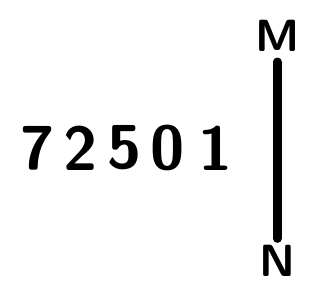
Select the correct mirror image of the given figure when the mirror is placed at MN as shown below.

  1. AOption (a)

  2. BOption (b)

  3. COption (c)

  4. DOption (d)

View answer & explanation

Correct answer

Answer: (d)D.

Why this answer is correct

The correct mirror image of the given figure is:

Hence, the correct answer is "Option 4".

Question 3

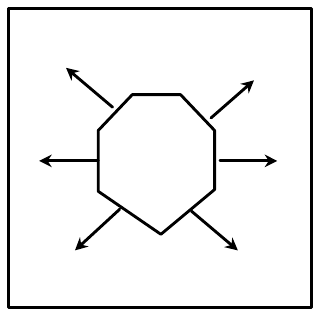
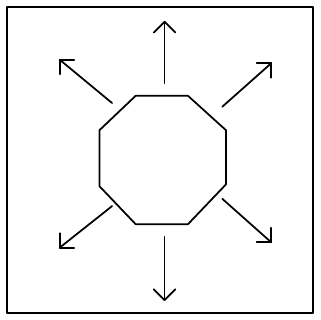
Select the figure from among the given options that can replace the question mark (?) and logically complete the series.

  1. AOption (a)

  2. BOption (b)

  3. COption (c)

  4. DOption (d)

View answer & explanation

Correct answer

Answer: (c)C.

Why this answer is correct

The logic followed here is:

Arrow shifts in clockwise direction on the surface.

Another shape rotates in anticlockwise direction by 45°.

Hence, the correct answer is "Option 3".

Question 4

Which two numbers (not digits) should be interchanged to make the given equation correct?

15 + 5 × 8 – 72 ÷ 4 + 16 × 3 = 101

  1. AOption (a)

    5 and 4

  2. BOption (b)

    15 and 16

  3. COption (c)

    5 and 3

  4. DOption (d)

    8 and 4

View answer & explanation

Correct answer

Answer: (c)C.

5 and 3

Why this answer is correct

Given equation: 15 + 5 × 8 – 72 ÷ 4 + 16 × 3 = 101

Option 1) 5 and 4

After two numbers (not digits) interchanged then:

⇒ 15 + 4 × 8 – 72 ÷ 5 + 16 × 3 = 101

⇒ 15 + 4 × 8 – 14.4 + 16 × 3 = 101

⇒ 15 + 32 – 14.4 + 48 = 101

⇒ 95 – 14.4 = 101

⇒ 80.6 = 101

Option 2) 15 and 16

After two numbers (not digits) interchanged then:

⇒ 16 + 5 × 8 – 72 ÷ 4 + 15 × 3 = 101

⇒ 16 + 5 × 8 – 18 + 15 × 3 = 101

⇒ 16 + 40 – 18 + 45 = 101

⇒ 101 – 18 = 101

⇒ 83 = 101

Option 3) 5 and 3

After two numbers (not digits) interchanged then:

⇒ 15 + 3 × 8 – 72 ÷ 4 + 16 × 5 = 101

⇒ 15 + 3 × 8 – 18 + 16 × 5 = 101

⇒ 15 + 24 – 18 + 80 = 101

⇒ 119 – 18 = 101

⇒ 101 = 101

Option 4) 8 and 4

After two numbers (not digits) interchanged then:

⇒ 15 + 5 × 4 – 72 ÷ 8 + 16 × 3 = 101

⇒ 15 + 5 × 4 – 9 + 16 × 3 = 101

⇒ 15 + 20 – 9 + 48 = 101

⇒ 83 – 9 = 101

⇒ 74 = 101

Hence, the correct answer is "5 and 3".

Question 5

Select the option that is related to the fifth term in the same way as the second term is related to the first term and the fourth term is related to the third term.

EYES : FTFZ :: MIND : OENJ :: REST : ?

  1. AOption (a)

    STSF

  2. BOption (b)

    TUFS

  3. COption (c)

    TUSF

  4. DOption (d)

    STRE

View answer & explanation

Correct answer

Answer: (c)C.

TUSF

Why this answer is correct

The logic followed here is:

EYES : FTFZ

MIND : OENJ

Similarly, REST : ?

Hence, the correct answer is "TUSF".

Question 6

In a certain code language, 'CLERK' is written as 'BKEQJ' and 'OFFICE' is written as 'OEEIBE'. How will 'POST' be written in that language?

  1. AOption (a)

    OROS

  2. BOption (b)

    OORS

  3. COption (c)

    RSOO

  4. DOption (d)

    OSOR

View answer & explanation

Correct answer

Answer: (b)B.

OORS

Why this answer is correct

The logic followed here is: Consonants - 1; Vowels are the same.

'CLERK' is written as 'BKEQJ'

'OFFICE' is written as 'OEEIBE'

Similarly, 'POST' will be written as:

Hence, the correct answer is "OORS".

Question 7

‘Obstinate’ is related to ‘Stubborn’ in the same way as ‘Resolute’ is related to ‘________’.

(The words must be considered as meaningful English words and must not be related to each other based on the number of letters/number of consonants/vowels in the word.)

  1. AOption (a)

    Determined

  2. BOption (b)

    Wavering

  3. COption (c)

    Thoughtful

  4. DOption (d)

    Dithering

View answer & explanation

Correct answer

Answer: (a)A.

Determined

Why this answer is correct

The logic followed here is:

Logic: Synonyms.

Here,

Obstinate : Stubborn → Obstinate is a synonym of Stubborn.

Similarly,

Resolute : Determined → Resolute is a synonym of Determined.

Hence, the correct answer is "Option 1".

Question 8

Three of the following four options are alike in a certain way and thus form a group. Which is the one that does NOT belong to that group?

(NOTE: Operations should be performed on the whole numbers, without breaking down the numbers into its constituent digits. E.g. 13 – Operations on 13 such as adding/subtracting/multiplying etc. to 13 can be performed. Breaking down 13 into 1 and 3 and then performing mathematical operations on 1 and 3 is not allowed.)

  1. AOption (a)

    68 – 54 – 94

  2. BOption (b)

    36 – 88 – 80

  3. COption (c)

    23 – 56 – 51

  4. DOption (d)

    34 – 56 – 62

View answer & explanation

Correct answer

Answer: (a)A.

68 – 54 – 94

Why this answer is correct

The logic followed here is: (3rd number - 1st number) × 2 = 2nd number.

1)  68 – 54 – 94 → (94 - 68) × 2 = 26 × 2 = 52 ≠ 54

2)  36 – 88 – 80 → (80 - 36) × 2 = 44 × 2 = 88

3)  23 – 56 – 51 → (51 - 23) × 2 = 28 × 2 = 56

4)  34 – 56 – 62 → (62- 34) × 2 = 28 × 2 = 56

Hence, the correct answer is "Option 1".

Question 9

17 is related to 102 following a certain logic. Following the same logic, 29 is related to 174. To which of the following is 39 related, following the same logic?

(NOTE: Operations should be performed on the whole numbers, without breaking down the numbers into its constituent digits. E.g. 13 – Operations on 13 such as adding /deleting /multiplying etc. to 13 can be performed. Breaking down 13 into 1 and 3 and then performing mathematical operations on 1 and 3 is not allowed)

  1. AOption (a)

    238

  2. BOption (b)

    234

  3. COption (c)

    228

  4. DOption (d)

    230

View answer & explanation

Correct answer

Answer: (b)B.

234

Why this answer is correct

The logic followed here is:

Logic: (1st number × 6) = 2nd number.

Now,

For, 17 : 102

⇒ 17 × 6 = 102.

For, 29 : 174

⇒ 29 × 6 = 174.

Similarly, for 39 ∶ ?

⇒ 39 × 6 = 234.

Hence, the correct answer is "Option 2".

Question 10

The position of how many letters will remain unchanged if all the letters in the word RICKET are arranged in English alphabetical order?

  1. AOption (a)

    Three

  2. BOption (b)

    Two

  3. COption (c)

    One

  4. DOption (d)

    None

View answer & explanation

Correct answer

Answer: (b)B.

Two

Why this answer is correct

Given word: 'RICKET'

After arranged in alphabetical order:

AlphabetsRICKET
Alphabetical orderCEIKRT

Now,

there are Two alphabets "T" and "K" that will remain unchanged if each of the letters in the word 'RICKET' is arranged in English alphabetical order.

Hence, the correct answer is "Option 2".

Question 11

Select the correct combination of letters that when sequentially filled in the blanks of the given series will make the series logically complete.

B_FH_LNP_T_X

  1. AOption (a)

    DIQU

  2. BOption (b)

    DJRV

  3. COption (c)

    CKSU

  4. DOption (d)

    CIQW

View answer & explanation

Correct answer

Answer: (b)B.

DJRV

Why this answer is correct

The logic followed here is:

Given Sequence: B_FH_LNP_T_X

Now, putting the letters in the blank spaces given in the option one by one:

Option 1) DIQU → BDFH / ILNP / QTUX

Option 2) DJRV → BDFH / JLNP / RTVX

Option 3) CKSU → BCFH / KLNP / STUX

Option 4) CIQW → BCFH / ILNP / QTWX

Hence, the correct answer is "DJRV".

Question 12

Two different positions of the same dice are given below. Which is the number on the face opposite the face containing 5?

  1. AOption (a)

    1

  2. BOption (b)

    6

  3. COption (c)

    2

  4. DOption (d)

    3

View answer & explanation

Correct answer

Answer: (a)A.

1

Why this answer is correct

For find the opposite surface of '5', we need to compare the common surface in the given dices,

So, From Dice 1 and Dice 2,

From both dices, 6 is common and on the same surface. So, all remaining surface will be opposite to each other.

2 is opposite to 4

So, 1 will be opposite to 5.

Hence, the correct answer is "1".

Question 13

A paper is folded and cut as shown below. How will it appear when unfolded?

  1. AOption (a)

  2. BOption (b)

  3. COption (c)

  4. DOption (d)

View answer & explanation

Correct answer

Answer: (b)B.

Why this answer is correct

The paper will look when unfolded:

Hence, the correct answer is "Option 2".

Question 14

Select the number from among the given options that can replace the question mark (?) in the following series.

66, 75, 86, 99, 114, ?

  1. AOption (a)

    140

  2. BOption (b)

    135

  3. COption (c)

    139

  4. DOption (d)

    131

View answer & explanation

Correct answer

Answer: (d)D.

131

Why this answer is correct

The logic followed here is:


Hence, the correct answer is "131".

Question 15

Two sets of numbers are given below. In each set of numbers, certain mathematical operation(s) on the first number

result(s) in the second number. Similarly, certain mathematical operation(s) on the second number result(s) in the third

number and so on. Which of the given options follows the same set of operations as in the given sets?

(NOTE: Operations should be performed on the whole numbers, without breaking down the numbers into their constituent

digits. E.g. 13 – Operations on 13 such as adding/subtracting/multiplying to 13 can be performed. Breaking down 13 into 1

and 3 and then performing mathematical operations on 1 and 3 is not allowed.)

8 – 33 – 66 – 81; 11 – 36 – 72– 87

  1. AOption (a)

    21 – 46 – 82 – 107

  2. BOption (b)

    15 – 40 – 80 – 95

  3. COption (c)

    18 – 43 – 86 – 100

  4. DOption (d)

    6 – 31 – 62 – 97

View answer & explanation

Correct answer

Answer: (b)B.

15 – 40 – 80 – 95

Why this answer is correct

The logic followed here is: 1st number + 25 = 2nd number; 2nd number × 2 = 3rd number; 3rd number + 15 = 4th number.

8 – 33 – 66 – 81 → 8 + 25 = 33; 33 × 2 = 66; 66 + 15 = 81

11 – 36 – 72– 87 → 11 + 25 = 36; 36 × 2 = 72; 72 + 15 = 87

Lets check options one by one:

1)  21 – 46 – 82 – 107 → 21 + 25 = 46; 46 × 2 = 92; 92 + 25 = 117

2)  15 – 40 – 80 – 95 → 15 + 25 = 40; 40 × 2 = 80; 80 + 15 = 95

3)  18 – 43 – 86 – 100 → 18 + 25 = 43; 43 × 2 = 66; 86 + 14 = 81

4)  6 – 31 – 62 – 97 → 6 + 25 = 31; 31 × 2 = 62; 62 + 35 = 97

Hence, the correct answer is "15 – 40 – 80 – 95".

Question 16

Based on the English alphabetical order, three of the following four letter-clusters are alike in a certain way and thus form a group. Which is the one that DOES NOT belong to that group?

(Note: The odd man out is not based on the number of consonants/vowels or their position in the letter-cluster.)

  1. AOption (a)

    QST

  2. BOption (b)

    ACD

  3. COption (c)

    TWW

  4. DOption (d)

    IKL

View answer & explanation

Correct answer

Answer: (c)C.

TWW

Why this answer is correct

The logic followed here is:

1)  QST

2)  ACD

3)  TWW

4)  IKL

Hence, the correct answer is "TWW".

Question 17

How many triangles are there in the given figure?

  1. AOption (a)

    10

  2. BOption (b)

    11

  3. COption (c)

    12

  4. DOption (d)

    13

View answer & explanation

Correct answer

Answer: (d)D.

13

Why this answer is correct

Counting the triangles are there in the given figure:

Hence, the correct answer is "13".

Question 18

Read the given statements and conclusions carefully. Assuming that the information given in the statements is true, even if it appears to be at variance with commonly known facts, decide which of the given conclusions logically follow from the statements.

Statements:

All papers are pencils.

All pencils are erasers.

All erasers are pens.

Conclusions:

I. All pens are papers.

II. Some papers are erasers.

III. Some pens are pencils.

  1. AOption (a)

    All the conclusions follow

  2. BOption (b)

    Only conclusions I and II follow

  3. COption (c)

    Only conclusions II and III follow

  4. DOption (d)

    Only conclusions I and III follow

View answer & explanation

Correct answer

Answer: (c)C.

Only conclusions II and III follow

Why this answer is correct

Statements:

All papers are pencils.

All pencils are erasers.

All erasers are pens.

The least possible Venn diagram is as follows:

Conclusions:

I. All pens are papers. - False (because All papers are pencils, All pencils are erasers and All erasers are pens. So, it can be possible but not definite)

II. Some papers are erasers. - True (because All papers are pencils, and All pencils are erasers. So, Some papers are erasers too)

III. Some pens are pencils. - True (because All papers are pencils, All erasers are pens, and All pencils are erasers. So, Some pens are pencils too)

Hence, the correct answer is "Only conclusions II and III follow".

Question 19

Which two signs should be interchanged to make the following equation correct?

139 + 40 ÷ 5 − 168 × 3 = 283

  1. AOption (a)

     − and +

  2. BOption (b)

    − and ×

  3. COption (c)

    ÷ and ×

  4. DOption (d)
    • and ÷
View answer & explanation

Correct answer

Answer: (c)C.

÷ and ×

Why this answer is correct

Given equation: 139 + 40 ÷ 5 − 168 × 3 = 283

Option 1) − and +

Two signs need to be interchanged then:

⇒ 139 - 40 ÷ 5 + 168 × 3 = 283

⇒ 139 - 8 + 168 × 3 = 283

⇒ 139 - 8 + 504 = 283

⇒ 643 - 8 = 283

⇒ 635 = 283

Option 2) − and ×

Two signs need to be interchanged then:

⇒ 139 + 40 ÷ 5 × 168 - 3 = 283

⇒ 139 + 8 × 168 - 3 = 283

⇒ 139 + 1344 - 3 = 283

⇒  - 3 = 283

Option 3) ÷ and ×

Two signs need to be interchanged then:

⇒ 139 + 40 × 5 − 168 ÷ 3 = 283

⇒ 139 + 40 × 5 − 56 = 283

⇒ 139 + 200 − 56 = 283

⇒ 339 − 56 = 283

⇒ 283 = 283

Option 4) + and ÷

Two signs need to be interchanged then:

⇒ 139 ÷ 40 + 5 − 168 × 3 = 283

⇒ 3.475 + 5 − 168 × 3 = 283

⇒ 3.475 + 5 − 504 = 283

⇒ 8.475 − 504 = 283

⇒ -495.525 = 283

Hence, the correct answer is "÷ and ×".

Question 20

In a certain code language,

A + B means ‘A is the son of B’,

A − B means ‘A is the wife of B’,

A × B means ‘A is the brother of B’ and

A ÷ B means ‘A is the mother of B’.

Based on the above, how is T related to P if ‘P − M + R ÷ T × S’?

  1. AOption (a)

     Brother’s wife

  2. BOption (b)

    Brother

  3. COption (c)

    Husband’s brother

  4. DOption (d)

    Sister

View answer & explanation

Correct answer

Answer: (c)C.

Husband’s brother

Why this answer is correct

Family Chart:

Decoding the Symbols:

Symbol-+×÷
MeaningWifeSonBrotherMother


Given: P − M + R ÷ T × S

It means: P is the wife of M, M is the son of R, R is the mother of T and T is the brother of S.

So, T is the 'Husband’s brother' of P.

Hence, the correct answer is "Husband’s brother".

Question 21

Select the correct mirror image of the given figure when the mirror is placed at MN as shown 

  1. AOption (a)

  2. BOption (b)

  3. COption (c)

  4. DOption (d)

View answer & explanation

Correct answer

Answer: (b)B.

Why this answer is correct

The correct mirror image of the given figure is:

Hence, the correct answer is "Option 2".

Question 22

All the alphabets in the word 'CARDBOARD' are arranged in the alphabetical order. How many alphabets are there in the English alphabetical series between the alphabet which is fourth from the left end and the one which is second from the right end in the newly formed cluster of nine letters?

  1. AOption (a)

    12

  2. BOption (b)

    16

  3. COption (c)

    14

  4. DOption (d)

    10

View answer & explanation

Correct answer

Answer: (c)C.

14

Why this answer is correct

The logic followed here is:

All the alphabets in the word 'CARDBOARD' are arranged in the alphabetical order.


The alphabet which is fourth from the left end = C

The one which is second from the right end = R

Alphabetical series between the alphabet which is fourth from the left end and the one which is second from the right end in the newly formed cluster of nine letters = C, D, E, F, G, H, I, J, K, L, M, N, O, P, Q, R

Thus, 14 alphabets are there in the English alphabetical series between the alphabet which is fourth from the left end and the one which is second from the right end in the newly formed cluster of nine letters.

Hence, the correct answer is "14".

Question 23

Identify the figure from among the given options which when put in place of the question mark (?) will logically complete the series.

  1. AOption (a)

  2. BOption (b)

  3. COption (c)

  4. DOption (d)

View answer & explanation

Correct answer

Answer: (c)C.

Why this answer is correct

The logic followed here is:

Number of sides in the shape is increasing by 1 and number of arrow is increasing by 1.

Hence, the correct answer is "Option 2".

Question 24

In the following series, only one letter-cluster is incorrect. Select the incorrect letter-cluster.

ZXU SQN LKI ECZ XVS

  1. AOption (a)

    XVS

  2. BOption (b)

    ECZ

  3. COption (c)

    LKI

  4. DOption (d)

    SQN

View answer & explanation

Correct answer

Answer: (c)C.

LKI

Why this answer is correct

The logic followed here is:

ZXU

SQN

LKI

ECZ

XVS

Thus, LKI is the incorrect letter-cluster.

Hence, the correct answer is "3".

Question 25

In a certain code language, 'DRAPE' is coded as '65432' and 'TAPED' is coded as '24596'. What is the code for 'R' in that language?

  1. AOption (a)

    2

  2. BOption (b)

    6

  3. COption (c)

    3

  4. DOption (d)

    9

View answer & explanation

Correct answer

Answer: (c)C.

3

Why this answer is correct

The logic followed here is:

Thus, the code for 'R' = 3.

Hence, the correct answer is "3".

General Awareness (25 questions)

Question 26

Jaipal Singh Munda is associated with which of the following sports?

  1. AOption (a)

    Badminton

  2. BOption (b)

    Cricket

  3. COption (c)

    Kabaddi

  4. DOption (d)

    Hockey

View answer & explanation

Correct answer

Answer: (d)D.

Hockey

Why this answer is correct

The correct answer is Hockey.

Key Points

  • Jaipal Singh Munda was an Indian politician, writer, and a member of the Constituent Assembly of India.
  • He was also an accomplished field hockey player and captained the Indian hockey team in the 1928 Amsterdam Olympics, where the team won the gold medal.
  • His leadership and skills were instrumental in establishing India's dominance in the sport of field hockey during that era.
  • Besides his sports career, he was an influential tribal leader and played a significant role in advocating for the rights of indigenous people in India.

Additional Information

  • Field Hockey:
  • Field hockey is a team sport played on grass or artificial turf, with teams aiming to score goals by hitting a ball into the opposing team's net using hockey sticks.
  • It is a popular sport worldwide, particularly in countries like India, Australia, Germany, and the Netherlands.
  • Field hockey is governed by the International Hockey Federation (FIH), which organizes various international competitions, including the Hockey World Cup and the Hockey Champions Trophy.
  • India has a rich history in field hockey, with the national team having won multiple Olympic gold medals, especially during the mid-20th century.
  • Olympic Games:
  • The Olympics are a leading international sporting event featuring summer and winter sports competitions in which thousands of athletes from around the world participate in various competitions.
  • The Games are held every four years, with the Summer and Winter Games alternating by occurring every two years.
  • The modern Olympic Games were first held in 1896 in Athens, Greece, and have since grown to become the world's foremost sports competition.
  • The Olympics aim to promote peace and unity among nations through sports and celebrate athletic excellence.
  • Jaipal Singh Munda's Legacy:
  • Jaipal Singh Munda is remembered not only for his sporting achievements but also for his significant contributions to Indian politics and society.
  • He was a prominent tribal leader and a key figure in advocating for the rights and welfare of indigenous communities in India.
  • As a member of the Constituent Assembly, he played an important role in the drafting of the Indian Constitution, particularly in the context of protecting the rights of tribal people.
  • His legacy continues to inspire many in the fields of sports, politics, and social justice.

Question 27

Who has written the book Sangeet Bal Prakash?

  1. AOption (a)

    Pandit Narayan Rao

  2. BOption (b)

    Vishnu Digambar Paluskar

  3. COption (c)

    Vishnu Narayan Bhathkhande

  4. DOption (d)

    Bhimsen Joshi

View answer & explanation

Correct answer

Answer: (b)B.

Vishnu Digambar Paluskar

Why this answer is correct

The correct answer is Vishnu Digambar Paluskar.

Key Points

  • Vishnu Digambar Paluskar was a renowned Hindustani classical musician.
  • He founded the Gandharva Mahavidyalaya in 1901, which was one of the first music schools in India.
  • He is credited with popularizing Hindustani classical music and making it accessible to the common people.
  • His book Sangeet Bal Prakash is an important contribution to the field of Indian classical music education.

Additional Information

  • Hindustani Classical Music:
  • Hindustani classical music is one of the two major traditions of Indian classical music, the other being Carnatic music.
  • It originated in North India and has a rich history dating back thousands of years.
  • It is characterized by its extensive use of improvisation and the raga system, which is a framework for composition and performance.
  • Some of the well-known forms of Hindustani classical music include Dhrupad, Khayal, Thumri, and Tappa.
  • Gandharva Mahavidyalaya:
  • Founded by Vishnu Digambar Paluskar in 1901 in Lahore.
  • It was one of the first institutions to offer formal training in Hindustani classical music.
  • The institution played a pivotal role in popularizing classical music among the masses and providing a structured curriculum.
  • The Gandharva Mahavidyalaya continues to be a prominent institution for music education in India.
  • Contribution of Vishnu Digambar Paluskar:
  • He is known for his efforts to revive and popularize Hindustani classical music in the early 20th century.
  • He introduced the concept of public concerts, which helped in making classical music accessible to a wider audience.
  • His efforts in music education laid the foundation for many future musicians and music educators in India.
  • Paluskar's work and legacy continue to influence the field of Indian classical music today.

Question 28

Which of the following rivers originates from the Himalayas?

  1. AOption (a)

    Godavari

  2. BOption (b)

    Tapi

  3. COption (c)

    Narmada

  4. DOption (d)

    Ganga

View answer & explanation

Correct answer

Answer: (d)D.

Ganga

Why this answer is correct

The correct answer is 'Ganga'

Key Points

  • Ganga River:
  • The Ganga originates from the Gangotri Glacier in the Himalayas at Gaumukh, in Uttarakhand.
  • It is one of the major Himalayan rivers, perennial in nature due to snowmelt and rainfall.
  • The river flows through northern India and Bangladesh, supporting agriculture, culture, and livelihoods across the Indo-Gangetic plain.

Additional Information

  • Godavari River:
  • Originates from Trimbakeshwar in Maharashtra (Western Ghats).
  • It is the longest river of Peninsular India but does not originate in the Himalayas.
  • Tapi River:
  • Originates from the Satpura Hills in Madhya Pradesh.
  • Flows westward into the Arabian Sea, not Himalayan in origin.
  • Narmada River:
  • Originates from the Amarkantak Plateau in Madhya Pradesh.
  • It is a major west-flowing peninsular river but not from the Himalayas.

Question 29

Who is the author of the book 'From Plassey to Partition and After: A History of Modern India'?

  1. AOption (a)

    Romila Thapar

  2. BOption (b)

    David Hardiman

  3. COption (c)

    Sekhar Bandyopadhyay

  4. DOption (d)

    Sumit Sarkar

View answer & explanation

Correct answer

Answer: (c)C.

Sekhar Bandyopadhyay

Why this answer is correct

The correct answer is Sekhar Bandyopadhyay.

Key Points

  • Sekhar Bandyopadhyay is a prominent historian and academician known for his extensive work on modern Indian history.
  • He is a Professor of Asian History at Victoria University of Wellington in New Zealand.
  • The book 'From Plassey to Partition and After: A History of Modern India' offers a comprehensive analysis of the history of modern India, starting from the Battle of Plassey in 1757 to the post-Independence era.
  • This book is widely used in academic circles and is considered an essential resource for understanding the complexities of Indian history during the colonial and post-colonial periods.

Additional Information

  • Romila Thapar
  • Romila Thapar is a renowned Indian historian whose principal area of study is ancient India.
  • She is an Emerita Professor of History at the Jawaharlal Nehru University in New Delhi.
  • Her notable works include "A History of India," "Early India: From the Origins to AD 1300," and "The Past Before Us."
  • David Hardiman
  • David Hardiman is a British historian and a founding member of the Subaltern Studies group.
  • His works focus on the history of Indian nationalism and the role of the peasantry in the Indian independence movement.
  • Some of his significant works include "Peasant Resistance in India 1858-1914" and "Gandhi in His Time and Ours."
  • Sumit Sarkar
  • Sumit Sarkar is an Indian historian who has contributed extensively to the field of modern Indian history.
  • He is known for his work on the Swadeshi movement and the history of the Indian left.
  • His notable books include "Modern India: 1885-1947" and "Writing Social History."

Question 30

If a 12-year-old is found to be working in a factory manufacturing carpets, which of the following Articles of the Constitution of India will be violated?

  1. AOption (a)

    Article 24

  2. BOption (b)

    Article 25

  3. COption (c)

    Article 23

  4. DOption (d)

    Article 26

View answer & explanation

Correct answer

Answer: (a)A.

Article 24

Why this answer is correct

The correct answer is Article 24.

Key Points

  • Article 24 of the Constitution of India prohibits the employment of children below the age of 14 years in any factory, mine, or other hazardous employment.
  • This Article is part of the Fundamental Rights enshrined in Part III of the Constitution, which aims to protect children from exploitation.
  • It was introduced to safeguard children from engaging in work that can be detrimental to their health, safety, and development.
  • Violation of this Article can lead to legal consequences and penalties as per the Child Labour (Prohibition and Regulation) Act, 1986.

Additional Information

  • Article 23:
  • Prohibits human trafficking and forced labor.
  • It states that traffic in human beings, begar (forced labor), and other similar forms of forced labor are prohibited and any contravention of this provision shall be an offense punishable in accordance with the law.
  • Article 25:
  • Guarantees freedom of conscience and free profession, practice, and propagation of religion.
  • It provides all individuals the right to freely profess, practice, and propagate their religion, subject to public order, morality, and health.
  • Article 26:
  • Provides freedom to manage religious affairs.
  • It gives every religious denomination or any section thereof the right to establish and maintain institutions for religious and charitable purposes, manage its own affairs in matters of religion, own and acquire movable and immovable property, and administer such property in accordance with the law.
  • Child Labour (Prohibition and Regulation) Act, 1986:
  • This Act prohibits the engagement of children in certain employments and regulates the conditions of work of children in other employments.
  • The Act defines a child as a person who has not completed 14 years of age.
  • It lays down a detailed framework for the prohibition and regulation of child labor in India.

Question 31

Bihu festival is the main festival of which state?

  1. AOption (a)

    Kerala

  2. BOption (b)

    Punjab

  3. COption (c)

    Rajasthan

  4. DOption (d)

    Assam

View answer & explanation

Correct answer

Answer: (d)D.

Assam

Why this answer is correct

The correct answer is Assam.

Key Points

  • Bihu is the main festival of Assam, celebrated with great joy and enthusiasm.
  • There are three major Bihu festivals in Assam: Bohag Bihu (or Rongali Bihu), Kati Bihu (or Kongali Bihu), and Magh Bihu (or Bhogali Bihu).
  • Bihu marks the harvest season and is closely related to the agricultural calendar of Assam.
  • It is a non-religious festival and is celebrated by all communities irrespective of their religion, caste, or creed.

Additional Information

  • Bohag Bihu (Rongali Bihu)
  • It is celebrated in mid-April and marks the beginning of the Assamese New Year.
  • Bohag Bihu is the most popular Bihu, characterized by feasts, music, and dancing.
  • People wear traditional attire and perform the Bihu dance, showcasing their cultural heritage.
  • Kati Bihu (Kongali Bihu)
  • It is celebrated in mid-October and is a more subdued festival compared to Bohag Bihu.
  • Kati Bihu is associated with the sowing of crops and is marked by lighting earthen lamps in paddy fields and praying for a good harvest.
  • It is a time of introspection and prayer for the welfare of the crops.
  • Magh Bihu (Bhogali Bihu)
  • It is celebrated in mid-January and marks the end of the harvest season.
  • Magh Bihu is characterized by feasts and bonfires, where people gather to celebrate the bounty of the harvest.
  • Traditional games such as buffalo fighting and pot-breaking are also part of the celebrations.

Question 32

Which of the following playback singers is the recipient of the Karnataka Ratna Award 2005?

  1. AOption (a)

    Sistla Janaki

  2. BOption (b)

    Ravindra Jain

  3. COption (c)

    Pandit Jasraj

  4. DOption (d)

    Bhimsen Joshi

View answer & explanation

Correct answer

Answer: (d)D.

Bhimsen Joshi

Why this answer is correct

The correct answer is Bhimsen Joshi.

Key Points

  • Bhimsen Joshi was a renowned Indian vocalist in the Hindustani classical tradition.
  • He was awarded the Karnataka Ratna in 2005, which is the highest civilian honor of the state of Karnataka.
  • Bhimsen Joshi was also the recipient of other prestigious awards such as the Bharat Ratna in 2008 and Padma Vibhushan in 1999.
  • His contribution to Hindustani classical music and his exceptional vocal renditions have made him a celebrated figure in Indian music history.

Additional Information

  • Karnataka Ratna Award
  • The Karnataka Ratna is the highest civilian award in the state of Karnataka, India.
  • It was instituted in the year 1992 by the Government of Karnataka.
  • The award is presented in recognition of extraordinary contributions to the state in various fields such as literature, culture, education, politics, science, and public service.
  • Some other notable recipients of the Karnataka Ratna include Kuvempu, Dr. Rajkumar, and Sri Sri Shivakumara Swamiji.
  • Bhimsen Joshi
  • Bhimsen Joshi was born on February 4, 1922, in Gadag, Karnataka.
  • He was a prominent exponent of the Khayal form of singing and belonged to the Kirana Gharana.
  • His music career spanned over seven decades, and he was known for his powerful voice and unique style.
  • In addition to classical music, Bhimsen Joshi also performed devotional music and popularized classical music among the masses.
  • Hindustani Classical Music
  • It is one of the two main forms of Indian classical music, the other being Carnatic music.
  • Hindustani classical music has a rich history and has been passed down through generations by oral tradition.
  • The main forms of Hindustani music include Dhrupad, Khayal, Thumri, and Tappa.
  • It emphasizes improvisation and exploration of all aspects of a raga.

Question 33

As per article 158, the Governor shall NOT be a member of either House of Parliament or of a House of the Legislature of any State specified in _______ Schedule.

  1. AOption (a)

    Seventh

  2. BOption (b)

    Fifth

  3. COption (c)

    First

  4. DOption (d)

    Third

View answer & explanation

Correct answer

Answer: (c)C.

First

Why this answer is correct

The correct answer is First.

Key Points

  • According to Article 158 of the Indian Constitution, the Governor of a State shall not be a member of either House of Parliament or of a House of the Legislature of any State specified in the First Schedule.
  • The First Schedule of the Indian Constitution lists the states and union territories of India.
  • This provision ensures the independence of the Governor's office from legislative influence.
  • The Governor must resign from any legislative positions before assuming office to maintain this separation of powers.

Additional Information

  • Article 158
  • Article 158 of the Constitution of India pertains to the conditions of the Governor's office.
  • Clause (1) of Article 158 states that the Governor shall not be a member of either House of Parliament or of a House of the Legislature of any State specified in the First Schedule.
  • This clause ensures that the Governor remains unbiased and can execute his/her duties without any legislative pressures.
  • First Schedule
  • The First Schedule of the Indian Constitution details the list of States and Union Territories along with their respective territories.
  • It provides the official names of the States and Union Territories and their territorial boundaries.
  • Role of the Governor
  • The Governor is the Constitutional head of a state in India.
  • He/she is appointed by the President of India and holds office at the President's pleasure.
  • The Governor's role includes giving assent to bills passed by the state legislature, appointing the Chief Minister, and ensuring the state administration is carried out according to the Constitution.

Question 34

What is the name of the inflammatory condition that causes cracks, crusting and scaling at the corners of the mouth due to vitamin B2 deficiency?

  1. AOption (a)

    Cheilosis

  2. BOption (b)

    Psoriasis

  3. COption (c)

    Urticaria

  4. DOption (d)

    Atopic dermatitis

View answer & explanation

Correct answer

Answer: (a)A.

Cheilosis

Why this answer is correct

The correct answer is Cheilosis.

Key Points

  • Cheilosis, also known as angular cheilitis, is an inflammatory condition that affects the corners of the mouth.
  • It is characterized by the formation of cracks, crusting, and scaling at the mouth corners.
  • Cheilosis is commonly caused by a deficiency in Vitamin B2 (riboflavin).
  • Other contributing factors can include fungal infections and poor oral hygiene.

Additional Information

  • Vitamin B2 (Riboflavin)
  • Riboflavin is a water-soluble vitamin that is essential for energy production and cellular function.
  • It helps in the metabolism of fats, drugs, and steroids and is crucial for the conversion of carbohydrates into ATP (adenosine triphosphate).
  • Deficiency in riboflavin can lead to symptoms such as sore throat, redness and swelling of the lining of the mouth and throat, and cheilosis.
  • Psoriasis
  • Psoriasis is a chronic autoimmune condition that causes the rapid buildup of skin cells.
  • This buildup of cells causes scaling on the skin’s surface.
  • Inflammation and redness around the scales are fairly common.
  • Urticaria (Hives)
  • Urticaria, commonly known as hives, is a skin reaction that causes itchy welts.
  • It is usually caused by an allergic reaction to food, medicine, or other irritants.
  • Atopic Dermatitis
  • Atopic dermatitis, also known as eczema, is a condition that makes the skin red and itchy.
  • It is common in children but can occur at any age.
  • Atopic dermatitis is long-lasting (chronic) and tends to flare periodically.

Question 35

According to the Tea Board of India's report (2021-22), which group of states in India is the largest tea producer?

  1. AOption (a)

    Andhra Pradesh and Kerala

  2. BOption (b)

    Himachal Pradesh and Uttarakhand

  3. COption (c)

    West Bengal and Assam

  4. DOption (d)

    Tamil Nadu and Kerala

View answer & explanation

Correct answer

Answer: (c)C.

West Bengal and Assam

Why this answer is correct

The correct answer is West Bengal and Assam.

Key Points

  • West Bengal and Assam are the leading tea producers in India, contributing the highest percentage of total tea production in the country.
  • Assam is known for its black teas and Assam tea is a well-recognized variety globally, celebrated for its robust flavor and bright color.
  • West Bengal, particularly the Darjeeling region, is famous for its high-quality Darjeeling tea, often referred to as the "Champagne of Teas".
  • These states have favorable climatic conditions and terrain suitable for tea plantations, making them ideal for large-scale tea cultivation.

Additional Information

  • Tea Production in India
  • India is one of the largest tea producers in the world, with tea being a significant part of its agricultural economy.
  • The tea industry in India is primarily concentrated in the northeastern states and southern regions due to suitable climatic conditions.
  • There are several types of tea grown in India, including Assam, Darjeeling, Nilgiri, and Kangra tea.
  • Tea plantations require specific conditions such as high humidity, heavy rainfall, and well-drained fertile soil.
  • Assam Tea
  • Assam tea is known for its brisk, malty flavor and is predominantly used in making strong black teas.
  • The region of Assam lies in the northeastern part of India, where the Brahmaputra River flows, providing ideal conditions for tea cultivation.
  • Assam tea is usually harvested twice a year – the first flush in March and the second flush in May-June.
  • It is often used in breakfast tea blends and is a significant export product for India.
  • Darjeeling Tea
  • Darjeeling tea is grown in the foothills of the Himalayas in West Bengal, India.
  • It is known for its unique flavor, often described as "muscatel" and light color, making it highly sought after globally.
  • Darjeeling tea is typically harvested in three main flushes – first flush (spring), second flush (summer), and autumnal flush.
  • The tea from each flush has distinctive characteristics, with the first flush being the most prized for its delicate flavor.

Question 36

Which of the following Delhi sultans introduced two coins, namely silver tanka and copper jital?

  1. AOption (a)

    Qutbuddin Aibak

  2. BOption (b)

    Bahlul Lodi

  3. COption (c)

    Ghiyasuddin Balban

  4. DOption (d)

    Iltutmish

View answer & explanation

Correct answer

Answer: (d)D.

Iltutmish

Why this answer is correct

The correct answer is Iltutmish.

Key Points

  • Iltutmish was the third ruler of the Delhi Sultanate and the founder of the Shamsi dynasty.
  • He introduced the silver tanka and the copper jital coins, which became the standard currency of the Delhi Sultanate.
  • The silver tanka weighed 175 grains and was the first regular currency introduced in India by the Delhi Sultanate.
  • His coinage system helped to stabilize the economy and provided a reliable medium of exchange for trade and commerce.

Additional Information

  • Delhi Sultanate:
  • The Delhi Sultanate was a Muslim kingdom based in Delhi that ruled large parts of the Indian subcontinent for 320 years (1206–1526).
  • The Sultanate is noted for its integration of the Indian subcontinent into the Muslim world and its role in the spread of Islam in South Asia.
  • Silver Tanka:
  • The silver tanka was a high-value coin made of silver and used for large transactions.
  • It had a standard weight of 175 grains (approximately 11.3 grams).
  • The introduction of the silver tanka standardized the monetary system and facilitated trade.
  • Copper Jital:
  • The copper jital was a lower value coin made of copper and used for smaller transactions.
  • It complemented the silver tanka and provided a comprehensive monetary system covering both high and low-value transactions.
  • The copper jital played a significant role in the everyday economy of the Delhi Sultanate.
  • Economic Impact:
  • The introduction of these coins by Iltutmish helped to stabilize the economy of the Delhi Sultanate.
  • It provided a reliable and standardized medium of exchange, which was crucial for trade and commerce.
  • This monetary reform was an important step in the consolidation of the Delhi Sultanate's power and its administration.

Question 37

Who founded the Theosophical Society in New York in 1875?

  1. AOption (a)

    Naoroji Furdunji and Satyendra Nath Bose

  2. BOption (b)

    Baba Dayal Das and Madan Lal

  3. COption (c)

    Ramabai Ranade and GK Devadhar

  4. DOption (d)

    Madame HP Blavatsky and Colonel Olcott

View answer & explanation

Correct answer

Answer: (d)D.

Madame HP Blavatsky and Colonel Olcott

Why this answer is correct

The correct answer is Madame HP Blavatsky and Colonel Olcott.

Key Points

  • The Theosophical Society was founded by Madame Helena Petrovna Blavatsky and Colonel Henry Steel Olcott in New York City in 1875.
  • The society was created to advance the spiritual principles and search for the divine wisdom underlying all religions.
  • Madame Blavatsky, a Russian philosopher and author, is one of the principal founders and was instrumental in the development of the Theosophical movement.
  • Colonel Olcott, an American military officer, journalist, lawyer, and author, served as the first president of the Theosophical Society.

Additional Information

  • Theosophical Society
  • The Theosophical Society is an organization formed in the late 19th century to promote the study of Theosophy, which emphasizes the mystical and occult aspects of life.
  • The society's objectives include the formation of a nucleus of the universal brotherhood of humanity, the encouragement of the comparative study of religion, philosophy, and science, and the investigation of the unexplained laws of nature and the powers latent in humans.
  • The society has played a significant role in introducing Eastern religious concepts to the Western world, including beliefs in karma, reincarnation, and spiritual evolution.
  • It has influenced various spiritual movements and has had notable members, including Annie Besant, who became a prominent leader in the Theosophical Society and a social reformer.
  • Madame Helena Petrovna Blavatsky
  • Born in 1831, Madame Blavatsky was a Russian occultist, philosopher, and author who co-founded the Theosophical Society.
  • She is best known for her books Isis Unveiled and The Secret Doctrine, which outline the principles of Theosophy.
  • Blavatsky claimed to have traveled extensively, studying esoteric knowledge in various parts of the world, particularly in Tibet and India.
  • She is considered a pivotal figure in the modern occult revival and has had a lasting influence on spiritual and metaphysical thought.
  • Colonel Henry Steel Olcott
  • Born in 1832, Colonel Olcott was an American military officer, journalist, and lawyer who co-founded the Theosophical Society.
  • He was deeply interested in spiritualism, which led him to collaborate with Madame Blavatsky in founding the society.
  • Olcott played a crucial role in the spread of Theosophy in Asia, particularly in India and Sri Lanka, where he promoted Buddhist revival and education.
  • He is remembered for his dedication to the Theosophical movement and his efforts to bridge Eastern and Western spiritual traditions.

Question 38

During the period of 1947 to 1990, how many five-year plans were completed?

  1. AOption (a)

    6

  2. BOption (b)

    7

  3. COption (c)

    9

  4. DOption (d)

    8

View answer & explanation

Correct answer

Answer: (b)B.

7

Why this answer is correct

The correct answer is 7.

Key Points

  • India's first Five-Year Plan was launched in 1951, focusing on the agricultural sector.
  • From 1947 to 1990, a total of 7 Five-Year Plans were successfully completed in India.
  • The Five-Year Plans aimed at economic development through various sectors like agriculture, industry, and services.
  • The seventh Five-Year Plan ended in 1990, marking the completion of 7 such plans within the specified period.

Additional Information

  • Five-Year Plans in India
  • The Five-Year Plans were centralized and integrated national economic programs.
  • They were modeled after the Soviet Union's centralized economic planning, aiming to promote rapid industrialization and economic development.
  • Each plan was formulated, executed, and monitored by the Planning Commission of India, which was established in 1950.
  • The First Five-Year Plan (1951-1956) focused on the agricultural sector, aiming to overcome food shortages and improve living standards.
  • Planning Commission
  • The Planning Commission was an institution in the Government of India which formulated India's Five-Year Plans, among other functions.
  • It was established in 1950 by a Cabinet resolution under the advice of the first Prime Minister, Jawaharlal Nehru.
  • The Commission was tasked with assessing the country's resources and formulating plans for the most effective and balanced utilization of resources.
  • In 2014, the Planning Commission was replaced by the NITI Aayog (National Institution for Transforming India) by the Narendra Modi government.
  • Objectives of the Five-Year Plans
  • The primary objectives were to increase national income, achieve full employment, reduce inequalities of income and wealth, and establish a socialist pattern of society.
  • Other specific objectives included reducing poverty, improving infrastructure, and enhancing the quality of life for Indian citizens.
  • Significance of the Five-Year Plans
  • The Five-Year Plans were instrumental in transforming India's economy from an agrarian base to a more diversified one with a substantial industrial sector.
  • They laid the foundation for modern economic development and contributed to significant improvements in various economic indicators, such as GDP growth and poverty reduction.
  • The plans also played a critical role in establishing and expanding public sector enterprises and infrastructure development across the country.

Question 39

Name the straight chain alkane having chemical formula C9H20, which is used as a research chemical and in making biodegradable detergents.

  1. AOption (a)

    Nonane

  2. BOption (b)

    Dodecane

  3. COption (c)

    Nonadecane

  4. DOption (d)

    Icosane

View answer & explanation

Correct answer

Answer: (a)A.

Nonane

Why this answer is correct

The correct answer is Nonane.

Key Points

  • Nonane is an alkane with the chemical formula C9H20.
  • It is a straight-chain hydrocarbon.
  • Nonane is commonly used as a research chemical.
  • It plays a role in making biodegradable detergents.

Additional Information

  • Alkanes
  • Alkanes, also known as paraffins, are hydrocarbons with the general formula CnH2n+2.
  • They are saturated hydrocarbons, meaning they contain only single bonds between carbon atoms.
  • Alkanes are relatively non-reactive and are primarily used as fuels and solvents.
  • The simplest alkane is methane (CH4), and the series continues with ethane (C2H6), propane (C3H8), etc.
  • Biodegradable Detergents
  • Biodegradable detergents are formulated to break down and decompose naturally, reducing environmental impact.
  • They are designed to be more eco-friendly and less harmful to aquatic life.
  • These detergents often use surfactants derived from natural sources rather than synthetic chemicals.
  • Nonane can be used in the production of such surfactants due to its properties.
  • Research Chemicals
  • Research chemicals are compounds used by scientists for medical and scientific research purposes.
  • They are not intended for human or veterinary use.
  • These chemicals help in the study of chemical reactions, biological processes, and the development of new materials.
  • Proper handling and ethical considerations are crucial when working with research chemicals.

Question 40

When you take Lead nitrate powder in a boiling tube and heat it, you will observe the emission of brown fumes that are of _________________.

  1. AOption (a)

    Nitrous oxide

  2. BOption (b)

    Nitric oxide

  3. COption (c)

    Nitrogen dioxide

  4. DOption (d)

    Dinitrogen trioxide

View answer & explanation

Correct answer

Answer: (c)C.

Nitrogen dioxide

Why this answer is correct

The correct answer is Nitrogen dioxide.

Key Points

  • Nitrogen dioxide (NO2) is a brown gas that is emitted when lead nitrate is heated.
  • Lead nitrate decomposes to form lead oxide (PbO), nitrogen dioxide (NO2), and oxygen (O2).
  • The chemical reaction for this process is:

2Pb(NO3)2 → 2PbO + 4NO2 + O2.

  • The brown fumes observed during the heating of lead nitrate are characteristic of nitrogen dioxide.

Additional Information

  • Lead Nitrate (Pb(NO3)2):
  • It is an inorganic compound with the chemical formula Pb(NO3)2.
  • It is soluble in water and is commonly used in laboratories and industries.
  • When heated, lead nitrate decomposes into lead oxide, nitrogen dioxide, and oxygen.
  • Nitrogen Dioxide (NO2):
  • It is a reddish-brown gas with a characteristic sharp, biting odor.
  • It is one of several nitrogen oxides and is a significant air pollutant.
  • NO2 is a major component of smog and can have harmful effects on the respiratory system.
  • Chemical Reactions:
  • In chemistry, a chemical reaction is a process that leads to the transformation of one set of chemical substances to another.
  • Reactions involve the breaking of bonds in reactants and the formation of new bonds in products.
  • Decomposition reactions, like the heating of lead nitrate, involve the breakdown of a single compound into two or more simpler substances.

Question 41

Who among the following sent Megasthenes to the court of Chandragupta Maurya?

  1. AOption (a)

    Antiochus I Soter

  2. BOption (b)

    Alexander III

  3. COption (c)

    Seleucus I Nicator

  4. DOption (d)

    Antiochus III

View answer & explanation

Correct answer

Answer: (c)C.

Seleucus I Nicator

Why this answer is correct

The correct answer is Seleucus I Nicator.

Key Points

  • Seleucus I Nicator was one of the generals of Alexander the Great and a founding ruler of the Seleucid Empire.
  • He sent the Greek ambassador Megasthenes to the court of Chandragupta Maurya.
  • Megasthenes authored the work Indika, which provides valuable insights into the Mauryan Empire and Indian society.
  • The diplomatic mission symbolized the friendly relations and the exchange of cultural and political ideas between the Seleucid Empire and the Mauryan Empire.

Additional Information

  • Seleucus I Nicator
  • He was born in 358 BCE and died in 281 BCE.
  • He played a crucial role in the Wars of the Diadochi that followed Alexander's death.
  • He established the Seleucid Empire, which at its height included regions of the eastern Mediterranean, the Middle East, and parts of Asia.
  • Seleucus was known for founding several cities, including Antioch and Seleucia.
  • Megasthenes
  • He was a Greek historian and diplomat.
  • His work "Indika" is one of the earliest Western accounts of India.
  • Megasthenes' observations covered various aspects of Indian society, including its geography, social structure, economy, and administration.
  • Despite some inaccuracies, his accounts remain a significant historical source.
  • Chandragupta Maurya
  • He was the founder of the Maurya Empire in ancient India.
  • Chandragupta ruled from 321 BCE to 297 BCE.
  • He is known for unifying the Indian subcontinent and establishing a centralized government.
  • Under his reign, the Mauryan Empire became one of the largest empires in the ancient world.

Question 42

Which of the following states is one of those states that have no Panchayati Raj Institution at all?

  1. AOption (a)

    Assam

  2. BOption (b)

    Gujarat

  3. COption (c)

    Nagaland

  4. DOption (d)

    Punjab

View answer & explanation

Correct answer

Answer: (c)C.

Nagaland

Why this answer is correct

The correct answer is Nagaland.

Key Points

  • Nagaland does not have Panchayati Raj Institutions (PRIs) due to its unique traditional and customary laws.
  • The Nagaland Village and Area Councils Act, 1978 governs local governance in the state instead of the Panchayati Raj system.
  • The Constitution (Seventy-Third Amendment) Act, 1992, which introduced the Panchayati Raj system in India, does not apply to Nagaland.
  • Nagaland's traditional village councils and customary practices are protected under Article 371(A) of the Indian Constitution.

Additional Information

  • Panchayati Raj Institutions (PRIs)
  • Panchayati Raj Institutions (PRIs) are a system of rural local self-government in India.
  • The system was institutionalized through the 73rd Constitutional Amendment Act, 1992.
  • This act provides a three-tier system of Panchayati Raj for all states having a population of over 2 million, consisting of:
  • Gram Panchayat at the village level
  • Panchayat Samiti at the intermediate level
  • Zila Parishad at the district level
  • The objective of PRIs is to ensure democracy at the grassroots level and empower rural India.
  • Article 371(A)
  • Article 371(A) of the Indian Constitution provides special provisions with respect to the state of Nagaland.
  • It ensures that no act of Parliament in respect of religious or social practices, Naga customary law and procedure, administration of civil and criminal justice involving decisions according to Naga customary law, ownership and transfer of land and its resources shall apply to Nagaland unless the Legislative Assembly of Nagaland by a resolution so decides.
  • This article preserves the unique social and cultural practices of Nagaland.
  • Nagaland Village and Area Councils Act, 1978
  • This act provides for the establishment of village councils in Nagaland.
  • Village councils are responsible for administration, development, and maintaining law and order in villages.
  • The members of the village councils are selected according to the traditional customs and practices of the Naga tribes.
  • This act ensures that local governance in Nagaland respects and incorporates the traditional and customary laws of the Naga people.

Question 43

In Pradhan Mantri Gramin Awaas Yojana, the cost of unit assistance is shared between Central and State Governments in the ratio ________ for the North-Eastern and the Himalayan states.

  1. AOption (a)

    90 : 10

  2. BOption (b)

    60 : 40

  3. COption (c)

    45 : 55

  4. DOption (d)

    50 : 50

View answer & explanation

Correct answer

Answer: (a)A.

90 : 10

Why this answer is correct

The correct answer is 90 : 10.

Key Points

  • The Pradhan Mantri Gramin Awaas Yojana (PMGAY) is a social welfare flagship program created by the Indian Government to provide housing for the rural poor.
  • For the North-Eastern and the Himalayan states, the cost sharing ratio between the Central and State Governments is 90:10.
  • This scheme aims to provide financial assistance to the homeless and those living in kutcha houses to construct pucca houses.
  • It ensures that people living in difficult areas such as hilly terrains and remote regions also have access to housing support.

Additional Information

  • Pradhan Mantri Gramin Awaas Yojana (PMGAY)
  • Formerly known as Indira Awaas Yojana, it was revamped in 2016 as Pradhan Mantri Awaas Yojana – Gramin (PMAY-G).
  • It aims to provide financial assistance for constructing pucca houses with basic amenities to homeless families and those living in dilapidated houses.
  • The cost of unit assistance is shared between the Central and State Governments for various states in different ratios.
  • In plain areas, the cost sharing ratio is 60:40 between Central and State Governments.
  • For the North-Eastern and the Himalayan states, the cost sharing ratio is 90:10 between the Central and State Governments.
  • For Union Territories, the entire cost is borne by the Central Government.
  • Other Similar Schemes:
  • Pradhan Mantri Awas Yojana (Urban)
  • This scheme is aimed at addressing the urban housing shortage among the Economically Weaker Section (EWS)/Low Income Group (LIG) and Middle Income Group (MIG) categories including the slum dwellers by ensuring a pucca house to all eligible urban households by the year 2022.
  • The scheme is implemented through four verticals: In-situ Slum Redevelopment, Credit Linked Subsidy Scheme, Affordable Housing in Partnership, and Subsidy for beneficiary-led individual house construction/enhancement.
  • Pradhan Mantri Jan Dhan Yojana
  • This is a financial inclusion program aimed at ensuring affordable access to financial services such as bank accounts, remittances, credit, insurance, and pensions.
  • Launched on 28 August 2014, it aims to provide universal access to banking facilities with at least one basic banking account for every household.

Question 44

Which of the following is an example of capital receipts?

  1. AOption (a)

    Revenue from the sale of government assets

  2. BOption (b)

    Taxes on income

  3. COption (c)

    Interest on government bonds

  4. DOption (d)

    Grants-in-aid from other governments

View answer & explanation

Correct answer

Answer: (a)A.

Revenue from the sale of government assets

Why this answer is correct

The correct answer is Revenue from the sale of government assets.

Key Points

  • Capital receipts are funds received by the government that create a liability or reduce financial assets.
  • Revenue from the sale of government assets is considered a capital receipt because it involves the sale of existing government assets, which reduces the financial assets of the government.
  • Examples of capital receipts include loans raised by the government, disinvestment proceeds, and borrowings from international organizations.
  • Capital receipts do not occur regularly and are usually non-recurring in nature.

Additional Information

  • Revenue Receipts:
  • These are funds received by the government which do not create any liability or reduce any financial asset.
  • Examples include taxes, interest receipts, and dividends and profits from public sector enterprises.
  • Revenue receipts are regular and recurring in nature.
  • Taxes on Income:
  • Taxes collected from individuals and corporations based on their income.
  • These fall under the category of revenue receipts.
  • Interest on Government Bonds:
  • This is the interest income earned by the government from the bonds it has issued.
  • It is also considered a revenue receipt.
  • Grants-in-aid:
  • These are funds provided by one government to another, typically for a specific purpose.
  • Grants-in-aid are considered revenue receipts.

Question 45

‘Drain of Wealth’, a critique of the colonial exploitation, was given by which of the following nationalist leaders?

  1. AOption (a)

    Dadabhai Naoroji

  2. BOption (b)

    Rajendra Prasad

  3. COption (c)

    Chakravarti Rajagopalachari

  4. DOption (d)

    Sardar Vallabhbhai Patel

View answer & explanation

Correct answer

Answer: (a)A.

Dadabhai Naoroji

Why this answer is correct

The correct answer is Dadabhai Naoroji.

Key Points

  • Dadabhai Naoroji, also known as the "Grand Old Man of India", was an early Indian political leader, merchant, scholar, and writer.
  • He is best known for his work in the Indian National Congress and his influential economic writings on the drain theory, which criticized British economic policies in India.
  • In his book "Poverty and Un-British Rule in India", he detailed how the British were draining India of its wealth.
  • Naoroji's economic analysis and advocacy laid the groundwork for Indian economic nationalism and inspired future leaders like Mahatma Gandhi and Jawaharlal Nehru.

Additional Information

  • Drain of Wealth Theory
  • The "Drain of Wealth" theory proposed by Dadabhai Naoroji argued that Britain was systematically transferring Indian wealth to Britain.
  • Naoroji highlighted that a significant portion of India's wealth and resources were being drained to Britain without any adequate economic or material returns to India.
  • This theory was primarily articulated through his writings and speeches, particularly in his seminal work "Poverty and Un-British Rule in India".
  • Indian National Congress (INC)
  • Founded in 1885, the Indian National Congress was one of the first political movements to demand greater autonomy and self-governance for India.
  • Dadabhai Naoroji was one of the founding members and served as the President of the INC three times.
  • The INC played a crucial role in the Indian independence movement, advocating for civil rights, representation, and eventually complete independence from British rule.
  • Economic Nationalism
  • Economic nationalism is a body of policies that emphasize domestic control of the economy, labor, and capital formation, often advocating protectionism and import substitution.
  • Dadabhai Naoroji's critique of British economic policies laid the foundation for economic nationalism in India, influencing the Swadeshi movement and later economic policies post-independence.

Question 46

Which of the following is NOT a member of the Aves (birds) class?

  1. AOption (a)

    Psittacula

  2. BOption (b)

    Neophron

  3. COption (c)

    Pteropus

  4. DOption (d)

    Struthio

View answer & explanation

Correct answer

Answer: (c)C.

Pteropus

Why this answer is correct

The correct answer is Pteropus.

Key Points

  • Pteropus is a genus of bats commonly known as flying foxes or fruit bats.
  • They are the largest bats in the world, with some species having a wingspan of up to 1.5 meters.
  • Pteropus species are primarily found in tropical and subtropical regions of Asia, Australia, East Africa, and some oceanic islands.
  • These bats are not classified under the class Aves (birds) but belong to the order Chiroptera in the class Mammalia.

Additional Information

  • Aves (Birds)
  • Aves is a class of vertebrates that includes all birds.
  • Birds are characterized by feathers, a beak without teeth, the laying of hard-shelled eggs, a high metabolic rate, a four-chambered heart, and a strong yet lightweight skeleton.
  • Examples of birds include species like Psittacula (parrots), Neophron (vultures), and Struthio (ostriches).
  • Psittacula
  • Psittacula is a genus of parrots, commonly known as parakeets.
  • They are characterized by their bright plumage and strong, curved beaks.
  • These birds are primarily found in Asia and Africa.
  • Neophron
  • Neophron is a genus of vultures, commonly known as the Egyptian vulture.
  • They are scavengers and are known for their distinctive bald heads and hooked beaks.
  • These birds are found in Europe, Asia, and Africa.
  • Struthio
  • Struthio is a genus of birds that includes the ostrich.
  • Ostriches are flightless birds known for their large size and long legs adapted for running.
  • They are native to Africa and are the largest and heaviest living birds.

Question 47

In January 2023, Koneru Humpy won India's first-ever silver medal at the ________ held in Almaty, Kazakhstan.

  1. AOption (a)

    FIDE World Chess Championship

  2. BOption (b)

    World Blitz Chess Championship

  3. COption (c)

    World Correspondence Chess Championship

  4. DOption (d)

    World Rapid Chess Championship

View answer & explanation

Correct answer

Answer: (b)B.

World Blitz Chess Championship

Why this answer is correct

The correct answer is World Blitz Chess Championship.

Key Points

  • The World Blitz Chess Championship is one of the annual chess tournaments organized by FIDE (the International Chess Federation).
  • It features a faster time control than classical chess, with each player having only 3 minutes plus a 2-second increment per move.
  • The championship attracts the world's best chess players, who compete for the title of World Blitz Champion.
  • Koneru Humpy's silver medal in January 2023 marked a significant achievement for India in this prestigious event.

Additional Information

  • FIDE (Fédération Internationale des Échecs)
  • FIDE is the international organization that connects the various national chess federations around the world and acts as the governing body of international chess competition.
  • Founded in Paris, France, on July 20, 1924, FIDE is recognized by the International Olympic Committee as the supreme body responsible for overseeing all aspects of competitive chess.
  • FIDE organizes world championships and other major tournaments, including the World Blitz Chess Championship.
  • Blitz Chess
  • Blitz chess is a fast-paced version of chess where each player has a total of 3 minutes with a 2-second increment per move to complete all their moves.
  • This format tests not only a player's skill but also their speed and ability to perform under pressure.
  • It is popular among both professional and amateur players due to its dynamic and thrilling nature.
  • Koneru Humpy
  • Koneru Humpy is an Indian chess Grandmaster, one of the strongest female players in the world.
  • She has won several prestigious titles, including the Women's World Rapid Chess Championship in 2019.
  • Her silver medal in the World Blitz Chess Championship 2023 was a historic achievement for Indian chess.
  • Almaty, Kazakhstan
  • Almaty is the largest city in Kazakhstan and has hosted numerous international sports events, including chess tournaments.
  • The city is known for its vibrant culture and has played a significant role in promoting chess in the region.

Question 48

In which month is the Inter Tropical Convergence Zone (ITCZ) located around 20°N-25°N latitude (over the Gangetic plain)?

  1. AOption (a)

    May

  2. BOption (b)

    August

  3. COption (c)

    June

  4. DOption (d)

    July

View answer & explanation

Correct answer

Answer: (d)D.

July

Why this answer is correct

The correct answer is July.

Key Points

  • The Inter Tropical Convergence Zone (ITCZ) is a region that circles the Earth, near the equator, where the trade winds of the Northern and Southern Hemispheres come together.
  • In the summer months, particularly in July, the ITCZ shifts northwards to around 20ºN-25ºN latitude, which is over the Gangetic plain in India.
  • This northward shift is due to the intense solar heating of the landmass, which creates low pressure areas that draw the ITCZ northwards.
  • The movement of the ITCZ is significant as it influences the monsoon patterns, bringing heavy rains to the Indian subcontinent during this period.

Additional Information

  • Inter Tropical Convergence Zone (ITCZ)
  • The ITCZ is also known as the Equatorial Convergence Zone or the Doldrums.
  • It is characterized by convective activity which generates often vigorous thunderstorms over large areas.
  • The position of the ITCZ varies seasonally, moving northwards during the Northern Hemisphere summer and southwards during the Southern Hemisphere summer.
  • The ITCZ plays a crucial role in the global climate system and is a key component of the monsoon systems in tropical regions.
  • Monsoon
  • The monsoon is a seasonal reversing wind accompanied by corresponding changes in precipitation.
  • In South Asia, the summer monsoon brings heavy rainfall, which is vital for agriculture but can also lead to floods.
  • The monsoon is driven by the differential heating of land and sea, with the ITCZ acting as a major component in its formation and movement.
  • The onset and intensity of the monsoon are closely monitored by meteorologists to predict weather patterns and prepare for agricultural planning.
  • Gangetic Plain
  • The Gangetic Plain is a large and fertile plain encompassing most of northern and eastern India, parts of Pakistan, and Bangladesh.
  • It is formed by the sediment deposits of the Ganges and its tributaries.
  • The plain is one of the most densely populated regions in the world and is crucial for India's agriculture.
  • The northward shift of the ITCZ during summer months significantly impacts the rainfall distribution in this region.

Question 49

Mirabai Chanu secured a silver medal at which Commonwealth Games?

  1. AOption (a)

    2010

  2. BOption (b)

    2014

  3. COption (c)

    2022

  4. DOption (d)

    2018

View answer & explanation

Correct answer

Answer: (b)B.

2014

Why this answer is correct

The correct answer is 2014.

Key Points

  • Mirabai Chanu won the silver medal at the 2014 Commonwealth Games held in Glasgow, Scotland.
  • This was a significant achievement in her career as it marked her emergence on the international stage.
  • In the 48 kg weightlifting category, she lifted a total of 170 kg to secure the silver medal.
  • Her performance at the 2014 Commonwealth Games laid the foundation for her future success in international weightlifting competitions.

Additional Information

  • Commonwealth Games
  • The Commonwealth Games is an international multi-sport event involving athletes from the Commonwealth of Nations.
  • The event was first held in 1930 and takes place every four years.
  • It is one of the largest sports events in the world in terms of the number of athletes participating.
  • The Games are overseen by the Commonwealth Games Federation (CGF), which is responsible for the direction and control of the Commonwealth Games.
  • The Commonwealth Games feature a wide range of sports, including athletics, swimming, rugby sevens, and weightlifting.
  • Mirabai Chanu
  • Saikhom Mirabai Chanu is an Indian weightlifter born on August 8, 1994, in Manipur, India.
  • She has won several medals in international competitions, including the World Weightlifting Championships and the Commonwealth Games.
  • She is known for her strength and dedication to the sport, making her one of India's top weightlifters.
  • Her achievements have inspired many young athletes in India to pursue weightlifting.
  • Weightlifting Categories
  • Weightlifting competitions are divided into various weight categories to ensure fair competition among athletes of similar body weights.
  • In the 2014 Commonwealth Games, Mirabai Chanu competed in the 48 kg weight category.
  • Each weight category has specific weight limits, and athletes must weigh in before the competition to ensure they qualify for their respective categories.
  • Weightlifting consists of two main lifts: the snatch and the clean and jerk. The combined total of these two lifts determines the athlete's final score.

Question 50

The New Moore Island is in geographic proximity to:

  1. AOption (a)

    Pakistan

  2. BOption (b)

    Myanmar

  3. COption (c)

    Bangladesh

  4. DOption (d)

    Sri Lanka

View answer & explanation

Correct answer

Answer: (c)C.

Bangladesh

Why this answer is correct

The correct answer is Bangladesh.

Key Points

  • New Moore Island, also known as South Talpatti, is a small uninhabited island located in the Bay of Bengal.
  • The island is situated near the estuary of the Hariabhanga river, which forms part of the border between India and Bangladesh.
  • New Moore Island emerged as a result of the deposition of sediments carried by the river and oceanic processes.
  • The island has been a subject of territorial disputes between India and Bangladesh, but it disappeared due to rising sea levels in 2010.

Additional Information

  • Geographic Proximity and Territorial Disputes
  • Geographic proximity refers to the closeness of one geographic location to another. In this case, New Moore Island is geographically close to the coast of Bangladesh.
  • Territorial disputes are common between nations that share borders, particularly over regions with strategic or economic importance. The New Moore Island dispute was one such case.
  • Hariabhanga River
  • The Hariabhanga River is a transboundary river that flows between India and Bangladesh.
  • It is one of the rivers that forms the Sundarbans delta, the largest tidal halophytic mangrove forest in the world.
  • Bay of Bengal
  • The Bay of Bengal is the northeastern part of the Indian Ocean, bounded by India on the west and northwest, Bangladesh on the north, and Myanmar on the east.
  • It is the largest bay in the world, with significant economic and strategic importance for the surrounding countries.
  • Climate Change and Rising Sea Levels
  • Climate change has led to rising sea levels, which have resulted in the submergence of low-lying islands and coastal areas.
  • New Moore Island was submerged due to rising sea levels, highlighting the impact of climate change on geographical and political landscapes.

Quantitative Aptitude (25 questions)

Question 51

Study the given table and answer the question that follows.

The given table shows the number of students enrolled in different academic faculties of an institution during 2016 – 2019

YearScienceCommerceHumanities
2016550457699
2017584554574
2018625332743
20196764441223

From 2016 to 2019, what is the difference between the total number of students enrolled in science and that of students enrolled in humanities?

  1. AOption (a)

    870

  2. BOption (b)

    804

  3. COption (c)

    912

  4. DOption (d)

    930

View answer & explanation

Correct answer

Answer: (b)B.

804

Why this answer is correct

Solution:

Calculate the total number of students enrolled in Science:

2016: 550

2017: 584

2018: 625

2019: 676

Total for Science = 550 + 584 + 625 + 676 = 2435

Calculate the total number of students enrolled in Humanities:

2016: 699

2017: 574

2018: 743

2019: 1223

Total for Humanities = 699 + 574 + 743 + 1223 = 3239

Find the difference:

Difference = Total for Humanities - Total for Science

Difference = 3239 - 2435 = 804

The difference between the total number of students enrolled in Science and Humanities is 804.

Question 52

Study the given table answer the question that follows.

The following table shows the income of a person (in thousand rupees) per annum over the given years.

YearSchool SalaryCoachingHome Tuition
20181324212
20191485518
20201666824
20211787428
20221968835

What is the average income from school as a salary per year earned by the person over the given years?

  1. AOption (a)

    ₹1,64,000

  2. BOption (b)

    ₹1,74,000

  3. COption (c)

    ₹1,58,000

  4. DOption (d)

    ₹1,48,000

View answer & explanation

Correct answer

Answer: (a)A.

₹1,64,000

Why this answer is correct

Solution:

Total income from school salary over the given years:

2018: 132

2019: 148

2020: 166

2021: 178

2022: 196

Total school salary = 132 + 148 + 166 + 178 + 196 = 820

Calculate the average:

Average school salary = Total school salary ÷ Number of years

Average = 820 ÷ 5 = 164

The average income from school salary per year is 164 thousand rupees.

Question 53

Simplify: [25 - 48 ÷ 6 + 12 × 2] + 78 - [5 + 3 of (25 - 2 × 10)]

  1. AOption (a)

    98

  2. BOption (b)

    90

  3. COption (c)

    99

  4. DOption (d)

    89

View answer & explanation

Correct answer

Answer: (c)C.

99

Why this answer is correct

Given:

Simplify: [25 - 48 ÷ 6 + 12 × 2] + 78 - [5 + 3 of (25 - 2 × 10)]

Calculation:

[25 - 48 ÷ 6 + 12 × 2] + 78 - [5 + 3 of (25 - 2 × 10)]

⇒ [25 - 8 + 24] + 78 - [5 + 3 of (25 - 20)]

⇒ [49 - 8] + 78 - [5 + 3 of 5]

⇒ 41 + 78 - [5 + 15]

⇒ 41 + 78 - 20

⇒ 119 - 20 = 99

∴ The correct answer is option (3).

Question 54

Consider the following table for total exports of goods of 5 companies over 5 years (in lakhs).

YearRSTUV
20126040154525
20133060701590
2014512555100110
20154551207065
201624356055125


If the ratio of exports to the imports of companies S and U in the year 2015 is 3 : 2 and 1 : 2, respectively, then, the total imports (in ₹ lakhs) of companies S and U together in the year 2015 is:

  1. AOption (a)

    121

  2. BOption (b)

    174

  3. COption (c)

    187

  4. DOption (d)

    157

View answer & explanation

Correct answer

Answer: (b)B.

174

Why this answer is correct

Solution:

Calculate the imports for company S:

For company S, the ratio of exports to imports is 3 : 2.

Let the imports of company S be x. Then:

Exports of SImports of S=32 \frac{\text{Exports of S}}{\text{Imports of S}} = \frac{3}{2}

51x=32\frac{51}{x} = \frac{3}{2}

Cross-multiply:

3x = 51 × 2 

x = 102/3 = 34

Imports of company S = 34 lakhs.

Calculate the imports for company U:

For company U, the ratio of exports to imports is 1 : 2.

Let the imports of company U be y . Then:

Exports of UImports of U=12\frac{\text{Exports of U}}{\text{Imports of U}} = \frac{1}{2}

70y=12\frac{70}{y} = \frac{1}{2}

Cross-multiply:

y = 70 × 2 = 140

Imports of company U = 140 lakhs.

Total imports of companies S and U:

Total imports = Imports of S + Imports of U

Total imports = 34 + 140 = 174 lakhs.

The total imports of companies S and U together in 2015 is 174 lakhs.

Question 55

The ratio of expenditure to savings of a woman is 4 : 1. If her income and expenditure are increased by 20% and 10%, respectively, then find the percentage change in her savings.

  1. AOption (a)

    40%

  2. BOption (b)

    50%

  3. COption (c)

    60%

  4. DOption (d)

    30%

View answer & explanation

Correct answer

Answer: (c)C.

60%

Why this answer is correct

Shortcut Trick

Using the weighted average / net deviation method:

Overall % change = [(Exp Ratio × Exp % Change) + (Sav Ratio × Sav % Change)] ÷ Total Ratio

20% = [(4 × 10%) + (1 × x%)] ÷ (4 + 1)

100% = 40% + x% ⇒ x = 60%

∴ The correct answer is 60%.

Alternate Method

Given:

Ratio of Expenditure : Savings = 4 : 1

Increase in Income = 20%

Increase in Expenditure = 10%

Formula Used:

Income = Expenditure + Savings

Percentage Change = [(New Value − Original Value) ÷ Original Value] × 100%

Calculations:

⇒ Let the savings be 100 units.

⇒ Then, expenditure = 4 × 100 = 400 units.

⇒ Initial Income = 400 + 100 = 500 units.

⇒ New Income = 500 + (20% of 500) = 500 + 100 = 600 units.

⇒ New Expenditure = 400 + (10% of 400) = 400 + 40 = 440 units.

⇒ New Savings = New Income − New Expenditure

⇒ New Savings = 600 − 440 = 160 units.

⇒ Increase in savings = 160 − 100 = 60 units.

⇒ Percentage increase in savings = (60 ÷ 100) × 100% = 60%.

∴ The correct answer is 60%.

Additional Information

Income and Expenditure relation

Income is always the sum of expenditure and savings (I = E + S). Any change in income must be balanced by combined changes in expenditure and savings.

Weighted Average Method

When a quantity is divided into parts, the overall percentage change is the weighted average of the percentage changes of its parts: Overall % = (w1x1 + w2x2) ÷ (w1 + w2).

Alligation Method

The rule of alligation can also be applied to find the ratio of parts or the change in one part if the overall change and the change in the other part are known.

Question 56

A man loses 28% by selling an article for ₹144. If he sells it for ₹288, what will be his gain/loss percentage?

  1. AOption (a)

    Gain, 41%

  2. BOption (b)

    Loss, 43%

  3. COption (c)

    Gain, 44%

  4. DOption (d)

    Loss, 46%

View answer & explanation

Correct answer

Answer: (c)C.

Gain, 44%

Why this answer is correct

Shortcut Trick

Selling price ₹144 corresponds to a 28% loss, which means it is 72% of CP.

The equivalent percentage for ₹288 = (72 / 144) × 288 = 144% of CP.

Since the equivalent value is greater than 100%, there is a profit.

Gain percentage = 144% − 100% = 44%.

∴ The correct answer is Gain, 44%.

Alternate Method

Given:

Loss percentage = 28%

Initial Selling Price (SP1) = ₹144

New Selling Price (SP2) = ₹288

Formula Used:

Cost Price (CP) = (SP × 100) / (100 − Loss%)

Gain% = (Gain / CP) × 100

Calculations:

⇒ CP = (144 × 100) / (100 − 28)

⇒ CP = 14400 / 72 = ₹200

⇒ New SP = ₹288

⇒ Gain = New SP − CP = 288 − 200 = ₹88

⇒ Gain% = (88 / 200) × 100 = 44%

∴ The correct answer is Gain, 44%.

Additional Information

Marked Price and Discount

Discount is always calculated on the Marked Price (MP). Final selling price is SP = MP − Discount.

Successive Discounts

If two successive discounts of a% and b% are given, the equivalent single discount is given by the formula: (a + b − (a × b) / 100)%.

Dishonest Dealer

A dealer who claims to sell goods at cost price but uses a false weight makes a profit %. The formula is: Profit % = (Error / (True Value − Error)) × 100.

Question 57

A cylindrical tank of radius 14 cm is full of water. If 616 litres of water are drawn out, then the water level in the tank is dropped by ______ m. (Take π = (22/7) )

  1. AOption (a)

    1000

  2. BOption (b)

    100

  3. COption (c)

    1

  4. DOption (d)

    10

View answer & explanation

Correct answer

Answer: (d)D.

10

Why this answer is correct

Shortcut Trick

Drop in height (h) = Volume ÷ Base Area = V ÷ πr2

⇒ h = (616 × 1000) ÷ ((22/7) × 14 × 14) cm

⇒ h = 616000 ÷ 616 = 1000 cm

⇒ h = 10 m

∴ The correct answer is 10 m.

Alternate Method

Given:

Radius of the cylindrical tank, r = 14 cm

Volume of water drawn out, V = 616 litres

Formula Used:

Volume of a cylinder = πr2h

1 Litre = 1000 cm3

Calculation:

⇒ Let the drop in water level be h.

⇒ Volume drawn out = 616 × 1000 = 616000 cm3

⇒ V = πr2h

⇒ 616000 = (22/7) × 14 × 14 × h

⇒ 616000 = 22 × 2 × 14 × h

⇒ 616000 = 616 × h

⇒ h = 616000 ÷ 616

⇒ h = 1000 cm

⇒ Since 1 m = 100 cm, h = 1000 ÷ 100 = 10 m

∴ The correct answer is 10 m.

Additional Information

Cylinder Formulas

Volume = πr2h | Curved Surface Area (CSA) = 2πrh | Total Surface Area (TSA) = 2πr(r+h).

Volume Conversions

1 Litre = 1000 cm3 | 1 m3 = 1000 Litres | 1 m3 = 106 cm3.

Direct Proportion in Cylinders

For a uniform cross-section tank, the volume drawn or added is directly proportional to the change in height (ΔV = Base Area × Δh).

Question 58

Find the diameter (in cm) of a circle whose circumference is equal to the sum of the circumferences of two circles of radii 12 cm and 16 cm.

  1. AOption (a)

    32

  2. BOption (b)

    56

  3. COption (c)

    64

  4. DOption (d)

    28

View answer & explanation

Correct answer

Answer: (b)B.

56

Why this answer is correct

Shortcut Trick

When the circumference of a circle equals the sum of the circumferences of two other circles, its radius is the sum of their radii.

⇒ New Radius (R) = r1 + r2

⇒ R = 12 + 16 = 28 cm

⇒ Diameter = 2 × 28 = 56 cm

∴ The correct answer is 56 cm.

Alternate Method

Given:

Radius of the first circle (r1) = 12 cm

Radius of the second circle (r2) = 16 cm

Formula Used:

Circumference of a circle (C) = 2πr

Diameter of a circle (D) = 2 × r

Calculations:

Let the radius of the newly formed circle be R.

⇒ Circumference of the new circle = Sum of the circumferences of the smaller circles

⇒ 2πR = 2πr1 + 2πr2

⇒ 2πR = 2π(r1 + r2)

⇒ R = r1 + r2

⇒ R = 12 + 16 = 28 cm

Now, calculate the diameter of the larger circle:

⇒ D = 2 × R

⇒ D = 2 × 28 = 56 cm

∴ The correct answer is 56 cm.

Additional Information

Sum of Circumferences vs Radii

Since the circumference is directly proportional to the radius (C = 2πr), adding the circumferences of two circles yields a new circle whose radius is linearly equal to the sum of their individual radii: R = r1 + r2.

Sum of Areas vs Radii

When the area of a circle equals the sum of the areas of two other circles, the relationship between their radii becomes R2 = r12 + r22, which perfectly aligns with the Pythagorean theorem.

Diameter and Circumference

The circumference can also be expressed directly as C = π × D. This mathematical definition implies that the ratio of any circle's circumference to its diameter is always the constant value π (≈ 3.14159).

Question 59

In a quadrilateral ABCD, AB = BC, AD = DC. ∠ABD = 68º, ∠ADB = (2y-7)º, ∠BDC = 33º, ∠DBC = (3x+2)º. Then the value of 2x+3y is:

  1. AOption (a)

    108

  2. BOption (b)

    144

  3. COption (c)

    104

  4. DOption (d)

    118

View answer & explanation

Correct answer

Answer: (c)C.

104

Why this answer is correct

Shortcut Trick

A quadrilateral with two distinct pairs of equal adjacent sides is a kite.

The main diagonal of a kite bisects the opposite interior angles.

⇒ ∠ABD = ∠DBC ⇒ 68 = 3x + 2 ⇒ x = 22

⇒ ∠ADB = ∠BDC ⇒ 2y − 7 = 33 ⇒ y = 20

⇒ 2x + 3y = 2 × 22 + 3 × 20 = 44 + 60 = 104

∴ The correct answer is 104.

Alternate Method

   B D A C 68° (3x+2)° (2y−7)° 33°

Given:

In quadrilateral ABCD:

⇒ AB = BC

⇒ AD = DC

⇒ ∠ABD = 68º

⇒ ∠ADB = (2y−7)º

⇒ ∠BDC = 33º

⇒ ∠DBC = (3x+2)º

Method:

Since the adjacent sides are equal, ABCD is a kite. The diagonal BD divides the kite into two congruent triangles, ΔABD and ΔCBD.

In ΔABD and ΔCBD:

⇒ AB = CB (Given)

⇒ AD = CD (Given)

⇒ BD = BD (Common Side)

⇒ By SSS congruence criterion, ΔABD ≅ ΔCBD.

Corresponding angles of congruent triangles are equal (CPCT):

⇒ ∠ABD = ∠CBD

⇒ 68 = 3x + 2

⇒ 3x = 66 ⇒ x = 22

Also,

⇒ ∠ADB = ∠CDB

⇒ 2y − 7 = 33

⇒ 2y = 40 ⇒ y = 20

Now, calculate the value of 2x + 3y:

⇒ 2x + 3y = 2 × 22 + 3 × 20

⇒ 44 + 60 = 104

∴ The correct answer is 104.

Additional Information

Properties of a Kite

A kite is a quadrilateral with two distinct pairs of equal-length sides that are adjacent to each other. Its diagonals intersect at right angles (90º).

Congruence in Kite

The main diagonal (connecting the vertices where the equal sides meet) divides the kite into two congruent triangles via the SSS rule.

Area of a Kite

The area of a kite is half the product of the lengths of its diagonals: Area = ½ × d1 × d2.

Question 60

If cot2 θ - 2 cos2 θ = 0, (0° < θ < 90°) , then the value of θ is:

  1. AOption (a)

    45º

  2. BOption (b)

    60º

  3. COption (c)

    90º

  4. DOption (d)

    30º

View answer & explanation

Correct answer

Answer: (a)A.

45º

Why this answer is correct

Shortcut Trick We can solve this efficiently by substituting values from the given options. Let's substitute θ = 45° in the given equation. LHS = cot2 45° − 2 cos2 45° ⇒ 12 − 2 × (1/√2)2 = 1 − 2 × (1/2) = 1 − 1 = 0 This matches the RHS, perfectly satisfying the equation. ∴ The correct answer is 45°.

Alternate Method Given: cot2 θ − 2 cos2 θ = 0, where 0° < θ < 90° Formula Used: cot θ = cos θ / sin θ

Calculation: ⇒ (cos2 θ / sin2 θ) − 2 cos2 θ = 0 ⇒ cos2 θ (1 / sin2 θ − 2) = 0 Since 0° < θ < 90°, we know that cos θ ≠ 0. ⇒ 1 / sin2 θ − 2 = 0 ⇒ 1 / sin2 θ = 2 ⇒ sin2 θ = 1/2 ⇒ sin θ = 1/√2 ⇒ θ = 45° ∴ The correct answer is 45°.

Additional Information Trigonometric Identities The three basic identities are: sin2 θ + cos2 θ = 1 | sec2 θ − tan2 θ = 1 | cosec2 θ − cot2 θ = 1. Values for Common Angles For 45°, sine and cosine are equal: sin 45° = cos 45° = 1/√2. Tangent and cotangent are both 1. Relationship Between Functions Functions can be represented in terms of sine and cosine: tan θ = sin θ / cos θ and cot θ = cos θ / sin θ.

Question 61

The relation between K1 and K2 for which the system of linear equations K1x + 3y = 8 and 4x + K2y = 16 represents coincident lines, is:

  1. AOption (a)

    K2 = 3K1

  2. BOption (b)

    K2 + 3K1= 0

  3. COption (c)

    K2 = K1

  4. DOption (d)

    K1 + K2 = 0

View answer & explanation

Correct answer

Answer: (a)A.

K2 = 3K1

Why this answer is correct

Shortcut Trick

For two lines to be coincident, the ratio of all their corresponding coefficients must be equal.

⇒ a1/a2 = b1/b2 = c1/c2

⇒ K1/4 = 3/K2 = 8/16 = 1/2

⇒ K1 = 4 × (1/2) = 2

⇒ K2 = 3 ÷ (1/2) = 6

Checking the options, 6 = 3 × 2 clearly satisfies K2 = 3K1.

∴ The correct answer is K2 = 3K1.

Alternate Method

Given:

Equation 1: K1x + 3y = 8

Equation 2: 4x + K2y = 16

Formula Used:

For two linear equations a1x + b1y = c1 and a2x + b2y = c2 to represent coincident lines, the condition is:

a1/a2 = b1/b2 = c1/c2

Calculations:

⇒ Comparing the given equations with standard forms, we get:

⇒ a1 = K1, b1 = 3, c1 = 8

⇒ a2 = 4, b2 = K2, c2 = 16

⇒ Applying the condition for coincident lines:

⇒ K1/4 = 3/K2 = 8/16

⇒ 8/16 can be simplified to 1/2

⇒ K1/4 = 1/2 ⇒ K1 = 2

⇒ 3/K2 = 1/2 ⇒ K2 = 6

⇒ Now substitute K1 = 2 and K2 = 6 into the given options:

⇒ Option 1: K2 = 3K1 ⇒ 6 = 3 × 2 ⇒ 6 = 6 (Satisfies condition)

⇒ Option 2: K2 + 3K1 = 0 ⇒ 6 + 6 = 12 ≠ 0 (Does not satisfy condition)

∴ The correct answer is K2 = 3K1.

Additional Information

Condition for Intersecting Lines (Unique Solution)

For two linear equations a1x + b1y = c1 and a2x + b2y = c2 to intersect at exactly one point and have a unique solution, the condition is a1/a2 ≠ b1/b2.

Condition for Parallel Lines (No Solution)

For the lines to be strictly parallel with no common points, the condition is a1/a2 = b1/b2 ≠ c1/c2.

Condition for Coincident Lines (Infinite Solutions)

For the lines to overlap completely and represent the exact same line with infinite solutions, the ratio of all coefficients must be strictly equal: a1/a2 = b1/b2 = c1/c2.

Question 62

Two pipes X and Y can fill a tank in 14 hours and 21 hours, respectively. Both pipes are opened simultaneously to fill the tank. In how many hours will the empty tank be filled?

  1. AOption (a)

    8 (2/5)

  2. BOption (b)

    6 (2/5)

  3. COption (c)

    7 (2/5)

  4. DOption (d)

    5 (2/5)

View answer & explanation

Correct answer

Answer: (a)A.

8 (2/5)

Why this answer is correct

Shortcut Trick

Total Work = LCM of 14 and 21 = 42 units.

Combined efficiency of X and Y = (42 ÷ 14) + (42 ÷ 21) = 3 + 2 = 5 units/hour.

Time required to fill the tank = Total Work ÷ Combined efficiency = 42 ÷ 5 = 8 (2/5) hours.

∴ The correct answer is 8 (2/5) hours.

Alternate Method

Given:

Time taken by pipe X = 14 hours

Time taken by pipe Y = 21 hours

Method Used:

Total Work is considered as the LCM of the individual times taken by the pipes to fill the tank independently.

PipeHoursTotal WorkEfficiency
X14423
Y212

Calculations:

⇒ Total Efficiency of X and Y together = 3 + 2 = 5 units/hour

⇒ Total Time taken = Total Work ÷ Total Efficiency

⇒ Total Time taken = 42 ÷ 5

⇒ Total Time taken = 8 (2/5) hours

∴ The correct answer is 8 (2/5) hours.

Additional Information

Pipes & Cisterns Concept

It operates on the same logic as Time and Work. If a pipe fills a tank in x hours, its 1 hour work is 1/x part of the total capacity.

Emptying Pipe / Leakage

If a pipe or leak empties a tank in y hours, its 1 hour work is considered negative (−1/y). Net filling work = (1/x − 1/y).

Alternating Pipes

When two pipes are opened alternately for one hour each, compute the total work done in a 2-hour cycle and scale it up near the total capacity before calculating the final step.

Question 63

The two circles intersect at two points P and Q. PR and PS are diameters of the two circles. What is ∠PQR ?

  1. AOption (a)

    90º

  2. BOption (b)

    0º

  3. COption (c)

    45º

  4. DOption (d)

    60º

View answer & explanation

Correct answer

Answer: (a)A.

90º

Why this answer is correct

Shortcut Trick

According to the circle theorem, the angle subtended by a diameter at any point on the circumference is always a right angle.

Here, PR is given as the diameter of the first circle.

Since the circles intersect at P and Q, point Q lies exactly on the circumference of the first circle.

Therefore, the angle subtended by the diameter PR at point Q must be exactly 90º.

∴ The correct answer is 90º.

Alternate Method

Given:

⇒ Two circles intersecting at points P and Q.

⇒ PR is the diameter of the first circle.

⇒ PS is the diameter of the second circle.

Concept Used:

⇒ Angle in a semicircle is exactly 90º.

90° 90°

P Q R S C1 C2

Calculation:

⇒ For the first circle, PR acts as the primary diameter passing through the center C1.

⇒ According to fundamental circle properties, any given diameter subtends an angle of exactly 90º at any arbitrary point on the circumference.

⇒ Since point Q lies on the exact circumference of the first circle, ∠PQR = 90º.

⇒ Similarly, looking at the second circle, PS acts as the diameter passing through C2.

⇒ Since Q also naturally lies on the circumference of the second circle, ∠PQS = 90º.

⇒ We can observe that adding these angles gives ∠PQR + ∠PQS = 90º + 90º = 180º.

⇒ This logically confirms that points R, Q, and S uniformly lie on a single straight line, but the question strictly asks for ∠PQR.

⇒ Hence, the angle ∠PQR evaluates to 90º.

∴ The correct answer is 90º.

Additional Information

Angle in a Semicircle

An angle inscribed in a semicircle (subtended by a diameter) is universally a right angle (90º). This happens because the central angle of a straight line is 180º, and any inscribed angle is exactly half of its central angle.

Collinearity in Intersecting Circles

When two distinct diameters starting from a common primary intersection point of two intersecting circles are drawn, their other endpoints and the secondary intersection point are always collinear, forming a completely straight line of 180º.

Cyclic Quadrilateral

If a generic quadrilateral is purely inscribed within a defined circle (all four vertices touching the circumference), the sum of its opposing interior angles structurally remains exactly 180º.

Question 64

Naman borrows a sum of ₹3,48,020 at the rate of 8% per annum simple interest. At the end of the first year, he repays ₹15,090 towards return of principal amount borrowed. If Naman clears all pending dues at the end of the second year, including interest payment that accrued during the first year, how much does he pay (in ₹) at the end of the second year?

  1. AOption (a)

    1,79,386

  2. BOption (b)

    3,87,406

  3. COption (c)

    3,88,931

  4. DOption (d)

    3,92,733

View answer & explanation

Correct answer

Answer: (b)B.

3,87,406

Why this answer is correct

Shortcut Trick

Initial P = ₹3,48,020; Remaining P after repayment = 3,48,020 − 15,090 = ₹3,32,930.

SI for 1st year = 8% of 3,48,020 = ₹27,841.6.

SI for 2nd year = 8% of 3,32,930 = ₹26,634.4.

Total amount due at 2nd year end = Remaining P + SI1 + SI2

⇒ 3,32,930 + 27,841.6 + 26,634.4 = ₹3,87,406.

∴ The correct answer is ₹3,87,406.

Alternate Method

Given:

Initial Principal (P) = ₹3,48,020

Rate of Interest (R) = 8% per annum

Principal repaid at the end of 1st year = ₹15,090

Formula Used:

Simple Interest = (P × R × T) ÷ 100

Calculation:

⇒ Interest for the 1st year (I1) = (3,48,020 × 8 × 1) ÷ 100 = ₹27,841.60

⇒ Remaining principal for the 2nd year (P2) = 3,48,020 − 15,090 = ₹3,32,930

⇒ Interest for the 2nd year (I2) = (3,32,930 × 8 × 1) ÷ 100 = ₹26,634.40

⇒ Total amount due at the end of the 2nd year = Remaining Principal + I1 + I2

⇒ Total amount = 3,32,930 + 27,841.60 + 26,634.40 = ₹3,87,406

∴ The correct answer is ₹3,87,406.

Additional Information

Simple Interest (SI)

Simple interest is calculated exclusively on the principal amount for each period. The accrued interest does not generate further interest. Formula: I = (P × R × T) ÷ 100.

Partial Principal Repayment

When a portion of the principal is repaid midway, the new principal for calculating subsequent simple interest is reduced by the repayment amount. The unpaid accrued interest is kept aside and does not affect the new principal.

Total Due Amount

To clear all dues at the end of the tenure, the borrower must pay the remaining principal along with the sum of interest accrued across all individual time periods.

Question 65

If x = p sec A cos B , y = q sec A sin B and z = r tan A , what is the value of the following expression?

x2p2+y2q2−z2r2\frac{x^2}{p^2} + \frac{y^2}{q^2} - \frac{z^2}{r^2}

  1. AOption (a)

    1

  2. BOption (b)

    p2+q2−r2p^2 + q^2 - r^2

  3. COption (c)

    p2−q2+r2p^2 - q^2 + r^2

  4. DOption (d)

    0

View answer & explanation

Correct answer

Answer: (a)A.

1

Why this answer is correct

Shortcut Trick

Put standard angles A = 0° and B = 0° to quickly solve the expression.

⇒ x = p(1)(1) = p, y = q(1)(0) = 0, and z = r(0) = 0

Substitute these calculated values into the expression (x2 / p2) + (y2 / q2) − (z2 / r2):

⇒ (p2 / p2) + 0 − 0 = 1

∴ The correct answer is 1.

Alternate Method

Given:

⇒ x = p sec A cos B

⇒ y = q sec A sin B

⇒ z = r tan A

Formula Used:

⇒ sin2 θ + cos2 θ = 1

⇒ sec2 θ − tan2 θ = 1

Calculations:

Rearranging the given equations, we get:

⇒ x / p = sec A cos B

⇒ y / q = sec A sin B

⇒ z / r = tan A

Substitute these values into the required expression:

⇒ (x2 / p2) + (y2 / q2) − (z2 / r2)

⇒ (sec A cos B)2 + (sec A sin B)2 − (tan A)2

⇒ sec2 A cos2 B + sec2 A sin2 B − tan2 A

Taking sec2 A common from the first two terms:

⇒ sec2 A (cos2 B + sin2 B) − tan2 A

Using the identity cos2 B + sin2 B = 1:

⇒ sec2 A (1) − tan2 A

⇒ sec2 A − tan2 A

Using the identity sec2 A − tan2 A = 1:

⇒ 1

∴ The correct answer is 1.

Additional Information

Pythagorean Identities

These fundamental relations form the basis of trigonometric simplifications: sin2 θ + cos2 θ = 1, sec2 θ − tan2 θ = 1, and cosec2 θ − cot2 θ = 1.

Value Substitution Method

For pure variable trigonometric expressions, substituting standard angles (like 0°, 30°, 45°, 60°, 90°) provides the fastest route to the solution by avoiding complex expansions.

Trigonometric Ratios at 0°

At an angle of 0°, sin 0° = 0, cos 0° = 1, tan 0° = 0, and sec 0° = 1. These specific values are extremely helpful in eliminating terms rapidly from algebraic-trigonometric equations.

Question 66

The value of (x + y)2 + (x - y)2 is equal to:

  1. AOption (a)

    2(x + y)2

  2. BOption (b)

    2(x2 + y2)

  3. COption (c)

    (2x + 2y)2

  4. DOption (d)

    4xy

View answer & explanation

Correct answer

Answer: (b)B.

2(x2 + y2)

Why this answer is correct

Shortcut Trick

Directly apply the standard algebraic identity:

(a + b)2 + (a − b)2 = 2(a2 + b2)

Substitute a = x and b = y in the formula:

(x + y)2 + (x − y)2 = 2(x2 + y2)

∴ The correct answer is 2(x2 + y2).

Alternate Method

Given:

Expression: (x + y)2 + (x − y)2

Formula Used:

(a + b)2 = a2 + b2 + 2ab

(a − b)2 = a2 + b2 − 2ab

Calculations:

⇒ Expanding the first term: (x + y)2 = x2 + y2 + 2xy

⇒ Expanding the second term: (x − y)2 = x2 + y2 − 2xy

⇒ Adding both the expanded terms together:

⇒ (x2 + y2 + 2xy) + (x2 + y2 − 2xy)

⇒ Group the like terms together:

⇒ x2 + x2 + y2 + y2 + 2xy − 2xy

⇒ The + 2xy and − 2xy cancel each other out.

⇒ 2x2 + 2y2

⇒ Taking 2 common from both the terms:

⇒ 2(x2 + y2)

∴ The correct answer is 2(x2 + y2).

Additional Information

Difference of Perfect Squares

When the perfect squares are subtracted instead of added, the identity becomes: (a + b)2 − (a − b)2 = 4ab.

Difference of Squares

The difference between two squared terms factors into the product of the sum and difference of the base terms: a2 − b2 = (a − b)(a + b).

Sum and Difference of Cubes

For sum of cubes: a3 + b3 = (a + b)(a2 − ab + b2). For difference of cubes: a3 − b3 = (a − b)(a2 + ab + b2).

Square of Trinomial

The expansion of three combined terms squared is given by: (a + b + c)2 = a2 + b2 + c2 + 2ab + 2bc + 2ca.

Question 67

A policeman noticed a thief at some distance. The policeman started running to catch the thief and the thief also started running at the same time. The speed of both policeman and the thief was 12 km per hour and 10 km per hour, respectively. It took 30 minutes for the policeman to catch the thief. Find the initial distance (in metres) between them.

  1. AOption (a)

    500

  2. BOption (b)

    600

  3. COption (c)

    1000

  4. DOption (d)

    100

View answer & explanation

Correct answer

Answer: (c)C.

1000

Why this answer is correct

Shortcut Trick

When running in the same direction, Relative Speed = SP − ST.

Relative speed = 12 − 10 = 2 km/h

Time = 30 minutes = 1/2 hour

Initial distance = Relative speed × Time = 2 × 1/2 = 1 km

Convert to metres: 1 km = 1000 m

∴ The correct answer is 1000 m.

Alternate Method

Given:

Speed of policeman (SP) = 12 km/h

Speed of thief (ST) = 10 km/h

Time taken to catch the thief (t) = 30 minutes = 30 ÷ 60 = 0.5 hours

Formula Used:

Relative speed (same direction) = SP − ST

Distance = Speed × Time

Calculation:

⇒ The policeman and the thief run in the same direction, so we calculate their relative speed.

⇒ Relative speed = 12 − 10 = 2 km/h

⇒ Initial Distance = Relative Speed × Time taken to catch

⇒ Initial Distance = 2 km/h × 0.5 hours

⇒ Initial Distance = 1 km

⇒ Convert kilometers to meters: 1 km = 1000 m

∴ The correct answer is 1000 m.

Additional Information

Relative Speed

When two objects move in the same direction, Relative Speed = S1 − S2. When they move in opposite directions towards each other, Relative Speed = S1 + S2.

Unit Conversions for Speed and Distance

To convert km/h to m/s, multiply the value by 5/18. To convert m/s back to km/h, multiply by 18/5. Always ensure units match before applying distance formulas.

Average Speed

Average Speed = Total Distance ÷ Total Time. If equal distances are covered at speeds S1 and S2, then Average Speed = (2 × S1 × S2) ÷ (S1 + S2).

Question 68

A circular arc whose radius is 14 cm, makes an angle of 45º at the centre. Find the perimeter (in cm) of the sector. (Use π = 22/7)

  1. AOption (a)

    38

  2. BOption (b)

    28

  3. COption (c)

    39

  4. DOption (d)

    34

View answer & explanation

Correct answer

Answer: (c)C.

39

Why this answer is correct

Shortcut Trick

Arc Length = (45° ÷ 360°) × 2 × (22 ÷ 7) × 14

Arc Length = (1 ÷ 8) × 88 = 11 cm

Perimeter of Sector = Arc Length + 2 × Radius

Perimeter = 11 + 2 × 14 = 39 cm

∴ The correct answer is 39 cm.

Alternate Method

Given:

Radius of the circular arc (r) = 14 cm

Angle at the centre (θ) = 45°

Value of π = 22 ÷ 7

Formula Used:

Length of arc (l) = (θ ÷ 360°) × 2πr

Perimeter of a sector = Length of arc (l) + 2r

Calculations:

⇒ l = (45° ÷ 360°) × 2 × (22 ÷ 7) × 14

⇒ l = (1 ÷ 8) × 2 × 22 × 2

⇒ l = (1 ÷ 8) × 88

⇒ l = 11 cm

⇒ Perimeter of the sector = l + 2r

⇒ Perimeter = 11 + 2 × 14

⇒ Perimeter = 11 + 28

⇒ Perimeter = 39 cm

∴ The correct answer is 39 cm.

Additional Information

Area of a Sector

The area of a sector of a circle with radius r and central angle θ is given by: A = (θ ÷ 360°) × πr2 or A = (1 ÷ 2) × l × r.

Length of an Arc

The arc length l forming the boundary curve of the sector is calculated as: l = (θ ÷ 360°) × 2πr.

Perimeter of a Semicircle

A semicircle is a special sector with a fixed central angle of 180°. Its total perimeter includes the arc and the straight diameter, given by: πr + 2r.

Question 69

The given table shows the number of clerical and officer cadre employees recruited by four different banks A, B, C and D from 2011 to 2014.

YearA OfficerA ClerkB OfficerB ClerkC OfficerC ClerkD OfficerD Clerk
2011260458255460205428265470
2012310569286584230539246554
2013350730321725340740361725
2014400890452845380850482860

Compute the ratio of the number of officer cadre employees of bank A to the number of officer cadre employees of bank C.

  1. AOption (a)

     6 : 5

  2. BOption (b)

    7 : 8

  3. COption (c)

    5 : 6

  4. DOption (d)

    8 : 7

View answer & explanation

Correct answer

Answer: (d)D.

8 : 7

Why this answer is correct

Solution:

Compute the total number of officer cadre employees for bank A:

For bank A:

Total officer cadre employees = 260 (2011) + 310 (2012) + 350 (2013) + 400 (2014)

Total for A = 260 + 310 + 350 + 400 = 1320

Compute the total number of officer cadre employees for bank C:

For bank C:

Total officer cadre employees = 205 (2011) + 230 (2012) + 340 (2013) + 380 (2014)

Total for C = 205 + 230 + 340 + 380 = 1155

Compute the ratio:

Ratio of officer cadre employees of bank A to bank C = Total for A : Total for C

Ratio = 1320 : 1155

Simplify the ratio:

Ratio = (1320 ÷ 165) : (1155 ÷ 165) = 8 : 7

The ratio of the number of officer cadre employees of bank A to bank C is 8 : 7.

Question 70

If m is even, then 8m - 1 is divisible by:

  1. AOption (a)

    63

  2. BOption (b)

    42

  3. COption (c)

    65

  4. DOption (d)

    8

View answer & explanation

Correct answer

Answer: (a)A.

63

Why this answer is correct

Shortcut Trick

Put the smallest even number for m, i.e., m = 2.

⇒ 8m − 1 = 82 − 1

⇒ 64 − 1 = 63

Checking the given options, 63 is perfectly divisible by 63.

∴ The correct answer is 63.

Alternate Method

Given:

Expression = 8m − 1

m is an even natural number.

Formula Used:

xn − yn is completely divisible by (x − y) for all natural numbers n.

Calculations:

Since m is even, let m = 2k, where k is a natural number (k = 1, 2, 3, ...).

⇒ 8m − 1 = 82k − 1

⇒ (82)k − 1k

⇒ 64k − 1k

Comparing this with xn − yn:

⇒ 64k − 1k is completely divisible by (64 − 1).

⇒ 64 − 1 = 63

Hence, the given expression will always be divisible by 63 for any even value of m.

∴ The correct answer is 63.

Additional Information

Divisibility of xn − yn

It is always divisible by (x − y) for all natural numbers n. If n is an even number, it is also divisible by (x + y).

Divisibility of xn + yn

It is divisible by (x + y) only when n is an odd natural number. It is never completely divisible by (x − y).

Unit Digit of 8m

The unit digit of powers of 8 follows a cyclicity of 4: 8, 4, 2, 6. For even powers, the unit digit is either 4 or 6.

Question 71

Find the value of 'k' for which the system of equations 4x + 6y = 7 and 6x + (k + 4)y - 21 = 0 has a unique solution.

  1. AOption (a)

    k = 5

  2. BOption (b)

    k ≠ 5

  3. COption (c)

    k = 7

  4. DOption (d)

    k ≠ 7

View answer & explanation

Correct answer

Answer: (b)B.

k ≠ 5

Why this answer is correct

Shortcut Trick

For a system of linear equations to have a unique solution, the ratio of their x-coefficients must not be equal to the ratio of their y-coefficients.

4 / 6 ≠ 6 / (k + 4)

2 / 3 ≠ 6 / (k + 4)

2(k + 4) ≠ 18 ⇒ k + 4 ≠ 9

k ≠ 5

∴ The correct answer is k ≠ 5.

Alternate Method

Given:

Equation 1: 4x + 6y − 7 = 0

Equation 2: 6x + (k + 4)y − 21 = 0

Formula Used:

For a system of linear equations a1x + b1y + c1 = 0 and a2x + b2y + c2 = 0 to have a unique solution, the condition is:

a1 / a2 ≠ b1 / b2

Calculations:

⇒ a1 = 4, b1 = 6

⇒ a2 = 6, b2 = k + 4

Applying the unique solution condition:

⇒ 4 / 6 ≠ 6 / (k + 4)

Simplifying the fraction on the left side:

⇒ 2 / 3 ≠ 6 / (k + 4)

Cross multiplying to solve for k:

⇒ 2 × (k + 4) ≠ 6 × 3

⇒ 2k + 8 ≠ 18

⇒ 2k ≠ 18 − 8

⇒ 2k ≠ 10

⇒ k ≠ 5

∴ The correct answer is k ≠ 5.

Additional Information

Unique Solution (Intersecting Lines)

A system has a unique solution if a1/a2 ≠ b1/b2. The lines intersect at exactly one point, making them consistent.

Infinite Solutions (Coincident Lines)

A system has infinitely many solutions if a1/a2 = b1/b2 = c1/c2. The lines overlap exactly and are dependent.

No Solution (Parallel Lines)

A system has no solution if a1/a2 = b1/b2 ≠ c1/c2. The lines are strictly parallel and never intersect.

Question 72

During a new-year sale, a shopkeeper offers a discount scheme to his customers, 'Buy 5 Sweaters, Get 2 Sweaters Free'. Find the effective percentage discount given by the shopkeeper.

  1. AOption (a)

    284/7%

  2. BOption (b)

    25%

  3. COption (c)

    222/9%

  4. DOption (d)

    30%

View answer & explanation

Correct answer

Answer: (a)A.

284/7%

Why this answer is correct

Shortcut Trick

In any Buy X, Get Y Free scheme, the discount percentage is calculated on total items.

Discount % = (Free Items ÷ Total Items) × 100

Here, Free Items = 2 and Total Items = 5 + 2 = 7

⇒ Discount % = (2 ÷ 7) × 100 = 284/7%

∴ The correct answer is 284/7%.

Alternate Method

Given:

Items paid for = 5 sweaters

Items received free = 2 sweaters

Formula Used:

Discount % = (Discount ÷ Marked Price) × 100

Calculations:

⇒ Let the Marked Price (MP) of 1 sweater be ₹10.

⇒ The shopkeeper gives a total of 5 + 2 = 7 sweaters.

⇒ Total MP of 7 sweaters = 7 × 10 = ₹70

⇒ The customer only pays for 5 sweaters.

⇒ Selling Price (SP) of 7 sweaters = MP of 5 sweaters = 5 × 10 = ₹50

⇒ Discount given = Total MP − SP = 70 − 50 = ₹20

⇒ Effective Discount % = (Discount ÷ Total MP) × 100

⇒ Effective Discount % = (20 ÷ 70) × 100

⇒ Effective Discount % = 200 ÷ 7 = 284/7%

∴ The correct answer is 284/7%.

Additional Information

Successive Discounts

When two discounts of a% and b% are given successively, the effective single discount is (a + b − ab ÷ 100)%.

Marked Price & Selling Price

Discount is always calculated on the Marked Price (MP). The final Selling Price (SP) = MP × (100 − Discount%) ÷ 100.

Dishonest Dealer Concept

If a dealer claims to sell goods at Cost Price but uses a false weight, his Profit % = (Error ÷ True Value) × 100.

Question 73

In the 8th class, consisting of 30 students, a Mathematics test was taken. 10 students had an average score of 90. The other students had an average score of 75. What is the average score of the whole class?

  1. AOption (a)

    78

  2. BOption (b)

    80

  3. COption (c)

    76

  4. DOption (d)

    74

View answer & explanation

Correct answer

Answer: (b)B.

80

Why this answer is correct

Shortcut Trick

Let the base average be 75.

Deviation for 10 students = 90 − 75 = +15

Total deviation for these 10 students = 10 × 15 = +150

Average deviation for all 30 students = +150 ÷ 30 = +5

Overall average = Base average + Average deviation = 75 + 5 = 80

∴ The correct answer is 80.

Alternate Method

Given:

Total number of students in the class = 30

Number of students with an average score of 90 = 10

Number of remaining students = 30 − 10 = 20

Average score of the remaining 20 students = 75

Formula Used:

Average = Sum of all scores ÷ Total number of students

10 Students Avg: 90 Sum: 900

20 Students Avg: 75 Sum: 1500

Total: 30 Students Combined Avg: (900 + 1500) ÷ 30 = 80

Calculations:

⇒ Total score of the first 10 students = 10 × 90 = 900

⇒ Total score of the remaining 20 students = 20 × 75 = 1500

⇒ Total score of all 30 students = 900 + 1500 = 2400

⇒ Average score of the whole class = 2400 ÷ 30

⇒ Average score = 80

∴ The correct answer is 80.

Additional Information

Weighted Average

When combining multiple groups, the formula for the total average is A = (n1A1 + n2A2) ÷ (n1 + n2), where n is the number of elements and A is the average of each respective group.

Net Deviation Method

By assuming a base average, one can easily find the overall average by calculating the net positive or negative deviation and distributing it equally among all components. It speeds up calculations remarkably.

Alligation Method

Averages can also be calculated using mixtures and alligations rules where the ratio of quantities (n1 : n2) equals the inverse ratio of the difference between group averages and the combined average.

Question 74

Find the value of tan 72º - tan 27º - tan 72º tan 27º.

  1. AOption (a)

    -1

  2. BOption (b)

    1

  3. COption (c)

    -2

  4. DOption (d)

    0

View answer & explanation

Correct answer

Answer: (b)B.

1

Why this answer is correct

Shortcut Trick

Since 72° − 27° = 45°, we use the identity tan(A − B) = (tan A − tan B) / (1 + tan A × tan B).

⇒ tan(72° − 27°) = (tan 72° − tan 27°) / (1 + tan 72° × tan 27°)

⇒ tan 45° = (tan 72° − tan 27°) / (1 + tan 72° × tan 27°)

⇒ 1 = (tan 72° − tan 27°) / (1 + tan 72° × tan 27°)

⇒ 1 + tan 72° × tan 27° = tan 72° − tan 27°

⇒ tan 72° − tan 27° − tan 72° × tan 27° = 1

∴ The correct answer is 1.

Alternate Method

Given:

Expression: tan 72° − tan 27° − tan 72° × tan 27°

Formula Used:

tan(A − B) = (tan A − tan B) / (1 + tan A × tan B)

Calculations:

⇒ Let A = 72° and B = 27°

⇒ A − B = 72° − 27° = 45°

⇒ tan(72° − 27°) = (tan 72° − tan 27°) / (1 + tan 72° × tan 27°)

⇒ tan 45° = (tan 72° − tan 27°) / (1 + tan 72° × tan 27°)

We know that tan 45° = 1

⇒ 1 = (tan 72° − tan 27°) / (1 + tan 72° × tan 27°)

⇒ 1 + tan 72° × tan 27° = tan 72° − tan 27°

⇒ tan 72° − tan 27° − tan 72° × tan 27° = 1

∴ The correct answer is 1.

Additional Information

Tangent Addition Formula

tan(A + B) = (tan A + tan B) / (1 − tan A × tan B)

Tangent Subtraction Formula

tan(A − B) = (tan A − tan B) / (1 + tan A × tan B)

Tangent Double Angle Formula

tan 2A = (2 × tan A) / (1 − tan2 A)

Key Trigonometric Values

tan 45° = 1, tan 135° = −1

Question 75

If A : B = 6 : 8 and B : C = 5 : 11, then A : B : C is:

  1. AOption (a)

    11 : 23 : 14

  2. BOption (b)

    14 : 31 : 25

  3. COption (c)

    15 : 32 : 44

  4. DOption (d)

    15 : 20 : 44

View answer & explanation

Correct answer

Answer: (d)D.

15 : 20 : 44

Why this answer is correct

Shortcut Trick

Using the Reverse 'N' multiplication method for combined ratios:

A : B = 6 : 8  →  Simplifies to 3 : 4

B : C = 5 : 11

Multiply vertically and diagonally:

A : B : C = (3 × 5) : (4 × 5) : (4 × 11)

∴ The correct answer is 15 : 20 : 44.

Alternate Method

Given:

Ratio of A : B = 6 : 8

Ratio of B : C = 5 : 11

Calculations:

⇒ First, simplify the ratio A : B

⇒ A : B = 6 : 8 = 3 : 4

⇒ The given ratio B : C = 5 : 11

⇒ To combine them, make the common term (B) equal in both ratios.

⇒ LCM of the B terms (4 and 5) is 20.

⇒ Multiply A : B by 5 → (3 × 5) : (4 × 5) = 15 : 20

⇒ Multiply B : C by 4 → (5 × 4) : (11 × 4) = 20 : 44

⇒ Now, B is equal (20) in both ratios.

⇒ Therefore, combined ratio A : B : C = 15 : 20 : 44

∴ The correct answer is 15 : 20 : 44.

Additional Information

Combining Ratios

To combine A : B and B : C into A : B : C, find the Lowest Common Multiple (LCM) of the values representing B, then scale both ratios to make B equal in both.

Compound Ratio

When two or more ratios are given, the ratio of the product of their antecedents to the product of their consequents is called the compound ratio. For a : b and c : d, the compound ratio is ac : bd.

Proportion Properties (Invertendo & Alternendo)

If two ratios are in proportion (a/b = c/d), then by Invertendo: b/a = d/c, and by Alternendo: a/c = b/d.

English Comprehension (25 questions)

Question 76

Select the option that can be used as a one-word substitute for the given group of words.

One who eats human flesh.

  1. AOption (a)

    Scavengers

  2. BOption (b)

    Herbivores

  3. COption (c)

    Cannibal

  4. DOption (d)

    Omnivores

View answer & explanation

Correct answer

Answer: (c)C.

Cannibal

Why this answer is correct

The correct answer is: Cannibal.

Key Points

  • The word "Cannibal" means one who eats human flesh. (आदमखोर)
  • Example: In certain mythologies, a cannibal is a person who practices cannibalism.
  • "Cannibal" refers to a human or an animal that eats the flesh of its own species. (आदमखोर)
  • Example: Some tribes in history were known to be cannibals.

Therefore, the correct answer is: Cannibal.

Additional Information

Here are the other options explained along with their Hindi meanings and example sentences:

  • Scavengers (मृतभक्षी): Animals that consume dead organisms.
  • Example: Vultures are well-known scavengers that feed on carrion.
  • Herbivores (शाकाहारी): Animals that eat plants.
  • Example: Cows and deer are herbivores, subsisting on a diet of plants.
  • Omnivores (सर्वाहारी): Animals that eat both plants and meat.
  • Example: Bears are omnivores, as they eat both plants and other animals.

Question 77

Select the most appropriate option to substitute the underlined part of the following sentence.

My brother always received the lion’s share of every meal that we had.

  1. AOption (a)

    a very small part

  2. BOption (b)

    the pet’s share

  3. COption (c)

    the last bite

  4. DOption (d)

    the major portion

View answer & explanation

Correct answer

Answer: (d)D.

the major portion

Why this answer is correct

The correct answer is: Option 4.

Key Points

  • The phrase "the lion’s share" means the major portion or the largest part of something. (सबसे बड़ा हिस्सा)
  • Example: The lion’s share of the budget was allocated to education and healthcare.
  • "The major portion" refers to the largest or most significant part of something. (मुख्य हिस्सा)
  • Example: She received the major portion of the inheritance.

Therefore, the correct answer is: Option 4.

Additional Information

Here are the other options explained along with their Hindi meanings and example sentences:

  • Option 1: a very small part (बहुत छोटा हिस्सा): A tiny or insignificant portion of something.
  • Example: He received a very small part of the profits.
  • Option 2: the pet’s share (पालतू का हिस्सा): This phrase is not commonly used and does not fit the context.
  • Example: The pet’s share of the meal was always left out.
  • Option 3: the last bite (आखरी कौर): The final portion or piece of something.
  • Example: He always saved the last bite for dessert.

Question 78

The following sentence has been split into four segments. Identify the segment that contains a grammatical error.

He and his friends / does not / want to / attend the meeting.

  1. AOption (a)

    does not

  2. BOption (b)

    want to

  3. COption (c)

    attend the meeting

  4. DOption (d)

    He and his friends

View answer & explanation

Correct answer

Answer: (a)A.

does not

Why this answer is correct

The correct answer is Option 1.


Key Points

  • The primary issue in the sentence is the incorrect verb form "does not" used with the subject "He and his friends".
  • For plural subjects, "do not" should be used instead of "does not".
  • The correct phrase should be "He and his friends do not want to attend the meeting," ensuring grammatical correctness and clarity.
  • Thus, the error is located in part 1 of the sentence.

Therefore, the correct answer is Option 1.


Correct Sentence: "He and his friends do not want to attend the meeting."


Additional Information

  • "He and his friends" – This part of the sentence is grammatically correct and does not require any changes.
  • "want to" – This part of the sentence is grammatically correct and does not require any changes.
  • "attend the meeting" – This part of the sentence is grammatically correct and does not require any changes.

Question 79

Select the most appropriate option that can substitute the underlined part in the following sentence.

We all have to pull our socks up for the upcoming Board exam, if we want to get outstanding grades.

  1. AOption (a)

    act in a proper manner

  2. BOption (b)

    work harder than before

  3. COption (c)

    calm down impudent contempt

  4. DOption (d)

    revive interest in old matters

View answer & explanation

Correct answer

Answer: (b)B.

work harder than before

Why this answer is correct

The correct answer is: Option 2.

Key Points

  • The phrase "pull our socks up" means to make an effort to improve your work or behavior because it is not good enough. (अपनी मेहनत में सुधार करना)
  • Example: After the poor performance in the last match, the team needs to pull their socks up if they want to win the tournament.
  • "Work harder than before" refers to putting in more effort than previously to achieve better results. (पहले से अधिक मेहनत करना)
  • Example: To secure a top rank in the competitive exam, students need to work harder than before.
  • Hence, we can infer that the phrase "pull our socks up" is best substituted by "work harder than before".

Therefore, the correct answer is: Option 2.

Additional Information

Here are the other options explained along with their Hindi meanings and example sentences:

  • Act in a proper manner (सही तरीके से कार्य करना): Behaving appropriately according to the situation.
  • Example: You must act in a proper manner when attending a formal event.
  • Calm down impudent contempt (ढीठ अवमानना को शांत करना): To reduce or control bold disrespect.
  • Example: The teacher had to calm down the impudent contempt shown by some students during the lecture.
  • Revive interest in old matters (पुराने मामलों में रुचि को पुनर्जीवित करना): To make people interested in subjects that were previously ignored or forgotten.
  • Example: The historian's new book helped revive interest in old matters of medieval history.

Question 80

The following sentence has been divided into four segments. Identify the segment in which the article has been used INCORRECTLY.

In the recent past, the IT industry has emerged / as a major contributor to an industry revenue / as well as employment / opportunity provider in the country.

  1. AOption (a)

    opportunity provider in the country.

  2. BOption (b)

    In the recent past, the IT industry has emerged

  3. COption (c)

    as a major contributor to an industry revenue

  4. DOption (d)

    as well as employment

View answer & explanation

Correct answer

Answer: (c)C.

as a major contributor to an industry revenue

Why this answer is correct

The correct answer is Option 3.


Key Points

  • The primary issue in the sentence is the incorrect use of the article "an" before "industry revenue".
  • "Industry revenue" is not a specific singular countable noun that requires an article.
  • The correct phrase should be "contributor to industry revenue," ensuring grammatical correctness and clarity.
  • Thus, the error is located in part 3 of the sentence.

Therefore, the correct answer is Option 3.


Correct Sentence: "In the recent past, the IT industry has emerged as a major contributor to industry revenue as well as employment opportunity provider in the country."


Additional Information

  • "In the recent past, the IT industry has emerged" – This part of the sentence is grammatically correct and does not require any changes.
  • "as a major contributor to industry revenue" – This is the correct form after the correction.
  • "as well as employment" – This part of the sentence is grammatically correct and does not require any changes.
  • "opportunity provider in the country." – This part of the sentence is grammatically correct and does not require any changes.

Question 81

Select the most appropriate ANTONYM of the given word.

Nominal

  1. AOption (a)

    Nasty

  2. BOption (b)

    Sound

  3. COption (c)

    Constant

  4. DOption (d)

    Significant

View answer & explanation

Correct answer

Answer: (d)D.

Significant

Why this answer is correct

The correct answer is: Option 4.

Key Points

  • The word "Nominal" means very small; far below the real value or cost. (नाममात्र का)
  • Example: The company charged a nominal fee for the training program.
  • "Significant" refers to something that is important, large, or substantial in amount or value. (महत्वपूर्ण)
  • Example: The project had a significant impact on the community.
  • Hence, we can infer that the opposite of 'Nominal' is 'Significant'.

Therefore, the correct answer is: Option 4.

Additional Information

Here are the other options explained along with their Hindi meanings and example sentences:

  • Nasty (गंदा): Something that is very bad or unpleasant.
  • Example: The weather was nasty, with heavy rain and strong winds.
  • Sound (सुरक्षित): In good condition; free from damage or defect.
  • Example: The bridge is sound and safe for vehicles to cross.
  • Constant (लगातार): Occurring continuously over a period of time.
  • Example: The noise from the construction site was constant throughout the day.

Question 82

Select the sentence that does NOT have a spelling error.

  1. AOption (a)

    There were no intermittent showers in the city, as was predicted during the whether forecast.

  2. BOption (b)

    She is very particular about pronounciation in her classes.

  3. COption (c)

    The movie was very successful in the urban areas, but not among rural audiences.

  4. DOption (d)

    There wedding was during the summer, which is why we didn’t attend it.

View answer & explanation

Correct answer

Answer: (c)C.

The movie was very successful in the urban areas, but not among rural audiences.

Why this answer is correct

The correct answer is: Option 3.

Key Points

  • The word "successful" means achieving desired aims or attaining prosperity. (सफल)
  • Example: The project was successful because of the team's hard work and dedication.
  • "Urban" refers to a characteristic of a city or town. (शहरी)
  • Example: Urban areas are often more developed compared to rural areas.
  • Hence, the sentence in Option 3 is spelled correctly and makes complete sense in context.

Therefore, the correct answer is: Option 3.

Additional Information

Here are the other options explained along with their Hindi meanings and example sentences:

  • Option 1: "whether" should be "weather" (मौसम): The word "weather" refers to the state of the atmosphere at a particular place and time as regards heat, cloudiness, dryness, sunshine, wind, rain, etc.
  • Example: There were no intermittent showers in the city, as was predicted during the weather forecast.
  • Option 2: "pronounciation" should be "pronunciation" (उच्चारण): The word "pronunciation" refers to the way in which a word is pronounced.
  • Example: She is very particular about pronunciation in her classes.
  • Option 4: "There" should be "Their" (उनका): The word "their" is a possessive adjective used to show ownership.
  • Example: Their wedding was during the summer, which is why we didn’t attend it.

Question 83

Select the option that expresses the following sentence in passive voice.

He had cleaned the bathroom.

  1. AOption (a)

    The bathroom has cleaned by him.

  2. BOption (b)

    The bathroom had cleaned by him.

  3. COption (c)

    The bathroom had been cleaned by him.

  4. DOption (d)

    The bathroom has been cleaned by him.

View answer & explanation

Correct answer

Answer: (c)C.

The bathroom had been cleaned by him.

Why this answer is correct


The correct answer is **Option 3**.


**Key Points**

- Passive voice structure: The object of the active voice sentence becomes the subject of the passive voice sentence.
- In the active voice, the sentence is: "He had cleaned the bathroom."
- To convert to passive voice: Place the object "the bathroom" at the beginning.
- Change the active verb form "had cleaned" to "had been cleaned" (past perfect passive).
- Add the preposition "by" followed by the original subject "him."

Therefore, the correct answer is **Option 3**.


**Correct Sentence:** *"The bathroom had been cleaned by him."*


**Additional Information**

- **Option 1:** "The bathroom has cleaned by him." – Incorrect tense and structure.
- **Option 2:** "The bathroom had cleaned by him." – Incorrect structure without the auxiliary verb "been".
- **Option 4:** "The bathroom has been cleaned by him." – Incorrect tense (present perfect passive).

Question 84

Select the most appropriate option to substitute the underlined segment in the given sentence.

Ashoka was the greatest than all the Mauryan Emperors.

  1. AOption (a)

    all Mauryan Emperors

  2. BOption (b)

    of the Mauryan Emperors

  3. COption (c)

    to all another Mauryan Emperors

  4. DOption (d)

    to other Mauryan Emperors

View answer & explanation

Correct answer

Answer: (b)B.

of the Mauryan Emperors

Why this answer is correct

The correct answer is '2' i.e. of the Mauryan Emperors.

Key Points

  • The phrase "of the Mauryan Emperors" is grammatically correct and properly conveys a sense of comparison within a specific group.
  • The other options do not fit as well:
  • "All Mauryan Emperors" lacks the necessary prepositions to create a proper comparison.
  • "To all another Mauryan Emperors" is grammatically incorrect and awkwardly phrased.
  • "To other Mauryan Emperors" implies a comparison, but the phrase "the greatest of" is more appropriate.

Hence, the correct answer is option 2.

Question 85

Select the most appropriate ANTONYM of the given word.

Concede

  1. AOption (a)

    Surrender

  2. BOption (b)

    Battle

  3. COption (c)

    Avow

  4. DOption (d)

    Deny

View answer & explanation

Correct answer

Answer: (d)D.

Deny

Why this answer is correct

The correct answer is: Deny.

Key Points

  • The word "Concede" means to admit or accept that something is true or valid after first denying or resisting it. (स्वीकार करना)
  • Example: After a long debate, he finally conceded that he was wrong.
  • "Deny" means to state that something is not true, or to refuse to accept or admit something. (अस्वीकार करना)
  • Example: She denied any involvement in the robbery.
  • Hence, we can infer that the opposite of 'Concede' is 'Deny'.

Therefore, the correct answer is: Deny.

Additional Information

Here are the other options explained along with their Hindi meanings and example sentences:

  • Surrender (आत्मसमर्पण करना): To give up or hand over (a person, right, or possession), typically on compulsion or demand.
  • Example: The soldiers had to surrender after a long battle.
  • Battle (लड़ाई): A sustained fight between large organized armed forces.
  • Example: The two armies were locked in a fierce battle.
  • Avow (स्वीकार करना): To assert or confess openly.
  • Example: He avowed his commitment to the cause.

Question 86

Identify the INCORRECTLY spelt word in the following sentence.

Parul is known as a rigteous and honest lady.

  1. AOption (a)

    rigteous

  2. BOption (b)

    known

  3. COption (c)

    lady

  4. DOption (d)

    honest

View answer & explanation

Correct answer

Answer: (a)A.

rigteous

Why this answer is correct

The correct answer is: Option 1.

Key Points

  • The word "rigteous" is incorrectly spelt.
  • Meaning: This word has no meaning in English as it is incorrectly spelt.
  • Hindi Meaning: यह शब्द अंग्रेजी में गलत वर्तनी है।
  • Example: None, as it is not a correct word.
  • The correct word should be "righteous".
  • Meaning: Morally right or justifiable. (नीतिकारक)
  • Hindi Meaning: नीतिकारक
  • Example: He was known as a righteous man who always stood up for justice.

Therefore, the correct answer is: Option 1.

Additional Information

Here are the other options explained along with their Hindi meanings and example sentences:

  • Known (ज्ञात): To be aware of through observation, inquiry, or information.
  • Example: She is known for her kindness and generosity.
  • Lady (महिला ): A woman (used as a polite or old-fashioned form of reference).
  • Example: The lady at the front desk will assist you.
  • Honest (ईमानदार): Free of deceit; truthful and sincere.
  • Example: He is an honest person who never lies.

Question 87

Parts of a sentence are given below in jumbled order. Arrange the parts in the correct order to form a meaningful sentence.

P- for a

Q- exercise daily

R- one must

S- good body

  1. AOption (a)

    PROS

  2. BOption (b)

    PRSQ

  3. COption (c)

    RQPS

  4. DOption (d)

    PQRS

View answer & explanation

Correct answer

Answer: (c)C.

RQPS

Why this answer is correct

The correct answer is Option 3.


Key Points

  • Part R comes first as it introduces the subject and action, "one must":
  • "one must"
  • Part Q follows next as it describes what one must do, "exercise daily":
  • "exercise daily"
  • Part P is next to introduce the purpose, "for a":
  • "for a"
  • Part S completes the thought with the goal, "good body":
  • "good body"
  • The correct sequence is RQPS.


Coherent sentence after rearrangement:

"One must exercise daily for a good body."

Question 88

Select the most appropriate ANTONYM of the given word.

Bombastic

  1. AOption (a)

    Simple

  2. BOption (b)

    Wicked

  3. COption (c)

    Elevated

  4. DOption (d)

    Pastoral

View answer & explanation

Correct answer

Answer: (a)A.

Simple

Why this answer is correct

The correct answer is: Simple.

Key Points

  • The word "Bombastic" means high-sounding but with little meaning; inflated. (आडंबरपूर्ण)
  • Example: The politician's bombastic speech was full of promises but lacked substance.
  • "Simple" refers to something that is easily understood or done; presenting no difficulty. (सरल)
  • Example: She prefers a simple lifestyle with minimal belongings.
  • Hence, we can infer that the opposite of 'Bombastic' is 'Simple'.

Therefore, the correct answer is: Simple.

Additional Information

Here are the other options explained along with their Hindi meanings and example sentences:

  • Wicked (दुष्ट): Morally wrong and bad.
  • Example: The wicked witch in the story cast a spell on the villagers.
  • Elevated (उन्नत): Situated or placed higher than the surrounding area.
  • Example: The elevated platform provided a great view of the concert.
  • Pastoral (ग्रामीण): Related to the countryside or rural life.
  • Example: The pastoral landscape was dotted with grazing sheep and quaint cottages.

Question 89

Select the most appropriate ANTONYM of the given word.

Forgive

  1. AOption (a)

    Unburden

  2. BOption (b)

    Requite

  3. COption (c)

    Clear

  4. DOption (d)

    Loathe

View answer & explanation

Correct answer

Answer: (d)D.

Loathe

Why this answer is correct

The correct answer is: Option 4.

Key Points

  • The word "forgive" means to stop feeling angry or resentful towards someone for an offense, flaw, or mistake. (क्षमा करना)
  • Example: She decided to forgive him for his past mistakes and move on.
  • "Loathe" refers to feeling intense dislike or disgust for someone or something. (घृणा करना)
  • Example: He loathes doing housework and always tries to avoid it.
  • Hence, we can infer that the opposite of 'forgive' is 'loathe'.

Therefore, the correct answer is: Option 4.

Additional Information

Here are the other options explained along with their Hindi meanings and example sentences:

  • Unburden (भारमुक्त करना): To relieve someone of a burden or worry.
  • Example: She decided to unburden herself by sharing her problems with a friend.
  • Requite (बदला चुकाना): To make appropriate return for a favor, service, or wrongdoing.
  • Example: He sought to requite her kindness with a thoughtful gift.
  • Clear (स्पष्ट करना): To make free from confusion or ambiguity; to remove any doubts.
  • Example: The instructions were clear and easy to follow.

Question 90

Select the most appropriate synonym of the word in brackets to fill in the blank.

He said that he lacks the ________ to stand in a queue. (patience)

  1. AOption (a)

    relevance

  2. BOption (b)

    elegance

  3. COption (c)

    endurance

  4. DOption (d)

    acceptance

View answer & explanation

Correct answer

Answer: (c)C.

endurance

Why this answer is correct

The correct answer is: Option 3.

Key Points

  • The word "patience" means the capacity to accept or tolerate delay, problems, or suffering without becoming annoyed or anxious. (धैर्य)
  • Example: He showed remarkable patience during the long wait at the hospital.
  • "Endurance" refers to the ability to endure an unpleasant or difficult process or situation without giving way. (सहनशक्ति)
  • Example: Marathon runners require tremendous endurance to complete the race.
  • Hence, we can infer that the synonym of 'patience' in this context is 'endurance'.

Therefore, the correct answer is: Option 3.

Additional Information

Here are the other options explained along with their Hindi meanings and example sentences:

  • Relevance (प्रासंगिकता): The quality or state of being closely connected or appropriate.
  • Example: The relevance of his comments to the discussion was immediately obvious.
  • Elegance (शालीनता): The quality of being graceful and stylish in appearance or manner.
  • Example: She carried herself with elegance at the formal event.
  • Acceptance (स्वीकृति): The action of consenting to receive or undertake something offered.
  • Example: His acceptance of the award was met with loud applause.

Question 91

Parts of a sentence are given below in jumbled order. Arrange the parts in the correct order to form a meaningful sentence.

(a) the Industrial Revolution denotes

(b) and continued until the middle of the 19th century

(c) a significant period of social, economic and technological revolution

(d) that commenced in the latter part of the 18th century

  1. AOption (a)

    dcba

  2. BOption (b)

    acdb

  3. COption (c)

    abcd

  4. DOption (d)

    cadb

View answer & explanation

Correct answer

Answer: (b)B.

acdb

Why this answer is correct

The correct answer is Option 2.


Key Points

  • Part (a) comes first as it introduces the subject, "the Industrial Revolution denotes":
  • "the Industrial Revolution denotes"
  • Part (c) follows to describe what the Industrial Revolution denotes, "a significant period of social, economic and technological revolution":
  • "a significant period of social, economic and technological revolution"
  • Part (d) follows to describe the commencement time, "that commenced in the latter part of the 18th century":
  • "that commenced in the latter part of the 18th century"
  • Part (b) comes last to indicate the continuation period, "and continued until the middle of the 19th century":
  • "and continued until the middle of the 19th century"
  • The correct sequence is acdb.


Coherent sentence after rearrangement:

"The Industrial Revolution denotes a significant period of social, economic and technological revolution that commenced in the latter part of the 18th century and continued until the middle of the 19th century."

Question 92

Select the most appropriate option to substitute the underlined segment in the given sentence.

The ship launched out on a journey by water or sea of discovery.

  1. AOption (a)

    voyage

  2. BOption (b)

    rendezvous

  3. COption (c)

    verso

  4. DOption (d)

    vespers

View answer & explanation

Correct answer

Answer: (a)A.

voyage

Why this answer is correct

The correct answer is: Option 1.

Key Points

  • The word "rendezvous" means a meeting at an agreed time and place, typically between two people. (मुलाकात)
  • Example: They planned a secret rendezvous at the park to discuss their plans.
  • "Voyage" refers to a long journey involving travel by sea or in space. (समुद्री यात्रा)
  • Example: The ship embarked on a voyage to discover new lands.
  • Hence, we can infer that the correct word to replace "a journey by water or sea of discovery" is 'voyage'.

Therefore, the correct answer is: Option 1.

Additional Information

Here are the other options explained along with their Hindi meanings and example sentences:

  • Verso (पुस्तक के बाएँ पृष्ठ): The left-hand page of an open book, or the back of a loose document.
  • Example: The verso of the manuscript contained additional notes and illustrations.
  • Vespers (संध्या प्रार्थना): A service of evening prayer in the Divine Office of the Western Christian Church.
  • Example: They attended vespers every evening at the local church.

Question 93

Select the most appropriate ANTONYM of the word in the brackets to fill in the blank.

The pool was too ______ at this end for kids to play. [SHALLOW]

  1. AOption (a)

    green

  2. BOption (b)

    blue

  3. COption (c)

    deep

  4. DOption (d)

    cold

View answer & explanation

Correct answer

Answer: (c)C.

deep

Why this answer is correct

The correct answer is: Option 3.

Key Points

  • The word "shallow" means not deep; having little depth. (उथला)
  • Example: The water in the river is too shallow for boats to pass.
  • "Deep" refers to something that has a large distance from the top or surface to the bottom. (गहरा)
  • Example: The well is very deep, so be careful not to fall in.
  • Hence, we can infer that the opposite of 'shallow' is 'deep'.

Therefore, the correct answer is: Option 3.

Additional Information

Here are the other options explained along with their Hindi meanings and example sentences:

  • Green (हरा): A color between blue and yellow in the spectrum.
  • Example: The leaves on the tree are lush and green.
  • Blue (नीला): A color resembling that of the clear sky.
  • Example: The sky is clear and blue today.
  • Cold (ठंडा): Of or at a low temperature, especially when compared to the temperature of the human body.
  • Example: The water in the pool is too cold for swimming.

Question 94

Select the option that can substitute/replace the bracketed word correctly and complete the sentence.

I said I (don’t) understand.

  1. AOption (a)

    doesn't

  2. BOption (b)

    am doing

  3. COption (c)

    didn't

  4. DOption (d)

    done

View answer & explanation

Correct answer

Answer: (c)C.

didn't

Why this answer is correct

The correct answer is '3' i.e. didn't.

Key Points

  • The phrase "I said I didn't understand" correctly uses the past tense to match the past tense verb "said" in the sentence.
  • The other options do not fit the context:
  • "Doesn't" is present tense and does not match the past tense "said."
  • "Am doing" is present continuous and does not relate to understanding.
  • "Done" is past participle and incorrect in this context.

Hence, the correct answer is option 3.

Question 95

Select the option that correctly expresses the given sentence in passive voice.

Why didn’t she bring her son to my house?

  1. AOption (a)

    Why wasn’t her son brought by her to my house?

  2. BOption (b)

    Why isn’t her son brought to my house?

  3. COption (c)

    Why wasn’t her son brought to my house?

  4. DOption (d)

    Why isn’t her son brought by you to my house?

View answer & explanation

Correct answer

Answer: (a)A.

Why wasn’t her son brought by her to my house?

Why this answer is correct


The correct answer is **Option 1**.


**Key Points**

- Passive voice structure: The object of the active voice sentence becomes the subject of the passive voice sentence.
- In the active voice, the sentence is: "Why didn’t she bring her son to my house?"
- To convert to passive voice: Place the object "her son" at the beginning.
- Change the active verb form "didn’t bring" to "wasn’t brought" (past simple passive).
- Add the preposition "by" followed by the original subject "her."

Therefore, the correct answer is **Option 1**.


**Correct Sentence:** *"Why wasn’t her son brought by her to my house?"*


**Additional Information**

- **Option 2:** "Why isn’t her son brought to my house?" – Incorrect tense (present simple passive).
- **Option 3:** "Why wasn’t her son brought to my house?" – Missing the agent "by her."
- **Option 4:** "Why isn’t her son brought by you to my house?" – Incorrect tense and incorrect agent.

In the following passage, some words have been deleted. Read the passage carefully and select the most appropriate option to fill in each blank. We naturally seek the company of those whose (1) _________ are the same as our own. Fools do not like the (2) _________ of wise men, and wise men avoid fools. Serious-minded people do not find much in common with (3) _________ folk, and vice versa. Sinners feel uncomfortable with (4) _________ and do not seek their company. We can, therefore, as a rule, judge a man’s (5) _________ by the company he keeps.

Question 96

Based on Passage: View directions & passage

 Select the most appropriate option to fill in blank number 1.

  1. AOption (a)

    organisations

  2. BOption (b)

    institutes

  3. COption (c)

    apathy

  4. DOption (d)

    tastes

View answer & explanation

Correct answer

Answer: (d)D.

tastes

Why this answer is correct

The correct answer is 'tastes'.


Key Points

  • The word "tastes" refers to preferences or likings, which aligns with the context of seeking company based on commonalities.
  • The other options do not fit the context correctly:
  • organisations: Refers to structured groups and is not related to personal preferences.
  • institutes: Refers to educational or other formal establishments and does not fit the context.
  • apathy: Refers to lack of interest and does not make sense in this context.

Therefore, the correct answer is 'tastes'.


Complete Passage: We naturally seek the company of those whose tastes are the same as our own. Fools do not like the presence of wise men, and wise men avoid fools. Serious-minded people do not find much in common with frivolous folk, and vice versa. Sinners feel uncomfortable with saints and do not seek their company. We can, therefore, as a rule, judge a man’s character by the company he keeps.


Additional Information

  • Organisations: Incorrect because it does not pertain to personal preferences or likings.
  • Institutes: Incorrect because it refers to formal establishments and does not fit with personal preferences.
  • Apathy: Incorrect because it refers to indifference, not a commonality or preference.
  • Tastes: Correct because it refers to preferences or likings, which aligns with the context of seeking similar company.

Question 97

Based on Passage: View directions & passage

​ Select the most appropriate option to fill in blank number 2.

  1. AOption (a)

    company

  2. BOption (b)

    culture

  3. COption (c)

    serious

  4. DOption (d)

    antagonist

View answer & explanation

Correct answer

Answer: (a)A.

company

Why this answer is correct

The correct answer is 'company'.


Key Points

  • The word "company" refers to the presence or companionship of others, which fits naturally in the context of wise men and fools.
  • The other options do not fit the context correctly:
  • culture: Refers to the customs and social behavior of a group, not individual presence.
  • serious: An adjective that does not fit grammatically in the phrase provided.
  • antagonist: Refers to an adversary or opponent, which is not relevant to this context.

Therefore, the correct answer is 'company'.


Complete Passage: We naturally seek the company of those whose tastes are the same as our own. Fools do not like the company of wise men, and wise men avoid fools. Serious-minded people do not find much in common with frivolous folk, and vice versa. Sinners feel uncomfortable with saints and do not seek their company. We can, therefore, as a rule, judge a man’s character by the company he keeps.


Additional Information

  • Company: Correct because it means the presence or companionship of someone, fitting the context of the sentence.
  • Culture: Incorrect because it does not pertain to individual presence or companionship.
  • Serious: Incorrect because it is an adjective and does not fit grammatically or contextually.
  • Antagonist: Incorrect because it means an adversary or opponent, which is not relevant here.

Question 98

Based on Passage: View directions & passage

 Select the most appropriate option to fill in blank number 3. 

  1. AOption (a)

    solemn

  2. BOption (b)

    thoughtful

  3. COption (c)

    grave

  4. DOption (d)

    frivolous

View answer & explanation

Correct answer

Answer: (d)D.

frivolous

Why this answer is correct

The correct answer is 'frivolous'.


Key Points

  • The word "frivolous" refers to people who are carefree and not serious-minded, which contrasts well with "serious-minded people" in this context.
  • The other options do not fit the context correctly:
  • solemn: Refers to someone serious or formal, which does not provide the necessary contrast to "serious-minded people".
  • thoughtful: Describes someone considerate or contemplative, which also does not provide the contrast needed.
  • grave: Refers to someone serious or somber, which again does not contrast with "serious-minded people".

Therefore, the correct answer is 'frivolous'.


Complete Passage: We naturally seek the company of those whose tastes are the same as our own. Fools do not like the company of wise men, and wise men avoid fools. Serious-minded people do not find much in common with frivolous folk, and vice versa. Sinners feel uncomfortable with saints and do not seek their company. We can, therefore, as a rule, judge a man’s character by the company he keeps.


Additional Information

  • Solemn: Incorrect because it means serious or formal and does not contrast with "serious-minded people".
  • Thoughtful: Incorrect because it means considerate or contemplative, which does not fit the context of providing a contrast.
  • Grave: Incorrect because it means serious or somber, which is similar to "serious-minded people".
  • Frivolous: Correct because it means carefree and not serious-minded, providing necessary contrast to "serious-minded people".

Question 99

Based on Passage: View directions & passage

Select the most appropriate option to fill in blank number 4.

  1. AOption (a)

    knave

  2. BOption (b)

    rowdy

  3. COption (c)

    saints

  4. DOption (d)

    commoners

View answer & explanation

Correct answer

Answer: (c)C.

saints

Why this answer is correct

The correct answer is 'saints'.


Key Points

  • The word "saints" refers to virtuous, holy people, which contrasts with "sinners" and fits the context well.
  • The other options do not fit the context correctly:
  • knave: Refers to a dishonest or unscrupulous man, which does not provide the proper contrast to "sinners".
  • rowdy: Means rough or disorderly, and does not fit the context of contrasting with "sinners".
  • commoners: Refers to ordinary people, which does not provide the necessary moral or ethical contrast to "sinners".

Therefore, the correct answer is 'saints'.


Complete Passage: We naturally seek the company of those whose tastes are the same as our own. Fools do not like the company of wise men, and wise men avoid fools. Serious-minded people do not find much in common with frivolous folk, and vice versa. Sinners feel uncomfortable with saints and do not seek their company. We can, therefore, as a rule, judge a man’s character by the company he keeps.


Additional Information

  • Knave: Incorrect because it means a dishonest or unscrupulous man and does not provide the proper contrast to "sinners".
  • Rowdy: Incorrect because it means rough or disorderly, which does not fit the context of contrasting with "sinners".
  • Commoners: Incorrect because it refers to ordinary people, which does not provide the necessary moral or ethical contrast to "sinners".
  • Saints: Correct because it refers to virtuous, holy people, providing the necessary contrast to "sinners".

Question 100

Based on Passage: View directions & passage

​Select the most appropriate option to fill in blank number 5.

  1. AOption (a)

    futurities

  2. BOption (b)

    character

  3. COption (c)

    heirloom

  4. DOption (d)

    legacy

View answer & explanation

Correct answer

Answer: (b)B.

character

Why this answer is correct

The correct answer is 'character'.


Key Points

  • The word "character" refers to the qualities or traits that define a person, which fits naturally in the context of judging a man's nature by the company he keeps.
  • The other options do not fit the context correctly:
  • futurities: Refers to future events or prospects, which is not relevant in this context.
  • heirloom: Refers to a valuable object passed down through generations, which is not related to personal qualities or nature.
  • legacy: Refers to something handed down from the past or a bequest, which is not pertinent to judging a man's qualities.

Therefore, the correct answer is 'character'.


Complete Passage: We naturally seek the company of those whose tastes are the same as our own. Fools do not like the company of wise men, and wise men avoid fools. Serious-minded people do not find much in common with frivolous folk, and vice versa. Sinners feel uncomfortable with saints and do not seek their company. We can, therefore, as a rule, judge a man’s character by the company he keeps.


Additional Information

  • Futurities: Incorrect because it means future events or prospects, which is not relevant in this context.
  • Heirloom: Incorrect because it refers to a valuable object passed down through generations, unrelated to judging a man's qualities.
  • Legacy: Incorrect because it means something handed down from the past or a bequest, which does not pertain to personal qualities or nature.
  • Character: Correct because it refers to the qualities or traits defining a person, making it relevant to judging by company kept.

100 questions in the full paper