Previous Year Paper

SSC CGL 2024 Tier-I Official Paper (Held On: 24 Sept, 2024 Shift 3) (Previous Year Paper)

Held in 2024

100 questions60 minutes
With answers
Free

Paper last updated:

Practise under exam conditions

Take this paper as a timed mock test. Review your answers after you submit.

Attempt timed test

Questions & answers

Read the paper at your pace. Open an explanation when you need it.

General Intelligence and Reasoning (25 questions)

Question 1

In a certain code language, 'BLEACHERS' is coded as '63' and 'ABACAS' is coded as '42'. How will 'FIZZY' be coded in the same language?

  1. AOption (a)

    44

  2. BOption (b)

    45

  3. COption (c)

    35

  4. DOption (d)

    52

View answer & explanation

Correct answer

Answer: (c)C.

35

Why this answer is correct

The logic followed here is: Number of letters in the word × 7 = Number code.

'BLEACHERS' is coded as '63'

'ABACAS' is coded as '42'

Similarly, 'FIZZY' will be coded as:

Hence, the correct answer is "35".

Question 2

How many squares are there in the figure shown below?

  1. AOption (a)

    11

  2. BOption (b)

    14

  3. COption (c)

    12

  4. DOption (d)

    13

View answer & explanation

Correct answer

Answer: (d)D.

13

Why this answer is correct

Counting the squares are there in the figure:


Hence, the correct answer is "13".

Question 3

Select the option that is related to the third word in the same way as the second word is related to the first word. (The words

must be considered as meaningful English words and must not be related to each other based on the number of

letters/number of consonants/vowels in the word)

Botany : Plants : : Conchology : ?

  1. AOption (a)

    Names

  2. BOption (b)

    Shells

  3. COption (c)

    Soil]

  4. DOption (d)

    Fossils

View answer & explanation

Correct answer

Answer: (b)B.

Shells

Why this answer is correct

The logic followed here is:

Logic: Study of specific natural objects.

Here,

Botany : Plants → Botany is the study of Plants.

Similarly,

Conchology : Shells → Conchology is the study of Shells.

Hence, the correct answer is "Option 2".

Question 4

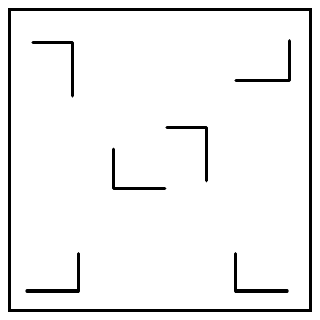
A paper is folded and cut as shown below. How will it appear when unfolded?

  1. AOption (a)

  2. BOption (b)

  3. COption (c)

  4. DOption (d)

View answer & explanation

Correct answer

Answer: (b)B.

Why this answer is correct

The paper look when unfolded:

Hence, the correct answer is "Option 2".

Question 5

Which of the following letter-clusters will replace the question mark (?) in the given series to make it logically complete?

JAL, MDO, PGR, SJU, ?

  1. AOption (a)

    WNX

  2. BOption (b)

    MXV

  3. COption (c)

    VMX

  4. DOption (d)

    VMY

View answer & explanation

Correct answer

Answer: (c)C.

VMX

Why this answer is correct

The logic followed here is:

Hence, the correct answer is "VMX".

Question 6

64 is related to 4 following a certain logic. Following the same logic, 216 is related to 6. To which of the following is 729

related, following the same logic?

(NOTE: Operations should be performed on the whole numbers, without breaking down the numbers into its constituent

digits. E.g. 13 – Operations on 13 such as adding /deleting /multiplying etc. to 13 can be performed. Breaking down 13 into 1

and 3 and then performing mathematical operations on 1 and 3 is not allowed)

  1. AOption (a)

    11

  2. BOption (b)

    13

  3. COption (c)

    7

  4. DOption (d)

    9

View answer & explanation

Correct answer

Answer: (d)D.

9

Why this answer is correct

The logic followed here is: Cube of 2nd number = 1st number.

64 is related to 4 → 43 = 64

216 is related to 6 → 63 = 216

Similarly, 729 is related to:→ 93 = 729

Hence, the correct answer is "9".

Question 7

Which of the following numbers will replace the question marks (?) in the given series?

61, ?, ?, 73, 79, 83, 89

  1. AOption (a)

    67, 69

  2. BOption (b)

    63, 65

  3. COption (c)

    63, 67

  4. DOption (d)

    67, 71

View answer & explanation

Correct answer

Answer: (d)D.

67, 71

Why this answer is correct

The logic followed here is:

Hence, the correct answer is "67, 71".

Question 8

In a certain code language, 'ZCJV' is coded as 'YBIU' and 'GKMD' is coded as 'FJLC'. How will 'EYQR' be coded in that language?

  1. AOption (a)

    QWMP

  2. BOption (b)

    DXPQ

  3. COption (c)

    DWMP

  4. DOption (d)

    CXNQ

View answer & explanation

Correct answer

Answer: (b)B.

DXPQ

Why this answer is correct

The logic followed here is:

'ZCJV' is coded as 'YBIU'

'GKMD' is coded as 'FJLC'

Similarly, 'EYQR' will be coded as:

Hence, the correct answer is "DXPQ".

Question 9

The position of how many letters will remain unchanged if each of the letters in the word ‘SIGNATURE’ is re-arranged in the English alphabetical order from left to right?

  1. AOption (a)

    Three

  2. BOption (b)

    One

  3. COption (c)

    Two

  4. DOption (d)

    Four

View answer & explanation

Correct answer

Answer: (b)B.

One

Why this answer is correct

Given word: 'SIGNATURE'

After arranged in alphabetical order:

AlphabetsSIGNATURE
Alphabetical orderAEGINRSTU


Now,

there are only One alphabets "G" that will remain unchanged if each of the letters in the word 'SIGNATURE' is arranged in English alphabetical order.

Hence, the correct answer is "Option 2".

Question 10

Study the given diagram carefully and answer the question that follows.

The numbers in different sections indicate themnumber of persons who can drive different vehicles.

What is the difference between the number of persons who can drive all the three vehicles and that of persons who can drive any two of these vehicles?

  1. AOption (a)

    27

  2. BOption (b)

    15

  3. COption (c)

    12

  4. DOption (d)

    21

View answer & explanation

Correct answer

Answer: (d)D.

21

Why this answer is correct

According to the given information:

The number of persons who can drive all the three vehicles = 6

Persons who can drive any two of these vehicles = 8 + 7 + 12 = 27

Thus, the difference between the number of persons who can drive all the three vehicles and that of persons who can drive any two of these vehicles = 27 - 6 = 21

Hence, the correct answer is "21".

Question 11

Select the word pair that best represents a similar relationship to the one expressed in the pair of words given below. (The

words must be considered as meaningful English words and must not be related to each other based on the number of

letters/number of consonants/vowels in the word)

Love : Harmony

  1. AOption (a)

    Calm : Sad

  2. BOption (b)

    Peace : Bliss

  3. COption (c)

    Rage : Cool

  4. DOption (d)

    Anger : Excitement

View answer & explanation

Correct answer

Answer: (b)B.

Peace : Bliss

Why this answer is correct

The logic followed here is:

Logic: Positive Emotional States.

Here,

Love : Harmony → Love is associated with Harmony.

Similarly,

Peace : Bliss → Peace is associated with Bliss.

Hence, the correct answer is "Option 2".

Question 12

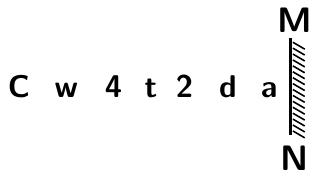
Select the correct mirror image of the given figure when the mirror is placed at MN.

  1. AOption (a)

  2. BOption (b)

  3. COption (c)

  4. DOption (d)

View answer & explanation

Correct answer

Answer: (b)B.

Why this answer is correct

The correct mirror image of the given figure is:

Hence, the correct answer is "Option 2".

Question 13

Based on the English alphabetical order, three of the following four letter-clusters are alike in a certain way and thus form a group. Which is the one that DOES NOT belong to that group?

(Note: The odd man out is not based on the number of consonants/vowels or their position in the letter-cluster)

  1. AOption (a)

    HKI

  2. BOption (b)

    RUS

  3. COption (c)

    MPN

  4. DOption (d)

    QUR

View answer & explanation

Correct answer

Answer: (d)D.

QUR

Why this answer is correct

The logic followed here is:

1)  HKI

2)  RUS

3)  MPN

4)  QUR

Hence, the correct answer is "QUR".

Question 14

Which number will come in the place of the question mark (?) in the following equation if +’ and ‘−’ are interchanged and ‘×’ and ‘÷’ are interchanged?

7 ÷ 5 − 30 × 6 + 4 = ?

  1. AOption (a)

    39

  2. BOption (b)

    36

  3. COption (c)

    34

  4. DOption (d)

    32

View answer & explanation

Correct answer

Answer: (b)B.

36

Why this answer is correct

BODMAS Table: 

After decoding signs:

SignsDecoded signs
+-
-+
×÷
÷×


Given equation: 7 ÷ 5 − 30 × 6 + 4 = ?

After interchanging the signs then:

⇒ 7 × 5 + 30 ÷ 6 - 4 = ?

⇒ ? = 7 × 5 + 5 - 4 

⇒ ? = 35 + 5 - 4 

⇒ ? = 40 - 4 = 36

Hence, the correct answer is "36".

Question 15

Select the combination of letters that when sequentially placed in the blanks of the given series will complete the series.

B_DE_GDGBK_IB_DK

  1. AOption (a)

    CODB

  2. BOption (b)

    CBDO

  3. COption (c)

    CBDP

  4. DOption (d)

    OCBD

View answer & explanation

Correct answer

Answer: (b)B.

CBDO

Why this answer is correct

The logic followed here is:

Given Sequence: B_DE_GDGBK_IB_DK

Now, putting the letters in the blank spaces given in the option one by one:

Option 1) CODB → BCDE / OGDG / BKDI / BBDK

Option 2) CBDO → BCDE / BGDG / BKDI / BODK

Option 3) CBDP → BCDE / BGDG / BKDI / BPDK

Option 4) OCBD → BODE / CGDG / BKBI / BDDK

Hence, the correct answer is "CBDO".

Question 16

In this question, three statements are given, followed by two conclusions numbered I and II. Assuming the statements to be

true, even if they seem to be at variance with commonly known facts, decide which of the conclusion(s) logically

follows/follow from the statements.

Statements:

All grains are cereals.

Some cereals are fruits.

No fruit is a vegetable.

Conclusions:

I. All cereals can be vegetables.

II. All grains are fruits.

  1. AOption (a)

    Both Conclusions I and II follow.

  2. BOption (b)

    Neither Conclusion I nor II follow.

  3. COption (c)

    Only Conclusion II follows.

  4. DOption (d)

    Only Conclusion I follows.

View answer & explanation

Correct answer

Answer: (b)B.

Neither Conclusion I nor II follow.

Why this answer is correct

Statements:

All grains are cereals.

Some cereals are fruits.

No fruit is a vegetable.

The least possible Venn diagram is as follows:

Conclusions:

I. All cereals can be vegetables. - False (because Some cereals are fruits and No fruit is a vegetable. so which part belongs to fruits cannot be vegetable)

II. All grains are fruits. - False (because there is no direct relation between grains and fruits. So it can be possible but not definite)

Hence, the correct answer is "Neither Conclusion I nor II follow".

Question 17

7 is related to 40 by certain logic. Following the same logic, 5 is related to 16. To which of the following is 9 related, following the same logic? (NOTE: Operations should be performed on the whole numbers, without breaking down the numbers into its constituent digits, E.g., 13 - Operations on 13 such as adding/subtracting/multiplying/etc., to 13 can be performed. Breaking down 13 into 1 and 3 and then performing mathematical operations on 1 and 3 is not allowed.)

  1. AOption (a)

    72

  2. BOption (b)

    70

  3. COption (c)

    48

  4. DOption (d)

    54

View answer & explanation

Correct answer

Answer: (a)A.

72

Why this answer is correct

The logic followed here is:

Logic: (1st number)2 - 9 = 2nd number.

Now,

For, 7 : 40

⇒ 72 - 9 = 49 - 9 = 40.

For, 5 : 16

⇒ 52 - 9 = 25 - 9 = 16.

Similarly, for 9 ∶ ?

⇒ 92 - 9 = 81 - 9 = 72.

Hence, the correct answer is "Option 1".

Question 18

What will come in place of the question mark (?) in the following equation, if '+' and '-' are interchanged and '×' and '÷' are interchanged?

1604 × 4 + 87 − 16 ÷ 16 = ?

  1. AOption (a)

    570

  2. BOption (b)

    770

  3. COption (c)

    670

  4. DOption (d)

    870

View answer & explanation

Correct answer

Answer: (a)A.

570

Why this answer is correct

BODMAS Table: 

After decoding signs:

SignsDecoded signs
+-
-+
×÷
÷×


Given equation: 1604 × 4 + 87 − 16 ÷ 16 = ?

After interchanging the signs then:

⇒ 1604 ÷ 4 - 87 + 16 × 16 = ?

⇒ ? = 401 - 87 + 16 × 16

⇒ ? = 401 - 87 + 256

⇒ ? = 657 - 87 = 570

Hence, the correct answer is "570".

Question 19

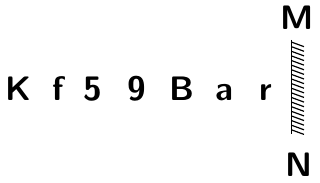
Select the correct mirror image of the given figure when the mirror is placed at MN.

  1. AOption (a)

  2. BOption (b)

  3. COption (c)

  4. DOption (d)

View answer & explanation

Correct answer

Answer: (c)C.

Why this answer is correct

The correct mirror image of the given figure is:

Hence, the correct answer is "Option 3".

Question 20

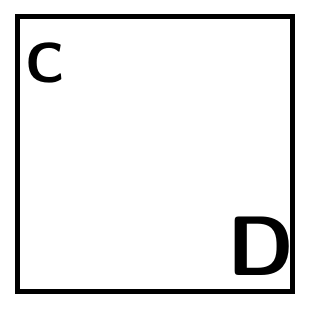
Identify the figure from among the given options which when put in place of the question mark (?) will logically complete the series.

  1. AOption (a)

  2. BOption (b)

  3. COption (c)

  4. DOption (d)

View answer & explanation

Correct answer

Answer: (b)B.

Why this answer is correct

The logic followed here is:

Bottom-right corner symbol shifts in top-left corner and flipped horizontally.

And another symbol is replaced by a new symbol.

Hence, the correct answer is "Option 2".

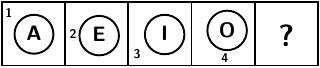
Question 21

Select the figure from among the given options that can replace the question mark (?) in the following series.


  1. AOption (a)

  2. BOption (b)

  3. COption (c)

  4. DOption (d)

View answer & explanation

Correct answer

Answer: (b)B.

Why this answer is correct

The logic followed here is:

Number is increased by 1 and shifting one step ahead in anticlockwise direction.

Vowels are increasing (A, E, I, O, U).


Hence, the correct answer is "Option 2".

Question 22

Q is the mother of T. R is the husband of P. S is the father of Q. T is the brother of P. How is P related to S?

  1. AOption (a)

    Daughter's daughter

  2. BOption (b)

    Mother's mother

  3. COption (c)

    Mother's father

  4. DOption (d)

    Brother's wife

View answer & explanation

Correct answer

Answer: (a)A.

Daughter's daughter

Why this answer is correct

Family Chart:

Given: Q is the mother of T. R is the husband of P. S is the father of Q. T is the brother of P. 

So, P is the "Daughter's daughter" of S.

Hence, the correct answer is "Daughter's daughter".

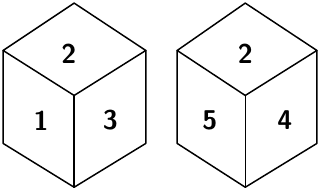
Question 23

Two different positions of the same dice are given below. Which is the number on the face opposite the face containing 5?

  1. AOption (a)

    6

  2. BOption (b)

    2

  3. COption (c)

    1

  4. DOption (d)

    3

View answer & explanation

Correct answer

Answer: (c)C.

1

Why this answer is correct

For find the opposite surface of '5', we need to compare the common surface in the given dices,

So, From Dice 1 and Dice 2,

From both dices, 2 is common and on the same surface. So, all remaining surface will be opposite to each other.

3 is opposite to 4.

So, 1 will be opposite to 5.

Hence, the correct answer is "1".

Question 24

In the following number-pairs, the second number is obtained by applying certain mathematical operations to the first

number. Select the set in which the numbers are related in the same way as are the numbers of the following sets.

(NOTE : Operations should be performed on the whole numbers, without breaking down the numbers into its constituent

digits. E.g. 13 – Operations on 13 such as adding /deleting /multiplying etc., to 13 can be performed. Breaking down 13 into 1

and 3 and then performing mathematical operations on 1 and 3 is not allowed.)

(26, 114)

(47, 198)

  1. AOption (a)

    (25, 105)

  2. BOption (b)

    (28, 74)

  3. COption (c)

    (28, 98)

  4. DOption (d)

    (15, 70)

View answer & explanation

Correct answer

Answer: (d)D.

(15, 70)

Why this answer is correct

The logic followed here is:

Logic: (1st number × 4) + 10 = 2nd number.

Now,

For, 26 : 114

⇒ (26 × 4) + 10 = 104 + 10 = 114.

For, 47 : 198

⇒ (47 × 4) + 10 = 188 + 10 = 198.

Similarly, for 15 ∶ 70

⇒ (15 × 4) + 10 = 60 + 10 = 70.

Hence, the correct answer is "Option 4".

Question 25

Three of the following numbers are alike in a certain way and one is different. Pick the odd one out.

(NOTE: Operations should be performed on the whole numbers, without breaking down the numbers into its constituent digits. E.g., 13 – Operations on 13 such as adding/subtracting/multiplying etc. to 13 can be performed. Breaking down 13 into 1 and 3 and then performing mathematical operations on 1 and 3 is not allowed.)

  1. AOption (a)

    829

  2. BOption (b)

    643

  3. COption (c)

    821

  4. DOption (d)

    237

View answer & explanation

Correct answer

Answer: (d)D.

237

Why this answer is correct

The logic followed here is: 

Logic: Numbers are prime numbers except only one number.

1) 829: Prime number (divisible only by 1 and 829)

2) 821: Prime number (divisible only by 1 and 821)

3) 643: Prime number (divisible only by 1 and 643)

4) 237: Not prime number (divisible by 1, 3, 79 and 237)

Hence, the correct answer is "237".

General Awareness (25 questions)

Question 26

Gangubai Hangal belonged to the ______.

  1. AOption (a)

    Gwalior gharana

  2. BOption (b)

    Kirana gharana

  3. COption (c)

    Banaras gharana

  4. DOption (d)

    Agra gharana

View answer & explanation

Correct answer

Answer: (b)B.

Kirana gharana

Why this answer is correct

The correct answer is Kirana gharana.

Key Points

  • Gangubai Hangal was a renowned Indian classical vocalist of the Kirana gharana.
  • The Kirana gharana is one of the prominent schools of Hindustani classical music.
  • It is known for its melodious and improvisational style, focusing on the purity of notes and elaborate raga development.
  • Gangubai Hangal was known for her deep and powerful voice which contributed significantly to the Kirana gharana's legacy.

Additional Information

  • Kirana Gharana
  • The Kirana gharana is named after the town of Kirana in Uttar Pradesh, India.
  • This gharana emphasizes the importance of the 'sur' (note) and is known for its slow elaboration of ragas, known as 'alap'.
  • Influential musicians from this gharana include Abdul Karim Khan, Bhimsen Joshi, and Roshan Ara Begum.
  • Gharana
  • The term 'gharana' means 'family' or 'lineage' in Hindi.
  • In the context of Indian classical music, it refers to a system of social organization linking musicians or dancers by lineage or apprenticeship, and by adherence to a particular musical style.
  • Each gharana has its own distinct style, techniques, and repertoire.
  • Hindustani Classical Music
  • It is the classical music of North India, distinct from the Carnatic music of South India.
  • It has a rich history dating back to the Vedic times and has evolved over centuries, integrating various cultural influences.
  • The music is characterized by its raga (melodic framework) and tala (rhythmic pattern).

Question 27

Which of the following districts of India is an example of an industrial district?

  1. AOption (a)

    Faridabad

  2. BOption (b)

    Meerut

  3. COption (c)

    kolhapur

  4. DOption (d)

    Jaipur

View answer & explanation

Correct answer

Answer: (c)C.

kolhapur

Why this answer is correct

The correct answer is Kolhapur.

Key Points

  • Kolhapur, located in the state of Maharashtra, is known for its industrial development.
  • The city is famous for its foundries and engineering industries, producing automotive parts, machinery, and casting components.
  • Kolhapur is also renowned for the production of Kolhapuri chappals, a traditional handcrafted leather footwear.
  • The industrial growth in Kolhapur has led to the establishment of several industrial estates and a thriving manufacturing sector.

Additional Information

  • Industrial Districts in India
  • Industrial districts in India are regions that have a high concentration of industries and manufacturing units.
  • These regions often benefit from better infrastructure, connectivity, and access to raw materials and skilled labor.
  • Examples include Pune, known for its automobile and IT industries, and Ludhiana, famous for its textile and bicycle manufacturing units.
  • Economic Impact
  • Industrial districts contribute significantly to the economy by generating employment, increasing exports, and contributing to the GDP.
  • They also attract investments and foster innovation and technological advancements.
  • Challenges
  • Despite their importance, industrial districts often face challenges such as pollution, resource management, and the need for sustainable practices.
  • Efforts are being made to address these issues through regulations, technological upgrades, and promoting green industries.

Question 28

Which among the following is NOT a classification criterion of drugs?

  1. AOption (a)

    Chemical structure

  2. BOption (b)

    Molecular target

  3. COption (c)

    Behavioural condition

  4. DOption (d)

    Pharmacological effect

View answer & explanation

Correct answer

Answer: (c)C.

Behavioural condition

Why this answer is correct

The correct answer is Behavioural condition.

Key Points

  • Behavioural condition is not typically used as a classification criterion for drugs.
  • Drugs are generally classified based on their chemical structure, molecular target, and pharmacological effect.
  • Classification based on chemical structure involves grouping drugs with similar molecular frameworks.
  • Molecular target classification groups drugs based on the biological molecules they interact with, while pharmacological effect classification is based on the therapeutic effects of the drugs.

Additional Information

  • Chemical Structure:
  • This classification method involves grouping drugs with similar chemical compositions or molecular frameworks.
  • Examples include beta-lactams, benzodiazepines, and phenothiazines.
  • Molecular Target:
  • This method classifies drugs based on the specific biological molecules they interact with.
  • For example, drugs that target enzymes, receptors, ion channels, or nucleic acids.
  • Pharmacological Effect:
  • Drugs are classified based on the therapeutic effects they produce.
  • For example, antihypertensives, analgesics, antipyretics, and antidepressants.

Question 29

The Non-Cooperation Movement was called off after which of the following incidents?

  1. AOption (a)

    Outbreak of the First World War

  2. BOption (b)

    Kakori train action

  3. COption (c)

    Chauri-Chaura incident

  4. DOption (d)

    Komagata Maru incident

View answer & explanation

Correct answer

Answer: (c)C.

Chauri-Chaura incident

Why this answer is correct

The correct answer is Chauri-Chaura incident.

Key Points

  • The Chauri-Chaura incident occurred on February 5, 1922, in the Chauri-Chaura town of the Gorakhpur district in the United Provinces (now Uttar Pradesh), British India.
  • During this incident, a large group of protesters participating in the Non-Cooperation Movement clashed with police, who opened fire. In retaliation, the demonstrators attacked and set fire to a police station, killing all of its occupants.
  • In response to the violence, Mahatma Gandhi, the leader of the Non-Cooperation Movement, called off the movement on February 12, 1922, emphasizing his principle of non-violence (Ahimsa).
  • The Chauri-Chaura incident marked a significant turning point in the Indian independence movement, highlighting the challenges of maintaining non-violent discipline among the masses.

Additional Information

  • Non-Cooperation Movement
  • Launched by Mahatma Gandhi in 1920, the Non-Cooperation Movement aimed to resist British rule in India through non-violent means.
  • It was a significant phase of the Indian independence movement, advocating for Swaraj or self-governance.
  • Key strategies included the boycott of British goods, institutions, and services, and the promotion of Indian-made goods and institutions.
  • The movement saw widespread participation but was suspended after the Chauri-Chaura incident to prevent further violence.
  • Gandhian Principles
  • Mahatma Gandhi's philosophy centered around non-violence (Ahimsa) and truth (Satya).
  • Gandhi believed in the power of peaceful protest and civil disobedience as tools for social and political change.
  • He emphasized the importance of self-reliance, community solidarity, and ethical living.
  • Chauri-Chaura Town
  • Chauri-Chaura is a town in the Gorakhpur district of Uttar Pradesh, India.
  • The town gained historical significance due to the incident of February 1922, which had a profound impact on India's struggle for independence.
  • Impact on Indian Independence Movement
  • The suspension of the Non-Cooperation Movement led to a period of reflection and re-strategizing within the Indian National Congress.
  • It underscored the need for disciplined, non-violent resistance and influenced future movements, such as the Civil Disobedience Movement and the Quit India Movement.
  • The incident also highlighted the complexities of leading a mass movement and the potential for deviations from non-violent principles.

Question 30

With reference to Ishwar Chandra Vidyasagar, consider the following statements.

a) He protested child marriage and polygamy.

b) Due to his efforts, the first Hindu Widow Remarriage Act, 1856, was introduced.

c) He was primarily known for his scholarship in Persian language.

Which of the above statements is/are correct?

  1. AOption (a)

    a, b, c

  2. BOption (b)

    a, b

  3. COption (c)

    a, c

  4. DOption (d)

    b, c

View answer & explanation

Correct answer

Answer: (b)B.

a, b

Why this answer is correct

The correct answer is Option 2.

Key Points

  • Ishwar Chandra Vidyasagar was a prominent Indian educator, social reformer, and scholar in the 19th century.
  • He strongly protested against child marriage and polygamy and worked towards ending these practices.
  • Due to his relentless efforts, the Hindu Widow Remarriage Act, 1856, was enacted, which legalized the remarriage of Hindu widows.
  • Although he was a renowned scholar, he was primarily known for his scholarship in the Sanskrit language, not Persian.

Additional Information

  • Ishwar Chandra Vidyasagar
  • Born on 26 September 1820 in Birsingha, Bengal, he was one of the most prominent figures of the Bengal Renaissance.
  • He was a key proponent of modern education and played a significant role in the establishment of several educational institutions in Bengal.
  • Vidyasagar's contributions extended to the field of literature as well. He simplified and modernized the Bengali alphabet and prose, making it more accessible to the common people.
  • He was also known for his philanthropic activities, dedicating his life to the upliftment of the underprivileged and the betterment of society.
  • Hindu Widow Remarriage Act, 1856
  • This act was a significant social reform in British India that legalized the remarriage of Hindu widows.
  • The act was passed on 26 July 1856, due to the efforts of social reformers like Ishwar Chandra Vidyasagar.
  • The act provided legal safeguards and rights to widows who chose to remarry, which was a revolutionary step towards gender equality in that era.
  • Child Marriage
  • Child marriage refers to any formal marriage or informal union where one or both parties are under 18 years of age.
  • It is a deeply rooted tradition in some cultures but has significant negative consequences, including the health and education of the child.
  • Social reformers like Ishwar Chandra Vidyasagar campaigned against child marriage to protect the rights and futures of young children.
  • Polygamy
  • Polygamy is the practice of marrying multiple spouses. In the context of Ishwar Chandra Vidyasagar's time, it often referred to men having multiple wives.
  • Vidyasagar and other reformers opposed this practice as it often led to the exploitation and mistreatment of women.
  • Efforts to outlaw polygamy were part of broader social reforms aimed at ensuring gender equality and women's rights.

Question 31

What happens when two forces act in the opposite directions on an object?

  1. AOption (a)

    The net force acting on the object is the difference between the two objects.

  2. BOption (b)

    The net force acting on the object is the difference between the two forces.

  3. COption (c)

    The net force acting on the object is the total of the two forces.

  4. DOption (d)

    The net force acting on the object is the sum of the two objects.

View answer & explanation

Correct answer

Answer: (b)B.

The net force acting on the object is the difference between the two forces.

Why this answer is correct

The correct answer is The net force acting on the object is the difference between the two forces..

Key Points

  • When two forces act in opposite directions on an object, the net force is the difference between the two forces.
  • The direction of the net force is in the direction of the larger force.
  • If the forces are equal in magnitude but opposite in direction, they cancel each other out, resulting in a net force of zero.
  • The concept of net force is crucial in understanding how forces influence the motion of objects according to Newton's Laws of Motion.

Additional Information

  • Force
  • A force is a push or pull upon an object resulting from its interaction with another object. Forces can cause objects to accelerate, decelerate, remain in place, or change shape.
  • Forces are vector quantities, meaning they have both magnitude and direction.
  • Forces can be categorized into contact forces (e.g., friction, tension) and action-at-a-distance forces (e.g., gravitational, electromagnetic).
  • Net Force
  • The net force is the vector sum of all the forces acting on an object.
  • It determines the overall effect of all the forces on the motion of the object.
  • According to Newton's Second Law of Motion, the net force acting on an object is equal to the mass of the object multiplied by its acceleration (F = ma).
  • Newton's Laws of Motion
  • First Law (Law of Inertia): An object will remain at rest or in uniform motion in a straight line unless acted upon by a net external force.
  • Second Law (Law of Acceleration): The acceleration of an object is directly proportional to the net force acting on it and inversely proportional to its mass (F = ma).
  • Third Law (Action and Reaction): For every action, there is an equal and opposite reaction.
  • Equilibrium
  • An object is in equilibrium when the net force acting on it is zero.
  • In equilibrium, an object at rest stays at rest, and an object in motion continues to move at a constant velocity.
  • Equilibrium can be static (object at rest) or dynamic (object moving with constant velocity).

Question 32

Which industrial policy marked the beginning of liberalisation in the Indian industry, reducing the restrictions on private companies?

  1. AOption (a)

    Industrial Policy 1991

  2. BOption (b)

    Industrial Policy 1980

  3. COption (c)

    Industrial Policy 1977

  4. DOption (d)

    Industrial Policy 1956

View answer & explanation

Correct answer

Answer: (a)A.

Industrial Policy 1991

Why this answer is correct

The correct answer is Industrial Policy 1991.

Key Points

  • The Industrial Policy of 1991 marked a significant shift in India's industrial policy towards liberalisation, privatisation, and globalisation.
  • This policy reduced the stringent regulations and licensing requirements imposed on private companies, thereby encouraging private sector participation.
  • The policy aimed to increase competition in the market, attract foreign direct investment (FDI), and enhance industrial growth and efficiency.
  • Key reforms included the abolition of industrial licensing for most industries, reduction of areas reserved for the public sector, and easing of foreign investment norms.

Additional Information

  • Industrial Policy 1980
  • The Industrial Policy of 1980 sought to promote indigenous technology and ensure a balanced regional growth of industries.
  • It focused on the optimum utilisation of installed capacity, modernization of industries, and accelerated growth of the small-scale sector.
  • Industrial Policy 1977
  • This policy aimed at promoting the growth of small-scale and cottage industries to achieve employment generation and regional development.
  • It emphasised decentralisation and self-reliance.
  • Industrial Policy 1956
  • The 1956 policy was a landmark in the history of Indian industrial policy, emphasizing the establishment of a socialist pattern of society.
  • It classified industries into three schedules: Schedule A (exclusively in the public sector), Schedule B (progressively state-owned), and Schedule C (left to the private sector).

Question 33

The first Indian woman to hold the Under-20 World Wrestling Championship is ________.

  1. AOption (a)

    Antim Panghal

  2. BOption (b)

    Priyanka Nayak

  3. COption (c)

    Swati Sanjay

  4. DOption (d)

    Hina Khalifa

View answer & explanation

Correct answer

Answer: (a)A.

Antim Panghal

Why this answer is correct

The correct answer is Antim Panghal.

Key Points

  • Antim Panghal became the first Indian woman to win the Under-20 World Wrestling Championship in 2022.
  • She clinched the gold medal in the 53 kg category at the championship held in Sofia, Bulgaria.
  • Antim defeated Kazakhstan's Altyn Shagayeva in the final to achieve this historic feat.
  • She is recognized for her remarkable wrestling skills and dedication to the sport, contributing to India's growing presence in international wrestling competitions.

Additional Information

  • Under-20 World Wrestling Championship
  • The Under-20 World Wrestling Championship is an annual event organized by the United World Wrestling (UWW).
  • It features young wrestling talents from various countries competing in different weight categories.
  • The championship serves as a platform for young wrestlers to showcase their skills on an international stage and gain recognition.
  • Winning a medal at this championship is considered a significant achievement in a wrestler's career and often leads to further opportunities and support.
  • United World Wrestling (UWW)
  • UWW is the international governing body for the sport of wrestling, overseeing freestyle, Greco-Roman, and women's wrestling disciplines.
  • It is responsible for organizing world championships, continental championships, and other international wrestling events.
  • UWW aims to promote and develop the sport of wrestling globally, ensuring fair competition and adherence to the rules.
  • The organization also works towards increasing the popularity and visibility of wrestling as a sport worldwide.
  • Wrestling in India
  • Wrestling has a rich history and cultural significance in India, with traditional forms like Kushti being practiced for centuries.
  • Indian wrestlers have achieved notable success in international competitions, including the Olympics, Commonwealth Games, and Asian Games.
  • The Wrestling Federation of India (WFI) is the national governing body for wrestling in India, responsible for organizing domestic competitions and selecting teams for international events.
  • Initiatives and support from the government, sports authorities, and private organizations have contributed to the growth and development of wrestling in India.

Question 34

The name of the strait between the Pacific and Arctic oceans, separating the Chukchi Peninsula of the Russian Far East from the Seward Peninsula of Alaska, is the:

  1. AOption (a)

    Davis Strait

  2. BOption (b)

    Florida Strait

  3. COption (c)

    Bering Strait

  4. DOption (d)

    Messina Strait

View answer & explanation

Correct answer

Answer: (c)C.

Bering Strait

Why this answer is correct

The correct answer is Bering Strait.

Key Points

  • The Bering Strait is a narrow passage of water that separates the Chukchi Peninsula of the Russian Far East from the Seward Peninsula of Alaska.
  • It connects the Pacific Ocean to the Arctic Ocean, specifically linking the Bering Sea to the Chukchi Sea.
  • The strait is named after Vitus Bering, a Danish explorer in the service of the Russian Empire, who explored the area in the early 18th century.
  • The Bering Strait is approximately 82 kilometers (51 miles) wide at its narrowest point, with a depth of about 30-50 meters (98-164 feet).

Additional Information

  • Davis Strait
  • The Davis Strait is a northern arm of the Labrador Sea, which lies between Greenland and Canada’s Baffin Island.
  • It is known for its harsh weather conditions and is a major route for the migration of icebergs from the Arctic Ocean.
  • Florida Strait
  • The Florida Strait is a strait located south-southeast of the North American mainland, generally accepted to be the boundary between the Gulf of Mexico and the Atlantic Ocean.
  • It lies between the Gulf of Mexico and the Atlantic Ocean, separating the U.S. state of Florida from Cuba.
  • Messina Strait
  • The Strait of Messina is a narrow passage between the eastern tip of Sicily and the western tip of Calabria in the southern part of Italy.
  • It connects the Tyrrhenian Sea to the north with the Ionian Sea to the south.

Question 35

Which Committee identified the existence of legal provisions for implementation of some of the Fundamental Duties?

  1. AOption (a)

    Justice Malim Committee

  2. BOption (b)

    Justice Verma Committee

  3. COption (c)

    Justice Soren Committee

  4. DOption (d)

    Justice VR Krishna Iyer Committee

View answer & explanation

Correct answer

Answer: (b)B.

Justice Verma Committee

Why this answer is correct

The correct answer is Justice Verma Committee.

Key Points

  • The Justice Verma Committee was formed to identify the existence of legal provisions for the implementation of some of the Fundamental Duties enshrined in the Constitution of India.
  • The Committee was set up in 1999 under the chairmanship of Justice J.S. Verma, former Chief Justice of India.
  • It reviewed the existing legal framework and suggested measures to make the Fundamental Duties more enforceable.
  • The Committee's recommendations emphasized the role of education and awareness in promoting a sense of duty among citizens.

Additional Information

  • Fundamental Duties
  • The Fundamental Duties are a set of moral obligations for all citizens of India, enshrined in Part IV-A of the Constitution (Article 51A).
  • These duties were added by the 42nd Amendment Act, 1976, based on the recommendations of the Swaran Singh Committee.
  • There are currently 11 Fundamental Duties, which include respect for the Constitution, national symbols, the promotion of harmony, and the protection of public property.
  • The Fundamental Duties are non-justiciable, meaning they are not legally enforceable by the courts.
  • Justice Verma Committee
  • Justice J.S. Verma, a renowned jurist and former Chief Justice of India, chaired the committee.
  • The Committee's focus was to enhance the implementation of Fundamental Duties through legal and educational reforms.
  • It highlighted the need for incorporating the Fundamental Duties into the education system to instill a sense of responsibility in citizens from a young age.
  • The Committee's report has been influential in shaping policies and programs aimed at promoting civic responsibility.
  • 42nd Amendment Act, 1976
  • The 42nd Amendment Act is also known as the "Mini-Constitution" due to its extensive changes to the Constitution of India.
  • It introduced the Fundamental Duties, provided for the establishment of Administrative Tribunals, and made several changes to the Preamble and other parts of the Constitution.
  • The Amendment was passed during the Emergency period under Prime Minister Indira Gandhi's government.
  • It aimed to strengthen the central government's powers and bring about socio-economic reforms.

Question 36

'Ungalil Oruvan' (One Among You) is the autobiography of which of the following chief ministers?

  1. AOption (a)

    M.K. Stalin

  2. BOption (b)

    K. Chandrashekar Rao

  3. COption (c)

    Basavaraj Bommai

  4. DOption (d)

    Pinarayi Vijayan

View answer & explanation

Correct answer

Answer: (a)A.

M.K. Stalin

Why this answer is correct

The correct answer is M.K. Stalin.

Key Points

  • M.K. Stalin is the current Chief Minister of Tamil Nadu.
  • He assumed office on 7 May 2021.
  • M.K. Stalin is the son of the former Chief Minister of Tamil Nadu, M. Karunanidhi.
  • He is a prominent leader of the Dravida Munnetra Kazhagam (DMK) party.

Additional Information

  • M.K. Stalin:
  • M.K. Stalin (Muthuvel Karunanidhi Stalin) was born on 1 March 1953 in Chennai, Tamil Nadu.
  • He started his political career with the DMK party and held various positions within the party over the years.
  • Before becoming the Chief Minister, he served as the Deputy Chief Minister of Tamil Nadu from 2009 to 2011.
  • Stalin has also held the position of Mayor of Chennai from 1996 to 2002.
  • Dravida Munnetra Kazhagam (DMK):
  • The DMK is a political party in the state of Tamil Nadu and the Union Territory of Puducherry in India.
  • It was founded by C.N. Annadurai in 1949 as a breakaway faction from the Dravidar Kazhagam.
  • The party has a strong base among the Tamil population and has been a significant force in Tamil Nadu politics.
  • The DMK has been involved in various state and national level political activities and has formed the government in Tamil Nadu multiple times.
  • Autobiography:
  • An autobiography is a self-written account of the life of a person.
  • It provides insights into the personal and professional life of the author, including their experiences, challenges, and achievements.
  • Autobiographies are valuable historical documents as they offer first-hand accounts of events and people from the perspective of the author.
  • Chief Minister:
  • The Chief Minister is the head of the government in a state in India.
  • The Chief Minister is elected by the legislative assembly of the state and is appointed by the Governor.
  • The role of the Chief Minister includes formulating policies, implementing laws, and overseeing the administration of the state government.
  • The Chief Minister is also responsible for representing the state in various national and international forums.

Question 37

Which of the following articles of the Indian constitution deals with the parliament and it's proceedings?

  1. AOption (a)

    Article 51A

  2. BOption (b)

    Article 36 to 51

  3. COption (c)

    Article 79 to 122

  4. DOption (d)

    Article 12 to 35

View answer & explanation

Correct answer

Answer: (c)C.

Article 79 to 122

Why this answer is correct

The correct answer is Article 79 to 122.

Key Points

  • Article 79 to 122 of the Indian Constitution deals with the Parliament of India and its proceedings.
  • These articles cover various aspects such as the composition of Parliament, the powers, and functions of its members, and the procedures for conducting parliamentary business.
  • Article 79 establishes a bicameral legislature at the federal level, consisting of the President and two Houses: the Council of States (Rajya Sabha) and the House of the People (Lok Sabha).
  • Articles 85 to 122 provide detailed provisions regarding the functioning of Parliament, including sessions, prorogation, dissolution, the conduct of business, and the powers and privileges of its members.

Additional Information

  • Article 51A
  • Article 51A specifies the fundamental duties of every citizen of India.
  • It was added by the 42nd Amendment Act, 1976.
  • These duties include respecting the Constitution, promoting harmony, and safeguarding public property, among others.
  • Article 36 to 51
  • These articles pertain to the Directive Principles of State Policy.
  • They provide guidelines to the central and state governments for making policies aimed at establishing a just society.
  • Article 12 to 35
  • These articles cover the Fundamental Rights guaranteed to the citizens of India.
  • They include rights like the right to equality, right to freedom, right against exploitation, right to freedom of religion, cultural and educational rights, and the right to constitutional remedies.

Question 38

What was India's annual exponential growth rate as per the 2011 Census?

  1. AOption (a)

    1.10%

  2. BOption (b)

    1.64%

  3. COption (c)

    4.34%

  4. DOption (d)

    3.54%

View answer & explanation

Correct answer

Answer: (b)B.

1.64%

Why this answer is correct

The correct answer is 1.64.

Key Points

  • The annual exponential growth rate of India's population as per the 2011 Census is 1.64%.
  • This growth rate is a measure of how quickly the population is increasing each year.
  • It is calculated using the formula for exponential growth: P(t) = P0 * ert, where r is the growth rate.
  • The growth rate reflects both natural increase (births minus deaths) and net migration.

Additional Information

  • Exponential Growth Rate
  • Exponential growth occurs when the growth rate of a mathematical function's value is proportional to the function's current value.
  • In the context of population, it means the population grows at a constant percentage rate per period.
  • The formula for exponential growth is P(t) = P0 * ert, where:
  • P(t) is the future population.
  • P0 is the initial population.
  • r is the growth rate.
  • t is the time period.
  • e is the base of the natural logarithm, approximately equal to 2.71828.
  • Census
  • A census is a systematic enumeration of a population, typically recording various details of individuals.
  • The Census of India is a decennial (every 10 years) exercise conducted by the Office of the Registrar General and Census Commissioner, under the Ministry of Home Affairs.
  • It provides vital data on population size, distribution, and various demographic characteristics.
  • The 2011 Census was the 15th National Census of the country since 1872.

Question 39

The Kuchipudi dance belongs to which of the following states?

  1. AOption (a)

    Tamil Nadu

  2. BOption (b)

    Andhra Pradesh

  3. COption (c)

    Madhya Pradesh

  4. DOption (d)

    Manipur

View answer & explanation

Correct answer

Answer: (b)B.

Andhra Pradesh

Why this answer is correct

The correct answer is Andhra Pradesh.

Key Points

  • Kuchipudi is one of the eight major Indian classical dances.
  • It originates from a village named Kuchelapuram in the Indian state of Andhra Pradesh.
  • Kuchipudi has a unique blend of Natya (drama) and Nritta (pure dance).
  • It involves fast rhythms and fluid movements, creating a perfect balance between control and abandon, strength and delicacy.

Additional Information

  • Indian Classical Dances
  • India has a rich cultural heritage, and classical dance forms are a significant part of it.
  • There are eight recognized classical dance forms in India: Bharatanatyam, Kathak, Kathakali, Manipuri, Kuchipudi, Odissi, Mohiniyattam, and Sattriya.
  • Each dance form originates from different regions and has its own unique style, costumes, and music.
  • These dances are not only a form of art but also a way to express the deep cultural and traditional values of India.
  • Natya Shastra
  • It is an ancient Indian treatise on the performing arts, encompassing theatre, dance, and music.
  • Attributed to Sage Bharata Muni, it is considered the foundational text for Indian classical dance forms.
  • The Natya Shastra provides detailed guidelines on various aspects of dance, including gestures, postures, expressions, and stage design.
  • It serves as a comprehensive guide for artists and scholars in understanding the traditional practices and techniques of Indian performing arts.
  • Kuchipudi Dance Form
  • Kuchipudi is characterized by its graceful movements, intricate footwork, and expressive gestures.
  • Performers often depict stories from Hindu mythology, particularly the tales of Lord Krishna.
  • The dance involves both male and female performers, with male dancers traditionally playing female roles as well.
  • Musical accompaniment for Kuchipudi includes classical instruments like the mridangam, veena, and flute.

Question 40

Which of the following is a saturated hydrocarbon?

  1. AOption (a)

    C3H8

  2. BOption (b)

    C6H6

  3. COption (c)

    C2H4

  4. DOption (d)

    C4H8

View answer & explanation

Correct answer

Answer: (a)A.

C3H8

Why this answer is correct

The correct answer is C3H8.

Key Points

  • C3H8 is the chemical formula for propane, which is a saturated hydrocarbon.
  • Saturated hydrocarbons contain only single bonds between carbon atoms.
  • Propane is an alkane, which is a type of saturated hydrocarbon.
  • Alkanes have the general formula CnH2n+2, and propane (C3H8) fits this formula.

Additional Information

  • Saturated Hydrocarbons:
  • Saturated hydrocarbons are hydrocarbons in which all the carbon atoms are connected by single bonds. They are also known as alkanes.
  • Alkanes have the general formula CnH2n+2, where n is the number of carbon atoms.
  • Examples include methane (CH4), ethane (C2H6), and propane (C3H8).
  • Unsaturated Hydrocarbons:
  • Unsaturated hydrocarbons contain at least one double or triple bond between carbon atoms.
  • Alkenes are hydrocarbons with one or more double bonds (general formula CnH2n), such as ethene (C2H4) and propene (C3H6).
  • Alkynes are hydrocarbons with one or more triple bonds (general formula CnH2n-2), such as ethyne (C2H2) and propyne (C3H4).
  • Benzene (C6H6):
  • Benzene is an aromatic hydrocarbon, characterized by a ring of six carbon atoms with alternating double bonds.
  • Aromatic hydrocarbons have unique stability and properties due to their conjugated pi-electron systems.
  • Hydrocarbon Classes:
  • Hydrocarbons can be classified into alkanes (saturated), alkenes (unsaturated), alkynes (unsaturated), and aromatic hydrocarbons.
  • Each class has distinct chemical properties and reactivities.

Question 41

The final match of IPL 2023 was hosted by which of the following cities?

  1. AOption (a)

    Bengaluru

  2. BOption (b)

    Chennai

  3. COption (c)

    Mumbai

  4. DOption (d)

    Ahmedabad

View answer & explanation

Correct answer

Answer: (d)D.

Ahmedabad

Why this answer is correct

The correct answer is Ahmedabad.

Key Points

  • The final match of IPL 2023 was hosted at the Narendra Modi Stadium in Ahmedabad.
  • Ahmedabad is the largest city in the state of Gujarat, India.
  • Narendra Modi Stadium, formerly known as Sardar Patel Stadium, is the largest cricket stadium in the world in terms of seating capacity, holding over 132,000 spectators.
  • This stadium has also hosted several international matches and is a prominent venue for cricket in India.

Additional Information

  • Indian Premier League (IPL)
  • The IPL is a professional Twenty20 cricket league in India contested by ten teams based out of seven Indian cities and three Indian states.
  • The league was founded by the Board of Control for Cricket in India (BCCI) in 2008.
  • It is usually held between March and May of every year and has an exclusive window in the ICC Future Tours Programme.
  • IPL is known for its high entertainment quotient and has a massive following both in India and globally.
  • Narendra Modi Stadium
  • Located in Ahmedabad, Gujarat, this stadium is the largest in the world with a seating capacity of over 132,000.
  • It is named after the current Prime Minister of India, Narendra Modi, who was also the president of the Gujarat Cricket Association.
  • The stadium was renovated in 2020 and has since hosted several key matches, including international fixtures.
  • It is equipped with state-of-the-art facilities, including LED floodlights, a clubhouse, and an Olympic-sized swimming pool.
  • IPL Final Matches
  • The IPL final is the last match of the tournament that determines the champion of the season.
  • It is one of the most-watched sporting events in India and attracts significant global viewership.
  • Some of the most memorable matches in cricket history have been IPL finals, featuring thrilling finishes and standout performances.
  • The venue for the final is usually selected to accommodate a large number of spectators and provide a grand stage for the culmination of the tournament.

Question 42

Which of the following Rajiv Gandhi National Sadbhavana Awards was conferred on Ustad Amjad Ali Khan?

  1. AOption (a)

    20th

  2. BOption (b)

    19th

  3. COption (c)

    21st

  4. DOption (d)

    18th

View answer & explanation

Correct answer

Answer: (c)C.

21st

Why this answer is correct

The correct answer is 21st.

Key Points

  • The Rajiv Gandhi National Sadbhavana Award is given annually by the Indian National Congress party.
  • The award aims to recognize outstanding contributions towards promoting peace, harmony, and national integration in India.
  • Ustad Amjad Ali Khan, a renowned sarod maestro, was honored with the 21st Rajiv Gandhi National Sadbhavana Award.
  • The award was conferred on him in recognition of his efforts to promote communal harmony and peace through music.

Additional Information

  • Rajiv Gandhi National Sadbhavana Award
  • The award was instituted in 1992, in memory of Rajiv Gandhi, the former Prime Minister of India.
  • It is awarded annually on his birth anniversary, 20th August.
  • Recipients of the award are given a citation and a cash prize.
  • The award celebrates individuals and organizations who have made significant contributions towards promoting values of harmony and peace.
  • Ustad Amjad Ali Khan
  • He is an Indian classical musician who plays the sarod, a stringed instrument.
  • He has been awarded several prestigious awards including the Padma Vibhushan, India's second-highest civilian honor.
  • He comes from a long lineage of sarod players and has significantly contributed to the Indian classical music scene.
  • His music is known for its spiritual depth and ability to transcend cultural barriers.

Question 43

A large number of words are derived from the word 'Go' meaning cow. A wealthy person was known as _______ in Vedic times.

  1. AOption (a)

    Gomat

  2. BOption (b)

    Gotra

  3. COption (c)

    Gobatscha

  4. DOption (d)

    Gaveshana

View answer & explanation

Correct answer

Answer: (a)A.

Gomat

Why this answer is correct

The correct answer is Gomat.

Key Points

  • The term "Gomat" is derived from the Sanskrit word "Go" meaning cow, and it signifies a wealthy person who owned many cows in Vedic times.
  • In Vedic society, wealth was often measured by the number of cows one possessed, making "Gomat" an indicator of prosperity and affluence.
  • Cows were highly valued in Vedic culture for their milk, dung, and other resources, which were essential for agriculture and daily life.
  • The ownership of cows symbolized economic stability and social status in ancient Vedic civilization.

Additional Information

  • Gotra
  • Gotra refers to a lineage or clan assigned to a Hindu at birth. It is a system of patrilineal classification and is often used to trace ancestry.
  • It is used for identifying families and for purposes related to marriage, as marriages within the same Gotra are traditionally discouraged.
  • Gobatscha
  • Gobatscha is not a commonly recognized term in Vedic literature or Sanskrit.
  • Gaveshana
  • Gaveshana means search or investigation in Sanskrit. It is often used in contexts related to research or inquiry.

Question 44

In which state of India is the Chandra Prabha Wildlife Sanctuary located?

  1. AOption (a)

    Bihar

  2. BOption (b)

    Gujarat

  3. COption (c)

    Uttar Pradesh

  4. DOption (d)

    Madhya Pradesh

View answer & explanation

Correct answer

Answer: (c)C.

Uttar Pradesh

Why this answer is correct

The correct answer is Uttar Pradesh.

Key Points

  • Chandra Prabha Wildlife Sanctuary is located in the state of Uttar Pradesh, India.
  • It was established in 1957 and is situated in the Chandauli district of Uttar Pradesh.
  • The sanctuary is spread over an area of 78 square kilometers and is known for its scenic beauty and rich biodiversity.
  • It is home to various species of flora and fauna, including leopards, blackbucks, and numerous birds.

Additional Information

  • Wildlife Sanctuaries in India
  • Wildlife sanctuaries are protected areas established by the government to conserve wildlife and their habitats.
  • India has more than 500 wildlife sanctuaries, each hosting a diverse range of species and ecosystems.
  • These sanctuaries play a crucial role in protecting endangered species and maintaining ecological balance.
  • Examples of famous wildlife sanctuaries in India include Jim Corbett National Park in Uttarakhand, Kaziranga National Park in Assam, and Sundarbans National Park in West Bengal.
  • Conservation Efforts
  • Conservation efforts in wildlife sanctuaries include habitat management, anti-poaching measures, and community involvement.
  • Various government and non-governmental organizations work together to ensure the protection and sustainability of these natural habitats.
  • Conservation programs often involve scientific research, wildlife monitoring, and awareness campaigns to educate the public about the importance of wildlife protection.
  • Programs like Project Tiger and Project Elephant have been launched in India to focus on the conservation of specific endangered species.
  • Biodiversity in Uttar Pradesh
  • Uttar Pradesh, being a large state in India, hosts a rich and varied biodiversity.
  • The state has several wildlife sanctuaries and national parks, including Dudhwa National Park, Katarniaghat Wildlife Sanctuary, and Hastinapur Wildlife Sanctuary.
  • These protected areas are home to species such as tigers, elephants, rhinoceroses, and numerous bird species.
  • The government of Uttar Pradesh actively engages in conservation activities to protect its wildlife and natural resources.

Question 45

Which of the following is a correct statement?

  1. AOption (a)

    National Income is GNP at FC.

  2. BOption (b)

    National Income is NDP at MP.

  3. COption (c)

    National Income is GDP at MP.

  4. DOption (d)

    National Income is NNP at FC.

View answer & explanation

Correct answer

Answer: (d)D.

National Income is NNP at FC.

Why this answer is correct

The correct answer is National Income is NNP at FC..

Key Points

  • Net National Product (NNP) at Factor Cost (FC) is considered the national income.
  • It is calculated by subtracting depreciation from Gross National Product (GNP).
  • Factor Cost refers to the cost of factors of production (i.e., labor, capital, land) used to produce goods and services.
  • National Income represents the total income earned by a country’s residents and businesses, including any income from abroad.

Additional Information

  • Gross National Product (GNP)
  • It is the total value of all goods and services produced by the residents of a country within a specific time period, usually a year.
  • GNP includes the value of products made by a country’s citizens both domestically and abroad.
  • Net National Product (NNP)
  • It is calculated by subtracting the depreciation (wear and tear of capital goods) from the Gross National Product.
  • NNP = GNP - Depreciation.
  • Factor Cost
  • It refers to the costs of the factors of production (labor, capital, land, and entrepreneurship) used in creating goods and services.
  • Factor Cost does not include taxes or subsidies on products.
  • Market Price (MP)
  • It is the price at which goods and services are sold in the market.
  • Market Price includes indirect taxes and excludes subsidies provided by the government.

Question 46

Who among the following famous badminton players won Swiss Open 2022?

  1. AOption (a)

    Jwala Gutta

  2. BOption (b)

    Aparna Popat

  3. COption (c)

    Saina Nehwal

  4. DOption (d)

    PV Sindhu

View answer & explanation

Correct answer

Answer: (d)D.

PV Sindhu

Why this answer is correct

The correct answer is PV Sindhu.

Key Points

  • PV Sindhu is an Indian professional badminton player.
  • She has won medals in multiple tournaments including the Olympics and World Championships.
  • In 2022, she won the Swiss Open badminton tournament, adding to her numerous international titles.
  • PV Sindhu is widely recognized for her contributions to the sport and has been honored with several prestigious awards in India.

Additional Information

  • Swiss Open
  • The Swiss Open is an annual badminton tournament held in Switzerland.
  • It is part of the Badminton World Federation (BWF) World Tour.
  • The tournament attracts top international players and is an important event in the badminton calendar.
  • PV Sindhu's Achievements
  • PV Sindhu won a silver medal at the 2016 Rio Olympics and a bronze medal at the 2020 Tokyo Olympics.
  • She became the first Indian woman to win a gold medal at the BWF World Championships in 2019.
  • She has been honored with major Indian awards including the Padma Bhushan, Padma Shri, and the Rajiv Gandhi Khel Ratna Award.
  • Badminton World Federation (BWF)
  • The BWF is the international governing body for the sport of badminton.
  • It was founded in 1934 and is responsible for organizing major international tournaments such as the BWF World Championships and the BWF World Tour.
  • The BWF also oversees the rules and regulations of the sport, ensuring fair play and standardization across all competitions.

Question 47

The ________ portal is a platform provided by the Govt. of India for farmers to attain any information related to agriculture.

  1. AOption (a)

    Cropworld

  2. BOption (b)

    Farmer's

  3. COption (c)

    Agricultural

  4. DOption (d)

    Cultivation

View answer & explanation

Correct answer

Answer: (b)B.

Farmer's

Why this answer is correct

The correct answer is Farmer's.

Key Points

  • The Farmer's portal is a platform provided by the Government of India to facilitate easy access to information related to agriculture for farmers.
  • It offers comprehensive details on various aspects of farming including crop management, pest control, weather forecasts, and government schemes.
  • The portal is designed to empower farmers with knowledge and information that can help them make better decisions and improve their agricultural practices.
  • This platform also acts as a single window for agricultural information from various governmental departments and agencies, making it easier for farmers to access the necessary data.

Additional Information

  • Agricultural Portals and Their Importance
  • eNAM - The National Agriculture Market (eNAM) is an online trading platform for agricultural commodities in India. It aims to create a unified national market for agricultural products by connecting existing APMC mandis.
  • Kisan Call Center - This initiative provides farmers with information and advice on agriculture through toll-free calls. Farmers can get answers to their queries on agriculture-related issues from experts.
  • M-Kisan - This platform uses mobile technology to provide farmers with critical information such as weather updates, pest control measures, and best practices for crop management.
  • PM-KISAN - The Pradhan Mantri Kisan Samman Nidhi (PM-KISAN) scheme provides financial assistance to farmers. The scheme aims to supplement the financial needs of farmers in procuring various inputs to ensure proper crop health and appropriate yields.
  • Government Schemes for Farmers
  • Pradhan Mantri Fasal Bima Yojana (PMFBY) - This crop insurance scheme provides financial support to farmers in the event of crop failure due to natural calamities, pests, and diseases.
  • Pradhan Mantri Krishi Sinchai Yojana (PMKSY) - It aims to enhance water use efficiency through various measures including the creation of protective irrigation facilities, the promotion of efficient water conveyance, and the adoption of water-saving technologies.
  • Soil Health Card Scheme - This scheme aims to provide farmers with soil health cards that carry crop-wise recommendations for nutrients and fertilizers to help improve productivity.
  • Rashtriya Krishi Vikas Yojana (RKVY) - This scheme aims to promote decentralized planning for agriculture and allied sectors and to ensure the holistic development of agriculture and allied sectors.

Question 48

What is iGOT launched by the Government of India in April 2020?

  1. AOption (a)

    Online training portal for COVID-19 management

  2. BOption (b)

    Online portal for scholarships to single girl child

  3. COption (c)

    Online portal for digital payments

  4. DOption (d)

    Online portal for social security schemes

View answer & explanation

Correct answer

Answer: (a)A.

Online training portal for COVID-19 management

Why this answer is correct

The correct answer is Online training portal for COVID-19 management.

Key Points

  • iGOT stands for Integrated Government Online Training portal.
  • It was launched by the Government of India in April 2020 to provide online training for COVID-19 management.
  • The portal aims to enhance the capacity building of healthcare and frontline workers to fight against the COVID-19 pandemic.
  • The platform offers various training modules on topics such as clinical management, infection prevention and control, quarantine and isolation, and more.

Additional Information

  • COVID-19
  • COVID-19 is an infectious disease caused by the novel coronavirus SARS-CoV-2.
  • It was first identified in December 2019 in Wuhan, China, and has since led to a global pandemic.
  • Symptoms of COVID-19 include fever, cough, and difficulty breathing, and it can lead to severe respiratory illness and death, particularly in older adults and those with underlying health conditions.
  • Preventive measures include wearing masks, social distancing, hand hygiene, and vaccination.
  • Capacity Building
  • Capacity building refers to activities that improve an organization’s ability to achieve its mission and sustain itself over time.
  • In the context of healthcare, it involves training and equipping healthcare workers with the necessary skills and knowledge to handle health crises effectively.
  • It is essential for ensuring a prompt and effective response to health emergencies like the COVID-19 pandemic.
  • Infection Prevention and Control (IPC)
  • IPC is a scientific approach and practical solution designed to prevent harm caused by infection to patients and healthcare workers.
  • It is a crucial part of healthcare delivery, especially during outbreaks of contagious diseases such as COVID-19.
  • IPC measures include hand hygiene, use of personal protective equipment (PPE), and safe waste management.
  • Quarantine and Isolation
  • Quarantine is the separation and restriction of movement of people who may have been exposed to a contagious disease to see if they become sick.
  • Isolation is the separation of sick individuals with a contagious disease from healthy individuals to prevent the spread of the disease.
  • Both measures are critical in controlling the spread of infectious diseases like COVID-19.

Question 49

The Pratiharas who first had their capital at Bhinmal gained prominence during the rule of:

  1. AOption (a)

    Nagabhatta I

  2. BOption (b)

    Nagapratna

  3. COption (c)

    Dasgupta

  4. DOption (d)

    Kanishka

View answer & explanation

Correct answer

Answer: (a)A.

Nagabhatta I

Why this answer is correct

The correct answer is Nagabhatta I.

Key Points

  • Nagabhatta I was the founder of the Pratihara dynasty and reigned around the early 8th century.
  • He is credited with defending the western frontier of India against Arab invasions, particularly from the Umayyad Caliphate.
  • Nagabhatta I established Bhinmal (modern-day Rajasthan) as his capital, marking the beginning of the Pratihara Empire's prominence.
  • Under his leadership, the Pratihara dynasty began to rise as a significant power in northern India.

Additional Information

  • Pratihara Dynasty:
  • The Pratihara dynasty was an important power in northern India from the 6th to the 11th centuries.
  • They are known for their role in protecting India from external invasions, particularly from Arab forces.
  • The Pratiharas were known for their patronage of art and architecture, contributing significantly to the cultural heritage of India.
  • Bhinmal:
  • Bhinmal, also known as Srimal, was an ancient city located in the present-day Jalore district of Rajasthan.
  • It served as the early capital of the Pratihara dynasty before they moved their capital to Kannauj.
  • Bhinmal was a center of learning and culture, producing notable scholars like Brahmagupta.
  • Umayyad Caliphate:
  • The Umayyad Caliphate was the second of the four major caliphates established after the death of Muhammad.
  • Under the Umayyads, the Muslim empire expanded rapidly, and their incursions reached into the Indian subcontinent.
  • The Pratiharas, under Nagabhatta I, were able to resist these invasions and establish themselves as a formidable power.

Question 50

In India, Teachers' Day is celebrated annually on September 5 to mark the birthday of:

  1. AOption (a)

    A.P.J Abdul Kalam

  2. BOption (b)

    Sardar Vallabhbhai Patel

  3. COption (c)

    Sarvepalli Radhakrishnan

  4. DOption (d)

    Subash Chandra Bose

View answer & explanation

Correct answer

Answer: (c)C.

Sarvepalli Radhakrishnan

Why this answer is correct

The correct answer is Sarvepalli Radhakrishnan.

Key Points

  • Teachers' Day in India is celebrated on September 5 annually to honor the birth anniversary of Dr. Sarvepalli Radhakrishnan.
  • Dr. Radhakrishnan was a renowned philosopher, scholar, and educator who served as the first Vice President and the second President of India.
  • He was an advocate for education and a prominent figure in the academic field, contributing significantly to the education sector in India.
  • The tradition of celebrating Teachers' Day began in 1962 when Dr. Radhakrishnan became the President of India and suggested that his birthday be celebrated as Teachers' Day to recognize the contributions of teachers.

Additional Information

  • Dr. Sarvepalli Radhakrishnan
  • Born on September 5, 1888, in a small town of Tiruttani in Tamil Nadu, India.
  • He was a distinguished scholar and academic who authored several books on philosophy and religion.
  • Dr. Radhakrishnan was awarded several prestigious honors, including the Bharat Ratna, India's highest civilian award, in 1954.
  • He played a key role in shaping India's educational policies and institutions during his tenure as an academician and a statesman.
  • Teachers' Day
  • Teachers' Day is a special day dedicated to honoring and appreciating teachers for their contribution to education and society.
  • It is celebrated in various countries around the world, often on different dates.
  • In India, Teachers' Day is marked by various events and activities organized in schools and educational institutions to acknowledge the hard work and dedication of teachers.
  • Students often express their gratitude to their teachers through cards, gifts, and special performances on this day.
  • Importance of Education
  • Education is essential for the overall development of individuals and societies.
  • It empowers people with knowledge, skills, and values necessary for personal growth and social progress.
  • Teachers play a crucial role in imparting education and shaping the future of students by providing guidance, support, and inspiration.
  • Recognizing and celebrating the contributions of teachers is important to highlight the value of education and encourage a culture of respect for educators.

Quantitative Aptitude (25 questions)

Question 51

Ramu lent ₹3,000 to Raju and a certain sum to Ravi at the same time and at the same rate of simple interest of 8% per annum. After 5 years, he received a sum of ₹1,600 from Raju and Ravi together as interest. Find the sum lent to Ravi.

  1. AOption (a)

    ₹1,000

  2. BOption (b)

    ₹1,250

  3. COption (c)

    ₹1,200

  4. DOption (d)

    ₹1,500

View answer & explanation

Correct answer

Answer: (a)A.

₹1,000

Why this answer is correct

Shortcut Trick

Let the total combined principal be P.

Effective rate of interest for 5 years = 8% × 5 = 40%.

Since total interest received is ₹1,600, 40% of P = 1600.

⇒ Total Principal P = (1600 × 100) ÷ 40 = ₹4,000

⇒ Sum lent to Ravi = Total Principal − Raju's Principal = 4000 − 3000 = ₹1,000

∴ The correct answer is ₹1,000.

Alternate Method

Given:

Principal lent to Raju (P1) = ₹3,000

Principal lent to Ravi (P2) = ₹x

Rate of Interest (R) = 8% per annum

Time (T) = 5 years

Total Simple Interest (SI) = ₹1,600

Formula Used:

Simple Interest = (P × R × T) ÷ 100

Calculations:

⇒ SI from Raju = (3000 × 8 × 5) ÷ 100

⇒ SI from Raju = 120000 ÷ 100 = ₹1,200

⇒ SI from Ravi = Total Interest − SI from Raju

⇒ SI from Ravi = 1600 − 1200 = ₹400

⇒ Now, SI from Ravi = (x × 8 × 5) ÷ 100

⇒ 400 = (x × 40) ÷ 100

⇒ 400 = 0.4x

⇒ x = 400 ÷ 0.4 = 1000

∴ The correct answer is ₹1,000.

Additional Information

Simple Interest (SI)

Interest calculated strictly on the initial principal amount only. Formula: SI = (P × R × T) ÷ 100.

Effective Rate of Interest

In simple interest, the overall percentage growth over 'T' years is derived simply by taking R × T. Total Interest = (R × T)% of Principal.

Compound Interest (CI)

Interest calculated on both the initial principal and the previously accumulated interest. Formula for amount: A = P(1 + R/100)T.

Question 52

If two straight lines are coinciding with each other, then the number of points of intersection is/are:

  1. AOption (a)

    infinitely many points of intersection

  2. BOption (b)

    finite number of point of intersection

  3. COption (c)

    no points of intersection

  4. DOption (d)

    unique point of intersection

View answer & explanation

Correct answer

Answer: (a)A.

infinitely many points of intersection

Why this answer is correct

Shortcut Trick

Coinciding lines are two straight lines that lie perfectly on top of each other.

Since a single line is made up of a continuous, infinite series of points, two overlapping lines share every single point.

Thus, they intersect at every point along their entire length.

∴ The correct answer is infinitely many points of intersection.

Alternate Method

Given:

Two straight lines are coinciding with each other.

Concept Used:

If two linear equations L1: a1x + b1y + c1 = 0 and L2: a2x + b2y + c2 = 0 represent coinciding lines, their coefficients are strictly proportional: a1/a2 = b1/b2 = c1/c2.

Intersecting (1 point)

Parallel (0 points)

Coinciding (Infinite points)

Calculations:

⇒ When the equations are proportional, they mathematically represent the exact same straight line.

⇒ A straight line contains an infinitely large set of coordinate points (x, y).

⇒ Because the lines perfectly overlap, every point present on the first line also acts as a point on the second line.

⇒ Therefore, the number of shared (intersecting) points between them is strictly infinite.

∴ The correct answer is infinitely many points of intersection.

Additional Information

Intersecting Lines

When two lines have completely different slopes (a1/a2 ≠ b1/b2), they will intersect at exactly one unique point, resulting in a single solution.

Parallel Lines

When two lines have the same slope but different intercepts (a1/a2 = b1/b2 ≠ c1/c2), they never meet each other at any point, resulting in 0 solutions.

Coincident Lines

When two lines share both the same slope and same intercept (a1/a2 = b1/b2 = c1/c2), they overlap perfectly, resulting in infinitely many solutions.

Question 53

Simplify: 

1+sin⁡θ−cos⁡θ1+sin⁡θ+cos⁡θ\frac{1 + \sin \theta - \cos \theta}{1 + \sin \theta + \cos \theta}

  1. AOption (a)

    cos⁡θ2\cos \frac{\theta}{2}

  2. BOption (b)

    sin⁡θ2\sin \frac{\theta}{2}

  3. COption (c)

    cot⁡θ2\cot \frac{\theta}{2}

  4. DOption (d)

    tan⁡θ2\mathbf{\tan \frac{\theta}{2}}

View answer & explanation

Correct answer

Answer: (d)D.

tan⁡θ2\mathbf{\tan \frac{\theta}{2}}

Why this answer is correct

Shortcut Trick

Put θ = 60° in the given expression.

Expression = (1 + sin 60° − cos 60°) ÷ (1 + sin 60° + cos 60°)

⇒ (1 + √3/2 − 1/2) ÷ (1 + √3/2 + 1/2) = (1/2 + √3/2) ÷ (3/2 + √3/2)

⇒ (1 + √3) ÷ (3 + √3) = (1 + √3) ÷ [√3(√3 + 1)] = 1/√3

Now check the options for θ = 60°: tan(60°/2) = tan 30° = 1/√3 (matches perfectly).

∴ The correct answer is tan(θ/2).

Alternate Method

Given:

(1 + sin θ − cos θ) ÷ (1 + sin θ + cos θ)

Formulas Used:

1 − cos θ = 2 sin2(θ/2)

1 + cos θ = 2 cos2(θ/2)

sin θ = 2 sin(θ/2) cos(θ/2)

Calculation:

⇒ Rearranging terms in the numerator and denominator:

⇒ [(1 − cos θ) + sin θ) ÷ [(1 + cos θ) + sin θ]

⇒ Substituting the half-angle formulas:

⇒ [2 sin2(θ/2) + 2 sin(θ/2) cos(θ/2)] ÷ [2 cos2(θ/2) + 2 sin(θ/2) cos(θ/2)]

⇒ Taking 2 sin(θ/2) common in numerator and 2 cos(θ/2) common in denominator:

⇒ [2 sin(θ/2) × (sin(θ/2) + cos(θ/2))] ÷ [2 cos(θ/2) × (cos(θ/2) + sin(θ/2))]

⇒ Cancelling the common factor (sin(θ/2) + cos(θ/2)) and 2:

⇒ sin(θ/2) ÷ cos(θ/2)

⇒ tan(θ/2)

∴ The correct answer is tan(θ/2).

Additional Information

Double Angle Formulas

sin 2θ = 2 sin θ cos θ and cos 2θ = cos2 θ − sin2 θ = 2 cos2 θ − 1 = 1 − 2 sin2 θ.

Half Angle Tangent Identity

tan(θ/2) can also be directly expressed as (1 − cos θ) ÷ sin θ or sin θ ÷ (1 + cos θ).

Value Substitution Technique

For trigonometric identities, substituting standard angles like 30°, 45°, or 60° often bypasses complex algebraic simplifications. Avoid angles that make the denominator zero.

Question 54

Refer the below table and answer the question that follows.

India's exports in 2020Value in million US $
Electronics720
Cotton680
Jewellery500
Steel450
Software850

Jewellery was what percentage of the total exports? (Rounded to two decimal places)$

  1. AOption (a)

    14.63%

  2. BOption (b)

    15.63%

  3. COption (c)

    15.78%

  4. DOption (d)

    14.34%

View answer & explanation

Correct answer

Answer: (b)B.

15.63%

Why this answer is correct

Given:

Exports from Jewellery = 500 million US $

Total exports = 720 (Electronics) + 680 (Cotton) + 500 (Jewellery) + 450 (Steel) + 850 (Software) = 3,200 million US $

Formula used:

Percentage = (Part / Total) × 100

Calculations:

Percentage of Jewellery exports = (500 / 3200) × 100

⇒ Percentage = 15.63%

Jewellery exports were 15.63% of the total exports in 2020.

Question 55

One year ago, the age of B was twice that of A. After 9 years, if the ratio of the ages of B and A would be 4 : 3, then the sum of their present ages is ____ years.

  1. AOption (a)

    30

  2. BOption (b)

    15

  3. COption (c)

    17

  4. DOption (d)

    21

View answer & explanation

Correct answer

Answer: (c)C.

17

Why this answer is correct

Shortcut Trick

Initial ratio (1 year ago) B : A = 2 : 1, Final ratio (after 9 years) B : A = 4 : 3.

Total time gap between the two ratios = 1 year + 9 years = 10 years.

Using cross-multiplication: Difference in cross parts = (2 × 3) − (4 × 1) = 6 − 4 = 2 parts.

Difference in values = (4 × 10) − (3 × 10) = 40 − 30 = 10 years.

2 parts = 10 years ⇒ 1 part = 5 years ⇒ 1 year ago A = 5 years, B = 10 years.

Sum of present ages = (5 + 1) + (10 + 1) = 17 years.

∴ The correct answer is 17 years.

Alternate Method

Given:

Ratio of ages of B to A one year ago = 2 : 1

Ratio of ages of B to A after 9 years = 4 : 3

Calculations:

⇒ Let the ages of A and B one year ago be x and 2x respectively.

⇒ Present age of A = x + 1

⇒ Present age of B = 2x + 1

⇒ Age of A after 9 years = x + 1 + 9 = x + 10

⇒ Age of B after 9 years = 2x + 1 + 9 = 2x + 10

⇒ The given ratio of B's age to A's age after 9 years is 4 : 3.

⇒ (2x + 10) ÷ (x + 10) = 4 ÷ 3

⇒ 3 × (2x + 10) = 4 × (x + 10)

⇒ 6x + 30 = 4x + 40

⇒ 6x − 4x = 40 − 30

⇒ 2x = 10

⇒ x = 5

⇒ Present age of A = 5 + 1 = 6 years.

⇒ Present age of B = 2 × 5 + 1 = 11 years.

⇒ Sum of present ages = 6 + 11 = 17 years.

∴ The correct answer is 17 years.

Additional Information

Constant Age Difference

The difference between the ages of two individuals always remains constant over time. If person A is 5 years older than person B today, A will always remain 5 years older than B.

Time Shift Concept

If the present age is x years, then the age 'n' years ago was (x − n) years, and the age 'n' years from now will be (x + n) years.

Cross-Multiplication Method

When an initial ratio a : b changes to a final ratio c : d after adding a common value 'v', then 1 part = [v × (c − d)] ÷ [(a × d) − (b × c)]. This shortcut is highly useful for age and mixture problems to avoid algebraic equations.

Question 56

Find the gain percentage, given that Aditi sold her scooter for ₹25404 gaining 1/6 th of the selling price.

  1. AOption (a)

    25%

  2. BOption (b)

    30%

  3. COption (c)

    20%

  4. DOption (d)

    40%

View answer & explanation

Correct answer

Answer: (c)C.

20%

Why this answer is correct

Shortcut Trick

The gain percentage can be found directly using ratios without using the actual selling price.

Given, Gain = 1/6 of Selling Price (SP).

Let SP = 6 units, then Gain = 1 unit.

Cost Price (CP) = SP − Gain = 6 − 1 = 5 units.

Gain % = (Gain ÷ CP) × 100 = (1 ÷ 5) × 100 = 20%.

∴ The correct answer is 20%.

Alternate Method

Given:

Selling Price (SP) = ₹25404

Gain = 1/6 of SP

Formula Used:

Cost Price (CP) = SP − Gain

Gain % = (Gain ÷ CP) × 100

Calculations:

⇒ Gain = (1 ÷ 6) × 25404 = ₹4234

⇒ CP = 25404 − 4234 = ��21170

⇒ Gain % = (4234 ÷ 21170) × 100

⇒ Gain % = (1 ÷ 5) × 100 = 20%

∴ The correct answer is 20%.

Additional Information

True Profit Percentage

Actual profit or loss is always calculated on the Cost Price (CP) unless explicitly stated otherwise. Therefore, Profit % = (Profit ÷ CP) × 100.

Profit Calculated on Selling Price

If the profit is given as a fraction of the Selling Price (SP), let the SP represent the denominator. The CP will then be (Denominator − Numerator). This ratio avoids complex calculations with actual values.

Marked Price and Discount

Discount is always calculated on the Marked Price (MP). The Selling Price is derived by subtracting the discount from the Marked Price (SP = MP − Discount).

Question 57

If 10sin2 θ + 6 cos2 θ = 7, 0 < θ < 90º , then find the value of tan θ .

  1. AOption (a)

    √(3)

  2. BOption (b)

    1

  3. COption (c)

    1√3\frac{1}{√3}

  4. DOption (d)

    12\frac{1}{2}

View answer & explanation

Correct answer

Answer: (c)C.

1√3\frac{1}{√3}

Why this answer is correct

Shortcut Trick Divide the given equation by cos2 θ: ⇒ 10 tan2 θ + 6 = 7 sec2 θ ⇒ 10 tan2 θ + 6 = 7(1 + tan2 θ) ⇒ 3 tan2 θ = 1 ⇒ tan θ = 1/√3 ∴ The correct answer is 1/√3. Alternate Method Given: 10 sin2 θ + 6 cos2 θ = 7, where 0 < θ < 90º Formula Used: sin2 θ + cos2 θ = 1 ⇒ cos2 θ = 1 − sin2 θ Calculation: ⇒ 10 sin2 θ + 6(1 − sin2 θ) = 7 ⇒ 10 sin2 θ + 6 − 6 sin2 θ = 7 ⇒ 4 sin2 θ = 1 ⇒ sin2 θ = 1/4 ⇒ sin θ = 1/2 (Since 0 < θ < 90º, sin θ is positive) ⇒ θ = 30º Now we need to find tan θ: ⇒ tan 30º = 1/√3 ∴ The correct answer is 1/√3. Additional Information Trigonometric Identities 1 + tan2 θ = sec2 θ and 1 + cot2 θ = cosec2 θ Standard Values sin 30º = 1/2, cos 30º = √3/2, tan 30º = 1/√3 Sign Convention In the first quadrant (0 to 90º), all trigonometric ratios are positive.

Question 58

The ratio of the length, the breadth, and the height of a solid cuboid is given as 3 : 2 : 1, and the breadth of this cuboid is given as 12 cm. Find the volume (in cm3) of the cuboid.

  1. AOption (a)

    1250

  2. BOption (b)

    1296

  3. COption (c)

    1200

  4. DOption (d)

    1500

View answer & explanation

Correct answer

Answer: (b)B.

1296

Why this answer is correct

Shortcut Trick

Ratio of Length : Breadth : Height = 3 : 2 : 1

Given Breadth (2 units) = 12 cm ⇒ 1 unit = 6 cm

Length = 3 units = 18 cm, and Height = 1 unit = 6 cm

Volume = Length × Breadth × Height = 18 × 12 × 6 = 1296 cm3

∴ The correct answer is 1296 cm3.

Alternate Method

Given:

Ratio of Length, Breadth, and Height = 3 : 2 : 1

Breadth = 12 cm

Formula Used:

Volume of Cuboid = L × B × H

Calculations:

⇒ Let the Length, Breadth, and Height of the cuboid be 3x, 2x, and 1x respectively.

⇒ Breadth = 2x = 12 cm ⇒ x = 6 cm

⇒ Length = 3x = 3 × 6 = 18 cm

⇒ Height = x = 1 × 6 = 6 cm

⇒ Volume of the cuboid = 18 × 12 × 6

⇒ Volume = 216 × 6 = 1296 cm3

∴ The correct answer is 1296 cm3.

Additional Information

Total Surface Area of Cuboid

The total area of all 6 faces is given by TSA = 2 × (LB + BH + HL).

Lateral Surface Area of Cuboid

The area of the 4 walls (excluding the top and bottom faces) is given by LSA = 2 × H × (L + B).

Diagonal of a Cuboid

The length of the longest possible line inside a cuboid is given by D = √(L2 + B2 + H2).

Volume of a Cube

For a cube where all edges are equal to length a, the volume simplifies to V = a3.

Question 59

The angles of a triangle are in the ratio 1 : 2 : 3. The difference in the largest and smallest angle is (in degrees):

  1. AOption (a)

    60

  2. BOption (b)

    15

  3. COption (c)

    45

  4. DOption (d)

    30

View answer & explanation

Correct answer

Answer: (a)A.

60

Why this answer is correct

Shortcut Trick

Total ratio parts = 1 + 2 + 3 = 6 parts.

Difference in ratio parts between the largest and smallest angle = 3 − 1 = 2 parts.

Sum of interior angles of a triangle is always 180°.

Required difference = (2 ÷ 6) × 180° = 60°.

∴ The correct answer is 60°.

Alternate Method

Given:

The ratio of the three angles of a triangle is 1 : 2 : 3.

Formula Used:

Sum of all internal angles in a triangle = 180°

1x (Smallest)

3x (Largest)

2x

1x + 2x + 3x = 180°

Calculations:

Let the three angles of the triangle be x, 2x, and 3x.

⇒ x + 2x + 3x = 180°

⇒ 6x = 180°

⇒ x = 30°

The smallest angle = x = 30°

The largest angle = 3x = 3 × 30° = 90°

⇒ Difference between the largest and smallest angle = 90° − 30° = 60°

∴ The correct answer is 60°.

Additional Information

Sum of Angles Property

The sum of all three interior angles of a planar triangle is always exactly 180° regardless of the triangle's shape or dimensions.

Right-Angled Triangle

Since the largest angle in this specific triangle is exactly 90°, it forms a right-angled triangle where the sum of the two remaining acute angles is also 90°.

Polygon Exterior Angles

For any convex polygon, including a triangle, the sum of its exterior angles (taking one at each vertex) is always exactly 360°.

Question 60

If A = 15°, then what is the value of 112cos⁡3A+10sin⁡2A73sin⁡4A\frac{11\sqrt{2} \cos 3A + 10 \sin 2A}{7\sqrt{3} \sin 4A}?

  1. AOption (a)

    117\frac{11}{7}

  2. BOption (b)

    2132\frac{21}{32}

  3. COption (c)

    3221\frac{32}{21}

  4. DOption (d)

    217\frac{21}{7}

View answer & explanation

Correct answer

Answer: (c)C.

3221\frac{32}{21}

Why this answer is correct

Shortcut Trick

Put A = 15° directly in the given expression.

3A = 45°, 2A = 30°, and 4A = 60°.

Expression = [11√2 × cos 45° + 10 × sin 30°] ÷ [7√3 × sin 60°]

Expression = [11√2 × (1/√2) + 10 × (1/2)] ÷ [7√3 × (√3/2)]

Expression = (11 + 5) ÷ (21/2) = 16 × (2/21) = 32/21

∴ The correct answer is 32/21.

Alternate Method

Given:

A = 15°

Expression: (11√2 cos 3A + 10 sin 2A) ÷ (7√3 sin 4A)

Formula Used:

sin 30° = 1/2

cos 45° = 1/√2

sin 60° = √3/2

Calculations:

⇒ 3A = 3 × 15° = 45°

⇒ 2A = 2 × 15° = 30°

⇒ 4A = 4 × 15° = 60°

Substitute these values into the given expression:

⇒ Numerator = 11√2 × cos 45° + 10 × sin 30°

⇒ Numerator = 11√2 × (1/√2) + 10 × (1/2)

⇒ Numerator = 11 + 5 = 16

⇒ Denominator = 7√3 × sin 60°

⇒ Denominator = 7√3 × (√3/2)

⇒ Denominator = (7 × 3) ÷ 2 = 21/2

⇒ Value = Numerator ÷ Denominator

⇒ Value = 16 ÷ (21/2) = 16 × (2/21) = 32/21

∴ The correct answer is 32/21.

Additional Information

Standard Trigonometric Values

sin 30° = 1/2, sin 45° = 1/√2, sin 60° = √3/2

cos 30° = √3/2, cos 45° = 1/√2, cos 60° = 1/2

Double Angle Formulas

sin 2A = 2 sin A cos A

cos 2A = cos2 A − sin2 A

Triple Angle Formulas

sin 3A = 3 sin A − 4 sin3 A

cos 3A = 4 cos3 A − 3 cos A

Question 61

The ratio of two numbers is 2 : 5 and their difference is 210. The smaller number is __________.

  1. AOption (a)

    60

  2. BOption (b)

    130

  3. COption (c)

    140

  4. DOption (d)

    350

View answer & explanation

Correct answer

Answer: (c)C.

140

Why this answer is correct

Shortcut Trick

Difference in ratio parts = 5 − 2 = 3 parts.

Value of 3 parts = 210

Value of 1 part = 210 ÷ 3 = 70

Smaller number = 2 parts = 2 × 70 = 140

∴ The correct answer is 140.

Alternate Method

Given:

Ratio of two numbers = 2 : 5

Difference between the numbers = 210

Concept Used:

When two numbers are in a given ratio, they can be represented as multiples of a common variable x.

Calculations:

⇒ Let the smaller number be 2x and the larger number be 5x.

⇒ Difference = 5x − 2x = 3x

⇒ Given difference = 210

⇒ 3x = 210

⇒ x = 210 ÷ 3 = 70

⇒ Smaller number = 2x = 2 × 70 = 140

∴ The correct answer is 140.

Additional Information

Properties of Ratio

A ratio compares two quantities of the same kind. If the ratio is a : b, the absolute quantities can be expressed as ax and bx, where x is a common multiplier.

Equivalent Ratios

Multiplying or dividing both terms of a ratio by the same non-zero number produces an equivalent ratio (e.g., 2 : 5 = 4 : 10 = 6 : 15).

Compound Ratio

When two or more ratios are multiplied term by term, the resulting ratio is called a compound ratio. For a : b and c : d, the compound ratio is ac : bd.

Question 62

If the market price of a bag is 25% above the cost price, and a discount of 18% is declared on it, then find the gain percentage.

  1. AOption (a)

    1.5%

  2. BOption (b)

    2.0%

  3. COption (c)

    3.0%

  4. DOption (d)

    2.5%

View answer & explanation

Correct answer

Answer: (d)D.

2.5%

Why this answer is correct

Shortcut Trick

Use the successive percentage formula to find the net profit or loss directly:

Net Profit % = x + y + (x × y) ÷ 100

Here, the markup is positive (x = +25) and the discount is negative (y = −18).

Net Profit % = 25 − 18 − (25 × 18) ÷ 100

Net Profit % = 7 − 4.5 = 2.5%

∴ The correct answer is 2.5%.

Alternate Method

Given:

Markup percentage = 25% above cost price

Discount percentage = 18% on marked price

Formula Used:

MP = CP × (100 + Markup%) ÷ 100

SP = MP × (100 − Discount%) ÷ 100

Gain % = [(SP − CP) ÷ CP] × 100

Calculations:

⇒ Let the Cost Price (CP) of the bag be 100.

⇒ Market Price (MP) = 100 + (25% of 100) = 125

⇒ Selling Price (SP) = MP − (18% of MP)

⇒ SP = 125 − (18 ÷ 100 × 125)

⇒ SP = 125 − 22.5 = 102.5

⇒ Gain = SP − CP = 102.5 − 100 = 2.5

⇒ Gain % = (2.5 ÷ 100) × 100 = 2.5%

∴ The correct answer is 2.5%.

Additional Information

Successive Percentage Rule

When two continuous percentage changes x and y occur, the net percentage change is given by (x + y + xy÷100)%. Use (+) for profit/markup and (−) for discount/loss.

Marked Price (MP) and Selling Price (SP)

The price on the label of an article is the Marked Price. Selling Price is calculated after deducting the discount from the Marked Price. Formula: SP = MP × (1 − Discount÷100).

Direct Relationship Formula

A very useful relation between Cost Price and Marked Price is: CP ÷ MP = (100 − Discount%) ÷ (100 + Profit%).

Question 63

The given pie-chart shows the data on A, B, O, and AB blood groups of 240 donors. Study the chart and answer the question that follows.

What is the ratio of the average donors of blood groups 'A', 'O', and 'AB' to the donors of blood group 'B'?

  1. AOption (a)

    3 : 4

  2. BOption (b)

    4 : 3

  3. COption (c)

    2 : 3

  4. DOption (d)

    1 : 3

View answer & explanation

Correct answer

Answer: (c)C.

2 : 3

Why this answer is correct

Given:

Total donors = 240

Angle for blood group A = 90°

Angle for blood group B = 120°

Angle for blood group O = 80°

Angle for blood group AB = 70°

Formula Used:

Number of donors for a blood group = (Angle for that blood group / 360°) × Total donors

Calculations:

Number of donors for blood group A = (90° / 360°) × 240 = 60

Number of donors for blood group O = (80° / 360°) × 240 = 160/3

Number of donors for blood group AB = (70° / 360°) × 240 = 140/3

Average donors of blood groups A, O, and AB = (60 + 160/3 + 140/3) / 3 = (480/3) / 3 = 160/3

Number of donors for blood group B = (120° / 360°) × 240 = 80

Ratio of average donors of blood groups A, O, and AB to the donors of blood group B = 160/3 : 80 = 2 : 3.

The ratio of the average donors of blood groups 'A', 'O', and 'AB' to the donors of blood group 'B' is 2 : 3.

Question 64

Pipe A can fill a cistern in 4 hours and Pipe B can fill the same cistern in 5 hours. Pipe C can empty a full cistern in 3 hours. If all three pipes are opened together, then the time (in minutes) taken to fill the tank is: (round to the nearest minute)

  1. AOption (a)

    625

  2. BOption (b)

    465

  3. COption (c)

    800

  4. DOption (d)

    514

View answer & explanation

Correct answer

Answer: (d)D.

514

Why this answer is correct

Shortcut Trick

Total capacity of the cistern = LCM of 4, 5, and 3 = 60 units.

Efficiency of Pipe A = 60 ÷ 4 = 15 units/hr; Pipe B = 60 ÷ 5 = 12 units/hr.

Efficiency of Pipe C (emptying) = −(60 ÷ 3) = −20 units/hr.

Combined efficiency = 15 + 12 − 20 = 7 units/hr.

Time to fill = 60 / 7 hours = (60 / 7) × 60 = 3600 / 7 ≈ 514 minutes.

∴ The correct answer is 514 minutes.

Alternate Method

Given:

Time taken by Pipe A to fill the cistern = 4 hours

Time taken by Pipe B to fill the cistern = 5 hours

Time taken by Pipe C to empty the cistern = 3 hours

Formula Used:

Total Work = LCM of times taken

Efficiency = Total Work ÷ Time

Total Time = Total Work ÷ Combined Efficiency

PipeTime (hours)Total WorkEfficiency
Pipe A (fill)46015
Pipe B (fill)512
Pipe C (empty)3−20

Calculations:

⇒ Combined efficiency of all pipes working together = 15 + 12 − 20

⇒ Net combined efficiency = 7 units/hr

⇒ Time taken to fill the cistern = Total Work ÷ Net efficiency = 60 / 7 hours

⇒ Convert hours into minutes = (60 / 7) × 60 minutes

⇒ Total time in minutes = 3600 / 7 = 514.285... minutes

⇒ Rounding to the nearest minute, we get 514 minutes.

∴ The correct answer is 514 minutes.

Additional Information

Pipes and Cisterns Basics

If a pipe can fill a tank in x hours, its part filled in 1 hour is 1/x. If a pipe empties the tank in y hours, its part emptied in 1 hour is 1/y (always taken as negative).

Combined Work of Filling and Emptying

When both inlet (filling) and outlet (emptying) pipes are open simultaneously, the net part filled in 1 hour is (1/x) − (1/y). If the total sum is positive, the tank is filling; if negative, the tank is emptying.

LCM Method Trick

To avoid tricky fractions, always assume the total capacity of the tank as the LCM of the given individual times. Then compute efficiency (work done per hour) for each pipe, treating emptying pipes as having negative efficiency.

Question 65

The number of students in a class who have answered correctly, incorrectly, or not attempted each question in an examination is shown in the table below. The marks for each question are also listed. There is no negative or partial marking.

Q. NoMarksAnswered correctlyAnswered incorrectlyNot Attempted
11201010
22151510
3520200
410121513

Find the average of the marks obtained by the class in the examination

  1. AOption (a)

    6.75

  2. BOption (b)

    6.25

  3. COption (c)

    5.25

  4. DOption (d)

    5.75

View answer & explanation

Correct answer

Answer: (a)A.

6.75

Why this answer is correct

Given:

Marks for each question and the number of students who answered correctly are given in table:

Formula used:

Average marks =  (Total marks obtained) / (total number of students)

Number of students in the class = Answered correctly + Answered incorrectly + Not Attempted

Calculations:

Total marks obtained for Q1 = 20 × 1 = 20

Total marks obtained for Q2 = 15 × 2 = 30

Total marks obtained for Q3 = 5 × 20 = 100

Total marks obtained for Q4 = 10 × 12 = 120

Total marks obtained = 20 + 30 + 100 + 120 = 270

Total number of students in the class = 40

Average marks = 27040=6.75\frac{270}{40} = 6.75

The average marks obtained by the class in the examination is 6.75.

Confusion Points 

Number of students in the class = Students who attempted the question correctly + students who did not attempt question correctly + students who didn't attempt the question.

So,

Question 1 = 20 + 10 + 10 = 40

Question 2 = 15 + 15 + 10 = 40 

Question 3 = 20 + 20 + 0 = 40 

Question 4 = 12 + 15 + 13 = 40 

Thus, the total number of students = 40

Because there are only three choices for each question, if we add the number of students for each choice then we will get the total number of students.

Question 66

If a + b = c , then the expression a3 + b3 - c3 + 3abc will be equal to:

  1. AOption (a)

    0

  2. BOption (b)

    3

  3. COption (c)

    2

  4. DOption (d)

    1

View answer & explanation

Correct answer

Answer: (a)A.

0

Why this answer is correct

Shortcut Trick

Let a = 1 and b = 1. Since a + b = c, we get c = 2.

Substitute these values into the expression: a3 + b3 − c3 + 3abc

⇒ 13 + 13 − 23 + 3 × 1 × 1 × 2

⇒ 1 + 1 − 8 + 6 = 0

∴ The correct answer is 0.

Alternate Method

Given:

a + b = c ⇒ a + b − c = 0

Formula Used:

If x + y + z = 0, then x3 + y3 + z3 − 3xyz = 0

Calculations:

We need to evaluate a3 + b3 − c3 + 3abc.

Let x = a, y = b, and z = −c.

⇒ x + y + z = a + b − c = 0

Applying the algebraic formula since the sum of variables is zero:

⇒ a3 + b3 + (−c)3 − 3 × a × b × (−c) = 0

⇒ a3 + b3 − c3 + 3abc = 0

∴ The correct answer is 0.

Additional Information

Sum of Cubes Identity

The general identity is x3 + y3 + z3 − 3xyz = (x + y + z)(x2 + y2 + z2 − xy − yz − zx).

Special Case for Zero Sum

If the sum of variables x + y + z = 0, then the entire right side of the equation becomes 0, leading to x3 + y3 + z3 = 3xyz.

Sum and Difference of Two Cubes

a3 + b3 = (a + b)(a2 − ab + b2) and a3 − b3 = (a − b)(a2 + ab + b2).

Square of a Trinomial

(a + b + c)2 = a2 + b2 + c2 + 2(ab + bc + ca).

Question 67

The income of a person is ₹16,500, and his expenditure is ₹12,000. Next year, his income increases by 24% but his expenditure decreases by 10%. The percentage increase (rounded off to the nearest integer) in his savings is:

  1. AOption (a)

    90%

  2. BOption (b)

    120%

  3. COption (c)

    115%

  4. DOption (d)

    95%

View answer & explanation

Correct answer

Answer: (c)C.

115%

Why this answer is correct

Shortcut Trick

Ratio of Initial Income : Expenditure : Savings = 16500 : 12000 : 4500 ⇒ 11 : 8 : 3.

Using the weighted average method: (Total Ratio × Income Change) = (E_ratio × Expenditure Change) + (S_ratio × Savings Change)

11 × 24 = 8 × (−10) + 3 × x

264 = −80 + 3x ⇒ 3x = 344 ⇒ x = 114.66%

Rounding off to the nearest integer, we get 115%.

∴ The correct answer is 115%.

Alternate Method

Given:

Initial Income = ₹16,500

Initial Expenditure = ₹12,000

⇒ Initial Savings = Income − Expenditure = 16,500 − 12,000 = ₹4,500

Calculations:

⇒ New Income = 16,500 + (24% of 16,500) = 16,500 × 1.24 = ₹20,460

⇒ New Expenditure = 12,000 − (10% of 12,000) = 12,000 × 0.90 = ₹10,800

⇒ New Savings = New Income − New Expenditure = 20,460 − 10,800 = ₹9,660

⇒ Increase in Savings = 9,660 − 4,500 = ₹5,160

⇒ Percentage Increase = (Increase ÷ Initial Savings) × 100

⇒ Percentage Increase = (5,160 ÷ 4,500) × 100 = 114.66%

⇒ Percentage Increase ≈ 115% (rounded off to the nearest integer)

∴ The correct answer is 115%.

Additional Information

Income, Expenditure, and Savings Relationship

Income = Expenditure + Savings. Any absolute change in income is exactly equal to the sum of absolute changes in expenditure and savings.

Percentage Change Formula

Percentage Change = [(Final Value − Initial Value) ÷ Initial Value] × 100. A positive value represents a growth/increase while a negative value signifies a reduction.

Weighted Average Method for Change

If an entity is divided into two parts, the overall percentage change is the weighted average of the changes of its parts: Total % Change = (R1 × C1 + R2 × C2) ÷ (R1 + R2), where R represents the ratio and C represents the percentage change.

Question 68

Let ABC be a triangle. If the mid-points of AB, BC and AC are D, E and F, respectively, then △DEF is NOT congruent to ____.

  1. AOption (a)

    △BDE

  2. BOption (b)

    △ECF

  3. COption (c)

    △ADF

  4. DOption (d)

    △ABC

View answer & explanation

Correct answer

Answer: (d)D.

△ABC

Why this answer is correct

Shortcut Trick

According to the Midpoint Theorem, joining the midpoints of all three sides of a triangle divides it into four identical (congruent) smaller triangles.

The four resulting triangles are △ADF, △BDE, △ECF, and △DEF.

Therefore, △DEF is exactly congruent in shape and size to △ADF, △BDE, and △ECF.

However, the parent triangle △ABC is four times larger in area compared to △DEF, meaning they are similar, but NOT congruent.

∴ The correct answer is △ABC.

Alternate Method

Given:

D, E, and F are the mid-points of sides AB, BC, and AC respectively in △ABC.

A B C D E F

Formula Used:

Midpoint Theorem: The line segment joining the midpoints of any two sides of a triangle is parallel to the third side and equal to half of its length.

Calculations:

⇒ By Midpoint Theorem, DE ∥ AC and DE = 1÷2 × AC = AF = FC

⇒ EF ∥ AB and EF = 1÷2 × AB = AD = DB

⇒ DF ∥ BC and DF = 1÷2 × BC = BE = EC

⇒ Now, let's compare △DEF and △BDE:

⇒ DE = DE (Common side)

⇒ EF = BD (Since EF is half of AB)

⇒ DF = BE (Since DF is half of BC)

⇒ By SSS (Side-Side-Side) congruence criterion, △DEF ≅ △BDE.

⇒ Similarly, by comparing the sides, we can establish that △DEF ≅ △ECF and △DEF ≅ △ADF.

⇒ Since △ABC is the main enclosing triangle, its side lengths are precisely double the sides of △DEF, which makes them similar but significantly different in overall size.

⇒ Hence, △DEF is NOT congruent to △ABC.

∴ The correct answer is △ABC.

Additional Information

Midpoint Theorem

The line segment connecting the midpoints of two sides of a triangle is always parallel to the third side and is exactly half of its overall length.

Congruent Triangles

Two triangles are completely congruent if all three corresponding sides and corresponding angles are identical. The ratio of their areas is always 1:1.

Similar Triangles

If two triangles have equal corresponding angles and strictly proportional side lengths, they are similar. The ratio of their respective areas is equivalent to the square of the ratio of their corresponding side lengths.

Question 69

If 436P5 is divisible by 3, then the largest value of P is:

  1. AOption (a)

    7

  2. BOption (b)

    6

  3. COption (c)

    8

  4. DOption (d)

    9

View answer & explanation

Correct answer

Answer: (d)D.

9

Why this answer is correct

Shortcut Trick

Sum of digits = 4 + 3 + 6 + P + 5 = 18 + P.

For the number to be divisible by 3, the sum of its digits must be a multiple of 3.

Since 18 is perfectly divisible by 3, P must also be a multiple of 3.

Possible single-digit values for P are 0, 3, 6, and 9.

The largest possible value among them is 9.

∴ The correct answer is 9.

Alternate Method

Given:

The number 436P5 is divisible by 3.

Concept Used:

Divisibility rule of 3: A number is exactly divisible by 3 if the sum of all its digits is divisible by 3.

Calculations:

⇒ Sum of the digits = 4 + 3 + 6 + P + 5

⇒ Sum of the digits = 18 + P

⇒ For (18 + P) to be a multiple of 3, it can take values such as 18, 21, 24, 27, 30, etc.

⇒ Therefore, the possible values for P are (18 − 18) = 0, (21 − 18) = 3, (24 − 18) = 6, and (27 − 18) = 9.

⇒ The next value would be (30 − 18) = 12, which is not a valid single digit.

⇒ Thus, the possible single-digit values for P are 0, 3, 6, and 9.

⇒ The question requires the largest value, which is 9.

∴ The correct answer is 9.

Additional Information

Divisibility by 9

A number is perfectly divisible by 9 if the sum of all its digits is a multiple of 9.

Divisibility by 4

A number is divisible by 4 if the number formed by its last two digits is divisible by 4.

Divisibility by 11

A number is divisible by 11 if the difference between the sum of the digits at odd positions and the sum of the digits at even positions is either 0 or a multiple of 11.

Question 70

In triangle ABC , AB = 6 cm, BC = 9 cm and AC = 12 cm. If AD is the angle bisector of ∠BAC , where D is a point on BC then DC is :

  1. AOption (a)

    9

  2. BOption (b)

    6

  3. COption (c)

    3

  4. DOption (d)

    7

View answer & explanation

Correct answer

Answer: (b)B.

6

Why this answer is correct

Shortcut Trick

By the Angle Bisector Theorem, the ratio of the base segments equals the ratio of the adjacent sides.

⇒ BD : DC = AB : AC

⇒ BD : DC = 6 : 12 = 1 : 2

⇒ DC corresponds to 2 parts out of the 3 total parts of BC.

⇒ DC = (2 ÷ 3) × 9 = 6 cm.

∴ The correct answer is 6 cm.

Alternate Method

A B C D

6 cm 12 cm

9 cm

1 part 2 parts

Given:

⇒ In triangle ABC, AB = 6 cm, AC = 12 cm, and BC = 9 cm.

⇒ AD is the angle bisector of ∠BAC.

Formula Used:

⇒ The Internal Angle Bisector Theorem states that an angle bisector of a triangle divides the opposite side into two segments proportional to the other two sides.

⇒ AB ÷ AC = BD ÷ DC

Calculation:

⇒ 6 ÷ 12 = BD ÷ DC

⇒ BD ÷ DC = 1 ÷ 2

⇒ The segments BD and DC are in the ratio 1 : 2.

⇒ We know that BC = BD + DC = 9 cm.

⇒ Total ratio parts of BC = 1 + 2 = 3 parts.

⇒ 3 parts = 9 cm

⇒ 1 part = 3 cm

⇒ Since DC corresponds to 2 parts:

⇒ DC = 2 × 3 cm = 6 cm.

∴ The correct answer is 6 cm.

Additional Information

External Angle Bisector Theorem

If the external angle bisector of an angle intersects the opposite side extended, it divides the opposite side externally in the ratio of the other two sides. Formula: AB ÷ AC = BD ÷ CD.

Incenter of a Triangle

The point of intersection of all three internal angle bisectors is called the incenter. It is equidistant from all three sides, and the perpendicular distance to the sides is the inradius (r = Area ÷ Semi-perimeter).

Length of Angle Bisector

The length of the internal angle bisector AD can be found using the sides of the triangle and the base segments. Formula: AD2 = (AB × AC) − (BD × DC).

Question 71

A line cuts two concentric circles. The length of chords formed by this line on the circles is 6 cm and 18 cm. Find the difference in the squares of the radii of two circles.

  1. AOption (a)

    90

  2. BOption (b)

    120

  3. COption (c)

    60

  4. DOption (d)

    72

View answer & explanation

Correct answer

Answer: (d)D.

72

Why this answer is correct

Shortcut Trick

Difference in squares of radii = (Half of larger chord)2 − (Half of smaller chord)2

⇒ R2 − r2 = (18 ÷ 2)2 − (6 ÷ 2)2

⇒ R2 − r2 = 92 − 32

⇒ R2 − r2 = 81 − 9 = 72

∴ The correct answer is 72 cm2.

Alternate Method

O M A B C D

r R d

3 cm

9 cm

Given:

Length of inner chord (CD) = 6 cm

Length of outer chord (AB) = 18 cm

Formula Used:

A perpendicular drawn from the center of a circle to a chord bisects the chord.

Pythagoras Theorem: Hypotenuse2 = Base2 + Perpendicular2

Calculations:

⇒ Let O be the center of the concentric circles and OM (d) be the perpendicular drawn to the chords.

⇒ Half of inner chord (MD) = 6 ÷ 2 = 3 cm

⇒ Half of outer chord (MB) = 18 ÷ 2 = 9 cm

⇒ Let the inner radius be r and outer radius be R.

⇒ In right-angled ΔOMD:

⇒ r2 = d2 + 32

⇒ d2 = r2 − 9     ... (Equation 1)

⇒ In right-angled ΔOMB:

⇒ R2 = d2 + 92

⇒ d2 = R2 − 81     ... (Equation 2)

⇒ Equating Equation 1 and Equation 2:

⇒ r2 − 9 = R2 − 81

⇒ R2 − r2 = 81 − 9

⇒ R2 − r2 = 72

∴ The correct answer is 72 cm2.

Additional Information

Perpendicular to a Chord

A line drawn from the center of a circle perpendicular to a chord always bisects the chord into two equal segments.

Area of Annulus (Ring)

The region bounded between two concentric circles is called an annulus. Its area is calculated by subtracting the inner circle area from the outer circle area: Area = π(R2 − r2).

Concentric Circles

Circles that share the same center point but have different radii are known as concentric circles. Any line intersecting both circles forms segments that are symmetrical around the perpendicular from the center.

Question 72

A class of 30 students appeared in a test. The average score of 12 students is 62, and that of the rest is 78. What is the average score of the class?

  1. AOption (a)

    72.6

  2. BOption (b)

    69.6

  3. COption (c)

    70.6

  4. DOption (d)

    71.6

View answer & explanation

Correct answer

Answer: (d)D.

71.6

Why this answer is correct

Shortcut Trick

Ratio of students in the two groups = 12 : 18 = 2 : 3

Let the assumed average be 62 (the smaller average).

Deviation of the second group from the assumed average = 78 − 62 = +16

Total deviation across the 3 parts = +16 × 3 = +48

Net increase in overall average = +48 ÷ (2 + 3) parts = +48 ÷ 5 = +9.6

∴ The correct answer is 71.6 marks.

Alternate Method

Given:

Total number of students in the class = 30

Average score of 12 students = 62

Average score of remaining (30 − 12) = 18 students = 78

Formula Used:

Average = Sum of Observations ÷ Total number of Observations

Weighted Average Concept

12 Students (Group 1) Average = 62

18 Students (Group 2) Average = 78

Overall Class Average = 71.6

Calculations:

⇒ Total sum of scores of the first 12 students = 12 × 62 = 744

⇒ Total sum of scores of the remaining 18 students = 18 × 78 = 1404

⇒ Total sum of scores of all 30 students = 744 + 1404 = 2148

⇒ Average score of the class = 2148 ÷ 30

⇒ Average score of the class = 214.8 ÷ 3 = 71.6

∴ The correct answer is 71.6 marks.

Additional Information

Weighted Average

When two or more distinct groups are combined into a single group, their overall average is calculated using the formula: Aw = (n1A1 + n2A2) ÷ (n1 + n2).

Average of Arithmetic Progression

If the data points are in an Arithmetic Progression (AP) with a constant difference, the average is simply the middle term or (First Term + Last Term) ÷ 2.

Property of Constant Change

If a constant 'k' is added to, subtracted from, multiplied by, or divided into every single observation in a given dataset, the new average also undergoes the exact same mathematical operation by 'k'.

Question 73

A policeman is chasing a thief at a speed of 82 km/h. The thief is 1300 m away and is running at a speed of 64 km/h. In how much time will the policeman catch the thief if both are riding on bikes?

  1. AOption (a)

    350 sec

  2. BOption (b)

    260 sec

  3. COption (c)

    250 sec

  4. DOption (d)

    300 sec

View answer & explanation

Correct answer

Answer: (b)B.

260 sec

Why this answer is correct

Shortcut Trick

Since both the policeman and the thief are moving in the same direction, relative speed = 82 − 64 = 18 km/h.

Convert relative speed to m/s = 18 × (5/18) = 5 m/s.

Time required to cover 1300 m gap = Distance ÷ Relative speed = 1300 ÷ 5 = 260 sec.

∴ The correct answer is 260 sec.

Alternate Method

Given:

Speed of Policeman (S1) = 82 km/h

Speed of Thief (S2) = 64 km/h

Initial distance between them (D) = 1300 m

Formula Used:

Relative Speed (when moving in the same direction) = S1 − S2

Time = Distance ÷ Relative Speed

1 km/h = 5/18 m/s

Calculations:

⇒ Relative Speed = 82 − 64 = 18 km/h

⇒ Convert speed into m/s: 18 × (5/18) = 5 m/s

⇒ Time taken to catch the thief = Distance ÷ Relative Speed

⇒ Time taken = 1300 ÷ 5 = 260 seconds

∴ The correct answer is 260 sec.

Additional Information

Relative Speed

When two bodies are moving in the same direction, their relative speed is the difference of their individual speeds: SR = S1 − S2. When moving in opposite directions, it is the sum of their individual speeds: SR = S1 + S2.

Speed Unit Conversion

To convert speed from km/h to m/s, multiply the value by 5/18. To convert speed from m/s to km/h, multiply the value by 18/5.

Average Speed

Average speed is the Total Distance Covered divided by Total Time Taken. If a person covers two equal distances at speeds x and y, Average Speed = (2 × x × y) ÷ (x + y).

Question 74

Study the given pie chart carefully and answer the question that follows.

If the total expenditure is ₹10,70,000, then find the central angle of the sector representing ‘drawing’.

  1. AOption (a)

    19°

  2. BOption (b)

    90°

  3. COption (c)

    68.4°

  4. DOption (d)

    70°

View answer & explanation

Correct answer

Answer: (c)C.

68.4°

Why this answer is correct

Given:

Total expenditure = ₹10,70,000

Expenditure on drawing = 19%

Formula used:

Central angle = (Expenditure on drawing / Total expenditure) × 360°

Calculations:

Central angle of drawing = (19 / 100) × 360°

⇒ Central angle of drawing = 68.4°

∴ The correct answer is option (3).

Question 75

Which composite number can divide the sum of the first 12 natural numbers?

  1. AOption (a)

    6

  2. BOption (b)

    12

  3. COption (c)

    4

  4. DOption (d)

    8

View answer & explanation

Correct answer

Answer: (a)A.

6

Why this answer is correct

Shortcut Trick

Sum of the first 12 natural numbers = 12 × 13 ÷ 2 = 78.

The factors of 78 are 1, 2, 3, 6, 13, 26, 39, and 78.

Among the given options (6, 12, 4, 8), only 6 perfectly divides 78.

Since 6 has more than two factors (1, 2, 3, 6), it is a composite number.

∴ The correct answer is 6.

Alternate Method

Given:

The series of the first 12 natural numbers: 1, 2, 3, ... 12.

Formula Used:

Sum of the first n natural numbers = n(n + 1) ÷ 2

Calculations:

⇒ Sum = 12 × (12 + 1) ÷ 2

⇒ Sum = 12 × 13 ÷ 2

⇒ Sum = 6 × 13 = 78

⇒ Now, check the divisibility of 78 by the given composite numbers in the options:

⇒ 78 ÷ 6 = 13 (perfectly divisible)

⇒ 78 ÷ 12 = 6.5 (not perfectly divisible)

⇒ 78 ÷ 4 = 19.5 (not perfectly divisible)

⇒ 78 ÷ 8 = 9.75 (not perfectly divisible)

⇒ Thus, 6 is the required composite number that divides the sum completely.

∴ The correct answer is 6.

Additional Information

Sum of First n Natural Numbers

The sum of the first n consecutive natural numbers is given by the formula S = n(n + 1) ÷ 2.

Composite Numbers

A composite number is a positive integer that has at least one divisor other than 1 and itself. The smallest composite number is 4.

Sum of Squares of First n Natural Numbers

The sum of squares is given by the formula S = n(n + 1)(2n + 1) ÷ 6.

Sum of Cubes of First n Natural Numbers

The sum of cubes is given by the formula S = [n(n + 1) ÷ 2]2.

English Comprehension (25 questions)

Question 76

The given sentence is divided into four segments. Select the option that has the segment with a grammatical error.

Jerry driving / home late / when the incident / took place.

  1. AOption (a)

    took place.

  2. BOption (b)

    when the incident

  3. COption (c)

    Jerry driving

  4. DOption (d)

    home late

View answer & explanation

Correct answer

Answer: (c)C.

Jerry driving

Why this answer is correct

The correct answer is Option 3.


Key Points

  • The primary issue in the sentence is the omission of the auxiliary verb "was" before the term "driving."
  • In the past continuous tense, which is used to describe an action that was happening at a specific time in the past, the verb "was" is required as an auxiliary for the subject "Jerry."
  • The correct phrase should be "Jerry was driving," ensuring grammatical correctness and clarity.
  • Thus, the error is located in part 3 of the sentence.

Therefore, the correct answer is Option 3.


Correct Sentence: "Jerry was driving home late when the incident took place."


Additional Information

  • 1: "took place." – This part of the sentence is grammatically correct and does not require any changes.
  • 2: "when the incident – This part of the sentence is grammatically correct and does not require any changes.
  • 4: "home late" – This part of the sentence is grammatically correct and does not require any changes.

Question 77

Select the INCORRECTLY spelt word.

  1. AOption (a)

    Possession

  2. BOption (b)

    Unforseen

  3. COption (c)

    Referred

  4. DOption (d)

    Weather

View answer & explanation

Correct answer

Answer: (b)B.

Unforseen

Why this answer is correct

The correct answer is: Option 2.

Key Points

  • The word "Unforseen" is incorrectly spelt. The correct spelling is "Unforeseen". (अप्रत्याशित)
  • Example: The unforeseen event disrupted the entire schedule.
  • "Unforeseen" refers to something that was not predicted or expected. (अप्रत्याशित)
  • Example: The unforeseen expenses threw their budget into disarray.

Therefore, the correct answer is: Option 2.

Additional Information

Here are the other options explained along with their Hindi meanings and example sentences:

  • Possession (मालिकाना हक): The state of having, owning, or controlling something.
  • Example: The ring was his most treasured possession.
  • Referred (संदर्भित): Mentioned or directed to for information.
  • Example: She referred to the manual for instructions.
  • Weather (मौसम): The state of the atmosphere at a place and time regarding heat, dryness, sunshine, wind, rain, etc.
  • Example: The weather forecast predicts rain for tomorrow.

Question 78

Select the most appropriate synonym of the given word.

Evoke

  1. AOption (a)

    Induce

  2. BOption (b)

    Abandon

  3. COption (c)

    Divert

  4. DOption (d)

    Reduce

View answer & explanation

Correct answer

Answer: (a)A.

Induce

Why this answer is correct

The correct answer is: Option 1.

Key Points

  • The word "evoke" means to bring or recall a feeling, memory, or image to mind. (याद दिलाना)
  • Example: The old photographs evoked a sense of nostalgia.
  • "Induce" means to succeed in persuading or leading someone to do something; to bring about or give rise to. (प्रेरित करना)
  • Example: The advertisement induced many people to buy the new product.

Therefore, the correct answer is: Option 1.

Additional Information

Here are the other options explained along with their Hindi meanings and example sentences:

  • Abandon (त्याग देना): To leave someone or something completely; to desert.
  • Example: They had to abandon the house due to flooding.
  • Divert (मोड़ देना): To cause someone or something to change course or turn from one direction to another.
  • Example: The police diverted traffic to avoid the accident site.
  • Reduce (कम करना): To make smaller or less in amount, degree, or size.
  • Example: The company aims to reduce its carbon emissions by 50% by 2030.

Question 79

Select the most appropriate synonym of the word in brackets to fill in the blanks.

The soldiers spent long period ________ (convalescing).

  1. AOption (a)

    striking

  2. BOption (b)

    traveling

  3. COption (c)

    recovering

  4. DOption (d)

    ailing

View answer & explanation

Correct answer

Answer: (c)C.

recovering

Why this answer is correct

The correct answer is: Option 3.

Key Points

  • The word "convalescing" means to recover one's health and strength over a period of time after an illness or medical treatment. (स्वास्थ्य लाभ करना)
  • Example: After the surgery, he spent several weeks convalescing at home.
  • "Recovering" means to return to a normal state of health, mind, or strength. (स्वस्थ होना)
  • Example: She is slowly recovering from her injuries.

Therefore, the correct answer is: Option 3.

Additional Information

Here are the other options explained along with their Hindi meanings and example sentences:

  • Striking (हड़ताली): Attracting attention by reason of being unusual, extreme, or prominent.
  • Example: The striking colors of the sunset were breathtaking.
  • Traveling (यात्रा करना): Make a journey, typically of some length or abroad.
  • Example: She enjoys traveling to new places and exploring different cultures.
  • Ailing (बीमार): In poor health.
  • Example: The ailing patient was taken to the hospital for better treatment.

Question 80

Select the correctly spelled sentence.

  1. AOption (a)

    The restaurant serves delicious meals.

  2. BOption (b)

    The resturant serves delicious meals.

  3. COption (c)

    The restourant serves delicious meals.

  4. DOption (d)

    The reasturant serves delicious meals.

View answer & explanation

Correct answer

Answer: (a)A.

The restaurant serves delicious meals.

Why this answer is correct

The correct answer is: Option 1.

Key Points

  • The word "restaurant" means a place where people pay to sit and eat meals that are cooked and served on the premises. (रेस्टोरेंट)
  • Example: They decided to celebrate their anniversary at a fancy restaurant.
  • "Delicious" refers to food that has a very pleasant taste or smell. (स्वादिष्ट)
  • Example: The cake she baked was absolutely delicious.

Therefore, the correct answer is: Option 1.

Additional Information

Here are the other options explained along with their Hindi meanings and example sentences:

  • Resturant (रेस्टोरेंट): Incorrect spelling of the word "restaurant".
  • Example: N/A (Incorrect spelling)
  • Restourant (रेस्टोरेंट): Incorrect spelling of the word "restaurant".
  • Example: N/A (Incorrect spelling)
  • Reasturant (रेस्टोरेंट): Incorrect spelling of the word "restaurant".
  • Example: N/A (Incorrect spelling)

Question 81

Select the most appropriate ANTONYM of the given word.

Intelligible

  1. AOption (a)

    Sociable

  2. BOption (b)

    Embezzle

  3. COption (c)

    Incoherent

  4. DOption (d)

    Deliberate

View answer & explanation

Correct answer

Answer: (c)C.

Incoherent

Why this answer is correct

The correct answer is: Option 3.

Key Points

  • The word "Intelligible" means something that is clear and easy to understand. (सुबोध)
  • Example: His speech was intelligible to everyone present at the meeting.
  • "Incoherent" refers to something that is unclear, confusing, or not logically connected. (असंबद्ध)
  • Example: Her argument was incoherent and difficult to follow.
  • Hence, we can infer that the opposite of 'Intelligible' is 'Incoherent'.

Therefore, the correct answer is: Option 3.

Additional Information

Here are the other options explained along with their Hindi meanings and example sentences:

  • Sociable (मिलनसार): Willing to talk and engage in activities with other people; friendly.
  • Example: He is a sociable person who enjoys meeting new people.
  • Embezzle (गबन करना): To steal or misappropriate money placed in one's trust or belonging to the organization for which one works.
  • Example: The accountant was found guilty of embezzling company funds.
  • Deliberate (सोच समझकर किया हुआ): Done consciously and intentionally.
  • Example: It was a deliberate attempt to discredit the politician.

Question 82

The following sentence has been divided into four segments. Identify the segment that contains a grammatical error.

The lions became violently / when the visitors / started throwing / stones at them.

  1. AOption (a)

    stones at them.

  2. BOption (b)

    The lions became violently

  3. COption (c)

    started throwing

  4. DOption (d)

    when the visitors

View answer & explanation

Correct answer

Answer: (b)B.

The lions became violently

Why this answer is correct

The correct answer is Option 2.


Key Points

  • The primary issue in the sentence is the usage of the adverb "violently."
  • The sentence should use the adjective "violent" to correctly describe the subject "lions."
  • The correct phrase should be "became violent," ensuring grammatical correctness and clarity.
  • Thus, the error is located in part 2 of the sentence.

Therefore, the correct answer is Option 2.


Correct Sentence: "The lions became violent when the visitors started throwing stones at them."


Additional Information

  • 1: "stones at them." – This part of the sentence is grammatically correct and does not require any changes.
  • 3: "started throwing" – This part of the sentence is grammatically correct and does not require any changes.
  • 4: "when the visitors" – This part of the sentence is grammatically correct and does not require any changes.

Question 83

Select the word which means the same as the group of words given.

Essence or main point of any passage, lecture or book

  1. AOption (a)

    Gist

  2. BOption (b)

    Significance

  3. COption (c)

    Meaning

  4. DOption (d)

    Heart

View answer & explanation

Correct answer

Answer: (a)A.

Gist

Why this answer is correct

The correct answer is: Option 1.

Key Points

  • The word "Gist" means the essence or main point of any passage, lecture, or book. (सार)
  • Example: The gist of her argument was that education should be accessible to all.
  • "Gist" refers to the most important pieces of information about something, or the central idea. (सारांश)
  • Example: After reading the entire book, he could easily summarize the gist of the story.
  • Hence, we can infer that the word 'Gist' is the correct word for the essence or main point of any passage, lecture, or book.

Therefore, the correct answer is: Option 1.

Additional Information

Here are the other options explained along with their Hindi meanings and example sentences:

  • Significance (महत्व): The quality of being worthy of attention; importance.
  • Example: The significance of the discovery cannot be underestimated.
  • Meaning (अर्थ): What is meant by a word, text, concept, or action.
  • Example: He was searching for the meaning of the poem.
  • Heart (हृदय): The central or most important part.
  • Example: The heart of the matter is the lack of communication.

Question 84

Select the most appropriate synonym of the given word.

Grotesque

  1. AOption (a)

    Shameful

  2. BOption (b)

    Comely

  3. COption (c)

    Ugly

  4. DOption (d)

    Spontaneous

View answer & explanation

Correct answer

Answer: (c)C.

Ugly

Why this answer is correct

The correct answer is: Option 3.

Key Points

  • The word "Grotesque" means something that is comically or repulsively ugly or distorted. (विकृत)
  • Example: The painting depicted a grotesque figure with exaggerated features.
  • "Ugly" refers to something that is unpleasant or repulsive, especially in appearance. (बदसूरत)
  • Example: The building was so ugly that it was often referred to as an eyesore.

Therefore, the correct answer is: Option 3.

Additional Information

Here are the other options explained along with their Hindi meanings and example sentences:

  • Shameful (शर्मनाक): Deserving or bringing shame or disgrace.
  • Example: His behavior at the event was absolutely shameful.
  • Comely (सुंदर): Pleasant to look at; attractive.
  • Example: She was a comely young woman with an infectious smile.
  • Spontaneous (स्वत:स्फूर्त): Performed or occurring as a result of a sudden inner impulse or inclination and without premeditation.
  • Example: His spontaneous decision to take a road trip was exciting.

Question 85

Select the most appropriate option that can substitute the underlined segment in the given sentence.

Arushya purchased the most good of all the suits kept in the shop.

  1. AOption (a)

    the goods

  2. BOption (b)

    the best

  3. COption (c)

    the more good

  4. DOption (d)

    the good

View answer & explanation

Correct answer

Answer: (b)B.

the best

Why this answer is correct

The correct answer is Option 2.


Key Points

  • The primary issue in the sentence is the incorrect usage of "most good."
  • The correct superlative form of "good" is "best."
  • The correct phrase should be "the best" to represent the superlative degree correctly.
  • Thus, the most appropriate substitution is the best.

Therefore, the correct answer is Option 2.


Correct Sentence: "Arushya purchased the best of all the suits kept in the shop."


Additional Information

  • Option 1: "the goods" – This option is incorrect because "goods" refers to items or products, not the superlative degree of "good".
  • Option 3: "the more good" – This option is grammatically incorrect because "more good" is not a proper comparative or superlative form.
  • Option 4: "the good" – This option lacks the superlative degree needed to convey that Arushya purchased the best suit.

Question 86

Select the most appropriate synonym of the given word.

Loving

  1. AOption (a)

    Subordinate

  2. BOption (b)

    Affectionate

  3. COption (c)

    Rejuvenate

  4. DOption (d)

    Offish

View answer & explanation

Correct answer

Answer: (b)B.

Affectionate

Why this answer is correct

The correct answer is: Affectionate.

Key Points

  • The word "Loving" means showing a great deal of love and affection towards someone. (प्रेमपूर्ण)
  • Example: She gave her children a loving hug before they left for school.
  • "Affectionate" refers to showing fondness or tenderness towards someone. (स्नेही)
  • Example: The affectionate puppy licked its owner's face happily.
  • Hence, we can infer that the synonym of 'Loving' is 'Affectionate'.

Therefore, the correct answer is: Affectionate.

Additional Information

Here are the other options explained along with their Hindi meanings and example sentences:

  • Subordinate (अधीनस्थ): Lower in rank or position.
  • Example: The manager assigned the task to a subordinate.
  • Rejuvenate (फिर से जवान करना): To make someone or something look or feel younger, fresher, or more lively.
  • Example: The vacation helped to rejuvenate her spirits.
  • Offish (अप्रिय): Unfriendly or distant in manner.
  • Example: His offish behavior made it difficult to get to know him.

Question 87

Select the option that can be used as a one-word substitute for the underlined group of words.

We, as human beings, have a tendency of believing in the things that can be seen and touched.

  1. AOption (a)

    impalpable

  2. BOption (b)

    spiritual

  3. COption (c)

    inexpressible

  4. DOption (d)

    tangible

View answer & explanation

Correct answer

Answer: (d)D.

tangible

Why this answer is correct

The correct answer is: Option 4.

Key Points

  • The word "impalpable" means something that cannot be felt by touch; intangible. (अस्पृश्य)
  • Example: The impalpable aura of mystery surrounding the old house intrigued the children.
  • "Spiritual" refers to something related to the spirit or soul, often in a religious context, and not physical or material. (आध्यात्मिक)
  • Example: She finds peace through her spiritual practices like meditation and prayer.
  • "Inexpressible" means something that is too strong to be described or conveyed in words. (अवर्णनीय)
  • Example: The beauty of the sunset was inexpressible and left everyone in awe.
  • "Tangible" refers to something that can be touched or is physically real; perceptible by touch. (स्पर्शनीय)
  • Example: The tangible benefits of the new policy were immediately felt by the employees.

Therefore, the correct answer is: Option 4.

Additional Information

Here are the other options explained along with their Hindi meanings and example sentences:

  • Impala (अफ्रीकी हिरन ): A medium-sized antelope found in eastern and southern Africa.
  • Example: The impala gracefully leaped across the savannah, evading its predators.
  • Spiritual (आध्यात्मिक): Relating to or affecting the human spirit or soul as opposed to material or physical things.
  • Example: Many people seek spiritual enlightenment through meditation and prayer.
  • Inexpressible (अवर्णनीय): Too strong to be described or conveyed in words.
  • Example: The artist’s joy at winning the award was inexpressible.

Question 88

After months of dedication and effort, I finally completed the marathon. I can really ____________ for this accomplishment.

QUESTION

Select the most appropriate idiom to fill in the blank.

  1. AOption (a)

    eat like a horse

  2. BOption (b)

    up a creek without a paddle

  3. COption (c)

    blow hot and cold

  4. DOption (d)

    pat myself on the back

View answer & explanation

Correct answer

Answer: (d)D.

pat myself on the back

Why this answer is correct

The correct answer is: Option 4.

Key Points

  • The word "pat myself on the back" means to praise or congratulate oneself for an achievement. (स्वयं की प्रशंसा करना)
  • Example: After finishing the project on time, I had to pat myself on the back for the hard work I put in.
  • "After months of dedication and effort, I finally completed the marathon. I can really pat myself on the back for this accomplishment." This sentence implies self-congratulation for a significant achievement. (स्वयं की प्रशंसा करना)
  • Example: Completing the marathon was a huge milestone, and I couldn't help but pat myself on the back.

Therefore, the correct answer is: Option 4.

Additional Information

Here are the other options explained along with their Hindi meanings and example sentences:

  • Eat like a horse (घोड़े की तरह खाना): To eat a lot of food.
  • Example: He eats like a horse after his football practice.
  • Up a creek without a paddle (बिना सहारे के मुसीबत में): To be in a difficult situation without a solution.
  • Example: When his car broke down in the middle of nowhere, he was up a creek without a paddle.
  • Blow hot and cold (अस्थिर होना): To be indecisive or inconsistent in behavior.
  • Example: She often blows hot and cold about her career choices, making it hard to keep up with her decisions.

Question 89

Select the most appropriate meaning of the underlined idiom in the following sentence.

The leader of the Legislative Assembly won the hearts of the members through his maiden speech during the session in state council.

  1. AOption (a)

    final speech

  2. BOption (b)

    closure speech

  3. COption (c)

    first speech

  4. DOption (d)

    logical speech

View answer & explanation

Correct answer

Answer: (c)C.

first speech

Why this answer is correct

The correct answer is: Option 3.

Key Points

  • The word "maiden" means:
  • English Meaning: First (पहला)
  • Hindi Meaning: पहला
  • Example: The young athlete's maiden race was a remarkable success.
  • "First speech" refers to the initial speech made by someone, usually in a formal setting.
  • Hindi Meaning: पहला भाषण
  • Example: The new CEO's first speech set a positive tone for the company's future.

Therefore, the correct answer is: Option 3.

Additional Information

Here are the other options explained along with their Hindi meanings and example sentences:

  • Final speech (अंतिम भाषण): The last speech given in a sequence of speeches.
  • Example: His final speech as the president was very emotional.
  • Closure speech (समापन भाषण): A speech given to conclude an event.
  • Example: The closure speech at the conference summarized the key points discussed.
  • Logical speech (तार्किक भाषण): A speech that is coherent and well-reasoned.
  • Example: His logical speech persuaded many to support the new policy.

Question 90

Select the most appropriate option that can substitute the underlined segment in the given sentence.

Even if you’ve never heard his name, you’ve probably met someone with his words tattooed in their skin or heard them sung at a music concert.

  1. AOption (a)

    tattooed through their skin

  2. BOption (b)

    tattooed until their skin

  3. COption (c)

    tattooed overdoing their skin

  4. DOption (d)

    tattooed on their skin

View answer & explanation

Correct answer

Answer: (d)D.

tattooed on their skin

Why this answer is correct

The correct answer is Option 4.


Key Points

  • The primary issue in the sentence is the incorrect preposition "in" used with the verb "tattooed."
  • The correct preposition to use with "tattooed" is "on," as tattoos are typically placed on the surface of the skin.
  • The correct phrase should be "tattooed on their skin" to convey the intended meaning correctly.
  • Thus, the most appropriate substitution is tattooed on their skin.

Therefore, the correct answer is Option 4.


Correct Sentence: "Even if you’ve never heard his name, you’ve probably met someone with his words tattooed on their skin or heard them sung at a music concert."


Additional Information

  • Option 1: "tattooed through their skin" – This option is incorrect as "through their skin" implies piercing or going completely through, which is not the intended meaning.
  • Option 2: "tattooed until their skin" – This option is grammatically incorrect and does not make sense in the given context.
  • Option 3: "tattooed overdoing their skin" – This option is incorrect because "overdoing their skin" is not a valid or meaningful phrase.

Question 91

Parts of a sentence are given below in jumbled order. Arrange the parts in the correct order to form a meaningful sentence.

A. at the same time giving happiness to the poor

B. by providing them with food, clothes, money or grain

C. festivals in India are celebrated to share happiness

D. by being in the presence of the members of the family and

  1. AOption (a)

    ACBD

  2. BOption (b)

    CBAD

  3. COption (c)

    CABD

  4. DOption (d)

    CDAB

View answer & explanation

Correct answer

Answer: (d)D.

CDAB

Why this answer is correct

The correct answer is Option (4) i.e. CDAB

Key Points

  • The sentence begins with the subject "Festivals in India," which is correctly indicated by part (C).
  • Following the subject, "are celebrated to share happiness," (C) continues the logical sequence, making it clear what the festivals are for.
  • The next part, "by being in the presence of the members of the family and," continues the statement by explaining how happiness is shared, indicated by (D).
  • Ending with, "at the same time giving happiness to the poor by providing them with food, clothes, money or grain" (ABD) completes the sentence by stating the inclusive aspect of festivals in India.

Therefore, the correct answer is CDAB.

Additional Information

  • Option 1 (ACBD): This option starts with "at the same time giving happiness to the poor by providing them with food, clothes, money or grain." This sequence does not appropriately introduce the subject or flow smoothly.
  • Option 2 (CBAD): This option starts with "festivals in India are celebrated to share happiness by being in the presence of the members of the family and," which places the method before the explanation.
  • Option 3 (CABD): This option disrupts the logical sequence, making the sentence unclear.

Question 92

Select the option that expresses the given sentence in passive voice.

The chef prepares the meal with great care.

  1. AOption (a)

    The meal was prepared with great care by the chef.

  2. BOption (b)

    The meal will be prepared with great care by the chef.

  3. COption (c)

    The meal is prepared with great care by the chef.

  4. DOption (d)

    The meal has been prepared with great care by the chef.

View answer & explanation

Correct answer

Answer: (c)C.

The meal is prepared with great care by the chef.

Why this answer is correct

The correct answer is Option 3.


Key Points

  • Passive voice structure: The object of the active voice sentence becomes the subject of the passive voice sentence.
  • In the active voice, the sentence is: "The chef prepares the meal with great care."
  • To convert to passive voice: Place the object "the meal" at the beginning.
  • Change the active verb form "prepares" to "is prepared" (present simple passive).
  • Add the preposition "by" followed by the original subject "the chef."
  • Ensure the phrase "with great care" remains at the end of the sentence for clarity.

Therefore, the correct answer is Option 3.


Correct Sentence: "The meal is prepared with great care by the chef."


Additional Information

  • Option 1: "The meal was prepared with great care by the chef." – Incorrect tense (past simple passive).
  • Option 2: "The meal will be prepared with great care by the chef." – Incorrect tense (future simple passive).
  • Option 4: "The meal has been prepared with great care by the chef." – Incorrect tense (present perfect passive).

Question 93

Select the most appropriate synonym of the given word.

Necessary

  1. AOption (a)

    Powerful

  2. BOption (b)

    Essential

  3. COption (c)

    Existential

  4. DOption (d)

    Spatial

View answer & explanation

Correct answer

Answer: (b)B.

Essential

Why this answer is correct

The correct answer is: Essential.

Key Points

  • The word "necessary" means something that is required or needed; it is something that must be done or achieved. (आवश्यक)
  • Example: It is necessary to have a valid passport for international travel.
  • "Essential" refers to something absolutely necessary; extremely important. (मूलभूत)
  • Example: Water is essential for all forms of life.
  • Hence, we can infer that the synonym of 'necessary' is 'essential'.

Therefore, the correct answer is: Essential.

Additional Information

Here are the other options explained along with their Hindi meanings and example sentences:

  • Powerful (शक्तिशाली): Having great power or strength.
  • Example: The powerful engine of the car made the journey smooth and fast.
  • Existential (अस्तित्व संबंधी): Relating to existence or the experience of being.
  • Example: The philosopher had an existential crisis about the meaning of life.
  • Spatial (स्थानिक): Relating to space and the position, size, shape, etc., of things within it.
  • Example: The artist has a remarkable spatial awareness that helps him create stunning sculptures.

Question 94

Select the option that expresses the following sentence in active voice.

The novels of Dickens are being read by Mayank.

  1. AOption (a)

    Mayank is reading the novels of Dickens.

  2. BOption (b)

    Mayank has been reading the novels of Dickens.

  3. COption (c)

    Mayank was reading the novels of Dickens.

  4. DOption (d)

    Mayank had been reading the novels of Dickens.

View answer & explanation

Correct answer

Answer: (a)A.

Mayank is reading the novels of Dickens.

Why this answer is correct

The correct answer is Option 1.


Key Points

  • Passive voice structure: The object of the active voice sentence becomes the subject of the passive voice sentence.
  • In the passive voice, the sentence is: "The novels of Dickens are being read by Mayank."
  • To convert to active voice: Place the subject "Mayank" at the beginning.
  • Change the passive verb form "are being read" to "is reading" (present continuous active).
  • Ensure the object "the novels of Dickens" remains at the end of the sentence for clarity.

Therefore, the correct answer is Option 1.


Correct Sentence: "Mayank is reading the novels of Dickens."


Additional Information

  • Option 2: "Mayank has been reading the novels of Dickens." – This indicates a different tense (present perfect continuous).
  • Option 3: "Mayank was reading the novels of Dickens." – This is the past continuous tense.
  • Option 4: "Mayank had been reading the novels of Dickens." – This indicates the past perfect continuous tense.

Question 95

Select the option that can be used as a one-word substitute for the given group of words.

Fear of snakes

  1. AOption (a)

    Claustrophobia

  2. BOption (b)

    Synnysophobia

  3. COption (c)

    Xenophobia

  4. DOption (d)

    Ophidiophobia

View answer & explanation

Correct answer

Answer: (d)D.

Ophidiophobia

Why this answer is correct

The correct answer is: Option 4.

Key Points

  • The word "Ophidiophobia" means a fear of snakes. (साँपों का डर)
  • Example: John couldn't join the hiking trip due to his severe ophidiophobia.
  • "Claustrophobia" refers to the fear of confined spaces. (संकीर्ण स्थानों का डर)
  • Example: She avoids elevators because of her claustrophobia.
  • Hence, we can infer that the correct word for the fear of snakes is 'Ophidiophobia'.

Therefore, the correct answer is: Option 4.

Additional Information

Here are the other options explained along with their Hindi meanings and example sentences:

  • Claustrophobia (संकीर्ण स्थानों का डर): The fear of being in small or confined spaces.
  • Example: He experiences claustrophobia whenever he is in a small room.
  • Synnysophobia (नया शब्द): This term does not have a widely recognized meaning and may be incorrect or fictional.
  • Example: This term is not commonly used, and its meaning is unclear.
  • Xenophobia (विदेशियों का डर): The fear or hatred of strangers or foreigners.
  • Example: Xenophobia can lead to social tension and discrimination.

In the following passage, some words have been deleted. Read the passage carefully and select the most appropriate option, in the

questions that follow, to fill in each blank.

Listening starts with hearing but goes (1). Hearing, in other words, is necessary, but is not a sufficient (2)

for listening. Listening involves hearing with attention. Listening is a process that (3)___________ concentration. While listening, one

should also be observant. In other words, listening has to do with the ears, (4)____________ with the eyes and the mind. Listening is

to be understood as the total process that involves hearing with attention, being observant and making interpretations. Good

communication is essentially a/an (5)___________ process.

Question 96

Based on Passage: View directions & passage

Select the most appropriate option to fill in blank number 1.

  1. AOption (a)

     towards

  2. BOption (b)

    across

  3. COption (c)

    beyond

  4. DOption (d)

    throughout

View answer & explanation

Correct answer

Answer: (c)C.

beyond

Why this answer is correct

The correct answer is 'beyond'.


Key Points

  • The passage discusses the difference between hearing and listening, emphasizing that listening is not only about hearing but involves more actions.
  • The phrase "listening starts with hearing but goes" needs a word that indicates it doesn't stop at just hearing; it goes further or extends beyond that.
  • "beyond" fits well as it implies that listening involves more than just hearing.
  • Other options ("towards", "across", "throughout") do not correctly convey the intended meaning in this context.

Therefore, the correct answer is 'Option 3'.


Complete Passage: Listening starts with hearing but goes beyond. Hearing, in other words, is necessary, but is not a sufficient condition for listening. Listening involves hearing with attention. Listening is a process that requires concentration. While listening, one should also be observant. In other words, listening has to do with the ears, along with the eyes and the mind. Listening is to be understood as the total process that involves hearing with attention, being observant and making interpretations. Good communication is essentially a/an active process.


Additional Information

  • Towards: "Towards" indicates direction but does not fit the context of something that extends further than a basic action.
  • Across: "Across" means from one side to another, unsuitable in the context of extending beyond a basic action.
  • Throughout: "Throughout" means in every part of a place or thing, which doesn't fit the intended meaning here.

Question 97

Based on Passage: View directions & passage

Select the most appropriate option to fill in blank number 2.

  1. AOption (a)

    place

  2. BOption (b)

    decorum

  3. COption (c)

    condition

  4. DOption (d)

    scenario

View answer & explanation

Correct answer

Answer: (c)C.

condition

Why this answer is correct

The correct answer is 'condition'.


Key Points

  • The passage discusses the relationship between hearing and listening, indicating that hearing alone is not enough for listening.
  • The word needed here should indicate that hearing is a necessary aspect but alone does not make listening complete.
  • "Condition" fits well because it suggests that hearing is a required state or prerequisite for listening.
  • Other options ("place", "decorum", "scenario") do not fit logically in the context of necessary requirements for listening.

Therefore, the correct answer is 'Option 3'.


Complete Passage: Listening starts with hearing but goes beyond. Hearing, in other words, is necessary, but is not a sufficient condition for listening. Listening involves hearing with attention. Listening is a process that requires concentration. While listening, one should also be observant. In other words, listening has to do with the ears, along with the eyes and the mind. Listening is to be understood as the total process that involves hearing with attention, being observant and making interpretations. Good communication is essentially a/an active process.


Additional Information

  • Place: "Place" means a particular position or point, which does not indicate a requirement or prerequisite.
  • Decorum: "Decorum" means behavior in keeping with good taste and propriety, not fitting the context here.
  • Scenario: "Scenario" means a written outline or a predicted sequence of events, which is not relevant here.

Question 98

Based on Passage: View directions & passage

Select the most appropriate option to fill in blank number 3.

  1. AOption (a)

    calls for

  2. BOption (b)

    disposes of

  3. COption (c)

    takes for

  4. DOption (d)

    brings up

View answer & explanation

Correct answer

Answer: (a)A.

calls for

Why this answer is correct

The correct answer is 'calls for'.


Key Points

  • The passage explains that listening is more than just hearing; it requires additional mental processes such as concentration.
  • The phrase "Listening is a process that" needs a verb phrase indicating that listening demands or requires concentration.
  • "Calls for" fits well because it implies that listening necessitates concentration.
  • Other options ("disposes of", "takes for", "brings up") do not convey the sense of requiring or needing something in this context.

Therefore, the correct answer is 'Option 1'.


Complete Passage: Listening starts with hearing but goes beyond. Hearing, in other words, is necessary, but is not a sufficient condition for listening. Listening involves hearing with attention. Listening is a process that calls for concentration. While listening, one should also be observant. In other words, listening has to do with the ears, along with the eyes and the mind. Listening is to be understood as the total process that involves hearing with attention, being observant and making interpretations. Good communication is essentially a/an active process.


Additional Information

  • Disposes of: "Disposes of" means to get rid of something or deal with it conclusively, which doesn't fit the context here.
  • Takes for: "Takes for" is part of a phrase "takes something for granted," which means to assume something, and it is not appropriate here.
  • Brings up: "Brings up" means to raise for discussion or to nurture, which is not relevant in this context.

Question 99

Based on Passage: View directions & passage

Select the most appropriate option to fill in blank number 4.

  1. AOption (a)

    although

  2. BOption (b)

    rather

  3. COption (c)

    as well as

  4. DOption (d)

    yet

View answer & explanation

Correct answer

Answer: (c)C.

as well as

Why this answer is correct

The correct answer is 'as well as'.


Key Points

  • In the passage, the sentence structure suggests that listening involves more than just hearing, indicating the inclusion of additional senses (eyes) and cognitive processes (mind).
  • The phrase "as well as" is used to add information to something that is already mentioned, implying that listening involves not just the ears but also the eyes and mind.
  • The other options ("although", "rather", "yet") do not serve the purpose of highlighting the additional aspects involved in listening.

Therefore, the correct answer is 'Option 3'.


Complete Passage: Listening starts with hearing but goes (1) further . Hearing, in other words, is necessary, but is not a sufficient (2) condition for listening. Listening involves hearing with attention. Listening is a process that (3) requires concentration. While listening, one should also be observant. In other words, listening has to do with the ears, (4) as well as with the eyes and the mind. Listening is to be understood as the total process that involves hearing with attention, being observant and making interpretations. Good communication is essentially a/an (5) interactive process.


Additional Information

  • Option 1 ("although") introduces a contrast, which is not needed here.
  • Option 2 ("rather") is used to indicate preference, which does not fit the context.
  • Option 4 ("yet") is used to introduce something surprising or contrasting, which is not appropriate here.

Question 100

Based on Passage: View directions & passage

Select the most appropriate option to fill in blank number 5.

  1. AOption (a)

    onerous

  2. BOption (b)

    obnoxious

  3. COption (c)

    interactive

  4. DOption (d)

    pecuniary

View answer & explanation

Correct answer

Answer: (c)C.

interactive

Why this answer is correct

The correct answer is 'interactive'.


Key Points

  • The passage describes listening as an active process involving various elements such as attention, observation, and interpretation.
  • Good communication often involves interaction, indicating a two-way process between the speaker and the listener, which fits with the context of the passage.
  • Options like "onerous" (burdensome), "obnoxious" (unpleasant), and "pecuniary" (relating to money) do not fit the context of describing good communication.

Therefore, the correct answer is 'Option 3'.


Complete Passage: Listening starts with hearing but goes (1) further . Hearing, in other words, is necessary, but is not a sufficient (2) condition for listening. Listening involves hearing with attention. Listening is a process that (3) requires concentration. While listening, one should also be observant. In other words, listening has to do with the ears, (4) as well as with the eyes and the mind. Listening is to be understood as the total process that involves hearing with attention, being observant and making interpretations. Good communication is essentially a/an (5) interactive process.


Additional Information

  • Onerous (कष्टदायक): "Onerous" means involving a great deal of effort and difficulty, which does not fit the context of good communication.
  • Obnoxious (अरुचिकर): "Obnoxious" means very unpleasant, which does not describe communication.
  • Pecuniary (वित्तीय): "Pecuniary" means relating to money, which is not relevant to the context of communication.

100 questions in the full paper