Previous Year Paper

SSC CGL 2024 Tier-I Official Paper (Held On: 23 Sept, 2024 Shift 3) (Previous Year Paper)

Held in 2024

100 questions60 minutes
With answers
Free

Paper last updated:

Practise under exam conditions

Take this paper as a timed mock test. Review your answers after you submit.

Attempt timed test

Questions & answers

Read the paper at your pace. Open an explanation when you need it.

General Intelligence and Reasoning (25 questions)

Question 1

In a certain code language, 'WJSL' is coded as '25-12-21-14' and 'DUOH' is coded as '6-23-17-10'. What is the code for 'PFKR' in the given language?

  1. AOption (a)

    20-10-14-21

  2. BOption (b)

    20-9-12-20

  3. COption (c)

    19-9-12-19

  4. DOption (d)

    18-8-13-20

View answer & explanation

Correct answer

Answer: (d)D.

18-8-13-20

Why this answer is correct

The logic followed here is:

'WJSL' is coded as '25-12-21-14'

'DUOH' is coded as '6-23-17-10'

Similarly, the code for 'PFKR'

Hence, the correct answer is "18-8-13-20".

Question 2

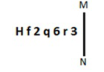
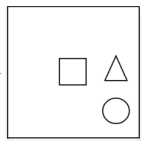
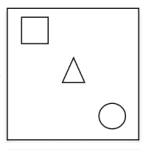
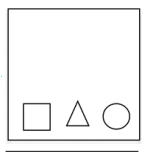
Select the correct mirror image of the given figure when the mirror is placed at MN as shown below.

  1. AOption (a)

  2. BOption (b)

  3. COption (c)

  4. DOption (d)

View answer & explanation

Correct answer

Answer: (a)A.

Why this answer is correct

The correct mirror image of the given figure is:

Hence, the correct answer is "Option 1".

Question 3

How many rectangles are there in the given figure?

  1. AOption (a)

    9

  2. BOption (b)

    6

  3. COption (c)

    4

  4. DOption (d)

    8

View answer & explanation

Correct answer

Answer: (a)A.

9

Why this answer is correct

The total number of rectangles in the figure is 9.

Hence, the correct answer is "9".

Question 4

The question contains pairs of words that are related to each other in a certain way. Three of the following four word pairs are alike as these have the same relationship and thus form a group. Which word pair is the one that DOES NOT belong to that group?

(The words must be considered as meaningful English words and must not be related to each other based on the number of letters/number of consonants/vowels in the word.)

  1. AOption (a)

    Chess – 1 player in a team

  2. BOption (b)

    Polo – 4 players in a team

  3. COption (c)

    Boxing – 1 player in a team

  4. DOption (d)

    Football – 10 players in a team

View answer & explanation

Correct answer

Answer: (d)D.

Football – 10 players in a team

Why this answer is correct

Logic: The logic is based on the number of players in a team.

The logic followed here is:

Chess1 player in a team
Polo4 players in a team
Boxing1 player in a team
Football10 players in a team

Chess, Boxing, Polo all have a different number of players in a team that does not match Football’s 10 players,

Whereas,

Football does not fit the pattern as it has 10 players in a team is incorrect (it should be 11).

Hence, the correct answer is "Option 4".

Question 5

Select the combination of letters that when sequentially placed in the blanks of the given series will logically complete the

series.

ME_ICM_DIC_GDI_MHD_C

  1. AOption (a)

    DEMAI

  2. BOption (b)

    DCFMI

  3. COption (c)

    DFMBI

  4. DOption (d)

    DFMCI

View answer & explanation

Correct answer

Answer: (d)D.

DFMCI

Why this answer is correct

The logic followed here is:

Given Sequence: ME_ICM_DIC_GDI_MHD_C

Now, putting the letters in the blank spaces given in the option one by one:

Option 1) DEMAI → MEDIC / MEDIC / MGDIA / MHDIC

Option 2) DCFMI → MEDIC / MCDIC / FGDIM / MHDIC

Option 3) DFMBI → MEDIC / MFDIC / MGDIB / MHDIC

Option 4) DFMCI → MEDIC / MFDIC / MGDIC / MHDIC

Here, 2nd letter is increased by 1 and 1st, 3rd, 4th and 5th letters are the same.

2nd letter: E + 1 = F; F + 1 = G; G + 1 = H;

Hence, the correct answer is "DFMCI".

Question 6

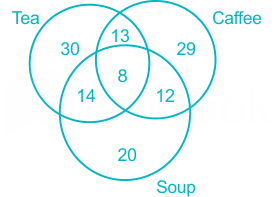
The following Venn diagram shows people’s liking for Tea, Coffee and Soup.

<br>

<br>

How many people like tea and coffee both?

  1. AOption (a)

    43

  2. BOption (b)

    29

  3. COption (c)

    21

  4. DOption (d)

    13

View answer & explanation

Correct answer

Answer: (c)C.

21

Why this answer is correct

According to the given information:

The shaded part represent people like tea and coffee both.

Thus, people like tea and coffee both = 13 + 8 = 21.

Hence, the correct answer is "21".

Question 7

Select the number from among the given options that can replace the question mark (?) in the following series.

45, 52, 63, 76, 93, ?

  1. AOption (a)

    112

  2. BOption (b)

    122

  3. COption (c)

    118

  4. DOption (d)

    116

View answer & explanation

Correct answer

Answer: (a)A.

112

Why this answer is correct

The logic followed here is:

Hence, the correct answer is "112".

Question 8

Select the correct mirror image of the given figure when the mirror is placed at MN.

  1. AOption (a)

  2. BOption (b)

  3. COption (c)

  4. DOption (d)

View answer & explanation

Correct answer

Answer: (b)B.

Why this answer is correct

The correct mirror image of the given figure is:

Hence, the correct answer is "Option 2".

Question 9

Three of the following number-pairs are alike in some manner and hence form a group. Which number-pair does not belong to that group?

(NOTE: Operations should be performed on the whole numbers, without breaking down the numbers into its constituent digits. E.g. 13 – Operations on 13 such as adding/subtracting/multiplying etc. to 13 can be performed. Breaking down 13 into 1 and 3 and then performing mathematical operations on 1 and 3 is not allowed.)

  1. AOption (a)

    17 – 306

  2. BOption (b)

    21 – 462

  3. COption (c)

    14 – 196

  4. DOption (d)

    12 – 156

View answer & explanation

Correct answer

Answer: (c)C.

14 – 196

Why this answer is correct

The logic followed here is: 1st number × (1st number + 1) = 2nd number.

1)  17 – 306 → 17 × (17 + 1) = 17 × 18 = 306

2)  21 – 462 → 21 × (21 + 1) = 21 × 22 = 462

3)  14 – 196 → 14 × (14 + 1) = 14 × 15 = 210 ≠ 196

4)  12 – 156 → 12 × (12 + 1) = 12 × 13 = 156

Hence, the correct answer is "14 - 196".

Question 10

The sequence of folding a piece of paper and the manner in which the folded paper has been cut is shown in the following figures. How would this paper look when unfolded?

  1. AOption (a)

  2. BOption (b)

  3. COption (c)

  4. DOption (d)

View answer & explanation

Correct answer

Answer: (a)A.

Why this answer is correct

The logic follows here is:

Hence, the correct answer is "Option 1".

Question 11

13 is related to 21 following certain logic. Following the same logic, 35 is related to 43. To which of the following numbers is 66 related, following the same logic? (NOTE: Operations should be performed on the whole numbers, without breaking down the numbers into its constituent digits. E.g., 13 – Operations on 13 such as adding/deleting/multiplying etc., to 13 can be performed. Breaking down 13 into 1 and 3 and then performing mathematical operations on 1 and 3 is not allowed.)

  1. AOption (a)

    71

  2. BOption (b)

    72

  3. COption (c)

    74

  4. DOption (d)

    73

View answer & explanation

Correct answer

Answer: (c)C.

74

Why this answer is correct

The logic followed here is:

Logic: (1st number + 8) = 2nd number.

Now,

For, 13 : 21

⇒ (13 + 8) = 21.

For, 35 : 43

⇒ (35 + 8) = 43.

Similarly, for 66 ∶ ?

⇒ (66 + 8) = 74.

Hence, the correct answer is "Option 3".

Question 12

Select the option that is related to the fifth letter-cluster in the same way as the second letter-cluster is related to the first letter-cluster and the fourth letter-cluster is related to the third letter-cluster.

MSD: NHW:: OAE: LZV:: NIP:?

  1. AOption (a)

    NSL

  2. BOption (b)

    MRK

  3. COption (c)

    MQK

  4. DOption (d)

    NRL

View answer & explanation

Correct answer

Answer: (b)B.

MRK

Why this answer is correct

The logic followed here is:

MSD: NHW

OAE: LZV

Similarly, NIP:?

Hence, the correct answer is "MRK".

Question 13

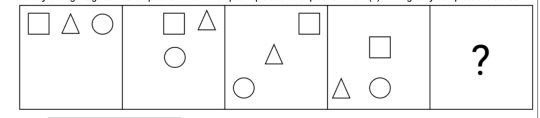
Which figure should replace the question mark (?) if the following series were to be continued?

  1. AOption (a)

  2. BOption (b)

  3. COption (c)

  4. DOption (d)

View answer & explanation

Correct answer

Answer: (c)C.

Why this answer is correct

The logic followed here is:

From figure 1 to 2, and figure 3 to 4:

Top 2 symbols are interchanging their position with each other.

Bottom-middle and right-middle letters are interchanging their position with each other.

Middle-left, middle and bottom-right letters are shifting their position in clockwise direction.

From figure 2 to 3, and figure 4 to 5:

Top 2 elements and middle-left elements are shifting their position in anticlockwise direction.

Remaining all 4 letters are shifting their position in clockwise direction.

Hence, the correct answer is "Option 3".

Question 14

In a certain code language,

'A & B' means ‘ A is the brother of B’,

'A x B' means ‘A is the father of B’,

'A ? B' means ‘A is the mother of B’ and

'A ! B' means ‘A is the wife of B’.

Which of the following means that W is the mother's mother of P?

  1. AOption (a)

    W ? R ! Y & O x P

  2. BOption (b)

    W ? R x Y ! O & P

  3. COption (c)

    W & R ! Y x O ? P

  4. DOption (d)

    W ! R x Y ? O & P

View answer & explanation

Correct answer

Answer: (d)D.

W ! R x Y ? O & P

Why this answer is correct

Family Chart:

Decoding the Symbols:

Symbol&x!?
MeaningBrotherFatherWifeMother


Option 1) W ? R ! Y & O x P → W is the mother of R, R is the wife of Y, Y is the brother of O and O is the father of P.

Here, W is the mother's father of P

Option 2) W ? R x Y ! O & P → W is the mother of R, R is the father of Y, Y is the wife of O and O is the brother of P.

Here, W is the P's brother's wife's paternal grandmother.

Option 3) W & R ! Y x O ? P → W is the brother of R, R is the wife of Y, Y is the father of O and O is the mother of P.

Here, W is the P's mother's father's brother-in-law.

Option 4) W ! R x Y ? O & P → W is the wife of R, R is the father of Y, Y is the mother of O and O is the brother of P.

So, W is the mother's mother of P.

Hence, the correct answer is "Mother's mother".

Question 15

Select the set in which the numbers are related in the same way as are the numbers of the given sets.

(6, 31) (10, 91)

(NOTE: Operations should be performed on the whole numbers, without breaking down the numbers into its constituent digits. E.g. 13 – Operations on 13 such as adding/deleting/multiplying etc. to 13 can be performed. Breaking down 13 into 1 and 3 and then performing mathematical operations on 1 and 3 is not allowed)

  1. AOption (a)

    (8, 57)

  2. BOption (b)

    (12, 146)

  3. COption (c)

    (7, 68)

  4. DOption (d)

    (9, 81)

View answer & explanation

Correct answer

Answer: (a)A.

(8, 57)

Why this answer is correct

The logic followed here is:

Logic: 1st number × (1st number - 1) + 1 = 2nd number.

Now,

For (6, 31):

⇒ 6 × (6 - 1) + 1

⇒ 6 × 5 + 1

⇒ 30 + 1 = 31.

For (10, 91):

⇒ 10 × (10 - 1) + 1

⇒ 10 × 9 + 1

⇒ 90 + 1 = 91.

Similarly, for (8, 57):

⇒ 8 × (8 - 1) + 1

⇒ 8 × 7 + 1

⇒ 56 + 1 = 57.

Hence, the correct answer is "Option 1".

Question 16

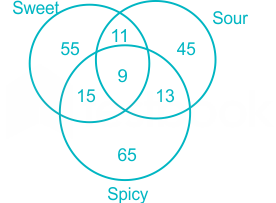
How many people like either only spicy or only sweet as per the given Venn diagram?

<br>
  1. AOption (a)

    110

  2. BOption (b)

    120

  3. COption (c)

    135

  4. DOption (d)

    144

View answer & explanation

Correct answer

Answer: (b)B.

120

Why this answer is correct

According to the given information:

Thus, people like either only spicy or only sweet = 65 + 55 = 120.

Hence, the correct answer is "120".

Question 17

The position(s) of how many letters will remain unchanged if all the letters in the word 'LAUNDER' are arranged in English alphabetical order?

  1. AOption (a)

    None

  2. BOption (b)

    One

  3. COption (c)

    Two

  4. DOption (d)

    Three

View answer & explanation

Correct answer

Answer: (a)A.

None

Why this answer is correct

Given word: 'LAUNDER'

After arranged in alphabetical order:

AlphabetsLAUNDER
Alphabetical orderADELNRU


Now,

there is no alphabet that will remain unchanged if each of the letters in the word 'LAUNDER' is arranged in English alphabetical order.

Hence, the correct answer is "Option 1".

Question 18

Select the option that is related to the fifth leter cluster in the same way as the second letter cluster is related to the first letter cluster and the fourth letter cluster is related to the third letter cluster.

EXPENSE : EPXEESN :: FASHION : HSAFNOI :: FORTUNE : ?

  1. AOption (a)

    TUNEFOR

  2. BOption (b)

    ROFNUTE

  3. COption (c)

    ENUTROF

  4. DOption (d)

    TROFENU

View answer & explanation

Correct answer

Answer: (d)D.

TROFENU

Why this answer is correct

The logic followed here is:

EXPENSE : EPXEESN

FASHION : HSAFNOI

Similarly, FORTUNE : ?

Hence, the correct answer is "TROFENU".

Question 19

What will come in place of the question mark (?) in the following equation, if ‘+’ and ‘–’ are interchanged and ‘×’ and ‘÷’ are interchanged?

152 ÷ 6 + 1617 × 7 – 77 = ?

  1. AOption (a)

    567

  2. BOption (b)

    578

  3. COption (c)

    758

  4. DOption (d)

    785

View answer & explanation

Correct answer

Answer: (c)C.

758

Why this answer is correct

BODMAS Table: 

After decoding signs:

SignsDecoded signs
+-
-+
×÷
÷×


Given equation: 152 ÷ 6 + 1617 × 7 – 77 = ?

After interchanging the signs then:

⇒ 152 × 6 - 1617 ÷ 7 + 77 = ?

⇒  152 × 6 - 231 + 77

⇒  912 - 231 + 77

⇒  989 - 231 = 758

Hence, the correct answer is "758".

Question 20

21 is related to 220 by certain logic. Following the same logic, 72 is related to 781. To which of the following is 27 related, following the same logic? (NOTE: Operations should be performed on the whole numbers, without breaking down the numbers into its constituent digits. E.g. 13 – Operations on 13 such as adding/deleting/multiplying etc., to 13 can be performed. Breaking down 13 into 1 and 3 and then performing mathematical operations on 1 and 3 is not allowed.)

  1. AOption (a)

    290

  2. BOption (b)

    286

  3. COption (c)

    340

  4. DOption (d)

    316

View answer & explanation

Correct answer

Answer: (b)B.

286

Why this answer is correct

The logic followed here is:

Logic: (1st number × 10) + (1st number - 11) = 2nd number.

Now,

For, 21 : 220

⇒ (21 × 10) + (21 - 11) = 210 + 10 = 220.

For, 72 : 781

⇒ (72 × 10) + (72 - 11) = 720 + 61 = 781.

Similarly, for 27 ∶ ?

⇒ (27 × 10) + (27 - 11) = 270 + 16 = 286.

Hence, the correct answer is "Option 2".

Question 21

Identify the figure given in the options which when put in place of the question mark (?) will logically complete the series.

  1. AOption (a)

  2. BOption (b)

  3. COption (c)

  4. DOption (d)

View answer & explanation

Correct answer

Answer: (c)C.

Why this answer is correct

The logic followed here is:

Shapes are shifting one step ahead in clockwise direction (Top to diagonally to bottom).

Hence, the correct answer is "Option 3".

Question 22

In a certain code language, 'cat dog monkey' is coded as '55 66 88'; 'camel cat donkey' is coded as '66 99 33' and 'dog goat tiger' is coded as '88 11 22'. How is 'monkey' coded in that language?

  1. AOption (a)

    11

  2. BOption (b)

    66

  3. COption (c)

    55

  4. DOption (d)

    88

View answer & explanation

Correct answer

Answer: (c)C.

55

Why this answer is correct

According to the given information:

Thus, 'monkey' is coded as '55'.

Hence, the correct answer is "55".

Question 23

Select the option that represents the letters that, when sequentially placed from left to right in the blanks below, will complete the letter series.

_ Y R W I Y _ X I _ R _ I Y R Z

  1. AOption (a)

    XRYX

  2. BOption (b)

    IRZY

  3. COption (c)

    IRYY

  4. DOption (d)

    IYYX

View answer & explanation

Correct answer

Answer: (c)C.

IRYY

Why this answer is correct

The logic followed here is:

Given Sequence: _ Y R W I Y _ X I _ R _ I Y R Z

Now, putting the letters in the blank spaces given in the option one by one:

Option 1) XRYX → X Y R W / I Y R X / I Y R X / I Y R Z

Option 2) IRZY → I Y R W / I Y R X / I Z R Y / I Y R Z

Option 3) IRYY → I Y R W / I Y R X / I Y R Y / I Y R Z

Here, 4th letter is increased by 1, and 1st three letters are the same.

W + 1 = X; X + 1 = Y; Y + 1 = Z

Option 4) IYYX → I Y R W / I Y Y X / I Y R X / I Y R Z

Hence, the correct answer is "IRYY".

Question 24

Six letters O, Z, F, T, R and M are written on different faces of a dice. Two positions of this dice are shown in the figures below. Find the letter on the face opposite to Z.

  1. AOption (a)

    T

  2. BOption (b)

    F

  3. COption (c)

    R

  4. DOption (d)

    M

View answer & explanation

Correct answer

Answer: (d)D.

M

Why this answer is correct

For find the opposite surface of 'Z', we need to compare the common surface in the given dices,

So, From Dice 1 and Dice 2,

From both dices, Z is common and on the same surface. So, all remaining surface will be opposite to each other.

Z→ M

O→ T

F → R

O is opposite to T.

F is opposite to R.

So, M will be opposite to Z.

Hence, the correct answer is "M".

Question 25

Which two numbers (not digits) should be interchanged to make the given equation correct?

6 × 3 + 8 ÷ 2 + 21 + 5 × 4 – 14 ÷ 7 = 53

  1. AOption (a)

    8 and 4

  2. BOption (b)

    3 and 5

  3. COption (c)

    2 and 4

  4. DOption (d)

    21 and 14

View answer & explanation

Correct answer

Answer: (d)D.

21 and 14

Why this answer is correct

Given equation: 6 × 3 + 8 ÷ 2 + 21 + 5 × 4 – 14 ÷ 7 = 53

Option 1) 8 and 4

Two numbers need to be interchanged then:

⇒ 6 × 3 + 4 ÷ 2 + 21 + 5 × 8 – 14 ÷ 7 = 53

⇒ 6 × 3 + 2 + 21 + 5 × 8 – 2 = 53

⇒ 18 + 2 + 21 + 40 – 2 = 53

⇒ 81 – 2 = 53

⇒ 79 ≠ 53

Option 2) 3 and 5

Two numbers need to be interchanged then:

⇒ 6 × 5 + 8 ÷ 2 + 21 + 3 × 4 – 14 ÷ 7 = 53

⇒ 6 × 5 + 4 + 21 + 3 × 4 – 2 = 53

⇒ 30 + 4 + 21 + 12 – 2 = 53

⇒ 67 – 2 = 53

⇒ 65 ≠ 53

Option 3) 2 and 4

Two numbers need to be interchanged then:

⇒ 6 × 3 + 8 ÷ 4 + 21 + 5 × 2 – 14 ÷ 7 = 53

⇒ 6 × 3 + 2 + 21 + 5 × 2 – 2 = 53

⇒ 2 + 2 + 21 + 10 – 2 = 53

⇒ 35 – 2 = 53

⇒ 33 ≠ 53

Option 4) 21 and 14

Two numbers need to be interchanged then:

⇒ 6 × 3 + 8 ÷ 2 + 14 + 5 × 4 – 21 ÷ 7 = 53

⇒ 6 × 3 + 4 + 14 + 5 × 4 – 3 = 53

⇒ 18 + 4 + 14 + 20 – 3 = 53

⇒ 56 – 3 = 53

⇒ 53 = 53

Hence, the correct answer is "21 and 14".

General Awareness (25 questions)

Question 26

Which famous experiment was done by Michael Faraday in 1831?

  1. AOption (a)

    Discovery of quantum magnetometers

  2. BOption (b)

    Discovery of law of elasticity

  3. COption (c)

    Discovery of electromagnetic induction

  4. DOption (d)

    Discovery of natural radioactivity

View answer & explanation

Correct answer

Answer: (c)C.

Discovery of electromagnetic induction

Why this answer is correct

The correct answer is Discovery of electromagnetic induction.

Key Points

  • Michael Faraday, an English scientist, conducted the famous experiment in 1831 which led to the discovery of electromagnetic induction.
  • Electromagnetic induction is the process of generating an electromotive force (EMF) through the relative motion between a conductor and a magnetic field.
  • This discovery paved the way for numerous technological advancements, including the development of electric generators and transformers.
  • Faraday's law of electromagnetic induction states that the induced EMF in any closed circuit is equal to the rate of change of the magnetic flux through the circuit.

Additional Information

  • Electromagnetic Induction
  • Electromagnetic induction refers to the generation of an electric current by changing the magnetic field. This phenomenon is fundamental to many types of electrical devices, including generators and transformers.
  • Faraday's Experiment: In 1831, Faraday discovered that when a magnet is moved in and out of a coil of wire, an electric current is induced in the wire. This is known as Faraday's law of induction.
  • Lenz's Law: This law states that the direction of the induced current is such that it opposes the change in magnetic flux that caused it. This is a consequence of the law of conservation of energy.
  • Applications: The principles of electromagnetic induction are applied in many devices, such as inductors, transformers, and many types of electrical generators.
  • Quantum Magnetometers
  • Quantum magnetometers are devices that measure magnetic fields using quantum effects. These are used in various applications, including medical imaging and geological surveys.
  • Law of Elasticity
  • The law of elasticity, also known as Hooke's Law, states that the deformation of a material is directly proportional to the force applied to it, provided the material's elastic limit is not exceeded.
  • Natural Radioactivity
  • Natural radioactivity refers to the spontaneous decay of unstable atomic nuclei, resulting in the emission of radiation. This phenomenon was discovered by Henri Becquerel in 1896.

Question 27

The book 'Poverty and Un-British Rule in India' was written by ______.

  1. AOption (a)

    MN Roy

  2. BOption (b)

    Dadabhai Naoroji

  3. COption (c)

    Bipin Chandra Pal

  4. DOption (d)

    Lala Lajpat Rai

View answer & explanation

Correct answer

Answer: (b)B.

Dadabhai Naoroji

Why this answer is correct

The correct answer is Dadabhai Naoroji.

Key Points

  • Dadabhai Naoroji, also known as the "Grand Old Man of India," was a prominent Indian political leader and social reformer.
  • He was one of the founding members of the Indian National Congress and a strong advocate for India's independence from British rule.
  • In his book "Poverty and Un-British Rule in India," Naoroji presented a detailed critique of the British economic policies in India, arguing that they were responsible for the widespread poverty in the country.
  • Naoroji's work laid the foundation for the Indian nationalist movement and inspired future leaders like Mahatma Gandhi and Jawaharlal Nehru.

Additional Information

  • Poverty and Un-British Rule in India
  • This book, published in 1901, is a seminal work by Dadabhai Naoroji in which he systematically examined the economic impacts of British rule on India.
  • Naoroji introduced the concept of "Drain Theory," which argued that a significant portion of India's wealth was being drained to Britain without adequate returns, leading to persistent poverty in India.
  • The book provided statistical evidence to support Naoroji's claims, making a compelling case for economic reforms and self-governance.
  • It was one of the first works to use economic analysis to critique colonial policies, influencing both Indian and British policymakers.
  • Dadabhai Naoroji
  • He was born on 4th September 1825 in Mumbai and was educated at Elphinstone College.
  • Naoroji was also the first Indian to be elected to the British Parliament, representing the Liberal Party for Finsbury Central from 1892 to 1895.
  • He played a key role in bringing the economic grievances of Indians to the attention of the British public and Parliament.
  • Besides his political career, Naoroji was an educator, co-founding the University of Mumbai, and a businessman involved in the cotton trade.
  • Indian National Congress (INC)
  • Founded in 1885, the INC was the first modern nationalist movement to emerge in the British Empire in Asia and Africa.
  • The Congress became the principal leader of the Indian independence movement, with its influence spreading from the Indian subcontinent to the rest of the world.
  • It played a significant role in the independence struggle, leading to India gaining independence in 1947.
  • Prominent leaders associated with the Congress include Mahatma Gandhi, Jawaharlal Nehru, and Subhas Chandra Bose.

Question 28

Who reconciled Dalton's atomic hypothesis with Gay-Lussac's results on the combination of volumes in 1811?

  1. AOption (a)

    Robert Boyle

  2. BOption (b)

    Amadeo Avogadro

  3. COption (c)

    Fred Hoyle

  4. DOption (d)

    Jacques Charles

View answer & explanation

Correct answer

Answer: (b)B.

Amadeo Avogadro

Why this answer is correct

The correct answer is Amadeo Avogadro.

Key Points

  • Amadeo Avogadro was an Italian scientist who is most famous for his hypothesis known as Avogadro's Law.
  • In 1811, Avogadro proposed that equal volumes of gases, at the same temperature and pressure, contain an equal number of molecules.
  • This hypothesis was crucial in reconciling Dalton's atomic hypothesis with Gay-Lussac's law of combining volumes.
  • Avogadro's ideas were not widely accepted until after his death, but they eventually became a fundamental principle in the field of chemistry.

Additional Information

  • Dalton's Atomic Hypothesis
  • Formulated by John Dalton in the early 19th century, this hypothesis proposed that all matter is composed of indivisible atoms.
  • Dalton suggested that atoms of a given element are identical in mass and properties, and that chemical reactions involve the rearrangement of these atoms.
  • Gay-Lussac's Law of Combining Volumes
  • Joseph Louis Gay-Lussac, a French chemist, discovered that gases combine in simple whole-number ratios by volume under the same conditions of temperature and pressure.
  • This empirical law was key to understanding the behavior of gases and provided a basis for Avogadro's hypothesis.
  • Avogadro's Law
  • Avogadro's Law states that equal volumes of different gases at the same temperature and pressure contain an equal number of molecules.
  • This law helped clarify the relationship between the mass and volume of gases, leading to the concept of the mole and Avogadro's number, 6.022 x 10^23 molecules per mole.
  • Importance of Avogadro's Work
  • Avogadro's contributions laid the groundwork for the development of the ideal gas law, which combines several earlier gas laws into a single equation.
  • His work also paved the way for the modern understanding of molecular theory and stoichiometry in chemical reactions.

Question 29

Who was the chief coordinator for the G20 summit hosted by India?

  1. AOption (a)

    S Jaishankar

  2. BOption (b)

    Vijay Gokhale

  3. COption (c)

    Vinay Kwatra

  4. DOption (d)

    Harsh Vardhan Shringla

View answer & explanation

Correct answer

Answer: (d)D.

Harsh Vardhan Shringla

Why this answer is correct

The correct answer is Harsh Vardhan Shringla.

Key Points

  • Harsh Vardhan Shringla is a retired Indian diplomat who served as the Foreign Secretary of India.
  • He was appointed as the Chief Coordinator for the G20 summit hosted by India in 2023.
  • His role involved coordinating the various activities and logistics associated with hosting the summit.
  • His extensive experience in diplomacy and international relations made him a suitable choice for this critical role.

Additional Information

  • G20 Summit
  • The G20 is an international forum for governments and central bank governors from 19 countries and the European Union.
  • Founded in 1999, it aims to discuss policy pertaining to the promotion of international financial stability.
  • The G20 includes the world's major economies and accounts for about 85% of global GDP and 75% of international trade.
  • The summit is held annually, and each member country takes turns to host the meeting.
  • Role of a Chief Coordinator
  • The Chief Coordinator is responsible for overseeing the planning, organization, and execution of the summit.
  • This role involves coordinating with various government departments, international organizations, and other stakeholders.
  • The Chief Coordinator ensures that all logistical and administrative arrangements are in place for the smooth conduct of the summit.
  • The role is crucial for the successful hosting of such a large and significant international event.
  • Harsh Vardhan Shringla's Career
  • Harsh Vardhan Shringla joined the Indian Foreign Service in 1984.
  • He has served in various capacities in Indian missions in Paris, Washington D.C., and Bangkok.
  • He has also served as the Ambassador of India to the United States, Thailand, and Bangladesh.
  • He was appointed as the Foreign Secretary of India in January 2020 and served until April 2022.

Question 30

The number of ministers, including the Chief Minister, in a state shall NOT be less than _______.

  1. AOption (a)

    11

  2. BOption (b)

    10

  3. COption (c)

    13

  4. DOption (d)

    12

View answer & explanation

Correct answer

Answer: (d)D.

12

Why this answer is correct

The correct answer is 12.

Key Points

  • The number of ministers, including the Chief Minister, in a state shall not be less than 12.
  • This provision is part of the 91st Amendment Act of 2003 to the Constitution of India.
  • The Amendment was introduced to avoid jumbo ministries and ensure efficient governance.
  • The maximum number of ministers in a state, including the Chief Minister, shall not exceed 15% of the total number of members of the Legislative Assembly of that state.

Additional Information

  • 91st Amendment Act of 2003
  • The 91st Amendment Act was enacted to curb defections and to limit the size of the Council of Ministers to prevent the formation of oversized cabinets.
  • It is one of the key measures to ensure stability in the legislative assembly by preventing political horse-trading and defection.
  • The Amendment mandates that a person who is disqualified under the Tenth Schedule (anti-defection law) from being a member of the legislature shall also be disqualified from being appointed as a minister or holding any remunerative political post.
  • This amendment also ensures that the total number of ministers, including the Prime Minister in the Central Government, shall not exceed 15% of the total number of members of the Parliament in the Lok Sabha.
  • Anti-Defection Law (Tenth Schedule)
  • The anti-defection law was introduced by the 52nd Amendment Act of 1985 and later strengthened by the 91st Amendment Act of 2003.
  • The main objective of the law is to combat the evil of political defections by elected members.
  • According to this law, if a member of a house belonging to a political party voluntarily gives up the membership of his party or votes (or abstains from voting) contrary to the directions issued by his party, he can be disqualified from being a member of the house.
  • The decision on disqualification questions on the ground of defection is referred to the Chairman or the Speaker of such House and their decision is final.

Question 31

Who among the following founded the Pala dynasty in 8th Century CE?

  1. AOption (a)

    Dharmapala

  2. BOption (b)

    Ramapala

  3. COption (c)

    Devapala

  4. DOption (d)

    Gopala

View answer & explanation

Correct answer

Answer: (d)D.

Gopala

Why this answer is correct

The correct answer is Gopala.

Key Points

  • Gopala was the founder of the Pala dynasty in the 8th century CE.
  • He was elected by a group of regional chieftains to bring order in a period of anarchy in Bengal.
  • Gopala established the Pala dynasty, which ruled over the Bengal and Bihar regions for about four centuries.
  • His reign marked the beginning of a period of stability and expansion in the region.

Additional Information

  • Pala Dynasty
  • The Pala Dynasty was a major dynasty in the history of the Indian subcontinent, primarily ruling over the Bengal and Bihar regions.
  • The term 'Pala' means 'protector' and was used as a suffix to the names of all Pala monarchs.
  • The Pala rulers were patrons of Mahayana Buddhism and played a significant role in its spread to Tibet, Bhutan, and other parts of Southeast Asia.
  • The dynasty is known for its contributions to art, architecture, and education, including the establishment of the Vikramashila and Nalanda universities.
  • Dharmapala
  • Dharmapala was the son of Gopala and the second ruler of the Pala dynasty.
  • He expanded the empire significantly and was known for his support of Buddhism and educational institutions.
  • His reign is considered a golden period for the Pala dynasty.
  • Devapala
  • Devapala was another significant ruler of the Pala dynasty and is believed to be the successor of Dharmapala.
  • He continued to expand the empire and maintained its dominance over the northern Indian subcontinent.
  • Devapala is also known for his patronage of Buddhism and his support for the Nalanda and Vikramashila universities.
  • Ramapala
  • Ramapala was one of the later rulers of the Pala dynasty and is often credited with reviving the dynasty's fortunes in the 12th century.
  • He is known for his administrative reforms and efforts to consolidate the empire.
  • His reign is detailed in the historical text "Ramacharitam," written by Sandhyakar Nandi.

Question 32

__________ Directive principles of State Policy were added to the Indian Constitution by the 42nd Constitutional Amendment Act of 1976.

  1. AOption (a)

    Two

  2. BOption (b)

    Three

  3. COption (c)

    Five

  4. DOption (d)

    Four

View answer & explanation

Correct answer

Answer: (d)D.

Four

Why this answer is correct

The correct answer is Four

Key Points

Four Directive Principles of State Policy were added to the Indian Constitution by the 42nd Constitutional Amendment Act of 1976.

  • Article 39A – Equal justice and free legal aid.
  • Article 43A – Participation of workers in the management of industries.
  • Article 48A – Protection and improvement of the environment and safeguarding of forests and wildlife.
  • Article 39(f) – Protection of children and youth from exploitation and moral and material abandonment (added to modify Article 39).

Additional Information

  • Directive Principles of State Policy (DPSP)
  • The Directive Principles of State Policy are guidelines or principles given to the federal institutes governing the state of India, to be kept in consideration while framing laws and policies.
  • They are enumerated in Part IV of the Constitution from Articles 36 to 51.
  • The principles aim to create social and economic conditions under which the citizens can lead a good life.
  • They are non-justiciable in nature, meaning they are not enforceable by any court, but the principles laid down are considered fundamental in the governance of the country.
  • 42nd Constitutional Amendment Act, 1976
  • Also known as the "Mini-Constitution", this amendment brought about significant changes to the Indian Constitution.
  • It attempted to reduce the powers of the Supreme Court and High Courts and gave Parliament unlimited power to amend the Constitution, among other changes.
  • It also added ten Fundamental Duties to the Constitution.
  • Many of its provisions were later repealed by the 44th Amendment Act of 1978.

Question 33

Who published the logistic equation model of population growth in 1838?

  1. AOption (a)

    Howard Thomas Odum

  2. BOption (b)

    Alfred Russel Wallace

  3. COption (c)

    Pierre François Verhulst

  4. DOption (d)

    George Evelyn Hutchinson

View answer & explanation

Correct answer

Answer: (c)C.

Pierre François Verhulst

Why this answer is correct

The correct answer is Pierre François Verhulst.

Key Points

  • Pierre François Verhulst was a Belgian mathematician and sociologist.
  • He is best known for formulating the logistic growth model in 1838.
  • The logistic equation is a model of population growth that describes how a population grows rapidly at first and then levels off as it approaches a maximum size, known as the carrying capacity.
  • Verhulst’s model was one of the first to incorporate the concept of environmental limits on population growth, making it a foundational concept in the field of ecology.

Additional Information

  • Logistic Growth Model
  • The logistic growth model is represented by the equation: dN/dt = rN(1 - N/K)
  • In this equation, N represents the population size, r is the intrinsic growth rate, and K is the carrying capacity of the environment.
  • The term (1 - N/K) represents the effect of environmental resistance as the population size approaches the carrying capacity.
  • The model predicts that populations will grow rapidly when they are small and slow down as they approach the carrying capacity, eventually stabilizing at the carrying capacity.
  • Carrying Capacity (K)
  • The carrying capacity is the maximum population size that an environment can sustain indefinitely.
  • It is determined by the availability of resources such as food, water, and space.
  • When a population reaches its carrying capacity, the birth rate equals the death rate, and the population size remains stable.
  • Intrinsic Growth Rate (r)
  • The intrinsic growth rate is the rate at which a population increases in size under ideal conditions, with no environmental limitations.
  • It is influenced by factors such as birth rate, death rate, and the age at which individuals begin to reproduce.
  • History and Impact
  • The logistic growth model was first proposed by Pierre François Verhulst in 1838 and has since become a fundamental concept in population ecology.
  • It has been applied to a wide range of biological populations, including humans, animals, and plants.
  • The model has also been used in other fields, such as economics and sociology, to describe the growth of various systems.

Question 34

The ICAR – Sugarcane Breeding Institute is located at:

  1. AOption (a)

    Vellore

  2. BOption (b)

    Coimbatore

  3. COption (c)

    Tirunelveli

  4. DOption (d)

    Cuddalore

View answer & explanation

Correct answer

Answer: (b)B.

Coimbatore

Why this answer is correct

The correct answer is Coimbatore.

Key Points

  • The ICAR-Sugarcane Breeding Institute is located in Coimbatore, Tamil Nadu, India.
  • It was established in the year 1912 by the British government.
  • The institute is dedicated to the research and development of sugarcane varieties and related agricultural practices.
  • It operates under the umbrella of the Indian Council of Agricultural Research (ICAR).

Additional Information

  • Indian Council of Agricultural Research (ICAR)
  • ICAR is an autonomous organization under the Department of Agricultural Research and Education (DARE), Ministry of Agriculture and Farmers Welfare, Government of India.
  • It was established on 16 July 1929 and is headquartered in New Delhi.
  • ICAR is the apex body for coordinating, guiding, and managing research and education in agriculture, including horticulture, fisheries, and animal sciences in India.
  • It has a vast network of institutes, universities, and research centers across the country.
  • Sugarcane Breeding
  • Sugarcane breeding involves the development of new sugarcane varieties with improved traits such as higher yield, disease resistance, and better adaptability to different climatic conditions.
  • It is a critical aspect of agricultural research as sugarcane is a significant crop for sugar production and bioenergy.
  • The breeding process includes hybridization, selection, and evaluation of new varieties under different environmental conditions.
  • Advanced techniques like molecular breeding and genetic engineering are also being employed to accelerate the development of superior sugarcane varieties.
  • Agricultural Research in India
  • Agricultural research in India aims to enhance crop productivity, ensure food security, and improve the livelihoods of farmers.
  • Research areas include crop improvement, soil health, pest and disease management, water use efficiency, and sustainable farming practices.
  • Institutions like ICAR, State Agricultural Universities (SAUs), and Krishi Vigyan Kendras (KVKs) play a vital role in conducting and disseminating agricultural research.
  • Collaborative efforts with international organizations and the private sector also contribute to the advancement of agricultural research in the country.

Question 35

Who assumed charge as the new Vice Chief of the Indian Navy on 31 July 2021?

  1. AOption (a)

    Karambir Singh

  2. BOption (b)

    Ravneet Singh

  3. COption (c)

    SN Ghormade

  4. DOption (d)

    Dinesh K Tripathi

View answer & explanation

Correct answer

Answer: (c)C.

SN Ghormade

Why this answer is correct

The correct answer is SN Ghormade.

Key Points

  • Vice Admiral SN Ghormade assumed charge as the Vice Chief of the Indian Navy on 31 July 2021.
  • He succeeded Vice Admiral G Ashok Kumar in this role.
  • Prior to this appointment, SN Ghormade held the position of Deputy Chief of Naval Staff at Naval Headquarters.
  • Vice Admiral SN Ghormade has a distinguished career in the Indian Navy with several key appointments to his credit.

Additional Information

  • Vice Admiral Karambir Singh
  • Karambir Singh served as the 24th Chief of the Naval Staff (CNS) of the Indian Navy from May 31, 2019, to November 30, 2021.
  • He succeeded Admiral Sunil Lanba and was the first helicopter pilot to become the CNS.
  • Karambir Singh has had a distinguished career with numerous operational and staff appointments.
  • Vice Admiral Ravneet Singh
  • Ravneet Singh is a senior officer in the Indian Navy who has held various significant positions, including the Flag Officer Commanding-in-Chief (FOC-in-C) of the Eastern Naval Command.
  • He has a rich operational experience and has commanded several frontline ships.
  • Vice Admiral Dinesh K Tripathi
  • Dinesh K Tripathi is a senior officer of the Indian Navy who has held several key appointments, including the Director General of Naval Operations.
  • He has extensive experience in both operational and administrative roles within the Navy.

Question 36

Which Act was passed by the British Parliament in the year 1773 AD to regulate the activities of the East India Company?

  1. AOption (a)

    Pitt's India Act

  2. BOption (b)

    Indian Slavery Act

  3. COption (c)

    Age of Consent Act

  4. DOption (d)

    Regulating Act

View answer & explanation

Correct answer

Answer: (d)D.

Regulating Act

Why this answer is correct

The correct answer is Regulating Act.

Key Points

  • The Regulating Act of 1773 was the first step taken by the British Parliament to control and regulate the affairs of the East India Company in India.
  • It marked the beginning of British parliamentary control over the East India Company and its administration in India.
  • The Act provided for the establishment of a Supreme Court at Calcutta (now Kolkata) to administer justice.
  • The Governor of Bengal was elevated to the position of Governor-General of Bengal, with supervisory authority over the presidencies of Madras and Bombay.

Additional Information

  • Pitt's India Act
  • Passed in 1784, this Act was intended to address the deficiencies of the Regulating Act of 1773.
  • It established a dual system of control by setting up a Board of Control to oversee the political affairs while the Court of Directors retained control over commercial affairs.
  • This Act allowed the British government to have greater control over the administration of India.
  • Indian Slavery Act
  • Passed in 1843, this Act aimed to abolish slavery in British India.
  • It made the sale, purchase, or transfer of slaves illegal and provided for the protection of the rights of those who had been enslaved.
  • Age of Consent Act
  • Enacted in 1891, this Act raised the age of consent for girls from 10 to 12 years in all jurisdictions, whether Hindu or Muslim.
  • It was aimed at addressing the issue of child marriage and the associated health risks for young girls.

Question 37

Match the following items.

List IList II
i. Kasturba Gandhi Balika Vidyalaya Schemea. 1994
ii. Mid-Day Meal Schemeb. 2004
iii. The National Accreditation Assessment Councilc. 1945
iv. All India Council for Technical Educationd. 1995
  1. AOption (a)

     i (b), ii (d), iii (a), iv (c)

  2. BOption (b)

    i (d), ii (a), iii (b), iv (c)

  3. COption (c)

    i (b), ii (c), iii (d), iv (a)

  4. DOption (d)

    i (c), ii (d), iii (b), iv (a)

View answer & explanation

Correct answer

Answer: (a)A.

 i (b), ii (d), iii (a), iv (c)

Why this answer is correct

The correct answer is option 1: i (b), ii (d), iii (a), iv (c).

Key Points

  • Kasturba Gandhi Balika Vidyalaya Scheme was launched in 2004 to provide educational facilities for girls belonging to SC, ST, OBC, and minority communities.
  • The Mid-Day Meal Scheme was introduced in 1995 to improve the nutritional status of school-age children nationwide.
  • The National Accreditation Assessment Council (NAAC) was established in 1994 to assess and accredit higher education institutions in India.
  • The All India Council for Technical Education (AICTE) was established in 1945 as a national-level council for technical education under the Department of Higher Education.

Additional Information

  • Kasturba Gandhi Balika Vidyalaya Scheme (KGBV)
  • KGBV was launched by the Government of India in August 2004.
  • The scheme provides residential schools at the upper primary level for girls from marginalized communities.
  • It aims to ensure access and quality education for girls, especially in rural areas.
  • Mid-Day Meal Scheme
  • The scheme was launched on 15th August 1995.
  • It aims to boost universalization of primary education by increasing enrollment, retention, and attendance while simultaneously improving nutritional levels among children.
  • Under this scheme, cooked meals are provided to children studying in classes I to VIII in government and government-aided schools.
  • The National Accreditation Assessment Council (NAAC)
  • NAAC was established in 1994 as an autonomous body under the University Grants Commission (UGC).
  • It aims to evaluate and accredit higher education institutions to ensure quality education in India.
  • Accreditation by NAAC helps institutions to understand their strengths, weaknesses, and opportunities through an informed review process.
  • All India Council for Technical Education (AICTE)
  • AICTE was established in 1945.
  • It is responsible for proper planning and coordinated development of the technical education and management education system in India.
  • AICTE accredits postgraduate and graduate programs under specific categories at Indian institutions.

Question 38

Where was the first meeting of the Employment Working Group of G20 conducted?

  1. AOption (a)

    Jaipur

  2. BOption (b)

    Jodhpur

  3. COption (c)

    Lucknow

  4. DOption (d)

    Kolkata

View answer & explanation

Correct answer

Answer: (b)B.

Jodhpur

Why this answer is correct

The correct answer is Jodhpur.

Key Points

  • The first meeting of the Employment Working Group of G20 was conducted in Jodhpur.
  • The G20 Employment Working Group addresses global employment and labor market challenges.
  • The meeting aims to foster international cooperation and policy coordination on employment issues.
  • It focuses on creating inclusive labor markets and promoting decent work for all.

Additional Information

  • G20 (Group of Twenty)
  • The G20 is an international forum for governments and central bank governors from 19 countries and the European Union (EU).
  • It was established in 1999 in response to the financial crises of the late 1990s.
  • The G20 aims to discuss policy issues that are critical to the global economy, including international financial stability, climate change mitigation, and sustainable development.
  • The member countries include Argentina, Australia, Brazil, Canada, China, France, Germany, India, Indonesia, Italy, Japan, Mexico, Russia, Saudi Arabia, South Africa, South Korea, Turkey, the United Kingdom, the United States, and the European Union.
  • Employment Working Group (EWG)
  • The EWG is one of the working groups within the G20 framework.
  • It focuses on employment and labor market issues and aims to promote inclusive growth and decent work.
  • The EWG discusses various topics including job creation, workforce development, labor market policies, and social protection.
  • It works towards achieving the G20's goal of stronger, sustainable, and balanced growth by addressing employment challenges.

Question 39

As per the Census of India 2011, the increase in literacy rates for males and females, respectively, as compared to 2001 Census was:

  1. AOption (a)

    3.88% and 13.79%

  2. BOption (b)

    5.88% and 12.79%

  3. COption (c)

    6.88% and 11.79%

  4. DOption (d)

    4.88% and 10.79%

View answer & explanation

Correct answer

Answer: (c)C.

6.88% and 11.79%

Why this answer is correct

The correct answer is 6.88% and 11.79%.

Key Points

  • As per Census 2011, literacy rate in India showed an improvement over the decade.
  • The male literacy rate increased by 6.88% as compared to the 2001 Census.
  • The female literacy rate increased by 11.79% as compared to the 2001 Census.
  • This significant rise in literacy rates reflects the impact of government initiatives and programs aimed at promoting education.

Additional Information

  • Census of India
  • The Census of India is conducted every 10 years by the Office of the Registrar General and Census Commissioner, India under the Ministry of Home Affairs.
  • The Census provides comprehensive data on the population of India, including demographics, education, employment, housing, and other socio-economic parameters.
  • The 2011 Census was the 15th National Census of the country since 1872.
  • The next Census is scheduled to be conducted in 2021.
  • Literacy Rate
  • Literacy rate is defined as the percentage of people who are able to read and write with understanding in any language.
  • The literacy rate is a key indicator of educational attainment in a region.
  • In India, the literacy rate is calculated for the population aged 7 years and above.
  • Government Initiatives
  • Several government initiatives have been launched to promote education and improve literacy rates in India, such as Sarva Shiksha Abhiyan, Beti Bachao Beti Padhao, and Mid-Day Meal Scheme.
  • These programs aim to make education accessible and affordable for all sections of society, especially the underprivileged and marginalized.

Question 40

What is the salinity of the Dead Sea (per litre of water)?

  1. AOption (a)

    440 grams

  2. BOption (b)

    240 grams

  3. COption (c)

    340 grams

  4. DOption (d)

    390 grams

View answer & explanation

Correct answer

Answer: (c)C.

340 grams

Why this answer is correct

The correct answer is 340 grams.

Key Points

  • The Dead Sea is known for its extreme salinity, which makes it one of the saltiest bodies of water in the world.
  • The salinity of the Dead Sea is approximately 340 grams of salt per litre of water.
  • This high salt concentration is due to the high evaporation rates and the lack of outlets for the water to flow out.
  • Due to its high salinity, the Dead Sea is unable to support marine life, which is why it is called the "Dead" Sea.

Additional Information

  • Salinity: Salinity refers to the concentration of dissolved salts in water. It is usually measured in grams of salt per litre of water or parts per thousand (ppt).
  • Evaporation: Evaporation is the process by which water is transformed from liquid to gas. High evaporation rates in the Dead Sea region lead to an increase in the concentration of salts.
  • Dead Sea: The Dead Sea is a salt lake bordered by Jordan to the east and Israel and Palestine to the west. Its surface and shores are 430.5 meters below sea level, making it the Earth's lowest elevation on land.
  • Marine Life: Due to its high salinity, the Dead Sea cannot support fish and other aquatic life. Only some types of bacteria and microbial fungi can survive in such a salty environment.

Question 41

Papanasam Ramayya Sivan was an Indian composer of which music style?

  1. AOption (a)

    Qawwali

  2. BOption (b)

    Carnatic music

  3. COption (c)

    Bhajan

  4. DOption (d)

    Folk music

View answer & explanation

Correct answer

Answer: (b)B.

Carnatic music

Why this answer is correct

The correct answer is Carnatic music.

Key Points

  • Carnatic music is a system of music commonly associated with the southern part of the Indian subcontinent, specifically Tamil Nadu, Karnataka, Andhra Pradesh, and Kerala.
  • Papanasam Ramayya Sivan was a renowned composer and exponent of Carnatic music.
  • Carnatic music is characterized by a rich tradition of improvisation and composition, and it includes various elements such as ragas (melodic frameworks) and talas (rhythmic cycles).
  • Papanasam Sivan's compositions in Carnatic music are widely regarded and performed in concerts, and he has contributed significantly to the repertoire of this classical music tradition.

Additional Information

  • Qawwali
  • Qawwali is a form of Sufi Islamic devotional music originating from South Asia.
  • It is characterized by passionate and powerful singing, often with a harmonium and tabla accompaniment.
  • Qawwali songs typically praise Allah, the Prophet Muhammad, and Sufi saints, and are performed at Sufi shrines and dargahs.
  • Bhajan
  • A Bhajan is a devotional song in Hinduism, expressing love for a deity or a spiritual theme.
  • Bhajans are usually sung in a call-and-response format and can be accompanied by musical instruments like harmonium, tabla, and dholak.
  • They are an important part of Hindu worship and are sung in temples, homes, and during religious gatherings.
  • Folk music
  • Folk music encompasses the traditional music of a particular community or region.
  • It often reflects the life, culture, and traditions of the people, and is passed down orally through generations.
  • Folk music can vary widely across different regions and communities, featuring unique instruments, styles, and themes.

Question 42

Which of the following is the first Indian woman Grandmaster in Chess?

  1. AOption (a)

    Harika Dronavalli

  2. BOption (b)

    S Vijayalakshmi

  3. COption (c)

    Tania Sachdev

  4. DOption (d)

    R Vaishali

View answer & explanation

Correct answer

Answer: (b)B.

S Vijayalakshmi

Why this answer is correct

The correct answer is S Vijayalakshmi.

Key Points

  • S Vijayalakshmi became India's first woman Grandmaster in Chess.
  • She achieved this title in the year 2001.
  • Vijayalakshmi has been a pioneering figure in Indian women's chess and has set a benchmark for future generations.
  • She has also won several national and international titles, contributing significantly to Indian chess.

Additional Information

  • Grandmaster (GM)
  • It is the highest title awarded by FIDE, the international chess federation.
  • Apart from World Champion, Grandmaster is the highest title a chess player can attain.
  • Once achieved, the title is held for life, though exceptionally it can be revoked for cheating.
  • FIDE
  • FIDE stands for Fédération Internationale des Échecs or International Chess Federation.
  • It is the organization that governs international chess competition.
  • FIDE was founded in Paris, France, on July 20, 1924.
  • International Titles in Chess
  • FIDE awards several titles to chess players: Grandmaster (GM), International Master (IM), FIDE Master (FM), and Candidate Master (CM).
  • For women, there are equivalent titles: Woman Grandmaster (WGM), Woman International Master (WIM), Woman FIDE Master (WFM), and Woman Candidate Master (WCM).
  • Key Women Chess Players in India
  • Koneru Humpy: She is the second Indian woman to achieve the GM title and has been one of the top female players globally.
  • Harika Dronavalli: Another prominent Indian woman Grandmaster who has won multiple medals in international competitions.
  • Tania Sachdev: Known for her achievements in chess as well as her role as a chess commentator and presenter.
  • R Vaishali: A young and promising talent in Indian chess, she is also the sister of GM Praggnanandhaa.

Question 43

Which of the following is NOT a major climate control of a place?

  1. AOption (a)

    Altitude

  2. BOption (b)

    Latitude

  3. COption (c)

    Interior of the earth

  4. DOption (d)

    Ocean currents

View answer & explanation

Correct answer

Answer: (c)C.

Interior of the earth

Why this answer is correct

The correct answer is Interior of the earth.

Key Points

  • The interior of the earth is not considered a major climate control factor because it does not have a direct influence on the surface climate conditions.
  • Major climate controls are factors that have a significant impact on the climate of a place.
  • These factors include altitude, latitude, ocean currents, and others which directly affect the temperature, humidity, and weather patterns.
  • The interior of the earth, while influencing geothermal energy and volcanic activity, does not play a significant role in determining the surface climate.

Additional Information

  • Altitude
  • Altitude refers to the height of a place above sea level.
  • Higher altitudes have cooler temperatures due to the decrease in atmospheric pressure and temperature.
  • This is because the air gets thinner and cooler as altitude increases.
  • Latitude
  • Latitude measures the distance of a place from the equator, either to the north or south.
  • It is a major factor in determining a place’s climate because it affects the amount of solar energy received.
  • Places near the equator receive more direct sunlight and are generally warmer, while places further from the equator receive less direct sunlight and are cooler.
  • Ocean Currents
  • Ocean currents are large-scale movements of water within the world’s oceans.
  • They play a crucial role in regulating temperatures of coastal regions.
  • Warm ocean currents can raise the temperature of nearby coastal areas, while cold currents can lower it.

Question 44

Who among the following is known as 'Captain Cool' in Indian Cricket?

  1. AOption (a)

    Virat Kohli

  2. BOption (b)

    Mahendra Singh Dhoni

  3. COption (c)

    Kapil Dev

  4. DOption (d)

    Sachin Tendulkar

View answer & explanation

Correct answer

Answer: (b)B.

Mahendra Singh Dhoni

Why this answer is correct

The correct answer is Mahendra Singh Dhoni.

Key Points

  • Mahendra Singh Dhoni is a former Indian cricketer and captain of the Indian national team, known for his calm and composed demeanor on the field, earning him the nickname "Captain Cool".
  • He led India to numerous victories, including the 2007 ICC World Twenty20, the 2010 and 2016 Asia Cups, the 2011 ICC Cricket World Cup, and the 2013 ICC Champions Trophy.
  • Dhoni holds various records, such as the most wins by an Indian captain in Tests and ODIs, and the most successful wicket-keeper in Indian cricket history.
  • Under his captaincy, India achieved the number one ranking in Test cricket for the first time in 2009.

Additional Information

  • Virat Kohli:
  • Virat Kohli is an Indian cricketer and former captain of the Indian national team.
  • He is widely regarded as one of the best batsmen in the world and has numerous records to his name.
  • Kohli has been awarded several prestigious awards, including the ICC Cricketer of the Year and the Rajiv Gandhi Khel Ratna award.
  • Kapil Dev:
  • Kapil Dev is a former Indian cricketer and captain who led India to its first World Cup victory in 1983.
  • He was an all-rounder, known for his fast bowling and aggressive batting.
  • Kapil Dev was inducted into the ICC Cricket Hall of Fame in 2010.
  • Sachin Tendulkar:
  • Sachin Tendulkar is a former Indian cricketer widely regarded as one of the greatest batsmen in the history of cricket.
  • He holds numerous records, including the most runs in both Test and ODI cricket, and the most centuries in international cricket.
  • Tendulkar was awarded the Bharat Ratna, India’s highest civilian award, in 2014.

Question 45

In which of the following states is the Chu-Faat dance performed?

  1. AOption (a)

    Haryana

  2. BOption (b)

    Uttarakhand

  3. COption (c)

    West Bengal

  4. DOption (d)

    Sikkim

View answer & explanation

Correct answer

Answer: (d)D.

Sikkim

Why this answer is correct

The correct answer is Sikkim.

Key Points

  • The Chu-Faat dance is a traditional dance form of the Lepcha community in Sikkim.
  • This dance is performed in honor of Mount Khangchendzonga, the guardian deity of the Sikkim people.
  • The dance involves the use of bamboo sticks and follows a rhythmic pattern.
  • It is usually performed during festivals and special occasions in Sikkim.

Additional Information

  • Sikkim
  • Sikkim is a state in northeastern India. It borders Tibet in the north and northeast, Bhutan in the east, Nepal in the west, and West Bengal in the south.
  • Sikkim is notable for its biodiversity, including alpine and subtropical climates, as well as being a host to Kangchenjunga, the highest peak in India and the third-highest on Earth.
  • The state has a rich cultural heritage with diverse communities such as the Lepchas, Bhutias, and Nepalis.
  • Sikkim is the least populous and second smallest among the Indian states.
  • Chu-Faat Dance
  • The dance is performed by the Lepcha community, who are considered to be the indigenous people of Sikkim.
  • Chu-Faat is a ritualistic dance performed to honor and seek blessings from Mount Khangchendzonga.
  • The dance is characterized by the use of bamboo sticks, which are symbolic of the mountains and the natural environment that the Lepchas revere.
  • The dance is accompanied by traditional songs and music, which narrate the significance of the mountains and their role in the lives of the people.

Explanation: 1. The correct answer is provided in a highlighted manner. 2. Key points about the correct option are listed in bullet points. 3. Additional information is provided in a detailed manner, covering important aspects of the related topic.

Question 46

Digestion of food is an important function of the animal body. In animals like lions, cows, humans, etc., the process involves use of various organs starting from the mouth and ending with the anus. The longest part of this canal is known as the

________.

  1. AOption (a)

    stomach

  2. BOption (b)

    large intestine

  3. COption (c)

    oesophagus

  4. DOption (d)

    small intestine

View answer & explanation

Correct answer

Answer: (d)D.

small intestine

Why this answer is correct

The correct answer is small intestine.

Key Points

  • The small intestine is the longest part of the digestive system in most animals, including humans, lions, and cows.
  • It plays a crucial role in the digestion and absorption of nutrients from food.
  • The small intestine is divided into three parts: the duodenum, jejunum, and ileum.
  • It measures approximately 6 meters (20 feet) in humans, making it significantly longer than the large intestine.

Additional Information

  • Stomach:
  • The stomach is a muscular organ located between the esophagus and the small intestine.
  • It is responsible for the mechanical and chemical breakdown of food.
  • The stomach secretes gastric juices, including hydrochloric acid and digestive enzymes, which help in digestion.
  • Large Intestine:
  • The large intestine, also known as the colon, is the final part of the digestive system.
  • Its primary function is to absorb water and electrolytes from indigestible food residues and form solid waste (feces).
  • The large intestine is shorter than the small intestine, measuring about 1.5 meters (5 feet) in length.
  • Oesophagus:
  • The oesophagus, also known as the food pipe, is a muscular tube that connects the throat (pharynx) to the stomach.
  • Its main function is to transport swallowed food and liquids from the mouth to the stomach through peristaltic movements.
  • The oesophagus does not play a role in the digestion or absorption of nutrients.
  • Small Intestine:
  • The small intestine is the longest part of the digestive system and is responsible for the majority of nutrient absorption.
  • It is divided into three sections: the duodenum, jejunum, and ileum, each with specific functions in digestion and absorption.
  • The inner surface of the small intestine is lined with villi and microvilli, which increase the surface area for absorption.
  • Enzymes from the pancreas and bile from the liver aid in the digestive process within the small intestine.

Question 47

The famous santoor player Pandit Shivkumar Sharma received the ___________________ in the year 1986.

  1. AOption (a)

    Maharashtra Gaurav Puraskar

  2. BOption (b)

    Sangeet Natak Akademi Award

  3. COption (c)

    Sanskriti Award

  4. DOption (d)

    Kalidas Samman

View answer & explanation

Correct answer

Answer: (b)B.

Sangeet Natak Akademi Award

Why this answer is correct

The correct answer is Sangeet Natak Akademi Award.

Key Points

  • The Sangeet Natak Akademi Award is the highest Indian recognition given to practicing artists.
  • Pandit Shivkumar Sharma, an eminent santoor player, received this prestigious award in 1986.
  • This award is presented by the Sangeet Natak Akademi, India’s National Academy of Music, Dance & Drama.
  • The award includes a cash prize, a citation, and a memento, recognizing outstanding contributions to the performing arts.

Additional Information

  • Sangeet Natak Akademi
  • Established in 1952, the Sangeet Natak Akademi is the national level academy for performing arts set up by the Government of India.
  • It aims to promote and preserve the vast and diverse cultural heritage of India's performing arts.
  • The Akademi also supports and encourages the practice of traditional arts and fosters their development.
  • It organizes numerous programs, workshops, and festivals to promote music, dance, and drama across the country.
  • Kalidas Samman
  • An esteemed arts award presented annually by the government of Madhya Pradesh.
  • It honors outstanding achievement in the fields of classical music, classical dance, theatre, and visual arts.
  • The award is named after the classical Sanskrit author Kalidasa.
  • The award includes a cash prize, a memento, and a citation.
  • Maharashtra Gaurav Puraskar
  • Presented by the government of Maharashtra, this award recognizes notable contributions in various fields such as arts, sports, social work, and more.
  • The award aims to honor those who have brought pride to the state through their achievements.
  • It includes a cash prize and a citation.
  • Sanskriti Award
  • Initiated by the Sanskriti Pratishthan, a non-profit organization promoting Indian culture and heritage.
  • It recognizes young talent in fields like literature, arts, music, dance, and social/cultural activism.
  • The award includes a cash prize and a citation, encouraging the young generation to contribute to Indian cultural heritage.

Question 48

Which of the following is a festival primarily celebrated in the state of Odisha?

  1. AOption (a)

    Baishagu

  2. BOption (b)

    Chhath

  3. COption (c)

    Raja Parba

  4. DOption (d)

    Me-Dam-Me-Phi

View answer & explanation

Correct answer

Answer: (c)C.

Raja Parba

Why this answer is correct

The correct answer is Raja Parba.

Key Points

  • Raja Parba is a three-day festival celebrated in Odisha, India.
  • This festival marks the onset of the monsoon and the earth's menstruation period.
  • Raja Parba is mainly dedicated to the celebration of womanhood and the menstrual cycle.
  • The festival involves various traditional games, folk songs, and special foods prepared for the occasion.

Additional Information

  • Baishagu
  • Baishagu is a festival celebrated by the Bodo community in Assam.
  • It is observed during the spring season, especially in the month of April.
  • The festival involves traditional dance, music, and feasting.
  • Chhath
  • Chhath is an ancient Hindu Vedic festival dedicated to the Sun God (Surya) and his consort Usha.
  • It is primarily celebrated in Bihar, Jharkhand, and Uttar Pradesh.
  • The festival includes rituals such as fasting, offering prayers to the Sun, and taking holy baths in rivers.
  • Me-Dam-Me-Phi
  • Me-Dam-Me-Phi is a festival celebrated by the Ahom community in Assam.
  • It is observed to pay homage to the ancestors and departed souls.
  • The festival includes rituals such as offering food and prayers to the ancestors.

Question 49

Which of the following is a difference between self-help groups (SHGs) and microfinance institutions (MFIs) in India?

  1. AOption (a)

    SHGs are non-profit organisations, while MFIs are for-profit organisations.

  2. BOption (b)

    SHGs provide only credit, while MFIs provide a range of financial services.

  3. COption (c)

    SHGs are typically small, community-based organisations, while MFIs are larger and more formal institutions.

  4. DOption (d)

    SHGs rely on government subsidies for funding, while MFIs rely on commercial sources of funding.

View answer & explanation

Correct answer

Answer: (c)C.

SHGs are typically small, community-based organisations, while MFIs are larger and more formal institutions.

Why this answer is correct

The correct answer is SHGs are typically small, community-based organisations, while MFIs are larger and more formal institutions..

Key Points

  • Self-Help Groups (SHGs) are typically small, community-based organisations that are formed by individuals coming together voluntarily.
  • Microfinance Institutions (MFIs) are larger and more formal institutions that provide financial services to low-income individuals or groups.
  • SHGs often operate at the grassroots level, focusing on mutual help and social solidarity among members.
  • MFIs operate on a larger scale and often have a formal structure and regulatory framework guiding their operations.

Additional Information

  • Self-Help Groups (SHGs)
  • SHGs are small, informal groups of people who come together to address common problems and pool their resources for mutual benefit.
  • They are often formed with the aim of improving the economic and social conditions of their members.
  • SHGs are usually supported by Non-Governmental Organisations (NGOs) and government agencies.
  • They often focus on savings and credit activities to help members improve their financial stability.
  • Microfinance Institutions (MFIs)
  • MFIs are financial institutions that provide microcredit and other financial services to low-income individuals or groups who do not have access to traditional banking services.
  • They offer a range of financial products, including loans, savings, insurance, and remittance services.
  • MFIs aim to promote financial inclusion and empower economically disadvantaged individuals by providing them with access to financial resources.
  • They operate under formal regulatory frameworks and are often registered as Non-Banking Financial Companies (NBFCs) or other legal entities.

Question 50

The Aryans lived in the land known as ‘Sapta Sindhu’ (Land of the Seven Rivers). Which of the following was NOT a part of it?

  1. AOption (a)

    Indus

  2. BOption (b)

    Shipra

  3. COption (c)

    Ravi

  4. DOption (d)

    Jhelum

View answer & explanation

Correct answer

Answer: (b)B.

Shipra

Why this answer is correct

The correct answer is Shipra.

Key Points

  • The Aryans lived in the region known as 'Sapta Sindhu', which means the Land of the Seven Rivers.
  • The seven rivers that were part of 'Sapta Sindhu' are the Indus, Jhelum, Chenab, Ravi, Beas, Sutlej, and Saraswati.
  • Shipra is not one of these seven rivers and is therefore not part of the 'Sapta Sindhu'.
  • Shipra is a river in the central Indian state of Madhya Pradesh and is famous for the city of Ujjain which is one of the locations for the Kumbh Mela.

Additional Information

  • Sapta Sindhu
  • Sapta Sindhu refers to the region of the seven rivers which were mentioned in ancient Indian texts, especially the Rigveda.
  • The seven rivers include the Indus (Sindhu), Jhelum (Vitasta), Chenab (Asikni), Ravi (Parushni), Beas (Vipas), Sutlej (Shutudri), and Saraswati (which has now dried up).
  • This region is considered the cradle of the early Vedic civilization.
  • The term 'Sapta Sindhu' is often associated with the Punjab region of modern-day India and Pakistan.
  • Indus River
  • One of the longest rivers in the world, flowing through China (Tibet), India, and Pakistan.
  • It was the backbone of the Indus Valley Civilization, one of the world's oldest urban cultures.
  • The river is also known as Sindhu in Sanskrit.
  • Jhelum River
  • Originates from the Indian-administered territory of Jammu and Kashmir.
  • Flows through the Kashmir Valley and Pakistan, eventually joining the Chenab River.
  • It is also known as Vitasta in ancient texts.
  • Shipra River
  • Located in the central Indian state of Madhya Pradesh.
  • It is famous for the city of Ujjain, which is one of the locations for the Kumbh Mela, a major Hindu pilgrimage.
  • The Shipra is not part of the 'Sapta Sindhu' and was not associated with the Aryan civilization in the same context.

Quantitative Aptitude (25 questions)

Question 51

The ratio of the ages of A and B, 3 years ago, was 5 : 7. The ratio of their ages, 13 years from now, will be 9 : 11. If the present age of C is 11 years less than that of B, then the present age of C, in years, is:

  1. AOption (a)

    23

  2. BOption (b)

    36

  3. COption (c)

    31

  4. DOption (d)

    20

View answer & explanation

Correct answer

Answer: (d)D.

20

Why this answer is correct

Shortcut Trick

Total time gap between 3 years ago and 13 years from now = 3 + 13 = 16 years.

Ratio of A : B shifts from 5 : 7 to 9 : 11 (an exact increase of 4 parts for both A and B).

⇒ 4 parts = 16 years ⇒ 1 part = 4 years.

⇒ B's age 3 years ago = 7 parts = 7 × 4 = 28 years.

⇒ Present age of B = 28 + 3 = 31 years ⇒ Present age of C = 31 − 11 = 20 years.

∴ The correct answer is 20 years.

Alternate Method

Given:

Ratio of A and B, 3 years ago = 5 : 7

Ratio of A and B, 13 years from now = 9 : 11

Present age of C = Present age of B − 11

Calculations:

⇒ Let the ages of A and B, 3 years ago, be 5x and 7x respectively.

⇒ Present age of A = 5x + 3

⇒ Present age of B = 7x + 3

⇒ Age of A, 13 years from now = (5x + 3) + 13 = 5x + 16

⇒ Age of B, 13 years from now = (7x + 3) + 13 = 7x + 16

⇒ According to the given ratio: (5x + 16) / (7x + 16) = 9 / 11

⇒ 11 × (5x + 16) = 9 × (7x + 16)

⇒ 55x + 176 = 63x + 144

⇒ 63x − 55x = 176 − 144

⇒ 8x = 32

⇒ x = 4

⇒ Present age of B = 7(4) + 3 = 28 + 3 = 31 years

⇒ Present age of C = B's present age − 11

⇒ Present age of C = 31 − 11 = 20 years

∴ The correct answer is 20 years.

Additional Information

Ratio Difference Method

When the age difference between two periods is the same for both persons, their respective ratio parts will increase or decrease equally. This equal change in parts directly corresponds to the total time gap in years.

Cross-Multiplication Approach

If the difference in ratio parts is unequal, multiply the ratios inversely by the difference between the opposite ratio's parts to make the gap proportional, or use the basic equation method (a + t)/(b + t) = c/d.

Present Age Adjustment

Always identify the base year of your assumed variable (x). If x is defined for n years ago, the present age is derived by adding n years. If x is for the future, subtract n years to find the present age.


Question 52

Let 3t - 13t1\over3t = 3, then which of the following expressions has the value equal to 12?

  1. AOption (a)

    9t2+19t2+29t^2 + \frac{1}{9t^2} + 2

  2. BOption (b)

    9t2+19t29t^2 + \frac{1}{9t^2} - 2

  3. COption (c)

    9t2+19t2+19t^2 + \frac{1}{9t^2} + 1

  4. DOption (d)

    9t2+19t29t^2 + \frac{1}{9t^2}

View answer & explanation

Correct answer

Answer: (c)C.

9t2+19t2+19t^2 + \frac{1}{9t^2} + 1

Why this answer is correct

Shortcut Trick

If x − 1/x = a, then x2 + 1/x2 = a2 + 2.

Here x = 3t and a = 3.

⇒ (3t)2 + 1/(3t)2 = 32 + 2 = 11

We need an expression that equals 12. Adding 1 to both sides:

⇒ 9t2 + 1/9t2 + 1 = 12

∴ The correct answer is 9t2 + 1/9t2 + 1.

Alternate Method

Given:

3t − 1/3t = 3

Formula Used:

(a − b)2 = a2 + b2 − 2ab

Calculations:

⇒ Squaring both sides of the given equation:

⇒ (3t − 1/3t)2 = 32

⇒ (3t)2 + (1/3t)2 − 2 × (3t) × (1/3t) = 9

⇒ 9t2 + 1/9t2 − 2 = 9

⇒ 9t2 + 1/9t2 = 9 + 2 = 11

⇒ The question asks for an expression whose value is equal to 12.

⇒ Adding 1 to both sides of the above equation:

⇒ 9t2 + 1/9t2 + 1 = 11 + 1

⇒ 9t2 + 1/9t2 + 1 = 12

∴ The correct answer is 9t2 + 1/9t2 + 1.

Additional Information

Standard Algebraic Identities

(a + b)2 = a2 + b2 + 2ab

Inverse Variable Square Tricks

If x + 1/x = a, then x2 + 1/x2 = a2 − 2.

If x − 1/x = a, then x2 + 1/x2 = a2 + 2.

Inverse Variable Cube Tricks

If x + 1/x = a, then x3 + 1/x3 = a3 − 3a.

If x − 1/x = a, then x3 − 1/x3 = a3 + 3a.

Question 53

Find the area of a rectangle whose length is 52 m and breadth is 9 m.

  1. AOption (a)

    468 m2

  2. BOption (b)

    253 m2

  3. COption (c)

    625 m2

  4. DOption (d)

    552 m2

View answer & explanation

Correct answer

Answer: (a)A.

468 m2

Why this answer is correct

Shortcut Trick

Area of a rectangle is simply the product of its length and breadth.

⇒ Area = 52 × 9

Using distribution for quick calculation: 52 × (10 − 1)

⇒ 520 − 52 = 468

∴ The correct answer is 468 m2.

Alternate Method

Given:

Length (l) = 52 m

Breadth (b) = 9 m

Formula Used:

Area of a rectangle = l × b

Calculations:

⇒ Area = 52 × 9

⇒ Area = 468

∴ The correct answer is 468 m2.

Additional Information

Perimeter of Rectangle

The total boundary length is calculated as P = 2 × (l + b).

Diagonal of Rectangle

The length of the diagonal is given by d = √(l2 + b2) using Pythagoras theorem.

Area of Square

For a square where all sides are equal (length = breadth = a), the area is simply a2.

Question 54

The following table shows the number of students admitted in to a university for higher education from 2010 to 2013.

YearNumber of Students
2010450
2011540
2012370
2013680

What is the average number of students admitted in to the university from 2010 to 2013?

  1. AOption (a)

    495

  2. BOption (b)

    499

  3. COption (c)

    510

  4. DOption (d)

    522

View answer & explanation

Correct answer

Answer: (c)C.

510

Why this answer is correct

Calculation:

According to the question, 

The average number of students admitted in to the university from 2010 to 2013

⇒ (450 + 540 + 370 + 680)/4

⇒ 510

∴ The average number of students admitted in to the university from 2010 to 2013 is 510.

Question 55

The monthly production of electric bulbs by a company during the second half of the year 2021 is shown by the following

bar graph. Study the bar graph carefully and answer the question given below.

What is the percentage decrement in the production of electric bulbs in October as compared to the production in July?

(Correct up to two decimal places.)

  1. AOption (a)

    30.28%

  2. BOption (b)

    31.82%

  3. COption (c)

    29.82%

  4. DOption (d)

    32.28%

View answer & explanation

Correct answer

Answer: (b)B.

31.82%

Why this answer is correct

Calculation:

The production of electric bulbs in October = 375

The production of electric bulbs in October = 550

According to the question,

⇒ (550 - 375)/550 × 100

⇒ 31.82%

∴ The correct answer is 31.82%

Question 56

In a team of seven members, the average age of six of the members is 42 years while the age of the seventh member of the team is 36 years more than the average age of all the seven members taken together. Find the age (in years) of the seventh member of the team.

  1. AOption (a)

    90

  2. BOption (b)

    84

  3. COption (c)

    80

  4. DOption (d)

    78

View answer & explanation

Correct answer

Answer: (b)B.

84

Why this answer is correct

Shortcut Trick

The extra 36 years brought by the 7th member above the overall average is distributed equally among the remaining 6 members to bring their average up to the total team average.

Average age of all 7 members = 42 + (36 ÷ 6) = 42 + 6 = 48 years.

Age of the 7th member = Total Average + Extra Age = 48 + 36 = 84 years.

∴ The correct answer is 84 years.

Alternate Method

6 Members (Avg: 42)

7th Member

Deficit: 6 × (A − 42) Excess: +36

Total Average (A) balances Deficit & Excess

Given:

Average age of 6 members = 42 years.

Age of 7th member = Average age of all 7 members + 36 years.

Formula Used:

Sum of observations = Average × Number of observations

Calculations:

Let the average age of all 7 members be A.

⇒ Age of the 7th member = A + 36

⇒ Sum of ages of 6 members = 6 × 42 = 252

⇒ Sum of ages of all 7 members = 7A

⇒ 252 + (A + 36) = 7A

⇒ 288 + A = 7A

⇒ 6A = 288

⇒ A = 288 ÷ 6 = 48 years

⇒ Age of the 7th member = 48 + 36 = 84 years

∴ The correct answer is 84 years.

Additional Information

Deviation Method for Averages

The sum of deviations of all items from their true average is always zero. This principle is extremely useful to quickly balance out deficits and excesses to find an unknown value or calculate a new average.
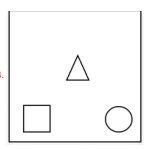
Combined Average

If group 1 has N1 items with average A1 and group 2 has N2 items with average A2, the combined average is given by (N1A1 + N2A2) ÷ (N1 + N2).

Effect of Adding a New Observation

When a new observation is added to a group, New Average = Old Average + (Change in total sum ÷ New number of observations).

Question 57

The value of sin2θ−2sin4θ2cos4θ+cos2θ\frac{sin^2\theta - 2sin^4\theta}{2cos^4\theta + cos^2\theta} at θ=45\theta = 45(^\circ\) is:

  1. AOption (a)

    1

  2. BOption (b)

    0

  3. COption (c)

    3

  4. DOption (d)

    2

View answer & explanation

Correct answer

Answer: (b)B.

0

Why this answer is correct

Shortcut Trick

Substitute θ = 45° directly into the given expression.

We know that sin 45° = 1/√2 and cos 45° = 1/√2.

Numerator = (1/√2)2 − 2 × (1/√2)4 = 1/2 − 2 × (1/4) = 1/2 − 1/2 = 0.

Denominator = 2 × (1/√2)4 + (1/√2)2 = 2 × (1/4) + 1/2 = 1/2 + 1/2 = 1.

Result = 0 ÷ 1 = 0.

∴ The correct answer is 0.

Alternate Method

Given:

Expression: (sin2θ − 2sin4θ) / (2cos4θ + cos2θ)

Calculations:

⇒ Take out common terms from the numerator and the denominator:

⇒ [sin2θ × (1 − 2sin2θ)] / [cos2θ × (2cos2θ + 1)]

⇒ Using the double angle trigonometric identity: cos 2θ = 1 − 2sin2θ

⇒ Substitute cos 2θ into the numerator:

⇒ Expression = [sin2θ × cos 2θ] / [cos2θ × (2cos2θ + 1)]

⇒ Now, substitute the given value θ = 45°:

⇒ In the numerator, cos(2 × 45°) = cos 90° = 0

⇒ Since the numerator evaluates to 0, the entire fraction becomes zero (provided denominator ≠ 0).

⇒ Denominator at θ = 45° is (1/√2)2 × [2 × (1/√2)2 + 1] = (1/2) × (2 × 1/2 + 1) = 1 (which is non-zero).

⇒ Final Value = 0 / 1 = 0

∴ The correct answer is 0.

Additional Information

Double Angle Formulas

cos 2θ = cos2θ − sin2θ = 2cos2θ − 1 = 1 − 2sin2θ

Standard Values at 45°

sin 45° = 1/√2, cos 45° = 1/√2, tan 45° = 1. These are frequently used for direct substitution in exams.

Value Substitution Strategy

When solving complex trigonometric fractions, direct substitution of standard angles like 0°, 30°, 45°, 60°, or 90° is often much faster than algebraic simplification, provided the denominator doesn't evaluate to zero.

Question 58

The sale of two kinds of bicycles B1 and B2 (in lakhs) manufactured by a company over a period of three years are shown in the table below.

YearB1B2
200195184
2002130200
2003150216

From 2001 to 2003, the total sale of bicycles B1 is what percent of the total sale of bicycles B2?

  1. AOption (a)

    70.6%

  2. BOption (b)

    68.2%

  3. COption (c)

    62.5%

  4. DOption (d)

    56.7%

View answer & explanation

Correct answer

Answer: (c)C.

62.5%

Why this answer is correct

Calculation:

From 2001 to 2003, the total sale of bicycles B1 = 95 + 130 + 150 = 375

From 2001 to 2003, the total sale of bicycles B2 = 184 + 200 + 216 = 600

According to the question, 

⇒ 375/600 

⇒ 62.5%

∴ The correct answer is 62.5%

Question 59

A class of 30 students appeared in a test. The average score of 12 students is 62, and that of the rest is 60. What is the average score of the class?

  1. AOption (a)

    58.8

  2. BOption (b)

    61.8

  3. COption (c)

    60.8

  4. DOption (d)

    59.8

View answer & explanation

Correct answer

Answer: (c)C.

60.8

Why this answer is correct

Shortcut Trick

Let base average of the remaining 18 students = 60

Deviation of 12 students from base = 62 − 60 = +2

Total deviation = 12 × 2 = +24

Net average change = Total deviation ÷ Total students = +24 ÷ 30 = +0.8

Overall Average = Base average + Net average change = 60 + 0.8 = 60.8

∴ The correct answer is 60.8 marks.

Alternate Method

Given:

Total number of students = 30

Average score of 12 students = 62

Average score of the remaining students = 60

Formula Used:

Average = Sum of observations ÷ Total number of observations

n = 12 n = 18

Avg = 62 Avg = 60

Total n = 30, Overall Avg = 60.8

Calculation:

⇒ Number of remaining students = 30 − 12 = 18

⇒ Total score of 12 students = 12 × 62 = 744

⇒ Total score of 18 students = 18 × 60 = 1080

⇒ Total score of 30 students = 744 + 1080 = 1824

⇒ Overall average = 1824 ÷ 30

⇒ Overall average = 60.8

∴ The correct answer is 60.8 marks.

Additional Information

Combined Average

When two groups of sizes n1 and n2 have averages A1 and A2 respectively, the combined average is calculated using the formula: (n1A1 + n2A2) ÷ (n1 + n2).

Weighted Average

Similar to the arithmetic mean, but each data point contributes relative to its weight. Formula: Σ(wixi) ÷ Σwi, where wi represents the weight of each observation.

Deviation Method for Averages

A faster calculation trick where you assume a base average, calculate the net deviation of all values from the base, and distribute it equally. New Average = Assumed Average + (Total Deviation ÷ Total Observations).

Question 60

The length of the tangent drawn from a point 10 cm away from the centre of a circle with radius 4 cm, is:

  1. AOption (a)

    3143\sqrt{14}

  2. BOption (b)

    3213\sqrt{21}

  3. COption (c)

    2212\sqrt{21}

  4. DOption (d)

    2142\sqrt{14}

View answer & explanation

Correct answer

Answer: (c)C.

2212\sqrt{21}

Why this answer is correct

Shortcut Trick

Length of tangent = √(Distance from centre2 − Radius2)

Tangent length = √(102 − 42)

Tangent length = √(100 − 16) = √84

Tangent length = 2√21 cm

∴ The correct answer is 2√21 cm.

Alternate Method

Given:

Distance of the point from the centre of the circle (d) = 10 cm

Radius of the circle (r) = 4 cm

Formula Used:

Pythagoras Theorem: (Hypotenuse)2 = (Base)2 + (Perpendicular)2

OPT10 cm4 cmTangent length

Calculations:

⇒ Let the centre of the circle be O, the external point be P, and the point of tangency be T.

⇒ The tangent at any point of a circle is perpendicular to the radius through the point of contact, so ∠OTP = 90°.

⇒ In right-angled ΔOTP, OP represents the hypotenuse.

⇒ By applying the Pythagoras Theorem: OP2 = OT2 + PT2

⇒ 102 = 42 + PT2

⇒ 100 = 16 + PT2

⇒ PT2 = 100 − 16 = 84

⇒ PT = √84

⇒ PT = 2√21 cm

∴ The correct answer is 2√21 cm.
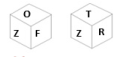
Additional Information

Tangent and Radius Property

A tangent to a circle is always perpendicular to the radius at the point of tangency. This creates a right-angled triangle when connected to the centre.

Tangents from an External Point

The lengths of the two tangents drawn from a single external point to a circle are always equal.

Secant-Tangent Theorem

If a tangent segment and a secant segment are drawn to a circle from an exterior point, then the square of the tangent length is equal to the product of the secant's external segment and its total length (PT2 = PA × PB).

Question 61

If an employee’s income is ₹72,000, the amount he spends is 40% higher than his savings. Therefore, his savings (in ₹) is:

  1. AOption (a)

    30000

  2. BOption (b)

    34000

  3. COption (c)

    32000

  4. DOption (d)

    28000

View answer & explanation

Correct answer

Answer: (a)A.

30000

Why this answer is correct

Shortcut Trick

Let the Savings be 100%. Then Expenditure = 100% + 40% = 140%.

Ratio of Savings : Expenditure = 100 : 140 = 5 : 7

Total Income = Savings + Expenditure = 5 + 7 = 12 units.

Given 12 units = ₹72,000 ⇒ 1 unit = ₹6,000

Savings = 5 units = 5 × 6,000 = ₹30,000

∴ The correct answer is ₹30000.

Alternate Method

Given:

Total Income = ₹72,000

Expenditure is 40% higher than Savings.

Formula Used:

Income = Expenditure + Savings

Calculations:

⇒ Let his Savings be x.

⇒ Expenditure = x + (40% of x) = x + 0.4x = 1.4x

⇒ Total Income = x + 1.4x = 2.4x

⇒ According to the question, 2.4x = 72000

⇒ x = 72000 ÷ 2.4

⇒ x = 720000 ÷ 24

⇒ x = 30000

∴ The correct answer is ₹30000.

Additional Information

Income, Expenditure & Savings

The fundamental equation of personal finance is: Income = Expenditure + Savings. Any total change in income is always equal to the sum of the changes in expenditure and savings.

Ratio Method for Percentages

When a value is P% higher than another, their ratio becomes (100 + P) : 100. This heavily simplifies calculations by avoiding decimals and allowing you to solve the question completely using proportional unit parts.

Base Value Identification

It is crucial to identify the correct base. Here, Expenditure is 40% higher than Savings, meaning Savings is the base (100%). Misinterpreting the base value is the most common error in percentage problems.

Question 62

A customer pays ₹975 in instalments. The payment is done each month ₹5 less than the previous month. If the first instalment is ₹100, how much time will be taken to pay the entire amount?

  1. AOption (a)

    14 months

  2. BOption (b)

    15 months

  3. COption (c)

    27 months

  4. DOption (d)

    26 months

View answer & explanation

Correct answer

Answer: (b)B.

15 months

Why this answer is correct

Shortcut Trick

Use the sum of AP formula: S = n/2 × [2a + (n − 1)d] and check options directly.

Given total S = 975, first instalment a = 100, and common difference d = −5.

Option 1 (n = 14): S = 14/2 × [200 − 13 × 5] = 7 × 135 = 945 (Incorrect)

Option 2 (n = 15): S = 15/2 × [200 − 14 × 5] = 15/2 × 130 = 975 (Correct)

Option 4 (n = 26) is rejected as the 26th term is 100 + 25(−5) = −25, which is an invalid instalment.

∴ The correct answer is 15 months.

Alternate Method

Given:

Total amount to be paid (Sn) = ₹975

First instalment (a) = ₹100

Difference in instalment each month (d) = −₹5

Formula Used:

Sum of an AP, Sn = n/2 × [2a + (n − 1)d]

Calculations:

⇒ 975 = n/2 × [2 × 100 + (n − 1)(−5)]

⇒ 1950 = n × [200 − 5n + 5]

⇒ 1950 = 205n − 5n2

⇒ 5n2 − 205n + 1950 = 0

Dividing the entire equation by 5:

⇒ n2 − 41n + 390 = 0

⇒ n2 − 15n − 26n + 390 = 0

⇒ n(n − 15) − 26(n − 15) = 0

⇒ (n − 15)(n − 26) = 0

⇒ Both roots are n = 15 and n = 26.

Checking the 26th term:

⇒ a26 = a + 25d = 100 + 25(−5) = −25

⇒ Since the instalment amount cannot be practically negative, n = 26 is rejected.

∴ The correct answer is 15 months.

Additional Information

Arithmetic Progression (AP) Sum Formula

The sum of an AP is calculated as Sn = n/2 × [2a + (n − 1)d] or Sn = n/2 × [a + l], where 'l' is the last term of the series.

Nth Term of an AP

The nth term is calculated using the formula an = a + (n − 1)d, where 'a' is the first term and 'd' is the common difference.

Roots of a Quadratic Equation

For standard equation ax2 + bx + c = 0, we can obtain two roots. In real-life applications (like loan instalments or dimensions), roots leading to invalid or negative values are discarded.

Question 63

Find the gain percentage, given that Anubha sold her scooter for ₹31524 gaining 16\frac{1}{6} th of the selling price.

  1. AOption (a)

    5%

  2. BOption (b)

    20%

  3. COption (c)

    30%

  4. DOption (d)

    35%

View answer & explanation

Correct answer

Answer: (b)B.

20%

Why this answer is correct

Shortcut Trick

Let the Selling Price (SP) of the scooter be 6 units.

Since the gain is 1/6 of the SP, Gain = 1 unit.

Cost Price (CP) = SP − Gain = 6 − 1 = 5 units.

Gain % = (Gain ÷ CP) × 100 = (1 ÷ 5) × 100 = 20%.

∴ The correct answer is 20%.

Alternate Method

Given:

Selling Price (SP) of the scooter = ₹31524

Gain = 1/6 of SP

Formula Used:

Cost Price (CP) = SP − Gain

Gain % = (Gain ÷ CP) × 100

Calculations:

⇒ Gain = (1 ÷ 6) × 31524

⇒ Gain = ₹5254

⇒ CP = 31524 − 5254 = ₹26270

⇒ Gain % = (5254 ÷ 26270) × 100

⇒ Gain % = (1 ÷ 5) × 100

⇒ Gain % = 20%

∴ The correct answer is 20%.

Additional Information

Profit/Loss Calculated on Selling Price

When profit is erroneously calculated as a percentage of Selling Price (SP), actual Profit % on CP = [Profit% on SP ÷ (100 − Profit% on SP)] × 100.

Basic Rules of Profit and Loss

Profit or loss is always calculated on the Cost Price (CP) unless a question specifies that it is calculated on the Selling Price.

Relation between SP, CP and Profit

Selling Price (SP) = CP × [(100 + Gain %) ÷ 100]

Question 64

If in a circle a chord of length 14 cm is at a distance of 24 cm from its centre, then the length of the radius of the circle is:

  1. AOption (a)

    28 cm

  2. BOption (b)

    31 cm

  3. COption (c)

    24 cm

  4. DOption (d)

    25 cm

View answer & explanation

Correct answer

Answer: (d)D.

25 cm

Why this answer is correct

Shortcut Trick

The perpendicular drawn from the centre of a circle bisects the chord, forming a right-angled triangle.

Half of the chord = 14 ÷ 2 = 7 cm.

Radius = √(Distance2 + Half-chord2)

Radius = √(242 + 72)

Radius = √(576 + 49) = √625 = 25 cm.

∴ The correct answer is 25 cm.

Alternate Method

Given:

Length of the chord (AB) = 14 cm

Distance of the chord from the centre (OD) = 24 cm

O A B D

24 cm 7 cm r = ?

Formula Used:

The perpendicular drawn from the centre of a circle to a chord bisects the chord.

By Pythagoras Theorem: (Hypotenuse)2 = (Perpendicular)2 + (Base)2

Calculations:

⇒ In the diagram, OD ⊥ AB, therefore AD = DB = 14 ÷ 2 = 7 cm.

⇒ In the right-angled triangle ODA, OA represents the radius (r).

⇒ OA2 = OD2 + AD2

⇒ r2 = 242 + 72

⇒ r2 = 576 + 49

⇒ r2 = 625

⇒ r = √625 = 25 cm

∴ The correct answer is 25 cm.

Additional Information

Pythagorean Triplets

Using standard triplets like (3, 4, 5), (5, 12, 13), (7, 24, 25), and (8, 15, 17) directly eliminates the need to calculate squares and square roots in geometry problems.

Perpendicular Bisector Theorem for Chords

The straight line drawn from the centre of a circle to bisect a chord (which is not a diameter) is always perpendicular to that chord.

Equal Chords Equidistance Theorem

Chords of equal length within the same circle are always equidistant from the centre of the circle.

Question 65

The following table represents the total number of students in different classes and the respective number of students who are vegetarian, in a school. Study the table carefully and answer the question that follows.

ClassTotal number of studentsNumber of vegetarian students
XII150105
XI165100
X12580
IX14090

What is the percentage of non-vegetarian students in class XII?

  1. AOption (a)

    40%

  2. BOption (b)

    30%

  3. COption (c)

    35%

  4. DOption (d)

    25%

View answer & explanation

Correct answer

Answer: (b)B.

30%

Why this answer is correct

Calculation:

Total number of students in class XII is 150

Number of vegetarian students in class XII is 105

According to the question,

Non - Vegetarian student in class XII is 150 - 105 = 45

⇒ (45/150)× 100

⇒ 30%

∴ The correct answer is 30%.

Question 66

If 3x + 2y = 10 and 2xy = 7, then find the value of 3x - 2y (if 3x - 2y > 0).

  1. AOption (a)

    4

  2. BOption (b)

    10

  3. COption (c)

    8

  4. DOption (d)

    6

View answer & explanation

Correct answer

Answer: (a)A.

4

Why this answer is correct

Shortcut Trick Use the direct identity relation between sum and difference: (3x − 2y)2 = (3x + 2y)2 − 4 × (3x) × (2y) ⇒ (3x − 2y)2 = (10)2 − 12 × (2xy) ⇒ (3x − 2y)2 = 100 − 12 × 7 = 16 ⇒ 3x − 2y = √16 = 4 ∴ The correct answer is 4.

Alternate Method Given: 3x + 2y = 10 2xy = 7 Formula Used: (a − b)2 = (a + b)2 − 4ab Calculations: ⇒ Let a = 3x and b = 2y ⇒ Product 4ab = 4 × (3x) × (2y) = 24xy ⇒ Apply the formula: (3x − 2y)2 = (3x + 2y)2 − 24xy ⇒ Substitute the value 2xy = 7 into the expression for 24xy: ⇒ 24xy = 12 × 2xy = 12 × 7 = 84 ⇒ Substitute the sum and the product into the main identity: ⇒ (3x − 2y)2 = (10)2 − 84 ⇒ (3x − 2y)2 = 100 − 84 ⇒ (3x − 2y)2 = 16 ⇒ Taking the square root on both sides: ⇒ 3x − 2y = ±√16 ⇒ 3x − 2y = 4 (Since it is given that 3x − 2y > 0) ∴ The correct answer is 4.

Additional Information Square of a Sum (a + b)2 = a2 + b2 + 2ab Square of a Difference (a − b)2 = a2 + b2 − 2ab Sum and Difference Relation (a + b)2 − (a − b)2 = 4ab. This identity helps to easily convert the sum of two numbers into their difference and vice versa when the product is known.

Question 67

If each side of an equilateral triangle is 373\sqrt{3} cm, then its altitude (in cm) is equal to

  1. AOption (a)

    37.5

  2. BOption (b)

    18.5

  3. COption (c)

    60.5

  4. DOption (d)

    55.5

View answer & explanation

Correct answer

Answer: (d)D.

55.5

Why this answer is correct

Shortcut Trick

Altitude of an equilateral triangle is directly calculated as: h = a × (√3 ÷ 2).

Given side a = 37√3 cm.

Substitute the value of a directly into the shortcut formula.

h = 37√3 × (√3 ÷ 2) = (37 × 3) ÷ 2.

h = 111 ÷ 2 = 55.5 cm.

∴ The correct answer is 55.5 cm.

Alternate Method

Given:

Side of the equilateral triangle (a) = 37√3 cm

Formula Used:

Altitude of an equilateral triangle = (√3 ÷ 2) × a

Calculations:

⇒ Altitude = (√3 ÷ 2) × 37√3

⇒ Altitude = 37 × (√3 × √3) ÷ 2

⇒ Altitude = (37 × 3) ÷ 2

⇒ Altitude = 111 ÷ 2

⇒ Altitude = 55.5 cm

∴ The correct answer is 55.5 cm.

Additional Information

Area of an Equilateral Triangle

The area can be calculated using the formula A = (√3 ÷ 4) × a2, where 'a' is the side length.

Inradius of an Equilateral Triangle

The radius of the inscribed circle is r = a ÷ (2√3), which is exactly one-third of the triangle's altitude.

Circumradius of an Equilateral Triangle

The radius of the circumscribed circle is R = a ÷ √3, which is exactly two-thirds of the triangle's altitude.

Perimeter of an Equilateral Triangle

Since all three sides are exactly equal, the total length of the boundary is simply P = 3 × a.

Question 68

In  ΔPQR, , if 4∠P = 5∠Q = 20∠R, then the value of ∠Q is:

  1. AOption (a)

    72°

  2. BOption (b)

    36°

  3. COption (c)

    90°

  4. DOption (d)

    45°

View answer & explanation

Correct answer

Answer: (a)A.

72°

Why this answer is correct

Shortcut Trick

Let 4∠P = 5∠Q = 20∠R = LCM(4, 5, 20) = 20.

⇒ ∠P : ∠Q : ∠R = 20/4 : 20/5 : 20/20 = 5 : 4 : 1

The sum of all angles in a triangle is 180°.

⇒ Total parts = 5 + 4 + 1 = 10 parts = 180° ⇒ 1 part = 18°

⇒ ∠Q = 4 parts = 4 × 18° = 72°

∴ The correct answer is 72°.

Alternate Method

Given:

In ΔPQR, 4∠P = 5∠Q = 20∠R

Formula Used:

The sum of all internal angles of a triangle is always 180°.

∠P + ∠Q + ∠R = 180°

P Q R

90° 72° 18°

Calculations:

Let 4∠P = 5∠Q = 20∠R = k

⇒ ∠P = k/4

⇒ ∠Q = k/5

⇒ ∠R = k/20

Substituting these values into the angle sum property of a triangle:

⇒ k/4 + k/5 + k/20 = 180°

Taking the LCM of the denominators (4, 5, 20) which is 20:

⇒ (5k + 4k + k) ÷ 20 = 180°

⇒ 10k ÷ 20 = 180°

⇒ k / 2 = 180°

⇒ k = 360°

Now, substitute the value of k back into the expression for ∠Q:

⇒ ∠Q = 360° ÷ 5

⇒ ∠Q = 72°

∴ The correct answer is 72°.

Additional Information

Sum of Angles Property

The sum of the three interior angles of any planar triangle is always exactly 180°. (∠A + ∠B + ∠C = 180°)

Exterior Angle Theorem

The measure of an exterior angle of a triangle is equal to the sum of the measures of its two remote and non-adjacent interior angles.

Types of Triangles Based on Angles

If all angles are less than 90°, it is an acute triangle. If one angle is exactly 90°, it is a right-angled triangle. If one angle is greater than 90°, it is an obtuse triangle.

Question 69

For what value of t is the value of sin2(t)sin^2(t), half of the value of tan(t)tan(t)?

  1. AOption (a)

    60°

  2. BOption (b)

    45°

  3. COption (c)

    30°

  4. DOption (d)

    22.5°

View answer & explanation

Correct answer

Answer: (b)B.

45°

Why this answer is correct

Shortcut Trick

For trigonometric equations, substituting the options directly is the fastest approach.

Let's check Option 2 where t = 45°.

LHS = sin2(45°) = (1/√2)2 = 1/2

RHS = 1/2 × tan(45°) = 1/2 × 1 = 1/2

Since LHS = RHS, t = 45° perfectly satisfies the equation.

∴ The correct answer is 45°.

Alternate Method

Given:

sin2(t) = 1/2 × tan(t)

Formula Used:

tan(t) = sin(t) / cos(t)

sin(2t) = 2 × sin(t) × cos(t)

Calculation:

⇒ sin2(t) = 1/2 × [sin(t) / cos(t)]

Since t ≠ 0° based on the options, sin(t) will not be zero. We can divide both sides by sin(t):

⇒ sin(t) = 1 / [2 × cos(t)]

Cross-multiplying the terms on both sides:

⇒ 2 × sin(t) × cos(t) = 1

Applying the double angle formula:

⇒ sin(2t) = 1

We know that the principal value of sin(90°) = 1, therefore:

⇒ 2t = 90°

⇒ t = 45°

∴ The correct answer is 45°.

Additional Information

Trigonometric Ratios at 45°

At 45°, the sine and cosine values are equal. sin(45°) = cos(45°) = 1/√2 | tan(45°) = cot(45°) = 1.

Double Angle Identity for Sine

sin(2θ) = 2 × sin(θ) × cos(θ) = (2 × tan(θ)) / (1 + tan2(θ)).

Fundamental Trigonometric Identities

sin2(θ) + cos2(θ) = 1 | 1 + tan2(θ) = sec2(θ) | 1 + cot2(θ) = cosec2(θ).

Question 70

If tanA = 110\frac{1}{\sqrt{10}}, A is an acute angle, then the value of sinA + cosecA is:

  1. AOption (a)

    1110\frac{11}{\sqrt{10}}

  2. BOption (b)

    110\frac{1}{\sqrt{10}}

  3. COption (c)

    1211\frac{12}{\sqrt{11}}

  4. DOption (d)

    1011\frac{10}{\sqrt{11}}

View answer & explanation

Correct answer

Answer: (c)C.

1211\frac{12}{\sqrt{11}}

Why this answer is correct

Shortcut Trick

From tanA = 1/√10, we directly get Perpendicular (P) = 1 and Base (B) = √10.

Hypotenuse (H) = √(P2 + B2) = √(1 + 10) = √11.

Substitute values into sinA + cosecA = (P/H) + (H/P).

sinA + cosecA = (1/√11) + (√11/1) = (1 + 11) / √11 = 12/√11.

∴ The correct answer is 12/√11.

Alternate Method

Given:

tanA = 1 / √10

Formula Used:

tanθ = Perpendicular / Base

sinθ = Perpendicular / Hypotenuse

cosecθ = Hypotenuse / Perpendicular

Calculations:

⇒ Let Perpendicular (P) = 1 and Base (B) = √10

⇒ Using Pythagoras Theorem: H2 = P2 + B2

⇒ H = √(12 + (√10)2)

⇒ H = √(1 + 10) = √11

⇒ Now, substitute the values of P and H to find sinA and cosecA:

⇒ sinA = P / H = 1 / √11

⇒ cosecA = H / P = √11 / 1 = √11

⇒ Add both the values: sinA + cosecA = (1 / √11) + √11

⇒ sinA + cosecA = (1 + √11 × √11) / √11

⇒ sinA + cosecA = (1 + 11) / √11 = 12 / √11

∴ The correct answer is 12/√11.

Additional Information

Trigonometric Ratios

In a right-angled triangle, the sine function represents the ratio of the Perpendicular to the Hypotenuse, while the cosine function represents the Base to the Hypotenuse.

Reciprocal Identities

Each primary trigonometric ratio has a reciprocal: cosecθ = 1/sinθ, secθ = 1/cosθ, and cotθ = 1/tanθ.

Pythagorean Identities

The foundational identity is sin2θ + cos2θ = 1, from which 1 + tan2θ = sec2θ and 1 + cot2θ = cosec2θ can be derived.

Question 71

Simplify the following expression

0.07 × 0.28 ÷ 0.04 + 0.64 - 1.64 ÷ 0.04

  1. AOption (a)

    38.56

  2. BOption (b)

    -39.87

  3. COption (c)

    -46.48

  4. DOption (d)

    36.78

View answer & explanation

Correct answer

Answer: (b)B.

-39.87

Why this answer is correct

Given:

0.07 × 0.28 ÷ 0.04 + 0.64 - 1.64 ÷ 0.04

Formula used:

Follow the BODMAS rule (Bracket, Order, Division/Multiplication, Addition/Subtraction)

Calculation:

0.07 × 0.28 ÷ 0.04 + 0.64 - 1.64 ÷ 0.04

⇒ 0.07 × 7 + 0.64 - 41

⇒ 0.49 + 0.64 - 41

⇒ 1.13 - 41

⇒ -39.87

∴ The correct answer is option (2).

Question 72

Two pipes A and B can fill a tank in 20 and 30 hours, respectively. Both pipes are opened to fill the tank, but when the tank is one-third full, a leak develops through which one-fourth of the water supplied by both pipes goes out. Find the total time (in hours) taken to fill the tank.

  1. AOption (a)

    142314 \frac{2}{3}

  2. BOption (b)

    14

  3. COption (c)

    112511 \frac{2}{5}

  4. DOption (d)

    121312 \frac{1}{3}

View answer & explanation

Correct answer

Answer: (a)A.

142314 \frac{2}{3}

Why this answer is correct

Shortcut Trick

Let Total Work = LCM(20, 30) = 60 units.

Combined efficiency of A and B = (60 ÷ 20) + (60 ÷ 30) = 3 + 2 = 5 units/hour.

Time to fill 1/3rd tank (20 units) = 20 ÷ 5 = 4 hours.

Effective efficiency with leak = 5 − (1/4 × 5) = 15/4 units/hour.

Time to fill remaining tank (40 units) = 40 ÷ (15/4) = 160 ÷ 15 = 32/3 = 10 2/3 hours.

Total time = 4 + 10 2/3 = 14 2/3 hours.

∴ The correct answer is 14 2/3 hours.

Alternate Method

Given:

Time taken by Pipe A = 20 hours

Time taken by Pipe B = 30 hours

PipeHoursTotal WorkEfficiency
A20603
B302

⇒ Total efficiency of both pipes = 3 + 2 = 5 units/hour.

⇒ Capacity of 1/3rd of the tank = 60 × (1/3) = 20 units.

⇒ Time taken to fill 1/3rd of the tank = 20 ÷ 5 = 4 hours.

⇒ Remaining capacity to be filled = 60 − 20 = 40 units.

⇒ After the leak, effective efficiency = 5 − (1/4 × 5) = 5 × (3/4) = 15/4 units/hour.

⇒ Time taken to complete the remaining capacity = 40 ÷ (15/4) = (40 × 4) ÷ 15 = 160 ÷ 15 = 32/3 = 10 2/3 hours.

⇒ Total time taken = 4 + 10 2/3 = 14 2/3 hours.

∴ The correct answer is 14 2/3 hours.

Additional Information

Pipes & Cisterns Basics

If a pipe can fill a tank in x hours, its efficiency (part filled in 1 hour) is 1/x. If another pipe empties it in y hours, its efficiency is −1/y.

Effective Efficiency

When multiple pipes operate together, their combined efficiency is the algebraic sum of their individual efficiencies. A leak is treated as an outlet pipe with negative efficiency.

Total Work Concept

Total Work is typically assumed to be the LCM of the times taken by the individual pipes. Total Time Taken = Total Work ÷ Combined Efficiency.

Question 73

A boat covers a distance of 55 km downstream in 5 hours while it takes 11 hours to cover the same distance upstream. What is the speed of the boat?

  1. AOption (a)

    8 km/h

  2. BOption (b)

    9 km/h

  3. COption (c)

    11 km/h

  4. DOption (d)

    7 km/h

View answer & explanation

Correct answer

Answer: (a)A.

8 km/h

Why this answer is correct

Shortcut Trick

Downstream Speed (D) = Distance ÷ Time = 55 ÷ 5 = 11 km/h

Upstream Speed (U) = Distance ÷ Time = 55 ÷ 11 = 5 km/h

Speed of boat in still water = (D + U) ÷ 2

⇒ (11 + 5) ÷ 2 = 16 ÷ 2 = 8 km/h

∴ The correct answer is 8 km/h.

Alternate Method

Given:

Distance covered = 55 km

Time taken downstream = 5 hours

Time taken upstream = 11 hours

Formula Used:

Speed = Distance ÷ Time

Speed of Boat in Still Water = (Speed Downstream + Speed Upstream) ÷ 2

Calculations:

⇒ Downstream Speed = 55 ÷ 5 = 11 km/h

⇒ Upstream Speed = 55 ÷ 11 = 5 km/h

⇒ Speed of Boat in Still Water = (11 + 5) ÷ 2

⇒ Speed of Boat in Still Water = 16 ÷ 2 = 8 km/h

∴ The correct answer is 8 km/h.

Additional Information

Speed of the Stream

It is calculated as half the difference between downstream and upstream speeds: Vs = (D − U) ÷ 2.

Relationship Between Speeds

Downstream Speed (D) = Speed of Boat (Vb) + Speed of Stream (Vs).

Upstream Speed (U) = Speed of Boat (Vb) − Speed of Stream (Vs).

Average Speed for a Round Trip

If a boat goes a certain distance upstream and returns downstream to the original point, its average speed is given by (2 × D × U) ÷ (D + U).

Question 74

The single discount equivalent to a series discount of 60%, 70% and 80%.

  1. AOption (a)

    97.6%

  2. BOption (b)

    70%

  3. COption (c)

    85%

  4. DOption (d)

    95.5%

View answer & explanation

Correct answer

Answer: (a)A.

97.6%

Why this answer is correct

Shortcut Trick

Let the initial value (Marked Price) be 100.

The multiplying factors for discounts of 60%, 70%, and 80% are 0.4, 0.3, and 0.2 respectively.

Final Selling Price = 100 × 0.4 × 0.3 × 0.2 = 2.4

Single Equivalent Discount = Initial Value − Final Value

Equivalent Discount = 100 − 2.4 = 97.6%

∴ The correct answer is 97.6%.

Alternate Method

Given:

Three successive discounts of 60%, 70%, and 80%.

Formula Used:

Selling Price (SP) = MP × (1 − D1/100) × (1 − D2/100) × (1 − D3/100)

Equivalent Discount % = [(MP − SP) ÷ MP] × 100

Calculations:

⇒ Let the Marked Price (MP) be 100.

⇒ SP = 100 × (1 − 60/100) × (1 − 70/100) × (1 − 80/100)

⇒ SP = 100 × (40/100) × (30/100) × (20/100)

⇒ SP = 100 × 0.4 × 0.3 × 0.2

⇒ SP = 2.4

⇒ Equivalent Discount = [(100 − 2.4) ÷ 100] × 100

⇒ Equivalent Discount = (97.6 ÷ 100) × 100

⇒ Equivalent Discount = 97.6%

∴ The correct answer is 97.6%.

Additional Information

Successive Discount Formula

For two successive discounts d1% and d2%, the single equivalent discount is given directly by: D = d1 + d2 − (d1 × d2)/100.

Order of Discounts

Changing the sequence of successive discounts does not affect the final selling price or the single equivalent discount. For example, giving 60% followed by 80% is identical to 80% followed by 60%.

Marked Price & Selling Price Relation

The selling price is always determined by subtracting the discount applied strictly on the Marked Price (or list price). In formula terms: SP = MP − Discount.

Question 75

The number 429714 is divisible by:

  1. AOption (a)

    3 and 5

  2. BOption (b)

    6 and 5

  3. COption (c)

    4 and 6

  4. DOption (d)

    3 and 6

View answer & explanation

Correct answer

Answer: (d)D.

3 and 6

Why this answer is correct

Shortcut Trick

Check divisibility by basic numbers quickly:

⇒ Last digit is 4 → Divisible by 2, but not by 5.

⇒ Sum of digits = 4 + 2 + 9 + 7 + 1 + 4 = 27 → Divisible by 3.

⇒ Since it is divisible by both 2 and 3 → Divisible by 6.

⇒ Last two digits form 14 → Not divisible by 4.

∴ The correct answer is 3 and 6.

Alternate Method

Given:

The number 429714.

Concept Used (Divisibility Rules):

⇒ By 3: The sum of digits must be a multiple of 3.

⇒ By 4: The last two digits must be divisible by 4.

⇒ By 5: The last digit must be 0 or 5.

⇒ By 6: The number must be divisible by both 2 and 3.

Calculations:

⇒ Sum of digits of 429714 = 4 + 2 + 9 + 7 + 1 + 4 = 27.

⇒ Since 27 is divisible by 3, the number is divisible by 3.

⇒ The last digit is 4 (an even number), so it is divisible by 2.

⇒ Since 429714 is divisible by both 2 and 3, it is automatically divisible by 6.

⇒ The last digit is 4, which is neither 0 nor 5, so it is not divisible by 5.

⇒ The last two digits form 14, which is not a multiple of 4, so it is not divisible by 4.

⇒ Thus, the number is only divisible by 3 and 6 from the given options.

∴ The correct answer is 3 and 6.

Additional Information

Divisibility Rule of 8

A number is divisible by 8 if the number formed by its last three digits is divisible by 8.

Divisibility Rule of 9

A number is divisible by 9 if the sum of all its digits is a multiple of 9.

Divisibility Rule of 11

A number is divisible by 11 if the difference between the sum of digits at odd places and the sum of digits at even places is either 0 or a multiple of 11.

Divisibility Rule of 12

A number is divisible by 12 if it is completely divisible by both 3 and 4.

English Comprehension (25 questions)

Question 76

Select the most appropriate meaning of the underlined idiom in the following sentence.

Sejal visits the nearby temple off and on.

  1. AOption (a)

    Periodically

  2. BOption (b)

    Constantly

  3. COption (c)

    Continuously

  4. DOption (d)

    Regularly

View answer & explanation

Correct answer

Answer: (a)A.

Periodically

Why this answer is correct

The correct answer is: Option 1.

Key Points

  • The idiom "off and on" means something that happens periodically, not continuously or regularly. (समय-समय पर)
  • Example: It rained off and on throughout the day.
  • "Periodically" refers to something that occurs at regular intervals of time. (समय-समय पर)
  • Example: The company conducts performance reviews periodically to ensure employee growth.
  • Hence, we can infer that the idiom "off and on" means "periodically".

Therefore, the correct answer is: Option 1.

Additional Information

Here are the other options explained along with their Hindi meanings and example sentences:

  • Constantly (लगातार): Continuously over a period of time.
  • Example: He was constantly checking his phone for messages.
  • Continuously (लगातार): Without interruption or end.
  • Example: The river flowed continuously through the valley.
  • Regularly (नियमित रूप से): At consistent, recurring intervals.
  • Example: She visits her grandparents regularly every weekend.

Question 77

Parts of a sentence are given below in jumbled order. Select the option that arranges the parts in the correct sequence to

form a meaningful sentence.

(P) unlock their potential

(Q) empowers individuals to

(O) and shape their future

(R) the power of education

  1. AOption (a)

    QROP

  2. BOption (b)

    OPRQ

  3. COption (c)

    RQPO

  4. DOption (d)

    RPOQ

View answer & explanation

Correct answer

Answer: (c)C.

RQPO

Why this answer is correct

The correct answer is Option (3) i.e. RQPO

Key Points

  • The sentence logically starts with "The power of education," which is correctly indicated by part (R).
  • Following this, "empowers individuals to" (Q) continues the statement, explaining what the power of education does.
  • "Unlock their potential" (P) follows logically, detailing the first action that education empowers individuals to do.
  • Ending with, "and shape their future" (O) completes the sentence by adding the second action that education enables.

Therefore, the correct answer is RQPO.

Additional Information

  • Option 1 (QROP): This option starts with "empowers individuals to" which is missing a subject to complete the sentence.
  • Option 2 (OPRQ): This option starts with "and shape their future" without specifying "the power of education," making it incomplete and grammatically incorrect.
  • Option 4 (RPOQ): This option places "unlock their potential" before "empowers individuals to," which disrupts the logical flow of the sentence.

Question 78

The following sentence has been divided into four segments. Identify the segment that contains an error.

Mr. Suman / asked me / to pack / my luggages.

  1. AOption (a)

    asked me

  2. BOption (b)

    my luggages.

  3. COption (c)

    to pack

  4. DOption (d)

    Mr. Suman

View answer & explanation

Correct answer

Answer: (b)B.

my luggages.

Why this answer is correct

The correct answer is Option 2.


Key Points

  • The word "luggage" is an uncountable noun and does not have a plural form. Therefore, "luggage" should be used instead of "luggages."

Therefore, the corrected phrase should be "my luggage."


Correct Sentence: "Mr. Suman asked me to pack my luggage."


Additional Information

  • Option 1: "asked me" – There is no error in this segment.
  • Option 3: "to pack" – There is no error in this segment.
  • Option 4: "Mr. Suman" – There is no error in this segment.

Question 79

Select the option that can be used as a one-word substitute for the given group of words.

<br>

A place to park aeroplanes

  1. AOption (a)

    Hanger

  2. BOption (b)

    Depot

  3. COption (c)

    Shed

  4. DOption (d)

    Hangar

View answer & explanation

Correct answer

Answer: (d)D.

Hangar

Why this answer is correct

The correct answer is: Option 4.

Key Points

  • The word "Depot" means a place where buses, trains, or other vehicles are stored and maintained. (डिपो)
  • Example: The bus depot was filled with buses being serviced for the next day's routes.
  • "Hangar" refers to a large building in which aircraft are kept and maintained. (हैंगर)
  • Example: The plane was safely stored in the hangar overnight.
  • Hence, we can infer that the correct term for "A place to park aeroplanes" is 'Hangar'.

Therefore, the correct answer is: Option 4.

Additional Information

Here are the other options explained along with their Hindi meanings and example sentences:

  • Hanger (हेंगर): A piece of equipment used to hang clothes.
  • Example: She placed her coat on a hanger in the closet.
  • Shed (छप्पर): A simple building used for storage or as a workshop.
  • Example: He kept his gardening tools in the shed at the back of the yard.

Question 80

Select the option that expresses the following sentence in passive voice.

<br>

The baker baked the cake.

  1. AOption (a)

    The cake was baked by the baker

  2. BOption (b)

    The cake had been baked by the baker.

  3. COption (c)

    The baker has been baking the cake.

  4. DOption (d)

    The cake has been baked by the baker.

View answer & explanation

Correct answer

Answer: (a)A.

The cake was baked by the baker

Why this answer is correct

The correct answer is Option 1.


Key Points

  • Passive voice structure: The object of the active voice sentence becomes the subject of the passive voice sentence.
  • In the active voice, the sentence is: "The baker baked the cake."
  • To convert to passive voice: Place the object "the cake" at the beginning.
  • Change the active verb form "baked" to "was baked" (past simple passive).
  • Add the preposition "by" followed by the original subject "the baker."

Therefore, the correct answer is Option 1.


Correct Sentence: "The cake was baked by the baker."


Additional Information

  • Option 2: "The cake had been baked by the baker." – Incorrect tense (past perfect passive).
  • Option 3: "The baker has been baking the cake." – This is in active voice, present perfect continuous tense.
  • Option 4: "The cake has been baked by the baker." – Incorrect tense (present perfect passive).

Question 81

Select the most appropriate ANTONYM of the underlined word in the following sentence.
The teammates made several jibes at the opponent team members during the interview.

  1. AOption (a)

    Compliments

  2. BOption (b)

    Mockery

  3. COption (c)

    Inspiration

  4. DOption (d)

    Contradict

  5. EOption (e)

    Criticism

View answer & explanation

Correct answer

Answer: (a)A.

Compliments

Why this answer is correct

The correct answer is: Compliments.

Key Points

  • The word "jibes" means mocking or taunting remarks. (मज़ाक उड़ाना)
  • Example: The kids exchanged jibes during the game.
  • "Compliments" refers to polite expressions of praise or admiration. (तारीफ़)
  • Example: She received many compliments on her performance.
  • Hence, we can infer that the opposite of 'jibes' is 'compliments'.

Therefore, the correct answer is: Compliments.

Additional Information

Here are the other options explained along with their Hindi meanings and example sentences:

  • Mockery (मज़ाक): Teasing and contemptuous language or behavior directed at a particular person or thing.
  • Example: His mockery of her accent was hurtful.
  • Inspiration (प्रेरणा): The process of being mentally stimulated to do or feel something, especially to do something creative.
  • Example: Her speech was a great source of inspiration to the students.
  • Contradict (विरोधाभास): Deny the truth of (a statement) by asserting the opposite.
  • Example: The witness's statements contradict each other.

Question 82

Select the most appropriate option to substitute the underlined segment in the given sentence.

Athens was suffering under the rule of a powerful small group that had no concern for the people’s welfare.

  1. AOption (a)

    a democracy

  2. BOption (b)

    an oligarchy

  3. COption (c)

    a monarchy

  4. DOption (d)

    a missionary

View answer & explanation

Correct answer

Answer: (b)B.

an oligarchy

Why this answer is correct

The correct answer is: Option 2.

Key Points

  • The word "democracy" means a system of government where the citizens exercise power by voting. (लोकतंत्र)
  • Example: The country is a democracy, where every citizen has a right to vote.
  • "oligarchy" refers to a small group of people having control of a country or organization. (कुलीनतंत्र)
  • Example: The nation was ruled by an oligarchy that controlled all aspects of life.
  • Hence, the correct term for a powerful small group that had no concern for the people's welfare is 'oligarchy'.

Therefore, the correct answer is: Option 2.

Additional Information

Here are the other options explained along with their Hindi meanings and example sentences:

  • Democracy (लोकतंत्र): A system of government by the whole population, typically through elected representatives.
  • Example: India is the world's largest democracy.
  • Monarchy (राजशाही): A form of government with a monarch at the head.
  • Example: The United Kingdom is a constitutional monarchy.
  • Missionary (धर्मप्रचारक): A person sent on a religious mission, especially one sent to promote Christianity in a foreign country.
  • Example: The missionary worked in remote villages to spread the teachings of his faith.

Question 83

Select the correct spelling to fill in the blank.

<br>

I often fail to ______ remember someone’s name.

  1. AOption (a)

    accuriately

  2. BOption (b)

    accuritally

  3. COption (c)

    accusatively

  4. DOption (d)

    accurately

View answer & explanation

Correct answer

Answer: (d)D.

accurately

Why this answer is correct

The correct answer is: Option 4.

Key Points

  • The word "accurately" means in a way that is correct in all details; exactly. (सटीकता से)
  • Example: The data was accurately recorded in the system.
  • "Accurately" refers to doing something with precision and correctness. (सटीकता से)
  • Example: She accurately predicted the outcome of the match.

Therefore, the correct answer is: Option 4.

Additional Information

Here are the other options explained along with their Hindi meanings and example sentences:

  • Accuriately (अशुद्ध): This is a misspelling of "accurately" and does not have a meaning.
  • Accuritally (अशुद्ध): This is a misspelling of "accurately" and does not have a meaning.
  • Accusatively (आरोपित रूप से): In an accusative manner; related to the accusative case in grammar.
  • Example: The sentence was structured accusatively, focusing on the direct object.

Question 84

Select the most appropriate option that can rectify the incorrectly spelt word in the following sentence.

I doubt that these lifts can accomodate 100 people.

  1. AOption (a)

    acomodate

  2. BOption (b)

    accommodatte

  3. COption (c)

    accomondate

  4. DOption (d)

    accommodate

View answer & explanation

Correct answer

Answer: (d)D.

accommodate

Why this answer is correct

The correct answer is 'Option 4' i.e. 'accommodate'.

Key Points

  • The word "accommodate" means to provide space or room for someone or something; to adjust to someone's needs or requirements. (समायोजित करना)
  • Example: The hotel can accommodate up to 500 guests.
  • "accomodate" is an incorrect spelling and does not carry any specific meaning. (गलत वर्तनी)
  • Example: This room can accomodate all the guests. (Incorrect spelling)
  • Hence, we can infer that the correct spelling is 'accommodate'.

Therefore, the correct answer is: Option 4 i.e. 'accommodate'.

Additional Information

Here are the other options explained along with their Hindi meanings and example sentences:

  • acomodate (गलत वर्तनी): Incorrect spelling of 'accommodate'.
  • Example: This room can acomodate all the guests. (Incorrect spelling)
  • accommodatte (गलत वर्तनी): Incorrect spelling of 'accommodate'.
  • Example: The hall can accommodatte a large number of people. (Incorrect spelling)
  • accomondate (गलत वर्तनी): Incorrect spelling of 'accommodate'.
  • Example: The venue can accomondate all the participants. (Incorrect spelling)

Question 85

Select the most appropriate synonym of the given word.

Dissipate

  1. AOption (a)

    Glorious

  2. BOption (b)

    Malicious

  3. COption (c)

    Haste

  4. DOption (d)

    Spend

View answer & explanation

Correct answer

Answer: (d)D.

Spend

Why this answer is correct

The correct answer is: Option 4.

Key Points

  • The word "dissipate" means to cause something to spread out and disappear. It often refers to the process of disappearing or vanishing. (बिखर जाना)
  • Example: The fog will dissipate as the sun rises higher in the sky.
  • "Spend" refers to using up or paying out money, time, or resources. (खर्च करना)
  • Example: We need to spend our resources wisely to ensure long-term sustainability.
  • Hence, we can infer that 'spend' is a synonym for 'dissipate'.

Therefore, the correct answer is: Option 4.

Additional Information

Here are the other options explained along with their Hindi meanings and example sentences:

  • Glorious (शानदार): Having, worthy of, or bringing fame or admiration.
  • Example: The team had a glorious victory in the championship match.
  • Malicious (दुर्भावनापूर्ण): Intended to do harm.
  • Example: He was found guilty of spreading malicious rumors about his colleague.
  • Haste (जल्दी): Excessive speed or urgency of movement or action.
  • Example: In his haste to leave, he forgot to lock the door.

Question 86

Select the sentence that is expressed in passive voice.

  1. AOption (a)

    I prefer tea to coffee.

  2. BOption (b)

    Children are participating in sand-art competition.

  3. COption (c)

    She sketches beautifully.

  4. DOption (d)

    The consignment was delivered yesterday.

View answer & explanation

Correct answer

Answer: (d)D.

The consignment was delivered yesterday.

Why this answer is correct

The correct answer is Option 4.


Key Points

  • Passive voice structure: The object of the active voice sentence becomes the subject of the passive voice sentence.
  • In this case, "the consignment" (the subject) is receiving the action (delivered).
  • The doer of the action is not mentioned in the sentence, and the focus is on what happened to the consignment.
  • This is a clear example of passive voice because the action is being done to the subject (the consignment), not by it.
  • The sentence "The consignment was delivered yesterday" focuses on the consignment being acted upon, not on who delivered it.

Therefore, the correct answer is Option 4.


Correct Sentence: "The consignment was delivered yesterday."


Additional Information

  • Option 1: "I prefer tea to coffee." – This sentence is in active voice. The subject "I" is performing the action (prefer), and "tea" and "coffee" are objects of the preference.
  • Option 2: "Children are participating in sand-art competition." – This sentence is in active voice. The subject "children" are performing the action (participating). "In sand-art competition" is the location of the action.
  • Option 3: "She sketches beautifully." – This sentence is in active voice. The subject "she" is performing the action (sketches).

Question 87

Select the most appropriate meaning of the underlined idiom.

This year’s budget is unlikely to pass as law since the president’s proposed budgets typically face a jaundiced eye, but this one has gotten even more scepticism.

  1. AOption (a)

    Jealousy

  2. BOption (b)

    Confidence

  3. COption (c)

    Resentment

  4. DOption (d)

    Good will

View answer & explanation

Correct answer

Answer: (c)C.

Resentment

Why this answer is correct

The correct answer is: Option 3.

Key Points

  • The word "jaundiced eye" means a view or attitude that is characterized by cynicism, skepticism, or suspicion. (संदेहपूर्ण दृष्टि)
  • Example: The committee viewed the proposal with a jaundiced eye, questioning every detail.
  • "Resentment" refers to a feeling of anger or displeasure about someone or something unfair. (नाराज़गी)
  • Example: She felt a deep resentment towards her boss for not acknowledging her hard work.
  • Hence, we can infer that "jaundiced eye" relates to skepticism or cynicism, which aligns with "resentment".

Therefore, the correct answer is: Option 3.

Additional Information

Here are the other options explained along with their Hindi meanings and example sentences:

  • Jealousy (ईर्ष्या): A feeling of envy towards someone due to their achievements or advantages.
  • Example: Her jealousy over her friend's success caused a rift in their relationship.
  • Confidence (आत्मविश्वास): A feeling or belief that one can rely on someone or something; firm trust.
  • Example: His confidence in his abilities helped him secure the job.
  • Good will (सद्भावना): A friendly, helpful, or cooperative attitude or feeling.
  • Example: The company's good will towards its employees is evident in its generous benefits package.

Question 88

Select the most appropriate synonym of the given word.

Dodge

  1. AOption (a)

    Avoid

  2. BOption (b)

    Force

  3. COption (c)

    Boarding

  4. DOption (d)

    Amount

View answer & explanation

Correct answer

Answer: (a)A.

Avoid

Why this answer is correct

The correct answer is: Option 1.

Key Points

  • The word "dodge" means to avoid something or someone by a sudden quick movement. (बचना)
  • Example: He managed to dodge the oncoming traffic just in time.
  • "Avoid" means to keep away from or stop oneself from doing something. (बचाना)
  • Example: She took a different route to avoid the heavy traffic.
  • Hence, we can infer that the synonym of 'dodge' is 'avoid'.

Therefore, the correct answer is: Option 1.

Additional Information

Here are the other options explained along with their Hindi meanings and example sentences:

  • Force (बल): Strength or energy as an attribute of physical action or movement.
  • Example: The force of the wind knocked down the trees.
  • Boarding (बोर्डिंग): The action of getting on or into a ship, aircraft, or other vehicle.
  • Example: Boarding will begin at 6:30 PM for all passengers.
  • Amount (मात्रा): A quantity of something, typically the total of a thing or things in number, size, value, or extent.
  • Example: The amount of rainfall this year has been significantly higher than last year.

Question 89

Select the most appropriate ANTONYM of the underlined word in the given sentence.

Her behaviour was so ostentatious that it attracted the attention of everyone in the room.

  1. AOption (a)

    Attractive

  2. BOption (b)

    Restrained

  3. COption (c)

    Gentle

  4. DOption (d)

    Repulsive

View answer & explanation

Correct answer

Answer: (b)B.

Restrained

Why this answer is correct

The correct answer is: Restrained.

Key Points

  • The word "ostentatious" means characterized by vulgar or pretentious display; designed to impress or attract notice. (आडंबरपूर्ण)
  • Example: Her ostentatious outfit drew everyone's attention at the party.
  • "Restrained" refers to being characterized by reserve or moderation; unemotional or dispassionate. (संयमित)
  • Example: His restrained reaction to the news surprised everyone.
  • Hence, we can infer that the opposite of 'ostentatious' is 'restrained'.

Therefore, the correct answer is: Restrained.

Additional Information

Here are the other options explained along with their Hindi meanings and example sentences:

  • Attractive (आकर्षक): Pleasing or appealing to the senses.
  • Example: She has a very attractive smile.
  • Gentle (सौम्य): Having or showing a mild, kind, or tender temperament or character.
  • Example: The gentle breeze was soothing on a hot day.
  • Repulsive (घृणित): Arousing intense distaste or disgust.
  • Example: The smell of the garbage was repulsive.

Question 90

Select the most appropriate ANTONYM of the underlined word.

Her remarks were relevant to the discussion.

  1. AOption (a)

    Inappropriate

  2. BOption (b)

    Suitable

  3. COption (c)

    Introductory

  4. DOption (d)

    Conclusive

View answer & explanation

Correct answer

Answer: (a)A.

Inappropriate

Why this answer is correct

The correct answer is: Inappropriate.

Key Points

  • The word "relevant" means something that is closely connected or appropriate to what is being done or considered. (प्रासंगिक)
  • Example: Her comments were highly relevant to the topic under discussion.
  • "Inappropriate" refers to something that is not suitable or proper in the circumstances. (अनुचित)
  • Example: Wearing casual clothes to a formal event is considered inappropriate.
  • Hence, we can infer that the opposite of 'relevant' is 'inappropriate'.

Therefore, the correct answer is: Inappropriate.

Additional Information

Here are the other options explained along with their Hindi meanings and example sentences:

  • Suitable (उपयुक्त): Right or appropriate for a particular person, purpose, or situation.
  • Example: This dress is suitable for a formal occasion.
  • Introductory (परिचयात्मक): Serving as an introduction to a subject or topic.
  • Example: The introductory chapter gives an overview of the book's themes.
  • Conclusive (निष्कर्षात्मक): Serving to prove a case; decisive or convincing.
  • Example: The evidence was conclusive and left no doubt about the suspect's guilt.

Question 91

Select the option with the correct use of future tense.

  1. AOption (a)

    By next December, I will have been completed six years in this home.

  2. BOption (b)

    By next December, I will be completed six years in this home.

  3. COption (c)

    By next December, I will have complete six years in this home.

  4. DOption (d)

    By next December, I will have completed six years in this home.

View answer & explanation

Correct answer

Answer: (d)D.

By next December, I will have completed six years in this home.

Why this answer is correct

The correct answer is Option 4.


Key Points

  • The correct use of the future perfect tense is “will have completed.” This tense describes an action that will be finished by a certain point in the future.

Therefore, the correct phrase is "By next December, I will have completed six years in this home."


Additional Information

  • Option 1: "By next December, I will have been completed six years in this home." – Incorrect use of tense; "will have been completed" is wrong.
  • Option 2: "By next December, I will be completed six years in this home." – Incorrect use of tense; "will be completed" is wrong.
  • Option 3: "By next December, I will have complete six years in this home." – Incorrect form; "complete" should be "completed."

Question 92

Select the most appropriate option that can substitute the underlined words in the given sentence.

Ranjith failed in all his exams as he had been addicted of social media.

  1. AOption (a)

    as he had been addicted at

  2. BOption (b)

    as he had been addicted on

  3. COption (c)

    as he had been addicted in

  4. DOption (d)

    as he had been addicted to

View answer & explanation

Correct answer

Answer: (d)D.

as he had been addicted to

Why this answer is correct

The correct answer is Option 4.


Key Points

  • The correct preposition to use with "addicted" is "to." The phrase should be "addicted to social media."

Therefore, the corrected sentence should be "Ranjith failed in all his exams as he had been addicted to social media."


Additional Information

  • Option 1: "as he had been addicted at" – Incorrect use of preposition; "addicted at" is wrong.
  • Option 2: "as he had been addicted on" – Incorrect use of preposition; "addicted on" is wrong.
  • Option 3: "as he had been addicted in" – Incorrect use of preposition; "addicted in" is wrong.

Question 93

Select the most appropriate ANTONYM of the given word.
Lethargic

  1. AOption (a)

    Active

  2. BOption (b)

    Languid

  3. COption (c)

    Moderate

  4. DOption (d)

    Angry

View answer & explanation

Correct answer

Answer: (a)A.

Active

Why this answer is correct

The correct answer is: Active.

Key Points

  • The word "lethargic" means sluggish, lacking energy or enthusiasm. (सुस्त)
  • Example: After the long and exhausting journey, he felt too lethargic to do anything productive.
  • "Active" refers to someone who is lively, energetic, and always ready to engage in activities. (सक्रिय)
  • Example: She leads an active lifestyle, participating in sports and outdoor activities regularly.
  • Hence, we can infer that the opposite of 'lethargic' is 'active'.

Therefore, the correct answer is: Active.

Additional Information

Here are the other options explained along with their Hindi meanings and example sentences:

  • Languid (मंद): Displaying or having a disinclination for physical exertion or effort; slow and relaxed.
  • Example: She walked at a languid pace, enjoying the calmness of the evening.
  • Moderate (मध्यम): Average in amount, intensity, quality, or degree.
  • Example: The climate in this region is moderate, neither too hot nor too cold.
  • Angry (क्रोधित): Feeling or showing strong annoyance, displeasure, or hostility.
  • Example: He was angry at the unfair treatment he received.

Question 94

Select the option that can be used as a one-word substitute for the given group of words.
The evening time when the sun has just set and it is almost dark.

  1. AOption (a)

    Dusk

  2. BOption (b)

    Night

  3. COption (c)

    Dawn

  4. DOption (d)

    Day break

View answer & explanation

Correct answer

Answer: (a)A.

Dusk

Why this answer is correct

The correct answer is: Option 1.

Key Points

  • The word "Dusk" refers to the time of day immediately following sunset. (संध्या)
  • Example: The sky turned a beautiful shade of orange during dusk.
  • "Dawn" refers to the first appearance of light in the sky before sunrise. (भोर)
  • Example: The birds started chirping at the break of dawn.
  • Hence, "Dusk" is the correct word for the evening time when the sun has just set and it is almost dark. (संध्या)
  • Example: The streets were bustling with people returning home at dusk.

Therefore, the correct answer is: Option 1.

Additional Information

Here are the other options explained along with their Hindi meanings and example sentences:

  • Night (रात): The period of darkness in each twenty-four hours; the time from sunset to sunrise.
  • Example: The stars were clearly visible in the night sky.
  • Dawn (भोर): The first appearance of light in the sky before sunrise.
  • Example: The rooster crowed at dawn.
  • Day break (प्रभात): The time in the morning when daylight first appears.
  • Example: The farmers started their work at day break.

Question 95

Select the most appropriate opposite word to substitute the underlined segment in the given sentence.

The cynical investors believed in every word the analysts said.

  1. AOption (a)

    credulous

  2. BOption (b)

    distrustful

  3. COption (c)

    persuasive

  4. DOption (d)

    credible

View answer & explanation

Correct answer

Answer: (a)A.

credulous

Why this answer is correct

The correct answer is: credulous.

Key Points

  • The word "cynical" means believing that people are motivated purely by self-interest; distrustful of human sincerity or integrity. (संदेहवादी)
  • Example: His cynical view of the world made him question everyone’s motives.
  • "Credulous" means having or showing too great a readiness to believe things. (अतिसंवेदनशील)
  • Example: Children are often credulous and believe in fairy tales.
  • Hence, we can infer that the opposite of 'cynical' is 'credulous'.

Therefore, the correct answer is: credulous.

Additional Information

Here are the other options explained along with their Hindi meanings and example sentences:

  • Distrustful (अविश्वासी): Feeling or showing a lack of trust in someone or something.
  • Example: He was distrustful of strangers and avoided talking to them.
  • Persuasive (प्रभावशाली): Good at persuading someone to do or believe something through reasoning or the use of temptation.
  • Example: Her persuasive arguments convinced the committee to approve the project.
  • Credible (विश्वसनीय): Able to be believed; convincing.
  • Example: The witness provided credible evidence that helped solve the case.

In the following passage, some words have been deleted. Read the passage carefully and select the most appropriate option to fill in each blank. The Human Development Index (HDI) is a summary (1) ________ of average accomplishment in important areas of human development. (2) ________ living a long and healthy life, being informed and having a good quality of living. The HDI is the geometric mean of the normalised (3) ________ for each dimension. The health component is (4) ________ by life expectancy at birth, while the education dimension is measured by the average number of years of schooling for individuals aged 25 and above, as well as the (5) ________ number of years of schooling for school-age children.

Question 96

Select the most appropriate answer for blank number 1.

  1. AOption (a)

    regiment

  2. BOption (b)

    assessment

  3. COption (c)

    involvement

  4. DOption (d)

    collect

View answer & explanation

Correct answer

Answer: (b)B.

assessment

Why this answer is correct

The correct answer is 'assessment'.


Key Points

  • The Human Development Index (HDI) is described as a summary measure of accomplishments.
  • 'Assessment' means the evaluation or estimation of the nature, quality, or ability of someone or something, which fits the context.
  • Other options like 'regiment,' 'involvement,' and 'collect' do not appropriately describe the HDI in this context.
  • 'Regiment' typically refers to a military unit or a strict order, which is not suitable.
  • 'Involvement' means participation, which does not fit the context of a summary measure.
  • 'Collect' means to gather things together, which is unrelated to a measure or evaluation.

Therefore, the correct answer is 'Option 2'.


Complete Passage: The Human Development Index (HDI) is a summary assessment of average accomplishment in important areas of human development. Including living a long and healthy life, being informed and having a good quality of living. The HDI is the geometric mean of the normalized indices for each dimension. The health component is measured by life expectancy at birth, while the education dimension is measured by the average number of years of schooling for individuals aged 25 and above, as well as the expected number of years of schooling for school-age children.


Additional Information

  • Regiment (अनुशासन/विशेष व्यवस्था): Refers to a military unit or a strict order, not suitable for describing HDI.
  • Involvement (शामिल होना): Means participation, which does not fit the context of HDI as a measure.
  • Collect (संग्रह करना): Means to gather things together, which is unrelated to a summary measure or evaluation.

Question 97

Select the most appropriate answer for blank number 2.

  1. AOption (a)

    segregating

  2. BOption (b)

    exaggerating

  3. COption (c)

    including

  4. DOption (d)

    manifesting

View answer & explanation

Correct answer

Answer: (c)C.

including

Why this answer is correct

The correct answer is 'including'.


Key Points

  • The passage explains that the HDI measures various aspects of human development life.
  • 'Including' is the correct choice as it shows that these aspects are part of the HDI measurements.
  • Other options like 'segregating,' 'exaggerating,' and 'manifesting' do not fit the context.
  • 'Segregating' means separating, which is not applicable.
  • 'Exaggerating' means overstating or describing something as greater than it is, which is inappropriate here.
  • 'Manifesting' means showing or displaying, which does not fit the idea of listing components.

Therefore, the correct answer is 'Option 3'.


Complete Passage: The Human Development Index (HDI) is a summary assessment of average accomplishment in important areas of human development. Including living a long and healthy life, being informed and having a good quality of living. The HDI is the geometric mean of the normalised indices for each dimension. The health component is measured by life expectancy at birth, while the education dimension is measured by the average number of years of schooling for individuals aged 25 and above, as well as the expected number of years of schooling for school-age children.


Additional Information

  • Segregating (अलग करना): Means separating or setting apart, which does not fit the context.
  • Exaggerating (बढ़ा-चढ़ाकर कहना): Means overstating or describing something as greater than it is, which is not appropriate here.
  • Manifesting (प्रकट करना): Means showing or displaying, which does not fit the context of listing components.

Question 98

Select the most appropriate answer for blank number 3.

  1. AOption (a)

    features

  2. BOption (b)

    contents

  3. COption (c)

    indices

  4. DOption (d)

    glimpses

View answer & explanation

Correct answer

Answer: (c)C.

indices

Why this answer is correct

The correct answer is 'indices'.


Key Points

  • The passage explains how the HDI is calculated using normalized measures for different dimensions.
  • 'Indices' are statistical indicators or measures, making it the appropriate choice for this context.
  • Other options like 'features,' 'contents,' and 'glimpses' are not suitable for describing statistical dimensions.
  • 'Features' (विशेषताएँ): Characteristics or attributes, which do not fit as statistical measures.
  • 'Contents' (सामग्री): Elements or items in something, which is not fitting here.
  • 'Glimpses' (झलक): Brief views or insights, which are unrelated to statistical measures.

Therefore, the correct answer is 'Option 3'.


Complete Passage: The Human Development Index (HDI) is a summary assessment of average accomplishment in important areas of human development. Including living a long and healthy life, being informed and having a good quality of living. The HDI is the geometric mean of the normalised indices for each dimension. The health component is measured by life expectancy at birth, while the education dimension is measured by the average number of years of schooling for individuals aged 25 and above, as well as the expected number of years of schooling for school-age children.


Additional Information

  • Features (विशेषताएँ): Characteristics or attributes, which do not fit as statistical measures in this context.
  • Contents (सामग्री): Elements or items in something, which is not fitting in this context of statistical measures.
  • Glimpses (झलक): Refers to brief views or insights, unrelated to statistical measures or dimensions.

Question 99

Select the most appropriate answer for blank number 4.

  1. AOption (a)

    levitated

  2. BOption (b)

    escaped

  3. COption (c)

    triggered

  4. DOption (d)

    measured

View answer & explanation

Correct answer

Answer: (d)D.

measured

Why this answer is correct

The correct answer is 'measured'.


Key Points

  • The passage explains how the health component of the HDI is initiated using a specific metric.
  • This is the correct word. To determine the health component, it makes sense to say that the health component is "measured" by life expectancy at birth. Life expectancy is a key metric used to calculate this component of the HDI.
  • Thus, "measured" is the most appropriate option because it directly describes how the health component is quantified in the HDI calculation, which is by life expectancy.
  • 'Levitated' (ऊँचा करना): To rise or float in the air, which is not applicable here.
  • 'Escaped' (चुका हुआ): To get away from confinement, which does not fit the context of initiating a measure.
  • Triggered (उत्तेजित ): This means something that causes or initiates an event or action, it doesn’t fit here.

Therefore, the correct answer is 'Option 4'.

Complete Passage: The Human Development Index (HDI) is a summary assessment of average accomplishment in important areas of human development. Including living a long and healthy life, being informed and having a good quality of living. The HDI is the geometric mean of the normalised indices for each dimension. The health component is measured by life expectancy at birth, while the education dimension is measured by the average number of years of schooling for individuals aged 25 and above, as well as the expected number of years of schooling for school-age children.


Additional Information

  • Levitated (ऊँचा करना): Means to rise or float in the air, not applicable for statistical initiation.
  • Escaped (चुका हुआ): Means to get away from confinement, which does not fit the context of starting a measure.
  • Triggered (उत्तेजित ): This means something that causes or initiates an event or action, it doesn’t fit here

Question 100

Select the most appropriate answer for blank number 5.

  1. AOption (a)

    accompanied

  2. BOption (b)

    hypnotised

  3. COption (c)

    predicted

  4. DOption (d)

    neglected

View answer & explanation

Correct answer

Answer: (c)C.

predicted

Why this answer is correct

The correct answer is 'predicted'.


Key Points

  • The passage explains how the education dimension of the HDI is evaluated.
  • 'Predicted' refers to the estimated number of years of schooling.
  • Other options like 'accompanied,' 'hypnotised,' and 'neglected' are not suitable in describing the expected years of schooling.
  • 'Accompanied' (साथ आया करना): Means to go or be with, not fitting this estimation context.
  • 'Hypnotised' (सम्मोहित करना): Means to put into a trance, which is unrelated to the context.
  • 'Neglected' (अवहेलना किया हुआ): Means to fail to care, which is not applicable here.

Therefore, the correct answer is 'Option 3'.


Complete Passage: The Human Development Index (HDI) is a summary assessment of average accomplishment in important areas of human development. Including living a long and healthy life, being informed and having a good quality of living. The HDI is the geometric mean of the normalised indices for each dimension. The health component is measured by life expectancy at birth, while the education dimension is measured by the average number of years of schooling for individuals aged 25 and above, as well as the predicted number of years of schooling for school-age children.


Additional Information

  • Accompanied (साथ आया करना): Means to go or be with someone, not fitting the context of estimation.
  • Hypnotised (सम्मोहित करना): Means to put into a trance, unrelated to the context of estimating school years.
  • Neglected (अवहेलना किया हुआ): Means to fail to care for something, not applicable for anticipated school years.

100 questions in the full paper