Previous Year Paper

SSC CGL 2024 Tier-I Official Paper (Held On: 23 Sept, 2024 Shift 2) (Previous Year Paper)

Held in 2024

100 questions60 minutes
With answers
Free

Paper last updated:

Practise under exam conditions

Take this paper as a timed mock test. Review your answers after you submit.

Attempt timed test

Questions & answers

Read the paper at your pace. Open an explanation when you need it.

General Intelligence and Reasoning (25 questions)

Question 1

Select the set in which the numbers are related in the same way as are the numbers of the given sets.

(3, 9, 27)

(4, 16, 64)

(NOTE : Operations should be performed on the whole numbers, without breaking down the numbers into its constituent

digits. E.g. 13 – Operations on 13 such as adding /deleting /multiplying etc., to 13 can be performed. Breaking down 13 into 1

and 3 and then performing mathematical operations on 1 and 3 is not allowed.)

  1. AOption (a)

    (6, 36, 84)

  2. BOption (b)

    (9, 81, 731)

  3. COption (c)

    (5, 25, 120)

  4. DOption (d)

    (7, 49, 343)

View answer & explanation

Correct answer

Answer: (d)D.

(7, 49, 343)

Why this answer is correct

The logic followed here is:

Logic: 1st number × 2nd number = 3rd number.

Now,

(3, 9, 27)

→ 3 × 9 = 27

(4, 16, 64)

→ 4 × 16 = 64

Similarly, for (7, 49, 343)

→ 7 × 49 = 343 

Hence, the correct answer is "Option 4".

Question 2

What will come in place of the question mark (?) in the following equation, if ‘+’ and ‘–’ are interchanged and ‘×’ and ‘÷’ are interchanged?

6408 × 8 + 27 –15 ÷ 10 = ?

  1. AOption (a)

    923

  2. BOption (b)

    924

  3. COption (c)

    921

  4. DOption (d)

    922

View answer & explanation

Correct answer

Answer: (b)B.

924

Why this answer is correct

BODMAS Table: 

After decoding signs:

SignsDecoded signs
+-
-+
×÷
÷×


Given equation: 6408 × 8 + 27 –15 ÷ 10 = ?

After interchanging the signs then:

⇒ 6408 ÷ 8 - 27 + 15 × 10 = ?

⇒ 801 - 27 + 15 × 10

⇒ 801 - 27 + 150

⇒ 951 - 27 = 924

Hence, the correct answer is "924".

Question 3

Six letters V, C, R, E, X and Z are written on different faces of a dice. Two positions of this dice are shown in the figures below. Find the letter on the face opposite to C.

  1. AOption (a)

    X

  2. BOption (b)

    R

  3. COption (c)

    V

  4. DOption (d)

    Z

View answer & explanation

Correct answer

Answer: (a)A.

X

Why this answer is correct

For find the opposite surface of 'C', we need to compare the common surface in the given dices,

So, From Dice 1 and Dice 2,

From both dices, R is common and on the same surface. So, all remaining surface will be opposite to each other.

R → Z

C → X

V → E

V is opposite to E.

So, X will be opposite to C.

Hence, the correct answer is "X".

Question 4

Three Statements are given followed by three conclusions numbered I, II and III. Assuming the statements to be true, even if

they seem to be at variance with commonly known facts, decide which of the conclusions logically follow(s) from the

statements.

Statements:

All peas are vegetables.

All carrots are vegetables.

All vegetables are greens.

Conclusions:

I. All peas are greens.

II. All greens are carrots.

III. Some greens are peas.

  1. AOption (a)

    Both conclusions I and III follow.

  2. BOption (b)

    All conclusions follow.

  3. COption (c)

    Both conclusions II and III follow.

  4. DOption (d)

    Both conclusions I and II follow.

View answer & explanation

Correct answer

Answer: (a)A.

Both conclusions I and III follow.

Why this answer is correct

Given Statements:

All peas are vegetables.

All carrots are vegetables.

All vegetables are greens.

The least possible Venn diagram is as follows:

Conclusions:

I. All peas are greens. - True (because All peas are vegetables and All vegetables are greens. So, All peas are greens too)

II. All greens are carrots. - False (because All carrots are vegetables and All vegetables are greens. So, All greens are carrots it is not definite)

III. Some greens are peas. - True (because All peas are vegetables and All vegetables are greens. So, Some greens are peas too)

Hence, the correct answer is "Both conclusions I and III follow".

Question 5

In a certain code language, 'BAKE' is coded as 'FDMF' and 'TURN' is coded as 'XXTO'. How will 'MOCK' be coded in the given language?

  1. AOption (a)

    RRFL

  2. BOption (b)

    QREL

  3. COption (c)

    RQGL

  4. DOption (d)

    QSEL

View answer & explanation

Correct answer

Answer: (b)B.

QREL

Why this answer is correct

The logic followed here is:

'BAKE' is coded as 'FDMF'

'TURN' is coded as 'XXTO'

Similarly, 'MOCK' will be coded as:

Hence, the correct answer is "QREL".

Question 6

Select the set in which the numbers are related in the same way as are the numbers of the following set.

(84, 63, 42)

(79, 47, 64)

(NOTE: Operations should be performed on the whole numbers, without breaking down the numbers into its constituent digits. E.g. 13 – Operations on 13 such as adding/deleting/multiplying etc. to 13 can be performed. Breaking down 13 into 1 and 3 and then performing mathematical operations on 1 and 3 is not allowed.)

  1. AOption (a)

    (75, 33, 48)

  2. BOption (b)

    (64, 51, 52)

  3. COption (c)

    (67, 48, 57)

  4. DOption (d)

    (71, 53, 36)

View answer & explanation

Correct answer

Answer: (d)D.

(71, 53, 36)

Why this answer is correct

The logic followed here is:

Logic: (1st number - 2nd number) × 2 = 3rd number.

Now,

For, set (84, 63, 42):

⇒ (84 - 63) × 2

⇒ 21 × 2 = 42.

For, (79, 47, 64)

⇒ (79 - 47) × 2

⇒ 32 × 2 = 64.

Similarly, for (71, 53, 36):

⇒ (71 - 53) × 2

⇒ 18 × 2 = 36.

Hence, the correct answer is "Option 4".

Question 7

Select the term from among the given options that can replace the question mark (?) in the following series.

MY 84, KW 80, IU 76, GS 72, ?

  1. AOption (a)

    ER 70

  2. BOption (b)

    EQ 68

  3. COption (c)

    FQ 71

  4. DOption (d)

    FP 69

View answer & explanation

Correct answer

Answer: (b)B.

EQ 68

Why this answer is correct

The logic followed here is:

Hence, the correct answer is "EQ 68".

Question 8

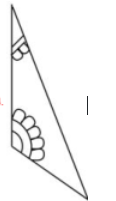
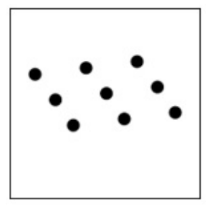
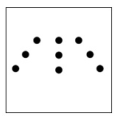
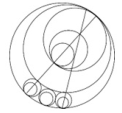
How many circles are there in the given figure?

  1. AOption (a)

    11

  2. BOption (b)

    10

  3. COption (c)

    13

  4. DOption (d)

    12

View answer & explanation

Correct answer

Answer: (a)A.

11

Why this answer is correct

Counting of circles:

Thus, 11 circles are there in the given figure.

Hence, the correct answer is "11".

Question 9

Identify the option figure that when put in place of the question mark (?) will logically complete the series.

  1. AOption (a)

  2. BOption (b)

  3. COption (c)

  4. DOption (d)

View answer & explanation

Correct answer

Answer: (c)C.

Why this answer is correct

The logic followed here is:

Shapes are shifting in anticlockwise direction.

Hence, the correct answer is "Option 3".

Question 10

Select the word-pair that best represents a similar relationship to the one expressed in the pair of words given below.

(The words must be considered as meaningful English words and must NOT be related to each other based on the number of letters/number of consonants/vowels in the word)

Frequency : Hertz

  1. AOption (a)

    Power : Newton

  2. BOption (b)

    Resistance : Candela

  3. COption (c)

    Force : Volt

  4. DOption (d)

    Illuminance : Lux

View answer & explanation

Correct answer

Answer: (d)D.

Illuminance : Lux

Why this answer is correct

The logic followed here is:

Logic: Units of Measurement.

Here,

Frequency : Hertz → Hertz is a unit of measurement for Frequency.

Similarly,

Illuminance : Lux → Lux is a unit of measurement for Illuminance.

Hence, the correct answer is "Option 4".
Question 11

Four letter-clusters have been given, out of which three are alike in some manner and one is different. Select the one that is different. The odd one out is not based on the number of consonants/vowels or their position in the letter cluster

  1. AOption (a)

    RTTUWW

  2. BOption (b)

    NOPPSS

  3. COption (c)

    ACCDFF

  4. DOption (d)

    IKKLNN

View answer & explanation

Correct answer

Answer: (b)B.

NOPPSS

Why this answer is correct

The logic followed here is:

Option 1) RTTUWW

Option 2) NOPPSS

Option 3) ACCDFF

Option 4) IKKLNN

Hence, the correct answer is "NOPPSS".

Question 12

Select the option figure that will replace the question mark (?) in the figure given below to complete the pattern.

  1. AOption (a)

  2. BOption (b)

  3. COption (c)

  4. DOption (d)

View answer & explanation

Correct answer

Answer: (b)B.

Why this answer is correct

The figures will complete the pattern:

Hence, the correct answer is "Option 2".

Question 13

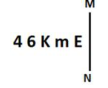
Select the correct mirror image of the given figure when the mirror is placed at MN as shown below.

  1. AOption (a)

  2. BOption (b)

  3. COption (c)

  4. DOption (d)

View answer & explanation

Correct answer

Answer: (a)A.

Why this answer is correct

The correct mirror image of the given figure is:

Hence, the correct answer is "Option 1".

Question 14

Identify the figure given in the options which when put in place of ? will logically complete the series.

  1. AOption (a)

  2. BOption (b)

  3. COption (c)

  4. DOption (d)

View answer & explanation

Correct answer

Answer: (c)C.

Why this answer is correct

The logic followed here is:

Letters are shifting in clockwise direction starting from middle letter to bottom-left corner.

Bottom-left letter is removed and a new letter is added in middle position.

Hence, the correct answer is "Option 3".

Question 15

The same operation(s) are followed in all the given number pairs except one. Find that odd number pair.

(NOTE : Operations should be performed on the whole numbers, without breaking down the numbers into its constituent digits. E.g. 13 – Operations on 13 such as adding /deleting /multiplying etc., to 13 can be performed. Breaking down 13 into 1 and 3 and then performing mathematical operations on 1 and 3 is not allowed.)

  1. AOption (a)

    24 : 4

  2. BOption (b)

    36 : 24

  3. COption (c)

    12 : 8

  4. DOption (d)

    72 : 48

View answer & explanation

Correct answer

Answer: (a)A.

24 : 4

Why this answer is correct

The logic followed here is: 2nd number + (2nd number / 2) = 1st number.

1)  24 : 4 → 4 + (4 / 2) = 4 + 2 = 6 ≠ 24

2)  36 : 24 → 24 + (24 / 2) = 24 + 12 = 36

3)  12 : 8 → 8 + (8 / 2) = 8 + 4 = 12

4)  72 : 48 → 48 + (48 / 2) = 48 + 24 = 72

Hence, the correct answer is "24 : 4".

Question 16

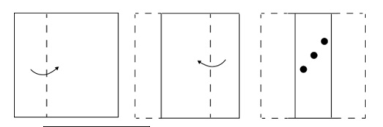
A square sheet of paper is folded along the dotted line successively along the directions shown and is then punched in the last as shown. How would the paper look when unfolded?

  1. AOption (a)

  2. BOption (b)

  3. COption (c)

  4. DOption (d)

View answer & explanation

Correct answer

Answer: (d)D.

Why this answer is correct

The paper look when unfolded:

Hence, the correct answer is "Option 4".

Question 17

The position of how many letters will remain unchanged if each of the letter in the word ‘IMPROVE’ is arranged in English alphabetical order?

  1. AOption (a)

    Zero

  2. BOption (b)

    One

  3. COption (c)

    Three

  4. DOption (d)

    Two

View answer & explanation

Correct answer

Answer: (a)A.

Zero

Why this answer is correct

Given word: 'IMPROVE'

After arranged in alphabetical order:

AlphabetsIMPROVE
Alphabetical orderEIMOPRV


Now,

there are Zero alphabets that will remain unchanged if each of the letters in the word 'IMPROVE' is arranged in English alphabetical order.

Hence, the correct answer is "Option 1".

Question 18

Three statements are given followed by three conclusions numbered I, II and III. Assuming the statements to be true, even if
they seem to be at variance with commonly known facts, decide which of the conclusions logically follow(s) from the statements.

Statements:

All crows are parrots.

All eagles are parrots.

All parrots are birds.

Conclusions:

I. No crow is a bird.

II. Some birds are eagles.

III. All birds are crows.

  1. AOption (a)

    Only conclusion II follows.

  2. BOption (b)

    Either conclusion II or III follows

  3. COption (c)

    All conclusions follow.

  4. DOption (d)

    Both conclusions I and III follow.

View answer & explanation

Correct answer

Answer: (a)A.

Only conclusion II follows.

Why this answer is correct

Statements:

All crows are parrots.

All eagles are parrots.

All parrots are birds.

The least possible Venn diagram is as follows:

Conclusions:

I. No crow is a bird. - False (because All crows are parrots and All parrots are birds. So, it can not be possible)

II. Some birds are eagles - This is True because all eagles are parrots, and all parrots are birds.

III. All birds are crows - This is False because there are birds that are parrots but not crows.

Hence, the correct answer is "Only conclusion II follows".

Question 19

Which of the following numbers will replace the question mark (?) in the given series?

81, 65, 50, ?, 23, 11

  1. AOption (a)

    37

  2. BOption (b)

    36

  3. COption (c)

    34

  4. DOption (d)

    35

View answer & explanation

Correct answer

Answer: (b)B.

36

Why this answer is correct

The logic followed here is:

Hence, the correct answer is "36".

Question 20

Select the combination of letters that when sequentially placed in the blanks of the given series will complete the series.

X _ _ Y _ X X _ _ X _ _

  1. AOption (a)

    X X X Y X X Y

  2. BOption (b)

    X X Y Y A A X

  3. COption (c)

    Y X X Y Y X X

  4. DOption (d)

    Y Y X Y A X X

View answer & explanation

Correct answer

Answer: (a)A.

X X X Y X X Y

Why this answer is correct

The logic followed here is:

Given Sequence: X _ _ Y _ X X _ _ X _ _

Now, putting the letters in the blank spaces given in the option one by one:

Option 1) X X X Y X X Y → X X X Y / X X X Y / X X X Y

Here, "X X X Y" pattern is followed.

Option 2) X X Y Y A A X → X X X Y / Y X X Y A X A X

Option 3) Y X X Y Y X X → X Y X Y / X X X Y Y X X X

Option 4) Y Y X Y A X X → X Y Y Y / X X X Y A X X X

Hence, the correct answer is "X X X Y X X Y".

Question 21

In a certain code language,

X + Y means ‘X is the sister of Y’,

X − Y means ‘X is the son of Y’,

X × Y means ‘X is the husband of Y’,

X ÷ Y means ‘X is the mother of Y’.

Based on the above, how is T related to X if ‘T + U − V × W ÷ X’?

  1. AOption (a)

    Father’s mother

  2. BOption (b)

    Sister

  3. COption (c)

    Father’s sister

  4. DOption (d)

    Mother’s sister

View answer & explanation

Correct answer

Answer: (b)B.

Sister

Why this answer is correct

Family Chart:

Decoding the Symbols:

Symbol+-×÷
MeaningSisterSonHusbandMother


Given: ‘T + U − V × W ÷ X

It means: T is the sister of U, U is the son of V, V is the husband of W and W is the mother of X.

So, T is the 'Sister' of X.

Hence, the correct answer is "Sister".

Question 22

What will come in place of the question mark (?) in the following equation if '+' and '−' are interchanged and '×' and '÷' are interchanged?

15 − 7 ÷ 4 + 36 × 9 = ?

  1. AOption (a)

    42

  2. BOption (b)

    34

  3. COption (c)

    40

  4. DOption (d)

    39

View answer & explanation

Correct answer

Answer: (d)D.

39

Why this answer is correct

BODMAS Table: 

After decoding signs:

SignsDecoded signs
+-
-+
×÷
÷×


Given equation: 15 − 7 ÷ 4 + 36 × 9 = ?

After interchanging the signs then:

⇒ 15 + 7 × 4 - 36 ÷  9 = ?

⇒ 15 + 7 × 4 - 4

⇒ 15 + 28 - 4

⇒  43 - 4 = 39

Hence, the correct answer is "39".

Question 23

Which of the following terms will replace the question mark (?) in the given series?

XJUM, VLSO, TNQQ, RPOS, ?

  1. AOption (a)

    PRMU

  2. BOption (b)

    QRMT

  3. COption (c)

    PRMT

  4. DOption (d)

    PRNU

View answer & explanation

Correct answer

Answer: (a)A.

PRMU

Why this answer is correct

The logic followed here is:

Hence, the correct answer is "PRMU".

Question 24

In a certain code language, 'FLAKE' is written as '62348' and 'LAKES' is written as '23@84'. How will 'S' be written in that language?

  1. AOption (a)

    4

  2. BOption (b)

    &

  3. COption (c)

    3

  4. DOption (d)

    @

View answer & explanation

Correct answer

Answer: (d)D.

@

Why this answer is correct

According to the given information:

Thus 'S' will be written as '@'.

Hence, the correct answer is "@".

Question 25

Select the option in which the numbers share the same relationship as that shared by the given pair of numbers.

(NOTE: Operations should be performed on the whole numbers, without breaking down the numbers into its constituent

digits. E.g. 13 – Operations on 13 such as adding/deleting/multiplying etc. to 13 can be performed. Breaking down 13 into 1

and 3 and then performing mathematical operations on 1 and 3 is not allowed.)

4 : 32

7 : 98

  1. AOption (a)

    8 : 192

  2. BOption (b)

    3 : 18

  3. COption (c)

    10 : 1000

  4. DOption (d)

    12 : 144

View answer & explanation

Correct answer

Answer: (b)B.

3 : 18

Why this answer is correct

The logic followed here is:

Logic: (1st number)2 × 2 = 2nd number.

Now,

For, 4 : 32

⇒ (42 × 2) = 16 × 2 = 32.

For, 7 : 98

⇒ (72 × 2) = 49 × 2 = 98.

Similarly, for 3 : 18

⇒ (32 × 2) = 9 × 2 = 18.

Hence, the correct answer is "Option 2".

General Awareness (25 questions)

Question 26

Which of the following statements about the second five-year plan is INCORRECT?

  1. AOption (a)

    The plan stressed the rapid industrialisation of heavy and basic industries.

  2. BOption (b)

    Electricity, Railway, Steel etc. industries were established during the plan.

  3. COption (c)

    The plan was based on the Keynesian Model.

  4. DOption (d)

    The socialist pattern of the society was reflected in the plan.

View answer & explanation

Correct answer

Answer: (c)C.

The plan was based on the Keynesian Model.

Why this answer is correct

The correct answer is The plan was based on the Keynesian Model.

Key Points

  • The Second Five-Year Plan (1956-1961) focused on the rapid industrialization of heavy and basic industries.
  • During this plan, industries such as electricity, railways, and steel were significantly developed.
  • The plan was based on the Mahalanobis Model, not the Keynesian Model.
  • The plan aimed to establish a socialist pattern of society in India.

Additional Information

  • Second Five-Year Plan (1956-1961)
  • The Second Five-Year Plan was launched under the leadership of Jawaharlal Nehru.
  • This plan was designed to build a strong industrial base for India, focusing on heavy industries and public sector enterprises.
  • The Mahalanobis Model, formulated by Indian statistician Prasanta Chandra Mahalanobis, was used as the basis for this plan. It emphasized the importance of investment in heavy industries and aimed at achieving self-reliance in industrial production.
  • The plan also sought to reduce inequalities in income and wealth and aimed to move towards a more equitable and socialist society.
  • Keynesian Model
  • The Keynesian Model, developed by John Maynard Keynes, focuses on total spending in the economy and its effects on output and inflation.
  • Keynesian economics advocates for increased government expenditures and lower taxes to stimulate demand and pull an economy out of depression.
  • It is often used to justify government intervention in the economy, especially during recessions.
  • This model is more focused on addressing short-term economic fluctuations rather than long-term industrial planning.
  • Socialist Pattern of Society
  • The concept of a socialist pattern of society aims at reducing inequalities in income and wealth and providing equal opportunities for all citizens.
  • It involves the establishment of a mixed economy where both the public and private sectors coexist and contribute to economic development.
  • In the context of India, this meant a significant role for the public sector in key industries and infrastructure, while also allowing space for private enterprise.
  • This approach was intended to ensure that economic growth would benefit all sections of society and lead to a more equitable distribution of resources.

Question 27

Who among the following was appointed as the Chief Economic Advisor (CEA) to the Indian government in 2022?

  1. AOption (a)

    Venkataramanan Anantha Nageswaran

  2. BOption (b)

    Kaushik Basu

  3. COption (c)

    TV Somanathan

  4. DOption (d)

    Raghuram Rajan

View answer & explanation

Correct answer

Answer: (a)A.

Venkataramanan Anantha Nageswaran

Why this answer is correct

The correct answer is Venkataramanan Anantha Nageswaran.

Key Points

  • Venkataramanan Anantha Nageswaran was appointed as the Chief Economic Advisor to the Government of India in 2022.
  • He succeeded Krishnamurthy Subramanian who served as the CEA from 2018 to 2021.
  • Nageswaran has a strong academic background with a doctoral degree from the University of Massachusetts in Amherst.
  • He has held various important roles in both academia and the financial sector before his appointment as CEA.

Additional Information

  • Chief Economic Advisor (CEA)
  • The Chief Economic Advisor (CEA) is a position in the Ministry of Finance, Government of India.
  • The CEA provides important advice on economic issues to the Government of India.
  • The role involves the preparation of economic surveys and reports which are used by the government for policy formulation.
  • CEAs play a crucial role in shaping the economic strategy and policy of the country.
  • Venkataramanan Anantha Nageswaran
  • Prior to his appointment as CEA, Nageswaran has been a writer, author, teacher, and consultant.
  • He has taught at various institutions including the Indian Institute of Management (IIM) Bangalore and the Singapore Management University.
  • He has served as the Dean of the IFMR Graduate School of Business and as a part-time member of the Economic Advisory Council to the Prime Minister of India.
  • His work spans a wide range of areas including economic policy, financial markets, and corporate finance.

This source code provides a structured and detailed explanation of the correct option, highlighting key points about Venkataramanan Anantha Nageswaran's appointment as the Chief Economic Advisor in 2022, along with additional information about the role and responsibilities of a CEA and Nageswaran's background.

Question 28

Name the pension scheme that seeks to ensure old age protection for unorganised workers.

  1. AOption (a)

    Atal Pension Yojna

  2. BOption (b)

    Pradhan Mantri Mudra Yojna

  3. COption (c)

    Pradhan Mantri Suraksha Bhima Yojna

  4. DOption (d)

    Pradhan Mantri Shram Yogi Maandhan

View answer & explanation

Correct answer

Answer: (d)D.

Pradhan Mantri Shram Yogi Maandhan

Why this answer is correct

The correct answer is Pradhan Mantri Shram Yogi Maan-Dhan Yojana.

Key Points

  • The government of India has introduced a pension scheme for unorganized workers namely Pradhan Mantri Shram Yogi Maan-Dhan (PM-SYM) to ensure old age protection for Unorganized Workers.
  • PM Narendra Modi, on 5 March 2019, launched the Pradhan Mantri Shram Yogi Maandhan (PM-SYM) Yojana at Vastral in Gujarat.
  • The Pradhan Mantri Shram Yogi Maandhan Yojana was introduced in the Interim Budget 2019-20 presented by the Union Minister for Finance, Corporate Affairs, Railways & Coal, Shri Piyush Goyal in Parliament on 1 February 2019.
  • PM-SYM is meant for old age protection and social security of Unorganized Workers (UW) who are mostly engaged as rickshaw pullers, street vendors, mid-day meal workers, head, brick kiln workers, cobblers, rag pickers, domestic workers, washermen, home-based, agricultural workers, construction workers, beedi workers, handloom workers, leather workers, audio-visual workers or in similar other occupations.
  • There are an estimated 42 crore such unorganized workers in the country. The entry age for the beneficiary is 18-40 years and he/she should not be a member of ESIC/EPFO or an income taxpayer.
  • The schemes are being implemented through the Life Insurance Corporation (LIC) of India and Common Service Centers. LIC is the Fund Manager and is responsible for pension pay-out.

Additional Information

  • Ayushman Bharat - Pradhan Mantri Jan Arogya Yojana (AB-PMJAY)
  • It is a national health insurance scheme spearheaded by the Ministry of Health and Family Welfare
  • It is considered to be the world's largest government-financed health assurance initiative.
  • It aims to provide free access to health insurance coverage for India's low-income earners.
  • AB-PMJAY provides a cover of Rs. 5 lakhs per family per year, catering specifically to secondary and tertiary care hospitalization across public and private impanelled hospitals throughout the country.
  • This significant scheme is fully financed by the Indian government, serving as an important stepping stone towards achieving universal healthcare in India.
  • Pradhan Mantri Suraksha Bima Yojana (PMSBY)
  • ​It is a government-backed accident insurance scheme in India launched on May 9, 2015, by PM Narendra Modi.
  • PMSBY aims to provide a highly affordable insurance scheme for the poor and underprivileged people.
  • It is available to individuals in the age group of 18 to 70 years who own a bank account.
  • At a nominal annual premium of Rs.12, beneficiaries receive a risk coverage of Rs.2 lakh for accidental death and full disability, and Rs.1 lakh for partial disability.
  • This prime ministerial scheme plays a pivotal role in uplifting the vulnerable strata of society and is a step towards protection against unforeseen risks.
  • Pradhan Mantri Jeevan Jyoti Bima Yojana (PMJJBY)
  • It was launched on 9th May 2015 by PM Narendra Modi
  • It is a government-backed life insurance scheme in India aimed at increasing the penetration of life insurance coverage among Indians.
  • It is available to individuals aged 18 to 50 years with a bank account.
  • This scheme offers a life cover of Rs. 2 lakhs for a one-year period, which extends from June 1st to May 31st of the next year.
  • The annual premium for this policy is ₹ 436 (US$5.50).
  • The amount will be automatically debited from the subscriber's account annually.
  • The PMJJBY scheme is an important initiative taken by the Indian government to provide affordable life insurance to its citizens.

Question 29

What is the gas evolved when zinc reacts with sulphuric acid?

  1. AOption (a)

    Hydrogen

  2. BOption (b)

    Oxygen

  3. COption (c)

    Carbon dioxide

  4. DOption (d)

    Hydrogen sulphide

View answer & explanation

Correct answer

Answer: (a)A.

Hydrogen

Why this answer is correct

The correct answer is Hydrogen.

Key Points

  • When zinc reacts with sulphuric acid, hydrogen gas is evolved along with the formation of zinc sulphate.
  • The chemical reaction can be represented as: Zn + H₂SO₄ → ZnSO₄ + H₂↑
  • This is a single displacement reaction where zinc displaces hydrogen from sulphuric acid.
  • Hydrogen gas is colorless, odorless, and highly flammable, and it can be identified by the 'pop' sound it makes when a burning splint is brought near it.

Additional Information

  • Zinc (Zn)
  • Zinc is a metallic element that is commonly used in various industrial applications.
  • It is known for its ability to resist corrosion and its role in galvanizing iron and steel.
  • Zinc is also an essential trace element for living organisms, playing a crucial role in biological processes.
  • Sulphuric Acid (H₂SO₄)
  • Sulphuric acid is a strong mineral acid with a wide range of industrial applications.
  • It is used in the manufacture of fertilizers, in petroleum refining, and in chemical synthesis.
  • It is highly corrosive and should be handled with care.
  • Single Displacement Reaction
  • A single displacement reaction is a type of chemical reaction where an element reacts with a compound, displacing another element from it.
  • In the reaction between zinc and sulphuric acid, zinc displaces hydrogen from the acid, forming zinc sulphate and releasing hydrogen gas.
  • Properties of Hydrogen Gas
  • Hydrogen is the lightest and most abundant element in the universe.
  • It is highly flammable and burns with a pale blue, almost invisible flame.
  • In its molecular form (H₂), it is used as a fuel and in various industrial processes.

Question 30

In 2022, who has been appointed as new Attorney General of India?

  1. AOption (a)

    KK Venugopal

  2. BOption (b)

    Niren De

  3. COption (c)

    Mukul Rohatgi

  4. DOption (d)

    R Venkataramani

View answer & explanation

Correct answer

Answer: (d)D.

R Venkataramani

Why this answer is correct

The correct answer is R Venkataramani.

Key Points

  • R Venkataramani was appointed as the Attorney General of India in 2022.
  • He succeeded KK Venugopal, who served as the Attorney General before him.
  • R Venkataramani is a distinguished advocate with vast experience in the legal field.
  • He has been a Senior Advocate in the Supreme Court of India and has contributed to various significant legal matters.

Additional Information

  • Attorney General of India
  • The Attorney General of India is the chief legal advisor to the Government of India and its primary lawyer in the Supreme Court of India.
  • The Attorney General is appointed by the President of India under Article 76(1) of the Constitution and holds office during the pleasure of the President.
  • The Attorney General must be a person qualified to be appointed as a Judge of the Supreme Court.
  • The duties of the Attorney General include giving advice to the Government of India upon legal matters and performing other legal duties as assigned.
  • Previous Attorneys General
  • KK Venugopal - Served as the Attorney General from 2017 to 2022.
  • Mukul Rohatgi - Served as the Attorney General from 2014 to 2017.
  • Niren De - Served as the Attorney General from 1968 to 1977.
  • Role and Functions
  • The Attorney General appears on behalf of the Government of India in all cases (including suits, appeals, and other proceedings) in the Supreme Court in which the Government of India is concerned.
  • He/she represents the Government of India in any reference made by the President to the Supreme Court under Article 143 of the Constitution.
  • The Attorney General has the right of audience in all courts in India as well as the right to participate in the proceedings of both Houses of Parliament without the right to vote.

Question 31

Which of the following is NOT a kharif crop?

  1. AOption (a)

    Paddy

  2. BOption (b)

    Soyabean

  3. COption (c)

    Wheat

  4. DOption (d)

    Cotton

View answer & explanation

Correct answer

Answer: (c)C.

Wheat

Why this answer is correct

The correct answer is Wheat.

Key Points

  • Wheat is primarily a rabi crop.
  • Rabi crops are sown in winter and harvested in the spring.
  • Wheat typically requires cooler weather and a moderate amount of water during the growing season.
  • Examples of other rabi crops include barley, mustard, and peas.

Additional Information

  • Kharif Crops
  • Kharif crops, also known as monsoon crops, are sown with the beginning of the first rains in July, during the southwest monsoon season.
  • They require a lot of water and hot weather for their growth.
  • Examples of kharif crops include Paddy, Soyabean, Maize, Cotton, and Groundnut.
  • The harvesting season for kharif crops is typically from September to October.
  • Rabi Crops
  • Rabi crops are sown in winter from October to December.
  • They are harvested in the spring from April to June.
  • Rabi crops require a warm climate for germination and a cold climate for growth.
  • Examples of rabi crops include Wheat, Barley, Mustard, and Peas.
  • Difference Between Kharif and Rabi Crops
  • The main difference lies in the timing of their sowing and harvesting seasons.
  • Kharif crops are dependent on the arrival of the monsoon, whereas rabi crops are grown in the winter season when the monsoon has retreated.
  • Kharif crops need a lot of water and hot weather, while rabi crops require cold weather for growth and less water.
  • Important Indian Cropping Seasons
  • India has two main cropping seasons - Rabi and Kharif, and a third, less significant one called Zaid.
  • Zaid crops are grown between March and June, in the intervening period between the rabi and kharif seasons.
  • Examples of zaid crops include watermelon, cucumber, and fodder crops.

Question 32

Which of the following is another name of vitamin C?

  1. AOption (a)

    Pyridoxine

  2. BOption (b)

    Pyridoxal

  3. COption (c)

    Pyridoxamine

  4. DOption (d)

    Ascorbic acid

View answer & explanation

Correct answer

Answer: (d)D.

Ascorbic acid

Why this answer is correct

The correct answer is Ascorbic acid.

Key Points

  • Ascorbic acid is another name for Vitamin C.
  • Vitamin C is essential for the growth, development, and repair of all body tissues.
  • It is involved in many body functions, including the formation of collagen, absorption of iron, the immune system, wound healing, and the maintenance of cartilage, bones, and teeth.
  • Vitamin C is a powerful antioxidant that can strengthen your body’s natural defenses.

Additional Information

  • Pyridoxine
  • Pyridoxine is a form of Vitamin B6, which is important for normal brain development and for keeping the nervous system and immune system healthy.
  • It is used to treat or prevent vitamin B6 deficiency.
  • Pyridoxal
  • Pyridoxal is one of the three natural forms of vitamin B6, along with Pyridoxamine and Pyridoxine.
  • It plays a crucial role in the metabolism of amino acids and is involved in the biosynthesis of neurotransmitters.
  • Pyridoxamine
  • Pyridoxamine is another form of Vitamin B6.
  • It is involved in various metabolic processes, including the conversion of stored carbohydrates to glucose.
  • Vitamin C (Ascorbic acid)
  • Vitamin C, also known as Ascorbic acid, is an essential nutrient for humans.
  • It acts as an antioxidant, helping to protect cells from the damage caused by free radicals.
  • Vitamin C also helps the body make collagen, an important protein for skin, cartilage, tendons, ligaments, and blood vessels.
  • It improves the absorption of iron from plant-based foods and helps the immune system work properly to protect the body from disease.

Question 33

Who among the following Indian classical dancers is associated with Kuchipudi?

  1. AOption (a)

    Meenakshi Mehdi

  2. BOption (b)

    Vempati Chinna Satyam

  3. COption (c)

    Sanjukta Panigrahi

  4. DOption (d)

    Malavika Sarkar

View answer & explanation

Correct answer

Answer: (b)B.

Vempati Chinna Satyam

Why this answer is correct

The correct answer is Vempati Chinna Satyam.

Key Points

  • Vempati Chinna Satyam was a prominent Indian classical dancer known for his expertise in the Kuchipudi dance form.
  • He was instrumental in popularizing Kuchipudi dance and taking it to international stages.
  • Chinna Satyam founded the Kuchipudi Art Academy in Chennai in 1963 to train young dancers in this classical dance form.
  • He was recognized with numerous awards for his contributions to Kuchipudi, including the Padma Bhushan and Sangeet Natak Akademi Award.

Additional Information

  • Kuchipudi
  • Kuchipudi is one of the eight major Indian classical dance forms and originates from Andhra Pradesh.
  • It derives its name from the village of Kuchipudi in Andhra Pradesh where it was born.
  • This dance form is known for its graceful movements, strong narrative, and expressive gestures.
  • Traditionally, Kuchipudi was performed by male dancers in temples, but it has evolved over time and now both men and women perform it on stage.
  • Bharatanatyam
  • Bharatanatyam is a major Indian classical dance form originating from Tamil Nadu.
  • This dance form is known for its fixed upper torso, bent legs, and intricate footwork combined with expressive hand gestures and facial expressions.
  • Bharatanatyam is typically performed by women and has a rich history dating back to the temples of Tamil Nadu.
  • Odissi
  • Odissi is an Indian classical dance form that originates from the state of Odisha.
  • It is known for its fluid, graceful movements and sculpturesque poses.
  • Odissi dance is characterized by its use of the tribhangi posture, which involves three bends in the body.
  • Manipuri
  • Manipuri is an Indian classical dance form originating from the state of Manipur in northeastern India.
  • This dance form is known for its lyrical and graceful movements that depict themes from the Hindu epics.
  • Manipuri dance is often performed during religious festivals and is distinguished by its calm, soft, and flowing movements.

Question 34

Which of the following Sultans of Delhi primarily adopted a policy of consolidation rather than expansion?

  1. AOption (a)

    Ibrahim Lodi

  2. BOption (b)

    Balban

  3. COption (c)

    Alauddin Khalji

  4. DOption (d)

    Bahlol Lodi

View answer & explanation

Correct answer

Answer: (b)B.

Balban

Why this answer is correct

The correct answer is Balban.

Key Points

  • Ghiyas ud din Balban was one of the most prominent Sultans of the Slave Dynasty in India.
  • He ruled the Delhi Sultanate from 1266 to 1287.
  • Balban primarily focused on consolidating his empire rather than expanding it.
  • He implemented strong administrative policies and maintained a robust military to ensure internal stability and defense against external threats.

Additional Information

  • Ibrahim Lodi
  • Ibrahim Lodi was the last Sultan of the Lodi dynasty, ruling from 1517 to 1526.
  • He attempted to maintain and expand the empire but faced internal revolts and was ultimately defeated by Babur in the First Battle of Panipat.
  • Alauddin Khalji
  • Alauddin Khalji ruled from 1296 to 1316.
  • He is known for his aggressive expansionist policies and successful military campaigns in the Deccan and northern India.
  • He also implemented significant economic and administrative reforms.
  • Bahlol Lodi
  • Bahlol Lodi was the founder of the Lodi dynasty and ruled from 1451 to 1489.
  • He focused on consolidating his power in the region and laid the foundation for the Lodi rule in Delhi.

Question 35

Which of the following team events is included in the Target Olympic Podium Scheme?

  1. AOption (a)

    Tennis

  2. BOption (b)

    Football

  3. COption (c)

    Cricket

  4. DOption (d)

    Hockey

View answer & explanation

Correct answer

Answer: (d)D.

Hockey

Why this answer is correct

The correct answer is Hockey.

Key Points

  • The Target Olympic Podium Scheme (TOPS) is an initiative by the Ministry of Youth Affairs and Sports, Government of India.
  • It aims to support Indian athletes who have the potential to win Olympic medals.
  • Hockey is one of the team events included under the TOPS scheme.
  • The scheme provides financial assistance and other support to athletes, including training, coaching, and international competition exposure.

Additional Information

  • Target Olympic Podium Scheme (TOPS)
  • The scheme was launched in 2014 to provide support to India's top athletes in their preparation for the Olympics and other major international events.
  • TOPS aims to identify athletes who have the potential to win medals at the Olympics and provide them with customized training and support.
  • Under the scheme, athletes receive financial assistance for training, equipment, and participation in international competitions.
  • The scheme also focuses on the holistic development of athletes, including aspects such as sports science support, psychological counseling, and nutrition.
  • Hockey in India
  • Hockey is one of the most popular sports in India and has a rich history of success in international competitions.
  • India's men's hockey team has won eight Olympic gold medals, making it one of the most successful teams in the history of the Olympics.
  • The Indian women's hockey team has also made significant progress in recent years, achieving notable performances in international tournaments.
  • The inclusion of hockey in the TOPS scheme aims to further strengthen the performance of Indian hockey teams at the international level.

Question 36

Articles 214 to 231 in Part VI of the Indian Constitution deal with the ________.

  1. AOption (a)

    High Courts

  2. BOption (b)

    District Courts

  3. COption (c)

    Subordinate Courts

  4. DOption (d)

    Supreme Court

View answer & explanation

Correct answer

Answer: (a)A.

High Courts

Why this answer is correct

The correct answer is High Courts.

Key Points

  • Articles 214 to 231 in Part VI of the Indian Constitution deal with the establishment and constitution of the High Courts.
  • A High Court is the principal civil court of original jurisdiction in a state.
  • Each state of India is provided with a High Court which has its own jurisdiction and powers as defined under the Constitution.
  • The High Courts have the authority to issue writs for the enforcement of the Fundamental Rights of citizens.

Additional Information

  • High Courts
  • High Courts are the highest courts in a state in India, and each state has its own High Court.
  • High Courts have jurisdiction over all subordinate courts within their territory.
  • They have the power to hear appeals and to issue writs to enforce Fundamental Rights.
  • The judges of the High Courts are appointed by the President of India.
  • District Courts
  • District Courts are established by the state governments of India for every district or for one or more districts together taking into account the number of cases and population distribution.
  • They administer justice at the district level and are subordinate to the High Court of the respective state.
  • Subordinate Courts
  • Subordinate Courts are the lower courts under the District Courts, which deal with civil, criminal, and other cases at a more local level.
  • They operate under the supervision and control of the District Court.
  • Supreme Court
  • The Supreme Court of India is the highest judicial forum and final court of appeal as established by Part V, Chapter IV of the Constitution of India.
  • It comprises the Chief Justice of India and a number of other judges appointed by the President of India.
  • The Supreme Court has extensive original, appellate, and advisory jurisdictions.

Question 37

Which of the following ministries launched the PM Daksh scheme?

  1. AOption (a)

    Ministry of Education

  2. BOption (b)

    Ministry of Electronics and Information Technology

  3. COption (c)

    Ministry of Social Justice and Empowerment

  4. DOption (d)

    Ministry of Food Processing Industries

View answer & explanation

Correct answer

Answer: (c)C.

Ministry of Social Justice and Empowerment

Why this answer is correct

The correct answer is Ministry of Social Justice and Empowerment.

Key Points

  • The PM Daksh (Pradhan Mantri Dakshta Aur Kushalta Sampann Hitgrahi) scheme was launched by the Ministry of Social Justice and Empowerment in 2021.
  • The scheme aims to enhance the skill development among the target groups such as Scheduled Castes, Other Backward Classes, Economically Backward Classes, and sanitation workers, including waste pickers.
  • It focuses on providing skill training to marginalized sections of the society, making them self-reliant and financially stable.
  • Under the scheme, eligible candidates are provided with short-term and long-term skill training based on the National Skill Qualification Framework (NSQF).

Additional Information

  • National Skill Qualification Framework (NSQF)
  • The NSQF is a competency-based framework that organizes all qualifications according to a series of levels of knowledge, skills, and aptitude.
  • It aims to standardize the training and qualifications across various sectors to ensure quality and relevance in the skill development process.
  • The NSQF levels range from 1 to 10, representing different levels of learning outcomes that a learner must possess.
  • This framework is crucial for aligning the skill development initiatives with the needs of the industry, thereby enhancing employability.
  • Ministry of Social Justice and Empowerment
  • The Ministry is responsible for the welfare, social justice, and empowerment of disadvantaged and marginalized sections of society.
  • It formulates policies, plans, and programs for promoting the welfare of Scheduled Castes, Other Backward Classes, Senior Citizens, and other vulnerable groups.
  • The Ministry also implements various central sector and centrally sponsored schemes for the upliftment and empowerment of these groups.
  • Some of the key initiatives include scholarships, skill development programs, and schemes for social security.

Question 38

__________ is often touted as Tansen of the 20th century, this musical genius blended the best of classical music and created a unique style of his own.

  1. AOption (a)

    Ustad Ali Baksh Khan

  2. BOption (b)

    Bade Ghulam Ali Khan

  3. COption (c)

    Mubarak Ali Khan

  4. DOption (d)

    Barkat Ali Khan

View answer & explanation

Correct answer

Answer: (b)B.

Bade Ghulam Ali Khan

Why this answer is correct

The correct answer is Bade Ghulam Ali Khan.

Key Points

  • Bade Ghulam Ali Khan was an iconic Indian classical vocalist from the Patiala Gharana.
  • He is often regarded as one of the greatest classical singers of the 20th century.
  • His unique style blended the best elements of classical music, creating a distinct sound that earned him immense respect and popularity.
  • He was known for his rich voice, intricate phrasing, and the ability to convey deep emotions through his music.

Additional Information

  • Patiala Gharana
  • The Patiala Gharana is one of the prominent schools of Indian classical music, known for its rich and elaborate style of singing.
  • It was founded in the mid-19th century by Fateh Ali Khan and Ali Baksh Khan.
  • The gharana is known for its intricate and swift taans (rapid melodic passages) and bol-baant (word division).
  • It has produced many eminent musicians, with Bade Ghulam Ali Khan being one of its most celebrated exponents.
  • Classical Music in India
  • Indian classical music is one of the oldest musical traditions in the world.
  • There are two main traditions: Hindustani classical music from North India and Carnatic classical music from South India.
  • Hindustani music focuses on the improvisational nature of ragas and is often performed in a more elaborate manner.
  • Carnatic music is known for its structured and composed nature, with a greater emphasis on kritis (compositions).
  • Raga
  • A raga is a melodic framework used in Indian classical music.
  • It is based on a specific scale and set of rules that guide the notes and motifs that can be used.
  • Each raga is associated with a particular time of day, season, mood, or emotion, and is intended to evoke specific feelings in the listener.
  • Vocal Techniques in Indian Classical Music
  • Indian classical vocal music employs various techniques such as alap (slow, improvisational introduction), jor (intermediate tempo), and jhala (fast-paced conclusion).
  • The use of taans (rapid melodic passages) and gamakas (ornamentations) adds complexity and beauty to the performance.
  • Singers often use a variety of rhythmic patterns and improvisations to showcase their skill and creativity.

Question 39

How many ICC World Cups has India won in ODI?

  1. AOption (a)

    1

  2. BOption (b)

    3

  3. COption (c)

    2

  4. DOption (d)

    4

View answer & explanation

Correct answer

Answer: (c)C.

2

Why this answer is correct

The correct answer is 2.

Key Points

  • India has won the ICC World Cup in ODI format twice.
  • The first win was in 1983 under the captaincy of Kapil Dev.
  • The second win was in 2011 under the captaincy of Mahendra Singh Dhoni.
  • India is one of the few countries to have won the World Cup multiple times.

Additional Information

  • ICC World Cup
  • The ICC Cricket World Cup is the international championship of One Day International (ODI) cricket.
  • It is organized by the sport's governing body, the International Cricket Council (ICC), every four years.
  • The tournament is one of the world's most viewed sporting events and is considered the "flagship event of the international cricket calendar" by the ICC.
  • The first World Cup was held in England in 1975.
  • 1983 ICC World Cup
  • The 1983 Cricket World Cup (officially the Prudential Cup '83) was the third edition of the Cricket World Cup tournament.
  • The tournament was won by India, who defeated the West Indies in the final to win their first World Cup title.
  • The final was held at Lord's in London on 25 June 1983.
  • 2011 ICC World Cup
  • The 2011 ICC Cricket World Cup was the tenth Cricket World Cup.
  • It was co-hosted by India, Sri Lanka, and Bangladesh.
  • India won the tournament, defeating Sri Lanka by 6 wickets in the final in Mumbai.
  • India became the first country to win the Cricket World Cup on home soil.
  • Mahendra Singh Dhoni
  • Mahendra Singh Dhoni, commonly known as MS Dhoni, is an Indian cricketer and former captain of the Indian national team.
  • He is widely regarded as one of the greatest cricket captains and wicket-keeper batsmen in the history of the game.
  • Under his captaincy, India won the 2007 ICC World Twenty20, the 2010 and 2016 Asia Cups, the 2011 ICC Cricket World Cup, and the 2013 ICC Champions Trophy.

Question 40

Who first stated the principle of refraction that postulates that every substance has a specific bending ratio – 'refractive index'?

  1. AOption (a)

    Dennis Gabor

  2. BOption (b)

    Thomas Young

  3. COption (c)

    Willebrord Snellius

  4. DOption (d)

    David Brewster

View answer & explanation

Correct answer

Answer: (c)C.

Willebrord Snellius

Why this answer is correct

The correct answer is Willebrord Snellius.

Key Points

  • Willebrord Snellius was a Dutch astronomer and mathematician.
  • He is best known for the law of refraction of light, now known as Snell's Law.
  • Snell's Law describes how light bends, or refracts, when it passes from one transparent medium to another.
  • He formulated this principle in 1621, which is fundamental in the field of optics.

Additional Information

  • Refractive Index:
  • The refractive index of a substance is a measure of how much the speed of light is reduced inside the substance compared to the speed of light in a vacuum.
  • It is denoted by the symbol 'n' and is defined as n = c/v, where 'c' is the speed of light in a vacuum and 'v' is the speed of light in the substance.
  • The refractive index determines how much light is bent, or refracted, when entering a material.
  • Different materials have different refractive indices, which is why light bends differently when passing through different substances.
  • Snell's Law:
  • Snell's Law, also known as the law of refraction, is expressed as n1 * sin(θ1) = n2 * sin(θ2).
  • Here, n1 and n2 are the refractive indices of the two media, and θ1 and θ2 are the angles of incidence and refraction, respectively.
  • This law applies to the refraction of any type of wave, including light, sound, and water waves.
  • Snell's Law is crucial in designing lenses and other optical devices.
  • Applications of Snell's Law:
  • Snell's Law is used in various fields such as optics, astronomy, and photography.
  • It helps in understanding and designing optical instruments like microscopes, telescopes, and cameras.
  • It is also used in fiber optics for efficient light transmission.
  • Understanding refraction is essential in disciplines like meteorology and oceanography for studying phenomena like mirages and underwater acoustics.

Question 41

Coir conductor Coomi Nariman Wadia was awarded with which of the following awards by the Government of India in 2023?

  1. AOption (a)

    Padma Bhushan

  2. BOption (b)

    Padma Vibhushan

  3. COption (c)

    Bharat Ratna

  4. DOption (d)

    Padma Shri

View answer & explanation

Correct answer

Answer: (d)D.

Padma Shri

Why this answer is correct

The correct answer is Padma Shri.

Key Points

  • The Padma Shri is the fourth highest civilian award in the Republic of India, after the Bharat Ratna, the Padma Vibhushan, and the Padma Bhushan.
  • Instituted in 1954, it is awarded to citizens of India for their distinguished contributions in various spheres of activity including the arts, education, industry, literature, science, sports, medicine, social service, and public affairs.
  • The award is announced every year on Republic Day, January 26th.
  • Recipients of the Padma Shri award are announced annually by the Government of India, and the award is conferred by the President of India at a ceremonial function held at Rashtrapati Bhavan.

Additional Information

  • Padma Awards
  • The Padma Awards are one of the highest civilian honors of India announced annually on the eve of Republic Day.
  • The awards are given in three categories: Padma Vibhushan, Padma Bhushan, and Padma Shri, in descending order of importance.
  • The Padma Vibhushan is awarded for exceptional and distinguished service, the Padma Bhushan for distinguished service of a high order, and the Padma Shri for distinguished service in any field.
  • The awards seek to recognize achievements in all fields of activities or disciplines where an element of public service is involved, including the arts, education, industry, literature, science, sports, medicine, social service, and public affairs.
  • History and Significance
  • The Padma Awards were instituted in 1954 to recognize the distinguished contribution of citizens in various fields.
  • They are a means to honor and celebrate the contributions made by individuals towards the growth and development of the nation.
  • The awards are a recognition of the hard work and dedication of individuals who have excelled in their respective fields.
  • They inspire others to strive for excellence and contribute to the nation’s progress.
  • Conferment Process
  • The Padma Awards Committee, which is constituted by the Prime Minister of India, is responsible for the selection of awardees.
  • The recommendations for the awards are received from various sources such as state governments, central ministries, previous awardees, and the general public.
  • The committee reviews the recommendations and submits its recommendations to the Prime Minister and the President of India.
  • The final list of awardees is announced on the eve of Republic Day, January 26th.

Question 42

Who published Systema Naturae in 1735 classifying the three kingdoms of nature and outlining the sexual system for the classification of plants?

  1. AOption (a)

    Carl Woese

  2. BOption (b)

    Robert Whittaker

  3. COption (c)

    Ernst Haeckel

  4. DOption (d)

    Carolus Linnaeus

View answer & explanation

Correct answer

Answer: (d)D.

Carolus Linnaeus

Why this answer is correct

The correct answer is Carolus Linnaeus.

Key Points

  • Carolus Linnaeus, also known as Carl Linnaeus or Carl von Linné, was a Swedish botanist, zoologist, and physician.
  • He published the landmark book "Systema Naturae" in 1735, which laid the foundations for the modern biological naming scheme of binomial nomenclature.
  • Linnaeus classified nature into three kingdoms: animal, vegetable, and mineral, and introduced the sexual system for the classification of plants.
  • His work in "Systema Naturae" is considered one of the most significant contributions to the field of taxonomy and systematics.

Additional Information

  • Systema Naturae
  • Systema Naturae is one of the major works of Carl Linnaeus and was first published in 1735.
  • It introduced a hierarchical classification system, which is the basis for the modern system of taxonomy.
  • The book included a classification of all known plants, animals, and minerals, and established the use of binomial nomenclature, where each species is given a two-part Latin name (genus and species).
  • The sexual system of plant classification was based on the number and arrangement of reproductive organs (stamens and pistils).
  • Binomial Nomenclature
  • Binomial nomenclature is a formal system of naming species of living things by giving each a name composed of two parts, both of which use Latin grammatical forms.
  • The first part of the name identifies the genus to which the species belongs, and the second part identifies the species within the genus.
  • This system was developed by Carolus Linnaeus and is used universally in the scientific community.
  • Taxonomy
  • Taxonomy is the science of defining and naming groups of biological organisms based on shared characteristics.
  • Organisms are grouped into taxa, which are then grouped into larger taxa, creating a hierarchical structure.
  • Linnaeus' classification system included ranks such as kingdom, class, order, family, genus, and species, which are still used today.
  • Sexual System
  • The sexual system was a method of classifying plants based on the number and arrangement of their reproductive organs.
  • This system was part of Linnaeus' work in "Systema Naturae" and was revolutionary at the time, providing a clear and structured way to classify plants.

Question 43

When a person is NOT paying anything for public goods, it is known as ________.

  1. AOption (a)

    non-excludable

  2. BOption (b)

    rivalrous

  3. COption (c)

    free rider

  4. DOption (d)

    private good

View answer & explanation

Correct answer

Answer: (c)C.

free rider

Why this answer is correct

The correct answer is free rider.

Key Points

  • A free rider is a person who benefits from resources, goods, or services without paying for the cost of the benefit.
  • This phenomenon commonly occurs with public goods, which are non-excludable and non-rivalrous.
  • Free rider problem can lead to under-provision of public goods as there is no incentive for individuals to contribute voluntarily.
  • Government intervention is often required to ensure the provision and maintenance of public goods due to the free rider problem.

Additional Information

  • Non-excludable:
  • Non-excludable goods are those that individuals cannot be effectively excluded from using.
  • Examples include public parks, national defense, and clean air.
  • Rivalrous:
  • Rivalrous goods are those that can only be used by one person at a time.
  • If one person consumes a rivalrous good, it reduces the amount available for others.
  • Examples include food, clothing, and cars.
  • Private good:
  • Private goods are both excludable and rivalrous.
  • Owners can prevent others from using them, and their use by one person diminishes their availability to others.
  • Examples include personal electronics, houses, and personal vehicles.
  • Free rider problem:
  • This occurs when individuals benefit from resources, goods, or services without paying for them.
  • It is particularly prevalent with public goods which are non-excludable and non-rivalrous.
  • Common solutions involve government intervention or collective action to provide the good and ensure everyone contributes.

Question 44

In 1936, The Independent Labour Party was founded by ______.

  1. AOption (a)

    Mohan Singh Bhakna

  2. BOption (b)

    BR Ambedkar

  3. COption (c)

    Bal Gangadhar Tilak

  4. DOption (d)

    Bhagat Singh

View answer & explanation

Correct answer

Answer: (b)B.

BR Ambedkar

Why this answer is correct

The correct answer is BR Ambedkar.

Key Points

  • Dr. BR Ambedkar was a prominent Indian jurist, economist, and social reformer who campaigned against social discrimination towards the untouchables (Dalits).
  • He was the principal architect of the Constitution of India and served as the first Law Minister of India.
  • In 1936, Dr. BR Ambedkar founded the Independent Labour Party, which aimed to secure social justice and eradicate social inequalities.
  • The party contested the Bombay Legislative Assembly elections held in 1937 and won 15 seats.

Additional Information

  • Independent Labour Party (ILP)
  • The Independent Labour Party was established by BR Ambedkar on 15 August 1936 in Bombay.
  • The ILP was formed to address the issues faced by the working class and the marginalized sections of society, particularly the Dalits.
  • The party's manifesto emphasized the need for state socialism in the sphere of industry and agriculture.
  • It also advocated for labor rights, including fair wages, decent working conditions, and social security measures for workers.
  • BR Ambedkar
  • Born on 14 April 1891, Bhimrao Ramji Ambedkar was a prolific scholar and an influential leader of the Dalit community in India.
  • He played a crucial role in drafting the Indian Constitution and was a strong advocate for the rights of the oppressed and marginalized.
  • Ambedkar's efforts led to significant social reforms, including the abolition of untouchability and the promotion of education and employment opportunities for Dalits.
  • He embraced Buddhism in 1956 along with many of his followers, which marked a significant movement in the Dalit community towards religious and social empowerment.
  • Social Reform Movements in India
  • Social reform movements in India aimed at eradicating social evils and injustices prevalent in society, such as caste discrimination, gender inequality, and child marriage.
  • Prominent social reformers included Raja Ram Mohan Roy, who worked towards the abolition of Sati, and Jyotirao Phule, who fought for the rights of the lower castes and women's education.
  • These movements laid the foundation for a more equitable and just society in India by challenging traditional norms and advocating for progressive changes.
  • The contributions of leaders like BR Ambedkar were instrumental in shaping modern India's social and political landscape.

Question 45

Which of the following is NOT a tributary of Ganga?

  1. AOption (a)

    Yamuna

  2. BOption (b)

    Gandak

  3. COption (c)

    Kosi

  4. DOption (d)

    Lohit

View answer & explanation

Correct answer

Answer: (d)D.

Lohit

Why this answer is correct

The correct answer is Lohit.

Key Points

  • Lohit is a river that originates in eastern Tibet and flows through Arunachal Pradesh in India and then into the Brahmaputra River.
  • It is not a tributary of the Ganga; rather, it is a tributary of the Brahmaputra River.
  • The Ganga has several tributaries, including major ones like the Yamuna, Gandak, and Kosi rivers.
  • The Brahmaputra River, which the Lohit River joins, runs parallel to the Ganga River but is a distinct river system.

Additional Information

  • Yamuna River
  • The Yamuna is a major river in northern India, flowing through states like Uttarakhand, Haryana, Delhi, and Uttar Pradesh.
  • It is the longest tributary of the Ganga River and meets the Ganga at the Triveni Sangam in Allahabad (Prayagraj).
  • Gandak River
  • The Gandak River, also known as the Narayani in Nepal, is another significant tributary of the Ganga.
  • It originates in the Nepal Himalayas and flows into northern India, eventually joining the Ganga in the Indian state of Bihar.
  • Kosi River
  • The Kosi River, often referred to as the "Sorrow of Bihar," is also a major tributary of the Ganga.
  • It originates in Tibet, flows through Nepal, and enters the Indian state of Bihar before joining the Ganga.
  • Lohit River
  • The Lohit River originates in the Zayal Chu range in eastern Tibet.
  • It enters India in Arunachal Pradesh and flows through the Lohit district.
  • It is a tributary of the Brahmaputra River, not the Ganga.
  • The river is known for its turbulent flow and is a significant river in the northeastern region of India.

Question 46

The most common rainfall measurement is the total rainfall depth during a given period, which is expressed in ______.

  1. AOption (a)

    kilopascal (kPa)

  2. BOption (b)

    millimetres (mm)

  3. COption (c)

    hectopascal (hPa)

  4. DOption (d)

    millibar (mbar)

View answer & explanation

Correct answer

Answer: (b)B.

millimetres (mm)

Why this answer is correct

The correct answer is millimetres (mm).

Key Points

  • Rainfall is commonly measured in terms of depth, and the unit used is millimetres (mm).
  • This measurement indicates the amount of rain that has fallen over a specific period.
  • One millimetre of rainfall corresponds to one litre of water per square meter.
  • Millimetres are a standard unit of measurement in meteorology for reporting rainfall depth.

Additional Information

  • Rainfall Measurement:
  • Rainfall is measured using a rain gauge, which collects and measures the amount of liquid precipitation over a set period.
  • The most common type of rain gauge is the standard gauge, which consists of a cylindrical container with a funnel leading to a graduated measuring tube.
  • Rainfall data are crucial for various applications, including agriculture, hydrology, and weather forecasting.
  • Other Units of Measurement:
  • While millimetres (mm) are used for rainfall, other units such as kilopascal (kPa), hectopascal (hPa), and millibar (mbar) are used for measuring atmospheric pressure.
  • 1 kilopascal (kPa) = 1000 pascals (Pa).
  • 1 hectopascal (hPa) is equivalent to 100 pascals (Pa) and is commonly used in meteorology as 1 hPa = 1 mbar (millibar).

Question 47

Kati Bihu is celebrated in which of the following months in Assam?

  1. AOption (a)

    March

  2. BOption (b)

    October

  3. COption (c)

    January

  4. DOption (d)

    November

View answer & explanation

Correct answer

Answer: (b)B.

October

Why this answer is correct

The correct answer is October.

Key Points

  • Kati Bihu is celebrated in the month of October.
  • It is one of the three Bihu festivals celebrated in Assam, the others being Rongali Bihu and Bhogali Bihu.
  • Kati Bihu is also known as Kongali Bihu.
  • This festival marks the sowing season and the relocation of the rice saplings.

Additional Information

  • Bihu
  • Bihu is a set of three important Assamese festivals: Rongali or Bohag Bihu, Kati or Kongali Bihu, and Bhogali or Magh Bihu.
  • Rongali Bihu marks the Assamese New Year and the arrival of Spring.
  • Bhogali Bihu is a harvest festival, marking the end of the harvesting season.
  • Kati Bihu is associated with the agrarian calendar and is observed with a sense of solemnity and simplicity.
  • Rongali Bihu
  • Also known as Bohag Bihu, celebrated in April.
  • It is the most popular Bihu, marking the Assamese New Year.
  • It is celebrated with feasts, music, and dance.
  • Bhogali Bihu
  • Also known as Magh Bihu, celebrated in January.
  • It marks the end of the harvesting season.
  • People celebrate with community feasts and bonfires.

Question 48

With reference of Ajivikas, consider the following statements.

a) Makkhali Gosala was the prominent teacher of this sect.

b) Ajivikas believed in fatalism.

Which of the above statements is/are correct?

  1. AOption (a)

    Both a and b

  2. BOption (b)

    Neither a or b

  3. COption (c)

    Only b

  4. DOption (d)

    Only a

View answer & explanation

Correct answer

Answer: (a)A.

Both a and b

Why this answer is correct

The correct answer is Both a and b.

Key Points

  • Makkhali Gosala was indeed the prominent teacher of the Ajivika sect, which is a fundamental point in understanding the history of this ascetic sect.
  • The Ajivikas were known for their belief in fatalism, the idea that all events are predetermined and therefore inevitable.
  • The sect was a contemporary of Buddhism and Jainism and had a significant influence during the time of the Mauryan Empire.
  • Ajivikas followed a strict ascetic lifestyle and believed in the concept of niyati (destiny).

Additional Information

  • Ajivikas:
  • The Ajivikas were an ascetic sect that emerged in ancient India around the same time as Buddhism and Jainism. They believed in the doctrine of predetermination, where every event is preordained and humans are powerless to change their destiny.
  • Makkhali Gosala: He was one of the key figures in the Ajivika sect. His teachings emphasized the power of fate over individual effort.
  • The teachings of the Ajivikas were based on the principle of niyati, which means destiny. This doctrine suggested that everything in the world was predetermined and fixed, and human efforts to change their fate were futile.
  • The Ajivikas practiced extreme asceticism and renunciation, similar to other contemporary religious movements like Jainism.
  • Fatalism:
  • Fatalism is the philosophical doctrine suggesting that all events are predetermined and inevitable, a belief that is central to the Ajivika philosophy.
  • It implies that human actions have no effect on the future, which is already decided by destiny or fate.
  • This belief can lead to a deterministic outlook on life, where individuals accept whatever happens without trying to change their circumstances.
  • In the context of Ajivikas, this meant that their ascetic practices were part of adhering to their predetermined path.

Question 49

Being the President of the Indian National Congress, who among the following had called for complete independence from the British Raj in 1929?

  1. AOption (a)

    Jawaharlal Nehru

  2. BOption (b)

    Subhas Chandra Bose

  3. COption (c)

    Sardar Vallabhbhai Patel

  4. DOption (d)

    Mahatma Gandhi

View answer & explanation

Correct answer

Answer: (a)A.

Jawaharlal Nehru

Why this answer is correct

The correct answer is Jawaharlal Nehru.

Key Points

  • Jawaharlal Nehru was a prominent leader of the Indian National Congress and a key figure in the Indian independence movement.
  • He was the one who called for complete independence from British rule during the Lahore session of the Indian National Congress in 1929.
  • The demand for complete independence (Purna Swaraj) was officially adopted by the Indian National Congress at this session.
  • The resolution for complete independence was passed on December 31, 1929, and January 26, 1930, was declared as the Independence Day, which was later celebrated as Republic Day after India became independent.

Additional Information

  • Indian National Congress (INC)
  • The Indian National Congress was founded in 1885 and played a significant role in the Indian independence movement against British rule.
  • It was the principal party behind the demand for self-rule and later complete independence from British colonialism.
  • Leaders like Mahatma Gandhi, Jawaharlal Nehru, Subhas Chandra Bose, and Sardar Vallabhbhai Patel were prominent figures associated with INC.
  • Lahore Session of 1929
  • The Lahore session of the INC in December 1929 was a pivotal moment in the Indian independence movement.
  • During this session, the demand for Purna Swaraj (complete independence) was officially adopted.
  • Jawaharlal Nehru was elected as the President of the INC during this session.
  • The INC decided to celebrate January 26, 1930, as Independence Day, marking the beginning of a direct action campaign for complete independence.
  • Purna Swaraj (Complete Independence)
  • Purna Swaraj means complete self-rule or full independence from British rule.
  • The resolution for Purna Swaraj was a declaration that the Indian people would fight for complete independence and not settle for anything less.
  • This declaration intensified the struggle for independence and led to various civil disobedience movements and protests against British rule.
  • Republic Day
  • January 26 was chosen as the Republic Day to honor the date on which the Declaration of Independence was proclaimed in 1930.
  • On January 26, 1950, the Constitution of India came into effect, making India a sovereign, democratic republic.
  • Republic Day is celebrated every year with grand parades and festivities across the country.

Question 50

Which Article in the fundamental duty is invoked when you see in a private party that the Indian flag has been used as a covering for the speaker's desk?

  1. AOption (a)

    Article 51A (c)

  2. BOption (b)

    Article 51A (d)

  3. COption (c)

    Article 51A (a)

  4. DOption (d)

    Article 51A (b)

View answer & explanation

Correct answer

Answer: (c)C.

Article 51A (a)

Why this answer is correct

The correct answer is Article 51A (a).

Key Points

  • Article 51A (a) of the Indian Constitution lays down the fundamental duty of every citizen to respect the national symbols, including the National Flag.
  • It states that it is the duty of every citizen of India "to abide by the Constitution and respect its ideals and institutions, the National Flag and the National Anthem".
  • The use of the Indian Flag as a covering for a speaker's desk at a private party is a violation of this fundamental duty.
  • Respecting the National Flag is a manifestation of respect for the nation itself and its values and ideals.

Additional Information

  • Fundamental Duties
  • The Fundamental Duties are a set of moral obligations enumerated in Part IVA (Article 51A) of the Indian Constitution.
  • They were added by the 42nd Amendment Act in 1976 upon the recommendations of the Swaran Singh Committee.
  • Initially, there were ten duties, but an eleventh duty was added by the 86th Amendment in 2002.
  • These duties are intended to serve as a constant reminder to every citizen that while enjoying their rights, they have to be conscious of their duties towards the nation.
  • National Flag Code of India
  • The Flag Code of India, 2002, brings together all laws, conventions, practices, and instructions for the display of the National Flag.
  • It governs the usage, hoisting, and display of the Indian Flag to ensure respect and dignity towards the national symbol.
  • As per the code, the flag cannot be used for decoration or as a covering in any form.
  • Violations of the Flag Code can result in legal consequences under the Prevention of Insults to National Honour Act, 1971.
  • Prevention of Insults to National Honour Act, 1971
  • This Act prohibits any form of disrespect or insult to the Indian National Flag, the Constitution, the National Anthem, and the National Symbols.
  • Disrespect includes acts such as burning, mutilating, defacing, or showing any contempt towards the flag or national symbols.
  • Offenders can face imprisonment up to three years, or a fine, or both.

Quantitative Aptitude (25 questions)

Question 51

If sin A - cos A = 3−22\frac{\sqrt{3} - \sqrt{2}}{2}, then the value of sin A. cos A is:

  1. AOption (a)

    23−14\frac{2\sqrt{3}-1}{4}

  2. BOption (b)

    22−18\frac{2\sqrt{2}-1}{8}

  3. COption (c)

    26−18\frac{2\sqrt{6}-1}{8}

  4. DOption (d)

    32−14\frac{3\sqrt{2}-1}{4}

View answer & explanation

Correct answer

Answer: (c)C.

26−18\frac{2\sqrt{6}-1}{8}

Why this answer is correct

Shortcut Trick

If sin A − cos A = x, then sin A × cos A = (1 − x2) ÷ 2.

Here, x = (√3 − √2) / 2

⇒ x2 = (3 + 2 − 2√6) / 4 = (5 − 2√6) / 4

⇒ 1 − x2 = 1 − [(5 − 2√6) / 4] = (2√6 − 1) / 4

⇒ sin A × cos A = [(2√6 − 1) / 4] ÷ 2 = (2√6 − 1) / 8

∴ The correct answer is (2√6 − 1) / 8.

Alternate Method

Given:

sin A − cos A = (√3 − √2) / 2

Formula Used:

(a − b)2 = a2 + b2 − 2ab

sin2 A + cos2 A = 1

Calculations:

⇒ Squaring both sides of the given equation:

⇒ (sin A − cos A)2 = [(√3 − √2) / 2]2

⇒ sin2 A + cos2 A − 2 × sin A × cos A = (3 + 2 − 2√6) / 4

⇒ 1 − 2 × sin A × cos A = (5 − 2√6) / 4

⇒ 2 × sin A × cos A = 1 − [(5 − 2√6) / 4]

⇒ 2 × sin A × cos A = (4 − 5 + 2√6) / 4

⇒ 2 × sin A × cos A = (2√6 − 1) / 4

⇒ sin A × cos A = (2√6 − 1) / 8

∴ The correct answer is (2√6 − 1) / 8.

Additional Information

Basic Trigonometric Identities

sin2 θ + cos2 θ = 1, sec2 θ − tan2 θ = 1, and cosec2 θ − cot2 θ = 1.

Double Angle Formulas

sin(2θ) = 2 × sin θ × cos θ and cos(2θ) = cos2 θ − sin2 θ.

Sum and Difference Relations

If sin θ + cos θ = p, then squaring gives 1 + 2 × sin θ × cos θ = p2, which helps in directly calculating the product of sine and cosine.

Question 52

The following bar chart shows the year-wise percentage hike in the fuel price with respect to the previous year.

<br>

In how many years did the fuel prices NOT rise?

  1. AOption (a)

    0

  2. BOption (b)

    1

  3. COption (c)

    2

  4. DOption (d)

    5

View answer & explanation

Correct answer

Answer: (a)A.

0

Why this answer is correct

Given:

The bar chart shows the year-wise percentage hike in fuel prices for the years 2015 to 2021.

We need to determine how many years the fuel prices did not rise (fuel price hike = 0%).

Formula used:

If fuel price hike (%) = 0, it indicates no rise in fuel prices for that year.

Calculations:

From the chart:

  1. In 2015: Fuel price hike = 8% (prices rose).
  2. In 2016: Fuel price hike = 10.5% (prices rose).
  3. In 2017: Fuel price hike = 6% (prices rose).
  4. In 2018: Fuel price hike = 7% (prices rose).
  5. In 2019: Fuel price hike = 8% (prices rose).
  6. In 2020: Fuel price hike = 10% (prices rose).
  7. In 2021: Fuel price hike = 11% (prices rose).

Observation: In all years from 2015 to 2021, the fuel price hike was greater than 0%.

∴ The number of years the fuel prices did NOT rise is 0.

Question 53

The least number which must be subtracted from 7278745 so as to obtain a sum that is divisible by 11 is:

  1. AOption (a)

    3

  2. BOption (b)

    1

  3. COption (c)

    5

  4. DOption (d)

    2

View answer & explanation

Correct answer

Answer: (b)B.

1

Why this answer is correct

Shortcut Trick

By the divisibility rule of 11, find the difference between the sum of alternate digits.

Sum of digits at odd places = 7 + 7 + 7 + 5 = 26

Sum of digits at even places = 2 + 8 + 4 = 14

Difference = 26 − 14 = 12

The remainder when 12 is divided by 11 is 1, so we must subtract 1 from the number.

∴ The correct answer is 1.

Alternate Method

Given:

Number = 7278745

Divisor = 11

Formula Used:

Dividend = (Divisor × Quotient) + Remainder

Calculations:

⇒ Let us divide the given number 7278745 by 11 using long division.

⇒ 7278745 = (11 × 661704) + 1

⇒ Quotient = 661704

⇒ Remainder = 1

⇒ To make the number exactly divisible by 11, we must subtract the remainder from the dividend.

⇒ 7278745 − 1 = 7278744 (which is perfectly divisible by 11)

⇒ Thus, the least number to be subtracted is 1.

∴ The correct answer is 1.

Additional Information

Divisibility Rule of 11

A number is divisible by 11 if the difference between the sum of digits at odd places and the sum of digits at even places is 0 or a multiple of 11.

Divisibility Rule of 9

A number is divisible by 9 if the total sum of its digits is exactly divisible by 9.

Divisibility Rule of 7

Double the last digit of the number and subtract it from the remaining truncated part. If the result is divisible by 7, the original number is also divisible by 7.

Remainder Theorem Application

The remainder obtained upon dividing a number is always the least positive value that must be subtracted from the dividend to make it a perfect multiple of the divisor.

Question 54

A motorboat, whose speed in 15 km/h in still water goes 50 km downstream and comes back in a total of 7 hours 30 minutes. The speed of the stream (in km/h) is:

  1. AOption (a)

    9

  2. BOption (b)

    5

  3. COption (c)

    11

  4. DOption (d)

    7

View answer & explanation

Correct answer

Answer: (b)B.

5

Why this answer is correct

Shortcut Trick

For equal distance upstream and downstream, Total Time = [Distance × (2 × Speed of Boat)] ÷ (Speed of Boat2 − Stream Speed2)

⇒ 7.5 = [50 × (2 × 15)] ÷ (152 − s2)

⇒ 7.5 = 1500 ÷ (225 − s2)

⇒ 225 − s2 = 200 ⇒ s2 = 25

⇒ s = 5 km/h

∴ The correct answer is 5 km/h.

Alternate Method

Given:

Speed of the motorboat in still water (v) = 15 km/h

Distance covered in each direction (D) = 50 km

Total time taken (T) = 7 hours 30 minutes = 7.5 hours

Formula Used:

Time = Distance ÷ Speed

Downstream Speed = v + s

Upstream Speed = v − s

Calculations:

Let the speed of the stream be s km/h.

⇒ Time taken downstream = 50 ÷ (15 + s)

⇒ Time taken upstream = 50 ÷ (15 − s)

Since the total time is 7.5 hours:

⇒ [50 ÷ (15 + s)] + [50 ÷ (15 − s)] = 7.5

Taking 50 common from the numerator:

⇒ 50 × [1 ÷ (15 + s) + 1 ÷ (15 − s)] = 7.5

⇒ 50 × [(15 − s + 15 + s) ÷ (15 + s)(15 − s)] = 7.5

⇒ 50 × [30 ÷ (225 − s2)] = 7.5

⇒ 1500 ÷ (225 − s2) = 7.5

⇒ 225 − s2 = 1500 ÷ 7.5

⇒ 225 − s2 = 200

⇒ s2 = 225 − 200

⇒ s2 = 25

⇒ s = 5 km/h

∴ The correct answer is 5 km/h.

Additional Information

Speed of Boat in Still Water

If the downstream speed is D and upstream speed is U, then the speed of the boat in still water = (D + U) ÷ 2.

Speed of Stream

If the downstream speed is D and upstream speed is U, then the speed of the stream = (D − U) ÷ 2.

Average Speed for Round Trip

When going downstream and returning upstream over the same distance, Average speed = (2 × D × U) ÷ (D + U).

Question 55

The length, breadth and height of a room is 15 m, 9 m, and 5 m, respectively. From each can of paint 40 square metre of area is painted. How many cans of paint will be needed to paint only the walls of the room?

  1. AOption (a)

    12

  2. BOption (b)

    6

  3. COption (c)

    4

  4. DOption (d)

    8

View answer & explanation

Correct answer

Answer: (b)B.

6

Why this answer is correct

Shortcut Trick

Area of walls (Lateral Surface Area) = 2 × (L + B) × H

⇒ Area to paint = 2 × (15 + 9) × 5 = 240 m2

Number of cans = Total Area ÷ Area covered per can

⇒ Cans needed = 240 ÷ 40 = 6

∴ The correct answer is 6 cans.

Alternate Method

Given:

Length of the room (L) = 15 m

Breadth of the room (B) = 9 m

Height of the room (H) = 5 m

Area painted by 1 can = 40 m2

Formula Used:

Area of 4 walls (Lateral Surface Area of Cuboid) = 2 × (L + B) × H

Calculations:

⇒ Total Area of walls = 2 × (15 + 9) × 5

⇒ Total Area of walls = 2 × 24 × 5

⇒ Total Area of walls = 48 × 5

⇒ Total Area of walls = 240 m2

⇒ Number of cans needed = Total Area ÷ Area covered by 1 can

⇒ Number of cans needed = 240 ÷ 40

⇒ Number of cans needed = 6

∴ The correct answer is 6 cans.

Additional Information

Total Surface Area of a Cuboid

The total surface area covers all 6 faces (walls, floor, and ceiling) of the cuboid. It is given by the formula: TSA = 2 × (L×B + B×H + H×L).

Area of Walls and Ceiling

When painting a room including the ceiling but excluding the floor, the area formula used is: Area = 2 × (L + B) × H + L × B.

Volume of a Cuboid

The total space occupied by the cuboid inside is given by the product of its three dimensions: Volume = L × B × H.

Question 56

The distance between the longest chord and the centre of a circle is:

  1. AOption (a)

    equal to zero unit

  2. BOption (b)

    equal to the diameter

  3. COption (c)

    equal to the half of the radius

  4. DOption (d)

    equal to the radius

View answer & explanation

Correct answer

Answer: (a)A.

equal to zero unit

Why this answer is correct

Shortcut Trick

The longest chord of any circle is its diameter.

By definition, the diameter always passes exactly through the centre of the circle.

Therefore, the perpendicular distance from the centre to the longest chord is exactly zero.

∴ The correct answer is 0 unit.

Alternate Method

O (Centre) A B Longest Chord AB = Diameter

Given:

A circle with its longest chord.

Concept Used:

A chord is a line segment whose endpoints lie on the circumference of the circle.

The length of a chord increases as its perpendicular distance from the centre decreases.

The longest possible chord in any circle is its diameter.

Calculation:

⇒ Let the centre of the given circle be O.

⇒ Let AB be the longest chord of the circle.

⇒ Since AB is the longest chord, it must be the diameter.

⇒ The diameter passes directly through the centre point O.

⇒ The perpendicular distance from a point to a line passing through that same point is zero.

⇒ Hence, the distance between the longest chord and the centre of the circle is 0.

∴ The correct answer is 0 unit.

Additional Information

Chord of a Circle

A line segment connecting any two points on the circumference of a circle is called a chord. The perpendicular line drawn from the centre of a circle to a chord bisects the chord.

Distance and Chord Length Relationship

Chords that are equidistant from the centre are equal in length. As a chord gets closer to the centre, its length increases proportionally.

Diameter

The diameter is a special chord that passes entirely through the centre. It represents the maximum width of the circle and its length is equal to twice the radius (d = 2 × r).

Question 57

The marked price of 55 items was equal to the cost price of 99 items. The selling price of 56 items was equal to the marked price of 35 items. Calculate the profit or loss percentage from the sale of each item.

  1. AOption (a)

    15% profit

  2. BOption (b)

    12.25% profit

  3. COption (c)

    12.5% profit

  4. DOption (d)

    12.5% loss

View answer & explanation

Correct answer

Answer: (c)C.

12.5% profit

Why this answer is correct

Shortcut Trick

Write the given conditions as direct price ratios: MP / CP = 99 / 55 = 9 / 5 and SP / MP = 35 / 56 = 5 / 8

Multiply the ratios to find the direct relation between Selling Price and Cost Price:

(SP / MP) × (MP / CP) = (5 / 8) × (9 / 5) ⇒ SP / CP = 45 / 40 = 9 / 8

Since SP = 9 and CP = 8, Profit = 9 − 8 = 1 unit.

Profit % = (1 ÷ 8) × 100 = 12.5%

∴ The correct answer is 12.5% profit.

Alternate Method

Given:

Marked Price of 55 items = Cost Price of 99 items

Selling Price of 56 items = Marked Price of 35 items

Formula Used:

Profit % = [(SP − CP) ÷ CP] × 100

Calculations:

⇒ 55 × MP = 99 × CP

⇒ MP / CP = 99 / 55 = 9 / 5

⇒ 56 × SP = 35 × MP

⇒ SP / MP = 35 / 56 = 5 / 8

To equalize the ratio parts of Marked Price, take the LCM of 9 and 8, which is 72.

⇒ MP = 72 units

⇒ CP = (5 / 9) × 72 = 40 units

⇒ SP = (5 / 8) × 72 = 45 units

⇒ Profit = SP − CP = 45 − 40 = 5 units

⇒ Profit % = (5 ÷ 40) × 100 = 12.5%

∴ The correct answer is 12.5% profit.

Additional Information

Marked Price & Discount

Discount is always calculated on the Marked Price (MP). Formula: Discount % = (Discount ÷ MP) × 100.

Successive Discounts

For two successive discounts of x% and y%, the effective single discount is: (x + y − xy / 100)%.

Profit & Loss Relation

Profit or Loss is always calculated on the Cost Price (CP) unless specifically stated otherwise.

Question 58

In an election between two candidates, P received 42% of the valid votes and Q won by 45,360 votes. 20% people did not cast their vote. If 10% of the votes cast were found invalid, what is the total number of votes registered in the poll booth?

  1. AOption (a)

    3,93,750

  2. BOption (b)

    3,59,000

  3. COption (c)

    3,93,600

  4. DOption (d)

    3,53,790

View answer & explanation

Correct answer

Answer: (a)A.

3,93,750

Why this answer is correct

Shortcut Trick

Let the total registered votes be V.

Valid votes = V × 0.80 (cast) × 0.90 (valid) = 0.72V

Q's winning margin = (100% − 42%) − 42% = 16% of valid votes.

Margin = 0.16 × 0.72V = 0.1152V

0.1152V = 45,360 ⇒ V = 3,93,750

∴ The correct answer is 3,93,750 votes.

Alternate Method

Given:

Votes not cast = 20%

Invalid votes = 10% of cast votes

P's vote share = 42% of valid votes

Winning margin = 45,360 votes

Calculations:

⇒ Let the total number of registered voters be 100x.

⇒ Number of votes cast = 100x − 20% of 100x = 80x

⇒ Valid votes = 80x − 10% of 80x = 72x

⇒ Votes received by P = 42% of 72x = 30.24x

⇒ Votes received by Q = (100% − 42%) = 58% of 72x = 41.76x

⇒ Q's winning margin = 41.76x − 30.24x = 11.52x

⇒ 11.52x = 45,360

⇒ x = 45,360 ÷ 11.52 = 3937.5

⇒ Total registered voters = 100x = 100 × 3937.5 = 3,93,750

∴ The correct answer is 3,93,750 votes.

Additional Information

Valid & Invalid Votes

Invalid votes are calculated only on the total votes cast. Votes not cast are excluded before checking validity.
Formula: Valid Votes = Total Votes Cast − Invalid Votes.

Successive Percentage Change

Election problems often involve successive percentage deductions. The multiplying factor method is fastest.
Formula: Final Value = Base × (1 − a%) × (1 − b%).

Winning Margin

Margin of victory is the difference in votes between the winner and the nearest rival.
Formula: Margin = (Winner % − Loser %) of Valid Votes.

Question 59

Hema is 20 years old and her sister Neha is 30 years old. How many years ago were their ages in the ratio of 3 : 5?

  1. AOption (a)

    3

  2. BOption (b)

    2

  3. COption (c)

    7

  4. DOption (d)

    5

View answer & explanation

Correct answer

Answer: (d)D.

5

Why this answer is correct

Shortcut Trick

Age difference is always constant. Difference between Hema and Neha = 30 − 20 = 10 years.

The past ratio is 3 : 5. Difference in ratio parts = 5 − 3 = 2 parts.

2 parts = 10 years ⇒ 1 part = 5 years.

Hema's age at that time = 3 × 5 = 15 years.

Years ago = Present age − Past age = 20 − 15 = 5 years.

∴ The correct answer is 5 years.

Alternate Method

Given:

Present age of Hema = 20 years

Present age of Neha = 30 years

Ratio of their ages x years ago = 3 : 5

Calculations:

⇒ Let the required number of years be x.

⇒ Hema's age x years ago = 20 − x

⇒ Neha's age x years ago = 30 − x

⇒ According to the given ratio condition: (20 − x) / (30 − x) = 3 / 5

⇒ Cross-multiplying the equation:

⇒ 5 × (20 − x) = 3 × (30 − x)

⇒ 100 − 5x = 90 − 3x

⇒ 5x − 3x = 100 − 90

⇒ 2x = 10

⇒ x = 5

∴ The correct answer is 5 years.

Additional Information

Constant Age Difference

The numerical difference between the ages of two individuals is constant and remains exactly the same throughout their lives.

Time Shifting in Ages

If the current age of a person is P, their age t years ago is expressed as (P − t), and their age t years in the future is expressed as (P + t).

Cross-Multiplication Rule

When solving direct proportions or age ratios of the form a / b = c / d, the most efficient method is cross-multiplication, resulting in a × d = b × c.

Question 60

AB is the chord of the circle with centre O. A line segment DOC originating from a point D on the circumference of the circle in major segment meets AB produced at C such that BC = OD. If angle BCO = 30º, then angle AOD is:

  1. AOption (a)

    30º

  2. BOption (b)

    90º

  3. COption (c)

    60º

  4. DOption (d)

    80º

View answer & explanation

Correct answer

Answer: (b)B.

90º

Why this answer is correct

Shortcut Trick

When a secant from an external point passes through the center and meets a chord such that the external segment equals the radius.

A direct relation holds: Angle AOD = 3 × Angle BCO.

Given Angle BCO = 30º.

⇒ Angle AOD = 3 × 30º = 90º.

∴ The correct answer is 90º.

Alternate Method

Given:

BC = OD (radius)

Angle BCO = 30º

30°

30°

60°

60°

O A B C D

Calculations:

⇒ Let the radius of the circle be r.

⇒ OD = OB = OA = r.

⇒ Since BC = OD, we have BC = r.

⇒ In Triangle OBC, OB = BC = r, making it an isosceles triangle.

⇒ Angle BOC = Angle BCO = 30º.

⇒ Exterior Angle OBA of Triangle OBC = Angle BOC + Angle BCO = 30º + 30º = 60º.

⇒ In Triangle OAB, OA = OB = r, making it an isosceles triangle.

⇒ Angle OAB = Angle OBA = 60º.

⇒ In the large Triangle OAC, the exterior angle at vertex O is Angle AOD.

⇒ Angle AOD = Angle OAC + Angle OCA = 60º + 30º = 90º.

∴ The correct answer is 90º.

Additional Information

Isosceles Triangle Property

In any circle, the triangle formed by two radii and a chord is always an isosceles triangle. Thus, the angles opposite to the radii are always equal.

Exterior Angle Theorem

The exterior angle of a triangle is strictly equal to the sum of the two opposite interior angles. This theorem is crucial in deriving the relationship Angle AOD = 3 × Angle C.

General Formula for this Setup

If a line segment from an external point C meets the circle at B and A, and another segment passes through the center O to D, and BC = radius, then Angle AOD = 3 × Angle C.

Question 61

The following pie chart shows the percentage distribution of the expenditure incurred in publishing a book. Study the pie chart and answer the question that follows.

<br>

If the expenditure on royalty in publishing certain number of books be ₹43,500, then what is the combined expenditure (in ₹) on transportation, binding and printing?

  1. AOption (a)

    1,97,900

  2. BOption (b)

    1,79,400

  3. COption (c)

    1,79,900

  4. DOption (d)

    1,47,900

View answer & explanation

Correct answer

Answer: (d)D.

1,47,900

Why this answer is correct

Formula used:

Total expenditure = (Expenditure on royalty / Percentage of royalty) × 100

Expenditure for any category = (Percentage of category / 100) × Total expenditure

Calculations:

Total expenditure:

⇒ Total expenditure = (43,500 / 15) × 100

⇒ Total expenditure = ₹2,90,000

Expenditure on transportation, binding, and printing:

Transportation cost = (10 / 100) × 2,90,000 = ₹29,000

Binding cost = (16 / 100) × 2,90,000 = ₹46,400

Printing cost = (25 / 100) × 2,90,000 = ₹72,500

Combined expenditure:

⇒ Combined expenditure = 29,000 + 46,400 + 72,500

⇒ Combined expenditure = ₹1,47,900

∴ The combined expenditure on transportation, binding, and printing is ₹1,47,900.

Question 62

The given pie-chart shows the percentage distribution of the expenditure incurred in publishing a book.

<br>

What is the central angle of the sector corresponding to the expenditure incurred on binding?

  1. AOption (a)

    78.8°

  2. BOption (b)

    61.8°

  3. COption (c)

    82.8°

  4. DOption (d)

    48.8°

View answer & explanation

Correct answer

Answer: (c)C.

82.8°

Why this answer is correct

Given:

Percentage of expenditure on binding = 23%

We need to calculate the central angle of the sector corresponding to binding.

Formula used:

Central angle = (Percentage / 100) × 360°

Calculations:

Central angle for binding:

⇒ Central angle = (23 / 100) × 360°

⇒ Central angle = 82.8°

∴ The central angle corresponding to the expenditure on binding is 82.8°.

Question 63

Simplify: 25 - (18 - 4 × 9 ÷ 3)

  1. AOption (a)

    -31

  2. BOption (b)

    33

  3. COption (c)

    -17

  4. DOption (d)

    19

View answer & explanation

Correct answer

Answer: (d)D.

19

Why this answer is correct

Given:

Simplify: 25 - (18 - 4 × 9 ÷ 3)

Formula Used:

Order of Operations (BODMAS/BIDMAS): Brackets, Orders (i.e. powers and square roots, etc.), Division and Multiplication, Addition and Subtraction.

Calculation:

⇒ 25 - (18 - 4 × 9 ÷ 3)

⇒ 25 - (18 - 36 ÷ 3)

⇒ 25 - (18 - 12)

⇒ 25 - 6

⇒ 19

The correct answer is option 4.

Question 64

XAB and XCD are two secants to a circle. If XA = 18 cm, AB = 22 cm and XC = 24 cm, then find the value of XD (in cm).

  1. AOption (a)

    28

  2. BOption (b)

    21

  3. COption (c)

    30

  4. DOption (d)

    34

View answer & explanation

Correct answer

Answer: (c)C.

30

Why this answer is correct

Shortcut Trick

According to the secant intersection theorem, XA × XB = XC × XD.

The total length of the first secant is XB = XA + AB = 18 + 22 = 40 cm.

Substitute the values directly into the formula: 18 × 40 = 24 × XD

⇒ 720 = 24 × XD ⇒ XD = 30 cm

∴ The correct answer is 30 cm.

Alternate Method

Given:

Length of external segment XA = 18 cm

Length of internal segment AB = 22 cm

Length of external segment XC = 24 cm

Formula Used:

When two secant lines intersect at a point outside a circle, the product of the external segment and the total secant length is constant for both lines.

⇒ XA × XB = XC × XD

X

A

B

C

D

18 cm 22 cm 24 cm Find XD = ?

Calculations:

⇒ Total length of secant XB = XA + AB

⇒ XB = 18 + 22 = 40 cm

⇒ According to the secant theorem: XA × XB = XC × XD

⇒ 18 × 40 = 24 × XD

⇒ 720 = 24 × XD

⇒ XD = 720 ÷ 24

⇒ XD = 30 cm

∴ The correct answer is 30 cm.

Additional Information

Tangent-Secant Theorem

If a tangent segment and a secant segment are drawn to a circle from an exterior point, the square of the tangent segment equals the product of the secant's external segment and its total length. Formula: PT2 = PA × PB.

Intersecting Chords Theorem

If two chords intersect inside a circle, the product of the segments of one chord is equal to the product of the segments of the other chord. Formula: AE × EB = CE × ED.

Direct Common Tangent (DCT)

The length of a direct common tangent to two circles with radii r1 and r2, and distance d between their centers is given by: DCT = √(d2 − (r1 − r2)2).

Question 65

Study the below table and answer the question that follows.

Day of the weekDistance jogged (in km)
Monday6
Tuesday5.5
Wednesday5.5
Thursday7
Friday5
Saturday3.5
Sunday7.5
<br>

If 300 calories are burned by jogging 6 km, then how many calories were burnt in the given week?

  1. AOption (a)

    1600

  2. BOption (b)

    2200

  3. COption (c)

    1800

  4. DOption (d)

    2000

View answer & explanation

Correct answer

Answer: (d)D.

2000

Why this answer is correct

Formula used:

Calories burned = (Distance jogged / 6) × 300

Calculations:

Total distance jogged in the week:

⇒ Total distance = 6 + 5.5 + 5.5 + 7 + 5 + 3.5 + 7.5 = 40 km

Total calories burned:

⇒ Calories burned = (40 / 6) × 300

⇒ Calories burned = 2000

∴ The total calories burned in the given week is 2000 calories.

Question 66

If cos A + cos2A = 1 then sin2A + sin4A is equal to:

  1. AOption (a)

    cos⁡2Acos⁡A\frac{\cos^2 A}{\cos A}

  2. BOption (b)

    0

  3. COption (c)

    cos⁡Acos⁡2A\frac{\cos A}{\cos^2 A}

  4. DOption (d)

    1

View answer & explanation

Correct answer

Answer: (d)D.

1

Why this answer is correct

Shortcut Trick

From cos A + cos2A = 1, we directly get cos A = 1 − cos2A = sin2A.

Squaring both sides gives cos2A = sin4A.

Substitute these into the required expression: sin2A + sin4A.

This transforms into cos A + cos2A, which is already given as 1.

∴ The correct answer is 1.

Alternate Method

Given:

cos A + cos2A = 1

Formula Used:

sin2θ + cos2θ = 1

Calculation:

⇒ cos A + cos2A = 1

⇒ cos A = 1 − cos2A

⇒ cos A = sin2A

Now, evaluating the required expression:

⇒ sin2A + sin4A

⇒ sin2A + (sin2A)2

Substituting sin2A = cos A into the above expression:

⇒ cos A + (cos A)2

⇒ cos A + cos2A

Since it is already given that cos A + cos2A = 1:

⇒ 1

∴ The correct answer is 1.

Additional Information

Fundamental Trigonometric Identities

  1. sin2θ + cos2θ = 1 ⇒ sin2θ = 1 − cos2θ and cos2θ = 1 − sin2θ.

Secant and Tangent Identity

  1. sec2θ − tan2θ = 1 ⇒ sec2θ = 1 + tan2θ.

Cosecant and Cotangent Identity

  1. cosec2θ − cot2θ = 1 ⇒ cosec2θ = 1 + cot2θ.

Symmetric Pattern Result

If sin θ + sin2θ = 1, then the symmetric expression evaluates to cos2θ + cos4θ = 1.

Question 67

If the medians of a triangle are equal, then the triangle will be:

  1. AOption (a)

    equilateral triangle

  2. BOption (b)

    obtuse angle triangle

  3. COption (c)

    scalene triangle

  4. DOption (d)

    right angled triangle

View answer & explanation

Correct answer

Answer: (a)A.

equilateral triangle

Why this answer is correct

Shortcut Trick

According to geometric properties, the lengths of the medians of a triangle are directly related to the lengths of its sides.

If all three medians of a triangle are equal in length, then all three sides of the triangle must also be equal.

A triangle with all three equal sides is defined as an equilateral triangle.

∴ The correct answer is equilateral triangle.

Alternate Method

A B C D E F G AD = BE = CF

Given:

Let ABC be a triangle with side lengths a, b, and c corresponding to sides BC, AC, and AB.

Let ma, mb, and mc be the medians drawn to sides a, b, and c respectively.

It is given that all medians are equal: ma = mb = mc.

Formula Used:

By Apollonius's theorem, the length of a median ma is calculated as:

ma = ½√(2b2 + 2c2 − a2)

Calculation:

⇒ ma2 = ¼(2b2 + 2c2 − a2)

⇒ Similarly, mb2 = ¼(2a2 + 2c2 − b2)

⇒ Since the medians are equal, ma2 = mb2

⇒ ¼(2b2 + 2c2 − a2) = ¼(2a2 + 2c2 − b2)

⇒ 2b2 + 2c2 − a2 = 2a2 + 2c2 − b2

⇒ 2b2 − a2 = 2a2 − b2

⇒ 3b2 = 3a2

⇒ a2 = b2

⇒ a = b (as side lengths cannot be negative)

⇒ Following the exact same process for mb = mc, we get b = c.

⇒ Thus, a = b = c.

⇒ Since all three sides are equal, the triangle must be an equilateral triangle.

∴ The correct answer is equilateral triangle.

Additional Information

Isosceles Triangle Medians

If exactly two medians of a triangle are equal in length, the corresponding two sides are also equal, making it an isosceles triangle.

Centroid Property

The point of intersection of all three medians is called the centroid. It uniquely divides each median in a 2:1 ratio, with the larger segment originating from the vertex.

Apollonius's Theorem

This theorem establishes a crucial relationship between sides and medians: b2 + c2 = 2(ma2 + (a/2)2).

Question 68

Find the fourth proportional to 4, 9 and 16.

  1. AOption (a)

    18

  2. BOption (b)

    27

  3. COption (c)

    36

  4. DOption (d)

    16

View answer & explanation

Correct answer

Answer: (c)C.

36

Why this answer is correct

Shortcut Trick

If x is the fourth proportional to a, b, and c, then x = (b × c) ÷ a.

Here, a = 4, b = 9, and c = 16.

x = (9 × 16) ÷ 4

x = 144 ÷ 4 = 36

∴ The correct answer is 36.

Alternate Method

Given:

Three numbers are 4, 9, and 16.

Formula Used:

For a proportion a : b :: c : d, Product of Extremes = Product of Means

⇒ a × d = b × c

Calculations:

Let the fourth proportional be x.

⇒ 4 : 9 :: 16 : x

⇒ 4 × x = 9 × 16

⇒ 4x = 144

⇒ x = 144 ÷ 4

⇒ x = 36

∴ The correct answer is 36.

Additional Information

Third Proportional

If three numbers a, b, and c are in continued proportion (a : b :: b : c), then c is called the third proportional. Formula: c = b2 ÷ a.

Mean Proportional

The mean proportional between two numbers a and b is given by √(a × b). It is the value x such that a : x :: x : b.

Invertendo Property

If four numbers are in proportion such that a : b :: c : d, then by invertendo property, b : a :: d : c.

Question 69

The value of : 1cosecθ−cot⁡θ−1sin⁡θ\frac{1}{cosec \theta - \cot \theta} - \frac{1}{\sin \theta} is equal to:

  1. AOption (a)

    tan θ

  2. BOption (b)

    cosec θ

  3. COption (c)

    cot θ

  4. DOption (d)

    sec θ

View answer & explanation

Correct answer

Answer: (c)C.

cot θ

Why this answer is correct

Shortcut Trick

Put θ = 30° in the given expression to solve it directly.

⇒ 1 / (cosec 30° − cot 30°) − 1 / sin 30°

⇒ 1 / (2 − √3) − 2

⇒ Rationalizing the first term: (2 + √3) / (4 − 3) − 2

⇒ 2 + √3 − 2 = √3

Checking the options for θ = 30°, we see that only cot 30° gives √3.

∴ The correct answer is cot θ.

Alternate Method

Given:

1 / (cosec θ − cot θ) − 1 / sin θ

Formula Used:

cosec2θ − cot2θ = 1 and 1 / sin θ = cosec θ

Calculation:

⇒ Multiply the numerator and denominator of the first term by (cosec θ + cot θ)

⇒ Expression = (cosec θ + cot θ) / (cosec2θ − cot2θ) − cosec θ

⇒ Since cosec2θ − cot2θ = 1, the denominator of the first term becomes 1

⇒ cosec θ + cot θ − cosec θ

⇒ cot θ

∴ The correct answer is cot θ.

Additional Information

Pythagorean Trigonometric Identities

  1. sin2θ + cos2θ = 1
  2. sec2θ − tan2θ = 1 ⇒ 1 / (sec θ − tan θ) = sec θ + tan θ
  3. cosec2θ − cot2θ = 1 ⇒ 1 / (cosec θ − cot θ) = cosec θ + cot θ

Value Substitution Trick

For trigonometric simplification questions in exams, substitute standard angles like 30° or 60° to evaluate the expression quickly and match the value directly with the options without extensive algebraic solving.

Question 70

Ten chairs and six tables together cost ₹5,140; three chairs and two tables together cost ₹1,635. The cost of 1 chair and 1 table is:

  1. AOption (a)

    ₹900

  2. BOption (b)

    ₹600

  3. COption (c)

    ₹800

  4. DOption (d)

    ₹700

View answer & explanation

Correct answer

Answer: (d)D.

₹700

Why this answer is correct

Shortcut Trick

Let 1 chair = C and 1 table = T.

10C + 6T = 5140

3C + 2T = 1635 ⇒ Multiply by 3 ⇒ 9C + 6T = 4905

Subtracting: C = 5140 − 4905 = 235

2T = 1635 − (3 × 235) = 930 ⇒ T = 465

∴ The correct answer is ₹700.

Alternate Method

Given:

Cost of 10 chairs and 6 tables = ₹5140

Cost of 3 chairs and 2 tables = ₹1635

Method Used:

Solving linear equations using the elimination method.

Calculations:

⇒ Let the cost of 1 chair be ₹C and 1 table be ₹T

⇒ 10C + 6T = 5140 ... (i)

⇒ 3C + 2T = 1635 ... (ii)

⇒ Multiply equation (ii) by 3:

⇒ 9C + 6T = 4905 ... (iii)

⇒ Subtract equation (iii) from (i):

⇒ (10C + 6T) − (9C + 6T) = 5140 − 4905

⇒ C = 235

⇒ Substitute C = 235 in equation (ii):

⇒ 3 × 235 + 2T = 1635

⇒ 705 + 2T = 1635

⇒ 2T = 1635 − 705

⇒ 2T = 930

⇒ T = 465

⇒ Cost of 1 chair and 1 table = C + T = 235 + 465 = 700

∴ The correct answer is ₹700.

Additional Information

Elimination Method

Make the coefficients of one variable equal by multiplying with a constant, then add or subtract equations to eliminate that variable.

Substitution Method

Express one variable in terms of the other using one equation, then substitute this expression into the other equation to solve.

Consistency of Linear Equations

For a1x + b1y = c1 and a2x + b2y = c2, a unique solution exists if a1÷a2 ≠ b1÷b2.

Question 71

If a + b + c = 0, then the value of (a2 + b2 + 2ab) is equal to:

  1. AOption (a)

    c2

  2. BOption (b)

    -c2

  3. COption (c)

    c

  4. DOption (d)

    -c

View answer & explanation

Correct answer

Answer: (a)A.

c2

Why this answer is correct

Shortcut Trick

Given that, a + b + c = 0

⇒ a + b = −c

The expression to find is a perfect square formula.

⇒ (a2 + b2 + 2ab) = (a + b)2

⇒ (−c)2 = c2

∴ The correct answer is c2.

Alternate Method

Given:

a + b + c = 0

Formula Used:

(x + y)2 = x2 + y2 + 2xy

Calculations:

⇒ a + b + c = 0

⇒ a + b = −c

⇒ Squaring both sides of the equation, we get:

⇒ (a + b)2 = (−c)2

⇒ a2 + b2 + 2ab = c2

∴ The correct answer is c2.

Additional Information

Square of a Trinomial

(a + b + c)2 = a2 + b2 + c2 + 2ab + 2bc + 2ca

Conditional Identity

If a + b + c = 0, then a3 + b3 + c3 = 3abc.

Standard Algebraic Identities

(a − b)2 = a2 + b2 − 2ab and a2 − b2 = (a − b)(a + b).

Question 72

The simple interest on a sum for 8 years is three-fifth of the sum. The rate of interest per annum is:

  1. AOption (a)

    5(1/2)%

  2. BOption (b)

    7(1/2)%

  3. COption (c)

    6%

  4. DOption (d)

    9%

View answer & explanation

Correct answer

Answer: (b)B.

7(1/2)%

Why this answer is correct

Shortcut Trick

Let the Sum be 100 units.

Total Simple Interest for 8 years = 3/5 of 100 = 60 units.

Simple Interest for 1 year = 60 ÷ 8 = 7.5 units.

Rate of interest per annum = (Interest for 1 year ÷ Sum) × 100 = (7.5 ÷ 100) × 100 = 7.5% = 7(1/2)%.

∴ The correct answer is 7(1/2)%.

Alternate Method

Given:

Simple Interest (SI) = 3/5 of Sum (P)

Time (T) = 8 years

Formula Used:

SI = (P × R × T) ÷ 100

Calculations:

⇒ (3/5)P = (P × R × 8) ÷ 100

⇒ 3/5 = (8 × R) ÷ 100

⇒ 3/5 = 2R ÷ 25

⇒ 2R = (3 × 25) ÷ 5

⇒ 2R = 15

⇒ R = 15 ÷ 2 = 7.5

⇒ Rate of interest = 7.5% = 7(1/2)%

∴ The correct answer is 7(1/2)%.

Additional Information

Simple Interest (SI)

Interest calculated solely on the initial principal amount. Formula: SI = (P × R × T) ÷ 100.

Compound Interest (CI)

Interest calculated on the initial principal and the accumulated interest of previous periods. Formula: A = P(1 + R/100)T.

Rule of 72

A quick formula used to estimate the number of years required to double the invested money at a given annual fixed interest rate (Years ≈ 72 ÷ R).

SI vs CI Difference

For 2 years, the difference between CI and SI on a certain sum is given by: Difference = P(R/100)2.

Question 73

The marked price of a bed sheet is ₹500. At the time of its sale, two successive discounts of 10% and 5% are available. Find the selling price (in ₹) of the bed sheet.

  1. AOption (a)

    432.50

  2. BOption (b)

    427.50

  3. COption (c)

    445.00

  4. DOption (d)

    430.00

View answer & explanation

Correct answer

Answer: (b)B.

427.50

Why this answer is correct

Shortcut Trick

Convert the successive discount percentages directly into multiplying fractions.

10% discount means selling at 90% ⇒ fraction is 9/10.

5% discount means selling at 95% ⇒ fraction is 19/20.

SP = MP × fraction1 × fraction2

SP = 500 × (9/10) × (19/20) = 500 × (171/200)

SP = 2.5 × 171 = 427.50

∴ The correct answer is ₹427.50.

Alternate Method

Given:

Marked Price (MP) = ₹500

First discount (D1) = 10%

Second discount (D2) = 5%

Formula Used:

Selling Price (SP) = MP × (1 − D1/100) × (1 − D2/100)

Calculations:

⇒ SP = 500 × (1 − 10/100) × (1 − 5/100)

⇒ SP = 500 × (90/100) × (95/100)

⇒ SP = 500 × 0.90 × 0.95

⇒ SP = 450 × 0.95

⇒ SP = 450 × (1 − 0.05)

⇒ SP = 450 − 22.50 = 427.50

∴ The correct answer is ₹427.50.

Additional Information

Equivalent Single Discount Formula

If two successive discounts of x% and y% are allowed, the equivalent single discount is given by: D = [x + y − (x × y) / 100]%.

Marked Price vs Cost Price

Marked Price (MP) is always set above Cost Price (CP) to allow for discounts while still maintaining a profit. Discounts are always calculated on MP, whereas Profit or Loss is calculated on CP.

Successive Percentage Changes

When any value undergoes multiple percentage changes successively, the final value can be found directly by multiplying the base value with the successive compounding factors: Final Value = Base Value × (1 ± R1/100) × (1 ± R2/100).

Question 74

A mango juice is made by mixing water and mango concentrate in the ratio 9 : 7. If x litres of water and 3x litres of mango concentrate is mixed in 160 litres of mango juice, then the new ratio becomes 13 : 14. What is the quantity of the new mango juice (in litres)?

  1. AOption (a)

    197

  2. BOption (b)

    212

  3. COption (c)

    206

  4. DOption (d)

    216

View answer & explanation

Correct answer

Answer: (d)D.

216

Why this answer is correct

Shortcut Trick

Initial Water = 160 × (9/16) = 90 L, Initial Mango = 160 × (7/16) = 70 L.

After adding x L water and 3x L mango concentrate, the ratio becomes 13 : 14.

⇒ (90 + x) / (70 + 3x) = 13 / 14

⇒ 1260 + 14x = 910 + 39x ⇒ 25x = 350 ⇒ x = 14.

Total new quantity = Initial + Added = 160 + x + 3x = 160 + 4(14) = 216 L.

∴ The correct answer is 216 litres.

Alternate Method

Given:

Total volume of initial mango juice = 160 litres

Ratio of water to mango concentrate = 9 : 7

Calculations:

⇒ Quantity of water initially = (9 / 16) × 160 = 90 litres

⇒ Quantity of mango concentrate initially = (7 / 16) × 160 = 70 litres

After adding x litres of water and 3x litres of mango concentrate:

⇒ New quantity of water = (90 + x) litres

⇒ New quantity of mango concentrate = (70 + 3x) litres

According to the given condition, the new ratio is 13 : 14.

⇒ (90 + x) / (70 + 3x) = 13 / 14

⇒ 14 × (90 + x) = 13 × (70 + 3x)

⇒ 1260 + 14x = 910 + 39x

⇒ 39x − 14x = 1260 − 910

⇒ 25x = 350

⇒ x = 14

Total new quantity of mango juice = Initial quantity + Added quantities

⇒ Total new quantity = 160 + x + 3x = 160 + 4x

⇒ Total new quantity = 160 + 4 × 14

⇒ Total new quantity = 160 + 56 = 216 litres

∴ The correct answer is 216 litres.

Additional Information

Mixtures and Ratios

A ratio compares two quantities by division, written as a:b. In mixture problems, always separate the mixture into individual quantitative parts (like litres) before adding or removing components to find the new ratio.

Cross-Multiplication Method

When equating two fractions to form a proportion like a/b = c/d, cross-multiplication states that a × d = b × c. This fundamental property simplifies equations involving two variables in ratio format.

Addition to Mixtures

If distinct quantities are added to an existing compound, the total capacity increases by the sum of all individual additions. New Total Volume = Old Total Volume + Added W + Added M.

Question 75

Three pipes, P, Q and R, together take four hours to fill a tank. All the three pipes were opened at the same time. After three hours, P was closed, and Q and R filled the remaining tank in two hours. How many hours will P alone take to fill the tank?

  1. AOption (a)

    8

  2. BOption (b)

    10

  3. COption (c)

    12

  4. DOption (d)

    9

View answer & explanation

Correct answer

Answer: (a)A.

8

Why this answer is correct

Shortcut Trick

Part of the tank filled by P, Q and R in 3 hours = 3/4

Remaining part of the tank = 1 − 3/4 = 1/4

Q and R fill 1/4 part in 2 hours → they can fill the full tank in 8 hours.

Efficiency of P = Total efficiency − Efficiency of (Q + R) = (1/4) − (1/8) = 1/8

∴ The correct answer is 8 hours.

Alternate Method

Given:

Time taken by (P + Q + R) to fill the tank together = 4 hours

Time taken by (Q + R) to fill the remaining tank after 3 hours = 2 hours

Calculations:

⇒ Work completed by (P + Q + R) in 3 hours = 3/4

⇒ Remaining work = 1 − 3/4 = 1/4

⇒ Time taken by (Q + R) to fill the complete tank = 2 × 4 = 8 hours

PipesHoursTotal WorkEfficiency
P + Q + R482
Q + R81

⇒ Efficiency of P = Efficiency of (P + Q + R) − Efficiency of (Q + R)

⇒ Efficiency of P = 2 − 1 = 1 unit/hour

⇒ Time taken by P alone = Total Work ÷ Efficiency of P

⇒ Time taken by P alone = 8 ÷ 1 = 8 hours

∴ The correct answer is 8 hours.

Additional Information

Pipes and Cisterns Logic

If a pipe can fill a tank in x hours, the part of the tank filled by the pipe in 1 hour is 1/x.

Efficiency and Time

Efficiency is inversely proportional to time taken. Total Work = Efficiency × Time.

Fractional Work

If a/b part of a work is completed in T days, then the total work will be completed in T × (b/a) days.

English Comprehension (25 questions)

Question 76

Select the most appropriate synonym of the given word.

Obstinate

  1. AOption (a)

    Obedient

  2. BOption (b)

    Adaptive

  3. COption (c)

    Stubborn

  4. DOption (d)

    Submissive

View answer & explanation

Correct answer

Answer: (c)C.

Stubborn

Why this answer is correct

The correct answer is: Stubborn.

Key Points

  • The word "Obstinate" means stubbornly refusing to change one's opinion or chosen course of action, despite attempts to persuade one to do so. (हठी)
  • Example: Despite many arguments, he remained obstinate in his decision to not sell the house.
  • "Stubborn" refers to having or showing dogged determination not to change one's attitude or position on something, especially in spite of good arguments or reasons to do so. (जिद्दी)
  • Example: The stubborn child refused to eat his vegetables.

Therefore, the correct answer is: Stubborn.

Additional Information

Here are the other options explained along with their Hindi meanings and example sentences:

  • Obedient (आज्ञाकारी): Complying or willing to comply with orders or requests; submissive to another's will.
  • Example: The obedient dog sat quietly by his owner's side.
  • Adaptive (अनुकूलनीय): Able to adjust to new conditions.
  • Example: She is highly adaptive and can handle any situation.
  • Submissive (आज्ञाकारी): Ready to conform to the authority or will of others; meekly obedient or passive.
  • Example: The submissive employee never questioned his boss's decisions.

Question 77

Select the most appropriate meaning of the given idiom.

Left out in the cold

  1. AOption (a)

    To go underground

  2. BOption (b)

    To be in hiding

  3. COption (c)

    To be ignored

  4. DOption (d)

    To be extremely negative

View answer & explanation

Correct answer

Answer: (c)C.

To be ignored

Why this answer is correct

The correct answer is: Option 3.

Key Points

  • The phrase "Left out in the cold" means to be ignored or excluded from something. (अनदेखा करना या किसी चीज से बाहर रखना)
  • Example: When the project was handed out, she felt left out in the cold as she wasn't given any significant tasks.
  • "Ignored" means to deliberately pay no attention to someone or something. (अनदेखा करना)
  • Example: He ignored all the warnings and went ahead with his plan.

Therefore, the correct answer is: Option 3.

Additional Information

Here are the other options explained along with their Hindi meanings and example sentences:

  • To go underground (भूमिगत हो जाना): To go into hiding or to become secretive.
  • Example: After the scandal, he decided to go underground to avoid the media.
  • To be in hiding (छिपा हुआ होना): To stay in a place where you cannot be found.
  • Example: The fugitive was in hiding for several months before he was captured.
  • To be extremely negative (अत्यंत नकारात्मक होना): To have a very pessimistic outlook or attitude.
  • Example: His comments about the project were extremely negative and unhelpful.

Question 78

Parts of a sentence are given below in jumbled order. Arrange the parts in the correct order to form a meaningful sentence.

P. and has also created a wide gap between them

Q. laid too much stress on

R. teachers and students

S. online mode of education has

  1. AOption (a)

    SRPQ

  2. BOption (b)

    RQPS

  3. COption (c)

    SQRP

  4. DOption (d)

    PSQR

View answer & explanation

Correct answer

Answer: (c)C.

SQRP

Why this answer is correct

The correct answer is Option (3) i.e. SQRP

Key Points

  • The sentence logically starts with "Online mode of education has," which is correctly indicated by part (S).
  • Following this, "laid too much stress on" (Q) continues the phrase, explaining what the online education mode has done.
  • The next part, "teachers and students" (R) specifies who is affected by the stress mentioned.
  • Ending with, "and has also created a wide gap between them" (P) completes the sentence by describing the consequence of the stress.

Therefore, the correct answer is SQRP.

Additional Information

  • Option 1 (SRPQ): This option places "a wide gap between them" before mentioning who is affected, disrupting the logical flow.
  • Option 2 (RQPS): This option starts with "teachers and students," which does not complete a thought without specifying what the online mode of education has done.
  • Option 4 (PSQR): This option starts with "and has also created a wide gap between them," without providing context for what has created the gap.

Question 79

Select the option that can be used as a one-word substitute for the given group of words.

A thing that can be easily carried by hands

  1. AOption (a)

    Export

  2. BOption (b)

    Import

  3. COption (c)

    Potable

  4. DOption (d)

    Portable

View answer & explanation

Correct answer

Answer: (d)D.

Portable

Why this answer is correct

The correct answer is: Portable.

Key Points

  • The word "thing" means an object that one need not, cannot, or does not wish to give a specific name to. (वस्तु)
  • Example: This thing is very useful for our project.
  • "Carried" refers to support and move (someone or something) from one place to another. (ले जाना)
  • Example: He carried the heavy box to the car.
  • "Portable" means something that can be easily carried by hands. (पोर्टेबल)
  • Example: The portable speaker is easy to carry around.

Therefore, the correct answer is: Portable.

Additional Information

Here are the other options explained along with their Hindi meanings and example sentences:

  • Export (निर्यात): To send goods or services to another country for sale.
  • Example: The company exports its products to various countries around the world.
  • Import (आयात): To bring goods or services into a country from abroad for sale.
  • Example: We import coffee beans from Brazil.
  • Potable (पेय): Safe to drink; drinkable.
  • Example: The water from the well is potable.

Question 80

Parts of the following sentence have been given as options. Select the option that contains an error.

He always wants to be in the company of those who are intellectually superior than him.

  1. AOption (a)

    superior than him.

  2. BOption (b)

    be in the company of

  3. COption (c)

    He always wants to

  4. DOption (d)

    those who are intellectually

View answer & explanation

Correct answer

Answer: (a)A.

superior than him.

Why this answer is correct

The correct answer is Option 1.


Key Points

  • The phrase "superior than" is incorrect. The correct phrase is "superior to."

Therefore, the corrected phrase should be "superior to him."


Correct Sentence: "He always wants to be in the company of those who are intellectually superior to him."


Additional Information

  • Option 2: "be in the company of" – This is correctly used and does not contain an error.
  • Option 3: "He always wants to" – This is correctly used and does not contain an error.
  • Option 4: "those who are intellectually" – This is correctly used and does not contain an error.

Question 81

Parts of a sentence are given below in jumbled order. Arrange the parts in the correct order to form a meaningful sentence.

O. want

P. movie tonight

Q. do you

R. to watch

S. the

  1. AOption (a)

    RSPQO

  2. BOption (b)

    QORSP

  3. COption (c)

    OSQPR

  4. DOption (d)

    OSPQR

View answer & explanation

Correct answer

Answer: (b)B.

QORSP

Why this answer is correct

The correct answer is Option (2) i.e. QORSP

Key Points

  • The sentence logically starts with "Do you," which is correctly indicated by part (Q).
  • Following this, "want" (O) continues the sentence, as it naturally follows "do you."
  • The next part "to watch" (R) specifies the action you want to do.
  • The part "the" (S) introduces the object of the sentence.
  • Ending with "movie tonight" (P) completes the thought by specifying what is to be watched.

Therefore, the correct answer is QORSP.

Additional Information

  • Option 1 (RSPQO): This option starts with "to watch," which does not form a complete question without context from the beginning.
  • Option 3 (OSQPR): This option starts with "want," which does not form a grammatical question.
  • Option 4 (OSPQR): This option starts with "want," which does not form a grammatical question.

Question 82

Parts of a sentence are given below in jumbled order. Arrange the parts in the correct order to form a meaningful sentence.

<br>

P) always favours

Q) only the

R) fortune

S) bold

  1. AOption (a)

    SQPR

  2. BOption (b)

    RPQS

  3. COption (c)

    SRQP

  4. DOption (d)

    PQRS

View answer & explanation

Correct answer

Answer: (b)B.

RPQS

Why this answer is correct

The correct answer is Option (2) i.e. RPQS

Key Points

  • The sentence logically starts with "Fortune" which is correctly indicated by part (R).
  • Following this, "always favours" (P) continues the sentence, indicating what fortune does.
  • Next, "only the" (Q) specifies the subject that fortune favours.
  • Ending with "bold" (S) completes the sentence by describing which group is favoured by fortune.

Therefore, the correct answer is RPQS.

Additional Information

  • Option 1 (SQPR): This option starts with "bold" which leaves the sentence incomplete.
  • Option 3 (SRQP): This option starts with "bold," similarly leaving the sentence incomplete and lacking context.
  • Option 4 (PQRS): This option starts with "always favours," which does not logically lead to "only the" without starting with a proper subject.

Question 83

Parts of a sentence are given below in jumbled order. Arrange the parts in the correct order to form a meaningful sentence.

A. Only for themselves

B. Is full of

C. People who live

D. The world

  1. AOption (a)

    BCAD

  2. BOption (b)

    ABCD

  3. COption (c)

    DBAC

  4. DOption (d)

    DBCA

View answer & explanation

Correct answer

Answer: (d)D.

DBCA

Why this answer is correct

The correct answer is Option (4) i.e. DBCA

Key Points

  • The sentence logically starts with "The world," which is correctly indicated by part (D).
  • Following this, "is full of" (B) continues the sentence, explaining the state of the world.
  • Next, "people who live" (C) specifies the kind of people filling up the world.
  • Ending with "only for themselves" (A) completes the sentence by describing the nature of those people.

Therefore, the correct answer is DBCA.

Additional Information

  • Option 1 (BCAD): This option starts with "is full of," which leaves the sentence without a subject at the beginning.
  • Option 2 (ABCD): This option starts with "only for themselves," which does not provide context or a clear subject initially.
  • Option 3 (DBAC): This option places "only for themselves" before "people who live," which makes the sentence structure awkward and unclear.

Question 84

Select the option that correctly expresses the given sentence in passive voice.

Mr. Amar refused him admittance.

  1. AOption (a)

    Admittance will be refused to him by Mr. Amar.

  2. BOption (b)

    Admittance shall be refused to him by Mr. Amar.

  3. COption (c)

    Admittance would be refused to him by Mr. Amar.

  4. DOption (d)

    Admittance was refused to him by Mr. Amar.

View answer & explanation

Correct answer

Answer: (d)D.

Admittance was refused to him by Mr. Amar.

Why this answer is correct

The correct answer is Option 4.


Key Points

  • Passive voice structure: The object of the active voice sentence becomes the subject of the passive voice sentence.
  • In the active voice, the sentence is: "Mr. Amar refused him admittance."
  • To convert to passive voice: Place the object "admittance" at the beginning.
  • Change the active verb form "refused" to "was refused" (past simple passive).
  • Add the preposition "to" followed by the indirect object "him" and the preposition "by" followed by the original subject "Mr. Amar."

Therefore, the correct answer is Option 4.


Correct Sentence: "Admittance was refused to him by Mr. Amar."


Additional Information

  • Option 1: "Admittance will be refused to him by Mr. Amar." – Incorrect tense (future simple passive).
  • Option 2: "Admittance shall be refused to him by Mr. Amar." – Incorrect use of modal verb "shall."
  • Option 3: "Admittance would be refused to him by Mr. Amar." – Incorrect tense (conditional passive).

Question 85

Select the most appropriate meaning of the given idiom.

Break the ice

  1. AOption (a)

    Nervousness before a performance

  2. BOption (b)

    Ill-feeling carried by a person over a period of time

  3. COption (c)

    Respect for someone's achievements

  4. DOption (d)

    To say or do something that makes people feel more relaxed, especially at the beginning of a meeting, party

View answer & explanation

Correct answer

Answer: (d)D.

To say or do something that makes people feel more relaxed, especially at the beginning of a meeting, party

Why this answer is correct

The correct answer is: Option 4.

Key Points

  • The idiom "Break the ice" means to say or do something that makes people feel more relaxed, especially at the beginning of a meeting, party, etc. (बातचीत की शुरुआत करना)
  • Example: He told a joke to break the ice at the start of the meeting.
  • "Break the ice" is often used in social or business situations to ease tension or awkwardness among people.
  • Example: The host's warm smile and friendly greeting helped to break the ice with the new guests.
  • Hence, the idiom "Break the ice" is best explained by Option 4.

Therefore, the correct answer is: Option 4.

Additional Information

Here are the other options explained along with their Hindi meanings and example sentences:

  • Nervousness before a performance (प्रदर्शन से पहले घबराहट): The feeling of anxiety or tension before performing in front of an audience.
  • Example: She felt a lot of nervousness before her first stage performance.
  • Ill-feeling carried by a person over a period of time (लंबे समय तक व्यक्ति द्वारा धारण की गई बुरी भावना): Sustained resentment or bitterness.
  • Example: He carried an ill-feeling toward his colleague for years after the incident.
  • Respect for someone's achievements (किसी की उपलब्धियों के लिए सम्मान): Appreciation or admiration for someone's accomplishments.
  • Example: We all have great respect for her remarkable achievements in the field of science.

Question 86

Select the most appropriate homophone to fill in the blank.

The summer was _____ hot this year.

  1. AOption (a)

    tow

  2. BOption (b)

    two

  3. COption (c)

    to

  4. DOption (d)

    too

View answer & explanation

Correct answer

Answer: (d)D.

too

Why this answer is correct

The correct answer is 'too'.

Key Points

  • The word "too" means to a higher degree than is desirable, permissible, or possible; excessively. (अत्यधिक)
  • In the sentence, "too hot" indicates that the heat was excessive or more than usual.
  • The other options: "tow," "two," and "to" do not fit the context as appropriately.

Therefore, the correct answer is 'Option 4'.

Complete Sentence: The summer was too hot this year.

Additional Information

  • Tow (खींचना): means to pull along with a rope or chain.
  • Two (दो): refers to the number 2.
  • To (की और से, तक): is a preposition used to indicate the direction towards a place, person, or position.

Question 87

Select the most appropriate synonym of the bracketed word in the following sentence to fill in the blank.

The mothers, who suffer from postpartum depression, feel ______ by their children. (vexed)

  1. AOption (a)

    delighted

  2. BOption (b)

    recovered

  3. COption (c)

    pacific

  4. DOption (d)

    annoyed

View answer & explanation

Correct answer

Answer: (d)D.

annoyed

Why this answer is correct

The correct answer is: Option 4.

Key Points

  • The word "vexed" means feeling annoyed, frustrated, or worried. (परेशान)
  • Example: She was vexed by the constant noise coming from the construction site.
  • "Annoyed" refers to feeling slightly angry or irritated. (चिढ़)
  • Example: He was annoyed by the repeated interruptions during his presentation.
  • Hence, we can infer that the synonym of 'vexed' is 'annoyed'.

Therefore, the correct answer is: Option 4.

Additional Information

Here are the other options explained along with their Hindi meanings and example sentences:

  • Delighted (प्रसन्न): Feeling or showing great pleasure.
  • Example: She was delighted to receive the award.
  • Recovered (सुधार): To return to a normal state of health, mind, or strength.
  • Example: He has recovered from his illness and is back to work.
  • Pacific (शांतिपूर्ण): Peaceful in character or intent.
  • Example: She has a pacific nature and always tries to avoid conflicts.

Question 88

Parts of the following sentence have been given as options. Select the option that contains an error.

I have sing ‘Let It Go’ before a crowd of thousands of people.

  1. AOption (a)

    a crowd of

  2. BOption (b)

    thousands of people

  3. COption (c)

    I have sing

  4. DOption (d)

    Let It Go' before

View answer & explanation

Correct answer

Answer: (c)C.

I have sing

Why this answer is correct

The correct answer is Option 3.


Key Points

  • The primary issue in the sentence is the incorrect usage of the verb "sing" instead of "sung."
  • The present perfect tense ("I have...") requires the past participle form of the verb.
  • The correct phrase should be "I have sung," ensuring grammatical accuracy.
  • Thus, the error is located in Option 3 of the sentence.

Therefore, the correct answer is Option 3.


Correct Sentence: "I have sung ‘Let It Go’ before a crowd of thousands of people."

Question 89

Select the most appropriate option to substitute the underlined segment in the given sentence.

Aesthetic value is specifically a way in which we can get positive conclude value from the world at large.

  1. AOption (a)

    can get positive convalescent value

  2. BOption (b)

    can get positive convulsive value

  3. COption (c)

    can get positive conclusive value

  4. DOption (d)

    can get positive contrastive value

View answer & explanation

Correct answer

Answer: (c)C.

can get positive conclusive value

Why this answer is correct

The correct answer is Option 3.


Key Points

  • The underlined segment "positive conclude value" is incorrect because "conclude" is a verb and does not fit in this context. The noun form "conclusive" is needed to describe the type of value correctly.

Therefore, the corrected sentence should be "Aesthetic value is specifically a way in which we can get positive conclusive value from the world at large."


Correct Sentence: "Aesthetic value is specifically a way in which we can get positive conclusive value from the world at large."


Additional Information

  • Option 1: "can get positive convalescent value" – "Convalescent" relates to recovery and is not appropriate in this context.
  • Option 2: "can get positive convulsive value" – "Convulsive" relates to convulsions and is not relevant here.
  • Option 4: "can get positive contrastive value" – "Contrastive" implies a contrast and does not fit the intention of the sentence.

Question 90

Select the correctly spelt word to fill in the blank.

My grandmother ______________ the preparation of every festival celebration in my house.

  1. AOption (a)

    initiates

  2. BOption (b)

    inietiates

  3. COption (c)

    enitiates

  4. DOption (d)

    enetieates

View answer & explanation

Correct answer

Answer: (a)A.

initiates

Why this answer is correct

The correct answer is: Option 1.

Key Points

  • The word "initiates" means to begin, set going, or originate. (आरंभ करना)
  • Example: The teacher initiates the lesson with a brief introduction to the topic.
  • "Initiates" refers to the act of starting or setting in motion. (आरंभ करना)
  • Example: My grandmother initiates the preparation of every festival celebration in my house.
  • Hence, we can infer that the correct spelling is 'initiates'.

Therefore, the correct answer is: Option 1.

Additional Information

Here are the other options explained along with their Hindi meanings and example sentences:

  • Inietiates (इनिशिएटस): This is an incorrect spelling of the word "initiates".
  • Enitiates (इनिशिएटस): This is an incorrect spelling of the word "initiates".
  • Enetieates (इनिशिएटस): This is an incorrect spelling of the word "initiates".

Question 91

In the question, four alternatives are given for the underlined word in the sentence. Choose the alternative which best expresses the opposite meaning of the word.
It was as if the newer hybrids had an insatiable appetite for chemicals.

  1. AOption (a)

    Satisfiable

  2. BOption (b)

    Urgent

  3. COption (c)

    Curbed

  4. DOption (d)

    Pressing

View answer & explanation

Correct answer

Answer: (a)A.

Satisfiable

Why this answer is correct

The correct answer is: Satisfiable.

Key Points

  • The word "insatiable" means having an appetite or desire that cannot be satisfied. (अतृप्त)
  • Example: His insatiable thirst for knowledge led him to read every book in the library.
  • "Satisfiable" refers to something that can be satisfied or fulfilled. (संतोषजनक)
  • Example: The demands of the workers were reasonable and satisfiable by the management.
  • Hence, we can infer that the opposite of 'insatiable' is 'satisfiable'.

Therefore, the correct answer is: Satisfiable.

Additional Information

Here are the other options explained along with their Hindi meanings and example sentences:

  • Urgent (तत्काल ): Requiring immediate action or attention.
  • Example: The patient needs urgent medical care.
  • Curbed (नियंत्रित): Restrained or kept in check.
  • Example: The government has curbed the use of plastic bags to protect the environment.
  • Pressing (महत्वपूर्ण): Requiring immediate attention; urgent.
  • Example: There are pressing issues that need to be addressed immediately.

Question 92

Identify the most appropriate ANTONYM of the underlined word in the given sentence.

Lady Stranleigh continued to smile at him brilliantly.

  1. AOption (a)

    Brightly

  2. BOption (b)

    Dimly

  3. COption (c)

    Cunningly

  4. DOption (d)

    Strangely

View answer & explanation

Correct answer

Answer: (b)B.

Dimly

Why this answer is correct

The correct answer is: Dimly.

Key Points

  • The word "brilliantly" means very bright or radiant; exceptionally clever or talented. (प्रज्वलित)
  • Example: The fireworks lit up the night sky brilliantly.
  • "Dimly" refers to something that is not bright or clear, having or giving little light. (मंद)
  • Example: The room was dimly lit by a single lamp.
  • Hence, we can infer that the opposite of 'brilliantly' is 'dimly'.

Therefore, the correct answer is: Dimly.

Additional Information

Here are the other options explained along with their Hindi meanings and example sentences:

  • Brightly (चमकीले): In a way that produces a lot of light.
  • Example: The sun shone brightly in the clear blue sky.
  • Cunningly (चतुराई से): In a way that is skillful at achieving one's aims, especially by deceit.
  • Example: She smiled cunningly, knowing she had the upper hand.
  • Strangely (अजीब तरह से): In a way that is unusual or surprising.
  • Example: He looked at me strangely, as if I had said something odd.

Question 93

Select the correct spelling of the underlined word in the sentence.

Can you please come back to reality from the fectitious world you live in?

  1. AOption (a)

    factitious

  2. BOption (b)

    fractional

  3. COption (c)

    factional

  4. DOption (d)

    fictitious

View answer & explanation

Correct answer

Answer: (d)D.

fictitious

Why this answer is correct

The correct answer is: Option 4.

Key Points

  • The word "fictitious" means something that is created by the imagination and is not real; it refers to something that is false or fabricated. (काल्पनिक)
  • Example: The story she told about her adventure was completely fictitious.
  • "Fictitious" refers to something invented or made up, rather than being genuine or true. (काल्पनिक)
  • Example: The characters in the novel are entirely fictitious.
  • Hence, we can infer that the correct spelling of the word in the sentence is 'fictitious'.

Therefore, the correct answer is: Option 4.

Additional Information

Here are the other options explained along with their Hindi meanings and example sentences:

  • Factitious (कृत्रिम): Artificially created or developed.
  • Example: The factitious smile on her face did not hide her true feelings.
  • Fractional (आंशिक): Relating to or expressed as a fraction.
  • Example: The fractional ownership of the property caused many legal issues.
  • Factional (गुटीय): Pertaining to a faction or group within a larger group, often causing disagreement.
  • Example: The factional disputes within the party weakened its overall unity.

Question 94

Select the most appropriate ANTONYM of the given word.

Purify

  1. AOption (a)

    Chant

  2. BOption (b)

    Invite

  3. COption (c)

    Pollute

  4. DOption (d)

    Wash

View answer & explanation

Correct answer

Answer: (c)C.

Pollute

Why this answer is correct

The correct answer is: Option 3.

Key Points

  • The word "purify" means to remove contaminants from something, making it clean and pure. (शुद्ध करना)
  • Example: The water was purified before being used for drinking.
  • "Pollute" refers to making something dirty or contaminated, especially with harmful or poisonous substances. (प्रदूषित करना)
  • Example: Factories that pollute the air are a major concern for environmentalists.
  • Hence, we can infer that the opposite of 'purify' is 'pollute'.

Therefore, the correct answer is: Option 3.

Additional Information

Here are the other options explained along with their Hindi meanings and example sentences:

  • Chant (जप): To say or shout repeatedly in a sing-song tone.
  • Example: The monks chant their prayers every morning.
  • Invite (आमंत्रित करना): To ask someone in a friendly way to come somewhere or do something.
  • Example: We invite our friends to our home for dinner every weekend.
  • Wash (धोना): To clean something with water and usually soap.
  • Example: She washes her car every Sunday.

Question 95

Select the option that expresses the given sentence in active voice.

Trigonometry has been taught by him for donkey's years.

  1. AOption (a)

    He had been teaching trigonometry for donkey's years.

  2. BOption (b)

    He has been trigonometry teaching for donkey's years.

  3. COption (c)

    He is teaching trigonometry for donkey's years.

  4. DOption (d)

    He has taught trigonometry for donkey's years.

View answer & explanation

Correct answer

Answer: (d)D.

He has taught trigonometry for donkey's years.

Why this answer is correct

The correct answer is Option 4.


Key Points

  • Active voice structure: The subject of the passive voice sentence becomes the object of the active voice sentence.
  • In the passive voice, the sentence is: "Trigonometry has been taught by him for donkey's years.."
  • To convert to active voice: Place the subject "He" at the beginning.
  • Change the passive verb form "has been taught" to "has taught" (present perfect).
  • Remove the preposition "by" to make it grammatically correct.
  • Ensure the time phrase "for donkey's years" remains at the end of the sentence for clarity.

Therefore, the correct answer is Option 4.


Correct Sentence: He has taught trigonometry for donkey's years.


Additional Information

  • Option 1: "He had been teaching trigonometry for donkey's years." – Incorrect tense (past perfect continuous).
  • Option 2: "He has been trigonometry teaching for donkey's years." – Incorrect word order.
  • Option 3: "He is teaching trigonometry for donkey's years." – Incorrect tense (present continuous).

In the following passage, some words have been deleted. Read the passage carefully and select the most appropriate option to fill in each blank.

Music is perhaps the most popular and widely practised (1) _______ of fine arts, transcending all kinds of cultural and linguistic barriers. Any form of fine art is (2) _______ to master and almost impossible to perfect, and music is no exception.

Nature, it is learnt, has blessed almost two-thirds of the human race with musical ability of some sort. Music has the power to (3) _______ out the deepest emotions. In fact, it is a magic medicine, and many seek refuge in it when they are depressed or stressed. It is this intimacy that makes us listen to music (4) _______ even hum or sing sometimes. This singing, or realistically speaking, expressing one’s emotion musically sometimes takes a serious turn.

The desire to sing before an audience is innocent and beautiful, and indeed, it is perfectly alright to have such a genuine desire. But it is also important to understand that singing is an (5) _______ art—a highly refined one at that, which requires systematic, prolonged and strict training to be acceptable.

Question 96

Choose the most appropriate option to fill in blank no. 1.

  1. AOption (a)

    format

  2. BOption (b)

    substance

  3. COption (c)

    form

  4. DOption (d)

    design

View answer & explanation

Correct answer

Answer: (c)C.

form

Why this answer is correct

The correct answer is 'form'.


Key Points

  • The passage discusses the popularity and practice of music within the fine arts.
  • 'Form' indicates a type or variety within fine arts, making it suitable for this context.
  • Other options like 'format,' 'substance,' and 'design' do not fit as well.

Therefore, the correct answer is 'Option 3'.


Additional Information 

  • 'Format' (प्रारूप): Generally refers to the arrangement or set-up of something, not a type of art.
  • 'Substance' (सार): Refers to the essential nature or underlying material, not a type of art.
  • 'Design' (डिज़ाइन): Refers to a plan or pattern, which is less appropriate here.

Question 97

Choose the most appropriate option to fill in blank no. 2.

  1. AOption (a)

    difficult

  2. BOption (b)

    irksome

  3. COption (c)

    serious

  4. DOption (d)

    easy

View answer & explanation

Correct answer

Answer: (a)A.

difficult

Why this answer is correct

The correct answer is 'difficult'.


Key Points

  • The passage discusses the challenge of mastering any form of fine art, including music.
  • 'Difficult' is the most suitable word to describe the effort required to master an art form.
  • Other options like 'irksome,' 'serious,' and 'easy' are less appropriate.

Therefore, the correct answer is 'Option 1'.


Additional Information

  • Irksome (कष्टदायी): Means annoying or irritating, which does not fit well when describing the challenge of mastering an art form.
  • Serious (गंभीर): Means requiring careful consideration, somewhat fitting but not as accurately as 'difficult'.
  • Easy (आसान): Means requiring little effort, contrary to the context which discusses mastering a challenging art form.

Question 98

Choose the most appropriate option to fill in blank no. 3.

  1. AOption (a)

    bring

  2. BOption (b)

    catalyse

  3. COption (c)

    yield

  4. DOption (d)

    effect

View answer & explanation

Correct answer

Answer: (a)A.

bring

Why this answer is correct

The correct answer is 'bring'.


Key Points

  • The passage discusses how music has the power to reveal or express deep emotions.
  • 'Bring out' is a common phrase that means to reveal or express something.
  • Other options like 'catalyse,' 'yield,' and 'effect' are less appropriate in this context.

Therefore, the correct answer is 'Option 1'.


Additional Information

  • Catalyse (उत्प्रेरित करना): Refers to causing or accelerating a reaction, more scientific and less relatable in this context.
  • Yield (उत्पन्न करना): Means to produce or provide, not appropriate when referring to expressing emotions.
  • Effect (प्रभाव डालना): Means to bring about a change, but is not commonly used in the phrase "effect out."

Question 99

Choose the most appropriate option to fill in blank no. 4.

  1. AOption (a)

    or

  2. BOption (b)

    neither

  3. COption (c)

    nor

  4. DOption (d)

    either

View answer & explanation

Correct answer

Answer: (a)A.

or

Why this answer is correct

The correct answer is 'or'.


Key Points

  • The sentence indicates alternatives: listening to music or humming/singing along.
  • 'Or' is the correct conjunction to show alternatives.
  • Other options like 'neither,' 'nor,' and 'either' do not fit in the context.

Therefore, the correct answer is 'Option 1'.


Additional Information

  • Neither : Used with 'nor' to indicate two negative options, not suitable for indicating alternatives in this context.
  • Nor : Used after 'neither' or in a sequence of negatives, which is not required here.
  • Either : Typically used with 'or' to indicate alternatives, alone it does not fit logically in the blank.

Question 100

Choose the most appropriate option to fill in blank no. 5.

  1. AOption (a)

    uncomplicated

  2. BOption (b)

    uniform

  3. COption (c)

    mixed

  4. DOption (d)

    intricate

View answer & explanation

Correct answer

Answer: (d)D.

intricate

Why this answer is correct

The correct answer is 'intricate'.


Key Points

  • The passage conveys the complexity and detail involved in mastering the art of singing.
  • 'Intricate' is the most appropriate word to describe a highly refined and complex art form.
  • Other options like 'uncomplicated,' 'uniform,' and 'mixed' are less suitable in this context.

Therefore, the correct answer is 'Option 4'.


Additional Information

  • Uncomplicated (सरल): Means simple and easy to do, which contradicts the idea of complexity in the art form.
  • Uniform (समरूप): Means consistent and not varying, which does not imply complexity or refinement.
  • Mixed (मिश्रित): Means combined from different sources, which does not describe the refined and detailed nature needed to be conveyed.

100 questions in the full paper