Previous Year Paper

SSC CGL 2024 Tier-I Official Paper (Held On: 23 Sept, 2024 Shift 1) (Previous Year Paper)

Held in 2024

100 questions60 minutes
With answers
Free

Paper last updated:

Practise under exam conditions

Take this paper as a timed mock test. Review your answers after you submit.

Attempt timed test

Questions & answers

Read the paper at your pace. Open an explanation when you need it.

General Intelligence and Reasoning (25 questions)

Question 1

Three of the following numbers are alike in a certain way and one is different. Pick the odd one out.

(NOTE : Operations should be performed on the whole numbers, without breaking down the numbers into its constituent digits. E.g. 13 – Operations on 13 such as adding /deleting /multiplying etc., to 13 can be performed. Breaking down 13 into 1 and 3 and then performing mathematical operations on 1 and 3 is not allowed.)

  1. AOption (a)

    15 – 3 – 108

  2. BOption (b)

    18 – 11 – 63

  3. COption (c)

    12 – 8 – 36

  4. DOption (d)

    21 – 14 – 72

View answer & explanation

Correct answer

Answer: (d)D.

21 – 14 – 72

Why this answer is correct

The  logic followed here is: (1st number - 2nd number) × 9 = 3rd number.

1)  15 – 3 – 108 → (15 - 3) × 9 = 12 × 9 = 108

2)  18 – 11 – 63 → (18 - 11) × 9 = 7 × 9 = 63

3)  12 – 8 – 36 → (12 - 8) × 9 = 4 × 9 = 36

4)  21 – 14 – 72 → (21 - 14) × 9 = 7 × 9 = 63 ≠ 72

Hence, the correct answer is "21 - 14 - 72".

Question 2

Which of the following terms will replace the question mark (?) in the given series?

JHOQ, NFSO, ?, VBAK, ZZEI

  1. AOption (a)

    RCWM

  2. BOption (b)

    RDMW

  3. COption (c)

    RCXM

  4. DOption (d)

    RDWM

View answer & explanation

Correct answer

Answer: (d)D.

RDWM

Why this answer is correct

The logic followed here is:

Hence, the correct answer is "RDWM".

Question 3

In a certain code language, 'RADIO' is written as 'SZEHP' and 'FREQUENCY' is written as 'GQFPVDOBZ'. How will 'TELEVISION' be written in that language?

  1. AOption (a)

    UDMDWHTHOM

  2. BOption (b)

    UDMDWHTHPM

  3. COption (c)

    UDMDWHTHPN

  4. DOption (d)

    UDMDWHHTPM

View answer & explanation

Correct answer

Answer: (b)B.

UDMDWHTHPM

Why this answer is correct

The logic followed here is:

'RADIO' is written as 'SZEHP'

'FREQUENCY' is written as 'GQFPVDOBZ'

Similarly, 'TELEVISION' will be written as:

Hence, the correct answer is "UDMDWHTHPM".

Question 4

The position of how many letters will remain unchanged if all the letters in the word MOBILE are arranged in English alphabetical order?

  1. AOption (a)

    One

  2. BOption (b)

    None

  3. COption (c)

    Three

  4. DOption (d)

    Two

View answer & explanation

Correct answer

Answer: (b)B.

None

Why this answer is correct

The logic followed here is:

Thus, the position of No letters will remain unchanged if all the letters in the word MOBILE are arranged in English alphabetical order.

Hence, the correct answer is "None".

Question 5

12 is related to 235 by certain logic. Following the same logic, 14 is related to 287. To which of the following is 18 related, following the same logic? (NOTE : Operations should be performed on the whole numbers, without breaking down the numbers into its constituent digits. E.g. 13 – Operations on 13 such as adding /deleting /multiplying etc., to 13 can be performed. Breaking down 13 into 1 and 3 and then performing mathematical operations on 1 and 3 is not allowed.)

  1. AOption (a)

    512

  2. BOption (b)

    320

  3. COption (c)

    415

  4. DOption (d)

    438

View answer & explanation

Correct answer

Answer: (c)C.

415

Why this answer is correct

The logic followed here is:

Logic: (1st number)2 + 91 = 2nd number.

Now,

For, 12 : 235

⇒ (12)2 + 91

⇒ 144 + 91 = 235.

For, 14 : 287

⇒ (14)2 + 91

⇒ 196 + 91 = 287.

Similarly, for 18 ∶ ?

⇒ (18)2 + 91  

⇒ 324 + 91 = 415.

Hence, the correct answer is "Option 3".

Question 6

Select the option that can replace the question mark (?) in the following series.

BH14, CJ17, DL20, EN23, ?

  1. AOption (a)

    GO24

  2. BOption (b)

    FP26

  3. COption (c)

    FO24

  4. DOption (d)

    GP26

View answer & explanation

Correct answer

Answer: (b)B.

FP26

Why this answer is correct

The logic followed here is:

Hence, the correct answer is "FP26".

Question 7

Select the triad in which the numbers are related in the same way as are the numbers of the given triads.

(25, 22, 47), (31, 24, 55)

(NOTE : Operations should be performed on the whole numbers, without breaking down the numbers into its constituent

digits. E.g. 13 – Operations on 13 such as adding /deleting /multiplying etc. to 13 can be performed. Breaking down 13 into 1

and 3 athen performing mathematical operations on 1 and 3 is not allowed)

  1. AOption (a)

    (22, 19, 45)

  2. BOption (b)

    (18, 21, 39)

  3. COption (c)

    (27, 25, 42)

  4. DOption (d)

    (17, 15, 22)

View answer & explanation

Correct answer

Answer: (b)B.

(18, 21, 39)

Why this answer is correct

The logic followed here is:

Logic: 1st number + 2nd number = 3rd number.

Now,

For, 25, 22, 47

⇒ 25 + 22 = 47.

For, 31, 24, 55

⇒ 31 + 24 = 55.

Similarly, for 18, 21, 39

⇒ 18 + 21 = 39.

Hence, the correct answer is "Option 2".

Question 8

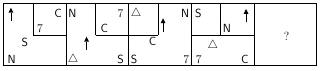
Identify the figure given in the options which when put in place of the question mark (?) will logically complete the series?

  1. AOption (a)

  2. BOption (b)

  3. COption (c)

  4. DOption (d)

View answer & explanation

Correct answer

Answer: (c)C.

Why this answer is correct

The logic followed here is:

From figure 1 to 2 and figure 3 to 4:

Top- left and bottom-left symbols are interchanging their position with each other.

Bottom-right and top-right symbols are interchanging their position with each other.

From figure 2 to 3 and figure 4 to 5:

Top- left and top-right symbols are interchanging their position with each other.

Bottom-left and bottom-right symbols are interchanging their position with each other.

Hence, the correct answer is "Option 3".

Question 9

Select the number from among the given options that can replace the question mark (?) in the following series.

389, 420, 457, 498, 541, ?

  1. AOption (a)

    588

  2. BOption (b)

    584

  3. COption (c)

    598

  4. DOption (d)

    572

View answer & explanation

Correct answer

Answer: (a)A.

588

Why this answer is correct

The logic followed here is:

Hence, the correct answer is "588".

Question 10

Based on the position in the English alphabetical order, three of the following letter-clusters are alike in some manner and one is different. Select the odd letter-cluster.

Note: The odd one out is not based on the number of consonants/vowels or their position in the letter cluster.

  1. AOption (a)

    TWGD

  2. BOption (b)

    PSKI

  3. COption (c)

    MPNK

  4. DOption (d)

    JMQN

View answer & explanation

Correct answer

Answer: (b)B.

PSKI

Why this answer is correct

The logic followed here is:

Option 1) TWGD

Option 2) PSKI

Option 3) MPNK

Option 4) JMQN

Hence, the correct answer is "PSKI".

Question 11

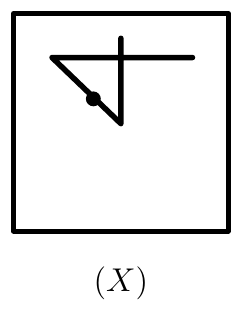
Select the option figure in which the given figure (X) is embedded (rotation is NOT allowed).

  1. AOption (a)

  2. BOption (b)

  3. COption (c)

  4. DOption (d)

View answer & explanation

Correct answer

Answer: (a)A.

Why this answer is correct

The option figure in which the given figure (X) is embedded:


Hence, the correct answer is "Option 1".

Question 12

What will come in the place of ‘?’ in the following equation, if ‘+’ and ‘–‘ are interchanged and ‘×’ and ‘÷’ are interchanged?

25 + 3 ÷ 9 −14 × 2 = ?

  1. AOption (a)

    7

  2. BOption (b)

    5

  3. COption (c)

    12

  4. DOption (d)

    0

View answer & explanation

Correct answer

Answer: (b)B.

5

Why this answer is correct

BODMAS Table: 

Given equation: 25 + 3 ÷ 9 − 14 × 2 = ?

Now, if ‘+’ and ‘–‘ are interchanged, and ‘×’ and ‘÷’ are interchanged, then:

⇒ 25 – 3 × 9 + 14 ÷ 2 = ?

⇒ 25 – 27 + 7 = ?

⇒ 25 + 7 - 27 = ?

⇒ 32 - 27 = ?

⇒ 5.

Hence, the correct answer is "Option 2".

Question 13

Select the option in which the numbers share the same relationship as that shared by the given pair of numbers.

(NOTE: Operations should be performed on the whole numbers, without breaking down the numbers into its constituent

digits. E.g. 13 – Operations on 13 such as adding/deleting/multiplying etc. to 13 can be performed. Breaking down 13 into 1

and 3 and then performing mathematical operations on 1 and 3 is not allowed.)

40 : 123

63 : 192

  1. AOption (a)

    68 : 214

  2. BOption (b)

    39 : 120

  3. COption (c)

    46 : 131

  4. DOption (d)

    48 : 152

View answer & explanation

Correct answer

Answer: (b)B.

39 : 120

Why this answer is correct

The logic followed here is:

Logic: (1st number × 3) + 3 = 2nd number.

Now,

For, 40 : 123

⇒ (40 × 3) + 3

⇒ 120 + 3 = 123.

For, 63 : 192

⇒ (63 × 3) + 3 

⇒ 189 + 3 = 192.

Similarly, for 39 : 120

⇒ (39 × 3) + 3

⇒ 117 + 3 = 120.

Hence, the correct answer is "Option 2".

Question 14

Which figure should replace the question mark (?) if the following series were to be continued?

  1. AOption (a)

  2. BOption (b)

  3. COption (c)

  4. DOption (d)

View answer & explanation

Correct answer

Answer: (d)D.

Why this answer is correct

The logic followed here is:

From figure 1 to 2 and figure 3 to 4:

Top-left, Bottom 2 elements and middle element( all 4 elements) are interchanging their position.

Top-right and middle element are interchanging their position with each other.

From figure 2 to 3 and figure 4 to 5:

All 4 corner symbols are shifting in clockwise direction.

Middle symbols are interchanging their position.

Hence, the correct answer is "Option 4"

Question 15

Select the word-pair that best represents a similar relationship to the one expressed in the pair of words given below.

(The words must be considered as meaningful English words and must NOT be related to each other based on the number of letters/number of consonants/vowels in the word)

France : Gallic Rooster

  1. AOption (a)

    New Zealand : Hornbill

  2. BOption (b)

    Germany : Swan

  3. COption (c)

    Australia : Emu

  4. DOption (d)

    India : Eagle

View answer & explanation

Correct answer

Answer: (c)C.

Australia : Emu

Why this answer is correct

The logic followed here is:

Logic: National symbols of countries.

Here,

France : Gallic Rooster → Gallic Rooster is a national symbol of France.

Similarly,

Australia : Emu → Emu is a national symbol of Australia.

Hence, the correct answer is "Option 3".

Question 16

Select the number that will come in the place of the question mark(?), if '+' and '−' are interchanged and '×' and '÷' are interchanged

63 × 7 ÷ 13 − 64 + 42 = ?

  1. AOption (a)

    144

  2. BOption (b)

    131

  3. COption (c)

    139

  4. DOption (d)

    124

View answer & explanation

Correct answer

Answer: (c)C.

139

Why this answer is correct

BODMAS Table: 

After decoding signs:

SignsDecoded signs
+-
-+
×÷
÷×


Given equation: 63 × 7 ÷ 13 − 64 + 42 = ?

After interchanging the signs then:

⇒ 63 ÷ 7 × 13 + 64 - 42 = ?

⇒  9 × 13 + 64 - 42

⇒  117 + 64 - 42

⇒  181 - 42 = 139

Hence, the correct answer is "139".

Question 17

Find the correct combination of letters that when sequentially filled in the blanks of the given series will make the series logically complete.

ABF_HI_NOP_U_WABCDH_

  1. AOption (a)

    GMTUI

  2. BOption (b)

    IMTVI

  3. COption (c)

    GMSVI

  4. DOption (d)

    GMTVI

View answer & explanation

Correct answer

Answer: (d)D.

GMTVI

Why this answer is correct

The logic followed here is:

Given Sequence: ABF_HI_NOP_U_WABCDH_

Now, putting the letters in the blank spaces given in the option one by one:

Option 1) GMTUI → AB / FGHI / MNOP / TUUW / ABCD / HI

Option 2) IMTVI → AB / FIHI / MNOP / TUVW / ABCD / HI

Option 3) GMSVI → AB / FGHI / MNOP / SUVW / ABCD / HI

Option 4) GMTVI → AB / FGHI / MNOP / TUVW / ABCD / HI

Hence, the correct answer is "GMTVI".

Question 18

Three different positions of the same dice are given. Find the number on the face opposite to the face showing '2'.

  1. AOption (a)

    3

  2. BOption (b)

    4

  3. COption (c)

    1

  4. DOption (d)

    6

View answer & explanation

Correct answer

Answer: (a)A.

3

Why this answer is correct

To find the opposite surface of '2', we need to compare the common surface in the given dices,

So, From Dice 2 and Dice 3,

From both dices, 6 is common and on the same surface. So, all remaining surface will be opposite to each other.

6→5

4→1

3→2

4 is opposite to 1.

So, 3 will be opposite to 2.

Hence, the correct answer is "3".

Question 19

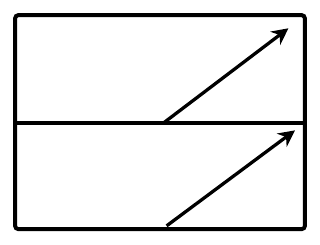
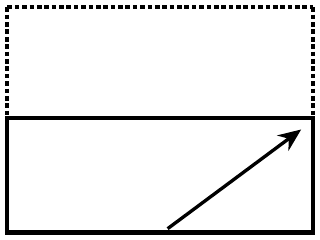
A transparent sheet with a pattern is given below. Select the option that depicts the pattern that would appear when the given transparent sheet is folded at the middle horizontal line.

  1. AOption (a)

  2. BOption (b)

  3. COption (c)

  4. DOption (d)

View answer & explanation

Correct answer

Answer: (d)D.

Why this answer is correct

A transparent sheet with a pattern appear when the given transparent sheet is folded at the middle horizontal line:

Hence, the correct answer is "Option 4".

Question 20

Six letters P, J, U, W, L and K are written on different faces of a dice. Two positions of this dice are shown in the figures below. Find the letter on the face opposite to P.

  1. AOption (a)

    U

  2. BOption (b)

    K

  3. COption (c)

    W

  4. DOption (d)

    J

View answer & explanation

Correct answer

Answer: (c)C.

W

Why this answer is correct

For find the opposite surface of 'P', we need to compare the common surface in the given dices,

So, From Dice 1 and Dice 2,

From both dices, J is common and on the same surface. So, all remaining surface will be opposite to each other.

J→ K

P→ W

U→ L

U is opposite to L.

So, W will be opposite to P.

Hence, the correct answer is "W".

Question 21

How many squares are there in the given figure?

  1. AOption (a)

    14

  2. BOption (b)

    12

  3. COption (c)

    11

  4. DOption (d)

    15

View answer & explanation

Correct answer

Answer: (d)D.

15

Why this answer is correct

Counting of squares:

Thus, squares are there in the given figure = 15

Hence, the correct answer is "15".

Question 22

If

‘A & Z’ means ‘A is the brother of Z’,

‘A # Z’ means ‘A is the sister of Z’,

‘A ^ Z’ means ‘A is the brother of Z’s father’,

‘A @ Z’ means ‘A is the wife of Z’,

‘A % Z’ means ‘A is the mother of Z’,

‘A α Z’ means ‘A is the father of Z’,

then how is J related to Z in the following expression?

J % K # L @ M α N & Z

  1. AOption (a)

    Mother

  2. BOption (b)

    Father’s mother

  3. COption (c)

    Mother’s sister

  4. DOption (d)

    Mother’s mother

View answer & explanation

Correct answer

Answer: (d)D.

Mother’s mother

Why this answer is correct

Family Chart:

Decoding the Symbols:

Symbol&#@%^α
MeaningBrotherSisterWifeMotherBrother of Z’s fatherFather


Given: J % K # L @ M α N & Z

It means: J is the mother of K, K is the sister of L, L is the wife of M, M is the father of N and N is the brother of Z.

S, J is the Mother’s mother of Z.

Hence, the correct answer is "Mother’s mother".

Question 23

All the alphabets in the word ‘DICTIONARY’ are arranged in the alphabetical order. How many alphabets are there in the English alphabetical series between the alphabet which is fourth from the left end and the one which is second from the right end in the newly formed letter-cluster?

  1. AOption (a)

    9

  2. BOption (b)

    10

  3. COption (c)

    12

  4. DOption (d)

    11

View answer & explanation

Correct answer

Answer: (b)B.

10

Why this answer is correct

Given word: DICTIONARY

After arranged in alphabetical order:

AlphabetsDICTIONARY
Alphabetical orderACDIINORTY


Fourth alphabet from the left end is: I and second alphabet from the right end is: T,

Now,

there are 10 letters between I and T.

IJKLMNOPQRST


Hence, the correct answer is "Option 2".

Question 24

In a certain code language, ‘BOTH’ is written as ‘DQVJ’ and ‘DARE’ is written as ‘FCTG’ How will ‘WILL’ be written in that language?

  1. AOption (a)

    XJMM

  2. BOption (b)

    YJMN

  3. COption (c)

    XKNM

  4. DOption (d)

    YKNN

View answer & explanation

Correct answer

Answer: (d)D.

YKNN

Why this answer is correct

The logic followed here is:

‘BOTH’ is written as ‘DQVJ’

‘DARE’ is written as ‘FCTG’

Similarly, ‘WILL’ will be written as:

Hence, the correct answer is "YKNN".

Question 25

Select the option that represents the letters that, when placed from left to right in the blanks below, will complete the letter series.

S_YA_FIKM_SUW

  1. AOption (a)

    VCP

  2. BOption (b)

    VBP

  3. COption (c)

    VCQ

  4. DOption (d)

    UCP

View answer & explanation

Correct answer

Answer: (a)A.

VCP

Why this answer is correct

The logic followed here is:

Given Sequence: S_YA_FIKM_SUW

Now, putting the letters in the blank spaces given in the option one by one:

Option 1) VCP → SVYA / CFIK / MPSU / W


Option 2) VBP → SVYA / BFIK / MPSU / W

Option 3) VCQ → SVYA / CFIK / MQSU / W

Option 4) UCP → SUYA / CFIK / MPSU / W

Hence, the correct answer is "VCP".

General Awareness (25 questions)

Question 26

The National Youth Policy was launched in:

  1. AOption (a)

    2012

  2. BOption (b)

    2013

  3. COption (c)

    2014

  4. DOption (d)

    2015

View answer & explanation

Correct answer

Answer: (c)C.

2014

Why this answer is correct

The correct answer is 2014.

Key Points

  • The National Youth Policy was launched by the Ministry of Youth Affairs and Sports in 2014.
  • This policy aims to empower the youth of the country to achieve their full potential and participate actively in the nation's development.
  • The policy focuses on key areas such as education, employment and skill development, health and healthy lifestyle, promotion of sports, and social values.
  • It targets youth in the age group of 15-29 years, which constitutes around 27.5% of the population of the country.

Additional Information

  • National Youth Policy
  • The National Youth Policy (NYP) 2014 is an initiative by the Ministry of Youth Affairs and Sports, Government of India.
  • The policy aims to achieve a broad vision of empowering the youth of the country to achieve their full potential and to contribute to the development of the nation.
  • The NYP 2014 outlines a comprehensive framework that covers the priority areas of education, employment and skill development, entrepreneurship, health and healthy lifestyle, sports, promotion of social values, community engagement, and youth participation.
  • The policy also emphasizes the need for creating a productive workforce that can make a sustainable contribution to India's economic development and social well-being.
  • Youth Empowerment
  • Youth empowerment is a process where young people are encouraged to take charge of their lives and make informed decisions that affect their future.
  • It involves providing opportunities for youth to develop their skills, gain access to resources, and participate in decision-making processes.
  • Empowering the youth is essential for fostering innovation, economic growth, and social stability.
  • Programs and policies aimed at youth empowerment focus on education, employment, leadership development, and community engagement.
  • Skill Development
  • Skill development refers to the process of improving the abilities and competencies of individuals to perform specific tasks or jobs.
  • It is crucial for enhancing employability, productivity, and competitiveness in the job market.
  • Governments and organizations implement various skill development programs to address skill gaps and meet the demands of the evolving labor market.
  • These programs often include vocational training, apprenticeships, and certification courses.
  • Health and Healthy Lifestyle
  • Health and healthy lifestyle are critical aspects of overall well-being and quality of life.
  • Promoting healthy habits, physical fitness, and mental well-being among the youth is essential for their growth and development.
  • Public health initiatives and policies focus on preventive healthcare, nutrition, physical activity, and mental health support.
  • Creating awareness and providing access to healthcare services are vital for ensuring a healthy and productive youth population.

Question 27

Which among the following was NOT a part of the three sections of the Rigvedic tribe?

  1. AOption (a)

    Craftsman

  2. BOption (b)

    Priests

  3. COption (c)

    Ordinary people

  4. DOption (d)

    Warriors

View answer & explanation

Correct answer

Answer: (a)A.

Craftsman

Why this answer is correct

The correct answer is Craftsman.

Key Points

  • The three sections of the Rigvedic tribe were Priests (Brahmins), Warriors (Kshatriyas), and Ordinary people (Vaishyas).
  • The Rigvedic society was divided into these three main classes or varnas.
  • The Craftsman or artisans were not considered a separate class in the Rigvedic social structure.
  • These classes or varnas were the foundation of the later Indian caste system.

Additional Information

  • Rigvedic Society:
  • The Rigveda is one of the oldest known scriptures and forms the basis for the Hindu religion.
  • It is composed of hymns dedicated to various deities and reflects the early Vedic civilization.
  • The society described in the Rigveda was pastoral and tribal, with a strong emphasis on rituals and sacrifices.
  • Varnas System:
  • The varna system is a social stratification system mentioned in the Rigveda.
  • It classifies society into four varnas: Brahmins (priests), Kshatriyas (warriors), Vaishyas (traders and farmers), and Shudras (servants).
  • This system became more rigid in later Vedic society, leading to the development of the caste system.
  • Priests (Brahmins):
  • Brahmins were responsible for performing religious rituals and maintaining sacred knowledge.
  • They held a high status in society due to their spiritual role.
  • Warriors (Kshatriyas):
  • Kshatriyas were the protectors and rulers of the tribe.
  • They were responsible for governance, warfare, and maintaining law and order.
  • Ordinary People (Vaishyas):
  • Vaishyas were engaged in agriculture, trade, and commerce.
  • They formed the economic backbone of the society.

Question 28

Who holds the record for the longest long jump in India as of 2023?

  1. AOption (a)

    Jeswin Aldrin

  2. BOption (b)

    TC Yohanan

  3. COption (c)

    Murali S

  4. DOption (d)

    Nayana James

View answer & explanation

Correct answer

Answer: (a)A.

Jeswin Aldrin

Why this answer is correct

The correct answer is Jeswin Aldrin.

Key Points

  • Jeswin Aldrin holds the record for the longest long jump in India as of 2023.
  • Jeswin Aldrin is a prominent Indian long jumper who has shown exceptional performance in national and international competitions.
  • He has consistently improved his performance, breaking previous records with his remarkable jumps.
  • Jeswin Aldrin's achievements in long jump have brought significant recognition to Indian athletics on the global stage.

Additional Information

  • Long Jump
  • The long jump is a track and field event where athletes combine speed, strength, and agility to leap as far as possible from a take-off point.
  • It has been a part of the modern Olympic Games since their inception in 1896 for men and since 1948 for women.
  • The long jump consists of a running phase, a take-off, a flight, and a landing in the sand pit.
  • Athletes aim to jump the maximum distance while adhering to specific rules regarding the take-off point and landing.
  • National Records
  • National records are the best performances recorded in a specific country for a particular event.
  • These records are maintained by the national athletics federation of the country.
  • Breaking a national record is a significant achievement for any athlete as it demonstrates exceptional talent and capability.
  • Training and Technique
  • Long jumpers undergo rigorous training to enhance their speed, strength, and jumping technique.
  • Techniques such as the hang, the sail, and the hitch-kick are used to optimize the jump distance.
  • Proper technique and consistent practice are crucial for achieving and surpassing records in long jump.

Question 29

Which part of the Constitution deals with the Panchayats?

  1. AOption (a)

    Part IV

  2. BOption (b)

    Part IX

  3. COption (c)

    Part VII

  4. DOption (d)

    Part X

View answer & explanation

Correct answer

Answer: (b)B.

Part IX

Why this answer is correct

The correct answer is Part IX.

Key Points

  • Part IX of the Indian Constitution is titled "The Panchayats" and covers Articles 243 to 243O.
  • It was introduced by the 73rd Constitutional Amendment Act of 1992.
  • This part provides a detailed framework for the creation, structure, and functioning of Panchayati Raj Institutions (PRIs) in India.
  • It aims to promote decentralized governance and ensure people's participation in rural development.

Additional Information

  • 73rd Constitutional Amendment Act of 1992
  • This amendment added Part IX and the Eleventh Schedule to the Indian Constitution, effective from April 24, 1993.
  • It mandates the establishment of a three-tier system of Panchayati Raj for all states having a population of over 20 lakhs.
  • The three tiers are: Gram Panchayat at the village level, Mandal Parishad or Block Samiti at the intermediate level, and Zilla Parishad at the district level.
  • The Act also provides for the reservation of seats for Scheduled Castes, Scheduled Tribes, and women.
  • Panchayati Raj Institutions (PRIs)
  • PRIs are institutions of rural local governance in India.
  • They are responsible for the administration of rural areas and are involved in the implementation of various developmental programs.
  • The structure, functions, and powers of PRIs are defined by the state legislatures in accordance with the Constitutional provisions.
  • Decentralized Governance
  • Decentralized governance refers to the distribution of power and decision-making authority to lower levels of government, closer to the people.
  • It aims to make governance more responsive, accountable, and inclusive.
  • In the context of PRIs, it means empowering local bodies to make decisions about local development and administration.

Question 30

Which of the following battles was fought between Babur and Rana Sanga in 1527?

  1. AOption (a)

    Battle of Panipat

  2. BOption (b)

    Battle of Khanwa

  3. COption (c)

    Second battle of Panipat

  4. DOption (d)

    Battle of Chanderi

View answer & explanation

Correct answer

Answer: (b)B.

Battle of Khanwa

Why this answer is correct

The correct answer is Battle of Khanwa.

Key Points

  • The Battle of Khanwa was fought on 16 March 1527 between the forces of Babur and Rana Sanga of Mewar.
  • This battle was a decisive victory for Babur, which consolidated his rule over North India.
  • Babur employed tactics such as the use of cannons and the Tulughma strategy, which played a crucial role in his victory.
  • The battle marked the end of the Rajput confederacy's resistance against Babur and paved the way for the establishment of the Mughal Empire in India.

Additional Information

  • Battle of Bayana
  • It was fought in 1527 between Babur and the Rajput forces of Rana Sanga before the Battle of Khanwa.
  • Babur's victory at Bayana was crucial in weakening the Rajput forces before the major confrontation at Khanwa.
  • Second Battle of Panipat
  • This battle was fought in 1556 between the forces of the Mughal emperor Akbar and Hemu, the Hindu king of Delhi.
  • Akbar's victory at Panipat consolidated Mughal power in India.
  • Battle of Chanderi
  • Fought in 1528, it was another confrontation between Babur and the Rajput forces led by Medini Rai of Chanderi.
  • This battle resulted in a decisive victory for Babur and further strengthened his control over North India.

Question 31

Who among the following was the President of the Belgaum Session of the Indian National Congress held in 1924?

  1. AOption (a)

    Mahatma Gandhi

  2. BOption (b)

    Vallabhbhai Patel

  3. COption (c)

    Subhas Chandra Bose

  4. DOption (d)

    Jawaharlal Nehru

View answer & explanation

Correct answer

Answer: (a)A.

Mahatma Gandhi

Why this answer is correct

The correct answer is Mahatma Gandhi.

Key Points

  • Mahatma Gandhi presided over the Belgaum session of the Indian National Congress in 1924.
  • This was the only session of the Indian National Congress that Mahatma Gandhi ever presided over.
  • The session was held from 26th to 27th December 1924 in Belgaum, Karnataka.
  • Gandhi's presidency at this session was significant as it was a period of transition in the Indian freedom struggle, with the rise of new leaders and ideologies.

Additional Information

  • Indian National Congress (INC)
  • The Indian National Congress (INC) was founded in 1885 by Allan Octavian Hume, Dadabhai Naoroji, and Dinshaw Wacha.
  • It played a key role in the Indian independence movement against British rule.
  • The INC was the principal leader of the Indian independence movement, fighting for self-governance and full sovereignty from the British Empire.
  • Mahatma Gandhi
  • Mahatma Gandhi, born as Mohandas Karamchand Gandhi, was an Indian lawyer, anti-colonial nationalist, and political ethicist who employed nonviolent resistance to lead the successful campaign for India's independence from British rule.
  • He is also known for his philosophy of nonviolence (ahimsa) and his role in various social reforms in India.
  • Gandhi's leadership and strategies in the freedom struggle inspired numerous movements for civil rights and freedom across the world.
  • Belgaum
  • Belgaum, officially known as Belagavi, is a city in the Indian state of Karnataka.
  • It is known for its historical importance and was chosen as the location for the 1924 session of the Indian National Congress.

Question 32

'Atla Taddi' is the widely celebrated festival of which Indian state?

  1. AOption (a)

    West Bengal

  2. BOption (b)

    Punjab

  3. COption (c)

    Bihar

  4. DOption (d)

    Andhra Pradesh

View answer & explanation

Correct answer

Answer: (d)D.

Andhra Pradesh

Why this answer is correct

The correct answer is Andhra Pradesh.

Key Points

  • 'Atla Taddi' is a significant festival celebrated predominantly in Andhra Pradesh.
  • This festival is primarily celebrated by women and girls to pray for the well-being and longevity of their husbands and fiancés.
  • It is similar to Karva Chauth, which is celebrated in North India.
  • The festival includes rituals like fasting, traditional songs, and applying Mehendi.

Additional Information

  • Atla Taddi:
  • It is celebrated on the third day after the full moon in the month of Aswayuja (September-October).
  • On this day, women observe a day-long fast and break it after sighting the moon.
  • The festival involves a lot of traditional customs and rituals, including the preparation of 'Atlu' (pancakes).
  • Women and girls wake up early in the morning to take a ritualistic bath and wear new clothes and jewelry.
  • Similar Festivals in India:
  • Karva Chauth: Celebrated mainly in North India, where married women fast from sunrise to moonrise for the safety and longevity of their husbands.
  • Vata Savitri: Celebrated by married women in Maharashtra, Goa, Gujarat, and Karnataka, where they observe a fast and tie threads around a banyan tree while praying for their husband's long life.
  • Teej: Celebrated in Rajasthan, Bihar, and parts of Uttar Pradesh, it involves fasting and praying for marital bliss and the well-being of spouses.

Question 33

Where was the 1st World Cup of Kabaddi organised in 2004?

  1. AOption (a)

    Mumbai

  2. BOption (b)

    Hyderabad

  3. COption (c)

    Punjab

  4. DOption (d)

    Kolkata

View answer & explanation

Correct answer

Answer: (a)A.

Mumbai

Why this answer is correct

The correct answer is Mumbai.

Key Points

  • The 1st World Cup of Kabaddi was organized in 2004.
  • Mumbai hosted this international event.
  • Kabaddi is a popular sport in Punjab, with deep cultural significance and widespread participation.
  • The event aimed to promote Kabaddi on a global scale and foster international sportsmanship.

Additional Information

  • Kabaddi
  • Kabaddi is a contact team sport that originated in ancient India.
  • It is played between two teams of seven players each, where the objective is to score points by raiding the opponent's half and touching as many of their players as possible without getting caught.
  • The game is popular in South Asia and has gained international recognition, with professional leagues and international competitions.
  • The sport is known for its combination of physical strength, strategy, and agility.
  • World Cup of Kabaddi
  • The World Cup of Kabaddi is an international competition that brings together national teams from various countries.
  • The tournament aims to promote Kabaddi globally and increase its popularity outside the traditional regions where it is played.
  • It features both men's and women's teams, with matches conducted under standardized rules and regulations.
  • The World Cup serves as a platform for showcasing top talent in Kabaddi and encouraging cross-cultural sports exchanges.
  • Punjab's Contribution to Kabaddi
  • Punjab has a rich history and tradition of Kabaddi, often considered the heartland of the sport.
  • The state has produced many renowned Kabaddi players who have excelled at national and international levels.
  • Punjab's local tournaments and leagues have played a crucial role in nurturing young talent and promoting Kabaddi as a popular sport.
  • The state's commitment to Kabaddi is evident through its hosting of major events like the World Cup, further solidifying its status as a key player in the sport's global landscape.

Question 34

In which of the following states of India is Hojagiri dance predominantly performed?

  1. AOption (a)

    Tripura

  2. BOption (b)

    Kerala

  3. COption (c)

    Himachal Pradesh

  4. DOption (d)

    Maharashtra

View answer & explanation

Correct answer

Answer: (a)A.

Tripura

Why this answer is correct

The correct answer is Tripura.

Key Points

  • Hojagiri is a traditional dance form of the Reang community, which is one of the tribes of Tripura.
  • This dance is performed primarily by women and girls, showcasing their balance and coordination skills.
  • Hojagiri dance is often performed during the festival of Hojagiri, which is a significant cultural event for the Reang community.
  • The dance involves balancing on earthen pitchers and managing other props while synchronizing with the music and rhythm.

Additional Information

  • Tripura
  • Tripura is a state in northeastern India, bordered by Bangladesh to the north, south, and west.
  • Agartala is the capital city of Tripura.
  • The state is known for its diverse culture and traditions, with various communities and tribes contributing to its rich heritage.
  • Tripura is also famous for its bamboo and cane crafts, as well as its traditional music and dance forms.
  • Reang Community
  • The Reang, also known as Bru, are one of the 19 tribes of Tripura.
  • They are primarily a forest-dwelling community and have a distinct cultural identity.
  • The Reang community is known for their colorful attire, traditional music, and dance forms like Hojagiri.
  • They celebrate several festivals, with Hojagiri being one of the most important cultural events.
  • Hojagiri Festival
  • The Hojagiri festival is celebrated by the Reang community with great enthusiasm.
  • It is usually observed after the harvest season, marking a time of joy and prosperity.
  • During the festival, women and girls perform the Hojagiri dance, showcasing their skills and artistry.
  • The festival also includes various traditional rituals, music, and community feasts.

Question 35

Which of the following is related to neem?

  1. AOption (a)

    Tendril

  2. BOption (b)

    Palmately

  3. COption (c)

    Pinnately

  4. DOption (d)

    Spines

View answer & explanation

Correct answer

Answer: (c)C.

Pinnately

Why this answer is correct

The correct answer is Pinnately.

Key Points

  • Pinnately compound leaves are those where leaflets are arranged on either side of the central axis, resembling a feather.
  • The neem tree (Azadirachta indica) exhibits pinnately compound leaves, which means its leaves are composed of multiple leaflets arranged in pairs along the midrib.
  • Pinnate leaves can be identified by their central rachis (the main axis) to which the leaflets are attached.
  • Neem leaves are an example of even-pinnate leaves, where the leaflets are paired without a terminal leaflet.

Additional Information

  • Tendril
  • Tendrils are specialized stem, leaf, or petiole structures that assist climbing plants in attaching to and climbing supports.
  • They are typically slender, coiled, and help plants like peas and grapes to cling to structures for support.
  • They are not related to neem.
  • Palmately
  • Palmately compound leaves have leaflets that radiate out from a single point, much like the fingers of a hand.
  • An example is the leaves of the horse chestnut tree.
  • This type of leaf arrangement is different from the pinnately compound leaves of neem.
  • Spines
  • Spines are modified leaves or parts of leaves, such as stipules, that are typically hard, sharp, and used for defense against herbivores.
  • Cacti are a common example of plants with spines.
  • Neem trees do not have spines.

Question 36

What is the position of India in the world’s telecommunication market, as of March 2024?

  1. AOption (a)

    Fourth

  2. BOption (b)

    Third

  3. COption (c)

    First

  4. DOption (d)

    Second

View answer & explanation

Correct answer

Answer: (d)D.

Second

Why this answer is correct

The correct answer is Second.

Key Points

  • India holds the second position in the world's telecommunication market as of March 2024.
  • India's telecommunication market has seen rapid growth and development over the past few decades.
  • The increase in mobile phone users and internet penetration has significantly contributed to India's strong position in the global telecommunication market.
  • The telecommunications sector in India is supported by various government initiatives and policies aimed at promoting digital connectivity and infrastructure development.

Additional Information

  • Telecommunication Market
  • The telecommunication market includes companies and entities that provide communication services such as telephone, internet, and broadcasting to consumers and businesses.
  • The market is typically divided into segments such as mobile telephony, fixed-line telephony, broadband internet, and satellite communication.
  • Key players in the global telecommunications market include companies like AT&T, Verizon, Vodafone, and China Mobile, among others.
  • The market is driven by technological advancements, increasing demand for connectivity, and regulatory policies that encourage competition and innovation.
  • India's Telecom Sector
  • India's telecom sector is one of the fastest-growing in the world, with a subscriber base of over 1 billion.
  • The sector has undergone significant transformations with the introduction of 4G and the upcoming 5G technology, enhancing data speeds and connectivity.
  • Major telecom operators in India include Reliance Jio, Bharti Airtel, and Vodafone Idea.
  • The Indian government has launched initiatives such as the Digital India campaign and BharatNet project to improve digital infrastructure and connectivity across the country.
  • Government Initiatives
  • Digital India: A campaign launched to ensure that government services are made available to citizens electronically by improving online infrastructure and increasing internet connectivity.
  • BharatNet: A project aimed at providing high-speed broadband connectivity to all rural areas of India.
  • 5G Spectrum Auction: The Indian government is planning to auction 5G spectrum bands to facilitate the deployment of 5G networks across the country.
  • These initiatives are part of the broader goal to create a digitally empowered society and knowledge economy in India.

Question 37

Which national park in the Andaman and Nicobar Islands is home to species like Megapode, crab-eating Macaque, Nicobar Pigeon, and Giant Robber Crab?

  1. AOption (a)

    Raimona National Park

  2. BOption (b)

    Campbell Bay National Park

  3. COption (c)

    Mouling National Park

  4. DOption (d)

    Papikonda National Park

View answer & explanation

Correct answer

Answer: (b)B.

Campbell Bay National Park

Why this answer is correct

The correct answer is Campbell Bay National Park.

Key Points

  • Campbell Bay National Park is located on the Great Nicobar Island, which is part of the Andaman and Nicobar Islands.
  • The park is known for its rich biodiversity and is home to unique species such as the Megapode, crab-eating Macaque, Nicobar Pigeon, and Giant Robber Crab.
  • It covers an area of approximately 426 square kilometers, making it one of the largest national parks in the region.
  • The park's diverse ecosystems include tropical evergreen forests, mangroves, and coastal habitats, which provide a sanctuary for various flora and fauna.

Additional Information

  • Megapode
  • The Megapode is a unique bird found in the Andaman and Nicobar Islands.
  • It is known for its distinctive nesting behavior, where it builds large mounds of earth and vegetation to incubate its eggs.
  • The heat generated from the decomposing vegetation within the mound provides the necessary warmth for the eggs to hatch.
  • Crab-eating Macaque
  • The crab-eating Macaque, also known as the long-tailed Macaque, is a primate species native to Southeast Asia.
  • It is called the crab-eating Macaque because of its diet, which includes crabs, fruits, and small animals.
  • These Macaques are known for their adaptability and can thrive in various habitats, including coastal regions and forests.
  • Nicobar Pigeon
  • The Nicobar Pigeon is a large, colorful bird found in the Nicobar Islands and other parts of Southeast Asia.
  • It is known for its iridescent plumage, which displays a range of metallic colors.
  • The Nicobar Pigeon is the closest living relative of the extinct dodo bird.
  • Giant Robber Crab
  • The Giant Robber Crab, also known as the coconut crab, is the largest terrestrial arthropod in the world.
  • It is known for its ability to climb trees and crack open coconuts with its powerful claws.
  • The crab is primarily nocturnal and is found in coastal regions and forests of the Indo-Pacific islands.

Question 38

A chemical reaction in which the rate of reaction is directly proportional to the first power of the concentration of the reacting substance is called:

  1. AOption (a)

    zero order reaction

  2. BOption (b)

    third order reaction

  3. COption (c)

    second order reaction

  4. DOption (d)

    first order reaction

View answer & explanation

Correct answer

Answer: (d)D.

first order reaction

Why this answer is correct

The correct answer is first order reaction.

Key Points

  • A first order reaction is one where the rate of reaction is directly proportional to the concentration of one of the reactants.
  • The rate law for a first order reaction is given by: Rate = k[A], where k is the rate constant and [A] is the concentration of the reactant.
  • In a first order reaction, the half-life is constant and does not depend on the initial concentration of the reactant.
  • Examples of first order reactions include radioactive decay and some types of chemical decompositions.

Additional Information

  • Zero Order Reaction
  • A zero order reaction is one where the rate of reaction is independent of the concentration of the reactants.
  • The rate law for a zero order reaction is given by: Rate = k, where k is the rate constant.
  • In a zero order reaction, the rate of reaction remains constant until the reactant is exhausted.
  • Second Order Reaction
  • A second order reaction is one where the rate of reaction is proportional to the square of the concentration of one reactant or the product of the concentrations of two reactants.
  • The rate law for a second order reaction is given by: Rate = k[A]^2 or Rate = k[A][B], where k is the rate constant and [A], [B] are the concentrations of the reactants.
  • The half-life of a second order reaction is inversely proportional to the initial concentration of the reactant.
  • Third Order Reaction
  • A third order reaction is one where the rate of reaction is proportional to the cube of the concentration of one reactant or the product of the concentrations of three reactants.
  • The rate law for a third order reaction is given by: Rate = k[A]^3 or Rate = k[A][B][C], where k is the rate constant and [A], [B], [C] are the concentrations of the reactants.
  • Third order reactions are less common compared to first and second order reactions.

Question 39

For which film did Asha Bhosle win the International Indian Film Academy (IIFA) Award in the Best Playback Singer Female category in 2002?

  1. AOption (a)

    Devdas

  2. BOption (b)

    Humraz

  3. COption (c)

    Om Jai Jagdish

  4. DOption (d)

    Lagaan

View answer & explanation

Correct answer

Answer: (d)D.

Lagaan

Why this answer is correct

The correct answer is Lagaan.

Key Points

  • Lagaan is a 2001 Indian epic sports-drama film directed by Ashutosh Gowariker.
  • The film features Aamir Khan in the lead role, who also produced the film.
  • Asha Bhosle won the International Indian Film Academy (IIFA) Award for Best Playback Singer Female in 2002 for the song "Radha Kaise Na Jale" from this film.
  • The song "Radha Kaise Na Jale" is a duet featuring Udit Narayan and Asha Bhosle, with music composed by A.R. Rahman and lyrics by Javed Akhtar.

Additional Information

  • International Indian Film Academy Awards (IIFA)
  • Established in 2000, the IIFA Awards are presented annually by the International Indian Film Academy to honor artistic and technical excellence in Bollywood.
  • The awards are held at a different international location each year, aiming to promote Indian cinema globally.
  • Asha Bhosle
  • Asha Bhosle is one of the most renowned and versatile playback singers in India, known for her voice's range and versatility.
  • She has recorded thousands of songs in multiple languages and is a recipient of numerous awards, including the Dadasaheb Phalke Award and the Padma Vibhushan.
  • A.R. Rahman
  • A.R. Rahman is an internationally acclaimed Indian composer, singer, and music producer, known for integrating Indian classical music with electronic music, world music, and traditional orchestral arrangements.
  • He has won multiple awards, including two Academy Awards, two Grammy Awards, a BAFTA Award, and a Golden Globe.
  • Lagaan
  • The film is set in 1893 during the late Victorian period of India's colonial British Raj.
  • Lagaan tells the story of the inhabitants of a small village, who, oppressed by high taxes, find themselves in an extraordinary situation as an arrogant British army officer challenges them to a game of cricket as a wager to avoid paying the taxes they owe.
  • The film was critically acclaimed and became the third Indian film to be nominated for the Academy Award for Best Foreign Language Film.

Question 40

The government of which of the following states allocated ₹11,728 crore for the Aasara pension scheme in its annual budget for the fiscal year 2022-23?

  1. AOption (a)

    Telangana

  2. BOption (b)

    Odisha

  3. COption (c)

    Gujarat

  4. DOption (d)

    Chhattisgarh

View answer & explanation

Correct answer

Answer: (a)A.

Telangana

Why this answer is correct

The correct answer is Telangana.

Key Points

  • The government of Telangana allocated ₹11,728 crore for the Aasara pension scheme in its annual budget for the fiscal year 2022-23.
  • The Aasara pension scheme is a welfare scheme implemented by the Telangana government to provide financial assistance to vulnerable sections of society.
  • It aims to ensure a life of dignity and security for the elderly, widows, disabled individuals, and other disadvantaged groups.
  • The scheme helps beneficiaries to meet their basic needs and improve their quality of life through regular financial aid.

Additional Information

  • Aasara Pension Scheme
  • Launched by the Government of Telangana in 2014, the Aasara Pension Scheme aims to provide a secure and dignified life to the most vulnerable sections of society.
  • Beneficiaries include elderly citizens, widows, disabled individuals, people with HIV-AIDS, beedi workers, single women, and people suffering from certain chronic diseases.
  • The scheme provides a monthly pension to eligible individuals, helping them to meet their basic needs and improve their living standards.
  • The scheme is part of the state's larger social welfare initiatives aimed at reducing poverty and promoting social equity.
  • Social Welfare Schemes in India
  • India has a wide range of social welfare schemes aimed at improving the socio-economic conditions of its citizens, particularly the underprivileged and marginalized communities.
  • These schemes cover various sectors including health, education, employment, housing, and social security.
  • Examples of prominent social welfare schemes include the Mahatma Gandhi National Rural Employment Guarantee Act (MGNREGA), Pradhan Mantri Awas Yojana (PMAY), and the Public Distribution System (PDS).
  • Such schemes are crucial for achieving inclusive growth and ensuring that the benefits of economic development reach all sections of society.

Question 41

The Permanent Settlement came into operation in which of the following years?

  1. AOption (a)

    1890

  2. BOption (b)

    1790

  3. COption (c)

    1789

  4. DOption (d)

    1793

View answer & explanation

Correct answer

Answer: (d)D.

1793

Why this answer is correct

The correct answer is 1793.

Key Points

  • The Permanent Settlement was introduced by the East India Company during the tenure of Lord Cornwallis in 1793.
  • It was an agreement between the East India Company and Bengali landlords to fix revenues to be raised from land.
  • This system was primarily implemented in Bengal, Bihar, and Orissa.
  • Under this system, the Zamindars were recognized as the owners of the land and were responsible for collecting and paying the fixed revenue to the Company.

Additional Information

  • Permanent Settlement
  • The Permanent Settlement was also known as the Zamindari System.
  • The Zamindars were required to pay a fixed amount of revenue to the East India Company, irrespective of the agricultural yield.
  • This system aimed to ensure a stable revenue for the Company and incentivize Zamindars to improve agricultural practices.
  • However, it led to the exploitation of peasants and did not significantly improve agricultural productivity.
  • Lord Cornwallis
  • He was the Governor-General of India from 1786 to 1793.
  • He introduced several reforms in the administration, judiciary, and revenue systems of India.
  • The Cornwallis Code, introduced in 1793, aimed to overhaul the administrative structure in British India.
  • He is credited with laying the foundation of a structured administration in India.
  • Impact of Permanent Settlement
  • The system led to the emergence of a new class of landlords who were loyal to the British.
  • It created a stark divide between the Zamindars and the peasants, leading to widespread poverty and indebtedness among the latter.
  • The rigidity of the revenue demand often led to the transfer of land ownership and distress sales.
  • The system was criticized for its failure to promote agricultural development and for exacerbating social inequalities.

Question 42

Consider the following statements related to the Online Dispute Resolution (ODR) handbook.

1.It will be launched by the Ministry of Science and Technology.

2.ODR is the resolution for cases outside courts using digital technology and techniques of Alternative Dispute Resolution

(ADR), such as negotiation, mediation and arbitration.

3.The development of ICT and increased use of internet has played a major role for ODR.

Which of the given statements is/are correct?

  1. AOption (a)

    Only 1 and 3

  2. BOption (b)

    Only 2 and 3

  3. COption (c)

    Only 1

  4. DOption (d)

    Only 2

View answer & explanation

Correct answer

Answer: (b)B.

Only 2 and 3

Why this answer is correct

The correct answer is Only 2 and 3.

Key Points

  • Statement 2 is correct because ODR refers to resolving disputes outside the courts using digital technology and techniques such as negotiation, mediation, and arbitration.
  • Statement 3 is correct because the development of Information and Communication Technology (ICT) and increased use of the internet have significantly contributed to the growth and implementation of ODR.
  • Statement 1 is incorrect because the ODR handbook is not launched by the Ministry of Science and Technology. It is typically associated with the Ministry of Law and Justice or other relevant legal bodies.
  • Therefore, only statements 2 and 3 are correct.

Additional Information

  • Online Dispute Resolution (ODR)
  • ODR is a mechanism for resolving disputes via the internet and other digital means, bypassing the need for physical presence in a courtroom.
  • ODR often involves the use of Alternative Dispute Resolution (ADR) techniques such as negotiation, mediation, and arbitration.
  • It aims to make the dispute resolution process more efficient, accessible, and cost-effective.
  • ODR can be particularly beneficial for cross-border disputes, where parties are located in different countries.
  • Alternative Dispute Resolution (ADR)
  • ADR encompasses various methods for resolving disputes outside traditional judicial processes.
  • Common ADR techniques include negotiation, mediation, arbitration, and conciliation.
  • ADR is favored for its ability to provide more flexible, speedy, and amicable solutions compared to court litigation.
  • It is often less formal, less expensive, and can be tailored to the specific needs of the parties involved.
  • Information and Communication Technology (ICT)
  • ICT refers to technologies that provide access to information through telecommunications.
  • It includes the internet, wireless networks, cell phones, and other communication mediums.
  • ICT has revolutionized how information is accessed, shared, and utilized, significantly impacting various sectors, including dispute resolution.
  • The growth of ICT has enabled the development of platforms and tools that facilitate ODR.

Question 43

Which of the following is mentioned in Article 1 of the Indian constitution?

  1. AOption (a)

    India that is Bharat as federation of states

  2. BOption (b)

    India that is Bharat as parliamentary democracy

  3. COption (c)

    India that is Bharat shall be a Union of states

  4. DOption (d)

    India that is Bharat as presidential form of democracy

View answer & explanation

Correct answer

Answer: (c)C.

India that is Bharat shall be a Union of states

Why this answer is correct

The correct answer is India that is Bharat shall be a Union of states.

Key Points

  • Article 1 of the Indian Constitution states that "India, that is Bharat, shall be a Union of States."
  • This signifies that India is a single entity with a union of states rather than a federation of states.
  • The term "Union of States" implies that states have no right to secede from the union.
  • It defines India as a sovereign, socialist, secular, and democratic republic.

Additional Information

  • Union of States
  • The phrase "Union of States" was chosen to indicate that the Indian union is not a result of an agreement among the states like the American federation.
  • It emphasizes the indestructible nature of the Indian Union, where states cannot secede from the union.
  • Sovereign
  • The term "sovereign" means that India is independent and free from any external control.
  • It has the power to legislate on all matters, both internal and external.
  • Socialist
  • Although the word "socialist" was added to the Preamble by the 42nd Amendment Act of 1976, it reflects the commitment to social and economic justice.
  • It aims to reduce income inequality and ensure a fair distribution of wealth.
  • Secular
  • The term "secular" was also added by the 42nd Amendment Act of 1976.
  • It means that the state does not have an official religion and treats all religions equally.
  • Democratic Republic
  • "Democratic" indicates that the government is elected by the people, and "Republic" means that the head of the state is elected and not a hereditary monarch.
  • India is committed to the democratic principles of liberty, equality, and fraternity.

Question 44

The Flexible Inflation Targeting Framework (FITF) was introduced in India post the amendment of the Reserve Bank of India (RBI) Act, 1934 in ________.

  1. AOption (a)

    2014

  2. BOption (b)

    2010

  3. COption (c)

    2016

  4. DOption (d)

    2020

View answer & explanation

Correct answer

Answer: (c)C.

2016

Why this answer is correct

The correct answer is 2016.

Key Points

  • The Flexible Inflation Targeting Framework (FITF) was introduced in India in 2016.
  • The amendment of the Reserve Bank of India (RBI) Act, 1934 was carried out to implement the FITF.
  • Under FITF, the primary objective of the RBI is to maintain price stability while keeping in mind the objective of growth.
  • The inflation target is set by the Government of India, in consultation with the RBI, once every five years.

Additional Information

  • Flexible Inflation Targeting (FIT) Framework:
  • FIT is a monetary policy strategy where the central bank sets an explicit target for the inflation rate and uses interest rate changes to achieve that target.
  • The primary goal of FIT is to anchor inflation expectations, reduce the volatility of inflation and output, and improve economic performance.
  • Under FIT, the central bank is accountable for achieving the inflation target and must explain its actions if it fails to do so.
  • Reserve Bank of India (RBI) Act, 1934:
  • The RBI Act, 1934, is the legislative foundation for the establishment and operations of the Reserve Bank of India.
  • The Act grants the RBI the authority to regulate the issue of banknotes, maintain reserves to ensure monetary stability, and operate the currency and credit system of India.
  • The 2016 amendment to the RBI Act introduced the Monetary Policy Committee (MPC) and the Flexible Inflation Targeting Framework.
  • Monetary Policy Committee (MPC):
  • The MPC is a committee constituted by the RBI to determine the policy interest rate (repo rate) required to achieve the inflation target.
  • The MPC consists of six members - three from the RBI and three appointed by the Government of India.
  • The decisions of the MPC are taken by majority vote, with the RBI Governor having a casting vote in case of a tie.
  • Inflation Target:
  • The inflation target is a specific level or range of inflation that the central bank aims to achieve over a certain period.
  • For India, the current inflation target is set at 4% with a tolerance band of +/- 2%, meaning it can range between 2% to 6%.
  • This target is reviewed and decided once every five years by the Government of India in consultation with the RBI.

Question 45

What is the duration of monsoon in India?

  1. AOption (a)

    100-120 days

  2. BOption (b)

    40-60 days

  3. COption (c)

    150-200 days

  4. DOption (d)

    50-80 days

View answer & explanation

Correct answer

Answer: (a)A.

100-120 days

Why this answer is correct

The correct answer is 100-120 days.

Key Points

  • The monsoon season in India typically lasts for about 100-120 days, usually starting from early June and lasting until late September.
  • This period is characterized by heavy rainfall brought by the Southwest monsoon winds.
  • The monsoon plays a crucial role in India's agriculture, as it provides the necessary water for crops.
  • Regions such as the Western Ghats, the Northeast, and the Himalayan foothills receive the highest rainfall during this season.

Additional Information

  • Southwest Monsoon
  • The Southwest Monsoon is the main rainy season in India, primarily influenced by the Indian Ocean and the Arabian Sea.
  • It typically arrives on the Kerala coast in early June and gradually progresses northward.
  • The monsoon winds are created due to differential heating of the Indian subcontinent and the ocean.
  • These winds bring moisture-laden clouds that result in widespread and heavy rainfall across the country.
  • Northeast Monsoon
  • The Northeast Monsoon, also known as the post-monsoon season, occurs from October to December.
  • It primarily affects the southeastern coast of India, including Tamil Nadu, Andhra Pradesh, and parts of Karnataka.
  • This monsoon is caused by the retreat of the Southwest Monsoon and the establishment of high pressure over the Indian subcontinent.
  • It brings rainfall to regions that do not receive significant rain during the Southwest Monsoon.
  • Impact on Agriculture
  • The monsoon is critical for India's agriculture, as it provides the necessary water for rain-fed crops such as rice, pulses, and oilseeds.
  • A good monsoon season ensures a bountiful harvest and boosts the rural economy.
  • Poor monsoon rains can lead to droughts, crop failures, and increased dependency on irrigation.
  • India's GDP and food security are closely linked to the performance of the monsoon.

Question 46

Articles 52 to 78 in Part V of the Indian Constitution deal with ________.

  1. AOption (a)

    Finance Commission of India

  2. BOption (b)

    Union Executive

  3. COption (c)

    Amendment of the Constitution

  4. DOption (d)

    National emergency

View answer & explanation

Correct answer

Answer: (b)B.

Union Executive

Why this answer is correct

The correct answer is Union Executive.

Key Points

  • Articles 52 to 78 in Part V of the Indian Constitution deal with the Union Executive.
  • The Union Executive consists of the President, the Vice-President, the Prime Minister, the Council of Ministers, and the Attorney General of India.
  • The President of India is the head of the Union Executive and acts on the advice of the Council of Ministers headed by the Prime Minister.
  • Articles 52 to 62 deal with the President, Articles 63 to 71 deal with the Vice-President, Articles 74 and 75 deal with the Council of Ministers, and Articles 76 and 78 deal with the Attorney General of India and the duties of the Prime Minister.

Additional Information

  • Finance Commission of India
  • The Finance Commission is a constitutional body for the purpose of allocation of certain revenue resources between the Union and the State Governments.
  • It was established under Article 280 of the Indian Constitution.
  • The Finance Commission is appointed every five years and consists of a chairman and four other members.
  • Amendment of the Constitution
  • The procedure for the amendment of the Constitution is laid down in Article 368 in Part XX of the Constitution.
  • It provides for a flexible procedure for the amendment to address the changing needs and circumstances of the country.
  • An amendment can be initiated only by the introduction of a Bill in either House of Parliament and must be passed by a special majority.
  • National Emergency
  • National emergency provisions are contained in Article 352 of the Indian Constitution.
  • A National Emergency can be declared on the grounds of war, external aggression, or armed rebellion.
  • During a National Emergency, the federal structure of the country changes to a unitary one, and the central government becomes more powerful.

Question 47

Ali Akbar Khan is known for playing the _______.

  1. AOption (a)

    Ektara

  2. BOption (b)

    Sarangi

  3. COption (c)

    Tanpura

  4. DOption (d)

    Sarod

View answer & explanation

Correct answer

Answer: (d)D.

Sarod

Why this answer is correct

The correct answer is Sarod.

Key Points

  • Ali Akbar Khan was a renowned Indian classical musician known for his mastery of the Sarod.
  • He was one of the first Indian musicians to gain international recognition, spreading the beauty of Indian classical music worldwide.
  • Ali Akbar Khan received numerous awards and honors, including the Padma Bhushan and the Padma Vibhushan, two of India’s highest civilian honors.
  • He was also a distinguished teacher, founding the Ali Akbar College of Music in California to teach the intricacies of Indian classical music.

Additional Information

  • Ektara
  • The Ektara is a one-stringed instrument used in traditional music from Bangladesh, India, Egypt, and Pakistan.
  • It is often used in devotional and folk music.
  • Sarangi
  • The Sarangi is a bowed, short-necked string instrument from the Indian subcontinent.
  • It is an important instrument in Hindustani classical music and is known for its rich, haunting sound.
  • Tanpura
  • The Tanpura is a long-necked plucked string instrument found in various forms of Indian music.
  • It does not play melody but rather supports and sustains the melody by providing a continuous harmonic drone.

Question 48

The northern plain of the Indian subcontinent has been formed by the interplay of the three major river systems along with their tributaries. Choose the odd one out of the options given.

  1. AOption (a)

    The Brahmaputra

  2. BOption (b)

    The Indus

  3. COption (c)

    The Ganga

  4. DOption (d)

    The Godavari

View answer & explanation

Correct answer

Answer: (d)D.

The Godavari

Why this answer is correct

The correct answer is The Godavari.

Key Points

  • The Godavari is one of the longest rivers in India but it does not contribute to the formation of the northern plains.
  • The northern plains of India are primarily formed by the alluvial deposits of the Indus, the Ganga, and the Brahmaputra river systems.
  • The Godavari river primarily flows through the states of Maharashtra, Telangana, Andhra Pradesh, Chhattisgarh, and Odisha, contributing to the Deccan Plateau region.
  • The Godavari is often referred to as the 'Dakshina Ganga' or 'Ganga of the South' due to its large size and significance in southern India.

Additional Information

  • The Brahmaputra
  • The Brahmaputra is one of the major rivers of the Indian subcontinent, flowing through Tibet, India, and Bangladesh.
  • It is known for creating significant alluvial deposits in the Assam Valley, contributing to the formation of the northern plains.
  • The Indus
  • The Indus River is one of the longest rivers in the world, originating in Tibet and flowing through India and Pakistan.
  • It plays a crucial role in forming the fertile plains of Punjab and Sindh, which are part of the northern plains.
  • The Ganga
  • The Ganga is the most significant river of northern India, originating from the Gangotri Glacier in the Himalayas.
  • It contributes heavily to the alluvial deposits that form the vast fertile plains of North India, known as the Gangetic plains.
  • Formation of the Northern Plains
  • The northern plains are formed by the sediment deposits of the three major river systems: the Indus, the Ganga, and the Brahmaputra.
  • These plains are characterized by fertile alluvial soil, making them one of the most agriculturally productive regions in the world.
  • The plains extend across several states in India, including Punjab, Haryana, Uttar Pradesh, Bihar, West Bengal, and Assam.

Question 49

Name the phenomenon where an opaque object on the path of light becomes very small and where light has a tendency to bend around it and not walk in a straight line.

  1. AOption (a)

    Reflection of light

  2. BOption (b)

    Diffraction of light

  3. COption (c)

    Angle of refraction

  4. DOption (d)

    Angle of incidence

View answer & explanation

Correct answer

Answer: (b)B.

Diffraction of light

Why this answer is correct

The correct answer is Diffraction of light.

Key Points

  • Diffraction of light is a phenomenon where light waves bend around obstacles or spread out after passing through narrow apertures.
  • It occurs with all types of waves, including sound waves, water waves, and electromagnetic waves like light.
  • Diffraction is significant when the size of the obstacle or aperture is comparable to the wavelength of the light.
  • This bending of light leads to various patterns of light and dark bands, known as diffraction patterns.

Additional Information

  • Reflection of light
  • Reflection is the phenomenon where light bounces back after hitting a reflective surface, such as a mirror.
  • The angle of incidence (the angle at which the incoming light hits the surface) is equal to the angle of reflection (the angle at which the light bounces off).
  • This principle is used in various applications including periscopes, telescopes, and everyday mirrors.
  • Angle of Refraction
  • The angle of refraction is the angle between the refracted ray and the normal (an imaginary line perpendicular to the surface) at the point of refraction.
  • Refraction occurs when light passes from one medium to another, changing its speed and direction.
  • This phenomenon is utilized in lenses, glasses, and optical instruments.
  • Angle of Incidence
  • The angle of incidence is the angle between the incoming light ray and the normal to the surface at the point of incidence.
  • It plays a crucial role in determining how light will reflect or refract when it encounters a surface.

Question 50

Which of the following statements is/are correct?

i. The first green revolution led to over-exploitation of natural resources.

ii. The second Green Revolution was more focused on Southern India.

iii. The second green revolution ensured in achieving sustainable livelihood security.

  1. AOption (a)

    i. and iii

  2. BOption (b)

    Only ii

  3. COption (c)

    ii. and iii

  4. DOption (d)

    i. and ii

View answer & explanation

Correct answer

Answer: (a)A.

i. and iii

Why this answer is correct

The correct answer is Option 1: i. and iii.

Key Points

  • The first green revolution, which occurred in the 1960s and 1970s, led to over-exploitation of natural resources, particularly water and soil nutrients, due to the intensive use of high-yielding variety seeds, chemical fertilizers, and irrigation.
  • The second green revolution aimed to address the shortcomings of the first by focusing on sustainable agricultural practices and technologies that would ensure long-term productivity without depleting natural resources.
  • The second green revolution was not just focused on Southern India, it was more holistic, including various regions to ensure sustainable agricultural development.
  • i. The first green revolution led to over-exploitation of natural resources. iii. The second green revolution ensured in achieving sustainable livelihood security.

Additional Information

  • Green Revolution
  • The Green Revolution refers to a set of research, development, and technology transfer initiatives that occurred between the 1940s and the late 1960s. It increased agricultural production worldwide, particularly in developing countries.
  • The initiatives resulted in the adoption of new high-yielding variety (HYV) seeds, chemical fertilizers, pesticides, and advanced irrigation techniques.
  • While the Green Revolution significantly increased food production and alleviated hunger in many parts of the world, it also led to environmental degradation and increased inequality among farmers.
  • Sustainable Agriculture
  • Sustainable agriculture is the practice of farming using principles of ecology, the study of relationships between organisms and their environment.
  • This approach includes methods such as crop rotation, reduced use of chemical fertilizers and pesticides, conservation tillage, and organic farming to maintain soil health and biodiversity.
  • The goal is to meet current food needs without compromising the ability of future generations to meet their own needs.
  • Livelihood Security
  • Livelihood security refers to securing adequate and sustainable access to income and resources to meet basic needs, including food, water, health, education, housing, and time for community participation and social integration.
  • Sustainable livelihood security takes into account the long-term capacity to maintain these assets in the face of stresses and shocks.
  • First and Second Green Revolutions
  • The First Green Revolution focused on increasing agricultural productivity through high-yield variety seeds, chemical inputs, and irrigation.
  • The Second Green Revolution emphasizes sustainable practices, biotechnology, and integrated pest management to ensure long-term productivity and environmental health.

Quantitative Aptitude (25 questions)

Question 51

Simplify: 6 × [28 ÷ 84 × {36 × 49 ÷ (6 × 7)}]

  1. AOption (a)

    84

  2. BOption (b)

    74

  3. COption (c)

    64

  4. DOption (d)

    94

View answer & explanation

Correct answer

Answer: (a)A.

84

Why this answer is correct

Given:

Simplify: 6 × [28 ÷ 84 × {36 × 49 ÷ (6 × 7)}]

Formula used:

Order of operations (PEMDAS/BODMAS)

Calculation:

6 × [28 ÷ 84 × {36 × 49 ÷ (6 × 7)}]

⇒ 6 × [28 ÷ 84 × {36 × 49 ÷ 42}]

⇒ 6 × [28 ÷ 84 × 42]

⇒ 6 × [28 ÷ 2]

⇒ 6 × 14

⇒ 84

∴ The correct answer is option (1).

Question 52

The value of θ, when: √3 cos θ + sin θ = 1, (1 ≤ θ ≤ 90°), is:

  1. AOption (a)

    20°

  2. BOption (b)

    60°

  3. COption (c)

    90°

  4. DOption (d)

    30°

View answer & explanation

Correct answer

Answer: (c)C.

90°

Why this answer is correct

Shortcut Trick

Check the given options directly in the equation: √3 cos θ + sin θ = 1.

Let θ = 90°

⇒ LHS = √3 cos(90°) + sin(90°)

⇒ LHS = √3 × 0 + 1 = 1

Since LHS = RHS, θ = 90° satisfies the equation.

∴ The correct answer is 90°.

Alternate Method

Given:

√3 cos θ + sin θ = 1

Formula Used:

cos(A − B) = cos A cos B + sin A sin B

Calculations:

⇒ √3 cos θ + sin θ = 1

Divide the whole equation by 2:

⇒ (√3 / 2) cos θ + (1 / 2) sin θ = 1 / 2

Substitute the standard values cos 30° = √3 / 2 and sin 30° = 1 / 2:

⇒ cos θ cos 30° + sin θ sin 30° = 1 / 2

⇒ cos(θ − 30°) = 1 / 2

We know that cos 60° = 1 / 2.

⇒ θ − 30° = 60°

⇒ θ = 60° + 30°

⇒ θ = 90°

∴ The correct answer is 90°.

Additional Information

Trigonometric Addition Formulas

cos(A − B) = cos A cos B + sin A sin B

sin(A + B) = sin A cos B + cos A sin B

Solving equations of the form a sin θ + b cos θ = c

Divide the entire equation by R = √(a2 + b2). This directly converts the left-hand side into a single sine or cosine function using the standard addition formulas.

Key Trigonometric Values

sin 30° = 1 / 2, sin 60° = √3 / 2

cos 30° = √3 / 2, cos 60° = 1 / 2

cos 90° = 0, sin 90° = 1

Question 53

Study the given bar-graph and answer the question that follows.

What is the ratio of the number of countries with above-average numbers of engineers to the number of countries with below-average numbers of engineers?

  1. AOption (a)

    11\frac{1}{1}

  2. BOption (b)

    3971\frac{39}{71}

  3. COption (c)

    21\frac{2}{1}

  4. DOption (d)

    6225\frac{62}{25}

View answer & explanation

Correct answer

Answer: (a)A.

11\frac{1}{1}

Why this answer is correct

Calculation:

Average of engineers in the countries

⇒ (20 + 55 + 25 + 65 + 85 + 98) / 6

= 348 / 6 = 58

Now,

Countries with above average number of engineers: Australia (65), USA (85), India (98)

So, Number of countries with above average number of engineers = 3 

Countries with below average number of engineers: Bhutan (20), Japan (55), Nepal (25)

Number of countries with below-average number of engineers = 3

So, required ratio = 3 : 3 = 1 : 1 = 1/1

∴ The correct answer is option (1).

Question 54

Find the length of the longest stick that can be fitted in a cubical vessel of edge 70 cm.

  1. AOption (a)

    353,cm35\sqrt{3} , \text{cm}

  2. BOption (b)

    703,cm70\sqrt{3} , \text{cm}

  3. COption (c)

    103,cm10\sqrt{3} , \text{cm}

  4. DOption (d)

    702,cm70\sqrt{2} , \text{cm}

View answer & explanation

Correct answer

Answer: (b)B.

703,cm70\sqrt{3} , \text{cm}

Why this answer is correct

Shortcut Trick

The longest stick that can fit inside a 3D box corresponds to its main body diagonal.

For a cube with side length 'a', the body diagonal is given directly by the formula a√3.

Given the side of the cubical vessel a = 70 cm.

Longest stick = 70 × √3 = 70√3 cm.

∴ The correct answer is 70√3 cm.

Alternate Method

Given:

Edge length of the cubical vessel (a) = 70 cm

Formula Used:

The length of the longest stick that can be fitted inside a regular cubical vessel is equal to the length of its main body diagonal.

Body Diagonal of a cube = √(a2 + a2 + a2) = a√3

Calculations:

⇒ Length of longest stick = 70 × √3

⇒ Length of longest stick = 70√3 cm

∴ The correct answer is 70√3 cm.

Additional Information

Diagonal of a Cuboid

For a rectangular cuboid with length l, breadth b, and height h, the longest stick is its body diagonal given by √(l2 + b2 + h2).

Surface Area & Volume of a Cube

Volume = a3 | Total Surface Area = 6a2 | Lateral (4-wall) Surface Area = 4a2.

Inradius & Circumradius of a Cube

The radius of the largest sphere fitting inside (inradius) is a/2. The radius of the circumscribing sphere containing the cube (circumradius) is (a√3)/2.

Question 55

For what least value of n, 22n + 2n is completely divided by 6, where n is an integer?

  1. AOption (a)

    3

  2. BOption (b)

    1

  3. COption (c)

    0

  4. DOption (d)

    2

View answer & explanation

Correct answer

Answer: (b)B.

1

Why this answer is correct

Shortcut Trick

Test the values from the options starting with the smallest integer.

For n = 0 ⇒ 20 + 2×0 = 1 (Not divisible by 6)

For n = 1 ⇒ 22×1 + 2×1 = 4 + 2 = 6

Since 6 is completely divisible by 6, the least positive integer value is 1.

∴ The correct answer is n = 1.

Alternate Method

Given:

Expression: 22n + 2n

Condition: The expression is completely divisible by 6, and n is an integer.

Calculation:

⇒ Let's substitute the given options one by one starting from the lowest integer value for n.

⇒ Check for n = 0: 22×0 + 2×0 = 20 + 0

⇒ 1 + 0 = 1 (1 is not divisible by 6)

⇒ Check for n = 1: 22×1 + 2×1 = 22 + 2

⇒ 4 + 2 = 6 (6 is perfectly divisible by 6)

⇒ Check for n = 2: 22×2 + 2×2 = 24 + 4

⇒ 16 + 4 = 20 (20 is not divisible by 6)

⇒ Check for n = 3: 22×3 + 2×3 = 26 + 6

⇒ 64 + 6 = 70 (70 is not divisible by 6)

⇒ Therefore, the least integer value among the given options that satisfies the divisibility condition is 1.

∴ The correct answer is n = 1.

Additional Information

Divisibility Rule of 6

A number is perfectly divisible by 6 if it satisfies the divisibility rules of both 2 and 3. It must be an even number, and the sum of its digits must be a multiple of 3.

Properties of Exponents

According to exponent laws, the expression amn can be rewritten as (am)n. In this problem, 22n is evaluated as (22)n = 4n.

Modular Arithmetic Approach

Any expression of the form 4n + 2n is always even for n ≥ 1. To make it divisible by 3, we use 4n ≡ 1 (mod 3). So, 1 + 2n ≡ 0 (mod 3), which gives possible values of n as 1, 4, 7, etc. The least among these is 1.

Question 56

A trader offers the following discount schemes on the purchase of a refrigerator.

( i ) a discount of 10% followed by a discount of 8%

( ii ) successive discounts of 12% and 10%

( iii ) two successive discounts of 12%

( iv ) a discount of 20%

In which scheme is the selling price the lowest?

  1. AOption (a)

    (iv)

  2. BOption (b)

    (i)

  3. COption (c)

    (ii)

  4. DOption (d)

    (iii)

View answer & explanation

Correct answer

Answer: (d)D.

(iii)

Why this answer is correct

Shortcut Trick

Let Marked Price = 100 units. Calculate Selling Price (SP) for each scheme:

SP(i) = 100 × 0.90 × 0.92 = 82.8 units

SP(ii) = 100 × 0.88 × 0.90 = 79.2 units | SP(iii) = 100 × 0.88 × 0.88 = 77.44 units

SP(iv) = 100 × 0.80 = 80 units

The lowest selling price is 77.44 units in scheme (iii).

∴ The correct answer is scheme (iii).

Alternate Method

Given:

Four discount schemes on a refrigerator.

Formula Used:

Effective Discount % = [x + y − (x × y) ÷ 100]%

Selling Price (SP) = MP × [1 − (Effective Discount ÷ 100)]

Calculations:

Let Marked Price (MP) be 100 units.

⇒ For Scheme (i): 10% and 8%

⇒ Effective Discount = 10 + 8 − (10 × 8) ÷ 100 = 18 − 0.8 = 17.2%

⇒ SP = 100 − 17.2 = 82.8 units

⇒ For Scheme (ii): successive discounts of 12% and 10%

⇒ Effective Discount = 12 + 10 − (12 × 10) ÷ 100 = 22 − 1.2 = 20.8%

⇒ SP = 100 − 20.8 = 79.2 units

⇒ For Scheme (iii): two successive discounts of 12%

⇒ Effective Discount = 12 + 12 − (12 × 12) ÷ 100 = 24 − 1.44 = 22.56%

⇒ SP = 100 − 22.56 = 77.44 units

⇒ For Scheme (iv): single discount of 20%

⇒ SP = 100 − 20 = 80 units

⇒ Comparing all Selling Prices, 77.44 units is the lowest.

⇒ The selling price is lowest for scheme (iii).

∴ The correct answer is scheme (iii).

Additional Information

Successive Discounts

When two discounts x% and y% are applied sequentially, the equivalent single discount is given by [x + y − (x × y) ÷ 100]%.

Selling Price Calculation

Selling Price (SP) = Marked Price (MP) × (100 − Discount %) ÷ 100. A higher equivalent discount directly results in a lower selling price.

Customer vs Retailer Benefit

For a customer, the scheme offering the maximum effective discount is the most beneficial. For a retailer, the scheme offering the minimum effective discount yields the highest profit margin.

Question 57

There is a 32 l mixture of milk and water. The ratio of milk and water in this mixture is 5 : 3. How many litres of water should be added to this mixture so that the resultant mixture has 50% water in it?

  1. AOption (a)

    8

  2. BOption (b)

    6

  3. COption (c)

    5

  4. DOption (d)

    4

View answer & explanation

Correct answer

Answer: (a)A.

8

Why this answer is correct

Shortcut Trick

Initial Milk : Water = 5 : 3, and Final Milk : Water = 1 : 1 (due to 50% water).

To keep the milk quantity constant, multiply the final ratio by 5 → 5 : 5.

Water added in terms of ratio parts = Final parts − Initial parts = 5 − 3 = 2 parts.

Total initial mixture = 5 + 3 = 8 parts = 32 litres → 1 part = 4 litres.

Quantity of water added = 2 parts = 2 × 4 = 8 litres.

∴ The correct answer is 8 litres.

Alternate Method

Given:

Total initial mixture = 32 litres

Ratio of Milk : Water = 5 : 3

Calculations:

⇒ Quantity of milk = (5 ÷ 8) × 32 = 20 litres

⇒ Quantity of water = (3 ÷ 8) × 32 = 12 litres

Let the quantity of pure water to be added be x litres.

⇒ Total volume of the new mixture = (32 + x) litres

⇒ Total volume of water in the new mixture = (12 + x) litres

According to the given condition, water becomes 50% of the resultant mixture.

⇒ (12 + x) ÷ (32 + x) = 50 ÷ 100

⇒ (12 + x) ÷ (32 + x) = 1 ÷ 2

⇒ 2 × (12 + x) = 32 + x

⇒ 24 + 2x = 32 + x

⇒ 2x − x = 32 − 24

⇒ x = 8 litres

∴ The correct answer is 8 litres.

Additional Information

Constant Component Principle

When a specific component (like water) is added to a mixture, the quantity of the other component (like milk) remains unchanged. Equating the unchanged component helps solve mixture problems rapidly without complex variables.

Rule of Alligation

It is used to find the ratio in which two ingredients or mixtures of given prices/concentrations must be mixed to produce a mixture of a desired price/concentration. The ratio is given by Quantity of Cheaper / Quantity of Dearer = (D − M) / (M − C).

Replacement Formula

If a container initially contains 'x' units of a pure liquid, and 'y' units are taken out and replaced by water for 'n' operations, then the final quantity of original liquid left = x × (1 − y/x)n.

Question 58

Study the given bar-graph and answer the question that follows.

The bar-graph shows the sales of books (in thousands) from six branches (B1, B2, B3, B4, B5 and B6) of a publishing

What is the ratio of the total sales of branch B2 for both years to the total sales of branch B4 for both years?

  1. AOption (a)

    6 : 7

  2. BOption (b)

    7 : 9

  3. COption (c)

    2 : 3

  4. DOption (d)

    3 : 5

View answer & explanation

Correct answer

Answer: (b)B.

7 : 9

Why this answer is correct

Given:

Sales in Branch B2 (2000): 75 thousand

Sales in Branch B2 (2001): 65 thousand

Sales in Branch B4 (2000 and 2001): 180 thousand

Formula used:

Ratio = (Total sales of B2) / (Total sales of B4)

Calculations:

Total sales for B2 = 75 + 65 = 140 thousand

Total sales for B4 = 180 thousand

Ratio = 140 / 180 = 7 / 9

Answer:

The ratio of the total sales of branch B2 to the total sales of branch B4 is 7:9.

Question 59

10 years ago, the age of Sunita was thrice the age of her daughter Tanya. 10 years hence, the age of Sunita will be twice the age of Tanya. What is the ratio of their present ages?

  1. AOption (a)

    3 : 7

  2. BOption (b)

    7 : 3

  3. COption (c)

    2 : 7

  4. DOption (d)

    7 : 2

View answer & explanation

Correct answer

Answer: (b)B.

7 : 3

Why this answer is correct

Shortcut Trick

Ratio of ages 10 years ago (Sunita : Tanya) = 3 : 1

Ratio of ages 10 years hence (Sunita : Tanya) = 2 : 1

Time gap between past and future ratios = 10 + 10 = 20 years.

Using cross-multiplication method: 1 ratio unit = [(2 − 1) × 20] ÷ (3×1 − 2×1) = 20 years.

Present age of Sunita = (3 × 20) + 10 = 70 years, Tanya = (1 × 20) + 10 = 30 years.

∴ The correct answer is 7 : 3.

Alternate Method

Given:

10 years ago, Sunita's age = 3 × Tanya's age

10 years hence, Sunita's age = 2 × Tanya's age

Formula Used:

Let present age of Sunita = S, and Tanya = T.

Calculations:

⇒ 10 years ago: S − 10 = 3 × (T − 10)

⇒ S − 3T = −20 ... (Equation 1)

⇒ 10 years hence: S + 10 = 2 × (T + 10)

⇒ S − 2T = 10 ... (Equation 2)

⇒ Subtracting (Equation 1) from (Equation 2):

⇒ (S − 2T) − (S − 3T) = 10 − (−20)

⇒ T = 30 years

⇒ Substituting the value of T in (Equation 2):

⇒ S − 2(30) = 10 ⇒ S = 70 years

⇒ Ratio of present ages = S : T = 70 : 30 = 7 : 3

∴ The correct answer is 7 : 3.

Additional Information

Cross-Multiplication Method

When an initial ratio a:b changes to c:d after adding/subtracting values x and y, the ratio value can be evaluated directly using: 1 unit = (c×y − d×x) ÷ (a×d − b×c).

Ratio Difference Technique

Since the absolute age gap between two individuals always remains constant over time, you can equate the difference in ratio parts of two periods by multiplying them with suitable common integers to solve problems faster.

Average Age Concept

If the average age of n persons is A, after x years, their new average age directly becomes A + x. The total sum of their ages increases by n × x years.

Question 60

In the following sets, which set represents the sides of a right-angled triangle?

  1. AOption (a)

     {3, 4, 6}

  2. BOption (b)

    {8, 15, 16}

  3. COption (c)

    {5, 10, 12}

  4. DOption (d)

    {5, 12, 13}

View answer & explanation

Correct answer

Answer: (d)D.

{5, 12, 13}

Why this answer is correct

Shortcut Trick

For a right-angled triangle, the lengths of the sides must form a valid Pythagorean triplet.

Standard Pythagorean triplets frequently asked in exams include (3, 4, 5), (5, 12, 13), (8, 15, 17), and (7, 24, 25).

By direct observation, the set {5, 12, 13} exactly matches a standard Pythagorean triplet.

∴ The correct answer is {5, 12, 13}.

Alternate Method

Given:

Options with sets of side lengths: {3, 4, 6}, {8, 15, 16}, {5, 10, 12}, and {5, 12, 13}

Formula Used:

According to the Pythagoras Theorem, for a triangle to be right-angled, the sum of the squares of the two smaller sides must be equal to the square of the longest side (hypotenuse):

a2 + b2 = c2

Base = 12 Height = 5 Hypotenuse = 13

Calculations:

⇒ Let's check Option 1: 32 + 42 = 9 + 16 = 25. The square of the third side is 62 = 36. Since 25 ≠ 36, it is not a right-angled triangle.

⇒ Let's check Option 2: 82 + 152 = 64 + 225 = 289. The square of the third side is 162 = 256. Since 289 ≠ 256, it is not a right-angled triangle.

⇒ Let's check Option 3: 52 + 102 = 25 + 100 = 125. The square of the third side is 122 = 144. Since 125 ≠ 144, it is not a right-angled triangle.

⇒ Let's check Option 4: 52 + 122 = 25 + 144 = 169. The square of the third side is 132 = 169. Since 169 = 169, it perfectly satisfies the theorem.

∴ The correct answer is {5, 12, 13}.

Additional Information

Pythagoras Theorem

In a right-angled triangle, the square of the hypotenuse is exactly equal to the sum of the squares of the other two sides: Hypotenuse2 = Base2 + Perpendicular2.

Common Pythagorean Triplets

Some basic integer triplets to memorize are (3, 4, 5), (5, 12, 13), (8, 15, 17), (7, 24, 25), and (9, 40, 41). Any constant multiple of these triplets (e.g., 6, 8, 10) also forms a right-angled triangle.

Identifying Triangle Types

If c is the longest side: If a2 + b2 > c2, the triangle is an acute-angled triangle. If a2 + b2 < c2, the triangle is an obtuse-angled triangle.

Question 61

R targets to score 85% marks in exams. He scores 450 marks and misses the target by 35%. How much increment in percentage should be there in his scored marks to meet the target?

  1. AOption (a)

    70

  2. BOption (b)

    35

  3. COption (c)

    53

  4. DOption (d)

    .45

View answer & explanation

Correct answer

Answer: (a)A.

70

Why this answer is correct

Shortcut Trick

Scored percentage = Target percentage − Missed percentage = 85% − 35% = 50%.

To meet the target, the required increment in terms of total exam marks is exactly 35%.

Increment percentage based on scored marks = (Required increment ÷ Scored percentage) × 100.

Increment % = (35 ÷ 50) × 100 = 70%.

∴ The correct answer is 70%.

Alternate Method

Given:

Target marks percentage = 85%

Marks scored by R = 450

Target missed by = 35% (of total marks)

Calculations:

⇒ Percentage of marks scored by R = 85% − 35% = 50%

⇒ 50% of Total Marks = 450

⇒ Total Marks = (450 × 100) ÷ 50 = 900

⇒ Target marks = 85% of 900 = 765

⇒ Required increment to meet target = Target marks − Scored marks

⇒ Increment = 765 − 450 = 315

⇒ Percentage increment = (Increment ÷ Scored marks) × 100

⇒ Percentage increment = (315 ÷ 450) × 100 = 70%

∴ The correct answer is 70%.

Additional Information

Percentage Change Concept

To calculate the percentage change (increment or decrement) between two values, the reference base is always the initial value. Formula: % Change = (Difference ÷ Initial Value) × 100.

Base Concept in Marks

When an exam problem states that a student misses a target by a certain percentage, this deficit is calculated directly on the total maximum marks of the exam, meaning the target percentage and deficit percentage can be subtracted directly.

Question 62

Study the given table and answer the question that follows.

The following table shows the production of printers by four plants of a company over the five years.


What is the difference between the average production of plant 1 and plant 2 during five years?

  1. AOption (a)

    1600

  2. BOption (b)

    3000

  3. COption (c)

    3840

  4. DOption (d)

    1400

View answer & explanation

Correct answer

Answer: (a)A.

1600

Why this answer is correct

Given:

Plant 1 Production (in thousands): 35, 43, 48, 32, 42

Plant 2 Production (in thousands): 25, 44, 39, 40, 44

Formula used:

Total Production = Sum of yearly production for each plant.

Average Production = Total Production / 5 (since there are 5 years).

Calculations:

For Plant 1:

Total Production = 35,000 + 43,000 + 48,000 + 32,000 + 42,000 = 200,000

Average Production = 200,000 / 5 = 40,000

For Plant 2:

Total Production = 25,000 + 44,000 + 39,000 + 40,000 + 44,000 = 192,000

Average Production = 192,000 / 5 = 38,400

Difference between averages:

40,000 - 38,400 = 1,600

Conclusion:

The difference between the average production of Plant 1 and Plant 2 during the five years is 1,600 (in thousands).

Question 63

A tank can be filled by pipe A in 4 hours and pipe B in 6 hours. At 8:00 a.m., pipe A was opened. At what time will the tank be filled if pipe B is opened at 9:00 a.m.?

  1. AOption (a)

    10:16 a.m.

  2. BOption (b)

    10:22 a.m.

  3. COption (c)

    10:48 a.m.

  4. DOption (d)

    10:18 a.m.

View answer & explanation

Correct answer

Answer: (c)C.

10:48 a.m.

Why this answer is correct

Shortcut Trick

Total capacity = LCM(4, 6) = 12 units.

Efficiency of A = 12 ÷ 4 = 3, B = 12 ÷ 6 = 2.

A works alone for 1 hour (8 a.m. to 9 a.m.) ⇒ 3 units filled.

Remaining 9 units filled by A + B (total efficiency = 5) ⇒ 9 ÷ 5 = 1 hour 48 minutes.

Time when tank is filled = 9:00 a.m. + 1 hour 48 minutes = 10:48 a.m.

∴ The correct answer is 10:48 a.m.

Alternate Method

Given:

Time taken by pipe A = 4 hours

Time taken by pipe B = 6 hours

Pipe A is opened at 8:00 a.m. and Pipe B is opened at 9:00 a.m.

Formula Used:

Total Work = Efficiency × Time

Calculations:

PipeHoursTotal CapacityEfficiency
Pipe A4123
Pipe B62

⇒ Between 8:00 a.m. and 9:00 a.m., only pipe A operates for 1 hour.

⇒ Tank filled in 1 hour by A = 3 × 1 = 3 units

⇒ Remaining capacity to be filled = 12 − 3 = 9 units

⇒ At 9:00 a.m., both pipes are open.

⇒ Combined efficiency of A and B = 3 + 2 = 5 units/hour

⇒ Time taken to fill remaining tank = 9 ÷ 5 = 1.8 hours

⇒ 1.8 hours = 1 hour + (0.8 × 60) minutes = 1 hour 48 minutes

⇒ Final time when tank is full = 9:00 a.m. + 1 hour 48 minutes = 10:48 a.m.

∴ The correct answer is 10:48 a.m.

Additional Information

Pipes & Cisterns Rule

If pipe A fills a tank in x hours and pipe B fills it in y hours, working together they can fill the tank in (x × y) ÷ (x + y) hours.

Inlet vs Outlet Pipes

Filling pipes add to the total work (positive efficiency), while outlet pipes or leaks remove from the total work (negative efficiency).

Time Conversion

To convert decimal hours to minutes, always multiply the decimal portion by 60. For example, 0.8 hours = 0.8 × 60 = 48 minutes.

Question 64

Let x = r cos (t), y = r sin (t) cos (u), z = r sin (t)sin (u). Then the value of x2 + y2 + z2 is ___.

  1. AOption (a)

    r2cos⁡(u)r^2 \cos(u)

  2. BOption (b)

    r2

  3. COption (c)

    2r

  4. DOption (d)

    r2 sin (t)

View answer & explanation

Correct answer

Answer: (b)B.

r2

Why this answer is correct

Shortcut Trick

Put t = 0° and u = 0° to simplify the expressions directly.

⇒ x = r cos(0°) = r

⇒ y = r sin(0°) cos(0°) = 0

⇒ z = r sin(0°) sin(0°) = 0

⇒ x2 + y2 + z2 = r2 + 0 + 0 = r2

∴ The correct answer is r2.

Alternate Method

Given:

x = r cos(t)

y = r sin(t) cos(u)

z = r sin(t) sin(u)

Formula Used:

sin2(θ) + cos2(θ) = 1

Calculations:

⇒ y2 + z2 = (r sin(t) cos(u))2 + (r sin(t) sin(u))2

⇒ y2 + z2 = r2 sin2(t) cos2(u) + r2 sin2(t) sin2(u)

Factoring out r2 sin2(t):

⇒ y2 + z2 = r2 sin2(t) [cos2(u) + sin2(u)]

⇒ y2 + z2 = r2 sin2(t) × 1 = r2 sin2(t)

Now, substitute this back into the main expression:

⇒ x2 + y2 + z2 = (r cos(t))2 + r2 sin2(t)

⇒ x2 + y2 + z2 = r2 cos2(t) + r2 sin2(t)

Factoring out r2:

⇒ x2 + y2 + z2 = r2 [cos2(t) + sin2(t)]

⇒ x2 + y2 + z2 = r2 × 1

⇒ x2 + y2 + z2 = r2

∴ The correct answer is r2.

Additional Information

Pythagorean Trigonometric Identities

The fundamental identities are: sin2(θ) + cos2(θ) = 1, 1 + tan2(θ) = sec2(θ), and 1 + cot2(θ) = cosec2(θ).

Spherical Coordinates Connection

These given equations represent the mathematical transformation from spherical coordinates to Cartesian 3D coordinates. In this system, r represents the distance from the origin to a given point, inherently satisfying x2 + y2 + z2 = r2.

Value Substitution Strategy

For trigonometric expressions where the options are independent of the angle variables, substituting simple boundary angles like 0° or 90° yields the exact final answer rapidly.

Question 65

30 is the mean proportional of 18 and A. Find the value of A.

  1. AOption (a)

    60

  2. BOption (b)

    40

  3. COption (c)

    45

  4. DOption (d)

    50

View answer & explanation

Correct answer

Answer: (d)D.

50

Why this answer is correct

Shortcut Trick

Mean proportional of two numbers a and b is √(a × b).

⇒ 302 = 18 × A

⇒ 900 = 18 × A

⇒ A = 50

∴ The correct answer is 50.

Alternate Method

Given:

Mean proportional = 30

First number = 18

Second number = A

Formula Used:

If x is the mean proportional between a and b, then x2 = a × b.

Calculation:

⇒ 302 = 18 × A

⇒ 900 = 18 × A

⇒ A = 900 ÷ 18

⇒ A = 50

∴ The correct answer is 50.

Additional Information

Mean Proportional

The mean proportional between two numbers a and b is given by √(a × b). It acts as the geometric mean of the two numbers.

Third Proportional

For two numbers a and b, the third proportional c satisfies a : b = b : c, which results in the formula c = b2 ÷ a.

Fourth Proportional

For three numbers a, b, and c, the fourth proportional d satisfies a : b = c : d, yielding the formula d = (b × c) ÷ a.

Question 66

Simplify.

(232)3+(140)3+(353)3−3×232×140×353(232)2+(140)2+(353)2−232×140−140×353−353×232\frac{(232)^3+(140)^3+(353)^3-3\times232\times140\times353}{(232)^2+(140)^2+(353)^2-232\times140-140\times353-353\times232}

  1. AOption (a)

    261

  2. BOption (b)

    725

  3. COption (c)

    445

  4. DOption (d)

    596

View answer & explanation

Correct answer

Answer: (b)B.

725

Why this answer is correct

Shortcut Trick

The given expression follows the standard algebraic pattern: (a3 + b3 + c3 − 3abc) ÷ (a2 + b2 + c2 − ab − bc − ca).

According to the identity, this entire expression directly simplifies to (a + b + c).

Here, a = 232, b = 140, and c = 353.

Result = 232 + 140 + 353 = 725.

∴ The correct answer is 725.

Alternate Method

Given:

Expression: [ (232)3 + (140)3 + (353)3 − 3 × 232 × 140 × 353 ] ÷ [ (232)2 + (140)2 + (353)2 − 232 × 140 − 140 × 353 − 353 × 232 ]

Formula Used:

a3 + b3 + c3 − 3abc = (a + b + c)(a2 + b2 + c2 − ab − bc − ca)

Calculations:

⇒ Let a = 232, b = 140, and c = 353.

⇒ The numerator is of the form: a3 + b3 + c3 − 3abc

⇒ The denominator is of the form: a2 + b2 + c2 − ab − bc − ca

⇒ Expression = (a3 + b3 + c3 − 3abc) / (a2 + b2 + c2 − ab − bc − ca)

⇒ Expression = [ (a + b + c)(a2 + b2 + c2 − ab − bc − ca) ] / (a2 + b2 + c2 − ab − bc − ca)

⇒ The term (a2 + b2 + c2 − ab − bc − ca) cancels out from both the numerator and the denominator.

⇒ Expression = a + b + c

⇒ Expression = 232 + 140 + 353

⇒ Expression = 725

∴ The correct answer is 725.

Additional Information

Algebraic Identity for Squares

The expansion of three terms squared is: (a + b + c)2 = a2 + b2 + c2 + 2(ab + bc + ca).

Alternative Form of Cubes Identity

a3 + b3 + c3 − 3abc = 1/2 × (a + b + c)[(a − b)2 + (b − c)2 + (c − a)2]. This formulation is highly useful when the difference between consecutive terms is small.

Conditional Identity

If a + b + c = 0, then a3 + b3 + c3 = 3abc. This is a frequently tested special case in simplification and algebraic questions.

Question 67

A thief is noticed by a policeman from a distance of 92 m. The thief starts running and the policeman chases him. The thief and the policeman run at the speed of 90 km/h and 104.4 km/h, respectively. In how much time will the policeman catch the thief?

  1. AOption (a)

    21 seconds

  2. BOption (b)

    26 seconds

  3. COption (c)

    23 seconds

  4. DOption (d)

    22 seconds

View answer & explanation

Correct answer

Answer: (c)C.

23 seconds

Why this answer is correct

Shortcut Trick

Relative speed = 104.4 − 90 = 14.4 km/h

Relative speed in m/s = 14.4 × (5 / 18) = 4 m/s

Time to catch = Gap Distance ÷ Relative speed

Time = 92 ÷ 4 = 23 seconds

∴ The correct answer is 23 seconds.

Alternate Method

Given:

Initial distance between policeman and thief = 92 m

Speed of policeman = 104.4 km/h

Speed of thief = 90 km/h

Formula Used:

Relative speed (running in the same direction) = Speed1 − Speed2

Time = Distance ÷ Relative Speed

Calculations:

⇒ Relative speed = 104.4 − 90 = 14.4 km/h

⇒ To convert km/h to m/s, multiply by (5 / 18)

⇒ Relative speed in m/s = 14.4 × (5 / 18) = 0.8 × 5 = 4 m/s

⇒ Time required to catch the thief = Distance ÷ Relative speed

⇒ Time = 92 ÷ 4

⇒ Time = 23 seconds

∴ The correct answer is 23 seconds.

Additional Information

Relative Speed

When two bodies are moving in the same direction, their relative speed is the difference between their speeds (S1 − S2). If moving in opposite directions, it is the sum of their speeds (S1 + S2).

Unit Conversion

To convert a speed value from km/h into m/s, multiply the value by (5 / 18). Conversely, to convert from m/s into km/h, multiply by (18 / 5).

Question 68

Aman has certain number of notes of denomination ₹20 and ₹10 which amount to ₹390. If the numbers of notes of each kind are interchanged, then the new amount is ₹90 less than before. Find the number of notes of ₹20 denomination.

  1. AOption (a)

    16

  2. BOption (b)

    12

  3. COption (c)

    15

  4. DOption (d)

    14

View answer & explanation

Correct answer

Answer: (a)A.

16

Why this answer is correct

Shortcut Trick

Let the number of ₹20 notes be x and ₹10 notes be y.

Net change in amount when notes are interchanged = (₹20 − ₹10) × (x − y) = 90 ⇒ x − y = 9

Initial total amount = 20x + 10y = 390 ⇒ 2x + y = 39

Adding the two simplified equations: (x − y) + (2x + y) = 9 + 39

⇒ 3x = 48 ⇒ x = 16

∴ The correct answer is 16 notes.

Alternate Method

Given:

Total amount initially = ₹390

Amount after interchanging notes = ₹390 − ₹90 = ₹300

Let the number of ₹20 notes be x and the number of ₹10 notes be y.

Original Amount: ₹390 ₹20 × x + ₹10 × y = ₹390 Interchanged Amount: ₹390 − ₹90 = ₹300 ₹10 × x + ₹20 × y = ₹300

Calculations:

⇒ 20x + 10y = 390

⇒ 2x + y = 39 --- (Equation 1)

After interchanging the number of notes, the equation becomes:

⇒ 10x + 20y = 300

⇒ x + 2y = 30 --- (Equation 2)

Multiplying Equation 1 by 2 to equalise the coefficients of y:

⇒ 4x + 2y = 78 --- (Equation 3)

Subtracting Equation 2 from Equation 3:

⇒ (4x + 2y) − (x + 2y) = 78 − 30

⇒ 3x = 48

⇒ x = 16

∴ The correct answer is 16 notes.

Additional Information

Interchanging Variables Difference

When two variables x and y with respective multiplier values A and B are interchanged, the difference in total value is given by the formula (A − B) × (x − y).

Coin & Denomination Formula

Total Value = Sum of (Denomination Value × Number of Notes). These generate standard linear equations which can be solved easily by elimination or substitution.

Elimination Method

A reliable technique to solve a system of linear equations by multiplying them with constants to equalise the coefficients of one variable, and then adding or subtracting the equations to eliminate it.

Question 69

The difference between the simple interests on the principal of ₹500 at an interest rate of 5% per annum for 3 years and 4% per annum for 4 years is:

  1. AOption (a)

    ₹7.5

  2. BOption (b)

    ₹5

  3. COption (c)

    ₹15

  4. DOption (d)

    ₹10

View answer & explanation

Correct answer

Answer: (b)B.

₹5

Why this answer is correct

Shortcut Trick

Effective rate for 3 years at 5% = 3 × 5% = 15%

Effective rate for 4 years at 4% = 4 × 4% = 16%

Difference in effective rate = 16% − 15% = 1%

Difference in Simple Interest = 1% of Principal = 1% of ₹500 = ₹5

∴ The correct answer is ₹5.

Alternate Method

Given:

Principal (P) = ₹500

Case 1: Rate (R1) = 5% p.a., Time (T1) = 3 years

Case 2: Rate (R2) = 4% p.a., Time (T2) = 4 years

Formula Used:

Simple Interest (SI) = (P × R × T) ÷ 100

Calculations:

⇒ SI1 = (500 × 5 × 3) ÷ 100 = 75

⇒ SI2 = (500 × 4 × 4) ÷ 100 = 80

⇒ Difference = SI2 − SI1

⇒ Difference = 80 − 75 = 5

∴ The correct answer is ₹5.

Additional Information

Effective Interest Rate in SI

In Simple Interest, the interest is uniform every year. The effective percentage of interest over T years at R% p.a. is directly (R × T)% of the principal.

Compound Interest (CI)

Unlike SI, Compound Interest is calculated on both the initial principal and the accumulated interest from previous periods. Amount = P × (1 + R ÷ 100)T.

Difference Between CI and SI

For 2 years, the difference between CI and SI on a certain principal P at rate R% is determined by the formula: Difference = P × (R ÷ 100)2.

Question 70

If 4tanθ - 3 = 0, then the value of 1−cos2θ1+cos2θ\frac{1 - cos2θ}{1 + cos2θ} is:

  1. AOption (a)

    1

  2. BOption (b)

    715\frac{7}{15}

  3. COption (c)

    43\frac{4}{3}

  4. DOption (d)

    916\frac{9}{16}

View answer & explanation

Correct answer

Answer: (d)D.

916\frac{9}{16}

Why this answer is correct

Shortcut Trick

Given 4tanθ − 3 = 0 ⇒ tanθ = 3/4

Using half-angle properties, we know that (1 − cos2θ) / (1 + cos2θ) = (2sin2θ) / (2cos2θ) = tan2θ

Directly substitute the value of tanθ = 3/4 into the expression:

Value = (3/4)2 = 9/16

∴ The correct answer is 9/16.

Alternate Method

Given:

4tanθ − 3 = 0 ⇒ tanθ = 3/4

Formula Used:

tanθ = Perpendicular / Base

Hypotenuse = √(Perpendicular2 + Base2)

cosθ = Base / Hypotenuse

cos2θ = 2cos2θ − 1

Calculations:

⇒ Let Perpendicular = 3k and Base = 4k

⇒ Hypotenuse = √((3k)2 + (4k)2) = √(9k2 + 16k2) = 5k

⇒ cosθ = 4k / 5k = 4/5

⇒ cos2θ = 2(4/5)2 − 1 = 2(16/25) − 1 = 32/25 − 1 = 7/25

⇒ Now evaluate: (1 − cos2θ) / (1 + cos2θ)

⇒ (1 − 7/25) / (1 + 7/25)

⇒ (18/25) / (32/25)

⇒ 18 / 32 = 9 / 16

∴ The correct answer is 9/16.

Additional Information

Trigonometric Identities

sin2θ + cos2θ = 1, sec2θ − tan2θ = 1, cosec2θ − cot2θ = 1

Double Angle Formulas

sin2θ = 2sinθcosθ = 2tanθ / (1 + tan2θ)

cos2θ Formulas

cos2θ = cos2θ − sin2θ = 2cos2θ − 1 = 1 − 2sin2θ = (1 − tan2θ) / (1 + tan2θ)

tan2θ Formula

tan2θ = 2tanθ / (1 − tan2θ)

Question 71

For two circles of radius 7 units and 72\frac{7}{2} units, whose centres are 15 units apart, what is the length of the direct common tangent in units? (Correct to 3 decimal places.)

  1. AOption (a)

    14.586

  2. BOption (b)

    18.654

  3. COption (c)

    15.486

  4. DOption (d)

    16.584

View answer & explanation

Correct answer

Answer: (a)A.

14.586

Why this answer is correct

Shortcut Trick

Direct Common Tangent = √[d2 − (r1 − r2)2]

DCT = √[152 − (7 − 3.5)2]

DCT = √[225 − 12.25]

DCT = √212.75 ≈ 14.586 units

∴ The correct answer is 14.586 units.

Alternate Method

Given:

Radius of first circle, r1 = 7 units

Radius of second circle, r2 = 3.5 units

Distance between their centres, d = 15 units

d = 15

C₁

C₂

r₁=7

r₂=3.5

DCT = ?

Formula Used:

Direct Common Tangent (DCT) = √[d2 − (r1 − r2)2]

Calculations:

⇒ DCT = √[152 − (7 − 3.5)2]

⇒ DCT = √[225 − (3.5)2]

⇒ DCT = √[225 − 12.25]

⇒ DCT = √212.75

⇒ DCT ≈ 14.586 units

∴ The correct answer is 14.586 units.

Additional Information

Transverse Common Tangent (TCT)

A common tangent that intersects the line segment joining the centres of the two circles. Its length is calculated as TCT = √[d2 − (r1 + r2)2].

Number of Common Tangents

When the distance (d) between centres is greater than the sum of radii (r1 + r2), the circles do not touch, and exactly 4 common tangents can be drawn (2 direct and 2 transverse).

Touching Circles

If two circles touch each other externally (d = r1 + r2), they have exactly 3 common tangents. If they touch internally (d = |r1 − r2|), they have only 1 common tangent.

Question 72

A triangle ABC is made on a circle, where AB is diameter of the circle. If BC is equal to the radius of the circle and ∠ABC = x ∠BAC, then x is :

  1. AOption (a)

    2.5

  2. BOption (b)

    2

  3. COption (c)

    1

  4. DOption (d)

    1.5

View answer & explanation

Correct answer

Answer: (b)B.

2

Why this answer is correct

Shortcut Trick

Let O be the center of the circle, then OA = OB = OC = radius (r).

Given BC = r, ΔOBC becomes an equilateral triangle with all sides equal to r.

Since ΔOBC is equilateral, ∠ABC = ∠OBC = 60° and the center angle ∠BOC = 60°.

The angle subtended at the circumference ∠BAC = ∠BOC ÷ 2 = 60° ÷ 2 = 30°.

Given ∠ABC = x × ∠BAC ⇒ 60° = x × 30° ⇒ x = 2.

∴ The correct answer is 2.

Alternate Method

Given:

⇒ AB is the diameter of the circle with center O.

⇒ BC is equal to the radius of the circle (r).

⇒ ∠ABC = x × ∠BAC

       A B C O r r r r 30° 60° 60° ∴ x = 2

Calculations:

⇒ Let the radius of the circle be r. Then, OA = OB = OC = r.

⇒ In ΔOBC, the radii OB = OC = r, and it is given that the chord BC = r.

⇒ Since all three sides are equal, ΔOBC is an equilateral triangle.

⇒ Therefore, the angle at the center ∠BOC = 60° and ∠OBC = 60°.

⇒ The angle subtended by an arc at the center is double the angle subtended by it at any remaining part of the circle.

⇒ So, ∠BAC = ∠BOC ÷ 2 = 60° ÷ 2 = 30°.

⇒ We also know that ∠ABC = 60° (since ∠OBC is exactly the same angle as ∠ABC).

⇒ Substituting the angle values into the given equation: ∠ABC = x × ∠BAC

⇒ 60° = x × 30°

⇒ x = 60° ÷ 30° = 2

∴ The correct answer is 2.

Additional Information

Angle Subtended by an Arc

The angle subtended by an arc at the center of a circle is double the angle subtended by it at any remaining part of the circle (∠Center = 2 × ∠Circumference).

Angle in a Semicircle

Any angle inscribed in a semicircle (an angle subtended by a diameter at the circumference) is always exactly 90°.

Equilateral Triangle

A triangle is considered equilateral if all three of its sides are equal in length. Consequently, all three interior angles are equal, each measuring exactly 60°.

Question 73

The bar graph shows the number of students present in a class on four days. The average number of students present on Monday, Tuesday and Wednesday is:

  1. AOption (a)

    24

  2. BOption (b)

    20

  3. COption (c)

    30

  4. DOption (d)

    25

View answer & explanation

Correct answer

Answer: (d)D.

25

Why this answer is correct

Given:

Number of students present on Monday = 25

Number of students present on Tuesday = 30

Number of students present on Wednesday = 20

Formula Used:

Average number of students present = Total number of students / Number of days

Calculations:

Total number of students present = 25 + 30 + 20 = 75

⇒ Average number of students present = 75 / 3 = 25

The average number of students present on Monday, Tuesday, and Wednesday is 25.

Question 74

Which of the following are the angles of a scalene triangle?

  1. AOption (a)

    60°, 30° and 90°

  2. BOption (b)

    60°, 60° and 60°

  3. COption (c)

    110°, 35° and 35°

  4. DOption (d)

    90°, 45° and 45°

View answer & explanation

Correct answer

Answer: (a)A.

60°, 30° and 90°

Why this answer is correct

Shortcut Trick

By definition, a scalene triangle is a triangle in which all three sides and all three interior angles are of completely different measures.

Checking the given options, only the set 60°, 30° and 90° consists of entirely distinct angles.

∴ The correct answer is 60°, 30° and 90°.

Alternate Method

Given Options:

⇒ 1) 60°, 30° and 90°

⇒ 2) 60°, 60° and 60°

⇒ 3) 110°, 35° and 35°

⇒ 4) 90°, 45° and 45°

30°

60°

90° Scalene Right Triangle (All angles distinct)

Properties Used:

⇒ In an equilateral triangle, all three angles are equal (each 60°).

⇒ In an isosceles triangle, exactly two angles are equal to each other.

⇒ In a scalene triangle, all three angles must be strictly unequal.

Evaluating each option based on angle equality:

⇒ Option 1: 60°, 30° and 90° → All three angles are different. Thus, it forms a scalene triangle.

⇒ Option 2: 60°, 60° and 60° → All three angles are the same. Thus, it forms an equilateral triangle.

⇒ Option 3: 110°, 35° and 35° → Two angles are the same (35°). Thus, it forms an isosceles triangle.

⇒ Option 4: 90°, 45° and 45° → Two angles are the same (45°). Thus, it forms an isosceles right triangle.
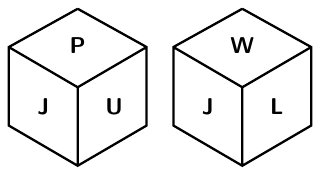
∴ The correct answer is 60°, 30° and 90°.

Additional Information

Angle Sum Property

The total sum of the interior angles in any valid planar triangle is always exactly 180°.

Classification by Sides

Equilateral triangles have all equal sides, isosceles triangles have two equal sides, and scalene triangles possess entirely unequal side lengths.

Classification by Angles

An acute triangle has all interior angles measuring less than 90°. A right triangle has exactly one 90° angle, and an obtuse triangle features exactly one angle strictly greater than 90°.

Question 75

Amit and Bilal buy goods for ₹1,500 and ₹2,000, respectively. Amit marks his goods up by y%, while Bilal marks his goods up by 2y% and offers a discount of y%. If both make the same profit, then find the value of y.

  1. AOption (a)

    10.5

  2. BOption (b)

    12

  3. COption (c)

    11.5

  4. DOption (d)

    12.5

View answer & explanation

Correct answer

Answer: (d)D.

12.5

Why this answer is correct

Shortcut Trick

Amit's profit = 1500 × y% = 15y

Bilal's equivalent profit % = 2y% − y% − (2y × y)/100% = (y − 0.02y2)%

Bilal's profit = 2000 × (y − 0.02y2)% = 20y − 0.4y2

Equating profits: 15y = 20y − 0.4y2 ⇒ 0.4y2 = 5y

⇒ 0.4y = 5 ⇒ y = 12.5

∴ The correct answer is 12.5.

Alternate Method

Given:

Amit's CP = ₹1,500, markup = y%

Bilal's CP = ₹2,000, markup = 2y%, discount = y%

Profit of Amit = Profit of Bilal

Formula Used:

Profit = SP − CP

SP = CP × (1 + Markup/100) × (1 − Discount/100)

Calculations:

⇒ For Amit:

⇒ SP = 1500 × (1 + y/100) = 1500 + 15y

⇒ Profit = (1500 + 15y) − 1500 = 15y

⇒ For Bilal:

⇒ MP = 2000 × (1 + 2y/100) = 2000 + 40y

⇒ SP = (2000 + 40y) × (1 − y/100)

⇒ SP = 2000 − 20y + 40y − 0.4y2 = 2000 + 20y − 0.4y2

⇒ Profit = (2000 + 20y − 0.4y2) − 2000 = 20y − 0.4y2

⇒ Since both make the same profit:

⇒ 15y = 20y − 0.4y2

⇒ 0.4y2 = 5y

⇒ y = 5 ÷ 0.4 = 12.5

∴ The correct answer is 12.5.

Additional Information

Marked Price (MP) & Discount

Discount is always calculated on the Marked Price. Formula: SP = MP × (1 − Discount/100).

Successive Discounts

If two successive discounts of a% and b% are given, the equivalent single discount is (a + b − (a × b)/100)%.

Markup Percentage

Markup is always calculated on the Cost Price to arrive at the Marked Price. Formula: MP = CP × (1 + Markup/100).

English Comprehension (25 questions)

Question 76

Select the option that can be used as a one-word substitute for the given group of words.

Speaking disrespectfully about sacred or religious things.

  1. AOption (a)

    Blasphemy

  2. BOption (b)

    Mystic

  3. COption (c)

    Atheist

  4. DOption (d)

    Theist

View answer & explanation

Correct answer

Answer: (a)A.

Blasphemy

Why this answer is correct

The correct answer is: Option 1.

Key Points

  • The word "Blasphemy" means speaking disrespectfully about sacred or religious things. (ईशनिंदा)
  • Example: His speech was considered blasphemy by the religious community.

Therefore, the correct answer is: Option 1.

Additional Information

Here are the other options explained along with their Hindi meanings and example sentences:

  • Mystic (रहस्यवादी): Someone who seeks, through contemplation and self-surrender, to obtain unity with or absorption into the Deity or the absolute, or who believes in the spiritual apprehension of truths that are beyond the intellect.
  • Example: The mystic spent years meditating in the mountains, seeking enlightenment.
  • Atheist (नास्तिक): A person who disbelieves or lacks belief in the existence of God or gods.
  • Example: The atheist challenged the religious doctrines during the debate.
  • Theist (आस्तिक): A person who believes in the existence of a god or gods, specifically of a creator who intervenes in the universe.
  • Example: The theist regularly attended church services and believed in divine intervention.

Question 77

Select the most appropriate option to substitute the underlined word segment in the given sentence.

Sanat has just arrived in Mysore on transfer; he requests his friend Raghu to help him find an appropriate location.

  1. AOption (a)

    an allocation recommendation

  2. BOption (b)

    a rented accommodation

  3. COption (c)

    a proper junction

  4. DOption (d)

    a suitable elevation

View answer & explanation

Correct answer

Answer: (b)B.

a rented accommodation

Why this answer is correct

The correct answer is Option 2.


Key Points

  • The underlined word segment "appropriate location" suggests that Sanat is looking for a place to stay, and the term "rented accommodation" fits this context perfectly.

Therefore, the corrected sentence should be "Sanat has just arrived in Mysore on transfer; he requests his friend Raghu to help him find a rented accommodation."


Correct Sentence: "Sanat has just arrived in Mysore on transfer; he requests his friend Raghu to help him find a rented accommodation."


Additional Information

  • Option 1: "an allocation recommendation" – This does not fit the context of finding a place to stay.
  • Option 3: "a proper junction" – This refers to a meeting point and is not relevant here.
  • Option 4: "a suitable elevation" – This refers to a proper level or height and is inappropriate in this context.

Question 78

The given sentence is divided into four segments. Select the option that has the segment with a grammatical error.

Two of the world's / best forwards / has played alongside / David Beckham.

  1. AOption (a)

    Two of the world's

  2. BOption (b)

    David Beckham.

  3. COption (c)

    best forwards

  4. DOption (d)

    has played alongside

View answer & explanation

Correct answer

Answer: (d)D.

has played alongside

Why this answer is correct

The correct answer is Option 4.


Key Points

  • The segment "has played alongside" contains a grammatical error. The subject "Two of the world's best forwards" is plural, so the correct verb form should be "have played" instead of "has played."

Therefore, the corrected sentence should be "Two of the world's best forwards have played alongside David Beckham."


Correct Sentence: "Two of the world's best forwards have played alongside David Beckham."


Additional Information

  • Option 1: "Two of the world's" – This segment is grammatically correct.
  • Option 2: "David Beckham." – This segment is grammatically correct.
  • Option 3: "best forwards" – This segment is grammatically correct.

Question 79

Select the most appropriate synonym of the given word.

Adequate

  1. AOption (a)

    Evaluate

  2. BOption (b)

    Hidden

  3. COption (c)

    Sufficient

  4. DOption (d)

    Reconcile

View answer & explanation

Correct answer

Answer: (c)C.

Sufficient

Why this answer is correct

The correct answer is: Sufficient.

Key Points

  • The word "adequate" means enough or satisfactory for a particular purpose. (पर्याप्त)
  • Example: The food supply was adequate to meet the needs of the population.
  • "Sufficient" refers to an amount that is enough to meet the needs or purposes. (पर्याप्त)
  • Example: They had sufficient evidence to support their claims.
  • Hence, we can infer that the synonym of 'adequate' is 'sufficient'.

Therefore, the correct answer is: Sufficient.

Additional Information

Here are the other options explained along with their Hindi meanings and example sentences:

  • Evaluate (मूल्यांकन करना): To judge or determine the significance, worth, or quality of something.
  • Example: The teacher will evaluate the students' projects next week.
  • Hidden (छिपा हुआ): Not visible or not able to be seen.
  • Example: There was a hidden compartment in the drawer.
  • Reconcile (मेल-मिलाप करना): To restore friendly relations between or to make consistent or congruous.
  • Example: They decided to reconcile their differences and work together.

Question 80

Select the most appropriate synonym of the given word.

Brittle

  1. AOption (a)

    Furtive

  2. BOption (b)

    Fickle

  3. COption (c)

    Fragile

  4. DOption (d)

    Fatal

View answer & explanation

Correct answer

Answer: (c)C.

Fragile

Why this answer is correct

The correct answer is: Option 3.

Key Points

  • The word "brittle" means something that is hard but liable to break or shatter easily. (भंगुर)
  • Example: The brittle glass vase broke into pieces when it fell off the table.
  • "Fragile" means something that is easily broken or damaged. (नाज़ुक)
  • Example: Handle the fragile items with care to avoid breaking them.
  • Hence, we can infer that the most appropriate synonym of 'brittle' is 'fragile'.

Therefore, the correct answer is: Option 3.

Additional Information

Here are the other options explained along with their Hindi meanings and example sentences:

  • Furtive (चोरी-छिपे): Attempting to avoid notice or attention, typically because of guilt or a belief that discovery would lead to trouble.
  • Example: She cast a furtive glance over her shoulder to make sure no one was following her.
  • Fickle (अस्थिर ): Changing frequently, especially as regards one's loyalties or affections.
  • Example: The weather can be very fickle in this region; it changes from sunny to rainy within minutes.
  • Fatal (घातक): Leading to failure or disaster.
  • Example: The accident proved to be fatal for the driver.

Question 81

Select the most appropriate synonym of the given word.

Cherish

  1. AOption (a)

    Neglect

  2. BOption (b)

    Breach

  3. COption (c)

    Nurture

  4. DOption (d)

    Afflict

View answer & explanation

Correct answer

Answer: (c)C.

Nurture

Why this answer is correct

The correct answer is: Nurture.

Key Points

  • The word "cherish" means to hold something dear, to care for it lovingly, or to nurture it. (संजोना)
  • Example: She cherishes the memories of her childhood deeply.
  • "Nurture" means to care for and encourage the growth or development of someone or something. (पालन-पोषण करना)
  • Example: Parents should nurture their children's talents and abilities.
  • Hence, we can infer that the synonym of 'cherish' is 'nurture'.

Therefore, the correct answer is: Nurture.

Additional Information

Here are the other options explained along with their Hindi meanings and example sentences:

  • Neglect (उपेक्षा): Fail to care for properly.
  • Example: He was accused of neglecting his duties as a parent.
  • Breach (उल्लंघन): An act of breaking or failing to observe a law, agreement, or code of conduct.
  • Example: There was a breach of contract between the two companies.
  • Afflict (पीड़ित करना): Cause pain or suffering to; affect or trouble.
  • Example: Many people are afflicted by the common cold during winter.

Question 82

Parts of a sentence are given below in jumbled order. Arrange the parts in the correct order to form a meaningful sentence.

(O) attitude is

(P) or tendency in individuals

(Q) a broad-based behaviour

(R) which implies

(S) a hypothetical postulate

  1. AOption (a)

    SQPRO

  2. BOption (b)

    OSRQP

  3. COption (c)

    OPQRS

  4. DOption (d)

    OPSRQ

View answer & explanation

Correct answer

Answer: (b)B.

OSRQP

Why this answer is correct

The correct answer is Option (2) i.e. OSRQP

Key Points

  • The sentence begins with the subject and main verb "attitude is," which is correctly indicated by part (O).
  • Following the subject, "a hypothetical postulate" (S) continues the logical sequence, making it clear what attitude is described as.
  • The next part, "which implies" starts the explanation about what the postulate signifies, indicated by (R).
  • The explanation continues with "a broad-based behaviour," indicated by (Q).
  • Ending with "or tendency in individuals" (P) completes the sentence by describing the implications of the behaviour.

Therefore, the correct answer is OSRQP.

Additional Information

  • Option 1 (SQPRO): This option starts with "a hypothetical postulate or tendency in individuals," which makes the sentence grammatically incorrect and jumbled.
  • Option 3 (OPQRS): This option starts with "attitude is or tendency in individuals," creating a disjointed and nonsensical sentence.
  • Option 4 (OPSRQ): This option starts with "attitude is or tendency in individuals which implies," which leads to a confusing and grammatically incorrect sentence.

Question 83

Select the most appropriate ANTONYM of the given word.

Material

  1. AOption (a)

    Cheap

  2. BOption (b)

    Abstract

  3. COption (c)

    Concrete

  4. DOption (d)

    Temporary

View answer & explanation

Correct answer

Answer: (b)B.

Abstract

Why this answer is correct

The correct answer is: Option 2.

Key Points

  • The word "Material" means something that is physical, tangible, and can be perceived by the senses. (भौतिक)
  • Example: The material used in the construction of the building is of high quality.
  • "Abstract" refers to something that exists in thought or as an idea but does not have a physical or concrete existence. (सैद्धांतिक)
  • Example: Her ideas were too abstract to be understood by everyone in the room.
  • Hence, we can infer that the opposite of 'Material' is 'Abstract'.

Therefore, the correct answer is: Option 2.

Additional Information

Here are the other options explained along with their Hindi meanings and example sentences:

  • Cheap (सस्ता): Low in price, especially in relation to similar items or services.
  • Example: The cheap shoes wore out quickly after just a few weeks of use.
  • Concrete (ठोस): Existing in a material or physical form; real or solid.
  • Example: They provided concrete evidence to support their claims.
  • Temporary (अस्थायी): Lasting for only a limited period of time; not permanent.
  • Example: The repairs are temporary until a permanent solution can be found.

Question 84

Select the most appropriate homonyms from the given alternatives to fill in the blanks.

The rowing instructor commanded them to ________ in a ________.

A.row (verb)

B.roe

C.row (sequence)

  1. AOption (a)

    C, A

  2. BOption (b)

    B, C

  3. COption (c)

    A, B

  4. DOption (d)

    A, C

View answer & explanation

Correct answer

Answer: (d)D.

A, C

Why this answer is correct

The correct answer is 'A, C'.

Key Points

  • The word "row (verb)" (A) means to propel a boat forward using oars. (पंक्तिबद्ध करना)
  • The word "row (sequence)" (C) means a number of people or things in a more or less straight line. (श्रृंखला)
  • In the sentence, "row" as a verb instructs them to row the boat, and "row" as a sequence indicates the formation they need to be in.

Therefore, the correct answer is 'Option 4'.

Complete Sentence: The rowing instructor commanded them to row in a row.

Additional Information

  • Roe (मछलियों के अंडे): refers to the eggs of fish, not relevant to the context of rowing a boat.

Question 85

Select the most appropriate meaning of the given idiom.

At a low ebb

  1. AOption (a)
    1. In a depressed or weak state
  2. BOption (b)
    1. In a happy state
  3. COption (c)
    1. In a critical moment
  4. DOption (d)
    1. In an unemployed mode
View answer & explanation

Correct answer

Answer: (a)A.
  1. In a depressed or weak state

Why this answer is correct

The correct answer is: Option 1.

Key Points

  • The idiom "At a low ebb" means:
  • In a depressed or weak state (कमज़ोर या उदास स्थिति में)
  • Example: After the company announced the layoffs, the employees' morale was at a low ebb.
  • Therefore, the correct answer is: Option 1 (In a depressed or weak state).

Additional Information

Here are the other options explained along with their Hindi meanings and example sentences:

  • In a happy state (खुश स्थिति में):
  • Example: She was in a happy state after receiving the good news.
  • In a critical moment (महत्वपूर्ण क्षण में):
  • Example: The team remained calm during the critical moment of the game.
  • In an unemployed mode (बेरोज़गारी की स्थिति में):
  • Example: He has been in an unemployed mode since the company downsized.

Question 86

Identify the error in the following sentence.

Ourselves should not boast of one's knowledge.

  1. AOption (a)

    one's

  2. BOption (b)

    boast

  3. COption (c)

    Ourselves

  4. DOption (d)

    knowledge

View answer & explanation

Correct answer

Answer: (c)C.

Ourselves

Why this answer is correct

The correct answer is Option 3.


Key Points

  • The primary issue in the sentence is the incorrect reflexive pronoun "Ourselves."
  • The appropriate pronoun should be "One" to match the possessive pronoun "one's."
  • Proper pronoun agreement ensures grammatical correctness and clarity.
  • Thus, the error is located in Option 3 of the sentence.

Therefore, the correct answer is Option 3.


Correct Sentence: "One should not boast of one's knowledge."


Additional Information

  • Ourselves – Incorrectly used reflexive pronoun; does not fit the context.
  • One – Correct pronoun to use with "one's" for proper agreement.
  • No error – This would be the correct option if the sentence were originally correct, but it contains an error in Option 3.

Question 87

Select the most appropriate option that can substitute the underlined segment in the given sentence.

This book giving us much information about our freedom fighters who lost their lives while serving our motherland.

  1. AOption (a)

    gives us many information

  2. BOption (b)

    give us many information

  3. COption (c)

    give us much information

  4. DOption (d)

    gives us much information

View answer & explanation

Correct answer

Answer: (d)D.

gives us much information

Why this answer is correct

The correct answer is Option 4.


Key Points

  • The underlined segment "giving us much information" should be in the present simple tense to agree with the subject "This book."
  • The correct form of the verb is "gives" to match the singular subject "book."
  • Additionally, we use "much information" (not "many information") because "information" is an uncountable noun.

Therefore, the corrected sentence should be "This book gives us much information about our freedom fighters who lost their lives while serving our motherland."


Correct Sentence: "This book gives us much information about our freedom fighters who lost their lives while serving our motherland."


Additional Information

  • Option 1: "gives us many information" – "many information" is incorrect; "information" is uncountable, so "much information" should be used.
  • Option 2: "give us many information" – The verb "give" does not agree with the singular subject "This book," and "many information" is also incorrect.
  • Option 3: "give us much information" – The verb "give" does not agree with the singular subject "This book."

Question 88

Select the most appropriate meaning of the given idiom.

Off and on

  1. AOption (a)

    Now and then

  2. BOption (b)

    Know something thoroughly

  3. COption (c)

    Remind

  4. DOption (d)

    Object to

View answer & explanation

Correct answer

Answer: (a)A.

Now and then

Why this answer is correct

The correct answer is: Option 1.

Key Points

  • The idiom "Off and on" means something that happens intermittently or occasionally. (कभी-कभी)
  • Example: He works on his project off and on, so it's taking longer to complete.
  • "Now and then" refers to something that happens occasionally, similar to "off and on." (कभी-कभी)
  • Example: We go out for dinner now and then, but usually, we eat at home.
  • Therefore, the idiom "off and on" is best matched with "now and then".

Therefore, the correct answer is: Option 1.

Additional Information

Here are the other options explained along with their Hindi meanings and example sentences:

  • Know something thoroughly (किसी चीज़ को पूरी तरह से जानना): To have complete knowledge about a subject.
  • Example: He knows the software thoroughly and can fix any issue that arises.
  • Remind (याद दिलाना): To make someone remember something.
  • Example: Please remind me to call the doctor tomorrow.
  • Object to (आपत्ति करना): To express disapproval or opposition to something.
  • Example: She objected to the proposed changes in the policy.

Question 89

Given below are four jumbled sentences. Select the option that gives their correct logical sequence.

A. These are responsible for producing the major fuel used across the globe.

B. The country has 100 major oil and gas fields.

C. The economy of Saudi Arabia is based on petroleum.

D. The chief oil field is Ghawar Field having an estimated 70 billion reserve resource.

  1. AOption (a)

    DCAB

  2. BOption (b)

    ABCD

  3. COption (c)

    CBAD

  4. DOption (d)

    BACD

View answer & explanation

Correct answer

Answer: (c)C.

CBAD

Why this answer is correct

The correct answer is Option (3) i.e. CBAD

Key Points

  • The sequence begins with the introduction of the main topic, "The economy of Saudi Arabia is based on petroleum," which is correctly indicated by part (C).
  • Following the introduction, "The country has 100 major oil and gas fields" provides further detail about the petroleum economy, indicated by (B).
  • The next part, "These are responsible for producing the major fuel used across the globe," connects to the previous sentence by referring to the oil and gas fields, indicated by (A).
  • The final part, "The chief oil field is Ghawar Field having an estimated 70 billion reserve resource," gives a specific example of one of these fields, indicated by (D).

Therefore, the correct answer is CBAD.

Additional Information

  • Option 1 (DCAB): This arrangement starts with the specific detail of Ghawar Field, making it less logical as an introduction to the topic.
  • Option 2 (ABCD): This starts with the fields' responsibility for fuel production without introducing the context, making it less coherent.
  • Option 4 (BACD): This incorrect sequence places the main introduction (C) after details about the fields, disrupting the logical flow.

Question 90

Select the option that contains all the MISSPELT words in the following sentences.

  1. The new restraunt offers a wide variety of delicious dishes.

  2. I can't beleive he made such a silly mistake in his presentation.

  3. The teacher asked the students to complete the assigment by Friday.

  4. She felt utterly embarassed by her colleague's comments.

  1. AOption (a)

    delicious, beleive, assigment, utterly

  2. BOption (b)

    restraunt, silly, assigment, colleague

  3. COption (c)

    delicious, silly, assigment, colleague

  4. DOption (d)

    restraunt, beleive, assigment, embarassed

View answer & explanation

Correct answer

Answer: (d)D.

restraunt, beleive, assigment, embarassed

Why this answer is correct

The correct answer is: Option 4.

Key Points

  • The word "restraunt" is a misspelling of "restaurant" which means a place where people pay to sit and eat meals that are cooked and served on the premises. (रेस्टोरेंट)
  • Example: The restaurant was known for its excellent seafood.
  • The word "beleive" is a misspelling of "believe" which means to accept something as true or to have faith in something. (विश्वास करना)
  • Example: I can't believe it's already the end of the year.
  • The word "assigment" is a misspelling of "assignment" which means a task or piece of work allocated to someone as part of a job or course of study. (असाइनमेंट)
  • Example: The students submitted their assignments on time.
  • The word "embarassed" is a misspelling of "embarrassed" which means feeling or showing embarrassment. (शर्मिंदा)
  • Example: She felt embarrassed when she realized her mistake.

Therefore, the correct answer is: Option 4.

Additional Information

Here are the other options explained along with their Hindi meanings and example sentences:

  • Delicious (स्वादिष्ट): Highly pleasant to the taste.
  • Example: The cake was absolutely delicious.
  • Silly (मूर्खतापूर्ण): Lacking in good sense or judgment.
  • Example: It was a silly mistake to forget the keys.
  • Colleague (सहकर्मी): A person with whom one works in a profession or business.
  • Example: She always gets along well with her colleagues.
  • Utterly (पूरी तरह से): Completely and without qualification.
  • Example: He was utterly exhausted after the marathon.

Question 91

Select the correctly spelt word to fill in the blank.

My mother said that every relationship must have some amount of _________.

  1. AOption (a)

    phlexibility

  2. BOption (b)

    flexebility

  3. COption (c)

    flexibility

  4. DOption (d)

    flaxiblety

View answer & explanation

Correct answer

Answer: (c)C.

flexibility

Why this answer is correct

The correct answer is: Option 3.

Key Points

  • The word "flexibility" means the quality of bending easily without breaking; it can also refer to the ability to be easily modified. (लचीलापन)
  • Example: Yoga helps in improving flexibility and strength.
  • "Flexibility" means the quality of being adaptable or variable. (लचीलापन)
  • Example: Flexibility in the workplace can lead to increased productivity and employee satisfaction.

Therefore, the correct answer is: Option 3.

Additional Information

Here are the other options explained along with their Hindi meanings and example sentences:

  • Phlexibility: This is an incorrect spelling and does not have a meaning.
  • Flexebility: This is an incorrect spelling and does not have a meaning.
  • Flaxiblety: This is an incorrect spelling and does not have a meaning.

Question 92

Select the most appropriate option to substitute the underlined segment in the given sentence.

The food intolerance industry has grown dramatically in the previous decade, chiefly because of a boost in Coeliac and Crohn’s disease cases, as well as increasing awareness among health-conscious clients.

  1. AOption (a)

    contextually because of a spark

  2. BOption (b)

    pretty much entirely because of a boil-down

  3. COption (c)

    casually due to a growth

  4. DOption (d)

    owing primarily to a rise

View answer & explanation

Correct answer

Answer: (d)D.

owing primarily to a rise

Why this answer is correct

The correct answer is Option 4.


Key Points

  • The phrase "chiefly because of a boost" needs a more precise and formal substitute suitable for the context.
  • "Owing primarily to a rise" is a more formal and contextually appropriate option for explaining the growth in the industry.
  • "Owing primarily to" replaces "chiefly because of," and "a rise" replaces "a boost," which fits better in this context.

Therefore, the corrected sentence should be "The food intolerance industry has grown dramatically in the previous decade, owing primarily to a rise in Coeliac and Crohn’s disease cases, as well as increasing awareness among health-conscious clients."


Correct Sentence: "The food intolerance industry has grown dramatically in the previous decade, owing primarily to a rise in Coeliac and Crohn’s disease cases, as well as increasing awareness among health-conscious clients."


Additional Information

  • Option 1: "contextually because of a spark" – The phrase "contextually because of a spark" is not appropriate in this formal context.
  • Option 2: "pretty much entirely because of a boil-down" – This phrase is too informal and inappropriate for the context of explaining industry growth.
  • Option 3: "casually due to a growth" – The adverb "casually" is not suitable for this formal context.

Question 93

Select the option that expresses the given sentence in passive voice.

The teenager delivered the speech.

  1. AOption (a)

    The speech has been delivered by the teenager.

  2. BOption (b)

    The speech is delivered by the teenager.

  3. COption (c)

    The speech was delivered by the teenager.

  4. DOption (d)

    The speech was being delivered by the teenager.

View answer & explanation

Correct answer

Answer: (c)C.

The speech was delivered by the teenager.

Why this answer is correct

The correct answer is Option 3.


Key Points

  • Passive voice structure: The object of the active voice sentence becomes the subject of the passive voice sentence.
  • In the active voice, the sentence is: "The teenager delivered the speech."
  • To convert to passive voice: Place the object "the speech" at the beginning.
  • Change the active verb form "delivered" to "was delivered" (past simple passive).
  • Add the preposition "by" followed by the original subject "the teenager."
  • Ensure the sentence remains clear and retains its original meaning.

Therefore, the correct answer is Option 3.


Correct Sentence: "The speech was delivered by the teenager."


Additional Information

  • Option 1: "The speech has been delivered by the teenager." – Incorrect tense (present perfect passive).
  • Option 2: "The speech is delivered by the teenager." – Incorrect tense (present simple passive).
  • Option 4: "The speech was being delivered by the teenager." – Incorrect aspect (past continuous passive).

Question 94

Select the option that expresses the given sentence in passive voice.

I have booked an apartment in the new residential colony.

  1. AOption (a)

    An apartment have been booked by me in the new residential colony.

  2. BOption (b)

    An apartment had been booked by me in the new residential colony.

  3. COption (c)

    An apartment is been booked by me in the new residential colony.

  4. DOption (d)

    An apartment has been booked by me in the new residential colony.

View answer & explanation

Correct answer

Answer: (d)D.

An apartment has been booked by me in the new residential colony.

Why this answer is correct

The correct answer is Option 4.


Key Points

  • Passive voice structure: The object of the active voice sentence becomes the subject of the passive voice sentence.
  • In the active voice, the sentence is: "I have booked an apartment in the new residential colony."
  • To convert to passive voice: Place the object "an apartment" at the beginning.
  • Change the active verb form "have booked" to "has been booked" (present perfect passive).
  • Add the preposition "by" followed by the original subject "me."

Therefore, the correct answer is Option 4.


Correct Sentence: "An apartment has been booked by me in the new residential colony."


Additional Information

  • Option 1: "An apartment have been booked by me in the new residential colony." – Incorrect subject-verb agreement (have been instead of has been).
  • Option 2: "An apartment had been booked by me in the new residential colony." – Incorrect tense (past perfect passive).
  • Option 3: "An apartment is been booked by me in the new residential colony." – Incorrect verb form (is been instead of has been).

Question 95

Select the most appropriate synonym of the word in bold.

The city has immense coal piers.

  1. AOption (a)

    diminutive

  2. BOption (b)

    trifling

  3. COption (c)

    set

  4. DOption (d)

    huge

View answer & explanation

Correct answer

Answer: (d)D.

huge

Why this answer is correct

The correct answer is: Option 4.

Key Points

  • The word "immense" means extremely large or great, especially in scale or degree. (विशाल)
  • Example: The immense popularity of the singer drew huge crowds to the concert.
  • "Huge" refers to something that is extremely large in size, quantity, or degree. (विशाल)
  • Example: The company made a huge profit last year.
  • Hence, we can infer that 'huge' is a synonym for 'immense'.

Therefore, the correct answer is: Option 4.

Additional Information

Here are the other options explained along with their Hindi meanings and example sentences:

  • Diminutive (लघु): Extremely or unusually small.
  • Example: The diminutive figure of the child was almost lost in the crowd.
  • Trifling (तुच्छ): Of very little importance or value.
  • Example: His trifling concerns were not worth discussing during the meeting.
  • Set (समूह): A group or collection of things that belong together or resemble one another.
  • Example: She purchased a set of beautiful china dishes.

In the following passage, some words have been deleted. Read the passage carefully and select the most appropriate option to fill in each blank.

Culture is (1) ______, understanding, and protecting, like the cultivation of a garden, not the destruction or eradication of its roots. Understanding the roots and seeds, taking much care and providing instructed nourishment (2) ______ important for good gardening. Culture also is similar; understanding its acquaintance (3) ______ literature and art and careful protection are required. Culture is the way of life of a particular society in which a group of people live together in one place. The society’s culture is visible in its literature, arts, social system, language and religion. It is a combination of traditions, customs, institutions, food habits, manners, morals, thoughts, tastes, views and beliefs. Usually, families (4) ______ culture to the younger generations. As family system is becoming weak, schools, colleges and universities should take up this responsibility as education should promote potential values of its culture. The role of universities (5) ______ only to issue course completed certificates.

Question 96

Based on Passage: View directions & passage

Select the most appropriate option to fill in blank number 1.

  1. AOption (a)

    creation

  2. BOption (b)

    to create

  3. COption (c)

    create

  4. DOption (d)

    creating

View answer & explanation

Correct answer

Answer: (d)D.

creating

Why this answer is correct

The correct answer is 'creating'.


Key Points

  • The sentence uses parallel structure, listing actions related to culture: creating, understanding, and protecting.
  • 'Creating' is the gerund form that fits the syntax and maintains the parallel structure with 'understanding' and 'protecting.'
  • Other options like 'creation,' 'to create,' and 'create' do not grammatically align with the rest of the sentence.

Therefore, the correct answer is 'Option 4'.


Additional Information

  • Creation (सृजन): A noun, grammatical mismatch.
  • To create (बनाने के लिए): Infinitive verb form, grammatically incorrect in context.
  • Create (बनाना): Simple present form, doesn't fit with parallel structure.

Question 97

Based on Passage: View directions & passage

Select the most appropriate option to fill in blank number 2.

  1. AOption (a)

    is

  2. BOption (b)

    were

  3. COption (c)

    was

  4. DOption (d)

    are

View answer & explanation

Correct answer

Answer: (d)D.

are

Why this answer is correct

The correct answer is 'are'.


Key Points

  • The sentence lists multiple activities (understanding, taking care, providing nourishment) which together form a compound subject.
  • The use of "are" is appropriate because these activities collectively require a plural verb form.
  • Other options "is," "were," and "was" do not fit the grammar and context of this compound subject.

Therefore, the correct answer is 'Option 4'.


Additional Information

  • Is (है): Incorrect as it does not agree with the plural nature of the listed activities.
  • Were (थे): Incorrect past tense form.
  • Was (था): Incorrect singular past tense form.

Question 98

Based on Passage: View directions & passage

Select the most appropriate option to fill in blank number 3.

  1. AOption (a)

    for

  2. BOption (b)

    on

  3. COption (c)

    with

  4. DOption (d)

    in

View answer & explanation

Correct answer

Answer: (c)C.

with

Why this answer is correct

The correct answer is 'with'.


Key Points

  • "Acquaintance with" is a common collocation, meaning familiarity or familiarity with literature and art.
  • Other prepositions do not fit contextually.

Therefore, the correct answer is 'Option 3'.


Additional Information

  • For (के लिए): Incorrect because it indicates purpose or benefit.
  • On (पर): Incorrect because it indicates topic or surface.
  • In (में): Incorrect because it indicates location or inclusion in the wrong context.

Question 99

Based on Passage: View directions & passage

Select the most appropriate option to fill in blank number 4.

  1. AOption (a)

    transmitting

  2. BOption (b)

    transmitted

  3. COption (c)

    transmit

  4. DOption (d)

    transmits

View answer & explanation

Correct answer

Answer: (c)C.

transmit

Why this answer is correct

The correct answer is 'transmit'.


Key Points

  • The sentence describes a habitual action performed by families, best expressed by the simple present tense 'transmit'.
  • Other options do not match the grammatical context.

Therefore, the correct answer is 'Option 3'.


Additional Information

  • Transmitting (प्रेषण कर रहे हैं): Incorrect because it indicates an ongoing action.
  • Transmitted (प्रेषित किया): Incorrect because it is in the past tense.
  • Transmits (प्रेषित करता है): Incorrect because it is the singular present form, not matching the plural subject.

Question 100

Based on Passage: View directions & passage

Select the most appropriate option to fill in blank number 5.

  1. AOption (a)

    should be restricted

  2. BOption (b)

    restrict

  3. COption (c)

    should restricted

  4. DOption (d)

    should not be restricted

View answer & explanation

Correct answer

Answer: (d)D.

should not be restricted

Why this answer is correct

The correct answer is 'should not be restricted'.


Key Points

  • 'Should not be restricted' fits the context of the role of universities being broad and not limited to just issuing certificates.
  • The other options do not fit.

Therefore, the correct answer is 'Option 4'.


Additional Information

  • Should be restricted: Incorrect as it limits the role negatively.
  • Restrict: Incorrect verb form, not fitting the context.
  • Should restricted: Grammatically incorrect auxiliary structure.

100 questions in the full paper