Shortcut Trick
Cost Price (CP) per kg = Selling Price ÷ (1 + Profit%) = 44.8 ÷ 1.12 = ₹40.
To gain a 5% overall profit, the target revenue per kg of initial stock must be 40 × 1.05 = ₹42.
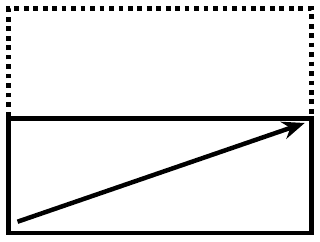
Since 1/5 of the sugar is damaged, only 4/5 of the quantity remains to be sold.
The entire target revenue must be generated by the remaining sugar.
New Selling Price per kg = Target Revenue ÷ Remaining Fraction = 42 ÷ (4/5) = 42 × 5 ÷ 4 = ₹52.5.
∴ The correct answer is ₹52.5.
Alternate Method
Given:
Selling Price (SP) of sugar = ₹44.8 per kg
Initial profit = 12%
Damaged portion = 1/5 of the total sugar
Target overall profit = 5%
Formula Used:
Cost Price = Selling Price ÷ (1 + Profit/100)
Total Selling Price = Total Cost Price × (1 + Desired Profit/100)
Calculations:
⇒ Let the total quantity of sugar be 5 kg.
⇒ Cost Price (CP) per kg = 44.8 ÷ 1.12 = ₹40
⇒ Total CP for 5 kg = 5 × 40 = ₹200
⇒ Since 5% overall profit is required, target Total SP = 200 × 1.05 = ₹210
⇒ Quantity of damaged sugar = 1/5 of 5 kg = 1 kg (yields ₹0 revenue)
⇒ Remaining quantity to be sold = 5 − 1 = 4 kg
⇒ New Selling Price per kg = Target Total SP ÷ Remaining Quantity
⇒ New SP per kg = 210 ÷ 4 = ₹52.5
∴ The correct answer is ₹52.5.
Additional Information
Cost Price and Selling Price Relation
When profit is made, SP = CP × (100 + Profit%) ÷ 100. For loss, SP = CP × (100 − Loss%) ÷ 100.
Impact of Damaged Goods on Profit
Goods that are completely damaged yield zero revenue. This effectively acts as a 100% loss on that specific portion, meaning the remaining goods must be sold at a higher markup to achieve the target overall profit.
Weighted Average in Profit & Loss
If quantity is split into parts (e.g., Q1 and Q2) sold at profit % P1 and P2, overall profit % = (Q1P1 + Q2P2) ÷ (Q1 + Q2). For completely damaged goods, P = −100%.