Previous Year Paper

SSC CGL 2024 Tier-I Official Paper (Held On: 10 Sept, 2024 Shift 2) (Previous Year Paper)

Held in 2024

100 questions60 minutes
With answers
Free

Paper last updated:

Practise under exam conditions

Take this paper as a timed mock test. Review your answers after you submit.

Attempt timed test

Questions & answers

Read the paper at your pace. Open an explanation when you need it.

General Intelligence and Reasoning (25 questions)

Question 1

In a certain code language,

A + B means ‘A is the brother of B’.

A − B means ‘A is the father of B’.

A × B means ‘A is the mother of B’.

A ÷ B means ‘A is the wife of B’.

Based on the above, how is P related to T if ‘P × Q + R ÷ S − T’?

  1. AOption (a)

    Sister

  2. BOption (b)

    Wife

  3. COption (c)

    Mother

  4. DOption (d)

    Mother’s mother

View answer & explanation

Correct answer

Answer: (d)D.

Mother’s mother

Why this answer is correct

Decoding symbols:

A is
Symbol+−×÷
MeaningBrotherFatherMotherWife
to B

Given: P × Q + R ÷ S − T

P × Q → P is the mother of Q.

Q + R → Q is the brother of R.

R ÷ S → R is the wife of S.

S − T → S is the father of T.

Thus, P is T's mother’s mother or maternal grandmother.

Hence, the correct answer is "Option 4"

Question 2

Select the number from among the given options that can replace the question mark (?) in the following series.

543, 518, 495, 474, 455, ?

  1. AOption (a)

    444

  2. BOption (b)

    442

  3. COption (c)

    440

  4. DOption (d)

    438

View answer & explanation

Correct answer

Answer: (d)D.

438

Why this answer is correct

The logic followed here is:

Hence, "Option 4" is the correct answer.

Question 3

104 is related to 13 following a certain logic. Following the same logic, 136 is related to 17. To which of the following is 232

related, following the same logic?

(NOTE: Operations should be performed on the whole numbers, without breaking down the numbers into its constituent

digits. E.g. 13 – Operations on 13 such as adding /deleting /multiplying etc. to 13 can be performed. Breaking down 13 into 1

and 3 and then performing mathematical operations on 1 and 3 is not allowed)

  1. AOption (a)

    29

  2. BOption (b)

    31

  3. COption (c)

    33

  4. DOption (d)

    27

View answer & explanation

Correct answer

Answer: (a)A.

29

Why this answer is correct

The logic followed here is:

104 is related to 13

104 ÷ 8 = 13

13 = 13 (LHS = RHS)

And,

136 is related to 17

136 ÷ 8 = 17

17 = 17 (LHS = RHS)

Similarly,

232 is related to ?

232 ÷ 8 = ?

29 = ?

Hence, "Option 1" is the correct answer.

Question 4

Read the given statements and conclusions carefully. Assuming that the information given in the statements is true, even if

it appears to be at variance with commonly known facts, decide which of the given conclusions logically follow(s) from the

statements.

Statements:

Some bags are purses.

All purses are wallets.

All wallets are sacks.

Conclusions:

(I) All purses are sacks.

(II) Some wallets are bags.

  1. AOption (a)

    Both conclusions (I) and (II) are follow

  2. BOption (b)

    Only conclusion (II) is follow

  3. COption (c)

    Neither conclusion (I) nor (II) is follow

  4. DOption (d)

    Only conclusion (I) is follow

View answer & explanation

Correct answer

Answer: (a)A.

Both conclusions (I) and (II) are follow

Why this answer is correct

The least possible Venn diagram for the given statements is as shown below :

Conclusions:

I. All purses are sacks → Follow (As some bags are purses, all purses are wallets and all wallets are sacks. As whole purses comes in wallets which whole comes in sacks, therefore it is true.)

II. Some wallets are bags → Follow (As some bags are purses and all purses are wallets. As whole purses comes in wallets and has some part common with bags, therefore it is true.)

∴ Here, Both conclusions (I) and (II) are follow.

Hence, "Option 1" is the correct answer.

Question 5

Three statements are given, followed by three conclusions numbered I, II and III. Assuming the statements to be true, even if

they seem to be at variance with commonly known facts, decide which of the conclusions logically follow(s) from the

statements.

Statements:

No bench is chair.

All sofas are benches.

All tables are sofas.

Conclusions:

I. No table is a chair.

II. Some sofas are chairs.

III. All tables are benches.

  1. AOption (a)

    Only conclusion I follows

  2. BOption (b)

    Only conclusions I and II follow

  3. COption (c)

    Only conclusion II follows

  4. DOption (d)

    Only conclusions I and III follow

View answer & explanation

Correct answer

Answer: (d)D.

Only conclusions I and III follow

Why this answer is correct

The least possible Venn diagram for the given statements is as shown below :

Conclusions:

I. No table is a chair → Follow (As no bench is chair, all sofas are benches and all tables are sofas. As whole tables comes in sofas which whole comes in benches which cannot be chair, therefore it is true.)

II. Some sofas are chairs → Does not follow (As no bench is chair and all sofas are benches. As whole sofas comes in benches which cannot be chair, therefore it is false.)

III. All tables are benches → Follow (As all sofas are benches and all tables are sofas. As whole tables comes in sofas which whole comes in benches, therefore it is true.)

∴ Here, Only conclusions I and III follow.

Hence, "Option 4" is the correct answer.

Question 6

In a certain code language, ‘COWS’ is coded as ‘7935’ and ‘OILY’ is coded as ‘2568’. What is the code for ‘O’ in that language?

  1. AOption (a)

    5

  2. BOption (b)

    8

  3. COption (c)

    2

  4. DOption (d)

    9

View answer & explanation

Correct answer

Answer: (a)A.

5

Why this answer is correct

The logic followed here is:

‘COWS’ is coded as ‘7935’

‘OILY’ is coded as ‘2568’

Thus, 'O' is coded as '5'.

Hence, "Option 1" is the correct answer.

Question 7

Three of the following number-pairs are alike in some manner and hence form a group. Which number-pair does not belong

to that group?

(NOTE: Operations should be performed on the whole numbers, without breaking down the numbers into its constituent

digits. E.g. 13 – Operations on 13 such as adding/subtracting/multiplying etc. to 13 can be performed. Breaking down 13 into

1 and 3 and then performing mathematical operations on 1 and 3 is not allowed.)

  1. AOption (a)

    21 – 420

  2. BOption (b)

    22 – 462

  3. COption (c)

    18 – 306

  4. DOption (d)

    15 – 240

View answer & explanation

Correct answer

Answer: (d)D.

15 – 240

Why this answer is correct

The logic followed here is:

Option 1) 21 – 420

212 - 21 = 420

441 - 21 = 420

420 = 420 (LHS = RHS)

Option 2)  22 – 462

222 - 22 = 462

484 - 22 = 462

462 = 462 (LHS = RHS)

Option 3) 18 – 306

182 - 18 = 306

324 - 18 = 306

306 = 306 (LHS = RHS)

Option 4) 15 – 240

152 - 15 = 240

225 - 15 = 240

210 ≠ 240 (LHS ≠ RHS)

Thus, out of all the options, '15 – 240' is the odd one out.

Hence, "Option 4" is the correct answer.

Question 8

Three of the following four are alike in a certain way and thus form a group. Which is the one that does NOT belong to that group? The odd one out is not based on the number of consonants/vowels or their position in the letter cluster

  1. AOption (a)

    DHK

  2. BOption (b)

    EIM

  3. COption (c)

    BFJ

  4. DOption (d)

    IMQ

View answer & explanation

Correct answer

Answer: (a)A.

DHK

Why this answer is correct

The logic followed here is:

Option 1) DHK

Option 2) EIM

Option 3) BFJ

Option 4) IMQ

Thus, out of all the options, 'DHK' is the odd one out.

Hence, "Option 1" is the correct answer.

Question 9

Select the option that is related to the fifth letter-cluster in the same way as the second letter-cluster is related to the first letter-cluster and the fourth letter-cluster is related to the third letter-cluster.

BACK : CCBI : : TEST : UGRR : : WORK : ?

  1. AOption (a)

    YQQJ

  2. BOption (b)

    XQSI

  3. COption (c)

    YQPI

  4. DOption (d)

    XQQI

View answer & explanation

Correct answer

Answer: (d)D.

XQQI

Why this answer is correct

The logic followed here is:

BACK : CCBI

And,

TEST : UGRR

Similarly,

WORK : ?

Hence, "Option 4" is the correct answer.

Question 10

Select the pair in which the numbers are related to each other in the same way as are the numbers in the given pairs.

(NOTE: Operations should be performed on the whole numbers, without breaking down the numbers into its constituent

digits. E.g. 13 – Operations on 13 such as adding /deleting/multiplying etc. to 13 can be performed. Breaking down 13 into 1

and 3 and then performing mathematical operations on 1 and 3 is not allowed.)

12 : 25

11 : 23

  1. AOption (a)

    15 : 29

  2. BOption (b)

    25 : 49

  3. COption (c)

    21 : 43

  4. DOption (d)

    18 : 35

View answer & explanation

Correct answer

Answer: (c)C.

21 : 43

Why this answer is correct

The logic followed here is: 

Logic: (1st number × 2) + 1 = 2nd number.

Now,

For 12 : 25:

⇒ (12 × 2) + 1

= 24 + 1 = 25.

For 11 : 23

⇒ (11 × 2) + 1

= 22 + 1 = 23.

Similarly, for Option 3: 21 : 43

⇒ (21 × 2) + 1

= 42 + 1 = 43.

Hence, the correct answer is Option 3.

Question 11

Identify the figure given in the options which when put in place of ? will logically complete the series.

  1. AOption (a)

  2. BOption (b)

  3. COption (c)

  4. DOption (d)

View answer & explanation

Correct answer

Answer: (a)A.

Why this answer is correct

The logic followed here is:

  1. Letter element series →

Letter element shift to the right side back and forth.

Alternately letter element is replaced by letter element subsequently.

No specific pattern is followed here for the alphabet element series, as it can be seen clearly that the letter element is replaced by new letter element randomly but no previous letter element used is repeated.

2) Digit element series →

Digit element shift to the left side back and forth.

Alternately digit element is replaced by digit element subsequently.

Thus, the final series is:

Hence, "Option 1" is the correct answer.

Additional InformationOption 1) It has new letter element after replacement i.e. not used previously in the given series and follows the other pattern too in the series.

Option 2) It has new letter element after replacement i.e. not used previously in the given series but doesn't follows the other pattern in the series (Letter element should be in the center), therefore is eliminated.

Option 3) Thought is follows the pattern of the whole series but the letter element after replacement is repeated i.e. already used in the given series, therefore is eliminated.

Option 4) It doesn't follows the pattern of the whole series (letter element should be in the center) and also the letter element after replacement is repeated i.e. already used in the given series, therefore is eliminated.

Question 12

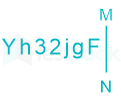
Select the correct mirror image of the given figure when the mirror is placed at MN.

  1. AOption (a)

  2. BOption (b)

  3. COption (c)

  4. DOption (d)

View answer & explanation

Correct answer

Answer: (d)D.

Why this answer is correct

The correct mirror image of the given figure is:

Hence, the correct answer is "Option 4".

Question 13

Select the set in which the numbers are related in the same way as are the numbers of the following sets.

(NOTE: Operations should be performed on the whole numbers, without breaking down the numbers into its constituent digits. E.g. 13 – Operations on 13 such as adding/deleting/multiplying etc. to 13 can be performed. Breaking down 13 into 1 and 3 and then performing mathematical operations on 1 and 3 is not allowed.)

(25, 300, 6)

(19, 342, 9)

  1. AOption (a)

    (17, 476, 7)

  2. BOption (b)

    (24, 600, 5)

  3. COption (c)

    (18, 288, 8)

  4. DOption (d)

    (14, 364, 7)

View answer & explanation

Correct answer

Answer: (c)C.

(18, 288, 8)

Why this answer is correct

The logic followed here is:

(25, 300, 6)

25 × 6 × 2 = 300 

300 = 300 (LHS = RHS)

And,

(19, 342, 9)

19 × 9 × 2 = 342 

342 = 342 (LHS = RHS)

So, checking each option one by one:

Option 1) (17, 476, 7)

17 × 7 × 2 = 476 

238 ≠ 476 (LHS ≠ RHS)

Option 2) (24, 600, 5)

24 × 5 × 2 = 600 

240 ≠ 600 (LHS ≠ RHS)

Option 3) (18, 288, 8)

18 × 8 × 2 = 288 

288 = 288 (LHS = RHS)

Option 4) (14, 364, 7)

14 × 7 × 2 = 364 

196 ≠ 364 (LHS ≠ RHS)

Thus, out of all the options, '(18, 288, 8)' follows the same logic as given.

Hence, "Option 3" is the correct answer.

Question 14

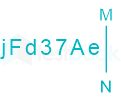
Select the correct mirror image of the given figure when the mirror is placed at MN.

  1. AOption (a)

  2. BOption (b)

  3. COption (c)

  4. DOption (d)

View answer & explanation

Correct answer

Answer: (b)B.

Why this answer is correct

The correct mirror image of the given figure is:

​

Hence, the correct answer is "Option 2".

Question 15

Six letters A, T, M, P, S and R are written on different faces of a dice. Two positions of this dice are shown in the figure below. Find the letter on the face opposite to the one having R.

  1. AOption (a)

    S

  2. BOption (b)

    T

  3. COption (c)

    A

  4. DOption (d)

    M

View answer & explanation

Correct answer

Answer: (d)D.

M

Why this answer is correct

The logic followed here is :-

From the given two different cubes the adjacent sides are as shown below :

As M is common on both the dices, it is clear that T, A, P, and S are adjacent to it, and the remaining i.e. R will be opposite to it.

Opposite pairs:

T → P

A → S

M → R

So, the opposite side of "R" will be side "M".

Hence, the correct answer is "Option 4".

Question 16

In a certain code language, 'TIZZ' is written as 'VKBB' and 'QOPH' is written as 'SQRJ'. How will 'CKAU' be written in that language?

  1. AOption (a)

    EMCW

  2. BOption (b)

    DNBV

  3. COption (c)

    ENCV

  4. DOption (d)

    DMBW

View answer & explanation

Correct answer

Answer: (a)A.

EMCW

Why this answer is correct

The logic followed here is:

'TIZZ' is written as 'VKBB'

And,

'QOPH' is written as 'SQRJ'

Similarly,

'CKAU' will be written as

Hence, "Option 1" is the correct answer.

Question 17

How many triangles are there in the given figure?

  1. AOption (a)

    16

  2. BOption (b)

    17

  3. COption (c)

    14

  4. DOption (d)

    15

View answer & explanation

Correct answer

Answer: (a)A.

16

Why this answer is correct

The number of triangles in the given figure is shown below:

  1. Total triangles = Number of parts × Number of diagonals

= 4 × 2 ⇒ 8

  1. As marked there are a total of 8 triangles.

Thus, there are total (8 + 8) = 16 triangles.

Hence, "Option 1" is the correct answer.

Question 18

Each vowel in the word ‘SIMILAR’ is changed to the following letter in the English alphabetical order and each consonant is changed to the preceding letter in the English alphabetical order. How many letters are there in the English alphabetical order between the letter which is the second from the left end and the third from the left end in the group of letters thus formed?

  1. AOption (a)

    Three

  2. BOption (b)

    Two

  3. COption (c)

    One

  4. DOption (d)

    Four

View answer & explanation

Correct answer

Answer: (c)C.

One

Why this answer is correct

Given word: SIMILAR

According to the question,

Given wordSIMILAR
Vowel → (+1) Consonant → (-1)(-1)(+1)(-1)(+1)(-1)(+1)(-1)
ResultantRJLJKBQ

Thus, the new formed letter cluster → R J L J K B Q

Now, the number of letters are there in the English alphabetical order between the letter which is the second from the left end and the third from the left end: (Left end) R J L J K B Q (Right end)

Here, one letter i.e 'K' is between J and L.

Hence, "Option 3" is the correct answer.

Question 19

Which of the following letter-clusters will replace the question mark (?) in the given series to make it logically complete?

ICT, FES, CGR, ZIQ, ?

  1. AOption (a)

    XLQ

  2. BOption (b)

    WKP

  3. COption (c)

    XKP

  4. DOption (d)

    WJP

View answer & explanation

Correct answer

Answer: (b)B.

WKP

Why this answer is correct

The logic followed here is:

Hence, "Option 2" is the correct answer.

Question 20

Which figure should replace the question mark (?) if the following series were to be continued?

<br>

  1. AOption (a)

  2. BOption (b)

  3. COption (c)

  4. DOption (d)

View answer & explanation

Correct answer

Answer: (b)B.

Why this answer is correct

The logic followed here is:

  1. First box series →

1st and 3rd element in first column and 2nd element in third column shift clockwise.

1st and 3rd element in third column and 2nd element in first column shift anticlockwise.

Center element is replaced by new element.

  1. Second box series →

Corner elements shift clockwise.

2nd row elements shift anticlockwise.

Thus, the final series is:

Hence, "Option 2" is the correct answer.

Question 21

Select the option that is related to the fifth letter-cluster in the same way as the second letter-cluster is related to the first letter-cluster and the fourth letter-cluster is related to the third letter-cluster.

<br>

DOY : PAK :: BQM : NCY :: ILU : ?

  1. AOption (a)

    TYG

  2. BOption (b)

    UYG

  3. COption (c)

    TXG

  4. DOption (d)

    UXG

View answer & explanation

Correct answer

Answer: (d)D.

UXG

Why this answer is correct

The logic followed here is:

DOY : PAK

And,

BQM : NCY

Similarly,

ILU : ?

Hence, "Option 4" is the correct answer.

Question 22

Which two numbers (not digits) should be interchanged to make the given equation correct?

116 - 92 ÷ 4 + 25 × 2 - 20 = 150

  1. AOption (a)

    116 and 92

  2. BOption (b)

    25 and 20

  3. COption (c)

    2 and 4

  4. DOption (d)

    20 and 92

View answer & explanation

Correct answer

Answer: (c)C.

2 and 4

Why this answer is correct

Given: 116 - 92 ÷ 4 + 25 × 2 - 20 = 150

According to the question, after interchanging the numbers:

Option 1) 116 and 92

116 - 92 ÷ 4 + 25 × 2 - 20 = 150 ⇒ 92 - 116 ÷ 4 + 25 × 2 - 20 = 150

⇒ 92 - 116 ÷ 4 + 25 × 2 - 20 = 150

⇒ 92 - 29 + 25 × 2 - 20 = 150

⇒ 92 + 50 - 20 - 29 = 150

⇒ 142 - 20 - 29 = 150

⇒ 93 ≠ 150 (LHS ≠ RHS)

Option  2) 25 and 20

116 - 92 ÷ 4 + 25 × 2 - 20 = 150 ⇒ 116 - 92 ÷ 4 + 20 × 2 - 25 = 150

⇒ 116 - 92 ÷ 4 + 20 × 2 - 25 = 150

⇒ 116 - 23 + 20 × 2 - 25 = 150

⇒ 116 + 40 - 25 - 23 = 150

⇒ 156 - 25 - 23 = 150

⇒ 108 ≠ 150 (LHS ≠ RHS)

Option  3) 2 and 4

116 - 92 ÷ 4 + 25 × 2 - 20 = 150 ⇒ 116 - 92 ÷ 2 + 25 × 4 - 20 = 150

⇒ 116 - 92 ÷ 2 + 25 × 4 - 20 = 150

⇒ 116 - 46 + 25 × 4 - 20 = 150

⇒ 116 + 100 - 20 - 46 = 150

⇒ 216 - 20 - 46 = 150

⇒ 150 = 150 (LHS = RHS)

Option  4) 20 and 92

116 - 92 ÷ 4 + 25 × 2 - 20 = 150 ⇒ 116 - 20 ÷ 4 + 25 × 2 - 92 = 150

⇒ 116 - 20 ÷ 4 + 25 × 2 - 92 = 150

⇒ 116 - 5 + 25 × 2 - 92 = 150

⇒ 116 + 50 - 92 - 5 = 150

⇒ 166 - 92 - 5 = 150

⇒ 69 ≠ 150 (LHS ≠ RHS)

Hence, "Option 3" is the correct answer.

Question 23

Six letters U, V, W, X, Y and Z are written on different faces of a dice. Two positions of this dice are shown in the figure below. Find the letter on the face opposite to Z.

  1. AOption (a)

    W

  2. BOption (b)

    Y

  3. COption (c)

    X

  4. DOption (d)

    U

View answer & explanation

Correct answer

Answer: (b)B.

Y

Why this answer is correct

The logic followed here is :-

From the given two different cubes the adjacent sides are as shown below :

As W is common on both the dices, it is clear that U, Y, V, and Z are adjacent to it, and the remaining i.e. X will be opposite to it.

Opposite pairs:

U → V

Y → Z

W → X

So, the opposite side of "Z" will be side "Y".

Hence, the correct answer is "Option 2".

Question 24

Which two numbers (not digits) should be interchanged to make the given equation correct?

72 - 6 + (18 ÷ 4) + 17 - (22 × 2) = 44

  1. AOption (a)

    17 and 4

  2. BOption (b)

    22 and 18

  3. COption (c)

    6 and 22

  4. DOption (d)

    6 and 4

View answer & explanation

Correct answer

Answer: (d)D.

6 and 4

Why this answer is correct

Given: By interchanging *'*6 and 4' and checking the option:

Option 4) 72 - 6 + (18 ÷ 4) + 17 - (22 × 2) = 44

After interchanging '6 and 4':

⇒ 72 - 4 + (18 ÷ 6) + 17 - (22 × 2) = 44

⇒ 72 - 4 + 3 + 17 - 44 = 44

⇒ 92 - 4 - 44 = 44

⇒ 92 - 48 = 44

⇒ 44 = 44

Hence, the correct answer is "Option 4".

Question 25

Select the option that represents the letters that when placed from left to right in the blanks below will complete the given letter series.

DF_IJOD_HIJO_FHIJODF_IJOD_

  1. AOption (a)

    HFFDH

  2. BOption (b)

    FHDHF

  3. COption (c)

    HFHDF

  4. DOption (d)

    HFDHF

View answer & explanation

Correct answer

Answer: (d)D.

HFDHF

Why this answer is correct

Given series: DF_IJOD_HIJO_FHIJODF_IJOD_

Option 1) HFFDH→ DFHIJODFHIJOFFHIJODFDIJODH → (It doesn't follow any pattern)

Option 2) FHDHF → DFFIJODHHIJODFHIJODFHIJODF → (It doesn't follow any pattern)

Option 3) HFHDF → DFHIJODFHIJOHFHIJODFDIJODF → (It doesn't follow any pattern)

Option 4) HFDHF → DFHIJODFHIJODFHIJODFHIJODF → (It follows the pattern of: DFHIJO - DFHIJO - DFHIJO - DFHIJO - DF)

Hence, "Option 4" is the correct answer.

General Awareness (25 questions)

Question 26

As of March 2023, how many High Courts are there in India?

  1. AOption (a)

    25

  2. BOption (b)

    35

  3. COption (c)

    30

  4. DOption (d)

    20

View answer & explanation

Correct answer

Answer: (a)A.

25

Why this answer is correct

The correct answer is 25. 

Key Points 

  • High Courts:-
  • ​The institution of the high court originated in India in 1862 with three high courts set up at Calcutta, Bombay and Madras.
  • The fourth HC was established in Allahabad in 1866.
  • Currently, India has a total of 25 High Courts established in different states of the country.
  • The Andhra Pradesh High Court became the 25th High Court of India when it was established on January 1, 2019.
  • The UTs of Jammu and Kashmir and Ladakh have a common high court.
  • Articles 214 to 231 in Part VI  of the Constitution deal with the organisation, independence, jurisdiction, powers, procedures and so on of the HC.
  • The Seventh Amendment Act of 1956 authorised the Parliament to establish a common HC for two or more states or two or more states and a UT

Additional Information

  • Jurisdiction of High Courts
  • Bombay HC - Maharashtra, Goa, Dadra and Nagar Haveli, Daman and Diu
  • Guwahati HC - Assam, Nagaland, Mizoram and Arunachal Pradesh
  • Punjab and Haryana HC - Punjab, Haryana, Chandigarh
  • Calcutta HC - West Bengal, Andaman and Nicobar Islands

Question 27

Harela is a festival of greenery, peace, prosperity, and environmental conservation, primarily celebrated in which of the following states?

  1. AOption (a)

    Madhya Pradesh

  2. BOption (b)

    Haryana

  3. COption (c)

    Assam

  4. DOption (d)

    Uttarakhand

View answer & explanation

Correct answer

Answer: (d)D.

Uttarakhand

Why this answer is correct

The correct answer is Uttarakhand

Key Points

  • Harela is a festival of greenery, peace, prosperity, and environmental conservation that is primarily celebrated in Uttarakhand and some regions of Himachal Pradesh:
  • Uttarakhand
  • Harela is a significant part of Uttarakhand's culture and traditions.
  • It is celebrated with great enthusiasm and marks the beginning of the monsoon season.
  • During Harela, communities come together to plant trees and honor the harmony between humans and the environment.
  • Himachal Pradesh
  • Harela is celebrated in some regions of Himachal Pradesh, particularly in the Kumaun region.
  • In the Kangra, Shimla, and Sirmour regions of Himachal Pradesh, it is called Hariyali or Rihyali.
  • In the Jubbal and Kinnaur areas of Himachal Pradesh, it is called Dakhrain

Additional Information

  • Some festivals celebrated in Madhya Pradesh, Haryana, and Assam include:
  • Bhagoriya: A festival celebrated by the tribal people of Madhya Pradesh
  • Bohag Bihu: A festival celebrated in Assam that marks the beginning of spring and the Assamese New Year
  • Tusu Puja: A festival celebrated by Assam's tea tribes to honor Goddess Tusu Devi
  • Surajkund International Crafts Mela: A festival celebrated in Haryana
  • Mango Mela: A festival celebrated in Haryana
  • Baisakhi Mela: A festival celebrated in Haryana
  • Pinjore Heritage Festival: A festival celebrated in Haryana
  • International Gita Mahotsav: A festival celebrated in Haryana

Question 28

Which species is known as black lipped pearl oyster found in the Indo-Pacific, within tropical coral reefs?

  1. AOption (a)

    Aplysia dactylomela

  2. BOption (b)

    Dentalium neohexagonum

  3. COption (c)

    Chatepleura apiculata

  4. DOption (d)

    Pinctada margaritifera

View answer & explanation

Correct answer

Answer: (d)D.

Pinctada margaritifera

Why this answer is correct

The correct answer is Pinctada margaritiferau

Key Points

  • Pinctada margaritifera, commonly known as the black-lipped pearl oyster, is a bivalve mollusc belonging to the family Pteriidae
  • It is widely distributed in the Indo-Pacific region, particularly within tropical coral reef ecosystems.
  • These environments provide the optimal conditions for its survival, including warm water temperatures and an abundance of plankton for food.
  • The term "black-lipped" refers to the distinct dark colouration found on the inner edges of its shell.
  • This feature distinguishes it from other pearl oysters.
  • This species is particularly valued in the pearl industry as it is a primary producer of high-quality Tahitian black pearls, which are renowned for their unique colours and lustre.
  • Like other bivalves, it filters water for food, contributing to the clarity and health of its marine environment.
  • It also serves as a habitat for various small marine organisms.

Additional Information

  • Aplysia dactylomela:
  • Also known as the spotted sea hare, it is a sea slug.
  • These animals are known for their soft, wrinkled bodies, which can have various colours and patterns, including spots.
  • They have a distinct head region with tentacles, and their bodies are somewhat flattened.
  • Dentalium neohexagonum:
  • A species of scaphopod mollusk, also known as a tusk shell
  • Scaphopods are marine molluscs that have tubular, tapered shells that are open at both ends.
  • These shells resemble the shape of an elephant’s tusk, which is how they got the name "tusk shell."
  • Chatepleura apiculata:
  • A type of chiton, which is a class of mollumolluscs that cling to rocks in intertidal zones
  • Chatepleura apiculata is a small, elongated gastropod with a conical, smooth shell, although its size and appearance can vary depending on its environment and the host it attaches to.

Question 29

The CSO adopted the concept of Gross Value Added in _____.

  1. AOption (a)

    January 2012

  2. BOption (b)

    January 2015

  3. COption (c)

    January 2017

  4. DOption (d)

    January 2013

View answer & explanation

Correct answer

Answer: (b)B.

January 2015

Why this answer is correct

The correct answer is January 2015

Key Points

  • The Central Statistics Office (CSO) adopted the concept of Gross Value Added (GVA) in January 2015 as part of a major revision in the national accounts statistics.
  • This change was implemented when the base year for GDP calculation was shifted from 2004-05 to 2011-12.
  • GVA measures the contribution of each sector to the economy.
  • It reflects the value of goods and services produced in an economy after deducting the cost of inputs and raw materials.
  • This adoption aligns India's statistical calculations with international practices and standards like those recommended by the United Nations System of National Accounts (SNA).
  • Along with the introduction of GVA, the base year revision to 2011-12 was applied to GDP estimates.
  • This revision ensured more accurate and updated data representation, helping policymakers assess economic performance better.

Question 30

Which of the following social reformers of 19th century India was the author of 'Stree Purush Tulana'?

  1. AOption (a)

    Tarabai Shinde

  2. BOption (b)

    Swarnakumari Devi

  3. COption (c)

    Pandita Ramabai

  4. DOption (d)

    Usha Mehta

View answer & explanation

Correct answer

Answer: (a)A.

Tarabai Shinde

Why this answer is correct

The correct answer is Tarabai Shinde

Key Points

  • Tarabai Shinde (1850–1910) wrote Stree Purush Tulana, or A Comparison Between Women and Men, in 1882.
  • Shinde was a feminist activist who protested against caste and patriarchy in 19th-century India.
  • Stree Purush Tulana is considered one of the first modern feminist texts in India.
  • The book critiques the gender and caste systems and questions the position of women in society and their rights.
  • It was controversial for its time because it challenged Hindu religious scriptures as a source of women's oppression.
  • Shinde was born in the Berar province of Buldhana in modern-day Maharashtra.
  • She was a member of the Satyashodhak Samaj and an associate of Savitribai Phule and Jyotirao Phule

Additional Information

  • Swarnakumari Devi
  • A prominent Bengali writer, social reformer, and the first woman to edit a literary magazine in India.
  • She was the daughter of Debendranath Tagore and the sister of Rabindranath Tagore.
  • Her work advocated for women's education and empowerment during the late 19th and early 20th centuries.
  • Pandita Ramabai
  • A social reformer and educationist who worked extensively for women's rights and education, especially for widows in India.
  • She founded the Arya Mahila Samaj and the Mukti Mission for destitute women.
  • She was one of the earliest proponents of women's education in colonial India and a pioneering feminist figure.
  • Usha Mehta
  • A prominent freedom fighter and Gandhian.
  • Famous for running the Congress Radio, an underground radio station, during the Quit India Movement (1942) to broadcast messages against British rule.

Question 31

How many medals did India win in International Shooting Sport Federation (ISSF) World Cup 2022, which was held in Cairo, Egypt?

  1. AOption (a)

    9

  2. BOption (b)

    6

  3. COption (c)

    7

  4. DOption (d)

    8

View answer & explanation

Correct answer

Answer: (c)C.

7

Why this answer is correct

The correct answer is 7.

Key Points

  • India won 7 medals in the International Shooting Sport Federation (ISSF) World Cup 2022 held in Cairo, Egypt.
  • India's performance in the shooting World Cup was outstanding, and they finished second in the medals tally, behind China, who won 11 medals.
  • The International Shooting Sport Federation (ISSF) is the governing body of the Olympic shooting events.

Additional Information

  • The ISSF World Cup is an annual event where shooters from around the world compete in various shooting disciplines.
  • India has a strong shooting contingent, and they have been performing well in international events in recent years.
  • In the ISSF world cup 2022, India won 4 gold medals, 2 silver medals, and 1 bronze medal, showing their dominance in the sport.
  • India won 15 medals in total—six gold, six silver, and three bronze—to take the lead in the ISSF Junior World Cup 2023 in Suhl, Germany.

Question 32

Ustad Vilayat Ali Khan is a maestro in _______.

  1. AOption (a)

    Tabla

  2. BOption (b)

    Mridangam

  3. COption (c)

    Sitar

  4. DOption (d)

    Flute

View answer & explanation

Correct answer

Answer: (c)C.

Sitar

Why this answer is correct

The correct answer is Sitar.

Key Points

  • Ustad Vilayat Khan (1928–2004) was a legendary Indian classical musician, known globally as a sitar virtuoso. He is considered one of the greatest sitar players of the 20th century.
  • He pioneered the "gayaki ang" style of sitar playing, which emulates the subtle nuances of the human voice. This style brought a lyrical, vocal-like expression to instrumental performance, revolutionizing sitar music.
  • Vilayat Khan belonged to the Etawah (Imdadkhani) Gharana, a prestigious musical lineage. His father was Ustad Enayat Khan, also a noted sitarist, and his grandfather Ustad Imdad Khan was one of the earliest influential figures in Hindustani string instrument music.
  • Although offered India's top civilian awards like the Padma Shri, Padma Bhushan, and Padma Vibhushan, Vilayat Khan refused them, claiming that non-experts were judging his artistry. Nonetheless, he received numerous accolades worldwide and remains an iconic figure in Indian classical music.

Question 33

Which physical feature of India prevents the cold winds from central Asia from entering the Indian subcontinents?

  1. AOption (a)

    Indian plains

  2. BOption (b)

    Indian desert

  3. COption (c)

    Coastal area

  4. DOption (d)

    Himalayas

View answer & explanation

Correct answer

Answer: (d)D.

Himalayas

Why this answer is correct

The correct answer is the Himalayas

Key Points

  • The Himalayas are the physical feature that prevents cold winds from Central Asia from entering the Indian subcontinent
  • The Himalayas are a lofty mountain range that blocks cold winds from Central Asia from entering India.
  • The Himalayas' height, location, and complex topography significantly impact the climate of the Indian subcontinent.
  • The Himalayas also influence the monsoons, forcing the rain-bearing winds to lose most of their moisture before crossing the range.
  • The Himalayas cause the Indian subcontinent to experience milder winters than Central Asia.
  • Northern India also has higher temperatures than other areas on the same latitudes.

Additional Information

  • Indian plains
  • The Northern Plains, also known as the Indo-Gangetic Plain, are the granaries of India and the foundation for early civilizations.
  • This vast plain is formed by the rivers Ganga, Yamuna, Brahmaputra, and their tributaries.
  • It stretches across northern and northeastern India, covering states like Uttar Pradesh, Bihar, West Bengal, Punjab, Haryana, and Himachal Pradesh.
  • The Indo-Gangetic plain is characterized by fertile soils, making it one of the most important agricultural regions in India.
  • It is densely populated, with major cities like Delhi, Kolkata, Lucknow, and Patna located along its course.
  • Indian desert
  • The Thar Desert, also known as the Great Indian Desert, is India's largest desert, covering about 77,000 square miles.
  • The Thar Desert spans across parts of Rajasthan, Gujarat, Punjab, and Haryana in India, extending into Pakistan.
  • It covers around 200,000 square kilometres in India, primarily in the state of Rajasthan.
  • The desert supports sparse vegetation like cactus, acacia trees, and scrub plants.
  • Coastal areas
  • India's coastal areas include the coastal states of Gujarat, Maharashtra, Goa, Karnataka, Kerala, Tamil Nadu, Andhra Pradesh, Odisha, and West Bengal, as well as the coastal union territories of Daman & Diu, Puducherry, Lakshadweep Islands, and Andaman & Nicobar Islands.
  • Coastal plains are low-lying, flat areas of land that are adjacent to the sea or ocean.
  • The elevation of the land increases gradually from the sea to the highlands.
  • India's other main physical features include the Himalayas and the Peninsular Plateau.

Question 34

Which state initiated the implementation of the Mid-day Meal scheme in elementary schools?

  1. AOption (a)

    Tamil Nadu

  2. BOption (b)

    Madhya Pradesh

  3. COption (c)

    Uttar Pradesh

  4. DOption (d)

    Karnataka

View answer & explanation

Correct answer

Answer: (a)A.

Tamil Nadu

Why this answer is correct

The correct answer is Tamil Nadu

Key Points

  • Mid Day Meal Scheme
  • ​​Tamil Nadu was the first state in India to introduce this scheme.
  • The first school which had the scheme since 1925 was Sourashtra Boys Higher Secondary School, Madurai.
  • K. Kamaraj, the Chief Minister of Tamil Nadu at the time, introduced it first in Chennai and later extended it to all districts of Tamil Nadu.
  • On 28th November 2001, the Supreme Court asked all state governments to begin this programme in their schools within 6 months.
  • Nutritious Mid-day Meal scheme
  • ​Nutritious Meal Programme was introduced by the then Chief Minister Puratchi Thalaivar Dr M.G.R. on 01.07.1982.
  • The main objective of the programme is to emphasize education along with nutrition.
  • Under this programme free hot cooked nutritious meal is being provided to children in Government Schools, Government aided Schools, Special Training Centres Madarasas, Maktabs supported under Sarva Shiksha Abhiyan and also in Special Schools functioning under National Child Labour Programme.

Question 35

In the 7th Century AD, a new religion called Islam was born in ________.

  1. AOption (a)

    Malaysia

  2. BOption (b)

    South Africa

  3. COption (c)

    Arabia

  4. DOption (d)

    Indonesia

View answer & explanation

Correct answer

Answer: (c)C.

Arabia

Why this answer is correct

The correct answer is Arabia

Key Points


  • In the 7th Century AD, a new religion called Islam was born in Arabia, specifically in the city of Mecca (in present-day Saudi Arabia).
  • Islam was founded by the Prophet Muhammad, who is regarded by Muslims as the last messenger of God.
  • The core teachings of Islam are based on the revelations Muhammad received, which are compiled in the holy book called the Quran.
  • The religion emphasizes monotheism, the worship of one God (Allah), and a framework for personal conduct, spirituality, and community life.

Question 36

Who among the following freedom fighters of India is the author of the book, ‘The Indian Struggle’?

  1. AOption (a)

    Mahatma Gandhi

  2. BOption (b)

    Motilal Nehru

  3. COption (c)

    Vallabhbhai Patel

  4. DOption (d)

    Subhas Chandra Bose

View answer & explanation

Correct answer

Answer: (d)D.

Subhas Chandra Bose

Why this answer is correct

The correct answer is Subhas Chandra Bose

Key Points

  • Subhas Chandra Bose is the author of The Indian Struggle, a two-part book that covers the history of the Indian independence movement from 1920–1942:
  • The Indian Struggle, 1920–1934:
  • The first part of the book, published in 1948 after India gained independence
  • The Indian Struggle, 1935–1942:
  • The second part of the book
  • 11 Freedom Fighters of India Who Shaped the Nation's Destiny
  • The British colonial government banned the book in India.
  • Bose was a revolutionary leader who founded the Indian National Army (INA).
  • He also gave the slogan "Dilli Chalo" to motivate the INA in 1944.

Additional Information

  • Mahatma Gandhi (1869–1948)
  • Known as the Father of the Nation, he led India’s struggle for independence through non-violent civil disobedience.
  • Key movements:
  • Non-Cooperation Movement (1920), Salt Satyagraha (1930), and the Quit India Movement (1942).
  • Advocated for truth (Satya) and non-violence (Ahimsa) as core principles.
  • Motilal Nehru (1861–1931)
  • A prominent lawyer, freedom fighter, and senior leader of the Indian National Congress.
  • He was the father of Jawaharlal Nehru, India’s first Prime Minister.
  • Played a key role in drafting the Nehru Report (1928), which was a response to the Simon Commission, proposing a constitution for India.
  • Vallabhbhai Patel (1875–1950)
  • Known as the Iron Man of India, he played a pivotal role in India’s integration post-independence by unifying 562 princely states.
  • A staunch supporter of Mahatma Gandhi, he was deeply involved in movements like the Bardoli Satyagraha (1928) and the Quit India Movement (1942).
  • India’s first Deputy Prime Minister and Minister of Home Affairs.

Question 37

Which of the following Articles of the Indian Constitution mentions about the organisation of 'Village Panchayats'?

  1. AOption (a)

    Article 31

  2. BOption (b)

    Article 38

  3. COption (c)

    Article 36

  4. DOption (d)

    Article 40

View answer & explanation

Correct answer

Answer: (d)D.

Article 40

Why this answer is correct

The correct answer is Article 40

Key Points

  • Article 40 of the Indian Constitution mentions the organization of village panchayats
  • Article 40 of the Constitution states that the state shall take steps to organize village panchayats and give them the powers and authority to function as units of self-government.
  • Article 40 is part of the Directive Principles of State Policy (DPSP), which are guidelines for framing laws and policies.
  • The DPSP is in Part IV of the Constitution, Articles 36–51.
  • Panchayati raj
  • The Panchayati raj system is a system of local self-government for villages in rural India.
  • It includes the Panchayati Raj Institutions (PRIs), which are responsible for: 
  • Economic development
  • Strengthening social justice
  • Implementing Central and State Government Schemes

Additional Information

  • Article 36
  • This article of the Statute of the International Court of Justice defines the Court's jurisdiction.
  • It states that the Court's jurisdiction includes all cases referred to it by the parties, as well as matters specified in the Charter of the United Nations, treaties, and conventions.
  • Article 38
  • This article of the Convention on the Rights of the Child covers a range of topics, including:
  • Respecting international humanitarian law in armed conflicts
  • Ensuring that children under 15 do not directly participate in hostilities
  • Protecting and caring for children affected by armed conflicts
  • Articles 36
  • ​It states that the term “State” in this part (Part IV) has the same meaning as in Part III (which deals with Fundamental Rights).

Question 38

Sitar maestro, Pandit Ravi Shankar was awarded which of the following awards by the Government of India in 1999?

  1. AOption (a)

    Padma Shri

  2. BOption (b)

    Padma Bhushan

  3. COption (c)

    Bharat Ratna

  4. DOption (d)

    Padma Vibhushan

View answer & explanation

Correct answer

Answer: (c)C.

Bharat Ratna

Why this answer is correct

The correct answer is Bharat Ratna

Key Points

  • In 1999, Pandit Ravi Shankar was awarded the Bharat Ratna, India's highest civilian honor
  • Pandit Ravi Shankar was a renowned sitar player, composer, and musician.
  • He was known for popularizing the sitar around the world and becoming a leading exponent of North Indian classical music in the second half of the 20th century.
  • He also collaborated with the Beatles and won three Grammy Awards.

Additional Information

  • Padma Shri
  • India's fourth-highest civilian award.
  • It is conferred for distinguished contributions in fields like art, education, science, literature, medicine, social service, and public affairs.
  • Padma Bhushan
  • India's third-highest civilian award.
  • It is awarded for distinguished service of a high order.
  • Padma Vibhushan
  • Given for exceptional and distinguished service.
  • It is India's second-highest civilian award.
  • Bharat Ratna
  • India's highest civilian award.
  • It is conferred for exceptional service or performance of the highest order in any field of human endeavour.
  • These awards are announced annually on the eve of Republic Day (January 26), and they are presented by the President of India in a ceremony held at Rashtrapati Bhavan, usually in March or April.4
  • The Padma Awards were instituted in 1954.
  • Hockey legend Balbir Singh Dosanjh was the first sportsperson to receive the Padma Shri for his achievements in hockey.

Question 39

'Au' is the symbol for which of the following elements?

  1. AOption (a)

    Gold

  2. BOption (b)

    Aluminium

  3. COption (c)

    Silver

  4. DOption (d)

    Argon

View answer & explanation

Correct answer

Answer: (a)A.

Gold

Why this answer is correct

The correct answer is Gold

Key Points

  • The symbol "Au" represents the element gold
  • Gold's name comes from the Latin word aurum, which means "shining dawn".
  • Gold is a dense, soft, malleable, and ductile transition metal with an atomic number of 79.
  • In its pure form, it is unreactive and has a bright, slightly orange-yellow colour.
  • Uses: Gold is often used in jewellery.

Additional Information

  • Aluminium (Al)
  • Atomic Number: 13
  • Category: Metal (Light metal)
  • Properties:
  • Lightweight, ductile, and malleable.
  • High corrosion resistance due to the formation of a thin oxide layer.
  • Good conductor of electricity and heat.
  • Uses:
  • Aerospace industry (aircraft bodies).
  • Packaging (aluminium foil, cans).
  • Construction (windows, doors).
  • Electrical transmission lines due to its low density.
  • Silver (Ag)
  • Atomic Number: 47
  • Category: Precious Metal
  • Properties:
  • Highest electrical and thermal conductivity of all metals.
  • Lustrous and malleable.
  • Antibacterial properties.
  • Uses:
  • Jewelry and ornaments.
  • Electronics (wires, circuits, and switches).
  • Mirrors and reflective surfaces.
  • Medicine (antibacterial coatings, wound dressings).
  • Argon (Ar)
  • Atomic Number: 18
  • Category: Noble Gas
  • Properties:
  • Colorless, odourless, and inert under most conditions.
  • Non-flammable and does not form compounds easily.
  • Uses:
  • Inert gas shield in welding (to protect metal from oxidation).
  • Filling gas in light bulbs (to prevent filament corrosion).
  • Preservation of historical documents and materials.

Question 40

Which of the following options is associated with the class of cold-blooded animals?

  1. AOption (a)

    Chameleon

  2. BOption (b)

    Pavo

  3. COption (c)

    Macropus

  4. DOption (d)

    Psittacula

View answer & explanation

Correct answer

Answer: (a)A.

Chameleon

Why this answer is correct

The correct answer is Chameleon

Key Points

  • Chameleon is associated with the class of cold-blooded animals.
  • Cold-blooded animals, also known as ectotherms or poikilotherms, are animals that cannot regulate their body temperature internally.
  • Instead, their body temperature changes with the temperature of their environment.
  • Examples of cold-blooded animals include
  • Frogs
  • These amphibians are cold-blooded and can often be found in or near water sources to regulate their body temperature.
  • Snakes
  • These reptiles are cold-blooded and often bask in the sun to increase their body temperature.
  • Chameleons
  • These lizards are cold-blooded and use the environment around them to help regulate their body temperature

Additional Information

  • Psittacula
  • Common Name: Parakeets or Ring-necked Parrots.
  • Category: Genus of birds in the family Psittaculidae.
  • Medium-sized parrots with long tails.
  • Known for their vibrant green plumage, often with colorful markings around the neck (e.g., rose-ringed parakeet).
  • Intelligent and capable of mimicking sounds or human speech.
  • Habitat: Found primarily in South Asia, Africa, and Southeast Asia.
  • Example Species:
  • Psittacula krameri (Rose-ringed Parakeet).
  • Pavo
  • Common Name: Peafowl.
  • Pavo muticus (Green Peafowl).
  • Pavo cristatus (Indian Peafowl), the national bird of India.
  • Example Species:
  • Habitat: Native to South Asia and forests in Southeast Asia.
  • The train is iridescent and has "eye spots."
  • Large and colorful birds, most famous for the males' stunning tail feathers (train) used in courtship displays.
  • Macropus
  • Common Name: Kangaroos.
  • Category: Genus of marsupials in the family Macropodidae.
  • Herbivorous mammals known for their strong hind legs and large feet, adapted for jumping.
  • Carry their young (joeys) in a pouch.
  • Distinguished by their long, muscular tails used for balance.
  • Habitat: Native to Australia and nearby islands.
  • Example Species:
  • Macropus rufus (Red Kangaroo).
  • Macropus giganteus (Eastern Grey Kangaroo).

Question 41

Which Article of the Constitution of India grants power to the President to appoint Judges of the Supreme Court?

  1. AOption (a)

    Article 124(2)

  2. BOption (b)

    Article 123(1)

  3. COption (c)

    Article 127(3)

  4. DOption (d)

    Article 128(4)

View answer & explanation

Correct answer

Answer: (a)A.

Article 124(2)

Why this answer is correct

The correct answer is Article 124(2)

Key Points

  • Article 124(2) of the Constitution of India gives the President the power to appoint judges to the Supreme Court:
  • The President appoints judges by warrant under their hand and seal.
  • The President consults with other Supreme Court judges and High Court judges in the states when appointing a judge.
  • The Chief Justice of India is always consulted when appointing a judge other than the Chief Justice.
  • Judges serve until they turn 65 years old.
  • Judges can resign by writing to the President.
  • Article 124 of the Constitution also covers the establishment and composition of the Supreme Court.
  • It states that the Supreme Court is made up of the Chief Justice of India and up to seven other judges, as determined by Parliament

Additional Information

  • Article 123(1): Gives the President the power to issue ordinances when Parliament is not in session.*
  • The President can issue an ordinance if they believe immediate action is necessary.
  • The ordinance has the same force and effect as an Act of Parliament, but it must be laid before both houses of Parliament.
  • The ordinance will stop working after six weeks from when Parliament reconvenes, or if both houses pass resolutions disapproving it before then.
  • The President can also withdraw the ordinance at any time.
  • Article 127(3)
  • It Deals with the appointment of an Ad hoc Chief Justice of India.
  • This provision comes into play when the office of the Chief Justice of India is vacant due to reasons like resignation, death, or retirement, and there is no provision for the appointment of a new Chief Justice at that time.
  • Article 128(4)
  • Article 128(4) of the Indian Constitution relates to the attendance of retired judges of the Supreme Court in the proceedings of the Supreme Court as ad hoc judges.
  • "A Judge of the Supreme Court who has ceased to hold office may, with his consent, be requested by the President to attend any sitting of the Supreme Court for the purpose of assisting the Court."

Question 42

In which year was the International Olympic Committee formed?

  1. AOption (a)

    1896

  2. BOption (b)

    1892

  3. COption (c)

    1898

  4. DOption (d)

    1894

View answer & explanation

Correct answer

Answer: (d)D.

1894

Why this answer is correct

The correct answer is 1894.

Key Points

  • The IOC was founded by Pierre de Coubertin in Paris in 1894, marking the revival of the ancient Olympic Games.
  • The IOC is the supreme authority of the Olympic Movement, overseeing the organization of the Summer and Winter Olympic Games.
  • The Olympic Games are held every four years, alternating between Summer and Winter editions.
  • The IOC is guided by the Olympic Charter, which outlines the principles and rules governing the Olympic Movement.
  • The IOC works closely with National Olympic Committees (NOCs) from around the world to ensure the participation of athletes in the Olympic Games.

Additional Information

  • The original Olympic Games were held in ancient Greece from the 8th century BC until the 4th century AD.
  • Indian Olympic Association (IOA): The IOA is the national governing body for the Olympic Movement in India.
  • Asian Olympic Council (AOC): The AOC is the governing body for the Olympic Movement in Asia.
  • The Commonwealth Games are a multi-sport event involving athletes from Commonwealth countries and territories.
  • The Asian Games are a multi-sport event involving athletes from Asia.

Question 43

To which group do the alkaline earth metals such as radium, barium and strontium belong?

  1. AOption (a)

    Group 5A

  2. BOption (b)

    Group 2A

  3. COption (c)

    Group 1A

  4. DOption (d)

    Group 3A

View answer & explanation

Correct answer

Answer: (b)B.

Group 2A

Why this answer is correct

The correct answer is Group 2A

Key Points

  • Alkaline earth metals like radium, barium, and strontium belong to group 2A (group 2) of the periodic table.
  • The other elements in this group are beryllium and magnesium.
  • Alkaline earth metals are called group 2 elements because they have two valence electrons in their outer shell.
  • Some uses of alkaline earth metals include:
  • Strontium: Used in fireworks to produce a crimson red color
  • Barium: Used in rat poison as barium carbonate.
  • Barium sulphate is also used in hospitals to make a white substance that shows up the digestive tract when X-rayed.

Additional Information

  • Group 1A
  • Also known as the alkali metals or lithium family, these elements have one valence electron.
  • They are very reactive metals that are soft and have a low density.
  • Group 3A
  • Also known as the boron group, these elements have three valence electrons.
  • Some examples of elements in this group include aluminum, gallium, indium, and thallium.
  • Group 5A
  • These elements are located towards the right side of the periodic table.
  • Some examples of elements in this group include nitrogen, phosphorus, arsenic, antimony, and bismuth.
  • The periodic table organizes elements into groups and periods based on their chemical and physical properties.
  • Elements in the same group share similar characteristics, like reactivity

Question 44

In which of the following games is one player known as the Wicketkeeper?

  1. AOption (a)

    Football

  2. BOption (b)

    Basketball

  3. COption (c)

    Cricket

  4. DOption (d)

    Hockey

View answer & explanation

Correct answer

Answer: (c)C.

Cricket

Why this answer is correct

The correct answer is Cricket

Key Points

  • The wicket-keeper in the sport of cricket is the player on the fielding side who stands behind the wicket or stumps being watchful of the batsman and ready to take a catch, stump the batsman out and run out a batsman when occasion arises.
  • The wicketkeeper wears gloves and leg pads, and occasionally a helmet when standing close to the stumps.
  • Key Responsibilities:
  • Stopping deliveries missed by the batsman to prevent runs (byes).
  • Effecting stumpings and catches.
  • Supporting the bowlers by encouraging or strategizing field placements.

Additional Information

  • Terminologies associated with Hockey are Bully, Sudden death, Short corner, Hat trick, Goal, Penalty Corner, Penalty, etc.
  • Terminologies associated with Football are Goal, Kick, Head, Penalty kick, Dribble, Offside, Hat trick, Foul, Stopper, Move, Side back, Pass, Baseline, Rebound, etc.
  • Terminologies associated with Basketball are Dribbling, Shooting, Passing, Rebounding, Block, Steal, Assist, Dunk, Three-pointer, Free throw, Layup, Alley-oop, Pivot, Buzzer-beater, Backcourt, Frontcourt, Fast break, Triple-double, Foul, Technical foul, Personal foul, Shot clock.

Question 45

Which of the following is not a transboundary river between India and Pakistan?

  1. AOption (a)

    Indus

  2. BOption (b)

    Ravi

  3. COption (c)

    Beas

  4. DOption (d)

    Jhelum

View answer & explanation

Correct answer

Answer: (c)C.

Beas

Why this answer is correct

The correct answer is Beas.

Key Points

  • The Beas River is an important river in northern India, but it does not flow through or into Pakistan. Hence, it is not a transboundary river.
  • The Beas originates in Himachal Pradesh, India, and flows entirely through India before merging with the Sutlej River.
  • It does not cross the international border into Pakistan, unlike the Indus, Ravi, and Jhelum.
  • The Beas is part of the Indus River Basin, but it is not a transboundary river.

Additional Information

  • Ravi
  • This river originates in the Himalayas in Himachal Pradesh, India, and flows along the India-Pakistan border.
  • It flows through the Indian states of Himachal Pradesh and Punjab and then enters Pakistan.
  • Eventually merges with the Chenab River in Pakistan.
  • The Ravi River was historically known as Iravati in Vedic texts and as Hydraotes in Greek records.
  • It flows near the ancient city of Harappa, an important center of the Indus Valley Civilization.
  • The Ravi is one of the Indus River's five tributaries.
  • The Indus Water Treaty (IWT) of 1960 gives India control over the Ravi River's waters for irrigation and other agricultural activities.
  • Jhelum
  • The Jhelum originates from Verinag Spring in Kashmir at the foot of the Himalayas.
  • The river flows through Jammu and Kashmir in India before entering Pakistan.
  • Sutlej
  • The Sutlej River is one of the five major rivers of the Punjab region, originating from the Tibetan Plateau in China.
  • It flows through India and Pakistan, and is a tributary of the Indus River.
  • The Sutlej plays a vital role in irrigation and agriculture in the Indian states of Himachal Pradesh, Punjab, and Rajasthan.
  • Indus Water Treaty (IWT) 1960: India has full control over the Sutlej, along with the Beas and Ravi rivers, as per the provisions of the treaty.
  • It joins the Chenab River in Pakistan, forming one of the main branches of the Indus River system.

Question 46

According to the Agricultural and Processed food products Export Development Authority (APEDA) 2020-2021, which state of India has the first rank in grapes production?

  1. AOption (a)

    Maharashtra

  2. BOption (b)

    Karnataka

  3. COption (c)

    Bihar

  4. DOption (d)

    Uttar Pradesh

View answer & explanation

Correct answer

Answer: (a)A.

Maharashtra

Why this answer is correct

The correct answer is Maharashtra

Key Points

  • According to APEDA, Maharashtra is the top state in India for grape production: 
  • Maharashtra
  • 70.67%
  • Karnataka
  • 24.49%
  • Tamil Nadu
  • 1.43%
  • Andhra Pradesh
  • 1.34%
  • The cultivation and harvesting of grapes are called viticulture.
  • Viticulture is the speciality of the Mediterranian region.
  • The best quality wines in the world with distinctive flavours are produced from this region such as Port wine is famous in Portugal, Sherry in Southern Spain, etc.

Additional Information

TerminologyExplanation
HorticultureThe branch of plant agriculture deals with garden crops, generally fruits, vegetables, and ornamental plants.
SericultureCommercial rearing of silkworms for the production of silk.
PiscicultureThe rearing and controlled breeding of fishes.

Question 47

Gautamiputra Satakarni titled Rajaraja and Maharaja is related to which of the following dynasties?

  1. AOption (a)

    Shunga

  2. BOption (b)

    Pandya

  3. COption (c)

    Satavahana

  4. DOption (d)

    Shaka

View answer & explanation

Correct answer

Answer: (c)C.

Satavahana

Why this answer is correct

The correct answer is Satavahana

Key Points

  • Gautamiputra Satakarni was a ruler of the Satavahana dynasty and was given the titles of Rajaraja and Maharaja.
  • The Satavahanas were an ancient Indian dynasty that ruled the Deccan region of India, which is present-day Andhra Pradesh, Telangana, and Maharashtra.
  • The Satavahana dynasty and Gautamiputra Satakarni:
  • The Satavahanas ruled after the Mauryan Empire declined.
  • The term "Satavahana" comes from the Prakrit word meaning "driven by seven".
  • The Satavahanas were also known as the Andhras in the Puranas.
  • The Satavahana kingdom's capital cities included Amaravati, Pratishthana, and Kotalingala.
  • Gautamiputra Satakarni ruled from 106 AD to 130 AD.
  • He is considered the greatest ruler of the Satavahana dynasty.
  • He is believed to have restored the fortunes of the Satavahanas.
  • He called himself the only Brahmana who defeated the Shakas.
  • His son was Vasisthiputra Sri Pulamavi/Pulumavi or Pulamavi II.

Additional Information

  • Shunga Dynasty (Pataliputra)
  • The Shunga Dynasty was founded by Pushyamitra Shunga around 185 BCE after overthrowing the last Maurya ruler, Brihadratha.
  • Pushyamitra was a general in the Maurya Empire and took control after assassinating Brihadratha.
  • The dynasty played a significant role in reviving Vedic religion and Brahmanical practices, and its rulers are often credited with restoring temples and rituals dedicated to Hindu deities.
  • Pandya Dynasty (Madurai):
  • The Pandya Dynasty was one of the oldest known dynasties in southern India and is mentioned in the Vedic texts.
  • The Pandyas ruled primarily in the region of Tamil Nadu, with their capital at Madurai.
  • The Pandyas were great patrons of Tamil culture, and their reign is often associated with the Sangam period, during which Sangam literature flourished.
  • This literature included epic poems, songs, and stories that celebrated Tamil kings, warriors, and the culture.
  • Shaka Dynasty (Ujjain, Mathura):
  • The Shaka dynasty was founded by Central Asian Scythians (nomads), who migrated into India around the 2nd century BCE.
  • The Shakas established their rule primarily in the regions of Ujjain and Mathura.
  • The Shakas were skilled warriors and played a significant role in Indian military history.
  • They introduced the Shaka Era, a calendar system that was widely adopted by other Indian dynasties.

Question 48

Which of the following has the highest salinity?

  1. AOption (a)

    Great salt lake

  2. BOption (b)

    Lake Van

  3. COption (c)

    Red sea

  4. DOption (d)

    Dead sea

View answer & explanation

Correct answer

Answer: (b)B.

Lake Van

Why this answer is correct

The correct answer is Lake Van.

Key Points Lake Van

  • Lake Van, 330 has the highest salinity.
  • Lake Van is the largest lake in Turkey.
  • It is a saline soda lake, receiving water from many small streams that descend from the surrounding mountains. It is one of the world's few endorheic lakes (a lake having no outlet) of size greater than 3,000 square kilometres (1,200 sq mi)
  • Despite the high altitude and winter highs below 0 °C (32 °F), high salinity usually prevents it from freezing.

Additional Information

Lake/SeaSalinity (‰)Description
Red Sea41- It is a water body lying between Africa and Asia. - It is one of the saltiest bodies of water in the world, owing to high evaporation and low precipitation.
Great Salt Lake220- It is located in the northern part of the U.S. - It is the largest saltwater lake in the Western Hemisphere. - As it is endorheic (has no outlet besides evaporation), it has very high salinity (far saltier than seawater).
Dead Sea238- It is a salt lake bordered by Jordan in the east and Israel and the West Bank to the west. - It is one of the world's saltiest bodies of water. - This salinity makes for a harsh environment in which plants and animals cannot flourish, hence its name.

Question 49

Which of the following Articles of the Indian Constitution contains Fundamental Duties?

  1. AOption (a)

    32A

  2. BOption (b)

    45A

  3. COption (c)

    62B

  4. DOption (d)

    51A

View answer & explanation

Correct answer

Answer: (d)D.

51A

Why this answer is correct

The correct answer is Article 51A.

Key Points: In the Constitution of India, fundamental duties are mentioned in Article 51A.

  • There was no list of fundamental duties in the original constitution.
  • Fundamental duties were added into the Indian constitution by the 42nd Constitutional Amendment Act 1976.
  • the 42nd constitutional amendment added Part IV A and Article 51A to the Indian constitution.
  • Fundamental duties were added to the Indian constitution on the recommendation of the Swaran Singh Committee.
  • Initially, there were only 10 fundamental duties in the constitution.
  • The 86th Constitutional Amendment Act 2002 added one more fundamental duty to the constitution.
  • Currently, there are 11 fundamental duties in the Indian constitution.
  • The idea of fundamental duties was borrowed from the Russian constitution.
  • Fundamental duties are non-justiciable in nature.

The 11 Fundamental Duties listed are:

  1. Respect the National Flag, National Anthem, and the Indian Constitution's principles and institutions.
  2. Uphold and uphold the lofty principles that motivated the nation's fight for freedom.
  3. Uphold and defend India's sovereignty, unification, and integrity.
  4. Defend the nation and perform national service as required.
  5. Promote harmony and a feeling of shared brotherhood among all Indians, notwithstanding differences in religion, language, location, or section, and condemn behaviours that are demeaning to women's dignity.
  6. Appreciate and safeguard the rich cultural history of the nation as a whole.
  7. Maintaining a healthy ecosystem, including woods, lakes, rivers, and wildlife, as well as showing compassion for all living things.
  8. Foster a humanistic outlook, a scientific mindset, and a spirit of reformation
  9. Protect public property and abstain from violence
  10. Strive for excellence in all areas of personal and group endeavour so that the country continually reaches greater heights of endeavour and success.
  11. Give his kid or ward between the ages of six and fourteen the opportunity to pursue an education. The 86th Constitutional Amendment Act of 2002 added this duty.

Question 50

Mohiniyattam is associated with which of the following traditional dance styles?

  1. AOption (a)

    Samapadam

  2. BOption (b)

    Tribhanga

  3. COption (c)

    Chowk

  4. DOption (d)

    Lasya style

View answer & explanation

Correct answer

Answer: (d)D.

Lasya style

Why this answer is correct

The correct answer is Lasva-style

Key Points

  • Mohiniyattam is associated with the Lasya style of dance.
  • Mohiniyattam is a classical solo dance form from Kerala, India, and is a subgenre of Lasya.
  • It is performed in the Kaisiki vritti, which is a graceful style of dance.
  • It is believed to have originated in the 16th century in Kerala's temples.
  • The name comes from the words "Mohini" (meaning enchantress) and "attam" (meaning dance).
  • It is performed as a solo recital by women.
  • Dancers typically wear a white or off-white sari with gold borders, and their hair is adorned with jasmine flowers.
  • It is characterized by graceful movements, swaying body, and subtle facial expressions.
  • It is one of the eight Indian classical dance forms recognized by the Sangeet Natak Akademi.

Additional Information

  • Samapadam (Equal Foot/Step):
  • The term "Samapadam" refers to a balanced stance where weight is evenly distributed on both feet, symbolizing stability and equilibrium.
  • In this posture, the dancer stands with their feet parallel, with both feet placed flat on the ground and equal pressure on each foot.
  • The posture is commonly used in several classical dance forms like Bharatanatyam and Kathak to convey harmony, calmness, and balance.
  • Tribhanga (Three Bends):
  • "Tribhanga" literally means "three bends" in Sanskrit, referring to the shape formed by bends at the neck, torso, and knee.
  • This classical pose, common in Bharatanatyam, Odissi, and other Indian dance forms, creates an elegant S-shape with graceful curves.
  • The dancer's neck is tilted to one side, the torso is bent to the side, and the knee is slightly bent, creating a flowing, fluid form.
  • Chowk (Square, Strong Position):
  • "Chowk" is a stance used in Kathak (and sometimes in other dance forms), symbolizing strength, stability, and a grounded posture.
  • In the Chowk pose, the dancer stands with their feet wide apart and the body squared to the front.
  • The knees are bent deeply, and the upper body is often upright and strong.
  • The position creates a square-like form, representing power and steadfastness.v

Quantitative Aptitude (25 questions)

Question 51

Find the values of x, y and z, so as to satisfy the equations given below: x + y + z = 12; x + y – z = 6; x – y + z = 4

  1. AOption (a)

    x = 5, y = 4, z = – 3

  2. BOption (b)

    x = 5, y = – 4, z = 3

  3. COption (c)

    x = 5, y = 4, z = 3

  4. DOption (d)

    x = 5, y = – 4, z = – 3

View answer & explanation

Correct answer

Answer: (c)C.

x = 5, y = 4, z = 3

Why this answer is correct

Shortcut Trick

Subtracting the second equation from the first gives 2z = 12 − 6 ⇒ z = 3.

Subtracting the third equation from the first gives 2y = 12 − 4 ⇒ y = 4.

Substituting y = 4 and z = 3 in the first equation gives x = 12 − 4 − 3 = 5.

∴ The correct answer is x = 5, y = 4, z = 3.

Alternate Method

Given:

x + y + z = 12 ...... (i)

x + y − z = 6 ...... (ii)

x − y + z = 4 ...... (iii)

Calculations:

⇒ Subtracting equation (ii) from equation (i):

⇒ (x + y + z) − (x + y − z) = 12 − 6

⇒ x + y + z − x − y + z = 6

⇒ 2z = 6

⇒ z = 3

⇒ Subtracting equation (iii) from equation (i):

⇒ (x + y + z) − (x − y + z) = 12 − 4

⇒ x + y + z − x + y − z = 8

⇒ 2y = 8

⇒ y = 4

⇒ Substituting the values of y and z in equation (i):

⇒ x + 4 + 3 = 12

⇒ x + 7 = 12

⇒ x = 5

∴ The correct answer is x = 5, y = 4, z = 3.

Additional Information

Elimination Method

This involves adding or subtracting equations to eliminate a variable, simplifying the system to fewer variables for straightforward calculation.

Substitution Method

One variable is isolated in one equation and substituted into the others, reducing the number of unknowns step by step until a single variable is found.

Cramer's Rule

A matrix-based method that uses determinants to solve a system of linear equations, applicable specifically when the determinant of the main coefficient matrix is non-zero.

Question 52

A policeman noticed a thief at a distance of 500 metres. The policeman started running and the thief also started running at the same time. The thief is running at a speed of 15 km/h. It took 15 minutes for the policeman to catch the thief. Find the speed of the policeman (in km/h).

  1. AOption (a)

    11

  2. BOption (b)

    17

  3. COption (c)

    12

  4. DOption (d)

    10

View answer & explanation

Correct answer

Answer: (b)B.

17

Why this answer is correct

Shortcut Trick

Relative speed = Distance gap ÷ Time taken to catch

Initial Distance gap = 500 m = 0.5 km, Time taken = 15 mins = 1/4 hour.

Relative speed = 0.5 ÷ (1/4) = 2 km/h.

Since both are moving in the same direction, Policeman's speed = Thief's speed + Relative speed.

Policeman's speed = 15 + 2 = 17 km/h.

∴ The correct answer is 17 km/h.

Alternate Method

Given:

Initial distance between the policeman and the thief = 500 m = 0.5 km

Speed of the thief = 15 km/h

Time taken to catch the thief = 15 minutes = 15/60 hours = 1/4 hours

Formula Used:

Distance = Speed × Time

Relative Speed (same direction) = Speed of Object 1 − Speed of Object 2

Calculations:

Let the speed of the policeman be P km/h.

⇒ Distance covered by the thief before getting caught = Speed of thief × Time taken

⇒ Distance covered by the thief = 15 × (1/4) = 3.75 km

⇒ Total distance covered by the policeman = Initial gap + Distance covered by the thief

⇒ Total distance covered by policeman = 0.5 km + 3.75 km = 4.25 km

⇒ Speed of policeman (P) = Total Distance ÷ Time taken

⇒ P = 4.25 ÷ (1/4)

⇒ P = 4.25 × 4

⇒ P = 17 km/h

∴ The correct answer is 17 km/h.

Additional Information

Relative Speed in Same Direction

When two bodies travel in the same direction, their relative speed is calculated as the difference between their individual speeds: Relative Speed = S1 − S2.

Relative Speed in Opposite Direction

When two bodies travel in opposite directions towards each other, their relative speed is calculated as the sum of their individual speeds: Relative Speed = S1 + S2.

Unit Conversion Trick

To quickly convert km/h to m/s, multiply the value by 5/18. To convert from m/s to km/h, multiply by 18/5.

Question 53

The given table shows the number of books on different subjects.

SubjectsNumber of books
B1120
B2150
B3150
B4120
B5120

What is the ratio of the number of books for subject B1 to the average number of books per subject?

  1. AOption (a)

    3 : 5

  2. BOption (b)

    10 : 11

  3. COption (c)

    4 : 5

  4. DOption (d)

    2 : 5

View answer & explanation

Correct answer

Answer: (b)B.

10 : 11

Why this answer is correct

Given:

Number of books for subject B1 = 120

Number of books for subject B2 = 150

Number of books for subject B3 = 150

Number of books for subject B4 = 120

Number of books for subject B5 = 120

Formula Used:

Average number of books per subject = Total number of books / Number of subjects

Ratio = Number of books for B1 / Average number of books per subject

Calculations:

Total number of books = 120 + 150 + 150 + 120 + 120 = 660

Number of subjects = 5

Average number of books = 660 / 5 = 132

Ratio = 120 / 132 = 10 / 11

Answer:

The ratio of the number of books for subject B1 to the average number of books per subject is 10:11.

Question 54

If A:B = 6:8 and B:C = 5:12, then A:B:C is:

  1. AOption (a)

    11:32:44

  2. BOption (b)

    10:23:14

  3. COption (c)

    14:31:28

  4. DOption (d)

    15:20:48

View answer & explanation

Correct answer

Answer: (d)D.

15:20:48

Why this answer is correct

Shortcut Trick

Using the inverted N-method to combine ratios a:b and c:d:

A : B : C = (a × c) : (b × c) : (b × d)

Here, a:b = 6:8 and c:d = 5:12

⇒ A : B : C = (6 × 5) : (8 × 5) : (8 × 12)

⇒ A : B : C = 30 : 40 : 96 ⇒ 15 : 20 : 48

∴ The correct answer is 15:20:48.

Alternate Method

Given:

A : B = 6 : 8

B : C = 5 : 12

Method Used:

To combine two ratios, make the common term (B) equal by finding the Least Common Multiple (LCM) of its values in both ratios.

Calculations:

⇒ First, simplify A : B = 6 : 8 = 3 : 4

⇒ Now we have B : C = 5 : 12

⇒ The common term B has values 4 and 5 in the respective ratios.

⇒ LCM of 4 and 5 = 20

⇒ Multiply A : B by 5 to make B equal to 20:

⇒ A : B = (3 × 5) : (4 × 5) = 15 : 20

⇒ Multiply B : C by 4 to make B equal to 20:

⇒ B : C = (5 × 4) : (12 × 4) = 20 : 48

⇒ Combining the ratios, A : B : C = 15 : 20 : 48

∴ The correct answer is 15:20:48.

Additional Information

Compound Ratio

For two given ratios a:b and c:d, the compound ratio is calculated by multiplying the antecedent and consequent respectively as (a × c) : (b × d).

Duplicate Ratio

The duplicate ratio of a ratio a:b is given by the square of its terms, which is a2 : b2.

Invertendo Property

If two ratios a:b and c:d are in strict proportion (a:b = c:d), then by invertendo property, b:a = d:c.

Componendo & Dividendo

If a/b = c/d, then (a + b) / (a − b) = (c + d) / (c − d). This fundamental property is heavily used to quickly simplify complex fractional equations in ratio and proportion.

Question 55

If 2 tan θ = 3, then (3sinθ−2cosθ)(3sinθ+2cosθ)\frac{(3 sin θ - 2 cos θ)}{(3 sin θ + 2 cos θ)} is equal to:

  1. AOption (a)

    613\frac{6}{13}

  2. BOption (b)

    67\frac{6}{7}

  3. COption (c)

    57\frac{5}{7}

  4. DOption (d)

    513\frac{5}{13}

View answer & explanation

Correct answer

Answer: (d)D.

513\frac{5}{13}

Why this answer is correct

Shortcut Trick

Divide the numerator and the denominator of the given expression by cos θ.

⇒ (3 tan θ − 2) / (3 tan θ + 2)

Given 2 tan θ = 3 ⇒ tan θ = 3/2.

Substitute tan θ = 3/2 into the simplified expression:

⇒ [3 × (3/2) − 2] / [3 × (3/2) + 2] = (9/2 − 2) / (9/2 + 2) = (5/2) / (13/2) = 5/13

∴ The correct answer is 5/13.

Alternate Method

Given:

2 tan θ = 3 ⇒ tan θ = 3/2

Formula Used:

tan θ = Perpendicular / Base

sin θ = Perpendicular / Hypotenuse

cos θ = Base / Hypotenuse

Calculations:

⇒ Let Perpendicular (P) = 3 and Base (B) = 2

⇒ Hypotenuse (H) = √(P2 + B2) = √(32 + 22) = √(9 + 4) = √13

⇒ sin θ = P/H = 3/√13

⇒ cos θ = B/H = 2/√13

⇒ Expression = (3 sin θ − 2 cos θ) / (3 sin θ + 2 cos θ)

⇒ Substitute the values of sin θ and cos θ:

⇒ [3 × (3/√13) − 2 × (2/√13)] / [3 × (3/√13) + 2 × (2/√13)]

⇒ (9/√13 − 4/√13) / (9/√13 + 4/√13)

⇒ (5/√13) / (13/√13)

⇒ 5/13

∴ The correct answer is 5/13.

Additional Information

Trigonometric Ratios

The fundamental ratios in a right-angled triangle are: sin θ = Perpendicular ÷ Hypotenuse, cos θ = Base ÷ Hypotenuse, and tan θ = Perpendicular ÷ Base.

Quotient Identities

The tangent and cotangent functions can be expressed in terms of sine and cosine: tan θ = sin θ ÷ cos θ and cot θ = cos θ ÷ sin θ.

Pythagorean Theorem

In any right-angled triangle, the square of the hypotenuse is equal to the sum of the squares of the other two sides: Hypotenuse2 = Perpendicular2 + Base2.

Question 56

If p cos A = 2q sin A and 2p cosec A - q sec A = 3, then the value of p2+4q2p^2 + 4q^2 is:

  1. AOption (a)

    2

  2. BOption (b)

    4

  3. COption (c)

    1

  4. DOption (d)

    3

View answer & explanation

Correct answer

Answer: (b)B.

4

Why this answer is correct

Shortcut Trick

From p cos A = 2q sin A, we can write p = 2k sin A and q = k cos A.

Substitute these in 2p cosec A − q sec A = 3, using cosec A = 1 / sin A and sec A = 1 / cos A:

⇒ 2(2k sin A) / sin A − (k cos A) / cos A = 3

⇒ 4k − k = 3 ⇒ 3k = 3 ⇒ k = 1

⇒ p2 + 4q2 = (2(1) sin A)2 + 4(1 cos A)2 = 4 sin2 A + 4 cos2 A = 4(1) = 4

∴ The correct answer is 4.

Alternate Method

Given:

p cos A = 2q sin A --- (1)

2p cosec A − q sec A = 3 --- (2)

Formula Used:

cosec A = 1 / sin A

sec A = 1 / cos A

sin2 A + cos2 A = 1

Calculations:

From equation (1), we can express q in terms of p:

⇒ q = (p cos A) / (2 sin A)

Substitute the value of q in equation (2):

⇒ (2p / sin A) − [ (p cos A) / (2 sin A) ] × (1 / cos A) = 3

⇒ (2p / sin A) − (p / 2 sin A) = 3

⇒ (4p − p) / (2 sin A) = 3

⇒ 3p / 2 sin A = 3

⇒ p / 2 sin A = 1

⇒ p = 2 sin A

Now, substitute p = 2 sin A back into equation (1):

⇒ (2 sin A) cos A = 2q sin A

⇒ q = cos A

Now, calculate the value of p2 + 4q2:

⇒ p2 + 4q2 = (2 sin A)2 + 4(cos A)2

⇒ p2 + 4q2 = 4 sin2 A + 4 cos2 A

⇒ p2 + 4q2 = 4(sin2 A + cos2 A)

Since sin2 A + cos2 A = 1:

⇒ p2 + 4q2 = 4 × 1 = 4

∴ The correct answer is 4.

Additional Information

Pythagorean Identities

The most commonly used identity linking sine and cosine is sin2 θ + cos2 θ = 1, which holds true for all valid angles θ.

Reciprocal Trigonometric Ratios

The reciprocal of sine is cosecant (cosec θ = 1 / sin θ) and the reciprocal of cosine is secant (sec θ = 1 / cos θ).

Quotient Trigonometric Ratios

Tangent is the ratio of sine to cosine (tan θ = sin θ / cos θ) while cotangent is its reciprocal (cot θ = cos θ / sin θ).

Question 57

ΔEFG and ΔHIJ are similar. Also, ∠E = ∠H and ∠F = ∠I. If 3EF = HI and FG = 9 cm, then IJ is equal to ____.

  1. AOption (a)

    9 cm

  2. BOption (b)

    27 cm

  3. COption (c)

    3 cm

  4. DOption (d)

    18 cm

View answer & explanation

Correct answer

Answer: (b)B.

27 cm

Why this answer is correct

Shortcut Trick

For similar ΔEFG and ΔHIJ, the ratio of corresponding sides is equal.

Given 3EF = HI ⇒ EF / HI = 1 / 3

Therefore, FG / IJ = EF / HI

9 / IJ = 1 / 3 ⇒ IJ = 27 cm

∴ The correct answer is 27 cm.

Alternate Method

Given:

ΔEFG ∼ ΔHIJ

∠E = ∠H and ∠F = ∠I

3EF = HI

FG = 9 cm

E F G 9 cm H I J IJ = ?

Formula Used:

When two triangles are similar, the ratio of their corresponding sides is equal.

Calculation:

⇒ ΔEFG ∼ ΔHIJ

⇒ EF / HI = FG / IJ = EG / HJ

⇒ We know that 3EF = HI, so EF / HI = 1 / 3

⇒ Substituting the given values:

⇒ 1 / 3 = 9 / IJ

⇒ IJ = 9 × 3

⇒ IJ = 27 cm

∴ The correct answer is 27 cm.

Additional Information

Properties of Similar Triangles

Corresponding angles are equal and corresponding sides are in the same constant ratio.

Area of Similar Triangles

The ratio of the areas of two similar triangles is equal to the square of the ratio of their corresponding sides: Area(Δ1) ÷ Area(Δ2) = (Side1 ÷ Side2)2.

Perimeter of Similar Triangles

The ratio of the perimeters of two similar triangles is equal to the ratio of their corresponding sides: P1 ÷ P2 = Side1 ÷ Side2.

Question 58

Study the given bar-graph and answer the question that follows.

The bar-graph shows the sales of books (in thousands) from six branches (B1, B2, B3, B4, B5 and B6) of a publishing

company during two consecutive years 2000 and 2001.

<br>

The total sales of branch B6 for both the years is what percentage of the total sales of branch B3 for both the years (correct up to two decimal places)?

  1. AOption (a)

    70.69%

  2. BOption (b)

    73.17%

  3. COption (c)

    69.25%

  4. DOption (d)

    82.26%

View answer & explanation

Correct answer

Answer: (b)B.

73.17%

Why this answer is correct

Given:

Sales of branch B6 in 2000 = 70,000

Sales of branch B6 in 2001 = 80,000

Total sales of B6 = 70,000 + 80,000 = 150,000

Sales of branch B3 in 2000 = 95,000

Sales of branch B3 in 2001 = 110,000

Total sales of B3 = 95,000 + 110,000 = 205,000

Formula used:

Percentage = Total sales of B6Total sales of B3×100\dfrac{\text{Total sales of B6}}{\text{Total sales of B3}} \times 100

Calculation:

Percentage = 150,000205,000×100\dfrac{150,000}{205,000} \times 100

⇒ Percentage = 73.1773.17%

∴ The total sales of branch B6 for both years is 73.17% of the total sales of branch B3 for both years.

Question 59

Places A and B are 20 km apart on the highway. A car starts from A and another from B at the same time. If the cars travel in the same direction at different speeds, they meet in one hour. If they travelled towards each other, they met in 12 minutes. What are the speeds (in km/h) of two cars?

  1. AOption (a)

    60, 40

  2. BOption (b)

    52, 48

  3. COption (c)

    51, 49

  4. DOption (d)

    55, 45

View answer & explanation

Correct answer

Answer: (a)A.

60, 40

Why this answer is correct

Shortcut Trick

Relative speed in same direction (S1 − S2) = Distance ÷ Time = 20 ÷ 1 = 20 km/h

Relative speed in opposite direction (S1 + S2) = 20 ÷ (12/60) = 20 × 5 = 100 km/h

Speed of first car (S1) = (Sum + Difference) ÷ 2 = (100 + 20) ÷ 2 = 60 km/h

Speed of second car (S2) = (Sum − Difference) ÷ 2 = (100 − 20) ÷ 2 = 40 km/h

∴ The correct answer is 60, 40 km/h.

Alternate Method

Given:

Distance (D) = 20 km

Time in same direction (T1) = 1 hour

Time in opposite direction (T2) = 12 minutes = 12/60 hour = 1/5 hour

Formula Used:

Relative Speed = Distance ÷ Time

Relative Speed (Same direction) = S1 − S2

Relative Speed (Opposite direction) = S1 + S2

Calculations:

⇒ S1 − S2 = 20 ÷ 1 = 20 km/h  --- (Equation 1)

⇒ S1 + S2 = 20 ÷ (1/5) = 20 × 5 = 100 km/h  --- (Equation 2)

Adding Equation 1 and Equation 2:

⇒ 2S1 = 120

⇒ S1 = 60 km/h

Substituting S1 = 60 in Equation 2:

⇒ 60 + S2 = 100

⇒ S2 = 40 km/h

∴ The correct answer is 60, 40 km/h.

Additional Information

Relative Speed (Opposite Direction)

When two bodies move towards each other, their relative speed is the sum of their individual speeds: Relative Speed = S1 + S2.

Relative Speed (Same Direction)

When two bodies move in the same direction, their relative speed is the difference between their individual speeds: Relative Speed = S1 − S2.

Time & Distance Rule

The time taken for two objects to meet is calculated by dividing the initial distance between them by their relative speed: Time = Distance ÷ Relative Speed.

Question 60

If 45º and 65º are the angles of a triangle, then find the exterior angle of the third angle (remaining angle).

  1. AOption (a)

    110º

  2. BOption (b)

    120º

  3. COption (c)

    70º

  4. DOption (d)

    100º

View answer & explanation

Correct answer

Answer: (a)A.

110º

Why this answer is correct

Shortcut Trick

According to the Exterior Angle Theorem, the exterior angle of a triangle is always equal to the sum of its two opposite (remote) interior angles.

The two given opposite interior angles are 45º and 65º.

Exterior angle of the third angle = 45º + 65º = 110º

∴ The correct answer is 110º.

Alternate Method

Given:

Two angles of a triangle are 45º and 65º.

Formula Used:

Sum of all interior angles of a triangle = 180º

Interior angle + Exterior angle = 180º (Linear Pair)

45º B

65º A

70º C

110º D

Calculations:

⇒ Let the three interior angles of the triangle be ∠A, ∠B, and ∠C.

⇒ Let ∠A = 65º and ∠B = 45º

⇒ ∠A + ∠B + ∠C = 180º

⇒ 65º + 45º + ∠C = 180º

⇒ 110º + ∠C = 180º

⇒ ∠C = 180º − 110º = 70º

⇒ The remaining third interior angle is 70º.

⇒ Exterior angle of ∠C = 180º − Interior ∠C (Linear Pair)

⇒ Exterior angle = 180º − 70º = 110º

∴ The correct answer is 110º.

Additional Information

Exterior Angle Theorem

The measure of an exterior angle of a triangle is always strictly equal to the sum of the measures of its two remote (opposite) interior angles.

Angle Sum Property

The sum of all three interior angles of a planar triangle is universally equal to 180º.

Sum of Exterior Angles

The sum of the exterior angles of any convex polygon (including a triangle), taking one at each vertex, is always 360º.

Question 61

A right triangle with sides 3 cm, 4 cm and 5 cm is rotated about the sides of 3 cm to form a cone. The volume of the cone so formed is:

  1. AOption (a)

    20π cm³

  2. BOption (b)

    16π cm³

  3. COption (c)

    25π cm³

  4. DOption (d)

    28π cm³

View answer & explanation

Correct answer

Answer: (b)B.

16π cm³

Why this answer is correct

Shortcut Trick

When a right-angled triangle is rotated about one of its perpendicular sides, that side becomes the height of the generated cone.

Here, the triangle is rotated about the 3 cm side, so Height (h) = 3 cm.

The other perpendicular side becomes the base radius, so Radius (r) = 4 cm.

Volume of the cone = (1/3) × π × r2 × h = (1/3) × π × 42 × 3 = 16π cm3.

∴ The correct answer is 16π cm3.

Alternate Method

Given:

Sides of the right-angled triangle = 3 cm, 4 cm, and 5 cm.

The triangle is rotated about the side of 3 cm.

Formula Used:

Volume of a cone = (1/3) × π × r2 × h

Calculations:

⇒ When the triangle is rotated about the 3 cm side, this side becomes the axis of rotation.

⇒ Height of the cone (h) = 3 cm

⇒ Radius of the base (r) = 4 cm

⇒ Slant height (l) = Hypotenuse = 5 cm

⇒ Volume of the cone = (1/3) × π × (4)2 × 3

⇒ Volume = (1/3) × π × 16 × 3

⇒ Volume = 16π cm3

∴ The correct answer is 16π cm3.

Additional Information

Rotation about the other side

If the same right triangle was rotated about the 4 cm side instead, the height would be 4 cm and the radius would be 3 cm. The resulting volume would be (1/3) × π × 32 × 4 = 12π cm3.

Rotation about the hypotenuse

If the triangle is rotated about its hypotenuse (5 cm), it forms a double cone. The common radius of these cones is given by (Base × Perpendicular) ÷ Hypotenuse = (3 × 4) ÷ 5 = 2.4 cm.

Surface Areas of a Cone

Curved Surface Area (CSA) = πrl and Total Surface Area (TSA) = πr(r + l), where r is the base radius and l is the slant height.

Question 62

Pipe L can fill a pool in 30 hours and pipe M in 45 hours. If both the pipes are opened in an empty pool, how much time will they take to fill it?

  1. AOption (a)

    24 Hrs

  2. BOption (b)

    17 Hrs

  3. COption (c)

    18 Hrs

  4. DOption (d)

    20 Hrs

View answer & explanation

Correct answer

Answer: (c)C.

18 Hrs

Why this answer is correct

Shortcut Trick

If two pipes can fill a tank in x and y hours respectively, time taken to fill it together = (x × y) ÷ (x + y)

Required time = (30 × 45) ÷ (30 + 45)

Required time = 1350 ÷ 75

⇒ 18 Hrs

∴ The correct answer is 18 Hrs.

Alternate Method

Given:

Time taken by pipe L to fill the pool = 30 hours

Time taken by pipe M to fill the pool = 45 hours

Formula Used:

Efficiency = Total Work ÷ Time

Total time taken = Total Work ÷ Combined Efficiency

Calculations:

PipeHoursTotal WorkEfficiency
L30903
M452

⇒ Combined efficiency of L and M = 3 + 2 = 5 units/hour

⇒ Time taken by both pipes to fill the pool = Total Work ÷ Combined efficiency

⇒ Time taken = 90 ÷ 5 = 18 Hrs

∴ The correct answer is 18 Hrs.

Additional Information

Inlet and Outlet Pipes

If a pipe fills a tank in x hours (inlet) and another empties it in y hours (outlet, where y > x), the net part filled in 1 hour is (1/x − 1/y).

Three Pipes Rule

If three pipes take A, B, and C hours to fill a tank, time taken together = (A × B × C) ÷ (AB + BC + CA).

Alternate Hours Working

When pipes operate alternately for 1 hour each, first find the total work done in a 2-hour cycle, then find the nearest multiple to the total work without exceeding it.

Question 63

If x+1x=7\sqrt{x} + \frac{1}{\sqrt{x}} = 7, then the value of x+1xx + \frac{1}{x} is equal to:

  1. AOption (a)

    47

  2. BOption (b)

    49

  3. COption (c)

    51

  4. DOption (d)

    45

View answer & explanation

Correct answer

Answer: (a)A.

47

Why this answer is correct

Shortcut Trick

If a + 1/a = k, then a2 + 1/a2 = k2 − 2

Given: √x + 1/√x = 7

Here, a = √x and k = 7

x + 1/x = 72 − 2

x + 1/x = 49 − 2 = 47

∴ The correct answer is 47.

Alternate Method

Given:

√x + 1/√x = 7

Formula Used:

(a + b)2 = a2 + b2 + 2ab

Calculations:

Squaring both sides of the given equation:

⇒ (√x + 1/√x)2 = 72

⇒ (√x)2 + (1/√x)2 + 2 × √x × (1/√x) = 49

⇒ x + 1/x + 2 = 49

⇒ x + 1/x = 49 − 2

⇒ x + 1/x = 47

∴ The correct answer is 47.

Additional Information

Algebraic Identity for Cubes

If a + 1/a = k, then a3 + 1/a3 = k3 − 3k.

Algebraic Identity for Squares with Minus

If a − 1/a = k, then a2 + 1/a2 = k2 + 2.

Higher Powers

If a + 1/a = k, then a4 + 1/a4 = (k2 − 2)2 − 2.

Question 64

A merchant has 1000 kg of sugar, part of which he sells at a 10% profit and the rest at a 40% profit. He gains 20% on the whole. The quantity sold at 40% profit is:

  1. AOption (a)

    54313,kg543\frac{1}{3} , \text{kg}

  2. BOption (b)

    38313,kg383\frac{1}{3} , \text{kg}

  3. COption (c)

    33313,kg333\frac{1}{3} , \text{kg}

  4. DOption (d)

    44313,kg443\frac{1}{3} , \text{kg}

View answer & explanation

Correct answer

Answer: (c)C.

33313,kg333\frac{1}{3} , \text{kg}

Why this answer is correct

Shortcut Trick

Using the rule of Alligation:

Ratio of quantity at 10% to quantity at 40% = (40 − 20) : (20 − 10)

Ratio = 20 : 10 = 2 : 1

Total parts = 2 + 1 = 3 parts

Quantity at 40% profit = 1 ÷ 3 × 1000 = 333 1/3 kg

∴ The correct answer is 333 1/3 kg.

Alternate Method

Given:

Total quantity of sugar = 1000 kg

Profit on first part = 10%

Profit on second part = 40%

Overall profit = 20%

Formula Used:

Overall Profit = (Q1 × P1 + Q2 × P2) ÷ (Q1 + Q2)

Calculations:

Let the quantity of sugar sold at 40% profit be x kg.

⇒ Quantity of sugar sold at 10% profit = (1000 − x) kg.

⇒ Total profit on both parts equals the overall profit on the total mixture.

⇒ 10% of (1000 − x) + 40% of x = 20% of 1000

⇒ 0.1 × (1000 − x) + 0.4x = 0.2 × 1000

⇒ 100 − 0.1x + 0.4x = 200

⇒ 0.3x = 100

⇒ x = 100 ÷ 0.3

⇒ x = 1000 ÷ 3 = 333 1/3 kg

∴ The correct answer is 333 1/3 kg.

Additional Information

Rule of Alligation

When two items of different values are mixed, the ratio of their quantities is inversely proportional to the difference between their values and the mixture's mean value: Q1 ÷ Q2 = (P2 − Mean) ÷ (Mean − P1).

Weighted Average Method

Weighted average combines multiple sets by multiplying each value by its weight (quantity) and dividing by total weight: Aw = (w1x1 + w2x2) ÷ (w1 + w2).

Profit & Loss on Mixtures

Overall profit or loss is calculated over the combined Cost Price. For items with identical Cost Price per unit, the profit percentages can be mixed using alligation directly on the total quantities.

Question 65

Akshay purchased pens and notebooks from a shop for a total sum of ₹180. From the following data, what is the value of ‘X’?

ItemsPrice per unit (in ₹)Quantity
Pens10X
Notebooks206
  1. AOption (a)

    4

  2. BOption (b)

    6

  3. COption (c)

    5

  4. DOption (d)

    7

View answer & explanation

Correct answer

Answer: (b)B.

6

Why this answer is correct

Given:

Total cost = ₹180

Price per pen = ₹10

Quantity of pens = X

Price per notebook = ₹20

Quantity of notebooks = 6

Formula used:

Total cost = (Price per pen × Quantity of pens) + (Price per notebook × Quantity of notebooks)

Calculation:

180 = (10 × X) + (20 × 6)

⇒ 180 = 10X + 120

⇒ 180 - 120 = 10X

⇒ 60 = 10X

⇒ X = 60 ÷ 10

⇒ X = 6

∴ The value of X is 6.

Question 66

The concentrations of three acids, A, B, and C, are specified as 20%, 30%, and 40%, respectively. They are blended in a ratio of 3 : 5 : a, yielding a solution with a concentration of 30%. What is the value of 'a'?

  1. AOption (a)

    3

  2. BOption (b)

    1

  3. COption (c)

    2

  4. DOption (d)

    4

View answer & explanation

Correct answer

Answer: (a)A.

3

Why this answer is correct

Shortcut Trick

Using the net deviation method from the mean mixture concentration (30%):

Deviation of Acid A = 3 × (20% − 30%) = −30%

Deviation of Acid B = 5 × (30% − 30%) = 0%

Deviation of Acid C = a × (40% − 30%) = +10a%

The net deviation must be zero ⇒ −30 + 0 + 10a = 0 ⇒ 10a = 30 ⇒ a = 3.

∴ The correct answer is a = 3.

Alternate Method

Given:

Concentrations of Acid A, B, and C are 20%, 30%, and 40% respectively.

Ratio of their mixed quantities = 3 : 5 : a.

Concentration of the final blended mixture = 30%.

Concept Used:

Since Acid B has a concentration (30%) equal to the final mixture's target concentration, its presence does not alter the average concentration of the rest of the mixture. Thus, mixing Acid A and Acid C alone must also result in a 30% concentration. We can use the alligation method on A and C.

Calculations:

⇒ From the alligation rule, the required ratio of Quantity of A : Quantity of C is 1 : 1

⇒ 3 : a = 1 : 1

⇒ a = 3

Conventional Method:

⇒ Final Concentration = (CA × QA + CB × QB + CC × QC) ÷ (QA + QB + QC)

⇒ 30 = (20 × 3 + 30 × 5 + 40 × a) ÷ (3 + 5 + a)

⇒ 30 = (60 + 150 + 40a) ÷ (8 + a)

⇒ 30 × (8 + a) = 210 + 40a

⇒ 240 + 30a = 210 + 40a

⇒ 40a − 30a = 240 − 210

⇒ 10a = 30

⇒ a = 3

∴ The correct answer is a = 3.

Additional Information

Rule of Alligation

Used to find the ratio in which two ingredients at given concentrations must be mixed to produce a desired mixture. Ratio = (Higher Value − Mean) : (Mean − Lower Value).

Weighted Average Formula

When mixing multiple quantities, the average concentration is the sum of the products of quantities and their concentrations divided by the total quantity: Cmix = (n1c1 + n2c2 + ...) ÷ (n1 + n2 + ...).

Replacement Method

When a volume 'V' of a mixture is repeatedly replaced by a pure ingredient 'n' times, the remaining quantity of the other component is: Final = Initial × [1 − (V ÷ Total)]n.

Question 67

Simplify 0.58×0.58×0.58−0.0010.58×0.58+0.058+0.01\frac{0.58 \times 0.58 \times 0.58 - 0.001}{0.58 \times 0.58 + 0.058 + 0.01}

  1. AOption (a)

    0.48

  2. BOption (b)

    0.28

  3. COption (c)

    0.37

  4. DOption (d)

    0.42

View answer & explanation

Correct answer

Answer: (a)A.

0.48

Why this answer is correct

Shortcut Trick

The given expression follows the algebraic form of (a3 − b3) ÷ (a2 + ab + b2).

Using the identity, this expression directly simplifies to (a − b).

Here, a = 0.58 and b = 0.1 (since 0.13 = 0.001).

⇒ Result = 0.58 − 0.1 = 0.48

∴ The correct answer is 0.48.

Alternate Method

Given:

Expression = (0.58 × 0.58 × 0.58 − 0.001) ÷ (0.58 × 0.58 + 0.058 + 0.01)

Formula Used:

a3 − b3 = (a − b)(a2 + ab + b2)

Calculation:

⇒ The numerator can be written as: (0.58)3 − (0.1)3

⇒ The denominator can be written as: (0.58)2 + (0.58 × 0.1) + (0.1)2

⇒ Let a = 0.58 and b = 0.1

⇒ Expression = (a3 − b3) ÷ (a2 + ab + b2)

⇒ Expression = [(a − b)(a2 + ab + b2)] ÷ (a2 + ab + b2)

⇒ Canceling the common term (a2 + ab + b2) from numerator and denominator:

⇒ Expression = a − b

⇒ Substituting the values back: 0.58 − 0.1 = 0.48

∴ The correct answer is 0.48.

Additional Information

Sum of Cubes Identity

a3 + b3 = (a + b)(a2 − ab + b2). If a simplification expression is written as (a3 + b3) ÷ (a2 − ab + b2), the result will simply be (a + b).

Difference of Squares Identity

a2 − b2 = (a − b)(a + b). This is commonly used to simplify fractions involving square numbers.

Perfect Square Simplification

(a + b)2 − (a − b)2 = 4ab. This pattern often appears in fractional expressions where the denominator is ab, making the direct answer 4.

Question 68

Ravi's salary was increased by 50%. After some time, his new salary was also increased by 50%. Find his gain percentage on the salary.

  1. AOption (a)

    125%

  2. BOption (b)

    100%

  3. COption (c)

    200%

  4. DOption (d)

    150%

View answer & explanation

Correct answer

Answer: (a)A.

125%

Why this answer is correct

Shortcut Trick

When a value is successively increased by x% and y%, the net percentage change is calculated using the successive percentage formula:

Net % Change = x + y + (x × y) ÷ 100

Here, both increments are 50% (so x = 50, y = 50).

Net % Change = 50 + 50 + (50 × 50) ÷ 100 = 100 + 25 = 125%

∴ The correct answer is 125%.

Alternate Method

Given:

First salary increase = 50%

Second salary increase = 50%

Formula Used:

Gain Percentage = (Total Gain ÷ Initial Salary) × 100%

Calculations:

⇒ Let the initial salary of Ravi be 100 units.

⇒ After the first 50% increase, salary = 100 + (50% of 100) = 150 units.

⇒ After the second 50% increase, salary = 150 + (50% of 150) = 150 + 75 = 225 units.

⇒ Total Gain = Final Salary − Initial Salary = 225 − 100 = 125 units.

⇒ Gain Percentage = (125 ÷ 100) × 100% = 125%.

∴ The correct answer is 125%.

Additional Information

Successive Percentage Formula

When a value undergoes two successive percentage changes of a% and b%, the effective percentage change is [a + b + (a × b) ÷ 100]%. Remember to use a negative sign if it involves a decrease.

Multiplier Method (Fractional Equivalent)

A 50% increase means the new value becomes 150% (or 3/2) of the original base. Two successive 50% increases mean multiplying the base by (3/2) × (3/2) = 9/4. This represents an overall increase of 5/4 over the initial value, which is exactly 125%.

Base Change Implication

A common exam mistake is simply adding the percentages directly (50% + 50% = 100%). However, successive calculations must factor in that the second percentage increase operates on an already enlarged base, which intrinsically leads to a higher net gain.

Question 69

The given bar graph shows the production of bikes by a company (in thousands) over the years.

In how many of the given years was the production of bikes more than the average production of bikes over the years?

  1. AOption (a)

    1 year

  2. BOption (b)

    2 years

  3. COption (c)

    3 years

  4. DOption (d)

    4 years

View answer & explanation

Correct answer

Answer: (c)C.

3 years

Why this answer is correct

Given:

Production over the years

2008: 35

2009: 50

2010: 70

2011: 90

2012: 40

2013: 60

2014: 30 

Formula used:

Average production

= Sum of Production over the years / Numbers of years

Number of years with production > Average production = Count of years where production exceeds the calculated average.

Calculation:

Average production

⇒ (35 + 50 + 70 + 90 + 40 + 60 + 30) / 7

⇒ 375/7 = 53.57 

Now,

In the years 2010 (70), 2011 (90) and 2013 (60), the production of bikes has been greater than the average production (53.57)

Hence, Total years = 3

∴ The production of bikes was more than the average production in 3 years.

Question 70

If cotθ = 4/3, then evaluate: (secθ(1 + cot2θ)(cosec2θ - cot2θ)) / cosec3θ.

  1. AOption (a)

    3/4

  2. BOption (b)

    4/5

  3. COption (c)

    4/3

  4. DOption (d)

    3/5

View answer & explanation

Correct answer

Answer: (a)A.

3/4

Why this answer is correct

Shortcut Trick

Simplify the expression directly using basic trigonometric identities:

We know that (1 + cot2θ) = cosec2θ and (cosec2θ − cot2θ) = 1

Given expression = (secθ × cosec2θ × 1) ÷ cosec3θ

⇒ secθ ÷ cosecθ = (1 / cosθ) ÷ (1 / sinθ) = sinθ / cosθ = tanθ

Since cotθ = 4/3, we get tanθ = 1 / cotθ = 3/4.

∴ The correct answer is 3/4.

Alternate Method

Given:

cotθ = 4/3 = Base / Perpendicular

Calculations:

⇒ Hypotenuse = √(Base2 + Perpendicular2) = √(42 + 32) = √25 = 5

⇒ secθ = Hypotenuse / Base = 5/4

⇒ cosecθ = Hypotenuse / Perpendicular = 5/3

Substitute these values into the given expression:

⇒ Numerator = secθ × (1 + cot2θ) × (cosec2θ − cot2θ)

⇒ Numerator = (5/4) × (1 + 16/9) × (25/9 − 16/9)

⇒ Numerator = (5/4) × (25/9) × (9/9) = 125/36

⇒ Denominator = cosec3θ = (5/3)3 = 125/27

⇒ Expression value = (125/36) ÷ (125/27) = (125/36) × (27/125)

⇒ Expression value = 27/36 = 3/4

∴ The correct answer is 3/4.

Additional Information

Fundamental Trigonometric Identities

The three primary square identities are: sin2θ + cos2θ = 1, sec2θ − tan2θ = 1, and cosec2θ − cot2θ = 1.

Reciprocal Relations

The reciprocal of sine is cosecant (cosecθ = 1/sinθ), cosine is secant (secθ = 1/cosθ), and tangent is cotangent (cotθ = 1/tanθ).

Pythagoras Theorem

In any right-angled triangle, the square of the hypotenuse is always equal to the sum of the squares of the other two sides: Hypotenuse2 = Base2 + Perpendicular2.

Question 71

If (7777+ 77) is divided by 78, then the remainder will be:

  1. AOption (a)

    76

  2. BOption (b)

    77

  3. COption (c)

    78

  4. DOption (d)

    1

View answer & explanation

Correct answer

Answer: (a)A.

76

Why this answer is correct

Shortcut Trick

Using the property of remainders, evaluate the expression term by term.

When an is divided by (a + 1), the remainder is −1 if n is odd.

Here, 7777 ÷ 78 gives a remainder of (−1)77 = −1.

The second term 77 ÷ 78 gives a remainder of 77.

Total remainder = −1 + 77 = 76.

∴ The correct answer is 76.

Alternate Method

Given:

Expression = 7777 + 77

Divisor = 78

Formula Used:

If P(x) = (x − 1)n is divided by x, the remainder is (−1)n.

Remainder of (A + B) ÷ C = [ (Remainder of A ÷ C) + (Remainder of B ÷ C) ]

Calculation:

⇒ Break the expression and divide each term by 78 separately.

⇒ (7777 + 77) ÷ 78 = [(78 − 1)77 ÷ 78] + [77 ÷ 78]

⇒ Remainder of (78 − 1)77 ÷ 78 = (−1)77 = −1

⇒ Remainder of 77 ÷ 78 = 77

⇒ Total Remainder = −1 + 77

⇒ Final Remainder = 76

∴ The correct answer is 76.

Additional Information

Remainder of an ÷ (a + 1)

If n is even, the remainder is always 1. If n is odd, the remainder is a (or −1).

Remainder of an ÷ (a − 1)

For any natural number n, the remainder is always 1.

Negative Remainder Concept

When a calculation gives a negative remainder −R, the actual positive remainder is (Divisor − R).

Question 72

Two successive discounts of 40% and 30% are equal to a single discount of:

  1. AOption (a)

    70%

  2. BOption (b)

    35%

  3. COption (c)

    58%

  4. DOption (d)

    60%

View answer & explanation

Correct answer

Answer: (c)C.

58%

Why this answer is correct

Shortcut Trick

For two successive discounts of x% and y%, the single equivalent discount is given by the direct formula:

Equivalent Discount = [x + y − (x × y) ÷ 100]%

⇒ Equivalent Discount = [40 + 30 − (40 × 30) ÷ 100]%

⇒ Equivalent Discount = [70 − 1200 ÷ 100]%

⇒ Equivalent Discount = 70 − 12 = 58%

∴ The correct answer is 58%.

Alternate Method

Given:

Two successive discounts = 40% and 30%

Formula Used:

Selling Price (SP) = Marked Price (MP) × (100 − Discount%) ÷ 100

Calculations:

⇒ Let the Marked Price (MP) of the article be 100.

⇒ Price after the first discount of 40% = 100 − (40% of 100) = 100 − 40 = 60

⇒ Price after the second discount of 30% = 60 − (30% of 60) = 60 − 18 = 42

⇒ The final Selling Price (SP) becomes 42.

⇒ Total Discount given = Original MP − Final SP

⇒ Total Discount = 100 − 42 = 58

⇒ Since the base MP is 100, the equivalent discount percentage is exactly 58%.

∴ The correct answer is 58%.

Additional Information

Successive Discount for Three Items

For three successive discounts a%, b%, and c%, the final selling price is calculated as: SP = MP × (1 − a ÷ 100) × (1 − b ÷ 100) × (1 − c ÷ 100).

Marked Price and Selling Price

Discount is always calculated on the Marked Price (MP) of the item. Selling Price = Marked Price − Discount.

Single vs Successive Discounts

A single flat discount of (x + y)% will always result in a lower selling price (i.e., a better deal for the buyer) compared to two successive discounts of x% and y% applied one after the other on the same article.

Question 73

In a circle of radius 5√13 cm, a chord is at a distance of 10 cm from the centre of the circle. Find the length (in cm) of the chord.

  1. AOption (a)

    30

  2. BOption (b)

    28

  3. COption (c)

    36

  4. DOption (d)

    15

View answer & explanation

Correct answer

Answer: (a)A.

30

Why this answer is correct

Shortcut Trick

The length of a chord in a circle can be directly found using the formula: L = 2 × √(r2 − d2)

Where r = radius of the circle, d = perpendicular distance from the centre.

Here, r = 5√13 cm and d = 10 cm.

L = 2 × √[(5√13)2 − 102] = 2 × √(325 − 100)

L = 2 × √225 = 2 × 15 = 30 cm.

∴ The correct answer is 30 cm.

Alternate Method

Given:

Radius of the circle (OA) = 5√13 cm

Distance from the centre to the chord (OM) = 10 cm

Code
       O M A B 5√13 cm 10 cm Distance OM = 10 cm, Radius OA = 5√13 cm Chord AB = 2 × AM = 30 cm

Formula Used:

By Pythagoras Theorem in a right-angled triangle:

Hypotenuse2 = Perpendicular2 + Base2

The perpendicular drawn from the centre of a circle to a chord bisects the chord. So, AB = 2 × AM.

Calculations:

In right-angled triangle OMA:

⇒ OA2 = OM2 + AM2

⇒ (5√13)2 = 102 + AM2

⇒ 25 × 13 = 100 + AM2

⇒ 325 = 100 + AM2

⇒ AM2 = 325 − 100 = 225

⇒ AM = √225 = 15 cm

Now, finding the length of the entire chord AB:

⇒ AB = 2 × AM

⇒ AB = 2 × 15 = 30 cm

∴ The correct answer is 30 cm.

Additional Information

Properties of a Chord

A perpendicular drawn from the centre of a circle to a chord bisects the chord. Conversely, the line joining the centre of a circle to the midpoint of a chord is perpendicular to the chord.

Equal Chords Property

Chords of equal length in a circle subtend equal angles at the centre, and they are always equidistant from the centre.

Longest Chord

The diameter is the longest chord of a circle. Its length is exactly double the radius (D = 2 × r) and its distance from the centre is directly zero.

Question 74

What annual instalment will discharge a debt of ₹26,160 due in 4 years at 6% simple interest p.a.?

  1. AOption (a)

    ₹4,500

  2. BOption (b)

    ₹5,500

  3. COption (c)

    ₹6,000

  4. DOption (d)

    ₹5,800

View answer & explanation

Correct answer

Answer: (c)C.

₹6,000

Why this answer is correct

Shortcut Trick

Let the annual instalment be 100 units.

Total debt at the end of 4 years = 100 + 106 + 112 + 118 = 436 units.

Given 436 units = ₹26,160 ⇒ 1 unit = 26160 ÷ 436 = 60.

Annual Instalment = 100 units = 100 × 60 = ₹6,000.

∴ The correct answer is ₹6,000.

Alternate Method

Given:

Total Debt (A) = ₹26,160

Time (T) = 4 years

Rate (R) = 6% p.a.

Simple Interest Instalment Concept

Yr 4: 100 units

Yr 3: 100 + 6 = 106 units

Yr 2: 100 + 12 = 112 units

Yr 1: 100 + 18 = 118 units

Total Debt = 436 units = ₹26,160

Formula Used:

Annual Instalment = (100 × A) ÷ [100 × T + R × T × (T − 1) ÷ 2]

Calculations:

⇒ Instalment = (100 × 26160) ÷ [100 × 4 + 6 × 4 × (4 − 1) ÷ 2]

⇒ Instalment = 2616000 ÷ [400 + 6 × 4 × 3 ÷ 2]

⇒ Instalment = 2616000 ÷ [400 + 36]

⇒ Instalment = 2616000 ÷ 436

⇒ Instalment = 6000

∴ The correct answer is ₹6,000.

Additional Information

Simple Interest Instalment Formula

The formula to find the annual instalment (I) to discharge a debt (A) due in T years at R% SI is I = (100 × A) ÷ [100T + RT(T−1)/2].

Concept of Due Debt

In Simple Interest instalment problems, the total debt is the sum of all instalments plus the interest earned on each instalment until the end of the total time period.

Compound Interest Instalment Difference

For Compound Interest, the principal P paid in n equal instalments I is calculated by the present value formula: P = I ÷ (1 + R/100) + I ÷ (1 + R/100)2 + ... + I ÷ (1 + R/100)n.

Question 75

Simplify 21 - [6 + 7 - {3.22 - (1.1 × 0.2)}].

  1. AOption (a)

    13

  2. BOption (b)

    12

  3. COption (c)

    11

  4. DOption (d)

    10

View answer & explanation

Correct answer

Answer: (c)C.

11

Why this answer is correct

Given:

Simplify: 21 - [6 + 7 - {3.22 - (1.1 × 0.2)}]

Formula Used:

Use BODMAS/BIDMAS rules (Brackets, Orders (i.e. powers and square roots, etc.), Division and Multiplication, Addition and Subtraction)

Calculation:

Starting from the innermost bracket:

⇒ 1.1 × 0.2 = 0.22

Now substitute back into the e×pression:

⇒ 21 - [6 + 7 - {3.22 - 0.22}]

Simplify inside the curly brackets:

⇒ 3.22 - 0.22 = 3

Substitute back into the e×pression:

⇒ 21 - [6 + 7 - 3]

Simplify inside the square brackets:

⇒ 6 + 7 = 13

⇒ 13 - 3 = 10

Substitute back into the e×pression:

⇒ 21 - 10

⇒ 11

The correct answer is option 3.

English Comprehension (25 questions)

Question 76

Select the most appropriate ANTONYM of the underlined word.

Their sporting achievements at the highest level are being utterly ignored.

  1. AOption (a)

    Extremely

  2. BOption (b)

    Correctly

  3. COption (c)

    Minimally

  4. DOption (d)

    Totally

View answer & explanation

Correct answer

Answer: (c)C.

Minimally

Why this answer is correct

The correct answer is: Option 3.

Key Points

  • The word "utterly" means completely and without qualification; absolutely. (पूरी तरह से)
  • Example: She was utterly convinced of her decision to move abroad.
  • "Minimally" refers to something that is done to the smallest degree or amount possible. (न्यूनतम)
  • Example: The instructions were minimally helpful in solving the problem.
  • Hence, we can infer that the opposite of 'utterly' is 'minimally'.

Therefore, the correct answer is: Option 3.

Additional Information

Here are the other options explained along with their Hindi meanings and example sentences:

  • Extremely (अत्यंत): To a very great degree.
  • Example: The weather was extremely cold last night.
  • Correctly (सही ढंग से): In a way that is free from errors or mistakes.
  • Example: She answered all the questions correctly.
  • Totally (पूरी तरह से): Completely; absolutely.
  • Example: He was totally unaware of the upcoming surprise.

Question 77

Select the most appropriate synonym of the given word.

Stationary

  1. AOption (a)

    Mobile

  2. BOption (b)

    Portable

  3. COption (c)

    Swindle

  4. DOption (d)

    Still

View answer & explanation

Correct answer

Answer: (d)D.

Still

Why this answer is correct

The correct answer is: Option 4.

Key Points

  • The word "stationary" means not moving or not intended to be moved. (स्थिर)
  • Example: The car remained stationary while waiting for the traffic light to change.
  • "Still" refers to something that is not moving or making a sound; it remains in a fixed position. (शांत)
  • Example: The lake was so still that it looked like a mirror.

Therefore, the correct answer is: Option 4.

Additional Information

Here are the other options explained along with their Hindi meanings and example sentences:

  • Mobile (चल): Able to move or be moved freely or easily.
  • Example: The mobile phone allows people to communicate from anywhere.
  • Portable (पोर्टेबल): Able to be easily carried or moved, especially because being of a lighter and smaller version than usual.
  • Example: The portable charger is very convenient for travel.
  • Swindle (धोखा देना): To cheat (someone) out of money or assets.
  • Example: He was swindled out of his life savings by a con artist.

Question 78

Select the most appropriate option that can substitute the underlined words in the given sentence.

Rare species of frogs were very quicker identified by Stella.

  1. AOption (a)

    to frogs were very quickly

  2. BOption (b)

    of frogs were very quickly

  3. COption (c)

    in frogs were very quicker

  4. DOption (d)

    of frogs were very quicklier

View answer & explanation

Correct answer

Answer: (b)B.

of frogs were very quickly

Why this answer is correct

The correct answer is: Option 2.

Key Points

  • The word "quicker" means at a faster rate or speed than usual. (तेज़)
  • Example: He ran quicker than all the other contestants.
  • "Quickly" refers to something happening with speed or promptness. (शीघ्रता से)
  • Example: She quickly finished her homework.
  • Hence, the correct word to replace "very quicker" is "very quickly".

Therefore, the correct answer is: Option 2.

Additional Information

Here are the other options explained along with their Hindi meanings and example sentences:

  • Option 1: to frogs were very quickly (मेंढक बहुत जल्दी थे): This does not fit grammatically in the sentence.
  • Example: Incorrect usage: Rare species to frogs were very quickly identified by Stella.
  • Option 3: in frogs were very quicker (में मेंढक बहुत तेज थे): This is grammatically incorrect and does not fit the context.
  • Example: Incorrect usage: Rare species in frogs were very quicker identified by Stella.
  • Option 4: of frogs were very quicklier (मेंढकों के बहुत तेजी से थे): "Quicklier" is not a correct word in English.
  • Example: Incorrect usage: Rare species of frogs were very quicklier identified by Stella.

Question 79

Select the most appropriate ANTONYM of the underlined word in the following sentence to fill in the blank.

Most of the flowers bloom in the spring season but they start to _______ during summer.

  1. AOption (a)

    flush

  2. BOption (b)

    wither

  3. COption (c)

    flourish

  4. DOption (d)

    blossom

View answer & explanation

Correct answer

Answer: (b)B.

wither

Why this answer is correct

The correct answer is: Option 2.

Key Points

  • The word "wither" means to become dry and shriveled, typically due to lack of water; to fade away or decay. (मुरझाना)
  • Example: Without proper care, the plants in the garden began to wither.
  • "Bloom" refers to the state or period of flowering; to produce flowers. (खिलना)
  • Example: The cherry trees bloom beautifully in the spring.
  • Hence, we can infer that the opposite of 'bloom' is 'wither'.

Therefore, the correct answer is: Option 2.

Additional Information

Here are the other options explained along with their Hindi meanings and example sentences:

  • Flush (लालिमा आना): To become red and hot, typically as the result of illness or strong emotion.
  • Example: His cheeks flush with embarrassment when he realized his mistake.
  • Flourish (फलना-फूलना): To grow or develop in a healthy or vigorous way.
  • Example: The small business began to flourish after they implemented new marketing strategies.
  • Blossom (फूलना): To produce flowers or to develop in a promising or healthy way.
  • Example: The apple trees are expected to blossom in the next few weeks.

Question 80

Parts of a sentence are given below in jumbled order. Arrange the parts in the correct order to form a meaningful sentence.

O. delicious

R. she

Q. a

P. baked

S. chocolate cake

  1. AOption (a)

    RPQOS

  2. BOption (b)

    QOSRP

  3. COption (c)

    OPQRS

  4. DOption (d)

    SRPQO

View answer & explanation

Correct answer

Answer: (a)A.

RPQOS

Why this answer is correct

The correct answer is Option (1)

Key Points

  • The sentence correctly begins with the subject "she", indicated by part (R). (उसने)
  • Following the subject, "baked" (P) continues the logical sequence, making it clear what she did. (पकाया)
  • Next, "a delicious chocolate cake", completes the object of the verb, indicated by (QOS). (एक चॉकलेट केक)

Therefore, the correct answer is RPQOS.

Additional Information

  • Option 2 (QOSRP): This sequence starts with the object "a chocolate cake" which does not make sense as the subject should start the sentence.
  • Option 3 (OPQRS): This sequence starts with an adjective "delicious", which leaves the sentence fragment and incomplete.
  • Option 4 (SRPQO): This sequence starts with the verb "chocolate cake" that is separated from its subject, leading to an incorrect and confusing structure.

Question 81

Select the most appropriate meaning of the phrase in bold.

Your so-called friend has cooked your goose.

  1. AOption (a)

    To complete a lot of work or a wide range of things

  2. BOption (b)

    When something develops completely and reaches maturity; when a child becomes an adult

  3. COption (c)

    To spend a lot of time and energy but achieve nothing

  4. DOption (d)

    To interfere with, disrupt or ruin something for someone

View answer & explanation

Correct answer

Answer: (d)D.

To interfere with, disrupt or ruin something for someone

Why this answer is correct

The correct answer is: Option 4.

Key Points

  • The phrase "cooked your goose" means to interfere with, disrupt, or ruin something for someone. (किसी के लिए कुछ गड़बड़ करना, बाधित करना या बर्बाद करना)
  • Example: John's careless remarks during the meeting have really cooked his goose; the boss is very upset with him.
  • "Disrupt" refers to interrupting an event, activity, or process by causing a disturbance or problem. (बाधा डालना)
  • Example: The loud noise from the construction site disrupted our meeting.
  • Hence, we can infer that the meaning of 'cooked your goose' is 'to interfere with, disrupt or ruin something for someone'.

Therefore, the correct answer is: Option 4.

Additional Information

Here are the other options explained along with their Hindi meanings and example sentences:

  • Option 1: To complete a lot of work or a wide range of things (कई काम या बहुत सी चीजें पूरी करना)
  • Example: She managed to complete a lot of work before the deadline.
  • Option 2: When something develops completely and reaches maturity; when a child becomes an adult (जब कुछ पूरी तरह से विकसित हो जाता है और परिपक्वता तक पहुंचता है; जब एक बच्चा एक वयस्क बन जाता है)
  • Example: His business has now reached maturity and is thriving.
  • Option 3: To spend a lot of time and energy but achieve nothing (बहुत समय और ऊर्जा खर्च करना लेकिन कुछ भी हासिल न करना)
  • Example: After months of effort, he realized he had been spinning his wheels and had achieved nothing.

Question 82

Select the option that can be used as a one word substitute for the given group of words.

An often-imaginary place or state of utter perfection and happiness

  1. AOption (a)

    Inferno

  2. BOption (b)

    Dystopia

  3. COption (c)

    Euphoria

  4. DOption (d)

    Utopia

View answer & explanation

Correct answer

Answer: (d)D.

Utopia

Why this answer is correct

The correct answer is: Option 4.

Key Points

  • The word "Utopia" refers to an often-imaginary place or state of utter perfection and happiness. (आदर्श लोक या स्थिति)
  • Example: Many philosophers have written about their vision of a utopia where everyone lives in harmony.
  • "Utopia" embodies the concept of a perfect society, free from the troubles and sufferings of the real world. (आदर्श समाज)
  • Example: In her book, the author describes a utopia where there is no poverty or crime.

Therefore, the correct answer is: Option 4.

Additional Information

Here are the other options explained along with their Hindi meanings and example sentences:

  • Inferno (नरक): A place or state resembling hell, especially in terms of fire or intense heat.
  • Example: The building was an inferno, with flames reaching high into the sky.
  • Dystopia (दुःस्वप्न): An imagined place or state where everything is unpleasant or bad, typically a totalitarian or environmentally degraded society.
  • Example: The novel is set in a dystopia where the government controls every aspect of life.
  • Euphoria (आनंद): A feeling or state of intense excitement and happiness.
  • Example: He was in a state of euphoria after winning the championship.

Question 83

Select the most appropriate ANTONYM of the given word.

<br>

Risible

  1. AOption (a)

    Serious

  2. BOption (b)

    Curious

  3. COption (c)

    Droll

  4. DOption (d)

    Giddy

View answer & explanation

Correct answer

Answer: (a)A.

Serious

Why this answer is correct

The correct answer is: Option 1.

Key Points

  • The word "risible" means something that provokes laughter or is laughable. (हास्यास्पद)
  • Example: His risible attempt at dancing had everyone in splits.
  • "Serious" refers to something that is solemn or not intended to be funny. (गंभीर)
  • Example: His serious demeanor during the meeting showed his dedication to the project.
  • Hence, we can infer that the opposite of 'risible' is 'serious'.

Therefore, the correct answer is: Serious.

Additional Information

Here are the other options explained along with their Hindi meanings and example sentences:

  • Curious (जिज्ञासु): Eager to know or learn something.
  • Example: She was curious about the new technology being introduced in the market.
  • Droll (रंजक): Amusing in an odd or whimsical way.
  • Example: His droll sense of humor always lightens the mood.
  • Giddy (चक्कर): Having a sensation of whirling and a tendency to fall or stagger; dizzy.
  • Example: She felt giddy after spinning around so quickly.

Question 84

Select the most appropriate option that can substitute the underlined words in the given sentence.

He was an irresponsible person to the matter of taking up responsibilities.

  1. AOption (a)

    at the matter of taking up

  2. BOption (b)

    in the matter of taking up

  3. COption (c)

    by the matter of taking up

  4. DOption (d)

    along the matter of taking up

View answer & explanation

Correct answer

Answer: (b)B.

in the matter of taking up

Why this answer is correct

The correct answer is: Option 2.

Key Points

  • The phrase "in the matter of" means concerning or regarding a particular subject or issue. (के मामले में)
  • Example: She is an expert in the matter of environmental conservation.
  • Option 2 correctly uses the phrase "in the matter of" which is grammatically appropriate for the sentence. (के मामले में)
  • Example: He was an irresponsible person in the matter of taking up responsibilities.

Therefore, the correct answer is: Option 2.

Additional Information

Here are the other options explained along with their Hindi meanings and example sentences:

  • Option 1: at the matter of taking up (लेने के मामले में): This phrase is not grammatically correct in this context.
  • Example: Incorrect: He was an irresponsible person at the matter of taking up responsibilities.
  • Option 3: by the matter of taking up (लेने के मामले के द्वारा): This phrase is also not grammatically correct in this context.
  • Example: Incorrect: He was an irresponsible person by the matter of taking up responsibilities.
  • Option 4: along the matter of taking up (लेने के मामले के साथ): This phrase does not fit well in the given sentence.
  • Example: Incorrect: He was an irresponsible person along the matter of taking up responsibilities.

Question 85

Select the correct spelling to fill in the blank.

<br>

Subir's long absence is likely to have _____ for employees in the office.

  1. AOption (a)

    repercussions

  2. BOption (b)

    reprecussions

  3. COption (c)

    reprecurssions

  4. DOption (d)

    rapercussions

View answer & explanation

Correct answer

Answer: (a)A.

repercussions

Why this answer is correct

The correct answer is: Option 1.

Key Points

  • The word "repercussions" refers to unintended consequences or effects, especially those with negative ramifications, that follow an event or action. (प्रभाव या प्रतिफल)
  • Example: The decision to cut down the forest had severe environmental repercussions.
  • The correct word, "repercussions", fits the context of the sentence, indicating the outcomes or impacts that Subir's long absence might have on the employees in the office.

Therefore, the correct answer is: repercussions.

Additional Information

Here are the other options explained along with their Hindi meanings and example sentences:

  • Reprecussions (प्रतिक्रिया): This is a misspelled version of the correct word "repercussions".
  • Example: Using "reprecussions" instead of "repercussions" is incorrect.
  • Reprecurssions (प्रतिक्रिया): This is another misspelled version of the correct word "repercussions".
  • Example: The word "reprecurssions" does not exist in the English language.
  • Rapercussions (प्रतिक्रिया): This is yet another misspelled version of the correct word "repercussions".
  • Example: "Rapercussions" is not the correct spelling of "repercussions".

Question 86

Select the correctly spelt word.

  1. AOption (a)

    Privelege

  2. BOption (b)

    Priviledge

  3. COption (c)

    Privilege

  4. DOption (d)

    Privileg

View answer & explanation

Correct answer

Answer: (c)C.

Privilege

Why this answer is correct

The correct answer is: Option 3.

Key Points

  • The word "privilege" means a special right, advantage, or immunity granted or available only to a particular person or group. (विशेषाधिकार)
  • Example: Having access to quality education is considered a privilege in many parts of the world.
  • "Privilege" is the correct spelling and is used to denote a special right or advantage. (विशेषाधिकार)
  • Example: It is a privilege to be able to travel and experience different cultures.

Therefore, the correct answer is: Option 3.

Additional Information

Here are the other options explained along with their Hindi meanings and example sentences:

  • Privelege (प्राइवलेज): This is an incorrect spelling of the word "privilege".
  • Example: The word "privelege" does not exist in the English language.
  • Priviledge (प्रिविलेज): This is another incorrect spelling of the word "privilege".
  • Example: The word "priviledge" is often misspelled but incorrect.
  • Privileg (प्रिविलग): This is also an incorrect spelling of the word "privilege".
  • Example: The word "privileg" is not recognized as a correct spelling.

Question 87

Select the option that correctly expresses the given sentence in passive voice.

<br>

The shareholders will elect him director.

  1. AOption (a)

    He will be elected director by the shareholders.

  2. BOption (b)

    The shareholders have elected him a director.

  3. COption (c)

    The shareholders elected him a director.

  4. DOption (d)

    He will be elected a director.

View answer & explanation

Correct answer

Answer: (a)A.

He will be elected director by the shareholders.

Why this answer is correct

The correct answer is Option 1.


Key Points

  • The original sentence is in the active voice: "The shareholders will elect him director."
  • In the passive voice, the object of the active sentence becomes the subject of the passive sentence.
  • The correct passive construction is: "He will be elected director by the shareholders."
  • Thus, the correct transformation of the given sentence into passive voice is option 1.

Therefore, the correct answer is Option 1.


Correct Sentence: "He will be elected director by the shareholders."


Additional Information

  • Option 2: "The shareholders have elected him a director." – This is in the present perfect tense, not the passive voice.
  • Option 3: "The shareholders elected him a director." – This is in the simple past tense, not the passive voice.
  • Option 4: "He will be elected a director." – This is passive but lacks the agent "by the shareholders."

Question 88

What does the idiom 'Bite the bullet' mean?

  1. AOption (a)

    Enjoy a delicious meal

  2. BOption (b)

    Face a difficult situation with courage

  3. COption (c)

    Avoid confrontation

  4. DOption (d)

    Give someone a piece of advice

View answer & explanation

Correct answer

Answer: (b)B.

Face a difficult situation with courage

Why this answer is correct

The correct answer is: Option 2.

Key Points

  • The idiom "Bite the bullet" means to face a difficult situation with courage. (कठिन स्थिति का साहस के साथ सामना करना)
  • Example: Despite his fear of the dentist, John decided to bite the bullet and make an appointment.

Therefore, the correct answer is: Option 2.

Additional Information

Here are the other options explained along with their Hindi meanings and example sentences:

  • Enjoy a delicious meal (स्वादिष्ट भोजन का आनंद लेना)
  • Example: We decided to enjoy a delicious meal at the new Italian restaurant.
  • Avoid confrontation (टकराव से बचना)
  • Example: She tends to avoid confrontation by not engaging in arguments.
  • Give someone a piece of advice (किसी को सलाह देना)
  • Example: My mentor gave me a piece of advice on how to manage my time better.

Question 89

4 In the given question, a statement divided into different segments is given. Rearrange all the segments to form a coherent

statement.

O: its first constitution

P: and soon got himself elected

Q: the administration of the country

R: general Ayub Khan took over

S: after Pakistan framed

  1. AOption (a)

    SORQP

  2. BOption (b)

    SPORQ

  3. COption (c)

    POSRQ

  4. DOption (d)

    ROPQS

View answer & explanation

Correct answer

Answer: (a)A.

SORQP

Why this answer is correct

The correct answer is Option 1.


Key Points

  • The correct order of the segments gives a logical and chronological sequence of events.
  • The correct order is:
  • S: after Pakistan framed
  • O: its first constitution
  • R: general Ayub Khan took over
  • Q: the administration of the country
  • P: and soon got himself elected
  • The coherent statement after rearrangement is:
  • "After Pakistan framed its first constitution, General Ayub Khan took over the administration of the country and soon got himself elected."

Question 90

Select the most appropriate synonym of the given word.

Pugnacious

  1. AOption (a)

    Ally

  2. BOption (b)

    Belligerent

  3. COption (c)

    Sly

  4. DOption (d)

    Dogmatic

View answer & explanation

Correct answer

Answer: (b)B.

Belligerent

Why this answer is correct

The correct answer is: Option 2.

Key Points

  • The word "pugnacious" means eager or quick to argue, quarrel, or fight. (लड़ाका)
  • Example: His pugnacious attitude often led him into unnecessary confrontations.
  • "Belligerent" refers to a person or country that is aggressive or warlike. (लड़ाकू)
  • Example: The belligerent nations refused to come to a peaceful resolution.
  • Hence, we can infer that the synonym of 'pugnacious' is 'belligerent'.

Therefore, the correct answer is: Option 2.

Additional Information

Here are the other options explained along with their Hindi meanings and example sentences:

  • Ally (सहयोगी): A state formally cooperating with another for a military or other purpose.
  • Example: The country became an ally in the fight against terrorism.
  • Sly (चालाक): Having or showing a cunning and deceitful nature.
  • Example: He gave a sly smile as he pocketed the money.
  • Dogmatic (हठी): Inclined to lay down principles as undeniably true.
  • Example: His dogmatic approach to teaching often stifled debate in the classroom.

Question 91

Sentences of a paragraph are given below in jumbled order. Arrange the sentences in the correct order to form a meaningful and coherent paragraph.

A. It is also called a nuclear family.

B. It is good to be in a small family because there is better management of resources.

C. A small family is one with parents and a maximum of two children.

D. The advantages of a small family are numerous.

  1. AOption (a)

    CADB

  2. BOption (b)

    BACD

  3. COption (c)

    CBDA

  4. DOption (d)

    ACBD

View answer & explanation

Correct answer

Answer: (a)A.

CADB

Why this answer is correct

The correct answer is Option 1.


Key Points

  • To form a coherent paragraph, we need to arrange the sentences logically to provide a clear flow of information.
  • Sentence C is the first sentence as it defines what a small family is:
  • "A small family is one with parents and a maximum of two children."
  • Sentence A follows as it gives another name for a small family:
  • "It is also called a nuclear family."
  • Sentence D is the third sentence because it highlights the advantages mentioned in the subsequent sentence:
  • "The advantages of a small family are numerous."
  • Sentence B is the fourth as it elaborates on a specific advantage of a small family:
  • "It is good to be in a small family because there is better management of resources."
  • The correct sequence is CADB.


Coherent paragraph after rearrangement:

"A small family is one with parents and a maximum of two children. It is also called a nuclear family. The advantages of a small family are numerous. It is good to be in a small family because there is better management of resources."

Question 92

Parts of the following sentence have been given as options. Select the option that contains an error.

No other place in this country is so better as Gulmarg, Kashmir.

  1. AOption (a)

    No other place

  2. BOption (b)

    in this country is

  3. COption (c)

    so better as

  4. DOption (d)

    Gulmarg, Kashmir

View answer & explanation

Correct answer

Answer: (c)C.

so better as

Why this answer is correct

The correct answer is Option 3.


Key Points

  • The primary issue in the sentence is the incorrect use of the phrase "so better as."
  • The correct comparative structure should be "as good as" instead of "so better as."
  • The correct phrase should be "as good as," ensuring grammatical correctness and clarity.
  • Thus, the error is located in part 3 of the sentence.

Therefore, the correct answer is Option 3.


Correct Sentence: "No other place in this country is as good as Gulmarg, Kashmir."


Additional Information

  • 1: "No other place," – This part of the sentence is grammatically correct and does not require any changes.
  • 2: "in this country is," – This part of the sentence is grammatically correct and does not require any changes.
  • 4: "Gulmarg, Kashmir," – This part of the sentence is grammatically correct and does not require any changes.

Question 93

Select the option that expresses the following sentence in active voice.

The letter will be delivered by the postman tomorrow.

  1. AOption (a)

    The postman delivered the letter tomorrow

  2. BOption (b)

    The postman will have delivered the letter tomorrow

  3. COption (c)

    The postman will deliver the letter tomorrow

  4. DOption (d)

    The postman will be delivering the letter tomorrow

View answer & explanation

Correct answer

Answer: (c)C.

The postman will deliver the letter tomorrow

Why this answer is correct

The correct answer is Option 3.


Key Points

  • The active voice changes the focus of the sentence from the action to the subject performing the action.
  • In the given sentence, the subject "the postman" performs the action of delivering the letter.
  • In the active voice, the sentence should be structured as "The postman will deliver the letter tomorrow."
  • Option 3 correctly expresses the sentence in active voice.

Therefore, the correct answer is Option 3.

Question 94

The following sentence has been split into four segments. Identify the segment that contains a grammatical error.

Our family is planning / a trip to Europe next summer / where we should visit several famous / landmarks and enjoy local cuisine.

  1. AOption (a)

    where we should visit several famous

  2. BOption (b)

    Our family is planning

  3. COption (c)

    landmarks and enjoy local cuisine

  4. DOption (d)

    a trip to Europe next summer

View answer & explanation

Correct answer

Answer: (a)A.

where we should visit several famous

Why this answer is correct

The correct answer is Option 1.


Key Points

  • The primary issue in the sentence is the use of "should" instead of "will."
  • In this context, "should" suggests obligation or recommendation, but the intended meaning is to describe future plans.
  • The correct phrase should be "where we will visit several famous," ensuring grammatical correctness and clarity.
  • Thus, the error is located in Option 1 of the sentence.

Therefore, the correct answer is Option 1.


Correct Sentence: "Our family is planning a trip to Europe next summer*, where we will visit** several famous landmarks and enjoy local cuisine."*


Additional Information

  • Option 2: "Our family is planning," – This part of the sentence is grammatically correct and does not require any changes.
  • Option 3: "a trip to Europe next summer" – This part of the sentence is grammatically correct and does not require any changes.
  • Option 4: "landmarks and enjoy local cuisine." – This part of the sentence is grammatically correct and does not require any changes.

Question 95

Select the most appropriate ANTONYM of the underlined word in the following sentence to fill in the blank.

Most of the land near the town is barren, but the efforts of the farmers have turned it ________.

  1. AOption (a)

    sterile

  2. BOption (b)

    infertile

  3. COption (c)

    fertile

  4. DOption (d)

    unfruitful

View answer & explanation

Correct answer

Answer: (c)C.

fertile

Why this answer is correct

The correct answer is: Option 3.

Key Points

  • The word "barren" means land that is too poor to produce much or any vegetation; unproductive. (बंजर)
  • Example: The desert was barren, with no signs of life anywhere.
  • "Fertile" refers to land or soil that is capable of producing abundant vegetation or crops; productive. (उपजाऊ)
  • Example: The fertile soil in the valley ensures a good harvest every year.

Hence, we can infer that the opposite of 'barren' is 'fertile'.​

Additional Information

Here are the other options explained along with their Hindi meanings and example sentences:

  • Sterile (निष्क्रिय): Incapable of producing offspring or vegetation.
  • Example: The sterile landscape stretched out for miles.
  • Infertile (बांझ): Unable to reproduce or produce crops.
  • Example: The infertile land was difficult to cultivate.
  • Unfruitful (अनुत्पादक): Not producing good results; not productive.
  • Example: Their efforts to grow crops in the unfruitful soil were in vain.

In the following passage, some words have been deleted. Read the passage carefully and select the most appropriate option to fill in each blank.

<br>

Americans have been arguing about pandemic (1) _______________ for two years, and the debate is particularly fraught among parents of small children, for good reasons. While (2) _______________ such as masking and isolation mean temporary discomfort or inconvenience for most people, their (3) _______________ for still-developing young children are more mysterious, and possibly more significant and lasting.

Children with speech or language disorders offer perhaps the (4) _______________ example of these murky trade-offs. Pandemic restrictions vary by state, county and school district, but I spoke with parents in California, New York, Massachusetts, Washington, New Jersey, Iowa and Maryland, who said their children’s speech therapy has been (5) _______________ first by the loss of in-person therapy and then by masking requirements, in places that have them.

Question 96

Select the most appropriate option to fill in blank no. 1

  1. AOption (a)

    1)  restrictions

  2. BOption (b)

    2)  intemperance

  3. COption (c)

    3)  advantages

  4. DOption (d)

    4)  handicap

View answer & explanation

Correct answer

Answer: (a)A.

1)  restrictions

Why this answer is correct

The correct answer is Option 1.


Key Points

  • The word "restrictions" refers to the rules or regulations put in place to limit or control certain actions or behaviors. This fits the context of the passage discussing measures taken during the pandemic.
  • ""Intemperance" means lack of moderation, especially in eating or drinking, which does not fit the context here.
  • ""Advantages" refer to beneficial factors or conditions, which is not the focus of this discussion about pandemic measures.
  • ""Handicap" means a circumstance that makes progress or success difficult, which is not the appropriate word for this context.

Therefore, the correct answer is 'Option 1'.

Complete Sentence: Americans have been arguing about pandemic restrictions for two years, and the debate is particularly fraught among parents of small children, for good reasons.

Additional Information

  • Restrictions: Rules or regulations meant to control or limit certain actions (appropriate in the context of pandemic measures).
  • Intemperance: Lack of moderation or restraint, especially in eating or drinking (not relevant in this context).
  • Advantages: Benefits or favorable conditions (not relevant in the context of pandemic regulations).
  • Handicap: A circumstance that makes progress or success difficult (not the best fit for the context of pandemic regulations).

Question 97

Select the most appropriate option to fill in blank no. 2

  1. AOption (a)

    brandings

  2. BOption (b)

    measures

  3. COption (c)

    models

  4. DOption (d)

    sluggishness

View answer & explanation

Correct answer

Answer: (b)B.

measures

Why this answer is correct

The correct answer is Option 2.

Key Points

  • The word "measures" refers to actions or steps taken to achieve a particular goal, especially to ensure safety or compliance. This fits the context of the passage discussing actions such as masking and isolation during the pandemic.

Therefore, the correct answer is 'Option 2'.

Complete Sentence: "While measures such as masking and isolation mean temporary discomfort or inconvenience for most people.........."

Additional Information

  • Brandings: The action of promoting particular products or companies by means of advertising and distinctive design.(not suitable for describing specific actions).
  • Measures: Actions or steps taken to achieve a particular goal, especially to ensure safety or compliance (appropriate in the context of pandemic measures).
  • Models: Different representations or standards (not suitable for describing specific actions).
  • Sluggishness: A lack of energy or activity (irrelevant in this context).

Question 98

Select the most appropriate option to fill in blank no. 3

  1. AOption (a)

    marginalisation

  2. BOption (b)

    foundations

  3. COption (c)

    disapproval

  4. DOption (d)

    consequences

View answer & explanation

Correct answer

Answer: (d)D.

consequences

Why this answer is correct

The correct answer is Option 4.


Key Points

  • The word "consequences" refers to the outcomes or results of a particular action. This fits the context of the passage discussing the effects of pandemic measures on young children.

Therefore, the correct answer is 'Option 4'.

Complete Sentence: While measures such as masking and isolation mean temporary discomfort or inconvenience for most people, their consequences for still-developing young children are more mysterious, and possibly more significant and lasting.

Additional Information

  • Marginalisation: Treatment of a person, group, or concept as insignificant or peripheral.
  • Foundations: The underlying basis or principle for something.
  • Disapproval: Expression of an unfavorable opinion.
  • Consequences: Effects or outcomes of an action or event (appropriate in the context of discussing the impact on children).

Question 99

Select the most appropriate option to fill in blank no. 4.

  1. AOption (a)

    clearest

  2. BOption (b)

    vague

  3. COption (c)

    indistinct

  4. DOption (d)

    nebulous

View answer & explanation

Correct answer

Answer: (a)A.

clearest

Why this answer is correct

The correct answer is Option 1.


Key Points

  • The word "clearest" refers to something that is most easily understood or unmistakable. This fits the context of the passage, which describes children with speech or language disorders as a clearly identifiable example of the complex impacts of pandemic measures.

Therefore, the correct answer is 'Option 1'.

Complete Sentence: Children with speech or language disorders offer perhaps the clearest example of these murky trade-offs.

Additional Information

  • Clearest: Easily understood or unmistakable (appropriate in the context of identifying a clear example).
  • Vague: Not clearly expressed or defined (opposite of what is needed here).
  • Indistinct: Not clear or sharply defined (not fitting the context).
  • Nebulous: Unclear, vague, or ill-defined (not suitable for the context).

Question 100

Select the most appropriate option to fill in blank no. 5.

  1. AOption (a)

    disrupted

  2. BOption (b)

    regulated

  3. COption (c)

    measured

  4. DOption (d)

    normalised

View answer & explanation

Correct answer

Answer: (a)A.

disrupted

Why this answer is correct

The correct answer is Option 1.

Key Points

  • The word "disrupted" means interrupted or caused difficulties, which fits the context of the passage discussing the interruptions to children's speech therapy due to pandemic restrictions.

Therefore, the correct answer is 'Option 1'.

Complete Sentence: Pandemic restrictions vary by state, county and school district, but I spoke with parents in California, New York, Massachusetts, Washington, New Jersey, Iowa and Maryland, who said their children’s speech therapy has been disrupted first by the loss of in-person therapy and then by masking requirements, in places that have them.

Additional Information

  • Disrupted: Interrupted or caused difficulties (appropriate in context of therapy being interrupted).
  • Regulated: Controlled or maintained according to a set of rules (not fitting here).
  • Measured: Assessed or calculated (not suitable for discussing interruptions).
  • Normalised: Brought to a standard or regular condition (opposite of what is needed here).

100 questions in the full paper