Previous Year Paper

SSC CGL 2023 Tier-I Official Paper (Held On: 26 Jul 2023 Shift 1) (Previous Year Paper)

Held in 2023

100 questions60 minutes
With answers
Free

Paper last updated:

Practise under exam conditions

Take this paper as a timed mock test. Review your answers after you submit.

Attempt timed test

Questions & answers

Read the paper at your pace. Open an explanation when you need it.

General Intelligence and Reasoning (25 questions)

Question 1

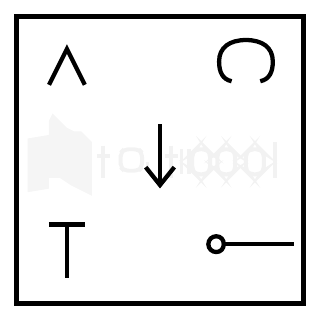
Select the figure from the options that can replace the question mark (?) and complete the given pattern.

  1. AOption (a)

  2. BOption (b)

  3. COption (c)

  4. DOption (d)

View answer & explanation

Correct answer

Answer: (d)D.

Why this answer is correct

The figure that will replace the question mark (?) in the following figure series is shown below:

  1. For '

' element → Shifting forward and backward direction.


  1. For 'T' element → Shifting in backward direction.


  1. For '

' element → Shifting in backward direction.


  1. For '2' element → Shifting in backward and forward direction.


  1. For 'B' element → Shifting in backward direction.

Final series is

Hence, ‘option - (4)’ is the correct answer.

Alternate Method

Question 2

Which of the following numbers will replace the question mark (?) in the given series?

8, 14, ?, 44, 68, 98, 134

  1. AOption (a)

    20

  2. BOption (b)

    28

  3. COption (c)

    36

  4. DOption (d)

    26

View answer & explanation

Correct answer

Answer: (d)D.

26

Why this answer is correct

Logic : Consecutive multiple of (6) are added subsequently.

So, the series here is :

8 + 6 = 14

14 +12 = 26

26 + 18 = 44

44 + 24 = 68

68 + 30 = 98 

98 + 36 = 134

Hence, "26" is the correct answer.

Question 3

Which two signs should be interchanged to make the given equation correct?

13 × 6 + 24 ÷ 6 - 17 = 91

  1. AOption (a)

    ÷ and +

  2. BOption (b)
    • and × 
  3. COption (c)

    ÷ and × 

  4. DOption (d)
    • and -
View answer & explanation

Correct answer

Answer: (d)D.
  • and -

Why this answer is correct

Given equation : 13 × 6 + 24 ÷ 6 - 17 = 91 

Now, by interchanging the signs

  • Option - (1) : ÷ and +

13 × 6 + 24 ÷ 6 - 17 = 91 ⇒ 13 × 6 ÷ 24 + 6 - 17 = 91

13 × 0.25 + 6 - 17 = 91 

3.25 + 6 - 17 = 91

9.25 - 17 = 91


7.75 ≠ 91 (LHS ≠ RHS)

  • Option - (2) : + and × ​

13 × 6 + 24 ÷ 6 - 17 = 91 ⇒ 13 + 6 × 24 ÷ 6 - 17 = 91

13 + 6 × 4 - 17 = 91

13 + 24 - 17 = 91

37 - 17 = 91

20 ≠ 91 (LHS ≠ RHS)

  • Option - (3) :  ÷ and ×

13 × 6 + 24 ÷ 6 - 17 = 91 ⇒ 13 ÷ 6 + 24 × 6 - 17 = 91

2.16 + 24 × 6 - 17 = 91

2.16 + 144 - 17 = 91

146.16 - 17 = 91

129.16 ≠ 91 (LHS ≠ RHS)

  • Option - (4) : + and -

13 × 6 + 24 ÷ 6 - 17 = 91 ⇒ 13 × 6 - 24 ÷ 6 + 17 = 91

13 × 6 - 4 + 17 = 91

78 + 17 - 4 = 91

95 - 4 = 91

91 = 91 (LHS = RHS)

Hence, "Option - (4)" is the correct answer.

Question 4

Select the option that is related to the third term in the same way as the second term is related to the first term and the sixth term is related to the fifth term.

5 : 127 :: 9 : ? :: 7 : 247

  1. AOption (a)

    470

  2. BOption (b)

    417

  3. COption (c)

    407

  4. DOption (d)

    471

View answer & explanation

Correct answer

Answer: (c)C.

407

Why this answer is correct

Logic : (Square of 1st number × 5) = (2nd number - 2)

So, 

  • 5 : 127

(5)2(5)^2 × 5 = 127 - 2

25 × 5 = 125

125 = 125 (LHS = RHS)

And,

  • 7 : 247

(7)2(7)^2 × 5 = 247 - 2

49 × 5 = 245

245 = 245 (LHS = RHS)

Similarly.

  • 9 : ?

(9)2(9)^2 × 5 = ? - 2

81 × 5 = ? - 2

405 + 2 = ?

407 = ?

Hence, "407" is the correct answer.

Question 5

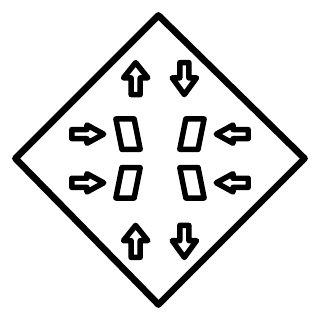
Select the figure that will replace the question mark (?) in the following figure series.

  1. AOption (a)

  2. BOption (b)

  3. COption (c)

  4. DOption (d)

View answer & explanation

Correct answer

Answer: (d)D.

Why this answer is correct

The figure that will replace the question mark (?) in the following figure series is shown below:

  1. For 'V' element → 
  • Shifting forward and backward alternately.
  • Rotation of 90º anti-clockwise alternately.
  1. For '

' element → 

  • Shifting backward and forward alternately.
  • Rotation of 90º anti-clockwise alternately.
  1. For '

' element →

  • Shifting in clockwise direction alternately.
  • Rotation of 90º clockwise alternately.
  1. For '

' element →

  • Shifting clockwise direction alternately.
  • Flipping upside down alternately and then rotation of 90º clockwise.
  1. For 'T' element →
  • Shifting clockwise direction alternately.
  • Rotation of 90º clockwise alternately.

Final series is

Hence, ‘option - (4)’ is the correct answer.

Question 6

Which two numbers and two signs should be interchanged in the following equation to make it correct?

4 + 2 ÷ 7 + 8 × 9 = 25

  1. AOption (a)

    4 and 9, + and × 

  2. BOption (b)

    4 and 7, ÷ and × 

  3. COption (c)

    4 and 9, ÷ and × 

  4. DOption (d)

    4 and 7, + and × 

View answer & explanation

Correct answer

Answer: (c)C.

4 and 9, ÷ and × 

Why this answer is correct

Given equation : 4 + 2 ÷ 7 + 8 × 9 = 25 

Now, by interchanging the signs and numbers:

  • Option - (1) : 4 and 9, + and ×

4 + 2 ÷ 7 + 8 × 9 = 25 ⇒ 9 × 2 ÷ 7 × 8 + 4 = 25

9 × 0.28 × 8 + 4 = 25

20.16 + 4 = 25

24.16 ≠ 25 (LHS ≠ RHS)

  • Option - (2) : 4 and 7, ÷ and × ​

4 + 2 ÷ 7 + 8 × 9 = 25 ⇒ 7 + 2 × 4 + 8 ÷ 9 = 25

7 + 2 × 4 + 0.88 = 25

7 + 8 + 0.88 = 25

15.88 ≠ 25 (LHS ≠ RHS)

  • Option - (3) :  4 and 9, ÷ and ×

4 + 2 ÷ 7 + 8 × 9 = 25 ⇒ 9 + 2 × 7 + 8 ÷ 4 = 25

9 + 2 × 7 + 2 = 25

9 + 14 + 2 = 25

25 = 25 (LHS = RHS)

  • Option - (4) : 4 and 7, + and ×

4 + 2 ÷ 7 + 8 × 9 = 25 ⇒ 7 × 2 ÷ 4 × 8 + 9 = 25

7 × 0.5 × 8 + 9 = 25

28 + 9 = 25

37 ≠ 25 (LHS ≠ RHS)

Hence, "Option - (3)" is the correct answer.

Question 7

Which of the following letter - clusters will replace the question mark (?) in the given series to make it logically complete?

ZXV, TRP, NLJ, HFD, ?

  1. AOption (a)

    BZX

  2. BOption (b)

    XZB

  3. COption (c)

    ZXB

  4. DOption (d)

    BXZ

View answer & explanation

Correct answer

Answer: (a)A.

BZX

Why this answer is correct

Logic : (6) is subtracted the position values according to English alphabetic series.

So,

​Hence, "BZX" is the correct answer.

Question 8

In a certain code language, 'BIND' is coded as '9214' and 'DRIB' is coded as '4109'. What is the code for 'N' in the given code language?

  1. AOption (a)

    4

  2. BOption (b)

    2

  3. COption (c)

    1

  4. DOption (d)

    9

View answer & explanation

Correct answer

Answer: (b)B.

2

Why this answer is correct

Logic : No specific pattern is followed here, random codes are assigned to each letter.

So,

  • 'BIND' is coded as '9214'
  • 'DRIB' is coded as '4109'

As some letters are common, so the codes will be :

LettersB / I / DNR
Codes4 / 1 / 920

​Therefore,

  • 'N' will be coded as:

'N' is coded as '2'.

​Hence, "2" is the correct answer.

Question 9

Select the option that is related to the third word in the same way as the second word is related to the first word.

(The words must be considered as meaningful English words and must not be related to each other based on the number of letters/number of consonants/vowels in the word.)

X-Ray : Radiologist :: Skin : ?

  1. AOption (a)

    Dermatologist

  2. BOption (b)

    Radiologist

  3. COption (c)

    Physiotherapist

  4. DOption (d)

    Ophthalmologist

View answer & explanation

Correct answer

Answer: (a)A.

Dermatologist

Why this answer is correct

Logic : Specialized in : Medical professional

  • Radiologist is a medical professional who specializes in X-Ray.

Similarly,

  • Dermatologist is a medical professional who specializes in skin.

Hence, "Dermatologist" is the correct answer.

Additional Information

  1. Dermatologist → Dermatologist is a medical professional who specializes in skin.
  2. Radiologist → Radiologist is a medical professional who specializes in X-Ray.
  3. Physiotherapist → Physiotherapist is a medical professional who specializes in physical therapy.
  4. Ophthalmologist → Ophthalmologist is a medical professional who specializes in eye.

Question 10

Select the set in which the numbers are related in the same way as are the numbers of the following sets.

(NOTE : Operations should be performed on the whole numbers, without breaking down the numbers into its constituent digits. E.g. 13 Operations on 13 such as adding/Subtracting/multiplying etc. to 13 can be performed. Breaking down 13 into 1 and 3 and then performing mathematical operations on 1 and 3 is not allowed)

(50, 60, 2000)

(20, 30, 200)

  1. AOption (a)

    (31, 10, 48)

  2. BOption (b)

    (21, 11, 11)

  3. COption (c)

    (80, 90, 6500)

  4. DOption (d)

    (20, 10, 200)

View answer & explanation

Correct answer

Answer: (b)B.

(21, 11, 11)

Why this answer is correct

Logic : (1st number - 10) × (2nd number - 10) = 3rd number

Given : 

  • (50, 60, 2000)

(50 - 10) × (60 - 10) = 2000

40 × 50 = 2000

2000 = 2000 (LHS = RHS)

  • (20, 30, 200)

(20 - 10) × (30 - 10) = 200

10 × 20 = 200

200 = 200 (LHS = RHS)

So,

  • Option - (1) : (31, 10, 48)

(31 - 10) × (10 - 10) = 48

21 × 0 = 48

0 ≠ 48 (LHS ≠ RHS)

  • Option - (2) : (21, 11, 11)

(21 - 10) × (11 - 10) = 11

11 × 1 = 11

11 = 11 (LHS = RHS) 

  • Option - (3) : (80, 90, 6500)

(80 - 10) × (90 - 10) = 6500

70 × 80 = 6500

5600 ≠ 6500 (LHS ≠ RHS)

  • Option - (4) : (20, 10, 200)

(20 - 10) × (10 - 10) = 200

10 × 0 = 200

0 ≠ 200 (LHS ≠ RHS) 

Hence, "Option - (2)" is the correct answer.

Question 11

Select the option that is related to the fifth number in the same way as the second number is related to the first number and the fourth number is related to the third number.

3125 : 25 :: 1600 : 20 :: 675 : ?

  1. AOption (a)

    18

  2. BOption (b)

    10

  3. COption (c)

    15

  4. DOption (d)

    20

View answer & explanation

Correct answer

Answer: (c)C.

15

Why this answer is correct

Logic : (1st number × 5) = (Cube of 2nd number)

So, 

  • 3125 : 25

3125 × 5 = (25)3(25)^3

15625 = 15625 (LHS = RHS)

And,

  • 1600 : 20

1600 × 5 = (20)3(20)^3

8000 = 8000 (LHS = RHS)

Similarly,

  • 675 : ?

675 × 5 = (?)3(?)^3

3375 = (?)3(?)^3

15 = ?

Hence, "15" is the correct answer.

Question 12

A paper is folded and cut as shown below. How will it appear when unfolded?

  1. AOption (a)

  2. BOption (b)

  3. COption (c)

  4. DOption (d)

View answer & explanation

Correct answer

Answer: (a)A.

Why this answer is correct

According to given figure:

The figure will appear when it is opened as follows:

Hence, "Option - (1)" is the correct answer.

Question 13

Select the option that represents the letters that, when sequentially placed from left to right in the blanks below, will complete the letter series.

BUP_ESH_UPL_SHB_PLES_BU_LE_H

  1. AOption (a)

    LBEHUSP

  2. BOption (b)

    LBEUHPS

  3. COption (c)

    LBEUPSH

  4. DOption (d)

    LBEPUSH

View answer & explanation

Correct answer

Answer: (b)B.

LBEUHPS

Why this answer is correct

Given : BUP_ESH_UPL_SHB_PLES_BU_LE_H   

By checking options :

  1. LBEHUSP → BUPLESH / BUPLESH / BHPLESU / BUSLEPH  → (It doesn't Follows the pattern)
  2. LBEUHPS → BUPLESH / BUPLESH / BUPLESH / BUPLESH → (It follows the pattern of : BUPLESH - BUPLESH - BUPLESH - BUPLESH)
  3. LBEUPSH → BUPLESH / BUPLESH BUPLESP / BUSLEDH → (It doesn't Follows the pattern)
  4. LBEPUSH → BUPLESH / BUPLESH / BPPLESU / BUSLEHH → (It doesn't Follows the pattern)

⇒Option - (2) gives the pattern of "BUPLESH - BUPLESH - BUPLESH - BUPLESH"

Hence, "LBEUHPS" is the correct answer.

Question 14

Select the word-pair that best represents a similar relationship to the one expressed in the given pair of words. 

(The words must be considered as meaningful English words and must not be related to each other based on the number of letters/number of consonants/vowels in the word)

Horse : Foal

  1. AOption (a)

    Dog : Mouse

  2. BOption (b)

    Hen : Rooster

  3. COption (c)

    Cat : Kitten

  4. DOption (d)

    Sheep : Pup

View answer & explanation

Correct answer

Answer: (c)C.

Cat : Kitten

Why this answer is correct

Logic : Species : Offspring called as

Given :

  • Offspring of a horse is called as foal.

So,

  • Option - (1) : Dog : Mouse

Offspring of a dog is called as pup and offspring of a mouse is called as pinkie. Thus, both dog and mouse are different species.

  • Option - (2) : Hen : Rooster

Hen is a female chicken whereas rooster is a male chicken. Their offspring is called as chick.

  • Option - (3) : Cat : Kitten

Offspring of cat is called as kitten.

  • Option - (4) : Sheep : Pup

Offspring of a sheep is called as lamb where pup is offspring of a dog.

Hence, "Option - (3)" is the correct answer.

Question 15

In a certain code language, 'TELEVISION' is written as 'UDMDWKQKMP' and 'PUNISHMENT' is written as 'QTOHTJKGLV'. How will 'HELICOPTER' be written in that language?

  1. AOption (a)

    IDMHDQCVNT

  2. BOption (b)

    IDMHQDVNCT

  3. COption (c)

    IDMHDQNVCT

  4. DOption (d)

    IDMHDQVCNT

View answer & explanation

Correct answer

Answer: (c)C.

IDMHDQNVCT

Why this answer is correct

Logic : (1) is added to and subtracted from the position value alternately according to the English alphabetic series.

 So,

  • 'TELEVISION' is written as 'UDMDWKQKMP'

And,

  • 'PUNISHMENT' is written as 'QTOHTJKGLV'

Similarly,

  • 'HELICOPTER' will be written as :

Hence, "IDMHDQNVCT" is the correct answer.

Question 16

Three of the following four letter-clusters are alike in a certain way and one is different. Pick the odd one out.

DGJM

NQTW

TWZC

HIJK

  1. AOption (a)

    TWZC

  2. BOption (b)

    NQTW

  3. COption (c)

    HIJK

  4. DOption (d)

    DGJM

View answer & explanation

Correct answer

Answer: (c)C.

HIJK

Why this answer is correct

The logic followed here is :- Difference between the position values  according to English alphabetic series is (3)

​So,

  • Option - (1) : TWZC

​

  • Option - (2) : NQTW

​

  • Option - (3) : HIJK

​

  • Option - (4) : DGJM

​

Thus, out of all the options 'HIJK' is the odd one out as the difference between the letters is (1) respectively.

​Hence, "HIJK" is the correct answer.

Question 17

Three statements are given followed by three conclusions numbered I, II and III. Assuming the statements to be true, even if they seem to be at variance with commonly known facts, decide which of the conclusions logically follow(s) from the statements.

Statements:

Some seeds are fruits.

Some fruits are jams.

All jams are desserts.

Conclusions:

I. Some jams are seeds.

II. Some desserts are jams.

III. Some fruits are desserts.

  1. AOption (a)

    All conclusions follow

  2. BOption (b)

    Only conclusions II and III follow

  3. COption (c)

    Only conclusions I and III follow

  4. DOption (d)

    Only conclusions I and II follow

View answer & explanation

Correct answer

Answer: (b)B.

Only conclusions II and III follow

Why this answer is correct

The least possible Venn diagram for the given statements is as shown below :

Conclusions:

I. Some jams are seeds → Does not follow (As some seeds are fruits and some fruits are jams. So, it is possible but not definitely true)

II. Some desserts are jams → Follow (As all jams are desserts. So, as whole jams comes in desserts therefore it is definitely true)

III. Some fruits are desserts → Follow (As some fruits are jams and all jams are desserts. So, as whole jams comes in desserts and have some part common with fruits therefore it is definitely true)

∴ Here, Only conclusions II and III follow.

Hence, the correct answer is "Only conclusions II and III follow".

Question 18

Select the option that represents the correct order of the given words as they would appear in an English dictionary.

  1. Circulate
  2. Circuit
  3. Citrus
  4. Cinnamon
  5. Circular
  6. Citizen
  1. AOption (a)

    2, 1, 5, 4, 3, 6

  2. BOption (b)

    4, 2, 1, 5, 6, 3

  3. COption (c)

    4, 5, 2, 1, 6, 3

  4. DOption (d)

     4, 2, 5, 1, 6, 3

View answer & explanation

Correct answer

Answer: (d)D.

 4, 2, 5, 1, 6, 3

Why this answer is correct

According to the sequence in the dictionary:

  1. Cinnamon
  2. Circuit
  3. Circular
  4. Circulate
  5. Citizen
  6. Citrus

Hence, the correct option is " 4, 2, 5, 1, 6, 3".

Question 19

The second number in the given number pairs is obtained by performing certain mathematical operation(s) on the first number. The same operation(s) are followed in all the number pairs, EXCEPT one. Find that odd number pair.

  1. AOption (a)

    (7, 252)

  2. BOption (b)

    (6, 216)

  3. COption (c)

    (8, 392)

  4. DOption (d)

    (5, 80)

View answer & explanation

Correct answer

Answer: (b)B.

(6, 216)

Why this answer is correct

Logic : (1st number) × (1st Number - 1)2 = 2nd Number

  • Option 01 : (7, 252)

​7 × 62 = 7 × 36 = 252

  • Option 02 : (6, 216)

6 × 52 = 6 × 25 = 150

  • Option 03 : (8, 392)

8 × 72 = 8 × 49 = 392

  • Option 04 : (5, 80)

5 × 42 = 5 × 16 = 80

∴ Option 02 is the odd number pair.

Question 20

Mishka says she is looking for the only child of her brother’s maternal grandmother. Who is she looking for?

  1. AOption (a)

    Paternal grandmother

  2. BOption (b)

    Mother

  3. COption (c)

    Son

  4. DOption (d)

    Mishka herself

View answer & explanation

Correct answer

Answer: (b)B.

Mother

Why this answer is correct

Given Statement : Mishka says she is looking for the only child of her brother’s maternal grandmother.

Thus, according to the final family tree Mishika is looking for her mother.

Hence, "Mother" is the correct answer.

Question 21

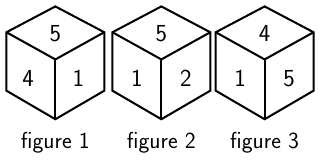
1, 2, 3, 4, 5, and 6 are written on different faces of a dice. Three different positions of the same dice are shown below. Find the number on the face opposite to the one showing '4'.

  1. AOption (a)

    6

  2. BOption (b)

    2

  3. COption (c)

    5

  4. DOption (d)

    1

View answer & explanation

Correct answer

Answer: (b)B.

2

Why this answer is correct

The logic followed here is :-

From the given three different cubes taking figure 1 and figure 2 ,the adjacent sides are as shown below :

As 1 and 5 is common on both figure 1 and figure 2, it is clear that 2 is adjacent to the remaining number i.e., 4 will be opposite to it.

Opposite pairs:

1/3 → 5/6

2 → 4

So, the opposite side of "4" will be side "2".

Hence, the correct answer is "2".

Question 22

Select the set of classes the relationship among which is best illustrated by the Venn diagram given below.

  1. AOption (a)

    Shoes, Watches, Goggles

  2. BOption (b)

    Spectacles, Pens, Diaries

  3. COption (c)

    Reptiles, Snakes, Lizards

  4. DOption (d)

    Daughter, Son, Brother

View answer & explanation

Correct answer

Answer: (c)C.

Reptiles, Snakes, Lizards

Why this answer is correct

The set of words that best represented by the given Venn diagram is shown below:

1) Shoes, Watches, Goggles - All the items are of different category ⇒ Option - 1 eliminated

2) Spectacles, Pens, Diaries - All the items are of different category ⇒ Option - 2 eliminated

3) Reptiles, Snakes, Lizards - Snakes and lizards comes under the category of reptiles therefore whole snakes and lizards will come in reptiles. Both snakes and lizards are different subsets of reptiles therefore is no common part between them i.e 

4) Daughter, Son, Brother - Either whole son can come in brother or whole brother comes in son. Daughter is a different subset of the family. ⇒ Option - 4 eliminated

Hence, "Reptiles, Snakes, Lizards" is the correct answer.

Question 23

Select the correct mirror image of the given figure when the mirror is placed at MN as shown below.

  1. AOption (a)

  2. BOption (b)

  3. COption (c)

  4. DOption (d)

View answer & explanation

Correct answer

Answer: (a)A.

Why this answer is correct

Mistake Points K is different in option 1 and option 4.

Solution:-

The correct mirror image of the given combination when mirror is placed at MN is as shown below:

Detailed Explanation:

  • The line MN is the mirror
  • The word "ESRN4qmk7" the third letter is "R". So, the mirror image should be "

" ⇒ Option 2 is eliminated.

  • The word "ESRN4qmk7" the fifth digit is "4". So, the mirror image should be "

" ⇒ Option 3 is eliminated..

  • The word "ESRN4qmk7" the eighth letter is "k". So, the mirror image should be "

" ⇒ Option 4 is eliminated.

Hence, the correct answer is "Option - (1)".

Question 24

Select the set in which the numbers are related in the same way as are the numbers of the following set.

(NOTE: Operations should be performed on the whole numbers, without breaking down the numbers into their constituent digits. E.g. 13- Operations on 13 such as adding/substracting/multiplying etc. to 13 can be performed. Breaking down 13 into 1 and 3 and then performing mathematical operations on 1 and 3 is not allowed.) 

(3, 10, 26)

(4, 17, 42)

  1. AOption (a)

    (7, 50, 141)

  2. BOption (b)

    (8, 64, 154)

  3. COption (c)

    (6, 37, 86)

  4. DOption (d)

    (5, 26, 64)

View answer & explanation

Correct answer

Answer: (c)C.

(6, 37, 86)

Why this answer is correct

Logic : (1st number + 2nd number) = (3rd number ÷ 2)

Given : 

  • (3, 10, 26)

3 + 10 = 26 ÷ 2

13 = 13 (LHS = RHS)

  • (4, 17, 42)

4 + 17 = 42 ÷ 2

21 = 21 (LHS = RHS)

So,

  • Option - (1) : (7, 50, 141)

7 + 50 = 141 ÷ 2

57 ≠ 70.5 (LHS ≠ RHS)

  • Option - (2) : (8, 64, 154)

8 + 64 = 154 ÷ 2

72 ≠ 77 (LHS ≠ RHS)

  • Option - (3) : (6, 37, 86)

6 + 37 = 86 ÷ 2

43 = 43 (LHS = RHS)

  • Option - (4) : (5, 26, 64)

5 + 26 = 64 ÷ 2

31 ≠ 32 (LHS ≠ RHS) 

Hence, "Option - (3)" is the correct answer.

Question 25

Select the option figure which is embedded in the given figure (Rotation is NOT allowed).

  1. AOption (a)

  2. BOption (b)

  3. COption (c)

  4. DOption (d)

View answer & explanation

Correct answer

Answer: (b)B.

Why this answer is correct

Given:


  • The image must not to be rotated


Hence, the correct answer is "Option - (2)".

General Awareness (25 questions)

Question 26

Part 3 of the Indian Constitution enlists how many groups of Fundamental Rights?

  1. AOption (a)

    4

  2. BOption (b)

    6

  3. COption (c)

    7

  4. DOption (d)

    5

View answer & explanation

Correct answer

Answer: (b)B.

6

Why this answer is correct

The correct answer is 6.

Key Points The Fundamental Rights​

  • Fundamental Rights are granted to every person in India by the Constitution.
  • The idea of fundamental rights was borrowed from the constitution of The USA.
  • Fundamental rights are present in Part III of the constitution from article 12 to article 35.
  • Part III of the Constitution is described as the Magna Carta of India.
  • ‘Magna Carta’, the Charter of Rights issued by King John of England in 1215 was the first written document relating to the Fundamental Rights of citizens.
  • The Constitution of India has 6 Fundamental rights
  • Right to equality (Art 14 to Art 18)
  • Right to Freedom {Art 19 to Art 22)
  • Right against Exploitation (Art 23 and Art 24 )
  • Right to Freedom of Religion (Art 25 to Art 28)
  • Cultural and Educational Rights (Art 29 to Art 30)
  • Right to Constitutional Remedies (Art 32)

Additional Information 

  • Originally the constitution had 7 Fundamental rights.
  • Right to property (Art 31) which was a fundamental right originally was removed from the fundamental rights by the 44th amendment,1978 and was declared a legal right under art 300-A
  • The Part III of the constitution is termed as the Magna Carta of India.
  • Right to Constitutional Remedies (Art 32) is considered the heart and soul of the Indian Constitution.
  • The constitution of India is the longest written constitution in the world.

Important Points 

  • Fundamental Rights
  • Article 12 – Definition of a state
  • Article 13 – Right to make law
  • Article 13A – Judicial Review
  • Article (14-18) – Right to Equality
  • Article 14 – Equality before the law.
  • Article 15 – Prohibition of Discrimination on the basis of religion, race, sex, and place of birth.
  • Article 16 – Equality of opportunity in relation to public employment.
  • Article 17 – Abolish Untouchability.
  • Article 18 – Elimination of titles.
  • Article (19-22) – Right to Freedom
  • Article 19 – Protection of certain rights in relation to the freedom of speech, expression, assembly, association, movement, residence, profession.
  • Article 20 – Protection in respect of conviction for offences.
  • Article 21 – The Safety of Life and Personal Liberty.
  • Article 21A – Right to Education.
  • Article 22 – In some cases security against detention.
  • Article (23-24) – Rights against exploitation
  • Article 23 – Prevention of Trafficking of humans and forced labour.
  • Article 24 – Prevention of employment of children in factories, etc.
  • Article (25-28) – Right to freedom of religion
  • Article 25 – freedom of condolences and promotion of free professional, practice, and secularism.
  • Article 26 – Freedom of managing trustworthy matters.
  • Article 27 – Freedom to pay taxes for the promotion of any particular religion.
  • Article 28 – Freedom in the form of independent instruction in independent education.
  • Articles (29-30) – Culture and Education Rights
  • Article 29 – Protection of Minority Interests
  • Article 30 – Right to Minorities and to establish and administer the educational Institutions.
  • Article 31 – The overall acquisition of the property (Now it is not a fundamental right)
  • Article (32) – Right to Constitutional Remedies

Question 27

What was the prime target of the first five-year plan of India?

  1. AOption (a)

    Development of agriculture

  2. BOption (b)

    Development of industries

  3. COption (c)

    Development of ports

  4. DOption (d)

    Development of infrastructure

View answer & explanation

Correct answer

Answer: (a)A.

Development of agriculture

Why this answer is correct

The correct answer is Development of agriculture.

Key Points

  • First Five year Plan
  • 1st five-year plan was for the period of 1951 to 1956.
  • The prime target of the first five-year plan of India was the Development of agriculture.
  • The target Growth was 2.1 % and the Actual Growth was 3.6 %.
  • It was based on Harrod-Domar.
  • The influx of refugees, severe food shortage & mounting inflation confronted the country at the onset of the first five-year plan.

Additional InformationSecond Five Year Plan (1956-1961)

  • The second five-year plan is based on the so-called Mahalanobis model.
  • This was the USSR model Indianized by PC Mahalanobis, the founder of the Indian Statistical Institute and a close aide of Nehru.
  • This model is known to have set the statistical foundations for state-directed investments and created the intellectual underpinnings of the license-raj through an elaborate input-output model.
  • This Model suggested that there should be an emphasis on the heavy industries, which can lead the Indian Economy to a long-term higher growth path
  • Started Industrial Policy Resolution 1956.

Third Five-Year Plan (1961-1966)

  • The Third 5 year Plan focused on agriculture & enhancement in the production of wheat, but the succinct Sino - Indian War in the year 1962 exposed flaws in the economy & shifted the spotlight towards the Defence industry.
  • On May 31 & June 1, 1961, the National Development Council considered the Draft Report on the Third Plan and generally approved it.
  • In the course of this period, India's economy must not only enlarge swiftly but must, in unison, become independent and self-generating.
  • This long-standing approach is projected to offer a wide-ranging design of expansion for the country's natural resources, industrial advance, and agricultural changes in the social structure & an incorporated scheme of regional & national development.

Fourth Five Year Plan (1969-1974)

  • The fourth Five Year Plan was the first plan launched by the Indira Gandhi government amid the pressure of drought, devaluation, and inflationary recession.
  • The country was fighting with population explosion, increased unemployment, poverty, and a shackling economy. In addition, the situation in East Pakistan (now independent Bangladesh) was becoming dire as the Indo-Pakistani War of 1971 and Bangladesh Liberation War took place.
  • Funds earmarked for industrial development had to be used for the war effort.
  • The result was that this plan period was also no better than the third five-year plan.

Question 28

Which of the following is the longest lake in India?

  1. AOption (a)

    Shivaji Sagar Lake

  2. BOption (b)

    Indira Sagar lake

  3. COption (c)

    Chilika Lake

  4. DOption (d)

    Vembanad Lake

View answer & explanation

Correct answer

Answer: (d)D.

Vembanad Lake

Why this answer is correct

The correct answer is Vembanad Lake.

Key Points

  • Vembanad lake 
  • Vembanad is the longest lake in India
  • It is located in the state of Kerala Spanning several districts in the state of Kerala, it is known as Vembanadu Lake in Kottayam, Punnamada Lake in Alappuzha and Kochi Lake in Kochi.
  • It is separated from the Arabian Sea by a narrow barrier island and is a popular backwater stretch in Kerala.
  • Vallam Kali also known as Nehru Trophy Boat Race is a Snake Boat Race held every year in the month of August in Vembanad Lake.
  • In 2002 it was included in the list of wetlands of international importance, as defined by the Ramsar Convention.
  • The Kumarakom Bird Sanctuary is located on the east coast of the lake.

Additional Information

Shivaji Sagar Lake

  • This lake is located in the state of Maharashtra and is a man-made reservoir created by the Koyna Dam.

Indira Sagar Lake

  • This lake is located in the state of Madhya Pradesh and is also a man-made reservoir created by the Indira Sagar dam.
  • It is one of the largest reservoirs in India.

Chilika Lake

  • This lake is located in the state of Odisha and is the largest brackish water lagoon in India.
  • It is an important bird sanctuary and is also used for fishing and tourism.

Question 29

Indian Olympic Association (IOA) was formed in the year ______.

  1. AOption (a)

    1926

  2. BOption (b)

    1930

  3. COption (c)

    1927

  4. DOption (d)

    1929

View answer & explanation

Correct answer

Answer: (c)C.

1927

Why this answer is correct

The correct answer is In 1927.

Key Points

  • The Indian Olympic Association was established in 1927.
  • In 1923–24, a provisional All India Olympic Committee was formed, which organized the All India Olympic Games in February 1924. Eight athletes from these Games were selected to represent India at the 1924 Paris Summer Olympics along with manager Harry Crowe Buck.
  • This gave impetus to the development and institutionalization of sports in India, and, in 1927, the Indian Olympic Association (IOA) was formed, with Sir Dorabji Tata as its founding president and Dr. A.G. Nohran was there.
  • The year in which it was formed in 1927, the Indian Olympic Association was officially recognized by the International Olympic Committee.

Additional Information

  • India first participated in the Olympics in 1900 in Paris. The country was represented by Norman Pritchard, an Anglo Indian who was holidaying in Paris during that time.
  • The seeds for the creation of an organization for coordinating the Olympic movement in India were related to India’s participation in the 1920 and 1924 Olympics, when Sir Dorabji Tata suggested the need for a Sports body at the National level for promoting Olympic Sport in united India.

Important Points

  • The Indian Olympic Association was established in the year 1927.
  • It is registered as a Non-Profit Organisation under the Societies Registration Act of 1860.
  • As a member of the IOC and OCA, it is the Indian Olympic Association’s primary mission to develop, promote and protect the Olympic Movement in the country.

Question 30

Which of the following statements is FALSE?

  1. AOption (a)

    Histidine is an essential alpha amino acid and works towards growth and tissue repair.

  2. BOption (b)

    Histidine plays an important role in growth, repair of damaged tissues and making of blood cells.

  3. COption (c)

    Valine is a non-essential amino acid, and it is synthesised in the human body.

  4. DOption (d)

    Lysine plays an important role in normal growth and muscle turnover.

View answer & explanation

Correct answer

Answer: (c)C.

Valine is a non-essential amino acid, and it is synthesised in the human body.

Why this answer is correct

The correct answer is Valine is a non-essential amino acid, and it is synthesized in the human body.

Key Points

  • The amino acids which the body cannot synthesize are called essential amino acids.
  • Essential amino acids are those amino acids that are not produced by our body, they have to be taken through the food we eat.
  • Valine is an essential amino acid. Therefore Statement 3 is false.
  • Essential amino acids cannot be made by the body so you must get them from your diet.
  • Histidine is an essential amino acid, which means it is necessary for growth and tissue repair.
  • Histidine is involved in the production of histamine, a neurotransmitter that is important for immune response and digestion.
  • Lysine is also an essential amino acid that plays a role in protein synthesis, collagen formation, and the absorption of calcium.

Additional Information

  • There are 9 essential amino acids valine**,** histidine, isoleucine, leucine, lysine, methionine, phenylalanine, threonine, and tryptophan.

Question 31

The first Paralympic games were held in:

  1. AOption (a)

    Sydney

  2. BOption (b)

    Rome

  3. COption (c)

    Tokyo

  4. DOption (d)

    Beijing

View answer & explanation

Correct answer

Answer: (b)B.

Rome

Why this answer is correct

The correct answer is Rome. 

Key Points

  • The Paralympic Games which were called "The Stoke Mandeville Games" officially first took place in Rome, Italy, in 1960.
  • It took place soon after the conclusion of the Olympic Games, the Olympic-style games for disabled athletes attracted 400 participants from 23 countries, who competed in 8 sports.
  • Since then it has taken place every four years, in the same year of the Olympic Games.

Additional Information

  • Sydney - The Paralympic Games were held in Sydney, Australia in 2000. This was the first time that the Paralympic Games were held in the same city as the Olympic Games.
  • Tokyo - The Paralympic Games were held in Tokyo, Japan in 2021. This was the second time that the Paralympic Games were held in Tokyo, with the first one being in 1964.
  • Beijing - The Paralympic Games were held in Beijing, China in 2008. This was the first time that the Paralympic Games were held in China.

Question 32

Which of the following is NOT one of the scheduled public sector banks in India?

  1. AOption (a)

    Canara Bank

  2. BOption (b)

    UCO Bank

  3. COption (c)

    Indian Overseas Bank

  4. DOption (d)

    Bandhan Bank

View answer & explanation

Correct answer

Answer: (d)D.

Bandhan Bank

Why this answer is correct

The correct answer is Bandhan Bank.

Key Points

  • Scheduled Public Sector Banks in India:
  • These are banks that are included in the Second Schedule of the Reserve Bank of India Act, 1934.
  • These banks are eligible for loans from the RBI at the bank rate and can also avail of other facilities like deposits and clearing.
  • Canara Bank, UCO Bank, and Indian Overseas Bank are all scheduled public sector banks in India.
  • Bandhan Bank is not a scheduled public sector bank in India, it is a private sector bank.​

Additional Information

Canara Bank 

  • It is a public sector bank that was established in 1906.
  • It has a network of over 10,000 branches and ATMs across India.

UCO Bank

  • It is also a public sector bank that was established in 1943.
  • It has a strong presence in Eastern India and has over 3,000 branches and ATMs.

Indian Overseas Bank

  • It is a public sector bank that was established in 1937.
  • It has a network of over 3,400 branches and ATMs across India.

Question 33

When was a comprehensive despatch on education called Wood’s despatch on education sent?

  1. AOption (a)

    1833

  2. BOption (b)

    1854

  3. COption (c)

    1858

  4. DOption (d)

    1813

View answer & explanation

Correct answer

Answer: (b)B.

1854

Why this answer is correct

The correct answer is 1854.

Key Point

Wood's Despatch:

  • In 1854, Charles Wood prepared a Despatch on an educational system for India.
  • It was considered the "Magna Carta of English Education in India".
  • This document was the first comprehensive plan for the spread of education in India.
  • Some of the provisions of Charles Wood Despatch are as follows -
  1. It asked the Government of India to assume responsibility for the education of the masses, thus repudiating the 'downward filtration theory', at least on paper.
  2. It systematized the hierarchy from vernacular primary schools in villages at the bottom, followed by Anglo-Vernacular High Schools and an affiliated college at the district level, and affiliating universities in the presidency towns of Calcutta, Bombay, and Madras.
  3. It recommended a system of grants-in-aid to encourage private enterprise
  4. It recommended English as the medium of instruction for higher studies and vernaculars at the school level.
  5. The Despatch recommended the establishment of universities in the three Presidency towns of Calcutta, Bombay, and Madras. The universities were to be modeled after the London University and these were to have a senate consisting of a Chancellor, a Vice-Chancellor, and fellows who were nominated by the Government.

Question 34

In September 2021,the Pension Fund Regulatory and Development Authority (PFRDA) increased the entry age for the National Pension System (NPS) from_______ to ______.

  1. AOption (a)

    60 years; 65 years

  2. BOption (b)

    65 years; 70 years

  3. COption (c)

    62 years; 65 years

  4. DOption (d)

    62 years; 70 years

View answer & explanation

Correct answer

Answer: (b)B.

65 years; 70 years

Why this answer is correct

The correct answer is 65 years; 70 years.

Key Points

  • In September 2021, PFRDA increased the entry age for the National Pension System (NPS) from 65 years to 70 years.
  • The maximum age for joining the National Pension Scheme is 70 years.
  • A citizen of India, whether resident or non-resident can join NPS (National Pension Scheme).

Additional Information

  • Pension Fund Regulatory and Development Authority:
  • It is the statutory authority established by an enactment of the Parliament, to regulate, promote and ensure orderly growth of the National Pension System (NPS).
  • It works under the Department of Financial Services under the Ministry of Finance.
  • Functions:
  • It performs the function of appointing various intermediate agencies like Pension Fund Managers, Central Record Keeping Agency (CRA), etc.
  • It develops, promotes, and regulates the pension industry under the NPS and also administers the APY.

Question 35

Which was the first petrochemical company in India?

  1. AOption (a)

    Indian Petrochemicals Corporation Limited

  2. BOption (b)

    Gas Authority of India Limited

  3. COption (c)

    Haldia Petrochemicals Limited

  4. DOption (d)

    National Organic Chemical Industry Limited

View answer & explanation

Correct answer

Answer: (a)A.

Indian Petrochemicals Corporation Limited

Why this answer is correct

The correct answer is Indian Petrochemicals Corporation Limited​.

Key Points

  • Indian Petrochemicals Corporation Limited (IPCL) was established in 1969.
  • It was a joint venture between the Government of India and the private sector company, AIC (American International Company).
  • The main objective of IPCL was to manufacture petrochemicals and chemicals for the domestic market as well as for exports.
  • IPCL was merged with Reliance Industries Limited in 2007, making it the largest petrochemical company in India and one of the largest in the world.

Additional Information

​Gas Authority of India Limited (GAIL)

  • It is a state-owned natural gas processing and distribution company.
  • It was established in 1984 and has since diversified into the petrochemicals, telecom, and power sectors.

Haldia Petrochemicals Limited (HPL)

  • It is a joint venture between the Government of West Bengal, The Chatterjee Group, and TATA Group.
  • It was established in 1994 and is located in Haldia, West Bengal. HPL produces a wide range of petrochemicals and is one of the largest manufacturers of polypropylene in India.

National Organic Chemical Industry Limited (NOCIL)

  • It is a chemical manufacturing company that specializes in rubber chemicals, rubber intermediates, and speciality chemicals.
  • It was established in 1961 and is headquartered in Mumbai, Maharashtra.

Question 36

In January 2023, Union Minister of Education and Skill Development and Entrepreneurship Dharmendra Pradhan along with Minister for Railways, Communications, Electronics & Information Technology, Ashwini Vaishnaw successfully tested ‘BharOS’, a made-in-India mobile operating system developed by ________.

  1. AOption (a)

    IIT Kanpur

  2. BOption (b)

    IIT Madras

  3. COption (c)

    IIT Mumbai

  4. DOption (d)

    IIT Kharagpur

View answer & explanation

Correct answer

Answer: (b)B.

IIT Madras

Why this answer is correct

The correct answer is IIT Madras.

Key Points 

  • In January 2023, Union Minister of Education and Skill Development and Entrepreneurship Dharmendra Pradhan along with Minister for Railways, Communications, Electronics & Information Technology, Ashwini Vaishnaw successfully tested ‘BharOS’, a made-in-India mobile operating system developed by IIT Madras.
  • BharOS is designed to use in government-owned devices and networks, to increase the country’s digital sovereignty and reduce dependence on foreign technology.
  • It comes with the feature of No Default Apps and the ability to work seamlessly with a wide range of Indian Native languages.
  • It also provides “Native Over The Air” (NOTA) updates, which are automatically downloaded and installed to maintain the software secure and bug-free.

Question 37

Padma Bhushan awardee, Alarmel Velli, who is renowned for Bharatanatyam, is also an exponent of which of the following dance forms?

  1. AOption (a)

    Odissi

  2. BOption (b)

    Kuchipudi

  3. COption (c)

    Kathak

  4. DOption (d)

    Kathakali

View answer & explanation

Correct answer

Answer: (a)A.

Odissi

Why this answer is correct

The correct answer is Odissi.

Key Points 

  • Alarmel Valli is a leading Indian classical dancer and choreographer and the foremost exponent of the Pandanallur style, in the Indian classical dance form, Bharatanatyam.
  • She is widely acclaimed for her ability to turn traditional grammar into deeply internalized, personal dance poetry.
  • She is also an exponent of which of the Odissi dance forms.
  • She founded The Dipasikha Dance Foundation in Chennai in 1984, where she teaches Bharatanatyam.
  • She was awarded the Sangeet Natak Akademi Award in 2001 by India's National Academy for Music, Dance, and Drama.
  • Alarmel Valli was the second youngest dancer to be conferred the Padma Shri from the Government of India, after Vyjayanthimala.
  • Followed by one of India's highest civilian honors – the Padma Bhushan award from the Government of India in 2004 and the Chevalier of Arts and Letters award from the Government of France, also in 2004.​

Additional InformationSome Indian classic dances and their states of origin:

Indian Classical DancesState of origin
KathakUttar Pradesh
KuchipudiAndhra Pradesh
OdissiOdisha
KathakaliKerala
SattriyaAssam
ManipuriManipur
MohiniyattamKerala

Question 38

In 1808, whose work provided a physical picture of how compounds are formed by the combination of two or more different types of atoms?

  1. AOption (a)

    George Zweig

  2. BOption (b)

    Joseph J Thomson

  3. COption (c)

    Niels Bohr

  4. DOption (d)

    John Dalton

View answer & explanation

Correct answer

Answer: (d)D.

John Dalton

Why this answer is correct

The correct answer is John Dalton.

Key Points 

  • John Dalton was an English chemist, physicist, and meteorologist who is best known for his pioneering work in the development of modern atomic theory.
  • Dalton's atomic theory, which he proposed in 1808, provided a physical picture of how compounds are formed by the combination of two or more different types of atoms.
  • He suggested that all matter is made up of tiny, indivisible particles called atoms, which combine in fixed ratios to form compounds.
  • His theory was based on several key principles, including the idea that atoms of different elements have different weights and properties, that atoms can combine to form molecules, and that chemical reactions involve the rearrangement of atoms.
  • Dalton's work on atomic theory was groundbreaking and laid the foundation for modern chemistry.
  • He was also the first scientist to study the behavior of gases and to develop a method for measuring the relative weights of atoms.

Additional Information

George Zweig

  • He proposed the concept of quarks in 1964, which are subatomic particles that makeup protons and neutrons.
  • He suggested that quarks come in six different "flavors" and that they are held together by a strong nuclear force.
  • Joseph J Thomson
  • He discovered the electron in 1897 while studying cathode rays.
  • He proposed the plum pudding model of the atom, which suggested that atoms were made up of a positively charged substance with negatively charged electrons embedded in it.

Niels Bohr

  • He developed the Bohr model of the atom in 1913, which proposed that electrons orbit the nucleus at fixed energy levels.
  • He also suggested that electrons can jump between energy levels by absorbing or emitting energy in the form of photons.

Question 39

Which of the following can make provisions for Ancillary powers of the Supreme Court?

  1. AOption (a)

    President of India

  2. BOption (b)

    Law Commission of India

  3. COption (c)

    Minister of Law & Justice

  4. DOption (d)

    Parliament of India

View answer & explanation

Correct answer

Answer: (d)D.

Parliament of India

Why this answer is correct

The correct answer is Parliament of India.

Key Points

  • Article 140 of the Constitution refers to the Ancillary powers of the Supreme Court.
  • Parliament may by law make provision for conferring upon the Supreme Court such supplemental powers not inconsistent with any of the provisions of this Constitution as may appear to be necessary or desirable for enabling the court more effectively to exercise the jurisdiction conferred upon it by or under this Constitution.

Important Points


  • India is a federal State having a single and unified judicial system with a three-tier structure, i.e., Supreme Court, High Courts, and Subordinate Courts.
  • Supreme Court was Established on 1 October 1937 (as the Federal Court of India) and on 28 January 1950 (as the Supreme Court of India).
  • The Jurisdiction of the Supreme Court of India can broadly be categorized into original jurisdiction, appellate jurisdiction, and advisory jurisdiction.
  • Supreme Court is known as the Guardian of our Constitution.​

Additional Information

  • Articles Related to Supreme Court
  • ​Article 124 - Establishment and Constitution of Supreme Court
  • Article 124A - National Judicial Appointments Commission
  • Article124B - Functions of Commission
  • Article 124C - Power of Parliament to make law
  • Article 125 - Salaries, etc., of Judges
  • Article 126 - Appointment of acting Chief Justice
  • Article 127 - Appointment of ad hoc Judges
  • Article 128 - Attendance of retired Judges at sittings of the Supreme Court
  • Article 129 - Supreme Court to be a court of record
  • Article 130 - Seat of Supreme Court
  • Article 131 - Original jurisdiction of the Supreme Court
  • Article 131A - Exclusive jurisdiction of the Supreme Court in regard to questions as to constitutional validity of Central Laws (Repealed)
  • Article 132 - Appellate jurisdiction of Supreme Court in appeals from High Courts in certain cases
  • Article 133 - Appellate jurisdiction of Supreme Court in appeals from High Courts in regard to civil matters
  • Article 134 - Appellate jurisdiction of Supreme Court in regard to criminal matters
  • Article 134A - Certificate for appeal to the Supreme Court
  • Article 135 - Jurisdiction and powers of the Federal Court under existing law to be exercisable by the Supreme Court
  • Article 136 - Special leave to appeal by the Supreme Court
  • Article 137 - Review of judgments or orders by the Supreme Court
  • Article 138 - Enlargement of the jurisdiction of the Supreme Court
  • Article 139 - Conferment on the Supreme Court of powers to issue certain writs
  • Article 139A - Transfer of certain cases
  • Article 140 - Ancillary powers of Supreme Court
  • Article 141 - Law declared by Supreme Court to be binding on all courts
  • Article142 - Enforcement of decrees and orders of Supreme Court and orders as to discovery, etc.
  • Article 143 - Power of President to consult Supreme Court
  • Article 144 - Civil and judicial authorities to act in aid of the Supreme Court
  • Article 144A - Special provisions as to the disposal of questions relating to the constitutional validity of laws (Repealed)
  • Article 145 - Rules of court, etc.
  • Article 146 - Officers and servants and the expenses of the Supreme Court
  • Article 147 - Interpretation

Question 40

Aruna Sairam, T M Krishna and Gayathri Girish are associated with which form of music?

  1. AOption (a)

    Carnatic Music

  2. BOption (b)

    Jazz Music

  3. COption (c)

    Pop Music

  4. DOption (d)

    Hindustani Classical Music

View answer & explanation

Correct answer

Answer: (a)A.

Carnatic Music

Why this answer is correct

The correct answer is Carnatic Music.

Key Points

  • Aruna Sairam, T M Krishna, and Gayathri Girish are associated with Carnatic Music.
  • Carnatic Music is a classical music form that originated in South India.
  • It is based on a system of ragas and talas, with a strong emphasis on improvisation.
  • The lyrics are usually in Telugu, Tamil, Kannada or Sanskrit.

Additional InformationJazz Music

  • Jazz is a music genre that originated in the African-American communities of New Orleans, United States, in the late 19th and early 20th centuries.
  • It is characterized by improvisation, syncopated rhythms, and the use of brass and woodwind instruments.
  • Some famous jazz musicians include Louis Armstrong, Duke Ellington, and Miles Davis.

Pop Music

  • Pop music is a genre of popular music that originated in the 1950s.
  • It is characterized by simple, catchy melodies, and often features electronic instruments and heavily produced sound.
  • Some famous pop musicians include Michael Jackson, Madonna, and Beyonce.

Hindustani Classical Music

  • Hindustani Classical Music is a classical music form that originated in North India.
  • It is based on a system of ragas and talas, with a strong emphasis on improvisation.
  • The lyrics are usually in Hindi or Urdu.
  • Some famous Hindustani Classical musicians include Pandit Ravi Shankar, Ustad Bismillah Khan, and Begum Akhtar.

Question 41

Which edition of India International Trade Fair (IITF) took place in the year 2021?

  1. AOption (a)

    40th

  2. BOption (b)

    39th

  3. COption (c)

    38th

  4. DOption (d)

    41st

View answer & explanation

Correct answer

Answer: (a)A.

40th

Why this answer is correct

The correct answer is 40th. 

Key Points

  • The 40th edition of India International Trade Fair (IITF) took place in the year 2021.
  • The India International Trade Fair (IITF) 2021 was inaugurated by the Minister of Commerce and Industry Piyush Goyal on14 November 2021 in New Delhi.
  • The Fair focuses on the theme "Aatmanirbhar Bharat".
  • Bihar is the Partner State, while Uttar Pradesh and Jharkhand are the Focus

States.

  • Overseas participation is from Afghanistan, Bangladesh, Bahrain, Kyrgyzstan, Nepal, Sri Lanka, UAE, Tunisia, and Turkey.
  • The first IITF was held in 1980, and since then, it has been held every year in November at Pragati Maidan, New Delhi.
  • The 40th edition of IITF, a magnum of the India Trade Promotion Organization(ITPO), represents India in totality as an ideal destination for numerous business and investment opportunities.

Question 42

Kathak is found in three distinct forms, called ‘gharanas’, named after the cities where the Kathak dance tradition evolved. Name those three cities.

  1. AOption (a)

    Jaipur, Benaras, Lucknow

  2. BOption (b)

    Prayagraj, Thiruvananthpuram, Surat

  3. COption (c)

    Ayodhya, Prayagraj, Jaipur

  4. DOption (d)

    Banaras, Ayodhya, Lucknow

View answer & explanation

Correct answer

Answer: (a)A.

Jaipur, Benaras, Lucknow

Why this answer is correct

The correct answer is Jaipur, Benaras, Lucknow.

Key Points

  • Kathak is divided into three separate styles known as "gharanas," which are named after the places where the Kathak dance heritage evolved: Jaipur, Banaras, and Lucknow.
  • The Jaipur Gharana is mainly concerned with foot motions.
  • Banaras and Lucknow gharanas provide a greater emphasis on facial expressions and beautiful hand gestures.
  • The Vedic Sanskrit word "Katha," which means "tale," is where the term "kathak" initially originates.
  • The stories told in Kathak performances are usually about the Hindu god Krishna (or, in certain circumstances, Shiva or Devi).
  • The stories are based on the Bhagavata Purana or the Indian Epics.​

Additional Information

  • The Indian States and Folk Dances
  • Andhra Pradesh- Kuchipudi, Bhamakalpam, Lambadi, Dhimsa, Kolattam, Butta Bommalu.
  • Assam- Bihu, Bichhua, Natpuja, Maharas, Kaligopal, Bagurumba, Naga dance, Khel Gopal, Tabal Chongli, Canoe, Jhumura Hobjanai
  • Bihar- Jata-Jatin, Bakho-Bakhain, Panwariya, Sama Chakwa, Bidesia.
  • Gujarat- Garba, Dandiya Ras, Tippani Juriun, Bhavai.
  • Haryana- Jhumar, Phag, Daph, Dhamal, Loor, Gugga, Khor, Gagor.
  • Himachal Pradesh- Jhora, Jhali, Chharhi, Dhaman, Chhapeli, Mahasu, Nati, Dangi.
  • Jammu and Kashmir- Rauf, Hikat, Mandjas, Kud Dandi Nach, Damali.
  • Karnataka- Yakshagan, Huttari, Suggi, Kunitha, Karga, Lambi.
  • Kerala- Kathakali (Classical), Ottamthullal, Mohiniattam, Kaikottikali.
  • Maharashtra- Lavani, Nakata, Koli, Lezim, Gafa, Dahikala Dasavtar or Bohada.
  • Odisha- Odissi (Classical), Savari, Ghumara, Painka, Munari, Chhau.
  • West Bengal- Kathi, Gambhira, Dhali, Jatra, Baul, Marasia, Mahal, Keertan.
  • Punjab- Bhangra, Giddha, Daff, Dhaman, Bhand, Naqual.
  • Rajasthan- Ghumar, Chakri, Ganagor, Jhulan Leela, Jhuma, Suisini, Ghapal, Kalbeliya.
  • Tamil Nadu- Bharatanatyam, Kumi, Kolattam, Kavadi.
  • Uttar Pradesh- Nautanki, Raslila, Kajri, Jhora, Chappeli, Jaita.
  • Uttarakhand- Garhwali, Kumayuni, Kajari, Jhora, Raslila, Chappeli.
  • Goa- Tarangamel, Koli, Dekhni, Fugdi, Shigmo, Ghode, Modni, Samayi nrutya, Jagar, Ranmale, Gonph, Tonnya mell.
  • Madhya Pradesh- Jawara, Matki, Aada, Khada Nach, Phulpati, Grida Dance, Selalarki, Selabhadoni, Maanch.
  • Chhattisgarh- Gaur Maria, Panthi, Raut Nacha, Pandwani, Vedamati, Kapalik, Bharthari Charit, Chandaini.
  • Jharkhand- Alkap, Karma Munda, Agni, Jhumar, Janani Jhumar, Mardana Jhumar, Paika, Phagua,Hunta Dance, Mundari Dance, Sarhul, Barao, Jhitka, Danga, Domkach, Ghora Naach.
  • Arunachal- Pradesh Buiya, Chalo, Wancho, Pasi Kongki, Ponung, Popir, Bardo Chham.
  • Manipur- Dol Cholam, Thang Ta, Lai Haraoba, Pung Cholom, Khamba Thaibi, Nupa Dance, Raslila, Khubak Ishei, Lhou Sha.
  • Meghalaya- Ka Shad Suk Mynsiem, Nongkrem, Laho.
  • Mizoram- Cheraw Dance, Khuallam, Chailam, Sawlakin, Chawnglaizawn, Zangtalam, Par Lam, Sarlamkai/Solakia, Tlanglam, Bamboo Dance.
  • Nagaland- Rangma, Zeliang, Nsuirolians, Gethinglim, Temangnetin, Hetaleulee.
  • Tripura- Hojagiri.
  • Sikkim- Chu Faat Dance, Sikmari, Singhi Chaam or the Snow Lion Dance, Yak Chaam, Denzong Gnenha, Tashi Yangku Dance, Khukuri Naach, Chutkey Naach, Maruni Dance.

Question 43

In 2021,which financial institution entered into a collaboration with Google India Pvt Ltd (GIPL) for piloting a social impact lending programme with financial assistance up to ₹1 crore at subsidised interest rates?

  1. AOption (a)

    IFCI

  2. BOption (b)

    NABARD

  3. COption (c)

    IIFCL

  4. DOption (d)

    SIDBI

View answer & explanation

Correct answer

Answer: (d)D.

SIDBI

Why this answer is correct

The correct answer is SIDBI.

Key Points 

  • Small Industries Development Bank of India (Sidbi) has entered into a partnership with Google India Pvt Ltd (GIPL).
  • It will pilot a social impact lending programme with financial assistance up to ₹1 crore at competitive interest rates to MSMEs.
  • A loan programme targeted at micro-enterprises with loan sizes ranging between ₹25 lakh to ₹1 crore, is being implemented by SIDBI.

Important Points 

  • ​This partnership with GIPL brings a corpus of $15 million (around ₹110 crores) to micro, small and medium enterprises (MSMEs) as a crisis response related to Covid-19.
  • This also marks SIDBI's launch of a paperless journey to its customers from onboarding to the disbursal stage.
  • The major focus under the programme shall be on enterprises run by women entrepreneurs, with suitable interest rate concession also envisaged for such enterprises.

Additional Information 

  • ​SIDBI:
  • Headquarters - Lucknow.
  • Founded On - 2 April 1990$.

Question 44

In a particular trophic level, how is the standing crop measured?

  1. AOption (a)

    As biomass

  2. BOption (b)

    As gross productivity

  3. COption (c)

    As net productivity

  4. DOption (d)

    As pyramid of energy

View answer & explanation

Correct answer

Answer: (a)A.

As biomass

Why this answer is correct

The correct answer is As biomass.

Key Points

  • Each trophic level has a certain mass of living material at a particular time called the standing crop, this standing crop is measured as the biomass of living organisms, as the number in a unit area.
  • An ecological pyramid is a pictorial representation of the relationship between different organisms in an ecosystem.
  • It is of three types: Pyramid of the number, Pyramid of biomass, and Pyramid of energy.

Additional Information

  • The pyramid of energy represents the total amount of energy consumed by each trophic level in a given food chain.
  • According to the 10% law of energy transfer, only 10% of the total energy is transferred from one trophic level to another.
  • Therefore the total amount of energy available for utilization in the layers above is less than the energy available in the lower levels, so the pyramid is always upright.

Question 45

In the early nineteenth century, who demonstrated that there are fourteen space lattices, or regularly repeating arrangements of points in space, that differ in symmetry and geometry?

  1. AOption (a)

    Auguste Bravais

  2. BOption (b)

    William Bragg

  3. COption (c)

    Jerome Karle

  4. DOption (d)

    Charles Frank

View answer & explanation

Correct answer

Answer: (a)A.

Auguste Bravais

Why this answer is correct

The correct answer is Auguste Bravais.

 Key Points

  • Auguste Bravais was a French physicist who demonstrated in 1848 that there are only 14 possible three-dimensional lattices that can fill space without gaps, known as Bravais lattices.
  • Bravais Lattice refers to the 14 different 3-dimensional configurations into which atoms can be arranged in crystals.
  • The smallest group of symmetrically aligned atoms which can be repeated in an array to make up the entire crystal is called a unit cell.
  • In words, a Bravais lattice is an array of discrete points with an arrangement and orientation that look exactly the same as any of the discrete points, that is the lattice points are indistinguishable from one another.

 Additional Information

  • William Bragg (1862-1941) was a British physicist known for his work on X-ray crystallography, developed alongside his son Lawrence Bragg.
  • Jerome Karle (1918-2013) and Charles Frank (1911-1995) were American crystallographers who made significant contributions to the field in the 20th century.

Question 46

Aner, Panzara and Waghur are the tributaries of which river?

  1. AOption (a)

    Kaveri

  2. BOption (b)

    Mahanadi

  3. COption (c)

    Tapi

  4. DOption (d)

    Godavari

View answer & explanation

Correct answer

Answer: (c)C.

Tapi

Why this answer is correct

The correct answer is Tapi.

Key Points Tapi

  • Tapi is a central Indian river.
  • It is one of the most important rivers of peninsular India with the run from east to west.
  • It originates in the Eastern Satpura Range of southern Madhya Pradesh state.
  • It flows in a westward direction, draining some important historic places like Madhya Pradesh’s Nimar region, East Vidarbha region, and Maharashtra’s Khandesh in the northwest corner of the Deccan Plateau and South Gujarat before draining into the Gulf of Cambay of the Arabian Sea.
  • The River Basin of Tapi River lies mostly in the eastern and northern districts of Maharashtra state.
  • The river also covers some districts of Madhya Pradesh and Gujarat as well.
  • The principal tributaries of Tapi River are Waghur River, Aner River, Girna River, Purna River, Panzara River and Bori River.​

Additional Information

  • Mahanadi
  • Mahanadi River is a river in central India, rising in the hills of southeastern Chhattisgarh state.
  • The Origin of Mahanadi is from Raipur, Chhattisgarh.
  • It has a total course of 858 kilometers (533 mi).
  • The river originates from Sihawa Mountain in Chhattisgarh.
  • The river flows through the states of Chhattisgarh, Madhya Pradesh, and Odisha.
  • The largest dam, the Hirakud Dam is built on the river.
  • The principal tributaries of the Mahanadi River are; Sheonath, Jonk, Hasdeo, Mand, Ib, Ong, Tel.
  • The Mahanadi basin extends over an area of 141,589 km2 which is nearly 4.3% of the total geographical area of the country.
  • The Mahanadi river ranks second to the Godavari river among the peninsular rivers in respect of water potential.
  • It lies between east longitudes 80° 30' to 86° 50' and north latitudes 19° 21' to 23° 35'.
  • Godavari​​
  • The Godavari is India's second-longest river, approximately 1,465 kilometers long, after the Ganges River.
  • It originates from Trimbakeshwar, Nashik in Maharashtra.
  • The river flows in the eastern direction through the states of Maharashtra, Telangana, and Andhra Pradesh, and empties into the Bay of Bengal.
  • It is also known as 'Dakshina Ganga' and 'Vriddha Ganga' due to its large size and extent.
  • The Godavari River basin is the third-largest in India, covering about 10% of India's total geographical area.
  • The river has a total of twelve sub-basins, divided by the Krishna - Godavari Commission.
  • Key tributaries of the Godavari include the Trimbakeshwar, Purna, Pravara, Indravati, Sabari, Penganga, Maner, and Wardha.
  • The Polavaram Project, also known as the Indira Sagar Project, is a multi-purpose irrigation project on the Godavari River in the West Godavari District and East Godavari District in Andhra Pradesh.
  • Kaveri
  • ​It rises on the Brahmagiri Hill of the Western Ghats in southwestern Karnataka state.
  • Harangi, Hemavati, Kabini, Arkavati, Bhavani, Lakshmana Tirtha and Noyyal are the major tributaries of Kaveri River.
  • The total length of the Kaveri River is about 805 km.
  • It flows through the states of Karnataka and Tamil Nadu and descends the Eastern Ghats in a series of great falls.
  • Krishna
  • The Krishna is the second most important river in south India.
  • It takes birth at Mahabaleshwar and flows 1,392 km eastwards to join the Bay of Bengal.
  • It flows for only 480 km through Karnataka.
  • Left bank tributaries- Bhima, Musi, Dindi, Paleru, Munneru.
  • Right bank tributaries- Venna, Koyna, Panchganga, Dudhaganga, Ghataprabha, Malaprabha, Tungabhadra.
  • The largest tributary of Krishna is the Tungabhadra River.
  • The Koyna is a small tributary but is known for Koyna Dam.
  • The Krishna forms a large delta with a shoreline of about 120 km.
  • Irrigation and hydroelectric power generation from the Krishna river system have benefited Northern Karnataka.
  • Hydroelectric power stations from Krishna are:
  • Almatti Hydroelectric Project- Vijayapura
  • Bhadra Hydroelectric Project- Chickmagaluru
  • Ghataprabha Hydroelectric Project- Belagavi.

Important Points

Question 47

Karsondas Mulji and Dadoba Pandurang were associated with ________, which worked against evils like caste system and encouraged widow remarriage.

  1. AOption (a)

    Paramahansa Mandali

  2. BOption (b)

    Arya samaj

  3. COption (c)

    Brahmo Samaj

  4. DOption (d)

    Ramkrishna Mission

View answer & explanation

Correct answer

Answer: (a)A.

Paramahansa Mandali

Why this answer is correct

The correct answer is Paramahansa Mandali.

Key Points

  • In 1840, a covert socio-religious organization called the Paramhansa Mandali was founded in Bombay.
  • It shares a tight relationship with Manav Dharma Sabha, which was established in Surat in 1844.
  • Dadoba Pandurang, Durgaram Mehtaji, and several of his friends founded it.
  • Karsondas Mulji was also associated with Paramahansa Mandali.
  • It was Maharashtra's first socioreligious institution.
  • These Mandli's founders held a monotheistic belief.
  • They were mostly concerned with disobeying caste laws.
  • The members consumed food prepared by members of lower castes during their sessions.
  • The mandali supported widow remarriage, and women's education and worked against evils like the caste system.

Additional Information

Arya Samaj:

  • It is a Hindu reform movement founded by Swami Dayananda Saraswati in 1875.
  • The organization aimed to promote Vedic knowledge and reject idol worship and caste system.

Brahmo Samaj:

  • It is a socio-religious reform movement founded by Raja Ram Mohan Roy in 1828.
  • The organization aimed to promote monotheism and reject idol worship, caste system, and other social evils.

Ramakrishna Mission:

  • It is a spiritual organization founded by Swami Vivekananda in 1897.
  • The organization aims to promote the teachings of Sri Ramakrishna and Swami Vivekananda and work towards the betterment of society through various social welfare activities.

Question 48

The main (chief) social unit of the Aryans was ________.

  1. AOption (a)

    Rajan

  2. BOption (b)

    Parishad

  3. COption (c)

    Gana

  4. DOption (d)

    Jana

View answer & explanation

Correct answer

Answer: (d)D.

Jana

Why this answer is correct

The correct answer is Jana.

Key Points

  • Early Vedic Period (1500 - 1000 B.C.):
  • It is also known as Rig Vedic period.
  • During the Rig Vedic period, people were mostly confined to the Indus region.
  • The Rig Veda refers to Saptasindhu or the land of seven rivers. This includes the five rivers of Punjab, namely Jhelum, Chenab, Ravi, Beas and Sutlej along with the Indus and Saraswathi.
  • The political, social and cultural life of the Rig Vedic people can be traced from the hymns of the Rig Veda.
  • Political Organization during Early Vedic Period :
  • The basic unit of political organization was kula or family.
  • Several families joined together on the basis of their kinship to form a village or grama. The leader of grama was known as Gramani.
  • A group of villages constituted a larger unit called Visu. It was headed by Vishayapati.
  • The main (Chief) Social unit was called Jana or tribe.
  • There were several tribal kingdoms during the Rig Vedic period such as Bharatas, Matsyas, Yadus, and the Purus.
  • The head of the kingdom was called Rajan or king.
  • The Rig Vedic polity was normally monarchical and the succession was hereditary.
  • The king was assisted by a Purohita or priest and Senani or commander of the army in his administration.

Question 49

Who among the following was the founder of the Bahmani Sultanate, who took the title of Bahman Shah after his accession to the throne? 

  1. AOption (a)

    Muhammad Shah

  2. BOption (b)

    Ghiyas ud din Tahmatan Shah

  3. COption (c)

    Daud Shah

  4. DOption (d)

    Alauddin Hasan

View answer & explanation

Correct answer

Answer: (d)D.

Alauddin Hasan

Why this answer is correct

The correct answer is Alauddin Hasan.

Key Points

  • The Bahmani kingdom was established by Alauddin Bahman Shah in 1347 AD.
  • He was also known as Hasan Gangu.
  • It was the first independent Muslim kingdom in South India.
  • He was a Turkish officer of Devagiri.
  • The Kingdom included the areas of Deccan up to river Krishna and the capital of this kingdom was Gulbarga.
  • The rulers of this dynasty gave special emphasis on education.
  • They encouraged Persian and Arabic learning and during this period Urdu flourished.
  • They build several Madrasa, mosques, and libraries.
  • The famous monuments built by them are Jama Masjid at Gulbarga, Golconda Fort, Gol Gumbaz at Bijapur, and Madarsa of Mohammed Gawan.
  • The rulers of this dynasty were buried in A beautiful tomb complex known as Bahmani tombs.

Additional Information

  • In 1463 A.D. Muhammad Shah lll became the Sultan at the age of nine
  • Muhammad Gawan became the regent of the infant ruler.
  • Under Muhammad Gawan’s able leadership the Bahmani kingdom became very powerful.
  • Muhammad Gawan improved the administration, systematized finances, encouraged public education, reformed the revenue system, disciplined the army, and eliminated corruption.

Question 50

Match the columns (As per Census 2011).

StatesDemographic Characteristics
1.Keralaa.Highest sex ratio
2.Haryanab.Lowest sex ratio
3.Goac.Highest percentage share of urban population
  1. AOption (a)

    (1) - (a), (2) - (b), (3) - (c)

  2. BOption (b)

    (1) - (b), (2) - (a), (3) - (c)

  3. COption (c)

    (1) - (a), (2) - (c), (3) - (b)

  4. DOption (d)

    (1) - (c), (2) - (b), (3) - (a)

View answer & explanation

Correct answer

Answer: (a)A.

(1) - (a), (2) - (b), (3) - (c)

Why this answer is correct

The correct option is (1) - (a), (2) - (b), (3) - (c).

Key Points

  • As per the 2011 census, the State of Kerala had the highest sex ratio in India.
  • Kerala with 1084 has the highest sex ratio.
  • Haryana state has the lowest sex ratio(879) in India.
  • Goa has the highest percentage share of the urban population (62%).

Additional Information

  • The Indian Census is the largest single source of a variety of statistical information on different characteristics of the people of India.
  • The first census of India was conducted by Lord Mayo in 1872.
  • The first official census was started by Lord Ripon in 1881.
  • In 2011 it is 15 census of India.
  • It comes to the Ministry of Home Affairs From 1961.
  • The slogan of the 2011 Census is Our Census Our Future.
  • C M Chandramauli was the Registrar General and Census Commissioner of India for the 2011 Indian Census.

Important Points

  1. Child sex ratio:
  • The Child Sex Ratio is defined as the number of females per 1000 males in the age group 0–6 years.
  • In the census 2001, the child sex ratio of India was 927 which declined to 919 in the census 2011.
  • The highest child-sex ratio was found in Mizoram (971 females per 1000 males) and the lowest in Haryana (830 females/ 1000 males)
  1. Sex rato:
  • The Sex Ratio is defined as the number of females per 1000 males
  • The Sex ratio in India is 940 females per 1000 male
  • The highest sex ratio was found in Kerala (1084 females per 1000 males) and lowest in Haryana (879 females/ 1000 males)
  1. Population size:
  • Population size is the total population of a country.
  • In India, the highest population found in Uttar Pradesh (19,95,81,477 persons), and the lowest population found in the state of Sikkim (6,07,688 persons)
  1. Highest percentage share of urban population: 
  • India's three-tiered census definition of 'urban' regions is those where at least 5,000 inhabitants, a density of 400 people per sq, and at least 75% of the male working population engaged in non-farm activities.
  • Under the census definition, 31% of the Indian population lived in urban areas in 2011.
  • Goa has the highest percentage share of the urban population (62%), and Mizoram obtains the second position.

Quantitative Aptitude (25 questions)

Question 51

A vessel is filled with liquid, 5 parts of which are water and 11 parts syrup. What part of the mixture must be drawn off and replaced with water so that the mixture may be syrup and water in the ratio 3 ∶ 2?

  1. AOption (a)

     1445 { \ {14} \over 45}

  2. BOption (b)

     2735 { \ {27} \over 35}

  3. COption (c)

     3665 { \ {36} \over 65}

  4. DOption (d)

     755 { \ {7} \over 55}

View answer & explanation

Correct answer

Answer: (d)D.

 755 { \ {7} \over 55}

Why this answer is correct

Given:

A vessel is filled with liquid, 5 parts of which are water and 11 parts syrup.

Explanation:

Let initially the mixture be 80 litres.

Water = 80 × 5/16 = 25 litres

Syrup = 80 × 11/16 = 55 litres

Let the mixture be drawn be 16x

According to the question,

After replacement, the quantity of water and syrup same,

(25 - 5x + 16x)/(55 - 11x) = 2/3

⇒ 75 + 33x = 110 - 22x 

⇒ 55x = 35

⇒ x = 7/11

⇒ 16x → 7/11 × 16 = 112/11

⇒ (112/11)/80

= 7/55

The answer is 7/55.

Shortcut Trick 

⇒ Mixture replaced = 7/(22 + 33) = 7/55

The answer is 7/55.

Question 52

There are two circles that touch each other externally. Radius of the first circle with centre O is 12 cm. Radius of the second circle with centre A is 8 cm. Find the length of their common tangent BC.

  1. AOption (a)

    6 6 {6 \ \sqrt{6} } cm

  2. BOption (b)

    8 3 {8 \ \sqrt{3} } cm

  3. COption (c)

    8 2 {8 \ \sqrt{2} } cm

  4. DOption (d)

    8 6 {8 \ \sqrt{6} } cm

View answer & explanation

Correct answer

Answer: (d)D.

8 6 {8 \ \sqrt{6} } cm

Why this answer is correct

Concept used:

If two circles touch each other externally, then the length of their common tangent = 2√r1r2 , where r1 and r2 are radius

Calculation:

Radius of the first circle (r1) = 12 

Radius of the second circle (r2) = 8

Then, according to the question,

the length of their common tangent BC

= 2√(12 × 8)

= 2√96

= 2 ×√(16 × 6)

= 8√6 cm

∴ The correct answer is 8√6 cm

Question 53

In ΔABC, DE || BC and AD DB=4 5 {AD \ {} \over DB} = {4 \ {} \over 5}, If DE = 12 cm, find the length of BC.

  1. AOption (a)

    48 cm

  2. BOption (b)

    12 cm

  3. COption (c)

    30 cm

  4. DOption (d)

    27 cm

View answer & explanation

Correct answer

Answer: (d)D.

27 cm

Why this answer is correct

Concept used:

According to the given picture, in the ΔABC, if DE ∥ BC then AD/AB = DE/BC

Calculation:

According to the given concept, 

AD/AB = DE/BC

⇒ 4/(4 + 5) = 12/BC

⇒ BC = (9 × 12)/4

⇒ BC = 27

∴ The correct answer is 27

Question 54

If x2 - 8x - 1 = 0, what is the value of x2+ 1x2x^2 + { \ {1} \over x^2}?

  1. AOption (a)

    68

  2. BOption (b)

    62

  3. COption (c)

    64

  4. DOption (d)

    66

View answer & explanation

Correct answer

Answer: (d)D.

66

Why this answer is correct

Concept used:

If x - 1/x = a, then x + 1/x = √(a2 + 4)

Again, if x + 1/x = b, then x2+ 1x2x^2 + { \ {1} \over x^2} = b2 - 2

Calculation:

x2 - 8x - 1 = 0

⇒ x - 1/x = 8  [dividing by x, we get ]

According to the given concept,

 x - 1/x = 8 then  x + 1/x = √(82 + 4) = √68, then x2+ 1x2x^2 + { \ {1} \over x^2} = (√68)2 - 2 = 66

∴ The correct answer is 66

Question 55

In the given figure, O is the centre of the circle and ∠AOB = 130°. Find ∠APB.

  1. AOption (a)

    110°

  2. BOption (b)

    115°

  3. COption (c)

    100°

  4. DOption (d)

    95°

View answer & explanation

Correct answer

Answer: (b)B.

115°

Why this answer is correct

Concept used:

According to the given picture, ∠AOB = 2∠ACB

Again, ∠ACB + ∠APB = 180°

Calculation:

According to the given concept,

∠AOB = 2∠ACB

⇒ ∠ACB = 130/2 = 65° 

Again,  ∠ACB + ∠APB = 180°

⇒ ∠APB = 180° - 65° = 115°

∴ The correct answer is 115°

Question 56

A four-digits number abba is divisible by 4 and a < b. How many such numbers are there?

  1. AOption (a)

    10

  2. BOption (b)

    8

  3. COption (c)

    12

  4. DOption (d)

    6

View answer & explanation

Correct answer

Answer: (b)B.

8

Why this answer is correct

Shortcut Trick For a number abba to be divisible by 4, the last two digits ba must be divisible by 4. Given condition: a < b and since it is a four-digit number, a ≠ 0. Possible ba values divisible by 4: 12, 16, 20, 24, 28, 32, 36, 40, 44, 48, 52, 56, 60, 64, 68, 72, 76, 80, 84, 88, 92, 96. Filtering with a < b and a ≠ 0: (b=3, a=2), (b=5, a=2), (b=6, a=4), (b=7, a=2), (b=7, a=6), (b=8, a=4), (b=9, a=2), (b=9, a=6). The total count of such numbers is 8. ∴ The correct answer is 8. Alternate Method Given: A four-digit number abba divisible by 4, with a < b. Step 1: Identify the divisibility rule for 4. A number is divisible by 4 if the number formed by its last two digits is divisible by 4. Here, the last two digits are ba (i.e., 10b + a).

Step 2: List cases for b and a where ba is divisible by 4 and a < b: ⇒ If b = 3, ba can be 32 (a=2). Check: 2 < 3 (True). Number: 2332. ⇒ If b = 4, ba can be 40, 44, 48. Check: a=0 (invalid), a=4 (4<4 False), a=8 (8<4 False). ⇒ If b = 5, ba can be 52, 56. Check: 2 < 5 (True), 6 < 5 (False). Number: 2552. ⇒ If b = 6, ba can be 60, 64, 68. Check: a=0 (invalid), 4 < 6 (True), 8 < 6 (False). Number: 4664. ⇒ If b = 7, ba can be 72, 76. Check: 2 < 7 (True), 6 < 7 (True). Numbers: 2772, 6776. ⇒ If b = 8, ba can be 80, 84, 88. Check: a=0 (invalid), 4 < 8 (True), 8 < 8 (False). Number: 4884. ⇒ If b = 9, ba can be 92, 96. Check: 2 < 9 (True), 6 < 9 (True). Numbers: 2992, 6996. ⇒ Total count = 1 + 1 + 1 + 2 + 1 + 2 = 8. ∴ The correct answer is 8. Additional Information Divisibility Rule of 4 A number is divisible by 4 if the number formed by its last two digits (tens and units place) is divisible by 4. Palindromic Number (abba) A four-digit number in the form abba is always divisible by 11 because the alternating sum of its digits is (a − b + b − a) = 0. Divisibility Rule of 8 A number is divisible by 8 if its last three digits form a number that is divisible by 8.

Question 57

If (x2+1x2)=6 \left({x^2} + {{ 1} \over x^2}\right) = 6, and 0 < x < 1, what is the value of x4−1x4 {x^4} - {{ 1} \over x^4}?

  1. AOption (a)

    24 2{24 \ \sqrt{2}}

  2. BOption (b)

    −24 2{-24 \ \sqrt{2}}.

  3. COption (c)

    .−12 10{-12 \ \sqrt{10}}

  4. DOption (d)

    .12 10{12 \ \sqrt{10}}

View answer & explanation

Correct answer

Answer: (b)B.

−24 2{-24 \ \sqrt{2}}.

Why this answer is correct

Concept used:

If (x2+1x2)=a \left({x^2} + {{ 1} \over x^2}\right) = a, then (x2−1x2) \left({x^2} - {{ 1} \over x^2}\right) = - √(a2 - 4) (if 0 < x < 1)

Calculation:

(x2+1x2)=6 \left({x^2} + {{ 1} \over x^2}\right) = 6 , then (x2−1x2) \left({x^2} - {{ 1} \over x^2}\right) = - √(62 - 4) = - √32

Now, x4−1x4 {x^4} - {{ 1} \over x^4}

⇒ (x2)2−(1x2)2 {(x^2)^2} - ({{ 1} \over x^2})^2

⇒ (x2+1x2) \left({x^2} + {{ 1} \over x^2}\right)( \left({x^2} - {{ 1} \over x^2}\right)\)

⇒ 6 × (-√32)

⇒ - 24√2

∴ The correct answer is - 24√2

Mistake Points Please note that

if 0 < x < 1

then

1/x > 1

so, 1/x4 > 1

and 0 < x4 < 1

so,

x4 - 1/x4 < 0

so the answer will be negative.

Question 58

A boat goes 20 km upstream and 44 km downstream in 8 hours. In 5 hours, it goes 15 km upstream and 22 km downstream. Determine the speed of the boat in still water.

  1. AOption (a)

    6 km/h

  2. BOption (b)

    10 km/h

  3. COption (c)

    8 km/h

  4. DOption (d)

    7 km/h

View answer & explanation

Correct answer

Answer: (c)C.

8 km/h

Why this answer is correct

Concept used:

If upstream speed = U and downstream speed = D, then speed of boat = (U + D)/2

Calculation:

According to the question,

20/U + 44/D = 8  … (i)

15/U + 22/D = 5  … (ii)

Multiply by 2 the equation (ii) then subtract from 1 we get

20/U + 44/D = 8

30/U + 44/D = 10

  • 10/U = - 2

⇒ U = 5 km/hr

Putting the value in equation (i), we get D = 11

So, the speed of boat = (U + D)/2 = (5 + 11)/2 = 8 km/hr

∴ The correct answer is 8 km/hr

Question 59

4 men’s work is equal to 6 women’s work, and 4 women’s work is equal to 6 boys’ work. A boy can finish the work in 60 days. In how many days can the work be finished by a man and a woman together?

  1. AOption (a)

    16

  2. BOption (b)

    24

  3. COption (c)

    20

  4. DOption (d)

    12

View answer & explanation

Correct answer

Answer: (a)A.

16

Why this answer is correct

Calculation:

According to the question,

4M = 6W

⇒ M : W = 3 : 2

Again, 4W = 6B

⇒ W : B = 3 : 2

So, M : W : B = 9 : 6 : 4

A boy can finish the work in 60 days, so total work = (60 × 4) = 240 unit

Now, a man and a woman together can do the work in 240/15 = 16 days

∴ The correct answer is 16 days

Question 60

A policeman saw a thief at a distance of 400 m. The thief started running at a speed of 10 km/h and the policeman chased him at a speed of 12 km/h in the same direction. At what distance from the starting point will the policeman catch the thief?

  1. AOption (a)

    2.4 km

  2. BOption (b)

    3 km

  3. COption (c)

    2 km

  4. DOption (d)

    2.8 km

View answer & explanation

Correct answer

Answer: (a)A.

2.4 km

Why this answer is correct

Calculation:

According to the question,

The relative speed of policeman and thief (12 - 10) = 2 km/h

So, the police cath the thief in 0.4/2 = 0.2 hours

Now, the distance traveled by the policeman = 12 × 0.2 = 2.4 km

∴ The correct answer is 2.4 km

Question 61

A group of men decided to do a job in 11 days but 16 men left the work after each day. The work, as a result, got completed in 15 days. How many men were there initially in the group?

  1. AOption (a)

    400

  2. BOption (b)

    480

  3. COption (c)

    420

  4. DOption (d)

    450

View answer & explanation

Correct answer

Answer: (c)C.

420

Why this answer is correct

Shortcut Trick

Total work planned = 11 × M (where M is initial men).

Actual work done = Sum of men over 15 days = 152\frac{15}{2} [2M + (15 − 1)(−16)].

11M = 15M − 1680.

4M = 1680 ⇒ M = 420.

∴ The correct answer is 420 men.

Alternate Method

Given:

Planned completion time = 11 days

Actual completion time = 15 days

Number of men leaving daily = 16

Formula Used:

Total Work = Number of Men × Number of Days

Sum of Arithmetic Progression (Sn) = n2\frac{n}{2} [2a + (n − 1)d]

PersonDaysTotal WorkEfficiency (Avg Men)
Planned Group1111xx
Actual Group15x − 112

Calculations:

⇒ Let the initial number of men be x.

⇒ Total work planned = 11 × x = 11x man-days.

⇒ Actual work is the sum of men over 15 days: x + (x − 16) + (x − 32) + ... up to 15 terms.

⇒ Total work done = 152\frac{15}{2} [2x + (15 − 1) × (−16)]

⇒ 11x = 152\frac{15}{2} [2x − 224]

⇒ 11x = 15 × (x − 112)

⇒ 11x = 15x − 1680

⇒ 4x = 1680

⇒ x = 420

∴ The correct answer is 420 men.

Additional Information

Man-Days Concept

Work is calculated as the product of the number of workers and the time taken (W = M × D). If the workforce is constant, M1D1 = M2D2.

Sum of Arithmetic Progression

When the number of workers changes by a constant amount each day, the total work is the sum of an AP: Sn = n2\frac{n}{2}[2a + (n − 1)d].

Average Workforce

In a linear decrease/increase of workers, the average number of workers per day is equal to the number of workers on the middle day of the period.

Question 62

If cos A + cos2 A = 1, then the value of sin4 A + sin6 A is:

  1. AOption (a)

    2

  2. BOption (b)

    cos A

  3. COption (c)

    1

  4. DOption (d)

    sin A

View answer & explanation

Correct answer

Answer: (b)B.

cos A

Why this answer is correct

Calculation:

 cos A + cos2 A = 1

⇒ cos A = 1 - cos2 A

⇒ cos A = sin2 A … (i)

sin4 A + sin6 A

⇒ sin2 A (sin2 A + sin4 A)

⇒ sin2 A (sin2 A + cos2 A)  from equation (i)

⇒ sin2 A × 1

⇒ cos A  from equation (i)

∴ The correct answer is cos A

Question 63

Which of the following sets of lengths (in cm) will give three sides of an obtuse-angled triangle?

  1. AOption (a)

    15, 62, 64

  2. BOption (b)

    17, 64, 66

  3. COption (c)

    16, 63, 65

  4. DOption (d)

    18, 65, 67

View answer & explanation

Correct answer

Answer: (a)A.

15, 62, 64

Why this answer is correct

Concept used:

If the square of any one side of a triangle > the sum of the square of the other two sides, then the triangle will be called obtuse-angled triangle.

Calculation:

From the given options,

In Option 1,

642 = 4096 and (152 + 622) = 4069

Here, 642 > (152 + 622)

∴ The correct answer is option 1

Question 64

If the slant height of a cone is 60 cm and the radius of its base is 21 cm, then find its curved surface area. (use π = 22 7{22 \ {} \over 7})

  1. AOption (a)

    3880 cm2

  2. BOption (b)

    3820 cm2

  3. COption (c)

    3960 cm2

  4. DOption (d)

    4020 cm2

View answer & explanation

Correct answer

Answer: (c)C.

3960 cm2

Why this answer is correct

Concept used:

The curved surface area of cone = π × r × l, where r = radius and l = slant height

Calculation:

The curved surface area of cone

⇒ π × r × l

⇒ π × 21 × 60

⇒ 22/7 × 21 × 60

 ⇒ 3960 cm2

∴ The correct answer is 3960 cm2

Question 65

Find the value of the given expression.

1755 ÷ 39 × (8 − 28 ÷ 4) − 2

  1. AOption (a)

    −315

  2. BOption (b)

    −45

  3. COption (c)

    270

  4. DOption (d)

    43

View answer & explanation

Correct answer

Answer: (d)D.

43

Why this answer is correct

Concept used:

Calculation:

1755 ÷ 39 × (8 − 28 ÷ 4) − 2

⇒ 45 × (8 - 7) - 2

⇒ 45 × 1 - 2

⇒ 43

∴ The correct answer is 43

Question 66

The following bar chart shows the trends of foreign direct investment (FDI) into India from all over the world.

What was the average of India's FDI over the years 1992 - 1995 (rounded off to the nearest integer)?

  1. AOption (a)

    7

  2. BOption (b)

    8

  3. COption (c)

    10

  4. DOption (d)

    9

View answer & explanation

Correct answer

Answer: (c)C.

10

Why this answer is correct

Calculation:

India's FDI in the year 1992 is 5.7

India's FDI in the year 1993 is 10.15

India's FDI in the year 1994 is 12.16

India's FDI in the year 1995 is 10.22

India's total FDI over the years 1992 - 1995 is (5.7 + 10.15 + 12.16 + 10.22) = 38.23

So, the required average = 38.23/4 = 9.55 ~ 10

∴ The correct answer is 10

Question 67

The value of cosec 30° − cos 60° is:

  1. AOption (a)

    1

  2. BOption (b)

    1 2{1 \ {} \over 2}

  3. COption (c)

    3 2 {3 \ \over 2}

  4. DOption (d)

    2 2−12 {2 \ \sqrt{2} - 1 \over \sqrt{2} }

View answer & explanation

Correct answer

Answer: (c)C.

3 2 {3 \ \over 2}

Why this answer is correct

Shortcut Trick

Directly substitute standard trigonometric values from the table.

cosec 30° = 2

cos 60° = 1/2

Calculation: 2 − 1/2 = 3/2

∴ The correct answer is 3/2.

Alternate Method

Given Expression: cosec 30° − cos 60°

Formula used: Standard values of trigonometric ratios.

⇒ cosec 30° = 1 ÷ sin 30°

⇒ Since sin 30° = 1/2, then cosec 30° = 1 ÷ (1/2) = 2

⇒ From the standard table, cos 60° = 1/2

⇒ Substitute these values into the expression:

⇒ 2 − 1/2

⇒ (4 − 1) ÷ 2

⇒ 3/2

∴ The correct answer is 3/2.

Additional Information

Reciprocal Identities

Trigonometric functions have reciprocal pairs: cosec θ = 1/sin θ, sec θ = 1/cos θ, and cot θ = 1/tan θ.

Complementary Angles

For any angle θ, sin θ = cos(90° − θ). Thus, sin 30° = cos(90° − 30°) = cos 60° = 1/2.

Standard Trigonometric Values

Important values to remember: sin 0°=0, sin 30°=1/2, sin 45°=1/√2, sin 60°=√3/2, sin 90°=1.

Question 68

A thief steals an item and escapes, running at 20 km/h. A policeman arrives at the spot of the crime after 6 minutes and immediately starts chasing the thief. 24 minutes after the policeman started to chase the thief, there is still a gap of 400 m between the two. At what distance from the spot of crime would the policeman catch up with the thief, and what is the speed at which the policeman ran?

  1. AOption (a)

    15 km; 25 km/h

  2. BOption (b)

    14.4 km; 24 km/h

  3. COption (c)

    10 km; 25 km/h

  4. DOption (d)

    12 km; 24 km/h

View answer & explanation

Correct answer

Answer: (d)D.

12 km; 24 km/h

Why this answer is correct

Given:

Speed of thief = 20 km/h 

Policeman delay = 6 minutes

Time after which the gap is 400 m = 24 minutes

Gap = 400 m

Formula Used:

Distance = Speed × Time

km/h to m/min = multiply with 1000/60

Calculation:

Distance covered by thief in 6 min = 20 × 1000/60 × 6 min = 2000 m

Total time thief has been running when the gap is 400 m

⇒ 6 + 24 = 30 min

Distance covered by thief in 30 min = 20 × 1000/60 × 30 min = 10000 m

Distance covered by a policeman in 24 minutes

⇒ 10000 m - 400 m = 9600 m

Speed of policeman = 9600 m / 24 min = 400 m/min

Speed of policeman in km/h = 400 m/min × 60 min/1000 = 24 km/h

Relative speed = 400 m/min - (20 × 1000/60) m/min

⇒ 400 - 1000/3 = 200/3 m/min

Time to close 400 m gap = 400 / (200/3) = 6 min

Total distance from the spot of crime when the policeman catches the thief

⇒ Distance = (1000/3) × (30 + 6) = 12000 m = 12 km

∴ Running at a speed of 24 km/h, the policeman will catch the thief at a distance of 12 km from the spot of the crime.

Question 69

A shopkeeper sells his goods by allowing 18% discount and still earns 30% profit. If he sells his goods by allowing 12% discount on the marked price, then what will be his profit percentage (correct to 2 decimal places)?

  1. AOption (a)

    42.62%

  2. BOption (b)

    35.45%

  3. COption (c)

    40.35%

  4. DOption (d)

    39.51%

View answer & explanation

Correct answer

Answer: (d)D.

39.51%

Why this answer is correct

Concept used:

CP/MP = (100 - Discount%) / (100 + Profit%)

Calculation:

According to the given concept,

CP/MP = (100 - 18)/(100 + 30) = 82/130 = 41/65

So, CP = 41 unit and MP = 65 unit

Now, he sells his goods at 12% discount, SP = 65 × 88/100 = 57.2

So profit% = (57.2 - 41)/41 × 100 = 39.51%

∴ The correct answer is 39.51%

Question 70

Which of the following is the least?

12% of 625

15% of 555

10% of 720

9% of 845

  1. AOption (a)

    9% of 845

  2. BOption (b)

    12% of 625

  3. COption (c)

    10% of 720

  4. DOption (d)

    15% of 555

View answer & explanation

Correct answer

Answer: (c)C.

10% of 720

Why this answer is correct

Calculation:

12% of 625 = 75

15% of 555 = 83.25

10% of 720 = 72

9% of 845 = 76.05

So, 10% of 720 is the least

∴ The correct answer is option 3

Question 71

Ravi initially used to save 20% of his monthly income. Recently his monthly income was raised by 25%. His nominal savings also went up by 5%. What percentage of his present nominal income does Ravi currently save?

  1. AOption (a)

    25%

  2. BOption (b)

    20%

  3. COption (c)

    15%

  4. DOption (d)

    16.8%

View answer & explanation

Correct answer

Answer: (d)D.

16.8%

Why this answer is correct

Calculation:

Let's assume that Ravi's income = 100 unit, 

He saves 20%, so his savings = 20 unit

Now, his income increases 25%, so new income = 125

New savings = 20 × 105/100 = 21

So, the required percentage = 21/125 × 100 = 16.8%

∴ The correct answer is 16.8%

Question 72

The following table shows the percentage of population of five states below poverty line and the proportion of males and females below and above poverty line.

StatePercentage of PopulationProportion of Males and females
Below Poverty LineAbove Poverty Line
Males : FemalesMales : Females
A25%7 : 31 : 5
B13%8 : 51 : 7
C26%9 : 42 : 11
D11%4 : 313 : 4
E17%5 : 93 : 2

If the population of state B and State C is 6,000 each, then what is the total number of females below poverty line in these two states?

  1. AOption (a)

    720

  2. BOption (b)

    780

  3. COption (c)

    740

  4. DOption (d)

    750

View answer & explanation

Correct answer

Answer: (b)B.

780

Why this answer is correct

Calculation

The population of state B = 13% of 6000 = 780

The total number of females below the poverty line of state B = 780 × 5/13 = 300

The population of state C = 26% of 6000 = 1560

The total number of females below the poverty line of state C = 1560 × 4/13 = 480

The sum = 300 + 480 = 780

The answer is 780

Question 73

R’s weighing machine shows 400 gm when the actual weight is 350 gm. The cost price of almonds is ₹880 per kg and packets of 200 gm are made using the faulty machine. What should be the selling price (in ₹) of each packet to get a profit of 25%?

  1. AOption (a)

    197.50

  2. BOption (b)

    175.50

  3. COption (c)

    182.50

  4. DOption (d)

    192.50

View answer & explanation

Correct answer

Answer: (d)D.

192.50

Why this answer is correct

Shortcut Trick

Weight Ratio (Actual : Faulty) = 350 : 400 = 7 : 8

Actual weight of 200 gm packet = 200 × (7/8) = 175 gm

CP of 1000 gm = ₹880 ⇒ CP of 175 gm = 880 × (175/1000) = ₹154

SP for 25% profit = 154 × 1.25 = ₹192.5

∴ The correct answer is 192.5.

Alternate Method

Given:

Actual weight = 350 gm | Machine weight = 400 gm

CP of almonds = ₹880 per kg (1000 gm)

Packet size (as per machine) = 200 gm

Desired profit = 25%

Formula Used:

Actual Weight = (Actual Reading ÷ Faulty Reading) × Given Reading

SP = CP × (100 + Profit%) ÷ 100

Machine Reading: 400 gm → Actual: 350 gm

Packet: 200 gm → Actual: 175 gm

CP of 175 gm = ₹154 SP (25% Profit) = ₹192.5

Calculations:

⇒ Actual weight in a 200 gm packet = (350 ÷ 400) × 200

⇒ Actual weight = 0.875 × 200 = 175 gm

⇒ CP of 1 gm = 880 ÷ 1000 = ₹0.88

⇒ CP of 175 gm = 175 × 0.88 = ₹154

⇒ Selling Price (SP) = 154 × (1 + 25/100)

⇒ SP = 154 × 1.25

⇒ SP = ₹192.5

∴ The correct answer is 192.5.

Additional Information

Dishonest Dealer Profit Percentage

Profit% = [Error ÷ (True Value − Error)] × 100, where error is the difference between actual and faulty weight.

Profit and Loss Relation with SP/CP

Profit = SP − CP. If Profit% is given, SP = CP × [ (100 + P%) ÷ 100 ].

Effective Profit with Faulty Weights

Total Profit Multiplier = (Faulty Weight ÷ Actual Weight) × (1 + Profit%).

Question 74

If x=1 x−3x = {1 \ \over x - 3}, (x > 0), then the value of x+1 xx + {1 \ \over x} is:

  1. AOption (a)

     11 { \ \sqrt{11} }

  2. BOption (b)

     17 { \ \sqrt{17} }

  3. COption (c)

     15 { \ \sqrt{15} }

  4. DOption (d)

     13 { \ \sqrt{13} }

View answer & explanation

Correct answer

Answer: (d)D.

 13 { \ \sqrt{13} }

Why this answer is correct

Concept used:

If x - 1/x = a, then x + 1/x = √(a2 + 4)

Calculation:


⇒ x2 - 3x = 1

⇒ x2 - 3x - 1 = 0

⇒ x - 3 - 1/x = 0

⇒ x - 1/x = 3

Now, if  x - 1/x = 3, then  = √(32 + 4) = 

∴ The correct answer is

Question 75

At what rate percent per annum simple interest, a sum of money triples itself in 16 years?

  1. AOption (a)

    11.5%

  2. BOption (b)

    11%

  3. COption (c)

    12%

  4. DOption (d)

    12.5%

View answer & explanation

Correct answer

Answer: (d)D.

12.5%

Why this answer is correct

Concept used:

Simple interest = (P × t × r)/100, where P = principle, r = rate and t = time

Calculation:

If a sum of money P, triples itself and becomes 3P, then interest = (3P - P) = 2P

(P × 16 × r)/100 = 2P

⇒ 16 × r = 200

⇒ r =  200/16

⇒ r = 12.5

∴ The correct answer is 12.5%

English Comprehension (25 questions)

Question 76

Select the option that contains a grammatical error in the underlined portion. 

When Mrs. Sinha came to see Varanasi in 2019, Nupur has already been teaching there for five years.

  1. AOption (a)

    When Mrs. Sinha came to see Varanasi in 2019, Nupur has already been teaching there for five years.

  2. BOption (b)

    When Mrs. Sinha came to see Varanasi in 2019, Nupur has already been teaching there for five years.

  3. COption (c)

    When Mrs. Sinha came to see Varanasi in 2019, Nupur has already been teaching ​there for five years

  4. DOption (d)

    When Mrs. Sinha came to see Varanasi in 2019, Nupur has already been teaching there for five years.

View answer & explanation

Correct answer

Answer: (d)D.

When Mrs. Sinha came to see Varanasi in 2019, Nupur has already been teaching there for five years.

Why this answer is correct

The correct answer is: When Mrs. Sinha came to see Varanasi in 2019, Nupur has already been teaching there for five years.

Key Points

  • The sentence should use the past perfect tense "had been teaching" instead of "has already been teaching" because the action of teaching started in the past and continued up to another point in the past, which is Mrs. Sinha's visit to Varanasi in 2019.

Therefore, the sentence with the corrected tense should read: "When Mrs. Sinha came to see Varanasi in 2019, Nupur had already been teaching there for five years."

Additional Information

  • The given options all misuse the present perfect tense "has already been teaching," which is inappropriate for describing an action that was completed in the past relative to another past action.
  • Example of correct usage: When the student arrived late, the professor had already started the lecture.

Question 77

Select the most appropriate idiomatic expression to fill in the blank.

Anita keeps on repeating that she is innocent, but there is ________.

  1. AOption (a)

    no smoke without fire

  2. BOption (b)

    no pulling up of the socks

  3. COption (c)

    no rubbing of the shoulders

  4. DOption (d)

    no love lost between

View answer & explanation

Correct answer

Answer: (a)A.

no smoke without fire

Why this answer is correct

The correct answer is: Option 1.

Key Points

  • The idiomatic expression "no smoke without fire" means that if there are rumors or signs of something, there is usually some truth to them. (जहां धुआं होता है, वहां आग भी होती है)
  • Example: People are saying that the company is in trouble, and you know there's no smoke without fire.
  • "No smoke without fire" is used to indicate that there is some basis for rumors or suspicions. (जहां धुआं होता है, वहां आग भी होती है)
  • Example: Even though Anita keeps on repeating that she is innocent, there is no smoke without fire.

Therefore, the correct answer is: Option 1.

Additional Information

Here are the other options explained along with their Hindi meanings and example sentences:

  • No pulling up of the socks (कोई मेहनत नहीं करना): This phrase does not fit the context as it means not making an effort or not improving performance.
  • Example: Despite repeated warnings, there was no pulling up of the socks in his work.
  • No rubbing of the shoulders (कोई नजदीकी संपर्क नहीं): This phrase is not commonly used and does not fit the context.
  • Example: In a professional setting, there should be no rubbing of the shoulders with clients.
  • No love lost between (कोई प्रेम नहीं): This phrase means that two people do not like each other, which does not fit the context.
  • Example: There was no love lost between the two rivals in the competition.

Question 78

Select the option that expresses the given sentence in active voice.

Those four pages were torn by Jack.

  1. AOption (a)

    Jack tears those four pages.

  2. BOption (b)

    Jack tore those four pages.

  3. COption (c)

    Jack tear these four pages.

  4. DOption (d)

    Jack tore these four pages.

View answer & explanation

Correct answer

Answer: (b)B.

Jack tore those four pages.

Why this answer is correct

The correct option is: Jack tore those four pages.

Key Points

  • The original sentence is in the passive voice, where the subject "four pages" receives the action of being torn by "Jack."
  • In the active voice, the subject performing the action (Jack) should be at the beginning of the sentence.
  • The verb "were torn" is past passive and should be converted to the past tense active "tore" to match the original tense and meaning.
  • Since the sentence talks about a completed action in the past, the correct active voice construction uses the past tense of "tear," which is "tore."

Therefore, the correct answer is: Jack tore those four pages.

 Additional Information

  • "Jack tears those four pages" (Option 1) uses the present simple tense, which is incorrect.
  • "Jack tear these four pages" (Option 3) is grammatically incorrect; it lacks the past tense and subject-verb agreement.
  • "Jack tore these four pages" (Option 4) is incorrect because it uses "these" instead of "those".

Question 79

Select the most appropriate ANTONYM of the underlined word.

We lived a very frugal life during our childhood.

  1. AOption (a)

    Reckless

  2. BOption (b)

    Weary

  3. COption (c)

    Severe

  4. DOption (d)

    Extravagant

View answer & explanation

Correct answer

Answer: (d)D.

Extravagant

Why this answer is correct

The correct is: Extravagant.

Key Points

  • "Frugal" refers to being economical with money or resources; sparing or thrifty. (मितव्ययी)
  • For example: Jane is always sensible about her finances. She believes in living a frugal lifestyle.
  • The antonym would be a term that denotes the opposite behavior, which is spending freely or wastefully.
  • "Extravagant" means lacking restraint in spending money or using resources; it is characterized by lavish or wasteful expenditure, which is the direct opposite of being frugal. (फिजूलखर्च)
  • ​For example: Her extravagant lifestyle was not sustainable on her salary.

Therefore, the correct answer is: Extravagant.

Additional Information

  • "Reckless" means without thinking or caring about the consequences of an action. It is not specifically related to the use of money or resources. "(लापरवाह)
  • ​For example: Driving at such high speeds is extremely reckless.
  • "Weary" means feeling or showing tiredness, especially as a result of excessive exertion or lack of sleep, which is unrelated to frugality. "(थका)
  • For example: After the long journey, they were weary but happy.
  • "Severe" can mean strict or harsh in discipline; it doesn't directly relate to the idea of spending or using resources. (गंभीर)
  • ​For example: The judge handed down a severe sentence for the crime.

Question 80

Select the option that can be used as a one-word substitute for the given group of words.

Which cannot be read.

  1. AOption (a)

    Illiterate

  2. BOption (b)

    Inaudible

  3. COption (c)

    Invisible

  4. DOption (d)

    Illegible

View answer & explanation

Correct answer

Answer: (d)D.

Illegible

Why this answer is correct

The correct one-word substitute is: Illegible.

Key Points

  • The term refers to text that is difficult or impossible to read due to poor handwriting or print.
  • "Illegible" refers to writing or print that cannot be read due to poor handwriting or print quality. (अस्पष्ट)
  • ​For example: His handwriting was so poor it was almost illegible.

Therefore, "illegible" is the appropriate term to describe something that cannot be read.

Additional Information

  • "Illiterate" describes a person who is unable to read or write. (अनपढ़)
  • ​For example: The program aims to educate adult illiterate individuals.
  • "Inaudible" refers to sound that cannot be heard. (अश्राव्य)
  • ​For example: His whisper was inaudible over the sound of the crowd.
  • "Invisible" means something that cannot be seen. (अदृश्य)
  • ​For example: The gas is invisible to the naked eye.

Question 81

Select the INCORRECTLY spelt word.

  1. AOption (a)

    Prefferance

  2. BOption (b)

    Preservation

  3. COption (c)

    Preponderance

  4. DOption (d)

    Perseverance

View answer & explanation

Correct answer

Answer: (a)A.

Prefferance

Why this answer is correct

The correct option is: Prefferance.

Key Points

  • The correct spelling is "Preference," which means a greater liking for one alternative over another or others. (प्राथमिकता)
  • ​For example: She has a preference for classical music over modern pop.

Hence, "Preference" is the word that is misspelled as "Preferance."

Additional Information

  • "Preservation" is spelled correctly and means the action of preserving something. (रक्षण)
  • ​For example: The preservation of historic buildings is important for cultural heritage.
  • "Preponderance" is also spelled correctly and refers to the quality or fact of being greater in number, quantity, or importance. (अधिकता)
  • ​For example: There was a preponderance of evidence against the defendant.
  • "Perseverance" is the correct spelling for the quality that means steadfastness in doing something despite difficulty or delay in achieving success. (सहनशीलता)
  • For Example: Perseverance is the key to overcoming complex challenges and achieving success.

Question 82

Select the most appropriate ANTONYM of the underlined word to fill in the blank. 

While most friends persuaded him to choose the career, there were a few who ________ him from doing so.

  1. AOption (a)

    evaded

  2. BOption (b)

    bombarded

  3. COption (c)

    dissuaded

  4. DOption (d)

    situated

View answer & explanation

Correct answer

Answer: (c)C.

dissuaded

Why this answer is correct

The correct option is: dissuaded.

Key Points

  • "Persuade" means to cause someone to do something through reasoning or argument. (मनाना)
  • ​Example: He was persuaded to join the club, but his parents dissuaded him, citing his heavy academic workload.
  • An antonym would be a term that describes the act of convincing someone not to do something.
  • "Dissuade" means to persuade someone not to take a particular course of action, which is the exact opposite. (रोकना)
  • Therefore, "dissuaded" is the correct antonym for "persuaded" in this context.

Hence, the correct answer is 'option 3'.

Additional Information

  • Let's see the meaning of the other words.
  • "Evaded" means to escape or avoid, and it does not relate to the concept of persuasion. (टाल दिया)
  • "Bombarded" means to attack continuously with questions, criticisms, or information. (बमबारी की)
  • "Situated" means to be located or placed in a particular position. (स्थित)

Question 83

Select the most appropriate option to fill in the blank.

Shakuntala Devi was born on 4th November 1929. In her childhood she ________to school.

  1. AOption (a)

    never gone

  2. BOption (b)

    went never

  3. COption (c)

    had never been

  4. DOption (d)

    ever been

View answer & explanation

Correct answer

Answer: (c)C.

had never been

Why this answer is correct

The correct option is**: had never been.**

Key Points 

  • The sentence "Shakuntala Devi was born on 4th November 1929. In her childhood she ________to school." is in the past tense. We need to use the past perfect tense to talk about an action that happened before another action in the past.
  • "Had never been" is the past perfect tense, which is used to describe an action that did not happen before another time in the past.​
  • The past perfect tense is formed by using "had" + the past participle of the verb.
  • In this case, the past participle of the verb "go" is "gone."
  • Thus, the sentence correctly reads: "Shakuntala Devi was born on 4th November 1929. In her childhood she had never been to school."

​Therefore, the correct answer is 'option 3'.

Additional Information

  • "Never gone" does not fit the structure of the sentence properly, as it would require an auxiliary verb to be grammatically correct.
  • "Went never" is not grammatically correct in this context.
  • "Ever been" does not convey the negative meaning required by the sentence.

Question 84

Select the sentence that contains no spelling errors.

  1. AOption (a)

    The childrens playing in the kindergarden allmost broke the window of the principal’s car.

  2. BOption (b)

    The children playing in the kindergarten almost broke the window of the principal’s car.

  3. COption (c)

    The childrens playing in the kindergarten almost broke the window of the principal’s car.

  4. DOption (d)

    The children playing in the kindergarden allmost broke the window of the principle’s car.

View answer & explanation

Correct answer

Answer: (b)B.

The children playing in the kindergarten almost broke the window of the principal’s car.

Why this answer is correct

The correct option is: The children playing in the kindergarten almost broke the window of the principal’s car.

Key Points

  • "Children" is the correct plural form of "child."
  • "Kindergarten" is the correct spelling for the preschool educational approach.
  • "Almost" is correctly spelled, meaning nearly or very close to.
  • "Principal's" is the correct possessive form of "principal," referring to something that belongs to the principal.
  • ​Therefore, the correct answer is 'option 2'.

​

Additional Information

  • Option 1 "childrens" is incorrect because "children" is already the plural form of "child."
  • "Kindergarden" in Options 1 and 4 is misspelled; the correct spelling is "kindergarten."
  • "Allmost" in Options 1 and 4 is misspelled; the correct spelling is "almost."
  • "Principle's" in Option 4 is incorrect; the correct possessive form for the head of a school is "principal’s."
  • Option 2 is the only sentence without any spelling errors.

Question 85

Parts of the following sentence have been given as options. Select the option that contains an error.

She is in an hurry to meet her brother.

  1. AOption (a)

    to meet

  2. BOption (b)

    She is in

  3. COption (c)

    her brother

  4. DOption (d)

    an hurry

View answer & explanation

Correct answer

Answer: (d)D.

an hurry

Why this answer is correct

The correct option is: an hurry

Key Points

  • The correct expression is "in a hurry," not "an hurry."
  • The article "an" is used before vowel sounds, not necessarily just vowel letters. Since "hurry" starts with a consonant sound, "a" is the correct article to use.
  • The other segments of the sentence are correctly constructed and contain no errors.

Therefore, the correct sentence should read, "She is in a hurry to meet her brother."

Question 86

Select the most appropriate option to fill in the blanks.

Soon after the doctor gave her the next ________  of the medicine, the patient began to ________.

  1. AOption (a)

    dose, dozed

  2. BOption (b)

    dosed, doze

  3. COption (c)

    dose, doze

  4. DOption (d)

    doze, dose

View answer & explanation

Correct answer

Answer: (c)C.

dose, doze

Why this answer is correct

The correct option is: dose, doze

Key Points

  • "Dose" refers to a measured amount of medicine. (खुराक)
  • "To doze" means to fall into a light sleep.
  • "Dose" (noun) refers to a measured amount of medicine, and "doze" (verb) means to fall into a light sleep.
  • The sentence indicates that the patient began to fall into a light sleep after receiving a measured amount of medicine.

Therefore, the correct answer is 'option 3'.

Additional Information

  • Option 1 "dose, dozed" uses "dozed" incorrectly as it implies a past action, whereas the sentence requires a present tense verb.
  • Option 2 "dosed, doze" is incorrect because "dosed" is not a noun and does not fit in the first blank which requires a noun.
  • Option 4 "doze, dose" reverses the correct order of the words; the noun "dose" should come first, followed by the verb "doze."

Question 87

Sentences of a paragraph are given below in jumbled order. Arrange the sentences in the correct order to form a meaningful and coherent paragraph. 

A. In Catholic, Eastern Orthodox, Anglican, Oriental Orthodox and Lutheran teaching, all of their faithful departed in heaven are considered saints, although some are deemed deserving of more praise or emulation.

B. In religious belief, a saint is a person who is viewed as possessing an uncommon degree of holiness, similarity, or proximity to God.

C. The term saint, however, is used differently depending on the setting and denomination.

D. Some saints receive official ecclesiastical recognition and, as a result, a public cult of veneration through the process of canonisation in the Catholic Church or glorification in the Eastern Orthodox Church.

  1. AOption (a)

    BCAD

  2. BOption (b)

    BCDA

  3. COption (c)

    CBDA

  4. DOption (d)

    BDAC

View answer & explanation

Correct answer

Answer: (a)A.

BCAD

Why this answer is correct

The correct answer is: BCAD.

Key Points

  • Sentence B introduces the concept of a saint, providing a definition which is a natural starting point for the paragraph.
  • Sentence C follows suit by expanding on the definition, noting that the term "saint" is used differently across various settings and denominations, which adds to the explanation introduced in Sentence B.
  • Sentence A then delves into specific teachings across different Christian denominations, offering a broader context for the understanding of sainthood.
  • Sentence D concludes with particular examples of how some saints are recognized in certain branches of Christianity, which is a specific detail that nicely rounds off the general information provided in the previous sentences.

Therefore, the sentences in the correct order to form a meaningful and coherent paragraph are BCAD.

Additional Information

  • Option 2 "BCDA" incorrectly places detail about saints in different traditions before the definition and specific details before general statement.
  • Option 3 "CBDA" starts with the term's usage but doesn't provide an initial definition for context.
  • Option 4 "BDAC" incorrectly sequences the official recognition before the basic definition of a saint.

Question 88

Select the most appropriate synonym of the highlighted word in the given sentence. 

A strong man is a mediator between divine and mortal fate.

  1. AOption (a)

    Delightful

  2. BOption (b)

    Sincere

  3. COption (c)

    Overjoyed

  4. DOption (d)

    Lethal

View answer & explanation

Correct answer

Answer: (d)D.

Lethal

Why this answer is correct

The correct option is: Lethal.

Key Points

  • "Mortal" in this context refers to something that is subject to death or fatal. (नश्वर)
  • ​For example: Every mortal has their own unique journey through the tapestry of life.
  • "Lethal" means sufficient to cause death, which is synonymous with "mortal" when discussing fate. (घातक)
  • For Example: A single dose of the substance was lethal enough to endanger life.
  • The term "mortal" is frequently used in existential discussions, as well as in the context of human vulnerability and the inevitability of death.
  • "Delightful," "Sincere," and "Overjoyed" are not synonyms for "mortal." These words carry completely

Therefore, the correct answer is 'option 4'.

Additional Information

  • In literature and philosophy, the concept of mortality often addresses the nature of human existence and the contrast between life and death, the ephemeral and the eternal.
  • "Delightful" refers to something very pleasant. (आनंददायक)
  • For Example: The children had a delightful time playing in the park.
  • "Sincere" means free from deceit or hypocrisy. (ईमानदार)
  • For Example: His sincere efforts in the community were well recognized.
  • "Overjoyed" means extremely happy. (अत्यधिक प्रसन्न)
  • For Example: She was overjoyed to find her lost wedding ring.

Question 89

Select the most appropriate ANTONYM of the underlined word in the given sentence. 

One may accomplish many things by a little effort.

  1. AOption (a)

    Qualify

  2. BOption (b)

    Retain

  3. COption (c)

    Execute

  4. DOption (d)

    Miss

View answer & explanation

Correct answer

Answer: (d)D.

Miss

Why this answer is correct

The correct answer is: Miss.

Key Points

  • Accomplish: means to achieve or complete successfully.
  • We need to select a word that suggests failure to achieve or complete.
  • Miss: This can mean to fail to hit, reach, or come into contact with something. It can also mean to fail to achieve or accomplish. (चूकना)
  • For example: ​I missed the bus this morning and was late to work.
  • For example, the opposite of "accomplish" in a different context could be "fail" or "neglect", depending on the sentence.
  • However, based on the options provided, "Miss" is the best fit as the antonym for "accomplish".
  • Therefore, "miss" is the antonym of "accomplish" as it implies failure to achieve what was intended.

Hence, the correct option is 'option 4'.

Additional Information

  • Qualify: This generally means to be entitled to a particular benefit or privilege by fulfilling a necessary condition, which is not directly opposite to "accomplish". (योग्यता प्राप्त करना)
  • For example: ​Only the top runners will qualify for the final round.
  • Retain: This means to keep or continue to have something. It does not imply the opposite of achieving something.(बनाए रखना)
  • For example: The company was able to retain its best employees.
  • Execute: This means to carry out a plan, order, or course of action. It is synonymous with "accomplish", not an antonym. (निष्पादित करना)
  • ​For example: The chef executed the recipe with precision.

Question 90

Select the option that expresses the given sentence in passive voice.

The farmers are harvesting the crops.

  1. AOption (a)

    The crops are harvested by farmers.

  2. BOption (b)

    The crops have been harvested by the farmers.

  3. COption (c)

    The crops are been harvested by the farmers.

  4. DOption (d)

    The crops are being harvested by the farmers.

View answer & explanation

Correct answer

Answer: (d)D.

The crops are being harvested by the farmers.

Why this answer is correct

The correct option is: The crops are being harvested by the farmers.

Key Points

  • In the active sentence, "The farmers are harvesting the crops.", "the farmers" is the subject, "are harvesting" is the present continuous tense, and "the crops" is the object.
  • In passive voice: "The crops" becomes the subject.
  • The verb "are harvesting" needs to be in the form of "to be + past participle". For present continuous, "are" stays to indicate the present tense, "being" is added as part of the passive construction, and "harvested" is the past participle form of "harvest".
  • "By the farmers" shows who is performing the action.
  • Therefore, the sentence "The farmers are harvesting the crops." in passive voice is *"The crops are being harvested by the farmers."*​

Hence, the correct answer is 'option 4'.

Additional Information

  • "The crops are harvested by farmers." - This is the simple present tense, not the present continuous.
  • "The crops have been harvested by the farmers." - This is the present perfect tense, not the present continuous.
  • "The crops are been harvested by the farmers." - This is grammatically incorrect because "are been" is not a proper verb form.
  • "The crops are being harvested by the farmers." - This correctly reflects the present continuous tense in passive voice.

Question 91

Select the most appropriate option to substitute the underlined segment in the given sentence.

There is a charm on the midnight air which all cannot experience.

  1. AOption (a)

    over the midnight air

  2. BOption (b)

    around the midnight air

  3. COption (c)

    in the midnight air

  4. DOption (d)

    under the midnight air

View answer & explanation

Correct answer

Answer: (c)C.

in the midnight air

Why this answer is correct

The correct answer is: in the midnight air.

Key Points

  • The phrase "on the midnight air" is not idiomatically correct.
  • "In the midnight air” suggests that the charm is an intrinsic quality of the midnight air itself, which is the meaning the sentence is most likely trying to convey.

Therefore, the correct answer is: 'option 3'.

Additional Information

  • "over the midnight air" - This would imply that the charm is floating above the midnight air, which is not the intended meaning.
  • "around the midnight air" - This could imply that the charm encircles or surrounds the midnight air, which is closer but still not quite fitting.
  • "under the midnight air" - This would suggest the charm is below the midnight air, which does not fit the context.

Question 92

Select the most appropriate ANTONYM of the underlined word.

The professor's lectures are very conventional and so tedious.

  1. AOption (a)

    Interesting

  2. BOption (b)

    Informative

  3. COption (c)

    Idle

  4. DOption (d)

    Boring

View answer & explanation

Correct answer

Answer: (a)A.

Interesting

Why this answer is correct

The correct answer is : Interesting.

Key Points

  • Tedious: means something that is too long, slow, or dull; tiresome or monotonous.
  • We are looking for a word that means the opposite of dull or boring.
  • Interesting: This word means that something is engaging or arousing curiosity or interest. It is the direct opposite of tedious, as it implies that something is far from dull or boring. (रोचक)
  • For Example: The novel's plot was interesting and kept readers engaged.
  • The professor’s lectures, described as tedious, would be the opposite of interesting, which would mean they are engaging and hold attention.
  • Therefore, the correct antonym of "tedious" is "interesting" because it directly contrasts the idea of something being dull or monotonous.

Hence, the correct answer is 'option 1'.

Additional Information

  • Informative: While something tedious can also be informative, the word "informative" doesn't serve as an antonym. It simply means providing useful or interesting information, which doesn't convey the opposite of tedium. (सूचनाप्रद)
  • For Example: The workshop was very informative, providing a lot of new information.
  • Idle: The word "idle" means not active or in use, or without purpose or effect; pointless. This does not directly oppose the concept of being tedious. (निष्क्रिय)
  • For Example: The machines remained idle during the power outage.
  • Boring: This is a synonym for tedious, not an antonym. "Boring" means not interesting; tedious. (उबाऊ)
  • For Example: The long lecture was quite boring and many students struggled to stay attentive.

Question 93

Select the option that can substitute the underlined segment with the correct idiom.

After finishing this assignment, the employees make it a day.

  1. AOption (a)

    call it a day

  2. BOption (b)

    consider it a day

  3. COption (c)

    stop it a day

  4. DOption (d)

    ring it a day

View answer & explanation

Correct answer

Answer: (a)A.

call it a day

Why this answer is correct

The correct answer is: call it a day.

Key Points

  • The phrase "make it a day" in the sentence needs to be replaced with the correct idiomatic expression that carries a similar meaning.
  • The phrase "call it a day" is an idiom that means to stop working on something, usually after a long period of effort or when one considers enough work has been done for the day.
  • The sentence should correctly read: "After finishing this assignment, the employees call it a day," meaning that after completing the work, they decide to stop working for the rest of the day.

Therefore, the correct answer is 'option 1'.

Additional Information

  • Option 2 "consider it a day" does not convey the meaning of finishing work; it's not a recognized idiom in English.
  • Option 3 "stop it a day" is grammatically incorrect and not an established idiom.
  • Option 4 "ring it a day" is not a correct idiom; the correct expression is "call it a day."

Question 94

Sentences of a paragraph are given below in jumbled order. Arrange the sentences in the correct order to form a meaningful and coherent paragraph. 

A. Android began in 2003 as a project of the American technology company Android Inc., to develop an operating system for digital cameras.

B. In 2004, the project changed to become an operating system for smartphones.

C. Android is an operating system for cellular telephones and tablet computers.

D. In 2005, Android Inc. was bought by the American search engine company Google Inc. that transformed the OS into what it is today.

  1. AOption (a)

    CABD

  2. BOption (b)

    ABDC

  3. COption (c)

    DCAB

  4. DOption (d)

    BADC

View answer & explanation

Correct answer

Answer: (a)A.

CABD

Why this answer is correct

The correct answer is: CABD.

Key Points

  • Sentence C provides a general introduction to Android, describing what it is in the present context, which is a suitable way to begin the paragraph.
  • Sentence A gives historical context following the introduction, explaining when Android began and its initial purpose.
  • Sentence B continues the timeline, detailing the change in direction for the Android project to focus on an operating system for smartphones.
  • Sentence D then concludes the paragraph with information about a significant event in Android's history, its acquisition by Google, which brought substantial changes to the operating system.

Therefore, the sentences in the correct order that form a meaningful and coherent paragraph are CABD.

Additional Information

  • Option 2 "ABDC" places the initial development of Android after the change in the project's purpose, which is not chronological.
  • Option 3 "DCAB" incorrectly starts with the acquisition by Google, which came later in the timeline.
  • Option 4 "BADC" incorrectly places the change to a smartphone OS before the introduction of Android.

Question 95

Sentences of a paragraph are given below in jumbled order. Arrange the sentences in the correct order to form a meaningful and coherent paragraph. 

A. India has an upbeat vision of a liberal, nonviolent, relatively pluralistic democracy with non-threatening global leadership.

B. Epics from mythologies like the Mahabharata and Ramayana are likened to classic Greek works like the Odyssey and Iliad and between 1 and 1000 AD, India was lauded as the ‘Golden Bird’ for its GDP, which was higher than China at the time.

C. Luminaries like Mahatma Gandhi and Rabindranath Tagore, as well as the arts of literature, music, dance, the software industry, Ayurveda, etc., generate a staggering array of soft power assets that highlight India's appeal to the world's population. 

D. With Ashoka, Buddha, and Gandhi serving as the primary leaders, Indians are known for their core values of respect, harmony, and fraternity.

  1. AOption (a)

    ACDB

  2. BOption (b)

    CBAD

  3. COption (c)

    ABDC

  4. DOption (d)

    BCDA

View answer & explanation

Correct answer

Answer: (a)A.

ACDB

Why this answer is correct

The correct answer is Option 1.


Key Points

  • The paragraph begins by introducing the central vision of India and sets an optimistic tone about its democratic and non-threatening global leadership.
  • Sentence A is the first sentence as it sets the vision and current perspective:
  • "India has an upbeat vision of a liberal, nonviolent, relatively pluralistic democracy with non-threatening global leadership."
  • Sentence C follows as it highlights modern soft power assets, reflecting how this vision translates into contemporary influence:
  • "Luminaries like Mahatma Gandhi and Rabindranath Tagore, as well as the arts of literature, music, dance, the software industry, Ayurveda, etc., generate a staggering array of soft power assets that highlight India's appeal to the world's population."
  • Sentence D is the third sentence because it connects these modern influences with historical figures and the values they promoted:
  • "With Ashoka, Buddha, and Gandhi serving as the primary leaders, Indians are known for their core values of respect, harmony, and fraternity."
  • Sentence B is the fourth as it delves into the deep historical context, providing a foundation for the modern vision and influence:
  • "Epics from mythologies like the Mahabharata and Ramayana are likened to classic Greek works like the Odyssey and Iliad and between 1 and 1000 AD, India was lauded as the ‘Golden Bird’ for its GDP, which was higher than China at the time."
  • The correct sequence is ACDB.


Coherent paragraph after rearrangement:

"India has an upbeat vision of a liberal, nonviolent, relatively pluralistic democracy with non-threatening global leadership. Luminaries like Mahatma Gandhi and Rabindranath Tagore, as well as the arts of literature, music, dance, the software industry, Ayurveda, etc., generate a staggering array of soft power assets that highlight India's appeal to the world's population. With Ashoka, Buddha, and Gandhi serving as the primary leaders, Indians are known for their core values of respect, harmony, and fraternity. Epics from mythologies like the Mahabharata and Ramayana are likened to classic Greek works like the Odyssey and Iliad and between 1 and 1000 AD, India was lauded as the ‘Golden Bird’ for its GDP, which was higher than China at the time."

In the following passage, some words have been deleted. Read the passage carefully and select the most appropriate option to fill in each blank.

We know infinitely (1)________ about the wealthy people of Egypt than we do about the ordinary people, as most monuments were made for the rich. Houses in which ordinary Egyptian lived have not been preserved, and when most people died they were (2)_______ in  simple graves. Most of our traditional sources of information (3)_______ the Old Kingdom are monuments of the rich (4)_______ pyramids and tombs. Even papyri come mainly from pyramid temples. (5) ________ this does not mean that death was the Egyptians’ only preoccupation.

Question 96

Based on Passage: View directions & passage

Select the most appropriate option to fill in blank no. 1.

  1. AOption (a)

    more

  2. BOption (b)

    most

  3. COption (c)

    much

  4. DOption (d)

    many

View answer & explanation

Correct answer

Answer: (a)A.

more

Why this answer is correct

The correct answer is : more.

Key Points

  • The structure of the sentence indicates a comparison of the amount of knowledge between the wealthy and the ordinary people of Egypt.
  • "More" is appropriate for comparisons when the sentence is structured to compare two things directly.

Therefore, the sentence correctly reads: "We know infinitely more about the wealthy people of Egypt than we do about the ordinary people."

Additional Information

  • "Most" would typically be used when comparing one subject to a group of others, which is not the case here.
  • "Much" and "many" do not fit the comparative nature of the sentence.

Question 97

Based on Passage: View directions & passage

Select the most appropriate option to fill in blank no. 2.

  1. AOption (a)

    buries

  2. BOption (b)

    buried

  3. COption (c)

    burying

  4. DOption (d)

    bury

View answer & explanation

Correct answer

Answer: (b)B.

buried

Why this answer is correct

The correct answer is: buried.

Key Points

  • The sentence is in past tense and is referring to a completed action — the burial of people.
  • "Buried" is the past tense form of the verb "to bury" and is needed to maintain the past tense consistency of the sentence.
  • "Buried" in simple graves indicates the action taken for most people after death.

Therefore, the sentence correctly reads: "...and when most people died they were buried in simple graves."

Additional Information

  • "Buries," "burying," and "bury" are incorrect due to tense inconsistency or grammatical incompatibility with the structure of the sentence.

Question 98

Based on Passage: View directions & passage

Select the most appropriate option to fill in blank no. 3.

  1. AOption (a)

    on

  2. BOption (b)

    off

  3. COption (c)

    about

  4. DOption (d)

    at

View answer & explanation

Correct answer

Answer: (c)C.

about

Why this answer is correct

The correct answer is: about.

Key Points

  • The preposition "about" is used here to indicate the subject of traditional sources of information.
  • "About" is commonly used before subjects of information or topics of texts.

Therefore, the sentence correctly reads: "Most of our traditional sources of information about the Old Kingdom..."

Additional Information

  • "On," "off," and "at" do not grammatically fit the context of the sentence.

Question 99

Based on Passage: View directions & passage

Select the most appropriate option to fill in blank no. 4.

  1. AOption (a)

    like

  2. BOption (b)

    thus

  3. COption (c)

    such

  4. DOption (d)

    as

View answer & explanation

Correct answer

Answer: (a)A.

like

Why this answer is correct

The correct answer is : like.

Key Points

  • The word "like" is used to draw similarities or compare characteristics between two things.
  • In this context, "like" is correctly used to relate the Old Kingdom monuments to pyramids and tombs, which are synonymous with the riches of the era.

Therefore, the sentence correctly reads: "...are monuments of the rich like pyramids and tombs."

Additional Information

  • "Thus," "such," and "as" do not fit as naturally into the grammatical structure required for the sentence.

Question 100

Based on Passage: View directions & passage

Select the most appropriate option to fill in blank no. 5.

  1. AOption (a)

    Moreover

  2. BOption (b)

    Then

  3. COption (c)

    But

  4. DOption (d)

    Yet

View answer & explanation

Correct answer

Answer: (c)C.

But

Why this answer is correct

The correct answer is: But.

Key Points

  • "But" is used as a conjunction to introduce a contrast or an exception to the information that has been previously mentioned.
  • The sentence structure indicates a contrast is being made, which "but" introduces appropriately.

Therefore, the sentence correctly reads: "But this does not mean that death was the Egyptians’ only preoccupation."

Additional Information

  • "Moreover," "then," and "yet" do not provide the necessary contrast required in the sentence.

100 questions in the full paper