Previous Year Paper

SSC CGL 2023 Tier-I Official Paper (Held On: 17 Jul 2023 Shift 3) (Previous Year Paper)

Held in 2023

100 questions60 minutes
With answers
Free

Paper last updated:

Practise under exam conditions

Take this paper as a timed mock test. Review your answers after you submit.

Attempt timed test

Questions & answers

Read the paper at your pace. Open an explanation when you need it.

General Intelligence and Reasoning (25 questions)

Question 1

Looking at a picture of a woman Vineeta said, "She is the wife of my father's brother's father." How is the woman in the picture related to Vineeta?

  1. AOption (a)

    Father's sister

  2. BOption (b)

    Mother-in-law

  3. COption (c)

    Mother

  4. DOption (d)

    Father's mother

View answer & explanation

Correct answer

Answer: (d)D.

Father's mother

Why this answer is correct

Given Statement : Looking at a picture of a woman Vineeta said, "She is the wife of my father's brother's father."

Thus, according to the final family tree woman is the paternal grandmother i.e father's mother of Vineeta.

Hence, "Father's mother" is the correct answer.
Question 2

Select the option that is related to the fifth letter-cluster in the same way as the second letter-cluster is related to the first letter-cluster and the fourth letter-cluster is related to the third letter-cluster.

MGX : VPG :: TZC : CIL :: HPX :?

  1. AOption (a)

    PXF

  2. BOption (b)

    QZG

  3. COption (c)

    RZG

  4. DOption (d)

    QYG

View answer & explanation

Correct answer

Answer: (d)D.

QYG

Why this answer is correct

Logic : (9) is added to the position value according to English alphabetic series.

So,

  • MGX : VPG

And,

  • TZC : CIL

​Similarly,

  • HPX :?

​Hence, "OYG" is the correct answer.

Question 3

Which option represents the correct order of the given words as they would appear in an English dictionary?

1.Greed

2.Green

3.Grown

4.Grip

5.Granite

  1. AOption (a)

    5, 2, 1, 4, 3

  2. BOption (b)

    5, 4, 1, 2, 3

  3. COption (c)

    5, 1, 2, 4, 3 

  4. DOption (d)

    5, 1, 4, 3, 2

View answer & explanation

Correct answer

Answer: (c)C.

5, 1, 2, 4, 3 

Why this answer is correct

According to the sequence in the dictionary:

5.Granite

1.Greed

2.Green

4.Grip

3.Grown

Hence, the correct option is "5, 1, 2, 4, 3".

Question 4

Select the option that is related to the third term in the same way as the second term is related to the first term and the sixth term is related to the fifth term.

6 : 646 :: 5 : ? :: 4 : 190

  1. AOption (a)

    373

  2. BOption (b)

    377

  3. COption (c)

    337

  4. DOption (d)

    376

View answer & explanation

Correct answer

Answer: (a)A.

373

Why this answer is correct

The logic followed here is:

Logic: (Cube of 1st number) × 3 - 2 = 2nd number.

Now,

6 : 646

→ 63 × 3 - 2

→ 216 × 3 - 2

→ 648 - 2 = 646.

4 : 190

→ 43 × 3 - 2

→ 64 × 3 - 2

→ 192 - 2 = 190.

Similarly, 5 : ?

→ 53 × 3 - 2

→ 125 × 3 - 2

→ 375 - 2 = 373.

Hence, the correct answer is "373".

Alternate Method

Logic :  (Cube of 1st number) × 3 = 2nd number + 2

So,

  • 6 : 646

(6)3(6)^3 × 3 = 646 + 2

216 × 3 = 648

648 = 648 (LHS = RHS)

And,

  • 4 : 190

(4)3(4)^3 × 3 = 190 + 2

64 × 3 = 192

192 = 192 (LHS = RHS)

Similarly,

  • 5 : ?

(5)3(5)^3 × 3 = ? + 2

125 × 3 - 2 = ?

375 - 2 = ?

373 = ?

Hence, "373" is the correct answer.

Question 5

Select the number from among the given options that can replace the question mark (?) in the following series.

80, 73, 64, 53, 40, ?

  1. AOption (a)

    19

  2. BOption (b)

    25

  3. COption (c)

    33

  4. DOption (d)

    23

View answer & explanation

Correct answer

Answer: (b)B.

25

Why this answer is correct

Logic : Increasing odd number series is subtracted from each number subsequently.

So, 

80 - 7 = 73

73 - 9 = 64

64 - 11 = 53

53 - 13 = 40

40 - 15 = 25

Hence, "25" is the correct answer.

Question 6

Select the set in which the numbers are related in the same way as are the numbers of the following sets.

(NOTE : Operations should be performed on the whole numbers, without breaking down the numbers into its constituent digits. E.g. 13 — Operations on 13 such as adding / subtracting ‘multiplying etc. to 13 can be performed. Breaking down 13 into 1 and 3 and then performing mathematical operations on 1 and 3 is NOT allowed) 

[(79),(3139)],[(35),(1523)]\left[\left(\frac{7}{9}\right),\left(\frac{31}{39}\right)\right], \left[\left(\frac{3}{5}\right),\left(\frac{15}{23}\right)\right]

  1. AOption (a)

    [(1113),(4755)]\left[\left(\frac{11}{13}\right),\left(\frac{47}{55}\right)\right]

  2. BOption (b)

    [(913),(3755)]\left[\left(\frac{9}{13}\right),\left(\frac{37}{55}\right)\right]

  3. COption (c)

    [(911),(3237)]\left[\left(\frac{9}{11}\right),\left(\frac{32}{37}\right)\right]

  4. DOption (d)

    [(1719),(3677)]\left[\left(\frac{17}{19}\right),\left(\frac{36}{77}\right)\right]

View answer & explanation

Correct answer

Answer: (a)A.

[(1113),(4755)]\left[\left(\frac{11}{13}\right),\left(\frac{47}{55}\right)\right]

Why this answer is correct

Logic : [((1st)Numerator×4+3(1st)Denominator×4+3)=((2nd)Numerator(2nd)Denominator)]\left[\left(\frac{(1st)Numerator \times 4+ 3}{(1st)Denominator \times 4 + 3 }\right)=\left(\frac{(2nd)Numerator }{(2nd)Denominator}\right)\right]

Given :

  • [(79),(3139)]\left[\left(\frac{7}{9}\right),\left(\frac{31}{39}\right)\right]

⇒[(7×4+39×4+3)=(3139)]\left[\left(\frac{7 \times 4+ 3}{9 \times 4 + 3 }\right)=\left(\frac{31}{39}\right)\right]

⇒[(28+336+3)=(3139)]\left[\left(\frac{28+ 3}{36 + 3 }\right)=\left(\frac{31}{39}\right)\right]

⇒[(3139)=(3139)]\left[\left(\frac{31}{39 }\right)=\left(\frac{31}{39}\right)\right](LHS = RHS)

30 = 30 (LHS = RHS)

  • [(35),(1523)]\left[\left(\frac{3}{5}\right),\left(\frac{15}{23}\right)\right]

⇒ [(3×4+35×4+3)=(1523)]\left[\left(\frac{3 \times 4+ 3}{5 \times 4 + 3 }\right)=\left(\frac{15}{23}\right)\right]

⇒ [(12+320+3)=(1523)]\left[\left(\frac{12+ 3}{20 + 3 }\right)=\left(\frac{15}{23}\right)\right]

⇒ [(1523)=(1523)]\left[\left(\frac{15}{23 }\right)=\left(\frac{15}{23}\right)\right](LHS = RHS)

So, 

  • Option - (1) : [(1113),(4755)]\left[\left(\frac{11}{13}\right),\left(\frac{47}{55}\right)\right]

⇒ [(11×4+313×4+3)=(4755)]\left[\left(\frac{11 \times 4+ 3}{13 \times 4 + 3 }\right)=\left(\frac{47}{55}\right)\right]

⇒ [(44+352+3)=(4755)]\left[\left(\frac{44+ 3}{52 + 3 }\right)=\left(\frac{47}{55}\right)\right]

⇒ [(4755)=(4755)]\left[\left(\frac{47}{55 }\right)=\left(\frac{47}{55}\right)\right](LHS = RHS)

  • Option - (2) : [(913),(3755)]\left[\left(\frac{9}{13}\right),\left(\frac{37}{55}\right)\right]

⇒ [(9×4+313×4+3)=(3755)]\left[\left(\frac{9 \times 4+ 3}{13 \times 4 + 3 }\right)=\left(\frac{37}{55}\right)\right]

⇒ [(36+352+3)=(3755)]\left[\left(\frac{36+ 3}{52 + 3 }\right)=\left(\frac{37}{55}\right)\right]

⇒ [(3955)=(3755)]\left[\left(\frac{39}{55 }\right)=\left(\frac{37}{55}\right)\right](LHS ≠ RHS)

  • Option - (3) : [(911),(3237)]\left[\left(\frac{9}{11}\right),\left(\frac{32}{37}\right)\right]

⇒ [(9×4+311×4+3)=(3237)]\left[\left(\frac{9 \times 4+ 3}{11 \times 4 + 3 }\right)=\left(\frac{32}{37}\right)\right]

⇒ [(36+344+3)=(3237)]\left[\left(\frac{36+ 3}{44 + 3 }\right)=\left(\frac{32}{37}\right)\right]

⇒ [(3947)=(3237)]\left[\left(\frac{39}{47}\right)=\left(\frac{32}{37}\right)\right](LHS ≠ RHS)

  • Option - (4) : [(1719),(3677)]\left[\left(\frac{17}{19}\right),\left(\frac{36}{77}\right)\right]

⇒ [(17×4+319×4+3)=(3677)]\left[\left(\frac{17 \times 4+ 3}{19 \times 4 + 3 }\right)=\left(\frac{36}{77}\right)\right]

⇒ [(68+376+3)=(3677)]\left[\left(\frac{68+ 3}{76 + 3 }\right)=\left(\frac{36}{77}\right)\right]

⇒ [(7179)=(3677)]\left[\left(\frac{71}{79}\right)=\left(\frac{36}{77}\right)\right](LHS ≠ RHS)

Hence, "Option - (1)" is the correct answer.

Question 7

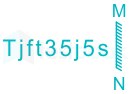
Select the correct mirror image of the given figure when the mirror is placed at MN as shown below. 

  1. AOption (a)

  2. BOption (b)

  3. COption (c)

  4. DOption (d)

View answer & explanation

Correct answer

Answer: (d)D.

Why this answer is correct

The correct mirror image of the given combination when mirror is placed at MN is as shown below:

Detailed Explanation:

  • The line MN is the mirror
  • The word "Tjft35j5s" the third letter is "f". So, the mirror image should be "

" ⇒ Option 1 is eliminated.

  • The word "Tjft35j5s" the fifth digit is "3". So, the mirror image should be "

" ⇒ Option 2 is eliminated..

  • The word "Tjft35j5s" the third letter is "f". So, the mirror image should be "

" ⇒ Option 3 is eliminated.

Hence, the correct answer is "Option - (4)".

Question 8

Each vowel in the word “ETHICAL” is changed to the following letter in the English alphabetical series and each consonant is changed to the previous letter in the English alphabetical series. In the newly formed word, how many alphabets are there in the English alphabetical series between the alphabet which is 3rd from the left and 1st from the right?

  1. AOption (a)

    Four

  2. BOption (b)

    Three

  3. COption (c)

    Two

  4. DOption (d)

    Five

View answer & explanation

Correct answer

Answer: (b)B.

Three

Why this answer is correct

Given word : ETHICAL

According to the question :

  1. Each vowel is changed to the following letter in the English alphabetical series

⇒ Vowels is the word 'ETHICAL' :- 

VowelsEIA
Change to the following letter(+1)(+1)(+1)
Changed letterFJB

Here, the transformation will be "FTHJCBL"

  1. Each consonant is changed to the previous letter in the English alphabetical series

⇒ Consonants is the word 'ETHICAL' :- 

ConsonantsTHCL
Change to the previous letter(-1)(-1)(-1)(-1)
Changed letterSGBK

Here, the transformation will be "FSGJBBK"

Thus, according to the final arrangement, "FSGJBBK" there are three alphabets i.e H, I and J between the alphabet which is 3rd from the left  i.e 'G' and 1st from the right is 'K' according to English alphabetical series.

Hence, "Three" is the correct answer.

Question 9

Select the set in which the numbers are related in the same way as are the numbers of the given set.

(NOTE: Operations should be performed on the whole numbers, without breaking down the number into its constituent digits. E. g. 13 — Operations on 13 such as adding /Subtracting /multiplying etc. to 13 can be performed. Breaking down 13 into 1 and 3 and then performing mathematical operations on 1 and 3 is not allowed.)

(312, 24, 13)

(645, 43, 15)

  1. AOption (a)

    (347, 27, 12) 

  2. BOption (b)

    (347, 22, 17) 

  3. COption (c)

    (374, 17, 12) 

  4. DOption (d)

    (374, 22, 17)  

View answer & explanation

Correct answer

Answer: (d)D.

(374, 22, 17)  

Why this answer is correct

Logic : 1st number = (2nd number × 3rd number)

Given : 

  • (312, 24, 13)

312 = 24 × 13 

312 = 312 (LHS = RHS)

  • (645, 43, 15)

645 = 43 × 15

645 = 645 (LHS = RHS)

So,

  • Option - (1) : (347, 27, 12)

347 = 27 × 12

347 ≠ 324 (LHS ≠ RHS)

  • Option - (2) : (347, 22, 17)

347 = 22 × 17

347 ≠ 374 (LHS ≠ RHS)

  • Option - (3) : (374, 17, 12)

374 = 17 × 12

374 ≠ 204 (LHS ≠ RHS)

  • Option - (4) : (374, 22, 17)

374 = 22 × 17

374 = 374 (LHS = RHS) 

Hence, "Option - (4)" is the correct answer.

Question 10

‘P @ Q’ means ‘P is the brother of Q’

‘P & Q’ means ‘P is the father of Q’

‘P # Q' means ‘P is the daughter of Q’

If ‘A # B @ C & D # E’, then how is B related to E?

  1. AOption (a)

    Brother's daughter 

  2. BOption (b)

    Brother's wife 

  3. COption (c)

    Husband's brother

  4. DOption (d)

    Brother 

View answer & explanation

Correct answer

Answer: (c)C.

Husband's brother

Why this answer is correct

Given :

P is
Symbol@&#
MeaningBrotherFatherDaughter
to Q

Given statement : A # B @ C & D # E

So,

  • A # B → A is the daughter of B.


  • B @ C → B is the brother of C.

​

  • C & D → C is the father of D.

​

  • D # E → D is the daughter of E

​

Here, B is the brother-in-law i.e husband's brother of E.

Hence, "Husband's brother" is the correct answer.

Question 11

In a certain code language, ‘PLAY’ Is coded as RICV and ‘TREE’ Is coded as VOGB. How will ‘BOOK’ be coded in the same language? 

  1. AOption (a)

    HLQD

  2. BOption (b)

    DQQH

  3. COption (c)

    DLQH

  4. DOption (d)

    DLLH

View answer & explanation

Correct answer

Answer: (c)C.

DLQH

Why this answer is correct

Logic :

  • First two letters → (2) and (3) are added respectively to the position value according to English alphabetic series.
  • Last two letters → (2) and (3) are subtracted respectively from the position value according to English alphabetic series.

So,

  • ‘PLAY’ Is coded as RICV


And,

  • ‘TREE’ Is coded as VOGB

​Similarly,

  • ‘BOOK’ will be coded as :

​Hence, "DLQH" is the correct answer.
Question 12

Select the figure from among the given options that can replace the question mark (?) in the following series, 

  1. AOption (a)

  2. BOption (b)

  3. COption (c)

  4. DOption (d)

View answer & explanation

Correct answer

Answer: (a)A.

Why this answer is correct

The figure that will replace the question mark (?) in the following figure series is shown below:

  1. For '

' element → Shifting in the clockwise direction.

  1. For '

' element → Shifting in the clockwise direction.

  1. For '

' element → Shifting in the clockwise direction.

4) For '

' element → Each '

' element is alternately replaced by '

' element.

5) For '

' element → Shifting in the clockwise direction.

Final series is

Hence, ‘option - (1)’ is the correct answer.

Question 13

The second number in the given number-pairs is obtained by performing certain mathematical operation(s) on the first number. The same operation(s) is/are followed in all the number-pairs, except one. Find that odd number-pair.

(NOTE: The relation should be found without breaking down the numbers into its constituent digits)

  1. AOption (a)

    225 : 169 

  2. BOption (b)

    361 : 400 

  3. COption (c)

    529 : 576

  4. DOption (d)

    441 : 484

View answer & explanation

Correct answer

Answer: (a)A.

225 : 169 

Why this answer is correct

Logic : Square root of 1st number = Square root of 2nd number - 1

So,

  • Option - (1) : 225 : 169

225{ \sqrt{225} } = 169{ \sqrt{169} } - 1

15 = 13 - 1

15 ≠ 12 (LHS ≠ RHS)

  • Option - (2) : 361 : 400

361{ \sqrt{361} } = 400{ \sqrt{400} } - 1

19 = 20 - 1

19 = 19 (LHS = RHS) 

  • Option - (3) : 529 : 576

529{ \sqrt{529} } = 576{ \sqrt{576} } - 1

23 = 24 - 1

23 = 23 (LHS = RHS)

  • Option - (4) : 441 : 484

441{ \sqrt{441} } = 484{ \sqrt{484} } - 1

21 = 22 - 1

21 = 21 (LHS = RHS) 

Hence, "Option - (1)" is the correct answer.

Question 14

Select the correct combination of mathematical signs to sequentially replace the * signs and to balance the given equation.

5 * 23 * 24 * 4 * 10 * 111

  1. AOption (a)

    ÷, +, -, ×, =

  2. BOption (b)

    -, ×, +, ÷, =

  3. COption (c)

    ×, +, ÷, -, =

  4. DOption (d)

    +, -, ÷, ×, =

View answer & explanation

Correct answer

Answer: (c)C.

×, +, ÷, -, =

Why this answer is correct

Given statement : 5 * 23 * 24 * 4 * 10 * 111

According to the question, after replacing the * signs :

So,

  • Option - (1) : ÷, +, -, ×, =

5 * 23 * 24 * 4 * 10 * 111 ⇒ 5 ÷ 23 + 24 - 4 × 10 = 111

0.21 + 24 - 4 × 10 = 111

0.21 + 24 - 40 = 111

24.21 - 40 = 111

-15.79 ≠ 111 (LHS ≠ RHS)

  • Option - (2) : -, ×, +, ÷, =

5 * 23 * 24 * 4 * 10 * 111 ⇒ 5 - 23 × 24 + 4 ÷ 10 = 111

5 - 23 × 24 + 0.4 = 111

5 + 0.4 - 552 = 111

5.4 - 552 = 111

-546.6 ≠ 111 (LHS ≠ RHS)

  • Option - (3) : ×, +, ÷, -, =

5 * 23 * 24 * 4 * 10 * 111 ⇒ 5 × 23 + 24 ÷ 4 - 10 = 111

5 × 23 + 6 - 10 = 111

115 + 6 - 10 = 111

121 - 10 = 111

111 = 111 (LHS = RHS)

  • Option - (4) : +, -, ÷, ×, =

5 * 23 * 24 * 4 * 10 * 111 ⇒ 5 + 23 - 24 ÷ 4 × 10 = 111

5 + 23 - 6 × 10 = 111

5 + 23 - 60 = 111

28 - 60 = 111

-32 ≠ 111 (LHS ≠ RHS)

Hence, "Option - (3)" is the correct answer.

Question 15

Select the figure that will replace the question mark (?) in the following figure series. 

  1. AOption (a)

  2. BOption (b)

  3. COption (c)

  4. DOption (d)

View answer & explanation

Correct answer

Answer: (c)C.

Why this answer is correct

The figure that will replace the question mark (?) in the following figure series is shown below:

  1. For '

' element → Shifting in the clockwise direction.

  1. For '

' element → Shifting in the anti-clockwise direction.

  1. For '

' element → Shifting in the anti-clockwise direction.

4) For '

' element → Shifting at the left above corner and back at the same position subsequently.

5) For '

' element → Shifting in the anti-clockwise direction.

6) For '

' element → Shifting in the anti-clockwise direction.

7) For '

' element → Shifting in the forward direction.

8) For '

' element → Shifting one step in the forward direction and then one step in the backwards direction subsequently.

9) For '

' element → Shifting in the clockwise direction.

10) For '

' element →  

Final series is

Hence, ‘option - (3)’ is the correct answer.

Question 16

Which of the following terms will replace the question mark (?) in the given series? 

MGB, NIE, OKH, PMK, ?

  1. AOption (a)

    QON

  2. BOption (b)

    PQJ

  3. COption (c)

    OQN

  4. DOption (d)

    OPK

View answer & explanation

Correct answer

Answer: (a)A.

QON

Why this answer is correct

Logic : (1), (2) and (3) are added to the position values of 1st, 2nd and 3rd letter respectively according to English alphabetic series.

So,

​Hence, "QON" is the correct answer.

Question 17

Select the correct combination of mathematical signs that can sequentially replace the * signs and balance the given equation.

32 * 42 * 7 * 7 * 17 = 202

  1. AOption (a)

    ×, ÷, -, +

  2. BOption (b)

    ×, -, +, ÷ 

  3. COption (c)

    +, ÷, ×, -

  4. DOption (d)

    +, ×, ÷, -

View answer & explanation

Correct answer

Answer: (a)A.

×, ÷, -, +

Why this answer is correct

Given statement : 32 * 42 * 7 * 7 * 17 = 202 

According to the question, after replacing the * signs :

So,

  • Option - (1) : ×, ÷, -, +

32 * 42 * 7 * 7 * 17 = 202 ⇒ 32 × 42 ÷ 7 - 7 + 17 = 202 

32 × 6 - 7 + 17 = 202

192 + 17 - 7 = 202

209 - 7 = 202

202 = 202 (LHS = RHS)

  • Option - (2) : ×, -, +, ÷

32 * 42 * 7 * 7 * 17 = 202 ⇒ 32 × 42 - 7 + 7 ÷ 17 = 202

32 × 42 - 7 + 0.41 = 202

1344 + 0.41 - 7 = 202

1344.41 - 7 = 202

1337.41 ≠ 202 (LHS ≠ RHS)

  • Option - (3) : +, ÷, ×, -

32 * 42 * 7 * 7 * 17 = 202 ⇒ 32 + 42 ÷ 7 × 7 - 17 = 202

32 + 6 × 7 - 17 = 202

32 + 42 - 17 = 202

74 - 17 = 202

57 ≠ 202 (LHS ≠ RHS)

  • Option - (4) : +, ×, ÷, -

32 * 42 * 7 * 7 * 17 = 202 ⇒ 32 + 42 × 7 ÷ 7 - 17 = 202

32 + 42 × 1 - 17 = 202

32 + 42 - 17 = 202

74 - 17 = 202

57 ≠ 202 (LHS ≠ RHS)

Hence, "Option - (1)" is the correct answer.

Question 18

Which of the following numbers will replace the question mark (?) in the given series?

82, 79, 71, ?, 60, 57, 49

  1. AOption (a)

    61

  2. BOption (b)

    63

  3. COption (c)

    68

  4. DOption (d)

    62

View answer & explanation

Correct answer

Answer: (c)C.

68

Why this answer is correct

Logic : Alternately (3) and (8) are subtracted from each number subsequently.

So,

82 - 3 = 79

79 - 8 = 71

71 - 3 = 68

68 - 8 = 60

60 - 3 = 57

57 - 8 = 49

Hence, "68" is the correct answer.

Question 19

Select the option that is related to the third word in the same way as the second word is related to the first word.

(The words must be considered as meaningful English words and must not be related to each other based on the number of letters/number of consonants/vowels in the word.)

Hands : Mittens :: Feet : ?

  1. AOption (a)

    Shrug

  2. BOption (b)

    Scarf

  3. COption (c)

    Socks

  4. DOption (d)

    Jacket

View answer & explanation

Correct answer

Answer: (c)C.

Socks

Why this answer is correct

Logic : Body part : Item worn of that body part

  • Mittens are worn on hands.

Similarly,

  • Socks are worn on feet.

Hence, "Socks" is the correct answer.

Additional Information

  • Shrug → It is worn on the upper body.
  • Scarf → It is worn around the neck.
  • Socks → It is worn on the feet.
  • Jacket → It is worn on the upper body.

Question 20

Three statements are given followed by three conclusions numbered I, Il and IlI. Assuming the statements to be true, even if they seem to be at variance with commonly known facts, decide which of the conclusions logically follow(s) from the statements.

Statements:

All computers are laptops.

All laptops are mobiles.

Some mobiles are tablets.

Conclusions:

I. Some mobiles are computers.

II. All computers are mobiles.

III. Some computers are tablets.

  1. AOption (a)

    Only conclusions Il and III follow. 

  2. BOption (b)

    Only conclusions I and II follow.  

  3. COption (c)

    Only conclusions I and III follow. 

  4. DOption (d)

    All conclusions follow. 

View answer & explanation

Correct answer

Answer: (b)B.

Only conclusions I and II follow.  

Why this answer is correct

The least possible Venn diagram for the given statement is:

Conclusions:

I. Some mobiles are computers → Follow (As, all computers are laptops and all laptops are mobiles. So, as whole computers comes in laptops which whole comes in mobiles therefore it is definitely true.)

II. All computers are mobiles → Follow (As, all computers are laptops and all laptops are mobiles. So, as whole computers comes in laptops which whole comes in mobiles therefore it is definitely true.)

III. Some computers are tablets → Does not Follow (As, all laptops are mobiles and some mobiles are tablets . So, it is possible but not definitely true.)

So, Only conclusions I and II follow.

Hence, the correct answer is "Only conclusions I and II follow".

Question 21

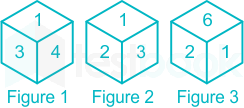
Three different positions of the same dice are shown. Find the number on the face opposite to the face showing ‘5’. 

  1. AOption (a)

    4

  2. BOption (b)

    2

  3. COption (c)

    1

  4. DOption (d)

    6

View answer & explanation

Correct answer

Answer: (c)C.

1

Why this answer is correct

The logic followed here is :-

From the given three different cubes taking figure 1 and figure 3 ,the adjacent sides are as shown below :

As 1 is common on both figure 1 and figure 3, it is clear that 2, 3, 4 and 6 are adjacent to it and remaining number i.e., 5 will be opposite to it.

Opposite pairs:

1 → 5

2 → 4

3 → 6

So, the opposite side of "5" will be side "1".

Hence, the correct answer is "1".

Question 22

Which option represents the correct order of the given words as they would appear in an English dictionary?

  1. Highway
  2. History
  3. Hired
  4. Hierarchy
  5. Hibiscus
  1. AOption (a)

    5, 4, 3, 1, 2 

  2. BOption (b)

    5, 4, 3, 2, 1

  3. COption (c)

    5, 4, 1, 3, 2

  4. DOption (d)

    5, 4, 2, 1, 3

View answer & explanation

Correct answer

Answer: (c)C.

5, 4, 1, 3, 2

Why this answer is correct

According to the sequence in the dictionary:

  1. Hibiscus 
  2. Hierarchy
  3. Highway
  4. Hired
  5. History

Hence, the correct option is "5, 4, 1, 3, 2".

Question 23

Select the option figure which is embedded in the given figure (rotation is NOT allowed). 

  1. AOption (a)

  2. BOption (b)

  3. COption (c)

  4. DOption (d)

View answer & explanation

Correct answer

Answer: (c)C.

Why this answer is correct

Given:


  • The image must not to be rotated


Hence, the correct answer is "Option - (3)".

Question 24

Select the option that represents the letters that, when sequentially placed from left to right in the blanks below, will complete the letter series.

PRKY_LDP_ YOLD_RKYO_DPRK _LD

  1. AOption (a)

    ORKLPOD

  2. BOption (b)

    ORPKYLP

  3. COption (c)

    ORPLKYO

  4. DOption (d)

    ORKPLYO

View answer & explanation

Correct answer

Answer: (d)D.

ORKPLYO

Why this answer is correct

Given : PRKY_LDP_ YOLD_RKYO_DPRK _LD   

By checking options :

  1. ORKLPOD → PRKYOLDPRKYOLDLRKYOPDPRKODLD  → (It doesn't Follows the pattern)
  2. ORPKYLP → PRKYOLDPRPYOLDKRKYOYDPRKLPLD → (It doesn't Follows the pattern)
  3. ORPLKYO → PRKYOLDPRPYOLDLRKYOKDPRKYOLD → (It doesn't Follows the pattern)
  4. ORKPLYO → PRKYOLDPRKYOLDPRKYOLDPRKYOLD → (It follows the pattern of : PRKYOLD - PRKYOLD - PRKYOLD - PRKYOLD)

⇒Option - (4) gives the pattern of "PRKYOLD - PRKYOLD - PRKYOLD - PRKYOLD"

Hence, "ORKPLYO" is the correct answer.

Question 25

Which of the answer figures is the exact mirror image of the given problem figure when the mirror is held at the right side?

Problem figure: 

  1. AOption (a)

  2. BOption (b)

  3. COption (c)

  4. DOption (d)

View answer & explanation

Correct answer

Answer: (c)C.

Why this answer is correct

The correct mirror image of the given figure when mirror is placed at MN is as shown below:

Hence, the correct answer is "Option - (3)".

General Awareness (25 questions)

Question 26

Consider the following statements about unemployment in India:

a) Seasonal unemployment is mainly found in urban areas.

b) Educated unemployed people are mainly found in rural areas of India.

c) Higher cropping intensity is desirable for reducing unemployment in the rural economy.

Which of the given statements is/are correct?

  1. AOption (a)

    Only c

  2. BOption (b)

    Only b and c

  3. COption (c)

    Only a and b

  4. DOption (d)

    Only a

View answer & explanation

Correct answer

Answer: (a)A.

Only c

Why this answer is correct

The correct answer is Only c.

Key Points

  • The correct choice is: c) Higher cropping intensity (greater number of crops grown in a year on the same land) can indeed help reduce unemployment in rural areas by providing more continuous work for agricultural laborers.Higher cropping intensity (greater number of crops grown in a year on the same land) can indeed help reduce unemployment in rural areas by providing more continuous work for agricultural laborers.
  • The given statements a) and b) are typically incorrect based on the general understanding of these terms:
  • a) Seasonal Unemployment is primarily found in agriculture-dominated rural areas, not urban areas. This is because agriculture in India is largely dependent on the monsoon season, creating periods of high activity and low activity.
  • b) Educated unemployment, or a situation where educated individuals are unable to find suitable jobs, is typically associated with urban areas rather than rural areas. This is due to higher access to education in urban regions and the propensity for educated individuals to look for employment in urbanized, industrial, or service-based sectors.

Additional Information

  • Structural Unemployment: This type of unemployment occurs when there is a mismatch between the skills possessed by job seekers and the skills demanded by employers. It often results from changes in technology or shifts in the economy, leaving some workers with obsolete skills.
  • Frictional Unemployment: Frictional unemployment refers to the temporary period of unemployment that arises when individuals are transitioning between jobs or entering the workforce for the first time. It's often considered natural as people search for better opportunities.
  • Cyclical Unemployment: This type of unemployment is linked to the business cycle. It occurs when economic downturns lead to reduced demand for goods and services, resulting in reduced production and layoffs. As the economy improves, this type of unemployment tends to decrease.
  • Seasonal Unemployment: Seasonal unemployment arises due to the seasonal nature of certain industries. Workers in agriculture, tourism, and other sectors experience joblessness during off-peak seasons when demand for their services declines.
  • Disguised Unemployment: This situation occurs when more people are engaged in a task or job than actually required, leading to inefficiencies and reduced productivity. It's often seen in rural areas where multiple family members work on a farm but could be replaced by fewer workers using modern techniques.
  • Educational Unemployment: This is when individuals are unemployed due to the lack of necessary education or skills required for available jobs. It highlights the importance of aligning education and training with the demands of the job market.
  • Underemployment: Underemployment refers to a situation where workers are employed in jobs that are below their skill levels or that don't utilize their full capabilities. This often leads to lower income and job dissatisfaction.
  • Long-Term Unemployment: Long-term unemployment occurs when individuals remain unemployed for an extended period, typically more than 27 weeks. It can have adverse effects on skills, self-esteem, and employability.
  • Technological Unemployment: This type of unemployment results from technological advancements that replace human labor with automation or machinery. While technology can boost efficiency, it can also lead to job losses in certain industries.

Question 27

The folk dance of Kummi is performed by the women of which Indian state?  

  1. AOption (a)

    Rajasthan 

  2. BOption (b)

    Madhya Pradesh 

  3. COption (c)

    Tamil Nadu  

  4. DOption (d)

    Jharkhand 

View answer & explanation

Correct answer

Answer: (c)C.

Tamil Nadu  

Why this answer is correct

The correct answer is Tamil Nadu.

Key PointsThe folk dance of Kummi:

  • The Kummi dance is a popular folk dance in the state of Tamil Nadu, particularly in rural areas.
  • Performers: It is primarily performed by women, often in a circle, holding each other's hands or waists, but men also sometimes participate.
  • Occasions: Typically, the Kummi dance is performed during village festivals, harvest festivals like Pongal, and temple festivals. It is also performed at weddings and other celebrations.
  • Style and Music: The dance moves involve rhythmic clapping and steps that move the circle around as they dance. The dance begins with a slow pace, gradually picking up speed as the music intensifies. The dancers themselves usually sing the Kummi songs which often narrate rural stories or deities, but it can be also accompanied by music from traditional instruments.
  • Variations: There are different styles of Kummi, such as Poonthatti Kummi, Deepa Kummi (with lamps in hand), and Kulavai Kummi (performed by washerwomen).

Additional Information

Folk DanceState
Dollu KunithaKarnataka
LambadiTelangana
KuchipudiAndhra Pradesh
JhummarPunjab, Haryana
Thang-taManipur
KalbeliaRajasthan
RaasleelaUttar Pradesh
OjapaliAssam
NongkremMeghalaya
SambalpuriOdisha
FugdiGoa
ThirayattamKerala
Bardo ChhamArunachal Pradesh
HojagiriTripura
PhagHaryana
BagurumbaAssam

Question 28

Fundamental duties were not placed in Part III of the Indian Constitution because Part III is ______.

  1. AOption (a)

    non-justiciable 

  2. BOption (b)

    justiciable 

  3. COption (c)

    not enforceable 

  4. DOption (d)

    absolute 

View answer & explanation

Correct answer

Answer: (b)B.

justiciable 

Why this answer is correct

The correct answer is Justiciable.

Key Points

  • The Fundamental Duties of Indian citizens were not part of the original Constitution. These were introduced later by the 42nd Amendment Act in 1976, based on the recommendations of the Swaran Singh Committee. The duties are listed in Part IVA (Article 51A) of the Indian Constitution.
  • Fundamental Duties, as per the Indian Constitution, have been established to promote a sense of respect and responsibility amongst citizens. Importantly, these duties are non-justiciable—they cannot be enforced through legal proceedings. This is in stark contrast with Fundamental Rights, which are enforceable in nature.
  • The Fundamental Duties covered under Article 51A are ten in number and they were later expanded to eleven by the 86th Amendment in 2002.
  • The Fundamental Rights, outlined in Part III of the constitution from Article 12 to 35, are integral to the Indian Constitution. Drafted by Dr. Ambedkar and the other framers of the Constitution, these rights were derived from the US Bill of Rights, the Irish Constitution, and various other sources. These rights are justiciable, meaning they can be enforced through the courts. If a person feels their Fundamental Rights have been violated, they can directly approach the Supreme Court or High Courts for enforcement or protection of such rights, according to Article 32 and Article 226 of the Constitution respectively.
  • Fundamental Duties were not included in this part to maintain a clear demarcation between the rights that are enforceable by law (such as the fundamental rights) and moral obligations or responsibilities (such as the fundamental duties) that are not legally enforceable.

Additional InformationFundamental Duties (Part IVA: Article 51A):

DutyDescription
1To abide by the Constitution and respect its ideals and institutions, the National Flag and the National Anthem
2To cherish and follow the noble ideals that inspired the national struggle for freedom
3To uphold and protect the sovereignty, unity, and integrity of India
4To defend the country and render national service when called upon to do so
5To promote harmony and the spirit of common brotherhood amongst all the people of India and to renounce practices derogatory to the dignity of women
6To value and preserve the rich heritage of our composite culture
7To protect and improve the natural environment
8To foster the scientific temper, humanism, and the spirit of inquiry and reform
9To safeguard public property and to abjure violence
10To strive towards excellence in all spheres of individual and collective activity
11 (added by 86th Amendment, 2002)Parents or guardians to provide opportunities for education to their child/ward between the ages of 6 and 14 years

Question 29

Which of the following is NOT a function of money? 

  1. AOption (a)

    Medium of exchange 

  2. BOption (b)

    Problem in storage 

  3. COption (c)

    Measure of value  

  4. DOption (d)

    Standard of deferred payments 

View answer & explanation

Correct answer

Answer: (b)B.

Problem in storage 

Why this answer is correct

The correct answer is Problem in storage.

Key PointsTraditional functions of money are generally classified as:

  • Medium of Exchange: Money is used for buying and selling goods and services.
  • Unit of Account: Money is used to measure the value of goods and services.
  • Store of Value: Money allows the ability to defer consumption from the present into the future. It's a way to store wealth.
  • Standard of Deferred Payment: It is used as a standard for future payments.

However, "problem in storage" is not related to the function of money. Actually, part of the benefit of money is that it eliminates the storage issue inherent in a barter system. Money doesn’t physically deteriorate and could be stored or saved for future use with ease.

Additional Information

  • The concept of money and its functions is central to any study of the economy. 
  • Money helps to facilitate trade, allowing a more efficient allocation of goods and services. Without money, economies would have to rely on the barter system, which is inefficient because it requires a double coincidence of wants.
  • Money also plays a crucial role in the macro-economy. It influences important macroeconomic variables like interest rates, prices, wages, and economic growth. Central Banks — in India, it is the Reserve Bank of India (RBI) — manage the money supply to control inflation and stabilize the economy.
  • In terms of the types of money used in the Indian economy, there are several forms:
  • Commodity Money: This includes any commodity that is generally accepted as a medium of exchange. Until the 19th century, most transactions in India were conducted with commodities like gold, silver, copper coins, etc.
  • Fiat Money: This is the money by order (fiat) of the government. Its value is not based on the material used for its manufacturing but on the trust and assurance by the government that the piece of note has a certain value. For example, Indian Rupee (INR).
  • Paper Money or Currency: It represents the most commonly used form of money and includes notes issued by the Reserve Bank of India.
  • Bank Money: Commercial banks in India also create money in the form of deposits, which are generated through the process of lending.
  • Electronic Money or Digital Money: This form of money is recorded electronically on a storage device, such as a bank's computer or even on smart cards or mobile phones. With the progression of technology and internet penetration, online transactions are becoming more popular in India.
  • Near Money or Quasi-Money: These are highly liquid assets that can be readily converted into cash, like savings accounts and time deposits, treasury bills, and other short term government bonds.

Important Points

  • The Ministry of Finance is in charge of making Re. 1 notes and coins in India.
  • However, the Reserve Bank of India is the only organization allowed to issue currency notes of different values, except for the one rupee note, according to the Reserve Bank of India Act.
  • Coins in India are presently being issued in denominations of 50 paise, one rupee, two rupees, five rupees, ten rupees and twenty rupees.
  • Coins up to 50 paise are called 'small coins' and coins of Rupee one and above are called 'Rupee Coins'.
  • Coins can be issued up to the denomination of ₹1000 under the Coinage Act, 2011.
  • Twenty five (25) paise coins have been withdrawn from circulation with effect from June 30, 2011 and are, therefore, no more legal tender.
  • Rs. 75 coin, the coin’s metallic value exceeds its legal value as half of the coin is made of silver, so they are not used for transactions (legal tender).

Question 30

______ is a naturally occurring organic compound with the formula (C6H5)2CO.

  1. AOption (a)

    Methcathinone 

  2. BOption (b)

    Propiophenone 

  3. COption (c)

    Acetophenone 

  4. DOption (d)

    Benzophenone  

View answer & explanation

Correct answer

Answer: (d)D.

Benzophenone  

Why this answer is correct

The correct answer is Benzophenone.

Key Points

  • The organic compound with the formula (C6H5)2CO is Benzophenone.
  • It consists of two phenyl groups attached to a carbonyl.
  • Physical Properties: Benzophenone is a white, crystalline solid and is slightly soluble in water but can dissolve in many organic solvents.
  • Uses:
  • Benzophenone is predominantly used in industrial applications.
  • It is a common intermediate in the synthesis of many organic compounds in the chemical industry.
  • It finds uses in the production of dyes, perfumes, and pharmaceuticals.
  • Notably, benzophenone and its derivatives are commonly used as photoinitiators, substances that promote reactions upon exposure to light.
  • They are thus useful in UV-curing applications such as inks, imaging, and clear coatings on surfaces.
  • Safety and Environmental Impact: Benzophenone can potentially cause skin, eye, and respiratory tract irritation. On the environmental side, it's not easily biodegradable and might have impacts on aquatic life.

Additional Information

CompoundChemical FormulaStructure and Properties
MethcathinoneC10H13NO- Methcathinone, also known as ephedrone, is a psychoactive drug classified as a stimulant. - It's often synthesized from ephedrine or pseudoephedrine and has similar effects to amphetamines, albeit with a shorter duration. - It is important in the study of substance abuse as it is a recreational drug.
PropiophenoneC9H10O- Propiophenone is a simple ketone featuring an aromatic ring structure. - It's an aromatic compound and falls under the aryl ketone functional group classification. - It is the simplest representative of homogeneous aryl ketones. - Propiophenone is used as a tool in the realm of organic chemistry, particularly in the production of other compounds.
AcetophenoneC8H8O- Acetophenone is the simplest form of aromatic ketone, where the carbonyl group is conjugated to an aromatic ring. - It has a sweetish taste and found in many types of fruit as well as in certain essential oils. - Aside from its applications in perfumery and flavor industry, it is also used as a solvent and a starting material for numerous organic syntheses.

Question 31

What is the priority zone of the AMRUT (Atal Mission for Rejuvenation and Urban Transformation) mission, which was launched by the Government of India in 2015? 

  1. AOption (a)

    Water supply followed by sewerage 

  2. BOption (b)

    Electricity and power generation 

  3. COption (c)

    Primary education for all 

  4. DOption (d)

    Health care of urban dwellers 

View answer & explanation

Correct answer

Answer: (a)A.

Water supply followed by sewerage 

Why this answer is correct

The correct answer is Water supply followed by sewerage.

Key PointsAMRUT (Atal Mission for Rejuvenation and Urban Transformation):

AspectDetails
LaunchJune 2015
Concerned MinistryMinistry of Housing and Urban Affairs
Purpose- Ensure access to tap water and sewerage connections for every household.
- Develop greenery and well-maintained open spaces.
- Reduce pollution through public transport and non-motorized transport.
Priority ZoneWater supply followed by sewerage.
Components- Capacity building and reform implementation.
- Water supply, sewerage, and septage management.
- Stormwater drainage.
- Urban transport.
- Development of green spaces and parks.
ReformsAim to improve citizen services, cost efficiency, financial health, resources, and transparency.
Includes LED street light replacement.
Central Sponsored SchemeTotal outlay of Rs. 50,000 crores for five years (FY 2015-16 to FY 2019-20).
ExtensionMission extended till 31st March 2021 due to inability to meet targets in 500 cities.
State Annual Action Plan (SAAP)States play a significant role in project planning and implementation through SAAP approval.
SupervisionApex Committee (AC) chaired by MoHUA Secretary supervises the Mission with representatives from related Ministries and organizations.
  • AMRUT 2.0 was launched in October 2021 for a period of 5 years, i.e., Financial Year 2021-22 to 2025-26.

Question 32

Who was the founder of Harijan Sevak Sangh founded in 1932? 

  1. AOption (a)

    Jawaharlal Nehru 

  2. BOption (b)

    Mahatma Gandhi

  3. COption (c)

    Jyotiba Phule 

  4. DOption (d)

    BR Ambedkar 

View answer & explanation

Correct answer

Answer: (b)B.

Mahatma Gandhi

Why this answer is correct

The correct answer is Mahatma Gandhi.

Key Points

  • The All India Harijan Sevak Sangh is an independent national-level non-profit voluntary Organisation with Branches in 26 States.
  • It was founded in September 1932 in the wake of Gandhiji's Epic Fast at Yervada Jail, Pune, resulting in the historic Poona Pact.
  • The immediate historical background dates back to the Second Round Table Conference in London in 1931 when Gandhi Ji opposed the segregation of the depressed classes of the Hindu community into a separate electoral group.
  • Gandhi Ji saw in it a sinister device of the British government to create a split in the Hindu community in furtherance of its policy of divide and rule.
  • The Sangh was established to combat untouchability and a new weekly paper, the Harijan, was started.
  • Harijan means children of God,  it was Gandhi Ji's name for the untouchables.

Additional Information

Jawaharlal Nehru- Early Life and Education: Jawaharlal Nehru was born on November 14, 1889, in Allahabad, India. - Role in the Indian National Congress: Nehru served as the President of the Indian National Congress several times before India achieved independence. He was the presiding officer at the Lucknow session in 1936, Faizpur session in 1937, etc. - Imprisonment: Nehru was sent to jail multiple times by the British Government due to his role in the Civil Disobedience Movements of 1930 and 1932. - First Prime Minister of Independent India: After India achieved independence on August 15, 1947, Nehru became the first Prime Minister. He held the prime minister-ship from 1947 until his death in 1964, which is the longest term so far in India's history. - Role in the Non-Aligned Movement: Nehru was one of the initial leaders who advocated the policy of non-alignment in the Cold War politics and was instrumental in the formation of the Non-Aligned Movement, strengthening India's international standing. - Death: Nehru died of a heart attack on May 27, 1964. His death marked the end of an era in Indian politics.
Jyotiba Phule- Jyotirao Govindrao Phule was born on April 11, 1827, in Pune, Maharashtra, India. He was a merchant and also a member of the municipal council. He was inspired by a book called "The Rights of Man" by Thomas Paine. - Phule believed that the only way to get rid of social problems was to educate women and people from lower castes. He started schools for girls and taught his own wife as well. He wrote important books like "Gulamgiri" (meaning "Slavery") and "Shetkarayacha Aasud" (meaning "Cultivator’s Whipcord"). "Gulamgiri" criticized the caste system and was translated into English as "Slavery". - In 1873, he founded the "Satya Shodhak Samaj" to promote equality in society. He even started an orphanage for needy children, making him the first Hindu to do so.
BR Ambedkar- Dr. Bhimrao Ramji Ambedkar was the first minister of Law and Justice of India. - He is known as the 'Father of the Indian Constitution. - His Political Party: Scheduled Caste Federation, Independent Labor Party, Republican Party of India. - His social Organization: Bahishkrit Hitakarini Sabha, Samata Sainik Dal.

Question 33

Sohan Singh Bhakna and Har Dayal were primarily associated with which of the following organisations? 

  1. AOption (a)

    Ghadar Party 

  2. BOption (b)

    Kisan Sabha 

  3. COption (c)

    Anushilan Samiti  

  4. DOption (d)

    Yugantar 

View answer & explanation

Correct answer

Answer: (a)A.

Ghadar Party 

Why this answer is correct

The correct answer is Ghadar Party.

Key PointsGhadar Party:

  • It was formed in 1913.
  • Headquarters was at Yugantar Ashram in San Francisco.
  • It was founded by Sohan Singh Bhakna and Lala Hardayal.
  • The Ghadar Party was organized by migrants Indians in the United States.
  • The old name of the Ghadar Party was the Pacific coast Hindustan association.
  • The name Ghadar party was adopted after the launch of its journal Ghadar in 1913.
  • It was formally dissolved in 1948.

Additional Information

NameDescriptionEstablishmentKey PeopleObjective
Kisan SabhaAlso known as the All India Kisan Sabha, it was an organization meant to address the issues and rights of peasants (kisan means peasant).Established in 1936 in Lucknow at the All India Kisan Congress session.Swami Sahajanand Saraswati, N.G. Ranga, and Baba Sohan Singh Bhakna.Address farmers' issues like debt, land tenure, tenancy, rents, etc.
Anushilan SamitiAnushilan Samiti was a revolutionary group in Bengal primarily working towards India's independence from British rule. The group carried out a number of violent operations against the British.Established in 1902 in Calcutta.Barindra Kumar Ghosh and Bhupendranath Dutta.Aimed at overthrowing British colonial rule in India through revolutionary means.
YugantarYugantar was one of the prominent revolutionary organizations that were active in the fight for India's independence. The group also published a newspaper named 'Yugantar'.Founded in April 1906 in Calcutta.Barindra Kumar Ghosh, Bhupendranath Dutta, and Abhinash BhattacharyaThe organization aimed to secure independence from British rule using more aggressive means, including armed revolution. The Yugantar newspaper propagated these revolutionary ideas.

Question 34

During the reign of which of the following rulers did Hiuen Tsang, a Chinese traveller, come to India? 

  1. AOption (a)

    Chandragupta Il 

  2. BOption (b)

    Samudragupta 

  3. COption (c)

    Ashoka 

  4. DOption (d)

    Harshavardhana  

View answer & explanation

Correct answer

Answer: (d)D.

Harshavardhana  

Why this answer is correct

The correct answer is Harshavardhana.

Key PointsChinese scholar Hiuen Tsang (also referred to as Xuanzang):

  • Travel to India: Hiuen Tsang travelled to India in the 7th Century CE, during the reign of Harshavardhana. His main objective was to acquire Buddhist texts which were not available in his homeland, China. He also intended to study the language and culture of India, something he was deeply fascinated with.
  • Length of Stay and Travels: Hiuen Tsang was in India for approximately 15 years. He travelled widely, visiting regions such as present-day Punjab, Haryana, Delhi, Uttar Pradesh, Bihar, West Bengal, and even travelling as far south as Andhra Pradesh and Tamil Nadu.
  • Learning and Observations: During his stay, he spent a significant time at Nalanda University, an ancient centre of learning in Bihar. He wrote extensively about the teachings and practices he observed, providing valuable details about the workings of the educational system at Nalanda University.
  • Record of his Journey: After returning to China, he wrote a detailed chronicle of his journey called "Great Tang Records on the Western Regions" (Da Tang Xiyu Ji), which provides a comprehensive account of his voyage and observations. This text is considered an insightful resource for understanding India's history, social structure, and cultural practices during the 7th Century CE.
  • Relations Between India and China: Hiuen Tsang's journey is often seen as marking a significant interaction between the two ancient civilizations of India and China, particularly in the exchange of knowledge and culture.
  • Harsha's Rule: Hiuen Tsang's description of Harsha's rule is instrumental in our understanding of this period. He praises Harsha's governance, his religious tolerance, patronage of Buddhism, and his efforts in holding religious assemblies.
  • Harshavardhana is known for consolidating northern India after the fall of the Gupta Empire.
  • A philosopher-king, Harsha was a great patron of arts and literature and authored plays like Nagananda, Ratnavali, and Priyadarshika.
  • Harshavardhana ruled Northern India from 606 to 647 CE.

Additional Information

NameRegime and InfluenceMajor Accomplishments
AshokaHe succeeded to the Mauryan throne in 269 BCE and his rule extended until 232 BCE. His empire stretched, at its zenith, from present-day Afghanistan in the west to Bangladesh in the east.He is best known for his conversion to Buddhism and the propagation of its teachings, both throughout India and abroad. Ashoka codified and made these principles accessible to ordinary people by having them inscribed on rocks and pillars throughout his kingdom, a practice that represents the earliest decipherable corpus of written Indian language. His policy of Dhamma is a reflection of his principles.
Chandragupta IIChandragupta II, also known as Vikramaditya, was a ruler of the Gupta Empire around 375–415 CE.Chandragupta II is remembered for his notable victories, strong leadership, prosperity, and patronage of art and literature. It was during his reign that Kalidasa, the famous Sanskrit poet and playwright, lived. He also established diplomatic relations with the Western world after a meeting with a Roman delegation. His military success, particularly his victory over the Shaka-Ksatrapas, led to the political unity of most of India.
SamudraguptaSamudragupta, son of Chandragupta I, ruled the Gupta Empire from around 335 – 380 CE. His realm expanded across Northern, Central, and parts of Southern India.He is known for his military campaigns, and medieval Indian poets referred to him as the "Indian Napoleon." He was a great patron of arts and literature and was known to be a gifted musician. His court was filled with learned scholars. Coins minted during his reign, which depict him playing the veena, are a testament to his patronage of the arts. The inscription of his qualities and achievements on the Ashoka Pillar, known as the Allahabad Inscription, gives a thorough account of his reign.

Question 35

What was India’s rank In Paralympic 2020? 

  1. AOption (a)

    21

  2. BOption (b)

    25

  3. COption (c)

    24

  4. DOption (d)

    19

View answer & explanation

Correct answer

Answer: (c)C.

24

Why this answer is correct

The correct answer is 24.

Key PointsTokyo Paralympics 2020:

  • India finishes 24th with record 19 medals.
  • India finished their campaign at the Tokyo Paralympics 2020 with an all-time high of 19 medals which includes five gold, eight silver, and six bronze.
  • Bhavina Patel becoming the first Indian table tennis player to win a Paralympic medal and Harvinder Singh mirroring the feat in archery.
  • Shooter Avani Lekhara, however, was the standout name as she became the first Indian woman to win a Paralympic gold medal.
  • China topped the medal tally with 96 gold, 60 silver, and 51 bronze medals. Great Britain and the United States followed to secure second and third positions, respectively.
  • The closing ceremony was on September 5, 2021, which celebrated the successful completion of the games and included the traditional passing of the Paralympic flag to Paris, the host city of the 2024 Paralympic Games.

Additional Information

AthleteEventSportMedal
Avani LekharaWomen's 10m Air Rifle Standing SH1ShootingGold
Sumit AntilMen's Javelin Throw F64AthleticsGold
Manish NarwalMixed 50m Pistol SH1ShootingGold
Pramod BhagatMen's Singles SL3BadmintonGold
Krishna NagarMen's Singles SH6BadmintonGold
Bhavina PatelWomen's Singles Class 4Table TennisSilver
Nishad KumarMen's High Jump T47AthleticsSilver
Yogesh KathuniyaMen's Discus Throw F56AthleticsSilver
Devendra JhajhariaMen's Javelin Throw F46AthleticsSilver
Suhas Lalinakere YathirajMen's Singles SL4BadmintonSilver
Mariyappan ThangaveluMen's High Jump T42AthleticsSilver
Praveen KumarMen's High Jump T64AthleticsSilver
Singhraj AdhanaMen's 50m Pistol SH1ShootingSilver
Sundar Singh GurjarMen's Javelin Throw F46AthleticsBronze
Sharad KumarMen's High Jump T42AthleticsBronze
Avani LekharaWomen's 50m Rifle 3 Positions SH1ShootingBronze
Harvinder SinghMen's Individual Recurve - OpenArcheryBronze
Manoj SarkarMen's Singles SL3BadmintonBronze
Singhraj AdhanaMixed 25m Pistol SH1ShootingBronze

Question 36

Shahid Parvez Khan, Budhaditya Mukherjee and Anoushka Shankar are associated with which of the following musical instruments?  

  1. AOption (a)

    Been 

  2. BOption (b)

    Santoor

  3. COption (c)

    Sitar

  4. DOption (d)

    Sarod

View answer & explanation

Correct answer

Answer: (c)C.

Sitar

Why this answer is correct

The correct answer is Sitar.

Key Points

InstrumentAssociated Persona(s)
Been (also known as Bin or Rudra Veena)Ustad Zia Mohiuddin Dagar, Ustad Asad Ali Khan, Ustad Bande Ali Khan
SantoorPandit Shivkumar Sharma, Bhajan Sopori, Rahul Sharma
SitarPandit Ravi Shankar, Ustad Vilayat Khan, Anoushka Shankar, Pandit Nikhil Banerjee, Ustad Abdul Halim Jaffer Khan, Shahid Parvez Khan, Budhaditya Mukherjee
SarodUstad Amjad Ali Khan, Ustad Ali Akbar Khan, Amaan Ali Bangash, Ayaan Ali Bangash, Ustad Hafiz Ali Khan, Ustad Bahadur Khan

Question 37

Who was awarded the Mother Teresa Memorial Award for Social Justice 2021? 

  1. AOption (a)

    Sumaira Abdulali  

  2. BOption (b)

    Rajendra Singh  

  3. COption (c)

    Jadav Payeng 

  4. DOption (d)

    Anil Prakash Joshi 

View answer & explanation

Correct answer

Answer: (d)D.

Anil Prakash Joshi 

Why this answer is correct

The correct answer is Anil Prakash Joshi.

Key Points

  • Dr Anil Prakash Joshi, an environmentalist, was awarded the Mother Teresa Memorial Award for Social Justice 2021. He was also conferred upon with the Padma Bhushan this year.
  • The other recipients of the Mother Teresa Memorial Award were Vidyut Mohan, the winner of the Earth-shot Prize, and Ridhima Pandey, a young environmental activist from Uttarakhand.
  • The Harmony Foundation holds the Mother Teresa Memorial Awards annually, and selects a theme each year. For this year, the theme was environmental sustainability.
  • The foundation's founder chairman, Dr Abraham Mathai, felicitated the awardees.
  • Dr Joshi received the award for his work that affected over 10,000 villages in the Himalayan region through his organization, the Himalayan Environmental Studies & Conservation Organization.
  • Vidyut Mohan was acknowledged for his creative efforts in fighting air pollution through his social enterprise Takachar.
  • Ridhima Pandey received the award for her exceptional courage and unyielding spirit as a youth environmental activist, whose efforts have spurred national engagement in stopping climate change.

Question 38

Identify the element one that does NOT belong to Group 1 of the Modern Periodic Table.  

  1. AOption (a)

    Sodium

  2. BOption (b)

    Lithium 

  3. COption (c)

    Hydrogen 

  4. DOption (d)

    Rubidium 

View answer & explanation

Correct answer

Answer: (c)C.

Hydrogen 

Why this answer is correct

The correct answer is Hydrogen .

Key Points

  • Although hydrogen is located in the same group (Group 1) as the alkali metals in the modern periodic table, it does not share all the typical properties of the alkali metals, and is therefore often not considered part of this group.
  • Hydrogen is unique because, despite being placed above the alkali metals (lithium, sodium, potassium, rubidium, cesium, and francium) in the periodic table, it is not a metal, but a non-metal. Hydrogen also forms diatomic molecules (H2), while alkali metals do not.
  • Furthermore, hydrogen's electron configuration is unique — it has only one electron in its outer energy level, whereas alkali metals have a single electron in their outermost energy level, but also have filled inner energy levels.

Additional Information

  • Hydrogen forms a positive ion (H+) by losing one electron, similar to alkali metals. But unlike alkali metals, hydrogen can also form a negative ion (H-) by gaining one electron, which makes it unique.
  • Alkali metals are highly reactive due to their tendency to lose their outermost electron to achieve stability, while hydrogen is fairly reactive but to a lesser extent.
  • Alkali metals react violently with water to form hydroxide ions and hydrogen gas. Hydrogen, on the other hand, can form water by reacting with oxygen.
  • Hydrogen has three isotopes: Protium (1H), Deuterium (2H), and Tritium (3H). No alkali metal showcases this kind of isotopic variety.
  • Hydrogen can exist as a gas, liquid, or a solid under different conditions, whereas Group 1 elements are all solid at room temperature.
  • Hydrogen can bond with many non-metal elements to form covalent bonds. This is not true of alkali metals which typically form ionic bonds.
  • In terms of its placement in the periodic table, hydrogen is sometimes also put in Group 17 with the halogens, due to its ability to gain an electron to achieve a full outer shell, similar to the halogens.

Question 39

One of the Important Institutes associated with green revolution Is the Indian Agriculture Research Institute. Where is it located? 

  1. AOption (a)

    Mumbai 

  2. BOption (b)

    Ludhiana

  3. COption (c)

    New Delhi

  4. DOption (d)

    Patna

View answer & explanation

Correct answer

Answer: (c)C.

New Delhi

Why this answer is correct

The correct answer is New Delhi.

Key Points

  • The Indian Agricultural Research Institute is located in New Delhi and was established on 1 April 1905.
  • It is also known as Pusa Institute.
  • It is administered by the Indian Council of Agricultural Research (ICAR).
  • After a devastating earthquake on 15th January 1934, the institute was shifted to Delhi on 29th July 1936.
  • Post-independence, the institute has been renamed as Indian Agricultural Research Institute.

Additional Information

InstituteLocation
Indian Agricultural Research Institute (IARI)New Delhi
Central Rice Research Institute (CRRI)Cuttack, Odisha
Indian Institute of Wheat and Barley Research (IIWBR)Karnal, Haryana
Central Potato Research Institute (CPRI)Shimla, Himachal Pradesh
Indian Institute of Rice Research (IIRR)Hyderabad, Telangana
Indian Institute of Pulses Research (IIPR)Kanpur, Uttar Pradesh
Central Plantation Crops Research Institute (CPCRI)Kasaragod, Kerala
Sugarcane Breeding Institute (SBI)Coimbatore, Tamil Nadu
Central Soil Salinity Research Institute (CSSRI)Karnal, Haryana
National Dairy Research Institute (NDRI)Karnal, Haryana
Central Institute of Subtropical Horticulture (CISH)Lucknow, Uttar Pradesh
Central Marine Fisheries Research Institute (CMFRI)Kochi, Kerala

Question 40

Which of the following Articles of the Indian Constitution provides for a bicameral Parliament of India?

  1. AOption (a)

    Article 49

  2. BOption (b)

    Article 59

  3. COption (c)

    Article 79

  4. DOption (d)

    Article 89

View answer & explanation

Correct answer

Answer: (c)C.

Article 79

Why this answer is correct

The correct answer is Article 79.

Key Points

  • Article 79 of the Indian Constitution does indeed establish the bicameral nature of the Indian Parliament.
  • The Indian Parliament is a bicameral legislature which consists of two houses: the Rajya Sabha (Council of States) and the Lok Sabha (House of the People), along with the President of India.
  • The President has the power to summon and preside over the sessions of both the houses, and he or she can also dissolve the Lok Sabha.

Important Points

  • Article 80: This Article states that the Rajya Sabha will consist of not more than 250 members. Out of these, 12 are nominated by the President from persons having special knowledge or practical experience in the fields of literature, science, art, and social service, and the rest represent the States and Union territories.
  • Article 81: This Article provides for the composition of the Lok Sabha. The House of the People or Lok Sabha consists of representatives directly elected by people of the territorial constituencies in the states and Union territories. As per the amendment of 1977, the Lok Sabha shall consist of not more than 552 members - up to 530 members to represent the territorial constituencies in the States, up to 20 members from Union Territories.
  • Article 83: It determines the duration of the Houses of Parliament. The Rajya Sabha is a permanent body and not subject to dissolution. However, Lok Sabha is elected for five years but can be dissolved earlier by the President.
  • Article 85: Gives the President the right to summon each House at such intervals that there shouldn't be more than six months gap between the two sessions. Hence the parliament must meet at least twice a year.
  • Article 86: Gives the President the right to address and send messages to either House of Parliament.

The Constitution of India therefore, in its Articles 79 to 122, provides detailed provisions for the organization, composition, duration, officers, procedures, privileges, and so on for the Parliament in India. The Parliament plays a critical role in the Indian democracy and has substantial legislative, executive, and financial powers.

Additional Information

  • Article 49: This Article falls under the DPSP section of the Constitution. It states that it shall be the obligation of the State to protect every monument or place or object of artistic or historic interest, declared by or under law made by Parliament to be of national importance, from spoliation, disfigurement, destruction, removal, disposal or export, as the case may be.
  • Article 59: This Article deals with the conditions of the President's office. It states that the President shall not be a member of either house of the Parliament or of a house of the legislature of any State, and if any such member is elected President, they shall be deemed to have vacated their seat in that house on the date on which they enter upon their office as President. Additionally, the President shall not hold any other office of profit.
  • Article 89: Article 89 of the Constitution discusses the Deputy Chairman of the Council of States, or the Rajya Sabha (Upper House). It states that the council of states will choose one of its members to be the Deputy Chairman whenever the position becomes vacant, and the chosen member will perform the duties of the Chairman when the position of Chairman is vacant or when the Vice-President is acting as, or discharging the functions of, the President.

Question 41

Satyaram Reang received the Padma Shri for promoting the Hojagiri dance form. He belongs to which of the following states? 

  1. AOption (a)

    Sikkim

  2. BOption (b)

    Manipur

  3. COption (c)

    Assam

  4. DOption (d)

    Tripura

View answer & explanation

Correct answer

Answer: (d)D.

Tripura

Why this answer is correct

The correct answer is Tripura.

Key Points

  • Satyaram Reang is an Indian folk performer and folk artist from Tripura.
  • He is noted for his significant contribution to Hojagiri Dance.
  • In January 2021, he was awarded India's fourth-highest civilian award the Padma Shri in the Arts category.
  • In 1986, Satyaram Reang was conferred with the prestigious Sangeet Natak Akademi award, the highest award for performing artists.

Question 42

Which of the following pairs is INCORRECTLY matched?  

  1. AOption (a)

    Wuchereria — Filaria worm 

  2. BOption (b)

    Ancylostoma — Pinworm 

  3. COption (c)

    Taenia — Tapeworm

  4. DOption (d)

    Ascaris — Roundworm 

View answer & explanation

Correct answer

Answer: (b)B.

Ancylostoma — Pinworm 

Why this answer is correct

The correct answer is Ancylostoma — Pinworm.

Key Points

  • Ancylostoma duodenale, commonly known as the hookworm, is involved in causing ancylostomiasis (hookworm disease).
  • Enterobius vermicularis, not Ancylostoma, is the worm commonly referred to as pinworm.

Additional Information

  • Wuchereria — This is a genus of parasitic filarial nematodes (tiny worms). Wuchereria bancrofti is one of the three types of roundworms that cause lymphatic filariasis, an infection of the lymphatic system. The two other roundworms are Brugia malayi and Brugia timori. Humans contract these through bites by infected mosquitoes. Wuchereria bancrofti is commonly referred to as Filaria worm.
  • Ancylostoma — This is a genus of nematodes, commonly called the hookworms, which usually infect the intestines of their hosts. Ancylostoma duodenale (old world hookworm) and Necator americanus (new world hookworm), are the two species common to humans. They feed on the blood of the host and cause condition known as hookworm disease or ancylostomiasis. Contrary to the incorrect match, Ancylostoma does not refer to pinworm.
  • Taenia — This genus of flatworms, commonly known as tapeworms, includes some important parasites of livestock and humans. Species like Taenia solium (pig tapeworm) and Taenia saginata (beef tapeworm) can cause taeniasis and cysticercosis in humans. Humans become infected when they consume undercooked beef or pork that contains larval cysts.
  • Ascaris — Ascaris lumbricoides, commonly known as the "giant roundworm", is a species of roundworm that lives in the human intestine. It is the cause of a parasitic disease known as Ascariasis, which is a type of soil-transmitted helminthiasis and occurs in people who ingest eggs found in the feces of infected people.

Question 43

Which sodium compound is the most popular additive to various items such as sauces, salad dressings and beverages for Its preservative action? 

  1. AOption (a)

    Sodium bicarbonate 

  2. BOption (b)

    Sodium fluoride 

  3. COption (c)

    Sodium hypochlorite 

  4. DOption (d)

    Sodium benzoate  

View answer & explanation

Correct answer

Answer: (d)D.

Sodium benzoate  

Why this answer is correct

The correct answer is Sodium benzoate.

Key PointsSodium benzoate is the sodium compound most commonly used as a preservative in items such as sauces, salad dressings, and beverages. Its excellent antimicrobial characteristics help extend the shelf life of foods and beverages.

 Additional Information

  • Sodium bicarbonate - Commonly known as baking soda, is primarily used in baking as a leavening agent.
  • Sodium fluoride - It's widely used in toothpaste and drinking water to prevent tooth decay.
  • Sodium hypochlorite - This is the active ingredient in bleach and is commonly used for disinfection and water treatment.

Question 44

Mawsynram in the southern ranges of the _______ receives the highest average rainfall in the world. 

  1. AOption (a)

    Shivalik 

  2. BOption (b)

    Khasi hills 

  3. COption (c)

    Aravali

  4. DOption (d)

    Nilgiri

View answer & explanation

Correct answer

Answer: (b)B.

Khasi hills 

Why this answer is correct

The correct answer is Khasi hills.

Key Points

  • Mawsynram is located approximately 16 kilometers west of Cherrapunji, another location famous for high rainfall. However, Mawsynram receives a higher annual average rainfall, making it the wettest place on Earth.
  • The Khasi Hills form part of the Meghalaya subtropical forests eco-region. Together with the Garo and Jaintia Hills, these form the state of Meghalaya, meaning "abode of the clouds" in Sanskrit.
  • Khasi Hills and Mawsynram's high rainfall can be attributed to a phenomenon called "orographic lift". As air from the Bay of Bengal moves over the area, it's forced to rise due to the high elevations. The air cools and condenses, forming clouds and resulting in heavy rainfall.
  • Mawsynram is noted for its "living bridges", formed by guiding the roots of rubber fig trees across rivers and streams, serving the local population's traversal needs.
  • The Khasi Hills are also known for unique biodiversity. The region is home to numerous endemic species of flora and fauna.
  • The Khasi Hills region features a matrilineal social system, which is quite unique in the context of India's predominately patrilineal society. This means descent and ancestry are traced through the female lineage.
  • The Khasi Hills Autonomous District Council (KHADC) governs the Khasi Hills. This special provision, under the Sixth Schedule of the Constitution of India, allows for the preservation of tribal autonomy in matters of culture and traditional practices.
  • Mawsynram's wet climate has resulted in a primarily grassland-type ecosystem, with large patches of remnant sacred grove forests which are protected by traditional tribal laws.
  • The average annual rainfall at Mawsynram is about 11,871 millimeters (467.4 in), compared to Cherrapunji's 11,777 millimeters (463.7 in)

Question 45

The Bailadila range of Chhattisgarh is famous for which of the following minerals? 

  1. AOption (a)

    Copper

  2. BOption (b)

    Bauxite

  3. COption (c)

    Iron ore

  4. DOption (d)

    Coal

View answer & explanation

Correct answer

Answer: (c)C.

Iron ore

Why this answer is correct

The correct answer is Iron Ore.

Key Points

  • The Bailadila range, located in the southern part of Chhattisgarh, is renowned for its high-quality iron ore deposits.
  • Mining activities in the region are significant due to the presence of this mineral.
  • In fact, these hills contain some of the largest and the purest iron ore reserves in the entire country.
  • With more than 14 identified deposits, iron ore from Bailadila is largely exported to Japan and Korea besides various other countries.
  • Bailadila is a complex group of hills with high-grade iron ore deposits that spans the Dantewada district of Chhattisgarh.
  • It is so named because its shape is like that of a hump of an ox, with 'Baila' meaning 'ox' and 'Dila' meaning 'hump' in the local language.

Additional Information

MineralMajor Producing States
BauxiteOdisha, Gujarat, Jharkhand, Maharashtra, Chhattisgarh
CoalJharkhand, Odisha, Chhattisgarh, West Bengal, Madhya Pradesh, Telangana
CopperMadhya Pradesh, Rajasthan, Jharkhand
GoldKarnataka, Andhra Pradesh
GypsumRajasthan, Jammu and Kashmir
Iron oreOdisha, Chhattisgarh, Karnataka, Jharkhand
LimestoneRajasthan, Madhya Pradesh, Andhra Pradesh, Gujarat, Chhattisgarh, Telangana
ManganeseOdisha, Maharashtra, Madhya Pradesh, Karnataka
MicaJharkhand, Rajasthan, Bihar, Andhra Pradesh
Natural GasRajasthan, Gujarat, Maharashtra, Andhra Pradesh
PetroleumGujarat, Rajasthan, Assam
Zinc and LeadRajasthan

Question 46

On 28 June 2021, the Supreme Court held that persons with disabilities have a right to reservation in promotion under Article 16(4) of the Constitution of India, 1950, in the case of: 

  1. AOption (a)

    Indra Sawhney v. Union of India 

  2. BOption (b)

    Rajeev Kumar Gupta v. Rangachari  

  3. COption (c)

    State of Kerala v. Leesamma Joseph 

  4. DOption (d)

    State of Kerala v. N.M. Thomas  

View answer & explanation

Correct answer

Answer: (c)C.

State of Kerala v. Leesamma Joseph 

Why this answer is correct

The correct answer is State of Kerala v. Leesamma Joseph.

Key Points

  • The Supreme Court of India in its judgment on 28 June 2021 in the case of "State of Kerala vs Leesamma Joseph" affirmed that persons with disabilities have a right to reservation in promotion under Article 16(4) of the Constitution of India, 1950.
  • While examining the constitutionality of Section 33 of the Rights of Persons with Disabilities Act, 2016, the Court noted that 'equality of opportunity' in matters of public employment includes provision of certain reservations in favour of persons with disabilities.
  • Furthermore, it held that Article 16(4) of the Constitution, empowering the State to make provisions for reservation in matters of promotion in favour of any backward class of citizens, also includes persons with disabilities within its scope, regardless of the nature of their establishments, whether they belong to the public sector or the private sector.

The case of "Indra Sawhney v. Union of India" is popularly known as the "Mandal Commission case." It is a landmark judgment by the Supreme Court of India that dealt with the implementation of reservations for Other Backward Classes (OBCs) in public employment. The Mandal Commission, officially known as the Second Backward Classes Commission, had recommended a reservation of 27% for OBCs in government jobs. The case involved a constitutional challenge to the implementation of these reservations.

Additional Information

  • Rights of Persons with Disabilities Act, 2016 (RPDA):
  • This is the principal legislation that protects the rights of individuals with disabilities in India.
  • It replaces and strengthens the Persons with Disabilities Act, 1995.
  • The RPDA complies with the United Nations Convention on the Rights of Persons with Disabilities, to which India is a signatory.
  • The Act expands the list of recognized disabilities from 7 to 21, and mandates the central and state governments to take measures to ensure that persons with disabilities fully enjoy all human rights and fundamental freedoms.
  • Section 33 of the RPDA states that the appropriate Governments shall appoint in every Government establishment, not less than four percent of the total number of vacancies in the cadre strength in each group of posts meant to be filled with persons with benchmark disabilities of which, one percent each shall be reserved for persons with benchmark disabilities under clauses (a), (b) and (c) and one percent for persons with benchmark disabilities under clauses (d) and (e), namely:—
  • a. blindness and low vision;
  • b. deaf and hard of hearing;
  • c. locomotor disability including cerebral palsy, leprosy cured, dwarfism, acid attack victims and muscular dystrophy;
  • d. autism, intellectual disability, specific learning disability and mental illness;
  • e. multiple disabilities from amongst persons under clauses (a) to (d) including deaf-blindness.
  • Article 16 of the Constitution of India generally provides for equality of opportunity in matters of public employment. However, clause 16(4) empowers the State to make provisions for reservation in appointments or posts in favor of any backward class of citizens if it believes they are not adequately represented in the services under the State.
  • In the case "State of Kerala v. Leesamma Joseph" passed on 28 June 2021, the Supreme Court of India held that persons with disabilities have a right to reservation in promotions under Article 16(4) of the Constitution. This was a significant judgment reinforcing the principle of equal opportunities for persons with disabilities in public employment.

Question 47

In the Olympic flag, the total number of rings are _______.

  1. AOption (a)

    3

  2. BOption (b)

    5

  3. COption (c)

    7

  4. DOption (d)

    4

View answer & explanation

Correct answer

Answer: (b)B.

5

Why this answer is correct

The correct answer is 5.

Key Points

  • The total number of rings in the Olympic flag is five.
  • The five rings are interlaced and colored blue, yellow, black, green, and red.
  • These five rings symbolize the unity of the five continents: America (North and South considered as a single continent), Africa, Europe, Asia, and Oceania.
  • The interlacing of the five rings represents the unity of athletes from all nations.
  • The flag was adopted in 1914 and first flown in an Olympic games in 1920.

Additional Information

  • First Olympics: The Olympic Games originated in ancient Greece about 3,000 years ago. The first modern Olympics took place in 1896 in Athens, Greece, with 14 countries participating.
  • Symbol of Olympic Games: The symbol of the Olympic Games is composed of five interlocking rings, coloured blue, yellow, black, green, and red on a white field. This was designed by Pierre de Coubertin, the co-founder of the Modern Olympics. The rings represent the five continents that participate in the Olympics and the colours were chosen because at least one of them appears on every nation's flag.
  • Motto: The Olympic motto is "Citius, Altius, Fortius." This is Latin for "Faster, Higher, Braver," but is more commonly translated as "Faster, Higher, Stronger."
  • Olympic Torch: The tradition of the Olympic Torch or Olympic Flame originates from ancient Greece. The flame gets lit several months before the start of the Games at the site of the ancient Olympics in Olympia, Greece and carried in a relay by torch bearers to the host city.
  • Winter and Summer Games: The Olympics comprise both Summer and Winter Games. They occur every four years but, since 1994, they've been staggered so they occur every two years in alternation. The Winter Games include sports such as skiing, curling, ice hockey, and snowboarding.
  • Paralympics: Occurring immediately after the Summer or Winter Olympics, the Paralympics are designed for athletes with a range of disabilities. The Paralympics became an official event in 1960 in Rome, Italy.
  • Youth Olympics: For younger athletes, there's the Youth Olympic Games—a global event comprising both a Summer and Winter Games, held every four years, for athletes aged 14 to 18 years old. The first Youth Olympics was celebrated in 2010 in Singapore.

Question 48

Who is the author of Tarikh-i-Firuz Shahi? 

  1. AOption (a)

    Ziauddin Barani 

  2. BOption (b)

    Amir Khusrow  

  3. COption (c)

    Al-Biruni 

  4. DOption (d)

    Ibn Battuta 

View answer & explanation

Correct answer

Answer: (a)A.

Ziauddin Barani 

Why this answer is correct

The correct answer is Ziauddin Barani.

Key Points

  • Ziauddin Barani is the author of the historical text "Tarikh-i-Firuz Shahi."
  • This book is a chronicle of the reign of Sultan Firuz Shah Tughlaq, a ruler of the Tughlaq dynasty in Delhi Sultanate.
  • It provides valuable insights into the political and social aspects of that period.

Additional Information

AuthorText
Amir KhusrauKhazain-ul-Futuh, Nuh Sipihr, Ashiqa, Matla-us-Sadain, Qiran-us-Sa'dain, Tughlaqnama
KabirDohas, various compositions
Mirza GhalibDiwan-e-Ghalib, Ghazals and poetry
TulsidasRamcharitmanas
Malik Muhammad JayasiPadmavat
Abdul Rahim Khan-i-KhanaHindi and Persian poetry
KrishnadevarayaAmuktamalyada
Abul FazlAkbarnama, Ain-i-Akbari
BihariSatasai (Bihari Satsai)
Mir Taqi MirGhazals and poetry
SurdasSur Sagar, Sur Saravali
Chand BardaiPrithviraj Raso
AlberuniTarikh al-Hind
Ibn BattutaRihla (The Travels)

Question 49

The Desh Ke Mentor Programme la launched by the Delhi government in October 2021 is for the students of classes ________.

  1. AOption (a)

    VI to XII

  2. BOption (b)

    I to V

  3. COption (c)

    IX to XII

  4. DOption (d)

    VI to VIII

View answer & explanation

Correct answer

Answer: (c)C.

IX to XII

Why this answer is correct

The correct answer is IX to XII.

Key Points

  • The "Desh Ke Mentor Programme" was launched by the Delhi government in October 2021 to provide mentorship and guidance to students of classes 9 to 12. The program aims to support students in making informed career choices and preparing for competitive exams. Here are the key details of the scheme:
  • Launch Date: October 2021
  • Target Audience: Students of classes 9 to 12 in Delhi
  • Objective: To provide mentorship, guidance, and academic support to students for making career choices and preparing for competitive exams.

Features:

  • Mentorship: Students are paired with mentors who are experts in various fields. Mentors provide guidance, share their experiences, and help students with career-related queries.
  • Interactive Sessions: The program includes interactive sessions, workshops, and webinars to provide students with insights into various career options and exam preparation strategies.
  • Exam Guidance: Students are provided with information about competitive exams, their syllabi, preparation techniques, and time management.
  • Soft Skills Development: Apart from academic guidance, the program also focuses on enhancing students' soft skills, communication abilities, and overall personality development.
  • Online Platform: The program utilizes an online platform for mentor-student interactions, making it convenient for students to connect with their mentors.
  • Personalized Support: Mentors offer personalized advice based on students' interests, strengths, and goals.
  • Motivation: The program aims to motivate students to set ambitious goals, work hard, and achieve academic and career success.
  • Implementation: The Desh Ke Mentor Programme is implemented through an online portal where students can register and choose mentors from different fields.
  • Beneficiaries: Students from government and private schools in Delhi can participate in the program.
  • Impact: The program aims to equip students with the necessary knowledge, skills, and confidence to pursue their chosen careers and excel in competitive exams.
  • Significance: The Desh Ke Mentor Programme is a proactive step by the Delhi government to provide guidance and support to students, especially during their crucial years of education when career decisions are being made.

Question 50

The Hemis Festival is widely celebrated in which of the following? 

  1. AOption (a)

    Arunachala Pradesh 

  2. BOption (b)

    Lakshadweep  

  3. COption (c)

    Assam

  4. DOption (d)

    Ladakh

View answer & explanation

Correct answer

Answer: (d)D.

Ladakh

Why this answer is correct

The correct answer is Ladakh.

Key Points

  • The Hemis Festival is widely celebrated in the union territory of Ladakh, which was earlier a part of the northern Indian state of Jammu and Kashmir until 2019 when it was reorganized.
  • The Hemis Festival is a significant event and a huge draw for tourists at the Hemis Monastery, the largest Buddhist monastery in Ladakh.

Additional Information

FestivalState
TeejRajasthan
LohriPunjab
BaisakhiPunjab
PongalTamil Nadu
OnamKerala
BihuAssam
Durga PujaWest Bengal
Ganesh ChaturthiMaharashtra
UgadiKarnataka, Andhra Pradesh, Telangana
HemisLadakh
HornbillNagaland
Rann UtsavGujarat
MadaiChhattisgarh
NuakhaiOdisha
Pushkar MelaRajasthan
TusuJharkhand
LosarHimachal Pradesh, Ladakh, Sikkim, and Arunachal Pradesh
Chhath PujaBihar, Jharkhand, Uttar Pradesh

Quantitative Aptitude (25 questions)

Question 51

If a cot θ + b cosec θ = p and b cot θ + a cosec θ = q then p2 - q2 is equal to ______.

  1. AOption (a)

    a2 + b2

  2. BOption (b)

    a2 - b2

  3. COption (c)

    b2 - a2

  4. DOption (d)

    b - a

View answer & explanation

Correct answer

Answer: (c)C.

b2 - a2

Why this answer is correct

Given:

a cot θ + b cosec θ = p

b cot θ + a cosec θ = q

Formula used:

Cosec2 θ - cot2 θ = 1

Calculation:

a cot θ + b cosec θ = p

Squaring both sides

(a cot θ + b cosec θ)2 = (p)2

a2 cot2 θ  + b2 cosec2 θ  + 2 × ab cot θ × cosec θ = p2 ----- (1)

b cot θ + a cosec θ = q

Squaring both sides

(b cot θ + a cosec θ)2 = (q)2

b2 cot2 θ  + a2 cosec2 θ  + 2 × ab cot θ × cosec θ = q2 ----- (2)

Substracting the eq.(1) and (2)

⇒ (p2 - q2) = a2 cot2 θ  + b2 cosec2 θ  + 2 × ab × cot θ × cosec θ - (b2 cot2 θ + a2 cosec2 θ  + 2 × ab × cot θ × cosec θ)

⇒ a2 cot2 θ - a2 cosec2 θ + b2 cosec2 θ - b2 cot2 θ 

⇒ a2 (cot2 θ - cosec2 θ) + b2 (cosec2 θ - cot2 θ) 

⇒ b2 - a2

∴ The correct option is 3.

Question 52

What is the value of the given expression?  

(a + b + c)2 - a2  - b2 - c2

  1. AOption (a)

    2abc

  2. BOption (b)

    2(ab + bc + ca)

  3. COption (c)

    2(a + b + c)

  4. DOption (d)

    2ab + bc - 2ca

View answer & explanation

Correct answer

Answer: (b)B.

2(ab + bc + ca)

Why this answer is correct

Formula used:

(a + b + c)2 = a2 + b2 + c2 + 2(ab + bc + ca)

Calculation:

(a + b + c)2 - a2  - b2 - c2

⇒ a2 + b2 + c2 + 2(ab + bc + ca) - a2  - b2 - c2

⇒  2(ab + bc + ca)

∴ The correct answer is 2(ab + bc + ca).

Question 53

study the given table and answer the question that follows. 

The table shows the classification of 100 students based on the marks obtained by them in Statistics and Mathematics in an examination out of 50. 

Subject40 and above30 and above20 and above10 and above0 and above
Mathematics8339092100
Statistics5226087100
<br>

If at least 60% marks in Mathematics are required for pursuing higher studies in Mathematics, then how many students will be eligible to pursue higher studies in Mathematics?

  1. AOption (a)

    33

  2. BOption (b)

    27

  3. COption (c)

    90

  4. DOption (d)

    10

View answer & explanation

Correct answer

Answer: (a)A.

33

Why this answer is correct

Calculation:

Total marks = 50

Eligible for higher studies in mathematics marks = 50 × 60% = 30

Total students who are eligible to pursue higher studies in mathematics = 33 

∴ The correct answer is 33.

Question 54

After allowing a discount of 15%, the value of a washing machine is Rs. 29,750. If no discount is allowed, then the shopkeeper gains 12%. The cost price of the washing machine is:  

  1. AOption (a)

    Rs. 31,250

  2. BOption (b)

    Rs. 31,500

  3. COption (c)

    Rs. 31,750

  4. DOption (d)

    Rs. 32,000

View answer & explanation

Correct answer

Answer: (a)A.

Rs. 31,250

Why this answer is correct

Shortcut Trick

MP × (100 − 15) ÷ 100 = 29,750 ⇒ MP = 29,750 ÷ 0.85 = 35,000.

When no discount is allowed, SP = MP = 35,000.

Gain is 12%, so CP × 1.12 = 35,000.

CP = 35,000 ÷ 1.12 = 31,250.

∴ The correct answer is Rs. 31,250.

Alternate Method

Given → Discount = 15%, SP (after discount) = Rs. 29,750, Gain (without discount) = 12%. Formulas: MP = (SP × 100) ÷ (100 − D%), CP = (SP × 100) ÷ (100 + G%).

⇒ Step 1: Find Marked Price (MP) using current Sale Price (SP).

⇒ MP = (29,750 × 100) ÷ (100 − 15) = 2,975,000 ÷ 85 = Rs. 35,000.

⇒ Step 2: If no discount is allowed, the Marked Price becomes the Selling Price.

⇒ New SP = Rs. 35,000.

⇒ Step 3: Find Cost Price (CP) using the gain percentage of 12%.

⇒ CP = (35,000 × 100) ÷ (100 + 12) = 3,500,000 ÷ 112 = Rs. 31,250.

∴ The correct answer is Rs. 31,250.

Additional Information

Relation between CP and MP

The ratio of CP to MP can be expressed as: CP/MP = (100 − Discount%) / (100 + Profit%).

Marked Price (MP)

It is also known as the List Price or Tag Price. It is the price printed on the article before any discount is applied.

Question 55

Pratima and Diksha can complete a typing work separately in 10 hours and 15 hours, respectively. After typing for 4 hours alone, Pratima leaves the work. In how many hours will Diksha complete the remaining typing work?  

  1. AOption (a)

    8

  2. BOption (b)

    10

  3. COption (c)

    9

  4. DOption (d)

    7

View answer & explanation

Correct answer

Answer: (c)C.

9

Why this answer is correct

Given:

Pratima can do a typing work alone = 10 hours

Diksha can do a typing work alone = 15 hours

Formula used:

Total work = efficiency × time

Calculation:

EfficiencyPersonTimeTotal work
3Pratima1030
2Diksha15

According to the question:

⇒ Pratima × 4 + Diksha × H = 30

⇒ 3 × 4 + 2 × H = 30

⇒ 2 × H = 30 - 12

⇒ H = 18/2 = 9 hours

∴ The correct answer is 9 hours.

Question 56

What is the volume of a cube if the perimeter of one face of the cube is 40 cm? 

  1. AOption (a)

    1000 cm3

  2. BOption (b)

    820 cm3

  3. COption (c)

    600 cm3

  4. DOption (d)

    800 cm3

View answer & explanation

Correct answer

Answer: (a)A.

1000 cm3

Why this answer is correct

Given:

Perimeter of one face of cube = 40 cm

Formula used:

Volume of cube = (side)3

Calculation:

Let, side of a cube = a cm

Perimeter of one face of cube = 40 cm

⇒ 4 × a = 40 cm

⇒ a = 10 cm

Volume of cube = a3 = (10)3 = 1000 cm3

∴ The correct answer is 1000 cm3.

Question 57

The following table gives the information of the number of students (in thousands) placed in five different companies during six different years.

YearCompany
AGYTF
20109.610.49.39.88.7
201110.412.67.213.86.2
201212.69.810.414.99.8
201316.815.411.416.311.3
201419.313.413.411.87.8
201518.716.712.715.713.7
<br>

‘What is the difference (in thousands) between the students placed in all companies in the year 2014 and 2012?

  1. AOption (a)

    9000

  2. BOption (b)

    7800

  3. COption (c)

    8200

  4. DOption (d)

    7500

View answer & explanation

Correct answer

Answer: (c)C.

8200

Why this answer is correct

Calculation:

Total students placed in different companies in the year 2014 = 19300 +13400 +13400 + 11800 + 7800 = 65700

Total students placed in different companies in the year 2012 = 12600 + 9800 +10400 + 14900 + 9800 = 57500

Required difference = 65700 - 57500 = 8200 students

∴ The correct answer is 8200.

Question 58

One quality of rice at Rs. 45 per kg is mixed with another quality at a certain rate in the ratio of 3 ∶ 2. If the mixture so formed is worth Rs. 50 per kg, what is the rate per kg of the second quality of rice? 

  1. AOption (a)

    Rs. 57

  2. BOption (b)

    Rs. 57.5

  3. COption (c)

    Rs. 58

  4. DOption (d)

    Rs. 58.5

View answer & explanation

Correct answer

Answer: (b)B.

Rs. 57.5

Why this answer is correct

Given:

Rate of the first type of rice = Rs.45/kg

Rate of the mixture of rice = Rs.50/kg

Formula used:

Average rate of product = Total price of product/quantity of product

Calculation:

Let rice of first type of rice = 3x

Rice of second type of rice = 2x

Rate of second type of rice = Rs.A/kg

According to the question:

⇒ {(45 × 3x) + (A × 2x)}/5x = 50

⇒ 135x + 2Ax = 50 × 5x

⇒ 135 + 2A = 250

⇒ 2A = 250 - 135 = 115

⇒ A = 115/2 = Rs.57.5/kg

∴ The correct answer is Rs.57.5/kg

Shortcut TrickCalculation:

Now,

⇒ (X - 50)/(50 - 45) = 3/2

⇒ 2 × (X - 50) = 3 × 5

⇒ 2X - 100 = 15

⇒ 2X  = (15 + 100)

⇒ X = 115/2 = Rs.57.5/kg

∴ The correct answer is Rs.57.5/kg

Question 59

What is the radius of circle which circumscribes the triangle ABC whose sides are 16, 30, 34 units, respectively? 

  1. AOption (a)

    16 units

  2. BOption (b)

    17 units

  3. COption (c)

    28 units

  4. DOption (d)

    34 units

View answer & explanation

Correct answer

Answer: (b)B.

17 units

Why this answer is correct

Given:

Triangle first side (a) = 16 units

Triangle second side (b) = 30 units

Triangle third side (c) = 34 units

Formula used:

Heron's formula:

Area of triangle = √{s × (s - a) × (s - b) × (s - c)}

Where, semi - perimeter (s) = (a + b + c)/2

and a, b and c are the sides of a triangle.

Circum-radius of a triangle = (a × b × c)/(4 × area of triangle)

Calculation:

Semi - perimeter = (16 + 30 + 34)/2 = 80/2 = 40 units

Area of triangle = √{s × (s - a) × (s - b) × (s - c)}

⇒ √{40 × (40 - 16) × (40 - 30) × (40 - 34)}

⇒ √{40 × 24 × 10 × 6} = √57600 = 240 unit2

Circum-radius of a triangle = (a × b × c)/(4 × area of triangle)

⇒ (16 × 30 × 34)/(4 × 240) = 17 units

∴ The correct answer is 17 units.

Shortcut TrickCalculation:

The sides of a triangle given are Pythagorean triples.

So the hypotenuse = 34 units

and the circumradius of right angled triangle = 34/2 = 17 units

Question 60

How many of the following numbers are divisible by 132?

660, 754, 924, 1452, 1526, 1980, 2045 and 2170

  1. AOption (a)

    3

  2. BOption (b)

    6

  3. COption (c)

    5

  4. DOption (d)

    4

View answer & explanation

Correct answer

Answer: (d)D.

4

Why this answer is correct

Calculation:

132 = 11 × 3 × 4

The number which is divisible by 132 should also be a multiple of 11, 3, and 4.

660 = 11 × 2 × 3 × 2 × 5

So 660 is divisible by 132.

754 = 2 × 3 × 109

So 754 is not divisible by 132.

924 = 2 × 2 × 3 × 11 × 7

So 924 is divisible by 132.

1452 = 2 × 2 × 3 × 11 × 11

1452 is divisible by 132.

1526 = 2 × 7 × 109

1526 is not divisible by 132.

1980 = 2 × 11 × 2 × 3 × 3 × 5

1980 is divisible by 132.

2045 = 5 × 409

2045 is not divisible by 132.

2170 = 2 × 7 × 5 × 31

2170 is not divisible by 132.

∴ The correct option is 4.

Question 61

In a constituency, 90% of the total number of people on the electoral roll cast their votes during an election. 15% of the votes cast were declared invalid. Jeeta secured 60% of the valid votes. If Jeeta secured 91,800 valid votes, what was the total number of people on the electoral roll? 

  1. AOption (a)

    2,16,000

  2. BOption (b)

    2,25,000

  3. COption (c)

    1,80,000

  4. DOption (d)

    2,00,000

View answer & explanation

Correct answer

Answer: (d)D.

2,00,000

Why this answer is correct

Shortcut Trick

Let the total people be x.

Total valid votes = 91,800 ÷ 60% = 1,53,000.

Total votes cast = 1,53,000 ÷ 85% = 1,80,000.

Total electoral roll (x) = 1,80,000 ÷ 90% = 2,00,000.

∴ The correct answer is 2,00,000.

Alternate Method

Given:

Votes cast = 90% of Total Roll

Invalid votes = 15% of Cast ⇒ Valid votes = 85% of Cast

Jeeta's share = 60% of Valid votes = 91,800

Calculations:

⇒ Valid votes × 60/100 = 91,800

⇒ Valid votes = (91,800 × 100) ÷ 60 = 1,53,000

⇒ Total Cast × 85/100 = 1,53,000

⇒ Total Cast = (1,53,000 × 100) ÷ 85 = 1,80,000

⇒ Total Roll × 90/100 = 1,80,000

⇒ Total Roll = (1,80,000 × 100) ÷ 90 = 2,00,000

∴ The correct answer is 2,00,000.

Additional Information

Percentage Change

To find the original value from a final value after multiple percentage changes, use the formula: Original = Final × (100/r1) × (100/r2)...

Successive Percentage

Effective percentage of 'a' and then 'b' is given by [a + b + (a × b)/100]%. For decreases, use negative values.

Valid Votes Calculation

Valid Votes = Total Votes Cast − Invalid Votes. Winning/Losing shares are usually calculated on valid votes.

Question 62

12 men and 16 boys can do a piece of work in 5 days, while 13 men and 24 boys can do it in 4 days. In how many days can 29 men and 22 boys complete the work? 

  1. AOption (a)

    2.5

  2. BOption (b)

    2.45

  3. COption (c)

    2.6

  4. DOption (d)

    2.4

View answer & explanation

Correct answer

Answer: (a)A.

2.5

Why this answer is correct

Shortcut Trick

Total Work (W) = (12M + 16B) × 5 = (13M + 24B) × 4

⇒ 60M + 80B = 52M + 96B → 8M = 16B → 1M = 2B

Total Work in terms of Boys = (12×2 + 16) × 5 = 40 × 5 = 200 units

Efficiency of (29M + 22B) = (29×2 + 22) = 58 + 22 = 80 units/day

Required Time = 200 ÷ 80 = 2.5 days

∴ The correct answer is 2.5 days.

Alternate Method

GroupDaysTotal Work (W)Efficiency (E)
12M + 16B5W/5
13M + 24B4W/4

Using the formula M1D1 = M2D2:

⇒ (12M + 16B) × 5 = (13M + 24B) × 4

⇒ 60M + 80B = 52M + 96B

⇒ 60M − 52M = 96B − 80B

⇒ 8M = 16B ⇒ M = 2B

⇒ Total Work = (12(2B) + 16B) × 5 = (24B + 16B) × 5 = 200B

⇒ Required Group Efficiency = 29M + 22B = 29(2B) + 22B = 58B + 22B = 80B

⇒ Time Taken = Total Work ÷ Efficiency = 200B ÷ 80B = 2.5 days

∴ The correct answer is 2.5 days.

Additional Information

Work Equivalence Formula

When multiple groups of different efficiencies work, the total work is equated using (m1M + b1B) × D1 = (m2M + b2B) × D2.

Man-Day Efficiency

Efficiency is inversely proportional to the time taken to complete a constant amount of work. 1 Man = 'n' Boys defines the ratio of their individual rates.

Total Work Constant

Total Work = Number of Persons × Efficiency × Time. This remains constant regardless of the combination of workers used.

Question 63

A bag contains Rs. 550 in the form of 50 p, 25 p and 20 p coins in the ratio 2 ∶ 3 ∶ 5. The difference between the amounts that are contributed by the 50 p and the 20 p coins is: 

  1. AOption (a)

    Rs. 30

  2. BOption (b)

    Rs. 20

  3. COption (c)

    Rs. 10

  4. DOption (d)

    Rs. 0

View answer & explanation

Correct answer

Answer: (d)D.

Rs. 0

Why this answer is correct

Shortcut Trick

Ratio of the number of coins = 2 : 3 : 5

Ratio of their values = (2 × 50) : (3 × 25) : (5 × 20) = 100 : 75 : 100

Simplified value ratio = 4 : 3 : 4

Total value parts = 4 + 3 + 4 = 11 parts → Rs. 550

Difference between 50 p and 20 p parts = 4 − 4 = 0 parts

∴ The correct answer is Rs. 0.

Alternate Method

Given:

Total amount in the bag = Rs. 550

Ratio of the number of 50 p, 25 p, and 20 p coins = 2 : 3 : 5

Total Amount = ₹550

4 Parts 3 Parts 4 Parts

50 p Coins Amount = ₹200

25 p Coins Amount = ₹150

20 p Coins Amount = ₹200

Difference (50p - 20p) = ₹200 - ₹200 = ₹0

Calculations:

⇒ Let the number of 50 p, 25 p, and 20 p coins be 2x, 3x, and 5x respectively.

⇒ Value of 50 p coins = 2x × 0.50 = x Rupees

⇒ Value of 25 p coins = 3x × 0.25 = 0.75x Rupees

⇒ Value of 20 p coins = 5x × 0.20 = x Rupees

⇒ Total value = x + 0.75x + x = 2.75x Rupees

⇒ According to the question, 2.75x = 550

⇒ x = 550 ÷ 2.75 = 200

⇒ Amount contributed by 50 p coins = x = Rs. 200

⇒ Amount contributed by 20 p coins = x = Rs. 200

⇒ Difference in amounts = Rs. 200 − Rs. 200 = Rs. 0

∴ The correct answer is Rs. 0.

Additional Information

Total Value of Coins

The total amount is the sum of the products of the number of coins and their respective face values. Total Amount = Count × Denomination Value.

Equivalent Ratio Method

When working with mixed units (e.g., paise and rupees), always convert all values to a single unit (either all in paise or all in rupees) before setting up proportional equations.

Question 64

The distance between the centres of two circles having radii 16 cm and 8 cm, is 26 cm. The length (in cm) of the direct common tangent of the two circles is: 

  1. AOption (a)

    21322\sqrt{132}

  2. BOption (b)

    153\sqrt{153}

  3. COption (c)

    21532\sqrt{153}

  4. DOption (d)

    132\sqrt{132}

View answer & explanation

Correct answer

Answer: (c)C.

21532\sqrt{153}

Why this answer is correct

Given:

Radius of large circle (R) = 16 cm

Radius of small circle (r) = 8 cm

Distance between centre (D) = 26 cm

Formula used:

Direct common tangent = √{D2 - (R - r)2}

Calculation:

Direct common tangent = √{D2 - (R - r)2}

⇒ AB = √{262 - (16 - 8)2}

⇒ AB = √{676 - 64} = √612 = 2 × √153

∴ The correct answer is 2√153.

Question 65

Find the area of the sector of a circle with radius 5 cm and angle 60° (rounded off to one decimal). 

  1. AOption (a)

    12.8 cm2

  2. BOption (b)

    14.1 cm2

  3. COption (c)

    13.1 cm2

  4. DOption (d)

    15.1 cm2

View answer & explanation

Correct answer

Answer: (c)C.

13.1 cm2

Why this answer is correct

Given:

Radius of circle = 5 cm

The angle subtended by a sector on the centre = 60°

Formula used:

Area of sector = (π × R2 × θ)/360°

Calculation:

Area of sector = (π × R2 × θ)/360°

⇒ (22/7) × (5)2 × 60°/360°

⇒ (22 × 25)/(7 × 6)

⇒ (11 × 25)/21 = 13.09 ≈ 13.1 cm2 

∴ The correct answer is 13.1 cm2.

Question 66

Solve the following expression.

(-25) × 8 + (- 25) × 2

  1. AOption (a)

    -210

  2. BOption (b)

    250

  3. COption (c)

    -250

  4. DOption (d)

    210

View answer & explanation

Correct answer

Answer: (c)C.

-250

Why this answer is correct

Calculation:

(-25) × 8 + (-25) × 2

⇒ - 200 - 50 = - 250

∴ The correct answer is - 250.

Question 67

The product of 277 and 323 is:  

  1. AOption (a)

    89471

  2. BOption (b)

    88471

  3. COption (c)

    91371

  4. DOption (d)

    89391

View answer & explanation

Correct answer

Answer: (a)A.

89471

Why this answer is correct

Formula used:

A2 - B2 = (A + B) × (A - B)

Calculation:

277 × 323

⇒ (300 - 23) × (300 + 23)

⇒ (300)2 - (23)2

⇒ 90000 - 529 = 89471

∴ The correct answer is 89471.

Question 68

If cos⁡x=−12\rm \cos x=-\frac{1}{2}, x lies in third quadrant, then tan x = ?

  1. AOption (a)

    √3

  2. BOption (b)

    32\frac{\sqrt3}{2}

  3. COption (c)

    23\frac{2}{\sqrt3}

  4. DOption (d)

    13\frac{1}{\sqrt3}

View answer & explanation

Correct answer

Answer: (a)A.

√3

Why this answer is correct

Given:

cos x = - (1/2)

Formula used:

Cos (180 + θ) = - cos θ 

Calculation:

cos x = - (1/2)

⇒ cos x = cos (180 + 60)

⇒ cos x = cos 240

⇒ x = 240°

Tan 240° = tan (180 + 60)

⇒ tan 60° = √3

∴ The correct answer is √3.

Question 69

A person took a loan at 5% per annum simple interest during the first year and with an increase of 0.5% simple interest every year from the second year onwards. After 4 years, he paid Rs. 4,600 as a total interest to settle the loan completely. How much was the loan?  

  1. AOption (a)

    Rs. 20,000

  2. BOption (b)

    Rs. 19,000

  3. COption (c)

    Rs. 18,000

  4. DOption (d)

    Rs. 21,000

View answer & explanation

Correct answer

Answer: (a)A.

Rs. 20,000

Why this answer is correct

Given:

Rate of interest for first year = 5%

Formula used:

Simple interest (S.I) = (P × R × T)/100

Where, P = principal ; R = rate ; T = time

Calculation:

According to the question:

⇒ (P × 5 × 1)/100 + (P × 5.5 × 1)/100 + (P × 6 × 1)/100 + (P × 6.5 × 1)/100 = 4600

⇒ P/100 [5 + 5.5 + 6 + 6.5] = 4600

⇒ 23P = 4600 × 100

⇒ P = 20000

∴ The correct answer is 20000.

Question 70

Using cos(A + B) = cos A cos B - sin A sin B, find the value of cos75°. 

  1. AOption (a)

    5−14\frac{\sqrt5-1}{4}

  2. BOption (b)

    5+14\frac{\sqrt5+1}{4}

  3. COption (c)

    6−24\frac{\sqrt6-\sqrt2}{4}

  4. DOption (d)

    6+24\frac{\sqrt6+\sqrt2}{4}

View answer & explanation

Correct answer

Answer: (c)C.

6−24\frac{\sqrt6-\sqrt2}{4}

Why this answer is correct

Shortcut Trick

Split 75° into known standard angles: 45° + 30°.

Apply cos(A + B) where A = 45° and B = 30°.

cos75° = (cos45° × cos30°) − (sin45° × sin30°).

cos75° = (1/√2 × √3/2) − (1/√2 × 1/2) = (√3 − 1) / (2√2).

Rationalize by multiplying numerator and denominator by √2 to get (√6 − √2) / 4.

∴ The correct answer is (√6−√2)/4.

Alternate Method

Given: A = 45°, B = 30°

Formula: cos(A + B) = cos A cos B − sin A sin B

⇒ cos(45° + 30°) = cos 45° cos 30° − sin 45° sin 30°

⇒ cos 75° = (1/√2) × (√3/2) − (1/√2) × (1/2)

⇒ cos 75° = √3 / (2√2) − 1 / (2√2)

⇒ cos 75° = (√3 − 1) / (2√2)

⇒ Multiply by √2/√2: cos 75° = (√3 − 1)√2 / (2√2 × √2)

⇒ cos 75° = (√6 − √2) / 4

∴ The correct answer is (√6−√2)/4.

Additional Information

Sine Addition Formula

The value of sin(A + B) is given by sin A cos B + cos A sin B. For 75°, sin75° = (√6 + √2) / 4.

Complementary Angles

Note that cos 75° = sin(90° − 75°) = sin 15°. Both evaluate to (√6 − √2) / 4.

Cosine Subtraction Formula

cos(A − B) = cos A cos B + sin A sin B. This is used to find values like cos 15°.

Question 71

A constable Ram is 225 m behind a thief Somesh. Ram runs 50 m and Somesh runs 30 m in a minute. At what time will the constable Ram catch the thief Somesh?  

  1. AOption (a)

    10 minutes 16 seconds 

  2. BOption (b)

    5 minutes 11 seconds 

  3. COption (c)

    16 minutes 10 seconds 

  4. DOption (d)

    11 minutes 15 seconds 

View answer & explanation

Correct answer

Answer: (d)D.

11 minutes 15 seconds 

Why this answer is correct

Given:

Distance between Ram and Somesh = 225 m

Speed of Ram =  (50/60) = (5/6) m/s

Speed of Somesh = (30/60) = (1/2) m/s

Formula used:

Distance = relative speed × time

Calculation:

Distance = relative speed × time

⇒ 225 = {(5/6) - (1/2)} × time

⇒ 225 = {(5 - 3)/6} × time

⇒ Time = (225 ×  6)/2 = 225 × 3

⇒ Time = 675 sec = 11 minutes 15 sec

∴ The correct answer is 11 minutes 15 sec.

Question 72

A table was bought for Rs. 3,000 and sold for Rs. 3,200. Find the gain or loss in terms of money. 

  1. AOption (a)

    Gain Rs. 200 

  2. BOption (b)

    Loss Rs. 200

  3. COption (c)

    Gain Rs. 100

  4. DOption (d)

    Loss Rs. 150

View answer & explanation

Correct answer

Answer: (a)A.

Gain Rs. 200 

Why this answer is correct

Given:

Cost price (C.P) = Rs.3000

Selling price (S.P) = Rs.3200

Formula used:

Profit (P) = S.P - C.P

Calculation:

Profit (P) = S.P - C.P

⇒ (3200 - 3000) = Rs.200

∴ The correct answer is Rs.200.

Question 73

Sarthak and Mohan have been assigned a work to design a room for a ceremony, Sarthak can design the entire room in 12 days, while Mohan can design the room in 15 days. In how many days will the work be completed if they work together? (Rounded off to 2 decimal places) 

  1. AOption (a)

    5.67

  2. BOption (b)

    6.67

  3. COption (c)

    7.33

  4. DOption (d)

    6.00

View answer & explanation

Correct answer

Answer: (b)B.

6.67

Why this answer is correct

Given:

Sarthak alone can design the entire room = 12 days

Mohan alone can design the entire room = 15 days

Formula used:

Total work = efficiency × time

Calculation:

EfficiencyPersonTimeTotal work
5Sarthak1260
4Mohan15

Now,

Sarthak and Mohan together complete the work = 60/(5 + 4)

⇒ 60/9 = 6.67 days

∴ The correct answer is 6.67 days.

Question 74

A man is walking at a speed of 14 km/h. After every km, he takes rest for 7 minutes. How much time will he take to cover a distance of 7 km?  

  1. AOption (a)

    1151\frac{1}{5} hours

  2. BOption (b)

    2132\frac{1}{3} hours

  3. COption (c)

    1131\frac{1}{3} hours

  4. DOption (d)

    15\frac{1}{5} hours

View answer & explanation

Correct answer

Answer: (a)A.

1151\frac{1}{5} hours

Why this answer is correct

Given:

Speed of man = 14 km/h

Total distance to cover = 7 km

Formula used:

Time = distance/speed

Calculation:

If the man doesn't stop to rest, then

Time taken to complete the distance of 7 km = 7/14 = 1/2 h = 30 min

Total rest time = 7 × 6 = 42 min

Total time to cover the distance = 30 + 42 = 72 min = 115\frac{1}{5} hours

∴ The correct answer is 115\frac{1}{5} h.

Question 75

If x+1x=−6\rm x+\frac{1}{x}=-6, what will be the value of x5+1x5\rm x^5+\frac{1}{x^5}?

  1. AOption (a)

    -7776

  2. BOption (b)

    -6726

  3. COption (c)

    -6738

  4. DOption (d)

    -6732

View answer & explanation

Correct answer

Answer: (b)B.

-6726

Why this answer is correct

Given:

x + (1/x) = - 6

Formula used:

If x + (1/x) = P, then

⇒ x2 + (1/x2) = (P2 - 2) 

If x + (1/x) = P, then

⇒ x3 + (1/x3) = P3 - 3P

x5 + (1/x5) = {x3 + (1/x3)} × {x2 + 1/x2} - {x + (1/x)}

Calculation:

x + (1/x) = - 6

⇒ x2 + (1/x2) = (- 6)2 - 2

⇒ 36 - 2 = 34

Now,

x + (1/x) = - 6

⇒ x3 + (1/x3) =  (- 6)3 - 3 (- 6)

⇒ (- 216) + 18 = (- 198)

x5 + (1/x5) = {x3 + (1/x3)} × {x2 + 1/x2} - {x + (1/x)}

⇒ (- 198) × 34 - (- 6)

⇒ (- 6732) + 6 = - 6726

∴ The correct answer is - 6726.

English Comprehension (25 questions)

Question 76

Select the most appropriate ANTONYM of the given word.

Triumph

  1. AOption (a)

    Defeat 

  2. BOption (b)

    Capture 

  3. COption (c)

    Attainment  

  4. DOption (d)

    Succeed  

View answer & explanation

Correct answer

Answer: (a)A.

Defeat 

Why this answer is correct

The correct answer is Defeat

Key Points

  • Triumph means a great victory or achievement. (एक महान विजय या उपलब्धि)
  • For example- The championships proved to be a personal triumph for the coach.
  • Marked option Defeat means to lose or be beaten in a competition or battle. (किसी प्रतियोगिता या युद्ध में हारना या पराजित होना)
  • For example- He lost his job after a shock defeat at the local elections in June.
  • Hence, it is clear that 'Triumph' and 'Defeat' are antonyms as they are opposite in meaning.
  • Triumph is a noun, while Defeat is a verb.

Therefore, the correct answer is option 1.

Additional Information

  • Let us look at the meaning of the other words.
  • Capture means to take someone or something by force or skill. (किसी को या किसी चीज़ को बलपूर्वक या कौशल से लेना)
  • Attainment means the action of achieving a goal or objective. (किसी लक्ष्य या उद्देश्य को प्राप्त करने की क्रिया)
  • Succeed means to achieve a desired aim or result. (किसी वांछित लक्ष्य या परिणाम को प्राप्त करना)

Question 77

Select the most appropriate ANTONYM of the underlined word.

Ranen feels that the notion of democracy is a farce.

  1. AOption (a)

    Quotient 

  2. BOption (b)

    Law

  3. COption (c)

    Reality

  4. DOption (d)

    Portion

View answer & explanation

Correct answer

Answer: (c)C.

Reality

Why this answer is correct

The correct answer is: Reality

Key Points

  • Notion means an individual's conception or impression of something known, experienced, or imagined. (किसी ज्ञात, अनुभव या कल्पना की गई किसी चीज़ के बारे में किसी व्यक्ति की धारणा या धारणा)
  • For example- I had a vague notion that I had seen her before.
  • Marked option Reality means a thing that is actually experienced, not just imagined. (एक ऐसी चीज़ जो वास्तव में अनुभव की जाती है, न कि केवल कल्पना की गई)
  • For example- Films portray war as heroic and exciting, but the reality is very different.
  • So, the opposite of 'Notion' would be something that is genuine or true, which is 'Reality'.

Therefore, the correct answer is option 3.

Additional Information

  • Let us look at the meaning of the other words.
  • Quotient: A number which is the result when one number is divided by another. (वह संख्या जो तब प्राप्त होती है जब एक संख्या को दूसरी संख्या से विभाजित किया जाता है)
  • Law: An official rule of a country or state that says what people may or may not do. (क़ानून, विधि; किसी देश या राज्‍य का अधिकारिक नियम जो बताता है कि लोग क्‍या करें या न करें)
  • Portion: A part or share of something larger. (किसी बड़ी चीज़ का हिस्सा)

Question 78

Select the most appropriate ANTONYM of the given word.

Wax

  1. AOption (a)

    Polish

  2. BOption (b)

    Cane

  3. COption (c)

    Wall

  4. DOption (d)

    Wane

View answer & explanation

Correct answer

Answer: (d)D.

Wane

Why this answer is correct

The correct answer is: Wane

Key Points

  • Wax means to increase or grow. (बढ़ना)
  • Marked option Wane means to gradually decrease in size. (आकार में धीरे-धीरे कम होना)
  • "Wax and wane" is a common idiomatic expression that describes the cyclic or alternating pattern of growth and decline, increase and decrease, or rise and fall of something over time.
  • It is often used to describe the changing nature of various phenomena, such as the moon's phases, emotions, trends, or even the fortunes of an individual or an organization.
  • For example- His commitment to democracy and free markets has waxed and waned with his political fortunes.
  • According to the meanings, it is clear that the opposite of 'wane' is 'wax'.

Therefore the correct answer is option 4.

Additional Information

  • Let us look at the meaning of the other words.
  • Polish: To make something shine by rubbing it and often by putting a special cream or liquid on it. (पॉलिश से चमकाने की क्रिया)
  • Cane: A stick that is used to help somebody walk. (बेंत, डंडी, छड़ी)
  • Wall: A solid, vertical structure made of stone, brick, etc. that is built around an area of land to protect it or to divide it. (दीवार, दीवाल)

Question 79

Select the INCORRECTLY spelt word.

  1. AOption (a)

    Connotation

  2. BOption (b)

    Pattron 

  3. COption (c)

    Dearth 

  4. DOption (d)

    Quarry 

View answer & explanation

Correct answer

Answer: (b)B.

Pattron 

Why this answer is correct

The incorrectly spelt word is: Pattron

Key Points

  • The incorrect spelling "pattron" includes an extra "t," and the correct spelling is "patron."
  • The word "patron" refers to a person who supports, sponsors, or is a regular customer of a business, organization, or individual. (वह व्यक्ति जो किसी व्यवसाय, संगठन या व्यक्ति का समर्थन करता है, प्रायोजित करता है या उसका नियमित ग्राहक है)
  • They often provide financial assistance, encouragement, or advocacy.
  • For example- A patron of the arts might financially support an art gallery, or a patron of a restaurant is a loyal customer who frequently dines there.

Therefore, the correct answer is option 2.

Additional Information

  • The rest of the words are correctly spelt, now look at the meaning of these words.
  • Connotation: An idea expressed by a word in addition to its main meaning. (शब्‍द क�� मुख्‍य अर्थ के अलावा अन्‍य आशय; संकेतार्थ)
  • Dearth: A lack of something; not enough of something. (किसी वस्‍तु की कमी; अपर्याप्त)
  • Quarry: A place where sand, stone, etc. is dug out of the ground. (बालू, पत्‍थर आदि की खदान या खान)

Question 80

Select the most appropriate antonym of the underlined word.

She was upset seeing the scattered documents.

  1. AOption (a)

    Perished

  2. BOption (b)

    Dissipated

  3. COption (c)

    Sprinkled

  4. DOption (d)

    Gathered

View answer & explanation

Correct answer

Answer: (d)D.

Gathered

Why this answer is correct

The correct answer is: Gathered

Key Points

  • Scattered means to be dispersed or spread out. (फैलाया जाना)
  • For example- The books were scattered all around the room.
  • Marked option Gathered means to bring together or collect. (एक साथ लाना या एकत्र करना)
  • For example- I went to several libraries to gather information about the plans.
  • In the given sentence, the person was upset seeing the scattered documents, which means that the documents were not organized and were all over the place.
  • Therefore, the opposite of scattered would be if the documents were gathered in one place.

Hence, option 4 is the correct answer.

Additional Information

  • Let us look at the meaning of the other words.
  • Perished means to die or come to an end. (मरना या ख़त्म होना)
  • Dissipated means to disappear or disperse. (गायब या बिखर जाना)
  • Sprinkled means to scatter in small amounts. (थोड़ी मात्रा में बिखेरना)

Question 81

Select the grammatically correct sentence.

A. The Supriya is the best girl in the class.

B. Supriya is the best girl in the class.

C. Supriya is best girl in the class.

D. The Supriya is a best girl in the class.

  1. AOption (a)

    C

  2. BOption (b)

    A

  3. COption (c)

    D

  4. DOption (d)

    B

View answer & explanation

Correct answer

Answer: (d)D.

B

Why this answer is correct

The grammatically correct sentence is: "B. Supriya is the best girl in the class."

Key Points

  • The subject of the sentence is "Supriya," and the verb "is" agrees with the singular subject.
  • The phrase "the best girl in the class" serves as the predicate adjective. It describes a quality or characteristic of the subject, "Supriya."
  • The use of the superlative adjective "best" indicates that among all the girls in the class, Supriya has the highest degree of the quality being described.
  • The phrase "in the class" is a prepositional phrase that provides additional information about where Supriya's quality as the best girl applies.
  • So, the sentence is grammatically correct because it follows the basic rules of English grammar and sentence structure.

Hence, option 4 is the correct answer.

Additional Information

  • Option 1: Incorrect due to the use of the article "the" before Supriya's name.
  • Option 3: Incorrect due to the missing article "the" before "best girl."
  • Option 4: Incorrect due to the use of the article "a" instead of "the" before "best girl."

Question 82

Select the most appropriate option to fill in the blank.

You are the ______ to the throne and should behave in such a manner.

  1. AOption (a)

    hair

  2. BOption (b)

    here

  3. COption (c)

    hare

  4. DOption (d)

    heir

View answer & explanation

Correct answer

Answer: (d)D.

heir

Why this answer is correct

The correct answer is: Heir

Key Points

  • Heir means a person who is entitled to inherit a particular position or property. (वह व्यक्ति जो किसी विशेष पद या संपत्ति को प्राप्त करने का हकदार है)
  • For example- She is the sole heir to the estate.
  • It is the most appropriate word to use in the given sentence as it refers to the person's position in the royal family.
  • The word is pronounced as "air" but spelt with an "e" before the "i".

Therefore, the correct answer is option 4.

Complete sentence: You are the heir to the throne and should behave in such a manner.

Additional Information

  • "Hair" refers to the strands that grow on the head or body. (सिर या शरीर पर उगने वाली लटें)
  • "Here" indicates a location or position. (एक स्थान या पद)
  • "Hare" is a type of rabbit. (एक प्रकार का खरगोश)

Question 83

Select the option that expresses the given sentence In active voice.

Pudding had already been prepared by her.

  1. AOption (a)

    She has already prepared pudding. 

  2. BOption (b)

    She had already prepared pudding. 

  3. COption (c)

    She have already prepared pudding. 

  4. DOption (d)

    She will prepare pudding. 

View answer & explanation

Correct answer

Answer: (b)B.

She had already prepared pudding. 

Why this answer is correct

The correct active voice is: She had already prepared pudding.

Key Points

  • The given sentence is written in the passive voice.
  • To convert this sentence to active voice, we need to make the subject of the sentence the doer of the action.
  • Identify the subject, verb, and object:
  • Subject: Pudding
  • Verb: had been prepared
  • Object: by her
  • Determine the doer of the action (agent):
  • The doer of the action is "her."
  • Construct the active voice sentence:
  • Subject: She (the doer of the action)
  • Verb: had already prepared
  • Object: pudding
  • So, the active voice sentence is: "She had already prepared pudding."

Therefore, the correct answer is option 2.

Additional Information

  • "She has already prepared pudding" is in the present perfect tense and is not in active voice.
  • "She have already prepared pudding" is grammatically incorrect as the subject "she" requires the singular verb "has" or "had."
  • "She will prepare pudding" is in the future tense and is not in an active voice.

Question 84

Describe how you will tell your parents that Darshana was laughed at by all her classmates in active voice.

  1. AOption (a)

    All her classmates laughed at Darshana. 

  2. BOption (b)

    All her classmates laughing at Darshana. 

  3. COption (c)

    Darshana is laughed at by all her classmates. 

  4. DOption (d)

    All her classmates will been laugh at Darshana. 

View answer & explanation

Correct answer

Answer: (a)A.

All her classmates laughed at Darshana. 

Why this answer is correct

The correct active voice is: All her classmates laughed at Darshana. 

Key Points

  • The sentence is in the past tense as the action happened in the past.
  • To make a sentence from passive to active we need to follow the rules:
  • Identify the Subject and Object.
  • Reorder the Sentence.
  • Select the Appropriate Verb.
  • In the original sentence, "Darshana" is the subject, and "by all her classmates" indicates who performed the action.
  • "Laughed at" is the verb phrase, and "by all her classmates" clarifies the action's doer.
  • In active voice, the doer of the action comes before the action itself. So, we need to reorder the sentence to make the subject perform the action.
  • In this case, the verb "laughed" remains the same.

Therefore, the correct answer is option 1.

Additional Information

  • Option 2: "All her classmates laughing at Darshana" is in the present continuous tense and doesn't convey the past action.
  • Option 3: "Darshana is laughed at by all her classmates" is in passive voice and doesn't clearly state who performed the action.
  • Option 4: "All her classmates will been laugh at Darshana" has grammatical errors and doesn't convey the past action.

Question 85

Sentences of a paragraph are given below in jumbled order. Arrange the sentences in the correct order to form a meaningful and coherent paragraph.

A. “Well, you can’t make me”, she said, looking back at me.

B. She went on, “Well, you might try”, I responded, and she laughed.

C. She came in and we said hello, then she just looked at me and said, “What do you want?” McKechnie remembered.

D. “Well, I want you to grin and seem pleased”, I added.

  1. AOption (a)

    ACBD

  2. BOption (b)

    DCBA

  3. COption (c)

    BCDA

  4. DOption (d)

    CDAB

View answer & explanation

Correct answer

Answer: (d)D.

CDAB

Why this answer is correct

The correct sequence is: CDAB

Key Points

  • Let us look at the correct order of the sentences.
  • Sentence C sets the context of the conversation and introduces the speaker.
  • Sentence D is the response of the speaker to the question asked in sentence C.
  • Sentence A shows a playful banter between the two speakers.
  • Sentence B is a concluding statement made by one of the speakers.

Therefore, the correct answer is option 4.

Corrected sequence: C. She came in and we said hello, then she just looked at me and said, “What do you want?” McKechnie remembered. D. “Well, I want you to grin and seem pleased”, I added.   A. “Well, you can’t make me”, she said, looking back at me. B. She went on, “Well, you might try”, I responded, and she laughed.

Additional Information

  • Option 1: (ACBD) has the first two sentences in the wrong order.
  • Option 2: (DCBA) has the last two sentences in the wrong order.
  • Option 3: (BCDA) has the first and last sentences in the wrong order.

Question 86

Sentences of a paragraph are given below in jumbled order. Arrange the sentences in the correct order to form a meaningful and coherent paragraph.

A. After examining these three approaches carefully I crossed the bridge and examined the Kedarnath pilgrim road for half a mile.

B. There were three approaches to the bridge; one from the north, one from the south and between these two a well-beaten footpath from the Rudraprayag bazaar.

C. Satisfied that the leopard had not crossed the river, I determined to put in operation my plan for closing the two bridges at night and thus confining the leopard to my side of the river.

D. Next, I examined the footpath on which three nights previously my goat had been killed.

  1. AOption (a)

    DABC

  2. BOption (b)

    CDAB

  3. COption (c)

    ABCD

  4. DOption (d)

    BADC

View answer & explanation

Correct answer

Answer: (d)D.

BADC

Why this answer is correct

The correct answer is: BADC

Key Points

  • The paragraph is about the author's search for a leopard that had been killing his goats.
  • Sentence B introduces the setting and mentions the three approaches to the bridge.
  • Sentence A follows up by describing the action taken after examining the approaches, where the speaker crosses the bridge and examines the Kedarnath pilgrim road.
  • Sentence D provides further details about the footpath and the incident involving the speaker's goat being killed, adding to the narrative.
  • Sentence C ties everything together, explaining the speaker's motivation and plan in response to their findings, which includes closing the bridges at night to confine the leopard to their side of the river.

Therefore, the correct answer is option 4, i.e. 'BADC'

Correct order: B. There were three approaches to the bridge; one from the north, one from the south and between these two a well-beaten footpath from the Rudraprayag bazaar. A. After examining these three approaches carefully I crossed the bridge and examined the Kedarnath pilgrim road for half a mile. D. Next, I examined the footpath on which three nights previously my goat had been killed.  C. Satisfied that the leopard had not crossed the river, I determined to put in operation my plan for closing the two bridges at night and thus confining the leopard to my side of the river.

Additional Information

  • DABC: The order is incorrect as it starts with D, which should come after A and B.
  • CDAB: The order is incorrect as it starts with C, which should come after A and B.
  • ABCD: The order is incorrect as it starts with A, which should come after B.

Question 87

Select the most appropriate ANTONYM of the underlined word.

The patient found the doctor to be obtuse and distracted by constant calls on his phone.

  1. AOption (a)

    astute

  2. BOption (b)

    obese

  3. COption (c)

    banal

  4. DOption (d)

    obsolete

View answer & explanation

Correct answer

Answer: (a)A.

astute

Why this answer is correct

The correct answer is: astute

Key Points

  • Obtuse means stupid and slow to understand, or unwilling to try to understand. (मूर्ख और समझने में धीमा, या समझने की कोशिश करने में अनिच्छुक)
  • For example- Some of the lyrics of this song are a bit obtuse.
  • Marked option Astute means very clever; good at judging people or situations. (चतुर व होशियार, सयाना; व्‍यक्तियों या स्थितियों को परखने में कुशल)
  • For example- He made a series of astute business decisions.
  • So, it is clear that the most appropriate antonym for 'Obtuse' is 'Astute.'

Therefore, the correct answer is option 1.

Additional Information

  • Let us look at the meaning of the other words.
  • Obese means very fat or overweight and is unrelated to the meaning of obtuse. (बहुत मोटा या अधिक वजन वाला)
  • Banal means lacking in originality, boring, or uninteresting, and is also unrelated to the meaning of obtuse. (मौलिकता का अभाव, उबाऊ, या अरुचिकर)
  • Obsolete means no longer in use or outdated, which is again unrelated to the meaning of obtuse. (अब उ��योग में नहीं है या पुराना हो गया है)

Question 88

Select the most appropriate option that can substitute the underlined segment in the given sentence. If there is no need to substitute it, select ‘No substitution’.

He was so curious that he rose many questions in the meeting.

  1. AOption (a)

    that he raised many questions 

  2. BOption (b)

    that he rose much questions 

  3. COption (c)

    that he aroused many questions  

  4. DOption (d)

    No substitution  

View answer & explanation

Correct answer

Answer: (a)A.

that he raised many questions 

Why this answer is correct

The correct answer is: "that he raised many questions."

Key Points

  • The correct verb form is 'raised' and not 'rose.'
  • "Rose" is the past tense of the verb "rise" which means to move upwards, ascend, or increase in level or position.
  • "Raised" is the past tense and past participle form of the verb "raise" which means to lift or elevate something, to bring up or present something for discussion, consideration, or attention.
  • "Was" is used to describe a state of being or a condition in the past.
  • 'Many' is used for countable nouns, hence 'many questions' is correct.

Therefore, the correct answer is option 1.

Corrected sentence: He was so curious that he raised many questions in the meeting. 

Additional Information

  • Option 2: 'that he rose much questions' is grammatically incorrect.
  • Option 3: 'that he aroused many questions' doesn't convey the same meaning as 'aroused' means to awaken or stimulate.
  • Option 4: 'No substitution' is not applicable as the underlined segment needs to be replaced.

Question 89

Select the most appropriate option to substitute the underlined segment in the given sentence.

Carolina opened a savings account to save money for later.

  1. AOption (a)

    for a cold day 

  2. BOption (b)

    for a rainy day  

  3. COption (c)

    for a sunny day 

  4. DOption (d)

    for a hot day 

View answer & explanation

Correct answer

Answer: (b)B.

for a rainy day  

Why this answer is correct

The correct answer is: for a rainy day.

Key Points

  • "For a rainy day" is an idiomatic expression that means saving money for unexpected future expenses or emergencies. (अप्रत्याशित भविष्य के खर्चों या आपात्कालीन स्थितियों के लिए धन की बचत करना)
  • For example- She always set aside money for a rainy day, just in case something unexpected happened.
  • "Rainy day" here symbolizes difficult times or unexpected situations.
  • Just as rain can come unexpectedly and disrupt plans, financial emergencies can also arise suddenly.
  • Saving money "for a rainy day" means putting money aside to be prepared for these unforeseen events.
  • The use of this expression in the sentence implies that Carolina is being financially responsible and preparing for the future.

Therefore, the correct answer is option 2.

Additional Information

  • "for a cold day" does not make sense in the context of the sentence as it does not imply any future expenses or emergencies.
  • "for a sunny day" also does not make sense in the context of the sentence as it does not imply any future expenses or emergencies.
  • "for a hot day" does not make sense in the context of the sentence as it does not imply any future expenses or emergencies.

Question 90

Select the most appropriate one-word substitution of the given group of words.

A similarity between like features of two things, on which a comparison may be based.

  1. AOption (a)

    Analogy 

  2. BOption (b)

    Amalgamation 

  3. COption (c)

    Apathy 

  4. DOption (d)

    Ambiguity 

View answer & explanation

Correct answer

Answer: (a)A.

Analogy 

Why this answer is correct

The correct answer is: Analogy

Key Points

  • Analogy means a similarity or comparison between two things. (दो चीज़ों के बीच समानता या तुलना)
  • It is a word used to describe a comparison based on similarities.
  • For example- The analogy between the human heart and a pump is often used to explain how blood circulates in the body.
  • In the context of the given group of words: "A similarity between like features of two things, on which a comparison may be based," an analogy is precisely what is being described.

Therefore, the correct answer is option 1.

Additional Information

  • Let us look at the meaning of the other words.
  • Amalgamation means the process of combining or uniting multiple things into one. (अनेक चीज़ों को एक में मिलाने या एक करने की प्रक्रिया)
  • Apathy means a lack of interest, enthusiasm, or concern. (रुचि, उत्साह या चिंता की कमी)
  • Ambiguity means the quality of being open to more than one interpretation or having a double meaning. (एक से अधिक व्याख्या करने या दोहरा अर्थ रखने का गुण)

Question 91

Select the most appropriate meaning of the underlined idiom.

Do not beat about the bush when you have anything to say.

  1. AOption (a)

    To try to influence 

  2. BOption (b)

    To shift blame on others  

  3. COption (c)

    To argue

  4. DOption (d)

    To avoid giving a definite answer or position 

View answer & explanation

Correct answer

Answer: (d)D.

To avoid giving a definite answer or position 

Why this answer is correct

The correct answer is: To avoid giving a definite answer or position

Key Points

  • "Beat about the bush" is an idiom that means to avoid getting to the point of being indirect in communication. (संचार में अप्रत्यक्ष होने की स्थिति से बचने के लिए)
  • For example- Instead of addressing the main issue directly, he tends to beat about the bush and talk about unrelated topics.
  • The phrase is often used to encourage someone to be more straightforward or clear in their speech.
  • In this context, the speaker is advising someone to not beat about the bush when they have something to say, meaning they should be direct and not avoid giving a clear answer or position.

Therefore, the correct answer is option 4.

Additional Information

  • "To try to influence" is not an accurate definition of the idiom.
  • "To shift blame on others" is not an accurate definition of the idiom.
  • "To argue" is not an accurate definition of the idiom.

Question 92

Select the INCORRECTLY spelt word.

  1. AOption (a)

    Astute 

  2. BOption (b)

    Absolute 

  3. COption (c)

    Abrupt 

  4. DOption (d)

    Abendance 

View answer & explanation

Correct answer

Answer: (d)D.

Abendance 

Why this answer is correct

The incorrectly spelt word is: Abendance 

Key Points

  • The incorrect spelling "Abendance" should be corrected to "Abundance."
  • The correct spelling contains the letter "u" after "b," not "a."
  • Abundance refers to a large quantity or a plentiful supply of something. (किसी चीज़ की बड़ी मात्रा या प्रचुर आपूर्ति)
  • For example- She had an abundance of fresh vegetables from her garden, enough to share with her neighbours and still have plenty for herself.
  • It's used to describe a state of having more than enough of a particular thing, whether it's material possessions, resources, opportunities, or even emotions.

Therefore the correct answer is option 4. 

Additional Information

  • Astute means having or showing an ability to accurately assess situations or people and turn this to one's advantage. (स्थितियों या लोगों का सटीक आकलन करने और इसे अपने लाभ में बदलने की क्षमता होना या दिखाना)
  • Absolute means not qualified or diminished in any way; total. (किसी भी तरह से योग्य या कमतर नहीं; कुल)
  • Abrupt means sudden and unexpected. (अचानक और अप्रत्याशित)

Question 93

Select the option that can be used as a one-word substitute for the given group of words.

The money paid to former wife, husband or partner when the marriage is ended.

  1. AOption (a)

    Alimony 

  2. BOption (b)

    Compensation 

  3. COption (c)

    Recompense 

  4. DOption (d)

    Maintenance 

View answer & explanation

Correct answer

Answer: (a)A.

Alimony 

Why this answer is correct

The correct answer is: Alimony

Key Points

  • Alimony refers to a financial support payment that one spouse or former spouse provides to the other during and after a divorce or separation. (एक वित्तीय सहायता भुगतान जो एक पति या पत्नी या पूर्व पति दूसरे को तलाक या अलगाव के दौरान और उसके बाद प्रदान करता है)
  • Hence, 'Alimony' is the accurate one-word substitute for "the money paid to former spouse after marriage ends."
  • It is a noun and refers specifically to payments made to a former spouse.
  • The word comes from the Latin word "alimonia" which means nourishment or sustenance.
  • For example- She received a monthly alimony payment of $2,000 from her ex-husband.

Therefore, the correct answer is option 1.

Additional Information

  • Compensation refers to payment for services rendered or for loss or injury suffered. (प्रदान की गई सेवाओं या हुई हानि या चोट के लिए भुगतान)
  • Recompense also means compensation or payment for services rendered, but can also refer to making amends or making up for a wrong. (प्रदान की गई सेवाओं के लिए मुआवज़ा या भुगतान)
  • Maintenance can refer to regular upkeep or support. (नियमित रखरखाव या समर्थन)

Question 94

Select the option that can be used as a one-word substitute for the given group of words.

A group of people travelling together in a van

  1. AOption (a)

    Gypsies 

  2. BOption (b)

    Caravan 

  3. COption (c)

    Brood 

  4. DOption (d)

    Constellation  

View answer & explanation

Correct answer

Answer: (b)B.

Caravan 

Why this answer is correct

The correct answer is: Caravan

Key Points

  • Caravan refers to a group of people travelling together, typically in a group of vehicles. (एक साथ यात्रा करने वाले लोगों का समूह, आमतौर पर वाहनों के समूह में)
  • Grammatically, Caravan is a noun and can be used as a subject, object, or complement in a sentence.
  • For example- We joined a caravan of travellers heading to the mountains.
  • So, the one-word substitute for "a group of people travelling together in a van" is 'Caravan.'

Therefore, the correct answer is option 2.

Additional Information

  • Gypsies refer to a member of travelling people traditionally living by itinerant trade and fortune telling. (यात्रा करने वाले लोगों का एक सदस्य जो पारंपरिक रूप से भ्रमणशील व्यापार और भाग्य बताने के माध्यम से जीवन यापन करता है)
  • Brood refers to a family of young animals, especially birds, hatched at one time and cared for together. (युवा जानवरों, विशेषकर पक्षियों का एक परिवार, जो एक ही समय में अंडे सेते थे और उनकी देखभाल एक साथ करते थे)
  • Constellation refers to a group of stars forming a recognizable pattern that is traditionally named after its apparent form or identified with a mythological figure. (एक पहचानने योग्य पैटर्न बनाने वाले सितारों का एक समूह जिसे पारंपरिक रूप से उसके स्पष्ट रूप के नाम पर रखा जाता है या किसी पौराणिक आकृति के साथ पहचाना जाता है)

Question 95

Parts of the following sentence have been given as options. Select the option that contains an error.

I think Jeremy will not / have save enough money/ by the time / the year ends.

  1. AOption (a)

    the year ends  

  2. BOption (b)

    have save enough money 

  3. COption (c)

    by the time 

  4. DOption (d)

    I think Jeremy will not 

View answer & explanation

Correct answer

Answer: (b)B.

have save enough money 

Why this answer is correct

The erroneous part of the sentence is: have save enough money 

Key Points

  • The correct phrase is 'have saved', not 'have save'.
  • The present perfect tense is used here to indicate an action that started in the past and continues up to the present.
  • "have" is an auxiliary verb used to form the present perfect tense.
  • In this case, it's used to show that an action was completed in the past and has relevance to the present.
  • "saved" is the past participle form of the verb "save," which is used in conjunction with the auxiliary verb "have" to create the present perfect tense.
  • So, the correct form is "have saved."

Therefore, the correct answer is option 2.

Corrected sentence: I think Jeremy will not have saved enough money by the time the year ends.

Additional Information

  • "I think Jeremy will not" - This part of the sentence is grammatically correct. It expresses the speaker's opinion that Jeremy will not do something in the future.
  • "by the time" - This part of the sentence is correct. It's used to indicate the point in time by which the action (saving money) will or will not be completed.
  • "the year ends" - This part of the sentence is correct. It refers to the point in time when the year comes to an end.

In the following passage, some words have been deleted. Read the passage carefully and select the most appropriate option to fill in each blank.

The (1) ______ of birds is one of the most fascinating aspects of the natural world. From the soaring flight of eagles to the colourful plumage of parrots, birds have evolved a wide range of (2) ______ to survive and thrive in their environments. One of the most remarkable adaptations is the ability of some birds to migrate over vast distances, often crossing oceans and continents to reach their breeding or wintering grounds. However, many species of birds are facing threats to their survival, such as habitat loss, climate change and (3) ______ by humans. In response, conservation efforts have been put in place to protect these birds and their habitats. This might involve creating protected areas, restoring degraded habitats or reducing the use of pesticides and other harmful chemicals. Another important aspect of bird conservation is (4) ______ populations to track changes over time and identify emerging threats. This can be done through citizen science programmes or through more intensive efforts led by conservation organisations. Ultimately, protecting birds and their habitats is not only important for the birds themselves but also for the broader ecosystems they are a part of, and the many benefits these ecosystems provide to humans, such as clean air and water, and (5) ______ opportunities.

Question 96

Select the most appropriate option to fill in blank no. 1.

  1. AOption (a)

    assortment 

  2. BOption (b)

    variability 

  3. COption (c)

    multitude 

  4. DOption (d)

    diversity 

View answer & explanation

Correct answer

Answer: (d)D.

diversity 

Why this answer is correct

The correct answer is "diversity".

Key Points

  • "Diversity" means a range of different things or people.
  • It is the most appropriate option to fill in the blank as it fits the context of having a variety of things.
  • Example: The company prides itself on its diversity and inclusivity policies.

Therefore, the correct answer is "Option 4".

Additional Information

  • Option 1, "assortment", also means a range of different things or people, but it is less commonly used than "diversity".
  • Option 2, "variability", refers to the degree to which something varies or changes, and does not fit in the context of having a range of different things.
  • Option 3, "multitude", refers to a large number of things or people, but does not necessarily imply diversity.

Question 97

Select the most appropriate option to fill In blank no. 2.

  1. AOption (a)

    failures 

  2. BOption (b)

    strategies 

  3. COption (c)

    shortcomings 

  4. DOption (d)

    weakness 

View answer & explanation

Correct answer

Answer: (b)B.

strategies 

Why this answer is correct

The correct answer is "strategies". 

Key Points

  • "Strategies" is the most appropriate option to fill in the blank.
  • It is a noun that refers to a plan or approach for achieving a goal.
  • The sentence is likely discussing ways to overcome or address a problem or challenge.
  • The sentence refers to the diverse range of methods or approaches, so we are using the plural noun "strategies".

Therefore, the correct answer is "Option 2".

Additional Information

  • "Failures" and "shortcomings" are also nouns, but they do not fit as well in the context of the sentence.
  • "Weakness" is a noun that could work, but it is less specific than "strategies" and does not convey the idea of taking action to improve a situation.

Question 98

Select the most appropriate option to fill In blank no. 3.

  1. AOption (a)

    safeguarding  

  2. BOption (b)

    preservation 

  3. COption (c)

    exploitation

  4. DOption (d)

    migration  

View answer & explanation

Correct answer

Answer: (c)C.

exploitation

Why this answer is correct

The correct answer is "exploitation".

Key Points

  • "Exploitation" means making use of something for one's own benefit or advantage.
  • In the given context, it refers to making use of resources or opportunities.
  • Grammatically, it is the most appropriate option to fill in the blank.

Therefore, the correct answer is "Option 3".

Additional Information

  • Safeguarding: protecting something from harm or danger.
  • Preservation: keeping something in its original state or condition.
  • Migration: movement of people or animals from one place to another.

Question 99

Select the most appropriate option to fill In blank no. 4.

  1. AOption (a)

    neglecting 

  2. BOption (b)

    monitoring 

  3. COption (c)

    overlooking 

  4. DOption (d)

    forgetting 

View answer & explanation

Correct answer

Answer: (b)B.

monitoring 

Why this answer is correct

The correct answer is "monitoring."


Key Points

  • "Monitoring" means keeping track of something and making sure it's running smoothly.
  • Grammatically, it fits the blank in the sentence: "Select the most appropriate option to fill in blank no. 4, neglecting, monitoring, overlooking, forgetting..."

Therefore, the correct answer is "Option 2".

Additional Information

  • Neglecting: means ignoring or not paying attention to something.
  • Overlooking: means missing something that should have been seen or noticed.
  • Forgetting: means not remembering something that was previously known.
  • Neglecting, overlooking, and forgetting all have negative connotations and imply that something important was missed or ignored.
  • Monitoring, on the other hand, implies being proactive and taking steps to prevent problems.

Question 100

Select the most appropriate option to fill In blank no. 5.

  1. AOption (a)

    arduous 

  2. BOption (b)

    recreational  

  3. COption (c)

    work-related 

  4. DOption (d)

    strenuous  

View answer & explanation

Correct answer

Answer: (b)B.

recreational  

Why this answer is correct

The correct answer is "recreational".

Key Points

  • The word **"recreational" (**मनोरंजन) means something that is done for enjoyment or leisure.
  • It is the most appropriate option to fill in blank no. 5.
  • Example: She went on a recreational trip to the beach with her friends.

Therefore, the correct answer is "Option 2".

Additional Information

  • **Arduous (**कठिन) means something that requires a lot of effort or is difficult.
  • **Work-related(**काम से संबंधित) means something that is related to one's job or profession.
  • **Strenuous (**ज़ोरदार) means something that requires physical exertion or effort.

100 questions in the full paper