Previous Year Paper

SSC CGL 2023 Tier-I Official Paper (Held On: 17 Jul 2023 Shift 2) (Previous Year Paper)

Held in 2023

100 questions60 minutes
With answers
Free

Paper last updated:

Practise under exam conditions

Take this paper as a timed mock test. Review your answers after you submit.

Attempt timed test

Questions & answers

Read the paper at your pace. Open an explanation when you need it.

General Intelligence and Reasoning (25 questions)

Question 1

'A + B' means 'A is the sister of B'.

'A - B' means 'A is the brother of B'.

'A × B' means 'A is the father of B'.

'A ÷ B' means 'A is the wife of B'.

If A + B - C ÷ D × E - F, then which of the following statements is NOT correct?

  1. AOption (a)

    C is the mother of F.

  2. BOption (b)

    E is the brother of B.

  3. COption (c)

    A is the sister of the wife of D.

  4. DOption (d)

    A is the sister of C. 

View answer & explanation

Correct answer

Answer: (b)B.

E is the brother of B.

Why this answer is correct

A is
Symbol+-×÷
MeaningSisterBrotherFatherWife
to B

A + B - C ÷ D × E - F → A is sister of B, B is brother of C, C is wife of D, D is father of E, E is brother of F.

By using the symbols in the table given below, we can draw the following family tree:

1. C is the mother of F → True 2. E is the brother of B → False (E is son of D) 3. A is the sister of the wife of D → True 4. A is the sister of C → True

Hence, ‘E is the brother of B’ is the correct answer.

Question 2

Select the set in which the numbers are related in the same way as are the numbers of the following set.

(NOTE: Operations should be performed on the whole numbers, without breaking down the numbers into their constituent digits. E.g. 13 - Operations on 13 such as adding /subtracting /multiplying etc. to 13 can be performed. Breaking down 13 into 1 and 3 and then performing mathematical operations on 1 and 3 is not allowed)

(85, 24, 133)

(97, 36, 145)

  1. AOption (a)

    (79, 18, 127) 

  2. BOption (b)

    (71, 15, 124)

  3. COption (c)

    (86, 23, 135)

  4. DOption (d)

    (67, 12, 111)

View answer & explanation

Correct answer

Answer: (a)A.

(79, 18, 127) 

Why this answer is correct

The logic followed here is:

Logic: First number - Second number = 61 and Third number - Second number = 109

  • (85, 24, 133) → 85 - 24 = 61 and 133 - 24 = 109
  • (97, 36, 145) → 97 - 36 = 61 and 145 - 36 = 109

Similarly,

  • (79, 18, 127) → 79 - 18 = 61 and 127 - 18 = 109

Hence, '(79, 18, 127) ' is the correct answer.

Question 3

In a certain code language, if 'PDU' is written as '40' and 'HXO' is written as '34', how will 'BMW' be written in the same code language?

  1. AOption (a)

    28

  2. BOption (b)

    36

  3. COption (c)

    43

  4. DOption (d)

    34

View answer & explanation

Correct answer

Answer: (c)C.

43

Why this answer is correct

The logic followed here is: Sum of the positional value of opposite letter of the give letters.

Similarly,

Hence, '43' is the correct answer.

Question 4

Which two signs should be interchanged to make the given equation correct?

625 ÷ 25 + 7 × 318 - 112 = 381

  1. AOption (a)
    • and +
  2. BOption (b)

    ÷ and +

  3. COption (c)

    ÷ and -

  4. DOption (d)
    • and x
View answer & explanation

Correct answer

Answer: (d)D.
  • and x

Why this answer is correct

1. - and +

625 ÷ 25 - 7 × 318 + 112 = 381

⇒ 25 - 7 × 318 + 112 = 381

⇒ 25 - 2226 + 112 = 381

⇒ 137 - 2226 = 381 

⇒ -2089 ≠ 381

2. ÷ and +

625 + 25 ÷ 7 × 318 - 112 = 381

⇒ 625 + 3.57 × 318 - 112 = 381

⇒ 625 + 1135.26 - 112 = 381

⇒ 1760.26 - 112 = 381

⇒ 1648.26 ≠ 381

3. ÷ and -

625 - 25 + 7 × 318 ÷ 112 = 381

⇒ 625 - 25 + 7 × 2.83 = 381

⇒ 625 - 25 + 19.81 = 381

⇒ 644.81 - 25 = 381

⇒ 619.81 ≠ 381

4. + and ×

625 ÷ 25 × 7 + 318 - 112 = 381

⇒ 25 × 7 + 318 - 112 = 381

⇒ 175 + 318 - 112 = 381

⇒ 493 - 112 = 381

⇒ 381 = 381

Hence, '+ and ×' is the correct answer.

Question 5

Which number should replace the question mark (?) in the following number series?

512, 508, 500, 496, ?, 484

  1. AOption (a)

    480

  2. BOption (b)

    484

  3. COption (c)

    488

  4. DOption (d)

    490

View answer & explanation

Correct answer

Answer: (c)C.

488

Why this answer is correct

The logic followed here is:

Hence, '488' is the correct answer.

Question 6

Select the figure that will replace the question mark (?) in the following series.

  1. AOption (a)

  2. BOption (b)

  3. COption (c)

  4. DOption (d)

View answer & explanation

Correct answer

Answer: (b)B.

Why this answer is correct

The figure that will replace the question mark (?) in the following figure series is shown below:

  1. For '

' element → Increasing in each box subsequently.

  1. For '

' element → No change.

Final series is

Hence, ‘option - (2)’ is the correct answer.

Question 7

Select the option that is related to the fifth letter - cluster in the same way as the second letter - cluster is related to the first letter - cluster and the fourth letter - cluster is related to the third letter - cluster.

BULL : CDVWMNMN :: SHOT : TUIJPQUV :: TENS : ?

  1. AOption (a)

    UVFGOPTU

  2. BOption (b)

    OPTUUVFG

  3. COption (c)

    OPTUOPTU

  4. DOption (d)

    UVFGUVFG

View answer & explanation

Correct answer

Answer: (a)A.

UVFGOPTU

Why this answer is correct

Logic : Next two Consecutive letters according to English alphabetic series are written.

So,

  • BULL : CDVWMNMN

And,

  • SHOT : TUIJPQUV

​Similarly,

  • TENS : ?

​Hence, "UVFGOPTU" is the correct answer.

Question 8

Select the option that represents the letters that, when sequentially placed from left to right in the blanks below, will complete the letter series.

C _ _ SRCNP _ _ _ N _ SRC _ PS _

  1. AOption (a)

    PSNRCPNR

  2. BOption (b)

    NPSRCPRN

  3. COption (c)

    NPSRPCRN

  4. DOption (d)

    NPSRCPNR

View answer & explanation

Correct answer

Answer: (d)D.

NPSRCPNR

Why this answer is correct

Given : C _ _ SRCNP _ _ _ N _ SRC _ PS _ _ 

By checking options :

  1. PSNRCPNR → C P S SRCNP N R C N P SRC N PS R → (It doesn't Follows the pattern)
  2. NPSRCPRN → C N P SRCNP S R C N P SRC R PS N → (It doesn't Follows the pattern)
  3. NPSRPCRN → C N P SRCNP S R P N C SRC R PS N → (It doesn't Follows the pattern)
  4. NPSRCPNR → C N P SRCNP S R C N P SRC N PS R → (It follows the pattern of : CNPSR - CNPSR - CNPSR - CNPSR)

⇒Option - (4) gives the pattern of "C N P S R - C N P S R - C N P S R - C N P S R"

Hence, "NPSRCPNR" is the correct answer.

Question 9

Three of the following four letter - clusters are alike in a certain way and one is different. Pick the odd one out.

  1. AOption (a)

    HMS

  2. BOption (b)

    AFZ

  3. COption (c)

    KQP

  4. DOption (d)

    DIW

View answer & explanation

Correct answer

Answer: (c)C.

KQP

Why this answer is correct

The logic followed here is :- 

  • First and second letter - Difference between the position value according to English alphabetic series is (5).
  • First and third letter - Opposite letter pairs according to English alphabetic series.

​So,

  • Option - (1) : HMS

​

  • Option - (2) : AFZ

​

  • Option - (3) : KQP

​

  • Option - (4) : DIW

​

Thus, out of all the options 'KQP' is the odd one out as the difference between first and the second letter (6) respectively.

​Hence, "KQP" is the correct answer.

Question 10

Select the figure that will come in place of the question mark (?) in the following figure series.

<br>
  1. AOption (a)

  2. BOption (b)

  3. COption (c)

  4. DOption (d)

View answer & explanation

Correct answer

Answer: (b)B.

Why this answer is correct

The figure that will replace the question mark (?) in the following figure series is shown below:

  1. For '

' element → Element is alternately darkened and shifting clockwise direction.

  1. For '

' element → Decreasing in each box starting with 4 to none subsequently

3) 2) For '

' element → No change

Final series is

Hence, ‘option - (2)’ is the correct answer.

Question 11

Select the set in which the numbers are related in the same way as are the numbers of the following set.

(NOTE: Operations should be performed on the whole numbers, without breaking down the numbers into its constituent digits. E.g. 13 - Operations on 13 such as adding/subtracting /multiplying etc. to 13 can be performed. Breaking down 13 into 1 and 3 and then performing mathematical operations on 1 and 3 is NOT allowed)

(2, 114, 19)

(12, 216, 6)

  1. AOption (a)

    (5, 20, 2)

  2. BOption (b)

    (6, 144, 8)

  3. COption (c)

    (11, 176, 4)

  4. DOption (d)

    (4, 128, 7)

View answer & explanation

Correct answer

Answer: (b)B.

(6, 144, 8)

Why this answer is correct

Logic : (1st number × 3rd number) = (2nd number ÷ 3)

Given :

  • (2, 114, 19)

2 × 19 = 114 ÷ 3

38 = 38 (LHS = RHS)

And,

  • (12, 216, 6)

12 × 6 = 216 ÷ 3

72 = 72 (LHS = RHS)

So,

  • Option - (1) : (5, 20, 2)

5 × 2 = 20 ÷ 3

10 ≠ 6.67 (LHS ≠ RHS)

  • Option - (2) : (6, 144, 8)

6 × 8 = 144 ÷ 3

48 = 48 (LHS = RHS)

  • Option - (3) : (11, 176, 4)

11 × 4 = 176 ÷ 3

44 ≠ 58.67 (LHS ≠ RHS)

  • Option - (4) : (4, 128, 7)

4 × 7 = 128 ÷ 3

28 ≠ 42.67 (LHS ≠ RHS)

Hence, "Option - (2)" is the correct answer.

Question 12

If '+' means 'division', '-' means 'multiplication', '÷'  means 'addition' and '× ' means 'subtraction', then what is the value of the following expression?

14 - 4 ÷ 133 + 7 × 17

  1. AOption (a)

    58

  2. BOption (b)

    69

  3. COption (c)

    84

  4. DOption (d)

    64

View answer & explanation

Correct answer

Answer: (a)A.

58

Why this answer is correct

According to the question,

Symbol+-÷×
Meaning÷×+-

Given that: 14 - 4 ÷ 133 + 7 × 17

After replacing the symbols with their meanings, we get :-

= 14 ×4 + 133 ÷ 7 - 17 

= 14 ×4 + 19 - 17

= 56 + 19 - 17

= 75 - 17

= 58

Hence, the correct answer is "58".

Question 13

Which of the answer figures is the exact mirror image of the given problem figure when the mirror is held at the right side?

Problem figure:

  1. AOption (a)

  2. BOption (b)

  3. COption (c)

  4. DOption (d)

View answer & explanation

Correct answer

Answer: (c)C.

Why this answer is correct

The correct mirror image of the given figure when mirror is placed at MN is as shown below:

Hence, the correct answer is "Option - (3)".

Question 14

Study the given pattern carefully and select the number that can replace the question mark (?) in it.

(6, 2, 34)

(1, 5, 13)

(9, 1, ?)

(NOTE: Operations should be performed on the whole numbers, without breaking down the numbers into its constituent digits. E.g. 13 - Operations on 13 such as adding/subtracting/multiplying etc. to 13 can be performed. Breaking down 13 into 1 and 3 and then performing mathematical operations on 1 and 3 is not allowed)

  1. AOption (a)

    25

  2. BOption (b)

    19

  3. COption (c)

    16

  4. DOption (d)

    13

View answer & explanation

Correct answer

Answer: (a)A.

25

Why this answer is correct

Logic : (1st number × 2nd number × 3) - 2 = (3rd number )

So,

  • (6, 2, 34)

6 × 2 × 3 - 2 = 34 

36 - 2 = 34 (LHS = RHS)

And,

  • (1, 5, 13)

1 × 5 × 3 - 2  = 13

13 = 13 (LHS = RHS)

Similarly,

  • (9, 1, ?)

9 × 1 × 3 - 2 = ? 

27 - 2 = ?

25 = ?

Hence, "25" is the correct answer.

Question 15

Select the option that represents the correct order of the given words as they would appear in an English dictionary.

  1. Salesman
  2. Salvage
  3. Salinity
  4. Salary
  5. Salmon
  6. Salivate
  1. AOption (a)

    4, 3, 1, 6, 5, 2

  2. BOption (b)

    4, 1, 3, 6, 5, 2

  3. COption (c)

    4, 1, 6, 3, 5, 2

  4. DOption (d)

    1, 4, 3, 6, 2, 5

View answer & explanation

Correct answer

Answer: (b)B.

4, 1, 3, 6, 5, 2

Why this answer is correct

According to the sequence in the dictionary:

  1. Salary
  2. Salesman
  3. Salinity
  4. Salivate
  5. Salmon
  6. Salvage

Hence, the correct option is "4, 1, 3, 6, 5, 2".

Question 16

Select the option figure in which the given figure is embedded. (Rotation is NOT allowed.)

  1. AOption (a)

  2. BOption (b)

  3. COption (c)

  4. DOption (d)

View answer & explanation

Correct answer

Answer: (d)D.

Why this answer is correct

Given:


  • The image must not to be rotated


Hence, the correct answer is "Option - (4)".

Question 17

Select the word-pair that best represents a similar relationship to the one expressed in the pair of words given below.

Thermometer : Temperature

  1. AOption (a)

    Taseometer : Acceleration

  2. BOption (b)

    Micrometer : Speed

  3. COption (c)

    Voltmeter : Voltage

  4. DOption (d)

    Galvanometer : Sound

View answer & explanation

Correct answer

Answer: (c)C.

Voltmeter : Voltage

Why this answer is correct

Logic : Tool : Tool used for

  • Thermometer : Temperature

⇒ Thermometer is a tool used to measure temperature.

So,

  • Option - (1) : Taseometer : Acceleration → Incorrect

​⇒ Taseometer is a tool used to measure physical strain in a structure and acceleration is measured by tool called accelerator.

  • Option - (2) : Micrometer : Speed → Incorrect

​⇒ Micrometer is a tool used to measure extremely small distances or thickness and speed is measured by tool called speedometer.

  • Option - (3) : Voltmeter : Voltage → Correct

​⇒ Voltmeter is a tool used to measure voltage.

  • Option - (4) : Galvanometer : Sound → Incorrect

​⇒ Galvanometer is a tool used to measure small electric currents and sound is measured by tool called decibel meter.

Hence, "Voltmeter : Voltage" is the correct answer

Question 18

Select the correct mirror image of the given figure when the mirror is placed at PQ as shown below.

  1. AOption (a)

  2. BOption (b)

  3. COption (c)

  4. DOption (d)

View answer & explanation

Correct answer

Answer: (b)B.

Why this answer is correct

The correct mirror image of the given combination when mirror is placed at PQ is as shown below:

Detailed Explanation:

  • The line PQ is the mirror
  • The word "RUVSYN" the mirror image should be flipped horizontally instead of vertically ⇒ Option 1 is eliminated.
  • The word "RUVSYN" the third letter is "V". So, the mirror image should be "V" ⇒ Option 3 is eliminated..
  • The word "RUVSYN" the fifth letter is "Y". So, the mirror image should be "Y" ⇒ Option 4 is eliminated.

Hence, the correct answer is "Option - (2)".

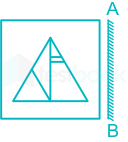
Question 19

Select the correct mirror image of the given figure when the mirror is placed at AB.

  1. AOption (a)

  2. BOption (b)

  3. COption (c)

  4. DOption (d)

View answer & explanation

Correct answer

Answer: (b)B.

Why this answer is correct

The correct mirror image of the given figure when mirror is placed at AB is as shown below:

Hence, the correct answer is "Option - (2)".

Question 20

In this question, three statements are given, followed by three conclusions numbered I, II and III. Assuming the statements to be true, even if they seem to be at variance with commonly known facts, decide which of the conclusions logically follows/follow from the statements.

Statements:

All clowns are books.

Some books are heavy.

Some heavy are trucks.

Conclusions:

I. Some books are clowns.

II. All books are heavy.

III. Some trucks are heavy.

  1. AOption (a)

    Only conclusions I and II follow.

  2. BOption (b)

    Only conclusions I and III follow.

  3. COption (c)

    Only conclusion I follows.

  4. DOption (d)

    None of the conclusions follows.

View answer & explanation

Correct answer

Answer: (b)B.

Only conclusions I and III follow.

Why this answer is correct

The least possible Venn diagram for the given statement is:

Conclusions:

I. Some books are clowns → Follow (As, all clowns are books. So, as whole clowns comes in books therefore it is definitely true.)

II. All books are heavy → Does not Follow (As, some books are heavy. So, it is possible but not definitely true.)

III. Some trucks are heavy → Follow (As, some heavy are trucks . So, as some part of heavy is common with trucks therefore it is definitely true.)

So, Only conclusions I and III follow.

Hence, the correct answer is "Only conclusions I and III follow".

Question 21

Select the set in which the numbers are related in the same way as are the numbers of the given sets.

(NOTE: Operations should be performed on the whole numbers, without breaking down the numbers into its constituent digits. E.g. 13 - Operations on 13 such as adding /Subtracting /multiplying etc. to 13 can be performed. Breaking down 13 into 1 and 3 and then performing mathematical operations on 1 and 3 is NOT allowed)

(4, 5, 83)

(5, 5, 102)

  1. AOption (a)

    (8, 9, 330)

  2. BOption (b)

    (3, 3, 11)

  3. COption (c)

    (7, 6, 170)

  4. DOption (d)

    (8, 3, 123)

View answer & explanation

Correct answer

Answer: (d)D.

(8, 3, 123)

Why this answer is correct

Logic : (1st number + 2nd number)2 + 2 = 3rd number

Given:

(i) (4, 5, 83)

⇒ (4 + 5)2 + 2 = 83

⇒ (9)2 + 2 = 83

⇒ 81 + 2 = 83

⇒ 83 = 83 (LHS = RHS)

(ii) (5, 5, 102)

⇒ (5 + 5)2 + 2 = 102

⇒ (10)2 + 2 = 102

⇒ 100 + 2 = 102

⇒102 = 102 (LHS = RHS)

Option (1) :

​(8, 9, 330)

⇒ (8 + 9)2 + 2 = 330

⇒ 289 + 2 = 330

⇒ 291 ≠ 330 (LHS ≠ RHS)

Option (2) :

(3, 3, 11)

⇒ (3 + 3)2 + 2 = 11

⇒ (6)2 + 2 = 11

⇒ 36 + 2 = 11

⇒ 38 ≠ 11 (LHS ≠ RHS)

Option (3) :

(7, 6, 170)

⇒ (7 + 6)2 + 2 = 170

⇒ (13)2 + 2 = 170

⇒ 169 + 2 = 170

⇒ 171 ≠ 170 (LHS ≠ RHS)

Option(4) :

​(8, 3, 123)

⇒ (8 + 3)2 + 2 = 123

⇒112 + 2 = 123

⇒ 121 + 2 = 123

⇒ 123 = 123 (LHS = RHS)

Hence, "Option (4)" is the correct answer.

Question 22

Which of the following numbers will replace the question mark (?) in the given series?

43, 52, 47, ?, 51, 60, 55

  1. AOption (a)

    56

  2. BOption (b)

    53

  3. COption (c)

    49

  4. DOption (d)

    57

View answer & explanation

Correct answer

Answer: (a)A.

56

Why this answer is correct

Logic : (9) is added to and (5) are subtracted from each number alternately.

So, the series is :

43 + 9 = 52

52 - 5 = 47

47 + 9 = 56

56 - 5 = 51

51 + 9 = 60

60 - 5 = 55

Hence, "56" is the correct answer.

Question 23

Select the option that is related to the fifth letter - cluster in the same way as the second letter - cluster is related to the first letter - cluster and the fourth letter - cluster is related to the third letter - cluster.

RJN : OLU :: DHL : MJG :: VKC : ?

  1. AOption (a)

    DMY

  2. BOption (b)

    ENZ

  3. COption (c)

    YMD 

  4. DOption (d)

    ENY

View answer & explanation

Correct answer

Answer: (a)A.

DMY

Why this answer is correct

Logic : Increasing number series is added to the position values according to English alphabetic series diagonally.

So,

  • RJN : OLU

And,

  • DHL : MJG

​Similarly,

  • VKC : ?

​Hence, "DMY" is the correct answer.

Question 24

In a certain code language, 'CHECK' is written as '6165622' and 'SURGE' is written as '382136145'.How will 'PRIEST' be written in that language?

  1. AOption (a)

    3236953840

  2. BOption (b)

    32369538

  3. COption (c)

    161818101920

  4. DOption (d)

    1618101920

View answer & explanation

Correct answer

Answer: (a)A.

3236953840

Why this answer is correct

Logic :

  • Vowels → Position value according to English alphabetic series is written.
  • Consonants → Position value according to English alphabetic series is multiplied by (2).

So,

  • 'CHECK' is written as '6165622'

And,

  • 'SURGE' is written as '382136145'

​Similarly,

  • 'PRIEST' will be written as :

​Hence, "3236953840" is the correct answer.
Question 25

Which of the following terms will replace the question mark (?) in the given series?

MPKL, NRLN, OTMP, PVNR, ?

  1. AOption (a)

    QXOT

  2. BOption (b)

    QXPT

  3. COption (c)

    QYPT

  4. DOption (d)

    QXPU

View answer & explanation

Correct answer

Answer: (a)A.

QXOT

Why this answer is correct

Logic : (1) and (2) are alternately added to the position value according to English alphabetic series.

So,

​Hence, "QXOT" is the correct answer.

General Awareness (25 questions)

Question 26

President of India, Droupadi Murmu presented the _____________ of the Digital India Awards on 7th January 2023 in New Delhi.

  1. AOption (a)

    8th edition

  2. BOption (b)

    5th edition

  3. COption (c)

    7th edition

  4. DOption (d)

    6th edition

View answer & explanation

Correct answer

Answer: (c)C.

7th edition

Why this answer is correct

The correct answer is 7th edition.

Key Points

  • Hon’ble President of India Droupadi Murmu to confer Digital India Awards 2022 on 7th January 2023 at Vigyan Bhawan, New Delhi. Celebrating Exemplary Digital Initiatives of the country.
  • In the category ‘Digital Initiatives for Ease of Doing Business’, NIC’s eAbkari and Invest Punjab received Gold and Silver Awards at Digital India Awards 2022.
  • Developed by NIC, Ksheerasree Portal received Silver Awards at Digital India Awards 2022 in the category ‘Digital Initiatives at Grassroots Level’.
  • Transport Mission Mode Project (eTransport MMP), driven by the Ministry of Road Transport and Highways and executed by NIC received Gold Award while Judgement Search Portal developed by NIC received Silver Award for the category – Digital Empowerment of Citizens.
  • eShram and Duare Sarkar projects of NIC received Gold and Platinum awards for the category – Digital Empowerment of Citizens at Digital India Awards 2022.
  • Developed by NIC, Bilaspur District Website and Kottayam District Website received Platinum and Gold awards for the category – Best Web & Mobile Initiatives Complying with GIGW & Accessibility Guidelines at Digital India Awards 2022.
  • The ‘Uttar Pradesh Mine Mitra’ portal has been selected for the Digital India Award – 2022 (PLATINUM) in ‘Digital Initiatives for Ease of Doing Business’ category.

Additional InformationThe Digital India Awards:

  • Organizer: The Digital India Awards are organized by the National Informatics Centre (NIC) under the Ministry of Electronics and Information Technology, Government of India.
  • Purpose: The purpose of these awards is to recognize and promote innovation in e-governance and digital transformation of government service delivery mechanisms.
  • Categories: The awards are given to government entities under various categories, including, but not limited to:
  • Innovation in Pandemic.
  • Excellence in Digital Governance - Central Ministries/Departments, State/UTs, and Districts.
  • Open Data Champion.
  • Exemplary Product (National and State).
  • Eligibility: Central and State Government Ministries, Departments, District Administrations, Local Bodies, and Public Sector Units are eligible for the nomination.
  • Judging Criteria: The judging criteria typically include the project's scope and quality, use of emerging technology, level/measure of innovation, and user experience.
  • Award Frequency: These awards are scheduled on a regular basis, typically annually.

Question 27

In January 2022, who was named for the Rachael Heyhoe Flint Trophy for ICC Women's Cricketer of the Year?

  1. AOption (a)

    Mithali Raj

  2. BOption (b)

    Elyse Perry

  3. COption (c)

    Lizelle Lee

  4. DOption (d)

    Smriti Mandhana

View answer & explanation

Correct answer

Answer: (d)D.

Smriti Mandhana

Why this answer is correct

The correct answer is Smriti Mandhana.

Key Points

  • Rachael Heyhoe Flint Trophy for ICC Women’s Cricketer of the Year has been given to Smriti Mandhana (India).
  • ICC Men’s T20I Cricketer of the Year has been awarded to Mohammad Rizwan (Pakistan).
  • ICC Women’s T20I Cricketer of the Year has been awarded to Tammy Beaumont (England).
  • ICC Umpire of the Year has been awarded to Marais Erasmus.​

Additional Information

AwardsPersons
ICC Men’s T20I Cricketer of the YearMohammad Rizwan
ICC Women’s T20I Cricketer of the YearTammy Beaumont
Men’s Test Cricketer of the YearJoe Root
ICC Men’s ODI Cricketer of the YearBabar Azam
ICC Women’s ODI Cricketer of the YearLizelle Lee
ICC Umpire of the YearMarais Erasmus
ICC Men’s Associate Cricketer of the YearZeeshan Maqsood
ICC Women’s Associate Cricketer of the YearAndrea-Mae Zepeda
Rachael Heyhoe Flint Trophy for ICC Women’s Cricketer of the YearSmriti Mandhana
Sir Garfield Sobers Trophy for ICC Men’s Cricketer of the YearShaheen Afridi

Question 28

The chemical formula of propene is:

  1. AOption (a)

    C2H4

  2. BOption (b)

    C3H4

  3. COption (c)

    C3H6

  4. DOption (d)

    C2H2

View answer & explanation

Correct answer

Answer: (c)C.

C3H6

Why this answer is correct

The correct answer is C3H6.

Key Points

  • Propene or propylene is a colorless gas with a slightly sweet smell. It belongs to the alkene group of hydrocarbons.
  • Chemical Formula: C3H6
  • Structural Formula: H2C=CH-CH3
  • Molecular Geometry: Trigonal planar around the carbon-carbon double bond; Tetrahedral around the carbon atoms attached to three other atoms.
  • Covalent bond: The chemical bond formed by sharing of two valence electron between the two atoms. There are 8 carbon-hydrogen covalent bonds and 2 carbon-carbon covalent bonds present in the propane molecule. So, the total number of covalent bonds present in propane is (8 + 2 = 10)
  • A covalent bond is represented clearly by drawing an electron - dot structure.
  • Hybridization: sp2 hybridized around the carbon of the double bond; sp3 hybridized around the last carbon.
  • Polarity: Non-polar because of its symmetric geometric structure and the similar electronegativity of Carbon and Hydrogen.
  • In terms of reactions, propene is commonly involved in addition reactions due to the presence of the double bond:
  • Combustion: Like all hydrocarbons, propene burns in oxygen to produce water and carbon dioxide.
  • C3H6 + 4.5 O2 -> 3 CO2 + 3 H2O
  • Addition of Halogens: When reacted with halogens like Bromine (Br2), the bromine molecule adds across the double bond.
  • C3H6 + Br2 -> C3H6Br2
  • Hydrogenation: Propene can undergo hydrogenation to produce propane, in the presence of a metallic catalyst.
  • C3H6 + H2 -> C3H8
  • Polymerization: Propene is particularly important in the industry as a monomer in the production of polypropylene, a versatile plastic.

Additional Information

Alkenes are hydrocarbons that contain a carbon-carbon double bond. Here are some common alkenes:

  • Ethene (ethylene): This is the simplest alkene and is utilized broadly in the chemical industry. Its chemical formula is C2H4 and its structural formula is H2C=CH2.
  • Butene: There are three isomers of butene; 1-butene, 2-butene (cis and trans). The chemical formula for Butene is C4H8. The structural formulas are CH2=CH-CH2-CH3 for 1-butene and CH3-CH=CH-CH3 for 2-butene.
  • Pentene: There are three isomers of pentene; 1-Pentene, 2-Pentene (cis and trans). The chemical formula for Pentene is C5H10. The structural formulas are CH2=CH-(CH2)3-CH3 for 1-Pentene and CH3-CH=CH-(CH2)2-CH3 for 2-Pentene.
  • These molecules are important in both natural processes (such as ripening of fruits) and industrial processes (such as polymer production, preparation of alcohols, etc.). The "cis" and "trans" prefixes refer to the geometry of the substituents around the double bond. In "cis" isomers, the larger substituents are on the same side of the double bond, while in "trans" isomers, they are on opposite sides.
  • All alkenes have similar chemical properties due to the presence of the carbon-carbon double bond. They all can undergo addition reactions where a molecule can add across the double bond, and polymerization reactions where individual alkene molecules (monomers) combine to form long chains (polymers), such as polyethylene and polypropylene plastics.

Question 29

Which of the following is the closest wild relative of domestic cattle protected in some of the famous national parks of India like Nagarhole and Bandipur?

  1. AOption (a)

    Red angus

  2. BOption (b)

    Asiatic buffalo

  3. COption (c)

    Nilgai

  4. DOption (d)

    Gaur

View answer & explanation

Correct answer

Answer: (d)D.

Gaur

Why this answer is correct

The correct answer is Gaur.

Key Points

  • The Gaur, also known as the Indian Bison, is the closest wild relative of domestic cattle.
  • This species is protected and can be found in several national parks in India, including Nagarhole and Bandipur in Karnataka.
  • Gaurs are the largest and most powerful of all wild cattle, and are distinguished by their deep, hollow bodies, tall stature, and prominent dorsal ridges.

Additional Information

National ParkStateEstablished YearMain Species
Jim Corbett National ParkUttarakhand1936 (Oldest)Bengal Tigers, Indian Elephants, Leopards, Indian Python
Kaziranga National ParkAssam1974Great One-horned Rhinoceroses, Tigers
Manas National ParkAssam1990Wild Water Buffalos, Golden langur, Red Panda
Dibru-Saikhowa National ParkAssam1999White-winged wood duck, Bengal Florican, Black-breasted Parrotbill
Nameri National ParkAssam1998Elephants, Tigers
Rajiv Gandhi Orang National ParkAssam1999Indian One-horned Rhinoceros, Royal Bengal Tigers
Raimona National ParkAssam2021 (106th and Latest)Golden Langur, Elephant, Tiger
Sariska National ParkRajasthan1982Royal Bengal Tigers, Indian Leopard, Jungle Cat
Bharatpur Bird Sanctuary (Keoladeo National Park)Rajasthan1981Migratory Birds such as Siberian Cranes, Pelicans, Indian Pythons
Valley of Flowers National ParkUttarakhand1982Endemic Alpine Flowers, Snow Leopard, Musk Deer
Bandipur National ParkKarnataka1974Indian Elephants, Tigers, Indian Rock Pythons, Four-horned Antelopes
Kanha National ParkMadhya Pradesh1955Tigers, Leopards, Sloth Bears, Barasingha
Sundarbans National ParkWest Bengal1984Royal Bengal Tigers, Saltwater Crocodile, Indian Python
Ranthambore National ParkRajasthan1980Tigers, Leopards, Hyenas, Sloth Bears
Nagarhole National ParkKarnataka1988Tigers, Indian Bison, Elephants
Kalesar National ParkHaryana2003Leopard, Goral, Chital, Sambar

Question 30

An annual statement of the estimated receipts and expenditure of the government over the fiscal year is known as ____________.

  1. AOption (a)

    Income sheet

  2. BOption (b)

    Plan

  3. COption (c)

    Account

  4. DOption (d)

    Budget

View answer & explanation

Correct answer

Answer: (d)D.

Budget

Why this answer is correct

The correct answer is Budget.

  • Budget: An annual statement of the estimated receipts and expenditure of the government over the fiscal year (April - March in India). It outlines the intended revenue collection and spending.
  • Plan Expenditure: Money the government spends on developmental activities.
  • Non-Plan Expenditure: Money the government spends on obligatory services like defense, salaries, etc.
  • Budget Surplus: It exists when the government's revenue exceeds its expenditures. This is the opposite of a deficit.
  • Balanced Budget: A situation in financial planning or the budgeting process where total revenues are equal to or greater than total expenses.
  • Revenue Receipts (RR): Total income earned by the government from its regular activities and non-debt sources.
  • RR = Tax Revenue + Non-Tax Revenue
  • Revenue Expenditure (RE): Regular expenses incurred by the government for its day-to-day functioning.
  • RE = Interest Payments + Grants + Salaries + Pensions + Subsidies + Maintenance
  • Capital Receipts (CR): Total funds raised by the government from its non-recurring sources like borrowings, disinvestment, and loans.
  • CR = Borrowings + Disinvestment + Loans Recovered
  • Capital Expenditure (CE): Expenditure incurred by the government on creating assets, like infrastructure, that have long-term benefits.
  • CE = Investments + Loans and Advances
  • Fiscal Deficit (FD): It is the excess of total expenditure over total receipts, excluding borrowings.
  • FD = Total Expenditure - Total Receipts (excluding borrowings)
  • Primary Deficit (PD): Fiscal deficit minus interest payments.
  • PD = Fiscal Deficit - Interest Payments
  • Revenue Deficit (RD): It is the excess of revenue expenditure over revenue receipts.
  • RD = Revenue Expenditure - Revenue Receipts
  • Gross Domestic Product (GDP): The total value of all goods and services produced within a country's borders in a specific time period.
  • GDP = Consumption + Investment + Government Spending + (Exports - Imports)
  • Direct Taxes: Taxes levied directly on the income or wealth of individuals and organizations. Examples: Income Tax, Corporate Tax.
  • Indirect Taxes: Taxes collected indirectly from consumers through the sale of goods and services. Examples: Goods and Services Tax (GST), Excise Duty, Customs Duty
  • Deficit Financing: The government borrows money to meet its expenses when revenue falls short.
  • Deficit Financing = Total Expenditure - Total Receipts (excluding borrowings)
  • Revenue Deficit as a Percentage of GDP: It measures the extent of reliance on borrowings for day-to-day expenses.
  • Revenue Deficit % of GDP = (RD / GDP) * 100​
  • The Acworth Committee's recommendations, Railways' finances were separated in 1924, leading to the distinct Railway Budget from the General Budget.
  • In 2017, the NDA Government ended the practice initiated in 1924 by merging the Railway Budget with the Union Budget, marking a departure from British-era norms.

Question 31

What is the name of the scheme launched to fund infrastructure and social development projects in the Northeast for a period of four years from 2022 - 23 to 2025 -26?

  1. AOption (a)

    PM - NERLP

  2. BOption (b)

    PM - DRUV

  3. COption (c)

    PM - FME

  4. DOption (d)

    PM - DevINE

View answer & explanation

Correct answer

Answer: (d)D.

PM - DevINE

Why this answer is correct

The correct answer is PM - DevINE.

Key Points

  • Scheme Name: Prime Minister's Development Initiative for North East Region (PM-DevINE)
  • Duration: Four years from 2022-23 to 2025-26 (remaining period of 15th Finance Commission)
  • Implementing Ministry: Ministry of Development of North Eastern Region (DoNER)
  • Funding: 100% Central funding.
  • Total Outlay: Rs. 6,600 crore
  • Objective:
  • Fund infrastructure and social development projects
  • Support livelihood activities for youth and women
  • Address development gaps in various sectors
  • Implementation Approach:
  • Front-loading of sanctions in 2022-23 and 2023-24
  • Focus on completing sanctioned projects by 2025-26
  • Projects to be implemented on Engineering-procurement-Construction (EPC) basis for efficient execution
  • Implementation Entities: North Eastern Council, Central Ministries/agencies
  • Expenditure Focus: Completion of PM-DevINE projects by 2025-26
  • Impact:
  • Creation of infrastructure
  • Support for industries and social development
  • Generation of livelihood activities, employment for youth and women
  • Integration and Focus:
  • Aligned with PM Gati Shakti for infrastructure development
  • Addresses development gaps in the North Eastern Region (NER)
  • Provides larger end-to-end development solutions
  • Non-Duplication: No overlap with other MDoNER or Central/State schemes
  • Background: Addressing development gaps and Basic Minimum Services (BMS) shortfalls in NE States
  • Status: Additionality to existing resources, not a substitute for other Central and State schemes
  • Announcement: Included in Union Budget 2022-23, reflects government's emphasis on NE Region's development
  • Monitoring: Parameters aligned with BER District Sustainable Development Goal (SDG) Index 2021-22 by NITI Aayog, UNDP, and MDoNER.

Additional Information

SchemeFull FormDescriptionObjectivesComponentsImplementation
PM-NERLP (2012)Prime Minister's North East Rural Livelihood ProjectA livelihood enhancement initiative in North East Region (NER)Empower rural communities, promote self-employment, reduce povertySkill development, Capacity building, Financial inclusionImplemented by NEDFi and State Rural Livelihood Missions
PM-DRUVPrime Minister's Development, Relief, and Upliftment VentureFocused on the upliftment of tribal communitiesEnhance socio-economic status, provide basic amenitiesEducation, Healthcare, Housing, Skill DevelopmentImplemented by various ministries, state governments
PM-FMEPrime Minister's Formalization of Micro Food Processing EnterprisesEncourages micro food processing unitsBoost food processing sector, generate employment, reduce wastageTraining, Credit Facilitation, MarketingImplemented through Nodal Agencies and State Governments

Question 32

Who was hailed as a resident dancer of Tirumala Tirupati Devasthanam for her unique contribution to the promotion of classical dance forms?

  1. AOption (a)

    Uma Sharma

  2. BOption (b)

    Rukmini Devi

  3. COption (c)

    Yamini Krishnamurthy

  4. DOption (d)

    Ragini Devi

View answer & explanation

Correct answer

Answer: (c)C.

Yamini Krishnamurthy

Why this answer is correct

The correct answer is Yamini Krishnamurthy.

Key Points Yamini Krishnamurthy:

  • ​Indian dancer Yamini Krishnamurthy specializes in Kuchipudi and Bharatanatyam.
  • She holds the honor of being the Tirumala Tirupati Devasthanam's Asthana Nartaki (resident dancer).
  • She was also referred to as the "torch bearer" of the Kuchipudi dancing style.

Additional InformationUma Sharma:

  • Uma Sharma is a famous Indian Kathak dancer.
  • In the city of Delhi, Uma Sharma was born in 1942.
  • She was trained in dance by Guru Hiralalji and Girvar Dayal of the Jaipur Gharana in her early years.
  • She afterward enrolled as Pandit Sunder Prasad's student in the Jaipur Gharana.
  • In 1973, she became the youngest dancer to receive the Padma Shri award from the Government of India, and in 2001, she received the Padma Bhushan.
  • She also received the Sangeet Natak Akademi Award and the Sahitya Kala Parishad Award.

Rukmini Devi:

  • Rukmini Devi Arundale was an Indian classical dancer who led the renaissance of the ‘Bharatnatyam’ dance form and founded the Kalakshetra Foundation in Madras (now Chennai).
  • She was also a theosophist who was greatly inspired by Annie Besant.
  • She founded the Kalakshetra Foundation in Madras (now Chennai).

Question 33

In February 2021, through which of the following cases did the Supreme court rule that in the cases when the Juvenile offender is under 18 years and above 16 years, he/she should be remitted to jurisdictional Juvenile Justice Board?

  1. AOption (a)

    Rahul Sharma v. National Insurance Company Ltd

  2. BOption (b)

    Satbir Singh v. State of Haryana

  3. COption (c)

    Laxmibai Chandaragi v. The State of Karnataka

  4. DOption (d)

    Devilal v. State of Madhya Pradesh

View answer & explanation

Correct answer

Answer: (d)D.

Devilal v. State of Madhya Pradesh

Why this answer is correct

The correct answer is Devilal v. State of Madhya Pradesh.

Key Points

  • In the case of Devilal v. State of Madhya Pradesh in February 2021, the Indian Supreme Court ruled that if an accused claims to be a juvenile (under 18 years of age) and above 16 years at the time of occurrence of the incident, then the matter must be examined by the Juvenile Justice Board, even if the claim arises after charges have been framed or during the course of a trial.
  • Even if the accused does not assert his/her claim of juvenility, the court, on coming to know through any means that the offender was a juvenile at the time of commission of the offence, should forward the child to the jurisdictional Juvenile Justice Board for an inquiry into the age.
  • This principle is in line with the child-centric approach of the Juvenile Justice (Care and Protection of Children) Act of 2015.

Additional Information

  • Juvenile Justice (Care and Protection of Children) Act, 2015: This is the primary law concerning minors in conflict with the law. The Act provides that individuals under the age of 18 years are termed 'children,' and it outlines a child-friendly approach in the adjudication and disposition of matters.
  • Provisions for Heinous Crimes: As per Section 15 of the Juvenile Justice (Care and Protection of Children) Act, 2015, if a child above the age of 16 years is found to be in conflict with law for committing a heinous offence (crime with a minimum sentence of 7 years), the Juvenile Justice Board can conduct a preliminary assessment about the mental and physical ability of the child to commit such offence, and the ability of the child to understand the consequences. The Board can then decide whether to try the child as an adult or to follow the regular procedure.
  • Constitutional Provisions: Article 15(3) allows the state to make special provisions for children. Article 39(e) and (f) further mandate the state to ensure that the tender age of children is not abused and their childhood is protected from moral and material abandonment, and that they are given opportunities and facilities to develop in a healthy manner.
  • Child-Friendly Procedures: The law stresses the need for processes to be child-friendly. Children are entitled to legal aid and the procedures are required to be conducted in a simple and non-intimidating atmosphere.
  • Rights of the Child: The law also enumerates the general principles of care and protection of children, which include principles like presumption of innocence, dignity and worth, family responsibility, best interests of the child, and more.
  • Rehabilitative Approach: The law emphasizes reformation and rehabilitation of children found to be in conflict with law and outlines various measures for their social integration.
  • The case of Devilal v. State of Madhya Pradesh reinforces the principles of the Juvenile Justice Act, mandating the court to consider the age of the offender at the time of the offence, and not the age at the time of trial or conviction.

Question 34

Which part of the Constitution of India contains the provisions of Union Executive?

  1. AOption (a)

    Part V

  2. BOption (b)

    Part III

  3. COption (c)

    Part IV

  4. DOption (d)

    Part VI

View answer & explanation

Correct answer

Answer: (a)A.

Part V

Why this answer is correct

The correct answer is Part V.

Key Points

  • The Union Executive of India's Constitution is covered in Part V.
  • This part, ranging from article 52 to 151, lays out the roles and powers of the President, Vice-president, Council of Ministers, Attorney General of India, Comptroller and Auditor General, and other executive functions of the Central Government of India.
  • Additionally, it details processes such as the appointment, terms of office, and the conditions of service of these posts.

Important Points

Part I – The Union and its Territories1 – 4
Part II – Citizenship5 -11
Part III – Fundamental Rights12 – 35
Part IV – Directive Principles of State Policy36 – 51
Part IV A – Fundamental Duties51A
Part V – The Union52 – 151
Part VI – The States152 – 237

Additional Information

  • President (Article 52-62): The President is the head of the Union Executive and also the first citizen of India. Articles describe the election, qualifications, term of office, Oath, conditions of the President's office, and the process in the event of impeachment.
  • Vice-President (Article 63-71): The Constitution provides for a Vice-President and outlines the manner of their election, their role (especially as the ex-officio Chairman of Rajya Sabha), and the process for removal from office.
  • Council of Ministers with the Prime Minister at the head (Article 74-75): Article 74 mandates a Council of Ministers with the Prime Minister as the head to aid and advise the President. Article 75 provides details on who appoints the Prime Minister and other ministers, their responsibilities, the oath of office, etc.
  • Attorney General (Article 76): The Attorney General is the highest law officer in the country. Article 76 outlines the qualifications, appointment, duties and rights of the Attorney General.
  • Comptroller and Auditor General (Article 148-151): The CAG audits all expenditures from the Consolidated Fund of India. Details about the office, appointment, removal, and duties of the CAG are provided here.

Points to ponder

  • The President has the power to seek advice from the Supreme Court (Article 143).
  • The Vice-President acts as President during any vacancies or when the President is unable to fulfill their duties.
  • The Prime Minister has a pivotal role in the functioning of the Union Government. The President exercises his/her powers on the advice of the Prime Minister and the Council of Ministers.
  • Article 77 lays down the procedure for the work of the Government of India - it should be done in the name of the President.
  • The Attorney General, though not a member of the parliament, has the right to participate in its proceedings.
  • The CAG reports to the President, who places these reports before both Houses of the Parliament.

Question 35

Which of the following countries won the highest number of gold medals in the Tokyo Paralympic 2020?

  1. AOption (a)

    Australia

  2. BOption (b)

    India

  3. COption (c)

    China

  4. DOption (d)

    USA

View answer & explanation

Correct answer

Answer: (c)C.

China

Why this answer is correct

The correct answer is China.

Key Points

  • The People's Republic of China won 96 gold medals overall in the Tokyo 2020 Paralympics, followed by Great Britain and the United States of America.
  • With 96 gold medals and 207 total medals, China took the top spot in the medal count for the fifth consecutive Paralympics.
  • With 41 gold medals and 124 overall medals, Great Britain placed second for the eighth time.
  • With 37 gold medals, the United States came in third place overall, which was their highest result since the 2008 Games.
  • Most successful athlete: China's Zhou Jiamin was one of the most successful athletes at the Tokyo Paralympics, winning three gold medals and setting one world record in Shooting Para Sport.
  • China's dominance in table tennis: Chinese athletes demonstrated their expertise in Table Tennis, securing numerous gold medals in different classes.
  • Record-breaking games: The Tokyo 2020 Paralympics had 4,537 athletes from 163 National Paralympic Committees - the most in the history of the Games.
  • New Sports: Badminton and Taekwondo were included for the first time in the Paralympic Games.

Additional Information

  • Out of a total of 162 countries, India is ranked 24th in the overall medal tally in the Tokyo Paralympics 2020.
  • Indian Flag Bearers: opening ceremony - Javelin thrower Tek Chand closing ceremony - Shooter Avani Lekhara.
  • The Indian theme song of Paralympics 2020: “Kar de Kamaal tu” by Sanjeev Singh who composed and sang the song.
  • India won 19 medals which includes five gold, eight silver, and six bronze.

Question 36

Which of the following countries has hosted the three Asian Games?

  1. AOption (a)

    South Korea

  2. BOption (b)

    Philippines

  3. COption (c)

    Japan

  4. DOption (d)

    India

View answer & explanation

Correct answer

Answer: (a)A.

South Korea

Why this answer is correct

The correct answer is South Korea.

Key Points

  • Nine countries have hosted the Asian Games to date.
  • Thailand has hosted the most editions (1966, 1970, 1978, 1998), with Bangkok as the venue for all four.
  • South Korea hosted three times (1986, 2002, 2014).
  • China also hosted three times (1990, 2010, 2023).
  • India hosted twice: inaugural edition in 1951 and 1982.
  • 20th Asian Games in 2026: Japan, Aichi-Nagoya
  • 21st Asian Games in 2030: Qatar, Doha
  • 22nd Asian Games in 2034: Saudi Arabia, Riyadh

Additional Information

  • First Asian Games: The first Asian Games were held in New Delhi, India, in 1951.
  • Organizer: The Olympic Council of Asia (OCA) organizes the Games.
  • Frequency: The Asian Games are held every four years, similar to the Olympics.
  • Participating Nations: There are 45 nations participating in the Games.
  • Mascots: Mascots, which began to be used in the 1982 Asian Games, usually represent the culture of the host country.
  • Top Performer: China has been the top-performing nation in the Games since 1982, as of data up until September 2021.
  • Non-Olympic Sports: Some sports played in the Asian Games, such as Kabaddi and Sepaktakraw, are not part of the Olympic Games.
  • The Asian Games also feature Paralympic events, known as the Asian Para Games, which take place shortly after the main Games.

Question 37

Who led the English army in the Battle of Buxar?

  1. AOption (a)

    Lord Clive

  2. BOption (b)

    William Henry Sleeman

  3. COption (c)

    Hector Munro

  4. DOption (d)

    Charles Eyrecoot

View answer & explanation

Correct answer

Answer: (c)C.

Hector Munro

Why this answer is correct

The correct answer is Hector Munro.

Key PointsBattle of Buxar:

  • The Battle of Buxar occurred on 22nd October, 1764 on the banks of the Ganges River near Buxar, a city in the state of Bihar in India.
  • The forces of three regional powers — Mir Qasim, the dethroned Nawab of Bengal; Shuja-ud-Daula, the Nawab of Awadh; and Shah Alam II, the Mughal emperor — formed an alliance against the British East India Company.
  • Major Hector Munro led the Company's forces.
  • Despite having larger forces, the Indian allies were defeated.
  • Major reasons for their defeat, included discord between leaders, lack of strong centralized control, and the superior military strategy of the British forces.
  • The battle marked a significant turning point in the history of India, as it affirmed the military supremacy of the East India Company over the Indian powers and set the background for their political power over the region.
  • After the battle, the Treaty of Allahabad was signed in 1765.
  • As per the treaty's terms, the East India Company acquired the rights for revenue collection (Diwani rights) in the provinces of Bengal, Bihar, and Orissa.
  • These rights marked the beginning of the Company's formal rule in India.
  • The treaty also stipulated the stationing of Company troops in Awadh to lend military assistance to the Nawab if required, which weakened the sovereignty of the region.
  • The 1765 Treaty of Allahabad also required Nawab Shuja-ud-Daulah to pay Rs. 50 lakh as war indemnity which significantly weakened Awadh financially.
  • The victory at Buxar gave the East India Company an immense boost in confidence and marked the beginning of British imperialism in India.
  • Finally, the Battle of Buxar was significant because it was the first time the British fought in India for territorial gains and political power, as opposed to previous battles which were primarily fought over trade disputes.

Question 38

Which of the following amendments to the Indian Constitution made the Right to Property a Legal Right in place of a Fundamental Right?

  1. AOption (a)

    40th

  2. BOption (b)

    48th

  3. COption (c)

    44th

  4. DOption (d)

    45th

View answer & explanation

Correct answer

Answer: (c)C.

44th

Why this answer is correct

The correct answer is 44th.

Key Points

  • The Right to Property was removed as a Fundamental Right from the Indian Constitution by the 44th Amendment in 1978. It was changed into a legal right under Article 300A in Part XII of the Constitution.
  • The Right to Property underwent numerous changes throughout history in the Indian Constitution before it was eventually downgraded to a legal right. It started as a Fundamental Right:
  • Post-independence - The original Constitution of India, when it came into effect in 1950, recognized the Right to Property as a Fundamental Right under Articles 19(1)(f) and 31. Article 19(1)(f) allowed citizens to acquire, hold, and dispose of property, while Article 31 provided that "no person shall be deprived of his property save by authority of law."
  • First Amendment, 1951 - In response to significant land reform initiatives and intended to prevent the judiciary from undermining those policies, the First Amendment was introduced, which placed restrictions on the Right to Property.
  • Fourth Amendment, 1955 - This amendment further reduced the right to property in response to a series of court decisions that favored landowners' rights to fair compensation over the state's rights to carry out land and tenancy reforms.
  • Over time, several other amendments were made affecting the Right to Property: the Seventeenth Amendment of 1964, the Twenty-Fifth Amendment of 1971, the Thirty-Ninth Amendment of 1975, among others.
  • Forty-Fourth Amendment, 1978 - Eventually, the Right to Property was removed as a Fundamental Right. The 44th Amendment, enacted by the Janata Party which came into power in 1977, downgraded the right to a constitutional/legal right. The amendment also introduced a new article, Article 300A, which provided: "No person shall be deprived of his property save by authority of law." This means that the government can deprive a citizen of private property, but it has to be as per a valid law.
  • This change made it possible for the government to implement land reform and redistribution policies without fear of them being declared unconstitutional by the courts. The Right to Property is now protected under the Indian Constitution as a legal right, not as a Fundamental Right. This means that while an individual still has the right to property, it is not an absolute right and can be regulated by the government.

Question 39

Changai dance is associated with which Indian state?

  1. AOption (a)

    Madhya Pradesh

  2. BOption (b)

    Maharashtra

  3. COption (c)

    Nagaland

  4. DOption (d)

    Jharkhand

View answer & explanation

Correct answer

Answer: (c)C.

Nagaland

Why this answer is correct

The correct answer is Nagaland.

Key PointsChangai Dance:

  • The Changai dance is a folk dance associated with the Chang tribe of Nagaland, an Indian state in the northeastern region.
  • Chang Tribe: The Chang tribe is a prominent Naga tribe known for its distinct cultural practices and traditions.
  • Celebratory Occasions: The Changai dance is performed during various festive occasions and celebrations within the Chang community.
  • Unity and Culture: The dance serves as a way to foster unity and a sense of community among the Chang tribe members, while also showcasing their cultural identity.
  • Energetic and Lively: The Changai dance is characterized by its vibrant and energetic movements. Dancers move in synchronized steps to the rhythm of traditional musical instruments.
  • Traditional Attire: Dancers adorn colorful traditional attire during the performance, enhancing the visual appeal of the dance.
  • Musical Instruments: The dance is accompanied by traditional musical instruments such as drums, gongs, and bamboo instruments, adding to the rhythmic ambiance.
  • Synchronized Patterns: Dancers form circles or rows and engage in coordinated patterns of movement, swaying, and hopping.
  • Cultural Transmission: The Changai dance plays a vital role in passing down cultural traditions, stories, and values from one generation to the next.
  • Social Significance: Beyond entertainment, the dance reinforces a sense of belonging and identity within the Chang tribe.
  • Cultural Heritage: The dance is a reflection of the rich cultural heritage of the Chang tribe and showcases their history, beliefs, and way of life.
  • Nagaland's Identity: Changai dance contributes to the cultural diversity of Nagaland, highlighting the state's unique cultural tapestry.
  • Symbol of Joy: The dance symbolizes joy, celebration, and the spirit of togetherness, making it an integral part of Nagaland's cultural landscape.

Additional Information

StateFolk Dance(s)
Andhra PradeshKuchipudi
Arunachal PradeshBihu, Aji Lamu
AssamBihu, Sattriya
BiharJat-Jatin, Jhijhian
ChhattisgarhPanthi, Raut Nacha
GoaFugdi, Dhalo
GujaratGarba, Dandiya
HaryanaJhumar , Phag Dance
Himachal PradeshNati
JharkhandChhau, Santhali
KarnatakaYakshagana, Dollu Kunitha
KeralaKathakali, Mohiniyattam
Madhya PradeshGaur Maria, Matki Dance
MaharashtraLavani, Tamasha
ManipurManipuri
MeghalayaNongkrem, Wangala
MizoramCheraw
NagalandChangai, Zeliang
OdishaOdissi, Gotipua
PunjabBhangra, Giddha
RajasthanGhoomar, Kalbelia
SikkimSinghi Chham
Tamil NaduBharatanatyam
TelanganaPerini, Gussadi
TripuraHozagiri
Uttar PradeshKathak, Ramlila
UttarakhandLangvir Dance
West BengalBaul, Bihu, Chhau

Question 40

Which is the national fruit of Bangladesh?

  1. AOption (a)

    Pomegranate

  2. BOption (b)

    Mango

  3. COption (c)

    Apple

  4. DOption (d)

    Jackfruit

View answer & explanation

Correct answer

Answer: (d)D.

Jackfruit

Why this answer is correct

The correct answer is Jackfruit.

Key Points

  • The national fruit of Bangladesh is the jackfruit.
  • Jackfruit is well-suited for Bangladesh's climate and is highly valued for its nutritional content.
  • In Bangladesh, jackfruit is known for being delicious, sweet, and juicy. It is commonly used in curries and various dishes.
  • Different products are made from jackfruit in Bangladesh, including canned fruit, dried fruit, and pulp.
  • A typical jackfruit tree can produce about 150 fruits annually, while some exotic varieties can yield as many as 250 to 500 fruits.
  • Jackfruit seeds are a significant source of nutrition, containing high levels of Vitamin B1 and Vitamin B2.
  • The seeds are also rich in starch, although they are relatively low in iron and calcium.
  • Each jackfruit can contain anywhere from 100 to 500 seeds, which have an oily texture.
  • Jackfruit's versatility, low cost, and nutritional value make it the perfect choice as Bangladesh's national fruit.

Additional Information

CountryNational Fruit
IndiaMango
PakistanMango
Sri LankaJackfruit
ThailandDurian
MalaysiaDurian
IndonesiaDurian
PhilippinesMango
ChinaKiwifruit
United StatesBlueberry
MexicoAvocado
JapanPersimmon
BrazilPineapple
South KoreaPersimmon
EgyptFig
IranPomegranate
TurkeyFig
ItalyFig
FranceApple
SpainPomegranate
GreeceOlive
AustraliaApple
CanadaBlueberry
United KingdomApple
GermanyApple
RussiaApple

Question 41

Which of the following chemicals is used as a preservative to slow browning and discolouration in foods and beverages during preparation, storage and distribution?

  1. AOption (a)

    Nitrous oxide

  2. BOption (b)

    Phosgene

  3. COption (c)

    Sulphites

  4. DOption (d)

    Chlorine

View answer & explanation

Correct answer

Answer: (c)C.

Sulphites

Why this answer is correct

The correct answer is Sulphites.

Key PointsSulphites:

  • Sulphites are natural compounds found in foods like dried fruits, wine, and beer.
  • They're also added as additives to prevent browning, discoloration, and spoilage in foods and drinks.
  • Sulphites release sulphur dioxide (SO2), an irritant gas, which can cause allergy-like symptoms in individuals with conditions like asthma.
  • Around 13% of people with asthma also suffer from sulphite sensitivity.
  • People with urticaria may also experience worsened symptoms after consuming sulphites.
  • Due to health concerns, products containing sulphites are labeled, helping individuals make informed choices.

Additional Information

ChemicalFormulaUses and CharacteristicsNotes
Nitrous OxideN2O- Anesthetic and analgesic in medical procedures- Used in dentistry for pain relief
- Induces euphoria when inhaled- Proper administration by professionals required
- Propellant in whipped cream dispensers
PhosgeneCOCl2- Historically used as a chemical weapon in warfare- Lethal gas used in World War I
- Used in chemical manufacturing for plastics and pesticides- Causes severe respiratory and lung damage
- Highly toxic
ChlorineCl2- Water treatment for disinfection of drinking water and swimming pools- Vital for public health maintenance
- Ingredient in bleach and cleaning products- Can cause respiratory issues in high concentrations
- Used in PVC plastics production

Question 42

Which of the following reforming societies believed Vedas to be the fountain of all the knowledge?

  1. AOption (a)

    Theosophical Society

  2. BOption (b)

    Prarthana Samaj

  3. COption (c)

    Arya Samaj

  4. DOption (d)

    Brahmo Samaj

View answer & explanation

Correct answer

Answer: (c)C.

Arya Samaj

Why this answer is correct

The correct answer is Arya Samaj.

Key PointsArya Samaj:

  • In 1875, Swami Dayanand Sarswati founded the Arya Samaj.
  • Its main aim was to propagate the true knowledge of the Vedas and discard all evils  that had crept into the Hindu society later in its name.
  • He opposed to polytheism, avataravada and ritualism.
  • Arya Samaj advocated social reform and worked to improve the condition of women. It fought untouchability and the rigidities of the hereditary caste system and promoted social equality.
  • The Arya Samaj especially has contributed a lot towards it by their Shuddhi Movement, that is, a form of purification by which those Hindus who had converted to Islam or Christianity could come back to their own religion.
  • His slogan was ‘go back to the Vedas’ whose authority he accepted.
  • For the first time in the history of India, the Vedas were printed in India under his patronage.
  • Personally, his most important work was Satyartha Prakasha (The Light of Truth).
  • The use of Hindi language in which he wrote and preached made his ideas accessible to the people of Northern India.
  • Arya Samaj also had a major role to play in the national movement as it inculcated a spirit of self respect and self reliance among the people.
  • In 1883, Swami Dayanand left his body after an eventful life.
  • His followers started a Dayanand Anglo-Vedic (DAV) School and College in Lahore (now in Pakistan) in 1886.
  • “DAV Movement” founded in 1886 by Lala Laijpat Rai picked up momentum due to the arduous efforts of Mahatma Hans Raj, Pandit Gurudutt Vidyarthi and may other dedicated Arya Samaj activist.

Additional Information

Reformist MovementsTheosophical SocietyPrarthana SamajBrahmo Samaj
Founded1875 (New York)1867 (Mumbai)1828 (Kolkata)
FoundersHelena Blavatsky, Henry Steel Olcott, William Quan JudgeDr. Atmaram Pandurang, Keshav Chandra SenRaja Ram Mohan Roy
ObjectivesExplore spirituality, comparative religion, philosophyReform and modernize HinduismReform Hinduism, advocate monotheism
TeachingsUniversal spiritual truths, interconnectedness of religionsMonotheism, social equality, ethical valuesWorship of one formless God, denounce rituals
ReformsFocus on spiritual exploration, meditation, yogaOppose idol worship, caste discrimination, untouchabilityAbolish sati, child marriage, promote women's rights
ImpactGlobal influence, revival of Eastern traditions in the WestSocio-religious awakening in MaharashtraPivotal role in Indian Renaissance

Question 43

Which of the following pairs of musicians and their instruments is INCORRECT?

  1. AOption (a)

    Bismillah Khan - Shehnai

  2. BOption (b)

    Pt. Ram Narayan - Sarod

  3. COption (c)

    N Rajam - Violin

  4. DOption (d)

    Pt. Ravi Shankar - Sitar

View answer & explanation

Correct answer

Answer: (b)B.

Pt. Ram Narayan - Sarod

Why this answer is correct

The correct answer is Pt. Ram Narayan - Sarod.

Key Points

  • Pandit Ram Narayan, an Indian musician, is renowned for his contribution to popularizing the sarangi as a solo concert instrument.
  • He is a Hindustani classical musician known for his expertise in playing the sarangi, a bowed instrument with a skin-covered resonator.
  • Born in 1927 in Amber village, Rajasthan, he played a pivotal role in elevating the sarangi's status as a solo classical instrument.
  • Pandit Ram Narayan's efforts led to the recognition of the sarangi's potential for solo performances in the world of classical music.

Additional Information

InstrumentRelated Personality
SantoorPt. Shiv Kumar Sharma, Bhajan Sopori
SarodAmjad Ali Khan, Sharan Rani, Ali Akbar Khan, Buddhadev Dasgupta
SitarPt. Ravi Shankar, Anushka Shankar, Mushtaq Ali Khan, Ustad Vilayat Khan
SarangiShakoor Khan, Pt. Ram Narayan, Ustad Binda Khan
VeenaZia Mohiuddin Dagar, Emani Sankara Shastri
ViolinMS Gopalakrishnan, M Chandrashekhar, N Rajam
GuitarBraj Bhushan Kabra
MandolinU Srinivas
ShehnaiUstad Bismillah Khan, Ali Ahmad Hussain
FluteHari Prasad Chaurasiya, Pannalal Ghosh
TablaZakir Hussain, Allah Rakha Khan, Pt. Krishan Maharaj
MrindagamKV Prasad, SV Rajarao, Palghat Mani Iyer
KanjraPuddukkoti Dakshinmurthi Pillai
GhatamTH Vinayakaram, EM Subramaniam
PakhawajTotaram Sharma, Pt. Ayodhya Prasad, Gopal das

Question 44

The Second Five - Year Plan (1956 - 61) had a major goal of achieving which of the following targets?

  1. AOption (a)

    Self - reliant and self - generating economy

  2. BOption (b)

    Growth with stability

  3. COption (c)

    Rapid industrialisation with focus on heavy industries

  4. DOption (d)

    Growth with social justice

View answer & explanation

Correct answer

Answer: (c)C.

Rapid industrialisation with focus on heavy industries

Why this answer is correct

The correct answer is Rapid industrialisation with focus on heavy industries.

Key PointsSecond Five-Year Plan (1956 - 61):

  • Target Growth: 4.5%
  • Actual Growth: 4.27%
  • Growth Model: The plan used the simple aggregative Mahalanobis Model for overall projections.
  • Resource Allocation Strategy: The strategy of allocating resources to different sectors, including agriculture and industry, was based on the two & four-sector Model developed by Prof. P.C. Mahalanobis. This plan is also known as the Mahalanobis Plan.
  • Economic Atmosphere: The plan was formulated during a period of relative economic stability.
  • Priority Shift: The plan marked a shift in priority, with agriculture being accorded lower importance.
  • Focus on Industrialization: The plan focused on achieving rapid industrialization, particularly in heavy and basic industries.
  • Public Sector Development: The plan recognized the importance of the public sector in driving industrial growth. Several public sector enterprises were established during this period, including the Hindustan Machine Tools (HMT), Steel Authority of India (SAIL).
  • Infrastructure Development: The plan prioritized infrastructure development, including the expansion of transportation networks, power generation, and irrigation facilities. Projects like the Bhakra Nangal Dam and the creation of a national railway grid were undertaken to support agricultural and industrial growth.
  • Import Strategy: The plan advocated substantial imports through foreign loans to support industrialization efforts.
  • Industrial Policy 1956: The plan's industrial policy was based on the goal of establishing a socialistic pattern of society.
  • Challenges and Limitations: An acute shortage of foreign exchange (forex) led to the scaling down of development targets.
  • Price Rise: The plan witnessed a notable price rise of about 30%, which was in contrast to the decline in prices during the earlier plan.
  • Moderate Success: Despite its goals, the Second Five-Year Plan achieved only moderate success due to the challenges faced and the limitations in achieving set targets.

Additional Information

PlanPeriodTarget GrowthActual GrowthKey Objectives/Features
First Plan1951-562.1%3.6%Rehabilitation of refugees, food self-sufficiency, price stability, focus on agriculture, power, and transport
Third Plan (Gadgil Yojana)1961-665.6%2.8%Focus on agriculture, rural development, generation of employment, impacted by unforeseen events
Three Annual Plans or Plan Holidays1966-69--Emphasis on agriculture, implementation of new agricultural strategy
Fourth Plan1969-745.7%3.3%Focus on agriculture, achievement of self-reliance, Family Planning Programmes
Fifth Plan1974-794.4%4.8%Aims of poverty removal and self-reliance, "Garibi Hatao" campaign, emphasis on inclusive growth
Rolling Plan1978-80--Shift in economic approach
Sixth Plan1980-855.2%5.7%Focus on national income increase, poverty reduction, skills transfer, rural development
Seventh Plan1985-905.0%6.0%Emphasis on food grain production, employment, productivity, successful growth
Eighth Plan1992-975.6%6.8%Economic reforms, liberalization, high growth rate, increase in private sector involvement
Ninth Plan1997-20026.5%5.4%Focus on private sector, agriculture, rural development, poverty eradication
Tenth Plan2002-20078.0%7.6%Diverse targets for development indicators, emphasis on governance, agriculture, and Panchayati Raj
Eleventh Plan2007-20129.0%8.0%Focus on inclusive growth, poverty reduction, employment, essential services, infrastructure
Twelfth Plan2012-20178.2%7.1%Focus on faster, sustainable, and more inclusive growth, targets in various sectors like agriculture, education, health, infrastructure, and governance

Question 45

Seismograph is used to measure:

  1. AOption (a)

    rain precipitation

  2. BOption (b)

    underground water level

  3. COption (c)

    earthquakes

  4. DOption (d)

    underground mineral content

View answer & explanation

Correct answer

Answer: (c)C.

earthquakes

Why this answer is correct

The correct answer is Earthquakes.

Key Points

  • Plate Tectonics:
  • Seismographs can provide indirect evidence supporting the theory of plate tectonics.
  • By recording earthquake patterns and magnitudes around the world, they help illustrate the world’s tectonic plate boundaries where earthquakes are common.
  • Epicenter and Focus of Earthquakes:
  • Seismographs play a crucial role in locating the epicenter (geographical location directly above the focus on the surface) and the focus (actual location within the earth where the earthquake originates) of an earthquake.
  • Data collected from minimum three seismograph stations is used to triangulate the epicenter of an earthquake.
  • Seismic Wave Speed Variations:
  • P-waves (primary waves) and S-waves (secondary waves) recorded by seismographs travel at different speeds and through different parts of the Earth's interior.
  • Based on their arrival times at seismograph stations, we can infer properties of the Earth's interior, such as the presence of a molten outer core (which S-waves cannot travel through).
  • Seismicities:
  • Analysis of seismographs can help identify areas known as seismicities - geographical zones with a high frequency of earthquakes.
  • Historical data from seismographs can therefore be used to predict regions where future earthquakes may occur.
  • Earth's Interior Structure:
  • Seismograph readings help scientists understand the Earth's interior structure better.
  • For instance, changes in seismic wave velocity indicate interfaces between different layers of the Earth's interior, such as the crust, mantle, and core.
  • Human-Induced Seismic Activity:
  • Seismographs not only capture natural seismic activity, but also man-made seismic events such as those resulting from mining, reservoir-induced seismicity, nuclear tests, and construction work.

Additional InformationEarthquake Waves:

  • Earthquake waves are vibrations in the Earth's crust caused by seismic events like earthquakes or volcanic activity.
  • Two main types: body waves and surface waves.

Body Waves:

  • Generated at the earthquake's focus and travel in all directions through the Earth's interior.
  • Interact with surface rocks, generating surface waves.
  • Changes in velocity and direction due to material density differences.
  • Two types: P-waves (primary waves) and S-waves (secondary waves).

P-Waves (Primary Waves): 

  • Fastest seismic waves, reaching the surface first.
  • Similar to sound waves, they travel through gaseous, liquid, and solid materials.
  • Provide important information about the Earth's interior structure.

S-Waves (Secondary Waves):

  • Arrive at the surface after P-waves.
  • Can only travel through solid materials, not liquids or gases.
  • Vital for understanding the Earth's interior composition and structure.

Surface Waves:

  • ​Generated by interaction between body waves and surface rocks.
  • Slowest seismic waves, causing significant damage.
  • Displace rocks and contribute to structural collapses.

Question 46

This event is celebrated to mark the resurrection of Christ. Identify the event.

  1. AOption (a)

    Easter

  2. BOption (b)

    Christmas

  3. COption (c)

    Holy Thursday

  4. DOption (d)

    Good Friday

View answer & explanation

Correct answer

Answer: (a)A.

Easter

Why this answer is correct

The correct answer is Easter.

EventExplanation
Easter- Easter is a major Christian holiday celebrating the resurrection of Jesus Christ from the dead, as described in the New Testament of the Bible.
- It symbolizes the triumph of life over death and holds central importance in Christian theology.
- Observed on the first Sunday after the first full moon following the vernal equinox, usually falling between March 22 and April 25.
- Easter Sunday marks the culmination of the season of Lent, a period of fasting, prayer, and reflection.
Christmas- Christmas commemorates the birth of Jesus Christ, the central figure of Christianity.
- Celebrated on December 25th (in most Christian traditions), it holds both religious and cultural significance.
- The holiday includes traditions such as decorating trees, exchanging gifts, and festive gatherings.
- It marks the incarnation of Jesus, emphasizing the belief that God became human to save humanity.
Holy Thursday- Also known as Maundy Thursday, it falls on the Thursday before Easter Sunday.
- Commemorates the Last Supper of Jesus Christ with his disciples, where he instituted the Eucharist (Holy Communion).
- "Maundy" originates from the Latin word "mandatum," referring to Jesus' commandment to love one another.
- Some Christian denominations practice foot washing ceremonies to symbolize humility and service, as Jesus washed his disciples' feet.
Good Friday- Good Friday is observed on the Friday before Easter Sunday, commemorating the crucifixion and death of Jesus Christ.
- It's a solemn day of reflection, fasting, and church services focusing on Jesus' sacrifice for humanity.
- In many Christian traditions, no Mass or Communion is celebrated on Good Friday.
- It's a day of mourning, emphasizing the somber aspect of the Easter story before the joyous celebration of the resurrection.

Question 47

Which of the following is another name for starch found mainly in the pulp of seeds, fruits, tubers, roots and stems of plants, especially in corn, potatoes, wheat and rice?

  1. AOption (a)

    Amylum

  2. BOption (b)

    Xanthan

  3. COption (c)

    Olestra

  4. DOption (d)

    Saponin

View answer & explanation

Correct answer

Answer: (a)A.

Amylum

Why this answer is correct

The correct answer is Amylum.

Key Points

  • "Amylum" is the Latin word for starch. Starch is a white, granular, organic chemical that is produced by all green plants. It serves as the plant's energy reserve, which is stored in chloroplasts in the form of glucose polymers.
  • In human diet, starch is a primary source of energy. Many of the staple foods humans consume are high in starch, including potatoes, wheat, maize (corn), rice, and cassava. Commercially, starch is used in the manufacture of adhesives, paper, textiles, and as a food additive.
  • Enzymes that break down starch into its constituent glucose units are known as amylases, a term derived from "amylum".
  • Appearance: Starch is a white powder without taste or smell.
  • Two Types: Straight Amylose and Branched Amylopectin.
  • Amylose: This is a linear, long chain of glucose units. Because of its straight, unbranched structure, amylose can form a helix shape which is ideal for storing energy.
  • Amylopectin: Unlike amylose, amylopectin has a branched chain structure.
  • Its branches allow for more points of access for enzymes, facilitating quick energy release when required.
  • Glycogen in animals is a more branched form of amylopectin.
  • Conversion to Sugars: Starch can be turned into sugars for making drinks and fuels.
  • Used in Foods: Processed starch is used in many foods. Some foods that are particularly high in starch include grains (such as wheat, rice, and corn), root vegetables (like potatoes and carrots), and legumes (such as beans and lentils).
  • Thickening and Adhesive: Starch mixed with warm water becomes a paste used to thicken or stick things.
  • Industrial Uses: Industries use starch to make paper and stiffen clothes before ironing. It is used in food processing as a thickener, stabilizer and sugar replacer. In non-food industries, it is used in the manufacture of bio-plastics, adhesives, paper, textiles, and even in oil drilling to reduce fluid loss.

Additional Information

SubstanceDescription
Xanthan- Xanthan is a polysaccharide produced through the fermentation of sugars by the bacterium Xanthomonas.
- It forms a thick, gel-like substance when mixed with water.
- Due to its viscosity and stabilizing properties, it's used in a variety of industries, including food, pharmaceuticals, and cosmetics.
- In the food industry, xanthan is often used as a thickener, stabilizer, and emulsifier in products like sauces, dressings, and gluten-free baked goods.
Olestra- Olestra, also known as Olean, is a synthetic fat substitute.
- It's made by combining sugar molecules with fatty acids to create a molecule that the body can't digest.
- Since it isn't absorbed by the body, it provides zero calories and fat content.
- Olestra was used in certain low-fat and fat-free snack products like potato chips and crackers, but its consumption has been associated with gastrointestinal side effects in some individuals. As a result, its use has become less common in recent years.
Saponin- Saponins are naturally occurring chemical compounds found in various plants, particularly in seeds and roots.
- They have soap-like properties and can create foamy solutions when mixed with water, which gives them their name from the Latin word "sapo" meaning soap.
- Saponins have a wide range of applications. They're used traditionally for their cleansing properties and are found in some natural detergents and cleaning products.
- Additionally, saponins have potential health benefits and are studied for their antioxidant, anti-inflammatory, and immune-modulating effects.
- They're also used in some pharmaceutical formulations.

Question 48

Which of the following systems of the Delhi sultanate influenced the Bahmani and Vijayanagar kingdoms?

  1. AOption (a)

    Walis

  2. BOption (b)

    Cahalgani

  3. COption (c)

    Bitikchi

  4. DOption (d)

    Iqtadari

View answer & explanation

Correct answer

Answer: (d)D.

Iqtadari

Why this answer is correct

The correct answer is Iqtadari.

Key PointsIqtadari System:

  • The Iqtadari system was a significant administrative and revenue collection system employed by the Delhi Sultanate.
  • Under this system, territories were divided into administrative units known as Iqta'at, and these units were granted to officials called Iqtadars.
  • The Iqtadars were responsible for collecting taxes and revenue from their assigned territories and forwarding a portion of the collected revenue to the central authority.
  • The Iqtadars held both administrative and fiscal authority in their assigned regions.

Influence on Bahmani Sultanate:

  • The Bahmani Sultanate was established in the Deccan region as an independent kingdom after the disintegration of the Delhi Sultanate.
  • The Iqtadari system's influence extended to the Bahmani Sultanate, as it adopted similar administrative practices to manage its territories.
  • While not an exact replication, the Bahmani rulers implemented a system of revenue collection and administration that was reminiscent of the Iqtadari system.
  • This helped them organize and manage their vast and diverse territories efficiently.

Influence on Vijayanagara Empire:

  • The Vijayanagara Empire was another significant medieval South Indian kingdom that coexisted with the Bahmani Sultanate.
  • While geographically separated from the Delhi Sultanate, the Iqtadari system indirectly influenced the Vijayanagara Empire's administrative and revenue collection practices.
  • The Vijayanagara rulers, like their counterparts in the Deccan, implemented an administrative structure that involved the collection of revenue from various regions under their control.
  • Although not a direct adoption, the idea of revenue collection and administrative divisions in the Iqtadari system influenced the governance model of the Vijayanagara Empire.

Additional Information

DynastyReign PeriodSignificant Information
Sangama Dynasty1336 CE – 1485 CE- Founded the Vijayanagara Empire in 1336 CE.
- Harihara I and Bukka Raya I were the founders.
Saluva Dynasty1485 CE – 1505 CE- Founded by Saluva Narasimha Deva Raya after overthrowing the Sangama Dynasty.
Tuluva Dynasty1491 CE – 1570 CE- Founded by Tuluva Narasa Nayaka.
- Period marked by significant military campaigns and conquests.
- Krishna Deva Raya, one of the notable rulers, contributed to the empire's peak in power and prosperity.
Aravidu Dynasty1542 CE – 1646 CE- Founded by Tirumala Raya, leading to a division of the empire.
- Rule marked by internal conflicts and external pressures from other regional powers.

Important Points

Bahmani SultanateVijayanagara Empire
- Alauddin Hasan Gangu Bahaman Shah founder of the Bahmani Sultanate in 1347 AD- Established in 1336 AD
- Rivalry with Vijayanagar over fertile Raichur doab- Located on the southern banks of river Tungabhadra in Karnataka
- Conflicts with Warangal, Reddy kingdoms, Kondavidu- Capital: Hampi (currently in Karnataka)
- Victorious in expeditions, titled 'Second Alexander'- Hampi declared a World Heritage Site by UNESCO
- Mohammed I succeeded Bahman Shah- Geographically near the Deccan Plateau of South India
- Gained territory from Warangal attack- Founded by Harihara and Bukka of the Sangama Dynasty
- Shifted capital city to Bidar in 1429- Both brothers served under the Hoysala King, Vira Ballala III
- Flourished as a golden age of literature in South India

Question 49

What is the product formed when CH3CH2OH reacts with O2?

  1. AOption (a)

    H2O + heat

  2. BOption (b)

    CO2 + H2O + heat and light

  3. COption (c)

    CO2 + H2O + light

  4. DOption (d)

    CO2 + heat and light

View answer & explanation

Correct answer

Answer: (b)B.

CO2 + H2O + heat and light

Why this answer is correct

The correct answer is CO2 + H2O + heat and light.

Key Points

  • When ethanol (CH3CH2OH) undergoes complete combustion with oxygen (O2), the products formed are carbon dioxide (CO2), water (H2O), heat and light.
  • This reaction is an example of rapid oxidation, where a substance reacts with oxygen to release energy in the form of heat and light.
  • The balanced chemical equation is:
  • CH3CH2OH + 3O2 →\rightarrow 2CO2 + 3H2O + heat and light
  • Remember, sufficient oxygen should be present for complete combustion to occur.
  • In a limited supply of oxygen, incomplete combustion will occur, leading to the formation of carbon monoxide (CO) and water.

Question 50

What was the function of an officer called Samaharta?

  1. AOption (a)

    Reserve the state treasury

  2. BOption (b)

    Tax assessment

  3. COption (c)

    Security assurance

  4. DOption (d)

    To correspond

View answer & explanation

Correct answer

Answer: (b)B.

Tax assessment

Why this answer is correct

The correct answer is Tax assessment.

Key PointsThe Samaharta:

  • The Samaharta was one of the most important executive officials in the Mauryan administration.
  • His primary responsibility was to oversee the collection of taxes from all types of sources.
  • Most of the superintendents, or adhayakshas, who were responsible for running various economic departments, functioned under his orders.
  • He played a crucial role in the revenue system of the Mauryan empire.

Additional Information

AspectDetails
Role of the King- Chief role in Mauryan administration.
- Made final decisions on revenue, law, order, and war.
Accessible Rule (Ashoka)- Rock edicts highlighted availability to common people.
- Subjects seen as children; their well-being.
Council of Ministers- Assisted by mantriparishad (council of ministers).
- Advised king on various matters.
Administrative Officials- Amatyas, mahamatras, adhayakshas served key roles.
- Arthasastra gives a list of 27 adhayakshas
or superintendents who were responsible for running various economic departments
like agriculture, mining, weaving, trade, etc.
Role of Samaharta- Vital executive official.
- Oversaw tax collection, directed many superintendents' actions.
Military and Intelligence- Large Mauryan army.
- Greek writer Justin's figures possibly exaggerated (Chandragupta had 6,00,000 infantry, 30,000 cavalry, 9,000 elephants, 8,000 chariots)
- Six army committees.
- Antahpala responsible for frontier forts' security.
Judicial Administration- King supreme in judicial matters.
- Civil, criminal courts at local levels.
- Village elders.
Provincial Division- Empire divided into provinces (Taxila, Suvarnagiri, Tosali, Ujjain).
- Controlled by royal princes.
City Administration (Patliputra according to Megasthenes)- Managed by six committees, each with specific duties.
- Included industry, trade, tax collection.
Diverse Administrative Control- Control varied across empire.
- Central Magadh under strict supervision, other regions experienced differing degrees of control.

Quantitative Aptitude (25 questions)

Question 51

The lengths of the three sides of a triangle are 30 cm, 42 cm and x cm. Which of the following is correct?

  1. AOption (a)

    12 ≤ x < 72

  2. BOption (b)

    12 > x > 72

  3. COption (c)

    12 < x < 72

  4. DOption (d)

    12 ≤ x ≤ 72

View answer & explanation

Correct answer

Answer: (c)C.

12 < x < 72

Why this answer is correct

Shortcut Trick According to the triangle inequality theorem, the length of any side of a triangle must be strictly between the difference and the sum of the other two sides. Difference of given sides = 42 − 30 = 12 cm Sum of given sides = 42 + 30 = 72 cm Therefore, the range for the third side x is: 12 < x < 72. ∴ The correct answer is 12 < x < 72.

Alternate Method Given: The lengths of the three sides of the triangle are 30 cm, 42 cm, and x cm. Formula Used: For any triangle with sides a, b, and c, the triangle inequality theorem states that: |a − b| < c < a + b

Calculations: Let the three sides of the triangle be: a = 30 cm b = 42 cm c = x cm According to the theorem, the sum of any two sides must be strictly greater than the third side: ⇒ a + b > c ⇒ 30 + 42 > x ⇒ 72 > x     ---(1) Similarly, the sum of the other combinations must also be greater than the remaining side: ⇒ a + c > b ⇒ 30 + x > 42 ⇒ x > 12     ---(2) ⇒ b + c > a ⇒ 42 + x > 30 ⇒ x > −12     ---(3) (This is always true since side lengths must be positive) Combining inequalities (1) and (2), we get the valid range for x: ⇒ 12 < x < 72 Analysis of incorrect options: ⇒ Option (1) is incorrect because x cannot be equal to 12. If x = 12, the sum of the two smaller sides (30 + 12) equals the third side (42), which violates the strict inequality requirement. ⇒ Option (2) is mathematically impossible as a number cannot be simultaneously less than 12 and greater than 72. ⇒ Option (4) is incorrect because including the boundary values (12 and 72) results in a degenerate triangle (a straight line segment) rather than a proper triangle. ∴ The correct answer is 12 < x < 72.

Additional Information Triangle Inequality Theorem The sum of the lengths of any two sides of a triangle is always strictly greater than the length of the remaining side: a + b > c, b + c > a, and c + a > b. Difference of Sides Rule The absolute difference between the lengths of any two sides of a triangle is always strictly less than the length of the third side: |a − b| < c. Degenerate Triangle If the sum of two sides equals the third side (e.g., a + b = c), the three vertices become collinear, forming a straight line segment instead of a proper triangle.

Question 52

The largest 5 - digit number exactly divisible by 88 is:

  1. AOption (a)

    99990

  2. BOption (b)

    99984

  3. COption (c)

    99978

  4. DOption (d)

    99968

View answer & explanation

Correct answer

Answer: (d)D.

99968

Why this answer is correct

Shortcut Trick

For a number to be divisible by 88, it must be exactly divisible by its co-prime factors, 8 and 11.

Check the given options for divisibility by 8 (last 3 digits) and 11 (difference of alternating sums).

Checking Option 4 (99968): 968 ÷ 8 = 121, so it is divisible by 8.

For 11: Sum of odd places = (9 + 9 + 8) = 26; Sum of even places = (9 + 6) = 15.

Difference = 26 − 15 = 11, which is divisible by 11.

∴ The correct answer is 99968.

Alternate Method

Given:

We need to find the largest 5-digit number exactly divisible by 88.

Method Used:

Divide the largest 5-digit number by 88 and subtract the remainder from it to get a completely divisible number.

Calculations:

⇒ The largest 5-digit number is 99999.

⇒ Let us divide 99999 by 88 to find the remainder.

⇒ 99999 = 88 × 1136 + 31

⇒ The remainder when 99999 is divided by 88 is 31.

⇒ To make it exactly divisible by 88, we subtract this remainder from the largest 5-digit number.

⇒ Required number = 99999 − 31

⇒ Required number = 99968

∴ The correct answer is 99968.

Additional Information

Divisibility Rule of 8

A number is divisible by 8 if the number formed by its last three digits is completely divisible by 8.

Divisibility Rule of 11

A number is divisible by 11 if the difference between the sum of digits at odd positions and the sum of digits at even positions is 0 or a multiple of 11.

Finding the Largest n-digit Divisible Number

Divide the highest n-digit number (e.g., 99999) by the given divisor. The required answer is the highest n-digit number minus the obtained remainder.

Question 53

The following pie chart shows the monthly sale of laptops of five companies A, B, C, D and E in a store.

<br> <br>

If 2,500 laptops were sold by the store in a month, then what is the difference between the number of laptops sold of Company A and that of Company C?

  1. AOption (a)

    750

  2. BOption (b)

    650

  3. COption (c)

    800

  4. DOption (d)

    700

View answer & explanation

Correct answer

Answer: (c)C.

800

Why this answer is correct

Calculation:

⇒ 100% = 2500

⇒ 1% = 25

Laptops sold by company A = 40% = 40 × 25 = 1000

Laptops sold by company C = 8% = 8 × 25 = 200

Difference between the sale of laptops of company A and C = 1000 - 200 = 800

∴ The correct answer is 800.

Question 54

If a+1a=7a + \frac{1}{a} = 7, then a5+1a5a^5 + \frac{1}{a^5} is equal to:

  1. AOption (a)

    15127

  2. BOption (b)

    13127

  3. COption (c)

    14527 

  4. DOption (d)

    11512

View answer & explanation

Correct answer

Answer: (a)A.

15127

Why this answer is correct

Shortcut Trick

If a + 1/a = k, then a5 + 1/a5 = (a2 + 1/a2) × (a3 + 1/a3) − (a + 1/a).

Given k = 7.

Value of a2 + 1/a2 = k2 − 2 = 72 − 2 = 47.

Value of a3 + 1/a3 = k3 − 3k = 73 − 3(7) = 343 − 21 = 322.

Therefore, a5 + 1/a5 = (47 × 322) − 7 = 15134 − 7 = 15127.

∴ The correct answer is 15127.

Alternate Method

Given: a + 1/a = 7

Formula Used: (a + b)2 = a2 + b2 + 2ab and (a + b)3 = a3 + b3 + 3ab(a + b)

Calculations:

⇒ (a + 1/a)2 = 72

⇒ a2 + 1/a2 + 2(a)(1/a) = 49

⇒ a2 + 1/a2 + 2 = 49

⇒ a2 + 1/a2 = 47

⇒ (a + 1/a)3 = 73

⇒ a3 + 1/a3 + 3(a)(1/a)(a + 1/a) = 343

⇒ a3 + 1/a3 + 3(7) = 343

⇒ a3 + 1/a3 = 322

⇒ (a2 + 1/a2) × (a3 + 1/a3) = 47 × 322

⇒ a5 + a2/a3 + a3/a2 + 1/a5 = 15134

⇒ a5 + 1/a + a + 1/a5 = 15134

⇒ (a5 + 1/a5) + (a + 1/a) = 15134

⇒ a5 + 1/a5 + 7 = 15134

⇒ a5 + 1/a5 = 15134 − 7 = 15127

∴ The correct answer is 15127.

Additional Information

Algebraic Power Identities

For any variable a + 1/a = k, the Square relationship is a2 + 1/a2 = k2 − 2.

Cubic Identity

The Cube relationship is given by a3 + 1/a3 = k3 − 3k.

Fourth and Sixth Power

Higher powers can be derived: a4 + 1/a4 = (k2 − 2)2 − 2 and a6 + 1/a6 = (k3 − 3k)2 − 2.

Negative Sign Case

If a − 1/a = k, then a2 + 1/a2 = k2 + 2 and a3 − 1/a3 = k3 + 3k.

Question 55

Find the value of cos 47° sec 133° + sin 44° cosec 136°.

  1. AOption (a)

    1/2

  2. BOption (b)

    1

  3. COption (c)

    0

  4. DOption (d)
    • 1
View answer & explanation

Correct answer

Answer: (c)C.

0

Why this answer is correct

Shortcut Trick

Convert obtuse angles to supplementary forms: 133° = 180° − 47° and 136° = 180° − 44°.

Using 2nd quadrant rules: sec(180° − θ) = −sec θ and cosec(180° − θ) = cosec θ.

Expression = cos 47° × (−sec 47°) + sin 44° × cosec 44°.

Since cos θ × sec θ = 1 and sin θ × cosec θ = 1:

Result = −1 + 1 = 0.

∴ The correct answer is 0.

Alternate Method

Given:

Expression = cos 47° sec 133° + sin 44° cosec 136°

Formula Used:

sec(180° − θ) = −sec θ

cosec(180° − θ) = cosec θ

cos θ × sec θ = 1

sin θ × cosec θ = 1

Calculations:

⇒ Split the obtuse angles into (180° − θ) form to simplify.

⇒ sec 133° = sec(180° − 47°) = −sec 47°

⇒ cosec 136° = cosec(180° − 44°) = cosec 44°

⇒ Substitute these simplified values back into the given expression.

⇒ Expression = cos 47° × (−sec 47°) + sin 44° × cosec 44°

⇒ Expression = −(cos 47° × sec 47°) + (sin 44° × cosec 44°)

⇒ Since a trigonometric function multiplied by its reciprocal is exactly 1:

⇒ Expression = −1 + 1 = 0

∴ The correct answer is 0.

Additional Information

ASTC Rule

In the 2nd quadrant (90° to 180°), only Sine (sin) and Cosecant (cosec) are positive. Cosine (cos), Secant (sec), Tangent (tan), and Cotangent (cot) are negative.

Reciprocal Identities

sin θ × cosec θ = 1 | cos θ × sec θ = 1 | tan θ × cot θ = 1.

Supplementary Angles

Angles that add up to 180° are supplementary. sin(180° − θ) = sin θ, while cos(180° − θ) = −cos θ.

Question 56

A, B and C run simultaneously, starting from a point, around a circular track of length 1200 m, at respective speeds of 2 m/s, 4 m/s and 6 m/s. A and B run in the same direction, while C runs in the opposite direction to the other two. After how much time will they meet for the first time?

  1. AOption (a)

    10 minutes

  2. BOption (b)

    9 minutes

  3. COption (c)

    12 minutes

  4. DOption (d)

    11 minutes

View answer & explanation

Correct answer

Answer: (a)A.

10 minutes

Why this answer is correct

Shortcut Trick

Time for A and B (same direction) to meet = Track length ÷ Relative speed = 1200 ÷ (4 − 2) = 600 s.

Time for A and C (opposite direction) to meet = Track length ÷ Relative speed = 1200 ÷ (2 + 6) = 150 s.

First meeting time of all three = LCM of (600 s, 150 s) = 600 s.

Convert to minutes: 600 ÷ 60 = 10 min.

∴ The correct answer is 10 min.

Alternate Method

Given: Length of circular track = 1200 m. Speeds: A = 2 m/s, B = 4 m/s (same direction) and C = 6 m/s (opposite direction).

To find when all three meet for the first time, we calculate the relative meeting times between pairs:

⇒ Relative speed of A and B = 4 − 2 = 2 m/s (Same direction).

⇒ Time for A and B to meet (TAB) = 1200 ÷ 2 = 600 s.

⇒ Relative speed of A and C = 2 + 6 = 8 m/s (Opposite direction).

⇒ Time for A and C to meet (TAC) = 1200 ÷ 8 = 150 s.

⇒ Relative speed of B and C = 4 + 6 = 10 m/s (Opposite direction).

⇒ Time for B and C to meet (TBC) = 1200 ÷ 10 = 120 s.

⇒ Time for all three to meet = LCM (TAB, TAC, TBC) = LCM (600, 150, 120).

⇒ Meeting Time = 600 seconds.

⇒ Time in minutes = 600 ÷ 60 = 10 min.

∴ The correct answer is 10 min.

Additional Information

Relative Speed on Circular Track

When moving in the same direction, relative speed = |v1 − v2|. When moving in the opposite direction, relative speed = v1 + v2.

Meeting at the Starting Point

To find the time when they meet specifically at the starting point, take the LCM of the individual times each person takes to complete one full lap (L/v1, L/v2, L/v3).

Number of Distinct Meeting Points

For two runners with speeds in ratio x:y (simplest form), the number of distinct meeting points is |x − y| if in the same direction and x + y if in opposite directions.

Question 57

A sum of money invested at a certain rate of simple interest per annum amounts to Rs. 14,522 in seven years and to Rs. 18,906 in eleven years. Find the sum invested (in Rs.). 

  1. AOption (a)

    6850

  2. BOption (b)

    6900

  3. COption (c)

    6800

  4. DOption (d)

    6750

View answer & explanation

Correct answer

Answer: (a)A.

6850

Why this answer is correct

Shortcut Trick

Interest for 4 years (11 − 7) = 18906 − 14522 = ₹4384

Interest for 1 year = 4384 ÷ 4 = ₹1096

Interest for 7 years = 1096 × 7 = ₹7672

Sum (Principal) = Amount7yr − Interest7yr = 14522 − 7672 = ₹6850

∴ The correct answer is ₹6850.

Alternate Method

Given:

Amount in 7 years (A7) = ₹14,522

Amount in 11 years (A11) = ₹18,906

Formula Used:

Amount (A) = Principal (P) + Simple Interest (SI)

SI = (P × R × T) ÷ 100

Calculations:

⇒ Interest for 4 years = A11 − A7

⇒ Interest for 4 years = 18906 − 14522 = ₹4384

⇒ Simple Interest for 1 year = 4384 ÷ 4 = ₹1096

⇒ Simple Interest for 7 years = 1096 × 7 = ₹7672

⇒ Principal (P) = Amount after 7 years − Interest for 7 years

⇒ P = 14522 − 7672

⇒ P = ₹6850

∴ The correct answer is ₹6850.

Additional Information

Simple Interest Nature

In Simple Interest, the interest remains constant for every year as it is always calculated on the original Principal.

Rate of Interest Formula

Rate (R) = (SI × 100) ÷ (P × T). In this case, R = (1096 × 100) ÷ (6850 × 1) = 16%.

Difference between CI and SI

For a period of 2 years, the difference is given by P(R ÷ 100)2.

Question 58

If the side of an equilateral triangle is increased by 34%, then by what percentage will its area increase?

  1. AOption (a)

    70.65%

  2. BOption (b)

    79.56%

  3. COption (c)

    68.25%

  4. DOption (d)

    75.15%

View answer & explanation

Correct answer

Answer: (b)B.

79.56%

Why this answer is correct

Shortcut Trick

Net percentage increase in area = x + x + (x × x)/100

Here, increase in side (x) = 34%

⇒ Area increase = 34 + 34 + (34 × 34)/100

⇒ Area increase = 68 + 1156/100 = 68 + 11.56 = 79.56%

∴ The correct answer is 79.56%.

Alternate Method

Given: Increase in side of equilateral triangle = 34%

Formula Used: Area of equilateral triangle = (√3/4) × a2

⇒ Let original side (a1) = 100 units

⇒ New side (a2) = 100 + 34% of 100 = 134 units

⇒ Ratio of areas = (a1)2 : (a2)2

⇒ Ratio of areas = (100)2 : (134)2

⇒ Ratio of areas = 10000 : 17956

⇒ Percentage increase in area = [(17956 − 10000) ÷ 10000] × 100

⇒ Percentage increase in area = [7956 ÷ 10000] × 100 = 79.56%

∴ The correct answer is 79.56%.

Additional Information

Equilateral Triangle Properties

All three sides are equal and each internal angle is 60°. Height = (√3/2) × a.

Successive Percentage Change

When a quantity depends on the product of two variables (like Area = k × x × y), the net change is given by x + y + xy/100.

Area Scaling

If the linear dimensions of a 2D shape are scaled by a factor k, the area scales by k2.

Question 59

Find the sum of 3 +32 + 33 +...+ 38.

  1. AOption (a)

    6561

  2. BOption (b)

    6560

  3. COption (c)

    9840

  4. DOption (d)

    3280

View answer & explanation

Correct answer

Answer: (c)C.

9840

Why this answer is correct

Formula used:

Sum of geometric progression (Sn) = {a × (rn - 1)}/(r - 1)

Where, a = first term ; r = common ratio ; n = number of term

Calculation:

3 +32 + 33 +...+ 38.

Here, a = 3 ; r = 3 ; n = 8

Sum of the series (S8) = {a × (r8 - 1)}/(r - 1)

⇒ {3 × (38 - 1)}/(3 - 1)

⇒ (3 × 6560)/2 = 3280 × 3 

⇒ 9840

∴ The correct answer is 9840.

Question 60

A,B and C can do a piece of work in 30 days, 40 days and 50 days, respectively. Beginning with A, if A, B and C do the work alternatively then in how many days will the work be finished?

  1. AOption (a)

    3811238\frac{1}{12}

  2. BOption (b)

    3611236\frac{1}{12}

  3. COption (c)

    36

  4. DOption (d)

    3911239\frac{1}{12}

View answer & explanation

Correct answer

Answer: (a)A.

3811238\frac{1}{12}

Why this answer is correct

Given:

A can do a piece of work = 30 days

B can do a piece of work = 40 days

C can do a piece of work = 50 days

Formula used:

Total work = efficiency × time

Calculation:

EfficiencyPersonTimeTotal work
20A30600
15B40
12C50

According to the question:

⇒ (20 + 15 + 12) = 47 units = 3 days

⇒ 47 × 12 = 564 units = 3 × 12 = 36 days

⇒ (564 + 20 + 15) = 599 units = 38 days

Total work = 600 units = 38 + (1/12) = 381121\over12 days.

∴ The correct answer is 381121\over12 days.

Question 61

A thief is spotted by a constable from 200 m. When the constable starts the chase, the thief also starts running. If the speed of the constable is 8 km/h and thief runs at the speed of 6 km/h, then how far (in m) will the thief be able to run before he is overtaken?

  1. AOption (a)

    600

  2. BOption (b)

    400

  3. COption (c)

    550

  4. DOption (d)

    500

View answer & explanation

Correct answer

Answer: (a)A.

600

Why this answer is correct

Shortcut Trick

Since Time is constant, Distance is directly proportional to Speed.

Ratio of speeds (Constable : Thief) = 8 : 6 = 4 : 3

Difference in ratio parts = 4 − 3 = 1 unit

1 unit → 200 m (initial gap)

Distance run by thief = 3 units → 3 × 200 m = 600 m

∴ The correct answer is 600 m.

Alternate Method

Given: Initial distance = 200 m, Speed of Constable = 8 km/h, Speed of Thief = 6 km/h.

Formula Used: Relative Speed = Speed1 − Speed2 (same direction); Time = Distance ÷ Relative Speed; Distance = Speed × Time.

⇒ Relative Speed = 8 − 6 = 2 km/h

⇒ Convert to m/s: 2 × (5/18) = 5/9 m/s

⇒ Time taken to catch the thief = Initial Distance ÷ Relative Speed

⇒ Time = 200 ÷ (5/9) = 200 × 9 ÷ 5 = 360 seconds

⇒ Distance run by thief = Speed of thief × Time

⇒ Speed of thief in m/s = 6 × (5/18) = 5/3 m/s

⇒ Distance = (5/3) × 360 = 5 × 120 = 600 m

∴ The correct answer is 600 m.

Additional Information

Relative Speed

When two objects move in the same direction, relative speed is the difference (S1 − S2). In opposite directions, it is the sum (S1 + S2).

Unit Conversion

To convert km/h to m/s, multiply by 5/18. To convert m/s to km/h, multiply by 18/5.

Constant Time Concept

If two objects start and stop at the same time, the ratio of their distances is equal to the ratio of their speeds (D1/D2 = S1/S2).

Question 62

In a bag containing red, green and blue pens, the ratio of red, blue and green pens, in the given order, was 7 ∶ 4 ∶ 9. If the total number of pens in the bag was 320, how many of them were red?

  1. AOption (a)

    112

  2. BOption (b)

    105

  3. COption (c)

    119

  4. DOption (d)

    126

View answer & explanation

Correct answer

Answer: (a)A.

112

Why this answer is correct

Given:

Red pens : blue pens : green pens = 7 : 4 : 9

Total number of pens = 320

Calculation:

Red pens : blue pens : green pens = 7 : 4 : 9

⇒ 20 units = 320 pens

⇒ 1 unit = 16 pen

Red pen = 7 units = 16 × 7 = 112 pens

∴ The correct answer is 112 pens.

Question 63

Ravi can do a piece of work in 40 days and Sudha can do the same piece of work in 60 days. If they work on alternative days starting with Sudha on the first day, then in how many days will the work be completed?

  1. AOption (a)

    40

  2. BOption (b)

    60

  3. COption (c)

    48

  4. DOption (d)

    45

View answer & explanation

Correct answer

Answer: (c)C.

48

Why this answer is correct

Given:

Ravi can do a piece of work = 40 days

Sudha can do the same work = 60 days

Formula used:

Total work = efficiency × time

Calculation:

EfficiencyPersonTimeTotal work
3Ravi40120
2Sudha60

According to the question:

⇒ (Sudha + Ravi) = 2 days

⇒ (2 + 3) = 5 units = 2 days

⇒ 5 × 24 = 120 units = 2 × 24 = 48 days.

∴ The correct answer is 48 days.

Question 64

An arc of length 23.1 cm subtends an 18° angle at the centre. What is the area of the circle? [Use π=227π = \frac{22}{7}]

  1. AOption (a)

    16978.50 cm2

  2. BOption (b)

    16988.50 cm2

  3. COption (c)

    16878.50 cm2

  4. DOption (d)

    16798.50 cm2

View answer & explanation

Correct answer

Answer: (a)A.

16978.50 cm2

Why this answer is correct

Given:

Length of an arc = 23.1 cm

Angle subtended on center by arc = 18°

Formula used:

Length of an arc = (2 × π × R × θ)/360

Area of circle = π × R2

Where, R = radius

Calculation:

Length of an arc = (2 × π × R × θ)/360

⇒ 23.1 = (2 × 22 × R × 18)/(360 × 7)

⇒ 23.1 = (22 × R)/(10 × 7)

⇒ R = (2.1 × 70)/2 = 73.5 cm

Area of circle = π × R2

⇒ (22/7) × 73.5 × 73.5

⇒ 22 × 10.5 × 73.5

⇒ 16978.50 cm2

∴ The correct answer is 16978.50 cm2.

Question 65

Study the given table and answer the question that follows.

The table shows the number of candidates who appeared (App), qualified (Qual) and selected (Sel) in a competitive examination from four states Delhi, Goa, Karnataka, and Maharashtra over the years 2012 to 2016.

YearsDelhiGoaKarnatakaMaharashtra
AppQualSelAppQualSelAppQualSelAppQualSel
2012800085094780081082750072078820068085
2013480050048750080065560062085680060070
2014950085090880092086700065070780072084
2015900080070720085075850095080570048560
2016750064082740056070480040048650052565
<br>

The number of candidates selected from Maharashtra during the period under review is approximately what percentage of the number selected from Delhi during this period?

  1. AOption (a)

    96.79%

  2. BOption (b)

    92.79%

  3. COption (c)

    93.39%

  4. DOption (d)

    94.79%

View answer & explanation

Correct answer

Answer: (d)D.

94.79%

Why this answer is correct

Calculation:

Total selected from Delhi = 94 + 48 + 90 + 70 + 82 = 384

Total selected from Maharastra = 85 + 70 + 84 + 60 + 65 = 364

Required percentage = (364 × 100)/384 = 94.79%

∴ The correct answer is 94.79%.

Question 66

If tan π6\frac{\pi }{6} + sec π6\frac{\pi }{6} = x, then find x.

  1. AOption (a)

    √3

  2. BOption (b)

    1√3\frac{1}{√3}

  3. COption (c)

    −1√3\frac{- 1}{√3}

  4. DOption (d)

    2√3\frac{2}{√3}

View answer & explanation

Correct answer

Answer: (a)A.

√3

Why this answer is correct

Given:

tan π6\frac{π }{6} + sec π6\frac{π }{6} = x

Formula used:

Tan 30° = 1/√3

Sec 30° = 2/√3

Calculation:

tan π/6 + sec π/6 = x

⇒ tan 30° + sec 30° = x

⇒ 1/√3 + 2/√3 = x

⇒ x = 3/√3 = √3

∴ The correct answer is √3.

Question 67

What is the whole surface area of a cone of base radius 6 cm and height 8 cm?

  1. AOption (a)

    354.50 cm2

  2. BOption (b)

    350.51 cm2

  3. COption (c)

    301.71 cm2

  4. DOption (d)

    364.61 cm2

View answer & explanation

Correct answer

Answer: (c)C.

301.71 cm2

Why this answer is correct

Given:

Radius of base (R) = 6 cm

Height of cone (H) = 8 cm

Formula used:

Total surface area = π × R (l + R)

Where, slant height (l) = √(H2 + R2)

R = radius ; H = height

Calculation:

Slant height (l) = √(H2 + R2)

⇒ √(82 + 62) = √(64 + 36)

⇒ √100 = 10 cm

Total surface area = π × R (l + R)

⇒ (22/7) × 6 × (10 + 6)

⇒ (22/7) × 6 × 16

⇒ 2112/7 = 301.71 cm2

∴ The correct answer is 301.71 cm2.

Question 68

15 men can complete a work in 25 days, and 25 women can complete the same work in 40 days. If all 15 men and 25 women work together, in how many days will the work get completed?

  1. AOption (a)

    1551315 \frac{5}{13} days

  2. BOption (b)

    1051310 \frac{5}{13} days

  3. COption (c)

    1551215 \frac{5}{12} days

  4. DOption (d)

    1541315 \frac{4}{13} days

View answer & explanation

Correct answer

Answer: (a)A.

1551315 \frac{5}{13} days

Why this answer is correct

Shortcut Trick

If Group A takes X days and Group B takes Y days to complete the same work.

Combined time for both groups working together = (X × Y) ÷ (X + Y)

Here, X = 25 days (for 15 men) and Y = 40 days (for 25 women).

Required days = (25 × 40) ÷ (25 + 40) = 1000 ÷ 65 = 200 ÷ 13 = 15 5/13 days.

∴ The correct answer is 15 5/13 days.

Alternate Method

Given:

Time taken by 15 men = 25 days

Time taken by 25 women = 40 days

Person GroupDaysTotal Work (LCM)Efficiency
15 Men25200 units200 ÷ 25 = 8
25 Women40200 ÷ 40 = 5

Calculations:

⇒ Combined efficiency of (15 Men + 25 Women) = 8 + 5 = 13 units/day

⇒ Total Work = 200 units

⇒ Time taken = Total Work ÷ Combined Efficiency

⇒ Time taken = 200 ÷ 13

⇒ Time taken = 15 5/13 days

∴ The correct answer is 15 5/13 days.

Additional Information

Man-Day Concept

The total work is proportional to the number of persons and the number of days: W = M1 × D1 = M2 × D2.

Efficiency Relation

Efficiency is inversely proportional to time. If ratio of time is a:b, the ratio of efficiency is b:a.

Work and Wages

Wages are distributed in the ratio of efficiency or the ratio of work done by each individual/group.

Question 69

Suhani pays tax at the rate of 30% on her entire income of Rs. 90,000 and Ritika pays tax at the rate of 40% on her entire income of Rs. y. If the overall tax rate on their combined income comes to 37%, then what is the value of y?

  1. AOption (a)

    Rs. 2,04,000

  2. BOption (b)

    Rs 2,16,000

  3. COption (c)

    Rs. 2,13,000

  4. DOption (d)

    Rs. 2,10,000

View answer & explanation

Correct answer

Answer: (d)D.

Rs. 2,10,000

Why this answer is correct

Given:

Suhani tax rate = 30%

Suhani income = Rs.90000

Ritika tax rate = 40%

Calculation:

According to the question:

⇒ (90000 × 30%) + (y × 40%) = (90000 + y) × 37%

⇒ 27000 + y × 40% = 33,300 + y × 37%

⇒ y × 3% = (33300 - 27000)

⇒ y = (6300 × 100)/3

⇒ y = 210000

∴ The correct answer is 210000.

Question 70

Working 5 hours a day, A can complete a task in 8 days and working 6 hours a day, B can finish the same task in 10 days. Working 8 hours a day, they can jointly complete the task in __________.

  1. AOption (a)

    5 days

  2. BOption (b)

    3 days

  3. COption (c)

    4.5 days

  4. DOption (d)

    6 days

View answer & explanation

Correct answer

Answer: (b)B.

3 days

Why this answer is correct

Given:

A working hours = 5 hours/day

A can complete a task = 8 days

B working hours = 6 hours/day

B can finish the same task = 10 days

Concept used:

M1 × D1 × H1 = M2 × D2 × H2

M = person ; D = days ; H = hours 

Calculation:

According to the question:

⇒ A × 5 × 8 = B × 6 × 10

⇒ A/B = 3/2

Total work = A × 5 × 8 = 3 × 40 = 120 units

Required time taken = 120/{(3 + 2) × 8}

⇒ 120/40 = 3 days

∴ The correct answer is 3 days.

Question 71

Simplify,

x4−2x2+1x2−2x+1\frac{x^4 - 2x^2 + 1}{x^2 - 2x + 1}

  1. AOption (a)

    x2 - 2x + 1

  2. BOption (b)

    x2 + 2x + 2

  3. COption (c)

    x2 + 2x + 1

  4. DOption (d)

    x2 + x + 1

View answer & explanation

Correct answer

Answer: (c)C.

x2 + 2x + 1

Why this answer is correct

Formula used:

(a - b)2 = a2 + b2 - 2ab

(a2 - b2) = (a + b) × (a - b)

(a + b)2 = a2 + b2 + 2ab

Calculation:

x4−2x2+1x2−2x+1\frac{x^4 - 2x^2 + 1}{x^2 - 2x + 1}

⇒ {(x2)2 + 1 - 2 × (x2) × 1}/(x - 1)2

⇒ (x2 - 1)2/(x - 1)2

⇒ {(x + 1)2(x - 1)2}/(x - 1)2

⇒ (x + 1)2 = x2 + 2x + 1

∴ The correct option is 3.

Question 72

If (x−1x)(x - \frac{1}{x})= √6, and x > 1, what is the value of (x8−1x8)(x^8 - \frac{1}{x^8})?

  1. AOption (a)

    1024√15

  2. BOption (b)

    992√15

  3. COption (c)

    998√15

  4. DOption (d)

    1012√15

View answer & explanation

Correct answer

Answer: (b)B.

992√15

Why this answer is correct

Given:

x - (1/x) = √6

Formula used:

x8 - (1/x8) = {x4 + (1/x4)} × {x2 + (1/x2)} × {x + (1/x)} × {x - (1/x)}

If x - (1/x) = a, then x + (1/x) = √(a2 + 4)

Calculation:

x - (1/x) = √6

x2 + (1/x2) = (√6)2 + 2 = 8

Square both sides:

x4 + (1/x4) = (8)2 - 2 = 62

Using, If x - (1/x) = a, then x + (1/x) = √{(√a)2 + 4} .

x + (1/x) = √{(√6)2 + 4} = √10

Substituting the values, we get

x8 - (1/x8) = {x4 + (1/x4)} × {x2 + (1/x2)} × {x + (1/x)} × {x - (1/x)}

⇒ 62 × 8 × √10 × √6 = 496 × 2 × √15 = 992√15

∴ The correct answer is 992√15.  

 Shortcut Trick

If a - 1/a = m,

• Then a2 +1/a2 = m2 + 2

• Then a4 + 1/a4 = m4 + 4m2 + 2

if a2 +1/a2 = m , then a +1/a = √(m+2) 

⇒ x - 1/x =√6

⇒ x2+1/x2 = (√6)2 +2 = 8

⇒ x +1/x = √10

⇒ x4+ 1/x4 = (√6)4+4(√6)2 +2 = 36+24+2 = 62 

⇒ x8 - (1/x8) = {x4 + (1/x4)} × {x2 + (1/x2)} × {x + (1/x)} × {x - (1/x)}

⇒ 62 × 8 × √10 × √6 = 496 × 2 × √15

⇒ 992√15

Question 73

The successive discounts of 12%, 20% and 25% are equivalent to a single discount of:

  1. AOption (a)

    52.2%

  2. BOption (b)

    49.5%

  3. COption (c)

    47.2%

  4. DOption (d)

    57.0%

View answer & explanation

Correct answer

Answer: (c)C.

47.2%

Why this answer is correct

Shortcut Trick

Convert percentages to multipliers: 12% off ⇒ 0.88, 20% off ⇒ 0.80, 25% off ⇒ 0.75.

Net multiplier = 0.88 × 0.80 × 0.75 = 0.88 × 0.6 = 0.528.

Single discount % = (1 − 0.528) × 100 = 0.472 × 100 = 47.2%.

Alternatively, using Ratio Method: (25:22) × (5:4) × (4:3) ⇒ 500:264.

Discount = (500 − 264) ÷ 500 × 100 = 236 ÷ 5 = 47.2%.

∴ The correct answer is 47.2%.

Alternate Method

Given → Discounts are 12%, 20%, and 25%. Formulas: Successive discount = a + b − (a × b ÷ 100) | SP = MP × (100 − D1)% × (100 − D2)% × (100 − D3)%

⇒ First, apply formula to 12% and 20%: 12 + 20 − (12 × 20 ÷ 100) = 32 − 2.4 = 29.6%. ⇒ Now, apply formula to 29.6% and 25%: 29.6 + 25 − (29.6 × 25 ÷ 100). ⇒ 54.6 − (740 ÷ 100) = 54.6 − 7.4 = 47.2%. ⇒ Single equivalent discount = 47.2%.

∴ The correct answer is 47.2%.

Additional Information

Successive Discount Concept

A successive discount refers to the discount offered on the reduced price after a previous discount has been applied, rather than on the original marked price.

Marked Price & Selling Price

The Marked Price (MP) is the price printed on the label, and Selling Price (SP) = MP − Discount.

Question 74

If Sin θ = 45\frac{4}{5}, find the value of tan θ - Cot θ.

  1. AOption (a)

    512\frac{5}{12}

  2. BOption (b)

    79\frac{7}{9}

  3. COption (c)

    712\frac{7}{12}

  4. DOption (d)

    78\frac{7}{8}

View answer & explanation

Correct answer

Answer: (c)C.

712\frac{7}{12}

Why this answer is correct

Given:

Sin θ = 4/5

Formula used:

tan θ = P/B ; cot θ = B/P

By Pythagorean theorem:

⇒ H2 = P2 + B2 

Where, P = perpendicular ; B = base ; H = hypotenuse

Calculation:

Sin θ = 4/5 = P/H

By Pythagorean theorem:

⇒ H2 = P2 + B2

⇒ 52 = 42 + B2

⇒ B2 = 52 - 42

⇒ B = √(25 - 16) = √9

⇒ B = 3

tan θ - Cot θ

⇒ (P/B) - (B/P) 

⇒ (4/3) - (3/4) = (16 - 9)/12

⇒ 7/12

∴ The correct answer is 7/12.

Question 75

Ram sells a suitcase to Mohan at a 20% profit. Mohan sells it to Shyam at a 40% profit. If Shyam pays Rs. 1,430 for it, then the price at which Ram bought it is:

  1. AOption (a)

    Rs. 875

  2. BOption (b)

    Rs. 870

  3. COption (c)

    Rs. 880

  4. DOption (d)

    Rs. 851.19

View answer & explanation

Correct answer

Answer: (d)D.

Rs. 851.19

Why this answer is correct

Given:

Ram sells a suitcase to Mohan at a profit = 20%

Mohan sells a suitcase to Shivam at a profit = 40%

Shivam pays to Mohan = Rs.1430

Concept used:

P% profit = C.P : S.P = 100 : (100 + P)

Where, C.P = cost price ; S.P = selling price

Calculation:

Let Ram buy the suitcase = 100x

Ram sells a suitcase to Mohan = 100x × (100 + 20)% = 120x

Mohan sells it to Shivam = 120x × (100 + 40)% = 168x

According to the question:

⇒ 168x = Rs.1430

⇒ x = 1430/168 = 715/84

⇒ 100x = (715 × 100)/84 = Rs.851.19

∴ The correct answer is 851.19.

Alternate MethodCalculation:

Ram : Mohan100120
Mohan : Shivam100140
Ram : Shivam100 × 100120 × 140

Now,

Ram : Shivam = 100 × 100 : 120 × 140

⇒ 25 : 42

⇒ 42 units = Rs.1430

⇒ 1 unit = 1430/42 = 715/21

⇒ 25 units = (715 × 25)/21 = Rs.851.19

∴ The correct answer is Rs.851.19.

English Comprehension (25 questions)

Question 76

Select the option that can be used as a one-word substitute for the given group of words.

Any female animal which feeds its young on milk from her own body

  1. AOption (a)

    Vertebrate

  2. BOption (b)

    Parasite

  3. COption (c)

    Mammal

  4. DOption (d)

    Fauna

View answer & explanation

Correct answer

Answer: (c)C.

Mammal

Why this answer is correct

The correct answer is: Mammal

Key Points

  • A mammal is a type of animal that feeds its young with milk from its own body. (स्तनपायी एक प्रकार का जानवर है जो अपने बच्चों को अपने शरीर से दूध पिलाता है)
  • The word "mammal" comes from the Latin word "mamma," which means "breast" or "udder."
  • All mammals have hair or fur and are warm-blooded.
  • Examples of mammals include dogs, cats, cows, and humans.

Therefore, the correct answer is option 3.

Additional Information

  • Vertebrate refers to any animal with a backbone, including mammals, birds, reptiles, amphibians, and fish. (कशेरुकी जंतु से तात्पर्य रीढ़ की हड्डी वाले किसी भी जानवर से है)
  • Parasite refers to an organism that lives on or in another organism and feeds off of it, often causing harm. (परजीवी एक ऐसे जीव को संदर्भित करता है जो किसी अन्य जीव पर या उसमें रहता है और उसे खाता है, जो अक्सर नुकसान पहुंचाता है)
  • Fauna refers to all of the animal life in a particular region or time period. (जीव-जंतु से तात्पर्य किसी विशेष क्षेत्र या समय अवधि में सभी पशु जीवन से है)

Question 77

Select the option that can be used as a one-word substitute for the given group of words.

Certain to happen

  1. AOption (a)

    Justifiable

  2. BOption (b)

    Indispensable

  3. COption (c)

    Convertible

  4. DOption (d)

    Inevitable

View answer & explanation

Correct answer

Answer: (d)D.

Inevitable

Why this answer is correct

The correct answer is: Inevitable

Key Points

  • Inevitable means something that is certain to happen. (कुछ ऐसा जो घटित होना निश्चित है)
  • For example- It was inevitable that the company would go bankrupt.
  • It is an adjective that can be used to describe a situation or event.
  • Synonyms: unavoidable, certain, unavoidable, inescapable.

Therefore, option 4 is the correct answer.

Additional Information

  • Justifiable means something that is reasonable or can be defended with logic or evidence. (कुछ ऐसा जो उचित हो या जिसका तर्क या साक्ष्य से बचाव किया जा सके)
  • Indispensable means something that is absolutely necessary and cannot be done without. (कुछ ऐसा जो नितांत आवश्यक है और उसके बिना नहीं किया जा सकता)
  • Convertible means something that can be changed or transformed into something else. (कुछ ऐसा जिसे बदला जा सकता है या किसी और चीज़ में बदला जा सकता है)

Question 78

Select the INCORRECTLY spelt word.

  1. AOption (a)

    Nefew

  2. BOption (b)

    Father

  3. COption (c)

    Niece

  4. DOption (d)

    Uncle

View answer & explanation

Correct answer

Answer: (a)A.

Nefew

Why this answer is correct

The incorrectly spelt word is: Nefew

Key Points

  • The correct spelling of the word is 'Nephew'.
  • The word 'nephew' refers to the son of one's brother or sister.
  • The word is pronounced as 'nef-yoo'.

Hence, option 1 is the correct answer.

Additional Information

  • Father is correctly spelt.
  • Niece is correctly spelt and refers to a daughter of one's brother or sister.
  • Uncle is correctly spelt and refers to the brother of one's father or mother.

Question 79

Select the most appropriate antonym of the given word.

Indolent

  1. AOption (a)

    Lazy 

  2. BOption (b)

    Unskilled

  3. COption (c)

    Active

  4. DOption (d)

    Sluggish

View answer & explanation

Correct answer

Answer: (c)C.

Active

Why this answer is correct

The correct answer is: Active

Key Points

  • Indolent means lazy or inactive. (आलसी या निष्क्रिय)
  • For example- He was indolent and spent the entire day lounging on the couch.
  • Marked option Active means energetic or engaged in action. (ऊर्जावान या कार्य में संलग्न)
  • For example- Shima ​was active all day and completed all her tasks.
  • So, it is clear that 'Active' is the most appropriate antonym for 'Indolent.'

Therefore, option 3 is the correct answer.

Additional Information

  • Lazy means moving slowly or without much energy. (मंद-मंद या ऊर्जाहीन)
  • Unskilled means not having or needing special skill or training. (अकुशल, अदक्ष या अप्रशिक्षित)
  • Sluggish means moving or working more slowly than normal in a way that seems lazy. (सुस्‍ती भरी धीमी गति से चलने या काम करने वाला)

Question 80

Select the most appropriate option that can substitute the underlined segment in the given sentence.

The Indian independence movement sought to establish the conceptions of freedom and social welfare as the goals of an independent Indian state, resulting in Fundamental Rights and Directive Principles.

  1. AOption (a)

    procedures of free mind

  2. BOption (b)

    concepts of liberty

  3. COption (c)

    symbols of victory

  4. DOption (d)

    methods to sympathise

View answer & explanation

Correct answer

Answer: (b)B.

concepts of liberty

Why this answer is correct

The correct answer is: concepts of liberty

Key Points

  • The sentence talks about how the Indian independence movement aimed to establish specific goals for an independent India.
  • The goals were "conceptions of freedom and social welfare".
  • These goals resulted in the creation of Fundamental Rights and Directive Principles.
  • The word "conceptions" can be replaced with "concepts" without changing the meaning of the sentence.
  • "Liberty" is a synonym for "freedom", so "concepts of liberty" is an appropriate substitution.

Hence, option 2 is the correct answer.
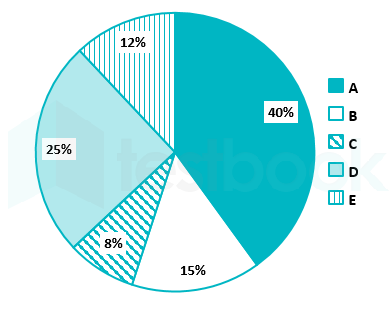
Additional Information

  • "Procedures of free mind" does not make sense in the context of the sentence.
  • "Symbols of victory" is not related to the goals of the Indian independence movement.
  • "Methods to sympathise" is not related to the goals of the Indian independence movement.

Question 81

Select the option that expresses the given sentence in passive voice.

She might have completed her research by that time.

  1. AOption (a)

    Her research might be completed by her by that time.

  2. BOption (b)

    Her research might had been completed by her by that time.

  3. COption (c)

    Her research might have been completed by her by that time.

  4. DOption (d)

    Her research might have completed by her by that time.

View answer & explanation

Correct answer

Answer: (c)C.

Her research might have been completed by her by that time.

Why this answer is correct

The correct answer is: Her research might have been completed by her by that time.

Key Points

  • To covert an active voice to the passive voice, we need to follow the rules:
  • Identify the subject, verb, and object.
  • Move the object to the beginning of the sentence.
  • Use the appropriate form of the verb based on the original verb tense.
  • Use the past participle form of the main verb.
  • The sentence is in the active voice with "She" as the subject and "completed" as the verb.
  • To convert it into passive voice, we need to make the object (research) the subject and use the past participle form of the verb (completed).
  • The helping verb "might have" remains unchanged in the passive voice sentence.
  • The preposition "by" is used to indicate the doer of the action (her) in the passive voice sentence.
  • So, it is clear that only the sentence written in option 3 follows all the rules.

Therefore, the correct answer is option 3.

Additional Information

  • Option 1: Incorrect - This sentence is in active voice and has the same subject and verb as the original sentence.
  • Option 2: Incorrect - The use of "had been" is unnecessary and incorrect in this sentence.
  • Option 4: Incorrect - The verb "completed" needs to be in the past participle form for passive voice, which is missing in this option.

Question 82

Select the most appropriate option to fill in the blank.

The police were on high alert on account of the ___________ convict who had killed many people.

  1. AOption (a)

    run after

  2. BOption (b)

    walk away

  3. COption (c)

    eloped

  4. DOption (d)

    runaway

View answer & explanation

Correct answer

Answer: (d)D.

runaway

Why this answer is correct

The correct answer is: Runaway

Key Points

  • The word "convict" suggests that the person in question has been found guilty of a crime and is serving a sentence.
  • "On high alert" means that the police were extra vigilant and ready for action.
  • "Killed many people" indicates that the convict is dangerous and potentially violent.
  • "Runaway" means someone who has escaped or fled from a situation, often with the intention of avoiding punishment.

Therefore, the correct answer is option 4.

Additional Information

  • "Run after" suggests that the police were pursuing someone, but it doesn't fit the context of a known and dangerous criminal.
  • "Walk away" is the opposite of what the police would be doing in this situation, they would be trying to apprehend the convict, not letting them walk away.
  • "Eloped" typically refers to two people running away together to get married, so it doesn't make sense in this context.

Question 83

Select the most appropriate ANTONYM of the underlined word.

He regards himself as a patriot.

  1. AOption (a)

    nationalist

  2. BOption (b)

    dutiful

  3. COption (c)

    traitor

  4. DOption (d)

    loyal

View answer & explanation

Correct answer

Answer: (c)C.

traitor

Why this answer is correct

The correct answer is: Traitor

Key Points

  • Patriot means someone who loves and supports their country. (कोई ऐसा व्यक्ति जो अपने देश से प्यार करता है और उसका समर्थन करता है)
  • For example- Bhagat Singh was a true patriot and a gentleman.
  • Traitor means someone who is disloyal to their country or actively works against it. (कोई व्यक्ति जो अपने देश के प्रति निष्ठाहीन है या सक्रिय रूप से इसके विरुद्ध कार्य करता है)
  • For example- The king banished the traitor from the realm.
  • From here, it is clear that 'Patriot' and 'Traitor' are opposite to each other.

Hence, option 3 is the correct answer.

Additional Information

  • Nationalist is not an antonym as it means someone who strongly identifies with their country or nation. (कोई ऐसा व्यक्ति जो दृढ़तापूर्वक अपने देश या राष्ट्र से पहचान रखता हो)
  • Dutiful is not an antonym as it means someone who is conscientious in fulfilling their responsibilities or duties. (कोई व्यक्ति जो अपनी जिम्मेदारियों या कर्तव्यों को पूरा करने में कर्तव्यनिष्ठ है)
  • Loyal is not an antonym as it means someone who is faithful and committed to a person or cause. (कोई ऐसा व्यक्ति जो किसी व्यक्ति या उद्देश्य के प्रति वफादार और प्रतिबद्ध हो)

Question 84

Select the most appropriate ANTONYM of the underlined word.

Lucy presented a lucid account of her achievements before the committee.

  1. AOption (a)

    orderly

  2. BOption (b)

    ambiguous

  3. COption (c)

    intelligible

  4. DOption (d)

    transparent

View answer & explanation

Correct answer

Answer: (b)B.

ambiguous

Why this answer is correct

The correct answer is: Ambiguous

Key Points

  • Lucid means clear and easily understood. (स्पष्ट और आसानी से समझा जाने वाला)
  • For example- Write in a clear and lucid style.
  • Marked option Ambiguous means unclear or vague. (अस्पष्ट)
  • For example- It was an ambiguous sentence that could be taken in two ways.
  • Therefore, the most appropriate antonym for the underlined word in the sentence is 'ambiguous'.

Hence, option 2 is the correct answer.

Additional Information

  • Orderly means neat and well-organized, which is not the opposite of 'lucid'. (साफ़ सुथरा और सुव्यवस्थित)
  • Intelligible means understandable, which is actually a synonym of 'lucid'. (बोधगम्य)
  • Transparent means clear or easy to see through, which is not the opposite of 'lucid'. (स्पष्ट या देखने में आसान)

Question 85

Select the most appropriate meaning of the given idiom.

Scrape the barrel

  1. AOption (a)

    Trying to find something

  2. BOption (b)

    Hiding something

  3. COption (c)

    Using all the ways to achieve the desired result

  4. DOption (d)

    To be forced to use one's last and weakest resource

View answer & explanation

Correct answer

Answer: (d)D.

To be forced to use one's last and weakest resource

Why this answer is correct

The correct answer is: To be forced to use one's last and weakest resource.

Key Points

  • The idiom "scrape the barrel" means to use one's last and weakest resource.
  • For example- We're only a couple of months into the general election campaign, but political parties are already scraping the barrel for ideas.
  • This phrase is often used when someone is in a difficult situation and has exhausted all other options.
  • The word "scrape" implies that the resource being used is barely enough to get by.
  • Grammatically, "scrape the barrel" is an idiom or phrase that doesn't have a literal meaning but is understood through common usage.

Therefore, the correct answer is option 4.

Additional Information

  • "Trying to find something" is a common interpretation of this phrase, but it doesn't capture the sense of desperation that comes with using one's last resource.
  • "Hiding something" is not related to the meaning of this idiom.
  • "Using all the ways to achieve the desired result" is similar to the correct answer but doesn't convey the sense of weakness in the resource being used.

Hinglish

  • The English idiomatic expression "scrape the barrel" corresponds to the Hindi phrase "चरबों से मक्खन निकालना"
  • It signifies the act of using the least desirable resources or resorting to desperate means due to a lack of better options.
  • For example: "लेखकों की कमी के कारण, प्रकाशकों को चरबों से मक्खन निकालने की स्थिति में हैं।"
  • In English: "Due to a lack of authors, the publishers are in a situation of scraping the barrel."
  • It means that because there are not enough authors, the publishers have to resort to using less desirable ones.

Question 86

Select the sentence that uses the given idiom correctly.

A dime a dozen

  1. AOption (a)

    Her ideas were worth a dime a dozen and didn't impress the boss. 

  2. BOption (b)

    The concert tickets were a dime a dozen and many people weren't able to buy it.

  3. COption (c)

    The restaurant had some delicious desserts that were a dime a dozen.

  4. DOption (d)

    The antique store had some rare finds, but they were a dime a dozen.

View answer & explanation

Correct answer

Answer: (a)A.

Her ideas were worth a dime a dozen and didn't impress the boss. 

Why this answer is correct

The correct answer is: Her ideas were worth a dime a dozen and didn't impress the boss. 

Key Points

  • The idiom "a dime a dozen" means something is very common and easily found. (कुछ बहुत सामान्य है और आसानी से मिल जाता है)
  • For example- Those antique dishes are pretty, but they're a dime a dozen.
  • The sentence correctly uses the idiom to convey that the boss was not impressed with the ideas because they were not unique or valuable.
  • The subject of the sentence is "Her ideas," which is the correct usage of the idiom.

Therefore, the correct answer is option 1.

Additional Information

  • "The concert tickets were a dime a dozen and many people weren't able to buy it." This sentence does not use the idiom correctly because concert tickets are not common or easily found as many people weren't able to buy it.
  • "The restaurant had some delicious desserts that were a dime a dozen." This sentence does not use the idiom correctly because delicious desserts are not common or easily found.
  • "The antique store had some rare finds, but they were a dime a dozen." This sentence does not use the idiom correctly because rare finds are not common or easily found.

Question 87

Identify the sentence that correctly uses the indefinite article.

  1. AOption (a)

    She is a Indian artist married to an European engineer.

  2. BOption (b)

    She is an Indian artist married to an European engineer.

  3. COption (c)

    She is an Indian artist married to a European engineer.

  4. DOption (d)

    She is a Indian artist married to a European engineer.

View answer & explanation

Correct answer

Answer: (c)C.

She is an Indian artist married to a European engineer.

Why this answer is correct

The correct answer is: She is an Indian artist married to a European engineer.

Key Points

  • The correct use of the indefinite article 'a' is before a noun starting with a consonant sound.
  • In the given sentence, 'European' starts with a vowel sound.
  • Even though "European" begins with the letter 'E,' the sound that follows it is a consonant sound.
  • so the correct article to use is 'a'.
  • Hence, the correct sentence is "She is an Indian artist married to a European engineer."

Thus, option 3 is the correct answer.

Additional Information

  • Option 1: Incorrect use of the indefinite article 'a' before a noun starting with a vowel sound.
  • Option 2: Incorrect use of the article 'a' instead of 'an' before a noun starting with a vowel sound.
  • Option 4: Incorrect use of the indefinite article 'a' before a noun starting with a vowel sound.

Question 88

Select the INCORRECTLY spelt word.

  1. AOption (a)

    Fruitful

  2. BOption (b)

    Unction

  3. COption (c)

    Wilfull

  4. DOption (d)

    Cradle

View answer & explanation

Correct answer

Answer: (c)C.

Wilfull

Why this answer is correct

The incorrectly spelt word is: Wilfull

Key Points

  • The correct spelling is "Willful" which means intentional or deliberate. (जानबूझकर)
  • For example- A willful fault has no excuse and deserves no pardon.
  • The incorrect spelling "Wilfull" has an extra "l" in it in last.
  • The correct spelling follows the rule of doubling the final consonant when adding a suffix that starts with a vowel (e.g. "willful" becomes "willfully").
  • Spelling errors like this can be avoided by practising and memorizing common spelling rules.

Therefore, the correct answer is option 3.

Additional Information

  • Fruitful means productive or successful. (उत्पादक या सफल)
  • Unction means anointing or the act of applying oil or ointment. (अभिषेक या तेल या मलहम लगाने की क्रिया)
  • Cradle means a small bed for a baby or a place of origin or beginning. (शिशु के लिए छोटा बिस्तर या उत्पत्ति या शुरुआत का स्थान)

Question 89

Select the word which means the same as the group of words underlined in the sentence.

Only the artists who make sculptures are allowed to take part in exhibitions.

  1. AOption (a)

    Painter

  2. BOption (b)

    Artisan

  3. COption (c)

    Sculptor

  4. DOption (d)

    Potter

View answer & explanation

Correct answer

Answer: (c)C.

Sculptor

Why this answer is correct

The correct answer is: Sculptor

Key Points

  • The word 'sculptor' means a person who creates sculptures. (एक व्यक्ति जो मूर्तियाँ बनाता है)
  • For example- The sculptor figured the girl in clay.
  • It is the most appropriate word that matches the meaning of the group of words underlined in the sentence.

Therefore, the correct answer is option 3.

Additional Information

  • Painter refers to a person who creates paintings. (एक व्यक्ति जो पेंटिंग बनाता है)
  • Artisan refers to a skilled worker who creates things by hand. (एक कुशल श्रमिक जो हाथ से चीज़ें बनाता है)
  • Potter refers to a person who creates pottery items such as bowls, plates, etc. (एक व्यक्ति जो मिट्टी के बर्तनों जैसे कटोरे, प्लेट आदि बनाता है)

Question 90

Select the most appropriate option to fill in the blank.

Payments can be made by __________ or in cash.

  1. AOption (a)

    chick

  2. BOption (b)

    cheek

  3. COption (c)

    cheque

  4. DOption (d)

    cheeky

View answer & explanation

Correct answer

Answer: (c)C.

cheque

Why this answer is correct

The correct answer is: Cheque.

<br>

Key Points

  • Cheque is a written order to a bank to pay a certain amount of money to the person whose name is on the cheque. (किसी बैंक को उस व्यक्ति को एक निश्चित राशि का भुगतान करने का लिखित आदेश जिसका नाम चेक पर है)
  • It is a commonly used method of payment, especially for larger amounts.
  • The correct usage in the sentence is 'by cheque' or 'with a cheque'.

Therefore, the correct answer is option 3.

Complete sentence: Payments can be made by cheque or in cash.

Additional Information

  • Chick refers to a baby bird. (एक शिशु पक्षी)
  • Cheek is the fleshy part of the face below the eye. (आँख के नीचे चेहरे का मांसल भाग)
  • Cheeky means impudent or disrespectful. (उद्दंड या अनादरपूर्ण)

Question 91

Select the most appropriate ANTONYM of the given word in the following sentence.

Traitor

  1. AOption (a)

    Honest

  2. BOption (b)

    Defender

  3. COption (c)

    Betrayer

  4. DOption (d)

    Loyal

View answer & explanation

Correct answer

Answer: (d)D.

Loyal

Why this answer is correct

The correct answer is: Loyal

Key Points

  • Traitor means a person who is not loyal to his/her country, friends, etc. (देश, मित्र आदि से ग़द्दारी करने वाला; देशद्रोही, मित्रद्रोही, ग़द्दार)
  • For example- Griffin called Bonner a traitor, a snitch and a spy.
  • Marked option Loyal means a firm resistance to any temptation to desert or betray. (त्यागने या विश्वासघात करने के किसी भी प्रलोभन का दृढ़ प्रतिरोध)
  • For example- His loyal wife stood by him throughout his trial and imprisonment.
  • So, it is clear that the antonym of 'Traitor' is 'Loyal' as they are opposite in meaning.

Therefore, the correct answer is option 4.

Additional Information

  • Let us look at the meaning of other words.
  • Honest: telling the truth or able to be trusted and not likely to steal, cheat, or lie. (सत्‍याचरण करने वाला, ईमानदार; चोरी आदि असत्‍याचरण न करने वाला)
  • Defender: a person who defends someone or something from attack, assault, or injury. (वह व्यक्ति जो किसी व्यक्ति या चीज़ को हमले, हमले या चोट से बचाता है)
  • Betrayer: a person who is not loyal to their country or to another person, often doing something harmful such as giving information to an enemy. (ऐसा व्यक्ति जो अपने देश या किसी अन्य व्यक्ति के प्रति वफादार नहीं है, अक्सर कुछ हानिकारक कार्य करता है जैसे किसी दुश्मन को जानकारी देना)

Question 92

The following sentence has been split into four segments. Identify the segment that contains a grammatical error.

She always / invite me / to / dinner.

  1. AOption (a)

    She always

  2. BOption (b)

    to

  3. COption (c)

    dinner

  4. DOption (d)

    invite me

View answer & explanation

Correct answer

Answer: (d)D.

invite me

Why this answer is correct

The erroneous part of the sentence is: invite me

Key Points

  • This error lies in the subject-verb agreement, where the verb does not agree with the subject in terms of number.
  • Subject-verb agreement means that a subject and its verb must be both singular or both plural.
  • A singular subject takes a singular verb. A plural subject takes a plural verb.
  • So, the correct verb form should be "invites" instead of "invite" to match the subject "She".

Therefore, the correct answer is option 4.

Corrected sentence: She always invites me to dinner.

Additional Information

  • "She always" is grammatically correct.
  • "to" is a preposition and is used correctly in the sentence.
  • "dinner" is a noun and is used correctly in the sentence.

Question 93

Select the option that expresses the given sentence in active voice.

By whom was the coffee made?

  1. AOption (a)

    Who made the coffee?

  2. BOption (b)

    Who had made the coffee?

  3. COption (c)

    Who has made the coffee?

  4. DOption (d)

    Who makes the coffee?

View answer & explanation

Correct answer

Answer: (a)A.

Who made the coffee?

Why this answer is correct

The correct answer is: Who made the coffee?

Key Points

  • In active voice, the subject of the sentence performs the action.
  • To convert a passive sentence to an active voice, we need to identify the subject of the passive sentence and make it the doer of the action.
  • In this sentence, "coffee" is the subject in passive voice and "made" is the verb.
  • We need to change the sentence to "Who made the coffee?" to make it an active voice.
  • The doer of the action (the person who made the coffee) becomes the subject of the sentence in an active voice.

Therefore, the correct answer is option 1.

Correct active voice: Who made the coffee?

Additional Information

  • Option 2: "Who had made the coffee?" is in the past perfect tense and suggests that the coffee was made before some other past event.
  • Option 3: "Who has made the coffee?" is in the present perfect tense and suggests that the coffee was made recently.
  • Option 4: "Who makes the coffee?" is also in active voice but is in present tense instead of past tense like the original sentence.

Question 94

Select the most appropriate ANTONYM of the underlined words in the given sentence.

Developed countries are at a disadvantage to have access to modern science and technologies.

  1. AOption (a)

    powered

  2. BOption (b)

    privileged

  3. COption (c)

    useless

  4. DOption (d)

    unhappy

View answer & explanation

Correct answer

Answer: (b)B.

privileged

Why this answer is correct

The correct answer is: Privileged

Key Points

  • Disadvantage means a condition or situation that causes problems, especially one that causes something or someone to be less successful than other things or people. (प्रतिकूल बात, घाटे की बात, सफलता या उन्‍नति में बाधक)
  • For example- Your lack of a degree was a disadvantage to you.
  • Marked option Privileged means having special rights or advantages. (विशेष अधिकार या लाभ होना)
  • For example- I feel very privileged and honoured to have received this award.
  • So, it is clear that "privileged" is the most appropriate antonym in the given sentence.

Therefore, the correct answer is option 2.

Additional Information

  • Let us look at the meaning of the other words.
  • Powered refers to having the ability, influence, or control to affect situations, people, or circumstances. (स्थितियों, लोगों या परिस्थितियों को प्रभावित करने की क्षमता, प्रभाव या नियंत्रण रखना)
  • Useless means that does not work well, that does not achieve anything. (अनुपयोगी, बेकार, जो ठीक से काम न करे)
  • Unhappy means not satisfied or pleased; worried. (असंतुष्‍ट या नाराज़; दुखी, परेशान)

Question 95

Sentences of a paragraph are given below in jumbled order. Arrange the sentences in the correct order to form a meaningful and coherent paragraph.

A. According to Homer, Achilles was brought up by his mother at Phthia with his inseparable companion Patroclus.

B. Achilles was the bravest, handsomest and greatest warrior of the army of Agamemnon in the Trojan War.

C. Later non - Homeric tales suggest that Patroclus was Achilles' kinsman or lover.

D. Achilles, in Greek mythology, is the son of the mortal Peleus, king of the Myrmidons, and the Nereid Thetis.

  1. AOption (a)

    ABCD

  2. BOption (b)

    DBAC

  3. COption (c)

    DABC

  4. DOption (d)

    CABD

View answer & explanation

Correct answer

Answer: (b)B.

DBAC

Why this answer is correct

The correct sequence is: DBAC

Key Points

  • The paragraph is about Achilles in Greek mythology and his background. Let's arrange the sentences in the correct order:
  • Sentence D introduces the character of Achilles and his parentage. So, it should be the starting sentence.
  • Sentence B highlights Achilles' characteristics and his role in the Trojan War.
  • Sentence A gives background information on Achilles' upbringing.
  • Sentence C mentions a non-Homeric tale about Achilles and Patroclus' relationship.
  • This arrangement forms a coherent paragraph that introduces Achilles, his role in the Trojan War, his upbringing, and his relationship with Patroclus.

Therefore, the correct answer is option 2.

Arranged Paragraph: D. Achilles, in Greek mythology, is the son of the mortal Peleus, king of the Myrmidons, and the Nereid Thetis. B. Achilles was the bravest, handsomest and greatest warrior of the army of Agamemnon in the Trojan War. A. According to Homer, Achilles was brought up by his mother at Phthia with his inseparable companion Patroclus. C. Later non - Homeric tales suggest that Patroclus was Achilles' kinsman or lover.

In the following passage, some words have been deleted. Read the passage carefully and select the most appropriate option to fill in each blank.

Ambition is a vital ingredient for success. Without ambition to push us, we will not be (1) _______ of great achievements. We all need that special something (2) _______ ourselves to give us the willpower to reach a higher goal (3) _______ we imagine ourselves capable (4) _______. Yet, ambition, (5) _______ money and fire, is a good servant, but a bad master.

Question 96

Select the most appropriate option to fill in blank number 1.

  1. AOption (a)

    able

  2. BOption (b)

    capable

  3. COption (c)

    durable

  4. DOption (d)

    curable

View answer & explanation

Correct answer

Answer: (b)B.

capable

Why this answer is correct

The correct answer is "Capable".

Key Points

  • 'Capable' means having the ability or skill to do something.
  • It is the most appropriate option to fill in blank number 1 as it fits the context of the sentence.
  • Example: She is capable of handling difficult situations.

Therefore, the correct answer is "Option 2".

Additional Information

  • Option 1 - 'able' also means having the ability to do something, but 'capable' is a better fit in this context.
  • Option 3 - 'durable' means able to withstand wear, pressure, or damage, and is not related to the context of the sentence.
  • Option 4 - 'curable' means able to be cured, and is not related to the context of the sentence.

Question 97

Select the most appropriate option to fill in blank number 2.

  1. AOption (a)

    in

  2. BOption (b)

    with

  3. COption (c)

    without

  4. DOption (d)

    within

View answer & explanation

Correct answer

Answer: (d)D.

within

Why this answer is correct

The correct answer is "within".


Key Points

  • "Within" is the most appropriate preposition to use in this context.
  • It means "inside" or "not exceeding a certain time frame".
  • Example: "The package will be delivered within 3 days."
  • "In" could also work in some cases, but "within" is more specific.
  • "Without" and "with" are not appropriate choices for this sentence.

Therefore, the correct answer is "Option 4".

Additional Information

  • Option 1: "In" could work in some cases, but it is less specific than "within".
  • Option 2: "With" is not a preposition that makes sense in this sentence.
  • Option 3: "Without" is the opposite of "within" and does not fit the context.

Question 98

Select the most appropriate option to fill in blank number 3.

  1. AOption (a)

    then

  2. BOption (b)

    than

  3. COption (c)

    that

  4. DOption (d)

    what

View answer & explanation

Correct answer

Answer: (b)B.

than

Why this answer is correct

The correct answer is "than".

Key Points

  • "Than" is used for comparisons, while "then" is used for indicating time or sequence.
  • Example: "She is taller than her sister." (comparison)
  • "Than" can also be used to express preference or exception.
  • Example: "I would rather stay home than go to the party."
  • In this question, "than" is the appropriate word because it is comparing Option 3 to the other options.

Therefore, the correct answer is "Option 2".

Additional Information

  • Option 1, "then", is incorrect because it does not make sense in the context of the sentence.
  • Option 3, "that", is incorrect because it is a conjunction and does not fit grammatically in the sentence.
  • Option 4, "what", is incorrect because it is a pronoun and does not fit grammatically in the sentence.

Question 99

Select the most appropriate option to fill in blank number 4.

  1. AOption (a)

    about

  2. BOption (b)

    off

  3. COption (c)

    of

  4. DOption (d)

    on

View answer & explanation

Correct answer

Answer: (c)C.

of

Why this answer is correct

The correct answer is "Option 3".

Key Points

  • In English grammar, the adjective 'capable' is followed by the preposition 'of' when referring to a certain ability or potential.
  • After the term 'capable', the noun (or, in this case, the pronoun) is often followed by an '-ing' form of a verb.
  • It defines what someone or something is capable of doing. In this instance, the word succeeding 'capable' ('of') is elided and understood in the context of the sentence.
  • 'Capable of' is a standard collocation and widely accepted in academic and formal writing.
  • Therefore, in terms of syntactical norms and for the sentence to make sense, the preposition 'of' perfectly fits in the given context.

Therefore, the correct answer is "Option 3".

Additional Information

  • 'About': The preposition 'about' usually denotes the topic of discussion or describes something in a general way. It is not the correct choice here due to rule of Collocation.
  • 'Off': The preposition 'off' denotes disconnection or separation and it is not grammatically correct to use here.
  • 'On': 'On' doesn't fit well here as the common structure 'capable on' does not exist in English grammar.

Question 100

Select the most appropriate option to fill in blank number 5.

  1. AOption (a)

    as

  2. BOption (b)

    like

  3. COption (c)

    such

  4. DOption (d)

    similarly

View answer & explanation

Correct answer

Answer: (b)B.

like

Why this answer is correct

The correct answer is "like."

Key Points

  • "Like" is the appropriate word to use in this context to show a comparison between two things.
  • "As" is used to show a cause-and-effect relationship or to introduce a clause with a verb.
  • "Such" is used to introduce a clause that describes a specific characteristic or quality.
  • "Similarly" is used to show a comparison between two things, but it is often used to connect entire sentences rather than just one word.

Therefore, the correct answer is "Option 2".

Additional Information 

  • Option 1, "as," is a conjunction that can be used in a variety of ways, such as to introduce clauses with verbs or to show a comparison between two things.
  • Option 3, "such," is an adjective that is used to describe a specific characteristic or quality of something.
  • Option 4, "similarly," is an adverb that is used to show a comparison between two things, often in the context of connecting entire sentences.

100 questions in the full paper