Search Previous Year Questions

Find real questions from previous competitive exam papers with answers and solutions.

Leave the keyword blank to browse saved questions for your selected exam, newest papers first. Add a keyword, year or topic to narrow the results.

Browse complete papers
Showing 10 question(s)
Clear

Question 21

AIIMS Nursing Officer 2025• Section 1

An ultrasound of a twin pregnancy shows one shared placenta and a thin membrane separating the two babies. This pattern indicates which type of placentation?
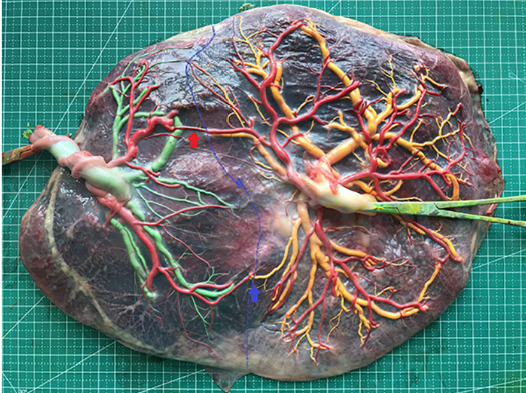
  1. AOption (a)

    Monochorionic–diamniotic

  2. BOption (b)

    Dichorionic–diamniotic

  3. COption (c)

    Monochorionic–monoamniotic

  4. DOption (d)

    Conjoined twins

View answer & explanation

Correct answer

Answer: (a)A.

Monochorionic–diamniotic

Why this answer is correct

Correct Answer: Monochorionic–diamniotic

Rationale:

  • In twin pregnancies, placentation is determined by the number of chorions (placentas) and amnions (sacs). An ultrasound showing one shared placenta indicates that the pregnancy is monochorionic.
  • The presence of a thin membrane separating the two fetuses means each baby has its own amniotic sac. When twins share one placenta but are separated by a membrane, the pregnancy is diamniotic.
  • Thus, one chorion + two amnions = Monochorionic–diamniotic (MCDA) twins.
  • MCDA is the most common form of identical twinning and carries risks such as twin-to-twin transfusion syndrome (TTTS), making accurate identification clinically important.
  • Therefore, the ultrasound findings of a single placenta with a thin dividing membrane match the pattern of monochorionic–diamniotic placentation.

Explanation of Other Options:

Dichorionic–diamniotic

  • Rationale: Di–Di twins have two placentas (or one thick fused placenta) and a thicker separating membrane. The question states one shared placenta, ruling this out.

Monochorionic–monoamniotic

  • Rationale: Mo–Mo twins share both the placenta and the amniotic sac, so there is no membrane between them. The presence of a membrane excludes this option.

Conjoined twins

  • Rationale: Conjoined twins are always monoamniotic with no separating membrane. The image shows a membrane, making this incorrect.

Conclusion:

  • A single placenta plus a thin membrane separating the fetuses is diagnostic of monochorionic–diamniotic twins.

Question 22

AIIMS Nursing Officer 2025• Section 1

A person walks 2 km north, then 3 km east, and then 2 km south. How far are they from where they began?

  1. AOption (a)

    3 km

  2. BOption (b)

    4 km

  3. COption (c)

    5 km

  4. DOption (d)

    7 km

View answer & explanation

Correct answer

Answer: (a)A.

3 km

Why this answer is correct

Correct Answer: 3 km

Rationale:

  • This is a basic displacement (straight-line distance) problem using simple coordinate movement.
  • The person first walks 2 km north and then 2 km south. These two movements cancel each other out, bringing the person back to the original north–south level.
  • The only movement that does not cancel out is the 3 km east.
  • Since the final position is directly east of the starting point, the displacement from the starting point is simply the horizontal distance: 3 km.
  • Thus, the straight-line distance from the starting point to the final point is 3 km.

Explanation of Other Options:

4 km

  • Rationale: This would be true only if the north and south distances were unequal, but here they cancel out exactly.

5 km

  • Rationale: This would imply a right-triangle path, but since vertical movement cancels, no triangle is formed.

7 km

  • Rationale: 7 km is the total path walked, not the displacement from starting point.

Conclusion:

  • After opposite north and south movements cancel out, only the 3 km east shift remains. Therefore, the person ends up 3 km away from the starting point.

Question 23

AIIMS Nursing Officer 2025• Section 1

A woman reports a painful, tender swelling near one side of the vaginal opening, causing discomfort while sitting or walking. This is most likely an infection of which gland?

  1. AOption (a)

    Sebaceous gland

  2. BOption (b)

    Skene’s gland

  3. COption (c)

    Bartholin’s gland

  4. DOption (d)

    Apocrine gland

View answer & explanation

Correct answer

Answer: (c)C.

Bartholin’s gland

Why this answer is correct

Correct Answer: Bartholin’s gland

Rationale:

  • The symptoms described — a painful, tender swelling on one side of the vaginal opening, with discomfort while sitting or walking — are classic signs of a Bartholin’s gland infection or Bartholin cyst/abscess.
  • Bartholin’s glands are located at the posterior (lower) part of the vaginal opening, one on each side. They normally secrete mucus to lubricate the vaginal opening.
  • When the duct becomes blocked, mucus accumulates, forming a cyst. If infected (commonly by E. coli or sexually transmitted bacteria), it turns into a painful abscess.
  • Pain increases with activities such as walking, sitting, or sexual intercourse, and swelling is easily felt externally.
  • Thus, the presentation strongly indicates an infection of the Bartholin’s gland.

Explanation of Other Options:

Skene’s gland

  • Rationale: Skene’s glands are located near the urethral opening. Infection here causes pain near the urethra or difficulty urinating—not swelling near the vaginal opening.

Sebaceous gland

  • Rationale: Sebaceous cysts can occur anywhere on the skin but typically present as non-tender lumps—not painful, deep swellings at the vaginal opening.

Apocrine gland

  • Rationale: Apocrine gland infections (hidradenitis) occur in the groin or axilla but appear as boils or nodules, not specifically at the vaginal opening.

Conclusion:

  • A unilateral, painful swelling at the vaginal opening is most characteristic of a Bartholin’s gland infection or abscess, making it the correct diagnosis.

Question 24

AIIMS Nursing Officer 2025• Section 1

A patient has a potassium level of 6.2 mEq/L and peaked T waves on ECG. They are receiving IV calcium gluconate. Which complication should the nurse watch for most closely during the infusion?

  1. AOption (a)

    Slowed breathing

  2. BOption (b)

    Severe increase in blood pressure

  3. COption (c)

    Low blood sugar

  4. DOption (d)

    Bradycardia with low blood pressure

View answer & explanation

Correct answer

Answer: (d)D.

Bradycardia with low blood pressure

Why this answer is correct

Correct Answer: Bradycardia with low blood pressure

Rationale:

  • A potassium level of 6.2 mEq/L with peaked T waves on ECG indicates serious hyperkalemia, which can cause life-threatening arrhythmias. To stabilize the heart, IV calcium gluconate is administered.
  • Calcium gluconate works by stabilizing the myocardial cell membrane but does not lower potassium. It must be administered slowly while monitoring cardiac rhythm.
  • The major risk during IV calcium infusion is cardiac conduction disturbances, especially bradycardia, heart blocks, or even asystole if given too rapidly.
  • Calcium can also cause vasodilation and myocardial effects that may lead to hypotension, especially in patients with unstable cardiac rhythms.
  • Therefore, during infusion, the nurse must watch closely for bradycardia and dropping blood pressure, as these indicate cardiovascular depression and require immediate intervention.

Explanation of Other Options:

Severe increase in blood pressure

  • Rationale: IV calcium does not typically cause hypertension; if anything, it can produce mild hypotension due to vasodilation.

Low blood sugar

  • Rationale: Calcium has no effect on glucose metabolism. Hypoglycemia is unrelated to calcium gluconate infusion.

Slowed breathing

  • Rationale: Respiratory depression is not a known complication of IV calcium. It is more associated with opioid overdose or sedative medications.

Conclusion:

  • Because calcium gluconate affects cardiac conduction, the nurse must monitor for bradycardia with hypotension—the most important complication during infusion.

Question 25

AIIMS Nursing Officer 2025• Section 1

Which country has the longest total coastline in the world?

  1. AOption (a)

    Australia

  2. BOption (b)

    Canada

  3. COption (c)

    Indonesia

  4. DOption (d)

    Russia

View answer & explanation

Correct answer

Answer: (b)B.

Canada

Why this answer is correct

Correct Answer: Canada

Rationale:

  • Canada has the longest total coastline in the world, stretching over approximately 202,000 kilometers.
  • This is because Canada has numerous bays, inlets, islands, and Arctic coastlines that greatly extend its total shore length.
  • Its coastline borders three major oceans:
  • Atlantic Ocean
  • Pacific Ocean
  • Arctic Ocean
  • This vast coastal geography makes Canada the undisputed leader in terms of total coastline length.

Explanation of Other Options:

Australia

  • Rationale: Australia has a long coastline, but it is much shorter than Canada’s.

Indonesia

  • Rationale: Indonesia, being an archipelago, has a very long coastline but still does not exceed Canada.

Russia

  • Rationale: Russia has an extensive Arctic and Pacific coastline but ranks below Canada in total length.

Conclusion:

  • Canada has the longest coastline in the world, making it the correct answer.

Question 26

AIIMS Nursing Officer 2025• Section 1

The Sputnik V COVID-19 vaccine was originally developed in which country?

  1. AOption (a)

    Russia

  2. BOption (b)

    China

  3. COption (c)

    United Kingdom

  4. DOption (d)

    United States

View answer & explanation

Correct answer

Answer: (a)A.

Russia

Why this answer is correct

Correct Answer: Russia

Rationale:

  • Sputnik V was the world’s first registered COVID-19 vaccine, developed in Russia by the Gamaleya Research Institute of Epidemiology and Microbiology.
  • The vaccine uses a viral vector platform with two different adenoviruses (Ad26 and Ad5) administered in two doses to produce a strong immune response.
  • It was named “Sputnik V” as a reference to the historic Russian satellite “Sputnik,” symbolizing scientific achievement.
  • Russia approved the vaccine for emergency use in August 2020, making it the first COVID-19 vaccine to be officially registered.
  • Thus, the vaccine’s origin is clearly Russia.

Explanation of Other Options:

China

  • Rationale: China developed vaccines like Sinovac and Sinopharm, not Sputnik V.

United Kingdom

  • Rationale: The UK developed the Oxford–AstraZeneca vaccine, not Sputnik V.

United States

  • Rationale: The U.S. developed Pfizer–BioNTech (with Germany) and Moderna vaccines.

Conclusion:

  • The Sputnik V COVID-19 vaccine was originally developed in Russia, making it the correct answer.

Question 27

AIIMS Nursing Officer 2025• Section 1

A newborn is found to have a single umbilical artery (SUA). This finding is often linked with congenital abnormalities. Which organ system is most commonly involved?

  1. AOption (a)

    Respiratory system

  2. BOption (b)

    Musculoskeletal system

  3. COption (c)

    Neurological system

  4. DOption (d)

    Cardiovascular system

View answer & explanation

Correct answer

Answer: (d)D.

Cardiovascular system

Why this answer is correct

Correct Answer: Cardiovascular system

Rationale:

  • A normal umbilical cord contains two arteries and one vein. A single umbilical artery (SUA) is the most common umbilical cord anomaly.
  • SUA is strongly associated with a higher risk of congenital anomalies, most commonly involving the: genitourinary system (kidneys) and the cardiovascular system.
  • Among the answer choices provided, the cardiovascular system is the most frequently associated system.
  • Common cardiac abnormalities seen with SUA include:
  • Ventricular septal defect (VSD)
  • Patent ductus arteriosus (PDA)
  • Complex congenital heart defects
  • Because cardiovascular anomalies occur more often than abnormalities in the other listed systems, the correct choice is the cardiovascular system.

Explanation of Other Options:

Respiratory system

  • Rationale: SUA is not commonly linked with primary lung abnormalities.

Musculoskeletal system

  • Rationale: Though some limb anomalies can occur, they are less common than cardiovascular defects.

Neurological system

  • Rationale: CNS anomalies can occur but are not the most frequent association.

Conclusion:

  • Among the listed choices, congenital defects associated with a single umbilical artery most commonly involve the cardiovascular system.

Question 28

AIIMS Nursing Officer 2025• Section 1

A 45-year-old man from a rural village calls the national telemedicine number 14567. He speaks with a doctor, gets medical advice, and receives a prescription without going to the hospital. This service comes under which government program?

  1. AOption (a)

    eSanjeevani – Telemedicine Service

  2. BOption (b)

    Nikshay Poshan Yojana

  3. COption (c)

    Ayushman Bharat – PMJAY

  4. DOption (d)

    Janani Shishu Suraksha Karyakram (JSSK)

View answer & explanation

Correct answer

Answer: (a)A.

eSanjeevani – Telemedicine Service

Why this answer is correct

Correct Answer: eSanjeevani – Telemedicine Service

Rationale:

  • The national telemedicine helpline 14567 is part of eSanjeevani, India’s government-supported telemedicine platform.
  • This service provides citizens with remote medical consultations, including:
  • Doctor-to-patient teleconsultation
  • Medical advice
  • Digital prescription generation
  • It is especially important for people in rural and remote areas who cannot easily access health facilities.
  • The scenario describes the patient calling 14567, getting advice and a prescription—all of which fall under eSanjeevani Telemedicine Service.

Explanation of Other Options:

Nikshay Poshan Yojana

  • Rationale: This scheme provides nutritional support to tuberculosis patients, not telemedicine services.

Ayushman Bharat – PMJAY

  • Rationale: PMJAY offers cashless treatment for hospitalized care, not teleconsultations.

Janani Shishu Suraksha Karyakram (JSSK)

  • Rationale: JSSK provides free maternal and newborn health services, not telemedicine.

Conclusion:

  • The telemedicine call to 14567 for a remote consultation and prescription clearly falls under eSanjeevani – Telemedicine Service.

Question 29

AIIMS Nursing Officer 2025• Section 1

A 34-week pregnant woman is brought in after a tonic-clonic seizure. Her BP is 160/110 mmHg and urine shows 3+ protein. What is the correct diagnosis and priority treatment?

  1. AOption (a)

    Eclampsia; start IV magnesium sulfate and get ready for delivery

  2. BOption (b)

    Severe pre-eclampsia; give antihypertensives and observe

  3. COption (c)

    HELLP syndrome; give steroids for lung maturity

  4. DOption (d)

    Gestational hypertension; strict rest and NST

View answer & explanation

Correct answer

Answer: (a)A.

Eclampsia; start IV magnesium sulfate and get ready for delivery

Why this answer is correct

Correct Answer: Eclampsia; start IV magnesium sulfate and get ready for delivery

Rationale:

  • The woman has experienced a tonic–clonic seizure during pregnancy. A seizure in a pregnant woman with hypertension and proteinuria is the defining feature of eclampsia.
  • Her blood pressure is severely elevated at 160/110 mmHg, and urine shows 3+ protein—both classic findings of severe pre-eclampsia progressing to eclampsia.
  • The immediate and most important treatment step is to start IV magnesium sulfate, which is the drug of choice for controlling and preventing seizures in eclampsia.
  • Once seizures are controlled and the mother stabilized, the next priority is to plan for delivery, as delivery is the definitive management for eclampsia.
  • Thus, the correct diagnosis is eclampsia, and the priority intervention is starting magnesium sulfate followed by preparation for delivery.

Explanation of Other Options:

Severe pre-eclampsia; give antihypertensives and observe

  • Rationale: This is incorrect because the presence of a seizure means the patient already progressed to eclampsia, not just severe pre-eclampsia.

HELLP syndrome; give steroids for lung maturity

  • Rationale: HELLP includes hemolysis, elevated liver enzymes, and low platelets. None of these findings are mentioned. Seizures point more clearly to eclampsia.

Gestational hypertension; strict rest and NST

  • Rationale: Gestational hypertension has no proteinuria or seizures. The patient has both, confirming eclampsia.

Conclusion:

  • A tonic–clonic seizure in a hypertensive pregnant woman with proteinuria indicates eclampsia, and the priority treatment is IV magnesium sulfate with preparation for delivery.

Question 30

AIIMS Nursing Officer 2025• Section 1

A public health agency regularly collects, reviews, and interprets health data to guide planning and implementation of health programs. This ongoing and organized process is called:

  1. AOption (a)

    Public health surveillance

  2. BOption (b)

    Epidemiology

  3. COption (c)

    Randomized controlled trial

  4. DOption (d)

    Retrospective study

View answer & explanation

Correct answer

Answer: (a)A.

Public health surveillance

Why this answer is correct

Correct Answer: Public health surveillance

Rationale:

  • The process described involves regular, continuous collection, analysis, interpretation, and dissemination of health data.
  • This ongoing and systematic activity is known as public health surveillance.
  • Surveillance helps health authorities identify trends, detect outbreaks early, and plan or evaluate public health programs effectively.
  • It is a cornerstone of public health practice because it provides real-time information for decision making, priority setting, and resource allocation.
  • Since the question emphasizes an organized, routine, and continuous process to support program planning, the correct term is public health surveillance.

Explanation of Other Options:

Epidemiology

  • Rationale: Epidemiology is the broader science of studying disease distribution and determinants; it is not limited to continuous data monitoring.

Randomized controlled trial

  • Rationale: RCTs are experimental research studies to test interventions, not routine health data monitoring.

Retrospective study

  • Rationale: Retrospective studies analyze past data; they are not ongoing surveillance systems.

Conclusion:

  • The continuous and systematic monitoring of health information for planning programs is known as public health surveillance.