Search Previous Year Questions

Find real questions from previous competitive exam papers with answers and solutions.

Showing 10 question(s)
Clear

Question 151

AIIMS BSc Nursing 2024• Chemistry

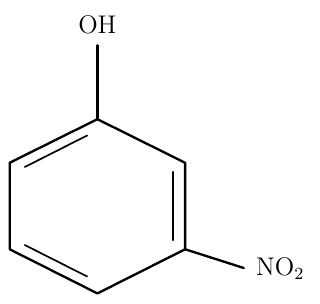
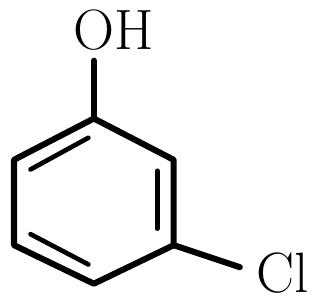
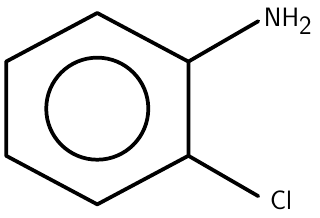
The strongest acid from the following is

  1. AOption (a)

  2. BOption (b)

  3. COption (c)

  4. DOption (d)

View answer & explanation

Correct answer

Answer: (a)A.

Why this answer is correct

CONCEPT:

Acidity and Electron-Withdrawing Groups (EWG)

  • Acidity of compounds is influenced by the ability of substituents on the aromatic ring to either donate or withdraw electron density.
  • Electron-Withdrawing Groups (EWGs), such as -NO2, -CN, -COOH, etc., decrease the electron density on the ring, making the hydrogen more likely to dissociate as a proton (H+), which increases the acidity of the compound.
  • In contrast, Electron-Donating Groups (EDGs), such as -CH3, -OH, -OCH3, increase the electron density on the ring, making the hydrogen less likely to dissociate, thus decreasing the acidity.

EXPLANATION:

  • In the given compounds:

The compound with -NO2 (Nitro group) is the strongest acid among the options.

  • The -NO2 group is a strong electron-withdrawing group (EWG), which pulls electron density away from the ring, making the hydrogen on the hydroxyl group (OH) more acidic.
  • The -OH group in the presence of -NO2 becomes more likely to release a proton (H+), increasing the acidity.
  • The -Cl (Chlorine) and -CH3 (Methyl) groups are less electron-withdrawing, and thus, they do not increase the acidity as much as -NO2.
  • The -OH group attached to the benzene ring with an electron-donating group like -CH3 decreases the ring's ability to lose a proton, thereby reducing acidity.

Therefore, the strongest acid from the following compounds is the one with the -NO2 group attached to the benzene ring.
Question 152

AIIMS BSc Nursing 2024• Chemistry

Identify the non-reducing sugar from the following:

  1. AOption (a)

    Maltose 

  2. BOption (b)

    Sucrose

  3. COption (c)

    Lactose

  4. DOption (d)

    Glucose

View answer & explanation

Correct answer

Answer: (b)B.

Sucrose

Why this answer is correct

CONCEPT:

Non-Reducing Sugar

  • Sugars are categorized based on their ability to act as reducing agents. Reducing sugars contain free aldehyde or ketone groups that can react with oxidizing agents.
  • Non-reducing sugars do not have free aldehyde or ketone groups due to their glycosidic bonds. Thus, they cannot act as reducing agents.

EXPLANATION:

  • Maltose (option 1) is a reducing sugar because it has a free aldehyde group.
  • Sucrose (option 2) is a non-reducing sugar because the glycosidic bond between glucose and fructose blocks the free aldehyde or ketone groups.
  • Lactose (option 3) is a reducing sugar because it has a free aldehyde group.
  • Glucose (option 4) is a reducing sugar because it has a free aldehyde group.

Therefore, the correct answer is option 2, Sucrose.

Question 153

AIIMS BSc Nursing 2024• Chemistry

Clemmensen reduction of a ketone is carried out in the presence of:

  1. AOption (a)

    LiAlH4

  2. BOption (b)

    Zn-Hg with HCI

  3. COption (c)

    Glycol with KOH

  4. DOption (d)

    H2 with Pt as catalyst

View answer & explanation

Correct answer

Answer: (b)B.

Zn-Hg with HCI

Why this answer is correct

CONCEPT:

Clemmensen Reduction

  • Clemmensen reduction is a chemical reaction used to reduce ketones to the corresponding alkanes.
  • It involves the use of zinc amalgam (Zn-Hg) and hydrochloric acid (HCl).
  • The mechanism proceeds through the formation of a zinc intermediate that facilitates the reduction.

EXPLANATION:

  • In Clemmensen reduction, the conditions required are acidic and involve the use of metal catalysts.
  • The reduction of the ketone occurs in the presence of Zn-Hg and HCl, which provides the necessary electrons for the reduction process.
  • Therefore, the correct answer is option 2: Zn-Hg with HCl.

Therefore, Clemmensen reduction of a ketone is carried out in the presence of Zn-Hg with HCl.

Question 154

AIIMS BSc Nursing 2024• Chemistry

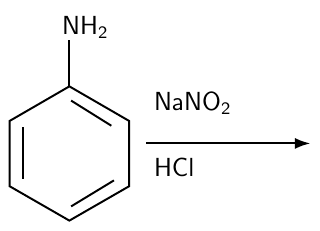
The product A formed in the following reaction is

A

  1. AOption (a)

  2. BOption (b)

  3. COption (c)

  4. DOption (d)

View answer & explanation

Correct answer

Answer: (d)D.

Why this answer is correct

CONCEPT:

Diazotization Reaction

  • Diazotization is the process of forming a diazonium salt (ArN2Cl) from an amine group (-NH2) in an aromatic compound by reaction with nitrous acid (HNO2) generated in situ.
  • The general reaction for diazotization is:

Ar-NH2 + HNO2 → Ar-N2Cl

where Ar is an aromatic ring.

  • In this process, the amino group (-NH2) on the aromatic ring is converted into a diazonium group (Ar-N2Cl), which is a highly reactive intermediate that can undergo further reactions, such as substitution with various nucleophiles.
  • The diazonium group (Ar-N2Cl) is often used to introduce a halogen (e.g., chlorine) onto the aromatic ring by subsequent treatment with a halogenating agent like Cl2.

EXPLANATION:


  • In the given reaction:

The starting compound is aniline (C6H5NH2), which undergoes diazotization with sodium nitrite (NaNO2) and hydrochloric acid (HCl) at 0°C to form a diazonium salt (C6H5–N2Cl).

  • Here, the amine group (-NH2) on the benzene ring is converted into a diazonium ion (Ar-N2Cl).
  • Diazonium ion formation is followed by chlorination with Cl2 to replace the diazonium group with a chlorine atom (Cl).
  • After treatment with Cl2, the product A is obtained, which is chlorobenzene (C6H5Cl).

Therefore, the major product 'A' formed in the reaction is chlorobenzene (C6H5Cl).

Question 155

AIIMS BSc Nursing 2024• Chemistry

IUPAC name of following compound is:

  1. AOption (a)

    2-Aminopentanenitrile

  2. BOption (b)

    2-Aminobutanenitrile

  3. COption (c)

    3-Aminobutanenitrile

  4. DOption (d)

    3-Aminopropanenitrile

View answer & explanation

Correct answer

Answer: (c)C.

3-Aminobutanenitrile

Why this answer is correct

CONCEPT:

IUPAC Nomenclature of Organic Compounds

  • The IUPAC name of an organic compound is determined by following specific rules and naming conventions.
  • For nitriles, the suffix "-nitrile" is used to denote the presence of a cyano group (-CN).
  • When naming compounds with substituents like amino groups (-NH2), the position of the substituent is indicated by numbering the carbon chain starting from the carbon attached to the nitrile group.

EXPLANATION:

  • In the given compound:

  • The longest carbon chain containing the nitrile group is identified.

  • The numbering of the carbon chain starts from the carbon of the nitrile group (C1).

  • The position of the amino group (-NH2) is determined based on its location in the chain.

  • .

  • 3-Aminobutanenitrile

Therefore, the correct IUPAC name for the given compound is 3-Aminobutanenitrile.

Question 156

AIIMS BSc Nursing 2024• Chemistry

'Adsorption' principle is used for which of the following purification method?

  1. AOption (a)

    Chromatography 

  2. BOption (b)

    Sublimation

  3. COption (c)

    Extraction

  4. DOption (d)

    Distillation

View answer & explanation

Correct answer

Answer: (a)A.

Chromatography 

Why this answer is correct

CONCEPT:

Adsorption Principle in Purification Methods

  • Adsorption is a process in which atoms, ions, or molecules from a substance (which can be a gas, liquid, or dissolved solid) adhere to a surface of the adsorbent.
  • It is widely used in various purification methods to separate components based on their different affinities to the adsorbent material.

EXPLANATION:

  • In the context of the given purification methods:
  • Chromatography: This technique relies on adsorption principles, where different compounds in a mixture adhere to the stationary phase (adsorbent) to varying degrees, allowing their separation.
  • Sublimation: This process involves changing a substance from solid to gas without passing through the liquid phase and is not related to adsorption.
  • Extraction: This method involves separating components based on their solubilities in different immiscible liquids and does not involve adsorption.
  • Distillation: This technique separates substances based on their different boiling points and does not utilize adsorption.

Therefore, the correct answer is option 1: Chromatography, which uses the adsorption principle for purification.

Question 157

AIIMS BSc Nursing 2024• Chemistry

The variation of molar conductivity with concentration of n electrolyte (X) in aqueous solution is shown in the given figure.

The electrolyte X is:

  1. AOption (a)

    HCI

  2. BOption (b)

    NaCl

  3. COption (c)

    ΚΝΟ3

  4. DOption (d)

    CH3COOH

View answer & explanation

Correct answer

Answer: (d)D.

CH3COOH

Why this answer is correct

CONCEPT:

Molar Conductivity of Electrolytes

  • Molar conductivity (Λm) is the conductance of all the ions produced by one mole of an electrolyte in a given solution.
  • It varies with the concentration of the electrolyte, usually increasing as concentration decreases due to ion-ion interactions.
  • For strong electrolytes, molar conductivity increases slightly with dilution because ions are already well dissociated.
  • For weak electrolytes, molar conductivity increases significantly with dilution as more ions dissociate.

EXPLANATION:

  • The given figure shows the variation of molar conductivity with concentration.
  • For strong electrolytes like HCl and NaCl, the increase in molar conductivity with dilution is relatively small.
  • For weak electrolytes like CH3COOH (acetic acid), the increase in molar conductivity with dilution is more pronounced due to increased ionization.
  • The given figure likely shows a significant increase in molar conductivity with dilution, indicating that the electrolyte X is a weak electrolyte.
  • Among the given options, CH3COOH is the weak electrolyte.

Therefore, the electrolyte X is CH3COOH.

Question 158

AIIMS BSc Nursing 2024• Chemistry

The noble gas that does NOT occur in the atmosphere is:

  1. AOption (a)

    He

  2. BOption (b)

    Kr

  3. COption (c)

    Ne

  4. DOption (d)

    Ra

View answer & explanation

Correct answer

Answer: (d)D.

Ra

Why this answer is correct

CONCEPT:

Noble Gases in the Atmosphere

  • Noble gases are a group of chemical elements with similar properties. They are all odorless, colorless, monatomic gases with very low chemical reactivity.
  • The noble gases that occur naturally in the atmosphere include helium (He), neon (Ne), argon (Ar), krypton (Kr), and xenon (Xe).

EXPLANATION:

  • Radon (Ra) is a noble gas but it does NOT occur in the atmosphere in significant amounts because it is radioactive and has a short half-life.
  • The other noble gases listed (helium (He), neon (Ne), and krypton (Kr)) do occur in the atmosphere.

Therefore, the noble gas that does NOT occur in the atmosphere is Radon (Ra).

Question 159

AIIMS BSc Nursing 2024• Chemistry

For the gaseous reaction, N2O5 → 2NO2 + 12\frac{1}{2}O2 the rate can be expressed as

\(-\frac{\mathrm{d}\left[\mathrm{~N}{2} \mathrm{O}{5}\right]}{\mathrm{dt}}=\mathrm{K}{1}\left[\mathrm{~N}{2} \mathrm{O}_{5}\right]\)

\(+\frac{\mathrm{d}\left[\mathrm{NO}{2}\right]}{\mathrm{dt}}=\mathrm{K}{2}\left[\mathrm{~N}{2} \mathrm{O}{5}\right]\)

\(+\frac{\mathrm{d}\left[\mathrm{O}{2}\right]}{\mathrm{dt}}=\mathrm{K}{3}\left[\mathrm{~N}{2} \mathrm{O}{5}\right]\)

The correct relation between K1, K2 and K3 is

  1. AOption (a)

    K1 = 2K2 = 4K3

  2. BOption (b)

    2K1 = K2 = 4K3

  3. COption (c)

    2K1 = 3K2 = 4K3

  4. DOption (d)

    4K1 = 2K2 = K3

View answer & explanation

Correct answer

Answer: (b)B.

2K1 = K2 = 4K3

Why this answer is correct

CONCEPT:

Rate of Reaction and Rate Constants

  • The rate of a reaction is a measure of how quickly reactants are converted into products. It can be expressed in terms of the change in concentration of reactants or products per unit time.
  • For the reaction: N2O5 → 2NO2 + 1212

O2

  • The rate can be written as:
  • -d[N2O5]dtd[N2O5]dt

= k1[N2O5]

  • +d[NO2]dtd[NO2]dt

= k2[N2O5]

  • +d[O2]dtd[O2]dt

= k3[N2O5]

EXPLANATION:

  • For the given reaction, we can relate the rate constants k1, k2, and k3 based on the stoichiometry of the reaction:
  • The decomposition of 1 mole of N2O5 produces 2 moles of NO2.
  • The decomposition of 1 mole of N2O5 produces 0.5 moles of O2.
  • This implies:
  • k2 should be twice k1 because 2 moles of NO2 are produced for every mole of N2O5 decomposed.
  • k3 should be half of k1 because 0.5 moles of O2 are produced for every mole of N2O5 decomposed.
  • Thus, we can write:
  • k2 = 2k1
  • k1 = 4k3

Therefore, the correct relation between k1, k2, and k3 is 2k1 = k2 = 4k3.

Question 160

AIIMS BSc Nursing 2024• Chemistry

Which one of the following is applicable for an adiabatic expansion of an ideal gas?

  1. AOption (a)

    ΔE = 0 

  2. BOption (b)

    ΔW = ΔE

  3. COption (c)

    ΔW = - ΔE

  4. DOption (d)

    ΔW = 0

View answer & explanation

Correct answer

Answer: (c)C.

ΔW = - ΔE

Why this answer is correct

CONCEPT:

Adiabatic Expansion of an Ideal Gas

  • An adiabatic process is one in which no heat is exchanged between the system and its surroundings.
  • For an ideal gas undergoing adiabatic expansion, the change in internal energy (ΔE) is equal to the work done (ΔW).
  • Since there is no heat exchange (Q = 0), the first law of thermodynamics can be written as:

ΔE = Q - ΔW

ΔE = 0 - ΔW

ΔE = -ΔW

EXPLANATION:

  • In an adiabatic expansion:

ΔE = -ΔW

  • Therefore, the work done by the system (ΔW) is equal to the negative change in internal energy (ΔE).
  • Thus, for adiabatic expansion of an ideal gas:
  • ΔW =- ΔE

Therefore, the correct answer is  ΔW = -ΔE.