Search Previous Year Questions

Find real questions from previous competitive exam papers with answers and solutions.

Showing 10 question(s)
Clear

Question 131

AIIMS BSc Nursing 2024• Chemistry

An example of covalent solid is

  1. AOption (a)

    MgO 

  2. BOption (b)

    Mg

  3. COption (c)

    SiC

  4. DOption (d)

    CaF2

View answer & explanation

Correct answer

Answer: (c)C.

SiC

Why this answer is correct

CONCEPT:

Covalent Solids

  • Covalent solids, also known as network solids, are solids where atoms are bonded together by covalent bonds in a continuous network extending throughout the material.
  • They have high melting points and are usually very hard. Examples include diamond, silicon carbide, and quartz.

EXPLANATION:

  • Let's examine the given options:
  • Option 1: MgO
  • Magnesium oxide (MgO) is an ionic solid, not a covalent solid. It consists of Mg2+ and O2- ions held together by ionic bonds.
  • Option 2: Mg
  • Magnesium (Mg) is a metallic solid, where atoms are held together by metallic bonds.
  • Option 3: SiC
  • Silicon carbide (SiC) is a covalent solid. In SiC, each silicon atom is covalently bonded to four carbon atoms, forming a very hard and high-melting-point network.
  • Option 4: CaF2
  • Calcium fluoride (CaF2) is an ionic solid, consisting of Ca2+ and F- ions held together by ionic bonds.

Therefore, the correct answer is option 3: SiC.

Question 132

AIIMS BSc Nursing 2024• Chemistry

The molality (in mol kg-1) of 1 mole of solute in 50 g of solvent is

  1. AOption (a)

    10

  2. BOption (b)

    20

  3. COption (c)

    30

  4. DOption (d)

    40

View answer & explanation

Correct answer

Answer: (b)B.

20

Why this answer is correct

CONCEPT:

Molality (m)

  • Molality (m) is a measure of the concentration of a solute in a solution.
  • It is defined as the number of moles of solute per kilogram of solvent.
  • The formula for molality is:

m = (moles of solute) / (mass of solvent in kg)

EXPLANATION:

  • Given data:
  • Moles of solute = 1 mole
  • Mass of solvent = 50 g
  • Convert mass of solvent to kilograms:
  • 50 g = 50 / 1000 kg = 0.05 kg
  • Using the molality formula:
  • m = (moles of solute) / (mass of solvent in kg)
  • = 1 mole / 0.05 kg
  • = 20 mol kg-1

Therefore, the molality of 1 mole of solute in 50 g of solvent is 20 mol kg-1.

Other Options Explanation:

  • Option 1 (10 mol kg-1):
  • This would be the result if the mass of the solvent was 100 g (0.1 kg) instead of 50 g.
  • m = 1 mole / 0.1 kg = 10 mol kg-1
  • Option 3 (30 mol kg-1):
  • This would be the result if the mass of the solvent was approximately 33.33 g (0.03333 kg).
  • m = 1 mole / 0.03333 kg ≈ 30 mol kg-1
  • Option 4 (40 mol kg-1):
  • This would be the result if the mass of the solvent was 25 g (0.025 kg).
  • m = 1 mole / 0.025 kg = 40 mol kg-1

Question 133

AIIMS BSc Nursing 2024• Chemistry

Which of the following molecules is eliminated during peptide bond formation?

  1. AOption (a)

    H2O

  2. BOption (b)

    NH3

  3. COption (c)

    CH3OH

  4. DOption (d)

    CO2

View answer & explanation

Correct answer

Answer: (a)A.

H2O

Why this answer is correct

CONCEPT:

Peptide Bond Formation

  • A peptide bond is a covalent bond formed between two amino acids during protein synthesis.
  • The bond is formed between the carboxyl group (–COOH) of one amino acid and the amino group (–NH2) of another amino acid.
  • During the formation of a peptide bond, a molecule of water (H2O) is eliminated in a condensation reaction.

EXPLANATION:

  • In the peptide bond formation process:

R1-COOH + H2N-R2 → R1-CO-NH-R2 + H2O

  • The –OH group from the carboxyl group of one amino acid and a hydrogen atom from the amino group of another amino acid combine to form a water molecule (H2O).
  • This results in the formation of a peptide bond (–CO-NH–) between the two amino acids.

Therefore, the correct answer is option 1: H2O.

Explanation of Other Options:

  • Option 2 (NH3): Ammonia (NH3) is not eliminated during peptide bond formation. It is not involved in the condensation reaction between amino acids.
  • Option 3 (CH3OH): Methanol (CH3OH) is not a byproduct of peptide bond formation. It is not produced during the reaction between amino acids.
  • Option 4 (CO2): Carbon dioxide (CO2) is not eliminated during peptide bond formation. It is not a byproduct of the condensation reaction between amino acids.

Question 134

AIIMS BSc Nursing 2024• Chemistry

In which of the following pairs, both molecules possess dipole moment?

  1. AOption (a)

    CO2, BCI3

  2. BOption (b)

    BCL3, NF3

  3. COption (c)

    CO2, SO2

  4. DOption (d)

    SO2,NF3

View answer & explanation

Correct answer

Answer: (d)D.

SO2,NF3

Why this answer is correct

CONCEPT:

Dipole Moment

  • The dipole moment is a measure of the separation of positive and negative electrical charges within a molecule.
  • A molecule has a dipole moment if it has polar bonds that do not cancel each other out. This happens when there is an asymmetric distribution of electron density.

EXPLANATION:

  • Option 1: CO2 and BCl3
  • CO2 is a linear molecule with two polar bonds that cancel each other out, resulting in zero dipole moment.
  • BCl3 is a trigonal planar molecule where the dipoles cancel out, resulting in zero dipole moment.
  • Option 2: BCl3 and NF3
  • BCl3 has zero dipole moment as explained above.
  • NF3 has a trigonal pyramidal shape with a net dipole moment due to the lone pair on nitrogen and the difference in electronegativities between N and F.
  • Option 3: CO2 and SO2
  • CO2 has zero dipole moment as explained above.
  • SO2 has a bent shape and a net dipole moment due to the difference in electronegativities between S and O.
  • Option 4: SO2 and NF3
  • SO2 has a bent shape and a net dipole moment as explained above.
  • NF3 has a net dipole moment as explained above.
  • Both molecules possess dipole moments, making this the correct answer.

Therefore, the correct answer is option 4: SO2 and NF3.

Question 135

AIIMS BSc Nursing 2024• Chemistry

The electrolyte used in mercury cell is 

  1. AOption (a)

    Moist paste of NH4Cl and ZnCl2 

  2. BOption (b)

    38% solution of H2SO4

  3. COption (c)

    Paste of KOH and ZnO

  4. DOption (d)

    Paste of MgCl2, and HgO

View answer & explanation

Correct answer

Answer: (c)C.

Paste of KOH and ZnO

Why this answer is correct

CONCEPT:

Mercury Cell

  • The mercury cell, also known as a mercury battery, is a non-rechargeable electrochemical battery.
  • It consists of a zinc anode, a mercury oxide cathode, and an electrolyte that is typically a paste of potassium hydroxide (KOH) and zinc oxide (ZnO).
  • These cells are known for their stable output voltage and long shelf life.

EXPLANATION:

  • The electrolyte used in a mercury cell is a paste of KOH and ZnO.
  • Other options are incorrect:
  • Option 1: A moist paste of NH4Cl and ZnCl2 is used in dry cells, not mercury cells.
  • Option 2: A 38% solution of H2SO4 is typically used in lead-acid batteries, not mercury cells.
  • Option 4: A paste of MgCl2 and HgO is not a known electrolyte for mercury cells.

Therefore, the correct answer is option 3: Paste of KOH and ZnO.

Question 136

AIIMS BSc Nursing 2024• Chemistry

Which one of the following ores does not contain iron"

  1. AOption (a)

    Hematite

  2. BOption (b)

    Magnetite

  3. COption (c)

    Calamine

  4. DOption (d)

    Siderite

View answer & explanation

Correct answer

Answer: (c)C.

Calamine

Why this answer is correct

CONCEPT:

Ores and their Metal Content

  • An ore is a naturally occurring solid material from which a metal or valuable mineral can be extracted profitably.
  • Different ores contain different metals, and identifying the metal content is essential in metallurgy.

EXPLANATION:

  • Considering the options given:
  • Hematite (Fe2O3):
  • Hematite is an iron ore containing iron in the form of iron(III) oxide (Fe2O3).
  • Magnetite (Fe3O4):
  • Magnetite is also an iron ore containing iron in the form of iron(II,III) oxide (Fe3O4).
  • Calamine (ZnCO3):
  • Calamine is a zinc ore containing zinc in the form of zinc carbonate (ZnCO3).
  • It does not contain iron.
  • Siderite (FeCO3):
  • Siderite is an iron ore containing iron in the form of iron(II) carbonate (FeCO3).

Therefore, the correct answer is option 3: Calamine (ZnCO3) does not contain iron.

Question 137

AIIMS BSc Nursing 2024• Chemistry

The major product formed in the following reaction is

\(\mathrm{H}{3} \mathrm{C}-\mathrm{C} \equiv\mathrm{C}-\mathrm{CH}{3}+\mathrm{Na} \xrightarrow{\text { Liquid } \mathrm{NH}_{3}}\)

  1. AOption (a)

    \(\mathrm{H}{3} \mathrm{C}-\mathrm{CH}{2}-\mathrm{C}=\mathrm{C}^{-} \mathrm{Na}^{+}\)

  2. BOption (b)

    \(\mathrm{H}{3} \mathrm{C}-\mathrm{C}=\mathrm{C}-\mathrm{CH}{2}^{-} \mathrm{Na}^{+}\)

  3. COption (c)

  4. DOption (d)

View answer & explanation

Correct answer

Answer: (d)D.

Why this answer is correct

CONCEPT:

Reduction of Alkynes using Sodium in Liquid Ammonia

  • When an alkyne is treated with sodium (Na) in liquid ammonia (NH3), it undergoes reduction to form a trans-alkene.
  • This reaction is also known as the Birch reduction.
  • The reduction occurs via a radical anion intermediate, leading to the formation of a trans-alkene as the major product.

EXPLANATION:

  • In the given reaction:

H3C-C≡C-CH3 + Na → (Liquid NH3)

  • The alkyne (H3C-C≡C-CH3) is reduced by sodium in liquid ammonia.
  • During the Birch reduction, sodium donates an electron to the alkyne, forming a radical anion.
  • Protonation of this radical anion by ammonia results in the formation of a trans-alkene.
  • The major product formed is:

H3C-CH=CH-CH3

Other Options:

  • Option 1: H3C-CH2-C=CH- Na+
  • This is not the major product as it represents an intermediate rather than the final reduced product.
  • Option 2: H3C-C≡C-CH2- Na+
  • This is also not the major product as it indicates an incomplete reduction where the alkyne is still present.

Therefore, the correct answer is option 4: H3C-CH=CH-CH3.

Question 138

AIIMS BSc Nursing 2024• Chemistry

The product (Z) of the following reaction is

  1. AOption (a)

  2. BOption (b)

  3. COption (c)

  4. DOption (d)

View answer & explanation

Correct answer

Answer: (b)B.

Why this answer is correct

CONCEPT:

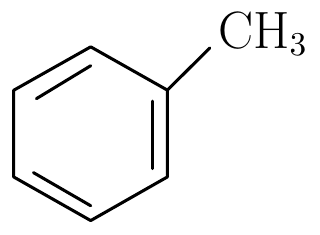
Friedel-Crafts Alkylation Reaction

  • The Friedel-Crafts alkylation is an electrophilic aromatic substitution reaction in which an alkyl group is added to an aromatic ring using an alkyl halide (like CH3Cl) and a Lewis acid catalyst (like AlCl3).
  • In this reaction, the alkyl halide (CH3Cl) reacts with the aromatic compound (benzene) in the presence of anhydrous AlCl3 to form a methylated product (toluene, C6H5CH3) and HCl as a byproduct.

EXPLANATION:

  • In the given reaction:

C6H6 (benzene) + CH3Cl (methyl chloride) → C6H5CH3 (toluene) + HCl

  • The Lewis acid AlCl3 activates the methyl chloride (CH3Cl) by accepting a lone pair of electrons from the chlorine atom, which creates a methyl carbocation (CH3+), a highly reactive species.
  • The methyl carbocation (CH3+) then attacks the electron-rich benzene ring, resulting in the substitution of a hydrogen atom with a methyl group to form toluene (C6H5CH3).
  • The byproduct of this reaction is hydrochloric acid (HCl), which is released during the reaction.
  • The reaction follows the mechanism of electrophilic aromatic substitution.

Therefore, the product (Z) of the reaction is Toluene (C6H5CH3).

Question 139

AIIMS BSc Nursing 2024• Chemistry

A process will be spontaneous at all temperatures if:

  1. AOption (a)

    ΔH > 0 and ΔS < 0

  2. BOption (b)

    ΔH < 0 and ΔS < 0

  3. COption (c)

    ΔH < 0 and ΔS > 0

  4. DOption (d)

    ΔH > 0 and ΔS > 0

View answer & explanation

Correct answer

Answer: (c)C.

ΔH < 0 and ΔS > 0

Why this answer is correct

CONCEPT:

Gibbs Free Energy (ΔG)

  • Gibbs Free Energy (ΔG) determines the spontaneity of a process.
  • The relationship between ΔG, enthalpy (ΔH), and entropy (ΔS) is given by the equation:

ΔG = ΔH - TΔS

  • A process is spontaneous if ΔG < 0.
  • For a process to be spontaneous at all temperatures, ΔG must always be negative regardless of the temperature (T).

EXPLANATION:

  • To determine when ΔG is always negative:
  • ΔG = ΔH - TΔS
  • For ΔG to be negative at all temperatures, ΔH must be negative and ΔS must be positive.
  • This is because:
  • If ΔH < 0 and ΔS > 0, then -TΔS is always negative, making ΔG negative.
  • If ΔH > 0 and ΔS < 0, then both terms would be positive, making ΔG positive.
  • If ΔH < 0 and ΔS < 0, the sign of ΔG would depend on the temperature.
  • If ΔH > 0 and ΔS > 0, the sign of ΔG would again depend on the temperature.

Therefore, the correct answer is option 3: ΔH < 0 and ΔS > 0.

Question 140

AIIMS BSc Nursing 2024• Chemistry

In alkaline medium, MnO4−\mathrm{MnO}_{4}^{-} oxidises I- to

  1. AOption (a)

    IO-

  2. BOption (b)

    IO4−\mathrm{IO}_{4}^{-}

  3. COption (c)

    I2

  4. DOption (d)

    IO3−\mathrm{IO}_{3}^{-}

View answer & explanation

Correct answer

Answer: (d)D.

IO3−\mathrm{IO}_{3}^{-}

Why this answer is correct

CONCEPT:

Oxidation in Alkaline Medium

  • In an alkaline medium, the oxidation states of various species can change due to the presence of hydroxide ions (OH-).
  • Permanganate ion (MnO4-) is a strong oxidizing agent, and its ability to oxidize other species varies with the medium (acidic, neutral, or alkaline).

EXPLANATION:

  • In an alkaline medium, MnO4- oxidizes iodide ions (I-) to iodate ions (IO3-).
  • The balanced half-reaction for the oxidation of I- in alkaline medium is:

MnO4- + I- + OH- → IO3- + MnO2 + H2O

Therefore, in alkaline medium, MnO4- oxidizes I- to IO3-.