SBI Probationary Officer (PO) · Topic Collection

Quantitative Aptitude PYQs

Arithmetic, number systems, percentages, ratios, profit and loss, time and work, algebra, geometry, mensuration, and trigonometry.

1345 Total Questions41 Official PapersYears: 2018–2025Search in Quantitative Aptitude
Showing questions 601–620 of 1345Page 31 of 68
SBI PO Prelims Memory Based Paper (Held On: 6 November 2023 Shift 2) (Previous Year Paper)·Quantitative Aptitude
View full paper

Question 601

SBI Probationary Officer (PO) 2023• Quantitative Aptitude• Quantitative Aptitude

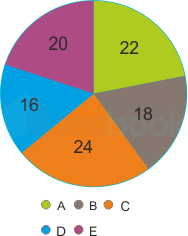
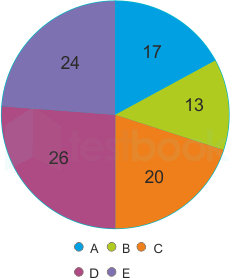
The below pie chart shows the percentage distribution of the number of metallic products and the number of non - metallic products manufactured by five different companies A, B, C, D and E.

Total number of metallic and non- metallic products manufactured = 3000


Number of metallic products manufactured = 1200
 

The number of metallic products manufactured by company C has increased by 50% and the number of the non metallic products made by company C has decreased by 20%.Find the total number of products manufactured by company C.

  1. AOption (a)

    744

  2. BOption (b)

    728

  3. COption (c)

    724

  4. DOption (d)

    716

  5. EOption (e)

    712

View answer & explanation

Correct answer

Answer: (a)A.

744

Why this answer is correct

General solution:


Company A:

Total number of metallic and nonmetallic products manufactured = 3000 ×  (22/100) = 660

Number of metallic products manufactured = 1200 ×  (17/100) = 204

Number of non- metallic products manufactured = (660 - 204) = 456

Company B:

Total number of metallic and nonmetallic products manufactured = 3000 ×  (18/100) = 540

Number of metallic products manufactured = 1200 ×  (13/100) = 156

Number of non- metallic products manufactured = (540 - 156) = 384

Company C:

Total number of metallic and nonmetallic products manufactured = 3000 ×  (24/100) = 720

Number of metallic products manufactured = 1200 ×  (20/100) = 240

Number of non- metallic products manufactured = (720 - 240) = 480

Company D:

Total number of metallic and nonmetallic products manufactured = 3000 ×  (16/100) = 480

Number of metallic products manufactured = 1200 ×  (26/100) = 312

Number of non- metallic products manufactured = (480 - 312) = 168

Company E:

Total number of metallic and nonmetallic products manufactured = 3000 ×  (20/100) = 600

Number of metallic products manufactured = 1200 ×  (24/100) = 288

Number of non- metallic products manufactured = (600 - 288) = 312


CompanyNumber of metallic productsNumber of non metallic products
A204456
B156384
C240480
D312168
E288312

Solution:

 Number of metallic products manufactured by company C = 240 ×  (150/100) = 360

Number of non metallic products manufactured by company C = 480 ×  (80/100) = 384

Number of products manufactured = (360 + 384) = 744
SBI PO Prelims Memory Based Paper (Held On: 6 November 2023 Shift 2) (Previous Year Paper)·Quantitative Aptitude
View full paper

Question 602

SBI Probationary Officer (PO) 2023• Quantitative Aptitude• Quantitative Aptitude

The below pie chart shows the percentage distribution of the number of metallic products and the number of non - metallic products manufactured by five different companies A, B, C, D and E.

Total number of metallic and non- metallic products manufactured = 3000


Number of metallic products manufactured = 1200


 If the number of metallic products manufactured by the company D is increased by x and the number of non metallic products manufactured by the company D is decreased by x. Then the ratio between the number of metallic to non metallic products manufactured by company D is 2:

  1. Find the value of x.
  1. AOption (a)

    12

  2. BOption (b)

    14

  3. COption (c)

    6

  4. DOption (d)

    8

  5. EOption (e)

    10

View answer & explanation

Correct answer

Answer: (d)D.

8

Why this answer is correct

General solution:


Company A:

Total number of metallic and nonmetallic products manufactured = 3000 ×  (22/100) = 660

Number of metallic products manufactured = 1200 ×  (17/100) = 204

Number of non- metallic products manufactured = (660 - 204) = 456

Company B:

Total number of metallic and nonmetallic products manufactured = 3000 ×  (18/100) = 540

Number of metallic products manufactured = 1200 ×  (13/100) = 156

Number of non- metallic products manufactured = (540 - 156) = 384

Company C:

Total number of metallic and nonmetallic products manufactured = 3000 ×  (24/100) = 720

Number of metallic products manufactured = 1200 ×  (20/100) = 240

Number of non- metallic products manufactured = (720 - 240) = 480

Company D:

Total number of metallic and nonmetallic products manufactured = 3000 ×  (16/100) = 480

Number of metallic products manufactured = 1200 ×  (26/100) = 312

Number of non- metallic products manufactured = (480 - 312) = 168

Company E:

Total number of metallic and nonmetallic products manufactured = 3000 ×  (20/100) = 600

Number of metallic products manufactured = 1200 ×  (24/100) = 288

Number of non- metallic products manufactured = (600 - 288) = 312


CompanyNumber of metallic productsNumber of non metallic products
A204456
B156384
C240480
D312168
E288312

Solution:

Number of metallic products manufactured by company D = 312

Number of non metallic products manufactured by company D = 168

(312 + x)/(168 - x) = 2/1

312 + x = 336 - 2x

3x = 24

x = 8

SBI PO Prelims Memory Based Paper (Held On: 6 November 2023 Shift 2) (Previous Year Paper)·Quantitative Aptitude
View full paper

Question 603

SBI Probationary Officer (PO) 2023• Quantitative Aptitude• Quantitative Aptitude

The below pie chart shows the percentage distribution of the number of metallic products and the number of non - metallic products manufactured by five different companies A, B, C, D and E.

Total number of metallic and non- metallic products manufactured = 3000


Number of metallic products manufactured = 1200


Number of metallic products manufactured by the companies A and B is what percentage of the total number of non metallic products made by all the companies A, B, C, D and E.

  1. AOption (a)

    15%

  2. BOption (b)

    30%

  3. COption (c)

    35%

  4. DOption (d)

    20%

  5. EOption (e)

    25%

View answer & explanation

Correct answer

Answer: (d)D.

20%

Why this answer is correct

General solution:


Company A:

Total number of metallic and nonmetallic products manufactured = 3000 ×  (22/100) = 660

Number of metallic products manufactured = 1200 ×  (17/100) = 204

Number of non- metallic products manufactured = (660 - 204) = 456

Company B:

Total number of metallic and nonmetallic products manufactured = 3000 ×  (18/100) = 540

Number of metallic products manufactured = 1200 ×  (13/100) = 156

Number of non- metallic products manufactured = (540 - 156) = 384

Company C:

Total number of metallic and nonmetallic products manufactured = 3000 ×  (24/100) = 720

Number of metallic products manufactured = 1200 ×  (20/100) = 240

Number of non- metallic products manufactured = (720 - 240) = 480

Company D:

Total number of metallic and nonmetallic products manufactured = 3000 ×  (16/100) = 480

Number of metallic products manufactured = 1200 ×  (26/100) = 312

Number of non- metallic products manufactured = (480 - 312) = 168

Company E:

Total number of metallic and nonmetallic products manufactured = 3000 ×  (20/100) = 600

Number of metallic products manufactured = 1200 ×  (24/100) = 288

Number of non- metallic products manufactured = (600 - 288) = 312


CompanyNumber of metallic productsNumber of non metallic products
A204456
B156384
C240480
D312168
E288312

Solution:

Number of metallic products made by company A = 204

Number of metallic products made by company B = 156

Total nonmetallic in all the companies = (3000 - 1200) = 1800

Required percentage = (204 + 156) = 360/1800 ×  100 = 20%

SBI PO Prelims Memory Based Paper (Held On: 6 November 2023 Shift 2) (Previous Year Paper)·Quantitative Aptitude
View full paper

Question 604

SBI Probationary Officer (PO) 2023• Quantitative Aptitude• Quantitative Aptitude

The below pie chart shows the percentage distribution of the number of metallic products and the number of non - metallic products manufactured by five different companies A, B, C, D and E.

Total number of metallic and non- metallic products manufactured = 3000


Number of metallic products manufactured = 1200


 If 1/3rd of metallic products manufactured by company A and 1/4 th of the non metallic products made by company A are defective and remaining are non - defective , Find the total number of non - defective products manufactured by company A.

  1. AOption (a)

    468

  2. BOption (b)

    478

  3. COption (c)

    472

  4. DOption (d)

    470

  5. EOption (e)

    454

View answer & explanation

Correct answer

Answer: (b)B.

478

Why this answer is correct

General solution:


Company A:

Total number of metallic and nonmetallic products manufactured = 3000 ×  (22/100) = 660

Number of metallic products manufactured = 1200 ×  (17/100) = 204

Number of non- metallic products manufactured = (660 - 204) = 456

Company B:

Total number of metallic and nonmetallic products manufactured = 3000 ×  (18/100) = 540

Number of metallic products manufactured = 1200 ×  (13/100) = 156

Number of non- metallic products manufactured = (540 - 156) = 384

Company C:

Total number of metallic and nonmetallic products manufactured = 3000 ×  (24/100) = 720

Number of metallic products manufactured = 1200 ×  (20/100) = 240

Number of non- metallic products manufactured = (720 - 240) = 480

Company D:

Total number of metallic and nonmetallic products manufactured = 3000 ×  (16/100) = 480

Number of metallic products manufactured = 1200 ×  (26/100) = 312

Number of non- metallic products manufactured = (480 - 312) = 168

Company E:

Total number of metallic and nonmetallic products manufactured = 3000 ×  (20/100) = 600

Number of metallic products manufactured = 1200 ×  (24/100) = 288

Number of non- metallic products manufactured = (600 - 288) = 312


CompanyNumber of metallic productsNumber of non metallic products
A204456
B156384
C240480
D312168
E288312

Solution:

Number of metallic products manufactured by company A = 204

Number of defective metallic products manufactured by company A= 204/3 = 68

Number of non - metallic products manufactured by company A = 456

Number of defective non - metallic products manufactured by company A = 456/4 = 114

Number of non - defective products manufactured by company A = (204 - 68) + (456 - 114) = (136 + 342) = 478

SBI PO Prelims Memory Based Paper (Held On: 6 November 2023 Shift 2) (Previous Year Paper)·Quantitative Aptitude
View full paper

Question 605

SBI Probationary Officer (PO) 2023• Quantitative Aptitude• Quantitative Aptitude

The below pie chart shows the percentage distribution of the number of metallic products and the number of non - metallic products manufactured by five different companies A, B, C, D and E.

Total number of metallic and non- metallic products manufactured = 3000


Number of metallic products manufactured = 1200


Find the ratio between the number of metallic products manufactured by company D and E to the number of non metallic products manufactured by company D and E.

  1. AOption (a)

    5: 6

  2. BOption (b)

    2:1

  3. COption (c)

    5: 4

  4. DOption (d)

    3: 2

  5. EOption (e)

    3: 5

View answer & explanation

Correct answer

Answer: (c)C.

5: 4

Why this answer is correct

General solution:


Company A:

Total number of metallic and nonmetallic products manufactured = 3000 ×  (22/100) = 660

Number of metallic products manufactured = 1200 ×  (17/100) = 204

Number of non- metallic products manufactured = (660 - 204) = 456

Company B:

Total number of metallic and nonmetallic products manufactured = 3000 ×  (18/100) = 540

Number of metallic products manufactured = 1200 ×  (13/100) = 156

Number of non- metallic products manufactured = (540 - 156) = 384

Company C:

Total number of metallic and nonmetallic products manufactured = 3000 ×  (24/100) = 720

Number of metallic products manufactured = 1200 ×  (20/100) = 240

Number of non- metallic products manufactured = (720 - 240) = 480

Company D:

Total number of metallic and nonmetallic products manufactured = 3000 ×  (16/100) = 480

Number of metallic products manufactured = 1200 ×  (26/100) = 312

Number of non- metallic products manufactured = (480 - 312) = 168

Company E:

Total number of metallic and nonmetallic products manufactured = 3000 ×  (20/100) = 600

Number of metallic products manufactured = 1200 ×  (24/100) = 288

Number of non- metallic products manufactured = (600 - 288) = 312


CompanyNumber of metallic productsNumber of non metallic products
A204456
B156384
C240480
D312168
E288312

Solution:

Number of metallic products manufactured by company D = 312

NUmber of metallic products manufactured by company E = 288

Number of metallic products manufactured by company D = 168

Number of metallic products manufactured by company E = 312

Required ratio = (312 + 288): (168 + 312) = (600:480) = 5: 4

SBI PO Prelims Memory Based Paper (Held On: 6 November 2023 Shift 2) (Previous Year Paper)·Quantitative Aptitude
View full paper

Question 606

SBI Probationary Officer (PO) 2023• Quantitative Aptitude• Quantitative Aptitude

A, B and C are three candidates who have taken part in an election which have 25000 total voters in the voter list. 20% people do not vote and the ratio of casting votes among all three is 8 : 7 : 5 respectively. Find the winner of the election and difference between winner and second runner-up candidate in the election?

  1. AOption (a)

    A, 3050

  2. BOption (b)

    A, 3000

  3. COption (c)

    A, 4000

  4. DOption (d)

    A, 3100

  5. EOption (e)

    None of the above

View answer & explanation

Correct answer

Answer: (b)B.

A, 3000

Why this answer is correct

Shortcut Trick

Total Casting Votes = 80% of 25000 = 20000.

Ratio of votes (A : B : C) = 8 : 7 : 5. Total ratio units = 8 + 7 + 5 = 20 units.

Value of 1 unit = 20000 ÷ 20 = 1000 votes.

Winner is A (8 units) and Second runner-up is C (5 units).

Difference (A − C) = (8 − 5) × 1000 = 3000 votes.

∴ The correct answer is A, 3000.

Alternate Method

Given → Total Voters = 25000 | Non-voters = 20% | Ratio A:B:C = 8:7:5.
Formulas: Casting Votes = Total × (100 − Non-voter%) ÷ 100 | Difference = (Ratio Diff ÷ Total Ratio) × Total Casting.

⇒ Casting Votes = 25000 − (20% of 25000) = 25000 − 5000 = 20000.
⇒ Ratio components: A = 8x, B = 7x, C = 5x.
⇒ 8x + 7x + 5x = 20x = 20000 ⇒ x = 1000.
⇒ Winner is A because he has the highest ratio (8 units).
⇒ Second runner-up is C (5 units).

Note:

B is the first runner-up.
⇒ Difference = A − C = 8000 − 5000 = 3000.

∴ The correct answer is A, 3000.

Additional Information

Election Terminology

Winner: The candidate with the maximum number of votes. Runner-up: The candidate with the second-highest votes. Second Runner-up: The candidate with the third-highest votes.

Ratio Distribution

To find an individual share: Share = (Individual Ratio ÷ Sum of Ratios) × Total Quantity.

SBI PO Prelims Memory Based Paper (Held On: 6 November 2023 Shift 2) (Previous Year Paper)·Quantitative Aptitude
View full paper

Question 607

SBI Probationary Officer (PO) 2023• Quantitative Aptitude• Quantitative Aptitude

The area of a rectangle is 192 sq. cm. The length of a rectangle is two more than twice the radius of a circle. The circumference of a circle is 44 cm. The breadth of a rectangle is 8 more than the side of an Equilateral triangle. Find the perimeter of an Equilateral triangle. 

  1. AOption (a)

    12 cm

  2. BOption (b)

    20 cm

  3. COption (c)

    16 cm

  4. DOption (d)

    28 cm

  5. EOption (e)

    24 cm

View answer & explanation

Correct answer

Answer: (a)A.

12 cm

Why this answer is correct

Shortcut Trick

Circumference 44 cm → Radius = 7 cm (Standard circle ratio 7 : 44).

Length = 2 × 7 + 2 = 16 cm.

Breadth = Area ÷ Length = 192 ÷ 16 = 12 cm.

Side of Triangle = Breadth − 8 = 12 − 8 = 4 cm.

Perimeter = 3 × 4 = 12 cm.

∴ The correct answer is 12 cm.

Alternate Method

Given: Area of rectangle = 192 cm2, Circumference of circle = 44 cm.

Formula Used: Circumference = 2πr; Area = L × B; Perimeter of Triangle = 3a.

⇒ 2 × (22/7) × r = 44

⇒ r = 7 cm

⇒ Length (L) = 2r + 2 = 2(7) + 2 = 16 cm

⇒ Breadth (B) = Area ÷ L = 192 ÷ 16 = 12 cm

⇒ Side of triangle (a) = B − 8 = 12 − 8 = 4 cm

⇒ Perimeter = 3 × a = 3 × 4 = 12 cm

∴ The correct answer is 12 cm.

Additional Information

Equilateral Triangle Properties

All sides are equal (a) and Area = (√3/4) × a2. Height h = (√3/2) × a.

Circle Relations

Area = πr2. For r = 7, Circumference = 44 and Area = 154.

Rectangle Perimeter

Perimeter = 2(L + B). Diagonal d = √(L2 + B2).

SBI PO Prelims Memory Based Paper (Held On: 6 November 2023 Shift 2) (Previous Year Paper)·Quantitative Aptitude
View full paper

Question 608

SBI Probationary Officer (PO) 2023• Quantitative Aptitude• Quantitative Aptitude

If x litres milk and 9 litres honey is added in a mixture of milk and honey the ratio of milk and honey in the mixture becomes 7 : 5. Find the value of x.

Statement I: Resultant quantity of honey in the mixture is 45 litres.

Statement II: Ratio of milk and honey initially was 5 : 4.

  1. AOption (a)

    Statement II alone is sufficient to answer the question.

  2. BOption (b)

    Statements I and II together are required to answer the question.

  3. COption (c)

    Either statement I or statement II alone is sufficient to answer the question.

  4. DOption (d)

    Statement I alone is sufficient to answer the question.

  5. EOption (e)

    Both Statements I and II together are not sufficient to answer the question.

View answer & explanation

Correct answer

Answer: (b)B.

Statements I and II together are required to answer the question.

Why this answer is correct

Combining statements I and II:

Suppose quantities of milk and honey initially were 5a and 4a respectively.

According to the given statements

(4a + 9) = 45

⇒ a = 9

⇒ Quantity of milk initially = 45 litres

Quantity of honey initially = 36 litres

Now,

(45 + x) : 45 = 7 : 5

⇒ x = 18

∴ Statements I and II together are required to answer the question.

SBI PO Prelims Memory Based Paper (Held On: 6 November 2023 Shift 2) (Previous Year Paper)·Quantitative Aptitude
View full paper

Question 609

SBI Probationary Officer (PO) 2023• Quantitative Aptitude• Quantitative Aptitude

Find the total population of town A.

Statement I: Number of males in town B is 11520 which is 80% of the number of females in town A. There are 4880 more males in town A as compared to town B.

Statement II: The ratio of number of males and females in town A is 41 : 36 and difference of number of males and females is 2000.

  1. AOption (a)

    Both Statements I and II together are not sufficient to answer the question.

  2. BOption (b)

    Statement II alone is sufficient to answer the question.

  3. COption (c)

    Statements I and II together are required to answer the question.

  4. DOption (d)

    Either statement I or statement II alone is sufficient to answer the question.

  5. EOption (e)

    Statement I alone is sufficient to answer the question.

View answer & explanation

Correct answer

Answer: (d)D.

Either statement I or statement II alone is sufficient to answer the question.

Why this answer is correct

Statement I: 

Number of males in town B is 11520 which is 80% of the number of females in town A.

⇒ Number of females in town A = 11520/0.8 = 14400

There are 4880 more males in town A as compared to town B.

Number of males in town A = 11520 + 4880 = 16400

⇒ Total population of town A = 14400 + 16400 = 30800

Statement II: 

The ratio of number of males and females in town A is 41 : 36 and difference of number of males and females is 2000.

Suppose number of males and females in town A are 41x and 36x respectively.

⇒ 41x – 36x = 2000

⇒ 5x = 2000

⇒ x = 400

⇒ Total population of town A = 41x + 36x = 77x = 30800

∴ Either statement I or statement II alone is sufficient to answer the question.

SBI PO Prelims Memory Based Paper (Held On: 6 November 2023 Shift 2) (Previous Year Paper)·Quantitative Aptitude
View full paper

Question 610

SBI Probationary Officer (PO) 2023• Quantitative Aptitude• Quantitative Aptitude

What is the total surface area of the cuboid?

Statement I: The volume of the cuboid is 5184 cm3 and the ratio of the length, breadth and height of the cuboid is 3 : 4 : 2.

Statement II: Total surface area of the upper and lower faces of the cuboid is 864 cm2 and the height of the cuboid is 12 cm.

  1. AOption (a)

    Statement II alone is sufficient to answer the question.

  2. BOption (b)

    Either statement I or statement II alone is sufficient to answer the question.

  3. COption (c)

    Statement I alone is sufficient to answer the question.

  4. DOption (d)

    Statements I and II together are required to answer the question.

  5. EOption (e)

    Both Statements I and II together are not sufficient to answer the question.

View answer & explanation

Correct answer

Answer: (c)C.

Statement I alone is sufficient to answer the question.

Why this answer is correct

Statement I:

Volume of the cuboid = lbh

Let length be 3x, breadth be 4x, height be 2x

5184 = 3x × 4x × 2x

⇒ 5184 = 24x3

⇒ 216 = x3

⇒ x = 6

Length = 18 cm, Breadth = 24 cm, Height = 12 cm

Total Surface Area of cuboid = 2 (lb + bh + hl)

⇒ 2 × (18 × 24 + 24 × 12 + 12 × 18)

⇒ 2 × (432 + 288 + 216)

⇒ 1872 cm2

Statement II:

Total surface area of the upper and lower faces of the cuboid is 864 cm2

2lb = 864

⇒ lb = 432

height (h) = 12 cm

Now,

Total Surface Area of cuboid = 2 (lb + bh + hl)

We can’t find the total surface area as we do not have the values of length and breadth.

∴ Statement I alone is sufficient to answer the question.

SBI PO Prelims Memory Based Paper (Held On: 6 November 2023 Shift 1) (Previous Year Paper)·Quantitative Aptitude
View full paper

Question 611

SBI Probationary Officer (PO) 2023• Quantitative Aptitude• Quantitative Aptitude

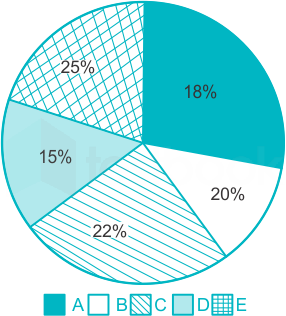
Directions: The following pie chart shows the percentage distribution of the number of population (Male + Female) living in the city A, B, C, D and E.

Total population in the city = 3000

Table shows the difference between the number of males and females living in the five different cities.


Name of the citiesDifference between males and females
A60
B100
C100
D50
E210

Note:

Number of males in each cities is more than the number of females in all the cities

 20%, and 25% of the males in city D and E respectively are below the age of 25 and 60% and 66.66% of females in city D and E respectively are above the age of 25. Find the total number of persons (Male + Female) below the age of 25.

  1. AOption (a)

    380

  2. BOption (b)

    340

  3. COption (c)

    310

  4. DOption (d)

    370

  5. EOption (e)

    320

View answer & explanation

Correct answer

Answer: (b)B.

340

Why this answer is correct

General solution:


City

Number of persons (Male + Female) living in city = 3000 ×  (18/100) = 540

Difference between number of (Male - Females) = 60

M + F = 540

M - F = 60

2M = 600

M = 300

F = 240


City B:


Number of persons (Male + Female) living in city = 3000 ×  (20/100) = 600

Difference between number of (Male - Females) = 100

M + F = 600

M - F = 100

2M = 700

M = 350

F = 250


City C:


Number of persons (Male + Female) living in city = 3000 ×  (22/100) = 660

Difference between number of (Male - Females) = 100

M + F = 660

M - F = 100

2M = 760

M = 380

F = 280


City D:


Number of persons (Male + Female) living in city = 3000 ×  (15/100) = 450

Difference between number of (Male - Females) = 50

M + F = 450

M - F = 50

2M = 500

M = 250

F = 200


City E:


Number of persons (Male + Female) living in city = 3000 ×  (25/100) = 750

Difference between number of (Male - Females) = 210

M + F = 750

M - F = 210

2M = 960

M = 480

F = 270


Name of the citiesNumber of malesNumber of females
A300240
B350250
C380280
D250200
E480270

Solution:

Number of males below the age of 25 in city D = 250 ×  (20/100) = 50

Number of males below the age of 25 in city E = 480 ×  (25/100) = 120

Number of females below the age of 25 in city D = 200 ×  (40/100) = 80

Number of females below the age of 25 in city E = 270 ×  (33.33/100) = 90

Required sum = (50 + 120 + 80 + 90) = 340

SBI PO Prelims Memory Based Paper (Held On: 6 November 2023 Shift 1) (Previous Year Paper)·Quantitative Aptitude
View full paper

Question 612

SBI Probationary Officer (PO) 2023• Quantitative Aptitude• Quantitative Aptitude

Directions: The following pie chart shows the percentage distribution of the number of population (Male + Female) living in the city A, B, C, D and E.

Total population in the city = 3000

Table shows the difference between the number of males and females living in the five different cities.


Name of the citiesDifference between males and females
A60
B100
C100
D50
E210

Note:

Number of males in each cities is more than the number of females in all the cities

If 3/7 of the males in the city B and 2/5 of the females in the city B are having two wheelers and remaining have four wheelers , Find the difference between the 4/5 of the number of males having four wheelers in city B and females having four wheelers in city B.

  1. AOption (a)

    20

  2. BOption (b)

    18

  3. COption (c)

    15

  4. DOption (d)

    10

  5. EOption (e)

    12

View answer & explanation

Correct answer

Answer: (d)D.

10

Why this answer is correct

General solution:


City A 

Number of persons (Male + Female) living in city = 3000 ×  (18/100) = 540

Difference between number of (Male - Females) = 60

M + F = 540

M - F = 60

2M = 600

M = 300

F = 240


City B:


Number of persons (Male + Female) living in city = 3000 ×  (20/100) = 600

Difference between number of (Male - Females) = 100

M + F = 600

M - F = 100

2M = 700

M = 350

F = 250


City C:


Number of persons (Male + Female) living in city = 3000 ×  (22/100) = 660

Difference between number of (Male - Females) = 100

M + F = 660

M - F = 100

2M = 760

M = 380

F = 280


City D:


Number of persons (Male + Female) living in city = 3000 ×  (15/100) = 450

Difference between number of (Male - Females) = 50

M + F = 450

M - F = 50

2M = 500

M = 250

F = 200


City E:


Number of persons (Male + Female) living in city = 3000 ×  (25/100) = 750

Difference between number of (Male - Females) = 210

M + F = 750

M - F = 210

2M = 960

M = 480

F = 270


Name of the citiesNumber of malesNumber of females
A300240
B350250
C380280
D250200
E480270

Solution:

Number of males living in city B = 350

Number of females living in city B = 250

Number of males having two wheelers in city B = 350 ×  3/7 = 150

Number of females having two wheelers in city B = 250 ×  2/5 = 100

Number of females having four wheelers in city B = (350 - 150) = 200

Number of females having four wheelers in city B = (250 - 100) = 150

Required difference = (200 ×  4/5 - 150) = (160 - 150) = 10

SBI PO Prelims Memory Based Paper (Held On: 6 November 2023 Shift 1) (Previous Year Paper)·Quantitative Aptitude
View full paper

Question 613

SBI Probationary Officer (PO) 2023• Quantitative Aptitude• Quantitative Aptitude

Directions: The following pie chart shows the percentage distribution of the number of population (Male + Female) living in the city A, B, C, D and E.

Total population in the city = 3000

Table shows the difference between the number of males and females living in the five different cities.


Name of the citiesDifference between males and females
A60
B100
C100
D50
E210

Note:

Number of males in each cities is more than the number of females in all the cities

If the number of males living in the city C is increased by x and the number of females living in the same city is increased by (x - 50) then then the ratio of males to females becomes 3: 2. Find the value of x.

  1. AOption (a)

    90

  2. BOption (b)

    85

  3. COption (c)

    70

  4. DOption (d)

    75

  5. EOption (e)

    80

View answer & explanation

Correct answer

Answer: (c)C.

70

Why this answer is correct

General solution:


City A 

Number of persons (Male + Female) living in city = 3000 ×  (18/100) = 540

Difference between number of (Male - Females) = 60

M + F = 540

M - F = 60

2M = 600

M = 300

F = 240


City B:


Number of persons (Male + Female) living in city = 3000 ×  (20/100) = 600

Difference between number of (Male - Females) = 100

M + F = 600

M - F = 100

2M = 700

M = 350

F = 250


City C:


Number of persons (Male + Female) living in city = 3000 ×  (22/100) = 660

Difference between number of (Male - Females) = 100

M + F = 660

M - F = 100

2M = 760

M = 380

F = 280


City D:


Number of persons (Male + Female) living in city = 3000 ×  (15/100) = 450

Difference between number of (Male - Females) = 50

M + F = 450

M - F = 50

2M = 500

M = 250

F = 150


City E:


Number of persons (Male + Female) living in city = 3000 ×  (25/100) = 750

Difference between number of (Male - Females) = 210

M + F = 750

M - F = 210

2M = 960

M = 480

F = 270


Name of the citiesNumber of malesNumber of females
A300240
B350250
C380280
D250200
E480270


Solution:

Number of males living in the city C = 380

Number of females living in the city C = 280

(380 + x)/(280 + (x - 50)) = 3/2

(760 + 2x) = ( 690 + 3x)

x = 70

SBI PO Prelims Memory Based Paper (Held On: 6 November 2023 Shift 1) (Previous Year Paper)·Quantitative Aptitude
View full paper

Question 614

SBI Probationary Officer (PO) 2023• Quantitative Aptitude• Quantitative Aptitude

Directions: The following pie chart shows the percentage distribution of the number of population (Male + Female) living in the city A, B, C, D and E.

Total population in the city = 3000

Table shows the difference between the number of males and females living in the five different cities.


Name of the citiesDifference between males and females
A60
B100
C100
D50
E210

Note:

Number of males in each cities is more than the number of females in all the cities

Number of males living in city F is 20 more than the average males living in city C and city E and the number of females living in city F is 40 more than the average females living in city A and C. Find the total persons living in the city F.

  1. AOption (a)

    850

  2. BOption (b)

    700

  3. COption (c)

    650

  4. DOption (d)

    750

  5. EOption (e)

    550

View answer & explanation

Correct answer

Answer: (d)D.

750

Why this answer is correct

General solution:


City A 

Number of persons (Male + Female) living in city = 3000 ×  (18/100) = 540

Difference between number of (Male - Females) = 60

M + F = 540

M - F = 60

2M = 600

M = 300

F = 240


City B:


Number of persons (Male + Female) living in city = 3000 ×  (20/100) = 600

Difference between number of (Male - Females) = 100

M + F = 600

M - F = 100

2M = 700

M = 350

F = 250


City C:


Number of persons (Male + Female) living in city = 3000 ×  (22/100) = 660

Difference between number of (Male - Females) = 100

M + F = 660

M - F = 100

2M = 760

M = 380

F = 280


City D:


Number of persons (Male + Female) living in city = 3000 ×  (15/100) = 450

Difference between number of (Male - Females) = 50

M + F = 450

M - F = 50

2M = 500

M = 250

F = 150


City E:


Number of persons (Male + Female) living in city = 3000 ×  (25/100) = 750

Difference between number of (Male - Females) = 210

M + F = 750

M - F = 210

2M = 960

M = 480

F = 270


Name of the citiesNumber of malesNumber of females
A300240
B350250
C380280
D250200
E480270


Solution:

Number of males living in city C = 380

Number of males living in city E = 480

Average number of males living in city C and E = (380 + 480)/2 = 430

Number of males living in city F = (430 + 20) = 450

Number of females living in city A = 240

Number of females living in city C = 280

Average number of females living in city A and C = (240 + 280)/2 = 260

Number of females living in city F = (260 + 40) = 300

Required sum = (450 + 300) = 750

SBI PO Prelims Memory Based Paper (Held On: 6 November 2023 Shift 1) (Previous Year Paper)·Quantitative Aptitude
View full paper

Question 615

SBI Probationary Officer (PO) 2023• Quantitative Aptitude• Quantitative Aptitude

Directions: The following pie chart shows the percentage distribution of the number of population (Male + Female) living in the city A, B, C, D and E.

Total population in the city = 3000

Table shows the difference between the number of males and females living in the five different cities.


Name of the citiesDifference between males and females
A60
B100
C100
D50
E210

Note:

Number of males in each cities is more than the number of females in all the cities

Find the ratio between the number of males living in city A and B to the number of females living in the city C and E.

  1. AOption (a)

    13: 12

  2. BOption (b)

    13: 11

  3. COption (c)

    12: 13

  4. DOption (d)

    17: 15

  5. EOption (e)

    11: 14

View answer & explanation

Correct answer

Answer: (b)B.

13: 11

Why this answer is correct

General solution:


City A 

Number of persons (Male + Female) living in city = 3000 ×  (18/100) = 540

Difference between number of (Male - Females) = 60

M + F = 540

M - F = 60

2M = 600

M = 300

F = 240


City B:


Number of persons (Male + Female) living in city = 3000 ×  (20/100) = 600

Difference between number of (Male - Females) = 100

M + F = 600

M - F = 100

2M = 700

M = 350

F = 250


City C:


Number of persons (Male + Female) living in city = 3000 ×  (22/100) = 660

Difference between number of (Male - Females) = 100

M + F = 660

M - F = 100

2M = 760

M = 380

F = 280


City D:


Number of persons (Male + Female) living in city = 3000 ×  (15/100) = 450

Difference between number of (Male - Females) = 50

M + F = 450

M - F = 50

2M = 500

M = 250

F = 150


City E:


Number of persons (Male + Female) living in city = 3000 ×  (25/100) = 750

Difference between number of (Male - Females) = 210

M + F = 750

M - F = 210

2M = 960

M = 480

F = 270


Name of the citiesNumber of malesNumber of females
A300240
B350250
C380280
D250200
E480270

Solution:

Number of males living in city A =300

Number of males living in city B = 350

Number of females living in city C = 280

Number of females living in city E = 270

Required ratio = (300 + 350): (280 + 270) = (650: 550) = 13: 11

SBI PO Prelims Memory Based Paper (Held On: 6 November 2023 Shift 1) (Previous Year Paper)·Quantitative Aptitude
View full paper

Question 616

SBI Probationary Officer (PO) 2023• Quantitative Aptitude• Quantitative Aptitude

Directions: The following pie chart shows the percentage distribution of the number of population (Male + Female) living in the city A, B, C, D and E.

Total population in the city = 3000

Table shows the difference between the number of males and females living in the five different cities.


Name of the citiesDifference between males and females
A60
B100
C100
D50
E210

Note:

Number of males in each cities is more than the number of females in all the cities

In each city, the literacy rate among males is 70%, and among females, it is 60%. Calculate the total number of literate people in each city and determine which city has the highest literacy rate (literate people as a percentage of the total population of the city).

  1. AOption (a)

    City E

  2. BOption (b)

    City A

  3. COption (c)

    City D

  4. DOption (d)

    City B

  5. EOption (e)

    City C

View answer & explanation

Correct answer

Answer: (a)A.

City E

Why this answer is correct

General solution:


City A 

Number of persons (Male + Female) living in city = 3000 ×  (18/100) = 540

Difference between number of (Male - Females) = 60

M + F = 540

M - F = 60

2M = 600

M = 300

F = 240


City B:


Number of persons (Male + Female) living in city = 3000 ×  (20/100) = 600

Difference between number of (Male - Females) = 100

M + F = 600

M - F = 100

2M = 700

M = 350

F = 250


City C:


Number of persons (Male + Female) living in city = 3000 ×  (22/100) = 660

Difference between number of (Male - Females) = 100

M + F = 660

M - F = 100

2M = 760

M = 380

F = 280


City D:


Number of persons (Male + Female) living in city = 3000 ×  (15/100) = 450

Difference between number of (Male - Females) = 50

M + F = 450

M - F = 50

2M = 500

M = 250

F = 150


City E:


Number of persons (Male + Female) living in city = 3000 ×  (25/100) = 750

Difference between number of (Male - Females) = 210

M + F = 750

M - F = 210

2M = 960

M = 480

F = 270


Name of the citiesNumber of malesNumber of females
A300240
B350250
C380280
D250200
E480270


Solution:

Number of literate people in each city if males = 70% and females = 60% literate in all cities.

City A: Literate Males = 210, Literate Females = 144,

Total Literate People = 354

City B: Literate Males = 245, Literate Females = 150,

Total Literate People = 395

City C: Literate Males = 266, Literate Females = 168,

Total Literate People = 434

City D: Literate Males = 175, Literate Females = 120,

Total Literate People = 295

City E: Literate Males = 336, Literate Females = 162,

Total Literate People = 498

Literacy rate in each city = Literate people as a percentage of the total population of the city

City A: Literacy Rate = 65.56%

City B: Literacy Rate = 65.83%

City C: Literacy Rate = 65.76%

City D: Literacy Rate = 65.56%

City E: Literacy Rate = 66.40%

City E has the highest literacy rate with approximately 66.40%.

SBI PO Prelims Memory Based Paper (Held On: 6 November 2023 Shift 1) (Previous Year Paper)·Quantitative Aptitude
View full paper

Question 617

SBI Probationary Officer (PO) 2023• Quantitative Aptitude• Quantitative Aptitude

The perimeter of the semi-circular garden is equal to the perimeter of the rectangular field whose length and breadth is x m and (x – 12) m, respectively.  If the area of the rectangle field is 1260 m2. Then, find the cost of fencing of the semi-circular garden at the rate of Rs. 15 per m?

  1. AOption (a)

    Rs. 2200

  2. BOption (b)

    Rs. 2160

  3. COption (c)

    Rs. 2450

  4. DOption (d)

    Rs. 2340

  5. EOption (e)

    None of these

View answer & explanation

Correct answer

Answer: (b)B.

Rs. 2160

Why this answer is correct

Shortcut Trick

Area of rectangle = 1260 m2. Factors of 1260 with difference 12: 42 × 30.

Length (x) = 42 m, Breadth (x − 12) = 30 m.

Perimeter of rectangle = 2 × (42 + 30) = 144 m.

Cost of fencing = Perimeter × Rate = 144 m × ₹15 per m = ₹2160.

∴ The correct answer is ₹2160.

Alternate Method

Given: Area of rectangular field = 1260 m2, Length = x, Breadth = x − 12. Rate = ₹15/m.

Formula Used: Area = Length × Breadth; Perimeter of rectangle = 2(l + b).

⇒ x(x − 12) = 1260

⇒ x2 − 12x − 1260 = 0

⇒ x2 − 42x + 30x − 1260 = 0

⇒ (x − 42)(x + 30) = 0 ⇒ x = 42 m (Length), Breadth = 30 m

⇒ Perimeter of rectangular field = 2(42 + 30) = 144 m

⇒ Since Perimeters are equal, Fencing length of semi-circular garden = 144 m

⇒ Total Cost = 144 × 15 = ₹2160

∴ The correct answer is ₹2160.

Additional Information

Perimeter of Semi-circle

The total perimeter includes the curved arc and the diameter: P = πr + 2r or r(π + 2).

Cost of Fencing

Total Cost is calculated by multiplying the boundary length (Perimeter) by the rate per unit length.

Area of Semi-circle

The region enclosed is half that of a full circle: Area = (πr2) ÷ 2.

SBI PO Prelims Memory Based Paper (Held On: 6 November 2023 Shift 1) (Previous Year Paper)·Quantitative Aptitude
View full paper

Question 618

SBI Probationary Officer (PO) 2023• Quantitative Aptitude• Quantitative Aptitude

A lent out Rs. 5000 and Rs. 'A' on compound interest for 3 years and 4 years respectively at the rate of interest of 10%. The difference between compound interest is Rs. 2986. Find the value of A.

  1. AOption (a)

    Rs. 10000

  2. BOption (b)

    Rs. 9000

  3. COption (c)

    Rs. 8000

  4. DOption (d)

    Rs. 15000

  5. EOption (e)

    Rs. 5000

View answer & explanation

Correct answer

Answer: (a)A.

Rs. 10000

Why this answer is correct

Shortcut Trick

Rate = 10%. Multiplying factors: 3 years = 1.331, 4 years = 1.4641.

CI1 = 5000 × (1.331 − 1) = 5000 × 0.331 = 1655.

CI2 = A × (1.4641 − 1) = 0.4641A.

Difference: 0.4641A − 1655 = 2986 ⇒ 0.4641A = 4641 ⇒ A = 10000.

∴ The correct answer is ₹10000.

Alternate Method

Given: Principal1 = ₹5000, Time1 = 3 years, Principal2 = ₹A, Time2 = 4 years, Rate = 10%.

Formula: CI = P[(1 + R/100)n − 1]

⇒ CI1 = 5000[(1 + 10/100)3 − 1]

⇒ CI1 = 5000[1.13 − 1] = 5000[1.331 − 1] = 5000 × 0.331 = 1655

⇒ CI2 = A[(1.1)4 − 1] = A[1.4641 − 1] = 0.4641A

⇒ CI2 − CI1 = 2986

⇒ 0.4641A − 1655 = 2986

⇒ 0.4641A = 2986 + 1655 = 4641

⇒ A = 4641 ÷ 0.4641 = 10000

∴ The correct answer is ₹10000.

Additional Information

Compound Interest Formula

The amount A = P(1 + r/100)n. Compound Interest CI = Amount − Principal.

Successive Percentage Method

For 10% rate: 2 years effective rate = 21%, 3 years = 33.1%, 4 years = 46.41%.

Difference between CI and SI

For 2 years, Difference = P(R/100)2. For 3 years, Difference = P(R/100)2 × (3 + R/100).

SBI PO Prelims Memory Based Paper (Held On: 6 November 2023 Shift 1) (Previous Year Paper)·Quantitative Aptitude
View full paper

Question 619

SBI Probationary Officer (PO) 2023• Quantitative Aptitude• Quantitative Aptitude

What should come in the place of question mark '?' in the following number series ?

123, 187, 219, 235, 243, ?

  1. AOption (a)

    247

  2. BOption (b)

    245

  3. COption (c)

    249

  4. DOption (d)

    251

  5. EOption (e)

    None of these

View answer & explanation

Correct answer

Answer: (a)A.

247

Why this answer is correct

Considering the above series,

123, 184, 219, 235, 243, ?

The logic of the series can be explained as:

123 + (128/2 = 64) = 187

187 + (64/2 = 32) = 219

219 + (32/2 = 16) = 235

235 + (16/2 = 8) = 243

By observing the pattern, we can write

⇒ 243 + (8/2 = 4) = ?

⇒ ? = 247

∴ The value of ? is 247.

SBI PO Prelims Memory Based Paper (Held On: 6 November 2023 Shift 1) (Previous Year Paper)·Quantitative Aptitude
View full paper

Question 620

SBI Probationary Officer (PO) 2023• Quantitative Aptitude• Quantitative Aptitude

What should come in the place of question mark '?' in the following number series ?

13, 13, 14, 18, 45, 61, ?

  1. AOption (a)

    180

  2. BOption (b)

    176

  3. COption (c)

    164

  4. DOption (d)

    186

  5. EOption (e)

    None of these

View answer & explanation

Correct answer

Answer: (d)D.

186

Why this answer is correct

Considering the above series,

13, 13, 14, 18, 45, 61, ?

The logic of the series can be explained as:

13 + 02 = 13

13 + 13 = 14

14 + 22 = 18

18 + 33 = 45

45 + 42 = 61

By observing the pattern, we can write

⇒ 61 + 53 = ?

⇒ ? = 186

∴ The value of ? is 186.

How should I prepare for Quantitative Aptitude in SBI Probationary Officer (PO)?

Solving previous year questions by topic helps identify recurring concepts, question patterns, and frequently asked sub-topics. Attempt each question, review the step-by-step explanation, and note down key formulas or facts for quick revision before the exam.