Previous Year Paper

SBI PO Prelims 1 Nov 2023 Memory Based Paper (Shift 1) (Previous Year Paper)

Held in 2023

100 questions60 minutes
With answers
Free

Paper last updated:

Practise under exam conditions

Take this paper as a timed mock test. Review your answers after you submit.

Attempt timed test

Questions & answers

Read the paper at your pace. Open an explanation when you need it.

English Language (30 questions)

Direction: Carefully read the provided passage to respond to the subsequent questions. Each question will present five answer options. Select the appropriate option as your answer.

Pink Tax is commonly used to describe a situation wherein things associated with women are priced higher than those with men. Generally speaking, women pay more than males for similar items. The pink tax is not enforced by the government but by the businesses selling the products. According to experts, the pricing disparity is due to market forces. The pink tax has long imposed an economic burden on women around the world—especially since women continue to earn less than men.

According to a study _________ the New York City Department of Consumer Affairs in 2015, women's products are typically more expensive than men's without a proper reason. The study concluded that products explicitly marketed for women cost seven per cent more on average than products sold for men. This discrepancy includes apparel, toys, and healthcare products, among other things. The largest discrepancy came to personal care/hygiene products, where women's products cost 13 per cent more than men's.

Several countries have investigated the pink tax, including Argentina, France, Germany, the UK, Australia, and Italy. For example, in the UK, it was found that women and girls were being charged, on average, 37 per cent more for toys, cosmetics, and clothes than their male counterparts. In the UK, girls' school uniforms were also 12 per cent more expensive than boys' uniforms. In Singapore, a check by the Sunday Times on 10 companies found that women pay more for some products and services, such as dry cleaning and razors, offered by around half of these companies. Additionally, women in Singapore have to pay more premiums for Careshield Life, a national long-term care insurance scheme introduced by the government.

Examples of pink tax in India include salon services, personal care goods such as shampoos, soaps, and deodorants, as well as clothing, toys, and accessories such as jewelry. Presently, women are heavily exploited by vegan products and non-animal-tested cosmetics that are significantly more expensive, a form of taxation.

Question 1

What’s the synonym of the word ‘since’ as used in the passage?

  1. AOption (a)

    until

  2. BOption (b)

    before

  3. COption (c)

    as

  4. DOption (d)

    till

  5. EOption (e)

    therefore

View answer & explanation

Correct answer

Answer: (c)C.

as

Why this answer is correct

The correct answer is option (3) i.e. ‘as’.

Key Points

  • Since: (क्योंकि) Used to introduce a reason or cause, indicating that something started or has been the case from a specific point in the past and continues into the present. 
  • Example: Since it's raining outside, we decided to stay indoors.
  • As: (जैसा कि) Used to introduce a comparison or explanation, often to describe how one thing relates to another.
  • Example: As the sun set, the sky turned various shades of orange and pink.
  • From the above example it can be said that ‘as’ is the most similar word of ‘since’.

Therefore, the correct answer is ‘as’.

Additional Information 

  • Until: (तक) Up to the point in time or the event mentioned; used to specify the time or event when something ends.
  • Example: The store will be open until 9 PM.
  • Before: (पहले) During the period of time preceding a particular event or time.
  • Example: I'll finish my homework before dinner.
  • Till: (तक) A shortened form of "until," indicating a point in time or an event up to which something continues.
  • Example: The bakery is open till 8 PM.
  • Therefore: (इसलिए) Used to indicate a conclusion or a consequence based on the information provided.
  • Example: He studied hard for the exam; therefore, he performed exceptionally well.
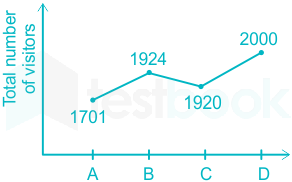
Question 2

Select the most appropriate synonym of the given word.

Form

  1. AOption (a)

    Damage

  2. BOption (b)

    Demolish

  3. COption (c)

    Collapse

  4. DOption (d)

    Type

  5. EOption (e)

    Scatter

View answer & explanation

Correct answer

Answer: (d)D.

Type

Why this answer is correct

The correct answer is option (4) i.e. ‘Type’.

Key Points 

  • Form: (प्रकार) a particular type or variety of something or a way of doing something.
  • Example: The artist created a unique and abstract form in her sculpture.
  • Type: (प्रकार) A category or classification based on shared characteristics or features.
  • Example: There are various types of flowers in the garden.

Therefore the correct answer is “Type”.

Additional Information 

  • Damage: (नुकसान) Physical harm or injury to something, often causing a loss in value, functionality, or appearance.
  • Example: The storm caused significant damage to the roof of the house.
  • Demolish: (नष्ट करना) To completely destroy or tear down a building or structure.
  • Example: They had to demolish the old building to make room for the new one.
  • Collapse: (गिरना) To fall down suddenly due to a lack of support or structural integrity.
  • Example: The old bridge collapsed under the weight of a heavy truck.
  • Scatter: (बिखेरना) To spread or disperse things in different directions.
  • Example: She decided to scatter flower petals along the path for the wedding ceremony.
  • When 'form' is used as a verb it means "to make or organize something".
  • Example: The workers will form a new committee to address the issues raised by the employees.

Question 3

Which of the following options would be suitable for the blank given in the passage?

  1. AOption (a)

    in

  2. BOption (b)

    to

  3. COption (c)

    by

  4. DOption (d)

    on

  5. EOption (e)

    with

View answer & explanation

Correct answer

Answer: (c)C.

by

Why this answer is correct

The correct answer is option (3) i.e. ‘by’.

Key Points

  • According to a study _________ the New York City Department of Consumer Affairs in 2015, women's products are typically more expensive than men's without a proper reason.
  • The sentence implies that a study(noun) was conducted by the New York City Department of Consumer Affairs(noun phrase) in 2015.
  • We know that two nouns or noun phrases are connected by a preposition.
  • ‘By’ is the most appropriate preposition to fill in the blank.
  • ‘by’ is generally used to show how something is done.
  • For example: I'll travel by train.

Therefore, the correct answer is ‘by’.

Additional Information

  • Let's explore the other prepositions given in the options:
  • 'In' indicates location, time, or inclusion.
  • Examples: She lives in New York.
  • ‘To’ denotes direction, purpose, or a limit.
  • Examples: She walked to the store.
  • 'On' indicates location, time, or contact.
  • Examples: The book is on the table.
  • ‘With’ shows association, accompaniment, or means.
  • Examples: She entered the room with a smile on her face.

Question 4

Which of the following statements is true as per the passage?

  1. AOption (a)

    The pink tax is enforced by the government but not by the businesses selling the products.

  2. BOption (b)

    Women in Singapore have to pay less premiums for Careshield Life, a national long-term care insurance scheme introduced by the government.

  3. COption (c)

    Several countries have investigated the pink tax, including Argentina, France, Germany, the UAE, Australia, and Italy.

  4. DOption (d)

    Some of the products that are included under the pink tax in India are salon services, personal care goods such as shampoos, soaps, and deodorants, as well as clothing, toys, and accessories such as jewelry.

  5. EOption (e)

    As per the study by the New York City Department of Consumer Affairs in 2015-2016, women's products are typically more expensive than men's without a proper reason.

View answer & explanation

Correct answer

Answer: (d)D.

Some of the products that are included under the pink tax in India are salon services, personal care goods such as shampoos, soaps, and deodorants, as well as clothing, toys, and accessories such as jewelry.

Why this answer is correct

The correct answer is option (4).

Key Points

  • Let's explain the true statement.
  • Option 4 is true.
  • As the first sentence of the last paragraph says about the example products and services that are included under the pink tax.

Therefore the correct answer is option (4).

Additional Information

  • Let's explain the false statements.
  • Option 1 is false.
  • As the third sentence of the first paragraph says The pink tax is not enforced by the government but by the businesses selling the products.
  • Option 2 is false.
  • As the last sentence of the second last paragraph says the Women in Singapore have to pay MORE premiums for Careshield Life…..
  • Option 3 is false.
  • In the first sentence of the second last paragraph, we can see that there is no information about UAE among the given countries.
  • Option 5 is false.
  • As the first sentence of the second paragraph says the study conducted by the New York City Department of Consumer Affairs in 2015 NOT in 2015-2016,

Question 5

Find true statement(s) from the following:

  • (A) The discrepancy in tax includes apparel, toys, and healthcare products, among other things.
  • (B) The pink tax has long imposed an economic burden on women and men around the world.
  • (C) Currently, women bear a significant financial burden due to the high costs of vegan products and non-animal-tested cosmetics, which can be considered a type of economic imposition.
  1. AOption (a)

    A and B are true

  2. BOption (b)

    C and A are true

  3. COption (c)

    Only C is true

  4. DOption (d)

    Only B is true

  5. EOption (e)

    All are true.

View answer & explanation

Correct answer

Answer: (b)B.

C and A are true

Why this answer is correct

The correct answer is option (2).

Key Points 

  • Let's explore the sentences.
  • Sentence A is true.
  • As the third sentence of the second paragraph clearly mentions the names of the products that have discrepancies in taxation.
  • Sentence B is false.
  • Because the last sentence of the first paragraph says that the pink tax imposes an economic burden only on women NOT on men.
  • Sentence C is true.
  • Because the last sentence of the last paragraph mentions that women are heavily exploited by vegan products and non-animal-tested cosmetics that are significantly more expensive, a form of taxation.
  • Hence, Sentence (A) and Sentence (C) are true.

Therefore, the correct answer is C and A are true.

Additional Information

  • Let's see the important words used in this question.
  • imposed (लगाया गया) - enforced or applied to make a law, rule, opinion, etc. 
  • Example: The government imposed new regulations to control pollution.

Question 6

According to the passage, what is the primary reason for the pricing inequality known as the "pink tax"?

  1. AOption (a)

    The pricing disparity is primarily a result of government regulations that enforce gender-based pricing on products marketed to women.

  2. BOption (b)

    Market forces, driven by supply and demand dynamics, are the primary factors behind the pricing disparity known as the "pink tax."

  3. COption (c)

    Gender-based taxation, imposed by governments, directly contributes to the higher prices of products associated with women.

  4. DOption (d)

     International trade agreements have established pricing guidelines that result in women's products being priced higher than men's.

  5. EOption (e)

     Consumer preferences, influenced by advertising and social factors, play the central role in the pricing disparity termed the "pink tax.

View answer & explanation

Correct answer

Answer: (b)B.

Market forces, driven by supply and demand dynamics, are the primary factors behind the pricing disparity known as the "pink tax."

Why this answer is correct

The correct answer is Option (2).

Key Points

  • Let's check is correct option :
  • Option 2
  • According to the passage, the primary reason for the pricing disparity is due to Market forces, driven by supply and demand dynamics known as the "pink tax."
  • It is clearly mentioned in the second last line of the first paragraph.
  • Hence, option (2) is the primary reason for the pricing inequality known as the "pink tax".

Therefore, the correct answer is “Market forces, driven by supply and demand dynamics, are the primary factors behind the pricing disparity known as the "pink tax."

Additional Information 

  • Let's check the other options one by one:
  • Option 1
  • The pricing disparity is not a result of government regulation.
  • Option 3
  • Gender-based taxation has not been imposed by the government. It is imposed by the business selling the products.
  • Option 4
  • There is no such kind of information about the guidelines of the international trade agreement regarding the pricing disparity.
  • Option 5
  • As per the passage Consumer preferences, influenced by advertising and social factors, are not the primary reasons for the pricing disparity.

Question 7

Which of the following expresses the same meaning of the word given in bold?

in the UK, it was found that women and girls were being charged

  1. AOption (a)

    confronted

  2. BOption (b)

    imposed

  3. COption (c)

    limited

  4. DOption (d)

    absolved

  5. EOption (e)

    altered

View answer & explanation

Correct answer

Answer: (b)B.

imposed

Why this answer is correct

The correct answer is option (2) i.e. ‘imposed’.

Key Points

  • charged (क़ीमत माँगना) -for something to ask somebody to pay a particular amount of money
  • Example: They charged a small amount for the service.
  • imposed (लगाया गया) - enforced or applied to make a law, rule, opinion, etc. 
  • Example: The government imposed new regulations to control pollution.
  • Both ‘charged’ and ‘imposed’ are the same in meaning.

Therefore, the correct answer is ‘imposed’.

Additional Information

  • confronted (सामना किया) - faced or encountered a challenging situation
  • Example: She confronted her fears and decided to go skydiving.
  • limited (सीमित) - restricted or constrained within certain boundaries
  • Example: The company has limited resources for expansion.
  • absolved (मुक्त) - freed or cleared from blame or responsibility
  • Example: After a thorough investigation, he was absolved of all charges.
  • altered (बदल दिया) - changed or modified
  • Example: The tailor altered the dress to fit perfectly.
  • Another meaning of ‘Charge’- to accuse somebody officially of doing something which is against the law.(ग़ैर-क़ानूनी काम करने के लिए औपचारिक रूप से दोषारोपण करना)
  • Example: The suspect was charged with theft.

Question 8

Based on the study by the New York City Department of Consumer Affairs, where was the largest product pricing discrepancy between men and women observed?

  1. AOption (a)

    Clothing

  2. BOption (b)

    Toys

  3. COption (c)

    Personal care/hygiene products

  4. DOption (d)

    Accessories such as jewelry 

  5. EOption (e)

    Vegan products

View answer & explanation

Correct answer

Answer: (c)C.

Personal care/hygiene products

Why this answer is correct

The correct answer is option (C) i.e. "Personal care/hygiene products".

Key Points

  • The last sentence of the second paragraph highlights the findings from the study conducted by the New York City Department of Consumer Affairs, which stated that the largest discrepancy happens in the personal care/hygiene product category. Items in this category were found to cost 13 percent more for women than men.
  • The passage didn’t imply that clothing (A), toys (B), accessories like jewelry (D), or vegan products (E) had the highest discrepancy between genders in terms of pricing.
  • Hence, option C is the correct response.

Therefore, the correct answer is  "Personal care/hygiene products".

Additional Information

  • The important word used in the question:
  • Hygiene: (स्वच्छता) Conditions or practices to maintain health and prevent disease, especially through cleanliness.
  • Example: Good personal hygiene can significantly reduce the risk of infections.
  • Discrepancy: (अंतर) A lack of consistency or similarity between two or more things.
  • Example: There was a significant salary discrepancy between the two employees, even though they had similar job roles.

Important Points

  • These two spellings **'**Discrepancy' and 'Hygiene' are often asked in the examination. So read the spellings carefully.

Question 9

According to the information in the passage, what is the "Pink Tax"?

  1. AOption (a)

    It's an additional tax charged by the government on women's products. 

  2. BOption (b)

    It's inequality in the amount payable for insurance based on gender.

  3. COption (c)

    It's a taxation form enforced by businesses where female products cost more than their male counterparts.

  4. DOption (d)

    It's a type of business tax focused only on clothing, toys, and accessories.

  5. EOption (e)

    It's a tax levied on vegan and non-animal-tested cosmetics.

View answer & explanation

Correct answer

Answer: (c)C.

It's a taxation form enforced by businesses where female products cost more than their male counterparts.

Why this answer is correct

The correct answer is option (C).

Key Points

  • The passage explicitly states that Pink Tax is a situation where things associated with women are priced higher than those with men.
  • The pink tax is enforced by the businesses selling the products not by the government.
  • This pricing disparity isn't solely based on clothing, toys, accessories and insurance; it also includes other personal care items, hence eliminating options A, B, D, and E.

Therefore, the correct answer is **"It's a taxation form enforced by businesses where female products cost more than their male counterparts".

Additional Information

  • Important word used in the question:
  • Disparity: (अंतर) A difference or inequality, especially in age, amount, or quality.
  • Example: There was a significant disparity in the salaries of the employees in the company.

Question 10

Direction: The given sentence is divided into four parts: A, B, C, and D. Choose the part that contains an error as your answer. If the sentence is error-free, mark E i.e. No error as your answer.

People develop a attachment (A)/ to a city because they find (B)/ a sense of belonging (C)/ within like-minded individuals. (D)/ No error (E)

  1. AOption (a)

    A

  2. BOption (b)

    B

  3. COption (c)

    C

  4. DOption (d)

    D

  5. EOption (e)

    E

View answer & explanation

Correct answer

Answer: (a)A.

A

Why this answer is correct

The correct answer is option 1.

Key Points 

  • Part A of the sentence i.e. "people develop a attachment" is erroneous.
  • The use of the article 'a' before 'attachment' is incorrect and it should it replaced with the article 'an' because the article 'an' is used before nouns that begin with a vowel sound, and 'attachment' has a vowel sound, so the article "a" should be replaced with "an" to make the sentence grammatically correct.
  • Hence, the correct answer is A.
  • The correct sentence would be: "People develop an attachment to a city because they find a sense of belonging within like-minded individuals."


 Key Points 

Use of articles a, an, and the - 

  • Article 'a' is used before nouns that begin with a consonant sound.
  • For Example -
  • I have a book in my purse.
  • (Here, article 'a' is used before the noun 'book' because it begins with a consonant sound)
  • Article 'an' is used before nouns that begin with a vowel sound.
  • For Example -
  • Do you want an apple for breakfast?
  • (Here, the article 'an' is used before the noun 'apple' because it begins with a vowel sound)
  • Article 'the' is used before both singular and plural nouns when the noun is specific.
  • For Example -
  • I saw the play you are talking about.
  • (Here, the article 'the' is used before the noun 'play' because it is the specific play that is being talked about)

Question 11

Direction: The given sentence is divided into four parts: A, B, C, and D. Choose the part that contains an error as your answer. If the sentence is error-free, mark E i.e. No error as your answer.

These are just small (A)/ alterations with our lifestyle (B)/ that will help us achieve (C)/ that perfect body. (D)/ No error (E)

  1. AOption (a)

    A

  2. BOption (b)

    B

  3. COption (c)

    C

  4. DOption (d)

    D

  5. EOption (e)

    E

View answer & explanation

Correct answer

Answer: (b)B.

B

Why this answer is correct

The correct answer is option 2.

Key Points

  • Part B of the sentence i.e. "alterations with our lifestyle" is erroneous.
  • The preposition "with" should be replaced with "to" to make the sentence grammatically correct.
  • The correct phrase is "alterations to our lifestyle" because we are talking about changes made in our lifestyle to achieve a goal. So, it should be "alterations to our lifestyle" instead of "alterations with our lifestyle."
  • Hence, the correct answer is B.
  • The correct sentence would be: "These are just small alterations to our lifestyle that will help us achieve that perfect body."

Question 12

Direction: The given sentence is divided into four parts: A, B, C, and D. Choose the part that contains an error as your answer. If the sentence is error-free, mark E i.e. No error as your answer.

Despite their differing (A) viewpoints on the matter, (B) the team of experts were (C) able to reach an agreement. (D) No error (E)

  1. AOption (a)

    A

  2. BOption (b)

    B

  3. COption (c)

    C

  4. DOption (d)

    D

  5. EOption (e)

    E

View answer & explanation

Correct answer

Answer: (c)C.

C

Why this answer is correct

The correct answer is option 3.

Key Points

  • Part C of the sentence i.e. "the team of experts were" is erroneous.
  • Part C of the sentence is incorrect because the subject "team" is singular, so it should be followed by the singular verb "was" instead of the plural verb "were."
  • Hence, the correct answer is C.
  • The correct sentence would be: "Despite their differing viewpoints on the matter, the team of experts was able to reach an agreement."

Question 13

Direction: The given sentence is divided into four parts: A, B, C, and D. Choose the part that contains an error as your answer. If the sentence is error-free, mark E i.e. No error as your answer.

When he was arriving (A) at the party last night, (B) she said she loved the gift, (C) but now she regrets it deeply. (D) No error (E)

  1. AOption (a)

    A

  2. BOption (b)

    B

  3. COption (c)

    C

  4. DOption (d)

    D

  5. EOption (e)

    E

View answer & explanation

Correct answer

Answer: (a)A.

A

Why this answer is correct

The correct answer is option 1.

 Key Points

  • Part A of the sentence i.e. "when he was arriving" is erroneous.
  • The phrase "was arriving" is in the past continuous tense, but the context of "last night" calls for the use of the past simple tense. Therefore, "was arriving" should be replaced with "arrived" to make the sentence grammatically correct.
  • Hence, the correct answer is A.
  • The correct sentence would be: "When he arrived at the party last night, she said she loved the gift, but now she regrets it deeply."


 Additional Information

Let's understand past simple and past continuous tense:

  • Past Simple Tense Structure:
  • Subject + Verb (in past simple form) + Rest of the Sentence
  • Indicators of Past Simple Tense:
  • Specific time expressions (e.g., yesterday, last night, in 1999).
  • Regular verbs with -ed endings (e.g., walked, talked).
  • Irregular verbs (e.g., went, ate) that change form to indicate the past.
  • Signal words like "once," "twice," "before," or "after."
  • For Example:
  • She visited the museum yesterday. (Specific time - yesterday)
  • He played basketball with his friends last night. (Specific time - last night)
  • They went to the beach last summer. (Specific time - last summer)
  • I read that book once. (Signal word - once)
  • Past Continuous Tense Structure:
  • Subject + Was/Were + Verb (ending in -ing) + Rest of the Sentence
  • Indicators of Past Continuous Tense:
  • The verb "was" or "were" (indicating past tense).
  • A verb ending in -ing (present participle form).
  • Indications of actions in progress at a specific time or duration in the past.
  • For Example:
  • He was studying all night. (Action in progress at a specific time - all night)
  • They were playing soccer when it started raining. (Action in progress at a specific time - when it started raining)
  • She was working on her project for hours. (Duration in the past - for hours)
  • I was reading a book while waiting for the train. (Action in progress at a specific time - while waiting for the train)

Question 14

Direction: The given sentence is divided into four parts: A, B, C, and D. Choose the part that contains an error as your answer. If the sentence is error-free, mark E i.e. No error as your answer.

Constant exposure to noise (A) can cause increased stress levels, (B) anxiety, irritability, (C) and cognitive impairment. (D) No error (E)

  1. AOption (a)

    A

  2. BOption (b)

    B

  3. COption (c)

    C

  4. DOption (d)

    D

  5. EOption (e)

    E

View answer & explanation

Correct answer

Answer: (e)E.

E

Why this answer is correct

The correct answer is option 5.

 Key Points 

  • This sentence is error-free and it discusses the potential negative effects of constant exposure to noise, including increased stress levels, anxiety, irritability, and cognitive impairment.
  • Hence, the correct answer is E.
  • Let's understand some important vocab given in the sentence:
  • Constant - continuous; without interruption (निरंतर)
  • For Example -
  • The constant noise from the construction site was bothering the residents.
  • Exposure - the state of being in contact with something, especially something harmful or unpleasant (अनावरण)
  • For Example -
  • Prolonged exposure to the sun can lead to skin damage.
  • Stress levels - the amount of stress experienced by an individual (तनाव स्तर)
  • For Example -
  • Her stress levels have been high due to the workload.
  • Anxiety - a feeling of unease, such as worry or fear, that can vary in intensity (चिंता)
  • For Example -
  • He experienced anxiety before his job interview.
  • Irritability - the state of being easily annoyed or provoked (चिढ़ापन)
  • For Example -
  • Lack of sleep can lead to irritability.
  • Cognitive impairment - a decline in cognitive function, including memory, thinking, and reasoning (मानसिक शक्ति में कमी)
  • For Example -
  • Older adults may experience cognitive impairment as they age.

Question 15

Directions

In the given sentence, four words, given in bold are marked as (A), (B), (C) and (D). These words may or may not be placed in their right places. Four options with different arrangements of these words are given below, mark the option with the correct arrangement as your answer. If no change is required mark 'No rearrangement required' as your answer.**

As data and technology play a effectively (A) role in the delivery (B) of services, human development systems should ensure (C) they are crucial (D) used.

  1. AOption (a)

    DBCA

  2. BOption (b)

    BCAD

  3. COption (c)

    CABD

  4. DOption (d)

    ABDC

  5. EOption (e)

    No rearrangement required

View answer & explanation

Correct answer

Answer: (a)A.

DBCA

Why this answer is correct

The correct answer is option 1.

Key Points

Let's replace all the bold words with blanks - 

As data and technology play a _____ (A) role in the _____ (B) of services, human development systems should _____ (C) they are _____ (D) used.

  • To answer the question let's first look at the meanings of all the marked words - 
  • (A) Effectively - It's an adverb and it means ' such a manner as to achieve a desired result'. (प्रभावी रूप से)
  • (B) Delivery - It's a noun and it means 'the action of delivering letters, parcels, or goods'. (वितरण)
  • (C) Ensure - It's a verb and it means 'make certain that (something) will occur or be the case'. (सुनिश्चित करना)
  • (D) Crucial - It's an adjective and it means 'decisive or critical, especially in the success or failure of something' (महत्वपूर्ण)
  • After looking at the meanings of all the marked words we can conclude that 'effectively' which is an adverb should come in the last blank followed by the verb 'ussed' as it is describing the quality of the verb 'used'.
  • And the adjective 'crucial' should come in the first blank following the noun 'role' while both the words 'delivery' and 'ensure' are given in their places.
  • Therefore, the correct answer is 'DBCA.​


The complete sentence after rearrangement would be - As data and technology play a crucial role in the delivery of services, human development systems should ensure they are effectively used.

Question 16

Directions

In the given sentence, four words, given in bold are marked as (A), (B), (C) and (D). These words may or may not be placed in their right places. Four options with different arrangements of these words are given below, mark the option with the correct arrangement as your answer. If no change is required mark 'No rearrangement required' as your answer.**

Pandemics, economic succession (A) and rapid (B) weather events were once tail-end risks, but all three have hit South Asia in extreme (C) slumps (D) since 2020.

  1. AOption (a)

    DBCA

  2. BOption (b)

    ACBD

  3. COption (c)

    DCBA

  4. DOption (d)

    BADC

  5. EOption (e)

    No rearrangement required

View answer & explanation

Correct answer

Answer: (c)C.

DCBA

Why this answer is correct

The correct answer is option 3.

Key Points

Let's replace all the bold words with blanks - 

Pandemics, economic _____ (A) and _____ (B) weather events were once tail-end risks, but all three have hit South Asia in _____ (C) _____ (D) since 2020.

  • To answer the question let's first look at the meanings of all the marked words - 
  • (A) Succession - It's a noun and it means 'a number of people or things of a similar kind following one after the other'. (सिलसिला)
  • (B) Rapid - It's an adjective and it means 'happening in a short time or at a great rate'. (तेज़)
  • (C) Extreme - It's an adjective and it means 'reaching a high or the highest degree; very great'. (चरम)
  • (D) Slumps - It's a verb and it means 'undergo a sudden severe or prolonged fall in price, value, or amount' (मंदी)
  • After looking at the meanings of all the marked words we can conclude that 'extreme' which is an adjective should come in the second blank followed by the noun 'weather' as it is describing the quality of the noun 'weather'.
  • And the verb 'rapid' should come in the first blank following the adjective 'economic'.
  • Also, both the words 'rapid' and 'succession' would come in the third and fourth blanks respectively as 'succession' is a noun it will be preceded by the adjective 'rapid'.
  • Therefore, the correct answer is 'DCBA'.

​

The complete sentence after rearrangement would be - Pandemics, economic slumps and extreme weather events were once tail-end risks, but all three have hit South Asia in rapid succession since 2020.

Question 17

Directions

In the given sentence, four words, given in bold are marked as (A), (B), (C) and (D). These words may or may not be placed in their right places. Four options with different arrangements of these words are given below, mark the option with the correct arrangement as your answer. If no change is required mark 'No rearrangement required' as your answer.**

The aim of the dispatch (A) is not to reduce quality (B), but to increase and improve the automation (C) of delivery and reduce the time of manpower (D).

  1. AOption (a)

    BADC

  2. BOption (b)

    CBDA

  3. COption (c)

    CDBA

  4. DOption (d)

    BDAC

  5. EOption (e)

    No rearrangement required

View answer & explanation

Correct answer

Answer: (c)C.

CDBA

Why this answer is correct

The correct answer is option 3.

Key Points

Let's replace all the bold words with blanks - 

The aim of the _____ (A) is not to reduce _____ (B), but to increase and improve the _____ (C) of delivery and reduce the time of _____ (D).

  • To answer the question let's first look at the meanings of all the marked words - 
  • (A) Dispatch - It's a verb and it means 'send off to a destination or for a purpose'. (भेजना)
  • (B) Quality - It's a noun and it means 'the standard of something as measured against other things of a similar kind; the degree of excellence of something'. (गुणवत्ता)
  • (C) Automation - It's a noun and it means 'the use or introduction of automatic equipment in a manufacturing or other process or facility'. (स्वचालन)
  • (D) Manpower - It's a noun and it means 'the number of people working or available for work or service'. (जनशक्ति)
  • After looking at the meanings of all the marked words we can conclude that this sentence talk about how the goal of automation is not to decrease manpower but to better the quality of delivery and reduce the time of dispatch.
  • The noun 'automation' would come in the first blank, the noun 'manpower' would come in the second blank, the noun 'quality' would come in the third blank and the verb 'dispatch' would come in the fourth/last blank.
  • Therefore, the correct answer is 'CDBA'.

​

The correct sentence after rearrangement would be - The aim of the automation is not to reduce manpower, but to increase and improve the quality of delivery and reduce the time of dispatch.

Question 18

Directions

In the given sentence, four words, given in bold are marked as (A), (B), (C) and (D). These words may or may not be placed in their right places. Four options with different arrangements of these words are given below, mark the option with the correct arrangement as your answer. If no change is required mark 'No rearrangement required' as your answer.**

The eligible (A) number of employees who will be exercised (B) under the new order will only be known after exact (C) employees have covered (D) the option.

  1. AOption (a)

    ADCB

  2. BOption (b)

    CBAD

  3. COption (c)

    DCBA

  4. DOption (d)

    CDAB

  5. EOption (e)

    No rearrangement required

View answer & explanation

Correct answer

Answer: (d)D.

CDAB

Why this answer is correct

The correct answer is option 4.

Key Points

Let's replace all the bold words with blanks - 

The _____ (A) number of employees who will be _____ (B) under the new order will only be known after _____ (C) employees have _____ (D) the option.

  • To answer the question let's first look at the meanings of all the marked words - 
  • (A) Eligible - It's an adjective and it means 'having the right to do or obtain something; satisfying the appropriate conditions'. (योग्य)
  • (B) Exercised - It's a verb and it means 'use or apply (a faculty, right, or process)'. (प्रयोग)
  • (C) Exact - It's an adjective and it means 'not approximated in any way; precise'. (एकदम सही)
  • (D) Covered - It's a verb and it means '(of insurance) protect against a liability, loss, or accident involving financial consequences'. (अन्तर्निहित)
  • After looking at the meanings of all the marked words we can conclude that 'exact' which is an adjective should come in the first blank followed by the noun 'number' as it is describing the quality of the noun 'number'.
  • And the adjective 'eligible' should come in the third blank followed by the noun 'employees' as it is describing the quality of the noun 'employees'.
  • Also, the verb 'covered' should come in the second blank as it takes the preposition 'under' and hence the verb 'exercised' should come in the fourth blank.
  • Therefore, the correct answer is 'CDAB'.

​

The correct sentence after rearrangement would be - The exact number of employees who will be covered under the new order will only be known after eligible employees have exercised the option.

Question 19

Directions

Choose the most appropriate word to fill in the given black.**

The Budget aims to fulfil the long-term _______ goals of the country along with being the world’s fastest-growing large economy.

  1. AOption (a)

    implausible

  2. BOption (b)

    challenging

  3. COption (c)

    obnoxious

  4. DOption (d)

    sustainable

  5. EOption (e)

    untenable

View answer & explanation

Correct answer

Answer: (d)D.

sustainable

Why this answer is correct

The correct answer is option 4.

Key Points

  • The given sentence talks about the budget aiming to fulfil the long-term goals of India and being the world’s fastest-growing large economy.
  • Therefore, the most appropriate word for the given blank would be 'sustainable'.
  • 'Sustainable' means able to be maintained at a certain rate or level. (दीर्घकालिक)
  • For Example -
  • The government is working on making the energy sector sustainable.
  • Hence, the correct answer is 'sustainable'.


The complete sentence would be - The Budget aims to fulfil the long-term sustainable goals of the country along with being the world’s fastest-growing large economy. 

<br>

Additional Information

Let's understand the meanings of the other given options -

  • Implausible means not seeming reasonable or probable; failing to convince. (अकल्पनीय)
  • Challenging means testing one's abilities; demanding. (चुनौतीपूर्ण)
  • Obnoxious means to be extremely unpleasant. (घृणित)
  • Untenable means not able to be maintained or defended against attack or objection. (अस्थिर, असमर्थनीय)

Question 20

Directions

Choose the most appropriate word to fill in the given blank.**

For youngsters, smartwatches are a way to _______ another accessory, for working professionals they are a watch-cum-reminder machine, and for the elderly, they are used to monitor vitals.

  1. AOption (a)

    Recruit

  2. BOption (b)

    Flaunt

  3. COption (c)

    Efface

  4. DOption (d)

    Impel

  5. EOption (e)

    Replace

View answer & explanation

Correct answer

Answer: (b)B.

Flaunt

Why this answer is correct

The correct answer is option 2.

Key Points

  • The sentence is saying that for the young generation, smartwatches are another accessory to show off, for working professionals they are a watch-cum-reminder machine, and for the elderly, they are used to monitor their vitals.
  • Therefore, the most appropriate word for the given blank would be 'Flaunt'.
  • The word 'Flaunt' means to display (something) ostentatiously, especially in order to provoke envy or admiration or to show defiance (शान दिखाना/इठलाना)
  • For Example -
  • She likes to flaunt her wealth by wearing expensive jewelry.
  • Hence, the correct answer is 'Flaunt'.
  • The complete sentence would be 'For youngsters, smartwatches are a way to flaunt another accessory, for working professionals they are a watch-cum-reminder machine, and for the elderly, they are used to monitor vitals.'

​ 

Additional Information

  • Let's look at the meanings of all the other given options - ​​

​

  • ���Recruit means to enlist someone (नियुक्त करना)
  • Efface means to make oneself appear insignificant or inconspicuous (अपने को तुच्छ समझना)
  • Impel means to drive, force, or urge (someone) to do something (प्रेरित करना)
  • Replace means to take the place of someone or something (स्थान लेना)

​

Question 21

Directions

Choose the most appropriate word to fill in the given blank.**

He is an arrogant businessman and he likes to ______ his net worth, it makes him seem like he has a lot of money in his bank account.

  1. AOption (a)

    exaggerate

  2. BOption (b)

    propel

  3. COption (c)

    compensate

  4. DOption (d)

    understate

  5. EOption (e)

    trivialize

View answer & explanation

Correct answer

Answer: (a)A.

exaggerate

Why this answer is correct

The correct answer is option 1.

Key Points

  • The given sentence talks about the subject (He) being arrogant and making people feel like he has a lot of money in his bank account.
  • Therefore, the most appropriate word for the given blank would be 'exaggerate'.
  • 'Exaggerate' means to represent (something) as being larger, better, or worse than it really is. (अतिशयोक्ति)
  • For Example -
  • He always exaggerates his accomplishments.
  • Hence, the correct answer is 'exaggerate'.

The complete sentence would be - He is an arrogant businessman and he likes to exaggerate his net worth, it makes him seem like he has a lot of money in his bank account.

Additional Information

Let's understand the meanings of the other given options -

  • Propel means to drive or push something forwards. (प्रेरित करना)
  • Compensate means to give (someone) something, typically money, in recognition of loss, suffering, or injury incurred; recompense. (मुआवजा देना)
  • Understate means to describe or represent (something) as being smaller or less good or important than it really is. (कम बतलाना)
  • Trivialize means to make (something) seem less important, significant, or complex than it really is. (महत्वहीन)

Question 22

Directions

Choose the most appropriate word to fill in the given blank.**

Today, our class teacher _______ the importance of exercise and fresh fruit and vegetables in the diet.

  1. AOption (a)

    imposed

  2. BOption (b)

    impeded

  3. COption (c)

    emphasized

  4. DOption (d)

    confirmed

  5. EOption (e)

    depreciated

View answer & explanation

Correct answer

Answer: (c)C.

emphasized

Why this answer is correct

The correct answer is option 3.

Key Points

  • The given sentence talks about the class teacher telling the students about the importance of exercise and fresh fruit and vegetables in the diet.
  • Therefore, the most appropriate word for the given blank would be 'emphasized'.
  • 'Emphasize' means to give special importance or value to (something) in speaking or writing. (ज़ोर देना)
  • For Example -
  • They emphasized the importance of education.
  • Hence, the correct answer is 'emphasized'.


The complete sentence would be - Today, our class teacher emphasized the importance of exercise and fresh fruit and vegetables in the diet.


Additional Information

Let's understand the meanings of the other given options -

  • Imposed means to force (an unwelcome decision or ruling) on someone. (अधिरोपित)
  • Impeded means to delay or prevent (someone or something) by obstructing them; hinder. (अवस्र्द्ध)
  • Confirmed means (of a person) firmly established in a particular habit, belief, or way of life and unlikely to change their ways. (की पुष्टि)
  • Depreciated means to disparage or belittle (something). (नीचा दिखाना)

Question 23

In the following question, two columns are given containing three phrases each. The phrases are labelled A, B, and C in the first column and P, Q, and R in the second column. A phrase from the first column may or may not connect with a phrase in the second column to make a grammatically and contextually meaningful sentence. Identify the correct option given below that gives the correct sequence in which one or more sentence can be formed. If none of the options makes it possible for a meaningful sentence to be formed, indicate 'None of these' as your answer.

Column 1Column 2
(A) He explains that when scales are confiscated(P) Skill­building workshops for new agencies
(B) We have been conducting training and(Q) It is important to develop protocols
(C) The research, published in the Journal of the(R) American Medical Association is interesting
  1. AOption (a)

    A-P and C-R

  2. BOption (b)

    B-P and C-P

  3. COption (c)

    C-R and A-Q

  4. DOption (d)

    B-P and C-R

  5. EOption (e)

    None of these

View answer & explanation

Correct answer

Answer: (d)D.

B-P and C-R

Why this answer is correct

The correct answer is B-P and C-R.

Key Points

Let us look at the sentence combinations:

  • Phrase B of column 1 should be matched with the phrase P of column 2 to make the sentence grammatically and contextually correct.
  • "We have been conducting training and skill­building workshops for new agencies".
  • ​​​​Phrase B cannot be used with either phrase Q and phrase R because it would not make a meaningful sentence.
  • We have been conducting training and it is important to develop protocols.
  • We have been conducting training and American Medical Association is interesting.
  • Phrase C of column 1 should be matched with the phrase R of column 2 to make the sentence grammatically and contextually correct.
  • "The research, published in the Journal of the American Medical Association is interesting".
  • ​​​​Phrase C cannot be used with either phrase P and phrase Q because it would not make a meaningful sentence.
  • The research, published in the Journal of the skill­building workshops for new agencies.
  • The research, published in the Journal of the it is important to develop protocols.

Question 24

In the following question, two columns are given containing three phrases each. The phrases are labelled A, B, and C in the first column and P, Q, and R in the second column. A phrase from the first column may or may not connect with a phrase in the second column to make a grammatically and contextually meaningful sentence. Identify the correct option given below that gives the correct sequence in which one or more sentences can be formed. If none of the options makes it possible for a meaningful sentence to be formed, indicate 'None of these' as your answer.


Column 1Column 2
(A) Studies of the coronavirus are largely(P) focusing on its ‘spike’ protein
(B) This is a complex question to which there is,(Q) so far, no clear answer.
(C) The judgment declared(R) the Maratha reservation unconstitutional
  1. AOption (a)

    A-Q

  2. BOption (b)

    B-Q

  3. COption (c)

    C-P

  4. DOption (d)

    A-P, C-R and B-Q

  5. EOption (e)

    None of these

View answer & explanation

Correct answer

Answer: (d)D.

A-P, C-R and B-Q

Why this answer is correct

The correct answer is A-P, C-R and B-Q.

Key Points

Let us look at the sentence combinations:

  • Phrase A of column 1 should be matched with the phrase P of column 2 to make the sentence grammatically and contextually correct.
  • "Studies of the coronavirus are largely focusing on its ‘spike’ protein".
  • ​**​​Phrase A cannot be used with either phrase Q and phrase R because it would not make a meaningful sentence.
  • Studies of the coronavirus are largely so far, no clear answer.
  • Studies of the coronavirus are largely the Maratha reservation unconstitutional.
  • ​Phrase B of column 1 should be matched with the phrase Q of column 2 to make the sentence grammatically and contextually correct.
  • "This is a complex question to which there is, so far, no clear answer".
  • ​**​​Phrase B cannot be used with either phrase P and phrase R because it would not make a meaningful sentence.
  • This is a complex question to which there is focusing on its ‘spike’ protein.
  • This is a complex question to which there is the Maratha reservation unconstitutional.
  • ​Phrase C of column 1 should be matched with the phrase R of column 2 to make the sentence grammatically and contextually correct.
  • "The judgment declared the Maratha reservation unconstitutional".**
  • ​**​​Phrase C cannot be used with either phrase P and phrase Q because it would not make a meaningful sentence.
  • The judgment declared focusing on its ‘spike’ protein.
  • The judgment declared so far, no clear answer.

Question 25

A word and three sentences that use the word are given below. Determine in which of the following sentences is the word used correctly with respect to grammar and context.

STATE

  1. The Prime Minister has stated in his speech that our country will be a five trillion economy in the coming years. 2. I'm too nervous to stop in this horrid state where it never ceases raining. 3. it is now illegal in every state with Louisiana being the last to outlaw it in 2008.
  1. AOption (a)

    Both 1 & 2

  2. BOption (b)

    Both 2 & 3

  3. COption (c)

    Both 1 & 3

  4. DOption (d)

    All of the above

  5. EOption (e)

    No of the above

View answer & explanation

Correct answer

Answer: (d)D.

All of the above

Why this answer is correct

The correct answer is option 4.

Key Points

  • 'The Prime Minister has stated in his speech that our country will be a five trillion economy in the coming years.' In this sentence, "stated" is the past tense of the verb "state", which means to express something definitely or clearly in speech or writing. Here, it is used correctly to convey that the Prime Minister has declared or announced something in his speech.
  • 'I'm too nervous to stop in this horrid state where it never ceases raining.' Here, "state" is used as a noun referring to a nation or territory considered as an organized political community under one government. The sentence is using it to refer to a place that the speaker is nervous to stop in due to it constantly raining.
  • 'It is now illegal in every state with Louisiana being the last to outlaw it in 2008.' In this sentence, "state" is once again used as a noun, but this time it refers to a territory or geographical area within a country that has its own government, laws, etc. The sentence perfectly employs this usage to mention that something is illegal in every such territory, with Louisiana being the last one to forbid it in 2008.

Directions: Below, you will find a set of five sentences. You need to arrange these sentences in the correct sequence to form a coherent paragraph. After doing so, answer the questions that follow.

A. However, the influencer is not a buzzword anymore. Considering macro and celeb influencers, today's new-gen celebs, these individuals

B. The rise of social media has certainly revolutionised various aspects, including how we connect, share, and consume information.

C. The emergence of influencers is one of the most significant changes brought about by social media in the realm of marketing.

D. Furthermore, with their substantial online followings and persuasive skills, they have emerged as critical players in determining consumers' buying behaviour

E. Can significantly impact the psychology of potential consumers through their recommendations, opinions, and ideas, thereby shaping their purchasing decisions.

Question 26

Which of the following will be the FIRST sentence after rearrangement?

  1. AOption (a)

    B

  2. BOption (b)

    A

  3. COption (c)

    D

  4. DOption (d)

    C

  5. EOption (e)

    E

View answer & explanation

Correct answer

Answer: (a)A.

B

Why this answer is correct

The correct answer is Option (1). i.e. 'B'.

Key Points

  • The given paragraph is about "the rise of social media and how the influencers use it for their marketing".
  • Sentence B is the FIRST sentence as it describes the rise of social media and its revolution in various aspects.
  • Sentence C is the second sentence as it talks about the emergence of influencers and how they utilize social media for marketing.
  • Sentence A is the third sentence. It starts with ‘however’. It highlights that "influencer" is no longer just a buzzword but has real importance in contemporary culture.
  • Sentence E is the fourth sentence as it describes how the influencers create an impression on the psychology of potential consumers.
  • Sentence D is the last and final sentence as it adds something about the impact of the influencers and how they realise the buying behaviour of the consumers through their persuasive skills.
  • The correct sequence is BCAED.

Therefore, the correct answer is Sentence - B.

Additional Information

  • We can easily eliminate Sentences A, D and E. Because a paragraph does not start with however or furthermore, there must be previous information. As there is no question mark why we start a sentence with ‘can’.

Question 27

Which of the following will be the SECOND sentence after rearrangement?

  1. AOption (a)

    A

  2. BOption (b)

    C

  3. COption (c)

    E

  4. DOption (d)

    B

  5. EOption (e)

    D

View answer & explanation

Correct answer

Answer: (b)B.

C

Why this answer is correct

The correct answer is Option (2).

Key Points

  • The given paragraph is about "the rise of social media and how the influencers use it for their marketing".
  • Sentence B is the first sentence as it describes the rise of social media and its revolution in various aspects.
  • Sentence C is the SECOND sentence as it talks about the emergence of influencers and how they utilize social media for marketing.
  • Sentence A is the third sentence. It starts with ‘however’. It highlights that "influencer" is no longer just a buzzword but has real importance in contemporary culture.
  • Sentence E is the fourth sentence as it describes how the influencers create an impression on the psychology of potential consumers.
  • Sentence D is the last and final sentence as it adds something about the impact of the influencers and how they realise the buying behaviour of the consumers through their persuasive skills.
  • The correct sequence is BCAED.

Therefore, the Second sentence is Sentence-C.

Additional Information

  • Influencer: The persons who are popular on social media.
  • Example: Whenever they post something on social media, we can see lakhs of views, comments and likes within a short time on that post.

Question 28

Which of the following will be the THIRD sentence after rearrangement?

  1. AOption (a)

    B

  2. BOption (b)

    C

  3. COption (c)

    A

  4. DOption (d)

    D

  5. EOption (e)

    E

View answer & explanation

Correct answer

Answer: (c)C.

A

Why this answer is correct

The correct answer is Option (3). 

Key Points

  • The given paragraph is about "the rise of social media and how the influencers use it for their marketing".
  • Sentence B is the first sentence as it describes the rise of social media and its revolution in various aspects.
  • Sentence C is the second sentence as it talks about the emergence of influencers and how they utilize social media for marketing.
  • Sentence A is the THIRD sentence. It starts with ‘however’. It highlights that "influencer" is no longer just a buzzword but has real importance in contemporary culture and acknowledges that while influencers were initially a new phenomenon, they are now becoming the norm.
  • Sentence E is the fourth sentence as it describes how the influencers create an impression on the psychology of potential consumers.
  • Sentence D is the last and final sentence as it adds something about the impact of the influencers and how they realise the buying behaviour of the consumers through their persuasive skills.
  • The correct sequence is BCAED.

Therefore, the Third sentence is Sentence-A.  

Additional Information

  • Buzzword: (किसी विषय से संबंधित लोकप्रिय व प्रचलित शब्‍द या वाक्‍यांश) A buzzword is a word or expression that has become fashionable in a particular field and is being used a lot by the media. 
  • Example: Biodiversity was the buzzword of the Earth Summit.

Question 29

Which of the following will be the FOURTH sentence after rearrangement?

  1. AOption (a)

    D

  2. BOption (b)

    C

  3. COption (c)

    B

  4. DOption (d)

    E

  5. EOption (e)

    A

View answer & explanation

Correct answer

Answer: (d)D.

E

Why this answer is correct

The correct answer is Option (4). 

Key Points

  • The given paragraph is about "the rise of social media and how the influencers use it for their marketing".
  • Sentence B is the first sentence as it describes the rise of social media and its revolution in various aspects.
  • Sentence C is the second sentence as it talks about the emergence of influencers and how they utilize social media for marketing.
  • Sentence A is the third sentence. It starts with ‘however’. It highlights that "influencer" is no longer just a buzzword but has real importance in contemporary culture.
  • Sentence E is the FOURTH sentence as it describes how the influencers create an impression on the psychology of potential consumers.
  • Sentence D is the last and final sentence as it adds something about the impact of the influencers and how they realise the buying behaviour of the consumers through their persuasive skills.
  • The correct sequence is BCAED.

Therefore, the Fourth sentence is Sentence-E.

Question 30

Which of the following will be the LAST sentence after rearrangement?

  1. AOption (a)

    D

  2. BOption (b)

    A

  3. COption (c)

    B

  4. DOption (d)

    C

  5. EOption (e)

    E

View answer & explanation

Correct answer

Answer: (a)A.

D

Why this answer is correct

The correct answer is Option (1).

Key Points

  • The given paragraph is about "the rise of social media and how the influencers use it for their marketing".
  • Sentence B is the first sentence as it describes the rise of social media and its revolution in various aspects.
  • Sentence C is the second sentence as it talks about the emergence of influencers and how they utilize social media for marketing.
  • Sentence A is the third sentence. It starts with ‘however’. It highlights that "influencer" is no longer just a buzzword but has real importance in contemporary culture.
  • Sentence E is the fourth sentence as it describes how the influencers create an impression on the psychology of potential consumers.
  • Sentence D is the LAST and final sentence as it adds something about the impact of the influencers and how they realise the buying behaviour of the consumers through their persuasive skills.
  • The correct sequence is BCAED.

Therefore, the Fourth sentence is Sentence-D.

Quantitative Aptitude (35 questions)

Question 31

A invested Rs. 15000 and B invested Rs. (15000 + Y) in a venture. B removed 40% of his investment following 4 months. If a total profit of Rs. 47000 was generated by the end of the year, with B's share amounting to Rs. 22000, could you ascertain the value of 2Y?

  1. AOption (a)

    6000

  2. BOption (b)

    3000

  3. COption (c)

    2000

  4. DOption (d)

    1000

  5. EOption (e)

    5000

View answer & explanation

Correct answer

Answer: (a)A.

6000

Why this answer is correct

Shortcut Trick

Ratio of Profit Share of A and B is (47000 − 22000) : 22000 = 25 : 22.

Profit Ratio = Ratio of (Investment × Time).

Investment of A = 15000 × 12 months = 180000 units.

Investment of B = (15000 + Y) × 4 + 0.6(15000 + Y) × 8 = 8.8 × (15000 + Y) units.

Ratio 180000 ÷ [8.8 × (15000 + Y)] = 25 ÷ 22.

7200 ÷ (15000 + Y) = 25 ÷ 62.5 ⇒ Y = 3000.

∴ The correct answer is 6000.

Alternate Method

Given → A's investment = Rs. 15000, B's investment = Rs. (15000 + Y), Time = 1 year, Total Profit = Rs. 47000, B's Profit = Rs. 22000. Formulas: Profit Ratio = (Capital1 × Time1) : (Capital2 × Time2).

⇒ Profit of A = Total Profit − B's Profit = 47000 − 22000 = Rs. 25000. ⇒ Profit Ratio A : B = 25000 : 22000 = 25 : 22. ⇒ Equivalent Capital of A = 15000 × 12 = 180000. ⇒ Equivalent Capital of B = (15000 + Y) × 4 + (15000 + Y) × (1 − 0.40) × 8. ⇒ B's Capital = 4(15000 + Y) + 4.8(15000 + Y) = 8.8(15000 + Y). ⇒ A/B = 180000 ÷ [8.8(15000 + Y)] = 25 ÷ 22. ⇒ 180000 × 22 = 25 × 8.8 × (15000 + Y). ⇒ 3960000 = 220 × (15000 + Y) ⇒ 18000 = 15000 + Y ⇒ Y = 3000. ⇒ Value of 2Y = 2 × 3000 = 6000.

∴ The correct answer is 6000.

Additional Information

Partnership Principles

When investments vary over time, the profit is distributed according to the weighted average of the investment relative to the time period.

Withdrawal Calculation

Removing 40% means the remaining investment is 60% (or 0.6) of the original amount for the rest of the duration.

Question 32

A person rows a distance of 20 km upstream and 15 km downstream in a total time of 25122 \frac{5}{12} hours. If the speed of the current is 4 km/h, then in how many hours can he row a distance of 64 km upstream?

  1. AOption (a)

    5135 \frac{1}{3}

  2. BOption (b)

    ​​​​4234\frac{2}{3}

  3. COption (c)

    ​​5125\frac{1}{2}

  4. DOption (d)

    4144\frac{1}{4}

  5. EOption (e)

    4154\frac{1}{5}

View answer & explanation

Correct answer

Answer: (a)A.

5135 \frac{1}{3}

Why this answer is correct

Shortcut Trick

Let speed of boat in still water be u km/h and current v = 4 km/h.

Total time: 20/(u − 4) + 15/(u + 4) = 29/12 hours.

By Option/Value verification, if u = 16: 20/12 + 15/20 = 5/3 + 3/4 = (20 + 9)/12 = 29/12 (Matches).

Upstream speed = 16 − 4 = 12 km/h.

Time for 64 km upstream = 64 ÷ 12 = 16/3 = 5(1/3) hours.

∴ The correct answer is 5(1/3) hours.

Alternate Method

Given: Upstream distance = 20 km, Downstream distance = 15 km, Current speed (v) = 4 km/h, Total time = 29/12 hours.

Formula: Time = Distance ÷ Speed; Upstream speed = u − v; Downstream speed = u + v.

⇒ 20/(u − 4) + 15/(u + 4) = 29/12

⇒ [20(u + 4) + 15(u − 4)] / (u2 − 16) = 29/12

⇒ [20u + 80 + 15u − 60] / (u2 − 16) = 29/12

⇒ 12(35u + 20) = 29(u2 − 16)

⇒ 420u + 240 = 29u2 − 464

⇒ 29u2 − 420u − 704 = 0

⇒ Solving the quadratic equation, we get u = 16 km/h.

⇒ Upstream speed = 16 − 4 = 12 km/h.

⇒ Required time = 64 ÷ 12 = 16/3 = 5(1/3) hours.

∴ The correct answer is 5(1/3) hours.

Additional Information

Relative Speed in Water

Downstream speed (D) = u + v and Upstream speed (U) = u − v, where u is boat speed and v is stream speed.

Calculations for u and v

Speed of boat in still water u = (D + U) ÷ 2 and speed of stream v = (D − U) ÷ 2.

Average Speed

If distances are same, average speed = (D × U) ÷ u = (u2 − v2) ÷ u.

Question 33

P, Q, and R collectively are able to complete a task in 16(4/11) days, while P and Q together can finish the same task in 20 days. Considering these rates, can you determine how many days it would take for R alone to complete 60% of the task?

  1. AOption (a)

    51 days

  2. BOption (b)

    59 days

  3. COption (c)

    54 days

  4. DOption (d)

    53 days

  5. EOption (e)

    50 days

View answer & explanation

Correct answer

Answer: (c)C.

54 days

Why this answer is correct

Shortcut Trick

Days for P + Q + R = 180/11 days and P + Q = 20 days.

Total Work (LCM of 180 and 20) = 180 units.

Efficiency of R = Efficiency(P+Q+R) − Efficiency(P+Q) = 11 − 9 = 2 units/day.

60% of Total Work = 0.6 × 180 = 108 units.

Time for R = 108 ÷ 2 = 54 days.

∴ The correct answer is 54 days.

Alternate Method

Given: Time taken by P, Q, and R = 16(4/11) days = 180/11 days. Time taken by P and Q = 20 days.

PersonDaysTotal WorkEfficiency
P + Q + R180/1118011
P + Q209

⇒ Efficiency of R = (Efficiency of P+Q+R) − (Efficiency of P+Q)

⇒ Efficiency of R = 11 − 9 = 2 units/day

⇒ 60% of Total Work = (60/100) × 180 = 108 units

⇒ Time taken by R alone = 108 ÷ 2 = 54 days

∴ The correct answer is 54 days.

Additional Information

Total Work Formula

Total Work = Efficiency × Time. For fractional days, use the LCM of numerators for Total Work.

Efficiency Calculation

Efficiency of a specific person is found by subtracting the combined efficiency of others from the total group efficiency.

Percentage of Work

Time required for partial work = (Percentage of Total Work) ÷ (Efficiency of the person).

Question 34

In a classroom consisting of boys and girls, the average marks obtained by the boys is 90. If the average of the whole class is 92, and the ratio of the number of boys to that of girls is 3 ∶ 2, what is the average marks scored by the girls?

  1. AOption (a)

    97

  2. BOption (b)

    94

  3. COption (c)

    96

  4. DOption (d)

    95

  5. EOption (e)

    None of these

View answer & explanation

Correct answer

Answer: (d)D.

95

Why this answer is correct

Shortcut Trick

Apply the Weighted Average deviation method.

Deviation of Boys = 90 − 92 = −2 per boy.

Total negative deviation for 3 boys = 3 × (−2) = −6.

To balance, 2 girls must have a total positive deviation of +6.

Deviation per Girl = +6 ÷ 2 = +3.

Average marks of girls = 92 + 3 = 95.

∴ The correct answer is 95 marks.

Alternate Method

Given: Average marks of Boys = 90, Average of Class = 92, Ratio of Boys : Girls = 3 : 2.

Formula Used: Average of Class = (n1x1 + n2x2) ÷ (n1 + n2)

Let the average marks of Girls be x.

⇒ (3 × 90 + 2 × x) ÷ (3 + 2) = 92

⇒ (270 + 2x) ÷ 5 = 92

⇒ 270 + 2x = 92 × 5

⇒ 270 + 2x = 460

⇒ 2x = 460 − 270

⇒ 2x = 190

⇒ x = 95

∴ The correct answer is 95 marks.

Additional Information

Weighted Average Formula

The overall average of two groups combined is given by Aavg = (n1A1 + n2A2) ÷ (n1 + n2).

Alligation Rule

Ratio of quantities = (Higher Value − Mean) : (Mean − Lower Value). This is very effective for mixture and average problems.

Deviation Method

Net sum of deviations from the mean is always zero. Use this to find missing components quickly without large calculations.

Question 35

Vessel 'A' contains a total of 45 litres of a mixture of milk and water. Some quantity of milk is taken out from the vessel and the same quantity of water is also taken out and these are added to honey in vessel 'B' to form a mixture 'P', which contains 4 litres of honey. If mixture 'P' contains 40% of water, then in total what percent of the mixture is taken out from vessel 'A'?

  1. AOption (a)

    Between 24% to 28%

  2. BOption (b)

    Between 28% to 32%

  3. COption (c)

    Between 32% to 36%

  4. DOption (d)

    Between 36% to 40%

  5. EOption (e)

    Between 40% to 44%

View answer & explanation

Correct answer

Answer: (c)C.

Between 32% to 36%

Why this answer is correct

Shortcut Trick

Let the total quantity taken out from vessel A be x litres.

Since equal quantities of milk and water are taken out, milk taken out = x/2 litres, and water taken out = x/2 litres.

Mixture P consists of 4 litres of honey, x/2 litres of milk, and x/2 litres of water.

Since water is 40% of mixture P, we have: x/2 = 40% of (4 + x) ⇒ x/2 = 0.4 × (4 + x) ⇒ x/2 = 1.6 + 0.4x ⇒ 0.5x − 0.4x = 1.6 ⇒ 0.1x = 1.6 ⇒ x = 16 litres.

Percentage of mixture taken out from vessel A = (16 ÷ 45) × 100% ≈ 35.56%, which lies between 32% to 36%.

∴ The correct answer is Between 32% to 36%.

Alternate Method

Given:

Total volume of mixture in vessel A = 45 litres.

Quantity of honey in vessel B = 4 litres.

Equal quantities of milk and water are taken out from vessel A and added to vessel B to form mixture P.

Percentage of water in mixture P = 40%.

Calculations:

Let the quantity of milk taken out be y litres.

Therefore, the quantity of water taken out is also y litres.

⇒ Total quantity of mixture taken out from vessel A = 2y

⇒ Total quantity of mixture P in vessel B = Honey + Milk + Water = 4 + y + y = 4 + 2y

⇒ Water percentage in mixture P = (Water ÷ Total Mixture P) × 100

⇒ 40 = [y ÷ (4 + 2y)] × 100

⇒ 40 ÷ 100 = y ÷ (4 + 2y)

⇒ 0.4 = y ÷ (4 + 2y)

⇒ 0.4 × (4 + 2y) = y

⇒ 1.6 + 0.8y = y

⇒ 1.6 = y − 0.8y

⇒ 1.6 = 0.2y

⇒ y = 1.6 ÷ 0.2 = 8 litres

⇒ Total quantity taken out from vessel A = 2y = 2 × 8 = 16 litres

⇒ Required Percentage = (Total quantity taken out ÷ Total mixture in vessel A) × 100

⇒ Required Percentage = (16 ÷ 45) × 100

⇒ Required Percentage = 320 ÷ 9 = 35.56%

⇒ The percentage value 35.56% lies in the interval between 32% to 36%.

∴ The correct answer is Between 32% to 36%.

Additional Information

Mixture Concentration Formula

The concentration of any ingredient in a mixture is calculated as (Quantity of the ingredient ÷ Total volume of the mixture) × 100.

Equal Quantity Replacement Concept

When equal volumes of different components are removed from one container and combined in another, their ratio in the new container is 1:1, making the algebraic expression linear and easy to solve.

Question 36

The average cost price of two shirts A and B is Rs. 400 and the profit percent on these shirts are 10% and 20% respectively. If the total selling price of these shirts is Rs. 928, then find the cost price of shirt B.

  1. AOption (a)

    Rs. 360

  2. BOption (b)

    Rs. 320

  3. COption (c)

    Rs. 480

  4. DOption (d)

    Rs. 420

  5. EOption (e)

    None of these

View answer & explanation

Correct answer

Answer: (c)C.

Rs. 480

Why this answer is correct

Shortcut Trick

Total CP = 400 × 2 = 800. Let CP of A be x and B be (800 − x).

Total SP = 1.1x + 1.2(800 − x) = 928.

1.1x + 960 − 1.2x = 928 ⇒ 0.1x = 32 ⇒ x = 320.

CP of B = 800 − 320 = 480.

∴ The correct answer is Rs. 480.

Alternate Method

Given: Average CP = Rs. 400, Profit A = 10%, Profit B = 20%, Total SP = Rs. 928.

Formulas: Total CP = Average CP × 2 | SP = CP × (100 + P%)/100

⇒ Total Cost Price (CP) of A and B = 400 × 2 = Rs. 800.

⇒ Total Profit earned = Total SP − Total CP = 928 − 800 = Rs. 128.

⇒ Let CP of shirt B be y. Then CP of shirt A = (800 − y).

⇒ Profit from A + Profit from B = Total Profit.

⇒ (800 − y) × 10/100 + y × 20/100 = 128.

⇒ 80 − 0.1y + 0.2y = 128 ⇒ 0.1y = 48 ⇒ y = 480.

∴ The correct answer is Rs. 480.

Additional Information

Alligation Method

Overall Profit % = (128/800) × 100 = 16%. Alligating 10% and 20% with mean 16% gives CP ratio of (20−16):(16−10) = 4:6 = 2:3.

Cost Price Calculation

CP of B = Total CP × (Ratio share) = 800 × (3/5) = 480.

Question 37

Sunil invested Rs. x in scheme A at a rate of 15% per annum for 2 years at Simple Interest and invested Rs. (x + 500) in scheme B at the rate of 12% per annum for 2years at simple Interest. If the total interest received by him at the end of 2 years is Rs. 4224 then find the value of x.

  1. AOption (a)

    8200

  2. BOption (b)

    7600

  3. COption (c)

    7200

  4. DOption (d)

    7800

  5. EOption (e)

    None of these

View answer & explanation

Correct answer

Answer: (b)B.

7600

Why this answer is correct

Shortcut Trick

Total Interest % in Scheme A = 15% × 2 = 30%

Total Interest % in Scheme B = 12% × 2 = 24%

Equation: 30% of x + 24% of (x + 500) = 4224

54% of x + 120 = 4224 ⇒ 54% of x = 4104 ⇒ x = 7600

∴ The correct answer is 7600.

Alternate Method

Given:

Principal in A = x, Rate = 15%, Time = 2 years

Principal in B = x + 500, Rate = 12%, Time = 2 years

Formula Used:

Simple Interest (SI) = (P × R × T) ÷ 100

Calculations:

⇒ SIA = (x × 15 × 2) ÷ 100 = 0.30x

⇒ SIB = ((x + 500) × 12 × 2) ÷ 100 = 0.24(x + 500)

⇒ SIA + SIB = 4224

⇒ 0.30x + 0.24x + 120 = 4224

⇒ 0.54x = 4224 − 120

⇒ 0.54x = 4104

⇒ x = 4104 ÷ 0.54 = 7600

∴ The correct answer is 7600.

Additional Information

Simple Interest Calculation

Interest remains constant every year if the principal is the same. Total SI % = Rate × Time.

Effective Rate Method

To find the total value, sum the products of each principal and its effective interest rate percentage.

Question 38

The length and breadth of a rectangle are in the ratio 3 : 2. If the length is increased by 5 m keeping the breadth same, the new area of rectangle is 2600 m2. What is the perimeter of the original rectangle?

  1. AOption (a)

    320 m

  2. BOption (b)

    300 m 

  3. COption (c)

    295 m 

  4. DOption (d)

    200 m

  5. EOption (e)

    None of these

View answer & explanation

Correct answer

Answer: (d)D.

200 m

Why this answer is correct

Shortcut Trick

Let original length be 3x and breadth be 2x.

New Area = (3x + 5) × 2x = 2600 ⇒ 6x2 + 10x − 2600 = 0 ⇒ 3x2 + 5x − 1300 = 0.

Solving for x: x = 20 (as x must be positive).

Original Perimeter = 2(3x + 2x) = 10x = 10 × 20 = 200 m.

∴ The correct answer is 200 m.

Alternate Method

Given: Ratio of Length (L) to Breadth (B) = 3 : 2. Let L = 3x and B = 2x. New Length = 3x + 5. New Area = 2600 m2.

Formula Used: Area of Rectangle = Length × Breadth; Perimeter = 2(Length + Breadth).

⇒ (3x + 5) × 2x = 2600

⇒ 6x2 + 10x = 2600

⇒ 6x2 + 10x − 2600 = 0

⇒ 3x2 + 5x − 1300 = 0

⇒ 3x2 + 65x − 60x − 1300 = 0

⇒ x(3x + 65) − 20(3x + 65) = 0

⇒ (x − 20)(3x + 65) = 0

⇒ x = 20 (Dimensions cannot be negative)

⇒ Original Length = 3 × 20 = 60 m; Original Breadth = 2 × 20 = 40 m

⇒ Original Perimeter = 2(60 + 40) = 2 × 100 = 200 m

∴ The correct answer is 200 m.

Additional Information

Area and Perimeter of Rectangle

Area = Length × Breadth and Perimeter = 2 × (Length + Breadth). The diagonal of a rectangle is √(L2 + B2).

Quadratic Roots Method

For a quadratic equation ax2 + bx + c = 0, roots can be found using factorisation or the formula x = [−b ± √(b2 − 4ac)] / 2a.

Ratio and Scaling

When dimensions are in ratio a:b, always use a common multiplier x to represent actual values as ax and bx for algebraic consistency.

Question 39

What should come in place of question Mark ‘?’ in the following number series?

300, ?, 148, 221, 441, 1101.5

  1. AOption (a)

    115.5

  2. BOption (b)

    150.5

  3. COption (c)

    149

  4. DOption (d)

    151

  5. EOption (e)

    None of these

View answer & explanation

Correct answer

Answer: (c)C.

149

Why this answer is correct

300 * 0.5 - 1 = 149

149 * 1 -1 = 148

148* 1.5 - 1 = 221

221 * 2 - 1 = 441 

441 * 2.5 - 1 = 1101.5

∴ The correct answer is 149.

Question 40

What should come in place of question Mark ‘?’ in the following number series?

25, ?, 256, 476, 745, 1050

  1. AOption (a)

    60

  2. BOption (b)

    100

  3. COption (c)

    125

  4. DOption (d)

    65

  5. EOption (e)

    None of these

View answer & explanation

Correct answer

Answer: (b)B.

100

Why this answer is correct

100 - 25 = 75,

256 - 100 = 156,

476 - 256 = 220,

745 - 476 = 269,

1050 - 745 = 305

Again taking the difference 

156 - 75 = 81(92)

220 - 156 = 64(82​)

269 - 220 = 49(72​)

305 - 269 = 36(62)

Hence 100 is the correct answer

Question 41

What should come in place of question Mark ‘?’ in the following number series?

68, ?, 407, 470, 496, 503

  1. AOption (a)

    283

  2. BOption (b)

    229

  3. COption (c)

    217

  4. DOption (d)

    253

  5. EOption (e)

    None of these

View answer & explanation

Correct answer

Answer: (a)A.

283

Why this answer is correct

283 - 68 = 215 (63 - 1)

407 - 283 = 124 (53 - 1)

470 - 407 = 63 (43-1)

496 - 470 = 26 (33 - 1)

503 - 496 = 7 (23 - 1)

Hence 283 is the correct answer.

Question 42

What should come in place of question Mark ‘?’ in the following number series?

54, 67, 50, 63, 46, ?

  1. AOption (a)

    33

  2. BOption (b)

    59

  3. COption (c)

    63

  4. DOption (d)

    61

  5. EOption (e)

    None of these

View answer & explanation

Correct answer

Answer: (b)B.

59

Why this answer is correct

54 + 13 = 67,

67 - 17 = 50,

50 + 13 = 63,

63 - 17 = 46

46 + 13 = 59

Next term in the series is 59

Hence next term in the series 59

Question 43

What should come in place of question Mark ‘?’ in the following number series?

60, ?, 63.6, 70.8, 99.6, 243.6

  1. AOption (a)

    60.8

  2. BOption (b)

    61.2

  3. COption (c)

    60.5

  4. DOption (d)

    62.2

  5. EOption (e)

    None of these

View answer & explanation

Correct answer

Answer: (b)B.

61.2

Why this answer is correct

61.2 - 60 = 1.2,

63.6 - 61.2 = 2.4,

70.8 - 63.6 = 7.2,

99.6 - 70.8 = 28.8,

243.6 - 99.6 = 144

Missing term in the series is 61.2

Hence 61.2 is the missing the series.

Question 44

What should come in place of question Mark ‘?’ in the following number series?

15, 34, 57, 86, ?, 170

  1. AOption (a)

    117

  2. BOption (b)

    123

  3. COption (c)

    125

  4. DOption (d)

    121

  5. EOption (e)

    None of these

View answer & explanation

Correct answer

Answer: (b)B.

123

Why this answer is correct

Given:

15, 34, 57, 86, ?, 170

Solution:

34 - 15 = 19

57 - 34 = 23

86 - 57 = 29

123 - 86 = 37

170 - 123 = 47

∴ Missing term in the series is 123. 

Important Points 

The difference in the numbers 19, 23, 29, 37 & 47 are multiple of 2.

⇒ 23 - 19 = 4

⇒ 29 - 23 = 6

⇒ 37 - 29 = 8

⇒ 47 - 37 = 10

Directions: - Read the following directions carefully and answer the following question.

The line graph represents the total number of population visited in Museums A, B, C and D on Sunday.

<br>

The table represents the number of males who visited in Museum out of total population.

MuseumNumber of Males out of the total People who visited in Museum
A2/9
B11/13
C13/16
D19/40

Question 45

If  the number of male in Museum E are 7.69% more than the number of male who visited in Museum C and the number of female are 300 less than the number of Male visited in Museum B. Then find the difference between the number of male and female who visited Museum E?

  1. AOption (a)

    456

  2. BOption (b)

    560

  3. COption (c)

    352

  4. DOption (d)

    678

  5. EOption (e)

    876

View answer & explanation

Correct answer

Answer: (c)C.

352

Why this answer is correct

Number of Male who visited Museum A = 2/9 x 1701 = 378

Number of Male who visited Museum B = 11/13 x 1924 = 1628

Number of Male who visited Museum C = 13/16 x 1920 = 1560

Number of Male who visited Museum D = 19/40 x 2000 = 950

MuseumMaleFemale
A3781323
B1628296
C1560360
D9501050
<br>

Number of Male who visited Museum E = 107.69% of 1560 = 1680

Number of Female who visited Museum E = 1628 - 300 = 1328

Required difference = 1680 - 1328 = 352

Question 46

Museum A is in village Rampur where the number of population was 1,24,000 and the ratio of male and female 15:16 Then, find the percentage of total female on Sunday in Rampur village to the total number male in Museum B?

  1. AOption (a)

    More than 4010%

  2. BOption (b)

    Between 3508% to 4000%

  3. COption (c)

    Less than 3886%

  4. DOption (d)

    Both option 1 and 3

  5. EOption (e)

    None of these

View answer & explanation

Correct answer

Answer: (a)A.

More than 4010%

Why this answer is correct

Number of Male who visited Museum A = 2/9 x 1701 = 378

Number of Male who visited Museum B = 11/13 x 1924 = 1628

Number of Male who visited Museum C = 13/16 x 1920 = 1560

Number of Male who visited Museum D = 19/40 x 2000 = 950

MuseumMaleFemale
A3781323
B1628296
C1560360
D9501050
<br>

The number of females in Rampur before Sunday = 16/31 x 1,24,000 = 64000

Total number of female population in village Rampur on Sunday = 64000 + 1323 = 65323

Required percentage = 65323/1628 x 100 = 4012.46%

Question 47

What are the difference between male who visited museum B and C together to the  average of female who visited museum A, B and C together?(approx value)

  1. AOption (a)

    1962

  2. BOption (b)

    2700

  3. COption (c)

    1882

  4. DOption (d)

    2528

  5. EOption (e)

    None of these

View answer & explanation

Correct answer

Answer: (d)D.

2528

Why this answer is correct

Number of Male who visited Museum A = 2/9 x 1701 = 378

Number of Male who visited Museum B = 11/13 x 1924 = 1628

Number of Male who visited Museum C = 13/16 x 1920 = 1560

Number of Male who visited Museum D = 19/40 x 2000 = 950

MuseumMaleFemale
A3781323
B1628296
C1560360
D9501050
<br>

Average = (1323 + 296 + 360)/3 = 659.66 = 660 (Approx.)

Required difference = (1628 + 1560) - 660 = 3188 - 660 = 2528

Question 48

If the cost price of male ticket and the female ticket Rs. X and Rs.(X-5). And the museum B get the revenue Rs. 94720. Find the total revenue getting from male ticket from museum A?(Consider approximate value of X)

  1. AOption (a)

    18900

  2. BOption (b)

    20800

  3. COption (c)

    20600

  4. DOption (d)

    18700

  5. EOption (e)

    None of these

View answer & explanation

Correct answer

Answer: (a)A.

18900

Why this answer is correct

Number of Male who visited Museum A = 2/9 x 1701 = 378

Number of Male who visited Museum B = 11/13 x 1924 = 1628

Number of Male who visited Museum C = 13/16 x 800 = 650

MuseumMaleFemale
A3781323
B1628296
C650150
D9501050
<br>

Revenue generated by males in Museum B = 1628 × X 

Revenue generated by females in Museum B = 296(X - 5)

Total revenue = 1628 × X + 296(X - 5) = 94720

 1628X + 296X - 1480 = 94720

1925X = 94720 + 1480 = 96204

X = 96200/1925 = 50(Approx)

<br>

Total revenue getting from male tickets from museum A = 378 x 50 = 18900

Question 49

Find the average number of vistiors in B, C and D ?

  1. AOption (a)

    1176

  2. BOption (b)

    2096

  3. COption (c)

    1556

  4. DOption (d)

    1948

  5. EOption (e)

    None of these

View answer & explanation

Correct answer

Answer: (d)D.

1948

Why this answer is correct

Number of Male who visited Museum A = 2/9 x 1701 = 378

Number of Male who visited Museum B = 11/13 x 1924 = 1628

Number of Male who visited Museum C = 13/16 x 1920 = 1560

Number of Male who visited Museum D = 19/40 x 2000 = 950

MuseumMaleFemale
A3781323
B1628296
C1560360
D9501050
<br>

Average = (1924 + 1920 + 2000)/3 = 1948

Question 50

The number of  population of village Mowar was increased by p% on Sunday due to the number visitors visited at museum D. On sunday there were total female 30% of the population on that day  and the number of male population on that day was 4200. Find the value of P?

  1. AOption (a)

    200

  2. BOption (b)

    150

  3. COption (c)

    300

  4. DOption (d)

    100

  5. EOption (e)

    None of these

View answer & explanation

Correct answer

Answer: (a)A.

200

Why this answer is correct

Number of Male who visited Museum A = 2/9 x 1701 = 378

Number of Male who visited Museum B = 11/13 x 1924 = 1628

Number of Male who visited Museum C = 13/16 x 1920 = 1560

MuseumMaleFemale
A3781323
B1628296
C1560360
D9501050


70% of the population of Mowar village = 4200

So, on particular day, population of village = 4200 × 100/70 = 6000

then, (100 + p%) of 2000 = 6000

⇒ [(100 + p)/100] × 2000 = 6000

⇒ p = 200

The answer is option 1

Directions: Read the following instructions and answer the following question.

The tabular graph shows the number of articles sold by shop Pesto in three different months by three different entity

MonthsAverage number of articles sold by (A, B & C)% of articles sold by A out of the totalNumber of articles sold by C
April10020%160
May12025%70
June7250%65

Question 51

Find the difference between the number of article sold by C in June and April months?

  1. AOption (a)

    86

  2. BOption (b)

    55

  3. COption (c)

    95

  4. DOption (d)

    42

  5. EOption (e)

    36

View answer & explanation

Correct answer

Answer: (c)C.

95

Why this answer is correct

Total number of articles sold by A, B and C together in April month = 100 x 3 = 300

Total number of articles sold by A, B and C together in May month = 120 x 3 = 360

Total number of articles sold by A, B and C together in June month = 72 x 3 = 216

Number of article sold by A in April = 20% of 300 = 60

Number of article sold by A in May = 25% of 360 = 90

Number of article sold by A in June = 50% of 216 = 108

Number of article sold by B in April = 300 - (60 + 160) = 80

Number of article sold by B in May = 360 - (90 + 70) = 200

Number of article sold by B in June = 216 - (108 + 65) = 43


MonthsNumber of articles sold by ANumber of articles sold by BNumber of articles sold by C
April6080160
May9020070
June1084365
<br>

Number of articles sold by C in June and April months = 160 - 65 = 95

Question 52

The price of article sold by B is Rs. 180 and in June they offer discount of p% and the company will get Rs. 4440. Find the p (approx)?

  1. AOption (a)

    40

  2. BOption (b)

    50

  3. COption (c)

    75

  4. DOption (d)

    60

  5. EOption (e)

    35

View answer & explanation

Correct answer

Answer: (a)A.

40

Why this answer is correct

Total number of articles sold by A, B and C together in April month = 100 x 3 = 300

Total number of articles sold by A, B and C together in May month = 120 x 3 = 360

Total number of articles sold by A, B and C together in June month = 72 x 3 = 216

Number of article sold by A in April = 20% of 300 = 60

Number of article sold by A in May = 25% of 360 = 90

Number of article sold by A in June = 50% of 216 = 108

Number of article sold by B in April = 300 - (60 + 160) = 80

Number of article sold by B in May = 360 - (90 + 70) = 200

Number of article sold by B in June = 216 - (108 + 65) = 43


MonthsNumber of articles sold by ANumber of articles sold by BNumber of articles sold by C
April6080160
May9020070
June1084365
<br>

Income generated by article B in June = 180 x 43 = 7740

After a discount of p%, he will get Rs. 4440

Discount = 7740 - 4440 = 3300

Discount % = (3300/ 7740) x 100 = 42.63%

Question 53

If out of the total number of products sold by A in june, 25% were returned due to defects, then find the ratio of non defective products sold by A in june and the number of products sold by C in April?

  1. AOption (a)

    25:31

  2. BOption (b)

    81 : 160

  3. COption (c)

    21:32

  4. DOption (d)

    8:5

  5. EOption (e)

    None of these

View answer & explanation

Correct answer

Answer: (b)B.

81 : 160

Why this answer is correct

Total number of articles sold by A, B and C together in April month = 100 x 3 = 300

Total number of articles sold by A, B and C together in May month = 120 x 3 = 360

Total number of articles sold by A, B and C together in June month = 72 x 3 = 216

Number of article sold by A in April = 20% of 300 = 60

Number of article sold by A in May = 25% of 360 = 90

Number of article sold by A in June = 50% of 216 = 108

Number of article sold by B in April = 300 - (60 + 160) = 80

Number of article sold by B in May = 360 - (90 + 70) = 200

Number of article sold by B in June = 216 - (108 + 65) = 43


MonthsNumber of articles sold by ANumber of articles sold by BNumber of articles sold by C
April6080160
May9020070
June1084365
<br>

Total number of products sold by A in June = 108 

Number of defective articles = 27

Number of non-defective articles = 108 - 27 = 81. 

The ratio of non-defective products sold by A in June and the number of products sold by C in April

= 81 : 160 

Hence 81: 160 is the correct answer

Question 54

In April, if person B sold two types of products i.e. TV and Refrigerator in the ratio of 6:4, then find the difference between the total number of TVs sold by B in April and total number of products sold by B in June.

  1. AOption (a)

    6

  2. BOption (b)

    5

  3. COption (c)

    8

  4. DOption (d)

    4

  5. EOption (e)

    None of these

View answer & explanation

Correct answer

Answer: (b)B.

5

Why this answer is correct

Total number of articles sold by A, B and C together in April month = 100 x 3 = 300

Total number of articles sold by A, B and C together in May month = 120 x 3 = 360

Total number of articles sold by A, B and C together in June month = 72 x 3 = 216

Number of article sold by A in April = 20% of 300 = 60

Number of article sold by A in May = 25% of 360 = 90

Number of article sold by A in June = 50% of 216 = 108

Number of article sold by B in April = 300 - (60 + 160) = 80

Number of article sold by B in May = 360 - (90 + 70) = 200

Number of article sold by B in June = 216 - (108 + 65) = 43


MonthsNumber of articles sold by ANumber of articles sold by BNumber of articles sold by C
April6080160
May9020070
June1084365
<br>

Number of TV sold by B in April = 80 x (6/10) = 48

Number of Refrigerator sold by B in April = 80 x (4/10) = 32

Difference between the total number of TVs sold by B in April and total number of products sold by B in June = 48 - 43 = 5

Question 55

Find the average of number of products sold by B in May and that by C in June ?

  1. AOption (a)

    132.5

  2. BOption (b)

    120

  3. COption (c)

    118

  4. DOption (d)

    124

  5. EOption (e)

    None of these

View answer & explanation

Correct answer

Answer: (a)A.

132.5

Why this answer is correct

Total number of articles sold by A, B and C together in April month = 100 x 3 = 300

Total number of articles sold by A, B and C together in May month = 120 x 3 = 360

Total number of articles sold by A, B and C together in June month = 72 x 3 = 216

Number of article sold by A in April = 20% of 300 = 60

Number of article sold by A in May = 25% of 360 = 90

Number of article sold by A in June = 50% of 216 = 108

Number of article sold by B in April = 300 - (60 + 160) = 80

Number of article sold by B in May = 360 - (90 + 70) = 200

Number of article sold by B in June = 216 - (108 + 65) = 43


MonthsNumber of articles sold by ANumber of articles sold by BNumber of articles sold by C
April6080160
May9020070
June1084365
<br>

The number of articles sold by B is May = 200

Number of articles sold by C in June = 65

Average = 265/2 = 132.5

Question 56

If 1/3rd of the products sold by B in June were sold to females then find the Product of number of products sold by B to males in June and the number of products sold by A in May?

  1. AOption (a)

    1120

  2. BOption (b)

    1080

  3. COption (c)

    980

  4. DOption (d)

    2580

  5. EOption (e)

    None of these

View answer & explanation

Correct answer

Answer: (d)D.

2580

Why this answer is correct

Total number of articles sold by A, B and C together in April month = 100 x 3 = 300

Total number of articles sold by A, B and C together in May month = 120 x 3 = 360

Total number of articles sold by A, B and C together in June month = 72 x 3 = 216

Number of article sold by A in April = 20% of 300 = 60

Number of article sold by A in May = 25% of 360 = 90

Number of article sold by A in June = 50% of 216 = 108

Number of article sold by B in April = 300 - (60 + 160) = 80

Number of article sold by B in May = 360 - (90 + 70) = 200

Number of article sold by B in June = 216 - (108 + 65) = 43


MonthsNumber of articles sold by ANumber of articles sold by BNumber of articles sold by C
April6080160
May9020070
June1084365
<br>

Number of products sold by B in June = 43

Number of products sold by B in June to Females = 43/3

Number of products sold by B to male = (43 × 2)/3

Number of products sold by A in May = 90

Product = [(43 × 2)/3] × 90 = 2580

Question 57

In the given question, two equations numbered l and II are given. Solve both the equations and mark the appropriate answer.

I. x2 + 2x - 35 = 0

II. y2 - 2y - 48 = 0

  1. AOption (a)

    x > y

  2. BOption (b)

    x < y

  3. COption (c)

    x ≥ y

  4. DOption (d)

    x ≤ y

  5. EOption (e)

    x = y or relation between x and y can not be established.

View answer & explanation

Correct answer

Answer: (e)E.

x = y or relation between x and y can not be established.

Why this answer is correct

Given:

I. x2 + 2x - 35 = 0

II. y2 - 2y - 48 = 0

Calculation:

From I,

x2 + 2x - 35 = 0

⇒ x2 + 7x - 5x - 35 = 0

⇒ x(x + 7) - 5(x + 7) = 0

⇒ (x + 7)(x - 5) = 0

Taking,

⇒ (x + 7) = 0 or (x - 5) = 0

⇒ x = -7 or 5

From II,

y2 - 2y - 48 = 0

⇒ y2 - 8y + 6y - 48 = 0

⇒  y(y - 8) + 6(y - 8) = 0

⇒ (y - 8)(y + 6) = 0

Taking,

⇒ (y - 8) = 0 or (x + 6) = 0

⇒ x = 8 or -6

Comparison between x and y (via Tabulation):

Value of xValue of yRelation
-78x < y
-7-6x < y
58x < y
5-6x > y


∴ x = y or relation between x and y can not be established.

Question 58

In the given question, two equations numbered l and II are given. Solve both the equations and mark the appropriate answer.

I. x2 - 10x + 16 = 0

II. y2 - 5y - 24 = 0

  1. AOption (a)

    x > y

  2. BOption (b)

    x < y

  3. COption (c)

    x ≥ y

  4. DOption (d)

    x ≤ y

  5. EOption (e)

    x = y or relation between x and y can not be established.

View answer & explanation

Correct answer

Answer: (e)E.

x = y or relation between x and y can not be established.

Why this answer is correct

Given:

I. x2 - 10x + 16 = 0

II. y2 - 5y - 24 = 0

Calculation:

From I,

x2 - 10x + 16 = 0

⇒ x2 - 8x - 2x + 16 = 0

⇒ x(x - 8) - 2(x - 8) = 0

⇒ (x - 2)(x - 8) = 0

⇒ x = 8, 2

From II,

y2 - 5y - 24 = 0

⇒ y2 - 8y + 3y - 24 = 0

⇒ y(y - 8) + 3(y - 8) = 0

⇒ (y - 8)(y + 3) = 0

Taking,

⇒ (y - 8) = 0 or (y + 3) = 0

⇒ y = 8 or (-3)

Comparison between x and y (via Tabulation):

Value of xValue of yRelation
88x = y
8-3x > y
28x < y
2-3x > y


∴ x = y or relation between x and y can not be established.

Question 59

In the given question, two equations numbered I and II are given. Solve both the equations and mark the appropriate answer.

I. x2 – 52x + 51 = 0

II. y2 – 57y + 56 = 0

  1. AOption (a)

    x > y

  2. BOption (b)

    x < y

  3. COption (c)

    x ≥ y

  4. DOption (d)

    x ≤ y

  5. EOption (e)

    x = y or relationship between x and y cannot be established

View answer & explanation

Correct answer

Answer: (e)E.

x = y or relationship between x and y cannot be established

Why this answer is correct

Calculation:

From I,

x2 – 52x + 51 = 0

⇒ x2 – x – 51x + 51 = 0

⇒ x(x – 51) – 1(x – 51) = 0

⇒ (x – 1)(x – 51) = 0

⇒ x = 1, 51

From II,

y2 – 57y + 56 = 0

⇒ y2 – y – 56y + 56 = 0

⇒ y(y – 1) – 56(y – 1) = 0

⇒ (y – 56)(y – 1) = 0

⇒ y = 56, 1

Comparison between x and y (via Tabulation):

Value of xValue of yRelation
156x < y
11x = y
5156x < y
511x > y

∴ x = y or relationship between x and y cannot be established

Question 60

In the given question, two equations numbered l and II are given. Solve both the equations and mark the appropriate answer.

I. x2 – 3x + 2 = 0

II. y2 + 12y + 36 = 0

  1. AOption (a)

    x > y

  2. BOption (b)

    x < y

  3. COption (c)

    x ≥ y

  4. DOption (d)

    x ≤ y

  5. EOption (e)

    x = y or relationship between x and y cannot be established

View answer & explanation

Correct answer

Answer: (a)A.

x > y

Why this answer is correct

I. x2 – 3x + 2 = 0

⇒ x2 – x - 2x + 2 = 0

⇒ x(x – 1) - 2(x – 1) = 0

⇒ (x - 2)(x - 1) = 0

⇒ x = 2, 1

II. y2 + 12y + 36 = 0

⇒ y2 + 6y + 6y + 36 = 0

⇒ y(y + 6) + 6(y + 6) = 0

⇒ (y + 6)2 = 0

⇒ y = –6

Comparison between x and y (via Tabulation):

Value of xValue of yRelation
2-6x > y
1-6x > y

∴ Clearly x > y

Question 61

In the given question, two equations numbered I and II are given. Solve both the equations and mark the appropriate answer.

I. x2 + 2x – 8 = 0

II. y2 – 8y + 12 = 0

  1. AOption (a)

    x > y

  2. BOption (b)

    x < y

  3. COption (c)

    x ≥ y

  4. DOption (d)

    x ≤ y

  5. EOption (e)

    x = y or relationship between x and y cannot be established

View answer & explanation

Correct answer

Answer: (d)D.

x ≤ y

Why this answer is correct

Calculation:

From I,

x2 + 2x – 8 = 0

⇒ x2 + 4x – 2x - 8 = 0

⇒ x(x + 4) – 2(x + 4) = 0

⇒ (x + 4)(x – 2) = 0

⇒ x = -4, 2

From II,

 y2 – 8y + 12 = 0

⇒ y2 – 2y – 6y + 12 = 0

⇒ y(y – 2) – 6(y – 2) = 0

⇒ (y – 2)(y – 6) = 0

⇒ y = 2, 6

Comparison between x and y (via Tabulation):

Value of xValue of yRelation
-42x < y
-46x < y
22x = y
26x < y

∴ x ≤ y

Direction: Read the following question and answer the following

The number of products sold by A in 2015 is 1.5 times of the number of products sold by B in that year. Number of Products sold by A in 2017 is 14 more than that in 2015. In 2016 A sold 10% less products as compared to 2017. The Ratio of number of products sold by B in 2015 to that in 2017 is 3: 8. Total number of products sold by B in all the three years is 1 less than the number of products sold by A and B together in 2017. The number of products sold by B in 2016 is 1 more than that sold by it in 2015.

Question 62

In 2017, A and B sold 40% and 64% of their respective products, then find the (approx) difference between the number of unsold products of A and B in 2017.

  1. AOption (a)

    7

  2. BOption (b)

    18

  3. COption (c)

    25

  4. DOption (d)

    21

  5. EOption (e)

    None of these

View answer & explanation

Correct answer

Answer: (a)A.

7

Why this answer is correct

Let the number product sold by B 2015= x

The number of products sold by A in 2015  = 1.5 x

Number of Products sold by A in 2017 = 1.5x + 14

Number of Product sold by A in 2016 = (1.5x + 14)*0.9

Number of Product sold by B in 2016 = x + 1

Number of Product sold by B in 2017 = (8/3)x

Total number of products sold by B in all the three years is 1 less than the number of products sold by A and B together in 2017.

2x + (8/3)x + 1 = 1.5x + 14 + (8/3)x -1 

x = 24

201520162017
A364550
B242564


Product unsold by A in 2017 = 0.6 × 50 = 30

Product unsold by B in 2017 = 0.36 ×  64 = 23.04

Difference between unsold product = 30 - 23 = 7

Question 63

If the number of products sold by C in 2017 is 25% more than the number of products sold by A in 2015, then find the sum of number of products sold by C in 2017 and that by B in 2016.

  1. AOption (a)

    92

  2. BOption (b)

    104

  3. COption (c)

    1101

  4. DOption (d)

    112

  5. EOption (e)

    70

View answer & explanation

Correct answer

Answer: (e)E.

70

Why this answer is correct

Let the number product sold by B 2015= x

The number of products sold by A in 2015  = 1.5 x

Number of Products sold by A in 2017 = 1.5x + 14

Number of Product sold by A in 2016 = (1.5x + 14)*0.9

Number of Product sold by B in 2016 = x + 1

Number of Product sold by B in 2017 = (8/3)x

Total number of products sold by B in all the three years is 1 less than the number of products sold by A and B together in 2017.

2x + (8/3)x + 1 = 1.5x + 14 + (8/3)x -1 

x = 24

201520162017
A364550
B242564

Product sold by C in 2017 = (5/4) * 36 = 45

Sum of number of products sold by C in 2017 and that by B in 2016 = 45 + 25 = 70

Question 64

In 2016, if 40% of the number of products sold by A were sold in the local market and rest were transported to outside. Find the total number of products sold by A outside.

  1. AOption (a)

    27

  2. BOption (b)

    30

  3. COption (c)

    35

  4. DOption (d)

    25

  5. EOption (e)

    None of these

View answer & explanation

Correct answer

Answer: (a)A.

27

Why this answer is correct

Let the number product sold by B 2015= x

The number of products sold by A in 2015  = 1.5 x

Number of Products sold by A in 2017 = 1.5x + 14

Number of Product sold by A in 2016 = (1.5x + 14)*0.9

Number of Product sold by B in 2016 = x + 1

Number of Product sold by B in 2017 = (8/3)x

Total number of products sold by B in all the three years is 1 less than the number of products sold by A and B together in 2017.

2x + (8/3)x + 1 = 1.5x + 14 + (8/3)x -1 

x = 24

201520162017
A364550
B242564

In 2016, if 40% of the number of products sold by A were sold in the local market and rest were transported to outside, means 60% is sold to outside market

Number of products sold by A outside = 60% of 45 = 27

Question 65

In 2017, B sold two types of products i.e. type X and type Y. If out of the total products sold by B in 2017, 3/8th were of type Y, then find the ratio of number of products sold by A in 2015 and number of type X products sold by B in 2017?

  1. AOption (a)

    3:5

  2. BOption (b)

    3:4

  3. COption (c)

    9:10

  4. DOption (d)

    2:5

  5. EOption (e)

    None of these

View answer & explanation

Correct answer

Answer: (c)C.

9:10

Why this answer is correct

Let the number product sold by B 2015= x

The number of products sold by A in 2015  = 1.5 x

Number of Products sold by A in 2017 = 1.5x + 14

Number of Product sold by A in 2016 = (1.5x + 14)*0.9

Number of Product sold by B in 2016 = x + 1

Number of Product sold by B in 2017 = (8/3)x

Total number of products sold by B in all the three years is 1 less than the number of products sold by A and B together in 2017.

2x + (8/3)x + 1 = 1.5x + 14 + (8/3)x -1 

x = 24

201520162017
A364550
B242564

In 2017, B sold two types of products i.e. type X and type Y. If out of the total products sold by B in 2017, 3/8th were of type Y, then find the ratio of number of products sold by A in 2015 and number of type X products sold by B in 2017?

Number of type Y sold by B in 2017 = (3/8) * 64 = 24 

Number of type X sold by B in 2017 = 64 - 24 = 40

Ratio of of number of products sold by A in 2015 and number of type X products sold by B in 2017 = 36 : 40 = 9 : 10

Reasoning Ability (35 questions)

Question 66

How many such pairs of letters are in the word “BONAFIDE” which has as many letters between them as there are in the English alphabetical series (both forward and backward)? 

  1. AOption (a)

    Three

  2. BOption (b)

    Four

  3. COption (c)

    Five

  4. DOption (d)

    Six

  5. EOption (e)

    More than six

View answer & explanation

Correct answer

Answer: (d)D.

Six

Why this answer is correct

Given word - “BONAFIDE” 

There are a total of 6 pairs of letters in the word which has as many letters between them as there are in the English alphabetical series, 4 pairs forward and 2 pairs backward.

Hence, the correct answer is Six.

Question 67

If we form a four-letter meaningful word by using the 2nd, 5th, 7th, and 9th letters from the left end of the word "SHOWERING", then which of the following will be the last letter of the meaningful word thus formed? If more than one meaningful word is formed mark Y as your answer. If no meaningful word is formed, mark X as your answer.

  1. AOption (a)

    H

  2. BOption (b)

    G

  3. COption (c)

    I

  4. DOption (d)

    Y

  5. EOption (e)

    X

View answer & explanation

Correct answer

Answer: (e)E.

X

Why this answer is correct

The 2nd, 5th, 7th, and 11th letters from the left end of the word "SHOWERING" are H, E, I and G respectively.

No any four-letter meaningful word can be formed using the letters H, E, I and G.

If no meaningful word is formed, then we have to mark X as our answer.

Hence, the correct answer is X.

Question 68

Direction: In the question below, there are three statements followed by two conclusions numbered I and II. You have to take the given statements to be true even if they seem to be at variance with commonly known facts. Read all the conclusions and then decide which of the given conclusions logically follows them from the given statements disregarding commonly known facts.

Statements:

Some puzzle are inequality.

No puzzle is coding.

Some coding is not input.

Conclusions:

I. All inequality can be coding.

II. Some puzzle is not input.

  1. AOption (a)

    Both follow

  2. BOption (b)

    Only II follow

  3. COption (c)

    Neither I nor II follow.

  4. DOption (d)

    Only I follow

  5. EOption (e)

    Either I or II follow

View answer & explanation

Correct answer

Answer: (c)C.

Neither I nor II follow.

Why this answer is correct

The least possible Venn Diagram for the given statements will be as follows,


I. All inequality can be coding → False (as no puzzle is coding and some puzzle is inequality therefore some inequality which is puzzle is not coding. Certainly, all inequality can never be coding)

II. Some puzzle is not input → False (as we cannot established any relation between puzzle and input that’s why it would be considered as false)

Hence, neither I nor II follow.

Question 69

Direction: In the question below, there are three statements followed by two conclusions numbered I and II. You have to take the given statements to be true even if they seem to be at variance with commonly known facts. Read all the conclusions and then decide which of the given conclusions logically follows them from the given statements disregarding commonly known facts.

Statements:

Only a few true are false.

No false is correct.

All wrong are correct.

Conclusions:

I. Some false can be wrong.

II. Some true can be correct.

  1. AOption (a)

    Both I and II follow

  2. BOption (b)

    Only I follow

  3. COption (c)

    None follow

  4. DOption (d)

    Either I or II follow

  5. EOption (e)

    Only II follow

View answer & explanation

Correct answer

Answer: (e)E.

Only II follow

Why this answer is correct

The least possible Venn Diagram for the given statements will be as follows,

<br>


I. Some false can be wrong → False (as no false is correct and all wrong is correct. certainly, no false is wrong)

II. Some true can be correct → True (as we know only some true cannot be correct but there might be some true which is correct. So, the possibility holds true)

Hence, only II follow.

Direction: Study the following information carefully and answer the questions given below:

Ten persons live on different floors in the same building. The building has ten floors ground floor is numbered 1 and the topmost floor is numbered 10.

N lives on an even number floor above the sixth floor. Only two persons live between N and A. Only three floors are there between A and J who does not live on the ninth floor. More than four floors between J and B who lives below N. Only three persons live between B and H. The number of floors between N and H same as the number of floors between J and F. G lives on the prime number floor. G lives below D and above E. C does not live on the sixth floor.

Question 70

Which of the following is true with respect to C as per the given information?

  1. AOption (a)

    N lives immediately below C.

  2. BOption (b)

    C lives immediately below D.

  3. COption (c)

    C lives on floor number 9.

  4. DOption (d)

    Two floors are there between C and D.

  5. EOption (e)

    C lives on an even-numbered floor.

View answer & explanation

Correct answer

Answer: (e)E.

C lives on an even-numbered floor.

Why this answer is correct

Given:

Ten persons 

Ten floors in the same building. 

The ground floor is numbered 1 and the topmost floor is numbered 10.

  1. N lives on an even number floor above the sixth floor. It means N either lives on the eighth or tenth floor.

  2. Only two persons live between N and A.

  3. Only three floors are there between A and J who does not live on the ninth floor.

FloorsCase ICase II
10N
9
8N
7A
6
5A
4
3J
2
1J


  1. More than four floors between J and B who lives below N. it means there are atleast five floors between J and B.

  2. Only three persons live between B and H.

  3. The number of floors between N and H same as the number of floors between J and F.

FloorsCase ICase II
10N
9B
8NF
7BA
6F
5AH
4
3HJ
2
1J


  1. G lives on the prime number floor. It means G lives on the second floor.

  2. G lives below D and above E. This is not possible in Case I so it gets eliminated.

  3. C does not live on the sixth floor. It means D lives on the sixth floor and C lives on the fourth floor.

Thus, the final arrangement is -

FloorsCase II
10N
9B
8F
7A
6D
5H
4C
3J
2G
1E


Hence, the correct answer is C lives on an even-numbered floor.

Question 71

Who lives on the floor immediately above D?

  1. AOption (a)

    No one

  2. BOption (b)

    A

  3. COption (c)

    H

  4. DOption (d)

    J

  5. EOption (e)

    G

View answer & explanation

Correct answer

Answer: (b)B.

A

Why this answer is correct

Given:

Ten persons 

Ten floors in the same building. 

The ground floor is numbered 1 and the topmost floor is numbered 10.

  1. N lives on an even number floor above the sixth floor. It means N either lives on the eighth or tenth floor.

  2. Only two persons live between N and A.

  3. Only three floors are there between A and J who does not live on the ninth floor.

FloorsCase ICase II
10N
9
8N
7A
6
5A
4
3J
2
1J


  1. More than four floors between J and B who lives below N. it means there are atleast five floors between J and B.

  2. Only three persons live between B and H.

  3. The number of floors between N and H same as the number of floors between J and F.

FloorsCase ICase II
10N
9B
8NF
7BA
6F
5AH
4
3HJ
2
1J


  1. G lives on the prime number floor. It means G lives on the second floor.

  2. G lives below D and above E. This is not possible in Case I so it gets eliminated.

  3. C does not live on the sixth floor. It means D lives on the sixth floor and C lives on the fourth floor.

Thus, the final arrangement is -

FloorsCase II
10N
9B
8F
7A
6D
5H
4C
3J
2G
1E


A lives on the floor immediately above D.

The correct answer is A.

Question 72

Who among the following lives on floor number 6?

  1. AOption (a)

    F

  2. BOption (b)

    E

  3. COption (c)

    D

  4. DOption (d)

    G

  5. EOption (e)

    Cannot be determined

View answer & explanation

Correct answer

Answer: (c)C.

D

Why this answer is correct

Given:

Ten persons 

Ten floors in the same building. 

The ground floor is numbered 1 and the topmost floor is numbered 10.

  1. N lives on an even number floor above the sixth floor. It means N either lives on the eighth or tenth floor.

  2. Only two persons live between N and A.

  3. Only three floors are there between A and J who does not live on the ninth floor.

FloorsCase ICase II
10N
9
8N
7A
6
5A
4
3J
2
1J


  1. More than four floors between J and B who lives below N. it means there are atleast five floors between J and B.

  2. Only three persons live between B and H.

  3. The number of floors between N and H same as the number of floors between J and F.

FloorsCase ICase II
10N
9B
8NF
7BA
6F
5AH
4
3HJ
2
1J


  1. G lives on the prime number floor. It means G lives on the second floor.

  2. G lives below D and above E. This is not possible in Case I so it gets eliminated.

  3. C does not live on the sixth floor. It means D lives on the sixth floor and C lives on the fourth floor.

Thus, the final arrangement is -

FloorsCase II
10N
9B
8F
7A
6D
5H
4C
3J
2G
1E


D lives on floor number 6.

The correct answer is D.

Question 73

How many persons live between the floors of G and B?

  1. AOption (a)

    Four

  2. BOption (b)

    Seven

  3. COption (c)

    Five

  4. DOption (d)

    Six

  5. EOption (e)

    None of the above

View answer & explanation

Correct answer

Answer: (d)D.

Six

Why this answer is correct

Given:

Ten persons 

Ten floors in the same building. 

The ground floor is numbered 1 and the topmost floor is numbered 10.

  1. N lives on an even number floor above the sixth floor. It means N either lives on the eighth or tenth floor.

  2. Only two persons live between N and A.

  3. Only three floors are there between A and J who does not live on the ninth floor.

FloorsCase ICase II
10N
9
8N
7A
6
5A
4
3J
2
1J


  1. More than four floors between J and B who lives below N. it means there are atleast five floors between J and B.

  2. Only three persons live between B and H.

  3. The number of floors between N and H same as the number of floors between J and F.

FloorsCase ICase II
10N
9B
8NF
7BA
6F
5AH
4
3HJ
2
1J


  1. G lives on the prime number floor. It means G lives on the second floor.

  2. G lives below D and above E. This is not possible in Case I so it gets eliminated.

  3. C does not live on the sixth floor. It means D lives on the sixth floor and C lives on the fourth floor.

Thus, the final arrangement is -

FloorsCase II
10N
9B
8F
7A
6D
5H
4C
3J
2G
1E


Six persons live between the floors of G and B.

The correct answer is Six.

Question 74

Who amongst the following live on the floors exactly between F and H?

  1. AOption (a)

    A and C

  2. BOption (b)

    E and A

  3. COption (c)

    E and D

  4. DOption (d)

    D and A

  5. EOption (e)

    C and E

View answer & explanation

Correct answer

Answer: (d)D.

D and A

Why this answer is correct

Given:

Ten persons 

Ten floors in the same building. 

The ground floor is numbered 1 and the topmost floor is numbered 10.

  1. N lives on an even number floor above the sixth floor. It means N either lives on the eighth or tenth floor.

  2. Only two persons live between N and A.

  3. Only three floors are there between A and J who does not live on the ninth floor.

FloorsCase ICase II
10N
9
8N
7A
6
5A
4
3J
2
1J


  1. More than four floors between J and B who lives below N. it means there are atleast five floors between J and B.

  2. Only three persons live between B and H.

  3. The number of floors between N and H same as the number of floors between J and F.

FloorsCase ICase II
10N
9B
8NF
7BA
6F
5AH
4
3HJ
2
1J


  1. G lives on the prime number floor. It means G lives on the second floor.

  2. G lives below D and above E. This is not possible in Case I so it gets eliminated.

  3. C does not live on the sixth floor. It means D lives on the sixth floor and C lives on the fourth floor.

Thus, the final arrangement is -

FloorsCase II
10N
9B
8F
7A
6D
5H
4C
3J
2G
1E


A and D live on the floors exactly between F and H.

The correct answer is A and D.

Directions: Study the information given carefully and answer the following questions below. 

Eight members A, B, C, D, E, F, G and H are in a family related to each other. Only three married couples are there in the family and there are four generations in the family. Some are males and some are females. The number of females is more than the number of males in the family. Either both or none of the  parents is alive in the family. 

H is the sister-in-law of G, who is the spouse of E. F is the daughter of E and mother of D, who is the granddaughter of G. E is the daughter-in-law of C who is the husband of A. D and H are not married.

Question 75

Who is the spouse of B?

  1. AOption (a)

    A

  2. BOption (b)

    C

  3. COption (c)

    D

  4. DOption (d)

    F

  5. EOption (e)

    None of these

View answer & explanation

Correct answer

Answer: (d)D.

F

Why this answer is correct

Preparing the family tree using the following symbol:

From the given instructions:

  1. H is the sister-in-law of G, who is the spouse of E. F is the daughter of E and mother of D, who is the granddaughter of G. So, we can say,

  2. E is the daughter-in-law of C, who is the husband of A. D and H are not married. As , there are  three married couples and both parents are alive in the family F is married to B. 

Number of Female is more than male, D will be female. 

So, Finally:

So, F is the spouse of B.

Question 76

How is A related to F?

  1. AOption (a)

    Mother

  2. BOption (b)

    Father

  3. COption (c)

    Grandmother

  4. DOption (d)

    Grandfather

  5. EOption (e)

    None of these

View answer & explanation

Correct answer

Answer: (c)C.

Grandmother

Why this answer is correct

Preparing the family tree using the following symbol:

From the given instructions:

  1. H is the sister-in-law of G, who is the spouse of E. F is the daughter of E and mother of D, who is the granddaughter of G. So, we can say,

  2. E is the daughter-in-law of C, who is the husband of A. D and H are not married. As , there are  three married couples and both parents are alive in the family F is married to B. 

Number of Female is more than male, D will be female. 

So, Finally:

So, A is the grandmother of F.

Question 77

How many female members are there in the family?

  1. AOption (a)

    Four

  2. BOption (b)

    Five

  3. COption (c)

    Six

  4. DOption (d)

    Three

  5. EOption (e)

    None of these

View answer & explanation

Correct answer

Answer: (b)B.

Five

Why this answer is correct

Preparing the family tree using the following symbol:

From the given instructions:

  1. H is the sister-in-law of G, who is the spouse of E. F is the daughter of E and mother of D, who is the granddaughter of G. So, we can say,

  2. E is the daughter-in-law of C, who is the husband of A. D and H are not married. As , there are  three married couples and both parents are alive in the family F is married to B. 

Number of Female is more than male, D will be female. 

So, Finally:

<br>


So, Five female members are there in the family.

Question 78

If all the letters of the word “FRONTIER” are arranged in alphabetical order starting from the left end, then how many letters are there in English alphabets between the letters which are fifth from the right end and fourth to the left of the seventh letter from the left end?

  1. AOption (a)

    Five

  2. BOption (b)

    Four

  3. COption (c)

    Two

  4. DOption (d)

    Three

  5. EOption (e)

    More than Five

View answer & explanation

Correct answer

Answer: (b)B.

Four

Why this answer is correct

Given Word - FRONTIER

If all the letters of the word “FRONTIER” are arranged in alphabetical order starting from the left end, then we get -

EFINORRT

N is fifth from the right end and I is fourth to the left of the seventh letter from the left end that is R.

There are four letters between I and N in alphabetical order. (J, K, L and M)

Hence, the correct answer is Four.

Direction: Study the following information carefully and answer the questions given below:

Six persons - P, Q, R, S, T, and U visited different countries - Russia, Canada, Japan, Netherlands, France, and China. They attended a meeting on two different dates either 11 or 22 of three different months - September, October, and November of the same year. All the information is not necessarily in the same order.

P attended two persons before the one who visited Japan. At least three persons attended after P. Only two persons attended between P and S. The number of persons who attended before S is the same as the number of persons who attended the meeting after the one who visited Russia. U attended immediately after the one who visited China. U neither visited Japan nor the Netherlands. R attended on an odd number date but after P. T neither visited Russia nor Japan. Q attended immediately before the one who visited France.

Question 79

Who among the following person attended the meeting on September 22? 

  1. AOption (a)

    Q

  2. BOption (b)

    The one who visited China

  3. COption (c)

    The one who visited France

  4. DOption (d)

    U

  5. EOption (e)

    R

View answer & explanation

Correct answer

Answer: (c)C.

The one who visited France

Why this answer is correct

Given:

Six persons - P, Q, R, S, T, and U 

Six countries - Russia, Canada, Japan, Netherlands, France, and China.

Two dates - 11 or 22

Three months - September, October, and November 

Now,

1) P attended two persons before the one who visited Japan.

  1. At least three persons attended after P.

  2. Only two persons attended between P and S. 

MonthDateCase ICase IICase III
September11P
22P
October11P(Japan)
22(Japan)S
November11(Japan)S
22S


4) The number of persons who attended before S is the same as the number of persons who attended the meeting after the one who visited Russia. This is not possible in Case III so it gets eliminated.

5) U attended immediately after the one who visited China.

6) U neither visited Japan nor the Netherlands. 

MonthDateCase ICase II
September11(Russia)
22P (Russia)
October11P (China)
22U(Japan)
November11(Japan)S (China)
22SU


7) R attended on an odd number date but after P.  

8) T neither visited Russia nor Japan.

MonthDateCase ICase II
September11Q (Russia)T
22TP (Russia)
October11P (China)R
22UQ (Japan)
November11R (Japan)S (China)
22SU


9) Q attended immediately before the one who visited France. This is not possible in Case II so it gets eliminated.

Thus, the final arrangement is -

MonthDateCase I
September11Q (Russia)
22T (France)
October11P (China)
22U (Canada)
November11R (Japan)
22S (Netherlands)


T, who visited France, attended the meeting on September 22.

The correct answer is The one who visited in France.

Question 80

Which of the following statement is/are correct?

  1. AOption (a)

    P attended two persons before U.

  2. BOption (b)

    Only two persons attended between Q and U.

  3. COption (c)

    No one attended after R.

  4. DOption (d)

    Both (1) and (2)

  5. EOption (e)

    Both (2) and (3)

View answer & explanation

Correct answer

Answer: (b)B.

Only two persons attended between Q and U.

Why this answer is correct

Given:

Six persons - P, Q, R, S, T, and U 

Six countries - Russia, Canada, Japan, Netherlands, France, and China.

Two dates - 11 or 22

Three months - September, October, and November 

Now,

1) P attended two persons before the one who visited Japan.

  1. At least three persons attended after P.

  2. Only two persons attended between P and S. 

MonthDateCase ICase IICase III
September11P
22P
October11P(Japan)
22(Japan)S
November11(Japan)S
22S


4) The number of persons who attended before S is the same as the number of persons who attended the meeting after the one who visited Russia. This is not possible in Case III so it gets eliminated.

5) U attended immediately after the one who visited China.

6) U neither visited Japan nor the Netherlands. 

MonthDateCase ICase II
September11(Russia)
22P (Russia)
October11P (China)
22U(Japan)
November11(Japan)S (China)
22SU


7) R attended on an odd number date but after P.  

8) T neither visited Russia nor Japan.

MonthDateCase ICase II
September11Q (Russia)T
22TP (Russia)
October11P (China)R
22UQ (Japan)
November11R (Japan)S (China)
22SU


9) Q attended immediately before the one who visited France. This is not possible in Case II so it gets eliminated.

Thus, the final arrangement is -

MonthDateCase I
September11Q (Russia)
22T (France)
October11P (China)
22U (Canada)
November11R (Japan)
22S (Netherlands)


The correct answer is Only two persons attended between Q and U.

Question 81

In which of the following countries did R visit?

  1. AOption (a)

    Netherlands

  2. BOption (b)

    Russia

  3. COption (c)

    France

  4. DOption (d)

    Japan

  5. EOption (e)

    Canada

View answer & explanation

Correct answer

Answer: (d)D.

Japan

Why this answer is correct

Given:

Six persons - P, Q, R, S, T, and U 

Six countries - Russia, Canada, Japan, Netherlands, France, and China.

Two dates - 11 or 22

Three months - September, October, and November 

Now,

1) P attended two persons before the one who visited Japan.

  1. At least three persons attended after P.

  2. Only two persons attended between P and S. 

MonthDateCase ICase IICase III
September11P
22P
October11P(Japan)
22(Japan)S
November11(Japan)S
22S


4) The number of persons who attended before S is the same as the number of persons who attended the meeting after the one who visited Russia. This is not possible in Case III so it gets eliminated.

5) U attended immediately after the one who visited China.

6) U neither visited Japan nor the Netherlands. 

MonthDateCase ICase II
September11(Russia)
22P (Russia)
October11P (China)
22U(Japan)
November11(Japan)S (China)
22SU


7) R attended on an odd number date but after P.  

8) T neither visited Russia nor Japan.

MonthDateCase ICase II
September11Q (Russia)T
22TP (Russia)
October11P (China)R
22UQ (Japan)
November11R (Japan)S (China)
22SU


9) Q attended immediately before the one who visited France. This is not possible in Case II so it gets eliminated.

Thus, the final arrangement is -

MonthDateCase I
September11Q (Russia)
22T (France)
October11P (China)
22U (Canada)
November11R (Japan)
22S (Netherlands)


R visited Japan.

The correct answer is Japan.

Question 82

How many persons attended before the one who visited China?

  1. AOption (a)

    Two

  2. BOption (b)

    Three

  3. COption (c)

    Four

  4. DOption (d)

    One

  5. EOption (e)

    None

View answer & explanation

Correct answer

Answer: (a)A.

Two

Why this answer is correct

Given:

Six persons - P, Q, R, S, T, and U 

Six countries - Russia, Canada, Japan, Netherlands, France, and China.

Two dates - 11 or 22

Three months - September, October, and November 

Now,

1) P attended two persons before the one who visited Japan.

  1. At least three persons attended after P.

  2. Only two persons attended between P and S. 

MonthDateCase ICase IICase III
September11P
22P
October11P(Japan)
22(Japan)S
November11(Japan)S
22S


4) The number of persons who attended before S is the same as the number of persons who attended the meeting after the one who visited Russia. This is not possible in Case III so it gets eliminated.

5) U attended immediately after the one who visited China.

6) U neither visited Japan nor the Netherlands. 

MonthDateCase ICase II
September11(Russia)
22P (Russia)
October11P (China)
22U(Japan)
November11(Japan)S (China)
22SU


7) R attended on an odd number date but after P.  

8) T neither visited Russia nor Japan.

MonthDateCase ICase II
September11Q (Russia)T
22TP (Russia)
October11P (China)R
22UQ (Japan)
November11R (Japan)S (China)
22SU


9) Q attended immediately before the one who visited France. This is not possible in Case II so it gets eliminated.

Thus, the final arrangement is -

MonthDateCase I
September11Q (Russia)
22T (France)
October11P (China)
22U (Canada)
November11R (Japan)
22S (Netherlands)


Two persons attended before the one who visited China.

The correct answer is Two.

Question 83

Which of the following Month and Date did S attend the meeting? 

  1. AOption (a)

    October 11

  2. BOption (b)

    September 22

  3. COption (c)

    September 11

  4. DOption (d)

    November 11

  5. EOption (e)

    November 22

View answer & explanation

Correct answer

Answer: (e)E.

November 22

Why this answer is correct

Given:

Six persons - P, Q, R, S, T, and U 

Six countries - Russia, Canada, Japan, Netherlands, France, and China.

Two dates - 11 or 22

Three months - September, October, and November 

Now,

1) P attended two persons before the one who visited Japan.

  1. At least three persons attended after P.

  2. Only two persons attended between P and S. 

MonthDateCase ICase IICase III
September11P
22P
October11P(Japan)
22(Japan)S
November11(Japan)S
22S


4) The number of persons who attended before S is the same as the number of persons who attended the meeting after the one who visited Russia. This is not possible in Case III so it gets eliminated.

5) U attended immediately after the one who visited China.

6) U neither visited Japan nor the Netherlands. 

MonthDateCase ICase II
September11(Russia)
22P (Russia)
October11P (China)
22U(Japan)
November11(Japan)S (China)
22SU


7) R attended on an odd number date but after P.  

8) T neither visited Russia nor Japan.

MonthDateCase ICase II
September11Q (Russia)T
22TP (Russia)
October11P (China)R
22UQ (Japan)
November11R (Japan)S (China)
22SU


9) Q attended immediately before the one who visited France. This is not possible in Case II so it gets eliminated.

Thus, the final arrangement is -

MonthDateCase I
September11Q (Russia)
22T (France)
October11P (China)
22U (Canada)
November11R (Japan)
22S (Netherlands)


S attended the meeting on 22 November

The correct answer is November 22.

Direction: Study the following information carefully and answer the questions given below:

Six persons viz. A, B, C, D, E, and F are sitting around a circular table facing towards the center. All of them like different fruits viz. Mango, Apple, Orange, Banana, Guava, and Grapes. All the information is not necessarily in the same order.

Only one person sits between the one who likes Grapes and Banana. The one who likes Guava doesn’t sit adjacent to the one who likes Mango. E sits facing towards D, who likes Apple. B sits second to the right of C, who likes Mango. The one who likes Apple doesn’t sit adjacent to the one who likes Grapes. Neither B nor E likes Guava. The person who likes Grapes sits immediately right of the one who sits opposite to F.

Question 84

Four of the following five are alike in a certain way and hence form a group. Which of the following one that does not belong to that group?

  1. AOption (a)

    B - Grapes 

  2. BOption (b)

    A - Apple

  3. COption (c)

    F - Banana

  4. DOption (d)

    E - Mango

  5. EOption (e)

    D - Guava

View answer & explanation

Correct answer

Answer: (c)C.

F - Banana

Why this answer is correct

Given:

Six persons - A, B, C, D, E, and F

Circular table - Facing center.

Six fruits -. Mango, Apple, Orange, Banana, Guava, and Grapes.

Now,

1) The person who likes Grapes sits immediately right of the one who sits opposite to F.

  1. Only one person sits between the one who likes Grapes and Banana.
<br>
  1. E sits facing towards D, who likes Apple.

  2. The one who likes Apple doesn’t sit adjacent to the one who likes Grapes.

<br>
  1. B sits second to the right of C, who likes Mango.

  2. Neither B nor E likes Guava. This is not possible in Case I so it gets eliminated.

<br>
  1. The one who likes Guava doesn’t sit adjacent to the one who likes Mango. This condition is not satisfied in Case I (b) so it gets eliminated.

Thus, the final arrangement is -

<br>

The correct answer is F - Banana.

Question 85

Who among the following person sits third to the right of the one who likes Mango?

  1. AOption (a)

    The one who likes Guava

  2. BOption (b)

    The one who likes Banana

  3. COption (c)

    F

  4. DOption (d)

    Both (1) and (2)

  5. EOption (e)

    Both (1) and (3) 

View answer & explanation

Correct answer

Answer: (e)E.

Both (1) and (3) 

Why this answer is correct

Given:

Six persons - A, B, C, D, E, and F

Circular table - Facing center.

Six fruits -. Mango, Apple, Orange, Banana, Guava, and Grapes.

Now,

1) The person who likes Grapes sits immediately right of the one who sits opposite to F.

  1. Only one person sits between the one who likes Grapes and Banana.
<br>
  1. E sits facing towards D, who likes Apple.

  2. The one who likes Apple doesn’t sit adjacent to the one who likes Grapes.

<br>
  1. B sits second to the right of C, who likes Mango.

  2. Neither B nor E likes Guava. This is not possible in Case I so it gets eliminated.

<br>
  1. The one who likes Guava doesn’t sit adjacent to the one who likes Mango. This condition is not satisfied in Case I (b) so it gets eliminated.

Thus, the final arrangement is -

<br>

F, who likes Guava, sits third to the right of the one who likes Mango.

The correct answer is Both (1) and (3).

Question 86

Which of the following statement/s is/are not true with respect to the final arrangement?

  1. AOption (a)

    A sits second to the right of the one who likes Guava. 

  2. BOption (b)

    The one who likes Mango sits to the immediate left of the one who likes Grapes. 

  3. COption (c)

    The one who likes Apple sits second to the left of C.

  4. DOption (d)

    The one who likes Banana sits facing towards E.

  5. EOption (e)

    All are true 

View answer & explanation

Correct answer

Answer: (d)D.

The one who likes Banana sits facing towards E.

Why this answer is correct

Given:

Six persons - A, B, C, D, E, and F

Circular table - Facing center.

Six fruits -. Mango, Apple, Orange, Banana, Guava, and Grapes.

Now,

1) The person who likes Grapes sits immediately right of the one who sits opposite to F.

  1. Only one person sits between the one who likes Grapes and Banana.
<br>
  1. E sits facing towards D, who likes Apple.

  2. The one who likes Apple doesn’t sit adjacent to the one who likes Grapes.

<br>
  1. B sits second to the right of C, who likes Mango.

  2. Neither B nor E likes Guava. This is not possible in Case I so it gets eliminated.

<br>
  1. The one who likes Guava doesn’t sit adjacent to the one who likes Mango. This condition is not satisfied in Case I (b) so it gets eliminated.

Thus, the final arrangement is -

<br>

The correct answer is The one who likes Banana sits facing towards E.

Question 87

What is the position of B with respect to the one who likes Guava?

  1. AOption (a)

    Third to the right 

  2. BOption (b)

    Immediate left

  3. COption (c)

    Second to the left

  4. DOption (d)

    Third to the left

  5. EOption (e)

    Immediate right

View answer & explanation

Correct answer

Answer: (b)B.

Immediate left

Why this answer is correct

Given:

Six persons - A, B, C, D, E, and F

Circular table - Facing center.

Six fruits -. Mango, Apple, Orange, Banana, Guava, and Grapes.

Now,

1) The person who likes Grapes sits immediately right of the one who sits opposite to F.

  1. Only one person sits between the one who likes Grapes and Banana.
<br>
  1. E sits facing towards D, who likes Apple.

  2. The one who likes Apple doesn’t sit adjacent to the one who likes Grapes.

<br>
  1. B sits second to the right of C, who likes Mango.

  2. Neither B nor E likes Guava. This is not possible in Case I so it gets eliminated.

<br>
  1. The one who likes Guava doesn’t sit adjacent to the one who likes Mango. This condition is not satisfied in Case I (b) so it gets eliminated.

Thus, the final arrangement is -

B sits immediate left to the one who likes Guava.

The correct answer is Immediate left.

Question 88

Who among the following person likes Banana? 

  1. AOption (a)

    F

  2. BOption (b)

    The one who sits to the immediate left of D

  3. COption (c)

    A

  4. DOption (d)

    Both (1) and (2) 

  5. EOption (e)

    Both (2) and (3) 

View answer & explanation

Correct answer

Answer: (c)C.

A

Why this answer is correct

Given:

Six persons - A, B, C, D, E, and F

Circular table - Facing center.

Six fruits -. Mango, Apple, Orange, Banana, Guava, and Grapes.

Now,

1) The person who likes Grapes sits immediately right of the one who sits opposite to F.

  1. Only one person sits between the one who likes Grapes and Banana.
<br>
  1. E sits facing towards D, who likes Apple.

  2. The one who likes Apple doesn’t sit adjacent to the one who likes Grapes.

<br>
  1. B sits second to the right of C, who likes Mango.

  2. Neither B nor E likes Guava. This is not possible in Case I so it gets eliminated.

<br>
  1. The one who likes Guava doesn’t sit adjacent to the one who likes Mango. This condition is not satisfied in Case I (b) so it gets eliminated.

Thus, the final arrangement is -

A  likes Banana.

The correct answer is A.

Study the following information carefully and answer the question given below:

In a certain code language:

“work is worship” is coded as “jk rt pq”

“work hard always” is coded as “jk mn uv”

“always do worship” is coded as “uv st pq”

“hard time passes” is coded as “mn ab ef”

Question 89

Which among the following words is coded as "rt" ?

  1. AOption (a)

    work

  2. BOption (b)

    is

  3. COption (c)

    hard

  4. DOption (d)

    time

  5. EOption (e)

    None of these

View answer & explanation

Correct answer

Answer: (b)B.

is

Why this answer is correct

Here the code for the given world will be,

There will be possibility between the word time and passes and the code will be ab/ef.

 'rt' code is for 'Is' word.

Question 90

Which among the following words is coded as "ab" ?

  1. AOption (a)

    time

  2. BOption (b)

    passes

  3. COption (c)

    is

  4. DOption (d)

    Either A or B

  5. EOption (e)

    None of these

View answer & explanation

Correct answer

Answer: (d)D.

Either A or B

Why this answer is correct

Here the code for the given world will be,

There will be possibility between the word time and passes and the code will be ab/ef.

Either A or B.

Question 91

Which of the following words is correctly matched with its code?

  1. AOption (a)

    work - rt

  2. BOption (b)

    is - jk

  3. COption (c)

    worship - mn

  4. DOption (d)

    do - rt

  5. EOption (e)

    hard - mn

View answer & explanation

Correct answer

Answer: (e)E.

hard - mn

Why this answer is correct

Here the code for the given world will be,

There will be possibility between the word time and passes and the code will be ab/ef.

Hard - mn will be the correct pair.

Question 92

What is the code of "time passes" as per the given code language?

  1. AOption (a)

    ab uv

  2. BOption (b)

    ef jk

  3. COption (c)

    ab ef

  4. DOption (d)

    ef rt

  5. EOption (e)

    Cannot be determined

View answer & explanation

Correct answer

Answer: (c)C.

ab ef

Why this answer is correct

Here the code for the given world will be,

There will be possibility between the word time and passes and the code will be ab/ef.

Hence, 'ab ef' is the code for 'time passes' .

Seven boys P, Q, R, S, T, U and V have different weights. V is heavier than Q. P is heavier than only three people. Q is heavier than P. T is heavier than S but lighter than R. U is heavier than R but lighter than Q.

Question 93

How many boys are lighter than U?

  1. AOption (a)

    Five

  2. BOption (b)

    Four

  3. COption (c)

    Two

  4. DOption (d)

    Three

  5. EOption (e)

    None of these

View answer & explanation

Correct answer

Answer: (b)B.

Four

Why this answer is correct

From the given instructions:

  1. V is heavier than Q. Q is heavier than P. P is heavier than only three people. So, we have two cases;

Case 1:

V/ > V/ > Q > P > __ > __ > __

Case 2:

V > Q > __ > P > __ > __ > __


  1. T is heavier than S but lighter than R. U is heavier than R but lighter than Q. So, Case 1 is invalid.

So, Final Arrangement,

V > Q > U > P > R > T > S

Four boys are lighter than U.

Question 94

Who is the third lightest boy?

  1. AOption (a)

    T

  2. BOption (b)

    U

  3. COption (c)

    R

  4. DOption (d)

    P

  5. EOption (e)

    None of these

View answer & explanation

Correct answer

Answer: (c)C.

R

Why this answer is correct

From the given instructions:

  1. V is heavier than Q. Q is heavier than P. P is heavier than only three people. So, we have two cases;

Case 1:

V/ > V/ > Q > P > __ > __ > __

Case 2:

V > Q > __ > P > __ > __ > __


  1. T is heavier than S but lighter than R. U is heavier than R but lighter than Q. So, Case 1 is invalid.

So, Final Arrangement,

V > Q > U > P > R > T > S


R is the third lightest boy.

Question 95

How many boys are there between Q and T?

  1. AOption (a)

    Three

  2. BOption (b)

    One

  3. COption (c)

    More than three

  4. DOption (d)

    Two

  5. EOption (e)

    None of these

View answer & explanation

Correct answer

Answer: (a)A.

Three

Why this answer is correct

From the given instructions:

  1. V is heavier than Q. Q is heavier than P. P is heavier than only three people. So, we have two cases;

Case 1:

V/ > V/ > Q > P > __ > __ > __

Case 2:

V > Q > __ > P > __ > __ > __


  1. T is heavier than S but lighter than R. U is heavier than R but lighter than Q. So, Case 1 is invalid.

So, Final Arrangement,

V > Q > U > P > R > T > S


Three boys are there boys between Q and T.

Direction: Study the following information and answer the following question.

Eight persons named E, F, G, H, I, J, K and L are sitting in a row. Some of them are facing north and some of them are facing south direction. Not more than two persons sitting next to each other are facing the same direction. E sits 2nd to the right of F. F and J face the same direction. The number of persons sitting to the right of G is the same as to the left of H. I faces north. L sits 4th to the right of J and both of them are facing opposite directions. K sits 3rd to the left of L. H sits 2nd to the right of K. Both the immediate neighbors of H face opposite directions.

Question 96

Who sits second to the left of I?

  1. AOption (a)

    K

  2. BOption (b)

    The person who sits 2nd to the right of F.

  3. COption (c)

    H

  4. DOption (d)

    J

  5. EOption (e)

    The person who sits 2nd to the left of G.

View answer & explanation

Correct answer

Answer: (e)E.

The person who sits 2nd to the left of G.

Why this answer is correct

Given -

8 persons - E, F, G, H, I, J, K, and L

Some face North and some face South. Not more than two persons sitting next to each other are facing the same direction.

1) L sits 4th to the right of J and both of them are facing opposite directions. Here, there are two cases, I - J faces North and L faces South, II - J faces South and L faces North.

2) K sits 3rd to the left of L.

3) H sits 2nd to the right of K. In Case I K faces South and in Case II, K faces North.

4) Both the immediate neighbors of H face opposite directions.

5) The number of persons sitting to the right of G is the same as to the left of H. In Case I, G will sit third from the left end and in Case II, G will sit third from the right end.

6) E sits 2nd to the right of F. This is possible only if in both cases, E and F are immediate neighbors of G.

  1. F and J face the same direction. In case I, F will face North and in Case II, F will face South.

8) I faces north. This is possible only in Case I and Case II will get eliminated.

G will face South as not more than two persons face the same direction. From 5), H also faces South. Therefore, E will face North.

The final arrangement is -

L sits second to the left of I. L sits 2nd to the left of G.

The correct answer is The person who sits 2nd to the left of G.

Question 97

How many persons are facing South?

  1. AOption (a)

    One

  2. BOption (b)

    Two

  3. COption (c)

    Three

  4. DOption (d)

    Four

  5. EOption (e)

    Five

View answer & explanation

Correct answer

Answer: (d)D.

Four

Why this answer is correct

Given -

8 persons - E, F, G, H, I, J, K, and L

Some face North and some face South. Not more than two persons sitting next to each other are facing the same direction.

1) L sits 4th to the right of J and both of them are facing opposite directions. Here, there are two cases, I - J faces North and L faces South, II - J faces South and L faces North.

2) K sits 3rd to the left of L.

3) H sits 2nd to the right of K. In Case I K faces South and in Case II, K faces North.

4) Both the immediate neighbors of H face opposite directions.

5) The number of persons sitting to the right of G is the same as to the left of H. In Case I, G will sit third from the left end and in Case II, G will sit third from the right end.

6) E sits 2nd to the right of F. This is possible only if in both cases, E and F are immediate neighbors of G.

  1. F and J face the same direction. In case I, F will face North and in Case II, F will face South.

8) I faces north. This is possible only in Case I and Case II will get eliminated.

G will face South as not more than two persons face the same direction. From 5), H also faces South. Therefore, E will face North.

The final arrangement is -

Four persons are facing South.

The correct answer is Four.

Question 98

How many persons are sitting between F and K?

  1. AOption (a)

    Six

  2. BOption (b)

    Five

  3. COption (c)

    Four

  4. DOption (d)

    Three

  5. EOption (e)

    Two

View answer & explanation

Correct answer

Answer: (b)B.

Five

Why this answer is correct

Given -

8 persons - E, F, G, H, I, J, K, and L

Some face North and some face South.

Not more than two persons sitting next to each other are facing the same direction.

1) L sits 4th to the right of J and both of them are facing opposite directions. Here, there are two cases, I - J faces North and L faces South, II - J faces South and L faces North.

2) K sits 3rd to the left of L.

3) H sits 2nd to the right of K. In Case I K faces South and in Case II, K faces North.

4) Both the immediate neighbors of H face opposite directions.

5) The number of persons sitting to the right of G is the same as to the left of H. In Case I, G will sit third from the left end and in Case II, G will sit third from the right end.

6) E sits 2nd to the right of F. This is possible only if in both cases, E and F are immediate neighbors of G.

  1. F and J face the same direction. In case I, F will face North and in Case II, F will face South.

8) I faces north. This is possible only in Case I and Case II will get eliminated.

G will face South as not more than two persons face the same direction. From 5), H also faces South. Therefore, E will face North.

The final arrangement is -

Five persons are sitting between F and K

The correct answer is Five.

Question 99

The number of persons sitting between G and E is/are two less than between __________.

  1. AOption (a)

    J and G

  2. BOption (b)

    F and H

  3. COption (c)

    K and L

  4. DOption (d)

    H and I

  5. EOption (e)

    G and K

View answer & explanation

Correct answer

Answer: (c)C.

K and L

Why this answer is correct

Given -

8 persons - E, F, G, H, I, J, K, and L

Some face North and some face South. Not more than two persons sitting next to each other are facing the same direction.

1) L sits 4th to the right of J and both of them are facing opposite directions. Here, there are two cases, I - J faces North and L faces South, II - J faces South and L faces North.

2) K sits 3rd to the left of L.

3) H sits 2nd to the right of K. In Case I K faces South and in Case II, K faces North.

4) Both the immediate neighbors of H face opposite directions.

5) The number of persons sitting to the right of G is the same as to the left of H. In Case I, G will sit third from the left end and in Case II, G will sit third from the right end.

6) E sits 2nd to the right of F. This is possible only if in both cases, E and F are immediate neighbors of G.

  1. F and J face the same direction. In case I, F will face North and in Case II, F will face South.

8) I faces north. This is possible only in Case I and Case II will get eliminated.

G will face South as not more than two persons face the same direction. From 5), H also faces South. Therefore, E will face North.

The final arrangement is -

The number of persons sitting between G and E is zero which is two less than between K and L.

The correct answer is K and L.

Question 100

Which of the following is false?

  1. AOption (a)

    The person sitting between J and G is facing the same direction as J.

  2. BOption (b)

    The person sitting between F and E is facing the same direction as E.

  3. COption (c)

    The person sitting between H and E is facing  the same direction as H.

  4. DOption (d)

    The person sitting between L and I is facing the same direction as L.

  5. EOption (e)

    The person sitting between H and K is not facing the same direction as K.

View answer & explanation

Correct answer

Answer: (b)B.

The person sitting between F and E is facing the same direction as E.

Why this answer is correct

Given -

8 persons - E, F, G, H, I, J, K, and L

Some face North and some face South. Not more than two persons sitting next to each other are facing the same direction.

1) L sits 4th to the right of J and both of them are facing opposite directions. Here, there are two cases, I - J faces North and L faces South, II - J faces South and L faces North.

2) K sits 3rd to the left of L.

3) H sits 2nd to the right of K. In Case I K faces South and in Case II, K faces North.

4) Both the immediate neighbors of H face opposite directions.

5) The number of persons sitting to the right of G is the same as to the left of H. In Case I, G will sit third from the left end and in Case II, G will sit third from the right end.

6) E sits 2nd to the right of F. This is possible only if in both cases, E and F are immediate neighbors of G.

  1. F and J face the same direction. In case I, F will face North and in Case II, F will face South.

8) I faces north. This is possible only in Case I and Case II will get eliminated.

G will face South as not more than two persons face the same direction. From 5), H also faces South. Therefore, E will face North.

The final arrangement is -

The person sitting between F and E is not facing the same direction as E.

The correct answer is The person sitting between F and E is facing the same direction as E.

100 questions in the full paper