Previous Year Paper

SBI Clerk Mains Memory Based Paper (Held On: 10 Aug 2019) (Previous Year Paper)

Held in 2019

190 questions160 minutes
With answers
Free

Paper last updated:

Practise under exam conditions

Take this paper as a timed mock test. Review your answers after you submit.

Attempt timed test

Questions & answers

Read the paper at your pace. Open an explanation when you need it.

General/Financial Awareness (50 questions)

Question 1

Who among the following was awarded the Man of the Tournament for the ICC Men's Cricket World Cup 2019?

  1. AOption (a)

    Ben Stokes

  2. BOption (b)

    Kane Williamson 

  3. COption (c)

    Virat Kohli 

  4. DOption (d)

    Jasprit Bumrah 

  5. EOption (e)

    Hardik Pandya 

View answer & explanation

Correct answer

Answer: (b)B.

Kane Williamson 

Why this answer is correct

  • Kane Williamson, New Zealand’s captain was awarded with the Man of the Tournament for the ICC Men's Cricket World Cup 2019.
  • ICC Men's Cricket World Cup 2019 was hosted by England and Wales, the UK from 30 May-14 July 2019.
  • The final match was held between New Zealand and England at Lords Cricket Stadium in UK and England won the match in the final super over.
  • Ben Stokes was awarded the Man of the Match World Cup Final award for the ICC Men's Cricket World Cup 2019.
  • India will host the World Cup 2023 World Cup.

Question 2

Who will be heading the task force set up by the RBI to suggest policy and regulatory interventions required for the development of the secondary market in corporate loans?

  1. AOption (a)

    Sunil Mehta

  2. BOption (b)

    Sandeep Bakshi

  3. COption (c)

    PV Bharati

  4. DOption (d)

    Harsh Vardhan

  5. EOption (e)

    T N Manoharan

View answer & explanation

Correct answer

Answer: (e)E.

T N Manoharan

Why this answer is correct

  • The RBI formed a task force to suggest policy and regulatory interventions required for the development of the secondary market in corporate loans, including loan transaction platform for stressed assets.
  • The task force will be headed by Canara Bank Chairman T N Manoharan.
  • Secondary loan market in India is largely restricted to asset reconstruction companies.
  • Sunil Mehta committee is related to NPA (stressed loan resolution) , Harshvardhan committee  related housing finance securitisation

Question 3

RBI, in consultation with GoI, has set up a six-member committee to review the 'Economic Capital Framework' of the central bank. Who is the chairman of this committee?

  1. AOption (a)

    Raghuram Rajan

  2. BOption (b)

    Bimal Jalan

  3. COption (c)

    C. Rangarajan

  4. DOption (d)

    Y. Venugopal Reddy

  5. EOption (e)

    I. G. Patel

View answer & explanation

Correct answer

Answer: (b)B.

Bimal Jalan

Why this answer is correct

  • The Reserve Bank of India (RBI), in consultation with the government of India, has set up a six-member committee to review the 'Economic Capital Framework' of the central bank.
  • Former RBI Governor Bimal Jalan is the committee’s Chairman.
  • The other members are Economic Affairs Secretary Subash Chandra Garg, RBI Deputy Governor N.S. Vishwanathan and two board members of the RBI.

Question 4

Who was elected as President of the Foundation Board for Better Boxing governing body of the sport, AIBA on 19 February 2019?

  1. AOption (a)

    Ajay Singh

  2. BOption (b)

    Siddharth Pandey

  3. COption (c)

    Ankur Singh

  4. DOption (d)

    Sartaj Singh

  5. EOption (e)

    Anay Patel

View answer & explanation

Correct answer

Answer: (a)A.

Ajay Singh

Why this answer is correct

  • On 19 February 2019, India’s boxing Chief Ajay Singh was elected as President of the Foundation Board for Better Boxing governing body of the sport, AIBA.
  • He will have a tenure of four years.
  • Foundation for Better Boxing was constituted by the AIBA to address future development of the sport globally.
  • Mohamed Moustahsane  is the present  President of AIBA.

Question 5

The Prime Minister unveiled the statue of former Prime Minister Sh. Lal Bahadur Shastri at the Lal Bahadur Shastri International Airport in ________.

  1. AOption (a)

    Raipur

  2. BOption (b)

    Lucknow

  3. COption (c)

    Varanasi

  4. DOption (d)

    Ranchi

  5. EOption (e)

    Jodhpur

View answer & explanation

Correct answer

Answer: (c)C.

Varanasi

Why this answer is correct

  • The Prime Minister unveiled the statue of former Prime Minister Sh. Lal Bahadur Shastri at the Lal Bahadur Shastri International Airport in Varanasi.
  • He then launched the tree-plantation drive at Anand Kanan Vatika in Varanasi.
  • He also visited the virtual museum at Man Mahal.
  • The museum is a cultural landmark in the city of Varanasi, showcasing the various aspects of our cultural heritage.

Question 6

Who has been appointed as the Managing Director and the Chief Financial Officer of the World Bank in July 2019?

  1. AOption (a)

    Kalpana Morparia

  2. BOption (b)

    Usha Ananthasubramanian

  3. COption (c)

    ​Anshula Kant

  4. DOption (d)

    Naina Lal Kidwai

  5. EOption (e)

    Shikha Sharma

View answer & explanation

Correct answer

Answer: (c)C.

​Anshula Kant

Why this answer is correct

  • Anshula Kant, Managing Director of the State Bank Of India, has been appointed as the Managing Director and the Chief Financial Officer of the World Bank.
  • She will be responsible for financial and risk management of the World Bank Group.
  • Anshula brings more than 35 years of expertise in finance, banking, and innovative use of technology through her work as CFO of the State Bank of India.

Question 7

Who clinched a gold medal in the World Universiade in 100 m dash event at Napoli in Italy in July 2019?

  1. AOption (a)

    Hima Das

  2. BOption (b)

    Swapna Barman

  3. COption (c)

    Manika Batra

  4. DOption (d)

    Dutee Chand

  5. EOption (e)

    M. R. Poovamma

View answer & explanation

Correct answer

Answer: (d)D.

Dutee Chand

Why this answer is correct

  • Dutee Chand clinched a gold medal in the World Universiade in 100 m dash event at Napoli in Italy.
  • With this, she became the first Indian woman track and field athlete to win Gold.
  • She took 11.32 seconds to finish the race.
  • Dutee has now become the second Indian sprinter to win a gold in a global event after Hima Das.

Question 8

Who has taken charge as the Union Minister of Tribal Affairs?

  1. AOption (a)

    Harsimrat Kaur Badal

  2. BOption (b)

    Dharmendra Pradhan

  3. COption (c)

    Arjun Munda

  4. DOption (d)

    Arvind Sawant

  5. EOption (e)

    None of these

View answer & explanation

Correct answer

Answer: (c)C.

Arjun Munda

Why this answer is correct

  • Shri Arjun Munda assumed charge as the Union Minister of Tribal Affairs.
  • Smt. Renuka Singh, the new Minister of State for Tribal Affairs also assumed charge.
  • He served as the Chief Minister of Jharkhand form 2003-2006. He was leader of opposition in Jharkhand from 2006-2008. He was elected to 15th Lok Sabha in 2009 but resigned on 26 February, 2011.
  • He is from Khunti Constituency from Jharkhand.

Question 9

To enforce law and order Government of India has many agencies. SFIO is one of them. Expand it.

  1. AOption (a)

    Serious Fraud Interrogation Office

  2. BOption (b)

    Serious Fraud Investigation Office

  3. COption (c)

    Serious Fraud Investigation Organization

  4. DOption (d)

    Serious Fraud Interrogation Ordinance

  5. EOption (e)

    None of these

View answer & explanation

Correct answer

Answer: (b)B.

Serious Fraud Investigation Office

Why this answer is correct

The Serious Fraud Investigation Office (SFIO) is a statutory corporate fraud investigating agency in India. Initially, it was set up by a resolution adopted by the Government of India on 2nd July 2003 and carried out investigations within the existing legal framework under section 235 to 247 of the erstwhile Companies Act, 1956. Later, Section 211 of the Companies Act, 2013, accorded the statutory status to the Serious Fraud Investigation Office (SFIO). It is under the jurisdiction of the Ministry of Corporate Affairs, Government of India. The SFIO is involved in major fraud probes and is the coordinating agency with the Income Tax Department and the Central Bureau of Investigation.

Question 10

Who has been formally appointed as the Indian National Cricket Academy’s Head of Cricket by BCCI in July 2019?

  1. AOption (a)

    Sourav Ganguly

  2. BOption (b)

    Rahul Dravid

  3. COption (c)

    V. V. S. Laxman

  4. DOption (d)

    Sachin Tendulkar

  5. EOption (e)

    Virender Sehwag

View answer & explanation

Correct answer

Answer: (b)B.

Rahul Dravid

Why this answer is correct

  • BCCI has formally appointed Rahul Dravid as the Indian National Cricket Academy’s Head of Cricket.
  • Dravid will oversee all cricket related activities at NCA.
  • The former cricketer is also the head coach of India's under-19 and India A team.
  • He has helped in grooming young talent such as Rishabh Pant, Prithvi Shaw.

Question 11

The University Grants Commission (UGC) has approved a new initiative STRIDE. What does 'R' stand for in STRIDE?

  1. AOption (a)

    Research

  2. BOption (b)

    Revolution

  3. COption (c)

    Rationalization

  4. DOption (d)

    Rotation

  5. EOption (e)

    Routine

View answer & explanation

Correct answer

Answer: (a)A.

Research

Why this answer is correct

  • The University Grants Commission (UGC) has approved a new initiative - Scheme for Trans-disciplinary Research for India’s Developing Economy (STRIDE).
  • It is to boost research culture in the country.
  • STRIDE will provide support to research projects that are socially relevant, locally need-based, nationally important and globally significant.

Question 12

What was India’s rank in 2018 Human Development Index?

  1. AOption (a)

    113

  2. BOption (b)

    109

  3. COption (c)

    147

  4. DOption (d)

    130

  5. EOption (e)

    135

View answer & explanation

Correct answer

Answer: (d)D.

130

Why this answer is correct

  • India ranked 130th out of 189 countries, in the 2018 Human Development Index.
  • The Human Development Index ranking is released by the United Nations Development Programme (UNDP).
  • India climbed one spot to secure 130th rank this year. Last year it was ranked 131st.
  • Norway secured the top position in the index.

Question 13

Which country successfully launched Soyuz-2.1, a carrier rocket with a hydrometeorological satellite and 32 small satellites?

  1. AOption (a)

    USA

  2. BOption (b)

    Russia

  3. COption (c)

    China

  4. DOption (d)

    France

  5. EOption (e)

    Japan

View answer & explanation

Correct answer

Answer: (b)B.

Russia

Why this answer is correct

  • Russia successfully launched Soyuz-2.1 a carrier rocket with a hydrometeorological satellite and 32 small satellites.
  • The satellite will provide images of clouds, the surface of the Earth, ice and snow covers in the visible, infrared and microwave ranges.
  • The ride-share mission lifted off from the Vostochny Cosmodrome in eastern Russia.
  • It can also obtain data on the temperature of the sea surface, the state of the ozone layer as well as determine the level of humidity, which will help improve the accuracy of meteorological forecasts.

Question 14

National Company Law Tribunal (NCLT) approved the merger of ________ with Bharat Financial Inclusion (BFIL).

  1. AOption (a)

    HDFC Bank

  2. BOption (b)

    Axis Bank

  3. COption (c)

    Yes Bank

  4. DOption (d)

    IndusInd Bank

  5. EOption (e)

    Indian Bank

View answer & explanation

Correct answer

Answer: (d)D.

IndusInd Bank

Why this answer is correct

The correct answer is Indusind Bank.

  • National Company Law Tribunal (NCLT) approved the merger of IndusInd Bank with Bharat Financial Inclusion (BFIL).
  • The merger will be completed within 2-4 weeks.
  • Post-merger, BFIL will become a subsidiary of the Bank.
  • Bharat Financial Inclusion Limited BFIL is a non-banking finance company, licensed by the Reserve Bank of India.
  • The Central Government has constituted National Company Law Tribunal (NCLT) under section 408 of the Companies Act, 2013 (18 of 2013) w.e.f. 01st June 2016.
  • In the first phase, the Ministry of Corporate Affairs has set up eleven Benches, one Principal Bench at New Delhi, and ten Benches at New Delhi, Ahmadabad, Allahabad, Bengaluru, Chandigarh, Chennai, Guwahati, Hyderabad, Kolkata, and Mumbai.
  • These Benches will be headed by the President and 16 Judicial Members and 09 Technicalmembers at different locations.

Question 15

Recently, G Vijaya Nirmala passed away. She was a/an _______.

  1. AOption (a)

    Politician

  2. BOption (b)

    Film director

  3. COption (c)

    Judge

  4. DOption (d)

    Spiritual Leader

  5. EOption (e)

    Badminton Player

View answer & explanation

Correct answer

Answer: (b)B.

Film director

Why this answer is correct

  • Veteran director and actor G Vijaya Nirmala passed away in June 2019.
  • She directed 44 films in Telugu. In 2002, she entered the Guinness Book of Records as the female director of the most number of films.
  • She made her debut at the age of seven as a child artiste with a Tamil movie Machcha Rekhai (1950).

Question 16

What is the capital of Vietnam?

  1. AOption (a)

    Ho Chi Minh

  2. BOption (b)

    Phnom Penh

  3. COption (c)

    Naypyidaw

  4. DOption (d)

    Hanoi

  5. EOption (e)

    Vinh Long

View answer & explanation

Correct answer

Answer: (d)D.

Hanoi

Why this answer is correct

Hanoi is the capital of Vietnam and the country's second largest city. The city lies on the right bank of the Red River. Hanoi is 1,760 km (1,090 mi) north of Ho Chi Minh City and 120 km (75 mi) west of Hai Phong city.

Question 17

When is the International Day of Charity observed?

  1. AOption (a)

    3 September

  2. BOption (b)

    4 September

  3. COption (c)

    5 September

  4. DOption (d)

    6 September

  5. EOption (e)

    7 September

View answer & explanation

Correct answer

Answer: (c)C.

5 September

Why this answer is correct

The International Day of Charity is observed annually on 5 September. It was declared by the United Nations General Assembly in 2012. The prime purpose of the International Day of Charity is to raise awareness and provide a common platform for charity related activities all over the world for individuals, charitable, philanthropic, and volunteer organizations.

Question 18

High Level Advisory Group headed by ________ has been constituted by the Department of Commerce to look into ways for boosting India’s share and importance in global merchandise and services trade.

  1. AOption (a)

    Gautam Shah

  2. BOption (b)

    Ashwani Gujral

  3. COption (c)

    Dr. Surjit S. Bhalla

  4. DOption (d)

    Sudarshan Sukhani

  5. EOption (e)

    Anant Acharya

View answer & explanation

Correct answer

Answer: (c)C.

Dr. Surjit S. Bhalla

Why this answer is correct

  • High Level Advisory Group (HLAG) headed by Dr. Surjit S. Bhalla has been constituted by the Department of Commerce.
  • The HLAG will look into ways for boosting India’s share and importance in global merchandise and services trade.
  • The Committee has recommended 'Elephant Bonds' as a specialised security product providing funds towards Long Term Infrastructure.

Question 19

Gajapathi Raju inaugurated the country’s first Aviation Multi Skill Development Centre at ________.

  1. AOption (a)

    Patiala

  2. BOption (b)

    Chandigarh

  3. COption (c)

    New Delhi

  4. DOption (d)

    Jaipur

  5. EOption (e)

    Gandhi Nagar

View answer & explanation

Correct answer

Answer: (b)B.

Chandigarh

Why this answer is correct

Former Union Minister of Civil Aviation P Ashok Gajapathi Raju inaugurated the country’s first Aviation Multi Skill Development Centre at Chandigarh Airport’s old terminal. The centre, which is a CSR initiative of Airports Authority of India (AAI), will initially train 2,360 students free of cost in three years. It will train about 2,400 youths in eight aviation job roles over the next three years.

Question 20

According to the Union Budget 2019-20, what will be the direct tax for companies with annual turnover up to Rs. 400 crore?

  1. AOption (a)

    20%

  2. BOption (b)

    25%

  3. COption (c)

    30%

  4. DOption (d)

    15%

  5. EOption (e)

    10%

View answer & explanation

Correct answer

Answer: (b)B.

25%

Why this answer is correct

  • According to the Union Budget 2019-20, the direct tax for the companies with an annual turnover of up to Rs. 400 crore will be 25%.

This move will cover 99.3% of the companies and only 0.7% of companies will remain outside this rate.

  • For the companies with an annual turnover of more than Rs. 400 crore, the tax rate will be 30%.
  • Union Budget 2019-20 was presented by the first full-time finance minister of the country-Nirmala Sitharaman.
  • Chairman of Central Board of Direct Taxes - Nitin Gupta (2022)
  • HQ CBDT-New Delhi

Question 21

Which among the following is the TDS on cash withdrawal exceeding Rs. 1 crore in a year from a bank account as per Union Budget 2019-20?

  1. AOption (a)

    2%

  2. BOption (b)

    3%

  3. COption (c)

    2.5%

  4. DOption (d)

    3.5%

  5. EOption (e)

    4%

View answer & explanation

Correct answer

Answer: (a)A.

2%

Why this answer is correct

  • The Union Minister for Finance and Corporate Affairs Smt. Nirmala Sitharaman presented the Union Budget 2019-20 before the Parliament.
  • The TDS will be 2% on cash withdrawal exceeding Rs. 1 crore in a year from a bank account as per Union Budget 2019-20.
  • It is discourage the practice of making business payments in cash.
  • TDS - Tax Deducted at Source.
  • TDS is to collect tax from the very source of income.
  • The person (deductor) who is to make payment of specified nature to other person (deductee) deducts tax at source and remit the same into the account of the Central Government.

Question 22

What is the full form of the abbreviation FPI which is considered as the entry of funds into a country from foreign depositors?

  1. AOption (a)

    Foreign Provident Investment

  2. BOption (b)

    Foreign Portfolio Influence

  3. COption (c)

    Foreign Portfolio Investment

  4. DOption (d)

    Foreign Portfolio Interest

  5. EOption (e)

    Foreign Postal Investment

View answer & explanation

Correct answer

Answer: (c)C.

Foreign Portfolio Investment

Why this answer is correct

  • The full form of the abbreviation FPI is Foreign Portfolio Investment.
  • FPI consists of financial assets and securities passively held by foreign investors.
  • It is relatively liquid depending on the volatility of the market and does not provide the investor with direct ownership of financial assets and is relatively liquid depending on the volatility of the market.

Question 23

Which state is all set to organise the 21st Commonwealth Table Tennis Championship in July 2019?

  1. AOption (a)

    Odisha

  2. BOption (b)

    Rajasthan

  3. COption (c)

    Madhya Pradesh

  4. DOption (d)

    Jharkhand

  5. EOption (e)

    Chhattisgarh

View answer & explanation

Correct answer

Answer: (a)A.

Odisha

Why this answer is correct

  • Odisha is all set to organise the 21st Commonwealth Table Tennis Championship at Jawaharlal Indoor Stadium in Cuttack from July 17 to 22, 2019.
  • Odisha TT team is ranked 10th in the country and the championship.
  • It is for the seventh time that India will host the event and for the first time in Odisha.

Question 24

Which state became the first to tap into masala bond market by listing its Infrastructure Investment Fund Board’s masala bond in LSE’s International Securities Market?

  1. AOption (a)

    Karnataka

  2. BOption (b)

    Kerala

  3. COption (c)

    Tamil Nadu

  4. DOption (d)

    Maharashtra

  5. EOption (e)

    Andhra Pradesh

View answer & explanation

Correct answer

Answer: (b)B.

Kerala

Why this answer is correct

  • Kerala became the first state to tap into masala bond market by listing the Kerala Infrastructure Investment Fund Board (KIIFB)’s masala bond in LSE’s International Securities Market (ISM).
  • The masala bond has tenor of 5-year and a 9.723% coupon.
  • The main objective of this initiative was to tap masala bond market and to rebuild the infrastructure in Kerala from the proceeds of masala bond.

Question 25

World photography day is observed annually on ________ 

  1. AOption (a)

    9th June

  2. BOption (b)

    29th June

  3. COption (c)

    19th May

  4. DOption (d)

    19th August

  5. EOption (e)

    8th December 

View answer & explanation

Correct answer

Answer: (d)D.

19th August

Why this answer is correct

World photography day is observed annually on August 19 to inspire photographers across the planet to share a single photo with the world. First World Photo Day was celebrated in 2010 with 250 images submitted reaching 20,000 people. According to Facebook data, India figures at 4th spot among top 10 countries that post most photos on FB and 5th spot among the same category for Messenger app.

Question 26

What is the capital of Maldives?

  1. AOption (a)

    Episkopi

  2. BOption (b)

    Kotte

  3. COption (c)

    Bandar

  4. DOption (d)

    Hulhulé

  5. EOption (e)

    Male

View answer & explanation

Correct answer

Answer: (e)E.

Male

Why this answer is correct

Male is the capital and most populous city in the Republic of Maldives. Administratively, the city consists of a central island, an airport island, and two other islands governed by the Malé City Council.

Question 27

Who has been assigned portfolio of the Ministry of Chemicals and Fertilizers ?

  1. AOption (a)

    B. S. Yeddyurappa

  2. BOption (b)

    DV Sadananda Gowda

  3. COption (c)

    Rao Inderjit Singh

  4. DOption (d)

    Radha Mohan Singh

  5. EOption (e)

    Narendra Singh Tomar

View answer & explanation

Correct answer

Answer: (b)B.

DV Sadananda Gowda

Why this answer is correct

  • Union Ministers, DV Sadananda Gowda and Narendra Singh Tomar were assigned portfolios of the Ministries of Agriculture and Farmers Welfare; Minister of Rural Development; and Minister of Panchayati Raj.
  • Constituency : North Bengaluru, Karnataka

Additional Information

  • Mansukh Mandaviya was appointed as the new union health minister in 2021.
  • Along with the crucial Ministry of Health and Family Welfare, he has also been given the charge of the Ministry of Chemicals and Fertilizers in the Modi 2.0 cabinet.
  • Mansukh Mandaviya succeeds Dr. Harsh Vardhan.
  • Earlier he was holding the independent charge of the shipping ministry and was MoS for the chemicals and fertilizers ministry.

Question 28

Which state government has decided to inter-link Damanganga–Pinjal river inter-linking project?

  1. AOption (a)

    Karnataka

  2. BOption (b)

    Madhya Pradesh

  3. COption (c)

    Maharashtra

  4. DOption (d)

    Goa

  5. EOption (e)

    Jharkhand

View answer & explanation

Correct answer

Answer: (c)C.

Maharashtra

Why this answer is correct

  • In Maharashtra, the state government has decided to inter-link rivers to solve the crisis of drought.
  • For Mumbai, the best option is the Damanganga–Pinjal river inter-linking project, which is seen as an ideal, long-term solution for Mumbai’s water needs.
  • This will fulfil Mumbai’s water needs till 2060.

Question 29

Where was the 19th summit of the Shanghai Cooperation Organisation (SCO) held?

  1. AOption (a)

    China 

  2. BOption (b)

    Kyrgyzstan 

  3. COption (c)

    Russia 

  4. DOption (d)

    Kazakhstan 

  5. EOption (e)

    Tajikistan 

View answer & explanation

Correct answer

Answer: (b)B.

Kyrgyzstan 

Why this answer is correct

  • The 19th summit of the Shanghai Cooperation Organisation (SCO) was held on 13-14 June in Bishkek, Kyrgyzstan.
  • PM Narendra Modi attended the summit while representing India.
  • Founded in 2001, China, Kazakhstan, Kyrgyzstan, Russia, Tajikistan, and Ujbekistan are the founding members of the organisation.
  • India and Pakistan were admitted to the group in 2017.

Question 30

In which state will India's first elephant rehabilitation centre be situated?

  1. AOption (a)

    Kerala

  2. BOption (b)

    Tamil Nadu

  3. COption (c)

    Meghalaya

  4. DOption (d)

    Manipur

  5. EOption (e)

    Maharashtra

View answer & explanation

Correct answer

Answer: (a)A.

Kerala

Why this answer is correct

  • India's first elephant rehabilitation centre will be situated in Kottoor, Kerala. It is an ecotourism village.
  • It is being planned on the lines of the Pinnawala Elephant Orphanage in Sri Lanka.
  • It will have an elephant museum, mahout training centre, super-specialty hospital, a retirement home and crematorium for the animals, will house orphaned, injured and older elephants.

Question 31

Which bank reported a net profit of ₹252 crore for the quarter ended March 31, compared with a loss of ₹3,969 crore in 2018?

  1. AOption (a)

    Bank of India

  2. BOption (b)

    Axis Bank

  3. COption (c)

    Allahabad Bank

  4. DOption (d)

    HDFC Bank

  5. EOption (e)

    Bank of Baroda

View answer & explanation

Correct answer

Answer: (a)A.

Bank of India

Why this answer is correct

  • Bank of India reported a net profit of ₹252 crore for the quarter ended March 31, compared with a loss of ₹3,969 crore in 2018.
  • The Gross NPA ratio improved from 16.58% in March 2018 to 15.84% in March 2019.
  • Net NPA ratio declined from 8.26% to 5.61%.
  • Provision coverage ratio improved from 65.85% in March 2018 to 76.95% in March 2019.

Question 32

The RBI has set up a working group to review the regulatory and supervisory framework for core investment companies (CICs). Who will head this working group?

  1. AOption (a)

    S. S. Mallikarjuna Rao

  2. BOption (b)

    Tapan Ray

  3. COption (c)

    P. S. Jayakumar

  4. DOption (d)

    A. S. Rajeev

  5. EOption (e)

    P.V. Bharathi

View answer & explanation

Correct answer

Answer: (b)B.

Tapan Ray

Why this answer is correct

  • The RBI has set up a working group to review the regulatory and supervisory framework for core investment companies (CICs).
  • The six-member working group, which will be headed by Tapan Ray, Non-Executive Chairman, Central Bank of India.
  • The working group has also been tasked with recommending appropriate measures to enhance RBI’s off-sight surveillance and on-site supervision over CICs.

Question 33

In which state is the Kaziranga National Park located?

  1. AOption (a)

    Madhya Pradesh

  2. BOption (b)

    Gujarat

  3. COption (c)

    Assam

  4. DOption (d)

    Sikkim

  5. EOption (e)

    Rajasthan

View answer & explanation

Correct answer

Answer: (c)C.

Assam

Why this answer is correct

  • The Kaziranga National Park is located across the Gologhat and Nagaon districts of Assam.

  • It is famous for having the largest population of Indian One Horned Rhinos.

Question 34

The total deposits in bank accounts opened under the Jan Dhan scheme are ________. The Modi government launched the Pradhan Mantri Jan Dhan Yojana in 2014.

  1. AOption (a)

    Rs 2 lakh crore

  2. BOption (b)

    Rs 1 lakh crore

  3. COption (c)

    Rs 80 crore

  4. DOption (d)

    Rs 90 crore

  5. EOption (e)

    Rs 70 crore

View answer & explanation

Correct answer

Answer: (b)B.

Rs 1 lakh crore

Why this answer is correct

  • The total deposits in bank accounts opened under the Jan Dhan scheme crossed Rs 1 lakh crore
  • The cumulative balance in 35.29 crore accounts under the flagship programme of the Modi government reached Rs 97,665.66 crore as on April 3, 2019.
  • The Modi government launched the Pradhan Mantri Jan Dhan Yojana (PMJDY) on August 28, 2014.

Question 35

India has signed a deal to acquire 'Strum Ataka' anti-tank missile from ________ for its fleet of Mi-35 attack choppers.

  1. AOption (a)

    Japan

  2. BOption (b)

    Russia

  3. COption (c)

    US

  4. DOption (d)

    France

  5. EOption (e)

    Germany

View answer & explanation

Correct answer

Answer: (b)B.

Russia

Why this answer is correct

  • India has signed a deal to acquire 'Strum Ataka' anti-tank missile from Russia for its fleet of Mi-35 attack choppers.
  • The deal for the missiles is worth around ₹200 crore and would give an added capability to the Mi-35 attack choppers to take out enemy tanks and other armoured elements.
  • Recently, the IAF has acquired the Spice-2000 stand-off weapon system.

Question 36

What is the Minimum Net Owned Fund for an Non-Banking Financial Company (NBFC) as mandated by RBI?

  1. AOption (a)

    1 crore 

  2. BOption (b)

    10 crores

  3. COption (c)

    15 lakh 

  4. DOption (d)

    3 crore 

  5. EOption (e)

    9 crore 

View answer & explanation

Correct answer

Answer: (b)B.

10 crores

Why this answer is correct

The correct answer is 10 crores.

Key Points

The Minimum Net Owned Fund for a Non-Banking Financial Company (NBFC) as mandated by the Reserve Bank of India (RBI) is 10 crores (INR).

  • NBFC Regulations:
  • The RBI mandates a minimum Net Owned Fund (NOF) of INR 10 crores for NBFCs to ensure their financial stability and mitigate risks.
  • This requirement ensures that NBFCs have adequate capital to meet their obligations and support their operations.
  • Maintaining this minimum NOF is critical for NBFCs to gain and sustain trust in financial markets.
  • Financial Safety:
  • The minimum NOF requirement helps protect depositors and maintain the integrity of the financial system.
  • It ensures that NBFCs have a sufficient capital buffer to absorb potential losses.
  • Market Confidence:
  • This regulation fosters confidence among investors and stakeholders in the financial soundness of NBFCs.
  • Adherence to this requirement can enhance the credibility and reputation of an NBFC in the financial industry.

Question 37

Foreign Minister of ________ Sheikh Abdullah bin Zayed Al Nahyan was on three-day visit in India.

  1. AOption (a)

    Iraq

  2. BOption (b)

    United Arab Emirates

  3. COption (c)

    Iran

  4. DOption (d)

    Turkey

  5. EOption (e)

    Syria

View answer & explanation

Correct answer

Answer: (b)B.

United Arab Emirates

Why this answer is correct

  • Foreign Minister of United Arab Emirates Sheikh Abdullah bin Zayed Al Nahyan held bilateral talks with External Affairs Minister S Jaishankar in New Delhi.
  • The UAE Foreign Minister was on a three-day visit to India.
  • The UAE is India’s third-largest trade partner and its fourth-largest energy supplier.

Question 38

The National Museum of Indian Cinema launched a fortnightly bulletin named “NMIC Bulletin“. The museum is located in ________.

  1. AOption (a)

    Shimla

  2. BOption (b)

    Mumbai

  3. COption (c)

    New Delhi

  4. DOption (d)

    Shillong

  5. EOption (e)

    Kolkata

View answer & explanation

Correct answer

Answer: (b)B.

Mumbai

Why this answer is correct

  • The National Museum of Indian Cinema launched a fortnightly bulletin named “NMIC Bulletin“.
  • It is located in Mumbai, Maharashtra.
  • It was brought out by the Films Division with veteran filmmaker Jahnu Barua.
  • The Museum was inaugurated by Hon’ble Prime Minister of India on 19th January 2019.

Question 39

The kind of risk that arises out of internal failures of a bank is known as ________. 

  1. AOption (a)

    Market Risk 

  2. BOption (b)

    Credit Risk 

  3. COption (c)

    Operational Risk 

  4. DOption (d)

    Reputation Risk 

  5. EOption (e)

    None of the above 

View answer & explanation

Correct answer

Answer: (c)C.

Operational Risk 

Why this answer is correct

  • Operational Risks arise due to the failure of the core banking solution or any other operational failure of the bank.
  • Market risk is mainly associated with the equity market.
  • Credit risk is defined as the kind of risk that arises out of default by borrowers.
  • Reputation Risk is known as any loss due to the reputation of the bank because of credit risk and business risk.

Question 40

Which of the following countries did the Indian Air Force (IAF) conduct Garuda 2019 exercise with?

  1. AOption (a)

    UK

  2. BOption (b)

    Russia 

  3. COption (c)

    US

  4. DOption (d)

    France

  5. EOption (e)

    Thailand 

View answer & explanation

Correct answer

Answer: (d)D.

France

Why this answer is correct

  • The Indian Air Force (IAF) contingent took part in Garuda 2019, a bilateral Indo-French exercise hosted by the French Air Force (FAF) from July 1 to 12 at Mont-de-Marsan.
  • Garuda VI was the largest international air training exercise of 2019 and the IAF contingent consisted of 134 air-warriors.
  • IAF Chief-Air Chief Marshal Birender Singh Dhanoa
India and UKIndradhanush
India and RussiaAviaindra
India and USCope India
India and ThailandSiam Bharat II

Question 41

According to the National Annual Rural Sanitation Survey (NARSS), how much percent of Indian rural households have access to toilets to use it?

  1. AOption (a)

    92.5%

  2. BOption (b)

    95.5%

  3. COption (c)

    96.5%

  4. DOption (d)

    90.5%

  5. EOption (e)

    None of these

View answer & explanation

Correct answer

Answer: (c)C.

96.5%

Why this answer is correct

  • The National Annual Rural Sanitation Survey (NARSS) 2018-19, found that 96.5% of the households in rural India who have access to a toilet use it.
  • The survey also re-confirmed the Open Defecation Free (ODF) status of 90.7% of villages.
  • The survey was conducted between November 2018 and February 2019, covering 92040 households in 6136 villages across the country.

Question 42

Institute for Development and Research in Banking Technology (IDRBT), an arm of RBI, is set to test ___________ technology to support framework for digital transactions.

  1. AOption (a)

    Stopchain

  2. BOption (b)

    Killchain

  3. COption (c)

    Blockchain

  4. DOption (d)

    Deadchain

  5. EOption (e)

    Haltchain

View answer & explanation

Correct answer

Answer: (c)C.

Blockchain

Why this answer is correct

Institute for Development and Research in Banking Technology (IDRBT), an arm of RBI, is set to test blockchain technology to support framework for digital transactions. The arm will soon roll-out pilots to develop applications for banks to adopt blockchain. The institute also plans to build a small digital currency model using blockchain. Blockchain promises tamper-proof ledger building.

Question 43

The Reserve Bank of India (RBI) may set-up an ombudsman for digital payments by ________ to reduce the burden on banking ombudsman.

  1. AOption (a)

    December 2018

  2. BOption (b)

    January 2019

  3. COption (c)

    March 2019

  4. DOption (d)

    April 2019

  5. EOption (e)

    June 2019

View answer & explanation

Correct answer

Answer: (c)C.

March 2019

Why this answer is correct

  • The Reserve Bank of India (RBI) may set-up an ombudsman for digital payments by March 2019 to reduce the burden on banking ombudsman.
  • The number of complaints related to digital transactions has increased.
  • These complaints are being handled by banking ombudsman.
  • At present, RBI is in the process of creating a scheme for establishing offices for the digital payments ombudsman.

Question 44

Read he following statements carefully:

1.The National Institute of Rural Development and Panchayati Raj (NIRDPR) launched a training programme.

2.It is of Sustainable Livelihoods and Adaptation to Climate Change (SLACC) to help Rural Poor Farm Holds adapt to Climate Change and sustain their livelihoods.

3.The first batch Community Resource Persons and National Resource Persons from Madhya Pradesh and Maharashtra states have begun receiving training classes in Hyderabad. 

Which of the above statements is/are correct?

  1. AOption (a)

    Only 1

  2. BOption (b)

    Only 1 and 2

  3. COption (c)

    Only 1 and 3

  4. DOption (d)

    Only 2 and 3

  5. EOption (e)

    All are correct

View answer & explanation

Correct answer

Answer: (b)B.

Only 1 and 2

Why this answer is correct

  • The National Institute of Rural Development and Panchayati Raj (NIRDPR) launched a training programme.
  • It is of Sustainable Livelihoods and Adaptation to Climate Change (SLACC) to help Rural Poor Farm Holds adapt to Climate Change and sustain their livelihoods.
  • The first batch of Community Resource Persons and National Resource Persons from Madhya Pradesh and Bihar states have begun receiving training classes in Hyderabad.
  • Total 638 drought and flood-prone villages of MP and Bihar are being covered on pilot basis under this first of its kind initiative.

Question 45

NASA's 'Polarimeter to Unify the Corona and Heliosphere' (PUNCH) mission is focused on understanding the transition of particles from outer corona of the ________ to the solar wind that fills the interplanetary space.

  1. AOption (a)

    Mars

  2. BOption (b)

    Sun

  3. COption (c)

    Moon

  4. DOption (d)

    Jupiter

  5. EOption (e)

    None of these

View answer & explanation

Correct answer

Answer: (b)B.

Sun

Why this answer is correct

  • NASA's 'Polarimeter to Unify the Corona and Heliosphere' (PUNCH) mission is focused on understanding the transition of particles from outer corona of the sun to the solar wind that fills the interplanetary space.
  • The mission will image regions beyond the outer corona of the sun.
  • It will be launched in the year 2022.

Question 46

What is the fixed income with no maturity period called?

  1. AOption (a)

    Perpetual bond

  2. BOption (b)

    Convertible bond

  3. COption (c)

    Exchangeable bond

  4. DOption (d)

    Covered bond

  5. EOption (e)

    None of these

View answer & explanation

Correct answer

Answer: (a)A.

Perpetual bond

Why this answer is correct

  • The fixed income with no maturity period called perpetual bond.
  • Convertible bond is that which lets exchange a bond to a number of shares of the common stock of the issuer.
  • Exchangeable bond is a hybrid security consisting of an embedded option to exchange the bond and a straight bond.
  • Covered bond is a debt security issued by a mortgage institution or a bank.

Question 47

What is the type of account in which the broker lends cash to an investor for purchasing stocks or other financial products?

  1. AOption (a)

    Merchant account

  2. BOption (b)

    Margin account

  3. COption (c)

    Settlement account

  4. DOption (d)

    Savings account

  5. EOption (e)

    None of these

View answer & explanation

Correct answer

Answer: (b)B.

Margin account

Why this answer is correct

  • The type of account in which the broker lends cash to an investor for purchasing stocks or other financial products is known as margin account.
  • A merchant account allows businesses to accept payments by credit or debit cards.
  • A 'settlement account' is used in balance of payments accounting to keep track of reserve asset transactions of central banks with one other.
  • A savings account allows you to deposit money, withdraw funds and keep it safe.

Question 48

Which organisation is developing a model blockchain platform in India?

  1. AOption (a)

    World Bank

  2. BOption (b)

    ADB

  3. COption (c)

    IDRBT

  4. DOption (d)

    IMF

  5. EOption (e)

    IFC

View answer & explanation

Correct answer

Answer: (c)C.

IDRBT

Why this answer is correct

  • IDRBT- Institute for Development and Research in Banking Technology is developing a model blockchain platform in India.
  • The work is being done under the Reserve Bank of India.
  • It will be developed and documented in 2020.
  • India has around 100 active blockchain startups currently.

Question 49

Where is the headquarters of National Institute of Agricultural Economics and Policy Research?

  1. AOption (a)

    Mumbai

  2. BOption (b)

    Chennai

  3. COption (c)

    New Delhi

  4. DOption (d)

    Chandigarh

  5. EOption (e)

    Surat

View answer & explanation

Correct answer

Answer: (c)C.

New Delhi

Why this answer is correct

  • The headquarters of National Institute of Agricultural Economics and Policy Research are in New Delhi.
  • It was established in March 1991 by the Indian Council of Agricultural Research.
  • It focuses on areas including capacity building, agricultural growth and development, sustainable agriculture, etc.

Question 50

What is the full form of PCR?

  1. AOption (a)

    Provision Coverage Ratio 

  2. BOption (b)

    Premium Coverage Rate

  3. COption (c)

    Protection Cost and Redemption

  4. DOption (d)

    Personal Coverage Ratio

  5. EOption (e)

    None of these

View answer & explanation

Correct answer

Answer: (a)A.

Provision Coverage Ratio 

Why this answer is correct

  • The correct answer is option 1.
  • PCR stands for Provision Coverage Ratio.
  • It gives an indication of the provision made against bad loans from the profit generated.
  • Higher the PCR, lower is the unexposed part of the bad debts.

General English (40 questions)

Read the passage carefully and select the best answer to each question out of the given five alternatives.

Art belongs to us all. Not literally; more often than not, it belongs to some billionaire, but philosophically and spiritually. The Isleworth Mona Lisa, a painting of the same woman, Lisa Gherardini, as its namesake, is purportedly by Leonardo da Vinci. It is majority-owned by an anonymous consortium, and spends most of its time in their Swiss bank vault. Recently, it was allowed out briefly for a public exhibition in Florence, and a custody battle has ensued – with a lawyer, Giovanni Battista Protti, arguing on behalf of its other part-owners that it should not be returned to the vault. “Whoever owns it has a responsibility towards humanity. It’s important it should travel the world, for the benefit of everyone,” he said.

We don’t even know who the owners are. That’s the art world: money talks, wealth whispers, and there are often fraught and complex histories of ownership to these art objects that in this case required the Panama Papers to untangle. Imagine if it turns out to be a Leonardo, as the owners claim (though I and many others have doubts). How greedy to hoard a piece of our shared history in a cold, dark safe, the opposite of the generosity artists show us in publicly revealing their souls.

Britain has an art export licensing system that some consider balanced in how it handles the competing interests of art institutions and art owners. They don’t have a French-style system where museums can pre-empt the sale of an object of national importance by matching the price, but an export bar can be placed on such an object. A temporary bar has just been placed on Turner’s watercolor The Dark Rigi, the Lake of Lucerne, valued at £10m. This, in theory, allows time for funds to be raised so the painting can be kept for the nation.

Question 51

According to the passage, who is considered to have painted the Isleworth Mona Lisa?

  1. AOption (a)

    Lisa Gherardini

  2. BOption (b)

    Pablo Picasso

  3. COption (c)

    Giovanni Battista Protti

  4. DOption (d)

    David Cameron

  5. EOption (e)

    Leonardo da Vinci

View answer & explanation

Correct answer

Answer: (e)E.

Leonardo da Vinci

Why this answer is correct

Consider this line from the passage:

"The Isleworth Mona Lisa, a painting of the same woman, Lisa Gherardini, as its namesake, is purportedly by Leonardo da Vinci."

The word 'purportedly' means 'in a way that is stated to be true, although this may not be the case'. Hence, the sentence states that Leonardo da Vinci is generally considered to have painted the Isleworth Mona Lisa.

Hence, option 5 is correct.

Question 52

Which of these statements is true?

  1. AOption (a)

    The lawyer Giovanni Battista Protti is arguing on his own behalf

  2. BOption (b)

    The Isleworth Mona Lisa was allowed out briefly for a public exhibition in Florence

  3. COption (c)

    Giovanni Battista Protti is arguing that the Isleworth Mona Lisa should be returned to the vault

  4. DOption (d)

    The Isleworth Mona Lisa is a portrait of Leonardo da Vinci painted by Lisa Gherardini

  5. EOption (e)

    Britain has a French-style art export licensing system

View answer & explanation

Correct answer

Answer: (b)B.

The Isleworth Mona Lisa was allowed out briefly for a public exhibition in Florence

Why this answer is correct

Out of the given options, only option 2 is true. As is mentioned in the passage:

Recently, it (referring to The Isleworth Mona Lisa from the previous sentence) was allowed out briefly for a public exhibition in Florence.

The lawyer Giovanni Battista Protti is actually arguing on behalf of the painting's part-owners that it should not be returned to the vault.

The Isleworth Mona Lisa is actually a portrait of Lisa Gherardini painted by Leonardo da Vinci.

The last paragraph mentions that Britain does not have a French-style art export licensing system.

Therefore, option 2 is correct.

Question 53

What does the word 'consortium' mean?

  1. AOption (a)

    The chemical element of atomic number 92

  2. BOption (b)

    An association of several companies

  3. COption (c)

    An athletic or sports ground with tiers of seats for spectators

  4. DOption (d)

    An institution providing medical and surgical treatment

  5. EOption (e)

    Economic activity concerned with the processing of raw materials

View answer & explanation

Correct answer

Answer: (b)B.

An association of several companies

Why this answer is correct

The word 'consortium' means an 'association, typically of several companies'. 

We can also figure out from the context of the passage that out of all the given options, an association of companies is most likely to own expensive art pieces.

Therefore, the correct answer is option 2.

Question 54

According to the passage, why is Britain's art export licensing system considered balanced?

  1. AOption (a)

    Because it is It is majority owned by an anonymous consortium

  2. BOption (b)

    Because it follows the French-style system

  3. COption (c)

    Because the system is good at handling the competing interests of art institutions and art owners

  4. DOption (d)

    Because there are often fraught and complex histories of ownership to art objects

  5. EOption (e)

    Because money talks and wealth whispers

View answer & explanation

Correct answer

Answer: (c)C.

Because the system is good at handling the competing interests of art institutions and art owners

Why this answer is correct

The part of the passage in question says:

"Britain has an art export licensing system that some consider balanced in how it handles the competing interests of art institutions and art owners."

<br>

The part in bold highlights the reason why Britain's art export licensing system is considered balanced.

Therefore, the correct option is option 3.

Question 55

In the following question, two columns are given: one containing parts of a sentence/sentences, the other containing words. A phrase from the first column may or may not connect in context and meaning with a word from the second column. There are five options, four of which display the sequence(s) in which the phrases from 1 and words from 2 can be joined logically. If none of the combinations match, mark ‘None of these’ as your answer.

Column (1)Column(2)
(A) You should be careful with those pesticides. Their fumes can be quite(D) callous
(B) I wish Kabir wouldn't talk to the children in that way. Sometimes, he can be really(E) noxious
(C) We wish we could help your organization, but at the end of the day, our resources are(F) finite
  1. AOption (a)

    A-D

  2. BOption (b)

    A-F and B-E

  3. COption (c)

    B-D

  4. DOption (d)

    A-D and C-F

  5. EOption (e)

    None of these

View answer & explanation

Correct answer

Answer: (c)C.

B-D

Why this answer is correct

Here are the meanings of the given words:

  • Callous - showing or having an insensitive and cruel disregard for others
  • Finite - limited in size or extent
  • Noxious - harmful, poisonous, or very unpleasant

Sentence A describes the fumes from the pesticides as something to be careful of. They are most likely 'noxious' So, A matches with E. 

Sentence B describes Kabir's behavior towards the children as cruel and hence, 'callous'. So, B matches with D.

Sentence C states that the speaker(s) cannot help an organization because they don't have the resources for it. This is because their resources must be 'finite'. So, C matches with F.

Out of these, only B-D is expressed in the given options.

While C-F is also mentioned, it is also grouped together with the wrong combination A-D. Hence, the option will be incorrect.

Therefore, option 3 is correct.

Question 56

In the following question, two columns are given: one containing phrases, the other containing words. A phrase from the first column may or may not connect in context and meaning with a word from the second column. There are five options, four of which display the sequence(s) in which the phrases from 1 and words from 2 can be joined logically. If none of the combinations match, mark ‘None of these’ as your answer.

Column (1)Column (2)
(A) Aman drew a funny, colorful picture of his sister. He drew her a(D) caricature
(B) Yesterday, Jane broke her leg. All night, the poor girl was crying in(E) nocturnal
(C) Mountain lions hunt at night. This is because they are primarily(F) agony
  1. AOption (a)

    A-E

  2. BOption (b)

    B-D

  3. COption (c)

    B-E

  4. DOption (d)

    C-D and A-F

  5. EOption (e)

    C-E

View answer & explanation

Correct answer

Answer: (e)E.

C-E

Why this answer is correct

Here are the meanings of the given words:

  • Caricature - a picture of a person in which certain striking characteristics are exaggerated in order to create a comic effect
  • Nocturnal - done, occurring, or active at night
  • Agony - extreme physical or mental suffering

Sentence A describes Aman's drawing as funny and colorful. It is most like a caricature. So, A matches with D. 

Sentence B describes Jane's broken leg and the pain it caused. So, she must be crying in agony. So, B matches with F.

Sentence C mountain lions as beings that are active and hunting at night. Therefore, they are nocturnal. So, C matches with E.

Out of these, only C-E is expressed in the given options.

Hence, option 5 is correct.

Question 57

In the following question, two columns are given: one containing phrases, the other containing words. A phrase from the first column may or may not connect in context and meaning with a word from the second column. There are five options, four of which display the sequence(s) in which the phrases from 1 and words from 2 can be joined logically. If none of the combinations match, mark ‘None of these’ as your answer.

Column 1Column 2
(A)The investment banker was convicted for embezzlement and fraud. He paid a heavy price for his(D)affluent
(B)I was sure I had locked the door last night, but this morning I found the door(E)ajar
(C)The Jaguar model you are looking at is expensive. It can only be afforded by people who are(F)avarice
  1. AOption (a)

    A-C

  2. BOption (b)

    B-D

  3. COption (c)

    A-F and B-E

  4. DOption (d)

    C-F

  5. EOption (e)

    C-D and B-F

View answer & explanation

Correct answer

Answer: (c)C.

A-F and B-E

Why this answer is correct

Here are the meanings of the given words:

  • Affluent - having a great deal of money; wealthy.
  • Ajar - (of a door or other opening) slightly open.
  • Avarice - extreme greed for wealth or material gain.


Sentence A describes the investment banker as someone who committed crimes because he was greedy for money. So, A matches with F. 

Sentence B implies that though the door was locked last night, in the morning it was the opposite i.e. open or ajar. So, B matches with E.

Sentence C implies that the Jaguar can only be bought by people who have money and are rich or affluent. So, C matches with D.

Out of these, only A-F and B-E are mentioned in the given options.

While C-D is mentioned, it is grouped with the wrong combination B-F.

Hence, the correct answer is option 3.

Question 58

In the following question, two columns are given: one containing phrases, the other containing words. A phrase from the first column may or may not connect in context and meaning with a word from the second column. There are five options, four of which display the sequence(s) in which the phrases from 1 and words from 2 can be joined logically. If none of the combinations match, mark ‘None of these’ as your answer.

Column (1)Column (2)
(A) Maya and Mira understood that they weren't supposed to tell anyone about their business plans. Their agreement was(D) tacit
(B) The first thing people see about John is his green hair. Out of all his features, his hair is the most(E) pensive
(C) Simran hasn't said anything today. Her mood seems to be quite(F) salient
  1. AOption (a)

    A-D

  2. BOption (b)

    A-E and B- F

  3. COption (c)

    B-D

  4. DOption (d)

    C-D and A-E

  5. EOption (e)

    C-F

View answer & explanation

Correct answer

Answer: (a)A.

A-D

Why this answer is correct

Here are the meanings of the given words:

  • Tacit - understood or implied without being stated.
  • Pensive - deep in thought or reflection.
  • Salient - most noticeable or important.


Sentence A describes how Maya and Mira's mutually had an understanding that they aren't supposed to tell people about their business plans. Hence, they had a 'tacit' agreement. So, A matches with D. 

Sentence B describes John's hair as his most noticeable feature. Hence, his hair is his most salient  feature. So, B matches with F.

Sentence C describes Simran's mood as quite and most likely lost in thought, hence 'pensive'. So, C matches with E.

Out of these, only A-D is expressed in the given options.

Hence, option 1 is correct.

Question 59

In the following question, two columns are given: one containing phrases, the other containing words. A phrase from the first column may or may not connect in context and meaning with a word from the second column. There are five options, four of which display the sequence(s) in which the phrases from 1 and words from 2 can be joined logically. If none of the combinations match, mark ‘None of these’ as your answer.

Column (1)Column (2)
(A) Sumit spent most of his time lying around on the couch, not getting much exercise. His lifestyle was(D) inane
(B) Riya never has anything important to offer in a meeting. Her comments and questions are always so(E) placid
(C) Don't be afraid of my dog. He might look scary, but his temperament is incredibly(F) sedentary
  1. AOption (a)

    A-E

  2. BOption (b)

    A-F and C-E

  3. COption (c)

    B-F

  4. DOption (d)

    B-D and A-E

  5. EOption (e)

    C-D

View answer & explanation

Correct answer

Answer: (b)B.

A-F and C-E

Why this answer is correct

Here are the meanings of the given words:

  • Inane - lacking sense or meaning; silly
  • Placid - calm, not easily upset or excited
  • Sedentary - (of work or a way of life) characterized by much sitting and little physical exercise

Sentence A describes Sumit's life as not active and is hence 'sedentary'. So, A matches with F.

Sentence B describes Riya's comments as meaningless and hence, 'inane'. So, B matches with D.

Sentence C describes the dog as something not to be afraid of and unlikely to get upset or fierce. Hence, the dog has a 'placid' temperament. So, C matches with E.

Out of these, only A-F and C-E are expressed in the given options.

Hence, option 2 is correct.

Out of the given sentences, some may have errors while others may not. Find out which part of each sentence has an error and select the appropriate option. If the sentence is free from error, select option 5 - 'No error'.

  1. My sister rides a bright yellow scooter which has red and blue stripes painting on the side.
  2. While the tea had turned cold, my father heated it up in the microwave before serving it to the guests.
  3. The team ensure that every content project fits perfectly into the company's overall marketing strategy.
  4. To be honest, I really didn't like the movie due to the acting was good and the music was soulful.
  5. Since winter is coming, my grandmother will be sure to knit a warm sweater for me because I'm always cold.
<br>

6. Yesterday, the Indian government issued a statement urges the public to cooperate in this enquiry.  7. One of her most brilliant novels was written when she were working as a waitress at Starbucks.

Question 60

One part of sentence 1 may have errors. Find out which part of the sentence has an error and select the appropriate option. If the sentence is free from error, select option 5 - 'No error'.

  1. My sister rides a bright yellow scooter which has red and blue stripes painting on the side.
  1. AOption (a)

    My sister rides

  2. BOption (b)

    a bright yellow scooter

  3. COption (c)

    which has red and blue stripes

  4. DOption (d)

    painting on the side

  5. EOption (e)

    No error

View answer & explanation

Correct answer

Answer: (d)D.

painting on the side

Why this answer is correct

The -ing form of the verb 'paint' in the given sentence indicates that it is either in the continuous tense or that it is a gerund.

Neither one of these cases is true for the given sentence.

It is also not being used to mean the noun 'painting' which means 'a complete painted picture'.

Instead, it is more accurate to say that the scooter 'has red and blue stripes painted on the side' i.e. the painting has already been done.

The correct version of the sentence will be: My sister rides a bright yellow scooter which has red and blue stripes painted on the side.

Therefore, the error is in option 4.

Question 61

One part of sentence 2 may have errors. Find out which part of the sentence has an error and select the appropriate option. If the sentence is free from error, select option 5 - 'No error'.

  1. While the tea had turned cold, my father heated it up in the microwave before serving it to the guests.
  1. AOption (a)

    While the tea had turned cold

  2. BOption (b)

    my father heated it up

  3. COption (c)

    in the microwave

  4. DOption (d)

    before serving it to the guests

  5. EOption (e)

    No error

View answer & explanation

Correct answer

Answer: (a)A.

While the tea had turned cold

Why this answer is correct

We can see that the relationship between 'tea turning cold' in the first clause and 'father heating it up' in the second clause is that of cause and effect.

The conjunction 'while', on the other hand, is used to connect two clauses that take place at the same time. 

Instead, the correct version of the given sentence should be: Because the tea had turned cold, my father heated it up in the microwave before serving it to the guests.

Therefore, the error is in option 1.

Question 62

One part of sentence 3 may have errors. Find out which part of the sentence has an error and select the appropriate option. If the sentence is free from error, select option 5 - 'No error'.

  1. The department ensure that every content project fits perfectly into the company's overall marketing strategy.
  1. AOption (a)

    The department ensure

  2. BOption (b)

    that every content project

  3. COption (c)

    fits perfectly into the company's

  4. DOption (d)

    overall marketing strategy

  5. EOption (e)

    No error

View answer & explanation

Correct answer

Answer: (a)A.

The department ensure

Why this answer is correct

Every verb must agree with its subject by taking on the required verb form.

In the first part of the sentence, the subject is 'department' which is singular. Therefore, the verb 'ensure' must agree with it and take on its singular form i.e. 'ensures'.

The correct version of this sentence will be: The department ensures that every content project fits perfectly into the company's overall marketing strategy.

Therefore, the error is in option 1.

Question 63

One part of sentence 4 may have errors. Find out which part of the sentence has an error and select the appropriate option. If the sentence is free from error, select option 5 - 'No error'.

  1. To be honest, I really didn't like the movie due to the acting was good and the music was soulful.
  1. AOption (a)

    To be honest, I really

  2. BOption (b)

    didn't like the movie

  3. COption (c)

    due to the acting was good 

  4. DOption (d)

    and the music was soulful

  5. EOption (e)

    No error

View answer & explanation

Correct answer

Answer: (c)C.

due to the acting was good 

Why this answer is correct

In the given sentence, the first part talks about not liking the movie while the second part praises certain parts of it. 

The phrase 'due to' doesn't make sense here since it is used to mean 'caused by' or 'because of' something. 

The correct version of the sentence will be: To be honest, I really didn't like the movie even though the acting was good and the music was soulful.

Therefore, the error is in option 3.

Question 64

One part of sentence 5 may have errors. Find out which part of the sentence has an error and select the appropriate option. If the sentence is free from error, select option 5 - 'No error'.

  1. Since winter is coming, my grandmother will surely knit a warm sweater for me because I'm always cold.
  1. AOption (a)

    Since winter is coming

  2. BOption (b)

    my grandmother will surely

  3. COption (c)

    knit a warm sweater for me

  4. DOption (d)

    because I'm always cold

  5. EOption (e)

    No error

View answer & explanation

Correct answer

Answer: (e)E.

No error

Why this answer is correct

There is no error in this sentence. 

Key Points

  • The simple future is a verb tense that’s used to talk about things that haven’t happened yet. 

Example: This year, Jen will read War and Peace. It will be hard, but she’s determined to do it.

  • The construction 'will surely ' is used to mean that it can be definitely said that someone will perform a certain action in the future.
  • In this sentence, the speaker is certain that his or her grandmother will be knitting him or her a sweater in the future (since winter is coming).

Question 65

One part of sentence 6 may have errors. Find out which part of the sentence has an error and select the appropriate option. If the sentence is free from error, select option 5 - 'No error'.

6. Yesterday, the Indian government issued a statement urges the public to cooperate in this enquiry.

  1. AOption (a)

    Yesterday, the Indian government

  2. BOption (b)

    issued a statement

  3. COption (c)

    urges the public

  4. DOption (d)

    cooperate in this enquiry

  5. EOption (e)

    No error

View answer & explanation

Correct answer

Answer: (c)C.

urges the public

Why this answer is correct

The correct form of the given sentence should be: Yesterday, the Indian government issued a statement urging the public to cooperate in this enquiry.

The verb form urges does not make sense in this position of the sentence. It requires the -ing form of the word.

Therefore, the error is in option 2.

Question 66

One part of sentence 7 may have errors. Find out which part of the sentence has an error and select the appropriate option. If the sentence is free from error, select option 5 - 'No error'.

  1. One of her most brilliant novels was written when she were working as a waitress at a local restaurant.
  1. AOption (a)

    One of her most brilliant novels

  2. BOption (b)

    was written when she

  3. COption (c)

    were working as a waitress

  4. DOption (d)

    at a local restaurant

  5. EOption (e)

    No error

View answer & explanation

Correct answer

Answer: (c)C.

were working as a waitress

Why this answer is correct

The correct answer is option 3. 

Here, the subject of the latter part of the sentence is the pronoun 'she', which is a singular subject. Thus, the verb following the subject must be in accordance with the subject proceeding it. 

Therefore, the verb must change its form from 'were' (plural) to 'was' (singular).

The correct version of the sentence will be: One of her most brilliant novels was written when she was working as a waitress at a local restaurant.

Question 67

Pick out of the most effective words from the given words to fill in the blanks to make both sentences meaningfully complete.

  1. I have never been able to _________ the reason for your _________ hostility towards my brother.

  2. Ravi's friends fail to _________ how a teetotaller like him turned into a/an ____________ alcoholic.

  1. AOption (a)

    Control, fugitive

  2. BOption (b)

    Comprehend, inveterate

  3. COption (c)

    Familiarise, perilous

  4. DOption (d)

    Subsume, notorious

  5. EOption (e)

    Follow, resurgent

View answer & explanation

Correct answer

Answer: (b)B.

Comprehend, inveterate

Why this answer is correct

The correct answer is 'comprehend' and 'inveterate'. 

Key Points

Here are the meanings of all the given words:

  • Control - to order, limit, or rule something, or someone's actions or behavior.
  • Fugitive - a person who has escaped from captivity or is in hiding.
  • Comprehend - grasp mentally or understand.
  • Inveterate - firmly established by long persistence.
  • Familiarise - give (someone) knowledge or understanding of something.

Perilous - full of danger or risk.

<br>
  • Subsume -include or absorb (something) in something else.
  • Notorious- famous or well-known, typically for some bad quality or deed.
  • Conform- comply with rules, standards, or laws.
  • Resurgent - something that is becoming stronger after a period when it has been weak.
  • From the given parts of the sentences, we can see that the first blanks require a word that means 'understand'. In the first sentence, the speaker cannot understand the other person's hostility to the speaker's brother while in the second sentence, Ravi's friends cannot understand Ravi's transformation from someone who doesn't drink alcohol to an alcoholic.
  • The word that fits both these contexts is 'comprehend'.
  • 'Inveterate' is an adjective used to refer to something that has become firmly established because it has existed for a long time. For example, a person can be an inveterate liar, because they have often been known to lie. It can also be used to describe a noun such as 'hostility' in the first sentence to mean that this hostility has existed for a long time.
  • Therefore, only the set of words in option 2 fit the context of both sentences. Hence, option 2 is correct.

Question 68

Pick out of the most effective words from the given words to fill in the blanks to make both the sentences meaningfully complete.

  1. While a/an _______ amount of stress can be __________, too much stress can exhaust you.
<br>
  1. Even _______ exercise, if done regularly, can be incredibly _________ for the human body.
  1. AOption (a)

    Inferior, permanent

  2. BOption (b)

    Abated, prevalent

  3. COption (c)

    Crucial, considerable

  4. DOption (d)

    Secular, allowance

  5. EOption (e)

    Moderate, beneficial

View answer & explanation

Correct answer

Answer: (e)E.

Moderate, beneficial

Why this answer is correct

The correct words to fill the blanks in the given sentences are 'moderate' and 'beneficial'. 

Here are the meanings of all the given words:

  • Inferior- not good, or not as good as someone or something else.
  • Permanent - lasting or intended to last or remain unchanged indefinitely.
  • Abated - made or became less in amount, intensity or degree.
  • Prevalent - widespread in a particular area or at a particular time.
  • Crucial - decisive or critical, especially in the success or failure of something.
  • Considerable- notably large in size, amount, or extent.
  • Secular- not connected with religious or spiritual matters.
  • Allowance - a sum of money paid regularly to a person to meet needs or expenses.
  • Moderate- average in amount, intensity, quality, or degree.
  • Beneficial - resulting in good; favorable or advantageous.


We can see from the first sentence that the first blank must be a word that contrasts with 'too much' in the second clause. This is because of the usage of 'while' to contrast the two clauses. Similarly, the second blank must also contrast with the word 'exhaust'.

While 'inferior' might seem like the correct answer, the word is used to describe the quality not the quantity of something. The word 'amount' in sentence 1 shows that 'inferior' must be incorrect.

Only the set of words in option 5 help fit this context. 

To double-check, let's place these words in the blanks of sentence 2.

We see that when we place these words in sentence 2, they also make the sentence meaningfully complete. The resulting sentence conveys that even an average amount of exercise, when done regularly, can help keep the human body fit.

Therefore, the correct answer is option 5.

Question 69

Pick out of the most effective words from the given words to fill in the blanks to make both sentences meaningfully complete.

  1. I don't want to ________ our chances, but I'm ________ optimistic.

  2. Several companies tend to ________ their market value, so make sure you invest __________ .

  1. AOption (a)

    Assuage, thoroughly

  2. BOption (b)

    Captivate, scarcely

  3. COption (c)

    Exaggerate, cautiously

  4. DOption (d)

    Pristine, fatuous

  5. EOption (e)

    Subvert, delightedly

View answer & explanation

Correct answer

Answer: (c)C.

Exaggerate, cautiously

Why this answer is correct

The correct answer is 'exaggerate' and 'cautiously'. 

Key Points

Here are the meanings of all the given words:

  • Assuage - to make unpleasant feelings less strong
  • Thoroughly - in a detailed and careful way
  • Captivate - attract and hold the interest and attention of someone
  • Scarcely - barely; hardly; not quite
  • Exaggerate - to make something seem larger, more important, or better than it really is
  • Cautiously - in a way that deliberately avoids potential problems or dangers
  • Pristine - in its original condition; unspoiled
  • Fatuously - in a way that is stupid, not correct, or not carefully thought about
  • Subvert - undermine the power and authority of an established system
  • Delightedly - in a way that shows that you are very pleased
  • We can see from the first parts of the given sentences that the blank will be used to describe something is being overvalued. Hence, the word 'exaggerate'.
  • This is why the second parts of both sentences indicate a sense of risk, caution, and hesitation. Hence, the adverb cautiously.
  • Only the set of words in option 3 fit the context of both sentences. Therefore, option 3 is correct.

Question 70

Pick out of the most effective words from the given words to fill in the blanks to make both sentences meaningfully complete.

  1. There are incredibly __________ pictures in the exhibition which are countered by others that have a somewhat _______ mood to them.

  2. Tanya's usually _________ countenance has turned so _______ in the past few months that I am truly concerned for her.

  1. AOption (a)

    Euphoric, jubilant

  2. BOption (b)

    Brilliant, auspicious

  3. COption (c)

    Deranged, vivacious

  4. DOption (d)

    Exuberant, gloomy

  5. EOption (e)

    Melancholic, subdued

View answer & explanation

Correct answer

Answer: (d)D.

Exuberant, gloomy

Why this answer is correct

The correct answer is 'exuberant' and 'gloomy'. 

Key Points

Here are the meanings of all the given words:

  • Euphoric - feeling intense excitement and happiness.
  • Jubilant - expressing great happiness and triumph.
  • Brilliant - very bright, extremely intelligent, or skilled
  • Auspicious - conducive to success or favourable
  • Deranged - mad or insane
  • Vivacious - attractively energetic and enthusiastic
  • Exuberant - full of energy, excitement, and cheerfulness
  • Gloomy - causing or feeling depression OR dark or poorly lit, so as to appear depressing
  • Melancholic - feeling or expressing sadness
  • Subdued - quiet and reflective or depressed
  • We can see from the given sentences that there is a contrast in the meanings of the two required words.
  • The second sentence indicates that the contrast goes from positive to negative since the speaker is 'concerned' because of the change in Tanya's countenance.
  • Only the set of words in option 4 indicates this contrast. Therefore, option 4 is correct.
  • The words 'exuberant' and 'gloomy' can be used to describe both a person's mood or personality (as mentioned in sentence 2) as well as art styles such as in the 'pictures in the exhibition' (as mentioned in sentence 1).

Question 71

Pick out of the most effective words from the given words to fill in the blanks to make both sentences meaningfully complete.

  1. In his lengthy ____________ , the supervisor _______ his employees.

  2. I will not tolerate another ________ in which I am ________ in public in such a way.

  1. AOption (a)

    Argument, abandoned

  2. BOption (b)

    Tirade, berated

  3. COption (c)

    Compliment, curated

  4. DOption (d)

    Fulsome, reproached

  5. EOption (e)

    Discussion, chanted

View answer & explanation

Correct answer

Answer: (b)B.

Tirade, berated

Why this answer is correct

The correct answer is 'tirade' and 'berated'.

Key Points

Here are the meanings of all the given words:

  • Argument - a set of lengthy statements to convince people that your opinion is correct
  • Abandon - cease to look after someone
  • Tirade - a long angry speech of criticism
  • Berate - to scold or criticize someone angrily
  • Compliment - a polite expression of praise
  • Curate - to select, organize or look after certain items
  • Fulsome - complimentary or flattering to an excessive degree
  • Reproach - to tell somebody that he/she has done something wrong; to blame somebody
  • Discussion - a conversation or debate about a specific topic
  • Chant  - to repeat or sing a word or phrase continuously
  • The second sentence implies that the first word has a negative connotation as understood by the words 'I will not tolerate'.
  • Also, we can see that in both sentences, the negative word in the first blank clearly leads to something happening in the second blank, which is also negative.
  • We can see that only the words 'tirade' and 'berated' fit this particular context in both sentences.
  • While the word 'discussion' might also seem like the correct answer for both the first blanks, the second word 'chant' doesn't fit the context of either of the two sentences.
  • Therefore, the correct answer is option 2.

Read the passage carefully and select the best answer to each question out of the given five alternatives.

Savers in Denmark must be squealing with pain at the advent of the world’s first negative rate mortgage, courtesy of Jyske Bank. Danish savers currently get about 0.1% for their pots of money at the bank and soon they might find deposit-takers start charging them to protect their piles of cash.

Borrowers, on the other hand, would appear to have the whip hand. When a mortgage rate is negative, a borrower must still make monthly payments, but they pay back less than they owe.

If the young borrow and the old save, this development must surely show that intergenerational transfers work in the direction of millennials and not, as more popularly argued, to the benefit of pensioners.

In this vein, it’s not unknown for pensioners to cite low savings rates as an outrage perpetrated by central banks that have a mission to favour the young over the old. Yet older homeowners miss a vital point, and one that is illustrated by the situation in Denmark, where house prices have risen consistently for decades and, as in most western European countries, stand at record highs.

They kept rising, especially in the capital, Copenhagen, through the financial crash and beyond – and by more than 4% last year – because low interest rates made rising property values more affordable.

Question 72

According to the passage, what happens when a mortgage rate is negative?

  1. AOption (a)

    ​​​Borrowers make weekly payments and pay less than they owe

  2. BOption (b)

    Borrowers make monthly payments, but pay back more than they owe

  3. COption (c)

    Borrowers make daily payments and pay more than they owe

  4. DOption (d)

    ​Borrowers make monthly payments, but pay back less than they owe

  5. EOption (e)

    ​​Borrowers make monthly payments, but pay back as much as they owe

View answer & explanation

Correct answer

Answer: (d)D.

​Borrowers make monthly payments, but pay back less than they owe

Why this answer is correct

The part of the passage in question says:

<br>

"When a mortgage rate is negative, a borrower must still make monthly payments, but they pay back less than they owe."

Hence, option 4 is correct.

Question 73

What is meant by the idiom 'to have the whip hand'?

  1. AOption (a)

    To react furiously or violently to a situation

  2. BOption (b)

    To be the person or group that has the most power in a situation

  3. COption (c)

    To do something in a dignified manner

  4. DOption (d)

    To be the person or group that has the least power in a situation

  5. EOption (e)

    To show how something is done or how it happens

View answer & explanation

Correct answer

Answer: (b)B.

To be the person or group that has the most power in a situation

Why this answer is correct

The idiom 'to have the whip hand' means 'to be the person or group that has the most power in a situation'.

For example:

As the editor in chief, I have the whip hand and give final approval for the layout of every issue.

Hence, option 2 is correct.

Question 74

According to the passage, which of these statements is true for the country of Denmark?

  1. AOption (a)

    Denmark is in Asia

  2. BOption (b)

    Copenhagen is the capital of Denmark

  3. COption (c)

    There is no option for a negative rate mortgage in Denmark

  4. DOption (d)

    The financial crash lowered house prizes in Denmark

  5. EOption (e)

    House prizes have been falling in Denmark

View answer & explanation

Correct answer

Answer: (b)B.

Copenhagen is the capital of Denmark

Why this answer is correct

Out of the given options, only option 2 is true. As is mentioned in the passage:

"They kept rising, especially in the capital, Copenhagen...". 


The following sentence from the passage proves that options 1 and 5 are wrong.

"the situation in Denmark, where house prices have risen consistently for decades and, as in most western European countries, stand at record highs."


And this sentence from the passage proves that option 3 is wrong.

"Savers in Denmark must be squealing with pain at the advent of the world’s first negative rate mortgage...".


Therefore, option 2 is correct.

Read the passage carefully and select the best answer to each question out of the given five alternatives.

The mayor of London has written to the owner of the King’s Cross development demanding to know whether the company believes its use of facial recognition software in its CCTV systems is legal. Sadiq Khan said he wanted to express his concern a day after the property company behind the 27-hectare (67-acre) central London site admitted it was using the technology “in the interests of public safety”.

In his letter, the Labour mayor writes to Robert Evans, the chief executive of the King’s Cross development, to “request more information about exactly how this technology is being used”. Khan also asks for “reassurance that you have been liaising with government ministers and the Information Commissioner’s Office to ensure its use is fully compliant with the law as it stands”.

The owner of King’s Cross is one of the first property companies to acknowledge it is deploying facial recognition software, even though it has been criticised by human rights group Liberty as “a disturbing expansion of mass surveillance”.

But the company has provided little detail of how the software is used beyond saying it employed “a number of detection and tracking methods, including facial recognition” in its CCTV systems.

Question 75

According to the passage, which of the following has criticised the King's Cross been for its use of facial recognition software?

  1. AOption (a)

     Robert Evans

  2. BOption (b)

    The human rights group, Liberty

  3. COption (c)

    The Queen of the United Kingdom

  4. DOption (d)

    The Information Commissioner’s Office

  5. EOption (e)

    The chief executive of the King’s Cross development

View answer & explanation

Correct answer

Answer: (b)B.

The human rights group, Liberty

Why this answer is correct

Let us go through this line from the passage:

"The owner of King’s Cross is one of the first property companies to acknowledge it is deploying facial recognition software, even though it has been criticised by human rights group Liberty as “a disturbing expansion of mass surveillance”.

Hence, we can see that the correct answer is option 2.

Question 76

What is the meaning of the word 'liaising'?

  1. AOption (a)

    Ordering or arranging systematically

  2. BOption (b)

    Examining something methodically and in detail

  3. COption (c)

    Associating or forming a friendship with someone when one is not supposed to

  4. DOption (d)

    Developing industries in a country or region on a wide scale

  5. EOption (e)

    Cooperating on a matter of mutual concern

View answer & explanation

Correct answer

Answer: (e)E.

Cooperating on a matter of mutual concern

Why this answer is correct

The word 'liaise' means 'to cooperate on a matter of mutual concern'.

Hence, option 5 is correct.

<br>

The use of 'liaise' in the passage conveys that the mayor of London wants reassurance that King’s Cross has properly cooperated with the government while using facial recognition software in its CCTV systems.

While option 3 might also seem correct, it specifies making an association 'when one is not supposed to'. Hence, it is clearly incorrect.

Question 77

Which of the following statements is not true in the context of the passage?

  1. AOption (a)

    Sadiq Khan is the Mayor of London

  2. BOption (b)

    The mayor of London believes the use of facial recognition software in CCTV systems is legal

  3. COption (c)

    King's Cross admitted it was using facial recognition software “in the interests of public safety"

  4. DOption (d)

    The mayor of London requested information from King's Cross

  5. EOption (e)

    Robert Evans is the chief executive of the King’s Cross development

View answer & explanation

Correct answer

Answer: (b)B.

The mayor of London believes the use of facial recognition software in CCTV systems is legal

Why this answer is correct

All of the statements mentioned above are true, based on the information provided in the passage, except the statement in option 2. 

Here is the relevant line from the passage:

"The mayor of London has written to the owner of the King’s Cross development demanding to know whether the company believes its use of facial recognition software in its CCTV systems is legal."

If the Mayor of London believed that the use of that technology was legal, he would not have demanded to know it from the company.

Hence, option 2 is the correct answer.

Read the passage carefully and select the best answer to each question out of the given five alternatives.

Drop a plastic bottle into the Ganges and where does it end up? An all-female team of engineers, explorers and scientists is about to find out by undertaking the first expedition to measure plastic waste in one of the world’s most polluted waterways.

Following the Ganges upstream from where it empties in the Bay of Bengal to its source in the Himalayas, the National Geographic-backed expedition aims to better understand how plastic pollution travels from source to sea and provide solutions for reducing the amount that ends up in the world’s oceans.

The 2,525 km-long Ganges is a river of extreme paradox: though worshipped by 1 billion people and relied on as a water source for roughly 400 million people, it is contaminated with industrial runoff, untreated sewage and household waste. It is also one of 10 rivers responsible for 90% of the plastic that ends up at sea. The river is, therefore, a perfect starting point for measuring how plastic travels from land into rivers, and from rivers into the ocean, says National Geographic fellow and University of Georgia associate professor Jenna Jambeck, who is co-leading the expedition.

“We know there’s plastic in these river environments and that the plastic is heading into the ocean,” says environmental engineer Jambeck, whose previous research found that 8m metric tons of plastic waste enters oceans every year.

Question 78

What does the the National Geographic-backed expedition hope to achieve?

  1. AOption (a)

    It aims calculate the amount of plastic that ends up at sea

  2. BOption (b)

    It aims to measure untreated sewage in the Ganges

  3. COption (c)

    It aims to better understand how plastic pollution travels from source to sea

  4. DOption (d)

    It aims to save the marine life in the river Ganges from industrial pollution

  5. EOption (e)

    It aims to find the source and mouth of the Ganges

View answer & explanation

Correct answer

Answer: (c)C.

It aims to better understand how plastic pollution travels from source to sea

Why this answer is correct

Here are the relevant lines from the passage:

"....the National Geographic-backed expedition aims to better understand how plastic pollution travels from source to sea and provide solutions for reducing the amount that ends up in the world’s oceans."

While the expedition may indirectly help save the Ganges' marine life from industrial pollution, that is not the expedition's main purpose.

Hence, option 3 is correct.

Question 79

According to the passage, why does the author refer to Ganges as a 'river of extreme paradox'?

  1. AOption (a)

    Because it empties in the Bay of Bengal

  2. BOption (b)

    Because it is responsible for 90% of the plastic that ends up at sea

  3. COption (c)

    Because while it is worshipped and relied on, it is also contaminated with runoff and sewage water

  4. DOption (d)

    Because it is the only river worshipped in India

  5. EOption (e)

    Because it is a perfect starting point for measuring how plastic travels from land into rivers

View answer & explanation

Correct answer

Answer: (c)C.

Because while it is worshipped and relied on, it is also contaminated with runoff and sewage water

Why this answer is correct

A paradox can be defined as: 'a situation or statement that seems impossible or is difficult to understand because it contains two opposite facts or characteristics'.

Let us look at the given lines from the passage:

"The 2,525 km-long Ganges is a river of extreme paradox: though worshipped by 1 billion people and relied on as a water source for roughly 400 million people, it is contaminated with industrial runoff, untreated sewage and household waste."

We can see from the parts in bold that the part mentioned in option 3 is the reason the author thinks Ganges is a river of paradox.

Hence, option 3 is correct.

Question 80

What is the meaning of 'runoff' as mentioned in the passage?

  1. AOption (a)

    Break free from confinement or control

  2. BOption (b)

    The draining away of water (or substances carried in it) from the surface of an area of land or a building

  3. COption (c)

    A direct confrontation between two people or groups

  4. DOption (d)

    An instance of becoming airborne

  5. EOption (e)

    A formal gathering of troops

View answer & explanation

Correct answer

Answer: (b)B.

The draining away of water (or substances carried in it) from the surface of an area of land or a building

Why this answer is correct

The phrasal verb 'run off' means to escape or run away.

<br>

However, the word 'runoff' as mentioned in the context of the passage means 'excess water that flows over the Earth's surface'. It refers to 'industrial runoff' which means 'water discharges from industries'. 

Hence, option 2 is correct.

Question 81

According to the passage, which of the following statements about the Ganges is true?

  1. AOption (a)

    It is a water source for roughly 200 million people

  2. BOption (b)

    Its source is in the Bay of Bengal

  3. COption (c)

    It is one of the 10 rivers responsible for 90% of the plastic that ends up at sea

  4. DOption (d)

    It is 1500 km long

  5. EOption (e)

    It empties in the Himalayas

View answer & explanation

Correct answer

Answer: (c)C.

It is one of the 10 rivers responsible for 90% of the plastic that ends up at sea

Why this answer is correct

Out of the given statements, only the statement in option 3 is true.

Here are the other facts about the Ganges, as understood from the passage:

  • It is a water source for roughly 400 million people
  • It is 2,525 km long
  • Its source is in the Himalayas and it empties into the Bay of Bengal
<br>

Therefore, option 3 is correct.

Question 82

In the following question, an idiom is given. It is then followed by three sentences which may or may not accurately represent the meaning of the idiom. Choose the best set of alternatives from the five options given below of the sentences which embody the meaning of the given idiom perfectly.

So far so good

A. Karan has been enjoying his first few weeks at his new job.

B. Himani was enjoying her soup until she found a fly in it.

C. Sumit went back to his hometown after he heard of his father's accident.

  1. AOption (a)

    Only A

  2. BOption (b)

    Only B

  3. COption (c)

    Only C

  4. DOption (d)

    Only B and C

  5. EOption (e)

    Only C and A

View answer & explanation

Correct answer

Answer: (a)A.

Only A

Why this answer is correct

The idiom 'so far so good' is used to say that something (such as a project or an activity) has been going well or without problems up to the present.

Out of the given sentences, only sentence A conveys this meaning in that Karan's new job has been going well so far.

None of the other sentences fit this idiom. 

Hence, option 1 is correct.

Question 83

In the following question, an idiom is given. It is then followed by three sentences which may or may not accurately represent the meaning of the idiom. Choose the best set of alternatives from the five options given below of the sentences which embody the meaning of the given idiom perfectly.

A perfect storm

A. Farhan isn't telling anyone about his plans to move to Bangalore.

B. Payal keeps talking about her new pet with everyone she meets.

C. Vineet fractured his leg and got fired from his job in the same week.

  1. AOption (a)

    Only A

  2. BOption (b)

    Only B

  3. COption (c)

    Only C

  4. DOption (d)

    Only A and B

  5. EOption (e)

    Only A and C

View answer & explanation

Correct answer

Answer: (c)C.

Only C

Why this answer is correct

The idiom 'a perfect storm' is used to describe an extremely bad situation in which many unfavourable things happen at the same time.

Out of the given sentences, only sentence C conveys this meaning in that two unfortunate things happened to Vineet almost at the same time.

None of the other sentences fit the meaning of this idiom. 

Hence, option 3 is correct.

Question 84

In the following question, an idiom is given. It is then followed by three sentences which may or may not accurately represent the meaning of the idiom. Choose the best set of alternatives from the five options given below of the sentences which embody the meaning of the given idiom perfectly.

Give someone the cold shoulder

A. Seema has been ignoring me since our argument last week.

B. It seems that everyone from the class was invited to Lara's birthday party except Rachna.

C. Pulkit has been asking his father for a new car but his father is adamant on not indulging him.

  1. AOption (a)

    Only A

  2. BOption (b)

    Only B

  3. COption (c)

    Only C

  4. DOption (d)

    Only A and B

  5. EOption (e)

    Only A and C

View answer & explanation

Correct answer

Answer: (d)D.

Only A and B

Why this answer is correct

The idiom 'give someone the cold shoulder' means to intentionally ignore someone or treat someone in an unfriendly way.

Out of the given sentences, sentence A fits the idiom in that the speaker is being ignored by Seema.

But sentence B also fits the idiom in that Rachna was deliberately ignored by Lara when it came to being invited to her party.

Only option 4 mentions both these sentences and is hence correct.

Question 85

In the following question, an idiom is given. It is then followed by three sentences which may or may not accurately represent the meaning of the idiom. Choose the best set of alternatives from the five options given below of the sentences which embody the meaning of the given idiom perfectly.

Have bigger fish to fry

A. Nitin said 'no' to the offer because he is already working with a lot of high-paying clients.

B. Poor Anand has had a back ache all week and now he has a stomach infection too.

C. Shireen has a lot on her plate, she can't micro-manage every task in the project!

  1. AOption (a)

    Only A

  2. BOption (b)

    Only B

  3. COption (c)

    Only C

  4. DOption (d)

    Only A and B

  5. EOption (e)

    Only A and C

View answer & explanation

Correct answer

Answer: (e)E.

Only A and C

Why this answer is correct

The idiom 'have bigger fish to fry' means to have other more important or interesting things to do.

Sentence A fits this idiom in that Nitin has clients who pay better than the offer does.

Sentence C also fits the idiom in that Shireen has more important things to do than manage every little task on the project.

Therefore, both sentences A and C represent this idiom accurately.

Only option 5 mentions both these sentences and is hence correct.

Question 86

In the following question, an idiom is given. It is then followed by three sentences which may or may not accurately represent the meaning of the idiom. Choose the best set of alternatives from the five options given below of the sentences which embody the meaning of the given idiom perfectly.

Shoot straight

A. Gauri and her brother have very different tastes in music and often argue about it.

B. You never have to wonder whether Taran is being sarcastic or not, he tells you like it is.

C. Anna hasn't realised that her best friend won't be able to attend her wedding.

  1. AOption (a)

    Only A

  2. BOption (b)

    Only B

  3. COption (c)

    Only C

  4. DOption (d)

    Only A and B

  5. EOption (e)

    Only C and A

View answer & explanation

Correct answer

Answer: (b)B.

Only B

Why this answer is correct

The idiom 'to shoot straight' means to talk or deal with people honestly and in a straightforward manner.

Out of the given sentences, only sentence B fits the context of the idiom in that Taran is described as a person who doesn't confuse people with sarcasm and instead always tells people his honest opinions.

Hence, option 2 is correct.

The following five sentences form a paragraph but are not given in their proper order. Read the sentences and answer the given questions.

A. Called La Marjal, it serves as a typical recreation area and a nature reserve. 

B. However, its primary purpose is to store, and then recycle, rainwater.

C. But when it comes it was torrential, bringing destructive and sometimes fatal flooding.

D. Alicante, a city in southeast Spain, goes without rain for months on end. 

E. In San Juan, a low-lying area of the city, authorities have now build a new park with a twist.

Question 87

Find out which part of the sentence has an error and select the appropriate option. If the sentence is free from error, select option 5 - 'No error'.

But when it comes it was torrential, bringing destructive and sometimes fatal flooding.

  1. AOption (a)

    But when it comes 

  2. BOption (b)

    it was torrential

  3. COption (c)

    bringing destructive and

  4. DOption (d)

    sometimes fatal flooding

  5. EOption (e)

    No error.

View answer & explanation

Correct answer

Answer: (b)B.

it was torrential

Why this answer is correct

The first verb of the sentence is in the simple present tense ('comes'), and is preceded by 'when' which means that the next part of the sentence will be a result of the first verb.

For example: When it gets cold, we turn the heaters on. That is, the heaters are turned on as a result of it getting cold.

Notice how both the verbs are in the same tense. 

This should be the case with the given sentence as well. The second verb 'was' should actually also be in its simple present tense ('is').

Hence, the correct sentence will be: But when it comes it is torrential, bringing destructive and sometimes fatal flooding.

Therefore, the error is in the part mentioned in option 2.

Question 88

Find out which part of the sentence has an error and select the appropriate option. If the sentence is free from error, select option 5 - 'No error'.

In San Juan, a low-lying area of the city, authorities have now build a new park with a twist.

  1. AOption (a)

    In San Juan

  2. BOption (b)

    a low-lying area of the city

  3. COption (c)

    authorities have now build

  4. DOption (d)

     a new park with a twist

  5. EOption (e)

    No error

View answer & explanation

Correct answer

Answer: (c)C.

authorities have now build

Why this answer is correct

The verb 'build' in the given sentence is preceded by the word 'have' indicating that the entire verb form should be in its present perfect tense.

Examples of present perfect tense:

  • Don't worry, I have reached home safely.
  • She has brought her new kittens with her to the office.
<br>

The construction for the present perfect tense is: Subj + have/has + past participle form of verb

In the given sentence, the verb 'build' should actually be in its past participle form i.e. 'built'.

Hence, the correct sentence should be: In San Juan, a low-lying area of the city, authorities have now built a new park with a twist. 

Therefore, the error is in the part mentioned in option 3.

Question 89

In what order should these sentences be arranged to form a meaningful paragraph?

  1. AOption (a)

    EABCD

  2. BOption (b)

    ACEBD

  3. COption (c)

    ECBDA

  4. DOption (d)

    CBEDA

  5. EOption (e)

    DCEAB

View answer & explanation

Correct answer

Answer: (e)E.

DCEAB

Why this answer is correct

The first sentence of the paragraph or passage should stand independently in meaning. It should ideally also introduce the topic or setting of the passage.

We can see that only sentence D fits this criteria. It introduces the 'city' in which the setting of the entire topic is based.

Hence, D is the first sentence.

The next sentence should offer an explanation or contrast of the information provided in sentence D. None of the sentences offer any logical explanation of the subject mentioned in sentence D (the city receives no rains for months), but sentence C does offer a logical contrast to this information (the rain can be torrential when it does come).

Hence, C is the second sentence.

The next sentence should logically be E. This is because it introduces a new element to the passage (authorities built a new park) while tying together with the part already mentioned before (the city). 

Hence, E is the third sentence.

Out of the remaining two sentences, sentence A should come before sentence B. This is because it is clear that sentence B is only refering and expanding on a subject mentioned before it. This subject is clearly introduced and named ('Called La Marjal') in sentence A. 

Hence, A is the fourth sentence and B is the fifth sentence.

Therefore, the correct order of sentences to form a paragraph would be DCEAB.

Hence, option 5 is correct.

Question 90

There is a sentence provided below. Between which two sentences from the paragraph can this sentence be inserted without changing the entire meaning of the paragraph? If it cannot be meaningfully inserted between any two sentences in the paragraph, choose option 5.

Or at least, it used to.

  1. AOption (a)

    1st and 2nd

  2. BOption (b)

    2nd and 3rd

  3. COption (c)

    3rd and 4th

  4. DOption (d)

    4th and 5th

  5. EOption (e)

    None of these

View answer & explanation

Correct answer

Answer: (b)B.

2nd and 3rd

Why this answer is correct

The given sentence can be used to emphasise a change in situations. It can be used to illustrate that 'this is how things used to be but aren't anymore'.

Therefore, it should fit within a part of the passage where a change of some kind is introduced.

This change can be observed between the 2nd sentence (C) and 3rd sentence (E). C talks about the torrential rains and floods in the city while E talks about the new park that has now been built to help the rain and flood situation. Therefore, the given sentence, would signify that while the city used to experience torrential rains and floods, it doesn't anymore.

Let us look at how it fits into the passage:

Alicante, a city in southeast Spain, goes without rain for months on end. 

But when it comes it’s torrential, bringing destructive and sometimes fatal flooding. 

Or at least, it used to.

In San Juan, a low-lying area of the city, authorities have now built a new park with a twist. 

Called La Marjal, it serves as a as a typical recreation area and a nature reserve. 

But its primary purpose is to store, and then recycle, rainwater.

Quantitative Aptitude (50 questions)

Question 91

A company has a certain number of employees whose average age is 44 years. Exactly after 4 years, 5 employees at 78 years of age get retired. After another 2 years, the average age of the employees is 40 years. What was the strength of the employees initially?

  1. AOption (a)

    10

  2. BOption (b)

    15

  3. COption (c)

    20

  4. DOption (d)

    25

  5. EOption (e)

    40

View answer & explanation

Correct answer

Answer: (c)C.

20

Why this answer is correct

Shortcut Trick

Let initial strength be n.

Total age after 6 years = n × (44 + 6) − 5 × (78 + 2) = 50n − 400.

New average = (50n − 400) ÷ (n − 5) = 40.

⇒ 50n − 400 = 40n − 200 ⇒ 10n = 200 ⇒ n = 20.

∴ The correct answer is 20.

Alternate Method

Given: Initial average age of n employees = 44 years. After 4 years, 5 employees (age 78) retire. After another 2 years, average age of remaining (n − 5) employees = 40 years.

Formula Used: Total Age = Average Age × Number of Employees

⇒ Initial Total Age = 44 × n

⇒ Total Age after 4 years = 44n + 4n = 48n

⇒ Age of 5 employees who retired = 5 × 78 = 390

⇒ Total Age of remaining (n − 5) employees at Year 4 = 48n − 390

⇒ Total Age of remaining employees at Year 6 (after 2 more years) = (48n − 390) + 2(n − 5)

⇒ Total Age at Year 6 = 48n − 390 + 2n − 10 = 50n − 400

⇒ New Average = Total Age ÷ (n − 5) = 40

⇒ 50n − 400 = 40(n − 5)

⇒ 50n − 400 = 40n − 200

⇒ 10n = 200

⇒ n = 20

∴ The correct answer is 20.

Additional Information

Net Change in Average

When every person in a group ages by 'x' years, the Average Age also increases by exactly 'x' years.

Weighted Average

Average = (n1A1 + n2A2) ÷ (n1 + n2). For subtraction (removal), use (n1A1 − n2A2) ÷ (n1 − n2).

Question 92

A book of 200 pages has 26 lines on each page and each line has approximately 9 words. Another publication prints the same book in which the pages have 33 lines and each line has approximately 8 words. Find the percentage change in the number of pages.

  1. AOption (a)

    Increase, 11%

  2. BOption (b)

    Decrease, 11%

  3. COption (c)

    Increase, 12.5%

  4. DOption (d)

    Decrease, 12.5%

  5. EOption (e)

    No change

View answer & explanation

Correct answer

Answer: (b)B.

Decrease, 11%

Why this answer is correct

Shortcut Trick

Total words = Pages × Lines × Words per line

Let P2 be the new number of pages: 200 × 26 × 9 = P2 × 33 × 8

P2 = (200 × 26 × 9) ÷ (33 × 8) = 177.27 ≈ 178 pages

Percentage change = (177.27 − 200) ÷ 200 × 100 = −11.36%

Rounding to the nearest whole number gives a 11% decrease.

∴ The correct answer is Decrease, 11%.

Alternate Method

Given:

Original: Pages (P1) = 200, Lines (L1) = 26, Words (W1) = 9

New: Lines (L2) = 33, Words (W2) = 8

Formula: Total Words = P1 × L1 × W1 = P2 × L2 × W2

Calculations:

⇒ 200 × 26 × 9 = P2 × 33 × 8

⇒ 46800 = P2 × 264

⇒ P2 = 46800 ÷ 264 ≈ 177.27

⇒ Change in pages = P2 − P1 = 177.27 − 200 = −22.73

⇒ % Change = (−22.73 ÷ 200) × 100 = −11.36%

⇒ % Change ≈ 11% decrease

∴ The correct answer is Decrease, 11%.

Additional Information

Inverse Variation in Product

When the total product remains constant (like total words), if the capacity per unit (lines × words) increases, the number of units (pages) must decrease.

Percentage Change Formula

Percentage Change = [(Final Value − Initial Value) ÷ Initial Value] × 100. A negative result indicates a decrease.

Direction: The given data shows sales and stock of two shops in a particular month. Study the following data and answer the following questions:

Question 93

The total stock of notebooks of both shops is what times the total stock of both shops?

  1. AOption (a)

    0.19

  2. BOption (b)

    0.24

  3. COption (c)

    0.15

  4. DOption (d)

    0.30

  5. EOption (e)

    0.35

View answer & explanation

Correct answer

Answer: (b)B.

0.24

Why this answer is correct

Given:

Total stocks of notebooks of both shops = 4500 + 3500 = 8000

Then,

Total stock available before sales in shop A,

⇒ 4500 + 6000 + 1200 + 2500 + 3000 = 17200

Total stock available before sales in shop B,

⇒ 3500 + 5000 + 1500 + 3000 + 2500 = 15500

Total stock of both shops,

⇒ 17200 + 15500 = 32700

Required value = 8000 = N × 32700

⇒ N = 0.24

Question 94

The total sales of shop B is what percent of the total stock of shop B?

  1. AOption (a)

    65.40%

  2. BOption (b)

    74.30%

  3. COption (c)

    71.61%

  4. DOption (d)

    80.98%

  5. EOption (e)

    78.25%

View answer & explanation

Correct answer

Answer: (c)C.

71.61%

Why this answer is correct

Given:

Total stock available before sales in shop B,

⇒ 3500 + 5000 + 1500 + 3000 + 2500 = 15500

Total sales of five items of shop B,

⇒ 3000 + 3500 + 1100 + 1600 + 1900 = 11100

Required percentage,

⇒ (11100/15500) × 100 = 71.61%

Question 95

Total stocks remaining in shop A after sales is –

  1. AOption (a)

    4100

  2. BOption (b)

    3700

  3. COption (c)

    3600

  4. DOption (d)

    4800

  5. EOption (e)

    5600

View answer & explanation

Correct answer

Answer: (d)D.

4800

Why this answer is correct

Given:

Total stock available before sales in shop A =

⇒ 4500 + 6000 + 1200 + 2500 + 3000

⇒ 17200

Total sales of five items of shop A =

⇒ 4000 + 3500 + 900 + 1800 + 2200

⇒ 12400

Total stock available after sales

⇒ 17200 – 12400 = 4800

Question 96

The ratio of average sales of shop A and shop B is –

  1. AOption (a)

    111 : 125

  2. BOption (b)

    124 : 111

  3. COption (c)

    41 : 112

  4. DOption (d)

    41 : 37

  5. EOption (e)

    37 : 124

View answer & explanation

Correct answer

Answer: (b)B.

124 : 111

Why this answer is correct

Given:

Total sales of five items of shop A =

⇒ 4000 + 3500 + 900 + 1800 + 2200

⇒ 12400

Total sales of five items of shop B =

⇒ 3000 + 3500 + 1100 + 1600 + 1900

⇒ 11100

Required ratio is (12400/5) : (11100/5) = 124 : 111

Question 97

How many items had sales greater than the average sales of the two shops?

  1. AOption (a)

    2

  2. BOption (b)

    3

  3. COption (c)

    4

  4. DOption (d)

    1

  5. EOption (e)

    0

View answer & explanation

Correct answer

Answer: (a)A.

2

Why this answer is correct

Given:

Total sales of notebooks for two shops = 4000 + 3000 = 7000

Total sales of books for two shops = 3500 + 3500 = 7000

Total sales of school bags for two shops = 900 + 1100 = 2000

Total sales of compass boxes for two shops = 1800 + 1600 = 3400

Total sales of uniforms for two shops = 2200 + 1900 = 4100

Then,

Total sales of two shops are 7000 + 7000 + 2000 + 3400 + 4100 = 23500

Average sales of two shops = 23500/5 = 4700

Then, for notebooks and books, total sales is greater than average sales.

Question 98

Fill in the blank with the correct option:

In three vessels, each of 10 litres capacity, a mixture of milk and water is filled. The proportion of milk and water in the mixture is ________ when all the three vessels are emptied into a single large vessel. The ratios of milk and water are 2 : 1, 3 : 1 and 3 : 2 in the three respective vessels.

  1. AOption (a)

    129 : 61

  2. BOption (b)

    120 : 57

  3. COption (c)

    121 : 59

  4. DOption (d)

    111 : 59

  5. EOption (e)

    131 : 59

View answer & explanation

Correct answer

Answer: (c)C.

121 : 59

Why this answer is correct

Shortcut Trick

Make the total quantity (Sum of ratio parts) same for all vessels using the LCM of (2+1), (3+1), and (3+2).

LCM of 3, 4, 5 = 60 units. Multiply ratios: (2:1)×20, (3:1)×15, (3:2)×12.

New Ratios → Vessel 1: 40:20 | Vessel 2: 45:15 | Vessel 3: 36:24.

Total Milk = 40 + 45 + 36 = 121 | Total Water = 20 + 15 + 24 = 59.

∴ The correct answer is 121 : 59.

Alternate Method

Given: Capacity of each vessel = 10 litres. Ratios (M:W) are 2:1, 3:1, and 3:2.

Formula Used: Total Milk = Σ(Milk parts ÷ Total parts) × Capacity

⇒ Milk in Vessel 1 = (2/3) × 10 = 20/3 litres

⇒ Milk in Vessel 2 = (3/4) × 10 = 30/4 = 15/2 litres

⇒ Milk in Vessel 3 = (3/5) × 10 = 6 litres

⇒ Total Milk = (20/3) + (15/2) + 6 = (40 + 45 + 36)/6 = 121/6 litres

⇒ Water in Vessel 1 = (1/3) × 10 = 10/3 litres

⇒ Water in Vessel 2 = (1/4) × 10 = 10/4 = 5/2 litres

⇒ Water in Vessel 3 = (2/5) × 10 = 4 litres

⇒ Total Water = (10/3) + (5/2) + 4 = (20 + 15 + 24)/6 = 59/6 litres

⇒ Ratio = (121/6) : (59/6) = 121 : 59

∴ The correct answer is 121 : 59.

Additional Information

Concept of Equal Volume

When vessels of equal capacity are mixed, we must normalize the ratios so that the sum of their parts is equal before direct addition.

Alligation for Two Mixtures

For mixing two different concentrations to get a third, Alligation Rule: (Quantity 1 / Quantity 2) = (C2 − Cm) / (Cm − C1).

Weighted Average in Mixtures

The final concentration Cavg = (n1C1 + n2C2 + ...) / (n1 + n2 + ...), where n is the volume and C is the concentration.

Question 99

A dishonest milkman adds 100 ml of water in every 1 litre of milk and then sells the mixture at CP. What discount should he give so that he makes no profit and no loss?

  1. AOption (a)

    7.5%

  2. BOption (b)

    9.1%

  3. COption (c)

    10.8%

  4. DOption (d)

    12.3%

  5. EOption (e)

    14.1%

View answer & explanation

Correct answer

Answer: (b)B.

9.1%

Why this answer is correct

Shortcut Trick

Ratio of Milk to Water is 1000 ml : 100 ml = 10 : 1.

Total quantity (mixture) = 10 + 1 = 11 units.

To make no profit and no loss while selling at CP, the effective price of 11 units must equal the cost of 10 units.

Required Discount% = (Extra Quantity ÷ Total Quantity) × 100.

Discount% = (1 ÷ 11) × 100 = 9.09% ≈ 9.1%.

∴ The correct answer is 9.1%.

Alternate Method

Given: Pure milk = 1000 ml, Added water = 100 ml, Selling Price (SP) of mixture = Cost Price (CP) of milk.

Formulas: Profit = SP − CP | Profit% = (Profit ÷ CP) × 100 | Net Price = Marked Price × (100 − Discount%) ÷ 100.

⇒ Let CP of 1 ml milk be Re. 1. CP of 1000 ml = Rs. 1000.

⇒ After adding 100 ml water, total mixture = 1100 ml. Potential SP = Rs. 1100.

⇒ To have no profit/loss, the final SP must be equal to original CP = Rs. 1000.

⇒ Discount amount needed = Rs. 1100 − Rs. 1000 = Rs. 100.

⇒ Discount% = (100 ÷ 1100) × 100 = 100 ÷ 11 = 9.09%.

∴ The correct answer is 9.1%.

Additional Information

Dishonest Dealer Concept

When a dealer adds water (free of cost), the profit percentage is calculated as (Quantity of Water ÷ Quantity of Milk) × 100.

No Profit No Loss Condition

To offset a gain of x%, a discount of [x ÷ (100 + x)] × 100% must be applied to the increased value.

Direction: The given pie chart shows the number of people (in percentage) in five villages and the percentage of literate people in five villages. The total number of people in village E is 3000. Study the following data and answer the following questions:

VillagePercentage of literate people (out of total people of respective village)
A20%
B10%
C40%
D25%
E5%

Question 100

If in every village 40% of the literate population is male, the average number of literate males is:

  1. AOption (a)

    384

  2. BOption (b)

    350

  3. COption (c)

    650

  4. DOption (d)

    525

  5. EOption (e)

    474

View answer & explanation

Correct answer

Answer: (e)E.

474

Why this answer is correct

Given,

Total number of people in village E is 3000.

Total number of people from all five villages = 3000 × 100/10 = 30000

VillageNumber of peopleNumber of Literate People
A30000 × 20/100 = 60006000 × 20/100 = 1200
B30000 × 30/100 = 90009000 × 10/100 = 900
C30000 × 15/100 = 45004500 × 40/100 = 1800
D30000 × 25/100 = 75007500 × 25/100 = 1875
E30000 × 10/100 = 30003000 × 5/100 = 150
Total5925
<br>

Total number of literate males of all five villages are

⇒ 1200 × 40/100 + 900 × 40/100 + 1800 × 40/100 + 1875 × 40/100 + 150 × 40/100

⇒ 480 + 360 + 720 + 750 + 60 = 2370

Required average is 2370/5 = 474

Question 101

In village B, if 20% of literate people are male, then the number of literate females is what percent of the total number of people in village B?

  1. AOption (a)

    8

  2. BOption (b)

    2

  3. COption (c)

    80

  4. DOption (d)

    20

  5. EOption (e)

    22

View answer & explanation

Correct answer

Answer: (a)A.

8

Why this answer is correct

Given:

Total number of people in village E is 3000.

Total number of people in all five villages is 3000 × 100/10 = 30000

Total number of people in village B is 30000 × 30/100 = 9000

Total number of literate people in village B is 9000 × 10/100 = 900

Number of literate females of village B is 900 × 80/100 = 720

Required percentage = (720/9000) × 100 = 8%

Question 102

Which village has the maximum number of literate people?

  1. AOption (a)

    A

  2. BOption (b)

    B

  3. COption (c)

    D

  4. DOption (d)

    C

  5. EOption (e)

    E

View answer & explanation

Correct answer

Answer: (c)C.

D

Why this answer is correct

Given:

Total number of people in village E is 3000.

Total number of people in all five villages = 3000 × 100/10 = 30000

VillageNumber of peopleNumber of literate people
A30000 × 20/100 = 60006000 × 20/100 = 1200
B30000 × 30/100 = 90009000 × 10/100 = 900
C30000 × 15/100 = 45004500 × 40/100 = 1800
D30000 × 25/100 = 75007500 × 25/100 = 1875
E30000 × 10/100 = 30003000 × 5/100 = 150
Total5925


From above, we can see that village D has the maximum number of literate people.

Question 103

The ratio of illiterate people in village E to the total number of illiterate people in all five villages is – 

  1. AOption (a)

    38 : 321

  2. BOption (b)

    321 : 19

  3. COption (c)

    19 : 107

  4. DOption (d)

    19 : 301

  5. EOption (e)

    107 : 38

View answer & explanation

Correct answer

Answer: (a)A.

38 : 321

Why this answer is correct

Given:

Total number of people in village E is 3000.

Total number of people in all five villages = 3000 × 100/10 = 30000

VillageNumber of peopleNumber of literate people
A30000 × 20/100 = 60006000 × 20/100 = 1200
B30000 × 30/100 = 90009000 × 10/100 = 900
C30000 × 15/100 = 45004500 × 40/100 = 1800
D30000 × 25/100 = 75007500 × 25/100 = 1875
E30000 × 10/100 = 30003000 × 5/100 = 150
Total5925
<br>

Total number of literate people in all five villages = 5925

Total number of illiterate people in all five villages = 30000 – 5925 = 24075

Total number of illiterate people in village E = 3000 – 150 = 2850

Required ratio = 38 : 321

Question 104

The total number of illiterate people is what percent of the total number of people in the five villages –

  1. AOption (a)

    89.50%

  2. BOption (b)

    81.85%

  3. COption (c)

    84.50%

  4. DOption (d)

    80.25%

  5. EOption (e)

    76.50%

View answer & explanation

Correct answer

Answer: (d)D.

80.25%

Why this answer is correct

Given:

Total number of people in village E is 3000.

Total number of people in the five villages = 3000 × 100/10 = 30000

VillageNumber of peopleNumber of literate people
A30000 × 20/100 = 60006000 × 20/100 = 1200
B30000 × 30/100 = 90009000 × 10/100 = 900
C30000 × 15/100 = 45004500 × 40/100 = 1800
D30000 × 25/100 = 75007500 × 25/100 = 1875
E30000 × 10/100 = 30003000 × 5/100 = 150
Total300005925
<br>

Total number of literate people in the five villages = 5925

Total number of illiterate people in the five villages = 30000 – 5925 = 24075

Required percentage = (24075/30000) × 100

= 80.25%

Question 105

Total number of literate people in the five villages is-

  1. AOption (a)

    5340

  2. BOption (b)

    5480

  3. COption (c)

    5925

  4. DOption (d)

    7560

  5. EOption (e)

    6500

View answer & explanation

Correct answer

Answer: (c)C.

5925

Why this answer is correct

Given:

Total number of people in village E is 3000.

Total number of people in five villages = 3000 × 100/10 = 30000

VillageNumber of peopleNumber of literate people
A30000 × 20/100 = 60006000 × 20/100 = 1200
B30000 × 30/100 = 90009000 × 10/100 = 900
C30000 × 15/100 = 45004500 × 40/100 = 1800
D30000 × 25/100 = 75007500 × 25/100 = 1875
E30000 × 10/100 = 30003000 × 5/100 = 150
Total5925
<br>

Total number of literate people in the five villages = 5925

Question 106

The present average age of four friends A, B, C and D is 40 years and 6 months. The age of A after 2 years will be half the age of D 6 years hence. The present ages of A and B are in the ratio of 4 : 5 respectively. The present ages of C and D are in the ratio of 5 : 6 respectively. Find the average of the present ages of B and C.

  1. AOption (a)

    40 years

  2. BOption (b)

    34 years

  3. COption (c)

    28 years

  4. DOption (d)

    52 years

  5. EOption (e)

    None of these

View answer & explanation

Correct answer

Answer: (a)A.

40 years

Why this answer is correct

Shortcut Trick

Total age of A, B, C, D = 40.5 × 4 = 162 years.

Let A = 4x, B = 5x and C = 5y, D = 6y.

From condition: (4x + 2) = (6y + 6) / 2 ⇒ 8x + 4 = 6y + 6 ⇒ 4x − 3y = 1.

Also, 9x + 11y = 162. Solving these: x = 8 and y = 10.33 (approx) → Checking integers: x = 5, y = 6.33; x = 11...

Direct Calculation: A=32, B=40, C=40, D=50 ⇒ Total = 162. B + C average = (40 + 40)/2 = 40 years.

∴ The correct answer is 40 years.

Alternate Method

Given: Average age = 40.5 years; A:B = 4x:5x; C:D = 5y:6y.

⇒ Total Age = 40.5 × 4 = 162

⇒ 4x + 5x + 5y + 6y = 162 ⇒ 9x + 11y = 162 --- (Equation 1)

⇒ Age of A after 2 years = (4x + 2)

⇒ Age of D after 6 years = (6y + 6)

⇒ (4x + 2) = (6y + 6) / 2 ⇒ 8x + 4 = 6y + 6 ⇒ 8x − 6y = 2 ⇒ 4x − 3y = 1 --- (Equation 2)

⇒ Multiplying Eq 2 by 11 and Eq 1 by 3: 44x − 33y = 11 and 27x + 33y = 486

⇒ Adding both: 71x = 497 ⇒ x = 7

⇒ Substituting x: 4(7) − 3y = 1 ⇒ 28 − 1 = 3y ⇒ 27 = 3y ⇒ y = 9

⇒ B = 5 × 7 = 35; C = 5 × 9 = 45

⇒ Average of B and C = (35 + 45) / 2 = 80 / 2 = 40 years.

∴ The correct answer is 40 years.

Additional Information

Average Age Concept

The sum of ages of 'n' persons is equal to the product of their Average Age and 'n'. Sum = Average × Number of persons.

Age Ratio Linear Equations

When ages are given in ratios for different groups, use different variables (like x and y) and establish a relationship using the total sum or specific conditions given in the problem.

Question 107

Direction: Each question is followed by data in the form of two statements labelled as I and II.

What is the difference in the savings of A and B?

I. A saves Rs. 200 more than C.

II. B saves Rs. 450 less than C.

  1. AOption (a)

    If the data in statement I alone are sufficient to answer the question, while the data in statement II alone are not sufficient to answer the question.

  2. BOption (b)

    If the data in statement II alone are sufficient to answer the question, while the data in statement I alone are not sufficient to answer the question.

  3. COption (c)

    If the data either in statement I or in statement II alone are sufficient to answer the question.

  4. DOption (d)

    If the combined data of statement I and statement II together are not sufficient to answer the question.

  5. EOption (e)

    If the data in both statement I and II are necessary to answer the question.

View answer & explanation

Correct answer

Answer: (e)E.

If the data in both statement I and II are necessary to answer the question.

Why this answer is correct

Given:

Let savings of A, B and C be Rs. A, Rs. B and Rs. C respectively.

Using statement I,

⇒ A = C + 200

Using statement II,

⇒ B = C – 450

Using both

⇒ A – B = C + 200 – C + 450 = 650

From above, we can see that both statements are necessary to answer the question.

Question 108

Direction: Each question is followed by data in the form of two statements labelled as I and II.

What is the price of a ball?

I. Ram can buy 20 balls and 2 bats for Rs. 3000.

II. If there is a 5% discount on the price of a bat, then the price of 10 bats and a ball will be Rs. 2970.

  1. AOption (a)

    If the data in statement I alone are sufficient to answer the question, while the data in statement II alone are not sufficient to answer the question.

  2. BOption (b)

    If the data in statement II alone are sufficient to answer the question, while the data in statement I alone are not sufficient to answer the question.

  3. COption (c)

    If the data either in statement I or in statement II alone are sufficient to answer the question.

  4. DOption (d)

    If the data combined from statement I and statement II together are not sufficient to answer the question.

  5. EOption (e)

    If the data in both statement I and II are necessary to answer the question.

View answer & explanation

Correct answer

Answer: (e)E.

If the data in both statement I and II are necessary to answer the question.

Why this answer is correct

Given:

Let the price of a bat and the price of a ball be Rs. M and Rs. N respectively.

Using statement I,

⇒ 2M + 20N = 3000

⇒ M + 10N = 1500

Using statement II,

Price of a bat after discount = 19M/20

⇒ 10 × 19M/20 + N = 2970

⇒ 19M + 2N = 5940

After solving,

We can get the price of a bat and the price of a ball.

Using both statements, we will be able to find the solution to the question.

Question 109

Direction: Each question is followed by data in the form of two statements labelled as I and II.

What is the probability that a ball drawn from a box is blue, if only blue, red and pink balls are in the box?

I. There are 20 red balls and 16 remaining coloured balls in the box.

II. The number of blue balls is half of the difference in the number of red and pink balls.

  1. AOption (a)

    If the data in statement I alone are sufficient to answer the question, while the data in statement II alone are not sufficient to answer the question.

  2. BOption (b)

    If the data in statement II alone are sufficient to answer the question, while the data in statement I alone are not sufficient to answer the question.

  3. COption (c)

    If the data either in statement I or in statement II alone are sufficient to answer the question.

  4. DOption (d)

    If the data combined from both statement I and statement II are not sufficient to answer the question.

  5. EOption (e)

    If the data in both statements I and II are necessary to answer the question.

View answer & explanation

Correct answer

Answer: (e)E.

If the data in both statements I and II are necessary to answer the question.

Why this answer is correct

Given:

Let the number of red, blue and pink balls be R, B and P respectively.

Using statement I,

⇒ R = 20

⇒ P + B = 16

Using statement II,

⇒ 2B = R – P

⇒ 32 – 2P = R – P

⇒ P = 32 – 20 = 12

⇒ B = 16 – 12 = 4

Total balls = 20 + 16 = 36

Probability = 4/36 = 1/9

Therefore, both statements are necessary to answer the question.

Question 110

Direction: Each question is followed by data in the form of two statements labelled as I and II.

What is the length of the rectangle?

I. The diagonal of the rectangle is 29 cm.

II. The perimeter of the rectangle is 82 cm.

  1. AOption (a)

    If the data in statement I alone are sufficient to answer the question, while the data in statement II alone are not sufficient to answer the question.

  2. BOption (b)

    If the data in statement II alone are sufficient to answer the question, while the data in statement I alone are not sufficient to answer the question.

  3. COption (c)

    If the data either in statement I or in statement II alone are sufficient to answer the question. 

  4. DOption (d)

    If the combined data from both statement I and statement II are not sufficient to answer the question.

  5. EOption (e)

    If the data in both statement I and II are necessary to answer the question.

View answer & explanation

Correct answer

Answer: (e)E.

If the data in both statement I and II are necessary to answer the question.

Why this answer is correct

Given:

Using statement I,

Diagonal of the rectangle = 29 cm

Let length be L and breath be B.

Using Pythagoras theorem,

⇒ 292 = L2 + B2      ----(i)

Using statement II,

Perimeter of rectangle = 82 cm

⇒ L + B = 41      ----(ii)

From eq (i) and (ii),

L2 + (41 – L)2 = 841

L = 21, 20

We will take L = 21 (∵ L > B )

L = 21

We can find the length of the rectangle with the help of both the given statements.

Therefore, option 5 is correct.

Question 111

Direction: Each question is followed by data in the form of two statements labelled as I and II.

How long does A alone take to complete the work?

I. B is more efficient than A.

II. A and B working together take 12 days to complete the work.

  1. AOption (a)

    If the data in statement I alone are sufficient to answer the question, while the data in statement II alone are not sufficient to answer the question.

  2. BOption (b)

    If the data in statement II alone are sufficient to answer the question, while the data in statement I alone are not sufficient to answer the question.

  3. COption (c)

    If the data either in statement I or in statement II alone are sufficient to answer the question.

  4. DOption (d)

    If the combined data from both statements I and statement II are not sufficient to answer the question.

  5. EOption (e)

    If the data in both statement I and II are necessary to answer the question.

View answer & explanation

Correct answer

Answer: (d)D.

If the combined data from both statements I and statement II are not sufficient to answer the question.

Why this answer is correct

Given:

Using statement I,

A takes more days to complete the work

Using statement II,

⇒ 1/A + 1/B = 1/12

We can't determined the time taken by A alone and B alone to complete the work. 

Therefore, option 4 is correct.

Question 112

Rajesh and Rajneesh started a business in partnership. Rajesh invested 12000 at the start while Rajneesh invested 9000. At the end of each month Rajesh withdrew 1000. Calculate the profit earned by Rajesh at the end of the year, if the business gave 310/7% profit on the initial amount.

  1. AOption (a)

    5400

  2. BOption (b)

    5200

  3. COption (c)

    3600

  4. DOption (d)

    3900

  5. EOption (e)

    5600

View answer & explanation

Correct answer

Answer: (d)D.

3900

Why this answer is correct

Shortcut Trick

Total Profit = (12000 + 9000) × (310 ÷ 7)% = 21000 × (310 ÷ 700) = 9300.

Rajesh's investment follows an Arithmetic Progression for 12 months: 12000, 11000, ..., 1000.

Rajesh's effective capital = [n ÷ 2] × [a + l] = [12 ÷ 2] × [12000 + 1000] = 6 × 13000 = 78000.

Rajneesh's effective capital = 9000 × 12 = 108000.

Ratio of Profit (Rajesh : Rajneesh) = 78000 : 108000 = 13 : 18.

Rajesh's Profit = [13 ÷ (13 + 18)] × 9300 = [13 ÷ 31] × 9300 = 13 × 300 = 3900.

∴ The correct answer is 3900.

Alternate Method

Given → Rajesh initial = 12000, Rajneesh = 9000. Profit% = 310 ÷ 7% on total initial. Monthly withdrawal by Rajesh = 1000. Formulas: Profit = Capital × Time | Total Profit = (Total Initial Capital) × Profit% | Profit Share = (Individual Equivalent Capital ÷ Total Equivalent Capital) × Total Profit.

⇒ Total Initial Investment = 12000 + 9000 = 21000. ⇒ Total Profit = 21000 × (310 ÷ 700) = 30 × 310 = 9300. ⇒ Rajesh equivalent capital = 12000 + 11000 + 10000 + 9000 + 8000 + 7000 + 6000 + 5000 + 4000 + 3000 + 2000 + 1000 = 78000. ⇒ Rajneesh equivalent capital = 9000 × 12 = 108000. ⇒ Ratio of shares = 78 : 108 = 13 : 18. ⇒ Rajesh share = [13 ÷ (13 + 18)] × 9300 = 3900.

∴ The correct answer is 3900.

Additional Information

Partnership with Variable Capital

When partners withdraw or add money, the profit ratio is calculated based on the weighted average of capital over the time period. Ratio = Σ(Capital × Time).

Arithmetic Progression in Finance

If investment changes by a fixed amount regularly, use the Sum of AP formula: Sn = [n ÷ 2][2a + (n − 1)d] to find total equivalent capital quickly.

Question 113

Given below are two quantities named A and B. Based on the given information, you have to determine the relation between the two quantities.

You should use the given data and your knowledge of Mathematics to choose from the possible answers.

Quantity A: The average age of a group of students going for trekking from class A is 12 years. The average age of 25 students from class B is 14 years and they are also joining the trekking trip. Then, the average age of the total group of students going for trekking is 13 years. The number of students in class A is:

Quantity B: The average salary of all the staff in an institute is Rs. 6000. The average salary of 8 workers is Rs. 5000 and the average salary of the other officers is Rs. 8000. The difference in number of workers and number of officers is:

  1. AOption (a)

    Quantity A > Quantity B

  2. BOption (b)

    Quantity A < Quantity B

  3. COption (c)

    Quantity A ≥ Quantity B

  4. DOption (d)

    Quantity A ≤ Quantity B

  5. EOption (e)

    Quantity A = Quantity B or no relation

View answer & explanation

Correct answer

Answer: (a)A.

Quantity A > Quantity B

Why this answer is correct

Shortcut Trick Quantity A: Using Alligation: (14 − 13) : (13 − 12) = 1 : 1 ratio. Since Class B has 25 students, Class A also has 25 students. Quantity B: Using Alligation: Workers (5000) vs Officers (8000) with Mean (6000) gives ratio (8000 − 6000) : (6000 − 5000) = 2000 : 1000 = 2 : 1. If 2 units = 8 workers, then 1 unit = 4 officers. Difference = 8 − 4 = 4. Comparing Quantity A (25) and Quantity B (4), we find A > B. ∴ The correct answer is Quantity A > Quantity B. Alternate Method Quantity A:

⇒ Let students in Class A be nA. ⇒ Total Age = 12 × nA + 14 × 25 = 13 × (nA + 25) ⇒ 12nA + 350 = 13nA + 325 ⇒ nA = 350 − 325 = 25 students. Quantity B: ⇒ Let number of officers be x. ⇒ Total Salary = 8 × 5000 + x × 8000 = 6000 × (8 + x) ⇒ 40000 + 8000x = 48000 + 6000x ⇒ 2000x = 8000 ⇒ x = 4 officers. ⇒ Difference = 8 − 4 = 4. ∴ The correct answer is Quantity A > Quantity B. Additional Information Rule of Alligation It is a faster way to find the ratio in which two ingredients at given prices/averages must be mixed to produce a mixture of a desired average. Ratio = (Cheaper : Dearer) = (Higher − Mean) : (Mean − Lower). Weighted Average Formula Average = (n1x1 + n2x2) ÷ (n1 + n2), where n is the quantity and x is the individual average.

Question 114

Given below are two quantities named A and B. Based on the given information, you have to determine the relation between the two quantities.

You should use the given data and your knowledge of Mathematics to choose from the possible answers. 

Quantity A: 10 years ago, the ratio of ages of P and Q is 2 : 3. After 4 years, the difference in ages of Q and P will be 8 years. Find the present age of P.

Quantity B: At present, a father is 2 times his daughter's age. 7 years ago, the sum of the ages of father and daughter was 67 years. After 3 years, the father's age will be:

  1. AOption (a)

    Quantity A > Quantity B

  2. BOption (b)

    Quantity A < Quantity B

  3. COption (c)

    Quantity A ≥ Quantity B

  4. DOption (d)

    Quantity A ≤ Quantity B

  5. EOption (e)

    Quantity A = Quantity B or no relation

View answer & explanation

Correct answer

Answer: (b)B.

Quantity A < Quantity B

Why this answer is correct

Shortcut Trick Quantity A: Age difference is constant (8 years). Ratio 10 yrs ago is 2 : 3 → 1 unit = 8 → P = 16. Present P = 16 + 10 = 26 years. Quantity B: Present sum = 67 + (7 × 2) = 81. Father : Daughter = 2 : 1. Father = (2/3) × 81 = 54. After 3 yrs = 57 years. Comparing A (26) and B (57), A < B. ∴ The correct answer is Quantity A < Quantity B. Alternate Method

For Quantity A: ⇒ Age difference between P and Q is always constant. ⇒ 10 years ago, let ages be 2x and 3x. Difference = 3x − 2x = x = 8 years. ⇒ 10 years ago, P's age = 2 × 8 = 16 years. ⇒ Present age of P = 16 + 10 = 26 years. For Quantity B: ⇒ 7 years ago, Sum = 67. Present Sum = 67 + (7 + 7) = 81 years. ⇒ Ratio of Father : Daughter = 2 : 1. ⇒ 3 units = 81 ⇒ 1 unit = 27. ⇒ Present age of Father = 2 × 27 = 54 years. ⇒ Age after 3 years = 54 + 3 = 57 years. ⇒ Comparing A and B: 26 < 57. ∴ The correct answer is Quantity A < Quantity B. Additional Information Constant Age Difference The difference between the ages of two people remains the same regardless of the number of years passed or preceding. Sum of Ages If the sum of ages of 'n' people is S at present, then 't' years ago the sum was S − (n × t). Ratio Balancing In age problems, ensure the gap between ratio parts is balanced to match the actual year gap for quick solving.

Question 115

Given below are two quantities named A and B. Based on the given information, you have to determine the relation between the two quantities.

You should use the given data and your knowledge of Mathematics to choose from the possible answers.

Quantity A: The population of a company was 20000 three years ago. It is increased by 5%, 10% and N% respectively in the last three years. If the present population of the company is 24948, then the value of N is:

Quantity B: A trader purchased 70 quantities of similar bags at a rate of Rs. 275 each. He fixed the marked price of each bag at Rs. 330 and allowed a discount of 10% on the marked price. What is the percentage profit?

  1. AOption (a)

    Quantity A > Quantity B

  2. BOption (b)

    Quantity A < Quantity B

  3. COption (c)

    Quantity A ≥ Quantity B

  4. DOption (d)

    Quantity A ≤ Quantity B

  5. EOption (e)

    Quantity A = Quantity B or no relation

View answer & explanation

Correct answer

Answer: (e)E.

Quantity A = Quantity B or no relation

Why this answer is correct

Shortcut Trick

Quantity A: Population increases ⇒ 20000 × 1.05 × 1.10 × (1 + N/100) = 24948.

23100 × (1 + N/100) = 24948 ⇒ 1 + N/100 = 24948 ÷ 23100 = 1.08 ∴ N = 8.

Quantity B: Profit % depends on single unit. CP = 275, MP = 330, Discount = 10%.

SP = 330 − 33 = 297. Profit % = (297 − 275) ÷ 275 × 100 = 22 ÷ 275 × 100 = 8%.

Comparing both quantities: Quantity A = Quantity B.

∴ The correct answer is Quantity A = Quantity B or no relation.

Alternate Method

Formulas: Population = P × (1 + r1/100) × (1 + r2/100) × (1 + r3/100) | Profit % = (SP − CP) ÷ CP × 100

⇒ Quantity A: 20000 × (105/100) × (110/100) × (100+N)/100 = 24948 ⇒ 200 × (105/100) × 110 × (100+N)/100 = 24948 ⇒ 231 × (100+N) = 24948 ⇒ 100 + N = 108 ⇒ N = 8. ⇒ Quantity B: CP of 1 bag = 275. MP = 330. ⇒ SP = MP × (100 − D%)/100 = 330 × 90/100 = 297. ⇒ Profit % = [(297 − 275) / 275] × 100 = (22 / 275) × 100 = 8%. ⇒ Since 8 = 8, Quantity A = Quantity B.

∴ The correct answer is Quantity A = Quantity B or no relation.

Additional Information

Successive Percentage Change

When a value changes by a%, b%, and c% successively, the final value is Initial × (1 + a/100)(1 + b/100)(1 + c/100).

Profit and Marked Price

Profit percentage is independent of the total number of items if CP and SP per item are constant. Formula: CP(1 + P%) = MP(1 − D%).

Question 116

Given below are two quantities named A and B. Based on the given information, you have to determine the relation between the two quantities.

You should use the given data and your knowledge of Mathematics to choose from the possible answers. 

Quantity A: M and N together can complete a work in 6 hours while N and P can complete the work in 12 hours. M alone worked for an hour and N alone worked for 2 hours and P completed the work in 46 hours. In how many hours can M alone complete the work?

Quantity B: Two cyclists P and Q starting from point A move at rates of 10 kmph and 12 kmph respectively. If they ride in the same direction, in what time will they be 10 km apart?

  1. AOption (a)

    Quantity A > Quantity B

  2. BOption (b)

    Quantity A < Quantity B

  3. COption (c)

    Quantity A ≥ Quantity B

  4. DOption (d)

    Quantity A ≤ Quantity B

  5. EOption (e)

    Quantity A = Quantity B or no relation

View answer & explanation

Correct answer

Answer: (a)A.

Quantity A > Quantity B

Why this answer is correct

Shortcut Trick Quantity A: Let efficiencies be m, n, p. Total work = 12 (LCM of 6, 12). (m+n)=2, (n+p)=1. Given: 1m + 2n + 46p = 12 ⇒ 1(m+n) + 1(n+p) + 45p = 12 ⇒ 2 + 1 + 45p = 12 ⇒ 45p = 9 ⇒ p = 1/5. Then n = 1 − 1/5 = 4/5, m = 2 − 4/5 = 6/5. Time for M = 12 ÷ (6/5) = 10 hours. Quantity B: Relative speed in same direction = 12 − 10 = 2 kmph. Time = Distance ÷ Relative Speed = 10 ÷ 2 = 5 hours. Comparing 10 hours > 5 hours, so Quantity A > Quantity B. ∴ The correct answer is Quantity A > Quantity B. Alternate Method Quantity A: Person Time (hrs) Total Work (LCM) Efficiency M + N 6 12 units 2 N + P 12 1 ⇒ Work distribution: M(1 hr) + N(2 hr) + P(46 hr) = 12 units ⇒ 1(M + N) + 1(N + P) + 44P = 12 (wait, calculation check: 1M + 2N + 46P = 1(M+N) + 1(N+P) + 45P) ⇒ 2 + 1 + 45P = 12 ⇒ 45P = 9 ⇒ Efficiency of P = 0.2 units/hr ⇒ Efficiency of N = 1 − 0.2 = 0.8 units/hr ⇒ Efficiency of M = 2 − 0.8 = 1.2 units/hr ⇒ Time for M = 12 ÷ 1.2 = 10 hours Quantity B:

⇒ Speed of P = 10 kmph, Speed of Q = 12 kmph ⇒ Relative speed = 12 − 10 = 2 kmph ⇒ Required Time = Distance ÷ Relative Speed = 10 ÷ 2 = 5 hours ∴ The correct answer is Quantity A > Quantity B. Additional Information Work-Efficiency Relation Total Work = Efficiency × Time. When multiple people work for different durations, Total Work = Σ(Efficiencyi × Timei). Relative Speed (Same Direction) When two objects move in the same direction, Relative Speed = S1 − S2. Time to create a specific gap = Gap Distance ÷ Relative Speed.

Question 117

Given below are two quantities named A and B. Based on the given information, you have to determine the relation between the two quantities.

You should use the given data and your knowledge of Mathematics to choose from the possible answers.

In the following question, two equations are given. You have to solve these equations and determine the relationship between A and B.

Quantity A: a2 + 16a – 665 = 0

Quantity B: b2 + 63b + 980 = 0

  1. AOption (a)

    Quantity A > Quantity B

  2. BOption (b)

    Quantity A < Quantity B

  3. COption (c)

    Quantity A ≥ Quantity B

  4. DOption (d)

    Quantity A ≤ Quantity B

  5. EOption (e)

    Quantity A = Quantity B, or no relation

View answer & explanation

Correct answer

Answer: (e)E.

Quantity A = Quantity B, or no relation

Why this answer is correct

I. a2 + 16a – 665 = 0

⇒ a2 + 35a – 19a – 665 = 0

⇒ a(a + 35) – 19(a + 35) = 0

⇒ (a + 35)(a – 19) = 0

Then, a = -35 or a = + 19

II. b2 + 63b + 980 = 0

⇒ b2 + 35b + 28b + 504 = 0

⇒ b(b + 35) + 28(b + 35) = 0

⇒ (b + 28)(b + 35) = 0

Then, b = - 28 or b = -35

So, when a = -35, a < b for b = - 28 and a = b for b = -35

And when a = +19, a > b for b = - 28 and a > b for b = -35

∴ So, the relationship between Quantity A and Quantity B cannot be established.

Question 118

The diameter of the iron ball used for the shot-put game is 14 cm. It is melted and then a solid cylinder of height 2132\frac{1}{3} cm is made. What will be the diameter of the base of the cylinder?

  1. AOption (a)

    14 cm

  2. BOption (b)

    28 cm

  3. COption (c)

    143;cm\frac{{14}}{3};cm

  4. DOption (d)

    283;cm\frac{{28}}{3};cm

  5. EOption (e)

    42 cm

View answer & explanation

Correct answer

Answer: (b)B.

28 cm

Why this answer is correct

Shortcut Trick

Volume of Sphere = Volume of Cylinder

4/3 × π × rs3 = π × rc2 × h

4/3 × 73 = rc2 × 7/3

rc2 = 4 × 49 ⇒ rc = 2 × 7 = 14 cm

Diameter = 2 × 14 = 28 cm

∴ The correct answer is 28 cm.

Alternate Method

Given:

Diameter of iron ball (sphere) = 14 cm ⇒ Radius (r) = 7 cm

Height of cylinder (h) = 2(1/3) cm = 7/3 cm

Formula Used:

Volume of Sphere = 4/3 × π × r3

Volume of Cylinder = π × R2 × h

Calculations:

⇒ Volume of Sphere = Volume of Cylinder

⇒ 4/3 × π × (7)3 = π × R2 × (7/3)

⇒ 4/3 × 7 × 7 × 7 = R2 × 7/3

⇒ 4 × 7 × 7 = R2

⇒ R2 = 196

⇒ R = √196 = 14 cm

⇒ Diameter of Cylinder = 2 × R = 2 × 14 = 28 cm

∴ The correct answer is 28 cm.

Additional Information

Melting and Recasting

When one solid is melted to form another, the total volume remains constant.

Volume of Solids

Sphere: 4/3πr3 | Cylinder: πr2h | Cone: 1/3πr2h

Conversion Factor

Diameter is always twice the radius (D = 2r). Always check if the question asks for radius or diameter.

Question 119

John is twice as efficient as Johny and Johny can do a piece of work in 30 days. Johny started the work and after a few days, John joined him. They completed the work in 22 days. From the very beginning, for how many days did they work together?

  1. AOption (a)

    6 days

  2. BOption (b)

    8 days

  3. COption (c)

    4 days

  4. DOption (d)

    10 days

  5. EOption (e)

    15 days

View answer & explanation

Correct answer

Answer: (c)C.

4 days

Why this answer is correct

Shortcut Trick

Let efficiency of Johny = 1 unit/day, then John = 2 units/day.

Total Work = 1 × 30 = 30 units.

Total time = 22 days. Let together time be 'x' days.

Units done by Johny in 22 days + John in 'x' days = 30.

(1 × 22) + (2 × x) = 30 ⇒ 2x = 8 ⇒ x = 4 days.

∴ The correct answer is 4 days.

Alternate Method

PersonDaysTotal WorkEfficiency
Johny30301
John152

Given: Johny works for the entire 22 days. John joins later.

⇒ Work done by Johny in 22 days = Efficiency × Time = 1 × 22 = 22 units.

⇒ Remaining work to be done by John = Total Work − Johny's work = 30 − 22 = 8 units.

⇒ Time for which John worked = Remaining work ÷ John's efficiency = 8 ÷ 2 = 4 days.

⇒ Since John joined Johny, the number of days they worked together is exactly the number of days John worked.

∴ The correct answer is 4 days.

Additional Information

Efficiency and Time Relation

Efficiency is inversely proportional to the time taken to complete a work. If John is twice as efficient as Johny, he takes half the time.

Work Equation

Total Work = (Efficiency1 × Time1) + (Efficiency2 × Time2). This is used when people work for different durations.

Question 120

Two taps A and B can fill a tank in 40/9 minutes and B takes 2 more minutes to fill the tank than A when operated individually. Find the time taken by A to fill the tank when operated alone.

  1. AOption (a)

    2 minutes

  2. BOption (b)

    3 minutes

  3. COption (c)

    5 minutes

  4. DOption (d)

    7 minutes

  5. EOption (e)

    8 minutes

View answer & explanation

Correct answer

Answer: (e)E.

8 minutes

Why this answer is correct

Shortcut Trick

Let the time taken by Tap A be x minutes. Then Tap B takes (x + 2) minutes.

Combined time formula: (Product of time) ÷ (Sum of time) = 40/9

⇒ [x × (x + 2)] ÷ (2x + 2) = 40/9

Test options for Tap A: If A = 8, then B = 10. Combined = (8 × 10) ÷ (8 + 10) = 80/18 = 40/9.

Since the value matches the given time, Tap A takes 8 minutes.

∴ The correct answer is 8 min.

Alternate Method

Given: Combined time (A+B) = 40/9 minutes. B takes 2 minutes more than A.

Formula Used: Efficiency of A + Efficiency of B = Combined Efficiency

⇒ Let time taken by A = x minutes and B = (x + 2) minutes.

⇒ (1/x) + (1/(x + 2)) = 9/40

⇒ (x + 2 + x) / [x × (x + 2)] = 9/40

⇒ (2x + 2) / (x2 + 2x) = 9/40

⇒ 80x + 80 = 9x2 + 18x

⇒ 9x2 − 62x − 80 = 0

⇒ 9x2 − 72x + 10x − 80 = 0

⇒ 9x(x − 8) + 10(x − 8) = 0

⇒ (x − 8)(9x + 10) = 0

⇒ x = 8 (Time cannot be negative)

∴ The correct answer is 8 min.

Additional Information

Pipes and Cisterns Efficiency

If a pipe fills a tank in 'x' hours, its one-hour work (efficiency) is 1/x. For an inlet pipe, work is positive; for an outlet pipe (leak), work is negative.

Combined Filling Formula

If two pipes A and B fill a tank in 'a' and 'b' minutes respectively, the total time taken when both are open is (a × b) / (a + b).

LCM Method

Total capacity is often assumed as the LCM of individual times. Efficiency = Total Capacity ÷ Time Taken.

Question 121

Starting from his house one day, a student walks at a speed of 2.5 km/hr and reaches his school 6 minutes late. Next day at the same time he increases his speed by 1km/hr and reaches the school 6 minutes early. How far is the school from his house?

  1. AOption (a)

    2 km

  2. BOption (b)

    112;km1\frac{1}{2};km

  3. COption (c)

    1 km

  4. DOption (d)

    134;km1\frac{3}{4};km

  5. EOption (e)

    2.5 km

View answer & explanation

Correct answer

Answer: (d)D.

134;km1\frac{3}{4};km

Why this answer is correct

Shortcut Trick

Distance = [Product of Speeds ÷ Difference of Speeds] × [Total Time Difference]

S1 = 2.5 kmph, S2 = 3.5 kmph (2.5 + 1)

Time difference = 6 min late + 6 min early = 12 minutes = 12/60 hr = 1/5 hr

Distance = [2.5 × 3.5 ÷ 1] × (1/5) = 8.75 ÷ 5 = 1.75 km

∴ The correct answer is 1(3/4) km.

Alternate Method

Given:

Speed 1 (S1) = 2.5 km/hr

Speed 2 (S2) = 2.5 + 1 = 3.5 km/hr

Time 1 (T1) = T + 6 mins

Time 2 (T2) = T − 6 mins

Formula Used:

Distance = S1 × T1 = S2 × T2

Calculations:

⇒ 2.5 × (T + 6/60) = 3.5 × (T − 6/60)

⇒ 2.5T + 0.25 = 3.5T − 0.35

⇒ 1.0T = 0.60

⇒ T = 0.6 hours

⇒ Distance = 2.5 × (0.6 + 0.1) = 2.5 × 0.7

⇒ Distance = 1.75 km = 1(3/4) km

∴ The correct answer is 1(3/4) km.

Additional Information

Direct Distance Formula

When a person travels at two different speeds S1 and S2 and reaches with a time difference of ΔT, Distance = [ (S1 × S2) / |S1 − S2| ] × ΔT.

Average Speed

If distance is constant, Average Speed = (2 × S1 × S2) / (S1 + S2).

Ratio Method

If distance is constant, the ratio of speeds is inversely proportional to the ratio of time: S1/S2 = T2/T1.

Question 122

The speed of a boat is three times the flow of the stream. The time taken to travel a certain distance against the flow is three hours more than that taken while traveling with the flow. The distance covered by the boat is 48 km in each of the upstream and downstream. Find the speed of the boat and the river (in km/hr) respectively.

  1. AOption (a)

    4, 12

  2. BOption (b)

    12, 4

  3. COption (c)

    6, 18

  4. DOption (d)

    18, 6

  5. EOption (e)

    3, 9

View answer & explanation

Correct answer

Answer: (b)B.

12, 4

Why this answer is correct

Shortcut Trick

Let stream speed be 1 unit, then boat speed is 3 units.

Downstream speed (D) = 3 + 1 = 4 units; Upstream speed (U) = 3 − 1 = 2 units.

Time ratio (D:U) = Inverse of Speed ratio (4:2) = 2:4 = 1:2.

Difference in time ratio = 2 − 1 = 1 unit. Given 1 unit = 3 hours.

So, Downstream time = 1 × 3 = 3 hours ⇒ Downstream speed = 48 ÷ 3 = 16 km/hr.

4 units = 16 km/hr ⇒ 1 unit = 4 km/hr. Boat = 3 units = 12 km/hr, Stream = 1 unit = 4 km/hr.

∴ The correct answer is 12, 4 km/hr.

Alternate Method

Given: Distance (D) = 48 km, Time difference = 3 hours, Boat Speed (u) = 3 × Stream Speed (v).

Formula Used: Time = Distance ÷ Speed; Upstream speed = (u − v); Downstream speed = (u + v).

⇒ Let stream speed = v km/hr, then boat speed = 3v km/hr.

⇒ Downstream speed = 3v + v = 4v km/hr.

⇒ Upstream speed = 3v − v = 2v km/hr.

⇒ [48 ÷ 2v] − [48 ÷ 4v] = 3 hours.

⇒ [24 ÷ v] − [12 ÷ v] = 3.

⇒ 12 ÷ v = 3 ⇒ v = 4 km/hr.

⇒ Boat speed (u) = 3v = 3 × 4 = 12 km/hr.

∴ The correct answer is 12, 4 km/hr.

Additional Information

Downstream and Upstream Speed

Downstream speed D = u + v and Upstream speed U = u − v, where u is boat speed in still water and v is stream speed.

Speed Calculation from D and U

Boat Speed (u) = (D + U) ÷ 2 and Stream Speed (v) = (D − U) ÷ 2.

Average Speed of Boat

Average Speed for a round trip = (Downstream Speed × Upstream Speed) ÷ Boat Speed = (D × U) ÷ u.

Question 123

A train, running at a speed of 54 km/hr, passes a man going in the same direction at 18 km/hr, in 12 seconds and passes a woman going in the opposite direction in 6 seconds. Find the speed of the woman.

  1. AOption (a)

    15 m/s

  2. BOption (b)

    10 m/s

  3. COption (c)

    5 m/s

  4. DOption (d)

    12 m/s

  5. EOption (e)

    4 m/s

View answer & explanation

Correct answer

Answer: (c)C.

5 m/s

Why this answer is correct

Shortcut Trick

Relative speed with man (same direction) = 54 − 18 = 36 kmph = 10 m/s.

Length of train = Relative Speed × Time = 10 × 12 = 120 m.

Relative speed with woman (opposite direction) = Length ÷ Time = 120 ÷ 6 = 20 m/s.

Speed of woman = Relative Speed − Speed of Train = 20 − (54 × 5/18) = 20 − 15 = 5 m/s.

∴ The correct answer is 5 m/s.

Alternate Method

Given: Speed of train = 54 km/hr, Speed of man = 18 km/hr, Time to cross man = 12 s, Time to cross woman = 6 s.

Formula Used: Speed = Distance ÷ Time; Relative Speed (Same) = S1 − S2; Relative Speed (Opposite) = S1 + S2.

⇒ Speed of train in m/s = 54 × (5/18) = 15 m/s.

⇒ Speed of man in m/s = 18 × (5/18) = 5 m/s.

⇒ Relative speed (same direction) = 15 − 5 = 10 m/s.

⇒ Length of train = Relative Speed × Time = 10 × 12 = 120 m.

⇒ Let speed of woman be V m/s.

⇒ Relative speed (opposite direction) = (15 + V) m/s.

⇒ Distance = Relative Speed × Time ⇒ 120 = (15 + V) × 6.

⇒ 20 = 15 + V ⇒ V = 5 m/s.

∴ The correct answer is 5 m/s.

Additional Information

Unit Conversion

To convert km/hr to m/s, multiply by 5/18. To convert m/s to km/hr, multiply by 18/5.

Relative Speed Concept

When two objects move in the same direction, relative speed is |S1 − S2|. In opposite directions, it is S1 + S2.

Crossing Objects

When a train crosses a point object (man, pole), distance = length of train. When it crosses a platform or bridge, distance = length of train + length of platform.

Direction: A bank distributes following amount of money to one person. Study the following data and answer the following questions:

Number of notesDenominationTotal amount% of notes returned to the bank
-Rs. 1065008
-Rs. 202000010
300Rs. 50-15
500Rs. 10050000-
350-70000-

Question 124

Total number of notes in good condition that the person has is what percent of the total number of notes?

(Percentage of returned notes of Rs. 200 = 10%)

(Percentage of returned notes of Rs. 100 = 5%)

  1. AOption (a)

    90.82%

  2. BOption (b)

    95.45%

  3. COption (c)

    67.89%

  4. DOption (d)

    78.9%

  5. EOption (e)

    87.65%

View answer & explanation

Correct answer

Answer: (a)A.

90.82%

Why this answer is correct

Total number of returned notes =

⇒ 650 × 8/100 + 1000 × 10/100 + 300 × 15/100 + 500 × 5/100 + 350 × 10/100

⇒ 257

Total number of notes the person has before returning =

⇒ 650 + 1000 + 300 + 500 + 350 = 2800

Total number of notes in good condition = 2800 – 257 = 2543

Required percentage = 2543/2800 × 100 = 90.82%

Question 125

What is the total number of returned notes if the number of notes the  person has of Rs. 100 after returning is 95% of the total notes of Rs. 100? (Percentage of returned notes of Rs. 200 = 10%).

  1. AOption (a)

    235

  2. BOption (b)

    175

  3. COption (c)

    198

  4. DOption (d)

    257

  5. EOption (e)

    304

View answer & explanation

Correct answer

Answer: (d)D.

257

Why this answer is correct

Given:

Number of notes of Rs. 10 person has = 6500/10 = 650

Number of notes of Rs. 20 person has = 20000/20 = 1000

Given,

Total number of notes of Rs. 100 = 500

Number of returned notes of Rs. 100 = 500 × 5/100 = 25

Percentage of returned notes of Rs. 200 = 10%

Then,

Total number of returned notes =

⇒ 650 × 8/100 + 1000 × 10/100 + 300 × 15/100 + 500 × 5/100 + 350 × 10/100

⇒ 257

Question 126

Before returning, the number of notes of Rs. 10 is what percent of the total number of notes?

  1. AOption (a)

    12.6%

  2. BOption (b)

    20.54%

  3. COption (c)

    23.21%

  4. DOption (d)

    13.45%

  5. EOption (e)

    25.6%

View answer & explanation

Correct answer

Answer: (c)C.

23.21%

Why this answer is correct

Given:

Number of notes of Rs. 10 the person has = 6500/10 = 650

Number of notes of Rs. 20 the person has = 20000/20 = 1000

Total number of notes the person has before returning,

⇒ 650 + 1000 + 300 + 500 + 350

⇒ 2800

Required percentage is 650/2800 × 100 = 23.21%

Question 127

The percentage of returned notes of Rs. 200 is the same as percentage of returned notes of Rs. 20. The ratio of the number of notes of Rs. 200 and Rs. 50 after returning the notes to the bank is –

  1. AOption (a)

    11 : 20

  2. BOption (b)

    5 : 18

  3. COption (c)

    17 : 12

  4. DOption (d)

    10 : 11

  5. EOption (e)

    21 : 17

View answer & explanation

Correct answer

Answer: (e)E.

21 : 17

Why this answer is correct

Given:

Number of notes of Rs. 50 = 300

Number of notes of Rs. 50 after returning = 300 × 85/100 = 255

Then,

Number of notes of Rs. 200 = 350

Percentage number of return notes of Rs. 200 = 10%

Number of notes of Rs. 200 after returning = 350 × 90/100 = 315

Required ratio is 21 : 17

Question 128

The difference in the number of notes of Rs. 20 and Rs. 10 returned to the bank is –

  1. AOption (a)

    12

  2. BOption (b)

    60

  3. COption (c)

    152

  4. DOption (d)

    52

  5. EOption (e)

    48

View answer & explanation

Correct answer

Answer: (e)E.

48

Why this answer is correct

Given,

Number of Notes of Rs. 10 person has = 6500/10 = 650

Number of Notes of Rs. 20 person has = 20000/20 = 1000

Then,

Required difference in number of notes be

⇒ 1000 × 10/100 – 650 × 8/100

⇒ 100 – 52 = 48

Question 129

What is the average amount using five different types of notes that the bank gave to the person?

  1. AOption (a)

    Rs. 32300

  2. BOption (b)

    Rs. 35600

  3. COption (c)

    Rs. 23450

  4. DOption (d)

    Rs. 25600

  5. EOption (e)

    Rs. 36500

View answer & explanation

Correct answer

Answer: (a)A.

Rs. 32300

Why this answer is correct

Given:

Total amount with notes of Rs. 50 = 300 × 50 = 15000

Total amount that the bank gave to the person =

⇒ 6500 + 20000 + 15000 + 50000 + 70000

⇒ 161500

Required average = 161500/5 = Rs. 32300

Question 130

A sum of money was invested for 2 years at the rate of 10% compounded annually. After that, the received amount is invested for another 3 years at rate of 15% simple interest. Finally, the amount becomes Rs. 1, 75, 450. ______ is the initial sum of money that was invested?

  1. AOption (a)

    110000

  2. BOption (b)

    100000

  3. COption (c)

    140000

  4. DOption (d)

    160000

  5. EOption (e)

    130000

View answer & explanation

Correct answer

Answer: (b)B.

100000

Why this answer is correct

Shortcut Trick

Effective CI rate for 2 years at 10% = 10 + 10 + (10 × 10)/100 = 21%.

Amount after 2 years = 121% of Principal (P).

Effective SI rate for 3 years at 15% = 15% × 3 = 45%.

Final Amount = 121% × 1.45 = 1.7545 × P.

⇒ P = 1,75,450 ÷ 1.7545 = 1,00,000.

∴ The correct answer is ₹100000.

Alternate Method

Given: Time1 = 2 yrs, Rate1 = 10% (CI); Time2 = 3 yrs, Rate2 = 15% (SI); Final Amount = ₹1,75,450.

Formula Used: Amount (CI) = P(1 + r/100)n; Amount (SI) = P(1 + RT/100).

⇒ Amount after 2 years (A1) = P(1 + 10/100)2

⇒ A1 = P(1.1)2 = 1.21P

⇒ Final Amount (A2) = A1(1 + (15 × 3)/100)

⇒ 1,75,450 = 1.21P(1 + 0.45)

⇒ 1,75,450 = 1.21P × 1.45

⇒ 1,75,450 = 1.7545P

⇒ P = 1,75,450 / 1.7545 = 1,00,000

∴ The correct answer is ₹100000.

Additional Information

Compound Interest (CI) vs Simple Interest (SI)

In Simple Interest, the interest is calculated only on the principal, whereas in Compound Interest, interest is calculated on the principal plus accumulated interest of previous periods.

Effective Rate for CI

For a rate of r% for 2 years, the Effective Compound Rate is (2r + r2/100)%. For 10%, it is (20 + 1) = 21%.

Successive Growth

When a value grows by x% and then by y%, the final multiplier is (1 + x/100) × (1 + y/100). This principle applies to reinvested amounts.

Question 131

A party was organised by a company for 60 females and 80 males. There are two separate types of food for females and males, with the prices being Rs. 200 per plate for females and Rs. 240 per plate for males. But, 20% of the females and 30% of the males did not come for the party. Find the compound ratio of the amount of money wasted by the company due to these females and males not coming to the party.

  1. AOption (a)

    3 : 5

  2. BOption (b)

    5 : 12

  3. COption (c)

    5 : 3

  4. DOption (d)

    7 : 6

  5. EOption (e)

    None of these

View answer & explanation

Correct answer

Answer: (b)B.

5 : 12

Why this answer is correct

Shortcut Trick

Ratio of Females to Males who did not come = (60 × 20%) : (80 × 30%) = 12 : 24 = 1 : 2.

Ratio of Prices per plate = 200 : 240 = 5 : 6.

Compound Ratio of money wasted = (1 × 5) : (2 × 6) = 5 : 12.

∴ The correct answer is 5 : 12.

Alternate Method

Given: Total Females = 60, Price = ₹200/plate, Absent % = 20%.

Given: Total Males = 80, Price = ₹240/plate, Absent % = 30%.

⇒ Number of females absent = 60 × (20/100) = 12.

⇒ Money wasted on females = 12 × 200 = ₹2400.

⇒ Number of males absent = 80 × (30/100) = 24.

⇒ Money wasted on males = 24 × 240 = ₹5760.

⇒ Required Ratio = 2400 : 5760.

⇒ Dividing by 480: 2400/480 : 5760/480 = 5 : 12.

∴ The correct answer is 5 : 12.

Additional Information

Compound Ratio

The compound ratio of two ratios (a : b) and (c : d) is calculated by multiplying the antecedents and the consequents together, resulting in (a × c) : (b × d).

Percentage Calculation

To find x% of a number N, use the formula (x/100) × N. In this problem, it was used to find the number of absent participants.

Ratio Simplification

A ratio can be simplified by dividing both terms by their Highest Common Factor (HCF) to reach its simplest form.

Question 132

The price of 12 pillows and 7 beds is Rs. 4250 and the price of a pillow and 3 beds is Rs. 1200. The average of the the price of a pillow and the price of a bed is -

  1. AOption (a)

    Rs. 250

  2. BOption (b)

    Rs. 400

  3. COption (c)

    Rs. 270

  4. DOption (d)

    Rs. 100

  5. EOption (e)

    Rs. 320

View answer & explanation

Correct answer

Answer: (a)A.

Rs. 250

Why this answer is correct

Let price of a pillow and a bed be Rs. P and Rs. Q respectively.

⇒ 12P + 7Q = 4250

⇒ P + 3Q = 1200

Solving,

⇒ 12P + 7Q = 4250

⇒ 12P + 36Q = 14400

Subtracting,

⇒ 29Q = 10150

⇒ Q = 350

⇒ P = 1200 - 1050 = 150

Required average price:

= (350 + 150)/2 = Rs. 250

Question 133

A 60 m long log of wood was cut into four pieces, such that the first piece is 6 m longer than the second piece, the length of the second piece is 5/12 of the length of third piece, and the third piece is 4 m longer than twice the fourth piece. Find the length of the first piece.

  1. AOption (a)

    10 m

  2. BOption (b)

    12 m

  3. COption (c)

    16 m

  4. DOption (d)

    20 m

  5. EOption (e)

    24 m

View answer & explanation

Correct answer

Answer: (c)C.

16 m

Why this answer is correct

Let the length of the fourth piece be ‘x’ m.

Length of third piece = 4 + 2x

Length of second piece = 5/12 × (4 + 2x) = 5/3 + 5x/6

Length of first piece = 6 + 5/3 + 5x/6 = 23/3 + 5x/6

Now,

Length of log = 60 m

⇒ x + 4 + 2x + 5/3 + 5x/6 + 23/3 + 5x/6 = 60

⇒ 14x/3 + 40/3 = 60

⇒ 14x/3 = 140/3

⇒ x = 140/14 = 10 m

∴ Length of first piece = 23/3 + 5x/6 = 23/3 + 25/3 = 48/3 = 16 m

Question 134

If the total cost of 73 articles is Rs. 5,110 and the total selling price of 89 such articles is Rs. 5,607, then in the transaction, there will be - 

  1. AOption (a)

    a loss of 15%

  2. BOption (b)

    a gain of 10%

  3. COption (c)

    a loss of 10%

  4. DOption (d)

    a gain of 15%

  5. EOption (e)

    a gain of 20%

View answer & explanation

Correct answer

Answer: (c)C.

a loss of 10%

Why this answer is correct

Shortcut Trick

CP of 1 article = 5110 ÷ 73 = 70.

SP of 1 article = 5607 ÷ 89 = 63.

Loss per article = 70 − 63 = 7.

Loss% = (Loss ÷ CP) × 100 = (7 ÷ 70) × 100 = 10%.

Since SP < CP, it is a loss of 10%.

∴ The correct answer is a loss of 10%.

Alternate Method

Given: Total CP of 73 articles = Rs. 5,110 and Total SP of 89 articles = Rs. 5,607.

Formulas: CP per unit = Total CP ÷ Quantity | SP per unit = Total SP ÷ Quantity | Loss% = ((CP − SP) ÷ CP) × 100.

⇒ Cost Price (CP) of one article = 5110 ÷ 73 = Rs. 70.

⇒ Selling Price (SP) of one article = 5607 ÷ 89 = Rs. 63.

⇒ Since CP > SP, there is a Loss.

⇒ Loss amount = CP − SP = 70 − 63 = Rs. 7.

⇒ Loss percentage = (7 ÷ 70) × 100 = 10%.

∴ The correct answer is a loss of 10%.

Additional Information

Profit and Loss Calculation

Profit or Loss is always calculated on the Cost Price (CP) unless stated otherwise in the question.

Unitary Method

When quantities are different, always find the price per unit to compare CP and SP effectively.

Question 135

Direction: One of the numbers in the following number series is wrong. Select the wrong number.

87, 88, 86, 95, 67, 32, 6

  1. AOption (a)

    6

  2. BOption (b)

    67

  3. COption (c)

    86

  4. DOption (d)

    95

  5. EOption (e)

    32

View answer & explanation

Correct answer

Answer: (e)E.

32

Why this answer is correct

87 + 1 (i.e. 03 + 1) = 88

88 – 2 (i.e. 13 + 1) = 86

86 + 9 (i.e. 23 + 1) = 95

95 – 28 (i.e. 33 + 1) = 67

67 + 65 (i.e. 43 + 1) = 132 (32)

132 – 126 (i.e. 53 + 1) = 6

Question 136

Direction: One of the numbers in the following number series is wrong. Select the wrong number.

6, 8, 14, 30, 75, 233, 817.5

  1. AOption (a)

    233

  2. BOption (b)

    30

  3. COption (c)

    14

  4. DOption (d)

    75

  5. EOption (e)

    8

View answer & explanation

Correct answer

Answer: (d)D.

75

Why this answer is correct

6 × 1 + 2 = 8 

8 × 1.5 + 2 = 14 

14 × 2 + 2 = 30 

30 × 2.5 + 2 = 77 (75)

77 × 3 + 2 = 233

233 × 3.5 + 2 = 817.5

Question 137

Direction: One of the numbers in the following number series is wrong. Select the wrong number.

3, 7, 14, 23, 41, 75

  1. AOption (a)

    14

  2. BOption (b)

    7

  3. COption (c)

    23

  4. DOption (d)

    75

  5. EOption (e)

    41

View answer & explanation

Correct answer

Answer: (a)A.

14

Why this answer is correct

3        7       13        23      41         75

    +4      +6      +10     +18      +34

          +2      +4       +8      +16

Key note: Addition of numbers in multiple rows is majorly used in the number series questions.

Question 138

Direction: One of the numbers in the following number series is wrong. Select the wrong number.

21, 33, 45, 60, 77, 96

  1. AOption (a)

    77

  2. BOption (b)

    60

  3. COption (c)

    96

  4. DOption (d)

    45

  5. EOption (e)

    33

View answer & explanation

Correct answer

Answer: (e)E.

33

Why this answer is correct

21 + 11 = 32 (33)

32 + 13 = 45 

45 + 15 = 60 

60 + 17 = 77 

77 + 19 = 96

Question 139

Direction: One of the numbers in the following number series is wrong. Select the wrong number.

17, 13, 18, 14, 21, 13, 4, 14, 25

  1. AOption (a)

    18

  2. BOption (b)

    17

  3. COption (c)

    21

  4. DOption (d)

    4

  5. EOption (e)

    25

View answer & explanation

Correct answer

Answer: (a)A.

18

Why this answer is correct

17 - 4 = 13

13 - 5 = 8 (18)

8 + 6 = 14

14 + 7 = 21

21 - 8 = 13

13 - 9 = 4

4 + 10 = 14

14 + 11 = 25

Question 140

Rs. 500 was invested at 12% per annum simple interest and a certain sum of money was invested at 10% per annum simple interest. If the sum of the interests on both the sums after 4 years is Rs. 480, the latter sum of money is

  1. AOption (a)

    Rs. 450

  2. BOption (b)

    Rs. 750

  3. COption (c)

    Rs. 600

  4. DOption (d)

    Rs. 550

  5. EOption (e)

    Rs. 650

View answer & explanation

Correct answer

Answer: (c)C.

Rs. 600

Why this answer is correct

Shortcut Trick

Interest from first sum = 12% × 4 = 48% of ₹500 = ₹240.

Remaining interest = ₹480 − ₹240 = ₹240.

Interest rate for second sum = 10% × 4 = 40%.

40% of Sum2 = ₹240 ⇒ 100% of Sum2 = (240 ÷ 40) × 100 = ₹600.

∴ The correct answer is ₹600.

Alternate Method

Given: P1 = ₹500, R1 = 12%, T = 4 years, Total Interest = ₹480, R2 = 10%.

Formula: SI = (P × R × T) ÷ 100

⇒ SI1 = (500 × 12 × 4) ÷ 100

⇒ SI1 = 5 × 48 = ₹240

⇒ SI2 = Total Interest − SI1

⇒ SI2 = 480 − 240 = ₹240

⇒ 240 = (P2 × 10 × 4) ÷ 100

⇒ 240 = (P2 × 40) ÷ 100

⇒ P2 = (240 × 100) ÷ 40

⇒ P2 = 6 × 100 = ₹600

∴ The correct answer is ₹600.

Additional Information

Simple Interest Concept

Interest is calculated only on the principal amount for the entire duration. Formula: SI = P × R × T / 100.

Effective Rate of Interest

For simple interest, the total interest percentage is the product of rate and time (R × T%).

Sum of Interests

When multiple sums are invested, the total interest is the sum of individual interests: Total SI = SI1 + SI2 + ... + SIn.

Reasoning Ability & Computer Aptitude (50 questions)

Directions: In the following question, the symbols $, @, #, & and % are used with the following meaning as illustrated below:

‘A $ B’ means ‘A is greater than B’.

‘A @ B’ means ‘A is smaller than B’.

‘A # B’ means ‘A is not smaller than B’.

‘A % B’ means ‘A is not greater than B’.

‘A & B’ means ‘A is neither smaller nor greater than B’.

Now in each of the following questions assuming the given statements to be true, find which of the conclusion/s given below them is/are definitely true?

Question 141

Statements: 

P # B $ T; R & B $ S; L % R # Q

Conclusions:

I. P # Q

II. L & Q

III. T % S

IV. P # S

  1. AOption (a)

    Only Conclusion I is true.

  2. BOption (b)

    Both Conclusions I and IV are true.

  3. COption (c)

    Either Conclusion II or III is true.

  4. DOption (d)

    Neither Conclusion I nor III is true.

  5. EOption (e)

    Both Conclusions II and III are true.

View answer & explanation

Correct answer

Answer: (a)A.

Only Conclusion I is true.

Why this answer is correct

According to the given information,

A is
Symbol$@#%&
Meaning><≥≤=
Than B


Statements: 

P # B $ T; R & B $ S; L % R # Q

→ P ≥ B > T; R = B > S; L ≤ R ≥ Q

→ P ≥ B = R > T; R > S; R ≥ Q; R ≥ L 

Conclusions:

I. P # Q → True (P ≥ B = R ≥ Q, implies P ≥ Q)

II. L & Q → False (R ≥ Q; R ≥ L, a relation between L and Q cannot be established)

III. T % S → False (R > T; R > S; a relation between T and S cannot be established

IV. P # S → False (P ≥ B = R > S; implies P > S)

Hence, only conclusion I is true.

Question 142

Statement:

R $ W % P; N & W # S; J % T @ N; K & T

Conclusions:

I. N # J

II. P # S

III. R @ P

IV. W $ K

  1. AOption (a)

    Only Conclusion I is true.

  2. BOption (b)

    Both Conclusions I and IV are true.

  3. COption (c)

    Either Conclusion II or III is true.

  4. DOption (d)

    None of the conclusion is true.

  5. EOption (e)

    Both Conclusions II and IV are true.

View answer & explanation

Correct answer

Answer: (e)E.

Both Conclusions II and IV are true.

Why this answer is correct

According to the given information,

A is
Symbol$@#%&
Meaning><≥≤=
Than B


Statement:

R $ W % P; N & W # S; J % T @ N; K & T

→ R > W ≤ P; N = W ≥ S; J ≤ T < N; K = T

→ R > W = N ≥ S; P ≥ W; N > T = K ≥ J  

Conclusions:

I. N # J → False (N > T = K ≥ J, implies N > J)

II. P # S → True (P ≥ W = N ≥ S, implies P ≥ S)

III. R @ P → False (R > W; P ≥ W, a relation between R and P cannot be determined.)

IV. W $ K → True (W = N > T = K, implies W > K)

Hence, both conclusion II and conclusion IV are true.

Question 143

Statement:

R % X @ W; Y # Z # S; X & Z; W $ U & Y​

Conclusions:

I. U $ X

II. W # Y

III. S @ R

IV. W % Z

  1. AOption (a)

    Only Conclusion I is true.

  2. BOption (b)

    Both Conclusions I and IV are true.

  3. COption (c)

    Either Conclusion II or III is true.

  4. DOption (d)

    None of the conclusions is true

  5. EOption (e)

    Both Conclusions II and IV are true

View answer & explanation

Correct answer

Answer: (d)D.

None of the conclusions is true

Why this answer is correct

According to the given information,

A is
Symbol$@#%&
Meaning><≥≤=
Than B


Statement:

R % X @ W; Y # Z # S; X & Z; W $ U & Y

→ R ≤ X < W; Y ≥ Z ≥ S; X = Z; W > U = Y

→ W > U = Y ≥ Z = X ≥ S; X ≥ R 

Conclusions:

I. U $ X → False (U = Y ≥ Z = X, implies U ≥ X)

II. W # Y → False (W > U = Y, implies W > Y)

III. S @ R → False (X ≥ S; X ≥ R, a relation between S and R cannot be determined)

IV. W % Z → False (W > U = Y ≥ Z, implies W > Z)

Thus, none of the conclusions is true.

Question 144

Statement

C # G @ D; I % E @ F; F & D; J $ C # K

Conclusion

I. J & K

II. G $ E

III. K @ J

IV. I @ D

  1. AOption (a)

    Only Conclusion I is true.

  2. BOption (b)

    Both Conclusions III and IV are true.

  3. COption (c)

    Either Conclusion II or III is true.

  4. DOption (d)

    None of the conclusions is true

  5. EOption (e)

    ​Both Conclusions II and IV are true.

View answer & explanation

Correct answer

Answer: (b)B.

Both Conclusions III and IV are true.

Why this answer is correct

According to the given information,

A is
Symbol$@#%&
Meaning><≥≤=
Than B


Statement:

C # G @ D; I % E @ F; F & D; J $ C # K

→ C ≥ G < D; I ≤ E < F; F = D; J > C ≥ K

→ I ≤ E < F = D; G < D; J > C ≥ G; C ≥ K 

Conclusions:

I. J & K → False (J > C ≥ K, implies J > K)

II. G $ E → False (G < D; E < D, relation between G and E cannot be determined.)

III. K @ J → True (J > C ≥ K, implies J > K)

IV. I @ D → True (I ≤ E < F = D, implies I < D)

Hence, conclusion III and conclusion IV are true.

Question 145

Statement

L % M # N; O @ Q % H; H & M @ R

Conclusion:

I. O $ L

II. L % N

III. O % R

IV. L # O

  1. AOption (a)

    Only Conclusion III is true.

  2. BOption (b)

    Both Conclusions III and IV are true.

  3. COption (c)

    Either Conclusion I or IV is true.

  4. DOption (d)

    None of the conclusion is true

  5. EOption (e)

    Both Conclusions II and IV are true.

View answer & explanation

Correct answer

Answer: (c)C.

Either Conclusion I or IV is true.

Why this answer is correct

According to the given information,

A is
Symbol$@#%&
Meaning><≥≤=
Than B


Statement:

L % M # N; O @ Q % H; H & M @ R

→ L ≤ M ≥ N; O < Q ≤ H; H = M < R

→ L ≤ M; N ≤ M; O < Q ≤ H = M < R

Conclusion:

I. O $ L → False (L ≤ M; O < M; relation between O and L cannot be determined)

II. L % N → False (L ≤ M; N ≤ M; relation between L and N cannot be determined)

III. O % R → False (O < Q ≤ H = M < R, implies O < R)

IV. L # O → (L ≤ M; O < M; relation between O and L cannot be determined)

Conclusion I and conclusion IV forms a complimentary pair.

Hence, either conclusion I or conclusion IV is true.

Direction: Read the following instructions carefully and answer the question that follows:

Ten family members including 6 children i.e. P, Q, R, S, T, U are playing in a ground and standing in different positions to play a game. The coded language used to indicate the positions of the family members are as follows:

A %B - B is 2 m to the East of A

A@B - B is 2 m to the West of A

A©B - B is 2 m to the North of A

A#B - B is 2 m to the South of A

A@©B - A is 3 m to the North West of B

A#@B - A is 3 m to the South West of B

A#%B - A is 3 m to the South East of B

A©% B - A is 3 m to the North East of B

The codes for the positions of Family members are as follows:

P % R # B @ A ©% U; Q #% B; T © C @ D © A; D # S;

Question 146

What is the minimum distance between A and T?

  1. AOption (a)

    2√5 m

  2. BOption (b)

    6 m

  3. COption (c)

    √5 m

  4. DOption (d)

    3 m

  5. EOption (e)

    None of these

View answer & explanation

Correct answer

Answer: (a)A.

2√5 m

Why this answer is correct

The codes for the position of Members are as follows:

  1. P % R # B @ A ©% U

R is 2 m to the East of P, B is 2 m to the South of R, A is 2 m to the West of B, A is 3 m to the North East of U.

  1. Q #% B

Q is 3 m to the south East of B

  1. T © C @ D © A

C is 2 m to the North of T, D is 2 m to the West of C, A is 2 m to the North of D.

  1. D # S

S is 2 m to the South of D.

Distance between A and T is:

By applying theorem, (AT)2 = (AS)2 + (ST)2

(AT)2 = (AD + DS)2 + (ST)2

(AT)2 = 42 + 22 = 16 + 4 = 20

AT = 2√5

Hence, the minimum distance between A and T is 2√5 m.

Question 147

Which of the following pairs of members are standing in a straight line?

  1. AOption (a)

    U, A, B

  2. BOption (b)

    U, P, R

  3. COption (c)

    A, B, C

  4. DOption (d)

    A, D, S

  5. EOption (e)

    None of these

View answer & explanation

Correct answer

Answer: (d)D.

A, D, S

Why this answer is correct

The codes for the position of Members are as follows:

  1. P % R # B @ A ©% U

R is 2 m to the East of P, B is 2 m to the South of R, A is 2 m to the West of B, A is 3 m to the North East of U.

  1. Q #% B

Q is 3 m to the south East of B

  1. T © C @ D © A

C is 2 m to the North of T, D is 2 m to the West of C, A is 2 m to the North of D.

  1. D # S

S is 2 m to the South of D.

Hence, A, D and S are making a straight line

Question 148

What is the total distance between R and Q?

  1. AOption (a)

    3 m

  2. BOption (b)

    5 m

  3. COption (c)

    √5 m

  4. DOption (d)

    6 m

  5. EOption (e)

    Cannot be determined

View answer & explanation

Correct answer

Answer: (b)B.

5 m

Why this answer is correct

The codes for the position of Members are as follows:

  1. P % R # B @ A ©% U

R is 2 m to the East of P, B is 2 m to the South of R, A is 2 m to the West of B, A is 3 m to the North East of U.

  1. Q #% B

Q is 3 m to the south East of B

  1. T © C @ D © A

C is 2 m to the North of T, D is 2 m to the West of C, A is 2 m to the North of D.

  1. D # S

S is 2 m to the South of D.

Hence, the total distance between R and Q = RB + BQ = 2 + 3 = 5

Therefore, the correct answer is 5 m.

Directions: Study the following information to answer the given questions.

Nine persons U, V, T, Z, S, X, W, Y, and E are sitting in a row. Some of them are facing North and others are facing South. Opposite direction means (If one faces South, the other faces North and vice versa). Also, their age lies between 35-65 and none of them has the same age.

U and V are immediate neighbors of each other and the difference between both of their ages is one year and the age of one of them is a perfect square of a number which is more than 5. The number of persons sitting between the one whose age is 37 and the one who is sitting immediately right of W is one more than the number of persons sitting between S and U. Not more than 3 persons are facing south direction. S is the youngest amongst nine. U, who is 48 years old sits third to the left of X. W’s age is 3 years more than V. Difference between the ages of Y and T is 5 years and T is older than Y, who is 2 years younger than Z. The number of persons sitting between T and W is same as the number of persons sitting between Z and W. The person who is 55 years old sits sixth to the right of T. E’s age is 10 years less than his neighbor. Z faces the opposite direction with respect to both U and Y. One person sits between Z and the person whose age is a perfect square of a number which is more than 6. E sits second to the left of Y and faces the opposite direction with respect to both W and Y. W sits in the middle of the row, and one person sits between Y and W. S and T both are immediate neighbors of each other and one of them sits at any extreme end of row and both face the same direction with respect to E. The age of both the neighbors of W is a perfect square number.

Question 149

How many persons are sitting to the right of U?

  1. AOption (a)

    Four

  2. BOption (b)

    Three

  3. COption (c)

    Two

  4. DOption (d)

    One

  5. EOption (e)

    None of these

View answer & explanation

Correct answer

Answer: (c)C.

Two

Why this answer is correct

Nine people: U, V, T, Z, S, X, W, Y, and E.

All nine members age is between 35-65, and none of them has the same age.

Now given,

  1. W sits in the middle of the row, and one person sits between Y and W.

  2. E sits second to left of Y and faces opposite direction with respect to both W and Y.

  3. S and T both are immediate neighbors of each other and one of them sits at any extreme end of the row and both face the same direction with respect to E.

  4. The number of persons sitting between T and W is the same as the number of persons sitting between Z and W. Z face opposite direction with respect to both U and Y. Not more than 3 persons are facing the south direction

  5. U and V are immediate neighbors of each other and difference between both of their ages is one year and the age of one of them is a perfect square of a number which is more than 5.

  6. U, who is 48 years old sits third to the left of X. The person who is 55 years old sits sixth to the right of T. E’s age is 10 years less than his neighbor.

  7. Difference between the ages of Y and T is 5 years and T is older than Y, who is 2 years younger than Z.

  8. The number of persons sitting between the one whose age is 37 and one who is sitting immediate right of W is one more than the number of persons sitting between S and U. The age of both the neighbors of W is a perfect square number.

  9. One person sits between Z and the person whose age is a perfect square of a number which is more than 6.

  10. W’s age is 3 years more than V. Difference between the ages of Y and T is 5 years and T is older than Y, who is 2 years younger than Z. S is the youngest amongst nine.

Clearly, two persons sit to the right of U.

Question 150

Which group represents the people whose age is a perfect square number?

  1. AOption (a)

    S, T

  2. BOption (b)

    X, V

  3. COption (c)

    X, W

  4. DOption (d)

    V, U

  5. EOption (e)

    None of these

View answer & explanation

Correct answer

Answer: (b)B.

X, V

Why this answer is correct

Nine people: U, V, T, Z, S, X, W, Y, and E.

All nine members age is between 35-65, and none of them has the same age.

Now given,

  1. W sits in the middle of the row, and one person sits between Y and W.
  2. E sits second to left of Y and faces opposite direction with respect to both W and Y.
  3. S and T both are immediate neighbors of each other and one of them sits at any extreme end of the row and both face the same direction with respect to E.
  4. The number of persons sitting between T and W is the same as the number of persons sitting between Z and W. Z face opposite direction with respect to both U and Y. Not more than 3 persons are facing the south direction


  1. U and V are immediate neighbors of each other and difference between both of their ages is one year and the age of one of them is a perfect square of a number which is more than 5.

  2. U, who is 48 years old sits third to the left of X. The person who is 55 years old sits sixth to the right of T. E’s age is 10 years less than his neighbor.

  3. Difference between the ages of Y and T is 5 years and T is older than Y, who is 2 years younger than Z.

  4. The number of persons sitting between the one whose age is 37 and one who is sitting immediate right of W is one more than the number of persons sitting between S and U. The age of both the neighbors of W is a perfect square number.

  5. One person sits between Z and the person whose age is a perfect square of a number which is more than 6.

  6. W’s age is 3 years more than V. Difference between the ages of Y and T is 5 years and T is older than Y, who is 2 years younger than Z. S is the youngest amongst nine.

Clearly, X and V’s ages are a perfect square.

Question 151

How many persons are sitting between U and Z?

  1. AOption (a)

    None

  2. BOption (b)

    Two

  3. COption (c)

    Three

  4. DOption (d)

    Four

  5. EOption (e)

    One

View answer & explanation

Correct answer

Answer: (d)D.

Four

Why this answer is correct

Nine people: U, V, T, Z, S, X, W, Y, and E.

All nine members age is between 35-65, and none of them has the same age.

Now given,

  1. W sits in the middle of the row, and one person sits between Y and W.
  2. E sits second to left of Y and faces opposite direction with respect to both W and Y.
  3. S and T both are immediate neighbors of each other and one of them sits at any extreme end of the row and both face the same direction with respect to E.
  4. The number of persons sitting between T and W is the same as the number of persons sitting between Z and W. Z face opposite direction with respect to both U and Y. Not more than 3 persons are facing the south direction


  1. U and V are immediate neighbors of each other and difference between both of their ages is one year and the age of one of them is a perfect square of a number which is more than 5.

  2. U, who is 48 years old sits third to the left of X. The person who is 55 years old sits sixth to the right of T. E’s age is 10 years less than his neighbor.

  3. Difference between the ages of Y and T is 5 years and T is older than Y, who is 2 years younger than Z.

  4. The number of persons sitting between the one whose age is 37 and one who is sitting immediate right of W is one more than the number of persons sitting between S and U. The age of both the neighbors of W is a perfect square number.

  5. One person sits between Z and the person whose age is a perfect square of a number which is more than 6.

  6. W’s age is 3 years more than V. Difference between the ages of Y and T is 5 years and T is older than Y, who is 2 years younger than Z. S is the youngest amongst nine.

Clearly, there are 4 people sitting between U and Z.

Question 152

If T is related to V and Y is related to W in a certain way, then following the same pattern, who is X related to?

  1. AOption (a)

    E

  2. BOption (b)

    Z

  3. COption (c)

    T

  4. DOption (d)

    S

  5. EOption (e)

    None of these

View answer & explanation

Correct answer

Answer: (b)B.

Z

Why this answer is correct

Nine people: U, V, T, Z, S, X, W, Y, and E.

All nine members age is between 35-65, and none of them has the same age.

Now given,

  1. W sits in the middle of the row, and one person sits between Y and W.
  2. E sits second to left of Y and faces opposite direction with respect to both W and Y.
  3. S and T both are immediate neighbors of each other and one of them sits at any extreme end of the row and both face the same direction with respect to E.
  4. The number of persons sitting between T and W is the same as the number of persons sitting between Z and W. Z face opposite direction with respect to both U and Y. Not more than 3 persons are facing the south direction


  1. U and V are immediate neighbors of each other and difference between both of their ages is one year and the age of one of them is a perfect square of a number which is more than 5.

  2. U, who is 48 years old sits third to the left of X. The person who is 55 years old sits sixth to the right of T. E’s age is 10 years less than his neighbor.

  3. Difference between the ages of Y and T is 5 years and T is older than Y, who is 2 years younger than Z.

  4. The number of persons sitting between the one whose age is 37 and one who is sitting immediate right of W is one more than the number of persons sitting between S and U. The age of both the neighbors of W is a perfect square number.

  5. One person sits between Z and the person whose age is a perfect square of a number which is more than 6.

  6. W’s age is 3 years more than V. Difference between the ages of Y and T is 5 years and T is older than Y, who is 2 years younger than Z. S is the youngest amongst nine.

Clearly, T is to the 2nd left of V, similarly Y is to the 2nd left of W so on X is to the 2nd left of Z.

Question 153

Which group represents the people facing south direction?

  1. AOption (a)

    WUY

  2. BOption (b)

    XWY

  3. COption (c)

    STY

  4. DOption (d)

    TWY

  5. EOption (e)

    None of these

View answer & explanation

Correct answer

Answer: (a)A.

WUY

Why this answer is correct

Nine people: U, V, T, Z, S, X, W, Y, and E.

All nine members age is between 35-65, and none of them has the same age.

Now given,

  1. W sits in the middle of the row, and one person sits between Y and W.
  2. E sits second to left of Y and faces opposite direction with respect to both W and Y.
  3. S and T both are immediate neighbors of each other and one of them sits at any extreme end of the row and both face the same direction with respect to E.
  4. The number of persons sitting between T and W is the same as the number of persons sitting between Z and W. Z face opposite direction with respect to both U and Y. Not more than 3 persons are facing the south direction


  1. U and V are immediate neighbors of each other and difference between both of their ages is one year and the age of one of them is a perfect square of a number which is more than 5.

  2. U, who is 48 years old sits third to the left of X. The person who is 55 years old sits sixth to the right of T. E’s age is 10 years less than his neighbor.

  3. Difference between the ages of Y and T is 5 years and T is older than Y, who is 2 years younger than Z.

  4. The number of persons sitting between the one whose age is 37 and one who is sitting immediate right of W is one more than the number of persons sitting between S and U. The age of both the neighbors of W is a perfect square number.

  5. One person sits between Z and the person whose age is a perfect square of a number which is more than 6.

  6. W’s age is 3 years more than V. Difference between the ages of Y and T is 5 years and T is older than Y, who is 2 years younger than Z. S is the youngest amongst nine.

Clearly, W, U, and Y are facing south.

Direction: Read the following information carefully and answer the questions given below.

Eight persons A, B, C, D, E, F, G, and H live in an eight-floor building. Each of them likes a different biscuit viz Parle G, Nimkin, Krackjack, Golden Arcs, Kreams, Festo, Magix, and Top, but not necessarily in the same order. The lowermost floor is numbered 1 and the topmost floor is numbered 8.

Only one person lives between the one who likes Magix and the one who likes Golden Arcs. There is only one floor between the one who likes Krackjack and the one who likes Festo. There are two floors between the one who likes Golden Arcs and H. Neither D nor C like Golden Arcs or Magix. The one who likes Parle G lives on floor no. 1. A lives above H, who does not live on the first floor but likes Nimkin. The one who likes Krackjack lives on the topmost floor. B does not like Krackjack. E lives on the floor number which is between D and A. C live above F and D. There are three floors between the floor on which C lives and the floor on which F lives. A lives on an even-numbered floor and likes Kreams.

Question 154

Which of the following likes Top?

  1. AOption (a)

    B

  2. BOption (b)

    F

  3. COption (c)

    G

  4. DOption (d)

    C

  5. EOption (e)

    E

View answer & explanation

Correct answer

Answer: (d)D.

C

Why this answer is correct

Persons: A, B, C, D, E, F, G, and H.

Biscuits: Parle G, Nimkin, Krackjack, Golden Arcs, Kreams, Festo, Magix, and Top

Floors: 1 to 8

  1. The one who likes Parle G lives on floor no. 1.

  2. The one who likes Krackjack lives on the topmost floor.

  3. There is only one floor between the one who likes Krackjack and the one who likes Festo.

FloorPersonBiscuit
8Krackjack
7
6Festo
5
4
3
2
1Parle G


  1. A lives on an even-numbered floor and likes Kreams.

  2. A lives above H, who does not live on the first floor but likes Nimkin.

  3. There are two floors between the one who likes Golden Arcs and H.

FloorPersonChocolate
8Krackjack
7
6Festo
5Golden Arcs
4AKreams
3
2HNimkin
1Parle G


  1. Only one person lives between the one who likes Magix and the one who likes Golden Arcs.

  2. There are three floors between the floor on which C lives and the floor on which F lives.

  3. C lives above F and D.

  4. Neither D nor C like Golden Arcs or Magix.

The only possible case is:

FloorPersonChocolate
8Krackjack
7C
6Festo
5Golden Arcs
4AKreams
3FMagix
2HNimkin
1Parle G


  1. E lives on the floor number which is between D and A.

(D cannot live on floor no 8 due to condition no. 9)

FloorPersonChocolate
8Krackjack
7C
6DFesto
5EGolden Arcs
4AKreams
3FMagix
2HNimkin
1Parle G


  1. B does not like Krackjack.
FloorPersonChocolate
8GKrackjack
7CTop
6DFesto
5EGolden Arcs
4AKreams
3FMagix
2HNimkin
1BParle G


Hence, ‘C’ likes Top.

Question 155

Which of the following combinations is true?

  1. AOption (a)

    1 – B – Nimkin

  2. BOption (b)

    3 – F – Karckjack 

  3. COption (c)

    6 – C – Festo

  4. DOption (d)

    7 – A – Top

  5. EOption (e)

    3 – F – Magix

View answer & explanation

Correct answer

Answer: (e)E.

3 – F – Magix

Why this answer is correct

Person: A, B, C, D, E, F, G, and H.

Biscuit: Parle G, Nimkin, Krackjack, Golden Arcs, Kreams, Festo, Magix, and Top

Floor: 1 to 8

  1. The one who likes Parle G lives on floor no. 1.

  2. The one who likes Krackjack lives on the topmost floor.

  3. There is only one floor between the one who likes Krackjack and the one who likes Festo.

FloorPersonBiscuit
8Krackjack
7
6Festo
5
4
3
2
1Parle G


  1. A lives on an even numbered floor and likes Kreams.

  2. A lives above H, who does not live on the first floor but likes Nimkin.

  3. There are two floors between the one who likes Golden Arcs and H.

FloorPersonChocolate
8Krackjack
7
6Festo
5Golden Arcs
4AKreams
3
2HNimkin
1Parle G


  1. Only one person lives between the one who likes Magix and the one who likes Golden Arcs.

  2. There are three floors between the floor on which C lives and the floor on which F lives.

  3. C lives above F and D.

  4. Neither D nor C like Golden Arcs or Magix.

The only possible case is:

FloorPersonChocolate
8Krackjack
7C
6Festo
5Golden Arcs
4AKreams
3FMagix
2HNimkin
1Parle G


  1. E lives on the floor number which is between D and A.

(D cannot live on floor no 8 due to condition no. 9)

FloorPersonChocolate
8Krackjack
7C
6DFesto
5EGolden Arcs
4AKreams
3FMagix
2HNimkin
1Parle G


  1. B does not like Krackjack.
FloorPersonChocolate
8GKrackjack
7CTop
6DFesto
5EGolden Arcs
4AKreams
3FMagix
2HNimkin
1BParle G


Hence, ‘3 – F – Magix’ the is the correct answer.

Question 156

Which of the following biscuits does D like?

  1. AOption (a)

    Nimkin

  2. BOption (b)

    Karckjack

  3. COption (c)

    Festo

  4. DOption (d)

    Top

  5. EOption (e)

    Parle G

View answer & explanation

Correct answer

Answer: (c)C.

Festo

Why this answer is correct

Person: A, B, C, D, E, F, G, and H.

Biscuit: Parle G, Nimkin, Krackjack, Golden Arcs, Kreams, Festo, Magix, and Top

Floor: 1 to 8

  1. The one who likes Parle G lives on floor no. 1.

  2. The one who likes Krackjack lives on the topmost floor.

  3. There is only one floor between the one who likes Krackjack and the one who likes Festo.

FloorPersonBiscuit
8Krackjack
7
6Festo
5
4
3
2
1Parle G


  1. A lives on an even numbered floor and likes Kreams.

  2. A lives above H, who does not live on the first floor but likes Nimkin.

  3. There are two floors between the one who likes Golden Arcs and H.

FloorPersonChocolate
8Krackjack
7
6Festo
5Golden Arcs
4AKreams
3
2HNimkin
1Parle G


  1. Only one person lives between the one who likes Magix and the one who likes Golden Arcs.

  2. There are three floors between the floor on which C lives and the floor on which F lives.

  3. C lives above F and D.

  4. Neither D nor C like Golden Arcs or Magix.

The only possible case is:

FloorPersonChocolate
8Krackjack
7C
6Festo
5Golden Arcs
4AKreams
3FMagix
2HNimkin
1Parle G


  1. E lives on the floor number which is between D and A.

(D cannot live on floor no 8 due to condition no. 9)

FloorPersonChocolate
8Krackjack
7C
6DFesto
5EGolden Arcs
4AKreams
3FMagix
2HNimkin
1Parle G


  1. B does not like Krackjack.
FloorPersonChocolate
8GKrackjack
7CTop
6DFesto
5EGolden Arcs
4AKreams
3FMagix
2HNimkin
1BParle G


Hence, D likes ‘Festo’.

Question 157

Who among the following lives on floor no. 4?

  1. AOption (a)

    G

  2. BOption (b)

    The one who likes Top

  3. COption (c)

    B

  4. DOption (d)

    The one who likes Kreams

  5. EOption (e)

    D

View answer & explanation

Correct answer

Answer: (d)D.

The one who likes Kreams

Why this answer is correct

Person: A, B, C, D, E, F, G, and H.

Biscuit: Parle G, Nimkin, Krackjack, Golden Arcs, Kreams, Festo, Magix, and Top

Floor: 1 to 8

  1. The one who likes Parle G lives on floor no. 1.

  2. The one who likes Krackjack lives on the topmost floor.

  3. There is only one floor between the one who likes Krackjack and the one who likes Festo.

FloorPersonBiscuit
8Krackjack
7
6Festo
5
4
3
2
1Parle G


  1. A lives on an even numbered floor and likes Kreams.

  2. A lives above H, who does not live on the first floor but likes Nimkin.

  3. There are two floors between the one who likes Golden Arcs and H.

FloorPersonChocolate
8Krackjack
7
6Festo
5Golden Arcs
4AKreams
3
2HNimkin
1Parle G


  1. Only one person lives between the one who likes Magix and the one who likes Golden Arcs.

  2. There are three floors between the floor on which C lives and the floor on which F lives.

  3. C lives above F and D.

  4. Neither D nor C like Golden Arcs or Magix.

The only possible case is:

FloorPersonChocolate
8Krackjack
7C
6Festo
5Golden Arcs
4AKreams
3FMagix
2HNimkin
1Parle G


  1. E lives on the floor number which is between D and A.

(D cannot live on floor no 8 due to condition no. 9)

FloorPersonChocolate
8Krackjack
7C
6DFesto
5EGolden Arcs
4AKreams
3FMagix
2HNimkin
1Parle G


  1. B does not like Krackjack.
FloorPersonChocolate
8GKrackjack
7CTop
6DFesto
5EGolden Arcs
4AKreams
3FMagix
2HNimkin
1BParle G


Hence, ‘A who likes Kreams’, lives on floor no. 4.

Question 158

How many people live between G and the person who likes Nimkin?

  1. AOption (a)

    Six

  2. BOption (b)

    Four

  3. COption (c)

    Five

  4. DOption (d)

    Three

  5. EOption (e)

    Two

View answer & explanation

Correct answer

Answer: (c)C.

Five

Why this answer is correct

Person: A, B, C, D, E, F, G, and H.

Biscuit: Parle G, Nimkin, Krackjack, Golden Arcs, Kreams, Festo, Magix, and Top

Floor: 1 to 8

  1. The one who likes Parle G lives on floor no. 1.

  2. The one who likes Krackjack lives on the topmost floor.

  3. There is only one floor between the one who likes Krackjack and the one who likes Festo.

FloorPersonBiscuit
8Krackjack
7
6Festo
5
4
3
2
1Parle G


  1. A lives on an even numbered floor and likes Kreams.

  2. A lives above H, who does not live on the first floor but likes Nimkin.

  3. There are two floors between the one who likes Golden Arcs and H.

FloorPersonChocolate
8Krackjack
7
6Festo
5Golden Arcs
4AKreams
3
2HNimkin
1Parle G


  1. Only one person lives between the one who likes Magix and the one who likes Golden Arcs.

  2. There are three floors between the floor on which C lives and the floor on which F lives.

  3. C lives above F and D.

  4. Neither D nor C like Golden Arcs or Magix.

The only possible case is:

FloorPersonChocolate
8Krackjack
7C
6Festo
5Golden Arcs
4AKreams
3FMagix
2HNimkin
1Parle G


  1. E lives on the floor number which is between D and A.

(D cannot live on floor no 8 due to condition no. 9)

FloorPersonChocolate
8Krackjack
7C
6DFesto
5EGolden Arcs
4AKreams
3FMagix
2HNimkin
1Parle G


  1. B does not like Krackjack.
FloorPersonChocolate
8GKrackjack
7CTop
6DFesto
5EGolden Arcs
4AKreams
3FMagix
2HNimkin
1BParle G


Hence, ‘five’ people live between G and the person who likes Nimkin.

Question 159

Directions

In the question below is a passage followed by three courses of action numbered I, II and III. A course of action is a step or administrative decision to be taken for improvement, follow-up or further action in regard to the problem, policy, etc. Considering the information given in the passage to be true, decide which of the suggested courses of action logically follow(s) for pursuing.

Passage: The government has announced a new department to be built in the campus of a college and the site selected for the same turns out to be a swamp. The college authority claims that it cannot provide any other land within the campus since it will affect the green cover and its reputation of maintaining eco-friendly infrastructure will be endangered. The government does not promote this reason and asks the college to provide a suitable land area for the new department.

Courses of action:

I. The college authority should file a case against the government’s enforcement.

II. The government should provide the land for the new department outside the campus.

III. The college authority should agree with the government’s demands without objections.

  1. AOption (a)

    Only I follows.

  2. BOption (b)

    Only II follows.

  3. COption (c)

    Both I and III follow.

  4. DOption (d)

    All of them follow.

  5. EOption (e)

    None of them follow.

View answer & explanation

Correct answer

Answer: (e)E.

None of them follow.

Why this answer is correct

Answer: 5. None of them follow.

Solution: Filing a case against the government would not be feasible or viable because the government must have certain reasons to ask the college to allot suitable land for the new department. So, the course of action I does not follow.

Since the new department is part of the college it is inadequate to build it outside the campus and will cause a lot of trouble in management. So, the course of action II also does not follow.

Agreeing to the government’s demands without objection is also incorrect because the college authority does have a shortfall of land. So, the course of action III also does not follow.

Therefore, option 5 is the correct answer.

Question 160

Directions

In the question below is a passage followed by two courses of action numbered I and II. A course of action is a step or administrative decision to be taken for improvement, follow-up or further action in regard to the problem, policy, etc. Considering the information given in the passage to be true, decide which of the suggested courses of action logically follow(s) for pursuing.

Passage: The Pakistani terrorists attacked a bus of Indian soldiers who were traveling from Kashmir to a base camp near LOC. Being highly trained and vigilant; the Indian soldiers effectively defended the attack with no casualties on the Indian side. The soldiers however caught 4 of the terrorists alive; while 9 others were killed during the defense.

Courses of action:

I. The caught terrorist should be encountered before they create havoc.

II. The Indian soldiers should be honored and rewarded for their bravery and success.

  1. AOption (a)

    Only I follows.

  2. BOption (b)

    Only II follows.

  3. COption (c)

    Either I or II follows.

  4. DOption (d)

    Both I and II follow.

  5. EOption (e)

    Neither I nor II follows.

View answer & explanation

Correct answer

Answer: (b)B.

Only II follows.

Why this answer is correct

Answer: 2. Only II follows.

Solution: The caught terrorist can be used to extort information about their organizations and sources, therefore the course of action I does not follow.

The Indian soldiers have done excellent work and they deserve to be honored; so course of action II follows.

Therefore, option 2 is the correct answer.

Question 161

Following the Supreme Court verdict allowing entry of women in Sabarimala Temple, the Kerala government will reserve 25% seats in buses and make separate toilets for women pilgrims. The existing bathing Ghats for women will be expanded to accommodate more pilgrims.

What can be inferred from the above statement?

I: The Supreme Court verdict has banned the entry of women in Sabarimala Temple.

II: Honoring the Supreme Court verdict, the Kerala government will reserve 25% seats in buses and make separate toilets for women pilgrims.

III: The Kerala government will build new ghats to accommodate more pilgrims.

  1. AOption (a)

    Only I

  2. BOption (b)

    Only III

  3. COption (c)

    Only II

  4. DOption (d)

    All of the above

  5. EOption (e)

    None of the above

View answer & explanation

Correct answer

Answer: (c)C.

Only II

Why this answer is correct

Only II is correct. Honoring the Supreme Court verdict, the Kerala government will reserve 25% seats in buses and make separate toilets for women pilgrims. Further, the state government will expand the existing ghats but not build new ones. Hence, III is wrong. So, option 3 is correct.

Question 162

Saudi Arabia has announced an aid of $200 million to Yemen to help stabilize the country’s economy and increase the value of the Yemeni rial. The Yemeni rial has nearly lost half its value this time amidst the ongoing war.

Which of the following is not in-line with the given statement?

I:  The Yemeni rial has nearly tripled its value amidst the ongoing war.

II: Saudi Arabia has announced aid to help stabilize the Yemen’s economy.

III: Saudi Arabia has announced an aid to increase the value of the Yemeni rial.

  1. AOption (a)

    Only I

  2. BOption (b)

    Only II and III

  3. COption (c)

    Only I and II

  4. DOption (d)

    Only III

  5. EOption (e)

    All of the above

View answer & explanation

Correct answer

Answer: (a)A.

Only I

Why this answer is correct

Only I follow. Since Saudi Arabia has announced aid to help stabilize the Yemen’s economy as the Yemeni rial has nearly lost half its value amidst the ongoing war. So, I is not in-line with the given statement. Hence, option 1 is the correct possibility.

Question 163

Directions

Read the given passage and the inference given below it, and choose the correct option out of the ones given.

According to a study, a progressively drying climate along with unpredictable weather may have caused the evolution of anatomically modern humans. The sediment cores in the rift valley of East Africa is known for its rich source of human fossils. Reports claimed that the larger brains of anatomically modern humans allowed human ancestors to the rapidly changing climate.

Inference: The larger brains of anatomically modern humans are due to the progressively drying climate along with unpredictable weather.

  1. AOption (a)

    The inference is ‘definitely true’ i.e. it properly follows the statement of facts given.

  2. BOption (b)

    The inference is ‘probably true’ though not ‘definitely false’ in the light of facts given.

  3. COption (c)

    The data is inadequate i.e. from the facts given you cannot say whether the inference is likely to be true or false.

  4. DOption (d)

    The inference is ‘probably false’ though not ‘definitely false’ in the light of facts given.

  5. EOption (e)

    The inference is ‘definitely false’ i.e. if the inference is not simply be drawn from the facts given or it contradicts the given facts.

View answer & explanation

Correct answer

Answer: (b)B.

The inference is ‘probably true’ though not ‘definitely false’ in the light of facts given.

Why this answer is correct

A progressively drying climate along with unpredictable weather may have caused the evolution of anatomically modern humans. So, maybe the larger brains are the result of evolution due to climate changes. Hence, option 2 is the correct solution.

Question 164

Railways has decided to withdraw its decision to identify transgender passengers as transmale T(M) and transfemale T(F) in the reservation forms. Instead, the form will have the option of ‘T’ to identify transgender people. This is to avoid the confusion that was created by the current forms among reservation clerks and travel ticket examiners during authentication. 

Railways has decided to identify transgender passengers  as T in the reservation forms.

  1. AOption (a)

     The inference is ‘definitely true’ i.e. it properly follows the statement of facts given.

  2. BOption (b)

     The inference is ‘probably true’ though not ‘definitely false’ in the light of facts given.

  3. COption (c)

     The data is inadequate i.e. from the facts given you cannot say whether the inference is likely to be true or false.

  4. DOption (d)

    The inference is ‘probably false’ though not ‘definitely false’ in the light of facts given.

  5. EOption (e)

     The inference is ‘definitely false’ i.e. if the inference is not simply be drawn from the facts given or it contradicts the given facts.

View answer & explanation

Correct answer

Answer: (a)A.

 The inference is ‘definitely true’ i.e. it properly follows the statement of facts given.

Why this answer is correct

Railways has decided to identify transgender passengers  as T in the reservation forms in order to avoid the confusion that was created by the current forms among reservation clerks and travel ticket examiners during authentication. Hence, option 1 is the solution.

Question 165

In each question below is given a statement numbered I, II and III. An assumption is something supposed or taken for granted. You have to consider the following assumption and decide which of the assumption is implicit in the statement.

Statement: An alert motorman averted a major tragedy today when he applied emergency brakes right on time, stopping his train just a few meters away from the spot where part of a road overbridge had collapsed in suburban Andheri. The motorman (driver), Chandrashekhar B Sawant, who was steering the Churchgate-bound 7.06 am suburban train from Borivli, saw a portion of the road overbridge falling as he was nearing the Andheri station.

Assumptions:

I. The road overbridge, built-in 1971, collapsed near the eastern side of the Andheri railway station and part of it fell on the rail tracks. 

II. The driver immediately applied emergency brakes and the train stopped a few meters from the spot where the bridge collapsed.

III. The collapse was accompanied by a big thud sound of the falling debris.

  1. AOption (a)

    Only I is implicit

  2. BOption (b)

    All except I, II is implicit

  3. COption (c)

    Neither I, II nor III is implicit

  4. DOption (d)

    Only II is implicit

  5. EOption (e)

    Both III and II are implicit

View answer & explanation

Correct answer

Answer: (b)B.

All except I, II is implicit

Why this answer is correct

The correct answer is option 2, i.e. All except I, II is implicit, i.e. only III is implicit.

An assumption is a thing that is accepted as true or as certain to happen, without proof.

Because of the fact that an assumption has to be assumed and must be based on the given statement, (I) is rejected as it provides a factual detail about the history of the overbridge. From the statement, it is evident that no such information regarding its history is mentioned thus, it can be rejected. (II) can be also eliminated as it is just a rephrase of the given set of statements and is not a very good assumption. (III) is a very obvious assumption as one can easily assume that a collapse will definitely be followed by big thud sound as such a massive overbridge has collapsed. As, both the assumptions, i.e. (I) and (II) are relevant they can be rejected.

Thus, based on a general assumption, we can conclude that the most appropriate answer choice is option 2.

Question 166

If it is possible to make only one six-letter meaningful English word with the 2nd, 3rd,  and 6th letter of the word STATION and 1st, 3rd, and 5th letter of the word TANGENT, which of the following will be the third letter from the left of that word? If no such word can be made give ‘X’ as the answer and if more than one such word can be made give ‘Y’ as the answer.

  1. AOption (a)

    T

  2. BOption (b)

    A

  3. COption (c)

    Y

  4. DOption (d)

    O

  5. EOption (e)

    X

View answer & explanation

Correct answer

Answer: (a)A.

T

Why this answer is correct

Given words: STATION and TANGENT

2nd, 3rd,  and 6th letters from the first word is: T, A, and O

1st, 3rd, and 5th letters from the second word is: T, N, and E

Combining and un-jumbling the letters we get:  NOTATE

Hence, the third letter will be T.

Question 167

The consonants in the word 'HOUSEWARMING' are changed to the respective previous alphabets in the English alphabetical series and the vowels are changed to the respective alphabets succeeding them in the series. Any alphabet which is repeated in the word thus formed is eliminated. How many pairs of letters in the word formed after arranging the remaining letters in alphabetical order have as many letters between them in the word (both forward and backward direction) as they have between them in the English alphabetical series?

  1. AOption (a)

    One

  2. BOption (b)

    Two

  3. COption (c)

    Three

  4. DOption (d)

    Four

  5. EOption (e)

    More than four

View answer & explanation

Correct answer

Answer: (d)D.

Four

Why this answer is correct

  1. After replacing the consonants and the vowels in the word 'HOUSEWARMING' as required: GPVRFVBQLJMF

  2. After eliminating the alphabets as required: GPRBQLJM

  3. After arranging in alphabetical order: BGJLMPQR

Forward direction: 4 pairs (LM, PQ, PR, QR)

Backward direction: no pair

Hence, there are only four such pairs which have as many letters between them in the word as they have between them in the English alphabetical series.

Directions: Study the following information and answer the below questions.

Five teachers teach different subjects viz. Hindi, English, Mathematics, Geography, History, but not necessarily in the same order, in the different time slots of 1 hour from 10 am to 3 pm. The teachers are Jyoti, Kusum, Rajni, Neha, and Priyanka but not necessarily in the same order. Each teacher teaches different subjects. No teacher teaches more than one subject.

Neha does not take the class of Geography. The one who takes the class of Hindi takes the last lecture. Neither Rajni nor Priyanka takes the class of Hindi. Kusum takes the class of Geography but after Neha. Mathematics class is scheduled before English but not in the slot of 11-12 pm. Kusum takes her class exactly between the class taken by Jyoti and class of English. Only one class is scheduled between the Class of Mathematics and the Class of English. Also, only one is class is scheduled between Class of History and class of Geography. Three classes are scheduled between Class of Jyoti and Class of Rajni who does not take the class of Hindi. Priyanka does not take the class of History.

Question 168

Which lecture is scheduled between the lecture of Hindi and Lecture of English?

  1. AOption (a)

    Mathematics

  2. BOption (b)

    Geography

  3. COption (c)

    History

  4. DOption (d)

    Either 1 or 2

  5. EOption (e)

    None of these

View answer & explanation

Correct answer

Answer: (b)B.

Geography

Why this answer is correct

5 teachers: Jyoti, Kusum, Rajni, Neha, and Priyanka

5 subjects: Hindi, English, Mathematics, Geography and History

1) The one who takes the class of Hindi takes the last lecture.

2) Three classes are scheduled between the Class of Jyoti and the Class of Rajni who does not take the class of Hindi.

Time SlotSubjectTeacher
10 am – 11 amRajni
11 am – 12 pm
12 pm – 1 pm
1 pm – 2 pm
2 pm – 3 pmHindiJyoti


3) Kusum takes the class of Geography but after Neha.

Case 1:

Time SlotSubjectTeacher
10 am – 11 amRajni
11 am – 12 pmNeha
12 pm – 1 pmGeographyKusum
1 pm – 2 pmPriyanka
2 pm – 3 pmHindiJyoti


Case 2:

Time SlotSubjectTeacher
10 am – 11 amRajni
11 am – 12 pmNeha
12 pm – 1 pmPriyanka
1 pm – 2 pmGeographyKusum
2 pm – 3 pmHindiJyoti


Case 3:

Time SlotSubjectTeacher
10 am – 11 amRajni
11 am – 12 pmPriyanka
12 pm – 1 pmNeha
1 pm – 2 pmGeographyKusum
2 pm – 3 pmHindiJyoti


4) Mathematics class is scheduled before English but not in the slot of 11-12 pm.

Case 1a:

Time SlotSubjectTeacher
10 am – 11 amMathematicsRajni
11 am – 12 pmEnglishNeha
12 pm – 1 pmGeographyKusum
1 pm – 2 pmHistoryPriyanka
2 pm – 3 pmHindiJyoti


Case 1b: 

Time SlotSubjectTeacher
10 am – 11 amMathematicsRajni
11 am – 12 pmHistoryNeha
12 pm – 1 pmGeographyKusum
1 pm – 2 pmEnglishPriyanka
2 pm – 3 pmHindiJyoti


Case 2a: 

Time SlotSubjectTeacher
10 am – 11 amMathematicsRajni
11 am – 12 pmEnglishNeha
12 pm – 1 pmHistoryPriyanka
1 pm – 2 pmGeographyKusum
2 pm – 3 pmHindiJyoti


Case 2b:

Time SlotSubjectTeacher
10 am – 11 amMathematicsRajni
11 am – 12 pmHistoryNeha
12 pm – 1 pmEnglishPriyanka
1 pm – 2 pmGeographyKusum
2 pm – 3 pmHindiJyoti


Case 3a:

Time SlotSubjectTeacher
10 am – 11 amMathematicsRajni
11 am – 12 pmEnglishPriyanka
12 pm – 1 pmHistoryNeha
1 pm – 2 pmGeographyKusum
2 pm – 3 pmHindiJyoti


Case 3b:

Time SlotSubjectTeacher
10 am – 11 amMathematicsRajni
11 am – 12 pmHistoryPriyanka
12 pm – 1 pmEnglishNeha
1 pm – 2 pmGeographyKusum
2 pm – 3 pmHindiJyoti


  1. Kusum takes her class exactly between the class taken by Jyoti and class of English. 

Therefore, cases 1a, 1b, 2a and 3a get eliminated.

  1. Only one class is scheduled between the Class of Mathematics and the Class of English.

  2. Only one class is scheduled between the Class of History and the class of Geography.

Case 2b:

Time SlotSubjectTeacher
10 am – 11 amMathematicsRajni
11 am – 12 pmHistoryNeha
12 pm – 1 pmEnglishPriyanka
1 pm – 2 pmGeographyKusum
2 pm – 3 pmHindiJyoti


Case 3b:

Time SlotSubjectTeacher
10 am – 11 amMathematicsRajni
11 am – 12 pmHistoryPriyanka
12 pm – 1 pmEnglishNeha
1 pm – 2 pmGeographyKusum
2 pm – 3 pmHindiJyoti


8) Priyanka does not take the class of History.

Therefore, case 3b gets eliminated.

This is the final arrangement.

Time SlotSubjectTeacher
10 am – 11 amMathematicsRajni
11 am – 12 pmHistoryNeha
12 pm – 1 pmEnglishPriyanka
1 pm – 2 pmGeographyKusum
2 pm – 3 pmHindiJyoti


Hence, the lecture of Geography is scheduled between the lecture of Hindi and Lecture of English.

Question 169

Who takes the class which is scheduled immediately after the class of Mathematics?

  1. AOption (a)

    Jyoti

  2. BOption (b)

    Rajni

  3. COption (c)

    Neha

  4. DOption (d)

    Priyanka

  5. EOption (e)

    None of these

View answer & explanation

Correct answer

Answer: (c)C.

Neha

Why this answer is correct

5 teachers: Jyoti, Kusum, Rajni, Neha, and Priyanka

5 subjects: Hindi, English, Mathematics, Geography and History

1) The one who takes the class of Hindi takes the last lecture.

  1. Three classes are scheduled between the Class of Jyoti and the Class of Rajni who does not take the class of Hindi.
Time SlotSubjectTeacher
10 am – 11 amRajni
11 am – 12 pm
12 pm – 1 pm
1 pm – 2 pm
2 pm – 3 pmHindiJyoti


3) Kusum takes the class of Geography but after Neha.

Case 1:

Time SlotSubjectTeacher
10 am – 11 amRajni
11 am – 12 pmNeha
12 pm – 1 pmGeographyKusum
1 pm – 2 pmPriyanka
2 pm – 3 pmHindiJyoti


Case 2:

Time SlotSubjectTeacher
10 am – 11 amRajni
11 am – 12 pmNeha
12 pm – 1 pmPriyanka
1 pm – 2 pmGeographyKusum
2 pm – 3 pmHindiJyoti


Case 3:

Time SlotSubjectTeacher
10 am – 11 amRajni
11 am – 12 pmPriyanka
12 pm – 1 pmNeha
1 pm – 2 pmGeographyKusum
2 pm – 3 pmHindiJyoti


4) Mathematics class is scheduled before English but not in the slot of 11-12 pm.

Case 1a:

Time SlotSubjectTeacher
10 am – 11 amMathematicsRajni
11 am – 12 pmEnglishNeha
12 pm – 1 pmGeographyKusum
1 pm – 2 pmHistoryPriyanka
2 pm – 3 pmHindiJyoti


Case 1b: 

Time SlotSubjectTeacher
10 am – 11 amMathematicsRajni
11 am – 12 pmHistoryNeha
12 pm – 1 pmGeographyKusum
1 pm – 2 pmEnglishPriyanka
2 pm – 3 pmHindiJyoti


Case 2a: 

Time SlotSubjectTeacher
10 am – 11 amMathematicsRajni
11 am – 12 pmEnglishNeha
12 pm – 1 pmHistoryPriyanka
1 pm – 2 pmGeographyKusum
2 pm – 3 pmHindiJyoti


Case 2b:

Time SlotSubjectTeacher
10 am – 11 amMathematicsRajni
11 am – 12 pmHistoryNeha
12 pm – 1 pmEnglishPriyanka
1 pm – 2 pmGeographyKusum
2 pm – 3 pmHindiJyoti


Case 3a:

Time SlotSubjectTeacher
10 am – 11 amMathematicsRajni
11 am – 12 pmEnglishPriyanka
12 pm – 1 pmHistoryNeha
1 pm – 2 pmGeographyKusum
2 pm – 3 pmHindiJyoti


Case 3b:

Time SlotSubjectTeacher
10 am – 11 amMathematicsRajni
11 am – 12 pmHistoryPriyanka
12 pm – 1 pmEnglishNeha
1 pm – 2 pmGeographyKusum
2 pm – 3 pmHindiJyoti


  1. Kusum takes her class exactly between the class taken by Jyoti and class of English.

Therefore, cases 1a, 1b, 2a and 3a get eliminated.

  1. Only one class is scheduled between the Class of Mathematics and the Class of English.

  2. Only one class is scheduled between the Class of History and the class of Geography.

Case 2b:

Time SlotSubjectTeacher
10 am – 11 amMathematicsRajni
11 am – 12 pmHistoryNeha
12 pm – 1 pmEnglishPriyanka
1 pm – 2 pmGeographyKusum
2 pm – 3 pmHindiJyoti


Case 3b:

Time SlotSubjectTeacher
10 am – 11 amMathematicsRajni
11 am – 12 pmHistoryPriyanka
12 pm – 1 pmEnglishNeha
1 pm – 2 pmGeographyKusum
2 pm – 3 pmHindiJyoti


8) Priyanka does not take the class of History.

Therefore, case 3b gets eliminated.

This is the final arrangement.

Time SlotSubjectTeacher
10 am – 11 amMathematicsRajni
11 am – 12 pmHistoryNeha
12 pm – 1 pmEnglishPriyanka
1 pm – 2 pmGeographyKusum
2 pm – 3 pmHindiJyoti


Hence, Neha takes the class which is scheduled immediately after the class of Mathematics.

Question 170

How many lectures are scheduled between the class of Geography and class of Mathematics?

  1. AOption (a)

    1

  2. BOption (b)

    2

  3. COption (c)

    3

  4. DOption (d)

    0

  5. EOption (e)

    4

View answer & explanation

Correct answer

Answer: (b)B.

2

Why this answer is correct

5 teachers: Jyoti, Kusum, Rajni, Neha, and Priyanka

5 subjects: Hindi, English, Mathematics, Geography and History

1) The one who takes a class of Hindi takes the last lecture.

  1. Three classes are scheduled between the Class of Jyoti and the Class of Rajni who does not take the class of Hindi.
Time SlotSubjectTeacher
10 am – 11 amRajni
11 am – 12 pm
12 pm – 1 pm
1 pm – 2 pm
2 pm – 3 pmHindiJyoti


3) Kusum takes the class of Geography but after Neha.

Case 1:

Time SlotSubjectTeacher
10 am – 11 amRajni
11 am – 12 pmNeha
12 pm – 1 pmGeographyKusum
1 pm – 2 pmPriyanka
2 pm – 3 pmHindiJyoti


Case 2:

Time SlotSubjectTeacher
10 am – 11 amRajni
11 am – 12 pmNeha
12 pm – 1 pmPriyanka
1 pm – 2 pmGeographyKusum
2 pm – 3 pmHindiJyoti


Case 3:

Time SlotSubjectTeacher
10 am – 11 amRajni
11 am – 12 pmPriyanka
12 pm – 1 pmNeha
1 pm – 2 pmGeographyKusum
2 pm – 3 pmHindiJyoti


4) Mathematics class scheduled before English but not in the slot of 11-12 pm.

Case 1a:

Time SlotSubjectTeacher
10 am – 11 amMathematicsRajni
11 am – 12 pmEnglishNeha
12 pm – 1 pmGeographyKusum
1 pm – 2 pmHistoryPriyanka
2 pm – 3 pmHindiJyoti


Case 1b: 

Time SlotSubjectTeacher
10 am – 11 amMathematicsRajni
11 am – 12 pmHistoryNeha
12 pm – 1 pmGeographyKusum
1 pm – 2 pmEnglishPriyanka
2 pm – 3 pmHindiJyoti


Case 2a: 

Time SlotSubjectTeacher
10 am – 11 amMathematicsRajni
11 am – 12 pmEnglishNeha
12 pm – 1 pmHistoryPriyanka
1 pm – 2 pmGeographyKusum
2 pm – 3 pmHindiJyoti


Case 2b:

Time SlotSubjectTeacher
10 am – 11 amMathematicsRajni
11 am – 12 pmHistoryNeha
12 pm – 1 pmEnglishPriyanka
1 pm – 2 pmGeographyKusum
2 pm – 3 pmHindiJyoti


Case 3a:

Time SlotSubjectTeacher
10 am – 11 amMathematicsRajni
11 am – 12 pmEnglishPriyanka
12 pm – 1 pmHistoryNeha
1 pm – 2 pmGeographyKusum
2 pm – 3 pmHindiJyoti


Case 3b:

Time SlotSubjectTeacher
10 am – 11 amMathematicsRajni
11 am – 12 pmHistoryPriyanka
12 pm – 1 pmEnglishNeha
1 pm – 2 pmGeographyKusum
2 pm – 3 pmHindiJyoti


  1. Kusum takes her class exactly between the class taken by Jyoti and class of English. 

Therefore, cases 1a, 1b, 2a and 3a get eliminated.

  1. Only one class is scheduled between the Class of Mathematics and the Class of English.

  2. Only one class is scheduled between the Class of History and the class of Geography.

Case 2b:

Time SlotSubjectTeacher
10 am – 11 amMathematicsRajni
11 am – 12 pmHistoryNeha
12 pm – 1 pmEnglishPriyanka
1 pm – 2 pmGeographyKusum
2 pm – 3 pmHindiJyoti


Case 3b:

Time SlotSubjectTeacher
10 am – 11 amMathematicsRajni
11 am – 12 pmHistoryPriyanka
12 pm – 1 pmEnglishNeha
1 pm – 2 pmGeographyKusum
2 pm – 3 pmHindiJyoti


8) Priyanka does not take the class of History.

Therefore, case 3b gets eliminated.

This is the final arrangement.

Time SlotSubjectTeacher
10 am – 11 amMathematicsRajni
11 am – 12 pmHistoryNeha
12 pm – 1 pmEnglishPriyanka
1 pm – 2 pmGeographyKusum
2 pm – 3 pmHindiJyoti


Hence, 2 lectures are scheduled between the class of Geography and the class of Mathematics.

Directions: Study the following information carefully and answer the questions that follow:

Nine members P, Q, R, S, T, U, V, W and X of a family are sitting in a row facing north. All of them bought cars in different months viz. June, August and December and in different years viz. 1992, 1993, 1994 but not necessarily in the same order. In the family which has more males than females, no two persons bought cars in the same month of a given year.

P bought his car in the month which has less than 31 days but before V who bought his car in the same month in which P bought his car. Q is the grandson of W and is sitting at one of the ends in the row facing north. R is the neighbour of V and she is the only daughter of P. V, who is sitting fourth to the left of Q is the only unmarried female in the family. W and Q bought their cars in the same month but not in the year 1992. Only four persons are sitting between X and W who is the grandmother of V. S, the only son of W is married to the younger sister of T and has only one child. Neither W nor S bought a car in the month of August. X is the immediate neighbour of Q who is not a son of R. The number of days in the month in which R bought a car is a prime number. X is married to R and bought a car after her. The year in which R bought a car is not an even number. T and R are immediate neighbours of each other but neither of them is sitting at the extreme ends. P is the oldest member in the family and only one person sits at the left of U. T bought a car before U and both of them bought cars in the same month. S bought a car before X but not in the same month in which P bought his car. Both Q and U bought their car in the same year. R and S are siblings. W and S are not neighbours.

Question 171

Who bought car in the same month as X and how is that person related to X?

  1. AOption (a)

    R, Husband

  2. BOption (b)

    Q, Son

  3. COption (c)

    Q, Niece

  4. DOption (d)

    V, Daughter

  5. EOption (e)

    None of these

View answer & explanation

Correct answer

Answer: (d)D.

V, Daughter

Why this answer is correct

9 people: P, Q, R, S, T, U, V, W and X

Months: June, August, December

Years: 1992, 1993, 1994

1) P bought his car in the month which has less than 31 days but before V who bought his car in the same month in which P bought his car.

Case 1:

June (30 days)August (31 days)December (31 days)
1992P
1993V
1994


Case 2:

June (30 days)August (31 days)December (31 days)
1992P
1993
1994V


Case 3:

June (30 days)August (31 days)December (31 days)
1992
1993P
1994V


2) W and Q bought their cars in the same month but not in the year 1992.

3) Neither W nor S bought a car in August.

4) The number of days in the month in which R bought a car is a prime number.

5) The year in which R bought a car is not an even number.

Case 1:

June (30 days)August (31 days)December (31 days)
1992P
1993VRW/Q
1994W/Q


Case 2:

June (30 days)August (31 days)December (31 days)
1992P
1993RW/Q
1994VW/Q


Case 3:

June (30 days)August (31 days)December (31 days)
1992
1993PRW/Q
1994VW/Q


6) T bought a car before U and both of them bought cars in the same month.

  1. S bought a car before X but not in the same month in which P bought his car.

Therefore, case 3 gets eliminated.

  1. Both Q and U bought their car in the same year.

Case 1:

June (30 days)August (31 days)December (31 days)
1992PTS
1993VRW
1994XUQ


Case 2:

June (30 days)August (31 days)December (31 days)
1992PTS
1993XRW
1994VUQ


9) X is married to R and bought a car after her.

Therefore, case 2 gets eliminated.

June (30 days)August (31 days)December (31 days)
1992PTS
1993VRW
1994XUQ


  1. R and S are siblings.

From 9), we know that R is a female.

  1. R is the only daughter of P.

From 7) we know that P is a male.

Therefore, we can conclude that S is male.

  1. S, the only son of W is married to the younger sister of T and has only one child.

  2. It is given that Q is the grandson of W but not a son of R.

Therefore, Q is the son of S.

  1. W is the grandmother of V who is the only unmarried female in the family.

Therefore, V is the daughter of R.

  1. The family has more males than females.

Therefore, T is male.

  1. Q is sitting at one of the ends in the row facing north.

  2. V is sitting fourth to the left of Q.

18) X is the immediate neighbour of Q.

19) Only four persons are sitting between X and W.

20) T and R are immediate neighbours of each other but neither of them is sitting at the extreme ends.

  1. R is the neighbour of V.

  2. W and S are not neighbours.

23) Only one person sits at the left of U.

Hence, V who is the daughter of X bought a car in the same month as X.

Question 172

How many persons are sitting between R and S and in which month and year did S buy his car?

  1. AOption (a)

    4, June, 1992

  2. BOption (b)

    3, August, 1993

  3. COption (c)

    2, August, 1992

  4. DOption (d)

    4, December, 1992

  5. EOption (e)

    None of these

View answer & explanation

Correct answer

Answer: (d)D.

4, December, 1992

Why this answer is correct

9 people: P, Q, R, S, T, U, V, W and X

Months: June, August, December

Years: 1992, 1993, 1994

1) P bought his car in the month which has less than 31 days but before V who bought his car in the same month in which P bought his car.

Case 1:

June (30 days)August (31 days)December (31 days)
1992P
1993V
1994


Case 2:

June (30 days)August (31 days)December (31 days)
1992P
1993
1994V


Case 3:

June (30 days)August (31 days)December (31 days)
1992
1993P
1994V


2) W and Q bought their cars in the same month but not in the year 1992.

3) Neither W nor S bought a car in August.

4) The number of days in the month in which R bought a car is a prime number.

5) The year in which R bought a car is not an even number.

Case 1:

June (30 days)August (31 days)December (31 days)
1992P
1993VRW/Q
1994W/Q


Case 2:

June (30 days)August (31 days)December (31 days)
1992P
1993RW/Q
1994VW/Q


Case 3:

June (30 days)August (31 days)December (31 days)
1992
1993PRW/Q
1994VW/Q


6) T bought a car before U and both of them bought cars in the same month.

  1. S bought a car before X but not in the same month in which P bought his car.

Therefore, case 3 gets eliminated.

  1. Both Q and U bought their car in the same year.

Case 1:

June (30 days)August (31 days)December (31 days)
1992PTS
1993VRW
1994XUQ


Case 2:

June (30 days)August (31 days)December (31 days)
1992PTS
1993XRW
1994VUQ


9) X is married to R and bought a car after her.

Therefore, case 2 gets eliminated.

June (30 days)August (31 days)December (31 days)
1992PTS
1993VRW
1994XUQ


  1. R and S are siblings.

From 9), we know that R is a female.

  1. R is the only daughter of P.

From 7) we know that P is a male.

Therefore, we can conclude that S is male.

  1. S, the only son of W is married to the younger sister of T and has only one child.

  2. It is given that Q is the grandson of W but not a son of R.

Therefore, Q is the son of S.

  1. W is the grandmother of V who is the only unmarried female in the family.

Therefore, V is the daughter of R.

  1. The family has more males than females.

Therefore, T is male.

  1. Q is sitting at one of the ends in the row facing north.

  2. V is sitting fourth to the left of Q.

18) X is the immediate neighbour of Q.

19) Only four persons are sitting between X and W.

20) T and R are immediate neighbours of each other but neither of them is sitting at the extreme ends.

  1. R is the neighbour of V.

  2. W and S are not neighbours.

23) Only one person sits at the left of U.

Hence, 4 persons are sitting between R and S and S bought his car in December 1992.
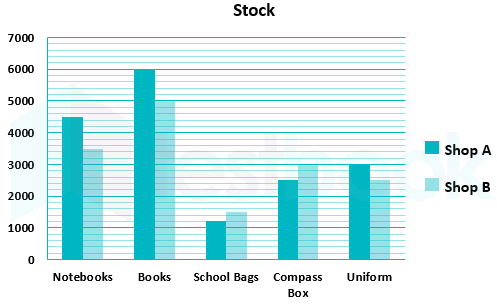
Question 173

In which year did U buy his car and who is sitting third to the right of U?

  1. AOption (a)

    1992, V

  2. BOption (b)

    1993, S

  3. COption (c)

    1992, T

  4. DOption (d)

    1994, V

  5. EOption (e)

    None of these

View answer & explanation

Correct answer

Answer: (d)D.

1994, V

Why this answer is correct

9 people: P, Q, R, S, T, U, V, W and X

Months: June, August, December

Years: 1992, 1993, 1994

1) P bought his car in the month which has less than 31 days but before V who bought his car in the same month in which P bought his car.

Case 1:

June (30 days)August (31 days)December (31 days)
1992P
1993V
1994


Case 2:

June (30 days)August (31 days)December (31 days)
1992P
1993
1994V


Case 3:

June (30 days)August (31 days)December (31 days)
1992
1993P
1994V


2) W and Q bought their cars in the same month but not in the year 1992.

3) Neither W nor S bought a car in August.

4) The number of days in the month in which R bought a car is a prime number.

5) The year in which R bought a car is not an even number.

Case 1:

June (30 days)August (31 days)December (31 days)
1992P
1993VRW/Q
1994W/Q


Case 2:

June (30 days)August (31 days)December (31 days)
1992P
1993RW/Q
1994VW/Q


Case 3:

June (30 days)August (31 days)December (31 days)
1992
1993PRW/Q
1994VW/Q


6) T bought a car before U and both of them bought cars in the same month.

  1. S bought a car before X but not in the same month in which P bought his car.

Therefore, case 3 gets eliminated.

  1. Both Q and U bought their car in the same year.

Case 1:

June (30 days)August (31 days)December (31 days)
1992PTS
1993VRW
1994XUQ


Case 2:

June (30 days)August (31 days)December (31 days)
1992PTS
1993XRW
1994VUQ


9) X is married to R and bought a car after her.

Therefore, case 2 gets eliminated.

June (30 days)August (31 days)December (31 days)
1992PTS
1993VRW
1994XUQ


  1. R and S are siblings.

From 9), we know that R is a female.

  1. R is the only daughter of P.

From 7) we know that P is a male.

Therefore, we can conclude that S is male.

  1. S, the only son of W is married to the younger sister of T and has only one child.

  2. It is given that Q is the grandson of W but not a son of R.

Therefore, Q is the son of S.

  1. W is the grandmother of V who is the only unmarried female in the family.

Therefore, V is the daughter of R.

  1. The family has more males than females.

Therefore, T is male.

  1. Q is sitting at one of the ends in the row facing north.

  2. V is sitting fourth to the left of Q.

18) X is the immediate neighbour of Q.

19) Only four persons are sitting between X and W.

20) T and R are immediate neighbours of each other but neither of them is sitting at the extreme ends.

  1. R is the neighbour of V.

  2. W and S are not neighbours.

23) Only one person sits at the left of U.

Hence, U bought his car in 1994 and V is sitting third to the right of U.

Question 174

How is V related to S and how many persons are sitting between them?

  1. AOption (a)

    Daughter, 2

  2. BOption (b)

    Son, 3

  3. COption (c)

    Niece, 3

  4. DOption (d)

    Cousin, 3

  5. EOption (e)

    None of these

View answer & explanation

Correct answer

Answer: (c)C.

Niece, 3

Why this answer is correct

9 people: P, Q, R, S, T, U, V, W and X

Months: June, August, December

Years: 1992, 1993, 1994

1) P bought his car in the month which has less than 31 days but before V who bought his car in the same month in which P bought his car.

Case 1:

June (30 days)August (31 days)December (31 days)
1992P
1993V
1994


Case 2:

June (30 days)August (31 days)December (31 days)
1992P
1993
1994V


Case 3:

June (30 days)August (31 days)December (31 days)
1992
1993P
1994V


2) W and Q bought their cars in the same month but not in the year 1992.

3) Neither W nor S bought a car in August.

4) The number of days in the month in which R bought a car is a prime number.

5) The year in which R bought a car is not an even number.

Case 1:

June (30 days)August (31 days)December (31 days)
1992P
1993VRW/Q
1994W/Q


Case 2:

June (30 days)August (31 days)December (31 days)
1992P
1993RW/Q
1994VW/Q


Case 3:

June (30 days)August (31 days)December (31 days)
1992
1993PRW/Q
1994VW/Q


6) T bought a car before U and both of them bought cars in the same month.

  1. S bought a car before X but not in the same month in which P bought his car.

Therefore, case 3 gets eliminated.

  1. Both Q and U bought their car in the same year.

Case 1:

June (30 days)August (31 days)December (31 days)
1992PTS
1993VRW
1994XUQ


Case 2:

June (30 days)August (31 days)December (31 days)
1992PTS
1993XRW
1994VUQ


9) X is married to R and bought a car after her.

Therefore, case 2 gets eliminated.

June (30 days)August (31 days)December (31 days)
1992PTS
1993VRW
1994XUQ


  1. R and S are siblings.

From 9), we know that R is a female.

  1. R is the only daughter of P.

From 7) we know that P is a male.

Therefore, we can conclude that S is male.

  1. S, the only son of W is married to the younger sister of T and has only one child.

  2. It is given that Q is the grandson of W but not a son of R.

Therefore, Q is the son of S.

  1. W is the grandmother of V who is the only unmarried female in the family.

Therefore, V is the daughter of R.

  1. The family has more males than females.

Therefore, T is male.

  1. Q is sitting at one of the ends in the row facing north.

  2. V is sitting fourth to the left of Q.

18) X is the immediate neighbour of Q.

19) Only four persons are sitting between X and W.

20) T and R are immediate neighbours of each other but neither of them is sitting at the extreme ends.

  1. R is the neighbour of V.

  2. W and S are not neighbours.

23) Only one person sits at the left of U.

Hence, V is the niece of S and 3 persons are sitting between them.

Question 175

How is U related to P and how many persons are sitting between them?

  1. AOption (a)

    Son, 1

  2. BOption (b)

    Daughter, 2

  3. COption (c)

    Son-in-law, 1

  4. DOption (d)

    Daughter-in-law, 1

  5. EOption (e)

    None of these

View answer & explanation

Correct answer

Answer: (d)D.

Daughter-in-law, 1

Why this answer is correct

9 people: P, Q, R, S, T, U, V, W and X

Months: June, August, December

Years: 1992, 1993, 1994

1) P bought his car in the month which has less than 31 days but before V who bought his car in the same month in which P bought his car.

Case 1:

June (30 days)August (31 days)December (31 days)
1992P
1993V
1994


Case 2:

June (30 days)August (31 days)December (31 days)
1992P
1993
1994V


Case 3:

June (30 days)August (31 days)December (31 days)
1992
1993P
1994V


2) W and Q bought their cars in the same month but not in the year 1992.

3) Neither W nor S bought a car in August.

4) The number of days in the month in which R bought a car is a prime number.

5) The year in which R bought a car is not an even number.

Case 1:

June (30 days)August (31 days)December (31 days)
1992P
1993VRW/Q
1994W/Q


Case 2:

June (30 days)August (31 days)December (31 days)
1992P
1993RW/Q
1994VW/Q


Case 3:

June (30 days)August (31 days)December (31 days)
1992
1993PRW/Q
1994VW/Q


6) T bought a car before U and both of them bought cars in the same month.

  1. S bought a car before X but not in the same month in which P bought his car.

Therefore, case 3 gets eliminated.

  1. Both Q and U bought their car in the same year.

Case 1:

June (30 days)August (31 days)December (31 days)
1992PTS
1993VRW
1994XUQ


Case 2:

June (30 days)August (31 days)December (31 days)
1992PTS
1993XRW
1994VUQ


9) X is married to R and bought a car after her.

Therefore, case 2 gets eliminated.

June (30 days)August (31 days)December (31 days)
1992PTS
1993VRW
1994XUQ


  1. R and S are siblings.

From 9), we know that R is a female.

  1. R is the only daughter of P.

From 7) we know that P is a male.

Therefore, we can conclude that S is male.

  1. S, the only son of W is married to the younger sister of T and has only one child.

  2. It is given that Q is the grandson of W but not a son of R.

Therefore, Q is the son of S.

  1. W is the grandmother of V who is the only unmarried female in the family.

Therefore, V is the daughter of R.

  1. The family has more males than females.

Therefore, T is male.

  1. Q is sitting at one of the ends in the row facing north.

  2. V is sitting fourth to the left of Q.

18) X is the immediate neighbour of Q.

19) Only four persons are sitting between X and W.

20) T and R are immediate neighbours of each other but neither of them is sitting at the extreme ends.

  1. R is the neighbour of V.

  2. W and S are not neighbours.

23) Only one person sits at the left of U.

Hence, U is the daughter-in-law of P and only 1 person is sitting between them.

Directions: Study the following information and answer the questions below.

Eight boxes are placed one above the other and they are named by A, B, C, D, E, F, G, and H but not necessarily in the same order. They contain different numbers of pencils each number being a multiple of 10. The box which has the highest number of pencils has less than 100 pencils in the box.

Only two boxes are placed between box C and Box B which has pencils whose count is a multiple of 16. Only one box is placed between Box G and Box B. Box F is an immediate neighbor of Box B which is placed somewhere above G. Box E is placed two places above Box A which has 40 pencils. Box A is exactly placed between Box C and Box D which has the lowest number of pencils. Only three boxes are placed between Box H and Box D which is placed immediately above Box B. Only Box G and Box H have pencils each of whose count is a multiple of 3 and H has more pencils than G. Box C has the second largest number of pencils. Only four boxes are placed between box C and Box G. Box G is placed somewhere below Box C. Box F has more pencils than Box E. Box E is not placed at the top.

Question 176

Which box is placed immediately above Box E and how many pencils are there in that box?

  1. AOption (a)

    H, 50

  2. BOption (b)

    C, 20

  3. COption (c)

    D, 10

  4. DOption (d)

    H, 60

  5. EOption (e)

    None of these

View answer & explanation

Correct answer

Answer: (d)D.

H, 60

Why this answer is correct

Eight boxes: A, B, C, D, E, F, G, and H

They contain different numbers of pencils each number being a multiple of 10.

The box which has the highest number of pencils has less than 100 pencils in the box.

Hence, the number of pencils in the boxes can be 10, 20, 30, 40, 50, 60, 70, 80, and 90, but as there are only eight boxes, one quantity will be eliminated.

1) Only two boxes are placed between box C and Box B which has pencils whose count is a multiple of 16.

  1. Only one box is placed between Box G and Box B.

3) Only four boxes are placed between box C and Box G.

  1. Box G is placed somewhere below Box C.
BoxesNumber of pencils
C
B80
G


5) Box F is an immediate neighbour of Box B which is placed somewhere above G.

6) Only three boxes are placed between Box H and Box D which is placed immediately above Box B.

BoxesNumber of pencils
H
C
D
B80
F
G

7) Box E is placed two places above Box A which has 40 pencils.

  1. Box A is exactly placed between Box C and Box D which has the lowest number of pencils.

9) Box E is not placed at the top.

BoxesNumber of pencils
H
E
C
A40
D
B80
F
G


10) Box C has the second largest number of pencils. (If the maximum number of pencils in the box was 90, the second-largest number would be 80 but Box B has 80 pencils and it is not the box with the second largest number of pencils).

Hence, Box C contains 70 pencils in it.

  1. Only Box G and Box H have pencils each of whose count is a multiple of 3 and H has more pencils than G. (Multiples of 3 and 10 between 10 and 80 are 30 and 60. Also, H has more pencils than G, therefore, Box H contains 60 pencils and Box G contains 30 pencils).
BoxesNumber of pencils
H60
E
C70
A40
D
B80
F
G30


  1. Box D has the lowest number of pencils. (here the lowest number of pencils will be 10, hence box D has 10 pencils).

  2. Box F has more pencils than Box E. (as the only available values are 20 and 50, Box F should contain 50 pencils and Box E should contain 20 pencils in it.)

BoxesNumber of pencils
H60
E20
C70
A40
D10
B80
F50
G30

Hence, Box H is placed immediately above Box E and it contains 60 pencils in it.

Question 177

How many boxes are placed between Box F and Box D?

  1. AOption (a)

    1

  2. BOption (b)

    2

  3. COption (c)

    3

  4. DOption (d)

    4

  5. EOption (e)

    5

View answer & explanation

Correct answer

Answer: (a)A.

1

Why this answer is correct

Eight boxes: A, B, C, D, E, F, G, and H

They contain different numbers of pencils each number being a multiple of 10.

The box which has the highest number of pencils has less than 100 pencils in the box.

Hence, the number of pencils in the boxes can be 10, 20, 30, 40, 50, 60, 70, 80, and 90, but as there are only eight boxes, one quantity will be eliminated.

1) Only two boxes are placed between box C and Box B which has pencils whose count is a multiple of 16.

  1. Only one box is placed between Box G and Box B.

3) Only four boxes are placed between box C and Box G.

  1. Box G is placed somewhere below Box C.
BoxesNumber of pencils
C
B80
G


5) Box F is an immediate neighbour of Box B which is placed somewhere above G.

6) Only three boxes are placed between Box H and Box D which is placed immediately above Box B.

BoxesNumber of pencils
H
C
D
B80
F
G

7) Box E is placed two places above Box A which has 40 pencils.

  1. Box A is exactly placed between Box C and Box D which has the lowest number of pencils.

9) Box E is not placed at the top.

BoxesNumber of pencils
H
E
C
A40
D
B80
F
G


10) Box C has the second largest number of pencils. (If the maximum number of pencils in the box was 90, the second-largest number would be 80 but Box B has 80 pencils and it is not the box with the second largest number of pencils).

Hence, Box C contains 70 pencils in it.

  1. Only Box G and Box H have pencils each of whose count is a multiple of 3 and H has more pencils than G. (Multiples of 3 and 10 between 10 and 80 are 30 and 60. Also, H has more pencils than G, therefore, Box H contains 60 pencils and Box G contains 30 pencils).
BoxesNumber of pencils
H60
E
C70
A40
D
B80
F
G30


  1. Box D has the lowest number of pencils. (here the lowest number of pencils will be 10, hence box D has 10 pencils).

  2. Box F has more pencils than Box E. (as the only available values are 20 and 50, Box F should contain 50 pencils and Box E should contain 20 pencils in it.)

BoxesNumber of pencils
H60
E20
C70
A40
D10
B80
F50
G30

Hence, only one box is placed between box F and box D.

Question 178

Which box has the fourth largest number of pencils?

  1. AOption (a)

    H

  2. BOption (b)

    A

  3. COption (c)

    G

  4. DOption (d)

    F

  5. EOption (e)

    None of these

View answer & explanation

Correct answer

Answer: (d)D.

F

Why this answer is correct

Eight boxes: A, B, C, D, E, F, G, and H

They contain different numbers of pencils each number being a multiple of 10.

The box which has the highest number of pencils has less than 100 pencils in the box.

Hence, the number of pencils in the boxes can be 10, 20, 30, 40, 50, 60, 70, 80, and 90, but as there are only eight boxes, one quantity will be eliminated.

1) Only two boxes are placed between box C and Box B which has pencils whose count is a multiple of 16.

  1. Only one box is placed between Box G and Box B.

3) Only four boxes are placed between box C and Box G.

  1. Box G is placed somewhere below Box C.
BoxesNumber of pencils
C
B80
G


5) Box F is an immediate neighbour of Box B which is placed somewhere above G.

6) Only three boxes are placed between Box H and Box D which is placed immediately above Box B.

BoxesNumber of pencils
H
C
D
B80
F
G

7) Box E is placed two places above Box A which has 40 pencils.

  1. Box A is exactly placed between Box C and Box D which has the lowest number of pencils.

9) Box E is not placed at the top.

BoxesNumber of pencils
H
E
C
A40
D
B80
F
G


10) Box C has the second largest number of pencils. (If the maximum number of pencils in the box was 90, the second-largest number would be 80 but Box B has 80 pencils and it is not the box with the second largest number of pencils).

Hence, Box C contains 70 pencils in it.

  1. Only Box G and Box H have pencils each of whose count is a multiple of 3 and H has more pencils than G. (Multiples of 3 and 10 between 10 and 80 are 30 and 60. Also, H has more pencils than G, therefore, Box H contains 60 pencils and Box G contains 30 pencils).
BoxesNumber of pencils
H60
E
C70
A40
D
B80
F
G30


  1. Box D has the lowest number of pencils. (here the lowest number of pencils will be 10, hence box D has 10 pencils).

  2. Box F has more pencils than Box E. (as the only available values are 20 and 50, Box F should contain 50 pencils and Box E should contain 20 pencils in it.)

BoxesNumber of pencils
H60
E20
C70
A40
D10
B80
F50
G30

Hence, box F has the fourth-largest number of pencils.

Question 179

What is the total number of pencils in the boxes, each of whose names is a vowel according to the English alphabetical series?

  1. AOption (a)

    40

  2. BOption (b)

    50

  3. COption (c)

    60

  4. DOption (d)

    80

  5. EOption (e)

    90

View answer & explanation

Correct answer

Answer: (c)C.

60

Why this answer is correct

Eight boxes: A, B, C, D, E, F, G, and H

They contain different numbers of pencils each number being a multiple of 10.

The box which has the highest number of pencils has less than 100 pencils in the box.

Hence, the number of pencils in the boxes can be 10, 20, 30, 40, 50, 60, 70, 80, and 90, but as there are only eight boxes, one quantity will be eliminated.

1) Only two boxes are placed between box C and Box B which has pencils whose count is a multiple of 16.

  1. Only one box is placed between Box G and Box B.

3) Only four boxes are placed between box C and Box G.

  1. Box G is placed somewhere below Box C.
BoxesNumber of pencils
C
B80
G


5) Box F is an immediate neighbour of Box B which is placed somewhere above G.

6) Only three boxes are placed between Box H and Box D which is placed immediately above Box B.

BoxesNumber of pencils
H
C
D
B80
F
G

7) Box E is placed two places above Box A which has 40 pencils.

  1. Box A is exactly placed between Box C and Box D which has the lowest number of pencils.

9) Box E is not placed at the top.

BoxesNumber of pencils
H
E
C
A40
D
B80
F
G


10) Box C has the second largest number of pencils. (If the maximum number of pencils in the box was 90, the second-largest number would be 80 but Box B has 80 pencils and it is not the box with the second largest number of pencils).

Hence, Box C contains 70 pencils in it.

  1. Only Box G and Box H have pencils each of whose count is a multiple of 3 and H has more pencils than G. (Multiples of 3 and 10 between 10 and 80 are 30 and 60. Also, H has more pencils than G, therefore, Box H contains 60 pencils and Box G contains 30 pencils).
BoxesNumber of pencils
H60
E
C70
A40
D
B80
F
G30


  1. Box D has the lowest number of pencils. (here the lowest number of pencils will be 10, hence box D has 10 pencils).

  2. Box F has more pencils than Box E. (as the only available values are 20 and 50, Box F should contain 50 pencils and Box E should contain 20 pencils in it.)

BoxesNumber of pencils
H60
E20
C70
A40
D10
B80
F50
G30

Here, Box A and Box E are boxes whose names are vowels according to the English alphabetical series, the sum of the number of pencils in both the boxes is (40 + 20 = 60).

Hence, 60 is the correct answer.

Question 180

How many boxes are placed between the box which has the most number of pencils and the box which has the lowest number of pencils?

  1. AOption (a)

    2

  2. BOption (b)

    3

  3. COption (c)

    1

  4. DOption (d)

    4

  5. EOption (e)

    None of these

View answer & explanation

Correct answer

Answer: (e)E.

None of these

Why this answer is correct

Eight boxes: A, B, C, D, E, F, G, and H

They contain different numbers of pencils each number being a multiple of 10.

The box which has the highest number of pencils has less than 100 pencils in the box.

Hence, the number of pencils in the boxes can be 10, 20, 30, 40, 50, 60, 70, 80, and 90, but as there are only eight boxes, one quantity will be eliminated.

1) Only two boxes are placed between box C and Box B which has pencils whose count is a multiple of 16.

  1. Only one box is placed between Box G and Box B.

3) Only four boxes are placed between box C and Box G.

  1. Box G is placed somewhere below Box C.
BoxesNumber of pencils
C
B80
G


5) Box F is an immediate neighbour of Box B which is placed somewhere above G.

6) Only three boxes are placed between Box H and Box D which is placed immediately above Box B.

BoxesNumber of pencils
H
C
D
B80
F
G

7) Box E is placed two places above Box A which has 40 pencils.

  1. Box A is exactly placed between Box C and Box D which has the lowest number of pencils.

9) Box E is not placed at the top.

BoxesNumber of pencils
H
E
C
A40
D
B80
F
G


10) Box C has the second largest number of pencils. (If the maximum number of pencils in the box was 90, the second-largest number would be 80 but Box B has 80 pencils and it is not the box with the second largest number of pencils).

Hence, Box C contains 70 pencils in it.

  1. Only Box G and Box H have pencils each of whose count is a multiple of 3 and H has more pencils than G. (Multiples of 3 and 10 between 10 and 80 are 30 and 60. Also, H has more pencils than G, therefore, Box H contains 60 pencils and Box G contains 30 pencils).
BoxesNumber of pencils
H60
E
C70
A40
D
B80
F
G30


  1. Box D has the lowest number of pencils. (here the lowest number of pencils will be 10, hence box D has 10 pencils).

  2. Box F has more pencils than Box E. (as the only available values are 20 and 50, Box F should contain 50 pencils and Box E should contain 20 pencils in it.)

BoxesNumber of pencils
H60
E20
C70
A40
D10
B80
F50
G30

Here, Box B contains the largest number of pencils and Box D contains the lowest number of pencils.

and there is no box present between them.

Hence, 'none of these' is the correct answer.

Directions: Study the given information and answer the following questions:

3 * D F 4 & N A 1 Y 6 8 R @ E 2 % T U $ I P O W ! J

STEP-I- The numbers which are immediately preceded by a letter and immediately followed by a symbol are arranged at the end of the series in ascending order. (They are arranged just after J)

STEP-II- The letters which are immediately preceded by another letter and immediately followed by a symbol are arranged between ! and J in alphabetical order.

STEP-III- The numbers which are immediately followed by a letter interchange their positions with the elements just after them.

(STEP II is applied after STEP I and STEP III is applied after STEP II)

Question 181

How many letters are there between 2 and 8 in the step-I of the series?

  1. AOption (a)

    Eight

  2. BOption (b)

    Six

  3. COption (c)

    Four

  4. DOption (d)

    Five

  5. EOption (e)

    More than eight

View answer & explanation

Correct answer

Answer: (e)E.

More than eight

Why this answer is correct

Step-I:

Alphabet → Number → Symbol

3 * D F 4 & N A 1 Y 6 8 R @ E 2 % T U $ I P O W ! J

New arrangement: 3 * D F & N A 1 Y 6 8 R @ E % T U $ I P O W ! J 2 4

Step-II:

Alphabet → Alphabet → Symbol

3 * D F & N A 1 Y 6 8 R @ E % T U $ I P O W ! J 2 4

New arrangement: 3 * D & N A 1 Y 6 8 R @ E % T $ I P O ! F U W J 2 4

Step-III:

Number → Alphabet

3 * D & N A 1 Y 6 8 R @ E % T $ I P O ! F U W J 2 4

New arrangement: 3 * D & N A Y 1 6 R 8 @ E % T $ I P O ! F U W J 2 4

This is the final arrangement.

Letters between 2 and 8 in step-I:

3 * D F & N A 1 Y 6 8 R @ E % T U $ I P O W ! J 2 4

Hence, there are more than 8 letters between 2 and 8 in step-I.

Question 182

Which among the following are the elements of the series which are at the second position from the left end and the fifth position from the right end in step-III respectively?

  1. AOption (a)

    3J

  2. BOption (b)

    *U

  3. COption (c)

    NW

  4. DOption (d)

    *J

  5. EOption (e)

    &U

View answer & explanation

Correct answer

Answer: (b)B.

*U

Why this answer is correct

Step-I:

Alphabet → Number → Symbol

3 * D F 4 & N A 1 Y 6 8 R @ E 2 % T U $ I P O W ! J

New arrangement: 3 * D F & N A 1 Y 6 8 R @ E % T U $ I P O W ! J 2 4

Step-II:

Alphabet → Alphabet → Symbol

3 * D F & N A 1 Y 6 8 R @ E % T U $ I P O W ! J 2 4

New arrangement: 3 * D & N A 1 Y 6 8 R @ E % T $ I P O ! F U W J 2 4

Step-III:

Number → Alphabet

3 * D & N A 1 Y 6 8 R @ E % T $ I P O ! F U W J 2 4

New arrangement: 3 * D & N A Y 1 6 R 8 @ E % T $ I P O ! F U W J 2 4

This is the final arrangement.

Elements of the series which are at the second position from the left end and fifth position from the right end respectively in step-III:

3 * D & N A Y 1 6 R 8 @ E % T $ I P O ! F U W J 2 4

Hence, '*U' is the required answer.

Question 183

How many symbols are immediately preceded by numbers in step-III?

  1. AOption (a)

    One

  2. BOption (b)

    Three

  3. COption (c)

    Two

  4. DOption (d)

    Five

  5. EOption (e)

    Four

View answer & explanation

Correct answer

Answer: (c)C.

Two

Why this answer is correct

Step-I:

Alphabet → Number → Symbol

3 * D F 4 & N A 1 Y 6 8 R @ E 2 % T U $ I P O W ! J

New arrangement: 3 * D F & N A 1 Y 6 8 R @ E % T U $ I P O W ! J 2 4

Step-II:

Alphabet → Alphabet → Symbol

3 * D F & N A 1 Y 6 8 R @ E % T U $ I P O W ! J 2 4

New arrangement: 3 * D & N A 1 Y 6 8 R @ E % T $ I P O ! F U W J 2 4

Step-III:

Number → Alphabet

3 * D & N A 1 Y 6 8 R @ E % T $ I P O ! F U W J 2 4

New arrangement: 3 * D & N A Y 1 6 R 8 @ E % T $ I P O ! F U W J 2 4

This is the final arrangement.

Symbols immediately preceded by numbers in step-III:

Number → Symbol

**3 *** D & N A Y 1 6 R 8 @ E % T $ I P O ! F U W J 2 4

Hence, there are 2 symbols which are immediately preceded by numbers in step-III.

Question 184

Which element is 13th from the left in the penultimate step?

  1. AOption (a)

    6

  2. BOption (b)

    8

  3. COption (c)

    R

  4. DOption (d)

    E

  5. EOption (e)

    @

View answer & explanation

Correct answer

Answer: (d)D.

E

Why this answer is correct

Step-I:

Alphabet → Number → Symbol

3 * D F 4 & N A 1 Y 6 8 R @ E 2 % T U $ I P O W ! J

New arrangement: 3 * D F & N A 1 Y 6 8 R @ E % T U $ I P O W ! J 2 4

Step-II:

Alphabet → Alphabet → Symbol

3 * D F & N A 1 Y 6 8 R @ E % T U $ I P O W ! J 2 4

New arrangement: 3 * D & N A 1 Y 6 8 R @ E % T $ I P O ! F U W J 2 4

Step-III:

Number → Alphabet

3 * D & N A 1 Y 6 8 R @ E % T $ I P O ! F U W J 2 4

New arrangement: 3 * D & N A Y 1 6 R 8 @ E % T $ I P O ! F U W J 2 4

This is the final arrangement.

The element which is 13th from the left in the penultimate step (step-II):

3 * D & N A 1 Y 6 8 R @ E % T $ I P O ! F U W J 2 4

Hence, E is the 13th element from the left in the penultimate step.

Question 185

What is the position of 8 in the step-III from the right end?

  1. AOption (a)

    10th

  2. BOption (b)

    16th

  3. COption (c)

    14th

  4. DOption (d)

    12th

  5. EOption (e)

    15th

View answer & explanation

Correct answer

Answer: (b)B.

16th

Why this answer is correct

Step-I:

Alphabet → Number → Symbol

3 * D F 4 & N A 1 Y 6 8 R @ E 2 % T U $ I P O W ! J

New arrangement: 3 * D F & N A 1 Y 6 8 R @ E % T U $ I P O W ! J 2 4

Step-II:

Alphabet → Alphabet → Symbol

3 * D F & N A 1 Y 6 8 R @ E % T U $ I P O W ! J 2 4

New arrangement: 3 * D & N A 1 Y 6 8 R @ E % T $ I P O ! F U W J 2 4

Step-III:

Number → Alphabet

3 * D & N A 1 Y 6 8 R @ E % T $ I P O ! F U W J 2 4

New arrangement: 3 * D & N A Y 1 6 R 8 @ E % T $ I P O ! F U W J 2 4

This is the final arrangement.

3 * D & N A Y 1 6 R 8 @ E % T $ I P O ! F U W J 2 4

Hence, the  element 8 is 16th from the right end in step-III.

Directions: Study the given information and answer the following questions.

A number/symbol arrangement machine, when given a particular input, rearranges it following a particular rule. The following is the illustration of the input and the steps of arrangement.

Input: @ #2 5 $ 6 8 ? 7 ! & > 9 4

Step I: 2 @ # $ 6 8 ? 7 ! & > 9 4 5

Step II: 2 4 @ # $ 6 8 ?  ! & > 9 5 7

Step III: 2 4 6 @ # $ 8 ?  ! & > 5 7 9

Step IV: 2 4 6 8 @ # $ ?  ! & > 5 7 9

Step V: 3 5 7 9 @ # $ ?  ! & > 4 6 8

Step VI: 3 4 5 7 9 @ # $ ?  ! & > 6 8

Step VII: 3 4 5 6 7 9 @ # $ ?  ! & > 8

Step VIII: 3 4 5 6 7 8 9 @ # $ ?  ! & >

And Step VIII is the last step for this input. As per rules followed in the above steps, find out in each of the questions the appropriate step for the given input.

Input: * 5 $ 9 / 8 4 © 3 + 2 = 6 %

Question 186

How many steps are required to complete the input arrangement?

  1. AOption (a)

    5

  2. BOption (b)

    6

  3. COption (c)

    7

  4. DOption (d)

    8

  5. EOption (e)

    Cannot be determined

View answer & explanation

Correct answer

Answer: (d)D.

8

Why this answer is correct

In the given illustration:

  1. Steps I-IV: Even numbers are arranged in ascending order (one in each step) from the left end.

Similarly, odd numbers are arranged in ascending order (one in each step) from the right end.

i.e., in the first step, the lowest pair of even and odd numbers is selected, then the even number is placed at the left end of the arrangement and the odd number is placed at the right end. The same procedure is repeated with all the pairs such that in the arrangement of step IV,  all the even numbers will be placed at the left end in ascending order. Similarly, all the odd numbers will be placed at the right end of the arrangement in ascending order in step IV.

  1. Step V: 1 is added to each even number and subtracted from each odd number in the arrangement obtained in step IV.

  2. Step VI-VIII: The numbers obtained in step V are arranged in ascending order from the left end (one in each step).


Input: * 5 $ 9 / 8 4 © 3 + 2 = 6 %

Step - I: 2 * 5 $ 9 / 8 4 © + = 6 % 3 

Step - II: 2 4 * $ 9 / 8 © + = 6 % 3 5

Step - III: 2 4 6 * $  / 8 © + = % 3 5 9

Step - IV: 2 4 6 8 * $  / © + = % 3 5 9

Step - V: 3 5 7 9 * $  / © + = % 2 4 8

Step - VI: 2 3 5 7 9 * $  / © + = % 4 8

Step - VII: 2 3 4 5 7 9 * $  / © + = % 8 

Step - VIII: 2 3 4 5 7 8 9 * $  / © + = %

Step - VIII is the final arrangement.

Hence, 8 steps are required to complete the input arrangement.

Question 187

What will be the last step for the given input?

  1. AOption (a)

    2 3 4 5 7 8 9 * $ / © + = %

  2. BOption (b)

    2 3 5 6 7 8 9 * $ / © + = %

  3. COption (c)

    2 3 6 4 5 7 9 * $ / © + = %

  4. DOption (d)

    2 4 5 7 3 8 9 * $ / © + = %

  5. EOption (e)

    None of these

View answer & explanation

Correct answer

Answer: (a)A.

2 3 4 5 7 8 9 * $ / © + = %

Why this answer is correct

In the given illustration:

  1. Steps I-IV: Even numbers are arranged in ascending order (one in each step) from the left end.

Similarly, odd numbers are arranged in ascending order (one in each step) from the right end.

i.e., in the first step, the lowest pair of even and odd numbers is selected, then the even number is placed at the left end of the arrangement and the odd number is placed at the right end. The same procedure is repeated with all the pairs such that in the arrangement of step IV,  all the even numbers will be placed at the left end in ascending order. Similarly, all the odd numbers will be placed at the right end of the arrangement in ascending order in step IV.

  1. Step V: 1 is added to each even number and subtracted from each odd number in the arrangement obtained in step IV.

  2. Step VI-VIII: The numbers obtained in step V are arranged in ascending order from the left end (one in each step).


Input: * 5 $ 9 / 8 4 © 3 + 2 = 6 %

Step - I: 2 * 5 $ 9 / 8 4 © + = 6 % 3 

Step - II: 2 4 * $ 9 / 8 © + = 6 % 3 5

Step - III: 2 4 6 * $  / 8 © + = % 3 5 9

Step - IV: 2 4 6 8 * $  / © + = % 3 5 9

Step - V: 3 5 7 9 * $  / © + = % 2 4 8

Step - VI: 2 3 5 7 9 * $  / © + = % 4 8

Step - VII: 2 3 4 5 7 9 * $  / © + = % 8 

Step - VIII: 2 3 4 5 7 8 9 * $  / © + = %

Step - VIII is the final arrangement.


Hence, the last step for the given input is '2 3 4 5 7 8 9 * $ / © + = %'.

Question 188

What is the position of % in the 5th step?

  1. AOption (a)

    Fifth from the left

  2. BOption (b)

    Sixth from the left

  3. COption (c)

    Fourth from the right

  4. DOption (d)

    Eleventh from the right

  5. EOption (e)

    None of these

View answer & explanation

Correct answer

Answer: (c)C.

Fourth from the right

Why this answer is correct

In the given illustration:

  1. Steps I-IV: Even numbers are arranged in ascending order (one in each step) from the left end.

Similarly, odd numbers are arranged in ascending order (one in each step) from the right end.

i.e., in the first step, the lowest pair of even and odd numbers is selected, then the even number is placed at the left end of the arrangement and the odd number is placed at the right end. The same procedure is repeated with all the pairs such that in the arrangement of step IV,  all the even numbers will be placed at the left end in ascending order. Similarly, all the odd numbers will be placed at the right end of the arrangement in ascending order in step IV.

  1. Step V: 1 is added to each even number and subtracted from each odd number in the arrangement obtained in step IV.

  2. Step VI-VIII: The numbers obtained in step V are arranged in ascending order from the left end (one in each step).


Input: * 5 $ 9 / 8 4 © 3 + 2 = 6 %

Step - I: 2 * 5 $ 9 / 8 4 © + = 6 % 3 

Step - II: 2 4 * $ 9 / 8 © + = 6 % 3 5

Step - III: 2 4 6 * $  / 8 © + = % 3 5 9

Step - IV: 2 4 6 8 * $  / © + = % 3 5 9

Step - V: 3 5 7 9 * $  / © + = % 2 4 8

Step - VI: 2 3 5 7 9 * $  / © + = % 4 8

Step - VII: 2 3 4 5 7 9 * $  / © + = % 8 

Step - VIII: 2 3 4 5 7 8 9 * $  / © + = %

Step - VIII is the final arrangement.


Step - V: 3 5 7 9 * $  / © + = % 2 4 8

Hence, the position of '%' in step - V is 'fourth from the right'.

Question 189

In the penultimate step, which of the following would be at 6th position from the right?

  1. AOption (a)

    /

  2. BOption (b)

    ©

  3. COption (c)
  4. DOption (d)

    =

  5. EOption (e)

    %

View answer & explanation

Correct answer

Answer: (a)A.

/

Why this answer is correct

In the given illustration:

  1. Steps I-IV: Even numbers are arranged in ascending order (one in each step) from the left end.

Similarly, odd numbers are arranged in ascending order (one in each step) from the right end.

i.e., in the first step, the lowest pair of even and odd numbers is selected, then the even number is placed at the left end of the arrangement and the odd number is placed at the right end. The same procedure is repeated with all the pairs such that in the arrangement of step IV,  all the even numbers will be placed at the left end in ascending order. Similarly, all the odd numbers will be placed at the right end of the arrangement in ascending order in step IV.

  1. Step V: 1 is added to each even number and subtracted from each odd number in the arrangement obtained in step IV.

  2. Step VI-VIII: The numbers obtained in step V are arranged in ascending order from the left end (one in each step).


Input: * 5 $ 9 / 8 4 © 3 + 2 = 6 %

Step - I: 2 * 5 $ 9 / 8 4 © + = 6 % 3 

Step - II: 2 4 * $ 9 / 8 © + = 6 % 3 5

Step - III: 2 4 6 * $  / 8 © + = % 3 5 9

Step - IV: 2 4 6 8 * $  / © + = % 3 5 9

Step - V: 3 5 7 9 * $  / © + = % 2 4 8

Step - VI: 2 3 5 7 9 * $  / © + = % 4 8

Step - VII: 2 3 4 5 7 9 * $  / © + = % 8 

Step - VIII: 2 3 4 5 7 8 9 * $  / © + = %

Step - VIII is the final arrangement.


Step - VII: 2 3 4 5 7 9 * $  / © + = % 8 

Hence, '/' will be at the sixth position from the right in the penultimate step (step - VII).

Question 190

What is the position of 7 in the 6th step from left?

  1. AOption (a)

    Fifth

  2. BOption (b)

    Sixth

  3. COption (c)

    Fourth

  4. DOption (d)

    Third

  5. EOption (e)

    Second

View answer & explanation

Correct answer

Answer: (c)C.

Fourth

Why this answer is correct

In the given illustration:

  1. Steps I-IV: Even numbers are arranged in ascending order (one in each step) from the left end.

Similarly, odd numbers are arranged in ascending order (one in each step) from the right end.

i.e., in the first step, the lowest pair of even and odd numbers is selected, then the even number is placed at the left end of the arrangement and the odd number is placed at the right end. The same procedure is repeated with all the pairs such that in the arrangement of step IV,  all the even numbers will be placed at the left end in ascending order. Similarly, all the odd numbers will be placed at the right end of the arrangement in ascending order in step IV.

  1. Step V: 1 is added to each even number and subtracted from each odd number in the arrangement obtained in step IV.

  2. Step VI-VIII: The numbers obtained in step V are arranged in ascending order from the left end (one in each step).


Input: * 5 $ 9 / 8 4 © 3 + 2 = 6 %

Step - I: 2 * 5 $ 9 / 8 4 © + = 6 % 3 

Step - II: 2 4 * $ 9 / 8 © + = 6 % 3 5

Step - III: 2 4 6 * $  / 8 © + = % 3 5 9

Step - IV: 2 4 6 8 * $  / © + = % 3 5 9

Step - V: 3 5 7 9 * $  / © + = % 2 4 8

Step - VI: 2 3 5 7 9 * $  / © + = % 4 8

Step - VII: 2 3 4 5 7 9 * $  / © + = % 8 

Step - VIII: 2 3 4 5 7 8 9 * $  / © + = %

Step - VIII is the final arrangement.


Step - VI: 2 3 5 7 9 * $  / © + = % 4 8

Hence, '7' is fourth from the left in the sixth step.

190 questions in the full paper