Previous Year Paper

RRB Technician Grade III Official Paper (Held On: 24 Dec, 2024 Shift 3) (Previous Year Paper)

Held in 2024

100 questions90 minutes
With answers
Free

Paper last updated:

Practise under exam conditions

Take this paper as a timed mock test. Review your answers after you submit.

Attempt timed test

Questions & answers

Read the paper at your pace. Open an explanation when you need it.

Full Test (100 questions)

Question 1

An athlete is moving with uniform speed in a circular track of radius R., and he completes one round in t s. The speed of the athlete is:

  1. AOption (a)

    3πRt\frac{3π R}{t}

  2. BOption (b)

    2πRt\frac{2π R}{t}

  3. COption (c)

    πRt\frac{π R}{t}

  4. DOption (d)

    πR2t\frac{π R}{2t}

View answer & explanation

Correct answer

Answer: (b)B.

2πRt\frac{2π R}{t}

Why this answer is correct

Shortcut Trick

For a circular path, distance covered in one round is the circumference.

Speed = Distance ÷ Time

Circumference = 2 × π × R

Speed = (2πR) ÷ t

∴ The correct answer is (2πR)/t.

Alternate Method

Given:

Radius of circular track = R

Time taken for one round = t s

Formula Used:

Speed (v) = Total Distance (s) ÷ Total Time (t)

Calculations:

⇒ Total distance covered in 1 round = Circumference of the track

⇒ s = 2 × π × R

⇒ Speed (v) = Distance ÷ Time

⇒ v = (2πR) / t

∴ The correct answer is (2πR)/t.

Additional Information

Angular Speed (ω)

It is the rate of change of angular displacement, ω = 2π/t. Relation with linear speed is v = Rω.

Displacement in One Round

Since the athlete returns to the starting point, the net displacement after one complete round is zero.

Uniform Circular Motion

In this motion, the speed remains constant, but the velocity changes continuously due to the change in direction.
Question 2

Two pipes A and B can fill a tank in 15 minutes and 20 minutes, respectively. Both the pipes are opened together but after 4 minutes, pipe A is turned off. What is the total time required to fill the tank?

  1. AOption (a)

    14 min 40 sec

  2. BOption (b)

    10 min 20 sec

  3. COption (c)

    12 min 30 sec

  4. DOption (d)

    11 min 45 sec

View answer & explanation

Correct answer

Answer: (a)A.

14 min 40 sec

Why this answer is correct

Shortcut Trick

Let Total Capacity of tank = LCM(15, 20) = 60 units.

Efficiency of Pipe A = 60 ÷ 15 = 4 units/min; Efficiency of Pipe B = 60 ÷ 20 = 3 units/min.

Work done by (A + B) in 4 minutes = 4 × (4 + 3) = 28 units.

Remaining work = 60 − 28 = 32 units, to be filled by Pipe B alone.

Time taken by B = 32 ÷ 3 = 10 min 40 sec. Total time = 4 min + 10 min 40 sec = 14 min 40 sec.

∴ The correct answer is 14 min 40 sec.

Alternate Method

Given: Filling time for Pipe A = 15 min; Filling time for Pipe B = 20 min; Pipe A closed after 4 min.

Formula Used: Efficiency = Total Work ÷ Time

PersonDaysTotal WorkEfficiency
Pipe A15 min60 units4
Pipe B20 min3

⇒ Capacity filled by A and B in 4 minutes = 4 × (4 + 3) = 28 units

⇒ Remaining capacity = 60 − 28 = 32 units

⇒ Time taken by Pipe B to fill remaining capacity = 32 ÷ 3 = 10 2⁄3 minutes

⇒ 10 2⁄3 minutes = 10 min + (2⁄3 × 60) sec = 10 min 40 sec

⇒ Total time = Initial 4 min + 10 min 40 sec = 14 min 40 sec

∴ The correct answer is 14 min 40 sec.

Additional Information

Pipes and Cisterns Efficiency

Efficiency of a pipe is inversely proportional to the time taken to fill the tank. If a pipe fills a tank in x hours, its work in 1 hour is 1/x.

Inlet and Outlet Pipes

Inlet pipes do positive work (fill), while outlet pipes (leaks) do negative work (empty). Net work = Σ(Inlet Efficiency) − Σ(Outlet Efficiency).

Total Work Assumption

For calculations, Total Work is usually taken as the LCM of the individual times to ensure efficiency values are integers.

Question 3

What will come in the place of '?' in the following equation, if '×' and '÷' are interchanged and '-' and '+' are interchanged?

7 ÷ 3 + 15 - 28 × 7 = ?

  1. AOption (a)

    100

  2. BOption (b)

    10

  3. COption (c)

    40

  4. DOption (d)

    70

View answer & explanation

Correct answer

Answer: (b)B.

10

Why this answer is correct

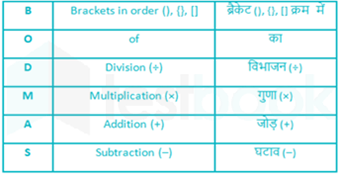
BODMAS Table: 

Given equation: 7 ÷ 3 + 15 - 28 × 7 = ?

Now, if '×' and '÷' are interchanged and '-' and '+' are interchanged, then:

⇒ 7 × 3 - 15 + 28 ÷ 7

⇒ 7 × 3 - 15 + 4

⇒ 21 - 15 + 4 

⇒ 25 - 15

= 10

Hence, the correct answer is "Option 2".

Question 4

In a certain code language, 'exercise good health' is coded as 'ni ch tu' and 'exercise improve stamina' is coded as 'pa qi ch'. What is the code for 'exercise' in the given code language?

  1. AOption (a)

    ch

  2. BOption (b)

    pa

  3. COption (c)

    ni

  4. DOption (d)

    tu

View answer & explanation

Correct answer

Answer: (a)A.

ch

Why this answer is correct

The code for each word is shown below:

Clearly, 'exercise' is the code word for ‘ch’.

Hence, 'Option (1)' is the correct answer.

Question 5

The sum of the two positive numbers is 55 and their difference is 19. What are the numbers?

  1. AOption (a)

    40, 15

  2. BOption (b)

    36, 19

  3. COption (c)

    35, 20

  4. DOption (d)

    37, 18

View answer & explanation

Correct answer

Answer: (d)D.

37, 18

Why this answer is correct

Shortcut Trick

Larger number = (Sum + Difference) ÷ 2 = (55 + 19) ÷ 2 = 74 ÷ 2 = 37

Smaller number = (Sum − Difference) ÷ 2 = (55 − 19) ÷ 2 = 36 ÷ 2 = 18

The numbers are 37 and 18.

∴ The correct answer is 37, 18.

Alternate Method

Given: Sum of numbers (x + y) = 55 and Difference (x − y) = 19.

Calculation:

⇒ Let the two numbers be x and y (where x > y).

⇒ x + y = 55 --- (Equation 1)

⇒ x − y = 19 --- (Equation 2)

⇒ Adding (1) and (2): 2x = 55 + 19

⇒ 2x = 74

⇒ x = 37

⇒ Substitute x in (1): 37 + y = 55

⇒ y = 55 − 37 = 18

∴ The correct answer is 37, 18.

Additional Information

Linear Equations in Two Variables

Equations of the form ax + by = c can be solved using substitution, elimination, or cross-multiplication methods.

Algebraic Identities

(x + y)2 − (x − y)2 = 4xy. This relates the sum, difference, and product of two numbers.

Question 6

 _____ on 9 September 2024 emphasised that safety and social audits of cities and institutions should be carried out to get a better idea about the lags and issues that currently exist in terms of ensuring women’s safety in India.

  1. AOption (a)

    The Prajnya Trust for Women (PTW)

  2. BOption (b)

    The All India Federation of Women Lawyers (AIFWL)

  3. COption (c)

    The National Human Rights Commission (NHRC)

  4. DOption (d)

    The Self-Employed Women's Association (SEWA)

View answer & explanation

Correct answer

Answer: (c)C.

The National Human Rights Commission (NHRC)

Why this answer is correct

The correct answer is The National Human Rights Commission (NHRC).

Key Points

  • The National Human Rights Commission (NHRC) of India is an autonomous public body constituted on 12 October 1993 under the Protection of Human Rights Act, 1993.
  • NHRC emphasised the need for safety and social audits of cities and institutions to identify and address gaps in ensuring women's safety in India.
  • It aims to protect and promote human rights, including the rights of women and marginalized communities.
  • The NHRC has the power to investigate violations of human rights and recommend remedial measures to the government.

Additional Information

  • Protection of Human Rights Act, 1993
  • The Act provides for the creation of the National Human Rights Commission (NHRC), State Human Rights Commissions, and Human Rights Courts.
  • It aims to protect and promote human rights guaranteed by the Constitution of India or embodied in international covenants.
  • Functions of NHRC
  • Inquire into complaints of human rights violations and negligence in the prevention of such violations by public servants.
  • Review the safeguards provided by the Constitution or any law for the protection of human rights and recommend measures for their effective implementation.
  • Spread human rights awareness among the public and promote research in the field of human rights.
  • Women's Safety in India
  • Ensuring women's safety involves addressing issues such as domestic violence, sexual harassment, and discrimination in various spheres of life.
  • The government and various organizations implement laws, policies, and programs to protect women's rights and promote gender equality.
  • Social Audits
  • Social audits involve the evaluation of the performance of public services and schemes by the community and stakeholders.
  • They aim to ensure transparency, accountability, and participation in governance.

Question 7

Simplify 1.24‾1.\overline{24} as an improper fraction.

  1. AOption (a)

    (123)/(90)

  2. BOption (b)

    (41)/(33)

  3. COption (c)

    (91)/(90)

  4. DOption (d)

    (124)/(99)

View answer & explanation

Correct answer

Answer: (b)B.

(41)/(33)

Why this answer is correct

Given:

Value = 1.242424...

Formula used:

x.abc = (xabc − x) / 999 (for three repeating digits)

For 1.24: (Whole Number × 99 + Repeating Part) / 99

Calculations:

Let x = 1.242424...

⇒ 100x = 124.242424...

⇒ 100x − x = 124.242424... − 1.242424...

⇒ 99x = 123

⇒ x = 123 / 99

⇒ x = (123 ÷ 3) / (99 ÷ 3)

⇒ x = 41 / 33

∴ The correct answer is option (2).

Question 8

The percentage profit earned by James by selling an article for ₹1,920, equals the percentage loss suffered by selling it at ₹1,500. What should be the selling price if he wants to earn 10% profit?

  1. AOption (a)

    ₹4000

  2. BOption (b)

    ₹1881

  3. COption (c)

    ₹7000

  4. DOption (d)

    ₹2000

View answer & explanation

Correct answer

Answer: (b)B.

₹1881

Why this answer is correct

Shortcut Trick

To find the Cost Price (CP) when Profit % = Loss % for two selling prices, calculate the average of the two selling prices.

CP = (1920 + 1500) ÷ 2 = 3420 ÷ 2 = 1710.

New Selling Price = CP × (100 + P%) ÷ 100.

New SP = 1710 × (110 ÷ 100) = 171 × 11 = 1881.

∴ The correct answer is ₹1881.

Alternate Method

Given → SP1 = 1920, SP2 = 1500, Profit%1 = Loss%2, Target Profit = 10%. Formulas: Profit = SP − CP | Loss = CP − SP | SP = CP × (100 + P%) ÷ 100

⇒ Let the CP be x. ⇒ (1920 − x) ÷ x × 100 = (x − 1500) ÷ x × 100 ⇒ 1920 − x = x − 1500 ⇒ 2x = 3420 ⇒ x = 1710 ⇒ Required SP = 1710 × (110 ÷ 100) = 1881.

∴ The correct answer is ₹1881.

Additional Information

Equating Profit and Loss

When the numerical value of percentage profit equals percentage loss, the Cost Price is always the Arithmetic Mean of the two Selling Prices.

Selling Price Calculation

To find the Selling Price for a desired profit percentage, multiply the CP by (100 + P)/100.

Question 9

3−4sin⁡2θcos⁡2θ+2tan⁡2θ \frac{3 - 4 \sin^2 \theta}{\cos^2 \theta} + 2 \tan^2 \theta  can be simplified as:

  1. AOption (a)

    3 tan2 θ

  2. BOption (b)

    3 + tan2 θ

  3. COption (c)

    3

  4. DOption (d)

    0

View answer & explanation

Correct answer

Answer: (b)B.

3 + tan2 θ

Why this answer is correct

Shortcut Trick

Substitute a convenient value for θ = 0° into the given trigonometric expression.

We know that sin 0° = 0 and cos 0° = 1 and tan 0° = 0.

Substituting these values: (3 − 4×0) ÷ 12 + 2×0 = 3.

Checking the options for θ = 0°, Option (2) gives: 3 + tan20° = 3 + 0 = 3.

∴ The correct answer is 3 + tan2 θ.

Alternate Method

Given: Trigonometric expression 3−4sin⁡2θcos⁡2θ+2tan⁡2θ \frac{3 - 4 \sin^2 \theta}{\cos^2 \theta} + 2 \tan^2 \theta

Formula Used:

⇒ sin2 θ + cos2 θ = 1

⇒ tan2 θ = sin2 θ ÷ cos2 θ

⇒ sec2 θ − tan2 θ = 1

Calculations:

⇒ Split the first fraction: 3 ÷ cos2 θ − 4 sin2 θ ÷ cos2 θ + 2 tan2 θ

⇒ Since 1 ÷ cos2 θ = sec2 θ and sin2 θ ÷ cos2 θ = tan2 θ:

⇒ 3 sec2 θ − 4 tan2 θ + 2 tan2 θ

⇒ 3 sec2 θ − 2 tan2 θ

⇒ Substitute sec2 θ = 1 + tan2 θ:

⇒ 3(1 + tan2 θ) − 2 tan2 θ

⇒ 3 + 3 tan2 θ − 2 tan2 θ

⇒ 3 + tan2 θ

∴ The correct answer is 3 + tan2 θ.

Additional Information

Fundamental Trigonometric Identities

The three basic Pythagorean identities are: sin2 θ + cos2 θ = 1, 1 + tan2 θ = sec2 θ, and 1 + cot2 θ = cosec2 θ.

Value Substitution Trick

In trigonometric simplifications without boundary conditions, substituting standard angles like 0°, 30°, 45°, 60°, or 90° helps in finding the correct option instantly, provided the expression remains defined.

Question 10

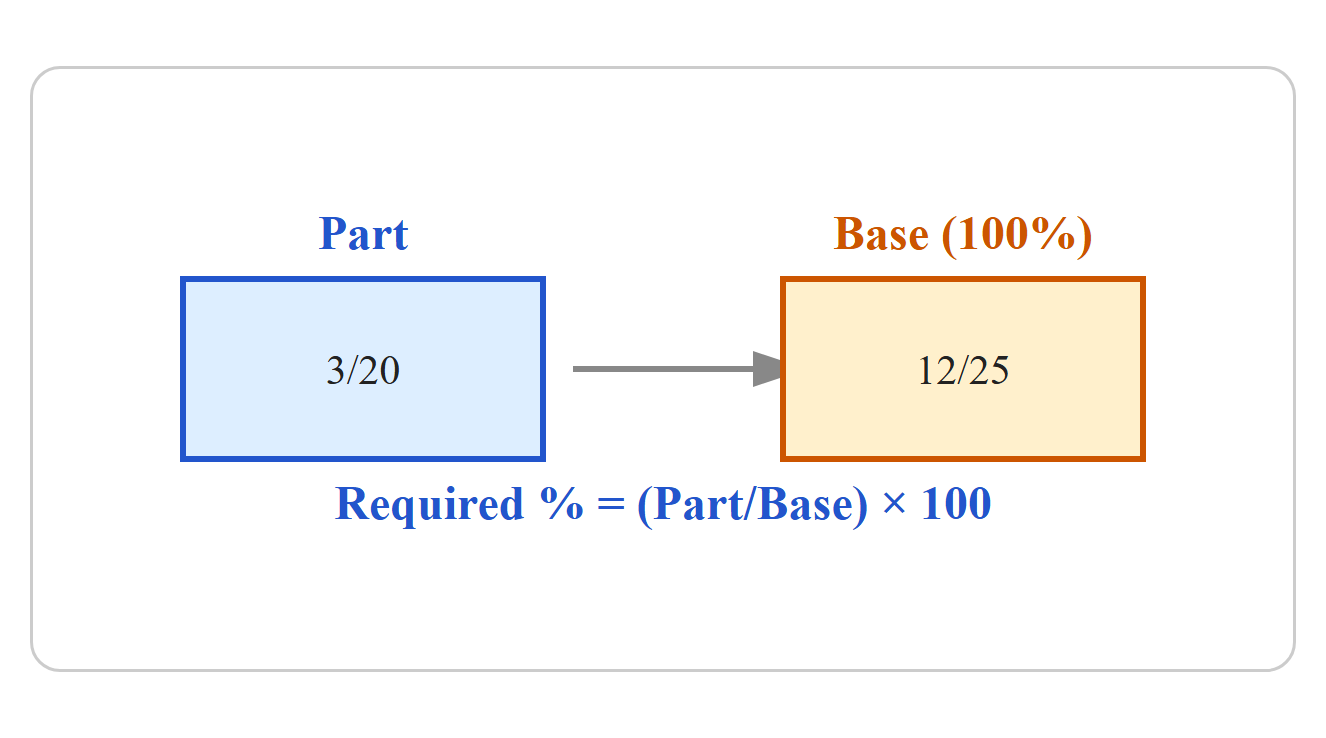
320\frac{3}{20} is what percentage of 1225\frac{12}{25}?

  1. AOption (a)

    42.75%

  2. BOption (b)

    35.50%

  3. COption (c)

    31.25%

  4. DOption (d)

    40.50%

View answer & explanation

Correct answer

Answer: (c)C.

31.25%

Why this answer is correct

Shortcut Trick

Required percentage = (First Fraction ÷ Second Fraction) × 100

⇒ (3/20 ÷ 12/25) × 100

⇒ (3/20 × 25/12) × 100 = (1/4 × 5/4) × 100 = 5/16 × 100

⇒ 5 × 6.25% = 31.25%

∴ The correct answer is 31.25%.

Alternate Method

Given:

First value = 3/20

Second value (Base) = 12/25

Formula Used:

Percentage = (Value / Base) × 100

Calculations:

⇒ Required Percentage = [(3/20) / (12/25)] × 100

⇒ Required Percentage = (3/20 × 25/12) × 100

⇒ Required Percentage = (3 × 25 × 100) / (20 × 12)

⇒ Required Percentage = (7500) / (240)

⇒ Required Percentage = 750 / 24

⇒ Required Percentage = 31.25%

∴ The correct answer is 31.25%.

Additional Information

Fraction to Percentage Conversion

To convert any fraction a/b to a percentage, multiply the fraction by 100 and add the % sign.

Percentage of One Value w.r.t Another

To find what percent x is of y, use the formula: (x/y) × 100. Here, y is the base value.

Reciprocal Multiplication Rule

Dividing by a fraction is equivalent to multiplying by its reciprocal: (a/b) ÷ (c/d) = (a/b) × (d/c).

Question 11

Which of the following forces is responsible for the tides, due to the Moon and the Sun?

  1. AOption (a)

    Nuclear force

  2. BOption (b)

    Electromagnetic force

  3. COption (c)

    Electrostatic force

  4. DOption (d)

    Gravitation force

View answer & explanation

Correct answer

Answer: (d)D.

Gravitation force

Why this answer is correct

The correct answer is Gravitation force.

Key Points

  • Tides are caused by the gravitational pull of the Moon and the Sun on Earth's oceans.
  • The gravitational force from the Moon has a more significant effect on tides than the Sun due to its proximity to Earth.
  • High tides occur when the gravitational forces of the Moon and the Sun pull the ocean water in the same direction.
  • Low tides occur when the gravitational forces of the Moon and the Sun pull the ocean water in opposite directions.
  • Spring tides, which are higher than average, occur during the full moon and new moon phases when the Sun, Earth, and Moon are aligned.

Additional Information

  • Gravitational Force:
  • It is the force of attraction between two masses.
  • Isaac Newton formulated the law of universal gravitation in 1687.
  • The formula for gravitational force is F=Gm1m2r2F=\frac{Gm_1m_2}{r^2}

m1m2r2F=Gm1m2r2F=Gm1m2r2F=Gm1m2r2 , where G is the gravitational constant.

  • Gravitational force is responsible for the orbits of planets and the occurrence of tides.
  • Moon's Influence on Tides:
  • The Moon's gravitational pull creates two tidal bulges on Earth.
  • One bulge is directly under the Moon, and the other is on the opposite side of Earth.
  • The rotation of Earth causes these bulges to move, leading to the cyclical pattern of high and low tides.
  • Sun's Influence on Tides:
  • The Sun also exerts a gravitational pull on Earth's oceans, though it is weaker than the Moon's effect.
  • When the Sun, Moon, and Earth align, the combined gravitational forces enhance the tides, resulting in spring tides.
  • When the Sun and Moon are at right angles to each other, neap tides occur, which are weaker than average tides.
  • Types of Tides:
  • Spring Tides: Occur during the full and new moon phases, leading to higher-than-average tides.
  • Neap Tides: Occur during the first and third quarter moon phases, resulting in lower-than-average tides.
  • Diurnal Tides: Characterized by one high and one low tide each day.
  • Semidiurnal Tides: Characterized by two high and two low tides each day.

Question 12

Select the set in which the numbers are related in the same way as are the numbers of the following sets.

(NOTE: Operations should be performed on the whole numbers, without breaking down the numbers into its constituent digits. E.g. 13 - Operations on 13 such as adding/subtracting/multiplying etc. to 13 can be performed. Breaking down 13 into 1 and 3 and then performing mathematical operations on 1 and 3 is not allowed.)

(15, 5, 10)

(24, 8, 16)

  1. AOption (a)

    (39, 13, 24)

  2. BOption (b)

    (39, 13, 26)

  3. COption (c)

    (39, 11, 26)

  4. DOption (d)

    (36, 13, 26)

View answer & explanation

Correct answer

Answer: (b)B.

(39, 13, 26)

Why this answer is correct

The logic follows here:

1st number ÷ 3 = 2nd number; 2nd number × 2 = 3rd number.

Given:

(15, 5, 10)

⇒ 15 ÷ 3 = 5 = 2nd number

⇒ 5 × 2 = 10 = 3rd number.

(24, 8, 16)

⇒ 24 ÷ 3 = 8 = 2nd number

⇒ 8 × 2 = 16 = 3rd number.

Similarity, In Option (2):

(39, 13, 26)

⇒ 39 ÷ 3 = 13 = 2nd number

⇒ 13 × 2 = 26 = 3rd number.

Hence, the correct answer is "Option (2)".

Question 13

What is the remainder when the product of 171 and 173 is divided by 17?

  1. AOption (a)

    1

  2. BOption (b)

    3

  3. COption (c)

    7

  4. DOption (d)

    11

View answer & explanation

Correct answer

Answer: (b)B.

3

Why this answer is correct

Shortcut Trick

Find individual remainders for each number when divided by 17.

Remainder of 171 ÷ 17 → 17 × 10 = 170, so remainder = 1.

Remainder of 173 ÷ 17 → 17 × 10 = 170, so remainder = 3.

Product of remainders = 1 × 3 = 3.

∴ The correct answer is 3.

Alternate Method

Given: Numbers are 171 and 173, Divisor = 17.

Formula Used: Remainder (A × B) / n = [Remainder (A/n) × Remainder (B/n)] / n

⇒ Remainder (171 / 17) = 1

⇒ Remainder (173 / 17) = 3

⇒ Resultant Remainder = (1 × 3) / 17

⇒ Resultant Remainder = 3 / 17

⇒ Since 3 < 17, the final remainder is 3.

∴ The correct answer is 3.

Additional Information

Remainder Theorem

The remainder of a product of numbers is equal to the product of the remainders of the individual numbers divided by the same divisor.

Negative Remainder Concept

Sometimes using a negative remainder simplifies calculations. For example, the remainder of 16 divided by 17 can be written as −1.

Question 14

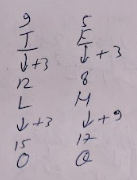
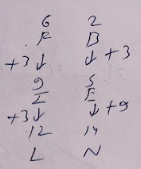
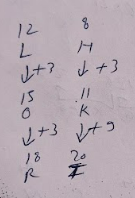
Based on the English alphabetical order, three of the following four letter-clusters are alike in a certain way and thus form a group. Which letter-cluster does not belong to that group?

(Note: The odd one out is not based on the number of consonants/vowels or their position in the letter-cluster.)

  1. AOption (a)

    XBFJ

  2. BOption (b)

    SVAF

  3. COption (c)

    MQUY

  4. DOption (d)

    YCGK

View answer & explanation

Correct answer

Answer: (b)B.

SVAF

Why this answer is correct

The logic followed here is: 

Option 1) XBFJ

Option 2) SVAF

Option 3) MQUY

Option 4) YCGK

So, 'SVAF' letter-cluster does not belong to that group.

Hence, the correct answer is "Option 2".

Question 15

Which of the following carries egg from the ovary to the womb?

  1. AOption (a)

    Placenta  

  2. BOption (b)

    Fallopian tube 

  3. COption (c)

    Vagina 

  4. DOption (d)

    Cervix 

View answer & explanation

Correct answer

Answer: (b)B.

Fallopian tube 

Why this answer is correct

The correct answer is Fallopian tube.

Key Points

  • The fallopian tube is a pair of long, narrow ducts located in the female reproductive system.
  • It functions as the passageway for the egg, traveling from the ovary to the uterus.
  • Fertilization of the egg by a sperm typically occurs within the fallopian tubes.
  • Each fallopian tube is connected to an ovary on one end and the uterus on the other.

Additional Information

  • Ovulation: The release of an egg from an ovary, which then enters the fallopian tube.
  • Uterus (Womb): The organ in the female reproductive system where a fertilized egg implants and develops into a fetus.
  • Placenta: An organ that develops in the uterus during pregnancy to provide oxygen and nutrients to the growing baby.
  • Cervix: The lower part of the uterus that opens into the vagina, acting as a gateway between the uterus and the vagina.
  • Vagina: The muscular canal extending from the cervix to the exterior of the body, serving as the birth canal and the passageway for menstrual flow.

Question 16

Read the given statements and conclusions carefully. You have to take the given statements to be true even if they seem to be at variance from commonly known facts and decide which conclusion(s) logically follow(s) from the given statements.

Statements:

All bats are balls.

All balls are wickets.

No wickets are gloves.

Conclusions:

(I) Some balls are bats.

(II) Some wickets are balls.

  1. AOption (a)

    Neither conclusion (I) nor (II) follows.

  2. BOption (b)

    Only conclusion (II) follows.

  3. COption (c)

    Both conclusions (I) and (II) follow.

  4. DOption (d)

    Only conclusion (I) follows.

View answer & explanation

Correct answer

Answer: (c)C.

Both conclusions (I) and (II) follow.

Why this answer is correct

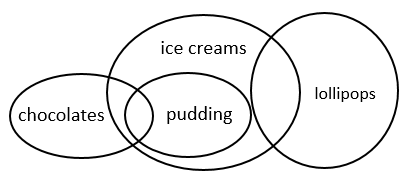
The least possible Venn diagram for the given statements is as shown below :

Conclusions:

I. Some balls are bats → True (because all bats are balls, so some balls are also bats)

II. Some wickets are balls → True (because all balls are wickets, so some wickets are also balls)

∴ Here, Both conclusions (I) and (II) follow.​

Hence, the correct answer is "Option 3".

Question 17

Seven boxes A, B, C, L, X, Y and Z are kept one over the other but not necessarily in the same order. A is kept immediately above B. Z is kept immediately above C. Only X is kept above Y. Only two boxes are kept above A. Z is not kept at third position from the bottom.

How many boxes are kept between L and X?

  1. AOption (a)

    One

  2. BOption (b)

    Two

  3. COption (c)

    Four

  4. DOption (d)

    Three

View answer & explanation

Correct answer

Answer: (d)D.

Three

Why this answer is correct

Given: Seven boxes A, B, C, L, X, Y, and Z are kept one over the other, but not necessarily in the same order.

  1. A is kept immediately above B.

  2. Z is kept immediately above C.

  3. Only X is kept above Y.

  4. Only two boxes are kept above A.

  5. Z is not kept at the third position from the bottom.

X
Y
A
B
L
Z
C

After arranging the boxes, the number of boxes between L and X is three.

Hence, the correct answer is Option 4.

Question 18

The table below shows the number of books sold by shops A and B to males and females on a Monday:

ShopsNumber of books sold to malesNumber of books sold to females
A7178
B3440


What is the difference between the number of books sold by shops A and B to females?

  1. AOption (a)

    37

  2. BOption (b)

    38

  3. COption (c)

    40

  4. DOption (d)

    39

View answer & explanation

Correct answer

Answer: (b)B.

38

Why this answer is correct

Given:

Number of books sold to females by shop A = 78

Number of books sold to females by shop B = 40

Formula Used:

Difference = Number of books sold to females by shop A - Number of books sold to females by shop B

Calculation:

Difference = 78 - 40

∴ Difference = 38

The difference between the number of books sold by shops A and B to females is 38.

Question 19

The weight of an object was 60 N when measured on the surface of the earth.

What would be its weight when measured on the surface of the moon?

  1. AOption (a)

    10 N 

  2. BOption (b)

    60 N

  3. COption (c)

    39 N

  4. DOption (d)

    30 N

View answer & explanation

Correct answer

Answer: (a)A.

10 N 

Why this answer is correct

The correct answer is 10 N.

Key Points

  • The weight of an object is the force exerted on it due to gravity.
  • On the moon, the gravitational force is about 1/6th that of the earth.
  • If an object weighs 60 N on the earth, it will weigh approximately 10 N on the moon.
  • This is because the gravitational acceleration on the moon is about 1.63 m/s² compared to 9.81 m/s² on the earth.

Additional Information

  • Gravitational Force
  • It is the force of attraction between two masses.
  • It is calculated using Newton's law of gravitation: F=Gm1m2r2F=Gm1m2r2F=Gm1m2r2F=Gm1m2r2F=Gm1m2r2
  • Where GGGGG is the gravitational constant, and are the masses, and rrrrr is the distance between their centers.
  • Weight vs. Mass
  • Weight is a force and depends on gravitational acceleration.
  • Mass is a measure of the amount of matter in an object and is constant regardless of location.
  • Gravity on Other Celestial Bodies
  • Different celestial bodies have different gravitational accelerations.
  • Mars has about 0.38 times the gravitational force of Earth.
  • Jupiter has about 2.4 times the gravitational force of Earth.
  • Implications of Reduced Gravity
  • Reduced gravity affects human physiology, causing muscle atrophy and bone loss over time.
  • Astronauts exercise in space to mitigate these effects.

Question 20

What is the function of gustatory receptors?

  1. AOption (a)

    They detect sound.

  2. BOption (b)

    They detect smell.

  3. COption (c)

    They detect taste.

  4. DOption (d)

    They detect light.

View answer & explanation

Correct answer

Answer: (c)C.

They detect taste.

Why this answer is correct

The correct answer is They detect taste..

Key Points

  • Gustatory receptors are sensory receptors located on the taste buds of the tongue.
  • These receptors are responsible for detecting the five basic tastes: sweet, sour, salty, bitter, and umami.
  • Gustatory receptors send signals to the brain via the cranial nerves when they come into contact with chemicals in food.
  • They play a crucial role in the perception of flavor and the overall eating experience.

Additional Information

  • Taste Buds:
  • Taste buds are clusters of gustatory receptors located on the tongue, soft palate, and throat.
  • An average human has about 10,000 taste buds, each containing 50-100 gustatory receptor cells.
  • Five Basic Tastes:
  • The five basic tastes are sweet, sour, salty, bitter, and umami (savory).
  • Each taste category corresponds to different types of chemicals and is detected by specific types of gustatory receptors.
  • Cranial Nerves:
  • The cranial nerves involved in taste perception are the facial nerve (VII), the glossopharyngeal nerve (IX), and the vagus nerve (X).
  • These nerves transmit taste signals from the gustatory receptors to the brain.
  • Flavor Perception:
  • Flavor is a combination of taste and smell sensations.
  • Olfactory receptors in the nose work in conjunction with gustatory receptors to create the perception of flavor.

Question 21

Select the triad which follows the same pattern as that followed by the two triads given below. Both triads follow the same pattern.

IE-LH-OQ

FB-IE-LN

  1. AOption (a)

    MH-OK-RS

  2. BOption (b)

    LH-OJ-RS

  3. COption (c)

    LH-OK-RT

  4. DOption (d)

    MH-OJ-RT

View answer & explanation

Correct answer

Answer: (c)C.

LH-OK-RT

Why this answer is correct

The logic follow here is:

IE-LH-OQ

And,

FB-IE-LN

Now, check each option. In Option (3): LH-OK-RT

Thus, LH-OK-RT follow the same logic.

Hence, the correct answer is "Option 3".

Question 22

Which of the following is the correct unit mass of sodium?

  1. AOption (a)

    18 u

  2. BOption (b)

    20 u

  3. COption (c)

    23 u

  4. DOption (d)

    11 u

View answer & explanation

Correct answer

Answer: (c)C.

23 u

Why this answer is correct

The correct answer is 23 u.

Key Points

  • The atomic mass of sodium (Na) is 23 unified atomic mass units (u).
  • Sodium is represented by the symbol Na on the periodic table.
  • Sodium's atomic number is 11, indicating it has 11 protons.
  • The atomic mass is calculated primarily from the number of protons and neutrons in the nucleus.

Additional Information

  • Unified Atomic Mass Unit (u)
  • It is a standard unit of mass that quantifies mass on an atomic or molecular scale.
  • 1 unified atomic mass unit is defined as one twelfth of the mass of a carbon-12 atom.
  • Periodic Table
  • It is a tabular display of the chemical elements, organized on the basis of their atomic numbers, electron configurations, and recurring chemical properties.
  • Elements are presented in order of increasing atomic number.
  • Isotopes
  • Isotopes are variants of a particular chemical element that have the same number of protons but different numbers of neutrons.
  • Sodium has several isotopes, but only sodium-23 is stable and naturally abundant.
  • Chemical Properties of Sodium
  • Sodium is a highly reactive metal and is part of the alkali metal group.
  • It reacts vigorously with water to form sodium hydroxide and hydrogen gas.

Question 23

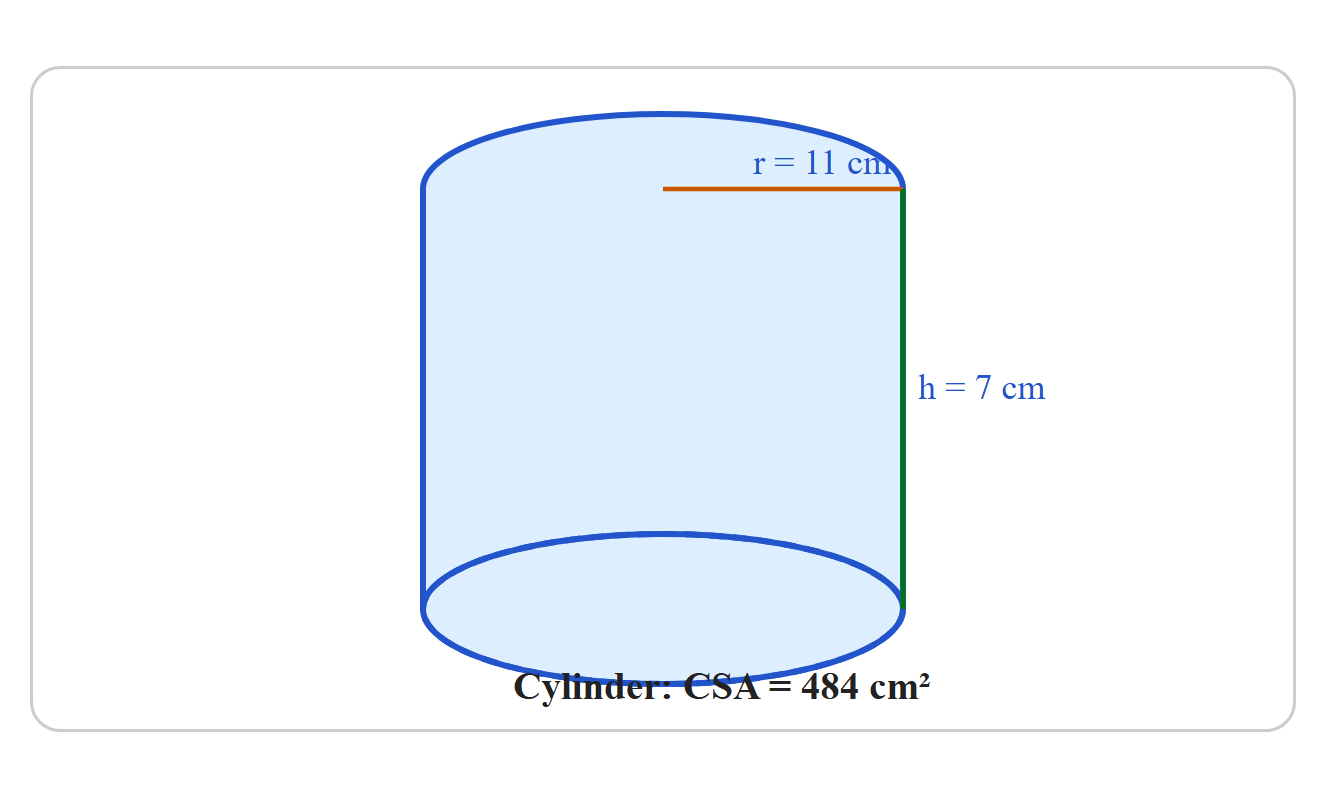
The curved surface area of a cylinder is 484 sq. cm. If height of the cylinder is 7 cm, then what is the volume of the cylinder (in cubic cm)? (Use π = 227\frac{22}{7})

  1. AOption (a)

    2750

  2. BOption (b)

    2662

  3. COption (c)

    2650

  4. DOption (d)

    2200

View answer & explanation

Correct answer

Answer: (b)B.

2662

Why this answer is correct

Shortcut Trick

Curved Surface Area (CSA) = 2πrh = 484 cm2

Volume = πr2h = (2πrh × r) ÷ 2

First find radius: 2 × (22/7) × r × 7 = 484 ⇒ 44r = 484 ⇒ r = 11 cm

Volume = (CSA × r) ÷ 2 = (484 × 11) ÷ 2 = 242 × 11 = 2662 cm3

∴ The correct answer is 2662 cm3.

Alternate Method

Given:

Curved Surface Area (CSA) = 484 cm2

Height (h) = 7 cm

Formula Used:

CSA of cylinder = 2πrh

Volume of cylinder = πr2h

Calculations:

⇒ 2 × (22/7) × r × 7 = 484

⇒ 44 × r = 484

⇒ r = 484 ÷ 44 = 11 cm

⇒ Volume = (22/7) × 112 × 7

⇒ Volume = 22 × 121

⇒ Volume = 2662 cm3

∴ The correct answer is 2662 cm3.

Additional Information

Total Surface Area of Cylinder

The Total Surface Area (TSA) includes the curved area and two circular bases: TSA = 2πr(h + r).

Hollow Cylinder Volume

For a cylinder with outer radius R and inner radius r: Volume = π(R2 − r2)h.

Relation between Volume and CSA

The volume of a cylinder is directly proportional to the radius when CSA is fixed: Volume = (CSA × r) ÷ 2.

Question 24

Which of the following is INCORRECT about plant hormones?

  1. AOption (a)

    Different plant hormones help to coordinate responses to the environment.

  2. BOption (b)

    Different plant hormones help to coordinate growth and development. 

  3. COption (c)

    All plant hormones except abscisic acid help in promoting growth. 

  4. DOption (d)

    All plant hormones except cytokinins promote cell division. 

View answer & explanation

Correct answer

Answer: (d)D.

All plant hormones except cytokinins promote cell division. 

Why this answer is correct

The correct answer is All plant hormones except cytokinins promote cell division..

Key Points

  • Plant hormones, or phytohormones, play crucial roles in regulating various functions in plants.
  • Cytokinins are known for promoting cell division and growth in plant roots and shoots.
  • Auxins, gibberellins, and brassinosteroids also contribute to growth, but their primary roles differ from cytokinins.
  • Abscisic acid is primarily involved in inhibiting growth and promoting dormancy, especially under stress conditions.

Additional Information

  • Auxins
  • Auxins are primarily involved in cell elongation, apical dominance, and root initiation.
  • They play a crucial role in the phototropism and gravitropism of plants.
  • Gibberellins
  • Gibberellins are essential for stem elongation, seed germination, and flowering.
  • They help break dormancy in seeds and buds.
  • Ethylene
  • Ethylene is involved in the ripening of fruits and the senescence of leaves.
  • It also plays a role in the response to mechanical stress and pathogen attack.
  • Brassinosteroids
  • Brassinosteroids promote cell elongation and division, vascular differentiation, and seed germination.
  • They are also involved in stress responses.

Question 25

Use of regenerative cells in the process of budding is present in: 

  1. AOption (a)

    Planaria 

  2. BOption (b)

    Amoeba 

  3. COption (c)

    Spirogyra 

  4. DOption (d)

    Hydra 

View answer & explanation

Correct answer

Answer: (d)D.

Hydra 

Why this answer is correct

The correct answer is Hydra.

Key Points

  • Hydra is a genus of small, freshwater organisms known for their remarkable regenerative abilities.
  • In Hydra, budding is a form of asexual reproduction where new individuals develop from the body wall of the parent organism.
  • The budding process involves regenerative cells that proliferate and differentiate to form a new organism.
  • Once the bud matures, it detaches from the parent Hydra and becomes an independent organism.
  • This method of reproduction allows Hydra to rapidly increase their population under favorable environmental conditions.

Additional Information

  • Regeneration:
  • Regeneration is the process by which some organisms replace or restore lost or amputated body parts.
  • Hydra is one of the simplest organisms with extensive regenerative abilities.
  • Asexual Reproduction:
  • Asexual reproduction is a mode of reproduction that does not involve the fusion of gametes.
  • Offspring produced through asexual reproduction are genetically identical to the parent organism.
  • Stem Cells:
  • In Hydra, regenerative cells are akin to stem cells in more complex organisms.
  • These cells can differentiate into various cell types necessary for forming new tissues and organs.
  • Environmental Factors:
  • The rate of budding in Hydra can be influenced by environmental factors such as water temperature, food availability, and water quality.
  • Optimal conditions can lead to an increased rate of budding and population growth.

Question 26

Simplify the given expression. 4 - 36 ÷ 4 + 2 × 5

  1. AOption (a)

    4

  2. BOption (b)

    5

  3. COption (c)

    6

  4. DOption (d)

    3

View answer & explanation

Correct answer

Answer: (b)B.

5

Why this answer is correct

Given:

Expression: 4 − 36 ÷ 4 + 2 × 5

Formula used:

BODMAS Rule (Bracket, Of, Division, Multiplication, Addition, Subtraction)

Calculations:

4 − 36 ÷ 4 + 2 × 5

⇒ 4 − 9 + 2 × 5

⇒ 4 − 9 + 10

⇒ 14 − 9

⇒ 5

∴ The correct answer is option (2).

Question 27

Who is the current Directorate General of National Cadet Corps of India as of October 2024?

  1. AOption (a)

    Gurbirpal Singh

  2. BOption (b)

    Manoj Pande

  3. COption (c)

    Dalbir Singh Suhag 

  4. DOption (d)

    Bikram Singh 

View answer & explanation

Correct answer

Answer: (a)A.

Gurbirpal Singh

Why this answer is correct

The correct answer is Gurbirpal Singh.

Key Points

  • Lieutenant General Gurbirpal Singh has been appointed as the Director General of the National Cadet Corps (NCC) of India.
  • He took over as the 34th Director General of NCC on 27th September 2021.
  • Gurbirpal Singh is an alumnus of the National Defence Academy and Indian Military Academy.
  • He has held various prestigious command and staff appointments in his distinguished military career.

Additional Information

  • National Cadet Corps (NCC)
  • NCC is the largest uniformed youth organization in India.
  • It aims to develop character, comradeship, discipline, a secular outlook, and the spirit of adventure among young citizens.
  • The NCC provides exposure to the cadets in a wide range of activities, with a distinct emphasis on social services, discipline, and adventure training.
  • The NCC motto is "Unity and Discipline".
  • Roles and Responsibilities of DG NCC
  • The Director General of NCC is responsible for the overall administration and coordination of the NCC activities across India.
  • The DG NCC oversees the training and development programs for cadets.
  • The DG ensures that the NCC activities align with the objectives of the organization and the national interest.
  • Eligibility for NCC
  • Students from schools and colleges are eligible to join NCC.
  • Cadets can join NCC as Junior Division/Wing (for school students) or Senior Division/Wing (for college students).
  • There are specific enrollment periods and cadets must meet physical and educational criteria.

Question 28

According to Thomson's model of an atom, an atom is compared to which of the following fruits? 

  1. AOption (a)

    Apple  

  2. BOption (b)

    Banana 

  3. COption (c)

    Watermelon  

  4. DOption (d)

    Mango 

View answer & explanation

Correct answer

Answer: (c)C.

Watermelon  

Why this answer is correct

The correct answer is Watermelon.

Key Points

  • Thomson's model of an atom is often referred to as the "plum pudding model".
  • In this model, the atom is envisioned as a sphere of positive charge.
  • Electrons are embedded within this sphere, similar to seeds in a watermelon.
  • This model was proposed by J.J. Thomson in 1904.

Additional Information

  • J.J. Thomson
  • He was a British physicist who discovered the electron in 1897.
  • He was awarded the Nobel Prize in Physics in 1906 for his work on the conduction of electricity in gases.
  • Plum Pudding Model
  • It represents the atom as a ball of positive charge with electrons scattered throughout.
  • This model was an attempt to explain the structure of the atom after the discovery of the electron.
  • Rutherford's Model
  • Proposed by Ernest Rutherford in 1911, it replaced Thomson's model.
  • According to Rutherford, the atom has a small, dense, positively charged nucleus with electrons orbiting around it.
  • Electron
  • An electron is a subatomic particle with a negative electric charge.
  • It is one of the primary components of an atom, alongside protons and neutrons.

Question 29

The Moidams-the Mound-Burial System of the Ahom Dynasty in ______ was added to the list of UNESCO World Heritage Sites in 2024.

  1. AOption (a)

    Manipur

  2. BOption (b)

     Mizoram

  3. COption (c)

    Meghalaya

  4. DOption (d)

    Assam

View answer & explanation

Correct answer

Answer: (d)D.

Assam

Why this answer is correct

The correct answer is Assam.

Key Points

  • The Moidams are also known as Maidams, which are mound-burial systems of the Ahom dynasty in Assam.
  • These burial mounds are located in the Charaideo district of Assam.
  • Charaideo was the original capital of the Ahom Kingdom established by Sukaphaa in 1253.
  • In 2024, the Moidams were recognized as a UNESCO World Heritage Site due to their cultural and historical significance.

Additional Information

  • Ahom Dynasty:
  • The Ahom dynasty ruled the kingdom of Assam for nearly 600 years from 1228 to 1826.
  • They are known for their unique burial practices and the Moidams are a testament to their rich cultural heritage.
  • UNESCO World Heritage Sites:
  • These are landmarks or areas selected by the United Nations Educational, Scientific and Cultural Organization for having cultural, historical, scientific, or other forms of significance.
  • The goal is to preserve and protect these sites for future generations.
  • Charaideo:
  • It is known as the 'Pyramids of Assam' due to the burial mounds of the Ahom kings and queens.
  • Charaideo was the sacred burial ground and the first capital established by the Ahom dynasty.
  • Burial Mounds:
  • These are raised areas of earth constructed over graves, serving as a significant cultural practice in various ancient civilizations.
  • The Moidams of Assam are unique as they represent the mortuary practices of the Ahoms and are comparable to other global mound burial traditions.

Question 30

According to the laws of refraction, which of the following is/are true?

(A) The incident ray, the refracted ray and the normal to the interface of two transparent media do not lie in the same plane.

(B) For a given colour of light and a given pair of media, the ratio of the sine of angle of incidence to sine of angle of refraction is a constant.

  1. AOption (a)

    'A' is false and 'B' is true.

  2. BOption (b)

    Both 'A' and 'B' are false. 

  3. COption (c)

    'A' is true and 'B' is false.

  4. DOption (d)

    Both 'A' and 'B' are true.

View answer & explanation

Correct answer

Answer: (a)A.

'A' is false and 'B' is true.

Why this answer is correct

The correct answer is 'A' is false and 'B' is true.

Key Points

  • The incident ray, the refracted ray, and the normal to the interface of two transparent media lie in the same plane. Therefore, statement (A) is false.
  • According to Snell's Law, for a given color of light and a given pair of media, the ratio of the sine of the angle of incidence to the sine of the angle of refraction is a constant. This means statement (B) is true.
  • The constant mentioned in Snell's Law is known as the refractive index of the second medium with respect to the first medium.
  • This law is fundamental in the study of optics and is used to predict the bending of light as it passes from one medium to another.

Additional Information

  • Refractive Index: It is a measure of how much the speed of light is reduced inside a medium compared to the vacuum.
  • Snell's Law Formula: The formula is n1sin(θ1) = n2sin(θ2), where n1 and n2 are the refractive indices of the two media, and θ1 and θ2 are the angles of incidence and refraction, respectively.
  • Critical Angle: The angle of incidence in the denser medium for which the angle of refraction in the rarer medium becomes 90 degrees.
  • Total Internal Reflection: This phenomenon occurs when light travels from a denser to a rarer medium with an incidence angle greater than the critical angle, causing the light to be completely reflected back into the denser medium.
  • Applications of Refraction: Refraction principles are used in lenses, glasses, cameras, microscopes, and many other optical devices.

Question 31

There are two statements given below. Select the correct option with regards to these statements.

A. The loss of water in the form of vapour from the aerial parts of the plant is known as transpiration.

B. During the day when the stomata are open, the transpiration pull becomes the major driving force in the movement of water in the xylem.

  1. AOption (a)

    A is correct and B is incorrect.

  2. BOption (b)

    Both A and B are incorrect.

  3. COption (c)

    A is incorrect and B is correct.

  4. DOption (d)

    Both A and B are correct.

View answer & explanation

Correct answer

Answer: (d)D.

Both A and B are correct.

Why this answer is correct

The correct answer is Both A and B are correct.

Key Points

  • Transpiration is the process by which water is lost in the form of vapour from the aerial parts of the plant, primarily through the stomata.
  • Stomata are small openings on the surface of leaves and stems that allow the exchange of gases and the release of water vapour during transpiration.
  • During the day, the stomata are generally open, which facilitates the process of transpiration.
  • The transpiration pull is a significant driving force for the upward movement of water and nutrients from the roots to the aerial parts of the plant through the xylem.

Additional Information

  • Xylem is the vascular tissue in plants responsible for the transport of water and nutrients from the roots to the aerial parts of the plant.
  • Guard cells control the opening and closing of stomata, regulating the process of transpiration and gas exchange.
  • Cohesion-tension theory explains how water molecules stick together (cohesion) and are pulled up through the plant's xylem vessels due to transpiration.
  • Transpiration helps in maintaining the plant's temperature and provides the necessary turgor pressure to keep the plant upright.
  • Factors affecting transpiration include light, temperature, humidity, wind, and soil water availability.

Question 32

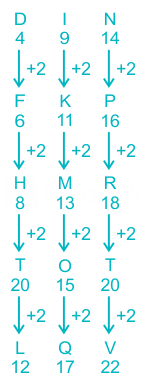
Which of the following options should come in place of the question mark (?) in the given series based on the English alphabetical order?

EIM, HLP, KOS, NRV, ?

  1. AOption (a)

    QUY

  2. BOption (b)

    UYQ

  3. COption (c)

    QYU

  4. DOption (d)

    UQY

View answer & explanation

Correct answer

Answer: (a)A.

QUY

Why this answer is correct

The logic followed here is:

Hence, "Option 1" is the correct answer.

Question 33

If the length of a conductor is doubled, then the resistance of the conductor will be: (other parameters are kept same)

  1. AOption (a)

    halved

  2. BOption (b)

    the same

  3. COption (c)

    doubled

  4. DOption (d)

    one fourth

View answer & explanation

Correct answer

Answer: (c)C.

doubled

Why this answer is correct

The correct answer is doubled.

Key Points

  • Resistance (R) of a conductor is directly proportional to its length (L).
  • When the length of the conductor is doubled, the resistance also doubles.
  • This relationship is described by the formula R = ρ(L/A), where ρ is the resistivity and A is the cross-sectional area.
  • Resistivity (ρ) and the cross-sectional area (A) remain constant in this scenario.

Additional Information

  • Ohm's Law: This law states that the current through a conductor between two points is directly proportional to the voltage across the two points and inversely proportional to the resistance.
  • Factors Affecting Resistance: Besides length, resistance is affected by the material's resistivity, cross-sectional area, and temperature.
  • Resistivity (ρ): A material-specific property that quantifies how strongly a given material opposes the flow of electric current.
  • Applications: Understanding resistance changes with length is crucial in designing electrical circuits, wires, and components.
  • Practical Implications: In practical applications, long conductors are usually designed with larger cross-sectional areas to minimize resistance and power loss.

Question 34

Refer to the given series and answer the question that follows (all numbers are single-digit numbers only).

(Left) 8 9 7 1 4 1 5 7 5 8 9 6 1 0 6 2 4 6 1 1 9 0 3 1 8 9 4 3 1 7 (Right)

What is the sum of the 8th digit from the left and the 1st digit from the right?

  1. AOption (a)

    11

  2. BOption (b)

    17

  3. COption (c)

    14

  4. DOption (d)

    16

View answer & explanation

Correct answer

Answer: (c)C.

14

Why this answer is correct

Given series:  8 9 7 1 4 1 5 7 5 8 9 6 1 0 6 2 4 6 1 1 9 0 3 1 8 9 4 3 1 7

The 8th digit from the left end is: 7

The 1st digit from the right end is: 7

So, the sum of the 8th digit from the left and the 1st digit from the right is: 7 + 7 = 14

Hence, the correct answer is "Option 3".

Question 35

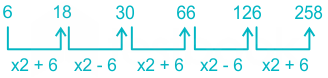
Which of the following options should come in place of the question mark (?) in the given series to make it logically complete?

6, 18, 30, 66, 126, ?

  1. AOption (a)

    258

  2. BOption (b)

    266

  3. COption (c)

    242

  4. DOption (d)

    270

View answer & explanation

Correct answer

Answer: (a)A.

258

Why this answer is correct

The logic follows here:

Hence, the correct answer is "Option (1)".

Question 36

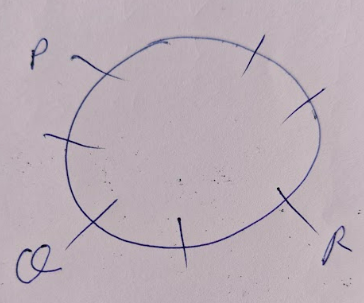
P, Q, R, S, T, U, and V are sitting around a circular table facing the centre. T is not an immediate neighbour of P. Only 3 people sit between P and R when counted from the right of P. V sits immediately to the left of S. Q sits 2nd to the left of R. Who sits 2nd to the left of T?

  1. AOption (a)

    V

  2. BOption (b)

    S

  3. COption (c)

    P

  4. DOption (d)

    U

View answer & explanation

Correct answer

Answer: (d)D.

U

Why this answer is correct

Given:

P, Q, R, S, T, U, and V are sitting around a circular table facing the centre.

  1. Only 3 people sit between P and R when counted from the right of P.

  2. Q sits 2nd to the left of R.

  1. V sits immediately to the left of S.

  1. T is not an immediate neighbour of P.

So, 'U' sits 2nd to the left of T.

Hence, the correct answer is "Option (4)."

Question 37

The Reserve Bank of India (RBI) announced its monetary policy on 9th October 2024, maintaining the repo rate at ____________. 

  1. AOption (a)

    6.5%

  2. BOption (b)

    7.5%

  3. COption (c)

    6.75%

  4. DOption (d)

    6.25%

View answer & explanation

Correct answer

Answer: (a)A.

6.5%

Why this answer is correct

The correct answer is 6.5%.

Key Points

  • The Reserve Bank of India (RBI) announced its monetary policy on 9th October 2024.
  • The RBI decided to maintain the repo rate at 6.5% (0.065) during this announcement.
  • The decision to hold the repo rate steady is often influenced by the need to control inflation while supporting economic growth.
  • The repo rate is the rate at which the RBI lends money to commercial banks, impacting the overall interest rates in the economy.
  • This policy decision is part of the RBI's broader strategy to manage the economy's liquidity and monetary conditions.

Additional Information

  • Repo Rate
  • The repo rate is the rate at which the central bank of a country (RBI in India) lends money to commercial banks in the event of any shortfall of funds.
  • It is used by monetary authorities to control inflation.
  • A higher repo rate can help to curb inflation, while a lower rate can help to stimulate economic growth.
  • Reverse Repo Rate
  • It is the rate at which the central bank borrows money from commercial banks.
  • It is used to control the money supply in the economy.
  • Currently, it stands lower than the repo rate to ensure liquidity remains in the system.
  • Monetary Policy Committee (MPC)
  • The MPC is responsible for fixing the benchmark interest rate in India.
  • It consists of six members, including three officials from the RBI and three external members nominated by the government.
  • Decisions are made based on a majority vote with the RBI Governor having a casting vote in case of a tie.
  • Inflation Targeting
  • Inflation targeting refers to the monetary policy strategy used by the RBI to keep inflation within a specified range.
  • The current inflation target set by the government is 4% with a tolerance band of +/- 2%.
  • This strategy aims to provide a stable economic environment conducive to sustained growth.

Question 38

An object is displaced horizontally because of the applied force. What is revealed by this action?

  1. AOption (a)

    The force decreases the mass of the object.

  2. BOption (b)

    The force increases the mass of the object.

  3. COption (c)

    The force increases the inertia of the object.

  4. DOption (d)

    Work is done by the force.

View answer & explanation

Correct answer

Answer: (d)D.

Work is done by the force.

Why this answer is correct

The correct answer is Work is done by the force.

Key Points

  • When a force causes displacement of an object in the direction of the applied force, work is done on the object.
  • Work is defined as the product of the force applied and the displacement of the object in the direction of the force: W = F × d.
  • The SI unit of work is the joule (J), which is equivalent to one newton-meter.
  • This concept is fundamental in physics and explains how energy is transferred from one object to another through force.

Additional Information

  • Force
  • A force is any interaction that, when unopposed, will change the motion of an object.
  • Forces can cause objects to accelerate, decelerate, remain in place, or change shape.
  • The SI unit of force is the newton (N).
  • Energy
  • Energy is the capacity to do work.
  • It exists in various forms such as kinetic, potential, thermal, electrical, chemical, and nuclear energy.
  • Energy can be transformed from one form to another but cannot be created or destroyed (law of conservation of energy).
  • Displacement
  • Displacement is a vector quantity that refers to the change in position of an object.
  • It has both magnitude and direction.
  • Displacement is different from distance, which is a scalar quantity representing the total path length covered.
  • Inertia
  • Inertia is the resistance of any physical object to a change in its state of motion or rest.
  • It is directly related to the mass of the object.
  • An object with greater mass has more inertia.

Question 39

In ∆ABC if ∠A = 70º and ∠B = 70º, find the measure of exterior angle A.

  1. AOption (a)

    70º

  2. BOption (b)

    140º

  3. COption (c)

    110º

  4. DOption (d)

    30º

View answer & explanation

Correct answer

Answer: (c)C.

110º

Why this answer is correct

Shortcut Trick

The exterior angle at any vertex of a triangle and the corresponding interior angle are supplementary.

Exterior Angle A = 180° − Interior Angle A

⇒ Exterior Angle A = 180° − 70° = 110°

∴ The correct answer is 110°.

Alternate Method

Given: In ΔABC, interior ∠A = 70° and interior ∠B = 70°.

Formula Used: 1. Sum of interior angles of a triangle = 180°. 2. Exterior angle of a triangle is equal to the sum of the two opposite interior angles.

Calculations:

⇒ First, find the third interior angle ∠C:

⇒ ∠A + ∠B + ∠C = 180°

⇒ 70° + 70° + ∠C = 180°

⇒ 140° + ∠C = 180° ⇒ ∠C = 40°

⇒ Exterior angle A is the sum of opposite interior angles ∠B and ∠C.

⇒ Exterior ∠A = ∠B + ∠C

⇒ Exterior ∠A = 70° + 40°

⇒ Exterior ∠A = 110°

∴ The correct answer is 110°.

Additional Information

Exterior Angle Theorem

An exterior angle of a triangle is equal to the sum of its two opposite non-adjacent interior angles.

Linear Pair Postulate

The sum of an interior angle and its corresponding exterior angle at a vertex is always 180° because they form a linear pair.

Sum of Exterior Angles

The sum of all three exterior angles (one at each vertex) of any triangle is always 360°.

Question 40

A sum of money lent on simple interest becomes 85\frac{8}{5} of itself in 4 years. Find the rate of interest per annum.

  1. AOption (a)

    15%

  2. BOption (b)

    12%

  3. COption (c)

    10%

  4. DOption (d)

    6%

View answer & explanation

Correct answer

Answer: (a)A.

15%

Why this answer is correct

Shortcut Trick

Let Principal = 5 units, then Amount = 8 units.

Simple Interest = Amount − Principal = 8 − 5 = 3 units.

Rate (R) = (SI × 100) ÷ (P × T) = (3 × 100) ÷ (5 × 4).

R = 300 ÷ 20 = 15%.

∴ The correct answer is 15%.

Alternate Method

Given: Amount (A) = 8/5 of Principal (P), Time (T) = 4 years.

Formula Used: SI = (P × R × T) / 100; Amount = P + SI

⇒ Amount = P + SI

⇒ 8/5 P = P + SI

⇒ SI = 8/5 P − P = 3/5 P

⇒ 3/5 P = (P × R × 4) / 100

⇒ 3/5 = (R × 4) / 100

⇒ R = (3 × 100) / (5 × 4)

⇒ R = 300 / 20 = 15%

∴ The correct answer is 15%.

Additional Information

Simple Interest Formula

The basic formula is SI = (P × R × T) / 100, where P is principal, R is rate %, and T is time in years.

Relation between Amount and SI

Amount (A) is the sum of Principal (P) and Interest (I). A = P(1 + RT/100).

Rate Calculation

Rate per annum can be calculated as R = (SI × 100) / (P × T).

Question 41

The average weight of A, B and C is 45 kg. If the average weight of A and B be 40 kg and that of B and C be 43 kg. then the weight of B is:

  1. AOption (a)

    19 kg

  2. BOption (b)

    23 kg

  3. COption (c)

    31 kg

  4. DOption (d)

    26 kg

View answer & explanation

Correct answer

Answer: (c)C.

31 kg

Why this answer is correct

Shortcut Trick

Total Weight of (A + B) and (B + C) = (40 × 2) + (43 × 2) = 80 + 86 = 166 kg.

Total Weight of (A + B + C) = 45 × 3 = 135 kg.

Weight of B = (Sum of pairs) − (Total sum) = 166 − 135 = 31 kg.

∴ The correct answer is 31 kg.

Alternate Method

Given:

Average weight of A, B, C = 45 kg

Average weight of A, B = 40 kg

Average weight of B, C = 43 kg

Formula Used:

Total Sum = Average × Number of Observations

Calculations:

⇒ Total weight of A + B + C = 45 × 3 = 135 kg ....(1)

⇒ Total weight of A + B = 40 × 2 = 80 kg ....(2)

⇒ Total weight of B + C = 43 × 2 = 86 kg ....(3)

⇒ Adding eq(2) and eq(3): A + 2B + C = 80 + 86 = 166 kg ....(4)

⇒ Weight of B = (A + 2B + C) − (A + B + C)

⇒ Weight of B = 166 − 135

⇒ Weight of B = 31 kg

∴ The correct answer is 31 kg.

Additional Information

Weighted Average

When two groups are combined, the combined average is (n1x1 + n2x2) ÷ (n1 + n2).

Net Deviation Method

The sum of deviations of all observations from the mean is always zero. This helps in finding missing values quickly.

Overlapping Groups

In problems where one member is common to two subsets, the value of the common member is the difference between the sum of subsets and the total sum.

Question 42

Which plant species does NOT reproduce through vegetative propagation? 

  1. AOption (a)

    Sugarcane

  2. BOption (b)

    Rose

  3. COption (c)

    Papaya

  4. DOption (d)

    Banana

View answer & explanation

Correct answer

Answer: (c)C.

Papaya

Why this answer is correct

The correct answer is Papaya.

Key Points

  • Papaya reproduces mainly through seeds, not through vegetative propagation.
  • Vegetative propagation is a method of asexual reproduction commonly used by plants like sugarcane, rose, and banana.
  • Seeds are the primary mode of reproduction for papaya plants, ensuring genetic diversity.
  • Papaya plants can be grown from seeds obtained from ripe fruit, which contain numerous viable seeds.

Additional Information

  • Vegetative Propagation
  • It is a form of asexual reproduction in plants where new plants grow from parts such as roots, stems, and leaves.
  • Examples include the use of tubers, bulbs, runners, and cuttings to produce new plants.
  • This method helps maintain the genetic uniformity of the plants.
  • Seed Propagation
  • Involves the growth of new plants from seeds produced by the sexual reproduction process.
  • Seeds are formed after the fertilization of flowers and contain genetic material from both parent plants.
  • This method promotes genetic diversity, which can lead to better adaptability and resilience in plants.
  • Papaya Cultivation
  • Papaya plants prefer warm climates and well-drained soil for optimal growth.
  • The plants are typically grown from seeds, which are sown in nurseries and later transplanted to the field.
  • Papayas are rich in nutrients like vitamin C, vitamin A, and folate, making them a valuable fruit crop.

Question 43

The refractive index is related to:

  1. AOption (a)

    the magnetic moment of two different media 

  2. BOption (b)

    the dielectric polarizability of two media 

  3. COption (c)

    the speed of propagation of light in two different media 

  4. DOption (d)

    the frequency of light in two different media 

View answer & explanation

Correct answer

Answer: (c)C.

the speed of propagation of light in two different media 

Why this answer is correct

The correct answer is the speed of propagation of light in two different media.

Key Points

  • The refractive index of a medium is defined as the ratio of the speed of light in a vacuum to the speed of light in that medium.
  • It is a dimensionless number that describes how light propagates through that medium.
  • The refractive index can be calculated using the formula: n = c/v, where c is the speed of light in vacuum and v is the speed of light in the medium.
  • A higher refractive index indicates that light travels more slowly in the medium.
  • Refractive index is crucial in optics and is used in designing lenses and optical instruments.

Additional Information

  • Snell's Law:
  • It describes how light bends when it passes from one medium to another.
  • The law states that n₁ * sin(θ₁) = n₂ * sin(θ₂), where n₁ and n₂ are the refractive indices of the two media and θ₁ and θ₂ are the angles of incidence and refraction, respectively.
  • Critical Angle:
  • The angle of incidence above which total internal reflection occurs.
  • It occurs when light travels from a medium with a higher refractive index to one with a lower refractive index.
  • Dispersion:
  • The phenomenon in which the phase velocity of a wave depends on its frequency.
  • In optics, it causes the separation of white light into its constituent colors when it passes through a prism.
  • Applications:
  • Used in the design of lenses, microscopes, and other optical instruments.
  • Refractive index matching is crucial in fiber optics to minimize signal loss.

Question 44

Animals like hydra and planaria can be cut into any number of pieces and each piece grows into a complete organism. This is known as: 

  1. AOption (a)

    budding

  2. BOption (b)

    regeneration 

  3. COption (c)

    fragmentation 

  4. DOption (d)

    binary fission 

View answer & explanation

Correct answer

Answer: (b)B.

regeneration 

Why this answer is correct

The correct answer is regeneration.

Key Points

  • Regeneration is the process by which certain organisms replace or restore lost or damaged tissues, organs, or limbs.
  • Animals like hydra and planaria exhibit remarkable regenerative abilities, allowing them to grow into a complete organism from a small piece of their body.
  • In planaria, stem cells called neoblasts play a crucial role in regeneration.
  • Hydra can regenerate due to the presence of interstitial cells that can differentiate into various cell types.

Additional Information

  • Budding
  • Budding is a form of asexual reproduction commonly seen in yeast and hydra.
  • In this process, a new organism develops from an outgrowth or bud due to cell division at one particular site.
  • The bud remains attached to the parent organism while it grows and develops, and detaches when it is mature.
  • Fragmentation
  • Fragmentation is another form of asexual reproduction where an organism splits into fragments, each of which develops into a new organism.
  • This method is observed in organisms like starfish, sponges, and certain annelids.
  • Binary Fission
  • Binary fission is a form of asexual reproduction common among prokaryotes like bacteria.
  • In this process, the organism duplicates its genetic material and then divides into two equal-sized daughter cells.

Question 45

The magnetic field lines produced inside a long current carrying solenoid is similar to that of a:

  1. AOption (a)

    ring magnet

  2. BOption (b)

    bar magnet

  3. COption (c)

    disc magnet

  4. DOption (d)

    horseshoe magnet

View answer & explanation

Correct answer

Answer: (b)B.

bar magnet

Why this answer is correct

The correct answer is bar magnet.

Key Points

  • The magnetic field inside a long current-carrying solenoid is uniform and parallel to the axis of the solenoid, resembling the field inside a bar magnet.
  • Like a bar magnet, the solenoid has a well-defined north and south pole at its ends.
  • The magnetic field lines inside a solenoid are straight and closely spaced, indicating a strong and uniform magnetic field, similar to the inside of a bar magnet.
  • Outside the solenoid, the magnetic field lines spread out and loop from one end of the solenoid to the other, just as they do in a bar magnet.
  • The behavior of magnetic field lines in both a solenoid and a bar magnet follows the right-hand rule, indicating a commonality in their magnetic properties.

Additional Information

  • Solenoid:
  • A solenoid is a coil of wire that generates a magnetic field when an electric current passes through it.
  • The strength of the magnetic field in a solenoid is directly proportional to the number of turns per unit length and the current passing through the wire.
  • Bar Magnet:
  • A bar magnet is a permanent magnet with a north and south pole, creating a magnetic field around it.
  • The magnetic field lines emerge from the north pole and enter the south pole outside the magnet, forming closed loops.
  • Magnetic Field Lines:
  • Magnetic field lines are visual representations of the direction and strength of the magnetic field.
  • Inside a magnet or solenoid, these lines are dense and parallel, indicating a strong, uniform field.
  • Right-Hand Rule:
  • The right-hand rule is a mnemonic used to determine the direction of the magnetic field relative to the current direction.
  • If the thumb of the right hand points in the direction of the current, the curled fingers indicate the direction of the magnetic field lines.

Question 46

The following equation is an example of which type of reaction?

CuSO4 + 2NaOH → Cu(OH)2 + Na2SO4

  1. AOption (a)

    Combustion reaction

  2. BOption (b)

    Combination reaction

  3. COption (c)

    Double displacement reaction

  4. DOption (d)

    Neutralisation reaction

View answer & explanation

Correct answer

Answer: (c)C.

Double displacement reaction

Why this answer is correct

The correct answer is Double displacement reaction.

Key Points

  • In a double displacement reaction, the ions of two compounds exchange places in an aqueous solution to form two new compounds.
  • The general form of a double displacement reaction is AB + CD → AD + CB.
  • The reaction CuSO4 + 2NaOH → Cu(OH)2 + Na2SO4 involves the exchange of ions between copper sulfate (CuSO4) and sodium hydroxide (NaOH).
  • This type of reaction is typically characterized by the formation of a precipitate, gas, or a weak electrolyte.
  • Double displacement reactions are also known as metathesis reactions.

Additional Information

  • Precipitation Reaction
  • A type of double displacement reaction where an insoluble solid called a precipitate forms and separates from the solution.
  • Example: AgNO3 + NaCl → AgCl (precipitate) + NaNO3.
  • Neutralization Reaction
  • A specific type of double displacement reaction where an acid reacts with a base to produce water and a salt.
  • Example: HCl + NaOH → NaCl + H2O.
  • Combustion Reaction
  • A chemical reaction where a substance combines with oxygen to release energy in the form of heat and light.
  • Example: CH4 + 2O2 → CO2 + 2H2O.
  • Combination Reaction
  • A reaction where two or more substances combine to form a single new substance.
  • Example: 2H2 + O2 → 2H2O.
  • Displacement Reaction
  • A reaction where a more reactive element displaces a less reactive element from its compound.
  • Example: Zn + CuSO4 → ZnSO4 + Cu.

Question 47

The mean proportional between 0.06 and 24 is:

  1. AOption (a)

    12

  2. BOption (b)

    0.012

  3. COption (c)

    0.12

  4. DOption (d)

    1.2

View answer & explanation

Correct answer

Answer: (d)D.

1.2

Why this answer is correct

Shortcut Trick

Mean Proportional (MP) = √(a × b)

MP = √(0.06 × 24) = √(1.44)

MP = 1.2

∴ The correct answer is 1.2.

Alternate Method

Given: First number (a) = 0.06, Second number (b) = 24

Formula Used: Mean proportional x between a and b is defined such that a/x = x/b ⇒ x2 = ab

⇒ Let the mean proportional be x

⇒ x = √(0.06 × 24)

⇒ x = √(6/100 × 24)

⇒ x = √(144/100)

⇒ x = 12/10

⇒ x = 1.2

∴ The correct answer is 1.2.

Additional Information

Third Proportional

The third proportional to two numbers a and b is c, such that a : b = b : c, given by c = b2/a.

Fourth Proportional

The fourth proportional to a, b, and c is d, such that a : b = c : d, given by d = (b × c)/a.

Compounded Ratio

The compounded ratio of a : b and c : d is (a × c) : (b × d).

Question 48

Which of the following symptoms is related to myopia?

  1. AOption (a)

    A person can see nearby objects clearly but cannot see distant objects distinctly. 

  2. BOption (b)

    A person can see both nearby and distant objects distinctly. 

  3. COption (c)

    A person cannot see both nearby and distant objects distinctly. 

  4. DOption (d)

    A person can see distant objects clearly but cannot see nearby objects distinctly.

View answer & explanation

Correct answer

Answer: (a)A.

A person can see nearby objects clearly but cannot see distant objects distinctly. 

Why this answer is correct

The correct answer is A person can see nearby objects clearly but cannot see distant objects distinctly..

Key Points

  • Myopia, also known as nearsightedness, is a common refractive error where distant objects appear blurry while close objects can be seen clearly.
  • It occurs when the eye's shape causes light rays to bend (refract) incorrectly, focusing images in front of the retina instead of on it.
  • Myopia is often hereditary and can develop gradually or rapidly, often worsening during childhood and adolescence.
  • Common symptoms include difficulty seeing distant objects, squinting, eye strain, and headaches.

Additional Information

  • Hyperopia (Farsightedness)
  • A condition where distant objects can be seen more clearly than nearby objects.
  • Occurs when the eyeball is too short or the cornea has too little curvature, causing light to focus behind the retina.
  • Astigmatism
  • A common condition where the eye does not focus light evenly onto the retina, leading to blurred or distorted vision.
  • Usually caused by an irregularly shaped cornea or lens.
  • Presbyopia
  • An age-related condition where the eye's lens loses flexibility, making it difficult to focus on close objects.
  • Typically affects individuals over the age of 40.
  • Corrective Measures for Myopia
  • Eyeglasses or contact lenses are the most common methods to correct myopia, adjusting the focus directly onto the retina.
  • Refractive surgery, such as LASIK, can also be an option to permanently reshape the cornea.

Question 49

Which of the following molecules has single covalent bond?

  1. AOption (a)

    N2

  2. BOption (b)

    O2

  3. COption (c)

    H2

  4. DOption (d)

    CO2

View answer & explanation

Correct answer

Answer: (c)C.

H2

Why this answer is correct

The correct answer is H2.

Key Points

  • H2 consists of two hydrogen atoms sharing a single pair of electrons, forming a single covalent bond.
  • Each hydrogen atom in H2 has one electron, and they share this pair to achieve a stable electron configuration.
  • The single covalent bond in H2 is a sigma (σ) bond, which is the strongest type of covalent bond.
  • This bond formation allows each hydrogen atom to achieve the electron configuration of helium, which is a stable noble gas configuration.

Additional Information

  • Covalent Bond
  • A covalent bond involves the sharing of electron pairs between atoms.
  • These bonds can be single, double, or triple, depending on the number of electron pairs shared.
  • Covalent bonds are typically found in molecules with nonmetal atoms.
  • Single Covalent Bond
  • A single covalent bond involves one pair of shared electrons.
  • Single covalent bonds are represented by a single line between the bonded atoms in molecular diagrams.
  • Examples include H2, Cl2, and CH4 (methane).
  • Double and Triple Covalent Bonds
  • Double covalent bonds involve two pairs of shared electrons (e.g., O2).
  • Triple covalent bonds involve three pairs of shared electrons (e.g., N2).
  • These bonds are stronger and shorter than single covalent bonds.
  • Noble Gas Configuration
  • Atoms form covalent bonds to achieve a stable electron configuration similar to noble gases.
  • Noble gases have a complete outer electron shell, making them chemically inert.
  • Hydrogen achieves the electron configuration of helium when it forms a single covalent bond.

Question 50

In the following number-pairs, the second number is obtained by applying certain mathematical operations to the first number. Which numbers should replace X and Y so that the pattern followed by the two numbers on the left side of :: is the same as that on the right side of ::?

(NOTE: Operations should be performed on the whole numbers, without breaking down the numbers into its constituent digits. E.g. 13 - Operations on 13 such as adding/subtracting/multiplying etc. to 13 can be performed. Breaking down 13 into 1 and 3 and then performing mathematical operations on 1 and 3 is not allowed.)

X : 45 :: 16 : Y

  1. AOption (a)

    X = 10, Y = 75

  2. BOption (b)

    X = 14, Y = 85

  3. COption (c)

    X = 10, Y = 65

  4. DOption (d)

    X = 14, Y = 75

View answer & explanation

Correct answer

Answer: (a)A.

X = 10, Y = 75

Why this answer is correct

The logic followed here is:

Logic: (1st number -1) × 5 = 2nd number.

For, X : 45

⇒ (X - 1) × 5 = 45

⇒ X = (45 ÷ 5) + 1 = 10.

Similarly, 

For, 16 : Y

⇒ (16 - 1) × 5 = 75.

Hence, the correct answer is "Option 1".

Question 51

Refer to the given series and answer the question that follows (all numbers are single-digit numbers only).

(Left) 5 1 3 3 0 6 0 2 9 1 8 4 2 2 5 4 6 8 5 8 1 3 5 0 2 1 3 9 5 4 (Right)

What is the sum of the 15th digit from the left and the 11th digit from the right?

  1. AOption (a)

    11

  2. BOption (b)

    13

  3. COption (c)

    16

  4. DOption (d)

    14

View answer & explanation

Correct answer

Answer: (b)B.

13

Why this answer is correct

Given series:  5 1 3 3 0 6 0 2 9 1 8 4 2 2 5 4 6 8 5 8 1 3 5 0 2 1 3 9 5 4

The 15th digit from the left end is: 5

The 11th digit from the right end is: 8

So, the sum of the 15th digit from the left and the 11th digit from the right is: 5 + 8 = 13

Hence, the correct answer is "Option 2".

Question 52

Which of the following is produced when barium chloride reacts with sodium sulphate?

  1. AOption (a)

    Brown precipitate of BaSO4

  2. BOption (b)

    Yellow precipitate of BaSO4

  3. COption (c)

    White precipitate of BaSO4

  4. DOption (d)

    Black precipitate of BaSO4

View answer & explanation

Correct answer

Answer: (c)C.

White precipitate of BaSO4

Why this answer is correct

The correct answer is White precipitate of BaSO4.

Key Points

  • When barium chloride (BaCl2) reacts with sodium sulphate (Na2SO4), a chemical reaction occurs, resulting in the formation of barium sulphate (BaSO4).
  • The reaction can be represented by the chemical equation: BaCl2 + Na2SO4 → BaSO4 + 2NaCl.
  • Barium sulphate (BaSO4) is a white, crystalline solid that precipitates out of the solution.
  • This reaction is commonly used in qualitative inorganic analysis to test for the presence of sulfate ions (SO4^2-) in a solution.

Additional Information

  • Precipitation Reaction
  • A precipitation reaction is a type of chemical reaction in which two soluble salts react in aqueous solution to form an insoluble solid, known as the precipitate.
  • Such reactions are useful in various applications, including water treatment and qualitative chemical analysis.
  • Barium Sulphate (BaSO4)
  • Barium sulphate is an inorganic compound that is insoluble in water and other conventional solvents.
  • It is commonly used in medical imaging as a radiocontrast agent for X-ray imaging and other diagnostic procedures.
  • BaSO4 is also used in various industrial applications, such as in the production of paints, coatings, and plastics.
  • Qualitative Inorganic Analysis
  • This branch of analytical chemistry focuses on identifying the elemental composition of inorganic compounds.
  • Techniques include precipitation reactions, flame tests, and the use of complexing agents to detect specific ions.
  • Sulfate Ions (SO4^2-)
  • Sulfate ions are polyatomic anions with the empirical formula SO4^2-.
  • They are commonly found in nature and are an important part of many biological and chemical processes.
  • Sulfate ions are often tested in water quality analysis to ensure safe drinking water standards.

Question 53

The chemical reaction between an acid and base is termed as:

  1. AOption (a)

    neutralisation reaction

  2. BOption (b)

    endothermic reaction 

  3. COption (c)

    condensation reaction

  4. DOption (d)

    decomposition reaction

View answer & explanation

Correct answer

Answer: (a)A.

neutralisation reaction

Why this answer is correct

The correct answer is neutralisation reaction.

Key Points

  • A neutralisation reaction is a chemical reaction in which an acid and a base react quantitatively with each other.
  • During a neutralisation reaction, the H+ ions from the acid combine with the OH− ions from the base to form water (H2O).
  • This reaction typically results in the formation of a salt and water.
  • Neutralisation reactions are exothermic, meaning they release heat.

Additional Information

  • Endothermic Reaction
  • Endothermic reactions absorb heat from the surroundings.
  • An example of an endothermic reaction is the reaction between barium hydroxide and ammonium chloride.
  • Condensation Reaction
  • Condensation reactions involve the combination of two molecules to form a single molecule with the elimination of a small molecule such as water.
  • They are commonly involved in the formation of polymers.
  • Decomposition Reaction
  • Decomposition reactions involve a single compound breaking down into two or more simpler substances.
  • These reactions can be caused by heat, light, or electricity.
  • Salt
  • A salt is an ionic compound formed from the neutralisation reaction of an acid and a base.
  • Salts are composed of cations (positively charged ions) and anions (negatively charged ions).

Question 54

_______ became the first Indian to win a race at FIA Motorsport Games in October 2024.

  1. AOption (a)

    Rivaan Dev Preetham

  2. BOption (b)

    Narain Karthikeyan

  3. COption (c)

    Sundaram Karivaradhan

  4. DOption (d)

    Jehan Devan Daruvala

View answer & explanation

Correct answer

Answer: (a)A.

Rivaan Dev Preetham

Why this answer is correct

The correct answer is Rivaan Dev Preetham.

Key Points

  • Rivaan Dev Preetham became the first Indian to win a race at the FIA Motorsport Games in October 2024.
  • He participated in the Karting Sprint Junior category and secured the top position.
  • The FIA Motorsport Games is an annual multi-disciplinary event that brings together competitors from various motor racing disciplines.
  • Rivaan's victory is a significant milestone for Indian motorsport on an international platform.

Additional Information

  • FIA Motorsport Games
  • The FIA Motorsport Games is organized by the Fédération Internationale de l'Automobile (FIA), the governing body for world motorsport.
  • The event features various disciplines including GT, Touring Car, Formula 4, Drifting, Karting, and more.
  • It aims to foster international competition and camaraderie among drivers from different countries.
  • Karting Sprint Junior
  • The Karting Sprint Junior category is designed for young drivers, typically aged 12-14 years.
  • It serves as a stepping stone for aspiring racers to progress to higher levels of motorsport.
  • Karting is considered the grassroots level of motorsport, providing fundamental driving skills and experience.
  • Indian Motorsport
  • Indian motorsport has seen significant growth in recent years with increased participation in international events.
  • Drivers like Narain Karthikeyan and Jehan Daruvala have made notable contributions to putting India on the global motorsport map.
  • Rivaan Dev Preetham's win at the FIA Motorsport Games highlights the emerging talent in Indian motorsport.

Question 55

Read the given statements and conclusions carefully. You have to take the given statements to be true even if they seem to be at variance from commonly known facts and decide which conclusion(s) logically follow(s) from the given statements.

Statements:

Some chocolates are pudding.

All puddings are ice creams.

Some ice creams are lollipops.

Conclusions:

(I) Some lollipops are chocolates.

(II) Some ice creams are pudding.

  1. AOption (a)

    Both conclusions (I) and (II) follow. 

  2. BOption (b)

    Only conclusion (I) follows.

  3. COption (c)

    Only conclusion (II) follows.

  4. DOption (d)

    Neither conclusion (I) nor (II) follows.

View answer & explanation

Correct answer

Answer: (c)C.

Only conclusion (II) follows.

Why this answer is correct

Possible diagram is:

Conclusions:

I. Some lollipops are chocolates → False (because No direct relationship given between lollipops and chocolates so it may be possible but not defined)

II. Some ice creams are pudding → True (because all puddings are ice creams so some ice cream is also pudding)

So, Only conclusion (II) follows.

Hence, the correct answer is "Option (3)".

Question 56

Match the cell organelles with their respective functions.

Cell organellesFunctions
1.Cell walla.Digests any foreign matter and worn-out cellular components
2.Ribosomesb.Gives plants their structural strength
3.Lysosomesc.Sites involved in protein manufacture
4.Golgi apparatusd.Linked to the production of lysosomes
  1. AOption (a)

    1 - a, 2 - b, 3 - c, 4 - d

  2. BOption (b)

    1 - b, 2 - c, 3 - a, 4 - d

  3. COption (c)

    1 - b, 2 - d, 3 - c, 4 - a

  4. DOption (d)

    1 - c, 2 - a, 3 - d, 4 - b

View answer & explanation

Correct answer

Answer: (b)B.

1 - b, 2 - c, 3 - a, 4 - d

Why this answer is correct

The correct answer is 1 - b, 2 - c, 3 - a, 4 - d.

Key Points

  • The cell wall provides structural strength and rigidity to plant cells, protecting them from mechanical damage and pathogens.
  • Ribosomes are the sites of protein synthesis in the cell, translating genetic information into proteins essential for various cellular functions.
  • Lysosomes are involved in breaking down and digesting foreign materials, cellular debris, and worn-out organelles, functioning as the cell's waste disposal system.
  • The Golgi apparatus is involved in modifying, sorting, and packaging proteins and lipids for secretion or delivery to other organelles, and it is linked to the production of lysosomes.

Additional Information

  • Cell Wall
  • Found in plants, fungi, and certain prokaryotes, but not in animal cells.
  • Made primarily of cellulose in plants, chitin in fungi, and peptidoglycan in bacteria.
  • Provides structural support and protection, and helps maintain cell shape.
  • Ribosomes
  • Composed of ribosomal RNA and proteins.
  • Can be found floating freely in the cytoplasm or attached to the endoplasmic reticulum, forming rough ER.
  • Essential for translating mRNA into polypeptide chains during protein synthesis.
  • Lysosomes
  • Contain hydrolytic enzymes capable of breaking down various biomolecules.
  • Play a key role in cellular homeostasis and recycling processes.
  • Involved in processes such as autophagy, where the cell digests its own components to recycle nutrients.
  • Golgi Apparatus
  • Consists of a series of flattened membrane-bound sacs called cisternae.
  • Involved in the modification, sorting, and packaging of proteins and lipids.
  • Works closely with the endoplasmic reticulum and is essential for transporting macromolecules within the cell.

Question 57

Based on the English alphabetical order, three of the following four letter-clusters are alike in a certain way and thus form a group. Which letter-cluster does not belong to that group?

(Note: The odd one out is not based on the number of consonants/vowels or their position in the letter-cluster.)

  1. AOption (a)

    LGB

  2. BOption (b)

    XSN

  3. COption (c)

    WYU

  4. DOption (d)

    SNI

View answer & explanation

Correct answer

Answer: (c)C.

WYU

Why this answer is correct

The logic followed here is: 

Option 1) LGB

Option 2) XSN

Option 3) WYU

Option 4) SNI

So, 'WYU' letter-cluster does not belong to that group.

Hence, the correct answer is "Option 3".

Question 58

If the radius of a circle is decreased by 50%, its area is reduced by:

  1. AOption (a)

    33.33%

  2. BOption (b)

    50%

  3. COption (c)

    25%

  4. DOption (d)

    75%

View answer & explanation

Correct answer

Answer: (d)D.

75%

Why this answer is correct

Shortcut Trick

Net percentage change in Area = 2x + (x2/100), where x is the percentage change in Radius.

Given x = −50% (decrease), so net change = 2(−50) + [(−50)2/100]

⇒ −100 + [2500/100] = −100 + 25 = −75%

The negative sign indicates a reduction in area.

∴ The correct answer is 75%.

Alternate Method

Given: Reduction in radius = 50%

Formula Used: Area of Circle = πr2

⇒ Let original Radius (r1) = 10 units.

⇒ Original Area (A1) = π × (10)2 = 100π sq. units.

⇒ New Radius (r2) = 10 − 50% of 10 = 5 units.

⇒ New Area (A2) = π × (5)2 = 25π sq. units.

⇒ Reduction in Area = A1 − A2 = 100π − 25π = 75π sq. units.

⇒ Percentage Reduction = (75π / 100π) × 100 = 75%.

∴ The correct answer is 75%.

Additional Information

Successive Percentage Change

For a 2D shape, if dimensions change by x% and y%, the area change is [x + y + (xy/100)]%. For a circle, x = y = radius change.

Circumference Change

The Circumference (2πr) is a 1D measure; its percentage change is always exactly equal to the percentage change in the radius.

Radius and Diameter Relation

A change in Radius results in the same percentage change in Diameter and Perimeter, but a squared effect on Area.

Question 59

Rita, Suman, Tarun, Uma, Victor and Wendy are sitting around a circular table facing the centre. Rita sits third to the right of Suman. Tarun sits second to left of Suman. Uma sits to the immediate left of Rita. Victor is not an immediate neighbour of Tarun.

How many people sit between Suman and Victor when counted from the right of Suman ?

  1. AOption (a)

    One

  2. BOption (b)

    Zero

  3. COption (c)

    Two

  4. DOption (d)

    Three

View answer & explanation

Correct answer

Answer: (b)B.

Zero

Why this answer is correct

Given:

Rita, Suman, Tarun, Uma, Victor and Wendy are sitting around a circular table facing the centre.

  1. Rita sits third to the right of Suman.

  1. people sit between Suman and Victor when counted from the right of Suman) Tarun sits second to left of Suman.

  2. Uma sits to the immediate left of Rita.

4)Victor is not an immediate neighbour of Tarun.

So, 'Zero' people sit between Suman and Victor when counted from the right of Suman'

Hence, the correct answer is "Option (3)"

Question 60

The Carriage of Goods by Sea Bill, 2024, was introduced in the Lok Sabha on _____. 

  1. AOption (a)

    9 August 2024

  2. BOption (b)

    8 August 2024

  3. COption (c)

    7 August 2024

  4. DOption (d)

    6 August 2024

View answer & explanation

Correct answer

Answer: (a)A.

9 August 2024

Why this answer is correct

The correct answer is 9 August 2024.

Key Points

  • The Carriage of Goods by Sea Bill, 2024, was introduced to modernize and streamline the existing laws governing maritime transport.
  • The Bill aims to replace the Carriage of Goods by Sea Act, 1925, aligning India’s maritime laws with international standards.
  • It was introduced in the Lok Sabha on August 9, 2024, to address current challenges and ensure a robust legal framework for sea transport.
  • This Bill facilitates the carriage of goods by sea, ensuring the protection of interests of all parties involved, including shippers, carriers, and consignees.
  • The introduction of this Bill marks a significant step in enhancing the efficiency and competitiveness of India's maritime sector.

Additional Information

  • Maritime Law:
  • Maritime law, also known as admiralty law, is a body of laws, conventions, and treaties that govern private maritime business and other nautical matters.
  • It covers a wide range of issues including shipping, navigation, waters, insurance, and the conduct of seamen.
  • International Maritime Organization (IMO):
  • The IMO is a specialized agency of the United Nations responsible for regulating shipping.
  • Its primary purpose is to develop and maintain a comprehensive regulatory framework for shipping, including safety, environmental concerns, legal matters, technical cooperation, maritime security, and the efficiency of shipping.
  • Bill of Lading:
  • A Bill of Lading is a document issued by a carrier to acknowledge receipt of cargo for shipment.
  • It serves as a shipment receipt when the carrier delivers the goods at a predetermined destination.
  • It is a legally binding document between the shipper and the carrier detailing the type, quantity, and destination of the goods being carried.
  • Carriage of Goods by Sea Act, 1925:
  • The Carriage of Goods by Sea Act, 1925, is an Act of the Parliament of India which regulates the rights and responsibilities of shippers and carriers involved in the carriage of goods by sea.
  • It was based on the Hague Rules, which were developed to create a uniform legal regime for the international carriage of goods by sea.
  • The Act established the liabilities of carriers and the rights of shippers, providing a legal framework for addressing disputes and claims arising from maritime transport.

Question 61

Which organisation has partnered with Sagar Defence to develop India’s first underwater-launched unmanned aerial vehicles (UAVs)?

  1. AOption (a)

    Bharat Electronics Limited (BEL)

  2. BOption (b)

    DRDO

  3. COption (c)

    Indian Navy

  4. DOption (d)

    ISRO

View answer & explanation

Correct answer

Answer: (b)B.

DRDO

Why this answer is correct

The correct answer is DRDO.

Key Points

  • The Defence Research and Development Organisation (DRDO) has collaborated with Sagar Defence to develop India's first underwater-launched unmanned aerial vehicles (UAVs).
  • This collaboration aims to enhance India's defense capabilities with advanced technological solutions.
  • The underwater-launched UAVs are designed to be deployed from submarines and other underwater platforms.
  • These UAVs will provide strategic advantages in surveillance, reconnaissance, and other defense operations.

Additional Information

  • DRDO
  • The Defence Research and Development Organisation (DRDO) is an agency under the Ministry of Defence, Government of India.
  • It is responsible for the development of technology for use by the military, including aeronautics, armaments, electronics, land combat engineering, life sciences, materials, missiles, and naval systems.
  • DRDO was established in 1958 and has its headquarters in New Delhi, India.
  • Sagar Defence Engineering
  • Sagar Defence Engineering is an Indian startup focused on providing cutting-edge defense technology solutions.
  • It specializes in developing autonomous vehicles and other defense-related technologies.
  • The company aims to enhance India's maritime and defense capabilities with indigenous innovations.
  • Unmanned Aerial Vehicles (UAVs)
  • UAVs, commonly known as drones, are aircraft without a human pilot on board.
  • They are used for various applications, including surveillance, reconnaissance, and targeted strikes in military operations.
  • UAVs offer the advantage of remote operation and can be deployed in dangerous environments without risking human lives.
  • Underwater-launched UAVs
  • These UAVs are designed to be deployed from underwater platforms such as submarines.
  • They provide strategic advantages in stealth and surprise operations, making them valuable assets for naval forces.
  • The development of underwater-launched UAVs represents a significant technological advancement in modern warfare.

Question 62

If 63 chocolates are to be divided between A and B in the ratio 4:5, then how many chocolates will A get?

  1. AOption (a)

    49

  2. BOption (b)

    35

  3. COption (c)

    28

  4. DOption (d)

    27

View answer & explanation

Correct answer

Answer: (c)C.

28

Why this answer is correct

Shortcut Trick

Total ratio = 4 + 5 = 9 units.

9 units → 63 chocolates.

1 unit → 63 ÷ 9 = 7 chocolates.

A's share = 4 units = 4 × 7 = 28 chocolates.

∴ The correct answer is 28 chocolates.

Alternate Method

Given:

Total chocolates = 63

Ratio of A : B = 4 : 5

Formula Used:

Share of A = [Ratio of A ÷ (Sum of Ratios)] × Total Value

Calculations:

⇒ Sum of ratio parts = 4 + 5 = 9

⇒ A's share = (4 ÷ 9) × 63

⇒ A's share = 4 × 7

⇒ A's share = 28

∴ The correct answer is 28 chocolates.

Additional Information

Ratio and Proportion

A ratio compares two quantities. If a total amount X is divided in the ratio a:b, the parts are [a/(a+b)]×X and [b/(a+b)]×X.

Compound Ratio

The compound ratio of (a:b) and (c:d) is (ac : bd), calculated by multiplying the corresponding terms.

Question 63

Which of the following statements is/are correct related to the eco-system?

(i) Ozone is a molecule formed by three atoms of oxygen.

(ii) Oxygen (O2) is essential for all aerobic forms of life.

(iii) Ozone is non-poisonous.

  1. AOption (a)

    (i), (ii) and (iii)

  2. BOption (b)

    Only (i) and (ii)

  3. COption (c)

    Only (i) and (iii)

  4. DOption (d)

    Only (i)

View answer & explanation

Correct answer

Answer: (b)B.

Only (i) and (ii)

Why this answer is correct

The correct answer is Only (i) and (ii).

Key Points

  • Ozone (O3) is a molecule formed by three oxygen atoms, which differentiates it from the diatomic oxygen molecule (O2) that we breathe.
  • Oxygen (O2) is essential for aerobic life forms, as it is used in cellular respiration to produce energy in the form of ATP (adenosine triphosphate).
  • Ozone, while protective in the stratosphere by blocking harmful UV radiation, is toxic at ground level and can cause respiratory problems and other health issues.
  • Ozone in the troposphere is considered a pollutant and a key component of smog, posing serious health risks to humans.

Additional Information

  • Stratospheric Ozone:
  • This layer is located about 10 to 30 miles above Earth's surface and absorbs most of the Sun's harmful ultraviolet radiation.
  • The ozone layer plays a crucial role in protecting living organisms from DNA damage caused by UV radiation.
  • Tropospheric Ozone:
  • Found at ground level, this ozone is a harmful air pollutant and a significant component of urban smog.
  • High concentrations can lead to respiratory diseases and other health issues.
  • Aerobic Respiration:
  • A metabolic process in which cells use oxygen to produce energy from glucose.
  • This process occurs in the mitochondria of cells and is vital for the survival of aerobic organisms.
  • Smog:
  • A type of air pollution that is a mixture of smoke and fog, often exacerbated by the presence of ozone.
  • Smog can have severe health effects, including breathing difficulties and exacerbation of asthma.

Question 64

In order to put up Rutherford's model, what type of metal foil did the scientist use?

  1. AOption (a)

    Gold

  2. BOption (b)

    Palladium

  3. COption (c)

    Silver

  4. DOption (d)

    Platinum

View answer & explanation

Correct answer

Answer: (a)A.

Gold

Why this answer is correct

The correct answer is Gold.

Key Points

  • Rutherford's model of the atom was developed using a gold foil experiment.
  • The experiment was conducted by Hans Geiger and Ernest Marsden under the supervision of Ernest Rutherford in 1909.
  • Gold was chosen because it is highly malleable, allowing it to be hammered into very thin sheets.
  • The thin gold foil was used to observe the scattering of alpha particles to infer the structure of the atom.
  • This experiment led to the discovery of the atomic nucleus.

Additional Information

  • Alpha Particles:
  • Alpha particles are positively charged particles consisting of two protons and two neutrons.
  • They are emitted during the radioactive decay of certain elements like uranium and radium.
  • Scattering Experiment:
  • In the gold foil experiment, alpha particles were directed at a thin sheet of gold.
  • Most particles passed through, but some were deflected at large angles, indicating a dense, positively charged nucleus.
  • Rutherford's Atomic Model:
  • The model proposed that atoms consist of a small, dense nucleus surrounded by orbiting electrons.
  • This nucleus contains most of the atom's mass and all of its positive charge.
  • Malleability of Gold:
  • Gold's malleability allows it to be hammered into extremely thin sheets, essential for the experiment's success.
  • Its durability and resistance to tarnish make gold ideal for experimental use.

Question 65

75 x 75 - 2 × 75 x 25 + 25 x 25 is equal to:

  1. AOption (a)

    10000

  2. BOption (b)

    6250

  3. COption (c)

    7500

  4. DOption (d)

    2500

View answer & explanation

Correct answer

Answer: (d)D.

2500

Why this answer is correct

Shortcut Trick

Identify the expression as the algebraic identity a2 − 2ab + b2 = (a − b)2.

Here, a = 75 and b = 25.

Result = (75 − 25)2 = (50)2.

50 × 50 = 2500.

∴ The correct answer is 2500.

Alternate Method

Given: 75 × 75 − 2 × 75 × 25 + 25 × 25

Formula Used: (a − b)2 = a2 − 2ab + b2

⇒ Let a = 75 and b = 25

⇒ Expression = (75)2 − 2(75)(25) + (25)2

⇒ Expression = (75 − 25)2

⇒ Expression = (50)2

⇒ Expression = 50 × 50 = 2500

∴ The correct answer is 2500.

Additional Information

Square of a Sum Identity

The identity (a + b)2 = a2 + 2ab + b2 is used for addition-based simplifications.

Difference of Squares

The identity a2 − b2 = (a − b)(a + b) helps in factoring expressions rapidly.

BODMAS Rule

Always follow the order: Brackets, Orders, Division, Multiplication, Addition, Subtraction for general calculations.

Question 66

Select the correct chemical reaction that represents the chlor-alkali process.

  1. AOption (a)

    2NaCl(aq) + 2H2O(I) → 2NaOH(aq) + Cl2(g) + H2(g)

  2. BOption (b)

    2CaCl2(aq) + 2H2O(I) → 2Ca(OH)2(aq) + Cl2(g) + H2​(g)

  3. COption (c)

    2MgCl2(aq) + 2H2O(I) → 2Mg(OH)2(aq) + Cl2(g) + H2​(g)

  4. DOption (d)

    2KCl(aq) + 2H2O(I) → 2KOH(aq) + Cl2(g) + H2​(g)

View answer & explanation

Correct answer

Answer: (a)A.

2NaCl(aq) + 2H2O(I) → 2NaOH(aq) + Cl2(g) + H2(g)

Why this answer is correct

The correct answer is 2NaCl(aq) + 2H2O(I) → 2NaOH(aq) + Cl2(g) + H2(g).

Key Points

  • The chlor-alkali process is an industrial method for the electrolysis of sodium chloride (NaCl).
  • This process produces three important products: sodium hydroxide (NaOH), chlorine gas (Cl2), and hydrogen gas (H2).
  • In this process, an aqueous solution of sodium chloride (brine) is electrolyzed.
  • The overall chemical reaction for the chlor-alkali process is: 2NaCl(aq) + 2H2O(l) → 2NaOH(aq) + Cl2(g) + H2(g).
  • This process is essential in industries for the production of caustic soda (NaOH) and chlorine, which are used in various applications like soap making, paper production, and water treatment.

Additional Information

  • Electrolysis Process:
  • Electrolysis involves passing an electric current through an electrolyte (such as brine) to cause a chemical change.
  • In the chlor-alkali process, electrolysis occurs in a cell where sodium chloride (NaCl) solution is split into its components.
  • Products of Chlor-Alkali Process:
  • Sodium Hydroxide (NaOH): Used in soap making, paper production, and other chemical industries.
  • Chlorine Gas (Cl2): Used in water treatment, disinfectants, and the production of PVC (polyvinyl chloride).
  • Hydrogen Gas (H2): Used in the production of ammonia for fertilizers and as a fuel source.
  • Types of Chlor-Alkali Cells:
  • Mercury Cell: Uses mercury as the cathode; however, environmental concerns have led to reduced use.
  • Diaphragm Cell: Uses a diaphragm to separate the products, preventing them from mixing.
  • Membrane Cell: Uses a selective membrane to separate ions, considered the most environmentally friendly.
  • Environmental Concerns:
  • Chlor-alkali plants must manage the environmental impact of chlorine and mercury emissions.
  • Modern technologies aim to reduce these impacts, promoting cleaner production methods.

Question 67

How many seconds will a train of 100 m long take to cross a bridge of 150 m long if the speed of the train is 36 km/h?

  1. AOption (a)

    25

  2. BOption (b)

    18

  3. COption (c)

    30

  4. DOption (d)

    20

View answer & explanation

Correct answer

Answer: (a)A.

25

Why this answer is correct

Shortcut Trick

Convert speed to m/s: 36 × 5/18 = 10 m/s.

Total Distance = Train length + Bridge length = 100 + 150 = 250 m.

Time = Distance ÷ Speed = 250 ÷ 10 = 25 seconds.

∴ The correct answer is 25 seconds.

Alternate Method

Given:

Length of Train (L1) = 100 m

Length of Bridge (L2) = 150 m

Speed of Train (v) = 36 km/h

Formula Used:

Time = Total Distance ÷ Speed

To convert km/h to m/s, multiply by 5/18.

Calculations:

⇒ Total distance = 100 + 150 = 250 m

⇒ Speed in m/s = 36 × (5/18) = 2 × 5 = 10 m/s

⇒ Time taken = 250 ÷ 10

⇒ Time taken = 25 seconds

∴ The correct answer is 25 seconds.

Additional Information

Unit Conversion

To convert km/h to m/s, multiply by 5/18. To convert m/s to km/h, multiply by 18/5.

Crossing Stationary Objects

When a train crosses a platform, bridge, or another stationary train, the total distance is the sum of the lengths of the train and the object.

Relative Speed

If two objects move in the same direction, relative speed = S1 − S2. If they move in opposite directions, relative speed = S1 + S2.

Question 68

Identify the INCORRECT statement about complex permanent tissue. 

  1. AOption (a)

    Vascular bundles are a characteristic feature of complex tissues.

  2. BOption (b)

    Complex tissue includes parenchyma and collenchyma.

  3. COption (c)

    There is more than one type of cell in a complex tissue. 

  4. DOption (d)

    Cells in a complex tissue work together to perform a common function.

View answer & explanation

Correct answer

Answer: (b)B.

Complex tissue includes parenchyma and collenchyma.

Why this answer is correct

The correct answer is Complex tissue includes parenchyma and collenchyma.

Key Points

  • Complex permanent tissues are composed of more than one type of cell that work together to perform a specific function.
  • The major types of complex tissues are xylem and phloem, which are involved in the transport of water, nutrients, and food.
  • Vascular bundles, which are a characteristic feature of complex tissues, contain both xylem and phloem.
  • Parenchyma and collenchyma are types of simple tissues, not complex tissues.
  • Complex tissues are essential for the conduction of water, minerals, and food in plants, contributing to their overall growth and development.

Additional Information

  • Xylem:
  • It is a type of complex tissue responsible for the transport of water and minerals from roots to other parts of the plant.
  • Xylem is composed of different cell types, including tracheids, vessel elements, xylem parenchyma, and xylem fibers.
  • Phloem:
  • Phloem is another type of complex tissue that transports organic nutrients, particularly sucrose, from the leaves to other parts of the plant.
  • Phloem is made up of sieve tube elements, companion cells, phloem parenchyma, and phloem fibers.
  • Simple Tissues:
  • Simple tissues, such as parenchyma, collenchyma, and sclerenchyma, are composed of one type of cell.
  • They perform basic functions like storage, support, and photosynthesis.
  • Vascular Bundles:
  • These are strands of complex tissues (xylem and phloem) found in the stems, roots, and leaves of vascular plants.
  • Vascular bundles facilitate the efficient transport of water, nutrients, and food throughout the plant.

Question 69

Namya got married 6 years ago. Now her age is 114\frac{1}{4} times her age at the time of marriage. Her son's present age is one- fifth of her present age. Find her son's present age.

  1. AOption (a)

    6 years

  2. BOption (b)

    12 years

  3. COption (c)

    20 years

  4. DOption (d)

    5 years

View answer & explanation

Correct answer

Answer: (a)A.

6 years

Why this answer is correct

Shortcut Trick

Age ratio (Present : Marriage) = 1(1/4) : 1 ⇒ 5 : 4.

Difference in ratio units = 5 − 4 = 1 unit.

Actual difference = 6 years ∴ 1 unit = 6 years.

Namya's present age = 5 units = 5 × 6 = 30 years.

Son's age = (1/5) × 30 = 6 years.

∴ The correct answer is 6 years.

Alternate Method

Given: Marriage happened 6 years ago. Present age = 5/4 of age at marriage.

Formula: Age Difference = Present Age − Marriage Age

⇒ Let age at marriage be M.

⇒ Present age = M + 6

⇒ M + 6 = (5/4) × M

⇒ 4(M + 6) = 5M

⇒ 4M + 24 = 5M

⇒ M = 24 years

⇒ Namya's present age = 24 + 6 = 30 years

⇒ Son's present age = 30 ÷ 5 = 6 years

∴ The correct answer is 6 years.

Additional Information

Ratio Method for Age

When ages are given in terms of fractions like 1(1/4), convert them to improper fractions (5/4) to identify the ratio of present age to past age easily.

Constant Difference

The difference between the ages of two people remains constant regardless of the number of years passed.

Question 70

Refer to the given series and answer the question that follows (all numbers are single-digit numbers only, and all counting is to be done from left to right).

(Left) 2 2 3 3 1 7 8 4 2 8 6 5 4 3 9 1 4 2 1 2 9 1 6 2 3 4 8 1 (Right)

How many such even digits are there, each of which is immediately preceded by a perfect square and immediately followed by an even digit?

(Note: 1 will be considered as a perfect square.)

  1. AOption (a)

    6

  2. BOption (b)

    5

  3. COption (c)

    4

  4. DOption (d)

    3

View answer & explanation

Correct answer

Answer: (d)D.

3

Why this answer is correct

Give solution in given format:

Given series:

(Left) 2 2 3 3 1 7 8 4 2 8 6 5 4 3 9 1 4 2 1 2 9 1 6 2 3 4 8 1 (Right)

Condition to be checked:

perfect square → even digits → even digit

(Left) 2 2 3 3 1 7 8 4 2 8 6 5 4 3 9 1 4 2 1 2 9 1 6 2 3 4 8 1 (Right)

Thus there are three such patterns (4 2 8, 1 4 2, 1 6 2) that are following the above conditions.

Hence,"Option (4)" is the correct answer.

Mistake Points

Immediately preceded by means immediately before or to come just before.

Immediately followed by means immediately after or to come just after.

Question 71

NSQO is related to TYWU in a certain way based on the English alphabetical order. In the same way, JOMK is related to PUSQ. To which of the following options is LQOM related, following the same logic?

  1. AOption (a)

    WRSU

  2. BOption (b)

    WRUS

  3. COption (c)

    RWUS

  4. DOption (d)

    RWSU

View answer & explanation

Correct answer

Answer: (c)C.

RWUS

Why this answer is correct

The logic followed here is:

NSQO is related to TYWU 

JOMK is related to PUSQ.

Similarly, LQOM will be related:

Hence, the correct answer is "Option (3)".

Question 72

Which of the given substances is NOT biodegradable in nature?

A. Vegetable peels

B. Plastic bottles

C. Spoilt food

  1. AOption (a)

    A, B and C

  2. BOption (b)

    Only B

  3. COption (c)

    Only A

  4. DOption (d)

    Both A and C

View answer & explanation

Correct answer

Answer: (b)B.

Only B

Why this answer is correct

The correct answer is Only B.

Key Points

  • Plastic bottles are not biodegradable and can take hundreds of years to decompose.
  • Unlike organic waste, plastic does not break down naturally by microorganisms.
  • Plastic waste contributes significantly to environmental pollution, particularly in oceans and landfills.
  • Efforts to manage plastic waste include recycling and reducing plastic usage.
  • Alternatives to plastic, such as biodegradable materials, are being developed to mitigate environmental impact.

Additional Information

  • Biodegradable substances are those that can be broken down by natural processes involving microorganisms.
  • Non-biodegradable substances do not decompose naturally and can persist in the environment for long periods.
  • Environmental impact of plastics includes pollution of water bodies, soil contamination, and harm to wildlife.
  • Recycling is a key method to manage plastic waste, involving the reprocessing of used plastic into new products.
  • Biodegradable alternatives include materials like plant-based plastics, which decompose more easily than traditional plastics.

Question 73

A bag marked at ₹80 is sold for ₹68. The rate of discount is:

  1. AOption (a)

    15%

  2. BOption (b)

    12%

  3. COption (c)

    20%

  4. DOption (d)

    17.5%

View answer & explanation

Correct answer

Answer: (a)A.

15%

Why this answer is correct

Shortcut Trick

Discount = Marked Price (MP) − Selling Price (SP)

Discount = 80 − 68 = 12

Discount % = (Discount ÷ MP) × 100

Discount % = (12 ÷ 80) × 100 = 15%

∴ The correct answer is 15%.

Alternate Method

Given: Marked Price (MP) = ₹80, Selling Price (SP) = ₹68. Formula: Discount% = ((MP − SP) ÷ MP) × 100

⇒ Amount of Discount = MP − SP = 80 − 68 = 12 ⇒ Rate of Discount = (12 ÷ 80) × 100 ⇒ Rate of Discount = (3 ÷ 20) × 100 ⇒ Rate of Discount = 3 × 5 = 15%

∴ The correct answer is 15%.

Additional Information

Marked Price & Discount

The Marked Price is the price printed on the label. Discount is always calculated on the Marked Price unless stated otherwise. Formula: SP = MP × (100 − D%) ÷ 100.

Successive Discount

When two discounts a% and b% are given, the equivalent single discount is (a + b − ab/100)%.

Question 74

In this question, two statements, I and II, have been given. These statements may be independent causes, or effects of independent causes or a common cause. One of the statements may be the effect of the other statement. Read both the statements and select the correct answer.

I. Martial arts like karate emphasize discipline and self-control, teaching practitioners to harness their strength for both defence and personal growth.

II. Karate is being made compulsory in every school.

  1. AOption (a)

    Both I and II are effects of independent causes.

  2. BOption (b)

    I is the cause and II is its possible effect.

  3. COption (c)

    Both I and II are independent causes.

  4. DOption (d)

    II is the cause and I is its possible effect.

View answer & explanation

Correct answer

Answer: (b)B.

I is the cause and II is its possible effect.

Why this answer is correct

The correct answer is Option 2: I is the cause and II is its possible effect.

Key Points

  • Statement I explains the benefits of martial arts like karate, emphasizing discipline, self-control, and personal growth, which are valuable traits for students.
  • Statement II indicates that karate is being made compulsory in every school, suggesting an institutional effort to imbue these traits in students.
  • The promotion of karate in schools can be seen as a direct response to the benefits highlighted in Statement I.
  • This correlation implies that the recognition of karate's benefits (cause) leads to its mandatory inclusion in school curriculums (effect).

Additional Information

  • Martial Arts Training:
  • Martial arts training often includes physical conditioning, self-defense techniques, and mental discipline.
  • Practitioners learn to respect their opponents and control their emotions during practice and competition.
  • Benefits of Martial Arts in Schools:
  • Incorporating martial arts into school curriculums can enhance students' physical fitness and mental well-being.
  • It can also improve focus, concentration, and academic performance due to the discipline and self-regulation skills developed through training.
  • Government Initiatives:
  • Many governments promote physical education programs to improve the overall health and well-being of students.
  • Making martial arts compulsory in schools aligns with broader educational goals of holistic development.

Question 75

The Indian government has allocated ₹_____ for the National Film Development Corporation in the 2024-25 budget. 

  1. AOption (a)

    46 crore

  2. BOption (b)

    36 crore

  3. COption (c)

    16 crore

  4. DOption (d)

    23 crore

View answer & explanation

Correct answer

Answer: (d)D.

23 crore

Why this answer is correct

The correct answer is ₹23 crore.

Key Points

  • The Indian government has allocated ₹23 crore for the National Film Development Corporation (NFDC) in the 2024-25 budget.
  • NFDC is responsible for promoting and developing the Indian film industry.
  • The allocation is aimed at supporting various initiatives to improve the quality and reach of Indian cinema.
  • NFDC plays a crucial role in funding and facilitating the production and distribution of films that reflect Indian culture and heritage.
  • This budget allocation will also help in the promotion of regional and independent cinema in India.

Additional Information

  • National Film Development Corporation (NFDC)
  • Established in 1975, NFDC is a central agency under the Ministry of Information and Broadcasting, Government of India.
  • Its primary objective is to promote high-quality Indian cinema, both domestically and internationally.
  • NFDC provides financial assistance to filmmakers for the production of feature films, documentaries, and short films.
  • It also organizes film festivals and markets to showcase Indian films globally.
  • NFDC has been instrumental in the production of numerous critically acclaimed films that have garnered international recognition.
  • Indian Film Industry
  • The Indian film industry is one of the largest in the world, producing over 1,800 films annually.
  • Bollywood, based in Mumbai, is the most significant segment, but regional cinema also plays a vital role in the industry.
  • Indian films are known for their diverse genres, including drama, romance, action, and musicals.
  • Indian cinema has a substantial following not only in India but also among the Indian diaspora worldwide.
  • The industry contributes significantly to the Indian economy and cultural exchange.
  • Budget Allocation for Arts and Culture
  • The Indian government allocates funds annually to support various arts and cultural initiatives.
  • This includes funding for institutions like NFDC, the National School of Drama, and the Sangeet Natak Akademi.
  • The allocation aims to preserve and promote India's rich cultural heritage.
  • It also supports training programs, cultural exchanges, and the production of cultural content.
  • These initiatives help in nurturing talent and enhancing the global presence of Indian arts and culture.

Question 76

In case of a drastic change in niches of organisms, which of the following can save the population of an organism from getting completely wiped out?

  1. AOption (a)

    Isolation

  2. BOption (b)

    Evolution

  3. COption (c)

    Variation

  4. DOption (d)

    Nutrition

View answer & explanation

Correct answer

Answer: (c)C.

Variation

Why this answer is correct

The correct answer is Variation.

Key Points

  • Variation refers to the differences in characteristics or traits among individuals of a species.
  • These variations can be genetic, arising from mutations, gene recombination, and other hereditary factors.
  • Organisms with beneficial variations are more likely to survive and reproduce in changing environments.
  • This ability to adapt through variation provides a buffer against drastic changes in niches, preventing the species from getting wiped out.

Additional Information

  • Natural Selection:
  • It is the process where organisms better adapted to their environment tend to survive and produce more offspring.
  • This concept was introduced by Charles Darwin and is a key mechanism of evolution.
  • Genetic Drift:
  • It is a mechanism of evolution that refers to random changes in the frequency of alleles in a gene pool.
  • Genetic drift can result in the loss of genetic variation within populations.
  • Mutation:
  • A mutation is a change in the DNA sequence of an organism's genome.
  • Mutations can introduce new genetic variations and are a source of genetic diversity.
  • Gene Flow:
  • Gene flow is the transfer of genetic material from one population to another.
  • It can increase genetic variation within a population and reduce differences between populations.

Question 77

By whom was the 'Ek Ped Maa Ke Naam' tree plantation campaign launched throughout the country on the World Environment Day (5th June 2024)?

  1. AOption (a)

    Shri Narendra Modi

  2. BOption (b)

    Dr. Jitendra Singh

  3. COption (c)

    Shri Amit Shah

  4. DOption (d)

    Shri Bhupender Yadav

View answer & explanation

Correct answer

Answer: (a)A.

Shri Narendra Modi

Why this answer is correct

The correct answer is Shri Narendra Modi.

Key Points

  • The 'Ek Ped Maa Ke Naam' tree plantation campaign was launched by Prime Minister Shri Narendra Modi.
  • The campaign was initiated on World Environment Day, 5th June 2024, to promote environmental conservation.
  • It aims to encourage citizens to plant trees in honor of their mothers, fostering a personal connection to tree planting.
  • The initiative seeks to increase the green cover across the country, contributing to climate change mitigation and ecological balance.
  • This campaign is part of broader efforts by the government to enhance environmental sustainability and awareness among the population.

Additional Information

  • World Environment Day:
  • Celebrated annually on 5th June, it is the United Nations' principal vehicle for encouraging awareness and action for the protection of the environment.
  • The theme for World Environment Day 2024 focuses on ecosystem restoration.
  • Countries around the world participate by organizing various activities aimed at promoting environmental protection.
  • Tree Plantation:
  • Tree planting is a crucial activity for enhancing biodiversity and combating climate change.
  • Trees absorb carbon dioxide, produce oxygen, and provide habitat for wildlife.
  • They also help in preventing soil erosion and maintaining water cycles.
  • Climate Change Mitigation:
  • Refers to efforts to reduce or prevent the emission of greenhouse gases.
  • Strategies include renewable energy sources, energy efficiency, and reforestation.
  • Tree planting is a natural method to sequester carbon dioxide from the atmosphere.
  • Environmental Sustainability:
  • Involves making responsible decisions that will reduce negative impacts on the environment.
  • It aims to conserve natural resources and protect global ecosystems to support health and well-being, now and in the future.
  • Practices include reducing waste, conserving water, and supporting renewable energy sources.

Question 78

Neeta bought 5.5 ltr of mango juice. She and her friends consumed 3 ltr 925 ml of the juice. How much juice is left with her?

  1. AOption (a)

    1 ltr 375 ml

  2. BOption (b)

    1 ltr 475 ml

  3. COption (c)

    1 ltr 275 ml

  4. DOption (d)

    1 ltr 575 ml

View answer & explanation

Correct answer

Answer: (d)D.

1 ltr 575 ml

Why this answer is correct

Shortcut Trick

Total juice = 5.5 ltr = 5500 ml

Consumed juice = 3 ltr 925 ml = 3925 ml

Leftover juice = 5500 − 3925 = 1575 ml

Conversion: 1575 ml = 1 ltr 575 ml

∴ The correct answer is 1 ltr 575 ml.

Alternate Method

Given:

Total quantity of mango juice = 5.5 ltr

Quantity consumed = 3 ltr 925 ml

Formula Used:

Leftover Quantity = Total Quantity − Consumed Quantity

Calculations:

⇒ Total Quantity = 5.5 × 1000 ml = 5500 ml

⇒ Consumed Quantity = (3 × 1000) + 925 = 3925 ml

⇒ Leftover Quantity = 5500 ml − 3925 ml

⇒ Leftover Quantity = 1575 ml

⇒ 1575 ml = 1000 ml + 575 ml = 1 ltr 575 ml

∴ The correct answer is 1 ltr 575 ml.

Additional Information

Unit Conversion (Volume)

The standard unit of volume is Litre. 1 Litre (ltr) = 1000 Millilitres (ml).

Decimal to Millilitre

To convert a decimal litre value to ml, multiply by 1000. Example: 0.5 ltr = 0.5 × 1000 = 500 ml.

Subtraction of Units

Always convert different units (ltr and ml) into a single common unit (usually ml) before performing subtraction to avoid errors.

Question 79

During the deposition procedure, which type of state conversion will take place?

  1. AOption (a)

    Solid to gaseous state

  2. BOption (b)

    Liquid to solid state

  3. COption (c)

    Gaseous to solid state

  4. DOption (d)

    Solid to liquid state

View answer & explanation

Correct answer

Answer: (c)C.

Gaseous to solid state

Why this answer is correct

The correct answer is Gaseous to solid state.

Key Points

  • Deposition is a phase transition in which gas transforms directly into solid without passing through the liquid phase.
  • This process is the opposite of sublimation, where a solid changes directly into a gas.
  • Common examples of deposition include the formation of frost on cold surfaces and the creation of snowflakes in clouds.
  • During deposition, the molecules of the gas lose energy and slow down enough to settle into a rigid, fixed structure as a solid.

Additional Information

  • Sublimation
  • Sublimation is the transition of a substance directly from the solid to the gas state, without passing through the liquid state.
  • Dry ice (solid carbon dioxide) sublimates at room temperature, turning directly from a solid into carbon dioxide gas.
  • Condensation
  • Condensation is the process by which water vapor in the air is changed into liquid water.
  • This process is crucial in the water cycle and is responsible for the formation of clouds.
  • Freezing
  • Freezing is the process where a liquid turns into a solid when its temperature is lowered below its freezing point.
  • Water freezing into ice at 0°C (32°F) is a common example.
  • Melting
  • Melting is the process of a solid becoming a liquid due to an increase in temperature.
  • Ice melting into water is a typical example of this phase transition.

Question 80

From the given following metals, which one is least reactive towards displacement reaction?

Copper, iron, zinc and lead.

  1. AOption (a)

    Iron

  2. BOption (b)

    Iron and zinc

  3. COption (c)

    Lead

  4. DOption (d)

    Copper

View answer & explanation

Correct answer

Answer: (d)D.

Copper

Why this answer is correct

The correct answer is Copper.

Key Points

  • Copper is less reactive than iron, zinc, and lead.
  • In the reactivity series of metals, copper is placed lower than iron, zinc, and lead.
  • Copper does not readily participate in displacement reactions with other metal salts.
  • This low reactivity makes copper suitable for applications like electrical wiring and plumbing.

Additional Information

  • Reactivity Series
  • The reactivity series is a list of metals arranged in order of decreasing reactivity.
  • Metals higher in the series can displace those lower from their compounds in a displacement reaction.
  • The series helps in predicting the outcome of reactions involving metals and their compounds.
  • Displacement Reactions
  • A displacement reaction occurs when a more reactive metal displaces a less reactive metal from its compound.
  • For example, zinc can displace copper from copper sulfate solution, but copper cannot displace zinc from zinc sulfate solution.
  • Applications of Copper
  • Due to its low reactivity, copper is extensively used in electrical wiring and plumbing.
  • It is also used in making coins, jewelry, and various other household items.

Question 81

In a certain code language, education gives knowledge' is coded as 'ta bi nu' and 'knowledge upgrades skill' is coded as 'hi nu ch'. What is the code for 'knowledge' in the given code language?

  1. AOption (a)

    hi

  2. BOption (b)

    ta

  3. COption (c)

    bi

  4. DOption (d)

    nu

View answer & explanation

Correct answer

Answer: (d)D.

nu

Why this answer is correct

According to the given information,

Here, we can see that the code for 'knowledge' is 'nu'.

Hence, the correct answer is "Option (4)".

Question 82

Considering the right-hand thumb rule, what parameter is indicated by the fingers curled around the conductor?

  1. AOption (a)

    Deflection of needle

  2. BOption (b)

    Magnetic field

  3. COption (c)

    Force

  4. DOption (d)

    Current

View answer & explanation

Correct answer

Answer: (b)B.

Magnetic field

Why this answer is correct

The correct answer is Magnetic field.

Key Points

  • The right-hand thumb rule is used to determine the direction of the magnetic field created around a current-carrying conductor.
  • According to the rule, if the thumb of the right hand points in the direction of the current, the fingers curled around the conductor indicate the direction of the magnetic field lines.
  • This rule applies to straight conductors and helps in visualizing the circular magnetic field lines around the conductor.
  • The magnetic field direction is determined by the orientation of the fingers, which form concentric circles around the wire.

Additional Information

  • Magnetic Field
  • A magnetic field is a vector field that describes the magnetic influence on moving electric charges, electric currents, and magnetic materials.
  • It is represented by magnetic field lines that show the direction and strength of the magnetic field.
  • In a magnetic field, the force experienced by a moving charge is proportional to the charge's velocity and the magnetic field strength.
  • Electric Current
  • Electric current is the flow of electric charge through a conductor, typically measured in amperes (A).
  • Current direction is conventionally taken as the direction in which positive charges flow.
  • It is responsible for creating the magnetic field around the conductor.
  • Right-Hand Thumb Rule
  • It is a mnemonic used to determine the direction of the magnetic field relative to the current direction.
  • Thumb points in the current direction, while curled fingers show the magnetic field direction.
  • This rule helps in understanding the relationship between electricity and magnetism.
  • Applications
  • Understanding the direction of magnetic fields is crucial in designing electromagnets, electric motors, and generators.
  • It is also essential in the study of electromagnetic waves and their propagation.

Question 83

Which of the following statements is correct for a heterogeneous mixture?

  1. AOption (a)

    The composition of the mixture is uniform.

  2. BOption (b)

    A clear solution is called a heterogeneous mixture.

  3. COption (c)

    Mixtures don't contain physically distinct parts.

  4. DOption (d)

    The composition of the mixture is non-uniform.

View answer & explanation

Correct answer

Answer: (d)D.

The composition of the mixture is non-uniform.

Why this answer is correct

The correct answer is option 4.

Key Points

  • A heterogeneous mixture has a non-uniform composition, meaning its components are not evenly distributed throughout the mixture.
  • In a heterogeneous mixture, the different parts of the mixture are physically distinct and can often be seen as separate phases.
  • Examples of heterogeneous mixtures include sand in water and oil in water, where the components do not blend into a single phase.
  • Heterogeneous mixtures are characterized by visible boundaries between the different components.

Additional Information

  • Homogeneous Mixture
  • A homogeneous mixture has a uniform composition throughout and its components are not distinguishable.
  • Examples include salt dissolved in water and air.
  • In homogeneous mixtures, the different components are present in a single phase.
  • Physical Distinction in Mixtures
  • In heterogeneous mixtures, the different substances can often be separated by physical means such as filtration or decantation.
  • Physical distinction means that the individual components maintain their properties within the mixture.
  • Solution
  • A solution is a type of homogeneous mixture where one substance (the solute) is dissolved in another (the solvent).
  • Solutions are typically clear and do not exhibit the Tyndall effect.
  • Colloids and Suspensions
  • Colloids are mixtures where the particle size is intermediate between those in solutions and suspensions, and they exhibit the Tyndall effect.
  • Suspensions are heterogeneous mixtures where the particles are large enough to settle out over time.

Question 84

The aperture of a spherical mirror is:

  1. AOption (a)

    the distance between the object and the mirror 

  2. BOption (b)

    the diameter of the reflecting surface of the mirror 

  3. COption (c)

    the distance between the centre of curvature and the focus 

  4. DOption (d)

    the distance between the image and the mirror

View answer & explanation

Correct answer

Answer: (b)B.

the diameter of the reflecting surface of the mirror 

Why this answer is correct

The correct answer is the diameter of the reflecting surface of the mirror.

Key Points

  • Aperture of a spherical mirror refers to the diameter of the reflecting surface.
  • The aperture determines the amount of light that can enter the mirror and thus affects the brightness and clarity of the image formed.
  • In a spherical mirror, the reflecting surface is a part of a sphere, and the aperture is a circular opening.
  • The size of the aperture is an important factor in optical systems, influencing both the resolution and field of view.

Additional Information

  • Spherical Mirror
  • A spherical mirror is a mirror that has the shape of a piece cut out of a spherical surface.
  • There are two types of spherical mirrors: concave (converging) and convex (diverging).
  • Concave mirrors can form both real and virtual images, whereas convex mirrors form only virtual images.
  • Focal Length
  • The focal length of a spherical mirror is the distance between the mirror's surface and its focal point.
  • It is half the radius of curvature of the mirror.
  • Centre of Curvature
  • The centre of curvature is the center of the sphere from which the mirror segment is taken.
  • It lies outside the mirror surface for both concave and convex mirrors.
  • Principal Axis
  • The principal axis is the line passing through the centre of curvature and the pole of the mirror.
  • It is a crucial reference line in the construction and analysis of ray diagrams.

Question 85

Which of the following options should come in place of the question mark (?) in the given series based on the English alphabetical order?

DIN, FKP, HMR, JOT, ?

  1. AOption (a)

    KOU

  2. BOption (b)

    KOX

  3. COption (c)

    KOV

  4. DOption (d)

    LQV

View answer & explanation

Correct answer

Answer: (d)D.

LQV

Why this answer is correct

The logic followed here is:

Hence, "Option 4" is the correct answer.

Question 86

Burning of coal is an example of which type of chemical reaction?

  1. AOption (a)

    Combination reaction

  2. BOption (b)

    Double decomposition reaction

  3. COption (c)

    Decomposition reaction

  4. DOption (d)

    Reduction reaction

View answer & explanation

Correct answer

Answer: (a)A.

Combination reaction

Why this answer is correct

The correct answer is Combination reaction.

Key Points

  • Burning of coal (carbon) in the presence of oxygen is a combination reaction.
  • In this type of reaction, two or more reactants combine to form a single product.
  • The chemical equation for burning coal is: C + O2 → CO2.
  • This reaction releases energy in the form of heat and light, making it an exothermic reaction.
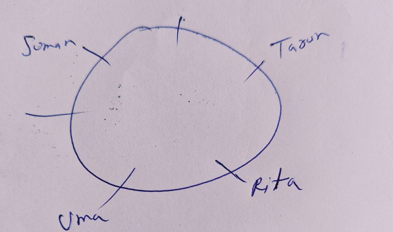
Additional Information

  • Combination Reaction:
  • A chemical reaction where two or more substances combine to form a single product.
  • Examples include the formation of water (H2 + O2 → H2O) and the formation of calcium carbonate (CaO + CO2 → CaCO3).
  • Exothermic Reaction:
  • Reactions that release energy, usually in the form of heat or light.
  • Examples include combustion reactions and many oxidation reactions.
  • Types of Chemical Reactions:
  • Combination reactions.
  • Decomposition reactions.
  • Displacement reactions.
  • Double displacement reactions.
  • Redox reactions (oxidation-reduction).
  • Combustion Reaction:
  • A specific type of exothermic reaction where a substance reacts with oxygen, releasing energy.
  • Commonly involves hydrocarbons reacting with oxygen to produce carbon dioxide and water.

Question 87

Involuntary actions including blood pressure, salivation and vomiting are controlled by:

  1. AOption (a)

    the cerebellum in the fore-brain

  2. BOption (b)

    the medulla in the hind-brain

  3. COption (c)

    only the heart

  4. DOption (d)

    only the spinal cord 

View answer & explanation

Correct answer

Answer: (b)B.

the medulla in the hind-brain

Why this answer is correct

The correct answer is the medulla in the hind-brain.

Key Points

  • The medulla oblongata is a part of the brainstem located in the hind-brain and plays a crucial role in regulating involuntary functions.
  • It controls autonomic functions like blood pressure, heart rate, breathing, and reflexes such as swallowing, vomiting, and coughing.
  • The medulla receives and integrates sensory and motor information from the body and sends out appropriate responses.
  • Damage to the medulla can result in severe consequences, including loss of autonomic control and life-threatening conditions.

Additional Information

  • Cerebellum
  • The cerebellum is located at the back of the brain and is primarily responsible for coordinating voluntary movements, balance, and posture.
  • It does not play a significant role in controlling involuntary actions.
  • Spinal Cord
  • The spinal cord is a long, thin, tubular structure made up of nervous tissue, extending from the medulla oblongata to the lumbar region of the vertebral column.
  • It primarily functions in transmitting nerve signals between the brain and the rest of the body and in reflex actions.
  • Autonomic Nervous System (ANS)
  • The ANS is a division of the peripheral nervous system that controls involuntary physiological functions such as heart rate, digestion, respiratory rate, pupillary response, urination, and sexual arousal.
  • It consists of two main branches: the sympathetic nervous system and the parasympathetic nervous system.
  • Brainstem
  • The brainstem includes the midbrain, pons, and medulla oblongata, and it connects the brain to the spinal cord.
  • It plays a critical role in regulating vital functions, including breathing, heart rate, and blood pressure.

Question 88

_______ has become the first Indian track-and-field athlete to win medals at consecutive Olympics.

  1. AOption (a)

    Aman Sehrawat

  2. BOption (b)

    Swapnil Kusale

  3. COption (c)

    Neeraj Chopra

  4. DOption (d)

    Manu Bhaker

View answer & explanation

Correct answer

Answer: (c)C.

Neeraj Chopra

Why this answer is correct

The correct answer is Neeraj Chopra.

Key Points

  • Neeraj Chopra is the first Indian track-and-field athlete to win medals at consecutive Olympics.
  • He won a gold medal in the javelin throw event at the 2020 Tokyo Olympics.
  • Chopra secured a silver medal in the javelin throw at the 2024 Paris Olympics.
  • He is one of the most prominent and successful athletes in India's sports history.
  • Neeraj Chopra has also won multiple titles at the Asian Games and the Commonwealth Games.

Additional Information

  • Javelin Throw
  • It is a track-and-field event where the athlete throws a spear-like implement called a javelin as far as possible.
  • The javelin must be held at its grip and thrown overhand.
  • Competitors typically take a running start before throwing the javelin.
  • The javelin must land tip first for the throw to be valid.
  • Olympics
  • The Olympics is a major international multi-sport event held every four years.
  • It features summer and winter sports competitions, where thousands of athletes from around the world participate.
  • The modern Olympics were first held in 1896 in Athens, Greece.
  • The event aims to promote unity and fair competition among nations.
  • Asian Games
  • The Asian Games, also known as Asiad, is a multi-sport event held every four years among athletes from Asia.
  • The event is organized by the Olympic Council of Asia (OCA).
  • The first Asian Games were held in 1951 in New Delhi, India.
  • It is the second-largest multi-sport event after the Olympics.
  • Commonwealth Games
  • The Commonwealth Games is an international multi-sport event involving athletes from the Commonwealth of Nations.
  • The event is held every four years.
  • The first Commonwealth Games were held in 1930 in Hamilton, Canada.
  • The Games aim to foster goodwill and camaraderie among member nations.

Question 89

The average of the first five prime numbers greater than 20 is:

  1. AOption (a)

    32.7

  2. BOption (b)

    31.1

  3. COption (c)

    31.7

  4. DOption (d)

    32.2

View answer & explanation

Correct answer

Answer: (d)D.

32.2

Why this answer is correct

Shortcut Trick

List the first five prime numbers greater than 20: 23, 29, 31, 37, 41.

Sum = 23 + 29 + 31 + 37 + 41 = 161.

Average = 161 ÷ 5 = 32.2.

∴ The correct answer is 32.2.

Alternate Method

Given: Prime numbers greater than 20.

Formula Used: Average = Sum of observations ÷ Number of observations

Calculations:

⇒ Identify the prime numbers: 23, 29, 31, 37, 41.

⇒ Sum = 23 + 29 + 31 + 37 + 41

⇒ Sum = 161

⇒ Average = 161 ÷ 5

⇒ Average = 32.2

∴ The correct answer is 32.2.

Additional Information

Prime Numbers

Numbers greater than 1 having exactly two factors (1 and itself). 2 is the only even prime number.

Average Properties

The average always lies between the smallest and the largest value in the data set.

Deviation Method

Average = Assumed Mean + (Sum of deviations ÷ Number of items). Useful for large numbers.

Question 90

Ramu is working hard to push a huge rock by applying 1 N force, but the rock does not move at all. The net work done by Ramu is:

  1. AOption (a)

    +1 J

  2. BOption (b)

    0 J

  3. COption (c)

    -1 J

  4. DOption (d)

    1000 J

View answer & explanation

Correct answer

Answer: (b)B.

0 J

Why this answer is correct

The correct answer is 0 J.

Key Points

  • Work done is defined as the product of the force applied and the displacement in the direction of the force.
  • In this scenario, although Ramu is applying a force of 1 N, the rock does not move. This means the displacement is zero.
  • Since displacement is zero, the work done (W = Force × Displacement) is also zero.
  • Therefore, the net work done by Ramu is 0 J, as there is no movement of the rock.
  • Work is only done when there is a displacement in the direction of the applied force.

Additional Information

  • Definition of Work:
  • Work is a measure of energy transfer when a force moves an object over a distance.
  • The SI unit of work is the Joule (J).
  • Formula for Work:
  • Work (W) = Force (F) × Displacement (d) × cos(θ), where θ is the angle between the force and displacement vectors.
  • Zero Work:
  • When the displacement of an object is zero, or the force applied is perpendicular to the direction of displacement, the work done is zero.
  • Examples include holding a heavy object still or pushing against a wall that doesn’t move.
  • Positive and Negative Work:
  • Work is positive when the force and displacement are in the same direction.
  • Work is negative when the force and displacement are in opposite directions.

Question 91

What will be the name of product that is formed when metals react with air?

  1. AOption (a)

    Metal hydride

  2. BOption (b)

    Metal chloride

  3. COption (c)

    Metal oxide

  4. DOption (d)

    Metal nitrate

View answer & explanation

Correct answer

Answer: (c)C.

Metal oxide

Why this answer is correct

The correct answer is Metal oxide.

Key Points

  • When metals react with air, they typically form metal oxides.
  • This reaction involves the oxidation of the metal.
  • For example, when iron (Fe) reacts with oxygen (O₂) in the air, it forms iron oxide (Fe₂O₃).
  • Metal oxides are generally basic in nature and can react with acids to form salts and water.
  • Noble metals like gold (Au) and platinum (Pt) do not react with air under normal conditions.

Additional Information

  • Oxidation Reaction
  • Oxidation is a chemical reaction where a substance combines with oxygen.
  • It involves the loss of electrons by a molecule, atom, or ion.
  • Basic Nature of Metal Oxides
  • Most metal oxides are basic and react with acids to form salt and water.
  • For example, sodium oxide (Na₂O) reacts with hydrochloric acid (HCl) to form sodium chloride (NaCl) and water (H₂O).
  • Reactivity of Metals with Air
  • Metals like potassium (K) and sodium (Na) react vigorously with air, while others like copper (Cu) and mercury (Hg) react slowly.
  • The reactivity of metals with air varies significantly across the periodic table.
  • Formation of Protective Oxide Layer
  • Some metals, like aluminum (Al), form a thin oxide layer that protects them from further oxidation.
  • This protective oxide layer is known as a passivation layer.

Question 92

Which of the following is the tiny blob-on-a-stick structures in fungi that are involved in reproduction?

  1. AOption (a)

    Spermatogonia

  2. BOption (b)

    Sporophyte

  3. COption (c)

    Sporangia

  4. DOption (d)

    Gametophyte

View answer & explanation

Correct answer

Answer: (c)C.

Sporangia

Why this answer is correct

The correct answer is Sporangia.

Key Points

  • Sporangia are specialized structures where spores are produced and contained in fungi.
  • They can be found at the tips of hyphae and are a critical part of the fungi’s reproductive system.
  • Upon maturity, the sporangia release spores into the environment for dispersal.
  • Sporangia can vary in shape and size depending on the type of fungus.

Additional Information

  • Hyphae: Thread-like structures that make up the mycelium of a fungus.
  • Spores: Reproductive cells capable of developing into a new individual without fusion with another cell.
  • Mycelium: The vegetative part of a fungus consisting of a network of fine white filaments (hyphae).
  • Sporulation: The process of spore formation.
  • Fungal Reproduction: Can be sexual or asexual, with sporangia being involved in asexual reproduction through spore production.

Question 93

A solid metallic sphere of radius 12 cm is melted and recast into 27 identical spheres. What is the ratio of the surface area of the original sphere to the total surface area of 8 smaller spheres so formed?

  1. AOption (a)

    3 : 2

  2. BOption (b)

    9 : 4

  3. COption (c)

    3 : 1

  4. DOption (d)

    9 : 8

View answer & explanation

Correct answer

Answer: (d)D.

9 : 8

Why this answer is correct

Shortcut Trick

Number of spheres (n) = (R/r)3 ⇒ 27 = (R/r)3 ⇒ R/r = 3/1.

Ratio of Surface Areas = (4πR2) : (8 × 4πr2) = R2 : 8r2.

Substituting values: 32 : 8(1)2 = 9 : 8.

∴ The correct answer is 9 : 8.

Alternate Method

Given: Radius of original sphere (R) = 12 cm, Total small spheres = 27.

Formula Used: Volume of sphere = (4/3)πr3; Surface Area of sphere = 4πr2.

⇒ Volume of Original Sphere = 27 × Volume of Small Sphere

⇒ (4/3)π(12)3 = 27 × (4/3)πr3

⇒ 123 = 27 × r3 ⇒ 1728 = 27 × r3

⇒ r3 = 64 ⇒ r = 4 cm

⇒ Surface Area of Original Sphere = 4π(12)2 = 576π

⇒ Total Surface Area of 8 Small Spheres = 8 × 4π(4)2 = 8 × 64π = 512π

⇒ Ratio = 576π : 512π = 576 : 512

⇒ Ratio = 9 : 8

∴ The correct answer is 9 : 8.

Additional Information

Volume Invariance

When a solid is melted and recast, its total volume remains constant. Total Volume = n × volume of one small unit.

Scaling Properties

If the linear dimensions (radius) are in ratio a:b, then areas are in ratio a2:b2 and volumes are in ratio a3:b3.

Surface Area of Sphere

The total surface area of a sphere is 4πr2, which is exactly four times the area of its great circle.

Question 94

Namita starts from point A and drives 6 km towards the South. She takes two simultaneous left turns and drives 4 km and 3 km respectively. She takes a right turn and drives 2 km. She takes a final left turn and drives 3 km to reach point B. How far (shortest distance) and towards which direction should she drive to reach Point A again? (All turns are 90 degrees only unless specified.)

  1. AOption (a)

    6 km West

  2. BOption (b)

    6 km South

  3. COption (c)

    4 km West 

  4. DOption (d)

    3 km South

View answer & explanation

Correct answer

Answer: (a)A.

6 km West

Why this answer is correct

Given:

Namita starts from point A and drives 6 km towards the South.

She takes two simultaneous left turns and drives 4 km and 3 km respectively.

She takes a right turn and drives 2 km.

She takes a final left turn and drives 3 km to reach point B.

From these, we get the direction diagram as follows-

Therefore, 6 km towards the West direction, she should drive to reach Point A again. 

Hence, the correct answer is "Option 1".

Question 95

A cart is moving with a uniform velocity and a retarding force F is applied in the opposite direction to stop the cart. The work done by the force is: 

  1. AOption (a)

    undetermined 

  2. BOption (b)

    negative 

  3. COption (c)

    zero 

  4. DOption (d)

    positive  

View answer & explanation

Correct answer

Answer: (b)B.

negative 

Why this answer is correct

The correct answer is negative.

Key Points

  • When a retarding force is applied to a moving object in the opposite direction of its motion, the work done by the force is negative.
  • This is because the force and the displacement of the cart are in opposite directions.
  • In physics, work done is calculated as the dot product of force and displacement: W = F × d × cos(θ), where θ is the angle between force and displacement.
  • For a retarding force, θ = 180°, and cos(180°) = -1, which makes the work done negative.
  • Negative work indicates that the force is removing energy from the system, slowing the cart down.

Additional Information

  • Work-Energy Theorem
  • The work-energy theorem states that the work done on an object is equal to the change in its kinetic energy.
  • For a retarding force, the kinetic energy of the cart decreases, indicating negative work.
  • Types of Forces
  • Forces can be classified as conservative and non-conservative forces.
  • Friction is a non-conservative force that always does negative work.
  • Conservation of Energy
  • In the absence of non-conservative forces, the total mechanical energy of a system remains constant.
  • When a retarding force is applied, mechanical energy is converted into other forms like heat.
  • Kinetic Friction
  • Kinetic friction acts opposite to the direction of motion.
  • It always does negative work, reducing the kinetic energy of the moving object.

Question 96

There is a leak at the bottom of a cistern. Due to this it takes 8 hours to fill the cistern. Had there not been a leak, it would have taken one hour less to fill the cistern. How much time does it take for the leak to completely empty the cistern?

  1. AOption (a)

    56 hours

  2. BOption (b)

    15 hours

  3. COption (c)

    5513\frac{1}{3} hours

  4. DOption (d)

    48 hours

View answer & explanation

Correct answer

Answer: (a)A.

56 hours

Why this answer is correct

Shortcut Trick

Time to fill without leak (T1) = 8 − 1 = 7 hr

Time to fill with leak (T2) = 8 hr

Time taken by leak to empty = (T1 × T2) ÷ (T2 − T1)

Required time = (7 × 8) ÷ (8 − 7) = 56 hr

∴ The correct answer is 56 hr.

Alternate Method

Given:

⇒ Time taken to fill the cistern with leak = 8 hr

⇒ Time taken to fill without leak = 8 − 1 = 7 hr

Let the total capacity of the cistern be the LCM of 7 and 8 = 56 units.

Pipe/SituationTime (hr)Total Work (units)Efficiency (units/hr)
Inlet Pipe alone7568
Inlet + Leak87

Calculations:

⇒ Efficiency of the leak = (Inlet + Leak) − (Inlet alone)

⇒ Efficiency of the leak = 7 − 8 = −1 unit/hr

⇒ Time taken by the leak to empty the full cistern = Total Capacity ÷ |Efficiency of leak|

⇒ Time = 56 ÷ 1 = 56 hr

∴ The correct answer is 56 hr.

Additional Information

Concept of Negative Work

In Pipes and Cisterns, a leak or an outlet pipe is considered to do negative work as it removes water from the tank.

Net Efficiency

If a tank is being filled and emptied simultaneously, the net efficiency is the algebraic sum of individual efficiencies (Inlet Efficiency − Outlet Efficiency).

Time and Efficiency Relation

Time taken is inversely proportional to efficiency. If efficiency decreases due to a leak, the time required to fill the tank increases.

Question 97

In a certain code language,

A + B means 'A is the sister of B',

A - B means 'A is the wife of B',

A × B means 'A is the father of B',

and A ÷ B means 'A is the brother of B'.

How is P related to T if 'P + Q - R × S ÷ T'?

  1. AOption (a)

    Mother's mother 

  2. BOption (b)

    Father's mother

  3. COption (c)

    Father's sister

  4. DOption (d)

    Mother's sister

View answer & explanation

Correct answer

Answer: (d)D.

Mother's sister

Why this answer is correct

Decoding symbols:

E is
Symbol+-×÷
Meaningsisterwifefatherbrother
to F

Given: P + Q - R × S ÷ T

P is the Sister of Q, Q is the wife of R, R is the father of S and S is the brother of T

So, P is the 'Mother's sister' of T.

Hence, the correct answer is "Option 4"

Question 98

The square root of 0.0009 is:

  1. AOption (a)

    0.81

  2. BOption (b)

    0.003

  3. COption (c)

    0.03

  4. DOption (d)

    0.27

View answer & explanation

Correct answer

Answer: (c)C.

0.03

Why this answer is correct

Shortcut Trick

Count the decimal places in the number: 0.0009 has 4 decimal places.

The square root will have exactly half the number of decimal places: 4 ÷ 2 = 2 decimal places.

Square root of 9 is 3. Adjusting to 2 decimal places gives 0.03.

∴ The correct answer is 0.03.

Alternate Method

Given: Number = 0.0009

Formula Used: √(a/b) = √a / √b

⇒ 0.0009 = 9/10000

⇒ √0.0009 = √(9/10000)

⇒ √0.0009 = √9 / √10000

⇒ √0.0009 = 3 / 100

⇒ √0.0009 = 0.03

∴ The correct answer is 0.03.

Additional Information

Square Root of Decimals

When taking the square root of a decimal, the number of digits after the decimal point is halved. For example, √0.01 = 0.1 and √0.0001 = 0.01.

Powers of 10 in Denominator

A decimal with n places can be written as a fraction with 10n in the denominator. √10n is only a perfect integer if n is even.

Question 99

If A means +, B means -, C means ×, D means ÷, then what will come in place of the question mark (?) in the following equation?

25 B 3 C 4 A 30 D 6 = ?

  1. AOption (a)

    17

  2. BOption (b)

    19

  3. COption (c)

    18

  4. DOption (d)

    20

View answer & explanation

Correct answer

Answer: (c)C.

18

Why this answer is correct

Decoding letters:

LetterABCD
Stands for+-×÷

Given: 25 B 3 C 4 A 30 D 6 = ?

25 B 3 C 4 A 30 D 6

⇒ 25 - 3 × 4 + 30 ÷ 6

⇒ 25 - 3 × 4 + 5

⇒ 25 - 12 + 5

⇒ 30 - 12

⇒ 18

Hence, the correct answer is "Option 3".

Question 100

Find the simple interest on Rs. 600 at 7% per month in 9 months.

  1. AOption (a)

    Rs. 378

  2. BOption (b)

    Rs. 354

  3. COption (c)

    Rs. 398

  4. DOption (d)

    Rs. 334

View answer & explanation

Correct answer

Answer: (a)A.

Rs. 378

Why this answer is correct

Shortcut Trick

Direct Calculation: Simple Interest = Principal × Rate × Time

Since the rate is 7% per month and time is 9 months, units are consistent.

Total Interest % = 7% × 9 = 63%

SI = 63% of ₹600 = 0.63 × 600 = ₹378.

∴ The correct answer is ₹378.

Alternate Method

Given:

Principal (P) = ₹600

Rate (R) = 7% per month

Time (T) = 9 months

Formula Used:

Simple Interest (SI) = (P × R × T) ÷ 100

Calculations:

⇒ SI = (600 × 7 × 9) ÷ 100

⇒ SI = 6 × 7 × 9

⇒ SI = 42 × 9

⇒ SI = ₹378

∴ The correct answer is ₹378.

Additional Information

Unit Consistency in Simple Interest

Always ensure that the Rate of Interest and Time are in the same unit (e.g., both per year or both per month). If the rate is annual and time is in months, divide months by 12.

Formula for Amount

The total Amount (A) at the end of the period is the sum of Principal and Simple Interest: A = P + SI = P(1 + RT/100).

Difference between SI and CI

In Simple Interest, interest is calculated only on the initial principal, whereas in Compound Interest, interest is calculated on the principal plus the accumulated interest of previous periods.

100 questions in the full paper