Previous Year Paper

RRB NTPC CBT-I Official Paper (Held On: 8 April 2021 Shift 1) (Previous Year Paper)

Held in 2021

100 questions90 minutes
With answers
Free

Paper last updated:

Practise under exam conditions

Take this paper as a timed mock test. Review your answers after you submit.

Attempt timed test

Questions & answers

Read the paper at your pace. Open an explanation when you need it.

Question 1

A gold ring is sold for ₹17,500 at a loss of 30%. What is the cost price of the gold ring?

  1. AOption (a)

    ₹25,500

  2. BOption (b)

    ₹26,500

  3. COption (c)

    ₹25,000

  4. DOption (d)

    ₹26,000

View answer & explanation

Correct answer

Answer: (c)C.

₹25,000

Why this answer is correct

Given:

Selling Price (SP) = ₹17,500

Loss = 30%

Formula Used:

Cost Price (CP) = SP / (1 - Loss%)

Calculation:

Loss% = 30% = 30/100 = 0.30

CP = ₹17,500 / (1 - 0.30)

⇒ CP = ₹17,500 / 0.70

⇒ CP = ₹25,000

The cost price of the gold ring is ₹25,000.

Question 2

Which of the following is closest to zero?

  1. AOption (a)

    (1 - 0.09)2

  2. BOption (b)

    0.009

  3. COption (c)

    1 - (0.09)2

  4. DOption (d)

    (0.09)2

View answer & explanation

Correct answer

Answer: (d)D.

(0.09)2

Why this answer is correct

Given:

Options:

  1. (1 - 0.09)2

  2. 0.009

  3. 1 - (0.09)2

  4. (0.09)2

Formula Used:

Calculate the numerical values of each option.

Calculation:

Option 1: (1 - 0.09)2

⇒ (0.91)2

⇒ 0.8281

Option 2: 0.009

Option 3: 1 - (0.09)2

⇒ 1 - 0.0081

⇒ 0.9919

Option 4: (0.09)2

⇒ 0.0081

The correct answer is option 4, which is 0.0081 and is closest to zero.

Question 3

The value of cos2 3° + cos2 4° + cos2 5° + ______ + cos2 87° is:

  1. AOption (a)

    852\frac{{85}}{2}

  2. BOption (b)

    652\frac{{65}}{2}

  3. COption (c)

    552\frac{{55}}{2}

  4. DOption (d)

    752\frac{{75}}{2}

View answer & explanation

Correct answer

Answer: (a)A.

852\frac{{85}}{2}

Why this answer is correct

Given:

The expression: cos23° + cos24° + cos25° + ... + cos287°

Formula used:

cos2θ + sin2θ = 1

Calculation:

The terms cos23° and cos287° are complementary as cos(90° − θ) = sinθ.

For complementary angles:

cos23° + cos287° = cos23° + sin23° = 1

cos24° + cos286° = cos24° + sin24° = 1

cos244° + cos246° = 1

cos245° = 1/2

⇒ Total pairs from 3° to 87° are 42 (each contributing 1).

⇒ Contribution of 45° is 1/2.

⇒ Total sum = 42 + 1/2 = 85/2

∴ The value of the expression is 85/2.

Question 4

The sum of the consecutive angles of a parallelogram is equal to:

  1. AOption (a)

    360° 

  2. BOption (b)

    180° 

  3. COption (c)

    90° 

  4. DOption (d)

    120° 

View answer & explanation

Correct answer

Answer: (b)B.

180° 

Why this answer is correct

Given:

The problem asks for the sum of the consecutive angles of a parallelogram.

Formula Used:

Sum of consecutive angles of a parallelogram = 180º

Calculation:

In a parallelogram, the consecutive angles are supplementary.

This means that the sum of consecutive angles is always 180º.

Thus, the sum of the consecutive angles of a parallelogram is 180º.

Correct Answer: Option 2

Question 5

Which among the following is NOT an open source software?

  1. AOption (a)

    Microsoft Office

  2. BOption (b)

    Linux

  3. COption (c)

    Mozilla Firefox

  4. DOption (d)

    Android

View answer & explanation

Correct answer

Answer: (a)A.

Microsoft Office

Why this answer is correct

The correct answer is Microsoft Office.

Key Points

  • Microsoft Office is a proprietary software suite developed by Microsoft Corporation, which means its source code is not available to the public.
  • It includes a range of applications like Word, Excel, PowerPoint, and Outlook, which are widely used in both personal and professional environments.
  • Microsoft Office requires a paid license to use, which contrasts with open-source software that is typically available for free.
  • Microsoft regularly updates and supports Office applications, adding new features and ensuring compatibility with other Microsoft products.

Additional Information

  • Open Source Software
  • Open source software is software with source code that anyone can inspect, modify, and enhance.
  • Examples of open-source software include Linux, Mozilla Firefox, and Android. These are freely available and their source code can be modified and shared.
  • Open-source software is typically developed in a collaborative public manner, allowing developers from around the world to contribute to the project.
  • These types of software are often maintained by a community of developers and can be customized to meet specific needs.
  • Linux
  • Linux is a family of open-source Unix-like operating systems based on the Linux kernel.It is one of the most prominent examples of free and open-source software collaboration.
  • Linux distributions are widely used in servers, desktops, and embedded systems.
  • Popular distributions include Ubuntu, Fedora, and Debian.
  • Mozilla Firefox
  • Mozilla Firefox is a free and open-source web browser developed by the Mozilla Foundation and its subsidiary, Mozilla Corporation.
  • It is available for Windows, macOS, Linux, and other operating systems.
  • Firefox is known for its speed, security, and the wide range of extensions and themes available for customization.
  • Firefox's source code is open, allowing developers to contribute to its development and create new features.
  • Android
  • Android is a mobile operating system based on the Linux kernel and designed primarily for touchscreen mobile devices such as smartphones and tablets.
  • It is developed by a consortium of developers known as the Open Handset Alliance, with Google being the primary contributor.
  • Android is the most widely used mobile operating system in the world.
  • Its open-source nature allows device manufacturers and developers to customize and optimize it for various hardware and software configurations.

Question 6

Four letter-clusters have been given, out of which three are alike in some manner and one is different. Select the odd one.

  1. AOption (a)

    ONRP

  2. BOption (b)

    MLPO

  3. COption (c)

    HGKI

  4. DOption (d)

    SRVT

View answer & explanation

Correct answer

Answer: (b)B.

MLPO

Why this answer is correct

The logic followed here is:

Option 1) ONRP

Option 2) MLPO

Option 3) HGKI

Option 4) SRVT

Thus, out of all the options "MLPO" is the odd one out.

Hence, "Option 2" is the correct answer.

Question 7

The International Bank for Reconstruction and Development, an institution of the World Bank, was established in which year?

  1. AOption (a)

    1946

  2. BOption (b)

    1944

  3. COption (c)

    1943

  4. DOption (d)

    1945

View answer & explanation

Correct answer

Answer: (b)B.

1944

Why this answer is correct

The correct answer is 1944.

Key Points

  • The International Bank for Reconstruction and Development (IBRD) is one of five member institutions that compose the World Bank Group.
  • It was established in 1944 with the primary purpose of aiding the reconstruction of Europe after World War II.
  • IBRD is the largest development bank in the world, providing loans and financial assistance to middle-income and creditworthy low-income countries.
  • The institution aims to reduce poverty and support development by providing financing, policy advice, and technical assistance.

Additional Information

  • World Bank Group:
  • The World Bank Group consists of five institutions: IBRD, the International Development Association (IDA), the International Finance Corporation (IFC), the Multilateral Investment Guarantee Agency (MIGA), and the International Centre for Settlement of Investment Disputes (ICSID).
  • Each institution plays a distinct role in the mission to alleviate poverty and support development.
  • Reconstruction:
  • Post-World War II, many European countries were left devastated and in need of significant rebuilding of infrastructure and economies.
  • IBRD was created to provide the necessary funds and expertise for the reconstruction efforts, particularly through long-term loans.
  • Development Assistance:
  • Beyond reconstruction, IBRD has expanded its role to provide development assistance to countries aiming to reduce poverty and build sustainable economies.
  • This includes financing projects in areas such as education, health, public administration, infrastructure, financial and private sector development, agriculture, and environmental and natural resource management.
  • Financial Products and Services:
  • IBRD offers a range of financial products and services, including loans, guarantees, risk management products, and advisory services.
  • These products are designed to meet the diverse needs of client countries, supporting them in achieving their development goals.

Question 8

Four words have been given, out of which three are alike in some manner and one is different. Select the odd one.

  1. AOption (a)

    Motorcycle

  2. BOption (b)

    Bus

  3. COption (c)

    Van

  4. DOption (d)

    Car

View answer & explanation

Correct answer

Answer: (a)A.

Motorcycle

Why this answer is correct

The logic followed here is:

MotorcycleTwo-wheeler
BusFour-wheeler
VanFour-wheeler
CarFour-wheeler


Bus, Van, Car all are Four-wheelers,

Whereas,

Motorcycle is a Two-wheeler.

Hence, the correct answer is "Motorcycle".

Question 9

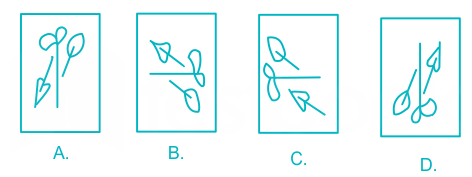
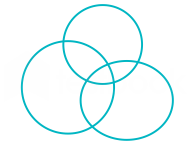
Select the Venn diagram that best represents the relationship between the following three classes.

Fruit, Coffee, Drink.

  1. AOption (a)

  2. BOption (b)

  3. COption (c)

  4. DOption (d)

View answer & explanation

Correct answer

Answer: (b)B.

Why this answer is correct

The diagram that best represents the relationship between Fruit, Coffee, and Drink is shown below :

Coffee is a subset of drinks.

Drinks and fruit are two different sets.

Hence, "Option 2" is the correct answer.

Question 10

Ram bought five bananas for ₹20 and sold them at the rate of three for ₹15. Find his gain percentage.

  1. AOption (a)

    30%

  2. BOption (b)

    20%

  3. COption (c)

    25%

  4. DOption (d)

    15%

View answer & explanation

Correct answer

Answer: (c)C.

25%

Why this answer is correct

Given:

Cost price of 5 bananas = ₹20

Selling price of 3 bananas = ₹15

Formula Used:

Gain Percentage = (Gain / Cost Price) × 100

Calculation:

Cost price per banana = 20 / 5 = ₹4

Selling price per banana = 15 / 3 = ₹5

Gain per banana = Selling price per banana - Cost price per banana

Gain per banana = 5 - 4 = ₹1

Gain percentage = (Gain per banana / Cost price per banana) × 100

⇒ Gain percentage = (1 / 4) × 100

⇒ Gain percentage = 0.25 × 100

⇒ Gain percentage = 25%

The correct answer is option 3.

Question 11

The 'Sustainable Action for Transforming Human capital (SATH)' programme plans to focus on which two sectors?

  1. AOption (a)

    Education and health

  2. BOption (b)

    Health and sanitation

  3. COption (c)

    Employment and education

  4. DOption (d)

    Agriculture and growth

View answer & explanation

Correct answer

Answer: (a)A.

Education and health

Why this answer is correct

The correct answer is Education and health.

Key Points

  • The 'Sustainable Action for Transforming Human capital (SATH)' programme is an initiative by NITI Aayog, the policy think-tank of the Government of India.
  • SATH focuses on two critical sectors: education and health, aiming to drive transformations in these areas.
  • The programme seeks to provide customized support to states to enhance their performance in these sectors.
  • It aims to create role model states for health and education, which can then be replicated across the country.

Additional Information

  • NITI Aayog
  • The National Institution for Transforming India (NITI Aayog) is a policy think-tank of the Government of India, established with the aim to achieve sustainable development goals and to enhance cooperative federalism by fostering the involvement of State Governments in the economic policy-making process using a bottom-up approach.
  • NITI Aayog was established in 2015, replacing the Planning Commission, which had been in place since 1950.
  • The Aayog comprises a governing council consisting of the Chief Ministers of all the states and union territories with legislatures and lieutenant governors of Union Territories.
  • NITI Aayog's initiatives include programs aimed at transforming various sectors, including health and education, through schemes like SATH.
  • Education Sector
  • The education sector in India is vast and complex, catering to millions of students across various levels from pre-primary to higher education.
  • Challenges in this sector include improving the quality of education, increasing enrollment rates, reducing dropout rates, and ensuring equitable access to education for all sections of society.
  • Reforms in education aim to enhance learning outcomes, teacher training, and the use of technology in education.
  • Health Sector
  • The health sector in India faces numerous challenges, including ensuring access to quality healthcare, addressing the shortage of healthcare professionals, and improving health infrastructure.
  • Key health indicators in India have shown improvement, but there is still a long way to go in reducing maternal and infant mortality rates, controlling communicable and non-communicable diseases, and improving nutrition levels.
  • Government initiatives in the health sector include schemes like Ayushman Bharat, which aims to provide health coverage to the economically weaker sections of society.

Question 12

Which among the following is NOT a database software in computers?

  1. AOption (a)

    Oracle

  2. BOption (b)

    Foxpro

  3. COption (c)

    MS Word

  4. DOption (d)

    MS Access

View answer & explanation

Correct answer

Answer: (c)C.

MS Word

Why this answer is correct

The correct answer is MS Word.

Key Points

  • MS Word is a word processing software developed by Microsoft.
  • It is used for creating, editing, formatting, and printing documents.
  • MS Word is part of the Microsoft Office suite of productivity software.
  • Unlike Oracle, Foxpro, and MS Access, MS Word is not used for database management.

Additional Information

  • Oracle
  • Oracle Database is a multi-model database management system produced and marketed by Oracle Corporation.
  • It is used for running online transaction processing (OLTP), data warehousing (DW), and mixed (OLTP & DW) database workloads.
  • Oracle DB is widely used for database management due to its scalability, high performance, and robust architecture.
  • Foxpro
  • FoxPro is a text-based procedural programming language and database management system (DBMS), originally published by Fox Software and later by Microsoft.
  • It is used for developing data-centric applications and is known for its high performance in handling large volumes of data.
  • FoxPro integrates a relational database engine that is used for storing and manipulating data.
  • MS Access
  • Microsoft Access is a database management system from Microsoft that combines the relational Microsoft Jet Database Engine with a graphical user interface and software-development tools.
  • It is part of the Microsoft Office suite and is used to create and manage small to medium-sized relational databases.
  • MS Access provides tools for data organization, query processing, and report generation.

Question 13

Education is kept under which list of the Indian Constitution?

  1. AOption (a)

    State list

  2. BOption (b)

    Concurrent list

  3. COption (c)

    Union list

  4. DOption (d)

    Government list

View answer & explanation

Correct answer

Answer: (b)B.

Concurrent list

Why this answer is correct

The correct answer is Concurrent list.

Key Points

  • In the Indian Constitution, the Concurrent list includes subjects that are of common interest to both the Union and State governments.
  • Both the Parliament and the state legislatures can make laws on the subjects mentioned in the Concurrent list.
  • Education is one of the subjects under the Concurrent list, allowing both central and state governments to legislate on it.
  • If there is any conflict between the central and state law on a subject in the Concurrent list, the central law prevails.

Additional Information

  • State List
  • The State List comprises subjects on which only the state legislatures can legislate.
  • Examples of subjects in the State List include police, public health, and agriculture.
  • Union List
  • The Union List consists of subjects on which only the central government can legislate.
  • Examples of subjects in the Union List include defense, foreign affairs, and atomic energy.
  • Concurrent List
  • The Concurrent List contains subjects on which both the central and state governments can legislate.
  • Examples of subjects in the Concurrent List include marriage and divorce, bankruptcy and insolvency, and education.
  • If there is a conflict between the central and state law on a subject in the Concurrent List, the central law prevails.
  • Significance of the Concurrent List
  • It promotes cooperative federalism by allowing both the central and state governments to legislate on important subjects.
  • It ensures uniformity in laws across the country while also allowing states to address local needs and conditions.

Question 14

What is the median of the following data?

78, 56, 22, 34, 45, 54, 39, 68, 54, 84

  1. AOption (a)

    53

  2. BOption (b)

    51

  3. COption (c)

    55

  4. DOption (d)

    54

View answer & explanation

Correct answer

Answer: (d)D.

54

Why this answer is correct

Given:

Data: 78, 56, 22, 34, 45, 54, 39, 68, 54, 84

Formula Used:

Median: The middle value of a data set when it is ordered in ascending order. If the number of observations (n) is even, the median is the average of the two middle numbers.

Calculation:

Step 1: Arrange the data in ascending order.

22, 34, 39, 45, 54, 54, 56, 68, 78, 84

Step 2: Determine the number of observations (n).

n = 10 (even number)

Step 3: Find the two middle numbers.

The two middle numbers are the 5th and 6th observations.

5th observation = 54

6th observation = 54

Step 4: Calculate the median.

Median = (54 + 54) / 2

⇒ Median = 108 / 2

⇒ Median = 54

The median of the given data is 54.

Question 15

Who is appointed as new Chairman of National Commission for Scheduled Castes (NCSC) in February, 2021?

  1. AOption (a)

    Thawar Chand Gehlot

  2. BOption (b)

    Chirag Paswan

  3. COption (c)

    Vijay Sampla

  4. DOption (d)

    Ramdas Athavale

View answer & explanation

Correct answer

Answer: (c)C.

Vijay Sampla

Why this answer is correct

The correct answer is Vijay Sampla.

Key Points

  • Vijay Sampla was appointed as the new Chairman of the National Commission for Scheduled Castes (NCSC) in February 2021.
  • He is a former Union Minister of State for Social Justice and Empowerment.
  • Vijay Sampla is a senior leader of the Bharatiya Janata Party (BJP) from Punjab.
  • He has served as the Member of Parliament from Hoshiarpur constituency in Punjab.

Additional Information

  • National Commission for Scheduled Castes (NCSC)
  • The NCSC is a constitutional body established under Article 338 of the Indian Constitution.
  • It is tasked with safeguarding the interests of Scheduled Castes (SCs) in India.
  • The commission investigates and monitors all matters relating to the safeguards provided for SCs and evaluates the working of such safeguards.
  • The NCSC also inquires into specific complaints regarding the deprivation of rights and safeguards of the SCs.
  • Thawar Chand Gehlot
  • He is an Indian politician from the Bharatiya Janata Party (BJP).
  • He served as the Minister of Social Justice and Empowerment in the Modi Government.
  • Gehlot is currently the Governor of Karnataka as of 2021.
  • Chirag Paswan
  • He is an Indian politician and the president of the Lok Janshakti Party (LJP).
  • Chirag Paswan is the son of late Ram Vilas Paswan, a prominent Dalit leader and former Union Minister.
  • He represents the Jamui constituency in Bihar in the Lok Sabha.
  • Ramdas Athavale
  • He is an Indian politician and the president of the Republican Party of India (A).
  • He serves as the Minister of State for Social Justice and Empowerment in the Indian Government.
  • Athavale has been a Member of Parliament in both the Lok Sabha and the Rajya Sabha.

Question 16

P, Q, R, S, T and U are friends who work at a BPO organisation. P earns more than T. R earns more than Q but less than U. P does not earn as much as Q but earns more than S. Who among these six friends earns the most?

  1. AOption (a)

    Q

  2. BOption (b)

    S

  3. COption (c)

    U

  4. DOption (d)

    R

View answer & explanation

Correct answer

Answer: (c)C.

U

Why this answer is correct

Given: P, Q, R, S, T and U are friends who work at a BPO organisation. 

1) P does not earn as much as Q but earns more than S. 

Q > P > S

2) R earns more than Q but less than U.

U > R > Q > P > S

3) P earns more than T.

U > R > Q > P > S / T

Thus, according to the final arrangement, U earns the most.

Hence, "Option 3" is the correct answer.

Question 17

Which scheme has the government launched to support organic farming in India?

  1. AOption (a)

    Pradhan Mantri Gram Sinchai Yojana

  2. BOption (b)

    Pradhan Mantri Fasal Bima Yojana

  3. COption (c)

    Paramparagat Krishi Vikash Yojana

  4. DOption (d)

    Soil Health Card Scheme

View answer & explanation

Correct answer

Answer: (c)C.

Paramparagat Krishi Vikash Yojana

Why this answer is correct

The correct answer is Paramparagat Krishi Vikash Yojana.

Key Points

  • The Paramparagat Krishi Vikash Yojana (PKVY) is a scheme introduced by the Government of India to promote organic farming in the country.
  • PKVY aims to support and encourage farmers to adopt traditional and sustainable farming methods, which include the use of natural inputs and organic fertilizers.
  • Under this scheme, farmers are provided financial assistance, training, and resources to transition from conventional farming to organic farming.
  • The goal of PKVY is to increase soil fertility, reduce the dependency on chemical fertilizers and pesticides, and produce healthy and nutritious food.

Additional Information

  • Pradhan Mantri Gram Sinchai Yojana (PMGSY)
  • It is an initiative to improve irrigation facilities and enhance water use efficiency at the farm level.
  • The scheme focuses on creating new water sources, renovating traditional water bodies, and implementing water conservation practices.
  • Pradhan Mantri Fasal Bima Yojana (PMFBY)
  • It is a crop insurance scheme launched by the Government of India to provide financial support to farmers in the event of crop failure due to natural calamities, pests, or diseases.
  • The scheme aims to stabilize the income of farmers and ensure their financial stability.
  • Soil Health Card Scheme (SHCS)
  • This scheme was launched to promote soil testing and provide farmers with soil health cards that contain information about the nutrient status of their soil.
  • The soil health cards recommend corrective measures to improve soil health and increase agricultural productivity.

Question 18

Consider the given statement and decide which of the given assumption(s) is/are implicit in the statement.

Statement:

The government has instructed all private colleges in the city to not increase the current fees for at least 3 more years.

Assumptions:

  1. The authorities of private colleges may not follow the government's instruction since they are not dependent on government funds.
  2. The parents of the students from the city's private colleges may still be eager to pay higher fees.
  1. AOption (a)

    Neither assumption 1 nor 2 is implicit.

  2. BOption (b)

    Only assumption 2 is implicit.

  3. COption (c)

    Only assumption 1 is implicit.

  4. DOption (d)

    Either assumption 1 or 2 is implicit.

View answer & explanation

Correct answer

Answer: (a)A.

Neither assumption 1 nor 2 is implicit.

Why this answer is correct

Given Statement: The government has instructed all private colleges in the city to not increase the current fees for at least 3 more years.

Now, 

Assumptions:

  1. The authorities of private colleges may not follow the government's instruction since they are not dependent on government funds - Not Implicit (The statement does not specify whether the colleges will or will not follow the instruction, it merely states the government's directive.)
  2. The parents of the students from the city's private colleges may still be eager to pay higher fees - Not Implicit (The statement does not address the parents' willingness to pay higher fees; it only mentions the government's instruction to the colleges.)

Here, Neither assumption 1 nor 2 is implicit.

Hence, the correct answer is "Option 1".

Question 19

The word LOCOMOTIVE has been coded using 4 different codes.

Code 1 : KMZKHIMAMU

Code 2 : MNDNNNUHWD

Code 3 : KPBPLPSJUF

Code 4 : MQFSRUAQEO

Which of the following codes is used to write the word STATION as RUZUHPM?

  1. AOption (a)

    Code 1

  2. BOption (b)

    Code 4

  3. COption (c)

    Code 3

  4. DOption (d)

    Code 2

View answer & explanation

Correct answer

Answer: (c)C.

Code 3

Why this answer is correct

The logic followed here is:

The word LOCOMOTIVE has been coded using 4 different codes:

Code 1 : KMZKHIMAMU

The logic followed here is: Increasing number series is subtracted from the position value according to the English alphabetic series.

Code 2 : MNDNNNUHWD

The logic followed here is: Alternately (1) is added to and subtracted from the position value according to the English alphabetic series respectively.

Code 3 : KPBPLPSJUF

The logic followed here is: Alternately (1) is subtracted from and added to the position value according to the English alphabetic series respectively.

Code 4 : MQFSRUAQEO

The logic followed here is: Increasing number series is added to the position value according to the English alphabetic series.

So, to write the word STATION as RUZUHPM:

The logic followed here is: Alternately (1) is subtracted from and added to the position value according to the English alphabetic series respectively.

Thus, to write the word STATION as RUZUHPM, logic of Code - 3 is followed here.

Hence, "Option 3" is the correct answer.

Question 20

Where is the Mahatma Gandhi Marine National Park located?

  1. AOption (a)

    Daman and Diu

  2. BOption (b)

    Chandigarh

  3. COption (c)

    Andaman and Nicobar Islands

  4. DOption (d)

    Lakshadweep Islands

View answer & explanation

Correct answer

Answer: (c)C.

Andaman and Nicobar Islands

Why this answer is correct

The correct answer is Andaman and Nicobar Islands.

Key Points

  • The Mahatma Gandhi Marine National Park is located in the Wandoor region of the Andaman and Nicobar Islands.
  • It was established on 24 May 1983 to protect the marine biodiversity, including coral reefs and sea turtle nesting sites.
  • The park covers an area of 281.5 square kilometers and consists of 15 islands and the open sea creeks running through the area.
  • It is known for its rich marine life, including over 50 types of coral and more than 300 species of fish.

Additional Information

  • Andaman and Nicobar Islands
  • The Andaman and Nicobar Islands are a group of islands at the southeastern edge of the Bay of Bengal.
  • The islands are known for their palm-lined, white-sand beaches, mangroves, and tropical rainforests.
  • The archipelago is home to the only known Paleolithic people, the Sentinelese, who have had little contact with the outside world.
  • The islands were historically significant as a penal colony during the British colonial period in India.
  • Coral Reefs
  • Coral reefs are underwater ecosystems held together by calcium carbonate structures secreted by corals.
  • They are often called the "rainforests of the sea" due to their rich biodiversity.
  • Reefs are formed by colonies of coral polyps held together by calcium carbonate.
  • Coral reefs provide a home for 25% of all marine species, despite covering less than 1% of the ocean floor.
  • Marine Biodiversity
  • Marine biodiversity refers to the variety of living organisms found in the ocean and other marine ecosystems.
  • It includes the entire range of species from the smallest microbes to the largest marine mammals and reptiles.
  • Marine biodiversity is crucial for ecosystem health, providing food, medicines, and ecosystem services such as carbon sequestration.

Question 21

Maruni Dance is associated with ______ state of India.

  1. AOption (a)

    Uttarakhand

  2. BOption (b)

    Arunachal Pradesh

  3. COption (c)

    Tripura

  4. DOption (d)

    Sikkim

View answer & explanation

Correct answer

Answer: (d)D.

Sikkim

Why this answer is correct

The correct answer is Sikkim.

Key Points

  • Maruni Dance is a traditional folk dance of the Sikkim state of India.
  • It is performed mainly during the Tihar festival, which is the equivalent of Diwali in Sikkim.
  • The dance is characterized by colorful costumes, intricate steps, and lively music.
  • The dance is performed to celebrate various occasions and is a major part of the cultural heritage of Sikkim.

Additional Information

  • Tihar Festival
  • Tihar, also known as Deepawali, is a five-day-long Hindu festival celebrated in Sikkim and Nepal.
  • Each day of the festival is dedicated to different animals such as crows, dogs, cows, and oxen.
  • It is known for its lights, candles, and festive decorations similar to Diwali celebrated in other parts of India.
  • During Tihar, houses are cleaned, decorated, and lit with oil lamps, and special food is prepared to offer to the gods and animals.
  • Folk Dances of Sikkim
  • Sikkim has a rich tradition of folk dances which are performed during various festivals and occasions.
  • Some popular folk dances of Sikkim include Singhi Chham, Yak Chham, and Rechungma.
  • These dances are often performed in colorful traditional attire and are accompanied by traditional musical instruments like drums and cymbals.
  • Folk dances in Sikkim play a significant role in preserving the cultural heritage and traditions of the state.
  • Costumes and Music
  • The costumes worn during Maruni Dance are vibrant and colorful, often adorned with jewelry and headgear.
  • The dancers wear traditional attire which includes long skirts, blouses, and shawls.
  • Music for the Maruni Dance is usually provided by traditional instruments like madal, harmonium, and flute.
  • The songs are typically in the local language and tell stories of love, nature, and daily life.
  • Cultural Significance
  • Folk dances like Maruni play a crucial role in the cultural and social life of the people of Sikkim.
  • They are a means of expressing joy, celebrating festivals, and preserving the rich cultural heritage of the region.
  • The dances are often performed in community gatherings, bringing people together and fostering a sense of unity and belonging.
  • These cultural practices are passed down through generations, ensuring that the traditions continue to thrive.

Question 22

The report of which committee recommended a three-tier Panchayati Raj System in India?

  1. AOption (a)

    Balwant Rai Mehta Committee

  2. BOption (b)

    Shah Nawaz Committee

  3. COption (c)

    Ashok Mehta Committee

  4. DOption (d)

    Sachar Committee

View answer & explanation

Correct answer

Answer: (a)A.

Balwant Rai Mehta Committee

Why this answer is correct

The correct answer is Balwant Rai Mehta Committee.

Key Points

  • The Balwant Rai Mehta Committee was established by the Government of India in 1957.
  • This committee recommended the establishment of a three-tier Panchayati Raj system to decentralize democracy.
  • The three tiers of the Panchayati Raj system are Gram Panchayat at the village level, Panchayat Samiti at the block level, and Zila Parishad at the district level.
  • The system was first implemented by the state of Rajasthan on 2nd October 1959.

Additional Information

  • Panchayati Raj System:
  • The Panchayati Raj System is a decentralized form of government where local elected bodies are responsible for the administration of local areas.It aims to involve rural people in decision-making processes and ensure their participation in local governance.
  • It is a three-tier system consisting of Gram Panchayat, Panchayat Samiti, and Zila Parishad.
  • This system allows for greater accountability and transparency in governance at the grassroots level.
  • Gram Panchayat:
  • It is the basic unit of the Panchayati Raj system at the village level.
  • The members of the Gram Panchayat are elected by the villagers through direct elections.
  • It is responsible for the administration and development of the village.
  • The head of the Gram Panchayat is known as the Sarpanch.
  • Panchayat Samiti:
  • It is the intermediate tier of the Panchayati Raj system at the block level.
  • Members of the Panchayat Samiti are elected by the members of the Gram Panchayats within the block.
  • It coordinates and consolidates the development activities at the block level.
  • The head of the Panchayat Samiti is known as the Chairman.
  • Zila Parishad:
  • It is the top tier of the Panchayati Raj system at the district level.
  • Members of the Zila Parishad are elected by the members of the Panchayat Samitis within the district.
  • It oversees the implementation of development programs and policies at the district level.
  • The head of the Zila Parishad is known as the President.

Question 23

Where is the headquarters of the North Atlantic Treaty Organisation (NATO) situated?

  1. AOption (a)

    Lisbon

  2. BOption (b)

    Ottawa

  3. COption (c)

    Brussels

  4. DOption (d)

    Madrid

View answer & explanation

Correct answer

Answer: (c)C.

Brussels

Why this answer is correct

The correct answer is Brussels.

Key Points

  • The headquarters of NATO is situated in Brussels, the capital city of Belgium.
  • Brussels was chosen as the headquarters for NATO due to its central location in Europe and its significance as a political hub.
  • NATO, established in 1949, is a military alliance of 30 member countries from North America and Europe.
  • The NATO headquarters in Brussels serves as the political and administrative center of the alliance, where key decisions and strategic plans are made.

Additional Information

  • North Atlantic Treaty Organization (NATO)
  • NATO is an intergovernmental military alliance established on 4 April 1949.
  • The organization constitutes a system of collective defense whereby its independent member states agree to mutual defense in response to an attack by any external party.
  • NATO's primary purpose is to safeguard the freedom and security of its members through political and military means.
  • It promotes democratic values and enables members to consult and cooperate on defense and security-related issues to solve problems, build trust, and, in the long run, prevent conflict.
  • The alliance ensures that it remains a transatlantic forum for dialogue on security issues and an essential instrument for building the conditions for peace and stability.
  • Brussels
  • Brussels is the capital city of Belgium and also serves as the de facto capital of the European Union (EU).
  • It is known for its historical and architectural landmarks, as well as for its role as a major center of international politics and diplomacy.
  • In addition to hosting NATO, Brussels is home to several key EU institutions, including the European Commission, the European Council, and the European Parliament.
  • The city is characterized by its rich cultural heritage, diverse population, and vibrant economy, making it a significant hub for international organizations and multinational corporations.

Question 24

Four alphanumeric-clusters have been given, out of which three are alike in some manner and one is different. Select the odd one.

  1. AOption (a)

    U21

  2. BOption (b)

    P16

  3. COption (c)

    M13

  4. DOption (d)

    A12

View answer & explanation

Correct answer

Answer: (d)D.

A12

Why this answer is correct

The logic followed here is:

Option 1) U21 → Place value of U is 21.

Option 2) P16 → Place value of P is 16.

Option 3) M13 → Place value of M is 13.

Option 4) A12 → Place value of A is 1 instead of 12 as 12 is the place value of L.

Thus, out of all the options "A12" is the odd one out.

Hence, "Option 4" is the correct answer.

Question 25

Find the mean of x + 77, x + 7, x + 5, x + 3 and x - 2.

  1. AOption (a)

    x - 8

  2. BOption (b)

    x + 8

  3. COption (c)

    x + 18

  4. DOption (d)

    x - 3

View answer & explanation

Correct answer

Answer: (c)C.

x + 18

Why this answer is correct

Given:

Expressions: x + 77, x + 7, x + 5, x + 3, x - 2

Formula Used:

Mean of n numbers = (Sum of the numbers) / n

Calculation:

Sum of the expressions = (x + 77) + (x + 7) + (x + 5) + (x + 3) + (x - 2)

⇒ Sum = x + 77 + x + 7 + x + 5 + x + 3 + x - 2

⇒ Sum = 5x + 90

Number of expressions = 5

Mean = (5x + 90) / 5

⇒ Mean = 5x / 5 + 90 / 5

⇒ Mean = x + 18

The correct answer is option 3.

Question 26

Find the value of (0.01)2+;(0.22)2+;(0.333)2+;(0.4444)2(0.001)2+;(0.022)2+;(0.0333)2+;(0.04444)2\frac{{{{\left( {0.01} \right)}^2} + ;{{\left( {0.22} \right)}^2} + ;{{\left( {0.333} \right)}^2} + ;{{\left( {0.4444} \right)}^2}}}{{{{\left( {0.001} \right)}^2} + ;{{\left( {0.022} \right)}^2} + ;{{\left( {0.0333} \right)}^2} + ;(0.04444{)^2}}}.

  1. AOption (a)

    125

  2. BOption (b)

    75

  3. COption (c)

    100

  4. DOption (d)

    50

View answer & explanation

Correct answer

Answer: (c)C.

100

Why this answer is correct

Given:

(0.01)2+;(0.22)2+;(0.333)2+;(0.4444)2(0.001)2+;(0.022)2+;(0.0333)2+;(0.04444)2\frac{{{{\left( {0.01} \right)}^2} + ;{{\left( {0.22} \right)}^2} + ;{{\left( {0.333} \right)}^2} + ;{{\left( {0.4444} \right)}^2}}}{{{{\left( {0.001} \right)}^2} + ;{{\left( {0.022} \right)}^2} + ;{{\left( {0.0333} \right)}^2} + ;(0.04444{)^2}}}

Formula used:

Square of a number: (x)2=x×x(x)^2 = x \times x

Calculations:

Numerator:

(0.01)2=0.0001(0.01)^2 = 0.0001

(0.22)2=0.0484(0.22)^2 = 0.0484

(0.333)2=0.110889(0.333)^2 = 0.110889

(0.4444)2=0.19749136(0.4444)^2 = 0.19749136

Sum = 0.0001 + 0.0484 + 0.110889 + 0.19749136 = 0.35688036

Denominator:

(0.001)2=0.000001(0.001)^2 = 0.000001

(0.022)2=0.000484(0.022)^2 = 0.000484

(0.0333)2=0.00110889(0.0333)^2 = 0.00110889

(0.04444)2=0.0019759136(0.04444)^2 = 0.0019759136

Sum = 0.000001 + 0.000484 + 0.00110889 + 0.0019759136 = 0.0035698036

⇒ 0.356880360.0035698036=100\frac{{0.35688036}}{{0.0035698036}} = 100

∴ The value of the expression is 100.

Method 2:

Multiply and divide the given expression by 100:

⇒100100×\frac{100}{100}\times (0.01)2+;(0.22)2+;(0.333)2+;(0.4444)2(0.001)2+;(0.022)2+;(0.0333)2+;(0.04444)2\frac{{{{\left( {0.01} \right)}^2} + ;{{\left( {0.22} \right)}^2} + ;{{\left( {0.333} \right)}^2} + ;{{\left( {0.4444} \right)}^2}}}{{{{\left( {0.001} \right)}^2} + ;{{\left( {0.022} \right)}^2} + ;{{\left( {0.0333} \right)}^2} + ;(0.04444{)^2}}}

The Denominator will become same as numerator:

⇒100 × (0.01)2+;(0.22)2+;(0.333)2+;(0.4444)2(0.01)2+;(0.22)2+;(0.333)2+;(0.4444)2\frac{{{{\left( {0.01} \right)}^2} + ;{{\left( {0.22} \right)}^2} + ;{{\left( {0.333} \right)}^2} + ;{{\left( {0.4444} \right)}^2}}}{{{{\left( {0.01} \right)}^2} + ;{{\left( {0.22} \right)}^2} + ;{{\left( {0.333} \right)}^2} + ;(0.4444{)^2}}}

⇒100

Question 27

Ram covers a certain distance on a toy train. Had the train moved 8 km/h faster, it would have taken 20 min less. If it had moved 4 km/h slower, it would have taken 40 min more. Find the distance.

  1. AOption (a)

    203\frac{{20}}{3} km

  2. BOption (b)

    173\frac{{17}}{3} km

  3. COption (c)

    163\frac{{16}}{3} km

  4. DOption (d)

    193\frac{{19}}{3} km

View answer & explanation

Correct answer

Answer: (c)C.

163\frac{{16}}{3} km

Why this answer is correct

Given:

Speed of the train (initial) = x km/h

Distance = d km

If the train moved 8 km/h faster, the time taken would be 20 minutes (1/3 hour) less.

If the train moved 4 km/h slower, the time taken would be 40 minutes (2/3 hour) more.

Formula Used:

Time = Distance / Speed

Calculation:

Let the initial speed of the train be x km/h and the distance be d km.

Time taken at speed x : d/x

Time taken at speed x + 8 : d/(x + 8)

Time taken at speed x - 4 : d/(x - 4)

Given, d/x - d/(x + 8) = 1/3

⇒ 3d/x - 3d/(x + 8) = 1

⇒ 3d(x + 8 - x) = x(x + 8)

⇒ 3d × 8 = x(x + 8)

⇒ 24d = x2 + 8x

Also, given d/(x - 4) - d/x = 2/3

⇒ 3d/(x - 4) - 3d/x = 2

⇒ 3d(x - 4 - x) = 2x(x - 4)

⇒ 3d × -4 = 2x(x - 4)

⇒ -12d = 2x2 - 8x

⇒ -12d = 2(x2 - 4x)

⇒ -12d = 2x2 - 8x

Using these two equations:

24d = x2 + 8x

and

-12d = 2x2 - 8x

By solving these equations, we get the value of d :

d = 16/3 km

The distance Ram covers on the toy train is 16/3 km.

Question 28

The Law of Octaves' was proposed by:

  1. AOption (a)

    Johann Dobereiner

  2. BOption (b)

    Alexander Newlands

  3. COption (c)

    Lothar Meyer

  4. DOption (d)

    Dmitri Mendeleev

View answer & explanation

Correct answer

Answer: (b)B.

Alexander Newlands

Why this answer is correct

The correct answer is Alexander Newlands.

Key Points

  • Alexander Newlands was an English chemist who proposed the Law of Octaves.
  • He introduced this concept in 1864.
  • The Law of Octaves stated that every eighth element had properties similar to the first element when elements were arranged by increasing atomic weight.
  • This law was one of the earliest attempts to organize the elements in a systematic manner.

Additional Information

  • Johann Dobereiner
  • He was a German chemist who proposed the Law of Triads in 1829.
  • This law stated that the atomic weight of the middle element of a triad was the average of the atomic weights of the other two elements.
  • Lothar Meyer
  • A German chemist who, independently of Mendeleev, developed a periodic table of the elements around the same time.
  • He arranged elements based on their atomic volumes and noted periodicity in their properties.
  • Dmitri Mendeleev
  • A Russian chemist who is credited with creating the first widely recognized periodic table.
  • He arranged elements by increasing atomic weight and left gaps for elements that were not yet discovered, predicting their properties.
  • Law of Octaves
  • Proposed by Alexander Newlands in 1864.
  • Suggested that elements show similar properties at intervals of eight when arranged by increasing atomic weight.
  • This was an early form of the periodic law, preceding the more comprehensive periodic table developed by Mendeleev.

Question 29

Who became the first batsman in the history of cricket to score 3 ODI double centuries?

  1. AOption (a)

    Rohit Sharma

  2. BOption (b)

    Virender Sehwag

  3. COption (c)

    Virat Kohli

  4. DOption (d)

    Sachin Tendulakar

View answer & explanation

Correct answer

Answer: (a)A.

Rohit Sharma

Why this answer is correct

The correct answer is Rohit Sharma.

Key Points

  • Rohit Sharma is an Indian cricketer who is widely regarded as one of the best opening batsmen in the world.
  • He became the first batsman in the history of cricket to score three double centuries in One Day Internationals (ODIs).
  • Rohit Sharma's double centuries in ODIs came against Australia (209 runs), Sri Lanka (264 runs - the highest individual score in ODI history), and Sri Lanka again (208* runs).
  • His ability to convert starts into big scores and his aggressive batting style make him a key player in the Indian cricket team.

Additional Information

  • One Day International (ODI)
  • ODI is a format of limited-overs cricket, played between two teams with international status, where each team faces a fixed number of overs, usually 50.
  • The first ODI was played on January 5, 1971, between Australia and England at the Melbourne Cricket Ground.
  • ODIs are known for their faster pace and shorter match duration compared to Test cricket, making them very popular among cricket fans worldwide.
  • Key features of ODIs include powerplays, fielding restrictions, and the use of white balls instead of red balls.
  • Double Century in ODIs
  • A double century in cricket refers to a player scoring 200 or more runs in a single innings.
  • Achieving a double century in ODIs is a rare and significant milestone due to the limited number of overs.
  • The first-ever double century in ODIs was scored by Sachin Tendulkar (200* runs) against South Africa in 2010.
  • Other notable players who have achieved this feat include Virender Sehwag, Martin Guptill, Chris Gayle, and Fakhar Zaman.
  • Rohit Sharma's Cricket Career
  • Rohit Sharma, born on April 30, 1987, in Nagpur, Maharashtra, is an Indian cricketer who plays as a right-handed batsman.
  • He made his debut for the Indian national team in 2007 and has since become one of the most successful ODI batsmen.
  • Rohit is also known for his leadership skills, having captained the Mumbai Indians to multiple Indian Premier League (IPL) titles.
  • He has numerous records to his name, including the highest individual score in ODIs (264 runs) and the most number of centuries in a single World Cup edition (5 centuries in the 2019 World Cup).

This source code includes the correct answer, key points about the correct answer, and additional information related to the question, following the format you provided.

Question 30

In an examination, 90% of the students passed and 600 students failed. How many students appeared for the examination?

  1. AOption (a)

    6000

  2. BOption (b)

    5500

  3. COption (c)

    5250

  4. DOption (d)

    5750

View answer & explanation

Correct answer

Answer: (a)A.

6000

Why this answer is correct

Given:

90% of the students passed.

600 students failed.

Formula Used:

Let the total number of students be N .

Number of students who passed = 90% of N .

Number of students who failed = 10% of N .

Number of students who failed = 600.

10% of N = 600.

Calculation:

10% of N = 600

⇒10100×N\frac{10}{100} \times N  = 600

⇒N10\frac{N}{10}  = 600

⇒ N = 600×10600 \times 10

⇒ N = 6000

The total number of students who appeared for the examination is 6000.

Question 31

A dialyser, a machine used to clean a patient's blood, is also known as an artificial:

  1. AOption (a)

    kidney

  2. BOption (b)

    heart

  3. COption (c)

    lungs

  4. DOption (d)

    intestine

View answer & explanation

Correct answer

Answer: (a)A.

kidney

Why this answer is correct

Correct Answer: kidney

Rationale:

  • A dialyzer is commonly referred to as an artificial kidney because it performs the essential function of filtering waste products and excess fluids from the blood, similar to what a healthy kidney does.
  • The process of dialysis involves removing waste substances like urea, balancing electrolytes, and managing fluid levels, all of which are critical roles of the kidneys.
  • Dialysis is a life-sustaining treatment often used for patients with chronic kidney disease or acute kidney failure where the kidneys can no longer effectively clean the blood.

Explanation of Other Options:

Heart

  • Rationale: The heart is responsible for pumping blood throughout the body. Devices like pacemakers or ventricular assist devices help manage heart functions, but a dialyzer does not affect or replicate the heart's pumping action.

Lung

  • Rationale: The lungs are responsible for gas exchange, primarily oxygenating the blood and removing carbon dioxide. Devices like ventilators are used to assist or replicate lung function. A dialyzer does not facilitate gas exchange in the blood.

Intestine

  • Rationale: The intestines are involved in digestion and nutrient absorption. Devices or treatments affecting the intestines include feeding tubes and parenteral nutrition. A dialyzer does not perform digestive or nutrient absorption functions.

Conclusion:

  • Among the given options, a dialyzer is most accurately described as an artificial kidney because it mimics the kidney's essential function of filtering waste materials and managing fluid and electrolyte balance in the blood.

Question 32

In which of the following cities, United Nation's subsidiary regional headquarters is NOT opened?

  1. AOption (a)

    Vienna

  2. BOption (b)

    Nairobi

  3. COption (c)

    Rome

  4. DOption (d)

    Geneva

View answer & explanation

Correct answer

Answer: (c)C.

Rome

Why this answer is correct

The correct answer is Rome.

Key Points

  • The United Nations has four subsidiary regional headquarters.
  • These headquarters are located in Vienna, Nairobi, and Geneva.
  • Rome is the headquarters of the Food and Agriculture Organization (FAO), a specialized agency of the United Nations, but it is not a subsidiary regional headquarters of the UN itself.
  • Each regional headquarters serves different administrative and operational functions for the United Nations.

Additional Information

  • United Nations Office at Vienna (UNOV)
  • Established in 1980, the UNOV is the third headquarters of the United Nations.
  • It is one of the four major UN office sites where various UN agencies have a joint presence.
  • Agencies such as the International Atomic Energy Agency (IAEA) operate from this location.
  • United Nations Office at Nairobi (UNON)
  • UNON is the UN's headquarters in Africa.
  • It was established in 1996 and is the global headquarters for UN Environment Programme (UNEP) and the UN Human Settlements Programme (UN-Habitat).
  • This location underscores the UN's commitment to addressing environmental and human settlements issues.
  • United Nations Office at Geneva (UNOG)
  • UNOG is located in the Palais des Nations building in Geneva, Switzerland.
  • This office serves as a hub for diplomatic activities and is the second-largest UN office after the headquarters in New York.
  • It hosts numerous international conferences and meetings.
  • Food and Agriculture Organization (FAO) in Rome
  • FAO is a specialized agency of the United Nations that leads international efforts to defeat hunger.
  • Founded in 1945, its headquarters are in Rome, Italy.
  • FAO aims to achieve food security for all and make sure that people have regular access to enough high-quality food to lead active, healthy lives.

Question 33

An officer appointed by the Reserve Bank of India to redress customer complaints against deficiency in banking services is known as:

  1. AOption (a)

    Central Vigilance Officer

  2. BOption (b)

    Banking Ombudsman

  3. COption (c)

    Banking Commissioner

  4. DOption (d)

    Banking Lokayukt

View answer & explanation

Correct answer

Answer: (b)B.

Banking Ombudsman

Why this answer is correct

The correct answer is Banking Ombudsman.

Key Points

  • The Banking Ombudsman is an official appointed by the Reserve Bank of India (RBI) to address customer complaints regarding banking services.
  • The Banking Ombudsman Scheme was introduced in 1995 and has been revised multiple times, with the latest revision in 2017.
  • The scheme covers complaints concerning deficiencies in banking services, such as non-payment or delay in payment, non-acceptance of small denomination notes, and more.
  • It is a cost-free and expeditious forum for bank customers to resolve their grievances.

Additional Information

  • Central Vigilance Officer:
  • The Central Vigilance Officer (CVO) is responsible for vigilance activities within an organization.
  • They report to the Central Vigilance Commission (CVC) and ensure that corruption and malpractices are addressed.
  • The CVO conducts inquiries into allegations of corruption and takes preventive measures to curb misconduct.
  • Banking Commissioner:
  • The term "Banking Commissioner" is not commonly used in the Indian banking system.
  • It may refer to officials who oversee banking regulations and ensure compliance with banking laws.
  • Banking Lokayukt:
  • The term "Banking Lokayukt" is not a recognized term in the Indian banking system.
  • Lokayukt typically refers to an anti-corruption ombudsman organization in Indian states, addressing grievances in the public sector.

Question 34

With which season is the Kajri folk dance related to?

  1. AOption (a)

    Winter

  2. BOption (b)

    Autumm

  3. COption (c)

    Spring

  4. DOption (d)

    Monsoon

View answer & explanation

Correct answer

Answer: (d)D.

Monsoon

Why this answer is correct

The correct answer is Monsoon.

Key Points

  • Kajri folk dance is traditionally performed during the monsoon season.
  • It is a popular folk dance in the eastern regions of Uttar Pradesh and Bihar.
  • Kajri songs and dance are performed to celebrate the arrival of the rainy season and express joy and emotions related to it.
  • This dance form is often accompanied by folk songs that describe the beauty of nature during monsoon and the emotions of people, especially women.

Additional Information

  • Kajri Folk Dance:
  • Kajri is a form of semi-classical singing that originated in the Mirzapur and Varanasi regions of Uttar Pradesh.
  • The dance is performed by women who sing in a melancholic yet joyful way, expressing their longing for their beloved during the monsoon season.
  • The word "Kajri" is derived from "Kajra," which means "collyrium" or "kohl," symbolizing the dark clouds of the monsoon.
  • Kajri songs are usually sung in a call-and-response pattern, where one singer leads with a line and others follow with the chorus.
  • Monsoon Season:
  • The monsoon is a seasonal wind pattern that brings heavy rains, typically occurring from June to September in India.
  • It plays a crucial role in the agriculture of the region, providing the necessary water for crops.
  • The arrival of the monsoon is eagerly awaited and celebrated in various forms of cultural expressions, including dance, music, and festivals.
  • Monsoon festivals include Teej, Raksha Bandhan, and Janmashtami, which are celebrated with great fervor across India.
  • Other Folk Dances of Uttar Pradesh:
  • Charkula: A dance performed with a multi-tiered circular wooden pyramid balanced on the head.
  • Raslila: A traditional dance-drama that depicts scenes from the life of Lord Krishna.
  • Jhora: A community dance performed during festivals and social gatherings.
  • Chhapeli: A dance performed by couples to the rhythm of musical instruments like the dholak and harmonium.

Question 35

The sum and difference of the LCM and HCF of two numbers are 682 and 638 respectively. If the sum of the two numbers is 286, find the numbers.

  1. AOption (a)

    220 and 66

  2. BOption (b)

    226 and 60

  3. COption (c)

    242 and 44

  4. DOption (d)

    246 and 40

View answer & explanation

Correct answer

Answer: (a)A.

220 and 66

Why this answer is correct

Given:

The sum of the LCM and HCF = 682

The difference of the LCM and HCF = 638

The sum of the two numbers = 286

Formula Used:

Let the two numbers be a and b.

Let HCF = H and LCM = L.

L + H = 682

L - H = 638

Sum of the numbers = a + b = 286

Product of the numbers = H × L

Calculation:

Adding the two equations:

L + H + L - H = 682 + 638

⇒ 2L = 1320

⇒ L = 660

Subtracting the second equation from the first:

L + H - (L - H) = 682 - 638

⇒ 2H = 44

⇒ H = 22

Product of the numbers:

H × L = 22 × 660 = 14520

Let the two numbers be a and b such that a + b = 286 and a × b = 14520.

The quadratic equation formed is:

x2 - (a + b)x + ab = 0

x2 - 286x + 14520 = 0

Solving the quadratic equation using the quadratic formula:

x = 286±(286)2−4⋅145202\frac{286 \pm \sqrt{(286)2 - 4 \cdot 14520}}{2}

x = 286±81796−580802\frac{286 \pm \sqrt{81796 - 58080}}{2}

x = 286±237162\frac{286 \pm \sqrt{23716}}{2}

x = 286±1542\frac{286 \pm 154}{2}

Thus, the two solutions are:

x = 286+1542\frac{286 + 154}{2} = 220

x = 286−1542\frac{286 - 154}{2}  = 66

The numbers are 220 and 66.

Question 36

What does WORM stand for?

  1. AOption (a)

    Write once, read many

  2. BOption (b)

    World open, receive many

  3. COption (c)

    Write others, read me

  4. DOption (d)

    Wireless once, receive many

View answer & explanation

Correct answer

Answer: (a)A.

Write once, read many

Why this answer is correct

The correct answer is Write once, read many.

Key Points

  • WORM stands for "Write Once, Read Many".
  • It refers to a data storage technology.
  • Once the data is written, it cannot be modified or deleted.
  • It is often used for data archiving and compliance purposes.

Additional Information

  • Data Archiving:
  • Data archiving involves storing data that is no longer actively used but still important for record-keeping and compliance.
  • WORM technology ensures that archived data remains unaltered and intact.
  • Compliance:
  • Many industries, such as finance and healthcare, have stringent regulatory requirements for data retention and integrity.
  • WORM technology helps organizations comply with these regulations by preventing data from being tampered with.
  • Storage Media:
  • WORM technology can be implemented on various storage media, including optical discs (like CDs and DVDs) and magnetic tape.
  • Modern WORM implementations may also use cloud storage solutions.
  • Benefits:
  • Ensures data integrity and authenticity.
  • Provides a reliable method for long-term data storage.
  • Helps organizations meet legal and regulatory requirements.

This source code provides a detailed solution for the question on what WORM stands for, including key points and additional information about related concepts and terminologies.

Question 37

If A can complete a task in 10 days and B can complete it in 4 days, then in how many days will both of them together complete the task?

  1. AOption (a)

    267\frac{{26}}{7}

  2. BOption (b)

    277\frac{{27}}{7}

  3. COption (c)

    207\frac{{20}}{7}

  4. DOption (d)

    197\frac{{19}}{7}

View answer & explanation

Correct answer

Answer: (c)C.

207\frac{{20}}{7}

Why this answer is correct

Given:

A can complete the task in 10 days.

B can complete the task in 4 days.

Formula Used:

Work done by A in 1 day = 1/10

Work done by B in 1 day = 1/4

Work done by both A and B in 1 day = Work done by A in 1 day + Work done by B in 1 day

Time taken by both A and B to complete the task = 1 / (Work done by both A and B in 1 day)

Calculation:

Work done by A in 1 day = 1/10

Work done by B in 1 day = 1/4

Work done by both A and B in 1 day = (1/10) + (1/4)

⇒ Work done by both A and B in 1 day = 110+14\frac{1}{10} + \frac{1}{4}

⇒ Work done by both A and B in 1 day = 220+520\frac{2}{20} + \frac{5}{20}

⇒ Work done by both A and B in 1 day = 720\frac{7}{20}

Time taken by both A and B to complete the task = 1 / (Work done by both A and B in 1 day)

⇒ Time taken by both A and B to complete the task = 207\frac{20}{7} days

The correct answer is option 3.

Question 38

Which article of the Indian Constitution talks about 'right to life'?

  1. AOption (a)

    Article 24

  2. BOption (b)

    Article 21

  3. COption (c)

    Article 23

  4. DOption (d)

    Article 22

View answer & explanation

Correct answer

Answer: (b)B.

Article 21

Why this answer is correct

The correct answer is Article 21.

Key Points

  • Article 21 of the Indian Constitution guarantees the right to life and personal liberty to all individuals.
  • This right is available to both citizens and non-citizens.
  • The right to life is not merely a physical right but includes the right to live with human dignity.
  • The Supreme Court of India has expanded the interpretation of Article 21 to include various derivative rights such as the right to privacy, the right to a clean environment, and the right to livelihood.

Additional Information

  • Article 21 - Right to Life and Personal Liberty
  • Article 21 states: "No person shall be deprived of his life or personal liberty except according to procedure established by law."
  • This article is a fundamental right under Part III of the Indian Constitution.
  • The interpretation of Article 21 has evolved over time through various landmark judgments by the Supreme Court.
  • In the landmark case of Maneka Gandhi v. Union of India (1978), the Supreme Court held that the right to life includes the right to live with dignity and encompasses a wide range of rights that make life meaningful.
  • Other Important Articles
  • Article 24 - Prohibits the employment of children below the age of 14 years in any factory or hazardous employment.
  • Article 23 - Prohibits trafficking in human beings and forced labor.
  • Article 22 - Provides protection against arrest and detention in certain cases.
  • Judicial Pronouncements
  • In the case of Francis Coralie Mullin v. The Administrator, Union Territory of Delhi (1981), the Supreme Court held that the right to life includes the right to live with human dignity.
  • In the case of Subhash Kumar v. State of Bihar (1991), the Supreme Court held that the right to life includes the right to enjoy pollution-free water and air.
  • In the case of Olga Tellis v. Bombay Municipal Corporation (1985), the Supreme Court held that the right to livelihood is an integral part of the right to life.

Question 39

The area of a rectangle is 396 cm2, and its length and breath are in the ratio of 11 ∶ 9. What is its perimeter?

  1. AOption (a)

    50 cm

  2. BOption (b)

    70 cm

  3. COption (c)

    60 cm

  4. DOption (d)

    80 cm

View answer & explanation

Correct answer

Answer: (d)D.

80 cm

Why this answer is correct

Given:

Area of the rectangle = 396 cm2

Ratio of length to breadth = 11:9

Formula Used:

Area of rectangle = Length × Breadth

Perimeter of rectangle = 2(Length + Breadth)

Calculation:

Let length = 11x and breadth = 9x

Area = 11x × 9x

⇒ 99x2 = 396

⇒ x2 = 396 / 99

⇒ x2 = 4

⇒ x = 2

Length = 11 × 2 = 22 cm

Breadth = 9 × 2 = 18 cm

Perimeter = 2(Length + Breadth)

Perimeter = 2(22 + 18)

Perimeter = 2 × 40

Perimeter = 80 cm

The perimeter of the rectangle is 80 cm.

Question 40

The Chauri Chaura incident resulted in the abrupt closure of the:

  1. AOption (a)

    Dandi Satyagraha

  2. BOption (b)

    Quit India Movement

  3. COption (c)

    Non-Cooperation Movement

  4. DOption (d)

    Civil Disobedience Movement

View answer & explanation

Correct answer

Answer: (c)C.

Non-Cooperation Movement

Why this answer is correct

The correct answer is Non-Cooperation Movement.

Key Points

  • The Non-Cooperation Movement was a significant phase in the Indian independence movement from British rule.
  • It was led by Mahatma Gandhi after the Jallianwala Bagh Massacre.
  • The movement aimed at resisting British rule in India through non-violent means or "ahimsa".
  • The Chauri Chaura incident in 1922, where a violent clash resulted in the death of policemen, led Mahatma Gandhi to abruptly call off the Non-Cooperation Movement.

Additional Information

  • Chauri Chaura Incident
  • The Chauri Chaura incident occurred on February 4, 1922, in the Chauri Chaura town of the Gorakhpur district in British India.
  • During a protest against the British authorities, a violent clash ensued between the police and protesters.
  • The police opened fire on the demonstrators, who then retaliated by setting the police station on fire, resulting in the death of 22 policemen.
  • This incident marked a significant point in the Indian freedom struggle as it led to the suspension of the Non-Cooperation Movement by Gandhi.
  • Non-Cooperation Movement
  • Launched by Mahatma Gandhi in 1920, it was one of the first mass movements aimed at resisting British rule.
  • The movement encouraged Indians to withdraw from British institutions, including schools, police services, the military, and the civil service.
  • The movement also promoted the boycott of foreign goods and the promotion of Indian goods (Swadeshi).
  • It marked a new phase of the Indian struggle for freedom, emphasizing non-violent resistance and self-reliance.
  • Dandi Satyagraha
  • Also known as the Salt March, it was an act of nonviolent protest against the British salt monopoly in colonial India.
  • It was led by Mahatma Gandhi from March to April 1930.
  • The march spanned 240 miles from Sabarmati Ashram to the coastal village of Dandi.
  • It was a pivotal event in the Indian independence movement, garnering significant international attention and support.
  • Quit India Movement
  • Launched by Mahatma Gandhi on 8 August 1942, during World War II, demanding an end to British rule in India.
  • The movement was accompanied by mass protests and demonstrations across the country.
  • The British authorities responded with severe repression, including mass arrests and violence.
  • Despite its suppression, the Quit India Movement was a crucial step towards Indian independence, which was eventually achieved in 1947.
  • Civil Disobedience Movement
  • It was another significant movement led by Mahatma Gandhi, beginning with the Dandi March in 1930.
  • The movement involved the refusal to obey certain laws, demands, and commands of the British government.
  • It included nonviolent protests and non-cooperation activities such as the refusal to pay taxes.
  • The movement played a crucial role in uniting Indians against colonial rule and setting the stage for eventual independence.

Question 41

How many payloads are carried by India's second lunar mission Chandrayaan-2?

  1. AOption (a)

    13

  2. BOption (b)

    11

  3. COption (c)

    12

  4. DOption (d)

    10

View answer & explanation

Correct answer

Answer: (a)A.

13

Why this answer is correct

The correct answer is 13.

Key Points

  • Chandrayaan-2 mission carried a total of 13 Indian payloads.
  • These payloads were distributed among the Orbiter, the Lander (Vikram), and the Rover (Pragyan).
  • The Orbiter carried 8 scientific payloads to study the lunar surface and its environment.
  • The Lander and Rover carried 5 payloads to conduct experiments on the surface of the Moon.

Additional Information

  • Chandrayaan-2 Mission
  • Chandrayaan-2 is India's second lunar exploration mission developed by the Indian Space Research Organisation (ISRO).
  • The mission was launched on 22 July 2019.
  • Its primary objective was to demonstrate the ability to perform a soft landing on the lunar surface and operate a robotic rover.
  • The mission comprised three components: the Orbiter, the Lander (Vikram), and the Rover (Pragyan).
  • Orbiter
  • The Orbiter is designed to function for one year in a polar orbit around the Moon.
  • It is equipped with 8 instruments to study the Moon's surface and its exosphere.
  • Lander (Vikram)
  • The Lander Vikram was designed to perform a soft landing on the lunar surface.
  • It carried 3 instruments to study the lunar surface and its seismic activity.
  • Rover (Pragyan)
  • The Rover Pragyan was designed to travel on the lunar surface and carry out in-situ analysis.
  • It had 2 instruments to study the elemental composition of the lunar soil and rocks.

Question 42

Which of the following Nawabs of Awadh built the Bara Imambara in Lucknow?

  1. AOption (a)

    Yamin-ud-Daula

  2. BOption (b)

    Asaf-ud-Daula

  3. COption (c)

    Asif Jah Mirza

  4. DOption (d)

    Shuja-ud-Daula

View answer & explanation

Correct answer

Answer: (b)B.

Asaf-ud-Daula

Why this answer is correct

The correct answer is Asaf-ud-Daula.

Key Points

  • Asaf-ud-Daula was the Nawab of Awadh from 1775 to 1797.
  • He is well-known for building the Bara Imambara in Lucknow in 1784.
  • The Bara Imambara is an architectural marvel, featuring a large central hall without any supporting beams.
  • It was built as a part of a relief project to provide employment during a severe famine in the region.

Additional Information

  • Bara Imambara
  • The Bara Imambara, also known as Asafi Imambara, is an imposing structure in Lucknow, India.
  • It was commissioned by Nawab Asaf-ud-Daula in 1784 to provide employment during a devastating famine.
  • The central hall of Bara Imambara is one of the largest arched constructions without the support of beams or pillars.
  • The structure includes the Bhulbhulaiya (a labyrinth) and the Shahi Baoli, a stepwell that served as a water reservoir.
  • Nawab of Awadh
  • The Nawabs of Awadh were rulers of the princely state of Awadh (Oudh) in northern India.
  • Awadh was known for its rich culture, poetry, music, and cuisine.
  • The Nawabs were originally appointed as governors by the Mughal Emperor but later became independent rulers.
  • They were known for their contributions to the arts and architecture, including the construction of various monuments in Lucknow.
  • Lucknow
  • Lucknow is the capital city of the Indian state of Uttar Pradesh.
  • It is renowned for its historical monuments, including the Bara Imambara, Chota Imambara, and the Rumi Darwaza.
  • The city is also famous for its cultural heritage, including the classical dance form Kathak and the Lucknowi cuisine.
  • Lucknow has been a significant center of the arts, literature, and culture in northern India.

Question 43

When was the option of NOTA introduced as part of the Indian voting system?

  1. AOption (a)

    2014

  2. BOption (b)

    2015

  3. COption (c)

    2013

  4. DOption (d)

    2019

View answer & explanation

Correct answer

Answer: (c)C.

2013

Why this answer is correct

The correct answer is 2013.

Key Points

  • The option of NOTA (None of the Above) was introduced in the Indian voting system in 2013.
  • It was implemented following the Supreme Court's direction in the People's Union for Civil Liberties (PUCL) case in September 2013.
  • The introduction of NOTA allowed the voters to express their disapproval of all the candidates in the fray.
  • It was first used in the Assembly elections held in Chhattisgarh, Mizoram, Rajasthan, and Madhya Pradesh in 2013.

Additional Information

  • NOTA (None of the Above)
  • NOTA is an option provided to the voters in India to reject all the candidates contesting in an election.
  • It was introduced to ensure the right of voters to exercise their choice and express disapproval of all the candidates.
  • Though NOTA votes are counted, they do not impact the election results. The candidate with the highest number of valid votes still wins.
  • The introduction of NOTA aimed at empowering voters and enhancing the democratic process in the country.
  • Supreme Court of India
  • The Supreme Court is the highest judicial forum and final court of appeal in India.
  • It consists of the Chief Justice of India and a maximum of 34 judges, including the Chief Justice.
  • The Supreme Court has the power of judicial review to ensure the constitutionality of laws.
  • It plays a crucial role in safeguarding the rights and liberties of citizens and upholding the rule of law.
  • People's Union for Civil Liberties (PUCL)
  • PUCL is a human rights body formed in India to defend civil liberties and human rights.
  • It was founded by Jayaprakash Narayan in 1976 during the Emergency in India.
  • PUCL has been actively involved in various landmark cases and movements advocating for the protection of human rights.
  • Its efforts have contributed significantly to the introduction of progressive measures like NOTA in the Indian electoral system.

Question 44

Which letter in the alphabet is as far from H as U is far from N?

  1. AOption (a)

    O

  2. BOption (b)

    N

  3. COption (c)

    M

  4. DOption (d)

    P

View answer & explanation

Correct answer

Answer: (a)A.

O

Why this answer is correct

The logic follows here is:

The difference of U to N = U(21) - N(14) = 7,

Similarly,

While adding 7 in H, H(8) + 7 = O(15).

Hence, the correct answer is "Option 1".

Question 45

In an isosceles Δ ABC, if the measure of ∠A is twice that of the base ∠B, then the measure of ∠C will be:

  1. AOption (a)

    45° 

  2. BOption (b)

    30° 

  3. COption (c)

    90° 

  4. DOption (d)

    33° 

View answer & explanation

Correct answer

Answer: (a)A.

45° 

Why this answer is correct

Given:

Isosceles Δ ABC

∠A = 2 × ∠B

Formula Used:

Sum of angles in a triangle = 180º

Calculation:

Let ∠B = xº

Then, ∠A = 2xº

In Δ ABC, the sum of angles is 180º

⇒ ∠A + ∠B + ∠C = 180º

⇒ 2x + x + ∠C = 180º

⇒ 3x + ∠C = 180º

Since Δ ABC is isosceles, ∠B = ∠C

⇒ 3x + x = 180º

⇒ 4x = 180º

⇒ x = 45º

Therefore, ∠C = ∠B = 45º

The measure of ∠C will be 45º.

Question 46

Three containers contain 72 litres, 90 litres and 144 litres of milk respectively. What should be the biggest 'measuring-can', which can measure all the different quantities exactly (Without a remainder)?

  1. AOption (a)

    11 litre

  2. BOption (b)

    13 litre

  3. COption (c)

    18 litre

  4. DOption (d)

    17 litre

View answer & explanation

Correct answer

Answer: (c)C.

18 litre

Why this answer is correct

Given:

Quantities of milk in three containers are 72 litres, 90 litres, and 144 litres respectively.

Formula Used:

To find the biggest 'measuring-can' that can measure all the different quantities exactly, we need to find the Highest Common Factor (HCF) of the given quantities.

Calculation:

Finding HCF of 72, 90, and 144:

Prime factorization of 72: 72 = 23 × 32

Prime factorization of 90: 90 = 2 × 32 × 5

Prime factorization of 144: 144 = 24 × 32

Common factors: 2 and 32

HCF = 21 × 32

HCF = 2 × 9

HCF = 18

The biggest 'measuring-can' that can measure all the different quantities exactly is 18 litres.

Question 47

The Tuticorin Thermal Power Station is situated in the state of:

  1. AOption (a)

    Tamil Nadu

  2. BOption (b)

    Telangana

  3. COption (c)

    Karnataka

  4. DOption (d)

    Maharashtra

View answer & explanation

Correct answer

Answer: (a)A.

Tamil Nadu

Why this answer is correct

The correct answer is Tamil Nadu.

Key Points

  • The Tuticorin Thermal Power Station (TTPS) is located in Thoothukudi (Tuticorin) in the state of Tamil Nadu.
  • TTPS is operated by the Tamil Nadu Generation and Distribution Corporation Limited (TANGEDCO).
  • The power station is one of the major sources of electricity generation in Tamil Nadu, helping meet the power needs of the state.
  • It plays a crucial role in providing stable power supply and supporting the state's industrial and economic activities.

Additional Information

  • Thermal Power Station:
  • A thermal power station is a power plant in which the prime mover is steam-driven. Water is heated, turns into steam, and drives a steam turbine which drives an electrical generator.
  • After it passes through the turbine, the steam is condensed in a condenser and recycled to where it was heated.
  • Thermal power stations are a significant source of electricity generation worldwide, typically using fossil fuels such as coal, natural gas, or oil.
  • Tamil Nadu Generation and Distribution Corporation Limited (TANGEDCO):
  • TANGEDCO is an electrical power generation and distribution public sector undertaking owned by the Government of Tamil Nadu, India.
  • It is responsible for the generation, transmission, and distribution of electricity in the state of Tamil Nadu.
  • TANGEDCO operates various power plants, including thermal, hydroelectric, wind, and solar power plants.
  • Thoothukudi (Tuticorin):
  • Thoothukudi, also known as Tuticorin, is a port city in the Indian state of Tamil Nadu.
  • It is known for its pearl fishing and shipbuilding industries.
  • The city is an important industrial and commercial hub, with various industries such as salt pans, thermal power plants, and chemical manufacturing.

Question 48

If the selling price of an article is 54\frac{5}{4} of its cost price, then the profit obtained in the transaction is:

  1. AOption (a)

    40%

  2. BOption (b)

    25%

  3. COption (c)

    35%

  4. DOption (d)

    30%

View answer & explanation

Correct answer

Answer: (b)B.

25%

Why this answer is correct

Given:

Selling price of the article = \frac{5}{4} of its cost price

Formula Used:

Profit = Selling Price - Cost Price

Profit Percentage = (Profit / Cost Price) × 100

Calculation:

Let the cost price be CP .

Selling price (SP) = 54×CP \frac{5}{4} \times CP

Profit = SP - CP

Profit = 54×CP−CP\frac{5}{4} \times CP - CP

Profit = 5CP−4CP4\frac{5CP - 4CP}{4}

Profit = CP4\frac{CP}{4}

Profit Percentage = ProfitCP×100\frac{Profit}{CP} \times 100

Profit Percentage = CP/4CP×100\frac{CP/4}{CP} \times 100

Profit Percentage = 14×100 \frac{1}{4} \times 100

Profit Percentage = 25%

The profit obtained in the transaction is 25%.

Question 49

X can do a certain job in 14 days. Y is 40% more efficient than X. How many days will Y alone take to do the same job?

  1. AOption (a)

    3

  2. BOption (b)

    7

  3. COption (c)

    12

  4. DOption (d)

    10

View answer & explanation

Correct answer

Answer: (d)D.

10

Why this answer is correct

Given:

Time taken by X to complete the job = 14 days

Y is 40% more efficient than X

Formula Used:

Efficiency is inversely proportional to the number of days taken to complete the job.

Calculation:

Let the efficiency of X be Ex.

Then efficiency of Y, Ey = Ex + 40% of Ex

Ey = Ex + 0.4 × Ex

Ey = 1.4 × Ex

Time taken by Y, Ty = Time taken by X / Efficiency factor

⇒ Ty = 14 / 1.4

⇒ Ty = 10

The number of days Y alone will take to do the same job is 10 days.

Question 50

Which of the following is the correct order of the Roman numerals C, D, L, X and M?

  1. AOption (a)

    M > D > C > L > X

  2. BOption (b)

    M > C > D > L > X

  3. COption (c)

    X > M > C > D > L

  4. DOption (d)

    D > M > C > L > X

View answer & explanation

Correct answer

Answer: (a)A.

M > D > C > L > X

Why this answer is correct

The logic follows here is:

Roman numerals have a specific hierarchical order based on their values:

  • M represents 1000.
  • D represents 500.
  • C represents 100.
  • L represents 50.
  • X represents 10.

The correct order based on their values is: M > D > C > L > X.

Hence, the correct answer is "Option 1".

Question 51

With which musical instrument was the noted musician Ustad Bismillah Khan associated?

  1. AOption (a)

    Shehnai

  2. BOption (b)

    Flute

  3. COption (c)

    Tabla

  4. DOption (d)

    Sitar

View answer & explanation

Correct answer

Answer: (a)A.

Shehnai

Why this answer is correct

The correct answer is Shehnai.

Key Points

  • Ustad Bismillah Khan was a legendary musician known for his expertise in playing the Shehnai, a traditional Indian wind instrument.
  • He was awarded the Bharat Ratna in 2001, India's highest civilian award, for his contribution to Indian classical music.
  • Ustad Bismillah Khan is credited with popularizing the Shehnai and bringing it to the concert stage.
  • He performed at the Red Fort on the eve of India's Independence in 1947, a tradition that continued for years.

Additional Information

  • Shehnai
  • The Shehnai is a double-reed instrument, similar to the oboe, and is used predominantly in North Indian traditional and classical music.
  • It has a distinct, melodious sound and is often played during weddings and other auspicious occasions.
  • The instrument is typically made of wood with a flared metal bell at the end.
  • Shehnai has a rich cultural significance and is believed to bring good luck and prosperity.
  • Ustad Bismillah Khan
  • Born on 21 March 1916, in Dumraon, Bihar, Ustad Bismillah Khan was one of the finest musicians in India.
  • He belonged to a family of musicians and was trained under his uncle, Ali Bux 'Vilayatu', a renowned Shehnai player.
  • Throughout his career, he received numerous awards, including the Padma Shri, Padma Bhushan, and Padma Vibhushan, besides the Bharat Ratna.
  • Ustad Bismillah Khan's music was deeply rooted in Indian culture, and he was a symbol of India's rich musical heritage.
  • Other Instruments
  • Flute: A woodwind instrument consisting of a tube with holes along it that are stopped by the fingers or keys, held vertically or horizontally so that the player’s breath strikes a side of the hole.
  • Tabla: A pair of small drums played with the hands, used in traditional Indian music.
  • Sitar: A plucked stringed instrument used mainly in Hindustani classical music and Indian classical music.

Question 52

One-third of the sum of all the prime numbers greater than 5 but less than 18 is the square of:

  1. AOption (a)

    6

  2. BOption (b)

    5

  3. COption (c)

    4

  4. DOption (d)

    3

View answer & explanation

Correct answer

Answer: (c)C.

4

Why this answer is correct

Given:

Prime numbers greater than 5 but less than 18 are 7, 11, 13, and 17.

Formula Used:

One-third of the sum of the prime numbers is equal to the square of a number.

Calculation:

Sum of prime numbers = 7 + 11 + 13 + 17

Sum of prime numbers = 48

One-third of sum = 48 / 3

One-third of sum = 16

We need to find the number whose square is 16.

⇒ 16 = 42

Therefore, one-third of the sum of all the prime numbers greater than 5 but less than 18 is the square of 4.

Question 53

The Sundarbans National Park in India is adjacent to the Sundarbans Reserve Forest in:

  1. AOption (a)

    Bangladesh

  2. BOption (b)

    Myanmar

  3. COption (c)

    Bhutan

  4. DOption (d)

    Tibet

View answer & explanation

Correct answer

Answer: (a)A.

Bangladesh

Why this answer is correct

The correct answer is Bangladesh.

Key Points

  • The Sundarbans National Park in India is adjacent to the Sundarbans Reserve Forest in Bangladesh.
  • Sundarbans National Park is situated in West Bengal.
  • It is part of the Sundarbans on the Ganges Delta.
  • It has the world's largest area of mangrove forests.
  • It is also one of the largest Bengal tiger reserve.
  • It was declared a wildlife sanctuary in 1977 and a national park in May 1984.
  • It was declared a UNESCO World Heritage Site in 1987 and designated as a Ramsar Site in 2019.
  • It is also considered as a World Network of Biosphere Reserve (Man and Biosphere Reserve) from 1989.

Additional Information

  • Sundarbans gets its name from Sundari tree, which is a special kind of mangrove tree found in that area.
  • The endangered species found here include royal Bengal tiger, ganges river dolphin, saltwater crocodile, etc.
  • It also houses a large number of reptiles such as gharials, monitor lizards, hawksbill, king cobra, python, etc.

Question 54

India's First Digital University is inaugurated in _____.

  1. AOption (a)

    New Delhi

  2. BOption (b)

    Kerala

  3. COption (c)

    Karnataka

  4. DOption (d)

    Maharashtra

View answer & explanation

Correct answer

Answer: (b)B.

Kerala

Why this answer is correct

The correct answer is Kerala.

Key Points

  • India's first digital university, Kerala University of Digital Sciences, Innovation and Technology, was inaugurated in Kerala.
  • The university aims to tap the potential of digital technologies and address the growing demand for a digitally skilled workforce.
  • It was established to promote research, education, and innovation in digital technologies and related areas.
  • Located in Technocity, Thiruvananthapuram, the university is part of Kerala's efforts to become a hub for digital education and innovation.

Additional Information

  • Digital University Kerala (DUK)
  • Digital University Kerala is an academic institution established by the Government of Kerala to leverage digital technologies for education, research, and development.
  • The university offers various undergraduate, postgraduate, and doctoral programs in digital science, technology, and innovation.
  • DUK aims to create a skilled workforce adept in modern digital technologies such as Artificial Intelligence, Data Science, Internet of Things, and Blockchain.
  • It collaborates with leading global institutions and industry partners to provide students with a world-class education and research opportunities.
  • Kerala's Digital Initiatives
  • Kerala has been at the forefront of adopting digital technologies for governance and development.
  • The state has implemented several e-governance projects like e-District, e-Office, and Digital Kerala Initiative to enhance transparency and efficiency in public services.
  • Kerala also launched the Kerala Fibre Optic Network (KFON) project to provide high-speed internet connectivity to all households and government offices in the state.
  • These initiatives aim to bridge the digital divide and ensure inclusive growth through technology.
  • Technocity, Thiruvananthapuram
  • Technocity is a technology park located in Thiruvananthapuram, Kerala, aimed at fostering innovation and entrepreneurship in the digital domain.
  • It provides state-of-the-art infrastructure and facilities for technology companies, startups, and academic institutions.
  • Technocity is part of Kerala's broader strategy to create a vibrant ecosystem for technology-driven innovation and economic growth.
  • It houses several research centers, incubation facilities, and corporate offices, making it a key hub for digital transformation in the state.

Question 55

If x is any positive even number, then x65 - x will always be divisible by:

  1. AOption (a)

    10

  2. BOption (b)

    8

  3. COption (c)

    6

  4. DOption (d)

    12

View answer & explanation

Correct answer

Answer: (c)C.

6

Why this answer is correct

Given:

x is a positive even number, and we need to find the divisors of x65 - x.

Formula used:

xn - x is always divisible by x and (x - 1)(x + 1) for n ≥ 2.

Calculations:

Since x is even, x65 - x can be rewritten as:

⇒ x(x64 - 1)

x is even, so it is divisible by 2.

The term (x64 - 1) is a difference of squares:

⇒ (x64 - 1) = (x32 - 1)(x32 + 1)

⇒ Further factorization can continue until all factors are derived.

Notice that the factors (x - 1) and (x + 1) are consecutive integers, with one divisible by 2 and the other divisible by 3.

Thus, x65 - x is divisible by:

⇒ x, 2, and 3.

Combining these, x65 - x is always divisible by 6.

∴ x65 - x is always divisible by 6.

Question 56

Which of the following is NOT part of a neuron?

  1. AOption (a)

    Cell body

  2. BOption (b)

    Axon

  3. COption (c)

    Dendrite

  4. DOption (d)

    Cone

View answer & explanation

Correct answer

Answer: (d)D.

Cone

Why this answer is correct

The correct answer is Cone.

Key Points

  • The neuron is the basic working unit of the brain, a specialized cell designed to transmit information to other nerve cells, muscle, or gland cells.
  • Neurons are typically composed of three main parts: the cell body (soma), the axon, and dendrites.
  • The cell body contains the nucleus and is the metabolic center of the neuron.
  • Axons transmit electrical impulses away from the cell body, while dendrites receive messages from other cells.

Additional Information

  • Neuron:
  • Neurons are the fundamental units of the brain and nervous system, responsible for receiving sensory input from the external world, for sending motor commands to muscles, and for transforming and relaying the electrical signals at every step in between.
  • Neurons are typically composed of a cell body (soma), dendrites, and an axon.
  • Cell Body (Soma):
  • The cell body is the spherical part of the neuron that contains the nucleus and connects to the dendrites.
  • The cell body contains the genetic material of the neuron and is responsible for maintaining the cell's health and functionality.
  • Axon:
  • An axon is a long, slender projection of a nerve cell, or neuron, that typically conducts electrical impulses away from the neuron's cell body.
  • Axons are the primary transmission lines of the nervous system, and as bundles, they help make up nerves.
  • Dendrite:
  • Dendrites are the branched projections of a neuron that act to conduct the electrochemical stimulation received from other neural cells to the cell body, or soma, of the neuron from which they project.
  • Dendrites are essential for the reception of synaptic input and, consequently, for the functioning of the neuron.
  • Cone:
  • Cones are photoreceptor cells in the retina of the eye, not part of a neuron.
  • Cones function best in relatively bright light, as opposed to rod cells, which work better in dim light.
  • Cones are responsible for color vision and function best in bright light.

Question 57

If Addition means Division, Subtraction means Multiplication, Multiplication means Addition and Division means Subtraction, what will be the value of 13 - 2 × 4 ÷ 9 + 3?

  1. AOption (a)

    33

  2. BOption (b)

    19

  3. COption (c)

    30

  4. DOption (d)

    27

View answer & explanation

Correct answer

Answer: (d)D.

27

Why this answer is correct

Given Equation: 13 - 2 × 4 ÷ 9 + 3

BODMAS Rule:

Decoding the given information:

Alphabet+-×÷
Meaning÷×+-


Now replacing the sign from left to right using BODMAS Rule, we get:

⇒ 13 × 2 + 4 - 9 ÷ 3

⇒ 13 × 2 + 4 - 3

⇒ 26 + 4 - 3

⇒ 30 - 3 = 27.

Hence, the correct option is "Option 4".

Question 58

Two numbers are in the ratio of 3 ∶ 2 and their LCM is 96. Find the numbers.

  1. AOption (a)

    46 and 32

  2. BOption (b)

    48 and 32

  3. COption (c)

    46 and 31

  4. DOption (d)

    47 and 32

View answer & explanation

Correct answer

Answer: (b)B.

48 and 32

Why this answer is correct

Given:

Ratio of the two numbers = 3 ∶ 2

LCM of the numbers = 96

Formula Used:

Let the numbers be 3x and 2x.

LCM of 3x and 2x = 6x

Calculation:

Given LCM = 96

⇒ 6x = 96

⇒ x = 96 / 6

⇒ x = 16

Therefore, the two numbers are:

3x = 3 × 16 = 48

2x = 2 × 16 = 32

The numbers are 48 and 32.

Question 59

A piece of wire is bent to form a circle with a radius of 70 cm. If the same piece of wire is bent to form a square, the length of the side of the square will be ______. [Use π = 227\frac{{22}}{7}]

  1. AOption (a)

    120 cm

  2. BOption (b)

    110 cm

  3. COption (c)

    140 cm

  4. DOption (d)

    160 cm

View answer & explanation

Correct answer

Answer: (b)B.

110 cm

Why this answer is correct

Given:

Radius of the circle = 70 cm.

π = 227\frac{22}{7}

Formula Used:

Perimeter of the circle = 2 π r

Perimeter of the square = 4 × side

Calculation:

Perimeter of the circle = 2 × 227\frac{22}{7} × 70

⇒ Perimeter of the circle = 2 × 22 × 10

⇒ Perimeter of the circle = 440 cm

Perimeter of the square = 440 cm

4 × side = 440

⇒ Side = 440 / 4

⇒ Side = 110 cm

The length of the side of the square is 110 cm.

Question 60

Chronologically, which of the following events in course of the Indian freedom struggle, happened first?

  1. AOption (a)

    Civil Disobedience Movement

  2. BOption (b)

    Jallianwala Bagh Massacre

  3. COption (c)

    Quit India Movement

  4. DOption (d)

    Non-Cooperation Movement

View answer & explanation

Correct answer

Answer: (b)B.

Jallianwala Bagh Massacre

Why this answer is correct

The correct answer is Jallianwala Bagh Massacre.

Key Points

  • The event that happened first is Jallianwala Bagh Massacre in 1919.
  • The chronological order of the events in the Indian freedom struggle is as follows:
  • Jallianwala Bagh Massacre (1919)- A tragic event where British forces under General Dyer opened fire on a peaceful gathering in Amritsar.
  • Non-Cooperation Movement (1920-1922)- Launched by Mahatma Gandhi, this movement sought to peacefully resist British rule through non-violent means.
  • Civil Disobedience Movement (1930-1934)- Another major campaign led by Gandhi, which included the famous Dandi March to oppose the salt tax.
  • Quit India Movement (1942)- A call for immediate independence, launched during World War II, demanding the British "Quit India."

Additional InformationCivil Disobedience Movement (1930):

  • Led by Mahatma Gandhi.
  • Objective: Non-violent resistance to British laws.
  • Key Event: Dandi March to defy the Salt Law.
  • Actions: Boycott of British goods, refusal to pay taxes.
  • Impact: Strengthened the demand for complete independence and united people.

Jallianwala Bagh Massacre (1919):

  • Date: April 13, 1919.
  • Event: British troops, led by General Dyer, fired on a peaceful gathering in Amritsar.
  • Casualties: Hundreds killed, over 1,000 injured.
  • Impact: Sparked nationwide outrage, led to the Non-Cooperation Movement.

Quit India Movement (1942):

  • Led by Gandhi and Congress.
  • Slogan: "Do or Die".
  • Objective: Immediate independence from British rule.
  • Actions: Protests, strikes, sabotage; leaders arrested.
  • Impact: Marked the final phase of the freedom struggle.

Non-Cooperation Movement (1920–1922):

  • Led by Gandhi.
  • Objective: Protest British rule, demand Swaraj (self-rule).
  • Actions: Boycott of British goods, schools, and courts; promotion of Swadeshi.
  • Key Event: Ended after Chauri Chaura incident (1922).
  • Impact: First large-scale mass participation in India’s freedom struggle.

Question 61

Which of the following minerals is obtained from veins and lodes?

  1. AOption (a)

    Potash salt

  2. BOption (b)

    Copper

  3. COption (c)

    Gypsum

  4. DOption (d)

    Sodium salt

View answer & explanation

Correct answer

Answer: (b)B.

Copper

Why this answer is correct

The correct answer is Copper.

Key Points

  • Copper is a common metal that is obtained from veins and lodes.
  • Veins and lodes are types of mineral deposits where valuable minerals are found concentrated in cracks or fissures in the rock.
  • Copper is extensively used in electrical wiring, plumbing, and in the manufacture of electronics and machinery.
  • The extraction of copper from veins and lodes involves various processes such as mining, milling, and smelting.

Additional Information

  • Veins and Lodes
  • Veins are formed when mineral-rich solutions deposit minerals in cracks and fissures in the surrounding rock, often resulting in significant concentrations of minerals.
  • Lodes refer to mineral deposits that occur in well-defined veins or layers within the rock formations.
  • These deposits are typically formed through hydrothermal processes where hot, mineral-rich water moves through rock fractures and cools down, causing the minerals to crystallize.
  • Other Minerals in Different Deposits
  • Potash Salt - Typically obtained from evaporite deposits which are formed through the evaporation of saline water in basins.
  • Gypsum - Also obtained from evaporite deposits and used in the manufacture of plaster, wallboard, and cement.
  • Sodium Salt - Commonly known as rock salt, is obtained from evaporite deposits and used in food preservation, de-icing roads, and in chemical industries.

Question 62

WTO sets the rules for:

  1. AOption (a)

    terrorism

  2. BOption (b)

    environment

  3. COption (c)

    global trade

  4. DOption (d)

    global tour & travel

View answer & explanation

Correct answer

Answer: (c)C.

global trade

Why this answer is correct

The correct answer is global trade.

Key Points

  • The World Trade Organization (WTO) is an international organization that regulates and facilitates international trade between nations.
  • WTO provides a framework for negotiating and formalizing trade agreements, and a dispute resolution process aimed at enforcing participants' adherence to WTO agreements.
  • Its goal is to ensure that trade flows as smoothly, predictably, and freely as possible.
  • The WTO was established on January 1, 1995, and its headquarters is located in Geneva, Switzerland.

Additional Information

  • World Trade Organization (WTO)
  • The WTO is the only global international organization dealing with the rules of trade between nations.
  • At its heart are the WTO agreements, negotiated and signed by the bulk of the world’s trading nations and ratified in their parliaments.
  • The goal is to help producers of goods and services, exporters, and importers conduct their business.
  • The WTO's functions include administering WTO trade agreements, providing a forum for trade negotiations, handling trade disputes, monitoring national trade policies, offering technical assistance and training for developing countries, and ensuring cooperation with other international organizations.
  • Trade Agreements
  • Trade agreements are treaties signed by two or more nations to outline how they will work together to ensure mutual benefit in trade and investment.
  • The main types of trade agreements are bilateral trade agreements (between two countries) and multilateral trade agreements (between more than two countries).
  • These agreements can cover various issues, including tariffs, trade barriers, and protection of intellectual property.
  • Dispute Resolution
  • The WTO's Dispute Settlement System is a central element in providing security and predictability to the multilateral trading system.
  • It is based on clearly defined rules and provides for a structured process involving consultations, panels, appeals, and compliance.
  • Disputes arise when one country adopts a trade policy measure or takes some action that one or more fellow WTO members consider to be breaking the WTO agreements.
  • WTO members have agreed that if they believe fellow-members are violating trade rules, they will use the multilateral system of settling disputes instead of taking action unilaterally.

Question 63

'Make-In-India's symbol is a lion made of ______.

  1. AOption (a)

    nails

  2. BOption (b)

    bows

  3. COption (c)

    hammers

  4. DOption (d)

    cogs

View answer & explanation

Correct answer

Answer: (d)D.

cogs

Why this answer is correct

The correct answer is cogs.

Key Points

  • The Make in India initiative was launched by Prime Minister Narendra Modi on 25th September 2014.
  • The symbol of the Make in India initiative is a lion made of cogs representing strength, manufacturing, and national pride.
  • The cogs symbolize industrial development and the interconnectedness of various sectors in the economy.
  • The lion represents courage, tenacity, and wisdom, qualities that are essential for the success of the initiative.

Additional Information

  • Make in India
  • Make in India is a major national program designed to facilitate investment, foster innovation, enhance skill development, protect intellectual property, and build best-in-class manufacturing infrastructure in India.
  • The initiative aims to transform India into a global design and manufacturing hub.
  • It is a part of the government's broader set of nation-building initiatives and aims to attract both domestic and foreign investment.
  • Make in India focuses on creating a conducive environment for investment, developing modern and efficient infrastructure, and opening new sectors for foreign investment.
  • Startup India
  • Startup India is a flagship initiative of the Government of India, intended to build a strong ecosystem that is conducive to the growth of startup businesses, to drive sustainable economic growth and generate large-scale employment opportunities.
  • The Government through this initiative aims to empower startups to grow through innovation and design.
  • It includes various benefits like tax exemptions, easier compliance, and faster exits for startups.
  • Digital India
  • Digital India is a campaign launched by the Government of India to ensure the Government's services are made available to citizens electronically by improving online infrastructure and by increasing internet connectivity or by making the country digitally empowered in the field of technology.
  • The initiative includes plans to connect rural areas with high-speed internet networks.
  • Digital India consists of three core components: the creation of digital infrastructure, delivering services digitally, and digital literacy.
  • Skill India
  • Skill India, launched by Prime Minister Narendra Modi on 15 July 2015, aims to train over 40 crore people in India in different skills by 2022.
  • The initiative includes various schemes and programs like the Pradhan Mantri Kaushal Vikas Yojana (PMKVY) to offer industry-relevant skill training.
  • It aims to create opportunities, space, and scope for the development of the talents of the Indian youth and seeks to train them for better employment opportunities.

Question 64

Skill Development Centre(SDC) for Fire Safety training of DRDO is inaugurated at ______ in Feb, 2021.

  1. AOption (a)

    Karnataka

  2. BOption (b)

    Telangana

  3. COption (c)

    Maharashtra

  4. DOption (d)

    Uttar Pradesh

View answer & explanation

Correct answer

Answer: (d)D.

Uttar Pradesh

Why this answer is correct

The correct answer is Uttar Pradesh.

Key Points

  • The Skill Development Centre (SDC) for Fire Safety training is an initiative by the Defence Research and Development Organisation (DRDO).
  • It was inaugurated in February 2021 at the Defence Institute of Fire Research (DIFR) in Uttar Pradesh.
  • The centre aims to provide specialized training in fire safety to enhance the operational capabilities of the personnel involved in fire safety and management.
  • This initiative is part of DRDO's efforts to equip and upgrade its human resource capabilities in managing fire-related hazards and ensuring safety protocols.

Additional Information

  • Defence Research and Development Organisation (DRDO)
  • DRDO is an agency under the Department of Defence Research and Development in the Ministry of Defence of the Government of India.
  • It is charged with the military's research and development, headquartered in New Delhi, India.
  • Formed in 1958, DRDO's mission is to develop defence technologies and products that ensure the security and safety of India.
  • DRDO has a network of laboratories that are deeply involved in developing defence technologies covering various fields such as aeronautics, armaments, electronics, land combat engineering, life sciences, materials, missiles, and naval systems.
  • Fire Safety
  • Fire safety refers to the set of practices intended to reduce the destruction caused by fire.
  • Fire safety measures include those that are intended to prevent ignition of an uncontrolled fire and those that are used to limit the development and effects of a fire after it starts.
  • Fire safety training is crucial for equipping individuals with knowledge and skills to prevent and handle fire-related incidents effectively.
  • Such training includes understanding fire behavior, usage of fire extinguishers, emergency evacuation procedures, and fire safety regulations and standards.

Question 65

If the standard deviation of a set of numbers is 3 and the arithmetic mean of these numbers is 6, what is the coefficient of variation of these numbers?

  1. AOption (a)

    125

  2. BOption (b)

    75 

  3. COption (c)

    50

  4. DOption (d)

    100

View answer & explanation

Correct answer

Answer: (c)C.

50

Why this answer is correct

Given:

Standard deviation (σ) = 3

Arithmetic mean (μ) = 6

Formula Used:

Coefficient of Variation (CV) = (Standard deviation / Arithmetic mean) × 100

Calculation:

CV = (3 / 6) × 100

CV = 0.5 × 100

CV = 50

The coefficient of variation of these numbers is 50.

Question 66

44% of a number is 798.6. What is 63% of that number?

  1. AOption (a)

    1143.8

  2. BOption (b)

    1143.47

  3. COption (c)

    1143.45

  4. DOption (d)

    1143.46

View answer & explanation

Correct answer

Answer: (c)C.

1143.45

Why this answer is correct

Given:

44% of a number = 798.6

Formula used:

Percentage formula: Value=Percentage100×Number\text{Value} = \frac{\text{Percentage}}{100} \times \text{Number}

To find the number: Number=Value×100Percentage\text{Number} = \frac{\text{Value} \times 100}{\text{Percentage}}

Calculations:

Step 1: Find the number

⇒ Number = 798.6×10044\frac{798.6 \times 100}{44}

⇒ Number = 7986044\frac{79860}{44}

⇒ Number = 1815

Step 2: Find 63% of the number

⇒ 63% of 1815 = 63100×1815\frac{63}{100} \times 1815

⇒ = 0.63 × 1815

⇒ = 1143.45

∴ 63% of the number is 1143.45.

Question 67

Three Brothers A, B and C have a paternal aunt D. D has a brother E. E is married to F. F has an only sibling, an unmarried brother G. H is the only nephew of G. How is E related to A?

  1. AOption (a)

    Brother

  2. BOption (b)

    Maternal uncle

  3. COption (c)

    Father

  4. DOption (d)

    Paternal uncle

View answer & explanation

Correct answer

Answer: (d)D.

Paternal uncle

Why this answer is correct

Given statement: 

  1. Three Brothers A, B and C have a paternal aunt D.

  2. D has a brother E.

  3. E is married to F. 

Case 1)

Case 2)

4) F has an only sibling, an unmarried brother G.

  1. H is the only nephew of G.

As in case 1, H cannot be the only nephew of G as G will be brother-in-law of E, thus A, B and C will also be the nephews of G. Therefore, case 1 is eliminated.

Case 2)

Here, E is A's paternal uncle.

Hence, the correct answer is "Option 4".

Question 68

Study the given pattern carefully and select the number that can replace the question mark (?) in it.

(The same relationship exists among the numbers in each row.)

A. 25, 39, 14

B. 18, 51, ?

C. 63, 72, 9

  1. AOption (a)

    29

  2. BOption (b)

    33

  3. COption (c)

    38

  4. DOption (d)

    42

View answer & explanation

Correct answer

Answer: (b)B.

33

Why this answer is correct

The logic followed here is:

A. 25, 39, 14

39 - 14 = 25

25 = 25 (LHS = RHS)

And,

C. 63, 72, 9

72 - 63 = 9

9 = 9 (LHS = RHS)

Similarly,

B. 18, 51, ?

51 - 18 = ?

33 = ?

Hence, "Option 2" is the correct answer.

Question 69

Which of the following is NOT a form of calcium carbonate?

  1. AOption (a)

    Marble

  2. BOption (b)

    Gypsum

  3. COption (c)

    Limestone

  4. DOption (d)

    Chalk

View answer & explanation

Correct answer

Answer: (b)B.

Gypsum

Why this answer is correct

The correct answer is Gypsum.

Key Points

  • Gypsum is a mineral composed of calcium sulfate dihydrate (CaSO₄·2H₂O).
  • Unlike marble, limestone, and chalk, gypsum is not a form of calcium carbonate (CaCO₃).
  • Gypsum is commonly used in the construction industry to make drywall, plaster, and other building materials.
  • In addition to construction, gypsum is also used in agriculture as a soil conditioner and fertilizer.

Additional Information

  • Marble
  • Marble is a metamorphic rock composed primarily of recrystallized carbonate minerals, most commonly calcite or dolomite.
  • It is formed when limestone is subjected to high pressure and temperature conditions.
  • Marble is widely used for sculpture, as a building material, and in many other applications.
  • Limestone
  • Limestone is a sedimentary rock composed primarily of calcium carbonate (CaCO₃) in the form of the mineral calcite.
  • It is formed by the accumulation of shell, coral, algal, and fecal debris, or by the precipitation of calcium carbonate from water.
  • Limestone is used in the production of cement, as a building material, and for various industrial purposes.
  • Chalk
  • Chalk is a soft, white, porous form of limestone composed primarily of the mineral calcite (CaCO₃).
  • It is formed from the skeletal remains of marine organisms such as foraminifera, coccoliths, and rhabdoliths.
  • Chalk is used in agriculture to raise the pH of soils, in classrooms as a writing tool, and in various industrial applications.

Question 70

In which year was the satyagraha against the Rowlatt Act called by Mahatma Gandhi?

  1. AOption (a)

    1919

  2. BOption (b)

    1922

  3. COption (c)

    1920

  4. DOption (d)

    1921

View answer & explanation

Correct answer

Answer: (a)A.

1919

Why this answer is correct

The correct answer is 1919.

Key Points

  • The satyagraha against the Rowlatt Act was led by Mahatma Gandhi in 1919.
  • The Rowlatt Act, also known as the Anarchical and Revolutionary Crimes Act of 1919, was a legislative act passed by the Imperial Legislative Council in British India.
  • The act gave the British government in India the power to arrest and detain individuals suspected of revolutionary activities without trial for up to two years.
  • Mahatma Gandhi organized a non-violent protest against this act, which was one of the first mass movements he led in India.

Additional Information

  • Rowlatt Act:
  • The Rowlatt Act was passed in March 1919 by the British colonial government in India.
  • This act authorized the government to imprison any person suspected of terrorism without trial.
  • It was widely opposed by Indian leaders and the general public, leading to widespread protests.
  • The act was seen as repressive and a violation of civil rights, as it curtailed freedom of expression and assembly.
  • Satyagraha:
  • Satyagraha is a form of nonviolent resistance or civil resistance initiated by Mahatma Gandhi.
  • The term 'satyagraha' is derived from the Sanskrit words 'satya' (truth) and 'agraha' (insistence or holding firmly to).
  • It is based on the principles of nonviolence, civil disobedience, and non-cooperation with the oppressor.
  • Satyagraha played a crucial role in the Indian independence movement and inspired movements for civil rights and freedom across the world.
  • Mahatma Gandhi:
  • Mahatma Gandhi, also known as Mohandas Karamchand Gandhi, was a prominent leader of the Indian independence movement against British rule.
  • He was born on October 2, 1869, in Porbandar, India.
  • Gandhi is known for his philosophy of nonviolent resistance (satyagraha) and played a key role in India's struggle for independence.
  • He is also recognized as the 'Father of the Nation' in India and his birthday is celebrated as Gandhi Jayanti, a national holiday in India.

Question 71

Heart is the daughter of Lungs. Also, she has only one sibling, a brother named Kidney. Stomach is the husband of Lungs. Eye and Heart are married to one another. Pancreas is the maternal uncle of Kidney. How is Pancreas related to Lungs?

  1. AOption (a)

    Mother's Brother

  2. BOption (b)

    Father

  3. COption (c)

    Wife's Brother

  4. DOption (d)

    Brother

View answer & explanation

Correct answer

Answer: (d)D.

Brother

Why this answer is correct

Family Chart:

Given: Heart is the daughter of Lungs. Also, she has only one sibling, a brother named Kidney. Stomach is the husband of Lungs. Eye and Heart are married to one another. Pancreas is the maternal uncle of Kidney.


So, Pancreas is the 'brother' of Lungs.

Hence, the correct answer is "Brother".

Question 72

Four figures have been given, out of which three are alike in some manner and one is different. Select the odd one.

  1. AOption (a)

    C

  2. BOption (b)

    D

  3. COption (c)

    B

  4. DOption (d)

    A

View answer & explanation

Correct answer

Answer: (a)A.

C

Why this answer is correct

The logic followed here is: Each figure is shown at a different angle of rotation in either clockwise or anticlockwise direction of the same figure.

Figure A)

→ Figure is shown at a different angle of rotation in either clockwise or anticlockwise direction of the same figure.

Figure B) 

→Figure is shown at a different angle of rotation in either clockwise or anticlockwise direction of the same figure.

Figure C) 

→ Figure is NOT at a different angle of rotation in either clockwise or anticlockwise direction of the same figure but is flipped vertically. 

Figure D)

→ Figure is shown at a different angle of rotation in either clockwise or anticlockwise direction of the same figure.​

Thus, out of all the figures, 'Figure C' is the odd one out.

​Hence, 'option 1' is the correct answer.

Question 73

Which among the following is NOT a Navratna company?

  1. AOption (a)

    Oil India Limited

  2. BOption (b)

    Rural Electrification Corporation Limited

  3. COption (c)

    Oil & Natural Gas Corporation Limited

  4. DOption (d)

    Hindustan Petroleum Corporation Limited

View answer & explanation

Correct answer

Answer: (c)C.

Oil & Natural Gas Corporation Limited

Why this answer is correct

The correct answer is Oil & Natural Gas Corporation Limited.

Key Points

  • Oil & Natural Gas Corporation Limited (ONGC) is classified as a Maharatna company, not a Navratna company.
  • ONGC is one of the largest oil and gas exploration and production companies in India.
  • It was founded on 14th August 1956 and is headquartered in Dehradun, India.
  • ONGC is involved in exploring for and exploiting hydrocarbons in 26 sedimentary basins of India, and it owns and operates more than 11,000 kilometers of pipelines in the country.

Additional Information

  • Navratna Companies:
  • Navratna status is granted to central public sector enterprises (CPSEs) in India that have comparative advantages, giving them greater autonomy to compete in the global market so as to support their expansion and growth.
  • Some of the criteria for granting Navratna status include a 3-year composite score of 60 out of 100, net profit to net worth ratio, and a significant presence in the market.
  • Examples of Navratna companies include Oil India Limited, Rural Electrification Corporation Limited, and Hindustan Petroleum Corporation Limited.
  • Maharatna Companies:
  • Maharatna status is the highest status given to CPSEs in India. These companies must have a net worth of over ₹15,000 crores (US$2.1 billion) for three consecutive years.
  • The Maharatna status provides greater financial and operational autonomy compared to Navratna and Miniratna statuses.
  • Examples of Maharatna companies include ONGC, Indian Oil Corporation Limited (IOCL), and Steel Authority of India Limited (SAIL).

Question 74

Which of the following fractions does NOT lie between 718\frac{7}{{18}} and 35\frac{3}{{5}} ?

  1. AOption (a)

    512\frac{5}{{12}}

  2. BOption (b)

    13\frac{1}{{3}}

  3. COption (c)

    25\frac{2}{{5}}

  4. DOption (d)

    12\frac{1}{{2}}

View answer & explanation

Correct answer

Answer: (b)B.

13\frac{1}{{3}}

Why this answer is correct

Given:

Fractions: 718\frac{7}{18} and 35\frac{3}{5}.

Options: 512,13,25,12\frac{5}{12}, \frac{1}{3}, \frac{2}{5}, \frac{1}{2}.

Formula used:

To determine which fraction does NOT lie between 718\frac{7}{18} and 35\frac{3}{5}, compare each fraction by converting them to decimals.

Calculations:

Step 1: Convert given fractions to decimals:

718=0.3888\frac{7}{18} = 0.3888

35=0.6\frac{3}{5} = 0.6

The range is 0.3888 to 0.6.

Step 2: Convert the options to decimals:

512=0.4167\frac{5}{12} = 0.4167 (lies in the range).

13=0.3333\frac{1}{3} = 0.3333 (does not lie in the range).

25=0.4\frac{2}{5} = 0.4 (lies in the range).

12=0.5\frac{1}{2} = 0.5 (lies in the range).

∴ The fraction that does NOT lie between 718\frac{7}{18} and 35\frac{3}{5} is 13\frac{1}{3}.

Question 75

Which among the following is the highest non-Asian mountain peak?

  1. AOption (a)

    Mount McKinley

  2. BOption (b)

    Mount Kilimanjaro

  3. COption (c)

    Mount Aconcagua

  4. DOption (d)

    Mount Elbrus

View answer & explanation

Correct answer

Answer: (c)C.

Mount Aconcagua

Why this answer is correct

The correct answer is Mount Aconcagua.

Key Points

  • Mount Aconcagua is the highest peak outside of Asia, standing at approximately 6,959 meters (22,831 feet).
  • It is located in the Andes mountain range, in the Mendoza Province of Argentina.
  • Aconcagua is the second highest of the Seven Summits, the highest peaks on each of the seven continents.
  • It is a popular destination for mountaineers and trekkers due to its accessibility and the challenge it presents.

Additional Information

  • Mount McKinley (Denali)
  • Denali, also known as Mount McKinley, is the highest peak in North America, with a summit elevation of 6,190 meters (20,310 feet).
  • It is located in the Alaska Range in the interior of the U.S. state of Alaska.
  • Mount Kilimanjaro
  • Mount Kilimanjaro is the highest mountain in Africa, with its highest peak, Uhuru Peak, standing at 5,895 meters (19,341 feet).
  • It is a free-standing mountain located in Tanzania.
  • Mount Elbrus
  • Mount Elbrus is the highest mountain in Europe, with an elevation of 5,642 meters (18,510 feet).
  • It is part of the Caucasus Mountains in Russia.

Question 76

The perimeter of a rectangle is 120 m. If its length is twice its breadth, then its area is:

  1. AOption (a)

    500 m2

  2. BOption (b)

    600 m2

  3. COption (c)

    700 m2

  4. DOption (d)

    800 m2

View answer & explanation

Correct answer

Answer: (d)D.

800 m2

Why this answer is correct

Given:

Perimeter of the rectangle = 120 m

Length is twice the breadth

Formula Used:

Perimeter of rectangle = 2(length + breadth)

Area of rectangle = length × breadth

Calculation:

Let the breadth be b meters.

Then the length l = 2b meters.

Perimeter = 2(l + b) = 120 m

⇒ 2(2b + b) = 120

⇒ 2(3b) = 120

⇒ 6b = 120

⇒ b = 20 m

Length l = 2b = 2 × 20 = 40 m

Area = length × breadth

Area = 40 × 20

Area = 800 m2

The area of the rectangle is 800 m2.

Question 77

If X's income is 40% less than that of Y, then Y's income is approximately what percentage more than that of X?

  1. AOption (a)

    66.67%

  2. BOption (b)

    67.67%

  3. COption (c)

    67.33%

  4. DOption (d)

    66.33%

View answer & explanation

Correct answer

Answer: (a)A.

66.67%

Why this answer is correct

Given:

If X's income is 40% less than that of Y, then Y's income is approximately what percentage more than that of X?

Formula Used:

Percentage Increase = (NewValue−OldValue)OldValue×100\frac{(New Value - Old Value)}{Old Value} \times 100

Calculation:

Let Y's income be 100 units.

X's income = 100 - 40% of 100 = 100 - 40 = 60 units

Y's income is how much more than X's income:

Difference = 100 - 60 = 40 units

Percentage Increase = 4060×100\frac{40}{60} \times 100

Percentage Increase = 4060×100\frac{40}{60} \times 100

Percentage Increase = 23×100\frac{2}{3} \times 100

Percentage Increase = 66.67%

The correct answer is option 1.

Question 78

Study the following diagram carefully and answer the given question.

How many girls have extra shirts, scarves and pajamas?

  1. AOption (a)

    10

  2. BOption (b)

    5

  3. COption (c)

    17

  4. DOption (d)

    7

View answer & explanation

Correct answer

Answer: (d)D.

7

Why this answer is correct

According to the given information:

The shaded part represents girls have extra shirts, scarves and pajamas.

So, girls have extra shirts, scarves and pajamas = 7

Hence, the correct answer is "7".

Question 79

Which of the following is NOT electromagnetic waves?

  1. AOption (a)

    Ultrasound

  2. BOption (b)

    Infra-red

  3. COption (c)

    Microwave

  4. DOption (d)

    Radio

View answer & explanation

Correct answer

Answer: (a)A.

Ultrasound

Why this answer is correct

The correct answer is Ultrasound.

Key Points

  • Ultrasound is a type of mechanical wave, not an electromagnetic wave.
  • It operates at frequencies above the audible range of human hearing, typically above 20 kHz.
  • Ultrasound is commonly used in medical imaging and industrial applications.
  • Unlike electromagnetic waves, ultrasound requires a medium (solid, liquid, or gas) to propagate.

Additional Information

  • Electromagnetic Waves
  • Electromagnetic waves are waves of electric and magnetic fields that propagate through space.
  • They do not require a medium to travel and can propagate through a vacuum.
  • Examples include light waves, radio waves, microwaves, and X-rays.
  • The electromagnetic spectrum encompasses a range of wavelengths and frequencies, including gamma rays, X-rays, ultraviolet, visible light, infrared, microwaves, and radio waves.
  • Infra-red
  • Infra-red radiation has wavelengths longer than visible light but shorter than microwaves.
  • It is often associated with heat and is used in various applications such as remote controls and thermal imaging.
  • Microwave
  • Microwaves have wavelengths ranging from one meter to one millimeter.
  • They are used in communication technologies, radar systems, and microwave ovens.
  • Radio Waves
  • Radio waves have the longest wavelengths in the electromagnetic spectrum, ranging from about one millimeter to 100 kilometers.
  • They are used for various forms of wireless communication, including radio broadcasting, television, and cell phone signals.

Question 80

In the fourteenth century India who used token currency of cheap metals in place of regular currencies of gold and silver?

  1. AOption (a)

    Alauddin Khilji

  2. BOption (b)

    Jalaluddin Khilji

  3. COption (c)

    Firoz Shah Tughlaq

  4. DOption (d)

    Muhammad Bin Tughlaq

View answer & explanation

Correct answer

Answer: (d)D.

Muhammad Bin Tughlaq

Why this answer is correct

The correct answer is Muhammad Bin Tughlaq.

Key Points

  • Muhammad Bin Tughlaq was the Sultan of Delhi from 1325 to 1351.
  • He is known for his ambitious and often controversial projects.
  • In the fourteenth century, he introduced token currency made of cheap metals like copper and brass instead of precious metals like gold and silver.
  • His decision to introduce token currency was aimed at overcoming the shortage of silver and gold and to facilitate trade.

Additional Information

  • Token Currency
  • Token currency is a form of money that is made from non-precious metals or other materials that have a lower intrinsic value compared to the face value.
  • It is used as a medium of exchange and a method to facilitate trade without the necessity of using precious metals like gold and silver.
  • Muhammad Bin Tughlaq’s introduction of token currency was an innovative but poorly executed idea that eventually failed due to lack of public confidence and widespread counterfeiting.
  • Muhammad Bin Tughlaq's Other Policies
  • He is known for his attempts to move the capital from Delhi to Daulatabad, which also failed due to logistical challenges and hardships faced by the people.
  • He introduced several administrative reforms, including tax reforms, which were ahead of his time but often led to unrest and rebellion due to poor implementation.
  • His reign is marked by ambitious projects that show his vision but also his failure to foresee practical difficulties and people's response.
  • Impact of Token Currency
  • The introduction of token currency by Muhammad Bin Tughlaq is an early example of fiat money, which is currency without intrinsic value but used as money by government decree.
  • This policy showed the importance of public trust and confidence in a currency system for its successful implementation.
  • The failure of the token currency led to economic instability and contributed to the decline of the Tughlaq dynasty.

Question 81

All of the following are Kharif crops, EXCEPT ______.

  1. AOption (a)

    Ragi

  2. BOption (b)

    Wheat

  3. COption (c)

    Millet

  4. DOption (d)

    Maize

View answer & explanation

Correct answer

Answer: (b)B.

Wheat

Why this answer is correct

The correct answer is Wheat.

Key Points

  • Wheat is a Rabi crop, which means it is sown in winter and harvested in the spring season.
  • Rabi crops are typically sown around mid-November, after the monsoon rains.
  • Unlike Kharif crops, Rabi crops depend primarily on the winter rainfall brought by the western disturbances.
  • Other examples of Rabi crops include barley, oats, and mustard.

Additional Information

  • Kharif Crops
  • Kharif crops, also known as monsoon crops, are cultivated and harvested during the rainy season, which typically starts in June and ends in October.
  • Examples of Kharif crops include rice, maize, millet, and ragi.
  • These crops are heavily dependent on the quantity and timing of the monsoon rains.
  • They are usually sown with the beginning of the first rains in June and harvested in September or October.
  • Rabi Crops
  • Rabi crops are sown in winter and harvested in the spring season.
  • These crops are sown around mid-November, after the monsoon rains have ended.
  • They rely primarily on the winter rainfall brought by western disturbances.
  • Examples of Rabi crops include wheat, barley, oats, and mustard.
  • Important Terminologies
  • Sowing: The act of planting seeds in the ground for growing crops.
  • Harvesting: The process of gathering mature crops from the fields.
  • Monsoon: A seasonal wind pattern that brings significant rainfall, crucial for the cultivation of Kharif crops.
  • Western Disturbances: Weather phenomena that bring winter rainfall to the northwestern parts of the Indian subcontinent, essential for Rabi crops.

Question 82

Find the least number that when divided by 9, 8, 10 and 12 leaves a remainder of 3 in each case.

  1. AOption (a)

    367

  2. BOption (b)

    365

  3. COption (c)

    361

  4. DOption (d)

    363

View answer & explanation

Correct answer

Answer: (d)D.

363

Why this answer is correct

Given:

Find the least number that leaves a remainder of 3 when divided by 9, 8, 10, and 12.

Formula used:

Least number = LCM of the divisors + remainder

Calculations:

Step 1: Find the LCM of 9, 8, 10, and 12.

Prime factorization:

9 = 32

8 = 23

10 = 2 × 5

12 = 22 × 3

LCM = 23 × 32 × 5 = 360

Step 2: Add the remainder (3) to the LCM.

Least number = LCM + remainder

⇒ Least number = 360 + 3 = 363

∴ The least number is 363.

Question 83

A sum of ₹1,000 amounts to ₹1,140 in 2 years at simple interest. If the interest rate is increased by 4%, the original sum would amount to:

  1. AOption (a)

    ₹1,200

  2. BOption (b)

    ₹1,180

  3. COption (c)

    ₹1,220

  4. DOption (d)

    ₹1,160

View answer & explanation

Correct answer

Answer: (c)C.

₹1,220

Why this answer is correct

Given:

Principal (P) = ₹1,000

Amount (A) = ₹1,140

Time (T) = 2 years

Simple Interest (SI) = A - P = ₹1,140 - ₹1,000 = ₹140

Formula Used:

Simple Interest (SI) = (P × R × T) / 100

New Interest Rate = Original Interest Rate + 4%

Calculation:

Using the formula for Simple Interest:

⇒ ₹140 = (₹1,000 × R × 2) / 100

⇒ ₹140 = ₹2,000R / 100

⇒ ₹140 = ₹20R

⇒ R = ₹140 / ₹20

⇒ R = 7%

New Interest Rate = 7% + 4% = 11%

New Amount (A') after 2 years with the increased interest rate:

New Simple Interest (SI') = (₹1,000 × 11 × 2) / 100

⇒ SI' = ₹220

New Amount (A') = Principal + New Simple Interest

⇒ A' = ₹1,000 + ₹220

⇒ A' = ₹1,220

The original sum would amount to ₹1,220 if the interest rate is increased by 4%.

Question 84

If p is the length of a rectangle and its width is one-third of its length, then the area of the rectangle will be:

  1. AOption (a)

    p23\frac{{{p^2}}}{3}

  2. BOption (b)

    p2

  3. COption (c)

    p25\frac{{{p^2}}}{5}

  4. DOption (d)

    p24\frac{{{p^2}}}{4}

View answer & explanation

Correct answer

Answer: (a)A.

p23\frac{{{p^2}}}{3}

Why this answer is correct

Given:

The length of the rectangle = p

The width of the rectangle = p / 3

Formula Used:

Area of the rectangle = Length × Width

Calculation:

Length = p, Width = p / 3

Area = p × (p / 3)

⇒ Area = p2 / 3

The area of the rectangle is p2 / 3.

Question 85

The word RESERVATION has been coded using 4 different codes

Code 1: SGVIWBHBRYY

Code 2: SCVAWPHLREY

Code 3: TGUGTXCVKQP

Code 4: PCQCPTYRGML

Which of the following codes is used to write the word ENQUIRY as FLTQNLF?

  1. AOption (a)

    Code 4

  2. BOption (b)

    Code 1

  3. COption (c)

    Code 2

  4. DOption (d)

    Code 3

View answer & explanation

Correct answer

Answer: (c)C.

Code 2

Why this answer is correct

The logic followed here is:

Given word: RESERVATION 

The word RESERVATION has been coded using 4 different codes.

Code 1: SGVIWBHBRYY

Logic: Letters are increased by 1, 2, 3, 4, 5, ...

Code 2: SCVAWPHLREY

Logic: Letters are increasing or decreasing by 1, 2, 3, 4, 5, 6, 7 alternatively (+1, -2, +3, -4, ..).

Code 3: TGUGTXCVKQP

Logic: Letters are increasing by 2 (Letters + 2).

Code 4: PCQCPTYRGML

Logic: Letters are decreasing by 2 (Letter - 2).

Then the word ENQUIRY as FLTQNLF:

Thus, code 2 is used to write the word ENQUIRY as FLTQNLF.

Hence, the correct answer is "Code 2".

Question 86

The following line graph shows the production of engines (in lakh units) of various automobiles for two companies X and Y over 5 years (from 2014 to 2018). Answer the given question based on the line graph.

For company Y, what is the approximate percentage increase in the production of engines from 2015 to 2017?

  1. AOption (a)

    33%

  2. BOption (b)

    150%

  3. COption (c)

    50%

  4. DOption (d)

    66%

View answer & explanation

Correct answer

Answer: (c)C.

50%

Why this answer is correct

Given:

Production of engines for Company Y:

In 2015: 10%

In 2017: 15%

Formula used:

Percentage increase =

Calculations:

⇒ Percentage increase =

⇒ Percentage increase =

⇒ Percentage increase = 50%

∴ The approximate percentage increase in the production of engines for Company Y from 2015 to 2017 is 50%.

Question 87

The following chart shows the production of mobile accessories (in lakh units) by a company Z over 6 years (from 2013 to 2018). Answer the given question based on the chart.

Find the percentage drop in the production of mobile accessories from 2016 to 2018.

  1. AOption (a)

    40%

  2. BOption (b)

    25%

  3. COption (c)

    20%

  4. DOption (d)

    50%

View answer & explanation

Correct answer

Answer: (b)B.

25%

Why this answer is correct

Given:

Production of mobile accessories by Company Z:

In 2016: 120 lakh units

In 2018: 90 lakh units

Formula used:

Percentage drop =

Calculations:

⇒ Percentage drop =

⇒ Percentage drop =

⇒ Percentage drop = 25%

∴ The percentage drop in the production of mobile accessories from 2016 to 2018 is 25%.

Question 88

The following table shows the production of red lentil (in tons) from four states A, B, C and D for the years 2017 and 2018. Answer the given question based on the table.

Production of red lentil in tons
Years20172018
States
A260220
B210230
C180200
D210240
<br>

What is the ratio of the production of red lentil in state B in 2017 to that in state D in 2018?

  1. AOption (a)

    9 ∶ 8

  2. BOption (b)

    4 ∶ 5

  3. COption (c)

    8 ∶ 9

  4. DOption (d)

    7 ∶ 8

View answer & explanation

Correct answer

Answer: (d)D.

7 ∶ 8

Why this answer is correct

Given:

Production of red lentil:

State B in 2017: 210 tons

State D in 2018: 240 tons

Formula used:

Ratio = Production in State B (2017)Production in State D (2018)\frac{\text{Production in State B (2017)}}{\text{Production in State D (2018)}}

Calculations:

⇒ Ratio = 210240\frac{210}{240}

⇒ Simplify: 210240=78\frac{210}{240} = \frac{7}{8}

∴ The ratio of the production of red lentil in State B in 2017 to that in State D in 2018 is 7:8

Question 89

The following pie diagram shows information about the number of students who like a particular type of breakfast items prepared by hostel chef. The number of total students in the hostel is 3200.

which of these statements is NOT true?

  1. AOption (a)

    The difference between the number of students liking Cornflakes and Plum Cakes and the number of students liking Bread and Eggs is greater than the number of students who like Idly.

  2. BOption (b)

    Only 160 students like Eggs for Breakfast

  3. COption (c)

    The number of students liking Plum Cake for Breakfast is the same as the number of students liking Cornflakes.

  4. DOption (d)

    The ratio of students liking Idly to students liking Eggs is 3 ∶ 1

View answer & explanation

Correct answer

Answer: (a)A.

The difference between the number of students liking Cornflakes and Plum Cakes and the number of students liking Bread and Eggs is greater than the number of students who like Idly.

Why this answer is correct

Given:

Total students = 3200

Distribution of preferences:

Bread = 30%

Cornflakes = 25%

Plum Cakes = 25%

Eggs = 5%

Idly = 15%

Calculations:

Step 1: Calculate the number of students for each category:

Bread = 30% of 3200 = 0.3 × 3200 = 960

Cornflakes = 25% of 3200 = 0.25 × 3200 = 800

Plum Cakes = 25% of 3200 = 0.25 × 3200 = 800

Eggs = 5% of 3200 = 0.05 × 3200 = 160

Idly = 15% of 3200 = 0.15 × 3200 = 480

Step 2: Verify each statement:

Students liking Cornflakes + Plum Cakes = 800 + 800 = 1600

Students liking Bread + Eggs = 960 + 160 = 1120

Difference = 1600 - 1120 = 480

Students liking Idly = 480

The difference is equal to, not greater than, the number of students liking Idly. This statement is NOT true.

Eggs = 160. This statement is true.

Plum Cakes = 800, Cornflakes = 800. This statement is true.

Idly:Eggs = 480:160 = 3:1. This statement is true.

∴ The statement that is NOT true is: "The difference between the number of students liking Cornflakes and Plum Cakes and the number of students liking Bread and Eggs is greater than the number of students who like Idly."

Question 90

Select the option that is related to the third term in the same way as the second term is related to the first term.

Fracture : Bone :: Sprain : ?

  1. AOption (a)

    Tissue

  2. BOption (b)

    Ligament

  3. COption (c)

    Ankle

  4. DOption (d)

    Skin

View answer & explanation

Correct answer

Answer: (b)B.

Ligament

Why this answer is correct

The logic followed here is:

Logic: Injuries and their affected parts.

Here,

Fracture : Bone → Fracture is an injury to a Bone.

Similarly,

Sprain : Ligament → Sprain is an injury to a Ligament.

Hence, the correct answer is "Option 2".

Question 91

Five friends Ram, Rahim, Rahul, Rocky and Raj are sitting against a wall. All of them are facing the north. Ram is sitting second to the right of Raj, who is not sitting on the extreme end. Ram and Rahim are sitting on extreme ends. Rahul is not sitting next to Ram.

Who is sitting third to the left of Rocky?

  1. AOption (a)

    Rahim

  2. BOption (b)

    Raj

  3. COption (c)

    Rahul

  4. DOption (d)

    Ram

View answer & explanation

Correct answer

Answer: (a)A.

Rahim

Why this answer is correct

Given: Five friends Ram, Rahim, Rahul, Rocky and Raj are sitting against a wall. All of them are facing the north.

1) Ram and Rahim are sitting on extreme ends.

  1. Ram is sitting second to the right of Raj, who is not sitting on the extreme end.

  2. Rahul is not sitting next to Ram.

Thus, final arrangement:

So, Rahim is sitting third to the left of Rocky.

Hence, the correct answer is "Rahim".

Question 92

In a row of children during morning assembly, Rahul is 16th from both ends. How many children are there in the row?

  1. AOption (a)

    36

  2. BOption (b)

    32

  3. COption (c)

    31

  4. DOption (d)

    35

View answer & explanation

Correct answer

Answer: (c)C.

31

Why this answer is correct

The logic followed here is:

Position of Rahul from the left = 16th

Position of Rahul from the right = 16th

Since Rahul's position is the same from both ends, the total number of children is:

Total number of children = Position of Rahul from the left + Position of Rahul from the right - 1

= 16 + 16 - 1

= 32 - 1 = 31.

Hence, the correct answer is "Option 3".

Question 93

How will you write 9.11 hours in hours, minutes and seconds?

  1. AOption (a)

    9 hours, 6 minutes, 36 seconds

  2. BOption (b)

    9 hours, 10 minutes, 10 seconds

  3. COption (c)

    9 hours, 11 minutes

  4. DOption (d)

    9 hours, 49 minutes

View answer & explanation

Correct answer

Answer: (a)A.

9 hours, 6 minutes, 36 seconds

Why this answer is correct

In 9.11 hours 

Here, 9 shows hours and

0.11 converts to minutes when multiplied by 60

⇒ 0.11 × 60 = 6.6

Here, 6 shows minutes then 

0.6 converts to seconds when multiplied by 60

⇒ 

Here, 36 shows seconds.

So, 9.11 hours in hours, minutes and seconds is 9 hours, 6 minutes, 36 seconds.

Hence, the correct answer is "Option (1)".

Question 94

In a certain code language, BRAIN is written as AQZHM. How will BEAN be written as in that code language?

  1. AOption (a)

    SNED

  2. BOption (b)

    ADZM

  3. COption (c)

    NSDE

  4. DOption (d)

    OPSU

View answer & explanation

Correct answer

Answer: (b)B.

ADZM

Why this answer is correct

The logic followed here is:

BRAIN is written as AQZHM

Similarly, BEAN will be written as:

Hence, the correct answer is "ADZM".

Question 95

Select the Venn diagram that best represents the relationship between the following three classes.

Bird, Crow, Woodpecker.

  1. AOption (a)

  2. BOption (b)

  3. COption (c)

  4. DOption (d)

View answer & explanation

Correct answer

Answer: (c)C.

Why this answer is correct

Given: Bird, Crow, Woodpecker

Crow and Woodpecker are types of Birds. But they are distinct from each other.

The best possible Venn diagram:

Hence, the correct answer is "Option 3".

Question 96

Select the option in which the words share the same relationship as that shared by the given pair of words.

Chef : Restaurant

  1. AOption (a)

    Librarian : Catalogue

  2. BOption (b)

    Carpenter : Wood

  3. COption (c)

    Druggist : Pharmacy

  4. DOption (d)

    Physician : Patient

View answer & explanation

Correct answer

Answer: (c)C.

Druggist : Pharmacy

Why this answer is correct

The logic followed here is:

Logic: Occupation and Workplace.

Here,

Chef : Restaurant → Chef is a professional who works at a Restaurant.

Similarly,

Druggist : Pharmacy → Druggist is a professional who works at a Pharmacy.

Hence, the correct answer is "Option 3".

Question 97

Select the number that can replace the question mark (?) in the following series.

0, 26, 124, ?, 728

  1. AOption (a)

    215

  2. BOption (b)

    456

  3. COption (c)

    510

  4. DOption (d)

    342

View answer & explanation

Correct answer

Answer: (d)D.

342

Why this answer is correct

The logic followed here is:

Hence, the correct answer is "342".

Question 98

Which letter is seventh to the right of the eighteenth letter from the right end of the alphabet?

  1. AOption (a)

    P

  2. BOption (b)

    R

  3. COption (c)

    K

  4. DOption (d)

    O

View answer & explanation

Correct answer

Answer: (a)A.

P

Why this answer is correct

According to the given information:

Alphabet series: A B C D E F G H I J K L M N O P Q R S T U V W X Y Z

The eighteenth letter from the right end = I

A B C D E F G H I J K L M N O P Q R S T U V W X Y Z

Here, P is the seventh to the right of the eighteenth letter from the right end.

A B C D E F G H I J K L M N O P Q R S T U V W X Y Z

Hence, the correct answer is "P".

Question 99

Consider the given statement and decide which of the given assumption(s) is/are implicit in the statement.

Statement:

'Smoking is injurious to health' is a warning printed on cigarette packets.

Assumptions:

I. People read the printed matter on cigarette packets.

II. people take note of the warning.

  1. AOption (a)

    Only assumption II is implicit.

  2. BOption (b)

    Neither assumption I nor II is implicit.

  3. COption (c)

    Both assumptions I and II are implicit.

  4. DOption (d)

    Only assumption I is implicit.

View answer & explanation

Correct answer

Answer: (c)C.

Both assumptions I and II are implicit.

Why this answer is correct

Given:

Statement :

'Smoking is injurious to health' is a warning printed on cigarette packets.

Assumptions :

I. People read the printed matter on cigarette packets - Implicit (The statement assumes that people will read the warning printed on cigarette packets for it to have any effect or relevance).

II. People take note of the warning - Implicit (The warning would be ineffective if people did not take note of it, so this assumption is also implied).

So, Both I and II are implicit in the statement.

Hence, the correct answer is "Option 3".

Question 100

Select the figure from the options that when replaced with the question mark (?) will complete the series.

  1. AOption (a)

  2. BOption (b)

  3. COption (c)

  4. DOption (d)

View answer & explanation

Correct answer

Answer: (d)D.

Why this answer is correct

The logic followed here is:

Figure is rotating by 90° and 180° in clockwise direction alternatively.

Hence, the correct answer is "Option 4".

100 questions in the full paper