Previous Year Paper

RRB NTPC CBT-I Official Paper (Held On: 27 Mar 2021 Shift 2) (Previous Year Paper)

Held in 2021

100 questions90 minutes
With answers
Free

Paper last updated:

Practise under exam conditions

Take this paper as a timed mock test. Review your answers after you submit.

Attempt timed test

Questions & answers

Read the paper at your pace. Open an explanation when you need it.

Question 1

What is the full form of GEO?

  1. AOption (a)

    Geography Earth Orbit

  2. BOption (b)

    Geostructure Element Orbit 

  3. COption (c)

    Geographical Earth Orbit

  4. DOption (d)

    Geostationary Earth Orbit

View answer & explanation

Correct answer

Answer: (d)D.

Geostationary Earth Orbit

Why this answer is correct

The correct answer is Geostationary Earth Orbit.

Key Points

  • Geostationary Earth Orbit (GEO) is an orbit around Earth where a satellite's orbital period matches Earth's rotation period.
  • Satellites in GEO appear to be stationary relative to an observer on Earth because they orbit the planet at the same rotational speed.
  • GEO satellites are typically used for telecommunications, weather monitoring, and satellite television broadcasting.
  • The altitude of a geostationary orbit is approximately 35,786 kilometers (22,236 miles) above Earth's equator.

Additional Information

  • Low Earth Orbit (LEO)
  • LEO is an orbit around Earth with an altitude between 160 kilometers (99 miles) and 2,000 kilometers (1,200 miles).
  • Satellites in LEO are used for a variety of purposes including Earth observation, scientific missions, and communication.
  • The International Space Station (ISS) is an example of a structure in Low Earth Orbit.
  • Medium Earth Orbit (MEO)
  • MEO is an orbit around Earth with an altitude between 2,000 kilometers (1,200 miles) and 35,786 kilometers (22,236 miles).
  • Satellites in MEO are often used for navigation systems like the Global Positioning System (GPS).
  • They provide a balance between coverage area and signal strength, making them ideal for navigation purposes.
  • Highly Elliptical Orbit (HEO)
  • HEO is an orbit with a high eccentricity, meaning it has a very elliptical shape.
  • Satellites in HEO spend a significant amount of time at high altitudes, providing extended coverage over certain areas of Earth.
  • They are used for communication satellites covering high latitude regions, such as Russia and the polar regions.
  • Geostationary Transfer Orbit (GTO)
  • GTO is an intermediate orbit used to transfer a satellite from Low Earth Orbit (LEO) to Geostationary Earth Orbit (GEO).
  • Satellites are launched into GTO first and then use their onboard propulsion to reach their final geostationary orbit.
  • This method is efficient in terms of fuel consumption and launch vehicle capabilities.

Question 2

Four different mobile devices make a beep sound after every 30 min, 45 min, 1 h and 1121\frac{1}{2} h respectively. All the mobiles beeped together at 10.45 a.m. They will again beep together at:

  1. AOption (a)

    3.00 p.m.

  2. BOption (b)

    1.45 p.m.

  3. COption (c)

    2.45 p.m.

  4. DOption (d)

    5.30 p.m.

View answer & explanation

Correct answer

Answer: (b)B.

1.45 p.m.

Why this answer is correct

Given:

Four different mobile devices make a beep sound after every:

30 minutes

45 minutes

1 hour (60 minutes)

1(1/2) hour (90 minutes)

All the mobiles beeped together at 10.45 a.m.

Formula Used:

To find the next time all the devices beep together, we need to find the Least Common Multiple (LCM) of the given intervals.

Calculation:

Intervals in minutes: 30, 45, 60, 90

Prime factorization of each interval:

30 = 2 × 3 × 5

45 = 32 × 5

60 = 22 × 3 × 5

90 = 2 × 32 × 5

LCM is found by taking the highest power of each prime factor:

LCM = 22 × 32 × 5

Calculating LCM:

LCM = 4 × 9 × 5

LCM = 180 minutes

180 minutes = 3 hours

Next beep together time = 10.45 a.m. + 3 hours

⇒ 10.45 a.m. + 3 hours = 1.45 p.m.

The correct answer is option 2, 1.45 p.m.

Question 3

When was the name 'United Nations' coined?

  1. AOption (a)

    1 January 1942

  2. BOption (b)

    1 January 1943

  3. COption (c)

    1 January 1947

  4. DOption (d)

    1 January 1945

View answer & explanation

Correct answer

Answer: (a)A.

1 January 1942

Why this answer is correct

The correct answer is Thu Jan 01 1942 00:00:00 GMT+0630 (India Standard Time).

Key Points

  • The term "United Nations" was first coined by United States President Franklin D. Roosevelt.
  • It was used in the "Declaration by United Nations" of January 1, 1942, during World War II.
  • The declaration was signed by representatives of 26 nations, pledging to continue fighting against the Axis powers.
  • This was a significant step towards the creation of the United Nations organization in 1945.

Additional Information

  • United Nations
  • The United Nations (UN) is an international organization founded in 1945 after World War II.
  • It was established to promote peace, security, and cooperation among countries worldwide.
  • The Charter of the United Nations was signed on June 26, 1945, and came into force on October 24, 1945.
  • The main organs of the UN are the General Assembly, the Security Council, the International Court of Justice, the Secretariat, the Economic and Social Council, and the Trusteeship Council.
  • Declaration by United Nations
  • This declaration was signed on January 1, 1942, during World War II.
  • It was a commitment by the Allies to uphold the principles of the Atlantic Charter and to continue fighting against the Axis powers.
  • The signatories included the United States, the United Kingdom, the Soviet Union, China, and 22 other nations.
  • This declaration laid the groundwork for the establishment of the United Nations.
  • Franklin D. Roosevelt
  • Franklin Delano Roosevelt was the 32nd President of the United States, serving from 1933 until his death in 1945.
  • He led the country through the Great Depression and World War II.
  • Roosevelt was a key figure in the creation of the United Nations.
  • He is often remembered for his New Deal policies and his leadership during critical times.
  • Axis Powers
  • The Axis Powers were the nations that fought against the Allies during World War II.
  • The main Axis Powers were Germany, Italy, and Japan.
  • They sought territorial expansion and were characterized by their totalitarian regimes.
  • The defeat of the Axis Powers led to the end of World War II.

Question 4

Solve the following.

If x−1x=3x - \frac{1}{x} = 3, then x3−1x3={x^3} - \frac{1}{{{x^3}}} =  ?

  1. AOption (a)

    9

  2. BOption (b)

    36

  3. COption (c)

    18

  4. DOption (d)

    27

View answer & explanation

Correct answer

Answer: (b)B.

36

Why this answer is correct

Given:

If x−1x=3x - \frac{1}{x} = 3

Formula Used:

To find x3−1x3x^3 - \frac{1}{x^3} , we use the identity:

x3−1x3=(x−1x)(x2+1+1x2)x^3 - \frac{1}{x^3} = \left( x - \frac{1}{x} \right) \left( x^2 + 1 + \frac{1}{x^2} \right)

First, we need to find x2+1x2x^2 + \frac{1}{x^2} using the given x−1xx - \frac{1}{x} .

Calculation:

Given: x−1xx - \frac{1}{x} = 3

Square both sides:

⇒ (x−1x)2=32\left( x - \frac{1}{x} \right)^2 = 3^2

⇒ x2−2+1x2=9x^2 - 2 + \frac{1}{x^2} = 9

⇒ x2+1x2=9+2x^2 + \frac{1}{x^2} = 9 + 2

⇒ x2+1x2=11x^2 + \frac{1}{x^2} = 11

Now, use the identity to find x3−1x3x^3 - \frac{1}{x^3}:

⇒ x3−1x3=(x−1x)(x2+1+1x2)x^3 - \frac{1}{x^3} = \left( x - \frac{1}{x} \right) \left( x^2 + 1 + \frac{1}{x^2} \right)

⇒ x3−1x3=3(11+1)x^3 - \frac{1}{x^3} = 3 \left( 11 + 1 \right)

⇒ x3−1x3=3×12x^3 - \frac{1}{x^3} = 3 × 12

⇒ x3−1x3=36x^3 - \frac{1}{x^3} = 36

The correct answer is option 2.

Question 5

Four numbers have been given, out of which three are alike in some manner and one is different. Select the number that is different from the rest.

  1. AOption (a)

    83

  2. BOption (b)

    47

  3. COption (c)

    61

  4. DOption (d)

    81

View answer & explanation

Correct answer

Answer: (d)D.

81

Why this answer is correct

Given:

Numbers: 83, 47, 61, 81

Formula Used:

Identify prime numbers: A prime number has only two distinct positive divisors: 1 and itself.

Calculation:

Check 83: Divisors are 1 and 83 (Prime)

Check 47: Divisors are 1 and 47 (Prime)

Check 61: Divisors are 1 and 61 (Prime)

Check 81: Divisors are 1, 3, 9, 27, 81 (Not Prime)

The correct answer is option 4 (81).

Question 6

The 1857 revolt at Lucknow was led by:

  1. AOption (a)

    Vir Savarkar

  2. BOption (b)

    Begum Hazrat Mahal

  3. COption (c)

    Kunwar Singh

  4. DOption (d)

    Tatya Tope

View answer & explanation

Correct answer

Answer: (b)B.

Begum Hazrat Mahal

Why this answer is correct

The correct answer is Begum Hazrat Mahal.

Key Points

  • Begum Hazrat Mahal was a notable figure during the Indian Rebellion of 1857.
  • She was the wife of Nawab Wajid Ali Shah, the ruler of Awadh (Oudh).
  • After her husband was exiled to Calcutta (Kolkata) by the British, Begum Hazrat Mahal took charge of the affairs of Awadh and led the revolt in Lucknow.
  • She played a crucial role in organizing the resistance against the British forces and is remembered for her bravery and leadership.

Additional Information

  • 1857 Revolt
  • Also known as the First War of Indian Independence, the Indian Rebellion of 1857 was a major uprising against the British East India Company’s rule in India.
  • The revolt began on 10 May 1857 in the town of Meerut and soon spread to other parts of India including Delhi, Kanpur, and Lucknow.
  • It was characterized by widespread mutinies, civilian rebellions, and significant changes in the British colonial policy.
  • The revolt is seen as a precursor to the Indian independence movement.
  • Key Figures of the 1857 Revolt
  • Rani Lakshmibai of Jhansi: A key figure who fought valiantly against the British forces.
  • Kunwar Singh: An elderly zamindar from Bihar who led the rebellion in his region.
  • Tatya Tope: A close associate of Nana Saheb and a significant military leader during the revolt.
  • Bahadur Shah II: The last Mughal emperor, who was declared the symbolic leader of the revolt.
  • Impact and Aftermath
  • The revolt was eventually suppressed by the British, but it led to significant changes in the administration of India.
  • The British government took direct control of India from the East India Company, leading to the establishment of the British Raj.
  • The revolt also led to a reorganization of the Indian army and changes in policies towards Indian princes and landowners.

Question 7

Which documentary won an Oscar award (2019) in the 'Documentary (Short Subject)' category? 

  1. AOption (a)

    Bohemian Rhapsody

  2. BOption (b)

    Green Book

  3. COption (c)

    Bao

  4. DOption (d)

    Period. End of Sentence

View answer & explanation

Correct answer

Answer: (d)D.

Period. End of Sentence

Why this answer is correct

The correct answer is Period. End of Sentence.

Key Points

  • Period. End of Sentence is a documentary film directed by Rayka Zehtabchi.
  • The film addresses the stigma around menstruation in rural India and highlights the work of women who produce sanitary pads.
  • The documentary was produced by Guneet Monga's Sikhya Entertainment.
  • It won the Oscar for Best Documentary (Short Subject) at the 91st Academy Awards held in 2019.

Additional Information

  • Bohemian Rhapsody
  • It is a biographical musical drama film about Freddie Mercury, the lead singer of the British rock band Queen.
  • The film was released in 2018 and directed by Bryan Singer.
  • It won four Oscars at the 91st Academy Awards, including Best Actor for Rami Malek.
  • However, it was not a documentary and did not win in the documentary category.
  • Green Book
  • It is a biographical comedy-drama film directed by Peter Farrelly.
  • The film tells the story of a tour of the Deep South in the 1960s by African American classical and jazz pianist Don Shirley and Italian American bouncer Tony Lip.
  • Green Book won the Oscar for Best Picture at the 91st Academy Awards.
  • It also did not compete in the documentary categories.
  • Bao
  • Bao is a computer-animated short film produced by Pixar Animation Studios and released by Walt Disney Pictures.
  • Directed by Domee Shi, the film tells the story of an aging Chinese mother suffering from empty nest syndrome who gets another chance at motherhood when one of her handmade dumplings comes to life.
  • Bao won the Oscar for Best Animated Short Film at the 91st Academy Awards.

Question 8

The altitude drawn to base of an isosceles triangle is 12 cm and the perimeter is 36 cm. Find the area of the triangle.

  1. AOption (a)

    120 cm2

  2. BOption (b)

    100 cm2

  3. COption (c)

    90 cm2

  4. DOption (d)

    60 cm2

View answer & explanation

Correct answer

Answer: (d)D.

60 cm2

Why this answer is correct

Given:

Altitude of the isosceles triangle = 12 cm

Perimeter of the triangle = 36 cm

Formula used:

For an isosceles triangle, the perimeter is given by P = 2a + b, where 'a' is the length of the equal sides and 'b' is the base.

Area of the triangle = (1/2) × base × height

Calculation:

The altitude divides the base into two equal parts. Let the base be 'b' cm. Each half of the base is b/2. So, using the Pythagorean theorem, we have:

height2 + (b/2)2 = a2

122 + (b/2)2 = a2

144 + (b2/4) = a2

Also, we know that the perimeter is 36, so:

2a + b = 36

⇒ 2a = 36 - b

Substitute the value of 'a' into the first equation:

144 + (b2/4) = a2

(2a)2 - b2 = 144 × 4

(36 - b)2 - b2 = 576

362 + b2 - 2 × 36b - b2 = 576

b = (1296 - 576)/(2 × 36)

b = 720/72 = 10

a = (36 - b)/2 = (36 - 10)/2 = 13

After solving this, we find that the base 'b' = 10 cm.

Now, use the area formula:

Area = (1/2) × base × height

Area = (1/2) × 12 × 10 = 60 cm2

∴ The area of the triangle is 60 cm2.

Question 9

Who discovered the law of planetary motion?

  1. AOption (a)

    Galileo

  2. BOption (b)

    Einstein

  3. COption (c)

    Newton

  4. DOption (d)

    Kepler

View answer & explanation

Correct answer

Answer: (d)D.

Kepler

Why this answer is correct

The correct answer is Kepler.

Key Points

  • Johannes Kepler was a German mathematician, astronomer, and astrologer.
  • He is best known for his three laws of planetary motion.
  • Kepler's work on planetary motion provided one of the foundations for Isaac Newton's theory of universal gravitation.
  • His most famous work is the "Astronomia nova", where he detailed his first two laws of planetary motion.

Additional Information

  • Law of Planetary Motion
  • Kepler's First Law (Law of Ellipses): This law states that the orbit of a planet is an ellipse with the Sun at one of the two foci.
  • Kepler's Second Law (Law of Equal Areas): This law states that a line segment joining a planet and the Sun sweeps out equal areas during equal intervals of time. Essentially, this means that a planet moves faster when it is closer to the Sun and slower when it is farther from the Sun.
  • Kepler's Third Law (Law of Harmonies): This law states that the square of the orbital period of a planet is directly proportional to the cube of the semi-major axis of its orbit. This can be mathematically expressed as T2∝a3T^2 \propto a^3, where T is the orbital period and a is the semi-major axis.
  • Galileo Galilei
  • Galileo was an Italian polymath who played a major role in the scientific revolution of the seventeenth century.
  • He is known for his improvements to the telescope and consequent astronomical observations, and for his support of Copernican heliocentrism.
  • Albert Einstein
  • Einstein was a theoretical physicist who developed the theory of relativity, one of the two pillars of modern physics.
  • His work is also known for its influence on the philosophy of science.
  • He is best known for his mass–energy equivalence formula E=mc2E=mc^2 .
  • Isaac Newton
  • Newton was an English mathematician, physicist, astronomer, and author who is widely recognized as one of the most influential scientists of all time and a key figure in the scientific revolution.
  • He formulated the laws of motion and universal gravitation that formed the dominant scientific viewpoint until it was superseded by the theory of relativity.

Question 10

If in a coding system 7 + 8 + 9 = 798 and 4 + 6 + 8 = 486, then what will be the value of 5 + 2 + 4?

  1. AOption (a)

    452

  2. BOption (b)

    425

  3. COption (c)

    542

  4. DOption (d)

    524

View answer & explanation

Correct answer

Answer: (c)C.

542

Why this answer is correct

The logic followed here is:

7 + 8 + 9 = 798

4 + 6 + 8 = 486,

Similarly, the value of 5 + 2 + 4:

Hence, the correct answer is "542".

Question 11

The mean of the ages of three friends is 22. If the mean of the ages of four friends is 24, then find the age of the fourth friend.

  1. AOption (a)

    30

  2. BOption (b)

    24

  3. COption (c)

    31

  4. DOption (d)

    22

View answer & explanation

Correct answer

Answer: (a)A.

30

Why this answer is correct

Given:

The mean of the ages of three friends is 22.

The mean of the ages of four friends is 24.

Formula Used:

Mean = (Sum of ages) / (Number of friends)

Calculation:

Sum of ages of three friends = 3 × 22

Sum of ages of three friends = 66

Sum of ages of four friends = 4 × 24

Sum of ages of four friends = 96

Age of fourth friend = Sum of ages of four friends - Sum of ages of three friends

⇒ Age of fourth friend = 96 - 66

⇒ Age of fourth friend = 30

The age of the fourth friend is 30.

Question 12

The Nuclear fuel Complex is situated at ________.

  1. AOption (a)

    Kalpakkam

  2. BOption (b)

    Mumbai

  3. COption (c)

    Thumba

  4. DOption (d)

    Hyderabad

View answer & explanation

Correct answer

Answer: (d)D.

Hyderabad

Why this answer is correct

The correct answer is Hyderabad.

Key Points

  • The Nuclear Fuel Complex (NFC) is a major industrial unit of the Department of Atomic Energy (DAE), Government of India.
  • It was established in the year 1971, located in Hyderabad, Telangana.
  • NFC is responsible for the production of nuclear fuel bundles and reactor core components for all the nuclear power reactors in India.
  • It plays a crucial role in the Indian nuclear power program, which aims to increase the share of nuclear energy in the country's energy mix.

Additional Information

  • Nuclear Fuel Complex (NFC):
  • NFC is situated in Hyderabad, Telangana, and was established to meet the nuclear fuel requirements of the Indian nuclear power program.
  • It manufactures and supplies nuclear fuel bundles and reactor core components for Pressurized Heavy Water Reactors (PHWRs) and Boiling Water Reactors (BWRs).
  • The complex also undertakes the fabrication of structural components for fuel assemblies and other critical reactor components.
  • NFC contributes significantly to the "Make in India" initiative by ensuring the indigenous production of nuclear fuel and components.
  • Department of Atomic Energy (DAE):
  • The Department of Atomic Energy (DAE) is an executive agency under the Government of India, responsible for nuclear technology, power generation, and research.
  • DAE oversees the development and regulation of nuclear power in India, ensuring the safe and efficient use of nuclear energy.
  • It encompasses various organizations, including Nuclear Power Corporation of India Limited (NPCIL), Bhabha Atomic Research Centre (BARC), and others.
  • Pressurized Heavy Water Reactors (PHWRs):
  • PHWRs are a type of nuclear reactor that uses heavy water (deuterium oxide) as both coolant and moderator.
  • India has several PHWRs in operation, contributing significantly to the country's nuclear power generation capacity.
  • These reactors are known for their ability to use natural uranium as fuel, reducing the need for uranium enrichment facilities.
  • Boiling Water Reactors (BWRs):
  • BWRs are another type of nuclear reactor where water is used as both coolant and moderator, and it boils inside the reactor core to produce steam directly.
  • India's first nuclear power plant, Tarapur Atomic Power Station, consists of BWRs and has been operational since the 1960s.
  • These reactors are simpler in design compared to PHWRs, but they require enriched uranium as fuel.

Question 13

Krishna ate 13\frac{1}{3} of a pizza and Devshya ate 25\frac{2}{5} of the remaining. What fraction of the pizza is left uneaten?

  1. AOption (a)

    315\frac{3}{15}

  2. BOption (b)

    25\frac{2}{5}

  3. COption (c)

    35\frac{3}{5}

  4. DOption (d)

    415\frac{4}{15}

View answer & explanation

Correct answer

Answer: (b)B.

25\frac{2}{5}

Why this answer is correct

Given:

Krishna ate 1/3 of a pizza.

Devshya ate 2/5 of the remaining pizza.

Calculation:

The fraction of the pizza that Krishna ate is 1/3.

Remaining pizza after Krishna ate = 1 - 1/3 = 2/3.

Devshya ate 2/5 of the remaining pizza, which is 2/5 of 2/3.

Fraction eaten by Devshya = (2/5) × (2/3) = 4/15.

Now, the total pizza eaten by both Krishna and Devshya = 1/3 + 4/15.

To add these fractions, find a common denominator:

1/3 = 5/15, so 1/3 + 4/15 = 5/15 + 4/15 = 9/15.

The total fraction of pizza eaten = 9/15 = 3/5.

The fraction of pizza left uneaten = 1 - 3/5 = 2/5.

∴ The fraction of the pizza left uneaten is 2/5.

Question 14

In 2019, DRDO (Defence Research and Development Organization) successfully test fired AKASH Mk-IS. Which type of missile is AKASH Mk-IS?

  1. AOption (a)

    Surface to air

  2. BOption (b)

    Air to surface

  3. COption (c)

    Surface to Surface

  4. DOption (d)

    Surface to under water

View answer & explanation

Correct answer

Answer: (a)A.

Surface to air

Why this answer is correct

The correct answer is Surface to air.

Key Points

  • The AKASH Mk-I is a medium-range mobile surface-to-air missile defense system developed by the Defence Research and Development Organization (DRDO) in India.
  • It is capable of targeting aircraft up to 30 km away and at altitudes up to 18,000 meters, providing significant protection against aerial threats.
  • The system includes a multi-function radar, command and control system, and launchers, making it a comprehensive air defense solution.
  • The AKASH missile system is designed to be highly mobile, allowing for quick deployment and repositioning in response to changing tactical situations.

Additional Information

  • Surface-to-Air Missiles (SAMs)
  • Surface-to-air missiles (SAMs) are designed to be launched from the ground to destroy aircraft or other missiles.
  • These systems are a critical component of a nation's air defense strategy, providing protection against enemy aircraft, helicopters, and other aerial threats.
  • SAM systems can vary in range, altitude, and guidance systems, with some designed for short-range defense and others capable of targeting high-altitude, long-range threats.
  • Examples of SAM systems include the U.S. Patriot missile system, the Russian S-400, and India's AKASH missile system.
  • Defence Research and Development Organization (DRDO)
  • The Defence Research and Development Organization (DRDO) is an agency of the Government of India, responsible for the development of technology for use by the Indian military.
  • Founded in 1958, DRDO works on various areas including aeronautics, armaments, electronics, land combat engineering, life sciences, materials, missiles, and naval systems.
  • DRDO's mission is to develop cutting-edge defense technologies and systems, thereby enhancing India's self-reliance in defense capabilities.
  • Some notable achievements of DRDO include the development of the Agni and Prithvi series of missiles, the Tejas light combat aircraft, and various radar and electronic warfare systems.
  • Missile Guidance Systems
  • Missile guidance systems are technologies that guide a missile to its target. They can be classified into several types, including command guidance, homing guidance, and inertial guidance.
  • Command guidance involves the missile receiving instructions from a ground-based or airborne control system.
  • Homing guidance relies on the missile's ability to detect and home in on a target, often using radar, infrared, or optical sensors.
  • Inertial guidance systems use gyroscopes and accelerometers to track the missile's position and velocity, allowing it to reach a pre-determined target without external input after launch.

Question 15

If 253.8 × 54.2 ÷ 56.4 = 25x, then the value of x is:

  1. AOption (a)

    2.7

  2. BOption (b)

    1.2

  3. COption (c)

    2

  4. DOption (d)

    1.4

View answer & explanation

Correct answer

Answer: (a)A.

2.7

Why this answer is correct

Given:

253.8 × 54.2 ÷ 56.4 = 25X

Formula Used:

25 can be written as 52, so we replace 25 with 52 in the equation.

Calculation:

253.8 × 54.2 ÷ 56.4 = 25X

⇒ 52×3.8 × 54.2 ÷ 56.4 = 52X

⇒ 57.6 × 54.2 ÷ 56.4 = 52X

⇒ 57.6 + 4.2 - 6.4 = 52X

⇒ 55.4 = 52X

Since the bases are the same, we can equate the exponents:

⇒ 5.4 = 2X

⇒ X = 5.4 ÷ 2

⇒ X = 2.7

∴ The value of X is 2.7.

Question 16

What is the chemical formula of propane?

  1. AOption (a)

    CH2

  2. BOption (b)

    C2H6

  3. COption (c)

    C3H8

  4. DOption (d)

    C5H10

View answer & explanation

Correct answer

Answer: (c)C.

C3H8

Why this answer is correct

The correct answer is C3H8.

Key Points

  • Propane is an alkane with the chemical formula C3H8.
  • It consists of three carbon atoms and eight hydrogen atoms, making it a member of the paraffin series.
  • Propane is a colorless, easily liquefied gas commonly used as a fuel for engines, portable stoves, and residential heating.
  • It is often stored under pressure in liquid form in tanks and bottles for use in homes and industries.

Additional Information

  • Alkanes
  • Alkanes are hydrocarbons with single bonds between carbon atoms and follow the general formula CnH2n+2.
  • They are also known as saturated hydrocarbons because they contain the maximum number of hydrogen atoms per carbon atom.
  • Common alkanes include methane (CH4), ethane (C2H6), propane (C3H8), and butane (C4H10).
  • Alkanes are generally non-reactive but can undergo combustion reactions to produce carbon dioxide and water.
  • Combustion of Propane
  • When propane burns in the presence of sufficient oxygen, it produces carbon dioxide (CO2) and water (H2O).
  • The balanced chemical equation for the complete combustion of propane is: C3H8 + 5O2 → 3CO2 + 4H2O.
  • Propane combustion is an exothermic reaction, releasing a significant amount of heat energy.
  • This property makes propane an efficient fuel for heating and cooking.
  • Uses of Propane
  • Propane is widely used as a fuel for heating homes and buildings.
  • It is also used in portable stoves, barbecues, and as a fuel for engines in forklifts, buses, and taxis.
  • In the industrial sector, propane is used in metal cutting, soldering, and brazing processes.
  • It serves as a feedstock for the petrochemical industry in the production of propylene and other chemicals.

Question 17

Who was the first Governor General of Independent India?

  1. AOption (a)

    C Rajagopalachari

  2. BOption (b)

    Warren Hastings

  3. COption (c)

    Lord William Bentinck

  4. DOption (d)

    Lord Mountbatten

View answer & explanation

Correct answer

Answer: (d)D.

Lord Mountbatten

Why this answer is correct

The correct answer is Lord Mountbatten.

Key Points

  • Lord Mountbatten was the last Viceroy of India and the first Governor-General of independent India.
  • He served as the Governor-General from 15 August 1947 to 21 June 1948.
  • Mountbatten oversaw the transition of British India to independence, acting as the first Governor-General of the Dominion of India until it became a republic in 1950.
  • He played a crucial role in the partition of India and the subsequent transfer of power.

Additional Information

  • Governor-General:
  • The Governor-General was the representative of the British monarch in India and acted as the head of the British administration in India.
  • Before independence, the Governor-General was also known as the Viceroy of India.
  • The position was established in 1773, and the first Governor-General of India was Warren Hastings.
  • After independence, the role of Governor-General continued in India until the country became a republic in 1950, after which the President of India became the head of state.
  • Partition of India:
  • The partition of India in 1947 led to the creation of two independent dominions, India and Pakistan.
  • It was a result of the end of British rule in India and was accompanied by significant violence and mass migrations.
  • Lord Mountbatten played a key role in overseeing the partition process and the transfer of power.
  • The Radcliffe Line was drawn as the boundary demarcation line between India and Pakistan, named after its architect, Sir Cyril Radcliffe.
  • Dominion of India:
  • After gaining independence on 15 August 1947, India became a dominion within the British Commonwealth.
  • As a dominion, India recognized the British monarch as the head of state, represented by the Governor-General.
  • This status continued until India adopted its constitution and became a republic on 26 January 1950.
  • Dr. Rajendra Prasad was elected as the first President of India, replacing the Governor-General as the head of state.
  • Lord Mountbatten:
  • Louis Francis Albert Victor Nicholas Mountbatten, 1st Earl Mountbatten of Burma, was a British Royal Navy officer and statesman.
  • He was a great-grandson of Queen Victoria and an uncle of Prince Philip, Duke of Edinburgh.
  • Mountbatten served as the Supreme Allied Commander, South East Asia Command during World War II.
  • He was assassinated by the IRA (Irish Republican Army) in 1979.

Question 18

Solve the following.

55 + [29 - {25 - (6 - 24 ÷ 6 × 8)}] = ?

  1. AOption (a)

    63

  2. BOption (b)

    41

  3. COption (c)

    59

  4. DOption (d)

    33

View answer & explanation

Correct answer

Answer: (d)D.

33

Why this answer is correct

Given:

Expression: 55 + [29 - {25 - (6 - 24 ÷ 6 × 8)}]

Formula Used:

Order of operations (BODMAS/BIDMAS): Brackets, Orders (i.e., powers and square roots, etc.), Division and Multiplication (left-to-right), Addition and Subtraction (left-to-right)

Calculation:

Simplify inside the innermost brackets first:

24 ÷ 6 = 4

4 × 8 = 32

6 - 32 = -26

Now update the expression:

55 + [29 - {25 - (-26)}]

Simplify inside the next bracket:

25 - (-26) = 25 + 26 = 51

Update the expression:

55 + [29 - 51]

Simplify inside the last bracket:

29 - 51 = -22

Final calculation:

55 + (-22) = 33

The correct answer is option 4.

Question 19

_______ is a bio reserve in India that is also a UNESCO World Heritage Site.

  1. AOption (a)

    Gulf of Mannar

  2. BOption (b)

    Nokrek National Park

  3. COption (c)

    Pachmarhi Biosphere Reserve

  4. DOption (d)

    Sundarbans

View answer & explanation

Correct answer

Answer: (d)D.

Sundarbans

Why this answer is correct

The correct answer is Sundarbans.

Key Points

  • The Sundarbans is a vast forest in the coastal region of the Bay of Bengal and considered one of the natural wonders of the world.
  • It is a UNESCO World Heritage Site and spans across India and Bangladesh.
  • The Sundarbans is known for its unique mangrove forests and is the largest tidal halophytic mangrove forest in the world.
  • It is home to the Bengal tiger and a variety of other wildlife, including the saltwater crocodile, Indian python, and a diverse range of bird species.

Additional Information

  • UNESCO World Heritage Site
  • A UNESCO World Heritage Site is a landmark or area selected by the United Nations Educational, Scientific and Cultural Organization as having cultural, historical, scientific, or other forms of significance, which is legally protected by international treaties.
  • The designation is intended to help preserve these locations for future generations.
  • Mangrove Forests
  • Mangrove forests are coastal ecosystems inhabited by salt-tolerant trees and other plant species.
  • They are found in tropical and subtropical regions and are known for their dense tangle of prop roots that make the trees appear to be standing on stilts above the water.
  • Mangroves play a crucial role in protecting coastal areas from erosion, storm surges, and tsunamis.
  • Bengal Tiger
  • The Bengal tiger is a tiger subspecies native to the Indian subcontinent.
  • It is the most numerous tiger subspecies, with its population primarily found in India.
  • The Bengal tiger is an apex predator and an iconic symbol of wildlife conservation efforts.
  • Saltwater Crocodile
  • The saltwater crocodile is the largest of all living reptiles and is found in suitable habitats from the eastern coast of India to Southeast Asia and northern Australia.
  • It is known for its size, strength, and aggressive nature, making it one of the most formidable predators in its habitat.

Question 20

A rectangular carpet has an area of 168 m2 and a perimeter of 62 m. The length of its diagonal is:

  1. AOption (a)

    20 m

  2. BOption (b)

    25 m

  3. COption (c)

    23 m

  4. DOption (d)

    24 m

View answer & explanation

Correct answer

Answer: (b)B.

25 m

Why this answer is correct

Given:

Area of the rectangular carpet = 168 m²

Perimeter of the rectangular carpet = 62 m

Formula Used:

Area of rectangle = length × width

Perimeter of rectangle = 2(length + width)

Diagonal of rectangle = √(length² + width²)

Calculation:

From the perimeter formula, we know:

⇒ 2(length + width) = 62

⇒ length + width = 31 … (1)

From the area formula:

⇒ length × width = 168 … (2)

Now, solving equations (1) and (2):

Let length = L and width = W.

From (1), W = 31 - L

Substitute this into equation (2):

⇒ L × (31 - L) = 168

⇒ 31L - L² = 168

⇒ L² - 31L + 168 = 0

Solving this quadratic equation:

L = 24 m and W = 7 m

Now, using the diagonal formula:

⇒ Diagonal = √(L² + W²)

⇒ Diagonal = √(24² + 7²)

⇒ Diagonal = √(576 + 49)

⇒ Diagonal = √625

⇒ Diagonal = 25 m

∴ The length of the diagonal is 25 m.

Question 21

One evening, Prateek and Pranil were talking to each other face to face on a terrace. If Prateek's shadow was exactly on the body of Pranil, in which direction was Pranil facing?

  1. AOption (a)

    West

  2. BOption (b)

    East

  3. COption (c)

    South

  4. DOption (d)

    North

View answer & explanation

Correct answer

Answer: (a)A.

West

Why this answer is correct

According to the given information:

If Prateek's shadow was cast exactly on Pranil's body, this means the light source (the setting sun, given it's evening) was directly behind Prateek.

Since the sun sets in the west, Prateek would be facing east to have his shadow cast westward toward Pranil.

Thus, if Prateek is facing east and the two are facing each other, then Pranil is facing west.

Hence, the correct answer is "West".

Question 22

Select the option that can be formed from the letters of the given word, using the letters not more than the number of times they have been used in the given word.

Mainstreaming

  1. AOption (a)

    Training

  2. BOption (b)

    Streamed

  3. COption (c)

    Maintaining

  4. DOption (d)

    Tempting

View answer & explanation

Correct answer

Answer: (a)A.

Training

Why this answer is correct

The logic followed here is:

Let's check options one by one:

1. Training → Can be formed from the "Mainstreaming" (All letters are present in the given word)

2. Streamed → Cannot be formed from the "Mainstreaming" (One E and D is missing in the given word) 3. Maintaining → Cannot be formed from the "Mainstreaming" (One A, I and N is missing in the given word) 4. Tempting → Cannot be formed from the "Mainstreaming" (One P, and T is missing in the given word)

Hence, the correct answer is "Training".

Question 23

If 12% of a = 25% of b then a ∶ b is equal to:

  1. AOption (a)

    3 ∶ 5

  2. BOption (b)

    12 ∶ 25

  3. COption (c)

    5 ∶ 3

  4. DOption (d)

    25 ∶ 12

View answer & explanation

Correct answer

Answer: (d)D.

25 ∶ 12

Why this answer is correct

Given:

12% of a = 25% of b

Formula Used:

To find the ratio a ∶ b.

Calculation:

12% of a = 25% of b

⇒ (12/100) × a = (25/100) × b

⇒ 12a = 25b

⇒ a/b = 25/12

⇒ a ∶ b = 25 ∶ 12

The ratio a ∶ b is equal to 25 ∶ 12.

Question 24

If '+' means 'Subtraction', '×' means 'Division', '÷' means 'Addition' and '-' means 'Multiplication', then what will be the value of the following expression?

208 × 8 - 7 + 38 ÷ 28

  1. AOption (a)

    118

  2. BOption (b)

    172

  3. COption (c)

    120

  4. DOption (d)

    114

View answer & explanation

Correct answer

Answer: (b)B.

172

Why this answer is correct

Given:

If '+' means 'Subtraction', '×' means 'Division', '÷' means 'Addition' and '-' means 'Multiplication',

Expression: 208 × 8 - 7 + 38 ÷ 28

Formula Used:

Substitute the given operators with their respective meanings:

'×' means Division, '-' means Multiplication, '+' means Subtraction, and '÷' means Addition

Calculation:

Substitute the operators in the given expression:

208 × 8 - 7 + 38 ÷ 28

⇒ 208 ÷ 8 × 7 - 38 + 28

First, perform the division and multiplication:

⇒ 26 × 7 - 38 + 28

⇒ 182 - 38 + 28

Then, perform the subtraction:

⇒ 182 - 38

⇒ 144

Finally, perform the addition:

⇒ 144 + 28

⇒ 172

The correct answer is option 2.

Question 25

If 40=6.3245\sqrt {40} = 6.3245, then what will be the value of 85\sqrt {\frac{8}{5}} ?

  1. AOption (a)

    1.3303

  2. BOption (b)

    1.2593

  3. COption (c)

    1.4132

  4. DOption (d)

    1.2649

View answer & explanation

Correct answer

Answer: (d)D.

1.2649

Why this answer is correct

Given:

√40 = 6.3245

We need to find the value of √(8/5).

Calculation:

Start by simplifying √(8/5):

√(8/5) = √8 / √5

Next, multiply both the numerator and denominator by √5 to rationalize the denominator:

⇒ (√8 / √5) × (√5 / √5) = √(8 × 5) / 5 = √40 / 5

From the given information, √40 = 6.3245.

⇒ √40 / 5 = 6.3245 / 5 = 1.2649

Therefore, the value of √(8/5) is approximately 1.2649.

Question 26

As of Dec 2020, the Vice Chairman of NITI Aayog is:

  1. AOption (a)

    Amitabh Kant 

  2. BOption (b)

    Narendra Modi

  3. COption (c)

    Rajiv Kumar

  4. DOption (d)

    Arvind Subramanian

View answer & explanation

Correct answer

Answer: (c)C.

Rajiv Kumar

Why this answer is correct

The correct answer is Rajiv Kumar.

Key Points

  • Rajiv Kumar is an Indian economist who has been serving as the Vice Chairman of NITI Aayog since September 1, 2017.
  • He succeeded Arvind Panagariya, who was the first Vice Chairman of NITI Aayog.
  • Rajiv Kumar has also served as the Chief Economist of the Confederation of Indian Industry (CII) and held prominent positions in the government and academia.
  • He has authored several books on India's economy and has been a key voice in shaping economic policies in the country.

Additional Information

  • NITI Aayog
  • NITI Aayog, or the National Institution for Transforming India, is a policy think tank of the Government of India, established to replace the Planning Commission.
  • It was formed on January 1, 2015, with the aim to foster involvement and participation in the economic policy-making process by the State Governments of India.
  • The Prime Minister of India serves as the Chairperson of NITI Aayog.
  • NITI Aayog aims to foster cooperative federalism through the involvement of State Governments in the economic policy-making process using a bottom-up approach.
  • Amitabh Kant
  • Amitabh Kant is an Indian bureaucrat who served as the CEO of NITI Aayog from 2016 to 2022.
  • He has been a key driver of the 'Make in India' initiative and has played a significant role in promoting India as a global manufacturing hub.
  • Narendra Modi
  • Narendra Modi is the Prime Minister of India since May 26, 2014.
  • He is a member of the Bharatiya Janata Party (BJP) and has previously served as the Chief Minister of Gujarat from 2001 to 2014.
  • Arvind Subramanian
  • Arvind Subramanian is an Indian economist who served as the Chief Economic Advisor to the Government of India from 2014 to 2018.
  • He has been a Senior Fellow at the Peterson Institute for International Economics and the Center for Global Development.

Question 27

Which of the following portal has been launched in Feb 2021 to provide municipal services to the citizens of Cantonment boards across India?

  1. AOption (a)

    e-Jawan

  2. BOption (b)

    e-Chhawani

  3. COption (c)

    e-Alert

  4. DOption (d)

    e-Smart

View answer & explanation

Correct answer

Answer: (b)B.

e-Chhawani

Why this answer is correct

The correct answer is e-Chhawani.

Key Points

  • e-Chhawani is a portal launched to provide municipal services to the citizens of Cantonment Boards across India.
  • It was launched in February 2021.
  • The portal aims to ensure efficient delivery of services like birth and death certificates, water & sewerage connections, and property tax payments.
  • It is part of the Digital India initiative to enhance transparency and ease of access to public services.

Additional Information

  • Cantonment Boards
  • Cantonment Boards are civic administration bodies in charge of providing municipal services in military areas.
  • They function under the Ministry of Defence in India.
  • There are 62 Cantonment Boards across India that cater to the needs of military personnel and civilians living in these areas.
  • Digital India Initiative
  • Launched by the Government of India, it aims to transform India into a digitally empowered society and knowledge economy.
  • It focuses on three key areas: Digital infrastructure, digital services, and digital literacy.
  • Initiatives under Digital India include e-Governance, e-Kranti, and BharatNet.
  • Municipal Services
  • These are public services provided by local government entities like municipal corporations and cantonment boards.
  • Examples include water supply, sewage treatment, road maintenance, waste management, and public health services.
  • Efficient municipal services contribute to better living standards and urban development.

Question 28

The Indian dance form "Manipuri' mostly portrays themes based on:

  1. AOption (a)

    Lord Shiva

  2. BOption (b)

    Lord Brahma

  3. COption (c)

    Krishna-Gopis

  4. DOption (d)

    Lord Vishnu

View answer & explanation

Correct answer

Answer: (c)C.

Krishna-Gopis

Why this answer is correct

The correct answer is Krishna-Gopis.

Key Points

  • The Manipuri dance form, also known as Jagoi, is one of the major Indian classical dance forms originating from the state of Manipur.
  • Manipuri dance primarily portrays themes related to the Raslila, which is the story of Krishna and his love for Radha and the Gopis.
  • This dance form emphasizes devotion and is deeply rooted in the Vaishnavism tradition, which focuses on the worship of Lord Krishna.
  • The lyrical movements and the gentle sway of the dancers reflect the tender and romantic aspects of the Krishna-Gopi theme.

Additional Information

  • Manipuri Dance
  • Manipuri dance is characterized by its graceful and fluid movements, which are meant to evoke a sense of spiritualism and devotion.
  • Costumes play a significant role in Manipuri dance, with female dancers typically wearing a traditional dress known as Potloi, which is a cylindrical skirt.
  • The music accompanying Manipuri dance is composed of a blend of both Indian and native Manipuri instruments, such as the Pung (a type of drum) and Kartal (cymbals).
  • Though it primarily focuses on Krishna-Gopi themes, Manipuri dance also includes performances that depict other aspects of Vaishnavism and the Manipuri culture.
  • Raslila
  • Raslila is a traditional dance drama of India that narrates the divine love story of Krishna and Radha.
  • It is a key aspect of the Manipuri dance tradition and is performed during various festivals and special occasions.
  • The Raslila performances are known for their elaborate and expressive storytelling, which is achieved through a combination of dance, music, and dialogue.
  • These performances are considered a form of devotional worship and are meant to inspire a sense of divine love and spiritual connection among the audience.
  • Vaishnavism
  • Vaishnavism is one of the major traditions within Hinduism that focuses on the worship of Vishnu and his avatars, primarily Krishna and Rama.
  • The followers of Vaishnavism believe in the concept of Bhakti (devotion) as the means to attain Moksha (liberation).
  • Manipuri dance, with its themes centered around Krishna and Radha, embodies the principles of Vaishnavism by emphasizing devotion and love for God.
  • The tradition of Vaishnavism has a significant influence on the cultural and religious practices in the state of Manipur.

Question 29

________ was the first metro railway in India, inaugurated by former Prime Minister of India, Indira Gandhi.

  1. AOption (a)

    Kolkata Metro

  2. BOption (b)

    Delhi Metro

  3. COption (c)

    Mumbai Metro

  4. DOption (d)

    Jaipur Metro 

View answer & explanation

Correct answer

Answer: (a)A.

Kolkata Metro

Why this answer is correct

The correct answer is Kolkata Metro.

Key Points

  • The Kolkata Metro was inaugurated on 24th October 1984.
  • It was the first metro railway system in India.
  • The inauguration was done by the then Prime Minister of India, Indira Gandhi.
  • The initial stretch that was opened covered a distance of 3.4 km from Esplanade to Bhowanipur (now Netaji Bhavan).

Additional Information

  • Kolkata Metro
  • The Kolkata Metro is a rapid transit system serving the city of Kolkata in West Bengal, India.
  • It is the oldest metro system in India and operates under the Ministry of Railways.
  • The metro system currently has two operational lines, with more lines under construction.
  • It was the first underground railway in India and the fifth in Asia.
  • Delhi Metro
  • The Delhi Metro is a rapid transit system serving Delhi and its satellite cities.
  • It began operations on 24th December 2002.
  • It is known for its punctuality and efficient service and has become a model for other metro systems in India.
  • Mumbai Metro
  • The Mumbai Metro is a rapid transit system serving the city of Mumbai, Maharashtra.
  • It began operations on 8th June 2014.
  • The system aims to reduce traffic congestion in the city and provide a sustainable transport solution.
  • Jaipur Metro
  • The Jaipur Metro is a rapid transit system serving the city of Jaipur, Rajasthan.
  • It began operations on 3rd June 2015.
  • It is the sixth metro rail system in India.

Question 30

Read the given statements and select the most appropriate explanation for them from the options.

Statements:

I. There is possibility of heavy rainfall this monsoon in the northern part of India.

II. The farmers are not supplying potatoes to the market.

  1. AOption (a)

    Both the statements (I) and (II) are effects of a common cause.

  2. BOption (b)

    Both the statements (I) and (II) are not related.

  3. COption (c)

    Statement (II) is the cause and statement (I) is the effect.

  4. DOption (d)

    Statement (I) is the cause and statement (II) is the effect.

View answer & explanation

Correct answer

Answer: (b)B.

Both the statements (I) and (II) are not related.

Why this answer is correct

Statements:

I. There is possibility of heavy rainfall this monsoon in the northern part of India.

II. The farmers are not supplying potatoes to the market.

Statement I talks about the possibility of heavy rainfall during the monsoon in northern India, while Statement II mentions that farmers are not supplying potatoes to the market. These two statements do not show a direct cause-and-effect relationship, nor are they effects of a common cause. Therefore, the most appropriate explanation is that the statements are unrelated.

So, Both the statements (I) and (II) are not related.

Hence, the correct answer is "Option 2".

Question 31

The way the brain interprets the frequency of an emitted sound is called the _______.

  1. AOption (a)

    pitch

  2. BOption (b)

    amplitude

  3. COption (c)

    wave

  4. DOption (d)

    sound

View answer & explanation

Correct answer

Answer: (a)A.

pitch

Why this answer is correct

The correct answer is pitch.

Key Points

  • Pitch is a perceptual property that allows the ordering of sounds on a frequency-related scale.
  • It is closely related to the frequency of the sound waves that produce the sensation of sound.
  • Higher frequency sound waves are generally perceived as having a higher pitch, while lower frequency sound waves are perceived as lower pitch.
  • Pitch is an essential aspect of music and speech, helping to convey emotions and meaning.

Additional Information

  • Frequency
  • Frequency refers to the number of times a wave repeats itself within a second.
  • It is measured in Hertz (Hz).
  • Frequency is directly related to pitch; higher frequencies correspond to higher pitches.
  • Amplitude
  • Amplitude refers to the height of the sound wave.
  • It is related to the loudness of the sound; larger amplitudes produce louder sounds.
  • Amplitude is measured in decibels (dB).
  • Wave
  • A sound wave is a pattern of disturbance caused by the movement of energy traveling through a medium (such as air, water, or solid materials).
  • Sound waves are longitudinal waves, where the particle displacement is parallel to the direction of wave propagation.
  • Sound
  • Sound is a form of energy that is produced by vibrating objects and propagated through a medium from one location to another.
  • It is perceived by our ears and interpreted by our brain.

Question 32

What is the function of phloem in plants?

  1. AOption (a)

    It transports carbon dioxide

  2. BOption (b)

    It transports water

  3. COption (c)

    It transports oxygen

  4. DOption (d)

    It transports sugar

View answer & explanation

Correct answer

Answer: (d)D.

It transports sugar

Why this answer is correct

The correct answer is It transports sugar.

Key Points

  • The phloem is one of the two types of transport tissue in vascular plants, the other being xylem.
  • Phloem is responsible for the translocation of organic nutrients, particularly sugar (sucrose), from the leaves to other parts of the plant.
  • This process is known as "phloem transport" or "sap flow."
  • The cells in phloem are alive at maturity and form a continuous system throughout the plant, allowing for the efficient distribution of nutrients.

Additional Information

  • Xylem
  • Xylem is another type of transport tissue in vascular plants.
  • It is responsible for the transport of water and dissolved minerals from the roots to the rest of the plant.
  • The cells in xylem are dead at maturity and form a continuous tube through which water flows.
  • Xylem also provides mechanical support to the plant.
  • Photosynthesis
  • Photosynthesis is the process by which green plants and some other organisms use sunlight to synthesize foods with the help of chlorophyll.
  • It generally involves the green pigment chlorophyll and generates oxygen as a byproduct.
  • In plants, this process takes place in the chloroplasts of the leaves.
  • The glucose produced is then used for energy or converted into other substances such as cellulose and starch.
  • Transpiration
  • Transpiration is the process of water movement through a plant and its evaporation from aerial parts, especially from the leaves but also from stems and flowers.
  • This process helps in the uptake of water and minerals from the soil.
  • Transpiration also helps to cool the plant and enables the flow of nutrients.

This code provides a detailed explanation of the function of phloem in plants, along with additional information on related terminologies like xylem, photosynthesis, and transpiration.

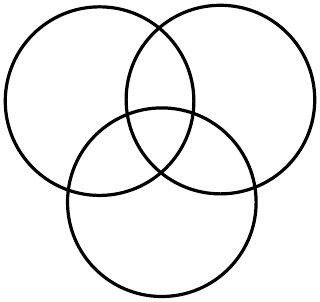
Question 33

Select the Venn diagram that best represents the relationship between the following classes.

Solar System, Venus, Moon

  1. AOption (a)

  2. BOption (b)

  3. COption (c)

  4. DOption (d)

View answer & explanation

Correct answer

Answer: (a)A.

Why this answer is correct

Given words: Solar System, Venus, Moon

Solar System is the broadest category, which contains everything within it, including planets like Venus and celestial bodies like the Moon.

The best possible Venn diagram:

Hence, the correct answer is "Option 1".

Question 34

'Ugadi' is a festival celebrated in the Indian state of:

  1. AOption (a)

    Goa

  2. BOption (b)

    Haryana

  3. COption (c)

    Andhra Pradesh

  4. DOption (d)

    Assam

View answer & explanation

Correct answer

Answer: (c)C.

Andhra Pradesh

Why this answer is correct

The correct answer is Andhra Pradesh.

Key Points

  • Ugadi marks the beginning of a new year according to the Hindu lunisolar calendar, primarily observed in the states of Andhra Pradesh, Telangana, and Karnataka.
  • The festival typically falls in March or April and is celebrated with great enthusiasm and traditional rituals.
  • Ugadi is derived from the Sanskrit words "Yuga" (age) and "Adi" (beginning), signifying the start of a new age.
  • The celebrations include a special dish called "Ugadi Pachadi," which is a mixture of six tastes symbolizing different experiences of life.

Additional Information

  • Ugadi Pachadi:
  • It is a special preparation made on Ugadi consisting of six different tastes: sweet, sour, salty, bitter, pungent, and astringent.
  • Each taste represents different experiences of life: sweetness (happiness), sourness (disgust), saltiness (fear), bitterness (sadness), pungency (anger), and astringency (surprise).
  • Hindu lunisolar calendar:
  • This calendar is a combination of both lunar and solar calendars, used in Hinduism to determine the dates of various festivals and rituals.
  • Months in this calendar are based on the phases of the moon, while years are aligned with the solar cycle.
  • Other regional new year festivals:
  • Gudi Padwa in Maharashtra, which coincides with Ugadi and marks the new year for Marathi Hindus.
  • Puthandu in Tamil Nadu, celebrated as the Tamil New Year.
  • Baisakhi in Punjab, celebrated as the harvest festival and the Sikh New Year.
  • Vishu in Kerala, marking the beginning of the new year in the Malayalam calendar.

Question 35

The Chauri-Chaura incident during Non Cooperation Movement occurred in which district of Uttar Pradesh?

  1. AOption (a)

    Goarkhpur

  2. BOption (b)

    Allahabad

  3. COption (c)

    Kanpur

  4. DOption (d)

    Varanasi

View answer & explanation

Correct answer

Answer: (a)A.

Goarkhpur

Why this answer is correct

The correct answer is Goarkhpur.

Key Points

  • The Chauri-Chaura incident occurred on February 4, 1922.
  • The incident took place in the town of Chauri-Chaura in the Gorakhpur district of the United Provinces (modern Uttar Pradesh) in British India.
  • This event was a turning point in India's struggle for independence, leading to Mahatma Gandhi calling off the Non-Cooperation Movement.
  • The violence erupted when a group of protestors clashed with the police, resulting in the deaths of three civilians and 22 policemen.

Additional Information

  • Non-Cooperation Movement
  • It was a significant phase of the Indian independence movement from British rule.
  • It was led by Mahatma Gandhi after the Jallianwala Bagh Massacre, which occurred on April 13, 1919.
  • The movement aimed to resist British rule in India through non-violent means, or "Ahimsa".
  • It involved the surrender of titles and honors, boycott of government educational institutions, courts, services, foreign goods, and the promotion of Swadeshi goods.
  • Chauri-Chaura Incident
  • This incident is named after the place where it happened, Chauri-Chaura, in the Gorakhpur district.
  • The incident occurred when a large group of protesters participating in the Non-Cooperation Movement clashed with the police, who opened fire.
  • In retaliation, the demonstrators attacked and set fire to a police station, killing all 22 policemen inside.
  • This act of violence led Mahatma Gandhi to halt the Non-Cooperation Movement, emphasizing his commitment to non-violence.
  • Impact of the Chauri-Chaura Incident
  • The incident marked a significant shift in the Indian independence struggle.
  • Gandhi realized that the movement was turning violent and that the Indian masses were not ready for non-violent struggle.
  • As a result, he called off the Non-Cooperation Movement on February 12, 1922, and emphasized the need for non-violent resistance.
  • This decision was controversial and faced criticism from several Congress leaders, but it also reinforced Gandhi's philosophy of non-violence.

Question 36

The 1943 Karachi session of Muslim League adopted the slogan:

  1. AOption (a)

    Jai Jawaan Jai Kisaan

  2. BOption (b)

    Karo ya Maro

  3. COption (c)

    Divide and Quit

  4. DOption (d)

    Divide and Rule

View answer & explanation

Correct answer

Answer: (c)C.

Divide and Quit

Why this answer is correct

The correct answer is Divide and Quit.

Key Points

  • The slogan "Divide and Quit" was adopted by the All India Muslim League during its 1943 Karachi session.
  • This slogan was a significant part of the League's demand for a separate nation for Muslims, leading to the creation of Pakistan.
  • The session was held under the leadership of Muhammad Ali Jinnah, who played a crucial role in the Pakistan movement.
  • This slogan highlighted the growing demand for British withdrawal from India and the division of the country based on religious lines.

Additional Information

  • All India Muslim League
  • Founded in 1906, the All India Muslim League was a political party in British India that played a crucial role in the creation of Pakistan.
  • Its primary objective was to advocate for the rights of Muslims in India and to safeguard their interests.
  • The party's demand for a separate Muslim state eventually led to the partition of India in 1947.
  • Muhammad Ali Jinnah
  • Muhammad Ali Jinnah was a prominent leader of the All India Muslim League and is considered the founder of Pakistan.
  • He served as the leader of the League from 1913 until Pakistan's independence in 1947.
  • Jinnah's leadership and vision were instrumental in the formation of Pakistan as a separate nation for Muslims.
  • 1943 Karachi Session
  • The 1943 Karachi session of the All India Muslim League was a significant event in the history of the Pakistan movement.
  • During this session, the League adopted the "Divide and Quit" slogan, emphasizing the demand for a separate Muslim state.
  • This session further solidified the League's stance on the partition of India and the creation of Pakistan.
  • Partition of India
  • The partition of India in 1947 led to the creation of two independent nations, India and Pakistan.
  • The partition was based on religious lines, with Pakistan being created as a Muslim-majority country.
  • This event resulted in significant migration, violence, and upheaval, impacting millions of lives.

Question 37

A shop keeper sold an electric blender at a loss of 3123\frac{1}{2}%. Had he sold it for Rs.172.5 more, he would have gained 8%. To gain 13%, he should sell it for:

  1. AOption (a)

    Rs.1,695

  2. BOption (b)

    Rs.1,680

  3. COption (c)

    Rs.1,595

  4. DOption (d)

    Rs.1,550

View answer & explanation

Correct answer

Answer: (a)A.

Rs.1,695

Why this answer is correct

Given:

Loss percentage when sold = 31/2%

Additional amount to gain 8% profit = Rs. 172.5

Formula Used:

Selling Price = Cost Price × (1 ± Profit/Loss %)

Calculation:

Let the Cost Price (CP) be Rs. x.

Loss of 31/2% means Selling Price (SP1) = x × (1 - 3.5/100)

SP1 = x × (1 - 0.035)

SP1 = 0.965x

If sold for Rs. 172.5 more, there would be an 8% gain:

SP2 = CP × (1 + 8/100)

SP2 = x × 1.08

Given:

SP2 = SP1 + 172.5

x × 1.08 = 0.965x + 172.5

⇒ 1.08x - 0.965x = 172.5

⇒ 0.115x = 172.5

⇒ x = 172.5 / 0.115

⇒ x = 1500

To gain 13%, the Selling Price (SP3) should be:

SP3 = CP × (1 + 13/100)

SP3 = 1500 × 1.13

SP3 = 1695

To gain 13%, he should sell it for Rs. 1695.

Question 38

If α + β + γ = 0, then α2βγ\frac{{\alpha {^2}}}{{\beta \gamma }} + β2γα\frac{{\beta {^2}}}{{\gamma \alpha }} + γ2αβ\frac{{\gamma {^2}}}{{\alpha \beta }} = ?

  1. AOption (a)

    1

  2. BOption (b)

    3

  3. COption (c)

    4

  4. DOption (d)

    2

View answer & explanation

Correct answer

Answer: (b)B.

3

Why this answer is correct

Given:

α + β + γ = 0

We need to find the value of (α² / βγ) + (β² / γα) + (γ² / αβ).

Calculation:

Step 1: Start with the given equation, α + β + γ = 0.

⇒ γ = -(α + β)

Step 2: Substitute γ = -(α + β) into the expression we need to solve:

(α² / βγ) + (β² / γα) + (γ² / αβ)

Step 3: Simplify each term using γ = -(α + β):

(α² / β(-(α + β))) + (β² / (-(α + β)α)) + ([-(α + β)]² / αβ)

Step 1: Simplify each term

  1. First term: (α² / β(-(α + β))) becomes:

⇒ -(α² / β(α + β))

  1. Second term: (β² / (-(α + β)α)) becomes:

⇒ -(β² / α(α + β))

  1. Third term: ([-(α + β)]² / αβ) becomes:

⇒ (α + β)² / αβ

Step 2: Combine the terms

⇒ -(α² / β(α + β)) - (β² / α(α + β)) + ((α + β)² / αβ)

Step 3: Take the common denominator

⇒ -(α³ / αβ(α + β)) - (β³ / αβ(α + β)) + ((α + β)² / αβ)

Step 4: Add the terms

⇒ -(α³ + β³) / αβ(α + β) + ((α + β)² / αβ)

Step 5: Simplify using the identity α³ + β³ = (α + β)((α + β)² - 3αβ)

⇒ -(α + β)((α + β)² - 3αβ) / αβ(α + β) + ((α + β)² / αβ)

Step 6: Cancel common terms

⇒ -((α + β)² - 3αβ) / αβ + ((α + β)² / αβ)

Step 7: Simplify the final expression

⇒ ((α + β)² - ((α + β)² - 3αβ)) / αβ

⇒ (3αβ / αβ) = 3

Therefore, the final answer is 3.

Question 39

At what rate of compound interest per annum will a sum of Rs.10,000 become Rs.11,025 in 2 years?

  1. AOption (a)

    4.5%

  2. BOption (b)

    4%

  3. COption (c)

    6%

  4. DOption (d)

    5%

View answer & explanation

Correct answer

Answer: (d)D.

5%

Why this answer is correct

Given:

Principal (P) = Rs.10,000

Amount (A) = Rs.11,025

Time (T) = 2 years

Formula Used:

Compound Interest Formula: A=P(1+rn)ntA = P \left(1 + \frac{r}{n}\right)^{nt}

Where,

A = Amount

P = Principal

r = Rate of interest

n = Number of times interest is compounded per year

t = Time period

Calculation:

Given n = 1 (compounded annually), we have:

A = P(1+r)TP \left(1 + r\right)^T

Substitute the values:

11,025=10,000(1+r)211,025 = 10,000 \left(1 + r\right)^2

Divide both sides by 10,000:

1.1025=(1+r)21.1025 = \left(1 + r\right)^2

Take the square root of both sides:

⇒ √{1.1025} = 1 + r

⇒ 1.05 = 1 + r

⇒ r = 1.05 - 1

⇒ r = 0.05

The rate of compound interest per annum is 0.05 or 5%.

The correct answer is option 4.

Question 40

The least perfect square number completely divisible by 4, 5, 9 and 12 is:

  1. AOption (a)

    3600

  2. BOption (b)

    2500

  3. COption (c)

    400

  4. DOption (d)

    900

View answer & explanation

Correct answer

Answer: (d)D.

900

Why this answer is correct

Given:

We need to find the least perfect square number completely divisible by 4, 5, 9, and 12.

Formula Used:

The least perfect square number divisible by a set of numbers is the square of the Least Common Multiple (LCM) of those numbers.

Calculation:

Prime factorization:

4 = 22

5 = 51

9 = 32

12 = 22 × 31

LCM = 22 × 32 × 51

LCM = 4 × 9 × 5

LCM = 180

To form a perfect square, each prime factor must have an even exponent.

In the LCM (180 = 22 × 32 × 51), we need to make the exponent of 5 even. So, we multiply by 5.

180 × 5 = 900

The least perfect square number completely divisible by 4, 5, 9, and 12 is 900.

Question 41

Which Indian city hosted the 8th Asian Youth Women Handball Championship from 21-30 August 2019?

  1. AOption (a)

    Guwahati

  2. BOption (b)

    Jaipur

  3. COption (c)

    New Delhi

  4. DOption (d)

    Lucknow

View answer & explanation

Correct answer

Answer: (b)B.

Jaipur

Why this answer is correct

The correct answer is Jaipur.

Key Points

  • The 8th Asian Youth Women Handball Championship was held in Jaipur, India from 21-30 August 2019.
  • This championship was significant as it served as a qualification tournament for the 2020 Women's Youth World Handball Championship.
  • Jaipur, known as the Pink City, was the host city for this prestigious handball event.
  • The event saw participation from various Asian countries, enhancing the city's reputation as a sports-friendly destination.

Additional Information

  • Asian Handball Federation (AHF)
  • The Asian Handball Federation (AHF) is the governing body of handball and beach handball in Asia.
  • It is responsible for organizing handball tournaments and promoting the sport across the continent.
  • The AHF works under the International Handball Federation (IHF) to ensure the standardization and growth of handball.
  • It organizes various championships like the Asian Men's and Women's Handball Championships, which serve as qualifiers for the World Championships.
  • Handball
  • Handball is a popular team sport in which two teams of seven players each (six outfield players and a goalkeeper) pass a ball using their hands with the aim of throwing it into the goal of the other team.
  • The game is played on a rectangular court with a goal at each end, and the team that scores more goals wins.
  • Handball is known for its fast pace and high scoring, making it an exciting sport to watch and play.
  • It is governed internationally by the International Handball Federation (IHF).
  • 2020 Women's Youth World Handball Championship
  • The Women's Youth World Handball Championship is an international handball competition organized by the International Handball Federation (IHF).
  • It is held biennially and is open to national teams with players under the age of 18.
  • The championship provides young female handball players with the opportunity to compete at the highest level and gain international experience.
  • The 2020 edition was particularly important as it allowed teams to showcase emerging talent and develop future stars of the sport.

Question 42

An additional margin added to a page layout to compensate for the part of the paper made unusable by the binding process is called:

  1. AOption (a)

    Wide margin 

  2. BOption (b)

    Gutter margin

  3. COption (c)

    Mirrored margin

  4. DOption (d)

    narrow margin

View answer & explanation

Correct answer

Answer: (b)B.

Gutter margin

Why this answer is correct

The correct answer is Gutter margin.

Key Points

  • A gutter margin is an additional margin added to a page layout to compensate for the part of the paper made unusable by the binding process.
  • It ensures that the text or images do not get lost in the binding area of the book or document.
  • Gutter margins are particularly important for double-sided documents where binding can obscure part of the content near the spine.
  • In most word processing software, you can set the gutter margin separately from the regular margins.

Additional Information

  • Wide Margin
  • A wide margin is simply a larger-than-normal margin on a page.
  • It is often used to allow more space for notes or comments in the margin.
  • Wide margins can make a document more readable by providing more white space around the text.
  • Mirrored Margin
  • Mirrored margins are used in documents that will be printed on both sides of the paper.
  • They ensure that the inner margins (next to the binding) are the same width on both left and right pages.
  • This type of margin layout is common in books and magazines.
  • Narrow Margin
  • A narrow margin is a smaller-than-normal margin on a page.
  • It allows more text to fit on each page, which can be useful for saving paper or reducing the length of a document.
  • However, narrow margins can make a document more difficult to read and less visually appealing.

Question 43

What is the mean deviation of eight observations?

6, 7, 10, 12, 13, 4, 8, 12

  1. AOption (a)

    2.75

  2. BOption (b)

    2.5

  3. COption (c)

    2

  4. DOption (d)

    2.25

View answer & explanation

Correct answer

Answer: (a)A.

2.75

Why this answer is correct

Given:

Observations: 6, 7, 10, 12, 13, 4, 8, 12

Formula Used:

Mean Deviation (MD) = (1/n) ∑ |xi - Mean|

Calculation:

Step 1: Calculate the Mean of the observations.

Mean (μ) = (6 + 7 + 10 + 12 + 13 + 4 + 8 + 12) / 8

⇒ Mean = 72 / 8

⇒ Mean = 9

Step 2: Calculate the absolute deviations from the mean.

|6 - 9| = 3

|7 - 9| = 2

|10 - 9| = 1

|12 - 9| = 3

|13 - 9| = 4

|4 - 9| = 5

|8 - 9| = 1

|12 - 9| = 3

Step 3: Calculate the sum of the absolute deviations.

Sum of absolute deviations = 3 + 2 + 1 + 3 + 4 + 5 + 1 + 3

⇒ Sum = 22

Step 4: Calculate the Mean Deviation.

Mean Deviation (MD) = 22 / 8

⇒ MD = 2.75

The mean deviation of the eight observations is 2.75.

The correct answer is option 1.

Question 44

The two sides of a triangle measure 10 cm and 8 cm respectively. The area of the triangle is equal to 16616\sqrt 6  cm2. Find the length of the third side, given that it is a rational number.

  1. AOption (a)

    14 cm

  2. BOption (b)

    12 cm

  3. COption (c)

    16 cm

  4. DOption (d)

    10 cm

View answer & explanation

Correct answer

Answer: (a)A.

14 cm

Why this answer is correct

Given:

The two sides of a triangle measure 10 cm and 8 cm respectively.

The area of the triangle is equal to 16√6 cm2.

The third side is a rational number.

Formula Used:

Using Heron's formula for the area of a triangle:

Area = √s(s−a)(s−b)(s−c)√{s(s-a)(s-b)(s-c)}

where s = a+b+c2\frac{a + b + c}{2}

Calculation:

Let the third side be c cm.

s = 10+8+c2\frac{10 + 8 + c}{2}

Area = 16√6 cm2

Using Heron's formula:

16√6 = √(18+c)(18+c−20)(18+c−16)(18+c−c)16√{\frac{(18 + c)(18 + c - 20)(18 + c - 16)(18 + c - c)}{16}}

16√6 = √(18+c)(c−2)(c+2)(18−c)16√{\frac{(18 + c)(c - 2)(c + 2)(18 - c)}{16}}

Square both sides:

(16√6)2 = (s)(s - 10)(s - 8)(s - c)

⇒ 256 × 6 = (18 + c)(c - 2)(c + 2)(18 - c)

⇒ 1536 × 16 = (182 - c2)(c2 - 4)

⇒ 24576 = (324 - c2)(c2 - 4)

⇒ c4 - 328c2 + 15872 = 0

Assuming c2 = x:

⇒ x2 - 328x + 15872 = 0

Solving the quadratic equation:

x = 196, and x = 59

Since x = c2:

c2 = 196 ⇒ c = 14 or c2 = √59 (irrational number)

c = 14 cm

The correct answer is option 1: 14 cm

Question 45

A sum of Rs.12,400 amounts to Rs.14,632 in 3 years at a rate of simple interest. What is the rate of interest per annum?

  1. AOption (a)

    5%

  2. BOption (b)

    6%

  3. COption (c)

    3%

  4. DOption (d)

    4%

View answer & explanation

Correct answer

Answer: (b)B.

6%

Why this answer is correct

Given:

Principal (P) = Rs.12,400

Amount (A) = Rs.14,632

Time (T) = 3 years

Formula Used:

Simple Interest (SI) = A - P

SI = (P × R × T) / 100

Calculation:

Simple Interest (SI) = 14,632 - 12,400

SI = 2,232

Using SI formula:

2,232 = (12,400 × R × 3) / 100

2,232 = 37,200R / 100

⇒ 2,232 = 372R

⇒ R = 2,232 / 372

⇒ R = 6%

The rate of interest per annum is 6%.

Question 46

A/an ______ is required for booting a computer.

  1. AOption (a)

    Operating system

  2. BOption (b)

    Assembler

  3. COption (c)

    Compiler

  4. DOption (d)

    Translator

View answer & explanation

Correct answer

Answer: (a)A.

Operating system

Why this answer is correct

The correct answer is Operating system.

Key Points

  • An operating system (OS) is a software that acts as an intermediary between computer hardware and the computer user.
  • The primary purpose of an OS is to manage computer resources and provide an environment for the execution of programs.
  • Without an operating system, a computer cannot function as it controls hardware components and enables the execution of application software.
  • Examples of popular operating systems include Windows, macOS, Linux, and Unix.

Additional Information

  • Assembler
  • An assembler is a program that converts assembly language into machine code.
  • Assembly language is a low-level programming language that is one step above machine language.
  • Assemblers are primarily used in embedded systems and software development for performance-critical applications.
  • Compiler
  • A compiler is a program that translates code written in a high-level programming language into machine language.
  • Compilers are used to convert source code into executable programs.
  • Examples of programming languages that use compilers include C, C++, and Java.
  • Translator
  • A translator is a generic term used to describe any program that converts code from one programming language to another.
  • This can include assemblers, compilers, and interpreters.
  • Translators are essential for enabling compatibility between different programming environments.

Question 47

If '×' is interchanged with '÷' and '6' is interchanged with '9', then which of the following equations will be correct?

  1. AOption (a)

    96 × 3 ÷ 25 = 576

  2. BOption (b)

    96 × 3 ÷ 69 = 2207

  3. COption (c)

    69 × 9 ÷ 46 = 736

  4. DOption (d)

    69 × 12 ÷ 96 = 552

View answer & explanation

Correct answer

Answer: (d)D.

69 × 12 ÷ 96 = 552

Why this answer is correct

I. 96 × 3 ÷ 25 = 576

If '×' is interchanged with '÷' and '6' is interchanged with '9', we get:

⇒ 69 ÷ 3 × 25 = 579

⇒ 23 × 25 = 579

⇒ 575 = 579

II. 96 × 3 ÷ 69 = 2207

If '×' is interchanged with '÷' and '6' is interchanged with '9', we get:

⇒ 69 ÷ 3 × 96 = 2207

⇒ 23 × 96 = 2207

⇒ 2208 = 2207

III. 69 × 9 ÷ 46 = 736

If '×' is interchanged with '÷' and '6' is interchanged with '9', we get:

⇒ 96 ÷ 6 × 49 = 739

⇒ 16 × 49 = 739

⇒ 784 = 739

IV. 69 × 12 ÷ 96 = 552

If '×' is interchanged with '÷' and '6' is interchanged with '9', we get:

⇒ 96 ÷ 12 × 69 = 552

⇒ 8 × 69 = 552

⇒ 552 = 552

Hence, the correct answer is "69 × 12 ÷ 96 = 552".

Question 48

If today (23/02/2012) is Thursday, then what day will it be after 91 days?

  1. AOption (a)

    Thursday

  2. BOption (b)

    Tuesday

  3. COption (c)

    Friday

  4. DOption (d)

    Wednesday

View answer & explanation

Correct answer

Answer: (a)A.

Thursday

Why this answer is correct

Given:

Today, it is Thursday. We have to find the day after 91 days.

First we will find number of odd days in these 91 days.

91 ÷ 7 = 0 (Remainder)

This means 91 days is exactly 13 full weeks, with no extra days remaining.

Thus, the day after 91 days will be: Thursday + 0 = Thursday.

Today (23/02/2012) is Thursday, so after 91 days, it will also be Thursday.

Hence, the correct answer is "Thursday".

Question 49

Which of the following options has the fractions in ascending order?

  1. AOption (a)

    911,67,56,25,38\frac{9}{{11}},\frac{6}{7},\frac{5}{6},\frac{2}{5},\frac{3}{8}

  2. BOption (b)

    38,25,911,56,67\frac{3}{8},\frac{2}{5},\frac{9}{{11}},\frac{5}{6},\frac{6}{7}

  3. COption (c)

    25,67,911,38,56\frac{2}{5},\frac{6}{7},\frac{9}{{11}},\frac{3}{8},\frac{5}{6}

  4. DOption (d)

    67,56,911,25,38\frac{6}{7},\frac{5}{6},\frac{9}{{11}},\frac{2}{5},\frac{3}{8}

View answer & explanation

Correct answer

Answer: (b)B.

38,25,911,56,67\frac{3}{8},\frac{2}{5},\frac{9}{{11}},\frac{5}{6},\frac{6}{7}

Why this answer is correct

Given:

Fractions to be arranged: (9/11), (6/7), (5/6), (2/5), (3/8)

Formula Used:

Convert each fraction to its decimal form.

Calculation:

(9/11) ⇒ 9 ÷ 11 = 0.8181

(6/7) ⇒ 6 ÷ 7 = 0.8571

(5/6) ⇒ 5 ÷ 6 = 0.8333

(2/5) ⇒ 2 ÷ 5 = 0.4

(3/8) ⇒ 3 ÷ 8 = 0.375

Decimals in ascending order: 0.375, 0.4, 0.8181, 0.8333, 0.8571

Convert back to fractions: (3/8), (2/5), (9/11), (5/6), (6/7)

The correct answer is option 2.

Question 50

The largest salt desert of the world is:

  1. AOption (a)

    Sahara desert

  2. BOption (b)

    Negev desert

  3. COption (c)

    Thar desert

  4. DOption (d)

    Salar de Uyuni

View answer & explanation

Correct answer

Answer: (d)D.

Salar de Uyuni

Why this answer is correct

The correct answer is Salar de Uyuni.

Key Points

  • Salar de Uyuni is the world's largest salt flat, spanning over 10,582 square kilometers (4,086 square miles).
  • Located in the Daniel Campos Province in Potosí, southwest Bolivia, near the crest of the Andes, it is at an elevation of 3,656 meters (11,995 feet) above sea level.
  • The salt flat was formed as a result of transformations between several prehistoric lakes. It is covered by a few meters of salt crust, which has extraordinary flatness with the average altitude variations within one meter over the entire area of the Salar.
  • Salar de Uyuni contains a large amount of lithium, which is crucial for the production of batteries for electric vehicles and other technologies.

Additional Information

  • Sahara Desert
  • The Sahara is the largest hot desert in the world and the third largest desert overall after Antarctica and the Arctic.
  • It covers most of North Africa, making it nearly as large as the United States.
  • The Sahara Desert has a variety of land features, including sand dunes, mountains, and plateaus.
  • Despite its harsh conditions, the Sahara is home to a number of plants and animals adapted to the desert environment.
  • Negev Desert
  • The Negev Desert is located in southern Israel, covering more than half of Israel's land area.
  • It is characterized by its arid climate and unique geological formations, including craters, canyons, and cliffs.
  • The Negev is sparsely populated, with its largest city being Beersheba.
  • Efforts have been made to develop the Negev for agricultural and technological purposes, including the establishment of research institutions and solar energy projects.
  • Thar Desert
  • The Thar Desert, also known as the Great Indian Desert, is located in the northwestern part of the Indian subcontinent.
  • It spans an area of approximately 200,000 square kilometers (77,000 square miles), primarily in the Indian state of Rajasthan.
  • The Thar Desert is characterized by its sandy terrain, dunes, and sparse vegetation.
  • Despite its arid conditions, the Thar Desert is home to a diverse range of wildlife and has a rich cultural heritage with numerous historic sites and traditional settlements.

Question 51

The least number, which when divided by 18, 30, 40 and 45 leaves in each case a remainder of 7, is:

  1. AOption (a)

    360

  2. BOption (b)

    367

  3. COption (c)

    361

  4. DOption (d)

    353

View answer & explanation

Correct answer

Answer: (b)B.

367

Why this answer is correct

Given:

We need the least number which, when divided by 18, 30, 40, and 45, leaves a remainder of 7 in each case.

Formula Used:

Required Number = LCM of given numbers + Remainder

Calculation:

  1. Find the LCM of 18, 30, 40, and 45.

Prime factorization:

18 = 2 × 32

30 = 2 × 3 × 5

40 = 23 × 5

45 = 32 × 5

LCM = 23 × 32 × 5

⇒ LCM = 8 × 9 × 5

⇒ LCM = 360

  1. Required number = LCM + Remainder

⇒ Required number = 360 + 7

⇒ Required number = 367

The least number which when divided by 18, 30, 40, and 45 leaves a remainder of 7 is 367.

Question 52

The maximum length of a stick that can be kept in a rectangular box of dimensions 15 cm × 8 cm × 6 cm is:

  1. AOption (a)

    5265\sqrt {26}  cm

  2. BOption (b)

    5135\sqrt {13}  cm

  3. COption (c)

    101310\sqrt {13}  cm

  4. DOption (d)

    5145\sqrt {14}  cm

View answer & explanation

Correct answer

Answer: (b)B.

5135\sqrt {13}  cm

Why this answer is correct

Given:

Dimensions of the rectangular box: 15 cm × 8 cm × 6 cm

Formula Used:

The maximum length of a stick that can be kept in a rectangular box (diagonal of the box) can be found using the formula:

Diagonal = l2+w2+h2\sqrt{l^2 + w^2 + h^2}

Calculation:

Let l = 15 cm, w = 8 cm, and h = 6 cm

Diagonal = 152+82+62\sqrt{15^2 + 8^2 + 6^2}

⇒ Diagonal = 225+64+36\sqrt{225 + 64 + 36}

⇒ Diagonal = 325\sqrt{325}

⇒ Diagonal = 25×13\sqrt{25 \times 13}

⇒ Diagonal = 5135\sqrt{13} cm

The maximum length of a stick that can be kept in the rectangular box is 5135\sqrt{13} cm.

Question 53

A number, when 42 is subtracted from it, reduces to its 70%. What is two-fifth of that number?

  1. AOption (a)

    84

  2. BOption (b)

    140

  3. COption (c)

    100

  4. DOption (d)

    56

View answer & explanation

Correct answer

Answer: (d)D.

56

Why this answer is correct

Given:

A number, when 42 is subtracted from it, reduces to its 70%.

Formula Used:

Let the number be x .

According to the given condition:

x - 42 = 0.7x

Solve for x .

Then find two-fifth of x :

25 of x=25x\frac{2}{5}\ of\ x = \frac{2}{5}x

Calculation:

Given equation:

x - 42 = 0.7x

Solve for x :

⇒ x - 0.7x = 42

⇒ 0.3x = 42

⇒ x = 420.3\frac{42}{0.3}

⇒ x = 140

Now, find two-fifth of x :

⇒ 25×140\frac{2}{5} \times 140

⇒ 56

The correct answer is option 4: 56.

Question 54

The provision of a quasi-federal form of government for India was adopted from:

  1. AOption (a)

    Ireland

  2. BOption (b)

    Russia

  3. COption (c)

    Canada

  4. DOption (d)

    Britain

View answer & explanation

Correct answer

Answer: (c)C.

Canada

Why this answer is correct

The correct answer is Canada.

Key Points

  • The quasi-federal form of government in India is inspired by the Canadian model which also features a federal structure with a strong central government.
  • Under this system, powers and responsibilities are divided between the central and state governments, but the central government holds more power in certain areas.
  • The Indian Constitution has adopted several features from the Canadian Constitution, such as the concept of a strong central authority and the division of powers.
  • Canada's system also allows for residuary powers to be vested in the central government, a feature that India has adopted to ensure the central government can legislate on unforeseen issues.

Additional Information

  • Quasi-federal System
  • A quasi-federal system is a type of government that combines elements of both federal and unitary governments.
  • In a quasi-federal system, the central government is stronger than the state governments, and it has the power to intervene in state matters under certain circumstances.
  • The term "quasi-federal" indicates that while the system has federal features, it does not strictly adhere to the principles of federalism.
  • India is often described as quasi-federal because its Constitution provides for a strong central government with significant control over the states.
  • Federal System
  • In a federal system of government, powers and responsibilities are divided between a central government and regional governments (states or provinces).
  • This division is usually enshrined in a constitution, ensuring that each level of government has its own set of powers and functions.
  • Examples of countries with a federal system include the United States, Canada, and Australia.
  • Federal systems are designed to allow regional governments to address local issues while the central government handles national matters.
  • Unitary System
  • In a unitary system of government, all powers are concentrated in a central authority, and regional governments, if they exist, operate under the control and direction of the central government.
  • Unitary systems are characterized by a strong central government with the ability to create or abolish regional governments.
  • Examples of countries with a unitary system include the United Kingdom, France, and Japan.
  • This system is often preferred for its simplicity and the ability to implement uniform policies across the entire nation.
  • Residuary Powers
  • Residuary powers refer to the authority to legislate on matters not explicitly mentioned in the constitution.
  • In India, residuary powers are vested in the central government, allowing it to legislate on subjects not listed in the Union, State, or Concurrent Lists.
  • This provision ensures that the central government can address new and unforeseen issues that arise over time.
  • The concept of residuary powers is borrowed from the Canadian Constitution, where similar provisions exist.

Question 55

What is the dimension of the Rs. 2,000 bank note?

  1. AOption (a)

    60 mm × 180 mm

  2. BOption (b)

    66 mm × 146 mm

  3. COption (c)

    66 mm × 166 mm

  4. DOption (d)

    65 mm × 165 mm

View answer & explanation

Correct answer

Answer: (c)C.

66 mm × 166 mm

Why this answer is correct

The correct answer is 66 mm × 166 mm.

Key Points

  • The dimension of the Rs. 2,000 bank note is 66 mm × 166 mm, making it easy to handle and distinguish from other denominations.
  • The Rs. 2,000 note was introduced by the Reserve Bank of India (RBI) after the demonetization of Rs. 500 and Rs. 1,000 notes in November 2016.
  • It features a magenta base color with a motif of Mangalyaan on the reverse, symbolizing India's first interplanetary expedition, and Mahatma Gandhi's portrait on the front.
  • Security features include a latent image with the denomination numeral, micro letters 'RBI' and '2000', a color-shifting security thread, and intaglio printing of Mahatma Gandhi portrait, Ashoka Pillar emblem, and the raised identification mark for visually impaired individuals.

Additional Information

  • Reserve Bank of India (RBI)
  • The RBI is India's central bank, responsible for regulating the issue and supply of the Indian rupee.
  • It plays a crucial role in the Development Strategy of the Government of India, managing inflation, currency exchange rates, and ensuring monetary stability.
  • Established on April 1, 1935, under the Reserve Bank of India Act, 1934, it was nationalized in 1949.
  • The RBI's functions include monetary policy regulation, foreign exchange management, and overseeing the country's payment and settlement systems.
  • Demonetization
  • Demonetization refers to the act of stripping a currency unit of its status as legal tender.
  • In India, demonetization occurred on November 8, 2016, when the government invalidated Rs. 500 and Rs. 1,000 banknotes to combat black money, counterfeit currency, and corruption.
  • New Rs. 500 and Rs. 2,000 banknotes were introduced to replace the invalidated currency.
  • The move aimed to promote digital transactions and bring more of the informal economy into the formal sector.
  • Security Features of Indian Banknotes
  • Indian banknotes incorporate several security features to prevent counterfeiting.
  • These features include watermarks, security threads, latent images, micro-lettering, intaglio (raised) printing, and optically variable ink.
  • Other elements include see-through registers, fluorescence under UV light, and color-changing ink.
  • These features help authenticate banknotes and maintain trust in the currency.

Question 56

A man can completed a task in 7 days but with the help of his son, he can complete it in 4 days. In how many days can his son complete it alone?

  1. AOption (a)

    7237\frac{2}{3} days

  2. BOption (b)

    8138\frac{1}{3} days

  3. COption (c)

    6136\frac{1}{3} days

  4. DOption (d)

    9139\frac{1}{3} days

View answer & explanation

Correct answer

Answer: (d)D.

9139\frac{1}{3} days

Why this answer is correct

Given:

Time taken by the man to complete the task alone = 7 days

Time taken by the man and his son together to complete the task = 4 days

Formula Used:

Work done (W) = 1 (since they complete the task)

Work rate of man alone = 1/7 (tasks per day)

Work rate of man and son together = 1/4 (tasks per day)

Work rate of the son alone = Work rate of man and son together - Work rate of man alone

Time taken by the son to complete the task alone = 1 / (Work rate of the son alone)

Calculation:

Work rate of man alone = 1/7

Work rate of man and son together = 1/4

Work rate of the son alone = 1/4 - 1/7

Work rate of the son alone = 14−17 \frac{1}{4} - \frac{1}{7}

Work rate of the son alone = 7−428 \frac{7 - 4}{28}

Work rate of the son alone = 328 \frac{3}{28}

Time taken by the son to complete the task alone = 1 / (Work rate of the son alone)

Time taken by the son to complete the task alone = 1328 \frac{1}{\frac{3}{28}}

Time taken by the son to complete the task alone = 283 \frac{28}{3}

Time taken by the son to complete the task alone = 91/3 days

The correct answer is option 4, 91/3 days.

Question 57

The value of a car depreciates at the rate of 12% per annum. Its present value is Rs. 7,74,400. What was the value of the car 2 years ago?

  1. AOption (a)

    Rs. 10,00,000

  2. BOption (b)

    Rs. 9,99,999

  3. COption (c)

    Rs. 11,00,000

  4. DOption (d)

    Rs. 9,00,000

View answer & explanation

Correct answer

Answer: (a)A.

Rs. 10,00,000

Why this answer is correct

Given:

Depreciation rate = 12% per annum

Present value of the car = Rs. 7,74,400

Formula Used:

Value of the car after n years = P×(1−r100)nP \times (1 - \frac{r}{100})^n

Where:

P = Value of the car n years ago

r = Depreciation rate per annum

n = Number of years

Calculation:

Let the value of the car 2 years ago be P.

Depreciation rate (r) = 12%

Number of years (n) = 2

Present value = Rs. 7,74,400

Using the formula:

7,74,400 = P×(1−12100)2P \times (1 - \frac{12}{100})^2

7,74,400=P×(0.88)2 7,74,400 = P \times (0.88)^2

7,74,400=P×0.7744 7,74,400 = P \times 0.7744

⇒ P = 7,74,400 / 0.7744

⇒ P = 10,00,000

The value of the car 2 years ago was Rs. 10,00,000.

Question 58

When the positive integer K is divided by 18, the remainder is 9. What is the remainder when K is divided by 6?

  1. AOption (a)

    3

  2. BOption (b)

    2

  3. COption (c)

    1

  4. DOption (d)

    4

View answer & explanation

Correct answer

Answer: (a)A.

3

Why this answer is correct

Given:

When the positive integer K is divided by 18, the remainder is 9.

Formula Used:

Remainder when K is divided by a number = K mod (number)

Calculation:

Let K = 18m + 9, where m is an integer.

We need to find the remainder when K is divided by 6.

K = 18m + 9

⇒ K = 6(3m) + 9

⇒ K = 6(3m) + 6 + 3

⇒ K = 6(3m + 1) + 3

When K is divided by 6, the remainder is 3.

The correct answer is option 1.

Question 59

The _______ is responsible for the construction and maintenance of national highways.

  1. AOption (a)

    Central government

  2. BOption (b)

    State legislative assembly

  3. COption (c)

    Supreme court

  4. DOption (d)

    President of India

View answer & explanation

Correct answer

Answer: (a)A.

Central government

Why this answer is correct

The correct answer is Central government.

Key Points

  • The Central government is responsible for the construction and maintenance of national highways in India.
  • National highways are key routes for transportation, connecting major cities and facilitating interstate travel.
  • The Ministry of Road Transport and Highways (MoRTH) is the apex body under the Central government overseeing national highways.
  • National highways play a crucial role in the economic development of the country by enhancing the movement of goods and services.

Additional Information

  • National Highways Authority of India (NHAI)
  • NHAI is an autonomous agency of the Government of India, responsible for the management of a network of over 50,000 km of National Highways.
  • It was established by an act of Parliament, the National Highways Authority of India Act, 1988.
  • NHAI operates under the aegis of the Ministry of Road Transport and Highways.
  • Its mandate includes the development, maintenance, and management of national highways, ensuring safe and efficient travel.
  • Ministry of Road Transport and Highways (MoRTH)
  • The Ministry of Road Transport and Highways is a branch of the Government of India.
  • It is responsible for the formulation and administration of the rules, regulations, and laws relating to road transport, and the development and maintenance of national highways.
  • MoRTH oversees the implementation of policies and projects to improve the road infrastructure in the country.
  • It works in collaboration with state governments and other stakeholders to enhance road connectivity and safety.
  • National Highway Development Project (NHDP)
  • NHDP is a project initiated by the Government of India to upgrade, rehabilitate, and widen major highways in India to international standards.
  • The project is implemented by NHAI and focuses on improving the quality and capacity of national highways.
  • NHDP includes several phases, covering various regions and key corridors across the country.
  • It aims to boost economic growth by facilitating better transportation networks and reducing travel time.
  • Bharatmala Pariyojana
  • Bharatmala Pariyojana is a centrally-sponsored and funded road and highways project of the Government of India.
  • It aims to develop a robust road infrastructure by connecting economic corridors, border and international connectivity roads, coastal and port connectivity roads, and expressways.
  • The project seeks to optimize the efficiency of freight and passenger movement across the country.
  • Bharatmala Pariyojana is expected to bridge critical infrastructure gaps and enhance the overall connectivity within India.

Question 60

__________ was built by Edwin Lutyens in 1921.

  1. AOption (a)

    Golconda Fort

  2. BOption (b)

    Victoria Memorial

  3. COption (c)

    Gateway of India

  4. DOption (d)

    India Gate

View answer & explanation

Correct answer

Answer: (d)D.

India Gate

Why this answer is correct

The correct answer is India Gate.

Key Points

  • India Gate is a war memorial located in New Delhi, India.
  • It was designed by Sir Edwin Lutyens, a prominent British architect.
  • Construction of India Gate was completed in 1921.
  • The monument is dedicated to the 70,000 soldiers of the British Indian Army who died during World War I.

Additional Information

  • Edwin Lutyens
  • Sir Edwin Lutyens was a renowned British architect known for his imaginative and innovative designs.
  • He played a significant role in designing and constructing major buildings in New Delhi, including the Rashtrapati Bhavan (formerly Viceroy's House).
  • Lutyens' work in New Delhi is considered one of the great architectural achievements of the 20th century.
  • He was instrumental in the planning and development of the new capital of India during British rule.
  • India Gate
  • India Gate is an iconic landmark in India and one of the most visited tourist attractions in New Delhi.
  • It stands as a memorial to the soldiers who sacrificed their lives during World War I and the Third Anglo-Afghan War.
  • The structure is 42 meters tall and made of red and pale sandstone and granite.
  • Every year, on Republic Day (26th January), the Prime Minister of India pays homage to the fallen soldiers at India Gate.
  • Other Notable Works by Lutyens
  • Rashtrapati Bhavan: Official residence of the President of India, originally built as the Viceroy's House.
  • Parliament House: Another significant building designed by Lutyens, used as the seat of the Parliament of India.
  • Hyde Park Corner in London: Lutyens also designed the Cenotaph in London and several other notable structures in the UK.

Question 61

Shahtoosh wool, the lightest wool in the world, is obtained from:

  1. AOption (a)

    Sheep

  2. BOption (b)

    Llama

  3. COption (c)

    Tibetan Antelope

  4. DOption (d)

    Nilgai

View answer & explanation

Correct answer

Answer: (c)C.

Tibetan Antelope

Why this answer is correct

The correct answer is Tibetan Antelope.

Key Points

  • The Shahtoosh wool is derived from the underfur of the Tibetan Antelope (Pantholops hodgsonii), also known as Chiru.
  • This wool is renowned for being the lightest and finest natural fiber in the world, often referred to as "king of wools."
  • The Chiru is an endangered species, and the trade of Shahtoosh wool is illegal under the Convention on International Trade in Endangered Species (CITES).
  • Despite its luxurious quality, the high demand for Shahtoosh wool has led to the illegal poaching of Chiru, contributing to its decline in population.

Additional Information

  • Tibetan Antelope (Chiru):
  • The Tibetan Antelope, also known as Chiru, is native to the Tibetan Plateau and is highly adapted to the harsh climate of the region.
  • Chiru are known for their incredible speed and agility, which helps them evade predators in their natural habitat.
  • The Shahtoosh wool is obtained by killing the Chiru, as the wool cannot be sheared or collected without harming the animal.
  • Efforts are being made to protect the Chiru through conservation programs and stricter enforcement of wildlife protection laws.
  • Shahtoosh Wool:
  • Shahtoosh is a Persian word meaning "king of wools," highlighting its superior quality and luxurious feel.
  • This wool is highly sought after for making shawls and scarves, which are exceptionally lightweight and warm.
  • The fine texture of Shahtoosh wool allows it to be woven into extremely thin and delicate fabrics, often referred to as "ring shawls" because they can pass through a wedding ring.
  • The high value and demand for Shahtoosh wool have led to significant conservation challenges, as illegal poaching continues to threaten the survival of the Tibetan Antelope.
  • Conservation Efforts:
  • International and national efforts are in place to protect the Tibetan Antelope, including listing it under CITES Appendix I, which prohibits international trade.
  • In India, the Wildlife Protection Act, 1972, provides legal protection to the Chiru and bans the trade of Shahtoosh products.
  • Conservation organizations are working to raise awareness about the plight of the Chiru and promote alternatives to Shahtoosh wool.
  • Community-based conservation programs aim to involve local populations in the protection of the Tibetan Antelope and provide them with sustainable livelihoods that do not harm wildlife.

Question 62

How many cities/towns are proposed to be supported for development as 'solar cities' during the 11th Five Year Plan period?

  1. AOption (a)

    58

  2. BOption (b)

    60

  3. COption (c)

    61

  4. DOption (d)

    59

View answer & explanation

Correct answer

Answer: (b)B.

60

Why this answer is correct

The correct answer is 60.

Key Points

  • The Ministry of New and Renewable Energy (MNRE) in India has initiated the 'Development of Solar Cities' program.
  • The primary objective of this program is to motivate urban local bodies to adopt renewable energy technologies and energy efficiency measures.
  • During the 11th Five Year Plan, the government proposed to support the development of 60 cities/towns as 'solar cities'.
  • The program aims to reduce the projected demand for conventional energy by at least 10% over a five-year period through a combination of enhancing supply from renewable energy sources and energy efficiency measures.

Additional Information

  • 11th Five Year Plan (2007-2012)
  • The 11th Five Year Plan was India’s development roadmap for the period from 2007 to 2012.
  • It focused on rapid and inclusive growth, emphasizing social sector development and infrastructure.
  • Energy security, environmental sustainability, and the promotion of renewable energy were key components of this plan.
  • Solar Cities Program
  • The Solar Cities Program is a government initiative aimed at promoting the use of renewable energy, particularly solar energy, in urban areas.
  • It seeks to create model cities that demonstrate the benefits of integrating renewable energy and energy efficiency measures.
  • The program provides support for the preparation of a Master Plan, implementation of projects, and capacity building of urban local bodies.
  • Renewable Energy
  • Renewable energy is energy that is collected from renewable resources, which are naturally replenished on a human timescale, such as sunlight, wind, rain, tides, waves, and geothermal heat.
  • These sources of energy are considered more sustainable compared to fossil fuels, as they produce less pollution and greenhouse gas emissions.
  • India has been actively promoting the use of renewable energy to reduce its dependence on fossil fuels and to combat climate change.
  • Energy Efficiency
  • Energy efficiency refers to the use of less energy to perform the same task or produce the same outcome, thereby eliminating energy waste.
  • It is an important aspect of reducing overall energy consumption and minimizing environmental impact.
  • Energy efficiency measures include using energy-efficient appliances, improving insulation, and optimizing industrial processes.

Question 63

Which country is NOT member of the 'SAARC'?

  1. AOption (a)

    Pakistan

  2. BOption (b)

    India

  3. COption (c)

    Bhutan

  4. DOption (d)

    Iran

View answer & explanation

Correct answer

Answer: (d)D.

Iran

Why this answer is correct

The correct answer is Iran.

Key Points

  • Iran is NOT a member of the South Asian Association for Regional Cooperation (SAARC).
  • SAARC was established on 8 December 1985 in Dhaka, Bangladesh.
  • The founding members of SAARC are Bangladesh, Bhutan, India, Maldives, Nepal, Pakistan, and Sri Lanka.
  • Afghanistan became the 8th member of SAARC in April 2007.

Additional Information

  • SAARC:
  • The South Asian Association for Regional Cooperation (SAARC) is an organization of South Asian nations, established for promoting regional integration and cooperation.
  • Its secretariat is based in Kathmandu, Nepal.
  • The main objectives of SAARC are to promote the welfare of the people of South Asia, accelerate economic growth, and strengthen collective self-reliance among the countries.
  • SAARC also focuses on various other areas such as agriculture, rural development, science and technology, culture, health, population activities, and others.
  • Founding Members of SAARC:
  • Bangladesh: A country in South Asia, bordered by India, Myanmar, and the Bay of Bengal.
  • Bhutan: A landlocked country in South Asia located in the Eastern Himalayas, bordered by China and India.
  • India: A country in South Asia, bordered by Pakistan, China, Nepal, Bhutan, Bangladesh, and Myanmar.
  • Maldives: A tropical nation in the Indian Ocean composed of 26 ring-shaped atolls, which are made up of more than 1,000 coral islands.
  • Nepal: A landlocked country in South Asia, mainly in the Himalayas, bordered by China and India.
  • Pakistan: A country in South Asia, bordered by India, Afghanistan, Iran, and China.
  • Sri Lanka: An island country in South Asia, located in the Indian Ocean, southwest of the Bay of Bengal and southeast of the Arabian Sea.
  • Afghanistan:
  • Afghanistan is the 8th member of SAARC, having joined in April 2007.
  • It is a landlocked country located within South Asia and Central Asia, bordered by Pakistan, Iran, Turkmenistan, Uzbekistan, Tajikistan, and China.

Question 64

The quorum required in the Rajya Sabha is:

  1. AOption (a)

    125

  2. BOption (b)

    100

  3. COption (c)

    50

  4. DOption (d)

    25

View answer & explanation

Correct answer

Answer: (d)D.

25

Why this answer is correct

The correct answer is 25.

Key Points

  • The Rajya Sabha is the upper house of the Parliament of India.
  • A quorum is the minimum number of members required to be present for the proceedings of the house to be conducted.
  • For the Rajya Sabha, the quorum is 10% of the total number of members.
  • The total number of members in Rajya Sabha is 245, so the quorum is 25.

Additional Information

  • Rajya Sabha
  • The Rajya Sabha or Council of States is the upper house of the Parliament of India.
  • It represents the states and union territories of India.
  • Members of the Rajya Sabha are elected by the elected members of State Legislative Assemblies, and by the members of the Electoral college for Union Territories, using a single transferable vote system.
  • The Rajya Sabha can have a maximum of 250 members, of which 12 are nominated by the President of India for their contributions to art, literature, science, and social services.
  • The remaining members are elected from the states and union territories.
  • Quorum
  • The term "quorum" refers to the minimum number of members required to be present for a meeting to be legally valid and for the decisions taken to be binding.
  • In the context of the Rajya Sabha, the quorum is 10% of the total number of members of the house.
  • If the required quorum is not met, the meeting cannot proceed, and no official decisions or actions can be taken.
  • This rule ensures that decisions are made with adequate participation and representation of the members.
  • Parliament of India
  • The Parliament of India is the supreme legislative body of the Republic of India.
  • It consists of two houses: the Rajya Sabha (Council of States) and the Lok Sabha (House of the People).
  • The President of India is also an integral part of the Parliament.
  • The Parliament is responsible for making laws, approving budgets, and overseeing the executive branch of the government.
  • It plays a crucial role in the governance and democratic functioning of the country.

Question 65

Select the term that can replace the question mark (?) in the following series.

AB, EFG, KLMN, ?, CDEFGH

  1. AOption (a)

    STUVW

  2. BOption (b)

    PQRS

  3. COption (c)

    XYZAB

  4. DOption (d)

    OPQR

View answer & explanation

Correct answer

Answer: (a)A.

STUVW

Why this answer is correct

The logic followed here is:

Given series: AB, EFG, KLMN, ?, CDEFGH

Hence, the correct answer is "STUVW".

Question 66

Glucose has _________ carbon molecules.

  1. AOption (a)

    six

  2. BOption (b)

    ten

  3. COption (c)

    eight

  4. DOption (d)

    five

View answer & explanation

Correct answer

Answer: (a)A.

six

Why this answer is correct

The correct answer is six.

Key Points

  • Glucose is a simple sugar with the molecular formula C6H12O6.
  • It is a monosaccharide and one of the most important carbohydrates in biology.
  • In its open-chain form, glucose has six carbon atoms arranged in a straight chain.
  • Glucose is crucial for energy production in living organisms, being the primary source of energy for cells.

Additional Information

  • Carbohydrates:
  • Carbohydrates are organic molecules composed of carbon, hydrogen, and oxygen atoms, typically with a hydrogen:oxygen atom ratio of 2:1.
  • They are a major class of biomolecules and include sugars, starches, and cellulose.
  • Carbohydrates are essential for energy storage and supply, structural components in cells, and signaling.
  • Monosaccharides:
  • Monosaccharides are the simplest form of carbohydrates and are often referred to as simple sugars.
  • They cannot be hydrolyzed into simpler sugars and are the building blocks of more complex carbohydrates.
  • Common examples include glucose, fructose, and galactose.
  • Energy Production:
  • In living organisms, glucose undergoes glycolysis, a metabolic pathway that converts glucose into pyruvate, releasing energy in the form of ATP.
  • Glucose is also a key substrate for cellular respiration, which further oxidizes pyruvate to produce additional ATP.
  • In plants, glucose is produced during photosynthesis and serves as a primary source of energy and a metabolic intermediate.

Question 67

Which of the following countries is a member of OPEC (Organization of the Petroleum Exporting Countries)?

  1. AOption (a)

    Brazil

  2. BOption (b)

    India

  3. COption (c)

    The Democratic Republic of the Congo

  4. DOption (d)

    Japan

View answer & explanation

Correct answer

Answer: (c)C.

The Democratic Republic of the Congo

Why this answer is correct

The correct answer is The Democratic Republic of the Congo.

Key Points

  • The Democratic Republic of the Congo (DRC) became a member of OPEC on January 1, 2019.
  • OPEC stands for the Organization of the Petroleum Exporting Countries, which is an intergovernmental organization of 13 nations.
  • DRC is rich in natural resources, particularly minerals and oil, making it a significant player in the global petroleum market.
  • OPEC aims to coordinate and unify the petroleum policies of its member countries and ensure the stabilization of oil markets.

Additional Information

  • OPEC (Organization of the Petroleum Exporting Countries)
  • OPEC was founded on September 14, 1960, in Baghdad by the first five members (Iran, Iraq, Kuwait, Saudi Arabia, and Venezuela).
  • Its headquarters is located in Vienna, Austria.
  • OPEC's mission is to manage the supply of oil in an effort to set the price of oil on the world market, to avoid fluctuations that might affect the economies of both producing and purchasing countries.
  • As of 2023, OPEC has 13 member countries, including Algeria, Angola, Congo, Equatorial Guinea, Gabon, Iran, Iraq, Kuwait, Libya, Nigeria, Saudi Arabia, United Arab Emirates, and Venezuela.
  • Petroleum Exporting Countries
  • Countries that export significant quantities of petroleum are known as petroleum-exporting countries.
  • These countries have vast reserves of crude oil and their economies significantly depend on oil exports.
  • Petroleum exports play a crucial role in shaping global energy markets and influence global economic stability.
  • Global Oil Market
  • The global oil market is a complex and dynamic system that involves the production, distribution, and consumption of oil worldwide.
  • Prices in the global oil market are influenced by a variety of factors including geopolitical events, supply and demand dynamics, and decisions made by major oil-producing entities like OPEC.
  • Stability in the oil market is crucial for the economic health of both producing and consuming countries.
  • Oil Reserves
  • Oil reserves are quantities of crude oil that are economically feasible to extract using current technology.
  • Countries with large oil reserves have significant strategic and economic advantages.
  • Oil reserves are typically measured in barrels and are a critical factor in a country's energy security.

Question 68

If x=2+2x = 2 + \sqrt 2 , then what will be the value of x2 - 4x + 4 ?

  1. AOption (a)

    1

  2. BOption (b)

    4

  3. COption (c)

    0

  4. DOption (d)

    2

View answer & explanation

Correct answer

Answer: (d)D.

2

Why this answer is correct

Given:

x = 2 + √2

Formula Used:

Expression: x2 - 4x + 4

Calculation:

Substitute x = 2 + √2

x2−4x+4x^2 - 4x + 4

Calculate x2:

x2=(2+√2)2x^2 = (2 + √ 2)^2

=4+4√2+2= 4 + 4√ 2 + 2

=6+4√2= 6 + 4√ 2

Substitute x2 and 4x:

x2−4x+4=(6+4√2)−4(2+√2)+4x^2 - 4x + 4 = (6 + 4√ 2) - 4(2 + √ 2) + 4

Expand and simplify:

=6+4√2−8−4√2+4= 6 + 4√ 2 - 8 - 4√ 2 + 4

=6−8+4= 6 - 8 + 4

=2= 2

The value of x2 - 4x + 4 is 2.

Question 69

Select the set that of words that is best represented by the given Venn diagram.

  1. AOption (a)

    Village, City, Nation

  2. BOption (b)

    Colour, Red, Flower

  3. COption (c)

    Male, Female, Human Being

  4. DOption (d)

    Lawyers, Fathers, Urban

View answer & explanation

Correct answer

Answer: (d)D.

Lawyers, Fathers, Urban

Why this answer is correct

Given words: Lawyers, Fathers, Urban

The best represented by the given diagram:

Some lawyers could also be fathers.

Some lawyers might live in urban areas.

Some fathers could live in urban areas.

Hence, the correct answer is "Lawyers, Fathers, Urban".

Question 70

Who laid down the foundation stone of Delhi during Delhi Darbar 1911?

  1. AOption (a)

    Herbert Baker

  2. BOption (b)

    Lord Willingdon

  3. COption (c)

    Lord Irwin

  4. DOption (d)

    George V

View answer & explanation

Correct answer

Answer: (d)D.

George V

Why this answer is correct

The correct answer is George V.

Key Points

  • George V was the King of the United Kingdom and the British Dominions, and Emperor of India from 1910 to 1936.
  • He laid the foundation stone of New Delhi during the Delhi Durbar on 12 December 1911.
  • The Delhi Durbar, also known as the Imperial Durbar, was a mass assembly at Coronation Park, Delhi, to mark the succession of the Emperor or Empress of India.
  • The 1911 Delhi Durbar was the third and last Delhi Durbar, held to commemorate the coronation of George V and Queen Mary as Emperor and Empress of India.

Additional Information

  • Delhi Durbar
  • The Delhi Durbar was a ceremonial event held in Delhi, India, to mark the coronation of a British monarch as Emperor or Empress of India.
  • The first Durbar was held in 1877 to proclaim Queen Victoria as Empress of India, the second in 1903 for King Edward VII, and the third in 1911 for King George V.
  • The 1911 Durbar was unique as it was the only one attended by the sovereign, King George V, and Queen Mary.
  • During this event, George V announced the transfer of the capital of India from Calcutta to Delhi.
  • Foundation of New Delhi
  • The foundation stone of New Delhi was laid by Emperor George V on 12 December 1911 during the Delhi Durbar.
  • The city was designed by British architects Sir Edwin Lutyens and Sir Herbert Baker.
  • New Delhi was officially inaugurated as the capital of India in 1931.
  • The city is known for its wide roads, tree-lined avenues, and imposing government buildings, including the Rashtrapati Bhavan (President's House), Parliament House, and India Gate.
  • George V
  • George V was born on 3 June 1865 and became King of the United Kingdom and Emperor of India in 1910.
  • He reigned during a period of significant change, including World War I and the formation of the Irish Free State.
  • He was the only British monarch to visit India while holding the title of Emperor of India.
  • George V died on 20 January 1936 and was succeeded by his son, Edward VIII.

Question 71

The top of a 12 m high tower makes an angle of depression of 60° with the bottom of an electric pole and angle of depression of 30° with the top of the pole. What is the height of the electric pole?

  1. AOption (a)

    8 m

  2. BOption (b)

    9 m

  3. COption (c)

    10 m

  4. DOption (d)

    11 m

View answer & explanation

Correct answer

Answer: (a)A.

8 m

Why this answer is correct

Given:

Height of the tower = 12 m

Angle of depression to the bottom of the pole = 60º

Angle of depression to the top of the pole = 30º

Formula Used:

Let the height of the electric pole be h meters.

Using trigonometric ratios in right-angled triangles:

tan⁡(θ)=oppositeadjacent\tan(\theta) = \frac{\text{opposite}}{\text{adjacent}}

Calculation:

Let the distance between the tower and the pole be x meters.

For the angle of depression to the bottom of the pole (60º):

tan⁡(60º)=12x\tan(60º) = \frac{12}{x}

√3=12x√{3} = \frac{12}{x}

⇒ x = 4√3 

For the angle of depression to the top of the pole (30º):

tan⁡(30º)=12−hx\tan(30º) = \frac{12 - h}{x}

1√3=12−h4√3\frac{1}{√{3}} = \frac{12 - h}{4√{3}}

⇒ 1=12−h41 = \frac{12 - h}{4}

⇒ 12 - h = 4

⇒ h = 8 m

The height of the electric pole is 8 meters.

Question 72

The Suez Canal, which is very significant for commerce, was constructed in which of the following countries?

  1. AOption (a)

    Brazil

  2. BOption (b)

    Egypt

  3. COption (c)

    Argentina

  4. DOption (d)

    Oman

View answer & explanation

Correct answer

Answer: (b)B.

Egypt

Why this answer is correct

The correct answer is Egypt.

Key Points

  • The Suez Canal is located in Egypt, connecting the Mediterranean Sea to the Red Sea.
  • It is one of the world's most significant waterways, facilitating maritime trade between Europe and Asia.
  • The canal was officially opened on November 17, 1869, after ten years of construction.
  • The Suez Canal greatly reduces the maritime journey between Europe and South Asia by avoiding the lengthy route around the southern tip of Africa.

Additional Information

  • Suez Canal:
  • The Suez Canal is an artificial sea-level waterway in Egypt, connecting the Mediterranean Sea to the Red Sea through the Isthmus of Suez.
  • The canal allows ships to travel between Europe and South Asia without navigating around Africa, significantly reducing the maritime distance.
  • The Suez Canal Authority (SCA) is the Egyptian state-owned authority that owns, operates, and maintains the Suez Canal.
  • The canal is a crucial artery for global trade, with approximately 12% of the world's trade passing through it.
  • Geopolitical Importance:
  • The canal plays a vital role in global trade and has significant geopolitical importance due to its strategic location.
  • Control over the Suez Canal has historically been a focal point of international disputes and conflicts.
  • The nationalization of the Suez Canal in 1956 by Egyptian President Gamal Abdel Nasser led to the Suez Crisis, involving the UK, France, and Israel.
  • Economic Impact:
  • Revenue generated from the Suez Canal is a significant source of income for Egypt.
  • The canal has undergone expansions and upgrades to accommodate larger vessels and increase its capacity.
  • In 2015, the New Suez Canal expansion project was completed, allowing for two-way traffic and reducing transit time.
  • Technical Details:
  • The Suez Canal is approximately 193.3 km (120 miles) long.
  • It has a minimum width of 205 meters (673 feet) and a depth of about 24 meters (79 feet).
  • The canal can accommodate ships with a maximum draft of 20.1 meters (66 feet).
  • The transit time for ships passing through the canal is generally between 11 and 16 hours.

Question 73

Read the given statements and conclusions carefully. Assuming that the information given in the statements is true, even if it appears to be at variance with commonly known facts, decide which of the given conclusions logically follow(s) from the statements.

Statements:

  1. All soldiers have a rifle.
  2. Aayush is a soldier.

Conclusions:

I. Aayush has a rifle.

II. People other than soldiers do not have rifles.

  1. AOption (a)

    Neither conclusions I nor II follows.

  2. BOption (b)

    Both conclusions I and II follow.

  3. COption (c)

    Only conclusion I follows.

  4. DOption (d)

    Only conclusion II follows.

View answer & explanation

Correct answer

Answer: (c)C.

Only conclusion I follows.

Why this answer is correct

Given,

Statements:

  1. All soldiers have a rifle.
  2. Aayush is a soldier.

Conclusions:

I. Aayush has a rifle - True (Because, if all soldiers have a rifle and Aayush is a soldier, it logically follows that Aayush has a rifle).

II. People other than soldiers do not have rifles - False (Because, the statement does not provide any information about whether people other than soldiers have rifles or not).

So, Only conclusion I follows.

Hence, the correct answer is "Option 3".

Question 74

Which among the following represents the Lens formula?

  1. AOption (a)

    1v+1f=1u\frac{1}{v} + \frac{1}{f} = \frac{1}{u}

  2. BOption (b)

    1v−1u=1f\frac{1}{v} - \frac{1}{u} = \frac{1}{f}

  3. COption (c)

    1h+1v=1f\frac{1}{h} + \frac{1}{v} = \frac{1}{f}

  4. DOption (d)

    1v+1u=1f\frac{1}{v} + \frac{1}{u} = \frac{1}{f}

View answer & explanation

Correct answer

Answer: (b)B.

1v−1u=1f\frac{1}{v} - \frac{1}{u} = \frac{1}{f}

Why this answer is correct

The correct answer is 1v−1u=1f\frac{1}{v} - \frac{1}{u} = \frac{1}{f}

Key Points

  • The lens formula relates the object distance (u), image distance (v), and the focal length (f) of a lens.
  • The formula is given by (1)/(v) - (1)/(u) = (1)/(f) for a lens.
  • This formula is applicable to both convex and concave lenses, taking care to use the appropriate sign conventions.
  • The formula helps in determining the position and nature of the image formed by the lens.

Additional Information

  • Object Distance (u)
  • It is the distance between the object and the lens.
  • In the sign convention for lenses, the object distance is considered negative if the object is placed to the left of the lens.
  • Image Distance (v)
  • It is the distance between the image and the lens.
  • The image distance is positive if the image is formed on the opposite side of the lens from the object (real image) and negative if on the same side as the object (virtual image).
  • Focal Length (f)
  • The focal length of a lens is the distance from the lens to its focal point.
  • For a convex lens, the focal length is positive, and for a concave lens, it is negative.
  • Lens Formula Usage
  • The lens formula is used in various optical applications such as in cameras, glasses, microscopes, and telescopes.
  • It is essential in determining the correct lens to use for a specific application based on the required image properties.

Question 75

In Microsoft Word 2016, to remove paragraph formatting, one must press the shortcut keys ________.

  1. AOption (a)

    Ctrl + Q

  2. BOption (b)

    Ctrl + Y

  3. COption (c)

    Ctrl + M

  4. DOption (d)

    Ctrl + J

View answer & explanation

Correct answer

Answer: (a)A.

Ctrl + Q

Why this answer is correct

The correct answer is Ctrl + Q.

Key Points

  • Ctrl + Q is a shortcut key combination used in Microsoft Word 2016.
  • This shortcut is specifically designed to remove paragraph formatting that was applied to the selected text.
  • It resets the paragraph formatting to the default style or the Normal style of the document.
  • Using Ctrl + Q helps in quickly clearing any unwanted paragraph formatting without affecting the text content itself.

Additional Information

  • Paragraph Formatting:
  • Paragraph formatting refers to the arrangement of text within a paragraph, such as alignment, indentation, line spacing, and spacing before and after the paragraph.
  • Common paragraph formatting options include left, center, right, and justified alignment.
  • Indentation can be adjusted for the first line, hanging indent, or the entire paragraph.
  • Line spacing controls the amount of space between lines within a paragraph, while spacing before and after controls the space between paragraphs.
  • Shortcut Keys in Microsoft Word:
  • Shortcut keys are combinations of keys that provide quick access to certain functions in Microsoft Word.
  • For example, Ctrl + C copies selected text, and Ctrl + V pastes it.
  • Using shortcut keys can significantly increase productivity and efficiency while working on documents.
  • Microsoft Word 2016:
  • Microsoft Word 2016 is a word processing software developed by Microsoft.
  • It is part of the Microsoft Office 2016 suite of applications.
  • Word 2016 offers various features for creating, editing, and formatting documents, including text formatting, paragraph formatting, styles, templates, and more.

Question 76

The sides of a triangle are in the ratio of 25:13:35\frac{2}{5}:\frac{1}{3}:\frac{3}{5} and its perimeter is 110 cm. The length of the shortest side is:

  1. AOption (a)

    30 cm

  2. BOption (b)

    33 cm

  3. COption (c)

    27.5 cm

  4. DOption (d)

    49.5 cm

View answer & explanation

Correct answer

Answer: (c)C.

27.5 cm

Why this answer is correct

Given:

The sides of a triangle are in the ratio of 25:13:35\frac{2}{5}:\frac{1}{3}:\frac{3}{5}

Perimeter of the triangle = 110 cm.

Formula Used:

Sum of the sides in terms of a common variable k.

Calculation:

Let the sides of the triangle be 2k5,k3,and3k5.\frac{2k}{5} , \frac{k}{3} , and \frac{3k}{5} .

Perimeter = 2k5+k3+3k5\frac{2k}{5} + \frac{k}{3} + \frac{3k}{5}

⇒ 4k3\frac{4k}{3}

Given that the perimeter is 110 cm:

⇒ 4k/3 = 110

⇒ k = 82.5

The length of the shortest side is k/3 :

⇒ k/3 = 82.5/3

⇒ 27.5 cm

The length of the shortest side is 27.5 cm.

Question 77

Ngozi Okonjo Iweala of _______ has been appointed as first female chief of WTO in Feb, 2021.

  1. AOption (a)

    Ghana

  2. BOption (b)

    South Africa

  3. COption (c)

    Nigeria

  4. DOption (d)

    Kenya

View answer & explanation

Correct answer

Answer: (c)C.

Nigeria

Why this answer is correct

The correct answer is Nigeria.

Key Points

  • Ngozi Okonjo-Iweala is a renowned Nigerian economist and international development expert.
  • She has served two terms as Finance Minister of Nigeria (2003–2006, 2011–2015) and also as Foreign Minister in 2006.
  • In February 2021, she was appointed as the Director-General of the World Trade Organization (WTO), making her the first woman and the first African to hold this position.
  • Okonjo-Iweala has been recognized globally for her efforts to combat corruption and promote transparency in governance.

Additional Information

  • World Trade Organization (WTO)
  • The WTO is an intergovernmental organization that regulates and facilitates international trade between nations.
  • It officially commenced on 1 January 1995 under the Marrakesh Agreement, replacing the General Agreement on Tariffs and Trade (GATT) that was established in 1948.
  • The WTO aims to ensure that trade flows as smoothly, predictably, and freely as possible.
  • Its main activities include negotiation and implementation of trade agreements, monitoring of trade policies, and providing a forum for trade disputes resolution.
  • Director-General of the WTO
  • The Director-General of the WTO is the chief administrative officer of the organization.
  • The role involves overseeing the WTO Secretariat, representing the WTO in international forums, and promoting the goals and objectives of the WTO.
  • The Director-General is appointed by the members of the WTO for a term of four years, which may be renewed.
  • International Development
  • International development is a broad concept encompassing efforts to improve the economic, political, and social well-being of people, particularly in developing countries.
  • Key areas of focus include poverty alleviation, education, health care, infrastructure development, and good governance.
  • International development efforts are often led by governments, international organizations, and non-governmental organizations (NGOs).

Question 78

25 women can complete a task in 60 days. After how many days from the start of the task should 5 more women join them so that the task is completed in 55 days?

  1. AOption (a)

    20

  2. BOption (b)

    27

  3. COption (c)

    25

  4. DOption (d)

    30

View answer & explanation

Correct answer

Answer: (d)D.

30

Why this answer is correct

Given:

25 women can complete a task in 60 days.

The task needs to be completed in 55 days.

Formula Used:

Work done = Number of women × Number of days

Calculation:

Total work = 25 women × 60 days = 1500 woman-days

Let 5 more women join after x days.

Work done by 25 women in x days = 25 × x

Remaining work = 1500 - 25x

Remaining days = 55 - x

Work done after x days by 30 women (25 + 5 more women) in (55 - x ) days:

30 × (55 - x ) = 1500 - 25x

30 × (55 - x ) = 1500 - 25x

⇒ 1650 - 30x = 1500 - 25x

⇒ 150 = 5x

⇒ x = 30

After 30 days from the start of the task, 5 more women should join them.

Question 79

A person can complete a journey in 12 h. He travels the first half of the journey at a speed of 18 km/h and the second half at a speed of 30 km/h. Find the total journey in km.

  1. AOption (a)

    180

  2. BOption (b)

    270

  3. COption (c)

    210

  4. DOption (d)

    300

View answer & explanation

Correct answer

Answer: (b)B.

270

Why this answer is correct

Given:

Total time for the journey = 12 h.

Speed for the first half = 18 km/h.

Speed for the second half = 30 km/h.

Formula Used:

Time = Distance / Speed

Calculation:

Let the total distance be 2d2d2d2d2d2d

      km (since the journey is divided into two equal halves).

Time taken for the first half = d / 18

Time taken for the second half = d / 30

Total time = (d / 18) + (d / 30)

Given total time = 12 hours

⇒ (d / 18) + (d / 30) = 12

⇒ d(1/18 + 1/30) = 12

⇒ d(5/90 + 3/90) = 12

⇒ d(8/90) = 12

⇒ d(4/45) = 12

⇒ d = 12 × (45/4)

⇒ d = 135 km

Total journey = 2d = 2 × 135

Total journey = 270 km

The total journey is 270 km.

Question 80

Six persons E, L, M, N, D and O are sitting in a row facing towards east (not necessarily in the same order). M is third to the right of O. Both O and M do not sit at extreme ends. Only three persons sit between O and L.

If N is neighbour of M, then who are the neighbours of O?

  1. AOption (a)

    D and E

  2. BOption (b)

    E and N

  3. COption (c)

    D and L

  4. DOption (d)

    D and N

View answer & explanation

Correct answer

Answer: (a)A.

D and E

Why this answer is correct

Given: Six persons E, L, M, N, D and O are sitting in a row facing towards east.

  1. M is third to the right of O.

  2. Both O and M do not sit at extreme ends.

  3. Only three persons sit between O and L.

If N is neighbour of M:

Then, the neighbours of O is D and E.

Hence, the correct answer is "D and E".

Question 81

Four words have been given, out of which three are alike in some manner and one is different.

Select the odd one.

  1. AOption (a)

    Hour

  2. BOption (b)

    Second

  3. COption (c)

    Time

  4. DOption (d)

    Minute

View answer & explanation

Correct answer

Answer: (c)C.

Time

Why this answer is correct

The logic followed here is:

HourUnit of time
SecondUnit of time
TimeConcept
MinuteUnit of time


Hour, Second, Minute all are Units of time,

Whereas,

Time is a Concept.

Hence, the correct answer is "Time".

Question 82

Which article of the Constitution of India covers 'Right to Life'?

  1. AOption (a)

    Article 20

  2. BOption (b)

    Article 34

  3. COption (c)

    Article 21

  4. DOption (d)

    Article 32

View answer & explanation

Correct answer

Answer: (c)C.

Article 21

Why this answer is correct

The correct answer is Article 21.

Key Points

  • Article 21 of the Indian Constitution states, "No person shall be deprived of his life or personal liberty except according to the procedure established by law."
  • This article is a part of the Fundamental Rights guaranteed by the Constitution of India.
  • The scope of Article 21 has been expanded by judicial interpretation to include various other rights, like the right to privacy, the right to a clean environment, and the right to health.
  • Article 21 is considered one of the most important articles in the Constitution, as it ensures the protection of life and personal liberty, which are essential for the enjoyment of all other rights.

Additional Information

  • Article 20
  • Article 20 of the Indian Constitution provides protection in respect of conviction for offenses.
  • It ensures that no person is convicted of any offense except for violation of the law in force at the time of the commission of the act charged as an offense.
  • It also protects against double jeopardy and self-incrimination.
  • Article 32
  • Article 32 provides the right to constitutional remedies.
  • It allows individuals to move the Supreme Court by appropriate proceedings for the enforcement of the rights conferred by Part III of the Constitution.
  • It is known as the "heart and soul of the Constitution" as described by Dr. B.R. Ambedkar.
  • Article 34
  • Article 34 deals with the restriction on rights conferred by Part III while martial law is in force in any area.
  • It allows the Parliament to indemnify any government servant or other person for any act done by him in connection with the maintenance or restoration of order in any area where martial law was in force.

Question 83

Earthquakes that are produced due to the sliding of rocks along a fault plane are known as:

  1. AOption (a)

    Explosion Earthquakes

  2. BOption (b)

    Volcanic Earthquakes

  3. COption (c)

    Tectonic Earthquakes

  4. DOption (d)

    Collapse Earthquakes

View answer & explanation

Correct answer

Answer: (c)C.

Tectonic Earthquakes

Why this answer is correct

The correct answer is Tectonic Earthquakes.

Key Points

  • Tectonic earthquakes are caused by the movement of the Earth's tectonic plates along faults.
  • These are the most common type of earthquakes and are typically very powerful and destructive.
  • The movement can be horizontal or vertical, causing significant ground shaking and displacement.
  • Famous examples of tectonic earthquakes include the 1906 San Francisco earthquake and the 2011 Tōhoku earthquake in Japan.

Additional Information

  • Explosion Earthquakes
  • These earthquakes are caused by the explosion of nuclear and chemical devices.
  • They are generally not natural and result from human activities.
  • Volcanic Earthquakes
  • These are caused by the movement of magma beneath the Earth's crust.
  • They often precede or accompany volcanic eruptions.
  • Examples include earthquakes that occur in volcanic regions like Mount St. Helens or Krakatoa.
  • Collapse Earthquakes
  • These earthquakes are caused by the collapse of mines or caverns.
  • They are usually localized and smaller in magnitude compared to tectonic earthquakes.
  • Tectonic Plates
  • The Earth's lithosphere is divided into several large and small pieces called tectonic plates.
  • These plates float on the semi-fluid asthenosphere beneath them and move due to convection currents.
  • The interactions at the boundaries of these plates can cause earthquakes, volcanic activity, and mountain building.

Question 84

Four names have been given, out of which three are alike in some manner and one is different.

Select the odd one.

  1. AOption (a)

    Chaudhary Devi Lal

  2. BOption (b)

    Chandra Shekhar Singh

  3. COption (c)

    P V Narasimha Rao

  4. DOption (d)

    H D Deve Gowda

View answer & explanation

Correct answer

Answer: (a)A.

Chaudhary Devi Lal

Why this answer is correct

The logic followed here is:

Chaudhary Devi LalNot a Prime Minister
Chandra Shekhar SinghPrime Minister
P V Narasimha RaoPrime Minister
H D Deve GowdaPrime Minister


Chandra Shekhar Singh, P V Narasimha Rao, H D Deve Gowda all are Synonyms of Prime Minister,

Whereas,

Chaudhary Devi Lal is different from all the given names as he was not a Prime Minister.

Hence, the correct answer is "Chaudhary Devi Lal".

Question 85

The circumradius of a triangle is 9 cm while the inradius of it is 4 cm. What is the distance between the circumcentre and the incentre of the triangle?

  1. AOption (a)

    2 cm

  2. BOption (b)

    5 cm

  3. COption (c)

    4 cm 

  4. DOption (d)

    3 cm

View answer & explanation

Correct answer

Answer: (d)D.

3 cm

Why this answer is correct

Given:

Circumradius (R) = 9 cm

Inradius (r) = 4 cm

Formula used:

The distance (d) between the circumcentre and the incentre of a triangle is given by:

d = √(R² - 2Rr)

Calculation:

Substitute the values of R and r into the formula:

⇒ d = √(9² - 2 × 9 × 4)

⇒ d = √(81 - 72)

⇒ d = √9

⇒ d = 3 cm

Therefore, the distance between the circumcentre and the incentre is 3 cm.

Question 86

The given pie chart shows the percentage-wise distribution of news items published under various sections in a newspaper in the last month. Study the pie chart and answer the following question.


If a total of 4800 items were published in the month, then how many of them were advertisments?

  1. AOption (a)

    428

  2. BOption (b)

    612

  3. COption (c)

    576

  4. DOption (d)

    320

View answer & explanation

Correct answer

Answer: (c)C.

576

Why this answer is correct

Given:

Total number of items published = 4800

Percentage of advertisements = 12%

Formula used:

Number of advertisements = (Total items × Percentage of advertisements) / 100

Calculation:

Number of advertisements = (4800 × 12) / 100

⇒ Number of advertisements = 576

∴ The number of advertisements is 576.

Question 87

The given pie chart shows the percentage-wise distribution of news items published under various sections in a newspaper in the last month. Study the pie chart and answer the following question.

Find the ratio of Advertisements to Sports items published

  1. AOption (a)

    1 ∶ 2

  2. BOption (b)

    3 ∶ 2

  3. COption (c)

    2 ∶ 1

  4. DOption (d)

    2 ∶ 3

View answer & explanation

Correct answer

Answer: (b)B.

3 ∶ 2

Why this answer is correct

Given:

Percentage of Advertisements = 12%

Percentage of Sports items = 8%

Formula used:

Ratio = Percentage of Advertisements / Percentage of Sports items

Calculation:

Ratio = 12 / 8

⇒ Ratio = 3:2

∴ The ratio of Advertisements to Sports items is 3:2.

Question 88

The given pie chart shows the percentage-wise distribution of news items published under various sections in a newspaper in the last month. Study the pie chart and answer the following question.

If in the next month the number of advertisements double while the number of all other news items remain the same what would be the approximate share of local news as a percentage of the total number of published news items?

  1. AOption (a)

    37%

  2. BOption (b)

    41%

  3. COption (c)

    22%

  4. DOption (d)

    52%

View answer & explanation

Correct answer

Answer: (b)B.

41%

Why this answer is correct

Given:

Current percentage of Advertisements = 12%

Percentage of Local News = 46%

Total percentage of all news items = 100%

The number of Advertisements doubles, while all other categories remain the same.

Formula used:

New total percentage = (Current percentage of Advertisements × 2) + Percentage of all other news items

New share of Local News = (Percentage of Local News / New total percentage) × 100

Calculation:

New percentage of Advertisements = 12 × 2 = 24%

New total percentage = 24 + (100 - 12) = 24 + 88 = 112%

New share of Local News = (46 / 112) × 100

⇒ New share of Local News ≈ 41.07%

∴ The approximate share of Local News as a percentage of the total news items would be 41%.

Question 89

The given pie chart shows the percentage-wise distribution of news items published under various sections in a newspaper in the last month. Study the pie chart and answer the following question.

If the total number of news items published in 4 week period were 48000 and if 30 news items can be published on any one page, then how many pages will be there related to Advertisement and Sports news in 2 weeks?

  1. AOption (a)

    120

  2. BOption (b)

    320

  3. COption (c)

    160

  4. DOption (d)

    240

View answer & explanation

Correct answer

Answer: (c)C.

160

Why this answer is correct

Given:

Total news items in 4 weeks = 48000

Number of news items on one page = 30

Percentage of Advertisements = 12%

Percentage of Sports news = 8%

We are asked to find the total number of pages for Advertisement and Sports news in 2 weeks.

Formula used:

News items in 2 weeks = (Total news items / 4 weeks) × 2

Pages for Advertisement or Sports news = (Number of news items for Advertisement or Sports / 30)

Calculation:

News items in 2 weeks = (48000 / 4) × 2 = 24000

Number of Advertisement news items = (12% of 24000) = 0.12 × 24000 = 2880

Number of Sports news items = (8% of 24000) = 0.08 × 24000 = 1920

Pages for Advertisement news = 2880 / 30 = 96 pages

Pages for Sports news = 1920 / 30 = 64 pages

∴ The total number of pages for Advertisement and Sports news in 2 weeks = 96 + 64 = 160 pages.

Question 90

Eight boxes A, B, C, D, E, F, G and H are placed one above another (not necessarily in the same order). Only two boxes are placed between B and E. H is placed immediately below E. Only one box is placed between G and C. Only one box is placed between G and A. B is placed above D and H. More than one box are placed between C and F.

How many boxes are placed between F and C?

  1. AOption (a)

    4

  2. BOption (b)

    3

  3. COption (c)

    5

  4. DOption (d)

    2

View answer & explanation

Correct answer

Answer: (d)D.

2

Why this answer is correct

Given: Eight boxes A, B, C, D, E, F, G and H.

  1. Only two boxes are placed between B and E.

  2. H is placed immediately below E.

  3. B is placed above D and H.

Boxes (Case 1)Boxes (Case 2)Boxes (Case 3)Boxes (Case 4)
B
B
B
BE
HE
EH
EH
H


  1. Only one box is placed between G and C.

  2. Only one box is placed between G and A.

Here case 2, 3 and 4 get eliminated.

Here new cases will make:

Boxes(Case 1)Boxes(Case2)
AC
GG
BB
CA
EE
HH


  1. More than one box are placed between C and F.
Boxes(Case 1)Boxes(Case2)
AC
F
GG
BB
CA
F
EE
HH


  1. B is placed above D. Here case 2 gets eliminate.

Thus, Final arrangement:

Boxes
A
F
G
B
C
D
E
H


Thus, 2 boxes are placed between F and C.

Hence, the correct answer is "2".

Question 91

Read the given statements and conclusions carefully. Assuming that the information given in the statements is true, even if it appears to be at variance with commonly known facts, decide which of the given conclusions logically follow(s) from the statements.

Statements:

I. Some bats are balls.

II. All racquets are tables.

III. All balls are racquets. 

Conclusions:

I. Some bats are racquets.

II. All racquets are balls.

III. All tables are bats.

IV. All racquets are bats.

  1. AOption (a)

    Only conclusion I follows.

  2. BOption (b)

    Only III and IV follow.

  3. COption (c)

    Only conclusion II follows.

  4. DOption (d)

    Only conclusions I and II follows.

View answer & explanation

Correct answer

Answer: (a)A.

Only conclusion I follows.

Why this answer is correct

Given Statements:

I. Some bats are balls.

II. All racquets are tables.

III. All balls are racquets.

The least possible Venn diagram:

Conclusions:

I. Some bats are racquets. - True (Because Some bats are balls and All balls are racquets. So, Some bats are also racquets)

II. All racquets are balls.- False (Because All balls are racquets. So, Some racquets are balls it is definite but All racquets are balls it is not possible)

III. All tables are bats. - False (Because All balls are racquets, All balls are racquets, and All racquets are tables. So, Some tables can be bats but all tables cannot be bats)

IV. All racquets are bats. - False (Because Some bats are balls and All balls are racquets. So, Some racquets are bats but All racquets are bats it is not definite)

So, Only conclusion I follows.

Hence, the correct answer is "Only conclusion I follows."

Question 92

Consider the given statement and decide which of the given assumptions is/are implicit in the statement.

Statement:

Training involving real classroom experiences must be given to all pre-service teachers to make them skilled and effective in the classroom.

Assumptions:

I. Real classroom experience is an essential component of a teacher's training.

II. A person cannot be a skilled and effective teacher without training.

  1. AOption (a)

    Both assumptions I and II are implicit.

  2. BOption (b)

    Only assumption I is implicit.

  3. COption (c)

    Only assumption II is implicit.

  4. DOption (d)

    Neither assumption I nor II is implicit.

View answer & explanation

Correct answer

Answer: (b)B.

Only assumption I is implicit.

Why this answer is correct

Given Statement: Training involving real classroom experiences must be given to all pre-service teachers to make them skilled and effective in the classroom.

Now,

Assumptions:

  1. Real classroom experience is an essential component of a teacher's training - Implicit (The statement directly mentions that real classroom experiences are necessary to make pre-service teachers skilled and effective, implying this assumption.)
  2. A person cannot be a skilled and effective teacher without training - Not Implicit (The statement focuses on the importance of real classroom experiences in training, but it does not necessarily imply that training is the only way to become a skilled and effective teacher.)

Here, Only assumption I is implicit.

Hence, the correct answer is "Option 2".

Question 93

Eight persons A, B, C, D, E, F, G and H are sitting around a circular table (not necessarily in the same order). All are facing towards the centre. Only one person sits between G and E. B sits fourth to the right of F. F is third to the left of C. Only one person sits between G and D. G and D are not neighbours of C or B. A sits third to the left of E.

If we count from the right of A, then who sits between A and B?

  1. AOption (a)

    C

  2. BOption (b)

    G

  3. COption (c)

    H

  4. DOption (d)

    D

View answer & explanation

Correct answer

Answer: (a)A.

C

Why this answer is correct

Given: Eight persons A, B, C, D, E, F, G and H.

1) B sits fourth to the right of F.

  1. F is third to the left of C.

  2. A sits third to the left of E.

  3. Only one person sits between G and E.

5) Only one person sits between G and D.

  1. G and D are not neighbours of C or B.

Final arrangement:

If we count from the right of A, then C sits between A and B.

Hence, the correct answer is "C".

Question 94

If West is called South, South is called East, East is called North and North is called West, then from which direction does the sun rise?

  1. AOption (a)

    West

  2. BOption (b)

    North

  3. COption (c)

    East

  4. DOption (d)

    South

View answer & explanation

Correct answer

Answer: (b)B.

North

Why this answer is correct

According to the given information:

If West is called South, South is called East, East is called North and North is called West:

Then, the sun rises from North direction.

Hence, the correct answer is "North".

Question 95

Read the given statements and conclusions carefully and decide which of the conclusions logically follow(s) from the statements.

Statements:

  1. Some teachers are assistants.
  2. All assistants are poets.

Conclusions:

I. Some teachers are poets.

II. All poets are assistants.

  1. AOption (a)

    Only conclusion I follows.

  2. BOption (b)

    Only conclusion II follows.

  3. COption (c)

    Neither conclusion I not II follows.

  4. DOption (d)

    Both, conclusion I and II follow.

View answer & explanation

Correct answer

Answer: (a)A.

Only conclusion I follows.

Why this answer is correct

Given Statements:

  1. Some teachers are assistants.
  2. All assistants are poets.

The least possible Venn diagram:

Conclusions:

I. Some teachers are poets. - True (Because Some teachers are assistants and All assistants are poets, So, some teachers are poets)

II. All poets are assistants. - False (Because All assistants are poets given so, Some poets are assistants but All poets are assistants it is not possible)

So, Only conclusion I follows.

Hence, the correct answer is "Only conclusion I follows".

Question 96

In the park, eight girls are sitting in a row and they have worn different colours, namely black, blue, pink, white, red, green, yellow and brown, but they are not sitting in the same order. The girl who has worn yellow is fifth from the left end. The girl who has worn black is sitting between the one wearing yellow and one wearing pink. The girl who is in white is second to the left of the girl who is in yellow. The girl who has worn blue is sitting at the extreme right. The girl in red is not sitting second from the left end. The girl in pink is sitting next to the one in blue. The girl in white is sitting between the one in brown and the one in red.

Who is sitting at the left end of the row?

  1. AOption (a)

    The girl in green

  2. BOption (b)

    The girl in pink

  3. COption (c)

    The girl in black

  4. DOption (d)

    The girl in white

View answer & explanation

Correct answer

Answer: (a)A.

The girl in green

Why this answer is correct

According to the given information:

  1. The girl who has worn yellow is fifth from the left end.

2) The girl who is in white is second to the left of the girl who is in yellow. 

  1. The girl who has worn black is sitting between the one wearing yellow and one wearing pink.

  2. The girl who has worn blue is sitting at the extreme right.

5) The girl in pink is sitting next to the one in blue.

  1. The girl in red is not sitting second from the left end.

  2. The girl in white is sitting between the one in brown and the one in red.

Final arrangement:

Thus, the girl in green is sitting at the left end of the row.

Hence, the correct answer is "The girl in green".

Question 97

Which two signs need to be interchanged to make the following equation correct.

36 + 6 ÷ 3 - 20 × 5 = 50

  1. AOption (a)
    • and ÷ 
  2. BOption (b)
    • and × 
  3. COption (c)

    × and ÷ 

  4. DOption (d)
    • and -
View answer & explanation

Correct answer

Answer: (c)C.

× and ÷ 

Why this answer is correct

Given: 36 + 6 ÷ 3 - 20 × 5 = 50

I. - and ÷ 

After interchanging the given two signs we get:

⇒ 36 + 6 - 3 ÷ 20 × 5 = 50

⇒ 36 + 6 - 0.15 × 5 = 50

⇒ 36 + 6 - 0.75 = 50

⇒ 42 - 0.75 = 50

⇒ 41.25 = 50

II. + and × 

After interchanging the given two signs we get:

⇒ 36 × 6 ÷ 3 - 20 + 5 = 50

⇒ 36 × 2 - 20 + 5 = 50

⇒ 72 - 20 + 5 = 50

⇒ 77 - 20 = 50

⇒ 57 = 50

III. × and ÷

After interchanging the given two signs we get:

⇒ 36 + 6 × 3 - 20 ÷ 5 = 50

⇒ 36 + 6 × 3 - 4 = 50

⇒ 36 + 18 - 4 = 50

⇒ 54 - 4 = 50

⇒ 50 = 50

IV. + and -

After interchanging the given two signs we get:

⇒ 36 - 6 ÷ 3 + 20 × 5 = 50

⇒ 36 - 2 + 20 × 5 = 50

⇒ 36 - 2 + 100 = 50

⇒ 136 - 2 = 50

⇒ 134 = 50

Hence, the correct answer is "× and ÷".

Question 98

Select the number from the given options that will come next in the following series.

11, 14, 17, 24, 31, 34, 37, 44 ?

  1. AOption (a)

    47

  2. BOption (b)

    51

  3. COption (c)

    48

  4. DOption (d)

    54

View answer & explanation

Correct answer

Answer: (b)B.

51

Why this answer is correct

The logic followed here is:

Given series: 11, 14, 17, 24, 31, 34, 37, 44 ?

Hence, the correct answer is "51".

Question 99

Four words have been given, out of which three are alike in some manner and one is different.

Select the odd one:

  1. AOption (a)

    Raining

  2. BOption (b)

    Harvesting

  3. COption (c)

    Ploughing

  4. DOption (d)

    Sowing

View answer & explanation

Correct answer

Answer: (a)A.

Raining

Why this answer is correct

The logic followed here is:

RainingNatural phenomenon
HarvestingAgricultural activity
PloughingAgricultural activity
SowingAgricultural activity


Harvesting, Ploughing, Sowing all are Agricultural activities,

Whereas,

Raining is a Natural phenomenon.

Hence, the correct answer is "Raining".

Question 100

Select the option that is related to the third number in the same way as the second number is related to the first number.

1728 : 12 :: 512 : ?

  1. AOption (a)

    9

  2. BOption (b)

    6

  3. COption (c)

    8

  4. DOption (d)

    10

View answer & explanation

Correct answer

Answer: (c)C.

8

Why this answer is correct

The logic followed here is:

Logic: (2nd number)3 = 1st number.

Now,

For 1728 : 12

⇒ 123 = 1728.

Similarly, for 512 : ?

⇒ ?3 = 512

⇒ ? = 8

Hence, the correct answer is "Option 3".

100 questions in the full paper

RRB NTPC CBT-I Official Paper (Held On: 27 Mar 2021 Shift 2) (Previous Year Paper) — Questions with Answers | YourMockTest