Shortcut Trick
To find the Area of a Triangle, we need at least two sides and the included angle (θ) using the formula: Area = 1/2 × a × b × sin(θ).
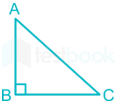
From Statement 1: We have AB = 12 cm and BC = 12 cm (two sides).
From Statement 2: We have ∠ABC = 90° (the included angle).
Combining both: Area = 1/2 × 12 × 12 × sin(90°) = 72 cm2. Therefore, both pieces of information are essential.
∴ The correct answer is Both 1 and 2 are sufficient.
Alternate Method
Given Information:
Statement 1: AB = 12 cm and BC = 12 cm.
Statement 2: ∠ABC = 90°.
Step-by-step Analysis:
⇒ If we take only Statement 1, ΔABC is isosceles, but without an angle, multiple triangles can be formed with different areas.
⇒ If we take only Statement 2, ΔABC is right-angled, but without side lengths, the size and area are undefined.
⇒ Combining both: Base (BC) = 12 cm and Height (AB) = 12 cm since ∠B = 90°.
⇒ Area of ΔABC = 1/2 × Base × Height
⇒ Area = 1/2 × 12 × 12
⇒ Area = 6 × 12 = 72 cm2.
⇒ Thus, the information in both statements 1 and 2 together is sufficient to answer the question.
∴ The correct answer is Both 1 and 2 are sufficient.
Additional Information
Area of a Right-angled Triangle
The area is calculated as 1/2 × base × height, where the base and height are the two sides forming the 90° angle.
General Triangle Area (Sine Rule)
For any triangle with sides a, b and included angle C, the area is given by 1/2 × a × b × sin(C).
Isosceles Right-angled Triangle
If two legs of a right triangle are equal (a = b), the area is 1/2 × a2 and the hypotenuse is a√2.
2