Previous Year Paper

RRB NTPC (UG) CBT-I Official Paper (Held On: 20 Aug, 2025 Shift 2) (Previous Year Paper)

Held in 2025

100 questions90 minutes
With answers
Free

Paper last updated:

Practise under exam conditions

Take this paper as a timed mock test. Review your answers after you submit.

Attempt timed test

Questions & answers

Read the paper at your pace. Open an explanation when you need it.

General Awareness (40 questions)

Question 1

In May 2025, which Indian organisation successfully completed the 'Har Shikhar Tiranga' mission by summiting Mt. Kangchenjunga?

  1. AOption (a)

    National Institute of Mountaineering and Adventure Sports 

  2. BOption (b)

    Himalayan Club

  3. COption (c)

    Indian Mountaineering Foundation

  4. DOption (d)

    Border Roads Organisation

View answer & explanation

Correct answer

Answer: (a)A.

National Institute of Mountaineering and Adventure Sports 

Why this answer is correct

The correct answer is National Institute of Mountaineering and Adventure Sports.

Key Points

  • National Institute of Mountaineering and Adventure Sports (NIMAS) is an autonomous institute under the Ministry of Defence, Government of India.
  • It is located in Dirang, Arunachal Pradesh, known for its stunning natural beauty and proximity to the Himalayan mountain range.
  • The institute aims to promote mountaineering, adventure sports, and allied activities among Indians.
  • NIMAS provides training in various disciplines, including mountaineering, trekking, rock climbing, skiing, rafting, and paragliding.
  • It plays a crucial role in encouraging individuals to participate in adventure sports and contributes to the development of a skilled workforce for such activities.
  • The successful completion of the 'Har Shikhar Tiranga' mission by summiting Mt. Kangchenjunga in May 2025 highlights the institute's dedication to achieving excellence in mountaineering and adventure sports.
  • Mt. Kangchenjunga, the third-highest mountain in the world, is located on the border between Nepal and Sikkim, India, and requires exceptional skill and preparation to summit.

Additional Information

  • Himalayan Club
  • The Himalayan Club was established in 1928 in Kolkata, India, and is one of the oldest mountaineering organizations in India.
  • It focuses on promoting exploration, trekking, and climbing in the Himalayan region.
  • The club is not directly involved in official missions or government-driven initiatives like 'Har Shikhar Tiranga.'
  • Indian Mountaineering Foundation
  • The Indian Mountaineering Foundation (IMF) is an apex body for mountaineering and allied sports in India.
  • It was established in 1957 and is headquartered in Delhi.
  • The IMF organizes and supports expeditions, but the 'Har Shikhar Tiranga' mission was executed by NIMAS, not IMF.
  • Border Roads Organisation
  • The Border Roads Organisation (BRO) is a government body under the Ministry of Defence responsible for constructing and maintaining roads in border areas.
  • The BRO is not engaged in mountaineering or adventure sports but plays a vital role in infrastructure development in remote areas of India, including the Himalayas.
  • Its primary focus is on strategic road and bridge construction rather than adventure missions.
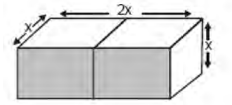
Question 2

Which strategy DOES NOT promote sustainable development in agriculture?

  1. AOption (a)

    Efficient irrigation systems

  2. BOption (b)

    Use of drought-resistant crops 

  3. COption (c)

    Excessive use of chemical fertilizers

  4. DOption (d)

    Crop rotation and organic farming

View answer & explanation

Correct answer

Answer: (c)C.

Excessive use of chemical fertilizers

Why this answer is correct

The Correct answer is Excessive use of chemical fertilizers.

Key Points

  • Excessive use of chemical fertilizers negatively impacts soil health and leads to the depletion of essential nutrients in the soil.
  • Overuse of these fertilizers contaminates water sources due to runoff, causing water pollution and harm to aquatic ecosystems.
  • It contributes to the emission of greenhouse gases, such as nitrous oxide, exacerbating climate change.
  • Excessive reliance on synthetic fertilizers can decrease biodiversity in soil, affecting the ecosystem’s natural balance and reducing the population of beneficial microorganisms.
  • Long-term use of chemical fertilizers may result in soil acidification, which reduces agricultural productivity and damages the environment.
  • This practice is considered unsustainable as it poses risks to both the environment and human health, undermining the principles of sustainable agriculture.

Additional Information

  • Efficient irrigation systems
  • Efficient irrigation systems help conserve water by minimizing wastage and ensuring optimal water delivery to crops.
  • Examples include drip irrigation and sprinkler systems, which reduce water consumption and improve agricultural productivity.
  • Such systems are highly sustainable as they address water scarcity issues and enhance the resilience of farming practices.
  • Use of drought-resistant crops
  • Drought-resistant crops are developed to withstand water scarcity and adverse climatic conditions.
  • These crops minimize the need for excessive irrigation, promoting sustainable farming in arid and semi-arid regions.
  • Examples include millet, sorghum, and certain genetically modified crops engineered to endure drought conditions.
  • Crop rotation and organic farming
  • Crop rotation involves the systematic planting of different crops in the same area across seasons to maintain soil fertility.
  • Organic farming emphasizes the use of natural fertilizers and pest control methods, avoiding synthetic chemicals.
  • Both practices promote soil health, biodiversity, and sustainable agricultural production.

Question 3

Where was rural development particularly emphasised in the Seventh Five-Year Plan?

  1. AOption (a)

    Industrial zones

  2. BOption (b)

    Urban centers

  3. COption (c)

    Foreign markets

  4. DOption (d)

    Rural capital formation areas 

View answer & explanation

Correct answer

Answer: (d)D.

Rural capital formation areas 

Why this answer is correct

The Correct answer is Rural capital formation areas.

Key Points

  • The Seventh Five-Year Plan (1985-1990) of India focused on accelerating economic growth and improving the living standards of the people, especially in rural areas.
  • It laid particular emphasis on rural development, aiming to reduce regional disparities and improve rural infrastructure.
  • Rural capital formation involves the creation of assets and infrastructure in rural areas to support agriculture, small-scale industries, and other rural activities.
  • Through this focus, the plan sought to enhance the productivity of agriculture, which was the backbone of the rural economy.
  • Employment generation was a key goal, and rural capital formation was critical for creating job opportunities in non-agricultural sectors as well.
  • Programs such as the Integrated Rural Development Program (IRDP) were introduced during this plan to promote rural development.
  • Focus was also placed on improving education, healthcare, and sanitation in rural areas to support overall development.
  • The plan recognized the importance of self-reliance and aimed to provide rural communities with the tools to sustain themselves economically.

Additional Information

  • Industrial zones
  • Industrial zones are designated areas for industrial development and are usually found in urban or semi-urban regions.
  • In the context of the Seventh Five-Year Plan, the focus was more on rural development than on industrial zones.
  • Industrial zones are crucial for manufacturing and large-scale industries but were not the primary emphasis during this plan.
  • Urban centers
  • Urban centers are areas characterized by higher population density, infrastructure, and economic activities.
  • The Seventh Five-Year Plan did not emphasize urban centers as much as rural areas, given the need to address rural poverty and underdevelopment.
  • Foreign markets
  • Foreign markets refer to international trade and economic relations.
  • While foreign trade was important for economic growth, the Seventh Five-Year Plan focused more on domestic rural development rather than expanding foreign markets.

Question 4

During which era was the Hazara Rama Temple, situated in Hampi, India, first established?

  1. AOption (a)

    Early 11th century

  2. BOption (b)

    Early 15th century

  3. COption (c)

    Early 13th century

  4. DOption (d)

    Early 19th century

View answer & explanation

Correct answer

Answer: (b)B.

Early 15th century

Why this answer is correct

The Correct answer is Early 15th century.

Key Points

  • The Hazara Rama Temple is located in Hampi, Karnataka, India, a UNESCO World Heritage Site.
  • The temple was established during the Vijayanagara Empire in the early 15th century under the reign of King Devaraya I.
  • It is dedicated to Lord Rama and depicts scenes from the Ramayana on its walls.
  • The temple is renowned for its bas-relief carvings, which are considered exemplary of the Vijayanagara architectural style.
  • It served as a private temple for the royal family during the empire.
  • The temple’s architecture reflects the religious, cultural, and artistic significance of the Vijayanagara Empire.
  • The Hazara Rama Temple is a monumental representation of the harmonious blend of devotion and art during that era.

Additional Information

  • Early 11th century
  • The early 11th century is marked by the Chola dynasty in Southern India, known for its grand temples such as the Brihadeeswarar Temple.
  • While the Cholas were renowned for their architectural contributions, the Vijayanagara Empire, under which the Hazara Rama Temple was constructed, came much later.
  • Early 13th century
  • The early 13th century saw the rise of the Delhi Sultanate in northern India.
  • It was an era of , which was distinct from the Vijayanagara style prevalent in southern India.
  • Early 19th century
  • The early 19th century was part of the colonial era in India under British rule.
  • Architectural works during this period focused more on British colonial designs rather than indigenous styles.

Question 5

Which of the following schemes focuses on providing rural connectivity through allweather roads?

  1. AOption (a)

    Pradhan Mantri Gram Sadak Yojana

  2. BOption (b)

    Pradhan Mantri Awas Yojana–Gramin

  3. COption (c)

    RURBAN Mission

  4. DOption (d)

    Saansad Adarsh Gram Yojana

View answer & explanation

Correct answer

Answer: (a)A.

Pradhan Mantri Gram Sadak Yojana

Why this answer is correct

The correct answer is Pradhan Mantri Gram Sadak Yojana.

Key Points

  • The Pradhan Mantri Gram Sadak Yojana (PMGSY) is a flagship program of the Government of India, launched in 2000.
  • The scheme focuses on providing all-weather road connectivity to unconnected villages in rural areas across the country.
  • The primary objective is to enhance rural infrastructure, thereby improving access to markets, healthcare, education, and employment opportunities.
  • It is implemented by the Ministry of Rural Development, Government of India.
  • The scheme is funded by both the Central and State Governments, with a major share contributed by the Centre.
  • PMGSY has played a key role in reducing rural-urban disparities, fostering rural development, and supporting economic growth.
  • It includes provisions for maintenance of roads for five years after construction to ensure sustainability.
  • The scheme is aligned with the larger vision of achieving inclusive growth and reducing poverty in rural India.

Additional Information

  • Pradhan Mantri Awas Yojana–Gramin (PMAY-G)
  • This scheme aims to provide housing for all by 2022 in rural areas by offering financial assistance to construct pucca houses.
  • It targets homeless families or those living in kutcha houses as identified under the Socio-Economic and Caste Census (SECC).
  • The scheme offers a unit assistance of INR 1.20 lakh in plain areas and INR 1.30 lakh in hilly, difficult, and Integrated Action Plan (IAP) areas.
  • RURBAN Mission
  • The RURBAN Mission, also known as the Shyama Prasad Mukherjee Rurban Mission, focuses on developing rural growth clusters by providing urban-like facilities in rural areas.
  • It aims to reduce rural-urban migration by promoting economic development and improving basic services in these clusters.
  • The scheme emphasizes sustainable development through skill development, infrastructure improvement, and livelihood promotion.
  • Saansad Adarsh Gram Yojana (SAGY)
  • This scheme encourages Members of Parliament (MPs) to adopt villages and transform them into model villages.
  • The focus is on holistic development of villages, including social, economic, and infrastructure aspects.
  • SAGY emphasizes community participation and the use of existing government schemes to achieve its objectives.

Question 6

As per the PIB report published on 17 April 2025, India's defence production has reached a new milestone by increasing from ₹40,000 crore in 2014 to over how much in the financial year 2023-24? 

  1. AOption (a)

    ₹1.33 lakh crore

  2. BOption (b)

    ₹1.11 lakh crore

  3. COption (c)

    ₹1.27 lakh crore

  4. DOption (d)

    ₹1.19 lakh crore

View answer & explanation

Correct answer

Answer: (c)C.

₹1.27 lakh crore

Why this answer is correct

The correct answer is ₹1.27 lakh crore.

Key Points

  • As per the Press Information Bureau (PIB) report published on 17 April 2025, India has achieved a significant milestone in its defence production sector.
  • India's defence production increased from ₹40,000 crore in 2014 to over ₹1.27 lakh crore in the financial year 2023-24.
  • This growth reflects India's focus on strengthening its defence manufacturing capabilities under the ‘Make in India’ initiative.
  • The substantial increase in defence production is attributed to the government’s efforts in promoting indigenous manufacturing and reducing dependence on defence imports.
  • Key measures include the promotion of private sector participation, simplification of procurement procedures, and increased budget allocation to the defence sector.
  • India has also focused on exporting defence equipment, which has helped boost production figures. Defence exports have witnessed a consistent upward trajectory in the past few years.
  • Achieving ₹1.27 lakh crore in defence production is a major step towards realizing the government's vision of achieving self-reliance in defence manufacturing.

Additional Information

  • The ‘Make in India’ initiative was launched in 2014 with the objective of making India a global manufacturing hub.
  • It emphasizes the importance of increasing the share of domestic manufacturing in critical sectors like defence, space, and electronics.
  • The Defence Acquisition Procedure (DAP) 2020 was introduced to streamline the procurement process and encourage domestic investments in defence manufacturing.
  • The government has set a target of achieving ₹1.75 lakh crore in defence production by 2025, including an export target of ₹35,000 crore.

Question 7

What is the primary aim of the National Urban Livelihoods Mission (NULM)?

  1. AOption (a)

    Encouraging foreign investment in urban infrastructure 

  2. BOption (b)

    Reducing urban poverty through skill development and self-employment

  3. COption (c)

    Promoting smart cities in Tier-2 towns

  4. DOption (d)

    Providing subsidised housing to rural workers

View answer & explanation

Correct answer

Answer: (b)B.

Reducing urban poverty through skill development and self-employment

Why this answer is correct

The correct answer is Reducing urban poverty through skill development and self-employment.

Key Points

  • The National Urban Livelihoods Mission (NULM) aims to reduce urban poverty by providing sustainable livelihood opportunities to the urban poor.
  • Its focus is on skill development, enabling individuals to become employable in various sectors or to establish their own income-generating activities.
  • The mission works to provide self-employment opportunities to urban poor households by creating support mechanisms such as self-help groups (SHGs) and other capacity-building initiatives.
  • It also aims to improve access to credit and other financial services for urban poor individuals to establish and grow their small businesses.
  • Another key aspect is the formation and promotion of urban poor collectives to support social and financial inclusion.
  • The mission is a part of the Government of India's larger goal to achieve socio-economic upliftment and poverty alleviation in urban areas.
  • It focuses on integrating marginalized sections like women, differently-abled individuals, and other vulnerable groups into mainstream economic activities.
  • Specific programs under NULM include employment through skill training and placement (EST&P), support to urban street vendors, and shelter for urban homeless.

Additional Information

  • Encouraging foreign investment in urban infrastructure
  • This is not the primary objective of the National Urban Livelihoods Mission (NULM).
  • However, the Government of India has other initiatives, such as Smart Cities Mission and Make in India, that focus on attracting foreign investments to improve urban infrastructure.
  • Promoting smart cities in Tier-2 towns
  • While promoting smart cities is an important agenda of the Government of India, this is primarily addressed through the Smart Cities Mission, not NULM.
  • The Smart Cities Mission focuses on creating sustainable and citizen-friendly urban spaces using modern technology.
  • Providing subsidised housing to rural workers
  • This relates more closely to the Pradhan Mantri Awas Yojana (PMAY) and not the NULM.
  • PMAY is aimed at providing affordable housing to the economically weaker sections in urban and rural areas.

Question 8

Which Article allows the President to appoint a Commission to investigate the condition of socially and educationally backward classes? 

  1. AOption (a)

    Article 330 

  2. BOption (b)

    Article 332

  3. COption (c)

    Article 340 

  4. DOption (d)

    Article 342 

View answer & explanation

Correct answer

Answer: (c)C.

Article 340 

Why this answer is correct

The Correct answer is Article 340.

Key Points

  • Article 340 of the Indian Constitution empowers the President to appoint a Commission to investigate the condition of socially and educationally backward classes.
  • The Commission is tasked with recommending measures for their improvement, including steps to eliminate inequalities faced by such groups.
  • The President may specify the terms of reference for the Commission and decide its composition.
  • One of the most notable commissions formed under this article was the Mandal Commission, constituted in 1979 to identify the backward classes in India.
  • This article reflects the Indian Constitution’s commitment to ensuring social justice and equitable development for all sections of society.
  • The recommendations made by such commissions often lead to the formulation of policies like reservation in education and employment.
  • It aims to address the issues of discrimination, inequality, and deprivation faced by backward classes.

Additional Information

  • Article 330
  • Article 330 of the Constitution provides for reservation of seats in the Lok Sabha for Scheduled Castes and Scheduled Tribes.
  • This article is specifically aimed at ensuring political representation for marginalized communities.
  • Article 332
  • Article 332 pertains to the reservation of seats for Scheduled Castes and Scheduled Tribes in the Legislative Assemblies of states.
  • It ensures that these communities have adequate representation in state legislatures.
  • Article 342
  • Article 342 deals with the identification and specification of Scheduled Tribes in India.
  • The President can notify a tribe as a Scheduled Tribe in consultation with the Governor of a state.
  • It aims to provide special safeguards and benefits for tribal communities.

Question 9

What is the term used for the persistence of sound in a large hall due to repeated reflections from walls and other surfaces?

  1. AOption (a)

    Reverberation

  2. BOption (b)

    Diffraction

  3. COption (c)

    Refraction

  4. DOption (d)

    Interference

View answer & explanation

Correct answer

Answer: (a)A.

Reverberation

Why this answer is correct

The Correct answer is Reverberation.

Key Points

  • Reverberation refers to the persistence of sound in a space, such as a large hall, caused by the repeated reflections of sound waves from walls, ceilings, and other surfaces.
  • It occurs when sound waves are reflected back into the room multiple times before eventually fading away.
  • Reverberation is a key factor in acoustics and directly impacts the quality of sound in enclosed spaces like concert halls, auditoriums, and lecture rooms.
  • Excessive reverberation can make speech and music unclear, whereas controlled reverberation can enhance the richness and fullness of sound.
  • The time it takes for the reverberated sound to decay by 60 dB is called the reverberation time (T60), and it is a critical parameter in acoustic engineering.
  • Materials like carpets, curtains, and acoustic panels are often used to reduce excessive reverberation by absorbing sound.

Additional Information

  • Diffraction
  • Diffraction is the bending of sound or light waves around obstacles or through small openings.
  • It is more pronounced when the wavelength of the wave is comparable to the size of the obstacle or aperture.
  • An example of diffraction in sound is when you can hear someone talking around a corner even though you cannot see them.
  • Refraction
  • Refraction is the change in direction of a sound wave or light wave when it passes from one medium to another with a different density.
  • This phenomenon occurs due to the change in the wave's speed in different media.
  • In acoustics, refraction may cause sound waves to bend when traveling through layers of air with varying temperatures.
  • Interference
  • Interference is the phenomenon that occurs when two or more sound waves overlap and combine.
  • It can be constructive (amplifying sound) or destructive (reducing sound), depending on the phase relationship of the waves.
  • Interference is often observed in musical instruments and sound systems.

Question 10

Bal Gangadhar Tilak gave which popular slogan to arouse nationalist sentiments among the Indians?

  1. AOption (a)

    Inquilab Zindabad

  2. BOption (b)

    Vande Mataram

  3. COption (c)

    Quit India

  4. DOption (d)

    Swaraj is my birthright 

View answer & explanation

Correct answer

Answer: (d)D.

Swaraj is my birthright 

Why this answer is correct

The Correct answer is Swaraj is my birthright.

Key Points

  • The slogan "Swaraj is my birthright" was given by Bal Gangadhar Tilak, a prominent leader in the Indian freedom struggle.
  • This slogan became a rallying cry for Indians during the freedom movement against British colonial rule.
  • Tilak voiced this slogan in the year 1917 to inspire Indians to fight for their right to self-rule.
  • Bal Gangadhar Tilak is also regarded as the Father of Indian Unrest due to his role in mobilizing masses against British rule.
  • He was one of the leaders of the Lal-Bal-Pal trio, alongside Lala Lajpat Rai and Bipin Chandra Pal, who spearheaded the extremist faction of the Indian National Congress.
  • Tilak's idea of Swaraj was deeply rooted in the concept of self-governance, where Indians would have full control over their political, social, and economic affairs.
  • He also started newspapers such as Kesari (in Marathi) and The Mahratta (in English) to spread nationalist ideas and promote the demand for Swaraj.
  • Bal Gangadhar Tilak played a crucial role in fostering the sense of patriotism and unity among Indians, making the slogan a symbol of India's struggle for independence.

Additional Information

  • Inquilab Zindabad
  • The slogan Inquilab Zindabad translates to "Long live the revolution."
  • It was popularized by Bhagat Singh and other revolutionaries in the fight for India's independence from British rule.
  • This slogan became synonymous with revolutionary activities and the spirit of rebellion against colonial oppression.
  • Vande Mataram
  • Vande Mataram, meaning "I bow to thee, Mother", is a patriotic song written by Bankim Chandra Chattopadhyay.
  • It was a source of inspiration during the Indian independence movement and became the national song of India.
  • The song was included in his novel Anandamath and served as a unifying hymn for freedom fighters.
  • Quit India
  • The Quit India Movement, also known as the August Movement, was launched by Mahatma Gandhi in 1942.
  • The slogan "Quit India" urged the British to leave India and grant it independence immediately.
  • The movement was a significant step in India's struggle for independence and was marked by widespread civil disobedience and protests.

Question 11

Which of the following acts was aimed at establishing a federal polity in India? 

  1. AOption (a)

    Indian Councils Act, 1892

  2. BOption (b)

    Rowlatt Act, 1919

  3. COption (c)

    Government of India Act, 1935 

  4. DOption (d)

    Government of India Act, 1858 

View answer & explanation

Correct answer

Answer: (c)C.

Government of India Act, 1935 

Why this answer is correct

The correct answer is Government of India Act, 1935.

Key Points

  • The Government of India Act, 1935 was a landmark legislation aimed at introducing a system of federal governance in India.
  • This Act proposed the establishment of an All-India Federation, comprising provinces and princely states as units.
  • It provided for a division of powers between the federal government and the provincial governments, thus laying the foundation for a federal structure.
  • The Act introduced the concept of autonomy for provinces, allowing them to function independently in their respective spheres.
  • It also extended the principle of diarchy to the central government and made provisions for the establishment of a bicameral legislature (Council of States and Federal Assembly).
  • The Act also introduced the idea of an elected federal legislature and extended the franchise to a larger section of the population.
  • Though the federal structure envisaged by the Act could not be implemented due to opposition by the princely states, it served as a precursor to the federal system adopted in the Constitution of India (1950).

Additional Information

  • Indian Councils Act, 1892
  • The Indian Councils Act, 1892 was significant for introducing the element of representation in the legislature, but it did not aim at establishing a federal structure.
  • It allowed for an increase in the number of non-official members in both the central and provincial legislative councils.
  • This Act marked the beginning of the legislative councils' role in discussing the budget and questioning the executive.
  • Rowlatt Act, 1919
  • The Rowlatt Act, also known as the Anarchical and Revolutionary Crimes Act, was enacted to curb revolutionary activities in India.
  • It allowed the government to arrest and detain individuals without trial, leading to widespread protests and discontent.
  • This Act had no connection with federal governance and was primarily a repressive measure.
  • Government of India Act, 1858
  • The Government of India Act, 1858 marked the end of East India Company rule and the beginning of direct administration by the British Crown.
  • It established the office of the Secretary of State for India and a centralized administrative structure.
  • This Act was focused on administrative control and not on the establishment of a federal system.

Question 12

Which of the following classical dance forms is known for storytelling through facial expressions and hand gestures, and comes from Tamil Nadu?

  1. AOption (a)

    Bharatanatyam

  2. BOption (b)

    Kathak

  3. COption (c)

    Odissi

  4. DOption (d)

    Kuchipudi

View answer & explanation

Correct answer

Answer: (a)A.

Bharatanatyam

Why this answer is correct

The Correct answer is Bharatanatyam.

Key Points

  • Bharatanatyam is one of the oldest classical dance forms of India and originates from the state of Tamil Nadu.
  • It is known for its expressive storytelling through a combination of intricate hand gestures (mudras), facial expressions, and rhythmic footwork.
  • This dance form was traditionally performed in temples as a form of devotional offering to the deities, reflecting its deep roots in Hindu culture and mythology.
  • The term "Bharatanatyam" is derived from the words 'Bhava' (expression), 'Raga' (melody), 'Tala' (rhythm), and 'Natyam' (dance).
  • It is characterized by its use of sculpturesque poses, which are inspired by the ancient temple carvings of Tamil Nadu.
  • The dance often narrates stories from Hindu epics like the Ramayana, Mahabharata, and Puranas.
  • Bharatanatyam is performed to classical Carnatic music, and the dancer uses movements to synchronize with the rhythm and melody.
  • Renowned Bharatanatyam dancers include Rukmini Devi Arundale, who is credited with reviving and popularizing this classical art form in the 20th century.

Additional Information

  • Kathak
  • Kathak is a classical dance form from North India, characterized by its footwork, spins, and storytelling abilities.
  • The term "Kathak" is derived from the word 'Katha', which means story, indicating its origins as a form of narrative dance.
  • Kathak performances are often accompanied by Hindustani classical music.
  • Odissi
  • Odissi is a classical dance form that originated in Odisha, known for its graceful movements and tribhanga posture.
  • This dance form is deeply rooted in temple rituals and often depicts stories of Lord Jagannath.
  • Kuchipudi
  • Kuchipudi is a classical dance form from Andhra Pradesh, known for its dramatic storytelling and blend of dance and acting.
  • It is traditionally performed as a dance drama with both dialogue and rhythmic movements.

Question 13

What is the correct way to rename a file or folder using the right mouse button?

  1. AOption (a)

    Right-click on the desktop → Select New → Rename

  2. BOption (b)

    Double-click on the file → Type new name

  3. COption (c)

    Right-click on the file → Select Rename → Type new name → Press Enter 

  4. DOption (d)

    Left-click on the file → Press Delete → Type new name 

View answer & explanation

Correct answer

Answer: (c)C.

Right-click on the file → Select Rename → Type new name → Press Enter 

Why this answer is correct

The Correct answer is Right-click on the file → Select Rename → Type new name → Press Enter.

Key Points

  • The correct way to rename a file or folder using the mouse involves the right-click menu.
  • By right-clicking on a file or folder, a context menu is displayed, offering several options such as Open, Copy, Delete, and Rename.
  • Selecting the "Rename" option allows the user to edit the existing name of the file or folder.
  • After typing the new name, the process is finalized by pressing the Enter key on the keyboard.
  • This method is user-friendly and allows precise renaming without accidentally opening the file.
  • It is a widely used feature across various operating systems, such as Windows, macOS, and Linux.
  • Using this method ensures that the file or folder name is changed efficiently without requiring additional tools or commands.

Additional Information

  • Right-click on the desktop → Select New → Rename
  • This option is incorrect because creating a new file or folder is a separate function from renaming an existing one.
  • The "New" option in the context menu is used to create new items such as folders, text files, or shortcuts, not to rename existing files.
  • Double-click on the file → Type new name
  • Double-clicking on a file typically opens the file, rather than allowing the user to rename it.
  • Renaming is not directly possible with a double-click unless specific settings or shortcuts are used.
  • Left-click on the file → Press Delete → Type new name
  • This option is incorrect because the "Delete" function removes a file or folder rather than renaming it.
  • Typing a new name after deletion creates confusion, as the original file would no longer exist.

Question 14

Which is the first country to develop genome-based rice variety?

  1. AOption (a)

    China

  2. BOption (b)

    India

  3. COption (c)

    The US

  4. DOption (d)

    France

View answer & explanation

Correct answer

Answer: (b)B.

India

Why this answer is correct

The Correct answer is India.

Key Points

  • India is the first country in the world to develop a genome-based rice variety.
  • The breakthrough genome-based rice variety was developed by scientists at the Indian Agricultural Research Institute (IARI), Pusa, New Delhi.
  • This new rice variety is known as Mukta Vartani, developed using advanced genome editing technology called CRISPR-Cas9.
  • Genome-based rice varieties are designed to have high yield, disease resistance, and better adaptability to climate change.
  • The focus is to ensure food security for the growing population by developing varieties that are more resilient to stresses such as drought and flood.
  • The development of such varieties places India at the forefront of agricultural biotechnology and enhances its capability in contributing to global food security.

Additional Information

  • China
  • China is the world’s largest producer and consumer of rice.
  • It has made significant advancements in rice production, including the development of hybrid rice varieties, which are known for their high yields.
  • However, it has not yet developed a genome-based rice variety like India has.
  • The US
  • The United States is a major exporter of rice, mainly focusing on long-grain and medium-grain varieties.
  • Although the US has invested in genome research, it has not yet achieved the milestone of developing a genome-based rice variety.
  • France
  • France is not a significant producer of rice on the global scale, as its climate is not naturally conducive to large-scale rice cultivation.
  • France focuses more on grains like wheat and barley rather than rice.

Question 15

Which of the following countries shares the longest land border with India?

  1. AOption (a)

    Pakistan

  2. BOption (b)

    Nepal

  3. COption (c)

    Bangladesh

  4. DOption (d)

    China

View answer & explanation

Correct answer

Answer: (c)C.

Bangladesh

Why this answer is correct

The correct answer is Bangladesh.

Key Points

  • India shares its longest land border with Bangladesh, which stretches approximately 4,096 kilometers.
  • This border is known as the India-Bangladesh International Border and runs through five Indian states: West Bengal, Assam, Meghalaya, Tripura, and Mizoram.
  • The border was established in 1947 during the partition of India, which created the two separate nations of India and Pakistan (which later led to the formation of Bangladesh in 1971).
  • The border is characterized by its complex geography, which includes rivers, hills, plains, and dense population settlements, making it one of the most challenging international borders to manage.
  • The Radcliffe Line, drawn by Sir Cyril Radcliffe, demarcates the boundary between India and Bangladesh.
  • The India-Bangladesh border also includes several enclaves and exclaves, which were resolved in 2015 through the Land Boundary Agreement (LBA) between the two countries.
  • Bangladesh plays a crucial role in India's foreign relations due to its geographical proximity, trade ties, and shared cultural heritage.

Additional Information

  • Pakistan
  • India shares a land border of approximately 3,323 kilometers with Pakistan.
  • This border is known as the India-Pakistan International Border and is characterized by historical conflicts, especially over the Jammu and Kashmir region.
  • The Wagah Border in Punjab is a significant crossing point between the two countries and is famous for its Beating Retreat Ceremony.
  • Nepal
  • India shares a land border of approximately 1,770 kilometers with Nepal.
  • This border is open, allowing for free movement of people and goods, and is managed through bilateral treaties.
  • India and Nepal share a close cultural, historical, and geographical relationship.
  • China
  • India shares a land border of approximately 3,488 kilometers with China.
  • This border is known as the Line of Actual Control (LAC) and is often a site of geopolitical tensions.
  • Key border regions include Ladakh, Arunachal Pradesh, and Sikkim.

Question 16

Who became the first artist to win Best Male Act three times at the 2025 MOBO Awards?

  1. AOption (a)

    Stormzy

  2. BOption (b)

    Skepta

  3. COption (c)

    Central Cee 

  4. DOption (d)

    Dave

View answer & explanation

Correct answer

Answer: (c)C.

Central Cee 

Why this answer is correct

The correct answer is Central Cee.

Key Points

  • Central Cee, a prominent British rapper and songwriter, became the first artist to win Best Male Act three times at the MOBO Awards.
  • The MOBO Awards (Music of Black Origin Awards) recognize and celebrate the achievements of artists in genres such as hip-hop, grime, R&B, soul, reggae, jazz, and gospel.
  • Central Cee is known for his unique style, blending elements of UK drill with other musical influences.
  • His breakthrough came with the release of hits like "Loading" and "Obsessed With You," which garnered significant popularity and critical acclaim.
  • Winning the award three times solidifies Central Cee's dominance and influence in the UK music scene.
  • This recognition highlights his consistent artistic excellence and ability to connect with fans across diverse audiences.
  • The achievement marks a significant milestone in his career, further establishing him as a leading figure in the global music industry.

Additional Information

  • Stormzy
  • Stormzy is a British grime artist and rapper known for his powerful lyrics and impactful music.
  • He gained immense popularity with tracks like "Shut Up" and "Vossi Bop."
  • Stormzy has been a vocal advocate for various social causes, including education and racial equality.
  • He has won multiple MOBO Awards, but he has not achieved the milestone of winning Best Male Act three times.
  • Skepta
  • Skepta is a renowned British grime artist and producer.
  • He was instrumental in popularizing the grime genre globally.
  • He is known for hits like "Shutdown" and "That's Not Me."
  • While he has received several accolades, he has not won the MOBO Best Male Act three times.
  • Dave
  • Dave, also known as Santan Dave, is a critically acclaimed British rapper and songwriter.
  • He is known for his introspective and socially conscious lyrics in tracks like "Black" and "Location."
  • Dave has received multiple awards and is regarded as one of the most talented artists of his generation, though he has not won the MOBO Best Male Act three times.

Question 17

Which group of Indian islands lies in the Arabian Sea near the Malabar Coast and consists of coral islands? 

  1. AOption (a)

    Andaman Islands

  2. BOption (b)

    Nicobar Islands

  3. COption (c)

    Sundarbans

  4. DOption (d)

    Lakshadweep Islands

View answer & explanation

Correct answer

Answer: (d)D.

Lakshadweep Islands

Why this answer is correct

The correct answer is Lakshadweep Islands.

Key Points

  • The Lakshadweep Islands are a group of 36 small coral islands located in the Arabian Sea, off the Malabar Coast of Kerala, India.
  • These islands are known for their coral reefs and are the only coral atolls in India.
  • The name "Lakshadweep" means "One hundred thousand islands" in Sanskrit.
  • The islands are formed by coral deposits and are home to a rich biodiversity, including various species of marine life, coral, and flora.
  • The capital of Lakshadweep is Kavaratti, which is also one of the most prominent islands in the group.
  • It is a Union Territory of India, administered directly by the Central Government.
  • The islands are known for their serene beaches, lagoons, and natural beauty, making them a popular tourist destination.
  • The economy of Lakshadweep heavily depends on fishing, coconut cultivation, and tourism.

Additional Information

  • Andaman Islands
  • The Andaman Islands are located in the Bay of Bengal, not the Arabian Sea.
  • They are known for their tropical rainforests, diverse ecosystems, and indigenous tribes.
  • The Andaman Islands are part of the larger Andaman and Nicobar Islands Union Territory.
  • Nicobar Islands
  • The Nicobar Islands are located south of the Andaman Islands in the Bay of Bengal.
  • They feature lush forests and unique biodiversity but are distinct from the coral-based Lakshadweep Islands.
  • Sundarbans
  • The Sundarbans are a mangrove forest ecosystem located in the delta region of the Ganges, Brahmaputra, and Meghna rivers.
  • This region is home to the Bengal tiger and other endangered species.
  • The Sundarbans are a UNESCO World Heritage Site, primarily comprising mangroves rather than coral islands.

Question 18

Which of the following sectors includes banking, communication and transport?

  1. AOption (a)

    Quaternary

  2. BOption (b)

    Secondary

  3. COption (c)

    Primary

  4. DOption (d)

    Tertiary

View answer & explanation

Correct answer

Answer: (d)D.

Tertiary

Why this answer is correct

The Correct answer is Tertiary Sector.

Key Points

  • The tertiary sector, also known as the service sector, is one of the three main economic sectors of an economy, alongside the primary and secondary sectors.
  • This sector focuses on providing services rather than goods, including activities such as banking, communication, transportation, education, healthcare, and other professional services.
  • Banking, as a financial service, is an integral part of the tertiary sector, facilitating transactions, credit, and financial management for individuals and businesses.
  • Communication services such as telecommunication, internet, and postal services also fall under the tertiary sector, as they enable the exchange of information and ideas.
  • Transport services are a key component of the tertiary sector, including railways, airlines, shipping, and road transport, which facilitate the movement of goods and people.
  • The tertiary sector plays a crucial role in the economic development of a country by providing employment opportunities and contributing to the Gross Domestic Product (GDP).
  • With the advancement of technology and globalization, the tertiary sector has experienced significant growth in recent decades.

Additional Information

  • Quaternary Sector
  • The quaternary sector is focused on knowledge-based industries, including research, development, information technology, and education.
  • This sector is also referred to as the knowledge economy.
  • Examples include software development, consulting, and scientific research.
  • Secondary Sector
  • The secondary sector involves the transformation of raw materials into finished goods through manufacturing and industrial processes.
  • Examples include industries like steel production, automobile manufacturing, and construction.
  • Primary Sector
  • The primary sector deals with the extraction and harvesting of natural resources, such as agriculture, fishing, forestry, and mining.
  • This sector forms the base of the economy and supplies raw materials for the secondary sector.

Question 19

Who was the founder of the Mauryan Empire and established a centralised administrative system?

  1. AOption (a)

    Ashoka

  2. BOption (b)

    Bindusara

  3. COption (c)

    Chandragupta Maurya

  4. DOption (d)

    Brihadratha

View answer & explanation

Correct answer

Answer: (c)C.

Chandragupta Maurya

Why this answer is correct

The Correct answer is Chandragupta Maurya.

Key Points

  • Chandragupta Maurya was the founder of the Mauryan Empire, which marked the beginning of a unified and centralized administration in ancient India.
  • He established the empire in around 321 BCE, after overthrowing the Nanda dynasty with the assistance of his mentor and strategist, Chanakya (Kautilya).
  • The Mauryan Empire under Chandragupta covered a vast region, including much of the Indian subcontinent, stretching from the Himalayas to the Deccan Plateau and from the Indus Valley to the eastern regions of Bengal.
  • Chandragupta was known for his strong military strategies and governance, creating a well-organized administrative system.
  • He introduced a centralized system of governance, where the king held supreme authority, supported by ministers and provincial governors.
  • His reign was marked by the establishment of an efficient tax system, infrastructure development, and promotion of trade and commerce.
  • Chandragupta Maurya’s achievements laid the foundation for one of the most successful empires in Indian history, and his governance inspired future rulers.
  • Later in life, Chandragupta abdicated the throne and became a Jain monk, spending his final years in Karnataka.

Additional Information

  • Ashoka
  • Ashoka, a later ruler of the Mauryan Empire, is known for his contribution to the spread of Buddhism.
  • He ruled during the 3rd century BCE and is famous for his transformation after the Kalinga War, where he adopted non-violence and promoted Dharma.
  • His reign is marked by the construction of edicts and stupas across India.
  • He was not the founder of the Mauryan Empire, but one of its most significant rulers.
  • Bindusara
  • Bindusara was the son of Chandragupta Maurya and the second ruler of the Mauryan Empire.
  • He expanded the empire further but did not establish it.
  • Bindusara is known for his diplomatic relations with foreign rulers, including the Hellenistic kings.
  • He is also referred to as Amitraghata, meaning "slayer of enemies."
  • Brihadratha
  • Brihadratha was the last Mauryan ruler, who ruled during the declining phase of the empire.
  • His reign ended with his assassination by his general Pushyamitra Shunga, marking the end of the Mauryan Empire.
  • Brihadratha was not involved in the establishment of the Mauryan Empire.

Question 20

DBW 371 (Karan Vrinda), DBW 303 (Karan Vaishnavi) and DBW 187 (Karan Vandana) are varieties of which crop in India?

  1. AOption (a)

    Rice

  2. BOption (b)

    Wheat

  3. COption (c)

    Tea

  4. DOption (d)

    Maize

View answer & explanation

Correct answer

Answer: (b)B.

Wheat

Why this answer is correct

The correct answer is Wheat.

Key Points

  • DBW 371 (Karan Vrinda), DBW 303 (Karan Vaishnavi), and DBW 187 (Karan Vandana) are high-yielding, disease-resistant varieties of wheat.
  • Wheat is one of the most important cereal crops globally, and India is the second-largest producer of wheat after China.
  • These varieties are developed to ensure better adaptation to Indian agro-climatic conditions.
  • Wheat is a rabi crop, meaning it is sown in the winter season and harvested in the summer season.
  • The major wheat-producing states in India include Uttar Pradesh, Punjab, Haryana, Madhya Pradesh, Rajasthan, and Bihar.
  • Wheat is primarily used to produce flour for bread, biscuits, cakes, pasta, and noodles, making it a staple food for millions.
  • The development of improved wheat varieties like DBW 371, DBW 303, and DBW 187 is part of India's effort to achieve food security and meet the demands of its growing population.
  • India has achieved significant progress in wheat production due to the Green Revolution, which introduced high-yielding varieties and modern agricultural practices.

Additional Information

  • Rice
  • Rice is the staple food for a large portion of the global population, especially in Asia.
  • India is the second-largest producer of rice in the world after China.
  • The Indica and Japonica types of rice are the most cultivated varieties globally.
  • Some popular high-yielding rice varieties in India include IR-64, BPT 5204, and Pusa Basmati.
  • Tea
  • Tea is one of the most consumed beverages worldwide and is cultivated mainly in tropical and subtropical regions.
  • India is one of the largest producers of tea, with major production in Assam, West Bengal, Tamil Nadu, and Kerala.
  • The most famous varieties of Indian tea include Assam Tea, Darjeeling Tea, and Nilgiri Tea.
  • Maize
  • Maize, also known as corn, is a versatile crop used for food, feed, and industrial purposes.
  • It is a kharif crop in India, mainly cultivated during the monsoon season.
  • India's major maize-producing states are Karnataka, Andhra Pradesh, Maharashtra, Madhya Pradesh, and Uttar Pradesh.

Question 21

Who among the following bagged India’s first gold medal at International Shooting Sport Federation (ISSF) Junior World Cup, Germany in May 2025? 

  1. AOption (a)

    Divanshi

  2. BOption (b)

    Parisha Gupta

  3. COption (c)

    Sainyam

  4. DOption (d)

    Kanak 

View answer & explanation

Correct answer

Answer: (d)D.

Kanak 

Why this answer is correct

The Correct answer is Kanak.

Key Points

  • Shooter Kanak has bagged India’s first gold medal at the International Shooting Sport Federation (ISSF) Junior World Cup in Suhl, Germany.
  • Kanak, the silver medalist at the junior world championship in Lima last year, scored 239 in the Women’s 10 metre Air Pistol final to claim the yellow metal.
  • She outperformed Anna Dulce of Moldova, a two-time Olympian and reigning European Champion, by 1.7 points. Chen Yen-Ching of Chinese Taipei won the bronze medal.
  • Meanwhile, another Indian shooter, Prachi, finished fifth.


Additional Information

  • Divanshi
  • Divanshi is another emerging sports shooter from India, but she did not win the first gold medal in the ISSF Junior World Cup in May 2025.
  • Indian shooters like Divanshi have consistently performed well in national and international shooting events.
  • Parisha Gupta
  • Parisha Gupta is recognized for her contributions to sports shooting, but she was not the first gold medalist for India in the ISSF Junior World Cup, Germany, May 2025.
  • Parisha represents the growing pool of talented shooters making their mark in international competitions.

Question 22

In Brahmadeya villages under the Pallavas, which caste predominantly managed the local Sabha assemblies? 

  1. AOption (a)

    Vaishyas

  2. BOption (b)

    Shudras

  3. COption (c)

    Brahmanas 

  4. DOption (d)

    Kshatriyas

View answer & explanation

Correct answer

Answer: (c)C.

Brahmanas 

Why this answer is correct

The correct answer is Brahmanas.

Key Points

  • In the Brahmadeya villages under the Pallavas, the Brahmanas predominantly managed the local Sabha assemblies.
  • A Brahmadeya was land gifted to Brahmanas by kings or other elites, often exempted from taxes, and granted for religious or educational purposes.
  • The Sabha was a local assembly primarily composed of learned Brahmanas who were well-versed in Vedic knowledge, rituals, and administration.
  • The Sabha assemblies played a vital role in governance at the local level, managing affairs like land distribution, taxation, dispute resolution, and maintenance of temples and irrigation systems.
  • The Pallava dynasty (4th to 9th century CE) is known for its patronage of Brahmanical traditions and its emphasis on temple architecture and religious practices.
  • Such villages and assemblies showcased the integration of socio-religious and administrative systems, highlighting the dominance of Brahmanas in the socio-political structure of early South Indian societies.

Additional Information

  • Vaishyas
  • Vaishyas were traditionally associated with trade, commerce, and agriculture in the Varna system of ancient India.
  • They played a significant role in the economic activities of society but were not directly involved in administrative or governance activities like the Sabha.
  • Shudras
  • Shudras were primarily associated with manual labor and service roles in the Varna system.
  • They were generally excluded from administrative and religious functions, which were dominated by the Brahmanas and Kshatriyas.
  • Kshatriyas
  • Kshatriyas were traditionally the warrior class responsible for defense and governance at higher levels, such as kingdoms and states.
  • They were not involved in managing the local assemblies like the Sabha, which were specific to Brahmadeya villages.

Question 23

Who acts as the real executive head in a state?

  1. AOption (a)

    Governor

  2. BOption (b)

    Chief Minister

  3. COption (c)

    Speaker

  4. DOption (d)

    Advocate General 

View answer & explanation

Correct answer

Answer: (b)B.

Chief Minister

Why this answer is correct

The Correct answer is Chief Minister.

Key Points

  • The Chief Minister is the real executive head of a state in India.
  • As per the Constitution of India, the Chief Minister is the leader of the ruling party in the state legislature.
  • The Chief Minister exercises all executive powers on behalf of the Governor who is the nominal head.
  • The Chief Minister is responsible for the implementation of laws, policies, and programs formulated by the state government.
  • He/She plays a crucial role in policy-making and is the head of the Council of Ministers, which aids and advises the Governor.
  • The Chief Minister represents the state in national forums and meetings, acting as a bridge between the state and central government.
  • The Chief Minister is appointed by the Governor, generally from the party or coalition holding the majority in the state legislature.

Additional Information

  • Governor
  • The Governor is the nominal head of the state, appointed by the President of India.
  • The Governor acts on the advice of the Council of Ministers led by the Chief Minister.
  • He/She has the power to appoint the Chief Minister and other ministers, summon and dissolve the state legislature, and give assent to bills.
  • Speaker
  • The Speaker is the presiding officer of the state legislative assembly.
  • The role of the Speaker is to maintain order and decorum in the house, conduct assembly proceedings, and ensure the smooth functioning of the legislature.
  • The Speaker does not have executive powers and is not involved in the implementation of policies.
  • Advocate General
  • The Advocate General is the chief legal advisor to the state government.
  • He/She is appointed under Article 165 of the Indian Constitution by the Governor.
  • The Advocate General advises the state government on legal matters and represents it in courts.
  • This position does not have any executive authority in the administration of the state.

Question 24

The Central Government approved the allocation of additional how many million tonnes of rice from the Food Corporation of India (FCI) for ethanol production in May 2025?

  1. AOption (a)

    2.1 million tonnes 

  2. BOption (b)

    2.8 million tonnes 

  3. COption (c)

    3.2 million tonnes

  4. DOption (d)

    2.4 million tonnes

View answer & explanation

Correct answer

Answer: (b)B.

2.8 million tonnes 

Why this answer is correct

The Correct answer is 2.8 million tonnes.

Key Points

  • In May 2025, the Central Government approved the allocation of an additional 2.8 million tonnes of rice from the Food Corporation of India (FCI) for ethanol production.
  • This decision is part of India's efforts to achieve energy independence and promote biofuel production.
  • Ethanol is a renewable fuel derived from agricultural products, including rice, which is used in blending with petrol to reduce dependency on crude oil imports.
  • The policy aligns with the National Bio-Energy Mission, focusing on reducing the carbon footprint and enhancing sustainable energy solutions.
  • India aims to achieve a blending target of 20% ethanol in petrol by 2025, known as the E20 target.
  • The allocation of rice from FCI supports the strategy to utilize surplus food grains for biofuel production, ensuring minimal wastage and promoting efficient use of resources.
  • This initiative fosters sustainable development, reduces greenhouse gas emissions, and strengthens the rural economy by creating demand for agricultural produce.

Additional Information

  • Food Corporation of India (FCI)
  • The Food Corporation of India is a statutory body under the Ministry of Consumer Affairs, Food and Public Distribution.
  • Established in 1965, FCI ensures food security by procuring, storing, and distributing food grains across India.
  • It maintains buffer stocks of food grains and regulates market prices to ensure availability and affordability.
  • National Bio-Energy Mission
  • The National Bio-Energy Mission emphasizes the development of biofuels such as ethanol, biodiesel, and bio-CNG.
  • It aims to reduce dependence on fossil fuels, mitigate climate change, and enhance rural livelihoods.
  • The mission is aligned with India's Nationally Determined Contributions (NDCs) under the Paris Agreement to combat climate change.
  • Importance of Ethanol Blending
  • Ethanol blending reduces crude oil imports, saving foreign exchange reserves.
  • It is a cleaner fuel that reduces carbon emissions, contributing to environmental sustainability.
  • Promoting ethanol production also supports farmers by utilizing surplus grains and diversifying their income sources.

Question 25

What instrument is used to measure lung volumes during breathing?

  1. AOption (a)

    Respirometer

  2. BOption (b)

    Sphygmomanometer

  3. COption (c)

    Spirometer

  4. DOption (d)

    Barometer

View answer & explanation

Correct answer

Answer: (c)C.

Spirometer

Why this answer is correct

The Correct answer is Spirometer.

Key Points

  • A spirometer is an instrument used to measure the volume of air inhaled and exhaled by the lungs during breathing.
  • It is commonly used in pulmonary function tests (PFTs) to diagnose and monitor lung conditions such as asthma, chronic obstructive pulmonary disease (COPD), and other respiratory disorders.
  • The device helps evaluate how well the lungs are working by assessing parameters like forced expiratory volume (FEV) and vital capacity (VC).
  • It is a non-invasive and safe method for monitoring lung health and is widely used in clinical settings.
  • Spirometry tests can also be used to track the progress of respiratory therapy and detect early signs of lung diseases.
  • The spirometer works by capturing the air flow during breathing and converting it into measurable data to analyze lung function.
  • Modern spirometers are equipped with digital technology for accurate results and real-time monitoring.

Additional Information

  • Respirometer
  • A respirometer is used to measure the rate of respiration in organisms.
  • It is typically used in biology experiments to study the oxygen uptake and carbon dioxide production in plants or animals.
  • Respirometers are not used for measuring lung volumes but are instead designed for metabolic studies.
  • Sphygmomanometer
  • A sphygmomanometer is a medical instrument used to measure blood pressure.
  • It consists of a cuff, a pressure gauge, and a stethoscope or electronic sensor.
  • It is widely used for diagnosing hypertension and monitoring cardiovascular health.
  • Barometer
  • A barometer measures atmospheric pressure and is commonly used in meteorology.
  • It helps predict weather conditions and is not related to measuring lung volumes or respiratory functions.
  • Barometers come in various types, such as mercury barometers and aneroid barometers.

Question 26

The Rajya Sabha seat distribution among states is found in which Schedule of the Indian Constitution?

  1. AOption (a)

    Fourth Schedule

  2. BOption (b)

    Tenth Schedule

  3. COption (c)

    Second Schedule

  4. DOption (d)

    First Schedule

View answer & explanation

Correct answer

Answer: (a)A.

Fourth Schedule

Why this answer is correct

The Correct answer is Fourth Schedule.

Key Points

  • The Fourth Schedule of the Indian Constitution deals with the allocation of seats in the Rajya Sabha, the upper house of Parliament.
  • The allocation of seats is based on the population of the respective states and union territories.
  • The Rajya Sabha currently consists of 250 members, including representatives of the states, union territories, and nominated members.
  • The Fourth Schedule ensures that the representation in the Rajya Sabha is equitable and proportional to the population of each state.
  • This schedule was adopted in 1950 and has been amended several times to reflect the changes in population as per the Census.
  • It provides for the division of seats among states and union territories, including changes made through constitutional amendments.
  • The Fourth Schedule is crucial for maintaining the balance of representation in the federal structure of India.

Additional Information

  • Tenth Schedule
  • The Tenth Schedule of the Indian Constitution deals with the anti-defection law.
  • This schedule was added to the Constitution through the 52nd Amendment Act of 1985.
  • It lays down provisions for disqualification of members of Parliament or State Legislatures on the grounds of defection.
  • The law aims to prevent political instability caused by elected members switching parties.
  • Second Schedule
  • The Second Schedule deals with the emoluments, allowances, and privileges of several constitutional functionaries.
  • It includes provisions for the President, Governors, Judges of the Supreme Court and High Courts, Speaker, Deputy Speaker, and others.
  • This schedule ensures uniformity and transparency in the salaries and benefits of these functionaries.
  • First Schedule
  • The First Schedule specifies the states and union territories of India.
  • It also contains details about the territorial extent of each state and union territory.
  • This schedule is important for understanding the geographical and administrative divisions of India.

Question 27

What happens when user right-clicks on an empty area of the MS Windows desktop?

  1. AOption (a)

    A context menu with view and display settings is opened. 

  2. BOption (b)

    The File Explorer is launched. 

  3. COption (c)

    The Task Manager opens.

  4. DOption (d)

    The Start Menu is displayed.

View answer & explanation

Correct answer

Answer: (a)A.

A context menu with view and display settings is opened. 

Why this answer is correct

The Correct answer is A context menu with view and display settings is opened.

Key Points

  • When a user right-clicks on an empty area of the MS Windows desktop, a context menu appears. This is a feature in the Windows operating system.
  • The context menu provides quick access to various functions and settings related to the desktop, such as view options, display settings, personalization settings, and screen resolution.
  • This feature is designed to enhance usability and productivity by offering quick access to frequently-used desktop settings.
  • The context menu is part of the graphical user interface (GUI), which allows users to interact with the computer using visual elements like icons and menus instead of text-based commands.
  • Examples of options in the context menu may include arrange icons, sort by, refresh, new folder creation, and shortcut to display settings.

Additional Information

  • The File Explorer is launched
  • File Explorer is a file management tool in Windows that allows users to navigate, organize, and manage files and folders.
  • It can be launched by left-clicking on the File Explorer icon in the taskbar or by using the Windows + E shortcut.
  • Right-clicking on the desktop does not directly open the File Explorer; this must be done through the Start menu or a shortcut.
  • The Task Manager opens
  • The Task Manager is a system monitoring tool in Windows that provides information about running applications, processes, and system performance.
  • It can be opened by pressing the Ctrl + Shift + Esc keys or by right-clicking on the taskbar and selecting "Task Manager."
  • Right-clicking on the desktop does not open the Task Manager.
  • The Start Menu is displayed
  • The Start Menu is the central hub for accessing applications, files, and settings in Windows.
  • It can be accessed by clicking the Start button in the bottom-left corner of the screen or by pressing the Windows key.
  • Right-clicking on the desktop does not open the Start Menu.

Question 28

Who became the first Indian driver to win a Formula 2 race in May 2025?

  1. AOption (a)

    Arjun Maini

  2. BOption (b)

    Narain Karthikeyan

  3. COption (c)

    Jehan Daruvala

  4. DOption (d)

    Kush Maini 

View answer & explanation

Correct answer

Answer: (d)D.

Kush Maini 

Why this answer is correct

The Correct answer is Kush Maini.

Key Points

  • Kush Maini became the first Indian driver to win a Formula 2 race in May 2025.
  • Formula 2 is a prestigious junior racing series that serves as a stepping stone to Formula 1, the pinnacle of motorsport.
  • Kush Maini is a talented Indian racing driver who has showcased his skills in various international racing championships.
  • This victory marks a major milestone in Indian motorsport, as it highlights the rising talent in the country and boosts India's representation on the international racing stage.
  • Kush Maini's achievement is expected to inspire other young Indian racers to aim for success in global motorsports.
  • The victory showcases his dedication, skill, and potential to compete at the highest level of motorsport in the world.
  • His win also brings recognition to India in the highly competitive world of Formula racing.

Additional Information

  • Arjun Maini
  • Arjun Maini is an Indian racing driver who has competed in various international racing competitions, including Formula 2 and endurance racing events.
  • He is the older brother of Kush Maini and has represented India in motorsport on multiple occasions.
  • Arjun has also participated in prestigious races such as the 24 Hours of Le Mans.
  • Narain Karthikeyan
  • Narain Karthikeyan was the first Indian driver in Formula 1, making his debut in 2005 with the Jordan team.
  • He has represented India in various motorsport events and is considered a pioneer in Indian motorsport history.
  • Although a prominent figure, he did not compete in Formula 2 or win a Formula 2 race.
  • Jehan Daruvala
  • Jehan Daruvala is another talented Indian Formula 2 driver who has achieved multiple podiums in the competition.
  • He is part of the Red Bull Junior Team and is regarded as one of the most promising young drivers from India.
  • Despite his impressive performances in Formula 2, Jehan Daruvala did not achieve a race victory in May 2025.

Question 29

Which organisation introduced new guidelines in 2025 to regulate the sale of radio equipment, including walkie-talkies, on e-commerce platforms?

  1. AOption (a)

    Department of Telecommunications (DoT)

  2. BOption (b)

    Central Consumer Protection Authority (CCPA)

  3. COption (c)

    Telecom Regulatory Authority of India (TRAI) 

  4. DOption (d)

    Ministry of Electronics and Information Technology (MeitY)

View answer & explanation

Correct answer

Answer: (b)B.

Central Consumer Protection Authority (CCPA)

Why this answer is correct

The Correct answer is Central Consumer Protection Authority (CCPA).

Key Points

  • The Central Consumer Protection Authority (CCPA) was established under the Consumer Protection Act, 2019.
  • Its primary role is to protect and enforce consumer rights, prevent unfair trade practices, and ensure no misleading advertisements reach consumers.
  • In 2025, the CCPA introduced new guidelines to regulate the sale of radio equipment, such as walkie-talkies, on e-commerce platforms to ensure compliance with safety standards.
  • These guidelines aim to prevent the sale of substandard or unauthorized radio equipment that could harm consumers or interfere with other communication systems.
  • The CCPA ensures consumer safety by mandating sellers to adhere to established norms, ensuring the products are verified before being sold online.
  • This initiative highlights the CCPA's commitment to addressing issues arising from the growing e-commerce market and protecting customers from counterfeit or harmful products.

Additional Information

  • Department of Telecommunications (DoT)
  • The Department of Telecommunications (DoT) is a part of the Ministry of Communications in India and is responsible for policies related to telecommunications.
  • It oversees licensing, spectrum management, and the promotion of the telecom industry.
  • While it regulates telecom services, it was not responsible for introducing the 2025 guidelines for e-commerce platforms.
  • Telecom Regulatory Authority of India (TRAI)
  • The Telecom Regulatory Authority of India (TRAI) is an independent regulatory body established in 1997.
  • Its main functions include regulating telecom services, ensuring fair competition, and protecting consumer interests in the telecom sector.
  • However, TRAI does not directly regulate product sales on e-commerce platforms, as this falls under the jurisdiction of the CCPA.
  • Ministry of Electronics and Information Technology (MeitY)
  • The Ministry of Electronics and Information Technology (MeitY) is responsible for policies related to information technology, the internet, and electronics.
  • It oversees the promotion of e-governance and the development of the electronics industry, but it does not regulate consumer rights or product sales on e-commerce platforms.

Question 30

What is the codename of the Low-Level Transportable Radar (LLTR) to be procured by the Ministry of Defence (MoD) with Bharat Electronics Limited (BEL) at a cost of ₹2,906 crore in March 2025?

  1. AOption (a)

    Ashwini

  2. BOption (b)

    Vayu

  3. COption (c)

    Surya

  4. DOption (d)

    Indra

View answer & explanation

Correct answer

Answer: (a)A.

Ashwini

Why this answer is correct

The Correct answer is Ashwini.

Key Points

  • The Low-Level Transportable Radar (LLTR), codenamed Ashwini, is a crucial radar system to be procured by the Ministry of Defence (MoD) in collaboration with Bharat Electronics Limited (BEL).
  • The radar is designed to enhance air surveillance and is particularly effective at low altitudes.
  • This system will significantly improve the Indian Air Force's (IAF) capability to detect and track low-flying aerial threats.
  • The contract for procuring the Ashwini radar system is valued at ₹2,906 crore, showcasing its strategic and operational importance.
  • The radar system is indigenously developed under the 'Make in India' initiative, emphasizing the Indian government’s focus on achieving self-reliance in defense technology.
  • The Ashwini system is mobile and can be easily deployed in remote and high-altitude areas, ensuring flexibility and swift operational readiness.
  • This radar system will play a vital role in strengthening the country’s air defense network by providing accurate and real-time data to respond to potential threats.

Additional Information

  • Vayu
  • The name Vayu refers to the god of wind in Hindu mythology and is often associated with air or atmosphere.
  • It symbolizes the force of air, but it is not linked to the specific radar system discussed here.
  • Surya
  • Surya is the Sun God in Hindu mythology, representing energy, light, and life.
  • While the term signifies power and brilliance, it is unrelated to the LLTR Ashwini radar system.
  • Indra
  • Indra is the king of the gods and the god of rain and thunder in Hindu mythology.
  • It is used in several other defense-related projects but does not pertain to the radar system being procured in this case.

Question 31

The Planning Commission was the nodal body for central planning in India. Who served as the first Chairman of the Planning Commission?

  1. AOption (a)

    Jawaharlal Nehru

  2. BOption (b)

    BR Ambedkar

  3. COption (c)

    Sardar Vallabhbhai Patel 

  4. DOption (d)

    CD Deshmukh 

View answer & explanation

Correct answer

Answer: (a)A.

Jawaharlal Nehru

Why this answer is correct

The correct answer is Jawaharlal Nehru.

Key Points

  • Jawaharlal Nehru served as the first Chairman of the Planning Commission of India.
  • The Planning Commission was established in 1950 by the Government of India for central planning and economic development.
  • Jawaharlal Nehru was the first Prime Minister of India, serving from 1947 to 1964, and played a pivotal role in shaping India's economy and policies.
  • The Planning Commission was tasked with formulating Five-Year Plans to improve India's economic and social conditions.
  • The first Five-Year Plan (1951–1956) focused on agriculture, irrigation, and energy production.
  • Under Nehru's leadership, the Planning Commission aimed at achieving self-reliance in various sectors and reducing inequalities.
  • Nehru's vision was influenced by the Soviet model of planned development, emphasizing industrialization and modern infrastructure.
  • The Planning Commission was dissolved in 2014 and replaced by NITI Aayog.

Additional Information

  • BR Ambedkar
  • BR Ambedkar was the principal architect of the Indian Constitution and is celebrated as one of India's greatest social reformers.
  • He was the first Law Minister of independent India and played a crucial role in shaping policies for social justice and equality.
  • Ambedkar was not directly involved in the Planning Commission but contributed to the socio-economic framework of India.
  • Sardar Vallabhbhai Patel
  • Sardar Vallabhbhai Patel was India's first Deputy Prime Minister and Home Minister.
  • He is known as the Iron Man of India for his role in integrating princely states into the Indian Union.
  • Patel was not associated with the Planning Commission but played a vital role in India's political consolidation.
  • CD Deshmukh
  • CD Deshmukh was the first Indian to serve as the Governor of the Reserve Bank of India.
  • He later became the Finance Minister of India and contributed to financial planning and policy formulation.
  • Although he worked in areas related to India's economic development, he did not serve as the Chairman of the Planning Commission.

Question 32

What was one recommendation of the Sarkaria Commission regarding Governors?

  1. AOption (a)

    Governors should be elected by States.

  2. BOption (b)

    Governors should be military officers. 

  3. COption (c)

    Governors should only be politicians. 

  4. DOption (d)

    Governors should be non-partisan.

View answer & explanation

Correct answer

Answer: (d)D.

Governors should be non-partisan.

Why this answer is correct

The Correct answer is Governors should be non-partisan.

Key Points

  • The Sarkaria Commission was established in 1983 to examine the relationship between the Union and the States in India.
  • One key recommendation of the Sarkaria Commission was that Governors should be non-partisan to ensure their impartiality and foster smooth functioning of the federal structure.
  • The Commission emphasized that Governors must act as a neutral link between the Union and State governments.
  • It recommended that individuals appointed as Governors should not be actively involved in politics and should not hold strong political affiliations.
  • The Governor’s role is crucial in maintaining the integrity of the Constitution, especially during scenarios such as a hung assembly or when recommending President’s Rule.
  • The Commission advised that Governors should be selected from outside the state to avoid regional biases and ensure better acceptance by the local political environment.
  • This recommendation was intended to strengthen the federal structure and maintain the balance of power between the Union and State governments.

Additional Information

  • Governors should be elected by States
  • The suggestion to elect Governors was not considered feasible by the Sarkaria Commission because the Constitution of India provides for their appointment by the President.
  • Election of Governors may lead to political influences and compromise their neutrality, which is against the spirit of federalism.
  • Governors should be military officers
  • This option is incorrect as the Governor’s role is administrative and constitutional rather than military.
  • The Sarkaria Commission emphasized that Governors should be individuals with a strong understanding of the Constitution, governance, and public administration.
  • Governors should only be politicians
  • The Commission rejected this idea because it could lead to partisan behavior and undermine the Governor’s neutrality.
  • Instead, the Commission recommended appointing Governors who are apolitical or have retired from active politics.

Question 33

Which philosophical work did Rammohan Roy write in 1803 analysing world religions through reason and social relevance?

  1. AOption (a)

    Hind Swaraj  

  2. BOption (b)

    Satyarth Prakash

  3. COption (c)

    Tuhfat-ul Muwahhidin 

  4. DOption (d)

    Precepts of Jesus

View answer & explanation

Correct answer

Answer: (c)C.

Tuhfat-ul Muwahhidin 

Why this answer is correct

The Correct answer is Tuhfat-ul Muwahhidin.

Key Points

  • Tuhfat-ul Muwahhidin, written by Rammohan Roy, is a significant philosophical work published in 1803.
  • This book is an analysis of world religions through the lens of reason and social relevance.
  • The work reflects Rammohan Roy's firm belief in the unity and universality of religious principles.
  • It promotes the idea of monotheism and critiques the narrow-mindedness and superstition prevalent in various religious practices.
  • Rammohan Roy was influenced by the Age of Enlightenment, and his writings often emphasize the importance of rational thinking and humanistic values.
  • The book is written in Persian with an introduction in Arabic, reflecting Rammohan Roy's deep knowledge of multiple languages and cultures.
  • Tuhfat-ul Muwahhidin is considered a pioneering text in promoting interfaith understanding and advocating for religious reform in India.

Additional Information

  • Hind Swaraj
  • Hind Swaraj is a book written by Mahatma Gandhi in 1909.
  • It outlines Gandhi's philosophy of non-violence, Satyagraha, and the concept of Swaraj (self-rule).
  • This book critiques modern civilization and advocates for a return to simpler, village-based life.
  • Satyarth Prakash
  • Satyarth Prakash (The Light of Truth) is a book authored by Swami Dayanand Saraswati, the founder of the Arya Samaj.
  • It emphasizes the importance of Vedic teachings and criticizes idol worship and rituals in Hinduism.
  • The book promotes monotheism and encourages rational and scientific thinking.
  • Precepts of Jesus
  • Precepts of Jesus was another work by Rammohan Roy, published in 1820.
  • This book focused on the moral teachings of Jesus Christ, highlighting their universality and relevance to society.
  • It sought to extract the ethical essence of Christianity while critiquing its dogmatic practices.

Question 34

What is the primary purpose of the Raksha Kavach system showcased by the Defence Research and Development Organisation (DRDO) on Republic Day, 2025?

  1. AOption (a)

    Cyber warfare

  2. BOption (b)

    Multi-layered defence protection

  3. COption (c)

    Ground-based artillery support

  4. DOption (d)

    Naval operations 

View answer & explanation

Correct answer

Answer: (b)B.

Multi-layered defence protection

Why this answer is correct

The correct answer is Multi-layered defence protection.

Key Points

  • The Raksha Kavach system, developed by the Defence Research and Development Organisation (DRDO), is a state-of-the-art technology designed to provide multi-layered defence protection.
  • This system integrates a combination of advanced sensors, radar systems, and intercepting mechanisms to protect critical assets and military installations.
  • It is designed to neutralize incoming threats such as enemy missiles, drones, and aerial attacks, ensuring the safety of strategic locations and personnel.
  • The system employs Artificial Intelligence (AI) and machine learning algorithms for real-time threat assessment and response.
  • Raksha Kavach is aligned with India's initiative of self-reliance in defence technology under the Atmanirbhar Bharat Abhiyan.
  • The multi-layered approach ensures a robust defence mechanism with multiple lines of interception, enhancing the country's security against evolving threats.
  • This system reflects India's growing capabilities in indigenous defence technology and helps reduce dependence on foreign defence systems.

Additional Information

  • Cyber warfare
  • Cyber warfare refers to the use of technology to attack a nation’s computer systems or networks.
  • It involves activities such as hacking, espionage, and disruption of critical infrastructure like power grids and communication networks.
  • Although cyber warfare is a critical domain of modern defence, the Raksha Kavach system focuses on physical defence mechanisms rather than digital or cyber threats.
  • Ground-based artillery support
  • This term refers to the use of heavy weapons like howitzers, cannons, and rocket launchers to provide firepower support to ground forces during combat operations.
  • While important for military operations, the Raksha Kavach system is not focused on artillery but rather on defence against airborne threats.
  • Naval operations
  • Naval operations involve strategic and tactical activities conducted by a nation's navy to secure maritime interests and defend the coastline.
  • The Raksha Kavach system, however, is not primarily designed for naval operations but for multi-layered defence protection against aerial and missile threats.

Question 35

Which of the following animals is listed as endangered and protected under the Indian Wildlife Protection Act, 1972?

  1. AOption (a)

    Hanuman langur

  2. BOption (b)

    Peacock

  3. COption (c)

    Nilgai

  4. DOption (d)

    Lion-tailed macaque 

View answer & explanation

Correct answer

Answer: (d)D.

Lion-tailed macaque 

Why this answer is correct

The Correct answer is Lion-tailed macaque.

Key Points

  • The Lion-tailed macaque, also known as the Wanderoo, is an endangered species listed under the Indian Wildlife Protection Act, 1972.
  • It is endemic to the Western Ghats of India, particularly in states like Karnataka, Kerala, and Tamil Nadu.
  • The species resides in rainforests and prefers dense, evergreen forests at elevations ranging from 600 to 1,800 meters.
  • The Lion-tailed macaque is characterized by its black fur and a distinctive silver-white mane that surrounds its face, resembling a lion.
  • It is primarily arboreal, spending most of its time in the trees and is known for being an excellent climber.
  • Its diet consists mainly of fruits, leaves, insects, and small animals, making it an important contributor to the forest ecosystem.
  • The species faces threats due to habitat loss caused by deforestation, agriculture, and human encroachment.
  • Conservation efforts for the Lion-tailed macaque include protected reserves like the Silent Valley National Park and other wildlife sanctuaries in the Western Ghats.
  • It is recognized as Endangered by the IUCN Red List, emphasizing the need for its protection.

Additional Information

  • Hanuman Langur
  • The Hanuman Langur is one of the most commonly found species of monkeys in India.
  • It is named after the Hindu deity Hanuman, who is often depicted as a monkey.
  • They are not considered endangered and are widespread across India, Nepal, and Sri Lanka.
  • Hanuman Langurs are known for their ability to adapt to various habitats, including forests, grasslands, and even urban areas.
  • Peacock
  • The Indian Peafowl, commonly known as the Peacock, is India's National Bird.
  • Peacocks are known for their iridescent feathers and elaborate displays during courtship.
  • They are protected under the Indian Wildlife Protection Act, 1972, but they are not considered endangered.
  • Peacocks are found in forests, agricultural lands, and even human settlements across India and South Asia.
  • Nilgai
  • The Nilgai, also known as the Blue Bull, is the largest antelope in India.
  • It is native to the Indian subcontinent and is found in open grasslands and woodlands.
  • Nilgais are not considered endangered and are frequently seen in protected areas and agricultural lands.
  • They are herbivores and primarily feed on grasses, leaves, and fruits.

Question 36

As per the Scheduled Castes (Rationalisation of Reservation) Act, 2025 implemented by Telangana government, what percentage of reservation will Group II get within the 15 percent quota for SC?

  1. AOption (a)

    7.5%

  2. BOption (b)

    9%

  3. COption (c)

    5%

  4. DOption (d)

    3%

View answer & explanation

Correct answer

Answer: (b)B.

9%

Why this answer is correct

The correct answer is 0.09.

Key Points

  • The Scheduled Castes (Rationalisation of Reservation) Act, 2025 was implemented by the Telangana government to ensure equitable distribution of reservation among various sub-groups within the Scheduled Castes (SC) category.
  • Under this act, the SC reservation quota of 15 percent is further divided into sub-categories to provide fair representation to marginalized sub-groups.
  • As per the act, Group II of the Scheduled Castes has been allocated a specific percentage of the overall SC quota, amounting to 0.09 (or 9 percent).
  • This law aims to address the long-standing issue of unequal representation within the SC category by ensuring that all sub-groups receive their due share of opportunities.
  • This reservation policy is part of the government’s broader initiative to promote social justice and reduce disparities among socially disadvantaged groups.

Additional Information

  • Key characteristics of the Scheduled Castes (Rationalisation of Reservation) Act
  • The act was introduced to address intra-caste inequalities within the Scheduled Castes.
  • It provides a mechanism for ensuring that historically disadvantaged sub-groups receive adequate representation.
  • This policy is in alignment with the constitutional mandate of equality and affirmative action for disadvantaged communities.
  • Reservation System in India
  • The reservation system in India is governed by provisions in the Indian Constitution under Articles 15(4), 16(4), and 46.
  • It aims to ensure social and educational empowerment of Scheduled Castes (SCs), Scheduled Tribes (STs), and Other Backward Classes (OBCs).
  • Reservation is provided in government jobs, educational institutions, and legislatures to address historical inequalities and discrimination.

Question 37

Which two countries signed an agreement on 22 May 2025, regarding the future of the Chagos Archipelago? 

  1. AOption (a)

    United Kingdom and India

  2. BOption (b)

    United States and Republic of Mauritius

  3. COption (c)

    United Kingdom and Republic of Mauritius

  4. DOption (d)

    United Kingdom and Seychelles 

View answer & explanation

Correct answer

Answer: (c)C.

United Kingdom and Republic of Mauritius

Why this answer is correct

The Correct answer is United Kingdom and Republic of Mauritius.

Key Points

  • The agreement signed on 22 May 2025 between the United Kingdom and the Republic of Mauritius is a significant diplomatic development concerning the Chagos Archipelago.
  • The Chagos Archipelago is a group of islands located in the Indian Ocean, and it has been a longstanding subject of dispute between the United Kingdom and Mauritius.
  • In the 1960s, the United Kingdom separated the Chagos Archipelago from Mauritius, which was then a British colony, and established the British Indian Ocean Territory (BIOT).
  • The most significant island in the archipelago is Diego Garcia, which is home to a major military base operated by the United States under an agreement with the UK.
  • In 2019, the International Court of Justice (ICJ) ruled that the United Kingdom's continued administration of the Chagos Archipelago was illegal and that it should be returned to Mauritius.
  • The agreement signed in 2025 indicates progress in the resolution of this dispute and is seen as a step toward the decolonization process for Mauritius.
  • This development may pave the way for further discussions regarding the rights of the Chagossians, the original inhabitants of the islands, who were forcibly removed in the 1960s.

Additional Information

  • United Kingdom and India
  • The United Kingdom and India share historical ties due to India's colonial past under British rule. However, there is no significant connection between these two nations regarding the Chagos Archipelago.
  • The Chagos Archipelago dispute is primarily between the United Kingdom and the Republic of Mauritius.
  • United States and Republic of Mauritius
  • The United States operates a military base on Diego Garcia, but it is not directly involved in the sovereignty dispute over the Chagos Archipelago.
  • The Republic of Mauritius asserts its claim over the archipelago, and the involvement of the United States is limited to the military base under an agreement with the United Kingdom.
  • United Kingdom and Seychelles
  • The United Kingdom and the Seychelles do not have a territorial dispute over the Chagos Archipelago.
  • The Seychelles is an island nation in the Indian Ocean, but its territorial claims and agreements with the United Kingdom do not involve the Chagos Archipelago.

Question 38

Provision for securing just and humane conditions of work and maternity relief comes under which Article of the Indian Constitution? 

  1. AOption (a)

    Article 39A 

  2. BOption (b)

    Article 45

  3. COption (c)

    Article 47

  4. DOption (d)

    Article 42 

View answer & explanation

Correct answer

Answer: (d)D.

Article 42 

Why this answer is correct

The Correct answer is Article 42.

Key Points

  • Article 42 of the Indian Constitution falls under the Directive Principles of State Policy (Part IV).
  • It directs the State to make provisions for securing just and humane conditions of work and for maternity relief.
  • It reflects the ideals of social justice and welfare, ensuring that workers are treated in a manner that upholds their dignity and ensures their well-being.
  • This Article emphasizes that the State must work towards eliminating exploitation in workplaces and ensuring fair treatment for all workers.
  • Maternity relief ensures the protection of women during pregnancy, granting them maternity leave, healthcare, and other benefits.
  • Though the Directive Principles are not legally enforceable, they act as guidelines for the government to frame laws and policies.
  • Examples of laws derived from this principle include the Maternity Benefit Act, 1961, which provides paid maternity leave and other benefits for women in India.

Additional Information

  • Article 39A
  • Article 39A directs the State to promote equal justice and provide free legal aid to ensure that opportunities for securing justice are not denied to any citizen by reason of economic or other disabilities.
  • This Article emphasizes the importance of ensuring access to justice for all, irrespective of financial status.
  • Article 45
  • Article 45 initially directed the State to provide free and compulsory education to children up to the age of 14 years.
  • After the 86th Constitutional Amendment Act, 2002, this provision was shifted to Part III as a fundamental right under Article 21A.
  • Article 47
  • Article 47 directs the State to regard the raising of the level of nutrition and the standard of living of its people and the improvement of public health as among its primary duties.
  • It also includes the prohibition of the consumption of intoxicating drinks and drugs that are injurious to health.

Question 39

Which of the following organisations in India developed the world’s highest-resolution weather forecasting model in May 2025?

  1. AOption (a)

    National Centre for Medium Range Weather Forecasting (NCMRWF)

  2. BOption (b)

    Indian Institute of Tropical Meteorology (IITM) 

  3. COption (c)

    India Meteorological Department (IMD)

  4. DOption (d)

    Indian Space Research Organisation (ISRO)

View answer & explanation

Correct answer

Answer: (b)B.

Indian Institute of Tropical Meteorology (IITM) 

Why this answer is correct

The Correct answer is Indian Institute of Tropical Meteorology (IITM).

Key Points

  • The Indian Institute of Tropical Meteorology (IITM), located in Pune, Maharashtra, is a premier research institute dedicated to studying and understanding tropical meteorology and weather-related phenomena.
  • In May 2025, IITM developed the world’s highest-resolution weather forecasting model, showcasing its advanced capabilities in meteorological research and technology.
  • This model provides precise weather predictions, aiding in disaster management, agriculture planning, and other critical sectors.
  • IITM operates under the Ministry of Earth Sciences, Government of India, emphasizing its importance in national-level weather forecasting and research initiatives.
  • The institute is also known for its work on monsoon studies, climate change research, and development of models for understanding atmospheric dynamics.
  • IITM has played a crucial role in establishing state-of-the-art computing facilities for weather prediction and climate modeling.
  • Collaborating with international organizations and institutes, IITM contributes to global meteorological advancements.

Additional Information

  • National Centre for Medium Range Weather Forecasting (NCMRWF)
  • The NCMRWF is a scientific organization under the Ministry of Earth Sciences, Government of India.
  • It specializes in medium-range weather forecasting using numerical models and data assimilation techniques.
  • NCMRWF contributes to improving the accuracy of weather predictions over a span of 3 to 10 days.
  • India Meteorological Department (IMD)
  • The IMD is India’s national meteorological service, established in 1875.
  • It provides weather forecasts, warnings, and climate data for the country.
  • IMD is responsible for monitoring cyclones, tsunamis, and other extreme weather events.
  • Indian Space Research Organisation (ISRO)
  • ISRO is India’s space agency, known for its advancements in satellite technology and space exploration.
  • It plays a significant role in space-based weather monitoring through satellites such as INSAT and GSAT series.
  • Though not directly involved in developing weather models, ISRO supports meteorological studies via satellite data.

Question 40

Which of the following foods is a rich source of dietary fibre for human beings?

  1. AOption (a)

    Chicken

  2. BOption (b)

    Cheese

  3. COption (c)

    Fish

  4. DOption (d)

    Oats

View answer & explanation

Correct answer

Answer: (d)D.

Oats

Why this answer is correct

The Correct answer is Oats.

Key Points

  • Oats are a rich source of dietary fibre, especially beta-glucan, which is beneficial for maintaining a healthy digestive system.
  • Dietary fibre in oats aids in regulating blood sugar levels and reducing cholesterol levels.
  • They are considered a whole grain, making them a nutritious choice for human diets.
  • Oats contain both soluble and insoluble fibre, which contribute to overall gut health and help in preventing constipation.
  • Rich in nutrients like vitamins, minerals, and antioxidants, oats are beneficial for overall health.
  • Oats are used in a variety of foods, including breakfast cereals, granola bars, and baked goods.
  • They are also gluten-free, making them a suitable choice for individuals with gluten intolerance or celiac disease.

Additional Information

  • Chicken
  • Chicken is a rich source of protein and essential nutrients such as vitamins B6 and B12, iron, and zinc.
  • It is not a significant source of dietary fibre as animal-based foods generally lack fibre.
  • Chicken is commonly used in various cuisines worldwide and can be prepared in numerous ways, including grilling, roasting, and frying.
  • Cheese
  • Cheese is a dairy product made from milk and is rich in calcium, protein, and fats.
  • It does not contain dietary fibre as it is derived from animal sources.
  • Different types of cheese, such as cheddar, mozzarella, and parmesan, are used in various dishes globally.
  • Fish
  • Fish is an excellent source of protein and omega-3 fatty acids, which are beneficial for heart and brain health.
  • Like other animal-based foods, fish lacks dietary fibre.
  • Commonly consumed fish include salmon, tuna, mackerel, and cod, and they are used in both traditional and modern cuisines.

Mathematics (30 questions)

Question 41

The average weight (in kg) of a family of five members whose weights are 40 kg, 49 kg, 56 kg, 76 kg and 36 kg is:

  1. AOption (a)

    52.4

  2. BOption (b)

    53.4

  3. COption (c)

    51.4

  4. DOption (d)

    50.4

View answer & explanation

Correct answer

Answer: (c)C.

51.4

Why this answer is correct

Shortcut Trick

Using the assumed mean method, let the assumed average be 50 kg.

Deviations from 50 are: −10, −1, +6, +26, −14

Sum of deviations = (−10 − 1 + 6 + 26 − 14) = +7

Net change in average = +7 ÷ 5 = +1.4

Actual average = 50 + 1.4 = 51.4 kg

∴ The correct answer is 51.4 kg.

Alternate Method

Given:

Weights of 5 family members = 40 kg, 49 kg, 56 kg, 76 kg, 36 kg

Total number of members = 5

Formula Used:

Average = (Sum of all observations) ÷ (Total number of observations)

40

49

56

76

36

Avg: 51.4

Weights of 5 Family Members

Calculations:

⇒ Sum of weights = 40 + 49 + 56 + 76 + 36

⇒ Sum of weights = 257 kg

⇒ Average = 257 ÷ 5

⇒ Average = 51.4 kg

∴ The correct answer is 51.4 kg.

Additional Information

Combined Average

If two or more groups have sizes n1 and n2 with independent averages A1 and A2, the combined overall average is (n1A1 + n2A2) ÷ (n1 + n2).

Effect of Arithmetic Operations

If every observation in a dataset is systematically increased, decreased, multiplied, or divided by a constant value 'k', the new average also undergoes the exact same mathematical operation by 'k'.

Average of Consecutive Numbers

The average of any set of consecutive integers or numbers forming an Arithmetic Progression (AP) is always the exact middle value and can be calculated as (First Term + Last Term) ÷ 2.

Question 42

The average of first 174 even numbers is 

  1. AOption (a)

    175

  2. BOption (b)

    176

  3. COption (c)

    175.5

  4. DOption (d)

    174.5

View answer & explanation

Correct answer

Answer: (a)A.

175

Why this answer is correct

Shortcut Trick

The average of the first 'n' even numbers is always directly given by the formula (n + 1).

Here, the total number of terms is n = 174.

⇒ Average = 174 + 1 = 175

∴ The correct answer is 175.

Alternate Method

Given:

Total number of terms (n) = 174

The series of the first 174 even numbers forms an Arithmetic Progression (AP): 2, 4, 6, 8, . . .

Formula Used:

Last term of an AP (l) = a + (n − 1) × d

Average of an AP = (First Term + Last Term) ÷ 2

2 1st Term

4

6

...

348 174th Term

175 Average

Average = (2 + 348) ÷ 2 = 175

Calculations:

⇒ First term (a) = 2

⇒ Common difference (d) = 2

⇒ Last term (l) = 2 + (174 − 1) × 2

⇒ l = 2 + 173 × 2

⇒ l = 2 + 346 = 348

⇒ Average = (2 + 348) ÷ 2

⇒ Average = 350 ÷ 2 = 175

∴ The correct answer is 175.

Additional Information

Average of first 'n' natural numbers

The sum of the first 'n' natural numbers is n(n + 1) ÷ 2. Therefore, the average is (n + 1) ÷ 2.

Average of first 'n' odd numbers

The sum of the first 'n' odd numbers is n2. Therefore, the average is simply n.

Average of squares of first 'n' natural numbers

The sum of squares of the first 'n' natural numbers is n(n + 1)(2n + 1) ÷ 6. The average is (n + 1)(2n + 1) ÷ 6.

Question 43

Pipe A can fill a tank in 13 hours, Pipe B in 27 hours, and Pipe C in 19 hours. What is the time (in hours) taken to fill the tank when all three pipes are opened together? 

  1. AOption (a)

    5311115\frac{3}{1111}

  2. BOption (b)

    4311114\frac{3}{1111}

  3. COption (c)

    6311116\frac{3}{1111}

  4. DOption (d)

    7311117\frac{3}{1111}

View answer & explanation

Correct answer

Answer: (c)C.

6311116\frac{3}{1111}

Why this answer is correct

Shortcut Trick

For three pipes taking individual times a, b, and c, combined time = (a × b × c) ÷ (ab + bc + ca)

Combined time = (13 × 27 × 19) ÷ (13 × 27 + 27 × 19 + 19 × 13)

Combined time = 6669 ÷ (351 + 513 + 247)

Combined time = 6669 ÷ 1111 = 6 3/1111 hours

∴ The correct answer is 6 3/1111 hours.

Alternate Method

Given:

Time taken by Pipe A = 13 hours

Time taken by Pipe B = 27 hours

Time taken by Pipe C = 19 hours

Formula Used:

Total Work = LCM of given individual times

Efficiency = Total Work ÷ Time

PipeTime (hours)Total WorkEfficiency
A136669513
B27247
C19351

Calculations:

⇒ Total efficiency of A, B, and C = 513 + 247 + 351 = 1111 units/hour

⇒ Time taken by all three pipes together = Total Work ÷ Total Efficiency

⇒ Time taken = 6669 ÷ 1111

⇒ Time taken = 6 3/1111 hours

∴ The correct answer is 6 3/1111 hours.

Additional Information

Negative Work (Leakage)

If a pipe empties the tank instead of filling it, its efficiency is taken as negative. Total efficiency = (Efficiency of filling pipes) − (Efficiency of emptying pipes).

Alternate Hour Work

If pipes operate one after the other in sequence, find the combined work done in one complete cycle (e.g., 3 hours for 3 pipes working alternatively) and multiply to approach the total work.

Pipes and Cisterns vs Work and Wages

Similar to time and work, if pipes act as working individuals, their output determines the work share. When operating together for the same time duration, the work done is strictly in the ratio of their efficiencies.

Question 44

Two cubes each of volume 125 cm³ are joined end to end. The total surface area of the resulting cuboid is:

  1. AOption (a)

    160 cm2

  2. BOption (b)

    80 cm2

  3. COption (c)

    125 cm2

  4. DOption (d)

    250 cm2

View answer & explanation

Correct answer

Answer: (d)D.

250 cm2

Why this answer is correct

Shortcut Trick

When two identical cubes are joined end to end, the visible surface area consists of 10 square faces (instead of 12 for two separate cubes).

Volume of one cube = a3 = 125 ⇒ a = 5 cm.

Area of one square face = a2 = 5 × 5 = 25 cm2.

Total Surface Area = 10 × 25 = 250 cm2.

∴ The correct answer is 250 cm2.

Alternate Method

Given:

Volume of each cube = 125 cm3

Number of cubes joined = 2

Formula Used:

Volume of a cube = a3

Total Surface Area (TSA) of a cuboid = 2(lb + bh + hl)

Calculations:

⇒ a3 = 125

⇒ a = 5 cm

When two cubes are joined end to end, a single cuboid is formed with dimensions:

⇒ Length of the cuboid (l) = a + a = 5 + 5 = 10 cm

⇒ Breadth of the cuboid (b) = a = 5 cm

⇒ Height of the cuboid (h) = a = 5 cm

l = 10 cm

h = 5 cm

b = 5 cm

⇒ TSA of the cuboid = 2 × (l × b + b × h + h × l)

⇒ TSA = 2 × (10 × 5 + 5 × 5 + 5 × 10)

⇒ TSA = 2 × (50 + 25 + 50)

⇒ TSA = 2 × 125 = 250 cm2

∴ The correct answer is 250 cm2.

Additional Information

Volume and Surface Area of a Cube

Volume = a3, Total Surface Area = 6a2, Lateral Surface Area = 4a2, where a is the side length.

Volume and Surface Area of a Cuboid

Volume = l × b × h, Total Surface Area = 2(lb + bh + hl), where l, b, and h are the length, breadth, and height respectively.

Joining Multiple Cubes

When 'n' identical cubes of side 'a' are joined end-to-end, the length becomes n × a, while breadth and height remain 'a'. The total surface area of the resulting cuboid is directly given by (4n + 2)a2.

Question 45

A vendor claims to sell wheat at a loss of 65%, but he cheats by using weights that are 70% less than the stated weight. What is his actual profit percentage (round off to two decimal places)?

  1. AOption (a)

    12.93%

  2. BOption (b)

    19.59%

  3. COption (c)

    11.35%

  4. DOption (d)

    16.67%

View answer & explanation

Correct answer

Answer: (d)D.

16.67%

Why this answer is correct

Shortcut Trick

In dishonest dealer problems, use the overall CP : SP ratio method.

Price Ratio → The vendor claims a 65% loss, so CP : SP = 100 : 35

Weight Ratio → Gives 70% less weight (30g instead of 100g), so true CP : Claimed Weight = 30 : 100

Overall Ratio (CP : SP) = (100 × 30) : (35 × 100) = 30 : 35 = 6 : 7

Actual Profit = 7 − 6 = 1 unit ⇒ Profit % = (1 ÷ 6) × 100 ≈ 16.67%

∴ The correct answer is 16.67%.

Alternate Method

Given:

Loss claimed by vendor = 65%

Weight manipulated = 70% less than the stated weight

Formula Used:

Profit % = (Profit ÷ Actual Cost Price) × 100

Actual CP Weight = 30g Cost = ₹30

Selling Price Billed for 100g SP = ₹35

Profit = ₹5

Profit % = (5 ÷ 30) × 100 = 16.67%

Calculations:

⇒ Let the stated weight be 100 g and Cost Price of 100 g be ₹100.

⇒ The vendor claims to sell at a loss of 65%.

⇒ Actual Selling Price (SP) taken from customer = ₹100 − 65% of ₹100 = ₹35.

⇒ The vendor uses weights that are 70% less than the stated amount.

⇒ Actual weight given to customer = 100 g − 70% of 100 g = 30 g.

⇒ Actual Cost Price (CP) incurred by the vendor = Cost of 30 g = ₹30.

⇒ Actual Profit = Actual SP − Actual CP = ₹35 − ₹30 = ₹5.

⇒ Profit Percentage = (Profit ÷ Actual CP) × 100

⇒ Profit Percentage = (5 ÷ 30) × 100 = (1 ÷ 6) × 100

⇒ Profit Percentage = 16.666...% ≈ 16.67%

∴ The correct answer is 16.67%.

Additional Information

Dishonest Dealer Concept

When a dealer uses false weights, the actual Cost Price is calculated based on the true quantity given to the customer, while the Selling Price is charged based on the claimed quantity. Profit % = (True Value of Money Received − Actual Cost Incurred) ÷ Actual Cost Incurred × 100.

Successive Ratio Method

For multiple factors affecting profit (such as markups, discounts, and faulty weights), the overall effect is the product of individual CP:SP ratios. The net ratio is calculated as Overall Ratio = (CP1 × CP2) : (SP1 × SP2).

Base for Profit / Loss

Profit or loss is strictly calculated on the Cost Price (CP) unless specifically stated that it should be calculated on the Selling Price (SP). The core formula is Loss % = (Loss ÷ CP) × 100.

Question 46

A wholesaler offers a trade discount of 15% on a product priced at ₹8,000. The customer is also eligible for a scheme discount of 5% on the already discounted price. What is the final price the customer has to pay? 

  1. AOption (a)

    ₹6,440

  2. BOption (b)

    ₹6,800

  3. COption (c)

    ₹6,460

  4. DOption (d)

    ₹6,600

View answer & explanation

Correct answer

Answer: (c)C.

₹6,460

Why this answer is correct

Shortcut Trick

Convert the percentage discounts into multiplying factors directly.

15% discount = 15/100 = 3/20 → Multiplying factor = (20 − 3)/20 = 17/20

5% discount = 5/100 = 1/20 → Multiplying factor = (20 − 1)/20 = 19/20

Final Price = Marked Price × Multiplier 1 × Multiplier 2

Final Price = 8000 × (17/20) × (19/20) = 8000 × 323/400 = 20 × 323 = ₹6,460

∴ The correct answer is ₹6,460.

Alternate Method

Given:

Marked Price (MP) of the product = ₹8,000

Trade discount = 15%

Scheme discount = 5%

Formula Used:

Selling Price (SP) = MP × [(100 − D1)/100] × [(100 − D2)/100]

₹8000 ₹6800 ₹6460

Marked Price After 15% Disc. Final Price

-15% -5%

Final Price = ₹6460

Calculations:

⇒ Price after 15% Trade Discount = 8000 − (15/100 × 8000)

⇒ Price after Trade Discount = 8000 − 1200 = ₹6,800

⇒ Final Price after 5% Scheme Discount = 6800 − (5/100 × 6800)

⇒ Final Price = 6800 − 340 = ₹6,460

∴ The correct answer is ₹6,460.

Additional Information

Successive Discounts

When multiple discounts are given one after the other, the equivalent single discount can be found using the formula: Effective Discount% = x + y − (x × y)/100.

Marked Price (MP) vs Selling Price (SP)

The Marked Price is the initial labeled price. All discounts are sequentially applied to this base value. After all deductions, the final payable amount is called the Selling Price: SP = MP × (100 − D%)/100.

Multiplier Method for Percentages

Instead of calculating the discount amount and subtracting it, you can directly multiply by the remaining percentage. For example, a 15% discount means the customer pays 85% of the price, saving calculation time.

Question 47

M and N started a business. M invested ₹69,000 more than N for 5 months, while N invested for 3 months. M's share is ₹720 more than that of N, out of a total profit of ₹2,160. Find the capital contributed by M.

  1. AOption (a)

    ₹4,14,120

  2. BOption (b)

    ₹4,14,000 

  3. COption (c)

    ₹4,14,073

  4. DOption (d)

    ₹4,14,100 

View answer & explanation

Correct answer

Answer: (b)B.

₹4,14,000 

Why this answer is correct

Shortcut Trick

Profit of M = (2160 + 720) ÷ 2 = ₹1440, and Profit of N = 2160 − 1440 = ₹720.

Profit Ratio of M : N = 1440 : 720 = 2 : 1.

Using Profit Ratio = Capital × Time ⇒ 2 : 1 = (M's capital × 5) : (N's capital × 3).

Let N's capital = x. Then (x + 69000) × 5 = 2 × 3x ⇒ 5x + 345000 = 6x ⇒ x = 345000.

M's capital = x + 69000 = 345000 + 69000 = 414000.

∴ The correct answer is ₹4,14,000.

Alternate Method

Given:

Total profit = ₹2,160

M's profit − N's profit = ₹720

M's time = 5 months, N's time = 3 months

M's capital = N's capital + ₹69,000

Formula Used:

Profit Ratio = (Capital1 × Time1) : (Capital2 × Time2)

Partner M Capital: x + 69000 Time: 5 months Profit: ₹1440

Partner N Capital: x Time: 3 months Profit: ₹720 : Profit Ratio = (x + 69000)×5 : x×3 = 2 : 1

Calculations:

⇒ Let M's profit be PM and N's profit be PN.

⇒ PM + PN = 2160

⇒ PM − PN = 720

⇒ Adding both equations: 2 × PM = 2880 ⇒ PM = 1440

⇒ PN = 2160 − 1440 = 720

⇒ Profit Ratio (M : N) = 1440 : 720 = 2 : 1

⇒ Let N's capital be x. Then M's capital is x + 69000.

⇒ Profit Ratio = [(x + 69000) × 5] ÷ [x × 3]

⇒ 2 ÷ 1 = (5x + 345000) ÷ 3x

⇒ 6x = 5x + 345000

⇒ x = 345000

⇒ M's capital = x + 69000 = 345000 + 69000 = 414000

∴ The correct answer is ₹4,14,000.

Additional Information

Compound Partnership

When partners invest their capital for different time periods, the profit is distributed based on the product of Capital and Time. Formula: P1 : P2 = (C1 × T1) : (C2 × T2).

Active vs Sleeping Partner

An active partner contributes capital and also manages the business, while a sleeping partner only contributes capital. Active partners often receive a salary or fixed percentage of profit before the remaining profit is shared.

Joining Mid-way

If a partner joins the business x months after it started, their investment time for an annual cycle will be (12 − x) months. The capital product is calculated using this adjusted time.

Question 48

Find the simple interest (in ₹) on ₹4,000 at 7.5% per annum rate of interest deposited on 3 February 2024 and withdrawn on 4 April 2024. 

  1. AOption (a)

    ₹48

  2. BOption (b)

    ₹51

  3. COption (c)

    ₹50

  4. DOption (d)

    ₹49

View answer & explanation

Correct answer

Answer: (c)C.

₹50

Why this answer is correct

Shortcut Trick

Total days (3 Feb to 4 Apr) = 26 (Feb) + 31 (Mar) + 4 (Apr) = 61 days.

Since 2024 is a leap year (366 days), time T = 61 ÷ 366 = 1/6 years.

Interest = (P × R × T) ÷ 100

⇒ SI = (4000 × 7.5 × 1/6) ÷ 100 = 300 ÷ 6 = ₹50.

∴ The correct answer is ₹50.

Alternate Method

Given:

Principal (P) = ₹4,000

Rate of Interest (R) = 7.5% per annum

Date of deposit = 3 February 2024

Date of withdrawal = 4 April 2024

3 Feb 2024 ₹4,000 (P)

4 Apr 2024 ₹4,050 (A)

61 Days (1/6 Year) Rate = 7.5% p.a.

Simple Interest = ₹50

Formula Used:

Simple Interest (SI) = (P × R × T) ÷ 100

Calculation:

⇒ 2024 is a leap year (divisible by 4), so total days in the year = 366.

⇒ Excluding the deposit day, number of days in February = 29 − 3 = 26 days.

⇒ Number of days in March = 31 days.

⇒ Number of days in April up to withdrawal = 4 days.

⇒ Total Duration = 26 + 31 + 4 = 61 days.

⇒ Time (T) in years = 61 ÷ 366 = 1/6 years.

⇒ SI = (4000 × 7.5 × (1/6)) ÷ 100

⇒ SI = (4000 × 1.25) ÷ 100

⇒ SI = 5000 ÷ 100

⇒ SI = 50

∴ The correct answer is ₹50.

Additional Information

Day Calculation Rule

When calculating simple interest between two specific dates, it is standard banking practice to count either the day of deposit or the day of withdrawal, but not both.

Leap Year Verification

A year is recognized as a leap year if it is exactly divisible by 4 (and century years by 400). Since 2024 is divisible by 4, it has 366 days in total and its February has 29 days.

Total Amount Formula

The final amount retrieved at the end of the term is the sum of the initial Principal (P) and the Simple Interest (SI) accumulated. Amount (A) = P + SI.

Question 49

A man goes to Lucknow from Kanpur at a speed of 36 km/hr and returns to Kanpur at speed of 45 km/hr, through the same route. What is his average speed (in km/hr) of the entire journey?

  1. AOption (a)

    43

  2. BOption (b)

    45

  3. COption (c)

    39

  4. DOption (d)

    40

View answer & explanation

Correct answer

Answer: (d)D.

40

Why this answer is correct

Shortcut Trick

For a round trip with the same distance in both directions, the average speed is given by (2 × S1 × S2) ÷ (S1 + S2).

Average speed = (2 × 36 × 45) ÷ (36 + 45)

⇒ Average speed = (72 × 45) ÷ 81

⇒ Average speed = 3240 ÷ 81 = 40

∴ The correct answer is 40 km/hr.

Alternate Method

Kanpur Lucknow

Distance = D

Speed = 36 km/hr

Speed = 45 km/hr

Average Speed = ?

Given:

Speed from Kanpur to Lucknow (S1) = 36 km/hr

Speed from Lucknow to Kanpur (S2) = 45 km/hr

Let the total distance from Kanpur to Lucknow be D km.

Formula Used:

Average Speed = Total Distance ÷ Total Time

Time = Distance ÷ Speed

Calculation:

⇒ Total Distance for the round trip = D + D = 2D

⇒ Time taken to reach Lucknow (T1) = D ÷ 36 hr

⇒ Time taken to return to Kanpur (T2) = D ÷ 45 hr

⇒ Total Time = (D ÷ 36) + (D ÷ 45)

⇒ LCM of 36 and 45 is 180.

⇒ Total Time = (5D + 4D) ÷ 180 = 9D ÷ 180 = D ÷ 20 hr

⇒ Average Speed = 2D ÷ (D ÷ 20)

⇒ Average Speed = 2D × 20 ÷ D = 40 km/hr.

∴ The correct answer is 40 km/hr.

Additional Information

Average Speed for Different Distances

If distances covered are different, Average Speed = Total Distance ÷ Total Time = (D1 + D2 + ...) ÷ (T1 + T2 + ...).

Average Speed for 3 Equal Distances

If an object covers three equal distances at speeds x, y, and z respectively, Average Speed = (3xyz) ÷ (xy + yz + zx).

Relative Speed Concept

When two bodies move in the opposite direction, Relative Speed = S1 + S2. When moving in the same direction, Relative Speed = |S1 − S2|.

Question 50

By how much is 65% of 65 greater than 35\frac{3}{5} of 15?

  1. AOption (a)

    33.25

  2. BOption (b)

    31.25

  3. COption (c)

    30.25

  4. DOption (d)

    27.25 

View answer & explanation

Correct answer

Answer: (a)A.

33.25

Why this answer is correct

Shortcut Trick

Calculate both parts directly using basic simplification:

65% of 65 = (65 × 65) ÷ 100 = 4225 ÷ 100 = 42.25

3/5 of 15 = 3 × 3 = 9

Required Difference = 42.25 − 9 = 33.25

∴ The correct answer is 33.25.

Alternate Method

Given:

First term = 65% of 65

Second term = 3/5 of 15

Calculation:

⇒ First term = (65 ÷ 100) × 65

⇒ First term = 4225 ÷ 100 = 42.25

⇒ Second term = (3 ÷ 5) × 15

⇒ Second term = 3 × 3 = 9

⇒ Difference = First term − Second term

⇒ Difference = 42.25 − 9 = 33.25

∴ The correct answer is 33.25.

Additional Information

Squaring numbers ending in 5

To find the square of a number ending in 5, multiply the tens digit by the next consecutive integer and append 25 at the end. For 65, multiply 6 × 7 = 42, giving 652 = 4225.

BODMAS Rule

The order of operations follows Brackets, Orders (powers/roots), Division, Multiplication, Addition, and Subtraction. The word 'of' implies multiplication but is always evaluated before regular division.

Percentage

To calculate x% of y, apply the formula (x × y) ÷ 100. Remember that x% of y is mathematically identical to y% of x.

Question 51

The HCF and the LCM of two numbers are 5 and 3190, respectively. If one of the numbers is 110, find the other one.

  1. AOption (a)

    155

  2. BOption (b)

    135

  3. COption (c)

    145

  4. DOption (d)

    165

View answer & explanation

Correct answer

Answer: (c)C.

145

Why this answer is correct

Shortcut Trick

By the property of numbers:

Other Number = (HCF × LCM) ÷ First Number

Other Number = (5 × 3190) ÷ 110

Other Number = 15950 ÷ 110 = 145

∴ The correct answer is 145.

Alternate Method

Given:

HCF = 5

LCM = 3190

First number = 110

Formula Used:

Product of two numbers = HCF × LCM

Calculations:

⇒ Let the other number be x.

⇒ First number × Second number = HCF × LCM

⇒ 110 × x = 5 × 3190

⇒ 110 × x = 15950

⇒ x = 15950 ÷ 110

⇒ x = 1595 ÷ 11

⇒ x = 145

∴ The correct answer is 145.

Additional Information

Product Rule for HCF and LCM

For any two numbers a and b, the product of the numbers is always equal to the product of their HCF and LCM (a × b = HCF × LCM).

Co-prime Numbers

Two numbers are considered co-prime if their Highest Common Factor (HCF) is 1. In this case, their Least Common Multiple (LCM) is exactly the product of the two numbers.

HCF and LCM of Fractions

HCF = (HCF of Numerators) ÷ (LCM of Denominators)
LCM = (LCM of Numerators) ÷ (HCF of Denominators)

Question 52

If the 6-digit number N00M49 is divisible by 11, then which of the options below can give a possible correct relation between M and N?

  1. AOption (a)

    M - N = 1

  2. BOption (b)

    M - N = -5

  3. COption (c)

    M + N = 5

  4. DOption (d)

    M = N

View answer & explanation

Correct answer

Answer: (b)B.

M - N = -5

Why this answer is correct

Shortcut Trick

By 11 divisibility rule, difference of alternating digit sums must be 0 or 11k.

Sum of odd positioned digits: N + 0 + 4 = N + 4

Sum of even positioned digits: 0 + M + 9 = M + 9

Difference = (M + 9) − (N + 4) = M − N + 5

Equating the difference to 0: M − N + 5 = 0 ⇒ M − N = -5

∴ The correct answer is M − N = -5.

Alternate Method

Given:

A 6-digit number: N00M49

The number is exactly divisible by 11.

Formula Used:

A number is divisible by 11 if the difference between the sum of the digits at odd places and the sum of the digits at even places is 0 or a multiple of 11.

Calculations:

⇒ Sum of the digits at odd places (from right to left) = 9 + M + 0 = M + 9

⇒ Sum of the digits at even places (from right to left) = 4 + 0 + N = N + 4

⇒ Difference = (Sum of odd places) − (Sum of even places)

⇒ Difference = (M + 9) − (N + 4)

⇒ Difference = M − N + 5

⇒ For the number to be divisible by 11, the difference must be equal to 0, 11, -11, etc.

⇒ Case 1: M − N + 5 = 0 ⇒ M − N = -5

⇒ Case 2: M − N + 5 = 11 ⇒ M − N = 6

⇒ Checking the given options, M − N = -5 is a valid relation logically satisfying the condition.

∴ The correct answer is M − N = -5.

Additional Information

Divisibility Rule of 3 and 9

A number is divisible by 3 or 9 if the sum of all its digits is divisible by 3 or 9 respectively.

Divisibility Rule of 4 and 8

A number is divisible by 4 if its last two digits form a number divisible by 4. It is divisible by 8 if its last three digits form a number divisible by 8.

Divisibility Rule of 7, 11 and 13 (Combined Rule)

A large number is divisible by 7, 11, or 13 if the alternating difference of blocks of 3 digits from right to left is divisible by 7, 11, or 13 respectively.

Question 53

Sapna invested ₹20,700 on simple interest, partly at 9% per annum and partly at 14% per annum. If she earns equal interests from the two investments after 3 years, then find the sum invested at 9% per annum (in ₹).

  1. AOption (a)

    12,600

  2. BOption (b)

    12,597

  3. COption (c)

    12,599

  4. DOption (d)

    12,602

View answer & explanation

Correct answer

Answer: (a)A.

12,600

Why this answer is correct

Shortcut Trick

When simple interests from two parts of an investment are equal, the ratio of the principals is inversely proportional to their respective products of rate and time.

Ratio of investments P1 : P2 = (R2 × T2) : (R1 × T1)

Since the time is equal (3 years), P1 : P2 = 14 : 9

Sum invested at 9% (P1) = [14 ÷ (14 + 9)] × 20700

P1 = (14 ÷ 23) × 20700 = 14 × 900 = 12600

∴ The correct answer is ₹12,600.

Alternate Method

Given:

Total amount invested = ₹20,700

Rate for first part (R1) = 9% p.a., Time (T) = 3 years

Rate for second part (R2) = 14% p.a., Time (T) = 3 years

Simple Interest from both parts is equal.

Formula Used:

Simple Interest (SI) = (P × R × T) ÷ 100

Total: ₹20,700

Part 1 @ 9% T = 3 yrs

Part 2 @ 14% T = 3 yrs

SI 1 = SI 2

Calculations:

⇒ Let the principal invested at 9% be P1 and at 14% be P2.

⇒ SI1 = (P1 × 9 × 3) ÷ 100

⇒ SI2 = (P2 × 14 × 3) ÷ 100

⇒ Since SI1 = SI2

⇒ (P1 × 27) ÷ 100 = (P2 × 42) ÷ 100

⇒ 27 × P1 = 42 × P2

⇒ 9 × P1 = 14 × P2

⇒ P1 / P2 = 14 / 9

⇒ Total ratio parts = 14 + 9 = 23 parts

⇒ 23 parts = ₹20,700

⇒ 1 part = 20,700 ÷ 23 = 900

⇒ Investment at 9% (P1) = 14 parts = 14 × 900 = 12,600

∴ The correct answer is ₹12,600.

Additional Information

Equal Amount Case

If a sum is divided into parts such that the amounts (Principal + SI) obtained are equal, the ratio of the principals is P1 : P2 = 1 ÷ (100 + R1T1) : 1 ÷ (100 + R2T2).

Equal Interest Case (Multiple Parts)

If a sum is divided into three or more parts such that their simple interests are equal, the ratio of the principals is P1 : P2 : P3 = 1 ÷ (R1T1) : 1 ÷ (R2T2) : 1 ÷ (R3T3).

Difference Between CI and SI

For 2 years: Difference = P(R ÷ 100)2. For 3 years: Difference = P(R ÷ 100)2 × (300 + R) ÷ 100.

Question 54

In covering a distance of 52 km, Pranay takes 7 hours more than Aman. If Pranay doubles his speed, then he would take 6 hours less than Aman. Pranay's speed is:

  1. AOption (a)

    10 km/hr 

  2. BOption (b)

    3 km/hr 

  3. COption (c)

    2 km/hr

  4. DOption (d)

    8 km/hr

View answer & explanation

Correct answer

Answer: (c)C.

2 km/hr

Why this answer is correct

Shortcut Trick

When speed is doubled, the time taken is halved.

Let Pranay's original time be T. Time saved by doubling his speed = T − T/2 = T/2.

Total time saved = 7 hours (more than Aman originally) + 6 hours (less than Aman now) = 13 hours.

⇒ T/2 = 13 hours ⇒ T = 26 hours.

Pranay's original speed = Distance ÷ Time = 52 ÷ 26 = 2 km/hr.

∴ The correct answer is 2 km/hr.

Alternate Method

Given:

Total distance = 52 km

Pranay's original time is 7 hours more than Aman's time.

When Pranay doubles his speed, his time becomes 6 hours less than Aman's time.

Formula Used:

Speed = Distance ÷ Time

Speed × Time = Constant

Total Distance = 52 km

Aman's Time

19 hrs

Pranay's Normal Time

26 hrs (+7 hrs)

Pranay's New Time (2x Speed)

13 hrs (-6 hrs)

Aman's Time Ref

Total Time Saved = 13 hrs

Calculations:

⇒ Let Aman's time be t.

⇒ Pranay's normal time = t + 7

⇒ Since time is inversely proportional to speed, doubling the speed will halve the time taken.

⇒ Pranay's new time = (t + 7) ÷ 2

⇒ According to the second condition, Pranay's new time = t − 6

⇒ (t + 7) ÷ 2 = t − 6

⇒ t + 7 = 2t − 12

⇒ t = 19 hours (Aman's original time)

⇒ Pranay's normal time = 19 + 7 = 26 hours

⇒ Pranay's original speed = 52 ÷ 26 = 2 km/hr

∴ The correct answer is 2 km/hr.

Additional Information

Inverse Proportion of Speed and Time

For a constant distance, speed and time are inversely proportional. The ratio of speeds S1 : S2 implies the ratio of times is S2 : S1.

Relative Speed

When two bodies move in the same direction, relative speed is the difference of their speeds. In opposite directions, it is the sum of their speeds.

Average Speed

Average speed for a whole journey is Total Distance ÷ Total Time. If equal distances are covered at speeds A and B, the average speed is 2AB ÷ (A + B).

Question 55

The volume of a cube is 1728 cm3 . Find its total surface area (in cm2 ).

  1. AOption (a)

    884

  2. BOption (b)

    764

  3. COption (c)

    864

  4. DOption (d)

    784

View answer & explanation

Correct answer

Answer: (c)C.

864

Why this answer is correct

Shortcut Trick

Volume of cube = a3 = 1728

⇒ Side of cube (a) = 12 cm

Total Surface Area = 6a2

⇒ TSA = 6 × (12)2 = 6 × 144 = 864 cm2

∴ The correct answer is 864 cm2.

Alternate Method

Given:

Volume of the cube = 1728 cm3

Formula Used:

Volume of cube = a3

Total Surface Area of cube = 6a2 (where a is the side of the cube)

a = 12 cm a = 12 cm a = 12 cm Volume = 1728 cm³ → TSA = 864 cm²

Calculations:

⇒ a3 = 1728

⇒ a = 12 cm

⇒ TSA = 6 × (12)2

⇒ TSA = 6 × 144

⇒ TSA = 864 cm2

∴ The correct answer is 864 cm2.

Additional Information

Volume of a Cube

The total space occupied by a cube is called its volume. Formula: V = a3, where a is the side length.

Total Surface Area of a Cube

It is the sum of the areas of all 6 square faces of the cube. Formula: TSA = 6a2.

Lateral Surface Area of a Cube

It includes the area of only the 4 side vertical faces, excluding the top and bottom faces. Formula: LSA = 4a2.

Diagonal of a Cube

The length of the longest line segment inside the cube, connecting two opposite vertices. Formula: Diagonal = a√3.

Question 56

Simplify: 4((74)x2−27x+19)−7(x2+9x−14).4((\frac{7}{4})x^2-27x+19)-7(x^2+9x-14).

  1. AOption (a)

    171x + 174 

  2. BOption (b)

    171x − 174

  3. COption (c)

    −171x + 174

  4. DOption (d)

    −171x − 174

View answer & explanation

Correct answer

Answer: (c)C.

−171x + 174

Why this answer is correct

Shortcut Trick

Multiply the outer numbers directly into the brackets and evaluate terms of the same power.

The x2 terms are: 4 × (7/4) − 7 × 1 = 7 − 7 = 0.

The x terms are: 4 × (−27) − 7 × 9 = −108 − 63 = −171x.

The constant terms are: 4 × 19 − 7 × (−14) = 76 + 98 = 174.

Combining them directly yields −171x + 174.

∴ The correct answer is −171x + 174.

Alternate Method

Given:

Expression = 4((7/4)x2 − 27x + 19) − 7(x2 + 9x − 14)

Calculations:

⇒ Expand the first bracket by multiplying 4 with each inner term:

⇒ 4 × (7/4)x2 − 4 × 27x + 4 × 19

⇒ 7x2 − 108x + 76

⇒ Expand the second bracket by multiplying −7 with each inner term:

⇒ −7 × x2 − 7 × 9x − 7 × (−14)

⇒ −7x2 − 63x + 98

⇒ Now, combine the expanded parts algebraically:

⇒ (7x2 − 108x + 76) + (−7x2 − 63x + 98)

⇒ Group the like terms together:

⇒ (7 − 7)x2 + (−108 − 63)x + (76 + 98)

⇒ 0x2 − 171x + 174

⇒ −171x + 174

∴ The correct answer is −171x + 174.

Additional Information

BODMAS Rule

Sequence of operations: Brackets, Orders (powers/roots), Division, Multiplication, Addition, Subtraction. Always evaluate brackets before addition or subtraction.

Distributive Property

Formula: a(b + c) = ab + ac. This property is used to expand expressions by multiplying the term outside the parenthesis with every term inside.

Like Terms

Terms in an algebraic expression whose variables and their corresponding exponents are identical. They can be safely combined by adding or subtracting their coefficients.

Question 57

Mohan bought some pens at the rate of ₹150/dozen. He sold them for ₹16 each. His profit percentage is ______%. 

  1. AOption (a)

    28

  2. BOption (b)

    30

  3. COption (c)

    26

  4. DOption (d)

    32

View answer & explanation

Correct answer

Answer: (a)A.

28

Why this answer is correct

Shortcut Trick

CP of 1 dozen (12 pens) = ₹150

SP of 1 dozen (12 pens) = 16 × 12 = ₹192

Profit on 1 dozen = 192 − 150 = ₹42

Profit % = (42 ÷ 150) × 100 = 28%

∴ The correct answer is 28%.

Alternate Method

Given:

Cost price of pens = ₹150 per dozen

Selling price of pens = ₹16 each

Formula Used:

Profit = SP − CP

Profit % = (Profit ÷ CP) × 100

CP: ₹12.5 SP: ₹16

Profit: + ₹3.5 Profit % = (3.5 ÷ 12.5) × 100 = 28%

Calculations:

⇒ Number of pens in 1 dozen = 12

⇒ CP of 1 pen = 150 ÷ 12 = ₹12.5

⇒ SP of 1 pen = ₹16

⇒ Profit on 1 pen = 16 − 12.5 = ₹3.5

⇒ Profit % = (3.5 ÷ 12.5) × 100

⇒ Profit % = (35 ÷ 125) × 100 = 28%

∴ The correct answer is 28%.

Additional Information

Marked Price & Discount

Discount is always calculated on the Marked Price (MP). Selling Price = MP × (100 − Discount%) ÷ 100.

Successive Discount

For two successive discounts of a% and b%, the effective single discount is (a + b − ab ÷ 100)%.

Dishonest Dealer

When a dealer sells goods at CP but uses false weight, Profit% = (Error ÷ True Weight − Error) × 100.

Question 58

Which of the following numbers divides 889897? 

  1. AOption (a)

    69 

  2. BOption (b)

    52

  3. COption (c)

    59

  4. DOption (d)

    64

View answer & explanation

Correct answer

Answer: (c)C.

59

Why this answer is correct

Shortcut Trick

The given number 889897 is odd, so it cannot be divided by even numbers like 52 and 64.

Check divisibility by 69 (which is 3 × 23): Sum of digits = 8 + 8 + 9 + 8 + 9 + 7 = 49.

Since 49 is not divisible by 3, the number 889897 is not divisible by 69.

By elimination, the correct option must be 59.

∴ The correct answer is 59.

Alternate Method

Given:

Number = 889897

Options = 69, 52, 59, 64

Calculations:

⇒ Step 1: Eliminate even numbers.

⇒ 889897 is an odd number, and odd numbers cannot be exactly divided by even numbers.

⇒ Therefore, 52 and 64 are eliminated.

⇒ Step 2: Check divisibility by 69.

⇒ 69 = 3 × 23. For a number to be divisible by 69, it must be divisible by 3.

⇒ Sum of digits of 889897 = 8 + 8 + 9 + 8 + 9 + 7 = 49.

⇒ 49 is not divisible by 3, hence 889897 is not divisible by 69.

⇒ Step 3: Check divisibility by 59.

⇒ 889897 ÷ 59 = 15083 with a remainder of 0.

∴ The correct answer is 59.

Additional Information

Divisibility by Odd and Even Numbers

An odd number can never be exactly divided by an even number because an even number always contains a prime factor of 2, while an odd number does not.

Divisibility Rule of 3

A number is divisible by 3 if the sum of all its individual digits is a multiple of 3. This trick is extremely useful for quickly eliminating composite options like 69.

Option Elimination Strategy

In objective exams, when dealing with large numbers, checking basic rules (even/odd, sum of digits) helps eliminate 2-3 wrong options instantly without performing lengthy long division.

Question 59

The LCM of the numbers 2.1 and 0.68 is:

  1. AOption (a)

    71.4

  2. BOption (b)

    0.714

  3. COption (c)

    714

  4. DOption (d)

    7.14

View answer & explanation

Correct answer

Answer: (a)A.

71.4

Why this answer is correct

Shortcut Trick

Make decimal places equal (2.10 and 0.68) and ignore decimals to treat them as 210 and 68.

Find the LCM of 210 and 68 using their factors.

210 = 2 × 10⁵ and 68 = 2 × 34

LCM(210, 68) = 2 × 105 × 34 = 7140

Restore the two decimal places to get 71.40.

∴ The correct answer is 71.4.

Alternate Method

Given:

The numbers are 2.1 and 0.68.

Formula Used:

LCM of fractions = (LCM of Numerators) ÷ (HCF of Denominators)

Calculations:

⇒ Convert decimals to fractions in their simplest form.

⇒ 2.1 = 21/10

⇒ 0.68 = 68/100 = 17/25

⇒ The numerators are 21 and 17.

⇒ The denominators are 10 and 25.

⇒ LCM of numerators (21, 17) = 21 × 17 = 357 (since they are co-prime)

⇒ HCF of denominators (10, 25) = 5

⇒ LCM of fractions = 357 ÷ 5 = 71.4

∴ The correct answer is 71.4.

Additional Information

HCF of Fractions

HCF of fractions = (HCF of Numerators) ÷ (LCM of Denominators)

Product of Two Numbers

For any two numbers a and b, the product of a and b is always equal to LCM(a, b) × HCF(a, b).

Co-prime Numbers

If two numbers do not have any common factor other than 1, they are known as co-prime numbers. The LCM of two co-prime numbers is simply their product.

Question 60

Evaluate: (−9) − (−60) ÷ (−6) + (−4) × 8

  1. AOption (a)

    −54

  2. BOption (b)

    −51

  3. COption (c)

    −53

  4. DOption (d)

    −50

View answer & explanation

Correct answer

Answer: (b)B.

−51

Why this answer is correct

Shortcut Trick

Apply the BODMAS rule to solve the expression directly in sequence:

⇒ (−9) − (−60) ÷ (−6) + (−4) × 8

⇒ −9 − (10) − 32

⇒ −19 − 32 = −51

∴ The correct answer is −51.

Alternate Method

Given:

Expression = (−9) − (−60) ÷ (−6) + (−4) × 8

Method Used:

BODMAS Rule sequence: Division → Multiplication → Subtraction

Calculations:

⇒ Step 1: Perform Division

⇒ (−60) ÷ (−6) = 10

⇒ The expression becomes: (−9) − 10 + (−4) × 8

⇒ Step 2: Perform Multiplication

⇒ (−4) × 8 = −32

⇒ The expression becomes: −9 − 10 − 32

⇒ Step 3: Perform Subtraction sequentially from left to right

⇒ −9 − 10 = −19

⇒ −19 − 32 = −51

∴ The correct answer is −51.

Additional Information

BODMAS Rule

BODMAS determines the correct order to solve math expressions: Brackets, Orders (powers/roots), Division, Multiplication, Addition, and Subtraction. Operators of the same level (like addition/subtraction) are evaluated from left to right.

Sign Rules for Multiplication and Division

When dividing or multiplying two numbers with the same signs, the result is always positive [(−) ÷ (−) = +]. When the signs are different, the result is negative [(+) × (−) = −].

Sign Rules for Addition and Subtraction

Subtracting a positive value from a negative value is equivalent to adding their absolute values and placing a negative sign before the result (−A − B = −(A + B)).

Question 61

P, Q and R invest a sum in the ratio of 3 : 53 : 24, respectively. If they earned a total profit of ₹1,280 at the end of the year, then what is the difference between share of Q and R?

  1. AOption (a)

    ₹533

  2. BOption (b)

    ₹464

  3. COption (c)

    ₹417

  4. DOption (d)

    ₹570 

View answer & explanation

Correct answer

Answer: (b)B.

₹464

Why this answer is correct

Shortcut Trick

Since the investment time period is the same, the profit ratio is equal to the investment ratio = 3 : 53 : 24.

Total profit units = 3 + 53 + 24 = 80 units.

Since 80 units = ₹1,280, the value of 1 unit = 1280 ÷ 80 = ₹16.

Difference between shares of Q and R = (53 − 24) = 29 units.

Required difference = 29 × 16 = ₹464.

∴ The correct answer is ₹464.

Alternate Method

Given:

Investment ratio of P : Q : R = 3 : 53 : 24

Total profit earned = ₹1,280

Formula Used:

When the investment period is constant for all partners, Profit Ratio = Investment Ratio.

Share of a partner = (Partner's ratio parts ÷ Total ratio parts) × Total Profit

Total Profit = 80 units = ₹1280

3 units P

53 units Q

24 units R

29 units

Calculations:

⇒ Ratio of Profit = 3 : 53 : 24

⇒ Total profit in units = 3 + 53 + 24 = 80 units

⇒ Difference in parts between Q and R = 53 − 24 = 29 units

⇒ Value of 80 units = ₹1,280

⇒ Value of 1 unit = 1280 ÷ 80 = ₹16

⇒ Difference in profit amount = 29 units × 16 = ₹464

∴ The correct answer is ₹464.

Additional Information

Partnership Profit Ratio

Profit is divided in the ratio of the product of capital invested and the time period. Formula: P1 : P2 = C1T1 : C2T2.

Working vs Sleeping Partner

A working partner receives a salary or percentage of profit for managing the business. The remaining profit is then divided in the regular ratio of investments among all partners.

Joining Mid-way

If a partner joins after 'x' months in a 1-year business, their investment duration is calculated as (12 − x) months for the final profit ratio calculation.

Question 62

A shopkeeper bought an article for ₹576. At what price should he mark the article to earn a profit of 15% after allowing a discount of 4%?

  1. AOption (a)

    ₹636

  2. BOption (b)

    ₹690

  3. COption (c)

    ₹685

  4. DOption (d)

    ₹639

View answer & explanation

Correct answer

Answer: (b)B.

₹690

Why this answer is correct

Shortcut Trick

Direct formula linking CP, MP, Profit% and Discount%:

CP : MP = (100 − D%) : (100 + P%)

⇒ 576 : MP = (100 − 4) : (100 + 15) = 96 : 115

⇒ MP = (576 × 115) ÷ 96 = 690

∴ The correct answer is ₹690.

Alternate Method

Given:

Cost Price (CP) = ₹576

Profit = 15%

Discount = 4%

Formula Used:

Selling Price (SP) = CP × (100 + P%) ÷ 100

Marked Price (MP) = (SP × 100) ÷ (100 − D%)

CP ₹576

SP ₹662.4

MP ₹690

+15% Profit

−4% Discount

MP / CP = (100 + P%) / (100 − D%)

Calculations:

⇒ SP = 576 × (100 + 15) ÷ 100 = 662.4

⇒ MP = (662.4 × 100) ÷ (100 − 4)

⇒ MP = 66240 ÷ 96

⇒ MP = 690

∴ The correct answer is ₹690.

Additional Information

Direct Relation Between CP and MP

A highly efficient formula directly linking Cost Price and Marked Price is MP/CP = (100 + P%)/(100 − D%). This helps bypass finding the Selling Price entirely in exam scenarios.

Successive Discounts

When two consecutive discounts D1% and D2% are offered, the equivalent single discount is given by (D1 + D2 − D1×D2/100)%.

Dishonest Dealer Concept

If a dealer claims to sell goods at Cost Price but uses a false weight, his profit percentage is given by (Error ÷ True Value) × 100%.

Question 63

The population of a district is 373000, out of which 227000 are males. 69% of the population is literate. If 69% males are literate, then what percentage of females are literate?

  1. AOption (a)

    70%

  2. BOption (b)

    69%

  3. COption (c)

    68%

  4. DOption (d)

    67%

View answer & explanation

Correct answer

Answer: (b)B.

69%

Why this answer is correct

Shortcut Trick

If the overall average or percentage of a combined group is equal to the percentage of one of its sub-groups, the percentage of the other sub-group must also be exactly the same.

Here, the Overall Literacy Rate = 69% and the Male Literacy Rate = 69%.

Therefore, the Female Literacy Rate must also be exactly equal to 69%.

∴ The correct answer is 69%.

Alternate Method

Given:

Total population = 373000

Number of males = 227000

Overall literacy rate = 69%

Male literacy rate = 69%

Formula Used:

Overall Value = (Number of males × Male %) + (Number of females × Female %)

69%Male (69%)Female (x%)69 − x69 − 69 = 0Male : Female Ratio = 227000 : 146000

Calculations:

⇒ Number of females = 373000 − 227000 = 146000

⇒ Let the female literacy rate be x%.

⇒ (Number of males × Male %) + (Number of females × Female %) = Total Population × Overall %

⇒ (227000 × 69) + (146000 × x) = (373000 × 69)

⇒ 146000 × x = (373000 × 69) − (227000 × 69)

⇒ Taking 69 common on the right hand side:

⇒ 146000 × x = 69 × (373000 − 227000)

⇒ 146000 × x = 69 × 146000

⇒ x = 69

∴ The correct answer is 69%.

Additional Information

Weighted Average Logic

When combining two components to form a whole, if one component has an average exactly equal to the combined average, the second component must also possess exactly the same average. This completely eliminates the need for large value calculations.

Rule of Alligation

It allows us to quickly find the ratio in which two components at given values must be mixed to produce a mixture of a target value. Formula: Ratio = (Value 2 − Mean) : (Mean − Value 1).

Percentage Change and Proportions

Percentage is calculated as (Part ÷ Whole) × 100. It effectively standardizes different quantities to a base of 100 for easy comparison, universally used for interpreting statistical populations.

Question 64

The cost of 18 pens and 4 pencils is ₹200. If the cost of a pen decreases by ₹1 and the cost of a pencil increases by ₹3, then the cost of 19 pens and 3 pencils is ₹151. What is the original cost of 12 pens and 10 pencils?

  1. AOption (a)

    ₹430

  2. BOption (b)

    ₹434

  3. COption (c)

    ₹429

  4. DOption (d)

    ₹433 

View answer & explanation

Correct answer

Answer: (b)B.

₹434

Why this answer is correct

Shortcut Trick

Original cost of 19 pens and 3 pencils = 151 + 19(×1) − 3(×3) = 161

Let pen cost be x and pencil cost be y. We get 19x + 3y = 161 and 18x + 4y = 200 (or 9x + 2y = 100).

Multiplying 9x + 2y = 100 by 3 gives 27x + 6y = 300.

Multiplying 19x + 3y = 161 by 2 gives 38x + 6y = 322.

Subtracting them yields 11x = 22 ⇒ x = 2. Then y = (100 − 18) ÷ 2 = 41.

Cost of 12 pens and 10 pencils = (12 × 2) + (10 × 41) = 24 + 410 = 434.

∴ The correct answer is ₹434.

Alternate Method

Given:

Cost of 18 pens and 4 pencils = ₹200

Cost of 19 pens and 3 pencils after price change = ₹151

Pen price change = −₹1, Pencil price change = +₹3

Formula Used:

Formulate linear equations for the given conditions and solve for variables.

Calculations:

⇒ Let the original price of a pen be x and a pencil be y.

⇒ 18x + 4y = 200 ⇒ 9x + 2y = 100     --- (Equation 1)

⇒ Price of pen after decrease = (x − 1)

⇒ Price of pencil after increase = (y + 3)

⇒ 19(x − 1) + 3(y + 3) = 151

⇒ 19x − 19 + 3y + 9 = 151

⇒ 19x + 3y − 10 = 151

⇒ 19x + 3y = 161     --- (Equation 2)

⇒ Multiply Equation 1 by 3: 27x + 6y = 300

⇒ Multiply Equation 2 by 2: 38x + 6y = 322

⇒ Subtract Equation 1 from Equation 2: (38x + 6y) − (27x + 6y) = 322 − 300

⇒ 11x = 22 ⇒ x = 2

⇒ Substitute x = 2 in Equation 1: 9(2) + 2y = 100

⇒ 18 + 2y = 100 ⇒ 2y = 82 ⇒ y = 41

⇒ The original cost of a pen is ₹2 and a pencil is ₹41.

⇒ Required cost for 12 pens and 10 pencils = 12x + 10y

⇒ Cost = 12 × 2 + 10 × 41

⇒ Cost = 24 + 410 = 434

∴ The correct answer is ₹434.

Additional Information

Linear Equations in Two Variables

A system of equations a1x + b1y = c1 and a2x + b2y = c2 can be solved using substitution, elimination, or cross-multiplication methods.

Consistency of Linear Equations

If a1/a2 ≠ b1/b2, the system has a unique solution. If a1/a2 = b1/b2 = c1/c2, the system has infinitely many solutions.

Question 65

If 77% of first number is equal to three-fourths of second number, what is the ratio of first number to the second number?

  1. AOption (a)

    75 : 77

  2. BOption (b)

     74 : 75

  3. COption (c)

    73 : 82

  4. DOption (d)

    72 : 73

View answer & explanation

Correct answer

Answer: (a)A.

75 : 77

Why this answer is correct

Shortcut Trick

Convert fraction directly to percentage for easy comparison.

First number × 77% = Second number × 75% (since 3/4 = 75%)

First number ÷ Second number = 75 ÷ 77

∴ The correct answer is 75 : 77.

Alternate Method

Given:

77% of the first number is equal to 3/4 of the second number.

First Number (A)

75 Parts

Second Number (B)

77 Parts

Ratio = 75 : 77

Calculations:

⇒ Let the first number be A and the second number be B.

⇒ 77% of A = (3 ÷ 4) of B

⇒ (77 ÷ 100) × A = (3 ÷ 4) × B

⇒ A ÷ B = (3 ÷ 4) × (100 ÷ 77)

⇒ A ÷ B = (3 × 25) ÷ 77

⇒ A ÷ B = 75 ÷ 77

⇒ A : B = 75 : 77

∴ The correct answer is 75 : 77.

Additional Information

Ratio & Proportion

A ratio compares two quantities by division, written as a : b or a ÷ b. It acts as a pure numerical relationship and does not carry a physical unit.

Percentage to Fraction Conversion

To convert a fraction into a percentage, multiply it by 100. For example, 3 ÷ 4 = (3 ÷ 4) × 100% = 75%.

Cross-Multiplication

When two fractions are set equal to each other (a ÷ b = c ÷ d), then their cross products are also equal (a × d = b × c). This allows quick determination of the variable relations.

Question 66

Find the value of [290 ÷ {17 + 7 × (2 − 3)}]. 

  1. AOption (a)

    25

  2. BOption (b)

    24

  3. COption (c)

    26

  4. DOption (d)

    29

View answer & explanation

Correct answer

Answer: (d)D.

29

Why this answer is correct

Shortcut Trick

Applying the BODMAS rule directly, solve the innermost bracket first: (2 − 3) = −1

Next, perform multiplication: 7 × (−1) = −7

Solve the curly bracket: {17 − 7} = 10

Finally, perform division: 290 ÷ 10 = 29

∴ The correct answer is 29.

Alternate Method

Given:

[290 ÷ {17 + 7 × (2 − 3)}]

Concept Used:

BODMAS Rule (Brackets, Orders, Division, Multiplication, Addition, Subtraction)

Calculations:

According to BODMAS, we must first solve the expression inside the round brackets ( ).

⇒ 290 ÷ {17 + 7 × (−1)}

Next, perform the multiplication inside the curly brackets { }.

⇒ 290 ÷ {17 − 7}

Now, complete the operation inside the curly brackets.

⇒ 290 ÷ 10

Finally, divide the numbers.

⇒ 29

∴ The correct answer is 29.

Additional Information

BODMAS Rule

BODMAS stands for Brackets, Orders (powers and roots), Division, Multiplication, Addition, and Subtraction. This rule is universally used to establish the exact sequence of operations in any arithmetic expression.

Order of Brackets

When simplifying, always evaluate brackets systematically from the innermost to the outermost: Line/Vinculum (bar) → Round brackets ( ) → Curly brackets { } → Square brackets [ ].

Sign Rules in Multiplication

A positive number multiplied by a negative number yields a negative result (+ × − = −). Conversely, the product of two negative numbers is always positive (− × − = +).

Question 67

The value of (1+sin⁡A)(tan⁡A−sec⁡A+1)sec⁡Atan⁡A+sec⁡A−(sec⁡2A−tan⁡2A)\frac{(1 + \sin A)(\tan A - \sec A + 1)\sec A}{\tan A + \sec A - (\sec^2 A - \tan^2 A)} is:

  1. AOption (a)

    sinA

  2. BOption (b)

    1

  3. COption (c)

    secA 

  4. DOption (d)

    0

View answer & explanation

Correct answer

Answer: (b)B.

1

Why this answer is correct

Shortcut Trick

Put A = 45° in the given expression.

sin 45° = 1/√2, tan 45° = 1, sec 45° = √2

Numerator = (1 + 1/√2)(1 − √2 + 1)(√2) = (√2 + 1)/√2 × (2 − √2) × √2 = (√2 + 1)(2 − √2) = 2√2 − 2 + 2 − √2 = √2

Denominator = 1 + √2 − ((√2)2 − 12) = 1 + √2 − (2 − 1) = √2

Result = √2 ÷ √2 = 1

∴ The correct answer is 1.

Alternate Method

Given:

[(1 + sin A)(tan A − sec A + 1)sec A] / [tan A + sec A − (sec2 A − tan2 A)]

Formula Used:

sec2 A − tan2 A = 1

sec A = 1 / cos A

tan A = sin A / cos A

Calculations:

⇒ First, simplify the denominator:

⇒ Denominator = tan A + sec A − 1

⇒ Now, simplify the numerator. Multiply (1 + sin A) with sec A:

⇒ (1 + sin A)sec A = sec A + sin A × sec A = sec A + (sin A / cos A) = sec A + tan A

⇒ Substitute this back into the numerator:

⇒ Numerator = (sec A + tan A)(tan A − sec A + 1)

⇒ Numerator = (sec A + tan A)(tan A − sec A) + (sec A + tan A)(1)

⇒ Numerator = (tan2 A − sec2 A) + sec A + tan A

⇒ Since sec2 A − tan2 A = 1, we get tan2 A − sec2 A = −1

⇒ Numerator = −1 + sec A + tan A = tan A + sec A − 1

⇒ Now, put the simplified numerator and denominator back into the fraction:

⇒ Expression = (tan A + sec A − 1) / (tan A + sec A − 1)

⇒ Expression = 1

∴ The correct answer is 1.

Additional Information

Pythagorean Trigonometric Identities

The three primary identities are: sin2A + cos2A = 1, sec2A − tan2A = 1, and cosec2A − cot2A = 1.

Reciprocal Trigonometric Identities

These are: sec A = 1 / cos A, cosec A = 1 / sin A, and cot A = 1 / tan A.

Value Substitution Technique

For simplifying trigonometric expressions without specific angle restrictions, substituting standard angles like 30°, 45°, or 60° often gives the quickest result. Ensure the denominator does not become zero during substitution.

Question 68

Two pipes can fill a cistern, individually, in 70 min and 30 min, respectively. There is a pipe located at the bottom of the cistern to empty it. If all the three pipes are opened simultaneously, then the empty cistern gets filled in 28 min. How long will the pipe at the bottom of the tank take to empty the completely filled cistern if no other pipe is then open?

  1. AOption (a)

    80 min

  2. BOption (b)

    84 min

  3. COption (c)

    81 min

  4. DOption (d)

    67 min

View answer & explanation

Correct answer

Answer: (b)B.

84 min

Why this answer is correct

Shortcut Trick

Total Capacity = LCM(70, 30, 28) = 420 units.

Efficiency of Pipe 1 = 420 ÷ 70 = +6, Efficiency of Pipe 2 = 420 ÷ 30 = +14.

Net combined efficiency (filling) = 420 ÷ 28 = +15.

Efficiency of Emptying Pipe = 15 − (6 + 14) = −5 units/min.

Time to empty completely = Total Capacity ÷ Emptying rate = 420 ÷ 5 = 84 min.

∴ The correct answer is 84 min.

Alternate Method

Given:

Time taken by the first pipe (A) to fill = 70 min

Time taken by the second pipe (B) to fill = 30 min

Time taken when all pipes (A, B, and emptying pipe C) are open = 28 min

Method Used:

Total Capacity is taken as the LCM of the given times. Efficiency = Total Capacity ÷ Time.

PipeTime (min)Total CapacityEfficiency
First Pipe (A)704206
Second Pipe (B)3014
All Pipes (A + B − C)2815

Calculations:

⇒ Let the efficiency of the emptying pipe C be EC units/min.

⇒ Total efficiency when all pipes are open = Efficiency of A + Efficiency of B − EC

⇒ 15 = 6 + 14 − EC

⇒ 15 = 20 − EC

⇒ EC = 5 units/min.

⇒ Time taken by pipe C to empty the completely filled cistern = Total Capacity ÷ Efficiency of C

⇒ Time taken = 420 ÷ 5 = 84 min.

∴ The correct answer is 84 min.

Additional Information

Positive and Negative Work

In pipes and cisterns, filling pipes do positive work (+ efficiency) while emptying pipes or leaks do negative work (− efficiency).

Net Filling Rate

When both filling and emptying pipes are open, Net Efficiency = Sum of filling rates − Sum of emptying rates.

Time Taken to Fill/Empty

Total time taken to fill or empty a tank is simply calculated as: Time = Total Capacity (LCM) ÷ Net Efficiency.

Question 69

ABCD is a trapezium in which BC || AD and AC = CD If ∠\angle ABC = 40° and ∠\angle BAC = 120° then what is the measure of ∠\angleACD (in degree)?

  1. AOption (a)

    144° 

  2. BOption (b)

    148°

  3. COption (c)

    140°

  4. DOption (d)

    149° 

View answer & explanation

Correct answer

Answer: (c)C.

140°

Why this answer is correct

Shortcut Trick

In ΔABC, the sum of angles is 180° ⇒ ∠BCA = 180° − (120° + 40°) = 20°.

Since BC || AD, alternate interior angles are equal ⇒ ∠CAD = ∠BCA = 20°.

In ΔACD, given AC = CD ⇒ angles opposite to equal sides are equal.

Therefore, ∠ADC = ∠CAD = 20°.

Using the angle sum property in ΔACD ⇒ ∠ACD = 180° − (20° + 20°) = 140°.

∴ The correct answer is 140°.

Alternate Method

Given:

ABCD is a trapezium with BC || AD.

AC = CD, ∠ABC = 40°, and ∠BAC = 120°.

B C A D

40° 120° 20° 20° 20° 140°

Calculations:

In ΔABC, the sum of all interior angles is always 180°.

⇒ ∠ABC + ∠BAC + ∠BCA = 180°

⇒ 40° + 120° + ∠BCA = 180°

⇒ ∠BCA = 180° − 160° = 20°

Given that BC || AD, the alternate interior angles across the transversal AC are equal.

⇒ ∠CAD = ∠BCA = 20°

In ΔACD, it is given that sides AC and CD are equal in length (AC = CD).

Angles opposite to equal sides of a triangle are equal to each other.

⇒ ∠ADC = ∠CAD = 20°

Now, applying the angle sum property in ΔACD:

⇒ ∠ACD + ∠CAD + ∠ADC = 180°

⇒ ∠ACD + 20° + 20° = 180°

⇒ ∠ACD + 40° = 180°

⇒ ∠ACD = 140°

∴ The correct answer is 140°.

Additional Information

Isosceles Triangle Property

If two sides of a triangle are equal, then the angles opposite to those sides are also perfectly equal in measure.

Alternate Interior Angles Theorem

When a transversal line intersects two parallel lines, the alternate interior angles formed on opposite sides of the transversal are equal.

Angle Sum Property

The sum of all three internal angles of any standard planar triangle will always exactly equal 180°.

Properties of a Trapezium

A trapezium features exactly one pair of parallel sides. The adjacent interior angles between these parallel sides sum up to 180°.

Question 70

5 years ago, the age of a father was 14 years more than twice his son's age. After how many years, from now, will he be twice his son's age? 

  1. AOption (a)

    9

  2. BOption (b)

    11

  3. COption (c)

    14

  4. DOption (d)

    10

View answer & explanation

Correct answer

Answer: (a)A.

9

Why this answer is correct

Shortcut Trick

5 years ago, the gap between the Father's age and twice the Son's age was exactly 14 years.

Every year, the Father's age increases by 1, but twice the Son's age increases by 2.

So, the gap decreases by 1 year for every single year that passes.

To reduce the gap from 14 to 0 (where Father = 2 × Son), it will take exactly 14 years from that past date.

Since 5 years have already passed to reach the present, the remaining time = 14 − 5 = 9 years.

∴ The correct answer is 9 years.

Alternate Method

5 Years Ago Present Future

F = 2S + 14 (Past Ages)

F = 2S + 9 (Current Ages)

F = 2S (Future Ages)

  • 5 Years

  • x Years

Given:

5 years ago, Father's age = 2 × Son's age + 14

Calculations:

Let the present age of the Son be S and Father be F.

Age 5 years ago:

⇒ Father's age = F − 5

⇒ Son's age = S − 5

According to the given condition:

⇒ F − 5 = 2 × (S − 5) + 14

⇒ F − 5 = 2S − 10 + 14

⇒ F = 2S + 9

Let after 'x' years from present, the Father's age becomes twice the Son's age.

⇒ F + x = 2 × (S + x)

Substituting the value of F = 2S + 9:

⇒ (2S + 9) + x = 2S + 2x

⇒ 2S + 9 + x = 2S + 2x

⇒ 9 + x = 2x

⇒ 2x − x = 9

⇒ x = 9

∴ The correct answer is 9 years.

Additional Information

Present Age Assumption

Always assume the present ages as variables (e.g., x and y). Ages 'n' years ago will be (x − n) and ages 'n' years from now will be (x + n) uniformly for all persons involved.

Constant Age Difference

The difference between the ages of two people always remains constant over time. If a person is 'd' years older than another today, they will always remain 'd' years older in the future or past.

Ratio of Ages

When the ratio of ages is given as a:b at any specific time, their exact ages at that time can be taken as 'ax' and 'bx' respectively, where x is a common multiplier.

General Intelligence and Reasoning (30 questions)

Question 71

Based on the English alphabetical order, three of the following four letter-cluster pairs are alike in a certain way and thus form a group. Which is the letter-cluster pair that DOES NOT belong to that group? (Note: The odd one out is not based on the number of consonants/vowels or their position in the letter-cluster.) 

  1. AOption (a)

    WY-PY

  2. BOption (b)

    SU-LP

  3. COption (c)

    QS-JS

  4. DOption (d)

    UW-NW

View answer & explanation

Correct answer

Answer: (b)B.

SU-LP

Why this answer is correct

The English alphabetical series is given as-

The logic is as follows-

Hence, the correct answer is "Option 2"

Question 72

Prashant ranked 11th from the bottom and 23th from the top in his class. How many students are there in his class?

  1. AOption (a)

    30

  2. BOption (b)

    32

  3. COption (c)

    33

  4. DOption (d)

    31

View answer & explanation

Correct answer

Answer: (c)C.

33

Why this answer is correct

Logic:

The total number of students in the class = Rank from the top + Rank from the bottom - 1.


Explanation (applied left to right):

Rank from the top = 23.

Rank from the bottom = 11.

Total number of students = 23 + 11 - 1 = 33.

Hence, the correct answer is "Option 3"

Question 73

What should come in place of the question mark (?) in the given series?

55 64 81 106 139 ?

  1. AOption (a)

    181

  2. BOption (b)

    180

  3. COption (c)

    182

  4. DOption (d)

    179

View answer & explanation

Correct answer

Answer: (b)B.

180

Why this answer is correct

The logic follows here,

Hence, the correct answer is "Option 2"

Question 74

Seven people, D, E, F, G, H, I and X, are sitting around a circular table facing the centre of the table. E sits to the immediate right of D. Only three people sit between E and G when counted from the left of E. Only three people sit between D and H. F sits to the immediate right of I. How many people sit between X and I when counted from the left of I?

  1. AOption (a)

    Four

  2. BOption (b)

    Three

  3. COption (c)

    One

  4. DOption (d)

    Two

View answer & explanation

Correct answer

Answer: (d)D.

Two

Why this answer is correct

Given: Seven people, D, E, F, G, H, I and X, are sitting around a circular table facing the centre of the table.

  • E sits to the immediate right of D.
  • Only three people sit between E and G when counted from the left of E.
  • Only three people sit between D and H.
  • F sits to the immediate right of I.

The Final Arrangement,

Hence, the correct answer is "Option 4"

Question 75

Select the pair which follows the same pattern as that followed by the two set of pairs given below. Both pairs follow the same pattern.

KFD : IIB

UDD : SGB

  1. AOption (a)

    SCM : QFO

  2. BOption (b)

    VRB : TUD

  3. COption (c)

    RPH : PSK 

  4. DOption (d)

    WBI : UEG

View answer & explanation

Correct answer

Answer: (d)D.

WBI : UEG

Why this answer is correct

The English alphabetical series is given as-

The logic is as follows-

Similarly,

Hence, the correct answer is "Option 4"

Question 76

In a certain code language, ‘FEAR’ is coded as ‘2461’ and ‘THEM’ is coded as ‘1593’. What is the code for ‘E’ in that language?

  1. AOption (a)

    4

  2. BOption (b)

    1

  3. COption (c)

    3

  4. DOption (d)

    9

View answer & explanation

Correct answer

Answer: (b)B.

1

Why this answer is correct

‘FEAR’ is coded as ‘2461’

 ‘THEM’ is coded as ‘1593’

The code for ‘E’ in that language is 1.

Hence, the correct answer is "Option 2"

Question 77

What should come in place of the question mark (?) in the given series based on the English alphabetical order?

KPX MOU ONR ? SLL

  1. AOption (a)

    SQP

  2. BOption (b)

    MSP

  3. COption (c)

    PSQ

  4. DOption (d)

    QMO

View answer & explanation

Correct answer

Answer: (d)D.

QMO

Why this answer is correct

The English alphabetical series is given as-

The logic is as follows-

Hence, the correct answer is "Option 4"

Question 78

R is the brother of C. C is the brother of A. A is the mother of G. G is the son of H. How is R related to H?

  1. AOption (a)

    Father

  2. BOption (b)

    Brother

  3. COption (c)

    Wife's brother 

  4. DOption (d)

    Wife's father 

View answer & explanation

Correct answer

Answer: (c)C.

Wife's brother 

Why this answer is correct

By using the symbols in the table given below, we can draw the following family tree:

R is the brother of C. C is the brother of A. A is the mother of G. G is the son of H.


R is the brother of A and H is the husband of A.

Hence, the correct answer is "Option 3"

Question 79

Each of the digits in the number 7642915 is arranged in ascending order from left to right. The position(s) of how many digits will remain unchanged as compared to that in the original number?

  1. AOption (a)

    None

  2. BOption (b)

    Three

  3. COption (c)

    Two

  4. DOption (d)

    One 

View answer & explanation

Correct answer

Answer: (d)D.

One 

Why this answer is correct

Given number 7642915

Arranged in ascending order from left to right : 

 Only one digits (4) will remain unchanged as compared to that in the original number.

Hence, the correct answer is "Option 4"

Question 80

Refer to the following number and symbol series and answer the question that follows. All numbers are single-digit. Counting to be done from left to right.

(Left) 3 8 $ 7 ? 5 % 4 1 Ω 2 # 6 & * 9 @ £ (Right)

How many such symbols are there, each of which is immediately preceded by an even number and also immediately followed by an odd number?

  1. AOption (a)

    None

  2. BOption (b)

    One

  3. COption (c)

    Three

  4. DOption (d)

    Two

View answer & explanation

Correct answer

Answer: (b)B.

One

Why this answer is correct

Given Series: (Left) 3 8 $ 7 ? 5 % 4 1 Ω 2 # 6 & * 9 @ £ (Right)

Required Conditions: Even number -  Symbol - Odd number.

(Left) 3 8 $ 7 ? 5 % 4 1 Ω 2 # 6 & * 9 @ £ (Right)

Hence, the correct answer is "Option 2"

Question 81

What will come in the place of the question mark (?) in the following equation, if ‘+’ and ‘÷’ are interchanged and ‘−’ and ‘×’ are interchanged?

26 + 2 × 12 − 2 ÷ 16 = ?

  1. AOption (a)

    15

  2. BOption (b)

    26

  3. COption (c)

    5

  4. DOption (d)

    21

View answer & explanation

Correct answer

Answer: (c)C.

5

Why this answer is correct

Given : 26 + 2 × 12 − 2 ÷ 16 = ? 

‘+’ and ‘÷’ are interchanged, and ‘−’ and ‘×’ are interchanged.

26 ÷ 2 − 12 × 2 + 16 = ? 

26 ÷ 2 − 12 × 2 + 16 = ? 

13 − 12 × 2 + 16 = ?

13 − 24 +16 = ?

29 − 24 = ?

Hence, the correct answer is "Option 3"

Question 82

What should come in place of the question mark (?) in the given series?

591 592 596 605 621 ?

  1. AOption (a)

    641

  2. BOption (b)

    636

  3. COption (c)

    646 

  4. DOption (d)

    631

View answer & explanation

Correct answer

Answer: (c)C.

646 

Why this answer is correct

The logic is as follows:

Hence, the correct answer is "Option 3"

Question 83

Six friends, J, K, L, M, N and O, are sitting in a straight line, facing north. L sits second to the left of M, who sits to the immediate left of K. J sits to the immediate left of N. L does not sit on any of the extreme ends. Who sits second to the right of O? 

  1. AOption (a)

    N

  2. BOption (b)

    M

  3. COption (c)

    J

  4. DOption (d)

    K

View answer & explanation

Correct answer

Answer: (d)D.

K

Why this answer is correct

Six friends, J, K, L, M, N and O, are sitting in a straight line, facing north.

  • L sits second to the left of M, who sits to the immediate left of K.
  • J sits to the immediate left of N.
  • L does not sit on any of the extreme ends

The Final Arrangement is,

Hence, the correct answer is "Option 4"

Question 84

If 2 is added to each even digit and 1 is subtracted from each odd digit in the number 4739215, what will be the difference between the greatest and smallest digits in the new number thus formed?

  1. AOption (a)

    8

  2. BOption (b)

    6

  3. COption (c)

    2 

  4. DOption (d)

    4

View answer & explanation

Correct answer

Answer: (a)A.

8

Why this answer is correct

Given number 4739215

If 2 is added to each even digit and 1 is subtracted from each odd digit in the number 4739215

Difference between the greatest and smallest digits in the new number = 8 - 0 

= 8 .

Hence, the correct answer is "Option 1"

Question 85

Read the given statement(s) and conclusions carefully. Assuming that the information given in the statements is true, even if it appears to be at variance with commonly known facts, decide which of the given conclusion(s) logically follow(s) from the statement(s).

Statements:

All Turquoises are Ochres.

All Ochres are Blues.

Conclusions:

I. No Blues are Turquoises.

II. Some Blues are Turquoises.

  1. AOption (a)

    Only conclusion (II) follows. 

  2. BOption (b)

    Both conclusions (I) and (II) follow

  3. COption (c)

    Only conclusion (I) follows.  

  4. DOption (d)

    Neither conclusion (I) nor (II) follows.

View answer & explanation

Correct answer

Answer: (a)A.

Only conclusion (II) follows. 

Why this answer is correct

The least possible Venn diagram for the given statements is as shown below :

Conclusions:

I. No Blues are Turquoises. - False ( All Turquoises are Ochres.All Ochres are Blues.Some Blue are Turquoises and Hence,No Blues are Turquoises is false).

II. Some Blues are Turquoises. - True ( All Turquoises are Ochres.All Ochres are Blues.Some Blue are Turquoises is True)

Only conclusion (II) follows. 

Hence, the correct answer is "Option 1"

Question 86

Anuj starts from Point A and drives 5 km towards north. He then takes a left turn, drives 6 km, turns left and drives 9 km. He then takes a left turn and drives 11 km. He takes a final left turn, drives 4 km and stops at Point P. How far (shortest distance) and towards which direction should he drive in order to reach Point A again? (All turns are 90° turns only unless specified.)

  1. AOption (a)

    6 km to west

  2. BOption (b)

    5 km to west 

  3. COption (c)

    8 km to west

  4. DOption (d)

    7 km to west

View answer & explanation

Correct answer

Answer: (b)B.

5 km to west 

Why this answer is correct

  • Anuj starts from Point A and drives 5 km towards north.
  • He then takes a left turn, drives 6 km, turns left and drives 9 km.
  • He then takes a left turn and drives 11 km.
  • He takes a final left turn, drives 4 km and stops at Point P

The Final Diagram,

Hence, the correct answer is "Option 2"

Question 87

GULP is related to IWOS in a certain way based on the English alphabetical order. In the same way, KYRV is related to MAUY. To which of the following is OCXB related, following the same logic?

  1. AOption (a)

    PFCG

  2. BOption (b)

    RDZF

  3. COption (c)

    QEAE

  4. DOption (d)

    PEBD

View answer & explanation

Correct answer

Answer: (c)C.

QEAE

Why this answer is correct

The English alphabetical series is given as-

The logic is as follows-

Hence, the correct answer is "Option 3"

Question 88

What should come in place of the question mark (?) in the given series?

550 551 555 556 560 561 ? 566

  1. AOption (a)

    567

  2. BOption (b)

    565

  3. COption (c)

    563

  4. DOption (d)

    564

View answer & explanation

Correct answer

Answer: (b)B.

565

Why this answer is correct

The logic follows here,

Hence, the correct answer is "Option 2"

Question 89

Refer to the following number and symbol series and answer the question that follows. Counting to be done from left to right only.

(Left) 9 9 5 € 2 3 £ © € * 3 4 * @ @ 1 & 7 @ £ * 1 (Right)

How many such symbols are there, each of which is immediately preceded by a number and also immediately followed by a number?

  1. AOption (a)

    1

  2. BOption (b)

    2

  3. COption (c)

    4

  4. DOption (d)

    3

View answer & explanation

Correct answer

Answer: (b)B.

2

Why this answer is correct

Given Series: (Left) 9 9 5 € 2 3 £ © € * 3 4 * @ @ 1 & 7 @ £ * 1 (Right)

Required Conditions: Number - Symbol - Number

(Left) 9 9 5 € 2 3 £ © € * 3 4 * @ @ 1 & 7 @ £ * 1 (Right)

Hence, the correct answer is "Option 2"

Question 90

MONK is related to RTSP in a certain way based on the English alphabetical order. In the same way, GIHE is related to LNMJ. To which of the following is VXWT related, following the same logic?

  1. AOption (a)

    ACBY

  2. BOption (b)

    ACFR

  3. COption (c)

    AYTR 

  4. DOption (d)

    AVGF

View answer & explanation

Correct answer

Answer: (a)A.

ACBY

Why this answer is correct

The English alphabetical series is given as-

The logic is as follows-

Hence, the correct answer is "Option 1"

Question 91

Shikhar ranked 38th from the top and 24th from the bottom in his class. How many students are there in his class?

  1. AOption (a)

    60

  2. BOption (b)

    62

  3. COption (c)

    61

  4. DOption (d)

    63

View answer & explanation

Correct answer

Answer: (c)C.

61

Why this answer is correct

Total number of students = Rank from the top + Rank from the bottom − 1

Total number of students = 38 + 24 − 1

Total number of students = 62 − 1

Total number of students = 61

Hence, the correct answer is "Option 3"

Question 92

Based on the English alphabetical order, three of the following four letter cluster pairs are alike in a certain way and thus form a group. Which pair DOES NOT belong to that group? (NOTE: The odd one out is not based on the number of consonants/vowels or their position in the letter cluster.) 

  1. AOption (a)

    FM-CW

  2. BOption (b)

    IP-FZ

  3. COption (c)

    MT-ID

  4. DOption (d)

    RY-OI 

View answer & explanation

Correct answer

Answer: (c)C.

MT-ID

Why this answer is correct

The English alphabetical series is given as-

The logic is as follows-

Hence, the correct answer is "Option 3"

Question 93

In a row of 49 students facing north, Ankur is 19th from the right end. If Tinu is 11th to the left of Ankur, what is Tinu's position from the left end of the line? 

  1. AOption (a)

    17

  2. BOption (b)

    19

  3. COption (c)

    20

  4. DOption (d)

    18

View answer & explanation

Correct answer

Answer: (c)C.

20

Why this answer is correct

Ankur's position from the right end:

Ankur is 19th from the right end, so his position from the left end will be:

49 - 19 + 1 = 31st from the left end.


Tinu's position relative to Ankur:

Tinu is 11th to the left of Ankur. So, Tinu's position from the left end will be:

31 - 11 = 20th from the left end.

Hence, the correct answer is "Option 3"

Question 94

What will come in place of the question mark (?) in the following equation, if ‘+’ and ‘÷’ are interchanged and ‘−’ and ‘×’ are interchanged?

15 − 3 ÷ 21 + 3 × 36 = ?

  1. AOption (a)

    9

  2. BOption (b)

    13

  3. COption (c)

    16

  4. DOption (d)

    21

View answer & explanation

Correct answer

Answer: (c)C.

16

Why this answer is correct

Given Number: 15 − 3 ÷ 21 + 3 × 36 = ?

if ‘+’ and ‘÷’ are interchanged and ‘−’ and ‘×’ are interchanged.

BODMAS Rule:

After interchanged.

15 × 3 + 21 ÷  3 − 36 = ?

15 × 3 + 7 − 36 = ?

45 + 7 − 36 = ?

52 − 36 = ?

=16.

Hence, the correct answer is "Option 3"

Question 95

In the following number-pairs, the second number is obtained by applying certain mathematical operation(s) to the first number. Select the number-pair in which the numbers are related in the same way as are the numbers of the following pairs. (NOTE: Operations should be performed on the whole numbers, without breaking down the numbers into their constituent digits. E.g. 13 – Operations on 13 such as adding to/subtracting from/multiplying with 13 can be performed. Breaking down 13 into 1 and 3 and then performing mathematical operations on 1 and 3 is not allowed.)

18, 141

42, 165

  1. AOption (a)

    36, 159

  2. BOption (b)

    24, 167

  3. COption (c)

    28, 129

  4. DOption (d)

    11, 155

View answer & explanation

Correct answer

Answer: (a)A.

36, 159

Why this answer is correct

Logic:

Second number − First number=123

141−18=123

165−42=123

Hence, the same difference of 123 should apply to the correct pair.

Similarly,

159−36=123

 Therefore, the logic is Difference = 123.

Hence, the correct answer is "Option 1"

Question 96

Shivani starts from point A and drives 11 km towards the east. She then takes a left turn, drives 5 km, turns right and drives 5 km. She then takes a right turn and drives 7 km. She then takes a right turn, drives 7 km. She then takes a left turn and drives 10 km. She then takes a final right turn and drives 9 km and stops at point B. How far and towards which direction should she drive in order to reach point A again? (All turns are 90 degrees unless specified)

  1. AOption (a)

    10 km north 

  2. BOption (b)

    10 km south

  3. COption (c)

    12 km north

  4. DOption (d)

    11 km north

View answer & explanation

Correct answer

Answer: (c)C.

12 km north

Why this answer is correct

  • Shivani starts from point A and drives 11 km towards the east.
  • She then takes a left turn, drives 5 km, turns right and drives 5 km.
  • She then takes a right turn and drives 7 km.
  • She then takes a right turn, drives 7 km.
  • She then takes a left turn and drives 10 km.
  • She then takes a final right turn and drives 9 km and stops at point B

The final Diagram,

Hence, the correct answer is "Option 3"

Question 97

 In a certain code language, ‘PORT’ is coded as ‘9125’ and ‘ROPE’ is coded as ‘1352’. What is the code for ‘E’ in the given code language?

  1. AOption (a)

    2

  2. BOption (b)

    5

  3. COption (c)

    3

  4. DOption (d)
View answer & explanation

Correct answer

Answer: (c)C.

3

Why this answer is correct

‘PORT’ is coded as ‘9125’ 

‘ROPE’ is coded as ‘1352’.

The code for ‘E’ is 3.

Hence, the correct answer is "Option 3"

Question 98

Based on the English alphabetical order, three of the following four letter-cluster pairs are alike in a certain way and thus form a group. Which letter-cluster pair DOES NOT belong to that group?

(Note: The odd one out is not based on the number of consonants/vowels or their position in the letter-cluster.)

  1. AOption (a)

    JU - OS 

  2. BOption (b)

    GR - KP 

  3. COption (c)

    CN - GL

  4. DOption (d)

    OA - SY 

View answer & explanation

Correct answer

Answer: (a)A.

JU - OS 

Why this answer is correct

The logic followed here is:


Hence, the correct answer is "Option 1"

Question 99

Read the given statement(s) and conclusions carefully. Assuming that the information given in the statement(s) is true, even if it appears to be at variance with commonly known facts, decide which of the given conclusions logically follow(s) from the statement(s).

Statements:

All glasses are bowls.

All bowls are plates.

Conclusions:

(I) Some plates are bowls.

(II) All glasses are plates.

  1. AOption (a)

    Only conclusion (I) follows.

  2. BOption (b)

    Only conclusion (II) follows. 

  3. COption (c)

    Neither conclusion (I) nor (II) follows.

  4. DOption (d)

    Both conclusions (I) and (II) follow.

View answer & explanation

Correct answer

Answer: (d)D.

Both conclusions (I) and (II) follow.

Why this answer is correct

The least possible diagram for the given statements is as follows

Conclusions:

(I) Some plates are bowls. -True (All bowls are plates.Some bowls are plate and Some plates are bowls is true.)

(II) All glasses are plates.  -True (All glasses are bowls.All bowls are plates.All glasses are plates is true).

Both conclusions (I) and (II) follow.

Hence, the correct answer is "Option 4"

Question 100

Which of the following letter-number clusters will replace the question mark (?) in the given series to make it logically complete?

UKM 1 SML 3 QOK 9 OQJ 27 ?

  1. AOption (a)

    MTI 79 

  2. BOption (b)

    MSI 81

  3. COption (c)

    MSI 79

  4. DOption (d)

    MSJ 81 

View answer & explanation

Correct answer

Answer: (b)B.

MSI 81

Why this answer is correct

The logic followed here is:

Hence, the correct answer is "Option 2 "

100 questions in the full paper